window.__IS_SSR__=true
window.__INITIAL_STATE__={
"attachmentsReducer": {
"audio_0": {
"type": "attachments",
"id": "audio_0",
"imgSizes": {
"kqedFullSize": {
"file": "https://ww2.kqed.org/news/wp-content/themes/KQED-unified/img/audio_bgs/background0.jpg"
}
}
},
"audio_1": {
"type": "attachments",
"id": "audio_1",
"imgSizes": {
"kqedFullSize": {
"file": "https://ww2.kqed.org/news/wp-content/themes/KQED-unified/img/audio_bgs/background1.jpg"
}
}
},
"audio_2": {
"type": "attachments",
"id": "audio_2",
"imgSizes": {
"kqedFullSize": {
"file": "https://ww2.kqed.org/news/wp-content/themes/KQED-unified/img/audio_bgs/background2.jpg"
}
}
},
"audio_3": {
"type": "attachments",
"id": "audio_3",
"imgSizes": {
"kqedFullSize": {
"file": "https://ww2.kqed.org/news/wp-content/themes/KQED-unified/img/audio_bgs/background3.jpg"
}
}
},
"audio_4": {
"type": "attachments",
"id": "audio_4",
"imgSizes": {
"kqedFullSize": {
"file": "https://ww2.kqed.org/news/wp-content/themes/KQED-unified/img/audio_bgs/background4.jpg"
}
}
},
"placeholder": {
"type": "attachments",
"id": "placeholder",
"imgSizes": {
"thumbnail": {
"file": "https://cdn.kqed.org/wp-content/uploads/2024/12/KQED-Default-Image-816638274-2000x1333-1-160x107.jpg",
"width": 160,
"height": 107,
"mimeType": "image/jpeg"
},
"medium": {
"file": "https://cdn.kqed.org/wp-content/uploads/2024/12/KQED-Default-Image-816638274-2000x1333-1-800x533.jpg",
"width": 800,
"height": 533,
"mimeType": "image/jpeg"
},
"medium_large": {
"file": "https://cdn.kqed.org/wp-content/uploads/2024/12/KQED-Default-Image-816638274-2000x1333-1-768x512.jpg",
"width": 768,
"height": 512,
"mimeType": "image/jpeg"
},
"large": {
"file": "https://cdn.kqed.org/wp-content/uploads/2024/12/KQED-Default-Image-816638274-2000x1333-1-1020x680.jpg",
"width": 1020,
"height": 680,
"mimeType": "image/jpeg"
},
"1536x1536": {
"file": "https://cdn.kqed.org/wp-content/uploads/2024/12/KQED-Default-Image-816638274-2000x1333-1-1536x1024.jpg",
"width": 1536,
"height": 1024,
"mimeType": "image/jpeg"
},
"fd-lrg": {
"file": "https://cdn.kqed.org/wp-content/uploads/2024/12/KQED-Default-Image-816638274-2000x1333-1-1536x1024.jpg",
"width": 1536,
"height": 1024,
"mimeType": "image/jpeg"
},
"fd-med": {
"file": "https://cdn.kqed.org/wp-content/uploads/2024/12/KQED-Default-Image-816638274-2000x1333-1-1020x680.jpg",
"width": 1020,
"height": 680,
"mimeType": "image/jpeg"
},
"fd-sm": {
"file": "https://cdn.kqed.org/wp-content/uploads/2024/12/KQED-Default-Image-816638274-2000x1333-1-800x533.jpg",
"width": 800,
"height": 533,
"mimeType": "image/jpeg"
},
"post-thumbnail": {
"file": "https://cdn.kqed.org/wp-content/uploads/2024/12/KQED-Default-Image-816638274-2000x1333-1-672x372.jpg",
"width": 672,
"height": 372,
"mimeType": "image/jpeg"
},
"twentyfourteen-full-width": {
"file": "https://cdn.kqed.org/wp-content/uploads/2024/12/KQED-Default-Image-816638274-2000x1333-1-1038x576.jpg",
"width": 1038,
"height": 576,
"mimeType": "image/jpeg"
},
"xxsmall": {
"file": "https://cdn.kqed.org/wp-content/uploads/2024/12/KQED-Default-Image-816638274-2000x1333-1-160x107.jpg",
"width": 160,
"height": 107,
"mimeType": "image/jpeg"
},
"xsmall": {
"file": "https://cdn.kqed.org/wp-content/uploads/2024/12/KQED-Default-Image-816638274-2000x1333-1-672x372.jpg",
"width": 672,
"height": 372,
"mimeType": "image/jpeg"
},
"small": {
"file": "https://cdn.kqed.org/wp-content/uploads/2024/12/KQED-Default-Image-816638274-2000x1333-1-672x372.jpg",
"width": 672,
"height": 372,
"mimeType": "image/jpeg"
},
"xlarge": {
"file": "https://cdn.kqed.org/wp-content/uploads/2024/12/KQED-Default-Image-816638274-2000x1333-1-1020x680.jpg",
"width": 1020,
"height": 680,
"mimeType": "image/jpeg"
},
"full-width": {
"file": "https://cdn.kqed.org/wp-content/uploads/2024/12/KQED-Default-Image-816638274-2000x1333-1-1920x1280.jpg",
"width": 1920,
"height": 1280,
"mimeType": "image/jpeg"
},
"guest-author-32": {
"file": "https://cdn.kqed.org/wp-content/uploads/2025/01/KQED-Default-Image-816638274-1333x1333-1-160x160.jpg",
"width": 32,
"height": 32,
"mimeType": "image/jpeg"
},
"guest-author-50": {
"file": "https://cdn.kqed.org/wp-content/uploads/2025/01/KQED-Default-Image-816638274-1333x1333-1-160x160.jpg",
"width": 50,
"height": 50,
"mimeType": "image/jpeg"
},
"guest-author-64": {
"file": "https://cdn.kqed.org/wp-content/uploads/2025/01/KQED-Default-Image-816638274-1333x1333-1-160x160.jpg",
"width": 64,
"height": 64,
"mimeType": "image/jpeg"
},
"guest-author-96": {
"file": "https://cdn.kqed.org/wp-content/uploads/2025/01/KQED-Default-Image-816638274-1333x1333-1-160x160.jpg",
"width": 96,
"height": 96,
"mimeType": "image/jpeg"
},
"guest-author-128": {
"file": "https://cdn.kqed.org/wp-content/uploads/2025/01/KQED-Default-Image-816638274-1333x1333-1-160x160.jpg",
"width": 128,
"height": 128,
"mimeType": "image/jpeg"
},
"detail": {
"file": "https://cdn.kqed.org/wp-content/uploads/2025/01/KQED-Default-Image-816638274-1333x1333-1-160x160.jpg",
"width": 160,
"height": 160,
"mimeType": "image/jpeg"
},
"kqedFullSize": {
"file": "https://cdn.kqed.org/wp-content/uploads/2024/12/KQED-Default-Image-816638274-2000x1333-1.jpg",
"width": 2000,
"height": 1333
}
}
},
"science_1980531": {
"type": "attachments",
"id": "science_1980531",
"meta": {
"index": "attachments_1716263798",
"site": "science",
"id": "1980531",
"found": true
},
"parent": 1980525,
"imgSizes": {
"twentyfourteen-full-width": {
"file": "https://ww2.kqed.org/app/uploads/sites/35/2022/10/GettyImages-1348806842-1038x576.jpg",
"width": 1038,
"mimeType": "image/jpeg",
"height": 576
},
"thumbnail": {
"file": "https://ww2.kqed.org/app/uploads/sites/35/2022/10/GettyImages-1348806842-160x108.jpg",
"width": 160,
"mimeType": "image/jpeg",
"height": 108
},
"post-thumbnail": {
"file": "https://ww2.kqed.org/app/uploads/sites/35/2022/10/GettyImages-1348806842-672x372.jpg",
"width": 672,
"mimeType": "image/jpeg",
"height": 372
},
"kqedFullSize": {
"file": "https://ww2.kqed.org/app/uploads/sites/35/2022/10/GettyImages-1348806842-scaled.jpg",
"width": 2560,
"height": 1734
},
"2048x2048": {
"file": "https://ww2.kqed.org/app/uploads/sites/35/2022/10/GettyImages-1348806842-2048x1387.jpg",
"width": 2048,
"mimeType": "image/jpeg",
"height": 1387
},
"large": {
"file": "https://ww2.kqed.org/app/uploads/sites/35/2022/10/GettyImages-1348806842-1020x691.jpg",
"width": 1020,
"mimeType": "image/jpeg",
"height": 691
},
"1536x1536": {
"file": "https://ww2.kqed.org/app/uploads/sites/35/2022/10/GettyImages-1348806842-1536x1041.jpg",
"width": 1536,
"mimeType": "image/jpeg",
"height": 1041
},
"full-width": {
"file": "https://ww2.kqed.org/app/uploads/sites/35/2022/10/GettyImages-1348806842-1920x1301.jpg",
"width": 1920,
"mimeType": "image/jpeg",
"height": 1301
},
"medium": {
"file": "https://ww2.kqed.org/app/uploads/sites/35/2022/10/GettyImages-1348806842-800x542.jpg",
"width": 800,
"mimeType": "image/jpeg",
"height": 542
},
"medium_large": {
"file": "https://ww2.kqed.org/app/uploads/sites/35/2022/10/GettyImages-1348806842-768x520.jpg",
"width": 768,
"mimeType": "image/jpeg",
"height": 520
}
},
"publishDate": 1666908308,
"modified": 1666996709,
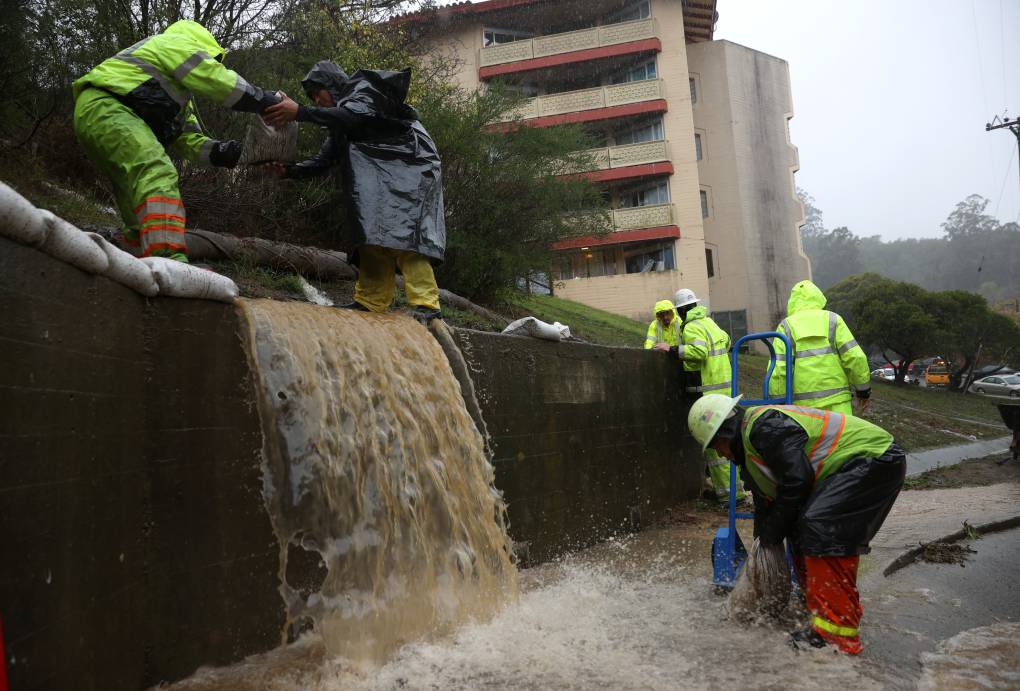
"caption": "Workers try to divert water into drains as rain pours down on Oct. 24, 2021, in Marin City. ",
"description": null,
"title": "GettyImages-1348806842",
"credit": "Justin Sullivan/Getty Images",
"status": "inherit",
"altTag": "Workers in yellow rain gear try to divert mud brown flood water.",
"isLoading": false,
"fetchFailed": false
},
"science_1994148": {
"type": "attachments",
"id": "science_1994148",
"meta": {
"index": "attachments_1716263798",
"site": "science",
"id": "1994148",
"found": true
},
"title": "DEEP_914_This_Parasite_Is_Cramping_the_Monarch_Butterflys_Style_V2_KQED",
"publishDate": 1725492967,
"status": "inherit",
"parent": 1980427,
"modified": 1725492967,
"caption": null,
"credit": null,
"altTag": null,
"description": null,
"imgSizes": {
"medium": {
"file": "https://cdn.kqed.org/wp-content/uploads/sites/35/2022/10/DEEP_914_This_Parasite_Is_Cramping_the_Monarch_Butterflys_Style_V2_KQED-800x450.jpg",
"width": 800,
"height": 450,
"mimeType": "image/jpeg"
},
"large": {
"file": "https://cdn.kqed.org/wp-content/uploads/sites/35/2022/10/DEEP_914_This_Parasite_Is_Cramping_the_Monarch_Butterflys_Style_V2_KQED-1020x574.jpg",
"width": 1020,
"height": 574,
"mimeType": "image/jpeg"
},
"thumbnail": {
"file": "https://cdn.kqed.org/wp-content/uploads/sites/35/2022/10/DEEP_914_This_Parasite_Is_Cramping_the_Monarch_Butterflys_Style_V2_KQED-160x90.jpg",
"width": 160,
"height": 90,
"mimeType": "image/jpeg"
},
"medium_large": {
"file": "https://cdn.kqed.org/wp-content/uploads/sites/35/2022/10/DEEP_914_This_Parasite_Is_Cramping_the_Monarch_Butterflys_Style_V2_KQED-768x432.jpg",
"width": 768,
"height": 432,
"mimeType": "image/jpeg"
},
"1536x1536": {
"file": "https://cdn.kqed.org/wp-content/uploads/sites/35/2022/10/DEEP_914_This_Parasite_Is_Cramping_the_Monarch_Butterflys_Style_V2_KQED-1536x864.jpg",
"width": 1536,
"height": 864,
"mimeType": "image/jpeg"
},
"post-thumbnail": {
"file": "https://cdn.kqed.org/wp-content/uploads/sites/35/2022/10/DEEP_914_This_Parasite_Is_Cramping_the_Monarch_Butterflys_Style_V2_KQED-672x372.jpg",
"width": 672,
"height": 372,
"mimeType": "image/jpeg"
},
"twentyfourteen-full-width": {
"file": "https://cdn.kqed.org/wp-content/uploads/sites/35/2022/10/DEEP_914_This_Parasite_Is_Cramping_the_Monarch_Butterflys_Style_V2_KQED-1038x576.jpg",
"width": 1038,
"height": 576,
"mimeType": "image/jpeg"
},
"kqedFullSize": {
"file": "https://cdn.kqed.org/wp-content/uploads/sites/35/2022/10/DEEP_914_This_Parasite_Is_Cramping_the_Monarch_Butterflys_Style_V2_KQED.jpg",
"width": 1920,
"height": 1080
}
},
"isLoading": false,
"fetchFailed": false
},
"science_1979781": {
"type": "attachments",
"id": "science_1979781",
"meta": {
"index": "attachments_1716263798",
"site": "science",
"id": "1979781",
"found": true
},
"parent": 1979658,
"imgSizes": {
"twentyfourteen-full-width": {
"file": "https://ww2.kqed.org/app/uploads/sites/35/2022/06/Grand-Jury-Bayview-Hunters-Point-4-1038x576.png",
"width": 1038,
"mimeType": "image/png",
"height": 576
},
"thumbnail": {
"file": "https://ww2.kqed.org/app/uploads/sites/35/2022/06/Grand-Jury-Bayview-Hunters-Point-4-160x90.png",
"width": 160,
"mimeType": "image/png",
"height": 90
},
"post-thumbnail": {
"file": "https://ww2.kqed.org/app/uploads/sites/35/2022/06/Grand-Jury-Bayview-Hunters-Point-4-672x372.png",
"width": 672,
"mimeType": "image/png",
"height": 372
},
"kqedFullSize": {
"file": "https://ww2.kqed.org/app/uploads/sites/35/2022/06/Grand-Jury-Bayview-Hunters-Point-4.png",
"width": 1920,
"height": 1080
},
"large": {
"file": "https://ww2.kqed.org/app/uploads/sites/35/2022/06/Grand-Jury-Bayview-Hunters-Point-4-1020x574.png",
"width": 1020,
"mimeType": "image/png",
"height": 574
},
"1536x1536": {
"file": "https://ww2.kqed.org/app/uploads/sites/35/2022/06/Grand-Jury-Bayview-Hunters-Point-4-1536x864.png",
"width": 1536,
"mimeType": "image/png",
"height": 864
},
"medium": {
"file": "https://ww2.kqed.org/app/uploads/sites/35/2022/06/Grand-Jury-Bayview-Hunters-Point-4-800x450.png",
"width": 800,
"mimeType": "image/png",
"height": 450
},
"medium_large": {
"file": "https://ww2.kqed.org/app/uploads/sites/35/2022/06/Grand-Jury-Bayview-Hunters-Point-4-768x432.png",
"width": 768,
"mimeType": "image/png",
"height": 432
}
},
"publishDate": 1656625986,
"modified": 1663370749,
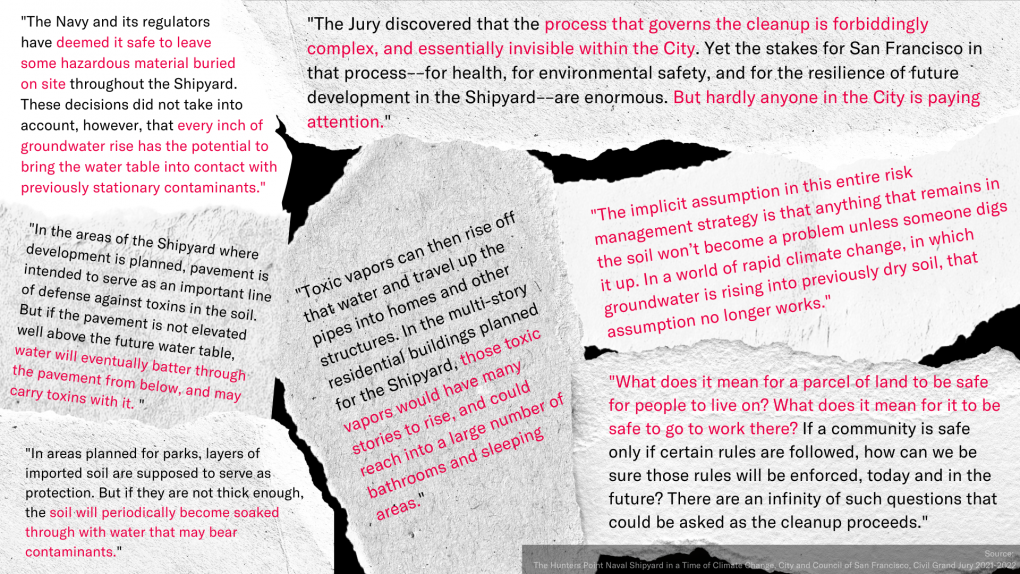
"caption": "Portions of the San Francisco Grand Jury Report 'Buried Problems and a Buried Process:\nThe Hunters Point Naval Shipyard\nin a Time of Climate Change.'",
"description": "Portions of the San Francisco Grand Jury Report 'Buried Problems and a Buried Process:\nThe Hunters Point Naval Shipyard\nin a Time of Climate Change.'",
"title": "Grand Jury Bayview-Hunters Point (4)",
"credit": "Sarah Khalida Mohamad/KQED",
"status": "inherit",
"altTag": "A photo illustration with torn up pieces of white and grey pieces of paper. Each has an excerpt from a report from the San Francisco Civil Grand Jury.",
"isLoading": false,
"fetchFailed": false
},
"science_1980293": {
"type": "attachments",
"id": "science_1980293",
"meta": {
"index": "attachments_1716263798",
"site": "science",
"id": "1980293",
"found": true
},
"parent": 1980255,
"imgSizes": {
"twentyfourteen-full-width": {
"file": "https://ww2.kqed.org/app/uploads/sites/35/2022/09/003_KQED_MargaretGordonOakland_03042022-1038x576.jpg",
"width": 1038,
"mimeType": "image/jpeg",
"height": 576
},
"thumbnail": {
"file": "https://ww2.kqed.org/app/uploads/sites/35/2022/09/003_KQED_MargaretGordonOakland_03042022-160x107.jpg",
"width": 160,
"mimeType": "image/jpeg",
"height": 107
},
"post-thumbnail": {
"file": "https://ww2.kqed.org/app/uploads/sites/35/2022/09/003_KQED_MargaretGordonOakland_03042022-672x372.jpg",
"width": 672,
"mimeType": "image/jpeg",
"height": 372
},
"kqedFullSize": {
"file": "https://ww2.kqed.org/app/uploads/sites/35/2022/09/003_KQED_MargaretGordonOakland_03042022.jpg",
"width": 1920,
"height": 1280
},
"large": {
"file": "https://ww2.kqed.org/app/uploads/sites/35/2022/09/003_KQED_MargaretGordonOakland_03042022-1020x680.jpg",
"width": 1020,
"mimeType": "image/jpeg",
"height": 680
},
"1536x1536": {
"file": "https://ww2.kqed.org/app/uploads/sites/35/2022/09/003_KQED_MargaretGordonOakland_03042022-1536x1024.jpg",
"width": 1536,
"mimeType": "image/jpeg",
"height": 1024
},
"medium": {
"file": "https://ww2.kqed.org/app/uploads/sites/35/2022/09/003_KQED_MargaretGordonOakland_03042022-800x533.jpg",
"width": 800,
"mimeType": "image/jpeg",
"height": 533
},
"medium_large": {
"file": "https://ww2.kqed.org/app/uploads/sites/35/2022/09/003_KQED_MargaretGordonOakland_03042022-768x512.jpg",
"width": 768,
"mimeType": "image/jpeg",
"height": 512
}
},
"publishDate": 1663014423,
"modified": 1663032028,
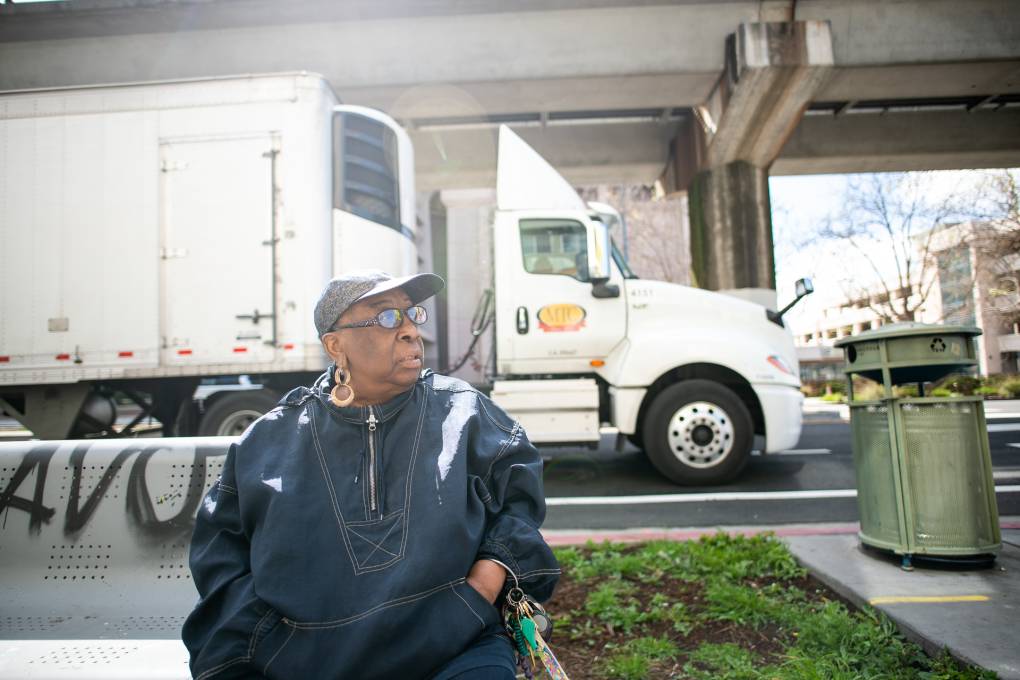
"caption": "Community activist Margaret Gordon sits on a bench in West Oakland with the BART tracks behind her on March 4, 2022, as a semi truck stops on 7th Street, on a popular trucking route to the nearby Port of Oakland.",
"description": null,
"title": "003_KQED_MargaretGordonOakland_03042022",
"credit": "Beth LaBerge/KQED",
"status": "inherit",
"altTag": "A black woman with a blue jacket, baseball hat and long ear sits on a bench. A white semi-truck passes behind.",
"isLoading": false,
"fetchFailed": false
},
"science_1980184": {
"type": "attachments",
"id": "science_1980184",
"meta": {
"index": "attachments_1716263798",
"site": "science",
"id": "1980184",
"found": true
},
"parent": 1980182,
"imgSizes": {
"twentyfourteen-full-width": {
"file": "https://ww2.kqed.org/app/uploads/sites/35/2022/09/GettyImages-1379449088-1038x576.jpg",
"width": 1038,
"mimeType": "image/jpeg",
"height": 576
},
"thumbnail": {
"file": "https://ww2.kqed.org/app/uploads/sites/35/2022/09/GettyImages-1379449088-160x107.jpg",
"width": 160,
"mimeType": "image/jpeg",
"height": 107
},
"post-thumbnail": {
"file": "https://ww2.kqed.org/app/uploads/sites/35/2022/09/GettyImages-1379449088-672x372.jpg",
"width": 672,
"mimeType": "image/jpeg",
"height": 372
},
"kqedFullSize": {
"file": "https://ww2.kqed.org/app/uploads/sites/35/2022/09/GettyImages-1379449088-scaled.jpg",
"width": 2560,
"height": 1707
},
"2048x2048": {
"file": "https://ww2.kqed.org/app/uploads/sites/35/2022/09/GettyImages-1379449088-2048x1365.jpg",
"width": 2048,
"mimeType": "image/jpeg",
"height": 1365
},
"large": {
"file": "https://ww2.kqed.org/app/uploads/sites/35/2022/09/GettyImages-1379449088-1020x680.jpg",
"width": 1020,
"mimeType": "image/jpeg",
"height": 680
},
"1536x1536": {
"file": "https://ww2.kqed.org/app/uploads/sites/35/2022/09/GettyImages-1379449088-1536x1024.jpg",
"width": 1536,
"mimeType": "image/jpeg",
"height": 1024
},
"full-width": {
"file": "https://ww2.kqed.org/app/uploads/sites/35/2022/09/GettyImages-1379449088-1920x1280.jpg",
"width": 1920,
"mimeType": "image/jpeg",
"height": 1280
},
"medium": {
"file": "https://ww2.kqed.org/app/uploads/sites/35/2022/09/GettyImages-1379449088-800x533.jpg",
"width": 800,
"mimeType": "image/jpeg",
"height": 533
},
"medium_large": {
"file": "https://ww2.kqed.org/app/uploads/sites/35/2022/09/GettyImages-1379449088-768x512.jpg",
"width": 768,
"mimeType": "image/jpeg",
"height": 512
}
},
"publishDate": 1662065684,
"modified": 1662768908,
"caption": "West Oakland residents celebrate Juneteenth, a holiday on June 19 that marks the emancipation of enslaved people.",
"description": "West Oakland residents celebrate Juneteenth, a holiday on June 19 that marks the emancipation of enslaved people.",
"title": "West Oakland",
"credit": "Beth LaBerge/KQED",
"status": "inherit",
"altTag": "The image shows an outdoor celebration on the street. Black people in warm-weather clothing mingle and sit around long tables covered with white cloths and showing various kinds of beverages on top. A man in blue jeans, a blue shirt and cream-colored cowboy hat sits on a horse and leans in to speak to people at the tables. In the background is a church with a tall, pointed tower. Behind the people is a white bouncy house.",
"isLoading": false,
"fetchFailed": false
},
"science_1980171": {
"type": "attachments",
"id": "science_1980171",
"meta": {
"index": "attachments_1716263798",
"site": "science",
"id": "1980171",
"found": true
},
"parent": 1980170,
"imgSizes": {
"twentyfourteen-full-width": {
"file": "https://ww2.kqed.org/app/uploads/sites/35/2022/08/gettyimages-453834006_custom-60afde37ed75c7bde1f81d9409ec35a379f6c294-1024x576.jpg",
"width": 1024,
"mimeType": "image/jpeg",
"height": 576
},
"thumbnail": {
"file": "https://ww2.kqed.org/app/uploads/sites/35/2022/08/gettyimages-453834006_custom-60afde37ed75c7bde1f81d9409ec35a379f6c294-160x107.jpg",
"width": 160,
"mimeType": "image/jpeg",
"height": 107
},
"post-thumbnail": {
"file": "https://ww2.kqed.org/app/uploads/sites/35/2022/08/gettyimages-453834006_custom-60afde37ed75c7bde1f81d9409ec35a379f6c294-672x372.jpg",
"width": 672,
"mimeType": "image/jpeg",
"height": 372
},
"kqedFullSize": {
"file": "https://ww2.kqed.org/app/uploads/sites/35/2022/08/gettyimages-453834006_custom-60afde37ed75c7bde1f81d9409ec35a379f6c294.jpg",
"width": 1024,
"height": 683
},
"large": {
"file": "https://ww2.kqed.org/app/uploads/sites/35/2022/08/gettyimages-453834006_custom-60afde37ed75c7bde1f81d9409ec35a379f6c294-1020x680.jpg",
"width": 1020,
"mimeType": "image/jpeg",
"height": 680
},
"medium": {
"file": "https://ww2.kqed.org/app/uploads/sites/35/2022/08/gettyimages-453834006_custom-60afde37ed75c7bde1f81d9409ec35a379f6c294-800x534.jpg",
"width": 800,
"mimeType": "image/jpeg",
"height": 534
},
"medium_large": {
"file": "https://ww2.kqed.org/app/uploads/sites/35/2022/08/gettyimages-453834006_custom-60afde37ed75c7bde1f81d9409ec35a379f6c294-768x512.jpg",
"width": 768,
"mimeType": "image/jpeg",
"height": 512
}
},
"publishDate": 1661880085,
"modified": 1661882209,
"caption": "Data centers have become integral to a global economy that's powered by digital information. However, many of the facilities depend on water to keep from overheating. That is further straining water resources in places like California, where Lake Oroville is almost dry due to severe drought that's being fueled by climate change.",
"description": "Data centers have become integral to a global economy that's powered by digital information. However, many of the facilities depend on water to keep from overheating. That is further straining water resources in places like California, where Lake Oroville is almost dry due to severe drought that's being fueled by climate change.",
"title": "Data centers have become integral to a global economy that's powered by digital information. However, many of the facilities depend on water to keep from overheating. That is further straining water resources in places like California, where Lake Oroville is almost dry due to severe drought that's being fueled by climate change.",
"credit": "Justin Sullivan/Getty Images",
"status": "inherit",
"altTag": "Data centers have become integral to a global economy that's powered by digital information. However, many of the facilities depend on water to keep from overheating. That is further straining water resources in places like California, where Lake Oroville is almost dry due to severe drought that's being fueled by climate change.",
"isLoading": false,
"fetchFailed": false
},
"science_1980152": {
"type": "attachments",
"id": "science_1980152",
"meta": {
"index": "attachments_1716263798",
"site": "science",
"id": "1980152",
"found": true
},
"parent": 1980149,
"imgSizes": {
"twentyfourteen-full-width": {
"file": "https://ww2.kqed.org/app/uploads/sites/35/2022/08/GettyImages-1356860471-1038x576.jpg",
"width": 1038,
"mimeType": "image/jpeg",
"height": 576
},
"thumbnail": {
"file": "https://ww2.kqed.org/app/uploads/sites/35/2022/08/GettyImages-1356860471-160x106.jpg",
"width": 160,
"mimeType": "image/jpeg",
"height": 106
},
"post-thumbnail": {
"file": "https://ww2.kqed.org/app/uploads/sites/35/2022/08/GettyImages-1356860471-672x372.jpg",
"width": 672,
"mimeType": "image/jpeg",
"height": 372
},
"kqedFullSize": {
"file": "https://ww2.kqed.org/app/uploads/sites/35/2022/08/GettyImages-1356860471-scaled.jpg",
"width": 2560,
"height": 1700
},
"2048x2048": {
"file": "https://ww2.kqed.org/app/uploads/sites/35/2022/08/GettyImages-1356860471-2048x1360.jpg",
"width": 2048,
"mimeType": "image/jpeg",
"height": 1360
},
"large": {
"file": "https://ww2.kqed.org/app/uploads/sites/35/2022/08/GettyImages-1356860471-1020x677.jpg",
"width": 1020,
"mimeType": "image/jpeg",
"height": 677
},
"1536x1536": {
"file": "https://ww2.kqed.org/app/uploads/sites/35/2022/08/GettyImages-1356860471-1536x1020.jpg",
"width": 1536,
"mimeType": "image/jpeg",
"height": 1020
},
"full-width": {
"file": "https://ww2.kqed.org/app/uploads/sites/35/2022/08/GettyImages-1356860471-1920x1275.jpg",
"width": 1920,
"mimeType": "image/jpeg",
"height": 1275
},
"medium": {
"file": "https://ww2.kqed.org/app/uploads/sites/35/2022/08/GettyImages-1356860471-800x531.jpg",
"width": 800,
"mimeType": "image/jpeg",
"height": 531
},
"medium_large": {
"file": "https://ww2.kqed.org/app/uploads/sites/35/2022/08/GettyImages-1356860471-768x510.jpg",
"width": 768,
"mimeType": "image/jpeg",
"height": 510
}
},
"publishDate": 1661793736,
"modified": 1661813064,
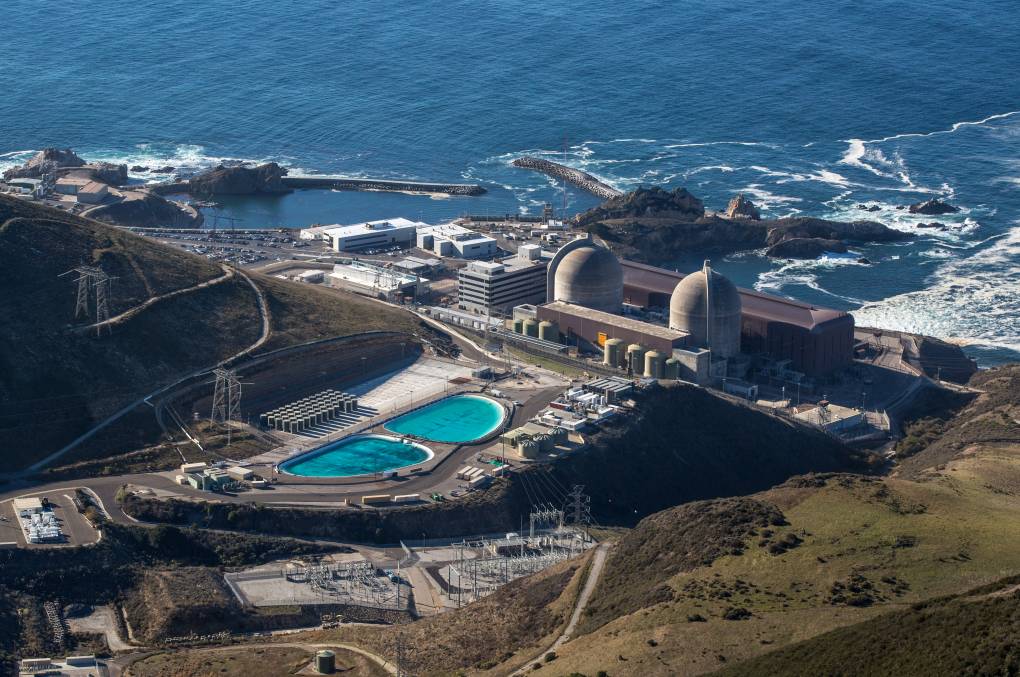
"caption": "Aerial view of Diablo Canyon Power Plant, the only operational nuclear plant left in California, in December 2021. Set on 1,000 acres of scenic coastal property just north and west of Avila Beach in San Luis Obispo County, the controversial power plant operated by Pacific Gas and Electric was commissioned in 1985.",
"description": "Aerial view of Diablo Canyon Power Plant, the only operational nuclear plant left in California, is an aerial photo taken in December 2021. Set on 1,000 acres of scenic coastal property just north and west of Avila Beach, the controversial power plant operated by Pacific Gas & Electric was commissioned in 1985. ",
"title": "Diablo Canyon nuclear plant",
"credit": "George Rose/Getty Images",
"status": "inherit",
"altTag": "The rounded towers of a nuclear power plant sit at the edge of the Pacific Ocean in the center right of the image. Multiple buildings border the plant and sit to the left of the towers. In the foreground are rolling brown hills with scrub brush and dry grasses, with curving roads along them, and electricity towers perched in various locations. In the center of the image are two turquoise pools. The ocean in the top of the image is steel blue.",
"isLoading": false,
"fetchFailed": false
},
"science_1979870": {
"type": "attachments",
"id": "science_1979870",
"meta": {
"index": "attachments_1716263798",
"site": "science",
"id": "1979870",
"found": true
},
"parent": 1979865,
"imgSizes": {
"twentyfourteen-full-width": {
"file": "https://ww2.kqed.org/app/uploads/sites/35/2022/07/88A3496-1038x576.jpg",
"width": 1038,
"mimeType": "image/jpeg",
"height": 576
},
"thumbnail": {
"file": "https://ww2.kqed.org/app/uploads/sites/35/2022/07/88A3496-160x107.jpg",
"width": 160,
"mimeType": "image/jpeg",
"height": 107
},
"post-thumbnail": {
"file": "https://ww2.kqed.org/app/uploads/sites/35/2022/07/88A3496-672x372.jpg",
"width": 672,
"mimeType": "image/jpeg",
"height": 372
},
"kqedFullSize": {
"file": "https://ww2.kqed.org/app/uploads/sites/35/2022/07/88A3496.jpg",
"width": 2400,
"height": 1600
},
"2048x2048": {
"file": "https://ww2.kqed.org/app/uploads/sites/35/2022/07/88A3496-2048x1365.jpg",
"width": 2048,
"mimeType": "image/jpeg",
"height": 1365
},
"large": {
"file": "https://ww2.kqed.org/app/uploads/sites/35/2022/07/88A3496-1020x680.jpg",
"width": 1020,
"mimeType": "image/jpeg",
"height": 680
},
"1536x1536": {
"file": "https://ww2.kqed.org/app/uploads/sites/35/2022/07/88A3496-1536x1024.jpg",
"width": 1536,
"mimeType": "image/jpeg",
"height": 1024
},
"full-width": {
"file": "https://ww2.kqed.org/app/uploads/sites/35/2022/07/88A3496-1920x1280.jpg",
"width": 1920,
"mimeType": "image/jpeg",
"height": 1280
},
"medium": {
"file": "https://ww2.kqed.org/app/uploads/sites/35/2022/07/88A3496-800x533.jpg",
"width": 800,
"mimeType": "image/jpeg",
"height": 533
},
"medium_large": {
"file": "https://ww2.kqed.org/app/uploads/sites/35/2022/07/88A3496-768x512.jpg",
"width": 768,
"mimeType": "image/jpeg",
"height": 512
}
},
"publishDate": 1658534436,
"modified": 1658789151,
"caption": "A flock of water birds soars over the colorful ponds of San Francisco's South Bay.",
"description": "A flock of water birds soars over the colorful ponds of San Francisco's South Bay.",
"title": "Healing Landscape: A Damaged World in Transition",
"credit": "joSon/bioGraphic",
"status": "inherit",
"altTag": "A flock of birds with black and white wings flies over a watery pea green landscape below -- their shadows marking the colorful salt pond below..",
"isLoading": false,
"fetchFailed": false
},
"science_1979813": {
"type": "attachments",
"id": "science_1979813",
"meta": {
"index": "attachments_1716263798",
"site": "science",
"id": "1979813",
"found": true
},
"parent": 1979812,
"imgSizes": {
"twentyfourteen-full-width": {
"file": "https://ww2.kqed.org/app/uploads/sites/35/2022/07/ap21225040432668-ba8705470e5fae95858bca73a3e213c6d9237f1d-1038x576.jpg",
"width": 1038,
"mimeType": "image/jpeg",
"height": 576
},
"thumbnail": {
"file": "https://ww2.kqed.org/app/uploads/sites/35/2022/07/ap21225040432668-ba8705470e5fae95858bca73a3e213c6d9237f1d-160x120.jpg",
"width": 160,
"mimeType": "image/jpeg",
"height": 120
},
"post-thumbnail": {
"file": "https://ww2.kqed.org/app/uploads/sites/35/2022/07/ap21225040432668-ba8705470e5fae95858bca73a3e213c6d9237f1d-672x372.jpg",
"width": 672,
"mimeType": "image/jpeg",
"height": 372
},
"kqedFullSize": {
"file": "https://ww2.kqed.org/app/uploads/sites/35/2022/07/ap21225040432668-ba8705470e5fae95858bca73a3e213c6d9237f1d-scaled.jpg",
"width": 2560,
"height": 1920
},
"2048x2048": {
"file": "https://ww2.kqed.org/app/uploads/sites/35/2022/07/ap21225040432668-ba8705470e5fae95858bca73a3e213c6d9237f1d-2048x1536.jpg",
"width": 2048,
"mimeType": "image/jpeg",
"height": 1536
},
"large": {
"file": "https://ww2.kqed.org/app/uploads/sites/35/2022/07/ap21225040432668-ba8705470e5fae95858bca73a3e213c6d9237f1d-1020x765.jpg",
"width": 1020,
"mimeType": "image/jpeg",
"height": 765
},
"1536x1536": {
"file": "https://ww2.kqed.org/app/uploads/sites/35/2022/07/ap21225040432668-ba8705470e5fae95858bca73a3e213c6d9237f1d-1536x1152.jpg",
"width": 1536,
"mimeType": "image/jpeg",
"height": 1152
},
"full-width": {
"file": "https://ww2.kqed.org/app/uploads/sites/35/2022/07/ap21225040432668-ba8705470e5fae95858bca73a3e213c6d9237f1d-1920x1440.jpg",
"width": 1920,
"mimeType": "image/jpeg",
"height": 1440
},
"medium": {
"file": "https://ww2.kqed.org/app/uploads/sites/35/2022/07/ap21225040432668-ba8705470e5fae95858bca73a3e213c6d9237f1d-800x600.jpg",
"width": 800,
"mimeType": "image/jpeg",
"height": 600
},
"medium_large": {
"file": "https://ww2.kqed.org/app/uploads/sites/35/2022/07/ap21225040432668-ba8705470e5fae95858bca73a3e213c6d9237f1d-768x576.jpg",
"width": 768,
"mimeType": "image/jpeg",
"height": 576
}
},
"publishDate": 1657302579,
"modified": 1657303146,
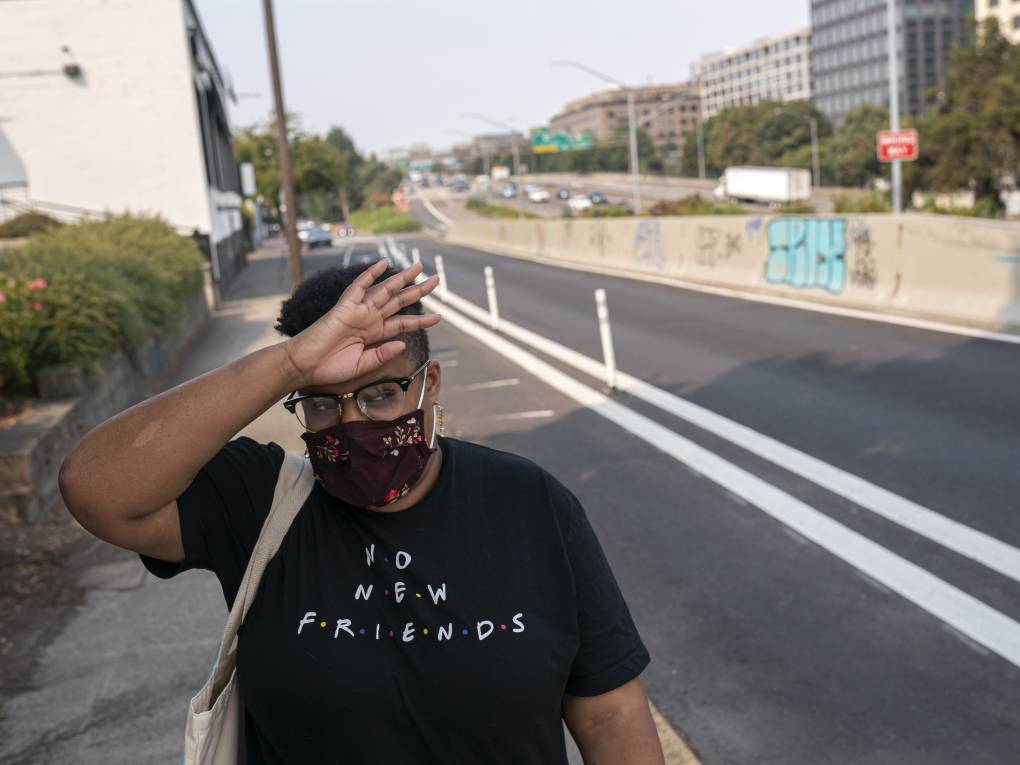
"caption": "Katherine Morgan wipes sweat from her forehead while walking to work in high temperatures on Thursday, Aug. 12, 2021, in Portland, Ore. People have headed to cooling centers as the Pacific Northwest began sweltering under another major, multiday heat wave. ",
"description": "Katherine Morgan wipes sweat from her forehead while walking to work in high temperatures on Thursday, Aug. 12, 2021, in Portland, Ore. People have headed to cooling centers as the Pacific Northwest began sweltering under another major, multiday heat wave. (AP Photo/Nathan Howard)",
"title": "heat, climate",
"credit": "Nathan Howard/AP",
"status": "inherit",
"altTag": "A woman with coffee skin presses the back of her hand to her forehead as she walks along a sidewalk in a record-breaking heat wave. She's wearing wire-frame glasses with a black top and a black t-shirt, and carrying a cream-colored tote bag over her shoulder.",
"isLoading": false,
"fetchFailed": false
},
"science_1984388": {
"type": "attachments",
"id": "science_1984388",
"meta": {
"index": "attachments_1716263798",
"site": "science",
"id": "1984388",
"found": true
},
"parent": 0,
"imgSizes": {
"twentyfourteen-full-width": {
"file": "https://ww2.kqed.org/app/uploads/sites/35/2023/09/2100-1038x576.jpg",
"width": 1038,
"mimeType": "image/jpeg",
"height": 576
},
"thumbnail": {
"file": "https://ww2.kqed.org/app/uploads/sites/35/2023/09/2100-160x90.jpg",
"width": 160,
"mimeType": "image/jpeg",
"height": 90
},
"post-thumbnail": {
"file": "https://ww2.kqed.org/app/uploads/sites/35/2023/09/2100-672x372.jpg",
"width": 672,
"mimeType": "image/jpeg",
"height": 372
},
"kqedFullSize": {
"file": "https://ww2.kqed.org/app/uploads/sites/35/2023/09/2100.jpg",
"width": 1920,
"height": 1080
},
"large": {
"file": "https://ww2.kqed.org/app/uploads/sites/35/2023/09/2100-1020x574.jpg",
"width": 1020,
"mimeType": "image/jpeg",
"height": 574
},
"1536x1536": {
"file": "https://ww2.kqed.org/app/uploads/sites/35/2023/09/2100-1536x864.jpg",
"width": 1536,
"mimeType": "image/jpeg",
"height": 864
},
"medium": {
"file": "https://ww2.kqed.org/app/uploads/sites/35/2023/09/2100-800x450.jpg",
"width": 800,
"mimeType": "image/jpeg",
"height": 450
},
"medium_large": {
"file": "https://ww2.kqed.org/app/uploads/sites/35/2023/09/2100-768x432.jpg",
"width": 768,
"mimeType": "image/jpeg",
"height": 432
}
},
"publishDate": 1695498035,
"modified": 1695498035,
"caption": null,
"description": null,
"title": "2100",
"credit": null,
"status": "inherit",
"altTag": null,
"isLoading": false,
"fetchFailed": false
},
"science_1979622": {
"type": "attachments",
"id": "science_1979622",
"meta": {
"index": "attachments_1716263798",
"site": "science",
"id": "1979622",
"found": true
},
"parent": 1979614,
"imgSizes": {
"twentyfourteen-full-width": {
"file": "https://ww2.kqed.org/app/uploads/sites/35/2022/06/011_KQED_BayviewAriannHarrison_03022022-1038x576.jpg",
"width": 1038,
"mimeType": "image/jpeg",
"height": 576
},
"thumbnail": {
"file": "https://ww2.kqed.org/app/uploads/sites/35/2022/06/011_KQED_BayviewAriannHarrison_03022022-160x107.jpg",
"width": 160,
"mimeType": "image/jpeg",
"height": 107
},
"post-thumbnail": {
"file": "https://ww2.kqed.org/app/uploads/sites/35/2022/06/011_KQED_BayviewAriannHarrison_03022022-672x372.jpg",
"width": 672,
"mimeType": "image/jpeg",
"height": 372
},
"kqedFullSize": {
"file": "https://ww2.kqed.org/app/uploads/sites/35/2022/06/011_KQED_BayviewAriannHarrison_03022022.jpg",
"width": 1920,
"height": 1280
},
"large": {
"file": "https://ww2.kqed.org/app/uploads/sites/35/2022/06/011_KQED_BayviewAriannHarrison_03022022-1020x680.jpg",
"width": 1020,
"mimeType": "image/jpeg",
"height": 680
},
"1536x1536": {
"file": "https://ww2.kqed.org/app/uploads/sites/35/2022/06/011_KQED_BayviewAriannHarrison_03022022-1536x1024.jpg",
"width": 1536,
"mimeType": "image/jpeg",
"height": 1024
},
"medium": {
"file": "https://ww2.kqed.org/app/uploads/sites/35/2022/06/011_KQED_BayviewAriannHarrison_03022022-800x533.jpg",
"width": 800,
"mimeType": "image/jpeg",
"height": 533
},
"medium_large": {
"file": "https://ww2.kqed.org/app/uploads/sites/35/2022/06/011_KQED_BayviewAriannHarrison_03022022-768x512.jpg",
"width": 768,
"mimeType": "image/jpeg",
"height": 512
}
},
"publishDate": 1656016077,
"modified": 1657054704,
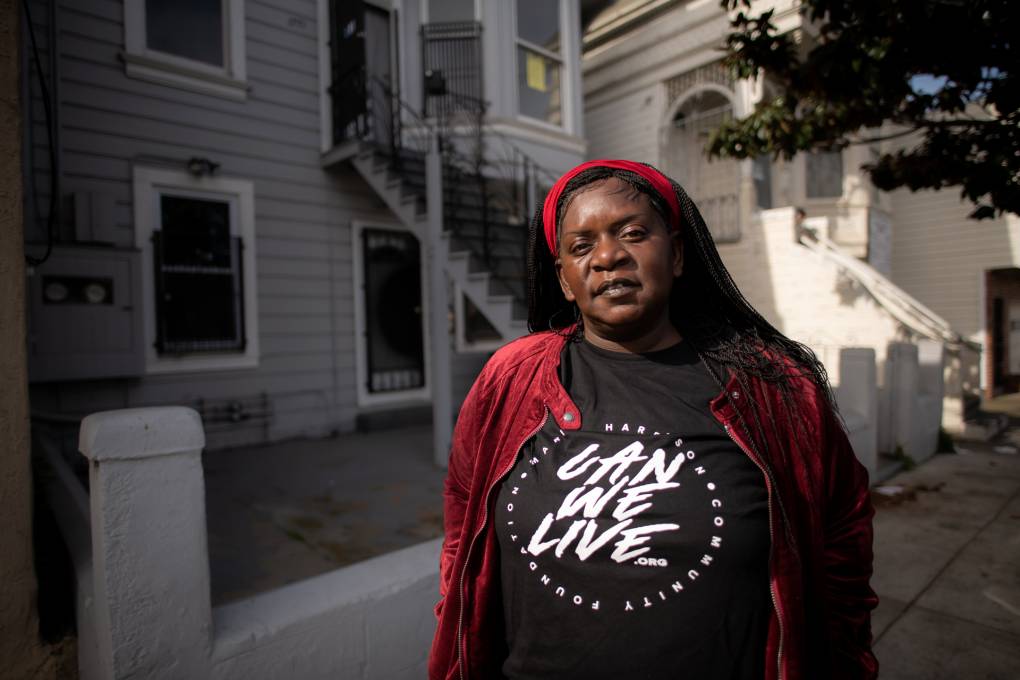
"caption": "Arieann Harrison, founder of the Marie Harrison Foundation, leads a community effort in Bayview-Hunters Point to protect the neighborhood from toxic contamination due to sea level rise.",
"description": "Arieann Harrison, founder of the Marie Harrison Foundation, leads a community effort in Bayview-Hunters Point to protect the neighborhood from toxic contamination due to sea level rise.",
"title": "Bayview-Hunters Point",
"credit": "Beth LaBerge/KQED",
"status": "inherit",
"altTag": ": A middle-aged Black woman stands on a sidewalk, with two Victorian-style homes visible at an angle behind her, one gray, one white, both with a set of steps leading up from the sidewalk to a first floor. She has long black twists past her elbows and wears a red headband and a red velour jacket over a Black t-shirt with a circular logo in white print that says \"Can We Live.\"",
"isLoading": false,
"fetchFailed": false
},
"science_1979808": {
"type": "attachments",
"id": "science_1979808",
"meta": {
"index": "attachments_1716263798",
"site": "science",
"id": "1979808",
"found": true
},
"parent": 1979658,
"imgSizes": {
"twentyfourteen-full-width": {
"file": "https://ww2.kqed.org/app/uploads/sites/35/2022/07/RS56468_20220603_HuntersPointBayviewContamination-14-1-1038x576.jpg",
"width": 1038,
"mimeType": "image/jpeg",
"height": 576
},
"thumbnail": {
"file": "https://ww2.kqed.org/app/uploads/sites/35/2022/07/RS56468_20220603_HuntersPointBayviewContamination-14-1-160x107.jpg",
"width": 160,
"mimeType": "image/jpeg",
"height": 107
},
"post-thumbnail": {
"file": "https://ww2.kqed.org/app/uploads/sites/35/2022/07/RS56468_20220603_HuntersPointBayviewContamination-14-1-672x372.jpg",
"width": 672,
"mimeType": "image/jpeg",
"height": 372
},
"kqedFullSize": {
"file": "https://ww2.kqed.org/app/uploads/sites/35/2022/07/RS56468_20220603_HuntersPointBayviewContamination-14-1.jpg",
"width": 1920,
"height": 1280
},
"large": {
"file": "https://ww2.kqed.org/app/uploads/sites/35/2022/07/RS56468_20220603_HuntersPointBayviewContamination-14-1-1020x680.jpg",
"width": 1020,
"mimeType": "image/jpeg",
"height": 680
},
"1536x1536": {
"file": "https://ww2.kqed.org/app/uploads/sites/35/2022/07/RS56468_20220603_HuntersPointBayviewContamination-14-1-1536x1024.jpg",
"width": 1536,
"mimeType": "image/jpeg",
"height": 1024
},
"medium": {
"file": "https://ww2.kqed.org/app/uploads/sites/35/2022/07/RS56468_20220603_HuntersPointBayviewContamination-14-1-800x533.jpg",
"width": 800,
"mimeType": "image/jpeg",
"height": 533
},
"medium_large": {
"file": "https://ww2.kqed.org/app/uploads/sites/35/2022/07/RS56468_20220603_HuntersPointBayviewContamination-14-1-768x512.jpg",
"width": 768,
"mimeType": "image/jpeg",
"height": 512
}
},
"publishDate": 1656713539,
"modified": 1656715457,
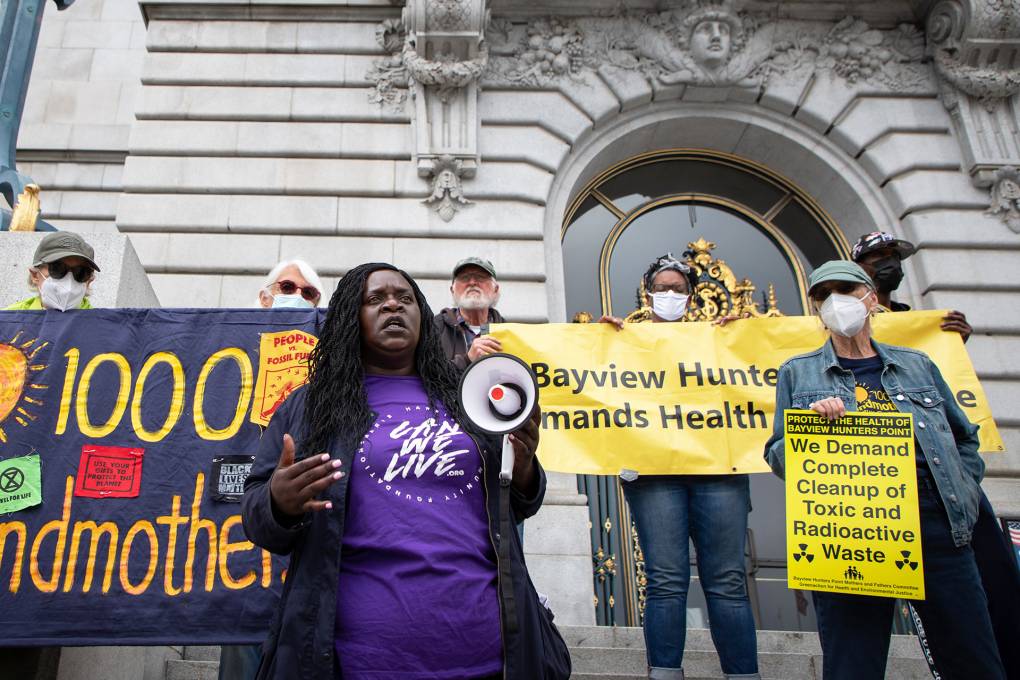
"caption": "Arieann Harrison prepares to speak during a rally at San Francisco City Hall in response to the San Francisco Civil Grand Jury report on the contamination of the Hunters Point shipyard.",
"description": null,
"title": "RS56468_20220603_HuntersPointBayviewContamination-14 (1)",
"credit": "Amaya Edwards/KQED",
"status": "inherit",
"altTag": "A Black woman with long black braids is wearing a purple shirt that reads 'Can we Live.' People are standing on the cement steps of San Francisco City Hall holding signs about environmental justice for the neighborhood of Bayview-Hunters Point.",
"isLoading": false,
"fetchFailed": false
}
},
"audioPlayerReducer": {
"postId": "stream_live",
"isPaused": true,
"isPlaying": false,
"pfsActive": false,
"pledgeModalIsOpen": true,
"playerDrawerIsOpen": false,
"liveAudioPlayStartedAt": 0,
"liveAudioPlayContext": ""
},
"authorsReducer": {
"byline_science_1980182": {
"type": "authors",
"id": "byline_science_1980182",
"meta": {
"override": true
},
"slug": "byline_science_1980182",
"name": "Kathleen Ronayne\u003cbr>The Associated Press",
"isLoading": false
},
"byline_science_1980170": {
"type": "authors",
"id": "byline_science_1980170",
"meta": {
"override": true
},
"slug": "byline_science_1980170",
"name": "Michael Copley",
"isLoading": false
},
"byline_science_1980149": {
"type": "authors",
"id": "byline_science_1980149",
"meta": {
"override": true
},
"slug": "byline_science_1980149",
"name": "Michael R. Blood\u003cbr>The Associated Press",
"isLoading": false
},
"byline_science_1979865": {
"type": "authors",
"id": "byline_science_1979865",
"meta": {
"override": true
},
"slug": "byline_science_1979865",
"name": "Skylar Knight",
"isLoading": false
},
"byline_science_1979812": {
"type": "authors",
"id": "byline_science_1979812",
"meta": {
"override": true
},
"slug": "byline_science_1979812",
"name": "Rebecca Hersher",
"isLoading": false
},
"joshua-cassidy": {
"type": "authors",
"id": "6219",
"meta": {
"index": "authors_1716337520",
"id": "6219",
"found": true
},
"name": "Josh Cassidy",
"firstName": "Josh",
"lastName": "Cassidy",
"slug": "joshua-cassidy",
"email": "jcassidy@kqed.org",
"display_author_email": false,
"staff_mastheads": [
"science"
],
"title": "Digital Video Producer",
"bio": "Josh is a Senior Video Producer for KQED Science, and the Lead Producer and Cinematographer for Deep Look. After receiving his BS in Wildlife Biology from Ohio University, he went on to participate in marine mammal research for NOAA, USGS and the Intersea Foundation. He also served as the president of The Pacific Cetacean Group, a nonprofit organization dedicated to teaching students K-6 about whales. Josh studied science and natural history filmmaking at San Francisco State University and Montana State University.",
"avatar": "https://secure.gravatar.com/avatar/f2582a0801a35af53b734d56bcac2bbe?s=600&d=blank&r=g",
"twitter": null,
"facebook": null,
"instagram": null,
"linkedin": null,
"sites": [
{
"site": "science",
"roles": [
"editor"
]
},
{
"site": "quest",
"roles": [
"author",
"edit_others_posts"
]
}
],
"headData": {
"title": "Josh Cassidy | KQED",
"description": "Digital Video Producer",
"ogImgSrc": "https://secure.gravatar.com/avatar/f2582a0801a35af53b734d56bcac2bbe?s=600&d=blank&r=g",
"twImgSrc": "https://secure.gravatar.com/avatar/f2582a0801a35af53b734d56bcac2bbe?s=600&d=blank&r=g"
},
"isLoading": false,
"link": "/author/joshua-cassidy"
},
"thailye": {
"type": "authors",
"id": "11501",
"meta": {
"index": "authors_1716337520",
"id": "11501",
"found": true
},
"name": "Teodros Hailye",
"firstName": "Teodros",
"lastName": "Hailye",
"slug": "thailye",
"email": "thailye@KQED.org",
"display_author_email": false,
"staff_mastheads": [],
"title": "Information Designer",
"bio": null,
"avatar": "https://secure.gravatar.com/avatar/bfb755f5a66ebaccd414e310b7d7c94a?s=600&d=blank&r=g",
"twitter": null,
"facebook": null,
"instagram": null,
"linkedin": null,
"sites": [
{
"site": "science",
"roles": []
}
],
"headData": {
"title": "Teodros Hailye | KQED",
"description": "Information Designer",
"ogImgSrc": "https://secure.gravatar.com/avatar/bfb755f5a66ebaccd414e310b7d7c94a?s=600&d=blank&r=g",
"twImgSrc": "https://secure.gravatar.com/avatar/bfb755f5a66ebaccd414e310b7d7c94a?s=600&d=blank&r=g"
},
"isLoading": false,
"link": "/author/thailye"
},
"eromero": {
"type": "authors",
"id": "11746",
"meta": {
"index": "authors_1716337520",
"id": "11746",
"found": true
},
"name": "Ezra David Romero",
"firstName": "Ezra David",
"lastName": "Romero",
"slug": "eromero",
"email": "eromero@kqed.org",
"display_author_email": true,
"staff_mastheads": [
"news",
"science"
],
"title": "Climate Reporter",
"bio": "Ezra David Romero is a climate reporter for KQED News. He covers the absence and excess of water in the Bay Area — think sea level rise, flooding and drought. For nearly a decade he’s covered how warming temperatures are altering the lives of Californians. He’s reported on farmers worried their pistachio trees aren’t getting enough sleep, families desperate for water, scientists studying dying giant sequoias, and alongside firefighters containing wildfires. His work has appeared on local stations across California and nationally on public radio shows like Morning Edition, Here and Now, All Things Considered and Science Friday. ",
"avatar": "https://secure.gravatar.com/avatar/c76404d287c10ed40224227551ac36e24352c7306f106632caf6fead76f8801f?s=600&d=blank&r=g",
"twitter": "ezraromero",
"bluesky": null,
"facebook": null,
"instagram": null,
"linkedin": null,
"sites": [
{
"site": "arts",
"roles": [
"editor"
]
},
{
"site": "news",
"roles": [
"editor"
]
},
{
"site": "science",
"roles": [
"editor"
]
},
{
"site": "liveblog",
"roles": [
"author"
]
}
],
"headData": {
"title": "Ezra David Romero | KQED",
"description": "Climate Reporter",
"ogImgSrc": "https://secure.gravatar.com/avatar/c76404d287c10ed40224227551ac36e24352c7306f106632caf6fead76f8801f?s=600&d=blank&r=g",
"twImgSrc": "https://secure.gravatar.com/avatar/c76404d287c10ed40224227551ac36e24352c7306f106632caf6fead76f8801f?s=600&d=blank&r=g"
},
"isLoading": false,
"link": "/author/eromero"
}
},
"pagesReducer": {
"science_category_climate": {
"type": "terms",
"id": "science_31",
"meta": {
"index": "terms_1716263798",
"site": "science",
"id": "31",
"score": 11.06203
},
"featImg": null,
"name": "Climate",
"description": null,
"taxonomy": "category",
"headData": {
"twImgId": null,
"twTitle": null,
"ogTitle": null,
"ogImgId": null,
"twDescription": null,
"description": null,
"title": "Climate Archives | KQED Science",
"ogDescription": null
},
"ttid": 33,
"slug": "climate",
"isLoading": false,
"title": "Climate",
"pageMeta": {
"site": "science",
"WpPageTemplate": "page-topic-editorial",
"currentPage": 31
},
"blocks": [
{
"blockName": "kqed/post-list",
"attrs": {
"layout": "cardArticle2",
"query": "posts/science?category=climate",
"seeMore": false,
"paginated": true,
"page": 31
}
},
{
"blockName": "kqed/ad"
}
]
}
},
"pfsSessionReducer": {},
"postsReducer": {
"stream_live": {
"type": "live",
"id": "stream_live",
"audioUrl": "https://streams.kqed.org/kqedradio",
"title": "Live Stream",
"excerpt": "Live Stream information currently unavailable.",
"link": "/radio",
"featImg": "",
"label": {
"name": "KQED Live",
"link": "/"
}
},
"stream_kqedNewscast": {
"type": "posts",
"id": "stream_kqedNewscast",
"audioUrl": "https://www.kqed.org/.stream/anon/radio/RDnews/newscast.mp3?_=1",
"title": "KQED Newscast",
"featImg": "",
"label": {
"name": "88.5 FM",
"link": "/"
}
},
"science_1980525": {
"type": "posts",
"id": "science_1980525",
"meta": {
"index": "posts_1716263798",
"site": "science",
"id": "1980525",
"score": null,
"sort": [
1667304033000
]
},
"parent": 0,
"labelTerm": {},
"blocks": [],
"publishDate": 1667304033,
"format": "standard",
"title": "'It Comes to Race': Marin City Residents Demand Flood Protections",
"headTitle": "‘It Comes to Race’: Marin City Residents Demand Flood Protections | KQED",
"content": "\u003cp>\u003cem>This story is part of KQED’s series “Sacrifice Zones: Bay Area Shoreline Communities Reimagining Their Homes in the Face of the Climate Emergency.” The project looks at communities of color facing the worst of rising seas and fighting to thrive. \u003ca href=\"https://www.kqed.org/reparations\">Read more of KQED’s reparations coverage.\u003c/a>\u003c/em>\u003c/p>\n\u003cp>The long-neglected water system in Marin City, an unincorporated community about 5 miles north of San Francisco, is one of the most vulnerable to climate-driven flooding in the entire Bay Area. The neighborhoods of mostly one-story homes and apartments abut Richardson Bay, separated from the water by Highway 101 and a narrow bike trail.\u003c/p>\n\u003cp>A single tidal gate allows water to escape into the bay, and it’s regularly filled with sand and debris. When atmospheric rivers dump rainwater, the water from the gate backs up into the channel under the freeway and floods the only road in and out of Marin City, rendering it impassable by car.\u003c/p>\n\u003cp>“Marin City is like a bathtub with only one drain,” said Kristina Hill, director of the Institute for Urban and Regional Development at UC Berkeley.\u003c/p>\n\u003cp>By the end of the century, climate change may make these \u003ca href=\"https://www.sciencedirect.com/science/article/pii/S2212094722000275\">deluges from the sky up to 37% wetter\u003c/a>, according to a June 2022 study by Bay Area climate scientists, and the flooding in Marin City far worse.\u003c/p>\n\u003cp>[ad fullwidth]\u003c/p>\n\u003cp>At the same time, warming temperatures could push San Francisco Bay up from sea level rise — as much as 10.2 feet by the end of the century. Brackish water could displace and corrode underground sewer pipes and other infrastructure.\u003c/p>\n\u003cfigure id=\"attachment_1980558\" class=\"wp-caption aligncenter\" style=\"max-width: 800px\">\u003cimg loading=\"lazy\" decoding=\"async\" class=\"size-medium wp-image-1980558\" src=\"https://ww2.kqed.org/app/uploads/sites/35/2022/10/RS54020_042_KQED_MarinCityWaterTesting_03012022-qut-800x533.jpg\" alt=\"A bright green baseball field in the foreground, surrounded by hills lined with homes and the bay beyond it. Behind the bay there are white clouds and an outline of the San Francisco shore lined with tall buildings.\" width=\"800\" height=\"533\" srcset=\"https://cdn.kqed.org/wp-content/uploads/sites/35/2022/10/RS54020_042_KQED_MarinCityWaterTesting_03012022-qut-800x533.jpg 800w, https://cdn.kqed.org/wp-content/uploads/sites/35/2022/10/RS54020_042_KQED_MarinCityWaterTesting_03012022-qut-1020x680.jpg 1020w, https://cdn.kqed.org/wp-content/uploads/sites/35/2022/10/RS54020_042_KQED_MarinCityWaterTesting_03012022-qut-160x107.jpg 160w, https://cdn.kqed.org/wp-content/uploads/sites/35/2022/10/RS54020_042_KQED_MarinCityWaterTesting_03012022-qut-768x512.jpg 768w, https://cdn.kqed.org/wp-content/uploads/sites/35/2022/10/RS54020_042_KQED_MarinCityWaterTesting_03012022-qut-1536x1024.jpg 1536w, https://cdn.kqed.org/wp-content/uploads/sites/35/2022/10/RS54020_042_KQED_MarinCityWaterTesting_03012022-qut.jpg 1920w\" sizes=\"(max-width: 800px) 100vw, 800px\">\u003cfigcaption class=\"wp-caption-text\">Marin City can be seen from Alta Trail northwest of the unincorporated area of Marin County. \u003ccite>(Beth LaBerge/KQED)\u003c/cite>\u003c/figcaption>\u003c/figure>\n\u003cp>“All these low-lying areas are going to have a flooding threat that is much bigger than we anticipate when looking at just sea level rise,” said Kris May, founder of the Pathways Climate Institute. Marin County found that sea level rise \u003ca href=\"https://www.marincounty.org/-/media/files/departments/cd/planning/slr/baywave/vulnerability-assessment-final/final_allpages_bvbconsulting_reduced.pdf?la=en\">could flood half of all commercial properties in Marin City (PDF)\u003c/a> and displace those in low-lying areas. Residents have long said that Marin City’s neglected water system is an ugly example of racism in the region’s past housing policies.\u003c/p>\n\u003cp>Nearly 3,000 people — 63% people of color — dwell within Marin City’s 344 acres. About \u003ca href=\"https://data.census.gov/cedsci/profile?g=1600000US0645820\">13% live below the poverty line\u003c/a>, according to U.S. Census Bureau data, despite the fact that the area is part of Marin County, one of the richest in the country.\u003c/p>\n\u003cp>[pullquote size='medium' align='right' citation='Terrie Harris-Green, executive director, Marin City Climate Resilience and Health Justice']‘We’re at a place in Marin City where we’re saying enough is enough. It comes to race. It comes down to it.’[/pullquote]\u003c/p>\n\u003cp>People in Marin City have higher asthma rates, \u003ca href=\"https://www.marinij.com/2017/09/28/marin-city-health-issues-discussed-at-state-forum/\">shorter life expectancies\u003c/a> and huge cost burdens when compared to the rest of the state. Add climate change, and residents here face a double vulnerability, as do many communities of color around the world.\u003c/p>\n\u003cp>“Marin City has flooded for over 80 years,” said resident Terrie Harris-Green, swiveling in a black, pleather office chair to prop up an inundation map of Marin City on a nearby chair.\u003c/p>\n\u003cp>The 72-year-old Black woman wears a bright red floor-length dress and a cloud-colored cardigan. She’s the founder of the nonprofit \u003ca href=\"https://www.facebook.com/MCCRHJ/\">Marin City Climate Resilience and Health Justice\u003c/a> and has fought for environmental justice for this community for decades. She said the local government hasn’t adequately invested in this community and its infrastructure.\u003c/p>\n\u003cp>“We’re left out of so much when it comes to this county, but we’re going to continue to fight,” she said. “We’re at a place in Marin City where we’re saying enough is enough. It comes to race. It comes down to it. It comes to race.”\u003c/p>\n\u003cp>Harris-Green and other residents are wrestling with officials they don’t trust for agency over climate plans and flood protections, vowing that Marin City won’t continue to be neglected. They are calling for reparations to repair the harm caused by decades of government inaction.\u003c/p>\n\u003cfigure id=\"attachment_1980603\" class=\"wp-caption aligncenter\" style=\"max-width: 800px\">\u003cimg loading=\"lazy\" decoding=\"async\" class=\"wp-image-1980603 size-medium\" src=\"https://ww2.kqed.org/app/uploads/sites/35/2022/10/001_KQEDScience_MarinCityTerrieGreen_04072022-800x533.jpg\" alt=\"A Black woman with short brown hair wears a flowy black blouse. She stands in front of a fenced in pond surrounded by weeds. A highway is in the background and building lined hills are in the background.\" width=\"800\" height=\"533\" srcset=\"https://cdn.kqed.org/wp-content/uploads/sites/35/2022/10/001_KQEDScience_MarinCityTerrieGreen_04072022-800x533.jpg 800w, https://cdn.kqed.org/wp-content/uploads/sites/35/2022/10/001_KQEDScience_MarinCityTerrieGreen_04072022-1020x680.jpg 1020w, https://cdn.kqed.org/wp-content/uploads/sites/35/2022/10/001_KQEDScience_MarinCityTerrieGreen_04072022-160x107.jpg 160w, https://cdn.kqed.org/wp-content/uploads/sites/35/2022/10/001_KQEDScience_MarinCityTerrieGreen_04072022-768x512.jpg 768w, https://cdn.kqed.org/wp-content/uploads/sites/35/2022/10/001_KQEDScience_MarinCityTerrieGreen_04072022-1536x1024.jpg 1536w, https://cdn.kqed.org/wp-content/uploads/sites/35/2022/10/001_KQEDScience_MarinCityTerrieGreen_04072022.jpg 1920w\" sizes=\"(max-width: 800px) 100vw, 800px\">\u003cfigcaption class=\"wp-caption-text\">Terrie Harris-Green poses for a portrait near a pond in Marin City on April 7, 2022, after a community meeting with California Senator Mike McGuire to discuss flooding issues in the area. \u003ccite>(Beth LaBerge/KQED)\u003c/cite>\u003c/figcaption>\u003c/figure>\n\u003ch2>Four megafloods this century\u003c/h2>\n\u003cp>An \u003ca href=\"https://www.weather.gov/mtr/AtmosphericRiver_10_24-25_2021\">atmospheric river parked itself\u003c/a> over Marin City last October, turning looping residential streets into rivers, swamping Donahue Street, and filling the freeway underpass and the only entrance into the city.\u003c/p>\n\u003cp>Chinaka Green and her 14-year-old son were driving home from a high school football game when the storm hit. They sat for hours, stuck behind a line of cars, sandwiched between the highway and San Francisco Bay.\u003c/p>\n\u003cp>“We were trapped,” said Green, Harris-Green’s 41-year-old daughter.\u003c/p>\n\u003cp>She abandoned her car on the side of the road in the neighboring city of Sausalito, a ritzy tourist destination with quaint houseboats and wine bars, and trudged a quarter-mile through knee-deep water. She said sewage spilled from utility holes, merging with the stormwater and drenching their shoes and clothes.\u003c/p>\n\u003cp>“We took off everything, put it in a bag and threw it away,” she said. Fast floods caused by atmospheric rivers are incredibly dangerous. The same year, two people died when their car \u003ca href=\"https://www.youtube.com/watch?v=JZFktiKpSOo\">was submerged in a flooded underpass in Millbrae\u003c/a>. The main underpass into and out of Millbrae regularly floods, like Marin City’s.\u003c/p>\n\u003cp>This flooding is a precursor of what the Bay Area will experience as climate change escalates, increasing the risk of a California megaflood. Superstorms fueled by \u003ca href=\"https://www.kqed.org/forum/2010101890265/how-climate-change-is-escalating-the-risk-of-a-california-megaflood\">atmospheric rivers could bring more than 16 inches of rainfall across the state in one month\u003c/a> and cause catastrophic flooding, according to new research from UCLA scientists Xingying Huang and Daniel Swain.\u003c/p>\n\u003cp>“The problem is we built our infrastructure assuming these events were very rare,” said Swain. “Now, they are something you should be expecting.”\u003c/p>\n\u003cp>As many as four megafloods could swamp California this century, according to Swain. How bad the megastorms will be for Marin City will depend, in part, on how fast the world reduces emissions that cause climate change.\u003c/p>\n\u003cp>The worst-case scenario for Marin City is a megastorm wailing on the community at the same time as a king tide, trapping residents for many consecutive days.\u003c/p>\n\u003cp>“Our tolerance for making mistakes is getting really, really small,” said UC Berkeley’s Hill. “We just don’t have any room for error anymore.”\u003c/p>\n\u003cfigure id=\"attachment_1980605\" class=\"wp-caption aligncenter\" style=\"max-width: 800px\">\u003cimg loading=\"lazy\" decoding=\"async\" class=\"wp-image-1980605 size-medium\" src=\"https://ww2.kqed.org/app/uploads/sites/35/2022/10/GettyImages-1348745966-800x533.jpg\" alt=\"Two people in neon yellow rain gear reach into a flooded storm drain. Behind them is a playground and a stream of water in a grey cement culvert. The water is brown.\" width=\"800\" height=\"533\" srcset=\"https://cdn.kqed.org/wp-content/uploads/sites/35/2022/10/GettyImages-1348745966-800x533.jpg 800w, https://cdn.kqed.org/wp-content/uploads/sites/35/2022/10/GettyImages-1348745966-1020x680.jpg 1020w, https://cdn.kqed.org/wp-content/uploads/sites/35/2022/10/GettyImages-1348745966-160x107.jpg 160w, https://cdn.kqed.org/wp-content/uploads/sites/35/2022/10/GettyImages-1348745966-768x512.jpg 768w, https://cdn.kqed.org/wp-content/uploads/sites/35/2022/10/GettyImages-1348745966-1536x1024.jpg 1536w, https://cdn.kqed.org/wp-content/uploads/sites/35/2022/10/GettyImages-1348745966-2048x1365.jpg 2048w, https://cdn.kqed.org/wp-content/uploads/sites/35/2022/10/GettyImages-1348745966-1920x1280.jpg 1920w\" sizes=\"(max-width: 800px) 100vw, 800px\">\u003cfigcaption class=\"wp-caption-text\">Workers try to divert water into drains as rain pours down on Oct. 24, 2021, in Marin City. \u003ccite>(Justin Sullivan/Getty Images)\u003c/cite>\u003c/figcaption>\u003c/figure>\n\u003ch2>‘They don’t want to see us’\u003c/h2>\n\u003cp>In 2014, a storm dropped nearly two inches of rain on Marin City, a deluge that coincided with a king tide that pushed tides 8 feet higher than usual. Flooding cut off access into the neighborhoods and swamped Highway 101, backing up traffic for miles.\u003c/p>\n\u003cp>Marin County launched a study of the issue following that storm. Since then, flooding has shut down highway traffic completely and blocked Marin City’s only egress three more times. During a 2017 flood, residents reported that \u003ca href=\"https://www.sfestuary.org/wp-content/uploads/2022/09/SFEP_RWNA_09.07_MarinCityClimate.090122.pdf\">a school bus driver left children (PDF)\u003c/a> to “walk through contaminated water to get home.”\u003c/p>\n\u003cp>During last October’s storm, Lauren Mims and her father worried that floodwaters would overwhelm their car on the way to the grocery store. She’s one of a handful of teens who train with Harris-Green’s climate group.\u003c/p>\n\u003cp>“We are not really paid attention to because there’s a lot of African Americans here, and they don’t want to see us,” Mims, 14, said.\u003c/p>\n\u003cp>Harris-Green and others have pressed officials for new flooding infrastructure for decades. The last major drainage improvement project occurred in the mid-1990s when a shopping center was built next to the freeway along with a temporary floodwall to block rising water.\u003c/p>\n\u003cp>Thirty-some years later, the aging drainage system of pipes, a tide gate and culverts don’t “function as originally designed,” according to a \u003ca href=\"https://marinflooddistrict.org/documents/marin-city-flood-drainage-study-january-2018/?filter_categories%5B%5D=576\">2017 county drainage study (PDF)\u003c/a>.\u003c/p>\n\u003cp>“When you talk about sea level rise projections in 2050 with 3 feet — we have that right now,” Harris-Green said.\u003c/p>\n\u003cblockquote class=\"tiktok-embed\" style=\"max-width: 605px;min-width: 325px\" cite=\"https://www.tiktok.com/@kqedofficial/video/7059492308387007791\" data-video-id=\"7059492308387007791\">\n\u003csection>\u003ca title=\"@kqedofficial\" href=\"https://www.tiktok.com/@kqedofficial?refer=embed\">@kqedofficial\u003c/a> Lauren Mims of Marin City’s \u003ca title=\"poem\" href=\"https://www.tiktok.com/tag/poem?refer=embed\">#poem\u003c/a> speaks to the climate crisis affecting her community. 🗣\u003ca title=\"climatechange\" href=\"https://www.tiktok.com/tag/climatechange?refer=embed\">#climatechange\u003c/a> \u003ca title=\"climateaction\" href=\"https://www.tiktok.com/tag/climateaction?refer=embed\">#climateaction\u003c/a> \u003ca title=\"youth4climate\" href=\"https://www.tiktok.com/tag/youth4climate?refer=embed\">#youth4climate\u003c/a> \u003ca title=\"♬ original sound - kqed\" href=\"https://www.tiktok.com/music/original-sound-7059492294818417455?refer=embed\">♬ original sound – kqed\u003c/a>\u003c/section>\n\u003c/blockquote>\n\u003cp>[tiktok]\u003c/p>\n\u003ch2>A history of displacement\u003c/h2>\n\u003cp>In the early 20th century, Marin City was green pastureland and bustling dairies. In the 1940s, shipbuilders constructed rows of motel-style apartments to house thousands of workers who built warships in Sausalito for the Navy during World War II.\u003c/p>\n\u003cp>Harris-Green’s family relocated to Marin City from Texas, migrating here as many Black people did from the South and the Midwest for work in the shipyards. When the war was over, many families stayed, including Harris-Green’s. But county conservation land restricted Marin City’s growth. Many of Marin City’s Black residents were displaced when, in the 1960s, officials tore down temporary housing from the shipbuilding effort.\u003c/p>\n\u003cp>“White families were able to go out and buy homes. Not so for people of color,” Harris-Green said.\u003c/p>\n\u003cp>African Americans were kept from buying houses in other parts of the county by \u003ca href=\"http://iurd.berkeley.edu/uploads/Marin_City_Final.pdf\">“restrictive, exclusionary covenants” (PDF)\u003c/a> according to a displacement case study by researchers at UC Berkeley.\u003c/p>\n\u003cp>Some Black families bought homes in the hillsides around Marin City that increased in value over time. In the 1980s, these homeowners aged or passed away and many of their families could no longer afford them. They were forced to sell, mostly to white families.\u003c/p>\n\u003ch2>‘We want equal treatment’\u003c/h2>\n\u003cfigure id=\"attachment_1980578\" class=\"wp-caption aligncenter\" style=\"max-width: 800px\">\u003cimg loading=\"lazy\" decoding=\"async\" class=\"wp-image-1980578 size-medium\" src=\"https://ww2.kqed.org/app/uploads/sites/35/2022/10/RS55258_008_KQED_CAReparationsTaskForce_04132022-qut-800x533.jpg\" alt=\"A Black woman wearing glasses, an orange headscarf, a black shire and a grey jacket speaks into a microphone in a white colored church. A line of people stand behind her.\" width=\"800\" height=\"533\" srcset=\"https://cdn.kqed.org/wp-content/uploads/sites/35/2022/10/RS55258_008_KQED_CAReparationsTaskForce_04132022-qut-800x533.jpg 800w, https://cdn.kqed.org/wp-content/uploads/sites/35/2022/10/RS55258_008_KQED_CAReparationsTaskForce_04132022-qut-1020x680.jpg 1020w, https://cdn.kqed.org/wp-content/uploads/sites/35/2022/10/RS55258_008_KQED_CAReparationsTaskForce_04132022-qut-160x107.jpg 160w, https://cdn.kqed.org/wp-content/uploads/sites/35/2022/10/RS55258_008_KQED_CAReparationsTaskForce_04132022-qut-768x512.jpg 768w, https://cdn.kqed.org/wp-content/uploads/sites/35/2022/10/RS55258_008_KQED_CAReparationsTaskForce_04132022-qut-1536x1024.jpg 1536w, https://cdn.kqed.org/wp-content/uploads/sites/35/2022/10/RS55258_008_KQED_CAReparationsTaskForce_04132022-qut.jpg 1920w\" sizes=\"(max-width: 800px) 100vw, 800px\">\u003cfigcaption class=\"wp-caption-text\">Aleta Touré, from Marin City, speaks during public comment at the first in-person meeting of the California Reparations Task Force at the Third Baptist Church in San Francisco’s Fillmore District on April 14, 2022. \u003ccite>(Beth LaBerge/KQED)\u003c/cite>\u003c/figcaption>\u003c/figure>\n\u003cp>On a bright April day, Marin City residents gathered at Rocky Graham Park, \u003ca href=\"https://www.tpl.org/our-work/rocky-graham-park\">the only park in Marin City\u003c/a>, for a community-led reparations event.\u003c/p>\n\u003cp>Harris-Green spoke from behind a lectern under a silver-and-green metal gazebo. She said the health inequities people in Marin City experience are especially unjust as Marin County is ranked the \u003ca href=\"https://www.marincounty.org/main/county-press-releases/press-releases/2022/hhs-healthiestcounty-042722#:~:text=San%20Rafael%2C%20CA%20%E2%80%93%20Marin%20has,Rankings%20%26%20Roadmaps%20released%20April%2027.\">healthiest county in the state\u003c/a>.\u003c/p>\n\u003cp>“We need reparations here in Marin City,” she said. “Too much sickness and disease is happening and been happening in our community.”\u003c/p>\n\u003cp>California is exploring how to repair the harm of a violent history of slavery and centuries of oppression through the work of a statewide \u003ca href=\"https://www.kqed.org/news/11906054/it-means-to-repair-what-you-should-know-about-reparations-for-black-californians\">task force on reparations\u003c/a>.\u003c/p>\n\u003cp>Harris-Green said, as part of that effort, leaders must engage residents in climate adaptation plans for issues like flooding, not just in one-off community engagement-type meetings, but in direct involvement.\u003c/p>\n\u003cp>[pullquote size='medium' align='right' citation='Shannon Lee Bynum, Marin City resident']‘We want fair justice and we want equal treatment. We deserve it and we work for it.’[/pullquote]“We’ve gone to our political leaders long enough, because they treat us as if we don’t exist,” said Harris-Green. “We want to participate in planning and decision-making.”\u003c/p>\n\u003cp>Shannon Lee Bynum, 65, was raised in small, military-style apartments within Marin City. His family was one of the first Black families to buy a home.\u003c/p>\n\u003cp>Bynum’s father ran a funeral business and tried to buy a house elsewhere in Marin County but was denied because of racist housing policies.\u003c/p>\n\u003cp>“We want fair justice and we want equal treatment,” he said. “We deserve it and we work for it.”\u003c/p>\n\u003cp>Bynum said justice looks like “healthy stuff like everybody else,” affordable homes, easy access to parks and all of the privileges synonymous with Marin County.\u003c/p>\n\u003cp>For Black people living with the legacy of slavery and facing climate threats, the two issues are as interconnected as air is to lungs, said Maya Carrasquillo, civil and environmental engineering professor at UC Berkeley.\u003c/p>\n\u003cp>“We see the way it affects people and mostly people that look like us,” said Carrasquillo, who identifies racially as Black and ethnically as an Afro-Latina. “You can’t look at one without the other.”\u003c/p>\n\u003cp>If climate solutions center communities of color, she said, they can be a form of reparations.\u003c/p>\n\u003cp>“It’s not enough to just say, ‘We’re gonna try to protect you,'” Carrasquillo said of the flooding. “We need to make sure that you’re out of harm’s way, period.”\u003c/p>\n\u003cfigure id=\"attachment_1980541\" class=\"wp-caption alignright\" style=\"max-width: 540px\">\u003cimg loading=\"lazy\" decoding=\"async\" class=\"size-full wp-image-1980541\" src=\"https://ww2.kqed.org/app/uploads/sites/35/2022/10/RS54013_034_KQED_MarinCityWaterTesting_03012022-sfi.jpg\" alt=\"A Black man in a black pants, a white T-shirt and a black baseball cap picks up an empty blue five gallon jug of water. He is near a red outdoor wall of a house and a number of empty five gallon jugs.\" width=\"540\" height=\"360\" srcset=\"https://cdn.kqed.org/wp-content/uploads/sites/35/2022/10/RS54013_034_KQED_MarinCityWaterTesting_03012022-sfi.jpg 540w, https://cdn.kqed.org/wp-content/uploads/sites/35/2022/10/RS54013_034_KQED_MarinCityWaterTesting_03012022-sfi-160x107.jpg 160w\" sizes=\"(max-width: 540px) 100vw, 540px\">\u003cfigcaption class=\"wp-caption-text\">Shannon Lee Bynum replaces a filtered water tank at his home in Marin City on March 1, 2022. His family won’t drink the tap water here. \u003ccite>(Beth LaBerge/KQED)\u003c/cite>\u003c/figcaption>\u003c/figure>\n\u003ch2>Neglect and a culture of mistrust\u003c/h2>\n\u003cp>In 2020, Harris-Green’s group and the San Francisco Estuary Partnership \u003ca href=\"https://www.sfestuary.org/wp-content/uploads/2022/09/SFEP_RWNA_09.07_MarinCityClimate.090122.pdf\">surveyed 280 residents (PDF)\u003c/a> and found that 85% were concerned about aging pipes, 43% about sewage contaminating their drinking water and 40% about chemical dumping in Marin City during WWII when shipbuilders operated before modern environmental regulations.\u003c/p>\n\u003cp>The Marin Municipal Water District regularly tests water flowing into Marin City and hasn’t found elevated levels of contamination, according to health officials.\u003c/p>\n\u003cp>The state hasn’t tested the soil because it doesn’t have clear documentation that toxic waste was dumped there.\u003c/p>\n\u003cp>That’s a dissatisfying answer to Harris-Green.[pullquote size='medium' align='left' citation='Aalaya Wheeler, Marin City Climate Resilience and Health Justice']‘We have the same breath in our bodies that anybody else has. We should have the same environmental rights and freedoms as everybody else.’[/pullquote]Her group is leading a series of independent actions, mapping pollution-filled utility holes and unmarked waste sites and partnering with environmental groups to test for contaminants.\u003c/p>\n\u003cp>A consulting firm found heavy metal pollution at a pond that drains into the bay. It recommended the contamination be removed, which has not happened.\u003c/p>\n\u003cp>After residents complained about cloudy and brown water coming out of their taps, Harris-Green’s group began circulating cardboard test boxes to more than 50 homes so that residents could have their tap water examined for metals or other pollution. Her staff is still compiling and analyzing the data.\u003c/p>\n\u003cp>Aalaya Wheeler, a 26-year-old who works for Harris-Green’s group, helped residents with the effort, running sink water over thin test strips and collecting samples in clear plastic bottles. She doesn’t understand why little has been done to fix contamination and flooding issues.\u003c/p>\n\u003cp>“We have the same breath in our bodies that anybody else has,” Wheeler said. “We should have the same environmental rights and freedoms as everybody else.”\u003c/p>\n\u003cfigure id=\"attachment_1980540\" class=\"wp-caption aligncenter\" style=\"max-width: 800px\">\u003cimg loading=\"lazy\" decoding=\"async\" class=\"size-medium wp-image-1980540\" src=\"https://ww2.kqed.org/app/uploads/sites/35/2022/10/RS53993_014_KQED_MarinCityWaterTesting_03012022-800x533.jpg\" alt=\"A Black woman in a multicolored headscarf and a grey sweatshirt fills a translucent bottle full of water in a offwhite kitchen. \" width=\"800\" height=\"533\" srcset=\"https://cdn.kqed.org/wp-content/uploads/sites/35/2022/10/RS53993_014_KQED_MarinCityWaterTesting_03012022-800x533.jpg 800w, https://cdn.kqed.org/wp-content/uploads/sites/35/2022/10/RS53993_014_KQED_MarinCityWaterTesting_03012022-1020x680.jpg 1020w, https://cdn.kqed.org/wp-content/uploads/sites/35/2022/10/RS53993_014_KQED_MarinCityWaterTesting_03012022-160x107.jpg 160w, https://cdn.kqed.org/wp-content/uploads/sites/35/2022/10/RS53993_014_KQED_MarinCityWaterTesting_03012022-768x512.jpg 768w, https://cdn.kqed.org/wp-content/uploads/sites/35/2022/10/RS53993_014_KQED_MarinCityWaterTesting_03012022-1536x1024.jpg 1536w, https://cdn.kqed.org/wp-content/uploads/sites/35/2022/10/RS53993_014_KQED_MarinCityWaterTesting_03012022-2048x1365.jpg 2048w, https://cdn.kqed.org/wp-content/uploads/sites/35/2022/10/RS53993_014_KQED_MarinCityWaterTesting_03012022-1920x1280.jpg 1920w\" sizes=\"(max-width: 800px) 100vw, 800px\">\u003cfigcaption class=\"wp-caption-text\">Chinaka Green takes water samples from the kitchen tap at the home of Shannon Lee Bynum in Marin City on March 1, 2022, to test for contaminants. \u003ccite>(Beth LaBerge/KQED)\u003c/cite>\u003c/figcaption>\u003c/figure>\n\u003ch2>Finally getting attention\u003c/h2>\n\u003cp>County and state officials are struggling to meet the demands of Marin City residents and expedite climate adaptation here.\u003c/p>\n\u003cp>Marin County Health Officer Matt Willis said he is in regular contact with Harris-Green. He said comprehensive soil and water testing is needed to alleviate the community’s concerns about potential contamination.\u003c/p>\n\u003cp>“We have not found yet any evidence of elevated levels, but I think we need to be even more comprehensive,” Willis said.\u003c/p>\n\u003cp>Regional and state officials have pledged to walk the community with Harris-Green, but this has yet to happen.\u003c/p>\n\u003cp>Marin County District 10 Supervisor Stephanie Moulton-Peters, who is white, acknowledged that Marin City has not received significant investments for flooding or testing issues because of “systemic racism.”\u003c/p>\n\u003cp>“I believe we need to change up our systems,” said Moulton-Peters, who represents Marin City.\u003c/p>\n\u003cp>Moulton-Peters and county officials have pursued several grant opportunities to pay for flood prevention around Marin City that have so far been unsuccessful.\u003c/p>\n\u003cp>Rep. Jared Huffman (D-San Rafael), Marin City’s representative in Congress, convened a series of private stakeholder meetings to respond to the concerns of residents.\u003c/p>\n\u003cp>Huffman told KQED in an emailed statement that funds from the federal \u003ca href=\"https://www.whitehouse.gov/bipartisan-infrastructure-law/\">Bipartisan Infrastructure Law\u003c/a>, intended to rebuild crumbling roads and bridges, could help fix flooding issues in Marin City.\u003c/p>\n\u003cp>The U.S. Army Corps of Engineers also has convened a working group to improve emergency response to the area and access to and egress from Marin City.\u003c/p>\n\u003cfigure id=\"attachment_1980579\" class=\"wp-caption aligncenter\" style=\"max-width: 800px\">\u003cimg loading=\"lazy\" decoding=\"async\" class=\"size-medium wp-image-1980579\" src=\"https://ww2.kqed.org/app/uploads/sites/35/2022/10/RS55181_004_KQED_MarinCity_04072022-qut-800x533.jpg\" alt=\"A white woman in a light-blue collared shirt speaks to a crowd of mixed-race people next to a pond.\" width=\"800\" height=\"533\" srcset=\"https://cdn.kqed.org/wp-content/uploads/sites/35/2022/10/RS55181_004_KQED_MarinCity_04072022-qut-800x533.jpg 800w, https://cdn.kqed.org/wp-content/uploads/sites/35/2022/10/RS55181_004_KQED_MarinCity_04072022-qut-1020x680.jpg 1020w, https://cdn.kqed.org/wp-content/uploads/sites/35/2022/10/RS55181_004_KQED_MarinCity_04072022-qut-160x107.jpg 160w, https://cdn.kqed.org/wp-content/uploads/sites/35/2022/10/RS55181_004_KQED_MarinCity_04072022-qut-768x512.jpg 768w, https://cdn.kqed.org/wp-content/uploads/sites/35/2022/10/RS55181_004_KQED_MarinCity_04072022-qut-1536x1024.jpg 1536w, https://cdn.kqed.org/wp-content/uploads/sites/35/2022/10/RS55181_004_KQED_MarinCity_04072022-qut.jpg 1920w\" sizes=\"(max-width: 800px) 100vw, 800px\">\u003cfigcaption class=\"wp-caption-text\">Marin County Supervisor Stephanie Moulton-Peters and California Senator Mike McGuire speak during a community meeting to address issues of flooding in Marin City on April 7, 2022. \u003ccite>(Beth LaBerge/KQED)\u003c/cite>\u003c/figcaption>\u003c/figure>\n\u003ch2>Geography of hope\u003c/h2>\n\u003cp>The work Harris-Green is slogging through daily — pressing leaders for change, holding rallies and testing for contamination — is building power for people of color to have agency over the decisions that affect them.\u003c/p>\n\u003cp>These acts of shifting power dynamics create what UC Davis professor Beth Rose Middleton Manning calls \u003ca href=\"https://journals.sagepub.com/doi/abs/10.1177/2514848619875920\">a geography of hope\u003c/a>, a way the community can force social and ecological outcomes in the face of injustice.\u003c/p>\n\u003cp>“A geography of hope is very much about people’s relationship to their place and envisioning how to get out of difficult situations,” said Middleton Manning, associate director of environmental and climate justice for the UC Davis Institute of the Environment. “[It] is the practice of making that real.”\u003c/p>\n\u003cp>The actions of Harris-Green, Wheeler and Mims could push Marin County to end a culture of racism while protecting Marin City from flooding caused by climate change.\u003c/p>\n\u003cp>“When our people came here from the South, they came here to make life better for themselves, which included their community. Ingrained in me is [the idea]: ‘We got to help one another,'” said Harris-Green.\u003c/p>\n\u003cfigure id=\"attachment_1980542\" class=\"wp-caption alignright\" style=\"max-width: 540px\">\u003cimg loading=\"lazy\" decoding=\"async\" class=\"size-full wp-image-1980542\" src=\"https://ww2.kqed.org/app/uploads/sites/35/2022/10/RS55193_013_KQED_MarinCity_04072022-sfi.jpg\" alt=\"A Black woman wearing a black blouse and short brown hair looks to the left. A woman in a teal tank-top looks at her. The sky is almost white, but yet blue. \" width=\"540\" height=\"360\" srcset=\"https://cdn.kqed.org/wp-content/uploads/sites/35/2022/10/RS55193_013_KQED_MarinCity_04072022-sfi.jpg 540w, https://cdn.kqed.org/wp-content/uploads/sites/35/2022/10/RS55193_013_KQED_MarinCity_04072022-sfi-160x107.jpg 160w\" sizes=\"(max-width: 540px) 100vw, 540px\">\u003cfigcaption class=\"wp-caption-text\">Terrie Harris-Green speaks during a community meeting to address flooding in Marin City, near a pond at the Marin Gateway Shopping Center that is prone to flooding, in Marin City on April 7, 2022. \u003ccite>(Beth LaBerge/KQED)\u003c/cite>\u003c/figcaption>\u003c/figure>\n\u003cp>On an unseasonably cool July day, Harris-Green sounded hopeful. State Sen. Mike McGuire had just called her and said, “Terrie, I have some good news for you.”\u003c/p>\n\u003cp>California allocated $10 million in its latest budget to start planning solutions for Marin City’s flooding issues; it’s the first time officials asked Harris-Green what needs fixing in Marin City. She called it a “historic moment” that “gives us a sense of hope.”\u003c/p>\n\u003cp>A few days later, Harris-Green read an article in the Marin Independent Journal about the Marin City flooding plan that quoted \u003ca href=\"https://www.marinij.com/2022/07/03/marin-highway-flooding-projects-get-30m-from-state/\">state officials talking about the importance of protecting Highway 101\u003c/a>. She felt like the officials might be favoring the highway and called McGuire back to say, in no uncertain terms, that the flooding in Marin City must be the priority.\u003c/p>\n\u003cp>[ad floatright]\u003c/p>\n\u003cp>\u003cem>KQED’s Annelise Finney contributed reporting to this story.\u003c/em>\u003c/p>\n\n",
"stats": {
"hasVideo": false,
"hasChartOrMap": false,
"hasAudio": false,
"hasPolis": false,
"wordCount": 3264,
"hasGoogleForm": false,
"hasGallery": false,
"hasHearkenModule": false,
"iframeSrcs": [],
"paragraphCount": 80
},
"modified": 1704846166,
"excerpt": "Broken pipes. A backed-up tidal gate. A single road in and out of town that regularly floods. Facing storms super-fueled by climate change, Black residents of Marin City demand officials fix a water system the county's long neglected.",
"headData": {
"twImgId": "",
"twTitle": "",
"ogTitle": "",
"ogImgId": "",
"twDescription": "",
"description": "Broken pipes. A backed-up tidal gate. A single road in and out of town that regularly floods. Facing storms super-fueled by climate change, Black residents of Marin City demand officials fix a water system the county's long neglected.",
"title": "'It Comes to Race': Marin City Residents Demand Flood Protections | KQED",
"ogDescription": "",
"schema": {
"@context": "https://schema.org",
"@type": "Article",
"headline": "'It Comes to Race': Marin City Residents Demand Flood Protections",
"datePublished": "2022-11-01T05:00:33-07:00",
"dateModified": "2024-01-09T16:22:46-08:00",
"image": "https://cdn.kqed.org/wp-content/uploads/2020/02/KQED-OG-Image@1x.png"
}
},
"guestAuthors": [],
"slug": "it-comes-to-race-marin-city-residents-demand-flood-protections",
"status": "publish",
"audioUrl": "https://traffic.omny.fm/d/clips/0af137ef-751e-4b19-a055-aaef00d2d578/ffca7e9f-6831-41c5-bcaf-aaef00f5a073/bbc8b1ee-1ca5-419e-a668-aebc012f2dfb/audio.mp3",
"excludeFromSiteSearch": "Include",
"sticky": false,
"subhead": "Broken pipes. A backed up tidal gate. A single road in and out of town that regularly floods. Marin City's Black residents want climate justice.",
"source": "Sea Level Rise",
"path": "/science/1980525/it-comes-to-race-marin-city-residents-demand-flood-protections",
"audioTrackLength": null,
"parsedContent": [
{
"type": "contentString",
"content": "\u003cdiv class=\"post-body\">\u003cp>\u003cp>\u003cem>This story is part of KQED’s series “Sacrifice Zones: Bay Area Shoreline Communities Reimagining Their Homes in the Face of the Climate Emergency.” The project looks at communities of color facing the worst of rising seas and fighting to thrive. \u003ca href=\"https://www.kqed.org/reparations\">Read more of KQED’s reparations coverage.\u003c/a>\u003c/em>\u003c/p>\n\u003cp>The long-neglected water system in Marin City, an unincorporated community about 5 miles north of San Francisco, is one of the most vulnerable to climate-driven flooding in the entire Bay Area. The neighborhoods of mostly one-story homes and apartments abut Richardson Bay, separated from the water by Highway 101 and a narrow bike trail.\u003c/p>\n\u003cp>A single tidal gate allows water to escape into the bay, and it’s regularly filled with sand and debris. When atmospheric rivers dump rainwater, the water from the gate backs up into the channel under the freeway and floods the only road in and out of Marin City, rendering it impassable by car.\u003c/p>\n\u003cp>“Marin City is like a bathtub with only one drain,” said Kristina Hill, director of the Institute for Urban and Regional Development at UC Berkeley.\u003c/p>\n\u003cp>By the end of the century, climate change may make these \u003ca href=\"https://www.sciencedirect.com/science/article/pii/S2212094722000275\">deluges from the sky up to 37% wetter\u003c/a>, according to a June 2022 study by Bay Area climate scientists, and the flooding in Marin City far worse.\u003c/p>\n\u003cp>\u003c/p>\u003c/div>",
"attributes": {
"named": {},
"numeric": []
}
},
{
"type": "component",
"content": "",
"name": "ad",
"attributes": {
"named": {
"label": "fullwidth"
},
"numeric": [
"fullwidth"
]
}
},
{
"type": "contentString",
"content": "\u003cdiv class=\"post-body\">\u003cp>\u003c/p>\n\u003cp>At the same time, warming temperatures could push San Francisco Bay up from sea level rise — as much as 10.2 feet by the end of the century. Brackish water could displace and corrode underground sewer pipes and other infrastructure.\u003c/p>\n\u003cfigure id=\"attachment_1980558\" class=\"wp-caption aligncenter\" style=\"max-width: 800px\">\u003cimg loading=\"lazy\" decoding=\"async\" class=\"size-medium wp-image-1980558\" src=\"https://ww2.kqed.org/app/uploads/sites/35/2022/10/RS54020_042_KQED_MarinCityWaterTesting_03012022-qut-800x533.jpg\" alt=\"A bright green baseball field in the foreground, surrounded by hills lined with homes and the bay beyond it. Behind the bay there are white clouds and an outline of the San Francisco shore lined with tall buildings.\" width=\"800\" height=\"533\" srcset=\"https://cdn.kqed.org/wp-content/uploads/sites/35/2022/10/RS54020_042_KQED_MarinCityWaterTesting_03012022-qut-800x533.jpg 800w, https://cdn.kqed.org/wp-content/uploads/sites/35/2022/10/RS54020_042_KQED_MarinCityWaterTesting_03012022-qut-1020x680.jpg 1020w, https://cdn.kqed.org/wp-content/uploads/sites/35/2022/10/RS54020_042_KQED_MarinCityWaterTesting_03012022-qut-160x107.jpg 160w, https://cdn.kqed.org/wp-content/uploads/sites/35/2022/10/RS54020_042_KQED_MarinCityWaterTesting_03012022-qut-768x512.jpg 768w, https://cdn.kqed.org/wp-content/uploads/sites/35/2022/10/RS54020_042_KQED_MarinCityWaterTesting_03012022-qut-1536x1024.jpg 1536w, https://cdn.kqed.org/wp-content/uploads/sites/35/2022/10/RS54020_042_KQED_MarinCityWaterTesting_03012022-qut.jpg 1920w\" sizes=\"(max-width: 800px) 100vw, 800px\">\u003cfigcaption class=\"wp-caption-text\">Marin City can be seen from Alta Trail northwest of the unincorporated area of Marin County. \u003ccite>(Beth LaBerge/KQED)\u003c/cite>\u003c/figcaption>\u003c/figure>\n\u003cp>“All these low-lying areas are going to have a flooding threat that is much bigger than we anticipate when looking at just sea level rise,” said Kris May, founder of the Pathways Climate Institute. Marin County found that sea level rise \u003ca href=\"https://www.marincounty.org/-/media/files/departments/cd/planning/slr/baywave/vulnerability-assessment-final/final_allpages_bvbconsulting_reduced.pdf?la=en\">could flood half of all commercial properties in Marin City (PDF)\u003c/a> and displace those in low-lying areas. Residents have long said that Marin City’s neglected water system is an ugly example of racism in the region’s past housing policies.\u003c/p>\n\u003cp>Nearly 3,000 people — 63% people of color — dwell within Marin City’s 344 acres. About \u003ca href=\"https://data.census.gov/cedsci/profile?g=1600000US0645820\">13% live below the poverty line\u003c/a>, according to U.S. Census Bureau data, despite the fact that the area is part of Marin County, one of the richest in the country.\u003c/p>\n\u003cp>\u003c/p>\u003c/div>",
"attributes": {
"named": {},
"numeric": []
}
},
{
"type": "component",
"content": "‘We’re at a place in Marin City where we’re saying enough is enough. It comes to race. It comes down to it.’",
"name": "pullquote",
"attributes": {
"named": {
"size": "medium",
"align": "right",
"citation": "Terrie Harris-Green, executive director, Marin City Climate Resilience and Health Justice",
"label": ""
},
"numeric": []
}
},
{
"type": "contentString",
"content": "\u003cdiv class=\"post-body\">\u003cp>\u003c/p>\n\u003cp>People in Marin City have higher asthma rates, \u003ca href=\"https://www.marinij.com/2017/09/28/marin-city-health-issues-discussed-at-state-forum/\">shorter life expectancies\u003c/a> and huge cost burdens when compared to the rest of the state. Add climate change, and residents here face a double vulnerability, as do many communities of color around the world.\u003c/p>\n\u003cp>“Marin City has flooded for over 80 years,” said resident Terrie Harris-Green, swiveling in a black, pleather office chair to prop up an inundation map of Marin City on a nearby chair.\u003c/p>\n\u003cp>The 72-year-old Black woman wears a bright red floor-length dress and a cloud-colored cardigan. She’s the founder of the nonprofit \u003ca href=\"https://www.facebook.com/MCCRHJ/\">Marin City Climate Resilience and Health Justice\u003c/a> and has fought for environmental justice for this community for decades. She said the local government hasn’t adequately invested in this community and its infrastructure.\u003c/p>\n\u003cp>“We’re left out of so much when it comes to this county, but we’re going to continue to fight,” she said. “We’re at a place in Marin City where we’re saying enough is enough. It comes to race. It comes down to it. It comes to race.”\u003c/p>\n\u003cp>Harris-Green and other residents are wrestling with officials they don’t trust for agency over climate plans and flood protections, vowing that Marin City won’t continue to be neglected. They are calling for reparations to repair the harm caused by decades of government inaction.\u003c/p>\n\u003cfigure id=\"attachment_1980603\" class=\"wp-caption aligncenter\" style=\"max-width: 800px\">\u003cimg loading=\"lazy\" decoding=\"async\" class=\"wp-image-1980603 size-medium\" src=\"https://ww2.kqed.org/app/uploads/sites/35/2022/10/001_KQEDScience_MarinCityTerrieGreen_04072022-800x533.jpg\" alt=\"A Black woman with short brown hair wears a flowy black blouse. She stands in front of a fenced in pond surrounded by weeds. A highway is in the background and building lined hills are in the background.\" width=\"800\" height=\"533\" srcset=\"https://cdn.kqed.org/wp-content/uploads/sites/35/2022/10/001_KQEDScience_MarinCityTerrieGreen_04072022-800x533.jpg 800w, https://cdn.kqed.org/wp-content/uploads/sites/35/2022/10/001_KQEDScience_MarinCityTerrieGreen_04072022-1020x680.jpg 1020w, https://cdn.kqed.org/wp-content/uploads/sites/35/2022/10/001_KQEDScience_MarinCityTerrieGreen_04072022-160x107.jpg 160w, https://cdn.kqed.org/wp-content/uploads/sites/35/2022/10/001_KQEDScience_MarinCityTerrieGreen_04072022-768x512.jpg 768w, https://cdn.kqed.org/wp-content/uploads/sites/35/2022/10/001_KQEDScience_MarinCityTerrieGreen_04072022-1536x1024.jpg 1536w, https://cdn.kqed.org/wp-content/uploads/sites/35/2022/10/001_KQEDScience_MarinCityTerrieGreen_04072022.jpg 1920w\" sizes=\"(max-width: 800px) 100vw, 800px\">\u003cfigcaption class=\"wp-caption-text\">Terrie Harris-Green poses for a portrait near a pond in Marin City on April 7, 2022, after a community meeting with California Senator Mike McGuire to discuss flooding issues in the area. \u003ccite>(Beth LaBerge/KQED)\u003c/cite>\u003c/figcaption>\u003c/figure>\n\u003ch2>Four megafloods this century\u003c/h2>\n\u003cp>An \u003ca href=\"https://www.weather.gov/mtr/AtmosphericRiver_10_24-25_2021\">atmospheric river parked itself\u003c/a> over Marin City last October, turning looping residential streets into rivers, swamping Donahue Street, and filling the freeway underpass and the only entrance into the city.\u003c/p>\n\u003cp>Chinaka Green and her 14-year-old son were driving home from a high school football game when the storm hit. They sat for hours, stuck behind a line of cars, sandwiched between the highway and San Francisco Bay.\u003c/p>\n\u003cp>“We were trapped,” said Green, Harris-Green’s 41-year-old daughter.\u003c/p>\n\u003cp>She abandoned her car on the side of the road in the neighboring city of Sausalito, a ritzy tourist destination with quaint houseboats and wine bars, and trudged a quarter-mile through knee-deep water. She said sewage spilled from utility holes, merging with the stormwater and drenching their shoes and clothes.\u003c/p>\n\u003cp>“We took off everything, put it in a bag and threw it away,” she said. Fast floods caused by atmospheric rivers are incredibly dangerous. The same year, two people died when their car \u003ca href=\"https://www.youtube.com/watch?v=JZFktiKpSOo\">was submerged in a flooded underpass in Millbrae\u003c/a>. The main underpass into and out of Millbrae regularly floods, like Marin City’s.\u003c/p>\n\u003cp>This flooding is a precursor of what the Bay Area will experience as climate change escalates, increasing the risk of a California megaflood. Superstorms fueled by \u003ca href=\"https://www.kqed.org/forum/2010101890265/how-climate-change-is-escalating-the-risk-of-a-california-megaflood\">atmospheric rivers could bring more than 16 inches of rainfall across the state in one month\u003c/a> and cause catastrophic flooding, according to new research from UCLA scientists Xingying Huang and Daniel Swain.\u003c/p>\n\u003cp>“The problem is we built our infrastructure assuming these events were very rare,” said Swain. “Now, they are something you should be expecting.”\u003c/p>\n\u003cp>As many as four megafloods could swamp California this century, according to Swain. How bad the megastorms will be for Marin City will depend, in part, on how fast the world reduces emissions that cause climate change.\u003c/p>\n\u003cp>The worst-case scenario for Marin City is a megastorm wailing on the community at the same time as a king tide, trapping residents for many consecutive days.\u003c/p>\n\u003cp>“Our tolerance for making mistakes is getting really, really small,” said UC Berkeley’s Hill. “We just don’t have any room for error anymore.”\u003c/p>\n\u003cfigure id=\"attachment_1980605\" class=\"wp-caption aligncenter\" style=\"max-width: 800px\">\u003cimg loading=\"lazy\" decoding=\"async\" class=\"wp-image-1980605 size-medium\" src=\"https://ww2.kqed.org/app/uploads/sites/35/2022/10/GettyImages-1348745966-800x533.jpg\" alt=\"Two people in neon yellow rain gear reach into a flooded storm drain. Behind them is a playground and a stream of water in a grey cement culvert. The water is brown.\" width=\"800\" height=\"533\" srcset=\"https://cdn.kqed.org/wp-content/uploads/sites/35/2022/10/GettyImages-1348745966-800x533.jpg 800w, https://cdn.kqed.org/wp-content/uploads/sites/35/2022/10/GettyImages-1348745966-1020x680.jpg 1020w, https://cdn.kqed.org/wp-content/uploads/sites/35/2022/10/GettyImages-1348745966-160x107.jpg 160w, https://cdn.kqed.org/wp-content/uploads/sites/35/2022/10/GettyImages-1348745966-768x512.jpg 768w, https://cdn.kqed.org/wp-content/uploads/sites/35/2022/10/GettyImages-1348745966-1536x1024.jpg 1536w, https://cdn.kqed.org/wp-content/uploads/sites/35/2022/10/GettyImages-1348745966-2048x1365.jpg 2048w, https://cdn.kqed.org/wp-content/uploads/sites/35/2022/10/GettyImages-1348745966-1920x1280.jpg 1920w\" sizes=\"(max-width: 800px) 100vw, 800px\">\u003cfigcaption class=\"wp-caption-text\">Workers try to divert water into drains as rain pours down on Oct. 24, 2021, in Marin City. \u003ccite>(Justin Sullivan/Getty Images)\u003c/cite>\u003c/figcaption>\u003c/figure>\n\u003ch2>‘They don’t want to see us’\u003c/h2>\n\u003cp>In 2014, a storm dropped nearly two inches of rain on Marin City, a deluge that coincided with a king tide that pushed tides 8 feet higher than usual. Flooding cut off access into the neighborhoods and swamped Highway 101, backing up traffic for miles.\u003c/p>\n\u003cp>Marin County launched a study of the issue following that storm. Since then, flooding has shut down highway traffic completely and blocked Marin City’s only egress three more times. During a 2017 flood, residents reported that \u003ca href=\"https://www.sfestuary.org/wp-content/uploads/2022/09/SFEP_RWNA_09.07_MarinCityClimate.090122.pdf\">a school bus driver left children (PDF)\u003c/a> to “walk through contaminated water to get home.”\u003c/p>\n\u003cp>During last October’s storm, Lauren Mims and her father worried that floodwaters would overwhelm their car on the way to the grocery store. She’s one of a handful of teens who train with Harris-Green’s climate group.\u003c/p>\n\u003cp>“We are not really paid attention to because there’s a lot of African Americans here, and they don’t want to see us,” Mims, 14, said.\u003c/p>\n\u003cp>Harris-Green and others have pressed officials for new flooding infrastructure for decades. The last major drainage improvement project occurred in the mid-1990s when a shopping center was built next to the freeway along with a temporary floodwall to block rising water.\u003c/p>\n\u003cp>Thirty-some years later, the aging drainage system of pipes, a tide gate and culverts don’t “function as originally designed,” according to a \u003ca href=\"https://marinflooddistrict.org/documents/marin-city-flood-drainage-study-january-2018/?filter_categories%5B%5D=576\">2017 county drainage study (PDF)\u003c/a>.\u003c/p>\n\u003cp>“When you talk about sea level rise projections in 2050 with 3 feet — we have that right now,” Harris-Green said.\u003c/p>\n\u003cblockquote class=\"tiktok-embed\" style=\"max-width: 605px;min-width: 325px\" cite=\"https://www.tiktok.com/@kqedofficial/video/7059492308387007791\" data-video-id=\"7059492308387007791\">\n\u003csection>\u003ca title=\"@kqedofficial\" href=\"https://www.tiktok.com/@kqedofficial?refer=embed\">@kqedofficial\u003c/a> Lauren Mims of Marin City’s \u003ca title=\"poem\" href=\"https://www.tiktok.com/tag/poem?refer=embed\">#poem\u003c/a> speaks to the climate crisis affecting her community. 🗣\u003ca title=\"climatechange\" href=\"https://www.tiktok.com/tag/climatechange?refer=embed\">#climatechange\u003c/a> \u003ca title=\"climateaction\" href=\"https://www.tiktok.com/tag/climateaction?refer=embed\">#climateaction\u003c/a> \u003ca title=\"youth4climate\" href=\"https://www.tiktok.com/tag/youth4climate?refer=embed\">#youth4climate\u003c/a> \u003ca title=\"♬ original sound - kqed\" href=\"https://www.tiktok.com/music/original-sound-7059492294818417455?refer=embed\">♬ original sound – kqed\u003c/a>\u003c/section>\n\u003c/blockquote>\n\u003cp>\u003c/p>\u003c/div>",
"attributes": {
"named": {},
"numeric": []
}
},
{
"type": "component",
"content": "",
"name": "tiktok",
"attributes": {
"named": {
"label": ""
},
"numeric": []
}
},
{
"type": "contentString",
"content": "\u003cdiv class=\"post-body\">\u003cp>\u003c/p>\n\u003ch2>A history of displacement\u003c/h2>\n\u003cp>In the early 20th century, Marin City was green pastureland and bustling dairies. In the 1940s, shipbuilders constructed rows of motel-style apartments to house thousands of workers who built warships in Sausalito for the Navy during World War II.\u003c/p>\n\u003cp>Harris-Green’s family relocated to Marin City from Texas, migrating here as many Black people did from the South and the Midwest for work in the shipyards. When the war was over, many families stayed, including Harris-Green’s. But county conservation land restricted Marin City’s growth. Many of Marin City’s Black residents were displaced when, in the 1960s, officials tore down temporary housing from the shipbuilding effort.\u003c/p>\n\u003cp>“White families were able to go out and buy homes. Not so for people of color,” Harris-Green said.\u003c/p>\n\u003cp>African Americans were kept from buying houses in other parts of the county by \u003ca href=\"http://iurd.berkeley.edu/uploads/Marin_City_Final.pdf\">“restrictive, exclusionary covenants” (PDF)\u003c/a> according to a displacement case study by researchers at UC Berkeley.\u003c/p>\n\u003cp>Some Black families bought homes in the hillsides around Marin City that increased in value over time. In the 1980s, these homeowners aged or passed away and many of their families could no longer afford them. They were forced to sell, mostly to white families.\u003c/p>\n\u003ch2>‘We want equal treatment’\u003c/h2>\n\u003cfigure id=\"attachment_1980578\" class=\"wp-caption aligncenter\" style=\"max-width: 800px\">\u003cimg loading=\"lazy\" decoding=\"async\" class=\"wp-image-1980578 size-medium\" src=\"https://ww2.kqed.org/app/uploads/sites/35/2022/10/RS55258_008_KQED_CAReparationsTaskForce_04132022-qut-800x533.jpg\" alt=\"A Black woman wearing glasses, an orange headscarf, a black shire and a grey jacket speaks into a microphone in a white colored church. A line of people stand behind her.\" width=\"800\" height=\"533\" srcset=\"https://cdn.kqed.org/wp-content/uploads/sites/35/2022/10/RS55258_008_KQED_CAReparationsTaskForce_04132022-qut-800x533.jpg 800w, https://cdn.kqed.org/wp-content/uploads/sites/35/2022/10/RS55258_008_KQED_CAReparationsTaskForce_04132022-qut-1020x680.jpg 1020w, https://cdn.kqed.org/wp-content/uploads/sites/35/2022/10/RS55258_008_KQED_CAReparationsTaskForce_04132022-qut-160x107.jpg 160w, https://cdn.kqed.org/wp-content/uploads/sites/35/2022/10/RS55258_008_KQED_CAReparationsTaskForce_04132022-qut-768x512.jpg 768w, https://cdn.kqed.org/wp-content/uploads/sites/35/2022/10/RS55258_008_KQED_CAReparationsTaskForce_04132022-qut-1536x1024.jpg 1536w, https://cdn.kqed.org/wp-content/uploads/sites/35/2022/10/RS55258_008_KQED_CAReparationsTaskForce_04132022-qut.jpg 1920w\" sizes=\"(max-width: 800px) 100vw, 800px\">\u003cfigcaption class=\"wp-caption-text\">Aleta Touré, from Marin City, speaks during public comment at the first in-person meeting of the California Reparations Task Force at the Third Baptist Church in San Francisco’s Fillmore District on April 14, 2022. \u003ccite>(Beth LaBerge/KQED)\u003c/cite>\u003c/figcaption>\u003c/figure>\n\u003cp>On a bright April day, Marin City residents gathered at Rocky Graham Park, \u003ca href=\"https://www.tpl.org/our-work/rocky-graham-park\">the only park in Marin City\u003c/a>, for a community-led reparations event.\u003c/p>\n\u003cp>Harris-Green spoke from behind a lectern under a silver-and-green metal gazebo. She said the health inequities people in Marin City experience are especially unjust as Marin County is ranked the \u003ca href=\"https://www.marincounty.org/main/county-press-releases/press-releases/2022/hhs-healthiestcounty-042722#:~:text=San%20Rafael%2C%20CA%20%E2%80%93%20Marin%20has,Rankings%20%26%20Roadmaps%20released%20April%2027.\">healthiest county in the state\u003c/a>.\u003c/p>\n\u003cp>“We need reparations here in Marin City,” she said. “Too much sickness and disease is happening and been happening in our community.”\u003c/p>\n\u003cp>California is exploring how to repair the harm of a violent history of slavery and centuries of oppression through the work of a statewide \u003ca href=\"https://www.kqed.org/news/11906054/it-means-to-repair-what-you-should-know-about-reparations-for-black-californians\">task force on reparations\u003c/a>.\u003c/p>\n\u003cp>Harris-Green said, as part of that effort, leaders must engage residents in climate adaptation plans for issues like flooding, not just in one-off community engagement-type meetings, but in direct involvement.\u003c/p>\n\u003cp>\u003c/p>\u003c/div>",
"attributes": {
"named": {},
"numeric": []
}
},
{
"type": "component",
"content": "‘We want fair justice and we want equal treatment. We deserve it and we work for it.’",
"name": "pullquote",
"attributes": {
"named": {
"size": "medium",
"align": "right",
"citation": "Shannon Lee Bynum, Marin City resident",
"label": ""
},
"numeric": []
}
},
{
"type": "contentString",
"content": "\u003cdiv class=\"post-body\">\u003cp>“We’ve gone to our political leaders long enough, because they treat us as if we don’t exist,” said Harris-Green. “We want to participate in planning and decision-making.”\u003c/p>\n\u003cp>Shannon Lee Bynum, 65, was raised in small, military-style apartments within Marin City. His family was one of the first Black families to buy a home.\u003c/p>\n\u003cp>Bynum’s father ran a funeral business and tried to buy a house elsewhere in Marin County but was denied because of racist housing policies.\u003c/p>\n\u003cp>“We want fair justice and we want equal treatment,” he said. “We deserve it and we work for it.”\u003c/p>\n\u003cp>Bynum said justice looks like “healthy stuff like everybody else,” affordable homes, easy access to parks and all of the privileges synonymous with Marin County.\u003c/p>\n\u003cp>For Black people living with the legacy of slavery and facing climate threats, the two issues are as interconnected as air is to lungs, said Maya Carrasquillo, civil and environmental engineering professor at UC Berkeley.\u003c/p>\n\u003cp>“We see the way it affects people and mostly people that look like us,” said Carrasquillo, who identifies racially as Black and ethnically as an Afro-Latina. “You can’t look at one without the other.”\u003c/p>\n\u003cp>If climate solutions center communities of color, she said, they can be a form of reparations.\u003c/p>\n\u003cp>“It’s not enough to just say, ‘We’re gonna try to protect you,'” Carrasquillo said of the flooding. “We need to make sure that you’re out of harm’s way, period.”\u003c/p>\n\u003cfigure id=\"attachment_1980541\" class=\"wp-caption alignright\" style=\"max-width: 540px\">\u003cimg loading=\"lazy\" decoding=\"async\" class=\"size-full wp-image-1980541\" src=\"https://ww2.kqed.org/app/uploads/sites/35/2022/10/RS54013_034_KQED_MarinCityWaterTesting_03012022-sfi.jpg\" alt=\"A Black man in a black pants, a white T-shirt and a black baseball cap picks up an empty blue five gallon jug of water. He is near a red outdoor wall of a house and a number of empty five gallon jugs.\" width=\"540\" height=\"360\" srcset=\"https://cdn.kqed.org/wp-content/uploads/sites/35/2022/10/RS54013_034_KQED_MarinCityWaterTesting_03012022-sfi.jpg 540w, https://cdn.kqed.org/wp-content/uploads/sites/35/2022/10/RS54013_034_KQED_MarinCityWaterTesting_03012022-sfi-160x107.jpg 160w\" sizes=\"(max-width: 540px) 100vw, 540px\">\u003cfigcaption class=\"wp-caption-text\">Shannon Lee Bynum replaces a filtered water tank at his home in Marin City on March 1, 2022. His family won’t drink the tap water here. \u003ccite>(Beth LaBerge/KQED)\u003c/cite>\u003c/figcaption>\u003c/figure>\n\u003ch2>Neglect and a culture of mistrust\u003c/h2>\n\u003cp>In 2020, Harris-Green’s group and the San Francisco Estuary Partnership \u003ca href=\"https://www.sfestuary.org/wp-content/uploads/2022/09/SFEP_RWNA_09.07_MarinCityClimate.090122.pdf\">surveyed 280 residents (PDF)\u003c/a> and found that 85% were concerned about aging pipes, 43% about sewage contaminating their drinking water and 40% about chemical dumping in Marin City during WWII when shipbuilders operated before modern environmental regulations.\u003c/p>\n\u003cp>The Marin Municipal Water District regularly tests water flowing into Marin City and hasn’t found elevated levels of contamination, according to health officials.\u003c/p>\n\u003cp>The state hasn’t tested the soil because it doesn’t have clear documentation that toxic waste was dumped there.\u003c/p>\n\u003cp>That’s a dissatisfying answer to Harris-Green.\u003c/p>\u003c/div>",
"attributes": {
"named": {},
"numeric": []
}
},
{
"type": "component",
"content": "‘We have the same breath in our bodies that anybody else has. We should have the same environmental rights and freedoms as everybody else.’",
"name": "pullquote",
"attributes": {
"named": {
"size": "medium",
"align": "left",
"citation": "Aalaya Wheeler, Marin City Climate Resilience and Health Justice",
"label": ""
},
"numeric": []
}
},
{
"type": "contentString",
"content": "\u003cdiv class=\"post-body\">\u003cp>Her group is leading a series of independent actions, mapping pollution-filled utility holes and unmarked waste sites and partnering with environmental groups to test for contaminants.\u003c/p>\n\u003cp>A consulting firm found heavy metal pollution at a pond that drains into the bay. It recommended the contamination be removed, which has not happened.\u003c/p>\n\u003cp>After residents complained about cloudy and brown water coming out of their taps, Harris-Green’s group began circulating cardboard test boxes to more than 50 homes so that residents could have their tap water examined for metals or other pollution. Her staff is still compiling and analyzing the data.\u003c/p>\n\u003cp>Aalaya Wheeler, a 26-year-old who works for Harris-Green’s group, helped residents with the effort, running sink water over thin test strips and collecting samples in clear plastic bottles. She doesn’t understand why little has been done to fix contamination and flooding issues.\u003c/p>\n\u003cp>“We have the same breath in our bodies that anybody else has,” Wheeler said. “We should have the same environmental rights and freedoms as everybody else.”\u003c/p>\n\u003cfigure id=\"attachment_1980540\" class=\"wp-caption aligncenter\" style=\"max-width: 800px\">\u003cimg loading=\"lazy\" decoding=\"async\" class=\"size-medium wp-image-1980540\" src=\"https://ww2.kqed.org/app/uploads/sites/35/2022/10/RS53993_014_KQED_MarinCityWaterTesting_03012022-800x533.jpg\" alt=\"A Black woman in a multicolored headscarf and a grey sweatshirt fills a translucent bottle full of water in a offwhite kitchen. \" width=\"800\" height=\"533\" srcset=\"https://cdn.kqed.org/wp-content/uploads/sites/35/2022/10/RS53993_014_KQED_MarinCityWaterTesting_03012022-800x533.jpg 800w, https://cdn.kqed.org/wp-content/uploads/sites/35/2022/10/RS53993_014_KQED_MarinCityWaterTesting_03012022-1020x680.jpg 1020w, https://cdn.kqed.org/wp-content/uploads/sites/35/2022/10/RS53993_014_KQED_MarinCityWaterTesting_03012022-160x107.jpg 160w, https://cdn.kqed.org/wp-content/uploads/sites/35/2022/10/RS53993_014_KQED_MarinCityWaterTesting_03012022-768x512.jpg 768w, https://cdn.kqed.org/wp-content/uploads/sites/35/2022/10/RS53993_014_KQED_MarinCityWaterTesting_03012022-1536x1024.jpg 1536w, https://cdn.kqed.org/wp-content/uploads/sites/35/2022/10/RS53993_014_KQED_MarinCityWaterTesting_03012022-2048x1365.jpg 2048w, https://cdn.kqed.org/wp-content/uploads/sites/35/2022/10/RS53993_014_KQED_MarinCityWaterTesting_03012022-1920x1280.jpg 1920w\" sizes=\"(max-width: 800px) 100vw, 800px\">\u003cfigcaption class=\"wp-caption-text\">Chinaka Green takes water samples from the kitchen tap at the home of Shannon Lee Bynum in Marin City on March 1, 2022, to test for contaminants. \u003ccite>(Beth LaBerge/KQED)\u003c/cite>\u003c/figcaption>\u003c/figure>\n\u003ch2>Finally getting attention\u003c/h2>\n\u003cp>County and state officials are struggling to meet the demands of Marin City residents and expedite climate adaptation here.\u003c/p>\n\u003cp>Marin County Health Officer Matt Willis said he is in regular contact with Harris-Green. He said comprehensive soil and water testing is needed to alleviate the community’s concerns about potential contamination.\u003c/p>\n\u003cp>“We have not found yet any evidence of elevated levels, but I think we need to be even more comprehensive,” Willis said.\u003c/p>\n\u003cp>Regional and state officials have pledged to walk the community with Harris-Green, but this has yet to happen.\u003c/p>\n\u003cp>Marin County District 10 Supervisor Stephanie Moulton-Peters, who is white, acknowledged that Marin City has not received significant investments for flooding or testing issues because of “systemic racism.”\u003c/p>\n\u003cp>“I believe we need to change up our systems,” said Moulton-Peters, who represents Marin City.\u003c/p>\n\u003cp>Moulton-Peters and county officials have pursued several grant opportunities to pay for flood prevention around Marin City that have so far been unsuccessful.\u003c/p>\n\u003cp>Rep. Jared Huffman (D-San Rafael), Marin City’s representative in Congress, convened a series of private stakeholder meetings to respond to the concerns of residents.\u003c/p>\n\u003cp>Huffman told KQED in an emailed statement that funds from the federal \u003ca href=\"https://www.whitehouse.gov/bipartisan-infrastructure-law/\">Bipartisan Infrastructure Law\u003c/a>, intended to rebuild crumbling roads and bridges, could help fix flooding issues in Marin City.\u003c/p>\n\u003cp>The U.S. Army Corps of Engineers also has convened a working group to improve emergency response to the area and access to and egress from Marin City.\u003c/p>\n\u003cfigure id=\"attachment_1980579\" class=\"wp-caption aligncenter\" style=\"max-width: 800px\">\u003cimg loading=\"lazy\" decoding=\"async\" class=\"size-medium wp-image-1980579\" src=\"https://ww2.kqed.org/app/uploads/sites/35/2022/10/RS55181_004_KQED_MarinCity_04072022-qut-800x533.jpg\" alt=\"A white woman in a light-blue collared shirt speaks to a crowd of mixed-race people next to a pond.\" width=\"800\" height=\"533\" srcset=\"https://cdn.kqed.org/wp-content/uploads/sites/35/2022/10/RS55181_004_KQED_MarinCity_04072022-qut-800x533.jpg 800w, https://cdn.kqed.org/wp-content/uploads/sites/35/2022/10/RS55181_004_KQED_MarinCity_04072022-qut-1020x680.jpg 1020w, https://cdn.kqed.org/wp-content/uploads/sites/35/2022/10/RS55181_004_KQED_MarinCity_04072022-qut-160x107.jpg 160w, https://cdn.kqed.org/wp-content/uploads/sites/35/2022/10/RS55181_004_KQED_MarinCity_04072022-qut-768x512.jpg 768w, https://cdn.kqed.org/wp-content/uploads/sites/35/2022/10/RS55181_004_KQED_MarinCity_04072022-qut-1536x1024.jpg 1536w, https://cdn.kqed.org/wp-content/uploads/sites/35/2022/10/RS55181_004_KQED_MarinCity_04072022-qut.jpg 1920w\" sizes=\"(max-width: 800px) 100vw, 800px\">\u003cfigcaption class=\"wp-caption-text\">Marin County Supervisor Stephanie Moulton-Peters and California Senator Mike McGuire speak during a community meeting to address issues of flooding in Marin City on April 7, 2022. \u003ccite>(Beth LaBerge/KQED)\u003c/cite>\u003c/figcaption>\u003c/figure>\n\u003ch2>Geography of hope\u003c/h2>\n\u003cp>The work Harris-Green is slogging through daily — pressing leaders for change, holding rallies and testing for contamination — is building power for people of color to have agency over the decisions that affect them.\u003c/p>\n\u003cp>These acts of shifting power dynamics create what UC Davis professor Beth Rose Middleton Manning calls \u003ca href=\"https://journals.sagepub.com/doi/abs/10.1177/2514848619875920\">a geography of hope\u003c/a>, a way the community can force social and ecological outcomes in the face of injustice.\u003c/p>\n\u003cp>“A geography of hope is very much about people’s relationship to their place and envisioning how to get out of difficult situations,” said Middleton Manning, associate director of environmental and climate justice for the UC Davis Institute of the Environment. “[It] is the practice of making that real.”\u003c/p>\n\u003cp>The actions of Harris-Green, Wheeler and Mims could push Marin County to end a culture of racism while protecting Marin City from flooding caused by climate change.\u003c/p>\n\u003cp>“When our people came here from the South, they came here to make life better for themselves, which included their community. Ingrained in me is [the idea]: ‘We got to help one another,'” said Harris-Green.\u003c/p>\n\u003cfigure id=\"attachment_1980542\" class=\"wp-caption alignright\" style=\"max-width: 540px\">\u003cimg loading=\"lazy\" decoding=\"async\" class=\"size-full wp-image-1980542\" src=\"https://ww2.kqed.org/app/uploads/sites/35/2022/10/RS55193_013_KQED_MarinCity_04072022-sfi.jpg\" alt=\"A Black woman wearing a black blouse and short brown hair looks to the left. A woman in a teal tank-top looks at her. The sky is almost white, but yet blue. \" width=\"540\" height=\"360\" srcset=\"https://cdn.kqed.org/wp-content/uploads/sites/35/2022/10/RS55193_013_KQED_MarinCity_04072022-sfi.jpg 540w, https://cdn.kqed.org/wp-content/uploads/sites/35/2022/10/RS55193_013_KQED_MarinCity_04072022-sfi-160x107.jpg 160w\" sizes=\"(max-width: 540px) 100vw, 540px\">\u003cfigcaption class=\"wp-caption-text\">Terrie Harris-Green speaks during a community meeting to address flooding in Marin City, near a pond at the Marin Gateway Shopping Center that is prone to flooding, in Marin City on April 7, 2022. \u003ccite>(Beth LaBerge/KQED)\u003c/cite>\u003c/figcaption>\u003c/figure>\n\u003cp>On an unseasonably cool July day, Harris-Green sounded hopeful. State Sen. Mike McGuire had just called her and said, “Terrie, I have some good news for you.”\u003c/p>\n\u003cp>California allocated $10 million in its latest budget to start planning solutions for Marin City’s flooding issues; it’s the first time officials asked Harris-Green what needs fixing in Marin City. She called it a “historic moment” that “gives us a sense of hope.”\u003c/p>\n\u003cp>A few days later, Harris-Green read an article in the Marin Independent Journal about the Marin City flooding plan that quoted \u003ca href=\"https://www.marinij.com/2022/07/03/marin-highway-flooding-projects-get-30m-from-state/\">state officials talking about the importance of protecting Highway 101\u003c/a>. She felt like the officials might be favoring the highway and called McGuire back to say, in no uncertain terms, that the flooding in Marin City must be the priority.\u003c/p>\n\u003cp>\u003c/p>\u003c/div>",
"attributes": {
"named": {},
"numeric": []
}
},
{
"type": "component",
"content": "",
"name": "ad",
"attributes": {
"named": {
"label": "floatright"
},
"numeric": [
"floatright"
]
}
},
{
"type": "contentString",
"content": "\u003cdiv class=\"post-body\">\u003cp>\u003c/p>\n\u003cp>\u003cem>KQED’s Annelise Finney contributed reporting to this story.\u003c/em>\u003c/p>\n\n\u003c/div>\u003c/p>",
"attributes": {
"named": {},
"numeric": []
}
}
],
"link": "/science/1980525/it-comes-to-race-marin-city-residents-demand-flood-protections",
"authors": [
"11746"
],
"categories": [
"science_31",
"science_40",
"science_4450"
],
"tags": [
"science_194",
"science_4414",
"science_4859",
"science_206"
],
"featImg": "science_1980531",
"label": "source_science_1980525"
},
"science_1980427": {
"type": "posts",
"id": "science_1980427",
"meta": {
"index": "posts_1716263798",
"site": "science",
"id": "1980427",
"score": null,
"sort": [
1665493251000
]
},
"guestAuthors": [],
"slug": "this-nasty-parasite-is-ruining-monarch-butterfly-wings",
"title": "This Parasite is Cramping The Monarch Butterfly’s Style",
"publishDate": 1665493251,
"format": "video",
"headTitle": "This Parasite is Cramping The Monarch Butterfly’s Style | KQED",
"labelTerm": {
"term": 1935,
"site": "science"
},
"content": "\u003cp>[dl_subscribe]\u003cem>Monarchs are locked in a battle with \u003cem>Ophryocystis elektroscirrha\u003c/em> (OE), a parasite that can trap a butterfly in its own chrysalis and deform its beautiful wings. Turns out there is a right way, and a *wrong* way, for you to help these butterflies in your backyard.\u003c/em>\u003c/p>\n\u003ch3>TRANSCRIPT\u003c/h3>\n\u003cp>It’s a magical moment in the life of a monarch butterfly — and a vulnerable one.\u003c/p>\n\u003cp>Its metamorphosis complete — it breaks free from its chrysalis and pumps fluid from its abdomen into its spectacular new wings.\u003c/p>\n\u003cp>But for some it’s a struggle.\u003c/p>\n\u003cp>An old enemy, a parasite called \u003cem>Ophryocystis elektroscirrha\u003c/em>, known as OE, is making it harder for monarchs to undergo this crucial transformation.\u003c/p>\n\u003cp>[ad fullwidth]\u003c/p>\n\u003cp>The infection causes sticky sores on the abdomen, trapping the butterfly inside its own chrysalis.\u003c/p>\n\u003cp>And by trying to help monarchs, we humans might be making it worse\u003c/p>\n\u003cp>Each summer, monarchs make their homes in milkweed patches all over North America.\u003c/p>\n\u003cp>When infected females lay their eggs on the plant, they unknowingly drop microscopic OE spores onto the eggs and surrounding leaves.\u003c/p>\n\u003cp>A few days later the next generation begins.\u003c/p>\n\u003cp>The caterpillar goes to work, munching on the empty shell of its old egg.\u003c/p>\n\u003cp>Then it’s on to the milkweed.\u003c/p>\n\u003cp>With each bite, the caterpillar downs more and more of these microscopic, football-shaped spores.\u003c/p>\n\u003cp>Inside the caterpillar’s gut, the spores break open, releasing wormy-looking parasites that burrow out of the gut and into the caterpillars flesh.\u003c/p>\n\u003cp>When the caterpillar transforms into a chrysalis …\u003c/p>\n\u003cp>The parasite starts multiplying rapidly, stealing nutrients and taking up space where the monarch would normally grow skin and scales.\u003c/p>\n\u003cp>When it’s time to emerge, the weakened butterfly fights to free itself from the sticky chrysalis – attracting predators and exhausting itself.\u003c/p>\n\u003cp>Some never escape.\u003c/p>\n\u003cp>Others do, but with wings that are all crumpled and deformed … never fully extending.\u003c/p>\n\u003cp>Or just bent and uneven, making it harder to fly.\u003c/p>\n\u003cp>Researchers at Emory University in Atlanta take samples of monarch scales to hunt for OE under the microscope.\u003c/p>\n\u003cp>[pullquote]\u003cbr>\nADDITIONAL RESOURCES\u003c/p>\n\u003cp>\u003ca href=\"https://deroodelab.org/\">Jacobus de Roode\u003c/a> studies the relationship between monarchs and their OE parasite at Emory University in Atlanta\u003c/p>\n\u003cp>[/pullquote]\u003c/p>\n\u003cp>See all those tiny black specs wedged in between the monarch’s scales?\u003c/p>\n\u003cp>Those are OE spores\u003c/p>\n\u003cp>Unfortunately, this one’s infected.\u003c/p>\n\u003cp>But OE has been around a long time.\u003c/p>\n\u003cp>So what’s making it such a big problem now?\u003c/p>\n\u003cp>Well, monarchs have lost much of their summertime milkweed habitat to agriculture and development.\u003c/p>\n\u003cp>Every stage of their life cycle is connected to this family of unassuming plants.\u003c/p>\n\u003cp>At the end of summer the local milkweed dies off and the monarchs head south for the winter.\u003c/p>\n\u003cp>When the plant dies back, it takes the OE down with it.\u003c/p>\n\u003cp>That’s good.\u003c/p>\n\u003cp>But, in an effort to help monarchs, some of us plant tropical milkweed in our gardens, with its showy yellow and red flowers.\u003c/p>\n\u003cp>Tropical milkweed sticks around a lot later into the year than native milkweeds.\u003c/p>\n\u003cp>That means more time for OE to build up on its leaves\u003c/p>\n\u003cp>And because the tropical kind doesn’t die back with the rest of the milkweed, some monarchs don’t get the signal to start migrating.\u003c/p>\n\u003cp>They just hang out on the infested plants, missing their chance to hook up with all the other butterflies that spend their winters partying down south.\u003c/p>\n\u003cp>What’s worse, they spread OE to healthy butterflies that pass through on their migration.\u003c/p>\n\u003cp>So, if you wanna help the monarchs –- do ’em a solid!\u003c/p>\n\u003cp>Cut back your tropical milkweed in the fall.\u003c/p>\n\u003cp>And the next time you plant milkweed … make sure it’s a native kind.\u003c/p>\n\u003cp>\u003c/p>\n\u003cp>With all the problems that monarchs face, this is one small thing we can do to help.\u003c/p>\n\n",
"blocks": [],
"excerpt": "Monarchs are locked in a battle with Ophryocystis elektroscirrha (OE), a parasite that can trap a butterfly in its own chrysalis and deform its beautiful wings. Turns out there is a right way, and a *wrong* way, for you to help these butterflies in your backyard.",
"status": "publish",
"parent": 0,
"modified": 1739309320,
"stats": {
"hasAudio": false,
"hasVideo": false,
"hasChartOrMap": false,
"iframeSrcs": [],
"hasGoogleForm": false,
"hasGallery": false,
"hasHearkenModule": false,
"hasPolis": false,
"paragraphCount": 46,
"wordCount": 646
},
"headData": {
"title": "This Parasite is Cramping The Monarch Butterfly’s Style | KQED",
"description": "Monarchs are locked in a battle with Ophryocystis elektroscirrha (OE), a parasite that can trap a butterfly in its own chrysalis and deform its beautiful wings. Turns out there is a right way, and a *wrong* way, for you to help these butterflies in your backyard.",
"ogTitle": "",
"ogDescription": "",
"ogImgId": "",
"twTitle": "",
"twDescription": "",
"twImgId": "",
"schema": {
"@context": "https://schema.org",
"@type": "Article",
"headline": "This Parasite is Cramping The Monarch Butterfly’s Style",
"datePublished": "2022-10-11T06:00:51-07:00",
"dateModified": "2025-02-11T13:28:40-08:00",
"image": "https://cdn.kqed.org/wp-content/uploads/2020/02/KQED-OG-Image@1x.png"
}
},
"videoEmbed": "https://youtu.be/3DC8INr7tvQ",
"pbsMediaId": "3072811571",
"sticky": false,
"excludeFromSiteSearch": "Include",
"articleAge": "0",
"path": "/science/1980427/this-nasty-parasite-is-ruining-monarch-butterfly-wings",
"audioTrackLength": null,
"parsedContent": [
{
"type": "contentString",
"content": "\u003cdiv class=\"post-body\">\u003cp>\u003cp>\u003c/p>\u003c/div>",
"attributes": {
"named": {},
"numeric": []
}
},
{
"type": "component",
"content": "",
"name": "dl_subscribe",
"attributes": {
"named": {
"label": ""
},
"numeric": []
}
},
{
"type": "contentString",
"content": "\u003cdiv class=\"post-body\">\u003cp>\u003cem>Monarchs are locked in a battle with \u003cem>Ophryocystis elektroscirrha\u003c/em> (OE), a parasite that can trap a butterfly in its own chrysalis and deform its beautiful wings. Turns out there is a right way, and a *wrong* way, for you to help these butterflies in your backyard.\u003c/em>\u003c/p>\n\u003ch3>TRANSCRIPT\u003c/h3>\n\u003cp>It’s a magical moment in the life of a monarch butterfly — and a vulnerable one.\u003c/p>\n\u003cp>Its metamorphosis complete — it breaks free from its chrysalis and pumps fluid from its abdomen into its spectacular new wings.\u003c/p>\n\u003cp>But for some it’s a struggle.\u003c/p>\n\u003cp>An old enemy, a parasite called \u003cem>Ophryocystis elektroscirrha\u003c/em>, known as OE, is making it harder for monarchs to undergo this crucial transformation.\u003c/p>\n\u003cp>\u003c/p>\u003c/div>",
"attributes": {
"named": {},
"numeric": []
}
},
{
"type": "component",
"content": "",
"name": "ad",
"attributes": {
"named": {
"label": "fullwidth"
},
"numeric": [
"fullwidth"
]
}
},
{
"type": "contentString",
"content": "\u003cdiv class=\"post-body\">\u003cp>\u003c/p>\n\u003cp>The infection causes sticky sores on the abdomen, trapping the butterfly inside its own chrysalis.\u003c/p>\n\u003cp>And by trying to help monarchs, we humans might be making it worse\u003c/p>\n\u003cp>Each summer, monarchs make their homes in milkweed patches all over North America.\u003c/p>\n\u003cp>When infected females lay their eggs on the plant, they unknowingly drop microscopic OE spores onto the eggs and surrounding leaves.\u003c/p>\n\u003cp>A few days later the next generation begins.\u003c/p>\n\u003cp>The caterpillar goes to work, munching on the empty shell of its old egg.\u003c/p>\n\u003cp>Then it’s on to the milkweed.\u003c/p>\n\u003cp>With each bite, the caterpillar downs more and more of these microscopic, football-shaped spores.\u003c/p>\n\u003cp>Inside the caterpillar’s gut, the spores break open, releasing wormy-looking parasites that burrow out of the gut and into the caterpillars flesh.\u003c/p>\n\u003cp>When the caterpillar transforms into a chrysalis …\u003c/p>\n\u003cp>The parasite starts multiplying rapidly, stealing nutrients and taking up space where the monarch would normally grow skin and scales.\u003c/p>\n\u003cp>When it’s time to emerge, the weakened butterfly fights to free itself from the sticky chrysalis – attracting predators and exhausting itself.\u003c/p>\n\u003cp>Some never escape.\u003c/p>\n\u003cp>Others do, but with wings that are all crumpled and deformed … never fully extending.\u003c/p>\n\u003cp>Or just bent and uneven, making it harder to fly.\u003c/p>\n\u003cp>Researchers at Emory University in Atlanta take samples of monarch scales to hunt for OE under the microscope.\u003c/p>\n\u003cp>\u003c/p>\u003c/div>",
"attributes": {
"named": {},
"numeric": []
}
},
{
"type": "component",
"content": "\u003cbr>\nADDITIONAL RESOURCES\u003c/p>\n\u003cp>\u003ca href=\"https://deroodelab.org/\">Jacobus de Roode\u003c/a> studies the relationship between monarchs and their OE parasite at Emory University in Atlanta\u003c/p>\n\u003cp>",
"name": "pullquote",
"attributes": {
"named": {
"label": ""
},
"numeric": []
}
},
{
"type": "contentString",
"content": "\u003cdiv class=\"post-body\">\u003cp>\u003c/p>\n\u003cp>See all those tiny black specs wedged in between the monarch’s scales?\u003c/p>\n\u003cp>Those are OE spores\u003c/p>\n\u003cp>Unfortunately, this one’s infected.\u003c/p>\n\u003cp>But OE has been around a long time.\u003c/p>\n\u003cp>So what’s making it such a big problem now?\u003c/p>\n\u003cp>Well, monarchs have lost much of their summertime milkweed habitat to agriculture and development.\u003c/p>\n\u003cp>Every stage of their life cycle is connected to this family of unassuming plants.\u003c/p>\n\u003cp>At the end of summer the local milkweed dies off and the monarchs head south for the winter.\u003c/p>\n\u003cp>When the plant dies back, it takes the OE down with it.\u003c/p>\n\u003cp>That’s good.\u003c/p>\n\u003cp>But, in an effort to help monarchs, some of us plant tropical milkweed in our gardens, with its showy yellow and red flowers.\u003c/p>\n\u003cp>Tropical milkweed sticks around a lot later into the year than native milkweeds.\u003c/p>\n\u003cp>That means more time for OE to build up on its leaves\u003c/p>\n\u003cp>And because the tropical kind doesn’t die back with the rest of the milkweed, some monarchs don’t get the signal to start migrating.\u003c/p>\n\u003cp>They just hang out on the infested plants, missing their chance to hook up with all the other butterflies that spend their winters partying down south.\u003c/p>\n\u003cp>What’s worse, they spread OE to healthy butterflies that pass through on their migration.\u003c/p>\n\u003cp>So, if you wanna help the monarchs –- do ’em a solid!\u003c/p>\n\u003cp>Cut back your tropical milkweed in the fall.\u003c/p>\n\u003cp>And the next time you plant milkweed … make sure it’s a native kind.\u003c/p>\n\u003cp>\u003c/p>\n\u003cp>With all the problems that monarchs face, this is one small thing we can do to help.\u003c/p>\n\n\u003c/div>\u003c/p>",
"attributes": {
"named": {},
"numeric": []
}
}
],
"link": "/science/1980427/this-nasty-parasite-is-ruining-monarch-butterfly-wings",
"authors": [
"6219"
],
"series": [
"science_1935"
],
"categories": [
"science_2874",
"science_30",
"science_31",
"science_40",
"science_4450",
"science_86"
],
"tags": [
"science_4414"
],
"featImg": "science_1994148",
"label": "science_1935"
},
"science_1980324": {
"type": "posts",
"id": "science_1980324",
"meta": {
"index": "posts_1716263798",
"site": "science",
"id": "1980324",
"score": null,
"sort": [
1663368092000
]
},
"parent": 0,
"labelTerm": {
"site": "science"
},
"blocks": [],
"publishDate": 1663368092,
"format": "standard",
"title": "SF Supervisors Unhappy With City's Lack of Action to Protect Bayview-Hunters Point Residents From Toxic Sea Level Rise",
"headTitle": "SF Supervisors Unhappy With City’s Lack of Action to Protect Bayview-Hunters Point Residents From Toxic Sea Level Rise | KQED",
"content": "\u003cp>A committee of San Francisco supervisors Thursday challenged Mayor London Breed’s assertion that the city understands the risk of climate change-related flooding in the Bayview-Hunters Point neighborhood.\u003c/p>\n\u003cp>Members of the Government Audit and Oversight Committee reviewed a June report from the San Francisco Civil Grand Jury that \u003ca href=\"https://civilgrandjury.sfgov.org/2021_2022/2022%20CGJ%20Report_Buried%20Problems%20and%20a%20Buried%20Process%20-%20The%20Hunters%20Point%20Naval%20Shipyard%20in%20a%20Time%20of%20Climate%20Change.pdf\">\u003cspan style=\"font-weight: 400\">confirmed what Bayview-Hunters Point residents have been saying\u003c/span>\u003c/a>: The city is not acting fast enough on how sea level rise could surface legacy toxic contamination and spread it in neighborhoods near the Cold War-era naval shipyard.\u003c/p>\n\u003cp>[pullquote size='small' citation='Supervisor Dean Preston']‘Seven recommendations from the Civil Grand Jury. Seven responses from the mayor’s office that the city will not implement them. I don’t think that’s a good place to be.’[/pullquote]The former Navy shipyard, located on the city’s southeast shoreline, is an 866-acre federal Superfund site, meaning it’s a location the U.S. Environmental Protection Agency has designated as highly contaminated with hazardous waste. Along this bayshore edge of Bayview-Hunters Point, where radioactive contamination remains buried in the soil, lies one of the most polluted areas of the entire San Francisco Bay shoreline.\u003c/p>\n\u003cp>Committee members Dean Preston and Connie Chan and Board of Supervisors President Shamann Walton all but chastised Mayor Breed, who did not attend the meeting, for not supporting the jury’s findings. In August, the mayor issued a letter saying \u003ca href=\"https://civilgrandjury.sfgov.org/2021_2022/Hunters%20Point%20Response_MYR_081122.pdf\">\u003cspan style=\"font-weight: 400\">she disagrees partially or wholly with the findings\u003c/span>\u003c/a>.\u003c/p>\n\u003cp>“Seven recommendations from the Civil Grand Jury. Seven responses from the mayor’s office that the city will not implement them,” Preston said. “I don’t think that’s a good place to be.”\u003c/p>\n\u003cp>[aside postID='science_1979614,science_1980255']He said that doesn’t mean the city has to agree to all of the jury’s recommendations, but said the issue is serious, and that the mayor’s response is “unusual” and “hopefully that can be revisited.”\u003c/p>\n\u003cp>The Civil Grand Jury found the city, the U.S. Navy and the regulators overseeing the Hunters Point Superfund site have not adequately accounted \u003ca href=\"https://www.kqed.org/science/1979645/see-a-map-of-hazardous-sites-at-risk-from-rising-seas\">\u003cspan style=\"font-weight: 400\">for how rising groundwater could mix with toxics and expose residents to it\u003c/span>\u003c/a>.\u003c/p>\n\u003cp>Jurors recommended the city pay for an independent study about how groundwater rise could affect toxic contamination in the soil at the Superfund site, using multiple sea level rise scenarios. Their report also recommended convening a permanent Hunters Point Shipyard Cleanup Oversight Committee to examine and question decisions about the cleanup, and communicate requests from residents and the city to the Navy and oversight agencies.\u003c/p>\n\u003cp>Sara Miles, a member of the civil grand jury, told the supervisors there are many minds across city departments thinking about groundwater rise as a result of climate change; it’s just that “Hunters Point is artificially excluded from their oversight or their participation in the process.”\u003c/p>\n\u003cp>[aside postID='science_1979658']She said the city needs additional staff across all departments if it intends to focus on how groundwater rise could affect Bayview-Hunters Point or other neighborhoods.\u003c/p>\n\u003cp>“We’re concerned that they may miss other similar problems because there aren’t enough of them, and they don’t have a range of expertise,” she said.\u003c/p>\n\u003cp>The committee invited all the regulatory agencies overseeing the Superfund site — the Navy, the U.S. Environmental Protection Agency, the California Department of Toxic Substances Control and the San Francisco Bay Regional Water Quality Control Board — to the meeting, but none of their representatives attended.\u003c/p>\n\u003cp>“The U.S. Navy declined to show up today,” Walton said. “They sent a letter rather than show up for the people of this city.”\u003c/p>\n\u003cp>Susan Philip, health officer for the San Francisco Department of Public Health, did show up. And the supervisors grilled her with questions. Does she feel the department has the opportunity to increase staffing to monitor groundwater rise? How involved is her department in the Navy’s process? What actions had her department taken to analyze concerns around sea level rise prior to the jury’s report?\u003c/p>\n\u003cp>Philip told the supervisors the agency has a dedicated staff person, but with the scale of the issue, Walton told her more are needed.\u003c/p>\n\u003cp>“I personally believe that the least the department can do is probably put some resources together to have more eyes on the monitoring of additional science,” he said.\u003c/p>\n\u003cfigure id=\"attachment_1979637\" class=\"wp-caption aligncenter\" style=\"max-width: 800px\">\u003ca href=\"https://ww2.kqed.org/app/uploads/sites/35/2024/06/RS54632_019_KQED_BaykeeperBayviewHuntersPoint_03082022-qut.jpg\">\u003cimg loading=\"lazy\" decoding=\"async\" class=\"size-medium wp-image-1979637\" src=\"https://ww2.kqed.org/app/uploads/sites/35/2024/06/RS54632_019_KQED_BaykeeperBayviewHuntersPoint_03082022-qut-800x533.jpg\" alt=\"\" width=\"800\" height=\"533\" srcset=\"https://cdn.kqed.org/wp-content/uploads/sites/35/2024/06/RS54632_019_KQED_BaykeeperBayviewHuntersPoint_03082022-qut-800x533.jpg 800w, https://cdn.kqed.org/wp-content/uploads/sites/35/2024/06/RS54632_019_KQED_BaykeeperBayviewHuntersPoint_03082022-qut-1020x679.jpg 1020w, https://cdn.kqed.org/wp-content/uploads/sites/35/2024/06/RS54632_019_KQED_BaykeeperBayviewHuntersPoint_03082022-qut-160x107.jpg 160w, https://cdn.kqed.org/wp-content/uploads/sites/35/2024/06/RS54632_019_KQED_BaykeeperBayviewHuntersPoint_03082022-qut-768x511.jpg 768w, https://cdn.kqed.org/wp-content/uploads/sites/35/2024/06/RS54632_019_KQED_BaykeeperBayviewHuntersPoint_03082022-qut-1536x1022.jpg 1536w, https://cdn.kqed.org/wp-content/uploads/sites/35/2024/06/RS54632_019_KQED_BaykeeperBayviewHuntersPoint_03082022-qut.jpg 1920w\" sizes=\"(max-width: 800px) 100vw, 800px\">\u003c/a>\u003cfigcaption class=\"wp-caption-text\">Apartment buildings in the Bayview sit behind the Hunters Point Naval Shipyard in San Francisco on March 8, 2022. \u003ccite>(Beth LaBerge/KQED)\u003c/cite>\u003c/figcaption>\u003c/figure>\n\u003cp>When asked how much control Philip’s department has over the cleanup, she responded by saying the agency does not have regulatory power over the shipyard but will offer recommendations and comments when allowed, like during the five-year review of the Navy cleanup in the spring of 2023.\u003c/p>\n\u003cp>Responding to the Civil Grand Jury’s message that public information about the toxic sites is difficult to find and \u003ca href=\"https://www.kqed.org/science/1979658/poorly-prepared-sf-civil-grand-jury-slams-city-for-not-protecting-residents-from-toxic-contamination\">\u003cspan style=\"font-weight: 400\">unintelligible\u003c/span>\u003c/a>, Phillip said that, with the upcoming five-year review by the Navy, her goal is “make it as understandable as possible” for the public.\u003c/p>\n\u003cp>Walton said he is pushing for a 100% clean-up of the site and will ensure that takes place before the land can be redeveloped into housing or businesses.\u003c/p>\n\u003cp>Community members pleaded with the supervisors to take action. Arieann Harrison with the Marie Harrison Community Foundation said independent testing has found that residents, including herself, already have high levels of contaminants such as uranium in their bodies.\u003c/p>\n\u003cp>“If I tested positive for that stuff, I’m pretty sure that a lot of other residents will test positive as well,” she said.\u003c/p>\n\u003cp>Dr. Marcy Adelman, a psychologist and a resident of District 10, asked the board to develop recommendations that will support community health.\u003c/p>\n\u003cp>“We’re on a precipice here, and if we don’t act, it will be too late,” she said. “The city has to get in the game.”\u003c/p>\n\u003cp>In a letter to the committee, the Navy says it disagrees with the jury report and has accounted for both sea level rise and groundwater rise. Officials wrote the Navy is “methodical in its cleanup approach, which is based on the best available data, science and engineering.” Officials also wrote the next five-year review will “include an evaluation of the potential effects of sea level rise and associated groundwater elevation changes on the remedies currently in place.”\u003c/p>\n\u003cp>[ad fullwidth]\u003c/p>\n\u003cp>Supervisor Connie Chan asked the deputy city attorney to explore whether the supervisors can subpoena the parties if the Navy and other regulatory agencies decide not to attend future meetings.\u003c/p>\n\u003cp>“While we appreciate the written responses, it is unfortunate that the regulatory bodies, as well as the Navy, cannot be here to present the data in person,” she said.\u003c/p>\n\u003cp>The supervisors will release recommendations for the city at a Sept. 29 meeting.\u003c/p>\n\u003cp>The Superfund site has been partially cleaned up. With the oversight of the Environmental Protection Agency, the Navy is continuing the cleanup, preparing it for eventual development into a sweeping new neighborhood with mixed-use construction of businesses, research institutions and thousands of homes.\u003c/p>\n\u003cp>[ad floatright]\u003c/p>\n",
"stats": {
"hasVideo": false,
"hasChartOrMap": false,
"hasAudio": false,
"hasPolis": false,
"wordCount": 1229,
"hasGoogleForm": false,
"hasGallery": false,
"hasHearkenModule": false,
"iframeSrcs": [],
"paragraphCount": 30
},
"modified": 1704846191,
"excerpt": "Supervisors challenged Mayor London Breed's assertion that the city understands the risk of climate change-related flooding in the Bayview-Hunters Point neighborhood.",
"headData": {
"twImgId": "",
"twTitle": "",
"ogTitle": "",
"ogImgId": "",
"twDescription": "",
"description": "Supervisors challenged Mayor London Breed's assertion that the city understands the risk of climate change-related flooding in the Bayview-Hunters Point neighborhood.",
"title": "SF Supervisors Unhappy With City's Lack of Action to Protect Bayview-Hunters Point Residents From Toxic Sea Level Rise | KQED",
"ogDescription": "",
"schema": {
"@context": "https://schema.org",
"@type": "Article",
"headline": "SF Supervisors Unhappy With City's Lack of Action to Protect Bayview-Hunters Point Residents From Toxic Sea Level Rise",
"datePublished": "2022-09-16T15:41:32-07:00",
"dateModified": "2024-01-09T16:23:11-08:00",
"image": "https://cdn.kqed.org/wp-content/uploads/2020/02/KQED-OG-Image@1x.png"
}
},
"guestAuthors": [],
"slug": "sf-supervisors-unhappy-with-citys-lack-of-action-to-protect-bayview-hunters-point-residents-from-toxic-sea-level-rise",
"status": "publish",
"excludeFromSiteSearch": "Include",
"sticky": false,
"path": "/science/1980324/sf-supervisors-unhappy-with-citys-lack-of-action-to-protect-bayview-hunters-point-residents-from-toxic-sea-level-rise",
"audioTrackLength": null,
"parsedContent": [
{
"type": "contentString",
"content": "\u003cdiv class=\"post-body\">\u003cp>\u003cp>A committee of San Francisco supervisors Thursday challenged Mayor London Breed’s assertion that the city understands the risk of climate change-related flooding in the Bayview-Hunters Point neighborhood.\u003c/p>\n\u003cp>Members of the Government Audit and Oversight Committee reviewed a June report from the San Francisco Civil Grand Jury that \u003ca href=\"https://civilgrandjury.sfgov.org/2021_2022/2022%20CGJ%20Report_Buried%20Problems%20and%20a%20Buried%20Process%20-%20The%20Hunters%20Point%20Naval%20Shipyard%20in%20a%20Time%20of%20Climate%20Change.pdf\">\u003cspan style=\"font-weight: 400\">confirmed what Bayview-Hunters Point residents have been saying\u003c/span>\u003c/a>: The city is not acting fast enough on how sea level rise could surface legacy toxic contamination and spread it in neighborhoods near the Cold War-era naval shipyard.\u003c/p>\n\u003cp>\u003c/p>\u003c/div>",
"attributes": {
"named": {},
"numeric": []
}
},
{
"type": "component",
"content": "‘Seven recommendations from the Civil Grand Jury. Seven responses from the mayor’s office that the city will not implement them. I don’t think that’s a good place to be.’",
"name": "pullquote",
"attributes": {
"named": {
"size": "small",
"citation": "Supervisor Dean Preston",
"label": ""
},
"numeric": []
}
},
{
"type": "contentString",
"content": "\u003cdiv class=\"post-body\">\u003cp>The former Navy shipyard, located on the city’s southeast shoreline, is an 866-acre federal Superfund site, meaning it’s a location the U.S. Environmental Protection Agency has designated as highly contaminated with hazardous waste. Along this bayshore edge of Bayview-Hunters Point, where radioactive contamination remains buried in the soil, lies one of the most polluted areas of the entire San Francisco Bay shoreline.\u003c/p>\n\u003cp>Committee members Dean Preston and Connie Chan and Board of Supervisors President Shamann Walton all but chastised Mayor Breed, who did not attend the meeting, for not supporting the jury’s findings. In August, the mayor issued a letter saying \u003ca href=\"https://civilgrandjury.sfgov.org/2021_2022/Hunters%20Point%20Response_MYR_081122.pdf\">\u003cspan style=\"font-weight: 400\">she disagrees partially or wholly with the findings\u003c/span>\u003c/a>.\u003c/p>\n\u003cp>“Seven recommendations from the Civil Grand Jury. Seven responses from the mayor’s office that the city will not implement them,” Preston said. “I don’t think that’s a good place to be.”\u003c/p>\n\u003cp>\u003c/p>\u003c/div>",
"attributes": {
"named": {},
"numeric": []
}
},
{
"type": "component",
"content": "",
"name": "aside",
"attributes": {
"named": {
"postid": "science_1979614,science_1980255",
"label": ""
},
"numeric": []
}
},
{
"type": "contentString",
"content": "\u003cdiv class=\"post-body\">\u003cp>He said that doesn’t mean the city has to agree to all of the jury’s recommendations, but said the issue is serious, and that the mayor’s response is “unusual” and “hopefully that can be revisited.”\u003c/p>\n\u003cp>The Civil Grand Jury found the city, the U.S. Navy and the regulators overseeing the Hunters Point Superfund site have not adequately accounted \u003ca href=\"https://www.kqed.org/science/1979645/see-a-map-of-hazardous-sites-at-risk-from-rising-seas\">\u003cspan style=\"font-weight: 400\">for how rising groundwater could mix with toxics and expose residents to it\u003c/span>\u003c/a>.\u003c/p>\n\u003cp>Jurors recommended the city pay for an independent study about how groundwater rise could affect toxic contamination in the soil at the Superfund site, using multiple sea level rise scenarios. Their report also recommended convening a permanent Hunters Point Shipyard Cleanup Oversight Committee to examine and question decisions about the cleanup, and communicate requests from residents and the city to the Navy and oversight agencies.\u003c/p>\n\u003cp>Sara Miles, a member of the civil grand jury, told the supervisors there are many minds across city departments thinking about groundwater rise as a result of climate change; it’s just that “Hunters Point is artificially excluded from their oversight or their participation in the process.”\u003c/p>\n\u003cp>\u003c/p>\u003c/div>",
"attributes": {
"named": {},
"numeric": []
}
},
{
"type": "component",
"content": "",
"name": "aside",
"attributes": {
"named": {
"postid": "science_1979658",
"label": ""
},
"numeric": []
}
},
{
"type": "contentString",
"content": "\u003cdiv class=\"post-body\">\u003cp>She said the city needs additional staff across all departments if it intends to focus on how groundwater rise could affect Bayview-Hunters Point or other neighborhoods.\u003c/p>\n\u003cp>“We’re concerned that they may miss other similar problems because there aren’t enough of them, and they don’t have a range of expertise,” she said.\u003c/p>\n\u003cp>The committee invited all the regulatory agencies overseeing the Superfund site — the Navy, the U.S. Environmental Protection Agency, the California Department of Toxic Substances Control and the San Francisco Bay Regional Water Quality Control Board — to the meeting, but none of their representatives attended.\u003c/p>\n\u003cp>“The U.S. Navy declined to show up today,” Walton said. “They sent a letter rather than show up for the people of this city.”\u003c/p>\n\u003cp>Susan Philip, health officer for the San Francisco Department of Public Health, did show up. And the supervisors grilled her with questions. Does she feel the department has the opportunity to increase staffing to monitor groundwater rise? How involved is her department in the Navy’s process? What actions had her department taken to analyze concerns around sea level rise prior to the jury’s report?\u003c/p>\n\u003cp>Philip told the supervisors the agency has a dedicated staff person, but with the scale of the issue, Walton told her more are needed.\u003c/p>\n\u003cp>“I personally believe that the least the department can do is probably put some resources together to have more eyes on the monitoring of additional science,” he said.\u003c/p>\n\u003cfigure id=\"attachment_1979637\" class=\"wp-caption aligncenter\" style=\"max-width: 800px\">\u003ca href=\"https://ww2.kqed.org/app/uploads/sites/35/2024/06/RS54632_019_KQED_BaykeeperBayviewHuntersPoint_03082022-qut.jpg\">\u003cimg loading=\"lazy\" decoding=\"async\" class=\"size-medium wp-image-1979637\" src=\"https://ww2.kqed.org/app/uploads/sites/35/2024/06/RS54632_019_KQED_BaykeeperBayviewHuntersPoint_03082022-qut-800x533.jpg\" alt=\"\" width=\"800\" height=\"533\" srcset=\"https://cdn.kqed.org/wp-content/uploads/sites/35/2024/06/RS54632_019_KQED_BaykeeperBayviewHuntersPoint_03082022-qut-800x533.jpg 800w, https://cdn.kqed.org/wp-content/uploads/sites/35/2024/06/RS54632_019_KQED_BaykeeperBayviewHuntersPoint_03082022-qut-1020x679.jpg 1020w, https://cdn.kqed.org/wp-content/uploads/sites/35/2024/06/RS54632_019_KQED_BaykeeperBayviewHuntersPoint_03082022-qut-160x107.jpg 160w, https://cdn.kqed.org/wp-content/uploads/sites/35/2024/06/RS54632_019_KQED_BaykeeperBayviewHuntersPoint_03082022-qut-768x511.jpg 768w, https://cdn.kqed.org/wp-content/uploads/sites/35/2024/06/RS54632_019_KQED_BaykeeperBayviewHuntersPoint_03082022-qut-1536x1022.jpg 1536w, https://cdn.kqed.org/wp-content/uploads/sites/35/2024/06/RS54632_019_KQED_BaykeeperBayviewHuntersPoint_03082022-qut.jpg 1920w\" sizes=\"(max-width: 800px) 100vw, 800px\">\u003c/a>\u003cfigcaption class=\"wp-caption-text\">Apartment buildings in the Bayview sit behind the Hunters Point Naval Shipyard in San Francisco on March 8, 2022. \u003ccite>(Beth LaBerge/KQED)\u003c/cite>\u003c/figcaption>\u003c/figure>\n\u003cp>When asked how much control Philip’s department has over the cleanup, she responded by saying the agency does not have regulatory power over the shipyard but will offer recommendations and comments when allowed, like during the five-year review of the Navy cleanup in the spring of 2023.\u003c/p>\n\u003cp>Responding to the Civil Grand Jury’s message that public information about the toxic sites is difficult to find and \u003ca href=\"https://www.kqed.org/science/1979658/poorly-prepared-sf-civil-grand-jury-slams-city-for-not-protecting-residents-from-toxic-contamination\">\u003cspan style=\"font-weight: 400\">unintelligible\u003c/span>\u003c/a>, Phillip said that, with the upcoming five-year review by the Navy, her goal is “make it as understandable as possible” for the public.\u003c/p>\n\u003cp>Walton said he is pushing for a 100% clean-up of the site and will ensure that takes place before the land can be redeveloped into housing or businesses.\u003c/p>\n\u003cp>Community members pleaded with the supervisors to take action. Arieann Harrison with the Marie Harrison Community Foundation said independent testing has found that residents, including herself, already have high levels of contaminants such as uranium in their bodies.\u003c/p>\n\u003cp>“If I tested positive for that stuff, I’m pretty sure that a lot of other residents will test positive as well,” she said.\u003c/p>\n\u003cp>Dr. Marcy Adelman, a psychologist and a resident of District 10, asked the board to develop recommendations that will support community health.\u003c/p>\n\u003cp>“We’re on a precipice here, and if we don’t act, it will be too late,” she said. “The city has to get in the game.”\u003c/p>\n\u003cp>In a letter to the committee, the Navy says it disagrees with the jury report and has accounted for both sea level rise and groundwater rise. Officials wrote the Navy is “methodical in its cleanup approach, which is based on the best available data, science and engineering.” Officials also wrote the next five-year review will “include an evaluation of the potential effects of sea level rise and associated groundwater elevation changes on the remedies currently in place.”\u003c/p>\n\u003cp>\u003c/p>\u003c/div>",
"attributes": {
"named": {},
"numeric": []
}
},
{
"type": "component",
"content": "",
"name": "ad",
"attributes": {
"named": {
"label": "fullwidth"
},
"numeric": [
"fullwidth"
]
}
},
{
"type": "contentString",
"content": "\u003cdiv class=\"post-body\">\u003cp>\u003c/p>\n\u003cp>Supervisor Connie Chan asked the deputy city attorney to explore whether the supervisors can subpoena the parties if the Navy and other regulatory agencies decide not to attend future meetings.\u003c/p>\n\u003cp>“While we appreciate the written responses, it is unfortunate that the regulatory bodies, as well as the Navy, cannot be here to present the data in person,” she said.\u003c/p>\n\u003cp>The supervisors will release recommendations for the city at a Sept. 29 meeting.\u003c/p>\n\u003cp>The Superfund site has been partially cleaned up. With the oversight of the Environmental Protection Agency, the Navy is continuing the cleanup, preparing it for eventual development into a sweeping new neighborhood with mixed-use construction of businesses, research institutions and thousands of homes.\u003c/p>\n\u003cp>\u003c/p>\u003c/div>",
"attributes": {
"named": {},
"numeric": []
}
},
{
"type": "component",
"content": "",
"name": "ad",
"attributes": {
"named": {
"label": "floatright"
},
"numeric": [
"floatright"
]
}
},
{
"type": "contentString",
"content": "\u003cdiv class=\"post-body\">\u003cp>\u003c/p>\n\u003c/div>\u003c/p>",
"attributes": {
"named": {},
"numeric": []
}
}
],
"link": "/science/1980324/sf-supervisors-unhappy-with-citys-lack-of-action-to-protect-bayview-hunters-point-residents-from-toxic-sea-level-rise",
"authors": [
"11746"
],
"categories": [
"science_31",
"science_35",
"science_39",
"science_40",
"science_4450"
],
"tags": [
"science_194",
"science_4417",
"science_4414",
"science_490",
"science_206",
"science_381"
],
"featImg": "science_1979781",
"label": "science"
},
"science_1980255": {
"type": "posts",
"id": "science_1980255",
"meta": {
"index": "posts_1716263798",
"site": "science",
"id": "1980255",
"score": null,
"sort": [
1663074086000
]
},
"guestAuthors": [],
"slug": "a-lesson-in-discrimination-a-toxic-sea-level-rise-crisis-threatens-west-oakland",
"title": "'A Lesson in Discrimination': A Toxic Sea Level Rise Crisis Threatens West Oakland",
"publishDate": 1663074086,
"format": "standard",
"headTitle": "‘A Lesson in Discrimination’: A Toxic Sea Level Rise Crisis Threatens West Oakland | KQED",
"labelTerm": {},
"content": "\u003cp>\u003cem>This story is part of KQED’s series “Sacrifice Zones: Bay Area Shoreline Communities Reimagining Their Homes in the Face of the Climate Emergency.” The project looks at communities of color facing the worst of rising seas and fighting to thrive. \u003ca href=\"https://www.kqed.org/reparations\" target=\"_blank\" rel=\"noopener noreferrer\">Read more of KQED’s reparations coverage.\u003c/a>\u003c/em>\u003c/p>\n\u003cp>Toxic waste lurking in the soil under West Oakland neighborhoods is the next environmental threat in this community already burdened by pollution.\u003c/p>\n\u003cp>The stability of buried contamination from Oakland’s industrial past relies on it staying in place in the soil. But once the rising waters of San Francisco Bay press inland and get underneath these pockets of chemicals and gases, a certain amount of that waste will not stay in place. Instead, it will begin to move.\u003c/p>\n\u003cp>More than 100 sites — colorless gases in dirt under schools, flammable chemicals buried in shallow soil near parks, petroleum in pockets of groundwater from iron manufacturing — lie in wait.\u003c/p>\n\u003cp>[ad fullwidth]\u003c/p>\n\u003cp>Human-caused climate change is already forcing this groundwater rise in West Oakland and other parts of the Bay Area. UC Berkeley and UCLA scientists warn that plumes of waste will migrate underground along unpredictable pathways, exposing communities of color to contamination decades before floods gush over the industrial shoreline.\u003c/p>\n\u003cp>“These are environmental health issues that need to be addressed now,” said UC Berkeley’s Rachel Morello-Frosch, a lead researcher with \u003ca href=\"https://sites.google.com/berkeley.edu/toxictides/home\">\u003cspan style=\"font-weight: 400\">Toxic Tides\u003c/span>\u003c/a>\u003cspan style=\"font-weight: 400\">,\u003c/span> a project that maps contamination in the path of sea level rise across California.\u003c/p>\n\u003cfigure id=\"attachment_1980277\" class=\"wp-caption aligncenter\" style=\"max-width: 1920px\">\u003cimg loading=\"lazy\" decoding=\"async\" class=\"wp-image-1980277 size-full\" src=\"https://cdn.kqed.org/wp-content/uploads/sites/35/2022/09/004_KQED_SchnitzerSteelPortofOakland_03082022.jpg\" alt=\"A view from the water of high-rise buildings beneath a pale blue sky. Along the waterfront are piles of scrap metal and industrial pipes. Between the scrap metal and the water is an embankment of rock. In the distant background are wooded hills.\" width=\"1920\" height=\"1278\" srcset=\"https://cdn.kqed.org/wp-content/uploads/sites/35/2022/09/004_KQED_SchnitzerSteelPortofOakland_03082022.jpg 1920w, https://cdn.kqed.org/wp-content/uploads/sites/35/2022/09/004_KQED_SchnitzerSteelPortofOakland_03082022-800x533.jpg 800w, https://cdn.kqed.org/wp-content/uploads/sites/35/2022/09/004_KQED_SchnitzerSteelPortofOakland_03082022-1020x679.jpg 1020w, https://cdn.kqed.org/wp-content/uploads/sites/35/2022/09/004_KQED_SchnitzerSteelPortofOakland_03082022-160x107.jpg 160w, https://cdn.kqed.org/wp-content/uploads/sites/35/2022/09/004_KQED_SchnitzerSteelPortofOakland_03082022-768x511.jpg 768w, https://cdn.kqed.org/wp-content/uploads/sites/35/2022/09/004_KQED_SchnitzerSteelPortofOakland_03082022-1536x1022.jpg 1536w\" sizes=\"auto, (max-width: 1920px) 100vw, 1920px\">\u003cfigcaption class=\"wp-caption-text\">Downtown Oakland can be seen behind piles of scrap metal at a manufacturing facility at the Port of Oakland on March 8, 2022. \u003ccite>(Beth LaBerge/KQED)\u003c/cite>\u003c/figcaption>\u003c/figure>\n\u003cp>The toxic waste and pollution in West Oakland are a result of the legacy of racism in housing, economic and other policies over decades. Residents didn’t consent to living in these conditions. Now they’re demanding to be significant players in any climate resilience plans.\u003c/p>\n\u003cp>Sitting on a park bench in front of her second-story apartment, Margaret Gordon, a 75-year-old Black woman with a powerful legacy of environmental advocacy, said the threat from underground toxics only adds to the neighborhood’s severe environmental hardships. Across the Bay Area and, in fact, the world, climate change disproportionately affects communities of color like West Oakland.\u003c/p>\n\u003cp>[aside postID=science_1979614 hero='https://ww2.kqed.org/app/uploads/sites/35/2022/06/011_KQED_BayviewAriannHarrison_03022022-1020x680.jpg']\u003c/p>\n\u003cp>Wearing a gold-flecked denim baseball cap and a long navy skirt, Gordon described how three freeways box in the roughly 23,000 people living in this industrial landscape, three-quarters of them people of color living with the strain of low wages, high housing costs and the poor health that comes from increased exposure to pollution.\u003c/p>\n\u003cp>“There’s tons of pollutants, or toxins, in the ground,” Gordon said as a BART train zipped by and a line of semi trucks spewed fumes on the way to the Port of Oakland. “You cannot put up a garden without having your soil tested.”\u003c/p>\n\u003cp>Gordon founded the West Oakland Environmental Indicators Project to demand environmental justice for people of color here. It’s not surprising that West Oakland is one of the Bay Area cities most at risk from groundwater rise.\u003c/p>\n\u003cp>“It still comes down to race,” Gordon said.\u003c/p>\n\u003cp>As a resident of a historically Black community, Gordon sees climate justice as a form of reparations, a payment in money and services to repair the harm of conscious decisions, such as government leaders allowing toxic industries to operate in the neighborhood, devaluing the lives of Black people.\u003c/p>\n\u003cp>“The reparation movement is the next level of civil rights,” said Gordon. “We should not be in a position of just surviving. We should be thriving.”\u003c/p>\n\u003ch2>A dangerous game of inches\u003c/h2>\n\u003cp>On the northernmost edge of the neighborhood, about a half-mile from San Francisco Bay, a row of new, charcoal-gray and white condominiums rise above a black iron fence and a border of trees. Nearby, traffic zooms along Interstate 880, and a historic train station — also a contaminated site — speaks to the city’s industrial past.\u003cspan style=\"font-weight: 400\"> \u003c/span>\u003ca href=\"https://geotracker.waterboards.ca.gov/profile_report.asp?global_id=T10000007358\">\u003cspan style=\"font-weight: 400\">In 1880, the Oakland shoreline ran through this section\u003c/span>\u003c/a> before infill expanded the landscape, according to the State Water Resources Control Board.\u003c/p>\n\u003cp>The area, like most of West Oakland, is flat. Between these homes and the bay are at least three hazardous sites — including a partially cleaned-up old Army base and water treatment plant — contaminated with petroleum, volatile organic compounds and other industrial waste.\u003c/p>\n\u003cfigure id=\"attachment_1980284\" class=\"wp-caption aligncenter\" style=\"max-width: 1920px\">\u003cimg loading=\"lazy\" decoding=\"async\" class=\"size-full wp-image-1980284\" src=\"https://cdn.kqed.org/wp-content/uploads/sites/35/2022/09/025_KQED_MargaretGordonWestOakland_04122022.jpg\" alt=\"The image shows a wide strip of pavement with a long line of semi-trucks on the right side. In the distance ahead are cranes at the Port of Oakland. Puffy clouds hover in the pale blue sky.\" width=\"1920\" height=\"1280\" srcset=\"https://cdn.kqed.org/wp-content/uploads/sites/35/2022/09/025_KQED_MargaretGordonWestOakland_04122022.jpg 1920w, https://cdn.kqed.org/wp-content/uploads/sites/35/2022/09/025_KQED_MargaretGordonWestOakland_04122022-800x533.jpg 800w, https://cdn.kqed.org/wp-content/uploads/sites/35/2022/09/025_KQED_MargaretGordonWestOakland_04122022-1020x680.jpg 1020w, https://cdn.kqed.org/wp-content/uploads/sites/35/2022/09/025_KQED_MargaretGordonWestOakland_04122022-160x107.jpg 160w, https://cdn.kqed.org/wp-content/uploads/sites/35/2022/09/025_KQED_MargaretGordonWestOakland_04122022-768x512.jpg 768w, https://cdn.kqed.org/wp-content/uploads/sites/35/2022/09/025_KQED_MargaretGordonWestOakland_04122022-1536x1024.jpg 1536w\" sizes=\"auto, (max-width: 1920px) 100vw, 1920px\">\u003cfigcaption class=\"wp-caption-text\">Trucks line up to receive their freight at the Port of Oakland on April 12, 2022. \u003ccite>(Beth LaBerge/KQED)\u003c/cite>\u003c/figcaption>\u003c/figure>\n\u003cp>Gordon said these homes could “be the first victims of sea level rise.”\u003c/p>\n\u003cp>People in West Oakland largely don’t understand that this looming disaster is under their feet because, according to Gordon, they have enough to do simply to meet their basic needs. \u003ca href=\"https://cao-94612.s3.amazonaws.com/documents/FINAL_Baseline-Report.pdf\">\u003cspan style=\"font-weight: 400\">The median annual income for Black West Oakland residents is about $30,000, a third of the median income that white people earn in the neighborhood\u003c/span>\u003c/a>, according to Oakland’s Race and Equity Baseline Indicators Report from 2019.\u003c/p>\n\u003cp>California climate policy measures sea level rise in feet. \u003ca href=\"http://www.opc.ca.gov/webmaster/ftp/pdf/docs/rising-seas-in-california-an-update-on-sea-level-rise-science.pdf\">\u003cspan style=\"font-weight: 400\">Entire Bay Area shorelines could be swamped by 10.1 feet of brackish water\u003c/span>\u003c/a> by 2100 in extreme scenarios, according to an assessment the state conducted in 2017. But scientists say it won’t take feet to loosen toxic contaminants in West Oakland’s soil and render them dangerous to humans.\u003c/p>\n\u003cp>As bay waters rise and threaten to flood over the land, it presses a layer of salty water in under the land. This salty water seeps in below the existing groundwater, pushing it upward until, at some point, it touches contaminated soil.\u003c/p>\n\u003cp>\u003cspan style=\"font-weight: 400\">Groundwater rise, then,\u003c/span> is a dangerous game of inches, according to Kristina Hill, director of the Institute for Urban and Regional Development at UC Berkeley. Very subtle changes to the shallow groundwater can pressure and crack sewer pipes, while chemicals can corrode them.\u003c/p>\n\u003cp>As contaminants begin to move, they can spread toxins already in the soil, releasing poisonous gases that flow in and around these pipes. Those gases can enter homes, schools and businesses through cracked plumbing seals, poisoning residents. Methane, a gas that’s released when petroleum products break down, can even explode with an errant spark.\u003c/p>\n\u003cp>“There are going to be real health risks,” Hill said.\u003c/p>\n\u003ch2>West Oakland hazardous sites and sea level rise in 2100\u003c/h2>\n\u003cp style=\"line-height: 90%\">\u003cspan style=\"font-size: small\">\u003cem>Click the arrow to view the map legend. Use your mouse to move the map. Use the + and – signs to zoom in and out. Click on the dots to view details. Click on the magnifying glass to search for a specific address. Areas marked by circles show the impact of rising seas and groundwater together, while squares show groundwater impacts only. Sources: Climate Central, UCLA, UC Berkeley, USGS, CA Department of Toxic Substances Control, State Water Resources Control Board.\u003c/em>\u003c/span>\u003cbr>\n\u003c!-- iframe plugin v.4.3 wordpress.org/plugins/iframe/ -->\u003cbr>\n\u003ciframe loading=\"lazy\" src=\"https://www.arcgis.com/apps/Embed/index.html?webmap=bae696b261554d28ac6b85e680f1d3de&extent=-122.3404,37.7669,-122.2468,37.8439&home=true&zoom=true&previewImage=false&scale=true&search=true&searchextent=false&details=true&legend=true&active_panel=legend&disable_scroll=true&theme=light\" width=\"100%\" height=\"500\" scrolling=\"yes\" class=\"iframe-class\" frameborder=\"0\">\u003c/iframe>\n\u003c/p>\n\u003cp>West Oakland got a glimpse of this in 2020 \u003ca href=\"https://www.ousd.org/Page/19027\">\u003cspan style=\"font-weight: 400\">when the Oakland Unified School District shut down McClymonds High School for a week\u003c/span>\u003c/a> after officials found trichloroethylene, a cancer-causing chemical, in the groundwater under the school. Officials were concerned the chemicals could vaporize and waft into the air that students and teachers were breathing.\u003c/p>\n\u003cp>State and county officials confirmed \u003ca href=\"https://www.nbcbayarea.com/investigations/contaminated-groundwater-shuts-down-mcclymonds-high-in-oakland/2237816/\">\u003cspan style=\"font-weight: 400\">the contaminants possibly came from the five active cleanup sites\u003c/span>\u003c/a> within half a mile of the school.\u003c/p>\n\u003cp>“That’s the kind of situation that’s going to occur,” Hill said. “It’s exacerbated by a rising water table. We could find mystery plumes in lots of places that weren’t being tracked and that suddenly show up under the cracked concrete slab floor of a high school. That’s what I worry about.”\u003c/p>\n\u003cdiv class=\"mceTemp\">\n\u003ch2>What does cleanup mean now?\u003c/h2>\n\u003cp>There are 138 contaminated sites in West Oakland — junkyards, dry cleaners, auto shops and even a former ice cream factory — that either have never been cleaned up, or are in some state of active remediation, according to a KQED analysis of hazardous sites in online catalogs maintained by the state through its water board and the California Department of Toxic Substances Control.\u003c/p>\n\u003cp>Of the hazardous sites, 82 are under the jurisdiction of the San Francisco Bay Regional Water Quality Control Board.\u003c/p>\n\u003cp>The agency is well aware of the compounding issues of toxics in soil and groundwater rise, Alec Naugle, the board’s toxics cleanup manager, said.\u003c/p>\n\u003cp>[aside postID=science_1979645 hero='https://cdn.kqed.org/wp-content/uploads/sites/35/2023/09/2100-672x372.jpg']\u003c/p>\n\u003cp>“We have to break those 82 sites down, look at those various scenarios, and then, using our enforcement authority, direct specific actions,” he said.\u003c/p>\n\u003cp>Actions could include accelerating cleanups by 10 to 20 years and imposing stricter conditions for cleanup. Naugle said his team has sent letters to some landowners who need to factor in groundwater rise in cleanup plans. The agency rejected one application for a “cleaned up” status at a former petroleum refinery close to the bay.\u003c/p>\n\u003cp>“Denying closure to a property owner who needs that to maybe sell the property becomes a really important, powerful tool that we can use,” he said.\u003c/p>\n\u003cp>The agency is also partnering with Pathways Climate Institute and the San Francisco Estuary Institute to forecast how groundwater will move into low-lying areas of Alameda, Marin, San Francisco and San Mateo counties. That research is slated to be released in the coming months.\u003c/p>\n\u003cp>In an emailed statement, the California Department of Toxic Substances Control, or DTSC, said it couldn’t comment on the number or severity of active sites. The agency said it is developing guidance for sites and project managers “to ensure that remedies at contaminated sites are resilient now and into the future.”\u003c/p>\n\u003cp>DTSC director Meredith Williams said in an interview that the agency is prioritizing the places with the heaviest environmental burden.\u003c/p>\n\u003cp>“There are, for instance, abandoned dry cleaners all over the state,” she said. “They’ve led to groundwater plumes of solvents, and we’re identifying where our opportunities are to clean up those sites.”\u003c/p>\n\u003cp>Williams said her staff has had some racial equity training to begin understanding why environmental justice matters.\u003c/p>\n\u003cp>“A lot of our staff really don’t understand what the communities are like. They don’t understand the impacts of redlining,” she said. “These are things that, once people understand them, can lead to empathy for what it is that these communities are experiencing.”\u003c/p>\n\u003ch2>‘Dumping ground’\u003c/h2>\n\u003cp>West Oakland became an industrial powerhouse some 150 years ago when the transcontinental railroad ended its long journey at this edge of the bay. Over time, shipbuilding, metal foundries and manufacturing filled the small corner of Oakland, followed later by gas stations, dry cleaners and auto yards.\u003c/p>\n\u003cp>Racist home-lending policies such as redlining relegated Black people to this neighborhood, preventing them from seeking housing outside the industrialized area.\u003c/p>\n\u003cfigure id=\"attachment_1980295\" class=\"wp-caption aligncenter\" style=\"max-width: 2000px\">\u003cimg loading=\"lazy\" decoding=\"async\" class=\"size-full wp-image-1980295\" src=\"https://cdn.kqed.org/wp-content/uploads/sites/35/2022/09/RS55353_20220402_OaklandShorelineAcademy-04-e1738275140501.jpg\" alt=\"A person wearing stripes, a mask and gardening gloves carries a large while walking in a marsh ecosystem.\" width=\"2000\" height=\"1333\">\u003cfigcaption class=\"wp-caption-text\">Phoenix Armenta collects weeds during a community habitat restoration day at the Martin Luther King Jr. Regional Shoreline Park on Mar. 31, 2022. \u003ccite>(Amaya Edwards for KQED)\u003c/cite>\u003c/figcaption>\u003c/figure>\n\u003cp>“In Oakland, where there has been redlining is exactly where all the toxic sites are,” said Phoenix Armenta, who is mixed-race and the regional resilience manager with the environmental group Gordon runs.\u003c/p>\n\u003cp>\u003ca href=\"https://acphd-web-media.s3-us-west-2.amazonaws.com/media/data-reports/social-health-equity/docs/unnatcs2008.pdf\">\u003cspan style=\"font-weight: 400\">Black people born in West Oakland are likely to die 15 years earlier than white people born in the Oakland hills\u003c/span>\u003c/a>\u003cspan style=\"font-weight: 400\">,\u003c/span> according to a 2008 health assessment from the Alameda County Public Health Department. They’re also five times more likely to be hospitalized for diabetes, three times more likely to die of stroke and twice as likely to die of cancer.\u003c/p>\n\u003cp>West Oakland has been the economic engine of the city, yet residents are victims of racist policies that expose them to life-threatening environmental pollution without their consent, said Dorothy Lazard, a Black woman who grew up in the neighborhood and retired last year as the managing librarian of the Oakland History Center.\u003c/p>\n\u003cp>“It is a lesson in discrimination, disregard and diminishment of a population that helped build the city,” she said.\u003c/p>\n\u003cp>In the late 1940s, \u003ca href=\"https://babel.hathitrust.org/cgi/pt?id=osu.32435002748820&view=1up&seq=5\">\u003cspan style=\"font-weight: 400\">West Oakland was named among the city’s top blighted areas\u003c/span>\u003c/a> in an Oakland Planning Commission study. The authors wrote that neighborhoods like West Oakland were “grim” and “ugly” because of deteriorating buildings, overcrowding and limited housing. Local and federal policies worsened the blight, Lazard said, by seizing land through eminent domain and destroying homes and businesses for freeways, public housing and a BART station. The government-sanctioned actions conspicuously decimated a historic Black neighborhood.\u003c/p>\n\u003cfigure id=\"attachment_1980281\" class=\"wp-caption aligncenter\" style=\"max-width: 1920px\">\u003ca href=\"https://ww2.kqed.org/app/uploads/sites/35/2022/09/005_KQED_MargaretGordonWestOakland_04122022.jpg\">\u003cimg loading=\"lazy\" decoding=\"async\" class=\"wp-image-1980281 size-full\" src=\"https://cdn.kqed.org/wp-content/uploads/sites/35/2022/09/005_KQED_MargaretGordonWestOakland_04122022.jpg\" alt=\"The image is of the inside of a card with many handwritten notes thinking the West Oakland Environmental Indicators Project and Margaret Gordon for her work on environmental justice.\" width=\"1920\" height=\"1280\" srcset=\"https://cdn.kqed.org/wp-content/uploads/sites/35/2022/09/005_KQED_MargaretGordonWestOakland_04122022.jpg 1920w, https://cdn.kqed.org/wp-content/uploads/sites/35/2022/09/005_KQED_MargaretGordonWestOakland_04122022-800x533.jpg 800w, https://cdn.kqed.org/wp-content/uploads/sites/35/2022/09/005_KQED_MargaretGordonWestOakland_04122022-1020x680.jpg 1020w, https://cdn.kqed.org/wp-content/uploads/sites/35/2022/09/005_KQED_MargaretGordonWestOakland_04122022-160x107.jpg 160w, https://cdn.kqed.org/wp-content/uploads/sites/35/2022/09/005_KQED_MargaretGordonWestOakland_04122022-768x512.jpg 768w, https://cdn.kqed.org/wp-content/uploads/sites/35/2022/09/005_KQED_MargaretGordonWestOakland_04122022-1536x1024.jpg 1536w\" sizes=\"auto, (max-width: 1920px) 100vw, 1920px\">\u003c/a>\u003cfigcaption class=\"wp-caption-text\">Thank-you notes to Margaret Gordon and the West Oakland Environmental Indicators Project line a bookshelf at the West Oakland office on April 12, 2022. \u003ccite>(Beth LaBerge/KQED)\u003c/cite>\u003c/figcaption>\u003c/figure>\n\u003cp>“Claiming things through eminent domain is commensurate with colonialism,” Lazard said. “It’s like saying we can use this as our dumping ground because we’ve already devalued this space and the people within this space.”\u003c/p>\n\u003cp>The racism inherent in those decisions makes West Oakland a fairly typical community of color, where financial gain is “pitted against the needs of the people,” Margaretta Lin \u003ca href=\"https://www.law.berkeley.edu/files/From_the_Art_of_War_to_Being_Peace__Mindfulness_and_Community_Law.pdf\">\u003cspan style=\"font-weight: 400\">wrote in a \u003c/span>\u003cspan style=\"font-weight: 400\">critical history of West Oakland\u003c/span>\u003c/a> published in 2007. “The rules of the game have been structured in such a technocratic and legalistic way that community voices are rarely consulted or heard.”\u003c/p>\n\u003cp>Lin teaches racial justice in planning and public policy at UC Berkeley’s Department of City and Regional Planning, and its Future Histories Lab. In an interview, she said West Oakland residents didn’t approve of the policies that negatively affect their lives and health.[aside postID=news_11922784 hero='https://ww2.kqed.org/app/uploads/sites/10/2022/08/RS57010_002_KQED_HousingJordanCourt_06292022-qut-1020x680.jpg']“They didn’t have consent about what kind of industries were going to go where, right?” she said. “They didn’t have consent about where freeways were going to be developed. All that came about because of racism and the lack of political power.”\u003c/p>\n\u003cp>Today, housing prices are soaring in West Oakland, and new construction peppers the neighborhood.\u003c/p>\n\u003cp>“Demographically, things are changing, and you can buy a million-dollar house in West Oakland, which never had happened before when it was predominantly African American,” Lazard said.\u003c/p>\n\u003cp>Mitchell Schwarzer, who wrote “Hella Town,” a book on the history of Oakland, said the city needs to preserve a large percentage of housing for residents who have lived in West Oakland for decades. But, he said, that means Oakland leaders must grapple with tough questions about prioritizing people of color who have been “subject to real egregious damage.”\u003c/p>\n\u003cp>“How do you make sure that those people don’t get screwed over a second time?” he said. “That’s really what we’re talking about.”\u003c/p>\n\u003ch2>‘Let’s talk about reparations’\u003c/h2>\n\u003cp>The racism that shaped the economic and community life of West Oakland persists, according to Brandi T. Summers, a UC Berkeley geography professor.\u003c/p>\n\u003cp>“It’s so present that we can’t ignore it,” she said. “We can’t believe that we can extract race from this conversation at all.”\u003c/p>\n\u003cfigure id=\"attachment_1980286\" class=\"wp-caption aligncenter\" style=\"max-width: 1920px\">\u003cimg loading=\"lazy\" decoding=\"async\" class=\"wp-image-1980286 size-full\" src=\"https://cdn.kqed.org/wp-content/uploads/sites/35/2022/09/028_Oakland_JuneteenthBBPMuseum_06192021.jpg\" alt=\"The image shows a street party with Black people mingling and sitting at tables covered with white cloths. There are various beverages on the table. A man on a horse leans in to talk with the people. He's wearing blue jeans, a light blue cotton shirt and a pale cream cowboy hat. Behind the people is a white bouncy house. In the background of the photo is a cream-colored church with a tall, pointed tower.\" width=\"1920\" height=\"1280\" srcset=\"https://cdn.kqed.org/wp-content/uploads/sites/35/2022/09/028_Oakland_JuneteenthBBPMuseum_06192021.jpg 1920w, https://cdn.kqed.org/wp-content/uploads/sites/35/2022/09/028_Oakland_JuneteenthBBPMuseum_06192021-800x533.jpg 800w, https://cdn.kqed.org/wp-content/uploads/sites/35/2022/09/028_Oakland_JuneteenthBBPMuseum_06192021-1020x680.jpg 1020w, https://cdn.kqed.org/wp-content/uploads/sites/35/2022/09/028_Oakland_JuneteenthBBPMuseum_06192021-160x107.jpg 160w, https://cdn.kqed.org/wp-content/uploads/sites/35/2022/09/028_Oakland_JuneteenthBBPMuseum_06192021-768x512.jpg 768w, https://cdn.kqed.org/wp-content/uploads/sites/35/2022/09/028_Oakland_JuneteenthBBPMuseum_06192021-1536x1024.jpg 1536w\" sizes=\"auto, (max-width: 1920px) 100vw, 1920px\">\u003cfigcaption class=\"wp-caption-text\">Donnell McAlister and his horse JJ, named after Jesse James, ride through a Juneteenth block party to celebrate the opening of the Black Panther Party Mini Museum in West Oakland on June 19, 2021. Juneteenth is a federal holiday celebrating the emancipation of enslaved people. \u003ccite>(Beth LaBerge/KQED)\u003c/cite>\u003c/figcaption>\u003c/figure>\n\u003cp>The term “equity” has emerged as a dominant force for change at every policy level. Equity, however, isn’t a word Gordon uses to describe what’s needed for climate justice in West Oakland, because it’s not big enough.\u003c/p>\n\u003cp>“Don’t talk to me about equity anymore,” she said. “Let’s talk about reparations.”\u003c/p>\n\u003cp>\u003cspan style=\"font-weight: 400\">A \u003c/span>\u003ca href=\"https://www.kqed.org/news/11909471/unpacking-reparations-eligibility-in-california\">\u003cspan style=\"font-weight: 400\">state task force on reparations\u003c/span>\u003c/a> is studying ways to repair the harm that emanates from enslavement and post-emancipation systemic racism. For Gordon, reparations recommendations should include cleaning up toxic sites, access to affordable housing, better health care, economic opportunities and power in planning decisions about climate resilience.\u003c/p>\n\u003cp>“We would have long-standing sustainability,” she said. “I would know there’s going to be housing for my children and grandchildren, so there’ll be a job for them.”\u003c/p>\n\u003cp>Reparations would also mean environmental justice, says Rev. Ken Chambers, a third-generation pastor currently leading the West Side Missionary Baptist Church in a small, tan rectangular building in the southwest corner of the neighborhood.\u003c/p>\n\u003cp>“A community with fresh breathing air, not consumed by diesel truck traffic, ship traffic, smog” could develop green-tech jobs that pay good wages and also help the environment, according to Chambers, who is Black.\u003c/p>\n\u003cp>Reparations that bolster the local economy, improve air quality and raise overall health could equal potential freedom from the tendrils of enslavement even as the climate emergency worsens, said Maya Carrasquillo, a UC Berkeley environmental engineering professor.\u003c/p>\n\u003cp>“The full freedom to say, ‘I can leave or I can stay,'” she said. “Or, ‘I have the freedom, the values and the finances to be able to make the future I want.'”\u003c/p>\n\u003c/div>\n\u003cp>[ad floatright]\u003c/p>\n",
"blocks": [],
"excerpt": "Pollution in West Oakland is a result of the legacy of racism in housing, economic and other policies over decades.",
"status": "publish",
"parent": 0,
"modified": 1738276126,
"stats": {
"hasAudio": false,
"hasVideo": false,
"hasChartOrMap": true,
"iframeSrcs": [
"https://www.arcgis.com/apps/Embed/index.html"
],
"hasGoogleForm": false,
"hasGallery": false,
"hasHearkenModule": false,
"hasPolis": false,
"paragraphCount": 66,
"wordCount": 2958
},
"headData": {
"title": "'A Lesson in Discrimination': A Toxic Sea Level Rise Crisis Threatens West Oakland | KQED",
"description": "Pollution in West Oakland is a result of the legacy of racism in housing, economic and other policies over decades.",
"ogTitle": "",
"ogDescription": "",
"ogImgId": "",
"twTitle": "",
"twDescription": "",
"twImgId": "",
"schema": {
"@context": "https://schema.org",
"@type": "Article",
"headline": "'A Lesson in Discrimination': A Toxic Sea Level Rise Crisis Threatens West Oakland",
"datePublished": "2022-09-13T06:01:26-07:00",
"dateModified": "2025-01-30T14:28:46-08:00",
"image": "https://cdn.kqed.org/wp-content/uploads/2020/02/KQED-OG-Image@1x.png"
}
},
"source": "Climate Change",
"audioUrl": "https://traffic.omny.fm/d/clips/0af137ef-751e-4b19-a055-aaef00d2d578/ffca7e9f-6831-41c5-bcaf-aaef00f5a073/7968b78d-4243-4613-8779-af0e011896b3/audio.mp3",
"sticky": false,
"excludeFromSiteSearch": "Include",
"articleAge": "0",
"path": "/science/1980255/a-lesson-in-discrimination-a-toxic-sea-level-rise-crisis-threatens-west-oakland",
"audioTrackLength": null,
"parsedContent": [
{
"type": "contentString",
"content": "\u003cdiv class=\"post-body\">\u003cp>\u003cp>\u003cem>This story is part of KQED’s series “Sacrifice Zones: Bay Area Shoreline Communities Reimagining Their Homes in the Face of the Climate Emergency.” The project looks at communities of color facing the worst of rising seas and fighting to thrive. \u003ca href=\"https://www.kqed.org/reparations\" target=\"_blank\" rel=\"noopener noreferrer\">Read more of KQED’s reparations coverage.\u003c/a>\u003c/em>\u003c/p>\n\u003cp>Toxic waste lurking in the soil under West Oakland neighborhoods is the next environmental threat in this community already burdened by pollution.\u003c/p>\n\u003cp>The stability of buried contamination from Oakland’s industrial past relies on it staying in place in the soil. But once the rising waters of San Francisco Bay press inland and get underneath these pockets of chemicals and gases, a certain amount of that waste will not stay in place. Instead, it will begin to move.\u003c/p>\n\u003cp>More than 100 sites — colorless gases in dirt under schools, flammable chemicals buried in shallow soil near parks, petroleum in pockets of groundwater from iron manufacturing — lie in wait.\u003c/p>\n\u003cp>\u003c/p>\u003c/div>",
"attributes": {
"named": {},
"numeric": []
}
},
{
"type": "component",
"content": "",
"name": "ad",
"attributes": {
"named": {
"label": "fullwidth"
},
"numeric": [
"fullwidth"
]
}
},
{
"type": "contentString",
"content": "\u003cdiv class=\"post-body\">\u003cp>\u003c/p>\n\u003cp>Human-caused climate change is already forcing this groundwater rise in West Oakland and other parts of the Bay Area. UC Berkeley and UCLA scientists warn that plumes of waste will migrate underground along unpredictable pathways, exposing communities of color to contamination decades before floods gush over the industrial shoreline.\u003c/p>\n\u003cp>“These are environmental health issues that need to be addressed now,” said UC Berkeley’s Rachel Morello-Frosch, a lead researcher with \u003ca href=\"https://sites.google.com/berkeley.edu/toxictides/home\">\u003cspan style=\"font-weight: 400\">Toxic Tides\u003c/span>\u003c/a>\u003cspan style=\"font-weight: 400\">,\u003c/span> a project that maps contamination in the path of sea level rise across California.\u003c/p>\n\u003cfigure id=\"attachment_1980277\" class=\"wp-caption aligncenter\" style=\"max-width: 1920px\">\u003cimg loading=\"lazy\" decoding=\"async\" class=\"wp-image-1980277 size-full\" src=\"https://cdn.kqed.org/wp-content/uploads/sites/35/2022/09/004_KQED_SchnitzerSteelPortofOakland_03082022.jpg\" alt=\"A view from the water of high-rise buildings beneath a pale blue sky. Along the waterfront are piles of scrap metal and industrial pipes. Between the scrap metal and the water is an embankment of rock. In the distant background are wooded hills.\" width=\"1920\" height=\"1278\" srcset=\"https://cdn.kqed.org/wp-content/uploads/sites/35/2022/09/004_KQED_SchnitzerSteelPortofOakland_03082022.jpg 1920w, https://cdn.kqed.org/wp-content/uploads/sites/35/2022/09/004_KQED_SchnitzerSteelPortofOakland_03082022-800x533.jpg 800w, https://cdn.kqed.org/wp-content/uploads/sites/35/2022/09/004_KQED_SchnitzerSteelPortofOakland_03082022-1020x679.jpg 1020w, https://cdn.kqed.org/wp-content/uploads/sites/35/2022/09/004_KQED_SchnitzerSteelPortofOakland_03082022-160x107.jpg 160w, https://cdn.kqed.org/wp-content/uploads/sites/35/2022/09/004_KQED_SchnitzerSteelPortofOakland_03082022-768x511.jpg 768w, https://cdn.kqed.org/wp-content/uploads/sites/35/2022/09/004_KQED_SchnitzerSteelPortofOakland_03082022-1536x1022.jpg 1536w\" sizes=\"auto, (max-width: 1920px) 100vw, 1920px\">\u003cfigcaption class=\"wp-caption-text\">Downtown Oakland can be seen behind piles of scrap metal at a manufacturing facility at the Port of Oakland on March 8, 2022. \u003ccite>(Beth LaBerge/KQED)\u003c/cite>\u003c/figcaption>\u003c/figure>\n\u003cp>The toxic waste and pollution in West Oakland are a result of the legacy of racism in housing, economic and other policies over decades. Residents didn’t consent to living in these conditions. Now they’re demanding to be significant players in any climate resilience plans.\u003c/p>\n\u003cp>Sitting on a park bench in front of her second-story apartment, Margaret Gordon, a 75-year-old Black woman with a powerful legacy of environmental advocacy, said the threat from underground toxics only adds to the neighborhood’s severe environmental hardships. Across the Bay Area and, in fact, the world, climate change disproportionately affects communities of color like West Oakland.\u003c/p>\n\u003cp>\u003c/p>\u003c/div>",
"attributes": {
"named": {},
"numeric": []
}
},
{
"type": "component",
"content": "",
"name": "aside",
"attributes": {
"named": {
"postid": "science_1979614",
"hero": "https://ww2.kqed.org/app/uploads/sites/35/2022/06/011_KQED_BayviewAriannHarrison_03022022-1020x680.jpg",
"label": ""
},
"numeric": []
}
},
{
"type": "contentString",
"content": "\u003cdiv class=\"post-body\">\u003cp>\u003c/p>\n\u003cp>Wearing a gold-flecked denim baseball cap and a long navy skirt, Gordon described how three freeways box in the roughly 23,000 people living in this industrial landscape, three-quarters of them people of color living with the strain of low wages, high housing costs and the poor health that comes from increased exposure to pollution.\u003c/p>\n\u003cp>“There’s tons of pollutants, or toxins, in the ground,” Gordon said as a BART train zipped by and a line of semi trucks spewed fumes on the way to the Port of Oakland. “You cannot put up a garden without having your soil tested.”\u003c/p>\n\u003cp>Gordon founded the West Oakland Environmental Indicators Project to demand environmental justice for people of color here. It’s not surprising that West Oakland is one of the Bay Area cities most at risk from groundwater rise.\u003c/p>\n\u003cp>“It still comes down to race,” Gordon said.\u003c/p>\n\u003cp>As a resident of a historically Black community, Gordon sees climate justice as a form of reparations, a payment in money and services to repair the harm of conscious decisions, such as government leaders allowing toxic industries to operate in the neighborhood, devaluing the lives of Black people.\u003c/p>\n\u003cp>“The reparation movement is the next level of civil rights,” said Gordon. “We should not be in a position of just surviving. We should be thriving.”\u003c/p>\n\u003ch2>A dangerous game of inches\u003c/h2>\n\u003cp>On the northernmost edge of the neighborhood, about a half-mile from San Francisco Bay, a row of new, charcoal-gray and white condominiums rise above a black iron fence and a border of trees. Nearby, traffic zooms along Interstate 880, and a historic train station — also a contaminated site — speaks to the city’s industrial past.\u003cspan style=\"font-weight: 400\"> \u003c/span>\u003ca href=\"https://geotracker.waterboards.ca.gov/profile_report.asp?global_id=T10000007358\">\u003cspan style=\"font-weight: 400\">In 1880, the Oakland shoreline ran through this section\u003c/span>\u003c/a> before infill expanded the landscape, according to the State Water Resources Control Board.\u003c/p>\n\u003cp>The area, like most of West Oakland, is flat. Between these homes and the bay are at least three hazardous sites — including a partially cleaned-up old Army base and water treatment plant — contaminated with petroleum, volatile organic compounds and other industrial waste.\u003c/p>\n\u003cfigure id=\"attachment_1980284\" class=\"wp-caption aligncenter\" style=\"max-width: 1920px\">\u003cimg loading=\"lazy\" decoding=\"async\" class=\"size-full wp-image-1980284\" src=\"https://cdn.kqed.org/wp-content/uploads/sites/35/2022/09/025_KQED_MargaretGordonWestOakland_04122022.jpg\" alt=\"The image shows a wide strip of pavement with a long line of semi-trucks on the right side. In the distance ahead are cranes at the Port of Oakland. Puffy clouds hover in the pale blue sky.\" width=\"1920\" height=\"1280\" srcset=\"https://cdn.kqed.org/wp-content/uploads/sites/35/2022/09/025_KQED_MargaretGordonWestOakland_04122022.jpg 1920w, https://cdn.kqed.org/wp-content/uploads/sites/35/2022/09/025_KQED_MargaretGordonWestOakland_04122022-800x533.jpg 800w, https://cdn.kqed.org/wp-content/uploads/sites/35/2022/09/025_KQED_MargaretGordonWestOakland_04122022-1020x680.jpg 1020w, https://cdn.kqed.org/wp-content/uploads/sites/35/2022/09/025_KQED_MargaretGordonWestOakland_04122022-160x107.jpg 160w, https://cdn.kqed.org/wp-content/uploads/sites/35/2022/09/025_KQED_MargaretGordonWestOakland_04122022-768x512.jpg 768w, https://cdn.kqed.org/wp-content/uploads/sites/35/2022/09/025_KQED_MargaretGordonWestOakland_04122022-1536x1024.jpg 1536w\" sizes=\"auto, (max-width: 1920px) 100vw, 1920px\">\u003cfigcaption class=\"wp-caption-text\">Trucks line up to receive their freight at the Port of Oakland on April 12, 2022. \u003ccite>(Beth LaBerge/KQED)\u003c/cite>\u003c/figcaption>\u003c/figure>\n\u003cp>Gordon said these homes could “be the first victims of sea level rise.”\u003c/p>\n\u003cp>People in West Oakland largely don’t understand that this looming disaster is under their feet because, according to Gordon, they have enough to do simply to meet their basic needs. \u003ca href=\"https://cao-94612.s3.amazonaws.com/documents/FINAL_Baseline-Report.pdf\">\u003cspan style=\"font-weight: 400\">The median annual income for Black West Oakland residents is about $30,000, a third of the median income that white people earn in the neighborhood\u003c/span>\u003c/a>, according to Oakland’s Race and Equity Baseline Indicators Report from 2019.\u003c/p>\n\u003cp>California climate policy measures sea level rise in feet. \u003ca href=\"http://www.opc.ca.gov/webmaster/ftp/pdf/docs/rising-seas-in-california-an-update-on-sea-level-rise-science.pdf\">\u003cspan style=\"font-weight: 400\">Entire Bay Area shorelines could be swamped by 10.1 feet of brackish water\u003c/span>\u003c/a> by 2100 in extreme scenarios, according to an assessment the state conducted in 2017. But scientists say it won’t take feet to loosen toxic contaminants in West Oakland’s soil and render them dangerous to humans.\u003c/p>\n\u003cp>As bay waters rise and threaten to flood over the land, it presses a layer of salty water in under the land. This salty water seeps in below the existing groundwater, pushing it upward until, at some point, it touches contaminated soil.\u003c/p>\n\u003cp>\u003cspan style=\"font-weight: 400\">Groundwater rise, then,\u003c/span> is a dangerous game of inches, according to Kristina Hill, director of the Institute for Urban and Regional Development at UC Berkeley. Very subtle changes to the shallow groundwater can pressure and crack sewer pipes, while chemicals can corrode them.\u003c/p>\n\u003cp>As contaminants begin to move, they can spread toxins already in the soil, releasing poisonous gases that flow in and around these pipes. Those gases can enter homes, schools and businesses through cracked plumbing seals, poisoning residents. Methane, a gas that’s released when petroleum products break down, can even explode with an errant spark.\u003c/p>\n\u003cp>“There are going to be real health risks,” Hill said.\u003c/p>\n\u003ch2>West Oakland hazardous sites and sea level rise in 2100\u003c/h2>\n\u003cp style=\"line-height: 90%\">\u003cspan style=\"font-size: small\">\u003cem>Click the arrow to view the map legend. Use your mouse to move the map. Use the + and – signs to zoom in and out. Click on the dots to view details. Click on the magnifying glass to search for a specific address. Areas marked by circles show the impact of rising seas and groundwater together, while squares show groundwater impacts only. Sources: Climate Central, UCLA, UC Berkeley, USGS, CA Department of Toxic Substances Control, State Water Resources Control Board.\u003c/em>\u003c/span>\u003cbr>\n\u003c!-- iframe plugin v.4.3 wordpress.org/plugins/iframe/ -->\u003cbr>\n\u003ciframe loading=\"lazy\" src=\"https://www.arcgis.com/apps/Embed/index.html?webmap=bae696b261554d28ac6b85e680f1d3de&extent=-122.3404,37.7669,-122.2468,37.8439&home=true&zoom=true&previewImage=false&scale=true&search=true&searchextent=false&details=true&legend=true&active_panel=legend&disable_scroll=true&theme=light\" width=\"100%\" height=\"500\" scrolling=\"yes\" class=\"iframe-class\" frameborder=\"0\">\u003c/iframe>\n\u003c/p>\n\u003cp>West Oakland got a glimpse of this in 2020 \u003ca href=\"https://www.ousd.org/Page/19027\">\u003cspan style=\"font-weight: 400\">when the Oakland Unified School District shut down McClymonds High School for a week\u003c/span>\u003c/a> after officials found trichloroethylene, a cancer-causing chemical, in the groundwater under the school. Officials were concerned the chemicals could vaporize and waft into the air that students and teachers were breathing.\u003c/p>\n\u003cp>State and county officials confirmed \u003ca href=\"https://www.nbcbayarea.com/investigations/contaminated-groundwater-shuts-down-mcclymonds-high-in-oakland/2237816/\">\u003cspan style=\"font-weight: 400\">the contaminants possibly came from the five active cleanup sites\u003c/span>\u003c/a> within half a mile of the school.\u003c/p>\n\u003cp>“That’s the kind of situation that’s going to occur,” Hill said. “It’s exacerbated by a rising water table. We could find mystery plumes in lots of places that weren’t being tracked and that suddenly show up under the cracked concrete slab floor of a high school. That’s what I worry about.”\u003c/p>\n\u003cdiv class=\"mceTemp\">\n\u003ch2>What does cleanup mean now?\u003c/h2>\n\u003cp>There are 138 contaminated sites in West Oakland — junkyards, dry cleaners, auto shops and even a former ice cream factory — that either have never been cleaned up, or are in some state of active remediation, according to a KQED analysis of hazardous sites in online catalogs maintained by the state through its water board and the California Department of Toxic Substances Control.\u003c/p>\n\u003cp>Of the hazardous sites, 82 are under the jurisdiction of the San Francisco Bay Regional Water Quality Control Board.\u003c/p>\n\u003cp>The agency is well aware of the compounding issues of toxics in soil and groundwater rise, Alec Naugle, the board’s toxics cleanup manager, said.\u003c/p>\n\u003cp>\u003c/p>\u003c/div>",
"attributes": {
"named": {},
"numeric": []
}
},
{
"type": "component",
"content": "",
"name": "aside",
"attributes": {
"named": {
"postid": "science_1979645",
"hero": "https://cdn.kqed.org/wp-content/uploads/sites/35/2023/09/2100-672x372.jpg",
"label": ""
},
"numeric": []
}
},
{
"type": "contentString",
"content": "\u003cdiv class=\"post-body\">\u003cp>\u003c/p>\n\u003cp>“We have to break those 82 sites down, look at those various scenarios, and then, using our enforcement authority, direct specific actions,” he said.\u003c/p>\n\u003cp>Actions could include accelerating cleanups by 10 to 20 years and imposing stricter conditions for cleanup. Naugle said his team has sent letters to some landowners who need to factor in groundwater rise in cleanup plans. The agency rejected one application for a “cleaned up” status at a former petroleum refinery close to the bay.\u003c/p>\n\u003cp>“Denying closure to a property owner who needs that to maybe sell the property becomes a really important, powerful tool that we can use,” he said.\u003c/p>\n\u003cp>The agency is also partnering with Pathways Climate Institute and the San Francisco Estuary Institute to forecast how groundwater will move into low-lying areas of Alameda, Marin, San Francisco and San Mateo counties. That research is slated to be released in the coming months.\u003c/p>\n\u003cp>In an emailed statement, the California Department of Toxic Substances Control, or DTSC, said it couldn’t comment on the number or severity of active sites. The agency said it is developing guidance for sites and project managers “to ensure that remedies at contaminated sites are resilient now and into the future.”\u003c/p>\n\u003cp>DTSC director Meredith Williams said in an interview that the agency is prioritizing the places with the heaviest environmental burden.\u003c/p>\n\u003cp>“There are, for instance, abandoned dry cleaners all over the state,” she said. “They’ve led to groundwater plumes of solvents, and we’re identifying where our opportunities are to clean up those sites.”\u003c/p>\n\u003cp>Williams said her staff has had some racial equity training to begin understanding why environmental justice matters.\u003c/p>\n\u003cp>“A lot of our staff really don’t understand what the communities are like. They don’t understand the impacts of redlining,” she said. “These are things that, once people understand them, can lead to empathy for what it is that these communities are experiencing.”\u003c/p>\n\u003ch2>‘Dumping ground’\u003c/h2>\n\u003cp>West Oakland became an industrial powerhouse some 150 years ago when the transcontinental railroad ended its long journey at this edge of the bay. Over time, shipbuilding, metal foundries and manufacturing filled the small corner of Oakland, followed later by gas stations, dry cleaners and auto yards.\u003c/p>\n\u003cp>Racist home-lending policies such as redlining relegated Black people to this neighborhood, preventing them from seeking housing outside the industrialized area.\u003c/p>\n\u003cfigure id=\"attachment_1980295\" class=\"wp-caption aligncenter\" style=\"max-width: 2000px\">\u003cimg loading=\"lazy\" decoding=\"async\" class=\"size-full wp-image-1980295\" src=\"https://cdn.kqed.org/wp-content/uploads/sites/35/2022/09/RS55353_20220402_OaklandShorelineAcademy-04-e1738275140501.jpg\" alt=\"A person wearing stripes, a mask and gardening gloves carries a large while walking in a marsh ecosystem.\" width=\"2000\" height=\"1333\">\u003cfigcaption class=\"wp-caption-text\">Phoenix Armenta collects weeds during a community habitat restoration day at the Martin Luther King Jr. Regional Shoreline Park on Mar. 31, 2022. \u003ccite>(Amaya Edwards for KQED)\u003c/cite>\u003c/figcaption>\u003c/figure>\n\u003cp>“In Oakland, where there has been redlining is exactly where all the toxic sites are,” said Phoenix Armenta, who is mixed-race and the regional resilience manager with the environmental group Gordon runs.\u003c/p>\n\u003cp>\u003ca href=\"https://acphd-web-media.s3-us-west-2.amazonaws.com/media/data-reports/social-health-equity/docs/unnatcs2008.pdf\">\u003cspan style=\"font-weight: 400\">Black people born in West Oakland are likely to die 15 years earlier than white people born in the Oakland hills\u003c/span>\u003c/a>\u003cspan style=\"font-weight: 400\">,\u003c/span> according to a 2008 health assessment from the Alameda County Public Health Department. They’re also five times more likely to be hospitalized for diabetes, three times more likely to die of stroke and twice as likely to die of cancer.\u003c/p>\n\u003cp>West Oakland has been the economic engine of the city, yet residents are victims of racist policies that expose them to life-threatening environmental pollution without their consent, said Dorothy Lazard, a Black woman who grew up in the neighborhood and retired last year as the managing librarian of the Oakland History Center.\u003c/p>\n\u003cp>“It is a lesson in discrimination, disregard and diminishment of a population that helped build the city,” she said.\u003c/p>\n\u003cp>In the late 1940s, \u003ca href=\"https://babel.hathitrust.org/cgi/pt?id=osu.32435002748820&view=1up&seq=5\">\u003cspan style=\"font-weight: 400\">West Oakland was named among the city’s top blighted areas\u003c/span>\u003c/a> in an Oakland Planning Commission study. The authors wrote that neighborhoods like West Oakland were “grim” and “ugly” because of deteriorating buildings, overcrowding and limited housing. Local and federal policies worsened the blight, Lazard said, by seizing land through eminent domain and destroying homes and businesses for freeways, public housing and a BART station. The government-sanctioned actions conspicuously decimated a historic Black neighborhood.\u003c/p>\n\u003cfigure id=\"attachment_1980281\" class=\"wp-caption aligncenter\" style=\"max-width: 1920px\">\u003ca href=\"https://ww2.kqed.org/app/uploads/sites/35/2022/09/005_KQED_MargaretGordonWestOakland_04122022.jpg\">\u003cimg loading=\"lazy\" decoding=\"async\" class=\"wp-image-1980281 size-full\" src=\"https://cdn.kqed.org/wp-content/uploads/sites/35/2022/09/005_KQED_MargaretGordonWestOakland_04122022.jpg\" alt=\"The image is of the inside of a card with many handwritten notes thinking the West Oakland Environmental Indicators Project and Margaret Gordon for her work on environmental justice.\" width=\"1920\" height=\"1280\" srcset=\"https://cdn.kqed.org/wp-content/uploads/sites/35/2022/09/005_KQED_MargaretGordonWestOakland_04122022.jpg 1920w, https://cdn.kqed.org/wp-content/uploads/sites/35/2022/09/005_KQED_MargaretGordonWestOakland_04122022-800x533.jpg 800w, https://cdn.kqed.org/wp-content/uploads/sites/35/2022/09/005_KQED_MargaretGordonWestOakland_04122022-1020x680.jpg 1020w, https://cdn.kqed.org/wp-content/uploads/sites/35/2022/09/005_KQED_MargaretGordonWestOakland_04122022-160x107.jpg 160w, https://cdn.kqed.org/wp-content/uploads/sites/35/2022/09/005_KQED_MargaretGordonWestOakland_04122022-768x512.jpg 768w, https://cdn.kqed.org/wp-content/uploads/sites/35/2022/09/005_KQED_MargaretGordonWestOakland_04122022-1536x1024.jpg 1536w\" sizes=\"auto, (max-width: 1920px) 100vw, 1920px\">\u003c/a>\u003cfigcaption class=\"wp-caption-text\">Thank-you notes to Margaret Gordon and the West Oakland Environmental Indicators Project line a bookshelf at the West Oakland office on April 12, 2022. \u003ccite>(Beth LaBerge/KQED)\u003c/cite>\u003c/figcaption>\u003c/figure>\n\u003cp>“Claiming things through eminent domain is commensurate with colonialism,” Lazard said. “It’s like saying we can use this as our dumping ground because we’ve already devalued this space and the people within this space.”\u003c/p>\n\u003cp>The racism inherent in those decisions makes West Oakland a fairly typical community of color, where financial gain is “pitted against the needs of the people,” Margaretta Lin \u003ca href=\"https://www.law.berkeley.edu/files/From_the_Art_of_War_to_Being_Peace__Mindfulness_and_Community_Law.pdf\">\u003cspan style=\"font-weight: 400\">wrote in a \u003c/span>\u003cspan style=\"font-weight: 400\">critical history of West Oakland\u003c/span>\u003c/a> published in 2007. “The rules of the game have been structured in such a technocratic and legalistic way that community voices are rarely consulted or heard.”\u003c/p>\n\u003cp>Lin teaches racial justice in planning and public policy at UC Berkeley’s Department of City and Regional Planning, and its Future Histories Lab. In an interview, she said West Oakland residents didn’t approve of the policies that negatively affect their lives and health.\u003c/p>\u003c/div>",
"attributes": {
"named": {},
"numeric": []
}
},
{
"type": "component",
"content": "",
"name": "aside",
"attributes": {
"named": {
"postid": "news_11922784",
"hero": "https://ww2.kqed.org/app/uploads/sites/10/2022/08/RS57010_002_KQED_HousingJordanCourt_06292022-qut-1020x680.jpg",
"label": ""
},
"numeric": []
}
},
{
"type": "contentString",
"content": "\u003cdiv class=\"post-body\">\u003cp>“They didn’t have consent about what kind of industries were going to go where, right?” she said. “They didn’t have consent about where freeways were going to be developed. All that came about because of racism and the lack of political power.”\u003c/p>\n\u003cp>Today, housing prices are soaring in West Oakland, and new construction peppers the neighborhood.\u003c/p>\n\u003cp>“Demographically, things are changing, and you can buy a million-dollar house in West Oakland, which never had happened before when it was predominantly African American,” Lazard said.\u003c/p>\n\u003cp>Mitchell Schwarzer, who wrote “Hella Town,” a book on the history of Oakland, said the city needs to preserve a large percentage of housing for residents who have lived in West Oakland for decades. But, he said, that means Oakland leaders must grapple with tough questions about prioritizing people of color who have been “subject to real egregious damage.”\u003c/p>\n\u003cp>“How do you make sure that those people don’t get screwed over a second time?” he said. “That’s really what we’re talking about.”\u003c/p>\n\u003ch2>‘Let’s talk about reparations’\u003c/h2>\n\u003cp>The racism that shaped the economic and community life of West Oakland persists, according to Brandi T. Summers, a UC Berkeley geography professor.\u003c/p>\n\u003cp>“It’s so present that we can’t ignore it,” she said. “We can’t believe that we can extract race from this conversation at all.”\u003c/p>\n\u003cfigure id=\"attachment_1980286\" class=\"wp-caption aligncenter\" style=\"max-width: 1920px\">\u003cimg loading=\"lazy\" decoding=\"async\" class=\"wp-image-1980286 size-full\" src=\"https://cdn.kqed.org/wp-content/uploads/sites/35/2022/09/028_Oakland_JuneteenthBBPMuseum_06192021.jpg\" alt=\"The image shows a street party with Black people mingling and sitting at tables covered with white cloths. There are various beverages on the table. A man on a horse leans in to talk with the people. He's wearing blue jeans, a light blue cotton shirt and a pale cream cowboy hat. Behind the people is a white bouncy house. In the background of the photo is a cream-colored church with a tall, pointed tower.\" width=\"1920\" height=\"1280\" srcset=\"https://cdn.kqed.org/wp-content/uploads/sites/35/2022/09/028_Oakland_JuneteenthBBPMuseum_06192021.jpg 1920w, https://cdn.kqed.org/wp-content/uploads/sites/35/2022/09/028_Oakland_JuneteenthBBPMuseum_06192021-800x533.jpg 800w, https://cdn.kqed.org/wp-content/uploads/sites/35/2022/09/028_Oakland_JuneteenthBBPMuseum_06192021-1020x680.jpg 1020w, https://cdn.kqed.org/wp-content/uploads/sites/35/2022/09/028_Oakland_JuneteenthBBPMuseum_06192021-160x107.jpg 160w, https://cdn.kqed.org/wp-content/uploads/sites/35/2022/09/028_Oakland_JuneteenthBBPMuseum_06192021-768x512.jpg 768w, https://cdn.kqed.org/wp-content/uploads/sites/35/2022/09/028_Oakland_JuneteenthBBPMuseum_06192021-1536x1024.jpg 1536w\" sizes=\"auto, (max-width: 1920px) 100vw, 1920px\">\u003cfigcaption class=\"wp-caption-text\">Donnell McAlister and his horse JJ, named after Jesse James, ride through a Juneteenth block party to celebrate the opening of the Black Panther Party Mini Museum in West Oakland on June 19, 2021. Juneteenth is a federal holiday celebrating the emancipation of enslaved people. \u003ccite>(Beth LaBerge/KQED)\u003c/cite>\u003c/figcaption>\u003c/figure>\n\u003cp>The term “equity” has emerged as a dominant force for change at every policy level. Equity, however, isn’t a word Gordon uses to describe what’s needed for climate justice in West Oakland, because it’s not big enough.\u003c/p>\n\u003cp>“Don’t talk to me about equity anymore,” she said. “Let’s talk about reparations.”\u003c/p>\n\u003cp>\u003cspan style=\"font-weight: 400\">A \u003c/span>\u003ca href=\"https://www.kqed.org/news/11909471/unpacking-reparations-eligibility-in-california\">\u003cspan style=\"font-weight: 400\">state task force on reparations\u003c/span>\u003c/a> is studying ways to repair the harm that emanates from enslavement and post-emancipation systemic racism. For Gordon, reparations recommendations should include cleaning up toxic sites, access to affordable housing, better health care, economic opportunities and power in planning decisions about climate resilience.\u003c/p>\n\u003cp>“We would have long-standing sustainability,” she said. “I would know there’s going to be housing for my children and grandchildren, so there’ll be a job for them.”\u003c/p>\n\u003cp>Reparations would also mean environmental justice, says Rev. Ken Chambers, a third-generation pastor currently leading the West Side Missionary Baptist Church in a small, tan rectangular building in the southwest corner of the neighborhood.\u003c/p>\n\u003cp>“A community with fresh breathing air, not consumed by diesel truck traffic, ship traffic, smog” could develop green-tech jobs that pay good wages and also help the environment, according to Chambers, who is Black.\u003c/p>\n\u003cp>Reparations that bolster the local economy, improve air quality and raise overall health could equal potential freedom from the tendrils of enslavement even as the climate emergency worsens, said Maya Carrasquillo, a UC Berkeley environmental engineering professor.\u003c/p>\n\u003cp>“The full freedom to say, ‘I can leave or I can stay,'” she said. “Or, ‘I have the freedom, the values and the finances to be able to make the future I want.'”\u003c/p>\n\u003c/div>\n\u003cp>\u003c/p>\u003c/div>",
"attributes": {
"named": {},
"numeric": []
}
},
{
"type": "component",
"content": "",
"name": "ad",
"attributes": {
"named": {
"label": "floatright"
},
"numeric": [
"floatright"
]
}
},
{
"type": "contentString",
"content": "\u003cdiv class=\"post-body\">\u003cp>\u003c/p>\n\u003c/div>\u003c/p>",
"attributes": {
"named": {},
"numeric": []
}
}
],
"link": "/science/1980255/a-lesson-in-discrimination-a-toxic-sea-level-rise-crisis-threatens-west-oakland",
"authors": [
"11746"
],
"categories": [
"science_31",
"science_40",
"science_2873",
"science_43",
"science_4450",
"science_98"
],
"tags": [
"science_182",
"science_4417",
"science_4414"
],
"featImg": "science_1980293",
"label": "source_science_1980255"
},
"science_1980182": {
"type": "posts",
"id": "science_1980182",
"meta": {
"index": "posts_1716263798",
"site": "science",
"id": "1980182",
"score": null,
"sort": [
1662074774000
]
},
"parent": 0,
"labelTerm": {},
"blocks": [],
"publishDate": 1662074774,
"format": "standard",
"title": "California Democrats Pass Far-Reaching Climate Package in Final Days of Legislative Session",
"headTitle": "California Democrats Pass Far-Reaching Climate Package in Final Days of Legislative Session | KQED",
"content": "\u003cp>Tougher clean energy goals, a ban on new oil and gas wells near homes and schools, and guidelines for capturing carbon and storing it underground are among the climate proposals California Democrats advanced in the final days of the legislative session.\u003c/p>\n\u003cp>Taken together, along with tens of billions in budget money for climate proposals, the policies marked one of the state’s most groundbreaking years for climate action, some advocates said.\u003c/p>\n\u003cp>“This was a watershed year on climate action,” said Mary Creasman, chief executive officer for California Environmental Voters.\u003c/p>\n\u003cp>[aside postID='science_1977314']Democratic Gov. Gavin Newsom in August delivered to lawmakers a slate of climate proposals, some of which lawmakers had been pushing unsuccessfully for years. All but one, a proposal that would have required deeper greenhouse gas emissions cuts by 2030, will now head to his desk.\u003c/p>\n\u003cp>Broadly, legislative Republicans argued the bills would destroy in-state jobs and require the state to turn to foreign countries to import oil to maintain an economy that still relies heavily on fossil fuels. Democrats, meanwhile, said the urgency of climate change requires swifter, more aggressive action.\u003c/p>\n\u003cp>[ad fullwidth]\u003c/p>\n\u003cp>Here’s a look at some of the key measures:\u003c/p>\n\u003ch2>\u003cstrong>Neighborhood drilling\u003c/strong>\u003c/h2>\n\u003cp>Oil and gas companies would no longer be able to drill wells within 3,200 feet of homes, schools and other community sites.\u003c/p>\n\u003cp>About 2.7 million Californians live within that distance of a well already, according to state Sen. Lena Gonzalez, one of the bill’s authors. Studies show living near a drilling site can elevate the risk of birth defects, respiratory issues and health problems. Neighborhood oil wells are common across parts of Los Angeles County and Kern County.\u003c/p>\n\u003cp>[aside postID='science_1975573']The legislation wouldn’t shut down the more than 28,000 existing wells in that zone, but would require them to meet strict pollution controls. Those wells would also be barred from most permits to deepen or rework the wells.\u003c/p>\n\u003cp>State oil regulators announced a similar policy in 2021, though it has not yet been finalized. Supporters of the policy believed passing the law was the quickest path forward.\u003c/p>\n\u003cp>“This is a victory for every single family and every single frontline community in California that has been fighting Big Oil’s drilling in our backyards for decades and pushing for setbacks for years,” Kobi Naseck, coalition coordinator for Voices in Solidarity Against Oil in Neighborhoods, said in a statement.\u003c/p>\n\u003cp>California is the seventh-largest oil-producing state and ranks 14th for natural gas production. Republican state Sen. Shannon Grove of Bakersfield, which is one of the state’s oil hubs, said the proposal would affect thousands of wells in her district and do nothing to reduce a need for oil.\u003c/p>\n\u003cp>“It doesn’t change the fact that Californians are still using oil every single day to make their lives more convenient and better,” she said.\u003c/p>\n\u003ch2>\u003cstrong>Renewable energy\u003c/strong>\u003c/h2>\n\u003cp>California has already mandated that 100% of retail electricity sales will come from non-carbon energy sources like solar and wind power by 2045. Current law sets an interim goal of 60% by 2030.\u003c/p>\n\u003cp>Lawmakers have now boosted that to 90% by 2030 and 95% by 2035.\u003c/p>\n\u003cp>The action comes as California is struggling to keep its power grid stable as the state transitions away from fossil fuels and record temperatures blanket the state.\u003c/p>\n\u003cp>The more aggressive 2030 targets will put even more pressure on the state to build more solar panels, wind turbines and batteries that can store that power for use at night. At the same time, electricity demand is expected to soar as California tries to get more people to swap out gas-powered cars and home appliances for electric ones.\u003c/p>\n\u003cfigure id=\"attachment_790769\" class=\"wp-caption aligncenter\" style=\"max-width: 800px\">\u003ca href=\"https://ww2.kqed.org/app/uploads/sites/35/2016/06/diablocanyon.jpg\">\u003cimg loading=\"lazy\" decoding=\"async\" class=\"size-medium wp-image-790769\" src=\"https://ww2.kqed.org/app/uploads/sites/35/2016/06/diablocanyon-800x534.jpg\" alt=\"The steel green Pacific Ocean crashes against cliffs in front of a nuclear power plant. The round gray towers of the plant rise in the middle of the photo behind a long, low reddish building with narrow vertical windows. To the right are several white buildings.\" width=\"800\" height=\"534\" srcset=\"https://cdn.kqed.org/wp-content/uploads/sites/35/2016/06/diablocanyon-800x534.jpg 800w, https://cdn.kqed.org/wp-content/uploads/sites/35/2016/06/diablocanyon-400x267.jpg 400w, https://cdn.kqed.org/wp-content/uploads/sites/35/2016/06/diablocanyon-768x513.jpg 768w, https://cdn.kqed.org/wp-content/uploads/sites/35/2016/06/diablocanyon-1440x961.jpg 1440w, https://cdn.kqed.org/wp-content/uploads/sites/35/2016/06/diablocanyon-1920x1282.jpg 1920w, https://cdn.kqed.org/wp-content/uploads/sites/35/2016/06/diablocanyon-1180x788.jpg 1180w, https://cdn.kqed.org/wp-content/uploads/sites/35/2016/06/diablocanyon-960x641.jpg 960w\" sizes=\"(max-width: 800px) 100vw, 800px\">\u003c/a>\u003cfigcaption class=\"wp-caption-text\">Aerial view of the Diablo Canyon Power Plant, which sits on the edge of the Pacific Ocean at Avila Beach in San Luis Obispo County, \u003ccite>(Mark Ralston/Getty Images)\u003c/cite>\u003c/figcaption>\u003c/figure>\n\u003cp>Lawmakers also agreed to a policy aimed at extending the life of Diablo Canyon Power Plant, the state’s last nuclear power plant, to help stabilize the energy grid. But nuclear power does not count as an eligible non-carbon source to meet the state’s clean electricity goals; solar, wind, geothermal, biomass, small hydropower and fuel cells count.\u003c/p>\n\u003cp>Newsom, speaking Wednesday, acknowledged the challenges of having enough energy to meet demand during heat waves made worse by climate change. But he said that will only accelerate California’s push to build a cleaner energy grid.\u003c/p>\n\u003cp>“Don’t think for a second … that we’re going to deescalate our commitment to that transition,” he said.\u003c/p>\n\u003ch2>\u003cstrong>Carbon neutrality\u003c/strong>\u003c/h2>\n\u003cp>Former California Gov. Jerry Brown signed an executive order in 2018 calling for the state to be carbon neutral by 2045, meaning any carbon that it emits is offset by removing a similar amount from the atmosphere.\u003c/p>\n\u003cp>[aside label='For Teachers and Students' link1='https://learn.kqed.org/discussions/18,Is a Carbon Tax the Best Way to Slow Climate Change?']Legislators on Wednesday voted to turn that goal into a law and require an 85% reduction in greenhouse gas emissions along with it. The second part is designed to ensure that the carbon neutrality is mostly achieved by lowering emissions, not taking carbon out of the air.\u003c/p>\n\u003cp>Some environmental groups are skeptical that carbon capture is a reliable and safe technology and worry it will be used to let oil companies keep emitting fossil fuels.\u003c/p>\n\u003cp>\u003c/p>\n\u003cp>Another bill passed by the Legislature requires the state air board to create a permitting process for for such projects. It bans the technology from being used to extract more oil.\u003c/p>\n\n",
"stats": {
"hasVideo": false,
"hasChartOrMap": false,
"hasAudio": false,
"hasPolis": false,
"wordCount": 948,
"hasGoogleForm": false,
"hasGallery": false,
"hasHearkenModule": false,
"iframeSrcs": [],
"paragraphCount": 26
},
"modified": 1704846199,
"excerpt": "State Democrats passed bills strengthening clean energy goals and banning new oil and gas wells near homes and schools, among other climate wins.",
"headData": {
"twImgId": "",
"twTitle": "",
"ogTitle": "",
"ogImgId": "",
"twDescription": "",
"description": "State Democrats passed bills strengthening clean energy goals and banning new oil and gas wells near homes and schools, among other climate wins.",
"title": "California Democrats Pass Far-Reaching Climate Package in Final Days of Legislative Session | KQED",
"ogDescription": "",
"schema": {
"@context": "https://schema.org",
"@type": "Article",
"headline": "California Democrats Pass Far-Reaching Climate Package in Final Days of Legislative Session",
"datePublished": "2022-09-01T16:26:14-07:00",
"dateModified": "2024-01-09T16:23:19-08:00",
"image": "https://cdn.kqed.org/wp-content/uploads/2020/02/KQED-OG-Image@1x.png"
}
},
"guestAuthors": [],
"slug": "california-democrats-pass-climate-package-in-legislatures-final-days",
"status": "publish",
"nprByline": "Kathleen Ronayne\u003cbr>The Associated Press",
"excludeFromSiteSearch": "Include",
"sticky": false,
"source": "Climate",
"showOnAuthorArchivePages": "No",
"path": "/science/1980182/california-democrats-pass-climate-package-in-legislatures-final-days",
"audioTrackLength": null,
"parsedContent": [
{
"type": "contentString",
"content": "\u003cdiv class=\"post-body\">\u003cp>\u003cp>Tougher clean energy goals, a ban on new oil and gas wells near homes and schools, and guidelines for capturing carbon and storing it underground are among the climate proposals California Democrats advanced in the final days of the legislative session.\u003c/p>\n\u003cp>Taken together, along with tens of billions in budget money for climate proposals, the policies marked one of the state’s most groundbreaking years for climate action, some advocates said.\u003c/p>\n\u003cp>“This was a watershed year on climate action,” said Mary Creasman, chief executive officer for California Environmental Voters.\u003c/p>\n\u003cp>\u003c/p>\u003c/div>",
"attributes": {
"named": {},
"numeric": []
}
},
{
"type": "component",
"content": "",
"name": "aside",
"attributes": {
"named": {
"postid": "science_1977314",
"label": ""
},
"numeric": []
}
},
{
"type": "contentString",
"content": "\u003cdiv class=\"post-body\">\u003cp>Democratic Gov. Gavin Newsom in August delivered to lawmakers a slate of climate proposals, some of which lawmakers had been pushing unsuccessfully for years. All but one, a proposal that would have required deeper greenhouse gas emissions cuts by 2030, will now head to his desk.\u003c/p>\n\u003cp>Broadly, legislative Republicans argued the bills would destroy in-state jobs and require the state to turn to foreign countries to import oil to maintain an economy that still relies heavily on fossil fuels. Democrats, meanwhile, said the urgency of climate change requires swifter, more aggressive action.\u003c/p>\n\u003cp>\u003c/p>\u003c/div>",
"attributes": {
"named": {},
"numeric": []
}
},
{
"type": "component",
"content": "",
"name": "ad",
"attributes": {
"named": {
"label": "fullwidth"
},
"numeric": [
"fullwidth"
]
}
},
{
"type": "contentString",
"content": "\u003cdiv class=\"post-body\">\u003cp>\u003c/p>\n\u003cp>Here’s a look at some of the key measures:\u003c/p>\n\u003ch2>\u003cstrong>Neighborhood drilling\u003c/strong>\u003c/h2>\n\u003cp>Oil and gas companies would no longer be able to drill wells within 3,200 feet of homes, schools and other community sites.\u003c/p>\n\u003cp>About 2.7 million Californians live within that distance of a well already, according to state Sen. Lena Gonzalez, one of the bill’s authors. Studies show living near a drilling site can elevate the risk of birth defects, respiratory issues and health problems. Neighborhood oil wells are common across parts of Los Angeles County and Kern County.\u003c/p>\n\u003cp>\u003c/p>\u003c/div>",
"attributes": {
"named": {},
"numeric": []
}
},
{
"type": "component",
"content": "",
"name": "aside",
"attributes": {
"named": {
"postid": "science_1975573",
"label": ""
},
"numeric": []
}
},
{
"type": "contentString",
"content": "\u003cdiv class=\"post-body\">\u003cp>The legislation wouldn’t shut down the more than 28,000 existing wells in that zone, but would require them to meet strict pollution controls. Those wells would also be barred from most permits to deepen or rework the wells.\u003c/p>\n\u003cp>State oil regulators announced a similar policy in 2021, though it has not yet been finalized. Supporters of the policy believed passing the law was the quickest path forward.\u003c/p>\n\u003cp>“This is a victory for every single family and every single frontline community in California that has been fighting Big Oil’s drilling in our backyards for decades and pushing for setbacks for years,” Kobi Naseck, coalition coordinator for Voices in Solidarity Against Oil in Neighborhoods, said in a statement.\u003c/p>\n\u003cp>California is the seventh-largest oil-producing state and ranks 14th for natural gas production. Republican state Sen. Shannon Grove of Bakersfield, which is one of the state’s oil hubs, said the proposal would affect thousands of wells in her district and do nothing to reduce a need for oil.\u003c/p>\n\u003cp>“It doesn’t change the fact that Californians are still using oil every single day to make their lives more convenient and better,” she said.\u003c/p>\n\u003ch2>\u003cstrong>Renewable energy\u003c/strong>\u003c/h2>\n\u003cp>California has already mandated that 100% of retail electricity sales will come from non-carbon energy sources like solar and wind power by 2045. Current law sets an interim goal of 60% by 2030.\u003c/p>\n\u003cp>Lawmakers have now boosted that to 90% by 2030 and 95% by 2035.\u003c/p>\n\u003cp>The action comes as California is struggling to keep its power grid stable as the state transitions away from fossil fuels and record temperatures blanket the state.\u003c/p>\n\u003cp>The more aggressive 2030 targets will put even more pressure on the state to build more solar panels, wind turbines and batteries that can store that power for use at night. At the same time, electricity demand is expected to soar as California tries to get more people to swap out gas-powered cars and home appliances for electric ones.\u003c/p>\n\u003cfigure id=\"attachment_790769\" class=\"wp-caption aligncenter\" style=\"max-width: 800px\">\u003ca href=\"https://ww2.kqed.org/app/uploads/sites/35/2016/06/diablocanyon.jpg\">\u003cimg loading=\"lazy\" decoding=\"async\" class=\"size-medium wp-image-790769\" src=\"https://ww2.kqed.org/app/uploads/sites/35/2016/06/diablocanyon-800x534.jpg\" alt=\"The steel green Pacific Ocean crashes against cliffs in front of a nuclear power plant. The round gray towers of the plant rise in the middle of the photo behind a long, low reddish building with narrow vertical windows. To the right are several white buildings.\" width=\"800\" height=\"534\" srcset=\"https://cdn.kqed.org/wp-content/uploads/sites/35/2016/06/diablocanyon-800x534.jpg 800w, https://cdn.kqed.org/wp-content/uploads/sites/35/2016/06/diablocanyon-400x267.jpg 400w, https://cdn.kqed.org/wp-content/uploads/sites/35/2016/06/diablocanyon-768x513.jpg 768w, https://cdn.kqed.org/wp-content/uploads/sites/35/2016/06/diablocanyon-1440x961.jpg 1440w, https://cdn.kqed.org/wp-content/uploads/sites/35/2016/06/diablocanyon-1920x1282.jpg 1920w, https://cdn.kqed.org/wp-content/uploads/sites/35/2016/06/diablocanyon-1180x788.jpg 1180w, https://cdn.kqed.org/wp-content/uploads/sites/35/2016/06/diablocanyon-960x641.jpg 960w\" sizes=\"(max-width: 800px) 100vw, 800px\">\u003c/a>\u003cfigcaption class=\"wp-caption-text\">Aerial view of the Diablo Canyon Power Plant, which sits on the edge of the Pacific Ocean at Avila Beach in San Luis Obispo County, \u003ccite>(Mark Ralston/Getty Images)\u003c/cite>\u003c/figcaption>\u003c/figure>\n\u003cp>Lawmakers also agreed to a policy aimed at extending the life of Diablo Canyon Power Plant, the state’s last nuclear power plant, to help stabilize the energy grid. But nuclear power does not count as an eligible non-carbon source to meet the state’s clean electricity goals; solar, wind, geothermal, biomass, small hydropower and fuel cells count.\u003c/p>\n\u003cp>Newsom, speaking Wednesday, acknowledged the challenges of having enough energy to meet demand during heat waves made worse by climate change. But he said that will only accelerate California’s push to build a cleaner energy grid.\u003c/p>\n\u003cp>“Don’t think for a second … that we’re going to deescalate our commitment to that transition,” he said.\u003c/p>\n\u003ch2>\u003cstrong>Carbon neutrality\u003c/strong>\u003c/h2>\n\u003cp>Former California Gov. Jerry Brown signed an executive order in 2018 calling for the state to be carbon neutral by 2045, meaning any carbon that it emits is offset by removing a similar amount from the atmosphere.\u003c/p>\n\u003cp>\u003c/p>\u003c/div>",
"attributes": {
"named": {},
"numeric": []
}
},
{
"type": "component",
"content": "",
"name": "aside",
"attributes": {
"named": {
"label": "For Teachers and Students ",
"link1": "https://learn.kqed.org/discussions/18,Is a Carbon Tax the Best Way to Slow Climate Change?"
},
"numeric": []
}
},
{
"type": "contentString",
"content": "\u003cdiv class=\"post-body\">\u003cp>Legislators on Wednesday voted to turn that goal into a law and require an 85% reduction in greenhouse gas emissions along with it. The second part is designed to ensure that the carbon neutrality is mostly achieved by lowering emissions, not taking carbon out of the air.\u003c/p>\n\u003cp>Some environmental groups are skeptical that carbon capture is a reliable and safe technology and worry it will be used to let oil companies keep emitting fossil fuels.\u003c/p>\n\u003cp>\u003c/p>\n\u003cp>Another bill passed by the Legislature requires the state air board to create a permitting process for for such projects. It bans the technology from being used to extract more oil.\u003c/p>\n\n\u003c/div>\u003c/p>",
"attributes": {
"named": {},
"numeric": []
}
}
],
"link": "/science/1980182/california-democrats-pass-climate-package-in-legislatures-final-days",
"authors": [
"byline_science_1980182"
],
"categories": [
"science_31",
"science_16",
"science_40",
"science_4450"
],
"tags": [
"science_2889",
"science_182",
"science_134",
"science_813",
"science_2541"
],
"featImg": "science_1980184",
"label": "source_science_1980182"
},
"science_1980170": {
"type": "posts",
"id": "science_1980170",
"meta": {
"index": "posts_1716263798",
"site": "science",
"id": "1980170",
"score": null,
"sort": [
1661882048000
]
},
"parent": 0,
"labelTerm": {},
"blocks": [],
"publishDate": 1661882048,
"format": "standard",
"title": "Data Centers, Backbone of the Digital Economy, Face Water Scarcity and Climate Risk",
"headTitle": "Data Centers, Backbone of the Digital Economy, Face Water Scarcity and Climate Risk | KQED",
"content": "\u003cp>Data centers are springing up around the world to handle the torrent of information from the expanding web of devices ingrained in people’s lives and the economy. Managing that digital information gusher is big business. It also comes with hidden environmental costs.\u003c/p>\n\u003cp>For years, companies that operate data centers have faced scrutiny for the huge amounts of electricity they use storing and moving digital information like emails and videos. Now, the U.S. public is beginning to take notice of the water many facilities require to keep from overheating. Like cooling systems in large office buildings, water often is evaporated in data center cooling towers, leaving behind salty wastewater known as blowdown that has to be treated by local utilities.\u003c/p>\n\u003cp>That reliance on water poses a growing risk to data centers, as computing needs skyrocket at the same time that climate change exacerbates drought. About 20% of data centers in the United States already rely on watersheds that are under moderate to high stress from drought and other factors, according to \u003ca href=\"https://iopscience.iop.org/article/10.1088/1748-9326/abfba1\">a paper co-authored last year\u003c/a> by Arman Shehabi, a research scientist at Lawrence Berkeley National Laboratory.\u003c/p>\n\u003cp>Yet relatively few companies have been willing to talk about the issue publicly because of the still-limited attention it gets. Sustainalytics, which assesses risks related to environmental, social and governance (ESG) issues, \u003ca href=\"https://www.sustainalytics.com/esg-research/resource/investors-esg-blog/esg-risks-affecting-data-centers-why-water-resource-use-matters-to-investors\">recently said it looked at 122 companies\u003c/a> that operate data centers and found just 16% had disclosed information about their plans for managing water-related risks.\u003c/p>\n\u003cp>“The reason there’s not a lot of transparency, simply put, [is] I think most companies don’t have a good story here,” says Kyle Myers, a vice president at CyrusOne, a data center company.\u003c/p>\n\u003cp>[ad fullwidth]\u003c/p>\n\u003cp>The challenge comes down to a basic tradeoff companies face in trying to keep data centers cool, Myers says. They can either consume less water and use more electricity. Or they can use less energy and consume more water.\u003c/p>\n\u003cp>“Water is super cheap,” Myers says. “And so people make the financial decision that it makes sense to consume water.”\u003c/p>\n\u003cp>In addition to their own cooling needs, data centers rely on power plants that often require a lot of water to operate.\u003c/p>\n\u003ch3>\u003cstrong>Pushback is already emerging\u003c/strong>\u003c/h3>\n\u003cp>In the United States, there are about 2,600 data centers, many of which are clustered around Dallas, the San Francisco Bay area and Los Angeles, according to a \u003ca href=\"https://www.usitc.gov/publications/332/executive_briefings/ebot_data_centers_around_the_world.pdf\">2021 report\u003c/a> by the U.S. International Trade Commission.\u003c/p>\n\u003cp>All told, a mid-sized data center consumes around 300,000 gallons of water a day, or about as much as 1,000 U.S. households, says Shehabi of Lawrence Berkeley National Laboratory. Their direct, on-site consumption ranks data centers among the top 10 water users in America’s industrial and commercial sectors.\u003c/p>\n\u003cp>Water is “front and center on [the industry’s] radar, for sure,” says Todd Reeve, CEO of Business for Water Stewardship, which works with companies on water issues.\u003c/p>\n\u003cp>Recently, some data center companies have faced opposition from communities and water conservationists. In 2015, the city of Chandler, Ariz., \u003ca href=\"https://morrisoninstitute.asu.edu/content/city-chandler-adopts-new-water-ordinance#:~:text=On%20May%2028%2C%202015%2C%20the,on%20a%20three%2Dtier%20basis.\">passed an ordinance\u003c/a> allowing officials to turn down requests for new water uses if they are not aligned with the city’s plan for economic development. And in 2019, Google \u003ca href=\"https://www.southernenvironment.org/news/google-agrees-to-limit-groundwater-use-from-s-c-aquifer/\">agreed to limit its use of groundwater\u003c/a> in South Carolina after a \u003ca href=\"https://www.postandcourier.com/news/google-s-controversial-groundwater-withdrawal-sparks-question-of-who-owns/article_bed9179c-1baa-11e7-983e-03d6b33a01e7.html\">two-year fight\u003c/a> with local groups that had raised concerns that aquifers were being depleted.\u003c/p>\n\u003cp>Companies “are developing tactics and strategies, in some cases changing their ideas and their plans for where they will operate or where they will construct data centers, in large part because of the emerging water issues,” Reeve says. However, many companies won’t talk about their activities, he says, in part because “this is a new and upcoming issue, [and] our knowledge of water stress is evolving very quickly.”\u003c/p>\n\u003ch3>\u003cstrong>Companies say they’re looking for solutions\u003c/strong>\u003c/h3>\n\u003cp>The impacts of worsening drought are being felt throughout the global economy. Rivers that serve as crucial trade routes in Europe are \u003ca href=\"https://www.npr.org/2022/08/17/1117861780/germany-rhine-low-water-level-shipping\">running low\u003c/a>. Factories in China \u003ca href=\"https://www.npr.org/2022/08/19/1118369938/the-yangtze-river-is-shrinking-as-drought-disrupts-the-worlds-no-2-economy\">have closed\u003c/a> to save water and electricity. And American industries that rely on water from the Colorado River \u003ca href=\"https://www.npr.org/2022/08/26/1118719636/drought-threatens-coal-plant-operations-and-electricity-across-the-west\">could see their supplies shut off\u003c/a> amidst a decades-long drought.\u003c/p>\n\u003cp>“Which sector is going to get the water? How [is] water going to be prioritized? So, these are the types of considerations, I believe, that will be important to consider more and more in the future,” says Kata Molnar, a water expert at Sustainalytics.\u003c/p>\n\u003cp>Among those in the data center industry willing to speak out are some of the world’s biggest tech companies.\u003c/p>\n\u003cp>\u003ca href=\"https://blog.google/outreach-initiatives/sustainability/replenishing-water/?_ga=2.140272307.1460901017.1631498684-1474825438.1628277680\">Google\u003c/a>, \u003ca href=\"https://blogs.microsoft.com/blog/2020/09/21/microsoft-will-replenish-more-water-than-it-consumes-by-2030/\">Microsoft\u003c/a> and Facebook parent \u003ca href=\"https://about.fb.com/news/2021/08/restoring-water/\">Meta\u003c/a> have all said they will replenish more water than they consume by 2030. Approaches being considered include working with local water utilities, better recycling of water data centers use and less water-intensive cooling methods.\u003c/p>\n\u003cp>“Minimizing our water use, being transparent with our water data, and restoring water in high water stress regions are key pillars of our water stewardship program,” Meta said in a statement. The company says most of its data centers reduce water consumption by using outdoor air for cooling.\u003c/p>\n\u003cp>In addition to using new technology, some experts have said companies can reduce their environmental footprint by building data centers in places with plenty of water. For now, however, real estate decisions appear to be primarily dictated by where customers are located.\u003c/p>\n\u003cp>“When we’re siting, we look at the availability of power and we look at water,” says Myers of CyrusOne. “But I don’t think we’re close to a world where we’re just going to set up in an area that doesn’t have a natural [business] advantage for data centers.”\u003c/p>\n\u003cp>As long as that’s the case, the industry will have to innovate its way out of a problem that is only getting worse. In the next decade, Myers says, “water is going to be king.”\u003c/p>\n\u003cp>Reeve of the Business for Water Stewardship insists companies are preparing accordingly, albeit behind the scenes in many cases.\u003c/p>\n\u003cp>[ad floatright]\u003c/p>\n\u003cp>“I do think there’s more than just what meets the eye,” Reeve says. “There’s a lot of innovation in there that just is not fully disclosed or available to the public.”\u003c/p>\n\u003cdiv class=\"fullattribution\">Copyright 2022 NPR. To see more, visit https://www.npr.org.\u003cimg decoding=\"async\" src=\"https://www.google-analytics.com/__utm.gif?utmac=UA-5828686-4&utmdt=Data+centers%2C+backbone+of+the+digital+economy%2C+face+water+scarcity+and+climate+risk&utme=8(APIKey)9(MDAxOTAwOTE4MDEyMTkxMDAzNjczZDljZA004)\">\u003c/div>\n\n",
"stats": {
"hasVideo": false,
"hasChartOrMap": false,
"hasAudio": false,
"hasPolis": false,
"wordCount": 1091,
"hasGoogleForm": false,
"hasGallery": false,
"hasHearkenModule": false,
"iframeSrcs": [],
"paragraphCount": 25
},
"modified": 1704846201,
"excerpt": "About 20% of data centers in the United States already rely on watersheds that are under moderate to high stress from drought and other factors. However, few companies are talking about the issue.",
"headData": {
"twImgId": "",
"twTitle": "",
"ogTitle": "",
"ogImgId": "",
"twDescription": "",
"description": "About 20% of data centers in the United States already rely on watersheds that are under moderate to high stress from drought and other factors. However, few companies are talking about the issue.",
"title": "Data Centers, Backbone of the Digital Economy, Face Water Scarcity and Climate Risk | KQED",
"ogDescription": "",
"schema": {
"@context": "https://schema.org",
"@type": "Article",
"headline": "Data Centers, Backbone of the Digital Economy, Face Water Scarcity and Climate Risk",
"datePublished": "2022-08-30T10:54:08-07:00",
"dateModified": "2024-01-09T16:23:21-08:00",
"image": "https://cdn.kqed.org/wp-content/uploads/2020/02/KQED-OG-Image@1x.png"
}
},
"guestAuthors": [],
"slug": "data-centers-backbone-of-the-digital-economy-face-water-scarcity-and-climate-risk",
"status": "publish",
"nprApiLink": "http://api.npr.org/query?id=1119938708&apiKey=MDAxOTAwOTE4MDEyMTkxMDAzNjczZDljZA004",
"nprStoryDate": "Tue, 30 Aug 2022 06:07:17 -0400",
"excludeFromSiteSearch": "Include",
"nprLastModifiedDate": "Tue, 30 Aug 2022 06:07:25 -0400",
"nprHtmlLink": "https://www.npr.org/2022/08/30/1119938708/data-centers-backbone-of-the-digital-economy-face-water-scarcity-and-climate-ris?ft=nprml&f=1119938708",
"nprImageAgency": "Getty Images",
"source": "NPR",
"nprStoryId": "1119938708",
"nprByline": "Michael Copley",
"sticky": false,
"nprImageCredit": "Justin Sullivan",
"showOnAuthorArchivePages": "No",
"nprRetrievedStory": "1",
"nprPubDate": "Tue, 30 Aug 2022 06:07:00 -0400",
"path": "/science/1980170/data-centers-backbone-of-the-digital-economy-face-water-scarcity-and-climate-risk",
"audioTrackLength": null,
"parsedContent": [
{
"type": "contentString",
"content": "\u003cdiv class=\"post-body\">\u003cp>\u003cp>Data centers are springing up around the world to handle the torrent of information from the expanding web of devices ingrained in people’s lives and the economy. Managing that digital information gusher is big business. It also comes with hidden environmental costs.\u003c/p>\n\u003cp>For years, companies that operate data centers have faced scrutiny for the huge amounts of electricity they use storing and moving digital information like emails and videos. Now, the U.S. public is beginning to take notice of the water many facilities require to keep from overheating. Like cooling systems in large office buildings, water often is evaporated in data center cooling towers, leaving behind salty wastewater known as blowdown that has to be treated by local utilities.\u003c/p>\n\u003cp>That reliance on water poses a growing risk to data centers, as computing needs skyrocket at the same time that climate change exacerbates drought. About 20% of data centers in the United States already rely on watersheds that are under moderate to high stress from drought and other factors, according to \u003ca href=\"https://iopscience.iop.org/article/10.1088/1748-9326/abfba1\">a paper co-authored last year\u003c/a> by Arman Shehabi, a research scientist at Lawrence Berkeley National Laboratory.\u003c/p>\n\u003cp>Yet relatively few companies have been willing to talk about the issue publicly because of the still-limited attention it gets. Sustainalytics, which assesses risks related to environmental, social and governance (ESG) issues, \u003ca href=\"https://www.sustainalytics.com/esg-research/resource/investors-esg-blog/esg-risks-affecting-data-centers-why-water-resource-use-matters-to-investors\">recently said it looked at 122 companies\u003c/a> that operate data centers and found just 16% had disclosed information about their plans for managing water-related risks.\u003c/p>\n\u003cp>“The reason there’s not a lot of transparency, simply put, [is] I think most companies don’t have a good story here,” says Kyle Myers, a vice president at CyrusOne, a data center company.\u003c/p>\n\u003cp>\u003c/p>\u003c/div>",
"attributes": {
"named": {},
"numeric": []
}
},
{
"type": "component",
"content": "",
"name": "ad",
"attributes": {
"named": {
"label": "fullwidth"
},
"numeric": [
"fullwidth"
]
}
},
{
"type": "contentString",
"content": "\u003cdiv class=\"post-body\">\u003cp>\u003c/p>\n\u003cp>The challenge comes down to a basic tradeoff companies face in trying to keep data centers cool, Myers says. They can either consume less water and use more electricity. Or they can use less energy and consume more water.\u003c/p>\n\u003cp>“Water is super cheap,” Myers says. “And so people make the financial decision that it makes sense to consume water.”\u003c/p>\n\u003cp>In addition to their own cooling needs, data centers rely on power plants that often require a lot of water to operate.\u003c/p>\n\u003ch3>\u003cstrong>Pushback is already emerging\u003c/strong>\u003c/h3>\n\u003cp>In the United States, there are about 2,600 data centers, many of which are clustered around Dallas, the San Francisco Bay area and Los Angeles, according to a \u003ca href=\"https://www.usitc.gov/publications/332/executive_briefings/ebot_data_centers_around_the_world.pdf\">2021 report\u003c/a> by the U.S. International Trade Commission.\u003c/p>\n\u003cp>All told, a mid-sized data center consumes around 300,000 gallons of water a day, or about as much as 1,000 U.S. households, says Shehabi of Lawrence Berkeley National Laboratory. Their direct, on-site consumption ranks data centers among the top 10 water users in America’s industrial and commercial sectors.\u003c/p>\n\u003cp>Water is “front and center on [the industry’s] radar, for sure,” says Todd Reeve, CEO of Business for Water Stewardship, which works with companies on water issues.\u003c/p>\n\u003cp>Recently, some data center companies have faced opposition from communities and water conservationists. In 2015, the city of Chandler, Ariz., \u003ca href=\"https://morrisoninstitute.asu.edu/content/city-chandler-adopts-new-water-ordinance#:~:text=On%20May%2028%2C%202015%2C%20the,on%20a%20three%2Dtier%20basis.\">passed an ordinance\u003c/a> allowing officials to turn down requests for new water uses if they are not aligned with the city’s plan for economic development. And in 2019, Google \u003ca href=\"https://www.southernenvironment.org/news/google-agrees-to-limit-groundwater-use-from-s-c-aquifer/\">agreed to limit its use of groundwater\u003c/a> in South Carolina after a \u003ca href=\"https://www.postandcourier.com/news/google-s-controversial-groundwater-withdrawal-sparks-question-of-who-owns/article_bed9179c-1baa-11e7-983e-03d6b33a01e7.html\">two-year fight\u003c/a> with local groups that had raised concerns that aquifers were being depleted.\u003c/p>\n\u003cp>Companies “are developing tactics and strategies, in some cases changing their ideas and their plans for where they will operate or where they will construct data centers, in large part because of the emerging water issues,” Reeve says. However, many companies won’t talk about their activities, he says, in part because “this is a new and upcoming issue, [and] our knowledge of water stress is evolving very quickly.”\u003c/p>\n\u003ch3>\u003cstrong>Companies say they’re looking for solutions\u003c/strong>\u003c/h3>\n\u003cp>The impacts of worsening drought are being felt throughout the global economy. Rivers that serve as crucial trade routes in Europe are \u003ca href=\"https://www.npr.org/2022/08/17/1117861780/germany-rhine-low-water-level-shipping\">running low\u003c/a>. Factories in China \u003ca href=\"https://www.npr.org/2022/08/19/1118369938/the-yangtze-river-is-shrinking-as-drought-disrupts-the-worlds-no-2-economy\">have closed\u003c/a> to save water and electricity. And American industries that rely on water from the Colorado River \u003ca href=\"https://www.npr.org/2022/08/26/1118719636/drought-threatens-coal-plant-operations-and-electricity-across-the-west\">could see their supplies shut off\u003c/a> amidst a decades-long drought.\u003c/p>\n\u003cp>“Which sector is going to get the water? How [is] water going to be prioritized? So, these are the types of considerations, I believe, that will be important to consider more and more in the future,” says Kata Molnar, a water expert at Sustainalytics.\u003c/p>\n\u003cp>Among those in the data center industry willing to speak out are some of the world’s biggest tech companies.\u003c/p>\n\u003cp>\u003ca href=\"https://blog.google/outreach-initiatives/sustainability/replenishing-water/?_ga=2.140272307.1460901017.1631498684-1474825438.1628277680\">Google\u003c/a>, \u003ca href=\"https://blogs.microsoft.com/blog/2020/09/21/microsoft-will-replenish-more-water-than-it-consumes-by-2030/\">Microsoft\u003c/a> and Facebook parent \u003ca href=\"https://about.fb.com/news/2021/08/restoring-water/\">Meta\u003c/a> have all said they will replenish more water than they consume by 2030. Approaches being considered include working with local water utilities, better recycling of water data centers use and less water-intensive cooling methods.\u003c/p>\n\u003cp>“Minimizing our water use, being transparent with our water data, and restoring water in high water stress regions are key pillars of our water stewardship program,” Meta said in a statement. The company says most of its data centers reduce water consumption by using outdoor air for cooling.\u003c/p>\n\u003cp>In addition to using new technology, some experts have said companies can reduce their environmental footprint by building data centers in places with plenty of water. For now, however, real estate decisions appear to be primarily dictated by where customers are located.\u003c/p>\n\u003cp>“When we’re siting, we look at the availability of power and we look at water,” says Myers of CyrusOne. “But I don’t think we’re close to a world where we’re just going to set up in an area that doesn’t have a natural [business] advantage for data centers.”\u003c/p>\n\u003cp>As long as that’s the case, the industry will have to innovate its way out of a problem that is only getting worse. In the next decade, Myers says, “water is going to be king.”\u003c/p>\n\u003cp>Reeve of the Business for Water Stewardship insists companies are preparing accordingly, albeit behind the scenes in many cases.\u003c/p>\n\u003cp>\u003c/p>\u003c/div>",
"attributes": {
"named": {},
"numeric": []
}
},
{
"type": "component",
"content": "",
"name": "ad",
"attributes": {
"named": {
"label": "floatright"
},
"numeric": [
"floatright"
]
}
},
{
"type": "contentString",
"content": "\u003cdiv class=\"post-body\">\u003cp>\u003c/p>\n\u003cp>“I do think there’s more than just what meets the eye,” Reeve says. “There’s a lot of innovation in there that just is not fully disclosed or available to the public.”\u003c/p>\n\u003cdiv class=\"fullattribution\">Copyright 2022 NPR. To see more, visit https://www.npr.org.\u003cimg decoding=\"async\" src=\"https://www.google-analytics.com/__utm.gif?utmac=UA-5828686-4&utmdt=Data+centers%2C+backbone+of+the+digital+economy%2C+face+water+scarcity+and+climate+risk&utme=8(APIKey)9(MDAxOTAwOTE4MDEyMTkxMDAzNjczZDljZA004)\">\u003c/div>\n\n\u003c/div>\u003c/p>",
"attributes": {
"named": {},
"numeric": []
}
}
],
"link": "/science/1980170/data-centers-backbone-of-the-digital-economy-face-water-scarcity-and-climate-risk",
"authors": [
"byline_science_1980170"
],
"categories": [
"science_31",
"science_40",
"science_4450"
],
"tags": [
"science_182",
"science_4414",
"science_309"
],
"featImg": "science_1980171",
"label": "source_science_1980170"
},
"science_1980149": {
"type": "posts",
"id": "science_1980149",
"meta": {
"index": "posts_1716263798",
"site": "science",
"id": "1980149",
"score": null,
"sort": [
1661802187000
]
},
"parent": 0,
"labelTerm": {},
"blocks": [],
"publishDate": 1661802187,
"format": "standard",
"title": "Decision on Diablo Canyon Nuclear Power Plant Could Be Postponed",
"headTitle": "Decision on Diablo Canyon Nuclear Power Plant Could Be Postponed | KQED",
"content": "\u003cp>California legislators and Gov. Gavin Newsom’s office are discussing a possible compromise over the future of the state’s last operating nuclear power plant that could allow operator Pacific Gas and Electric to seek federal funds for a longer lifespan for the reactors.\u003c/p>\n\u003cp>The tentative proposal would amount to a legislative placeholder, keeping the idea of an extended run for the Diablo Canyon Power Plant in play while giving the Legislature more time to consider earthquake safety, delayed maintenance and other issues at the site, located midway between Los Angeles and San Francisco.\u003c/p>\n\u003cp>The plan surfaced amid the chaotic, final days of the Legislature’s two-year session, which ends at midnight Wednesday.\u003c/p>\n\u003cp>On August 12, the Democratic governor proposed extending the plant’s operating run by five to 10 years beyond its scheduled closing by 2025. Newsom said extending the life of the plant is necessary to maintain reliable power supplies in the climate change era.\u003c/p>\n\u003cp>[aside postID='news_11922354,news_11917283']But legislators have complained about being bull-rushed at the last minute with a vastly complex plan, which would have had to be in print as a bill by late Sunday to be considered in this session.\u003c/p>\n\u003cp>At a state Senate Energy Committee meeting last week, Sen. John Laird, a Santa Cruz Democrat whose district includes the plant, raised the possibility of the Legislature doing what is “absolutely necessary” to allow investor-owned PG&E to seek the federal funds, while putting off other, more contentious questions tied to the future of the reactors until next year when the Legislature returns.\u003c/p>\n\u003cp>The Biden administration has established a $6 billion program to rescue nuclear plants at risk of closing, but to apply for the funds by the September 6 deadline, Diablo Canyon needs state legislation to show it has a pathway to continue operations beyond its planned shutdown.\u003c/p>\n\u003cp>At the hearing, a top Newsom administration official, Ana Matosantos, agreed that Laird’s proposal was a possibility to allow PG&E to seek the funds, among other options that could be considered. The state expects to know by January if the reactors would qualify for a share of the funding, which some critics have doubted.\u003c/p>\n\u003cp>“There is active conversation, and there will be bill language circulating at some point” on a possible compromise, Laird said in an interview after the hearing. With negotiations continuing, it wasn’t immediately clear what the final proposal would look like.\u003c/p>\n\u003cp>[ad fullwidth]\u003c/p>\n\u003cp>Newsom’s late-hour plan, which included a $1.4 billion forgivable loan for PG&E, also has seen resistance from other Democratic legislators, who have proposed an alternative that would speed up the development of solar and other renewable power sources but require the nuclear plant to close as scheduled.\u003c/p>\n\u003cp>Newsom’s proposal would attempt to unspool a complex 2016 agreement among environmentalists, plant worker unions and the utility to close the decades-old plant by 2025. The joint decision also was endorsed by California utility regulators, the Legislature and then-Democratic Gov. Jerry Brown.\u003c/p>\n\u003cp>In doing so, he’s restarted a long-running debate over seismic safety at the site, which has several earthquake faults in the vicinity, with one running 650 yards from the reactors.\u003c/p>\n\u003cp>Environmental groups depicted the move as a “dangerous” betrayal of the 2016 pact. Plant workers and pronuclear activists have supported an extended run for the plant, citing the need for its carbon-free power amid a warming climate.\u003c/p>\n\u003cp>There is little time to work out a compromise. PG&E CEO Patricia “Patti” Poppe told investors in a call last month that Newsom would have to sign state legislation by September to open the way for the utility to reverse course.\u003c/p>\n\u003cp>In an appearance in Los Angeles this week, Newsom expressed optimism his proposal would be approved.\u003c/p>\n\u003cp>“I’m confident we’ll land this,” he said.\u003c/p>\n\u003cp>PG&E also would have to obtain a new operating license from the Nuclear Regulatory Commission to run the plant beyond 2025. The utility is following two tracks: assessing the possibility of a longer run, while simultaneously continuing to plan for closing and dismantling the plant as scheduled.\u003c/p>\n\u003cp>PG&E Vice President Maureen Zawalick told the Diablo Canyon Decommissioning Engagement Panel this week that if the state enacts the needed legislation, “we would take immediate actions” to seek an extended license, while applying for the federal funding.\u003c/p>\n\u003cp>\u003c/p>\n",
"stats": {
"hasVideo": false,
"hasChartOrMap": false,
"hasAudio": false,
"hasPolis": false,
"wordCount": 757,
"hasGoogleForm": false,
"hasGallery": false,
"hasHearkenModule": false,
"iframeSrcs": [],
"paragraphCount": 20
},
"modified": 1704846205,
"excerpt": "California's last nuclear power plant is slated to close by 2025, but lawmakers and the governor are discussing a compromise to delay that.",
"headData": {
"twImgId": "",
"twTitle": "",
"ogTitle": "",
"ogImgId": "",
"twDescription": "",
"description": "California's last nuclear power plant is slated to close by 2025, but lawmakers and the governor are discussing a compromise to delay that.",
"title": "Decision on Diablo Canyon Nuclear Power Plant Could Be Postponed | KQED",
"ogDescription": "",
"schema": {
"@context": "https://schema.org",
"@type": "Article",
"headline": "Decision on Diablo Canyon Nuclear Power Plant Could Be Postponed",
"datePublished": "2022-08-29T12:43:07-07:00",
"dateModified": "2024-01-09T16:23:25-08:00",
"image": "https://cdn.kqed.org/wp-content/uploads/2020/02/KQED-OG-Image@1x.png"
}
},
"guestAuthors": [],
"slug": "decision-on-diablo-canyon-nuclear-power-plant-could-be-postponed",
"status": "publish",
"nprByline": "Michael R. Blood\u003cbr>The Associated Press",
"excludeFromSiteSearch": "Include",
"sticky": false,
"source": "News",
"showOnAuthorArchivePages": "No",
"path": "/science/1980149/decision-on-diablo-canyon-nuclear-power-plant-could-be-postponed",
"audioTrackLength": null,
"parsedContent": [
{
"type": "contentString",
"content": "\u003cdiv class=\"post-body\">\u003cp>\u003cp>California legislators and Gov. Gavin Newsom’s office are discussing a possible compromise over the future of the state’s last operating nuclear power plant that could allow operator Pacific Gas and Electric to seek federal funds for a longer lifespan for the reactors.\u003c/p>\n\u003cp>The tentative proposal would amount to a legislative placeholder, keeping the idea of an extended run for the Diablo Canyon Power Plant in play while giving the Legislature more time to consider earthquake safety, delayed maintenance and other issues at the site, located midway between Los Angeles and San Francisco.\u003c/p>\n\u003cp>The plan surfaced amid the chaotic, final days of the Legislature’s two-year session, which ends at midnight Wednesday.\u003c/p>\n\u003cp>On August 12, the Democratic governor proposed extending the plant’s operating run by five to 10 years beyond its scheduled closing by 2025. Newsom said extending the life of the plant is necessary to maintain reliable power supplies in the climate change era.\u003c/p>\n\u003cp>\u003c/p>\u003c/div>",
"attributes": {
"named": {},
"numeric": []
}
},
{
"type": "component",
"content": "",
"name": "aside",
"attributes": {
"named": {
"postid": "news_11922354,news_11917283",
"label": ""
},
"numeric": []
}
},
{
"type": "contentString",
"content": "\u003cdiv class=\"post-body\">\u003cp>But legislators have complained about being bull-rushed at the last minute with a vastly complex plan, which would have had to be in print as a bill by late Sunday to be considered in this session.\u003c/p>\n\u003cp>At a state Senate Energy Committee meeting last week, Sen. John Laird, a Santa Cruz Democrat whose district includes the plant, raised the possibility of the Legislature doing what is “absolutely necessary” to allow investor-owned PG&E to seek the federal funds, while putting off other, more contentious questions tied to the future of the reactors until next year when the Legislature returns.\u003c/p>\n\u003cp>The Biden administration has established a $6 billion program to rescue nuclear plants at risk of closing, but to apply for the funds by the September 6 deadline, Diablo Canyon needs state legislation to show it has a pathway to continue operations beyond its planned shutdown.\u003c/p>\n\u003cp>At the hearing, a top Newsom administration official, Ana Matosantos, agreed that Laird’s proposal was a possibility to allow PG&E to seek the funds, among other options that could be considered. The state expects to know by January if the reactors would qualify for a share of the funding, which some critics have doubted.\u003c/p>\n\u003cp>“There is active conversation, and there will be bill language circulating at some point” on a possible compromise, Laird said in an interview after the hearing. With negotiations continuing, it wasn’t immediately clear what the final proposal would look like.\u003c/p>\n\u003cp>\u003c/p>\u003c/div>",
"attributes": {
"named": {},
"numeric": []
}
},
{
"type": "component",
"content": "",
"name": "ad",
"attributes": {
"named": {
"label": "fullwidth"
},
"numeric": [
"fullwidth"
]
}
},
{
"type": "contentString",
"content": "\u003cdiv class=\"post-body\">\u003cp>\u003c/p>\n\u003cp>Newsom’s late-hour plan, which included a $1.4 billion forgivable loan for PG&E, also has seen resistance from other Democratic legislators, who have proposed an alternative that would speed up the development of solar and other renewable power sources but require the nuclear plant to close as scheduled.\u003c/p>\n\u003cp>Newsom’s proposal would attempt to unspool a complex 2016 agreement among environmentalists, plant worker unions and the utility to close the decades-old plant by 2025. The joint decision also was endorsed by California utility regulators, the Legislature and then-Democratic Gov. Jerry Brown.\u003c/p>\n\u003cp>In doing so, he’s restarted a long-running debate over seismic safety at the site, which has several earthquake faults in the vicinity, with one running 650 yards from the reactors.\u003c/p>\n\u003cp>Environmental groups depicted the move as a “dangerous” betrayal of the 2016 pact. Plant workers and pronuclear activists have supported an extended run for the plant, citing the need for its carbon-free power amid a warming climate.\u003c/p>\n\u003cp>There is little time to work out a compromise. PG&E CEO Patricia “Patti” Poppe told investors in a call last month that Newsom would have to sign state legislation by September to open the way for the utility to reverse course.\u003c/p>\n\u003cp>In an appearance in Los Angeles this week, Newsom expressed optimism his proposal would be approved.\u003c/p>\n\u003cp>“I’m confident we’ll land this,” he said.\u003c/p>\n\u003cp>PG&E also would have to obtain a new operating license from the Nuclear Regulatory Commission to run the plant beyond 2025. The utility is following two tracks: assessing the possibility of a longer run, while simultaneously continuing to plan for closing and dismantling the plant as scheduled.\u003c/p>\n\u003cp>PG&E Vice President Maureen Zawalick told the Diablo Canyon Decommissioning Engagement Panel this week that if the state enacts the needed legislation, “we would take immediate actions” to seek an extended license, while applying for the federal funding.\u003c/p>\n\u003cp>\u003c/p>\n\u003c/div>\u003c/p>",
"attributes": {
"named": {},
"numeric": []
}
}
],
"link": "/science/1980149/decision-on-diablo-canyon-nuclear-power-plant-could-be-postponed",
"authors": [
"byline_science_1980149"
],
"categories": [
"science_31",
"science_33",
"science_40",
"science_4450"
],
"tags": [
"science_135",
"science_134",
"science_4414",
"science_136"
],
"featImg": "science_1980152",
"label": "source_science_1980149"
},
"science_1979865": {
"type": "posts",
"id": "science_1979865",
"meta": {
"index": "posts_1716263798",
"site": "science",
"id": "1979865",
"score": null,
"sort": [
1658926899000
]
},
"guestAuthors": [],
"slug": "migratory-birds-return-as-salt-ponds-heal-documenting-a-damaged-world-in-transition",
"title": "Migratory Birds Return As Salt Ponds Heal: Documenting a Damaged World in Transition",
"publishDate": 1658926899,
"format": "image",
"headTitle": "Migratory Birds Return As Salt Ponds Heal: Documenting a Damaged World in Transition | KQED",
"labelTerm": {},
"content": "\u003cp>Perhaps unsurprisingly, taking photographs from a doorless helicopter was proving more difficult than San Francisco Bay Area photographer joSon had anticipated. Bundled in ski apparel and buckled into his seat, he had done his best to prepare. But the driving winds on this chilly November day quickly numbed his fingers, and more than once his camera smacked against his face as a gust rattled the two-seater aircraft.\u003c/p>\n\u003cp>Four thousand feet below, the placid salt ponds that lured him to this precarious position draped the southern inland tip of San Francisco Bay like a multicolored quilt.\u003c/p>\n\u003cp>Like many Bay Area residents, joSon’s first glimpse of the South Bay’s salt ponds was from the relative comfort of a commercial airliner. Descending into San Francisco International Airport, travelers glimpse an otherworldly landscape of geometric lines and vibrant colors fringing the jagged coastline and muddy blue-green of the Bay — the result of more than 150 years of industrial salt mining. As bay water is pumped through a series of artificial ponds, sun and steady winds cause it to evaporate, leaving each pond saltier than the one before. And as the salinity changes, so do the pigmented microorganisms that thrive in the brine, giving each pond a unique color — from the lime green of Dunaliella algae in low-salinity pools to the rose-petal reds of salt-loving halobacteria in crystallization ponds.\u003c/p>\n\u003cfigure id=\"attachment_1979883\" class=\"wp-caption aligncenter\" style=\"max-width: 800px\">\u003ca href=\"https://ww2.kqed.org/app/uploads/sites/35/2022/07/88A2474.jpg\">\u003cimg loading=\"lazy\" decoding=\"async\" class=\"size-medium wp-image-1979883\" src=\"https://ww2.kqed.org/app/uploads/sites/35/2022/07/88A2474-800x533.jpg\" alt=\"Levees neatly separate the photo into four squares of red and rose. One is the red of a stop sign, another is a desert rose, a third is a pale orange, and a fourth is a dark rose. \" width=\"800\" height=\"533\" srcset=\"https://cdn.kqed.org/wp-content/uploads/sites/35/2022/07/88A2474-800x533.jpg 800w, https://cdn.kqed.org/wp-content/uploads/sites/35/2022/07/88A2474-1020x680.jpg 1020w, https://cdn.kqed.org/wp-content/uploads/sites/35/2022/07/88A2474-160x107.jpg 160w, https://cdn.kqed.org/wp-content/uploads/sites/35/2022/07/88A2474-768x512.jpg 768w, https://cdn.kqed.org/wp-content/uploads/sites/35/2022/07/88A2474-1536x1024.jpg 1536w, https://cdn.kqed.org/wp-content/uploads/sites/35/2022/07/88A2474-2048x1365.jpg 2048w, https://cdn.kqed.org/wp-content/uploads/sites/35/2022/07/88A2474-1920x1280.jpg 1920w\" sizes=\"(max-width: 800px) 100vw, 800px\">\u003c/a>\u003cfigcaption class=\"wp-caption-text\">Halobacteria produce a red tinge in the South Bay’s saltiest ponds. \u003ccite>(joSon/bioGraphic)\u003c/cite>\u003c/figcaption>\u003c/figure>\n\u003cp>The colors and patterns reminded joSon of rice paddies in Vietnam, where he spent part of his childhood and lived as a Buddhist monk.\u003c/p>\n\u003cfigure id=\"attachment_1979881\" class=\"wp-caption aligncenter\" style=\"max-width: 800px\">\u003ca href=\"https://ww2.kqed.org/app/uploads/sites/35/2022/07/88A2645.jpg\">\u003cimg loading=\"lazy\" decoding=\"async\" class=\"size-medium wp-image-1979881\" src=\"https://ww2.kqed.org/app/uploads/sites/35/2022/07/88A2645-800x533.jpg\" alt=\"Pale lime water marks a salt pond at the top of the page in a curve with a foot shape at the bottom. On the left is another pond in yellow-gold. The lower right shows ??????\" width=\"800\" height=\"533\" srcset=\"https://cdn.kqed.org/wp-content/uploads/sites/35/2022/07/88A2645-800x533.jpg 800w, https://cdn.kqed.org/wp-content/uploads/sites/35/2022/07/88A2645-1020x680.jpg 1020w, https://cdn.kqed.org/wp-content/uploads/sites/35/2022/07/88A2645-160x107.jpg 160w, https://cdn.kqed.org/wp-content/uploads/sites/35/2022/07/88A2645-768x512.jpg 768w, https://cdn.kqed.org/wp-content/uploads/sites/35/2022/07/88A2645-1536x1024.jpg 1536w, https://cdn.kqed.org/wp-content/uploads/sites/35/2022/07/88A2645-2048x1365.jpg 2048w, https://cdn.kqed.org/wp-content/uploads/sites/35/2022/07/88A2645-1920x1280.jpg 1920w\" sizes=\"(max-width: 800px) 100vw, 800px\">\u003c/a>\u003cfigcaption class=\"wp-caption-text\">By 2050, sea levels along the West Coast are expected to rise between 4 and 8 inches. \u003ccite>(joSon/bioGraphic)\u003c/cite>\u003c/figcaption>\u003c/figure>\n\u003cp>Captivated, he returned to the South Bay salt ponds again and again, dangling from a helicopter, often in frigid temperatures, over the course of two years to capture their “bizarre beauty.” Over time, he noticed a transformation taking place.\u003c/p>\n\u003cp>“Where some of the ponds once were, the locations were now flooded with seawater,” joSon told me. In place of the neon colors of industrial salt ponds, he began noticing “thousands of pearl-like brown and white dots” — flocks of American avocets (Recurvirostra americana) and other shorebirds returning to the South Bay.\u003c/p>\n\u003cp>Although he didn’t yet realize it, joSon was documenting one of the largest wetland restoration projects in United States history.\u003c/p>\n\u003cp>In 2003, the multinational corporation Cargill sold more than 15,000 acres of its South Bay salt ponds — most but not all of its holdings — to the U.S. Fish and Wildlife Service, the California State Coastal Conservancy, and the California Department of Fish and Game. This sale launched the South Bay Salt Pond Restoration Project.\u003c/p>\n\u003cfigure id=\"attachment_1979879\" class=\"wp-caption aligncenter\" style=\"max-width: 800px\">\u003ca href=\"https://ww2.kqed.org/app/uploads/sites/35/2022/07/88A3866.jpg\">\u003cimg loading=\"lazy\" decoding=\"async\" class=\"size-medium wp-image-1979879\" src=\"https://ww2.kqed.org/app/uploads/sites/35/2022/07/88A3866-800x533.jpg\" alt=\"Two turquoise creeks run from the bottom of the image to the top. On the left, the creek shows branching tributaries. The creeks run parallel to a levee in the center of the photo, through a lush landscape of green and brown restored wetlands.\" width=\"800\" height=\"533\" srcset=\"https://cdn.kqed.org/wp-content/uploads/sites/35/2022/07/88A3866-800x533.jpg 800w, https://cdn.kqed.org/wp-content/uploads/sites/35/2022/07/88A3866-1020x680.jpg 1020w, https://cdn.kqed.org/wp-content/uploads/sites/35/2022/07/88A3866-160x107.jpg 160w, https://cdn.kqed.org/wp-content/uploads/sites/35/2022/07/88A3866-768x512.jpg 768w, https://cdn.kqed.org/wp-content/uploads/sites/35/2022/07/88A3866-1536x1024.jpg 1536w, https://cdn.kqed.org/wp-content/uploads/sites/35/2022/07/88A3866-2048x1365.jpg 2048w, https://cdn.kqed.org/wp-content/uploads/sites/35/2022/07/88A3866-1920x1280.jpg 1920w\" sizes=\"(max-width: 800px) 100vw, 800px\">\u003c/a>\u003cfigcaption class=\"wp-caption-text\">Two creeks run parallel to a levee through restored South Bay wetlands. \u003ccite>(joSon/bioGraphic)\u003c/cite>\u003c/figcaption>\u003c/figure>\n\u003cp>In the decades since, a consortium of more than a dozen nonprofits and state and federal agencies have collaborated to return much of the area to tidal marsh by mid-century. In doing so, they hope to recreate habitat for beleaguered native species, restore the coastline’s natural flood resilience, and improve the overall quality of the South Bay’s coastal ecosystems.\u003c/p>\n\u003cp>But nature has adapted in ways that are complicating their efforts. While the salt ponds have undeniably had negative impacts on many species, including threatened Ridgway’s rails (Rallus obsoletus), they have unintentionally benefited others, like canvasbacks (Aythya valisineria) and buffleheads (Bucephala albeola), which overwinter on the shallow pools. More complicating still, the threat of climate change and sea-level rise has been looming ever larger since the project’s inception. Restoring the wetlands requires balancing the needs of plants and animals — including humans — that have long populated the South Bay’s wetlands with those of species that have more recently come to depend upon the human-made salt ponds.\u003c/p>\n\u003ch2>\u003cstrong>Exploitation of the salty South Bay\u003c/strong>\u003c/h2>\n\u003cp>Despite their surreal present-day appearance, salt ponds have a history in the South Bay stretching nearly as far back as the wetlands themselves. Around 3,000 years ago, as the rapid rate of sea-level rise driven by the end of the last Ice Age began to slow, marsh plants took hold along the edges of the bay. The increased vegetation trapped more and more sediment from upstream erosion and tidal deposition, leveling out the transition from water to land and allowing wetlands to rise above the tidal flats.\u003c/p>\n\u003cp>For millennia afterward, expansive mudflats bordered the South Bay’s shore, exposed twice daily at low tide. Upslope, verdant marshes were a meshwork of hundreds of plant species. Further inland still, bay water, filling natural depressions only during the highest winter tides, evaporated under the late-summer sun, leaving behind large natural salt deposits.\u003c/p>\n\u003cp>\u003cspan style=\"font-weight: 400\">[aside postID='science_1918301' label='What Are Those Weird, Pink Ponds in San Francisco Bay?\u003c/span>\u003cspan style=\"font-weight: 400\">]\u003c/span>Even human harvesting of the ponds dates to prehistoric times. Long before European colonizers arrived, Ohlone people crystallized salt on willow twigs or burned small patches of marsh plants to reap the salty ash left behind. Such harvests were bountiful enough to not only enrich the Ohlone’s own food, but to trade with other tribes throughout the region.\u003c/p>\n\u003cp>Archaeological surveys of Ohlone shellmounds — sacred sites often constructed for burials — give us an idea of the region’s biodiversity during these early stewards’ time. Though mostly composed of shells from bay mussels, clams and oysters mixed with sand and clay, the mounds also contained remnants of other animals, including black-tailed deer, harbor seals, Chinook salmon and even species no longer found in the San Francisco estuary, such as Tule elk and sea otters. In some instances, the interred were not humans, but culturally significant species like the California condor (Gymnogyps californianus), which went extinct in the wild in the 1980s and has since been reintroduced through captive breeding programs.\u003c/p>\n\u003cfigure id=\"attachment_1979880\" class=\"wp-caption aligncenter\" style=\"max-width: 800px\">\u003ca href=\"https://ww2.kqed.org/app/uploads/sites/35/2022/07/88A3459.jpg\">\u003cimg loading=\"lazy\" decoding=\"async\" class=\"size-medium wp-image-1979880\" src=\"https://ww2.kqed.org/app/uploads/sites/35/2022/07/88A3459-800x533.jpg\" alt=\"Swirls of pale gold, dusty gray and dark gold pour across the image, with dots of crusty islands in white and green running across the upper right corner.\" width=\"800\" height=\"533\" srcset=\"https://cdn.kqed.org/wp-content/uploads/sites/35/2022/07/88A3459-800x533.jpg 800w, https://cdn.kqed.org/wp-content/uploads/sites/35/2022/07/88A3459-1020x680.jpg 1020w, https://cdn.kqed.org/wp-content/uploads/sites/35/2022/07/88A3459-160x107.jpg 160w, https://cdn.kqed.org/wp-content/uploads/sites/35/2022/07/88A3459-768x512.jpg 768w, https://cdn.kqed.org/wp-content/uploads/sites/35/2022/07/88A3459-1536x1024.jpg 1536w, https://cdn.kqed.org/wp-content/uploads/sites/35/2022/07/88A3459-2048x1365.jpg 2048w, https://cdn.kqed.org/wp-content/uploads/sites/35/2022/07/88A3459-1920x1280.jpg 1920w\" sizes=\"(max-width: 800px) 100vw, 800px\">\u003c/a>\u003cfigcaption class=\"wp-caption-text\">As the salinity of the South Bay’s salt ponds changes so, too, does the pigmented microorganisms that thrive in the brine, resulting in an array of striking colors. \u003ccite>(joSon/bioGraphic)\u003c/cite>\u003c/figcaption>\u003c/figure>\n\u003cp>After arriving in the late 1700s, the Spanish quickly co-opted Indigenous salt harvesting techniques and enslaved the Ohlone to produce salt for export to Europe. Still, this early salt production remained relatively small in scale, relying on natural salinas — the Spanish term for elongated, landward pools used to harvest salt —the largest of which was the1,200-acre Crystal Salt Pond near the modern-day city of Hayward.\u003c/p>\n\u003cfigure id=\"attachment_1979878\" class=\"wp-caption aligncenter\" style=\"max-width: 800px\">\u003ca href=\"https://ww2.kqed.org/app/uploads/sites/35/2022/07/88A4200.jpg\">\u003cimg loading=\"lazy\" decoding=\"async\" class=\"size-medium wp-image-1979878\" src=\"https://ww2.kqed.org/app/uploads/sites/35/2022/07/88A4200-800x533.jpg\" alt=\"A curve of green water in the upper left corner abuts a yellow and green border, shaped to the bay's curve. On the other side of the bay, the sharp, 90-degree edges of man-made levees square off against the curving bay. The levees are in stripes of dark orange, indigo blue, and pale tan. Outside the levees is a broken landscape of pale brown with dark cracks running through.\" width=\"800\" height=\"533\" srcset=\"https://cdn.kqed.org/wp-content/uploads/sites/35/2022/07/88A4200-800x533.jpg 800w, https://cdn.kqed.org/wp-content/uploads/sites/35/2022/07/88A4200-1020x680.jpg 1020w, https://cdn.kqed.org/wp-content/uploads/sites/35/2022/07/88A4200-160x107.jpg 160w, https://cdn.kqed.org/wp-content/uploads/sites/35/2022/07/88A4200-768x512.jpg 768w, https://cdn.kqed.org/wp-content/uploads/sites/35/2022/07/88A4200-1536x1024.jpg 1536w, https://cdn.kqed.org/wp-content/uploads/sites/35/2022/07/88A4200-2048x1365.jpg 2048w, https://cdn.kqed.org/wp-content/uploads/sites/35/2022/07/88A4200-1920x1280.jpg 1920w\" sizes=\"(max-width: 800px) 100vw, 800px\">\u003c/a>\u003cfigcaption class=\"wp-caption-text\">Along the coast of the South Bay, the soft curves of tidal wetlands often butt up against the straight lines of human-made levees. \u003ccite>(joSon/bioGraphic)\u003c/cite>\u003c/figcaption>\u003c/figure>\n\u003cp>The South Bay’s first artificial salt ponds were built by a German sailor named John Johnson in 1853. Even as he and others began manipulating the landscape, however, legal restrictions on how much acreage could be bought on credit meant that most salt ponds were small, family-run operations. Many families owned as few as 20 acres, and built pond levees against natural creeks and sloughs, minimizing impacts on the local ecology.\u003c/p>\n\u003cp>Then, in 1868, California removed all acreage restrictions, clearing the way for land barons to purchase and “reclaim” vast swaths of wetlands. Almost immediately, speculators began buying up tracts of Bay Area wetlands with grand visions of industrialization to support the region’s burgeoning cities — themselves built atop meadows and oak woodlands. Within decades, shellmounds turned into shipping hubs, hunting grounds into game lodges, and family-owned ponds into corporate-owned saltworks.\u003c/p>\n\u003cp>While the rest of San Francisco Bay was being developed, the South Bay proved surprisingly difficult to break. The salty soil made agriculture untenable, and the shallow, muddy bay bottom stifled developers’ dreams of building the world’s most valuable industrial harbor. Salt harvesting, however, remained profitable.\u003c/p>\n\u003cp>By the 1950s, artificial South Bay salt ponds, at this point almost entirely consolidated under the ownership of a single company called Leslie Salt, covered 25,000 acres and had consumed roughly half of historical tidal marshes. Levees crisscrossed the edges of the bay, segmenting the former marshes into pools of varying salinities and upending the hydrology that had long fed the wetlands. The wetlands that weren’t used for salt production were snatched up by real estate developers, who dredged, filled and built upon them to create communities like Foster City and Redwood Shores.\u003c/p>\n\u003cfigure id=\"attachment_1979888\" class=\"wp-caption aligncenter\" style=\"max-width: 800px\">\u003ca href=\"https://ww2.kqed.org/app/uploads/sites/35/2022/07/88A4310.jpg\">\u003cimg loading=\"lazy\" decoding=\"async\" class=\"size-medium wp-image-1979888\" src=\"https://ww2.kqed.org/app/uploads/sites/35/2022/07/88A4310-800x533.jpg\" alt=\"Triangular and rectangular shapes of dry brown land with fractal edges jut from the lower right and upper left corners of the image, into brownish-green water on the left of the image and baby blue water on the top of the image. Large river-like cracks in the dry land open to intrusion from the water.\" width=\"800\" height=\"533\" srcset=\"https://cdn.kqed.org/wp-content/uploads/sites/35/2022/07/88A4310-800x533.jpg 800w, https://cdn.kqed.org/wp-content/uploads/sites/35/2022/07/88A4310-1020x680.jpg 1020w, https://cdn.kqed.org/wp-content/uploads/sites/35/2022/07/88A4310-160x107.jpg 160w, https://cdn.kqed.org/wp-content/uploads/sites/35/2022/07/88A4310-768x512.jpg 768w, https://cdn.kqed.org/wp-content/uploads/sites/35/2022/07/88A4310-1536x1024.jpg 1536w, https://cdn.kqed.org/wp-content/uploads/sites/35/2022/07/88A4310-2048x1365.jpg 2048w, https://cdn.kqed.org/wp-content/uploads/sites/35/2022/07/88A4310-1920x1280.jpg 1920w\" sizes=\"(max-width: 800px) 100vw, 800px\">\u003c/a>\u003cfigcaption class=\"wp-caption-text\">More than a century and a half of rampant development has upended the natural hydrology of the Bay Area. \u003ccite>(joSon/bioGraphic)\u003c/cite>\u003c/figcaption>\u003c/figure>\n\u003cp>These projects, combined with a report from the Army Corps of Engineers advocating further filling of the bay, sparked outrage among ecologically conscious locals who wished to preserve the space for public access and wildlife. In 1961, environmentalists formed the Save San Francisco Bay Association (later known as Save the Bay, a key partner on the South Bay Salt Pond Restoration Project).\u003c/p>\n\u003cp>The organization successfully advocated a ban on filling the bay to build more housing. In 1974, the Don Edwards San Francisco Bay National Wildlife Refuge, the nation’s first urban wildlife refuge, was established on land formerly owned by Leslie Salt. A few years later, Leslie sold their remaining holdings to Cargill, which harvested and sold a million tons of salt per year at its peak — slightly more than the weight of the nearby Golden Gate Bridge. Of particular interest to joSon, some of that salt helped produce the napalm that the United States military used to destroy villages and lives during the Vietnam War.\u003c/p>\n\u003cfigure id=\"attachment_1979877\" class=\"wp-caption aligncenter\" style=\"max-width: 800px\">\u003ca href=\"https://ww2.kqed.org/app/uploads/sites/35/2022/07/88A4239.jpg\">\u003cimg loading=\"lazy\" decoding=\"async\" class=\"size-medium wp-image-1979877\" src=\"https://ww2.kqed.org/app/uploads/sites/35/2022/07/88A4239-800x533.jpg\" alt=\"A bright orange square intrudes from the lower right corner of the image, bumping up against a levee of white and blue, separating the salt pond from the bay. Landscapes of green and brown spill in fractal shapes from the levee into the a pale turquoise water of the bay.\" width=\"800\" height=\"533\" srcset=\"https://cdn.kqed.org/wp-content/uploads/sites/35/2022/07/88A4239-800x533.jpg 800w, https://cdn.kqed.org/wp-content/uploads/sites/35/2022/07/88A4239-1020x680.jpg 1020w, https://cdn.kqed.org/wp-content/uploads/sites/35/2022/07/88A4239-160x107.jpg 160w, https://cdn.kqed.org/wp-content/uploads/sites/35/2022/07/88A4239-768x512.jpg 768w, https://cdn.kqed.org/wp-content/uploads/sites/35/2022/07/88A4239-1536x1024.jpg 1536w, https://cdn.kqed.org/wp-content/uploads/sites/35/2022/07/88A4239-2048x1365.jpg 2048w, https://cdn.kqed.org/wp-content/uploads/sites/35/2022/07/88A4239-1920x1280.jpg 1920w\" sizes=\"(max-width: 800px) 100vw, 800px\">\u003c/a>\u003cfigcaption class=\"wp-caption-text\">A surreal patch of San Francisco Bay and artificial salt pond. \u003ccite>(joSon/bioGraphic)\u003c/cite>\u003c/figcaption>\u003c/figure>\n\u003cp>By the time Cargill sold most of its ponds to the state of California, setting the stage for the West Coast’s largest wetlands restoration project, San Francisco Bay’s estuary was in dire straits. In total, somewhere between 80% and 95% of tidal wetlands had been degraded or developed. Removal of groundwater for reclamation had caused the land to actually sink in places — as much as 13 feet in the Santa Clara Valley — leaving the surrounding communities more vulnerable to flooding. Just 1,000 of the original 6,000 miles of channels that fed the bay and deposited the sediment and freshwater necessary for the wetlands to thrive were left intact.\u003c/p>\n\u003cp>The fabric of interwoven wetland ecosystems that provide natural flood protection and habitat for thousands of species had been unraveled. One of the few, frayed threads remaining were the salt ponds.\u003c/p>\n\u003ch2>\u003cstrong>Migratory birds return\u003c/strong>\u003c/h2>\n\u003cp>When John Johnson, Leslie Salt, and other fortune-seekers began diking the South Bay for salt ponds, they likely put little thought into what it would mean for the surrounding waterfowl, shorebirds, and other wetland species. But while they were molding the land to their own purposes, nature was adapting to them. And though many species were forced out, others found sanctuary in the salty South Bay.\u003c/p>\n\u003cfigure id=\"attachment_1979889\" class=\"wp-caption aligncenter\" style=\"max-width: 800px\">\u003ca href=\"https://ww2.kqed.org/app/uploads/sites/35/2022/07/88A3705.jpg\">\u003cimg loading=\"lazy\" decoding=\"async\" class=\"size-medium wp-image-1979889\" src=\"https://ww2.kqed.org/app/uploads/sites/35/2022/07/88A3705-800x533.jpg\" alt=\"Dark brown and black waters swirl in curving lines through dark grey salt flats dotte,d by white birds.\" width=\"800\" height=\"533\" srcset=\"https://cdn.kqed.org/wp-content/uploads/sites/35/2022/07/88A3705-800x533.jpg 800w, https://cdn.kqed.org/wp-content/uploads/sites/35/2022/07/88A3705-1020x680.jpg 1020w, https://cdn.kqed.org/wp-content/uploads/sites/35/2022/07/88A3705-160x107.jpg 160w, https://cdn.kqed.org/wp-content/uploads/sites/35/2022/07/88A3705-768x512.jpg 768w, https://cdn.kqed.org/wp-content/uploads/sites/35/2022/07/88A3705-1536x1024.jpg 1536w, https://cdn.kqed.org/wp-content/uploads/sites/35/2022/07/88A3705-2048x1365.jpg 2048w, https://cdn.kqed.org/wp-content/uploads/sites/35/2022/07/88A3705-1920x1280.jpg 1920w\" sizes=\"(max-width: 800px) 100vw, 800px\">\u003c/a>\u003cfigcaption class=\"wp-caption-text\">Even dry salt beds provide important habitat for local and transient species. \u003ccite>(joSon/bioGraphic)\u003c/cite>\u003c/figcaption>\u003c/figure>\n\u003cp>For threatened western snowy plovers (Charadrius alexandrinus nivosus), driven by beachgoers from the shorelines they historically populated, the salt ponds granted reprieve. Earthen islands built to dampen the tidal erosion of the levees and dried salt beds proved well-suited for camouflaging the sandy-feathered shorebirds.\u003c/p>\n\u003cp>Likewise, migratory water birds left with few places to roost and forage during their yearly journey along the 9,000-mile Pacific Flyway, a migration corridor stretching from Alaska to Patagonia, found a feast of brine shrimp and other invertebrates in the calm, shallow salt ponds. During one spring migration in the 1980s, researchers tallied more than 200,000 birds in a single pond.\u003c/p>\n\u003cfigure id=\"attachment_1979882\" class=\"wp-caption aligncenter\" style=\"max-width: 800px\">\u003ca href=\"https://ww2.kqed.org/app/uploads/sites/35/2022/07/88A4348.jpg\">\u003cimg loading=\"lazy\" decoding=\"async\" class=\"size-medium wp-image-1979882\" src=\"https://ww2.kqed.org/app/uploads/sites/35/2022/07/88A4348-800x533.jpg\" alt=\"Thousands of white dots mark a landscape far below of dark green and brown. These are migratory birds in a single salt pond.\" width=\"800\" height=\"533\" srcset=\"https://cdn.kqed.org/wp-content/uploads/sites/35/2022/07/88A4348-800x533.jpg 800w, https://cdn.kqed.org/wp-content/uploads/sites/35/2022/07/88A4348-1020x680.jpg 1020w, https://cdn.kqed.org/wp-content/uploads/sites/35/2022/07/88A4348-160x107.jpg 160w, https://cdn.kqed.org/wp-content/uploads/sites/35/2022/07/88A4348-768x512.jpg 768w, https://cdn.kqed.org/wp-content/uploads/sites/35/2022/07/88A4348-1536x1024.jpg 1536w, https://cdn.kqed.org/wp-content/uploads/sites/35/2022/07/88A4348-2048x1365.jpg 2048w, https://cdn.kqed.org/wp-content/uploads/sites/35/2022/07/88A4348-1920x1280.jpg 1920w\" sizes=\"(max-width: 800px) 100vw, 800px\">\u003c/a>\u003cfigcaption class=\"wp-caption-text\">During one spring migration in the 1980s, researchers tallied more than 200,000 birds in a single salt pond. \u003ccite>(joSon/bioGraphic)\u003c/cite>\u003c/figcaption>\u003c/figure>\n\u003cp>“The whole Pacific Flyway comes through here,” says Dave Halsing, a California State Coastal Conservancy scientist and executive project manager for the South Bay Salt Pond Restoration Project (SBSPRP). “For those couple of weeks, this is all there is. The whole Central Valley of California used to be marshy open space. Now it’s all subdivisions and farmland. The stopover has become the bay.”\u003c/p>\n\u003cp>Even humans have benefitted to some degree from the salt ponds. Though not nearly as effective as wetlands, the ponds’ levees provide an important buffer between the bay and the surrounding communities, reducing flood risks during heavy rains and high tides.\u003c/p>\n\u003cp>\u003cspan style=\"font-weight: 400\">[aside PostID='quest_20389']\u003c/span>Taking all of these unintended consequences into consideration has complicated efforts to restore the South Bay. “If all we had to do was tidal marsh restoration, it would be very simple,” Halsing says. “But it’s not.”\u003c/p>\n\u003cp>In response, the SBSPRP is taking an adaptive approach, essentially treating the whole 50-year-long project as a series of smaller, more manageable endeavors, with the overall goal of restoring at least half of the 15,100 acres to tidal wetlands while maintaining current levels of flood protection and biodiversity. What this means in practice is breaching many of the ponds, preserving others as they are, and enhancing the rest by adding artificial islands for roosting, or altering salinity and water levels to attract certain species. Then the team monitors how those changes impact various species, and adjusts its strategy as needed.\u003c/p>\n\u003cp>[ad fullwidth]\u003c/p>\n\u003cp>From a distance, the work looks like a child’s sandbox, with mounds of earth surrounding bright yellow mechanical beasts of all shapes and sizes. Up close, it’s not all that different from any other construction site; half a dozen people or so busying about in hard hats and bright-colored vests, the loud rumble and hydraulic hisses of excavators and bulldozers roaring to life.\u003c/p>\n\u003cp>[pullquote size='medium' citation='Donna Ball, San Francisco Estuary Institute']‘We had thought that it would take longer. It’s great to know that we’re having a positive effect.’[/pullquote]Once the groundwork has been laid according to a specific pond’s fate — levees raised or lowered, earth graded to the desired slope, flood channels added or gated — volunteers from Save the Bay work with project biologists for what Donna Ball, a San Francisco Estuary Institute biologist and lead scientist on the SBSPRP, says is one of the most important parts of restoring the ecosystem: replanting vegetation. “Putting plants in is really the habitat piece,” Ball says. “It’s really the meat of trying to think about each species and what they might need.”\u003c/p>\n\u003cp>To date, around 3,000 acres have been restored to tidal wetlands and 700 acres of ponds have been enhanced. Just as the first plants 3,000 years ago provided the foundation for the wetlands — and all the biodiversity they support — these initial plantings are bringing life back to the landscape.\u003c/p>\n\u003cp>In 2014, just eight years after breaching the first ponds, Ridgway’s rails were discovered meandering through the marsh. A year later, researchers found salt marsh harvest mice (Reithrodontomys raviventris), an endangered species endemic to the Bay Area, scampering around dense carpets of pickleweed. Even threatened longfin smelt (Spirinchus thaleichthys) and other local fishes were visiting the surrounding waters in greater numbers than before.\u003c/p>\n\u003cp>The wetlands were returning much faster than anyone had anticipated. “We had thought that it would take longer,” Ball says. “It’s great to know that we’re having a positive effect.”\u003c/p>\n\u003cp>Importantly, even with the number of artificial salt ponds shrinking, improvements to those that remain has actually increased migratory water bird numbers. A study from the U.S. Geological Survey found that between 2002 and 2014, the number of overwintering water birds (both waterfowl and shorebirds) that stopped over in the project area more than doubled. By comparison, in nearby ponds still owned by Cargill for salt production, there was virtually no change in water bird visitation over roughly the same period.\u003c/p>\n\u003cfigure id=\"attachment_1979890\" class=\"wp-caption aligncenter\" style=\"max-width: 800px\">\u003ca href=\"https://ww2.kqed.org/app/uploads/sites/35/2022/07/88A3997.jpg\">\u003cimg loading=\"lazy\" decoding=\"async\" class=\"size-medium wp-image-1979890\" src=\"https://ww2.kqed.org/app/uploads/sites/35/2022/07/88A3997-800x533.jpg\" alt=\"A landscape of a white salt crust sits on top of winding dark red waters, wriggling through the salt crust. A dark yellow levee runs from the lower right corner to the upper left corner.\" width=\"800\" height=\"533\" srcset=\"https://cdn.kqed.org/wp-content/uploads/sites/35/2022/07/88A3997-800x533.jpg 800w, https://cdn.kqed.org/wp-content/uploads/sites/35/2022/07/88A3997-1020x680.jpg 1020w, https://cdn.kqed.org/wp-content/uploads/sites/35/2022/07/88A3997-160x107.jpg 160w, https://cdn.kqed.org/wp-content/uploads/sites/35/2022/07/88A3997-768x512.jpg 768w, https://cdn.kqed.org/wp-content/uploads/sites/35/2022/07/88A3997-1536x1024.jpg 1536w, https://cdn.kqed.org/wp-content/uploads/sites/35/2022/07/88A3997-2048x1365.jpg 2048w, https://cdn.kqed.org/wp-content/uploads/sites/35/2022/07/88A3997-1920x1280.jpg 1920w\" sizes=\"(max-width: 800px) 100vw, 800px\">\u003c/a>\u003cfigcaption class=\"wp-caption-text\">Though many of the South Bay’s salt ponds are being converted to tidal marsh, some will be left intact to support ground-nesting birds. \u003ccite>(joSon/bioGraphic)\u003c/cite>\u003c/figcaption>\u003c/figure>\n\u003cdiv class=\"mceTemp\">\u003c/div>\n\u003cp>And though they haven’t experienced a similar surge, western snowy plover populations have held steady thanks to habitat enhancements, including spreading oyster shells on dried salt ponds for improved camouflage and removing nearby perches used by predatory raptors.\u003c/p>\n\u003cp>The SBSPRP was restoring balance to the South Bay wetlands. But increasingly, the weight of climate change has been threatening to tip the scales back out of whack. To ensure their progress would not be undone, the project leaders had to start planning not only for what the wetlands needed today, but for what they will need in the near future.\u003c/p>\n\u003ch2>\u003cstrong>‘A fighting chance’ as bay waters rise\u003c/strong>\u003c/h2>\n\u003cp>As I stand on one of the easternmost levees of Ravenswood, an open space preserve along the shore of the South Bay and one of three main restoration sites for the SBSPRP, it’s easy to grasp the Bay Area’s vulnerability to climate change. Within a 7-mile radius of me, over largely flat terrain, lies Redwood City, Palo Alto, and Menlo Park, with a combined population of nearly 200,000 people. Water from the bay practically laps at my feet.\u003c/p>\n\u003cp>According to a recent report from the National Oceanic and Atmospheric Administration, by 2050 sea levels along the West Coast are expected to rise between 4 and 8 inches. At the same time, flooding is expected to become more frequent and severe, with major flood events occurring five times as often.\u003c/p>\n\u003cfigure id=\"attachment_1979891\" class=\"wp-caption aligncenter\" style=\"max-width: 800px\">\u003ca href=\"https://ww2.kqed.org/app/uploads/sites/35/2022/07/88A3554.jpg\">\u003cimg loading=\"lazy\" decoding=\"async\" class=\"size-medium wp-image-1979891\" src=\"https://ww2.kqed.org/app/uploads/sites/35/2022/07/88A3554-800x533.jpg\" alt=\"Dark orange salt pond water in the upper left corner meets a pale gold curve of levee. On the other side of the levee are the pale and dark brown wetlands, with dark green riparian areas twisting through.\" width=\"800\" height=\"533\" srcset=\"https://cdn.kqed.org/wp-content/uploads/sites/35/2022/07/88A3554-800x533.jpg 800w, https://cdn.kqed.org/wp-content/uploads/sites/35/2022/07/88A3554-1020x680.jpg 1020w, https://cdn.kqed.org/wp-content/uploads/sites/35/2022/07/88A3554-160x107.jpg 160w, https://cdn.kqed.org/wp-content/uploads/sites/35/2022/07/88A3554-768x512.jpg 768w, https://cdn.kqed.org/wp-content/uploads/sites/35/2022/07/88A3554-1536x1024.jpg 1536w, https://cdn.kqed.org/wp-content/uploads/sites/35/2022/07/88A3554-2048x1365.jpg 2048w, https://cdn.kqed.org/wp-content/uploads/sites/35/2022/07/88A3554-1920x1280.jpg 1920w\" sizes=\"(max-width: 800px) 100vw, 800px\">\u003c/a>\u003cfigcaption class=\"wp-caption-text\">Both levees and wetlands can protect surrounding communities from sea level rise. \u003ccite>(joSon/bioGraphic)\u003c/cite>\u003c/figcaption>\u003c/figure>\n\u003cp>While climate change had long been considered by the SBSPRP, Ball says the increasingly dire predictions about when the Bay Area could feel its effects — and how severe those impacts could be on people and wildlife — has ramped up the project’s urgency, since healthy wetlands can serve as a natural barrier to flooding and storm surges.\u003c/p>\n\u003cp>The key word, however, is healthy. Even under ideal conditions, it takes time for restored wetlands to go from sparse and fragile vegetation to lush and robust. And rising seas and severe storms are not ideal circumstances for adolescent wetlands, inundating or robbing the young upstarts of the sediment they need to develop and thrive. The sooner ponds can be breached and restoration started, the more likely it is that the wetlands will be able to mature into a resilient ecosystem. Indeed, a 2019 study from Point Blue Conservation Science, a key partner in the restoration project, showed that if tidal fluctuations weren’t restored to certain parts of the project area by mid-century, they might never accrete enough sediment to survive.\u003c/p>\n\u003cp>Even mature wetlands will eventually succumb to rising seas if rates of erosion and inundation outpace sedimentation. That is, unless they have somewhere to run.\u003c/p>\n\u003cp>While plants might appear immobile, over long periods of time plant populations can move in response to their environment. For wetland flora such as salt marsh gumplant (Grindelia stricta) or alkali heath (Frankenia salina), both of which love salty soil but prefer drier conditions, this means extending their roots upland as water levels rise.\u003c/p>\n\u003cfigure id=\"attachment_1979871\" class=\"wp-caption aligncenter\" style=\"max-width: 800px\">\u003ca href=\"https://ww2.kqed.org/app/uploads/sites/35/2022/07/88A3636.jpg\">\u003cimg loading=\"lazy\" decoding=\"async\" class=\"size-medium wp-image-1979871\" src=\"https://ww2.kqed.org/app/uploads/sites/35/2022/07/88A3636-800x533.jpg\" alt=\"A landscape of marsh plants in peach, yellow, cream and brown falls from the upper left to the lower right, meeting a narrow triangle of grey-blue water. Long, narrow rivers run down the wetland to the bay.\" width=\"800\" height=\"533\" srcset=\"https://cdn.kqed.org/wp-content/uploads/sites/35/2022/07/88A3636-800x533.jpg 800w, https://cdn.kqed.org/wp-content/uploads/sites/35/2022/07/88A3636-1020x680.jpg 1020w, https://cdn.kqed.org/wp-content/uploads/sites/35/2022/07/88A3636-160x107.jpg 160w, https://cdn.kqed.org/wp-content/uploads/sites/35/2022/07/88A3636-768x512.jpg 768w, https://cdn.kqed.org/wp-content/uploads/sites/35/2022/07/88A3636-1536x1024.jpg 1536w, https://cdn.kqed.org/wp-content/uploads/sites/35/2022/07/88A3636-2048x1365.jpg 2048w, https://cdn.kqed.org/wp-content/uploads/sites/35/2022/07/88A3636-1920x1280.jpg 1920w\" sizes=\"(max-width: 800px) 100vw, 800px\">\u003c/a>\u003cfigcaption class=\"wp-caption-text\">Given time, marsh plants will move upslope or downslope to more suitable soil. \u003ccite>(joSon/bioGraphic)\u003c/cite>\u003c/figcaption>\u003c/figure>\n\u003cp>Historically, there was plenty of space for Bay Area marshes to migrate. Gradually sloped transition zones, or ecotones, hundreds to thousands of feet wide, bordered much of the wetlands, providing a spectrum of overlapping habitats from subtidal to salt marsh to upland meadows. Today, development has encroached on 90% of those areas, reducing them in most places to just a handful of feet.\u003c/p>\n\u003cp>To give the South Bay’s nascent wetlands a fighting chance in the face of climate change, the SBSPRP is adding ecotones to many of their tidal marsh restoration sites during the latest phase of construction. Ecotones aren’t possible everywhere, but they have wide-ranging benefits. In addition to restoring wildlife habitat and tempering floods, they can preserve the beauty and accessibility of the wetlands for the region’s human inhabitants.\u003c/p>\n\u003cfigure id=\"attachment_1979892\" class=\"wp-caption aligncenter\" style=\"max-width: 800px\">\u003ca href=\"https://ww2.kqed.org/app/uploads/sites/35/2022/07/88A3805.jpg\">\u003cimg loading=\"lazy\" decoding=\"async\" class=\"wp-image-1979892 size-medium\" src=\"https://ww2.kqed.org/app/uploads/sites/35/2022/07/88A3805-800x533.jpg\" alt=\"A pale tan creek winds from the bottom of the image to the upper left corner, through lush green wetlands. The vegetation on either side of the creek is yellow-green, dark green and brown.\" width=\"800\" height=\"533\" srcset=\"https://cdn.kqed.org/wp-content/uploads/sites/35/2022/07/88A3805-800x533.jpg 800w, https://cdn.kqed.org/wp-content/uploads/sites/35/2022/07/88A3805-1020x680.jpg 1020w, https://cdn.kqed.org/wp-content/uploads/sites/35/2022/07/88A3805-160x107.jpg 160w, https://cdn.kqed.org/wp-content/uploads/sites/35/2022/07/88A3805-768x512.jpg 768w, https://cdn.kqed.org/wp-content/uploads/sites/35/2022/07/88A3805-1536x1024.jpg 1536w, https://cdn.kqed.org/wp-content/uploads/sites/35/2022/07/88A3805-2048x1365.jpg 2048w, https://cdn.kqed.org/wp-content/uploads/sites/35/2022/07/88A3805-1920x1280.jpg 1920w\" sizes=\"(max-width: 800px) 100vw, 800px\">\u003c/a>\u003cfigcaption class=\"wp-caption-text\">A small creek winds through restored wetlands in San Francisco’s South Bay. \u003ccite>(joSon/bioGraphic)\u003c/cite>\u003c/figcaption>\u003c/figure>\n\u003cp>Rather than protecting the Bay Area from floods by building a levee that would turn San Francisco Bay into a giant bathtub, Ball says, ecotones and other nature-based solutions can help “maintain this habitat — even for people.”\u003c/p>\n\u003ch2>\u003cstrong>A continual cycle of rebirth\u003c/strong>\u003c/h2>\n\u003cp>On a sunny early afternoon in spring, I visit Eden Landing Ecological Reserve, another of the main project sites for the SBSPRP. At the entrance, a sign briefly nods to the complicated history of the landscape, no doubt preparing visitors who might soon be confused by the presence of levees, flood control gates, and managed ponds in an ecological reserve. Moments into my walk, however, I feel no confusion: This land is undoubtedly wild.\u003c/p>\n\u003cp>As I head toward the trail loop, marsh wrens (Cistothorus palustris) burst from the grasses lining both sides of the path, chittering in alarm at my presence before sinking back into the tangle. To my right, a raft of American avocets, heads golden-brown, beaks slightly upturned, bob lazily in a shallow pond. To my left, a long-billed curlew (Numenius americanus) slinks through the tidal mudflats foraging for invertebrates.\u003c/p>\n\u003cp>Further down the trail, I find myself face-to-face with the full scope of the restoration project. I pass a half dozen ponds of various water levels and shades of yellow, hinting at their differences in salinity. In most, an artificial island emerges a foot or so above the surface. I walk atop levees for most of the journey, occasionally crossing over a floodgate separating pond from pond, or pond from bay. At one of the outermost points from the trailhead I come upon a dried salt bed, a parched moonscape shattered at the edges and scattered with oyster shells.\u003c/p>\n\u003cp>And at each turn I find signs of life. Goldfinches, yellowthroats and song sparrows flitting through the tall upland grasses. Ducks, herons and egrets along the channels bordering the tidal marshes. Sandpipers, willets, and stilts on the islands of the managed ponds. I even come across an unattended egg nestled atop a patch of clover on the bank of the levee.\u003c/p>\n\u003cp>I feel grateful for this space, a stone’s throw from busy metropolises and yet a world away. But strangely, I also find myself feeling thankful for the salt ponds — not only those that have been restored and enhanced, but also their human-made predecessors. Almost all of the restorable land along the shores of the South Bay exists because the industrial salt ponds unintentionally preserved this place. If not for the salt ponds, the area would have almost certainly been developed.\u003c/p>\n\u003cp>The tension between what I know of the land’s tumultuous history and the peace I find there makes me think of joSon. Drawing on his past as a Buddhist monk, the photographer considers the restoration project a form of rebirth, a way of healing the wetlands while reconciling the land’s past traumas.\u003c/p>\n\u003cp>“The concept of rebirth defines how we grow and redefine ourselves by simultaneously shedding and embracing our painful past,” he says. For him, the arc of the salt ponds’ history offers a way of thinking about how individuals, cultures and places can “adapt and move on.”\u003c/p>\n\u003cp>Near the end of the trail, I come across the relics of a former salt harvesting operation, retained for posterity. Beyond, wooden pilings worn smooth by tides and time emerge from mudflats and murky ponds, supporting ghost structures no longer present. As the wetlands devour the scars of industry, a semblance of what this landscape once was — and has always been to the Ohlone, who continue to hold ceremonies at shellmound sites — is reemerging: a sacred place for plants, animals and people, a wetland in a constant cycle of being reborn.\u003c/p>\n\u003cp>[ad floatright]\u003c/p>\n",
"blocks": [],
"excerpt": "In San Francisco's salty South Bay, an ambitious wetlands restoration project is attempting to balance a return to the ecological past with the realities of a warming future.",
"status": "publish",
"parent": 0,
"modified": 1725576845,
"stats": {
"hasAudio": false,
"hasVideo": false,
"hasChartOrMap": false,
"iframeSrcs": [],
"hasGoogleForm": false,
"hasGallery": false,
"hasHearkenModule": false,
"hasPolis": false,
"paragraphCount": 57,
"wordCount": 4054
},
"headData": {
"title": "Migratory Birds Return As Salt Ponds Heal: Documenting a Damaged World in Transition | KQED",
"description": "In San Francisco's salty South Bay, an ambitious wetlands restoration project is attempting to balance a return to the ecological past with the realities of a warming future.",
"ogTitle": "",
"ogDescription": "",
"ogImgId": "",
"twTitle": "",
"twDescription": "",
"twImgId": "",
"schema": {
"@context": "https://schema.org",
"@type": "Article",
"headline": "Migratory Birds Return As Salt Ponds Heal: Documenting a Damaged World in Transition",
"datePublished": "2022-07-27T06:01:39-07:00",
"dateModified": "2024-09-05T15:54:05-07:00",
"image": "https://cdn.kqed.org/wp-content/uploads/2020/02/KQED-OG-Image@1x.png"
}
},
"source": "bioGraphic",
"sourceUrl": "https://www.calacademy.org/biographic",
"sticky": false,
"nprByline": "Skylar Knight",
"excludeFromSiteSearch": "Include",
"showOnAuthorArchivePages": "No",
"path": "/science/1979865/migratory-birds-return-as-salt-ponds-heal-documenting-a-damaged-world-in-transition",
"audioTrackLength": null,
"parsedContent": [
{
"type": "contentString",
"content": "\u003cdiv class=\"post-body\">\u003cp>\u003cp>Perhaps unsurprisingly, taking photographs from a doorless helicopter was proving more difficult than San Francisco Bay Area photographer joSon had anticipated. Bundled in ski apparel and buckled into his seat, he had done his best to prepare. But the driving winds on this chilly November day quickly numbed his fingers, and more than once his camera smacked against his face as a gust rattled the two-seater aircraft.\u003c/p>\n\u003cp>Four thousand feet below, the placid salt ponds that lured him to this precarious position draped the southern inland tip of San Francisco Bay like a multicolored quilt.\u003c/p>\n\u003cp>Like many Bay Area residents, joSon’s first glimpse of the South Bay’s salt ponds was from the relative comfort of a commercial airliner. Descending into San Francisco International Airport, travelers glimpse an otherworldly landscape of geometric lines and vibrant colors fringing the jagged coastline and muddy blue-green of the Bay — the result of more than 150 years of industrial salt mining. As bay water is pumped through a series of artificial ponds, sun and steady winds cause it to evaporate, leaving each pond saltier than the one before. And as the salinity changes, so do the pigmented microorganisms that thrive in the brine, giving each pond a unique color — from the lime green of Dunaliella algae in low-salinity pools to the rose-petal reds of salt-loving halobacteria in crystallization ponds.\u003c/p>\n\u003cfigure id=\"attachment_1979883\" class=\"wp-caption aligncenter\" style=\"max-width: 800px\">\u003ca href=\"https://ww2.kqed.org/app/uploads/sites/35/2022/07/88A2474.jpg\">\u003cimg loading=\"lazy\" decoding=\"async\" class=\"size-medium wp-image-1979883\" src=\"https://ww2.kqed.org/app/uploads/sites/35/2022/07/88A2474-800x533.jpg\" alt=\"Levees neatly separate the photo into four squares of red and rose. One is the red of a stop sign, another is a desert rose, a third is a pale orange, and a fourth is a dark rose. \" width=\"800\" height=\"533\" srcset=\"https://cdn.kqed.org/wp-content/uploads/sites/35/2022/07/88A2474-800x533.jpg 800w, https://cdn.kqed.org/wp-content/uploads/sites/35/2022/07/88A2474-1020x680.jpg 1020w, https://cdn.kqed.org/wp-content/uploads/sites/35/2022/07/88A2474-160x107.jpg 160w, https://cdn.kqed.org/wp-content/uploads/sites/35/2022/07/88A2474-768x512.jpg 768w, https://cdn.kqed.org/wp-content/uploads/sites/35/2022/07/88A2474-1536x1024.jpg 1536w, https://cdn.kqed.org/wp-content/uploads/sites/35/2022/07/88A2474-2048x1365.jpg 2048w, https://cdn.kqed.org/wp-content/uploads/sites/35/2022/07/88A2474-1920x1280.jpg 1920w\" sizes=\"(max-width: 800px) 100vw, 800px\">\u003c/a>\u003cfigcaption class=\"wp-caption-text\">Halobacteria produce a red tinge in the South Bay’s saltiest ponds. \u003ccite>(joSon/bioGraphic)\u003c/cite>\u003c/figcaption>\u003c/figure>\n\u003cp>The colors and patterns reminded joSon of rice paddies in Vietnam, where he spent part of his childhood and lived as a Buddhist monk.\u003c/p>\n\u003cfigure id=\"attachment_1979881\" class=\"wp-caption aligncenter\" style=\"max-width: 800px\">\u003ca href=\"https://ww2.kqed.org/app/uploads/sites/35/2022/07/88A2645.jpg\">\u003cimg loading=\"lazy\" decoding=\"async\" class=\"size-medium wp-image-1979881\" src=\"https://ww2.kqed.org/app/uploads/sites/35/2022/07/88A2645-800x533.jpg\" alt=\"Pale lime water marks a salt pond at the top of the page in a curve with a foot shape at the bottom. On the left is another pond in yellow-gold. The lower right shows ??????\" width=\"800\" height=\"533\" srcset=\"https://cdn.kqed.org/wp-content/uploads/sites/35/2022/07/88A2645-800x533.jpg 800w, https://cdn.kqed.org/wp-content/uploads/sites/35/2022/07/88A2645-1020x680.jpg 1020w, https://cdn.kqed.org/wp-content/uploads/sites/35/2022/07/88A2645-160x107.jpg 160w, https://cdn.kqed.org/wp-content/uploads/sites/35/2022/07/88A2645-768x512.jpg 768w, https://cdn.kqed.org/wp-content/uploads/sites/35/2022/07/88A2645-1536x1024.jpg 1536w, https://cdn.kqed.org/wp-content/uploads/sites/35/2022/07/88A2645-2048x1365.jpg 2048w, https://cdn.kqed.org/wp-content/uploads/sites/35/2022/07/88A2645-1920x1280.jpg 1920w\" sizes=\"(max-width: 800px) 100vw, 800px\">\u003c/a>\u003cfigcaption class=\"wp-caption-text\">By 2050, sea levels along the West Coast are expected to rise between 4 and 8 inches. \u003ccite>(joSon/bioGraphic)\u003c/cite>\u003c/figcaption>\u003c/figure>\n\u003cp>Captivated, he returned to the South Bay salt ponds again and again, dangling from a helicopter, often in frigid temperatures, over the course of two years to capture their “bizarre beauty.” Over time, he noticed a transformation taking place.\u003c/p>\n\u003cp>“Where some of the ponds once were, the locations were now flooded with seawater,” joSon told me. In place of the neon colors of industrial salt ponds, he began noticing “thousands of pearl-like brown and white dots” — flocks of American avocets (Recurvirostra americana) and other shorebirds returning to the South Bay.\u003c/p>\n\u003cp>Although he didn’t yet realize it, joSon was documenting one of the largest wetland restoration projects in United States history.\u003c/p>\n\u003cp>In 2003, the multinational corporation Cargill sold more than 15,000 acres of its South Bay salt ponds — most but not all of its holdings — to the U.S. Fish and Wildlife Service, the California State Coastal Conservancy, and the California Department of Fish and Game. This sale launched the South Bay Salt Pond Restoration Project.\u003c/p>\n\u003cfigure id=\"attachment_1979879\" class=\"wp-caption aligncenter\" style=\"max-width: 800px\">\u003ca href=\"https://ww2.kqed.org/app/uploads/sites/35/2022/07/88A3866.jpg\">\u003cimg loading=\"lazy\" decoding=\"async\" class=\"size-medium wp-image-1979879\" src=\"https://ww2.kqed.org/app/uploads/sites/35/2022/07/88A3866-800x533.jpg\" alt=\"Two turquoise creeks run from the bottom of the image to the top. On the left, the creek shows branching tributaries. The creeks run parallel to a levee in the center of the photo, through a lush landscape of green and brown restored wetlands.\" width=\"800\" height=\"533\" srcset=\"https://cdn.kqed.org/wp-content/uploads/sites/35/2022/07/88A3866-800x533.jpg 800w, https://cdn.kqed.org/wp-content/uploads/sites/35/2022/07/88A3866-1020x680.jpg 1020w, https://cdn.kqed.org/wp-content/uploads/sites/35/2022/07/88A3866-160x107.jpg 160w, https://cdn.kqed.org/wp-content/uploads/sites/35/2022/07/88A3866-768x512.jpg 768w, https://cdn.kqed.org/wp-content/uploads/sites/35/2022/07/88A3866-1536x1024.jpg 1536w, https://cdn.kqed.org/wp-content/uploads/sites/35/2022/07/88A3866-2048x1365.jpg 2048w, https://cdn.kqed.org/wp-content/uploads/sites/35/2022/07/88A3866-1920x1280.jpg 1920w\" sizes=\"(max-width: 800px) 100vw, 800px\">\u003c/a>\u003cfigcaption class=\"wp-caption-text\">Two creeks run parallel to a levee through restored South Bay wetlands. \u003ccite>(joSon/bioGraphic)\u003c/cite>\u003c/figcaption>\u003c/figure>\n\u003cp>In the decades since, a consortium of more than a dozen nonprofits and state and federal agencies have collaborated to return much of the area to tidal marsh by mid-century. In doing so, they hope to recreate habitat for beleaguered native species, restore the coastline’s natural flood resilience, and improve the overall quality of the South Bay’s coastal ecosystems.\u003c/p>\n\u003cp>But nature has adapted in ways that are complicating their efforts. While the salt ponds have undeniably had negative impacts on many species, including threatened Ridgway’s rails (Rallus obsoletus), they have unintentionally benefited others, like canvasbacks (Aythya valisineria) and buffleheads (Bucephala albeola), which overwinter on the shallow pools. More complicating still, the threat of climate change and sea-level rise has been looming ever larger since the project’s inception. Restoring the wetlands requires balancing the needs of plants and animals — including humans — that have long populated the South Bay’s wetlands with those of species that have more recently come to depend upon the human-made salt ponds.\u003c/p>\n\u003ch2>\u003cstrong>Exploitation of the salty South Bay\u003c/strong>\u003c/h2>\n\u003cp>Despite their surreal present-day appearance, salt ponds have a history in the South Bay stretching nearly as far back as the wetlands themselves. Around 3,000 years ago, as the rapid rate of sea-level rise driven by the end of the last Ice Age began to slow, marsh plants took hold along the edges of the bay. The increased vegetation trapped more and more sediment from upstream erosion and tidal deposition, leveling out the transition from water to land and allowing wetlands to rise above the tidal flats.\u003c/p>\n\u003cp>For millennia afterward, expansive mudflats bordered the South Bay’s shore, exposed twice daily at low tide. Upslope, verdant marshes were a meshwork of hundreds of plant species. Further inland still, bay water, filling natural depressions only during the highest winter tides, evaporated under the late-summer sun, leaving behind large natural salt deposits.\u003c/p>\n\u003cp>\u003cspan style=\"font-weight: 400\">\u003c/p>\u003c/div>",
"attributes": {
"named": {},
"numeric": []
}
},
{
"type": "component",
"content": "",
"name": "aside",
"attributes": {
"named": {
"postid": "science_1918301",
"label": "label='What Are Those Weird, Pink Ponds in San Francisco Bay?\u003c/span>\u003cspan style=\"font-weight: 400\">"
},
"numeric": [
"label='What",
"Are",
"Those",
"Weird,",
"Pink",
"Ponds",
"in",
"San",
"Francisco",
"Bay?\u003c/span>\u003cspan",
"style=\"font-weight:",
"400\">"
]
}
},
{
"type": "contentString",
"content": "\u003cdiv class=\"post-body\">\u003cp>\u003c/span>Even human harvesting of the ponds dates to prehistoric times. Long before European colonizers arrived, Ohlone people crystallized salt on willow twigs or burned small patches of marsh plants to reap the salty ash left behind. Such harvests were bountiful enough to not only enrich the Ohlone’s own food, but to trade with other tribes throughout the region.\u003c/p>\n\u003cp>Archaeological surveys of Ohlone shellmounds — sacred sites often constructed for burials — give us an idea of the region’s biodiversity during these early stewards’ time. Though mostly composed of shells from bay mussels, clams and oysters mixed with sand and clay, the mounds also contained remnants of other animals, including black-tailed deer, harbor seals, Chinook salmon and even species no longer found in the San Francisco estuary, such as Tule elk and sea otters. In some instances, the interred were not humans, but culturally significant species like the California condor (Gymnogyps californianus), which went extinct in the wild in the 1980s and has since been reintroduced through captive breeding programs.\u003c/p>\n\u003cfigure id=\"attachment_1979880\" class=\"wp-caption aligncenter\" style=\"max-width: 800px\">\u003ca href=\"https://ww2.kqed.org/app/uploads/sites/35/2022/07/88A3459.jpg\">\u003cimg loading=\"lazy\" decoding=\"async\" class=\"size-medium wp-image-1979880\" src=\"https://ww2.kqed.org/app/uploads/sites/35/2022/07/88A3459-800x533.jpg\" alt=\"Swirls of pale gold, dusty gray and dark gold pour across the image, with dots of crusty islands in white and green running across the upper right corner.\" width=\"800\" height=\"533\" srcset=\"https://cdn.kqed.org/wp-content/uploads/sites/35/2022/07/88A3459-800x533.jpg 800w, https://cdn.kqed.org/wp-content/uploads/sites/35/2022/07/88A3459-1020x680.jpg 1020w, https://cdn.kqed.org/wp-content/uploads/sites/35/2022/07/88A3459-160x107.jpg 160w, https://cdn.kqed.org/wp-content/uploads/sites/35/2022/07/88A3459-768x512.jpg 768w, https://cdn.kqed.org/wp-content/uploads/sites/35/2022/07/88A3459-1536x1024.jpg 1536w, https://cdn.kqed.org/wp-content/uploads/sites/35/2022/07/88A3459-2048x1365.jpg 2048w, https://cdn.kqed.org/wp-content/uploads/sites/35/2022/07/88A3459-1920x1280.jpg 1920w\" sizes=\"(max-width: 800px) 100vw, 800px\">\u003c/a>\u003cfigcaption class=\"wp-caption-text\">As the salinity of the South Bay’s salt ponds changes so, too, does the pigmented microorganisms that thrive in the brine, resulting in an array of striking colors. \u003ccite>(joSon/bioGraphic)\u003c/cite>\u003c/figcaption>\u003c/figure>\n\u003cp>After arriving in the late 1700s, the Spanish quickly co-opted Indigenous salt harvesting techniques and enslaved the Ohlone to produce salt for export to Europe. Still, this early salt production remained relatively small in scale, relying on natural salinas — the Spanish term for elongated, landward pools used to harvest salt —the largest of which was the1,200-acre Crystal Salt Pond near the modern-day city of Hayward.\u003c/p>\n\u003cfigure id=\"attachment_1979878\" class=\"wp-caption aligncenter\" style=\"max-width: 800px\">\u003ca href=\"https://ww2.kqed.org/app/uploads/sites/35/2022/07/88A4200.jpg\">\u003cimg loading=\"lazy\" decoding=\"async\" class=\"size-medium wp-image-1979878\" src=\"https://ww2.kqed.org/app/uploads/sites/35/2022/07/88A4200-800x533.jpg\" alt=\"A curve of green water in the upper left corner abuts a yellow and green border, shaped to the bay's curve. On the other side of the bay, the sharp, 90-degree edges of man-made levees square off against the curving bay. The levees are in stripes of dark orange, indigo blue, and pale tan. Outside the levees is a broken landscape of pale brown with dark cracks running through.\" width=\"800\" height=\"533\" srcset=\"https://cdn.kqed.org/wp-content/uploads/sites/35/2022/07/88A4200-800x533.jpg 800w, https://cdn.kqed.org/wp-content/uploads/sites/35/2022/07/88A4200-1020x680.jpg 1020w, https://cdn.kqed.org/wp-content/uploads/sites/35/2022/07/88A4200-160x107.jpg 160w, https://cdn.kqed.org/wp-content/uploads/sites/35/2022/07/88A4200-768x512.jpg 768w, https://cdn.kqed.org/wp-content/uploads/sites/35/2022/07/88A4200-1536x1024.jpg 1536w, https://cdn.kqed.org/wp-content/uploads/sites/35/2022/07/88A4200-2048x1365.jpg 2048w, https://cdn.kqed.org/wp-content/uploads/sites/35/2022/07/88A4200-1920x1280.jpg 1920w\" sizes=\"(max-width: 800px) 100vw, 800px\">\u003c/a>\u003cfigcaption class=\"wp-caption-text\">Along the coast of the South Bay, the soft curves of tidal wetlands often butt up against the straight lines of human-made levees. \u003ccite>(joSon/bioGraphic)\u003c/cite>\u003c/figcaption>\u003c/figure>\n\u003cp>The South Bay’s first artificial salt ponds were built by a German sailor named John Johnson in 1853. Even as he and others began manipulating the landscape, however, legal restrictions on how much acreage could be bought on credit meant that most salt ponds were small, family-run operations. Many families owned as few as 20 acres, and built pond levees against natural creeks and sloughs, minimizing impacts on the local ecology.\u003c/p>\n\u003cp>Then, in 1868, California removed all acreage restrictions, clearing the way for land barons to purchase and “reclaim” vast swaths of wetlands. Almost immediately, speculators began buying up tracts of Bay Area wetlands with grand visions of industrialization to support the region’s burgeoning cities — themselves built atop meadows and oak woodlands. Within decades, shellmounds turned into shipping hubs, hunting grounds into game lodges, and family-owned ponds into corporate-owned saltworks.\u003c/p>\n\u003cp>While the rest of San Francisco Bay was being developed, the South Bay proved surprisingly difficult to break. The salty soil made agriculture untenable, and the shallow, muddy bay bottom stifled developers’ dreams of building the world’s most valuable industrial harbor. Salt harvesting, however, remained profitable.\u003c/p>\n\u003cp>By the 1950s, artificial South Bay salt ponds, at this point almost entirely consolidated under the ownership of a single company called Leslie Salt, covered 25,000 acres and had consumed roughly half of historical tidal marshes. Levees crisscrossed the edges of the bay, segmenting the former marshes into pools of varying salinities and upending the hydrology that had long fed the wetlands. The wetlands that weren’t used for salt production were snatched up by real estate developers, who dredged, filled and built upon them to create communities like Foster City and Redwood Shores.\u003c/p>\n\u003cfigure id=\"attachment_1979888\" class=\"wp-caption aligncenter\" style=\"max-width: 800px\">\u003ca href=\"https://ww2.kqed.org/app/uploads/sites/35/2022/07/88A4310.jpg\">\u003cimg loading=\"lazy\" decoding=\"async\" class=\"size-medium wp-image-1979888\" src=\"https://ww2.kqed.org/app/uploads/sites/35/2022/07/88A4310-800x533.jpg\" alt=\"Triangular and rectangular shapes of dry brown land with fractal edges jut from the lower right and upper left corners of the image, into brownish-green water on the left of the image and baby blue water on the top of the image. Large river-like cracks in the dry land open to intrusion from the water.\" width=\"800\" height=\"533\" srcset=\"https://cdn.kqed.org/wp-content/uploads/sites/35/2022/07/88A4310-800x533.jpg 800w, https://cdn.kqed.org/wp-content/uploads/sites/35/2022/07/88A4310-1020x680.jpg 1020w, https://cdn.kqed.org/wp-content/uploads/sites/35/2022/07/88A4310-160x107.jpg 160w, https://cdn.kqed.org/wp-content/uploads/sites/35/2022/07/88A4310-768x512.jpg 768w, https://cdn.kqed.org/wp-content/uploads/sites/35/2022/07/88A4310-1536x1024.jpg 1536w, https://cdn.kqed.org/wp-content/uploads/sites/35/2022/07/88A4310-2048x1365.jpg 2048w, https://cdn.kqed.org/wp-content/uploads/sites/35/2022/07/88A4310-1920x1280.jpg 1920w\" sizes=\"(max-width: 800px) 100vw, 800px\">\u003c/a>\u003cfigcaption class=\"wp-caption-text\">More than a century and a half of rampant development has upended the natural hydrology of the Bay Area. \u003ccite>(joSon/bioGraphic)\u003c/cite>\u003c/figcaption>\u003c/figure>\n\u003cp>These projects, combined with a report from the Army Corps of Engineers advocating further filling of the bay, sparked outrage among ecologically conscious locals who wished to preserve the space for public access and wildlife. In 1961, environmentalists formed the Save San Francisco Bay Association (later known as Save the Bay, a key partner on the South Bay Salt Pond Restoration Project).\u003c/p>\n\u003cp>The organization successfully advocated a ban on filling the bay to build more housing. In 1974, the Don Edwards San Francisco Bay National Wildlife Refuge, the nation’s first urban wildlife refuge, was established on land formerly owned by Leslie Salt. A few years later, Leslie sold their remaining holdings to Cargill, which harvested and sold a million tons of salt per year at its peak — slightly more than the weight of the nearby Golden Gate Bridge. Of particular interest to joSon, some of that salt helped produce the napalm that the United States military used to destroy villages and lives during the Vietnam War.\u003c/p>\n\u003cfigure id=\"attachment_1979877\" class=\"wp-caption aligncenter\" style=\"max-width: 800px\">\u003ca href=\"https://ww2.kqed.org/app/uploads/sites/35/2022/07/88A4239.jpg\">\u003cimg loading=\"lazy\" decoding=\"async\" class=\"size-medium wp-image-1979877\" src=\"https://ww2.kqed.org/app/uploads/sites/35/2022/07/88A4239-800x533.jpg\" alt=\"A bright orange square intrudes from the lower right corner of the image, bumping up against a levee of white and blue, separating the salt pond from the bay. Landscapes of green and brown spill in fractal shapes from the levee into the a pale turquoise water of the bay.\" width=\"800\" height=\"533\" srcset=\"https://cdn.kqed.org/wp-content/uploads/sites/35/2022/07/88A4239-800x533.jpg 800w, https://cdn.kqed.org/wp-content/uploads/sites/35/2022/07/88A4239-1020x680.jpg 1020w, https://cdn.kqed.org/wp-content/uploads/sites/35/2022/07/88A4239-160x107.jpg 160w, https://cdn.kqed.org/wp-content/uploads/sites/35/2022/07/88A4239-768x512.jpg 768w, https://cdn.kqed.org/wp-content/uploads/sites/35/2022/07/88A4239-1536x1024.jpg 1536w, https://cdn.kqed.org/wp-content/uploads/sites/35/2022/07/88A4239-2048x1365.jpg 2048w, https://cdn.kqed.org/wp-content/uploads/sites/35/2022/07/88A4239-1920x1280.jpg 1920w\" sizes=\"(max-width: 800px) 100vw, 800px\">\u003c/a>\u003cfigcaption class=\"wp-caption-text\">A surreal patch of San Francisco Bay and artificial salt pond. \u003ccite>(joSon/bioGraphic)\u003c/cite>\u003c/figcaption>\u003c/figure>\n\u003cp>By the time Cargill sold most of its ponds to the state of California, setting the stage for the West Coast’s largest wetlands restoration project, San Francisco Bay’s estuary was in dire straits. In total, somewhere between 80% and 95% of tidal wetlands had been degraded or developed. Removal of groundwater for reclamation had caused the land to actually sink in places — as much as 13 feet in the Santa Clara Valley — leaving the surrounding communities more vulnerable to flooding. Just 1,000 of the original 6,000 miles of channels that fed the bay and deposited the sediment and freshwater necessary for the wetlands to thrive were left intact.\u003c/p>\n\u003cp>The fabric of interwoven wetland ecosystems that provide natural flood protection and habitat for thousands of species had been unraveled. One of the few, frayed threads remaining were the salt ponds.\u003c/p>\n\u003ch2>\u003cstrong>Migratory birds return\u003c/strong>\u003c/h2>\n\u003cp>When John Johnson, Leslie Salt, and other fortune-seekers began diking the South Bay for salt ponds, they likely put little thought into what it would mean for the surrounding waterfowl, shorebirds, and other wetland species. But while they were molding the land to their own purposes, nature was adapting to them. And though many species were forced out, others found sanctuary in the salty South Bay.\u003c/p>\n\u003cfigure id=\"attachment_1979889\" class=\"wp-caption aligncenter\" style=\"max-width: 800px\">\u003ca href=\"https://ww2.kqed.org/app/uploads/sites/35/2022/07/88A3705.jpg\">\u003cimg loading=\"lazy\" decoding=\"async\" class=\"size-medium wp-image-1979889\" src=\"https://ww2.kqed.org/app/uploads/sites/35/2022/07/88A3705-800x533.jpg\" alt=\"Dark brown and black waters swirl in curving lines through dark grey salt flats dotte,d by white birds.\" width=\"800\" height=\"533\" srcset=\"https://cdn.kqed.org/wp-content/uploads/sites/35/2022/07/88A3705-800x533.jpg 800w, https://cdn.kqed.org/wp-content/uploads/sites/35/2022/07/88A3705-1020x680.jpg 1020w, https://cdn.kqed.org/wp-content/uploads/sites/35/2022/07/88A3705-160x107.jpg 160w, https://cdn.kqed.org/wp-content/uploads/sites/35/2022/07/88A3705-768x512.jpg 768w, https://cdn.kqed.org/wp-content/uploads/sites/35/2022/07/88A3705-1536x1024.jpg 1536w, https://cdn.kqed.org/wp-content/uploads/sites/35/2022/07/88A3705-2048x1365.jpg 2048w, https://cdn.kqed.org/wp-content/uploads/sites/35/2022/07/88A3705-1920x1280.jpg 1920w\" sizes=\"(max-width: 800px) 100vw, 800px\">\u003c/a>\u003cfigcaption class=\"wp-caption-text\">Even dry salt beds provide important habitat for local and transient species. \u003ccite>(joSon/bioGraphic)\u003c/cite>\u003c/figcaption>\u003c/figure>\n\u003cp>For threatened western snowy plovers (Charadrius alexandrinus nivosus), driven by beachgoers from the shorelines they historically populated, the salt ponds granted reprieve. Earthen islands built to dampen the tidal erosion of the levees and dried salt beds proved well-suited for camouflaging the sandy-feathered shorebirds.\u003c/p>\n\u003cp>Likewise, migratory water birds left with few places to roost and forage during their yearly journey along the 9,000-mile Pacific Flyway, a migration corridor stretching from Alaska to Patagonia, found a feast of brine shrimp and other invertebrates in the calm, shallow salt ponds. During one spring migration in the 1980s, researchers tallied more than 200,000 birds in a single pond.\u003c/p>\n\u003cfigure id=\"attachment_1979882\" class=\"wp-caption aligncenter\" style=\"max-width: 800px\">\u003ca href=\"https://ww2.kqed.org/app/uploads/sites/35/2022/07/88A4348.jpg\">\u003cimg loading=\"lazy\" decoding=\"async\" class=\"size-medium wp-image-1979882\" src=\"https://ww2.kqed.org/app/uploads/sites/35/2022/07/88A4348-800x533.jpg\" alt=\"Thousands of white dots mark a landscape far below of dark green and brown. These are migratory birds in a single salt pond.\" width=\"800\" height=\"533\" srcset=\"https://cdn.kqed.org/wp-content/uploads/sites/35/2022/07/88A4348-800x533.jpg 800w, https://cdn.kqed.org/wp-content/uploads/sites/35/2022/07/88A4348-1020x680.jpg 1020w, https://cdn.kqed.org/wp-content/uploads/sites/35/2022/07/88A4348-160x107.jpg 160w, https://cdn.kqed.org/wp-content/uploads/sites/35/2022/07/88A4348-768x512.jpg 768w, https://cdn.kqed.org/wp-content/uploads/sites/35/2022/07/88A4348-1536x1024.jpg 1536w, https://cdn.kqed.org/wp-content/uploads/sites/35/2022/07/88A4348-2048x1365.jpg 2048w, https://cdn.kqed.org/wp-content/uploads/sites/35/2022/07/88A4348-1920x1280.jpg 1920w\" sizes=\"(max-width: 800px) 100vw, 800px\">\u003c/a>\u003cfigcaption class=\"wp-caption-text\">During one spring migration in the 1980s, researchers tallied more than 200,000 birds in a single salt pond. \u003ccite>(joSon/bioGraphic)\u003c/cite>\u003c/figcaption>\u003c/figure>\n\u003cp>“The whole Pacific Flyway comes through here,” says Dave Halsing, a California State Coastal Conservancy scientist and executive project manager for the South Bay Salt Pond Restoration Project (SBSPRP). “For those couple of weeks, this is all there is. The whole Central Valley of California used to be marshy open space. Now it’s all subdivisions and farmland. The stopover has become the bay.”\u003c/p>\n\u003cp>Even humans have benefitted to some degree from the salt ponds. Though not nearly as effective as wetlands, the ponds’ levees provide an important buffer between the bay and the surrounding communities, reducing flood risks during heavy rains and high tides.\u003c/p>\n\u003cp>\u003cspan style=\"font-weight: 400\">\u003c/p>\u003c/div>",
"attributes": {
"named": {},
"numeric": []
}
},
{
"type": "component",
"content": "",
"name": "aside",
"attributes": {
"named": {
"postid": "quest_20389",
"label": ""
},
"numeric": []
}
},
{
"type": "contentString",
"content": "\u003cdiv class=\"post-body\">\u003cp>\u003c/span>Taking all of these unintended consequences into consideration has complicated efforts to restore the South Bay. “If all we had to do was tidal marsh restoration, it would be very simple,” Halsing says. “But it’s not.”\u003c/p>\n\u003cp>In response, the SBSPRP is taking an adaptive approach, essentially treating the whole 50-year-long project as a series of smaller, more manageable endeavors, with the overall goal of restoring at least half of the 15,100 acres to tidal wetlands while maintaining current levels of flood protection and biodiversity. What this means in practice is breaching many of the ponds, preserving others as they are, and enhancing the rest by adding artificial islands for roosting, or altering salinity and water levels to attract certain species. Then the team monitors how those changes impact various species, and adjusts its strategy as needed.\u003c/p>\n\u003cp>\u003c/p>\u003c/div>",
"attributes": {
"named": {},
"numeric": []
}
},
{
"type": "component",
"content": "",
"name": "ad",
"attributes": {
"named": {
"label": "fullwidth"
},
"numeric": [
"fullwidth"
]
}
},
{
"type": "contentString",
"content": "\u003cdiv class=\"post-body\">\u003cp>\u003c/p>\n\u003cp>From a distance, the work looks like a child’s sandbox, with mounds of earth surrounding bright yellow mechanical beasts of all shapes and sizes. Up close, it’s not all that different from any other construction site; half a dozen people or so busying about in hard hats and bright-colored vests, the loud rumble and hydraulic hisses of excavators and bulldozers roaring to life.\u003c/p>\n\u003cp>\u003c/p>\u003c/div>",
"attributes": {
"named": {},
"numeric": []
}
},
{
"type": "component",
"content": "‘We had thought that it would take longer. It’s great to know that we’re having a positive effect.’",
"name": "pullquote",
"attributes": {
"named": {
"size": "medium",
"citation": "Donna Ball, San Francisco Estuary Institute",
"label": ""
},
"numeric": []
}
},
{
"type": "contentString",
"content": "\u003cdiv class=\"post-body\">\u003cp>Once the groundwork has been laid according to a specific pond’s fate — levees raised or lowered, earth graded to the desired slope, flood channels added or gated — volunteers from Save the Bay work with project biologists for what Donna Ball, a San Francisco Estuary Institute biologist and lead scientist on the SBSPRP, says is one of the most important parts of restoring the ecosystem: replanting vegetation. “Putting plants in is really the habitat piece,” Ball says. “It’s really the meat of trying to think about each species and what they might need.”\u003c/p>\n\u003cp>To date, around 3,000 acres have been restored to tidal wetlands and 700 acres of ponds have been enhanced. Just as the first plants 3,000 years ago provided the foundation for the wetlands — and all the biodiversity they support — these initial plantings are bringing life back to the landscape.\u003c/p>\n\u003cp>In 2014, just eight years after breaching the first ponds, Ridgway’s rails were discovered meandering through the marsh. A year later, researchers found salt marsh harvest mice (Reithrodontomys raviventris), an endangered species endemic to the Bay Area, scampering around dense carpets of pickleweed. Even threatened longfin smelt (Spirinchus thaleichthys) and other local fishes were visiting the surrounding waters in greater numbers than before.\u003c/p>\n\u003cp>The wetlands were returning much faster than anyone had anticipated. “We had thought that it would take longer,” Ball says. “It’s great to know that we’re having a positive effect.”\u003c/p>\n\u003cp>Importantly, even with the number of artificial salt ponds shrinking, improvements to those that remain has actually increased migratory water bird numbers. A study from the U.S. Geological Survey found that between 2002 and 2014, the number of overwintering water birds (both waterfowl and shorebirds) that stopped over in the project area more than doubled. By comparison, in nearby ponds still owned by Cargill for salt production, there was virtually no change in water bird visitation over roughly the same period.\u003c/p>\n\u003cfigure id=\"attachment_1979890\" class=\"wp-caption aligncenter\" style=\"max-width: 800px\">\u003ca href=\"https://ww2.kqed.org/app/uploads/sites/35/2022/07/88A3997.jpg\">\u003cimg loading=\"lazy\" decoding=\"async\" class=\"size-medium wp-image-1979890\" src=\"https://ww2.kqed.org/app/uploads/sites/35/2022/07/88A3997-800x533.jpg\" alt=\"A landscape of a white salt crust sits on top of winding dark red waters, wriggling through the salt crust. A dark yellow levee runs from the lower right corner to the upper left corner.\" width=\"800\" height=\"533\" srcset=\"https://cdn.kqed.org/wp-content/uploads/sites/35/2022/07/88A3997-800x533.jpg 800w, https://cdn.kqed.org/wp-content/uploads/sites/35/2022/07/88A3997-1020x680.jpg 1020w, https://cdn.kqed.org/wp-content/uploads/sites/35/2022/07/88A3997-160x107.jpg 160w, https://cdn.kqed.org/wp-content/uploads/sites/35/2022/07/88A3997-768x512.jpg 768w, https://cdn.kqed.org/wp-content/uploads/sites/35/2022/07/88A3997-1536x1024.jpg 1536w, https://cdn.kqed.org/wp-content/uploads/sites/35/2022/07/88A3997-2048x1365.jpg 2048w, https://cdn.kqed.org/wp-content/uploads/sites/35/2022/07/88A3997-1920x1280.jpg 1920w\" sizes=\"(max-width: 800px) 100vw, 800px\">\u003c/a>\u003cfigcaption class=\"wp-caption-text\">Though many of the South Bay’s salt ponds are being converted to tidal marsh, some will be left intact to support ground-nesting birds. \u003ccite>(joSon/bioGraphic)\u003c/cite>\u003c/figcaption>\u003c/figure>\n\u003cdiv class=\"mceTemp\">\u003c/div>\n\u003cp>And though they haven’t experienced a similar surge, western snowy plover populations have held steady thanks to habitat enhancements, including spreading oyster shells on dried salt ponds for improved camouflage and removing nearby perches used by predatory raptors.\u003c/p>\n\u003cp>The SBSPRP was restoring balance to the South Bay wetlands. But increasingly, the weight of climate change has been threatening to tip the scales back out of whack. To ensure their progress would not be undone, the project leaders had to start planning not only for what the wetlands needed today, but for what they will need in the near future.\u003c/p>\n\u003ch2>\u003cstrong>‘A fighting chance’ as bay waters rise\u003c/strong>\u003c/h2>\n\u003cp>As I stand on one of the easternmost levees of Ravenswood, an open space preserve along the shore of the South Bay and one of three main restoration sites for the SBSPRP, it’s easy to grasp the Bay Area’s vulnerability to climate change. Within a 7-mile radius of me, over largely flat terrain, lies Redwood City, Palo Alto, and Menlo Park, with a combined population of nearly 200,000 people. Water from the bay practically laps at my feet.\u003c/p>\n\u003cp>According to a recent report from the National Oceanic and Atmospheric Administration, by 2050 sea levels along the West Coast are expected to rise between 4 and 8 inches. At the same time, flooding is expected to become more frequent and severe, with major flood events occurring five times as often.\u003c/p>\n\u003cfigure id=\"attachment_1979891\" class=\"wp-caption aligncenter\" style=\"max-width: 800px\">\u003ca href=\"https://ww2.kqed.org/app/uploads/sites/35/2022/07/88A3554.jpg\">\u003cimg loading=\"lazy\" decoding=\"async\" class=\"size-medium wp-image-1979891\" src=\"https://ww2.kqed.org/app/uploads/sites/35/2022/07/88A3554-800x533.jpg\" alt=\"Dark orange salt pond water in the upper left corner meets a pale gold curve of levee. On the other side of the levee are the pale and dark brown wetlands, with dark green riparian areas twisting through.\" width=\"800\" height=\"533\" srcset=\"https://cdn.kqed.org/wp-content/uploads/sites/35/2022/07/88A3554-800x533.jpg 800w, https://cdn.kqed.org/wp-content/uploads/sites/35/2022/07/88A3554-1020x680.jpg 1020w, https://cdn.kqed.org/wp-content/uploads/sites/35/2022/07/88A3554-160x107.jpg 160w, https://cdn.kqed.org/wp-content/uploads/sites/35/2022/07/88A3554-768x512.jpg 768w, https://cdn.kqed.org/wp-content/uploads/sites/35/2022/07/88A3554-1536x1024.jpg 1536w, https://cdn.kqed.org/wp-content/uploads/sites/35/2022/07/88A3554-2048x1365.jpg 2048w, https://cdn.kqed.org/wp-content/uploads/sites/35/2022/07/88A3554-1920x1280.jpg 1920w\" sizes=\"(max-width: 800px) 100vw, 800px\">\u003c/a>\u003cfigcaption class=\"wp-caption-text\">Both levees and wetlands can protect surrounding communities from sea level rise. \u003ccite>(joSon/bioGraphic)\u003c/cite>\u003c/figcaption>\u003c/figure>\n\u003cp>While climate change had long been considered by the SBSPRP, Ball says the increasingly dire predictions about when the Bay Area could feel its effects — and how severe those impacts could be on people and wildlife — has ramped up the project’s urgency, since healthy wetlands can serve as a natural barrier to flooding and storm surges.\u003c/p>\n\u003cp>The key word, however, is healthy. Even under ideal conditions, it takes time for restored wetlands to go from sparse and fragile vegetation to lush and robust. And rising seas and severe storms are not ideal circumstances for adolescent wetlands, inundating or robbing the young upstarts of the sediment they need to develop and thrive. The sooner ponds can be breached and restoration started, the more likely it is that the wetlands will be able to mature into a resilient ecosystem. Indeed, a 2019 study from Point Blue Conservation Science, a key partner in the restoration project, showed that if tidal fluctuations weren’t restored to certain parts of the project area by mid-century, they might never accrete enough sediment to survive.\u003c/p>\n\u003cp>Even mature wetlands will eventually succumb to rising seas if rates of erosion and inundation outpace sedimentation. That is, unless they have somewhere to run.\u003c/p>\n\u003cp>While plants might appear immobile, over long periods of time plant populations can move in response to their environment. For wetland flora such as salt marsh gumplant (Grindelia stricta) or alkali heath (Frankenia salina), both of which love salty soil but prefer drier conditions, this means extending their roots upland as water levels rise.\u003c/p>\n\u003cfigure id=\"attachment_1979871\" class=\"wp-caption aligncenter\" style=\"max-width: 800px\">\u003ca href=\"https://ww2.kqed.org/app/uploads/sites/35/2022/07/88A3636.jpg\">\u003cimg loading=\"lazy\" decoding=\"async\" class=\"size-medium wp-image-1979871\" src=\"https://ww2.kqed.org/app/uploads/sites/35/2022/07/88A3636-800x533.jpg\" alt=\"A landscape of marsh plants in peach, yellow, cream and brown falls from the upper left to the lower right, meeting a narrow triangle of grey-blue water. Long, narrow rivers run down the wetland to the bay.\" width=\"800\" height=\"533\" srcset=\"https://cdn.kqed.org/wp-content/uploads/sites/35/2022/07/88A3636-800x533.jpg 800w, https://cdn.kqed.org/wp-content/uploads/sites/35/2022/07/88A3636-1020x680.jpg 1020w, https://cdn.kqed.org/wp-content/uploads/sites/35/2022/07/88A3636-160x107.jpg 160w, https://cdn.kqed.org/wp-content/uploads/sites/35/2022/07/88A3636-768x512.jpg 768w, https://cdn.kqed.org/wp-content/uploads/sites/35/2022/07/88A3636-1536x1024.jpg 1536w, https://cdn.kqed.org/wp-content/uploads/sites/35/2022/07/88A3636-2048x1365.jpg 2048w, https://cdn.kqed.org/wp-content/uploads/sites/35/2022/07/88A3636-1920x1280.jpg 1920w\" sizes=\"(max-width: 800px) 100vw, 800px\">\u003c/a>\u003cfigcaption class=\"wp-caption-text\">Given time, marsh plants will move upslope or downslope to more suitable soil. \u003ccite>(joSon/bioGraphic)\u003c/cite>\u003c/figcaption>\u003c/figure>\n\u003cp>Historically, there was plenty of space for Bay Area marshes to migrate. Gradually sloped transition zones, or ecotones, hundreds to thousands of feet wide, bordered much of the wetlands, providing a spectrum of overlapping habitats from subtidal to salt marsh to upland meadows. Today, development has encroached on 90% of those areas, reducing them in most places to just a handful of feet.\u003c/p>\n\u003cp>To give the South Bay’s nascent wetlands a fighting chance in the face of climate change, the SBSPRP is adding ecotones to many of their tidal marsh restoration sites during the latest phase of construction. Ecotones aren’t possible everywhere, but they have wide-ranging benefits. In addition to restoring wildlife habitat and tempering floods, they can preserve the beauty and accessibility of the wetlands for the region’s human inhabitants.\u003c/p>\n\u003cfigure id=\"attachment_1979892\" class=\"wp-caption aligncenter\" style=\"max-width: 800px\">\u003ca href=\"https://ww2.kqed.org/app/uploads/sites/35/2022/07/88A3805.jpg\">\u003cimg loading=\"lazy\" decoding=\"async\" class=\"wp-image-1979892 size-medium\" src=\"https://ww2.kqed.org/app/uploads/sites/35/2022/07/88A3805-800x533.jpg\" alt=\"A pale tan creek winds from the bottom of the image to the upper left corner, through lush green wetlands. The vegetation on either side of the creek is yellow-green, dark green and brown.\" width=\"800\" height=\"533\" srcset=\"https://cdn.kqed.org/wp-content/uploads/sites/35/2022/07/88A3805-800x533.jpg 800w, https://cdn.kqed.org/wp-content/uploads/sites/35/2022/07/88A3805-1020x680.jpg 1020w, https://cdn.kqed.org/wp-content/uploads/sites/35/2022/07/88A3805-160x107.jpg 160w, https://cdn.kqed.org/wp-content/uploads/sites/35/2022/07/88A3805-768x512.jpg 768w, https://cdn.kqed.org/wp-content/uploads/sites/35/2022/07/88A3805-1536x1024.jpg 1536w, https://cdn.kqed.org/wp-content/uploads/sites/35/2022/07/88A3805-2048x1365.jpg 2048w, https://cdn.kqed.org/wp-content/uploads/sites/35/2022/07/88A3805-1920x1280.jpg 1920w\" sizes=\"(max-width: 800px) 100vw, 800px\">\u003c/a>\u003cfigcaption class=\"wp-caption-text\">A small creek winds through restored wetlands in San Francisco’s South Bay. \u003ccite>(joSon/bioGraphic)\u003c/cite>\u003c/figcaption>\u003c/figure>\n\u003cp>Rather than protecting the Bay Area from floods by building a levee that would turn San Francisco Bay into a giant bathtub, Ball says, ecotones and other nature-based solutions can help “maintain this habitat — even for people.”\u003c/p>\n\u003ch2>\u003cstrong>A continual cycle of rebirth\u003c/strong>\u003c/h2>\n\u003cp>On a sunny early afternoon in spring, I visit Eden Landing Ecological Reserve, another of the main project sites for the SBSPRP. At the entrance, a sign briefly nods to the complicated history of the landscape, no doubt preparing visitors who might soon be confused by the presence of levees, flood control gates, and managed ponds in an ecological reserve. Moments into my walk, however, I feel no confusion: This land is undoubtedly wild.\u003c/p>\n\u003cp>As I head toward the trail loop, marsh wrens (Cistothorus palustris) burst from the grasses lining both sides of the path, chittering in alarm at my presence before sinking back into the tangle. To my right, a raft of American avocets, heads golden-brown, beaks slightly upturned, bob lazily in a shallow pond. To my left, a long-billed curlew (Numenius americanus) slinks through the tidal mudflats foraging for invertebrates.\u003c/p>\n\u003cp>Further down the trail, I find myself face-to-face with the full scope of the restoration project. I pass a half dozen ponds of various water levels and shades of yellow, hinting at their differences in salinity. In most, an artificial island emerges a foot or so above the surface. I walk atop levees for most of the journey, occasionally crossing over a floodgate separating pond from pond, or pond from bay. At one of the outermost points from the trailhead I come upon a dried salt bed, a parched moonscape shattered at the edges and scattered with oyster shells.\u003c/p>\n\u003cp>And at each turn I find signs of life. Goldfinches, yellowthroats and song sparrows flitting through the tall upland grasses. Ducks, herons and egrets along the channels bordering the tidal marshes. Sandpipers, willets, and stilts on the islands of the managed ponds. I even come across an unattended egg nestled atop a patch of clover on the bank of the levee.\u003c/p>\n\u003cp>I feel grateful for this space, a stone’s throw from busy metropolises and yet a world away. But strangely, I also find myself feeling thankful for the salt ponds — not only those that have been restored and enhanced, but also their human-made predecessors. Almost all of the restorable land along the shores of the South Bay exists because the industrial salt ponds unintentionally preserved this place. If not for the salt ponds, the area would have almost certainly been developed.\u003c/p>\n\u003cp>The tension between what I know of the land’s tumultuous history and the peace I find there makes me think of joSon. Drawing on his past as a Buddhist monk, the photographer considers the restoration project a form of rebirth, a way of healing the wetlands while reconciling the land’s past traumas.\u003c/p>\n\u003cp>“The concept of rebirth defines how we grow and redefine ourselves by simultaneously shedding and embracing our painful past,” he says. For him, the arc of the salt ponds’ history offers a way of thinking about how individuals, cultures and places can “adapt and move on.”\u003c/p>\n\u003cp>Near the end of the trail, I come across the relics of a former salt harvesting operation, retained for posterity. Beyond, wooden pilings worn smooth by tides and time emerge from mudflats and murky ponds, supporting ghost structures no longer present. As the wetlands devour the scars of industry, a semblance of what this landscape once was — and has always been to the Ohlone, who continue to hold ceremonies at shellmound sites — is reemerging: a sacred place for plants, animals and people, a wetland in a constant cycle of being reborn.\u003c/p>\n\u003cp>\u003c/p>\u003c/div>",
"attributes": {
"named": {},
"numeric": []
}
},
{
"type": "component",
"content": "",
"name": "ad",
"attributes": {
"named": {
"label": "floatright"
},
"numeric": [
"floatright"
]
}
},
{
"type": "contentString",
"content": "\u003cdiv class=\"post-body\">\u003cp>\u003c/p>\n\u003c/div>\u003c/p>",
"attributes": {
"named": {},
"numeric": []
}
}
],
"link": "/science/1979865/migratory-birds-return-as-salt-ponds-heal-documenting-a-damaged-world-in-transition",
"authors": [
"byline_science_1979865"
],
"categories": [
"science_31",
"science_16",
"science_4550",
"science_40",
"science_4450",
"science_98"
],
"tags": [
"science_194",
"science_4414",
"science_556",
"science_206",
"science_207"
],
"featImg": "science_1979870",
"label": "source_science_1979865"
},
"science_1979812": {
"type": "posts",
"id": "science_1979812",
"meta": {
"index": "posts_1716263798",
"site": "science",
"id": "1979812",
"score": null,
"sort": [
1657303627000
]
},
"parent": 0,
"labelTerm": {},
"blocks": [],
"publishDate": 1657303627,
"format": "standard",
"title": "Researchers Can Now Explain How Climate Change Is Affecting Your Weather",
"headTitle": "Researchers Can Now Explain How Climate Change Is Affecting Your Weather | KQED",
"content": "\u003cp>Chances are, if you live on Earth, you’ve experienced some strange, or downright dangerous, weather in the last few years. Maybe it was a heat wave that was hotter and longer than you’d ever experienced. Or a thunderstorm that dropped a scary amount of rain. Or a powerful hurricane that seemed to materialize overnight.\u003c/p>\n\u003cp>Climate change is part of that story. Extreme weather is more likely as the Earth gets hotter. But such sweeping statements can feel impersonal, when really what you want to know is: has climate change affected \u003cem>me\u003c/em>?\u003c/p>\n\u003cp>“You have some extreme weather disaster, and people want to know: Did climate change flood my house? Did climate change make it so hot that my power went out?” says Michael Wehner, a senior scientist at Lawrence Berkeley National Laboratory who studies how climate change influences extreme weather. “Those are good questions.”\u003c/p>\n\u003cp>Now, scientists can answer those questions with more and more certainty. For some types of weather, it’s become possible to say exactly how much worse it was because of climate change. Or that without global warming, the disaster would not have happened at all.\u003c/p>\n\u003ch2>\u003cstrong>Climate change makes every heat wave worse\u003c/strong>\u003c/h2>\n\u003cp>Heat waves have the clearest connection to global warming. “It seems obvious that as the global climate warms, heat waves would also warm,” says Wehner.\u003c/p>\n\u003cp>[ad fullwidth]\u003c/p>\n\u003cp>But how much warmer, exactly?\u003c/p>\n\u003cp>Scientists have quantified that. “For garden variety heat waves – like the hottest day of the year, or the hottest day every 10 years – in the U.S., climate change has increased that heat wave’s temperature by 3 to 5 degrees Fahrenheit,” Wehner explains.\u003c/p>\n\u003cp>You can see those extra degrees in action when heat records fall over and over. Millions of people living in \u003ca href=\"https://www.washingtonpost.com/climate-environment/2022/06/11/heat-wave-southwest-california-east/\">more than a dozen cities\u003c/a> in the Western U.S. and Texas experienced record-breaking temperatures during a heat wave this June. Many cities, such as Phoenix, Las Vegas and Houston, set new heat records almost every summer.\u003c/p>\n\u003cp>But scientists can go even further, using supercomputers and advanced statistics to analyze the most extreme heat waves, like the one that killed hundreds of people in Canada and the Pacific Northwest in 2021. Temperatures reached 120 degrees in parts of Canada, and hit 115 degrees in Oregon and Washington.\u003c/p>\n\u003cp>When scientists analyzed how climate change affected that heat wave, they found something startling. “It was virtually impossible without climate change,” says Wehner.\u003c/p>\n\u003cp>Another way to say that? Climate change caused last summer’s extreme heat wave.\u003c/p>\n\u003ch2>\u003cstrong>Most scientists communicate with statistics. That has upsides and downsides\u003c/strong>\u003c/h2>\n\u003cp>Climate scientists tend to stay away from the word “cause.” They opt instead for numbers that explain exactly how likely an extreme weather event was, compared to a world before humans started burning large quantities of fossil fuels.\u003c/p>\n\u003cp>But many scientists are aware that, for the public, those numbers might not mean much.\u003c/p>\n\u003cp>“We could say [the 2021 Pacific Northwest heat wave] was a 1 in 1000 year event in today’s climate. Or that it was about 150 times more likely today than it was in a preindustrial climate, ” says Luke Harrington, a senior research fellow at Victoria University of Wellington in New Zealand who studies climate change and extreme weather. “But that’s probably not useful [if you want] to understand that [the heat wave] was basically not going to happen in a preindustrial world.”\u003c/p>\n\u003cp>Wehner points out that, for more common types of dangerous weather, more detailed numbers can be helpful because they tell people how often they’ll need to cope with certain events.\u003c/p>\n\u003cp>For example, imagine there’s a thunderstorm that drops a lot more rain than usual and floods your house. In the past, such a storm would have been very rare – a once in a lifetime event.\u003c/p>\n\u003cp>Scientists might study that storm and find it was 10 times more likely to happen because of climate change.\u003c/p>\n\u003cp>“If that event is 10 times more likely, that means it’s going to happen once every 7 years,” instead of once in a lifetime, explains Wehner. In other words, weather that once was very rare is now happening regularly. And knowing that can help people plan for the future.\u003c/p>\n\u003ch2>\u003cstrong>In the future, climate change information may be part of regular weather forecasts\u003c/strong>\u003c/h2>\n\u003cp>The research methods that make this possible are very new, in the scheme of things. In general, science moves slowly. But the science of finding climate fingerprints in individual weather disasters has gone from infancy to maturity in less than 20 years, in part because of the enormous demand for information about how global warming is changing our lives.\u003c/p>\n\u003cp>“There’s a clear demand for this from the public,” says Wehner. He says the research techniques have advanced to the point where people with less academic training could do the work. “Just like weather forecasting, you could hire professionals to do this,” he explains.\u003c/p>\n\u003cp>The satellite weather service for the European Union is \u003ca href=\"https://climate.copernicus.eu/prototype-extreme-events-and-attribution-service\">piloting such a service\u003c/a>, which would analyze how much climate change contributed to individual weather events in Europe.\u003c/p>\n\u003cp>That would free up time for climate scientists to focus on the most pressing questions that still remain about extreme weather and global warming.\u003c/p>\n\u003ch2>\u003cstrong>Some types of weather are harder for scientists to study\u003c/strong>\u003c/h2>\n\u003cp>Some types of weather are so complex that it is still difficult for scientists to pinpoint the influence of climate change on individual events, even if the overall connection to climate change is well-understood.\u003c/p>\n\u003cp>For example, wildfires are getting more widespread and intense as the Earth gets hotter. Global warming dries out plants and soil and makes hot and dry weather conditions more likely.\u003c/p>\n\u003cp>But scientists aren’t able to say exactly how much worse, or more likely, a specific wildfire was because of global warming.\u003c/p>\n\u003cp>That’s partly because humans can play such an active role in where fires start and how large they get. Most wildfires are started by humans – for example, by a campfire, power line or even a rogue cigarette. Human land management dictates how much vegetation such as trees, shrubs or grass is available to feed the fire. And firefighters influence how large the fire gets and where it burns.\u003c/p>\n\u003cp>“Any fire has so many factors going on, and only some of them are closely related to the climate,” says Megan Kirchmeier-Young, a research scientist at Environment and Climate Change Canada who studies extreme weather.\u003c/p>\n\u003cp>Attributing individual hurricanes to climate change is also difficult. Hurricanes are both complex and relatively rare compared to other types of extreme weather – especially since only a small fraction of the storms that form actually make landfall.\u003c/p>\n\u003cp>That small data set makes it difficult to compare the effects of storms that happen today, with global warming, to storms that happened before humans caused global warming.\u003c/p>\n\u003cp>Still, in many cases scientists are able to quantify the effect of climate change on hurricane rain. Researchers found that \u003ca href=\"https://www.npr.org/2018/11/14/666946363/houston-got-hammered-by-hurricane-harvey-and-its-buildings-are-partly-to-blame\">climate change caused up to 15% \u003c/a>more rain to fall during Hurricane Harvey in 2017. \u003ca href=\"https://www.nature.com/articles/s41467-022-29379-1\">Another study looked at the entire 2020 hurricane season\u003c/a> and found that climate change increased extreme rain by 10% for the season as a whole.\u003c/p>\n\u003cp>But researchers are still figuring out how climate change causes other changes in hurricanes, says Jill Trepanier, who studies climate change and tropical cyclones at Louisiana State University.\u003c/p>\n\u003cp>For example, hurricanes are getting more powerful, and storms are more likely to rapidly intensify. Warmer ocean water is generally to blame for both phenomena, but scientists don’t understand what’s happening well enough to say that a specific storm was “x” amount more powerful, or intensified “y” percent, more quickly because of climate change.\u003c/p>\n\u003cp>[ad floatright]\u003c/p>\n\u003cp>“We can’t say ‘This is the reason they rapidly intensify.’ We haven’t solved that problem,” she says. “That’s something we’re still working on.”\u003c/p>\n\u003cdiv class=\"fullattribution\">Copyright 2022 NPR. To see more, visit https://www.npr.org.\u003cimg decoding=\"async\" src=\"https://www.google-analytics.com/__utm.gif?utmac=UA-5828686-4&utmdt=Researchers+can+now+explain+how+climate+change+is+affecting+your+weather&utme=8(APIKey)9(MDAxOTAwOTE4MDEyMTkxMDAzNjczZDljZA004)\">\u003c/div>\n\n",
"stats": {
"hasVideo": false,
"hasChartOrMap": false,
"hasAudio": false,
"hasPolis": false,
"wordCount": 1378,
"hasGoogleForm": false,
"hasGallery": false,
"hasHearkenModule": false,
"iframeSrcs": [],
"paragraphCount": 35
},
"modified": 1704846233,
"excerpt": "For decades, it was impossible to say that a specific weather event was caused, or even made worse, by climate change. But advanced research methods are changing that.",
"headData": {
"twImgId": "",
"twTitle": "",
"ogTitle": "",
"ogImgId": "",
"twDescription": "",
"description": "For decades, it was impossible to say that a specific weather event was caused, or even made worse, by climate change. But advanced research methods are changing that.",
"title": "Researchers Can Now Explain How Climate Change Is Affecting Your Weather | KQED",
"ogDescription": "",
"schema": {
"@context": "https://schema.org",
"@type": "Article",
"headline": "Researchers Can Now Explain How Climate Change Is Affecting Your Weather",
"datePublished": "2022-07-08T11:07:07-07:00",
"dateModified": "2024-01-09T16:23:53-08:00",
"image": "https://cdn.kqed.org/wp-content/uploads/2020/02/KQED-OG-Image@1x.png"
}
},
"guestAuthors": [],
"slug": "researchers-can-now-explain-how-climate-change-is-affecting-your-weather",
"status": "publish",
"nprApiLink": "http://api.npr.org/query?id=1107814440&apiKey=MDAxOTAwOTE4MDEyMTkxMDAzNjczZDljZA004",
"nprStoryDate": "Thu, 07 Jul 2022 09:30:14 -0400",
"excludeFromSiteSearch": "Include",
"nprLastModifiedDate": "Thu, 07 Jul 2022 16:15:48 -0400",
"nprHtmlLink": "https://www.npr.org/2022/07/07/1107814440/researchers-can-now-explain-how-climate-change-is-affecting-your-weather?ft=nprml&f=1107814440",
"nprAudio": "https://ondemand.npr.org/anon.npr-mp3/npr/atc/2022/07/20220706_atc_climate_change_causes_disasters.mp3?orgId=1&topicId=1167&d=257&story=1107814440&ft=nprml&f=1107814440",
"nprImageAgency": "AP",
"source": "NPR",
"nprAudioM3u": "http://api.npr.org/m3u/11110243381-461b7d.m3u?orgId=1&topicId=1167&d=257&story=1107814440&ft=nprml&f=1107814440",
"nprStoryId": "1107814440",
"nprByline": "Rebecca Hersher",
"sticky": false,
"nprImageCredit": "Nathan Howard",
"showOnAuthorArchivePages": "No",
"nprRetrievedStory": "1",
"nprPubDate": "Thu, 07 Jul 2022 16:15:00 -0400",
"path": "/science/1979812/researchers-can-now-explain-how-climate-change-is-affecting-your-weather",
"audioUrl": "https://ondemand.npr.org/anon.npr-mp3/npr/atc/2022/07/20220706_atc_climate_change_causes_disasters.mp3?orgId=1&topicId=1167&d=257&story=1107814440&ft=nprml&f=1107814440",
"audioTrackLength": null,
"parsedContent": [
{
"type": "contentString",
"content": "\u003cdiv class=\"post-body\">\u003cp>\u003cp>Chances are, if you live on Earth, you’ve experienced some strange, or downright dangerous, weather in the last few years. Maybe it was a heat wave that was hotter and longer than you’d ever experienced. Or a thunderstorm that dropped a scary amount of rain. Or a powerful hurricane that seemed to materialize overnight.\u003c/p>\n\u003cp>Climate change is part of that story. Extreme weather is more likely as the Earth gets hotter. But such sweeping statements can feel impersonal, when really what you want to know is: has climate change affected \u003cem>me\u003c/em>?\u003c/p>\n\u003cp>“You have some extreme weather disaster, and people want to know: Did climate change flood my house? Did climate change make it so hot that my power went out?” says Michael Wehner, a senior scientist at Lawrence Berkeley National Laboratory who studies how climate change influences extreme weather. “Those are good questions.”\u003c/p>\n\u003cp>Now, scientists can answer those questions with more and more certainty. For some types of weather, it’s become possible to say exactly how much worse it was because of climate change. Or that without global warming, the disaster would not have happened at all.\u003c/p>\n\u003ch2>\u003cstrong>Climate change makes every heat wave worse\u003c/strong>\u003c/h2>\n\u003cp>Heat waves have the clearest connection to global warming. “It seems obvious that as the global climate warms, heat waves would also warm,” says Wehner.\u003c/p>\n\u003cp>\u003c/p>\u003c/div>",
"attributes": {
"named": {},
"numeric": []
}
},
{
"type": "component",
"content": "",
"name": "ad",
"attributes": {
"named": {
"label": "fullwidth"
},
"numeric": [
"fullwidth"
]
}
},
{
"type": "contentString",
"content": "\u003cdiv class=\"post-body\">\u003cp>\u003c/p>\n\u003cp>But how much warmer, exactly?\u003c/p>\n\u003cp>Scientists have quantified that. “For garden variety heat waves – like the hottest day of the year, or the hottest day every 10 years – in the U.S., climate change has increased that heat wave’s temperature by 3 to 5 degrees Fahrenheit,” Wehner explains.\u003c/p>\n\u003cp>You can see those extra degrees in action when heat records fall over and over. Millions of people living in \u003ca href=\"https://www.washingtonpost.com/climate-environment/2022/06/11/heat-wave-southwest-california-east/\">more than a dozen cities\u003c/a> in the Western U.S. and Texas experienced record-breaking temperatures during a heat wave this June. Many cities, such as Phoenix, Las Vegas and Houston, set new heat records almost every summer.\u003c/p>\n\u003cp>But scientists can go even further, using supercomputers and advanced statistics to analyze the most extreme heat waves, like the one that killed hundreds of people in Canada and the Pacific Northwest in 2021. Temperatures reached 120 degrees in parts of Canada, and hit 115 degrees in Oregon and Washington.\u003c/p>\n\u003cp>When scientists analyzed how climate change affected that heat wave, they found something startling. “It was virtually impossible without climate change,” says Wehner.\u003c/p>\n\u003cp>Another way to say that? Climate change caused last summer’s extreme heat wave.\u003c/p>\n\u003ch2>\u003cstrong>Most scientists communicate with statistics. That has upsides and downsides\u003c/strong>\u003c/h2>\n\u003cp>Climate scientists tend to stay away from the word “cause.” They opt instead for numbers that explain exactly how likely an extreme weather event was, compared to a world before humans started burning large quantities of fossil fuels.\u003c/p>\n\u003cp>But many scientists are aware that, for the public, those numbers might not mean much.\u003c/p>\n\u003cp>“We could say [the 2021 Pacific Northwest heat wave] was a 1 in 1000 year event in today’s climate. Or that it was about 150 times more likely today than it was in a preindustrial climate, ” says Luke Harrington, a senior research fellow at Victoria University of Wellington in New Zealand who studies climate change and extreme weather. “But that’s probably not useful [if you want] to understand that [the heat wave] was basically not going to happen in a preindustrial world.”\u003c/p>\n\u003cp>Wehner points out that, for more common types of dangerous weather, more detailed numbers can be helpful because they tell people how often they’ll need to cope with certain events.\u003c/p>\n\u003cp>For example, imagine there’s a thunderstorm that drops a lot more rain than usual and floods your house. In the past, such a storm would have been very rare – a once in a lifetime event.\u003c/p>\n\u003cp>Scientists might study that storm and find it was 10 times more likely to happen because of climate change.\u003c/p>\n\u003cp>“If that event is 10 times more likely, that means it’s going to happen once every 7 years,” instead of once in a lifetime, explains Wehner. In other words, weather that once was very rare is now happening regularly. And knowing that can help people plan for the future.\u003c/p>\n\u003ch2>\u003cstrong>In the future, climate change information may be part of regular weather forecasts\u003c/strong>\u003c/h2>\n\u003cp>The research methods that make this possible are very new, in the scheme of things. In general, science moves slowly. But the science of finding climate fingerprints in individual weather disasters has gone from infancy to maturity in less than 20 years, in part because of the enormous demand for information about how global warming is changing our lives.\u003c/p>\n\u003cp>“There’s a clear demand for this from the public,” says Wehner. He says the research techniques have advanced to the point where people with less academic training could do the work. “Just like weather forecasting, you could hire professionals to do this,” he explains.\u003c/p>\n\u003cp>The satellite weather service for the European Union is \u003ca href=\"https://climate.copernicus.eu/prototype-extreme-events-and-attribution-service\">piloting such a service\u003c/a>, which would analyze how much climate change contributed to individual weather events in Europe.\u003c/p>\n\u003cp>That would free up time for climate scientists to focus on the most pressing questions that still remain about extreme weather and global warming.\u003c/p>\n\u003ch2>\u003cstrong>Some types of weather are harder for scientists to study\u003c/strong>\u003c/h2>\n\u003cp>Some types of weather are so complex that it is still difficult for scientists to pinpoint the influence of climate change on individual events, even if the overall connection to climate change is well-understood.\u003c/p>\n\u003cp>For example, wildfires are getting more widespread and intense as the Earth gets hotter. Global warming dries out plants and soil and makes hot and dry weather conditions more likely.\u003c/p>\n\u003cp>But scientists aren’t able to say exactly how much worse, or more likely, a specific wildfire was because of global warming.\u003c/p>\n\u003cp>That’s partly because humans can play such an active role in where fires start and how large they get. Most wildfires are started by humans – for example, by a campfire, power line or even a rogue cigarette. Human land management dictates how much vegetation such as trees, shrubs or grass is available to feed the fire. And firefighters influence how large the fire gets and where it burns.\u003c/p>\n\u003cp>“Any fire has so many factors going on, and only some of them are closely related to the climate,” says Megan Kirchmeier-Young, a research scientist at Environment and Climate Change Canada who studies extreme weather.\u003c/p>\n\u003cp>Attributing individual hurricanes to climate change is also difficult. Hurricanes are both complex and relatively rare compared to other types of extreme weather – especially since only a small fraction of the storms that form actually make landfall.\u003c/p>\n\u003cp>That small data set makes it difficult to compare the effects of storms that happen today, with global warming, to storms that happened before humans caused global warming.\u003c/p>\n\u003cp>Still, in many cases scientists are able to quantify the effect of climate change on hurricane rain. Researchers found that \u003ca href=\"https://www.npr.org/2018/11/14/666946363/houston-got-hammered-by-hurricane-harvey-and-its-buildings-are-partly-to-blame\">climate change caused up to 15% \u003c/a>more rain to fall during Hurricane Harvey in 2017. \u003ca href=\"https://www.nature.com/articles/s41467-022-29379-1\">Another study looked at the entire 2020 hurricane season\u003c/a> and found that climate change increased extreme rain by 10% for the season as a whole.\u003c/p>\n\u003cp>But researchers are still figuring out how climate change causes other changes in hurricanes, says Jill Trepanier, who studies climate change and tropical cyclones at Louisiana State University.\u003c/p>\n\u003cp>For example, hurricanes are getting more powerful, and storms are more likely to rapidly intensify. Warmer ocean water is generally to blame for both phenomena, but scientists don’t understand what’s happening well enough to say that a specific storm was “x” amount more powerful, or intensified “y” percent, more quickly because of climate change.\u003c/p>\n\u003cp>\u003c/p>\u003c/div>",
"attributes": {
"named": {},
"numeric": []
}
},
{
"type": "component",
"content": "",
"name": "ad",
"attributes": {
"named": {
"label": "floatright"
},
"numeric": [
"floatright"
]
}
},
{
"type": "contentString",
"content": "\u003cdiv class=\"post-body\">\u003cp>\u003c/p>\n\u003cp>“We can’t say ‘This is the reason they rapidly intensify.’ We haven’t solved that problem,” she says. “That’s something we’re still working on.”\u003c/p>\n\u003cdiv class=\"fullattribution\">Copyright 2022 NPR. To see more, visit https://www.npr.org.\u003cimg decoding=\"async\" src=\"https://www.google-analytics.com/__utm.gif?utmac=UA-5828686-4&utmdt=Researchers+can+now+explain+how+climate+change+is+affecting+your+weather&utme=8(APIKey)9(MDAxOTAwOTE4MDEyMTkxMDAzNjczZDljZA004)\">\u003c/div>\n\n\u003c/div>\u003c/p>",
"attributes": {
"named": {},
"numeric": []
}
}
],
"link": "/science/1979812/researchers-can-now-explain-how-climate-change-is-affecting-your-weather",
"authors": [
"byline_science_1979812"
],
"categories": [
"science_31",
"science_16",
"science_40",
"science_4450"
],
"tags": [
"science_182",
"science_4414",
"science_2184",
"science_365"
],
"featImg": "science_1979813",
"label": "source_science_1979812"
},
"science_1979645": {
"type": "posts",
"id": "science_1979645",
"meta": {
"index": "posts_1716263798",
"site": "science",
"id": "1979645",
"score": null,
"sort": [
1657004488000
]
},
"parent": 0,
"labelTerm": {},
"blocks": [],
"publishDate": 1657004488,
"format": "aside",
"title": "See a Map of Bay Area Hazardous Sites at Risk From Rising Seas",
"headTitle": "See a Map of Bay Area Hazardous Sites at Risk From Rising Seas | KQED",
"content": "\u003ch5>Bay Area Hazardous Sites and 2100 Sea Level Rise\u003c/h5>\n\u003cp style=\"line-height: 90%\">\u003cspan style=\"font-size: small\">\u003cem>Click the arrow to view the map legend. Use your mouse to move the map. Use the + and – signs to zoom in and out. Click on the dots to view details. Click on the magnifying glass to search for a specific address. Areas marked by circles show the impact of rising seas and groundwater together, while squares show groundwater impacts only. Sources: Climate Central, UCLA, UC Berkeley, USGS\u003c/em>\u003c/span>\u003cbr>\n\u003c!-- iframe plugin v.4.3 wordpress.org/plugins/iframe/ -->\u003cbr>\n\u003ciframe loading=\"lazy\" src=\"https://www.arcgis.com/apps/Embed/index.html?webmap=3e86f6c8e421434984af53fe450e9b3c&extent=-122.5783,37.3195,-121.8292,37.9367&home=true&zoom=true&scale=true&search=true&searchextent=false&details=true&legend=true&active_panel=legend&disable_scroll=true&theme=light\" width=\"100%\" height=\"500\" scrolling=\"yes\" class=\"iframe-class\" frameborder=\"0\">\u003c/iframe>\n\u003c/p>\n\u003cp>More than 900 hazardous sites — power plants, sewage treatment plants, refineries, cleanup areas and other facilities — across California could be inundated with ocean water and groundwater by the end of the century, according to climate scientists at UCLA and UC Berkeley.\u003c/p>\n\u003cp>“Climate change is presenting new risks that can lead to excess releases of hazardous materials from these highly industrialized parts of our coastline,” said UCLA’s Lara Cushing. “Our analysis also shows that communities of color are much more likely to live near one of these risk sites, as are lower-income communities.”\u003c/p>\n\u003cp>Cushing and UC Berkeley’s Rachel Morello-Frosch, both environmental health scientists, last year launched an interactive tool, \u003ca href=\"https://sites.google.com/berkeley.edu/toxictides/home?authuser=0\">Toxic Tides\u003c/a>, mapping California’s hazardous sites that could be inundated by sea level rise.\u003c/p>\n\u003cp>The first iteration of the project looked at middle-of-the-line climate scenarios based on models used by the\u003ca href=\"https://www.ipcc.ch/srocc/chapter/chapter-4-sea-level-rise-and-implications-for-low-lying-islands-coasts-and-communities/\"> Intergovernmental Panel on Climate Change\u003c/a>.\u003c/p>\n\u003cp>[ad fullwidth]\u003c/p>\n\u003cp>After hearing feedback from shoreline residents and local officials in a series of virtual community workshops that the work was informative but didn’t estimate the riskiest scenarios, \u003ca href=\"http://www.opc.ca.gov/webmaster/ftp/pdf/agenda_items/20180314/Item3_Exhibit-A_OPC_SLR_Guidance-rd3.pdf\">the scientists have updated their project with a more extreme scenario\u003c/a> in which ice sheets in \u003ca href=\"https://www.nationalgeographic.com/environment/article/antarctic-ice-shelves-are-shattering-how-fast-will-seas-rise\">West Antarctica collapse\u003c/a>.\u003c/p>\n\u003cp>If this occurs, San Francisco Bay could rise by 10.1 feet by 2100.\u003c/p>\n\u003cp>Differences in scientific modeling scenarios before the year 2050 are minor, but they diverge significantly after mid-century. The results depend on greenhouse gas emissions, which human beings will determine by the rate they burn fossil fuels.\u003c/p>\n\u003cp>“It was important to consider the worst-case scenario because, unfortunately, our leaders, especially at the federal level, have not risen to the challenge of addressing climate change,” said Cushing.\u003c/p>\n\u003cp>The researchers also used federal groundwater data to examine how rising ocean water would drive freshwater up from the ground.\u003c/p>\n\u003cp>The research highlights the Hunters Point Naval Shipyard and a cluster of other hazardous sites in the San Francisco neighborhood of Bayview-Hunters Point. And dozens of power plants, refineries, landfills and other industrial sites line communities like East Palo Alto, Richmond, Oakland and San Jose.\u003c/p>\n\u003cp>“[Sea level rise] can enhance the risk of groundwater encroachment, particularly in sites where there are toxic contaminants in the soil, or even in the groundwater,” said Morello-Frosch.\u003c/p>\n\u003cp>This is especially important to understand, she said, for places where toxic contamination is in \u003ca href=\"https://www.epa.gov/sites/default/files/2015-04/documents/a_citizens_guide_to_capping.pdf\">soil with a cap — often made of concrete, clay or strong plastic-like materials\u003c/a> — holding it in place to protect the public and the environment. The problem with these caps: Rising groundwater from below could eat away at the pollution, spread it to other areas or bring that contaminated water aboveground, exposing people and San Francisco Bay itself.\u003c/p>\n\u003cp>The scientist’s findings showcase significant risk. But they note that understanding the effect of sea level rise and groundwater encroachment on each hazardous facility will take site-specific data. This could include the level of contamination, the depth of groundwater, any existing caps, or sea walls and other protective measures.\u003c/p>\n\u003cp>“It’s important to develop these tools because you want to get all of this data together in one place,” Morello-Frosch said. “There needs to be some coordinated effort to begin to respond.”\u003c/p>\n\u003ch3>Data sources\u003c/h3>\n\u003cp>The Toxic Tides team provided KQED with \u003ca href=\"https://sites.google.com/berkeley.edu/toxictides/extreme-scenarios?authuser=0\">the map’s data layers\u003c/a>, which feature the high-risk aversion scenario for sea level rise as described in \u003ca href=\"http://www.opc.ca.gov/webmaster/ftp/pdf/agenda_items/20180314/Item3_Exhibit-A_OPC_SLR_Guidance-rd3.pdf\">the latest state guidance\u003c/a>.\u003c/p>\n\u003cp>\u003ca href=\"https://www.sciencebase.gov/catalog/item/5bd9f318e4b0b3fc5cec20ed\">Groundwater data\u003c/a> originates from the U.S. Geological Survey. The data layer shows 3 meters (9.8 feet), which corresponds most closely to the degree of sea level rise for the high-risk aversion scenario.\u003c/p>\n\u003cp>Flood risk projections are based on rising sea levels, tides and storm surge. Site-specific details about groundwater contamination are not included in these findings. Scientists derived hazardous site data from federal databases that track landfills, toxic cleanup sites, refineries, sewage treatment plants and other sites.\u003c/p>\n\u003cp>The databases include the U.S. EPA Facility Registry Service, the U.S. Energy Information Administration’s U.S. Energy Atlas, the U.S. Army Corps of Engineers’ Waterborne Commerce Statistics Center, and the Enverus database of oil and gas well permits. The authors say “a lack of groundwater data coupled with imprecise estimates of facility boundaries may lead to potential underestimates of the number of at-risk facilities.”\u003c/p>\n\u003cp>\u003c/p>\n\u003cp>The findings do not include an exhaustive list of all potentially contaminated sites, like underground storage tanks or other industrial sites with contamination. Find more information on the San Francisco Bay Conservation and Development Commission’s \u003ca href=\"https://explorer.adaptingtorisingtides.org/home\"> Bay Shoreline Flood Explorer \u003c/a> or the San Francisco Baykeeper \u003ca href=\"https://baykeeper.org/shoreview/pollution.html\"> Sea Level Rise and Pollution Risk to the Bay \u003c/a> website.\u003c/p>\n\n",
"stats": {
"hasVideo": false,
"hasChartOrMap": true,
"hasAudio": false,
"hasPolis": false,
"wordCount": 879,
"hasGoogleForm": false,
"hasGallery": false,
"hasHearkenModule": false,
"iframeSrcs": [
"https://www.arcgis.com/apps/Embed/index.html"
],
"paragraphCount": 21
},
"modified": 1704846235,
"excerpt": "Hundreds of refineries, cleanup areas and other hazardous sites across California could be inundated with ocean water and groundwater by the end of the century.",
"headData": {
"twImgId": "",
"twTitle": "",
"ogTitle": "",
"ogImgId": "",
"twDescription": "",
"description": "Hundreds of refineries, cleanup areas and other hazardous sites across California could be inundated with ocean water and groundwater by the end of the century.",
"title": "See a Map of Bay Area Hazardous Sites at Risk From Rising Seas | KQED",
"ogDescription": "",
"schema": {
"@context": "https://schema.org",
"@type": "Article",
"headline": "See a Map of Bay Area Hazardous Sites at Risk From Rising Seas",
"datePublished": "2022-07-05T00:01:28-07:00",
"dateModified": "2024-01-09T16:23:55-08:00",
"image": "https://cdn.kqed.org/wp-content/uploads/2020/02/KQED-OG-Image@1x.png"
}
},
"guestAuthors": [],
"slug": "see-a-map-of-hazardous-sites-at-risk-from-rising-seas",
"status": "publish",
"excludeFromSiteSearch": "Include",
"sticky": false,
"source": "Climate Change",
"articleAge": "0",
"path": "/science/1979645/see-a-map-of-hazardous-sites-at-risk-from-rising-seas",
"audioTrackLength": null,
"parsedContent": [
{
"type": "contentString",
"content": "\u003cdiv class=\"post-body\">\u003cp>\u003ch5>Bay Area Hazardous Sites and 2100 Sea Level Rise\u003c/h5>\n\u003cp style=\"line-height: 90%\">\u003cspan style=\"font-size: small\">\u003cem>Click the arrow to view the map legend. Use your mouse to move the map. Use the + and – signs to zoom in and out. Click on the dots to view details. Click on the magnifying glass to search for a specific address. Areas marked by circles show the impact of rising seas and groundwater together, while squares show groundwater impacts only. Sources: Climate Central, UCLA, UC Berkeley, USGS\u003c/em>\u003c/span>\u003cbr>\n\u003c!-- iframe plugin v.4.3 wordpress.org/plugins/iframe/ -->\u003cbr>\n\u003ciframe loading=\"lazy\" src=\"https://www.arcgis.com/apps/Embed/index.html?webmap=3e86f6c8e421434984af53fe450e9b3c&extent=-122.5783,37.3195,-121.8292,37.9367&home=true&zoom=true&scale=true&search=true&searchextent=false&details=true&legend=true&active_panel=legend&disable_scroll=true&theme=light\" width=\"100%\" height=\"500\" scrolling=\"yes\" class=\"iframe-class\" frameborder=\"0\">\u003c/iframe>\n\u003c/p>\n\u003cp>More than 900 hazardous sites — power plants, sewage treatment plants, refineries, cleanup areas and other facilities — across California could be inundated with ocean water and groundwater by the end of the century, according to climate scientists at UCLA and UC Berkeley.\u003c/p>\n\u003cp>“Climate change is presenting new risks that can lead to excess releases of hazardous materials from these highly industrialized parts of our coastline,” said UCLA’s Lara Cushing. “Our analysis also shows that communities of color are much more likely to live near one of these risk sites, as are lower-income communities.”\u003c/p>\n\u003cp>Cushing and UC Berkeley’s Rachel Morello-Frosch, both environmental health scientists, last year launched an interactive tool, \u003ca href=\"https://sites.google.com/berkeley.edu/toxictides/home?authuser=0\">Toxic Tides\u003c/a>, mapping California’s hazardous sites that could be inundated by sea level rise.\u003c/p>\n\u003cp>The first iteration of the project looked at middle-of-the-line climate scenarios based on models used by the\u003ca href=\"https://www.ipcc.ch/srocc/chapter/chapter-4-sea-level-rise-and-implications-for-low-lying-islands-coasts-and-communities/\"> Intergovernmental Panel on Climate Change\u003c/a>.\u003c/p>\n\u003cp>\u003c/p>\u003c/div>",
"attributes": {
"named": {},
"numeric": []
}
},
{
"type": "component",
"content": "",
"name": "ad",
"attributes": {
"named": {
"label": "fullwidth"
},
"numeric": [
"fullwidth"
]
}
},
{
"type": "contentString",
"content": "\u003cdiv class=\"post-body\">\u003cp>\u003c/p>\n\u003cp>After hearing feedback from shoreline residents and local officials in a series of virtual community workshops that the work was informative but didn’t estimate the riskiest scenarios, \u003ca href=\"http://www.opc.ca.gov/webmaster/ftp/pdf/agenda_items/20180314/Item3_Exhibit-A_OPC_SLR_Guidance-rd3.pdf\">the scientists have updated their project with a more extreme scenario\u003c/a> in which ice sheets in \u003ca href=\"https://www.nationalgeographic.com/environment/article/antarctic-ice-shelves-are-shattering-how-fast-will-seas-rise\">West Antarctica collapse\u003c/a>.\u003c/p>\n\u003cp>If this occurs, San Francisco Bay could rise by 10.1 feet by 2100.\u003c/p>\n\u003cp>Differences in scientific modeling scenarios before the year 2050 are minor, but they diverge significantly after mid-century. The results depend on greenhouse gas emissions, which human beings will determine by the rate they burn fossil fuels.\u003c/p>\n\u003cp>“It was important to consider the worst-case scenario because, unfortunately, our leaders, especially at the federal level, have not risen to the challenge of addressing climate change,” said Cushing.\u003c/p>\n\u003cp>The researchers also used federal groundwater data to examine how rising ocean water would drive freshwater up from the ground.\u003c/p>\n\u003cp>The research highlights the Hunters Point Naval Shipyard and a cluster of other hazardous sites in the San Francisco neighborhood of Bayview-Hunters Point. And dozens of power plants, refineries, landfills and other industrial sites line communities like East Palo Alto, Richmond, Oakland and San Jose.\u003c/p>\n\u003cp>“[Sea level rise] can enhance the risk of groundwater encroachment, particularly in sites where there are toxic contaminants in the soil, or even in the groundwater,” said Morello-Frosch.\u003c/p>\n\u003cp>This is especially important to understand, she said, for places where toxic contamination is in \u003ca href=\"https://www.epa.gov/sites/default/files/2015-04/documents/a_citizens_guide_to_capping.pdf\">soil with a cap — often made of concrete, clay or strong plastic-like materials\u003c/a> — holding it in place to protect the public and the environment. The problem with these caps: Rising groundwater from below could eat away at the pollution, spread it to other areas or bring that contaminated water aboveground, exposing people and San Francisco Bay itself.\u003c/p>\n\u003cp>The scientist’s findings showcase significant risk. But they note that understanding the effect of sea level rise and groundwater encroachment on each hazardous facility will take site-specific data. This could include the level of contamination, the depth of groundwater, any existing caps, or sea walls and other protective measures.\u003c/p>\n\u003cp>“It’s important to develop these tools because you want to get all of this data together in one place,” Morello-Frosch said. “There needs to be some coordinated effort to begin to respond.”\u003c/p>\n\u003ch3>Data sources\u003c/h3>\n\u003cp>The Toxic Tides team provided KQED with \u003ca href=\"https://sites.google.com/berkeley.edu/toxictides/extreme-scenarios?authuser=0\">the map’s data layers\u003c/a>, which feature the high-risk aversion scenario for sea level rise as described in \u003ca href=\"http://www.opc.ca.gov/webmaster/ftp/pdf/agenda_items/20180314/Item3_Exhibit-A_OPC_SLR_Guidance-rd3.pdf\">the latest state guidance\u003c/a>.\u003c/p>\n\u003cp>\u003ca href=\"https://www.sciencebase.gov/catalog/item/5bd9f318e4b0b3fc5cec20ed\">Groundwater data\u003c/a> originates from the U.S. Geological Survey. The data layer shows 3 meters (9.8 feet), which corresponds most closely to the degree of sea level rise for the high-risk aversion scenario.\u003c/p>\n\u003cp>Flood risk projections are based on rising sea levels, tides and storm surge. Site-specific details about groundwater contamination are not included in these findings. Scientists derived hazardous site data from federal databases that track landfills, toxic cleanup sites, refineries, sewage treatment plants and other sites.\u003c/p>\n\u003cp>The databases include the U.S. EPA Facility Registry Service, the U.S. Energy Information Administration’s U.S. Energy Atlas, the U.S. Army Corps of Engineers’ Waterborne Commerce Statistics Center, and the Enverus database of oil and gas well permits. The authors say “a lack of groundwater data coupled with imprecise estimates of facility boundaries may lead to potential underestimates of the number of at-risk facilities.”\u003c/p>\n\u003cp>\u003c/p>\n\u003cp>The findings do not include an exhaustive list of all potentially contaminated sites, like underground storage tanks or other industrial sites with contamination. Find more information on the San Francisco Bay Conservation and Development Commission’s \u003ca href=\"https://explorer.adaptingtorisingtides.org/home\"> Bay Shoreline Flood Explorer \u003c/a> or the San Francisco Baykeeper \u003ca href=\"https://baykeeper.org/shoreview/pollution.html\"> Sea Level Rise and Pollution Risk to the Bay \u003c/a> website.\u003c/p>\n\n\u003c/div>\u003c/p>",
"attributes": {
"named": {},
"numeric": []
}
}
],
"link": "/science/1979645/see-a-map-of-hazardous-sites-at-risk-from-rising-seas",
"authors": [
"11746",
"11501"
],
"categories": [
"science_31",
"science_35",
"science_40",
"science_2873",
"science_4450"
],
"tags": [
"science_5178",
"science_194",
"science_4859",
"science_206"
],
"featImg": "science_1984388",
"label": "source_science_1979645"
},
"science_1979614": {
"type": "posts",
"id": "science_1979614",
"meta": {
"index": "posts_1716263798",
"site": "science",
"id": "1979614",
"score": null,
"sort": [
1657004476000
]
},
"guestAuthors": [],
"slug": "for-these-black-bayview-hunters-point-residents-reparations-include-safeguarding-against-rising-toxic-contamination",
"title": "For These Black Bayview-Hunters Point Residents, Reparations Include Safeguarding Against Rising, Toxic Contamination",
"publishDate": 1657004476,
"format": "standard",
"headTitle": "For These Black Bayview-Hunters Point Residents, Reparations Include Safeguarding Against Rising, Toxic Contamination | KQED",
"labelTerm": {},
"content": "\u003cp>\u003cem>This story is part of KQED’s series, “Sacrifice Zones: Bay Area Shoreline Communities Reimagining Their Homes in the Face of the Climate Emergency.” The project looks at communities of color facing the worst of rising seas and fighting to thrive. \u003ca href=\"https://www.kqed.org/reparations\" target=\"_blank\" rel=\"noopener noreferrer\">Read more of KQED’s reparations coverage.\u003c/a>\u003c/em>\u003c/p>\n\u003cp>Arieann Harrison accepted her calling at her mother’s funeral, sitting in St. John Missionary Baptist Church in the San Francisco shoreline community of Bayview-Hunters Point.\u003c/p>\n\u003cp>“You find out a lot about yourself at a funeral,” said Harrison. Her mother, Marie Harrison, passed away in 2019 at 71 from lung disease. Harrison says her mom believed the illness was tied to pollution from a nearby shipyard, where she once worked and lived close to.\u003c/p>\n\u003cp>At St. John’s, person after person shared reasons why they valued Harrison’s mother.\u003c/p>\n\u003cp>[ad fullwidth]\u003c/p>\n\u003cp>She organized, marched and protested for decades, pushing for a shipyard cleanup — even chaining herself to the fence outside the site. Marie Harrison famously said to neighbors, officials and anyone who would listen, “We’ll never surrender.”\u003c/p>\n\u003cp>Harrison realized it was time to stand on her mother’s shoulders, taking on her legacy of advocacy.\u003c/p>\n\u003cp>“What I learned in that moment is that love is an action word,” she said. She’s since launched the \u003ca href=\"https://www.canwelive.org/\" target=\"_blank\" rel=\"noopener noreferrer\">Marie Harrison Community Foundation, whose focus is environmental justice\u003c/a>.\u003c/p>\n\u003cp>\u003ca href=\"https://cumulis.epa.gov/supercpad/SiteProfiles/index.cfm?fuseaction=second.Cleanup&id=0902722#bkground\" target=\"_blank\" rel=\"noopener noreferrer\">The shipyard is now a Superfund site\u003c/a>, one of the country’s most polluted places. The 866-acre area is a jigsaw slab of concrete docking bays and abandoned buildings jutting out of the southeast shoreline of San Francisco. The site butts up against the community of Bayview-Hunters Point, where more than 35,000 people live.\u003c/p>\n\u003cp>Marie Harrison fought for a cleanup. Her daughter’s struggle is arguably more difficult, as climate change and sea level rise threaten to flood the area. Scientists are increasingly sounding the alarm about rising bay water pushing freshwater up from belowground, uncorking chemicals from the shipyard before spilling into homes and businesses.\u003c/p>\n\u003cp>“We’re just one natural disaster away from something we can never come back from,” said Harrison, who lives in the neighborhood and works helping military veterans and unhoused people find housing and recovery programs in San Francisco. “This is not a game.”\u003c/p>\n\u003cp>Three years after her mother’s death, Harrison, who is in her mid-50s, is pressing officials for the strongest possible cleanup of the site to ensure the community isn’t exposed to toxic waste. She’s helping lead an effort to document how living near the Superfund site may have exposed residents — many of whom are people of color — to toxics, by testing for contaminants in their bodies.\u003c/p>\n\u003cfigure id=\"attachment_1979686\" class=\"wp-caption aligncenter\" style=\"max-width: 800px\">\u003ca href=\"https://ww2.kqed.org/app/uploads/sites/35/2024/06/RS54637_024_KQED_BaykeeperBayviewHuntersPoint_03082022-qut.jpg\">\u003cimg loading=\"lazy\" decoding=\"async\" class=\"wp-image-1979686 size-medium\" src=\"https://ww2.kqed.org/app/uploads/sites/35/2024/06/RS54637_024_KQED_BaykeeperBayviewHuntersPoint_03082022-qut-800x533.jpg\" alt=\"Blue bay water lies in the foreground with white apartments rising up a green hillside. \" width=\"800\" height=\"533\" srcset=\"https://cdn.kqed.org/wp-content/uploads/sites/35/2024/06/RS54637_024_KQED_BaykeeperBayviewHuntersPoint_03082022-qut-800x533.jpg 800w, https://cdn.kqed.org/wp-content/uploads/sites/35/2024/06/RS54637_024_KQED_BaykeeperBayviewHuntersPoint_03082022-qut-1020x679.jpg 1020w, https://cdn.kqed.org/wp-content/uploads/sites/35/2024/06/RS54637_024_KQED_BaykeeperBayviewHuntersPoint_03082022-qut-160x107.jpg 160w, https://cdn.kqed.org/wp-content/uploads/sites/35/2024/06/RS54637_024_KQED_BaykeeperBayviewHuntersPoint_03082022-qut-768x511.jpg 768w, https://cdn.kqed.org/wp-content/uploads/sites/35/2024/06/RS54637_024_KQED_BaykeeperBayviewHuntersPoint_03082022-qut-1536x1022.jpg 1536w, https://cdn.kqed.org/wp-content/uploads/sites/35/2024/06/RS54637_024_KQED_BaykeeperBayviewHuntersPoint_03082022-qut.jpg 1920w\" sizes=\"auto, (max-width: 800px) 100vw, 800px\">\u003c/a>\u003cfigcaption class=\"wp-caption-text\">Apartment buildings in Hunters Point sit behind the Hunters Point Naval Shipyard in San Francisco on March 8, 2022. \u003ccite>(Beth LaBerge/KQED)\u003c/cite>\u003c/figcaption>\u003c/figure>\n\u003cp>People of color, all around the bay and the globe,\u003ca href=\"https://psci.princeton.edu/tips/2020/8/15/racial-disparities-and-climate-change#:~:text=Communities%20of%20color%20are%20disproportionately,waste%20are%20people%20of%20color.\" target=\"_blank\" rel=\"noopener noreferrer\"> are disproportionately victimized by the effects of climate change\u003c/a>. Harrison is one of the many Black women who are increasingly focused on climate justice and are \u003ca href=\"https://www.nytimes.com/2019/07/25/opinion/black-women-leaders-climate-movement.html\" target=\"_blank\" rel=\"noopener noreferrer\">leading the modern environmental movement\u003c/a>.\u003c/p>\n\u003cp>“Climate justice is a real thing. Sea level rise is real,” she said. “This is the opportunity to stand up and do the right thing by the people.”\u003c/p>\n\u003cp>Her advocacy also now includes a call for reparations for descendants of enslaved people, saying the tendrils of slavery are still very alive today in this historically Black neighborhood. Racist housing policies siloed Black and brown people in this part of San Francisco, where she says they were exposed to contaminants from the Superfund site; repair is needed.\u003c/p>\n\u003ch2>‘The worst contaminants you can imagine’\u003c/h2>\n\u003ch5>Bayview-Hunters Point Hazardous Sites and 2100 Sea Level Rise\u003c/h5>\n\u003cp style=\"line-height: 90%\">\u003cspan style=\"font-size: small\">\u003cem>\u003ci data-stringify-type=\"italic\">Click the arrow to view the map legend. Use your mouse to move the map. Use the + and – signs to zoom in and out. Click on the dots to view details. Click on the magnifying glass to search for a specific address. Areas marked by circles show the impact of rising seas and groundwater together, while squares show groundwater impacts only. Sources: Climate Central, UCLA, UC Berkeley, USGS.\u003c/i>\u003c/em>\u003c/span>\u003cbr>\n\u003c!-- iframe plugin v.4.3 wordpress.org/plugins/iframe/ -->\u003cbr>\n\u003ciframe loading=\"lazy\" src=\"https://www.arcgis.com/apps/Embed/index.html?webmap=a1084b48e926492da63630c2c003ccc6&extent=-122.4351,37.6958,-122.3415,37.7728&home=true&zoom=true&previewImage=false&scale=true&search=true&searchextent=false&details=true&legend=true&active_panel=legend&disable_scroll=true&theme=light\" width=\"100%\" height=\"500\" scrolling=\"yes\" class=\"iframe-class\" frameborder=\"0\">\u003c/iframe>\n\u003c/p>\n\u003cp>In California, communities of color are\u003ca href=\"https://www.latimes.com/environment/story/2021-11-30/toxic-tides-sea-level-rise\" target=\"_blank\" rel=\"noopener noreferrer\"> five times more likely than the general population to live within a half mile of polluted places\u003c/a> like San Francisco’s shipyard, \u003ca href=\"https://sites.google.com/berkeley.edu/toxictides/home\" target=\"_blank\" rel=\"noopener noreferrer\">according to an analysis\u003c/a> by environmental health scientists from UCLA and UC Berkeley.\u003c/p>\n\u003cp>The researchers predict these same spots could flood from rising seas in the coming decades; they launched a statewide mapping project last year called Toxic Tides, to \u003ca href=\"https://sites.google.com/berkeley.edu/toxictides/home\" target=\"_blank\" rel=\"noopener noreferrer\">identify hazardous places along the state’s shoreline\u003c/a>. They’ve studied a less-understood threat: Rising seas flood over the top of the land and also push in underneath, propelling any buried contamination toward the surface. \u003ca href=\"https://www.kqed.org/science/1979092/how-rising-sea-levels-could-push-up-a-toxic-soup-into-bay-area-neighborhoods\" target=\"_blank\" rel=\"noopener noreferrer\">Groundwater could rise as far as 3 miles inland from the edge of San Francisco Bay.\u003c/a>\u003c/p>\n\u003cp>Researchers identified as many as 900 power plants, cleanup sites, refineries and other places in California that could experience flooding from sea level rise or groundwater spreading into neighborhoods — sometimes both.\u003c/p>\n\u003cp>\u003ca href=\"https://opc.ca.gov/webmaster/ftp/pdf/agenda_items/20180314/Item3_Exhibit-A_OPC_SLR_Guidance-rd3.pdf\">California’s latest guidance report on sea level rise\u003c/a> says bay waters may rise more than 10 feet by the end of the century and nearly 3 feet by 2050 in the most extreme scenarios. The leading cause of climate change is humans burning fossil fuels.\u003c/p>\n\u003cp>The Hunters Point Superfund site is one of those hazardous sites. In the middle of the last century, the U.S. Navy decontaminated ships after atomic bomb tests and \u003ca href=\"https://www.nrc.gov/info-finder/decommissioning/complex/hunters-point-naval-shipyard.html\" target=\"_blank\" rel=\"noopener noreferrer\">established the Naval Radiological Defense Laboratory at the shipyard\u003c/a>. This process contaminated the soil with radionuclides, heavy metals and petroleum fuels, among other toxic compounds.\u003c/p>\n\u003cp>Bay Area scientists say that before rising tides flood aboveground, bay waters will press inward under the surface of the land, pushing up the groundwater, spreading buried contamination.\u003c/p>\n\u003cp>“The Hunters Point Superfund site is expected to experience monthly flooding by the end of the century,” said UCLA’s Lara Cushing, who created the mapping project with UC Berkeley’s Rachel Morello-Frosch.\u003c/p>\n\u003cp>The Superfund site is partially cleaned up. With the oversight of the federal Environmental Protection Agency, the \u003ca href=\"https://cumulis.epa.gov/supercpad/SiteProfiles/index.cfm?fuseaction=second.redevelop&id=0902722\">Navy is preparing for the eventual development of research institutions, parks and thousands of homes\u003c/a>.\u003c/p>\n\u003cp>But Morello-Frosch says any cleanup that caps toxic contamination likely won’t be good enough as the bay presses groundwater upward.\u003c/p>\n\u003cp>“If you start having groundwater encroachment, those caps of legacy sites can be breached,” she noted. “So it can come up, and it can move to different areas.”\u003c/p>\n\u003cp>Cole Burchiel, a field investigator for the environmental watchdog group San Francisco Baykeeper, is worried that rising groundwater levels will harm human and aquatic life.\u003c/p>\n\u003cp>“We’re dealing with some of the worst contaminants you can imagine — lead, arsenic, radioactive isotopes,” he said. “They will infiltrate existing infrastructure. We’re talking sewer lines, water supply lines — and that has a direct impact on people’s homes.”\u003c/p>\n\u003cfigure id=\"attachment_1979625\" class=\"wp-caption aligncenter\" style=\"max-width: 800px\">\u003ca href=\"https://ww2.kqed.org/app/uploads/sites/35/2022/06/RS53940_004_KQED_BayviewBloodTesting_02252022-qut.jpg\">\u003cimg loading=\"lazy\" decoding=\"async\" class=\"size-medium wp-image-1979625\" src=\"https://ww2.kqed.org/app/uploads/sites/35/2022/06/RS53940_004_KQED_BayviewBloodTesting_02252022-qut-800x533.jpg\" alt=\"Tall pine trees fill the foreground, while in the distance is a large, flat industrial area, with cranes in the distance. The top half of the photo is a deep blue sky.\" width=\"800\" height=\"533\" srcset=\"https://cdn.kqed.org/wp-content/uploads/sites/35/2022/06/RS53940_004_KQED_BayviewBloodTesting_02252022-qut-800x533.jpg 800w, https://cdn.kqed.org/wp-content/uploads/sites/35/2022/06/RS53940_004_KQED_BayviewBloodTesting_02252022-qut-1020x680.jpg 1020w, https://cdn.kqed.org/wp-content/uploads/sites/35/2022/06/RS53940_004_KQED_BayviewBloodTesting_02252022-qut-160x107.jpg 160w, https://cdn.kqed.org/wp-content/uploads/sites/35/2022/06/RS53940_004_KQED_BayviewBloodTesting_02252022-qut-768x512.jpg 768w, https://cdn.kqed.org/wp-content/uploads/sites/35/2022/06/RS53940_004_KQED_BayviewBloodTesting_02252022-qut-1536x1024.jpg 1536w, https://cdn.kqed.org/wp-content/uploads/sites/35/2022/06/RS53940_004_KQED_BayviewBloodTesting_02252022-qut.jpg 1920w\" sizes=\"auto, (max-width: 800px) 100vw, 800px\">\u003c/a>\u003cfigcaption class=\"wp-caption-text\">A view of the former Hunters Point Naval Shipyard from the housing development above it on Feb. 25, 2022. \u003ccite>(Beth LaBerge/KQED)\u003c/cite>\u003c/figcaption>\u003c/figure>\n\u003ch2>‘We’re tired of begging for our lives’\u003c/h2>\n\u003cp>\u003ca href=\"https://www.envirostor.dtsc.ca.gov/public/deliverable_documents/2878295719/Final_HPNS%20FYR.pdf\" target=\"_blank\" rel=\"noopener noreferrer\">Every five years the Navy examines progress on the shipyard’s cleanup.\u003c/a> The last study, completed in 2020, said they “have adequately addressed all exposure pathways that could result in unacceptable risks.”\u003c/p>\n\u003cp>San Francisco Mayor London Breed’s office denied multiple requests for an interview for this story. The city said in an emailed statement that it’s conducting a study with Bay Area climate scientists on how sea level rise will affect groundwater, and they’re seeking funding to study how sea level rise could affect known contaminated sites.\u003c/p>\n\u003cp>A May report released by the San Francisco Civil Grand Jury reprimands city and Navy officials, saying they have not accounted for the serious risk that rising groundwater could have here.\u003c/p>\n\u003cp>“Aside from some glimmers of awareness at regulatory agencies, groundwater rise has not yet been meaningfully considered in the cleanup at the Hunters Point Shipyard,” \u003ca href=\"https://civilgrandjury.sfgov.org/2021_2022/2022%20CGJ%20Report_Buried%20Problems%20and%20a%20Buried%20Process%20-%20The%20Hunters%20Point%20Naval%20Shipyard%20in%20a%20Time%20of%20Climate%20Change.pdf\">the grand jury wrote\u003c/a>.\u003c/p>\n\u003cp>San Francisco Supervisor Shamann Walton, whose district includes Bayview-Hunters Point, \u003ca href=\"https://sfgov.legistar.com/LegislationDetail.aspx?ID=5688190&GUID=B80E7D1A-48DC-4E89-96F6-9BF9C8493F1E&Options=Advanced&Search=\" target=\"_blank\" rel=\"noopener noreferrer\">requested a hearing on the jury report\u003c/a>. But his office declined repeated requests for an interview. In an emailed statement, he said he is aware of the longstanding issue of radioactive contamination and is working with all the agencies involved in the cleanup.\u003c/p>\n\u003cp>But he acknowledged that “the effect of sea level rise and groundwater rise has not been studied” for the Hunters Point Superfund site.\u003c/p>\n\u003cp>Harrison organized a June rally in front of City Hall to highlight the findings. Wearing a bright purple shirt with “CAN WE LIVE” printed on the front and speaking into a megaphone, she said the city needs to prepare Bayview-Hunters Point for the effects of sea level rise.\u003c/p>\n\u003cp>“I want to invite our mayor, who we love, to show us that she loves us back,” she said.\u003c/p>\n\u003cp>She said reparations are necessary to create an equitable future for Bayview-Hunters Point and its Black and brown residents who will be disproportionately harmed by climate change.\u003c/p>\n\u003cp>\u003ca href=\"https://antievictionmap.com/bayview-hunters-point\" target=\"_blank\" rel=\"noopener noreferrer\">Government agencies redlined Black people into the neighborhood now dominated by polluting industries.\u003c/a> As a result, residents live near toxic sites and face potentially deadly impacts from climate change.\u003c/p>\n\u003cfigure id=\"attachment_1979753\" class=\"wp-caption aligncenter\" style=\"max-width: 800px\">\u003ca href=\"https://ww2.kqed.org/app/uploads/sites/35/2023/06/IMG_7892-scaled.jpg\">\u003cimg loading=\"lazy\" decoding=\"async\" class=\"size-medium wp-image-1979753\" src=\"https://ww2.kqed.org/app/uploads/sites/35/2023/06/IMG_7892-800x600.jpg\" alt='A Black woman in a red coat and red leggings speaks at a rally, holding up a map showing contaminated areas of the former Hunters Point naval shipyard. To the right of the photo, helping hold up the map, is a Black woman in black leggings, white running shoes and a purple t-shirt reading \"Can We Live.\" In the background is a group of Black people attending the rally, dressed in denim or khaki pants and a range of colors of shirts, from blue to red plaid. The rally is in front of a tall white fence.' width=\"800\" height=\"600\" srcset=\"https://cdn.kqed.org/wp-content/uploads/sites/35/2023/06/IMG_7892-800x600.jpg 800w, https://cdn.kqed.org/wp-content/uploads/sites/35/2023/06/IMG_7892-1020x765.jpg 1020w, https://cdn.kqed.org/wp-content/uploads/sites/35/2023/06/IMG_7892-160x120.jpg 160w, https://cdn.kqed.org/wp-content/uploads/sites/35/2023/06/IMG_7892-768x576.jpg 768w, https://cdn.kqed.org/wp-content/uploads/sites/35/2023/06/IMG_7892-1536x1152.jpg 1536w, https://cdn.kqed.org/wp-content/uploads/sites/35/2023/06/IMG_7892-2048x1536.jpg 2048w, https://cdn.kqed.org/wp-content/uploads/sites/35/2023/06/IMG_7892-1920x1440.jpg 1920w\" sizes=\"auto, (max-width: 800px) 100vw, 800px\">\u003c/a>\u003cfigcaption class=\"wp-caption-text\">Dr. Ahimsa Porter Sumchai explains her map of which contaminants are found at which locations at the Hunters Point Superfund site, during a rally on February 12, 2022 in Bayview-Hunters Point. \u003ccite>(Annelise Finney/KQED)\u003c/cite>\u003c/figcaption>\u003c/figure>\n\u003cp>“We’re tired of begging for our lives,” Harrison told KQED. “I holla for reparations because that’s paying for crimes against humanity. You can bet your bottom dollar we’re gonna need long-term care.”\u003c/p>\n\u003cp>\u003ca href=\"https://www.kqed.org/news/11906054/it-means-to-repair-what-you-should-know-about-reparations-for-black-californians\">California’s task force on reparations is deep in a conversation on how to repair the centuries of oppression\u003c/a> endured by descendants of the enslaved on a statewide level. San Francisco’s African American Reparations Advisory Committee is exploring how the city can repair the harm its discriminatory policies have caused to Black homeownership, access to schools and availability of health care.\u003c/p>\n\u003cp>Bayview-Hunters Point residents regularly attend the meetings of San Francisco’s advisory committee to express their concerns. Lonnie Mason said at a January session that the city is not giving enough attention to the historically Black area of San Francisco. He was born and raised in the neighborhood.\u003c/p>\n\u003cp>“Our health risks within the community are very deep,” he said. “It goes way back. We know what time it is when it comes to Hunters Point.”\u003c/p>\n\u003ch2>Reparations mean preparing for sea level rise\u003c/h2>\n\u003cp>For longtime Bayview-Hunters Point residents like Tonia Randell, city leaders have taken way too long to demonstrate they value people of color in this neighborhood, \u003ca href=\"https://oehha.ca.gov/calenviroscreen/report/calenviroscreen-40\" target=\"_blank\" rel=\"noopener noreferrer\">one of the most polluted parts of San Francisco, according to a state environmental analysis\u003c/a>.\u003c/p>\n\u003cp>“We have all the utilities here,” she said, noting the neighborhood is home to \u003ca href=\"https://www.recology.com/\" target=\"_blank\" rel=\"noopener noreferrer\">Recology\u003c/a>; the city’s sewage treatment plant; and other waste facilities. “We still have the garbage dump here. Why is it all in our area? Because they don’t value us.”\u003c/p>\n\u003cp>\u003ca href=\"https://ce.berkeley.edu/people/faculty/mcarrasquillo\" target=\"_blank\" rel=\"noopener noreferrer\">UC Berkeley professor Maya Carrasquillo\u003c/a> says it’s not unusual for Black people to feel left out of plans to improve residents’ lives, even if they are represented by Black city officials. Carrasquillo, who identifies racially as a Black American and ethnically as an Afro-Latina, is a civil and environmental engineering professor focused on environmental justice.\u003c/p>\n\u003cp>She says Black people in power would argue they advocate for all Black residents, but decisions made by those in control often center communities of affluence.\u003c/p>\n\u003cp>“There is still a distinct difference of how we value Black and brown lives across class barriers,” she said. “When we say ‘Black Lives Matter,’ it is all Black lives.”\u003c/p>\n\u003cfigure id=\"attachment_1979619\" class=\"wp-caption aligncenter\" style=\"max-width: 800px\">\u003ca href=\"https://ww2.kqed.org/app/uploads/sites/35/2022/06/028_KQED_BayviewBloodTesting_02252022.jpg\">\u003cimg loading=\"lazy\" decoding=\"async\" class=\"wp-image-1979619 size-medium\" src=\"https://ww2.kqed.org/app/uploads/sites/35/2022/06/028_KQED_BayviewBloodTesting_02252022-800x533.jpg\" alt=\"A black woman with a turquoise shirt and hair pulled back into a tight bun. \" width=\"800\" height=\"533\" srcset=\"https://cdn.kqed.org/wp-content/uploads/sites/35/2022/06/028_KQED_BayviewBloodTesting_02252022-800x533.jpg 800w, https://cdn.kqed.org/wp-content/uploads/sites/35/2022/06/028_KQED_BayviewBloodTesting_02252022-1020x680.jpg 1020w, https://cdn.kqed.org/wp-content/uploads/sites/35/2022/06/028_KQED_BayviewBloodTesting_02252022-160x107.jpg 160w, https://cdn.kqed.org/wp-content/uploads/sites/35/2022/06/028_KQED_BayviewBloodTesting_02252022-768x512.jpg 768w, https://cdn.kqed.org/wp-content/uploads/sites/35/2022/06/028_KQED_BayviewBloodTesting_02252022-1536x1024.jpg 1536w, https://cdn.kqed.org/wp-content/uploads/sites/35/2022/06/028_KQED_BayviewBloodTesting_02252022.jpg 1920w\" sizes=\"auto, (max-width: 800px) 100vw, 800px\">\u003c/a>\u003cfigcaption class=\"wp-caption-text\">Dr. Ahimsa Porter Sumchai is documenting the toxic load in Bayview-Hunters Point residents. \u003ccite>(Beth LaBerge/KQED)\u003c/cite>\u003c/figcaption>\u003c/figure>\n\u003cp>Carrasquillo says Bayview-Hunters Point deserves the same kind of investment that wealthy neighborhoods of San Francisco receive. If that doesn’t happen, lower-income people of color will suffer disproportionately as the world warms and the bay rises. She says San Francisco and other cities should invite the people who will be the most harmed by rising tides to decide their own future by including them in every aspect of climate adaptation plans. That is an act of reparation.\u003c/p>\n\u003cp>“What’s actually at stake here are people’s lives,” she added. “We need to make sure that people are not at the risk of death, if we really say that their lives matter.”\u003c/p>\n\u003ch2>‘That set my hair on fire’\u003c/h2>\n\u003cp>To seize the attention of city leaders, residents are documenting their health conditions.\u003c/p>\n\u003cp>A map of Bayview-Hunters Point lies on the wood desk in Dr. Ahimsa Porter Sumchai’s office. It’s filled with red, blue, black, yellow and white pushpins — they look like ants piled up on a piece of food. Each pin represents a person whom she tested and found to have high levels of a toxic chemical in their body at that time.\u003c/p>\n\u003cp>“[Toxic chemicals] have no role in the human body, and there is no justification for any of them,” she said.\u003c/p>\n\u003cfigure id=\"attachment_1979636\" class=\"wp-caption alignright\" style=\"max-width: 800px\">\u003ca href=\"https://ww2.kqed.org/app/uploads/sites/35/2024/06/012_KQED_BayviewBloodTesting_02252022.jpg\">\u003cimg loading=\"lazy\" decoding=\"async\" class=\"wp-image-1979636 size-medium\" src=\"https://ww2.kqed.org/app/uploads/sites/35/2024/06/012_KQED_BayviewBloodTesting_02252022-800x533.jpg\" alt=\"A map of San Francisco's east side with clusters of yellow, blue, white and red pushpins.\" width=\"800\" height=\"533\" srcset=\"https://cdn.kqed.org/wp-content/uploads/sites/35/2024/06/012_KQED_BayviewBloodTesting_02252022-800x533.jpg 800w, https://cdn.kqed.org/wp-content/uploads/sites/35/2024/06/012_KQED_BayviewBloodTesting_02252022-1020x680.jpg 1020w, https://cdn.kqed.org/wp-content/uploads/sites/35/2024/06/012_KQED_BayviewBloodTesting_02252022-160x107.jpg 160w, https://cdn.kqed.org/wp-content/uploads/sites/35/2024/06/012_KQED_BayviewBloodTesting_02252022-768x512.jpg 768w, https://cdn.kqed.org/wp-content/uploads/sites/35/2024/06/012_KQED_BayviewBloodTesting_02252022-1536x1024.jpg 1536w, https://cdn.kqed.org/wp-content/uploads/sites/35/2024/06/012_KQED_BayviewBloodTesting_02252022.jpg 1920w\" sizes=\"auto, (max-width: 800px) 100vw, 800px\">\u003c/a>\u003cfigcaption class=\"wp-caption-text\">Pushpins on a map show where the elements arsenic, gadolinium, manganese and vanadium were found in tests of Bayview-Hunters Point residents. Dr. Ahimsa Porter Sumchai is conducting the urine tests and correlating the results with residents’ illnesses. \u003ccite>(Beth LaBerge/KQED)\u003c/cite>\u003c/figcaption>\u003c/figure>\n\u003cp>In 2018, the state announced that \u003ca href=\"https://ce.berkeley.edu/people/faculty/mcarrasquillo\" target=\"_blank\" rel=\"noopener noreferrer\">a radioactive object was found near new condos in the community\u003c/a> in an area the city and numerous government agencies said was cleaned up. For Porter Sumchai, that was the last straw.\u003c/p>\n\u003cp>In 2019, she began testing residents who volunteered to have their urine examined for toxic contaminants. The 70-year-old physician is the founder and medical director of the \u003ca href=\"https://hunters-point-community-biomonitoring-program.business.site/\" target=\"_blank\" rel=\"noopener noreferrer\">Hunters Point Biomonitoring Foundation\u003c/a>.\u003c/p>\n\u003cp>She’s now tested and retested more than 100 residents for toxic elements like lead, mercury and arsenic, and for elevated levels of natural elements that people need, like iron and zinc. Porter Sumchai said she recently tested a woman in her 40s and found uranium at dangerously high levels.\u003c/p>\n\u003cp>“That set my hair on fire,” she said. “I had never seen anything like that.”\u003c/p>\n\u003cp>Harrison was tested in 2021. Porter Sumchai found cadmium, copper, manganese and other contaminants in her body at levels she described as “very dangerous.” The contaminants could cause damage to the brain, heart, kidney, liver and lungs.\u003c/p>\n\u003cp>“I am retaining fluid, have muscle tightness, tingling in my feet and my hair is falling out of my head like a cancer patient,” she said, pointing to the test results on her office computer. “It doesn’t look like it because my wig is really cute.”\u003c/p>\n\u003cp>On that day she wore long, black braids.\u003c/p>\n\u003cp>Officials with the San Francisco Department of Public Health told KQED in an emailed statement that the agency is “committed to protecting and promoting the health of those in the Bayview-Hunters Point” neighborhood, but wouldn’t comment directly on Porter Sumchai’s testing, saying the agency did not have a “subject matter expert.” They deferred comment to state health officials.\u003c/p>\n\u003cfigure id=\"attachment_1979754\" class=\"wp-caption aligncenter\" style=\"max-width: 800px\">\u003ca href=\"https://ww2.kqed.org/app/uploads/sites/35/2023/06/RS54031_004_KQED_BayviewAriannHarrison_03022022-qut.jpg\">\u003cimg loading=\"lazy\" decoding=\"async\" class=\"size-medium wp-image-1979754\" src=\"https://ww2.kqed.org/app/uploads/sites/35/2023/06/RS54031_004_KQED_BayviewAriannHarrison_03022022-qut-800x533.jpg\" alt=\"\" width=\"800\" height=\"533\" srcset=\"https://cdn.kqed.org/wp-content/uploads/sites/35/2023/06/RS54031_004_KQED_BayviewAriannHarrison_03022022-qut-800x533.jpg 800w, https://cdn.kqed.org/wp-content/uploads/sites/35/2023/06/RS54031_004_KQED_BayviewAriannHarrison_03022022-qut-1020x680.jpg 1020w, https://cdn.kqed.org/wp-content/uploads/sites/35/2023/06/RS54031_004_KQED_BayviewAriannHarrison_03022022-qut-160x107.jpg 160w, https://cdn.kqed.org/wp-content/uploads/sites/35/2023/06/RS54031_004_KQED_BayviewAriannHarrison_03022022-qut-768x512.jpg 768w, https://cdn.kqed.org/wp-content/uploads/sites/35/2023/06/RS54031_004_KQED_BayviewAriannHarrison_03022022-qut-1536x1024.jpg 1536w, https://cdn.kqed.org/wp-content/uploads/sites/35/2023/06/RS54031_004_KQED_BayviewAriannHarrison_03022022-qut.jpg 1920w\" sizes=\"auto, (max-width: 800px) 100vw, 800px\">\u003c/a>\u003cfigcaption class=\"wp-caption-text\">The results of Arieann Harrison’s tests for toxic elements her body is carrying are displayed on her computer in the Bayview on March 2, 2022. Bright red bars show high levels of lead, mercury, cadmium and thallium, among others. \u003ccite>(Beth LaBerge/KQED)\u003c/cite>\u003c/figcaption>\u003c/figure>\n\u003cp>The California Department of Public Health told KQED in an email that it is “aware” of the community testing, but “has not been directly provided any test results from those samples.”\u003c/p>\n\u003cp>\u003ca href=\"https://sfenvironment.org/sites/default/files/fliers/files/sfe_ej_sfhh_community_health_status_assessment.pdf\" target=\"_blank\" rel=\"noopener noreferrer\">The city conducted a community health survey in 2006\u003c/a> that found “cancer is a major cause of years of life lost in Bayview Hunters Point,” and “African-American women and men have the highest mortality rates of any other racial/ethnic group for several major cancers.” But the city did not look at whether buried toxic contamination at the shipyard contributed to any health problems.\u003c/p>\n\u003cp>Dr. Timur Durrani, a UCSF physician who is not involved with Porter Sumchai’s effort, said the tests are cause for a wider-scale survey.\u003c/p>\n\u003cp>\u003ca href=\"https://profiles.ucsf.edu/timur.durrani\" target=\"_blank\" rel=\"noopener noreferrer\">Durrani, who provides care for acutely poisoned patients\u003c/a> at Zuckerberg San Francisco General Hospital, cautioned that to understand the full extent of the problem, a comprehensive evaluation of the exposure and the community is needed.\u003c/p>\n\u003cp>“What it sounds like is the community wants to be heard,” he said.\u003c/p>\n\u003cp>Porter Sumchai submits her data on cancers and toxic contamination to the California Cancer Registry. She is compiling her own — the Hunters Point Community Toxic Registry — and hopes to gather enough evidence documenting a relationship between illness and toxic exposure to use in a structured legal settlement.\u003c/p>\n\u003cp>“The more evidence we collect, the more pins we place in this map,” she said. “I do think, ultimately, there is going to be a recovery for this community. It’s just in the stars.”\u003c/p>\n\u003cp>But any recovery takes hard work. Porter Sumchai and Harrison’s work is practical, methodical and deliberate. Climate change adds extreme urgency to their effort.\u003c/p>\n\u003cp>At the June protest on the steps of City Hall, Harrison invited Porter Sumchai to speak on her findings. Rallying the crowd, she called her “a woman who has been fighting since Day One. I like to call her my second mother.”\u003c/p>\n\u003cp>“People in Bayview-Hunters Point are being treated like canaries in the coal mine for an impending catastrophe that will impact the entire city,” Porter Sumchai said.\u003c/p>\n\u003cp>Bayview-Hunters Point residents are facing a life-or-death crisis, she said, but she promised to fight, even if city leaders don’t act.\u003c/p>\n\u003cp>Then she quoted Marie Harrison.\u003c/p>\n\u003cp>“We’ll never surrender,” she said.\u003c/p>\n\u003cp>\u003cem>KQED’s \u003ca href=\"https://www.kqed.org/author/afinney\">Annelise Finney\u003c/a> contributed reporting to this story. \u003c/em>\u003c/p>\n\u003cp>[ad floatright]\u003c/p>\n",
"blocks": [],
"excerpt": "Rising bay waters will move in under the surface of the land, pushing up groundwater and likely spreading buried toxic contamination to neighborhoods surrounding the Hunters Point Superfund site.\r\n",
"status": "publish",
"parent": 0,
"modified": 1738271505,
"stats": {
"hasAudio": false,
"hasVideo": false,
"hasChartOrMap": true,
"iframeSrcs": [
"https://www.arcgis.com/apps/Embed/index.html"
],
"hasGoogleForm": false,
"hasGallery": false,
"hasHearkenModule": false,
"hasPolis": false,
"paragraphCount": 74,
"wordCount": 3106
},
"headData": {
"title": "For These Black Bayview-Hunters Point Residents, Reparations Include Safeguarding Against Rising, Toxic Contamination | KQED",
"description": "Rising bay waters will move in under the surface of the land, pushing up groundwater and likely spreading buried toxic contamination to neighborhoods surrounding the Hunters Point Superfund site.\r\n",
"ogTitle": "",
"ogDescription": "",
"ogImgId": "",
"twTitle": "",
"twDescription": "",
"twImgId": "",
"schema": {
"@context": "https://schema.org",
"@type": "Article",
"headline": "For These Black Bayview-Hunters Point Residents, Reparations Include Safeguarding Against Rising, Toxic Contamination",
"datePublished": "2022-07-05T00:01:16-07:00",
"dateModified": "2025-01-30T13:11:45-08:00",
"image": "https://cdn.kqed.org/wp-content/uploads/2020/02/KQED-OG-Image@1x.png"
}
},
"source": "Sea Level Rise",
"audioUrl": "https://traffic.omny.fm/d/clips/0af137ef-751e-4b19-a055-aaef00d2d578/ffca7e9f-6831-41c5-bcaf-aaef00f5a073/f143f583-bc69-4e87-8fa5-aeaf01213dbb/audio.mp3",
"sticky": false,
"excludeFromSiteSearch": "Include",
"showOnAuthorArchivePages": "No",
"articleAge": "0",
"path": "/science/1979614/for-these-black-bayview-hunters-point-residents-reparations-include-safeguarding-against-rising-toxic-contamination",
"audioTrackLength": null,
"parsedContent": [
{
"type": "contentString",
"content": "\u003cdiv class=\"post-body\">\u003cp>\u003cp>\u003cem>This story is part of KQED’s series, “Sacrifice Zones: Bay Area Shoreline Communities Reimagining Their Homes in the Face of the Climate Emergency.” The project looks at communities of color facing the worst of rising seas and fighting to thrive. \u003ca href=\"https://www.kqed.org/reparations\" target=\"_blank\" rel=\"noopener noreferrer\">Read more of KQED’s reparations coverage.\u003c/a>\u003c/em>\u003c/p>\n\u003cp>Arieann Harrison accepted her calling at her mother’s funeral, sitting in St. John Missionary Baptist Church in the San Francisco shoreline community of Bayview-Hunters Point.\u003c/p>\n\u003cp>“You find out a lot about yourself at a funeral,” said Harrison. Her mother, Marie Harrison, passed away in 2019 at 71 from lung disease. Harrison says her mom believed the illness was tied to pollution from a nearby shipyard, where she once worked and lived close to.\u003c/p>\n\u003cp>At St. John’s, person after person shared reasons why they valued Harrison’s mother.\u003c/p>\n\u003cp>\u003c/p>\u003c/div>",
"attributes": {
"named": {},
"numeric": []
}
},
{
"type": "component",
"content": "",
"name": "ad",
"attributes": {
"named": {
"label": "fullwidth"
},
"numeric": [
"fullwidth"
]
}
},
{
"type": "contentString",
"content": "\u003cdiv class=\"post-body\">\u003cp>\u003c/p>\n\u003cp>She organized, marched and protested for decades, pushing for a shipyard cleanup — even chaining herself to the fence outside the site. Marie Harrison famously said to neighbors, officials and anyone who would listen, “We’ll never surrender.”\u003c/p>\n\u003cp>Harrison realized it was time to stand on her mother’s shoulders, taking on her legacy of advocacy.\u003c/p>\n\u003cp>“What I learned in that moment is that love is an action word,” she said. She’s since launched the \u003ca href=\"https://www.canwelive.org/\" target=\"_blank\" rel=\"noopener noreferrer\">Marie Harrison Community Foundation, whose focus is environmental justice\u003c/a>.\u003c/p>\n\u003cp>\u003ca href=\"https://cumulis.epa.gov/supercpad/SiteProfiles/index.cfm?fuseaction=second.Cleanup&id=0902722#bkground\" target=\"_blank\" rel=\"noopener noreferrer\">The shipyard is now a Superfund site\u003c/a>, one of the country’s most polluted places. The 866-acre area is a jigsaw slab of concrete docking bays and abandoned buildings jutting out of the southeast shoreline of San Francisco. The site butts up against the community of Bayview-Hunters Point, where more than 35,000 people live.\u003c/p>\n\u003cp>Marie Harrison fought for a cleanup. Her daughter’s struggle is arguably more difficult, as climate change and sea level rise threaten to flood the area. Scientists are increasingly sounding the alarm about rising bay water pushing freshwater up from belowground, uncorking chemicals from the shipyard before spilling into homes and businesses.\u003c/p>\n\u003cp>“We’re just one natural disaster away from something we can never come back from,” said Harrison, who lives in the neighborhood and works helping military veterans and unhoused people find housing and recovery programs in San Francisco. “This is not a game.”\u003c/p>\n\u003cp>Three years after her mother’s death, Harrison, who is in her mid-50s, is pressing officials for the strongest possible cleanup of the site to ensure the community isn’t exposed to toxic waste. She’s helping lead an effort to document how living near the Superfund site may have exposed residents — many of whom are people of color — to toxics, by testing for contaminants in their bodies.\u003c/p>\n\u003cfigure id=\"attachment_1979686\" class=\"wp-caption aligncenter\" style=\"max-width: 800px\">\u003ca href=\"https://ww2.kqed.org/app/uploads/sites/35/2024/06/RS54637_024_KQED_BaykeeperBayviewHuntersPoint_03082022-qut.jpg\">\u003cimg loading=\"lazy\" decoding=\"async\" class=\"wp-image-1979686 size-medium\" src=\"https://ww2.kqed.org/app/uploads/sites/35/2024/06/RS54637_024_KQED_BaykeeperBayviewHuntersPoint_03082022-qut-800x533.jpg\" alt=\"Blue bay water lies in the foreground with white apartments rising up a green hillside. \" width=\"800\" height=\"533\" srcset=\"https://cdn.kqed.org/wp-content/uploads/sites/35/2024/06/RS54637_024_KQED_BaykeeperBayviewHuntersPoint_03082022-qut-800x533.jpg 800w, https://cdn.kqed.org/wp-content/uploads/sites/35/2024/06/RS54637_024_KQED_BaykeeperBayviewHuntersPoint_03082022-qut-1020x679.jpg 1020w, https://cdn.kqed.org/wp-content/uploads/sites/35/2024/06/RS54637_024_KQED_BaykeeperBayviewHuntersPoint_03082022-qut-160x107.jpg 160w, https://cdn.kqed.org/wp-content/uploads/sites/35/2024/06/RS54637_024_KQED_BaykeeperBayviewHuntersPoint_03082022-qut-768x511.jpg 768w, https://cdn.kqed.org/wp-content/uploads/sites/35/2024/06/RS54637_024_KQED_BaykeeperBayviewHuntersPoint_03082022-qut-1536x1022.jpg 1536w, https://cdn.kqed.org/wp-content/uploads/sites/35/2024/06/RS54637_024_KQED_BaykeeperBayviewHuntersPoint_03082022-qut.jpg 1920w\" sizes=\"auto, (max-width: 800px) 100vw, 800px\">\u003c/a>\u003cfigcaption class=\"wp-caption-text\">Apartment buildings in Hunters Point sit behind the Hunters Point Naval Shipyard in San Francisco on March 8, 2022. \u003ccite>(Beth LaBerge/KQED)\u003c/cite>\u003c/figcaption>\u003c/figure>\n\u003cp>People of color, all around the bay and the globe,\u003ca href=\"https://psci.princeton.edu/tips/2020/8/15/racial-disparities-and-climate-change#:~:text=Communities%20of%20color%20are%20disproportionately,waste%20are%20people%20of%20color.\" target=\"_blank\" rel=\"noopener noreferrer\"> are disproportionately victimized by the effects of climate change\u003c/a>. Harrison is one of the many Black women who are increasingly focused on climate justice and are \u003ca href=\"https://www.nytimes.com/2019/07/25/opinion/black-women-leaders-climate-movement.html\" target=\"_blank\" rel=\"noopener noreferrer\">leading the modern environmental movement\u003c/a>.\u003c/p>\n\u003cp>“Climate justice is a real thing. Sea level rise is real,” she said. “This is the opportunity to stand up and do the right thing by the people.”\u003c/p>\n\u003cp>Her advocacy also now includes a call for reparations for descendants of enslaved people, saying the tendrils of slavery are still very alive today in this historically Black neighborhood. Racist housing policies siloed Black and brown people in this part of San Francisco, where she says they were exposed to contaminants from the Superfund site; repair is needed.\u003c/p>\n\u003ch2>‘The worst contaminants you can imagine’\u003c/h2>\n\u003ch5>Bayview-Hunters Point Hazardous Sites and 2100 Sea Level Rise\u003c/h5>\n\u003cp style=\"line-height: 90%\">\u003cspan style=\"font-size: small\">\u003cem>\u003ci data-stringify-type=\"italic\">Click the arrow to view the map legend. Use your mouse to move the map. Use the + and – signs to zoom in and out. Click on the dots to view details. Click on the magnifying glass to search for a specific address. Areas marked by circles show the impact of rising seas and groundwater together, while squares show groundwater impacts only. Sources: Climate Central, UCLA, UC Berkeley, USGS.\u003c/i>\u003c/em>\u003c/span>\u003cbr>\n\u003c!-- iframe plugin v.4.3 wordpress.org/plugins/iframe/ -->\u003cbr>\n\u003ciframe loading=\"lazy\" src=\"https://www.arcgis.com/apps/Embed/index.html?webmap=a1084b48e926492da63630c2c003ccc6&extent=-122.4351,37.6958,-122.3415,37.7728&home=true&zoom=true&previewImage=false&scale=true&search=true&searchextent=false&details=true&legend=true&active_panel=legend&disable_scroll=true&theme=light\" width=\"100%\" height=\"500\" scrolling=\"yes\" class=\"iframe-class\" frameborder=\"0\">\u003c/iframe>\n\u003c/p>\n\u003cp>In California, communities of color are\u003ca href=\"https://www.latimes.com/environment/story/2021-11-30/toxic-tides-sea-level-rise\" target=\"_blank\" rel=\"noopener noreferrer\"> five times more likely than the general population to live within a half mile of polluted places\u003c/a> like San Francisco’s shipyard, \u003ca href=\"https://sites.google.com/berkeley.edu/toxictides/home\" target=\"_blank\" rel=\"noopener noreferrer\">according to an analysis\u003c/a> by environmental health scientists from UCLA and UC Berkeley.\u003c/p>\n\u003cp>The researchers predict these same spots could flood from rising seas in the coming decades; they launched a statewide mapping project last year called Toxic Tides, to \u003ca href=\"https://sites.google.com/berkeley.edu/toxictides/home\" target=\"_blank\" rel=\"noopener noreferrer\">identify hazardous places along the state’s shoreline\u003c/a>. They’ve studied a less-understood threat: Rising seas flood over the top of the land and also push in underneath, propelling any buried contamination toward the surface. \u003ca href=\"https://www.kqed.org/science/1979092/how-rising-sea-levels-could-push-up-a-toxic-soup-into-bay-area-neighborhoods\" target=\"_blank\" rel=\"noopener noreferrer\">Groundwater could rise as far as 3 miles inland from the edge of San Francisco Bay.\u003c/a>\u003c/p>\n\u003cp>Researchers identified as many as 900 power plants, cleanup sites, refineries and other places in California that could experience flooding from sea level rise or groundwater spreading into neighborhoods — sometimes both.\u003c/p>\n\u003cp>\u003ca href=\"https://opc.ca.gov/webmaster/ftp/pdf/agenda_items/20180314/Item3_Exhibit-A_OPC_SLR_Guidance-rd3.pdf\">California’s latest guidance report on sea level rise\u003c/a> says bay waters may rise more than 10 feet by the end of the century and nearly 3 feet by 2050 in the most extreme scenarios. The leading cause of climate change is humans burning fossil fuels.\u003c/p>\n\u003cp>The Hunters Point Superfund site is one of those hazardous sites. In the middle of the last century, the U.S. Navy decontaminated ships after atomic bomb tests and \u003ca href=\"https://www.nrc.gov/info-finder/decommissioning/complex/hunters-point-naval-shipyard.html\" target=\"_blank\" rel=\"noopener noreferrer\">established the Naval Radiological Defense Laboratory at the shipyard\u003c/a>. This process contaminated the soil with radionuclides, heavy metals and petroleum fuels, among other toxic compounds.\u003c/p>\n\u003cp>Bay Area scientists say that before rising tides flood aboveground, bay waters will press inward under the surface of the land, pushing up the groundwater, spreading buried contamination.\u003c/p>\n\u003cp>“The Hunters Point Superfund site is expected to experience monthly flooding by the end of the century,” said UCLA’s Lara Cushing, who created the mapping project with UC Berkeley’s Rachel Morello-Frosch.\u003c/p>\n\u003cp>The Superfund site is partially cleaned up. With the oversight of the federal Environmental Protection Agency, the \u003ca href=\"https://cumulis.epa.gov/supercpad/SiteProfiles/index.cfm?fuseaction=second.redevelop&id=0902722\">Navy is preparing for the eventual development of research institutions, parks and thousands of homes\u003c/a>.\u003c/p>\n\u003cp>But Morello-Frosch says any cleanup that caps toxic contamination likely won’t be good enough as the bay presses groundwater upward.\u003c/p>\n\u003cp>“If you start having groundwater encroachment, those caps of legacy sites can be breached,” she noted. “So it can come up, and it can move to different areas.”\u003c/p>\n\u003cp>Cole Burchiel, a field investigator for the environmental watchdog group San Francisco Baykeeper, is worried that rising groundwater levels will harm human and aquatic life.\u003c/p>\n\u003cp>“We’re dealing with some of the worst contaminants you can imagine — lead, arsenic, radioactive isotopes,” he said. “They will infiltrate existing infrastructure. We’re talking sewer lines, water supply lines — and that has a direct impact on people’s homes.”\u003c/p>\n\u003cfigure id=\"attachment_1979625\" class=\"wp-caption aligncenter\" style=\"max-width: 800px\">\u003ca href=\"https://ww2.kqed.org/app/uploads/sites/35/2022/06/RS53940_004_KQED_BayviewBloodTesting_02252022-qut.jpg\">\u003cimg loading=\"lazy\" decoding=\"async\" class=\"size-medium wp-image-1979625\" src=\"https://ww2.kqed.org/app/uploads/sites/35/2022/06/RS53940_004_KQED_BayviewBloodTesting_02252022-qut-800x533.jpg\" alt=\"Tall pine trees fill the foreground, while in the distance is a large, flat industrial area, with cranes in the distance. The top half of the photo is a deep blue sky.\" width=\"800\" height=\"533\" srcset=\"https://cdn.kqed.org/wp-content/uploads/sites/35/2022/06/RS53940_004_KQED_BayviewBloodTesting_02252022-qut-800x533.jpg 800w, https://cdn.kqed.org/wp-content/uploads/sites/35/2022/06/RS53940_004_KQED_BayviewBloodTesting_02252022-qut-1020x680.jpg 1020w, https://cdn.kqed.org/wp-content/uploads/sites/35/2022/06/RS53940_004_KQED_BayviewBloodTesting_02252022-qut-160x107.jpg 160w, https://cdn.kqed.org/wp-content/uploads/sites/35/2022/06/RS53940_004_KQED_BayviewBloodTesting_02252022-qut-768x512.jpg 768w, https://cdn.kqed.org/wp-content/uploads/sites/35/2022/06/RS53940_004_KQED_BayviewBloodTesting_02252022-qut-1536x1024.jpg 1536w, https://cdn.kqed.org/wp-content/uploads/sites/35/2022/06/RS53940_004_KQED_BayviewBloodTesting_02252022-qut.jpg 1920w\" sizes=\"auto, (max-width: 800px) 100vw, 800px\">\u003c/a>\u003cfigcaption class=\"wp-caption-text\">A view of the former Hunters Point Naval Shipyard from the housing development above it on Feb. 25, 2022. \u003ccite>(Beth LaBerge/KQED)\u003c/cite>\u003c/figcaption>\u003c/figure>\n\u003ch2>‘We’re tired of begging for our lives’\u003c/h2>\n\u003cp>\u003ca href=\"https://www.envirostor.dtsc.ca.gov/public/deliverable_documents/2878295719/Final_HPNS%20FYR.pdf\" target=\"_blank\" rel=\"noopener noreferrer\">Every five years the Navy examines progress on the shipyard’s cleanup.\u003c/a> The last study, completed in 2020, said they “have adequately addressed all exposure pathways that could result in unacceptable risks.”\u003c/p>\n\u003cp>San Francisco Mayor London Breed’s office denied multiple requests for an interview for this story. The city said in an emailed statement that it’s conducting a study with Bay Area climate scientists on how sea level rise will affect groundwater, and they’re seeking funding to study how sea level rise could affect known contaminated sites.\u003c/p>\n\u003cp>A May report released by the San Francisco Civil Grand Jury reprimands city and Navy officials, saying they have not accounted for the serious risk that rising groundwater could have here.\u003c/p>\n\u003cp>“Aside from some glimmers of awareness at regulatory agencies, groundwater rise has not yet been meaningfully considered in the cleanup at the Hunters Point Shipyard,” \u003ca href=\"https://civilgrandjury.sfgov.org/2021_2022/2022%20CGJ%20Report_Buried%20Problems%20and%20a%20Buried%20Process%20-%20The%20Hunters%20Point%20Naval%20Shipyard%20in%20a%20Time%20of%20Climate%20Change.pdf\">the grand jury wrote\u003c/a>.\u003c/p>\n\u003cp>San Francisco Supervisor Shamann Walton, whose district includes Bayview-Hunters Point, \u003ca href=\"https://sfgov.legistar.com/LegislationDetail.aspx?ID=5688190&GUID=B80E7D1A-48DC-4E89-96F6-9BF9C8493F1E&Options=Advanced&Search=\" target=\"_blank\" rel=\"noopener noreferrer\">requested a hearing on the jury report\u003c/a>. But his office declined repeated requests for an interview. In an emailed statement, he said he is aware of the longstanding issue of radioactive contamination and is working with all the agencies involved in the cleanup.\u003c/p>\n\u003cp>But he acknowledged that “the effect of sea level rise and groundwater rise has not been studied” for the Hunters Point Superfund site.\u003c/p>\n\u003cp>Harrison organized a June rally in front of City Hall to highlight the findings. Wearing a bright purple shirt with “CAN WE LIVE” printed on the front and speaking into a megaphone, she said the city needs to prepare Bayview-Hunters Point for the effects of sea level rise.\u003c/p>\n\u003cp>“I want to invite our mayor, who we love, to show us that she loves us back,” she said.\u003c/p>\n\u003cp>She said reparations are necessary to create an equitable future for Bayview-Hunters Point and its Black and brown residents who will be disproportionately harmed by climate change.\u003c/p>\n\u003cp>\u003ca href=\"https://antievictionmap.com/bayview-hunters-point\" target=\"_blank\" rel=\"noopener noreferrer\">Government agencies redlined Black people into the neighborhood now dominated by polluting industries.\u003c/a> As a result, residents live near toxic sites and face potentially deadly impacts from climate change.\u003c/p>\n\u003cfigure id=\"attachment_1979753\" class=\"wp-caption aligncenter\" style=\"max-width: 800px\">\u003ca href=\"https://ww2.kqed.org/app/uploads/sites/35/2023/06/IMG_7892-scaled.jpg\">\u003cimg loading=\"lazy\" decoding=\"async\" class=\"size-medium wp-image-1979753\" src=\"https://ww2.kqed.org/app/uploads/sites/35/2023/06/IMG_7892-800x600.jpg\" alt='A Black woman in a red coat and red leggings speaks at a rally, holding up a map showing contaminated areas of the former Hunters Point naval shipyard. To the right of the photo, helping hold up the map, is a Black woman in black leggings, white running shoes and a purple t-shirt reading \"Can We Live.\" In the background is a group of Black people attending the rally, dressed in denim or khaki pants and a range of colors of shirts, from blue to red plaid. The rally is in front of a tall white fence.' width=\"800\" height=\"600\" srcset=\"https://cdn.kqed.org/wp-content/uploads/sites/35/2023/06/IMG_7892-800x600.jpg 800w, https://cdn.kqed.org/wp-content/uploads/sites/35/2023/06/IMG_7892-1020x765.jpg 1020w, https://cdn.kqed.org/wp-content/uploads/sites/35/2023/06/IMG_7892-160x120.jpg 160w, https://cdn.kqed.org/wp-content/uploads/sites/35/2023/06/IMG_7892-768x576.jpg 768w, https://cdn.kqed.org/wp-content/uploads/sites/35/2023/06/IMG_7892-1536x1152.jpg 1536w, https://cdn.kqed.org/wp-content/uploads/sites/35/2023/06/IMG_7892-2048x1536.jpg 2048w, https://cdn.kqed.org/wp-content/uploads/sites/35/2023/06/IMG_7892-1920x1440.jpg 1920w\" sizes=\"auto, (max-width: 800px) 100vw, 800px\">\u003c/a>\u003cfigcaption class=\"wp-caption-text\">Dr. Ahimsa Porter Sumchai explains her map of which contaminants are found at which locations at the Hunters Point Superfund site, during a rally on February 12, 2022 in Bayview-Hunters Point. \u003ccite>(Annelise Finney/KQED)\u003c/cite>\u003c/figcaption>\u003c/figure>\n\u003cp>“We’re tired of begging for our lives,” Harrison told KQED. “I holla for reparations because that’s paying for crimes against humanity. You can bet your bottom dollar we’re gonna need long-term care.”\u003c/p>\n\u003cp>\u003ca href=\"https://www.kqed.org/news/11906054/it-means-to-repair-what-you-should-know-about-reparations-for-black-californians\">California’s task force on reparations is deep in a conversation on how to repair the centuries of oppression\u003c/a> endured by descendants of the enslaved on a statewide level. San Francisco’s African American Reparations Advisory Committee is exploring how the city can repair the harm its discriminatory policies have caused to Black homeownership, access to schools and availability of health care.\u003c/p>\n\u003cp>Bayview-Hunters Point residents regularly attend the meetings of San Francisco’s advisory committee to express their concerns. Lonnie Mason said at a January session that the city is not giving enough attention to the historically Black area of San Francisco. He was born and raised in the neighborhood.\u003c/p>\n\u003cp>“Our health risks within the community are very deep,” he said. “It goes way back. We know what time it is when it comes to Hunters Point.”\u003c/p>\n\u003ch2>Reparations mean preparing for sea level rise\u003c/h2>\n\u003cp>For longtime Bayview-Hunters Point residents like Tonia Randell, city leaders have taken way too long to demonstrate they value people of color in this neighborhood, \u003ca href=\"https://oehha.ca.gov/calenviroscreen/report/calenviroscreen-40\" target=\"_blank\" rel=\"noopener noreferrer\">one of the most polluted parts of San Francisco, according to a state environmental analysis\u003c/a>.\u003c/p>\n\u003cp>“We have all the utilities here,” she said, noting the neighborhood is home to \u003ca href=\"https://www.recology.com/\" target=\"_blank\" rel=\"noopener noreferrer\">Recology\u003c/a>; the city’s sewage treatment plant; and other waste facilities. “We still have the garbage dump here. Why is it all in our area? Because they don’t value us.”\u003c/p>\n\u003cp>\u003ca href=\"https://ce.berkeley.edu/people/faculty/mcarrasquillo\" target=\"_blank\" rel=\"noopener noreferrer\">UC Berkeley professor Maya Carrasquillo\u003c/a> says it’s not unusual for Black people to feel left out of plans to improve residents’ lives, even if they are represented by Black city officials. Carrasquillo, who identifies racially as a Black American and ethnically as an Afro-Latina, is a civil and environmental engineering professor focused on environmental justice.\u003c/p>\n\u003cp>She says Black people in power would argue they advocate for all Black residents, but decisions made by those in control often center communities of affluence.\u003c/p>\n\u003cp>“There is still a distinct difference of how we value Black and brown lives across class barriers,” she said. “When we say ‘Black Lives Matter,’ it is all Black lives.”\u003c/p>\n\u003cfigure id=\"attachment_1979619\" class=\"wp-caption aligncenter\" style=\"max-width: 800px\">\u003ca href=\"https://ww2.kqed.org/app/uploads/sites/35/2022/06/028_KQED_BayviewBloodTesting_02252022.jpg\">\u003cimg loading=\"lazy\" decoding=\"async\" class=\"wp-image-1979619 size-medium\" src=\"https://ww2.kqed.org/app/uploads/sites/35/2022/06/028_KQED_BayviewBloodTesting_02252022-800x533.jpg\" alt=\"A black woman with a turquoise shirt and hair pulled back into a tight bun. \" width=\"800\" height=\"533\" srcset=\"https://cdn.kqed.org/wp-content/uploads/sites/35/2022/06/028_KQED_BayviewBloodTesting_02252022-800x533.jpg 800w, https://cdn.kqed.org/wp-content/uploads/sites/35/2022/06/028_KQED_BayviewBloodTesting_02252022-1020x680.jpg 1020w, https://cdn.kqed.org/wp-content/uploads/sites/35/2022/06/028_KQED_BayviewBloodTesting_02252022-160x107.jpg 160w, https://cdn.kqed.org/wp-content/uploads/sites/35/2022/06/028_KQED_BayviewBloodTesting_02252022-768x512.jpg 768w, https://cdn.kqed.org/wp-content/uploads/sites/35/2022/06/028_KQED_BayviewBloodTesting_02252022-1536x1024.jpg 1536w, https://cdn.kqed.org/wp-content/uploads/sites/35/2022/06/028_KQED_BayviewBloodTesting_02252022.jpg 1920w\" sizes=\"auto, (max-width: 800px) 100vw, 800px\">\u003c/a>\u003cfigcaption class=\"wp-caption-text\">Dr. Ahimsa Porter Sumchai is documenting the toxic load in Bayview-Hunters Point residents. \u003ccite>(Beth LaBerge/KQED)\u003c/cite>\u003c/figcaption>\u003c/figure>\n\u003cp>Carrasquillo says Bayview-Hunters Point deserves the same kind of investment that wealthy neighborhoods of San Francisco receive. If that doesn’t happen, lower-income people of color will suffer disproportionately as the world warms and the bay rises. She says San Francisco and other cities should invite the people who will be the most harmed by rising tides to decide their own future by including them in every aspect of climate adaptation plans. That is an act of reparation.\u003c/p>\n\u003cp>“What’s actually at stake here are people’s lives,” she added. “We need to make sure that people are not at the risk of death, if we really say that their lives matter.”\u003c/p>\n\u003ch2>‘That set my hair on fire’\u003c/h2>\n\u003cp>To seize the attention of city leaders, residents are documenting their health conditions.\u003c/p>\n\u003cp>A map of Bayview-Hunters Point lies on the wood desk in Dr. Ahimsa Porter Sumchai’s office. It’s filled with red, blue, black, yellow and white pushpins — they look like ants piled up on a piece of food. Each pin represents a person whom she tested and found to have high levels of a toxic chemical in their body at that time.\u003c/p>\n\u003cp>“[Toxic chemicals] have no role in the human body, and there is no justification for any of them,” she said.\u003c/p>\n\u003cfigure id=\"attachment_1979636\" class=\"wp-caption alignright\" style=\"max-width: 800px\">\u003ca href=\"https://ww2.kqed.org/app/uploads/sites/35/2024/06/012_KQED_BayviewBloodTesting_02252022.jpg\">\u003cimg loading=\"lazy\" decoding=\"async\" class=\"wp-image-1979636 size-medium\" src=\"https://ww2.kqed.org/app/uploads/sites/35/2024/06/012_KQED_BayviewBloodTesting_02252022-800x533.jpg\" alt=\"A map of San Francisco's east side with clusters of yellow, blue, white and red pushpins.\" width=\"800\" height=\"533\" srcset=\"https://cdn.kqed.org/wp-content/uploads/sites/35/2024/06/012_KQED_BayviewBloodTesting_02252022-800x533.jpg 800w, https://cdn.kqed.org/wp-content/uploads/sites/35/2024/06/012_KQED_BayviewBloodTesting_02252022-1020x680.jpg 1020w, https://cdn.kqed.org/wp-content/uploads/sites/35/2024/06/012_KQED_BayviewBloodTesting_02252022-160x107.jpg 160w, https://cdn.kqed.org/wp-content/uploads/sites/35/2024/06/012_KQED_BayviewBloodTesting_02252022-768x512.jpg 768w, https://cdn.kqed.org/wp-content/uploads/sites/35/2024/06/012_KQED_BayviewBloodTesting_02252022-1536x1024.jpg 1536w, https://cdn.kqed.org/wp-content/uploads/sites/35/2024/06/012_KQED_BayviewBloodTesting_02252022.jpg 1920w\" sizes=\"auto, (max-width: 800px) 100vw, 800px\">\u003c/a>\u003cfigcaption class=\"wp-caption-text\">Pushpins on a map show where the elements arsenic, gadolinium, manganese and vanadium were found in tests of Bayview-Hunters Point residents. Dr. Ahimsa Porter Sumchai is conducting the urine tests and correlating the results with residents’ illnesses. \u003ccite>(Beth LaBerge/KQED)\u003c/cite>\u003c/figcaption>\u003c/figure>\n\u003cp>In 2018, the state announced that \u003ca href=\"https://ce.berkeley.edu/people/faculty/mcarrasquillo\" target=\"_blank\" rel=\"noopener noreferrer\">a radioactive object was found near new condos in the community\u003c/a> in an area the city and numerous government agencies said was cleaned up. For Porter Sumchai, that was the last straw.\u003c/p>\n\u003cp>In 2019, she began testing residents who volunteered to have their urine examined for toxic contaminants. The 70-year-old physician is the founder and medical director of the \u003ca href=\"https://hunters-point-community-biomonitoring-program.business.site/\" target=\"_blank\" rel=\"noopener noreferrer\">Hunters Point Biomonitoring Foundation\u003c/a>.\u003c/p>\n\u003cp>She’s now tested and retested more than 100 residents for toxic elements like lead, mercury and arsenic, and for elevated levels of natural elements that people need, like iron and zinc. Porter Sumchai said she recently tested a woman in her 40s and found uranium at dangerously high levels.\u003c/p>\n\u003cp>“That set my hair on fire,” she said. “I had never seen anything like that.”\u003c/p>\n\u003cp>Harrison was tested in 2021. Porter Sumchai found cadmium, copper, manganese and other contaminants in her body at levels she described as “very dangerous.” The contaminants could cause damage to the brain, heart, kidney, liver and lungs.\u003c/p>\n\u003cp>“I am retaining fluid, have muscle tightness, tingling in my feet and my hair is falling out of my head like a cancer patient,” she said, pointing to the test results on her office computer. “It doesn’t look like it because my wig is really cute.”\u003c/p>\n\u003cp>On that day she wore long, black braids.\u003c/p>\n\u003cp>Officials with the San Francisco Department of Public Health told KQED in an emailed statement that the agency is “committed to protecting and promoting the health of those in the Bayview-Hunters Point” neighborhood, but wouldn’t comment directly on Porter Sumchai’s testing, saying the agency did not have a “subject matter expert.” They deferred comment to state health officials.\u003c/p>\n\u003cfigure id=\"attachment_1979754\" class=\"wp-caption aligncenter\" style=\"max-width: 800px\">\u003ca href=\"https://ww2.kqed.org/app/uploads/sites/35/2023/06/RS54031_004_KQED_BayviewAriannHarrison_03022022-qut.jpg\">\u003cimg loading=\"lazy\" decoding=\"async\" class=\"size-medium wp-image-1979754\" src=\"https://ww2.kqed.org/app/uploads/sites/35/2023/06/RS54031_004_KQED_BayviewAriannHarrison_03022022-qut-800x533.jpg\" alt=\"\" width=\"800\" height=\"533\" srcset=\"https://cdn.kqed.org/wp-content/uploads/sites/35/2023/06/RS54031_004_KQED_BayviewAriannHarrison_03022022-qut-800x533.jpg 800w, https://cdn.kqed.org/wp-content/uploads/sites/35/2023/06/RS54031_004_KQED_BayviewAriannHarrison_03022022-qut-1020x680.jpg 1020w, https://cdn.kqed.org/wp-content/uploads/sites/35/2023/06/RS54031_004_KQED_BayviewAriannHarrison_03022022-qut-160x107.jpg 160w, https://cdn.kqed.org/wp-content/uploads/sites/35/2023/06/RS54031_004_KQED_BayviewAriannHarrison_03022022-qut-768x512.jpg 768w, https://cdn.kqed.org/wp-content/uploads/sites/35/2023/06/RS54031_004_KQED_BayviewAriannHarrison_03022022-qut-1536x1024.jpg 1536w, https://cdn.kqed.org/wp-content/uploads/sites/35/2023/06/RS54031_004_KQED_BayviewAriannHarrison_03022022-qut.jpg 1920w\" sizes=\"auto, (max-width: 800px) 100vw, 800px\">\u003c/a>\u003cfigcaption class=\"wp-caption-text\">The results of Arieann Harrison’s tests for toxic elements her body is carrying are displayed on her computer in the Bayview on March 2, 2022. Bright red bars show high levels of lead, mercury, cadmium and thallium, among others. \u003ccite>(Beth LaBerge/KQED)\u003c/cite>\u003c/figcaption>\u003c/figure>\n\u003cp>The California Department of Public Health told KQED in an email that it is “aware” of the community testing, but “has not been directly provided any test results from those samples.”\u003c/p>\n\u003cp>\u003ca href=\"https://sfenvironment.org/sites/default/files/fliers/files/sfe_ej_sfhh_community_health_status_assessment.pdf\" target=\"_blank\" rel=\"noopener noreferrer\">The city conducted a community health survey in 2006\u003c/a> that found “cancer is a major cause of years of life lost in Bayview Hunters Point,” and “African-American women and men have the highest mortality rates of any other racial/ethnic group for several major cancers.” But the city did not look at whether buried toxic contamination at the shipyard contributed to any health problems.\u003c/p>\n\u003cp>Dr. Timur Durrani, a UCSF physician who is not involved with Porter Sumchai’s effort, said the tests are cause for a wider-scale survey.\u003c/p>\n\u003cp>\u003ca href=\"https://profiles.ucsf.edu/timur.durrani\" target=\"_blank\" rel=\"noopener noreferrer\">Durrani, who provides care for acutely poisoned patients\u003c/a> at Zuckerberg San Francisco General Hospital, cautioned that to understand the full extent of the problem, a comprehensive evaluation of the exposure and the community is needed.\u003c/p>\n\u003cp>“What it sounds like is the community wants to be heard,” he said.\u003c/p>\n\u003cp>Porter Sumchai submits her data on cancers and toxic contamination to the California Cancer Registry. She is compiling her own — the Hunters Point Community Toxic Registry — and hopes to gather enough evidence documenting a relationship between illness and toxic exposure to use in a structured legal settlement.\u003c/p>\n\u003cp>“The more evidence we collect, the more pins we place in this map,” she said. “I do think, ultimately, there is going to be a recovery for this community. It’s just in the stars.”\u003c/p>\n\u003cp>But any recovery takes hard work. Porter Sumchai and Harrison’s work is practical, methodical and deliberate. Climate change adds extreme urgency to their effort.\u003c/p>\n\u003cp>At the June protest on the steps of City Hall, Harrison invited Porter Sumchai to speak on her findings. Rallying the crowd, she called her “a woman who has been fighting since Day One. I like to call her my second mother.”\u003c/p>\n\u003cp>“People in Bayview-Hunters Point are being treated like canaries in the coal mine for an impending catastrophe that will impact the entire city,” Porter Sumchai said.\u003c/p>\n\u003cp>Bayview-Hunters Point residents are facing a life-or-death crisis, she said, but she promised to fight, even if city leaders don’t act.\u003c/p>\n\u003cp>Then she quoted Marie Harrison.\u003c/p>\n\u003cp>“We’ll never surrender,” she said.\u003c/p>\n\u003cp>\u003cem>KQED’s \u003ca href=\"https://www.kqed.org/author/afinney\">Annelise Finney\u003c/a> contributed reporting to this story. \u003c/em>\u003c/p>\n\u003cp>\u003c/p>\u003c/div>",
"attributes": {
"named": {},
"numeric": []
}
},
{
"type": "component",
"content": "",
"name": "ad",
"attributes": {
"named": {
"label": "floatright"
},
"numeric": [
"floatright"
]
}
},
{
"type": "contentString",
"content": "\u003cdiv class=\"post-body\">\u003cp>\u003c/p>\n\u003c/div>\u003c/p>",
"attributes": {
"named": {},
"numeric": []
}
}
],
"link": "/science/1979614/for-these-black-bayview-hunters-point-residents-reparations-include-safeguarding-against-rising-toxic-contamination",
"authors": [
"11746"
],
"categories": [
"science_46",
"science_31",
"science_40",
"science_43",
"science_4450"
],
"tags": [
"science_182",
"science_4417",
"science_4414"
],
"featImg": "science_1979622",
"label": "source_science_1979614"
},
"science_1979658": {
"type": "posts",
"id": "science_1979658",
"meta": {
"index": "posts_1716263798",
"site": "science",
"id": "1979658",
"score": null,
"sort": [
1656745267000
]
},
"parent": 0,
"labelTerm": {
"site": "science"
},
"blocks": [],
"publishDate": 1656745267,
"format": "standard",
"title": "'Poorly Prepared': SF Civil Grand Jury Slams City for Not Protecting Residents From Toxic Contamination",
"headTitle": "‘Poorly Prepared’: SF Civil Grand Jury Slams City for Not Protecting Residents From Toxic Contamination | KQED",
"content": "\u003cp>Standing atop the Polk Street steps of San Francisco City Hall, Arieann Harrison chanted into a megaphone alongside other Bayview-Hunters Point residents, begging city officials to value their lives.\u003c/p>\n\u003cp>“When I say, ‘Can we,’ you say, ‘Live,’” Harrison called out. “Can we!”\u003c/p>\n\u003cp>“Live!” the crowd shouted back.\u003c/p>\n\u003cp>The rally earlier this month followed a report from the San Francisco Civil Grand Jury that confirmed what Bayview-Hunters Point residents have been saying: The city is not acting on — is barely even thinking about — how sea level rise could surface legacy toxic contamination, spreading it in neighborhoods near the World War II-era naval shipyard.\u003c/p>\n\u003cp>“I want to invite our mayor — who we love — to show us that she loves us back,” said Harrison. As the founder of the Marie Harrison Community Foundation, she fights for people’s health in this part of San Francisco.\u003c/p>\n\u003cp>[ad fullwidth]\u003c/p>\n\u003cp>The grand jury report said in blunt and emphatic language that neither the city, nor the Navy, nor any agency involved in Hunters Point has accounted for the severe risk that human-caused climate change poses to the community.\u003c/p>\n\u003cp>[pullquote size='medium' align='right' citation='Arieann Harrison, founder, Marie Harrison Community Foundation'] ‘I want to invite our mayor — who we love — to show us that she loves us back.’[/pullquote]\u003c/p>\n\u003cp>The jury “found that rising groundwater in the Shipyard could interact in dangerous ways with future infrastructure, and with hazardous toxins the Navy plans to leave buried in the soil. We wanted to know if this new science and these risks had been taken into account by the City, by OCII [the San Francisco Office of Community Infrastructure and Investment], or by the Navy and its regulators. We found that they had not.”\u003c/p>\n\u003cp>Jurors wrote that the city is “poorly prepared” to protect the health and safety of Bayview-Hunters Point residents, and “cannot cut corners in an era of climate change.”\u003c/p>\n\u003cp>For Harrison and others who live in the neighborhood around the shipyard, the report validated their message to city officials: that the threats from toxic contamination and climate change are real and demand lasting solutions.\u003c/p>\n\u003cp>“We want to secure the future for us as residents and for our kids,” said Harrison. “I am a mother. I am a grandmother. And I want them to not live through a legacy of toxicity. I don’t want them to worry about all the things they have to worry about in our community.”\u003c/p>\n\u003ch2>The toxic legacy\u003c/h2>\n\u003cfigure id=\"attachment_1979781\" class=\"wp-caption aligncenter\" style=\"max-width: 800px\">\u003cimg loading=\"lazy\" decoding=\"async\" class=\"size-medium wp-image-1979781\" src=\"https://ww2.kqed.org/app/uploads/sites/35/2022/06/Grand-Jury-Bayview-Hunters-Point-4-800x450.png\" alt=\"A photo illustration with torn up pieces of white and grey pieces of paper. Each has an excerpt from a report from the San Francisco Civil Grand Jury.\" width=\"800\" height=\"450\" srcset=\"https://cdn.kqed.org/wp-content/uploads/sites/35/2022/06/Grand-Jury-Bayview-Hunters-Point-4-800x450.png 800w, https://cdn.kqed.org/wp-content/uploads/sites/35/2022/06/Grand-Jury-Bayview-Hunters-Point-4-1020x574.png 1020w, https://cdn.kqed.org/wp-content/uploads/sites/35/2022/06/Grand-Jury-Bayview-Hunters-Point-4-160x90.png 160w, https://cdn.kqed.org/wp-content/uploads/sites/35/2022/06/Grand-Jury-Bayview-Hunters-Point-4-768x432.png 768w, https://cdn.kqed.org/wp-content/uploads/sites/35/2022/06/Grand-Jury-Bayview-Hunters-Point-4-1536x864.png 1536w, https://cdn.kqed.org/wp-content/uploads/sites/35/2022/06/Grand-Jury-Bayview-Hunters-Point-4.png 1920w\" sizes=\"(max-width: 800px) 100vw, 800px\">\u003cfigcaption class=\"wp-caption-text\">Portions of the San Francisco Civil Grand Jury report ‘Buried Problems and a Buried Process: The Hunters Point Naval Shipyard in a Time of Climate Change.’ \u003ccite>(Sarah Khalida Mohamad/KQED)\u003c/cite>\u003c/figcaption>\u003c/figure>\n\u003cp>The bayshore edge of Bayview-Hunters Point is one of the most polluted areas of the entire San Francisco shoreline. The former Navy shipyard, located on the city’s southeast shoreline, is an 866-acre federal Superfund site, a location the U.S. Environmental Protection Agency has designated as highly contaminated with hazardous waste.\u003c/p>\n\u003cp>In the middle of the last century, the Navy decontaminated ships there after atomic bomb tests and established the Naval Radiological Defense Laboratory. Research and other activities contaminated the soil with radionuclides, heavy metals, and petroleum fuels, among other toxic compounds.\u003c/p>\n\u003cp>The Superfund site has been partially cleaned up. With the oversight of the Environmental Protection Agency, the Navy is continuing the cleanup, preparing it for the eventual development of a sweeping new neighborhood with mixed-use construction of businesses, research institutions and thousands of homes.\u003c/p>\n\u003cp>Scientists say the problem is that the cleanup didn’t prepare the site for the worst of rising tides. The Navy’s most recent report on the cleanup describes how, at many sites, toxic contamination that’s buried in the soil is held in place with a cap — often made of concrete, clay or strong plastic-like materials. The problem: Rising sea levels both flood on top of the land and press inward under the surface, pushing up the groundwater underneath this buried contamination.\u003c/p>\n\u003cp>UC Berkeley scientist Rachel Morello-Frosch says caps over toxic contamination may not hold as the bay presses groundwater upward.\u003c/p>\n\u003cp>“If you start having groundwater encroachment, those caps of legacy sites can be breached,” she noted. “So it can come up, and it can move to different areas.”\u003c/p>\n\u003cp>As groundwater rises, the buried pollution can spread throughout the community, exposing people and the bay to contaminants.\u003c/p>\n\u003ch2>\u003cstrong>An ‘impenetrable system’\u003c/strong>\u003c/h2>\n\u003cfigure id=\"attachment_1979681\" class=\"wp-caption aligncenter\" style=\"max-width: 800px\">\u003cimg loading=\"lazy\" decoding=\"async\" class=\"size-medium wp-image-1979681\" src=\"https://ww2.kqed.org/app/uploads/sites/35/2022/06/RS54624_012_KQED_BaykeeperBayviewHuntersPoint_03082022-qut-800x533.jpg\" alt=\"A sliver of greenish blue baywater in the foreground. Giant silver metal cranes sit upon a rock levee. Behind the cranes is an apartment laden hill. The mostly white apartments appear to be multiple stories.\" width=\"800\" height=\"533\" srcset=\"https://cdn.kqed.org/wp-content/uploads/sites/35/2022/06/RS54624_012_KQED_BaykeeperBayviewHuntersPoint_03082022-qut-800x533.jpg 800w, https://cdn.kqed.org/wp-content/uploads/sites/35/2022/06/RS54624_012_KQED_BaykeeperBayviewHuntersPoint_03082022-qut-1020x679.jpg 1020w, https://cdn.kqed.org/wp-content/uploads/sites/35/2022/06/RS54624_012_KQED_BaykeeperBayviewHuntersPoint_03082022-qut-160x107.jpg 160w, https://cdn.kqed.org/wp-content/uploads/sites/35/2022/06/RS54624_012_KQED_BaykeeperBayviewHuntersPoint_03082022-qut-768x511.jpg 768w, https://cdn.kqed.org/wp-content/uploads/sites/35/2022/06/RS54624_012_KQED_BaykeeperBayviewHuntersPoint_03082022-qut-1536x1022.jpg 1536w, https://cdn.kqed.org/wp-content/uploads/sites/35/2022/06/RS54624_012_KQED_BaykeeperBayviewHuntersPoint_03082022-qut.jpg 1920w\" sizes=\"(max-width: 800px) 100vw, 800px\">\u003cfigcaption class=\"wp-caption-text\">Apartment buildings in Hunters Point are seen through gantry cranes from San Francisco Bay on March 8, 2022. \u003ccite>(Beth LeBerge/KQED)\u003c/cite>\u003c/figcaption>\u003c/figure>\n\u003cp>The grand jury report is an indictment of the city and the regulatory agencies overseeing what happens at the Hunters Point Superfund site — that is, the Navy, the federal Environmental Protection Agency, the California Department of Toxic Substances Control, and the San Francisco Bay Regional Water Quality Control Board.\u003c/p>\n\u003cp>The report says lack of attention, inaccessible documents, technical language and poor communication among the agencies involved in cleanup at the Superfund site leave residents of Bayview-Hunters Point and the city unacceptably vulnerable to contamination.\u003c/p>\n\u003cp>The San Francisco Civil Grand Jury is a panel of 19 citizens who don’t work in government. They serve for a year to investigate and issue reports on significant local government actions or, as they make clear in this case, government lack of action.\u003cbr>\n\u003cspan style=\"font-weight: 400\">[pullquote size='medium' align='left' citation='San Francisco Civil Grand Jury']‘Aside from some glimmers of awareness at regulatory agencies, groundwater rise has not yet been meaningfully considered in the cleanup at the Hunters Point Shipyard.’[/pullquote]\u003c/span>“The Jury believes that the essence of the City’s disconnect from the Shipyard cleanup lies in the lack of attention paid to it by leaders throughout the City,” the jurors wrote. “Aside from some glimmers of awareness at regulatory agencies, groundwater rise has not yet been meaningfully considered in the cleanup at the Hunters Point Shipyard.”\u003c/p>\n\u003cp>Furthermore, the jurors wrote that city leaders have not paid much attention to the cleanup itself.\u003c/p>\n\u003cp>“Despite the enormous stakes of the process governing the Shipyard cleanup,” the report says, “there is little understanding of the process throughout the City, or even that the City can influence this process.”\u003c/p>\n\u003cp>To come to their conclusions, the members of the grand jury read reams and reams of documents, some of which they said were “impenetrable.”\u003c/p>\n\u003cp>The jurors wrote that because reports on the cleanup are “arcane and very difficult to understand,” it was hard for them to determine what work the Navy had completed. As a result, they wrote, “the cleanup governance process is inaccessible, even invisible” to city leaders or citizens.\u003c/p>\n\u003cp>“Hidden inside this impenetrable system, [the agencies in charge of the cleanup] are engaging with important questions that concern anyone who might someday live in the Shipyard,” the jurors wrote. “They should certainly concern the leaders of San Francisco.”\u003c/p>\n\u003cp>The grand jury report offers seven recommendations for San Francisco leaders. Among them:\u003c/p>\n\u003cul>\n\u003cli>Fund an independent study about how groundwater rise could affect toxic contamination in the soil at the Superfund site, under multiple sea level rise scenarios.\u003c/li>\n\u003cli>Create a permanent Hunters Point Shipyard Cleanup Oversight Committee to examine and question decisions about the cleanup, and communicate requests to the Navy and oversight agencies.\u003c/li>\n\u003cli>For that committee, by March 1, 2023, prepare a report on its recommendations based on the groundwater study and deliver that report to the Board of Supervisors, the mayor and the Department of Public Health.\u003c/li>\n\u003c/ul>\n\u003cp>“This is a solvable problem,” the jurors wrote. “And there is still hope that groundwater rise will be addressed in the Shipyard before it is too late.”\u003c/p>\n\u003ch2>\u003cstrong>City officials respond \u003c/strong>\u003c/h2>\n\u003cfigure id=\"attachment_1979668\" class=\"wp-caption aligncenter\" style=\"max-width: 634px\">\u003cimg loading=\"lazy\" decoding=\"async\" class=\"wp-image-1979668 size-full\" src=\"https://ww2.kqed.org/app/uploads/sites/35/2022/06/map-bvhp.jpg\" alt=\"Two maps of the San Francisco neighborhood of Bayview-Hunters Point side by side. One shows where current groundwater is at and the other shows where groundwater will move to with four feet of sea level rise. The darker the color the closer to the surface the groudnwater is.\" width=\"634\" height=\"764\" srcset=\"https://cdn.kqed.org/wp-content/uploads/sites/35/2022/06/map-bvhp.jpg 634w, https://cdn.kqed.org/wp-content/uploads/sites/35/2022/06/map-bvhp-160x193.jpg 160w\" sizes=\"(max-width: 634px) 100vw, 634px\">\u003cfigcaption class=\"wp-caption-text\">San Francisco officials say they are studying where groundwater rise could happen across the city. But the civil grand jury found they aren’t examining how that rise could affect toxic contamination in Bayview-Hunters Point. \u003ccite>(City and County of San Francisco Civil Grand Jury report 'Buried Problems and a Buried Process: The Hunters Point Naval Shipyard in a Time of Climate Change')\u003c/cite>\u003c/figcaption>\u003c/figure>\n\u003cp>San Francisco Mayor London Breed and District 10 Supervisor Shamann Walton denied requests for an interview for this story. City staff emailed a statement that said officials welcome the report and will carefully consider the recommendations.\u003c/p>\n\u003cp>The email pointed to a study the city is working on in collaboration with scientists from Pathways Climate Institute and the San Francisco Estuary Institute. That study will evaluate how sea level rise will affect flooding and groundwater. A preliminary summary of the study says that sea level rise can push up groundwater as far as three miles inland.\u003c/p>\n\u003cp>The city also noted it intends to conduct a study analyzing “known contaminated sites and the potential for rising groundwater to mobilize contaminants.” But the city hasn’t found funding for that study.\u003c/p>\n\u003cp>Meanwhile, the grand jury report says the study underway won’t be adequate to guide critical decisions about protecting residents in Bayview-Hunters Point. “The City urgently needs better, more detailed predictions of how groundwater will react to sea level rise at this site,” they wrote.\u003c/p>\n\u003cp>[ad floatright]\u003c/p>\n\u003cp>The jurors got a preview of the study; the example foreshadows 4 feet of sea level rise — less than half of the end-of-the-century, worst-case scenario laid out in \u003ca href=\"https://opc.ca.gov/webmaster/ftp/pdf/agenda_items/20180314/Item3_Exhibit-A_OPC_SLR_Guidance-rd3.pdf\">the state’s sea level rise guidance\u003c/a>.\u003c/p>\n\n",
"stats": {
"hasVideo": false,
"hasChartOrMap": false,
"hasAudio": false,
"hasPolis": false,
"wordCount": 1628,
"hasGoogleForm": false,
"hasGallery": false,
"hasHearkenModule": false,
"iframeSrcs": [],
"paragraphCount": 35
},
"modified": 1704846238,
"excerpt": "The report said the city is not prepared for how toxic contamination could spread in the neighborhood when sea level rise meets the Superfund site.",
"headData": {
"twImgId": "",
"twTitle": "",
"ogTitle": "",
"ogImgId": "",
"twDescription": "",
"description": "The report said the city is not prepared for how toxic contamination could spread in the neighborhood when sea level rise meets the Superfund site.",
"title": "'Poorly Prepared': SF Civil Grand Jury Slams City for Not Protecting Residents From Toxic Contamination | KQED",
"ogDescription": "",
"schema": {
"@context": "https://schema.org",
"@type": "Article",
"headline": "'Poorly Prepared': SF Civil Grand Jury Slams City for Not Protecting Residents From Toxic Contamination",
"datePublished": "2022-07-02T00:01:07-07:00",
"dateModified": "2024-01-09T16:23:58-08:00",
"image": "https://cdn.kqed.org/wp-content/uploads/2020/02/KQED-OG-Image@1x.png"
}
},
"guestAuthors": [],
"slug": "poorly-prepared-sf-civil-grand-jury-slams-city-for-not-protecting-residents-from-toxic-contamination",
"status": "publish",
"excludeFromSiteSearch": "Include",
"sticky": false,
"path": "/science/1979658/poorly-prepared-sf-civil-grand-jury-slams-city-for-not-protecting-residents-from-toxic-contamination",
"audioTrackLength": null,
"parsedContent": [
{
"type": "contentString",
"content": "\u003cdiv class=\"post-body\">\u003cp>\u003cp>Standing atop the Polk Street steps of San Francisco City Hall, Arieann Harrison chanted into a megaphone alongside other Bayview-Hunters Point residents, begging city officials to value their lives.\u003c/p>\n\u003cp>“When I say, ‘Can we,’ you say, ‘Live,’” Harrison called out. “Can we!”\u003c/p>\n\u003cp>“Live!” the crowd shouted back.\u003c/p>\n\u003cp>The rally earlier this month followed a report from the San Francisco Civil Grand Jury that confirmed what Bayview-Hunters Point residents have been saying: The city is not acting on — is barely even thinking about — how sea level rise could surface legacy toxic contamination, spreading it in neighborhoods near the World War II-era naval shipyard.\u003c/p>\n\u003cp>“I want to invite our mayor — who we love — to show us that she loves us back,” said Harrison. As the founder of the Marie Harrison Community Foundation, she fights for people’s health in this part of San Francisco.\u003c/p>\n\u003cp>\u003c/p>\u003c/div>",
"attributes": {
"named": {},
"numeric": []
}
},
{
"type": "component",
"content": "",
"name": "ad",
"attributes": {
"named": {
"label": "fullwidth"
},
"numeric": [
"fullwidth"
]
}
},
{
"type": "contentString",
"content": "\u003cdiv class=\"post-body\">\u003cp>\u003c/p>\n\u003cp>The grand jury report said in blunt and emphatic language that neither the city, nor the Navy, nor any agency involved in Hunters Point has accounted for the severe risk that human-caused climate change poses to the community.\u003c/p>\n\u003cp>\u003c/p>\u003c/div>",
"attributes": {
"named": {},
"numeric": []
}
},
{
"type": "component",
"content": " ‘I want to invite our mayor — who we love — to show us that she loves us back.’",
"name": "pullquote",
"attributes": {
"named": {
"size": "medium",
"align": "right",
"citation": "Arieann Harrison, founder, Marie Harrison Community Foundation",
"label": ""
},
"numeric": []
}
},
{
"type": "contentString",
"content": "\u003cdiv class=\"post-body\">\u003cp>\u003c/p>\n\u003cp>The jury “found that rising groundwater in the Shipyard could interact in dangerous ways with future infrastructure, and with hazardous toxins the Navy plans to leave buried in the soil. We wanted to know if this new science and these risks had been taken into account by the City, by OCII [the San Francisco Office of Community Infrastructure and Investment], or by the Navy and its regulators. We found that they had not.”\u003c/p>\n\u003cp>Jurors wrote that the city is “poorly prepared” to protect the health and safety of Bayview-Hunters Point residents, and “cannot cut corners in an era of climate change.”\u003c/p>\n\u003cp>For Harrison and others who live in the neighborhood around the shipyard, the report validated their message to city officials: that the threats from toxic contamination and climate change are real and demand lasting solutions.\u003c/p>\n\u003cp>“We want to secure the future for us as residents and for our kids,” said Harrison. “I am a mother. I am a grandmother. And I want them to not live through a legacy of toxicity. I don’t want them to worry about all the things they have to worry about in our community.”\u003c/p>\n\u003ch2>The toxic legacy\u003c/h2>\n\u003cfigure id=\"attachment_1979781\" class=\"wp-caption aligncenter\" style=\"max-width: 800px\">\u003cimg loading=\"lazy\" decoding=\"async\" class=\"size-medium wp-image-1979781\" src=\"https://ww2.kqed.org/app/uploads/sites/35/2022/06/Grand-Jury-Bayview-Hunters-Point-4-800x450.png\" alt=\"A photo illustration with torn up pieces of white and grey pieces of paper. Each has an excerpt from a report from the San Francisco Civil Grand Jury.\" width=\"800\" height=\"450\" srcset=\"https://cdn.kqed.org/wp-content/uploads/sites/35/2022/06/Grand-Jury-Bayview-Hunters-Point-4-800x450.png 800w, https://cdn.kqed.org/wp-content/uploads/sites/35/2022/06/Grand-Jury-Bayview-Hunters-Point-4-1020x574.png 1020w, https://cdn.kqed.org/wp-content/uploads/sites/35/2022/06/Grand-Jury-Bayview-Hunters-Point-4-160x90.png 160w, https://cdn.kqed.org/wp-content/uploads/sites/35/2022/06/Grand-Jury-Bayview-Hunters-Point-4-768x432.png 768w, https://cdn.kqed.org/wp-content/uploads/sites/35/2022/06/Grand-Jury-Bayview-Hunters-Point-4-1536x864.png 1536w, https://cdn.kqed.org/wp-content/uploads/sites/35/2022/06/Grand-Jury-Bayview-Hunters-Point-4.png 1920w\" sizes=\"(max-width: 800px) 100vw, 800px\">\u003cfigcaption class=\"wp-caption-text\">Portions of the San Francisco Civil Grand Jury report ‘Buried Problems and a Buried Process: The Hunters Point Naval Shipyard in a Time of Climate Change.’ \u003ccite>(Sarah Khalida Mohamad/KQED)\u003c/cite>\u003c/figcaption>\u003c/figure>\n\u003cp>The bayshore edge of Bayview-Hunters Point is one of the most polluted areas of the entire San Francisco shoreline. The former Navy shipyard, located on the city’s southeast shoreline, is an 866-acre federal Superfund site, a location the U.S. Environmental Protection Agency has designated as highly contaminated with hazardous waste.\u003c/p>\n\u003cp>In the middle of the last century, the Navy decontaminated ships there after atomic bomb tests and established the Naval Radiological Defense Laboratory. Research and other activities contaminated the soil with radionuclides, heavy metals, and petroleum fuels, among other toxic compounds.\u003c/p>\n\u003cp>The Superfund site has been partially cleaned up. With the oversight of the Environmental Protection Agency, the Navy is continuing the cleanup, preparing it for the eventual development of a sweeping new neighborhood with mixed-use construction of businesses, research institutions and thousands of homes.\u003c/p>\n\u003cp>Scientists say the problem is that the cleanup didn’t prepare the site for the worst of rising tides. The Navy’s most recent report on the cleanup describes how, at many sites, toxic contamination that’s buried in the soil is held in place with a cap — often made of concrete, clay or strong plastic-like materials. The problem: Rising sea levels both flood on top of the land and press inward under the surface, pushing up the groundwater underneath this buried contamination.\u003c/p>\n\u003cp>UC Berkeley scientist Rachel Morello-Frosch says caps over toxic contamination may not hold as the bay presses groundwater upward.\u003c/p>\n\u003cp>“If you start having groundwater encroachment, those caps of legacy sites can be breached,” she noted. “So it can come up, and it can move to different areas.”\u003c/p>\n\u003cp>As groundwater rises, the buried pollution can spread throughout the community, exposing people and the bay to contaminants.\u003c/p>\n\u003ch2>\u003cstrong>An ‘impenetrable system’\u003c/strong>\u003c/h2>\n\u003cfigure id=\"attachment_1979681\" class=\"wp-caption aligncenter\" style=\"max-width: 800px\">\u003cimg loading=\"lazy\" decoding=\"async\" class=\"size-medium wp-image-1979681\" src=\"https://ww2.kqed.org/app/uploads/sites/35/2022/06/RS54624_012_KQED_BaykeeperBayviewHuntersPoint_03082022-qut-800x533.jpg\" alt=\"A sliver of greenish blue baywater in the foreground. Giant silver metal cranes sit upon a rock levee. Behind the cranes is an apartment laden hill. The mostly white apartments appear to be multiple stories.\" width=\"800\" height=\"533\" srcset=\"https://cdn.kqed.org/wp-content/uploads/sites/35/2022/06/RS54624_012_KQED_BaykeeperBayviewHuntersPoint_03082022-qut-800x533.jpg 800w, https://cdn.kqed.org/wp-content/uploads/sites/35/2022/06/RS54624_012_KQED_BaykeeperBayviewHuntersPoint_03082022-qut-1020x679.jpg 1020w, https://cdn.kqed.org/wp-content/uploads/sites/35/2022/06/RS54624_012_KQED_BaykeeperBayviewHuntersPoint_03082022-qut-160x107.jpg 160w, https://cdn.kqed.org/wp-content/uploads/sites/35/2022/06/RS54624_012_KQED_BaykeeperBayviewHuntersPoint_03082022-qut-768x511.jpg 768w, https://cdn.kqed.org/wp-content/uploads/sites/35/2022/06/RS54624_012_KQED_BaykeeperBayviewHuntersPoint_03082022-qut-1536x1022.jpg 1536w, https://cdn.kqed.org/wp-content/uploads/sites/35/2022/06/RS54624_012_KQED_BaykeeperBayviewHuntersPoint_03082022-qut.jpg 1920w\" sizes=\"(max-width: 800px) 100vw, 800px\">\u003cfigcaption class=\"wp-caption-text\">Apartment buildings in Hunters Point are seen through gantry cranes from San Francisco Bay on March 8, 2022. \u003ccite>(Beth LeBerge/KQED)\u003c/cite>\u003c/figcaption>\u003c/figure>\n\u003cp>The grand jury report is an indictment of the city and the regulatory agencies overseeing what happens at the Hunters Point Superfund site — that is, the Navy, the federal Environmental Protection Agency, the California Department of Toxic Substances Control, and the San Francisco Bay Regional Water Quality Control Board.\u003c/p>\n\u003cp>The report says lack of attention, inaccessible documents, technical language and poor communication among the agencies involved in cleanup at the Superfund site leave residents of Bayview-Hunters Point and the city unacceptably vulnerable to contamination.\u003c/p>\n\u003cp>The San Francisco Civil Grand Jury is a panel of 19 citizens who don’t work in government. They serve for a year to investigate and issue reports on significant local government actions or, as they make clear in this case, government lack of action.\u003cbr>\n\u003cspan style=\"font-weight: 400\">\u003c/p>\u003c/div>",
"attributes": {
"named": {},
"numeric": []
}
},
{
"type": "component",
"content": "‘Aside from some glimmers of awareness at regulatory agencies, groundwater rise has not yet been meaningfully considered in the cleanup at the Hunters Point Shipyard.’",
"name": "pullquote",
"attributes": {
"named": {
"size": "medium",
"align": "left",
"citation": "San Francisco Civil Grand Jury",
"label": ""
},
"numeric": []
}
},
{
"type": "contentString",
"content": "\u003cdiv class=\"post-body\">\u003cp>\u003c/span>“The Jury believes that the essence of the City’s disconnect from the Shipyard cleanup lies in the lack of attention paid to it by leaders throughout the City,” the jurors wrote. “Aside from some glimmers of awareness at regulatory agencies, groundwater rise has not yet been meaningfully considered in the cleanup at the Hunters Point Shipyard.”\u003c/p>\n\u003cp>Furthermore, the jurors wrote that city leaders have not paid much attention to the cleanup itself.\u003c/p>\n\u003cp>“Despite the enormous stakes of the process governing the Shipyard cleanup,” the report says, “there is little understanding of the process throughout the City, or even that the City can influence this process.”\u003c/p>\n\u003cp>To come to their conclusions, the members of the grand jury read reams and reams of documents, some of which they said were “impenetrable.”\u003c/p>\n\u003cp>The jurors wrote that because reports on the cleanup are “arcane and very difficult to understand,” it was hard for them to determine what work the Navy had completed. As a result, they wrote, “the cleanup governance process is inaccessible, even invisible” to city leaders or citizens.\u003c/p>\n\u003cp>“Hidden inside this impenetrable system, [the agencies in charge of the cleanup] are engaging with important questions that concern anyone who might someday live in the Shipyard,” the jurors wrote. “They should certainly concern the leaders of San Francisco.”\u003c/p>\n\u003cp>The grand jury report offers seven recommendations for San Francisco leaders. Among them:\u003c/p>\n\u003cul>\n\u003cli>Fund an independent study about how groundwater rise could affect toxic contamination in the soil at the Superfund site, under multiple sea level rise scenarios.\u003c/li>\n\u003cli>Create a permanent Hunters Point Shipyard Cleanup Oversight Committee to examine and question decisions about the cleanup, and communicate requests to the Navy and oversight agencies.\u003c/li>\n\u003cli>For that committee, by March 1, 2023, prepare a report on its recommendations based on the groundwater study and deliver that report to the Board of Supervisors, the mayor and the Department of Public Health.\u003c/li>\n\u003c/ul>\n\u003cp>“This is a solvable problem,” the jurors wrote. “And there is still hope that groundwater rise will be addressed in the Shipyard before it is too late.”\u003c/p>\n\u003ch2>\u003cstrong>City officials respond \u003c/strong>\u003c/h2>\n\u003cfigure id=\"attachment_1979668\" class=\"wp-caption aligncenter\" style=\"max-width: 634px\">\u003cimg loading=\"lazy\" decoding=\"async\" class=\"wp-image-1979668 size-full\" src=\"https://ww2.kqed.org/app/uploads/sites/35/2022/06/map-bvhp.jpg\" alt=\"Two maps of the San Francisco neighborhood of Bayview-Hunters Point side by side. One shows where current groundwater is at and the other shows where groundwater will move to with four feet of sea level rise. The darker the color the closer to the surface the groudnwater is.\" width=\"634\" height=\"764\" srcset=\"https://cdn.kqed.org/wp-content/uploads/sites/35/2022/06/map-bvhp.jpg 634w, https://cdn.kqed.org/wp-content/uploads/sites/35/2022/06/map-bvhp-160x193.jpg 160w\" sizes=\"(max-width: 634px) 100vw, 634px\">\u003cfigcaption class=\"wp-caption-text\">San Francisco officials say they are studying where groundwater rise could happen across the city. But the civil grand jury found they aren’t examining how that rise could affect toxic contamination in Bayview-Hunters Point. \u003ccite>(City and County of San Francisco Civil Grand Jury report 'Buried Problems and a Buried Process: The Hunters Point Naval Shipyard in a Time of Climate Change')\u003c/cite>\u003c/figcaption>\u003c/figure>\n\u003cp>San Francisco Mayor London Breed and District 10 Supervisor Shamann Walton denied requests for an interview for this story. City staff emailed a statement that said officials welcome the report and will carefully consider the recommendations.\u003c/p>\n\u003cp>The email pointed to a study the city is working on in collaboration with scientists from Pathways Climate Institute and the San Francisco Estuary Institute. That study will evaluate how sea level rise will affect flooding and groundwater. A preliminary summary of the study says that sea level rise can push up groundwater as far as three miles inland.\u003c/p>\n\u003cp>The city also noted it intends to conduct a study analyzing “known contaminated sites and the potential for rising groundwater to mobilize contaminants.” But the city hasn’t found funding for that study.\u003c/p>\n\u003cp>Meanwhile, the grand jury report says the study underway won’t be adequate to guide critical decisions about protecting residents in Bayview-Hunters Point. “The City urgently needs better, more detailed predictions of how groundwater will react to sea level rise at this site,” they wrote.\u003c/p>\n\u003cp>\u003c/p>\u003c/div>",
"attributes": {
"named": {},
"numeric": []
}
},
{
"type": "component",
"content": "",
"name": "ad",
"attributes": {
"named": {
"label": "floatright"
},
"numeric": [
"floatright"
]
}
},
{
"type": "contentString",
"content": "\u003cdiv class=\"post-body\">\u003cp>\u003c/p>\n\u003cp>The jurors got a preview of the study; the example foreshadows 4 feet of sea level rise — less than half of the end-of-the-century, worst-case scenario laid out in \u003ca href=\"https://opc.ca.gov/webmaster/ftp/pdf/agenda_items/20180314/Item3_Exhibit-A_OPC_SLR_Guidance-rd3.pdf\">the state’s sea level rise guidance\u003c/a>.\u003c/p>\n\n\u003c/div>\u003c/p>",
"attributes": {
"named": {},
"numeric": []
}
}
],
"link": "/science/1979658/poorly-prepared-sf-civil-grand-jury-slams-city-for-not-protecting-residents-from-toxic-contamination",
"authors": [
"11746"
],
"categories": [
"science_31",
"science_35",
"science_39",
"science_40",
"science_4450"
],
"tags": [
"science_194",
"science_4417",
"science_4859",
"science_554",
"science_5183",
"science_206"
],
"featImg": "science_1979808",
"label": "science"
}
},
"podcastsReducer": {
"isFetching": false,
"fetchFailed": false,
"hasFetched": false,
"podcasts": {}
},
"radioProgramsReducer": {
"isFetching": false,
"fetchFailed": false,
"hasFetched": false,
"radioPrograms": {}
},
"radioSearchSegmentsReducer": {},
"programsReducer": {
"all-things-considered": {
"id": "all-things-considered",
"title": "All Things Considered",
"info": "Every weekday, \u003cem>All Things Considered\u003c/em> hosts Robert Siegel, Audie Cornish, Ari Shapiro, and Kelly McEvers present the program's trademark mix of news, interviews, commentaries, reviews, and offbeat features. Michel Martin hosts on the weekends.",
"airtime": "MON-FRI 1pm-2pm, 4:30pm-6:30pm\u003cbr />SAT-SUN 5pm-6pm",
"imageSrc": "https://cdn.kqed.org/wp-content/uploads/2024/04/All-Things-Considered-Podcast-Tile-360x360-1.jpg",
"officialWebsiteLink": "https://www.npr.org/programs/all-things-considered/",
"meta": {
"site": "news",
"source": "npr"
},
"link": "/radio/program/all-things-considered"
},
"american-suburb-podcast": {
"id": "american-suburb-podcast",
"title": "American Suburb: The Podcast",
"tagline": "The flip side of gentrification, told through one town",
"info": "Gentrification is changing cities across America, forcing people from neighborhoods they have long called home. Call them the displaced. Now those priced out of the Bay Area are looking for a better life in an unlikely place. American Suburb follows this migration to one California town along the Delta, 45 miles from San Francisco. But is this once sleepy suburb ready for them?",
"imageSrc": "https://cdn.kqed.org/wp-content/uploads/2024/04/American-Suburb-Podcast-Tile-703x703-1.jpg",
"officialWebsiteLink": "/news/series/american-suburb-podcast",
"meta": {
"site": "news",
"source": "kqed",
"order": 19
},
"link": "/news/series/american-suburb-podcast/",
"subscribe": {
"npr": "https://rpb3r.app.goo.gl/RBrW",
"apple": "https://itunes.apple.com/WebObjects/MZStore.woa/wa/viewPodcast?mt=2&id=1287748328",
"tuneIn": "https://tunein.com/radio/American-Suburb-p1086805/",
"rss": "https://ww2.kqed.org/news/series/american-suburb-podcast/feed/podcast",
"google": "https://podcasts.google.com/feed/aHR0cHM6Ly9mZWVkcy5tZWdhcGhvbmUuZm0vS1FJTkMzMDExODgxNjA5"
}
},
"baycurious": {
"id": "baycurious",
"title": "Bay Curious",
"tagline": "Exploring the Bay Area, one question at a time",
"info": "KQED’s new podcast, Bay Curious, gets to the bottom of the mysteries — both profound and peculiar — that give the Bay Area its unique identity. And we’ll do it with your help! You ask the questions. You decide what Bay Curious investigates. And you join us on the journey to find the answers.",
"imageSrc": "https://cdn.kqed.org/wp-content/uploads/2024/04/Bay-Curious-Podcast-Tile-703x703-1.jpg",
"imageAlt": "KQED Bay Curious",
"officialWebsiteLink": "/news/series/baycurious",
"meta": {
"site": "news",
"source": "kqed",
"order": 3
},
"link": "/podcasts/baycurious",
"subscribe": {
"apple": "https://podcasts.apple.com/us/podcast/bay-curious/id1172473406",
"npr": "https://www.npr.org/podcasts/500557090/bay-curious",
"rss": "https://ww2.kqed.org/news/category/bay-curious-podcast/feed/podcast",
"amazon": "https://music.amazon.com/podcasts/9a90d476-aa04-455d-9a4c-0871ed6216d4/bay-curious",
"stitcher": "https://www.stitcher.com/podcast/kqed/bay-curious",
"spotify": "https://open.spotify.com/show/6O76IdmhixfijmhTZLIJ8k"
}
},
"bbc-world-service": {
"id": "bbc-world-service",
"title": "BBC World Service",
"info": "The day's top stories from BBC News compiled twice daily in the week, once at weekends.",
"airtime": "MON-FRI 9pm-10pm, TUE-FRI 1am-2am",
"imageSrc": "https://cdn.kqed.org/wp-content/uploads/2024/04/BBC-World-Service-Podcast-Tile-360x360-1.jpg",
"officialWebsiteLink": "https://www.bbc.co.uk/sounds/play/live:bbc_world_service",
"meta": {
"site": "news",
"source": "BBC World Service"
},
"link": "/radio/program/bbc-world-service",
"subscribe": {
"apple": "https://itunes.apple.com/us/podcast/global-news-podcast/id135067274?mt=2",
"tuneIn": "https://tunein.com/radio/BBC-World-Service-p455581/",
"rss": "https://podcasts.files.bbci.co.uk/p02nq0gn.rss"
}
},
"californiareport": {
"id": "californiareport",
"title": "The California Report",
"tagline": "California, day by day",
"info": "KQED’s statewide radio news program providing daily coverage of issues, trends and public policy decisions.",
"imageSrc": "https://cdn.kqed.org/wp-content/uploads/2024/04/The-California-Report-Podcast-Tile-703x703-1.jpg",
"imageAlt": "KQED The California Report",
"officialWebsiteLink": "/californiareport",
"meta": {
"site": "news",
"source": "kqed",
"order": 8
},
"link": "/californiareport",
"subscribe": {
"apple": "https://podcasts.apple.com/us/podcast/kqeds-the-california-report/id79681292",
"amazon": "https://music.amazon.com/podcasts/26099305-72af-4542-9dde-ac1807fe36d5/kqed-s-the-california-report",
"npr": "https://www.npr.org/podcasts/432285393/the-california-report",
"stitcher": "https://www.stitcher.com/podcast/kqedfm-kqeds-the-california-report-podcast-8838",
"rss": "https://ww2.kqed.org/news/tag/tcram/feed/podcast"
}
},
"californiareportmagazine": {
"id": "californiareportmagazine",
"title": "The California Report Magazine",
"tagline": "Your state, your stories",
"info": "Every week, The California Report Magazine takes you on a road trip for the ears: to visit the places and meet the people who make California unique. The in-depth storytelling podcast from the California Report.",
"airtime": "FRI 4:30pm-5pm, 6:30pm-7pm, 11pm-11:30pm",
"imageSrc": "https://cdn.kqed.org/wp-content/uploads/2024/04/The-California-Report-Magazine-Podcast-Tile-703x703-1.jpg",
"imageAlt": "KQED The California Report Magazine",
"officialWebsiteLink": "/californiareportmagazine",
"meta": {
"site": "news",
"source": "kqed",
"order": 10
},
"link": "/californiareportmagazine",
"subscribe": {
"apple": "https://podcasts.apple.com/us/podcast/the-california-report-magazine/id1314750545",
"google": "https://podcasts.google.com/feed/aHR0cHM6Ly9mZWVkcy5tZWdhcGhvbmUuZm0vS1FJTkM3NjkwNjk1OTAz",
"npr": "https://www.npr.org/podcasts/564733126/the-california-report-magazine",
"stitcher": "https://www.stitcher.com/podcast/kqed/the-california-report-magazine",
"rss": "https://ww2.kqed.org/news/tag/tcrmag/feed/podcast"
}
},
"city-arts": {
"id": "city-arts",
"title": "City Arts & Lectures",
"info": "A one-hour radio program to hear celebrated writers, artists and thinkers address contemporary ideas and values, often discussing the creative process. Please note: tapes or transcripts are not available",
"imageSrc": "https://ww2.kqed.org/radio/wp-content/uploads/sites/50/2018/05/cityartsandlecture-300x300.jpg",
"officialWebsiteLink": "https://www.cityarts.net/",
"airtime": "SUN 1pm-2pm, TUE 10pm, WED 1am",
"meta": {
"site": "news",
"source": "City Arts & Lectures"
},
"link": "https://www.cityarts.net",
"subscribe": {
"tuneIn": "https://tunein.com/radio/City-Arts-and-Lectures-p692/",
"rss": "https://www.cityarts.net/feed/"
}
},
"closealltabs": {
"id": "closealltabs",
"title": "Close All Tabs",
"tagline": "Your irreverent guide to the trends redefining our world",
"info": "Close All Tabs breaks down how digital culture shapes our world through thoughtful insights and irreverent humor.",
"imageSrc": "https://cdn.kqed.org/wp-content/uploads/2025/02/CAT_2_Tile-scaled.jpg",
"imageAlt": "KQED Close All Tabs",
"officialWebsiteLink": "/podcasts/closealltabs",
"meta": {
"site": "news",
"source": "kqed",
"order": 1
},
"link": "/podcasts/closealltabs",
"subscribe": {
"apple": "https://podcasts.apple.com/us/podcast/close-all-tabs/id214663465",
"rss": "https://feeds.megaphone.fm/KQINC6993880386",
"amazon": "https://music.amazon.com/podcasts/92d9d4ac-67a3-4eed-b10a-fb45d45b1ef2/close-all-tabs",
"spotify": "https://open.spotify.com/show/6LAJFHnGK1pYXYzv6SIol6?si=deb0cae19813417c"
}
},
"code-switch-life-kit": {
"id": "code-switch-life-kit",
"title": "Code Switch / Life Kit",
"info": "\u003cem>Code Switch\u003c/em>, which listeners will hear in the first part of the hour, has fearless and much-needed conversations about race. Hosted by journalists of color, the show tackles the subject of race head-on, exploring how it impacts every part of society — from politics and pop culture to history, sports and more.\u003cbr />\u003cbr />\u003cem>Life Kit\u003c/em>, which will be in the second part of the hour, guides you through spaces and feelings no one prepares you for — from finances to mental health, from workplace microaggressions to imposter syndrome, from relationships to parenting. The show features experts with real world experience and shares their knowledge. Because everyone needs a little help being human.\u003cbr />\u003cbr />\u003ca href=\"https://www.npr.org/podcasts/510312/codeswitch\">\u003cem>Code Switch\u003c/em> offical site and podcast\u003c/a>\u003cbr />\u003ca href=\"https://www.npr.org/lifekit\">\u003cem>Life Kit\u003c/em> offical site and podcast\u003c/a>\u003cbr />",
"airtime": "SUN 9pm-10pm",
"imageSrc": "https://cdn.kqed.org/wp-content/uploads/2024/04/Code-Switch-Life-Kit-Podcast-Tile-360x360-1.jpg",
"meta": {
"site": "radio",
"source": "npr"
},
"link": "/radio/program/code-switch-life-kit",
"subscribe": {
"apple": "https://podcasts.apple.com/podcast/1112190608?mt=2&at=11l79Y&ct=nprdirectory",
"google": "https://podcasts.google.com/feed/aHR0cHM6Ly93d3cubnByLm9yZy9yc3MvcG9kY2FzdC5waHA_aWQ9NTEwMzEy",
"spotify": "https://open.spotify.com/show/3bExJ9JQpkwNhoHvaIIuyV",
"rss": "https://feeds.npr.org/510312/podcast.xml"
}
},
"commonwealth-club": {
"id": "commonwealth-club",
"title": "Commonwealth Club of California Podcast",
"info": "The Commonwealth Club of California is the nation's oldest and largest public affairs forum. As a non-partisan forum, The Club brings to the public airwaves diverse viewpoints on important topics. The Club's weekly radio broadcast - the oldest in the U.S., dating back to 1924 - is carried across the nation on public radio stations and is now podcasting. Our website archive features audio of our recent programs, as well as selected speeches from our long and distinguished history. This podcast feed is usually updated twice a week and is always un-edited.",
"airtime": "THU 10pm, FRI 1am",
"imageSrc": "https://cdn.kqed.org/wp-content/uploads/2024/04/Commonwealth-Club-Podcast-Tile-360x360-1.jpg",
"officialWebsiteLink": "https://www.commonwealthclub.org/podcasts",
"meta": {
"site": "news",
"source": "Commonwealth Club of California"
},
"link": "/radio/program/commonwealth-club",
"subscribe": {
"apple": "https://itunes.apple.com/us/podcast/commonwealth-club-of-california-podcast/id976334034?mt=2",
"google": "https://podcasts.google.com/feed/aHR0cDovL3d3dy5jb21tb253ZWFsdGhjbHViLm9yZy9hdWRpby9wb2RjYXN0L3dlZWtseS54bWw",
"tuneIn": "https://tunein.com/radio/Commonwealth-Club-of-California-p1060/"
}
},
"forum": {
"id": "forum",
"title": "Forum",
"tagline": "The conversation starts here",
"info": "KQED’s live call-in program discussing local, state, national and international issues, as well as in-depth interviews.",
"airtime": "MON-FRI 9am-11am, 10pm-11pm",
"imageSrc": "https://cdn.kqed.org/wp-content/uploads/2024/04/Forum-Podcast-Tile-703x703-1.jpg",
"imageAlt": "KQED Forum with Mina Kim and Alexis Madrigal",
"officialWebsiteLink": "/forum",
"meta": {
"site": "news",
"source": "kqed",
"order": 9
},
"link": "/forum",
"subscribe": {
"apple": "https://podcasts.apple.com/us/podcast/kqeds-forum/id73329719",
"google": "https://podcasts.google.com/feed/aHR0cHM6Ly9mZWVkcy5tZWdhcGhvbmUuZm0vS1FJTkM5NTU3MzgxNjMz",
"npr": "https://www.npr.org/podcasts/432307980/forum",
"stitcher": "https://www.stitcher.com/podcast/kqedfm-kqeds-forum-podcast",
"rss": "https://feeds.megaphone.fm/KQINC9557381633"
}
},
"freakonomics-radio": {
"id": "freakonomics-radio",
"title": "Freakonomics Radio",
"info": "Freakonomics Radio is a one-hour award-winning podcast and public-radio project hosted by Stephen Dubner, with co-author Steve Levitt as a regular guest. It is produced in partnership with WNYC.",
"imageSrc": "https://ww2.kqed.org/news/wp-content/uploads/sites/10/2018/05/freakonomicsRadio.png",
"officialWebsiteLink": "http://freakonomics.com/",
"airtime": "SUN 1am-2am, SAT 3pm-4pm",
"meta": {
"site": "radio",
"source": "WNYC"
},
"link": "/radio/program/freakonomics-radio",
"subscribe": {
"npr": "https://rpb3r.app.goo.gl/4s8b",
"apple": "https://itunes.apple.com/us/podcast/freakonomics-radio/id354668519",
"tuneIn": "https://tunein.com/podcasts/WNYC-Podcasts/Freakonomics-Radio-p272293/",
"rss": "https://feeds.feedburner.com/freakonomicsradio"
}
},
"fresh-air": {
"id": "fresh-air",
"title": "Fresh Air",
"info": "Hosted by Terry Gross, \u003cem>Fresh Air from WHYY\u003c/em> is the Peabody Award-winning weekday magazine of contemporary arts and issues. One of public radio's most popular programs, Fresh Air features intimate conversations with today's biggest luminaries.",
"airtime": "MON-FRI 7pm-8pm",
"imageSrc": "https://cdn.kqed.org/wp-content/uploads/2024/04/Fresh-Air-Podcast-Tile-360x360-1.jpg",
"officialWebsiteLink": "https://www.npr.org/programs/fresh-air/",
"meta": {
"site": "radio",
"source": "npr"
},
"link": "/radio/program/fresh-air",
"subscribe": {
"npr": "https://rpb3r.app.goo.gl/4s8b",
"apple": "https://itunes.apple.com/WebObjects/MZStore.woa/wa/viewPodcast?s=143441&mt=2&id=214089682&at=11l79Y&ct=nprdirectory",
"tuneIn": "https://tunein.com/radio/Fresh-Air-p17/",
"rss": "https://feeds.npr.org/381444908/podcast.xml"
}
},
"here-and-now": {
"id": "here-and-now",
"title": "Here & Now",
"info": "A live production of NPR and WBUR Boston, in collaboration with stations across the country, Here & Now reflects the fluid world of news as it's happening in the middle of the day, with timely, in-depth news, interviews and conversation. Hosted by Robin Young, Jeremy Hobson and Tonya Mosley.",
"airtime": "MON-THU 11am-12pm",
"imageSrc": "https://cdn.kqed.org/wp-content/uploads/2024/04/Here-And-Now-Podcast-Tile-360x360-1.jpg",
"officialWebsiteLink": "http://www.wbur.org/hereandnow",
"meta": {
"site": "news",
"source": "npr"
},
"link": "/radio/program/here-and-now",
"subsdcribe": {
"apple": "https://itunes.apple.com/WebObjects/MZStore.woa/wa/viewPodcast?mt=2&id=426698661",
"tuneIn": "https://tunein.com/radio/Here--Now-p211/",
"rss": "https://feeds.npr.org/510051/podcast.xml"
}
},
"hidden-brain": {
"id": "hidden-brain",
"title": "Hidden Brain",
"info": "Shankar Vedantam uses science and storytelling to reveal the unconscious patterns that drive human behavior, shape our choices and direct our relationships.",
"imageSrc": "https://ww2.kqed.org/radio/wp-content/uploads/sites/50/2018/05/hiddenbrain.jpg",
"officialWebsiteLink": "https://www.npr.org/series/423302056/hidden-brain",
"airtime": "SUN 7pm-8pm",
"meta": {
"site": "news",
"source": "NPR"
},
"link": "/radio/program/hidden-brain",
"subscribe": {
"apple": "https://itunes.apple.com/us/podcast/hidden-brain/id1028908750?mt=2",
"tuneIn": "https://tunein.com/podcasts/Science-Podcasts/Hidden-Brain-p787503/",
"rss": "https://feeds.npr.org/510308/podcast.xml"
}
},
"how-i-built-this": {
"id": "how-i-built-this",
"title": "How I Built This with Guy Raz",
"info": "Guy Raz dives into the stories behind some of the world's best known companies. How I Built This weaves a narrative journey about innovators, entrepreneurs and idealists—and the movements they built.",
"imageSrc": "https://ww2.kqed.org/news/wp-content/uploads/sites/10/2018/05/howIBuiltThis.png",
"officialWebsiteLink": "https://www.npr.org/podcasts/510313/how-i-built-this",
"airtime": "SUN 7:30pm-8pm",
"meta": {
"site": "news",
"source": "npr"
},
"link": "/radio/program/how-i-built-this",
"subscribe": {
"npr": "https://rpb3r.app.goo.gl/3zxy",
"apple": "https://itunes.apple.com/us/podcast/how-i-built-this-with-guy-raz/id1150510297?mt=2",
"tuneIn": "https://tunein.com/podcasts/Arts--Culture-Podcasts/How-I-Built-This-p910896/",
"rss": "https://feeds.npr.org/510313/podcast.xml"
}
},
"hyphenacion": {
"id": "hyphenacion",
"title": "Hyphenación",
"tagline": "Where conversation and cultura meet",
"info": "What kind of no sabo word is Hyphenación? For us, it’s about living within a hyphenation. Like being a third-gen Mexican-American from the Texas border now living that Bay Area Chicano life. Like Xorje! Each week we bring together a couple of hyphenated Latinos to talk all about personal life choices: family, careers, relationships, belonging … everything is on the table. ",
"imageSrc": "https://cdn.kqed.org/wp-content/uploads/2025/03/Hyphenacion_FinalAssets_PodcastTile.png",
"imageAlt": "KQED Hyphenación",
"officialWebsiteLink": "/podcasts/hyphenacion",
"meta": {
"site": "news",
"source": "kqed",
"order": 15
},
"link": "/podcasts/hyphenacion",
"subscribe": {
"apple": "https://podcasts.apple.com/us/podcast/hyphenaci%C3%B3n/id1191591838",
"spotify": "https://open.spotify.com/show/2p3Fifq96nw9BPcmFdIq0o?si=39209f7b25774f38",
"youtube": "https://www.youtube.com/c/kqedarts",
"amazon": "https://music.amazon.com/podcasts/6c3dd23c-93fb-4aab-97ba-1725fa6315f1/hyphenaci%C3%B3n",
"rss": "https://feeds.megaphone.fm/KQINC2275451163"
}
},
"jerrybrown": {
"id": "jerrybrown",
"title": "The Political Mind of Jerry Brown",
"tagline": "Lessons from a lifetime in politics",
"info": "The Political Mind of Jerry Brown brings listeners the wisdom of the former Governor, Mayor, and presidential candidate. Scott Shafer interviewed Brown for more than 40 hours, covering the former governor's life and half-century in the political game – and Brown has some lessons he'd like to share. ",
"imageSrc": "https://cdn.kqed.org/wp-content/uploads/2024/04/The-Political-Mind-of-Jerry-Brown-Podcast-Tile-703x703-1.jpg",
"imageAlt": "KQED The Political Mind of Jerry Brown",
"officialWebsiteLink": "/podcasts/jerrybrown",
"meta": {
"site": "news",
"source": "kqed",
"order": 18
},
"link": "/podcasts/jerrybrown",
"subscribe": {
"npr": "https://www.npr.org/podcasts/790253322/the-political-mind-of-jerry-brown",
"apple": "https://itunes.apple.com/us/podcast/id1492194549",
"rss": "https://ww2.kqed.org/news/series/jerrybrown/feed/podcast/",
"tuneIn": "http://tun.in/pjGcK",
"stitcher": "https://www.stitcher.com/podcast/kqed/the-political-mind-of-jerry-brown",
"spotify": "https://open.spotify.com/show/54C1dmuyFyKMFttY6X2j6r?si=K8SgRCoISNK6ZbjpXrX5-w",
"amazon": "https://music.amazon.com/podcasts/44420f75-3b0e-4301-ab3b-16da6b09e543/the-political-mind-of-jerry-brown"
}
},
"latino-usa": {
"id": "latino-usa",
"title": "Latino USA",
"airtime": "MON 1am-2am, SUN 6pm-7pm",
"info": "Latino USA, the radio journal of news and culture, is the only national, English-language radio program produced from a Latino perspective.",
"imageSrc": "https://ww2.kqed.org/radio/wp-content/uploads/sites/50/2018/04/latinoUsa.jpg",
"officialWebsiteLink": "http://latinousa.org/",
"meta": {
"site": "news",
"source": "npr"
},
"link": "/radio/program/latino-usa",
"subscribe": {
"npr": "https://rpb3r.app.goo.gl/xtTd",
"apple": "https://itunes.apple.com/WebObjects/MZStore.woa/wa/viewPodcast?s=143441&mt=2&id=79681317&at=11l79Y&ct=nprdirectory",
"tuneIn": "https://tunein.com/radio/Latino-USA-p621/",
"rss": "https://feeds.npr.org/510016/podcast.xml"
}
},
"marketplace": {
"id": "marketplace",
"title": "Marketplace",
"info": "Our flagship program, helmed by Kai Ryssdal, examines what the day in money delivered, through stories, conversations, newsworthy numbers and more. Updated Monday through Friday at about 3:30 p.m. PT.",
"airtime": "MON-FRI 4pm-4:30pm, MON-WED 6:30pm-7pm",
"imageSrc": "https://cdn.kqed.org/wp-content/uploads/2024/04/Marketplace-Podcast-Tile-360x360-1.jpg",
"officialWebsiteLink": "https://www.marketplace.org/",
"meta": {
"site": "news",
"source": "American Public Media"
},
"link": "/radio/program/marketplace",
"subscribe": {
"apple": "https://itunes.apple.com/WebObjects/MZStore.woa/wa/viewPodcast?s=143441&mt=2&id=201853034&at=11l79Y&ct=nprdirectory",
"tuneIn": "https://tunein.com/radio/APM-Marketplace-p88/",
"rss": "https://feeds.publicradio.org/public_feeds/marketplace-pm/rss/rss"
}
},
"masters-of-scale": {
"id": "masters-of-scale",
"title": "Masters of Scale",
"info": "Masters of Scale is an original podcast in which LinkedIn co-founder and Greylock Partner Reid Hoffman sets out to describe and prove theories that explain how great entrepreneurs take their companies from zero to a gazillion in ingenious fashion.",
"airtime": "Every other Wednesday June 12 through October 16 at 8pm (repeats Thursdays at 2am)",
"imageSrc": "https://cdn.kqed.org/wp-content/uploads/2024/04/Masters-of-Scale-Podcast-Tile-360x360-1.jpg",
"officialWebsiteLink": "https://mastersofscale.com/",
"meta": {
"site": "radio",
"source": "WaitWhat"
},
"link": "/radio/program/masters-of-scale",
"subscribe": {
"apple": "http://mastersofscale.app.link/",
"rss": "https://rss.art19.com/masters-of-scale"
}
},
"mindshift": {
"id": "mindshift",
"title": "MindShift",
"tagline": "A podcast about the future of learning and how we raise our kids",
"info": "The MindShift podcast explores the innovations in education that are shaping how kids learn. Hosts Ki Sung and Katrina Schwartz introduce listeners to educators, researchers, parents and students who are developing effective ways to improve how kids learn. We cover topics like how fed-up administrators are developing surprising tactics to deal with classroom disruptions; how listening to podcasts are helping kids develop reading skills; the consequences of overparenting; and why interdisciplinary learning can engage students on all ends of the traditional achievement spectrum. This podcast is part of the MindShift education site, a division of KQED News. KQED is an NPR/PBS member station based in San Francisco. You can also visit the MindShift website for episodes and supplemental blog posts or tweet us \u003ca href=\"https://twitter.com/MindShiftKQED\">@MindShiftKQED\u003c/a> or visit us at \u003ca href=\"/mindshift\">MindShift.KQED.org\u003c/a>",
"imageSrc": "https://cdn.kqed.org/wp-content/uploads/2024/04/Mindshift-Podcast-Tile-703x703-1.jpg",
"imageAlt": "KQED MindShift: How We Will Learn",
"officialWebsiteLink": "/mindshift/",
"meta": {
"site": "news",
"source": "kqed",
"order": 12
},
"link": "/podcasts/mindshift",
"subscribe": {
"apple": "https://podcasts.apple.com/us/podcast/mindshift-podcast/id1078765985",
"google": "https://podcasts.google.com/feed/aHR0cHM6Ly9mZWVkcy5tZWdhcGhvbmUuZm0vS1FJTkM1NzY0NjAwNDI5",
"npr": "https://www.npr.org/podcasts/464615685/mind-shift-podcast",
"stitcher": "https://www.stitcher.com/podcast/kqed/stories-teachers-share",
"spotify": "https://open.spotify.com/show/0MxSpNYZKNprFLCl7eEtyx"
}
},
"morning-edition": {
"id": "morning-edition",
"title": "Morning Edition",
"info": "\u003cem>Morning Edition\u003c/em> takes listeners around the country and the world with multi-faceted stories and commentaries every weekday. Hosts Steve Inskeep, David Greene and Rachel Martin bring you the latest breaking news and features to prepare you for the day.",
"airtime": "MON-FRI 3am-9am",
"imageSrc": "https://cdn.kqed.org/wp-content/uploads/2024/04/Morning-Edition-Podcast-Tile-360x360-1.jpg",
"officialWebsiteLink": "https://www.npr.org/programs/morning-edition/",
"meta": {
"site": "news",
"source": "npr"
},
"link": "/radio/program/morning-edition"
},
"onourwatch": {
"id": "onourwatch",
"title": "On Our Watch",
"tagline": "Deeply-reported investigative journalism",
"info": "For decades, the process for how police police themselves has been inconsistent – if not opaque. In some states, like California, these proceedings were completely hidden. After a new police transparency law unsealed scores of internal affairs files, our reporters set out to examine these cases and the shadow world of police discipline. On Our Watch brings listeners into the rooms where officers are questioned and witnesses are interrogated to find out who this system is really protecting. Is it the officers, or the public they've sworn to serve?",
"imageSrc": "https://cdn.kqed.org/wp-content/uploads/2024/04/On-Our-Watch-Podcast-Tile-703x703-1.jpg",
"imageAlt": "On Our Watch from NPR and KQED",
"officialWebsiteLink": "/podcasts/onourwatch",
"meta": {
"site": "news",
"source": "kqed",
"order": 11
},
"link": "/podcasts/onourwatch",
"subscribe": {
"apple": "https://podcasts.apple.com/podcast/id1567098962",
"google": "https://podcasts.google.com/feed/aHR0cHM6Ly9mZWVkcy5ucHIub3JnLzUxMDM2MC9wb2RjYXN0LnhtbD9zYz1nb29nbGVwb2RjYXN0cw",
"npr": "https://rpb3r.app.goo.gl/onourwatch",
"spotify": "https://open.spotify.com/show/0OLWoyizopu6tY1XiuX70x",
"tuneIn": "https://tunein.com/radio/On-Our-Watch-p1436229/",
"stitcher": "https://www.stitcher.com/show/on-our-watch",
"rss": "https://feeds.npr.org/510360/podcast.xml"
}
},
"on-the-media": {
"id": "on-the-media",
"title": "On The Media",
"info": "Our weekly podcast explores how the media 'sausage' is made, casts an incisive eye on fluctuations in the marketplace of ideas, and examines threats to the freedom of information and expression in America and abroad. For one hour a week, the show tries to lift the veil from the process of \"making media,\" especially news media, because it's through that lens that we see the world and the world sees us",
"airtime": "SUN 2pm-3pm, MON 12am-1am",
"imageSrc": "https://ww2.kqed.org/radio/wp-content/uploads/sites/50/2018/04/onTheMedia.png",
"officialWebsiteLink": "https://www.wnycstudios.org/shows/otm",
"meta": {
"site": "news",
"source": "wnyc"
},
"link": "/radio/program/on-the-media",
"subscribe": {
"apple": "https://itunes.apple.com/us/podcast/on-the-media/id73330715?mt=2",
"tuneIn": "https://tunein.com/radio/On-the-Media-p69/",
"rss": "http://feeds.wnyc.org/onthemedia"
}
},
"pbs-newshour": {
"id": "pbs-newshour",
"title": "PBS NewsHour",
"info": "Analysis, background reports and updates from the PBS NewsHour putting today's news in context.",
"airtime": "MON-FRI 3pm-4pm",
"imageSrc": "https://cdn.kqed.org/wp-content/uploads/2024/04/PBS-News-Hour-Podcast-Tile-360x360-1.jpg",
"officialWebsiteLink": "https://www.pbs.org/newshour/",
"meta": {
"site": "news",
"source": "pbs"
},
"link": "/radio/program/pbs-newshour",
"subscribe": {
"apple": "https://itunes.apple.com/us/podcast/pbs-newshour-full-show/id394432287?mt=2",
"tuneIn": "https://tunein.com/radio/PBS-NewsHour---Full-Show-p425698/",
"rss": "https://www.pbs.org/newshour/feeds/rss/podcasts/show"
}
},
"perspectives": {
"id": "perspectives",
"title": "Perspectives",
"tagline": "KQED's series of daily listener commentaries since 1991",
"info": "KQED's series of daily listener commentaries since 1991.",
"imageSrc": "https://cdn.kqed.org/wp-content/uploads/2025/01/Perspectives_Tile_Final.jpg",
"imageAlt": "KQED Perspectives",
"officialWebsiteLink": "/perspectives/",
"meta": {
"site": "radio",
"source": "kqed",
"order": 14
},
"link": "/perspectives",
"subscribe": {
"apple": "https://podcasts.apple.com/us/podcast/id73801135",
"npr": "https://www.npr.org/podcasts/432309616/perspectives",
"rss": "https://ww2.kqed.org/perspectives/category/perspectives/feed/",
"google": "https://podcasts.google.com/feed/aHR0cHM6Ly93dzIua3FlZC5vcmcvcGVyc3BlY3RpdmVzL2NhdGVnb3J5L3BlcnNwZWN0aXZlcy9mZWVkLw"
}
},
"planet-money": {
"id": "planet-money",
"title": "Planet Money",
"info": "The economy explained. Imagine you could call up a friend and say, Meet me at the bar and tell me what's going on with the economy. Now imagine that's actually a fun evening.",
"airtime": "SUN 3pm-4pm",
"imageSrc": "https://ww2.kqed.org/radio/wp-content/uploads/sites/50/2018/04/planetmoney.jpg",
"officialWebsiteLink": "https://www.npr.org/sections/money/",
"meta": {
"site": "news",
"source": "npr"
},
"link": "/radio/program/planet-money",
"subscribe": {
"npr": "https://rpb3r.app.goo.gl/M4f5",
"apple": "https://itunes.apple.com/us/podcast/planet-money/id290783428?mt=2",
"tuneIn": "https://tunein.com/podcasts/Business--Economics-Podcasts/Planet-Money-p164680/",
"rss": "https://feeds.npr.org/510289/podcast.xml"
}
},
"politicalbreakdown": {
"id": "politicalbreakdown",
"title": "Political Breakdown",
"tagline": "Politics from a personal perspective",
"info": "Political Breakdown is a new series that explores the political intersection of California and the nation. Each week hosts Scott Shafer and Marisa Lagos are joined with a new special guest to unpack politics -- with personality — and offer an insider’s glimpse at how politics happens.",
"airtime": "THU 6:30pm-7pm",
"imageSrc": "https://cdn.kqed.org/wp-content/uploads/2024/04/Political-Breakdown-2024-Podcast-Tile-703x703-1.jpg",
"imageAlt": "KQED Political Breakdown",
"officialWebsiteLink": "/podcasts/politicalbreakdown",
"meta": {
"site": "radio",
"source": "kqed",
"order": 5
},
"link": "/podcasts/politicalbreakdown",
"subscribe": {
"apple": "https://podcasts.apple.com/us/podcast/political-breakdown/id1327641087",
"amazon": "https://music.amazon.com/podcasts/e0c2d153-ad36-4c8d-901d-f1da6a724824/political-breakdown",
"npr": "https://www.npr.org/podcasts/572155894/political-breakdown",
"stitcher": "https://www.stitcher.com/podcast/kqed/political-breakdown",
"spotify": "https://open.spotify.com/show/07RVyIjIdk2WDuVehvBMoN",
"rss": "https://ww2.kqed.org/news/tag/political-breakdown/feed/podcast"
}
},
"possible": {
"id": "possible",
"title": "Possible",
"info": "Possible is hosted by entrepreneur Reid Hoffman and writer Aria Finger. Together in Possible, Hoffman and Finger lead enlightening discussions about building a brighter collective future. The show features interviews with visionary guests like Trevor Noah, Sam Altman and Janette Sadik-Khan. Possible paints an optimistic portrait of the world we can create through science, policy, business, art and our shared humanity. It asks: What if everything goes right for once? How can we get there? Each episode also includes a short fiction story generated by advanced AI GPT-4, serving as a thought-provoking springboard to speculate how humanity could leverage technology for good.",
"airtime": "SUN 2pm",
"imageSrc": "https://cdn.kqed.org/wp-content/uploads/2024/04/Possible-Podcast-Tile-360x360-1.jpg",
"officialWebsiteLink": "https://www.possible.fm/",
"meta": {
"site": "news",
"source": "Possible"
},
"link": "/radio/program/possible",
"subscribe": {
"apple": "https://podcasts.apple.com/us/podcast/possible/id1677184070",
"spotify": "https://open.spotify.com/show/730YpdUSNlMyPQwNnyjp4k"
}
},
"pri-the-world": {
"id": "pri-the-world",
"title": "PRI's The World: Latest Edition",
"info": "Each weekday, host Marco Werman and his team of producers bring you the world's most interesting stories in an hour of radio that reminds us just how small our planet really is.",
"airtime": "MON-FRI 2pm-3pm",
"imageSrc": "https://cdn.kqed.org/wp-content/uploads/2024/04/The-World-Podcast-Tile-360x360-1.jpg",
"officialWebsiteLink": "https://www.pri.org/programs/the-world",
"meta": {
"site": "news",
"source": "PRI"
},
"link": "/radio/program/pri-the-world",
"subscribe": {
"apple": "https://itunes.apple.com/us/podcast/pris-the-world-latest-edition/id278196007?mt=2",
"tuneIn": "https://tunein.com/podcasts/News--Politics-Podcasts/PRIs-The-World-p24/",
"rss": "http://feeds.feedburner.com/pri/theworld"
}
},
"radiolab": {
"id": "radiolab",
"title": "Radiolab",
"info": "A two-time Peabody Award-winner, Radiolab is an investigation told through sounds and stories, and centered around one big idea. In the Radiolab world, information sounds like music and science and culture collide. Hosted by Jad Abumrad and Robert Krulwich, the show is designed for listeners who demand skepticism, but appreciate wonder. WNYC Studios is the producer of other leading podcasts including Freakonomics Radio, Death, Sex & Money, On the Media and many more.",
"airtime": "SUN 12am-1am, SAT 2pm-3pm",
"imageSrc": "https://ww2.kqed.org/radio/wp-content/uploads/sites/50/2018/04/radiolab1400.png",
"officialWebsiteLink": "https://www.wnycstudios.org/shows/radiolab/",
"meta": {
"site": "science",
"source": "WNYC"
},
"link": "/radio/program/radiolab",
"subscribe": {
"apple": "https://itunes.apple.com/us/podcast/radiolab/id152249110?mt=2",
"tuneIn": "https://tunein.com/radio/RadioLab-p68032/",
"rss": "https://feeds.wnyc.org/radiolab"
}
},
"reveal": {
"id": "reveal",
"title": "Reveal",
"info": "Created by The Center for Investigative Reporting and PRX, Reveal is public radios first one-hour weekly radio show and podcast dedicated to investigative reporting. Credible, fact based and without a partisan agenda, Reveal combines the power and artistry of driveway moment storytelling with data-rich reporting on critically important issues. The result is stories that inform and inspire, arming our listeners with information to right injustices, hold the powerful accountable and improve lives.Reveal is hosted by Al Letson and showcases the award-winning work of CIR and newsrooms large and small across the nation. In a radio and podcast market crowded with choices, Reveal focuses on important and often surprising stories that illuminate the world for our listeners.",
"airtime": "SAT 4pm-5pm",
"imageSrc": "https://ww2.kqed.org/radio/wp-content/uploads/sites/50/2018/04/reveal300px.png",
"officialWebsiteLink": "https://www.revealnews.org/episodes/",
"meta": {
"site": "news",
"source": "npr"
},
"link": "/radio/program/reveal",
"subscribe": {
"apple": "https://itunes.apple.com/us/podcast/reveal/id886009669",
"tuneIn": "https://tunein.com/radio/Reveal-p679597/",
"rss": "http://feeds.revealradio.org/revealpodcast"
}
},
"rightnowish": {
"id": "rightnowish",
"title": "Rightnowish",
"tagline": "Art is where you find it",
"info": "Rightnowish digs into life in the Bay Area right now… ish. Journalist Pendarvis Harshaw takes us to galleries painted on the sides of liquor stores in West Oakland. We'll dance in warehouses in the Bayview, make smoothies with kids in South Berkeley, and listen to classical music in a 1984 Cutlass Supreme in Richmond. Every week, Pen talks to movers and shakers about how the Bay Area shapes what they create, and how they shape the place we call home.",
"imageSrc": "https://cdn.kqed.org/wp-content/uploads/2024/04/Rightnowish-Podcast-Tile-500x500-1.jpg",
"imageAlt": "KQED Rightnowish with Pendarvis Harshaw",
"officialWebsiteLink": "/podcasts/rightnowish",
"meta": {
"site": "arts",
"source": "kqed",
"order": 16
},
"link": "/podcasts/rightnowish",
"subscribe": {
"npr": "https://www.npr.org/podcasts/721590300/rightnowish",
"rss": "https://ww2.kqed.org/arts/programs/rightnowish/feed/podcast",
"apple": "https://podcasts.apple.com/us/podcast/rightnowish/id1482187648",
"stitcher": "https://www.stitcher.com/podcast/kqed/rightnowish",
"google": "https://podcasts.google.com/feed/aHR0cHM6Ly9mZWVkcy5tZWdhcGhvbmUuZm0vS1FJTkMxMjU5MTY3NDc4",
"spotify": "https://open.spotify.com/show/7kEJuafTzTVan7B78ttz1I"
}
},
"science-friday": {
"id": "science-friday",
"title": "Science Friday",
"info": "Science Friday is a weekly science talk show, broadcast live over public radio stations nationwide. Each week, the show focuses on science topics that are in the news and tries to bring an educated, balanced discussion to bear on the scientific issues at hand. Panels of expert guests join host Ira Flatow, a veteran science journalist, to discuss science and to take questions from listeners during the call-in portion of the program.",
"airtime": "FRI 11am-1pm",
"imageSrc": "https://cdn.kqed.org/wp-content/uploads/2024/04/Science-Friday-Podcast-Tile-360x360-1.jpg",
"officialWebsiteLink": "https://www.wnycstudios.org/shows/science-friday",
"meta": {
"site": "news",
"source": "npr"
},
"link": "/radio/program/science-friday",
"subscribe": {
"apple": "https://itunes.apple.com/WebObjects/MZStore.woa/wa/viewPodcast?s=143441&mt=2&id=73329284&at=11l79Y&ct=nprdirectory",
"tuneIn": "https://tunein.com/radio/Science-Friday-p394/",
"rss": "http://feeds.wnyc.org/science-friday"
}
},
"snap-judgment": {
"id": "snap-judgment",
"title": "Snap Judgment",
"tagline": "Real stories with killer beats",
"info": "The Snap Judgment radio show and podcast mixes real stories with killer beats to produce cinematic, dramatic radio. Snap's musical brand of storytelling dares listeners to see the world through the eyes of another. This is storytelling... with a BEAT!! Snap first aired on public radio stations nationwide in July 2010. Today, Snap Judgment airs on over 450 public radio stations and is brought to the airwaves by KQED & PRX.",
"airtime": "SAT 1pm-2pm, 9pm-10pm",
"imageSrc": "https://cdn.kqed.org/wp-content/uploads/2024/05/Snap-Judgment-Podcast-Tile-703x703-1.jpg",
"imageAlt": "KQED Snap Judgment",
"officialWebsiteLink": "https://snapjudgment.org",
"meta": {
"site": "arts",
"source": "kqed",
"order": 4
},
"link": "https://snapjudgment.org",
"subscribe": {
"apple": "https://podcasts.apple.com/us/podcast/snap-judgment/id283657561",
"npr": "https://www.npr.org/podcasts/449018144/snap-judgment",
"stitcher": "https://www.pandora.com/podcast/snap-judgment/PC:241?source=stitcher-sunset",
"spotify": "https://open.spotify.com/show/3Cct7ZWmxHNAtLgBTqjC5v",
"rss": "https://snap.feed.snapjudgment.org/"
}
},
"soldout": {
"id": "soldout",
"title": "SOLD OUT: Rethinking Housing in America",
"tagline": "A new future for housing",
"info": "Sold Out: Rethinking Housing in America",
"imageSrc": "https://cdn.kqed.org/wp-content/uploads/2024/04/Sold-Out-Podcast-Tile-703x703-1.jpg",
"imageAlt": "KQED Sold Out: Rethinking Housing in America",
"officialWebsiteLink": "/podcasts/soldout",
"meta": {
"site": "news",
"source": "kqed",
"order": 13
},
"link": "/podcasts/soldout",
"subscribe": {
"npr": "https://www.npr.org/podcasts/911586047/s-o-l-d-o-u-t-a-new-future-for-housing",
"apple": "https://podcasts.apple.com/us/podcast/introducing-sold-out-rethinking-housing-in-america/id1531354937",
"rss": "https://feeds.megaphone.fm/soldout",
"spotify": "https://open.spotify.com/show/38dTBSk2ISFoPiyYNoKn1X",
"stitcher": "https://www.stitcher.com/podcast/kqed/sold-out-rethinking-housing-in-america",
"tunein": "https://tunein.com/radio/SOLD-OUT-Rethinking-Housing-in-America-p1365871/"
}
},
"spooked": {
"id": "spooked",
"title": "Spooked",
"tagline": "True-life supernatural stories",
"info": "",
"imageSrc": "https://cdn.kqed.org/wp-content/uploads/2024/10/Spooked-Podcast-Tile-703x703-1.jpg",
"imageAlt": "KQED Spooked",
"officialWebsiteLink": "https://spookedpodcast.org/",
"meta": {
"site": "news",
"source": "kqed",
"order": 7
},
"link": "https://spookedpodcast.org/",
"subscribe": {
"apple": "https://podcasts.apple.com/us/podcast/spooked/id1279361017",
"npr": "https://www.npr.org/podcasts/549547848/snap-judgment-presents-spooked",
"spotify": "https://open.spotify.com/show/76571Rfl3m7PLJQZKQIGCT",
"rss": "https://feeds.simplecast.com/TBotaapn"
}
},
"tech-nation": {
"id": "tech-nation",
"title": "Tech Nation Radio Podcast",
"info": "Tech Nation is a weekly public radio program, hosted by Dr. Moira Gunn. Founded in 1993, it has grown from a simple interview show to a multi-faceted production, featuring conversations with noted technology and science leaders, and a weekly science and technology-related commentary.",
"airtime": "FRI 10pm",
"imageSrc": "https://cdn.kqed.org/wp-content/uploads/2024/04/Tech-Nation-Radio-Podcast-Tile-360x360-1.jpg",
"officialWebsiteLink": "http://technation.podomatic.com/",
"meta": {
"site": "science",
"source": "Tech Nation Media"
},
"link": "/radio/program/tech-nation",
"subscribe": {
"rss": "https://technation.podomatic.com/rss2.xml"
}
},
"ted-radio-hour": {
"id": "ted-radio-hour",
"title": "TED Radio Hour",
"info": "The TED Radio Hour is a journey through fascinating ideas, astonishing inventions, fresh approaches to old problems, and new ways to think and create.",
"airtime": "SUN 3pm-4pm, SAT 10pm-11pm",
"imageSrc": "https://ww2.kqed.org/radio/wp-content/uploads/sites/50/2018/04/tedRadioHour.jpg",
"officialWebsiteLink": "https://www.npr.org/programs/ted-radio-hour/?showDate=2018-06-22",
"meta": {
"site": "news",
"source": "npr"
},
"link": "/radio/program/ted-radio-hour",
"subscribe": {
"npr": "https://rpb3r.app.goo.gl/8vsS",
"apple": "https://itunes.apple.com/WebObjects/MZStore.woa/wa/viewPodcast?s=143441&mt=2&id=523121474&at=11l79Y&ct=nprdirectory",
"tuneIn": "https://tunein.com/radio/TED-Radio-Hour-p418021/",
"rss": "https://feeds.npr.org/510298/podcast.xml"
}
},
"thebay": {
"id": "thebay",
"title": "The Bay",
"tagline": "Local news to keep you rooted",
"info": "Host Devin Katayama walks you through the biggest story of the day with reporters and newsmakers.",
"imageSrc": "https://cdn.kqed.org/wp-content/uploads/2024/04/The-Bay-Podcast-Tile-703x703-1.jpg",
"imageAlt": "KQED The Bay",
"officialWebsiteLink": "/podcasts/thebay",
"meta": {
"site": "radio",
"source": "kqed",
"order": 2
},
"link": "/podcasts/thebay",
"subscribe": {
"apple": "https://podcasts.apple.com/us/podcast/the-bay/id1350043452",
"amazon": "https://music.amazon.com/podcasts/d800ea4c-7a2c-42f2-b861-edaf78a5db0b/the-bay",
"npr": "https://www.npr.org/podcasts/586725995/the-bay",
"stitcher": "https://www.stitcher.com/podcast/kqed/the-bay",
"spotify": "https://open.spotify.com/show/4BIKBKIujizLHlIlBNaAqQ",
"rss": "https://feeds.megaphone.fm/KQINC8259786327"
}
},
"thelatest": {
"id": "thelatest",
"title": "The Latest",
"tagline": "Trusted local news in real time",
"info": "",
"imageSrc": "https://cdn.kqed.org/wp-content/uploads/2025/05/The-Latest-2025-Podcast-Tile-703x703-1.jpg",
"imageAlt": "KQED The Latest",
"officialWebsiteLink": "/thelatest",
"meta": {
"site": "news",
"source": "kqed",
"order": 6
},
"link": "/thelatest",
"subscribe": {
"apple": "https://podcasts.apple.com/us/podcast/the-latest-from-kqed/id1197721799",
"npr": "https://www.npr.org/podcasts/1257949365/the-latest-from-k-q-e-d",
"spotify": "https://open.spotify.com/show/5KIIXMgM9GTi5AepwOYvIZ?si=bd3053fec7244dba",
"rss": "https://feeds.megaphone.fm/KQINC9137121918"
}
},
"theleap": {
"id": "theleap",
"title": "The Leap",
"tagline": "What if you closed your eyes, and jumped?",
"info": "Stories about people making dramatic, risky changes, told by award-winning public radio reporter Judy Campbell.",
"imageSrc": "https://cdn.kqed.org/wp-content/uploads/2024/04/The-Leap-Podcast-Tile-703x703-1.jpg",
"imageAlt": "KQED The Leap",
"officialWebsiteLink": "/podcasts/theleap",
"meta": {
"site": "news",
"source": "kqed",
"order": 17
},
"link": "/podcasts/theleap",
"subscribe": {
"apple": "https://podcasts.apple.com/us/podcast/the-leap/id1046668171",
"npr": "https://www.npr.org/podcasts/447248267/the-leap",
"stitcher": "https://www.stitcher.com/podcast/kqed/the-leap",
"spotify": "https://open.spotify.com/show/3sSlVHHzU0ytLwuGs1SD1U",
"rss": "https://ww2.kqed.org/news/programs/the-leap/feed/podcast"
}
},
"the-moth-radio-hour": {
"id": "the-moth-radio-hour",
"title": "The Moth Radio Hour",
"info": "Since its launch in 1997, The Moth has presented thousands of true stories, told live and without notes, to standing-room-only crowds worldwide. Moth storytellers stand alone, under a spotlight, with only a microphone and a roomful of strangers. The storyteller and the audience embark on a high-wire act of shared experience which is both terrifying and exhilarating. Since 2008, The Moth podcast has featured many of our favorite stories told live on Moth stages around the country. For information on all of our programs and live events, visit themoth.org.",
"airtime": "SAT 8pm-9pm and SUN 11am-12pm",
"imageSrc": "https://ww2.kqed.org/radio/wp-content/uploads/sites/50/2018/04/theMoth.jpg",
"officialWebsiteLink": "https://themoth.org/",
"meta": {
"site": "arts",
"source": "prx"
},
"link": "/radio/program/the-moth-radio-hour",
"subscribe": {
"apple": "https://itunes.apple.com/us/podcast/the-moth-podcast/id275699983?mt=2",
"tuneIn": "https://tunein.com/radio/The-Moth-p273888/",
"rss": "http://feeds.themoth.org/themothpodcast"
}
},
"the-new-yorker-radio-hour": {
"id": "the-new-yorker-radio-hour",
"title": "The New Yorker Radio Hour",
"info": "The New Yorker Radio Hour is a weekly program presented by the magazine's editor, David Remnick, and produced by WNYC Studios and The New Yorker. Each episode features a diverse mix of interviews, profiles, storytelling, and an occasional burst of humor inspired by the magazine, and shaped by its writers, artists, and editors. This isn't a radio version of a magazine, but something all its own, reflecting the rich possibilities of audio storytelling and conversation. Theme music for the show was composed and performed by Merrill Garbus of tUnE-YArDs.",
"airtime": "SAT 10am-11am",
"imageSrc": "https://cdn.kqed.org/wp-content/uploads/2024/04/The-New-Yorker-Podcast-Tile-360x360-1.jpg",
"officialWebsiteLink": "https://www.wnycstudios.org/shows/tnyradiohour",
"meta": {
"site": "arts",
"source": "WNYC"
},
"link": "/radio/program/the-new-yorker-radio-hour",
"subscribe": {
"apple": "https://itunes.apple.com/us/podcast/id1050430296",
"tuneIn": "https://tunein.com/podcasts/WNYC-Podcasts/New-Yorker-Radio-Hour-p803804/",
"rss": "https://feeds.feedburner.com/newyorkerradiohour"
}
},
"the-sam-sanders-show": {
"id": "the-sam-sanders-show",
"title": "The Sam Sanders Show",
"info": "One of public radio's most dynamic voices, Sam Sanders helped launch The NPR Politics Podcast and hosted NPR's hit show It's Been A Minute. Now, the award-winning host returns with something brand new, The Sam Sanders Show. Every week, Sam Sanders and friends dig into the culture that shapes our lives: what's driving the biggest trends, how artists really think, and even the memes you can't stop scrolling past. Sam is beloved for his way of unpacking the world and bringing you up close to fresh currents and engaging conversations. The Sam Sanders Show is smart, funny and always a good time.",
"airtime": "FRI 12-1pm AND SAT 11am-12pm",
"imageSrc": "https://cdn.kqed.org/wp-content/uploads/2025/11/The-Sam-Sanders-Show-Podcast-Tile-400x400-1.jpg",
"officialWebsiteLink": "https://www.kcrw.com/shows/the-sam-sanders-show/latest",
"meta": {
"site": "arts",
"source": "KCRW"
},
"link": "https://www.kcrw.com/shows/the-sam-sanders-show/latest",
"subscribe": {
"rss": "https://feed.cdnstream1.com/zjb/feed/download/ac/28/59/ac28594c-e1d0-4231-8728-61865cdc80e8.xml"
}
},
"the-splendid-table": {
"id": "the-splendid-table",
"title": "The Splendid Table",
"info": "\u003cem>The Splendid Table\u003c/em> hosts our nation's conversations about cooking, sustainability and food culture.",
"imageSrc": "https://cdn.kqed.org/wp-content/uploads/2024/04/The-Splendid-Table-Podcast-Tile-360x360-1.jpg",
"officialWebsiteLink": "https://www.splendidtable.org/",
"airtime": "SUN 10-11 pm",
"meta": {
"site": "radio",
"source": "npr"
},
"link": "/radio/program/the-splendid-table"
},
"this-american-life": {
"id": "this-american-life",
"title": "This American Life",
"info": "This American Life is a weekly public radio show, heard by 2.2 million people on more than 500 stations. Another 2.5 million people download the weekly podcast. It is hosted by Ira Glass, produced in collaboration with Chicago Public Media, delivered to stations by PRX The Public Radio Exchange, and has won all of the major broadcasting awards.",
"airtime": "SAT 12pm-1pm, 7pm-8pm",
"imageSrc": "https://ww2.kqed.org/radio/wp-content/uploads/sites/50/2018/04/thisAmericanLife.png",
"officialWebsiteLink": "https://www.thisamericanlife.org/",
"meta": {
"site": "news",
"source": "wbez"
},
"link": "/radio/program/this-american-life",
"subscribe": {
"apple": "https://itunes.apple.com/WebObjects/MZStore.woa/wa/viewPodcast?s=143441&mt=2&id=201671138&at=11l79Y&ct=nprdirectory",
"rss": "https://www.thisamericanlife.org/podcast/rss.xml"
}
},
"tinydeskradio": {
"id": "tinydeskradio",
"title": "Tiny Desk Radio",
"info": "We're bringing the best of Tiny Desk to the airwaves, only on public radio.",
"airtime": "SUN 8pm and SAT 9pm",
"imageSrc": "https://cdn.kqed.org/wp-content/uploads/2025/04/300x300-For-Member-Station-Logo-Tiny-Desk-Radio-@2x.png",
"officialWebsiteLink": "https://www.npr.org/series/g-s1-52030/tiny-desk-radio",
"meta": {
"site": "news",
"source": "npr"
},
"link": "/radio/program/tinydeskradio",
"subscribe": {
"rss": "https://feeds.npr.org/g-s1-52030/rss.xml"
}
},
"wait-wait-dont-tell-me": {
"id": "wait-wait-dont-tell-me",
"title": "Wait Wait... Don't Tell Me!",
"info": "Peter Sagal and Bill Kurtis host the weekly NPR News quiz show alongside some of the best and brightest news and entertainment personalities.",
"airtime": "SUN 10am-11am, SAT 11am-12pm, SAT 6pm-7pm",
"imageSrc": "https://cdn.kqed.org/wp-content/uploads/2024/04/Wait-Wait-Podcast-Tile-300x300-1.jpg",
"officialWebsiteLink": "https://www.npr.org/programs/wait-wait-dont-tell-me/",
"meta": {
"site": "news",
"source": "npr"
},
"link": "/radio/program/wait-wait-dont-tell-me",
"subscribe": {
"npr": "https://rpb3r.app.goo.gl/Xogv",
"apple": "https://itunes.apple.com/WebObjects/MZStore.woa/wa/viewPodcast?s=143441&mt=2&id=121493804&at=11l79Y&ct=nprdirectory",
"tuneIn": "https://tunein.com/radio/Wait-Wait-Dont-Tell-Me-p46/",
"rss": "https://feeds.npr.org/344098539/podcast.xml"
}
},
"weekend-edition-saturday": {
"id": "weekend-edition-saturday",
"title": "Weekend Edition Saturday",
"info": "Weekend Edition Saturday wraps up the week's news and offers a mix of analysis and features on a wide range of topics, including arts, sports, entertainment, and human interest stories. The two-hour program is hosted by NPR's Peabody Award-winning Scott Simon.",
"airtime": "SAT 5am-10am",
"imageSrc": "https://cdn.kqed.org/wp-content/uploads/2024/04/Weekend-Edition-Podcast-Tile-360x360-1.jpg",
"officialWebsiteLink": "https://www.npr.org/programs/weekend-edition-saturday/",
"meta": {
"site": "news",
"source": "npr"
},
"link": "/radio/program/weekend-edition-saturday"
},
"weekend-edition-sunday": {
"id": "weekend-edition-sunday",
"title": "Weekend Edition Sunday",
"info": "Weekend Edition Sunday features interviews with newsmakers, artists, scientists, politicians, musicians, writers, theologians and historians. The program has covered news events from Nelson Mandela's 1990 release from a South African prison to the capture of Saddam Hussein.",
"airtime": "SUN 5am-10am",
"imageSrc": "https://cdn.kqed.org/wp-content/uploads/2024/04/Weekend-Edition-Podcast-Tile-360x360-1.jpg",
"officialWebsiteLink": "https://www.npr.org/programs/weekend-edition-sunday/",
"meta": {
"site": "news",
"source": "npr"
},
"link": "/radio/program/weekend-edition-sunday"
}
},
"racesReducer": {},
"racesGenElectionReducer": {},
"racesGenElection2026Reducer": {},
"radioSchedulesReducer": {},
"listsReducer": {
"posts/science?category=climate": {
"isFetching": false,
"latestQuery": {
"from": 360,
"size": 12
},
"vitalsOnly": false,
"totalRequested": 12,
"isLoading": false,
"isLoadingMore": true,
"total": {
"value": 1586,
"relation": "eq"
},
"items": [
"science_1980525",
"science_1980427",
"science_1980324",
"science_1980255",
"science_1980182",
"science_1980170",
"science_1980149",
"science_1979865",
"science_1979812",
"science_1979645",
"science_1979614",
"science_1979658"
],
"complete": true
}
},
"recallGuideReducer": {
"intros": {},
"policy": {},
"candidates": {}
},
"savedArticleReducer": {
"articles": [],
"status": {}
},
"newslettersReducer": {
"isFetching": false,
"fetchFailed": false,
"hasFetched": false,
"newsletters": {},
"isSubscribing": false,
"isUnsubscribing": false,
"subscribedNewsletters": {}
},
"termsReducer": {
"about": {
"name": "About",
"type": "terms",
"id": "about",
"slug": "about",
"link": "/about",
"taxonomy": "site"
},
"arts": {
"name": "Arts & Culture",
"grouping": [
"arts",
"pop",
"trulyca"
],
"description": "KQED Arts provides daily in-depth coverage of the Bay Area's music, art, film, performing arts, literature and arts news, as well as cultural commentary and criticism.",
"type": "terms",
"id": "arts",
"slug": "arts",
"link": "/arts",
"taxonomy": "site"
},
"artschool": {
"name": "Art School",
"parent": "arts",
"type": "terms",
"id": "artschool",
"slug": "artschool",
"link": "/artschool",
"taxonomy": "site"
},
"bayareabites": {
"name": "KQED food",
"grouping": [
"food",
"bayareabites",
"checkplease"
],
"parent": "food",
"type": "terms",
"id": "bayareabites",
"slug": "bayareabites",
"link": "/food",
"taxonomy": "site"
},
"bayareahiphop": {
"name": "Bay Area Hiphop",
"type": "terms",
"id": "bayareahiphop",
"slug": "bayareahiphop",
"link": "/bayareahiphop",
"taxonomy": "site"
},
"campaign21": {
"name": "Campaign 21",
"type": "terms",
"id": "campaign21",
"slug": "campaign21",
"link": "/campaign21",
"taxonomy": "site"
},
"careers": {
"name": "Careers",
"type": "terms",
"id": "careers",
"slug": "careers",
"link": "/careers",
"taxonomy": "site"
},
"checkplease": {
"name": "KQED food",
"grouping": [
"food",
"bayareabites",
"checkplease"
],
"parent": "food",
"type": "terms",
"id": "checkplease",
"slug": "checkplease",
"link": "/food",
"taxonomy": "site"
},
"education": {
"name": "Education",
"grouping": [
"education"
],
"type": "terms",
"id": "education",
"slug": "education",
"link": "/education",
"taxonomy": "site"
},
"elections": {
"name": "Elections",
"type": "terms",
"id": "elections",
"slug": "elections",
"link": "/elections",
"taxonomy": "site"
},
"events": {
"name": "Events",
"type": "terms",
"id": "events",
"slug": "events",
"link": "/events",
"taxonomy": "site"
},
"event": {
"name": "Event",
"alias": "events",
"type": "terms",
"id": "event",
"slug": "event",
"link": "/event",
"taxonomy": "site"
},
"filmschoolshorts": {
"name": "Film School Shorts",
"type": "terms",
"id": "filmschoolshorts",
"slug": "filmschoolshorts",
"link": "/filmschoolshorts",
"taxonomy": "site"
},
"food": {
"name": "KQED food",
"grouping": [
"food",
"bayareabites",
"checkplease"
],
"type": "terms",
"id": "food",
"slug": "food",
"link": "/food",
"taxonomy": "site"
},
"forum": {
"name": "Forum",
"relatedContentQuery": "posts/forum?",
"parent": "news",
"type": "terms",
"id": "forum",
"slug": "forum",
"link": "/forum",
"taxonomy": "site"
},
"futureofyou": {
"name": "Future of You",
"grouping": [
"science",
"futureofyou"
],
"parent": "science",
"type": "terms",
"id": "futureofyou",
"slug": "futureofyou",
"link": "/futureofyou",
"taxonomy": "site"
},
"jpepinheart": {
"name": "KQED food",
"relatedContentQuery": "posts/food,bayareabites,checkplease",
"parent": "food",
"type": "terms",
"id": "jpepinheart",
"slug": "jpepinheart",
"link": "/food",
"taxonomy": "site"
},
"liveblog": {
"name": "Live Blog",
"type": "terms",
"id": "liveblog",
"slug": "liveblog",
"link": "/liveblog",
"taxonomy": "site"
},
"livetv": {
"name": "Live TV",
"parent": "tv",
"type": "terms",
"id": "livetv",
"slug": "livetv",
"link": "/livetv",
"taxonomy": "site"
},
"lowdown": {
"name": "The Lowdown",
"relatedContentQuery": "posts/lowdown?",
"parent": "news",
"type": "terms",
"id": "lowdown",
"slug": "lowdown",
"link": "/lowdown",
"taxonomy": "site"
},
"mindshift": {
"name": "Mindshift",
"parent": "news",
"description": "MindShift explores the future of education by highlighting the innovative – and sometimes counterintuitive – ways educators and parents are helping all children succeed.",
"type": "terms",
"id": "mindshift",
"slug": "mindshift",
"link": "/mindshift",
"taxonomy": "site"
},
"news": {
"name": "News",
"grouping": [
"news",
"forum"
],
"type": "terms",
"id": "news",
"slug": "news",
"link": "/news",
"taxonomy": "site"
},
"newsletters": {
"name": "newsletters",
"type": "terms",
"id": "newsletters",
"slug": "newsletters",
"link": "/newsletters",
"taxonomy": "site"
},
"perspectives": {
"name": "Perspectives",
"parent": "radio",
"type": "terms",
"id": "perspectives",
"slug": "perspectives",
"link": "/perspectives",
"taxonomy": "site"
},
"podcasts": {
"name": "Podcasts",
"type": "terms",
"id": "podcasts",
"slug": "podcasts",
"link": "/podcasts",
"taxonomy": "site"
},
"pop": {
"name": "Pop",
"parent": "arts",
"type": "terms",
"id": "pop",
"slug": "pop",
"link": "/pop",
"taxonomy": "site"
},
"pressroom": {
"name": "Pressroom",
"type": "terms",
"id": "pressroom",
"slug": "pressroom",
"link": "/pressroom",
"taxonomy": "site"
},
"quest": {
"name": "Quest",
"parent": "science",
"type": "terms",
"id": "quest",
"slug": "quest",
"link": "/quest",
"taxonomy": "site"
},
"radio": {
"name": "Radio",
"grouping": [
"forum",
"perspectives"
],
"description": "Listen to KQED Public Radio – home of Forum and The California Report – on 88.5 FM in San Francisco, 89.3 FM in Sacramento, 88.3 FM in Santa Rosa and 88.1 FM in Martinez.",
"type": "terms",
"id": "radio",
"slug": "radio",
"link": "/radio",
"taxonomy": "site"
},
"root": {
"name": "KQED",
"image": "https://ww2.kqed.org/app/uploads/2020/02/KQED-OG-Image@1x.png",
"imageWidth": 1200,
"imageHeight": 630,
"headData": {
"title": "KQED | News, Radio, Podcasts, TV | Public Media for Northern California",
"description": "KQED provides public radio, television, and independent reporting on issues that matter to the Bay Area. We’re the NPR and PBS member station for Northern California."
},
"type": "terms",
"id": "root",
"slug": "root",
"link": "/root",
"taxonomy": "site"
},
"science": {
"name": "Science",
"grouping": [
"science",
"futureofyou"
],
"description": "KQED Science brings you award-winning science and environment coverage from the Bay Area and beyond.",
"type": "terms",
"id": "science",
"slug": "science",
"link": "/science",
"taxonomy": "site"
},
"stateofhealth": {
"name": "State of Health",
"parent": "science",
"type": "terms",
"id": "stateofhealth",
"slug": "stateofhealth",
"link": "/stateofhealth",
"taxonomy": "site"
},
"support": {
"name": "Support",
"type": "terms",
"id": "support",
"slug": "support",
"link": "/support",
"taxonomy": "site"
},
"thedolist": {
"name": "The Do List",
"parent": "arts",
"type": "terms",
"id": "thedolist",
"slug": "thedolist",
"link": "/thedolist",
"taxonomy": "site"
},
"trulyca": {
"name": "Truly CA",
"grouping": [
"arts",
"pop",
"trulyca"
],
"parent": "arts",
"type": "terms",
"id": "trulyca",
"slug": "trulyca",
"link": "/trulyca",
"taxonomy": "site"
},
"tv": {
"name": "TV",
"type": "terms",
"id": "tv",
"slug": "tv",
"link": "/tv",
"taxonomy": "site"
},
"voterguide": {
"name": "Voter Guide",
"parent": "elections",
"alias": "elections",
"type": "terms",
"id": "voterguide",
"slug": "voterguide",
"link": "/voterguide",
"taxonomy": "site"
},
"guiaelectoral": {
"name": "Guia Electoral",
"parent": "elections",
"alias": "elections",
"type": "terms",
"id": "guiaelectoral",
"slug": "guiaelectoral",
"link": "/guiaelectoral",
"taxonomy": "site"
},
"science_category_climate": {
"isLoading": true
},
"science_31": {
"type": "terms",
"id": "science_31",
"meta": {
"index": "terms_1716263798",
"site": "science",
"id": "31",
"found": true
},
"relationships": {},
"featImg": null,
"name": "Climate",
"description": null,
"taxonomy": "category",
"headData": {
"twImgId": null,
"twTitle": null,
"ogTitle": null,
"ogImgId": null,
"twDescription": null,
"description": null,
"title": "Climate Archives | KQED Science",
"ogDescription": null
},
"ttid": 33,
"slug": "climate",
"isLoading": false,
"link": "/science/category/climate"
},
"source_science_1980525": {
"type": "terms",
"id": "source_science_1980525",
"meta": {
"override": true
},
"name": "Sea Level Rise",
"isLoading": false
},
"source_science_1980255": {
"type": "terms",
"id": "source_science_1980255",
"meta": {
"override": true
},
"name": "Climate Change",
"isLoading": false
},
"source_science_1980182": {
"type": "terms",
"id": "source_science_1980182",
"meta": {
"override": true
},
"name": "Climate",
"isLoading": false
},
"source_science_1980170": {
"type": "terms",
"id": "source_science_1980170",
"meta": {
"override": true
},
"name": "NPR",
"isLoading": false
},
"source_science_1980149": {
"type": "terms",
"id": "source_science_1980149",
"meta": {
"override": true
},
"name": "News",
"isLoading": false
},
"source_science_1979865": {
"type": "terms",
"id": "source_science_1979865",
"meta": {
"override": true
},
"name": "bioGraphic",
"link": "https://www.calacademy.org/biographic",
"isLoading": false
},
"source_science_1979812": {
"type": "terms",
"id": "source_science_1979812",
"meta": {
"override": true
},
"name": "NPR",
"isLoading": false
},
"source_science_1979645": {
"type": "terms",
"id": "source_science_1979645",
"meta": {
"override": true
},
"name": "Climate Change",
"isLoading": false
},
"source_science_1979614": {
"type": "terms",
"id": "source_science_1979614",
"meta": {
"override": true
},
"name": "Sea Level Rise",
"isLoading": false
},
"science_40": {
"type": "terms",
"id": "science_40",
"meta": {
"index": "terms_1716263798",
"site": "science",
"id": "40",
"found": true
},
"relationships": {},
"featImg": null,
"name": "News",
"description": null,
"taxonomy": "category",
"headData": {
"twImgId": null,
"twTitle": null,
"ogTitle": null,
"ogImgId": null,
"twDescription": null,
"description": null,
"title": "News Archives | KQED Science",
"ogDescription": null
},
"ttid": 42,
"slug": "news",
"isLoading": false,
"link": "/science/category/news"
},
"science_4450": {
"type": "terms",
"id": "science_4450",
"meta": {
"index": "terms_1716263798",
"site": "science",
"id": "4450",
"found": true
},
"relationships": {},
"featImg": null,
"name": "Science",
"description": null,
"taxonomy": "category",
"headData": {
"twImgId": null,
"twTitle": null,
"ogTitle": null,
"ogImgId": null,
"twDescription": null,
"description": null,
"title": "Science Archives | KQED Science",
"ogDescription": null
},
"ttid": 4450,
"slug": "science",
"isLoading": false,
"link": "/science/category/science"
},
"science_194": {
"type": "terms",
"id": "science_194",
"meta": {
"index": "terms_1716263798",
"site": "science",
"id": "194",
"found": true
},
"relationships": {},
"featImg": null,
"name": "climate change",
"description": null,
"taxonomy": "tag",
"headData": {
"twImgId": null,
"twTitle": null,
"ogTitle": null,
"ogImgId": null,
"twDescription": null,
"description": null,
"title": "climate change Archives | KQED Science",
"ogDescription": null
},
"ttid": 198,
"slug": "climate-change",
"isLoading": false,
"link": "/science/tag/climate-change"
},
"science_4414": {
"type": "terms",
"id": "science_4414",
"meta": {
"index": "terms_1716263798",
"site": "science",
"id": "4414",
"found": true
},
"relationships": {},
"featImg": null,
"name": "featured-science",
"description": null,
"taxonomy": "tag",
"headData": {
"twImgId": null,
"twTitle": null,
"ogTitle": null,
"ogImgId": null,
"twDescription": null,
"description": null,
"title": "featured-science Archives | KQED Science",
"ogDescription": null
},
"ttid": 4414,
"slug": "featured-science",
"isLoading": false,
"link": "/science/tag/featured-science"
},
"science_4859": {
"type": "terms",
"id": "science_4859",
"meta": {
"index": "terms_1716263798",
"site": "science",
"id": "4859",
"found": true
},
"relationships": {},
"featImg": null,
"name": "groundwater rise",
"description": null,
"taxonomy": "tag",
"headData": {
"twImgId": null,
"twTitle": null,
"ogTitle": null,
"ogImgId": null,
"twDescription": null,
"description": null,
"title": "groundwater rise Archives | KQED Science",
"ogDescription": null
},
"ttid": 4859,
"slug": "groundwater-rise",
"isLoading": false,
"link": "/science/tag/groundwater-rise"
},
"science_206": {
"type": "terms",
"id": "science_206",
"meta": {
"index": "terms_1716263798",
"site": "science",
"id": "206",
"found": true
},
"relationships": {},
"featImg": null,
"name": "sea level rise",
"description": null,
"taxonomy": "tag",
"headData": {
"twImgId": null,
"twTitle": null,
"ogTitle": null,
"ogImgId": null,
"twDescription": null,
"description": null,
"title": "sea level rise Archives | KQED Science",
"ogDescription": null
},
"ttid": 210,
"slug": "sea-level-rise",
"isLoading": false,
"link": "/science/tag/sea-level-rise"
},
"science_1935": {
"type": "terms",
"id": "science_1935",
"meta": {
"index": "terms_1716263798",
"site": "science",
"id": "1935",
"found": true
},
"relationships": {},
"featImg": null,
"name": "Deep Look",
"description": "[youtube https://www.youtube.com/watch?v=mpAc7SyETD4?rel=0&w=640&h=360]\r\n\r\n\u003cbr/>\r\n\r\n\u003ch2>About Deep Look\u003c/h2>\r\n\r\n[dl_subscribe]\r\n\r\n\u003cp>See the unseen at the very edge of our visible world. Get a new perspective on our place in the universe and meet extraordinary new friends. Explore big scientific mysteries by going incredibly small with Deep Look, a new ultra-HD (4K) short video series created by KQED San Francisco and presented by PBS Digital Studios.\u003c/p>\r\n\r\n\u003cp>Don't miss an episode! \u003ca href=\"http://goo.gl/8NwXqt\">SUBSCRIBE to Deep Look on YouTube.\u003c/a>\u003c/p>\r\n",
"taxonomy": "series",
"headData": {
"twImgId": null,
"twTitle": null,
"ogTitle": null,
"ogImgId": null,
"twDescription": null,
"description": "[youtube https://www.youtube.com/watch?v=mpAc7SyETD4?rel=0&w=640&h=360] About Deep Look [dl_subscribe] See the unseen at the very edge of our visible world. Get a new perspective on our place in the universe and meet extraordinary new friends. Explore big scientific mysteries by going incredibly small with Deep Look, a new ultra-HD (4K) short video series created by KQED San Francisco and presented by PBS Digital Studios. Don't miss an episode! SUBSCRIBE to Deep Look on YouTube.",
"title": "Deep Look Archives | KQED Science",
"ogDescription": null
},
"ttid": 1946,
"slug": "deep-look",
"isLoading": false,
"link": "/science/series/deep-look"
},
"science_2874": {
"type": "terms",
"id": "science_2874",
"meta": {
"index": "terms_1716263798",
"site": "science",
"id": "2874",
"found": true
},
"relationships": {},
"featImg": null,
"name": "Animals",
"description": null,
"taxonomy": "category",
"headData": {
"twImgId": null,
"twTitle": null,
"ogTitle": null,
"ogImgId": null,
"twDescription": null,
"description": null,
"title": "Animals Archives | KQED Science",
"ogDescription": null
},
"ttid": 2874,
"slug": "animals",
"isLoading": false,
"link": "/science/category/animals"
},
"science_30": {
"type": "terms",
"id": "science_30",
"meta": {
"index": "terms_1716263798",
"site": "science",
"id": "30",
"found": true
},
"relationships": {},
"featImg": null,
"name": "Biology",
"description": null,
"taxonomy": "category",
"headData": {
"twImgId": null,
"twTitle": null,
"ogTitle": null,
"ogImgId": null,
"twDescription": null,
"description": null,
"title": "Biology Archives | KQED Science",
"ogDescription": null
},
"ttid": 32,
"slug": "biology",
"isLoading": false,
"link": "/science/category/biology"
},
"science_86": {
"type": "terms",
"id": "science_86",
"meta": {
"index": "terms_1716263798",
"site": "science",
"id": "86",
"found": true
},
"relationships": {},
"featImg": null,
"name": "Video",
"description": null,
"taxonomy": "category",
"headData": {
"twImgId": null,
"twTitle": null,
"ogTitle": null,
"ogImgId": null,
"twDescription": null,
"description": null,
"title": "Video Archives | KQED Science",
"ogDescription": null
},
"ttid": 89,
"slug": "video",
"isLoading": false,
"link": "/science/category/video"
},
"science_35": {
"type": "terms",
"id": "science_35",
"meta": {
"index": "terms_1716263798",
"site": "science",
"id": "35",
"found": true
},
"relationships": {},
"featImg": null,
"name": "Environment",
"description": null,
"taxonomy": "category",
"headData": {
"twImgId": null,
"twTitle": null,
"ogTitle": null,
"ogImgId": null,
"twDescription": null,
"description": null,
"title": "Environment Archives | KQED Science",
"ogDescription": null
},
"ttid": 37,
"slug": "environment",
"isLoading": false,
"link": "/science/category/environment"
},
"science_39": {
"type": "terms",
"id": "science_39",
"meta": {
"index": "terms_1716263798",
"site": "science",
"id": "39",
"found": true
},
"relationships": {},
"featImg": null,
"name": "Health",
"description": null,
"taxonomy": "category",
"headData": {
"twImgId": null,
"twTitle": null,
"ogTitle": null,
"ogImgId": null,
"twDescription": null,
"description": null,
"title": "Health Archives | KQED Science",
"ogDescription": null
},
"ttid": 41,
"slug": "health",
"isLoading": false,
"link": "/science/category/health"
},
"science_4417": {
"type": "terms",
"id": "science_4417",
"meta": {
"index": "terms_1716263798",
"site": "science",
"id": "4417",
"found": true
},
"relationships": {},
"featImg": null,
"name": "featured-news",
"description": null,
"taxonomy": "tag",
"headData": {
"twImgId": null,
"twTitle": null,
"ogTitle": null,
"ogImgId": null,
"twDescription": null,
"description": null,
"title": "featured-news Archives | KQED Science",
"ogDescription": null
},
"ttid": 4417,
"slug": "featured-news",
"isLoading": false,
"link": "/science/tag/featured-news"
},
"science_490": {
"type": "terms",
"id": "science_490",
"meta": {
"index": "terms_1716263798",
"site": "science",
"id": "490",
"found": true
},
"relationships": {},
"featImg": null,
"name": "groundwater",
"description": null,
"taxonomy": "tag",
"headData": {
"twImgId": null,
"twTitle": null,
"ogTitle": null,
"ogImgId": null,
"twDescription": null,
"description": null,
"title": "groundwater Archives | KQED Science",
"ogDescription": null
},
"ttid": 496,
"slug": "groundwater",
"isLoading": false,
"link": "/science/tag/groundwater"
},
"science_381": {
"type": "terms",
"id": "science_381",
"meta": {
"index": "terms_1716263798",
"site": "science",
"id": "381",
"found": true
},
"relationships": {},
"featImg": null,
"name": "toxics",
"description": null,
"taxonomy": "tag",
"headData": {
"twImgId": null,
"twTitle": null,
"ogTitle": null,
"ogImgId": null,
"twDescription": null,
"description": null,
"title": "toxics Archives | KQED Science",
"ogDescription": null
},
"ttid": 387,
"slug": "toxics",
"isLoading": false,
"link": "/science/tag/toxics"
},
"science_2873": {
"type": "terms",
"id": "science_2873",
"meta": {
"index": "terms_1716263798",
"site": "science",
"id": "2873",
"found": true
},
"relationships": {},
"featImg": null,
"name": "Oceans",
"description": null,
"taxonomy": "category",
"headData": {
"twImgId": null,
"twTitle": null,
"ogTitle": null,
"ogImgId": null,
"twDescription": null,
"description": null,
"title": "Oceans Archives | KQED Science",
"ogDescription": null
},
"ttid": 2873,
"slug": "oceans",
"isLoading": false,
"link": "/science/category/oceans"
},
"science_43": {
"type": "terms",
"id": "science_43",
"meta": {
"index": "terms_1716263798",
"site": "science",
"id": "43",
"found": true
},
"relationships": {},
"featImg": null,
"name": "Radio",
"description": null,
"taxonomy": "category",
"headData": {
"twImgId": null,
"twTitle": null,
"ogTitle": null,
"ogImgId": null,
"twDescription": null,
"description": null,
"title": "Radio Archives | KQED Science",
"ogDescription": null
},
"ttid": 45,
"slug": "radio",
"isLoading": false,
"link": "/science/category/radio"
},
"science_98": {
"type": "terms",
"id": "science_98",
"meta": {
"index": "terms_1716263798",
"site": "science",
"id": "98",
"found": true
},
"relationships": {},
"featImg": null,
"name": "Water",
"description": null,
"taxonomy": "category",
"headData": {
"twImgId": null,
"twTitle": null,
"ogTitle": null,
"ogImgId": null,
"twDescription": null,
"description": null,
"title": "Water Archives | KQED Science",
"ogDescription": null
},
"ttid": 102,
"slug": "water",
"isLoading": false,
"link": "/science/category/water"
},
"science_182": {
"type": "terms",
"id": "science_182",
"meta": {
"index": "terms_1716263798",
"site": "science",
"id": "182",
"found": true
},
"relationships": {},
"featImg": null,
"name": "climate",
"description": null,
"taxonomy": "tag",
"headData": {
"twImgId": null,
"twTitle": null,
"ogTitle": null,
"ogImgId": null,
"twDescription": null,
"description": null,
"title": "climate Archives | KQED Science",
"ogDescription": null
},
"ttid": 186,
"slug": "climate-2",
"isLoading": false,
"link": "/science/tag/climate-2"
},
"science_16": {
"type": "terms",
"id": "science_16",
"meta": {
"index": "terms_1716263798",
"site": "science",
"id": "16",
"found": true
},
"relationships": {},
"featImg": null,
"name": "Import",
"description": null,
"taxonomy": "category",
"headData": {
"twImgId": null,
"twTitle": null,
"ogTitle": null,
"ogImgId": null,
"twDescription": null,
"description": null,
"title": "Import Archives | KQED Science",
"ogDescription": null
},
"ttid": 17,
"slug": "import",
"isLoading": false,
"link": "/science/category/import"
},
"science_2889": {
"type": "terms",
"id": "science_2889",
"meta": {
"index": "terms_1716263798",
"site": "science",
"id": "2889",
"found": true
},
"relationships": {},
"featImg": null,
"name": "clean energy",
"description": null,
"taxonomy": "tag",
"headData": {
"twImgId": null,
"twTitle": null,
"ogTitle": null,
"ogImgId": null,
"twDescription": null,
"description": null,
"title": "clean energy Archives | KQED Science",
"ogDescription": null
},
"ttid": 2889,
"slug": "clean-energy",
"isLoading": false,
"link": "/science/tag/clean-energy"
},
"science_134": {
"type": "terms",
"id": "science_134",
"meta": {
"index": "terms_1716263798",
"site": "science",
"id": "134",
"found": true
},
"relationships": {},
"featImg": null,
"name": "energy",
"description": null,
"taxonomy": "tag",
"headData": {
"twImgId": null,
"twTitle": null,
"ogTitle": null,
"ogImgId": null,
"twDescription": null,
"description": null,
"title": "energy Archives | KQED Science",
"ogDescription": null
},
"ttid": 138,
"slug": "energy-2",
"isLoading": false,
"link": "/science/tag/energy-2"
},
"science_813": {
"type": "terms",
"id": "science_813",
"meta": {
"index": "terms_1716263798",
"site": "science",
"id": "813",
"found": true
},
"relationships": {},
"featImg": null,
"name": "news",
"description": null,
"taxonomy": "tag",
"headData": {
"twImgId": null,
"twTitle": null,
"ogTitle": null,
"ogImgId": null,
"twDescription": null,
"description": null,
"title": "news Archives | KQED Science",
"ogDescription": null
},
"ttid": 820,
"slug": "news-2",
"isLoading": false,
"link": "/science/tag/news-2"
},
"science_2541": {
"type": "terms",
"id": "science_2541",
"meta": {
"index": "terms_1716263798",
"site": "science",
"id": "2541",
"found": true
},
"relationships": {},
"featImg": null,
"name": "oil drilling",
"description": null,
"taxonomy": "tag",
"headData": {
"twImgId": null,
"twTitle": null,
"ogTitle": null,
"ogImgId": null,
"twDescription": null,
"description": null,
"title": "oil drilling Archives | KQED Science",
"ogDescription": null
},
"ttid": 2553,
"slug": "oil-drilling",
"isLoading": false,
"link": "/science/tag/oil-drilling"
},
"science_309": {
"type": "terms",
"id": "science_309",
"meta": {
"index": "terms_1716263798",
"site": "science",
"id": "309",
"found": true
},
"relationships": {},
"featImg": null,
"name": "science",
"description": null,
"taxonomy": "tag",
"headData": {
"twImgId": null,
"twTitle": null,
"ogTitle": null,
"ogImgId": null,
"twDescription": null,
"description": null,
"title": "science Archives | KQED Science",
"ogDescription": null
},
"ttid": 314,
"slug": "science",
"isLoading": false,
"link": "/science/tag/science"
},
"science_33": {
"type": "terms",
"id": "science_33",
"meta": {
"index": "terms_1716263798",
"site": "science",
"id": "33",
"found": true
},
"relationships": {},
"featImg": null,
"name": "Energy",
"description": null,
"taxonomy": "category",
"headData": {
"twImgId": null,
"twTitle": null,
"ogTitle": null,
"ogImgId": null,
"twDescription": null,
"description": null,
"title": "Energy Archives | KQED Science",
"ogDescription": null
},
"ttid": 35,
"slug": "energy",
"isLoading": false,
"link": "/science/category/energy"
},
"science_135": {
"type": "terms",
"id": "science_135",
"meta": {
"index": "terms_1716263798",
"site": "science",
"id": "135",
"found": true
},
"relationships": {},
"featImg": null,
"name": "electricity",
"description": null,
"taxonomy": "tag",
"headData": {
"twImgId": null,
"twTitle": null,
"ogTitle": null,
"ogImgId": null,
"twDescription": null,
"description": null,
"title": "electricity Archives | KQED Science",
"ogDescription": null
},
"ttid": 139,
"slug": "electricity",
"isLoading": false,
"link": "/science/tag/electricity"
},
"science_136": {
"type": "terms",
"id": "science_136",
"meta": {
"index": "terms_1716263798",
"site": "science",
"id": "136",
"found": true
},
"relationships": {},
"featImg": null,
"name": "PG&E",
"description": null,
"taxonomy": "tag",
"headData": {
"twImgId": null,
"twTitle": null,
"ogTitle": null,
"ogImgId": null,
"twDescription": null,
"description": null,
"title": "PG&E Archives | KQED Science",
"ogDescription": null
},
"ttid": 140,
"slug": "pge",
"isLoading": false,
"link": "/science/tag/pge"
},
"science_4550": {
"type": "terms",
"id": "science_4550",
"meta": {
"index": "terms_1716263798",
"site": "science",
"id": "4550",
"found": true
},
"relationships": {},
"featImg": null,
"name": "Local",
"description": null,
"taxonomy": "category",
"headData": {
"twImgId": null,
"twTitle": null,
"ogTitle": null,
"ogImgId": null,
"twDescription": null,
"description": null,
"title": "Local Archives | KQED Science",
"ogDescription": null
},
"ttid": 4550,
"slug": "local",
"isLoading": false,
"link": "/science/category/local"
},
"science_556": {
"type": "terms",
"id": "science_556",
"meta": {
"index": "terms_1716263798",
"site": "science",
"id": "556",
"found": true
},
"relationships": {},
"featImg": null,
"name": "global warming",
"description": null,
"taxonomy": "tag",
"headData": {
"twImgId": null,
"twTitle": null,
"ogTitle": null,
"ogImgId": null,
"twDescription": null,
"description": null,
"title": "global warming Archives | KQED Science",
"ogDescription": null
},
"ttid": 562,
"slug": "global-warming",
"isLoading": false,
"link": "/science/tag/global-warming"
},
"science_207": {
"type": "terms",
"id": "science_207",
"meta": {
"index": "terms_1716263798",
"site": "science",
"id": "207",
"found": true
},
"relationships": {},
"featImg": null,
"name": "wetlands",
"description": null,
"taxonomy": "tag",
"headData": {
"twImgId": null,
"twTitle": null,
"ogTitle": null,
"ogImgId": null,
"twDescription": null,
"description": null,
"title": "wetlands Archives | KQED Science",
"ogDescription": null
},
"ttid": 211,
"slug": "wetlands",
"isLoading": false,
"link": "/science/tag/wetlands"
},
"science_2184": {
"type": "terms",
"id": "science_2184",
"meta": {
"index": "terms_1716263798",
"site": "science",
"id": "2184",
"found": true
},
"relationships": {},
"featImg": null,
"name": "heat",
"description": null,
"taxonomy": "tag",
"headData": {
"twImgId": null,
"twTitle": null,
"ogTitle": null,
"ogImgId": null,
"twDescription": null,
"description": null,
"title": "heat Archives | KQED Science",
"ogDescription": null
},
"ttid": 2196,
"slug": "heat",
"isLoading": false,
"link": "/science/tag/heat"
},
"science_365": {
"type": "terms",
"id": "science_365",
"meta": {
"index": "terms_1716263798",
"site": "science",
"id": "365",
"found": true
},
"relationships": {},
"featImg": null,
"name": "weather",
"description": null,
"taxonomy": "tag",
"headData": {
"twImgId": null,
"twTitle": null,
"ogTitle": null,
"ogImgId": null,
"twDescription": null,
"description": null,
"title": "weather Archives | KQED Science",
"ogDescription": null
},
"ttid": 371,
"slug": "weather",
"isLoading": false,
"link": "/science/tag/weather"
},
"science_5178": {
"type": "terms",
"id": "science_5178",
"meta": {
"index": "terms_1716263798",
"site": "science",
"id": "5178",
"found": true
},
"relationships": {},
"featImg": null,
"name": "California",
"description": null,
"taxonomy": "tag",
"headData": {
"twImgId": null,
"twTitle": null,
"ogTitle": null,
"ogImgId": null,
"twDescription": null,
"description": null,
"title": "California Archives | KQED Science",
"ogDescription": null
},
"ttid": 5178,
"slug": "california",
"isLoading": false,
"link": "/science/tag/california"
},
"science_46": {
"type": "terms",
"id": "science_46",
"meta": {
"index": "terms_1716263798",
"site": "science",
"id": "46",
"found": true
},
"relationships": {},
"featImg": null,
"name": "Audio",
"description": null,
"taxonomy": "category",
"headData": {
"twImgId": null,
"twTitle": null,
"ogTitle": null,
"ogImgId": null,
"twDescription": null,
"description": null,
"title": "Audio Archives | KQED Science",
"ogDescription": null
},
"ttid": 48,
"slug": "audio",
"isLoading": false,
"link": "/science/category/audio"
},
"science_554": {
"type": "terms",
"id": "science_554",
"meta": {
"index": "terms_1716263798",
"site": "science",
"id": "554",
"found": true
},
"relationships": {},
"featImg": null,
"name": "pollution",
"description": null,
"taxonomy": "tag",
"headData": {
"twImgId": null,
"twTitle": null,
"ogTitle": null,
"ogImgId": null,
"twDescription": null,
"description": null,
"title": "pollution Archives | KQED Science",
"ogDescription": null
},
"ttid": 560,
"slug": "pollution",
"isLoading": false,
"link": "/science/tag/pollution"
},
"science_5183": {
"type": "terms",
"id": "science_5183",
"meta": {
"index": "terms_1716263798",
"site": "science",
"id": "5183",
"found": true
},
"relationships": {},
"featImg": null,
"name": "San Francisco",
"description": null,
"taxonomy": "tag",
"headData": {
"twImgId": null,
"twTitle": null,
"ogTitle": null,
"ogImgId": null,
"twDescription": null,
"description": null,
"title": "San Francisco Archives | KQED Science",
"ogDescription": null
},
"ttid": 5183,
"slug": "san-francisco",
"isLoading": false,
"link": "/science/tag/san-francisco"
}
},
"userPermissionsReducer": {
"wpLoggedIn": false
},
"eventsReducer": {},
"fssReducer": {},
"tvDailyScheduleReducer": {},
"tvWeeklyScheduleReducer": {},
"tvPrimetimeScheduleReducer": {},
"tvMonthlyScheduleReducer": {},
"userAccountReducer": {
"user": {
"email": null,
"emailStatus": "EMAIL_UNVALIDATED",
"loggedStatus": "LOGGED_OUT",
"loggingChecked": false,
"articles": [],
"firstName": null,
"lastName": null,
"phoneNumber": null,
"fetchingMembership": false,
"membershipError": false,
"memberships": [
{
"id": null,
"startDate": null,
"firstName": null,
"lastName": null,
"familyNumber": null,
"memberNumber": null,
"memberSince": null,
"expirationDate": null,
"pfsEligible": false,
"isSustaining": false,
"membershipLevel": "Prospect",
"membershipStatus": "Non Member",
"lastGiftDate": null,
"renewalDate": null,
"lastDonationAmount": null
}
]
},
"authModal": {
"isOpen": false,
"view": "LANDING_VIEW"
},
"error": null
},
"youthMediaReducer": {},
"checkPleaseReducer": {
"filterData": {
"region": {
"key": "Restaurant Region",
"filters": [
"Any Region"
]
},
"cuisine": {
"key": "Restaurant Cuisine",
"filters": [
"Any Cuisine"
]
}
},
"restaurantDataById": {},
"restaurantIdsSorted": [],
"error": null
},
"userAgentReducer": {
"userAgent": "Mozilla/5.0 AppleWebKit/537.36 (KHTML, like Gecko; compatible; ClaudeBot/1.0; +claudebot@anthropic.com)",
"isBot": true
},
"requestOutcomesReducer": {
"notFound": []
}
}