window.__IS_SSR__=true
window.__INITIAL_STATE__={
"attachmentsReducer": {
"audio_0": {
"type": "attachments",
"id": "audio_0",
"imgSizes": {
"kqedFullSize": {
"file": "https://ww2.kqed.org/news/wp-content/themes/KQED-unified/img/audio_bgs/background0.jpg"
}
}
},
"audio_1": {
"type": "attachments",
"id": "audio_1",
"imgSizes": {
"kqedFullSize": {
"file": "https://ww2.kqed.org/news/wp-content/themes/KQED-unified/img/audio_bgs/background1.jpg"
}
}
},
"audio_2": {
"type": "attachments",
"id": "audio_2",
"imgSizes": {
"kqedFullSize": {
"file": "https://ww2.kqed.org/news/wp-content/themes/KQED-unified/img/audio_bgs/background2.jpg"
}
}
},
"audio_3": {
"type": "attachments",
"id": "audio_3",
"imgSizes": {
"kqedFullSize": {
"file": "https://ww2.kqed.org/news/wp-content/themes/KQED-unified/img/audio_bgs/background3.jpg"
}
}
},
"audio_4": {
"type": "attachments",
"id": "audio_4",
"imgSizes": {
"kqedFullSize": {
"file": "https://ww2.kqed.org/news/wp-content/themes/KQED-unified/img/audio_bgs/background4.jpg"
}
}
},
"placeholder": {
"type": "attachments",
"id": "placeholder",
"imgSizes": {
"thumbnail": {
"file": "https://cdn.kqed.org/wp-content/uploads/2024/12/KQED-Default-Image-816638274-2000x1333-1-160x107.jpg",
"width": 160,
"height": 107,
"mimeType": "image/jpeg"
},
"medium": {
"file": "https://cdn.kqed.org/wp-content/uploads/2024/12/KQED-Default-Image-816638274-2000x1333-1-800x533.jpg",
"width": 800,
"height": 533,
"mimeType": "image/jpeg"
},
"medium_large": {
"file": "https://cdn.kqed.org/wp-content/uploads/2024/12/KQED-Default-Image-816638274-2000x1333-1-768x512.jpg",
"width": 768,
"height": 512,
"mimeType": "image/jpeg"
},
"large": {
"file": "https://cdn.kqed.org/wp-content/uploads/2024/12/KQED-Default-Image-816638274-2000x1333-1-1020x680.jpg",
"width": 1020,
"height": 680,
"mimeType": "image/jpeg"
},
"1536x1536": {
"file": "https://cdn.kqed.org/wp-content/uploads/2024/12/KQED-Default-Image-816638274-2000x1333-1-1536x1024.jpg",
"width": 1536,
"height": 1024,
"mimeType": "image/jpeg"
},
"fd-lrg": {
"file": "https://cdn.kqed.org/wp-content/uploads/2024/12/KQED-Default-Image-816638274-2000x1333-1-1536x1024.jpg",
"width": 1536,
"height": 1024,
"mimeType": "image/jpeg"
},
"fd-med": {
"file": "https://cdn.kqed.org/wp-content/uploads/2024/12/KQED-Default-Image-816638274-2000x1333-1-1020x680.jpg",
"width": 1020,
"height": 680,
"mimeType": "image/jpeg"
},
"fd-sm": {
"file": "https://cdn.kqed.org/wp-content/uploads/2024/12/KQED-Default-Image-816638274-2000x1333-1-800x533.jpg",
"width": 800,
"height": 533,
"mimeType": "image/jpeg"
},
"post-thumbnail": {
"file": "https://cdn.kqed.org/wp-content/uploads/2024/12/KQED-Default-Image-816638274-2000x1333-1-672x372.jpg",
"width": 672,
"height": 372,
"mimeType": "image/jpeg"
},
"twentyfourteen-full-width": {
"file": "https://cdn.kqed.org/wp-content/uploads/2024/12/KQED-Default-Image-816638274-2000x1333-1-1038x576.jpg",
"width": 1038,
"height": 576,
"mimeType": "image/jpeg"
},
"xxsmall": {
"file": "https://cdn.kqed.org/wp-content/uploads/2024/12/KQED-Default-Image-816638274-2000x1333-1-160x107.jpg",
"width": 160,
"height": 107,
"mimeType": "image/jpeg"
},
"xsmall": {
"file": "https://cdn.kqed.org/wp-content/uploads/2024/12/KQED-Default-Image-816638274-2000x1333-1-672x372.jpg",
"width": 672,
"height": 372,
"mimeType": "image/jpeg"
},
"small": {
"file": "https://cdn.kqed.org/wp-content/uploads/2024/12/KQED-Default-Image-816638274-2000x1333-1-672x372.jpg",
"width": 672,
"height": 372,
"mimeType": "image/jpeg"
},
"xlarge": {
"file": "https://cdn.kqed.org/wp-content/uploads/2024/12/KQED-Default-Image-816638274-2000x1333-1-1020x680.jpg",
"width": 1020,
"height": 680,
"mimeType": "image/jpeg"
},
"full-width": {
"file": "https://cdn.kqed.org/wp-content/uploads/2024/12/KQED-Default-Image-816638274-2000x1333-1-1920x1280.jpg",
"width": 1920,
"height": 1280,
"mimeType": "image/jpeg"
},
"guest-author-32": {
"file": "https://cdn.kqed.org/wp-content/uploads/2025/01/KQED-Default-Image-816638274-1333x1333-1-160x160.jpg",
"width": 32,
"height": 32,
"mimeType": "image/jpeg"
},
"guest-author-50": {
"file": "https://cdn.kqed.org/wp-content/uploads/2025/01/KQED-Default-Image-816638274-1333x1333-1-160x160.jpg",
"width": 50,
"height": 50,
"mimeType": "image/jpeg"
},
"guest-author-64": {
"file": "https://cdn.kqed.org/wp-content/uploads/2025/01/KQED-Default-Image-816638274-1333x1333-1-160x160.jpg",
"width": 64,
"height": 64,
"mimeType": "image/jpeg"
},
"guest-author-96": {
"file": "https://cdn.kqed.org/wp-content/uploads/2025/01/KQED-Default-Image-816638274-1333x1333-1-160x160.jpg",
"width": 96,
"height": 96,
"mimeType": "image/jpeg"
},
"guest-author-128": {
"file": "https://cdn.kqed.org/wp-content/uploads/2025/01/KQED-Default-Image-816638274-1333x1333-1-160x160.jpg",
"width": 128,
"height": 128,
"mimeType": "image/jpeg"
},
"detail": {
"file": "https://cdn.kqed.org/wp-content/uploads/2025/01/KQED-Default-Image-816638274-1333x1333-1-160x160.jpg",
"width": 160,
"height": 160,
"mimeType": "image/jpeg"
},
"kqedFullSize": {
"file": "https://cdn.kqed.org/wp-content/uploads/2024/12/KQED-Default-Image-816638274-2000x1333-1.jpg",
"width": 2000,
"height": 1333
}
}
},
"science_1994222": {
"type": "attachments",
"id": "science_1994222",
"meta": {
"index": "attachments_1716263798",
"site": "science",
"id": "1994222",
"found": true
},
"title": "California Wildfires",
"publishDate": 1725903241,
"status": "inherit",
"parent": 1994218,
"modified": 1778718704,
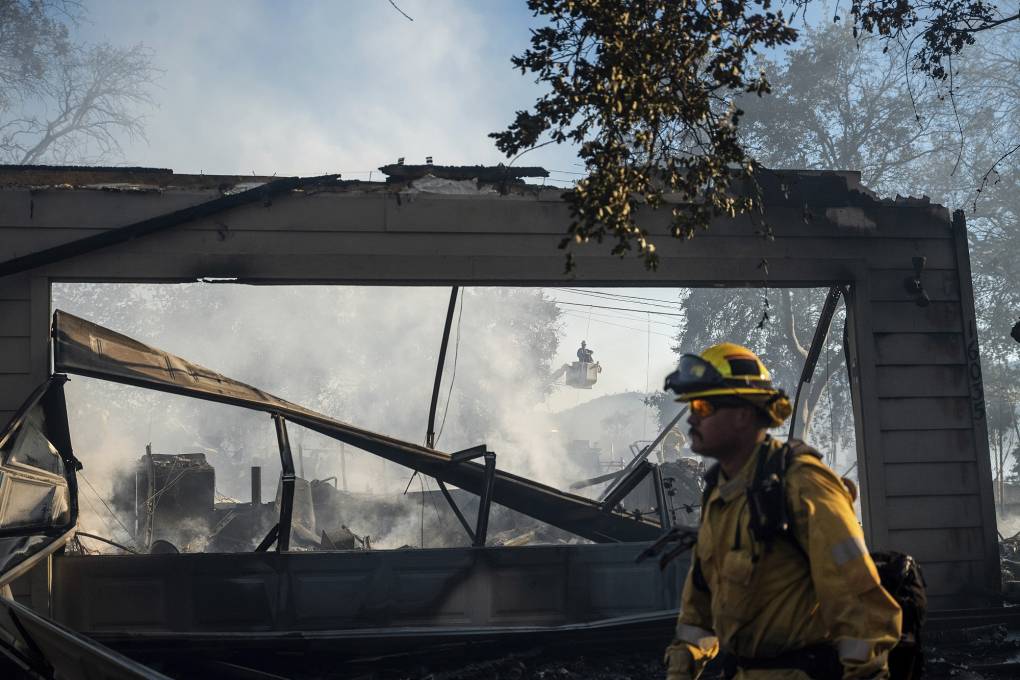
"caption": "A firefighter passes a home destroyed by the Boyles fire in Clearlake, Calif., on Sunday, Sept. 8, 2024. As insurance costs and fire danger rise, a new state report called for sweeping action to make homes and communities more resilient. ",
"credit": "Noah Berger/AP Photo",
"altTag": null,
"description": null,
"imgSizes": {
"medium": {
"file": "https://cdn.kqed.org/wp-content/uploads/sites/35/2024/09/BoylesFireAP2-800x533.jpg",
"width": 800,
"height": 533,
"mimeType": "image/jpeg"
},
"large": {
"file": "https://cdn.kqed.org/wp-content/uploads/sites/35/2024/09/BoylesFireAP2-1020x680.jpg",
"width": 1020,
"height": 680,
"mimeType": "image/jpeg"
},
"thumbnail": {
"file": "https://cdn.kqed.org/wp-content/uploads/sites/35/2024/09/BoylesFireAP2-160x107.jpg",
"width": 160,
"height": 107,
"mimeType": "image/jpeg"
},
"medium_large": {
"file": "https://cdn.kqed.org/wp-content/uploads/sites/35/2024/09/BoylesFireAP2-768x512.jpg",
"width": 768,
"height": 512,
"mimeType": "image/jpeg"
},
"1536x1536": {
"file": "https://cdn.kqed.org/wp-content/uploads/sites/35/2024/09/BoylesFireAP2-1536x1024.jpg",
"width": 1536,
"height": 1024,
"mimeType": "image/jpeg"
},
"post-thumbnail": {
"file": "https://cdn.kqed.org/wp-content/uploads/sites/35/2024/09/BoylesFireAP2-672x372.jpg",
"width": 672,
"height": 372,
"mimeType": "image/jpeg"
},
"twentyfourteen-full-width": {
"file": "https://cdn.kqed.org/wp-content/uploads/sites/35/2024/09/BoylesFireAP2-1038x576.jpg",
"width": 1038,
"height": 576,
"mimeType": "image/jpeg"
},
"full-width": {
"file": "https://cdn.kqed.org/wp-content/uploads/sites/35/2024/09/BoylesFireAP2-1920x1280.jpg",
"width": 1920,
"height": 1280,
"mimeType": "image/jpeg"
},
"kqedFullSize": {
"file": "https://cdn.kqed.org/wp-content/uploads/sites/35/2024/09/BoylesFireAP2.jpg",
"width": 2000,
"height": 1333
}
},
"isLoading": false,
"fetchFailed": false
},
"science_2000974": {
"type": "attachments",
"id": "science_2000974",
"meta": {
"index": "attachments_1716263798",
"site": "science",
"id": "2000974",
"found": true
},
"title": "260429-CLIMATESOLUTIONSINDUCTION00012_TV-KQED",
"publishDate": 1778276493,
"status": "inherit",
"parent": 0,
"modified": 1778276738,
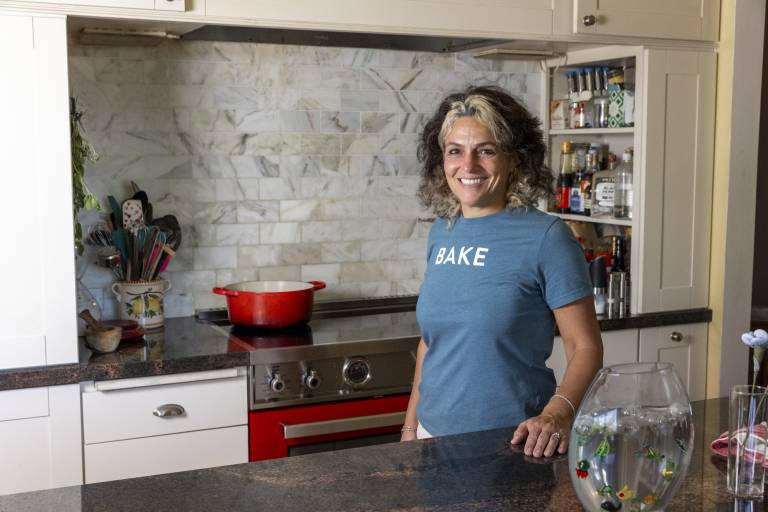
"caption": "Mirella Bucci, a resident in San Mateo, poses next to her induction stove at her home in San Mateo on April 29, 2026.",
"credit": "Tâm Vũ/KQED",
"altTag": null,
"description": null,
"imgSizes": {
"thumbnail": {
"file": "https://cdn.kqed.org/wp-content/uploads/sites/35/2026/05/260429-CLIMATESOLUTIONSINDUCTION00012_TV-KQED-160x107.jpg",
"width": 160,
"height": 107,
"mimeType": "image/jpeg"
},
"medium_large": {
"file": "https://cdn.kqed.org/wp-content/uploads/sites/35/2026/05/260429-CLIMATESOLUTIONSINDUCTION00012_TV-KQED-768x512.jpg",
"width": 768,
"height": 512,
"mimeType": "image/jpeg"
},
"1536x1536": {
"file": "https://cdn.kqed.org/wp-content/uploads/sites/35/2026/05/260429-CLIMATESOLUTIONSINDUCTION00012_TV-KQED-1536x1024.jpg",
"width": 1536,
"height": 1024,
"mimeType": "image/jpeg"
},
"post-thumbnail": {
"file": "https://cdn.kqed.org/wp-content/uploads/sites/35/2026/05/260429-CLIMATESOLUTIONSINDUCTION00012_TV-KQED-672x372.jpg",
"width": 672,
"height": 372,
"mimeType": "image/jpeg"
},
"twentyfourteen-full-width": {
"file": "https://cdn.kqed.org/wp-content/uploads/sites/35/2026/05/260429-CLIMATESOLUTIONSINDUCTION00012_TV-KQED-1038x576.jpg",
"width": 1038,
"height": 576,
"mimeType": "image/jpeg"
},
"npr-cds-wide": {
"file": "https://cdn.kqed.org/wp-content/uploads/sites/35/2026/05/260429-CLIMATESOLUTIONSINDUCTION00012_TV-KQED-1200x675.jpg",
"width": 1200,
"height": 675,
"mimeType": "image/jpeg"
},
"npr-cds-square": {
"file": "https://cdn.kqed.org/wp-content/uploads/sites/35/2026/05/260429-CLIMATESOLUTIONSINDUCTION00012_TV-KQED-600x600.jpg",
"width": 600,
"height": 600,
"mimeType": "image/jpeg"
},
"kqedFullSize": {
"file": "https://cdn.kqed.org/wp-content/uploads/sites/35/2026/05/260429-CLIMATESOLUTIONSINDUCTION00012_TV-KQED.jpg",
"width": 2000,
"height": 1333
}
},
"isLoading": false,
"fetchFailed": false
},
"science_1998076": {
"type": "attachments",
"id": "science_1998076",
"meta": {
"index": "attachments_1716263798",
"site": "science",
"id": "1998076",
"found": true
},
"title": "Warm weather in San Francisco",
"publishDate": 1754584292,
"status": "inherit",
"parent": 1998073,
"modified": 1773252256,
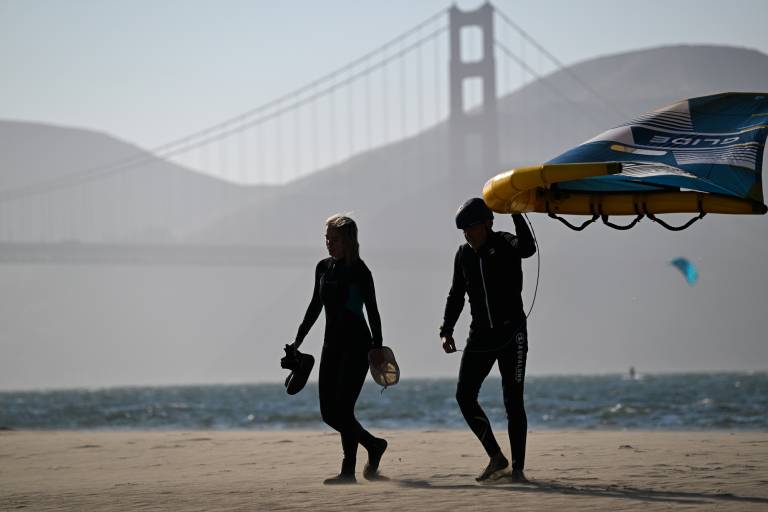
"caption": "People enjoy the warm weather at Crissy Field near the Golden Gate Bridge as a heat wave warning is issued in San Francisco, California, on July 11, 2024.",
"credit": "Tayfun Coskun/Anadolu via Getty Images",
"altTag": null,
"description": null,
"imgSizes": {
"thumbnail": {
"file": "https://cdn.kqed.org/wp-content/uploads/sites/35/2025/08/BayAreaHeatWaveGetty-160x107.jpg",
"width": 160,
"height": 107,
"mimeType": "image/jpeg"
},
"medium_large": {
"file": "https://cdn.kqed.org/wp-content/uploads/sites/35/2025/08/BayAreaHeatWaveGetty-768x512.jpg",
"width": 768,
"height": 512,
"mimeType": "image/jpeg"
},
"1536x1536": {
"file": "https://cdn.kqed.org/wp-content/uploads/sites/35/2025/08/BayAreaHeatWaveGetty-1536x1024.jpg",
"width": 1536,
"height": 1024,
"mimeType": "image/jpeg"
},
"post-thumbnail": {
"file": "https://cdn.kqed.org/wp-content/uploads/sites/35/2025/08/BayAreaHeatWaveGetty-672x372.jpg",
"width": 672,
"height": 372,
"mimeType": "image/jpeg"
},
"twentyfourteen-full-width": {
"file": "https://cdn.kqed.org/wp-content/uploads/sites/35/2025/08/BayAreaHeatWaveGetty-1038x576.jpg",
"width": 1038,
"height": 576,
"mimeType": "image/jpeg"
},
"kqedFullSize": {
"file": "https://cdn.kqed.org/wp-content/uploads/sites/35/2025/08/BayAreaHeatWaveGetty.jpg",
"width": 2000,
"height": 1333
}
},
"isLoading": false,
"fetchFailed": false
},
"science_2000852": {
"type": "attachments",
"id": "science_2000852",
"meta": {
"index": "attachments_1716263798",
"site": "science",
"id": "2000852",
"found": true
},
"title": "260213-DiabloCanyonNuclearPowerPlant-62-BL_qed",
"publishDate": 1777316431,
"status": "inherit",
"parent": 0,
"modified": 1777316453,
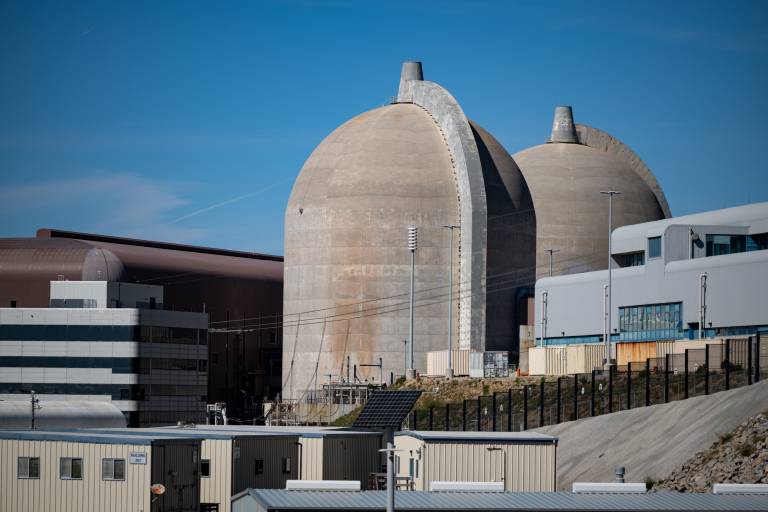
"caption": "The Diablo Canyon Power Plant in San Luis Obispo on Feb. 13, 2026, the state’s only active nuclear power plant.",
"credit": "Beth LaBerge/KQED",
"altTag": null,
"description": null,
"imgSizes": {
"thumbnail": {
"file": "https://cdn.kqed.org/wp-content/uploads/sites/35/2026/04/260213-DiabloCanyonNuclearPowerPlant-62-BL_qed-160x107.jpg",
"width": 160,
"height": 107,
"mimeType": "image/jpeg"
},
"medium_large": {
"file": "https://cdn.kqed.org/wp-content/uploads/sites/35/2026/04/260213-DiabloCanyonNuclearPowerPlant-62-BL_qed-768x512.jpg",
"width": 768,
"height": 512,
"mimeType": "image/jpeg"
},
"1536x1536": {
"file": "https://cdn.kqed.org/wp-content/uploads/sites/35/2026/04/260213-DiabloCanyonNuclearPowerPlant-62-BL_qed-1536x1024.jpg",
"width": 1536,
"height": 1024,
"mimeType": "image/jpeg"
},
"post-thumbnail": {
"file": "https://cdn.kqed.org/wp-content/uploads/sites/35/2026/04/260213-DiabloCanyonNuclearPowerPlant-62-BL_qed-672x372.jpg",
"width": 672,
"height": 372,
"mimeType": "image/jpeg"
},
"twentyfourteen-full-width": {
"file": "https://cdn.kqed.org/wp-content/uploads/sites/35/2026/04/260213-DiabloCanyonNuclearPowerPlant-62-BL_qed-1038x576.jpg",
"width": 1038,
"height": 576,
"mimeType": "image/jpeg"
},
"npr-cds-wide": {
"file": "https://cdn.kqed.org/wp-content/uploads/sites/35/2026/04/260213-DiabloCanyonNuclearPowerPlant-62-BL_qed-1200x675.jpg",
"width": 1200,
"height": 675,
"mimeType": "image/jpeg"
},
"npr-cds-square": {
"file": "https://cdn.kqed.org/wp-content/uploads/sites/35/2026/04/260213-DiabloCanyonNuclearPowerPlant-62-BL_qed-600x600.jpg",
"width": 600,
"height": 600,
"mimeType": "image/jpeg"
},
"kqedFullSize": {
"file": "https://cdn.kqed.org/wp-content/uploads/sites/35/2026/04/260213-DiabloCanyonNuclearPowerPlant-62-BL_qed.jpg",
"width": 2000,
"height": 1333
}
},
"isLoading": false,
"fetchFailed": false
},
"science_2000876": {
"type": "attachments",
"id": "science_2000876",
"meta": {
"index": "attachments_1716263798",
"site": "science",
"id": "2000876",
"found": true
},
"title": "The waterfront in Benicia on April 24, 2026.",
"publishDate": 1777482621,
"status": "inherit",
"parent": 0,
"modified": 1777482739,
"caption": "The waterfront in Benicia on April 24, 2026.",
"credit": "Martin do Nascimento/KQED",
"altTag": null,
"description": null,
"imgSizes": {
"thumbnail": {
"file": "https://cdn.kqed.org/wp-content/uploads/sites/35/2026/04/260424-BENICIA-DRONE-MD-03-KQED-160x107.jpg",
"width": 160,
"height": 107,
"mimeType": "image/jpeg"
},
"medium_large": {
"file": "https://cdn.kqed.org/wp-content/uploads/sites/35/2026/04/260424-BENICIA-DRONE-MD-03-KQED-768x512.jpg",
"width": 768,
"height": 512,
"mimeType": "image/jpeg"
},
"1536x1536": {
"file": "https://cdn.kqed.org/wp-content/uploads/sites/35/2026/04/260424-BENICIA-DRONE-MD-03-KQED-1536x1024.jpg",
"width": 1536,
"height": 1024,
"mimeType": "image/jpeg"
},
"post-thumbnail": {
"file": "https://cdn.kqed.org/wp-content/uploads/sites/35/2026/04/260424-BENICIA-DRONE-MD-03-KQED-672x372.jpg",
"width": 672,
"height": 372,
"mimeType": "image/jpeg"
},
"twentyfourteen-full-width": {
"file": "https://cdn.kqed.org/wp-content/uploads/sites/35/2026/04/260424-BENICIA-DRONE-MD-03-KQED-1038x576.jpg",
"width": 1038,
"height": 576,
"mimeType": "image/jpeg"
},
"npr-cds-wide": {
"file": "https://cdn.kqed.org/wp-content/uploads/sites/35/2026/04/260424-BENICIA-DRONE-MD-03-KQED-1200x675.jpg",
"width": 1200,
"height": 675,
"mimeType": "image/jpeg"
},
"npr-cds-square": {
"file": "https://cdn.kqed.org/wp-content/uploads/sites/35/2026/04/260424-BENICIA-DRONE-MD-03-KQED-600x600.jpg",
"width": 600,
"height": 600,
"mimeType": "image/jpeg"
},
"kqedFullSize": {
"file": "https://cdn.kqed.org/wp-content/uploads/sites/35/2026/04/260424-BENICIA-DRONE-MD-03-KQED.jpg",
"width": 2000,
"height": 1333
}
},
"isLoading": false,
"fetchFailed": false
},
"science_2000779": {
"type": "attachments",
"id": "science_2000779",
"meta": {
"index": "attachments_1716263798",
"site": "science",
"id": "2000779",
"found": true
},
"title": "Record Heatwave Melts Sierra Nevada Snowpack",
"publishDate": 1776794992,
"status": "inherit",
"parent": 2000775,
"modified": 1776795037,
"caption": "Record heat is melting the Sierra Nevada snowpack at a fast pace as viewed at Twin Lakes on March 19, 2026, near Mammoth Lakes, California. Mammoth Creek flows into the Owens Valley, the semi-arid valley containing the Owens River in eastern California in the United States, to the east of the Sierra Nevada and west of the White Mountains and Inyo Mountains on the west edge of the Great Basin. ",
"credit": "George Rose/Getty Images",
"altTag": null,
"description": null,
"imgSizes": {
"thumbnail": {
"file": "https://cdn.kqed.org/wp-content/uploads/sites/35/2026/04/SierraSnowpackMarch2026Getty-160x106.jpg",
"width": 160,
"height": 106,
"mimeType": "image/jpeg"
},
"medium_large": {
"file": "https://cdn.kqed.org/wp-content/uploads/sites/35/2026/04/SierraSnowpackMarch2026Getty-768x509.jpg",
"width": 768,
"height": 509,
"mimeType": "image/jpeg"
},
"1536x1536": {
"file": "https://cdn.kqed.org/wp-content/uploads/sites/35/2026/04/SierraSnowpackMarch2026Getty-1536x1018.jpg",
"width": 1536,
"height": 1018,
"mimeType": "image/jpeg"
},
"post-thumbnail": {
"file": "https://cdn.kqed.org/wp-content/uploads/sites/35/2026/04/SierraSnowpackMarch2026Getty-672x372.jpg",
"width": 672,
"height": 372,
"mimeType": "image/jpeg"
},
"twentyfourteen-full-width": {
"file": "https://cdn.kqed.org/wp-content/uploads/sites/35/2026/04/SierraSnowpackMarch2026Getty-1038x576.jpg",
"width": 1038,
"height": 576,
"mimeType": "image/jpeg"
},
"npr-cds-wide": {
"file": "https://cdn.kqed.org/wp-content/uploads/sites/35/2026/04/SierraSnowpackMarch2026Getty-1200x675.jpg",
"width": 1200,
"height": 675,
"mimeType": "image/jpeg"
},
"npr-cds-square": {
"file": "https://cdn.kqed.org/wp-content/uploads/sites/35/2026/04/SierraSnowpackMarch2026Getty-600x600.jpg",
"width": 600,
"height": 600,
"mimeType": "image/jpeg"
},
"kqedFullSize": {
"file": "https://cdn.kqed.org/wp-content/uploads/sites/35/2026/04/SierraSnowpackMarch2026Getty.jpg",
"width": 2000,
"height": 1325
}
},
"isLoading": false,
"fetchFailed": false
},
"science_1997028": {
"type": "attachments",
"id": "science_1997028",
"meta": {
"index": "attachments_1716263798",
"site": "science",
"id": "1997028",
"found": true
},
"title": "250523-SOLAR BALCONY-MD-08-KQED",
"publishDate": 1748034660,
"status": "inherit",
"parent": 0,
"modified": 1767909040,
"caption": "Rupert Mayer tests the newly installed solar panels at Matthew Milner's home in Kensington on May 23, 2025.",
"credit": "Martin do Nascimento/KQED",
"altTag": null,
"description": null,
"imgSizes": {
"medium": {
"file": "https://cdn.kqed.org/wp-content/uploads/sites/35/2025/05/250523-SOLAR-BALCONY-MD-08-KQED-800x534.jpg",
"width": 800,
"height": 534,
"mimeType": "image/jpeg"
},
"large": {
"file": "https://cdn.kqed.org/wp-content/uploads/sites/35/2025/05/250523-SOLAR-BALCONY-MD-08-KQED-1020x680.jpg",
"width": 1020,
"height": 680,
"mimeType": "image/jpeg"
},
"thumbnail": {
"file": "https://cdn.kqed.org/wp-content/uploads/sites/35/2025/05/250523-SOLAR-BALCONY-MD-08-KQED-160x107.jpg",
"width": 160,
"height": 107,
"mimeType": "image/jpeg"
},
"medium_large": {
"file": "https://cdn.kqed.org/wp-content/uploads/sites/35/2025/05/250523-SOLAR-BALCONY-MD-08-KQED-768x512.jpg",
"width": 768,
"height": 512,
"mimeType": "image/jpeg"
},
"1536x1536": {
"file": "https://cdn.kqed.org/wp-content/uploads/sites/35/2025/05/250523-SOLAR-BALCONY-MD-08-KQED-1536x1025.jpg",
"width": 1536,
"height": 1025,
"mimeType": "image/jpeg"
},
"post-thumbnail": {
"file": "https://cdn.kqed.org/wp-content/uploads/sites/35/2025/05/250523-SOLAR-BALCONY-MD-08-KQED-672x372.jpg",
"width": 672,
"height": 372,
"mimeType": "image/jpeg"
},
"twentyfourteen-full-width": {
"file": "https://cdn.kqed.org/wp-content/uploads/sites/35/2025/05/250523-SOLAR-BALCONY-MD-08-KQED-1038x576.jpg",
"width": 1038,
"height": 576,
"mimeType": "image/jpeg"
},
"full-width": {
"file": "https://cdn.kqed.org/wp-content/uploads/sites/35/2025/05/250523-SOLAR-BALCONY-MD-08-KQED-1920x1281.jpg",
"width": 1920,
"height": 1281,
"mimeType": "image/jpeg"
},
"kqedFullSize": {
"file": "https://cdn.kqed.org/wp-content/uploads/sites/35/2025/05/250523-SOLAR-BALCONY-MD-08-KQED.jpg",
"width": 2000,
"height": 1334
}
},
"isLoading": false,
"fetchFailed": false
},
"science_2000708": {
"type": "attachments",
"id": "science_2000708",
"meta": {
"index": "attachments_1716263798",
"site": "science",
"id": "2000708",
"found": true
},
"title": "251223-Storm-10-BL_qed (1)",
"publishDate": 1776705144,
"status": "inherit",
"parent": 2000704,
"modified": 1776705156,
"caption": "People walk along Mission Street in San Francisco on Dec. 23, 2025, as a storm system moves through the Bay Area.",
"credit": "Beth LaBerge",
"altTag": null,
"description": null,
"imgSizes": {
"thumbnail": {
"file": "https://cdn.kqed.org/wp-content/uploads/sites/35/2026/04/251223-Storm-10-BL_qed-1-160x107.jpg",
"width": 160,
"height": 107,
"mimeType": "image/jpeg"
},
"medium_large": {
"file": "https://cdn.kqed.org/wp-content/uploads/sites/35/2026/04/251223-Storm-10-BL_qed-1-768x512.jpg",
"width": 768,
"height": 512,
"mimeType": "image/jpeg"
},
"1536x1536": {
"file": "https://cdn.kqed.org/wp-content/uploads/sites/35/2026/04/251223-Storm-10-BL_qed-1-1536x1024.jpg",
"width": 1536,
"height": 1024,
"mimeType": "image/jpeg"
},
"post-thumbnail": {
"file": "https://cdn.kqed.org/wp-content/uploads/sites/35/2026/04/251223-Storm-10-BL_qed-1-672x372.jpg",
"width": 672,
"height": 372,
"mimeType": "image/jpeg"
},
"twentyfourteen-full-width": {
"file": "https://cdn.kqed.org/wp-content/uploads/sites/35/2026/04/251223-Storm-10-BL_qed-1-1038x576.jpg",
"width": 1038,
"height": 576,
"mimeType": "image/jpeg"
},
"npr-cds-wide": {
"file": "https://cdn.kqed.org/wp-content/uploads/sites/35/2026/04/251223-Storm-10-BL_qed-1-1200x675.jpg",
"width": 1200,
"height": 675,
"mimeType": "image/jpeg"
},
"npr-cds-square": {
"file": "https://cdn.kqed.org/wp-content/uploads/sites/35/2026/04/251223-Storm-10-BL_qed-1-600x600.jpg",
"width": 600,
"height": 600,
"mimeType": "image/jpeg"
},
"kqedFullSize": {
"file": "https://cdn.kqed.org/wp-content/uploads/sites/35/2026/04/251223-Storm-10-BL_qed-1.jpg",
"width": 1999,
"height": 1333
}
},
"isLoading": false,
"fetchFailed": false
},
"science_1995289": {
"type": "attachments",
"id": "science_1995289",
"meta": {
"index": "attachments_1716263798",
"site": "science",
"id": "1995289",
"found": true
},
"title": "Fracking In California Under Spotlight As Some Local Municipalities Issue Bans",
"publishDate": 1733854740,
"status": "inherit",
"parent": 0,
"modified": 1776294293,
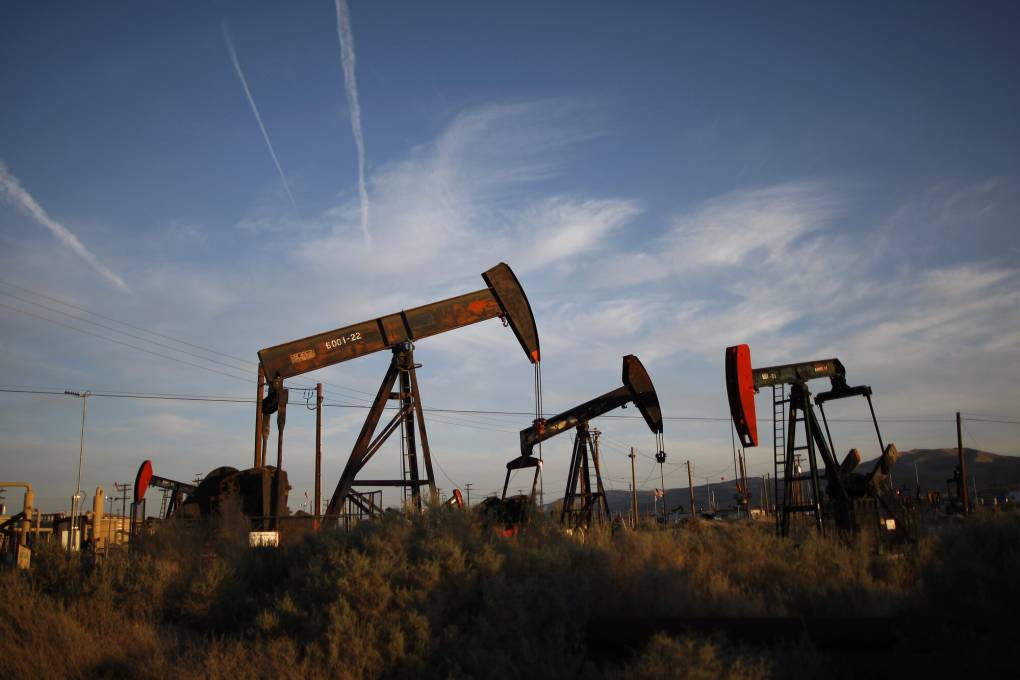
"caption": "Pump jacks and wells are seen in an oil field on the Monterey Shale formation where gas and oil extraction using hydraulic fracturing, or fracking, is on the verge of a boom on March 23, 2014, near McKittrick, California.",
"credit": "David McNew/Getty Images",
"altTag": null,
"description": null,
"imgSizes": {
"medium": {
"file": "https://cdn.kqed.org/wp-content/uploads/sites/35/2024/12/480270735_qed-800x533.jpg",
"width": 800,
"height": 533,
"mimeType": "image/jpeg"
},
"large": {
"file": "https://cdn.kqed.org/wp-content/uploads/sites/35/2024/12/480270735_qed-1020x680.jpg",
"width": 1020,
"height": 680,
"mimeType": "image/jpeg"
},
"thumbnail": {
"file": "https://cdn.kqed.org/wp-content/uploads/sites/35/2024/12/480270735_qed-160x107.jpg",
"width": 160,
"height": 107,
"mimeType": "image/jpeg"
},
"medium_large": {
"file": "https://cdn.kqed.org/wp-content/uploads/sites/35/2024/12/480270735_qed-768x512.jpg",
"width": 768,
"height": 512,
"mimeType": "image/jpeg"
},
"1536x1536": {
"file": "https://cdn.kqed.org/wp-content/uploads/sites/35/2024/12/480270735_qed-1536x1024.jpg",
"width": 1536,
"height": 1024,
"mimeType": "image/jpeg"
},
"post-thumbnail": {
"file": "https://cdn.kqed.org/wp-content/uploads/sites/35/2024/12/480270735_qed-672x372.jpg",
"width": 672,
"height": 372,
"mimeType": "image/jpeg"
},
"twentyfourteen-full-width": {
"file": "https://cdn.kqed.org/wp-content/uploads/sites/35/2024/12/480270735_qed-1038x576.jpg",
"width": 1038,
"height": 576,
"mimeType": "image/jpeg"
},
"full-width": {
"file": "https://cdn.kqed.org/wp-content/uploads/sites/35/2024/12/480270735_qed-1920x1280.jpg",
"width": 1920,
"height": 1280,
"mimeType": "image/jpeg"
},
"kqedFullSize": {
"file": "https://cdn.kqed.org/wp-content/uploads/sites/35/2024/12/480270735_qed.jpg",
"width": 2000,
"height": 1333
}
},
"isLoading": false,
"fetchFailed": false
},
"science_2000650": {
"type": "attachments",
"id": "science_2000650",
"meta": {
"index": "attachments_1716263798",
"site": "science",
"id": "2000650",
"found": true
},
"title": "260409-InsuranceCandidateForum-25-BL_qed",
"publishDate": 1775849254,
"status": "inherit",
"parent": 2000611,
"modified": 1775849281,
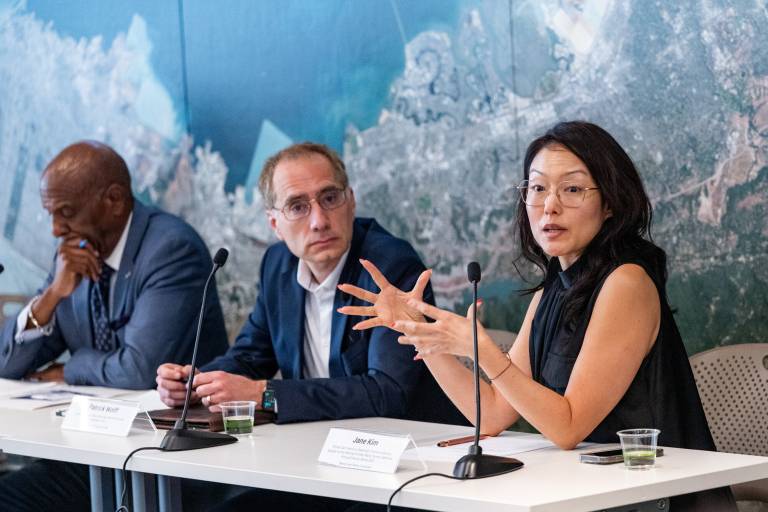
"caption": "Jane Kim, former San Francisco supervisor, speaks during a forum for candidates for California insurance commissioner at the San Francisco Bay Area Planning and Urban Research Association (SPUR) in San Francisco on April 9, 2026. The event brought together candidates to discuss the state’s insurance market, including affordability and coverage challenges facing homeowners.",
"credit": "Beth LaBerge/KQED",
"altTag": null,
"description": null,
"imgSizes": {
"thumbnail": {
"file": "https://cdn.kqed.org/wp-content/uploads/sites/35/2026/04/260409-InsuranceCandidateForum-25-BL_qed-160x107.jpg",
"width": 160,
"height": 107,
"mimeType": "image/jpeg"
},
"medium_large": {
"file": "https://cdn.kqed.org/wp-content/uploads/sites/35/2026/04/260409-InsuranceCandidateForum-25-BL_qed-768x512.jpg",
"width": 768,
"height": 512,
"mimeType": "image/jpeg"
},
"1536x1536": {
"file": "https://cdn.kqed.org/wp-content/uploads/sites/35/2026/04/260409-InsuranceCandidateForum-25-BL_qed-1536x1024.jpg",
"width": 1536,
"height": 1024,
"mimeType": "image/jpeg"
},
"post-thumbnail": {
"file": "https://cdn.kqed.org/wp-content/uploads/sites/35/2026/04/260409-InsuranceCandidateForum-25-BL_qed-672x372.jpg",
"width": 672,
"height": 372,
"mimeType": "image/jpeg"
},
"twentyfourteen-full-width": {
"file": "https://cdn.kqed.org/wp-content/uploads/sites/35/2026/04/260409-InsuranceCandidateForum-25-BL_qed-1038x576.jpg",
"width": 1038,
"height": 576,
"mimeType": "image/jpeg"
},
"npr-cds-wide": {
"file": "https://cdn.kqed.org/wp-content/uploads/sites/35/2026/04/260409-InsuranceCandidateForum-25-BL_qed-1200x675.jpg",
"width": 1200,
"height": 675,
"mimeType": "image/jpeg"
},
"npr-cds-square": {
"file": "https://cdn.kqed.org/wp-content/uploads/sites/35/2026/04/260409-InsuranceCandidateForum-25-BL_qed-600x600.jpg",
"width": 600,
"height": 600,
"mimeType": "image/jpeg"
},
"kqedFullSize": {
"file": "https://cdn.kqed.org/wp-content/uploads/sites/35/2026/04/260409-InsuranceCandidateForum-25-BL_qed.jpg",
"width": 1999,
"height": 1333
}
},
"isLoading": false,
"fetchFailed": false
},
"science_2000626": {
"type": "attachments",
"id": "science_2000626",
"meta": {
"index": "attachments_1716263798",
"site": "science",
"id": "2000626",
"found": true
},
"title": "Rain Drenches The Bay Area",
"publishDate": 1775690223,
"status": "inherit",
"parent": 2000619,
"modified": 1775690247,
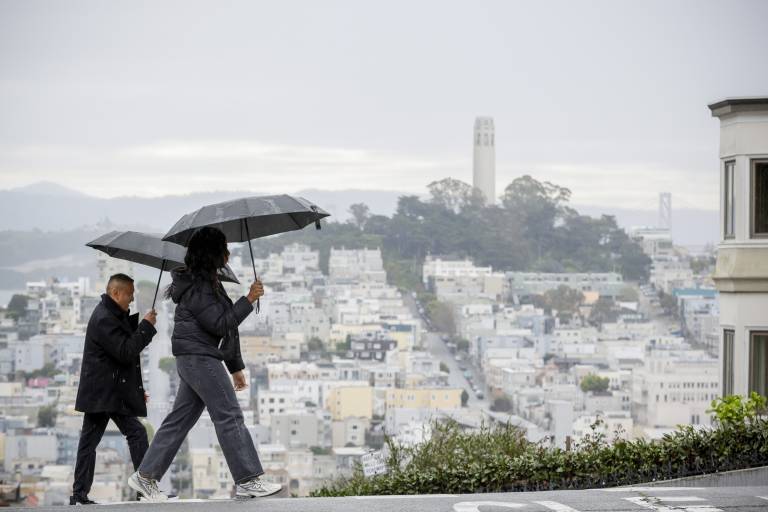
"caption": "Visitors take in city views at Hyde and Lombard streets as rain begins to soak the Bay Area in San Francisco on Sunday, Feb. 15, 2026. ",
"credit": "Brontë Wittpenn/San Francisco Chronicle via Getty Images",
"altTag": null,
"description": null,
"imgSizes": {
"thumbnail": {
"file": "https://cdn.kqed.org/wp-content/uploads/sites/35/2026/04/RainSFGetty-160x107.jpg",
"width": 160,
"height": 107,
"mimeType": "image/jpeg"
},
"medium_large": {
"file": "https://cdn.kqed.org/wp-content/uploads/sites/35/2026/04/RainSFGetty-768x512.jpg",
"width": 768,
"height": 512,
"mimeType": "image/jpeg"
},
"1536x1536": {
"file": "https://cdn.kqed.org/wp-content/uploads/sites/35/2026/04/RainSFGetty-1536x1024.jpg",
"width": 1536,
"height": 1024,
"mimeType": "image/jpeg"
},
"post-thumbnail": {
"file": "https://cdn.kqed.org/wp-content/uploads/sites/35/2026/04/RainSFGetty-672x372.jpg",
"width": 672,
"height": 372,
"mimeType": "image/jpeg"
},
"twentyfourteen-full-width": {
"file": "https://cdn.kqed.org/wp-content/uploads/sites/35/2026/04/RainSFGetty-1038x576.jpg",
"width": 1038,
"height": 576,
"mimeType": "image/jpeg"
},
"npr-cds-wide": {
"file": "https://cdn.kqed.org/wp-content/uploads/sites/35/2026/04/RainSFGetty-1200x675.jpg",
"width": 1200,
"height": 675,
"mimeType": "image/jpeg"
},
"npr-cds-square": {
"file": "https://cdn.kqed.org/wp-content/uploads/sites/35/2026/04/RainSFGetty-600x600.jpg",
"width": 600,
"height": 600,
"mimeType": "image/jpeg"
},
"kqedFullSize": {
"file": "https://cdn.kqed.org/wp-content/uploads/sites/35/2026/04/RainSFGetty.jpg",
"width": 2000,
"height": 1333
}
},
"isLoading": false,
"fetchFailed": false
},
"science_2000598": {
"type": "attachments",
"id": "science_2000598",
"meta": {
"index": "attachments_1716263798",
"site": "science",
"id": "2000598",
"found": true
},
"title": "weather0216",
"publishDate": 1775504577,
"status": "inherit",
"parent": 2000594,
"modified": 1775504603,
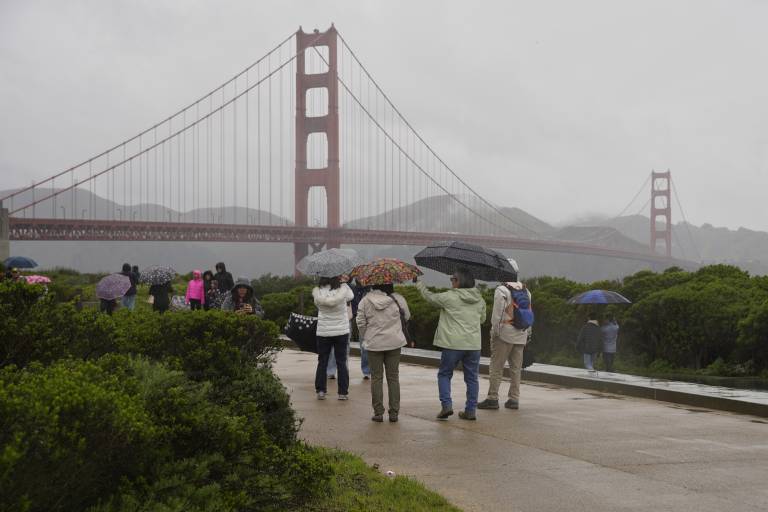
"caption": "Tourist observe the Golden Gate Bridge in San Francisco on Feb. 16, 2026. ",
"credit": "Giselle Garza Lerma/San Francisco Chronicle via Getty Images",
"altTag": null,
"description": null,
"imgSizes": {
"thumbnail": {
"file": "https://cdn.kqed.org/wp-content/uploads/sites/35/2026/04/AprilWeatherShiftGetty-160x107.jpg",
"width": 160,
"height": 107,
"mimeType": "image/jpeg"
},
"medium_large": {
"file": "https://cdn.kqed.org/wp-content/uploads/sites/35/2026/04/AprilWeatherShiftGetty-768x512.jpg",
"width": 768,
"height": 512,
"mimeType": "image/jpeg"
},
"1536x1536": {
"file": "https://cdn.kqed.org/wp-content/uploads/sites/35/2026/04/AprilWeatherShiftGetty-1536x1024.jpg",
"width": 1536,
"height": 1024,
"mimeType": "image/jpeg"
},
"post-thumbnail": {
"file": "https://cdn.kqed.org/wp-content/uploads/sites/35/2026/04/AprilWeatherShiftGetty-672x372.jpg",
"width": 672,
"height": 372,
"mimeType": "image/jpeg"
},
"twentyfourteen-full-width": {
"file": "https://cdn.kqed.org/wp-content/uploads/sites/35/2026/04/AprilWeatherShiftGetty-1038x576.jpg",
"width": 1038,
"height": 576,
"mimeType": "image/jpeg"
},
"npr-cds-wide": {
"file": "https://cdn.kqed.org/wp-content/uploads/sites/35/2026/04/AprilWeatherShiftGetty-1200x675.jpg",
"width": 1200,
"height": 675,
"mimeType": "image/jpeg"
},
"npr-cds-square": {
"file": "https://cdn.kqed.org/wp-content/uploads/sites/35/2026/04/AprilWeatherShiftGetty-600x600.jpg",
"width": 600,
"height": 600,
"mimeType": "image/jpeg"
},
"kqedFullSize": {
"file": "https://cdn.kqed.org/wp-content/uploads/sites/35/2026/04/AprilWeatherShiftGetty.jpg",
"width": 2000,
"height": 1333
}
},
"isLoading": false,
"fetchFailed": false
}
},
"audioPlayerReducer": {
"postId": "stream_live",
"isPaused": true,
"isPlaying": false,
"pfsActive": false,
"pledgeModalIsOpen": true,
"playerDrawerIsOpen": false,
"liveAudioPlayStartedAt": 0,
"liveAudioPlayContext": ""
},
"authorsReducer": {
"jsmall": {
"type": "authors",
"id": "6625",
"meta": {
"index": "authors_1716337520",
"id": "6625",
"found": true
},
"name": "Julie Small",
"firstName": "Julie",
"lastName": "Small",
"slug": "jsmall",
"email": "jsmall@kqed.org",
"display_author_email": true,
"staff_mastheads": [
"news"
],
"title": "KQED Contributor",
"bio": "Julie Small reports on criminal justice and immigration.\r\n\r\nShe was part of a team at KQED awarded a regional 2019 Edward R. Murrow award for continuing coverage of the Trump Administration's family separation policy.\r\n\r\nThe Society for Professional Journalists recognized Julie's 2018 \u003ca href=\"https://www.kqed.org/news/11636262/the-officer-tased-him-31-times-the-sheriff-called-his-death-an-accident\">reporting\u003c/a> on the San Joaquin County Sheriff's \u003ca href=\"https://www.kqed.org/news/11634689/autopsy-doctors-sheriff-overrode-death-findings-to-protect-law-enforcement\">interference\u003c/a> in death investigations with an Excellence in Journalism Award for Ongoing Coverage.\r\n\r\nJulie's\u003ca href=\"https://www.kqed.org/news/11039666/two-mentally-ill-inmates-died-one-month-in-santa-clara\"> reporting\u003c/a> with Lisa Pickoff-White on the treatment of mentally ill offenders in California jails earned a 2017 regional Edward R. Murrow Award for news reporting and an investigative reporting award from the SPJ of Northern California.\r\n\r\nBefore joining KQED, Julie covered government and politics in Sacramento for Southern California Public Radio (SCPR). Her 2010 \u003ca href=\"https://www.scpr.org/specials/prisonmedical/\">series\u003c/a> on lapses in California’s prison medical care also won a regional Edward R. Murrow Award for investigative reporting and a Golden Mic Award from the RTNDA of Southern California.\r\n\r\nJulie began her career in journalism in 2000 as the deputy foreign editor for public radio's \u003cem>Marketplace, \u003c/em>while earning her master's degree in journalism from USC’s Annenberg School of Communication.",
"avatar": "https://secure.gravatar.com/avatar/4baedf201468df97be97c2a9dd7585d0?s=600&d=blank&r=g",
"twitter": "@SmallRadio2",
"facebook": null,
"instagram": null,
"linkedin": null,
"sites": [
{
"site": "news",
"roles": [
"editor"
]
},
{
"site": "stateofhealth",
"roles": [
"author"
]
},
{
"site": "science",
"roles": [
"author"
]
}
],
"headData": {
"title": "Julie Small | KQED",
"description": "KQED Contributor",
"ogImgSrc": "https://secure.gravatar.com/avatar/4baedf201468df97be97c2a9dd7585d0?s=600&d=blank&r=g",
"twImgSrc": "https://secure.gravatar.com/avatar/4baedf201468df97be97c2a9dd7585d0?s=600&d=blank&r=g"
},
"isLoading": false,
"link": "/author/jsmall"
},
"lklivans": {
"type": "authors",
"id": "8648",
"meta": {
"index": "authors_1716337520",
"id": "8648",
"found": true
},
"name": "Laura Klivans",
"firstName": "Laura",
"lastName": "Klivans",
"slug": "lklivans",
"email": "lklivans@kqed.org",
"display_author_email": true,
"staff_mastheads": [
"news",
"science"
],
"title": "Reporter",
"bio": "Laura Klivans is an award-winning science reporter for KQED News, where she covers climate change with an eye on both groundbreaking progress and gaps in action. She is the former host of KQED's blockbuster video series about tiny, amazing animals, \u003cem>Deep Look\u003c/em>. Her work reaches national audiences through NPR, \u003cem>Here & Now, \u003c/em>PRI, and other major outlets. \r\n\r\nLaura’s won five Northern California Area Emmy Awards for Deep Look and First Place in the Greater Bay Area Journalism Awards for a podcast exploring how one Oakland neighborhood teamed up to reduce planet-heating pollution.\r\n\r\nBeyond her reporting, she hosts and moderates events. In the past, she taught audio storytelling at the UC Berkeley Graduate School of Journalism, led international education programs, worked with immigrants and refugees along the Thai-Burmese border, taught high schoolers sex ed, and was an actress. \r\n\r\nShe's a former UC Berkeley Human Rights Fellow, USC Center for Health Journalism's California Fellow and Coro Fellow in Public Affairs. Laura has a master’s in journalism from UC Berkeley, a master’s in education from Harvard, and an undergraduate degree from Northwestern University.\r\n\r\nShe loves trying to riddle the meaning out of vanity license plates.",
"avatar": "https://secure.gravatar.com/avatar/2d2ecd1550a494cc10ad4a503406965585902124739e775a9b3817eebf1d88be?s=600&d=blank&r=g",
"twitter": "lauraklivans",
"bluesky": null,
"facebook": null,
"instagram": null,
"linkedin": null,
"sites": [
{
"site": "news",
"roles": [
"editor"
]
},
{
"site": "stateofhealth",
"roles": [
"contributor",
"editor"
]
},
{
"site": "science",
"roles": [
"editor"
]
},
{
"site": "forum",
"roles": [
"editor"
]
}
],
"headData": {
"title": "Laura Klivans | KQED",
"description": "Reporter",
"ogImgSrc": "https://secure.gravatar.com/avatar/2d2ecd1550a494cc10ad4a503406965585902124739e775a9b3817eebf1d88be?s=600&d=blank&r=g",
"twImgSrc": "https://secure.gravatar.com/avatar/2d2ecd1550a494cc10ad4a503406965585902124739e775a9b3817eebf1d88be?s=600&d=blank&r=g"
},
"isLoading": false,
"link": "/author/lklivans"
},
"dventon": {
"type": "authors",
"id": "11088",
"meta": {
"index": "authors_1716337520",
"id": "11088",
"found": true
},
"name": "Danielle Venton",
"firstName": "Danielle",
"lastName": "Venton",
"slug": "dventon",
"email": "dventon@kqed.org",
"display_author_email": true,
"staff_mastheads": [
"science"
],
"title": "Science reporter",
"bio": "Danielle Venton is a reporter for KQED Science. She covers wildfires, space and oceans (though she is prone to sea sickness).\r\n\r\nBefore joining KQED in 2015, Danielle was a staff reporter at KRCB in Sonoma County and a freelancer. She studied science communication at UC Santa Cruz and formerly worked at CERN in Geneva, Switzerland where she wrote about computing. She lives in Sonoma County and enjoys backpacking.",
"avatar": "https://secure.gravatar.com/avatar/37b292b5c40c8d93959c4f48d73b5286f41b7abd8588277e941905a3ed4c801c?s=600&d=blank&r=g",
"twitter": "DanielleVenton",
"bluesky": null,
"facebook": null,
"instagram": null,
"linkedin": null,
"sites": [
{
"site": "arts",
"roles": [
"contributor"
]
},
{
"site": "news",
"roles": [
"editor"
]
},
{
"site": "futureofyou",
"roles": [
"editor"
]
},
{
"site": "science",
"roles": [
"editor"
]
},
{
"site": "liveblog",
"roles": [
"contributor"
]
}
],
"headData": {
"title": "Danielle Venton | KQED",
"description": "Science reporter",
"ogImgSrc": "https://secure.gravatar.com/avatar/37b292b5c40c8d93959c4f48d73b5286f41b7abd8588277e941905a3ed4c801c?s=600&d=blank&r=g",
"twImgSrc": "https://secure.gravatar.com/avatar/37b292b5c40c8d93959c4f48d73b5286f41b7abd8588277e941905a3ed4c801c?s=600&d=blank&r=g"
},
"isLoading": false,
"link": "/author/dventon"
},
"smohamad": {
"type": "authors",
"id": "11631",
"meta": {
"index": "authors_1716337520",
"id": "11631",
"found": true
},
"name": "Sarah Mohamad",
"firstName": "Sarah",
"lastName": "Mohamad",
"slug": "smohamad",
"email": "smohamad@KQED.org",
"display_author_email": true,
"staff_mastheads": [],
"title": "Engagement Producer and Reporter, KQED Science",
"bio": "Sarah Mohamad is an audience engagement reporter and producer for KQED Science. She reports on audience-focused science and environment stories and manages the team's social media, newsletter, and engagement efforts. Prior to this role, she played a key role as project manager for NSF's \u003ca href=\"https://www.kqed.org/crackingthecode\">\u003cem>Cracking the Code: Influencing Millennial Science Engagement\u003c/em> \u003c/a>audience research.",
"avatar": "https://secure.gravatar.com/avatar/e6224957cd82d015183756ddde1f928013a563d7ca2e4565f8c4de1ec64886c5?s=600&d=blank&r=g",
"twitter": "sarahkmohamad",
"bluesky": null,
"facebook": null,
"instagram": null,
"linkedin": null,
"sites": [
{
"site": "",
"roles": [
"editor"
]
},
{
"site": "arts",
"roles": [
"editor"
]
},
{
"site": "news",
"roles": [
"editor"
]
},
{
"site": "about",
"roles": [
"editor"
]
},
{
"site": "science",
"roles": [
"editor"
]
}
],
"headData": {
"title": "Sarah Mohamad | KQED",
"description": "Engagement Producer and Reporter, KQED Science",
"ogImgSrc": "https://secure.gravatar.com/avatar/e6224957cd82d015183756ddde1f928013a563d7ca2e4565f8c4de1ec64886c5?s=600&d=blank&r=g",
"twImgSrc": "https://secure.gravatar.com/avatar/e6224957cd82d015183756ddde1f928013a563d7ca2e4565f8c4de1ec64886c5?s=600&d=blank&r=g"
},
"isLoading": false,
"link": "/author/smohamad"
},
"eromero": {
"type": "authors",
"id": "11746",
"meta": {
"index": "authors_1716337520",
"id": "11746",
"found": true
},
"name": "Ezra David Romero",
"firstName": "Ezra David",
"lastName": "Romero",
"slug": "eromero",
"email": "eromero@kqed.org",
"display_author_email": true,
"staff_mastheads": [
"news",
"science"
],
"title": "Climate Reporter",
"bio": "Ezra David Romero is a climate reporter for KQED News. He covers the absence and excess of water in the Bay Area — think sea level rise, flooding and drought. For nearly a decade he’s covered how warming temperatures are altering the lives of Californians. He’s reported on farmers worried their pistachio trees aren’t getting enough sleep, families desperate for water, scientists studying dying giant sequoias, and alongside firefighters containing wildfires. His work has appeared on local stations across California and nationally on public radio shows like Morning Edition, Here and Now, All Things Considered and Science Friday. ",
"avatar": "https://secure.gravatar.com/avatar/c76404d287c10ed40224227551ac36e24352c7306f106632caf6fead76f8801f?s=600&d=blank&r=g",
"twitter": "ezraromero",
"bluesky": null,
"facebook": null,
"instagram": null,
"linkedin": null,
"sites": [
{
"site": "arts",
"roles": [
"editor"
]
},
{
"site": "news",
"roles": [
"editor"
]
},
{
"site": "science",
"roles": [
"editor"
]
},
{
"site": "liveblog",
"roles": [
"author"
]
}
],
"headData": {
"title": "Ezra David Romero | KQED",
"description": "Climate Reporter",
"ogImgSrc": "https://secure.gravatar.com/avatar/c76404d287c10ed40224227551ac36e24352c7306f106632caf6fead76f8801f?s=600&d=blank&r=g",
"twImgSrc": "https://secure.gravatar.com/avatar/c76404d287c10ed40224227551ac36e24352c7306f106632caf6fead76f8801f?s=600&d=blank&r=g"
},
"isLoading": false,
"link": "/author/eromero"
},
"kdebenedetti": {
"type": "authors",
"id": "11913",
"meta": {
"index": "authors_1716337520",
"id": "11913",
"found": true
},
"name": "Katie DeBenedetti",
"firstName": "Katie",
"lastName": "DeBenedetti",
"slug": "kdebenedetti",
"email": "kdebenedetti@kqed.org",
"display_author_email": false,
"staff_mastheads": [
"news",
"science"
],
"title": "KQED Contributor",
"bio": "Katie DeBenedetti is a digital reporter covering daily news for the Express Desk. Prior to joining KQED as a culture reporting intern in January 2024, she covered education and city government for the Napa Valley Register.",
"avatar": "https://secure.gravatar.com/avatar/6e31073cb8f7e4214ab03f42771d0f45?s=600&d=blank&r=g",
"twitter": null,
"facebook": null,
"instagram": null,
"linkedin": null,
"sites": [
{
"site": "news",
"roles": [
"author"
]
},
{
"site": "science",
"roles": [
"author"
]
},
{
"site": "liveblog",
"roles": [
"author"
]
}
],
"headData": {
"title": "Katie DeBenedetti | KQED",
"description": "KQED Contributor",
"ogImgSrc": "https://secure.gravatar.com/avatar/6e31073cb8f7e4214ab03f42771d0f45?s=600&d=blank&r=g",
"twImgSrc": "https://secure.gravatar.com/avatar/6e31073cb8f7e4214ab03f42771d0f45?s=600&d=blank&r=g"
},
"isLoading": false,
"link": "/author/kdebenedetti"
}
},
"pagesReducer": {
"science_category_climate": {
"type": "terms",
"id": "science_31",
"meta": {
"index": "terms_1716263798",
"site": "science",
"id": "31",
"score": 11.061819
},
"featImg": null,
"name": "Climate",
"description": null,
"taxonomy": "category",
"headData": {
"twImgId": null,
"twTitle": null,
"ogTitle": null,
"ogImgId": null,
"twDescription": null,
"description": null,
"title": "Climate Archives | KQED Science",
"ogDescription": null
},
"ttid": 33,
"slug": "climate",
"isLoading": false,
"title": "Climate",
"pageMeta": {
"site": "science",
"WpPageTemplate": "page-topic-editorial",
"currentPage": 3
},
"blocks": [
{
"blockName": "kqed/post-list",
"attrs": {
"layout": "cardArticle2",
"query": "posts/science?category=climate",
"seeMore": false,
"paginated": true,
"page": 3
}
},
{
"blockName": "kqed/ad"
}
]
}
},
"pfsSessionReducer": {},
"postsReducer": {
"stream_live": {
"type": "live",
"id": "stream_live",
"audioUrl": "https://streams.kqed.org/kqedradio",
"title": "Live Stream",
"excerpt": "Live Stream information currently unavailable.",
"link": "/radio",
"featImg": "",
"label": {
"name": "KQED Live",
"link": "/"
}
},
"stream_kqedNewscast": {
"type": "posts",
"id": "stream_kqedNewscast",
"audioUrl": "https://www.kqed.org/.stream/anon/radio/RDnews/newscast.mp3?_=1",
"title": "KQED Newscast",
"featImg": "",
"label": {
"name": "88.5 FM",
"link": "/"
}
},
"science_2000990": {
"type": "posts",
"id": "science_2000990",
"meta": {
"index": "posts_1716263798",
"site": "science",
"id": "2000990",
"score": null,
"sort": [
1778716875000
]
},
"guestAuthors": [],
"slug": "california-must-move-faster-on-wildfire-risk-experts-warn",
"title": "California Must Move Faster on Wildfire Risk, Experts Warn",
"publishDate": 1778716875,
"format": "standard",
"headTitle": "California Must Move Faster on Wildfire Risk, Experts Warn | KQED",
"labelTerm": {},
"content": "\u003cp>Fire risk experts cautioned California lawmakers this week that the state needs to change course to both survive and bounce back from \u003ca href=\"https://www.kqed.org/news/12021019/la-fires-threaten-california-insurance-market-stability-housing-costs\">wildfires\u003c/a> and other natural catastrophes.\u003c/p>\n\u003cp>At the state Capitol on Tuesday, Nancy Watkins, an actuary at financial adviser Milliman who specializes in fire risk and insurance, counseled lawmakers that the state needs to stop “nibbling around the edges.”\u003c/p>\n\u003cp>“Nobody is going to save California from our decisions,” she said. “The state has to really step in and be more strategic about how to make things happen faster.”\u003c/p>\n\u003cp>[ad fullwidth]\u003c/p>\n\u003cp>In a \u003ca href=\"https://sd18.senate.ca.gov/news/senate-leader-taps-senators-becker-and-padilla-advance-effort-wildfire-recovery-and-energy\">statement on \u003c/a>Wednesday, state Sen. Steve Padilla, D-San Diego, and Sen. Josh Becker, D-Menlo Park, said they would study the report’s findings and develop a plan to help strengthen recovery efforts and protect residents from rising energy and insurance costs.\u003c/p>\n\u003cp>“This work is essential,” Becker said. “We must advance reforms that protect access to insurance, lower costs, support wildfire resilience, and provide fair outcomes for those impacted — while ensuring our utilities are both accountable for safety and financially stable enough to attract low-cost capital on behalf of ratepayers.”\u003c/p>\n\u003cp>Wildfires over the past decade have driven up \u003ca href=\"https://www.kqed.org/science/1985175/insurance-in-california-is-changing-heres-how-it-may-affect-you\">home insurance \u003c/a>rates and made coverage harder to obtain in many parts of California. In response, the state has invested heavily in firefighting capacity, early fire-detection technology and vegetation management. But Watkins told legislators those efforts alone are not enough.[aside postID=science_2000680 hero='https://cdn.kqed.org/wp-content/uploads/sites/35/2024/12/480270735_qed-1020x680.jpg']“The buildup of wildfire risk is a state and a local issue. It’s arising from climate change, it also arises from decades of decisions that we’ve made on land use, building, fire suppression, and decades of regulatory decisions,” Watkins said.\u003c/p>\n\u003cp>Watkins said the state should focus more heavily on making communities less vulnerable to wildfire by making them less ready to burn, rather than relying primarily on detecting and extinguishing fires quickly.\u003c/p>\n\u003cp>“We cannot address this problem through ignition reduction, fuel reduction, or fire suppression, and we definitely can’t get it just through early detection. This all has to include home hardening and defensible space within communities at a much, much greater scale than has been done,” Watkins said.\u003c/p>\n\u003cp>Watkins recently co-authored an\u003ca href=\"https://www.milliman.com/en/insight/state-wildfire-mitigation-framework-measure-twice-cut-once\"> article\u003c/a> with Michael Wara of the Woods Institute for the Environment at Stanford University and Dave Winnacker, wildfire policy adviser of the Western Fire Chiefs Association, which outlined a roadmap for reducing wildfire risk in California.\u003c/p>\n\u003cp>In an email to KQED, Watkins said the paper was intended to give policymakers “explicit, tangible steps” to better protect communities and reduce the state’s growing wildfire exposure.\u003c/p>\n\u003cp>\u003c/p>\n",
"blocks": [],
"excerpt": "As insurance costs and fire danger rise, a new state report called for sweeping action to make homes and communities more resilient. ",
"status": "publish",
"parent": 0,
"modified": 1778719406,
"stats": {
"hasAudio": false,
"hasVideo": false,
"hasChartOrMap": false,
"iframeSrcs": [],
"hasGoogleForm": false,
"hasGallery": false,
"hasHearkenModule": false,
"hasPolis": false,
"paragraphCount": 12,
"wordCount": 466
},
"headData": {
"title": "California Must Move Faster on Wildfire Risk, Experts Warn | KQED",
"description": "As insurance costs and fire danger rise, a new state report called for sweeping action to make homes and communities more resilient. ",
"ogTitle": "",
"ogDescription": "",
"ogImgId": "",
"twTitle": "",
"twDescription": "",
"twImgId": "",
"schema": {
"@context": "https://schema.org",
"@type": "Article",
"headline": "California Must Move Faster on Wildfire Risk, Experts Warn",
"datePublished": "2026-05-13T17:01:15-07:00",
"dateModified": "2026-05-13T17:43:26-07:00",
"image": "https://cdn.kqed.org/wp-content/uploads/2020/02/KQED-OG-Image@1x.png"
}
},
"primaryCategory": {
"termId": 3730,
"slug": "wildfires",
"name": "Wildfires"
},
"source": "News",
"sticky": false,
"nprStoryId": "kqed-2000990",
"templateType": "standard",
"featuredImageType": "standard",
"excludeFromSiteSearch": "Include",
"articleAge": "0",
"path": "/science/2000990/california-must-move-faster-on-wildfire-risk-experts-warn",
"audioTrackLength": null,
"parsedContent": [
{
"type": "contentString",
"content": "\u003cdiv class=\"post-body\">\u003cp>\u003cp>Fire risk experts cautioned California lawmakers this week that the state needs to change course to both survive and bounce back from \u003ca href=\"https://www.kqed.org/news/12021019/la-fires-threaten-california-insurance-market-stability-housing-costs\">wildfires\u003c/a> and other natural catastrophes.\u003c/p>\n\u003cp>At the state Capitol on Tuesday, Nancy Watkins, an actuary at financial adviser Milliman who specializes in fire risk and insurance, counseled lawmakers that the state needs to stop “nibbling around the edges.”\u003c/p>\n\u003cp>“Nobody is going to save California from our decisions,” she said. “The state has to really step in and be more strategic about how to make things happen faster.”\u003c/p>\n\u003cp>\u003c/p>\u003c/div>",
"attributes": {
"named": {},
"numeric": []
}
},
{
"type": "component",
"content": "",
"name": "ad",
"attributes": {
"named": {
"label": "fullwidth"
},
"numeric": [
"fullwidth"
]
}
},
{
"type": "contentString",
"content": "\u003cdiv class=\"post-body\">\u003cp>\u003c/p>\n\u003cp>In a \u003ca href=\"https://sd18.senate.ca.gov/news/senate-leader-taps-senators-becker-and-padilla-advance-effort-wildfire-recovery-and-energy\">statement on \u003c/a>Wednesday, state Sen. Steve Padilla, D-San Diego, and Sen. Josh Becker, D-Menlo Park, said they would study the report’s findings and develop a plan to help strengthen recovery efforts and protect residents from rising energy and insurance costs.\u003c/p>\n\u003cp>“This work is essential,” Becker said. “We must advance reforms that protect access to insurance, lower costs, support wildfire resilience, and provide fair outcomes for those impacted — while ensuring our utilities are both accountable for safety and financially stable enough to attract low-cost capital on behalf of ratepayers.”\u003c/p>\n\u003cp>Wildfires over the past decade have driven up \u003ca href=\"https://www.kqed.org/science/1985175/insurance-in-california-is-changing-heres-how-it-may-affect-you\">home insurance \u003c/a>rates and made coverage harder to obtain in many parts of California. In response, the state has invested heavily in firefighting capacity, early fire-detection technology and vegetation management. But Watkins told legislators those efforts alone are not enough.\u003c/p>\u003c/div>",
"attributes": {
"named": {},
"numeric": []
}
},
{
"type": "component",
"content": "",
"name": "aside",
"attributes": {
"named": {
"postid": "science_2000680",
"hero": "https://cdn.kqed.org/wp-content/uploads/sites/35/2024/12/480270735_qed-1020x680.jpg",
"label": ""
},
"numeric": []
}
},
{
"type": "contentString",
"content": "\u003cdiv class=\"post-body\">\u003cp>“The buildup of wildfire risk is a state and a local issue. It’s arising from climate change, it also arises from decades of decisions that we’ve made on land use, building, fire suppression, and decades of regulatory decisions,” Watkins said.\u003c/p>\n\u003cp>Watkins said the state should focus more heavily on making communities less vulnerable to wildfire by making them less ready to burn, rather than relying primarily on detecting and extinguishing fires quickly.\u003c/p>\n\u003cp>“We cannot address this problem through ignition reduction, fuel reduction, or fire suppression, and we definitely can’t get it just through early detection. This all has to include home hardening and defensible space within communities at a much, much greater scale than has been done,” Watkins said.\u003c/p>\n\u003cp>Watkins recently co-authored an\u003ca href=\"https://www.milliman.com/en/insight/state-wildfire-mitigation-framework-measure-twice-cut-once\"> article\u003c/a> with Michael Wara of the Woods Institute for the Environment at Stanford University and Dave Winnacker, wildfire policy adviser of the Western Fire Chiefs Association, which outlined a roadmap for reducing wildfire risk in California.\u003c/p>\n\u003cp>In an email to KQED, Watkins said the paper was intended to give policymakers “explicit, tangible steps” to better protect communities and reduce the state’s growing wildfire exposure.\u003c/p>\n\u003cp>\u003c/p>\n\u003c/div>\u003c/p>",
"attributes": {
"named": {},
"numeric": []
}
}
],
"link": "/science/2000990/california-must-move-faster-on-wildfire-risk-experts-warn",
"authors": [
"11088"
],
"categories": [
"science_31",
"science_35",
"science_40",
"science_4450",
"science_3730"
],
"tags": [
"science_5178",
"science_5275",
"science_194",
"science_192",
"science_5259",
"science_309",
"science_5347"
],
"featImg": "science_1994222",
"label": "source_science_2000990"
},
"science_2000962": {
"type": "posts",
"id": "science_2000962",
"meta": {
"index": "posts_1716263798",
"site": "science",
"id": "2000962",
"score": null,
"sort": [
1778607033000
]
},
"guestAuthors": [],
"slug": "how-bay-area-libraries-are-helping-residents-switch-from-gas-to-induction-cooking",
"title": "How Bay Area Libraries Are Helping Residents Switch From Gas to Induction Cooking",
"publishDate": 1778607033,
"format": "standard",
"headTitle": "How Bay Area Libraries Are Helping Residents Switch From Gas to Induction Cooking | KQED",
"labelTerm": {},
"content": "\u003cp>\u003cem>California is transitioning to clean energy. KQED is reporting on what that means for you. What works? What doesn’t? How much does it cost? Help us find these answers and more by \u003c/em>\u003ca href=\"https://donate.kqed.org/sojo?ms=W2510EANXXXX22\">\u003cem>donating today\u003c/em>\u003c/a>\u003cem>. \u003c/em>\u003c/p>\n\u003cp>Mirella Bucci cooked on a gas stove her whole life. She connected it to her family’s Italian cooking traditions and the way she grew up. Bucci thought its heat control was unmatched. Until she tried an induction cooktop for the first time.\u003c/p>\n\u003cp>“My mom and these influential people in my cooking world have always used gas,” Bucci said. She remembers her mom’s big pot of tomato sauce simmering above a low flame; Bucci and her two siblings would eat it with pasta every week.\u003c/p>\n\u003cp>Bucci long believed the industry standard, that only gas provided the precision “top chefs” require. But, as an adult, Bucci grew curious about induction as she considered replacing her gas stove as part of a home electrification project.\u003c/p>\n\u003cp>[ad fullwidth]\u003c/p>\n\u003cp>She had heard professional chefs still relied on gas in restaurants, but that some used induction at home because it was faster and easier to control.\u003c/p>\n\u003cp>Still, she was skeptical. Bucci, who works at the Stanford School of Medicine helping biomedical research labs apply for federal funding, has lived in San Mateo County for nearly 25 years.\u003c/p>\n\u003cp>She didn’t know anyone personally who used induction cooking. So she checked one out from San Mateo City Hall.\u003c/p>\n\u003cfigure id=\"attachment_2000970\" class=\"wp-caption aligncenter\" style=\"max-width: 2000px\">\u003cimg loading=\"lazy\" decoding=\"async\" class=\"size-full wp-image-2000970\" src=\"https://cdn.kqed.org/wp-content/uploads/sites/35/2026/05/260417-CLIMATESOLUTIONSINDUCTION02262_TV-KQED.jpg\" alt=\"\" width=\"2000\" height=\"1333\" srcset=\"https://cdn.kqed.org/wp-content/uploads/sites/35/2026/05/260417-CLIMATESOLUTIONSINDUCTION02262_TV-KQED.jpg 2000w, https://cdn.kqed.org/wp-content/uploads/sites/35/2026/05/260417-CLIMATESOLUTIONSINDUCTION02262_TV-KQED-160x107.jpg 160w, https://cdn.kqed.org/wp-content/uploads/sites/35/2026/05/260417-CLIMATESOLUTIONSINDUCTION02262_TV-KQED-768x512.jpg 768w, https://cdn.kqed.org/wp-content/uploads/sites/35/2026/05/260417-CLIMATESOLUTIONSINDUCTION02262_TV-KQED-1536x1024.jpg 1536w\" sizes=\"auto, (max-width: 2000px) 100vw, 2000px\" />\u003cfigcaption class=\"wp-caption-text\">An induction stove available for check out at the San Mateo Public Library in San Mateo on April 17, 2026. \u003ccite>(Tâm Vũ/KQED)\u003c/cite>\u003c/figcaption>\u003c/figure>\n\u003cp>Within days, her doubts faded. Water boiled faster than she expected. The stove’s surface didn’t remain too hot for too long. And the temperature control felt more precise. “The induction made things easier,” Bucci said.\u003c/p>\n\u003cp>That mattered to Bucci, whose cooking is deeply tied to her family’s heritage.\u003c/p>\n\u003cp>She cooks seafood risotto, squid-ink pasta, lobster macaroni, scallops with wedges of grapefruit, and other seafood dishes for the Italian-American “Feast of Seven Fishes” Christmas Eve traditional meal. For years, she believed those meals required cooking over a flame.[aside postID=science_2000835 hero='https://cdn.kqed.org/wp-content/uploads/sites/35/2026/04/260213-DiabloCanyonNuclearPowerPlant-62-BL_qed.jpg']“You can cook something really hot and get those grill lines on your meat or your vegetables,” Bucci said. “That’s kind of an advantage too, with the induction, is that it gets really hot.”\u003c/p>\n\u003cp>Across the Bay Area, libraries and other civic institutions now offer induction cooktop kits like the one Bucci borrowed, giving residents a free, low-risk way to try an alternative to gas cooking. The loaner programs are part of a broader push by Bay Area municipalities and climate advocates to reduce household emissions from gas appliances and improve indoor air quality.\u003c/p>\n\u003cp>Gas and propane stoves are a major source of pollution in U.S. households. A \u003ca href=\"https://academic.oup.com/pnasnexus/article/4/12/pgaf341/8361964?login=false\">2025 study\u003c/a> found that for homes using these fuels, cooking accounts for a quarter of their total exposure to nitrogen dioxide.\u003c/p>\n\u003cp>This is a serious health concern because nitrogen dioxide is a well-known trigger for asthma, meaning that simply preparing meals can contribute to a person’s long-term health risk.\u003c/p>\n\u003cp>But for many households, switching isn’t simple. Full stove replacements can cost thousands of dollars, and even portable units, typically between $50 and $200, can feel like a financial risk if people aren’t sure they’ll like the technology.\u003c/p>\n\u003ch2>The library as a climate outreach space\u003c/h2>\n\u003cp>The induction cooktop loaner program in San Mateo that Bucci participated in began at City Hall but moved into the public library’s \u003ca href=\"https://www.cityofsanmateo.org/4621/Technology-Lending\">technology lending program\u003c/a> in 2024.\u003c/p>\n\u003cp>Jonathan Jung, a supervising library assistant in San Mateo, said the induction cooktops are a natural extension of the library’s mission. “Libraries are a well-respected pillar of knowledge in the community,” he said.\u003c/p>\n\u003cfigure id=\"attachment_2000971\" class=\"wp-caption aligncenter\" style=\"max-width: 2000px\">\u003cimg loading=\"lazy\" decoding=\"async\" class=\"size-full wp-image-2000971\" src=\"https://cdn.kqed.org/wp-content/uploads/sites/35/2026/05/260417-CLIMATESOLUTIONSINDUCTION02413_TV-KQED.jpg\" alt=\"\" width=\"2000\" height=\"1333\" srcset=\"https://cdn.kqed.org/wp-content/uploads/sites/35/2026/05/260417-CLIMATESOLUTIONSINDUCTION02413_TV-KQED.jpg 2000w, https://cdn.kqed.org/wp-content/uploads/sites/35/2026/05/260417-CLIMATESOLUTIONSINDUCTION02413_TV-KQED-160x107.jpg 160w, https://cdn.kqed.org/wp-content/uploads/sites/35/2026/05/260417-CLIMATESOLUTIONSINDUCTION02413_TV-KQED-768x512.jpg 768w, https://cdn.kqed.org/wp-content/uploads/sites/35/2026/05/260417-CLIMATESOLUTIONSINDUCTION02413_TV-KQED-1536x1024.jpg 1536w\" sizes=\"auto, (max-width: 2000px) 100vw, 2000px\" />\u003cfigcaption class=\"wp-caption-text\">Jonathan Jung, supervising library assistant, poses for a portrait at the San Mateo Public Library in San Mateo on April 17, 2026. \u003ccite>(Tâm Vũ/KQED)\u003c/cite>\u003c/figcaption>\u003c/figure>\n\u003cp>The lending program includes everything from keyboards and synthesizers for musicians to microcontrollers for hobbyists. Jung said the program’s two induction cooktops are in high demand. “Patrons have given me positive feedback. They’re really happy that they can test it out,” he said.\u003c/p>\n\u003cp>Civic groups offer the cooktops as part of their local climate goals, said Andrea Chow, a sustainability analyst with the city. In San Mateo, buildings account for a portion \u003ca href=\"https://www.smcsustainability.org/greenhouse-gas-reduction/ccap/building-energy/\">of community-wide greenhouse gas emissions\u003c/a>, which come primarily from the use of gas in residential and commercial buildings. Especially in unincorporated areas, where they are the second largest contributor to greenhouse gas emissions at 32%. “Decarbonizing existing buildings is a huge priority for our city,” Chow said.\u003c/p>\n\u003cp>The Sunnyvale Public Library started a similar program in 2019. The library has 14 cooktops available and averages 100 checkouts per year.\u003c/p>\n\u003cfigure id=\"attachment_2000972\" class=\"wp-caption aligncenter\" style=\"max-width: 2000px\">\u003cimg loading=\"lazy\" decoding=\"async\" class=\"size-full wp-image-2000972\" src=\"https://cdn.kqed.org/wp-content/uploads/sites/35/2026/05/260417-CLIMATESOLUTIONSINDUCTION02564_TV-KQED.jpg\" alt=\"\" width=\"2000\" height=\"1333\" srcset=\"https://cdn.kqed.org/wp-content/uploads/sites/35/2026/05/260417-CLIMATESOLUTIONSINDUCTION02564_TV-KQED.jpg 2000w, https://cdn.kqed.org/wp-content/uploads/sites/35/2026/05/260417-CLIMATESOLUTIONSINDUCTION02564_TV-KQED-160x107.jpg 160w, https://cdn.kqed.org/wp-content/uploads/sites/35/2026/05/260417-CLIMATESOLUTIONSINDUCTION02564_TV-KQED-768x512.jpg 768w, https://cdn.kqed.org/wp-content/uploads/sites/35/2026/05/260417-CLIMATESOLUTIONSINDUCTION02564_TV-KQED-1536x1024.jpg 1536w\" sizes=\"auto, (max-width: 2000px) 100vw, 2000px\" />\u003cfigcaption class=\"wp-caption-text\">People use the communal spaces at the San Mateo Public Library in San Mateo on April 17, 2026. \u003ccite>(Tâm Vũ/KQED)\u003c/cite>\u003c/figcaption>\u003c/figure>\n\u003cp>Madeline Khair, environmental programs manager within Sunnyvale’s environmental services department, said the library is expanding its sustainability section to include solar panels, rechargeable batteries and emergency kits.\u003c/p>\n\u003cp>“Our partners at the library have always been really supportive of the climate action plan and sustainability goals,” she said.\u003c/p>\n\u003cp>The city of Sunnyvale aims to reduce overall community greenhouse gas emissions by \u003ca href=\"https://sunnyvaleclimateaction.org/scoreboard\">56% from 1990 levels by 2030\u003c/a>, according to its \u003ca href=\"https://www.sunnyvale.ca.gov/home/showpublisheddocument/1066/638606111674670000\">climate action playbook\u003c/a>. This target is more aggressive than \u003ca href=\"https://calepa.ca.gov/climate-dashboard/\">California’s 40% reduction goal\u003c/a>.\u003c/p>\n\u003cp>While the loaner program offers a pathway for people interested in trying induction cooktops for free, some libraries carry only a handful of kits and have waitlists to check them out. And replacing a stove can still be expensive. Costs can range from $2,000 to $8,000, or even more. Some households may need electrical upgrades to switch completely away from gas.\u003c/p>\n\u003ch2>What the research says about gas stoves and indoor air\u003c/h2>\n\u003cp>About a year and a half after trying a loaner, San Mateo resident Mike Driscoll and his wife made the switch. They discovered one benefit they did not expect: a cleaner home.\u003c/p>\n\u003cp>“With gas, there was always a little layer of grease on nearby surfaces,” he said. “After switching, that just disappeared.”\u003c/p>\n\u003cp>Cooking itself produces grease particles and ultrafine aerosols. With gas, the open flame can intensify how those particles spread, carrying them onto nearby counters, cabinets and furniture, something households like Driscoll’s may notice as residue over time.\u003c/p>\n\u003cfigure id=\"attachment_2000975\" class=\"wp-caption aligncenter\" style=\"max-width: 2000px\">\u003cimg loading=\"lazy\" decoding=\"async\" class=\"size-full wp-image-2000975\" src=\"https://cdn.kqed.org/wp-content/uploads/sites/35/2026/05/260429-CLIMATESOLUTIONSINDUCTION00150_TV-KQED.jpg\" alt=\"\" width=\"2000\" height=\"1333\" srcset=\"https://cdn.kqed.org/wp-content/uploads/sites/35/2026/05/260429-CLIMATESOLUTIONSINDUCTION00150_TV-KQED.jpg 2000w, https://cdn.kqed.org/wp-content/uploads/sites/35/2026/05/260429-CLIMATESOLUTIONSINDUCTION00150_TV-KQED-160x107.jpg 160w, https://cdn.kqed.org/wp-content/uploads/sites/35/2026/05/260429-CLIMATESOLUTIONSINDUCTION00150_TV-KQED-768x512.jpg 768w, https://cdn.kqed.org/wp-content/uploads/sites/35/2026/05/260429-CLIMATESOLUTIONSINDUCTION00150_TV-KQED-1536x1024.jpg 1536w\" sizes=\"auto, (max-width: 2000px) 100vw, 2000px\" />\u003cfigcaption class=\"wp-caption-text\">Mirella Bucci’s induction stove at her home in San Mateo on April 29, 2026. \u003ccite>(Tâm Vũ/KQED)\u003c/cite>\u003c/figcaption>\u003c/figure>\n\u003cp>Gas stoves also emit pollutants, including \u003ca href=\"https://www.sciencedirect.com/science/article/abs/pii/S0013935117300750\">nitrogen dioxide\u003c/a>, and fine particulate matter, which can linger in indoor air or settle on surfaces. Exposure has been linked to increased asthma symptoms in children and can worsen other respiratory conditions, according to a \u003ca href=\"https://pmc.ncbi.nlm.nih.gov/articles/PMC9819315/\">2023 study published in the \u003c/a>International Journal of Environmental Research and Public Health.\u003c/p>\n\u003cp>Those health considerations are becoming a key driver behind programs like these, alongside climate goals.\u003c/p>\n\u003cp>Gas stoves contribute to climate change by emitting carbon dioxide during combustion and methane, which is present in unburned natural gas that leaks from gas stoves.\u003c/p>\n\u003cp>These greenhouse gases trap atmospheric heat. According to a \u003ca href=\"https://pubmed.ncbi.nlm.nih.gov/35081712/\">2022 study\u003c/a> in Environmental Science and Technology, annual methane leaks from U.S. stoves alone create a climate impact comparable to that of half a million cars, highlighting a significant environmental footprint beyond active cooking.[aside postID=science_2000695 hero='https://cdn.kqed.org/wp-content/uploads/sites/35/2025/05/250523-SOLAR-BALCONY-MD-08-KQED-1020x680.jpg']Buildings account for a significant share of California’s emissions, much of it from gas appliances, making reductions in heating, hot water and cooking a key part of the state’s climate strategy.\u003c/p>\n\u003cp>Long-term studies indicate that switching from gas stoves to induction cooking significantly improves indoor air quality, reducing nitrogen dioxide exposure by over 50%, according to a \u003ca href=\"https://news.stanford.edu/stories/2025/12/gas-propane-stoves-nitrogen-dioxide-exposure-health-risks-switching-electric\">2025 study by Stanford researchers\u003c/a>.\u003c/p>\n\u003cp>Induction cooktops use electromagnetic energy to heat cookware directly, with no combustion and no combustion-related indoor air pollution. That can improve indoor air quality, especially in smaller or poorly ventilated spaces, while also reducing excess heat in the kitchen. “Gas heats the air to thousands of degrees; electric doesn’t,” said Rob Jackson, the study’s senior author and professor at the Stanford Doerr School of Sustainability.\u003c/p>\n\u003cp>He said these programs also help people who cannot swap all of their gas appliances — furnaces, water heaters — at once. They can start by using their gas stove less.\u003c/p>\n\u003cp>“We sample many homes in Bakersfield and elsewhere where people rent and can’t change their appliances, or convince their landlord to, and can’t afford to pay for the transition themselves,” he said. “In this case, the best thing you can do to improve indoor air quality is to burn less gas indoors.”\u003c/p>\n\u003ch2>Where to borrow an induction cooktop in the Bay Area\u003c/h2>\n\u003cp>Programs have expanded across the region, including Santa Cruz, Milpitas, Burlingame, Palo Alto, Santa Clara, Oakland, Marin County and Hayward. In some cities, kits are available through libraries; in others, through sustainability departments or community programs.\u003c/p>\n\u003cp>Regional energy providers, including \u003ca href=\"https://www.peninsulacleanenergy.com/\">Peninsula Clean Energy\u003c/a> and \u003ca href=\"https://svcleanenergy.org/home-rebates/\">Silicon Valley Clean Energy\u003c/a>, have supported these efforts.\u003c/p>\n\u003cp>Silicon Valley Clean Energy also offers \u003ca href=\"https://svcleanenergy.org/home-rebates/\">rebates\u003c/a> of up to $750 for upgrading to induction cooktops.\u003c/p>\n\u003cfigure id=\"attachment_2000973\" class=\"wp-caption aligncenter\" style=\"max-width: 2000px\">\u003cimg loading=\"lazy\" decoding=\"async\" class=\"size-full wp-image-2000973\" src=\"https://cdn.kqed.org/wp-content/uploads/sites/35/2026/05/260417-CLIMATESOLUTIONSINDUCTION02861_TV-KQED.jpg\" alt=\"\" width=\"2000\" height=\"1333\" srcset=\"https://cdn.kqed.org/wp-content/uploads/sites/35/2026/05/260417-CLIMATESOLUTIONSINDUCTION02861_TV-KQED.jpg 2000w, https://cdn.kqed.org/wp-content/uploads/sites/35/2026/05/260417-CLIMATESOLUTIONSINDUCTION02861_TV-KQED-160x107.jpg 160w, https://cdn.kqed.org/wp-content/uploads/sites/35/2026/05/260417-CLIMATESOLUTIONSINDUCTION02861_TV-KQED-768x512.jpg 768w, https://cdn.kqed.org/wp-content/uploads/sites/35/2026/05/260417-CLIMATESOLUTIONSINDUCTION02861_TV-KQED-1536x1024.jpg 1536w\" sizes=\"auto, (max-width: 2000px) 100vw, 2000px\" />\u003cfigcaption class=\"wp-caption-text\">The San Mateo Public Library stands on 55 W 3rd Ave., in San Mateo, on April 17, 2026. \u003ccite>(Tâm Vũ/KQED)\u003c/cite>\u003c/figcaption>\u003c/figure>\n\u003cp>The \u003ca href=\"https://www.bayren.org/ease-home\">Bay Area Regional Energy Network\u003c/a> assists moderate-income households with home improvements, including electrical upgrades for cooking.\u003c/p>\n\u003cp>Loaner programs are also available through \u003ca href=\"https://pge-induction.myturn.com/library/\">PG&E\u003c/a>, \u003ca href=\"https://acterra.org/electrification/greenhome/induction-cooktop-loan/\">Acterra\u003c/a> in the East Bay, and \u003ca href=\"https://sanjosecleanenergy.org/electric-cooking/\">San Jose Clean Energy\u003c/a>.\u003c/p>\n\u003cp>In Milpitas, sustainability coordinator Grace Chan said the goal is to make the gas-to-induction transition as easy as possible. “It’s a very low-commitment way for residents to test out a new type of equipment that they may never have used before,” Chan said.\u003c/p>\n\u003cp>For some, the appeal isn’t even about replacing a stove.\u003c/p>\n\u003cp>Jessica Egbert, a renter in San Bruno, borrowed a cooktop for a backyard-style Korean barbecue with friends. “It was my first time using induction,” she said. “It heated up really fast, and I liked that I could use it outside without worrying about an open flame.”[aside postID=news_12077055 hero='https://cdn.kqed.org/wp-content/uploads/sites/10/2025/06/GavinNewsomRobBontaGetty.jpg']Still, awareness remains a challenge.\u003c/p>\n\u003cp>“There is a very strong, sometimes cultural or personal connection to gas cooking. There’s a lot of hesitancy,” Chow said.\u003c/p>\n\u003cp>But once people try induction, perceptions can shift. Borrowers frequently mention that water boils faster, that the controls feel precise, and that the surface is safe, cooling quickly and reducing the risk of burns or fires.\u003c/p>\n\u003cp>There are still trade-offs. Induction requires compatible cookware like stainless steel and cast iron, and some cooks miss the visual cue of a flame or worry about techniques like stir-frying.\u003c/p>\n\u003cp>For Bucci, the loaner program made all the difference.\u003c/p>\n\u003cp>It was a little over two years ago when she borrowed a single-burner induction cooktop from city hall to try out for two weeks at home.\u003c/p>\n\u003cp>What started out as a more climate-conscious decision, Bucci said, turned out to be better for her cooking overall.\u003c/p>\n\u003cp>Now, she wonders if there will ever be a situation where she would prefer gas. “I mean, if you were making a flambé and you were trying to light your alcohol on fire in the pan, that would be one.”\u003c/p>\n\u003cp>Aside from that rare occurrence, Bucci doesn’t miss the flame.\u003c/p>\n\u003cp>“You realize the point is to heat your food quickly and with control,” she said. “And induction does that.”\u003c/p>\n",
"blocks": [],
"excerpt": "Bay Area libraries are lending induction cooktops to help residents transition away from gas stoves, cut greenhouse gas emissions and improve indoor air quality. ",
"status": "publish",
"parent": 0,
"modified": 1787939472,
"stats": {
"hasAudio": false,
"hasVideo": false,
"hasChartOrMap": false,
"iframeSrcs": [],
"hasGoogleForm": false,
"hasGallery": false,
"hasHearkenModule": false,
"hasPolis": false,
"paragraphCount": 52,
"wordCount": 1970
},
"headData": {
"title": "How Bay Area Libraries Are Helping Residents Switch From Gas to Induction Cooking | KQED",
"description": "Bay Area libraries are lending induction cooktops to help residents transition away from gas stoves, cut greenhouse gas emissions and improve indoor air quality. ",
"ogTitle": "",
"ogDescription": "",
"ogImgId": "",
"twTitle": "",
"twDescription": "",
"twImgId": "",
"schema": {
"@context": "https://schema.org",
"@type": "Article",
"headline": "How Bay Area Libraries Are Helping Residents Switch From Gas to Induction Cooking",
"datePublished": "2026-05-12T10:30:33-07:00",
"dateModified": "2026-08-28T10:51:12-07:00",
"image": "https://cdn.kqed.org/wp-content/uploads/2020/02/KQED-OG-Image@1x.png"
}
},
"primaryCategory": {
"termId": 31,
"slug": "climate",
"name": "Climate"
},
"source": "News",
"sticky": false,
"nprStoryId": "kqed-2000962",
"templateType": "standard",
"featuredImageType": "standard",
"excludeFromSiteSearch": "Include",
"articleAge": "0",
"path": "/science/2000962/how-bay-area-libraries-are-helping-residents-switch-from-gas-to-induction-cooking",
"audioTrackLength": null,
"parsedContent": [
{
"type": "contentString",
"content": "\u003cdiv class=\"post-body\">\u003cp>\u003cp>\u003cem>California is transitioning to clean energy. KQED is reporting on what that means for you. What works? What doesn’t? How much does it cost? Help us find these answers and more by \u003c/em>\u003ca href=\"https://donate.kqed.org/sojo?ms=W2510EANXXXX22\">\u003cem>donating today\u003c/em>\u003c/a>\u003cem>. \u003c/em>\u003c/p>\n\u003cp>Mirella Bucci cooked on a gas stove her whole life. She connected it to her family’s Italian cooking traditions and the way she grew up. Bucci thought its heat control was unmatched. Until she tried an induction cooktop for the first time.\u003c/p>\n\u003cp>“My mom and these influential people in my cooking world have always used gas,” Bucci said. She remembers her mom’s big pot of tomato sauce simmering above a low flame; Bucci and her two siblings would eat it with pasta every week.\u003c/p>\n\u003cp>Bucci long believed the industry standard, that only gas provided the precision “top chefs” require. But, as an adult, Bucci grew curious about induction as she considered replacing her gas stove as part of a home electrification project.\u003c/p>\n\u003cp>\u003c/p>\u003c/div>",
"attributes": {
"named": {},
"numeric": []
}
},
{
"type": "component",
"content": "",
"name": "ad",
"attributes": {
"named": {
"label": "fullwidth"
},
"numeric": [
"fullwidth"
]
}
},
{
"type": "contentString",
"content": "\u003cdiv class=\"post-body\">\u003cp>\u003c/p>\n\u003cp>She had heard professional chefs still relied on gas in restaurants, but that some used induction at home because it was faster and easier to control.\u003c/p>\n\u003cp>Still, she was skeptical. Bucci, who works at the Stanford School of Medicine helping biomedical research labs apply for federal funding, has lived in San Mateo County for nearly 25 years.\u003c/p>\n\u003cp>She didn’t know anyone personally who used induction cooking. So she checked one out from San Mateo City Hall.\u003c/p>\n\u003cfigure id=\"attachment_2000970\" class=\"wp-caption aligncenter\" style=\"max-width: 2000px\">\u003cimg loading=\"lazy\" decoding=\"async\" class=\"size-full wp-image-2000970\" src=\"https://cdn.kqed.org/wp-content/uploads/sites/35/2026/05/260417-CLIMATESOLUTIONSINDUCTION02262_TV-KQED.jpg\" alt=\"\" width=\"2000\" height=\"1333\" srcset=\"https://cdn.kqed.org/wp-content/uploads/sites/35/2026/05/260417-CLIMATESOLUTIONSINDUCTION02262_TV-KQED.jpg 2000w, https://cdn.kqed.org/wp-content/uploads/sites/35/2026/05/260417-CLIMATESOLUTIONSINDUCTION02262_TV-KQED-160x107.jpg 160w, https://cdn.kqed.org/wp-content/uploads/sites/35/2026/05/260417-CLIMATESOLUTIONSINDUCTION02262_TV-KQED-768x512.jpg 768w, https://cdn.kqed.org/wp-content/uploads/sites/35/2026/05/260417-CLIMATESOLUTIONSINDUCTION02262_TV-KQED-1536x1024.jpg 1536w\" sizes=\"auto, (max-width: 2000px) 100vw, 2000px\" />\u003cfigcaption class=\"wp-caption-text\">An induction stove available for check out at the San Mateo Public Library in San Mateo on April 17, 2026. \u003ccite>(Tâm Vũ/KQED)\u003c/cite>\u003c/figcaption>\u003c/figure>\n\u003cp>Within days, her doubts faded. Water boiled faster than she expected. The stove’s surface didn’t remain too hot for too long. And the temperature control felt more precise. “The induction made things easier,” Bucci said.\u003c/p>\n\u003cp>That mattered to Bucci, whose cooking is deeply tied to her family’s heritage.\u003c/p>\n\u003cp>She cooks seafood risotto, squid-ink pasta, lobster macaroni, scallops with wedges of grapefruit, and other seafood dishes for the Italian-American “Feast of Seven Fishes” Christmas Eve traditional meal. For years, she believed those meals required cooking over a flame.\u003c/p>\u003c/div>",
"attributes": {
"named": {},
"numeric": []
}
},
{
"type": "component",
"content": "",
"name": "aside",
"attributes": {
"named": {
"postid": "science_2000835",
"hero": "https://cdn.kqed.org/wp-content/uploads/sites/35/2026/04/260213-DiabloCanyonNuclearPowerPlant-62-BL_qed.jpg",
"label": ""
},
"numeric": []
}
},
{
"type": "contentString",
"content": "\u003cdiv class=\"post-body\">\u003cp>“You can cook something really hot and get those grill lines on your meat or your vegetables,” Bucci said. “That’s kind of an advantage too, with the induction, is that it gets really hot.”\u003c/p>\n\u003cp>Across the Bay Area, libraries and other civic institutions now offer induction cooktop kits like the one Bucci borrowed, giving residents a free, low-risk way to try an alternative to gas cooking. The loaner programs are part of a broader push by Bay Area municipalities and climate advocates to reduce household emissions from gas appliances and improve indoor air quality.\u003c/p>\n\u003cp>Gas and propane stoves are a major source of pollution in U.S. households. A \u003ca href=\"https://academic.oup.com/pnasnexus/article/4/12/pgaf341/8361964?login=false\">2025 study\u003c/a> found that for homes using these fuels, cooking accounts for a quarter of their total exposure to nitrogen dioxide.\u003c/p>\n\u003cp>This is a serious health concern because nitrogen dioxide is a well-known trigger for asthma, meaning that simply preparing meals can contribute to a person’s long-term health risk.\u003c/p>\n\u003cp>But for many households, switching isn’t simple. Full stove replacements can cost thousands of dollars, and even portable units, typically between $50 and $200, can feel like a financial risk if people aren’t sure they’ll like the technology.\u003c/p>\n\u003ch2>The library as a climate outreach space\u003c/h2>\n\u003cp>The induction cooktop loaner program in San Mateo that Bucci participated in began at City Hall but moved into the public library’s \u003ca href=\"https://www.cityofsanmateo.org/4621/Technology-Lending\">technology lending program\u003c/a> in 2024.\u003c/p>\n\u003cp>Jonathan Jung, a supervising library assistant in San Mateo, said the induction cooktops are a natural extension of the library’s mission. “Libraries are a well-respected pillar of knowledge in the community,” he said.\u003c/p>\n\u003cfigure id=\"attachment_2000971\" class=\"wp-caption aligncenter\" style=\"max-width: 2000px\">\u003cimg loading=\"lazy\" decoding=\"async\" class=\"size-full wp-image-2000971\" src=\"https://cdn.kqed.org/wp-content/uploads/sites/35/2026/05/260417-CLIMATESOLUTIONSINDUCTION02413_TV-KQED.jpg\" alt=\"\" width=\"2000\" height=\"1333\" srcset=\"https://cdn.kqed.org/wp-content/uploads/sites/35/2026/05/260417-CLIMATESOLUTIONSINDUCTION02413_TV-KQED.jpg 2000w, https://cdn.kqed.org/wp-content/uploads/sites/35/2026/05/260417-CLIMATESOLUTIONSINDUCTION02413_TV-KQED-160x107.jpg 160w, https://cdn.kqed.org/wp-content/uploads/sites/35/2026/05/260417-CLIMATESOLUTIONSINDUCTION02413_TV-KQED-768x512.jpg 768w, https://cdn.kqed.org/wp-content/uploads/sites/35/2026/05/260417-CLIMATESOLUTIONSINDUCTION02413_TV-KQED-1536x1024.jpg 1536w\" sizes=\"auto, (max-width: 2000px) 100vw, 2000px\" />\u003cfigcaption class=\"wp-caption-text\">Jonathan Jung, supervising library assistant, poses for a portrait at the San Mateo Public Library in San Mateo on April 17, 2026. \u003ccite>(Tâm Vũ/KQED)\u003c/cite>\u003c/figcaption>\u003c/figure>\n\u003cp>The lending program includes everything from keyboards and synthesizers for musicians to microcontrollers for hobbyists. Jung said the program’s two induction cooktops are in high demand. “Patrons have given me positive feedback. They’re really happy that they can test it out,” he said.\u003c/p>\n\u003cp>Civic groups offer the cooktops as part of their local climate goals, said Andrea Chow, a sustainability analyst with the city. In San Mateo, buildings account for a portion \u003ca href=\"https://www.smcsustainability.org/greenhouse-gas-reduction/ccap/building-energy/\">of community-wide greenhouse gas emissions\u003c/a>, which come primarily from the use of gas in residential and commercial buildings. Especially in unincorporated areas, where they are the second largest contributor to greenhouse gas emissions at 32%. “Decarbonizing existing buildings is a huge priority for our city,” Chow said.\u003c/p>\n\u003cp>The Sunnyvale Public Library started a similar program in 2019. The library has 14 cooktops available and averages 100 checkouts per year.\u003c/p>\n\u003cfigure id=\"attachment_2000972\" class=\"wp-caption aligncenter\" style=\"max-width: 2000px\">\u003cimg loading=\"lazy\" decoding=\"async\" class=\"size-full wp-image-2000972\" src=\"https://cdn.kqed.org/wp-content/uploads/sites/35/2026/05/260417-CLIMATESOLUTIONSINDUCTION02564_TV-KQED.jpg\" alt=\"\" width=\"2000\" height=\"1333\" srcset=\"https://cdn.kqed.org/wp-content/uploads/sites/35/2026/05/260417-CLIMATESOLUTIONSINDUCTION02564_TV-KQED.jpg 2000w, https://cdn.kqed.org/wp-content/uploads/sites/35/2026/05/260417-CLIMATESOLUTIONSINDUCTION02564_TV-KQED-160x107.jpg 160w, https://cdn.kqed.org/wp-content/uploads/sites/35/2026/05/260417-CLIMATESOLUTIONSINDUCTION02564_TV-KQED-768x512.jpg 768w, https://cdn.kqed.org/wp-content/uploads/sites/35/2026/05/260417-CLIMATESOLUTIONSINDUCTION02564_TV-KQED-1536x1024.jpg 1536w\" sizes=\"auto, (max-width: 2000px) 100vw, 2000px\" />\u003cfigcaption class=\"wp-caption-text\">People use the communal spaces at the San Mateo Public Library in San Mateo on April 17, 2026. \u003ccite>(Tâm Vũ/KQED)\u003c/cite>\u003c/figcaption>\u003c/figure>\n\u003cp>Madeline Khair, environmental programs manager within Sunnyvale’s environmental services department, said the library is expanding its sustainability section to include solar panels, rechargeable batteries and emergency kits.\u003c/p>\n\u003cp>“Our partners at the library have always been really supportive of the climate action plan and sustainability goals,” she said.\u003c/p>\n\u003cp>The city of Sunnyvale aims to reduce overall community greenhouse gas emissions by \u003ca href=\"https://sunnyvaleclimateaction.org/scoreboard\">56% from 1990 levels by 2030\u003c/a>, according to its \u003ca href=\"https://www.sunnyvale.ca.gov/home/showpublisheddocument/1066/638606111674670000\">climate action playbook\u003c/a>. This target is more aggressive than \u003ca href=\"https://calepa.ca.gov/climate-dashboard/\">California’s 40% reduction goal\u003c/a>.\u003c/p>\n\u003cp>While the loaner program offers a pathway for people interested in trying induction cooktops for free, some libraries carry only a handful of kits and have waitlists to check them out. And replacing a stove can still be expensive. Costs can range from $2,000 to $8,000, or even more. Some households may need electrical upgrades to switch completely away from gas.\u003c/p>\n\u003ch2>What the research says about gas stoves and indoor air\u003c/h2>\n\u003cp>About a year and a half after trying a loaner, San Mateo resident Mike Driscoll and his wife made the switch. They discovered one benefit they did not expect: a cleaner home.\u003c/p>\n\u003cp>“With gas, there was always a little layer of grease on nearby surfaces,” he said. “After switching, that just disappeared.”\u003c/p>\n\u003cp>Cooking itself produces grease particles and ultrafine aerosols. With gas, the open flame can intensify how those particles spread, carrying them onto nearby counters, cabinets and furniture, something households like Driscoll’s may notice as residue over time.\u003c/p>\n\u003cfigure id=\"attachment_2000975\" class=\"wp-caption aligncenter\" style=\"max-width: 2000px\">\u003cimg loading=\"lazy\" decoding=\"async\" class=\"size-full wp-image-2000975\" src=\"https://cdn.kqed.org/wp-content/uploads/sites/35/2026/05/260429-CLIMATESOLUTIONSINDUCTION00150_TV-KQED.jpg\" alt=\"\" width=\"2000\" height=\"1333\" srcset=\"https://cdn.kqed.org/wp-content/uploads/sites/35/2026/05/260429-CLIMATESOLUTIONSINDUCTION00150_TV-KQED.jpg 2000w, https://cdn.kqed.org/wp-content/uploads/sites/35/2026/05/260429-CLIMATESOLUTIONSINDUCTION00150_TV-KQED-160x107.jpg 160w, https://cdn.kqed.org/wp-content/uploads/sites/35/2026/05/260429-CLIMATESOLUTIONSINDUCTION00150_TV-KQED-768x512.jpg 768w, https://cdn.kqed.org/wp-content/uploads/sites/35/2026/05/260429-CLIMATESOLUTIONSINDUCTION00150_TV-KQED-1536x1024.jpg 1536w\" sizes=\"auto, (max-width: 2000px) 100vw, 2000px\" />\u003cfigcaption class=\"wp-caption-text\">Mirella Bucci’s induction stove at her home in San Mateo on April 29, 2026. \u003ccite>(Tâm Vũ/KQED)\u003c/cite>\u003c/figcaption>\u003c/figure>\n\u003cp>Gas stoves also emit pollutants, including \u003ca href=\"https://www.sciencedirect.com/science/article/abs/pii/S0013935117300750\">nitrogen dioxide\u003c/a>, and fine particulate matter, which can linger in indoor air or settle on surfaces. Exposure has been linked to increased asthma symptoms in children and can worsen other respiratory conditions, according to a \u003ca href=\"https://pmc.ncbi.nlm.nih.gov/articles/PMC9819315/\">2023 study published in the \u003c/a>International Journal of Environmental Research and Public Health.\u003c/p>\n\u003cp>Those health considerations are becoming a key driver behind programs like these, alongside climate goals.\u003c/p>\n\u003cp>Gas stoves contribute to climate change by emitting carbon dioxide during combustion and methane, which is present in unburned natural gas that leaks from gas stoves.\u003c/p>\n\u003cp>These greenhouse gases trap atmospheric heat. According to a \u003ca href=\"https://pubmed.ncbi.nlm.nih.gov/35081712/\">2022 study\u003c/a> in Environmental Science and Technology, annual methane leaks from U.S. stoves alone create a climate impact comparable to that of half a million cars, highlighting a significant environmental footprint beyond active cooking.\u003c/p>\u003c/div>",
"attributes": {
"named": {},
"numeric": []
}
},
{
"type": "component",
"content": "",
"name": "aside",
"attributes": {
"named": {
"postid": "science_2000695",
"hero": "https://cdn.kqed.org/wp-content/uploads/sites/35/2025/05/250523-SOLAR-BALCONY-MD-08-KQED-1020x680.jpg",
"label": ""
},
"numeric": []
}
},
{
"type": "contentString",
"content": "\u003cdiv class=\"post-body\">\u003cp>Buildings account for a significant share of California’s emissions, much of it from gas appliances, making reductions in heating, hot water and cooking a key part of the state’s climate strategy.\u003c/p>\n\u003cp>Long-term studies indicate that switching from gas stoves to induction cooking significantly improves indoor air quality, reducing nitrogen dioxide exposure by over 50%, according to a \u003ca href=\"https://news.stanford.edu/stories/2025/12/gas-propane-stoves-nitrogen-dioxide-exposure-health-risks-switching-electric\">2025 study by Stanford researchers\u003c/a>.\u003c/p>\n\u003cp>Induction cooktops use electromagnetic energy to heat cookware directly, with no combustion and no combustion-related indoor air pollution. That can improve indoor air quality, especially in smaller or poorly ventilated spaces, while also reducing excess heat in the kitchen. “Gas heats the air to thousands of degrees; electric doesn’t,” said Rob Jackson, the study’s senior author and professor at the Stanford Doerr School of Sustainability.\u003c/p>\n\u003cp>He said these programs also help people who cannot swap all of their gas appliances — furnaces, water heaters — at once. They can start by using their gas stove less.\u003c/p>\n\u003cp>“We sample many homes in Bakersfield and elsewhere where people rent and can’t change their appliances, or convince their landlord to, and can’t afford to pay for the transition themselves,” he said. “In this case, the best thing you can do to improve indoor air quality is to burn less gas indoors.”\u003c/p>\n\u003ch2>Where to borrow an induction cooktop in the Bay Area\u003c/h2>\n\u003cp>Programs have expanded across the region, including Santa Cruz, Milpitas, Burlingame, Palo Alto, Santa Clara, Oakland, Marin County and Hayward. In some cities, kits are available through libraries; in others, through sustainability departments or community programs.\u003c/p>\n\u003cp>Regional energy providers, including \u003ca href=\"https://www.peninsulacleanenergy.com/\">Peninsula Clean Energy\u003c/a> and \u003ca href=\"https://svcleanenergy.org/home-rebates/\">Silicon Valley Clean Energy\u003c/a>, have supported these efforts.\u003c/p>\n\u003cp>Silicon Valley Clean Energy also offers \u003ca href=\"https://svcleanenergy.org/home-rebates/\">rebates\u003c/a> of up to $750 for upgrading to induction cooktops.\u003c/p>\n\u003cfigure id=\"attachment_2000973\" class=\"wp-caption aligncenter\" style=\"max-width: 2000px\">\u003cimg loading=\"lazy\" decoding=\"async\" class=\"size-full wp-image-2000973\" src=\"https://cdn.kqed.org/wp-content/uploads/sites/35/2026/05/260417-CLIMATESOLUTIONSINDUCTION02861_TV-KQED.jpg\" alt=\"\" width=\"2000\" height=\"1333\" srcset=\"https://cdn.kqed.org/wp-content/uploads/sites/35/2026/05/260417-CLIMATESOLUTIONSINDUCTION02861_TV-KQED.jpg 2000w, https://cdn.kqed.org/wp-content/uploads/sites/35/2026/05/260417-CLIMATESOLUTIONSINDUCTION02861_TV-KQED-160x107.jpg 160w, https://cdn.kqed.org/wp-content/uploads/sites/35/2026/05/260417-CLIMATESOLUTIONSINDUCTION02861_TV-KQED-768x512.jpg 768w, https://cdn.kqed.org/wp-content/uploads/sites/35/2026/05/260417-CLIMATESOLUTIONSINDUCTION02861_TV-KQED-1536x1024.jpg 1536w\" sizes=\"auto, (max-width: 2000px) 100vw, 2000px\" />\u003cfigcaption class=\"wp-caption-text\">The San Mateo Public Library stands on 55 W 3rd Ave., in San Mateo, on April 17, 2026. \u003ccite>(Tâm Vũ/KQED)\u003c/cite>\u003c/figcaption>\u003c/figure>\n\u003cp>The \u003ca href=\"https://www.bayren.org/ease-home\">Bay Area Regional Energy Network\u003c/a> assists moderate-income households with home improvements, including electrical upgrades for cooking.\u003c/p>\n\u003cp>Loaner programs are also available through \u003ca href=\"https://pge-induction.myturn.com/library/\">PG&E\u003c/a>, \u003ca href=\"https://acterra.org/electrification/greenhome/induction-cooktop-loan/\">Acterra\u003c/a> in the East Bay, and \u003ca href=\"https://sanjosecleanenergy.org/electric-cooking/\">San Jose Clean Energy\u003c/a>.\u003c/p>\n\u003cp>In Milpitas, sustainability coordinator Grace Chan said the goal is to make the gas-to-induction transition as easy as possible. “It’s a very low-commitment way for residents to test out a new type of equipment that they may never have used before,” Chan said.\u003c/p>\n\u003cp>For some, the appeal isn’t even about replacing a stove.\u003c/p>\n\u003cp>Jessica Egbert, a renter in San Bruno, borrowed a cooktop for a backyard-style Korean barbecue with friends. “It was my first time using induction,” she said. “It heated up really fast, and I liked that I could use it outside without worrying about an open flame.”\u003c/p>\u003c/div>",
"attributes": {
"named": {},
"numeric": []
}
},
{
"type": "component",
"content": "",
"name": "aside",
"attributes": {
"named": {
"postid": "news_12077055",
"hero": "https://cdn.kqed.org/wp-content/uploads/sites/10/2025/06/GavinNewsomRobBontaGetty.jpg",
"label": ""
},
"numeric": []
}
},
{
"type": "contentString",
"content": "\u003cdiv class=\"post-body\">\u003cp>Still, awareness remains a challenge.\u003c/p>\n\u003cp>“There is a very strong, sometimes cultural or personal connection to gas cooking. There’s a lot of hesitancy,” Chow said.\u003c/p>\n\u003cp>But once people try induction, perceptions can shift. Borrowers frequently mention that water boils faster, that the controls feel precise, and that the surface is safe, cooling quickly and reducing the risk of burns or fires.\u003c/p>\n\u003cp>There are still trade-offs. Induction requires compatible cookware like stainless steel and cast iron, and some cooks miss the visual cue of a flame or worry about techniques like stir-frying.\u003c/p>\n\u003cp>For Bucci, the loaner program made all the difference.\u003c/p>\n\u003cp>It was a little over two years ago when she borrowed a single-burner induction cooktop from city hall to try out for two weeks at home.\u003c/p>\n\u003cp>What started out as a more climate-conscious decision, Bucci said, turned out to be better for her cooking overall.\u003c/p>\n\u003cp>Now, she wonders if there will ever be a situation where she would prefer gas. “I mean, if you were making a flambé and you were trying to light your alcohol on fire in the pan, that would be one.”\u003c/p>\n\u003cp>Aside from that rare occurrence, Bucci doesn’t miss the flame.\u003c/p>\n\u003cp>“You realize the point is to heat your food quickly and with control,” she said. “And induction does that.”\u003c/p>\n\u003c/div>\u003c/p>",
"attributes": {
"named": {},
"numeric": []
}
}
],
"link": "/science/2000962/how-bay-area-libraries-are-helping-residents-switch-from-gas-to-induction-cooking",
"authors": [
"11631"
],
"categories": [
"science_31",
"science_33",
"science_35",
"science_40",
"science_4450"
],
"tags": [
"science_856",
"science_5178",
"science_2455",
"science_2889",
"science_182",
"science_5492",
"science_134",
"science_5542",
"science_953",
"science_5163",
"science_309"
],
"featImg": "science_2000974",
"label": "source_science_2000962"
},
"science_2000955": {
"type": "posts",
"id": "science_2000955",
"meta": {
"index": "posts_1716263798",
"site": "science",
"id": "2000955",
"score": null,
"sort": [
1778158844000
]
},
"guestAuthors": [],
"slug": "hot-weekend-ahead-for-the-bay-area-with-summerlike-weather-forecast",
"title": "Hot Weekend Ahead for the Bay Area With Summerlike Weather Forecast",
"publishDate": 1778158844,
"format": "standard",
"headTitle": "Hot Weekend Ahead for the Bay Area With Summerlike Weather Forecast | KQED",
"labelTerm": {},
"content": "\u003cp>Forecasters expect summerlike heat to sizzle the \u003ca href=\"https://www.kqed.org/science/tag/bay-area-weather\">Bay Area\u003c/a> with temperatures 15 to 20 degrees above average by the end of the weekend.\u003c/p>\n\u003cp>After some rain across the region earlier this week, a growing ridge of high pressure will cause the warm-up by pushing cooler ocean air farther out over the Pacific. As a result, temperatures along the Central Coast and parts of the East Bay, South Bay and North Bay could teeter close to 100 degrees by Sunday, according to the National Weather Service.\u003c/p>\n\u003cp>San Francisco could reach into the 80s by Monday, which is about 15 degrees above normal for the time of year, said Joe Merchant, a meteorologist with the weather service’s Bay Area office.\u003c/p>\n\u003cp>[ad fullwidth]\u003c/p>\n\u003cp>“It’s basically a little more gradual through the end of the workweek, [then] a bigger jump through the weekend and into the beginning of next week,” Merchant said.\u003c/p>\n\u003cp>Thursday and Friday will be marked by windy conditions, especially in the North Bay, allowing the weak ridge to develop further and drive “\u003ca href=\"https://www.kqed.org/news/11682057/how-the-bay-areas-fog-came-to-be-named-karl\">Karl the Fog\u003c/a>” out of many parts.\u003c/p>\n\u003cp>“It’ll stay warm to hot, especially inland away from the influence of the marine layer, into the beginning of next week,” Merchant said.[aside postID=news_12076857 hero='https://cdn.kqed.org/wp-content/uploads/sites/10/2026/03/HeatWaveGetty1.jpg']The service expects a minor heat risk for people sensitive to hotter temperatures through Saturday, and a moderate heat risk Sunday into Monday, especially for inland areas. At this time, Merchant said, his office has not issued a heat advisory, but “it’s possible by the beginning of next week.”\u003c/p>\n\u003cp>“If you have any outdoor plans, be prepared with sunscreen and take breaks in the shade or get into air conditioning,” Merchant said. “Also, people going to the beach for relief from the heat should anticipate cold water. Just because the air is warming up doesn’t mean the water is warming up.”\u003c/p>\n\u003cp>Some areas could get close to setting daily record highs early next week. Merchant said the NWS is expecting above-normal temperatures at least through the middle of the month, before a potential minor cooldown.\u003c/p>\n\u003cp>“Monday is going to be the hottest day,” Merchant said. “We will have a nice drop by the middle of next week.”\u003c/p>\n\u003cp>\u003c/p>\n",
"blocks": [],
"excerpt": "Inland Bay Area temperatures could soar close to 100 degrees this weekend, with San Francisco climbing into the 80s, due to a ridge of high pressure.",
"status": "publish",
"parent": 0,
"modified": 1778101115,
"stats": {
"hasAudio": false,
"hasVideo": false,
"hasChartOrMap": false,
"iframeSrcs": [],
"hasGoogleForm": false,
"hasGallery": false,
"hasHearkenModule": false,
"hasPolis": false,
"paragraphCount": 11,
"wordCount": 403
},
"headData": {
"title": "Hot Weekend Ahead for the Bay Area With Summerlike Weather Forecast | KQED",
"description": "Inland Bay Area temperatures could soar close to 100 degrees this weekend, with San Francisco climbing into the 80s, due to a ridge of high pressure.",
"ogTitle": "",
"ogDescription": "",
"ogImgId": "",
"twTitle": "",
"twDescription": "",
"twImgId": "",
"schema": {
"@context": "https://schema.org",
"@type": "Article",
"headline": "Hot Weekend Ahead for the Bay Area With Summerlike Weather Forecast",
"datePublished": "2026-05-07T06:00:44-07:00",
"dateModified": "2026-05-06T13:58:35-07:00",
"image": "https://cdn.kqed.org/wp-content/uploads/2020/02/KQED-OG-Image@1x.png"
}
},
"primaryCategory": {
"termId": 31,
"slug": "climate",
"name": "Climate"
},
"source": "News",
"sticky": false,
"templateType": "standard",
"featuredImageType": "standard",
"excludeFromSiteSearch": "Include",
"articleAge": "0",
"path": "/science/2000955/hot-weekend-ahead-for-the-bay-area-with-summerlike-weather-forecast",
"audioTrackLength": null,
"parsedContent": [
{
"type": "contentString",
"content": "\u003cdiv class=\"post-body\">\u003cp>\u003cp>Forecasters expect summerlike heat to sizzle the \u003ca href=\"https://www.kqed.org/science/tag/bay-area-weather\">Bay Area\u003c/a> with temperatures 15 to 20 degrees above average by the end of the weekend.\u003c/p>\n\u003cp>After some rain across the region earlier this week, a growing ridge of high pressure will cause the warm-up by pushing cooler ocean air farther out over the Pacific. As a result, temperatures along the Central Coast and parts of the East Bay, South Bay and North Bay could teeter close to 100 degrees by Sunday, according to the National Weather Service.\u003c/p>\n\u003cp>San Francisco could reach into the 80s by Monday, which is about 15 degrees above normal for the time of year, said Joe Merchant, a meteorologist with the weather service’s Bay Area office.\u003c/p>\n\u003cp>\u003c/p>\u003c/div>",
"attributes": {
"named": {},
"numeric": []
}
},
{
"type": "component",
"content": "",
"name": "ad",
"attributes": {
"named": {
"label": "fullwidth"
},
"numeric": [
"fullwidth"
]
}
},
{
"type": "contentString",
"content": "\u003cdiv class=\"post-body\">\u003cp>\u003c/p>\n\u003cp>“It’s basically a little more gradual through the end of the workweek, [then] a bigger jump through the weekend and into the beginning of next week,” Merchant said.\u003c/p>\n\u003cp>Thursday and Friday will be marked by windy conditions, especially in the North Bay, allowing the weak ridge to develop further and drive “\u003ca href=\"https://www.kqed.org/news/11682057/how-the-bay-areas-fog-came-to-be-named-karl\">Karl the Fog\u003c/a>” out of many parts.\u003c/p>\n\u003cp>“It’ll stay warm to hot, especially inland away from the influence of the marine layer, into the beginning of next week,” Merchant said.\u003c/p>\u003c/div>",
"attributes": {
"named": {},
"numeric": []
}
},
{
"type": "component",
"content": "",
"name": "aside",
"attributes": {
"named": {
"postid": "news_12076857",
"hero": "https://cdn.kqed.org/wp-content/uploads/sites/10/2026/03/HeatWaveGetty1.jpg",
"label": ""
},
"numeric": []
}
},
{
"type": "contentString",
"content": "\u003cdiv class=\"post-body\">\u003cp>The service expects a minor heat risk for people sensitive to hotter temperatures through Saturday, and a moderate heat risk Sunday into Monday, especially for inland areas. At this time, Merchant said, his office has not issued a heat advisory, but “it’s possible by the beginning of next week.”\u003c/p>\n\u003cp>“If you have any outdoor plans, be prepared with sunscreen and take breaks in the shade or get into air conditioning,” Merchant said. “Also, people going to the beach for relief from the heat should anticipate cold water. Just because the air is warming up doesn’t mean the water is warming up.”\u003c/p>\n\u003cp>Some areas could get close to setting daily record highs early next week. Merchant said the NWS is expecting above-normal temperatures at least through the middle of the month, before a potential minor cooldown.\u003c/p>\n\u003cp>“Monday is going to be the hottest day,” Merchant said. “We will have a nice drop by the middle of next week.”\u003c/p>\n\u003cp>\u003c/p>\n\u003c/div>\u003c/p>",
"attributes": {
"named": {},
"numeric": []
}
}
],
"link": "/science/2000955/hot-weekend-ahead-for-the-bay-area-with-summerlike-weather-forecast",
"authors": [
"11746"
],
"categories": [
"science_31",
"science_40",
"science_4450"
],
"tags": [
"science_856",
"science_2924",
"science_182",
"science_4414",
"science_383",
"science_5183",
"science_309",
"science_365"
],
"featImg": "science_1998076",
"label": "source_science_2000955"
},
"science_2000835": {
"type": "posts",
"id": "science_2000835",
"meta": {
"index": "posts_1716263798",
"site": "science",
"id": "2000835",
"score": null,
"sort": [
1777842045000
]
},
"guestAuthors": [],
"slug": "the-view-inside-californias-last-nuclear-power-plant",
"title": "A Rare Look Inside California’s Last Nuclear Power Plant",
"publishDate": 1777842045,
"format": "standard",
"headTitle": "A Rare Look Inside California’s Last Nuclear Power Plant | KQED",
"labelTerm": {},
"content": "\u003cp>\u003cem>California is transitioning to clean energy. KQED is reporting on what that means for you. What works? What doesn’t? How much does it cost? Help us find these answers and more by \u003c/em>\u003ca href=\"http://donate.kqed.org/sojo?ms=W2510EANXXXX22\">\u003cem>donating today\u003c/em>\u003c/a>\u003cem>. \u003c/em>\u003c/p>\n\u003cp>The most striking view off one of \u003ca href=\"https://www.kqed.org/news/12080669/should-california-keep-its-last-nuclear-power-plant-running\">San Luis Obispo County\u003c/a>’s winding coastal roads is not the lashing ocean waves of the Pacific Ocean or cows plodding out from the shade of a California live oak tree.\u003c/p>\n\u003cp>It is two enormous concrete domes that come into focus along a final climb that began 7 miles back at Avila Beach. The land sinks away, and what looks like a small town emerges, showcased in a palette of grays, whites and terracotta.\u003c/p>\n\u003cp>This is Diablo Canyon, California’s last operating nuclear power plant.\u003c/p>\n\u003cp>[ad fullwidth]\u003c/p>\n\u003cp>Just years ago, the plant was slated to close, and employees worked to decommission it, until a \u003ca href=\"https://leginfo.legislature.ca.gov/faces/billNavClient.xhtml?bill_id=202120220SB846\">2022\u003c/a> about-face by Gov. Gavin Newsom led the state to extend its operations to 2030. Now lawmakers in Sacramento are talking about allowing it to operate even longer, \u003ca href=\"https://www.kqed.org/science/2000605/the-debate-for-keeping-diablo-canyon-open-past-2030-is-on-what-could-it-mean-for-your-bills\">potentially to 2045\u003c/a>.\u003c/p>\n\u003cp>But local groups, some of whom have protested the plant \u003ca href=\"https://www.foundsf.org/The_Diablo_Canyon_Blockade_1981\">since its construction\u003c/a>, are banging the drum ever louder about their concerns for \u003ca href=\"https://mothersforpeace.org/2025-reports-on-the-health-impacts-of-living-near-diablo-canyon-nuclear-plant/\">safety\u003c/a> or a catastrophic \u003ca href=\"https://mothersforpeace.org/campaign-to-stop-diablo/\">meltdown\u003c/a>, as well as the danger posed by spent nuclear waste at a site near several seismic faultlines.\u003c/p>\n\u003cfigure id=\"attachment_790877\" class=\"wp-caption aligncenter\" style=\"max-width: 1910px\">\u003cimg loading=\"lazy\" decoding=\"async\" class=\"size-full wp-image-790877\" src=\"https://cdn.kqed.org/wp-content/uploads/sites/35/2016/06/Diablo-Canyon-Panorama-e1466523869791.jpg\" alt=\"\" width=\"1910\" height=\"1271\" srcset=\"https://cdn.kqed.org/wp-content/uploads/sites/35/2016/06/Diablo-Canyon-Panorama-e1466523869791.jpg 1910w, https://cdn.kqed.org/wp-content/uploads/sites/35/2016/06/Diablo-Canyon-Panorama-e1466523869791-400x266.jpg 400w, https://cdn.kqed.org/wp-content/uploads/sites/35/2016/06/Diablo-Canyon-Panorama-e1466523869791-800x532.jpg 800w, https://cdn.kqed.org/wp-content/uploads/sites/35/2016/06/Diablo-Canyon-Panorama-e1466523869791-768x511.jpg 768w, https://cdn.kqed.org/wp-content/uploads/sites/35/2016/06/Diablo-Canyon-Panorama-e1466523869791-1440x958.jpg 1440w, https://cdn.kqed.org/wp-content/uploads/sites/35/2016/06/Diablo-Canyon-Panorama-e1466523869791-1180x785.jpg 1180w, https://cdn.kqed.org/wp-content/uploads/sites/35/2016/06/Diablo-Canyon-Panorama-e1466523869791-960x639.jpg 960w\" sizes=\"auto, (max-width: 1910px) 100vw, 1910px\" />\u003cfigcaption class=\"wp-caption-text\">Aerial view of the Diablo Canyon Nuclear Power Plant, which sits on the edge of the Pacific Ocean at Avila Beach in San Luis Obispo County. \u003ccite>(Courtesy of PG&E)\u003c/cite>\u003c/figcaption>\u003c/figure>\n\u003cp>Meanwhile, academics are furiously analyzing how much keeping Diablo Canyon open would \u003ca href=\"https://ceepr.mit.edu/workingpaper/the-economics-of-continued-operation-of-the-diablo-canyon-nuclear-power-plant-2030-2045/\">cost\u003c/a> and if it would support or hinder the state’s clean energy transition. And business groups are lining up in \u003ca href=\"https://diablocanyon2045.com/\">support\u003c/a>.\u003c/p>\n\u003cp>So when PG&E offered press tours earlier this year, KQED accepted. The nuclear power plant has not garnered this much attention in years, but now, once again, all eyes are on Diablo Canyon. What does it look like inside?\u003c/p>\n\u003ch2>Out on the water\u003c/h2>\n\u003cp>PG&E’s Diablo Canyon Power Plant tour started on a boat in a protected marina just south of the reactors. This, and another cove just outside the breakwaters, are the site of a key piece of the plant’s cooling system — and a major concern for environmentalists, who argue it hoovers up and kills marine life and have \u003ca href=\"https://theotterproject.org/blog/diablo-canyon-power-plants-marine-life-destruction-will-continue-without-intervention\">called it\u003c/a> “the most destructive facility” along California’s coast.\u003c/p>\n\u003cp>Dipping a hand in Diablo Cove, the water is lukewarm, not the frosty standard for the ocean in these parts.\u003c/p>\n\u003cfigure id=\"attachment_2000152\" class=\"wp-caption aligncenter\" style=\"max-width: 2000px\">\u003cimg loading=\"lazy\" decoding=\"async\" class=\"size-full wp-image-2000152\" src=\"https://cdn.kqed.org/wp-content/uploads/sites/35/2026/02/260213-DIABLOCANYONNUCLEARPOWERPLANT-25-BL-KQED.jpg\" alt=\"\" width=\"2000\" height=\"1333\" srcset=\"https://cdn.kqed.org/wp-content/uploads/sites/35/2026/02/260213-DIABLOCANYONNUCLEARPOWERPLANT-25-BL-KQED.jpg 2000w, https://cdn.kqed.org/wp-content/uploads/sites/35/2026/02/260213-DIABLOCANYONNUCLEARPOWERPLANT-25-BL-KQED-160x107.jpg 160w, https://cdn.kqed.org/wp-content/uploads/sites/35/2026/02/260213-DIABLOCANYONNUCLEARPOWERPLANT-25-BL-KQED-768x512.jpg 768w, https://cdn.kqed.org/wp-content/uploads/sites/35/2026/02/260213-DIABLOCANYONNUCLEARPOWERPLANT-25-BL-KQED-1536x1024.jpg 1536w\" sizes=\"auto, (max-width: 2000px) 100vw, 2000px\" />\u003cfigcaption class=\"wp-caption-text\">Tom Jones, a regulatory and environmental senior director at PG&E, pilots a boat near the Diablo Canyon Power Plant in San Luis Obispo on Feb. 13, 2026. \u003ccite>(Beth LaBerge/KQED)\u003c/cite>\u003c/figcaption>\u003c/figure>\n\u003cp>That’s because Diablo Canyon draws 2 billion-2.5 billion gallons of ocean water daily — enough to fill more than 3,000 Olympic-size swimming pools — into the plant to cool equipment, and discharges the water back into the ocean typically 16 to 17 degrees hotter.\u003c/p>\n\u003cp>The warmer water makes it feel as if a chunk of Southern California’s coast has been lobbed off and transferred north.\u003c/p>\n\u003cp>Out on the water, there was a hotbed of animal activity: a floating sea otter and chubby seals sunning themselves on rocks.\u003c/p>\n\u003cfigure id=\"attachment_2000844\" class=\"wp-caption aligncenter\" style=\"max-width: 1999px\">\u003cimg loading=\"lazy\" decoding=\"async\" class=\"size-full wp-image-2000844\" src=\"https://cdn.kqed.org/wp-content/uploads/sites/35/2026/04/260213-DiabloCanyonNuclearPowerPlant-23-BL_qed.jpg\" alt=\"\" width=\"1999\" height=\"1333\" srcset=\"https://cdn.kqed.org/wp-content/uploads/sites/35/2026/04/260213-DiabloCanyonNuclearPowerPlant-23-BL_qed.jpg 1999w, https://cdn.kqed.org/wp-content/uploads/sites/35/2026/04/260213-DiabloCanyonNuclearPowerPlant-23-BL_qed-160x107.jpg 160w, https://cdn.kqed.org/wp-content/uploads/sites/35/2026/04/260213-DiabloCanyonNuclearPowerPlant-23-BL_qed-768x512.jpg 768w, https://cdn.kqed.org/wp-content/uploads/sites/35/2026/04/260213-DiabloCanyonNuclearPowerPlant-23-BL_qed-1536x1024.jpg 1536w\" sizes=\"auto, (max-width: 1999px) 100vw, 1999px\" />\u003cfigcaption class=\"wp-caption-text\">The Diablo Canyon Power Plant in San Luis Obispo on Feb. 13, 2026, the state’s only active nuclear power plant. \u003ccite>(Beth LaBerge/KQED)\u003c/cite>\u003c/figcaption>\u003c/figure>\n\u003cp>There were other species too — sea bass, stingrays, and California’s state fish, the garibaldi, which typically live farther south along California’s coast, but have moved here.\u003c/p>\n\u003cp>Diablo Canyon staff said the warm water leads to essentially no change to the environment. Because fishing and other activities are not allowed within 2,000 yards of the plant, it’s a “de facto marine sanctuary,” said Tom Jones, a senior director in charge of future planning for Diablo Canyon.\u003c/p>\n\u003cp>But the California Coastal Commission, the state agency tasked with protecting the coastline and its natural resources, reported in 2025 that the plant’s cooling system kills almost two billion larval fish annually, plus other organisms that aren’t measured.\u003c/p>\n\u003cfigure id=\"attachment_2000151\" class=\"wp-caption aligncenter\" style=\"max-width: 2000px\">\u003cimg loading=\"lazy\" decoding=\"async\" class=\"size-full wp-image-2000151\" src=\"https://cdn.kqed.org/wp-content/uploads/sites/35/2026/02/260213-DIABLOCANYONNUCLEARPOWERPLANT-17-BL-KQED.jpg\" alt=\"\" width=\"2000\" height=\"1333\" srcset=\"https://cdn.kqed.org/wp-content/uploads/sites/35/2026/02/260213-DIABLOCANYONNUCLEARPOWERPLANT-17-BL-KQED.jpg 2000w, https://cdn.kqed.org/wp-content/uploads/sites/35/2026/02/260213-DIABLOCANYONNUCLEARPOWERPLANT-17-BL-KQED-160x107.jpg 160w, https://cdn.kqed.org/wp-content/uploads/sites/35/2026/02/260213-DIABLOCANYONNUCLEARPOWERPLANT-17-BL-KQED-768x512.jpg 768w, https://cdn.kqed.org/wp-content/uploads/sites/35/2026/02/260213-DIABLOCANYONNUCLEARPOWERPLANT-17-BL-KQED-1536x1024.jpg 1536w\" sizes=\"auto, (max-width: 2000px) 100vw, 2000px\" />\u003cfigcaption class=\"wp-caption-text\">Lion Rock, home to hundreds of California sea lions, harbor seals, and seabirds, near the Diablo Canyon Power Plant in San Luis Obispo, on Feb. 13, 2026. \u003ccite>(Beth LaBerge/KQED)\u003c/cite>\u003c/figcaption>\u003c/figure>\n\u003cp>While adult populations may be abundant in Diablo Cove, the commission wrote that adults often appear far from where they spawn, and their presence here may be the result of productive marine habitats nearby.\u003c/p>\n\u003cp>The commission also warned that removing eggs and larvae near Diablo Canyon leads to “a significant reduction” of species dozens of miles from the plant.\u003c/p>\n\u003cp>“These planktonic organisms,” wrote the commission, “constitute the base of the food web in California’s coastal waters.”\u003c/p>\n\u003ch2>To the turbine deck\u003c/h2>\n\u003cp>We donned hard hats and safety equipment and passed through heavy security to enter the “protected area,” which consists of spaces closer to the nuclear reactors.\u003c/p>\n\u003cp>We entered the turbine deck, an industrial building the size of two-and-a-half football fields. It was hot and loud on the deck, with a slight vibration underfoot.\u003c/p>\n\u003cfigure id=\"attachment_2000153\" class=\"wp-caption aligncenter\" style=\"max-width: 2000px\">\u003cimg loading=\"lazy\" decoding=\"async\" class=\"size-full wp-image-2000153\" src=\"https://cdn.kqed.org/wp-content/uploads/sites/35/2026/02/260213-DIABLOCANYONNUCLEARPOWERPLANT-35-BL-KQED.jpg\" alt=\"\" width=\"2000\" height=\"1333\" srcset=\"https://cdn.kqed.org/wp-content/uploads/sites/35/2026/02/260213-DIABLOCANYONNUCLEARPOWERPLANT-35-BL-KQED.jpg 2000w, https://cdn.kqed.org/wp-content/uploads/sites/35/2026/02/260213-DIABLOCANYONNUCLEARPOWERPLANT-35-BL-KQED-160x107.jpg 160w, https://cdn.kqed.org/wp-content/uploads/sites/35/2026/02/260213-DIABLOCANYONNUCLEARPOWERPLANT-35-BL-KQED-768x512.jpg 768w, https://cdn.kqed.org/wp-content/uploads/sites/35/2026/02/260213-DIABLOCANYONNUCLEARPOWERPLANT-35-BL-KQED-1536x1024.jpg 1536w\" sizes=\"auto, (max-width: 2000px) 100vw, 2000px\" />\u003cfigcaption class=\"wp-caption-text\">The turbine deck at the Diablo Canyon Power Plant in San Luis Obispo on Feb. 13, 2026, the state’s only active nuclear power plant. \u003ccite>(Beth LaBerge/KQED)\u003c/cite>\u003c/figcaption>\u003c/figure>\n\u003cp>The steam-driven turbine inside is an enormous semi-cylinder that looks like a horizontal steel pipe cut in half, and spins a generator to produce electricity.\u003c/p>\n\u003cp>The PG&E guide pointed out the window at a containment dome, where uranium atoms are split apart, releasing huge amounts of heat.\u003c/p>\n\u003cfigure id=\"attachment_2000154\" class=\"wp-caption aligncenter\" style=\"max-width: 2000px\">\u003cimg loading=\"lazy\" decoding=\"async\" class=\"size-full wp-image-2000154\" src=\"https://cdn.kqed.org/wp-content/uploads/sites/35/2026/02/260213-DIABLOCANYONNUCLEARPOWERPLANT-40-BL-KQED.jpg\" alt=\"\" width=\"2000\" height=\"1333\" srcset=\"https://cdn.kqed.org/wp-content/uploads/sites/35/2026/02/260213-DIABLOCANYONNUCLEARPOWERPLANT-40-BL-KQED.jpg 2000w, https://cdn.kqed.org/wp-content/uploads/sites/35/2026/02/260213-DIABLOCANYONNUCLEARPOWERPLANT-40-BL-KQED-160x107.jpg 160w, https://cdn.kqed.org/wp-content/uploads/sites/35/2026/02/260213-DIABLOCANYONNUCLEARPOWERPLANT-40-BL-KQED-768x512.jpg 768w, https://cdn.kqed.org/wp-content/uploads/sites/35/2026/02/260213-DIABLOCANYONNUCLEARPOWERPLANT-40-BL-KQED-1536x1024.jpg 1536w\" sizes=\"auto, (max-width: 2000px) 100vw, 2000px\" />\u003cfigcaption class=\"wp-caption-text\">A view of a reactor containment building from the turbine building at the Diablo Canyon Power Plant in San Luis Obispo on Feb. 13, 2026, the state’s only active nuclear power plant. \u003ccite>(Beth LaBerge/KQED)\u003c/cite>\u003c/figcaption>\u003c/figure>\n\u003cp>A cascade of effects follows: the heat warms water and creates steam, the steam travels through pipes to turn the turbine, the turbine connects to a generator, which makes electricity that’s then sent across the grid and delivered to about three million Californians.\u003c/p>\n\u003cp>Nuclear generates nearly\u003ca href=\"https://www.energy.ca.gov/data-reports/energy-almanac/california-electricity-data/2024-total-system-electric-generation\"> 9%\u003c/a> of the state’s energy supply, part of an energy mix that includes gas, hydroelectric, solar, wind, geothermal and even small amounts of coal.\u003c/p>\n\u003cfigure id=\"attachment_2000854\" class=\"wp-caption alignleft\" style=\"max-width: 1172px\">\u003cimg loading=\"lazy\" decoding=\"async\" class=\"size-full wp-image-2000854\" src=\"https://cdn.kqed.org/wp-content/uploads/sites/35/2026/04/PGE-Graphic.jpg\" alt=\"\" width=\"1172\" height=\"727\" srcset=\"https://cdn.kqed.org/wp-content/uploads/sites/35/2026/04/PGE-Graphic.jpg 1172w, https://cdn.kqed.org/wp-content/uploads/sites/35/2026/04/PGE-Graphic-160x99.jpg 160w, https://cdn.kqed.org/wp-content/uploads/sites/35/2026/04/PGE-Graphic-768x476.jpg 768w\" sizes=\"auto, (max-width: 1172px) 100vw, 1172px\" />\u003cfigcaption class=\"wp-caption-text\">Power generation at Diablo Canyon. \u003ccite>(Courtesy of PG&E)\u003c/cite>\u003c/figcaption>\u003c/figure>\n\u003cp>While California’s demand for electricity has been flat for years, it’s now growing with the adoption of electric vehicles, people swapping gas appliances for electric ones, and data centers.\u003c/p>\n\u003cp>The debate to keep Diablo Canyon open is spurred, in part, by this uptick in demand. Maureen Zawalick, senior vice president and chief risk officer at PG&E, said stepping into the turbine deck reminds her of the end uses of all this power: “safety in hospitals, kidney dialysis, stop lights and everything else.”\u003c/p>\n\u003cp>California is walking its \u003ca href=\"https://www.kqed.org/science/2000695/california-is-transitioning-from-fossil-fuels-to-electric-power-its-going-to-get-messy\">economy across a tightrope.\u003c/a>\u003c/p>\n\u003cp>The state’s growth in the 20th century was built on a foundation of fossil fuels, but leaders see its future as being powered by the buildout of renewables like solar and wind, along with batteries to store excess power.\u003c/p>\n\u003cp>When heat waves strained California’s power grid and caused rolling blackouts in 2020, state lawmakers and Newsom voted to extend Diablo Canyon’s operation.\u003c/p>\n\u003cp>Now, as electricity bills continue to rise and demand is forecast to grow, proponents argue that keeping the plant open even longer can help California wobble across the precarious middle of the tightrope.\u003c/p>\n\u003ch2>The simulator\u003c/h2>\n\u003cp>We shed our safety gear and headed to the training building, with classrooms and an exact replica of the control room, called the simulator.\u003c/p>\n\u003cp>It was cool and quiet again as employees completed a training exercise, manipulating switches, lights and screens on a semicircle of vertical boards. Zawalick said the simulator’s seafoam green walls are meant to inspire calm, but its very existence is due to nuclear disasters that have occurred elsewhere in the U.S.\u003c/p>\n\u003cfigure id=\"attachment_2000156\" class=\"wp-caption aligncenter\" style=\"max-width: 2000px\">\u003cimg loading=\"lazy\" decoding=\"async\" class=\"size-full wp-image-2000156\" src=\"https://cdn.kqed.org/wp-content/uploads/sites/35/2026/02/260213-DIABLOCANYONNUCLEARPOWERPLANT-52-BL-KQED.jpg\" alt=\"\" width=\"2000\" height=\"1333\" srcset=\"https://cdn.kqed.org/wp-content/uploads/sites/35/2026/02/260213-DIABLOCANYONNUCLEARPOWERPLANT-52-BL-KQED.jpg 2000w, https://cdn.kqed.org/wp-content/uploads/sites/35/2026/02/260213-DIABLOCANYONNUCLEARPOWERPLANT-52-BL-KQED-160x107.jpg 160w, https://cdn.kqed.org/wp-content/uploads/sites/35/2026/02/260213-DIABLOCANYONNUCLEARPOWERPLANT-52-BL-KQED-768x512.jpg 768w, https://cdn.kqed.org/wp-content/uploads/sites/35/2026/02/260213-DIABLOCANYONNUCLEARPOWERPLANT-52-BL-KQED-1536x1024.jpg 1536w\" sizes=\"auto, (max-width: 2000px) 100vw, 2000px\" />\u003cfigcaption class=\"wp-caption-text\">A training facility at the Diablo Canyon Power Plant in San Luis Obispo on Feb. 13, 2026, the state’s only active nuclear power plant. \u003ccite>(Beth LaBerge/KQED)\u003c/cite>\u003c/figcaption>\u003c/figure>\n\u003cp>Simulators became a requirement for all nuclear power plants in 1979 after the Three Mile Island nuclear accident in Pennsylvania. The partial meltdown was the most serious nuclear accident in U.S. history and was caused by both human and equipment failure.\u003c/p>\n\u003cp>Practicing in a replica of Diablo Canyon’s actual control room is meant to train workers with the muscle memory to handle a variety of emergencies.\u003c/p>\n\u003cp>Employees spend 20% of their time in the Diablo Canyon simulator training for everything from planned refueling to routine maintenance to \u003ca href=\"https://www.dcisc.org/download/library/annual-reports/35th-annual-report-93.pdf\">major emergencies\u003c/a>.\u003c/p>\n\u003ch2>Spent nuclear fuel\u003c/h2>\n\u003cp>To finish the tour, we drove uphill and farther from the ocean to find dozens of hulking concrete cylinders that contain spent fuel, called “dry casks.”\u003c/p>\n\u003cp>The nuclear material is the concern of resident groups who fear an earthquake or terrorist attack could destabilize the storage and spew radioactive waste into the ocean or nearby communities. People living nearby are mailed annual emergency \u003ca href=\"https://www.prepareslo.org/en/emergency-planning-zone-information.aspx\">preparedness\u003c/a> \u003ca href=\"https://www.pge.com/assets/pge/docs/about/pge-systems/emergency-planning-brochure.pdf\">documents\u003c/a> and have access to a free dose of \u003ca href=\"https://www.prepareslo.org/en/potassium-iodide-information.aspx\">potassium iodide\u003c/a>, which protects the thyroid gland against radiation.\u003c/p>\n\u003cfigure id=\"attachment_2000848\" class=\"wp-caption aligncenter\" style=\"max-width: 2000px\">\u003cimg loading=\"lazy\" decoding=\"async\" class=\"size-full wp-image-2000848\" src=\"https://cdn.kqed.org/wp-content/uploads/sites/35/2026/04/260213-DiabloCanyonNuclearPowerPlant-60-BL_qed.jpg\" alt=\"\" width=\"2000\" height=\"1333\" srcset=\"https://cdn.kqed.org/wp-content/uploads/sites/35/2026/04/260213-DiabloCanyonNuclearPowerPlant-60-BL_qed.jpg 2000w, https://cdn.kqed.org/wp-content/uploads/sites/35/2026/04/260213-DiabloCanyonNuclearPowerPlant-60-BL_qed-160x107.jpg 160w, https://cdn.kqed.org/wp-content/uploads/sites/35/2026/04/260213-DiabloCanyonNuclearPowerPlant-60-BL_qed-768x512.jpg 768w, https://cdn.kqed.org/wp-content/uploads/sites/35/2026/04/260213-DiabloCanyonNuclearPowerPlant-60-BL_qed-1536x1024.jpg 1536w\" sizes=\"auto, (max-width: 2000px) 100vw, 2000px\" />\u003cfigcaption class=\"wp-caption-text\">Spent nuclear fuel in dry storage behind a raw water reservoir with desalinated ocean water at the Diablo Canyon Power Plant in San Luis Obispo on Feb. 13, 2026, the state’s only active nuclear power plant. \u003ccite>(Beth LaBerge/KQED)\u003c/cite>\u003c/figcaption>\u003c/figure>\n\u003cp>Linda Seeley has rallied against Diablo Canyon for decades as a member of the anti-nuclear nonprofit Mothers for Peace.\u003c/p>\n\u003cp>“As much as I would love it if nuclear waste were not toxic and lethal to a thousand generations in the future, that’s not the fact. The fact is that it is toxic,” she said.\u003c/p>\n\u003cp>Once fuel has been used inside the plant, radiation levels are dangerously high and have the potential to kill an exposed person \u003ca href=\"https://diablocanyonpanel.org/decom-topics/spent-fuel-management/\">in minutes\u003c/a>.\u003c/p>\n\u003cfigure id=\"attachment_2000157\" class=\"wp-caption aligncenter\" style=\"max-width: 2000px\">\u003cimg loading=\"lazy\" decoding=\"async\" class=\"size-full wp-image-2000157\" src=\"https://cdn.kqed.org/wp-content/uploads/sites/35/2026/02/260213-DIABLOCANYONNUCLEARPOWERPLANT-59-BL-KQED.jpg\" alt=\"\" width=\"2000\" height=\"1333\" srcset=\"https://cdn.kqed.org/wp-content/uploads/sites/35/2026/02/260213-DIABLOCANYONNUCLEARPOWERPLANT-59-BL-KQED.jpg 2000w, https://cdn.kqed.org/wp-content/uploads/sites/35/2026/02/260213-DIABLOCANYONNUCLEARPOWERPLANT-59-BL-KQED-160x107.jpg 160w, https://cdn.kqed.org/wp-content/uploads/sites/35/2026/02/260213-DIABLOCANYONNUCLEARPOWERPLANT-59-BL-KQED-768x512.jpg 768w, https://cdn.kqed.org/wp-content/uploads/sites/35/2026/02/260213-DIABLOCANYONNUCLEARPOWERPLANT-59-BL-KQED-1536x1024.jpg 1536w\" sizes=\"auto, (max-width: 2000px) 100vw, 2000px\" />\u003cfigcaption class=\"wp-caption-text\">A raw water reservoir with desalinated ocean water at the Diablo Canyon Power Plant in San Luis Obispo on Feb. 13, 2026, the state’s only active nuclear power plant. \u003ccite>(Beth LaBerge/KQED)\u003c/cite>\u003c/figcaption>\u003c/figure>\n\u003cp>The spent fuel spends 7 to 10 years next to the reactors in “wet storage,” a large pool of water treated with chemicals. The liquid absorbs heat and decays of the uranium, which has high levels of radiation.\u003c/p>\n\u003cp>The nuclear material is then packed into the double-lined, stainless steel and reinforced dry casks, roughly 20 feet tall. Each is bolted to a 7.5-foot-thick, steel-reinforced concrete pad designed to withstand earthquakes. The fuel requires special handling for \u003ca href=\"https://diablocanyonpanel.org/decom-topics/spent-fuel-management/\">tens of thousands of years\u003c/a>.\u003c/p>\n\u003cp>Diablo Canyon is located roughly 3.5 miles from the Hosgri fault, which presents the \u003ca href=\"https://www.nrc.gov/docs/ml1633/ML16334A406.pdf\">main seismic risk\u003c/a> to the plant. Another fault, the Shoreline, is closer to the plant, but smaller. Some seismologists are concerned that a quake along the faults could cause a \u003ca href=\"https://mothersforpeace.org/may-15-2025-top-seismologist-urges-immediate-shutdown-of-diablo-canyon-nuclear-reactor-citing-unacceptable-risk-of-an-earthquake-triggered-meltdown/\">meltdown\u003c/a>.\u003c/p>\n\u003cp>The U.S. government is legally \u003ca href=\"https://www.ecfr.gov/current/title-10/chapter-III/part-961\">obligated\u003c/a> to take ownership of all commercially spent nuclear fuel, but because the government has not yet built a permanent place to put it, the fuel is stored at the power plant.[aside postID=science_2000695 hero='https://cdn.kqed.org/wp-content/uploads/sites/35/2025/05/250523-SOLAR-BALCONY-MD-08-KQED-1020x680.jpg']Current solutions like Diablo Canyon’s dry storage casks, while they may be thorough, are only licensed until 2064 by the Nuclear Regulatory Commission.\u003c/p>\n\u003cp>Zawalick said PG&E is confident in the storage of Diablo Canyon’s spent fuel, though. She pointed out that nuclear power is “the only energy source that knows exactly where every ounce of our waste is.” The Nuclear Regulatory Commission and PG&E monitor the spent fuel on a \u003ca href=\"https://diablocanyonpanel.org/decom-topics/spent-fuel-management/\">daily\u003c/a> and \u003ca href=\"https://www.nrc.gov/waste/spent-fuel-storage/oversight\">annual basis\u003c/a>. “It’s secured, it’s inspected, it’s audited, it’s sampled. I’m a fan of all energy sources, but I don’t know where solar panels are sent when they’re done, and batteries, and all of that.”\u003c/p>\n\u003cp>Zawalick pointed to the powerful transmission lines carrying energy created here out to millions of Californians: to illuminate rooms for special and mundane occasions, preserve food in refrigerators, run air conditioners, and warm their shower water.\u003c/p>\n\u003cp>Order and safety come up frequently on the Diablo Canyon Power Plant tour: background checks, armed guards, seismic protective measures, reminders to hold on to handrails when on steps. The result is a calm and kempt environment, situated on a hillside overlooking the Pacific.\u003c/p>\n\u003cp>But underneath the serenity lie the inherent risks of nuclear power, especially when sited near seismic faultlines. Diablo Canyon has been the source of passionate debate as long as the idea of it has existed. And any effort to keep it operating longer will be no different.\u003c/p>\n\u003cp>And with that, the tour was over, and the guides returned to their work. A cow made its way slowly across the access road, with no idea of its contentious neighbor.\u003c/p>\n",
"blocks": [],
"excerpt": "All eyes are turned to Diablo Canyon Power Plant as the debate about extending its life returns to Sacramento. But what’s it like inside?",
"status": "publish",
"parent": 0,
"modified": 1787939421,
"stats": {
"hasAudio": false,
"hasVideo": false,
"hasChartOrMap": false,
"iframeSrcs": [],
"hasGoogleForm": false,
"hasGallery": false,
"hasHearkenModule": false,
"hasPolis": false,
"paragraphCount": 51,
"wordCount": 2150
},
"headData": {
"title": "A Rare Look Inside California’s Last Nuclear Power Plant | KQED",
"description": "All eyes are turned to Diablo Canyon Power Plant as the debate about extending its life returns to Sacramento. But what’s it like inside?",
"ogTitle": "",
"ogDescription": "",
"ogImgId": "",
"twTitle": "",
"twDescription": "",
"twImgId": "",
"schema": {
"@context": "https://schema.org",
"@type": "Article",
"headline": "A Rare Look Inside California’s Last Nuclear Power Plant",
"datePublished": "2026-05-03T14:00:45-07:00",
"dateModified": "2026-08-28T10:50:21-07:00",
"image": "https://cdn.kqed.org/wp-content/uploads/2020/02/KQED-OG-Image@1x.png"
}
},
"primaryCategory": {
"termId": 31,
"slug": "climate",
"name": "Climate"
},
"source": "News",
"sticky": false,
"nprStoryId": "kqed-2000835",
"templateType": "standard",
"featuredImageType": "standard",
"excludeFromSiteSearch": "Include",
"articleAge": "0",
"path": "/science/2000835/the-view-inside-californias-last-nuclear-power-plant",
"audioTrackLength": null,
"parsedContent": [
{
"type": "contentString",
"content": "\u003cdiv class=\"post-body\">\u003cp>\u003cp>\u003cem>California is transitioning to clean energy. KQED is reporting on what that means for you. What works? What doesn’t? How much does it cost? Help us find these answers and more by \u003c/em>\u003ca href=\"http://donate.kqed.org/sojo?ms=W2510EANXXXX22\">\u003cem>donating today\u003c/em>\u003c/a>\u003cem>. \u003c/em>\u003c/p>\n\u003cp>The most striking view off one of \u003ca href=\"https://www.kqed.org/news/12080669/should-california-keep-its-last-nuclear-power-plant-running\">San Luis Obispo County\u003c/a>’s winding coastal roads is not the lashing ocean waves of the Pacific Ocean or cows plodding out from the shade of a California live oak tree.\u003c/p>\n\u003cp>It is two enormous concrete domes that come into focus along a final climb that began 7 miles back at Avila Beach. The land sinks away, and what looks like a small town emerges, showcased in a palette of grays, whites and terracotta.\u003c/p>\n\u003cp>This is Diablo Canyon, California’s last operating nuclear power plant.\u003c/p>\n\u003cp>\u003c/p>\u003c/div>",
"attributes": {
"named": {},
"numeric": []
}
},
{
"type": "component",
"content": "",
"name": "ad",
"attributes": {
"named": {
"label": "fullwidth"
},
"numeric": [
"fullwidth"
]
}
},
{
"type": "contentString",
"content": "\u003cdiv class=\"post-body\">\u003cp>\u003c/p>\n\u003cp>Just years ago, the plant was slated to close, and employees worked to decommission it, until a \u003ca href=\"https://leginfo.legislature.ca.gov/faces/billNavClient.xhtml?bill_id=202120220SB846\">2022\u003c/a> about-face by Gov. Gavin Newsom led the state to extend its operations to 2030. Now lawmakers in Sacramento are talking about allowing it to operate even longer, \u003ca href=\"https://www.kqed.org/science/2000605/the-debate-for-keeping-diablo-canyon-open-past-2030-is-on-what-could-it-mean-for-your-bills\">potentially to 2045\u003c/a>.\u003c/p>\n\u003cp>But local groups, some of whom have protested the plant \u003ca href=\"https://www.foundsf.org/The_Diablo_Canyon_Blockade_1981\">since its construction\u003c/a>, are banging the drum ever louder about their concerns for \u003ca href=\"https://mothersforpeace.org/2025-reports-on-the-health-impacts-of-living-near-diablo-canyon-nuclear-plant/\">safety\u003c/a> or a catastrophic \u003ca href=\"https://mothersforpeace.org/campaign-to-stop-diablo/\">meltdown\u003c/a>, as well as the danger posed by spent nuclear waste at a site near several seismic faultlines.\u003c/p>\n\u003cfigure id=\"attachment_790877\" class=\"wp-caption aligncenter\" style=\"max-width: 1910px\">\u003cimg loading=\"lazy\" decoding=\"async\" class=\"size-full wp-image-790877\" src=\"https://cdn.kqed.org/wp-content/uploads/sites/35/2016/06/Diablo-Canyon-Panorama-e1466523869791.jpg\" alt=\"\" width=\"1910\" height=\"1271\" srcset=\"https://cdn.kqed.org/wp-content/uploads/sites/35/2016/06/Diablo-Canyon-Panorama-e1466523869791.jpg 1910w, https://cdn.kqed.org/wp-content/uploads/sites/35/2016/06/Diablo-Canyon-Panorama-e1466523869791-400x266.jpg 400w, https://cdn.kqed.org/wp-content/uploads/sites/35/2016/06/Diablo-Canyon-Panorama-e1466523869791-800x532.jpg 800w, https://cdn.kqed.org/wp-content/uploads/sites/35/2016/06/Diablo-Canyon-Panorama-e1466523869791-768x511.jpg 768w, https://cdn.kqed.org/wp-content/uploads/sites/35/2016/06/Diablo-Canyon-Panorama-e1466523869791-1440x958.jpg 1440w, https://cdn.kqed.org/wp-content/uploads/sites/35/2016/06/Diablo-Canyon-Panorama-e1466523869791-1180x785.jpg 1180w, https://cdn.kqed.org/wp-content/uploads/sites/35/2016/06/Diablo-Canyon-Panorama-e1466523869791-960x639.jpg 960w\" sizes=\"auto, (max-width: 1910px) 100vw, 1910px\" />\u003cfigcaption class=\"wp-caption-text\">Aerial view of the Diablo Canyon Nuclear Power Plant, which sits on the edge of the Pacific Ocean at Avila Beach in San Luis Obispo County. \u003ccite>(Courtesy of PG&E)\u003c/cite>\u003c/figcaption>\u003c/figure>\n\u003cp>Meanwhile, academics are furiously analyzing how much keeping Diablo Canyon open would \u003ca href=\"https://ceepr.mit.edu/workingpaper/the-economics-of-continued-operation-of-the-diablo-canyon-nuclear-power-plant-2030-2045/\">cost\u003c/a> and if it would support or hinder the state’s clean energy transition. And business groups are lining up in \u003ca href=\"https://diablocanyon2045.com/\">support\u003c/a>.\u003c/p>\n\u003cp>So when PG&E offered press tours earlier this year, KQED accepted. The nuclear power plant has not garnered this much attention in years, but now, once again, all eyes are on Diablo Canyon. What does it look like inside?\u003c/p>\n\u003ch2>Out on the water\u003c/h2>\n\u003cp>PG&E’s Diablo Canyon Power Plant tour started on a boat in a protected marina just south of the reactors. This, and another cove just outside the breakwaters, are the site of a key piece of the plant’s cooling system — and a major concern for environmentalists, who argue it hoovers up and kills marine life and have \u003ca href=\"https://theotterproject.org/blog/diablo-canyon-power-plants-marine-life-destruction-will-continue-without-intervention\">called it\u003c/a> “the most destructive facility” along California’s coast.\u003c/p>\n\u003cp>Dipping a hand in Diablo Cove, the water is lukewarm, not the frosty standard for the ocean in these parts.\u003c/p>\n\u003cfigure id=\"attachment_2000152\" class=\"wp-caption aligncenter\" style=\"max-width: 2000px\">\u003cimg loading=\"lazy\" decoding=\"async\" class=\"size-full wp-image-2000152\" src=\"https://cdn.kqed.org/wp-content/uploads/sites/35/2026/02/260213-DIABLOCANYONNUCLEARPOWERPLANT-25-BL-KQED.jpg\" alt=\"\" width=\"2000\" height=\"1333\" srcset=\"https://cdn.kqed.org/wp-content/uploads/sites/35/2026/02/260213-DIABLOCANYONNUCLEARPOWERPLANT-25-BL-KQED.jpg 2000w, https://cdn.kqed.org/wp-content/uploads/sites/35/2026/02/260213-DIABLOCANYONNUCLEARPOWERPLANT-25-BL-KQED-160x107.jpg 160w, https://cdn.kqed.org/wp-content/uploads/sites/35/2026/02/260213-DIABLOCANYONNUCLEARPOWERPLANT-25-BL-KQED-768x512.jpg 768w, https://cdn.kqed.org/wp-content/uploads/sites/35/2026/02/260213-DIABLOCANYONNUCLEARPOWERPLANT-25-BL-KQED-1536x1024.jpg 1536w\" sizes=\"auto, (max-width: 2000px) 100vw, 2000px\" />\u003cfigcaption class=\"wp-caption-text\">Tom Jones, a regulatory and environmental senior director at PG&E, pilots a boat near the Diablo Canyon Power Plant in San Luis Obispo on Feb. 13, 2026. \u003ccite>(Beth LaBerge/KQED)\u003c/cite>\u003c/figcaption>\u003c/figure>\n\u003cp>That’s because Diablo Canyon draws 2 billion-2.5 billion gallons of ocean water daily — enough to fill more than 3,000 Olympic-size swimming pools — into the plant to cool equipment, and discharges the water back into the ocean typically 16 to 17 degrees hotter.\u003c/p>\n\u003cp>The warmer water makes it feel as if a chunk of Southern California’s coast has been lobbed off and transferred north.\u003c/p>\n\u003cp>Out on the water, there was a hotbed of animal activity: a floating sea otter and chubby seals sunning themselves on rocks.\u003c/p>\n\u003cfigure id=\"attachment_2000844\" class=\"wp-caption aligncenter\" style=\"max-width: 1999px\">\u003cimg loading=\"lazy\" decoding=\"async\" class=\"size-full wp-image-2000844\" src=\"https://cdn.kqed.org/wp-content/uploads/sites/35/2026/04/260213-DiabloCanyonNuclearPowerPlant-23-BL_qed.jpg\" alt=\"\" width=\"1999\" height=\"1333\" srcset=\"https://cdn.kqed.org/wp-content/uploads/sites/35/2026/04/260213-DiabloCanyonNuclearPowerPlant-23-BL_qed.jpg 1999w, https://cdn.kqed.org/wp-content/uploads/sites/35/2026/04/260213-DiabloCanyonNuclearPowerPlant-23-BL_qed-160x107.jpg 160w, https://cdn.kqed.org/wp-content/uploads/sites/35/2026/04/260213-DiabloCanyonNuclearPowerPlant-23-BL_qed-768x512.jpg 768w, https://cdn.kqed.org/wp-content/uploads/sites/35/2026/04/260213-DiabloCanyonNuclearPowerPlant-23-BL_qed-1536x1024.jpg 1536w\" sizes=\"auto, (max-width: 1999px) 100vw, 1999px\" />\u003cfigcaption class=\"wp-caption-text\">The Diablo Canyon Power Plant in San Luis Obispo on Feb. 13, 2026, the state’s only active nuclear power plant. \u003ccite>(Beth LaBerge/KQED)\u003c/cite>\u003c/figcaption>\u003c/figure>\n\u003cp>There were other species too — sea bass, stingrays, and California’s state fish, the garibaldi, which typically live farther south along California’s coast, but have moved here.\u003c/p>\n\u003cp>Diablo Canyon staff said the warm water leads to essentially no change to the environment. Because fishing and other activities are not allowed within 2,000 yards of the plant, it’s a “de facto marine sanctuary,” said Tom Jones, a senior director in charge of future planning for Diablo Canyon.\u003c/p>\n\u003cp>But the California Coastal Commission, the state agency tasked with protecting the coastline and its natural resources, reported in 2025 that the plant’s cooling system kills almost two billion larval fish annually, plus other organisms that aren’t measured.\u003c/p>\n\u003cfigure id=\"attachment_2000151\" class=\"wp-caption aligncenter\" style=\"max-width: 2000px\">\u003cimg loading=\"lazy\" decoding=\"async\" class=\"size-full wp-image-2000151\" src=\"https://cdn.kqed.org/wp-content/uploads/sites/35/2026/02/260213-DIABLOCANYONNUCLEARPOWERPLANT-17-BL-KQED.jpg\" alt=\"\" width=\"2000\" height=\"1333\" srcset=\"https://cdn.kqed.org/wp-content/uploads/sites/35/2026/02/260213-DIABLOCANYONNUCLEARPOWERPLANT-17-BL-KQED.jpg 2000w, https://cdn.kqed.org/wp-content/uploads/sites/35/2026/02/260213-DIABLOCANYONNUCLEARPOWERPLANT-17-BL-KQED-160x107.jpg 160w, https://cdn.kqed.org/wp-content/uploads/sites/35/2026/02/260213-DIABLOCANYONNUCLEARPOWERPLANT-17-BL-KQED-768x512.jpg 768w, https://cdn.kqed.org/wp-content/uploads/sites/35/2026/02/260213-DIABLOCANYONNUCLEARPOWERPLANT-17-BL-KQED-1536x1024.jpg 1536w\" sizes=\"auto, (max-width: 2000px) 100vw, 2000px\" />\u003cfigcaption class=\"wp-caption-text\">Lion Rock, home to hundreds of California sea lions, harbor seals, and seabirds, near the Diablo Canyon Power Plant in San Luis Obispo, on Feb. 13, 2026. \u003ccite>(Beth LaBerge/KQED)\u003c/cite>\u003c/figcaption>\u003c/figure>\n\u003cp>While adult populations may be abundant in Diablo Cove, the commission wrote that adults often appear far from where they spawn, and their presence here may be the result of productive marine habitats nearby.\u003c/p>\n\u003cp>The commission also warned that removing eggs and larvae near Diablo Canyon leads to “a significant reduction” of species dozens of miles from the plant.\u003c/p>\n\u003cp>“These planktonic organisms,” wrote the commission, “constitute the base of the food web in California’s coastal waters.”\u003c/p>\n\u003ch2>To the turbine deck\u003c/h2>\n\u003cp>We donned hard hats and safety equipment and passed through heavy security to enter the “protected area,” which consists of spaces closer to the nuclear reactors.\u003c/p>\n\u003cp>We entered the turbine deck, an industrial building the size of two-and-a-half football fields. It was hot and loud on the deck, with a slight vibration underfoot.\u003c/p>\n\u003cfigure id=\"attachment_2000153\" class=\"wp-caption aligncenter\" style=\"max-width: 2000px\">\u003cimg loading=\"lazy\" decoding=\"async\" class=\"size-full wp-image-2000153\" src=\"https://cdn.kqed.org/wp-content/uploads/sites/35/2026/02/260213-DIABLOCANYONNUCLEARPOWERPLANT-35-BL-KQED.jpg\" alt=\"\" width=\"2000\" height=\"1333\" srcset=\"https://cdn.kqed.org/wp-content/uploads/sites/35/2026/02/260213-DIABLOCANYONNUCLEARPOWERPLANT-35-BL-KQED.jpg 2000w, https://cdn.kqed.org/wp-content/uploads/sites/35/2026/02/260213-DIABLOCANYONNUCLEARPOWERPLANT-35-BL-KQED-160x107.jpg 160w, https://cdn.kqed.org/wp-content/uploads/sites/35/2026/02/260213-DIABLOCANYONNUCLEARPOWERPLANT-35-BL-KQED-768x512.jpg 768w, https://cdn.kqed.org/wp-content/uploads/sites/35/2026/02/260213-DIABLOCANYONNUCLEARPOWERPLANT-35-BL-KQED-1536x1024.jpg 1536w\" sizes=\"auto, (max-width: 2000px) 100vw, 2000px\" />\u003cfigcaption class=\"wp-caption-text\">The turbine deck at the Diablo Canyon Power Plant in San Luis Obispo on Feb. 13, 2026, the state’s only active nuclear power plant. \u003ccite>(Beth LaBerge/KQED)\u003c/cite>\u003c/figcaption>\u003c/figure>\n\u003cp>The steam-driven turbine inside is an enormous semi-cylinder that looks like a horizontal steel pipe cut in half, and spins a generator to produce electricity.\u003c/p>\n\u003cp>The PG&E guide pointed out the window at a containment dome, where uranium atoms are split apart, releasing huge amounts of heat.\u003c/p>\n\u003cfigure id=\"attachment_2000154\" class=\"wp-caption aligncenter\" style=\"max-width: 2000px\">\u003cimg loading=\"lazy\" decoding=\"async\" class=\"size-full wp-image-2000154\" src=\"https://cdn.kqed.org/wp-content/uploads/sites/35/2026/02/260213-DIABLOCANYONNUCLEARPOWERPLANT-40-BL-KQED.jpg\" alt=\"\" width=\"2000\" height=\"1333\" srcset=\"https://cdn.kqed.org/wp-content/uploads/sites/35/2026/02/260213-DIABLOCANYONNUCLEARPOWERPLANT-40-BL-KQED.jpg 2000w, https://cdn.kqed.org/wp-content/uploads/sites/35/2026/02/260213-DIABLOCANYONNUCLEARPOWERPLANT-40-BL-KQED-160x107.jpg 160w, https://cdn.kqed.org/wp-content/uploads/sites/35/2026/02/260213-DIABLOCANYONNUCLEARPOWERPLANT-40-BL-KQED-768x512.jpg 768w, https://cdn.kqed.org/wp-content/uploads/sites/35/2026/02/260213-DIABLOCANYONNUCLEARPOWERPLANT-40-BL-KQED-1536x1024.jpg 1536w\" sizes=\"auto, (max-width: 2000px) 100vw, 2000px\" />\u003cfigcaption class=\"wp-caption-text\">A view of a reactor containment building from the turbine building at the Diablo Canyon Power Plant in San Luis Obispo on Feb. 13, 2026, the state’s only active nuclear power plant. \u003ccite>(Beth LaBerge/KQED)\u003c/cite>\u003c/figcaption>\u003c/figure>\n\u003cp>A cascade of effects follows: the heat warms water and creates steam, the steam travels through pipes to turn the turbine, the turbine connects to a generator, which makes electricity that’s then sent across the grid and delivered to about three million Californians.\u003c/p>\n\u003cp>Nuclear generates nearly\u003ca href=\"https://www.energy.ca.gov/data-reports/energy-almanac/california-electricity-data/2024-total-system-electric-generation\"> 9%\u003c/a> of the state’s energy supply, part of an energy mix that includes gas, hydroelectric, solar, wind, geothermal and even small amounts of coal.\u003c/p>\n\u003cfigure id=\"attachment_2000854\" class=\"wp-caption alignleft\" style=\"max-width: 1172px\">\u003cimg loading=\"lazy\" decoding=\"async\" class=\"size-full wp-image-2000854\" src=\"https://cdn.kqed.org/wp-content/uploads/sites/35/2026/04/PGE-Graphic.jpg\" alt=\"\" width=\"1172\" height=\"727\" srcset=\"https://cdn.kqed.org/wp-content/uploads/sites/35/2026/04/PGE-Graphic.jpg 1172w, https://cdn.kqed.org/wp-content/uploads/sites/35/2026/04/PGE-Graphic-160x99.jpg 160w, https://cdn.kqed.org/wp-content/uploads/sites/35/2026/04/PGE-Graphic-768x476.jpg 768w\" sizes=\"auto, (max-width: 1172px) 100vw, 1172px\" />\u003cfigcaption class=\"wp-caption-text\">Power generation at Diablo Canyon. \u003ccite>(Courtesy of PG&E)\u003c/cite>\u003c/figcaption>\u003c/figure>\n\u003cp>While California’s demand for electricity has been flat for years, it’s now growing with the adoption of electric vehicles, people swapping gas appliances for electric ones, and data centers.\u003c/p>\n\u003cp>The debate to keep Diablo Canyon open is spurred, in part, by this uptick in demand. Maureen Zawalick, senior vice president and chief risk officer at PG&E, said stepping into the turbine deck reminds her of the end uses of all this power: “safety in hospitals, kidney dialysis, stop lights and everything else.”\u003c/p>\n\u003cp>California is walking its \u003ca href=\"https://www.kqed.org/science/2000695/california-is-transitioning-from-fossil-fuels-to-electric-power-its-going-to-get-messy\">economy across a tightrope.\u003c/a>\u003c/p>\n\u003cp>The state’s growth in the 20th century was built on a foundation of fossil fuels, but leaders see its future as being powered by the buildout of renewables like solar and wind, along with batteries to store excess power.\u003c/p>\n\u003cp>When heat waves strained California’s power grid and caused rolling blackouts in 2020, state lawmakers and Newsom voted to extend Diablo Canyon’s operation.\u003c/p>\n\u003cp>Now, as electricity bills continue to rise and demand is forecast to grow, proponents argue that keeping the plant open even longer can help California wobble across the precarious middle of the tightrope.\u003c/p>\n\u003ch2>The simulator\u003c/h2>\n\u003cp>We shed our safety gear and headed to the training building, with classrooms and an exact replica of the control room, called the simulator.\u003c/p>\n\u003cp>It was cool and quiet again as employees completed a training exercise, manipulating switches, lights and screens on a semicircle of vertical boards. Zawalick said the simulator’s seafoam green walls are meant to inspire calm, but its very existence is due to nuclear disasters that have occurred elsewhere in the U.S.\u003c/p>\n\u003cfigure id=\"attachment_2000156\" class=\"wp-caption aligncenter\" style=\"max-width: 2000px\">\u003cimg loading=\"lazy\" decoding=\"async\" class=\"size-full wp-image-2000156\" src=\"https://cdn.kqed.org/wp-content/uploads/sites/35/2026/02/260213-DIABLOCANYONNUCLEARPOWERPLANT-52-BL-KQED.jpg\" alt=\"\" width=\"2000\" height=\"1333\" srcset=\"https://cdn.kqed.org/wp-content/uploads/sites/35/2026/02/260213-DIABLOCANYONNUCLEARPOWERPLANT-52-BL-KQED.jpg 2000w, https://cdn.kqed.org/wp-content/uploads/sites/35/2026/02/260213-DIABLOCANYONNUCLEARPOWERPLANT-52-BL-KQED-160x107.jpg 160w, https://cdn.kqed.org/wp-content/uploads/sites/35/2026/02/260213-DIABLOCANYONNUCLEARPOWERPLANT-52-BL-KQED-768x512.jpg 768w, https://cdn.kqed.org/wp-content/uploads/sites/35/2026/02/260213-DIABLOCANYONNUCLEARPOWERPLANT-52-BL-KQED-1536x1024.jpg 1536w\" sizes=\"auto, (max-width: 2000px) 100vw, 2000px\" />\u003cfigcaption class=\"wp-caption-text\">A training facility at the Diablo Canyon Power Plant in San Luis Obispo on Feb. 13, 2026, the state’s only active nuclear power plant. \u003ccite>(Beth LaBerge/KQED)\u003c/cite>\u003c/figcaption>\u003c/figure>\n\u003cp>Simulators became a requirement for all nuclear power plants in 1979 after the Three Mile Island nuclear accident in Pennsylvania. The partial meltdown was the most serious nuclear accident in U.S. history and was caused by both human and equipment failure.\u003c/p>\n\u003cp>Practicing in a replica of Diablo Canyon’s actual control room is meant to train workers with the muscle memory to handle a variety of emergencies.\u003c/p>\n\u003cp>Employees spend 20% of their time in the Diablo Canyon simulator training for everything from planned refueling to routine maintenance to \u003ca href=\"https://www.dcisc.org/download/library/annual-reports/35th-annual-report-93.pdf\">major emergencies\u003c/a>.\u003c/p>\n\u003ch2>Spent nuclear fuel\u003c/h2>\n\u003cp>To finish the tour, we drove uphill and farther from the ocean to find dozens of hulking concrete cylinders that contain spent fuel, called “dry casks.”\u003c/p>\n\u003cp>The nuclear material is the concern of resident groups who fear an earthquake or terrorist attack could destabilize the storage and spew radioactive waste into the ocean or nearby communities. People living nearby are mailed annual emergency \u003ca href=\"https://www.prepareslo.org/en/emergency-planning-zone-information.aspx\">preparedness\u003c/a> \u003ca href=\"https://www.pge.com/assets/pge/docs/about/pge-systems/emergency-planning-brochure.pdf\">documents\u003c/a> and have access to a free dose of \u003ca href=\"https://www.prepareslo.org/en/potassium-iodide-information.aspx\">potassium iodide\u003c/a>, which protects the thyroid gland against radiation.\u003c/p>\n\u003cfigure id=\"attachment_2000848\" class=\"wp-caption aligncenter\" style=\"max-width: 2000px\">\u003cimg loading=\"lazy\" decoding=\"async\" class=\"size-full wp-image-2000848\" src=\"https://cdn.kqed.org/wp-content/uploads/sites/35/2026/04/260213-DiabloCanyonNuclearPowerPlant-60-BL_qed.jpg\" alt=\"\" width=\"2000\" height=\"1333\" srcset=\"https://cdn.kqed.org/wp-content/uploads/sites/35/2026/04/260213-DiabloCanyonNuclearPowerPlant-60-BL_qed.jpg 2000w, https://cdn.kqed.org/wp-content/uploads/sites/35/2026/04/260213-DiabloCanyonNuclearPowerPlant-60-BL_qed-160x107.jpg 160w, https://cdn.kqed.org/wp-content/uploads/sites/35/2026/04/260213-DiabloCanyonNuclearPowerPlant-60-BL_qed-768x512.jpg 768w, https://cdn.kqed.org/wp-content/uploads/sites/35/2026/04/260213-DiabloCanyonNuclearPowerPlant-60-BL_qed-1536x1024.jpg 1536w\" sizes=\"auto, (max-width: 2000px) 100vw, 2000px\" />\u003cfigcaption class=\"wp-caption-text\">Spent nuclear fuel in dry storage behind a raw water reservoir with desalinated ocean water at the Diablo Canyon Power Plant in San Luis Obispo on Feb. 13, 2026, the state’s only active nuclear power plant. \u003ccite>(Beth LaBerge/KQED)\u003c/cite>\u003c/figcaption>\u003c/figure>\n\u003cp>Linda Seeley has rallied against Diablo Canyon for decades as a member of the anti-nuclear nonprofit Mothers for Peace.\u003c/p>\n\u003cp>“As much as I would love it if nuclear waste were not toxic and lethal to a thousand generations in the future, that’s not the fact. The fact is that it is toxic,” she said.\u003c/p>\n\u003cp>Once fuel has been used inside the plant, radiation levels are dangerously high and have the potential to kill an exposed person \u003ca href=\"https://diablocanyonpanel.org/decom-topics/spent-fuel-management/\">in minutes\u003c/a>.\u003c/p>\n\u003cfigure id=\"attachment_2000157\" class=\"wp-caption aligncenter\" style=\"max-width: 2000px\">\u003cimg loading=\"lazy\" decoding=\"async\" class=\"size-full wp-image-2000157\" src=\"https://cdn.kqed.org/wp-content/uploads/sites/35/2026/02/260213-DIABLOCANYONNUCLEARPOWERPLANT-59-BL-KQED.jpg\" alt=\"\" width=\"2000\" height=\"1333\" srcset=\"https://cdn.kqed.org/wp-content/uploads/sites/35/2026/02/260213-DIABLOCANYONNUCLEARPOWERPLANT-59-BL-KQED.jpg 2000w, https://cdn.kqed.org/wp-content/uploads/sites/35/2026/02/260213-DIABLOCANYONNUCLEARPOWERPLANT-59-BL-KQED-160x107.jpg 160w, https://cdn.kqed.org/wp-content/uploads/sites/35/2026/02/260213-DIABLOCANYONNUCLEARPOWERPLANT-59-BL-KQED-768x512.jpg 768w, https://cdn.kqed.org/wp-content/uploads/sites/35/2026/02/260213-DIABLOCANYONNUCLEARPOWERPLANT-59-BL-KQED-1536x1024.jpg 1536w\" sizes=\"auto, (max-width: 2000px) 100vw, 2000px\" />\u003cfigcaption class=\"wp-caption-text\">A raw water reservoir with desalinated ocean water at the Diablo Canyon Power Plant in San Luis Obispo on Feb. 13, 2026, the state’s only active nuclear power plant. \u003ccite>(Beth LaBerge/KQED)\u003c/cite>\u003c/figcaption>\u003c/figure>\n\u003cp>The spent fuel spends 7 to 10 years next to the reactors in “wet storage,” a large pool of water treated with chemicals. The liquid absorbs heat and decays of the uranium, which has high levels of radiation.\u003c/p>\n\u003cp>The nuclear material is then packed into the double-lined, stainless steel and reinforced dry casks, roughly 20 feet tall. Each is bolted to a 7.5-foot-thick, steel-reinforced concrete pad designed to withstand earthquakes. The fuel requires special handling for \u003ca href=\"https://diablocanyonpanel.org/decom-topics/spent-fuel-management/\">tens of thousands of years\u003c/a>.\u003c/p>\n\u003cp>Diablo Canyon is located roughly 3.5 miles from the Hosgri fault, which presents the \u003ca href=\"https://www.nrc.gov/docs/ml1633/ML16334A406.pdf\">main seismic risk\u003c/a> to the plant. Another fault, the Shoreline, is closer to the plant, but smaller. Some seismologists are concerned that a quake along the faults could cause a \u003ca href=\"https://mothersforpeace.org/may-15-2025-top-seismologist-urges-immediate-shutdown-of-diablo-canyon-nuclear-reactor-citing-unacceptable-risk-of-an-earthquake-triggered-meltdown/\">meltdown\u003c/a>.\u003c/p>\n\u003cp>The U.S. government is legally \u003ca href=\"https://www.ecfr.gov/current/title-10/chapter-III/part-961\">obligated\u003c/a> to take ownership of all commercially spent nuclear fuel, but because the government has not yet built a permanent place to put it, the fuel is stored at the power plant.\u003c/p>\u003c/div>",
"attributes": {
"named": {},
"numeric": []
}
},
{
"type": "component",
"content": "",
"name": "aside",
"attributes": {
"named": {
"postid": "science_2000695",
"hero": "https://cdn.kqed.org/wp-content/uploads/sites/35/2025/05/250523-SOLAR-BALCONY-MD-08-KQED-1020x680.jpg",
"label": ""
},
"numeric": []
}
},
{
"type": "contentString",
"content": "\u003cdiv class=\"post-body\">\u003cp>Current solutions like Diablo Canyon’s dry storage casks, while they may be thorough, are only licensed until 2064 by the Nuclear Regulatory Commission.\u003c/p>\n\u003cp>Zawalick said PG&E is confident in the storage of Diablo Canyon’s spent fuel, though. She pointed out that nuclear power is “the only energy source that knows exactly where every ounce of our waste is.” The Nuclear Regulatory Commission and PG&E monitor the spent fuel on a \u003ca href=\"https://diablocanyonpanel.org/decom-topics/spent-fuel-management/\">daily\u003c/a> and \u003ca href=\"https://www.nrc.gov/waste/spent-fuel-storage/oversight\">annual basis\u003c/a>. “It’s secured, it’s inspected, it’s audited, it’s sampled. I’m a fan of all energy sources, but I don’t know where solar panels are sent when they’re done, and batteries, and all of that.”\u003c/p>\n\u003cp>Zawalick pointed to the powerful transmission lines carrying energy created here out to millions of Californians: to illuminate rooms for special and mundane occasions, preserve food in refrigerators, run air conditioners, and warm their shower water.\u003c/p>\n\u003cp>Order and safety come up frequently on the Diablo Canyon Power Plant tour: background checks, armed guards, seismic protective measures, reminders to hold on to handrails when on steps. The result is a calm and kempt environment, situated on a hillside overlooking the Pacific.\u003c/p>\n\u003cp>But underneath the serenity lie the inherent risks of nuclear power, especially when sited near seismic faultlines. Diablo Canyon has been the source of passionate debate as long as the idea of it has existed. And any effort to keep it operating longer will be no different.\u003c/p>\n\u003cp>And with that, the tour was over, and the guides returned to their work. A cow made its way slowly across the access road, with no idea of its contentious neighbor.\u003c/p>\n\u003c/div>\u003c/p>",
"attributes": {
"named": {},
"numeric": []
}
}
],
"link": "/science/2000835/the-view-inside-californias-last-nuclear-power-plant",
"authors": [
"8648"
],
"categories": [
"science_31",
"science_40",
"science_4450"
],
"tags": [
"science_856",
"science_5178",
"science_182",
"science_194",
"science_5492",
"science_134",
"science_5542",
"science_633",
"science_309"
],
"featImg": "science_2000852",
"label": "source_science_2000835"
},
"science_2000877": {
"type": "posts",
"id": "science_2000877",
"meta": {
"index": "posts_1716263798",
"site": "science",
"id": "2000877",
"score": null,
"sort": [
1777546848000
]
},
"guestAuthors": [],
"slug": "californias-fuel-fears-threaten-benicias-just-transition-to-green-economy",
"title": "California’s Fuel Fears Threaten Benicia’s ‘Just Transition’ to Green Economy",
"publishDate": 1777546848,
"format": "standard",
"headTitle": "California’s Fuel Fears Threaten Benicia’s ‘Just Transition’ to Green Economy | KQED",
"labelTerm": {},
"content": "\u003cp>In the city of Benicia on the bank of the Carquinez Strait, the view has fundamentally changed: smoke, steam, and black soot no longer spiral from the stacks of the Valero refinery, which stopped refining crude oil in April. So why are residents holding their breath?\u003c/p>\n\u003cp>With the shuttering of the refinery, Benicia became the latest test case for California’s promise of a “just transition” from fossil fuels to renewable energy that protects workers’wages and livelihoods, invests in economically disadvantaged communities and reduces pollution impacts on the most vulnerable communities. Many Benicians are optimistic they have the assets and the know-how to succeed. But in a politically charged environment where gasoline prices are spiraling higher, California’s shifting interests threaten to delay any rebirth of the city.\u003c/p>\n\u003cp>State leaders negotiated an agreement with Valero this year to use its idled Benicia facility to store and transport imported fuel, which brings little economic activity while freezing redevelopment plans.\u003c/p>\n\u003cp>[ad fullwidth]\u003c/p>\n\u003cp>For more than half a century, Benicia’s economy and identity have depended on oil production. Valero’s 400-plus employees, a quarter of whom lived in town, spent some of their paychecks at First Street’s bars and restaurants, which also served hundreds more workers contracted for maintenance each year. Local businesses provided equipment, parts and services to Valero and must find a new market — or pivot to make a new product. Benicia businesses expect the ripple effects of the refinery closure to devastate livelihoods.\u003c/p>\n\u003cp>The closure was expected. California established its goal to completely phase out fossil fuels to combat global warming more than a decade ago. But Benicia is losing its largest taxpayer much sooner than the city can afford.\u003c/p>\n\u003cp>Valero’s refinery shutdown will cost Benicia an estimated $10.8 million annually in tax revenues, about 13% of the city’s general fund budget. The city manager reassured residents at a packed February town hall that they could still count on city services funded by $3 million in cash reserves. The city planned to sell water that Valero used, half the city’s supply, to other businesses, and applied for millions of dollars worth of community grants from the Bay Area Air District to sustain staff.\u003c/p>\n\u003cfigure id=\"attachment_2000867\" class=\"wp-caption aligncenter\" style=\"max-width: 2000px\">\u003cimg loading=\"lazy\" decoding=\"async\" class=\"size-full wp-image-2000867\" src=\"https://cdn.kqed.org/wp-content/uploads/sites/35/2026/04/041326BENICIAVALERO_GH_007-KQED.jpg\" alt=\"\" width=\"2000\" height=\"1333\" srcset=\"https://cdn.kqed.org/wp-content/uploads/sites/35/2026/04/041326BENICIAVALERO_GH_007-KQED.jpg 2000w, https://cdn.kqed.org/wp-content/uploads/sites/35/2026/04/041326BENICIAVALERO_GH_007-KQED-160x107.jpg 160w, https://cdn.kqed.org/wp-content/uploads/sites/35/2026/04/041326BENICIAVALERO_GH_007-KQED-768x512.jpg 768w, https://cdn.kqed.org/wp-content/uploads/sites/35/2026/04/041326BENICIAVALERO_GH_007-KQED-1536x1024.jpg 1536w\" sizes=\"auto, (max-width: 2000px) 100vw, 2000px\">\u003cfigcaption class=\"wp-caption-text\">The Martinez Refining Company is seen across the Carquinez Strait from Benicia, on April 13, 2026, as regional refining operations face uncertainty amid California’s transition away from fossil fuels. \u003ccite>(Gustavo Hernandez/KQED)\u003c/cite>\u003c/figcaption>\u003c/figure>\n\u003cp>In the long term, Benecia’s leaders are banking on redevelopment of Valero’s 900 acres to bring new tax revenue and vitalize the local economy.\u003c/p>\n\u003cp>Nearly 500 of those acres were a buffer to mitigate risks of explosions, fires, emissions and other pollution. The land could be developed sooner than the land under the refinery itself, which state regulators expect could take ten years to clean up.\u003c/p>\n\u003cp>“I wanna see dismantling and movement into our future,” said Kari Birdseye, a Benicia city council member, “I’m not sure that’s the vision that the state has right now because of the precarious nature of our petroleum situation.”\u003c/p>\n\u003cp>California state leaders have primarily focused on stabilizing fuel supply and keeping gas prices from spiraling out of control.[aside postID=news_12036695 hero='https://cdn.kqed.org/wp-content/uploads/sites/10/2025/03/230921-VALERO-BENICIA-REFINERY-MD-01_qed-1020x680.jpg']On April 16, 2025, Valero announced it planned to idle, restructure, or cease refining operations in Benicia. This came six months after Phillips 66 declared its plans to stop refining in Wilmington, Los Angeles, by the year’s end.\u003c/p>\n\u003cp>At the time, these facilities comprised nearly 20% of California’s refining capacity. The closures threatened to push oil prices higher — a political and economic disaster in a state where gasoline historically costs $0.90 more per gallon than the national average, according to the \u003ca href=\"https://www.eia.gov/todayinenergy/detail.php?id=65184#:~:text=Data%20source:%20AAA,all%20states%20is%20%240.28/gal.\">U.S. Energy and Information Administration\u003c/a>.\u003c/p>\n\u003cp>Gov. Gavin Newsom responded to Valero’s announcement with a letter dated April 21 to the California Energy Commission, directing the state agency responsible for sustaining fuel supply to “redouble its efforts” with “high-level immediate engagement, to help ensure that Californians continue to have access to a safe, affordable, and reliable supply of transportation fuels.”\u003c/p>\n\u003cp>A month later, Siva Gunda, vice chair of the energy commission, recommended easing regulations to increase fuel imports and local production. Many of the suggestions were enacted with the passage of SB 237 in September.\u003c/p>\n\u003cp>Environmentalists criticized the legislative changes as an oil industry wish list. They waived California’s requirement to switch to a lower emission fuel in summer months, exempted some oil and gas well permits from final environmental review, and paused penalties on excessive oil profits that lawmakers created to prevent price gouging.\u003c/p>\n\u003cp>None of the changes persuaded Valero to keep refining in Benicia. However, in January, the company agreed to import gasoline to meet its obligations to the state.\u003c/p>\n\u003cfigure id=\"attachment_2000874\" class=\"wp-caption aligncenter\" style=\"max-width: 2000px\">\u003cimg loading=\"lazy\" decoding=\"async\" class=\"size-full wp-image-2000874\" src=\"https://cdn.kqed.org/wp-content/uploads/sites/35/2026/04/230921-VALERO-BENICIA-REFINERY-MD-02-KQED.jpg\" alt=\"\" width=\"2000\" height=\"1333\" srcset=\"https://cdn.kqed.org/wp-content/uploads/sites/35/2026/04/230921-VALERO-BENICIA-REFINERY-MD-02-KQED.jpg 2000w, https://cdn.kqed.org/wp-content/uploads/sites/35/2026/04/230921-VALERO-BENICIA-REFINERY-MD-02-KQED-160x107.jpg 160w, https://cdn.kqed.org/wp-content/uploads/sites/35/2026/04/230921-VALERO-BENICIA-REFINERY-MD-02-KQED-768x512.jpg 768w, https://cdn.kqed.org/wp-content/uploads/sites/35/2026/04/230921-VALERO-BENICIA-REFINERY-MD-02-KQED-1536x1024.jpg 1536w\" sizes=\"auto, (max-width: 2000px) 100vw, 2000px\">\u003cfigcaption class=\"wp-caption-text\">The Valero refinery in Benicia on Sept. 21, 2023. \u003ccite>(Martin do Nascimento/KQED)\u003c/cite>\u003c/figcaption>\u003c/figure>\n\u003cp>Benicia officials said they have not been in negotiations between the state and Valero. But Lauren Bird, the facilities general manager, told the Citizens’ Advisory Panel on April 17 that the refinery will import, store and transport gas and diesel for about two years, though it will no longer import jet fuel.\u003c/p>\n\u003cp>Using Valero’s facility for imports provides little economic benefit to Benicia and delays redevelopment of 900 acres of prime real estate.\u003c/p>\n\u003cp>“It basically eliminates our ability to have any new development on the property,” said Christina Gilpin-Hayes, a resident who serves on with the city’s planning commission. “Nobody’s gonna want it. Even the land that’s the buffer acres, nobody’s gonna want to develop there if [Valero] is still using it.”\u003c/p>\n\u003cp>An energy commission spokesperson could not discuss the talks due to industry confidentiality rules, but said in an email that the agency is working with Benicia and stakeholders on alternatives for the facility.\u003c/p>\n\u003cfigure id=\"attachment_2000871\" class=\"wp-caption aligncenter\" style=\"max-width: 2000px\">\u003cimg loading=\"lazy\" decoding=\"async\" class=\"size-full wp-image-2000871\" src=\"https://cdn.kqed.org/wp-content/uploads/sites/35/2026/04/042806BENICIA-AFTER-VALERO-PT.-2_GH_009-KQED.jpg\" alt=\"\" width=\"2000\" height=\"1333\" srcset=\"https://cdn.kqed.org/wp-content/uploads/sites/35/2026/04/042806BENICIA-AFTER-VALERO-PT.-2_GH_009-KQED.jpg 2000w, https://cdn.kqed.org/wp-content/uploads/sites/35/2026/04/042806BENICIA-AFTER-VALERO-PT.-2_GH_009-KQED-160x107.jpg 160w, https://cdn.kqed.org/wp-content/uploads/sites/35/2026/04/042806BENICIA-AFTER-VALERO-PT.-2_GH_009-KQED-768x512.jpg 768w, https://cdn.kqed.org/wp-content/uploads/sites/35/2026/04/042806BENICIA-AFTER-VALERO-PT.-2_GH_009-KQED-1536x1024.jpg 1536w\" sizes=\"auto, (max-width: 2000px) 100vw, 2000px\">\u003cfigcaption class=\"wp-caption-text\">A mural depicting historic downtown Benicia is seen along First Street on April 28, 2026, in Benicia. \u003ccite>(Gustavo Hernandez/KQED)\u003c/cite>\u003c/figcaption>\u003c/figure>\n\u003cp>Some residents have called it a back-door deal and said they worry imported gasoline is a fire safety risk.\u003c/p>\n\u003cp>“What is the state gonna do for us given that they’re imposing this?” said Marilyn Bardet, a member of the community advisory panel, at the February town hall.\u003c/p>\n\u003cp>Gunda declined KQED’s request for an interview. But said at a state Senate committee hearing on Feb. 18 that much of the energy commission’s work in the last year was aimed at keeping gasoline costs from rising above $5 a gallon, which worked until the U.S. war with Iran pushed up prices globally.\u003c/p>\n\u003cp>Gunda urged lawmakers to turn to mitigating the economic impacts of refinery closures.[aside postID=news_12059271 hero='https://cdn.kqed.org/wp-content/uploads/sites/10/2025/09/250509-BeniciaRefinery-32-BL_qed-1.jpg']“These unplanned, disruptive closures could have incredible impacts on the workers and the communities,” Gunda said. “It’s really important … to make sure we have the policies in place to support the transition in a way that we protect Californians.”\u003c/p>\n\u003cp>“ I’d like to think that some of these strategies are forthcoming,” said \u003ca href=\"https://laborcenter.berkeley.edu/people/josh-sonnenfeld/\">Josh Sonnenfeld\u003c/a>, a senior researcher at UC Berkeley Labor Center. “Given this is the sixth refinery closure or conversion [in six years], I think we need to pick up our pace here.”\u003c/p>\n\u003cp>Sonnenfeld previously worked for the Blue Green Alliance, which helped Contra Costa County mitigate the 2020 conversion of the Marathon Refinery to renewable diesel. That change cost 700 refinery workers well-paid union jobs. In response, state lawmakers established the Displaced Oil and Gas Workers Fund to help pay for training and job searches.\u003c/p>\n\u003cp>The Workforce Development Board of Solano County received $3 million from the fund last year to help laid-off Valero workers, and is offering up to $25,000 in \u003ca href=\"https://solanoemployment.org/funding/\">grants\u003c/a> to small businesses affected by the closure. Advocates have lobbied to extend and expand the fund, as its authorization sunsets in 2027.\u003c/p>\n\u003cp>Sonnefeld thinks California leaders should look to other states as examples. For instance, New York created a tax stabilization fund for refinery towns and cities to make up for the sudden loss of refinery dollars, while \u003ca href=\"https://www.michigan.gov/leo/bureaus-agencies/economic-transition\">Michigan \u003c/a>and \u003ca href=\"https://mn.gov/deed/programs-services/energy-transition/\">Minnesota\u003c/a> each established a community transition office.\u003c/p>\n\u003cp>“We haven’t set up that infrastructure yet in California around whose job is it to make sure that workers and communities are successfully transitioning,” Sonnenfeld said. “In California, we don’t want to acknowledge that they’re actually folks that are being hurt by the energy transition.”\u003c/p>\n\u003cfigure id=\"attachment_2000872\" class=\"wp-caption aligncenter\" style=\"max-width: 2000px\">\u003cimg loading=\"lazy\" decoding=\"async\" class=\"wp-image-2000872 size-full\" src=\"https://cdn.kqed.org/wp-content/uploads/sites/35/2026/04/042806BENICIA-AFTER-VALERO-PT.-2_GH_018-KQED.jpg\" alt=\"\" width=\"2000\" height=\"1333\" srcset=\"https://cdn.kqed.org/wp-content/uploads/sites/35/2026/04/042806BENICIA-AFTER-VALERO-PT.-2_GH_018-KQED.jpg 2000w, https://cdn.kqed.org/wp-content/uploads/sites/35/2026/04/042806BENICIA-AFTER-VALERO-PT.-2_GH_018-KQED-160x107.jpg 160w, https://cdn.kqed.org/wp-content/uploads/sites/35/2026/04/042806BENICIA-AFTER-VALERO-PT.-2_GH_018-KQED-768x512.jpg 768w, https://cdn.kqed.org/wp-content/uploads/sites/35/2026/04/042806BENICIA-AFTER-VALERO-PT.-2_GH_018-KQED-1536x1024.jpg 1536w\" sizes=\"auto, (max-width: 2000px) 100vw, 2000px\">\u003cfigcaption class=\"wp-caption-text\">A visitor walks along First Street near the waterfront on April 28, 2026, in Benicia. \u003ccite>(Gustavo Hernandez/KQED)\u003c/cite>\u003c/figcaption>\u003c/figure>\n\u003cp>Sonnenfeld said regional governments have shouldered more of the responsibility for mitigating the impact of refinery closures.\u003c/p>\n\u003cp>The Bay Area Air District launched a first-of-a-kind program this year where regulatory fines against polluters will be passed on to affected communities in the form of grants.\u003c/p>\n\u003cp>The air regulator issued $82 million in fines against Valero in 2024 for over a decade of excess emissions at the Benicia refinery, which will provide some $60 million in funding.\u003c/p>\n\u003cp>Benicia plans to seek up to $43 million of the grants, which are also open to local businesses. \u003ca href=\"https://www.baaqmd.gov/en/community-health/community-investments-office\">Applications are due in May\u003c/a>, and the awards are expected to be announced in September. That’s the same month that Signature Development, the company Valero hired to manage the sale of refinery land, is expected to present plans to repurpose the property to the city council for approval.\u003c/p>\n\u003cfigure id=\"attachment_2000875\" class=\"wp-caption aligncenter\" style=\"max-width: 2000px\">\u003cimg loading=\"lazy\" decoding=\"async\" class=\"size-full wp-image-2000875\" src=\"https://cdn.kqed.org/wp-content/uploads/sites/35/2026/04/260424-BENICIA-DRONE-MD-02-KQED.jpg\" alt=\"\" width=\"2000\" height=\"1333\" srcset=\"https://cdn.kqed.org/wp-content/uploads/sites/35/2026/04/260424-BENICIA-DRONE-MD-02-KQED.jpg 2000w, https://cdn.kqed.org/wp-content/uploads/sites/35/2026/04/260424-BENICIA-DRONE-MD-02-KQED-160x107.jpg 160w, https://cdn.kqed.org/wp-content/uploads/sites/35/2026/04/260424-BENICIA-DRONE-MD-02-KQED-768x512.jpg 768w, https://cdn.kqed.org/wp-content/uploads/sites/35/2026/04/260424-BENICIA-DRONE-MD-02-KQED-1536x1024.jpg 1536w\" sizes=\"auto, (max-width: 2000px) 100vw, 2000px\">\u003cfigcaption class=\"wp-caption-text\">The waterfront in Benicia on April 24, 2026. \u003ccite>(Martin do Nascimento/KQED)\u003c/cite>\u003c/figcaption>\u003c/figure>\n\u003cp>Until then, Benicia is on a white-knuckle transition trying to jumpstart a new, green economy without knowing when Valero will leave, or how long it will take to decontaminate and repurpose the refinery site.\u003c/p>\n\u003cp>The state legislature is considering a bill to help California’s eight remaining refinery towns plan better. \u003ca href=\"https://calmatters.digitaldemocracy.org/bills/ca_202520260sb1259\">SB 1259\u003c/a> would require refineries to plan for decommissioning and estimate the costs and timeline for cleaning up after a closure.\u003c/p>\n\u003cp>Birdseye said the legislation wouldn’t benefit Benicia.\u003c/p>\n\u003cp>“We’re in a very precarious moment,” Birdseye said. “ But I’m filled with hope because of what we have here.”\u003c/p>\n\u003cfigure id=\"attachment_2000866\" class=\"wp-caption aligncenter\" style=\"max-width: 2000px\">\u003cimg loading=\"lazy\" decoding=\"async\" class=\"size-full wp-image-2000866\" src=\"https://cdn.kqed.org/wp-content/uploads/sites/35/2026/04/041326BENICIAVALERO_GH_001-KQED.jpg\" alt=\"\" width=\"2000\" height=\"1333\" srcset=\"https://cdn.kqed.org/wp-content/uploads/sites/35/2026/04/041326BENICIAVALERO_GH_001-KQED.jpg 2000w, https://cdn.kqed.org/wp-content/uploads/sites/35/2026/04/041326BENICIAVALERO_GH_001-KQED-160x107.jpg 160w, https://cdn.kqed.org/wp-content/uploads/sites/35/2026/04/041326BENICIAVALERO_GH_001-KQED-768x512.jpg 768w, https://cdn.kqed.org/wp-content/uploads/sites/35/2026/04/041326BENICIAVALERO_GH_001-KQED-1536x1024.jpg 1536w\" sizes=\"auto, (max-width: 2000px) 100vw, 2000px\">\u003cfigcaption class=\"wp-caption-text\">Kari Birdseye, a Benicia City Council member, stands overlooking Benicia’s marine oil terminal near the site of the Benicia Clocktower, on April 13, 2026, in Benicia, as the city prepares for the closure of the Valero refinery and the loss of roughly 10 percent of its annual tax revenue. \u003ccite>(Gustavo Hernandez/KQED)\u003c/cite>\u003c/figcaption>\u003c/figure>\n\u003cp>Birdseye said businesses have inquired about moving to Benicia for its central location between two interstate highways, with a rail line and port.\u003c/p>\n\u003cp>From the city’s old clock tower, Birdseye gestured to a berth below, where Valero had exported petroleum coke, a black dust that’s a refining byproduct and a health hazard. She said a federal agency, the Bureau of Ocean Energy Management, has identified the port as a possible supply chain and manufacturing site for the nascent offshore wind industry in California.\u003c/p>\n\u003cp>“We can put these large pieces of equipment on ships that go out the Golden Gate and either go down to the Port of Long Beach, Morro Bay or up to Humboldt, where they can be assembled into wind turbines,” Birdseye said. “That’s the perfect scenario for a just transition away from fossil fuels.”\u003c/p>\n\u003cp>On a recent afternoon at Benicia’s waterfront, resident Stephen Golub said one thing lost in the economic discussions about Valero’s departure is the gains in environmental and public health.\u003c/p>\n\u003cfigure id=\"attachment_2000868\" class=\"wp-caption aligncenter\" style=\"max-width: 2000px\">\u003cimg loading=\"lazy\" decoding=\"async\" class=\"size-full wp-image-2000868\" src=\"https://cdn.kqed.org/wp-content/uploads/sites/35/2026/04/042806BENICIA-AFTER-VALERO-PT.-2_GH_003-KQED.jpg\" alt=\"\" width=\"2000\" height=\"1333\" srcset=\"https://cdn.kqed.org/wp-content/uploads/sites/35/2026/04/042806BENICIA-AFTER-VALERO-PT.-2_GH_003-KQED.jpg 2000w, https://cdn.kqed.org/wp-content/uploads/sites/35/2026/04/042806BENICIA-AFTER-VALERO-PT.-2_GH_003-KQED-160x107.jpg 160w, https://cdn.kqed.org/wp-content/uploads/sites/35/2026/04/042806BENICIA-AFTER-VALERO-PT.-2_GH_003-KQED-768x512.jpg 768w, https://cdn.kqed.org/wp-content/uploads/sites/35/2026/04/042806BENICIA-AFTER-VALERO-PT.-2_GH_003-KQED-1536x1024.jpg 1536w\" sizes=\"auto, (max-width: 2000px) 100vw, 2000px\">\u003cfigcaption class=\"wp-caption-text\">Stephen Golub, a Benicia resident, poses for a portrait along the waterfront on April 28, 2026, in Benicia. \u003ccite>(Gustavo Hernandez/KQED)\u003c/cite>\u003c/figcaption>\u003c/figure>\n\u003cp>“They were polluting our air again and again, sometimes secretly, sometimes more openly,” Golub said. “They were poisoning our politics by pouring massive funds into political campaigns.”\u003c/p>\n\u003cp>Golub said without a refinery, it’s easier to enjoy all that Benicia has to offer, including 28 public parks, stable political leadership, a vibrant art scene, good schools and safe streets.\u003c/p>\n\u003cp>“Down the line, maybe 10 or 20 years, people will talk about this thriving community with all it has to offer, and they’ll say, ‘Hey, did you know that there was once a refinery here?’” Golub said.“I really think that’s what’s in the city’s future.”\u003c/p>\n\u003cp>[ad floatright]\u003c/p>\n",
"blocks": [],
"excerpt": "State leaders negotiated an agreement with Valero this year to use its idled Benicia facility to store and transport imported fuel, which brings little economic activity while freezing redevelopment plans.",
"status": "publish",
"parent": 0,
"modified": 1777574803,
"stats": {
"hasAudio": false,
"hasVideo": false,
"hasChartOrMap": false,
"iframeSrcs": [],
"hasGoogleForm": false,
"hasGallery": false,
"hasHearkenModule": false,
"hasPolis": false,
"paragraphCount": 45,
"wordCount": 2163
},
"headData": {
"title": "California’s Fuel Fears Threaten Benicia’s ‘Just Transition’ to Green Economy | KQED",
"description": "State leaders negotiated an agreement with Valero this year to use its idled Benicia facility to store and transport imported fuel, which brings little economic activity while freezing redevelopment plans.",
"ogTitle": "",
"ogDescription": "",
"ogImgId": "",
"twTitle": "",
"twDescription": "",
"twImgId": "",
"schema": {
"@context": "https://schema.org",
"@type": "Article",
"headline": "California’s Fuel Fears Threaten Benicia’s ‘Just Transition’ to Green Economy",
"datePublished": "2026-04-30T04:00:48-07:00",
"dateModified": "2026-04-30T11:46:43-07:00",
"image": "https://cdn.kqed.org/wp-content/uploads/2020/02/KQED-OG-Image@1x.png"
}
},
"primaryCategory": {
"termId": 33,
"slug": "energy",
"name": "Energy"
},
"source": "News",
"audioUrl": "https://traffic.omny.fm/d/clips/0af137ef-751e-4b19-a055-aaef00d2d578/ffca7e9f-6831-41c5-bcaf-aaef00f5a073/efcb9ae4-dce8-45e0-87bc-b43c011b77a6/audio.mp3",
"sticky": false,
"nprStoryId": "kqed-2000877",
"templateType": "standard",
"featuredImageType": "standard",
"excludeFromSiteSearch": "Include",
"articleAge": "0",
"path": "/science/2000877/californias-fuel-fears-threaten-benicias-just-transition-to-green-economy",
"audioTrackLength": null,
"parsedContent": [
{
"type": "contentString",
"content": "\u003cdiv class=\"post-body\">\u003cp>\u003cp>In the city of Benicia on the bank of the Carquinez Strait, the view has fundamentally changed: smoke, steam, and black soot no longer spiral from the stacks of the Valero refinery, which stopped refining crude oil in April. So why are residents holding their breath?\u003c/p>\n\u003cp>With the shuttering of the refinery, Benicia became the latest test case for California’s promise of a “just transition” from fossil fuels to renewable energy that protects workers’wages and livelihoods, invests in economically disadvantaged communities and reduces pollution impacts on the most vulnerable communities. Many Benicians are optimistic they have the assets and the know-how to succeed. But in a politically charged environment where gasoline prices are spiraling higher, California’s shifting interests threaten to delay any rebirth of the city.\u003c/p>\n\u003cp>State leaders negotiated an agreement with Valero this year to use its idled Benicia facility to store and transport imported fuel, which brings little economic activity while freezing redevelopment plans.\u003c/p>\n\u003cp>\u003c/p>\u003c/div>",
"attributes": {
"named": {},
"numeric": []
}
},
{
"type": "component",
"content": "",
"name": "ad",
"attributes": {
"named": {
"label": "fullwidth"
},
"numeric": [
"fullwidth"
]
}
},
{
"type": "contentString",
"content": "\u003cdiv class=\"post-body\">\u003cp>\u003c/p>\n\u003cp>For more than half a century, Benicia’s economy and identity have depended on oil production. Valero’s 400-plus employees, a quarter of whom lived in town, spent some of their paychecks at First Street’s bars and restaurants, which also served hundreds more workers contracted for maintenance each year. Local businesses provided equipment, parts and services to Valero and must find a new market — or pivot to make a new product. Benicia businesses expect the ripple effects of the refinery closure to devastate livelihoods.\u003c/p>\n\u003cp>The closure was expected. California established its goal to completely phase out fossil fuels to combat global warming more than a decade ago. But Benicia is losing its largest taxpayer much sooner than the city can afford.\u003c/p>\n\u003cp>Valero’s refinery shutdown will cost Benicia an estimated $10.8 million annually in tax revenues, about 13% of the city’s general fund budget. The city manager reassured residents at a packed February town hall that they could still count on city services funded by $3 million in cash reserves. The city planned to sell water that Valero used, half the city’s supply, to other businesses, and applied for millions of dollars worth of community grants from the Bay Area Air District to sustain staff.\u003c/p>\n\u003cfigure id=\"attachment_2000867\" class=\"wp-caption aligncenter\" style=\"max-width: 2000px\">\u003cimg loading=\"lazy\" decoding=\"async\" class=\"size-full wp-image-2000867\" src=\"https://cdn.kqed.org/wp-content/uploads/sites/35/2026/04/041326BENICIAVALERO_GH_007-KQED.jpg\" alt=\"\" width=\"2000\" height=\"1333\" srcset=\"https://cdn.kqed.org/wp-content/uploads/sites/35/2026/04/041326BENICIAVALERO_GH_007-KQED.jpg 2000w, https://cdn.kqed.org/wp-content/uploads/sites/35/2026/04/041326BENICIAVALERO_GH_007-KQED-160x107.jpg 160w, https://cdn.kqed.org/wp-content/uploads/sites/35/2026/04/041326BENICIAVALERO_GH_007-KQED-768x512.jpg 768w, https://cdn.kqed.org/wp-content/uploads/sites/35/2026/04/041326BENICIAVALERO_GH_007-KQED-1536x1024.jpg 1536w\" sizes=\"auto, (max-width: 2000px) 100vw, 2000px\">\u003cfigcaption class=\"wp-caption-text\">The Martinez Refining Company is seen across the Carquinez Strait from Benicia, on April 13, 2026, as regional refining operations face uncertainty amid California’s transition away from fossil fuels. \u003ccite>(Gustavo Hernandez/KQED)\u003c/cite>\u003c/figcaption>\u003c/figure>\n\u003cp>In the long term, Benecia’s leaders are banking on redevelopment of Valero’s 900 acres to bring new tax revenue and vitalize the local economy.\u003c/p>\n\u003cp>Nearly 500 of those acres were a buffer to mitigate risks of explosions, fires, emissions and other pollution. The land could be developed sooner than the land under the refinery itself, which state regulators expect could take ten years to clean up.\u003c/p>\n\u003cp>“I wanna see dismantling and movement into our future,” said Kari Birdseye, a Benicia city council member, “I’m not sure that’s the vision that the state has right now because of the precarious nature of our petroleum situation.”\u003c/p>\n\u003cp>California state leaders have primarily focused on stabilizing fuel supply and keeping gas prices from spiraling out of control.\u003c/p>\u003c/div>",
"attributes": {
"named": {},
"numeric": []
}
},
{
"type": "component",
"content": "",
"name": "aside",
"attributes": {
"named": {
"postid": "news_12036695",
"hero": "https://cdn.kqed.org/wp-content/uploads/sites/10/2025/03/230921-VALERO-BENICIA-REFINERY-MD-01_qed-1020x680.jpg",
"label": ""
},
"numeric": []
}
},
{
"type": "contentString",
"content": "\u003cdiv class=\"post-body\">\u003cp>On April 16, 2025, Valero announced it planned to idle, restructure, or cease refining operations in Benicia. This came six months after Phillips 66 declared its plans to stop refining in Wilmington, Los Angeles, by the year’s end.\u003c/p>\n\u003cp>At the time, these facilities comprised nearly 20% of California’s refining capacity. The closures threatened to push oil prices higher — a political and economic disaster in a state where gasoline historically costs $0.90 more per gallon than the national average, according to the \u003ca href=\"https://www.eia.gov/todayinenergy/detail.php?id=65184#:~:text=Data%20source:%20AAA,all%20states%20is%20%240.28/gal.\">U.S. Energy and Information Administration\u003c/a>.\u003c/p>\n\u003cp>Gov. Gavin Newsom responded to Valero’s announcement with a letter dated April 21 to the California Energy Commission, directing the state agency responsible for sustaining fuel supply to “redouble its efforts” with “high-level immediate engagement, to help ensure that Californians continue to have access to a safe, affordable, and reliable supply of transportation fuels.”\u003c/p>\n\u003cp>A month later, Siva Gunda, vice chair of the energy commission, recommended easing regulations to increase fuel imports and local production. Many of the suggestions were enacted with the passage of SB 237 in September.\u003c/p>\n\u003cp>Environmentalists criticized the legislative changes as an oil industry wish list. They waived California’s requirement to switch to a lower emission fuel in summer months, exempted some oil and gas well permits from final environmental review, and paused penalties on excessive oil profits that lawmakers created to prevent price gouging.\u003c/p>\n\u003cp>None of the changes persuaded Valero to keep refining in Benicia. However, in January, the company agreed to import gasoline to meet its obligations to the state.\u003c/p>\n\u003cfigure id=\"attachment_2000874\" class=\"wp-caption aligncenter\" style=\"max-width: 2000px\">\u003cimg loading=\"lazy\" decoding=\"async\" class=\"size-full wp-image-2000874\" src=\"https://cdn.kqed.org/wp-content/uploads/sites/35/2026/04/230921-VALERO-BENICIA-REFINERY-MD-02-KQED.jpg\" alt=\"\" width=\"2000\" height=\"1333\" srcset=\"https://cdn.kqed.org/wp-content/uploads/sites/35/2026/04/230921-VALERO-BENICIA-REFINERY-MD-02-KQED.jpg 2000w, https://cdn.kqed.org/wp-content/uploads/sites/35/2026/04/230921-VALERO-BENICIA-REFINERY-MD-02-KQED-160x107.jpg 160w, https://cdn.kqed.org/wp-content/uploads/sites/35/2026/04/230921-VALERO-BENICIA-REFINERY-MD-02-KQED-768x512.jpg 768w, https://cdn.kqed.org/wp-content/uploads/sites/35/2026/04/230921-VALERO-BENICIA-REFINERY-MD-02-KQED-1536x1024.jpg 1536w\" sizes=\"auto, (max-width: 2000px) 100vw, 2000px\">\u003cfigcaption class=\"wp-caption-text\">The Valero refinery in Benicia on Sept. 21, 2023. \u003ccite>(Martin do Nascimento/KQED)\u003c/cite>\u003c/figcaption>\u003c/figure>\n\u003cp>Benicia officials said they have not been in negotiations between the state and Valero. But Lauren Bird, the facilities general manager, told the Citizens’ Advisory Panel on April 17 that the refinery will import, store and transport gas and diesel for about two years, though it will no longer import jet fuel.\u003c/p>\n\u003cp>Using Valero’s facility for imports provides little economic benefit to Benicia and delays redevelopment of 900 acres of prime real estate.\u003c/p>\n\u003cp>“It basically eliminates our ability to have any new development on the property,” said Christina Gilpin-Hayes, a resident who serves on with the city’s planning commission. “Nobody’s gonna want it. Even the land that’s the buffer acres, nobody’s gonna want to develop there if [Valero] is still using it.”\u003c/p>\n\u003cp>An energy commission spokesperson could not discuss the talks due to industry confidentiality rules, but said in an email that the agency is working with Benicia and stakeholders on alternatives for the facility.\u003c/p>\n\u003cfigure id=\"attachment_2000871\" class=\"wp-caption aligncenter\" style=\"max-width: 2000px\">\u003cimg loading=\"lazy\" decoding=\"async\" class=\"size-full wp-image-2000871\" src=\"https://cdn.kqed.org/wp-content/uploads/sites/35/2026/04/042806BENICIA-AFTER-VALERO-PT.-2_GH_009-KQED.jpg\" alt=\"\" width=\"2000\" height=\"1333\" srcset=\"https://cdn.kqed.org/wp-content/uploads/sites/35/2026/04/042806BENICIA-AFTER-VALERO-PT.-2_GH_009-KQED.jpg 2000w, https://cdn.kqed.org/wp-content/uploads/sites/35/2026/04/042806BENICIA-AFTER-VALERO-PT.-2_GH_009-KQED-160x107.jpg 160w, https://cdn.kqed.org/wp-content/uploads/sites/35/2026/04/042806BENICIA-AFTER-VALERO-PT.-2_GH_009-KQED-768x512.jpg 768w, https://cdn.kqed.org/wp-content/uploads/sites/35/2026/04/042806BENICIA-AFTER-VALERO-PT.-2_GH_009-KQED-1536x1024.jpg 1536w\" sizes=\"auto, (max-width: 2000px) 100vw, 2000px\">\u003cfigcaption class=\"wp-caption-text\">A mural depicting historic downtown Benicia is seen along First Street on April 28, 2026, in Benicia. \u003ccite>(Gustavo Hernandez/KQED)\u003c/cite>\u003c/figcaption>\u003c/figure>\n\u003cp>Some residents have called it a back-door deal and said they worry imported gasoline is a fire safety risk.\u003c/p>\n\u003cp>“What is the state gonna do for us given that they’re imposing this?” said Marilyn Bardet, a member of the community advisory panel, at the February town hall.\u003c/p>\n\u003cp>Gunda declined KQED’s request for an interview. But said at a state Senate committee hearing on Feb. 18 that much of the energy commission’s work in the last year was aimed at keeping gasoline costs from rising above $5 a gallon, which worked until the U.S. war with Iran pushed up prices globally.\u003c/p>\n\u003cp>Gunda urged lawmakers to turn to mitigating the economic impacts of refinery closures.\u003c/p>\u003c/div>",
"attributes": {
"named": {},
"numeric": []
}
},
{
"type": "component",
"content": "",
"name": "aside",
"attributes": {
"named": {
"postid": "news_12059271",
"hero": "https://cdn.kqed.org/wp-content/uploads/sites/10/2025/09/250509-BeniciaRefinery-32-BL_qed-1.jpg",
"label": ""
},
"numeric": []
}
},
{
"type": "contentString",
"content": "\u003cdiv class=\"post-body\">\u003cp>“These unplanned, disruptive closures could have incredible impacts on the workers and the communities,” Gunda said. “It’s really important … to make sure we have the policies in place to support the transition in a way that we protect Californians.”\u003c/p>\n\u003cp>“ I’d like to think that some of these strategies are forthcoming,” said \u003ca href=\"https://laborcenter.berkeley.edu/people/josh-sonnenfeld/\">Josh Sonnenfeld\u003c/a>, a senior researcher at UC Berkeley Labor Center. “Given this is the sixth refinery closure or conversion [in six years], I think we need to pick up our pace here.”\u003c/p>\n\u003cp>Sonnenfeld previously worked for the Blue Green Alliance, which helped Contra Costa County mitigate the 2020 conversion of the Marathon Refinery to renewable diesel. That change cost 700 refinery workers well-paid union jobs. In response, state lawmakers established the Displaced Oil and Gas Workers Fund to help pay for training and job searches.\u003c/p>\n\u003cp>The Workforce Development Board of Solano County received $3 million from the fund last year to help laid-off Valero workers, and is offering up to $25,000 in \u003ca href=\"https://solanoemployment.org/funding/\">grants\u003c/a> to small businesses affected by the closure. Advocates have lobbied to extend and expand the fund, as its authorization sunsets in 2027.\u003c/p>\n\u003cp>Sonnefeld thinks California leaders should look to other states as examples. For instance, New York created a tax stabilization fund for refinery towns and cities to make up for the sudden loss of refinery dollars, while \u003ca href=\"https://www.michigan.gov/leo/bureaus-agencies/economic-transition\">Michigan \u003c/a>and \u003ca href=\"https://mn.gov/deed/programs-services/energy-transition/\">Minnesota\u003c/a> each established a community transition office.\u003c/p>\n\u003cp>“We haven’t set up that infrastructure yet in California around whose job is it to make sure that workers and communities are successfully transitioning,” Sonnenfeld said. “In California, we don’t want to acknowledge that they’re actually folks that are being hurt by the energy transition.”\u003c/p>\n\u003cfigure id=\"attachment_2000872\" class=\"wp-caption aligncenter\" style=\"max-width: 2000px\">\u003cimg loading=\"lazy\" decoding=\"async\" class=\"wp-image-2000872 size-full\" src=\"https://cdn.kqed.org/wp-content/uploads/sites/35/2026/04/042806BENICIA-AFTER-VALERO-PT.-2_GH_018-KQED.jpg\" alt=\"\" width=\"2000\" height=\"1333\" srcset=\"https://cdn.kqed.org/wp-content/uploads/sites/35/2026/04/042806BENICIA-AFTER-VALERO-PT.-2_GH_018-KQED.jpg 2000w, https://cdn.kqed.org/wp-content/uploads/sites/35/2026/04/042806BENICIA-AFTER-VALERO-PT.-2_GH_018-KQED-160x107.jpg 160w, https://cdn.kqed.org/wp-content/uploads/sites/35/2026/04/042806BENICIA-AFTER-VALERO-PT.-2_GH_018-KQED-768x512.jpg 768w, https://cdn.kqed.org/wp-content/uploads/sites/35/2026/04/042806BENICIA-AFTER-VALERO-PT.-2_GH_018-KQED-1536x1024.jpg 1536w\" sizes=\"auto, (max-width: 2000px) 100vw, 2000px\">\u003cfigcaption class=\"wp-caption-text\">A visitor walks along First Street near the waterfront on April 28, 2026, in Benicia. \u003ccite>(Gustavo Hernandez/KQED)\u003c/cite>\u003c/figcaption>\u003c/figure>\n\u003cp>Sonnenfeld said regional governments have shouldered more of the responsibility for mitigating the impact of refinery closures.\u003c/p>\n\u003cp>The Bay Area Air District launched a first-of-a-kind program this year where regulatory fines against polluters will be passed on to affected communities in the form of grants.\u003c/p>\n\u003cp>The air regulator issued $82 million in fines against Valero in 2024 for over a decade of excess emissions at the Benicia refinery, which will provide some $60 million in funding.\u003c/p>\n\u003cp>Benicia plans to seek up to $43 million of the grants, which are also open to local businesses. \u003ca href=\"https://www.baaqmd.gov/en/community-health/community-investments-office\">Applications are due in May\u003c/a>, and the awards are expected to be announced in September. That’s the same month that Signature Development, the company Valero hired to manage the sale of refinery land, is expected to present plans to repurpose the property to the city council for approval.\u003c/p>\n\u003cfigure id=\"attachment_2000875\" class=\"wp-caption aligncenter\" style=\"max-width: 2000px\">\u003cimg loading=\"lazy\" decoding=\"async\" class=\"size-full wp-image-2000875\" src=\"https://cdn.kqed.org/wp-content/uploads/sites/35/2026/04/260424-BENICIA-DRONE-MD-02-KQED.jpg\" alt=\"\" width=\"2000\" height=\"1333\" srcset=\"https://cdn.kqed.org/wp-content/uploads/sites/35/2026/04/260424-BENICIA-DRONE-MD-02-KQED.jpg 2000w, https://cdn.kqed.org/wp-content/uploads/sites/35/2026/04/260424-BENICIA-DRONE-MD-02-KQED-160x107.jpg 160w, https://cdn.kqed.org/wp-content/uploads/sites/35/2026/04/260424-BENICIA-DRONE-MD-02-KQED-768x512.jpg 768w, https://cdn.kqed.org/wp-content/uploads/sites/35/2026/04/260424-BENICIA-DRONE-MD-02-KQED-1536x1024.jpg 1536w\" sizes=\"auto, (max-width: 2000px) 100vw, 2000px\">\u003cfigcaption class=\"wp-caption-text\">The waterfront in Benicia on April 24, 2026. \u003ccite>(Martin do Nascimento/KQED)\u003c/cite>\u003c/figcaption>\u003c/figure>\n\u003cp>Until then, Benicia is on a white-knuckle transition trying to jumpstart a new, green economy without knowing when Valero will leave, or how long it will take to decontaminate and repurpose the refinery site.\u003c/p>\n\u003cp>The state legislature is considering a bill to help California’s eight remaining refinery towns plan better. \u003ca href=\"https://calmatters.digitaldemocracy.org/bills/ca_202520260sb1259\">SB 1259\u003c/a> would require refineries to plan for decommissioning and estimate the costs and timeline for cleaning up after a closure.\u003c/p>\n\u003cp>Birdseye said the legislation wouldn’t benefit Benicia.\u003c/p>\n\u003cp>“We’re in a very precarious moment,” Birdseye said. “ But I’m filled with hope because of what we have here.”\u003c/p>\n\u003cfigure id=\"attachment_2000866\" class=\"wp-caption aligncenter\" style=\"max-width: 2000px\">\u003cimg loading=\"lazy\" decoding=\"async\" class=\"size-full wp-image-2000866\" src=\"https://cdn.kqed.org/wp-content/uploads/sites/35/2026/04/041326BENICIAVALERO_GH_001-KQED.jpg\" alt=\"\" width=\"2000\" height=\"1333\" srcset=\"https://cdn.kqed.org/wp-content/uploads/sites/35/2026/04/041326BENICIAVALERO_GH_001-KQED.jpg 2000w, https://cdn.kqed.org/wp-content/uploads/sites/35/2026/04/041326BENICIAVALERO_GH_001-KQED-160x107.jpg 160w, https://cdn.kqed.org/wp-content/uploads/sites/35/2026/04/041326BENICIAVALERO_GH_001-KQED-768x512.jpg 768w, https://cdn.kqed.org/wp-content/uploads/sites/35/2026/04/041326BENICIAVALERO_GH_001-KQED-1536x1024.jpg 1536w\" sizes=\"auto, (max-width: 2000px) 100vw, 2000px\">\u003cfigcaption class=\"wp-caption-text\">Kari Birdseye, a Benicia City Council member, stands overlooking Benicia’s marine oil terminal near the site of the Benicia Clocktower, on April 13, 2026, in Benicia, as the city prepares for the closure of the Valero refinery and the loss of roughly 10 percent of its annual tax revenue. \u003ccite>(Gustavo Hernandez/KQED)\u003c/cite>\u003c/figcaption>\u003c/figure>\n\u003cp>Birdseye said businesses have inquired about moving to Benicia for its central location between two interstate highways, with a rail line and port.\u003c/p>\n\u003cp>From the city’s old clock tower, Birdseye gestured to a berth below, where Valero had exported petroleum coke, a black dust that’s a refining byproduct and a health hazard. She said a federal agency, the Bureau of Ocean Energy Management, has identified the port as a possible supply chain and manufacturing site for the nascent offshore wind industry in California.\u003c/p>\n\u003cp>“We can put these large pieces of equipment on ships that go out the Golden Gate and either go down to the Port of Long Beach, Morro Bay or up to Humboldt, where they can be assembled into wind turbines,” Birdseye said. “That’s the perfect scenario for a just transition away from fossil fuels.”\u003c/p>\n\u003cp>On a recent afternoon at Benicia’s waterfront, resident Stephen Golub said one thing lost in the economic discussions about Valero’s departure is the gains in environmental and public health.\u003c/p>\n\u003cfigure id=\"attachment_2000868\" class=\"wp-caption aligncenter\" style=\"max-width: 2000px\">\u003cimg loading=\"lazy\" decoding=\"async\" class=\"size-full wp-image-2000868\" src=\"https://cdn.kqed.org/wp-content/uploads/sites/35/2026/04/042806BENICIA-AFTER-VALERO-PT.-2_GH_003-KQED.jpg\" alt=\"\" width=\"2000\" height=\"1333\" srcset=\"https://cdn.kqed.org/wp-content/uploads/sites/35/2026/04/042806BENICIA-AFTER-VALERO-PT.-2_GH_003-KQED.jpg 2000w, https://cdn.kqed.org/wp-content/uploads/sites/35/2026/04/042806BENICIA-AFTER-VALERO-PT.-2_GH_003-KQED-160x107.jpg 160w, https://cdn.kqed.org/wp-content/uploads/sites/35/2026/04/042806BENICIA-AFTER-VALERO-PT.-2_GH_003-KQED-768x512.jpg 768w, https://cdn.kqed.org/wp-content/uploads/sites/35/2026/04/042806BENICIA-AFTER-VALERO-PT.-2_GH_003-KQED-1536x1024.jpg 1536w\" sizes=\"auto, (max-width: 2000px) 100vw, 2000px\">\u003cfigcaption class=\"wp-caption-text\">Stephen Golub, a Benicia resident, poses for a portrait along the waterfront on April 28, 2026, in Benicia. \u003ccite>(Gustavo Hernandez/KQED)\u003c/cite>\u003c/figcaption>\u003c/figure>\n\u003cp>“They were polluting our air again and again, sometimes secretly, sometimes more openly,” Golub said. “They were poisoning our politics by pouring massive funds into political campaigns.”\u003c/p>\n\u003cp>Golub said without a refinery, it’s easier to enjoy all that Benicia has to offer, including 28 public parks, stable political leadership, a vibrant art scene, good schools and safe streets.\u003c/p>\n\u003cp>“Down the line, maybe 10 or 20 years, people will talk about this thriving community with all it has to offer, and they’ll say, ‘Hey, did you know that there was once a refinery here?’” Golub said.“I really think that’s what’s in the city’s future.”\u003c/p>\n\u003cp>\u003c/p>\u003c/div>",
"attributes": {
"named": {},
"numeric": []
}
},
{
"type": "component",
"content": "",
"name": "ad",
"attributes": {
"named": {
"label": "floatright"
},
"numeric": [
"floatright"
]
}
},
{
"type": "contentString",
"content": "\u003cdiv class=\"post-body\">\u003cp>\u003c/p>\n\u003c/div>\u003c/p>",
"attributes": {
"named": {},
"numeric": []
}
}
],
"link": "/science/2000877/californias-fuel-fears-threaten-benicias-just-transition-to-green-economy",
"authors": [
"6625"
],
"categories": [
"science_31",
"science_33",
"science_35",
"science_40"
],
"tags": [
"science_856",
"science_5178",
"science_182",
"science_4417",
"science_4414",
"science_3301",
"science_553"
],
"featImg": "science_2000876",
"label": "source_science_2000877"
},
"science_2000775": {
"type": "posts",
"id": "science_2000775",
"meta": {
"index": "posts_1716263798",
"site": "science",
"id": "2000775",
"score": null,
"sort": [
1776810104000
]
},
"guestAuthors": [],
"slug": "sierra-storm-will-dump-more-april-snow-but-wont-fix-california-snowpack",
"title": "Sierra Storm Will Dump More April Snow, but Won’t Fix California Snowpack",
"publishDate": 1776810104,
"format": "standard",
"headTitle": "Sierra Storm Will Dump More April Snow, but Won’t Fix California Snowpack | KQED",
"labelTerm": {},
"content": "\u003cp>Over the next two days, forecasters expect a cold storm to temporarily reblanket the \u003ca href=\"https://www.kqed.org/science/tag/sierra-nevada\">Sierra Nevada\u003c/a> with several feet of snow.\u003c/p>\n\u003cp>The National Weather Service has issued a \u003ca href=\"https://forecast.weather.gov/wwamap/wwatxtget.php?cwa=STO&wwa=winter%20storm%20warning\">winter storm warning\u003c/a> through 5 p.m. Wednesday for the Northern Sierra above 5,000 feet. While the storm will bring yet another round of April snow after a historically warm, dry March for California, it’s not expected to do much lasting good for \u003ca href=\"https://www.kqed.org/science/2000372/snow-eater-heat-wave-behind-big-sierra-melt-is-a-look-at-our-climate-future\">the state’s meager snowpack\u003c/a>, which sits at \u003ca href=\"https://snow.water.ca.gov/\">18% of normal\u003c/a> for this time of year.\u003c/p>\n\u003cp>“My guess is if you look at the snowpack analysis on Thursday, this will show up as just a blip on the curve,” said Chris Smallcomb, a meteorologist with the weather service’s Reno office. “It’ll keep things from getting worse, at least for a few days.”\u003c/p>\n\u003cp>[ad fullwidth]\u003c/p>\n\u003cp>Daniel Swain, a climate scientist with the University of California Agriculture and Natural Resources, said in his Tuesday YouTube office hours that while it’s not rare for the Sierra to get snow in April, \u003ca href=\"https://www.kqed.org/science/2000704/bay-area-weather-turns-the-corner-with-more-late-spring-rain\">multiple storms this month\u003c/a> could make it one of the wettest on record for some parts of the range.\u003c/p>\n\u003cp>“We might see some record-breaking numbers in some important locations, from Tahoe to Sacramento to San Francisco,” Swain said. “It does help considerably. Has it erased our snow deficit? Nope.”[aside postID=science_2000704 hero='https://cdn.kqed.org/wp-content/uploads/sites/35/2026/04/251223-Storm-10-BL_qed-1.jpg']Smallcomb said the system moving in from the Pacific is more of a “travel impact storm,” especially Tuesday evening and potentially Wednesday morning.\u003c/p>\n\u003cp>“It’s your garden-variety spring storm that comes down the coast of California that we get in April and even into May sometimes,” Smallcomb said. “This is on the low end of the storm spectrum in terms of intensity, size, snowfall and all that jazz.”\u003c/p>\n\u003cp>He said the highest peaks could get nearly 2 feet of snow by the time the storm passes on Wednesday.\u003c/p>\n\u003cp>“Roads will get dicey, snow-covered and hazardous over the Sierra, so definitely keep an eye on the traffic and travel conditions,” Smallcomb said.\u003c/p>\n\u003cp>Dakari Anderson, a meteorologist with the weather service’s Sacramento office, said the storm isn’t out of character for the season.\u003c/p>\n\u003cp>Drivers should expect “major travel delays, road closures, and chain controls” and generally avoid mountain travel over the next two days, he said. After that, Anderson said, the mountains should see “lingering showers through the weekend.”\u003c/p>\n\u003cp>\u003c/p>\n",
"blocks": [],
"excerpt": "This week’s storm could drop up to 2 feet of snow in the Sierra Nevada, bringing a slight boost to the state’s meager snowpack — and also hazardous travel conditions.",
"status": "publish",
"parent": 0,
"modified": 1776812624,
"stats": {
"hasAudio": false,
"hasVideo": false,
"hasChartOrMap": false,
"iframeSrcs": [],
"hasGoogleForm": false,
"hasGallery": false,
"hasHearkenModule": false,
"hasPolis": false,
"paragraphCount": 12,
"wordCount": 444
},
"headData": {
"title": "Sierra Storm Will Dump More April Snow, but Won’t Fix California Snowpack | KQED",
"description": "This week’s storm could drop up to 2 feet of snow in the Sierra Nevada, bringing a slight boost to the state’s meager snowpack — and also hazardous travel conditions.",
"ogTitle": "",
"ogDescription": "",
"ogImgId": "",
"twTitle": "",
"twDescription": "",
"twImgId": "",
"schema": {
"@context": "https://schema.org",
"@type": "Article",
"headline": "Sierra Storm Will Dump More April Snow, but Won’t Fix California Snowpack",
"datePublished": "2026-04-21T15:21:44-07:00",
"dateModified": "2026-04-21T16:03:44-07:00",
"image": "https://cdn.kqed.org/wp-content/uploads/2020/02/KQED-OG-Image@1x.png"
}
},
"primaryCategory": {
"termId": 31,
"slug": "climate",
"name": "Climate"
},
"source": "News",
"sticky": false,
"nprStoryId": "kqed-2000775",
"templateType": "standard",
"featuredImageType": "standard",
"excludeFromSiteSearch": "Include",
"articleAge": "0",
"path": "/science/2000775/sierra-storm-will-dump-more-april-snow-but-wont-fix-california-snowpack",
"audioTrackLength": null,
"parsedContent": [
{
"type": "contentString",
"content": "\u003cdiv class=\"post-body\">\u003cp>\u003cp>Over the next two days, forecasters expect a cold storm to temporarily reblanket the \u003ca href=\"https://www.kqed.org/science/tag/sierra-nevada\">Sierra Nevada\u003c/a> with several feet of snow.\u003c/p>\n\u003cp>The National Weather Service has issued a \u003ca href=\"https://forecast.weather.gov/wwamap/wwatxtget.php?cwa=STO&wwa=winter%20storm%20warning\">winter storm warning\u003c/a> through 5 p.m. Wednesday for the Northern Sierra above 5,000 feet. While the storm will bring yet another round of April snow after a historically warm, dry March for California, it’s not expected to do much lasting good for \u003ca href=\"https://www.kqed.org/science/2000372/snow-eater-heat-wave-behind-big-sierra-melt-is-a-look-at-our-climate-future\">the state’s meager snowpack\u003c/a>, which sits at \u003ca href=\"https://snow.water.ca.gov/\">18% of normal\u003c/a> for this time of year.\u003c/p>\n\u003cp>“My guess is if you look at the snowpack analysis on Thursday, this will show up as just a blip on the curve,” said Chris Smallcomb, a meteorologist with the weather service’s Reno office. “It’ll keep things from getting worse, at least for a few days.”\u003c/p>\n\u003cp>\u003c/p>\u003c/div>",
"attributes": {
"named": {},
"numeric": []
}
},
{
"type": "component",
"content": "",
"name": "ad",
"attributes": {
"named": {
"label": "fullwidth"
},
"numeric": [
"fullwidth"
]
}
},
{
"type": "contentString",
"content": "\u003cdiv class=\"post-body\">\u003cp>\u003c/p>\n\u003cp>Daniel Swain, a climate scientist with the University of California Agriculture and Natural Resources, said in his Tuesday YouTube office hours that while it’s not rare for the Sierra to get snow in April, \u003ca href=\"https://www.kqed.org/science/2000704/bay-area-weather-turns-the-corner-with-more-late-spring-rain\">multiple storms this month\u003c/a> could make it one of the wettest on record for some parts of the range.\u003c/p>\n\u003cp>“We might see some record-breaking numbers in some important locations, from Tahoe to Sacramento to San Francisco,” Swain said. “It does help considerably. Has it erased our snow deficit? Nope.”\u003c/p>\u003c/div>",
"attributes": {
"named": {},
"numeric": []
}
},
{
"type": "component",
"content": "",
"name": "aside",
"attributes": {
"named": {
"postid": "science_2000704",
"hero": "https://cdn.kqed.org/wp-content/uploads/sites/35/2026/04/251223-Storm-10-BL_qed-1.jpg",
"label": ""
},
"numeric": []
}
},
{
"type": "contentString",
"content": "\u003cdiv class=\"post-body\">\u003cp>Smallcomb said the system moving in from the Pacific is more of a “travel impact storm,” especially Tuesday evening and potentially Wednesday morning.\u003c/p>\n\u003cp>“It’s your garden-variety spring storm that comes down the coast of California that we get in April and even into May sometimes,” Smallcomb said. “This is on the low end of the storm spectrum in terms of intensity, size, snowfall and all that jazz.”\u003c/p>\n\u003cp>He said the highest peaks could get nearly 2 feet of snow by the time the storm passes on Wednesday.\u003c/p>\n\u003cp>“Roads will get dicey, snow-covered and hazardous over the Sierra, so definitely keep an eye on the traffic and travel conditions,” Smallcomb said.\u003c/p>\n\u003cp>Dakari Anderson, a meteorologist with the weather service’s Sacramento office, said the storm isn’t out of character for the season.\u003c/p>\n\u003cp>Drivers should expect “major travel delays, road closures, and chain controls” and generally avoid mountain travel over the next two days, he said. After that, Anderson said, the mountains should see “lingering showers through the weekend.”\u003c/p>\n\u003cp>\u003c/p>\n\u003c/div>\u003c/p>",
"attributes": {
"named": {},
"numeric": []
}
}
],
"link": "/science/2000775/sierra-storm-will-dump-more-april-snow-but-wont-fix-california-snowpack",
"authors": [
"11746"
],
"categories": [
"science_31",
"science_4550",
"science_40",
"science_4450"
],
"tags": [
"science_182",
"science_4417",
"science_4414",
"science_1213",
"science_1126",
"science_309",
"science_109",
"science_1462",
"science_107",
"science_1127",
"science_2878"
],
"featImg": "science_2000779",
"label": "source_science_2000775"
},
"science_2000695": {
"type": "posts",
"id": "science_2000695",
"meta": {
"index": "posts_1716263798",
"site": "science",
"id": "2000695",
"score": null,
"sort": [
1776780058000
]
},
"guestAuthors": [],
"slug": "california-is-transitioning-from-fossil-fuels-to-electric-power-its-going-to-get-messy",
"title": "California Is Transitioning From Fossil Fuels to Electric Power. It’s Going to Get Messy",
"publishDate": 1776780058,
"format": "standard",
"headTitle": "California Is Transitioning From Fossil Fuels to Electric Power. It’s Going to Get Messy | KQED",
"labelTerm": {},
"content": "\u003cp>\u003cem>California is transitioning to clean energy. KQED is reporting on what that means for you. \u003c/em>\u003cem>What works? What doesn’t? How much does it cost? Help us find these answers and more by \u003c/em>\u003ca href=\"http://donate.kqed.org/sojo?ms=W2510EANXXXX22\">\u003cem>donating today\u003c/em>\u003c/a>\u003cem>.\u003c/em>\u003c/p>\n\u003cp>\u003ca href=\"https://www.kqed.org/californiareport-podcasts\">California\u003c/a> is in a state of transition.\u003c/p>\n\u003cp>The Golden State’s 20th-century success was built on a foundation of fossil fuels: the car allowed the population to skyrocket and suburbs and freeways to proliferate, homegrown oil production generated major capital, and \u003ca href=\"https://cupblog.org/2025/04/02/hollywoods-climate-crisis-a-very-short-history-brian-jacobson/\">Hollywood\u003c/a> illuminated soundstages with lights powered by coal and oil.\u003c/p>\n\u003cp>California is now banking on a different future, one built on renewable and carbon-free electricity. Lawmakers passed a 2018 \u003ca href=\"https://leginfo.legislature.ca.gov/faces/billTextClient.xhtml?bill_id=201720180SB100\">mandate\u003c/a> requiring that utilities source 100% of their electricity from renewable and zero-carbon sources by the end of 2045. “It will not be easy. It will not be immediate. But it must be done,” then-Gov. Jerry Brown said.\u003c/p>\n\u003cp>[ad fullwidth]\u003c/p>\n\u003cp>Adding to the challenge is a steep increase in electricity costs, reflected in the \u003ca href=\"https://www.kqed.org/science/1999400/bay-area-electricity-bills-are-some-of-the-highest-where-does-your-money-go\">monthly utility bills\u003c/a> Californians must pay each month. Costs have \u003ca href=\"https://www.publicadvocates.cpuc.ca.gov/press-room/reports-and-analyses/2025-q4-electric-rates-report\">nearly doubled\u003c/a> in the last decade, largely driven by investments to shore up the grid against climate-fueled wildfires. The high price of power makes a key component of the transition, the switch from gas to electricity, daunting.\u003c/p>\n\u003cp>Despite this, the state is making major progress, but there’s still a long way to go. And like any adolescence, things are prone to get awkward.\u003c/p>\n\u003cp>The state of limbo has a name: “\u003ca href=\"https://emilygrubert.org/wp-content/uploads/2022/10/Grubert-and-Hastings-Simon-2022-Designing-the-mid-transition-A-review-of-medium-t.pdf\">mid-transition\u003c/a>,” coined by Emily Grubert, a sustainable energy researcher at the University of Notre Dame. California is among the first places “actually dealing with many of these questions of managed transition” away from fossil fuels, Grubert said.\u003c/p>\n\u003cfigure id=\"attachment_1997021\" class=\"wp-caption aligncenter\" style=\"max-width: 2000px\">\u003cimg loading=\"lazy\" decoding=\"async\" class=\"size-full wp-image-1997021\" src=\"https://cdn.kqed.org/wp-content/uploads/sites/35/2025/05/250523-SOLAR-BALCONY-MD-01-KQED.jpg\" alt=\"\" width=\"2000\" height=\"1334\" srcset=\"https://cdn.kqed.org/wp-content/uploads/sites/35/2025/05/250523-SOLAR-BALCONY-MD-01-KQED.jpg 2000w, https://cdn.kqed.org/wp-content/uploads/sites/35/2025/05/250523-SOLAR-BALCONY-MD-01-KQED-800x534.jpg 800w, https://cdn.kqed.org/wp-content/uploads/sites/35/2025/05/250523-SOLAR-BALCONY-MD-01-KQED-1020x680.jpg 1020w, https://cdn.kqed.org/wp-content/uploads/sites/35/2025/05/250523-SOLAR-BALCONY-MD-01-KQED-160x107.jpg 160w, https://cdn.kqed.org/wp-content/uploads/sites/35/2025/05/250523-SOLAR-BALCONY-MD-01-KQED-768x512.jpg 768w, https://cdn.kqed.org/wp-content/uploads/sites/35/2025/05/250523-SOLAR-BALCONY-MD-01-KQED-1536x1025.jpg 1536w, https://cdn.kqed.org/wp-content/uploads/sites/35/2025/05/250523-SOLAR-BALCONY-MD-01-KQED-1920x1281.jpg 1920w\" sizes=\"auto, (max-width: 2000px) 100vw, 2000px\" />\u003cfigcaption class=\"wp-caption-text\">Matthew Milner (left) and Rupert Mayer work to install solar panels in Milner’s backyard in Kensington on May 23, 2025. \u003ccite>(Martin do Nascimento/KQED)\u003c/cite>\u003c/figcaption>\u003c/figure>\n\u003cp>The progress and targets California has yet to achieve are visible in the charts below.\u003c/p>\n\u003cp>California’s use of renewable and zero-carbon sources to generate electricity grew from 41% in 2013 to about \u003ca href=\"https://www.energy.ca.gov/data-reports/energy-almanac/california-electricity-data/2024-total-system-electric-generation\">67%\u003c/a> in 2023. That includes renewables like solar, wind, and geothermal energy and zero-carbon sources like nuclear and large hydroelectric projects.\u003c/p>\n\u003cp>State officials often trot out the fact that California’s economy has “decoupled” its economic growth from planet-warming pollution. “In California, we know that a healthy, clean climate and thriving economy aren’t zero-sum games. We can excel at both,” Gov. Gavin Newsom said in 2025.\u003c/p>\n\u003cfigure id=\"attachment_2000730\" class=\"wp-caption aligncenter\" style=\"max-width: 1631px\">\u003cimg loading=\"lazy\" decoding=\"async\" class=\"size-full wp-image-2000730\" src=\"https://cdn.kqed.org/wp-content/uploads/sites/35/2026/04/Estimated-Annual-Clean-Energy.jpg\" alt=\"\" width=\"1631\" height=\"1160\" srcset=\"https://cdn.kqed.org/wp-content/uploads/sites/35/2026/04/Estimated-Annual-Clean-Energy.jpg 1631w, https://cdn.kqed.org/wp-content/uploads/sites/35/2026/04/Estimated-Annual-Clean-Energy-160x114.jpg 160w, https://cdn.kqed.org/wp-content/uploads/sites/35/2026/04/Estimated-Annual-Clean-Energy-768x546.jpg 768w, https://cdn.kqed.org/wp-content/uploads/sites/35/2026/04/Estimated-Annual-Clean-Energy-1536x1092.jpg 1536w\" sizes=\"auto, (max-width: 1631px) 100vw, 1631px\" />\u003cfigcaption class=\"wp-caption-text\">California has increasingly built out and deployed renewable energy in recent years. Renewable and carbon-free sources like solar, wind, hydroelectric and nuclear power comprise the majority of our power now. \u003ccite>(\u003ca href=\"https://www.energy.ca.gov/data-reports/clean-energy-serving-california/estimated-annual-clean-energy\" target=\"_blank\" rel=\"noopener noreferrer\"> California Energy Commission \u003c/a>)\u003c/cite>\u003c/figcaption>\u003c/figure>\n\u003cp>California’s GDP more than \u003ca href=\"https://www.ppic.org/publication/californias-economy/\">doubled\u003c/a> from 2000 to 2023, even as overall greenhouse gas emissions fell by \u003ca href=\"https://ww2.arb.ca.gov/sites/default/files/2025-11/nc-2000-2023_ghg_inventory_trends_figures.xlsx\">21%\u003c/a>.\u003c/p>\n\u003cp>California has successfully built out battery storage, reaching 16,942 megawatts (MW) of capacity, enough to power roughly \u003ca href=\"https://www.gov.ca.gov/2023/07/12/icymi-california-grid-reaches-5600-mw-of-battery-storage-capacity-a-1020-increase-since-2020/\">13\u003c/a> million homes for 4 hours. That represents a \u003ca href=\"https://www.energy.ca.gov/news/2025-11/californias-battery-storage-fleet-continues-record-growth-strengthening-grid\">2100%\u003c/a> increase since 2019. The batteries hold excess solar and wind energy, which is deployed when the sun sets or the wind stops blowing.\u003c/p>\n\u003cp>California’s clean energy transition will be challenging and expensive, but Grubert said, sticking to the current approach is enormously costly as well, and simply not an option on a dangerously warming planet.\u003c/p>\n\u003cfigure id=\"attachment_2000733\" class=\"wp-caption aligncenter\" style=\"max-width: 2000px\">\u003cimg loading=\"lazy\" decoding=\"async\" class=\"size-full wp-image-2000733\" src=\"https://cdn.kqed.org/wp-content/uploads/sites/35/2026/04/SecondGraphClimate.jpg\" alt=\"\" width=\"2000\" height=\"1123\" srcset=\"https://cdn.kqed.org/wp-content/uploads/sites/35/2026/04/SecondGraphClimate.jpg 2000w, https://cdn.kqed.org/wp-content/uploads/sites/35/2026/04/SecondGraphClimate-160x90.jpg 160w, https://cdn.kqed.org/wp-content/uploads/sites/35/2026/04/SecondGraphClimate-768x431.jpg 768w, https://cdn.kqed.org/wp-content/uploads/sites/35/2026/04/SecondGraphClimate-1536x862.jpg 1536w, https://cdn.kqed.org/wp-content/uploads/sites/35/2026/04/SecondGraphClimate-1200x675.jpg 1200w\" sizes=\"auto, (max-width: 2000px) 100vw, 2000px\" />\u003cfigcaption class=\"wp-caption-text\">California officials said they have “decoupled” economic growth from overall greenhouse gas emissions. \u003ccite>(\u003ca href=\"https://ww2.arb.ca.gov/news/california-greenhouse-gas-emissions-decline-across-most-sectors\" target=\"_blank\" rel=\"noopener noreferrer\"> California Air Resources Board \u003c/a>)\u003c/cite>\u003c/figcaption>\u003c/figure>\n\u003cp>Among the challenges will be expanding and strengthening the electricity grid to feed more energy-hungry \u003ca href=\"https://www.energy.ca.gov/filebrowser/download/9328?fid=9328\">data centers, electric vehicles and appliances\u003c/a>, while safeguarding utility poles and wires against wildfires and extreme weather.\u003c/p>\n\u003cp>The state will also need to maintain both aging fossil fuel infrastructure and an expanding electric system in a way that won’t put further strain on Californians struggling with high utility costs.\u003c/p>\n\u003cp>How can California achieve its energy future without breaking the bank? Over the coming months, KQED will tell the stories of a California in mid-transition: the challenges and potential solutions.\u003c/p>\n\u003cfigure id=\"attachment_2000735\" class=\"wp-caption alignleft\" style=\"max-width: 800px\">\u003cimg loading=\"lazy\" decoding=\"async\" class=\"size-full wp-image-2000735\" src=\"https://cdn.kqed.org/wp-content/uploads/sites/35/2026/04/Clean-Energy-Milestone_Nov-2025-1920x1080-1.jpg\" alt=\"\" width=\"800\" height=\"450\" srcset=\"https://cdn.kqed.org/wp-content/uploads/sites/35/2026/04/Clean-Energy-Milestone_Nov-2025-1920x1080-1.jpg 800w, https://cdn.kqed.org/wp-content/uploads/sites/35/2026/04/Clean-Energy-Milestone_Nov-2025-1920x1080-1-160x90.jpg 160w, https://cdn.kqed.org/wp-content/uploads/sites/35/2026/04/Clean-Energy-Milestone_Nov-2025-1920x1080-1-768x432.jpg 768w\" sizes=\"auto, (max-width: 800px) 100vw, 800px\" />\u003cfigcaption class=\"wp-caption-text\">California’s battery storage capacity has exploded in recent years, providing a major asset to the grid during extreme heat. \u003ccite>(\u003ca href=\"https://www.energy.ca.gov/news/2025-11/californias-battery-storage-fleet-continues-record-growth-strengthening-grid\" target=\"_blank\" rel=\"noopener noreferrer\">California Energy Commission\u003c/a>)\u003c/cite>\u003c/figcaption>\u003c/figure>\n\u003cp>The stories will examine how this enormous shift is unfolding at the state, community and individual levels.\u003c/p>\n\u003cp>We’ll look at the power sources available to the state — including nuclear, solar, wind — the challenges that come with them, and the costs of building out new sources of power or keeping older ones online.\u003c/p>\n\u003cp>We’ll report on community efforts to swap gas appliances for electric ones, including how low- and middle-income families are making this switch.\u003c/p>\n\u003cp>And we’ll cover how individuals, even in this murky middle ground, are taking action: renters investing in portable heat pumps and solar panels, libraries loaning out induction cooktops, electric vehicle owners trying to turn their cars into a backup battery.\u003c/p>\n\u003cp>Follow along as we chronicle the messy, erratic and exciting birth of a new California energy system.\u003c/p>\n",
"blocks": [],
"excerpt": "KQED’s new series \"Flipping the Switch\" will explore the costs, challenges and potential fixes as the most populous U.S. state attempts to ditch planet-warming pollution. ",
"status": "publish",
"parent": 0,
"modified": 1787939346,
"stats": {
"hasAudio": false,
"hasVideo": false,
"hasChartOrMap": false,
"iframeSrcs": [],
"hasGoogleForm": false,
"hasGallery": false,
"hasHearkenModule": false,
"hasPolis": false,
"paragraphCount": 22,
"wordCount": 822
},
"headData": {
"title": "California Is Transitioning From Fossil Fuels to Electric Power. It’s Going to Get Messy | KQED",
"description": "KQED’s new series "Flipping the Switch" will explore the costs, challenges and potential fixes as the most populous U.S. state attempts to ditch planet-warming pollution. ",
"ogTitle": "",
"ogDescription": "",
"ogImgId": "",
"twTitle": "",
"twDescription": "",
"twImgId": "",
"schema": {
"@context": "https://schema.org",
"@type": "Article",
"headline": "California Is Transitioning From Fossil Fuels to Electric Power. It’s Going to Get Messy",
"datePublished": "2026-04-21T07:00:58-07:00",
"dateModified": "2026-08-28T10:49:06-07:00",
"image": "https://cdn.kqed.org/wp-content/uploads/2020/02/KQED-OG-Image@1x.png"
}
},
"primaryCategory": {
"termId": 31,
"slug": "climate",
"name": "Climate"
},
"source": "News",
"audioUrl": "https://traffic.omny.fm/d/clips/0af137ef-751e-4b19-a055-aaef00d2d578/ffca7e9f-6831-41c5-bcaf-aaef00f5a073/32d4c935-a074-4543-bf9d-b482011550e0/audio.mp3",
"sticky": false,
"nprStoryId": "kqed-2000695",
"templateType": "standard",
"featuredImageType": "standard",
"excludeFromSiteSearch": "Include",
"articleAge": "0",
"path": "/science/2000695/california-is-transitioning-from-fossil-fuels-to-electric-power-its-going-to-get-messy",
"audioTrackLength": null,
"parsedContent": [
{
"type": "contentString",
"content": "\u003cdiv class=\"post-body\">\u003cp>\u003cp>\u003cem>California is transitioning to clean energy. KQED is reporting on what that means for you. \u003c/em>\u003cem>What works? What doesn’t? How much does it cost? Help us find these answers and more by \u003c/em>\u003ca href=\"http://donate.kqed.org/sojo?ms=W2510EANXXXX22\">\u003cem>donating today\u003c/em>\u003c/a>\u003cem>.\u003c/em>\u003c/p>\n\u003cp>\u003ca href=\"https://www.kqed.org/californiareport-podcasts\">California\u003c/a> is in a state of transition.\u003c/p>\n\u003cp>The Golden State’s 20th-century success was built on a foundation of fossil fuels: the car allowed the population to skyrocket and suburbs and freeways to proliferate, homegrown oil production generated major capital, and \u003ca href=\"https://cupblog.org/2025/04/02/hollywoods-climate-crisis-a-very-short-history-brian-jacobson/\">Hollywood\u003c/a> illuminated soundstages with lights powered by coal and oil.\u003c/p>\n\u003cp>California is now banking on a different future, one built on renewable and carbon-free electricity. Lawmakers passed a 2018 \u003ca href=\"https://leginfo.legislature.ca.gov/faces/billTextClient.xhtml?bill_id=201720180SB100\">mandate\u003c/a> requiring that utilities source 100% of their electricity from renewable and zero-carbon sources by the end of 2045. “It will not be easy. It will not be immediate. But it must be done,” then-Gov. Jerry Brown said.\u003c/p>\n\u003cp>\u003c/p>\u003c/div>",
"attributes": {
"named": {},
"numeric": []
}
},
{
"type": "component",
"content": "",
"name": "ad",
"attributes": {
"named": {
"label": "fullwidth"
},
"numeric": [
"fullwidth"
]
}
},
{
"type": "contentString",
"content": "\u003cdiv class=\"post-body\">\u003cp>\u003c/p>\n\u003cp>Adding to the challenge is a steep increase in electricity costs, reflected in the \u003ca href=\"https://www.kqed.org/science/1999400/bay-area-electricity-bills-are-some-of-the-highest-where-does-your-money-go\">monthly utility bills\u003c/a> Californians must pay each month. Costs have \u003ca href=\"https://www.publicadvocates.cpuc.ca.gov/press-room/reports-and-analyses/2025-q4-electric-rates-report\">nearly doubled\u003c/a> in the last decade, largely driven by investments to shore up the grid against climate-fueled wildfires. The high price of power makes a key component of the transition, the switch from gas to electricity, daunting.\u003c/p>\n\u003cp>Despite this, the state is making major progress, but there’s still a long way to go. And like any adolescence, things are prone to get awkward.\u003c/p>\n\u003cp>The state of limbo has a name: “\u003ca href=\"https://emilygrubert.org/wp-content/uploads/2022/10/Grubert-and-Hastings-Simon-2022-Designing-the-mid-transition-A-review-of-medium-t.pdf\">mid-transition\u003c/a>,” coined by Emily Grubert, a sustainable energy researcher at the University of Notre Dame. California is among the first places “actually dealing with many of these questions of managed transition” away from fossil fuels, Grubert said.\u003c/p>\n\u003cfigure id=\"attachment_1997021\" class=\"wp-caption aligncenter\" style=\"max-width: 2000px\">\u003cimg loading=\"lazy\" decoding=\"async\" class=\"size-full wp-image-1997021\" src=\"https://cdn.kqed.org/wp-content/uploads/sites/35/2025/05/250523-SOLAR-BALCONY-MD-01-KQED.jpg\" alt=\"\" width=\"2000\" height=\"1334\" srcset=\"https://cdn.kqed.org/wp-content/uploads/sites/35/2025/05/250523-SOLAR-BALCONY-MD-01-KQED.jpg 2000w, https://cdn.kqed.org/wp-content/uploads/sites/35/2025/05/250523-SOLAR-BALCONY-MD-01-KQED-800x534.jpg 800w, https://cdn.kqed.org/wp-content/uploads/sites/35/2025/05/250523-SOLAR-BALCONY-MD-01-KQED-1020x680.jpg 1020w, https://cdn.kqed.org/wp-content/uploads/sites/35/2025/05/250523-SOLAR-BALCONY-MD-01-KQED-160x107.jpg 160w, https://cdn.kqed.org/wp-content/uploads/sites/35/2025/05/250523-SOLAR-BALCONY-MD-01-KQED-768x512.jpg 768w, https://cdn.kqed.org/wp-content/uploads/sites/35/2025/05/250523-SOLAR-BALCONY-MD-01-KQED-1536x1025.jpg 1536w, https://cdn.kqed.org/wp-content/uploads/sites/35/2025/05/250523-SOLAR-BALCONY-MD-01-KQED-1920x1281.jpg 1920w\" sizes=\"auto, (max-width: 2000px) 100vw, 2000px\" />\u003cfigcaption class=\"wp-caption-text\">Matthew Milner (left) and Rupert Mayer work to install solar panels in Milner’s backyard in Kensington on May 23, 2025. \u003ccite>(Martin do Nascimento/KQED)\u003c/cite>\u003c/figcaption>\u003c/figure>\n\u003cp>The progress and targets California has yet to achieve are visible in the charts below.\u003c/p>\n\u003cp>California’s use of renewable and zero-carbon sources to generate electricity grew from 41% in 2013 to about \u003ca href=\"https://www.energy.ca.gov/data-reports/energy-almanac/california-electricity-data/2024-total-system-electric-generation\">67%\u003c/a> in 2023. That includes renewables like solar, wind, and geothermal energy and zero-carbon sources like nuclear and large hydroelectric projects.\u003c/p>\n\u003cp>State officials often trot out the fact that California’s economy has “decoupled” its economic growth from planet-warming pollution. “In California, we know that a healthy, clean climate and thriving economy aren’t zero-sum games. We can excel at both,” Gov. Gavin Newsom said in 2025.\u003c/p>\n\u003cfigure id=\"attachment_2000730\" class=\"wp-caption aligncenter\" style=\"max-width: 1631px\">\u003cimg loading=\"lazy\" decoding=\"async\" class=\"size-full wp-image-2000730\" src=\"https://cdn.kqed.org/wp-content/uploads/sites/35/2026/04/Estimated-Annual-Clean-Energy.jpg\" alt=\"\" width=\"1631\" height=\"1160\" srcset=\"https://cdn.kqed.org/wp-content/uploads/sites/35/2026/04/Estimated-Annual-Clean-Energy.jpg 1631w, https://cdn.kqed.org/wp-content/uploads/sites/35/2026/04/Estimated-Annual-Clean-Energy-160x114.jpg 160w, https://cdn.kqed.org/wp-content/uploads/sites/35/2026/04/Estimated-Annual-Clean-Energy-768x546.jpg 768w, https://cdn.kqed.org/wp-content/uploads/sites/35/2026/04/Estimated-Annual-Clean-Energy-1536x1092.jpg 1536w\" sizes=\"auto, (max-width: 1631px) 100vw, 1631px\" />\u003cfigcaption class=\"wp-caption-text\">California has increasingly built out and deployed renewable energy in recent years. Renewable and carbon-free sources like solar, wind, hydroelectric and nuclear power comprise the majority of our power now. \u003ccite>(\u003ca href=\"https://www.energy.ca.gov/data-reports/clean-energy-serving-california/estimated-annual-clean-energy\" target=\"_blank\" rel=\"noopener noreferrer\"> California Energy Commission \u003c/a>)\u003c/cite>\u003c/figcaption>\u003c/figure>\n\u003cp>California’s GDP more than \u003ca href=\"https://www.ppic.org/publication/californias-economy/\">doubled\u003c/a> from 2000 to 2023, even as overall greenhouse gas emissions fell by \u003ca href=\"https://ww2.arb.ca.gov/sites/default/files/2025-11/nc-2000-2023_ghg_inventory_trends_figures.xlsx\">21%\u003c/a>.\u003c/p>\n\u003cp>California has successfully built out battery storage, reaching 16,942 megawatts (MW) of capacity, enough to power roughly \u003ca href=\"https://www.gov.ca.gov/2023/07/12/icymi-california-grid-reaches-5600-mw-of-battery-storage-capacity-a-1020-increase-since-2020/\">13\u003c/a> million homes for 4 hours. That represents a \u003ca href=\"https://www.energy.ca.gov/news/2025-11/californias-battery-storage-fleet-continues-record-growth-strengthening-grid\">2100%\u003c/a> increase since 2019. The batteries hold excess solar and wind energy, which is deployed when the sun sets or the wind stops blowing.\u003c/p>\n\u003cp>California’s clean energy transition will be challenging and expensive, but Grubert said, sticking to the current approach is enormously costly as well, and simply not an option on a dangerously warming planet.\u003c/p>\n\u003cfigure id=\"attachment_2000733\" class=\"wp-caption aligncenter\" style=\"max-width: 2000px\">\u003cimg loading=\"lazy\" decoding=\"async\" class=\"size-full wp-image-2000733\" src=\"https://cdn.kqed.org/wp-content/uploads/sites/35/2026/04/SecondGraphClimate.jpg\" alt=\"\" width=\"2000\" height=\"1123\" srcset=\"https://cdn.kqed.org/wp-content/uploads/sites/35/2026/04/SecondGraphClimate.jpg 2000w, https://cdn.kqed.org/wp-content/uploads/sites/35/2026/04/SecondGraphClimate-160x90.jpg 160w, https://cdn.kqed.org/wp-content/uploads/sites/35/2026/04/SecondGraphClimate-768x431.jpg 768w, https://cdn.kqed.org/wp-content/uploads/sites/35/2026/04/SecondGraphClimate-1536x862.jpg 1536w, https://cdn.kqed.org/wp-content/uploads/sites/35/2026/04/SecondGraphClimate-1200x675.jpg 1200w\" sizes=\"auto, (max-width: 2000px) 100vw, 2000px\" />\u003cfigcaption class=\"wp-caption-text\">California officials said they have “decoupled” economic growth from overall greenhouse gas emissions. \u003ccite>(\u003ca href=\"https://ww2.arb.ca.gov/news/california-greenhouse-gas-emissions-decline-across-most-sectors\" target=\"_blank\" rel=\"noopener noreferrer\"> California Air Resources Board \u003c/a>)\u003c/cite>\u003c/figcaption>\u003c/figure>\n\u003cp>Among the challenges will be expanding and strengthening the electricity grid to feed more energy-hungry \u003ca href=\"https://www.energy.ca.gov/filebrowser/download/9328?fid=9328\">data centers, electric vehicles and appliances\u003c/a>, while safeguarding utility poles and wires against wildfires and extreme weather.\u003c/p>\n\u003cp>The state will also need to maintain both aging fossil fuel infrastructure and an expanding electric system in a way that won’t put further strain on Californians struggling with high utility costs.\u003c/p>\n\u003cp>How can California achieve its energy future without breaking the bank? Over the coming months, KQED will tell the stories of a California in mid-transition: the challenges and potential solutions.\u003c/p>\n\u003cfigure id=\"attachment_2000735\" class=\"wp-caption alignleft\" style=\"max-width: 800px\">\u003cimg loading=\"lazy\" decoding=\"async\" class=\"size-full wp-image-2000735\" src=\"https://cdn.kqed.org/wp-content/uploads/sites/35/2026/04/Clean-Energy-Milestone_Nov-2025-1920x1080-1.jpg\" alt=\"\" width=\"800\" height=\"450\" srcset=\"https://cdn.kqed.org/wp-content/uploads/sites/35/2026/04/Clean-Energy-Milestone_Nov-2025-1920x1080-1.jpg 800w, https://cdn.kqed.org/wp-content/uploads/sites/35/2026/04/Clean-Energy-Milestone_Nov-2025-1920x1080-1-160x90.jpg 160w, https://cdn.kqed.org/wp-content/uploads/sites/35/2026/04/Clean-Energy-Milestone_Nov-2025-1920x1080-1-768x432.jpg 768w\" sizes=\"auto, (max-width: 800px) 100vw, 800px\" />\u003cfigcaption class=\"wp-caption-text\">California’s battery storage capacity has exploded in recent years, providing a major asset to the grid during extreme heat. \u003ccite>(\u003ca href=\"https://www.energy.ca.gov/news/2025-11/californias-battery-storage-fleet-continues-record-growth-strengthening-grid\" target=\"_blank\" rel=\"noopener noreferrer\">California Energy Commission\u003c/a>)\u003c/cite>\u003c/figcaption>\u003c/figure>\n\u003cp>The stories will examine how this enormous shift is unfolding at the state, community and individual levels.\u003c/p>\n\u003cp>We’ll look at the power sources available to the state — including nuclear, solar, wind — the challenges that come with them, and the costs of building out new sources of power or keeping older ones online.\u003c/p>\n\u003cp>We’ll report on community efforts to swap gas appliances for electric ones, including how low- and middle-income families are making this switch.\u003c/p>\n\u003cp>And we’ll cover how individuals, even in this murky middle ground, are taking action: renters investing in portable heat pumps and solar panels, libraries loaning out induction cooktops, electric vehicle owners trying to turn their cars into a backup battery.\u003c/p>\n\u003cp>Follow along as we chronicle the messy, erratic and exciting birth of a new California energy system.\u003c/p>\n\u003c/div>\u003c/p>",
"attributes": {
"named": {},
"numeric": []
}
}
],
"link": "/science/2000695/california-is-transitioning-from-fossil-fuels-to-electric-power-its-going-to-get-messy",
"authors": [
"8648"
],
"categories": [
"science_31",
"science_40",
"science_4450"
],
"tags": [
"science_505",
"science_5178",
"science_2889",
"science_182",
"science_134",
"science_5542",
"science_556",
"science_554",
"science_309"
],
"featImg": "science_1997028",
"label": "source_science_2000695"
},
"science_2000704": {
"type": "posts",
"id": "science_2000704",
"meta": {
"index": "posts_1716263798",
"site": "science",
"id": "2000704",
"score": null,
"sort": [
1776706264000
]
},
"guestAuthors": [],
"slug": "bay-area-weather-turns-the-corner-with-more-late-spring-rain",
"title": "Bay Area Weather Turns the Corner With More Late Spring Rain",
"publishDate": 1776706264,
"format": "standard",
"headTitle": "Bay Area Weather Turns the Corner With More Late Spring Rain | KQED",
"labelTerm": {},
"content": "\u003cp>Rain has returned to the Bay Area after a stretch of \u003ca href=\"https://www.kqed.org/science/2000315/record-breaking-heat-wave-bakes-the-bay-area-through-friday\">record warm spring weather\u003c/a>.\u003c/p>\n\u003cp>Showers hit the North Bay on Monday morning, ushering in a storm front that will move through Northern California and the Central Coast throughout the early part of this week with up to 3 inches of rainfall and snow in the mountains — and more could follow heading into early May, according to the National Weather Service.\u003c/p>\n\u003cp>“We are turning the corner with wetter weather,” said NWS meteorologist Matt Maley.\u003c/p>\n\u003cp>Higher elevation areas such as the Santa Lucia, Santa Cruz and North Bay mountains could see 2 to 3 inches of rain this week. In San Francisco, Oakland and other more central parts of the Bay Area, the storm system is expected to drop half an inch to an inch and a half of rain, according to Maley.\u003c/p>\n\u003cp>[ad fullwidth]\u003c/p>\n\u003cp>Following Monday’s most significant rainfall, he said there could be additional showers and a chance of thunderstorms through Wednesday.\u003c/p>\n\u003cp>The storm system is unseasonably late for the Bay Area, where the end of April into May usually marks a transition to springtime weather. But, Maley said, it’s sorely needed given the lack of rain and snowfall in recent months.\u003c/p>\n\u003cp>In mid-March, temperatures across the state soared \u003ca href=\"https://www.kqed.org/science/2000299/a-delight-mare-bay-area-sizzles-march-heat-wave-could-shatter-records\">up to 30 degrees above average\u003c/a>, breaking into the 90s in the South Bay and 80s in San Francisco. While the extended heat wave was fun for some beachgoers, it raised alarms among state officials, who said the melting snowpack could lead to drought and early wildfire conditions.\u003c/p>\n\u003cp>“Any late spring rainfall is definitely a welcome sight,” Maley told KQED. “This will be mainly beneficial rain, that’s going to delay any type of fire weather concerns as we head into the upcoming summer.”[aside postID=news_12080455 hero='https://cdn.kqed.org/wp-content/uploads/sites/10/2026/04/260415-SPUREARTHQUAKE-06-BL-KQED.jpg']The storm is also expected to hit the Sierra Nevada, adding up to three feet to the dwindling snowpack at elevations about 7,000 feet. Early spring weather there has also \u003ca href=\"https://www.kqed.org/science/2000372/snow-eater-heat-wave-behind-big-sierra-melt-is-a-look-at-our-climate-future\">whittled away snow in recent months\u003c/a>, forcing many ski resorts to shut down for the season early or close runs where slushy ice has all but disappeared.\u003c/p>\n\u003cp>At the beginning of the month, the Sierra’s snowpack was just \u003ca href=\"https://www.kqed.org/science/2000531/as-sierra-snowpack-dwindles-concern-mounts-over-fire-risk-and-water-management\">18% of its April 1 average\u003c/a>. The final winter survey is supposed to be the California Department of Water Resources’ best indicator of how much water will be available for farms and cities through the warmer seasons — and generally marks the height of the snowpack.\u003c/p>\n\u003cp>This year, green grass peeked through patchy snow as the officials took measurements.\u003c/p>\n\u003cp>While California’s reservoirs are in relatively good shape, officials warned that if record-breaking years like this one compound, it could be a different story.\u003c/p>\n\u003cp>“This is how droughts start,” Aaron Baker, the chief operating officer for the Santa Clara Valley Water District in the South Bay, told KQED at the time.\u003c/p>\n\u003cp>Luckily, the Bay Area could see another unusual weather pattern this spring, with April showers bleeding into May. The 14-day forecast is showing elevated precipitation chances, according to Maley.\u003c/p>\n\u003cp>“Extended guidance from the Climate Prediction Center leans towards temperatures and rain totals above seasonal averages for the last days of April into the first days of May,” the weather service said Monday.\u003c/p>\n\u003cp>\u003c/p>\n",
"blocks": [],
"excerpt": "A storm front will move through Northern California and the Central Coast this week, bringing up to 3 inches of rainfall and more snow in the Sierra Nevada.",
"status": "publish",
"parent": 0,
"modified": 1776709826,
"stats": {
"hasAudio": false,
"hasVideo": false,
"hasChartOrMap": false,
"iframeSrcs": [],
"hasGoogleForm": false,
"hasGallery": false,
"hasHearkenModule": false,
"hasPolis": false,
"paragraphCount": 16,
"wordCount": 580
},
"headData": {
"title": "Bay Area Weather Turns the Corner With More Late Spring Rain | KQED",
"description": "A storm front will move through Northern California and the Central Coast this week, bringing up to 3 inches of rainfall and more snow in the Sierra Nevada.",
"ogTitle": "",
"ogDescription": "",
"ogImgId": "",
"twTitle": "",
"twDescription": "",
"twImgId": "",
"schema": {
"@context": "https://schema.org",
"@type": "Article",
"headline": "Bay Area Weather Turns the Corner With More Late Spring Rain",
"datePublished": "2026-04-20T10:31:04-07:00",
"dateModified": "2026-04-20T11:30:26-07:00",
"image": "https://cdn.kqed.org/wp-content/uploads/2020/02/KQED-OG-Image@1x.png"
}
},
"primaryCategory": {
"termId": 31,
"slug": "climate",
"name": "Climate"
},
"source": "News",
"sticky": false,
"nprStoryId": "kqed-2000704",
"templateType": "standard",
"featuredImageType": "standard",
"excludeFromSiteSearch": "Include",
"articleAge": "0",
"path": "/science/2000704/bay-area-weather-turns-the-corner-with-more-late-spring-rain",
"audioTrackLength": null,
"parsedContent": [
{
"type": "contentString",
"content": "\u003cdiv class=\"post-body\">\u003cp>\u003cp>Rain has returned to the Bay Area after a stretch of \u003ca href=\"https://www.kqed.org/science/2000315/record-breaking-heat-wave-bakes-the-bay-area-through-friday\">record warm spring weather\u003c/a>.\u003c/p>\n\u003cp>Showers hit the North Bay on Monday morning, ushering in a storm front that will move through Northern California and the Central Coast throughout the early part of this week with up to 3 inches of rainfall and snow in the mountains — and more could follow heading into early May, according to the National Weather Service.\u003c/p>\n\u003cp>“We are turning the corner with wetter weather,” said NWS meteorologist Matt Maley.\u003c/p>\n\u003cp>Higher elevation areas such as the Santa Lucia, Santa Cruz and North Bay mountains could see 2 to 3 inches of rain this week. In San Francisco, Oakland and other more central parts of the Bay Area, the storm system is expected to drop half an inch to an inch and a half of rain, according to Maley.\u003c/p>\n\u003cp>\u003c/p>\u003c/div>",
"attributes": {
"named": {},
"numeric": []
}
},
{
"type": "component",
"content": "",
"name": "ad",
"attributes": {
"named": {
"label": "fullwidth"
},
"numeric": [
"fullwidth"
]
}
},
{
"type": "contentString",
"content": "\u003cdiv class=\"post-body\">\u003cp>\u003c/p>\n\u003cp>Following Monday’s most significant rainfall, he said there could be additional showers and a chance of thunderstorms through Wednesday.\u003c/p>\n\u003cp>The storm system is unseasonably late for the Bay Area, where the end of April into May usually marks a transition to springtime weather. But, Maley said, it’s sorely needed given the lack of rain and snowfall in recent months.\u003c/p>\n\u003cp>In mid-March, temperatures across the state soared \u003ca href=\"https://www.kqed.org/science/2000299/a-delight-mare-bay-area-sizzles-march-heat-wave-could-shatter-records\">up to 30 degrees above average\u003c/a>, breaking into the 90s in the South Bay and 80s in San Francisco. While the extended heat wave was fun for some beachgoers, it raised alarms among state officials, who said the melting snowpack could lead to drought and early wildfire conditions.\u003c/p>\n\u003cp>“Any late spring rainfall is definitely a welcome sight,” Maley told KQED. “This will be mainly beneficial rain, that’s going to delay any type of fire weather concerns as we head into the upcoming summer.”\u003c/p>\u003c/div>",
"attributes": {
"named": {},
"numeric": []
}
},
{
"type": "component",
"content": "",
"name": "aside",
"attributes": {
"named": {
"postid": "news_12080455",
"hero": "https://cdn.kqed.org/wp-content/uploads/sites/10/2026/04/260415-SPUREARTHQUAKE-06-BL-KQED.jpg",
"label": ""
},
"numeric": []
}
},
{
"type": "contentString",
"content": "\u003cdiv class=\"post-body\">\u003cp>The storm is also expected to hit the Sierra Nevada, adding up to three feet to the dwindling snowpack at elevations about 7,000 feet. Early spring weather there has also \u003ca href=\"https://www.kqed.org/science/2000372/snow-eater-heat-wave-behind-big-sierra-melt-is-a-look-at-our-climate-future\">whittled away snow in recent months\u003c/a>, forcing many ski resorts to shut down for the season early or close runs where slushy ice has all but disappeared.\u003c/p>\n\u003cp>At the beginning of the month, the Sierra’s snowpack was just \u003ca href=\"https://www.kqed.org/science/2000531/as-sierra-snowpack-dwindles-concern-mounts-over-fire-risk-and-water-management\">18% of its April 1 average\u003c/a>. The final winter survey is supposed to be the California Department of Water Resources’ best indicator of how much water will be available for farms and cities through the warmer seasons — and generally marks the height of the snowpack.\u003c/p>\n\u003cp>This year, green grass peeked through patchy snow as the officials took measurements.\u003c/p>\n\u003cp>While California’s reservoirs are in relatively good shape, officials warned that if record-breaking years like this one compound, it could be a different story.\u003c/p>\n\u003cp>“This is how droughts start,” Aaron Baker, the chief operating officer for the Santa Clara Valley Water District in the South Bay, told KQED at the time.\u003c/p>\n\u003cp>Luckily, the Bay Area could see another unusual weather pattern this spring, with April showers bleeding into May. The 14-day forecast is showing elevated precipitation chances, according to Maley.\u003c/p>\n\u003cp>“Extended guidance from the Climate Prediction Center leans towards temperatures and rain totals above seasonal averages for the last days of April into the first days of May,” the weather service said Monday.\u003c/p>\n\u003cp>\u003c/p>\n\u003c/div>\u003c/p>",
"attributes": {
"named": {},
"numeric": []
}
}
],
"link": "/science/2000704/bay-area-weather-turns-the-corner-with-more-late-spring-rain",
"authors": [
"11913"
],
"categories": [
"science_31",
"science_40"
],
"tags": [
"science_856",
"science_182",
"science_4417",
"science_4414",
"science_1213",
"science_1126",
"science_309"
],
"featImg": "science_2000708",
"label": "source_science_2000704"
},
"science_2000680": {
"type": "posts",
"id": "science_2000680",
"meta": {
"index": "posts_1716263798",
"site": "science",
"id": "2000680",
"score": null,
"sort": [
1776293953000
]
},
"guestAuthors": [],
"slug": "whos-not-paying-fire-survivors-back-california-bill-to-hold-big-oil-accountable",
"title": "‘Who’s Not Paying?’: Fire Survivors Back California Bill to Hold Big Oil Accountable",
"publishDate": 1776293953,
"format": "standard",
"headTitle": "‘Who’s Not Paying?’: Fire Survivors Back California Bill to Hold Big Oil Accountable | KQED",
"labelTerm": {},
"content": "\u003cp>As worsening \u003ca href=\"https://www.kqed.org/climate\">climate\u003c/a>-related disasters like fires and floods drive up insurance costs in California, state Sen. Scott Wiener and fire survivors are pushing for a bill that could give the state a way to force oil companies to pay for their role.\u003c/p>\n\u003cp>SB 982, a streamlined \u003ca href=\"https://www.kqed.org/news/12024206/fire-survivors-insurers-could-sue-big-oil-climate-disasters-under-california-bill\">version of a bill\u003c/a> that did not pass last year in the wake of the devastating Los Angeles-area fires, aims to blunt rising insurance costs by allowing the state attorney general to sue fossil fuel companies for damages connected to a climate disaster such as a wildfire, heat wave, drought or storm.\u003c/p>\n\u003cp>In a hearing at the Senate Judiciary Committee on Tuesday, supporters and opponents shared their thoughts on the bill with lawmakers.\u003c/p>\n\u003cp>[ad fullwidth]\u003c/p>\n\u003cp>Gayle Ali and her husband, Rasheed, said they were celebrating their 43rd wedding anniversary when the Eaton Fire destroyed their house in Altadena, where they have lived for 30 years. The fire took her photo studio, her husband’s music studio, furniture, cars and family photos.\u003c/p>\n\u003cp>“A life erased,” she said.\u003c/p>\n\u003cp>They’re rebuilding with the help of their community and crowdfunding grants, but they don’t know if insurance will be available or how much it will cost in the future.\u003c/p>\n\u003cfigure id=\"attachment_1999799\" class=\"wp-caption aligncenter\" style=\"max-width: 2000px\">\u003cimg loading=\"lazy\" decoding=\"async\" class=\"size-full wp-image-1999799\" src=\"https://cdn.kqed.org/wp-content/uploads/sites/35/2026/01/240109-CAWindStorm-055_qed-1.jpg\" alt=\"\" width=\"2000\" height=\"1333\" srcset=\"https://cdn.kqed.org/wp-content/uploads/sites/35/2026/01/240109-CAWindStorm-055_qed-1.jpg 2000w, https://cdn.kqed.org/wp-content/uploads/sites/35/2026/01/240109-CAWindStorm-055_qed-1-160x107.jpg 160w, https://cdn.kqed.org/wp-content/uploads/sites/35/2026/01/240109-CAWindStorm-055_qed-1-768x512.jpg 768w, https://cdn.kqed.org/wp-content/uploads/sites/35/2026/01/240109-CAWindStorm-055_qed-1-1536x1024.jpg 1536w\" sizes=\"auto, (max-width: 2000px) 100vw, 2000px\">\u003cfigcaption class=\"wp-caption-text\">The remains of a house in Altadena, California, after the Eaton Fire swept through the area northeast of Los Angeles, California, on Jan. 9, 2025. \u003ccite>(Beth LaBerge/KQED)\u003c/cite>\u003c/figcaption>\u003c/figure>\n\u003cp>“What truly angers me is knowing that this wasn’t just bad luck,” Ali said. “I’ve since learned that back in the ’80s, years before we bought our home, Exxon’s own scientists warned the effects of their products would be catastrophic. They chose to hide the truth and spend millions on PR campaigns that are still running today. They keep profiting while putting our communities in danger.”\u003c/p>\n\u003cp>Oil companies such as ExxonMobil had their own internal research \u003ca href=\"https://insideclimatenews.org/project/exxon-the-road-not-taken/\">decades ago\u003c/a> showing that burning fossil fuel would contribute to global warming, which intensifies extreme disasters like fires and floods. Publicly, however, they sought to undermine the science and cast doubt on the effects of human-caused climate change. Meanwhile, they have continued to \u003ca href=\"https://www.nypirg.org/pubs/202603/Big_Oil_Profits_Release_Draft_3.15.26.pdf\">rake in large profits\u003c/a> year after year.\u003c/p>\n\u003cp>“While so much of our community has lost everything — I mean everything — and so many families can barely afford food, let alone rebuild, the five largest oil corporations made nearly $400 billion in profit over the last three years,” Ali said.\u003c/p>\n\u003cp>Yet right now, taxpayers and disaster survivors are the only ones paying for climate change, she said.[aside postID=science_2000611 hero='https://cdn.kqed.org/wp-content/uploads/sites/35/2026/04/260409-InsuranceCandidateForum-25-BL_qed.jpg']“We have to ask, who’s not paying?” Wiener said while speaking in support of his bill. “We know that the victims, the survivors, are paying in profound ways. Taxpayers are paying. And of course, policyholders are paying with much higher premiums. Who’s not paying? The answer is the fossil fuel industry, the corporations whose products fueled this crisis by fueling climate change.”\u003c/p>\n\u003cp>The bill’s \u003ca href=\"https://leginfo.legislature.ca.gov/faces/billCompareClient.xhtml?bill_id=202520260SB982&showamends=false\">current version\u003c/a> is simplified from the proposal that Wiener and a colleague introduced last year, which would have allowed disaster survivors or insurance companies themselves to sue for damages.\u003c/p>\n\u003cp>“We heard the feedback [from last year],” Wiener said. “This bill is profoundly narrower.”\u003c/p>\n\u003cp>In the bill’s current version, the amount of damages sought in a civil action filed by the attorney general would be in proportion to a company’s market share. Any payouts would go to a newly created Attorney General Climate Disaster Fund and be distributed to policyholders; the California FAIR plan, which is the state’s insurer of last resort; the California Safe Homes grant program, which provides funding for fire-hardening work in high-risk areas; and to cover litigation costs.\u003c/p>\n\u003cp>Industry opponents say the bill would raise gas prices and kill jobs. A \u003ca href=\"https://centerforjobs.org/wp-content/uploads/SB-982-Consumer-and-Economic-Impacts-Report.pdf\">report released\u003c/a> this month by the California Center for Jobs and the Economy details concerns ranging from higher premiums to less tax revenue.\u003c/p>\n\u003cp>Wiener rebutted these concerns, saying that gas is a global commodity, with prices set by worldwide market forces and not “the threat of hypothetical litigation,” and that the analyses ignore the benefits of payments to disaster survivors.\u003c/p>\n\u003cp>Louise Bedsworth, executive director of UC Berkeley’s Center for Law, Energy, and the Environment, spoke in support of the bill and pointed out that by the end of the century, the average area burned by wildfire in the state is projected to \u003ca href=\"https://www.scientificamerican.com/article/californias-mega-fires-have-arrived-30-years-early/\">increase by 77%\u003c/a> if emissions continue to rise.\u003c/p>\n\u003cp>\u003c/p>\n",
"blocks": [],
"excerpt": "Legislation introduced by state Sen. Scott Wiener would allow California’s attorney general to sue fossil fuel companies for climate disaster damages.",
"status": "publish",
"parent": 0,
"modified": 1776295190,
"stats": {
"hasAudio": false,
"hasVideo": false,
"hasChartOrMap": false,
"iframeSrcs": [],
"hasGoogleForm": false,
"hasGallery": false,
"hasHearkenModule": false,
"hasPolis": false,
"paragraphCount": 18,
"wordCount": 792
},
"headData": {
"title": "‘Who’s Not Paying?’: Fire Survivors Back California Bill to Hold Big Oil Accountable | KQED",
"description": "Legislation introduced by state Sen. Scott Wiener would allow California’s attorney general to sue fossil fuel companies for climate disaster damages.",
"ogTitle": "",
"ogDescription": "",
"ogImgId": "",
"twTitle": "",
"twDescription": "",
"twImgId": "",
"schema": {
"@context": "https://schema.org",
"@type": "Article",
"headline": "‘Who’s Not Paying?’: Fire Survivors Back California Bill to Hold Big Oil Accountable",
"datePublished": "2026-04-15T15:59:13-07:00",
"dateModified": "2026-04-15T16:19:50-07:00",
"image": "https://cdn.kqed.org/wp-content/uploads/2020/02/KQED-OG-Image@1x.png"
}
},
"primaryCategory": {
"termId": 31,
"slug": "climate",
"name": "Climate"
},
"source": "News",
"sticky": false,
"nprStoryId": "kqed-2000680",
"templateType": "standard",
"featuredImageType": "standard",
"excludeFromSiteSearch": "Include",
"articleAge": "0",
"path": "/science/2000680/whos-not-paying-fire-survivors-back-california-bill-to-hold-big-oil-accountable",
"audioTrackLength": null,
"parsedContent": [
{
"type": "contentString",
"content": "\u003cdiv class=\"post-body\">\u003cp>\u003cp>As worsening \u003ca href=\"https://www.kqed.org/climate\">climate\u003c/a>-related disasters like fires and floods drive up insurance costs in California, state Sen. Scott Wiener and fire survivors are pushing for a bill that could give the state a way to force oil companies to pay for their role.\u003c/p>\n\u003cp>SB 982, a streamlined \u003ca href=\"https://www.kqed.org/news/12024206/fire-survivors-insurers-could-sue-big-oil-climate-disasters-under-california-bill\">version of a bill\u003c/a> that did not pass last year in the wake of the devastating Los Angeles-area fires, aims to blunt rising insurance costs by allowing the state attorney general to sue fossil fuel companies for damages connected to a climate disaster such as a wildfire, heat wave, drought or storm.\u003c/p>\n\u003cp>In a hearing at the Senate Judiciary Committee on Tuesday, supporters and opponents shared their thoughts on the bill with lawmakers.\u003c/p>\n\u003cp>\u003c/p>\u003c/div>",
"attributes": {
"named": {},
"numeric": []
}
},
{
"type": "component",
"content": "",
"name": "ad",
"attributes": {
"named": {
"label": "fullwidth"
},
"numeric": [
"fullwidth"
]
}
},
{
"type": "contentString",
"content": "\u003cdiv class=\"post-body\">\u003cp>\u003c/p>\n\u003cp>Gayle Ali and her husband, Rasheed, said they were celebrating their 43rd wedding anniversary when the Eaton Fire destroyed their house in Altadena, where they have lived for 30 years. The fire took her photo studio, her husband’s music studio, furniture, cars and family photos.\u003c/p>\n\u003cp>“A life erased,” she said.\u003c/p>\n\u003cp>They’re rebuilding with the help of their community and crowdfunding grants, but they don’t know if insurance will be available or how much it will cost in the future.\u003c/p>\n\u003cfigure id=\"attachment_1999799\" class=\"wp-caption aligncenter\" style=\"max-width: 2000px\">\u003cimg loading=\"lazy\" decoding=\"async\" class=\"size-full wp-image-1999799\" src=\"https://cdn.kqed.org/wp-content/uploads/sites/35/2026/01/240109-CAWindStorm-055_qed-1.jpg\" alt=\"\" width=\"2000\" height=\"1333\" srcset=\"https://cdn.kqed.org/wp-content/uploads/sites/35/2026/01/240109-CAWindStorm-055_qed-1.jpg 2000w, https://cdn.kqed.org/wp-content/uploads/sites/35/2026/01/240109-CAWindStorm-055_qed-1-160x107.jpg 160w, https://cdn.kqed.org/wp-content/uploads/sites/35/2026/01/240109-CAWindStorm-055_qed-1-768x512.jpg 768w, https://cdn.kqed.org/wp-content/uploads/sites/35/2026/01/240109-CAWindStorm-055_qed-1-1536x1024.jpg 1536w\" sizes=\"auto, (max-width: 2000px) 100vw, 2000px\">\u003cfigcaption class=\"wp-caption-text\">The remains of a house in Altadena, California, after the Eaton Fire swept through the area northeast of Los Angeles, California, on Jan. 9, 2025. \u003ccite>(Beth LaBerge/KQED)\u003c/cite>\u003c/figcaption>\u003c/figure>\n\u003cp>“What truly angers me is knowing that this wasn’t just bad luck,” Ali said. “I’ve since learned that back in the ’80s, years before we bought our home, Exxon’s own scientists warned the effects of their products would be catastrophic. They chose to hide the truth and spend millions on PR campaigns that are still running today. They keep profiting while putting our communities in danger.”\u003c/p>\n\u003cp>Oil companies such as ExxonMobil had their own internal research \u003ca href=\"https://insideclimatenews.org/project/exxon-the-road-not-taken/\">decades ago\u003c/a> showing that burning fossil fuel would contribute to global warming, which intensifies extreme disasters like fires and floods. Publicly, however, they sought to undermine the science and cast doubt on the effects of human-caused climate change. Meanwhile, they have continued to \u003ca href=\"https://www.nypirg.org/pubs/202603/Big_Oil_Profits_Release_Draft_3.15.26.pdf\">rake in large profits\u003c/a> year after year.\u003c/p>\n\u003cp>“While so much of our community has lost everything — I mean everything — and so many families can barely afford food, let alone rebuild, the five largest oil corporations made nearly $400 billion in profit over the last three years,” Ali said.\u003c/p>\n\u003cp>Yet right now, taxpayers and disaster survivors are the only ones paying for climate change, she said.\u003c/p>\u003c/div>",
"attributes": {
"named": {},
"numeric": []
}
},
{
"type": "component",
"content": "",
"name": "aside",
"attributes": {
"named": {
"postid": "science_2000611",
"hero": "https://cdn.kqed.org/wp-content/uploads/sites/35/2026/04/260409-InsuranceCandidateForum-25-BL_qed.jpg",
"label": ""
},
"numeric": []
}
},
{
"type": "contentString",
"content": "\u003cdiv class=\"post-body\">\u003cp>“We have to ask, who’s not paying?” Wiener said while speaking in support of his bill. “We know that the victims, the survivors, are paying in profound ways. Taxpayers are paying. And of course, policyholders are paying with much higher premiums. Who’s not paying? The answer is the fossil fuel industry, the corporations whose products fueled this crisis by fueling climate change.”\u003c/p>\n\u003cp>The bill’s \u003ca href=\"https://leginfo.legislature.ca.gov/faces/billCompareClient.xhtml?bill_id=202520260SB982&showamends=false\">current version\u003c/a> is simplified from the proposal that Wiener and a colleague introduced last year, which would have allowed disaster survivors or insurance companies themselves to sue for damages.\u003c/p>\n\u003cp>“We heard the feedback [from last year],” Wiener said. “This bill is profoundly narrower.”\u003c/p>\n\u003cp>In the bill’s current version, the amount of damages sought in a civil action filed by the attorney general would be in proportion to a company’s market share. Any payouts would go to a newly created Attorney General Climate Disaster Fund and be distributed to policyholders; the California FAIR plan, which is the state’s insurer of last resort; the California Safe Homes grant program, which provides funding for fire-hardening work in high-risk areas; and to cover litigation costs.\u003c/p>\n\u003cp>Industry opponents say the bill would raise gas prices and kill jobs. A \u003ca href=\"https://centerforjobs.org/wp-content/uploads/SB-982-Consumer-and-Economic-Impacts-Report.pdf\">report released\u003c/a> this month by the California Center for Jobs and the Economy details concerns ranging from higher premiums to less tax revenue.\u003c/p>\n\u003cp>Wiener rebutted these concerns, saying that gas is a global commodity, with prices set by worldwide market forces and not “the threat of hypothetical litigation,” and that the analyses ignore the benefits of payments to disaster survivors.\u003c/p>\n\u003cp>Louise Bedsworth, executive director of UC Berkeley’s Center for Law, Energy, and the Environment, spoke in support of the bill and pointed out that by the end of the century, the average area burned by wildfire in the state is projected to \u003ca href=\"https://www.scientificamerican.com/article/californias-mega-fires-have-arrived-30-years-early/\">increase by 77%\u003c/a> if emissions continue to rise.\u003c/p>\n\u003cp>\u003c/p>\n\u003c/div>\u003c/p>",
"attributes": {
"named": {},
"numeric": []
}
}
],
"link": "/science/2000680/whos-not-paying-fire-survivors-back-california-bill-to-hold-big-oil-accountable",
"authors": [
"11088"
],
"categories": [
"science_31",
"science_40"
],
"tags": [
"science_5178",
"science_182",
"science_3221",
"science_4414",
"science_309"
],
"featImg": "science_1995289",
"label": "source_science_2000680"
},
"science_2000611": {
"type": "posts",
"id": "science_2000611",
"meta": {
"index": "posts_1716263798",
"site": "science",
"id": "2000611",
"score": null,
"sort": [
1775845482000
]
},
"guestAuthors": [],
"slug": "california-insurance-commissioner-candidates-debate-solutions-to-wildfire-driven-crisis",
"title": "California Insurance Commissioner Candidates Debate Solutions to Wildfire-Driven Crisis",
"publishDate": 1775845482,
"format": "standard",
"headTitle": "California Insurance Commissioner Candidates Debate Solutions to Wildfire-Driven Crisis | KQED",
"labelTerm": {},
"content": "\u003cp>Candidates vying for the position of state insurance commissioner in the \u003ca href=\"https://www.kqed.org/politics\">June primary election\u003c/a> met at a forum in downtown San Francisco on Thursday to make the case for why they’re right for the job.\u003c/p>\n\u003cp>The normally sleepy race is attracting a lot of attention as \u003ca href=\"https://www.kqed.org/wildfires\">wildfires\u003c/a> and inflation have caused a crisis in the state’s home insurance market — where coverage can be both difficult to obtain and costly.\u003c/p>\n\u003cp>The state’s insurance commissioner has the primary job of setting the rules insurance companies need to follow in the state. It’s a role currently held by Ricardo Lara, who is termed out in November.\u003c/p>\n\u003cp>[ad fullwidth]\u003c/p>\n\u003cp>Asked about what would be considered a benchmark for success, state Sen. Ben Allen said with a laugh, “One real benchmark would be that there would be less interest in the insurance commissioners’ position. Because it’s always been kind of under-the-radar. It’s become so high-profile because of all the problems that we have.”\u003c/p>\n\u003cp>The future commissioner will need to balance requirements for insurance companies with being business-friendly enough that companies still want to sell policies in California.\u003c/p>\n\u003cfigure id=\"attachment_2000651\" class=\"wp-caption aligncenter\" style=\"max-width: 2000px\">\u003cimg loading=\"lazy\" decoding=\"async\" class=\"size-full wp-image-2000651\" src=\"https://cdn.kqed.org/wp-content/uploads/sites/35/2026/04/260409-InsuranceCandidateForum-30-BL_qed.jpg\" alt=\"\" width=\"2000\" height=\"1333\" srcset=\"https://cdn.kqed.org/wp-content/uploads/sites/35/2026/04/260409-InsuranceCandidateForum-30-BL_qed.jpg 2000w, https://cdn.kqed.org/wp-content/uploads/sites/35/2026/04/260409-InsuranceCandidateForum-30-BL_qed-160x107.jpg 160w, https://cdn.kqed.org/wp-content/uploads/sites/35/2026/04/260409-InsuranceCandidateForum-30-BL_qed-768x512.jpg 768w, https://cdn.kqed.org/wp-content/uploads/sites/35/2026/04/260409-InsuranceCandidateForum-30-BL_qed-1536x1024.jpg 1536w\" sizes=\"auto, (max-width: 2000px) 100vw, 2000px\">\u003cfigcaption class=\"wp-caption-text\">Steven Bradford (center), a former California state assemblymember and state senator, speaks during a forum for candidates for California insurance commissioner at the San Francisco Bay Area Planning and Urban Research Association (SPUR) in San Francisco on April 9, 2026. The event brought together candidates to discuss the state’s insurance market, including affordability and coverage challenges facing homeowners. \u003ccite>(Beth LaBerge/KQED)\u003c/cite>\u003c/figcaption>\u003c/figure>\n\u003cp>They will also face widespread problems with the FAIR Plan, the state’s insurer of last resort, and concerns about how to keep a healthy insurance market amid the acceleration of climate-fueled disasters.\u003c/p>\n\u003cp>“I think everyone wants the insurance Commissioner’s position to go back to just doing work as opposed to this existential crisis that we’re in right now,” Allen said.\u003c/p>\n\u003cp>Most candidates expressed similar aims, with varying plans for how to achieve them. Ideas ranged from creating a public disaster insurance program to securing more money to help neighborhoods harden homes against fires.[aside postID=news_12068943 hero='https://cdn.kqed.org/wp-content/uploads/sites/10/2026/01/gettyimages-2192342554-2000x1333.jpeg']Eight candidates will be on the ballot for the June primary, with the top two advancing to the November general election. Five of those were in attendance at the Thursday forum hosted by SPUR, the San Francisco Bay Area Planning and Urban Research Association — a nonprofit public policy organization.\u003c/p>\n\u003cp>Allen represents portions of Los Angeles that were affected by last year’s fires. He spoke of bills he’d authored to improve consumer and environmental protections, including Proposition 4, a $10 billion bond passed in 2024 that provides money for climate resilience, including wildfire prevention.\u003c/p>\n\u003cp>He spoke of the need to focus on community-wide fire risk reduction and push insurance companies to better support customers.\u003c/p>\n\u003cp>Steven Bradford, former State Assemblymember and Senator, highlighted the need to give the Department of Insurance more resources and more modern tools. He also spoke of wanting to have the department approve rate adjustments more quickly and for insurance companies to be more transparent in their rate-making.\u003c/p>\n\u003cfigure id=\"attachment_2000652\" class=\"wp-caption aligncenter\" style=\"max-width: 1999px\">\u003cimg loading=\"lazy\" decoding=\"async\" class=\"size-full wp-image-2000652\" src=\"https://cdn.kqed.org/wp-content/uploads/sites/35/2026/04/260409-InsuranceCandidateForum-20-BL_qed.jpg\" alt=\"\" width=\"1999\" height=\"1333\" srcset=\"https://cdn.kqed.org/wp-content/uploads/sites/35/2026/04/260409-InsuranceCandidateForum-20-BL_qed.jpg 1999w, https://cdn.kqed.org/wp-content/uploads/sites/35/2026/04/260409-InsuranceCandidateForum-20-BL_qed-160x107.jpg 160w, https://cdn.kqed.org/wp-content/uploads/sites/35/2026/04/260409-InsuranceCandidateForum-20-BL_qed-768x512.jpg 768w, https://cdn.kqed.org/wp-content/uploads/sites/35/2026/04/260409-InsuranceCandidateForum-20-BL_qed-1536x1024.jpg 1536w\" sizes=\"auto, (max-width: 1999px) 100vw, 1999px\">\u003cfigcaption class=\"wp-caption-text\">Merritt Farren, an attorney and tech executive, speaks during a forum for candidates for California insurance commissioner at the San Francisco Bay Area Planning and Urban Research Association (SPUR) in San Francisco on April 9, 2026. The event brought together candidates to discuss the state’s insurance market, including affordability and coverage challenges facing homeowners. \u003ccite>(Beth LaBerge/KQED)\u003c/cite>\u003c/figcaption>\u003c/figure>\n\u003cp>Merritt Farren, a media and technology executive, lost his home in LA during the fires and was part of fighting State Farm’s recent rate hikes in court.\u003c/p>\n\u003cp>He spoke of his experience working for Disney and Amazon, saying these companies could provide inspiration for simplifying the process of regulating and buying insurance and creating new tech jobs.\u003c/p>\n\u003cp>He also proposed a public reinsurance program, modeled after Florida’s catastrophe fund for hurricanes and the U.K.’s public–private reinsurance program for floods.\u003c/p>\n\u003cp>Jane Kim, a former San Francisco supervisor, perhaps had the most concrete suggestions for radical change.\u003c/p>\n\u003cp>She proposed creating a single-payer public disaster insurance program run by the state, which would guarantee coverage and be modeled on programs in France, Spain and New Zealand.\u003c/p>\n\u003cfigure id=\"attachment_2000653\" class=\"wp-caption aligncenter\" style=\"max-width: 1999px\">\u003cimg loading=\"lazy\" decoding=\"async\" class=\"size-full wp-image-2000653\" src=\"https://cdn.kqed.org/wp-content/uploads/sites/35/2026/04/260409-InsuranceCandidateForum-04-BL_qed.jpg\" alt=\"\" width=\"1999\" height=\"1333\" srcset=\"https://cdn.kqed.org/wp-content/uploads/sites/35/2026/04/260409-InsuranceCandidateForum-04-BL_qed.jpg 1999w, https://cdn.kqed.org/wp-content/uploads/sites/35/2026/04/260409-InsuranceCandidateForum-04-BL_qed-160x107.jpg 160w, https://cdn.kqed.org/wp-content/uploads/sites/35/2026/04/260409-InsuranceCandidateForum-04-BL_qed-768x512.jpg 768w, https://cdn.kqed.org/wp-content/uploads/sites/35/2026/04/260409-InsuranceCandidateForum-04-BL_qed-1536x1024.jpg 1536w\" sizes=\"auto, (max-width: 1999px) 100vw, 1999px\">\u003cfigcaption class=\"wp-caption-text\">Patrick Wolff, a financial analyst, speaks during a forum for candidates for California insurance commissioner at the San Francisco Bay Area Planning and Urban Research Association (SPUR) in San Francisco on April 9, 2026. The event brought together candidates to discuss the state’s insurance market, including affordability and coverage challenges facing homeowners. \u003ccite>(Beth LaBerge/KQED)\u003c/cite>\u003c/figcaption>\u003c/figure>\n\u003cp>Beyond home insurance, she suggested expanding the low-cost nonprofit auto insurance program created by the legislature in 1999 and guaranteeing healthcare for every child in California. “I think California can do it,” she said.\u003c/p>\n\u003cp>Patrick Wolff, a financial analyst, worked in the 2000s building an insurance brokerage for a bank, which, he said, gave him insights into how the industry operates.\u003c/p>\n\u003cp>He suggested the FAIR Plan should have broader coverage and said the state was starting to make progress in allowing companies “to operate more economically and effectively, but there’s a lot more that needs to be done.”\u003c/p>\n\u003cp>\u003c/p>\n",
"blocks": [],
"excerpt": "In a charged race, candidates make their case for soothing a shaky market.",
"status": "publish",
"parent": 0,
"modified": 1775850578,
"stats": {
"hasAudio": false,
"hasVideo": false,
"hasChartOrMap": false,
"iframeSrcs": [],
"hasGoogleForm": false,
"hasGallery": false,
"hasHearkenModule": false,
"hasPolis": false,
"paragraphCount": 21,
"wordCount": 907
},
"headData": {
"title": "California Insurance Commissioner Candidates Debate Solutions to Wildfire-Driven Crisis | KQED",
"description": "In a charged race, candidates make their case for soothing a shaky market.",
"ogTitle": "",
"ogDescription": "",
"ogImgId": "",
"twTitle": "",
"twDescription": "",
"twImgId": "",
"schema": {
"@context": "https://schema.org",
"@type": "Article",
"headline": "California Insurance Commissioner Candidates Debate Solutions to Wildfire-Driven Crisis",
"datePublished": "2026-04-10T11:24:42-07:00",
"dateModified": "2026-04-10T12:49:38-07:00",
"image": "https://cdn.kqed.org/wp-content/uploads/2020/02/KQED-OG-Image@1x.png"
}
},
"primaryCategory": {
"termId": 31,
"slug": "climate",
"name": "Climate"
},
"source": "News",
"sticky": false,
"nprStoryId": "kqed-2000611",
"templateType": "standard",
"featuredImageType": "standard",
"excludeFromSiteSearch": "Include",
"articleAge": "0",
"path": "/science/2000611/california-insurance-commissioner-candidates-debate-solutions-to-wildfire-driven-crisis",
"audioTrackLength": null,
"parsedContent": [
{
"type": "contentString",
"content": "\u003cdiv class=\"post-body\">\u003cp>\u003cp>Candidates vying for the position of state insurance commissioner in the \u003ca href=\"https://www.kqed.org/politics\">June primary election\u003c/a> met at a forum in downtown San Francisco on Thursday to make the case for why they’re right for the job.\u003c/p>\n\u003cp>The normally sleepy race is attracting a lot of attention as \u003ca href=\"https://www.kqed.org/wildfires\">wildfires\u003c/a> and inflation have caused a crisis in the state’s home insurance market — where coverage can be both difficult to obtain and costly.\u003c/p>\n\u003cp>The state’s insurance commissioner has the primary job of setting the rules insurance companies need to follow in the state. It’s a role currently held by Ricardo Lara, who is termed out in November.\u003c/p>\n\u003cp>\u003c/p>\u003c/div>",
"attributes": {
"named": {},
"numeric": []
}
},
{
"type": "component",
"content": "",
"name": "ad",
"attributes": {
"named": {
"label": "fullwidth"
},
"numeric": [
"fullwidth"
]
}
},
{
"type": "contentString",
"content": "\u003cdiv class=\"post-body\">\u003cp>\u003c/p>\n\u003cp>Asked about what would be considered a benchmark for success, state Sen. Ben Allen said with a laugh, “One real benchmark would be that there would be less interest in the insurance commissioners’ position. Because it’s always been kind of under-the-radar. It’s become so high-profile because of all the problems that we have.”\u003c/p>\n\u003cp>The future commissioner will need to balance requirements for insurance companies with being business-friendly enough that companies still want to sell policies in California.\u003c/p>\n\u003cfigure id=\"attachment_2000651\" class=\"wp-caption aligncenter\" style=\"max-width: 2000px\">\u003cimg loading=\"lazy\" decoding=\"async\" class=\"size-full wp-image-2000651\" src=\"https://cdn.kqed.org/wp-content/uploads/sites/35/2026/04/260409-InsuranceCandidateForum-30-BL_qed.jpg\" alt=\"\" width=\"2000\" height=\"1333\" srcset=\"https://cdn.kqed.org/wp-content/uploads/sites/35/2026/04/260409-InsuranceCandidateForum-30-BL_qed.jpg 2000w, https://cdn.kqed.org/wp-content/uploads/sites/35/2026/04/260409-InsuranceCandidateForum-30-BL_qed-160x107.jpg 160w, https://cdn.kqed.org/wp-content/uploads/sites/35/2026/04/260409-InsuranceCandidateForum-30-BL_qed-768x512.jpg 768w, https://cdn.kqed.org/wp-content/uploads/sites/35/2026/04/260409-InsuranceCandidateForum-30-BL_qed-1536x1024.jpg 1536w\" sizes=\"auto, (max-width: 2000px) 100vw, 2000px\">\u003cfigcaption class=\"wp-caption-text\">Steven Bradford (center), a former California state assemblymember and state senator, speaks during a forum for candidates for California insurance commissioner at the San Francisco Bay Area Planning and Urban Research Association (SPUR) in San Francisco on April 9, 2026. The event brought together candidates to discuss the state’s insurance market, including affordability and coverage challenges facing homeowners. \u003ccite>(Beth LaBerge/KQED)\u003c/cite>\u003c/figcaption>\u003c/figure>\n\u003cp>They will also face widespread problems with the FAIR Plan, the state’s insurer of last resort, and concerns about how to keep a healthy insurance market amid the acceleration of climate-fueled disasters.\u003c/p>\n\u003cp>“I think everyone wants the insurance Commissioner’s position to go back to just doing work as opposed to this existential crisis that we’re in right now,” Allen said.\u003c/p>\n\u003cp>Most candidates expressed similar aims, with varying plans for how to achieve them. Ideas ranged from creating a public disaster insurance program to securing more money to help neighborhoods harden homes against fires.\u003c/p>\u003c/div>",
"attributes": {
"named": {},
"numeric": []
}
},
{
"type": "component",
"content": "",
"name": "aside",
"attributes": {
"named": {
"postid": "news_12068943",
"hero": "https://cdn.kqed.org/wp-content/uploads/sites/10/2026/01/gettyimages-2192342554-2000x1333.jpeg",
"label": ""
},
"numeric": []
}
},
{
"type": "contentString",
"content": "\u003cdiv class=\"post-body\">\u003cp>Eight candidates will be on the ballot for the June primary, with the top two advancing to the November general election. Five of those were in attendance at the Thursday forum hosted by SPUR, the San Francisco Bay Area Planning and Urban Research Association — a nonprofit public policy organization.\u003c/p>\n\u003cp>Allen represents portions of Los Angeles that were affected by last year’s fires. He spoke of bills he’d authored to improve consumer and environmental protections, including Proposition 4, a $10 billion bond passed in 2024 that provides money for climate resilience, including wildfire prevention.\u003c/p>\n\u003cp>He spoke of the need to focus on community-wide fire risk reduction and push insurance companies to better support customers.\u003c/p>\n\u003cp>Steven Bradford, former State Assemblymember and Senator, highlighted the need to give the Department of Insurance more resources and more modern tools. He also spoke of wanting to have the department approve rate adjustments more quickly and for insurance companies to be more transparent in their rate-making.\u003c/p>\n\u003cfigure id=\"attachment_2000652\" class=\"wp-caption aligncenter\" style=\"max-width: 1999px\">\u003cimg loading=\"lazy\" decoding=\"async\" class=\"size-full wp-image-2000652\" src=\"https://cdn.kqed.org/wp-content/uploads/sites/35/2026/04/260409-InsuranceCandidateForum-20-BL_qed.jpg\" alt=\"\" width=\"1999\" height=\"1333\" srcset=\"https://cdn.kqed.org/wp-content/uploads/sites/35/2026/04/260409-InsuranceCandidateForum-20-BL_qed.jpg 1999w, https://cdn.kqed.org/wp-content/uploads/sites/35/2026/04/260409-InsuranceCandidateForum-20-BL_qed-160x107.jpg 160w, https://cdn.kqed.org/wp-content/uploads/sites/35/2026/04/260409-InsuranceCandidateForum-20-BL_qed-768x512.jpg 768w, https://cdn.kqed.org/wp-content/uploads/sites/35/2026/04/260409-InsuranceCandidateForum-20-BL_qed-1536x1024.jpg 1536w\" sizes=\"auto, (max-width: 1999px) 100vw, 1999px\">\u003cfigcaption class=\"wp-caption-text\">Merritt Farren, an attorney and tech executive, speaks during a forum for candidates for California insurance commissioner at the San Francisco Bay Area Planning and Urban Research Association (SPUR) in San Francisco on April 9, 2026. The event brought together candidates to discuss the state’s insurance market, including affordability and coverage challenges facing homeowners. \u003ccite>(Beth LaBerge/KQED)\u003c/cite>\u003c/figcaption>\u003c/figure>\n\u003cp>Merritt Farren, a media and technology executive, lost his home in LA during the fires and was part of fighting State Farm’s recent rate hikes in court.\u003c/p>\n\u003cp>He spoke of his experience working for Disney and Amazon, saying these companies could provide inspiration for simplifying the process of regulating and buying insurance and creating new tech jobs.\u003c/p>\n\u003cp>He also proposed a public reinsurance program, modeled after Florida’s catastrophe fund for hurricanes and the U.K.’s public–private reinsurance program for floods.\u003c/p>\n\u003cp>Jane Kim, a former San Francisco supervisor, perhaps had the most concrete suggestions for radical change.\u003c/p>\n\u003cp>She proposed creating a single-payer public disaster insurance program run by the state, which would guarantee coverage and be modeled on programs in France, Spain and New Zealand.\u003c/p>\n\u003cfigure id=\"attachment_2000653\" class=\"wp-caption aligncenter\" style=\"max-width: 1999px\">\u003cimg loading=\"lazy\" decoding=\"async\" class=\"size-full wp-image-2000653\" src=\"https://cdn.kqed.org/wp-content/uploads/sites/35/2026/04/260409-InsuranceCandidateForum-04-BL_qed.jpg\" alt=\"\" width=\"1999\" height=\"1333\" srcset=\"https://cdn.kqed.org/wp-content/uploads/sites/35/2026/04/260409-InsuranceCandidateForum-04-BL_qed.jpg 1999w, https://cdn.kqed.org/wp-content/uploads/sites/35/2026/04/260409-InsuranceCandidateForum-04-BL_qed-160x107.jpg 160w, https://cdn.kqed.org/wp-content/uploads/sites/35/2026/04/260409-InsuranceCandidateForum-04-BL_qed-768x512.jpg 768w, https://cdn.kqed.org/wp-content/uploads/sites/35/2026/04/260409-InsuranceCandidateForum-04-BL_qed-1536x1024.jpg 1536w\" sizes=\"auto, (max-width: 1999px) 100vw, 1999px\">\u003cfigcaption class=\"wp-caption-text\">Patrick Wolff, a financial analyst, speaks during a forum for candidates for California insurance commissioner at the San Francisco Bay Area Planning and Urban Research Association (SPUR) in San Francisco on April 9, 2026. The event brought together candidates to discuss the state’s insurance market, including affordability and coverage challenges facing homeowners. \u003ccite>(Beth LaBerge/KQED)\u003c/cite>\u003c/figcaption>\u003c/figure>\n\u003cp>Beyond home insurance, she suggested expanding the low-cost nonprofit auto insurance program created by the legislature in 1999 and guaranteeing healthcare for every child in California. “I think California can do it,” she said.\u003c/p>\n\u003cp>Patrick Wolff, a financial analyst, worked in the 2000s building an insurance brokerage for a bank, which, he said, gave him insights into how the industry operates.\u003c/p>\n\u003cp>He suggested the FAIR Plan should have broader coverage and said the state was starting to make progress in allowing companies “to operate more economically and effectively, but there’s a lot more that needs to be done.”\u003c/p>\n\u003cp>\u003c/p>\n\u003c/div>\u003c/p>",
"attributes": {
"named": {},
"numeric": []
}
}
],
"link": "/science/2000611/california-insurance-commissioner-candidates-debate-solutions-to-wildfire-driven-crisis",
"authors": [
"11088"
],
"categories": [
"science_31",
"science_40",
"science_4450"
],
"tags": [
"science_5178",
"science_182",
"science_113"
],
"featImg": "science_2000650",
"label": "source_science_2000611"
},
"science_2000619": {
"type": "posts",
"id": "science_2000619",
"meta": {
"index": "posts_1716263798",
"site": "science",
"id": "2000619",
"score": null,
"sort": [
1775739611000
]
},
"guestAuthors": [],
"slug": "storms-sweeping-bay-area-this-week-to-bring-rain-and-thunderstorms",
"title": "Storms Sweeping Bay Area This Week to Bring Rain and Thunderstorms",
"publishDate": 1775739611,
"format": "standard",
"headTitle": "Storms Sweeping Bay Area This Week to Bring Rain and Thunderstorms | KQED",
"labelTerm": {},
"content": "\u003cp>After a streak of sunshine, forecasters said storms are likely to bring rain, potential thunderstorms, lightning and hail to \u003ca href=\"https://www.kqed.org/science/2000594/cold-front-brings-bay-area-rain-sierra-nevada-snow\">the Bay Area\u003c/a> this week, with some snowfall in the Sierra Nevada.\u003c/p>\n\u003cp>Thursday will remain mostly dry, but overcast with “a little more shower activity” across the North Bay, which indicates a low-pressure system is brewing, said Dylan Flynn, a meteorologist with the National Weather Service’s Bay Area office.\u003c/p>\n\u003cp>Friday is when the potential for rain and thunderstorms kicks up across the Bay Area, as the storm drifts over the Pacific Ocean toward the state. Flynn said the slow, erratic storm will hit the coast Friday, but it’s hard to say exactly where it will make landfall.\u003c/p>\n\u003cp>[ad fullwidth]\u003c/p>\n\u003cp>“It could be in San Luis Obispo, or it could be in downtown San Francisco, but someone’s going to be in the center of it. I just can’t say who,” Flynn said.\u003c/p>\n\u003cp>He said to expect widespread showers across the region “before the sun comes up” on Friday, with a 20%-30% chance of thunderstorms throughout the day. Flynn said to expect more rain and thunderstorms on Saturday, as the jet stream delivers a storm from the Gulf of Alaska into the region, colliding with Friday’s rain.\u003c/p>\n\u003cp>“It’s going to be heavy at times, but you might only get rain for 15 minutes and then three hours of dry conditions,” Flynn said. “Know how to protect yourself. When thunder roars, go indoors.”[aside postID=science_2000594 hero='https://cdn.kqed.org/wp-content/uploads/sites/35/2026/04/AprilWeatherShiftGetty.jpg']Depending on where the storms make landfall, Nicole Sarment wrote in the region’s daily forecast discussion that thunderstorm hazards could include “lightning, locally heavy rainfall, erratic/gusty winds, and small hail.” She also wrote that localized flooding is possible.\u003c/p>\n\u003cp>“Even if we don’t get thunderstorms, we’re going to have widespread rain showers through most of the day, again, peaking in the afternoon,” Flynn said.\u003c/p>\n\u003cp>The first storm will be too warm to accumulate any new snow in the Sierras, but the second storm could drop some powder later this weekend, said Daniel Swain, a climate scientist with UC Agriculture and Natural Resources.\u003c/p>\n\u003cp>“We will continue to see snow melt over the next three days before potentially seeing some snow accumulation later on Saturday into Sunday,” Swain said during his YouTube office hours on Wednesday.\u003c/p>\n\u003cp>He said snow levels will likely “fall down to at least 5,000 feet,” which could include all of the passes and Lake Tahoe. The National Weather Service’s Sacramento office wrote in its daily forecast discussion on Wednesday that up to 2 feet of snow could fall above 4,500 feet, with up to 4 feet over the highest peaks. The service issued a winter storm watch for the southern Cascades and Northern Sierra above 4,500 feet from 5 p.m. Friday through 11 p.m. Sunday.\u003c/p>\n\u003cp>Flynn said Sunday looks like it’ll be a transition day with scattered showers before returning to normal springtime weather by Monday. Next week’s weather, Flynn said, is a little up in the air, and there’s a nearly even chance for potential sunshine or rain.\u003c/p>\n\u003cp>\u003c/p>\n",
"blocks": [],
"excerpt": "Northern California could see an unsettled pattern, with possible lightning, hail and a few feet of snow in the Sierra Nevada mountains.",
"status": "publish",
"parent": 0,
"modified": 1775691376,
"stats": {
"hasAudio": false,
"hasVideo": false,
"hasChartOrMap": false,
"iframeSrcs": [],
"hasGoogleForm": false,
"hasGallery": false,
"hasHearkenModule": false,
"hasPolis": false,
"paragraphCount": 13,
"wordCount": 568
},
"headData": {
"title": "Storms Sweeping Bay Area This Week to Bring Rain and Thunderstorms | KQED",
"description": "Northern California could see an unsettled pattern, with possible lightning, hail and a few feet of snow in the Sierra Nevada mountains.",
"ogTitle": "",
"ogDescription": "",
"ogImgId": "",
"twTitle": "",
"twDescription": "",
"twImgId": "",
"schema": {
"@context": "https://schema.org",
"@type": "Article",
"headline": "Storms Sweeping Bay Area This Week to Bring Rain and Thunderstorms",
"datePublished": "2026-04-09T06:00:11-07:00",
"dateModified": "2026-04-08T16:36:16-07:00",
"image": "https://cdn.kqed.org/wp-content/uploads/2020/02/KQED-OG-Image@1x.png"
}
},
"primaryCategory": {
"termId": 31,
"slug": "climate",
"name": "Climate"
},
"source": "News",
"sticky": false,
"templateType": "standard",
"featuredImageType": "standard",
"excludeFromSiteSearch": "Include",
"articleAge": "0",
"path": "/science/2000619/storms-sweeping-bay-area-this-week-to-bring-rain-and-thunderstorms",
"audioTrackLength": null,
"parsedContent": [
{
"type": "contentString",
"content": "\u003cdiv class=\"post-body\">\u003cp>\u003cp>After a streak of sunshine, forecasters said storms are likely to bring rain, potential thunderstorms, lightning and hail to \u003ca href=\"https://www.kqed.org/science/2000594/cold-front-brings-bay-area-rain-sierra-nevada-snow\">the Bay Area\u003c/a> this week, with some snowfall in the Sierra Nevada.\u003c/p>\n\u003cp>Thursday will remain mostly dry, but overcast with “a little more shower activity” across the North Bay, which indicates a low-pressure system is brewing, said Dylan Flynn, a meteorologist with the National Weather Service’s Bay Area office.\u003c/p>\n\u003cp>Friday is when the potential for rain and thunderstorms kicks up across the Bay Area, as the storm drifts over the Pacific Ocean toward the state. Flynn said the slow, erratic storm will hit the coast Friday, but it’s hard to say exactly where it will make landfall.\u003c/p>\n\u003cp>\u003c/p>\u003c/div>",
"attributes": {
"named": {},
"numeric": []
}
},
{
"type": "component",
"content": "",
"name": "ad",
"attributes": {
"named": {
"label": "fullwidth"
},
"numeric": [
"fullwidth"
]
}
},
{
"type": "contentString",
"content": "\u003cdiv class=\"post-body\">\u003cp>\u003c/p>\n\u003cp>“It could be in San Luis Obispo, or it could be in downtown San Francisco, but someone’s going to be in the center of it. I just can’t say who,” Flynn said.\u003c/p>\n\u003cp>He said to expect widespread showers across the region “before the sun comes up” on Friday, with a 20%-30% chance of thunderstorms throughout the day. Flynn said to expect more rain and thunderstorms on Saturday, as the jet stream delivers a storm from the Gulf of Alaska into the region, colliding with Friday’s rain.\u003c/p>\n\u003cp>“It’s going to be heavy at times, but you might only get rain for 15 minutes and then three hours of dry conditions,” Flynn said. “Know how to protect yourself. When thunder roars, go indoors.”\u003c/p>\u003c/div>",
"attributes": {
"named": {},
"numeric": []
}
},
{
"type": "component",
"content": "",
"name": "aside",
"attributes": {
"named": {
"postid": "science_2000594",
"hero": "https://cdn.kqed.org/wp-content/uploads/sites/35/2026/04/AprilWeatherShiftGetty.jpg",
"label": ""
},
"numeric": []
}
},
{
"type": "contentString",
"content": "\u003cdiv class=\"post-body\">\u003cp>Depending on where the storms make landfall, Nicole Sarment wrote in the region’s daily forecast discussion that thunderstorm hazards could include “lightning, locally heavy rainfall, erratic/gusty winds, and small hail.” She also wrote that localized flooding is possible.\u003c/p>\n\u003cp>“Even if we don’t get thunderstorms, we’re going to have widespread rain showers through most of the day, again, peaking in the afternoon,” Flynn said.\u003c/p>\n\u003cp>The first storm will be too warm to accumulate any new snow in the Sierras, but the second storm could drop some powder later this weekend, said Daniel Swain, a climate scientist with UC Agriculture and Natural Resources.\u003c/p>\n\u003cp>“We will continue to see snow melt over the next three days before potentially seeing some snow accumulation later on Saturday into Sunday,” Swain said during his YouTube office hours on Wednesday.\u003c/p>\n\u003cp>He said snow levels will likely “fall down to at least 5,000 feet,” which could include all of the passes and Lake Tahoe. The National Weather Service’s Sacramento office wrote in its daily forecast discussion on Wednesday that up to 2 feet of snow could fall above 4,500 feet, with up to 4 feet over the highest peaks. The service issued a winter storm watch for the southern Cascades and Northern Sierra above 4,500 feet from 5 p.m. Friday through 11 p.m. Sunday.\u003c/p>\n\u003cp>Flynn said Sunday looks like it’ll be a transition day with scattered showers before returning to normal springtime weather by Monday. Next week’s weather, Flynn said, is a little up in the air, and there’s a nearly even chance for potential sunshine or rain.\u003c/p>\n\u003cp>\u003c/p>\n\u003c/div>\u003c/p>",
"attributes": {
"named": {},
"numeric": []
}
}
],
"link": "/science/2000619/storms-sweeping-bay-area-this-week-to-bring-rain-and-thunderstorms",
"authors": [
"11746"
],
"categories": [
"science_31",
"science_4550",
"science_40",
"science_4450"
],
"tags": [
"science_856",
"science_2924",
"science_5178",
"science_182",
"science_4417",
"science_4414",
"science_1213",
"science_1126",
"science_309",
"science_107",
"science_365"
],
"featImg": "science_2000626",
"label": "source_science_2000619"
},
"science_2000594": {
"type": "posts",
"id": "science_2000594",
"meta": {
"index": "posts_1716263798",
"site": "science",
"id": "2000594",
"score": null,
"sort": [
1775505399000
]
},
"guestAuthors": [],
"slug": "cold-front-brings-bay-area-rain-sierra-nevada-snow",
"title": "Cold Front Brings Bay Area Rain, Sierra Nevada Snow",
"publishDate": 1775505399,
"format": "standard",
"headTitle": "Cold Front Brings Bay Area Rain, Sierra Nevada Snow | KQED",
"labelTerm": {},
"content": "\u003cp>The warm weather that \u003ca href=\"https://www.kqed.org/news/12078524/hunky-jesus-contest-2026-foxy-mary-dolores-park-sisters-of-perpetual-indulgence-san-francisco-history-easter-in-the-park-what-time-how-to-enter\">lit up Dolores Park\u003c/a> this weekend, where thousands celebrated the Hunky Jesus and Foxy Mary contest, is about to take a turn.\u003c/p>\n\u003cp>National Weather Service forecasters expect a cold front to move over the region, bringing cooler temperatures and rain across the Bay Area, with potential snow in the Sierra Nevada.\u003c/p>\n\u003cp>By Wednesday, temperatures will drop to normal springtime averages. Temperatures along the coast will be in the 60s and 70s inland, said Rachel Kennedy, a meteorologist with the weather service’s Bay Area office.\u003c/p>\n\u003cp>[ad fullwidth]\u003c/p>\n\u003cp>“It’s just not going to be as warm as it’s been recently,” Kennedy said.\u003c/p>\n\u003cp>The cold storm building from the Gulf of Alaska could also deliver about a quarter inch of rain in low-lying areas and up to three-quarters of an inch at higher elevations on Thursday and Friday, Kennedy said.\u003c/p>\n\u003cp>“It looks like we’re going to have a couple of rainy days in store for us at the end of this week and into the start of next week,” Kennedy said. “If you’re a rain lover, like me, then you’re happy about it.”\u003c/p>\n\u003cfigure id=\"attachment_2000538\" class=\"wp-caption aligncenter\" style=\"max-width: 2000px\">\u003cimg loading=\"lazy\" decoding=\"async\" class=\"size-full wp-image-2000538\" src=\"https://cdn.kqed.org/wp-content/uploads/sites/35/2026/04/SnowSurveyApril1_3.jpg\" alt=\"\" width=\"2000\" height=\"1333\" srcset=\"https://cdn.kqed.org/wp-content/uploads/sites/35/2026/04/SnowSurveyApril1_3.jpg 2000w, https://cdn.kqed.org/wp-content/uploads/sites/35/2026/04/SnowSurveyApril1_3-160x107.jpg 160w, https://cdn.kqed.org/wp-content/uploads/sites/35/2026/04/SnowSurveyApril1_3-768x512.jpg 768w, https://cdn.kqed.org/wp-content/uploads/sites/35/2026/04/SnowSurveyApril1_3-1536x1024.jpg 1536w\" sizes=\"auto, (max-width: 2000px) 100vw, 2000px\">\u003cfigcaption class=\"wp-caption-text\">Light snow is seen on the meadow where the California Department of Water Resources prepares to conduct the fourth media snow survey of the 2026 season at Phillips Station in the Sierra Nevada on April 1, 2026. \u003ccite>(Andrew Nixon/California Department of Water Resources)\u003c/cite>\u003c/figcaption>\u003c/figure>\n\u003cp>The frigid storm may add much-needed snow to the state’s meager snowpack, sitting at \u003ca href=\"https://www.kqed.org/science/2000531/as-sierra-snowpack-dwindles-concern-mounts-over-fire-risk-and-water-management\">18% of normal\u003c/a> for this time of year. Dakari Anderson, a meteorologist with the weather service’s Sacramento office, said up to 10 inches of snow could fall on the highest peaks.\u003c/p>\n\u003cp>But he notes, “we’re expecting a lesser amount than we saw with this last wave during a storm about a week ago.”\u003c/p>\n\u003cp>Anderson said it’s hard to say if the cooldown will last beyond the weekend. But when looking at the eight-to-10-day outlook, he expects above-average temperatures to return to the area.\u003c/p>\n\u003cp>“We’re forecasting warmer temperatures,” Anderson said, “but exactly how warm? It would be a little bit hard to say right now.”\u003c/p>\n\u003cp>\u003c/p>\n",
"blocks": [],
"excerpt": "Warm weather in the Bay Area gives way to cooler temperatures and rain, along with snow in the Sierra Nevada, as a cold front moves over Northern California. \r\n",
"status": "publish",
"parent": 0,
"modified": 1775505399,
"stats": {
"hasAudio": false,
"hasVideo": false,
"hasChartOrMap": false,
"iframeSrcs": [],
"hasGoogleForm": false,
"hasGallery": false,
"hasHearkenModule": false,
"hasPolis": false,
"paragraphCount": 12,
"wordCount": 387
},
"headData": {
"title": "Cold Front Brings Bay Area Rain, Sierra Nevada Snow | KQED",
"description": "Warm weather in the Bay Area gives way to cooler temperatures and rain, along with snow in the Sierra Nevada, as a cold front moves over Northern California. \r\n",
"ogTitle": "",
"ogDescription": "",
"ogImgId": "",
"twTitle": "",
"twDescription": "",
"twImgId": "",
"schema": {
"@context": "https://schema.org",
"@type": "Article",
"headline": "Cold Front Brings Bay Area Rain, Sierra Nevada Snow",
"datePublished": "2026-04-06T12:56:39-07:00",
"dateModified": "2026-04-06T12:56:39-07:00",
"image": "https://cdn.kqed.org/wp-content/uploads/2020/02/KQED-OG-Image@1x.png"
}
},
"primaryCategory": {
"termId": 31,
"slug": "climate",
"name": "Climate"
},
"source": "News",
"sticky": false,
"nprStoryId": "kqed-2000594",
"templateType": "standard",
"featuredImageType": "standard",
"excludeFromSiteSearch": "Include",
"articleAge": "0",
"path": "/science/2000594/cold-front-brings-bay-area-rain-sierra-nevada-snow",
"audioTrackLength": null,
"parsedContent": [
{
"type": "contentString",
"content": "\u003cdiv class=\"post-body\">\u003cp>\u003cp>The warm weather that \u003ca href=\"https://www.kqed.org/news/12078524/hunky-jesus-contest-2026-foxy-mary-dolores-park-sisters-of-perpetual-indulgence-san-francisco-history-easter-in-the-park-what-time-how-to-enter\">lit up Dolores Park\u003c/a> this weekend, where thousands celebrated the Hunky Jesus and Foxy Mary contest, is about to take a turn.\u003c/p>\n\u003cp>National Weather Service forecasters expect a cold front to move over the region, bringing cooler temperatures and rain across the Bay Area, with potential snow in the Sierra Nevada.\u003c/p>\n\u003cp>By Wednesday, temperatures will drop to normal springtime averages. Temperatures along the coast will be in the 60s and 70s inland, said Rachel Kennedy, a meteorologist with the weather service’s Bay Area office.\u003c/p>\n\u003cp>\u003c/p>\u003c/div>",
"attributes": {
"named": {},
"numeric": []
}
},
{
"type": "component",
"content": "",
"name": "ad",
"attributes": {
"named": {
"label": "fullwidth"
},
"numeric": [
"fullwidth"
]
}
},
{
"type": "contentString",
"content": "\u003cdiv class=\"post-body\">\u003cp>\u003c/p>\n\u003cp>“It’s just not going to be as warm as it’s been recently,” Kennedy said.\u003c/p>\n\u003cp>The cold storm building from the Gulf of Alaska could also deliver about a quarter inch of rain in low-lying areas and up to three-quarters of an inch at higher elevations on Thursday and Friday, Kennedy said.\u003c/p>\n\u003cp>“It looks like we’re going to have a couple of rainy days in store for us at the end of this week and into the start of next week,” Kennedy said. “If you’re a rain lover, like me, then you’re happy about it.”\u003c/p>\n\u003cfigure id=\"attachment_2000538\" class=\"wp-caption aligncenter\" style=\"max-width: 2000px\">\u003cimg loading=\"lazy\" decoding=\"async\" class=\"size-full wp-image-2000538\" src=\"https://cdn.kqed.org/wp-content/uploads/sites/35/2026/04/SnowSurveyApril1_3.jpg\" alt=\"\" width=\"2000\" height=\"1333\" srcset=\"https://cdn.kqed.org/wp-content/uploads/sites/35/2026/04/SnowSurveyApril1_3.jpg 2000w, https://cdn.kqed.org/wp-content/uploads/sites/35/2026/04/SnowSurveyApril1_3-160x107.jpg 160w, https://cdn.kqed.org/wp-content/uploads/sites/35/2026/04/SnowSurveyApril1_3-768x512.jpg 768w, https://cdn.kqed.org/wp-content/uploads/sites/35/2026/04/SnowSurveyApril1_3-1536x1024.jpg 1536w\" sizes=\"auto, (max-width: 2000px) 100vw, 2000px\">\u003cfigcaption class=\"wp-caption-text\">Light snow is seen on the meadow where the California Department of Water Resources prepares to conduct the fourth media snow survey of the 2026 season at Phillips Station in the Sierra Nevada on April 1, 2026. \u003ccite>(Andrew Nixon/California Department of Water Resources)\u003c/cite>\u003c/figcaption>\u003c/figure>\n\u003cp>The frigid storm may add much-needed snow to the state’s meager snowpack, sitting at \u003ca href=\"https://www.kqed.org/science/2000531/as-sierra-snowpack-dwindles-concern-mounts-over-fire-risk-and-water-management\">18% of normal\u003c/a> for this time of year. Dakari Anderson, a meteorologist with the weather service’s Sacramento office, said up to 10 inches of snow could fall on the highest peaks.\u003c/p>\n\u003cp>But he notes, “we’re expecting a lesser amount than we saw with this last wave during a storm about a week ago.”\u003c/p>\n\u003cp>Anderson said it’s hard to say if the cooldown will last beyond the weekend. But when looking at the eight-to-10-day outlook, he expects above-average temperatures to return to the area.\u003c/p>\n\u003cp>“We’re forecasting warmer temperatures,” Anderson said, “but exactly how warm? It would be a little bit hard to say right now.”\u003c/p>\n\u003cp>\u003c/p>\n\u003c/div>\u003c/p>",
"attributes": {
"named": {},
"numeric": []
}
}
],
"link": "/science/2000594/cold-front-brings-bay-area-rain-sierra-nevada-snow",
"authors": [
"11746"
],
"categories": [
"science_31",
"science_40",
"science_4450"
],
"tags": [
"science_856",
"science_2924",
"science_5178",
"science_182",
"science_4414",
"science_383",
"science_1213",
"science_1126",
"science_309",
"science_109",
"science_1462",
"science_107",
"science_365"
],
"featImg": "science_2000598",
"label": "source_science_2000594"
}
},
"podcastsReducer": {
"isFetching": false,
"fetchFailed": false,
"hasFetched": false,
"podcasts": {}
},
"radioProgramsReducer": {
"isFetching": false,
"fetchFailed": false,
"hasFetched": false,
"radioPrograms": {}
},
"radioSearchSegmentsReducer": {},
"programsReducer": {
"all-things-considered": {
"id": "all-things-considered",
"title": "All Things Considered",
"info": "Every weekday, \u003cem>All Things Considered\u003c/em> hosts Robert Siegel, Audie Cornish, Ari Shapiro, and Kelly McEvers present the program's trademark mix of news, interviews, commentaries, reviews, and offbeat features. Michel Martin hosts on the weekends.",
"airtime": "MON-FRI 1pm-2pm, 4:30pm-6:30pm\u003cbr />SAT-SUN 5pm-6pm",
"imageSrc": "https://cdn.kqed.org/wp-content/uploads/2024/04/All-Things-Considered-Podcast-Tile-360x360-1.jpg",
"officialWebsiteLink": "https://www.npr.org/programs/all-things-considered/",
"meta": {
"site": "news",
"source": "npr"
},
"link": "/radio/program/all-things-considered"
},
"american-suburb-podcast": {
"id": "american-suburb-podcast",
"title": "American Suburb: The Podcast",
"tagline": "The flip side of gentrification, told through one town",
"info": "Gentrification is changing cities across America, forcing people from neighborhoods they have long called home. Call them the displaced. Now those priced out of the Bay Area are looking for a better life in an unlikely place. American Suburb follows this migration to one California town along the Delta, 45 miles from San Francisco. But is this once sleepy suburb ready for them?",
"imageSrc": "https://cdn.kqed.org/wp-content/uploads/2024/04/American-Suburb-Podcast-Tile-703x703-1.jpg",
"officialWebsiteLink": "/news/series/american-suburb-podcast",
"meta": {
"site": "news",
"source": "kqed",
"order": 19
},
"link": "/news/series/american-suburb-podcast/",
"subscribe": {
"npr": "https://rpb3r.app.goo.gl/RBrW",
"apple": "https://itunes.apple.com/WebObjects/MZStore.woa/wa/viewPodcast?mt=2&id=1287748328",
"tuneIn": "https://tunein.com/radio/American-Suburb-p1086805/",
"rss": "https://ww2.kqed.org/news/series/american-suburb-podcast/feed/podcast",
"google": "https://podcasts.google.com/feed/aHR0cHM6Ly9mZWVkcy5tZWdhcGhvbmUuZm0vS1FJTkMzMDExODgxNjA5"
}
},
"baycurious": {
"id": "baycurious",
"title": "Bay Curious",
"tagline": "Exploring the Bay Area, one question at a time",
"info": "KQED’s new podcast, Bay Curious, gets to the bottom of the mysteries — both profound and peculiar — that give the Bay Area its unique identity. And we’ll do it with your help! You ask the questions. You decide what Bay Curious investigates. And you join us on the journey to find the answers.",
"imageSrc": "https://cdn.kqed.org/wp-content/uploads/2024/04/Bay-Curious-Podcast-Tile-703x703-1.jpg",
"imageAlt": "KQED Bay Curious",
"officialWebsiteLink": "/news/series/baycurious",
"meta": {
"site": "news",
"source": "kqed",
"order": 3
},
"link": "/podcasts/baycurious",
"subscribe": {
"apple": "https://podcasts.apple.com/us/podcast/bay-curious/id1172473406",
"npr": "https://www.npr.org/podcasts/500557090/bay-curious",
"rss": "https://ww2.kqed.org/news/category/bay-curious-podcast/feed/podcast",
"amazon": "https://music.amazon.com/podcasts/9a90d476-aa04-455d-9a4c-0871ed6216d4/bay-curious",
"stitcher": "https://www.stitcher.com/podcast/kqed/bay-curious",
"spotify": "https://open.spotify.com/show/6O76IdmhixfijmhTZLIJ8k"
}
},
"bbc-world-service": {
"id": "bbc-world-service",
"title": "BBC World Service",
"info": "The day's top stories from BBC News compiled twice daily in the week, once at weekends.",
"airtime": "MON-FRI 9pm-10pm, TUE-FRI 1am-2am",
"imageSrc": "https://cdn.kqed.org/wp-content/uploads/2024/04/BBC-World-Service-Podcast-Tile-360x360-1.jpg",
"officialWebsiteLink": "https://www.bbc.co.uk/sounds/play/live:bbc_world_service",
"meta": {
"site": "news",
"source": "BBC World Service"
},
"link": "/radio/program/bbc-world-service",
"subscribe": {
"apple": "https://itunes.apple.com/us/podcast/global-news-podcast/id135067274?mt=2",
"tuneIn": "https://tunein.com/radio/BBC-World-Service-p455581/",
"rss": "https://podcasts.files.bbci.co.uk/p02nq0gn.rss"
}
},
"californiareport": {
"id": "californiareport",
"title": "The California Report",
"tagline": "California, day by day",
"info": "KQED’s statewide radio news program providing daily coverage of issues, trends and public policy decisions.",
"imageSrc": "https://cdn.kqed.org/wp-content/uploads/2024/04/The-California-Report-Podcast-Tile-703x703-1.jpg",
"imageAlt": "KQED The California Report",
"officialWebsiteLink": "/californiareport",
"meta": {
"site": "news",
"source": "kqed",
"order": 8
},
"link": "/californiareport",
"subscribe": {
"apple": "https://podcasts.apple.com/us/podcast/kqeds-the-california-report/id79681292",
"amazon": "https://music.amazon.com/podcasts/26099305-72af-4542-9dde-ac1807fe36d5/kqed-s-the-california-report",
"npr": "https://www.npr.org/podcasts/432285393/the-california-report",
"stitcher": "https://www.stitcher.com/podcast/kqedfm-kqeds-the-california-report-podcast-8838",
"rss": "https://ww2.kqed.org/news/tag/tcram/feed/podcast"
}
},
"californiareportmagazine": {
"id": "californiareportmagazine",
"title": "The California Report Magazine",
"tagline": "Your state, your stories",
"info": "Every week, The California Report Magazine takes you on a road trip for the ears: to visit the places and meet the people who make California unique. The in-depth storytelling podcast from the California Report.",
"airtime": "FRI 4:30pm-5pm, 6:30pm-7pm, 11pm-11:30pm",
"imageSrc": "https://cdn.kqed.org/wp-content/uploads/2024/04/The-California-Report-Magazine-Podcast-Tile-703x703-1.jpg",
"imageAlt": "KQED The California Report Magazine",
"officialWebsiteLink": "/californiareportmagazine",
"meta": {
"site": "news",
"source": "kqed",
"order": 10
},
"link": "/californiareportmagazine",
"subscribe": {
"apple": "https://podcasts.apple.com/us/podcast/the-california-report-magazine/id1314750545",
"google": "https://podcasts.google.com/feed/aHR0cHM6Ly9mZWVkcy5tZWdhcGhvbmUuZm0vS1FJTkM3NjkwNjk1OTAz",
"npr": "https://www.npr.org/podcasts/564733126/the-california-report-magazine",
"stitcher": "https://www.stitcher.com/podcast/kqed/the-california-report-magazine",
"rss": "https://ww2.kqed.org/news/tag/tcrmag/feed/podcast"
}
},
"city-arts": {
"id": "city-arts",
"title": "City Arts & Lectures",
"info": "A one-hour radio program to hear celebrated writers, artists and thinkers address contemporary ideas and values, often discussing the creative process. Please note: tapes or transcripts are not available",
"imageSrc": "https://ww2.kqed.org/radio/wp-content/uploads/sites/50/2018/05/cityartsandlecture-300x300.jpg",
"officialWebsiteLink": "https://www.cityarts.net/",
"airtime": "SUN 1pm-2pm, TUE 10pm, WED 1am",
"meta": {
"site": "news",
"source": "City Arts & Lectures"
},
"link": "https://www.cityarts.net",
"subscribe": {
"tuneIn": "https://tunein.com/radio/City-Arts-and-Lectures-p692/",
"rss": "https://www.cityarts.net/feed/"
}
},
"closealltabs": {
"id": "closealltabs",
"title": "Close All Tabs",
"tagline": "Your irreverent guide to the trends redefining our world",
"info": "Close All Tabs breaks down how digital culture shapes our world through thoughtful insights and irreverent humor.",
"imageSrc": "https://cdn.kqed.org/wp-content/uploads/2025/02/CAT_2_Tile-scaled.jpg",
"imageAlt": "KQED Close All Tabs",
"officialWebsiteLink": "/podcasts/closealltabs",
"meta": {
"site": "news",
"source": "kqed",
"order": 1
},
"link": "/podcasts/closealltabs",
"subscribe": {
"apple": "https://podcasts.apple.com/us/podcast/close-all-tabs/id214663465",
"rss": "https://feeds.megaphone.fm/KQINC6993880386",
"amazon": "https://music.amazon.com/podcasts/92d9d4ac-67a3-4eed-b10a-fb45d45b1ef2/close-all-tabs",
"spotify": "https://open.spotify.com/show/6LAJFHnGK1pYXYzv6SIol6?si=deb0cae19813417c"
}
},
"code-switch-life-kit": {
"id": "code-switch-life-kit",
"title": "Code Switch / Life Kit",
"info": "\u003cem>Code Switch\u003c/em>, which listeners will hear in the first part of the hour, has fearless and much-needed conversations about race. Hosted by journalists of color, the show tackles the subject of race head-on, exploring how it impacts every part of society — from politics and pop culture to history, sports and more.\u003cbr />\u003cbr />\u003cem>Life Kit\u003c/em>, which will be in the second part of the hour, guides you through spaces and feelings no one prepares you for — from finances to mental health, from workplace microaggressions to imposter syndrome, from relationships to parenting. The show features experts with real world experience and shares their knowledge. Because everyone needs a little help being human.\u003cbr />\u003cbr />\u003ca href=\"https://www.npr.org/podcasts/510312/codeswitch\">\u003cem>Code Switch\u003c/em> offical site and podcast\u003c/a>\u003cbr />\u003ca href=\"https://www.npr.org/lifekit\">\u003cem>Life Kit\u003c/em> offical site and podcast\u003c/a>\u003cbr />",
"airtime": "SUN 9pm-10pm",
"imageSrc": "https://cdn.kqed.org/wp-content/uploads/2024/04/Code-Switch-Life-Kit-Podcast-Tile-360x360-1.jpg",
"meta": {
"site": "radio",
"source": "npr"
},
"link": "/radio/program/code-switch-life-kit",
"subscribe": {
"apple": "https://podcasts.apple.com/podcast/1112190608?mt=2&at=11l79Y&ct=nprdirectory",
"google": "https://podcasts.google.com/feed/aHR0cHM6Ly93d3cubnByLm9yZy9yc3MvcG9kY2FzdC5waHA_aWQ9NTEwMzEy",
"spotify": "https://open.spotify.com/show/3bExJ9JQpkwNhoHvaIIuyV",
"rss": "https://feeds.npr.org/510312/podcast.xml"
}
},
"commonwealth-club": {
"id": "commonwealth-club",
"title": "Commonwealth Club of California Podcast",
"info": "The Commonwealth Club of California is the nation's oldest and largest public affairs forum. As a non-partisan forum, The Club brings to the public airwaves diverse viewpoints on important topics. The Club's weekly radio broadcast - the oldest in the U.S., dating back to 1924 - is carried across the nation on public radio stations and is now podcasting. Our website archive features audio of our recent programs, as well as selected speeches from our long and distinguished history. This podcast feed is usually updated twice a week and is always un-edited.",
"airtime": "THU 10pm, FRI 1am",
"imageSrc": "https://cdn.kqed.org/wp-content/uploads/2024/04/Commonwealth-Club-Podcast-Tile-360x360-1.jpg",
"officialWebsiteLink": "https://www.commonwealthclub.org/podcasts",
"meta": {
"site": "news",
"source": "Commonwealth Club of California"
},
"link": "/radio/program/commonwealth-club",
"subscribe": {
"apple": "https://itunes.apple.com/us/podcast/commonwealth-club-of-california-podcast/id976334034?mt=2",
"google": "https://podcasts.google.com/feed/aHR0cDovL3d3dy5jb21tb253ZWFsdGhjbHViLm9yZy9hdWRpby9wb2RjYXN0L3dlZWtseS54bWw",
"tuneIn": "https://tunein.com/radio/Commonwealth-Club-of-California-p1060/"
}
},
"forum": {
"id": "forum",
"title": "Forum",
"tagline": "The conversation starts here",
"info": "KQED’s live call-in program discussing local, state, national and international issues, as well as in-depth interviews.",
"airtime": "MON-FRI 9am-11am, 10pm-11pm",
"imageSrc": "https://cdn.kqed.org/wp-content/uploads/2024/04/Forum-Podcast-Tile-703x703-1.jpg",
"imageAlt": "KQED Forum with Mina Kim and Alexis Madrigal",
"officialWebsiteLink": "/forum",
"meta": {
"site": "news",
"source": "kqed",
"order": 9
},
"link": "/forum",
"subscribe": {
"apple": "https://podcasts.apple.com/us/podcast/kqeds-forum/id73329719",
"google": "https://podcasts.google.com/feed/aHR0cHM6Ly9mZWVkcy5tZWdhcGhvbmUuZm0vS1FJTkM5NTU3MzgxNjMz",
"npr": "https://www.npr.org/podcasts/432307980/forum",
"stitcher": "https://www.stitcher.com/podcast/kqedfm-kqeds-forum-podcast",
"rss": "https://feeds.megaphone.fm/KQINC9557381633"
}
},
"freakonomics-radio": {
"id": "freakonomics-radio",
"title": "Freakonomics Radio",
"info": "Freakonomics Radio is a one-hour award-winning podcast and public-radio project hosted by Stephen Dubner, with co-author Steve Levitt as a regular guest. It is produced in partnership with WNYC.",
"imageSrc": "https://ww2.kqed.org/news/wp-content/uploads/sites/10/2018/05/freakonomicsRadio.png",
"officialWebsiteLink": "http://freakonomics.com/",
"airtime": "SUN 1am-2am, SAT 3pm-4pm",
"meta": {
"site": "radio",
"source": "WNYC"
},
"link": "/radio/program/freakonomics-radio",
"subscribe": {
"npr": "https://rpb3r.app.goo.gl/4s8b",
"apple": "https://itunes.apple.com/us/podcast/freakonomics-radio/id354668519",
"tuneIn": "https://tunein.com/podcasts/WNYC-Podcasts/Freakonomics-Radio-p272293/",
"rss": "https://feeds.feedburner.com/freakonomicsradio"
}
},
"fresh-air": {
"id": "fresh-air",
"title": "Fresh Air",
"info": "Hosted by Terry Gross, \u003cem>Fresh Air from WHYY\u003c/em> is the Peabody Award-winning weekday magazine of contemporary arts and issues. One of public radio's most popular programs, Fresh Air features intimate conversations with today's biggest luminaries.",
"airtime": "MON-FRI 7pm-8pm",
"imageSrc": "https://cdn.kqed.org/wp-content/uploads/2024/04/Fresh-Air-Podcast-Tile-360x360-1.jpg",
"officialWebsiteLink": "https://www.npr.org/programs/fresh-air/",
"meta": {
"site": "radio",
"source": "npr"
},
"link": "/radio/program/fresh-air",
"subscribe": {
"npr": "https://rpb3r.app.goo.gl/4s8b",
"apple": "https://itunes.apple.com/WebObjects/MZStore.woa/wa/viewPodcast?s=143441&mt=2&id=214089682&at=11l79Y&ct=nprdirectory",
"tuneIn": "https://tunein.com/radio/Fresh-Air-p17/",
"rss": "https://feeds.npr.org/381444908/podcast.xml"
}
},
"here-and-now": {
"id": "here-and-now",
"title": "Here & Now",
"info": "A live production of NPR and WBUR Boston, in collaboration with stations across the country, Here & Now reflects the fluid world of news as it's happening in the middle of the day, with timely, in-depth news, interviews and conversation. Hosted by Robin Young, Jeremy Hobson and Tonya Mosley.",
"airtime": "MON-THU 11am-12pm",
"imageSrc": "https://cdn.kqed.org/wp-content/uploads/2024/04/Here-And-Now-Podcast-Tile-360x360-1.jpg",
"officialWebsiteLink": "http://www.wbur.org/hereandnow",
"meta": {
"site": "news",
"source": "npr"
},
"link": "/radio/program/here-and-now",
"subsdcribe": {
"apple": "https://itunes.apple.com/WebObjects/MZStore.woa/wa/viewPodcast?mt=2&id=426698661",
"tuneIn": "https://tunein.com/radio/Here--Now-p211/",
"rss": "https://feeds.npr.org/510051/podcast.xml"
}
},
"hidden-brain": {
"id": "hidden-brain",
"title": "Hidden Brain",
"info": "Shankar Vedantam uses science and storytelling to reveal the unconscious patterns that drive human behavior, shape our choices and direct our relationships.",
"imageSrc": "https://ww2.kqed.org/radio/wp-content/uploads/sites/50/2018/05/hiddenbrain.jpg",
"officialWebsiteLink": "https://www.npr.org/series/423302056/hidden-brain",
"airtime": "SUN 7pm-8pm",
"meta": {
"site": "news",
"source": "NPR"
},
"link": "/radio/program/hidden-brain",
"subscribe": {
"apple": "https://itunes.apple.com/us/podcast/hidden-brain/id1028908750?mt=2",
"tuneIn": "https://tunein.com/podcasts/Science-Podcasts/Hidden-Brain-p787503/",
"rss": "https://feeds.npr.org/510308/podcast.xml"
}
},
"how-i-built-this": {
"id": "how-i-built-this",
"title": "How I Built This with Guy Raz",
"info": "Guy Raz dives into the stories behind some of the world's best known companies. How I Built This weaves a narrative journey about innovators, entrepreneurs and idealists—and the movements they built.",
"imageSrc": "https://ww2.kqed.org/news/wp-content/uploads/sites/10/2018/05/howIBuiltThis.png",
"officialWebsiteLink": "https://www.npr.org/podcasts/510313/how-i-built-this",
"airtime": "SUN 7:30pm-8pm",
"meta": {
"site": "news",
"source": "npr"
},
"link": "/radio/program/how-i-built-this",
"subscribe": {
"npr": "https://rpb3r.app.goo.gl/3zxy",
"apple": "https://itunes.apple.com/us/podcast/how-i-built-this-with-guy-raz/id1150510297?mt=2",
"tuneIn": "https://tunein.com/podcasts/Arts--Culture-Podcasts/How-I-Built-This-p910896/",
"rss": "https://feeds.npr.org/510313/podcast.xml"
}
},
"hyphenacion": {
"id": "hyphenacion",
"title": "Hyphenación",
"tagline": "Where conversation and cultura meet",
"info": "What kind of no sabo word is Hyphenación? For us, it’s about living within a hyphenation. Like being a third-gen Mexican-American from the Texas border now living that Bay Area Chicano life. Like Xorje! Each week we bring together a couple of hyphenated Latinos to talk all about personal life choices: family, careers, relationships, belonging … everything is on the table. ",
"imageSrc": "https://cdn.kqed.org/wp-content/uploads/2025/03/Hyphenacion_FinalAssets_PodcastTile.png",
"imageAlt": "KQED Hyphenación",
"officialWebsiteLink": "/podcasts/hyphenacion",
"meta": {
"site": "news",
"source": "kqed",
"order": 15
},
"link": "/podcasts/hyphenacion",
"subscribe": {
"apple": "https://podcasts.apple.com/us/podcast/hyphenaci%C3%B3n/id1191591838",
"spotify": "https://open.spotify.com/show/2p3Fifq96nw9BPcmFdIq0o?si=39209f7b25774f38",
"youtube": "https://www.youtube.com/c/kqedarts",
"amazon": "https://music.amazon.com/podcasts/6c3dd23c-93fb-4aab-97ba-1725fa6315f1/hyphenaci%C3%B3n",
"rss": "https://feeds.megaphone.fm/KQINC2275451163"
}
},
"jerrybrown": {
"id": "jerrybrown",
"title": "The Political Mind of Jerry Brown",
"tagline": "Lessons from a lifetime in politics",
"info": "The Political Mind of Jerry Brown brings listeners the wisdom of the former Governor, Mayor, and presidential candidate. Scott Shafer interviewed Brown for more than 40 hours, covering the former governor's life and half-century in the political game – and Brown has some lessons he'd like to share. ",
"imageSrc": "https://cdn.kqed.org/wp-content/uploads/2024/04/The-Political-Mind-of-Jerry-Brown-Podcast-Tile-703x703-1.jpg",
"imageAlt": "KQED The Political Mind of Jerry Brown",
"officialWebsiteLink": "/podcasts/jerrybrown",
"meta": {
"site": "news",
"source": "kqed",
"order": 18
},
"link": "/podcasts/jerrybrown",
"subscribe": {
"npr": "https://www.npr.org/podcasts/790253322/the-political-mind-of-jerry-brown",
"apple": "https://itunes.apple.com/us/podcast/id1492194549",
"rss": "https://ww2.kqed.org/news/series/jerrybrown/feed/podcast/",
"tuneIn": "http://tun.in/pjGcK",
"stitcher": "https://www.stitcher.com/podcast/kqed/the-political-mind-of-jerry-brown",
"spotify": "https://open.spotify.com/show/54C1dmuyFyKMFttY6X2j6r?si=K8SgRCoISNK6ZbjpXrX5-w",
"amazon": "https://music.amazon.com/podcasts/44420f75-3b0e-4301-ab3b-16da6b09e543/the-political-mind-of-jerry-brown"
}
},
"latino-usa": {
"id": "latino-usa",
"title": "Latino USA",
"airtime": "MON 1am-2am, SUN 6pm-7pm",
"info": "Latino USA, the radio journal of news and culture, is the only national, English-language radio program produced from a Latino perspective.",
"imageSrc": "https://ww2.kqed.org/radio/wp-content/uploads/sites/50/2018/04/latinoUsa.jpg",
"officialWebsiteLink": "http://latinousa.org/",
"meta": {
"site": "news",
"source": "npr"
},
"link": "/radio/program/latino-usa",
"subscribe": {
"npr": "https://rpb3r.app.goo.gl/xtTd",
"apple": "https://itunes.apple.com/WebObjects/MZStore.woa/wa/viewPodcast?s=143441&mt=2&id=79681317&at=11l79Y&ct=nprdirectory",
"tuneIn": "https://tunein.com/radio/Latino-USA-p621/",
"rss": "https://feeds.npr.org/510016/podcast.xml"
}
},
"marketplace": {
"id": "marketplace",
"title": "Marketplace",
"info": "Our flagship program, helmed by Kai Ryssdal, examines what the day in money delivered, through stories, conversations, newsworthy numbers and more. Updated Monday through Friday at about 3:30 p.m. PT.",
"airtime": "MON-FRI 4pm-4:30pm, MON-WED 6:30pm-7pm",
"imageSrc": "https://cdn.kqed.org/wp-content/uploads/2024/04/Marketplace-Podcast-Tile-360x360-1.jpg",
"officialWebsiteLink": "https://www.marketplace.org/",
"meta": {
"site": "news",
"source": "American Public Media"
},
"link": "/radio/program/marketplace",
"subscribe": {
"apple": "https://itunes.apple.com/WebObjects/MZStore.woa/wa/viewPodcast?s=143441&mt=2&id=201853034&at=11l79Y&ct=nprdirectory",
"tuneIn": "https://tunein.com/radio/APM-Marketplace-p88/",
"rss": "https://feeds.publicradio.org/public_feeds/marketplace-pm/rss/rss"
}
},
"masters-of-scale": {
"id": "masters-of-scale",
"title": "Masters of Scale",
"info": "Masters of Scale is an original podcast in which LinkedIn co-founder and Greylock Partner Reid Hoffman sets out to describe and prove theories that explain how great entrepreneurs take their companies from zero to a gazillion in ingenious fashion.",
"airtime": "Every other Wednesday June 12 through October 16 at 8pm (repeats Thursdays at 2am)",
"imageSrc": "https://cdn.kqed.org/wp-content/uploads/2024/04/Masters-of-Scale-Podcast-Tile-360x360-1.jpg",
"officialWebsiteLink": "https://mastersofscale.com/",
"meta": {
"site": "radio",
"source": "WaitWhat"
},
"link": "/radio/program/masters-of-scale",
"subscribe": {
"apple": "http://mastersofscale.app.link/",
"rss": "https://rss.art19.com/masters-of-scale"
}
},
"mindshift": {
"id": "mindshift",
"title": "MindShift",
"tagline": "A podcast about the future of learning and how we raise our kids",
"info": "The MindShift podcast explores the innovations in education that are shaping how kids learn. Hosts Ki Sung and Katrina Schwartz introduce listeners to educators, researchers, parents and students who are developing effective ways to improve how kids learn. We cover topics like how fed-up administrators are developing surprising tactics to deal with classroom disruptions; how listening to podcasts are helping kids develop reading skills; the consequences of overparenting; and why interdisciplinary learning can engage students on all ends of the traditional achievement spectrum. This podcast is part of the MindShift education site, a division of KQED News. KQED is an NPR/PBS member station based in San Francisco. You can also visit the MindShift website for episodes and supplemental blog posts or tweet us \u003ca href=\"https://twitter.com/MindShiftKQED\">@MindShiftKQED\u003c/a> or visit us at \u003ca href=\"/mindshift\">MindShift.KQED.org\u003c/a>",
"imageSrc": "https://cdn.kqed.org/wp-content/uploads/2024/04/Mindshift-Podcast-Tile-703x703-1.jpg",
"imageAlt": "KQED MindShift: How We Will Learn",
"officialWebsiteLink": "/mindshift/",
"meta": {
"site": "news",
"source": "kqed",
"order": 12
},
"link": "/podcasts/mindshift",
"subscribe": {
"apple": "https://podcasts.apple.com/us/podcast/mindshift-podcast/id1078765985",
"google": "https://podcasts.google.com/feed/aHR0cHM6Ly9mZWVkcy5tZWdhcGhvbmUuZm0vS1FJTkM1NzY0NjAwNDI5",
"npr": "https://www.npr.org/podcasts/464615685/mind-shift-podcast",
"stitcher": "https://www.stitcher.com/podcast/kqed/stories-teachers-share",
"spotify": "https://open.spotify.com/show/0MxSpNYZKNprFLCl7eEtyx"
}
},
"morning-edition": {
"id": "morning-edition",
"title": "Morning Edition",
"info": "\u003cem>Morning Edition\u003c/em> takes listeners around the country and the world with multi-faceted stories and commentaries every weekday. Hosts Steve Inskeep, David Greene and Rachel Martin bring you the latest breaking news and features to prepare you for the day.",
"airtime": "MON-FRI 3am-9am",
"imageSrc": "https://cdn.kqed.org/wp-content/uploads/2024/04/Morning-Edition-Podcast-Tile-360x360-1.jpg",
"officialWebsiteLink": "https://www.npr.org/programs/morning-edition/",
"meta": {
"site": "news",
"source": "npr"
},
"link": "/radio/program/morning-edition"
},
"onourwatch": {
"id": "onourwatch",
"title": "On Our Watch",
"tagline": "Deeply-reported investigative journalism",
"info": "For decades, the process for how police police themselves has been inconsistent – if not opaque. In some states, like California, these proceedings were completely hidden. After a new police transparency law unsealed scores of internal affairs files, our reporters set out to examine these cases and the shadow world of police discipline. On Our Watch brings listeners into the rooms where officers are questioned and witnesses are interrogated to find out who this system is really protecting. Is it the officers, or the public they've sworn to serve?",
"imageSrc": "https://cdn.kqed.org/wp-content/uploads/2024/04/On-Our-Watch-Podcast-Tile-703x703-1.jpg",
"imageAlt": "On Our Watch from NPR and KQED",
"officialWebsiteLink": "/podcasts/onourwatch",
"meta": {
"site": "news",
"source": "kqed",
"order": 11
},
"link": "/podcasts/onourwatch",
"subscribe": {
"apple": "https://podcasts.apple.com/podcast/id1567098962",
"google": "https://podcasts.google.com/feed/aHR0cHM6Ly9mZWVkcy5ucHIub3JnLzUxMDM2MC9wb2RjYXN0LnhtbD9zYz1nb29nbGVwb2RjYXN0cw",
"npr": "https://rpb3r.app.goo.gl/onourwatch",
"spotify": "https://open.spotify.com/show/0OLWoyizopu6tY1XiuX70x",
"tuneIn": "https://tunein.com/radio/On-Our-Watch-p1436229/",
"stitcher": "https://www.stitcher.com/show/on-our-watch",
"rss": "https://feeds.npr.org/510360/podcast.xml"
}
},
"on-the-media": {
"id": "on-the-media",
"title": "On The Media",
"info": "Our weekly podcast explores how the media 'sausage' is made, casts an incisive eye on fluctuations in the marketplace of ideas, and examines threats to the freedom of information and expression in America and abroad. For one hour a week, the show tries to lift the veil from the process of \"making media,\" especially news media, because it's through that lens that we see the world and the world sees us",
"airtime": "SUN 2pm-3pm, MON 12am-1am",
"imageSrc": "https://ww2.kqed.org/radio/wp-content/uploads/sites/50/2018/04/onTheMedia.png",
"officialWebsiteLink": "https://www.wnycstudios.org/shows/otm",
"meta": {
"site": "news",
"source": "wnyc"
},
"link": "/radio/program/on-the-media",
"subscribe": {
"apple": "https://itunes.apple.com/us/podcast/on-the-media/id73330715?mt=2",
"tuneIn": "https://tunein.com/radio/On-the-Media-p69/",
"rss": "http://feeds.wnyc.org/onthemedia"
}
},
"pbs-newshour": {
"id": "pbs-newshour",
"title": "PBS NewsHour",
"info": "Analysis, background reports and updates from the PBS NewsHour putting today's news in context.",
"airtime": "MON-FRI 3pm-4pm",
"imageSrc": "https://cdn.kqed.org/wp-content/uploads/2024/04/PBS-News-Hour-Podcast-Tile-360x360-1.jpg",
"officialWebsiteLink": "https://www.pbs.org/newshour/",
"meta": {
"site": "news",
"source": "pbs"
},
"link": "/radio/program/pbs-newshour",
"subscribe": {
"apple": "https://itunes.apple.com/us/podcast/pbs-newshour-full-show/id394432287?mt=2",
"tuneIn": "https://tunein.com/radio/PBS-NewsHour---Full-Show-p425698/",
"rss": "https://www.pbs.org/newshour/feeds/rss/podcasts/show"
}
},
"perspectives": {
"id": "perspectives",
"title": "Perspectives",
"tagline": "KQED's series of daily listener commentaries since 1991",
"info": "KQED's series of daily listener commentaries since 1991.",
"imageSrc": "https://cdn.kqed.org/wp-content/uploads/2025/01/Perspectives_Tile_Final.jpg",
"imageAlt": "KQED Perspectives",
"officialWebsiteLink": "/perspectives/",
"meta": {
"site": "radio",
"source": "kqed",
"order": 14
},
"link": "/perspectives",
"subscribe": {
"apple": "https://podcasts.apple.com/us/podcast/id73801135",
"npr": "https://www.npr.org/podcasts/432309616/perspectives",
"rss": "https://ww2.kqed.org/perspectives/category/perspectives/feed/",
"google": "https://podcasts.google.com/feed/aHR0cHM6Ly93dzIua3FlZC5vcmcvcGVyc3BlY3RpdmVzL2NhdGVnb3J5L3BlcnNwZWN0aXZlcy9mZWVkLw"
}
},
"planet-money": {
"id": "planet-money",
"title": "Planet Money",
"info": "The economy explained. Imagine you could call up a friend and say, Meet me at the bar and tell me what's going on with the economy. Now imagine that's actually a fun evening.",
"airtime": "SUN 3pm-4pm",
"imageSrc": "https://ww2.kqed.org/radio/wp-content/uploads/sites/50/2018/04/planetmoney.jpg",
"officialWebsiteLink": "https://www.npr.org/sections/money/",
"meta": {
"site": "news",
"source": "npr"
},
"link": "/radio/program/planet-money",
"subscribe": {
"npr": "https://rpb3r.app.goo.gl/M4f5",
"apple": "https://itunes.apple.com/us/podcast/planet-money/id290783428?mt=2",
"tuneIn": "https://tunein.com/podcasts/Business--Economics-Podcasts/Planet-Money-p164680/",
"rss": "https://feeds.npr.org/510289/podcast.xml"
}
},
"politicalbreakdown": {
"id": "politicalbreakdown",
"title": "Political Breakdown",
"tagline": "Politics from a personal perspective",
"info": "Political Breakdown is a new series that explores the political intersection of California and the nation. Each week hosts Scott Shafer and Marisa Lagos are joined with a new special guest to unpack politics -- with personality — and offer an insider’s glimpse at how politics happens.",
"airtime": "THU 6:30pm-7pm",
"imageSrc": "https://cdn.kqed.org/wp-content/uploads/2024/04/Political-Breakdown-2024-Podcast-Tile-703x703-1.jpg",
"imageAlt": "KQED Political Breakdown",
"officialWebsiteLink": "/podcasts/politicalbreakdown",
"meta": {
"site": "radio",
"source": "kqed",
"order": 5
},
"link": "/podcasts/politicalbreakdown",
"subscribe": {
"apple": "https://podcasts.apple.com/us/podcast/political-breakdown/id1327641087",
"amazon": "https://music.amazon.com/podcasts/e0c2d153-ad36-4c8d-901d-f1da6a724824/political-breakdown",
"npr": "https://www.npr.org/podcasts/572155894/political-breakdown",
"stitcher": "https://www.stitcher.com/podcast/kqed/political-breakdown",
"spotify": "https://open.spotify.com/show/07RVyIjIdk2WDuVehvBMoN",
"rss": "https://ww2.kqed.org/news/tag/political-breakdown/feed/podcast"
}
},
"possible": {
"id": "possible",
"title": "Possible",
"info": "Possible is hosted by entrepreneur Reid Hoffman and writer Aria Finger. Together in Possible, Hoffman and Finger lead enlightening discussions about building a brighter collective future. The show features interviews with visionary guests like Trevor Noah, Sam Altman and Janette Sadik-Khan. Possible paints an optimistic portrait of the world we can create through science, policy, business, art and our shared humanity. It asks: What if everything goes right for once? How can we get there? Each episode also includes a short fiction story generated by advanced AI GPT-4, serving as a thought-provoking springboard to speculate how humanity could leverage technology for good.",
"airtime": "SUN 2pm",
"imageSrc": "https://cdn.kqed.org/wp-content/uploads/2024/04/Possible-Podcast-Tile-360x360-1.jpg",
"officialWebsiteLink": "https://www.possible.fm/",
"meta": {
"site": "news",
"source": "Possible"
},
"link": "/radio/program/possible",
"subscribe": {
"apple": "https://podcasts.apple.com/us/podcast/possible/id1677184070",
"spotify": "https://open.spotify.com/show/730YpdUSNlMyPQwNnyjp4k"
}
},
"pri-the-world": {
"id": "pri-the-world",
"title": "PRI's The World: Latest Edition",
"info": "Each weekday, host Marco Werman and his team of producers bring you the world's most interesting stories in an hour of radio that reminds us just how small our planet really is.",
"airtime": "MON-FRI 2pm-3pm",
"imageSrc": "https://cdn.kqed.org/wp-content/uploads/2024/04/The-World-Podcast-Tile-360x360-1.jpg",
"officialWebsiteLink": "https://www.pri.org/programs/the-world",
"meta": {
"site": "news",
"source": "PRI"
},
"link": "/radio/program/pri-the-world",
"subscribe": {
"apple": "https://itunes.apple.com/us/podcast/pris-the-world-latest-edition/id278196007?mt=2",
"tuneIn": "https://tunein.com/podcasts/News--Politics-Podcasts/PRIs-The-World-p24/",
"rss": "http://feeds.feedburner.com/pri/theworld"
}
},
"radiolab": {
"id": "radiolab",
"title": "Radiolab",
"info": "A two-time Peabody Award-winner, Radiolab is an investigation told through sounds and stories, and centered around one big idea. In the Radiolab world, information sounds like music and science and culture collide. Hosted by Jad Abumrad and Robert Krulwich, the show is designed for listeners who demand skepticism, but appreciate wonder. WNYC Studios is the producer of other leading podcasts including Freakonomics Radio, Death, Sex & Money, On the Media and many more.",
"airtime": "SUN 12am-1am, SAT 2pm-3pm",
"imageSrc": "https://ww2.kqed.org/radio/wp-content/uploads/sites/50/2018/04/radiolab1400.png",
"officialWebsiteLink": "https://www.wnycstudios.org/shows/radiolab/",
"meta": {
"site": "science",
"source": "WNYC"
},
"link": "/radio/program/radiolab",
"subscribe": {
"apple": "https://itunes.apple.com/us/podcast/radiolab/id152249110?mt=2",
"tuneIn": "https://tunein.com/radio/RadioLab-p68032/",
"rss": "https://feeds.wnyc.org/radiolab"
}
},
"reveal": {
"id": "reveal",
"title": "Reveal",
"info": "Created by The Center for Investigative Reporting and PRX, Reveal is public radios first one-hour weekly radio show and podcast dedicated to investigative reporting. Credible, fact based and without a partisan agenda, Reveal combines the power and artistry of driveway moment storytelling with data-rich reporting on critically important issues. The result is stories that inform and inspire, arming our listeners with information to right injustices, hold the powerful accountable and improve lives.Reveal is hosted by Al Letson and showcases the award-winning work of CIR and newsrooms large and small across the nation. In a radio and podcast market crowded with choices, Reveal focuses on important and often surprising stories that illuminate the world for our listeners.",
"airtime": "SAT 4pm-5pm",
"imageSrc": "https://ww2.kqed.org/radio/wp-content/uploads/sites/50/2018/04/reveal300px.png",
"officialWebsiteLink": "https://www.revealnews.org/episodes/",
"meta": {
"site": "news",
"source": "npr"
},
"link": "/radio/program/reveal",
"subscribe": {
"apple": "https://itunes.apple.com/us/podcast/reveal/id886009669",
"tuneIn": "https://tunein.com/radio/Reveal-p679597/",
"rss": "http://feeds.revealradio.org/revealpodcast"
}
},
"rightnowish": {
"id": "rightnowish",
"title": "Rightnowish",
"tagline": "Art is where you find it",
"info": "Rightnowish digs into life in the Bay Area right now… ish. Journalist Pendarvis Harshaw takes us to galleries painted on the sides of liquor stores in West Oakland. We'll dance in warehouses in the Bayview, make smoothies with kids in South Berkeley, and listen to classical music in a 1984 Cutlass Supreme in Richmond. Every week, Pen talks to movers and shakers about how the Bay Area shapes what they create, and how they shape the place we call home.",
"imageSrc": "https://cdn.kqed.org/wp-content/uploads/2024/04/Rightnowish-Podcast-Tile-500x500-1.jpg",
"imageAlt": "KQED Rightnowish with Pendarvis Harshaw",
"officialWebsiteLink": "/podcasts/rightnowish",
"meta": {
"site": "arts",
"source": "kqed",
"order": 16
},
"link": "/podcasts/rightnowish",
"subscribe": {
"npr": "https://www.npr.org/podcasts/721590300/rightnowish",
"rss": "https://ww2.kqed.org/arts/programs/rightnowish/feed/podcast",
"apple": "https://podcasts.apple.com/us/podcast/rightnowish/id1482187648",
"stitcher": "https://www.stitcher.com/podcast/kqed/rightnowish",
"google": "https://podcasts.google.com/feed/aHR0cHM6Ly9mZWVkcy5tZWdhcGhvbmUuZm0vS1FJTkMxMjU5MTY3NDc4",
"spotify": "https://open.spotify.com/show/7kEJuafTzTVan7B78ttz1I"
}
},
"science-friday": {
"id": "science-friday",
"title": "Science Friday",
"info": "Science Friday is a weekly science talk show, broadcast live over public radio stations nationwide. Each week, the show focuses on science topics that are in the news and tries to bring an educated, balanced discussion to bear on the scientific issues at hand. Panels of expert guests join host Ira Flatow, a veteran science journalist, to discuss science and to take questions from listeners during the call-in portion of the program.",
"airtime": "FRI 11am-1pm",
"imageSrc": "https://cdn.kqed.org/wp-content/uploads/2024/04/Science-Friday-Podcast-Tile-360x360-1.jpg",
"officialWebsiteLink": "https://www.wnycstudios.org/shows/science-friday",
"meta": {
"site": "news",
"source": "npr"
},
"link": "/radio/program/science-friday",
"subscribe": {
"apple": "https://itunes.apple.com/WebObjects/MZStore.woa/wa/viewPodcast?s=143441&mt=2&id=73329284&at=11l79Y&ct=nprdirectory",
"tuneIn": "https://tunein.com/radio/Science-Friday-p394/",
"rss": "http://feeds.wnyc.org/science-friday"
}
},
"snap-judgment": {
"id": "snap-judgment",
"title": "Snap Judgment",
"tagline": "Real stories with killer beats",
"info": "The Snap Judgment radio show and podcast mixes real stories with killer beats to produce cinematic, dramatic radio. Snap's musical brand of storytelling dares listeners to see the world through the eyes of another. This is storytelling... with a BEAT!! Snap first aired on public radio stations nationwide in July 2010. Today, Snap Judgment airs on over 450 public radio stations and is brought to the airwaves by KQED & PRX.",
"airtime": "SAT 1pm-2pm, 9pm-10pm",
"imageSrc": "https://cdn.kqed.org/wp-content/uploads/2024/05/Snap-Judgment-Podcast-Tile-703x703-1.jpg",
"imageAlt": "KQED Snap Judgment",
"officialWebsiteLink": "https://snapjudgment.org",
"meta": {
"site": "arts",
"source": "kqed",
"order": 4
},
"link": "https://snapjudgment.org",
"subscribe": {
"apple": "https://podcasts.apple.com/us/podcast/snap-judgment/id283657561",
"npr": "https://www.npr.org/podcasts/449018144/snap-judgment",
"stitcher": "https://www.pandora.com/podcast/snap-judgment/PC:241?source=stitcher-sunset",
"spotify": "https://open.spotify.com/show/3Cct7ZWmxHNAtLgBTqjC5v",
"rss": "https://snap.feed.snapjudgment.org/"
}
},
"soldout": {
"id": "soldout",
"title": "SOLD OUT: Rethinking Housing in America",
"tagline": "A new future for housing",
"info": "Sold Out: Rethinking Housing in America",
"imageSrc": "https://cdn.kqed.org/wp-content/uploads/2024/04/Sold-Out-Podcast-Tile-703x703-1.jpg",
"imageAlt": "KQED Sold Out: Rethinking Housing in America",
"officialWebsiteLink": "/podcasts/soldout",
"meta": {
"site": "news",
"source": "kqed",
"order": 13
},
"link": "/podcasts/soldout",
"subscribe": {
"npr": "https://www.npr.org/podcasts/911586047/s-o-l-d-o-u-t-a-new-future-for-housing",
"apple": "https://podcasts.apple.com/us/podcast/introducing-sold-out-rethinking-housing-in-america/id1531354937",
"rss": "https://feeds.megaphone.fm/soldout",
"spotify": "https://open.spotify.com/show/38dTBSk2ISFoPiyYNoKn1X",
"stitcher": "https://www.stitcher.com/podcast/kqed/sold-out-rethinking-housing-in-america",
"tunein": "https://tunein.com/radio/SOLD-OUT-Rethinking-Housing-in-America-p1365871/"
}
},
"spooked": {
"id": "spooked",
"title": "Spooked",
"tagline": "True-life supernatural stories",
"info": "",
"imageSrc": "https://cdn.kqed.org/wp-content/uploads/2024/10/Spooked-Podcast-Tile-703x703-1.jpg",
"imageAlt": "KQED Spooked",
"officialWebsiteLink": "https://spookedpodcast.org/",
"meta": {
"site": "news",
"source": "kqed",
"order": 7
},
"link": "https://spookedpodcast.org/",
"subscribe": {
"apple": "https://podcasts.apple.com/us/podcast/spooked/id1279361017",
"npr": "https://www.npr.org/podcasts/549547848/snap-judgment-presents-spooked",
"spotify": "https://open.spotify.com/show/76571Rfl3m7PLJQZKQIGCT",
"rss": "https://feeds.simplecast.com/TBotaapn"
}
},
"tech-nation": {
"id": "tech-nation",
"title": "Tech Nation Radio Podcast",
"info": "Tech Nation is a weekly public radio program, hosted by Dr. Moira Gunn. Founded in 1993, it has grown from a simple interview show to a multi-faceted production, featuring conversations with noted technology and science leaders, and a weekly science and technology-related commentary.",
"airtime": "FRI 10pm",
"imageSrc": "https://cdn.kqed.org/wp-content/uploads/2024/04/Tech-Nation-Radio-Podcast-Tile-360x360-1.jpg",
"officialWebsiteLink": "http://technation.podomatic.com/",
"meta": {
"site": "science",
"source": "Tech Nation Media"
},
"link": "/radio/program/tech-nation",
"subscribe": {
"rss": "https://technation.podomatic.com/rss2.xml"
}
},
"ted-radio-hour": {
"id": "ted-radio-hour",
"title": "TED Radio Hour",
"info": "The TED Radio Hour is a journey through fascinating ideas, astonishing inventions, fresh approaches to old problems, and new ways to think and create.",
"airtime": "SUN 3pm-4pm, SAT 10pm-11pm",
"imageSrc": "https://ww2.kqed.org/radio/wp-content/uploads/sites/50/2018/04/tedRadioHour.jpg",
"officialWebsiteLink": "https://www.npr.org/programs/ted-radio-hour/?showDate=2018-06-22",
"meta": {
"site": "news",
"source": "npr"
},
"link": "/radio/program/ted-radio-hour",
"subscribe": {
"npr": "https://rpb3r.app.goo.gl/8vsS",
"apple": "https://itunes.apple.com/WebObjects/MZStore.woa/wa/viewPodcast?s=143441&mt=2&id=523121474&at=11l79Y&ct=nprdirectory",
"tuneIn": "https://tunein.com/radio/TED-Radio-Hour-p418021/",
"rss": "https://feeds.npr.org/510298/podcast.xml"
}
},
"thebay": {
"id": "thebay",
"title": "The Bay",
"tagline": "Local news to keep you rooted",
"info": "Host Devin Katayama walks you through the biggest story of the day with reporters and newsmakers.",
"imageSrc": "https://cdn.kqed.org/wp-content/uploads/2024/04/The-Bay-Podcast-Tile-703x703-1.jpg",
"imageAlt": "KQED The Bay",
"officialWebsiteLink": "/podcasts/thebay",
"meta": {
"site": "radio",
"source": "kqed",
"order": 2
},
"link": "/podcasts/thebay",
"subscribe": {
"apple": "https://podcasts.apple.com/us/podcast/the-bay/id1350043452",
"amazon": "https://music.amazon.com/podcasts/d800ea4c-7a2c-42f2-b861-edaf78a5db0b/the-bay",
"npr": "https://www.npr.org/podcasts/586725995/the-bay",
"stitcher": "https://www.stitcher.com/podcast/kqed/the-bay",
"spotify": "https://open.spotify.com/show/4BIKBKIujizLHlIlBNaAqQ",
"rss": "https://feeds.megaphone.fm/KQINC8259786327"
}
},
"thelatest": {
"id": "thelatest",
"title": "The Latest",
"tagline": "Trusted local news in real time",
"info": "",
"imageSrc": "https://cdn.kqed.org/wp-content/uploads/2025/05/The-Latest-2025-Podcast-Tile-703x703-1.jpg",
"imageAlt": "KQED The Latest",
"officialWebsiteLink": "/thelatest",
"meta": {
"site": "news",
"source": "kqed",
"order": 6
},
"link": "/thelatest",
"subscribe": {
"apple": "https://podcasts.apple.com/us/podcast/the-latest-from-kqed/id1197721799",
"npr": "https://www.npr.org/podcasts/1257949365/the-latest-from-k-q-e-d",
"spotify": "https://open.spotify.com/show/5KIIXMgM9GTi5AepwOYvIZ?si=bd3053fec7244dba",
"rss": "https://feeds.megaphone.fm/KQINC9137121918"
}
},
"theleap": {
"id": "theleap",
"title": "The Leap",
"tagline": "What if you closed your eyes, and jumped?",
"info": "Stories about people making dramatic, risky changes, told by award-winning public radio reporter Judy Campbell.",
"imageSrc": "https://cdn.kqed.org/wp-content/uploads/2024/04/The-Leap-Podcast-Tile-703x703-1.jpg",
"imageAlt": "KQED The Leap",
"officialWebsiteLink": "/podcasts/theleap",
"meta": {
"site": "news",
"source": "kqed",
"order": 17
},
"link": "/podcasts/theleap",
"subscribe": {
"apple": "https://podcasts.apple.com/us/podcast/the-leap/id1046668171",
"npr": "https://www.npr.org/podcasts/447248267/the-leap",
"stitcher": "https://www.stitcher.com/podcast/kqed/the-leap",
"spotify": "https://open.spotify.com/show/3sSlVHHzU0ytLwuGs1SD1U",
"rss": "https://ww2.kqed.org/news/programs/the-leap/feed/podcast"
}
},
"the-moth-radio-hour": {
"id": "the-moth-radio-hour",
"title": "The Moth Radio Hour",
"info": "Since its launch in 1997, The Moth has presented thousands of true stories, told live and without notes, to standing-room-only crowds worldwide. Moth storytellers stand alone, under a spotlight, with only a microphone and a roomful of strangers. The storyteller and the audience embark on a high-wire act of shared experience which is both terrifying and exhilarating. Since 2008, The Moth podcast has featured many of our favorite stories told live on Moth stages around the country. For information on all of our programs and live events, visit themoth.org.",
"airtime": "SAT 8pm-9pm and SUN 11am-12pm",
"imageSrc": "https://ww2.kqed.org/radio/wp-content/uploads/sites/50/2018/04/theMoth.jpg",
"officialWebsiteLink": "https://themoth.org/",
"meta": {
"site": "arts",
"source": "prx"
},
"link": "/radio/program/the-moth-radio-hour",
"subscribe": {
"apple": "https://itunes.apple.com/us/podcast/the-moth-podcast/id275699983?mt=2",
"tuneIn": "https://tunein.com/radio/The-Moth-p273888/",
"rss": "http://feeds.themoth.org/themothpodcast"
}
},
"the-new-yorker-radio-hour": {
"id": "the-new-yorker-radio-hour",
"title": "The New Yorker Radio Hour",
"info": "The New Yorker Radio Hour is a weekly program presented by the magazine's editor, David Remnick, and produced by WNYC Studios and The New Yorker. Each episode features a diverse mix of interviews, profiles, storytelling, and an occasional burst of humor inspired by the magazine, and shaped by its writers, artists, and editors. This isn't a radio version of a magazine, but something all its own, reflecting the rich possibilities of audio storytelling and conversation. Theme music for the show was composed and performed by Merrill Garbus of tUnE-YArDs.",
"airtime": "SAT 10am-11am",
"imageSrc": "https://cdn.kqed.org/wp-content/uploads/2024/04/The-New-Yorker-Podcast-Tile-360x360-1.jpg",
"officialWebsiteLink": "https://www.wnycstudios.org/shows/tnyradiohour",
"meta": {
"site": "arts",
"source": "WNYC"
},
"link": "/radio/program/the-new-yorker-radio-hour",
"subscribe": {
"apple": "https://itunes.apple.com/us/podcast/id1050430296",
"tuneIn": "https://tunein.com/podcasts/WNYC-Podcasts/New-Yorker-Radio-Hour-p803804/",
"rss": "https://feeds.feedburner.com/newyorkerradiohour"
}
},
"the-sam-sanders-show": {
"id": "the-sam-sanders-show",
"title": "The Sam Sanders Show",
"info": "One of public radio's most dynamic voices, Sam Sanders helped launch The NPR Politics Podcast and hosted NPR's hit show It's Been A Minute. Now, the award-winning host returns with something brand new, The Sam Sanders Show. Every week, Sam Sanders and friends dig into the culture that shapes our lives: what's driving the biggest trends, how artists really think, and even the memes you can't stop scrolling past. Sam is beloved for his way of unpacking the world and bringing you up close to fresh currents and engaging conversations. The Sam Sanders Show is smart, funny and always a good time.",
"airtime": "FRI 12-1pm AND SAT 11am-12pm",
"imageSrc": "https://cdn.kqed.org/wp-content/uploads/2025/11/The-Sam-Sanders-Show-Podcast-Tile-400x400-1.jpg",
"officialWebsiteLink": "https://www.kcrw.com/shows/the-sam-sanders-show/latest",
"meta": {
"site": "arts",
"source": "KCRW"
},
"link": "https://www.kcrw.com/shows/the-sam-sanders-show/latest",
"subscribe": {
"rss": "https://feed.cdnstream1.com/zjb/feed/download/ac/28/59/ac28594c-e1d0-4231-8728-61865cdc80e8.xml"
}
},
"the-splendid-table": {
"id": "the-splendid-table",
"title": "The Splendid Table",
"info": "\u003cem>The Splendid Table\u003c/em> hosts our nation's conversations about cooking, sustainability and food culture.",
"imageSrc": "https://cdn.kqed.org/wp-content/uploads/2024/04/The-Splendid-Table-Podcast-Tile-360x360-1.jpg",
"officialWebsiteLink": "https://www.splendidtable.org/",
"airtime": "SUN 10-11 pm",
"meta": {
"site": "radio",
"source": "npr"
},
"link": "/radio/program/the-splendid-table"
},
"this-american-life": {
"id": "this-american-life",
"title": "This American Life",
"info": "This American Life is a weekly public radio show, heard by 2.2 million people on more than 500 stations. Another 2.5 million people download the weekly podcast. It is hosted by Ira Glass, produced in collaboration with Chicago Public Media, delivered to stations by PRX The Public Radio Exchange, and has won all of the major broadcasting awards.",
"airtime": "SAT 12pm-1pm, 7pm-8pm",
"imageSrc": "https://ww2.kqed.org/radio/wp-content/uploads/sites/50/2018/04/thisAmericanLife.png",
"officialWebsiteLink": "https://www.thisamericanlife.org/",
"meta": {
"site": "news",
"source": "wbez"
},
"link": "/radio/program/this-american-life",
"subscribe": {
"apple": "https://itunes.apple.com/WebObjects/MZStore.woa/wa/viewPodcast?s=143441&mt=2&id=201671138&at=11l79Y&ct=nprdirectory",
"rss": "https://www.thisamericanlife.org/podcast/rss.xml"
}
},
"tinydeskradio": {
"id": "tinydeskradio",
"title": "Tiny Desk Radio",
"info": "We're bringing the best of Tiny Desk to the airwaves, only on public radio.",
"airtime": "SUN 8pm and SAT 9pm",
"imageSrc": "https://cdn.kqed.org/wp-content/uploads/2025/04/300x300-For-Member-Station-Logo-Tiny-Desk-Radio-@2x.png",
"officialWebsiteLink": "https://www.npr.org/series/g-s1-52030/tiny-desk-radio",
"meta": {
"site": "news",
"source": "npr"
},
"link": "/radio/program/tinydeskradio",
"subscribe": {
"rss": "https://feeds.npr.org/g-s1-52030/rss.xml"
}
},
"wait-wait-dont-tell-me": {
"id": "wait-wait-dont-tell-me",
"title": "Wait Wait... Don't Tell Me!",
"info": "Peter Sagal and Bill Kurtis host the weekly NPR News quiz show alongside some of the best and brightest news and entertainment personalities.",
"airtime": "SUN 10am-11am, SAT 11am-12pm, SAT 6pm-7pm",
"imageSrc": "https://cdn.kqed.org/wp-content/uploads/2024/04/Wait-Wait-Podcast-Tile-300x300-1.jpg",
"officialWebsiteLink": "https://www.npr.org/programs/wait-wait-dont-tell-me/",
"meta": {
"site": "news",
"source": "npr"
},
"link": "/radio/program/wait-wait-dont-tell-me",
"subscribe": {
"npr": "https://rpb3r.app.goo.gl/Xogv",
"apple": "https://itunes.apple.com/WebObjects/MZStore.woa/wa/viewPodcast?s=143441&mt=2&id=121493804&at=11l79Y&ct=nprdirectory",
"tuneIn": "https://tunein.com/radio/Wait-Wait-Dont-Tell-Me-p46/",
"rss": "https://feeds.npr.org/344098539/podcast.xml"
}
},
"weekend-edition-saturday": {
"id": "weekend-edition-saturday",
"title": "Weekend Edition Saturday",
"info": "Weekend Edition Saturday wraps up the week's news and offers a mix of analysis and features on a wide range of topics, including arts, sports, entertainment, and human interest stories. The two-hour program is hosted by NPR's Peabody Award-winning Scott Simon.",
"airtime": "SAT 5am-10am",
"imageSrc": "https://cdn.kqed.org/wp-content/uploads/2024/04/Weekend-Edition-Podcast-Tile-360x360-1.jpg",
"officialWebsiteLink": "https://www.npr.org/programs/weekend-edition-saturday/",
"meta": {
"site": "news",
"source": "npr"
},
"link": "/radio/program/weekend-edition-saturday"
},
"weekend-edition-sunday": {
"id": "weekend-edition-sunday",
"title": "Weekend Edition Sunday",
"info": "Weekend Edition Sunday features interviews with newsmakers, artists, scientists, politicians, musicians, writers, theologians and historians. The program has covered news events from Nelson Mandela's 1990 release from a South African prison to the capture of Saddam Hussein.",
"airtime": "SUN 5am-10am",
"imageSrc": "https://cdn.kqed.org/wp-content/uploads/2024/04/Weekend-Edition-Podcast-Tile-360x360-1.jpg",
"officialWebsiteLink": "https://www.npr.org/programs/weekend-edition-sunday/",
"meta": {
"site": "news",
"source": "npr"
},
"link": "/radio/program/weekend-edition-sunday"
}
},
"racesReducer": {},
"racesGenElectionReducer": {},
"racesGenElection2026Reducer": {},
"radioSchedulesReducer": {},
"listsReducer": {
"posts/science?category=climate": {
"isFetching": false,
"latestQuery": {
"from": 24,
"size": 12
},
"vitalsOnly": false,
"totalRequested": 12,
"isLoading": false,
"isLoadingMore": true,
"total": {
"value": 1586,
"relation": "eq"
},
"items": [
"science_2000990",
"science_2000962",
"science_2000955",
"science_2000835",
"science_2000877",
"science_2000775",
"science_2000695",
"science_2000704",
"science_2000680",
"science_2000611",
"science_2000619",
"science_2000594"
],
"complete": true
}
},
"recallGuideReducer": {
"intros": {},
"policy": {},
"candidates": {}
},
"savedArticleReducer": {
"articles": [],
"status": {}
},
"newslettersReducer": {
"isFetching": false,
"fetchFailed": false,
"hasFetched": false,
"newsletters": {},
"isSubscribing": false,
"isUnsubscribing": false,
"subscribedNewsletters": {}
},
"termsReducer": {
"about": {
"name": "About",
"type": "terms",
"id": "about",
"slug": "about",
"link": "/about",
"taxonomy": "site"
},
"arts": {
"name": "Arts & Culture",
"grouping": [
"arts",
"pop",
"trulyca"
],
"description": "KQED Arts provides daily in-depth coverage of the Bay Area's music, art, film, performing arts, literature and arts news, as well as cultural commentary and criticism.",
"type": "terms",
"id": "arts",
"slug": "arts",
"link": "/arts",
"taxonomy": "site"
},
"artschool": {
"name": "Art School",
"parent": "arts",
"type": "terms",
"id": "artschool",
"slug": "artschool",
"link": "/artschool",
"taxonomy": "site"
},
"bayareabites": {
"name": "KQED food",
"grouping": [
"food",
"bayareabites",
"checkplease"
],
"parent": "food",
"type": "terms",
"id": "bayareabites",
"slug": "bayareabites",
"link": "/food",
"taxonomy": "site"
},
"bayareahiphop": {
"name": "Bay Area Hiphop",
"type": "terms",
"id": "bayareahiphop",
"slug": "bayareahiphop",
"link": "/bayareahiphop",
"taxonomy": "site"
},
"campaign21": {
"name": "Campaign 21",
"type": "terms",
"id": "campaign21",
"slug": "campaign21",
"link": "/campaign21",
"taxonomy": "site"
},
"careers": {
"name": "Careers",
"type": "terms",
"id": "careers",
"slug": "careers",
"link": "/careers",
"taxonomy": "site"
},
"checkplease": {
"name": "KQED food",
"grouping": [
"food",
"bayareabites",
"checkplease"
],
"parent": "food",
"type": "terms",
"id": "checkplease",
"slug": "checkplease",
"link": "/food",
"taxonomy": "site"
},
"education": {
"name": "Education",
"grouping": [
"education"
],
"type": "terms",
"id": "education",
"slug": "education",
"link": "/education",
"taxonomy": "site"
},
"elections": {
"name": "Elections",
"type": "terms",
"id": "elections",
"slug": "elections",
"link": "/elections",
"taxonomy": "site"
},
"events": {
"name": "Events",
"type": "terms",
"id": "events",
"slug": "events",
"link": "/events",
"taxonomy": "site"
},
"event": {
"name": "Event",
"alias": "events",
"type": "terms",
"id": "event",
"slug": "event",
"link": "/event",
"taxonomy": "site"
},
"filmschoolshorts": {
"name": "Film School Shorts",
"type": "terms",
"id": "filmschoolshorts",
"slug": "filmschoolshorts",
"link": "/filmschoolshorts",
"taxonomy": "site"
},
"food": {
"name": "KQED food",
"grouping": [
"food",
"bayareabites",
"checkplease"
],
"type": "terms",
"id": "food",
"slug": "food",
"link": "/food",
"taxonomy": "site"
},
"forum": {
"name": "Forum",
"relatedContentQuery": "posts/forum?",
"parent": "news",
"type": "terms",
"id": "forum",
"slug": "forum",
"link": "/forum",
"taxonomy": "site"
},
"futureofyou": {
"name": "Future of You",
"grouping": [
"science",
"futureofyou"
],
"parent": "science",
"type": "terms",
"id": "futureofyou",
"slug": "futureofyou",
"link": "/futureofyou",
"taxonomy": "site"
},
"jpepinheart": {
"name": "KQED food",
"relatedContentQuery": "posts/food,bayareabites,checkplease",
"parent": "food",
"type": "terms",
"id": "jpepinheart",
"slug": "jpepinheart",
"link": "/food",
"taxonomy": "site"
},
"liveblog": {
"name": "Live Blog",
"type": "terms",
"id": "liveblog",
"slug": "liveblog",
"link": "/liveblog",
"taxonomy": "site"
},
"livetv": {
"name": "Live TV",
"parent": "tv",
"type": "terms",
"id": "livetv",
"slug": "livetv",
"link": "/livetv",
"taxonomy": "site"
},
"lowdown": {
"name": "The Lowdown",
"relatedContentQuery": "posts/lowdown?",
"parent": "news",
"type": "terms",
"id": "lowdown",
"slug": "lowdown",
"link": "/lowdown",
"taxonomy": "site"
},
"mindshift": {
"name": "Mindshift",
"parent": "news",
"description": "MindShift explores the future of education by highlighting the innovative – and sometimes counterintuitive – ways educators and parents are helping all children succeed.",
"type": "terms",
"id": "mindshift",
"slug": "mindshift",
"link": "/mindshift",
"taxonomy": "site"
},
"news": {
"name": "News",
"grouping": [
"news",
"forum"
],
"type": "terms",
"id": "news",
"slug": "news",
"link": "/news",
"taxonomy": "site"
},
"newsletters": {
"name": "newsletters",
"type": "terms",
"id": "newsletters",
"slug": "newsletters",
"link": "/newsletters",
"taxonomy": "site"
},
"perspectives": {
"name": "Perspectives",
"parent": "radio",
"type": "terms",
"id": "perspectives",
"slug": "perspectives",
"link": "/perspectives",
"taxonomy": "site"
},
"podcasts": {
"name": "Podcasts",
"type": "terms",
"id": "podcasts",
"slug": "podcasts",
"link": "/podcasts",
"taxonomy": "site"
},
"pop": {
"name": "Pop",
"parent": "arts",
"type": "terms",
"id": "pop",
"slug": "pop",
"link": "/pop",
"taxonomy": "site"
},
"pressroom": {
"name": "Pressroom",
"type": "terms",
"id": "pressroom",
"slug": "pressroom",
"link": "/pressroom",
"taxonomy": "site"
},
"quest": {
"name": "Quest",
"parent": "science",
"type": "terms",
"id": "quest",
"slug": "quest",
"link": "/quest",
"taxonomy": "site"
},
"radio": {
"name": "Radio",
"grouping": [
"forum",
"perspectives"
],
"description": "Listen to KQED Public Radio – home of Forum and The California Report – on 88.5 FM in San Francisco, 89.3 FM in Sacramento, 88.3 FM in Santa Rosa and 88.1 FM in Martinez.",
"type": "terms",
"id": "radio",
"slug": "radio",
"link": "/radio",
"taxonomy": "site"
},
"root": {
"name": "KQED",
"image": "https://ww2.kqed.org/app/uploads/2020/02/KQED-OG-Image@1x.png",
"imageWidth": 1200,
"imageHeight": 630,
"headData": {
"title": "KQED | News, Radio, Podcasts, TV | Public Media for Northern California",
"description": "KQED provides public radio, television, and independent reporting on issues that matter to the Bay Area. We’re the NPR and PBS member station for Northern California."
},
"type": "terms",
"id": "root",
"slug": "root",
"link": "/root",
"taxonomy": "site"
},
"science": {
"name": "Science",
"grouping": [
"science",
"futureofyou"
],
"description": "KQED Science brings you award-winning science and environment coverage from the Bay Area and beyond.",
"type": "terms",
"id": "science",
"slug": "science",
"link": "/science",
"taxonomy": "site"
},
"stateofhealth": {
"name": "State of Health",
"parent": "science",
"type": "terms",
"id": "stateofhealth",
"slug": "stateofhealth",
"link": "/stateofhealth",
"taxonomy": "site"
},
"support": {
"name": "Support",
"type": "terms",
"id": "support",
"slug": "support",
"link": "/support",
"taxonomy": "site"
},
"thedolist": {
"name": "The Do List",
"parent": "arts",
"type": "terms",
"id": "thedolist",
"slug": "thedolist",
"link": "/thedolist",
"taxonomy": "site"
},
"trulyca": {
"name": "Truly CA",
"grouping": [
"arts",
"pop",
"trulyca"
],
"parent": "arts",
"type": "terms",
"id": "trulyca",
"slug": "trulyca",
"link": "/trulyca",
"taxonomy": "site"
},
"tv": {
"name": "TV",
"type": "terms",
"id": "tv",
"slug": "tv",
"link": "/tv",
"taxonomy": "site"
},
"voterguide": {
"name": "Voter Guide",
"parent": "elections",
"alias": "elections",
"type": "terms",
"id": "voterguide",
"slug": "voterguide",
"link": "/voterguide",
"taxonomy": "site"
},
"guiaelectoral": {
"name": "Guia Electoral",
"parent": "elections",
"alias": "elections",
"type": "terms",
"id": "guiaelectoral",
"slug": "guiaelectoral",
"link": "/guiaelectoral",
"taxonomy": "site"
},
"science_category_climate": {
"isLoading": true
},
"science_31": {
"type": "terms",
"id": "science_31",
"meta": {
"index": "terms_1716263798",
"site": "science",
"id": "31",
"found": true
},
"relationships": {},
"featImg": null,
"name": "Climate",
"description": null,
"taxonomy": "category",
"headData": {
"twImgId": null,
"twTitle": null,
"ogTitle": null,
"ogImgId": null,
"twDescription": null,
"description": null,
"title": "Climate Archives | KQED Science",
"ogDescription": null
},
"ttid": 33,
"slug": "climate",
"isLoading": false,
"link": "/science/category/climate"
},
"source_science_2000990": {
"type": "terms",
"id": "source_science_2000990",
"meta": {
"override": true
},
"name": "News",
"isLoading": false
},
"source_science_2000962": {
"type": "terms",
"id": "source_science_2000962",
"meta": {
"override": true
},
"name": "News",
"isLoading": false
},
"source_science_2000955": {
"type": "terms",
"id": "source_science_2000955",
"meta": {
"override": true
},
"name": "News",
"isLoading": false
},
"source_science_2000835": {
"type": "terms",
"id": "source_science_2000835",
"meta": {
"override": true
},
"name": "News",
"isLoading": false
},
"source_science_2000877": {
"type": "terms",
"id": "source_science_2000877",
"meta": {
"override": true
},
"name": "News",
"isLoading": false
},
"source_science_2000775": {
"type": "terms",
"id": "source_science_2000775",
"meta": {
"override": true
},
"name": "News",
"isLoading": false
},
"source_science_2000695": {
"type": "terms",
"id": "source_science_2000695",
"meta": {
"override": true
},
"name": "News",
"isLoading": false
},
"source_science_2000704": {
"type": "terms",
"id": "source_science_2000704",
"meta": {
"override": true
},
"name": "News",
"isLoading": false
},
"source_science_2000680": {
"type": "terms",
"id": "source_science_2000680",
"meta": {
"override": true
},
"name": "News",
"isLoading": false
},
"source_science_2000611": {
"type": "terms",
"id": "source_science_2000611",
"meta": {
"override": true
},
"name": "News",
"isLoading": false
},
"source_science_2000619": {
"type": "terms",
"id": "source_science_2000619",
"meta": {
"override": true
},
"name": "News",
"isLoading": false
},
"source_science_2000594": {
"type": "terms",
"id": "source_science_2000594",
"meta": {
"override": true
},
"name": "News",
"isLoading": false
},
"science_35": {
"type": "terms",
"id": "science_35",
"meta": {
"index": "terms_1716263798",
"site": "science",
"id": "35",
"found": true
},
"relationships": {},
"featImg": null,
"name": "Environment",
"description": null,
"taxonomy": "category",
"headData": {
"twImgId": null,
"twTitle": null,
"ogTitle": null,
"ogImgId": null,
"twDescription": null,
"description": null,
"title": "Environment Archives | KQED Science",
"ogDescription": null
},
"ttid": 37,
"slug": "environment",
"isLoading": false,
"link": "/science/category/environment"
},
"science_40": {
"type": "terms",
"id": "science_40",
"meta": {
"index": "terms_1716263798",
"site": "science",
"id": "40",
"found": true
},
"relationships": {},
"featImg": null,
"name": "News",
"description": null,
"taxonomy": "category",
"headData": {
"twImgId": null,
"twTitle": null,
"ogTitle": null,
"ogImgId": null,
"twDescription": null,
"description": null,
"title": "News Archives | KQED Science",
"ogDescription": null
},
"ttid": 42,
"slug": "news",
"isLoading": false,
"link": "/science/category/news"
},
"science_4450": {
"type": "terms",
"id": "science_4450",
"meta": {
"index": "terms_1716263798",
"site": "science",
"id": "4450",
"found": true
},
"relationships": {},
"featImg": null,
"name": "Science",
"description": null,
"taxonomy": "category",
"headData": {
"twImgId": null,
"twTitle": null,
"ogTitle": null,
"ogImgId": null,
"twDescription": null,
"description": null,
"title": "Science Archives | KQED Science",
"ogDescription": null
},
"ttid": 4450,
"slug": "science",
"isLoading": false,
"link": "/science/category/science"
},
"science_3730": {
"type": "terms",
"id": "science_3730",
"meta": {
"index": "terms_1716263798",
"site": "science",
"id": "3730",
"found": true
},
"relationships": {},
"featImg": null,
"name": "Wildfires",
"description": null,
"taxonomy": "category",
"headData": {
"twImgId": null,
"twTitle": null,
"ogTitle": null,
"ogImgId": null,
"twDescription": null,
"description": null,
"title": "Wildfires Archives | KQED Science",
"ogDescription": null
},
"ttid": 3730,
"slug": "wildfires",
"isLoading": false,
"link": "/science/category/wildfires"
},
"science_5178": {
"type": "terms",
"id": "science_5178",
"meta": {
"index": "terms_1716263798",
"site": "science",
"id": "5178",
"found": true
},
"relationships": {},
"featImg": null,
"name": "California",
"description": null,
"taxonomy": "tag",
"headData": {
"twImgId": null,
"twTitle": null,
"ogTitle": null,
"ogImgId": null,
"twDescription": null,
"description": null,
"title": "California Archives | KQED Science",
"ogDescription": null
},
"ttid": 5178,
"slug": "california",
"isLoading": false,
"link": "/science/tag/california"
},
"science_5275": {
"type": "terms",
"id": "science_5275",
"meta": {
"index": "terms_1716263798",
"site": "science",
"id": "5275",
"found": true
},
"relationships": {},
"featImg": null,
"name": "California insurance",
"description": null,
"taxonomy": "tag",
"headData": {
"twImgId": null,
"twTitle": null,
"ogTitle": null,
"ogImgId": null,
"twDescription": null,
"description": null,
"title": "California insurance Archives | KQED Science",
"ogDescription": null
},
"ttid": 5275,
"slug": "california-insurance",
"isLoading": false,
"link": "/science/tag/california-insurance"
},
"science_194": {
"type": "terms",
"id": "science_194",
"meta": {
"index": "terms_1716263798",
"site": "science",
"id": "194",
"found": true
},
"relationships": {},
"featImg": null,
"name": "climate change",
"description": null,
"taxonomy": "tag",
"headData": {
"twImgId": null,
"twTitle": null,
"ogTitle": null,
"ogImgId": null,
"twDescription": null,
"description": null,
"title": "climate change Archives | KQED Science",
"ogDescription": null
},
"ttid": 198,
"slug": "climate-change",
"isLoading": false,
"link": "/science/tag/climate-change"
},
"science_192": {
"type": "terms",
"id": "science_192",
"meta": {
"index": "terms_1716263798",
"site": "science",
"id": "192",
"found": true
},
"relationships": {},
"featImg": null,
"name": "environment",
"description": null,
"taxonomy": "tag",
"headData": {
"twImgId": null,
"twTitle": null,
"ogTitle": null,
"ogImgId": null,
"twDescription": null,
"description": null,
"title": "environment Archives | KQED Science",
"ogDescription": null
},
"ttid": 196,
"slug": "environment-2",
"isLoading": false,
"link": "/science/tag/environment-2"
},
"science_5259": {
"type": "terms",
"id": "science_5259",
"meta": {
"index": "terms_1716263798",
"site": "science",
"id": "5259",
"found": true
},
"relationships": {},
"featImg": null,
"name": "insurance",
"description": null,
"taxonomy": "tag",
"headData": {
"twImgId": null,
"twTitle": null,
"ogTitle": null,
"ogImgId": null,
"twDescription": null,
"description": null,
"title": "insurance Archives | KQED Science",
"ogDescription": null
},
"ttid": 5259,
"slug": "insurance",
"isLoading": false,
"link": "/science/tag/insurance"
},
"science_309": {
"type": "terms",
"id": "science_309",
"meta": {
"index": "terms_1716263798",
"site": "science",
"id": "309",
"found": true
},
"relationships": {},
"featImg": null,
"name": "science",
"description": null,
"taxonomy": "tag",
"headData": {
"twImgId": null,
"twTitle": null,
"ogTitle": null,
"ogImgId": null,
"twDescription": null,
"description": null,
"title": "science Archives | KQED Science",
"ogDescription": null
},
"ttid": 314,
"slug": "science",
"isLoading": false,
"link": "/science/tag/science"
},
"science_5347": {
"type": "terms",
"id": "science_5347",
"meta": {
"index": "terms_1716263798",
"site": "science",
"id": "5347",
"found": true
},
"relationships": {},
"name": "wildfires",
"slug": "wildfires",
"taxonomy": "tag",
"description": null,
"featImg": null,
"headData": {
"title": "wildfires Archives | KQED Science",
"description": null,
"ogTitle": null,
"ogDescription": null,
"ogImgId": null,
"twTitle": null,
"twDescription": null,
"twImgId": null
},
"ttid": 5347,
"isLoading": false,
"link": "/science/tag/wildfires"
},
"science_5217": {
"type": "terms",
"id": "science_5217",
"meta": {
"index": "terms_1716263798",
"site": "science",
"id": "5217",
"found": true
},
"relationships": {},
"featImg": null,
"name": "California",
"description": null,
"taxonomy": "interest",
"headData": {
"twImgId": null,
"twTitle": null,
"ogTitle": null,
"ogImgId": null,
"twDescription": null,
"description": null,
"title": "California Archives | KQED Science",
"ogDescription": null
},
"ttid": 5217,
"slug": "california",
"isLoading": false,
"link": "/science/interest/california"
},
"science_5229": {
"type": "terms",
"id": "science_5229",
"meta": {
"index": "terms_1716263798",
"site": "science",
"id": "5229",
"found": true
},
"relationships": {},
"featImg": null,
"name": "Climate",
"description": null,
"taxonomy": "interest",
"headData": {
"twImgId": null,
"twTitle": null,
"ogTitle": null,
"ogImgId": null,
"twDescription": null,
"description": null,
"title": "Climate Archives | KQED Science",
"ogDescription": null
},
"ttid": 5229,
"slug": "climate",
"isLoading": false,
"link": "/science/interest/climate"
},
"science_5212": {
"type": "terms",
"id": "science_5212",
"meta": {
"index": "terms_1716263798",
"site": "science",
"id": "5212",
"found": true
},
"relationships": {},
"featImg": null,
"name": "News",
"description": null,
"taxonomy": "interest",
"headData": {
"twImgId": null,
"twTitle": null,
"ogTitle": null,
"ogImgId": null,
"twDescription": null,
"description": null,
"title": "News Archives | KQED Science",
"ogDescription": null
},
"ttid": 5212,
"slug": "news",
"isLoading": false,
"link": "/science/interest/news"
},
"science_33": {
"type": "terms",
"id": "science_33",
"meta": {
"index": "terms_1716263798",
"site": "science",
"id": "33",
"found": true
},
"relationships": {},
"featImg": null,
"name": "Energy",
"description": null,
"taxonomy": "category",
"headData": {
"twImgId": null,
"twTitle": null,
"ogTitle": null,
"ogImgId": null,
"twDescription": null,
"description": null,
"title": "Energy Archives | KQED Science",
"ogDescription": null
},
"ttid": 35,
"slug": "energy",
"isLoading": false,
"link": "/science/category/energy"
},
"science_856": {
"type": "terms",
"id": "science_856",
"meta": {
"index": "terms_1716263798",
"site": "science",
"id": "856",
"found": true
},
"relationships": {},
"featImg": null,
"name": "bay area",
"description": null,
"taxonomy": "tag",
"headData": {
"twImgId": null,
"twTitle": null,
"ogTitle": null,
"ogImgId": null,
"twDescription": null,
"description": null,
"title": "bay area Archives | KQED Science",
"ogDescription": null
},
"ttid": 862,
"slug": "bay-area",
"isLoading": false,
"link": "/science/tag/bay-area"
},
"science_2455": {
"type": "terms",
"id": "science_2455",
"meta": {
"index": "terms_1716263798",
"site": "science",
"id": "2455",
"found": true
},
"relationships": {},
"featImg": null,
"name": "California climate",
"description": null,
"taxonomy": "tag",
"headData": {
"twImgId": null,
"twTitle": null,
"ogTitle": null,
"ogImgId": null,
"twDescription": null,
"description": null,
"title": "California climate Archives | KQED Science",
"ogDescription": null
},
"ttid": 2467,
"slug": "california-climate",
"isLoading": false,
"link": "/science/tag/california-climate"
},
"science_2889": {
"type": "terms",
"id": "science_2889",
"meta": {
"index": "terms_1716263798",
"site": "science",
"id": "2889",
"found": true
},
"relationships": {},
"featImg": null,
"name": "clean energy",
"description": null,
"taxonomy": "tag",
"headData": {
"twImgId": null,
"twTitle": null,
"ogTitle": null,
"ogImgId": null,
"twDescription": null,
"description": null,
"title": "clean energy Archives | KQED Science",
"ogDescription": null
},
"ttid": 2889,
"slug": "clean-energy",
"isLoading": false,
"link": "/science/tag/clean-energy"
},
"science_182": {
"type": "terms",
"id": "science_182",
"meta": {
"index": "terms_1716263798",
"site": "science",
"id": "182",
"found": true
},
"relationships": {},
"featImg": null,
"name": "climate",
"description": null,
"taxonomy": "tag",
"headData": {
"twImgId": null,
"twTitle": null,
"ogTitle": null,
"ogImgId": null,
"twDescription": null,
"description": null,
"title": "climate Archives | KQED Science",
"ogDescription": null
},
"ttid": 186,
"slug": "climate-2",
"isLoading": false,
"link": "/science/tag/climate-2"
},
"science_5492": {
"type": "terms",
"id": "science_5492",
"meta": {
"index": "terms_1716263798",
"site": "science",
"id": "5492",
"found": true
},
"relationships": {},
"name": "climate solutions",
"slug": "climate-solutions",
"taxonomy": "tag",
"description": null,
"featImg": null,
"headData": {
"title": "climate solutions | KQED Science",
"description": null,
"ogTitle": null,
"ogDescription": null,
"ogImgId": null,
"twTitle": null,
"twDescription": null,
"twImgId": null
},
"ttid": 5492,
"isLoading": false,
"link": "/science/tag/climate-solutions"
},
"science_134": {
"type": "terms",
"id": "science_134",
"meta": {
"index": "terms_1716263798",
"site": "science",
"id": "134",
"found": true
},
"relationships": {},
"featImg": null,
"name": "energy",
"description": null,
"taxonomy": "tag",
"headData": {
"twImgId": null,
"twTitle": null,
"ogTitle": null,
"ogImgId": null,
"twDescription": null,
"description": null,
"title": "energy Archives | KQED Science",
"ogDescription": null
},
"ttid": 138,
"slug": "energy-2",
"isLoading": false,
"link": "/science/tag/energy-2"
},
"science_5542": {
"type": "terms",
"id": "science_5542",
"meta": {
"index": "terms_1716263798",
"site": "science",
"id": "5542",
"found": true
},
"relationships": {},
"name": "flipping-the-switch",
"slug": "flipping-the-switch",
"taxonomy": "tag",
"description": null,
"featImg": null,
"headData": {
"title": "flipping-the-switch | KQED Science",
"description": null,
"ogTitle": null,
"ogDescription": null,
"ogImgId": null,
"twTitle": null,
"twDescription": null,
"twImgId": null
},
"ttid": 5542,
"isLoading": false,
"link": "/science/tag/flipping-the-switch"
},
"science_953": {
"type": "terms",
"id": "science_953",
"meta": {
"index": "terms_1716263798",
"site": "science",
"id": "953",
"found": true
},
"relationships": {},
"featImg": null,
"name": "gas",
"description": null,
"taxonomy": "tag",
"headData": {
"twImgId": null,
"twTitle": null,
"ogTitle": null,
"ogImgId": null,
"twDescription": null,
"description": null,
"title": "gas Archives | KQED Science",
"ogDescription": null
},
"ttid": 960,
"slug": "gas",
"isLoading": false,
"link": "/science/tag/gas"
},
"science_5163": {
"type": "terms",
"id": "science_5163",
"meta": {
"index": "terms_1716263798",
"site": "science",
"id": "5163",
"found": true
},
"relationships": {},
"featImg": null,
"name": "San Mateo",
"description": null,
"taxonomy": "tag",
"headData": {
"twImgId": null,
"twTitle": null,
"ogTitle": null,
"ogImgId": null,
"twDescription": null,
"description": null,
"title": "San Mateo Archives | KQED Science",
"ogDescription": null
},
"ttid": 5163,
"slug": "san-mateo",
"isLoading": false,
"link": "/science/tag/san-mateo"
},
"science_5216": {
"type": "terms",
"id": "science_5216",
"meta": {
"index": "terms_1716263798",
"site": "science",
"id": "5216",
"found": true
},
"relationships": {},
"featImg": null,
"name": "Science",
"description": null,
"taxonomy": "interest",
"headData": {
"twImgId": null,
"twTitle": null,
"ogTitle": null,
"ogImgId": null,
"twDescription": null,
"description": null,
"title": "Science Archives | KQED Science",
"ogDescription": null
},
"ttid": 5216,
"slug": "science",
"isLoading": false,
"link": "/science/interest/science"
},
"science_2924": {
"type": "terms",
"id": "science_2924",
"meta": {
"index": "terms_1716263798",
"site": "science",
"id": "2924",
"found": true
},
"relationships": {},
"featImg": null,
"name": "Bay Area weather",
"description": null,
"taxonomy": "tag",
"headData": {
"twImgId": null,
"twTitle": null,
"ogTitle": null,
"ogImgId": null,
"twDescription": null,
"description": null,
"title": "Bay Area weather Archives | KQED Science",
"ogDescription": null
},
"ttid": 2924,
"slug": "bay-area-weather",
"isLoading": false,
"link": "/science/tag/bay-area-weather"
},
"science_4414": {
"type": "terms",
"id": "science_4414",
"meta": {
"index": "terms_1716263798",
"site": "science",
"id": "4414",
"found": true
},
"relationships": {},
"featImg": null,
"name": "featured-science",
"description": null,
"taxonomy": "tag",
"headData": {
"twImgId": null,
"twTitle": null,
"ogTitle": null,
"ogImgId": null,
"twDescription": null,
"description": null,
"title": "featured-science Archives | KQED Science",
"ogDescription": null
},
"ttid": 4414,
"slug": "featured-science",
"isLoading": false,
"link": "/science/tag/featured-science"
},
"science_383": {
"type": "terms",
"id": "science_383",
"meta": {
"index": "terms_1716263798",
"site": "science",
"id": "383",
"found": true
},
"relationships": {},
"featImg": null,
"name": "heat wave",
"description": null,
"taxonomy": "tag",
"headData": {
"twImgId": null,
"twTitle": null,
"ogTitle": null,
"ogImgId": null,
"twDescription": null,
"description": null,
"title": "heat wave Archives | KQED Science",
"ogDescription": null
},
"ttid": 389,
"slug": "heat-wave",
"isLoading": false,
"link": "/science/tag/heat-wave"
},
"science_5183": {
"type": "terms",
"id": "science_5183",
"meta": {
"index": "terms_1716263798",
"site": "science",
"id": "5183",
"found": true
},
"relationships": {},
"featImg": null,
"name": "San Francisco",
"description": null,
"taxonomy": "tag",
"headData": {
"twImgId": null,
"twTitle": null,
"ogTitle": null,
"ogImgId": null,
"twDescription": null,
"description": null,
"title": "San Francisco Archives | KQED Science",
"ogDescription": null
},
"ttid": 5183,
"slug": "san-francisco",
"isLoading": false,
"link": "/science/tag/san-francisco"
},
"science_365": {
"type": "terms",
"id": "science_365",
"meta": {
"index": "terms_1716263798",
"site": "science",
"id": "365",
"found": true
},
"relationships": {},
"featImg": null,
"name": "weather",
"description": null,
"taxonomy": "tag",
"headData": {
"twImgId": null,
"twTitle": null,
"ogTitle": null,
"ogImgId": null,
"twDescription": null,
"description": null,
"title": "weather Archives | KQED Science",
"ogDescription": null
},
"ttid": 371,
"slug": "weather",
"isLoading": false,
"link": "/science/tag/weather"
},
"science_5208": {
"type": "terms",
"id": "science_5208",
"meta": {
"index": "terms_1716263798",
"site": "science",
"id": "5208",
"found": true
},
"relationships": {},
"featImg": null,
"name": "San Francisco",
"description": null,
"taxonomy": "interest",
"headData": {
"twImgId": null,
"twTitle": null,
"ogTitle": null,
"ogImgId": null,
"twDescription": null,
"description": null,
"title": "San Francisco Archives | KQED Science",
"ogDescription": null
},
"ttid": 5208,
"slug": "san-francisco",
"isLoading": false,
"link": "/science/interest/san-francisco"
},
"science_633": {
"type": "terms",
"id": "science_633",
"meta": {
"index": "terms_1716263798",
"site": "science",
"id": "633",
"found": true
},
"relationships": {},
"featImg": null,
"name": "photography",
"description": null,
"taxonomy": "tag",
"headData": {
"twImgId": null,
"twTitle": null,
"ogTitle": null,
"ogImgId": null,
"twDescription": null,
"description": null,
"title": "photography Archives | KQED Science",
"ogDescription": null
},
"ttid": 639,
"slug": "photography",
"isLoading": false,
"link": "/science/tag/photography"
},
"science_4417": {
"type": "terms",
"id": "science_4417",
"meta": {
"index": "terms_1716263798",
"site": "science",
"id": "4417",
"found": true
},
"relationships": {},
"featImg": null,
"name": "featured-news",
"description": null,
"taxonomy": "tag",
"headData": {
"twImgId": null,
"twTitle": null,
"ogTitle": null,
"ogImgId": null,
"twDescription": null,
"description": null,
"title": "featured-news Archives | KQED Science",
"ogDescription": null
},
"ttid": 4417,
"slug": "featured-news",
"isLoading": false,
"link": "/science/tag/featured-news"
},
"science_3301": {
"type": "terms",
"id": "science_3301",
"meta": {
"index": "terms_1716263798",
"site": "science",
"id": "3301",
"found": true
},
"relationships": {},
"featImg": null,
"name": "fossil fuels",
"description": null,
"taxonomy": "tag",
"headData": {
"twImgId": null,
"twTitle": null,
"ogTitle": null,
"ogImgId": null,
"twDescription": null,
"description": null,
"title": "fossil fuels Archives | KQED Science",
"ogDescription": null
},
"ttid": 3301,
"slug": "fossil-fuels",
"isLoading": false,
"link": "/science/tag/fossil-fuels"
},
"science_553": {
"type": "terms",
"id": "science_553",
"meta": {
"index": "terms_1716263798",
"site": "science",
"id": "553",
"found": true
},
"relationships": {},
"featImg": null,
"name": "refinery",
"description": null,
"taxonomy": "tag",
"headData": {
"twImgId": null,
"twTitle": null,
"ogTitle": null,
"ogImgId": null,
"twDescription": null,
"description": null,
"title": "refinery Archives | KQED Science",
"ogDescription": null
},
"ttid": 559,
"slug": "refinery",
"isLoading": false,
"link": "/science/tag/refinery"
},
"science_4550": {
"type": "terms",
"id": "science_4550",
"meta": {
"index": "terms_1716263798",
"site": "science",
"id": "4550",
"found": true
},
"relationships": {},
"featImg": null,
"name": "Local",
"description": null,
"taxonomy": "category",
"headData": {
"twImgId": null,
"twTitle": null,
"ogTitle": null,
"ogImgId": null,
"twDescription": null,
"description": null,
"title": "Local Archives | KQED Science",
"ogDescription": null
},
"ttid": 4550,
"slug": "local",
"isLoading": false,
"link": "/science/category/local"
},
"science_1213": {
"type": "terms",
"id": "science_1213",
"meta": {
"index": "terms_1716263798",
"site": "science",
"id": "1213",
"found": true
},
"relationships": {},
"featImg": null,
"name": "rain",
"description": null,
"taxonomy": "tag",
"headData": {
"twImgId": null,
"twTitle": null,
"ogTitle": null,
"ogImgId": null,
"twDescription": null,
"description": null,
"title": "rain Archives | KQED Science",
"ogDescription": null
},
"ttid": 1222,
"slug": "rain",
"isLoading": false,
"link": "/science/tag/rain"
},
"science_1126": {
"type": "terms",
"id": "science_1126",
"meta": {
"index": "terms_1716263798",
"site": "science",
"id": "1126",
"found": true
},
"relationships": {},
"featImg": null,
"name": "rainfall",
"description": null,
"taxonomy": "tag",
"headData": {
"twImgId": null,
"twTitle": null,
"ogTitle": null,
"ogImgId": null,
"twDescription": null,
"description": null,
"title": "rainfall Archives | KQED Science",
"ogDescription": null
},
"ttid": 1134,
"slug": "rainfall",
"isLoading": false,
"link": "/science/tag/rainfall"
},
"science_109": {
"type": "terms",
"id": "science_109",
"meta": {
"index": "terms_1716263798",
"site": "science",
"id": "109",
"found": true
},
"relationships": {},
"featImg": null,
"name": "sierra nevada",
"description": null,
"taxonomy": "tag",
"headData": {
"twImgId": null,
"twTitle": null,
"ogTitle": null,
"ogImgId": null,
"twDescription": null,
"description": null,
"title": "sierra nevada Archives | KQED Science",
"ogDescription": null
},
"ttid": 113,
"slug": "sierra-nevada",
"isLoading": false,
"link": "/science/tag/sierra-nevada"
},
"science_1462": {
"type": "terms",
"id": "science_1462",
"meta": {
"index": "terms_1716263798",
"site": "science",
"id": "1462",
"found": true
},
"relationships": {},
"featImg": null,
"name": "Sierra snowpack",
"description": null,
"taxonomy": "tag",
"headData": {
"twImgId": null,
"twTitle": null,
"ogTitle": null,
"ogImgId": null,
"twDescription": null,
"description": null,
"title": "Sierra snowpack Archives | KQED Science",
"ogDescription": null
},
"ttid": 1471,
"slug": "sierra-snowpack",
"isLoading": false,
"link": "/science/tag/sierra-snowpack"
},
"science_107": {
"type": "terms",
"id": "science_107",
"meta": {
"index": "terms_1716263798",
"site": "science",
"id": "107",
"found": true
},
"relationships": {},
"featImg": null,
"name": "snow",
"description": null,
"taxonomy": "tag",
"headData": {
"twImgId": null,
"twTitle": null,
"ogTitle": null,
"ogImgId": null,
"twDescription": null,
"description": null,
"title": "snow Archives | KQED Science",
"ogDescription": null
},
"ttid": 111,
"slug": "snow",
"isLoading": false,
"link": "/science/tag/snow"
},
"science_1127": {
"type": "terms",
"id": "science_1127",
"meta": {
"index": "terms_1716263798",
"site": "science",
"id": "1127",
"found": true
},
"relationships": {},
"featImg": null,
"name": "snowpack",
"description": null,
"taxonomy": "tag",
"headData": {
"twImgId": null,
"twTitle": null,
"ogTitle": null,
"ogImgId": null,
"twDescription": null,
"description": null,
"title": "snowpack Archives | KQED Science",
"ogDescription": null
},
"ttid": 1135,
"slug": "snowpack",
"isLoading": false,
"link": "/science/tag/snowpack"
},
"science_2878": {
"type": "terms",
"id": "science_2878",
"meta": {
"index": "terms_1716263798",
"site": "science",
"id": "2878",
"found": true
},
"relationships": {},
"featImg": null,
"name": "storms",
"description": null,
"taxonomy": "tag",
"headData": {
"twImgId": null,
"twTitle": null,
"ogTitle": null,
"ogImgId": null,
"twDescription": null,
"description": null,
"title": "storms Archives | KQED Science",
"ogDescription": null
},
"ttid": 2878,
"slug": "storms",
"isLoading": false,
"link": "/science/tag/storms"
},
"science_505": {
"type": "terms",
"id": "science_505",
"meta": {
"index": "terms_1716263798",
"site": "science",
"id": "505",
"found": true
},
"relationships": {},
"featImg": null,
"name": "air pollution",
"description": null,
"taxonomy": "tag",
"headData": {
"twImgId": null,
"twTitle": null,
"ogTitle": null,
"ogImgId": null,
"twDescription": null,
"description": null,
"title": "air pollution Archives | KQED Science",
"ogDescription": null
},
"ttid": 511,
"slug": "air-pollution",
"isLoading": false,
"link": "/science/tag/air-pollution"
},
"science_556": {
"type": "terms",
"id": "science_556",
"meta": {
"index": "terms_1716263798",
"site": "science",
"id": "556",
"found": true
},
"relationships": {},
"featImg": null,
"name": "global warming",
"description": null,
"taxonomy": "tag",
"headData": {
"twImgId": null,
"twTitle": null,
"ogTitle": null,
"ogImgId": null,
"twDescription": null,
"description": null,
"title": "global warming Archives | KQED Science",
"ogDescription": null
},
"ttid": 562,
"slug": "global-warming",
"isLoading": false,
"link": "/science/tag/global-warming"
},
"science_554": {
"type": "terms",
"id": "science_554",
"meta": {
"index": "terms_1716263798",
"site": "science",
"id": "554",
"found": true
},
"relationships": {},
"featImg": null,
"name": "pollution",
"description": null,
"taxonomy": "tag",
"headData": {
"twImgId": null,
"twTitle": null,
"ogTitle": null,
"ogImgId": null,
"twDescription": null,
"description": null,
"title": "pollution Archives | KQED Science",
"ogDescription": null
},
"ttid": 560,
"slug": "pollution",
"isLoading": false,
"link": "/science/tag/pollution"
},
"science_3221": {
"type": "terms",
"id": "science_3221",
"meta": {
"index": "terms_1716263798",
"site": "science",
"id": "3221",
"found": true
},
"relationships": {},
"featImg": null,
"name": "Donald Trump",
"description": null,
"taxonomy": "tag",
"headData": {
"twImgId": null,
"twTitle": null,
"ogTitle": null,
"ogImgId": null,
"twDescription": null,
"description": null,
"title": "Donald Trump Archives | KQED Science",
"ogDescription": null
},
"ttid": 3221,
"slug": "donald-trump",
"isLoading": false,
"link": "/science/tag/donald-trump"
},
"science_113": {
"type": "terms",
"id": "science_113",
"meta": {
"index": "terms_1716263798",
"site": "science",
"id": "113",
"found": true
},
"relationships": {},
"featImg": null,
"name": "wildfire",
"description": null,
"taxonomy": "tag",
"headData": {
"twImgId": null,
"twTitle": null,
"ogTitle": null,
"ogImgId": null,
"twDescription": null,
"description": null,
"title": "wildfire Archives | KQED Science",
"ogDescription": null
},
"ttid": 117,
"slug": "wildfire",
"isLoading": false,
"link": "/science/tag/wildfire"
}
},
"userPermissionsReducer": {
"wpLoggedIn": false
},
"eventsReducer": {},
"fssReducer": {},
"tvDailyScheduleReducer": {},
"tvWeeklyScheduleReducer": {},
"tvPrimetimeScheduleReducer": {},
"tvMonthlyScheduleReducer": {},
"userAccountReducer": {
"user": {
"email": null,
"emailStatus": "EMAIL_UNVALIDATED",
"loggedStatus": "LOGGED_OUT",
"loggingChecked": false,
"articles": [],
"firstName": null,
"lastName": null,
"phoneNumber": null,
"fetchingMembership": false,
"membershipError": false,
"memberships": [
{
"id": null,
"startDate": null,
"firstName": null,
"lastName": null,
"familyNumber": null,
"memberNumber": null,
"memberSince": null,
"expirationDate": null,
"pfsEligible": false,
"isSustaining": false,
"membershipLevel": "Prospect",
"membershipStatus": "Non Member",
"lastGiftDate": null,
"renewalDate": null,
"lastDonationAmount": null
}
]
},
"authModal": {
"isOpen": false,
"view": "LANDING_VIEW"
},
"error": null
},
"youthMediaReducer": {},
"checkPleaseReducer": {
"filterData": {
"region": {
"key": "Restaurant Region",
"filters": [
"Any Region"
]
},
"cuisine": {
"key": "Restaurant Cuisine",
"filters": [
"Any Cuisine"
]
}
},
"restaurantDataById": {},
"restaurantIdsSorted": [],
"error": null
},
"userAgentReducer": {
"userAgent": "Mozilla/5.0 AppleWebKit/537.36 (KHTML, like Gecko; compatible; ClaudeBot/1.0; +claudebot@anthropic.com)",
"isBot": true
},
"requestOutcomesReducer": {
"notFound": []
}
}