California’s Displaced Oil and Gas Workers’ Fund Is a Lifeline. Now Advocates Say It’s Time to Expand
This story is part of KQED’s series “Flipping the Switch,” examining California’s transition to clean energy and what it means for you. Find the series and more of our climate coverage here.
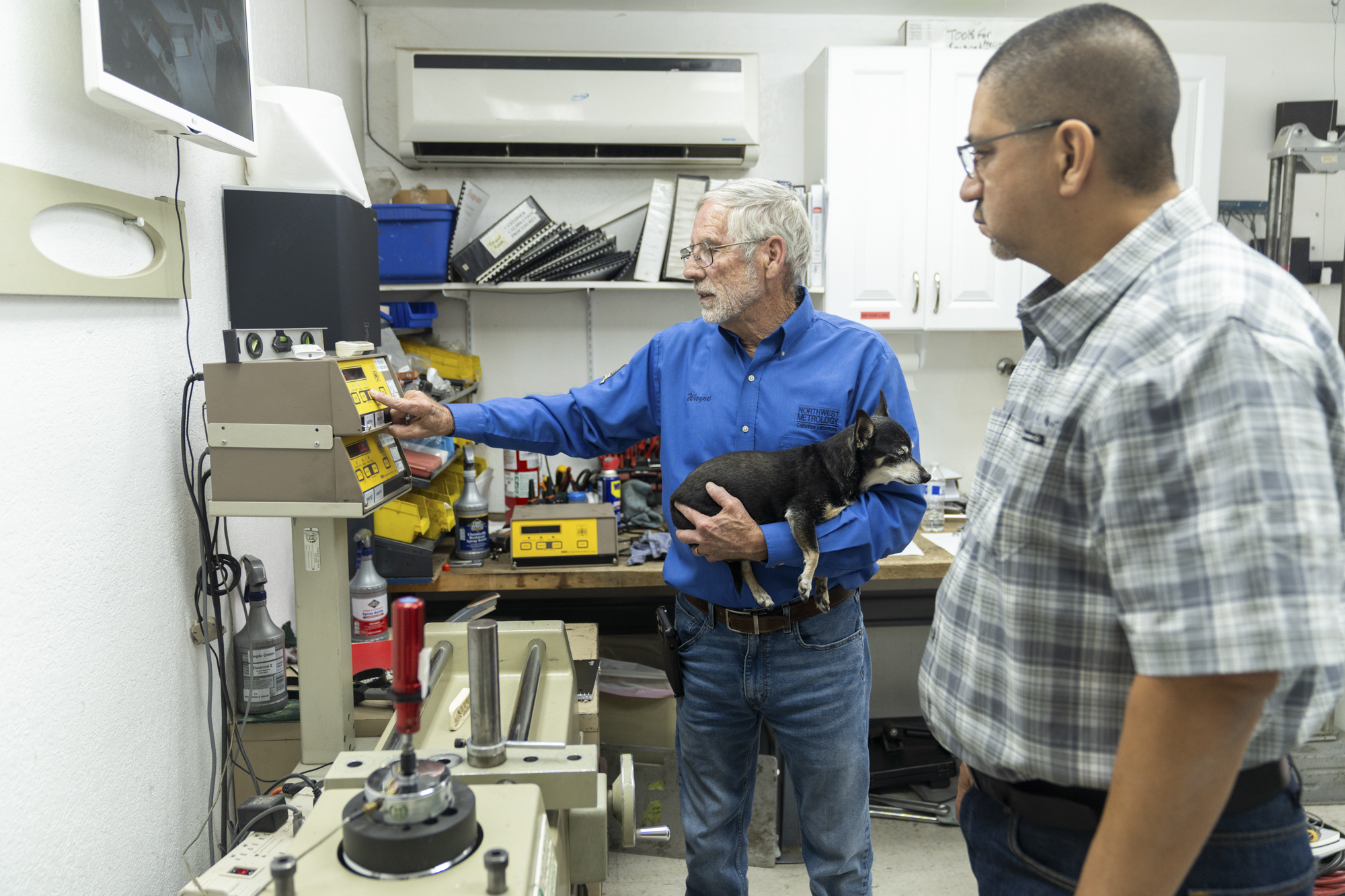
Joe Villarreal spent his second day at Northwest Metrology honing a new skill: calibrating torque wrenches. The company’s Bakersfield headquarters is packed with pressure gauges, weights, and other specialized tools — all designed to ensure that everything from defibrillators to scales for weighing aircraft work without fail.
“We have an extensive client list,” said owner Wayne Moule, who has been serving hospitals, refineries and aerospace companies for decades.
Moule has a hard time finding employees who are a good fit for the painstaking work.
“People come in, give us resumes that look great,” Moule said, “but they just don’t have the work ethic. They don’t care about the accuracy. They say they calibrate a piece of equipment, and they don’t. And then I find out about it from a customer.”
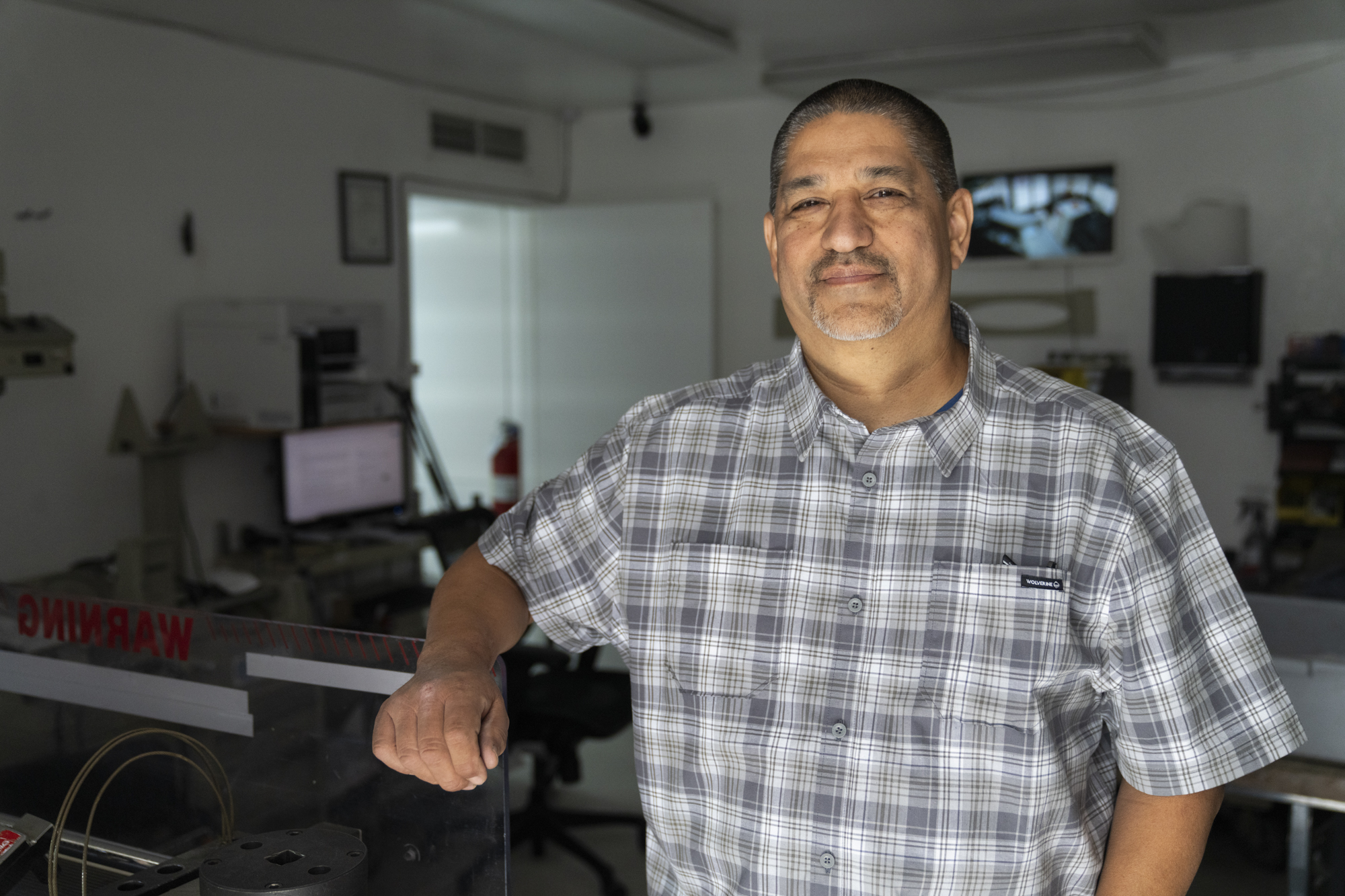
The work is highly technical, requiring up to three years of training and the ability to read and follow 2-inch-thick manuals with detailed instructions for using each piece of equipment.
“Do you know how hard it is to get somebody to read a manual?” Moule said.
But the job was a good fit for Villarreal, a 55-year-old father of three who spent 30 years working in the oil and gas industry.
In the early days of his career, he worked gritty, hands-on jobs in Bakersfield’s scorching hot oil fields, checking equipment for leaks.
Later, he switched to the administrative side, working out of the sun. In his final job as an engineering technician, Villarreal applied for new drilling permits, kept records and filed reports. He was laid off last year.

“The oil industry has always had its up and downs,” Villarreal said. “I’m not really sure what happened this time … I thought we were doing good, the oil industry, and just, it just changed overnight for me.”
Villarreal landed his new job at Northwest Metrology in May through a state program designed to mitigate the impact on oil and gas workers as California transitions away from fossil fuels.
The program connected Villarreal with three case managers who invited him to weekly “job hubs” that featured presentations from employers looking to hire. With no experience in calibration, he was reluctant to apply for the job but decided, “I should at least go talk to them ’cause it don’t hurt.”
California’s goal to achieve net zero emissions by 2045 has accelerated the decline of the oil and gas industry, which employs an estimated 94,000 people in high-paying, often unionized jobs with benefits.
Since 2020, the closure or conversion of six refineries has eliminated roughly 2,000 jobs, dislodging highly skilled workers from decadeslong careers spent extracting and refining crude oil into gasoline, diesel, jet fuel, asphalt and petrochemicals.

The Displaced Oil and Gas Workers Fund is California’s most tangible effort to help workers transition to comparable jobs in other industries. The $30 million fund, created through a state law in 2022, provides grants to local workforce development boards, unions, and other groups in the most affected areas of the state: Kern, Contra Costa and Los Angeles counties.
State records indicate the fund has helped more than 630 workers transition to new careers. And that could be an undercount, as grant recipients say they’ve helped closer to a thousand workers like Villarreal get training and find new jobs.
Even with its successes, proponents of the program say it’s falling short. They are urging the state to extend it beyond the current end date in 2027 and provide new benefits, including wage replacement during transitions, college credits for on-the-job experience and at least two years of financial support during apprenticeships.

Some of the biggest job losses from the energy transition are expected in Bakersfield, where the oil and gas industry employs an estimated 6100 people, according to a report from the Public Policy Institute of California. The nonprofit think tank predicts that 40% of those jobs are likely to disappear in the next decade or so and warns that the city’s small labor market provides few new opportunities.
The Bakersfield office of the Kern and Inyo counties workforce development board received $11.3 million, the largest distribution from the state fund, and pledged to provide job search and placement services to 900 oil and gas workers.
By the end of May, more than 650 eligible people enrolled and nearly 200 found new jobs, according to Susana Vasquez, program manager for Kern County’s Employer Training Resource.
Eligible workers can receive $15,000 in state funding to pay for education, a certificate or licensing program, or on-the-job training. They can also get up to $2,500 for job-related costs, such as transportation, work clothes, tools or relocation.
Convincing workers to accept help, though, is not always easy. Many in the industry view California’s turn away from fossil fuel as inconceivable, and they doubt the state’s promise that new jobs will offer comparable pay and benefits.
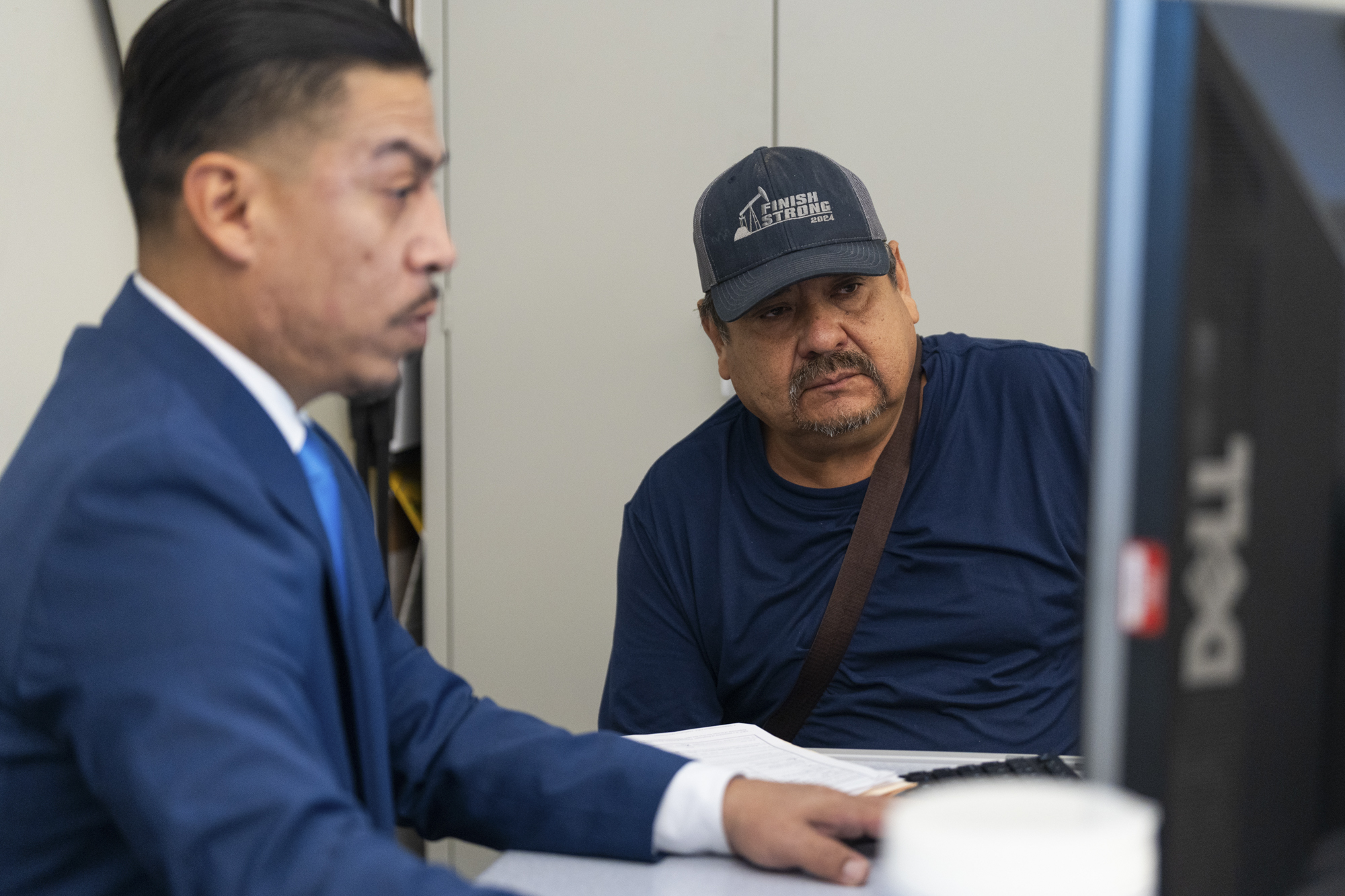
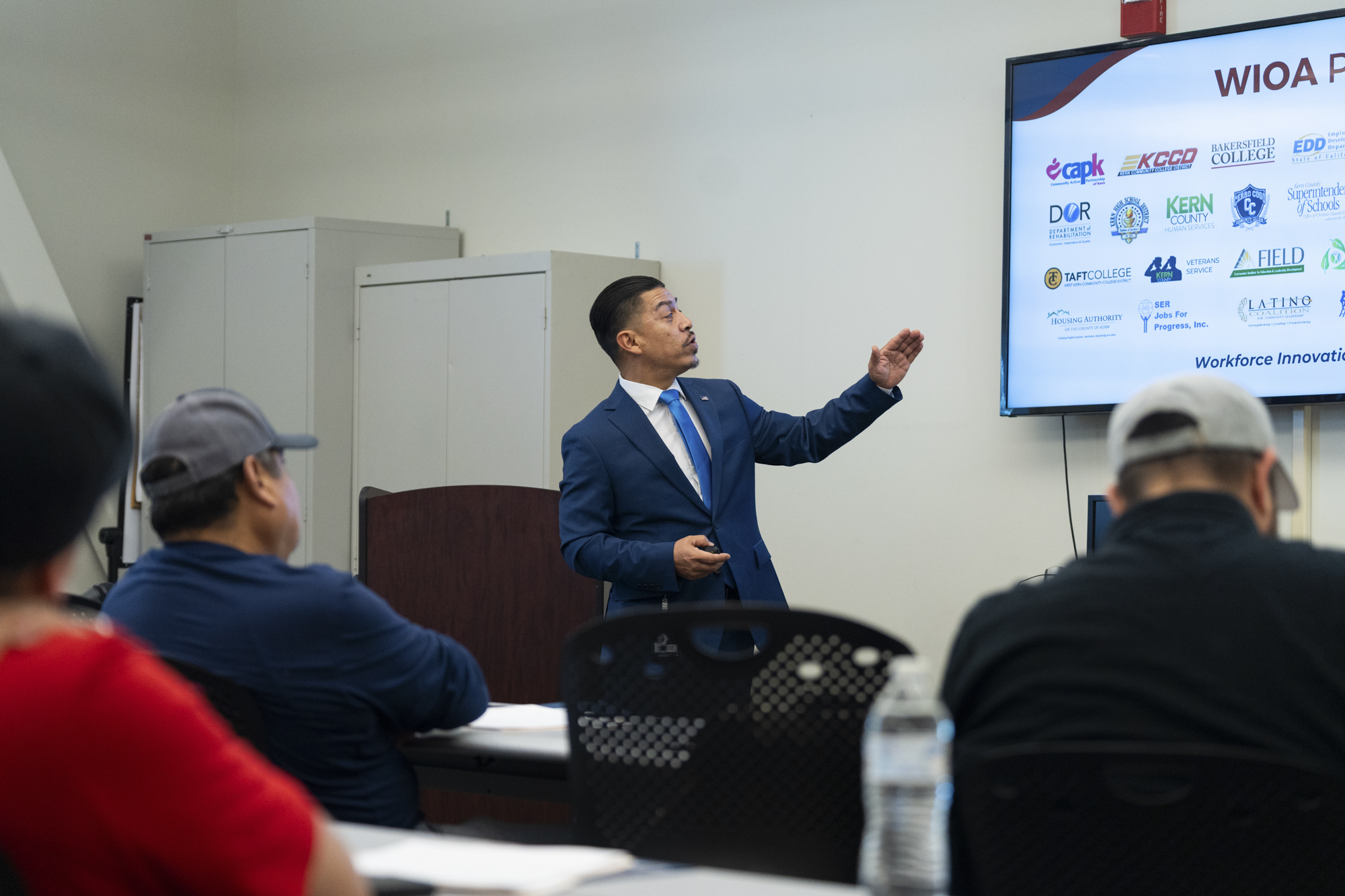
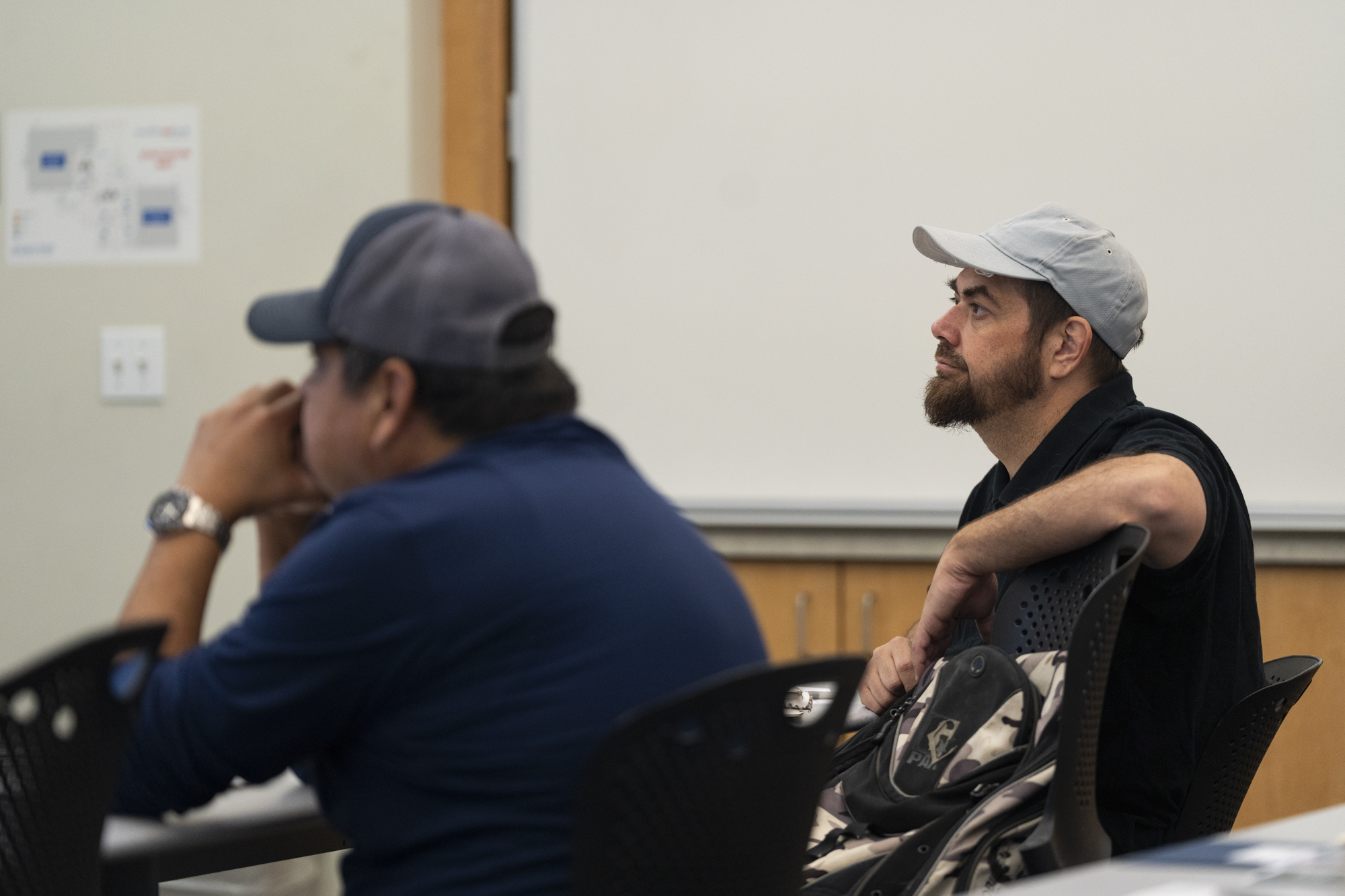
One morning in late May, a dozen men gathered at the job center in Bakersfield, where they listened with a mixture of skepticism and guarded hope as job counselor Francisco Avila described why California employers want to hire former oil and gas workers.
“They’re looking for you,” Avila said. “Your experience, your knowledge, your skill set, they want to apply that to their industry.”
Anthony Strauss, 45, worked for years mixing chemical mud, which makes it easier to extract oil from wells. He lost his job in 2025 when the company he worked for moved to another state.
“ When I was first laid off, they [the employer] had told me about this program,” said Strauss, who has been out of work for nearly a year. “However, in my personal life, I had taken on some other opportunities that didn’t pan out as well as what they said that they would provide. So I came back here.”
The wake-up call
The idea for the Displaced Oil and Gas Workers Fund grew out of the abrupt 2020 closure of the Marathon Refinery in Contra Costa County.
Marathon gave employees just 60 days’ notice and prohibited them from transferring to their other refineries, according to a 2025 report by the UC Berkeley Labor Center.
The company laid off over 750 workers, including 345 unionized staff who received only short-term severance. A year after the layoff, UC Labor Center surveyed the union workers and found nearly a third had taken early withdrawals from their retirement accounts to sustain themselves.

The United Steel Workers union, whose members comprise the majority of people employed by refineries in California, anticipated members would need help taking the next step. The union lobbied state lawmakers to establish the displaced workers fund, and created the California Oil and Refinery Workers Readiness Program, or CORP, to help members use the resources.
“We needed something that the members were gonna be able to grasp,” said Rosi Romo, program director for CORP.
CORP received $9 million of the new funds, enough to help at least 650 people, and recruited a handful of union members to act as navigators, who could help their coworkers consider their options and take action.
When Phillips 66 announced in October 2024 that it was closing its refineries in Carson and Wilmington, Romo said, “We were able to have them [navigators] on the ground talking to people, enrolling them, and so they were gaining momentum.”
Statewide, USW navigators have counseled 400 members, and by June, half of them were enrolled in courses paid for by the state.
Wilfredo Cruz, a 37-year-old industrial mechanic at the Phillips 66 Wilmington refinery, became a navigator.
“I could help myself and my coworkers to be able to find something new or at least get some sort of training, so we can find our next job,” said Cruz, who had seen his dad become a respiratory therapist after getting laid off from a refinery job.
Many asked Cruz if they should get started while still on the job. He told them to start as early as possible.
Some union members transitioned to careers in radiology, wastewater treatment and as EMTS.
Cruz enrolled in a cybersecurity program at UC San Diego while he worked at the refinery, listening to lectures while commuting. Though he was laid off in March 2026, months before he expected to complete his education, his wife works a good job, and they have been able to swing it so far.
As a navigator, Cruz heard his coworkers’ frustrations with the displaced workers’ program and its limitations.
Some who were working 12- to 16-hour days to wind down refinery operations did not have time for training programs.
Others who were sole breadwinners for their families faced a dilemma that forced them to consider a lower-paying job or one that doesn’t utilize their technical skills and knowledge.
“You kinda have to choose,” Cruz said. “Do I go to school? Or do I need a job now? It’s very hard to do both.”
A lot of workers over the age of 55 took early retirement, Cruz said. The prospect of going back to school and starting in a brand new industry didn’t seem worth it.

Laurie Wallace, another union navigator at the Wilmington refinery, has pressed state lawmakers to extend the lifetime of the fund to give oil and gas workers more time to transition.
As the 50-year-old process technician urged coworkers to take care of their medical check-ups and treatment before they lost their insurance, she did the same. That’s when her doctor told her she had breast cancer.
“I call it divine intervention,” Wallace said.
Early detection allowed her to undergo treatment and make a full recovery. She returned to work to help shut down the refinery and counsel her colleagues.
She said a lot of them were terrified about losing a career in an industry that had afforded them and their families a comfortable life.
Wallace said she had a different reaction to the closure. “I felt relieved,” she said, excited about the possibilities of working in another industry.
The refinery laid her off in April. She has since started to earn an associate’s degree and is thinking about becoming a grant writer or driving a forklift.
“I always believe that when a door closes, a window opens,” Wallace said. “I just gotta figure out how to crawl through it.”
Lessons from Marathon’s refinery closure
Refinery workers in Contra Costa County have also benefited from the Displaced Oil and Gas Workers Fund.
When Marathon closed its refinery there in 2020, existing benefits weren’t sufficient for laid-off employees, said Tamia Brown, executive director of the county’s workforce development board.
But by last year, when Valero announced it would close its Benicia refinery and lay off 282 nonunion employees, the county agency was ready to help with a grant of $4.3 million from the fund. They met with roughly 50 Valero workers by June.
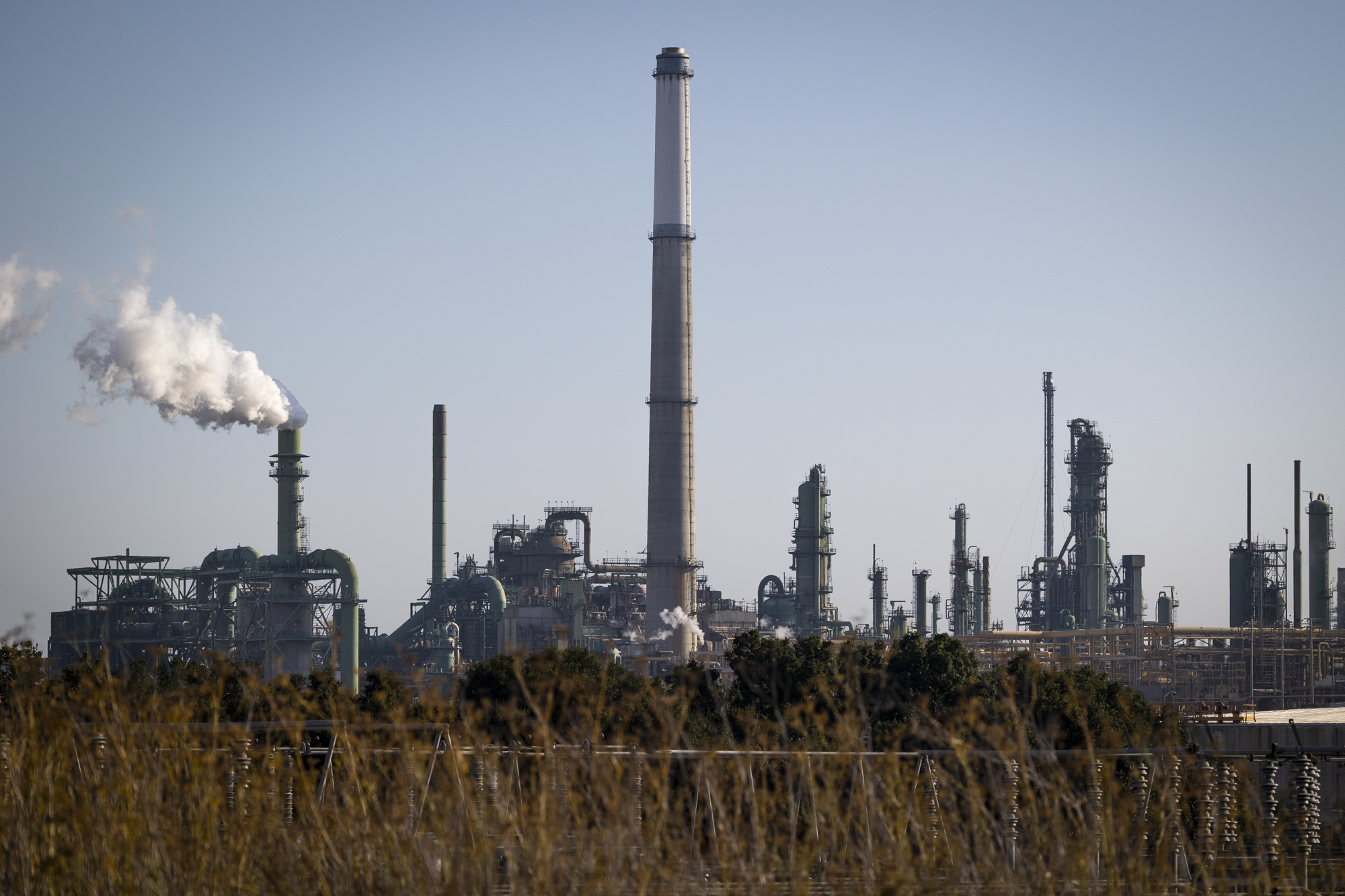
Brown expects that number to climb as severance and unemployment benefits dwindle. But she said people don’t have to wait until that happens to access benefits and other resources.
She said the funds are a huge help but would be even more effective if they covered a longer transition, to allow people to pursue apprenticeships and degree programs, which can take at least two years.
“In order to get back to a comparable wage, a person may need to learn a new skill set or transfer to a different industry. That takes time,” she said.

Extending the benefits would cost the state more, Brown said, but she thinks it’s a worthwhile investment.
Of the original $30 million in the fund, $18 million has yet to be spent.
The fund is due to sunset in July of 2027, but advocates are urging lawmakers to extend it, as tens of thousands more industry jobs face elimination over the next decade.
“ There’s folks in our system who have been displaced or know that they are going to be displaced and are going through training programs,” Brown said. “We need to be able to continue to support them.”
A bill to make the fund permanent is moving through the state legislature. At a hearing in April, the bill’s author, State Assemblymember Damon Connolly, D-San Rafael, urged his colleagues to approve it.
“Providing support for these workers during their time of need should not be controversial. Simply put, it’s the right thing to do.”

From Laura Klivans, Climate Reporter at KQED:
I know climate change is important to you. And it can feel overwhelming. This year, we want to empower the Bay Area to face our changing climate by bringing you stories about solutions.
If this story helped you today, please consider donating to support our work. It takes just a moment to make your tax-deductible donation, and your gift keeps articles like this from KQED accessible to everyone.