window.__IS_SSR__=true
window.__INITIAL_STATE__={
"attachmentsReducer": {
"audio_0": {
"type": "attachments",
"id": "audio_0",
"imgSizes": {
"kqedFullSize": {
"file": "https://ww2.kqed.org/news/wp-content/themes/KQED-unified/img/audio_bgs/background0.jpg"
}
}
},
"audio_1": {
"type": "attachments",
"id": "audio_1",
"imgSizes": {
"kqedFullSize": {
"file": "https://ww2.kqed.org/news/wp-content/themes/KQED-unified/img/audio_bgs/background1.jpg"
}
}
},
"audio_2": {
"type": "attachments",
"id": "audio_2",
"imgSizes": {
"kqedFullSize": {
"file": "https://ww2.kqed.org/news/wp-content/themes/KQED-unified/img/audio_bgs/background2.jpg"
}
}
},
"audio_3": {
"type": "attachments",
"id": "audio_3",
"imgSizes": {
"kqedFullSize": {
"file": "https://ww2.kqed.org/news/wp-content/themes/KQED-unified/img/audio_bgs/background3.jpg"
}
}
},
"audio_4": {
"type": "attachments",
"id": "audio_4",
"imgSizes": {
"kqedFullSize": {
"file": "https://ww2.kqed.org/news/wp-content/themes/KQED-unified/img/audio_bgs/background4.jpg"
}
}
},
"placeholder": {
"type": "attachments",
"id": "placeholder",
"imgSizes": {
"thumbnail": {
"file": "https://cdn.kqed.org/wp-content/uploads/2024/12/KQED-Default-Image-816638274-2000x1333-1-160x107.jpg",
"width": 160,
"height": 107,
"mimeType": "image/jpeg"
},
"medium": {
"file": "https://cdn.kqed.org/wp-content/uploads/2024/12/KQED-Default-Image-816638274-2000x1333-1-800x533.jpg",
"width": 800,
"height": 533,
"mimeType": "image/jpeg"
},
"medium_large": {
"file": "https://cdn.kqed.org/wp-content/uploads/2024/12/KQED-Default-Image-816638274-2000x1333-1-768x512.jpg",
"width": 768,
"height": 512,
"mimeType": "image/jpeg"
},
"large": {
"file": "https://cdn.kqed.org/wp-content/uploads/2024/12/KQED-Default-Image-816638274-2000x1333-1-1020x680.jpg",
"width": 1020,
"height": 680,
"mimeType": "image/jpeg"
},
"1536x1536": {
"file": "https://cdn.kqed.org/wp-content/uploads/2024/12/KQED-Default-Image-816638274-2000x1333-1-1536x1024.jpg",
"width": 1536,
"height": 1024,
"mimeType": "image/jpeg"
},
"fd-lrg": {
"file": "https://cdn.kqed.org/wp-content/uploads/2024/12/KQED-Default-Image-816638274-2000x1333-1-1536x1024.jpg",
"width": 1536,
"height": 1024,
"mimeType": "image/jpeg"
},
"fd-med": {
"file": "https://cdn.kqed.org/wp-content/uploads/2024/12/KQED-Default-Image-816638274-2000x1333-1-1020x680.jpg",
"width": 1020,
"height": 680,
"mimeType": "image/jpeg"
},
"fd-sm": {
"file": "https://cdn.kqed.org/wp-content/uploads/2024/12/KQED-Default-Image-816638274-2000x1333-1-800x533.jpg",
"width": 800,
"height": 533,
"mimeType": "image/jpeg"
},
"post-thumbnail": {
"file": "https://cdn.kqed.org/wp-content/uploads/2024/12/KQED-Default-Image-816638274-2000x1333-1-672x372.jpg",
"width": 672,
"height": 372,
"mimeType": "image/jpeg"
},
"twentyfourteen-full-width": {
"file": "https://cdn.kqed.org/wp-content/uploads/2024/12/KQED-Default-Image-816638274-2000x1333-1-1038x576.jpg",
"width": 1038,
"height": 576,
"mimeType": "image/jpeg"
},
"xxsmall": {
"file": "https://cdn.kqed.org/wp-content/uploads/2024/12/KQED-Default-Image-816638274-2000x1333-1-160x107.jpg",
"width": 160,
"height": 107,
"mimeType": "image/jpeg"
},
"xsmall": {
"file": "https://cdn.kqed.org/wp-content/uploads/2024/12/KQED-Default-Image-816638274-2000x1333-1-672x372.jpg",
"width": 672,
"height": 372,
"mimeType": "image/jpeg"
},
"small": {
"file": "https://cdn.kqed.org/wp-content/uploads/2024/12/KQED-Default-Image-816638274-2000x1333-1-672x372.jpg",
"width": 672,
"height": 372,
"mimeType": "image/jpeg"
},
"xlarge": {
"file": "https://cdn.kqed.org/wp-content/uploads/2024/12/KQED-Default-Image-816638274-2000x1333-1-1020x680.jpg",
"width": 1020,
"height": 680,
"mimeType": "image/jpeg"
},
"full-width": {
"file": "https://cdn.kqed.org/wp-content/uploads/2024/12/KQED-Default-Image-816638274-2000x1333-1-1920x1280.jpg",
"width": 1920,
"height": 1280,
"mimeType": "image/jpeg"
},
"guest-author-32": {
"file": "https://cdn.kqed.org/wp-content/uploads/2025/01/KQED-Default-Image-816638274-1333x1333-1-160x160.jpg",
"width": 32,
"height": 32,
"mimeType": "image/jpeg"
},
"guest-author-50": {
"file": "https://cdn.kqed.org/wp-content/uploads/2025/01/KQED-Default-Image-816638274-1333x1333-1-160x160.jpg",
"width": 50,
"height": 50,
"mimeType": "image/jpeg"
},
"guest-author-64": {
"file": "https://cdn.kqed.org/wp-content/uploads/2025/01/KQED-Default-Image-816638274-1333x1333-1-160x160.jpg",
"width": 64,
"height": 64,
"mimeType": "image/jpeg"
},
"guest-author-96": {
"file": "https://cdn.kqed.org/wp-content/uploads/2025/01/KQED-Default-Image-816638274-1333x1333-1-160x160.jpg",
"width": 96,
"height": 96,
"mimeType": "image/jpeg"
},
"guest-author-128": {
"file": "https://cdn.kqed.org/wp-content/uploads/2025/01/KQED-Default-Image-816638274-1333x1333-1-160x160.jpg",
"width": 128,
"height": 128,
"mimeType": "image/jpeg"
},
"detail": {
"file": "https://cdn.kqed.org/wp-content/uploads/2025/01/KQED-Default-Image-816638274-1333x1333-1-160x160.jpg",
"width": 160,
"height": 160,
"mimeType": "image/jpeg"
},
"kqedFullSize": {
"file": "https://cdn.kqed.org/wp-content/uploads/2024/12/KQED-Default-Image-816638274-2000x1333-1.jpg",
"width": 2000,
"height": 1333
}
}
},
"science_1994778": {
"type": "attachments",
"id": "science_1994778",
"meta": {
"index": "attachments_1716263798",
"site": "science",
"id": "1994778",
"found": true
},
"title": "I'm typing something important",
"publishDate": 1729028765,
"status": "inherit",
"parent": 1994754,
"modified": 1729029363,
"caption": "A 4.5 magnitude earthquake near Boulder Creek prompted alerts across Northern California, but mixed reactions reveal skepticism about early warning systems.\r\n",
"credit": "Getty Images",
"altTag": null,
"description": null,
"imgSizes": {
"medium": {
"file": "https://cdn.kqed.org/wp-content/uploads/sites/35/2024/10/GettyImages-1391696700-800x533.jpg",
"width": 800,
"height": 533,
"mimeType": "image/jpeg"
},
"large": {
"file": "https://cdn.kqed.org/wp-content/uploads/sites/35/2024/10/GettyImages-1391696700-1020x680.jpg",
"width": 1020,
"height": 680,
"mimeType": "image/jpeg"
},
"thumbnail": {
"file": "https://cdn.kqed.org/wp-content/uploads/sites/35/2024/10/GettyImages-1391696700-160x107.jpg",
"width": 160,
"height": 107,
"mimeType": "image/jpeg"
},
"medium_large": {
"file": "https://cdn.kqed.org/wp-content/uploads/sites/35/2024/10/GettyImages-1391696700-768x512.jpg",
"width": 768,
"height": 512,
"mimeType": "image/jpeg"
},
"1536x1536": {
"file": "https://cdn.kqed.org/wp-content/uploads/sites/35/2024/10/GettyImages-1391696700-1536x1024.jpg",
"width": 1536,
"height": 1024,
"mimeType": "image/jpeg"
},
"2048x2048": {
"file": "https://cdn.kqed.org/wp-content/uploads/sites/35/2024/10/GettyImages-1391696700-2048x1365.jpg",
"width": 2048,
"height": 1365,
"mimeType": "image/jpeg"
},
"post-thumbnail": {
"file": "https://cdn.kqed.org/wp-content/uploads/sites/35/2024/10/GettyImages-1391696700-672x372.jpg",
"width": 672,
"height": 372,
"mimeType": "image/jpeg"
},
"twentyfourteen-full-width": {
"file": "https://cdn.kqed.org/wp-content/uploads/sites/35/2024/10/GettyImages-1391696700-1038x576.jpg",
"width": 1038,
"height": 576,
"mimeType": "image/jpeg"
},
"full-width": {
"file": "https://cdn.kqed.org/wp-content/uploads/sites/35/2024/10/GettyImages-1391696700-1920x1280.jpg",
"width": 1920,
"height": 1280,
"mimeType": "image/jpeg"
},
"kqedFullSize": {
"file": "https://cdn.kqed.org/wp-content/uploads/sites/35/2024/10/GettyImages-1391696700-scaled-e1775153140799.jpg",
"width": 2000,
"height": 1334
}
},
"isLoading": false,
"fetchFailed": false
},
"science_2000535": {
"type": "attachments",
"id": "science_2000535",
"meta": {
"index": "attachments_1716263798",
"site": "science",
"id": "2000535",
"found": true
},
"title": "SnowSurveyApril1",
"publishDate": 1775071667,
"status": "inherit",
"parent": 2000531,
"modified": 1775162549,
"caption": "California Department of Water Resources’ Jacob Kollen (right), a water resources engineer, and Jim Shannon, manager of the California Cooperative Snow Surveys Unit, conduct the fourth media snow survey of the 2026 season at Phillips Station in the Sierra Nevada on April 1, 2026.",
"credit": "Andrew Nixon/California Department of Water Resources",
"altTag": null,
"description": null,
"imgSizes": {
"medium": {
"file": "https://cdn.kqed.org/wp-content/uploads/sites/35/2026/04/SnowSurveyApril1-2000x1331.jpg",
"width": 2000,
"height": 1331,
"mimeType": "image/jpeg"
},
"large": {
"file": "https://cdn.kqed.org/wp-content/uploads/sites/35/2026/04/SnowSurveyApril1-2000x1331.jpg",
"width": 2000,
"height": 1331,
"mimeType": "image/jpeg"
},
"thumbnail": {
"file": "https://cdn.kqed.org/wp-content/uploads/sites/35/2026/04/SnowSurveyApril1-160x106.jpg",
"width": 160,
"height": 106,
"mimeType": "image/jpeg"
},
"medium_large": {
"file": "https://cdn.kqed.org/wp-content/uploads/sites/35/2026/04/SnowSurveyApril1-768x511.jpg",
"width": 768,
"height": 511,
"mimeType": "image/jpeg"
},
"1536x1536": {
"file": "https://cdn.kqed.org/wp-content/uploads/sites/35/2026/04/SnowSurveyApril1-1536x1022.jpg",
"width": 1536,
"height": 1022,
"mimeType": "image/jpeg"
},
"2048x2048": {
"file": "https://cdn.kqed.org/wp-content/uploads/sites/35/2026/04/SnowSurveyApril1-2048x1363.jpg",
"width": 2048,
"height": 1363,
"mimeType": "image/jpeg"
},
"post-thumbnail": {
"file": "https://cdn.kqed.org/wp-content/uploads/sites/35/2026/04/SnowSurveyApril1-672x372.jpg",
"width": 672,
"height": 372,
"mimeType": "image/jpeg"
},
"twentyfourteen-full-width": {
"file": "https://cdn.kqed.org/wp-content/uploads/sites/35/2026/04/SnowSurveyApril1-1038x576.jpg",
"width": 1038,
"height": 576,
"mimeType": "image/jpeg"
},
"full-width": {
"file": "https://cdn.kqed.org/wp-content/uploads/sites/35/2026/04/SnowSurveyApril1-2000x1331.jpg",
"width": 2000,
"height": 1331,
"mimeType": "image/jpeg"
},
"npr-cds-wide": {
"file": "https://cdn.kqed.org/wp-content/uploads/sites/35/2026/04/SnowSurveyApril1-1200x675.jpg",
"width": 1200,
"height": 675,
"mimeType": "image/jpeg"
},
"npr-cds-square": {
"file": "https://cdn.kqed.org/wp-content/uploads/sites/35/2026/04/SnowSurveyApril1-600x600.jpg",
"width": 600,
"height": 600,
"mimeType": "image/jpeg"
},
"kqedFullSize": {
"file": "https://cdn.kqed.org/wp-content/uploads/sites/35/2026/04/SnowSurveyApril1-scaled.jpg",
"width": 2560,
"height": 1703
}
},
"isLoading": false,
"fetchFailed": false
},
"science_2000546": {
"type": "attachments",
"id": "science_2000546",
"meta": {
"index": "attachments_1716263798",
"site": "science",
"id": "2000546",
"found": true
},
"title": "Rachel Carson",
"publishDate": 1775075586,
"status": "inherit",
"parent": 2000545,
"modified": 1775078029,
"caption": "American conservationist Rachel Carson (1907-1964) pours seed onto a birdbox in the United Kingdom, April 15, 1964.",
"credit": "Photo by Evening Standard/Hulton Archive/Getty Images",
"altTag": null,
"description": null,
"imgSizes": {
"medium": {
"file": "https://cdn.kqed.org/wp-content/uploads/sites/35/2026/04/GettyImages-1382278656-2000x1325.jpg",
"width": 2000,
"height": 1325,
"mimeType": "image/jpeg"
},
"large": {
"file": "https://cdn.kqed.org/wp-content/uploads/sites/35/2026/04/GettyImages-1382278656-2000x1325.jpg",
"width": 2000,
"height": 1325,
"mimeType": "image/jpeg"
},
"thumbnail": {
"file": "https://cdn.kqed.org/wp-content/uploads/sites/35/2026/04/GettyImages-1382278656-160x106.jpg",
"width": 160,
"height": 106,
"mimeType": "image/jpeg"
},
"medium_large": {
"file": "https://cdn.kqed.org/wp-content/uploads/sites/35/2026/04/GettyImages-1382278656-768x509.jpg",
"width": 768,
"height": 509,
"mimeType": "image/jpeg"
},
"1536x1536": {
"file": "https://cdn.kqed.org/wp-content/uploads/sites/35/2026/04/GettyImages-1382278656-1536x1017.jpg",
"width": 1536,
"height": 1017,
"mimeType": "image/jpeg"
},
"2048x2048": {
"file": "https://cdn.kqed.org/wp-content/uploads/sites/35/2026/04/GettyImages-1382278656-2048x1357.jpg",
"width": 2048,
"height": 1357,
"mimeType": "image/jpeg"
},
"post-thumbnail": {
"file": "https://cdn.kqed.org/wp-content/uploads/sites/35/2026/04/GettyImages-1382278656-672x372.jpg",
"width": 672,
"height": 372,
"mimeType": "image/jpeg"
},
"twentyfourteen-full-width": {
"file": "https://cdn.kqed.org/wp-content/uploads/sites/35/2026/04/GettyImages-1382278656-1038x576.jpg",
"width": 1038,
"height": 576,
"mimeType": "image/jpeg"
},
"full-width": {
"file": "https://cdn.kqed.org/wp-content/uploads/sites/35/2026/04/GettyImages-1382278656-2000x1325.jpg",
"width": 2000,
"height": 1325,
"mimeType": "image/jpeg"
},
"npr-cds-wide": {
"file": "https://cdn.kqed.org/wp-content/uploads/sites/35/2026/04/GettyImages-1382278656-1200x675.jpg",
"width": 1200,
"height": 675,
"mimeType": "image/jpeg"
},
"npr-cds-square": {
"file": "https://cdn.kqed.org/wp-content/uploads/sites/35/2026/04/GettyImages-1382278656-600x600.jpg",
"width": 600,
"height": 600,
"mimeType": "image/jpeg"
},
"kqedFullSize": {
"file": "https://cdn.kqed.org/wp-content/uploads/sites/35/2026/04/GettyImages-1382278656-scaled-e1775075606999.jpg",
"width": 2000,
"height": 1325
}
},
"isLoading": false,
"fetchFailed": false
},
"science_2000433": {
"type": "attachments",
"id": "science_2000433",
"meta": {
"index": "attachments_1716263798",
"site": "science",
"id": "2000433",
"found": true
},
"title": "260317-SANRAMONEARTHQUAKES00337_TV-KQED",
"publishDate": 1774273214,
"status": "inherit",
"parent": 0,
"modified": 1774273272,
"caption": "Luther Strayer (left), a structural geologist professor at Cal State East Bay, and Rufus Catchings (right), a seismologist from USGS, demonstrate how to install a seismometer at Memorial Park in San Ramon on March 17, 2026.",
"credit": "Tâm Vũ/KQED",
"altTag": null,
"description": null,
"imgSizes": {
"thumbnail": {
"file": "https://cdn.kqed.org/wp-content/uploads/sites/35/2026/03/260317-SANRAMONEARTHQUAKES00337_TV-KQED-160x107.jpg",
"width": 160,
"height": 107,
"mimeType": "image/jpeg"
},
"medium_large": {
"file": "https://cdn.kqed.org/wp-content/uploads/sites/35/2026/03/260317-SANRAMONEARTHQUAKES00337_TV-KQED-768x512.jpg",
"width": 768,
"height": 512,
"mimeType": "image/jpeg"
},
"1536x1536": {
"file": "https://cdn.kqed.org/wp-content/uploads/sites/35/2026/03/260317-SANRAMONEARTHQUAKES00337_TV-KQED-1536x1024.jpg",
"width": 1536,
"height": 1024,
"mimeType": "image/jpeg"
},
"post-thumbnail": {
"file": "https://cdn.kqed.org/wp-content/uploads/sites/35/2026/03/260317-SANRAMONEARTHQUAKES00337_TV-KQED-672x372.jpg",
"width": 672,
"height": 372,
"mimeType": "image/jpeg"
},
"twentyfourteen-full-width": {
"file": "https://cdn.kqed.org/wp-content/uploads/sites/35/2026/03/260317-SANRAMONEARTHQUAKES00337_TV-KQED-1038x576.jpg",
"width": 1038,
"height": 576,
"mimeType": "image/jpeg"
},
"npr-cds-wide": {
"file": "https://cdn.kqed.org/wp-content/uploads/sites/35/2026/03/260317-SANRAMONEARTHQUAKES00337_TV-KQED-1200x675.jpg",
"width": 1200,
"height": 675,
"mimeType": "image/jpeg"
},
"kqedFullSize": {
"file": "https://cdn.kqed.org/wp-content/uploads/sites/35/2026/03/260317-SANRAMONEARTHQUAKES00337_TV-KQED.jpg",
"width": 2000,
"height": 1333
}
},
"isLoading": false,
"fetchFailed": false
},
"science_2000419": {
"type": "attachments",
"id": "science_2000419",
"meta": {
"index": "attachments_1716263798",
"site": "science",
"id": "2000419",
"found": true
},
"title": "260320-BEER CARBON-MD-01-KQED",
"publishDate": 1774216276,
"status": "inherit",
"parent": 0,
"modified": 1774216344,
"caption": "Cans of Almanac Brewing's Flow beer produced using carbon dioxide captured by the Aircapture system at Almanac Adventureland and Brewery in Alameda on March 20, 2026.",
"credit": "Martin do Nascimento/KQED",
"altTag": null,
"description": null,
"imgSizes": {
"thumbnail": {
"file": "https://cdn.kqed.org/wp-content/uploads/sites/35/2026/03/260320-BEER-CARBON-MD-01-KQED-160x107.jpg",
"width": 160,
"height": 107,
"mimeType": "image/jpeg"
},
"medium_large": {
"file": "https://cdn.kqed.org/wp-content/uploads/sites/35/2026/03/260320-BEER-CARBON-MD-01-KQED-768x512.jpg",
"width": 768,
"height": 512,
"mimeType": "image/jpeg"
},
"1536x1536": {
"file": "https://cdn.kqed.org/wp-content/uploads/sites/35/2026/03/260320-BEER-CARBON-MD-01-KQED-1536x1024.jpg",
"width": 1536,
"height": 1024,
"mimeType": "image/jpeg"
},
"post-thumbnail": {
"file": "https://cdn.kqed.org/wp-content/uploads/sites/35/2026/03/260320-BEER-CARBON-MD-01-KQED-672x372.jpg",
"width": 672,
"height": 372,
"mimeType": "image/jpeg"
},
"twentyfourteen-full-width": {
"file": "https://cdn.kqed.org/wp-content/uploads/sites/35/2026/03/260320-BEER-CARBON-MD-01-KQED-1038x576.jpg",
"width": 1038,
"height": 576,
"mimeType": "image/jpeg"
},
"npr-cds-wide": {
"file": "https://cdn.kqed.org/wp-content/uploads/sites/35/2026/03/260320-BEER-CARBON-MD-01-KQED-1200x675.jpg",
"width": 1200,
"height": 675,
"mimeType": "image/jpeg"
},
"kqedFullSize": {
"file": "https://cdn.kqed.org/wp-content/uploads/sites/35/2026/03/260320-BEER-CARBON-MD-01-KQED.jpg",
"width": 2000,
"height": 1333
}
},
"isLoading": false,
"fetchFailed": false
},
"science_2000458": {
"type": "attachments",
"id": "science_2000458",
"meta": {
"index": "attachments_1716263798",
"site": "science",
"id": "2000458",
"found": true
},
"title": "Alameda Beach in Alameda on March 20, 2026.",
"publishDate": 1774369797,
"status": "inherit",
"parent": 2000445,
"modified": 1774478102,
"caption": "Beach-goers enjoy Alameda Beach in Alameda on March 20, 2026.",
"credit": "Martin do Nascimento/KQED",
"altTag": null,
"description": null,
"imgSizes": {
"thumbnail": {
"file": "https://cdn.kqed.org/wp-content/uploads/sites/35/2026/03/260320-ALAMEDA-ISLAND-MD-07-KQED-160x107.jpg",
"width": 160,
"height": 107,
"mimeType": "image/jpeg"
},
"medium_large": {
"file": "https://cdn.kqed.org/wp-content/uploads/sites/35/2026/03/260320-ALAMEDA-ISLAND-MD-07-KQED-768x512.jpg",
"width": 768,
"height": 512,
"mimeType": "image/jpeg"
},
"1536x1536": {
"file": "https://cdn.kqed.org/wp-content/uploads/sites/35/2026/03/260320-ALAMEDA-ISLAND-MD-07-KQED-1536x1024.jpg",
"width": 1536,
"height": 1024,
"mimeType": "image/jpeg"
},
"post-thumbnail": {
"file": "https://cdn.kqed.org/wp-content/uploads/sites/35/2026/03/260320-ALAMEDA-ISLAND-MD-07-KQED-672x372.jpg",
"width": 672,
"height": 372,
"mimeType": "image/jpeg"
},
"twentyfourteen-full-width": {
"file": "https://cdn.kqed.org/wp-content/uploads/sites/35/2026/03/260320-ALAMEDA-ISLAND-MD-07-KQED-1038x576.jpg",
"width": 1038,
"height": 576,
"mimeType": "image/jpeg"
},
"npr-cds-wide": {
"file": "https://cdn.kqed.org/wp-content/uploads/sites/35/2026/03/260320-ALAMEDA-ISLAND-MD-07-KQED-1200x675.jpg",
"width": 1200,
"height": 675,
"mimeType": "image/jpeg"
},
"kqedFullSize": {
"file": "https://cdn.kqed.org/wp-content/uploads/sites/35/2026/03/260320-ALAMEDA-ISLAND-MD-07-KQED.jpg",
"width": 2000,
"height": 1333
}
},
"isLoading": false,
"fetchFailed": false
},
"science_2000382": {
"type": "attachments",
"id": "science_2000382",
"meta": {
"index": "attachments_1716263798",
"site": "science",
"id": "2000382",
"found": true
},
"title": "260320-ALAMEDA ISLAND-MD-02-KQED",
"publishDate": 1774031379,
"status": "inherit",
"parent": 0,
"modified": 1774277803,
"caption": "Houses sit behind a seawall near the San Leandro Channel Bridge in Alameda on March 19, 2025.",
"credit": "Martin do Nascimento/KQED",
"altTag": null,
"description": null,
"imgSizes": {
"thumbnail": {
"file": "https://cdn.kqed.org/wp-content/uploads/sites/35/2026/03/260320-ALAMEDA-ISLAND-MD-02-KQED-160x107.jpg",
"width": 160,
"height": 107,
"mimeType": "image/jpeg"
},
"medium_large": {
"file": "https://cdn.kqed.org/wp-content/uploads/sites/35/2026/03/260320-ALAMEDA-ISLAND-MD-02-KQED-768x512.jpg",
"width": 768,
"height": 512,
"mimeType": "image/jpeg"
},
"1536x1536": {
"file": "https://cdn.kqed.org/wp-content/uploads/sites/35/2026/03/260320-ALAMEDA-ISLAND-MD-02-KQED-1536x1024.jpg",
"width": 1536,
"height": 1024,
"mimeType": "image/jpeg"
},
"post-thumbnail": {
"file": "https://cdn.kqed.org/wp-content/uploads/sites/35/2026/03/260320-ALAMEDA-ISLAND-MD-02-KQED-672x372.jpg",
"width": 672,
"height": 372,
"mimeType": "image/jpeg"
},
"twentyfourteen-full-width": {
"file": "https://cdn.kqed.org/wp-content/uploads/sites/35/2026/03/260320-ALAMEDA-ISLAND-MD-02-KQED-1038x576.jpg",
"width": 1038,
"height": 576,
"mimeType": "image/jpeg"
},
"npr-cds-wide": {
"file": "https://cdn.kqed.org/wp-content/uploads/sites/35/2026/03/260320-ALAMEDA-ISLAND-MD-02-KQED-1200x675.jpg",
"width": 1200,
"height": 675,
"mimeType": "image/jpeg"
},
"kqedFullSize": {
"file": "https://cdn.kqed.org/wp-content/uploads/sites/35/2026/03/260320-ALAMEDA-ISLAND-MD-02-KQED.jpg",
"width": 2000,
"height": 1333
}
},
"isLoading": false,
"fetchFailed": false
},
"science_458966": {
"type": "attachments",
"id": "science_458966",
"meta": {
"index": "attachments_1716263798",
"site": "science",
"id": "458966",
"found": true
},
"title": "Skier_Tahoe_OAP_1923",
"publishDate": 1452211175,
"status": "inherit",
"parent": 458878,
"modified": 1773250535,
"caption": "A skier surveys the view of South Lake Tahoe from Heavenly ski resort.",
"credit": "Olivia Allen-Price/KQED",
"altTag": "A skier surveys the view of South Lake Tahoe from Heavenly ski resort.",
"description": "A skier surveys the view of South Lake Tahoe from Heavenly ski resort.",
"imgSizes": {
"thumbnail": {
"file": "https://cdn.kqed.org/wp-content/uploads/sites/35/2016/01/Skier_Tahoe_OAP_1923-400x300.jpeg",
"width": 400,
"height": 300,
"mimeType": "image/jpeg"
},
"medium": {
"file": "https://cdn.kqed.org/wp-content/uploads/sites/35/2016/01/Skier_Tahoe_OAP_1923-800x600.jpeg",
"width": 800,
"height": 600,
"mimeType": "image/jpeg"
},
"medium_large": {
"file": "https://cdn.kqed.org/wp-content/uploads/sites/35/2016/01/Skier_Tahoe_OAP_1923-768x576.jpeg",
"width": 768,
"height": 576,
"mimeType": "image/jpeg"
},
"large": {
"file": "https://cdn.kqed.org/wp-content/uploads/sites/35/2016/01/Skier_Tahoe_OAP_1923-1440x1080.jpeg",
"width": 1440,
"height": 1080,
"mimeType": "image/jpeg"
},
"fd-lrg": {
"file": "https://cdn.kqed.org/wp-content/uploads/sites/35/2016/01/Skier_Tahoe_OAP_1923-1920x1440.jpeg",
"width": 1920,
"height": 1440,
"mimeType": "image/jpeg"
},
"fd-med": {
"file": "https://cdn.kqed.org/wp-content/uploads/sites/35/2016/01/Skier_Tahoe_OAP_1923-1180x885.jpeg",
"width": 1180,
"height": 885,
"mimeType": "image/jpeg"
},
"fd-sm": {
"file": "https://cdn.kqed.org/wp-content/uploads/sites/35/2016/01/Skier_Tahoe_OAP_1923-960x720.jpeg",
"width": 960,
"height": 720,
"mimeType": "image/jpeg"
},
"post-thumbnail": {
"file": "https://cdn.kqed.org/wp-content/uploads/sites/35/2016/01/Skier_Tahoe_OAP_1923-672x372.jpeg",
"width": 672,
"height": 372,
"mimeType": "image/jpeg"
},
"twentyfourteen-full-width": {
"file": "https://cdn.kqed.org/wp-content/uploads/sites/35/2016/01/Skier_Tahoe_OAP_1923-1038x576.jpeg",
"width": 1038,
"height": 576,
"mimeType": "image/jpeg"
},
"guest-author-32": {
"file": "https://cdn.kqed.org/wp-content/uploads/sites/35/2016/01/Skier_Tahoe_OAP_1923-32x32.jpeg",
"width": 32,
"height": 32,
"mimeType": "image/jpeg"
},
"guest-author-64": {
"file": "https://cdn.kqed.org/wp-content/uploads/sites/35/2016/01/Skier_Tahoe_OAP_1923-64x64.jpeg",
"width": 64,
"height": 64,
"mimeType": "image/jpeg"
},
"guest-author-96": {
"file": "https://cdn.kqed.org/wp-content/uploads/sites/35/2016/01/Skier_Tahoe_OAP_1923-96x96.jpeg",
"width": 96,
"height": 96,
"mimeType": "image/jpeg"
},
"guest-author-128": {
"file": "https://cdn.kqed.org/wp-content/uploads/sites/35/2016/01/Skier_Tahoe_OAP_1923-128x128.jpeg",
"width": 128,
"height": 128,
"mimeType": "image/jpeg"
},
"detail": {
"file": "https://cdn.kqed.org/wp-content/uploads/sites/35/2016/01/Skier_Tahoe_OAP_1923-75x75.jpeg",
"width": 75,
"height": 75,
"mimeType": "image/jpeg"
},
"kqedFullSize": {
"file": "https://cdn.kqed.org/wp-content/uploads/sites/35/2016/01/Skier_Tahoe_OAP_1923.jpeg",
"width": 2000,
"height": 1500
}
},
"isLoading": false,
"fetchFailed": false
},
"science_1994717": {
"type": "attachments",
"id": "science_1994717",
"meta": {
"index": "attachments_1716263798",
"site": "science",
"id": "1994717",
"found": true
},
"title": "KQEDClimateBookClub_Assets_1200x630",
"publishDate": 1728580488,
"status": "inherit",
"parent": 1994714,
"modified": 1728581122,
"caption": null,
"credit": "KQED Creative",
"altTag": "An illustration of a landscape with a tree on the right and a title that says \"KQED Climate Book Club.\"",
"description": null,
"imgSizes": {
"medium": {
"file": "https://cdn.kqed.org/wp-content/uploads/sites/35/2024/10/KQEDClimateBookClub_Assets_1200x630-800x420.png",
"width": 800,
"height": 420,
"mimeType": "image/png"
},
"large": {
"file": "https://cdn.kqed.org/wp-content/uploads/sites/35/2024/10/KQEDClimateBookClub_Assets_1200x630-1020x536.png",
"width": 1020,
"height": 536,
"mimeType": "image/png"
},
"thumbnail": {
"file": "https://cdn.kqed.org/wp-content/uploads/sites/35/2024/10/KQEDClimateBookClub_Assets_1200x630-160x84.png",
"width": 160,
"height": 84,
"mimeType": "image/png"
},
"medium_large": {
"file": "https://cdn.kqed.org/wp-content/uploads/sites/35/2024/10/KQEDClimateBookClub_Assets_1200x630-768x403.png",
"width": 768,
"height": 403,
"mimeType": "image/png"
},
"1536x1536": {
"file": "https://cdn.kqed.org/wp-content/uploads/sites/35/2024/10/KQEDClimateBookClub_Assets_1200x630-1536x807.png",
"width": 1536,
"height": 807,
"mimeType": "image/png"
},
"2048x2048": {
"file": "https://cdn.kqed.org/wp-content/uploads/sites/35/2024/10/KQEDClimateBookClub_Assets_1200x630-2048x1075.png",
"width": 2048,
"height": 1075,
"mimeType": "image/png"
},
"post-thumbnail": {
"file": "https://cdn.kqed.org/wp-content/uploads/sites/35/2024/10/KQEDClimateBookClub_Assets_1200x630-672x372.png",
"width": 672,
"height": 372,
"mimeType": "image/png"
},
"twentyfourteen-full-width": {
"file": "https://cdn.kqed.org/wp-content/uploads/sites/35/2024/10/KQEDClimateBookClub_Assets_1200x630-1038x576.png",
"width": 1038,
"height": 576,
"mimeType": "image/png"
},
"full-width": {
"file": "https://cdn.kqed.org/wp-content/uploads/sites/35/2024/10/KQEDClimateBookClub_Assets_1200x630-1920x1008.png",
"width": 1920,
"height": 1008,
"mimeType": "image/png"
},
"kqedFullSize": {
"file": "https://cdn.kqed.org/wp-content/uploads/sites/35/2024/10/KQEDClimateBookClub_Assets_1200x630-e1773868125949.png",
"width": 2000,
"height": 1050
}
},
"isLoading": false,
"fetchFailed": false
},
"science_2000349": {
"type": "attachments",
"id": "science_2000349",
"meta": {
"index": "attachments_1716263798",
"site": "science",
"id": "2000349",
"found": true
},
"title": "People flock beaches as heat advisory issued in San Francisco",
"publishDate": 1773866295,
"status": "inherit",
"parent": 2000348,
"modified": 1773873055,
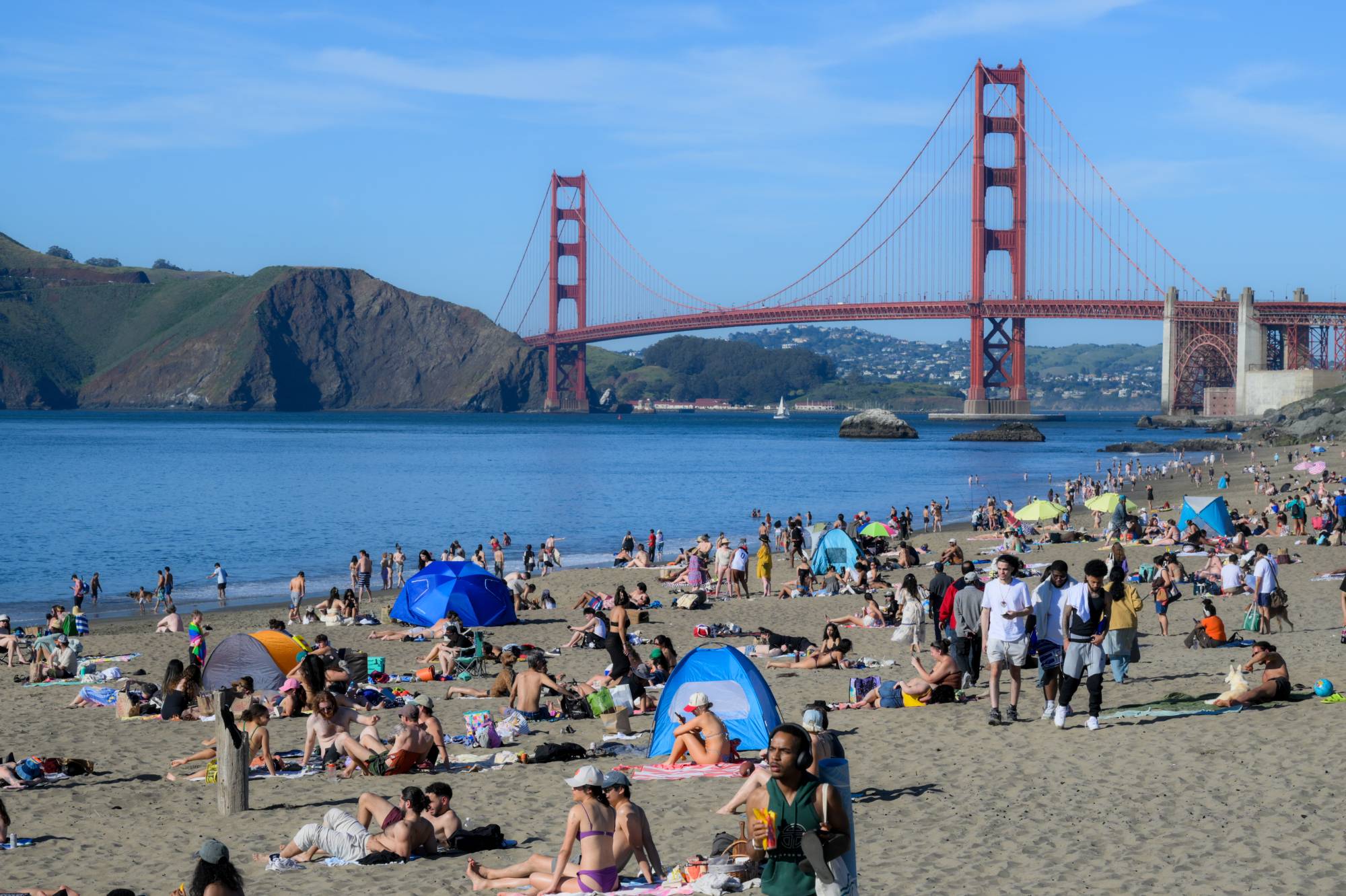
"caption": "People flock to Baker Beach near the Golden Gate Bridge as a heat advisory is issued in San Francisco, California, on March 16, 2026. ",
"credit": "Tayfun Coskun/Anadolu via Getty Images",
"altTag": null,
"description": null,
"imgSizes": {
"medium": {
"file": "https://cdn.kqed.org/wp-content/uploads/sites/35/2026/03/GettyImages-2266506019-2000x1332.jpg",
"width": 2000,
"height": 1332,
"mimeType": "image/jpeg"
},
"large": {
"file": "https://cdn.kqed.org/wp-content/uploads/sites/35/2026/03/GettyImages-2266506019-2000x1332.jpg",
"width": 2000,
"height": 1332,
"mimeType": "image/jpeg"
},
"thumbnail": {
"file": "https://cdn.kqed.org/wp-content/uploads/sites/35/2026/03/GettyImages-2266506019-160x107.jpg",
"width": 160,
"height": 107,
"mimeType": "image/jpeg"
},
"medium_large": {
"file": "https://cdn.kqed.org/wp-content/uploads/sites/35/2026/03/GettyImages-2266506019-768x512.jpg",
"width": 768,
"height": 512,
"mimeType": "image/jpeg"
},
"1536x1536": {
"file": "https://cdn.kqed.org/wp-content/uploads/sites/35/2026/03/GettyImages-2266506019-1536x1023.jpg",
"width": 1536,
"height": 1023,
"mimeType": "image/jpeg"
},
"2048x2048": {
"file": "https://cdn.kqed.org/wp-content/uploads/sites/35/2026/03/GettyImages-2266506019-2048x1364.jpg",
"width": 2048,
"height": 1364,
"mimeType": "image/jpeg"
},
"post-thumbnail": {
"file": "https://cdn.kqed.org/wp-content/uploads/sites/35/2026/03/GettyImages-2266506019-672x372.jpg",
"width": 672,
"height": 372,
"mimeType": "image/jpeg"
},
"twentyfourteen-full-width": {
"file": "https://cdn.kqed.org/wp-content/uploads/sites/35/2026/03/GettyImages-2266506019-1038x576.jpg",
"width": 1038,
"height": 576,
"mimeType": "image/jpeg"
},
"full-width": {
"file": "https://cdn.kqed.org/wp-content/uploads/sites/35/2026/03/GettyImages-2266506019-2000x1332.jpg",
"width": 2000,
"height": 1332,
"mimeType": "image/jpeg"
},
"npr-cds-wide": {
"file": "https://cdn.kqed.org/wp-content/uploads/sites/35/2026/03/GettyImages-2266506019-1200x675.jpg",
"width": 1200,
"height": 675,
"mimeType": "image/jpeg"
},
"kqedFullSize": {
"file": "https://cdn.kqed.org/wp-content/uploads/sites/35/2026/03/GettyImages-2266506019-scaled-e1773866382878.jpg",
"width": 2000,
"height": 1332
}
},
"isLoading": false,
"fetchFailed": false
},
"science_2000335": {
"type": "attachments",
"id": "science_2000335",
"meta": {
"index": "attachments_1716263798",
"site": "science",
"id": "2000335",
"found": true
},
"title": "Condors1",
"publishDate": 1773786796,
"status": "inherit",
"parent": 2000234,
"modified": 1773788541,
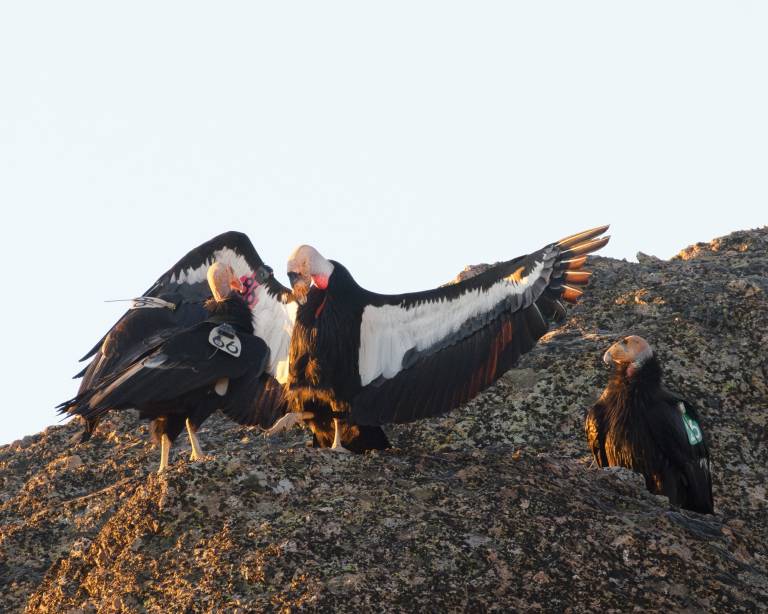
"caption": "At Pinnacles National Park, male California condor 888 Cedric (wings outstretched) hangs out with female condors 966 Pixchi and 726 Little Stinker. All are part of the Ventana Wildlife Society's central California flock. ",
"credit": "Courtesy of Tim Huntington",
"altTag": null,
"description": "DO NOT REPUBLISH\nDO NOT REPUBLISH\nDO NOT REPUBLISH",
"imgSizes": {
"thumbnail": {
"file": "https://cdn.kqed.org/wp-content/uploads/sites/35/2026/03/Condors1-160x128.jpg",
"width": 160,
"height": 128,
"mimeType": "image/jpeg"
},
"medium_large": {
"file": "https://cdn.kqed.org/wp-content/uploads/sites/35/2026/03/Condors1-768x614.jpg",
"width": 768,
"height": 614,
"mimeType": "image/jpeg"
},
"1536x1536": {
"file": "https://cdn.kqed.org/wp-content/uploads/sites/35/2026/03/Condors1-1536x1229.jpg",
"width": 1536,
"height": 1229,
"mimeType": "image/jpeg"
},
"post-thumbnail": {
"file": "https://cdn.kqed.org/wp-content/uploads/sites/35/2026/03/Condors1-672x372.jpg",
"width": 672,
"height": 372,
"mimeType": "image/jpeg"
},
"twentyfourteen-full-width": {
"file": "https://cdn.kqed.org/wp-content/uploads/sites/35/2026/03/Condors1-1038x576.jpg",
"width": 1038,
"height": 576,
"mimeType": "image/jpeg"
},
"npr-cds-wide": {
"file": "https://cdn.kqed.org/wp-content/uploads/sites/35/2026/03/Condors1-1200x675.jpg",
"width": 1200,
"height": 675,
"mimeType": "image/jpeg"
},
"kqedFullSize": {
"file": "https://cdn.kqed.org/wp-content/uploads/sites/35/2026/03/Condors1.jpg",
"width": 2000,
"height": 1600
}
},
"isLoading": false,
"fetchFailed": false
},
"science_2000322": {
"type": "attachments",
"id": "science_2000322",
"meta": {
"index": "attachments_1716263798",
"site": "science",
"id": "2000322",
"found": true
},
"title": "Bay Area Heat Wave",
"publishDate": 1773683352,
"status": "inherit",
"parent": 2000315,
"modified": 1773687308,
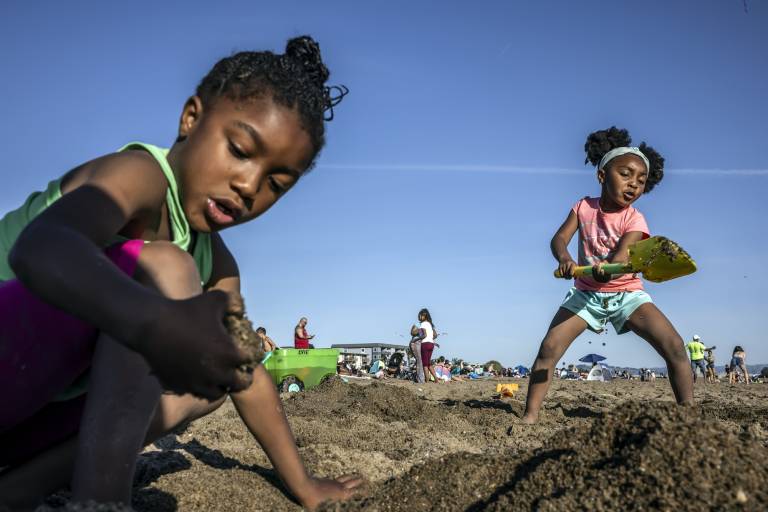
"caption": "Londyn, left, and Rae (no last names provided) dig in the sand at Alameda South Shore Beach as their family spent the day cooling off in Alameda, California, on Sunday, March 15, 2026. Temperatures began to climb before a long, hot spell that could see some Bay Area cities' temperature records fall over the next week.",
"credit": "Carlos Avila Gonzalez/San Francisco Chronicle via Getty Images",
"altTag": null,
"description": null,
"imgSizes": {
"thumbnail": {
"file": "https://cdn.kqed.org/wp-content/uploads/sites/35/2026/03/BayAreaHeatWaveGetty2-160x107.jpg",
"width": 160,
"height": 107,
"mimeType": "image/jpeg"
},
"medium_large": {
"file": "https://cdn.kqed.org/wp-content/uploads/sites/35/2026/03/BayAreaHeatWaveGetty2-768x512.jpg",
"width": 768,
"height": 512,
"mimeType": "image/jpeg"
},
"1536x1536": {
"file": "https://cdn.kqed.org/wp-content/uploads/sites/35/2026/03/BayAreaHeatWaveGetty2-1536x1024.jpg",
"width": 1536,
"height": 1024,
"mimeType": "image/jpeg"
},
"post-thumbnail": {
"file": "https://cdn.kqed.org/wp-content/uploads/sites/35/2026/03/BayAreaHeatWaveGetty2-672x372.jpg",
"width": 672,
"height": 372,
"mimeType": "image/jpeg"
},
"twentyfourteen-full-width": {
"file": "https://cdn.kqed.org/wp-content/uploads/sites/35/2026/03/BayAreaHeatWaveGetty2-1038x576.jpg",
"width": 1038,
"height": 576,
"mimeType": "image/jpeg"
},
"npr-cds-wide": {
"file": "https://cdn.kqed.org/wp-content/uploads/sites/35/2026/03/BayAreaHeatWaveGetty2-1200x675.jpg",
"width": 1200,
"height": 675,
"mimeType": "image/jpeg"
},
"kqedFullSize": {
"file": "https://cdn.kqed.org/wp-content/uploads/sites/35/2026/03/BayAreaHeatWaveGetty2.jpg",
"width": 2000,
"height": 1333
}
},
"isLoading": false,
"fetchFailed": false
}
},
"audioPlayerReducer": {
"postId": "stream_live",
"isPaused": true,
"isPlaying": false,
"pfsActive": false,
"pledgeModalIsOpen": true,
"playerDrawerIsOpen": false,
"liveAudioPlayStartedAt": 0,
"liveAudioPlayContext": ""
},
"authorsReducer": {
"byline_science_2000531": {
"type": "authors",
"id": "byline_science_2000531",
"meta": {
"override": true
},
"slug": "byline_science_2000531",
"name": "Alonso Daboub",
"isLoading": false
},
"dventon": {
"type": "authors",
"id": "11088",
"meta": {
"index": "authors_1716337520",
"id": "11088",
"found": true
},
"name": "Danielle Venton",
"firstName": "Danielle",
"lastName": "Venton",
"slug": "dventon",
"email": "dventon@kqed.org",
"display_author_email": true,
"staff_mastheads": [
"science"
],
"title": "Science reporter",
"bio": "Danielle Venton is a reporter for KQED Science. She covers wildfires, space and oceans (though she is prone to sea sickness).\r\n\r\nBefore joining KQED in 2015, Danielle was a staff reporter at KRCB in Sonoma County and a freelancer. She studied science communication at UC Santa Cruz and formerly worked at CERN in Geneva, Switzerland where she wrote about computing. She lives in Sonoma County and enjoys backpacking.",
"avatar": "https://secure.gravatar.com/avatar/37b292b5c40c8d93959c4f48d73b5286f41b7abd8588277e941905a3ed4c801c?s=600&d=blank&r=g",
"twitter": "DanielleVenton",
"bluesky": null,
"facebook": null,
"instagram": null,
"linkedin": null,
"sites": [
{
"site": "arts",
"roles": [
"contributor"
]
},
{
"site": "news",
"roles": [
"editor"
]
},
{
"site": "futureofyou",
"roles": [
"editor"
]
},
{
"site": "science",
"roles": [
"editor"
]
},
{
"site": "liveblog",
"roles": [
"contributor"
]
}
],
"headData": {
"title": "Danielle Venton | KQED",
"description": "Science reporter",
"ogImgSrc": "https://secure.gravatar.com/avatar/37b292b5c40c8d93959c4f48d73b5286f41b7abd8588277e941905a3ed4c801c?s=600&d=blank&r=g",
"twImgSrc": "https://secure.gravatar.com/avatar/37b292b5c40c8d93959c4f48d73b5286f41b7abd8588277e941905a3ed4c801c?s=600&d=blank&r=g"
},
"isLoading": false,
"link": "/author/dventon"
},
"eromero": {
"type": "authors",
"id": "11746",
"meta": {
"index": "authors_1716337520",
"id": "11746",
"found": true
},
"name": "Ezra David Romero",
"firstName": "Ezra David",
"lastName": "Romero",
"slug": "eromero",
"email": "eromero@kqed.org",
"display_author_email": true,
"staff_mastheads": [
"news",
"science"
],
"title": "Climate Reporter",
"bio": "Ezra David Romero is a climate reporter for KQED News. He covers the absence and excess of water in the Bay Area — think sea level rise, flooding and drought. For nearly a decade he’s covered how warming temperatures are altering the lives of Californians. He’s reported on farmers worried their pistachio trees aren’t getting enough sleep, families desperate for water, scientists studying dying giant sequoias, and alongside firefighters containing wildfires. His work has appeared on local stations across California and nationally on public radio shows like Morning Edition, Here and Now, All Things Considered and Science Friday. ",
"avatar": "https://secure.gravatar.com/avatar/c76404d287c10ed40224227551ac36e24352c7306f106632caf6fead76f8801f?s=600&d=blank&r=g",
"twitter": "ezraromero",
"bluesky": null,
"facebook": null,
"instagram": null,
"linkedin": null,
"sites": [
{
"site": "arts",
"roles": [
"editor"
]
},
{
"site": "news",
"roles": [
"editor"
]
},
{
"site": "science",
"roles": [
"editor"
]
},
{
"site": "liveblog",
"roles": [
"author"
]
}
],
"headData": {
"title": "Ezra David Romero | KQED",
"description": "Climate Reporter",
"ogImgSrc": "https://secure.gravatar.com/avatar/c76404d287c10ed40224227551ac36e24352c7306f106632caf6fead76f8801f?s=600&d=blank&r=g",
"twImgSrc": "https://secure.gravatar.com/avatar/c76404d287c10ed40224227551ac36e24352c7306f106632caf6fead76f8801f?s=600&d=blank&r=g"
},
"isLoading": false,
"link": "/author/eromero"
}
},
"pagesReducer": {
"science_category_climate": {
"type": "terms",
"id": "science_31",
"meta": {
"index": "terms_1716263798",
"site": "science",
"id": "31",
"score": 11.061819
},
"featImg": null,
"name": "Climate",
"description": null,
"taxonomy": "category",
"headData": {
"twImgId": null,
"twTitle": null,
"ogTitle": null,
"ogImgId": null,
"twDescription": null,
"description": null,
"title": "Climate Archives | KQED Science",
"ogDescription": null
},
"ttid": 33,
"slug": "climate",
"isLoading": false,
"title": "Climate",
"pageMeta": {
"site": "science",
"WpPageTemplate": "page-topic-editorial",
"currentPage": 4
},
"blocks": [
{
"blockName": "kqed/post-list",
"attrs": {
"layout": "cardArticle2",
"query": "posts/science?category=climate",
"seeMore": false,
"paginated": true,
"page": 4
}
},
{
"blockName": "kqed/ad"
}
]
}
},
"pfsSessionReducer": {},
"postsReducer": {
"stream_live": {
"type": "live",
"id": "stream_live",
"audioUrl": "https://streams.kqed.org/kqedradio",
"title": "Live Stream",
"excerpt": "Live Stream information currently unavailable.",
"link": "/radio",
"featImg": "",
"label": {
"name": "KQED Live",
"link": "/"
}
},
"stream_kqedNewscast": {
"type": "posts",
"id": "stream_kqedNewscast",
"audioUrl": "https://www.kqed.org/.stream/anon/radio/RDnews/newscast.mp3?_=1",
"title": "KQED Newscast",
"featImg": "",
"label": {
"name": "88.5 FM",
"link": "/"
}
},
"science_2000568": {
"type": "posts",
"id": "science_2000568",
"meta": {
"index": "posts_1716263798",
"site": "science",
"id": "2000568",
"score": null,
"sort": [
1775170472000
]
},
"guestAuthors": [],
"slug": "after-4-6-earthquake-jolts-santa-cruz-seismologists-double-down-on-myshake-alerts",
"title": "After 4.6 Earthquake Jolts Santa Cruz, Seismologists Double Down on MyShake Alerts",
"publishDate": 1775170472,
"format": "standard",
"headTitle": "After 4.6 Earthquake Jolts Santa Cruz, Seismologists Double Down on MyShake Alerts | KQED",
"labelTerm": {},
"content": "\u003cp>A blaring alarm woke Cian Dawson early Thursday morning. It was the MyShake phone app, alerting him to a 5.1 magnitude \u003ca href=\"https://www.kqed.org/news/12078438/4-6-magnitude-earthquake-in-santa-cruz-mountains-shakes-bay-area-awake\">earthquake\u003c/a> about to rock the region.\u003c/p>\n\u003cp>Dawson stayed in bed, thinking he wouldn’t have enough time to get under a table.\u003c/p>\n\u003cp>A few seconds later, the Berkeley resident’s room began to shake. “It made more sense to me to stay where I was,” Dawson told KQED.\u003c/p>\n\u003cp>The tremor \u003ca href=\"https://earthquake.usgs.gov/earthquakes/eventpage/nc75337442/dyfi/responses\">near Boulder Creek\u003c/a> prompted the \u003ca href=\"https://myshake.berkeley.edu/\">MyShake phone app\u003c/a> and local agencies to alert hundreds of thousands of residents across the greater Bay Area and Central Coast. The USGS later downgraded the quake to a 4.6. More than 10,000 people reported the quake in the app, saying they felt light to moderate shaking, and there were two reports of destroyed buildings.\u003c/p>\n\u003cp>[ad fullwidth]\u003c/p>\n\u003cp>In light of the relatively moderate-sized quake and a \u003ca href=\"https://www.kqed.org/news/12066087/the-m5-9-earthquake-alert-that-startled-the-bay-area-this-morning-was-a-false-alarm\">false alarm issued by the app\u003c/a> last year, some Bay Area residents have questioned whether agencies issue too many warnings and whether these alerts really make us safer. But seismologists argue they are important for protecting the public in the long run.\u003c/p>\n\u003cp>Dawson said there needs to be more outreach about how seriously to take the messaging, because people are beginning to train themselves to ignore the alerts.\u003c/p>\n\u003cp>“The ‘boy who cries wolf’ is a great way to describe people’s response when they don’t understand what the alert actually means,” Dawson said.\u003c/p>\n\u003cfigure id=\"attachment_2000581\" class=\"wp-caption aligncenter\" style=\"max-width: 2000px\">\u003cimg loading=\"lazy\" decoding=\"async\" class=\"wp-image-2000581 size-full\" src=\"https://cdn.kqed.org/wp-content/uploads/sites/35/2026/04/BoulderCreekSantaCruzGetty.jpg\" alt=\"\" width=\"2000\" height=\"1333\" srcset=\"https://cdn.kqed.org/wp-content/uploads/sites/35/2026/04/BoulderCreekSantaCruzGetty.jpg 2000w, https://cdn.kqed.org/wp-content/uploads/sites/35/2026/04/BoulderCreekSantaCruzGetty-160x107.jpg 160w, https://cdn.kqed.org/wp-content/uploads/sites/35/2026/04/BoulderCreekSantaCruzGetty-768x512.jpg 768w, https://cdn.kqed.org/wp-content/uploads/sites/35/2026/04/BoulderCreekSantaCruzGetty-1536x1024.jpg 1536w\" sizes=\"auto, (max-width: 2000px) 100vw, 2000px\">\u003cfigcaption class=\"wp-caption-text\">Big Basin Redwoods State Park on Nov. 5, 2020. \u003ccite>(Carolyn Cole/Los Angeles Times via Getty Images)\u003c/cite>\u003c/figcaption>\u003c/figure>\n\u003cp>Angie Lux, a scientist specializing in earthquake early warnings at the UC Berkeley Seismological Laboratory, said she thought the alert worked well, as it reached its ultimate goal of protecting lives and reducing injuries. Lux said the alert is sent to everyone at once, and the further you are away from the epicenter, the longer you will have to act.\u003c/p>\n\u003cp>“For the people that are right next to the epicenter, they’re not going to receive much warning,” Lux said.\u003c/p>\n\u003cp>Evan Hirakawa lives in Scott’s Valley, just a few miles away from the source of Thursday’s quake. The USGS research geophysicist said he felt the quake first, then his phone pinged.[aside postID=news_11999982 hero='https://cdn.kqed.org/wp-content/uploads/sites/10/2024/08/MyShakeUCBerkeley-1020x679.jpg']“It was pretty intense at my house,” Hirakawa said. “The shake alert kind of worked, but it was too close for it to really benefit me.”\u003c/p>\n\u003cp>Hirakawa said there’s evidence that indicates the earthquake likely took place on a fault that hasn’t ruptured in a long time — the Zayante Fault in Santa Cruz County, which sits roughly between two major fault systems: the San Andreas and the San Gregorio.\u003c/p>\n\u003cp>“We have [Zayante] labeled in our databases as maybe it’s inactive now,” Hirakawa said. “It was active thousands of years ago, but we haven’t seen a lot of historical earthquakes on it.\u003cem>”\u003c/em>\u003c/p>\n\u003cp>While this shaking may seem like an outlier, Hirakawa said he doesn’t think Thursday’s quake “is a foreshock to something bigger.” But, he said, it’s still worth paying attention to early warning messages, because doing so might just be “life-saving.”\u003c/p>\n\u003cp>“The fact that so many people who felt the earthquake got the alert this morning is a good sign that the early warning stuff is at least working,” Hirakwa said. “It will be unfortunate when it happens, but the system will only be tested when there’s a large, destructive earthquake. That’s when it’s going to matter.”\u003c/p>\n\u003cp>San Francisco resident Anthony Costello slept through the alert but woke to the jostling.\u003c/p>\n\u003cp>“I was just like, ‘Oh, girl, shut up, and just rolled over,’” Costello said, who has lived in the region for eight years. “I think my sensitivity to quakes is starting to increase a little bit and also my general anxiety with quakes.”\u003c/p>\n\u003cfigure id=\"attachment_524199\" class=\"wp-caption aligncenter\" style=\"max-width: 1373px\">\u003cimg loading=\"lazy\" decoding=\"async\" class=\"wp-image-524199 size-full\" src=\"https://cdn.kqed.org/wp-content/uploads/sites/35/2016/02/MyShake_scrgrab_featured.png\" alt=\"U.C. Berkeley's MyShake app could be the first step toward earthquake warnings on your phone.\" width=\"1373\" height=\"795\" srcset=\"https://cdn.kqed.org/wp-content/uploads/sites/35/2016/02/MyShake_scrgrab_featured.png 1373w, https://cdn.kqed.org/wp-content/uploads/sites/35/2016/02/MyShake_scrgrab_featured-400x232.png 400w, https://cdn.kqed.org/wp-content/uploads/sites/35/2016/02/MyShake_scrgrab_featured-800x463.png 800w, https://cdn.kqed.org/wp-content/uploads/sites/35/2016/02/MyShake_scrgrab_featured-768x445.png 768w, https://cdn.kqed.org/wp-content/uploads/sites/35/2016/02/MyShake_scrgrab_featured-1180x683.png 1180w, https://cdn.kqed.org/wp-content/uploads/sites/35/2016/02/MyShake_scrgrab_featured-960x556.png 960w\" sizes=\"auto, (max-width: 1373px) 100vw, 1373px\">\u003cfigcaption class=\"wp-caption-text\">MyShake alerts users to earthquakes of magnitude 4.5 or higher, though residents in places like San Ramon have reported feeling smaller quakes during a swarm that has persisted for months. \u003ccite>(Berkeley Seismological Laboratory)\u003c/cite>\u003c/figcaption>\u003c/figure>\n\u003cp>Even still, Costello said early warnings are so important because the larger the quake, the more time you’re going to need to make sure you’re safe.\u003c/p>\n\u003cp>Menlo Park resident Stephanie Lucianovic also went back to sleep after a local warning prompted her phone to go off. In the morning, she discussed the quakes with her kids. She’s considering downloading the MyShake app, she said.\u003c/p>\n\u003cp>“I’m interested in knowing all the information, but I don’t think I’d want to have it be a loud warning every time there was some minor earthquake,” Lucianovic said.\u003c/p>\n\u003cp>Luckily, MyShake alerts users when there’s a 4.5-magnitude earthquake or higher, which doesn’t discount the experience of people who feel smaller quakes, like in \u003ca href=\"https://www.kqed.org/science/2000505/new-web-of-sensors-aims-to-pinpoint-san-ramon-earthquake-source\">San Ramon\u003c/a>, where a swarm of smaller quakes has been occurring for months.\u003c/p>\n\u003cp>“We can’t make everybody happy,” Lux said. “Some people are going to feel it, some people may not, but we’re there to help.”\u003c/p>\n\u003cp>https://docs.google.com/forms/d/e/1FAIpQLSeeeKhyuk-_odJH80iw5eAlpLBF-YWJnOi_Yqs4BEN9fY1YJA/viewform?usp=publish-editor\u003c/p>\n\u003cp>\u003c/p>\n",
"blocks": [],
"excerpt": "A 4.6 magnitude earthquake near Boulder Creek prompted alerts across Northern California, but mixed reactions reveal skepticism about early warning systems.\r\n",
"status": "publish",
"parent": 0,
"modified": 1775599840,
"stats": {
"hasAudio": false,
"hasVideo": false,
"hasChartOrMap": false,
"iframeSrcs": [],
"hasGoogleForm": true,
"hasGallery": false,
"hasHearkenModule": false,
"hasPolis": false,
"paragraphCount": 23,
"wordCount": 930
},
"headData": {
"title": "After 4.6 Earthquake Jolts Santa Cruz, Seismologists Double Down on MyShake Alerts | KQED",
"description": "A 4.6 magnitude earthquake near Boulder Creek prompted alerts across Northern California, but mixed reactions reveal skepticism about early warning systems.\r\n",
"ogTitle": "",
"ogDescription": "",
"ogImgId": "",
"twTitle": "",
"twDescription": "",
"twImgId": "",
"schema": {
"@context": "https://schema.org",
"@type": "Article",
"headline": "After 4.6 Earthquake Jolts Santa Cruz, Seismologists Double Down on MyShake Alerts",
"datePublished": "2026-04-02T15:54:32-07:00",
"dateModified": "2026-04-07T15:10:40-07:00",
"image": "https://cdn.kqed.org/wp-content/uploads/2020/02/KQED-OG-Image@1x.png"
}
},
"primaryCategory": {
"termId": 35,
"slug": "environment",
"name": "Environment"
},
"source": "News",
"sticky": false,
"nprStoryId": "kqed-2000568",
"templateType": "standard",
"featuredImageType": "standard",
"excludeFromSiteSearch": "Include",
"articleAge": "0",
"path": "/science/2000568/after-4-6-earthquake-jolts-santa-cruz-seismologists-double-down-on-myshake-alerts",
"audioTrackLength": null,
"parsedContent": [
{
"type": "contentString",
"content": "\u003cdiv class=\"post-body\">\u003cp>\u003cp>A blaring alarm woke Cian Dawson early Thursday morning. It was the MyShake phone app, alerting him to a 5.1 magnitude \u003ca href=\"https://www.kqed.org/news/12078438/4-6-magnitude-earthquake-in-santa-cruz-mountains-shakes-bay-area-awake\">earthquake\u003c/a> about to rock the region.\u003c/p>\n\u003cp>Dawson stayed in bed, thinking he wouldn’t have enough time to get under a table.\u003c/p>\n\u003cp>A few seconds later, the Berkeley resident’s room began to shake. “It made more sense to me to stay where I was,” Dawson told KQED.\u003c/p>\n\u003cp>The tremor \u003ca href=\"https://earthquake.usgs.gov/earthquakes/eventpage/nc75337442/dyfi/responses\">near Boulder Creek\u003c/a> prompted the \u003ca href=\"https://myshake.berkeley.edu/\">MyShake phone app\u003c/a> and local agencies to alert hundreds of thousands of residents across the greater Bay Area and Central Coast. The USGS later downgraded the quake to a 4.6. More than 10,000 people reported the quake in the app, saying they felt light to moderate shaking, and there were two reports of destroyed buildings.\u003c/p>\n\u003cp>\u003c/p>\u003c/div>",
"attributes": {
"named": {},
"numeric": []
}
},
{
"type": "component",
"content": "",
"name": "ad",
"attributes": {
"named": {
"label": "fullwidth"
},
"numeric": [
"fullwidth"
]
}
},
{
"type": "contentString",
"content": "\u003cdiv class=\"post-body\">\u003cp>\u003c/p>\n\u003cp>In light of the relatively moderate-sized quake and a \u003ca href=\"https://www.kqed.org/news/12066087/the-m5-9-earthquake-alert-that-startled-the-bay-area-this-morning-was-a-false-alarm\">false alarm issued by the app\u003c/a> last year, some Bay Area residents have questioned whether agencies issue too many warnings and whether these alerts really make us safer. But seismologists argue they are important for protecting the public in the long run.\u003c/p>\n\u003cp>Dawson said there needs to be more outreach about how seriously to take the messaging, because people are beginning to train themselves to ignore the alerts.\u003c/p>\n\u003cp>“The ‘boy who cries wolf’ is a great way to describe people’s response when they don’t understand what the alert actually means,” Dawson said.\u003c/p>\n\u003cfigure id=\"attachment_2000581\" class=\"wp-caption aligncenter\" style=\"max-width: 2000px\">\u003cimg loading=\"lazy\" decoding=\"async\" class=\"wp-image-2000581 size-full\" src=\"https://cdn.kqed.org/wp-content/uploads/sites/35/2026/04/BoulderCreekSantaCruzGetty.jpg\" alt=\"\" width=\"2000\" height=\"1333\" srcset=\"https://cdn.kqed.org/wp-content/uploads/sites/35/2026/04/BoulderCreekSantaCruzGetty.jpg 2000w, https://cdn.kqed.org/wp-content/uploads/sites/35/2026/04/BoulderCreekSantaCruzGetty-160x107.jpg 160w, https://cdn.kqed.org/wp-content/uploads/sites/35/2026/04/BoulderCreekSantaCruzGetty-768x512.jpg 768w, https://cdn.kqed.org/wp-content/uploads/sites/35/2026/04/BoulderCreekSantaCruzGetty-1536x1024.jpg 1536w\" sizes=\"auto, (max-width: 2000px) 100vw, 2000px\">\u003cfigcaption class=\"wp-caption-text\">Big Basin Redwoods State Park on Nov. 5, 2020. \u003ccite>(Carolyn Cole/Los Angeles Times via Getty Images)\u003c/cite>\u003c/figcaption>\u003c/figure>\n\u003cp>Angie Lux, a scientist specializing in earthquake early warnings at the UC Berkeley Seismological Laboratory, said she thought the alert worked well, as it reached its ultimate goal of protecting lives and reducing injuries. Lux said the alert is sent to everyone at once, and the further you are away from the epicenter, the longer you will have to act.\u003c/p>\n\u003cp>“For the people that are right next to the epicenter, they’re not going to receive much warning,” Lux said.\u003c/p>\n\u003cp>Evan Hirakawa lives in Scott’s Valley, just a few miles away from the source of Thursday’s quake. The USGS research geophysicist said he felt the quake first, then his phone pinged.\u003c/p>\u003c/div>",
"attributes": {
"named": {},
"numeric": []
}
},
{
"type": "component",
"content": "",
"name": "aside",
"attributes": {
"named": {
"postid": "news_11999982",
"hero": "https://cdn.kqed.org/wp-content/uploads/sites/10/2024/08/MyShakeUCBerkeley-1020x679.jpg",
"label": ""
},
"numeric": []
}
},
{
"type": "contentString",
"content": "\u003cdiv class=\"post-body\">\u003cp>“It was pretty intense at my house,” Hirakawa said. “The shake alert kind of worked, but it was too close for it to really benefit me.”\u003c/p>\n\u003cp>Hirakawa said there’s evidence that indicates the earthquake likely took place on a fault that hasn’t ruptured in a long time — the Zayante Fault in Santa Cruz County, which sits roughly between two major fault systems: the San Andreas and the San Gregorio.\u003c/p>\n\u003cp>“We have [Zayante] labeled in our databases as maybe it’s inactive now,” Hirakawa said. “It was active thousands of years ago, but we haven’t seen a lot of historical earthquakes on it.\u003cem>”\u003c/em>\u003c/p>\n\u003cp>While this shaking may seem like an outlier, Hirakawa said he doesn’t think Thursday’s quake “is a foreshock to something bigger.” But, he said, it’s still worth paying attention to early warning messages, because doing so might just be “life-saving.”\u003c/p>\n\u003cp>“The fact that so many people who felt the earthquake got the alert this morning is a good sign that the early warning stuff is at least working,” Hirakwa said. “It will be unfortunate when it happens, but the system will only be tested when there’s a large, destructive earthquake. That’s when it’s going to matter.”\u003c/p>\n\u003cp>San Francisco resident Anthony Costello slept through the alert but woke to the jostling.\u003c/p>\n\u003cp>“I was just like, ‘Oh, girl, shut up, and just rolled over,’” Costello said, who has lived in the region for eight years. “I think my sensitivity to quakes is starting to increase a little bit and also my general anxiety with quakes.”\u003c/p>\n\u003cfigure id=\"attachment_524199\" class=\"wp-caption aligncenter\" style=\"max-width: 1373px\">\u003cimg loading=\"lazy\" decoding=\"async\" class=\"wp-image-524199 size-full\" src=\"https://cdn.kqed.org/wp-content/uploads/sites/35/2016/02/MyShake_scrgrab_featured.png\" alt=\"U.C. Berkeley's MyShake app could be the first step toward earthquake warnings on your phone.\" width=\"1373\" height=\"795\" srcset=\"https://cdn.kqed.org/wp-content/uploads/sites/35/2016/02/MyShake_scrgrab_featured.png 1373w, https://cdn.kqed.org/wp-content/uploads/sites/35/2016/02/MyShake_scrgrab_featured-400x232.png 400w, https://cdn.kqed.org/wp-content/uploads/sites/35/2016/02/MyShake_scrgrab_featured-800x463.png 800w, https://cdn.kqed.org/wp-content/uploads/sites/35/2016/02/MyShake_scrgrab_featured-768x445.png 768w, https://cdn.kqed.org/wp-content/uploads/sites/35/2016/02/MyShake_scrgrab_featured-1180x683.png 1180w, https://cdn.kqed.org/wp-content/uploads/sites/35/2016/02/MyShake_scrgrab_featured-960x556.png 960w\" sizes=\"auto, (max-width: 1373px) 100vw, 1373px\">\u003cfigcaption class=\"wp-caption-text\">MyShake alerts users to earthquakes of magnitude 4.5 or higher, though residents in places like San Ramon have reported feeling smaller quakes during a swarm that has persisted for months. \u003ccite>(Berkeley Seismological Laboratory)\u003c/cite>\u003c/figcaption>\u003c/figure>\n\u003cp>Even still, Costello said early warnings are so important because the larger the quake, the more time you’re going to need to make sure you’re safe.\u003c/p>\n\u003cp>Menlo Park resident Stephanie Lucianovic also went back to sleep after a local warning prompted her phone to go off. In the morning, she discussed the quakes with her kids. She’s considering downloading the MyShake app, she said.\u003c/p>\n\u003cp>“I’m interested in knowing all the information, but I don’t think I’d want to have it be a loud warning every time there was some minor earthquake,” Lucianovic said.\u003c/p>\n\u003cp>Luckily, MyShake alerts users when there’s a 4.5-magnitude earthquake or higher, which doesn’t discount the experience of people who feel smaller quakes, like in \u003ca href=\"https://www.kqed.org/science/2000505/new-web-of-sensors-aims-to-pinpoint-san-ramon-earthquake-source\">San Ramon\u003c/a>, where a swarm of smaller quakes has been occurring for months.\u003c/p>\n\u003cp>“We can’t make everybody happy,” Lux said. “Some people are going to feel it, some people may not, but we’re there to help.”\u003c/p>\u003c/p>\u003cp>\u003cdiv class='utils-parseShortcode-shortcodes-__shortcodes__shortcodeWrapper'>\n \u003ciframe\n src='https://docs.google.com/forms/d/e/1FAIpQLSeeeKhyuk-_odJH80iw5eAlpLBF-YWJnOi_Yqs4BEN9fY1YJA/viewform?usp=publish-editor?embedded=true'\n title='https://docs.google.com/forms/d/e/1FAIpQLSeeeKhyuk-_odJH80iw5eAlpLBF-YWJnOi_Yqs4BEN9fY1YJA/viewform?usp=publish-editor'\n width='760' height='500'\n frameborder='0'\n marginheight='0' marginwidth='0'>\u003c/iframe>\u003c/div>\u003c/p>\u003cp>\u003cp>\u003c/p>\n\u003c/div>\u003c/p>",
"attributes": {
"named": {},
"numeric": []
}
}
],
"link": "/science/2000568/after-4-6-earthquake-jolts-santa-cruz-seismologists-double-down-on-myshake-alerts",
"authors": [
"11746"
],
"categories": [
"science_31",
"science_35",
"science_4550",
"science_40",
"science_4450"
],
"tags": [
"science_856",
"science_5178",
"science_182",
"science_2254",
"science_427",
"science_192",
"science_4417",
"science_4414",
"science_218",
"science_309",
"science_461"
],
"featImg": "science_1994778",
"label": "source_science_2000568"
},
"science_2000531": {
"type": "posts",
"id": "science_2000531",
"meta": {
"index": "posts_1716263798",
"site": "science",
"id": "2000531",
"score": null,
"sort": [
1775160555000
]
},
"guestAuthors": [],
"slug": "as-sierra-snowpack-dwindles-concern-mounts-over-fire-risk-and-water-management",
"title": "As Sierra Snowpack Dwindles, Concern Mounts Over Fire Risk and Water Management",
"publishDate": 1775160555,
"format": "standard",
"headTitle": "As Sierra Snowpack Dwindles, Concern Mounts Over Fire Risk and Water Management | KQED",
"labelTerm": {},
"content": "\u003cp>Every year, as winter winds down into April, officials with California’s Department of Water Resources perform their \u003ca href=\"https://www.kqed.org/science/2000445/yikes-bay-area-heat-lingers-sierra-nevada-snowpack-melting-fast\">snowpack\u003c/a> measurements for the last time.\u003c/p>\n\u003cp>The state considers the final winter survey, conducted on April 1, as the best indicator of how much water might be available for farms and cities during the dry summer months to follow.\u003c/p>\n\u003cp>That’s because the measurement is conducted when the snowpack is at its highest. From then on, the snow melts, feeding into rivers and reservoirs throughout the state.\u003c/p>\n\u003cp>[ad fullwidth]\u003c/p>\n\u003cp>South of Lake Tahoe, surveyors at the Phillips Station usually dig down through feet of snow to make water supply predictions.\u003c/p>\n\u003cp>But this year, they said, there’s nothing to measure.\u003c/p>\n\u003cp>“I want to welcome you all to probably one of the quickest snow surveys we’ve had and maybe one where people could use an umbrella,” said Karla Nemeth, the Department of Water Resources’ director.\u003c/p>\n\u003cfigure id=\"attachment_2000538\" class=\"wp-caption aligncenter\" style=\"max-width: 2000px\">\u003cimg loading=\"lazy\" decoding=\"async\" class=\"size-full wp-image-2000538\" src=\"https://cdn.kqed.org/wp-content/uploads/sites/35/2026/04/SnowSurveyApril1_3.jpg\" alt=\"\" width=\"2000\" height=\"1333\" srcset=\"https://cdn.kqed.org/wp-content/uploads/sites/35/2026/04/SnowSurveyApril1_3.jpg 2000w, https://cdn.kqed.org/wp-content/uploads/sites/35/2026/04/SnowSurveyApril1_3-160x107.jpg 160w, https://cdn.kqed.org/wp-content/uploads/sites/35/2026/04/SnowSurveyApril1_3-768x512.jpg 768w, https://cdn.kqed.org/wp-content/uploads/sites/35/2026/04/SnowSurveyApril1_3-1536x1024.jpg 1536w\" sizes=\"auto, (max-width: 2000px) 100vw, 2000px\">\u003cfigcaption class=\"wp-caption-text\">Light snow is seen on the meadow where the California Department of Water Resources prepares to conduct the fourth media snow survey of the 2026 season at Phillips Station in the Sierra Nevada on April 1, 2026. \u003ccite>(Andrew Nixon/California Department of Water Resources)\u003c/cite>\u003c/figcaption>\u003c/figure>\n\u003cp>Andy Reising, who manages the department’s \u003cspan style=\"font-weight: 400;\">Snow Surveys and Water Supply Forecasting Unit\u003c/span>, addressed the media while carrying a measuring device marked at five feet — the height at which average snow levels are measured. “Normally, we’d be standing right here,” he said, pointing to the top of the measuring stick.\u003c/p>\n\u003cp>March’s \u003ca href=\"https://www.kqed.org/science/2000299/a-delight-mare-bay-area-sizzles-march-heat-wave-could-shatter-records\">record-breaking warmth\u003c/a> left the state’s snowpack at a mere 18% of its April 1 average. State officials and scientists are warning of strained water resources throughout the state and an earlier-than-usual fire season.\u003c/p>\n\u003cp>The \u003ca href=\"https://www.kqed.org/science/2000348/heat-wave-will-blast-more-bay-area-temperature-records-friday\">atypical heat\u003c/a> was part of a larger wave of warm temperatures that swept through the continental U.S during March. The National Weather Service reported that from March 15 through the 26, more than \u003ca href=\"https://x.com/NWS/status/2037631084586840137\">1,100 records \u003c/a>for warm temperatures \u003ca href=\"https://www.kqed.org/science/2000315/record-breaking-heat-wave-bakes-the-bay-area-through-friday\">were tied or broken\u003c/a>.[aside postID=science_2000505 hero='https://cdn.kqed.org/wp-content/uploads/sites/35/2026/03/260317-SANRAMONEARTHQUAKES00337_TV-KQED.jpg']“This was probably the most statistically and meteorologically extreme heat event that has occurred in the southwestern U.S. in the record,” said Daniel Swain, a climate scientist and researcher for the University of California Agriculture and Natural Resources.\u003c/p>\n\u003cp>On top of melting the previously established snowpack, the record-breaking heat also spelled less March snow and more precipitation. The result: the second-lowest April measurement on record for Phillips Station, only behind 2015, when no snow was visible on the ground.\u003c/p>\n\u003cp>Santa Clara County is one of the only Bay Area counties that relies on the state’s water deliveries. Aaron Baker, chief operating officer for Valley Water, which services Silicon Valley’s needs, said he doesn’t yet see cause for alarm.\u003c/p>\n\u003cp>“We’re in a fine position so far this year,” Baker said. “That’s because we’re able to lean on our local water supplies, which we’ve been able to recharge over the last few years.”\u003c/p>\n\u003cp>But, Baker said, another dry year could spell trouble. If that will be the case, “We’ve got our eyes wide open,” Baker said. “This is how droughts begin.”\u003c/p>\n\u003cp>He underscored the need for investment to redesign with resilience in mind.\u003c/p>\n\u003cp>In the meantime, Valley Water is urging Santa Clara residents to sign up for the county’s \u003ca href=\"https://www.valleywater.org/saving-water/rebates-surveys/water-wise-outdoor-surveys\">outdoor water-wise surveys,\u003c/a> a free service that helps residents identify leaks in outdoor irrigation systems.\u003c/p>\n\u003cp>\u003c/p>\n",
"blocks": [],
"excerpt": "After a March heat wave roasted the Sierra Nevada, California’s April snowpack levels are at near record lows.",
"status": "publish",
"parent": 0,
"modified": 1775170850,
"stats": {
"hasAudio": false,
"hasVideo": false,
"hasChartOrMap": false,
"iframeSrcs": [],
"hasGoogleForm": false,
"hasGallery": false,
"hasHearkenModule": false,
"hasPolis": false,
"paragraphCount": 17,
"wordCount": 621
},
"headData": {
"title": "As Sierra Snowpack Dwindles, Concern Mounts Over Fire Risk and Water Management | KQED",
"description": "After a March heat wave roasted the Sierra Nevada, California’s April snowpack levels are at near record lows.",
"ogTitle": "",
"ogDescription": "",
"ogImgId": "",
"twTitle": "",
"twDescription": "",
"twImgId": "",
"schema": {
"@context": "https://schema.org",
"@type": "Article",
"headline": "As Sierra Snowpack Dwindles, Concern Mounts Over Fire Risk and Water Management",
"datePublished": "2026-04-02T13:09:15-07:00",
"dateModified": "2026-04-02T16:00:50-07:00",
"image": "https://cdn.kqed.org/wp-content/uploads/2020/02/KQED-OG-Image@1x.png"
}
},
"primaryCategory": {
"termId": 31,
"slug": "climate",
"name": "Climate"
},
"source": "News",
"sticky": false,
"nprByline": "Alonso Daboub",
"nprStoryId": "kqed-2000531",
"templateType": "standard",
"featuredImageType": "standard",
"excludeFromSiteSearch": "Include",
"showOnAuthorArchivePages": "No",
"articleAge": "0",
"path": "/science/2000531/as-sierra-snowpack-dwindles-concern-mounts-over-fire-risk-and-water-management",
"audioTrackLength": null,
"parsedContent": [
{
"type": "contentString",
"content": "\u003cdiv class=\"post-body\">\u003cp>\u003cp>Every year, as winter winds down into April, officials with California’s Department of Water Resources perform their \u003ca href=\"https://www.kqed.org/science/2000445/yikes-bay-area-heat-lingers-sierra-nevada-snowpack-melting-fast\">snowpack\u003c/a> measurements for the last time.\u003c/p>\n\u003cp>The state considers the final winter survey, conducted on April 1, as the best indicator of how much water might be available for farms and cities during the dry summer months to follow.\u003c/p>\n\u003cp>That’s because the measurement is conducted when the snowpack is at its highest. From then on, the snow melts, feeding into rivers and reservoirs throughout the state.\u003c/p>\n\u003cp>\u003c/p>\u003c/div>",
"attributes": {
"named": {},
"numeric": []
}
},
{
"type": "component",
"content": "",
"name": "ad",
"attributes": {
"named": {
"label": "fullwidth"
},
"numeric": [
"fullwidth"
]
}
},
{
"type": "contentString",
"content": "\u003cdiv class=\"post-body\">\u003cp>\u003c/p>\n\u003cp>South of Lake Tahoe, surveyors at the Phillips Station usually dig down through feet of snow to make water supply predictions.\u003c/p>\n\u003cp>But this year, they said, there’s nothing to measure.\u003c/p>\n\u003cp>“I want to welcome you all to probably one of the quickest snow surveys we’ve had and maybe one where people could use an umbrella,” said Karla Nemeth, the Department of Water Resources’ director.\u003c/p>\n\u003cfigure id=\"attachment_2000538\" class=\"wp-caption aligncenter\" style=\"max-width: 2000px\">\u003cimg loading=\"lazy\" decoding=\"async\" class=\"size-full wp-image-2000538\" src=\"https://cdn.kqed.org/wp-content/uploads/sites/35/2026/04/SnowSurveyApril1_3.jpg\" alt=\"\" width=\"2000\" height=\"1333\" srcset=\"https://cdn.kqed.org/wp-content/uploads/sites/35/2026/04/SnowSurveyApril1_3.jpg 2000w, https://cdn.kqed.org/wp-content/uploads/sites/35/2026/04/SnowSurveyApril1_3-160x107.jpg 160w, https://cdn.kqed.org/wp-content/uploads/sites/35/2026/04/SnowSurveyApril1_3-768x512.jpg 768w, https://cdn.kqed.org/wp-content/uploads/sites/35/2026/04/SnowSurveyApril1_3-1536x1024.jpg 1536w\" sizes=\"auto, (max-width: 2000px) 100vw, 2000px\">\u003cfigcaption class=\"wp-caption-text\">Light snow is seen on the meadow where the California Department of Water Resources prepares to conduct the fourth media snow survey of the 2026 season at Phillips Station in the Sierra Nevada on April 1, 2026. \u003ccite>(Andrew Nixon/California Department of Water Resources)\u003c/cite>\u003c/figcaption>\u003c/figure>\n\u003cp>Andy Reising, who manages the department’s \u003cspan style=\"font-weight: 400;\">Snow Surveys and Water Supply Forecasting Unit\u003c/span>, addressed the media while carrying a measuring device marked at five feet — the height at which average snow levels are measured. “Normally, we’d be standing right here,” he said, pointing to the top of the measuring stick.\u003c/p>\n\u003cp>March’s \u003ca href=\"https://www.kqed.org/science/2000299/a-delight-mare-bay-area-sizzles-march-heat-wave-could-shatter-records\">record-breaking warmth\u003c/a> left the state’s snowpack at a mere 18% of its April 1 average. State officials and scientists are warning of strained water resources throughout the state and an earlier-than-usual fire season.\u003c/p>\n\u003cp>The \u003ca href=\"https://www.kqed.org/science/2000348/heat-wave-will-blast-more-bay-area-temperature-records-friday\">atypical heat\u003c/a> was part of a larger wave of warm temperatures that swept through the continental U.S during March. The National Weather Service reported that from March 15 through the 26, more than \u003ca href=\"https://x.com/NWS/status/2037631084586840137\">1,100 records \u003c/a>for warm temperatures \u003ca href=\"https://www.kqed.org/science/2000315/record-breaking-heat-wave-bakes-the-bay-area-through-friday\">were tied or broken\u003c/a>.\u003c/p>\u003c/div>",
"attributes": {
"named": {},
"numeric": []
}
},
{
"type": "component",
"content": "",
"name": "aside",
"attributes": {
"named": {
"postid": "science_2000505",
"hero": "https://cdn.kqed.org/wp-content/uploads/sites/35/2026/03/260317-SANRAMONEARTHQUAKES00337_TV-KQED.jpg",
"label": ""
},
"numeric": []
}
},
{
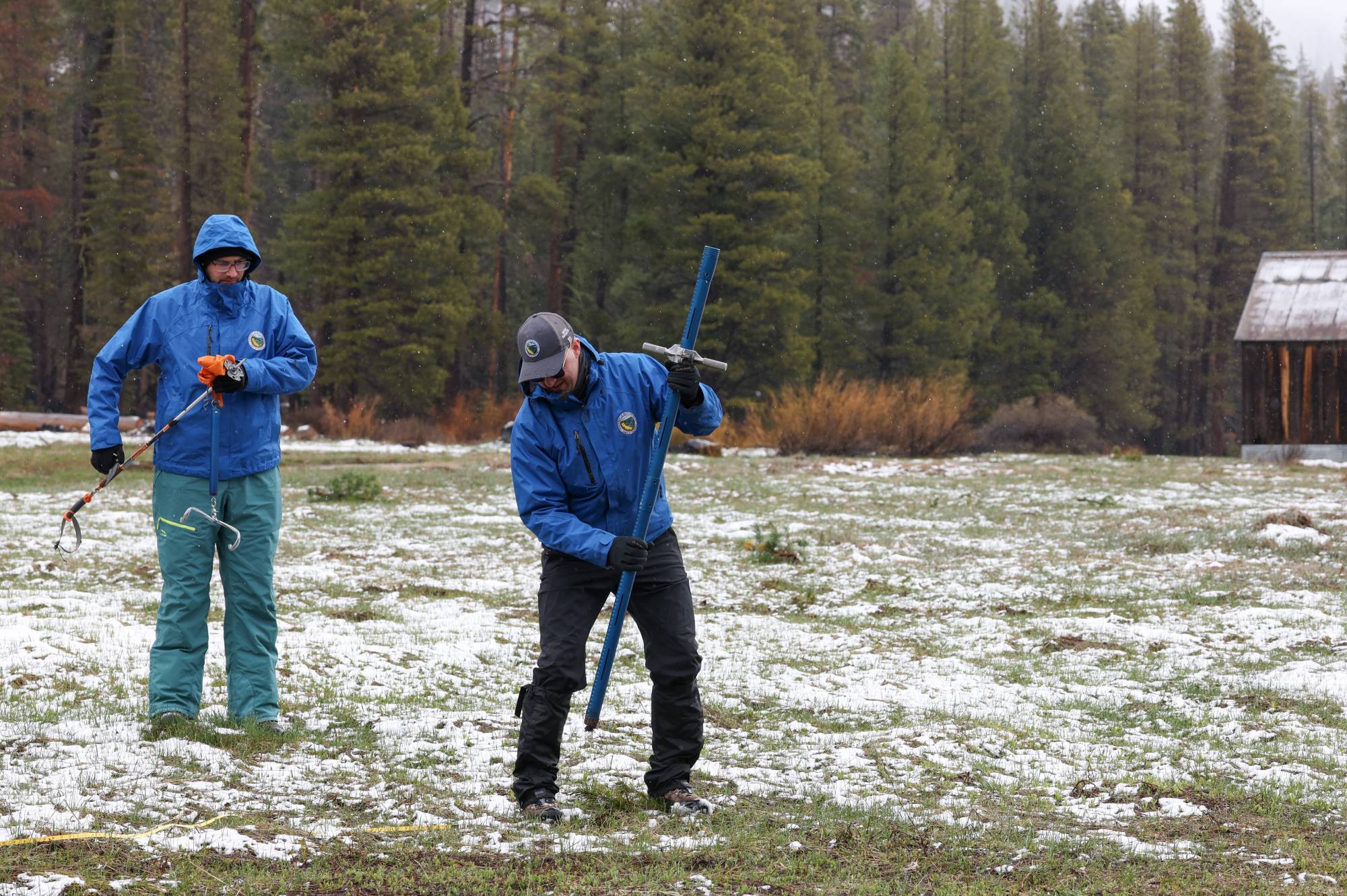
"type": "contentString",
"content": "\u003cdiv class=\"post-body\">\u003cp>“This was probably the most statistically and meteorologically extreme heat event that has occurred in the southwestern U.S. in the record,” said Daniel Swain, a climate scientist and researcher for the University of California Agriculture and Natural Resources.\u003c/p>\n\u003cp>On top of melting the previously established snowpack, the record-breaking heat also spelled less March snow and more precipitation. The result: the second-lowest April measurement on record for Phillips Station, only behind 2015, when no snow was visible on the ground.\u003c/p>\n\u003cp>Santa Clara County is one of the only Bay Area counties that relies on the state’s water deliveries. Aaron Baker, chief operating officer for Valley Water, which services Silicon Valley’s needs, said he doesn’t yet see cause for alarm.\u003c/p>\n\u003cp>“We’re in a fine position so far this year,” Baker said. “That’s because we’re able to lean on our local water supplies, which we’ve been able to recharge over the last few years.”\u003c/p>\n\u003cp>But, Baker said, another dry year could spell trouble. If that will be the case, “We’ve got our eyes wide open,” Baker said. “This is how droughts begin.”\u003c/p>\n\u003cp>He underscored the need for investment to redesign with resilience in mind.\u003c/p>\n\u003cp>In the meantime, Valley Water is urging Santa Clara residents to sign up for the county’s \u003ca href=\"https://www.valleywater.org/saving-water/rebates-surveys/water-wise-outdoor-surveys\">outdoor water-wise surveys,\u003c/a> a free service that helps residents identify leaks in outdoor irrigation systems.\u003c/p>\n\u003cp>\u003c/p>\n\u003c/div>\u003c/p>",
"attributes": {
"named": {},
"numeric": []
}
}
],
"link": "/science/2000531/as-sierra-snowpack-dwindles-concern-mounts-over-fire-risk-and-water-management",
"authors": [
"byline_science_2000531"
],
"categories": [
"science_31",
"science_40",
"science_4450"
],
"tags": [
"science_5178",
"science_182",
"science_4417",
"science_4414",
"science_309",
"science_1462",
"science_107",
"science_1243",
"science_1127"
],
"featImg": "science_2000535",
"label": "source_science_2000531"
},
"science_2000545": {
"type": "posts",
"id": "science_2000545",
"meta": {
"index": "posts_1716263798",
"site": "science",
"id": "2000545",
"score": null,
"sort": [
1775145635000
]
},
"guestAuthors": [],
"slug": "in-2026-the-bay-area-still-has-lots-to-learn-from-silent-spring",
"title": "In 2026, the Bay Area Still Has Lots to Learn from ‘Silent Spring’",
"publishDate": 1775145635,
"format": "audio",
"headTitle": "In 2026, the Bay Area Still Has Lots to Learn from ‘Silent Spring’ | KQED",
"labelTerm": {
"site": "science"
},
"content": "\u003cp>\u003ca href=\"https://www.kqed.org/science/2000354/read-with-kqed-the-book-that-changed-how-we-see-nature\">\u003cem>Silent Spring\u003c/em>\u003c/a> is one of those books where many people think they know what it says, have opinions about it, even if they haven’t read it.\u003c/p>\n\u003cp>It’s a science book that, when you sit down and crack it open, surprises you with its technical, but compelling, depth. Carson is an extremely skilled writer. And the book changed the world, opening eyes to patterns and consequences that had been hidden.\u003c/p>\n\u003cp>We’re now in a time when its lessons are more important than ever: the Make America Healthy Again movement has swept to power in this country with calls for less chemical use.\u003c/p>\n\u003cp>[ad fullwidth]\u003c/p>\n\u003cp>Superficially, MAHA and its figurehead Robert F. Kennedy Jr. — whose uncle John F. Kennedy, as president, used his administration to defend Carson against the chemical industry’s attacks — appear to share intellectual tenets with \u003cem>Silent Spring\u003c/em>: a skepticism of corporate power, concern over environmental toxins, and industrial influence over public health.\u003c/p>\n\u003cp>But RFK., Jr. has attacked vaccines. And the Trump administration has taken a soft line on regulating pesticides. It’s hard to imagine that Carson would agree, and a close reading of her book can remind us: chemical impacts travel far beyond their intended use, and what the data actually says matters enormously.\u003c/p>\n\u003cfigure id=\"attachment_2000547\" class=\"wp-caption alignright\" style=\"max-width: 1200px\">\u003ca href=\"https://cdn.kqed.org/wp-content/uploads/sites/35/2026/04/polsky_claudia_2019.jpg\">\u003cimg loading=\"lazy\" decoding=\"async\" class=\"size-full wp-image-2000547\" src=\"https://cdn.kqed.org/wp-content/uploads/sites/35/2026/04/polsky_claudia_2019.jpg\" alt=\"\" width=\"1200\" height=\"1800\" srcset=\"https://cdn.kqed.org/wp-content/uploads/sites/35/2026/04/polsky_claudia_2019.jpg 1200w, https://cdn.kqed.org/wp-content/uploads/sites/35/2026/04/polsky_claudia_2019-160x240.jpg 160w, https://cdn.kqed.org/wp-content/uploads/sites/35/2026/04/polsky_claudia_2019-768x1152.jpg 768w, https://cdn.kqed.org/wp-content/uploads/sites/35/2026/04/polsky_claudia_2019-1024x1536.jpg 1024w\" sizes=\"auto, (max-width: 1200px) 100vw, 1200px\">\u003c/a>\u003cfigcaption class=\"wp-caption-text\">UC Berkeley Environmental Law professor Claudia Polsky will join KQED to talk about Silent Spring at the Night of Ideas on April 11, 2026. \u003ccite>(Courtesy of UC Berkeley Law)\u003c/cite>\u003c/figcaption>\u003c/figure>\n\u003cp>Join KQED for a discussion of \u003cem>Silent Spring\u003c/em> and its legacy and lessons for us on April 11 at the San Francisco Public Library as part of the \u003ca href=\"https://www.kqed.org/event/6104\">Night of Ideas\u003c/a>, at 7:30 p.m. inside the Periodical Room. Don’t worry if you haven’t read the book yet. Come just as you are.\u003c/p>\n\u003cp>The discussion will shine a spotlight on the work of Claudia Polsky, the founding director of the Environmental Law Clinic at UC Berkeley, who is a guest for the discussion.\u003c/p>\n\u003cp>“Rachel Carson’s book pointed at ways to engage people,” Polsky said, “how you engage people who care about pets, people who are bird watchers, people who care about what’s in breast milk they’re feeding to their children.”\u003c/p>\n\u003cp>Carson explored how manufactured chemicals found in the environment were appearing in wildlife, in household pets and in our bodies, like no other writer had.\u003c/p>\n\u003cp>Polsky, in her own work, partly inspired by Carson, has spent years protecting vulnerable people and communities from harmful chemicals. She has represented communities contaminated by PFAs, stubborn “forever chemicals” used to make food packaging, nonstick pans, waterproof materials that don’t break down.\u003c/p>\n\u003cp>As a deputy attorney general for California, she helped get formaldehyde-laden Brazilian blowout chemicals – which leave hair with a glossy sheen – off the market here by demonstrating the carcinogen was sickening and disabling salon workers. She worked on policies to reduce the risks associated with pesticides and industrial chemicals at the Department of Toxic Substances Control in Sacramento. Most recently, she successfully \u003ca href=\"https://www.latimes.com/california/story/2025-06-25/trump-lawsuit-university-of-california-researchers\">led a legal fight against the Trump administration\u003c/a> to restore hundreds of millions in canceled research funding.\u003c/p>\n\u003cp>Despite her differences with the Trump administration, Polsky has compassion for some of the MAHA movement’s concerns. She said it has a “good intuition” for the ways in which the public lacks health protections, as well as the government’s “insufficient focus” on broad-level public health and prevention.\u003c/p>\n\u003cp>Although she points out that the level of skepticism about vaccine safety backed by RFK Jr. lacks empirical support and is unjustified.\u003c/p>\n\u003cp>In Polsky’s work, however, she seeks to find ways to connect people across political divides. She has a book project in her sights that would focus on how environmental concerns can be detected within human bodies, such as in breast milk.\u003c/p>\n\u003cp>“I don’t want to write for Bernie Sanders and Kamala Harris voters,” she said. “I actually want to write something that speaks to the incredible political horseshoe I’ve seen around issues of human exposure to chemicals … I feel there’s a huge opportunity here once we can get past this hyperpartisan moment.”[aside postID=science_2000234 hero='https://cdn.kqed.org/wp-content/uploads/sites/35/2026/03/Condors1.jpg'] Some people have criticized \u003cem>Silent Spring\u003c/em> and Rachel Carson for fostering intense fear of chemicals in a way that has partially led to our anti-science moment. People attribute to her a call for a ban on all pesticides. Polsky said \u003ca href=\"https://www.smithsonianmag.com/smart-news/crazy-lies-haters-threw-at-rachel-carson-25183450/\">laying these critiques at Carson’s door\u003c/a> is unfounded.\u003c/p>\n\u003cp>“I don’t think we can attribute to her the fact that people have over-read what she said and what she testified in Congress. She actually did not call for a ban on pesticides. She said they have their place. It’s much narrower than how they’re deployed.”\u003c/p>\n\u003cp>Carson encouraged saving DDT – the pesticide she’s most associated with – to control malarial outbreaks. That doesn’t stop her detractors from attributing malarial deaths to her, and by extension, seeking to undermine the case for environmental regulations altogether.\u003c/p>\n\u003cp>Women, especially, who raise concerns about environmental chemicals are criticized and called hysterical or emotional or over-invested in the issue. This was true of Carson, too, who died of breast cancer in 1964, two years after the book was published.\u003c/p>\n\u003cp>“She testified about pesticides in front of Congress after a double mastectomy, which I find incredibly poignant,” Polsky said.\u003c/p>\n\u003cp>“She wore a wig to hide the fact that she had cancer so that [her testimony] wouldn’t be seen as a personal vendetta, which is just so heartbreaking. The idea that if you’re personally affected, you’re seen as unable to make sense of the data rather than as having the highest possible stake in ensuring that people understand the data.”\u003c/p>\n\u003cp>A more serious issue than people being over-worried about what manufactured chemicals are doing to themselves and their surroundings, Polsky said, is that they don’t seem to be worried enough.\u003c/p>\n\u003cp>https://docs.google.com/forms/d/e/1FAIpQLSeeeKhyuk-_odJH80iw5eAlpLBF-YWJnOi_Yqs4BEN9fY1YJA/viewform?usp=publish-editor\u003c/p>\n\u003cp>\u003c/p>\n",
"blocks": [],
"excerpt": "KQED takes on the seminal work in the context of the MAHA movement, PFAS, climate change and more during a discussion at the Night of Ideas on April 11.",
"status": "publish",
"parent": 0,
"modified": 1775843052,
"stats": {
"hasAudio": false,
"hasVideo": false,
"hasChartOrMap": false,
"iframeSrcs": [],
"hasGoogleForm": true,
"hasGallery": false,
"hasHearkenModule": false,
"hasPolis": false,
"paragraphCount": 23,
"wordCount": 1061
},
"headData": {
"title": "In 2026, the Bay Area Still Has Lots to Learn from ‘Silent Spring’ | KQED",
"description": "KQED takes on the seminal work in the context of the MAHA movement, PFAS, climate change and more during a discussion at the Night of Ideas on April 11.",
"ogTitle": "",
"ogDescription": "",
"ogImgId": "",
"twTitle": "",
"twDescription": "",
"twImgId": "",
"schema": {
"@context": "https://schema.org",
"@type": "Article",
"headline": "In 2026, the Bay Area Still Has Lots to Learn from ‘Silent Spring’",
"datePublished": "2026-04-02T09:00:35-07:00",
"dateModified": "2026-04-10T10:44:12-07:00",
"image": "https://cdn.kqed.org/wp-content/uploads/2020/02/KQED-OG-Image@1x.png"
}
},
"primaryCategory": {
"termId": 31,
"slug": "climate",
"name": "Climate"
},
"audioUrl": "https://traffic.omny.fm/d/clips/0af137ef-751e-4b19-a055-aaef00d2d578/87fdd794-f90e-4280-920f-ab89016e8062/13232fb9-0f9e-4422-aad3-b42501769cc3/audio.mp3",
"sticky": false,
"nprStoryId": "kqed-2000545",
"templateType": "standard",
"featuredImageType": "standard",
"excludeFromSiteSearch": "Include",
"articleAge": "0",
"path": "/science/2000545/in-2026-the-bay-area-still-has-lots-to-learn-from-silent-spring",
"audioTrackLength": null,
"parsedContent": [
{
"type": "contentString",
"content": "\u003cdiv class=\"post-body\">\u003cp>\u003cp>\u003ca href=\"https://www.kqed.org/science/2000354/read-with-kqed-the-book-that-changed-how-we-see-nature\">\u003cem>Silent Spring\u003c/em>\u003c/a> is one of those books where many people think they know what it says, have opinions about it, even if they haven’t read it.\u003c/p>\n\u003cp>It’s a science book that, when you sit down and crack it open, surprises you with its technical, but compelling, depth. Carson is an extremely skilled writer. And the book changed the world, opening eyes to patterns and consequences that had been hidden.\u003c/p>\n\u003cp>We’re now in a time when its lessons are more important than ever: the Make America Healthy Again movement has swept to power in this country with calls for less chemical use.\u003c/p>\n\u003cp>\u003c/p>\u003c/div>",
"attributes": {
"named": {},
"numeric": []
}
},
{
"type": "component",
"content": "",
"name": "ad",
"attributes": {
"named": {
"label": "fullwidth"
},
"numeric": [
"fullwidth"
]
}
},
{
"type": "contentString",
"content": "\u003cdiv class=\"post-body\">\u003cp>\u003c/p>\n\u003cp>Superficially, MAHA and its figurehead Robert F. Kennedy Jr. — whose uncle John F. Kennedy, as president, used his administration to defend Carson against the chemical industry’s attacks — appear to share intellectual tenets with \u003cem>Silent Spring\u003c/em>: a skepticism of corporate power, concern over environmental toxins, and industrial influence over public health.\u003c/p>\n\u003cp>But RFK., Jr. has attacked vaccines. And the Trump administration has taken a soft line on regulating pesticides. It’s hard to imagine that Carson would agree, and a close reading of her book can remind us: chemical impacts travel far beyond their intended use, and what the data actually says matters enormously.\u003c/p>\n\u003cfigure id=\"attachment_2000547\" class=\"wp-caption alignright\" style=\"max-width: 1200px\">\u003ca href=\"https://cdn.kqed.org/wp-content/uploads/sites/35/2026/04/polsky_claudia_2019.jpg\">\u003cimg loading=\"lazy\" decoding=\"async\" class=\"size-full wp-image-2000547\" src=\"https://cdn.kqed.org/wp-content/uploads/sites/35/2026/04/polsky_claudia_2019.jpg\" alt=\"\" width=\"1200\" height=\"1800\" srcset=\"https://cdn.kqed.org/wp-content/uploads/sites/35/2026/04/polsky_claudia_2019.jpg 1200w, https://cdn.kqed.org/wp-content/uploads/sites/35/2026/04/polsky_claudia_2019-160x240.jpg 160w, https://cdn.kqed.org/wp-content/uploads/sites/35/2026/04/polsky_claudia_2019-768x1152.jpg 768w, https://cdn.kqed.org/wp-content/uploads/sites/35/2026/04/polsky_claudia_2019-1024x1536.jpg 1024w\" sizes=\"auto, (max-width: 1200px) 100vw, 1200px\">\u003c/a>\u003cfigcaption class=\"wp-caption-text\">UC Berkeley Environmental Law professor Claudia Polsky will join KQED to talk about Silent Spring at the Night of Ideas on April 11, 2026. \u003ccite>(Courtesy of UC Berkeley Law)\u003c/cite>\u003c/figcaption>\u003c/figure>\n\u003cp>Join KQED for a discussion of \u003cem>Silent Spring\u003c/em> and its legacy and lessons for us on April 11 at the San Francisco Public Library as part of the \u003ca href=\"https://www.kqed.org/event/6104\">Night of Ideas\u003c/a>, at 7:30 p.m. inside the Periodical Room. Don’t worry if you haven’t read the book yet. Come just as you are.\u003c/p>\n\u003cp>The discussion will shine a spotlight on the work of Claudia Polsky, the founding director of the Environmental Law Clinic at UC Berkeley, who is a guest for the discussion.\u003c/p>\n\u003cp>“Rachel Carson’s book pointed at ways to engage people,” Polsky said, “how you engage people who care about pets, people who are bird watchers, people who care about what’s in breast milk they’re feeding to their children.”\u003c/p>\n\u003cp>Carson explored how manufactured chemicals found in the environment were appearing in wildlife, in household pets and in our bodies, like no other writer had.\u003c/p>\n\u003cp>Polsky, in her own work, partly inspired by Carson, has spent years protecting vulnerable people and communities from harmful chemicals. She has represented communities contaminated by PFAs, stubborn “forever chemicals” used to make food packaging, nonstick pans, waterproof materials that don’t break down.\u003c/p>\n\u003cp>As a deputy attorney general for California, she helped get formaldehyde-laden Brazilian blowout chemicals – which leave hair with a glossy sheen – off the market here by demonstrating the carcinogen was sickening and disabling salon workers. She worked on policies to reduce the risks associated with pesticides and industrial chemicals at the Department of Toxic Substances Control in Sacramento. Most recently, she successfully \u003ca href=\"https://www.latimes.com/california/story/2025-06-25/trump-lawsuit-university-of-california-researchers\">led a legal fight against the Trump administration\u003c/a> to restore hundreds of millions in canceled research funding.\u003c/p>\n\u003cp>Despite her differences with the Trump administration, Polsky has compassion for some of the MAHA movement’s concerns. She said it has a “good intuition” for the ways in which the public lacks health protections, as well as the government’s “insufficient focus” on broad-level public health and prevention.\u003c/p>\n\u003cp>Although she points out that the level of skepticism about vaccine safety backed by RFK Jr. lacks empirical support and is unjustified.\u003c/p>\n\u003cp>In Polsky’s work, however, she seeks to find ways to connect people across political divides. She has a book project in her sights that would focus on how environmental concerns can be detected within human bodies, such as in breast milk.\u003c/p>\n\u003cp>“I don’t want to write for Bernie Sanders and Kamala Harris voters,” she said. “I actually want to write something that speaks to the incredible political horseshoe I’ve seen around issues of human exposure to chemicals … I feel there’s a huge opportunity here once we can get past this hyperpartisan moment.”\u003c/p>\u003c/div>",
"attributes": {
"named": {},
"numeric": []
}
},
{
"type": "component",
"content": "",
"name": "aside",
"attributes": {
"named": {
"postid": "science_2000234",
"hero": "https://cdn.kqed.org/wp-content/uploads/sites/35/2026/03/Condors1.jpg",
"label": ""
},
"numeric": []
}
},
{
"type": "contentString",
"content": "\u003cdiv class=\"post-body\">\u003cp> Some people have criticized \u003cem>Silent Spring\u003c/em> and Rachel Carson for fostering intense fear of chemicals in a way that has partially led to our anti-science moment. People attribute to her a call for a ban on all pesticides. Polsky said \u003ca href=\"https://www.smithsonianmag.com/smart-news/crazy-lies-haters-threw-at-rachel-carson-25183450/\">laying these critiques at Carson’s door\u003c/a> is unfounded.\u003c/p>\n\u003cp>“I don’t think we can attribute to her the fact that people have over-read what she said and what she testified in Congress. She actually did not call for a ban on pesticides. She said they have their place. It’s much narrower than how they’re deployed.”\u003c/p>\n\u003cp>Carson encouraged saving DDT – the pesticide she’s most associated with – to control malarial outbreaks. That doesn’t stop her detractors from attributing malarial deaths to her, and by extension, seeking to undermine the case for environmental regulations altogether.\u003c/p>\n\u003cp>Women, especially, who raise concerns about environmental chemicals are criticized and called hysterical or emotional or over-invested in the issue. This was true of Carson, too, who died of breast cancer in 1964, two years after the book was published.\u003c/p>\n\u003cp>“She testified about pesticides in front of Congress after a double mastectomy, which I find incredibly poignant,” Polsky said.\u003c/p>\n\u003cp>“She wore a wig to hide the fact that she had cancer so that [her testimony] wouldn’t be seen as a personal vendetta, which is just so heartbreaking. The idea that if you’re personally affected, you’re seen as unable to make sense of the data rather than as having the highest possible stake in ensuring that people understand the data.”\u003c/p>\n\u003cp>A more serious issue than people being over-worried about what manufactured chemicals are doing to themselves and their surroundings, Polsky said, is that they don’t seem to be worried enough.\u003c/p>\u003c/p>\u003cp>\u003cdiv class='utils-parseShortcode-shortcodes-__shortcodes__shortcodeWrapper'>\n \u003ciframe\n src='https://docs.google.com/forms/d/e/1FAIpQLSeeeKhyuk-_odJH80iw5eAlpLBF-YWJnOi_Yqs4BEN9fY1YJA/viewform?usp=publish-editor?embedded=true'\n title='https://docs.google.com/forms/d/e/1FAIpQLSeeeKhyuk-_odJH80iw5eAlpLBF-YWJnOi_Yqs4BEN9fY1YJA/viewform?usp=publish-editor'\n width='760' height='500'\n frameborder='0'\n marginheight='0' marginwidth='0'>\u003c/iframe>\u003c/div>\u003c/p>\u003cp>\u003cp>\u003c/p>\n\u003c/div>\u003c/p>",
"attributes": {
"named": {},
"numeric": []
}
}
],
"link": "/science/2000545/in-2026-the-bay-area-still-has-lots-to-learn-from-silent-spring",
"authors": [
"11088"
],
"categories": [
"science_31",
"science_35",
"science_40",
"science_4450"
],
"tags": [
"science_163",
"science_182",
"science_192",
"science_4414",
"science_5181",
"science_554",
"science_309"
],
"featImg": "science_2000546",
"label": "science"
},
"science_2000505": {
"type": "posts",
"id": "science_2000505",
"meta": {
"index": "posts_1716263798",
"site": "science",
"id": "2000505",
"score": null,
"sort": [
1774965640000
]
},
"guestAuthors": [],
"slug": "new-web-of-sensors-aims-to-pinpoint-san-ramon-earthquake-source",
"title": "What’s Causing Hundreds of San Ramon Earthquakes? New Sensors Seek Answers",
"publishDate": 1774965640,
"format": "standard",
"headTitle": "What’s Causing Hundreds of San Ramon Earthquakes? New Sensors Seek Answers | KQED",
"labelTerm": {},
"content": "\u003cp>Mona Epstein thought the violent shaking that woke her was just a nightmare. But when she checked her phone, she saw that an \u003ca href=\"https://earthquake.usgs.gov/earthquakes/eventpage/nc75331762/executive\">earthquake \u003c/a>had struck the San Ramon Valley.\u003c/p>\n\u003cp>“Earthquakes have infiltrated my dreams,” Epstein said. “It’s really nerve-wracking.”\u003c/p>\n\u003cp>Epstein lives in \u003ca href=\"https://www.kqed.org/science/1999633/scientists-say-san-ramons-latest-earthquake-swarm-is-normal-but-residents-are-on-edge\">San Ramon\u003c/a>, a typically quiet Bay Area suburb that has been jolted by 162 earthquakes of a magnitude 2.0 or higher since November. Three dozen small tremors shook her home \u003ca href=\"https://www.kqed.org/news/12071884/earthquake-swarm-in-san-ramon-is-felt-around-bay-area-with-over-20-small-quakes\">in early February\u003c/a>, popping open cabinet doors.\u003c/p>\n\u003cp>“It just won’t stop,” Epstein said. “It’s like the new normal, I’ve become accustomed to it.”\u003c/p>\n\u003cp>[ad fullwidth]\u003c/p>\n\u003cp>Seismologists call the sequence of small earthquakes a “swarm” and say it is normal for this part of the Bay Area, which lies atop a spiderweb of active faults.\u003c/p>\n\u003cp>They don’t know exactly how or why they’re happening, or whether they are occurring on a major fault — which may hint at the risk of a larger earthquake coming — or on one of the many smaller cracks nearby.\u003c/p>\n\u003cfigure id=\"attachment_2000504\" class=\"wp-caption aligncenter\" style=\"max-width: 2560px\">\u003cimg loading=\"lazy\" decoding=\"async\" class=\"size-full wp-image-2000504\" src=\"https://cdn.kqed.org/wp-content/uploads/sites/35/2026/03/faults-5.jpg\" alt=\"\" width=\"2560\" height=\"1920\" srcset=\"https://cdn.kqed.org/wp-content/uploads/sites/35/2026/03/faults-5.jpg 2560w, https://cdn.kqed.org/wp-content/uploads/sites/35/2026/03/faults-5-2000x1500.jpg 2000w, https://cdn.kqed.org/wp-content/uploads/sites/35/2026/03/faults-5-160x120.jpg 160w, https://cdn.kqed.org/wp-content/uploads/sites/35/2026/03/faults-5-768x576.jpg 768w, https://cdn.kqed.org/wp-content/uploads/sites/35/2026/03/faults-5-1536x1152.jpg 1536w, https://cdn.kqed.org/wp-content/uploads/sites/35/2026/03/faults-5-2048x1536.jpg 2048w\" sizes=\"auto, (max-width: 2560px) 100vw, 2560px\" />\u003cfigcaption class=\"wp-caption-text\">San Ramon sits atop a complex network of faults, making it prone to earthquake swarms. \u003ccite>(Anna Vignet/KQED)\u003c/cite>\u003c/figcaption>\u003c/figure>\n\u003cp>That’s why in mid-March, a group of United States Geological Survey seismologists and volunteers buried a network of 78 blue and grey toaster-sized seismometers across San Ramon and Danville.\u003c/p>\n\u003cp>“I don’t have any preconceived notions, I just want to find out what’s going on,” said Rufus Catchings, a research geophysicist with USGS, who is leading the work. “The data will hopefully tell us a lot more detail, like which faults are involved and whether earthquakes are happening on major faults.”\u003c/p>\n\u003cp>Catchings said a swarm on a smaller fault is “unlikely to generate a very large earthquake. But if it is connected, say, to the Calaveras or to one of the thrust faults, it could be very significant, and we need to know that.”\u003c/p>\n\u003cfigure id=\"attachment_2000437\" class=\"wp-caption aligncenter\" style=\"max-width: 2000px\">\u003cimg loading=\"lazy\" decoding=\"async\" class=\"size-full wp-image-2000437\" src=\"https://cdn.kqed.org/wp-content/uploads/sites/35/2026/03/260317-SANRAMONEARTHQUAKES00566_TV-KQED.jpg\" alt=\"\" width=\"2000\" height=\"1333\" srcset=\"https://cdn.kqed.org/wp-content/uploads/sites/35/2026/03/260317-SANRAMONEARTHQUAKES00566_TV-KQED.jpg 2000w, https://cdn.kqed.org/wp-content/uploads/sites/35/2026/03/260317-SANRAMONEARTHQUAKES00566_TV-KQED-160x107.jpg 160w, https://cdn.kqed.org/wp-content/uploads/sites/35/2026/03/260317-SANRAMONEARTHQUAKES00566_TV-KQED-768x512.jpg 768w, https://cdn.kqed.org/wp-content/uploads/sites/35/2026/03/260317-SANRAMONEARTHQUAKES00566_TV-KQED-1536x1024.jpg 1536w\" sizes=\"auto, (max-width: 2000px) 100vw, 2000px\" />\u003cfigcaption class=\"wp-caption-text\">Rufus Catchings, a seismologist from USGS, installs a seismometer at a home in San Ramon on March 17, 2026. \u003ccite>(Tâm Vũ/KQED)\u003c/cite>\u003c/figcaption>\u003c/figure>\n\u003cp>San Ramon sits in a part of Contra Costa County that is prone to swarms and has experienced them a handful of times since the 1970s due to a complex system of faults in the region, including the Calaveras, Concord-Green Valley, Pleasanton, Mt. Diablo Thrust, Greenville and Sherburne Hills Thrust.\u003c/p>\n\u003cp>Epstein has lived in San Ramon for 12 years and experienced multiple swarms. The latest quakes have left her with a mountain of unanswered questions.\u003c/p>\n\u003cp>“I read as much as I could to understand whether or not this means that [a big one] is coming,” Epstein said. “I don’t think there is any solid answer. That’s why they’re putting all those little sensors everywhere.”\u003c/p>\n\u003ch2>A web of sensors\u003c/h2>\n\u003cp>The grid of sensors will track movement underground for the next six months, and afterward, seismologists will dig them up and analyze their readings.\u003c/p>\n\u003cp>“We know for sure that we’re going to catch some really small earthquakes because they’re just going on all the time, and if the swarm does pick up again, then we’ll definitely catch that,” said Annemarie Baltay, a research geophysicist with USGS.\u003c/p>\n\u003cfigure id=\"attachment_2000438\" class=\"wp-caption aligncenter\" style=\"max-width: 2000px\">\u003cimg loading=\"lazy\" decoding=\"async\" class=\"size-full wp-image-2000438\" src=\"https://cdn.kqed.org/wp-content/uploads/sites/35/2026/03/260317-SANRAMONEARTHQUAKES00574_TV-KQED.jpg\" alt=\"\" width=\"2000\" height=\"1333\" srcset=\"https://cdn.kqed.org/wp-content/uploads/sites/35/2026/03/260317-SANRAMONEARTHQUAKES00574_TV-KQED.jpg 2000w, https://cdn.kqed.org/wp-content/uploads/sites/35/2026/03/260317-SANRAMONEARTHQUAKES00574_TV-KQED-160x107.jpg 160w, https://cdn.kqed.org/wp-content/uploads/sites/35/2026/03/260317-SANRAMONEARTHQUAKES00574_TV-KQED-768x512.jpg 768w, https://cdn.kqed.org/wp-content/uploads/sites/35/2026/03/260317-SANRAMONEARTHQUAKES00574_TV-KQED-1536x1024.jpg 1536w\" sizes=\"auto, (max-width: 2000px) 100vw, 2000px\" />\u003cfigcaption class=\"wp-caption-text\">Annemarie Baltay (left), a geophysicist researcher from USGS, and Rufus Catchings (right), a seismologist from USGS, install a seismometer at a home in San Ramon on March 17, 2026. \u003ccite>(Tâm Vũ/KQED)\u003c/cite>\u003c/figcaption>\u003c/figure>\n\u003cp>The battery-operated seismometers gather data around 200 times per second, Catchings said.\u003c/p>\n\u003cp>“We know that eventually there’s gonna be a big earthquake here,” Catchings said. “You can look at these mountains and see how they popped up through the tectonic forces.”\u003c/p>\n\u003cp>The researchers theorize that the swarm occurred along smaller sub-faults or due to liquid moving around these marginal cracks. But it’s hard to know exactly what’s happening five to 10 miles underground, Baltay said.[aside postID=news_12071884 hero='https://cdn.kqed.org/wp-content/uploads/sites/10/2026/02/251215-EarthquakeSwarms-14-BL_qed.jpg']“It’s very likely that the fault goes down, turns, dips and moves around,” Baltay said. “This will help us sort of understand that fault structure at depth.”\u003c/p>\n\u003cp>Baltay said the findings could also show how different soils affect how waves travel through the earth. What researchers learn might require adjustments to the USGS’s National Seismic Hazard Model, which informs local building codes and insurance risk models.\u003c/p>\n\u003cp>Mark Armstrong, mayor of San Ramon, lives in a two-story home smack dab in the epicenter of the recent swarm of quakes. He said the shaking he feels is a reminder that he lives in earthquake country.\u003c/p>\n\u003cp>“A couple of earthquakes were literally in my backyard or across the street,” Armstrong said, recalling rumblings that shook pictures off his bookshelves. The USGS scientists installed a seismometer in his backyard. “There’s a little bit of excitement when you get one of the big ones.”\u003c/p>\n\u003cp>Armstrong said residents have one burning question: “When is it going to stop?”\u003c/p>\n\u003cp>Armstrong said the city is planning an emergency exercise with the American Red Cross, in collaboration with the City of Danville and Contra Costa County. The run-through will likely include activating an emergency operations center and shelters.\u003c/p>\n\u003cfigure id=\"attachment_2000436\" class=\"wp-caption aligncenter\" style=\"max-width: 2000px\">\u003cimg loading=\"lazy\" decoding=\"async\" class=\"size-full wp-image-2000436\" src=\"https://cdn.kqed.org/wp-content/uploads/sites/35/2026/03/260317-SANRAMONEARTHQUAKES00523_TV-KQED.jpg\" alt=\"\" width=\"2000\" height=\"1333\" srcset=\"https://cdn.kqed.org/wp-content/uploads/sites/35/2026/03/260317-SANRAMONEARTHQUAKES00523_TV-KQED.jpg 2000w, https://cdn.kqed.org/wp-content/uploads/sites/35/2026/03/260317-SANRAMONEARTHQUAKES00523_TV-KQED-160x107.jpg 160w, https://cdn.kqed.org/wp-content/uploads/sites/35/2026/03/260317-SANRAMONEARTHQUAKES00523_TV-KQED-768x512.jpg 768w, https://cdn.kqed.org/wp-content/uploads/sites/35/2026/03/260317-SANRAMONEARTHQUAKES00523_TV-KQED-1536x1024.jpg 1536w\" sizes=\"auto, (max-width: 2000px) 100vw, 2000px\" />\u003cfigcaption class=\"wp-caption-text\">Rufus Catchings, a seismologist from USGS, installs a seismometer at a home in San Ramon on March 17, 2026. \u003ccite>(Tâm Vũ/KQED)\u003c/cite>\u003c/figcaption>\u003c/figure>\n\u003cp>USGS seismologists also buried a sensor in Gina Veazey’s front yard. The Danville resident can tell an earthquake is going to shake her home when her dog, Stinky, goes “absolutely crazy” and “jumps off the bed.”\u003c/p>\n\u003cp>“Then all of a sudden we feel the tremor, so she’s a good indicator that something’s coming,” Veazey said.\u003c/p>\n\u003cp>Every time Veazey hears the groan of an earthquake, and then the rock and sway that follow, it’s a reminder that “Mother Nature is telling us we just got to roll with the punches that she throws. That’s all we can do.”\u003c/p>\n\u003cp>https://docs.google.com/forms/d/e/1FAIpQLSeeeKhyuk-_odJH80iw5eAlpLBF-YWJnOi_Yqs4BEN9fY1YJA/viewform?usp=publish-editor\u003c/p>\n",
"blocks": [],
"excerpt": "Small earthquakes have rattled San Ramon regularly for months. Federal seismologists buried dozens of sensors this month to learn why.",
"status": "publish",
"parent": 0,
"modified": 1788977302,
"stats": {
"hasAudio": false,
"hasVideo": false,
"hasChartOrMap": false,
"iframeSrcs": [],
"hasGoogleForm": true,
"hasGallery": false,
"hasHearkenModule": false,
"hasPolis": false,
"paragraphCount": 26,
"wordCount": 1020
},
"headData": {
"title": "What’s Causing Hundreds of San Ramon Earthquakes? New Sensors Seek Answers | KQED",
"description": "Small earthquakes have rattled San Ramon regularly for months. Federal seismologists buried dozens of sensors this month to learn why.",
"ogTitle": "",
"ogDescription": "",
"ogImgId": "",
"twTitle": "",
"twDescription": "",
"twImgId": "",
"schema": {
"@context": "https://schema.org",
"@type": "Article",
"headline": "What’s Causing Hundreds of San Ramon Earthquakes? New Sensors Seek Answers",
"datePublished": "2026-03-31T07:00:40-07:00",
"dateModified": "2026-09-09T11:08:22-07:00",
"image": "https://cdn.kqed.org/wp-content/uploads/2020/02/KQED-OG-Image@1x.png"
}
},
"primaryCategory": {
"termId": 35,
"slug": "environment",
"name": "Environment"
},
"source": "News",
"audioUrl": "https://traffic.omny.fm/d/clips/0af137ef-751e-4b19-a055-aaef00d2d578/ffca7e9f-6831-41c5-bcaf-aaef00f5a073/dda40a84-b091-4933-9a7d-b4430116ee84/audio.mp3",
"sticky": false,
"nprStoryId": "kqed-2000505",
"templateType": "standard",
"featuredImageType": "standard",
"excludeFromSiteSearch": "Include",
"articleAge": "0",
"path": "/science/2000505/new-web-of-sensors-aims-to-pinpoint-san-ramon-earthquake-source",
"audioTrackLength": null,
"parsedContent": [
{
"type": "contentString",
"content": "\u003cdiv class=\"post-body\">\u003cp>\u003cp>Mona Epstein thought the violent shaking that woke her was just a nightmare. But when she checked her phone, she saw that an \u003ca href=\"https://earthquake.usgs.gov/earthquakes/eventpage/nc75331762/executive\">earthquake \u003c/a>had struck the San Ramon Valley.\u003c/p>\n\u003cp>“Earthquakes have infiltrated my dreams,” Epstein said. “It’s really nerve-wracking.”\u003c/p>\n\u003cp>Epstein lives in \u003ca href=\"https://www.kqed.org/science/1999633/scientists-say-san-ramons-latest-earthquake-swarm-is-normal-but-residents-are-on-edge\">San Ramon\u003c/a>, a typically quiet Bay Area suburb that has been jolted by 162 earthquakes of a magnitude 2.0 or higher since November. Three dozen small tremors shook her home \u003ca href=\"https://www.kqed.org/news/12071884/earthquake-swarm-in-san-ramon-is-felt-around-bay-area-with-over-20-small-quakes\">in early February\u003c/a>, popping open cabinet doors.\u003c/p>\n\u003cp>“It just won’t stop,” Epstein said. “It’s like the new normal, I’ve become accustomed to it.”\u003c/p>\n\u003cp>\u003c/p>\u003c/div>",
"attributes": {
"named": {},
"numeric": []
}
},
{
"type": "component",
"content": "",
"name": "ad",
"attributes": {
"named": {
"label": "fullwidth"
},
"numeric": [
"fullwidth"
]
}
},
{
"type": "contentString",
"content": "\u003cdiv class=\"post-body\">\u003cp>\u003c/p>\n\u003cp>Seismologists call the sequence of small earthquakes a “swarm” and say it is normal for this part of the Bay Area, which lies atop a spiderweb of active faults.\u003c/p>\n\u003cp>They don’t know exactly how or why they’re happening, or whether they are occurring on a major fault — which may hint at the risk of a larger earthquake coming — or on one of the many smaller cracks nearby.\u003c/p>\n\u003cfigure id=\"attachment_2000504\" class=\"wp-caption aligncenter\" style=\"max-width: 2560px\">\u003cimg loading=\"lazy\" decoding=\"async\" class=\"size-full wp-image-2000504\" src=\"https://cdn.kqed.org/wp-content/uploads/sites/35/2026/03/faults-5.jpg\" alt=\"\" width=\"2560\" height=\"1920\" srcset=\"https://cdn.kqed.org/wp-content/uploads/sites/35/2026/03/faults-5.jpg 2560w, https://cdn.kqed.org/wp-content/uploads/sites/35/2026/03/faults-5-2000x1500.jpg 2000w, https://cdn.kqed.org/wp-content/uploads/sites/35/2026/03/faults-5-160x120.jpg 160w, https://cdn.kqed.org/wp-content/uploads/sites/35/2026/03/faults-5-768x576.jpg 768w, https://cdn.kqed.org/wp-content/uploads/sites/35/2026/03/faults-5-1536x1152.jpg 1536w, https://cdn.kqed.org/wp-content/uploads/sites/35/2026/03/faults-5-2048x1536.jpg 2048w\" sizes=\"auto, (max-width: 2560px) 100vw, 2560px\" />\u003cfigcaption class=\"wp-caption-text\">San Ramon sits atop a complex network of faults, making it prone to earthquake swarms. \u003ccite>(Anna Vignet/KQED)\u003c/cite>\u003c/figcaption>\u003c/figure>\n\u003cp>That’s why in mid-March, a group of United States Geological Survey seismologists and volunteers buried a network of 78 blue and grey toaster-sized seismometers across San Ramon and Danville.\u003c/p>\n\u003cp>“I don’t have any preconceived notions, I just want to find out what’s going on,” said Rufus Catchings, a research geophysicist with USGS, who is leading the work. “The data will hopefully tell us a lot more detail, like which faults are involved and whether earthquakes are happening on major faults.”\u003c/p>\n\u003cp>Catchings said a swarm on a smaller fault is “unlikely to generate a very large earthquake. But if it is connected, say, to the Calaveras or to one of the thrust faults, it could be very significant, and we need to know that.”\u003c/p>\n\u003cfigure id=\"attachment_2000437\" class=\"wp-caption aligncenter\" style=\"max-width: 2000px\">\u003cimg loading=\"lazy\" decoding=\"async\" class=\"size-full wp-image-2000437\" src=\"https://cdn.kqed.org/wp-content/uploads/sites/35/2026/03/260317-SANRAMONEARTHQUAKES00566_TV-KQED.jpg\" alt=\"\" width=\"2000\" height=\"1333\" srcset=\"https://cdn.kqed.org/wp-content/uploads/sites/35/2026/03/260317-SANRAMONEARTHQUAKES00566_TV-KQED.jpg 2000w, https://cdn.kqed.org/wp-content/uploads/sites/35/2026/03/260317-SANRAMONEARTHQUAKES00566_TV-KQED-160x107.jpg 160w, https://cdn.kqed.org/wp-content/uploads/sites/35/2026/03/260317-SANRAMONEARTHQUAKES00566_TV-KQED-768x512.jpg 768w, https://cdn.kqed.org/wp-content/uploads/sites/35/2026/03/260317-SANRAMONEARTHQUAKES00566_TV-KQED-1536x1024.jpg 1536w\" sizes=\"auto, (max-width: 2000px) 100vw, 2000px\" />\u003cfigcaption class=\"wp-caption-text\">Rufus Catchings, a seismologist from USGS, installs a seismometer at a home in San Ramon on March 17, 2026. \u003ccite>(Tâm Vũ/KQED)\u003c/cite>\u003c/figcaption>\u003c/figure>\n\u003cp>San Ramon sits in a part of Contra Costa County that is prone to swarms and has experienced them a handful of times since the 1970s due to a complex system of faults in the region, including the Calaveras, Concord-Green Valley, Pleasanton, Mt. Diablo Thrust, Greenville and Sherburne Hills Thrust.\u003c/p>\n\u003cp>Epstein has lived in San Ramon for 12 years and experienced multiple swarms. The latest quakes have left her with a mountain of unanswered questions.\u003c/p>\n\u003cp>“I read as much as I could to understand whether or not this means that [a big one] is coming,” Epstein said. “I don’t think there is any solid answer. That’s why they’re putting all those little sensors everywhere.”\u003c/p>\n\u003ch2>A web of sensors\u003c/h2>\n\u003cp>The grid of sensors will track movement underground for the next six months, and afterward, seismologists will dig them up and analyze their readings.\u003c/p>\n\u003cp>“We know for sure that we’re going to catch some really small earthquakes because they’re just going on all the time, and if the swarm does pick up again, then we’ll definitely catch that,” said Annemarie Baltay, a research geophysicist with USGS.\u003c/p>\n\u003cfigure id=\"attachment_2000438\" class=\"wp-caption aligncenter\" style=\"max-width: 2000px\">\u003cimg loading=\"lazy\" decoding=\"async\" class=\"size-full wp-image-2000438\" src=\"https://cdn.kqed.org/wp-content/uploads/sites/35/2026/03/260317-SANRAMONEARTHQUAKES00574_TV-KQED.jpg\" alt=\"\" width=\"2000\" height=\"1333\" srcset=\"https://cdn.kqed.org/wp-content/uploads/sites/35/2026/03/260317-SANRAMONEARTHQUAKES00574_TV-KQED.jpg 2000w, https://cdn.kqed.org/wp-content/uploads/sites/35/2026/03/260317-SANRAMONEARTHQUAKES00574_TV-KQED-160x107.jpg 160w, https://cdn.kqed.org/wp-content/uploads/sites/35/2026/03/260317-SANRAMONEARTHQUAKES00574_TV-KQED-768x512.jpg 768w, https://cdn.kqed.org/wp-content/uploads/sites/35/2026/03/260317-SANRAMONEARTHQUAKES00574_TV-KQED-1536x1024.jpg 1536w\" sizes=\"auto, (max-width: 2000px) 100vw, 2000px\" />\u003cfigcaption class=\"wp-caption-text\">Annemarie Baltay (left), a geophysicist researcher from USGS, and Rufus Catchings (right), a seismologist from USGS, install a seismometer at a home in San Ramon on March 17, 2026. \u003ccite>(Tâm Vũ/KQED)\u003c/cite>\u003c/figcaption>\u003c/figure>\n\u003cp>The battery-operated seismometers gather data around 200 times per second, Catchings said.\u003c/p>\n\u003cp>“We know that eventually there’s gonna be a big earthquake here,” Catchings said. “You can look at these mountains and see how they popped up through the tectonic forces.”\u003c/p>\n\u003cp>The researchers theorize that the swarm occurred along smaller sub-faults or due to liquid moving around these marginal cracks. But it’s hard to know exactly what’s happening five to 10 miles underground, Baltay said.\u003c/p>\u003c/div>",
"attributes": {
"named": {},
"numeric": []
}
},
{
"type": "component",
"content": "",
"name": "aside",
"attributes": {
"named": {
"postid": "news_12071884",
"hero": "https://cdn.kqed.org/wp-content/uploads/sites/10/2026/02/251215-EarthquakeSwarms-14-BL_qed.jpg",
"label": ""
},
"numeric": []
}
},
{
"type": "contentString",
"content": "\u003cdiv class=\"post-body\">\u003cp>“It’s very likely that the fault goes down, turns, dips and moves around,” Baltay said. “This will help us sort of understand that fault structure at depth.”\u003c/p>\n\u003cp>Baltay said the findings could also show how different soils affect how waves travel through the earth. What researchers learn might require adjustments to the USGS’s National Seismic Hazard Model, which informs local building codes and insurance risk models.\u003c/p>\n\u003cp>Mark Armstrong, mayor of San Ramon, lives in a two-story home smack dab in the epicenter of the recent swarm of quakes. He said the shaking he feels is a reminder that he lives in earthquake country.\u003c/p>\n\u003cp>“A couple of earthquakes were literally in my backyard or across the street,” Armstrong said, recalling rumblings that shook pictures off his bookshelves. The USGS scientists installed a seismometer in his backyard. “There’s a little bit of excitement when you get one of the big ones.”\u003c/p>\n\u003cp>Armstrong said residents have one burning question: “When is it going to stop?”\u003c/p>\n\u003cp>Armstrong said the city is planning an emergency exercise with the American Red Cross, in collaboration with the City of Danville and Contra Costa County. The run-through will likely include activating an emergency operations center and shelters.\u003c/p>\n\u003cfigure id=\"attachment_2000436\" class=\"wp-caption aligncenter\" style=\"max-width: 2000px\">\u003cimg loading=\"lazy\" decoding=\"async\" class=\"size-full wp-image-2000436\" src=\"https://cdn.kqed.org/wp-content/uploads/sites/35/2026/03/260317-SANRAMONEARTHQUAKES00523_TV-KQED.jpg\" alt=\"\" width=\"2000\" height=\"1333\" srcset=\"https://cdn.kqed.org/wp-content/uploads/sites/35/2026/03/260317-SANRAMONEARTHQUAKES00523_TV-KQED.jpg 2000w, https://cdn.kqed.org/wp-content/uploads/sites/35/2026/03/260317-SANRAMONEARTHQUAKES00523_TV-KQED-160x107.jpg 160w, https://cdn.kqed.org/wp-content/uploads/sites/35/2026/03/260317-SANRAMONEARTHQUAKES00523_TV-KQED-768x512.jpg 768w, https://cdn.kqed.org/wp-content/uploads/sites/35/2026/03/260317-SANRAMONEARTHQUAKES00523_TV-KQED-1536x1024.jpg 1536w\" sizes=\"auto, (max-width: 2000px) 100vw, 2000px\" />\u003cfigcaption class=\"wp-caption-text\">Rufus Catchings, a seismologist from USGS, installs a seismometer at a home in San Ramon on March 17, 2026. \u003ccite>(Tâm Vũ/KQED)\u003c/cite>\u003c/figcaption>\u003c/figure>\n\u003cp>USGS seismologists also buried a sensor in Gina Veazey’s front yard. The Danville resident can tell an earthquake is going to shake her home when her dog, Stinky, goes “absolutely crazy” and “jumps off the bed.”\u003c/p>\n\u003cp>“Then all of a sudden we feel the tremor, so she’s a good indicator that something’s coming,” Veazey said.\u003c/p>\n\u003cp>Every time Veazey hears the groan of an earthquake, and then the rock and sway that follow, it’s a reminder that “Mother Nature is telling us we just got to roll with the punches that she throws. That’s all we can do.”\u003c/p>\u003c/p>\u003cp>\u003cdiv class='utils-parseShortcode-shortcodes-__shortcodes__shortcodeWrapper'>\n \u003ciframe\n src='https://docs.google.com/forms/d/e/1FAIpQLSeeeKhyuk-_odJH80iw5eAlpLBF-YWJnOi_Yqs4BEN9fY1YJA/viewform?usp=publish-editor?embedded=true'\n title='https://docs.google.com/forms/d/e/1FAIpQLSeeeKhyuk-_odJH80iw5eAlpLBF-YWJnOi_Yqs4BEN9fY1YJA/viewform?usp=publish-editor'\n width='760' height='500'\n frameborder='0'\n marginheight='0' marginwidth='0'>\u003c/iframe>\u003c/div>\u003c/p>\u003cp>\u003c/div>\u003c/p>",
"attributes": {
"named": {},
"numeric": []
}
}
],
"link": "/science/2000505/new-web-of-sensors-aims-to-pinpoint-san-ramon-earthquake-source",
"authors": [
"11746"
],
"categories": [
"science_31",
"science_35",
"science_4550",
"science_40",
"science_4450"
],
"tags": [
"science_856",
"science_5178",
"science_427",
"science_4414",
"science_309"
],
"featImg": "science_2000433",
"label": "source_science_2000505"
},
"science_2000483": {
"type": "posts",
"id": "science_2000483",
"meta": {
"index": "posts_1716263798",
"site": "science",
"id": "2000483",
"score": null,
"sort": [
1774546324000
]
},
"guestAuthors": [],
"slug": "bay-area-brewery-pulls-co2-from-the-air-to-keep-beer-flowing",
"title": "Bay Area Brewery Pulls CO2 From the Air to Keep Beer Flowing",
"publishDate": 1774546324,
"format": "standard",
"headTitle": "Bay Area Brewery Pulls CO2 From the Air to Keep Beer Flowing | KQED",
"labelTerm": {},
"content": "\u003cp>Over a sun-baked weekend this month, customers lined up for beer, their numbers overflowing into the palm-treed, and mercifully shaded, garden of \u003ca href=\"https://www.kqed.org/bayareabites/28916/almanac-beer-company-local-brewers-local-ingredients\">Almanac Beer Co.\u003c/a> in \u003ca href=\"https://www.kqed.org/news/tag/alameda\">Alameda\u003c/a>.\u003c/p>\n\u003cp>Cold lagers and ales in pint glasses bubbled and sparkled, the fizz courtesy of dissolved carbon dioxide. The CO2 gives the beer extra flavor, aroma and a tingly, crisp feeling on the tongue.\u003c/p>\n\u003cp>Customers sampling the beer would have no idea the amber liquid in their hand was in any way trailblazing, but they were drinking what’s believed to be the first beer carbonated with CO2 caught by a direct air capture machine at the brewery.\u003c/p>\n\u003cp>[ad fullwidth]\u003c/p>\n\u003cp>We may often think of carbon dioxide as a waste product that contributes to climate change — something released during combustion, with far too much of it accumulating in the atmosphere.\u003c/p>\n\u003cp>Beyond being an atmospheric pollutant, carbon dioxide is also an industrial commodity, a material used to produce concrete and fertilizer and for carbonating beverages like beer.\u003c/p>\n\u003cfigure id=\"attachment_2000421\" class=\"wp-caption aligncenter\" style=\"max-width: 2000px\">\u003cimg loading=\"lazy\" decoding=\"async\" class=\"size-full wp-image-2000421\" src=\"https://cdn.kqed.org/wp-content/uploads/sites/35/2026/03/260320-BEER-CARBON-MD-04-KQED.jpg\" alt=\"\" width=\"2000\" height=\"1334\" srcset=\"https://cdn.kqed.org/wp-content/uploads/sites/35/2026/03/260320-BEER-CARBON-MD-04-KQED.jpg 2000w, https://cdn.kqed.org/wp-content/uploads/sites/35/2026/03/260320-BEER-CARBON-MD-04-KQED-160x107.jpg 160w, https://cdn.kqed.org/wp-content/uploads/sites/35/2026/03/260320-BEER-CARBON-MD-04-KQED-768x512.jpg 768w, https://cdn.kqed.org/wp-content/uploads/sites/35/2026/03/260320-BEER-CARBON-MD-04-KQED-1536x1025.jpg 1536w\" sizes=\"auto, (max-width: 2000px) 100vw, 2000px\">\u003cfigcaption class=\"wp-caption-text\">Sarah McGrath tends the bar at Almanac Adventureland and Brewery in Alameda on March 20, 2026. \u003ccite>(Martin do Nascimento/KQED)\u003c/cite>\u003c/figcaption>\u003c/figure>\n\u003cp>In California, it is often a byproduct of refining oil or gas. Then it is shipped on trucks to wherever it is needed. The supply chain is fragile and unreliable, forcing businesses that rely on it to halt operations from time to time.\u003c/p>\n\u003cp>Berkeley-based Aircapture is changing that by capturing and concentrating CO2 at the site where its customers need it. Over the weekend, the company unveiled its system at Almanac’s Alameda brewery. The beer company has used it in its operations for about a month.\u003c/p>\n\u003cp>“We aim to save our customers money and provide them with a higher reliability of supply, higher purity supply, and of course, a much more sustainable supply,” said Matt Atwood, founder and CEO at Aircapture.\u003c/p>\n\u003cfigure id=\"attachment_2000428\" class=\"wp-caption aligncenter\" style=\"max-width: 2000px\">\u003cimg loading=\"lazy\" decoding=\"async\" class=\"size-full wp-image-2000428\" src=\"https://cdn.kqed.org/wp-content/uploads/sites/35/2026/03/260320-BEER-CARBON-MD-07-KQED-1.jpg\" alt=\"\" width=\"2000\" height=\"1334\" srcset=\"https://cdn.kqed.org/wp-content/uploads/sites/35/2026/03/260320-BEER-CARBON-MD-07-KQED-1.jpg 2000w, https://cdn.kqed.org/wp-content/uploads/sites/35/2026/03/260320-BEER-CARBON-MD-07-KQED-1-160x107.jpg 160w, https://cdn.kqed.org/wp-content/uploads/sites/35/2026/03/260320-BEER-CARBON-MD-07-KQED-1-768x512.jpg 768w, https://cdn.kqed.org/wp-content/uploads/sites/35/2026/03/260320-BEER-CARBON-MD-07-KQED-1-1536x1025.jpg 1536w\" sizes=\"auto, (max-width: 2000px) 100vw, 2000px\">\u003cfigcaption class=\"wp-caption-text\">Matt Atwood, CEO at Aircapture, and the Aircapture system installed Almanac Adventureland and Brewery in Alameda on March 20, 2026. \u003ccite>(Martin do Nascimento/KQED)\u003c/cite>\u003c/figcaption>\u003c/figure>\n\u003cp>From a climate perspective, this application isn’t necessarily a game changer, said carbon sequestration expert Klaus Lackner. He founded the Center for Negative Carbon Emissions at Arizona State University and is not involved in Aircapture or Almanac.\u003c/p>\n\u003cp>While it’s avoiding the need to industrially produce and ship CO2 on trucks, fundamentally, it’s capturing carbon that is then released into the beer and eventually out into the atmosphere.\u003c/p>\n\u003cp>But, he said, if niche markets like breweries adopt direct air capture, that could provide the breeding grounds for the technology to be further developed to the point that the price for it drops dramatically.[aside postID=science_2000377 hero='https://cdn.kqed.org/wp-content/uploads/sites/35/2026/03/260320-ALAMEDA-ISLAND-MD-02-KQED.jpg']“It’s actually critical that if you want technologies which can replace what we have,” Lackner said, “whether this is air capture or something else, that you get affordable.”\u003c/p>\n\u003cp>Solar panels, he said, used to cost hundreds of times more than they do today and only started meaningfully contributing to renewable energy supplies once their cost came down.\u003c/p>\n\u003cp>“Fundamentally, this was a business decision,” said Damian Fagan, CEO of Almanac. His company saves 15% on the per-pound cost of CO2. That adds up pretty quickly, Fagan said, in the range of tens of thousands of dollars a year. The additional sustainability is great, he said, and fits in with the company’s goals of locally sourcing ingredients. But his primary interest was avoiding future disruptions in supply. For that, he would even be willing to pay more per pound.\u003c/p>\n\u003cp>Almanac shut down operations for two days last fall when shipments of CO2 didn’t arrive from their suppliers. They couldn’t can beer, so they couldn’t sell it. Their brewing schedule backed up. To catch up, they had to add a third shift and staff worked till midnight. The CO2 industry infrastructure – part of the heavily regulated oil and gas industry – is aging and degrading, so Fagan expects reliability will only get worse.\u003c/p>\n\u003cp>“The writing’s on the wall: the infrastructure that produces CO2, particularly here in California, is fading quickly,” he said. “And CO2 is literally intrinsic to the brewing process — it’s like electricity or water. If you don’t have them, we are just dead in the water. We can’t operate without it.”\u003c/p>\n\u003cfigure id=\"attachment_2000423\" class=\"wp-caption aligncenter\" style=\"max-width: 2000px\">\u003cimg loading=\"lazy\" decoding=\"async\" class=\"wp-image-2000423 size-full\" src=\"https://cdn.kqed.org/wp-content/uploads/sites/35/2026/03/260320-BEER-CARBON-MD-06-KQED.jpg\" alt=\"\" width=\"2000\" height=\"1334\" srcset=\"https://cdn.kqed.org/wp-content/uploads/sites/35/2026/03/260320-BEER-CARBON-MD-06-KQED.jpg 2000w, https://cdn.kqed.org/wp-content/uploads/sites/35/2026/03/260320-BEER-CARBON-MD-06-KQED-160x107.jpg 160w, https://cdn.kqed.org/wp-content/uploads/sites/35/2026/03/260320-BEER-CARBON-MD-06-KQED-768x512.jpg 768w, https://cdn.kqed.org/wp-content/uploads/sites/35/2026/03/260320-BEER-CARBON-MD-06-KQED-1536x1025.jpg 1536w\" sizes=\"auto, (max-width: 2000px) 100vw, 2000px\">\u003cfigcaption class=\"wp-caption-text\">The Aircapture system at Almanac Adventureland and Brewery in Alameda on March 20, 2026. \u003ccite>(Martin do Nascimento/KQED)\u003c/cite>\u003c/figcaption>\u003c/figure>\n\u003cp>Almanac promotes its use of the Aircapture technology through branding on its “Flow” beer, a light and bright West Coast Pale Ale. Eventually, they plan to use it in all their beers and to power their lines that push the beer to the 30 taps in the taproom.\u003c/p>\n\u003cp>While carbonation improves the aroma and taste of the beer, customers won’t notice a difference between the industrially-provided CO2 and the locally-sourced CO2 from the parking lot. There’s no effect on taste, and Aircapture said the purity from their technology significantly exceeds industry standards.\u003c/p>\n\u003cp>The direct air capture machine sits in the brewery’s parking lot. A large fan sucks air through a pipe. A ceramic substrate grabs onto the carbon dioxide in the air.\u003c/p>\n\u003cfigure id=\"attachment_2000426\" class=\"wp-caption aligncenter\" style=\"max-width: 2000px\">\u003cimg loading=\"lazy\" decoding=\"async\" class=\"wp-image-2000426 size-full\" src=\"https://cdn.kqed.org/wp-content/uploads/sites/35/2026/03/260320-BEER-CARBON-MD-11-KQED.jpg\" alt=\"\" width=\"2000\" height=\"1334\" srcset=\"https://cdn.kqed.org/wp-content/uploads/sites/35/2026/03/260320-BEER-CARBON-MD-11-KQED.jpg 2000w, https://cdn.kqed.org/wp-content/uploads/sites/35/2026/03/260320-BEER-CARBON-MD-11-KQED-160x107.jpg 160w, https://cdn.kqed.org/wp-content/uploads/sites/35/2026/03/260320-BEER-CARBON-MD-11-KQED-768x512.jpg 768w, https://cdn.kqed.org/wp-content/uploads/sites/35/2026/03/260320-BEER-CARBON-MD-11-KQED-1536x1025.jpg 1536w\" sizes=\"auto, (max-width: 2000px) 100vw, 2000px\">\u003cfigcaption class=\"wp-caption-text\">Brenden Dobel prepares fermenter tanks for brewing beer at Almanac Adventureland and Brewery in Alameda on March 20, 2026. \u003ccite>(Martin do Nascimento/KQED)\u003c/cite>\u003c/figcaption>\u003c/figure>\n\u003cp>The CO2 is then released via a blast of steam and piped into the brewery and a trailer with Aircapture’s equipment. The CO2 is cooled down, concentrated, turned into liquid, purified and sent to tanks.\u003c/p>\n\u003cp>Almanac pays for the carbon dioxide it uses, but not directly for the equipment. The machine is designed to last 20 years. If Almanac expands and needs more CO2, it can add additional units.\u003c/p>\n\u003cp>This year, the brewery expects to use around 120,000 pounds to brew 15 thousand barrels of beer — and that number is rising.\u003c/p>\n\u003cfigure id=\"attachment_2000429\" class=\"wp-caption aligncenter\" style=\"max-width: 2000px\">\u003cimg loading=\"lazy\" decoding=\"async\" class=\"size-full wp-image-2000429\" src=\"https://cdn.kqed.org/wp-content/uploads/sites/35/2026/03/260320-BEER-CARBON-MD-12-KQED-1.jpg\" alt=\"\" width=\"2000\" height=\"1334\" srcset=\"https://cdn.kqed.org/wp-content/uploads/sites/35/2026/03/260320-BEER-CARBON-MD-12-KQED-1.jpg 2000w, https://cdn.kqed.org/wp-content/uploads/sites/35/2026/03/260320-BEER-CARBON-MD-12-KQED-1-160x107.jpg 160w, https://cdn.kqed.org/wp-content/uploads/sites/35/2026/03/260320-BEER-CARBON-MD-12-KQED-1-768x512.jpg 768w, https://cdn.kqed.org/wp-content/uploads/sites/35/2026/03/260320-BEER-CARBON-MD-12-KQED-1-1536x1025.jpg 1536w\" sizes=\"auto, (max-width: 2000px) 100vw, 2000px\">\u003cfigcaption class=\"wp-caption-text\">Damian Fagan, CEO at Almanac Beer Co., at Almanac Adventureland and Brewery in Alameda on March 20, 2026. \u003ccite>(Martin do Nascimento/KQED)\u003c/cite>\u003c/figcaption>\u003c/figure>\n\u003cp>“Our usage is only going up,” Fagan said.\u003c/p>\n\u003cp>Almanac is, to the best of Aircapture’s knowledge, the first brewery to use direct air capture technology to carbonate its beer. But it almost certainly won’t be the last.\u003c/p>\n\u003cp>The company’s next project is with Anheuser-Busch InBev, the world’s largest brewer, installing the technology at a brewery in the Canary Islands later this year.\u003c/p>\n\u003cp>https://docs.google.com/forms/d/e/1FAIpQLSeeeKhyuk-_odJH80iw5eAlpLBF-YWJnOi_Yqs4BEN9fY1YJA/viewform?usp=publish-editor\u003c/p>\n\u003cp>[ad floatright]\u003c/p>\n",
"blocks": [],
"excerpt": "Alameda’s Almanac Beer Co. is believed to be the first brewery to carbonate its beverages with carbon dioxide caught directly from the outside air.",
"status": "publish",
"parent": 0,
"modified": 1774637231,
"stats": {
"hasAudio": false,
"hasVideo": false,
"hasChartOrMap": false,
"iframeSrcs": [],
"hasGoogleForm": true,
"hasGallery": false,
"hasHearkenModule": false,
"hasPolis": false,
"paragraphCount": 26,
"wordCount": 1136
},
"headData": {
"title": "Bay Area Brewery Pulls CO2 From the Air to Keep Beer Flowing | KQED",
"description": "Alameda’s Almanac Beer Co. is believed to be the first brewery to carbonate its beverages with carbon dioxide caught directly from the outside air.",
"ogTitle": "",
"ogDescription": "",
"ogImgId": "",
"twTitle": "",
"twDescription": "",
"twImgId": "",
"schema": {
"@context": "https://schema.org",
"@type": "Article",
"headline": "Bay Area Brewery Pulls CO2 From the Air to Keep Beer Flowing",
"datePublished": "2026-03-26T10:32:04-07:00",
"dateModified": "2026-03-27T11:47:11-07:00",
"image": "https://cdn.kqed.org/wp-content/uploads/2020/02/KQED-OG-Image@1x.png"
}
},
"primaryCategory": {
"termId": 31,
"slug": "climate",
"name": "Climate"
},
"source": "News",
"audioUrl": "https://traffic.omny.fm/d/clips/0af137ef-751e-4b19-a055-aaef00d2d578/ffca7e9f-6831-41c5-bcaf-aaef00f5a073/259acef7-3159-4c9b-bc62-b41a010cabbf/audio.mp3",
"sticky": false,
"nprStoryId": "kqed-2000483",
"templateType": "standard",
"featuredImageType": "standard",
"excludeFromSiteSearch": "Include",
"articleAge": "0",
"path": "/science/2000483/bay-area-brewery-pulls-co2-from-the-air-to-keep-beer-flowing",
"audioTrackLength": null,
"parsedContent": [
{
"type": "contentString",
"content": "\u003cdiv class=\"post-body\">\u003cp>\u003cp>Over a sun-baked weekend this month, customers lined up for beer, their numbers overflowing into the palm-treed, and mercifully shaded, garden of \u003ca href=\"https://www.kqed.org/bayareabites/28916/almanac-beer-company-local-brewers-local-ingredients\">Almanac Beer Co.\u003c/a> in \u003ca href=\"https://www.kqed.org/news/tag/alameda\">Alameda\u003c/a>.\u003c/p>\n\u003cp>Cold lagers and ales in pint glasses bubbled and sparkled, the fizz courtesy of dissolved carbon dioxide. The CO2 gives the beer extra flavor, aroma and a tingly, crisp feeling on the tongue.\u003c/p>\n\u003cp>Customers sampling the beer would have no idea the amber liquid in their hand was in any way trailblazing, but they were drinking what’s believed to be the first beer carbonated with CO2 caught by a direct air capture machine at the brewery.\u003c/p>\n\u003cp>\u003c/p>\u003c/div>",
"attributes": {
"named": {},
"numeric": []
}
},
{
"type": "component",
"content": "",
"name": "ad",
"attributes": {
"named": {
"label": "fullwidth"
},
"numeric": [
"fullwidth"
]
}
},
{
"type": "contentString",
"content": "\u003cdiv class=\"post-body\">\u003cp>\u003c/p>\n\u003cp>We may often think of carbon dioxide as a waste product that contributes to climate change — something released during combustion, with far too much of it accumulating in the atmosphere.\u003c/p>\n\u003cp>Beyond being an atmospheric pollutant, carbon dioxide is also an industrial commodity, a material used to produce concrete and fertilizer and for carbonating beverages like beer.\u003c/p>\n\u003cfigure id=\"attachment_2000421\" class=\"wp-caption aligncenter\" style=\"max-width: 2000px\">\u003cimg loading=\"lazy\" decoding=\"async\" class=\"size-full wp-image-2000421\" src=\"https://cdn.kqed.org/wp-content/uploads/sites/35/2026/03/260320-BEER-CARBON-MD-04-KQED.jpg\" alt=\"\" width=\"2000\" height=\"1334\" srcset=\"https://cdn.kqed.org/wp-content/uploads/sites/35/2026/03/260320-BEER-CARBON-MD-04-KQED.jpg 2000w, https://cdn.kqed.org/wp-content/uploads/sites/35/2026/03/260320-BEER-CARBON-MD-04-KQED-160x107.jpg 160w, https://cdn.kqed.org/wp-content/uploads/sites/35/2026/03/260320-BEER-CARBON-MD-04-KQED-768x512.jpg 768w, https://cdn.kqed.org/wp-content/uploads/sites/35/2026/03/260320-BEER-CARBON-MD-04-KQED-1536x1025.jpg 1536w\" sizes=\"auto, (max-width: 2000px) 100vw, 2000px\">\u003cfigcaption class=\"wp-caption-text\">Sarah McGrath tends the bar at Almanac Adventureland and Brewery in Alameda on March 20, 2026. \u003ccite>(Martin do Nascimento/KQED)\u003c/cite>\u003c/figcaption>\u003c/figure>\n\u003cp>In California, it is often a byproduct of refining oil or gas. Then it is shipped on trucks to wherever it is needed. The supply chain is fragile and unreliable, forcing businesses that rely on it to halt operations from time to time.\u003c/p>\n\u003cp>Berkeley-based Aircapture is changing that by capturing and concentrating CO2 at the site where its customers need it. Over the weekend, the company unveiled its system at Almanac’s Alameda brewery. The beer company has used it in its operations for about a month.\u003c/p>\n\u003cp>“We aim to save our customers money and provide them with a higher reliability of supply, higher purity supply, and of course, a much more sustainable supply,” said Matt Atwood, founder and CEO at Aircapture.\u003c/p>\n\u003cfigure id=\"attachment_2000428\" class=\"wp-caption aligncenter\" style=\"max-width: 2000px\">\u003cimg loading=\"lazy\" decoding=\"async\" class=\"size-full wp-image-2000428\" src=\"https://cdn.kqed.org/wp-content/uploads/sites/35/2026/03/260320-BEER-CARBON-MD-07-KQED-1.jpg\" alt=\"\" width=\"2000\" height=\"1334\" srcset=\"https://cdn.kqed.org/wp-content/uploads/sites/35/2026/03/260320-BEER-CARBON-MD-07-KQED-1.jpg 2000w, https://cdn.kqed.org/wp-content/uploads/sites/35/2026/03/260320-BEER-CARBON-MD-07-KQED-1-160x107.jpg 160w, https://cdn.kqed.org/wp-content/uploads/sites/35/2026/03/260320-BEER-CARBON-MD-07-KQED-1-768x512.jpg 768w, https://cdn.kqed.org/wp-content/uploads/sites/35/2026/03/260320-BEER-CARBON-MD-07-KQED-1-1536x1025.jpg 1536w\" sizes=\"auto, (max-width: 2000px) 100vw, 2000px\">\u003cfigcaption class=\"wp-caption-text\">Matt Atwood, CEO at Aircapture, and the Aircapture system installed Almanac Adventureland and Brewery in Alameda on March 20, 2026. \u003ccite>(Martin do Nascimento/KQED)\u003c/cite>\u003c/figcaption>\u003c/figure>\n\u003cp>From a climate perspective, this application isn’t necessarily a game changer, said carbon sequestration expert Klaus Lackner. He founded the Center for Negative Carbon Emissions at Arizona State University and is not involved in Aircapture or Almanac.\u003c/p>\n\u003cp>While it’s avoiding the need to industrially produce and ship CO2 on trucks, fundamentally, it’s capturing carbon that is then released into the beer and eventually out into the atmosphere.\u003c/p>\n\u003cp>But, he said, if niche markets like breweries adopt direct air capture, that could provide the breeding grounds for the technology to be further developed to the point that the price for it drops dramatically.\u003c/p>\u003c/div>",
"attributes": {
"named": {},
"numeric": []
}
},
{
"type": "component",
"content": "",
"name": "aside",
"attributes": {
"named": {
"postid": "science_2000377",
"hero": "https://cdn.kqed.org/wp-content/uploads/sites/35/2026/03/260320-ALAMEDA-ISLAND-MD-02-KQED.jpg",
"label": ""
},
"numeric": []
}
},
{
"type": "contentString",
"content": "\u003cdiv class=\"post-body\">\u003cp>“It’s actually critical that if you want technologies which can replace what we have,” Lackner said, “whether this is air capture or something else, that you get affordable.”\u003c/p>\n\u003cp>Solar panels, he said, used to cost hundreds of times more than they do today and only started meaningfully contributing to renewable energy supplies once their cost came down.\u003c/p>\n\u003cp>“Fundamentally, this was a business decision,” said Damian Fagan, CEO of Almanac. His company saves 15% on the per-pound cost of CO2. That adds up pretty quickly, Fagan said, in the range of tens of thousands of dollars a year. The additional sustainability is great, he said, and fits in with the company’s goals of locally sourcing ingredients. But his primary interest was avoiding future disruptions in supply. For that, he would even be willing to pay more per pound.\u003c/p>\n\u003cp>Almanac shut down operations for two days last fall when shipments of CO2 didn’t arrive from their suppliers. They couldn’t can beer, so they couldn’t sell it. Their brewing schedule backed up. To catch up, they had to add a third shift and staff worked till midnight. The CO2 industry infrastructure – part of the heavily regulated oil and gas industry – is aging and degrading, so Fagan expects reliability will only get worse.\u003c/p>\n\u003cp>“The writing’s on the wall: the infrastructure that produces CO2, particularly here in California, is fading quickly,” he said. “And CO2 is literally intrinsic to the brewing process — it’s like electricity or water. If you don’t have them, we are just dead in the water. We can’t operate without it.”\u003c/p>\n\u003cfigure id=\"attachment_2000423\" class=\"wp-caption aligncenter\" style=\"max-width: 2000px\">\u003cimg loading=\"lazy\" decoding=\"async\" class=\"wp-image-2000423 size-full\" src=\"https://cdn.kqed.org/wp-content/uploads/sites/35/2026/03/260320-BEER-CARBON-MD-06-KQED.jpg\" alt=\"\" width=\"2000\" height=\"1334\" srcset=\"https://cdn.kqed.org/wp-content/uploads/sites/35/2026/03/260320-BEER-CARBON-MD-06-KQED.jpg 2000w, https://cdn.kqed.org/wp-content/uploads/sites/35/2026/03/260320-BEER-CARBON-MD-06-KQED-160x107.jpg 160w, https://cdn.kqed.org/wp-content/uploads/sites/35/2026/03/260320-BEER-CARBON-MD-06-KQED-768x512.jpg 768w, https://cdn.kqed.org/wp-content/uploads/sites/35/2026/03/260320-BEER-CARBON-MD-06-KQED-1536x1025.jpg 1536w\" sizes=\"auto, (max-width: 2000px) 100vw, 2000px\">\u003cfigcaption class=\"wp-caption-text\">The Aircapture system at Almanac Adventureland and Brewery in Alameda on March 20, 2026. \u003ccite>(Martin do Nascimento/KQED)\u003c/cite>\u003c/figcaption>\u003c/figure>\n\u003cp>Almanac promotes its use of the Aircapture technology through branding on its “Flow” beer, a light and bright West Coast Pale Ale. Eventually, they plan to use it in all their beers and to power their lines that push the beer to the 30 taps in the taproom.\u003c/p>\n\u003cp>While carbonation improves the aroma and taste of the beer, customers won’t notice a difference between the industrially-provided CO2 and the locally-sourced CO2 from the parking lot. There’s no effect on taste, and Aircapture said the purity from their technology significantly exceeds industry standards.\u003c/p>\n\u003cp>The direct air capture machine sits in the brewery’s parking lot. A large fan sucks air through a pipe. A ceramic substrate grabs onto the carbon dioxide in the air.\u003c/p>\n\u003cfigure id=\"attachment_2000426\" class=\"wp-caption aligncenter\" style=\"max-width: 2000px\">\u003cimg loading=\"lazy\" decoding=\"async\" class=\"wp-image-2000426 size-full\" src=\"https://cdn.kqed.org/wp-content/uploads/sites/35/2026/03/260320-BEER-CARBON-MD-11-KQED.jpg\" alt=\"\" width=\"2000\" height=\"1334\" srcset=\"https://cdn.kqed.org/wp-content/uploads/sites/35/2026/03/260320-BEER-CARBON-MD-11-KQED.jpg 2000w, https://cdn.kqed.org/wp-content/uploads/sites/35/2026/03/260320-BEER-CARBON-MD-11-KQED-160x107.jpg 160w, https://cdn.kqed.org/wp-content/uploads/sites/35/2026/03/260320-BEER-CARBON-MD-11-KQED-768x512.jpg 768w, https://cdn.kqed.org/wp-content/uploads/sites/35/2026/03/260320-BEER-CARBON-MD-11-KQED-1536x1025.jpg 1536w\" sizes=\"auto, (max-width: 2000px) 100vw, 2000px\">\u003cfigcaption class=\"wp-caption-text\">Brenden Dobel prepares fermenter tanks for brewing beer at Almanac Adventureland and Brewery in Alameda on March 20, 2026. \u003ccite>(Martin do Nascimento/KQED)\u003c/cite>\u003c/figcaption>\u003c/figure>\n\u003cp>The CO2 is then released via a blast of steam and piped into the brewery and a trailer with Aircapture’s equipment. The CO2 is cooled down, concentrated, turned into liquid, purified and sent to tanks.\u003c/p>\n\u003cp>Almanac pays for the carbon dioxide it uses, but not directly for the equipment. The machine is designed to last 20 years. If Almanac expands and needs more CO2, it can add additional units.\u003c/p>\n\u003cp>This year, the brewery expects to use around 120,000 pounds to brew 15 thousand barrels of beer — and that number is rising.\u003c/p>\n\u003cfigure id=\"attachment_2000429\" class=\"wp-caption aligncenter\" style=\"max-width: 2000px\">\u003cimg loading=\"lazy\" decoding=\"async\" class=\"size-full wp-image-2000429\" src=\"https://cdn.kqed.org/wp-content/uploads/sites/35/2026/03/260320-BEER-CARBON-MD-12-KQED-1.jpg\" alt=\"\" width=\"2000\" height=\"1334\" srcset=\"https://cdn.kqed.org/wp-content/uploads/sites/35/2026/03/260320-BEER-CARBON-MD-12-KQED-1.jpg 2000w, https://cdn.kqed.org/wp-content/uploads/sites/35/2026/03/260320-BEER-CARBON-MD-12-KQED-1-160x107.jpg 160w, https://cdn.kqed.org/wp-content/uploads/sites/35/2026/03/260320-BEER-CARBON-MD-12-KQED-1-768x512.jpg 768w, https://cdn.kqed.org/wp-content/uploads/sites/35/2026/03/260320-BEER-CARBON-MD-12-KQED-1-1536x1025.jpg 1536w\" sizes=\"auto, (max-width: 2000px) 100vw, 2000px\">\u003cfigcaption class=\"wp-caption-text\">Damian Fagan, CEO at Almanac Beer Co., at Almanac Adventureland and Brewery in Alameda on March 20, 2026. \u003ccite>(Martin do Nascimento/KQED)\u003c/cite>\u003c/figcaption>\u003c/figure>\n\u003cp>“Our usage is only going up,” Fagan said.\u003c/p>\n\u003cp>Almanac is, to the best of Aircapture’s knowledge, the first brewery to use direct air capture technology to carbonate its beer. But it almost certainly won’t be the last.\u003c/p>\n\u003cp>The company’s next project is with Anheuser-Busch InBev, the world’s largest brewer, installing the technology at a brewery in the Canary Islands later this year.\u003c/p>\u003c/p>\u003cp>\u003cdiv class='utils-parseShortcode-shortcodes-__shortcodes__shortcodeWrapper'>\n \u003ciframe\n src='https://docs.google.com/forms/d/e/1FAIpQLSeeeKhyuk-_odJH80iw5eAlpLBF-YWJnOi_Yqs4BEN9fY1YJA/viewform?usp=publish-editor?embedded=true'\n title='https://docs.google.com/forms/d/e/1FAIpQLSeeeKhyuk-_odJH80iw5eAlpLBF-YWJnOi_Yqs4BEN9fY1YJA/viewform?usp=publish-editor'\n width='760' height='500'\n frameborder='0'\n marginheight='0' marginwidth='0'>\u003c/iframe>\u003c/div>\u003c/p>\u003cp>\u003cp>\u003c/p>\u003c/div>",
"attributes": {
"named": {},
"numeric": []
}
},
{
"type": "component",
"content": "",
"name": "ad",
"attributes": {
"named": {
"label": "floatright"
},
"numeric": [
"floatright"
]
}
},
{
"type": "contentString",
"content": "\u003cdiv class=\"post-body\">\u003cp>\u003c/p>\n\u003c/div>\u003c/p>",
"attributes": {
"named": {},
"numeric": []
}
}
],
"link": "/science/2000483/bay-area-brewery-pulls-co2-from-the-air-to-keep-beer-flowing",
"authors": [
"11088"
],
"categories": [
"science_31",
"science_35",
"science_36",
"science_4550",
"science_40",
"science_4450"
],
"tags": [
"science_5487",
"science_5488",
"science_1404",
"science_182",
"science_4417",
"science_4414",
"science_507",
"science_309",
"science_461"
],
"featImg": "science_2000419",
"label": "source_science_2000483"
},
"science_2000445": {
"type": "posts",
"id": "science_2000445",
"meta": {
"index": "posts_1716263798",
"site": "science",
"id": "2000445",
"score": null,
"sort": [
1774350044000
]
},
"guestAuthors": [],
"slug": "yikes-bay-area-heat-lingers-sierra-nevada-snowpack-melting-fast",
"title": "‘Yikes’: Bay Area Heat Lingers, Sierra Nevada Snowpack Melting Fast",
"publishDate": 1774350044,
"format": "standard",
"headTitle": "‘Yikes’: Bay Area Heat Lingers, Sierra Nevada Snowpack Melting Fast | KQED",
"labelTerm": {},
"content": "\u003cp>Although March’s hottest days may be behind us, the unseasonable \u003ca href=\"https://www.kqed.org/science/2000348/heat-wave-will-blast-more-bay-area-temperature-records-friday\">heat\u003c/a> that baked California last week is set to continue, forecasters said Monday. While great for beach goers, the high temperatures threaten to melt the entirety of the state’s \u003ca href=\"https://www.kqed.org/science/2000372/snow-eater-heat-wave-behind-big-sierra-melt-is-a-look-at-our-climate-future\">dwindling snowpack\u003c/a> by the end of the month.\u003c/p>\n\u003cp>National Weather Service meteorologist Rachel Kennedy wrote in the Bay Area’s \u003ca href=\"https://forecast.weather.gov/product.php?site=mtr&issuedby=MTR&product=AFD\">daily forecast discussion\u003c/a> that while temperatures won’t be as warm as last week’s, they’ll still be about 10 to 15 degrees above normal.\u003c/p>\n\u003cp>Across inland areas, high temperatures will reach the upper 70s to low 80s through Tuesday, with the 60s to 70s along the coastline. Karleisa Rogacheski, a lead meteorologist with the weather service’s Bay Area office, said temperatures are expected to cool overnight, with morning lows in the upper 40s to mid-50s.\u003c/p>\n\u003cp>[ad fullwidth]\u003c/p>\n\u003cp>“That’s the story: we are going to bebop around the 70s, it’s going to still be that summer-like pattern,” Rogacheski said.\u003c/p>\n\u003cp>On Wednesday, a weak cold front is likely to move into the region, dropping temperatures by up to 5 degrees. By Friday, temperatures will likely increase by up to 3 degrees into the weekend.\u003c/p>\n\u003cp>In the Bay Area, the dropping temperatures could signal “some coastal drizzle,” especially across the North Bay, forecasters wrote.\u003c/p>\n\u003cfigure id=\"attachment_2000249\" class=\"wp-caption aligncenter\" style=\"max-width: 2000px\">\u003cimg loading=\"lazy\" decoding=\"async\" class=\"size-full wp-image-2000249\" src=\"https://cdn.kqed.org/wp-content/uploads/sites/35/2026/03/SierraNevadaGetty1.jpg\" alt=\"\" width=\"2000\" height=\"1333\" srcset=\"https://cdn.kqed.org/wp-content/uploads/sites/35/2026/03/SierraNevadaGetty1.jpg 2000w, https://cdn.kqed.org/wp-content/uploads/sites/35/2026/03/SierraNevadaGetty1-160x107.jpg 160w, https://cdn.kqed.org/wp-content/uploads/sites/35/2026/03/SierraNevadaGetty1-768x512.jpg 768w, https://cdn.kqed.org/wp-content/uploads/sites/35/2026/03/SierraNevadaGetty1-1536x1024.jpg 1536w\" sizes=\"auto, (max-width: 2000px) 100vw, 2000px\">\u003cfigcaption class=\"wp-caption-text\">A view of the Sierra Nevada mountains as covered with snow near Lake Tahoe in California, on Jan. 14, 2024. \u003ccite>(Tayfun Coskun/Anadolu via Getty Images)\u003c/cite>\u003c/figcaption>\u003c/figure>\n\u003cp>Temperatures in the Sierra Nevada around Lake Tahoe will be closer to the 60-degree mark, which is still about 10 to 20 degrees above average for this time of year, said Heather Richards, a meteorologist with the weather service’s Reno office.\u003c/p>\n\u003cp>“We could see ourselves back up into the upper 60s for Tuesday,” Richards said, noting that the warm temperatures are causing “pretty rapid melting.”\u003c/p>\n\u003cp>Daniel Swain, a climate scientist with UC Agriculture and Natural Resources, said the March heat wave in the state “probably was one of the most singularly extreme heat events in an anomalous sense that we’ve observed in North America in modern history,” during his Monday \u003ca href=\"https://www.youtube.com/watch?v=yNA52Sriz8s\">office hours\u003c/a> on YouTube.[aside postID=science_2000372 hero='https://cdn.kqed.org/wp-content/uploads/sites/35/2016/01/Skier_Tahoe_OAP_1923-1440x1080.jpeg']Swain said he was worried that this week’s heat would drastically reduce the snowpack, which fell by 6% this weekend. As of Monday, the frozen reservoir sits \u003ca href=\"https://snow.water.ca.gov/\">at just 29% of normal\u003c/a> for April 1 — the northern part of the range is at just 11% of its average.\u003c/p>\n\u003cp>“Yikes,” Swain said. “There will be no meaningful snowpack left in Northern California by April 1.”\u003c/p>\n\u003cp>There is some slight hope for small amounts of rain at the end of the month or in early April, but the extra heat will likely last through the end of March.\u003c/p>\n\u003cp>“Models are in agreement that rain will, in fact, return at the beginning of April,” Kennedy wrote.\u003c/p>\n\u003cp>“It`s better than nothing,” she said, “especially as the rainy season is winding down.”\u003c/p>\n\u003cp>Last week’s heat wave set all-time high March temperatures across the Bay Area — including 90 degrees in San Francisco on Friday, topping a 150-year-old record. Lake Tahoe also set a record for its hottest March day — at 76 degrees on March 18.\u003c/p>\n\u003cp>\u003c/p>\n",
"blocks": [],
"excerpt": "As unseasonable warmth lingers across the Bay Area, one climate expert warns of the near disappearance of the state’s snowpack in the Sierra Nevada. ",
"status": "publish",
"parent": 0,
"modified": 1774369879,
"stats": {
"hasAudio": false,
"hasVideo": false,
"hasChartOrMap": false,
"iframeSrcs": [],
"hasGoogleForm": false,
"hasGallery": false,
"hasHearkenModule": false,
"hasPolis": false,
"paragraphCount": 16,
"wordCount": 591
},
"headData": {
"title": "‘Yikes’: Bay Area Heat Lingers, Sierra Nevada Snowpack Melting Fast | KQED",
"description": "As unseasonable warmth lingers across the Bay Area, one climate expert warns of the near disappearance of the state’s snowpack in the Sierra Nevada. ",
"ogTitle": "",
"ogDescription": "",
"ogImgId": "",
"twTitle": "",
"twDescription": "",
"twImgId": "",
"schema": {
"@context": "https://schema.org",
"@type": "Article",
"headline": "‘Yikes’: Bay Area Heat Lingers, Sierra Nevada Snowpack Melting Fast",
"datePublished": "2026-03-24T04:00:44-07:00",
"dateModified": "2026-03-24T09:31:19-07:00",
"image": "https://cdn.kqed.org/wp-content/uploads/2020/02/KQED-OG-Image@1x.png"
}
},
"primaryCategory": {
"termId": 31,
"slug": "climate",
"name": "Climate"
},
"source": "News",
"sticky": false,
"nprStoryId": "kqed-2000445",
"templateType": "standard",
"featuredImageType": "standard",
"excludeFromSiteSearch": "Include",
"articleAge": "0",
"path": "/science/2000445/yikes-bay-area-heat-lingers-sierra-nevada-snowpack-melting-fast",
"audioTrackLength": null,
"parsedContent": [
{
"type": "contentString",
"content": "\u003cdiv class=\"post-body\">\u003cp>\u003cp>Although March’s hottest days may be behind us, the unseasonable \u003ca href=\"https://www.kqed.org/science/2000348/heat-wave-will-blast-more-bay-area-temperature-records-friday\">heat\u003c/a> that baked California last week is set to continue, forecasters said Monday. While great for beach goers, the high temperatures threaten to melt the entirety of the state’s \u003ca href=\"https://www.kqed.org/science/2000372/snow-eater-heat-wave-behind-big-sierra-melt-is-a-look-at-our-climate-future\">dwindling snowpack\u003c/a> by the end of the month.\u003c/p>\n\u003cp>National Weather Service meteorologist Rachel Kennedy wrote in the Bay Area’s \u003ca href=\"https://forecast.weather.gov/product.php?site=mtr&issuedby=MTR&product=AFD\">daily forecast discussion\u003c/a> that while temperatures won’t be as warm as last week’s, they’ll still be about 10 to 15 degrees above normal.\u003c/p>\n\u003cp>Across inland areas, high temperatures will reach the upper 70s to low 80s through Tuesday, with the 60s to 70s along the coastline. Karleisa Rogacheski, a lead meteorologist with the weather service’s Bay Area office, said temperatures are expected to cool overnight, with morning lows in the upper 40s to mid-50s.\u003c/p>\n\u003cp>\u003c/p>\u003c/div>",
"attributes": {
"named": {},
"numeric": []
}
},
{
"type": "component",
"content": "",
"name": "ad",
"attributes": {
"named": {
"label": "fullwidth"
},
"numeric": [
"fullwidth"
]
}
},
{
"type": "contentString",
"content": "\u003cdiv class=\"post-body\">\u003cp>\u003c/p>\n\u003cp>“That’s the story: we are going to bebop around the 70s, it’s going to still be that summer-like pattern,” Rogacheski said.\u003c/p>\n\u003cp>On Wednesday, a weak cold front is likely to move into the region, dropping temperatures by up to 5 degrees. By Friday, temperatures will likely increase by up to 3 degrees into the weekend.\u003c/p>\n\u003cp>In the Bay Area, the dropping temperatures could signal “some coastal drizzle,” especially across the North Bay, forecasters wrote.\u003c/p>\n\u003cfigure id=\"attachment_2000249\" class=\"wp-caption aligncenter\" style=\"max-width: 2000px\">\u003cimg loading=\"lazy\" decoding=\"async\" class=\"size-full wp-image-2000249\" src=\"https://cdn.kqed.org/wp-content/uploads/sites/35/2026/03/SierraNevadaGetty1.jpg\" alt=\"\" width=\"2000\" height=\"1333\" srcset=\"https://cdn.kqed.org/wp-content/uploads/sites/35/2026/03/SierraNevadaGetty1.jpg 2000w, https://cdn.kqed.org/wp-content/uploads/sites/35/2026/03/SierraNevadaGetty1-160x107.jpg 160w, https://cdn.kqed.org/wp-content/uploads/sites/35/2026/03/SierraNevadaGetty1-768x512.jpg 768w, https://cdn.kqed.org/wp-content/uploads/sites/35/2026/03/SierraNevadaGetty1-1536x1024.jpg 1536w\" sizes=\"auto, (max-width: 2000px) 100vw, 2000px\">\u003cfigcaption class=\"wp-caption-text\">A view of the Sierra Nevada mountains as covered with snow near Lake Tahoe in California, on Jan. 14, 2024. \u003ccite>(Tayfun Coskun/Anadolu via Getty Images)\u003c/cite>\u003c/figcaption>\u003c/figure>\n\u003cp>Temperatures in the Sierra Nevada around Lake Tahoe will be closer to the 60-degree mark, which is still about 10 to 20 degrees above average for this time of year, said Heather Richards, a meteorologist with the weather service’s Reno office.\u003c/p>\n\u003cp>“We could see ourselves back up into the upper 60s for Tuesday,” Richards said, noting that the warm temperatures are causing “pretty rapid melting.”\u003c/p>\n\u003cp>Daniel Swain, a climate scientist with UC Agriculture and Natural Resources, said the March heat wave in the state “probably was one of the most singularly extreme heat events in an anomalous sense that we’ve observed in North America in modern history,” during his Monday \u003ca href=\"https://www.youtube.com/watch?v=yNA52Sriz8s\">office hours\u003c/a> on YouTube.\u003c/p>\u003c/div>",
"attributes": {
"named": {},
"numeric": []
}
},
{
"type": "component",
"content": "",
"name": "aside",
"attributes": {
"named": {
"postid": "science_2000372",
"hero": "https://cdn.kqed.org/wp-content/uploads/sites/35/2016/01/Skier_Tahoe_OAP_1923-1440x1080.jpeg",
"label": ""
},
"numeric": []
}
},
{
"type": "contentString",
"content": "\u003cdiv class=\"post-body\">\u003cp>Swain said he was worried that this week’s heat would drastically reduce the snowpack, which fell by 6% this weekend. As of Monday, the frozen reservoir sits \u003ca href=\"https://snow.water.ca.gov/\">at just 29% of normal\u003c/a> for April 1 — the northern part of the range is at just 11% of its average.\u003c/p>\n\u003cp>“Yikes,” Swain said. “There will be no meaningful snowpack left in Northern California by April 1.”\u003c/p>\n\u003cp>There is some slight hope for small amounts of rain at the end of the month or in early April, but the extra heat will likely last through the end of March.\u003c/p>\n\u003cp>“Models are in agreement that rain will, in fact, return at the beginning of April,” Kennedy wrote.\u003c/p>\n\u003cp>“It`s better than nothing,” she said, “especially as the rainy season is winding down.”\u003c/p>\n\u003cp>Last week’s heat wave set all-time high March temperatures across the Bay Area — including 90 degrees in San Francisco on Friday, topping a 150-year-old record. Lake Tahoe also set a record for its hottest March day — at 76 degrees on March 18.\u003c/p>\n\u003cp>\u003c/p>\n\u003c/div>\u003c/p>",
"attributes": {
"named": {},
"numeric": []
}
}
],
"link": "/science/2000445/yikes-bay-area-heat-lingers-sierra-nevada-snowpack-melting-fast",
"authors": [
"11746"
],
"categories": [
"science_31",
"science_4550",
"science_40",
"science_4450"
],
"tags": [
"science_5178",
"science_182",
"science_572",
"science_4417",
"science_4414",
"science_309",
"science_107",
"science_1127",
"science_3428",
"science_365",
"science_113"
],
"featImg": "science_2000458",
"label": "source_science_2000445"
},
"science_2000377": {
"type": "posts",
"id": "science_2000377",
"meta": {
"index": "posts_1716263798",
"site": "science",
"id": "2000377",
"score": null,
"sort": [
1774274434000
]
},
"guestAuthors": [],
"slug": "for-this-bay-area-island-city-water-is-coming-from-all-sides",
"title": "For This Bay Area Island City, Water Is Coming From All Sides",
"publishDate": 1774274434,
"format": "standard",
"headTitle": "For This Bay Area Island City, Water Is Coming From All Sides | KQED",
"labelTerm": {},
"content": "\u003cp>Danielle Mieler spread out maps of \u003ca href=\"https://www.kqed.org/news/tag/alameda\">Alameda\u003c/a> across a concrete table at a park on a bluff overlooking the city of nearly 80,000. A ferry from San Francisco approached the island’s sandy western shore.\u003c/p>\n\u003cp>Each map highlighted a different flood risk — one showed low-lying areas in blue and green, another projected sea level rise in blocks of purple. In one of the more ominous maps, Alameda appeared in red, indicating areas where saturated soil could liquify during an earthquake.\u003c/p>\n\u003cp>Mieler, the city’s sustainability and resilience manager, pointed to a grey stretch of land in the city’s center — the only area her team does not expect to plan protections from future flooding, she said. Still, because Alameda is an island, flooding will affect all residents.\u003c/p>\n\u003cp>[ad fullwidth]\u003c/p>\n\u003cp>“It’s kind of a lot when we think about all that needs to be done, and we’ve started to wrap our heads around that,” Mieler said. “We need to raise the shoreline.”\u003c/p>\n\u003cp>The city tasked Mieler and her team with completing an adaptation plan for Alameda, including solutions, by early 2028. They are considering lining beaches with boulders to slow waves, raising earthen and concrete barriers to keep water from entering neighborhoods and even letting the bay reclaim parts of the island. They’re also planning nature-based solutions, such as restoring marshes and experimenting with oyster reefs.\u003c/p>\n\u003cp>“It’s like a little testbed,” for potential fixes that cities around the Bay Area could use, Mieler said.\u003c/p>\n\u003cfigure id=\"attachment_2000389\" class=\"wp-caption aligncenter\" style=\"max-width: 2000px\">\u003cimg loading=\"lazy\" decoding=\"async\" class=\"size-full wp-image-2000389\" src=\"https://cdn.kqed.org/wp-content/uploads/sites/35/2026/03/260320-ALAMEDA-ISLAND-MD-13-KQED.jpg\" alt=\"\" width=\"2000\" height=\"1334\" srcset=\"https://cdn.kqed.org/wp-content/uploads/sites/35/2026/03/260320-ALAMEDA-ISLAND-MD-13-KQED.jpg 2000w, https://cdn.kqed.org/wp-content/uploads/sites/35/2026/03/260320-ALAMEDA-ISLAND-MD-13-KQED-160x107.jpg 160w, https://cdn.kqed.org/wp-content/uploads/sites/35/2026/03/260320-ALAMEDA-ISLAND-MD-13-KQED-768x512.jpg 768w, https://cdn.kqed.org/wp-content/uploads/sites/35/2026/03/260320-ALAMEDA-ISLAND-MD-13-KQED-1536x1025.jpg 1536w\" sizes=\"auto, (max-width: 2000px) 100vw, 2000px\">\u003cfigcaption class=\"wp-caption-text\">Danielle Mieler looks out at Alameda Beach in Alameda on March 19, 2026. \u003ccite>(Martin do Nascimento/KQED)\u003c/cite>\u003c/figcaption>\u003c/figure>\n\u003cp>The Bay Area’s \u003ca href=\"https://www.kqed.org/news/11983858/alameda-the-island-that-almost-wasnt\">most populous island\u003c/a> isn’t trying to adapt on its own. Alameda is among the first to align with a state-led \u003ca href=\"https://www.kqed.org/news/12016813/bay-area-now-has-first-ever-regional-sea-level-rise-plan\">sea-level rise plan\u003c/a>, mandating that every coastal city and county in the Bay Area develop plans to address sea level rise. The city is collaborating with Oakland and the Port of Oakland on a plan to protect the area.\u003c/p>\n\u003cp>Alameda is a strong case study for the Bay Area, climate scientists said, because it will need to use every tool possible to protect its 360-degree waterfront. But they caution city planners against overhardening shorelines and encourage them to embrace living with water where possible.\u003c/p>\n\u003cp>“Alameda feels different because it’s surrounded, but if you unspool it and make it linear, it’s the same challenge that’s faced by any other bayfront community,” said Mark Stacey, a UC Berkeley professor of civil and environmental engineering.\u003c/p>\n\u003ch2>‘It’s all a little bit man-made’\u003c/h2>\n\u003cp>Alameda wasn’t always an island, and its non-island portion, called Bay Farm Island, ironically, was once only an island at high tide. In 1902, the U.S. Army Corps of Engineers finished dredging a canal between Alameda and Oakland. Later in the century, developers filled in the marshy peninsula connecting the Bay Farm area to the shore.\u003c/p>\n\u003cp>“It’s all a bit man-made,” Mieler said. “We like to think that this is what Alameda is, but this is not what Alameda was 100 years ago, and it’s not what it’s going to be in 100 years either.”\u003c/p>\n\u003cfigure id=\"attachment_2000394\" class=\"wp-caption aligncenter\" style=\"max-width: 2000px\">\u003cimg loading=\"lazy\" decoding=\"async\" class=\"size-full wp-image-2000394\" src=\"https://cdn.kqed.org/wp-content/uploads/sites/35/2026/03/260320-ALAMEDA-ISLAND-MD-17-KQED-1.jpg\" alt=\"\" width=\"2000\" height=\"1334\" srcset=\"https://cdn.kqed.org/wp-content/uploads/sites/35/2026/03/260320-ALAMEDA-ISLAND-MD-17-KQED-1.jpg 2000w, https://cdn.kqed.org/wp-content/uploads/sites/35/2026/03/260320-ALAMEDA-ISLAND-MD-17-KQED-1-160x107.jpg 160w, https://cdn.kqed.org/wp-content/uploads/sites/35/2026/03/260320-ALAMEDA-ISLAND-MD-17-KQED-1-768x512.jpg 768w, https://cdn.kqed.org/wp-content/uploads/sites/35/2026/03/260320-ALAMEDA-ISLAND-MD-17-KQED-1-1536x1025.jpg 1536w\" sizes=\"auto, (max-width: 2000px) 100vw, 2000px\">\u003cfigcaption class=\"wp-caption-text\">Boulders line sections of Alameda Beach in order to reduce the erosion of the waterfront on March 20, 2026. \u003ccite>(Martin do Nascimento/KQED)\u003c/cite>\u003c/figcaption>\u003c/figure>\n\u003cp>The island is relatively flat, with its highest elevation just 39 feet above sea level. In addition, much of the island was built on fill.\u003c/p>\n\u003cp>“Alameda is at the forefront of sea level rise hazards,” said Kevin Befus, associate professor at the University of Arkansas Department of Geosciences. “If we left things as is and sea levels were higher, large areas of the island would flood.”\u003c/p>\n\u003cp>California has experienced about 8 inches of sea level rise over the past century. As the world continues to warm due to fossil fuel burning, the bay could rise about a foot by midcentury and more than 6 feet by the end of the century, according to the state’s latest \u003ca href=\"https://opc.ca.gov/wp-content/uploads/2024/05/California-Sea-Level-Rise-Guidance-2024-508.pdf\">sea level rise guidance\u003c/a>.\u003c/p>\n\u003cp>Alameda can expect water from all directions: rising seas, torrential downpours, storm-driven surges that intensify high tides and groundwater pushed upwards as soils become saturated.\u003c/p>\n\u003cfigure id=\"attachment_2000441\" class=\"wp-caption aligncenter\" style=\"max-width: 1998px\">\u003cimg loading=\"lazy\" decoding=\"async\" class=\"wp-image-2000441 size-full\" src=\"https://cdn.kqed.org/wp-content/uploads/sites/35/2026/03/260320-ALAMEDA-ISLAND-MD-16_qed.jpg\" alt=\"\" width=\"1998\" height=\"1333\" srcset=\"https://cdn.kqed.org/wp-content/uploads/sites/35/2026/03/260320-ALAMEDA-ISLAND-MD-16_qed.jpg 1998w, https://cdn.kqed.org/wp-content/uploads/sites/35/2026/03/260320-ALAMEDA-ISLAND-MD-16_qed-160x107.jpg 160w, https://cdn.kqed.org/wp-content/uploads/sites/35/2026/03/260320-ALAMEDA-ISLAND-MD-16_qed-768x512.jpg 768w, https://cdn.kqed.org/wp-content/uploads/sites/35/2026/03/260320-ALAMEDA-ISLAND-MD-16_qed-1536x1025.jpg 1536w\" sizes=\"auto, (max-width: 1998px) 100vw, 1998px\">\u003cfigcaption class=\"wp-caption-text\">Mariner Square in Alameda as seen from Jack London Square in Oakland on March 20, 2026. \u003ccite>(Martin do Nascimento/KQED)\u003c/cite>\u003c/figcaption>\u003c/figure>\n\u003cp>People living on the island, which spans more than 10 square miles, saw a preview of that wetter future in January during \u003ca href=\"https://www.kqed.org/news/12068644/marin-county-looked-like-a-lagoon-after-king-tides-heavy-rain\">abnormally high king tides\u003c/a>. Waves crashed into dunes, filling Shore Line Drive. Runners splashed through brackish water pouring onto trails, and water gushed from at least one storm drain.\u003c/p>\n\u003cp>The flooding mirrors what daily tides will look like by midcentury, and Mieler said, the spots that “flooded were places that we know need to be addressed.”\u003c/p>\n\u003cp>If the city took a do-nothing approach, Mieler said, water could engulf streets, homes, businesses, and the Posey and Webster Street tubes that connect traffic to Oakland and the mainland.\u003c/p>\n\u003cfigure id=\"attachment_2000393\" class=\"wp-caption aligncenter\" style=\"max-width: 2000px\">\u003cimg loading=\"lazy\" decoding=\"async\" class=\"size-full wp-image-2000393\" src=\"https://cdn.kqed.org/wp-content/uploads/sites/35/2026/03/260320-ALAMEDA-ISLAND-MD-03-KQED-1.jpg\" alt=\"\" width=\"2000\" height=\"1333\" srcset=\"https://cdn.kqed.org/wp-content/uploads/sites/35/2026/03/260320-ALAMEDA-ISLAND-MD-03-KQED-1.jpg 2000w, https://cdn.kqed.org/wp-content/uploads/sites/35/2026/03/260320-ALAMEDA-ISLAND-MD-03-KQED-1-160x107.jpg 160w, https://cdn.kqed.org/wp-content/uploads/sites/35/2026/03/260320-ALAMEDA-ISLAND-MD-03-KQED-1-768x512.jpg 768w, https://cdn.kqed.org/wp-content/uploads/sites/35/2026/03/260320-ALAMEDA-ISLAND-MD-03-KQED-1-1536x1024.jpg 1536w\" sizes=\"auto, (max-width: 2000px) 100vw, 2000px\">\u003cfigcaption class=\"wp-caption-text\">Cars enter the Posey Tube in Alameda on March 20, 2026. \u003ccite>(Martin do Nascimento/KQED)\u003c/cite>\u003c/figcaption>\u003c/figure>\n\u003cp>But water from above is not the only issue. Patrick Barnard, research director for the UC Santa Cruz Center for Coastal Climate Resilience, said about 60% of Alameda’s groundwater is already close to the surface — without further sea level rise.\u003c/p>\n\u003cp>“We know there are lots of issues in Alameda, but bottom line, it’s effectively ground zero for groundwater hazards in the Bay,” Barnard said.\u003c/p>\n\u003cp>Kris May, who has lived in Alameda since 2011, knows this firsthand. She’s already dealing with rising groundwater in her home, where water pushes through cracks in her basement floor. She installed two sump pumps to remove it.\u003c/p>\n\u003cfigure id=\"attachment_2000399\" class=\"wp-caption aligncenter\" style=\"max-width: 1999px\">\u003cimg loading=\"lazy\" decoding=\"async\" class=\"size-full wp-image-2000399\" src=\"https://cdn.kqed.org/wp-content/uploads/sites/35/2026/03/260320-ALAMEDA-ISLAND-MD-09_qed.jpg\" alt=\"\" width=\"1999\" height=\"1333\" srcset=\"https://cdn.kqed.org/wp-content/uploads/sites/35/2026/03/260320-ALAMEDA-ISLAND-MD-09_qed.jpg 1999w, https://cdn.kqed.org/wp-content/uploads/sites/35/2026/03/260320-ALAMEDA-ISLAND-MD-09_qed-160x107.jpg 160w, https://cdn.kqed.org/wp-content/uploads/sites/35/2026/03/260320-ALAMEDA-ISLAND-MD-09_qed-768x512.jpg 768w, https://cdn.kqed.org/wp-content/uploads/sites/35/2026/03/260320-ALAMEDA-ISLAND-MD-09_qed-1536x1024.jpg 1536w\" sizes=\"auto, (max-width: 1999px) 100vw, 1999px\">\u003cfigcaption class=\"wp-caption-text\">Kris May examines the cracks in the basement floor of her home in Alameda on March 18, 2026. \u003ccite>(Martin do Nascimento/KQED)\u003c/cite>\u003c/figcaption>\u003c/figure>\n\u003cp>“Our sump pumps work great, but the water keeps finding new ways to get in,” May said.\u003c/p>\n\u003cp>May is one of the scientists the city has hired to understand flood risk and develop solutions. She’s the founder of Pathways Climate Institute, a San Francisco-based consulting firm, and has conducted extensive research on groundwater rise.\u003c/p>\n\u003cp>“Sea level rise is pushing that baseline groundwater table up and reducing that kind of sponge capacity,” May said. “It’s a hazard that is getting worse and worse over time.”\u003c/p>\n\u003ch2>‘That’s one of my nightmares’\u003c/h2>\n\u003cp>To protect this island from the nastiest effects of the altered climate, the community will need to decide what it values enough to save.\u003c/p>\n\u003cp>“What is that thing that gives that sense of place, and how can that be saved?” Stacey said.\u003c/p>\n\u003cfigure id=\"attachment_2000386\" class=\"wp-caption aligncenter\" style=\"max-width: 2000px\">\u003cimg loading=\"lazy\" decoding=\"async\" class=\"size-full wp-image-2000386\" src=\"https://cdn.kqed.org/wp-content/uploads/sites/35/2026/03/260320-ALAMEDA-ISLAND-MD-06-KQED.jpg\" alt=\"\" width=\"2000\" height=\"1333\" srcset=\"https://cdn.kqed.org/wp-content/uploads/sites/35/2026/03/260320-ALAMEDA-ISLAND-MD-06-KQED.jpg 2000w, https://cdn.kqed.org/wp-content/uploads/sites/35/2026/03/260320-ALAMEDA-ISLAND-MD-06-KQED-160x107.jpg 160w, https://cdn.kqed.org/wp-content/uploads/sites/35/2026/03/260320-ALAMEDA-ISLAND-MD-06-KQED-768x512.jpg 768w, https://cdn.kqed.org/wp-content/uploads/sites/35/2026/03/260320-ALAMEDA-ISLAND-MD-06-KQED-1536x1024.jpg 1536w\" sizes=\"auto, (max-width: 2000px) 100vw, 2000px\">\u003cfigcaption class=\"wp-caption-text\">People enjoy Alameda Beach in Alameda on March 20, 2026. \u003ccite>(Martin do Nascimento/KQED)\u003c/cite>\u003c/figcaption>\u003c/figure>\n\u003cp>One of those places could be Alameda Beach on the city’s west side, where hundreds \u003ca href=\"https://www.kqed.org/news/12076391\">gather on hot days\u003c/a>. Stacey said that if the city decides the beach is worth preserving, planners could study how to retain sand during storms and develop \u003ca href=\"https://www.alamedaca.gov/Departments/Planning-Building-and-Transportation/Sustainability-and-Resilience/South-Shore-Adaptation-Project\">other solutions\u003c/a>. But he noted the beach is human-made, and that preservation may require “some retreat” so it can migrate.\u003c/p>\n\u003cp>For Alameda residents like Alex Spehr, protecting outdoor spaces is important. “I like our beaches,” Spehr said, but acknowledged that if “our beaches all wash away, at some point, you can’t just keep dumping sand to replace them. Preserving our habitat is important.”[aside postID=news_11983858 hero='https://cdn.kqed.org/wp-content/uploads/sites/10/2024/04/AlamedaCanal-672x372.jpg']On the city’s east side, along a channel facing Oakland, seawalls and levees may be the best option. Fixes will require cooperation from businesses and private property owners. The traffic tunnels onto the island are also at risk of flooding, and May said a sea wall and levee will likely protect them.\u003c/p>\n\u003cp>“You would not want to be driving through that tube during a flood when water can come in,” May said. “That’s one of my nightmares.”\u003c/p>\n\u003cp>Planners want to restore wetlands around the island and enhance eelgrass beds. They have also proposed boosting oyster habitat by constructing reefs made from discarded restaurant shells, which chickens clean, cured in the sun and then dropped into the bay to attract larvae.\u003c/p>\n\u003cp>“Wild oysters smell that calcium from miles away, and they come running,” said Jonathan DeLong, executive director of Alameda’s REAP Climate Center.\u003c/p>\n\u003cp>But the biggest hurdle ahead for the island city is securing funding to pay for fixes, especially since federal dollars for climate-related projects are scarce.\u003c/p>\n\u003cfigure id=\"attachment_2000384\" class=\"wp-caption aligncenter\" style=\"max-width: 2000px\">\u003cimg loading=\"lazy\" decoding=\"async\" class=\"size-full wp-image-2000384\" src=\"https://cdn.kqed.org/wp-content/uploads/sites/35/2026/03/260320-ALAMEDA-ISLAND-MD-04-KQED.jpg\" alt=\"\" width=\"2000\" height=\"1333\" srcset=\"https://cdn.kqed.org/wp-content/uploads/sites/35/2026/03/260320-ALAMEDA-ISLAND-MD-04-KQED.jpg 2000w, https://cdn.kqed.org/wp-content/uploads/sites/35/2026/03/260320-ALAMEDA-ISLAND-MD-04-KQED-160x107.jpg 160w, https://cdn.kqed.org/wp-content/uploads/sites/35/2026/03/260320-ALAMEDA-ISLAND-MD-04-KQED-768x512.jpg 768w, https://cdn.kqed.org/wp-content/uploads/sites/35/2026/03/260320-ALAMEDA-ISLAND-MD-04-KQED-1536x1024.jpg 1536w\" sizes=\"auto, (max-width: 2000px) 100vw, 2000px\">\u003cfigcaption class=\"wp-caption-text\">A broken fence sits atop a collapsed dune at Alameda Beach in Alameda on March 20, 2026. \u003ccite>(Martin do Nascimento/KQED)\u003c/cite>\u003c/figcaption>\u003c/figure>\n\u003cp>“It’s gonna be a big dollar amount,” Mieler said, noting that protecting the island will likely cost billions.\u003c/p>\n\u003cp>Mieler said she remains hopeful.\u003c/p>\n\u003cp>“This is a multi-generational problem,” she said. “We’re trying to start early so that we can be thoughtful in our planning and leave the space for future generations to come make their own decisions about what solutions look like and to respond to conditions as they unfold.”\u003c/p>\n\u003cp>https://docs.google.com/forms/d/e/1FAIpQLSeeeKhyuk-_odJH80iw5eAlpLBF-YWJnOi_Yqs4BEN9fY1YJA/viewform?usp=publish-editor\u003c/p>\n\u003cp>\u003cem>Correction: A previous version of this story misstated the island of Alameda’s size as about 23 square miles. It has 10.6 square miles of land and 12.1 square miles of water.\u003c/em>\u003c/p>\n\u003cp>[ad floatright]\u003c/p>\n",
"blocks": [],
"excerpt": "Alameda, a low-lying Bay Area island city, is confronting sea level rise, groundwater flooding and storm surge as officials weigh costly adaptation strategies.",
"status": "publish",
"parent": 0,
"modified": 1776723529,
"stats": {
"hasAudio": false,
"hasVideo": false,
"hasChartOrMap": false,
"iframeSrcs": [],
"hasGoogleForm": true,
"hasGallery": false,
"hasHearkenModule": false,
"hasPolis": false,
"paragraphCount": 38,
"wordCount": 1646
},
"headData": {
"title": "For This Bay Area Island City, Water Is Coming From All Sides | KQED",
"description": "Alameda, a low-lying Bay Area island city, is confronting sea level rise, groundwater flooding and storm surge as officials weigh costly adaptation strategies.",
"ogTitle": "",
"ogDescription": "",
"ogImgId": "",
"twTitle": "",
"twDescription": "",
"twImgId": "",
"schema": {
"@context": "https://schema.org",
"@type": "Article",
"headline": "For This Bay Area Island City, Water Is Coming From All Sides",
"datePublished": "2026-03-23T07:00:34-07:00",
"dateModified": "2026-04-20T15:18:49-07:00",
"image": "https://cdn.kqed.org/wp-content/uploads/2020/02/KQED-OG-Image@1x.png"
}
},
"primaryCategory": {
"termId": 31,
"slug": "climate",
"name": "Climate"
},
"source": "News",
"audioUrl": "https://traffic.omny.fm/d/clips/0af137ef-751e-4b19-a055-aaef00d2d578/ffca7e9f-6831-41c5-bcaf-aaef00f5a073/3479b8a2-af66-4cbe-8e64-b42001112bb9/audio.mp3",
"sticky": false,
"nprStoryId": "kqed-2000377",
"templateType": "standard",
"featuredImageType": "standard",
"excludeFromSiteSearch": "Include",
"articleAge": "0",
"path": "/science/2000377/for-this-bay-area-island-city-water-is-coming-from-all-sides",
"audioTrackLength": null,
"parsedContent": [
{
"type": "contentString",
"content": "\u003cdiv class=\"post-body\">\u003cp>\u003cp>Danielle Mieler spread out maps of \u003ca href=\"https://www.kqed.org/news/tag/alameda\">Alameda\u003c/a> across a concrete table at a park on a bluff overlooking the city of nearly 80,000. A ferry from San Francisco approached the island’s sandy western shore.\u003c/p>\n\u003cp>Each map highlighted a different flood risk — one showed low-lying areas in blue and green, another projected sea level rise in blocks of purple. In one of the more ominous maps, Alameda appeared in red, indicating areas where saturated soil could liquify during an earthquake.\u003c/p>\n\u003cp>Mieler, the city’s sustainability and resilience manager, pointed to a grey stretch of land in the city’s center — the only area her team does not expect to plan protections from future flooding, she said. Still, because Alameda is an island, flooding will affect all residents.\u003c/p>\n\u003cp>\u003c/p>\u003c/div>",
"attributes": {
"named": {},
"numeric": []
}
},
{
"type": "component",
"content": "",
"name": "ad",
"attributes": {
"named": {
"label": "fullwidth"
},
"numeric": [
"fullwidth"
]
}
},
{
"type": "contentString",
"content": "\u003cdiv class=\"post-body\">\u003cp>\u003c/p>\n\u003cp>“It’s kind of a lot when we think about all that needs to be done, and we’ve started to wrap our heads around that,” Mieler said. “We need to raise the shoreline.”\u003c/p>\n\u003cp>The city tasked Mieler and her team with completing an adaptation plan for Alameda, including solutions, by early 2028. They are considering lining beaches with boulders to slow waves, raising earthen and concrete barriers to keep water from entering neighborhoods and even letting the bay reclaim parts of the island. They’re also planning nature-based solutions, such as restoring marshes and experimenting with oyster reefs.\u003c/p>\n\u003cp>“It’s like a little testbed,” for potential fixes that cities around the Bay Area could use, Mieler said.\u003c/p>\n\u003cfigure id=\"attachment_2000389\" class=\"wp-caption aligncenter\" style=\"max-width: 2000px\">\u003cimg loading=\"lazy\" decoding=\"async\" class=\"size-full wp-image-2000389\" src=\"https://cdn.kqed.org/wp-content/uploads/sites/35/2026/03/260320-ALAMEDA-ISLAND-MD-13-KQED.jpg\" alt=\"\" width=\"2000\" height=\"1334\" srcset=\"https://cdn.kqed.org/wp-content/uploads/sites/35/2026/03/260320-ALAMEDA-ISLAND-MD-13-KQED.jpg 2000w, https://cdn.kqed.org/wp-content/uploads/sites/35/2026/03/260320-ALAMEDA-ISLAND-MD-13-KQED-160x107.jpg 160w, https://cdn.kqed.org/wp-content/uploads/sites/35/2026/03/260320-ALAMEDA-ISLAND-MD-13-KQED-768x512.jpg 768w, https://cdn.kqed.org/wp-content/uploads/sites/35/2026/03/260320-ALAMEDA-ISLAND-MD-13-KQED-1536x1025.jpg 1536w\" sizes=\"auto, (max-width: 2000px) 100vw, 2000px\">\u003cfigcaption class=\"wp-caption-text\">Danielle Mieler looks out at Alameda Beach in Alameda on March 19, 2026. \u003ccite>(Martin do Nascimento/KQED)\u003c/cite>\u003c/figcaption>\u003c/figure>\n\u003cp>The Bay Area’s \u003ca href=\"https://www.kqed.org/news/11983858/alameda-the-island-that-almost-wasnt\">most populous island\u003c/a> isn’t trying to adapt on its own. Alameda is among the first to align with a state-led \u003ca href=\"https://www.kqed.org/news/12016813/bay-area-now-has-first-ever-regional-sea-level-rise-plan\">sea-level rise plan\u003c/a>, mandating that every coastal city and county in the Bay Area develop plans to address sea level rise. The city is collaborating with Oakland and the Port of Oakland on a plan to protect the area.\u003c/p>\n\u003cp>Alameda is a strong case study for the Bay Area, climate scientists said, because it will need to use every tool possible to protect its 360-degree waterfront. But they caution city planners against overhardening shorelines and encourage them to embrace living with water where possible.\u003c/p>\n\u003cp>“Alameda feels different because it’s surrounded, but if you unspool it and make it linear, it’s the same challenge that’s faced by any other bayfront community,” said Mark Stacey, a UC Berkeley professor of civil and environmental engineering.\u003c/p>\n\u003ch2>‘It’s all a little bit man-made’\u003c/h2>\n\u003cp>Alameda wasn’t always an island, and its non-island portion, called Bay Farm Island, ironically, was once only an island at high tide. In 1902, the U.S. Army Corps of Engineers finished dredging a canal between Alameda and Oakland. Later in the century, developers filled in the marshy peninsula connecting the Bay Farm area to the shore.\u003c/p>\n\u003cp>“It’s all a bit man-made,” Mieler said. “We like to think that this is what Alameda is, but this is not what Alameda was 100 years ago, and it’s not what it’s going to be in 100 years either.”\u003c/p>\n\u003cfigure id=\"attachment_2000394\" class=\"wp-caption aligncenter\" style=\"max-width: 2000px\">\u003cimg loading=\"lazy\" decoding=\"async\" class=\"size-full wp-image-2000394\" src=\"https://cdn.kqed.org/wp-content/uploads/sites/35/2026/03/260320-ALAMEDA-ISLAND-MD-17-KQED-1.jpg\" alt=\"\" width=\"2000\" height=\"1334\" srcset=\"https://cdn.kqed.org/wp-content/uploads/sites/35/2026/03/260320-ALAMEDA-ISLAND-MD-17-KQED-1.jpg 2000w, https://cdn.kqed.org/wp-content/uploads/sites/35/2026/03/260320-ALAMEDA-ISLAND-MD-17-KQED-1-160x107.jpg 160w, https://cdn.kqed.org/wp-content/uploads/sites/35/2026/03/260320-ALAMEDA-ISLAND-MD-17-KQED-1-768x512.jpg 768w, https://cdn.kqed.org/wp-content/uploads/sites/35/2026/03/260320-ALAMEDA-ISLAND-MD-17-KQED-1-1536x1025.jpg 1536w\" sizes=\"auto, (max-width: 2000px) 100vw, 2000px\">\u003cfigcaption class=\"wp-caption-text\">Boulders line sections of Alameda Beach in order to reduce the erosion of the waterfront on March 20, 2026. \u003ccite>(Martin do Nascimento/KQED)\u003c/cite>\u003c/figcaption>\u003c/figure>\n\u003cp>The island is relatively flat, with its highest elevation just 39 feet above sea level. In addition, much of the island was built on fill.\u003c/p>\n\u003cp>“Alameda is at the forefront of sea level rise hazards,” said Kevin Befus, associate professor at the University of Arkansas Department of Geosciences. “If we left things as is and sea levels were higher, large areas of the island would flood.”\u003c/p>\n\u003cp>California has experienced about 8 inches of sea level rise over the past century. As the world continues to warm due to fossil fuel burning, the bay could rise about a foot by midcentury and more than 6 feet by the end of the century, according to the state’s latest \u003ca href=\"https://opc.ca.gov/wp-content/uploads/2024/05/California-Sea-Level-Rise-Guidance-2024-508.pdf\">sea level rise guidance\u003c/a>.\u003c/p>\n\u003cp>Alameda can expect water from all directions: rising seas, torrential downpours, storm-driven surges that intensify high tides and groundwater pushed upwards as soils become saturated.\u003c/p>\n\u003cfigure id=\"attachment_2000441\" class=\"wp-caption aligncenter\" style=\"max-width: 1998px\">\u003cimg loading=\"lazy\" decoding=\"async\" class=\"wp-image-2000441 size-full\" src=\"https://cdn.kqed.org/wp-content/uploads/sites/35/2026/03/260320-ALAMEDA-ISLAND-MD-16_qed.jpg\" alt=\"\" width=\"1998\" height=\"1333\" srcset=\"https://cdn.kqed.org/wp-content/uploads/sites/35/2026/03/260320-ALAMEDA-ISLAND-MD-16_qed.jpg 1998w, https://cdn.kqed.org/wp-content/uploads/sites/35/2026/03/260320-ALAMEDA-ISLAND-MD-16_qed-160x107.jpg 160w, https://cdn.kqed.org/wp-content/uploads/sites/35/2026/03/260320-ALAMEDA-ISLAND-MD-16_qed-768x512.jpg 768w, https://cdn.kqed.org/wp-content/uploads/sites/35/2026/03/260320-ALAMEDA-ISLAND-MD-16_qed-1536x1025.jpg 1536w\" sizes=\"auto, (max-width: 1998px) 100vw, 1998px\">\u003cfigcaption class=\"wp-caption-text\">Mariner Square in Alameda as seen from Jack London Square in Oakland on March 20, 2026. \u003ccite>(Martin do Nascimento/KQED)\u003c/cite>\u003c/figcaption>\u003c/figure>\n\u003cp>People living on the island, which spans more than 10 square miles, saw a preview of that wetter future in January during \u003ca href=\"https://www.kqed.org/news/12068644/marin-county-looked-like-a-lagoon-after-king-tides-heavy-rain\">abnormally high king tides\u003c/a>. Waves crashed into dunes, filling Shore Line Drive. Runners splashed through brackish water pouring onto trails, and water gushed from at least one storm drain.\u003c/p>\n\u003cp>The flooding mirrors what daily tides will look like by midcentury, and Mieler said, the spots that “flooded were places that we know need to be addressed.”\u003c/p>\n\u003cp>If the city took a do-nothing approach, Mieler said, water could engulf streets, homes, businesses, and the Posey and Webster Street tubes that connect traffic to Oakland and the mainland.\u003c/p>\n\u003cfigure id=\"attachment_2000393\" class=\"wp-caption aligncenter\" style=\"max-width: 2000px\">\u003cimg loading=\"lazy\" decoding=\"async\" class=\"size-full wp-image-2000393\" src=\"https://cdn.kqed.org/wp-content/uploads/sites/35/2026/03/260320-ALAMEDA-ISLAND-MD-03-KQED-1.jpg\" alt=\"\" width=\"2000\" height=\"1333\" srcset=\"https://cdn.kqed.org/wp-content/uploads/sites/35/2026/03/260320-ALAMEDA-ISLAND-MD-03-KQED-1.jpg 2000w, https://cdn.kqed.org/wp-content/uploads/sites/35/2026/03/260320-ALAMEDA-ISLAND-MD-03-KQED-1-160x107.jpg 160w, https://cdn.kqed.org/wp-content/uploads/sites/35/2026/03/260320-ALAMEDA-ISLAND-MD-03-KQED-1-768x512.jpg 768w, https://cdn.kqed.org/wp-content/uploads/sites/35/2026/03/260320-ALAMEDA-ISLAND-MD-03-KQED-1-1536x1024.jpg 1536w\" sizes=\"auto, (max-width: 2000px) 100vw, 2000px\">\u003cfigcaption class=\"wp-caption-text\">Cars enter the Posey Tube in Alameda on March 20, 2026. \u003ccite>(Martin do Nascimento/KQED)\u003c/cite>\u003c/figcaption>\u003c/figure>\n\u003cp>But water from above is not the only issue. Patrick Barnard, research director for the UC Santa Cruz Center for Coastal Climate Resilience, said about 60% of Alameda’s groundwater is already close to the surface — without further sea level rise.\u003c/p>\n\u003cp>“We know there are lots of issues in Alameda, but bottom line, it’s effectively ground zero for groundwater hazards in the Bay,” Barnard said.\u003c/p>\n\u003cp>Kris May, who has lived in Alameda since 2011, knows this firsthand. She’s already dealing with rising groundwater in her home, where water pushes through cracks in her basement floor. She installed two sump pumps to remove it.\u003c/p>\n\u003cfigure id=\"attachment_2000399\" class=\"wp-caption aligncenter\" style=\"max-width: 1999px\">\u003cimg loading=\"lazy\" decoding=\"async\" class=\"size-full wp-image-2000399\" src=\"https://cdn.kqed.org/wp-content/uploads/sites/35/2026/03/260320-ALAMEDA-ISLAND-MD-09_qed.jpg\" alt=\"\" width=\"1999\" height=\"1333\" srcset=\"https://cdn.kqed.org/wp-content/uploads/sites/35/2026/03/260320-ALAMEDA-ISLAND-MD-09_qed.jpg 1999w, https://cdn.kqed.org/wp-content/uploads/sites/35/2026/03/260320-ALAMEDA-ISLAND-MD-09_qed-160x107.jpg 160w, https://cdn.kqed.org/wp-content/uploads/sites/35/2026/03/260320-ALAMEDA-ISLAND-MD-09_qed-768x512.jpg 768w, https://cdn.kqed.org/wp-content/uploads/sites/35/2026/03/260320-ALAMEDA-ISLAND-MD-09_qed-1536x1024.jpg 1536w\" sizes=\"auto, (max-width: 1999px) 100vw, 1999px\">\u003cfigcaption class=\"wp-caption-text\">Kris May examines the cracks in the basement floor of her home in Alameda on March 18, 2026. \u003ccite>(Martin do Nascimento/KQED)\u003c/cite>\u003c/figcaption>\u003c/figure>\n\u003cp>“Our sump pumps work great, but the water keeps finding new ways to get in,” May said.\u003c/p>\n\u003cp>May is one of the scientists the city has hired to understand flood risk and develop solutions. She’s the founder of Pathways Climate Institute, a San Francisco-based consulting firm, and has conducted extensive research on groundwater rise.\u003c/p>\n\u003cp>“Sea level rise is pushing that baseline groundwater table up and reducing that kind of sponge capacity,” May said. “It’s a hazard that is getting worse and worse over time.”\u003c/p>\n\u003ch2>‘That’s one of my nightmares’\u003c/h2>\n\u003cp>To protect this island from the nastiest effects of the altered climate, the community will need to decide what it values enough to save.\u003c/p>\n\u003cp>“What is that thing that gives that sense of place, and how can that be saved?” Stacey said.\u003c/p>\n\u003cfigure id=\"attachment_2000386\" class=\"wp-caption aligncenter\" style=\"max-width: 2000px\">\u003cimg loading=\"lazy\" decoding=\"async\" class=\"size-full wp-image-2000386\" src=\"https://cdn.kqed.org/wp-content/uploads/sites/35/2026/03/260320-ALAMEDA-ISLAND-MD-06-KQED.jpg\" alt=\"\" width=\"2000\" height=\"1333\" srcset=\"https://cdn.kqed.org/wp-content/uploads/sites/35/2026/03/260320-ALAMEDA-ISLAND-MD-06-KQED.jpg 2000w, https://cdn.kqed.org/wp-content/uploads/sites/35/2026/03/260320-ALAMEDA-ISLAND-MD-06-KQED-160x107.jpg 160w, https://cdn.kqed.org/wp-content/uploads/sites/35/2026/03/260320-ALAMEDA-ISLAND-MD-06-KQED-768x512.jpg 768w, https://cdn.kqed.org/wp-content/uploads/sites/35/2026/03/260320-ALAMEDA-ISLAND-MD-06-KQED-1536x1024.jpg 1536w\" sizes=\"auto, (max-width: 2000px) 100vw, 2000px\">\u003cfigcaption class=\"wp-caption-text\">People enjoy Alameda Beach in Alameda on March 20, 2026. \u003ccite>(Martin do Nascimento/KQED)\u003c/cite>\u003c/figcaption>\u003c/figure>\n\u003cp>One of those places could be Alameda Beach on the city’s west side, where hundreds \u003ca href=\"https://www.kqed.org/news/12076391\">gather on hot days\u003c/a>. Stacey said that if the city decides the beach is worth preserving, planners could study how to retain sand during storms and develop \u003ca href=\"https://www.alamedaca.gov/Departments/Planning-Building-and-Transportation/Sustainability-and-Resilience/South-Shore-Adaptation-Project\">other solutions\u003c/a>. But he noted the beach is human-made, and that preservation may require “some retreat” so it can migrate.\u003c/p>\n\u003cp>For Alameda residents like Alex Spehr, protecting outdoor spaces is important. “I like our beaches,” Spehr said, but acknowledged that if “our beaches all wash away, at some point, you can’t just keep dumping sand to replace them. Preserving our habitat is important.”\u003c/p>\u003c/div>",
"attributes": {
"named": {},
"numeric": []
}
},
{
"type": "component",
"content": "",
"name": "aside",
"attributes": {
"named": {
"postid": "news_11983858",
"hero": "https://cdn.kqed.org/wp-content/uploads/sites/10/2024/04/AlamedaCanal-672x372.jpg",
"label": ""
},
"numeric": []
}
},
{
"type": "contentString",
"content": "\u003cdiv class=\"post-body\">\u003cp>On the city’s east side, along a channel facing Oakland, seawalls and levees may be the best option. Fixes will require cooperation from businesses and private property owners. The traffic tunnels onto the island are also at risk of flooding, and May said a sea wall and levee will likely protect them.\u003c/p>\n\u003cp>“You would not want to be driving through that tube during a flood when water can come in,” May said. “That’s one of my nightmares.”\u003c/p>\n\u003cp>Planners want to restore wetlands around the island and enhance eelgrass beds. They have also proposed boosting oyster habitat by constructing reefs made from discarded restaurant shells, which chickens clean, cured in the sun and then dropped into the bay to attract larvae.\u003c/p>\n\u003cp>“Wild oysters smell that calcium from miles away, and they come running,” said Jonathan DeLong, executive director of Alameda’s REAP Climate Center.\u003c/p>\n\u003cp>But the biggest hurdle ahead for the island city is securing funding to pay for fixes, especially since federal dollars for climate-related projects are scarce.\u003c/p>\n\u003cfigure id=\"attachment_2000384\" class=\"wp-caption aligncenter\" style=\"max-width: 2000px\">\u003cimg loading=\"lazy\" decoding=\"async\" class=\"size-full wp-image-2000384\" src=\"https://cdn.kqed.org/wp-content/uploads/sites/35/2026/03/260320-ALAMEDA-ISLAND-MD-04-KQED.jpg\" alt=\"\" width=\"2000\" height=\"1333\" srcset=\"https://cdn.kqed.org/wp-content/uploads/sites/35/2026/03/260320-ALAMEDA-ISLAND-MD-04-KQED.jpg 2000w, https://cdn.kqed.org/wp-content/uploads/sites/35/2026/03/260320-ALAMEDA-ISLAND-MD-04-KQED-160x107.jpg 160w, https://cdn.kqed.org/wp-content/uploads/sites/35/2026/03/260320-ALAMEDA-ISLAND-MD-04-KQED-768x512.jpg 768w, https://cdn.kqed.org/wp-content/uploads/sites/35/2026/03/260320-ALAMEDA-ISLAND-MD-04-KQED-1536x1024.jpg 1536w\" sizes=\"auto, (max-width: 2000px) 100vw, 2000px\">\u003cfigcaption class=\"wp-caption-text\">A broken fence sits atop a collapsed dune at Alameda Beach in Alameda on March 20, 2026. \u003ccite>(Martin do Nascimento/KQED)\u003c/cite>\u003c/figcaption>\u003c/figure>\n\u003cp>“It’s gonna be a big dollar amount,” Mieler said, noting that protecting the island will likely cost billions.\u003c/p>\n\u003cp>Mieler said she remains hopeful.\u003c/p>\n\u003cp>“This is a multi-generational problem,” she said. “We’re trying to start early so that we can be thoughtful in our planning and leave the space for future generations to come make their own decisions about what solutions look like and to respond to conditions as they unfold.”\u003c/p>\u003c/p>\u003cp>\u003cdiv class='utils-parseShortcode-shortcodes-__shortcodes__shortcodeWrapper'>\n \u003ciframe\n src='https://docs.google.com/forms/d/e/1FAIpQLSeeeKhyuk-_odJH80iw5eAlpLBF-YWJnOi_Yqs4BEN9fY1YJA/viewform?usp=publish-editor?embedded=true'\n title='https://docs.google.com/forms/d/e/1FAIpQLSeeeKhyuk-_odJH80iw5eAlpLBF-YWJnOi_Yqs4BEN9fY1YJA/viewform?usp=publish-editor'\n width='760' height='500'\n frameborder='0'\n marginheight='0' marginwidth='0'>\u003c/iframe>\u003c/div>\u003c/p>\u003cp>\u003cp>\u003cem>Correction: A previous version of this story misstated the island of Alameda’s size as about 23 square miles. It has 10.6 square miles of land and 12.1 square miles of water.\u003c/em>\u003c/p>\n\u003cp>\u003c/p>\u003c/div>",
"attributes": {
"named": {},
"numeric": []
}
},
{
"type": "component",
"content": "",
"name": "ad",
"attributes": {
"named": {
"label": "floatright"
},
"numeric": [
"floatright"
]
}
},
{
"type": "contentString",
"content": "\u003cdiv class=\"post-body\">\u003cp>\u003c/p>\n\u003c/div>\u003c/p>",
"attributes": {
"named": {},
"numeric": []
}
}
],
"link": "/science/2000377/for-this-bay-area-island-city-water-is-coming-from-all-sides",
"authors": [
"11746"
],
"categories": [
"science_31",
"science_40",
"science_4450"
],
"tags": [
"science_5487",
"science_5178",
"science_182",
"science_5492",
"science_4417",
"science_4414",
"science_2114",
"science_2828",
"science_309"
],
"featImg": "science_2000382",
"label": "source_science_2000377"
},
"science_2000372": {
"type": "posts",
"id": "science_2000372",
"meta": {
"index": "posts_1716263798",
"site": "science",
"id": "2000372",
"score": null,
"sort": [
1774039969000
]
},
"guestAuthors": [],
"slug": "snow-eater-heat-wave-behind-big-sierra-melt-is-a-look-at-our-climate-future",
"title": "‘Snow-Eater’ Heat Wave Behind Big Sierra Melt Is a Look at Our Climate Future",
"publishDate": 1774039969,
"format": "standard",
"headTitle": "‘Snow-Eater’ Heat Wave Behind Big Sierra Melt Is a Look at Our Climate Future | KQED",
"labelTerm": {},
"content": "\u003cp>The snowpack is melting so fast across the Sierra Nevada that ski resorts in the \u003ca href=\"https://www.kqed.org/news/12075338/lake-tahoe-by-train-california-zephyr-ski-bus-sports-basement-amtrak-capitol-corridor-weather-traffic-delays\">Tahoe area\u003c/a> are farming snow to deepen the slush.\u003c/p>\n\u003cp>Meanwhile, state officials are worried the melting snowpack could lead to troubling drought and early wildfire conditions. Climate experts said the truncated winter and an \u003ca href=\"https://www.kqed.org/science/2000348/heat-wave-will-blast-more-bay-area-temperature-records-friday\">early spring heat wave\u003c/a> are exactly what they’ve predicted in a warming world. California has been baked all week with temperatures 20 to 30 degrees above normal for this time of year.\u003c/p>\n\u003cp>“The monthly record has already been completely smashed for South Lake Tahoe,” said Christopher Johnston, a meteorologist with the National Weather Service’s Reno office. The town set a new March record of 76 degrees on Wednesday, 5 degrees warmer than the previous record set in 2015.\u003c/p>\n\u003cp>[ad fullwidth]\u003c/p>\n\u003cp>Online, skiers and snowboarders have bemoaned their less-than-ideal trips down the Tahoe slopes. “It was like skiing on a slushee,” wrote one commenter on \u003ca href=\"https://www.reddit.com/r/laketahoe/comments/1rxmj39/skiing_this_weekend/\">Reddit\u003c/a>. “I’m putting a wrap on it for the season,” complained \u003ca href=\"https://www.reddit.com/r/snowboarding/comments/1rwol8m/last_weeks_conditions_at_northstar_tahoe_this_is/\">another\u003c/a>. A \u003ca href=\"https://www.reddit.com/r/palisadestahoe/comments/1rsfy03/hows_the_snow/\">third wrote\u003c/a> what meteorologists have alluded to this week: “It’s summer already, bring your mountain bike.”\u003c/p>\n\u003cp>The lack of snow has caused ski resorts, including Palisades Tahoe, to close runs. Patrick Lacey, the resort’s public relations manager, said that it plans to keep operating through April and that 67% of its terrain remains open.\u003c/p>\n\u003cfigure id=\"attachment_1978341\" class=\"wp-caption aligncenter\" style=\"max-width: 2000px\">\u003cimg loading=\"lazy\" decoding=\"async\" class=\"wp-image-1978341 size-full\" src=\"https://cdn.kqed.org/wp-content/uploads/sites/35/2022/02/KJ1_0474-1-e1774039477229.jpg\" alt=\"An apline creek running over a dark greanite slabe with white snow to the left and right. Green evergreens and white snow covered mountain peaks in the background.\" width=\"2000\" height=\"1333\">\u003cfigcaption class=\"wp-caption-text\">Snow melts into a creek flowing into the South Fork American River at Phillips Station in the Sierra Nevada, Feb. 1, 2022. \u003ccite>(Kenneth James/California Department of Water Resources)\u003c/cite>\u003c/figcaption>\u003c/figure>\n\u003cp>“Mid-morning is the best time to ski, and by afternoon it’s slushy,” he said.\u003c/p>\n\u003cp>Johnston said temperatures will cool by 5 to 10 degrees this weekend, but the ridge could rebuild early next week, bringing back the heat.\u003c/p>\n\u003cp>“We might flirt with record highs again next week,” Johnston said.\u003c/p>\n\u003cp>That’s bad news for California’s snowpack, which sits at \u003ca href=\"https://snow.water.ca.gov/\">35% of the April 1 average \u003c/a>and is quickly declining by more than a percentage point each day. Although that melt rate is cause for hand-wringing, state climatologist Michael Anderson said \u003ca href=\"https://cdec.water.ca.gov/resapp/RescondMain\">California’s reservoirs\u003c/a>, where summer drinking and irrigation water is banked in manmade lakes, are generally in good condition.\u003c/p>\n\u003cp>Given the dismal snowpack numbers, it might seem surprising that California recorded above-average precipitation this winter, but warm winter temperatures meant that much of it fell as rain, even in the mountains.[aside postID=news_12076459 hero='https://cdn.kqed.org/wp-content/uploads/sites/10/2025/09/250912-TRUMPSSIGNAGEORDER-35-BL-KQED.jpg']Anderson said the season is “playing out pretty much as we expect in a warmer world.” He means human-caused climate change has altered the atmosphere enough that it’s bringing about fewer but “more punctuated” warm storms that don’t add to the snowpack and, in some cases, melt it prematurely.\u003c/p>\n\u003cp>“This year fits that bill,” Anderson said.\u003c/p>\n\u003cp>On the flip side, the heat wave is acting like a giant hair dryer blowing across the Sierra, rapidly melting snow. The northern part of the range is at 18% of the April 1 average, the central part is at 40%, and the southern part is at 57% of normal for this time of year.\u003c/p>\n\u003cp>Andrew Schwartz, director of the UC Berkeley Central Sierra Snow Lab, said melt rates are faster at his station northwest of Lake Tahoe.\u003c/p>\n\u003cp>“We’ve been losing about 8% to 13% of our snowpack per day, and that’s without the highest temperatures of this heat dome,” Schwartz said.\u003c/p>\n\u003cp>Schwartz characterizes this winter as ridiculously warm and said the Sierra Nevada is in the middle of “a warm snow drought.” The range saw two bigger storms this year, boosting the snowpack, but the several feet of snow that accumulated melted prematurely with rain and warmth.\u003c/p>\n\u003cp>“This year represents what climate change will be showing us in the decades to come,” Schwartz said. Over the next couple of decades, he expects an accelerated shift toward warmer rain-driven seasons that could peak in the 2050s, before “becoming more rain-dominated here in the High Sierra and the Central Sierra.”\u003c/p>\n\u003cfigure id=\"attachment_2000410\" class=\"wp-caption aligncenter\" style=\"max-width: 2000px\">\u003cimg loading=\"lazy\" decoding=\"async\" class=\"wp-image-2000410 size-full\" src=\"https://cdn.kqed.org/wp-content/uploads/sites/35/2026/03/BigBearSnowSkiGetty.jpg\" alt=\"\" width=\"2000\" height=\"1333\" srcset=\"https://cdn.kqed.org/wp-content/uploads/sites/35/2026/03/BigBearSnowSkiGetty.jpg 2000w, https://cdn.kqed.org/wp-content/uploads/sites/35/2026/03/BigBearSnowSkiGetty-160x107.jpg 160w, https://cdn.kqed.org/wp-content/uploads/sites/35/2026/03/BigBearSnowSkiGetty-768x512.jpg 768w, https://cdn.kqed.org/wp-content/uploads/sites/35/2026/03/BigBearSnowSkiGetty-1536x1024.jpg 1536w\" sizes=\"auto, (max-width: 2000px) 100vw, 2000px\">\u003cfigcaption class=\"wp-caption-text\">People ski and snowboard as snow melts at Bear Mountain Ski Resort on Sunday, Dec. 21, 2025, in Big Bear, California. \u003ccite>(Eric Thayer/Los Angeles Times via Getty Images)\u003c/cite>\u003c/figcaption>\u003c/figure>\n\u003cp>Benjamin Hatchett, an earth system scientist at Colorado State University, has a term for these early-season stretches with hot days and warm nights: “\u003ca href=\"https://www.researchsquare.com/article/rs-7576317/v1\">snow-eater heat waves\u003c/a>.”\u003c/p>\n\u003cp>He studies how they can initially lead to flooding and, later in the summer, result in problems with irrigation availability. These types of heat waves usually last up to five days and can double the melting rates.\u003c/p>\n\u003cp>“This heat wave is a textbook example of a snow-eater heat wave,” Hatchett said.\u003c/p>\n\u003cp>As human activities drive climate change, such heat waves are growing in scale and occurring earlier in the season, he found. “Without a long-term warming trend, these events were previously either unlikely or statistically impossible. We kind of unlock that possibility,” he said.\u003c/p>\n\u003cp>When the heat wave is over, and climate scientists study it, he’s almost certain they will find that anthropogenic warming played a big role in the warm-up.[aside postID=science_2000348 hero='https://cdn.kqed.org/wp-content/uploads/sites/35/2026/03/GettyImages-2266506019-2000x1332.jpg']“It’s an iconic event,” Hatchett said. “It’s something that we should expect, and when snow-eater heat waves happen, they’re going to be worse, and that increases the probability of all of these different negative outcomes.”\u003c/p>\n\u003cp>This year, the rapid snowmelt also means an increase in fire risk, as the forests have an extra month and a half of drying time across the range, Schwartz said.\u003c/p>\n\u003cp>“I think most of us anticipate kind of a rough fire year,” Schwartz said. “We’re going to have drier fuels for fires as we go into the summer.”\u003c/p>\n\u003cp>Schwartz also expects \u003ca href=\"https://droughtmonitor.unl.edu/CurrentMap/StateDroughtMonitor.aspx?CA\">California’s drought map\u003c/a> to light up in yellow, orange and red — representing dry soil, brush and trees — as spring turns into summer.\u003c/p>\n\u003cp>“Even if it’s a little bit of creep on that drought index map, it’s going to happen,” Schwartz said.\u003c/p>\n\u003cp>While reservoir levels are above average for this time of year, water experts such as Newsha Ajami, the founding director of the Risk Resilience Recovery Program at Stanford’s Doerr School of Sustainability, are considering alternative ways to capitalize on early runoff.\u003c/p>\n\u003cp>“Can we store some of the water we’ve released from the reservoirs that might not be needed right now in different formats, like groundwater basins?” Ajami said. “So then later, if the reservoir levels go down, we can tap into that water source.”\u003c/p>\n\u003cp>When Ajami considers this early-season heat wave and rapid snowmelt alongside the past 10 winters, which ranged from super wet to very dry, it shows that California cannot rely on an abundance of water.\u003c/p>\n\u003cp>“We don’t know what’s going to happen next year, and we need to manage the system better, as individuals and as communities,” Ajami said. “We actually do need to go back to the drawing board and think about all these pieces.”\u003c/p>\n\u003cp>https://docs.google.com/forms/d/e/1FAIpQLSeeeKhyuk-_odJH80iw5eAlpLBF-YWJnOi_Yqs4BEN9fY1YJA/viewform?usp=publish-editor\u003c/p>\n\u003cp>[ad floatright]\u003c/p>\n",
"blocks": [],
"excerpt": "An early spring California heat wave is feasting on what’s left of the Sierra Nevada snowpack, raising wildfire and drought concerns. ",
"status": "publish",
"parent": 0,
"modified": 1774043248,
"stats": {
"hasAudio": false,
"hasVideo": false,
"hasChartOrMap": false,
"iframeSrcs": [],
"hasGoogleForm": true,
"hasGallery": false,
"hasHearkenModule": false,
"hasPolis": false,
"paragraphCount": 31,
"wordCount": 1288
},
"headData": {
"title": "‘Snow-Eater’ Heat Wave Behind Big Sierra Melt Is a Look at Our Climate Future | KQED",
"description": "An early spring California heat wave is feasting on what’s left of the Sierra Nevada snowpack, raising wildfire and drought concerns. ",
"ogTitle": "",
"ogDescription": "",
"ogImgId": "",
"twTitle": "",
"twDescription": "",
"twImgId": "",
"schema": {
"@context": "https://schema.org",
"@type": "Article",
"headline": "‘Snow-Eater’ Heat Wave Behind Big Sierra Melt Is a Look at Our Climate Future",
"datePublished": "2026-03-20T13:52:49-07:00",
"dateModified": "2026-03-20T14:47:28-07:00",
"image": "https://cdn.kqed.org/wp-content/uploads/2020/02/KQED-OG-Image@1x.png"
}
},
"primaryCategory": {
"termId": 31,
"slug": "climate",
"name": "Climate"
},
"source": "News",
"sticky": false,
"nprStoryId": "kqed-2000372",
"templateType": "standard",
"featuredImageType": "standard",
"excludeFromSiteSearch": "Include",
"articleAge": "0",
"path": "/science/2000372/snow-eater-heat-wave-behind-big-sierra-melt-is-a-look-at-our-climate-future",
"audioTrackLength": null,
"parsedContent": [
{
"type": "contentString",
"content": "\u003cdiv class=\"post-body\">\u003cp>\u003cp>The snowpack is melting so fast across the Sierra Nevada that ski resorts in the \u003ca href=\"https://www.kqed.org/news/12075338/lake-tahoe-by-train-california-zephyr-ski-bus-sports-basement-amtrak-capitol-corridor-weather-traffic-delays\">Tahoe area\u003c/a> are farming snow to deepen the slush.\u003c/p>\n\u003cp>Meanwhile, state officials are worried the melting snowpack could lead to troubling drought and early wildfire conditions. Climate experts said the truncated winter and an \u003ca href=\"https://www.kqed.org/science/2000348/heat-wave-will-blast-more-bay-area-temperature-records-friday\">early spring heat wave\u003c/a> are exactly what they’ve predicted in a warming world. California has been baked all week with temperatures 20 to 30 degrees above normal for this time of year.\u003c/p>\n\u003cp>“The monthly record has already been completely smashed for South Lake Tahoe,” said Christopher Johnston, a meteorologist with the National Weather Service’s Reno office. The town set a new March record of 76 degrees on Wednesday, 5 degrees warmer than the previous record set in 2015.\u003c/p>\n\u003cp>\u003c/p>\u003c/div>",
"attributes": {
"named": {},
"numeric": []
}
},
{
"type": "component",
"content": "",
"name": "ad",
"attributes": {
"named": {
"label": "fullwidth"
},
"numeric": [
"fullwidth"
]
}
},
{
"type": "contentString",
"content": "\u003cdiv class=\"post-body\">\u003cp>\u003c/p>\n\u003cp>Online, skiers and snowboarders have bemoaned their less-than-ideal trips down the Tahoe slopes. “It was like skiing on a slushee,” wrote one commenter on \u003ca href=\"https://www.reddit.com/r/laketahoe/comments/1rxmj39/skiing_this_weekend/\">Reddit\u003c/a>. “I’m putting a wrap on it for the season,” complained \u003ca href=\"https://www.reddit.com/r/snowboarding/comments/1rwol8m/last_weeks_conditions_at_northstar_tahoe_this_is/\">another\u003c/a>. A \u003ca href=\"https://www.reddit.com/r/palisadestahoe/comments/1rsfy03/hows_the_snow/\">third wrote\u003c/a> what meteorologists have alluded to this week: “It’s summer already, bring your mountain bike.”\u003c/p>\n\u003cp>The lack of snow has caused ski resorts, including Palisades Tahoe, to close runs. Patrick Lacey, the resort’s public relations manager, said that it plans to keep operating through April and that 67% of its terrain remains open.\u003c/p>\n\u003cfigure id=\"attachment_1978341\" class=\"wp-caption aligncenter\" style=\"max-width: 2000px\">\u003cimg loading=\"lazy\" decoding=\"async\" class=\"wp-image-1978341 size-full\" src=\"https://cdn.kqed.org/wp-content/uploads/sites/35/2022/02/KJ1_0474-1-e1774039477229.jpg\" alt=\"An apline creek running over a dark greanite slabe with white snow to the left and right. Green evergreens and white snow covered mountain peaks in the background.\" width=\"2000\" height=\"1333\">\u003cfigcaption class=\"wp-caption-text\">Snow melts into a creek flowing into the South Fork American River at Phillips Station in the Sierra Nevada, Feb. 1, 2022. \u003ccite>(Kenneth James/California Department of Water Resources)\u003c/cite>\u003c/figcaption>\u003c/figure>\n\u003cp>“Mid-morning is the best time to ski, and by afternoon it’s slushy,” he said.\u003c/p>\n\u003cp>Johnston said temperatures will cool by 5 to 10 degrees this weekend, but the ridge could rebuild early next week, bringing back the heat.\u003c/p>\n\u003cp>“We might flirt with record highs again next week,” Johnston said.\u003c/p>\n\u003cp>That’s bad news for California’s snowpack, which sits at \u003ca href=\"https://snow.water.ca.gov/\">35% of the April 1 average \u003c/a>and is quickly declining by more than a percentage point each day. Although that melt rate is cause for hand-wringing, state climatologist Michael Anderson said \u003ca href=\"https://cdec.water.ca.gov/resapp/RescondMain\">California’s reservoirs\u003c/a>, where summer drinking and irrigation water is banked in manmade lakes, are generally in good condition.\u003c/p>\n\u003cp>Given the dismal snowpack numbers, it might seem surprising that California recorded above-average precipitation this winter, but warm winter temperatures meant that much of it fell as rain, even in the mountains.\u003c/p>\u003c/div>",
"attributes": {
"named": {},
"numeric": []
}
},
{
"type": "component",
"content": "",
"name": "aside",
"attributes": {
"named": {
"postid": "news_12076459",
"hero": "https://cdn.kqed.org/wp-content/uploads/sites/10/2025/09/250912-TRUMPSSIGNAGEORDER-35-BL-KQED.jpg",
"label": ""
},
"numeric": []
}
},
{
"type": "contentString",
"content": "\u003cdiv class=\"post-body\">\u003cp>Anderson said the season is “playing out pretty much as we expect in a warmer world.” He means human-caused climate change has altered the atmosphere enough that it’s bringing about fewer but “more punctuated” warm storms that don’t add to the snowpack and, in some cases, melt it prematurely.\u003c/p>\n\u003cp>“This year fits that bill,” Anderson said.\u003c/p>\n\u003cp>On the flip side, the heat wave is acting like a giant hair dryer blowing across the Sierra, rapidly melting snow. The northern part of the range is at 18% of the April 1 average, the central part is at 40%, and the southern part is at 57% of normal for this time of year.\u003c/p>\n\u003cp>Andrew Schwartz, director of the UC Berkeley Central Sierra Snow Lab, said melt rates are faster at his station northwest of Lake Tahoe.\u003c/p>\n\u003cp>“We’ve been losing about 8% to 13% of our snowpack per day, and that’s without the highest temperatures of this heat dome,” Schwartz said.\u003c/p>\n\u003cp>Schwartz characterizes this winter as ridiculously warm and said the Sierra Nevada is in the middle of “a warm snow drought.” The range saw two bigger storms this year, boosting the snowpack, but the several feet of snow that accumulated melted prematurely with rain and warmth.\u003c/p>\n\u003cp>“This year represents what climate change will be showing us in the decades to come,” Schwartz said. Over the next couple of decades, he expects an accelerated shift toward warmer rain-driven seasons that could peak in the 2050s, before “becoming more rain-dominated here in the High Sierra and the Central Sierra.”\u003c/p>\n\u003cfigure id=\"attachment_2000410\" class=\"wp-caption aligncenter\" style=\"max-width: 2000px\">\u003cimg loading=\"lazy\" decoding=\"async\" class=\"wp-image-2000410 size-full\" src=\"https://cdn.kqed.org/wp-content/uploads/sites/35/2026/03/BigBearSnowSkiGetty.jpg\" alt=\"\" width=\"2000\" height=\"1333\" srcset=\"https://cdn.kqed.org/wp-content/uploads/sites/35/2026/03/BigBearSnowSkiGetty.jpg 2000w, https://cdn.kqed.org/wp-content/uploads/sites/35/2026/03/BigBearSnowSkiGetty-160x107.jpg 160w, https://cdn.kqed.org/wp-content/uploads/sites/35/2026/03/BigBearSnowSkiGetty-768x512.jpg 768w, https://cdn.kqed.org/wp-content/uploads/sites/35/2026/03/BigBearSnowSkiGetty-1536x1024.jpg 1536w\" sizes=\"auto, (max-width: 2000px) 100vw, 2000px\">\u003cfigcaption class=\"wp-caption-text\">People ski and snowboard as snow melts at Bear Mountain Ski Resort on Sunday, Dec. 21, 2025, in Big Bear, California. \u003ccite>(Eric Thayer/Los Angeles Times via Getty Images)\u003c/cite>\u003c/figcaption>\u003c/figure>\n\u003cp>Benjamin Hatchett, an earth system scientist at Colorado State University, has a term for these early-season stretches with hot days and warm nights: “\u003ca href=\"https://www.researchsquare.com/article/rs-7576317/v1\">snow-eater heat waves\u003c/a>.”\u003c/p>\n\u003cp>He studies how they can initially lead to flooding and, later in the summer, result in problems with irrigation availability. These types of heat waves usually last up to five days and can double the melting rates.\u003c/p>\n\u003cp>“This heat wave is a textbook example of a snow-eater heat wave,” Hatchett said.\u003c/p>\n\u003cp>As human activities drive climate change, such heat waves are growing in scale and occurring earlier in the season, he found. “Without a long-term warming trend, these events were previously either unlikely or statistically impossible. We kind of unlock that possibility,” he said.\u003c/p>\n\u003cp>When the heat wave is over, and climate scientists study it, he’s almost certain they will find that anthropogenic warming played a big role in the warm-up.\u003c/p>\u003c/div>",
"attributes": {
"named": {},
"numeric": []
}
},
{
"type": "component",
"content": "",
"name": "aside",
"attributes": {
"named": {
"postid": "science_2000348",
"hero": "https://cdn.kqed.org/wp-content/uploads/sites/35/2026/03/GettyImages-2266506019-2000x1332.jpg",
"label": ""
},
"numeric": []
}
},
{
"type": "contentString",
"content": "\u003cdiv class=\"post-body\">\u003cp>“It’s an iconic event,” Hatchett said. “It’s something that we should expect, and when snow-eater heat waves happen, they’re going to be worse, and that increases the probability of all of these different negative outcomes.”\u003c/p>\n\u003cp>This year, the rapid snowmelt also means an increase in fire risk, as the forests have an extra month and a half of drying time across the range, Schwartz said.\u003c/p>\n\u003cp>“I think most of us anticipate kind of a rough fire year,” Schwartz said. “We’re going to have drier fuels for fires as we go into the summer.”\u003c/p>\n\u003cp>Schwartz also expects \u003ca href=\"https://droughtmonitor.unl.edu/CurrentMap/StateDroughtMonitor.aspx?CA\">California’s drought map\u003c/a> to light up in yellow, orange and red — representing dry soil, brush and trees — as spring turns into summer.\u003c/p>\n\u003cp>“Even if it’s a little bit of creep on that drought index map, it’s going to happen,” Schwartz said.\u003c/p>\n\u003cp>While reservoir levels are above average for this time of year, water experts such as Newsha Ajami, the founding director of the Risk Resilience Recovery Program at Stanford’s Doerr School of Sustainability, are considering alternative ways to capitalize on early runoff.\u003c/p>\n\u003cp>“Can we store some of the water we’ve released from the reservoirs that might not be needed right now in different formats, like groundwater basins?” Ajami said. “So then later, if the reservoir levels go down, we can tap into that water source.”\u003c/p>\n\u003cp>When Ajami considers this early-season heat wave and rapid snowmelt alongside the past 10 winters, which ranged from super wet to very dry, it shows that California cannot rely on an abundance of water.\u003c/p>\n\u003cp>“We don’t know what’s going to happen next year, and we need to manage the system better, as individuals and as communities,” Ajami said. “We actually do need to go back to the drawing board and think about all these pieces.”\u003c/p>\u003c/p>\u003cp>\u003cdiv class='utils-parseShortcode-shortcodes-__shortcodes__shortcodeWrapper'>\n \u003ciframe\n src='https://docs.google.com/forms/d/e/1FAIpQLSeeeKhyuk-_odJH80iw5eAlpLBF-YWJnOi_Yqs4BEN9fY1YJA/viewform?usp=publish-editor?embedded=true'\n title='https://docs.google.com/forms/d/e/1FAIpQLSeeeKhyuk-_odJH80iw5eAlpLBF-YWJnOi_Yqs4BEN9fY1YJA/viewform?usp=publish-editor'\n width='760' height='500'\n frameborder='0'\n marginheight='0' marginwidth='0'>\u003c/iframe>\u003c/div>\u003c/p>\u003cp>\u003cp>\u003c/p>\u003c/div>",
"attributes": {
"named": {},
"numeric": []
}
},
{
"type": "component",
"content": "",
"name": "ad",
"attributes": {
"named": {
"label": "floatright"
},
"numeric": [
"floatright"
]
}
},
{
"type": "contentString",
"content": "\u003cdiv class=\"post-body\">\u003cp>\u003c/p>\n\u003c/div>\u003c/p>",
"attributes": {
"named": {},
"numeric": []
}
}
],
"link": "/science/2000372/snow-eater-heat-wave-behind-big-sierra-melt-is-a-look-at-our-climate-future",
"authors": [
"11746"
],
"categories": [
"science_31",
"science_4550",
"science_4450"
],
"tags": [
"science_856",
"science_2924",
"science_5178",
"science_182",
"science_4414",
"science_2184",
"science_383",
"science_5185",
"science_309",
"science_109",
"science_1462",
"science_107",
"science_5251",
"science_3428",
"science_365"
],
"featImg": "science_458966",
"label": "source_science_2000372"
},
"science_2000354": {
"type": "posts",
"id": "science_2000354",
"meta": {
"index": "posts_1716263798",
"site": "science",
"id": "2000354",
"score": null,
"sort": [
1773928846000
]
},
"guestAuthors": [],
"slug": "read-with-kqed-the-book-that-changed-how-we-see-nature",
"title": "Read With KQED the Book That Changed How We See Nature",
"publishDate": 1773928846,
"format": "standard",
"headTitle": "Read With KQED the Book That Changed How We See Nature | KQED",
"labelTerm": {
"site": "science"
},
"content": "\u003cp>“There was once a town in the heart of America where all life seemed to live in harmony with its surroundings.”\u003c/p>\n\u003cp>In this, the opening line of Rachel Carson’s \u003cem>Silent Spring\u003c/em>, the author begins to paint a bleak, but plausible, picture: a community where fish once thrived in the creeks and rivers, insects buzzed in fields, birds filled the air with song and children had a chance to grow up healthy and strong.\u003c/p>\n\u003cp>But in Rachel Carson’s telling, the town now has no life in its waters, fields or air and adults and children sicken from mysterious conditions.\u003c/p>\n\u003cp>[ad fullwidth]\u003c/p>\n\u003cp>The cause? It was, she writes, “no witchcraft, no enemy action had silenced the rebirth of new life in this stricken world. The people had done it themselves.”\u003c/p>\n\u003cp>Carson did not have a specific town in mind; instead, she sculpted an amalgam of reports from disasters around the country. And in the rest of the book, she explains what was causing the silencing of the voices of spring.\u003c/p>\n\u003cfigure id=\"attachment_2000359\" class=\"wp-caption alignleft\" style=\"max-width: 1250px\">\u003cimg loading=\"lazy\" decoding=\"async\" class=\"wp-image-2000359 size-full\" src=\"https://cdn.kqed.org/wp-content/uploads/sites/35/2026/03/GettyImages-517350968-e1773868401860.jpg\" alt=\"\" width=\"1250\" height=\"1556\">\u003cfigcaption class=\"wp-caption-text\">Rachel Carson stirred up a roaring national controversy with her last book, “Silent Spring.” Carson was born in Springdale, Pennsylvania and first burst onto the scene in 1951 with “The Sea Around Us,” which became a best seller. The success enabled Carson, shown here seated at her typewriter, to leave her government job as an aquatic biologist with the U.S. Fish & Wildlife Service. \u003ccite>(Bettmann/Contributor via Getty Images)\u003c/cite>\u003c/figcaption>\u003c/figure>\n\u003cp>Her book, published in 1962, became enormously influential, changing the direction of society. It sparked the modern environmental movement. It caught the attention of President John F. Kennedy, who directed his Science Advisory Committee to investigate the use of pesticides.\u003c/p>\n\u003cp>The conclusions of the panel were the same as Carson’s, urging reduced pesticide use and improved regulations. \u003cem>Silent Spring\u003c/em> had its detractors at the time, notably the chemical industry, which \u003ca href=\"https://blog.ucs.org/anita-desikan/why-rachel-carsons-silent-spring-still-resonates-today/\">fought to stop its publication\u003c/a> and discredit the author.\u003c/p>\n\u003cp>Today, it has its critics as well, some say it has led to all chemicals being viewed with suspicion, whether with good reason or not, and that her opening scene of a mass biocide — which sets the tone of the work — is \u003ca href=\"https://www.nytimes.com/2007/06/05/health/05iht-sntier.1.6003787.html\">simplistic and unscientific\u003c/a>, presenting the natural world of the past and traditional agriculture as a Disneyfied version of Eden. It remains a worthy and beautiful read.\u003c/p>\n\u003cp>Rachel Carson left a legacy of highlighting nature’s sustaining power for the human spirit. She argued chemical industries were corrupting the globe and called on us to regulate our appetites, for our own self-preservation.\u003c/p>\n\u003cp>This stance, which at the time was revolutionary and subversive, still resonates today as we come to terms with the impacts of global heating caused by the burning of fossil fuels.\u003c/p>\n\u003cp>“It seems reasonable,” Carson wrote, “that the more clearly we can focus our attention on the wonders and realities of the universe about us, the less taste we shall have for the destruction of our race. Wonder and humility are wholesome emotions, and they do not exist side by side with a lust for destruction.”\u003c/p>\n\u003cp>\u003c/p>\n",
"blocks": [],
"excerpt": "Read with us! KQED's Climate Book Club is taking up \"Silent Spring\" by Rachel Carson. We will gather to discuss during the Night of Ideas at the San Francisco Public Library on April 11. Our guest speaker will be professor of law and the founding Director of the Environmental Law Clinic, Claudia Polsky.",
"status": "publish",
"parent": 0,
"modified": 1773870687,
"stats": {
"hasAudio": false,
"hasVideo": false,
"hasChartOrMap": false,
"iframeSrcs": [],
"hasGoogleForm": false,
"hasGallery": false,
"hasHearkenModule": false,
"hasPolis": false,
"paragraphCount": 13,
"wordCount": 528
},
"headData": {
"title": "Read With KQED the Book That Changed How We See Nature | KQED",
"description": "Read with us! KQED's Climate Book Club is taking up "Silent Spring" by Rachel Carson. We will gather to discuss during the Night of Ideas at the San Francisco Public Library on April 11. Our guest speaker will be professor of law and the founding Director of the Environmental Law Clinic, Claudia Polsky.",
"ogTitle": "",
"ogDescription": "",
"ogImgId": "",
"twTitle": "",
"twDescription": "",
"twImgId": "",
"schema": {
"@context": "https://schema.org",
"@type": "Article",
"headline": "Read With KQED the Book That Changed How We See Nature",
"datePublished": "2026-03-19T07:00:46-07:00",
"dateModified": "2026-03-18T14:51:27-07:00",
"image": "https://cdn.kqed.org/wp-content/uploads/2020/02/KQED-OG-Image@1x.png"
}
},
"primaryCategory": {
"termId": 31,
"slug": "climate",
"name": "Climate"
},
"sticky": false,
"templateType": "standard",
"featuredImageType": "standard",
"excludeFromSiteSearch": "Include",
"articleAge": "0",
"path": "/science/2000354/read-with-kqed-the-book-that-changed-how-we-see-nature",
"audioTrackLength": null,
"parsedContent": [
{
"type": "contentString",
"content": "\u003cdiv class=\"post-body\">\u003cp>\u003cp>“There was once a town in the heart of America where all life seemed to live in harmony with its surroundings.”\u003c/p>\n\u003cp>In this, the opening line of Rachel Carson’s \u003cem>Silent Spring\u003c/em>, the author begins to paint a bleak, but plausible, picture: a community where fish once thrived in the creeks and rivers, insects buzzed in fields, birds filled the air with song and children had a chance to grow up healthy and strong.\u003c/p>\n\u003cp>But in Rachel Carson’s telling, the town now has no life in its waters, fields or air and adults and children sicken from mysterious conditions.\u003c/p>\n\u003cp>\u003c/p>\u003c/div>",
"attributes": {
"named": {},
"numeric": []
}
},
{
"type": "component",
"content": "",
"name": "ad",
"attributes": {
"named": {
"label": "fullwidth"
},
"numeric": [
"fullwidth"
]
}
},
{
"type": "contentString",
"content": "\u003cdiv class=\"post-body\">\u003cp>\u003c/p>\n\u003cp>The cause? It was, she writes, “no witchcraft, no enemy action had silenced the rebirth of new life in this stricken world. The people had done it themselves.”\u003c/p>\n\u003cp>Carson did not have a specific town in mind; instead, she sculpted an amalgam of reports from disasters around the country. And in the rest of the book, she explains what was causing the silencing of the voices of spring.\u003c/p>\n\u003cfigure id=\"attachment_2000359\" class=\"wp-caption alignleft\" style=\"max-width: 1250px\">\u003cimg loading=\"lazy\" decoding=\"async\" class=\"wp-image-2000359 size-full\" src=\"https://cdn.kqed.org/wp-content/uploads/sites/35/2026/03/GettyImages-517350968-e1773868401860.jpg\" alt=\"\" width=\"1250\" height=\"1556\">\u003cfigcaption class=\"wp-caption-text\">Rachel Carson stirred up a roaring national controversy with her last book, “Silent Spring.” Carson was born in Springdale, Pennsylvania and first burst onto the scene in 1951 with “The Sea Around Us,” which became a best seller. The success enabled Carson, shown here seated at her typewriter, to leave her government job as an aquatic biologist with the U.S. Fish & Wildlife Service. \u003ccite>(Bettmann/Contributor via Getty Images)\u003c/cite>\u003c/figcaption>\u003c/figure>\n\u003cp>Her book, published in 1962, became enormously influential, changing the direction of society. It sparked the modern environmental movement. It caught the attention of President John F. Kennedy, who directed his Science Advisory Committee to investigate the use of pesticides.\u003c/p>\n\u003cp>The conclusions of the panel were the same as Carson’s, urging reduced pesticide use and improved regulations. \u003cem>Silent Spring\u003c/em> had its detractors at the time, notably the chemical industry, which \u003ca href=\"https://blog.ucs.org/anita-desikan/why-rachel-carsons-silent-spring-still-resonates-today/\">fought to stop its publication\u003c/a> and discredit the author.\u003c/p>\n\u003cp>Today, it has its critics as well, some say it has led to all chemicals being viewed with suspicion, whether with good reason or not, and that her opening scene of a mass biocide — which sets the tone of the work — is \u003ca href=\"https://www.nytimes.com/2007/06/05/health/05iht-sntier.1.6003787.html\">simplistic and unscientific\u003c/a>, presenting the natural world of the past and traditional agriculture as a Disneyfied version of Eden. It remains a worthy and beautiful read.\u003c/p>\n\u003cp>Rachel Carson left a legacy of highlighting nature’s sustaining power for the human spirit. She argued chemical industries were corrupting the globe and called on us to regulate our appetites, for our own self-preservation.\u003c/p>\n\u003cp>This stance, which at the time was revolutionary and subversive, still resonates today as we come to terms with the impacts of global heating caused by the burning of fossil fuels.\u003c/p>\n\u003cp>“It seems reasonable,” Carson wrote, “that the more clearly we can focus our attention on the wonders and realities of the universe about us, the less taste we shall have for the destruction of our race. Wonder and humility are wholesome emotions, and they do not exist side by side with a lust for destruction.”\u003c/p>\n\u003cp>\u003c/p>\n\u003c/div>\u003c/p>",
"attributes": {
"named": {},
"numeric": []
}
}
],
"link": "/science/2000354/read-with-kqed-the-book-that-changed-how-we-see-nature",
"authors": [
"11088"
],
"categories": [
"science_31",
"science_35",
"science_40",
"science_4450"
],
"tags": [
"science_182",
"science_192",
"science_4414",
"science_309"
],
"featImg": "science_1994717",
"label": "science"
},
"science_2000348": {
"type": "posts",
"id": "science_2000348",
"meta": {
"index": "posts_1716263798",
"site": "science",
"id": "2000348",
"score": null,
"sort": [
1773871177000
]
},
"guestAuthors": [],
"slug": "heat-wave-will-blast-more-bay-area-temperature-records-friday",
"title": "Heat Wave Could Blast More Bay Area Temperature Records Friday",
"publishDate": 1773871177,
"format": "standard",
"headTitle": "Heat Wave Could Blast More Bay Area Temperature Records Friday | KQED",
"labelTerm": {},
"content": "\u003cp>The \u003ca href=\"https://www.kqed.org/science/2000315/record-breaking-heat-wave-bakes-the-bay-area-through-friday\">heat wave\u003c/a> roasting much of California, causing people to \u003ca href=\"https://www.kqed.org/news/12076391/best-beaches-near-san-francisco-bay-area-weather-heat-wave-how-to-check-tides-wind\">flock to local beaches\u003c/a>, has already broken daily and monthly high-temperature records in cities across the Bay Area — with the week’s hottest days still on the way.\u003c/p>\n\u003cp>Santa Rosa, San Rafael, San Francisco, Redwood City and Oakland all set new records for Tuesday, and one Peninsula town broke a much larger record set this week. At 93 degrees on Tuesday, Redwood City topped its previous March record of 90 degrees, set on Monday.\u003c/p>\n\u003cp>Similarly, Oakland beat its 2005 record of 88 degrees, peaking at 89. San Francisco tied for its hottest March day on record, a record previously set in 1952.\u003c/p>\n\u003cp>[ad fullwidth]\u003c/p>\n\u003cp>Karleisa Rogacheski, a lead meteorologist with the weather service’s Bay Area office, said as long as the ridge of high pressure causing the heat wave lingers over the region, other cities will likely add themselves to the list of all-time March records.\u003c/p>\n\u003cp>In Wednesday’s \u003ca href=\"https://forecast.weather.gov/product.php?format=ci&glossary=1&issuedby=mtr&product=afd&site=mtr&version=1\">daily forecast discussion\u003c/a>, meteorologist Dylan Flynn wrote Bay Area residents can expect a “rinse and repeat” of the high temperatures through Friday, with some South Bay cities approaching triple digits. The service has issued a heat advisory through Friday at 8 p.m.\u003c/p>\n\u003cp>https://twitter.com/nwsbayarea/status/2034299442103280029?s=46&t=zgyOPOqDqd_FEcUp9l4Z0g\u003c/p>\n\u003cp>“Friday looks to be the warmest day for everyone,” Rogacheski said. “We’re expecting to see the lower 90s for much of the region.”\u003c/p>\n\u003cp>Daytime temperatures in the North Bay, around Napa and Sonoma counties, will hover between 90 and 95 degrees, as will areas like Livermore.\u003c/p>\n\u003cp>Closer to the coast, San Francisco could top out at 87 degrees, and San José could sizzle at 97 degrees, Rogacheski said.[aside postID=news_12076391 hero='https://cdn.kqed.org/wp-content/uploads/sites/10/2026/03/SFBeachesGetty.jpg']Meteorologists said temperatures would be noticeably cooler by 5 to 10 degrees on Saturday. But daytime temperatures this weekend will still be between 5 and 15 degrees above normal for this time of year.\u003c/p>\n\u003cp>And, they wrote, the Bay’s fire danger slightly increases because of “dead fuels,” dried out from the days of heat.\u003c/p>\n\u003cp>Next week, Rogacheski said, there’s a chance that the ridge of high pressure could return and bring “some warmer temperatures,” but that’s not certain at this point.\u003c/p>\n\u003cp>“It will probably be warmer for the first part of next week, but as of right now, we’re not anticipating seeing heat like we’ve been seeing the last couple of days,” Rogacheski said.\u003c/p>\n\u003cp>Forecasters wrote the next chance of rain isn’t until the end of the month or early April, but it’s “just as likely that another dry heat wave moves in.”\u003c/p>\n\u003cp>https://docs.google.com/forms/d/e/1FAIpQLSeeeKhyuk-_odJH80iw5eAlpLBF-YWJnOi_Yqs4BEN9fY1YJA/viewform?usp=publish-editor\u003c/p>\n\u003cp>\u003c/p>\n",
"blocks": [],
"excerpt": "Unseasonably high heat is rewriting Bay Area record books this week, with forecasters warning of more highs before temperatures ease. ",
"status": "publish",
"parent": 0,
"modified": 1773874851,
"stats": {
"hasAudio": false,
"hasVideo": false,
"hasChartOrMap": false,
"iframeSrcs": [],
"hasGoogleForm": true,
"hasGallery": false,
"hasHearkenModule": false,
"hasPolis": false,
"paragraphCount": 14,
"wordCount": 493
},
"headData": {
"title": "Heat Wave Could Blast More Bay Area Temperature Records Friday | KQED",
"description": "Unseasonably high heat is rewriting Bay Area record books this week, with forecasters warning of more highs before temperatures ease. ",
"ogTitle": "",
"ogDescription": "",
"ogImgId": "",
"twTitle": "",
"twDescription": "",
"twImgId": "",
"schema": {
"@context": "https://schema.org",
"@type": "Article",
"headline": "Heat Wave Could Blast More Bay Area Temperature Records Friday",
"datePublished": "2026-03-18T14:59:37-07:00",
"dateModified": "2026-03-18T16:00:51-07:00",
"image": "https://cdn.kqed.org/wp-content/uploads/2020/02/KQED-OG-Image@1x.png"
}
},
"primaryCategory": {
"termId": 31,
"slug": "climate",
"name": "Climate"
},
"source": "News",
"sticky": false,
"nprStoryId": "kqed-2000348",
"templateType": "standard",
"featuredImageType": "standard",
"excludeFromSiteSearch": "Include",
"articleAge": "0",
"path": "/science/2000348/heat-wave-will-blast-more-bay-area-temperature-records-friday",
"audioTrackLength": null,
"parsedContent": [
{
"type": "contentString",
"content": "\u003cdiv class=\"post-body\">\u003cp>\u003cp>The \u003ca href=\"https://www.kqed.org/science/2000315/record-breaking-heat-wave-bakes-the-bay-area-through-friday\">heat wave\u003c/a> roasting much of California, causing people to \u003ca href=\"https://www.kqed.org/news/12076391/best-beaches-near-san-francisco-bay-area-weather-heat-wave-how-to-check-tides-wind\">flock to local beaches\u003c/a>, has already broken daily and monthly high-temperature records in cities across the Bay Area — with the week’s hottest days still on the way.\u003c/p>\n\u003cp>Santa Rosa, San Rafael, San Francisco, Redwood City and Oakland all set new records for Tuesday, and one Peninsula town broke a much larger record set this week. At 93 degrees on Tuesday, Redwood City topped its previous March record of 90 degrees, set on Monday.\u003c/p>\n\u003cp>Similarly, Oakland beat its 2005 record of 88 degrees, peaking at 89. San Francisco tied for its hottest March day on record, a record previously set in 1952.\u003c/p>\n\u003cp>\u003c/p>\u003c/div>",
"attributes": {
"named": {},
"numeric": []
}
},
{
"type": "component",
"content": "",
"name": "ad",
"attributes": {
"named": {
"label": "fullwidth"
},
"numeric": [
"fullwidth"
]
}
},
{
"type": "contentString",
"content": "\u003cdiv class=\"post-body\">\u003cp>\u003c/p>\n\u003cp>Karleisa Rogacheski, a lead meteorologist with the weather service’s Bay Area office, said as long as the ridge of high pressure causing the heat wave lingers over the region, other cities will likely add themselves to the list of all-time March records.\u003c/p>\n\u003cp>In Wednesday’s \u003ca href=\"https://forecast.weather.gov/product.php?format=ci&glossary=1&issuedby=mtr&product=afd&site=mtr&version=1\">daily forecast discussion\u003c/a>, meteorologist Dylan Flynn wrote Bay Area residents can expect a “rinse and repeat” of the high temperatures through Friday, with some South Bay cities approaching triple digits. The service has issued a heat advisory through Friday at 8 p.m.\u003c/p>\u003c/p>\u003c/div>",
"attributes": {
"named": {},
"numeric": []
}
},
{
"type": "component",
"content": "",
"name": "singleTwitterStatus",
"attributes": {
"named": {
"id": "2034299442103280029"
},
"numeric": []
}
},
{
"type": "contentString",
"content": "\u003cdiv class=\"post-body\">\u003cp>\n\u003cp>“Friday looks to be the warmest day for everyone,” Rogacheski said. “We’re expecting to see the lower 90s for much of the region.”\u003c/p>\n\u003cp>Daytime temperatures in the North Bay, around Napa and Sonoma counties, will hover between 90 and 95 degrees, as will areas like Livermore.\u003c/p>\n\u003cp>Closer to the coast, San Francisco could top out at 87 degrees, and San José could sizzle at 97 degrees, Rogacheski said.\u003c/p>\u003c/div>",
"attributes": {
"named": {},
"numeric": []
}
},
{
"type": "component",
"content": "",
"name": "aside",
"attributes": {
"named": {
"postid": "news_12076391",
"hero": "https://cdn.kqed.org/wp-content/uploads/sites/10/2026/03/SFBeachesGetty.jpg",
"label": ""
},
"numeric": []
}
},
{
"type": "contentString",
"content": "\u003cdiv class=\"post-body\">\u003cp>Meteorologists said temperatures would be noticeably cooler by 5 to 10 degrees on Saturday. But daytime temperatures this weekend will still be between 5 and 15 degrees above normal for this time of year.\u003c/p>\n\u003cp>And, they wrote, the Bay’s fire danger slightly increases because of “dead fuels,” dried out from the days of heat.\u003c/p>\n\u003cp>Next week, Rogacheski said, there’s a chance that the ridge of high pressure could return and bring “some warmer temperatures,” but that’s not certain at this point.\u003c/p>\n\u003cp>“It will probably be warmer for the first part of next week, but as of right now, we’re not anticipating seeing heat like we’ve been seeing the last couple of days,” Rogacheski said.\u003c/p>\n\u003cp>Forecasters wrote the next chance of rain isn’t until the end of the month or early April, but it’s “just as likely that another dry heat wave moves in.”\u003c/p>\u003c/p>\u003cp>\u003cdiv class='utils-parseShortcode-shortcodes-__shortcodes__shortcodeWrapper'>\n \u003ciframe\n src='https://docs.google.com/forms/d/e/1FAIpQLSeeeKhyuk-_odJH80iw5eAlpLBF-YWJnOi_Yqs4BEN9fY1YJA/viewform?usp=publish-editor?embedded=true'\n title='https://docs.google.com/forms/d/e/1FAIpQLSeeeKhyuk-_odJH80iw5eAlpLBF-YWJnOi_Yqs4BEN9fY1YJA/viewform?usp=publish-editor'\n width='760' height='500'\n frameborder='0'\n marginheight='0' marginwidth='0'>\u003c/iframe>\u003c/div>\u003c/p>\u003cp>\u003cp>\u003c/p>\n\u003c/div>\u003c/p>",
"attributes": {
"named": {},
"numeric": []
}
}
],
"link": "/science/2000348/heat-wave-will-blast-more-bay-area-temperature-records-friday",
"authors": [
"11746"
],
"categories": [
"science_31",
"science_4550",
"science_4450"
],
"tags": [
"science_856",
"science_2924",
"science_182",
"science_2184",
"science_383",
"science_1231",
"science_5183",
"science_5177",
"science_309",
"science_934",
"science_3428",
"science_365"
],
"featImg": "science_2000349",
"label": "source_science_2000348"
},
"science_2000234": {
"type": "posts",
"id": "science_2000234",
"meta": {
"index": "posts_1716263798",
"site": "science",
"id": "2000234",
"score": null,
"sort": [
1773828114000
]
},
"guestAuthors": [],
"slug": "california-condors-are-still-dying-despite-a-lead-ammo-ban",
"title": "California Condors Are Still Dying — Despite a Lead Ammo Ban",
"publishDate": 1773828114,
"format": "audio",
"headTitle": "California Condors Are Still Dying — Despite a Lead Ammo Ban | KQED",
"labelTerm": {},
"content": "\u003cp>California \u003ca href=\"https://www.kqed.org/science/1944241/lead-ammunition-is-now-banned-for-hunting-wildlife-in-california\">condors\u003c/a> are the largest land bird in North America — with wingspans of almost 10 feet. The vultures look and sound otherworldly, with good reason. They are a Pleistocene-era animal, survivors of the last ice age. These incredible \u003ca href=\"https://www.kqed.org/quest/55378/with-condors-on-the-brink-california-considers-a-lead-bullet-ban-for-hunters\">scavengers\u003c/a> — weighing up to 25 pounds — used to range from California to Florida and from Canada to Mexico.\u003c/p>\n\u003cp>But in the last century, their populations crashed. The federal government listed them as endangered in 1967, and in 1982, only 23 condors survived worldwide. A substantial conservation campaign in California followed, spanning several decades. Now there are more than 600 alive, but they aren’t doing as well as scientists expected, even after the state banned hunters from using lead bullets, fragments of which the birds swallow when they eat animal carcasses left behind.\u003c/p>\n\u003cp>New \u003ca href=\"https://www.nature.com/articles/s41467-026-69617-4\">research published Wednesday\u003c/a> explains the mystery of why, despite many protections, the birds are still struggling. The answer, the scientists believe, is due to condors changing their behavior to act like more wild birds. The birds are foraging further afield from sites where conservationists leave food and finding animals to eat that are sometimes shot with lead. More lead-laced animal carcasses may be available, they believe, due to the expansion of feral pigs causing a nuisance in Central California.\u003c/p>\n\u003cp>[ad fullwidth]\u003c/p>\n\u003cp>“Condors are very long-lived, so very small changes in their survival rate can make big differences on whether or not they will go extinct or not go extinct,” said Myra Finkelstein, an environmental toxicologist at UC Santa Cruz and senior author on the paper.\u003c/p>\n\u003cp>“The goal is that for us to stop releasing captive-bred birds, and currently right now, we still have to. The population is declining unless we release captive-bred birds.”\u003c/p>\n\u003cp>Finkelstein published research in 2012 that showed the lead poisoning from ammunition was preventing the condor’s recovery. The findings built support for California to pass a lead bullet ban for hunting wildlife in 2013, which fully phased into effect in 2019.\u003c/p>\n\u003cp>When the law passed, Finkelstein was very excited. “Not only does lead poison California condors, it will poison any scavenging species, and there’s no level of lead exposure that’s known to be without long-term effects for young kids. So [no lead] is just a win-win all around.”\u003c/p>\n\u003cfigure id=\"attachment_2000337\" class=\"wp-caption alignleft\" style=\"max-width: 1920px\">\u003cimg loading=\"lazy\" decoding=\"async\" class=\"size-full wp-image-2000337\" src=\"https://cdn.kqed.org/wp-content/uploads/sites/35/2026/03/kqed_for_myra_story_966_chases_747_8076.jpg\" alt=\"\" width=\"1920\" height=\"2400\" srcset=\"https://cdn.kqed.org/wp-content/uploads/sites/35/2026/03/kqed_for_myra_story_966_chases_747_8076.jpg 1920w, https://cdn.kqed.org/wp-content/uploads/sites/35/2026/03/kqed_for_myra_story_966_chases_747_8076-160x200.jpg 160w, https://cdn.kqed.org/wp-content/uploads/sites/35/2026/03/kqed_for_myra_story_966_chases_747_8076-768x960.jpg 768w, https://cdn.kqed.org/wp-content/uploads/sites/35/2026/03/kqed_for_myra_story_966_chases_747_8076-1229x1536.jpg 1229w, https://cdn.kqed.org/wp-content/uploads/sites/35/2026/03/kqed_for_myra_story_966_chases_747_8076-1638x2048.jpg 1638w\" sizes=\"auto, (max-width: 1920px) 100vw, 1920px\">\u003cfigcaption class=\"wp-caption-text\">California condor 966 Pixchi chases 747 Boeing through the late afternoon skies above Pinnacles National Park. \u003ccite>(Courtesy of Tim Huntington)\u003c/cite>\u003c/figcaption>\u003c/figure>\n\u003cp>But in the years that followed the ban, she and her colleagues continued their research, but they did not see the lead mortality decrease as expected. In fact, it worsened. The amount of lead in the blood of Central California condors actually jumped after full implementation of the ban. This, on the face, made no sense.\u003c/p>\n\u003cp>“We didn’t think that people were out there using more lead than they were before the ban,” she said. In fact, every indication from the hunting community was that people were largely, albeit not entirely, complying with the ban.\u003c/p>\n\u003cp>Finkelstein said her research team felt under some pressure to be able to provide an explanation. If they can’t explain the cause, other states and countries could look at California’s example and conclude that “lead bullet bans don’t work to protect endangered species, we shouldn’t bother with them,” she said.\u003c/p>\n\u003cp>Fortunately, condor researchers in California are lucky in that they have extremely robust datasets. While most biologists study what they hope is a representative subset, Finkelstein and colleagues have access to three decades of near-daily data on every single condor in the state.\u003c/p>\n\u003cp>“We use every single bird,” Finkelstein said. “We have all the blood lead levels that have been collected. And we have all of the outreach that has been done. We have so much data. And with all these data, we were able to start looking at what could be influencing condor lead risk. Why is it worse now than it was five years ago?”\u003c/p>\n\u003cp>They noticed two things: one, that an individual condor’s behavior was highly linked with how soon it died of lead poisoning. The birds still depend on the lead-free carcasses left by conservationists at certain sites. But more and more birds are venturing further afield, presumably picking up lead contamination in the carcasses they find. But where would that increased lead be coming from?\u003c/p>\n\u003cp>Combining data from deer hunts, pig hunts and elsewhere, Finkelstein said they found, “lo and behold, what explained the problem in central California was an increase in pigs.”\u003c/p>\n\u003cp>Feral pigs have become a nuisance, with most living on private land. They damage crops and vineyards and are a health hazard; they carry viruses, bacteria and parasites that can affect humans, pets, and livestock. Pig hunting tripled after 2008, and doubled again after 2019. Sometimes they’re killed without a tag, which is like a permission slip from the California Department of Fish and Wildlife to kill an animal. It’s impossible to know how often.\u003c/p>\n\u003cfigure id=\"attachment_2000338\" class=\"wp-caption alignright\" style=\"max-width: 1920px\">\u003cimg loading=\"lazy\" decoding=\"async\" class=\"size-full wp-image-2000338\" src=\"https://cdn.kqed.org/wp-content/uploads/sites/35/2026/03/kqed_for_myra_story_966_portrait_8278-NR.jpg\" alt=\"\" width=\"1920\" height=\"2400\" srcset=\"https://cdn.kqed.org/wp-content/uploads/sites/35/2026/03/kqed_for_myra_story_966_portrait_8278-NR.jpg 1920w, https://cdn.kqed.org/wp-content/uploads/sites/35/2026/03/kqed_for_myra_story_966_portrait_8278-NR-160x200.jpg 160w, https://cdn.kqed.org/wp-content/uploads/sites/35/2026/03/kqed_for_myra_story_966_portrait_8278-NR-768x960.jpg 768w, https://cdn.kqed.org/wp-content/uploads/sites/35/2026/03/kqed_for_myra_story_966_portrait_8278-NR-1229x1536.jpg 1229w, https://cdn.kqed.org/wp-content/uploads/sites/35/2026/03/kqed_for_myra_story_966_portrait_8278-NR-1638x2048.jpg 1638w\" sizes=\"auto, (max-width: 1920px) 100vw, 1920px\">\u003cfigcaption class=\"wp-caption-text\">California condor 966 Pixchi at Pinnacles National Park. \u003ccite>(Courtesy of Tim Huntington)\u003c/cite>\u003c/figcaption>\u003c/figure>\n\u003cp>But it doesn’t take much of an increase in lead on the landscape to affect condors. The paper, published in \u003cem>Nature Communications\u003c/em>, explains that fewer than 10 lead-contaminated feedings per year are enough to explain this increase in lead exposure seen in California’s condors. And a condor can be taken down by fewer feedings than that.\u003c/p>\n\u003cp>“I think people don’t understand that just one feeding, one tiny little sliver of lead can kill a condor — and condors are supposed to live 60 plus years,” Finkelstein said. “They never lived that long. We have a bunch of teenagers flying around out there, you know? Very few adults … It’s just tragic.”\u003c/p>\n\u003cp>However, the research team found that the lead ammunition bans are effective. Without them, condor mortality would be much worse. And, while California condors are not self-sustaining at the moment, they are almost there. A small additional decrease in lead, and they could get there. Interestingly, deer hunting appears to have a protective effect on condors. Deer hunters are overwhelmingly abiding by the lead ammunition ban, and so entrails left over from a deer being dressed in the field provide a safe meal for a condor.\u003c/p>\n\u003cp>“We only need to lower lead mortality by 1%, and the condor population is expected to become self-sustaining. Now that to me sounds like we’re on the verge of success here,” said Kelly Sorenson of the Ventana Wildlife Society, who has led major recovery efforts for condors across central California. Sorenson did not participate in the study. “And hunters and ranchers are being a part of that by switching to non-lead.”\u003c/p>\n\u003cp>The Ventana Wildlife Society, in addition to doing outreach and education, gives away non-lead ammunition to hunters. This year, it plans to give away $60,000 in supplies. It is still legal to buy lead in California and to fire it at some shooting ranges. Sorenson laments that not all calibers are readily available at stores in non-lead options, which can also be more expensive. In California, people are not allowed to order ammunition online; they must buy it in person from a store.\u003c/p>\n\u003cp>“The prohibition of online sales is really a big deal, severely limiting availability,” Sorenson said. “The people who are really having a hard time [switching over to non-lead options] are the ranchers who are shooting sometimes hundreds of rounds of rimfire every weekend.” Rimfire is a type of low-cost ammunition popular for small-game hunting. Non-lead ammunition for one of the most common rifles used in the U.S., the 22 Long Rifle, often used for controlling ground squirrels, is not available in most stores, Sorenson said.\u003c/p>\n\u003cp>While other states do ammunition sales differently, they have their own problems. Currently, California is the only one with a lead ammo ban for shooting wildlife. But other states are considering similar actions and looking to California’s example.[aside postID=news_12059633 hero='https://cdn.kqed.org/wp-content/uploads/sites/10/2025/10/GettyImages-1658708092-2000x1347.jpg']“California condors are the tip of a very large and worrisome iceberg,” said Mike Pokras, who ran the wildlife program at Tufts University near Boston for 35 years. He’s advocating for a bill in Maryland aimed at getting hunters to use non-lead bullets when harvesting animals that enter the human food chain, like deer. The goal is to keep both humans and scavenger animals healthier.\u003c/p>\n\u003cp>And, he said, “It is absolutely a global issue.”\u003c/p>\n\u003cp>Pokras knows people working to get lead out of wildlife from Norway to South Africa to Spain to Japan. Lead is killing bald eagles, loons, swans, cheetahs, sea eagles. The importance of addressing lead in ammunition, he said, goes beyond concern for animals. It’s a serious public health issue.\u003c/p>\n\u003cp>He said the lessons of the condor outlined in Finkelstein’s latest research paper will be very helpful for many lead-affected species. It shows that animal behavior can change, that food sources can change.\u003c/p>\n\u003cp>Ultimately, though, he sees one solution.\u003c/p>\n\u003cp>“We need to get all this lead stuff off the market. The human risks aren’t just from eating animals that have been shot with lead, but simply handling the metallic lead,” he said.\u003c/p>\n\u003cp>Children and pregnant women are especially vulnerable. The kids in Flint, Michigan, who were exposed to increased lead in water, experienced a host of physical and mental problems. Other kids have become sick from being exposed to old lead paint in substandard housing.\u003c/p>\n\u003cp>“It doesn’t matter where the lead comes from,” Pokras said. “It’s really bad for people. Even if [gun owners are] target shooting, we don’t want them using lead.”\u003c/p>\n\u003cp>https://docs.google.com/forms/d/e/1FAIpQLSeeeKhyuk-_odJH80iw5eAlpLBF-YWJnOi_Yqs4BEN9fY1YJA/viewform?usp=publish-editor\u003c/p>\n\u003cp>[ad floatright]\u003c/p>\n",
"blocks": [],
"excerpt": "New research reveals why the endangered birds remain at risk years after California banned lead ammunition. Exclusive to KQED.",
"status": "publish",
"parent": 0,
"modified": 1774293192,
"stats": {
"hasAudio": false,
"hasVideo": false,
"hasChartOrMap": false,
"iframeSrcs": [],
"hasGoogleForm": true,
"hasGallery": false,
"hasHearkenModule": false,
"hasPolis": false,
"paragraphCount": 31,
"wordCount": 1711
},
"headData": {
"title": "California Condors Are Still Dying — Despite a Lead Ammo Ban | KQED",
"description": "New research reveals why the endangered birds remain at risk years after California banned lead ammunition. Exclusive to KQED.",
"ogTitle": "",
"ogDescription": "",
"ogImgId": "",
"twTitle": "",
"twDescription": "",
"twImgId": "",
"schema": {
"@context": "https://schema.org",
"@type": "Article",
"headline": "California Condors Are Still Dying — Despite a Lead Ammo Ban",
"datePublished": "2026-03-18T03:01:54-07:00",
"dateModified": "2026-03-23T12:13:12-07:00",
"image": "https://cdn.kqed.org/wp-content/uploads/2020/02/KQED-OG-Image@1x.png"
}
},
"primaryCategory": {
"termId": 2874,
"slug": "animals",
"name": "Animals"
},
"source": "News",
"audioUrl": "https://traffic.omny.fm/d/clips/0af137ef-751e-4b19-a055-aaef00d2d578/ffca7e9f-6831-41c5-bcaf-aaef00f5a073/dbb16cc7-e607-4e7e-a172-b416010dfc1b/audio.mp3",
"sticky": false,
"nprStoryId": "kqed-2000234",
"templateType": "standard",
"featuredImageType": "standard",
"excludeFromSiteSearch": "Include",
"articleAge": "0",
"path": "/science/2000234/california-condors-are-still-dying-despite-a-lead-ammo-ban",
"audioTrackLength": null,
"parsedContent": [
{
"type": "contentString",
"content": "\u003cdiv class=\"post-body\">\u003cp>\u003cp>California \u003ca href=\"https://www.kqed.org/science/1944241/lead-ammunition-is-now-banned-for-hunting-wildlife-in-california\">condors\u003c/a> are the largest land bird in North America — with wingspans of almost 10 feet. The vultures look and sound otherworldly, with good reason. They are a Pleistocene-era animal, survivors of the last ice age. These incredible \u003ca href=\"https://www.kqed.org/quest/55378/with-condors-on-the-brink-california-considers-a-lead-bullet-ban-for-hunters\">scavengers\u003c/a> — weighing up to 25 pounds — used to range from California to Florida and from Canada to Mexico.\u003c/p>\n\u003cp>But in the last century, their populations crashed. The federal government listed them as endangered in 1967, and in 1982, only 23 condors survived worldwide. A substantial conservation campaign in California followed, spanning several decades. Now there are more than 600 alive, but they aren’t doing as well as scientists expected, even after the state banned hunters from using lead bullets, fragments of which the birds swallow when they eat animal carcasses left behind.\u003c/p>\n\u003cp>New \u003ca href=\"https://www.nature.com/articles/s41467-026-69617-4\">research published Wednesday\u003c/a> explains the mystery of why, despite many protections, the birds are still struggling. The answer, the scientists believe, is due to condors changing their behavior to act like more wild birds. The birds are foraging further afield from sites where conservationists leave food and finding animals to eat that are sometimes shot with lead. More lead-laced animal carcasses may be available, they believe, due to the expansion of feral pigs causing a nuisance in Central California.\u003c/p>\n\u003cp>\u003c/p>\u003c/div>",
"attributes": {
"named": {},
"numeric": []
}
},
{
"type": "component",
"content": "",
"name": "ad",
"attributes": {
"named": {
"label": "fullwidth"
},
"numeric": [
"fullwidth"
]
}
},
{
"type": "contentString",
"content": "\u003cdiv class=\"post-body\">\u003cp>\u003c/p>\n\u003cp>“Condors are very long-lived, so very small changes in their survival rate can make big differences on whether or not they will go extinct or not go extinct,” said Myra Finkelstein, an environmental toxicologist at UC Santa Cruz and senior author on the paper.\u003c/p>\n\u003cp>“The goal is that for us to stop releasing captive-bred birds, and currently right now, we still have to. The population is declining unless we release captive-bred birds.”\u003c/p>\n\u003cp>Finkelstein published research in 2012 that showed the lead poisoning from ammunition was preventing the condor’s recovery. The findings built support for California to pass a lead bullet ban for hunting wildlife in 2013, which fully phased into effect in 2019.\u003c/p>\n\u003cp>When the law passed, Finkelstein was very excited. “Not only does lead poison California condors, it will poison any scavenging species, and there’s no level of lead exposure that’s known to be without long-term effects for young kids. So [no lead] is just a win-win all around.”\u003c/p>\n\u003cfigure id=\"attachment_2000337\" class=\"wp-caption alignleft\" style=\"max-width: 1920px\">\u003cimg loading=\"lazy\" decoding=\"async\" class=\"size-full wp-image-2000337\" src=\"https://cdn.kqed.org/wp-content/uploads/sites/35/2026/03/kqed_for_myra_story_966_chases_747_8076.jpg\" alt=\"\" width=\"1920\" height=\"2400\" srcset=\"https://cdn.kqed.org/wp-content/uploads/sites/35/2026/03/kqed_for_myra_story_966_chases_747_8076.jpg 1920w, https://cdn.kqed.org/wp-content/uploads/sites/35/2026/03/kqed_for_myra_story_966_chases_747_8076-160x200.jpg 160w, https://cdn.kqed.org/wp-content/uploads/sites/35/2026/03/kqed_for_myra_story_966_chases_747_8076-768x960.jpg 768w, https://cdn.kqed.org/wp-content/uploads/sites/35/2026/03/kqed_for_myra_story_966_chases_747_8076-1229x1536.jpg 1229w, https://cdn.kqed.org/wp-content/uploads/sites/35/2026/03/kqed_for_myra_story_966_chases_747_8076-1638x2048.jpg 1638w\" sizes=\"auto, (max-width: 1920px) 100vw, 1920px\">\u003cfigcaption class=\"wp-caption-text\">California condor 966 Pixchi chases 747 Boeing through the late afternoon skies above Pinnacles National Park. \u003ccite>(Courtesy of Tim Huntington)\u003c/cite>\u003c/figcaption>\u003c/figure>\n\u003cp>But in the years that followed the ban, she and her colleagues continued their research, but they did not see the lead mortality decrease as expected. In fact, it worsened. The amount of lead in the blood of Central California condors actually jumped after full implementation of the ban. This, on the face, made no sense.\u003c/p>\n\u003cp>“We didn’t think that people were out there using more lead than they were before the ban,” she said. In fact, every indication from the hunting community was that people were largely, albeit not entirely, complying with the ban.\u003c/p>\n\u003cp>Finkelstein said her research team felt under some pressure to be able to provide an explanation. If they can’t explain the cause, other states and countries could look at California’s example and conclude that “lead bullet bans don’t work to protect endangered species, we shouldn’t bother with them,” she said.\u003c/p>\n\u003cp>Fortunately, condor researchers in California are lucky in that they have extremely robust datasets. While most biologists study what they hope is a representative subset, Finkelstein and colleagues have access to three decades of near-daily data on every single condor in the state.\u003c/p>\n\u003cp>“We use every single bird,” Finkelstein said. “We have all the blood lead levels that have been collected. And we have all of the outreach that has been done. We have so much data. And with all these data, we were able to start looking at what could be influencing condor lead risk. Why is it worse now than it was five years ago?”\u003c/p>\n\u003cp>They noticed two things: one, that an individual condor’s behavior was highly linked with how soon it died of lead poisoning. The birds still depend on the lead-free carcasses left by conservationists at certain sites. But more and more birds are venturing further afield, presumably picking up lead contamination in the carcasses they find. But where would that increased lead be coming from?\u003c/p>\n\u003cp>Combining data from deer hunts, pig hunts and elsewhere, Finkelstein said they found, “lo and behold, what explained the problem in central California was an increase in pigs.”\u003c/p>\n\u003cp>Feral pigs have become a nuisance, with most living on private land. They damage crops and vineyards and are a health hazard; they carry viruses, bacteria and parasites that can affect humans, pets, and livestock. Pig hunting tripled after 2008, and doubled again after 2019. Sometimes they’re killed without a tag, which is like a permission slip from the California Department of Fish and Wildlife to kill an animal. It’s impossible to know how often.\u003c/p>\n\u003cfigure id=\"attachment_2000338\" class=\"wp-caption alignright\" style=\"max-width: 1920px\">\u003cimg loading=\"lazy\" decoding=\"async\" class=\"size-full wp-image-2000338\" src=\"https://cdn.kqed.org/wp-content/uploads/sites/35/2026/03/kqed_for_myra_story_966_portrait_8278-NR.jpg\" alt=\"\" width=\"1920\" height=\"2400\" srcset=\"https://cdn.kqed.org/wp-content/uploads/sites/35/2026/03/kqed_for_myra_story_966_portrait_8278-NR.jpg 1920w, https://cdn.kqed.org/wp-content/uploads/sites/35/2026/03/kqed_for_myra_story_966_portrait_8278-NR-160x200.jpg 160w, https://cdn.kqed.org/wp-content/uploads/sites/35/2026/03/kqed_for_myra_story_966_portrait_8278-NR-768x960.jpg 768w, https://cdn.kqed.org/wp-content/uploads/sites/35/2026/03/kqed_for_myra_story_966_portrait_8278-NR-1229x1536.jpg 1229w, https://cdn.kqed.org/wp-content/uploads/sites/35/2026/03/kqed_for_myra_story_966_portrait_8278-NR-1638x2048.jpg 1638w\" sizes=\"auto, (max-width: 1920px) 100vw, 1920px\">\u003cfigcaption class=\"wp-caption-text\">California condor 966 Pixchi at Pinnacles National Park. \u003ccite>(Courtesy of Tim Huntington)\u003c/cite>\u003c/figcaption>\u003c/figure>\n\u003cp>But it doesn’t take much of an increase in lead on the landscape to affect condors. The paper, published in \u003cem>Nature Communications\u003c/em>, explains that fewer than 10 lead-contaminated feedings per year are enough to explain this increase in lead exposure seen in California’s condors. And a condor can be taken down by fewer feedings than that.\u003c/p>\n\u003cp>“I think people don’t understand that just one feeding, one tiny little sliver of lead can kill a condor — and condors are supposed to live 60 plus years,” Finkelstein said. “They never lived that long. We have a bunch of teenagers flying around out there, you know? Very few adults … It’s just tragic.”\u003c/p>\n\u003cp>However, the research team found that the lead ammunition bans are effective. Without them, condor mortality would be much worse. And, while California condors are not self-sustaining at the moment, they are almost there. A small additional decrease in lead, and they could get there. Interestingly, deer hunting appears to have a protective effect on condors. Deer hunters are overwhelmingly abiding by the lead ammunition ban, and so entrails left over from a deer being dressed in the field provide a safe meal for a condor.\u003c/p>\n\u003cp>“We only need to lower lead mortality by 1%, and the condor population is expected to become self-sustaining. Now that to me sounds like we’re on the verge of success here,” said Kelly Sorenson of the Ventana Wildlife Society, who has led major recovery efforts for condors across central California. Sorenson did not participate in the study. “And hunters and ranchers are being a part of that by switching to non-lead.”\u003c/p>\n\u003cp>The Ventana Wildlife Society, in addition to doing outreach and education, gives away non-lead ammunition to hunters. This year, it plans to give away $60,000 in supplies. It is still legal to buy lead in California and to fire it at some shooting ranges. Sorenson laments that not all calibers are readily available at stores in non-lead options, which can also be more expensive. In California, people are not allowed to order ammunition online; they must buy it in person from a store.\u003c/p>\n\u003cp>“The prohibition of online sales is really a big deal, severely limiting availability,” Sorenson said. “The people who are really having a hard time [switching over to non-lead options] are the ranchers who are shooting sometimes hundreds of rounds of rimfire every weekend.” Rimfire is a type of low-cost ammunition popular for small-game hunting. Non-lead ammunition for one of the most common rifles used in the U.S., the 22 Long Rifle, often used for controlling ground squirrels, is not available in most stores, Sorenson said.\u003c/p>\n\u003cp>While other states do ammunition sales differently, they have their own problems. Currently, California is the only one with a lead ammo ban for shooting wildlife. But other states are considering similar actions and looking to California’s example.\u003c/p>\u003c/div>",
"attributes": {
"named": {},
"numeric": []
}
},
{
"type": "component",
"content": "",
"name": "aside",
"attributes": {
"named": {
"postid": "news_12059633",
"hero": "https://cdn.kqed.org/wp-content/uploads/sites/10/2025/10/GettyImages-1658708092-2000x1347.jpg",
"label": ""
},
"numeric": []
}
},
{
"type": "contentString",
"content": "\u003cdiv class=\"post-body\">\u003cp>“California condors are the tip of a very large and worrisome iceberg,” said Mike Pokras, who ran the wildlife program at Tufts University near Boston for 35 years. He’s advocating for a bill in Maryland aimed at getting hunters to use non-lead bullets when harvesting animals that enter the human food chain, like deer. The goal is to keep both humans and scavenger animals healthier.\u003c/p>\n\u003cp>And, he said, “It is absolutely a global issue.”\u003c/p>\n\u003cp>Pokras knows people working to get lead out of wildlife from Norway to South Africa to Spain to Japan. Lead is killing bald eagles, loons, swans, cheetahs, sea eagles. The importance of addressing lead in ammunition, he said, goes beyond concern for animals. It’s a serious public health issue.\u003c/p>\n\u003cp>He said the lessons of the condor outlined in Finkelstein’s latest research paper will be very helpful for many lead-affected species. It shows that animal behavior can change, that food sources can change.\u003c/p>\n\u003cp>Ultimately, though, he sees one solution.\u003c/p>\n\u003cp>“We need to get all this lead stuff off the market. The human risks aren’t just from eating animals that have been shot with lead, but simply handling the metallic lead,” he said.\u003c/p>\n\u003cp>Children and pregnant women are especially vulnerable. The kids in Flint, Michigan, who were exposed to increased lead in water, experienced a host of physical and mental problems. Other kids have become sick from being exposed to old lead paint in substandard housing.\u003c/p>\n\u003cp>“It doesn’t matter where the lead comes from,” Pokras said. “It’s really bad for people. Even if [gun owners are] target shooting, we don’t want them using lead.”\u003c/p>\u003c/p>\u003cp>\u003cdiv class='utils-parseShortcode-shortcodes-__shortcodes__shortcodeWrapper'>\n \u003ciframe\n src='https://docs.google.com/forms/d/e/1FAIpQLSeeeKhyuk-_odJH80iw5eAlpLBF-YWJnOi_Yqs4BEN9fY1YJA/viewform?usp=publish-editor?embedded=true'\n title='https://docs.google.com/forms/d/e/1FAIpQLSeeeKhyuk-_odJH80iw5eAlpLBF-YWJnOi_Yqs4BEN9fY1YJA/viewform?usp=publish-editor'\n width='760' height='500'\n frameborder='0'\n marginheight='0' marginwidth='0'>\u003c/iframe>\u003c/div>\u003c/p>\u003cp>\u003cp>\u003c/p>\u003c/div>",
"attributes": {
"named": {},
"numeric": []
}
},
{
"type": "component",
"content": "",
"name": "ad",
"attributes": {
"named": {
"label": "floatright"
},
"numeric": [
"floatright"
]
}
},
{
"type": "contentString",
"content": "\u003cdiv class=\"post-body\">\u003cp>\u003c/p>\n\u003c/div>\u003c/p>",
"attributes": {
"named": {},
"numeric": []
}
}
],
"link": "/science/2000234/california-condors-are-still-dying-despite-a-lead-ammo-ban",
"authors": [
"11088"
],
"categories": [
"science_2874",
"science_31",
"science_35",
"science_40",
"science_4450"
],
"tags": [
"science_1120",
"science_163",
"science_5178",
"science_182",
"science_4417",
"science_4414",
"science_309",
"science_804"
],
"featImg": "science_2000335",
"label": "source_science_2000234"
},
"science_2000315": {
"type": "posts",
"id": "science_2000315",
"meta": {
"index": "posts_1716263798",
"site": "science",
"id": "2000315",
"score": null,
"sort": [
1773683813000
]
},
"guestAuthors": [],
"slug": "record-breaking-heat-wave-bakes-the-bay-area-through-friday",
"title": "Record-Breaking Heat Wave Bakes the Bay Area Through Friday",
"publishDate": 1773683813,
"format": "standard",
"headTitle": "Record-Breaking Heat Wave Bakes the Bay Area Through Friday | KQED",
"labelTerm": {},
"content": "\u003cp>The early-season \u003ca href=\"https://www.kqed.org/science/2000299/a-delight-mare-bay-area-sizzles-march-heat-wave-could-shatter-records\">heat wave\u003c/a> engulfing much of California this week will \u003ca href=\"https://www.kqed.org/news/12076391/best-beaches-near-san-francisco-bay-area-weather-heat-wave-how-to-check-tides-wind\">push up temperatures\u003c/a> a “full 30 degrees warmer” than the typically cool early spring days the Bay Area is used to this time of year, National Weather Service meteorologists said Monday.\u003c/p>\n\u003cp>“That`s very unusual any time of year,” meteorologist Dylan Flynn wrote in the agency’s daily \u003ca href=\"https://forecast.weather.gov/product.php?site=mtr&issuedby=MTR&product=AFD\">forecast discussion\u003c/a> for the region. “We’ve seen much hotter days in the Summer and early Fall.”\u003c/p>\n\u003cp>Forecasters expect the heat wave, brought on by a “remarkably strong ridge” of high pressure building over the Pacific Ocean and meandering toward the coast, to break temperature records, bringing a moderate heat risk through Friday and elevating the chance of grass fires igniting.\u003c/p>\n\u003cp>[ad fullwidth]\u003c/p>\n\u003cp>The service issued its earliest heat advisory of the calendar year, in effect through Friday at 8 p.m., meaning it will be so hot that the risk of heat illness increases.\u003c/p>\n\u003cp>“We’ve never issued a heat advisory in March, and it just highlights how impressive this event will be,” said Joe Merchant, a meteorologist with the weather service’s Bay Area office.\u003c/p>\n\u003cp>Daniel Swain, a climate scientist with UC Agriculture and Natural Resources, \u003ca href=\"https://www.kqed.org/forum/2010101913281/were-in-for-a-major-heat-wave\">told KQED\u003c/a> that in a warming world — caused by the burning of fossil fuels — heat events will become more frequent and extreme in California. Longstanding temperature records, he added, could be broken by “enormous margins.”\u003c/p>\n\u003cfigure id=\"attachment_2000321\" class=\"wp-caption aligncenter\" style=\"max-width: 1949px\">\u003cimg loading=\"lazy\" decoding=\"async\" class=\"size-full wp-image-2000321\" src=\"https://cdn.kqed.org/wp-content/uploads/sites/35/2026/03/20240711_HeatFeatures-7_qed.jpg\" alt=\"\" width=\"1949\" height=\"1333\" srcset=\"https://cdn.kqed.org/wp-content/uploads/sites/35/2026/03/20240711_HeatFeatures-7_qed.jpg 1949w, https://cdn.kqed.org/wp-content/uploads/sites/35/2026/03/20240711_HeatFeatures-7_qed-160x109.jpg 160w, https://cdn.kqed.org/wp-content/uploads/sites/35/2026/03/20240711_HeatFeatures-7_qed-768x525.jpg 768w, https://cdn.kqed.org/wp-content/uploads/sites/35/2026/03/20240711_HeatFeatures-7_qed-1536x1051.jpg 1536w\" sizes=\"auto, (max-width: 1949px) 100vw, 1949px\">\u003cfigcaption class=\"wp-caption-text\">Siblings Mason, 7, and Jordan Dewitt, 8, enjoy the spray grounds at Prince Gateway Park in Santa Rosa as the temperature reached 100 degrees on July 11, 2024. \u003ccite>(Gina Castro/KQED)\u003c/cite>\u003c/figcaption>\u003c/figure>\n\u003cp>“This is going to be exactly that type of event, which will be, in a climatological and statistical sense, record-shattering,” Swain said. “It would be almost impossible to have heat waves of this kind of record-shattering magnitude were it not for the warming that’s already occurred.”\u003c/p>\n\u003cp>On Monday, temperatures could reach into the mid to upper 80s across inland areas such as Livermore, Napa, Santa Rosa, and San José. The ridge will reach its height on Tuesday, bringing temperatures in the interior Bay Area to the mid-90s, with 70- to 80-degree temperatures along the coast.\u003c/p>\n\u003cp>Forecasters said there’s a strong possibility that the heat wave will break “numerous” daily and even monthly records. This week, Pinnacles National Park could record its earliest 100-degree day of the year — 7 degrees warmer than its March record, Merchant said.\u003c/p>\n\u003cp>San Francisco could tie its all-time high March temperature on Tuesday at 87 degrees. Merchant also warned people \u003ca href=\"https://www.kqed.org/news/12076391/best-beaches-near-san-francisco-bay-area-weather-heat-wave-how-to-check-tides-wind\">flocking to the beach\u003c/a> to remember that while it may be hot outside, the ocean is still frigid.[aside postID=news_12076459 hero='https://cdn.kqed.org/wp-content/uploads/sites/10/2025/09/250912-TRUMPSSIGNAGEORDER-35-BL-KQED.jpg']“Just be careful near the water and know your risks,” Merchant said.\u003c/p>\n\u003cp>At least two Bay Area cities have already broken heat records. Reaching 85 degrees on Sunday, San Rafael topped its current daily record of 83, set in 1972. Redwood City also topped a daily record of 84 degrees, set in 2004.\u003c/p>\n\u003cp>Merchant said that day after day of high temperatures will boost the chance of grass fires across the region if a spark ignites.\u003c/p>\n\u003cp>“It’s been a while since we had widespread rain,” the forecaster said. “If a fire were to start, it’d be tough for the firefighters to fight it in this type of heat. And then, the smoke and haze from a large grass fire would also be impactful across the area because of the stagnant air mass.”\u003c/p>\n\u003cp>Merchant also encouraged residents to “check on your neighbors and friends” who might be vulnerable to the heat.\u003c/p>\n\u003cp>But how long will the heat wave last? Flynn wrote that the ridge appears like it will weaken this weekend, but “that doesn`t mean temperatures will drop all the way back to normal.”\u003c/p>\n\u003cp>As of now, Bay Area residents can expect temperatures to likely cool by about 5 degrees Saturday through Monday.\u003c/p>\n\u003cp>https://docs.google.com/forms/d/e/1FAIpQLSeeeKhyuk-_odJH80iw5eAlpLBF-YWJnOi_Yqs4BEN9fY1YJA/viewform?usp=publish-editor\u003c/p>\n\u003cp>\u003c/p>\n",
"blocks": [],
"excerpt": "A rare early-season heat wave is bringing near-summer temperatures, record highs and elevated wildfire risk to much of California.",
"status": "publish",
"parent": 0,
"modified": 1773701762,
"stats": {
"hasAudio": false,
"hasVideo": false,
"hasChartOrMap": false,
"iframeSrcs": [],
"hasGoogleForm": true,
"hasGallery": false,
"hasHearkenModule": false,
"hasPolis": false,
"paragraphCount": 18,
"wordCount": 724
},
"headData": {
"title": "Record-Breaking Heat Wave Bakes the Bay Area Through Friday | KQED",
"description": "A rare early-season heat wave is bringing near-summer temperatures, record highs and elevated wildfire risk to much of California.",
"ogTitle": "",
"ogDescription": "",
"ogImgId": "",
"twTitle": "",
"twDescription": "",
"twImgId": "",
"schema": {
"@context": "https://schema.org",
"@type": "Article",
"headline": "Record-Breaking Heat Wave Bakes the Bay Area Through Friday",
"datePublished": "2026-03-16T10:56:53-07:00",
"dateModified": "2026-03-16T15:56:02-07:00",
"image": "https://cdn.kqed.org/wp-content/uploads/2020/02/KQED-OG-Image@1x.png"
}
},
"primaryCategory": {
"termId": 31,
"slug": "climate",
"name": "Climate"
},
"source": "News",
"sticky": false,
"nprStoryId": "kqed-2000315",
"templateType": "standard",
"featuredImageType": "standard",
"excludeFromSiteSearch": "Include",
"articleAge": "0",
"path": "/science/2000315/record-breaking-heat-wave-bakes-the-bay-area-through-friday",
"audioTrackLength": null,
"parsedContent": [
{
"type": "contentString",
"content": "\u003cdiv class=\"post-body\">\u003cp>\u003cp>The early-season \u003ca href=\"https://www.kqed.org/science/2000299/a-delight-mare-bay-area-sizzles-march-heat-wave-could-shatter-records\">heat wave\u003c/a> engulfing much of California this week will \u003ca href=\"https://www.kqed.org/news/12076391/best-beaches-near-san-francisco-bay-area-weather-heat-wave-how-to-check-tides-wind\">push up temperatures\u003c/a> a “full 30 degrees warmer” than the typically cool early spring days the Bay Area is used to this time of year, National Weather Service meteorologists said Monday.\u003c/p>\n\u003cp>“That`s very unusual any time of year,” meteorologist Dylan Flynn wrote in the agency’s daily \u003ca href=\"https://forecast.weather.gov/product.php?site=mtr&issuedby=MTR&product=AFD\">forecast discussion\u003c/a> for the region. “We’ve seen much hotter days in the Summer and early Fall.”\u003c/p>\n\u003cp>Forecasters expect the heat wave, brought on by a “remarkably strong ridge” of high pressure building over the Pacific Ocean and meandering toward the coast, to break temperature records, bringing a moderate heat risk through Friday and elevating the chance of grass fires igniting.\u003c/p>\n\u003cp>\u003c/p>\u003c/div>",
"attributes": {
"named": {},
"numeric": []
}
},
{
"type": "component",
"content": "",
"name": "ad",
"attributes": {
"named": {
"label": "fullwidth"
},
"numeric": [
"fullwidth"
]
}
},
{
"type": "contentString",
"content": "\u003cdiv class=\"post-body\">\u003cp>\u003c/p>\n\u003cp>The service issued its earliest heat advisory of the calendar year, in effect through Friday at 8 p.m., meaning it will be so hot that the risk of heat illness increases.\u003c/p>\n\u003cp>“We’ve never issued a heat advisory in March, and it just highlights how impressive this event will be,” said Joe Merchant, a meteorologist with the weather service’s Bay Area office.\u003c/p>\n\u003cp>Daniel Swain, a climate scientist with UC Agriculture and Natural Resources, \u003ca href=\"https://www.kqed.org/forum/2010101913281/were-in-for-a-major-heat-wave\">told KQED\u003c/a> that in a warming world — caused by the burning of fossil fuels — heat events will become more frequent and extreme in California. Longstanding temperature records, he added, could be broken by “enormous margins.”\u003c/p>\n\u003cfigure id=\"attachment_2000321\" class=\"wp-caption aligncenter\" style=\"max-width: 1949px\">\u003cimg loading=\"lazy\" decoding=\"async\" class=\"size-full wp-image-2000321\" src=\"https://cdn.kqed.org/wp-content/uploads/sites/35/2026/03/20240711_HeatFeatures-7_qed.jpg\" alt=\"\" width=\"1949\" height=\"1333\" srcset=\"https://cdn.kqed.org/wp-content/uploads/sites/35/2026/03/20240711_HeatFeatures-7_qed.jpg 1949w, https://cdn.kqed.org/wp-content/uploads/sites/35/2026/03/20240711_HeatFeatures-7_qed-160x109.jpg 160w, https://cdn.kqed.org/wp-content/uploads/sites/35/2026/03/20240711_HeatFeatures-7_qed-768x525.jpg 768w, https://cdn.kqed.org/wp-content/uploads/sites/35/2026/03/20240711_HeatFeatures-7_qed-1536x1051.jpg 1536w\" sizes=\"auto, (max-width: 1949px) 100vw, 1949px\">\u003cfigcaption class=\"wp-caption-text\">Siblings Mason, 7, and Jordan Dewitt, 8, enjoy the spray grounds at Prince Gateway Park in Santa Rosa as the temperature reached 100 degrees on July 11, 2024. \u003ccite>(Gina Castro/KQED)\u003c/cite>\u003c/figcaption>\u003c/figure>\n\u003cp>“This is going to be exactly that type of event, which will be, in a climatological and statistical sense, record-shattering,” Swain said. “It would be almost impossible to have heat waves of this kind of record-shattering magnitude were it not for the warming that’s already occurred.”\u003c/p>\n\u003cp>On Monday, temperatures could reach into the mid to upper 80s across inland areas such as Livermore, Napa, Santa Rosa, and San José. The ridge will reach its height on Tuesday, bringing temperatures in the interior Bay Area to the mid-90s, with 70- to 80-degree temperatures along the coast.\u003c/p>\n\u003cp>Forecasters said there’s a strong possibility that the heat wave will break “numerous” daily and even monthly records. This week, Pinnacles National Park could record its earliest 100-degree day of the year — 7 degrees warmer than its March record, Merchant said.\u003c/p>\n\u003cp>San Francisco could tie its all-time high March temperature on Tuesday at 87 degrees. Merchant also warned people \u003ca href=\"https://www.kqed.org/news/12076391/best-beaches-near-san-francisco-bay-area-weather-heat-wave-how-to-check-tides-wind\">flocking to the beach\u003c/a> to remember that while it may be hot outside, the ocean is still frigid.\u003c/p>\u003c/div>",
"attributes": {
"named": {},
"numeric": []
}
},
{
"type": "component",
"content": "",
"name": "aside",
"attributes": {
"named": {
"postid": "news_12076459",
"hero": "https://cdn.kqed.org/wp-content/uploads/sites/10/2025/09/250912-TRUMPSSIGNAGEORDER-35-BL-KQED.jpg",
"label": ""
},
"numeric": []
}
},
{
"type": "contentString",
"content": "\u003cdiv class=\"post-body\">\u003cp>“Just be careful near the water and know your risks,” Merchant said.\u003c/p>\n\u003cp>At least two Bay Area cities have already broken heat records. Reaching 85 degrees on Sunday, San Rafael topped its current daily record of 83, set in 1972. Redwood City also topped a daily record of 84 degrees, set in 2004.\u003c/p>\n\u003cp>Merchant said that day after day of high temperatures will boost the chance of grass fires across the region if a spark ignites.\u003c/p>\n\u003cp>“It’s been a while since we had widespread rain,” the forecaster said. “If a fire were to start, it’d be tough for the firefighters to fight it in this type of heat. And then, the smoke and haze from a large grass fire would also be impactful across the area because of the stagnant air mass.”\u003c/p>\n\u003cp>Merchant also encouraged residents to “check on your neighbors and friends” who might be vulnerable to the heat.\u003c/p>\n\u003cp>But how long will the heat wave last? Flynn wrote that the ridge appears like it will weaken this weekend, but “that doesn`t mean temperatures will drop all the way back to normal.”\u003c/p>\n\u003cp>As of now, Bay Area residents can expect temperatures to likely cool by about 5 degrees Saturday through Monday.\u003c/p>\u003c/p>\u003cp>\u003cdiv class='utils-parseShortcode-shortcodes-__shortcodes__shortcodeWrapper'>\n \u003ciframe\n src='https://docs.google.com/forms/d/e/1FAIpQLSeeeKhyuk-_odJH80iw5eAlpLBF-YWJnOi_Yqs4BEN9fY1YJA/viewform?usp=publish-editor?embedded=true'\n title='https://docs.google.com/forms/d/e/1FAIpQLSeeeKhyuk-_odJH80iw5eAlpLBF-YWJnOi_Yqs4BEN9fY1YJA/viewform?usp=publish-editor'\n width='760' height='500'\n frameborder='0'\n marginheight='0' marginwidth='0'>\u003c/iframe>\u003c/div>\u003c/p>\u003cp>\u003cp>\u003c/p>\n\u003c/div>\u003c/p>",
"attributes": {
"named": {},
"numeric": []
}
}
],
"link": "/science/2000315/record-breaking-heat-wave-bakes-the-bay-area-through-friday",
"authors": [
"11746"
],
"categories": [
"science_31",
"science_4550",
"science_40",
"science_4450"
],
"tags": [
"science_856",
"science_2924",
"science_182",
"science_4417",
"science_4414",
"science_2184",
"science_383",
"science_1231",
"science_4277",
"science_5183",
"science_5177",
"science_309",
"science_934",
"science_3428",
"science_365"
],
"featImg": "science_2000322",
"label": "source_science_2000315"
}
},
"podcastsReducer": {
"isFetching": false,
"fetchFailed": false,
"hasFetched": false,
"podcasts": {}
},
"radioProgramsReducer": {
"isFetching": false,
"fetchFailed": false,
"hasFetched": false,
"radioPrograms": {}
},
"radioSearchSegmentsReducer": {},
"programsReducer": {
"all-things-considered": {
"id": "all-things-considered",
"title": "All Things Considered",
"info": "Every weekday, \u003cem>All Things Considered\u003c/em> hosts Robert Siegel, Audie Cornish, Ari Shapiro, and Kelly McEvers present the program's trademark mix of news, interviews, commentaries, reviews, and offbeat features. Michel Martin hosts on the weekends.",
"airtime": "MON-FRI 1pm-2pm, 4:30pm-6:30pm\u003cbr />SAT-SUN 5pm-6pm",
"imageSrc": "https://cdn.kqed.org/wp-content/uploads/2024/04/All-Things-Considered-Podcast-Tile-360x360-1.jpg",
"officialWebsiteLink": "https://www.npr.org/programs/all-things-considered/",
"meta": {
"site": "news",
"source": "npr"
},
"link": "/radio/program/all-things-considered"
},
"american-suburb-podcast": {
"id": "american-suburb-podcast",
"title": "American Suburb: The Podcast",
"tagline": "The flip side of gentrification, told through one town",
"info": "Gentrification is changing cities across America, forcing people from neighborhoods they have long called home. Call them the displaced. Now those priced out of the Bay Area are looking for a better life in an unlikely place. American Suburb follows this migration to one California town along the Delta, 45 miles from San Francisco. But is this once sleepy suburb ready for them?",
"imageSrc": "https://cdn.kqed.org/wp-content/uploads/2024/04/American-Suburb-Podcast-Tile-703x703-1.jpg",
"officialWebsiteLink": "/news/series/american-suburb-podcast",
"meta": {
"site": "news",
"source": "kqed",
"order": 19
},
"link": "/news/series/american-suburb-podcast/",
"subscribe": {
"npr": "https://rpb3r.app.goo.gl/RBrW",
"apple": "https://itunes.apple.com/WebObjects/MZStore.woa/wa/viewPodcast?mt=2&id=1287748328",
"tuneIn": "https://tunein.com/radio/American-Suburb-p1086805/",
"rss": "https://ww2.kqed.org/news/series/american-suburb-podcast/feed/podcast",
"google": "https://podcasts.google.com/feed/aHR0cHM6Ly9mZWVkcy5tZWdhcGhvbmUuZm0vS1FJTkMzMDExODgxNjA5"
}
},
"baycurious": {
"id": "baycurious",
"title": "Bay Curious",
"tagline": "Exploring the Bay Area, one question at a time",
"info": "KQED’s new podcast, Bay Curious, gets to the bottom of the mysteries — both profound and peculiar — that give the Bay Area its unique identity. And we’ll do it with your help! You ask the questions. You decide what Bay Curious investigates. And you join us on the journey to find the answers.",
"imageSrc": "https://cdn.kqed.org/wp-content/uploads/2024/04/Bay-Curious-Podcast-Tile-703x703-1.jpg",
"imageAlt": "KQED Bay Curious",
"officialWebsiteLink": "/news/series/baycurious",
"meta": {
"site": "news",
"source": "kqed",
"order": 3
},
"link": "/podcasts/baycurious",
"subscribe": {
"apple": "https://podcasts.apple.com/us/podcast/bay-curious/id1172473406",
"npr": "https://www.npr.org/podcasts/500557090/bay-curious",
"rss": "https://ww2.kqed.org/news/category/bay-curious-podcast/feed/podcast",
"amazon": "https://music.amazon.com/podcasts/9a90d476-aa04-455d-9a4c-0871ed6216d4/bay-curious",
"stitcher": "https://www.stitcher.com/podcast/kqed/bay-curious",
"spotify": "https://open.spotify.com/show/6O76IdmhixfijmhTZLIJ8k"
}
},
"bbc-world-service": {
"id": "bbc-world-service",
"title": "BBC World Service",
"info": "The day's top stories from BBC News compiled twice daily in the week, once at weekends.",
"airtime": "MON-FRI 9pm-10pm, TUE-FRI 1am-2am",
"imageSrc": "https://cdn.kqed.org/wp-content/uploads/2024/04/BBC-World-Service-Podcast-Tile-360x360-1.jpg",
"officialWebsiteLink": "https://www.bbc.co.uk/sounds/play/live:bbc_world_service",
"meta": {
"site": "news",
"source": "BBC World Service"
},
"link": "/radio/program/bbc-world-service",
"subscribe": {
"apple": "https://itunes.apple.com/us/podcast/global-news-podcast/id135067274?mt=2",
"tuneIn": "https://tunein.com/radio/BBC-World-Service-p455581/",
"rss": "https://podcasts.files.bbci.co.uk/p02nq0gn.rss"
}
},
"californiareport": {
"id": "californiareport",
"title": "The California Report",
"tagline": "California, day by day",
"info": "KQED’s statewide radio news program providing daily coverage of issues, trends and public policy decisions.",
"imageSrc": "https://cdn.kqed.org/wp-content/uploads/2024/04/The-California-Report-Podcast-Tile-703x703-1.jpg",
"imageAlt": "KQED The California Report",
"officialWebsiteLink": "/californiareport",
"meta": {
"site": "news",
"source": "kqed",
"order": 8
},
"link": "/californiareport",
"subscribe": {
"apple": "https://podcasts.apple.com/us/podcast/kqeds-the-california-report/id79681292",
"amazon": "https://music.amazon.com/podcasts/26099305-72af-4542-9dde-ac1807fe36d5/kqed-s-the-california-report",
"npr": "https://www.npr.org/podcasts/432285393/the-california-report",
"stitcher": "https://www.stitcher.com/podcast/kqedfm-kqeds-the-california-report-podcast-8838",
"rss": "https://ww2.kqed.org/news/tag/tcram/feed/podcast"
}
},
"californiareportmagazine": {
"id": "californiareportmagazine",
"title": "The California Report Magazine",
"tagline": "Your state, your stories",
"info": "Every week, The California Report Magazine takes you on a road trip for the ears: to visit the places and meet the people who make California unique. The in-depth storytelling podcast from the California Report.",
"airtime": "FRI 4:30pm-5pm, 6:30pm-7pm, 11pm-11:30pm",
"imageSrc": "https://cdn.kqed.org/wp-content/uploads/2024/04/The-California-Report-Magazine-Podcast-Tile-703x703-1.jpg",
"imageAlt": "KQED The California Report Magazine",
"officialWebsiteLink": "/californiareportmagazine",
"meta": {
"site": "news",
"source": "kqed",
"order": 10
},
"link": "/californiareportmagazine",
"subscribe": {
"apple": "https://podcasts.apple.com/us/podcast/the-california-report-magazine/id1314750545",
"google": "https://podcasts.google.com/feed/aHR0cHM6Ly9mZWVkcy5tZWdhcGhvbmUuZm0vS1FJTkM3NjkwNjk1OTAz",
"npr": "https://www.npr.org/podcasts/564733126/the-california-report-magazine",
"stitcher": "https://www.stitcher.com/podcast/kqed/the-california-report-magazine",
"rss": "https://ww2.kqed.org/news/tag/tcrmag/feed/podcast"
}
},
"city-arts": {
"id": "city-arts",
"title": "City Arts & Lectures",
"info": "A one-hour radio program to hear celebrated writers, artists and thinkers address contemporary ideas and values, often discussing the creative process. Please note: tapes or transcripts are not available",
"imageSrc": "https://ww2.kqed.org/radio/wp-content/uploads/sites/50/2018/05/cityartsandlecture-300x300.jpg",
"officialWebsiteLink": "https://www.cityarts.net/",
"airtime": "SUN 1pm-2pm, TUE 10pm, WED 1am",
"meta": {
"site": "news",
"source": "City Arts & Lectures"
},
"link": "https://www.cityarts.net",
"subscribe": {
"tuneIn": "https://tunein.com/radio/City-Arts-and-Lectures-p692/",
"rss": "https://www.cityarts.net/feed/"
}
},
"closealltabs": {
"id": "closealltabs",
"title": "Close All Tabs",
"tagline": "Your irreverent guide to the trends redefining our world",
"info": "Close All Tabs breaks down how digital culture shapes our world through thoughtful insights and irreverent humor.",
"imageSrc": "https://cdn.kqed.org/wp-content/uploads/2025/02/CAT_2_Tile-scaled.jpg",
"imageAlt": "KQED Close All Tabs",
"officialWebsiteLink": "/podcasts/closealltabs",
"meta": {
"site": "news",
"source": "kqed",
"order": 1
},
"link": "/podcasts/closealltabs",
"subscribe": {
"apple": "https://podcasts.apple.com/us/podcast/close-all-tabs/id214663465",
"rss": "https://feeds.megaphone.fm/KQINC6993880386",
"amazon": "https://music.amazon.com/podcasts/92d9d4ac-67a3-4eed-b10a-fb45d45b1ef2/close-all-tabs",
"spotify": "https://open.spotify.com/show/6LAJFHnGK1pYXYzv6SIol6?si=deb0cae19813417c"
}
},
"code-switch-life-kit": {
"id": "code-switch-life-kit",
"title": "Code Switch / Life Kit",
"info": "\u003cem>Code Switch\u003c/em>, which listeners will hear in the first part of the hour, has fearless and much-needed conversations about race. Hosted by journalists of color, the show tackles the subject of race head-on, exploring how it impacts every part of society — from politics and pop culture to history, sports and more.\u003cbr />\u003cbr />\u003cem>Life Kit\u003c/em>, which will be in the second part of the hour, guides you through spaces and feelings no one prepares you for — from finances to mental health, from workplace microaggressions to imposter syndrome, from relationships to parenting. The show features experts with real world experience and shares their knowledge. Because everyone needs a little help being human.\u003cbr />\u003cbr />\u003ca href=\"https://www.npr.org/podcasts/510312/codeswitch\">\u003cem>Code Switch\u003c/em> offical site and podcast\u003c/a>\u003cbr />\u003ca href=\"https://www.npr.org/lifekit\">\u003cem>Life Kit\u003c/em> offical site and podcast\u003c/a>\u003cbr />",
"airtime": "SUN 9pm-10pm",
"imageSrc": "https://cdn.kqed.org/wp-content/uploads/2024/04/Code-Switch-Life-Kit-Podcast-Tile-360x360-1.jpg",
"meta": {
"site": "radio",
"source": "npr"
},
"link": "/radio/program/code-switch-life-kit",
"subscribe": {
"apple": "https://podcasts.apple.com/podcast/1112190608?mt=2&at=11l79Y&ct=nprdirectory",
"google": "https://podcasts.google.com/feed/aHR0cHM6Ly93d3cubnByLm9yZy9yc3MvcG9kY2FzdC5waHA_aWQ9NTEwMzEy",
"spotify": "https://open.spotify.com/show/3bExJ9JQpkwNhoHvaIIuyV",
"rss": "https://feeds.npr.org/510312/podcast.xml"
}
},
"commonwealth-club": {
"id": "commonwealth-club",
"title": "Commonwealth Club of California Podcast",
"info": "The Commonwealth Club of California is the nation's oldest and largest public affairs forum. As a non-partisan forum, The Club brings to the public airwaves diverse viewpoints on important topics. The Club's weekly radio broadcast - the oldest in the U.S., dating back to 1924 - is carried across the nation on public radio stations and is now podcasting. Our website archive features audio of our recent programs, as well as selected speeches from our long and distinguished history. This podcast feed is usually updated twice a week and is always un-edited.",
"airtime": "THU 10pm, FRI 1am",
"imageSrc": "https://cdn.kqed.org/wp-content/uploads/2024/04/Commonwealth-Club-Podcast-Tile-360x360-1.jpg",
"officialWebsiteLink": "https://www.commonwealthclub.org/podcasts",
"meta": {
"site": "news",
"source": "Commonwealth Club of California"
},
"link": "/radio/program/commonwealth-club",
"subscribe": {
"apple": "https://itunes.apple.com/us/podcast/commonwealth-club-of-california-podcast/id976334034?mt=2",
"google": "https://podcasts.google.com/feed/aHR0cDovL3d3dy5jb21tb253ZWFsdGhjbHViLm9yZy9hdWRpby9wb2RjYXN0L3dlZWtseS54bWw",
"tuneIn": "https://tunein.com/radio/Commonwealth-Club-of-California-p1060/"
}
},
"forum": {
"id": "forum",
"title": "Forum",
"tagline": "The conversation starts here",
"info": "KQED’s live call-in program discussing local, state, national and international issues, as well as in-depth interviews.",
"airtime": "MON-FRI 9am-11am, 10pm-11pm",
"imageSrc": "https://cdn.kqed.org/wp-content/uploads/2024/04/Forum-Podcast-Tile-703x703-1.jpg",
"imageAlt": "KQED Forum with Mina Kim and Alexis Madrigal",
"officialWebsiteLink": "/forum",
"meta": {
"site": "news",
"source": "kqed",
"order": 9
},
"link": "/forum",
"subscribe": {
"apple": "https://podcasts.apple.com/us/podcast/kqeds-forum/id73329719",
"google": "https://podcasts.google.com/feed/aHR0cHM6Ly9mZWVkcy5tZWdhcGhvbmUuZm0vS1FJTkM5NTU3MzgxNjMz",
"npr": "https://www.npr.org/podcasts/432307980/forum",
"stitcher": "https://www.stitcher.com/podcast/kqedfm-kqeds-forum-podcast",
"rss": "https://feeds.megaphone.fm/KQINC9557381633"
}
},
"freakonomics-radio": {
"id": "freakonomics-radio",
"title": "Freakonomics Radio",
"info": "Freakonomics Radio is a one-hour award-winning podcast and public-radio project hosted by Stephen Dubner, with co-author Steve Levitt as a regular guest. It is produced in partnership with WNYC.",
"imageSrc": "https://ww2.kqed.org/news/wp-content/uploads/sites/10/2018/05/freakonomicsRadio.png",
"officialWebsiteLink": "http://freakonomics.com/",
"airtime": "SUN 1am-2am, SAT 3pm-4pm",
"meta": {
"site": "radio",
"source": "WNYC"
},
"link": "/radio/program/freakonomics-radio",
"subscribe": {
"npr": "https://rpb3r.app.goo.gl/4s8b",
"apple": "https://itunes.apple.com/us/podcast/freakonomics-radio/id354668519",
"tuneIn": "https://tunein.com/podcasts/WNYC-Podcasts/Freakonomics-Radio-p272293/",
"rss": "https://feeds.feedburner.com/freakonomicsradio"
}
},
"fresh-air": {
"id": "fresh-air",
"title": "Fresh Air",
"info": "Hosted by Terry Gross, \u003cem>Fresh Air from WHYY\u003c/em> is the Peabody Award-winning weekday magazine of contemporary arts and issues. One of public radio's most popular programs, Fresh Air features intimate conversations with today's biggest luminaries.",
"airtime": "MON-FRI 7pm-8pm",
"imageSrc": "https://cdn.kqed.org/wp-content/uploads/2024/04/Fresh-Air-Podcast-Tile-360x360-1.jpg",
"officialWebsiteLink": "https://www.npr.org/programs/fresh-air/",
"meta": {
"site": "radio",
"source": "npr"
},
"link": "/radio/program/fresh-air",
"subscribe": {
"npr": "https://rpb3r.app.goo.gl/4s8b",
"apple": "https://itunes.apple.com/WebObjects/MZStore.woa/wa/viewPodcast?s=143441&mt=2&id=214089682&at=11l79Y&ct=nprdirectory",
"tuneIn": "https://tunein.com/radio/Fresh-Air-p17/",
"rss": "https://feeds.npr.org/381444908/podcast.xml"
}
},
"here-and-now": {
"id": "here-and-now",
"title": "Here & Now",
"info": "A live production of NPR and WBUR Boston, in collaboration with stations across the country, Here & Now reflects the fluid world of news as it's happening in the middle of the day, with timely, in-depth news, interviews and conversation. Hosted by Robin Young, Jeremy Hobson and Tonya Mosley.",
"airtime": "MON-THU 11am-12pm",
"imageSrc": "https://cdn.kqed.org/wp-content/uploads/2024/04/Here-And-Now-Podcast-Tile-360x360-1.jpg",
"officialWebsiteLink": "http://www.wbur.org/hereandnow",
"meta": {
"site": "news",
"source": "npr"
},
"link": "/radio/program/here-and-now",
"subsdcribe": {
"apple": "https://itunes.apple.com/WebObjects/MZStore.woa/wa/viewPodcast?mt=2&id=426698661",
"tuneIn": "https://tunein.com/radio/Here--Now-p211/",
"rss": "https://feeds.npr.org/510051/podcast.xml"
}
},
"hidden-brain": {
"id": "hidden-brain",
"title": "Hidden Brain",
"info": "Shankar Vedantam uses science and storytelling to reveal the unconscious patterns that drive human behavior, shape our choices and direct our relationships.",
"imageSrc": "https://ww2.kqed.org/radio/wp-content/uploads/sites/50/2018/05/hiddenbrain.jpg",
"officialWebsiteLink": "https://www.npr.org/series/423302056/hidden-brain",
"airtime": "SUN 7pm-8pm",
"meta": {
"site": "news",
"source": "NPR"
},
"link": "/radio/program/hidden-brain",
"subscribe": {
"apple": "https://itunes.apple.com/us/podcast/hidden-brain/id1028908750?mt=2",
"tuneIn": "https://tunein.com/podcasts/Science-Podcasts/Hidden-Brain-p787503/",
"rss": "https://feeds.npr.org/510308/podcast.xml"
}
},
"how-i-built-this": {
"id": "how-i-built-this",
"title": "How I Built This with Guy Raz",
"info": "Guy Raz dives into the stories behind some of the world's best known companies. How I Built This weaves a narrative journey about innovators, entrepreneurs and idealists—and the movements they built.",
"imageSrc": "https://ww2.kqed.org/news/wp-content/uploads/sites/10/2018/05/howIBuiltThis.png",
"officialWebsiteLink": "https://www.npr.org/podcasts/510313/how-i-built-this",
"airtime": "SUN 7:30pm-8pm",
"meta": {
"site": "news",
"source": "npr"
},
"link": "/radio/program/how-i-built-this",
"subscribe": {
"npr": "https://rpb3r.app.goo.gl/3zxy",
"apple": "https://itunes.apple.com/us/podcast/how-i-built-this-with-guy-raz/id1150510297?mt=2",
"tuneIn": "https://tunein.com/podcasts/Arts--Culture-Podcasts/How-I-Built-This-p910896/",
"rss": "https://feeds.npr.org/510313/podcast.xml"
}
},
"hyphenacion": {
"id": "hyphenacion",
"title": "Hyphenación",
"tagline": "Where conversation and cultura meet",
"info": "What kind of no sabo word is Hyphenación? For us, it’s about living within a hyphenation. Like being a third-gen Mexican-American from the Texas border now living that Bay Area Chicano life. Like Xorje! Each week we bring together a couple of hyphenated Latinos to talk all about personal life choices: family, careers, relationships, belonging … everything is on the table. ",
"imageSrc": "https://cdn.kqed.org/wp-content/uploads/2025/03/Hyphenacion_FinalAssets_PodcastTile.png",
"imageAlt": "KQED Hyphenación",
"officialWebsiteLink": "/podcasts/hyphenacion",
"meta": {
"site": "news",
"source": "kqed",
"order": 15
},
"link": "/podcasts/hyphenacion",
"subscribe": {
"apple": "https://podcasts.apple.com/us/podcast/hyphenaci%C3%B3n/id1191591838",
"spotify": "https://open.spotify.com/show/2p3Fifq96nw9BPcmFdIq0o?si=39209f7b25774f38",
"youtube": "https://www.youtube.com/c/kqedarts",
"amazon": "https://music.amazon.com/podcasts/6c3dd23c-93fb-4aab-97ba-1725fa6315f1/hyphenaci%C3%B3n",
"rss": "https://feeds.megaphone.fm/KQINC2275451163"
}
},
"jerrybrown": {
"id": "jerrybrown",
"title": "The Political Mind of Jerry Brown",
"tagline": "Lessons from a lifetime in politics",
"info": "The Political Mind of Jerry Brown brings listeners the wisdom of the former Governor, Mayor, and presidential candidate. Scott Shafer interviewed Brown for more than 40 hours, covering the former governor's life and half-century in the political game – and Brown has some lessons he'd like to share. ",
"imageSrc": "https://cdn.kqed.org/wp-content/uploads/2024/04/The-Political-Mind-of-Jerry-Brown-Podcast-Tile-703x703-1.jpg",
"imageAlt": "KQED The Political Mind of Jerry Brown",
"officialWebsiteLink": "/podcasts/jerrybrown",
"meta": {
"site": "news",
"source": "kqed",
"order": 18
},
"link": "/podcasts/jerrybrown",
"subscribe": {
"npr": "https://www.npr.org/podcasts/790253322/the-political-mind-of-jerry-brown",
"apple": "https://itunes.apple.com/us/podcast/id1492194549",
"rss": "https://ww2.kqed.org/news/series/jerrybrown/feed/podcast/",
"tuneIn": "http://tun.in/pjGcK",
"stitcher": "https://www.stitcher.com/podcast/kqed/the-political-mind-of-jerry-brown",
"spotify": "https://open.spotify.com/show/54C1dmuyFyKMFttY6X2j6r?si=K8SgRCoISNK6ZbjpXrX5-w",
"amazon": "https://music.amazon.com/podcasts/44420f75-3b0e-4301-ab3b-16da6b09e543/the-political-mind-of-jerry-brown"
}
},
"latino-usa": {
"id": "latino-usa",
"title": "Latino USA",
"airtime": "MON 1am-2am, SUN 6pm-7pm",
"info": "Latino USA, the radio journal of news and culture, is the only national, English-language radio program produced from a Latino perspective.",
"imageSrc": "https://ww2.kqed.org/radio/wp-content/uploads/sites/50/2018/04/latinoUsa.jpg",
"officialWebsiteLink": "http://latinousa.org/",
"meta": {
"site": "news",
"source": "npr"
},
"link": "/radio/program/latino-usa",
"subscribe": {
"npr": "https://rpb3r.app.goo.gl/xtTd",
"apple": "https://itunes.apple.com/WebObjects/MZStore.woa/wa/viewPodcast?s=143441&mt=2&id=79681317&at=11l79Y&ct=nprdirectory",
"tuneIn": "https://tunein.com/radio/Latino-USA-p621/",
"rss": "https://feeds.npr.org/510016/podcast.xml"
}
},
"marketplace": {
"id": "marketplace",
"title": "Marketplace",
"info": "Our flagship program, helmed by Kai Ryssdal, examines what the day in money delivered, through stories, conversations, newsworthy numbers and more. Updated Monday through Friday at about 3:30 p.m. PT.",
"airtime": "MON-FRI 4pm-4:30pm, MON-WED 6:30pm-7pm",
"imageSrc": "https://cdn.kqed.org/wp-content/uploads/2024/04/Marketplace-Podcast-Tile-360x360-1.jpg",
"officialWebsiteLink": "https://www.marketplace.org/",
"meta": {
"site": "news",
"source": "American Public Media"
},
"link": "/radio/program/marketplace",
"subscribe": {
"apple": "https://itunes.apple.com/WebObjects/MZStore.woa/wa/viewPodcast?s=143441&mt=2&id=201853034&at=11l79Y&ct=nprdirectory",
"tuneIn": "https://tunein.com/radio/APM-Marketplace-p88/",
"rss": "https://feeds.publicradio.org/public_feeds/marketplace-pm/rss/rss"
}
},
"masters-of-scale": {
"id": "masters-of-scale",
"title": "Masters of Scale",
"info": "Masters of Scale is an original podcast in which LinkedIn co-founder and Greylock Partner Reid Hoffman sets out to describe and prove theories that explain how great entrepreneurs take their companies from zero to a gazillion in ingenious fashion.",
"airtime": "Every other Wednesday June 12 through October 16 at 8pm (repeats Thursdays at 2am)",
"imageSrc": "https://cdn.kqed.org/wp-content/uploads/2024/04/Masters-of-Scale-Podcast-Tile-360x360-1.jpg",
"officialWebsiteLink": "https://mastersofscale.com/",
"meta": {
"site": "radio",
"source": "WaitWhat"
},
"link": "/radio/program/masters-of-scale",
"subscribe": {
"apple": "http://mastersofscale.app.link/",
"rss": "https://rss.art19.com/masters-of-scale"
}
},
"mindshift": {
"id": "mindshift",
"title": "MindShift",
"tagline": "A podcast about the future of learning and how we raise our kids",
"info": "The MindShift podcast explores the innovations in education that are shaping how kids learn. Hosts Ki Sung and Katrina Schwartz introduce listeners to educators, researchers, parents and students who are developing effective ways to improve how kids learn. We cover topics like how fed-up administrators are developing surprising tactics to deal with classroom disruptions; how listening to podcasts are helping kids develop reading skills; the consequences of overparenting; and why interdisciplinary learning can engage students on all ends of the traditional achievement spectrum. This podcast is part of the MindShift education site, a division of KQED News. KQED is an NPR/PBS member station based in San Francisco. You can also visit the MindShift website for episodes and supplemental blog posts or tweet us \u003ca href=\"https://twitter.com/MindShiftKQED\">@MindShiftKQED\u003c/a> or visit us at \u003ca href=\"/mindshift\">MindShift.KQED.org\u003c/a>",
"imageSrc": "https://cdn.kqed.org/wp-content/uploads/2024/04/Mindshift-Podcast-Tile-703x703-1.jpg",
"imageAlt": "KQED MindShift: How We Will Learn",
"officialWebsiteLink": "/mindshift/",
"meta": {
"site": "news",
"source": "kqed",
"order": 12
},
"link": "/podcasts/mindshift",
"subscribe": {
"apple": "https://podcasts.apple.com/us/podcast/mindshift-podcast/id1078765985",
"google": "https://podcasts.google.com/feed/aHR0cHM6Ly9mZWVkcy5tZWdhcGhvbmUuZm0vS1FJTkM1NzY0NjAwNDI5",
"npr": "https://www.npr.org/podcasts/464615685/mind-shift-podcast",
"stitcher": "https://www.stitcher.com/podcast/kqed/stories-teachers-share",
"spotify": "https://open.spotify.com/show/0MxSpNYZKNprFLCl7eEtyx"
}
},
"morning-edition": {
"id": "morning-edition",
"title": "Morning Edition",
"info": "\u003cem>Morning Edition\u003c/em> takes listeners around the country and the world with multi-faceted stories and commentaries every weekday. Hosts Steve Inskeep, David Greene and Rachel Martin bring you the latest breaking news and features to prepare you for the day.",
"airtime": "MON-FRI 3am-9am",
"imageSrc": "https://cdn.kqed.org/wp-content/uploads/2024/04/Morning-Edition-Podcast-Tile-360x360-1.jpg",
"officialWebsiteLink": "https://www.npr.org/programs/morning-edition/",
"meta": {
"site": "news",
"source": "npr"
},
"link": "/radio/program/morning-edition"
},
"onourwatch": {
"id": "onourwatch",
"title": "On Our Watch",
"tagline": "Deeply-reported investigative journalism",
"info": "For decades, the process for how police police themselves has been inconsistent – if not opaque. In some states, like California, these proceedings were completely hidden. After a new police transparency law unsealed scores of internal affairs files, our reporters set out to examine these cases and the shadow world of police discipline. On Our Watch brings listeners into the rooms where officers are questioned and witnesses are interrogated to find out who this system is really protecting. Is it the officers, or the public they've sworn to serve?",
"imageSrc": "https://cdn.kqed.org/wp-content/uploads/2024/04/On-Our-Watch-Podcast-Tile-703x703-1.jpg",
"imageAlt": "On Our Watch from NPR and KQED",
"officialWebsiteLink": "/podcasts/onourwatch",
"meta": {
"site": "news",
"source": "kqed",
"order": 11
},
"link": "/podcasts/onourwatch",
"subscribe": {
"apple": "https://podcasts.apple.com/podcast/id1567098962",
"google": "https://podcasts.google.com/feed/aHR0cHM6Ly9mZWVkcy5ucHIub3JnLzUxMDM2MC9wb2RjYXN0LnhtbD9zYz1nb29nbGVwb2RjYXN0cw",
"npr": "https://rpb3r.app.goo.gl/onourwatch",
"spotify": "https://open.spotify.com/show/0OLWoyizopu6tY1XiuX70x",
"tuneIn": "https://tunein.com/radio/On-Our-Watch-p1436229/",
"stitcher": "https://www.stitcher.com/show/on-our-watch",
"rss": "https://feeds.npr.org/510360/podcast.xml"
}
},
"on-the-media": {
"id": "on-the-media",
"title": "On The Media",
"info": "Our weekly podcast explores how the media 'sausage' is made, casts an incisive eye on fluctuations in the marketplace of ideas, and examines threats to the freedom of information and expression in America and abroad. For one hour a week, the show tries to lift the veil from the process of \"making media,\" especially news media, because it's through that lens that we see the world and the world sees us",
"airtime": "SUN 2pm-3pm, MON 12am-1am",
"imageSrc": "https://ww2.kqed.org/radio/wp-content/uploads/sites/50/2018/04/onTheMedia.png",
"officialWebsiteLink": "https://www.wnycstudios.org/shows/otm",
"meta": {
"site": "news",
"source": "wnyc"
},
"link": "/radio/program/on-the-media",
"subscribe": {
"apple": "https://itunes.apple.com/us/podcast/on-the-media/id73330715?mt=2",
"tuneIn": "https://tunein.com/radio/On-the-Media-p69/",
"rss": "http://feeds.wnyc.org/onthemedia"
}
},
"pbs-newshour": {
"id": "pbs-newshour",
"title": "PBS NewsHour",
"info": "Analysis, background reports and updates from the PBS NewsHour putting today's news in context.",
"airtime": "MON-FRI 3pm-4pm",
"imageSrc": "https://cdn.kqed.org/wp-content/uploads/2024/04/PBS-News-Hour-Podcast-Tile-360x360-1.jpg",
"officialWebsiteLink": "https://www.pbs.org/newshour/",
"meta": {
"site": "news",
"source": "pbs"
},
"link": "/radio/program/pbs-newshour",
"subscribe": {
"apple": "https://itunes.apple.com/us/podcast/pbs-newshour-full-show/id394432287?mt=2",
"tuneIn": "https://tunein.com/radio/PBS-NewsHour---Full-Show-p425698/",
"rss": "https://www.pbs.org/newshour/feeds/rss/podcasts/show"
}
},
"perspectives": {
"id": "perspectives",
"title": "Perspectives",
"tagline": "KQED's series of daily listener commentaries since 1991",
"info": "KQED's series of daily listener commentaries since 1991.",
"imageSrc": "https://cdn.kqed.org/wp-content/uploads/2025/01/Perspectives_Tile_Final.jpg",
"imageAlt": "KQED Perspectives",
"officialWebsiteLink": "/perspectives/",
"meta": {
"site": "radio",
"source": "kqed",
"order": 14
},
"link": "/perspectives",
"subscribe": {
"apple": "https://podcasts.apple.com/us/podcast/id73801135",
"npr": "https://www.npr.org/podcasts/432309616/perspectives",
"rss": "https://ww2.kqed.org/perspectives/category/perspectives/feed/",
"google": "https://podcasts.google.com/feed/aHR0cHM6Ly93dzIua3FlZC5vcmcvcGVyc3BlY3RpdmVzL2NhdGVnb3J5L3BlcnNwZWN0aXZlcy9mZWVkLw"
}
},
"planet-money": {
"id": "planet-money",
"title": "Planet Money",
"info": "The economy explained. Imagine you could call up a friend and say, Meet me at the bar and tell me what's going on with the economy. Now imagine that's actually a fun evening.",
"airtime": "SUN 3pm-4pm",
"imageSrc": "https://ww2.kqed.org/radio/wp-content/uploads/sites/50/2018/04/planetmoney.jpg",
"officialWebsiteLink": "https://www.npr.org/sections/money/",
"meta": {
"site": "news",
"source": "npr"
},
"link": "/radio/program/planet-money",
"subscribe": {
"npr": "https://rpb3r.app.goo.gl/M4f5",
"apple": "https://itunes.apple.com/us/podcast/planet-money/id290783428?mt=2",
"tuneIn": "https://tunein.com/podcasts/Business--Economics-Podcasts/Planet-Money-p164680/",
"rss": "https://feeds.npr.org/510289/podcast.xml"
}
},
"politicalbreakdown": {
"id": "politicalbreakdown",
"title": "Political Breakdown",
"tagline": "Politics from a personal perspective",
"info": "Political Breakdown is a new series that explores the political intersection of California and the nation. Each week hosts Scott Shafer and Marisa Lagos are joined with a new special guest to unpack politics -- with personality — and offer an insider’s glimpse at how politics happens.",
"airtime": "THU 6:30pm-7pm",
"imageSrc": "https://cdn.kqed.org/wp-content/uploads/2024/04/Political-Breakdown-2024-Podcast-Tile-703x703-1.jpg",
"imageAlt": "KQED Political Breakdown",
"officialWebsiteLink": "/podcasts/politicalbreakdown",
"meta": {
"site": "radio",
"source": "kqed",
"order": 5
},
"link": "/podcasts/politicalbreakdown",
"subscribe": {
"apple": "https://podcasts.apple.com/us/podcast/political-breakdown/id1327641087",
"amazon": "https://music.amazon.com/podcasts/e0c2d153-ad36-4c8d-901d-f1da6a724824/political-breakdown",
"npr": "https://www.npr.org/podcasts/572155894/political-breakdown",
"stitcher": "https://www.stitcher.com/podcast/kqed/political-breakdown",
"spotify": "https://open.spotify.com/show/07RVyIjIdk2WDuVehvBMoN",
"rss": "https://ww2.kqed.org/news/tag/political-breakdown/feed/podcast"
}
},
"possible": {
"id": "possible",
"title": "Possible",
"info": "Possible is hosted by entrepreneur Reid Hoffman and writer Aria Finger. Together in Possible, Hoffman and Finger lead enlightening discussions about building a brighter collective future. The show features interviews with visionary guests like Trevor Noah, Sam Altman and Janette Sadik-Khan. Possible paints an optimistic portrait of the world we can create through science, policy, business, art and our shared humanity. It asks: What if everything goes right for once? How can we get there? Each episode also includes a short fiction story generated by advanced AI GPT-4, serving as a thought-provoking springboard to speculate how humanity could leverage technology for good.",
"airtime": "SUN 2pm",
"imageSrc": "https://cdn.kqed.org/wp-content/uploads/2024/04/Possible-Podcast-Tile-360x360-1.jpg",
"officialWebsiteLink": "https://www.possible.fm/",
"meta": {
"site": "news",
"source": "Possible"
},
"link": "/radio/program/possible",
"subscribe": {
"apple": "https://podcasts.apple.com/us/podcast/possible/id1677184070",
"spotify": "https://open.spotify.com/show/730YpdUSNlMyPQwNnyjp4k"
}
},
"pri-the-world": {
"id": "pri-the-world",
"title": "PRI's The World: Latest Edition",
"info": "Each weekday, host Marco Werman and his team of producers bring you the world's most interesting stories in an hour of radio that reminds us just how small our planet really is.",
"airtime": "MON-FRI 2pm-3pm",
"imageSrc": "https://cdn.kqed.org/wp-content/uploads/2024/04/The-World-Podcast-Tile-360x360-1.jpg",
"officialWebsiteLink": "https://www.pri.org/programs/the-world",
"meta": {
"site": "news",
"source": "PRI"
},
"link": "/radio/program/pri-the-world",
"subscribe": {
"apple": "https://itunes.apple.com/us/podcast/pris-the-world-latest-edition/id278196007?mt=2",
"tuneIn": "https://tunein.com/podcasts/News--Politics-Podcasts/PRIs-The-World-p24/",
"rss": "http://feeds.feedburner.com/pri/theworld"
}
},
"radiolab": {
"id": "radiolab",
"title": "Radiolab",
"info": "A two-time Peabody Award-winner, Radiolab is an investigation told through sounds and stories, and centered around one big idea. In the Radiolab world, information sounds like music and science and culture collide. Hosted by Jad Abumrad and Robert Krulwich, the show is designed for listeners who demand skepticism, but appreciate wonder. WNYC Studios is the producer of other leading podcasts including Freakonomics Radio, Death, Sex & Money, On the Media and many more.",
"airtime": "SUN 12am-1am, SAT 2pm-3pm",
"imageSrc": "https://ww2.kqed.org/radio/wp-content/uploads/sites/50/2018/04/radiolab1400.png",
"officialWebsiteLink": "https://www.wnycstudios.org/shows/radiolab/",
"meta": {
"site": "science",
"source": "WNYC"
},
"link": "/radio/program/radiolab",
"subscribe": {
"apple": "https://itunes.apple.com/us/podcast/radiolab/id152249110?mt=2",
"tuneIn": "https://tunein.com/radio/RadioLab-p68032/",
"rss": "https://feeds.wnyc.org/radiolab"
}
},
"reveal": {
"id": "reveal",
"title": "Reveal",
"info": "Created by The Center for Investigative Reporting and PRX, Reveal is public radios first one-hour weekly radio show and podcast dedicated to investigative reporting. Credible, fact based and without a partisan agenda, Reveal combines the power and artistry of driveway moment storytelling with data-rich reporting on critically important issues. The result is stories that inform and inspire, arming our listeners with information to right injustices, hold the powerful accountable and improve lives.Reveal is hosted by Al Letson and showcases the award-winning work of CIR and newsrooms large and small across the nation. In a radio and podcast market crowded with choices, Reveal focuses on important and often surprising stories that illuminate the world for our listeners.",
"airtime": "SAT 4pm-5pm",
"imageSrc": "https://ww2.kqed.org/radio/wp-content/uploads/sites/50/2018/04/reveal300px.png",
"officialWebsiteLink": "https://www.revealnews.org/episodes/",
"meta": {
"site": "news",
"source": "npr"
},
"link": "/radio/program/reveal",
"subscribe": {
"apple": "https://itunes.apple.com/us/podcast/reveal/id886009669",
"tuneIn": "https://tunein.com/radio/Reveal-p679597/",
"rss": "http://feeds.revealradio.org/revealpodcast"
}
},
"rightnowish": {
"id": "rightnowish",
"title": "Rightnowish",
"tagline": "Art is where you find it",
"info": "Rightnowish digs into life in the Bay Area right now… ish. Journalist Pendarvis Harshaw takes us to galleries painted on the sides of liquor stores in West Oakland. We'll dance in warehouses in the Bayview, make smoothies with kids in South Berkeley, and listen to classical music in a 1984 Cutlass Supreme in Richmond. Every week, Pen talks to movers and shakers about how the Bay Area shapes what they create, and how they shape the place we call home.",
"imageSrc": "https://cdn.kqed.org/wp-content/uploads/2024/04/Rightnowish-Podcast-Tile-500x500-1.jpg",
"imageAlt": "KQED Rightnowish with Pendarvis Harshaw",
"officialWebsiteLink": "/podcasts/rightnowish",
"meta": {
"site": "arts",
"source": "kqed",
"order": 16
},
"link": "/podcasts/rightnowish",
"subscribe": {
"npr": "https://www.npr.org/podcasts/721590300/rightnowish",
"rss": "https://ww2.kqed.org/arts/programs/rightnowish/feed/podcast",
"apple": "https://podcasts.apple.com/us/podcast/rightnowish/id1482187648",
"stitcher": "https://www.stitcher.com/podcast/kqed/rightnowish",
"google": "https://podcasts.google.com/feed/aHR0cHM6Ly9mZWVkcy5tZWdhcGhvbmUuZm0vS1FJTkMxMjU5MTY3NDc4",
"spotify": "https://open.spotify.com/show/7kEJuafTzTVan7B78ttz1I"
}
},
"science-friday": {
"id": "science-friday",
"title": "Science Friday",
"info": "Science Friday is a weekly science talk show, broadcast live over public radio stations nationwide. Each week, the show focuses on science topics that are in the news and tries to bring an educated, balanced discussion to bear on the scientific issues at hand. Panels of expert guests join host Ira Flatow, a veteran science journalist, to discuss science and to take questions from listeners during the call-in portion of the program.",
"airtime": "FRI 11am-1pm",
"imageSrc": "https://cdn.kqed.org/wp-content/uploads/2024/04/Science-Friday-Podcast-Tile-360x360-1.jpg",
"officialWebsiteLink": "https://www.wnycstudios.org/shows/science-friday",
"meta": {
"site": "news",
"source": "npr"
},
"link": "/radio/program/science-friday",
"subscribe": {
"apple": "https://itunes.apple.com/WebObjects/MZStore.woa/wa/viewPodcast?s=143441&mt=2&id=73329284&at=11l79Y&ct=nprdirectory",
"tuneIn": "https://tunein.com/radio/Science-Friday-p394/",
"rss": "http://feeds.wnyc.org/science-friday"
}
},
"snap-judgment": {
"id": "snap-judgment",
"title": "Snap Judgment",
"tagline": "Real stories with killer beats",
"info": "The Snap Judgment radio show and podcast mixes real stories with killer beats to produce cinematic, dramatic radio. Snap's musical brand of storytelling dares listeners to see the world through the eyes of another. This is storytelling... with a BEAT!! Snap first aired on public radio stations nationwide in July 2010. Today, Snap Judgment airs on over 450 public radio stations and is brought to the airwaves by KQED & PRX.",
"airtime": "SAT 1pm-2pm, 9pm-10pm",
"imageSrc": "https://cdn.kqed.org/wp-content/uploads/2024/05/Snap-Judgment-Podcast-Tile-703x703-1.jpg",
"imageAlt": "KQED Snap Judgment",
"officialWebsiteLink": "https://snapjudgment.org",
"meta": {
"site": "arts",
"source": "kqed",
"order": 4
},
"link": "https://snapjudgment.org",
"subscribe": {
"apple": "https://podcasts.apple.com/us/podcast/snap-judgment/id283657561",
"npr": "https://www.npr.org/podcasts/449018144/snap-judgment",
"stitcher": "https://www.pandora.com/podcast/snap-judgment/PC:241?source=stitcher-sunset",
"spotify": "https://open.spotify.com/show/3Cct7ZWmxHNAtLgBTqjC5v",
"rss": "https://snap.feed.snapjudgment.org/"
}
},
"soldout": {
"id": "soldout",
"title": "SOLD OUT: Rethinking Housing in America",
"tagline": "A new future for housing",
"info": "Sold Out: Rethinking Housing in America",
"imageSrc": "https://cdn.kqed.org/wp-content/uploads/2024/04/Sold-Out-Podcast-Tile-703x703-1.jpg",
"imageAlt": "KQED Sold Out: Rethinking Housing in America",
"officialWebsiteLink": "/podcasts/soldout",
"meta": {
"site": "news",
"source": "kqed",
"order": 13
},
"link": "/podcasts/soldout",
"subscribe": {
"npr": "https://www.npr.org/podcasts/911586047/s-o-l-d-o-u-t-a-new-future-for-housing",
"apple": "https://podcasts.apple.com/us/podcast/introducing-sold-out-rethinking-housing-in-america/id1531354937",
"rss": "https://feeds.megaphone.fm/soldout",
"spotify": "https://open.spotify.com/show/38dTBSk2ISFoPiyYNoKn1X",
"stitcher": "https://www.stitcher.com/podcast/kqed/sold-out-rethinking-housing-in-america",
"tunein": "https://tunein.com/radio/SOLD-OUT-Rethinking-Housing-in-America-p1365871/"
}
},
"spooked": {
"id": "spooked",
"title": "Spooked",
"tagline": "True-life supernatural stories",
"info": "",
"imageSrc": "https://cdn.kqed.org/wp-content/uploads/2024/10/Spooked-Podcast-Tile-703x703-1.jpg",
"imageAlt": "KQED Spooked",
"officialWebsiteLink": "https://spookedpodcast.org/",
"meta": {
"site": "news",
"source": "kqed",
"order": 7
},
"link": "https://spookedpodcast.org/",
"subscribe": {
"apple": "https://podcasts.apple.com/us/podcast/spooked/id1279361017",
"npr": "https://www.npr.org/podcasts/549547848/snap-judgment-presents-spooked",
"spotify": "https://open.spotify.com/show/76571Rfl3m7PLJQZKQIGCT",
"rss": "https://feeds.simplecast.com/TBotaapn"
}
},
"tech-nation": {
"id": "tech-nation",
"title": "Tech Nation Radio Podcast",
"info": "Tech Nation is a weekly public radio program, hosted by Dr. Moira Gunn. Founded in 1993, it has grown from a simple interview show to a multi-faceted production, featuring conversations with noted technology and science leaders, and a weekly science and technology-related commentary.",
"airtime": "FRI 10pm",
"imageSrc": "https://cdn.kqed.org/wp-content/uploads/2024/04/Tech-Nation-Radio-Podcast-Tile-360x360-1.jpg",
"officialWebsiteLink": "http://technation.podomatic.com/",
"meta": {
"site": "science",
"source": "Tech Nation Media"
},
"link": "/radio/program/tech-nation",
"subscribe": {
"rss": "https://technation.podomatic.com/rss2.xml"
}
},
"ted-radio-hour": {
"id": "ted-radio-hour",
"title": "TED Radio Hour",
"info": "The TED Radio Hour is a journey through fascinating ideas, astonishing inventions, fresh approaches to old problems, and new ways to think and create.",
"airtime": "SUN 3pm-4pm, SAT 10pm-11pm",
"imageSrc": "https://ww2.kqed.org/radio/wp-content/uploads/sites/50/2018/04/tedRadioHour.jpg",
"officialWebsiteLink": "https://www.npr.org/programs/ted-radio-hour/?showDate=2018-06-22",
"meta": {
"site": "news",
"source": "npr"
},
"link": "/radio/program/ted-radio-hour",
"subscribe": {
"npr": "https://rpb3r.app.goo.gl/8vsS",
"apple": "https://itunes.apple.com/WebObjects/MZStore.woa/wa/viewPodcast?s=143441&mt=2&id=523121474&at=11l79Y&ct=nprdirectory",
"tuneIn": "https://tunein.com/radio/TED-Radio-Hour-p418021/",
"rss": "https://feeds.npr.org/510298/podcast.xml"
}
},
"thebay": {
"id": "thebay",
"title": "The Bay",
"tagline": "Local news to keep you rooted",
"info": "Host Devin Katayama walks you through the biggest story of the day with reporters and newsmakers.",
"imageSrc": "https://cdn.kqed.org/wp-content/uploads/2024/04/The-Bay-Podcast-Tile-703x703-1.jpg",
"imageAlt": "KQED The Bay",
"officialWebsiteLink": "/podcasts/thebay",
"meta": {
"site": "radio",
"source": "kqed",
"order": 2
},
"link": "/podcasts/thebay",
"subscribe": {
"apple": "https://podcasts.apple.com/us/podcast/the-bay/id1350043452",
"amazon": "https://music.amazon.com/podcasts/d800ea4c-7a2c-42f2-b861-edaf78a5db0b/the-bay",
"npr": "https://www.npr.org/podcasts/586725995/the-bay",
"stitcher": "https://www.stitcher.com/podcast/kqed/the-bay",
"spotify": "https://open.spotify.com/show/4BIKBKIujizLHlIlBNaAqQ",
"rss": "https://feeds.megaphone.fm/KQINC8259786327"
}
},
"thelatest": {
"id": "thelatest",
"title": "The Latest",
"tagline": "Trusted local news in real time",
"info": "",
"imageSrc": "https://cdn.kqed.org/wp-content/uploads/2025/05/The-Latest-2025-Podcast-Tile-703x703-1.jpg",
"imageAlt": "KQED The Latest",
"officialWebsiteLink": "/thelatest",
"meta": {
"site": "news",
"source": "kqed",
"order": 6
},
"link": "/thelatest",
"subscribe": {
"apple": "https://podcasts.apple.com/us/podcast/the-latest-from-kqed/id1197721799",
"npr": "https://www.npr.org/podcasts/1257949365/the-latest-from-k-q-e-d",
"spotify": "https://open.spotify.com/show/5KIIXMgM9GTi5AepwOYvIZ?si=bd3053fec7244dba",
"rss": "https://feeds.megaphone.fm/KQINC9137121918"
}
},
"theleap": {
"id": "theleap",
"title": "The Leap",
"tagline": "What if you closed your eyes, and jumped?",
"info": "Stories about people making dramatic, risky changes, told by award-winning public radio reporter Judy Campbell.",
"imageSrc": "https://cdn.kqed.org/wp-content/uploads/2024/04/The-Leap-Podcast-Tile-703x703-1.jpg",
"imageAlt": "KQED The Leap",
"officialWebsiteLink": "/podcasts/theleap",
"meta": {
"site": "news",
"source": "kqed",
"order": 17
},
"link": "/podcasts/theleap",
"subscribe": {
"apple": "https://podcasts.apple.com/us/podcast/the-leap/id1046668171",
"npr": "https://www.npr.org/podcasts/447248267/the-leap",
"stitcher": "https://www.stitcher.com/podcast/kqed/the-leap",
"spotify": "https://open.spotify.com/show/3sSlVHHzU0ytLwuGs1SD1U",
"rss": "https://ww2.kqed.org/news/programs/the-leap/feed/podcast"
}
},
"the-moth-radio-hour": {
"id": "the-moth-radio-hour",
"title": "The Moth Radio Hour",
"info": "Since its launch in 1997, The Moth has presented thousands of true stories, told live and without notes, to standing-room-only crowds worldwide. Moth storytellers stand alone, under a spotlight, with only a microphone and a roomful of strangers. The storyteller and the audience embark on a high-wire act of shared experience which is both terrifying and exhilarating. Since 2008, The Moth podcast has featured many of our favorite stories told live on Moth stages around the country. For information on all of our programs and live events, visit themoth.org.",
"airtime": "SAT 8pm-9pm and SUN 11am-12pm",
"imageSrc": "https://ww2.kqed.org/radio/wp-content/uploads/sites/50/2018/04/theMoth.jpg",
"officialWebsiteLink": "https://themoth.org/",
"meta": {
"site": "arts",
"source": "prx"
},
"link": "/radio/program/the-moth-radio-hour",
"subscribe": {
"apple": "https://itunes.apple.com/us/podcast/the-moth-podcast/id275699983?mt=2",
"tuneIn": "https://tunein.com/radio/The-Moth-p273888/",
"rss": "http://feeds.themoth.org/themothpodcast"
}
},
"the-new-yorker-radio-hour": {
"id": "the-new-yorker-radio-hour",
"title": "The New Yorker Radio Hour",
"info": "The New Yorker Radio Hour is a weekly program presented by the magazine's editor, David Remnick, and produced by WNYC Studios and The New Yorker. Each episode features a diverse mix of interviews, profiles, storytelling, and an occasional burst of humor inspired by the magazine, and shaped by its writers, artists, and editors. This isn't a radio version of a magazine, but something all its own, reflecting the rich possibilities of audio storytelling and conversation. Theme music for the show was composed and performed by Merrill Garbus of tUnE-YArDs.",
"airtime": "SAT 10am-11am",
"imageSrc": "https://cdn.kqed.org/wp-content/uploads/2024/04/The-New-Yorker-Podcast-Tile-360x360-1.jpg",
"officialWebsiteLink": "https://www.wnycstudios.org/shows/tnyradiohour",
"meta": {
"site": "arts",
"source": "WNYC"
},
"link": "/radio/program/the-new-yorker-radio-hour",
"subscribe": {
"apple": "https://itunes.apple.com/us/podcast/id1050430296",
"tuneIn": "https://tunein.com/podcasts/WNYC-Podcasts/New-Yorker-Radio-Hour-p803804/",
"rss": "https://feeds.feedburner.com/newyorkerradiohour"
}
},
"the-sam-sanders-show": {
"id": "the-sam-sanders-show",
"title": "The Sam Sanders Show",
"info": "One of public radio's most dynamic voices, Sam Sanders helped launch The NPR Politics Podcast and hosted NPR's hit show It's Been A Minute. Now, the award-winning host returns with something brand new, The Sam Sanders Show. Every week, Sam Sanders and friends dig into the culture that shapes our lives: what's driving the biggest trends, how artists really think, and even the memes you can't stop scrolling past. Sam is beloved for his way of unpacking the world and bringing you up close to fresh currents and engaging conversations. The Sam Sanders Show is smart, funny and always a good time.",
"airtime": "FRI 12-1pm AND SAT 11am-12pm",
"imageSrc": "https://cdn.kqed.org/wp-content/uploads/2025/11/The-Sam-Sanders-Show-Podcast-Tile-400x400-1.jpg",
"officialWebsiteLink": "https://www.kcrw.com/shows/the-sam-sanders-show/latest",
"meta": {
"site": "arts",
"source": "KCRW"
},
"link": "https://www.kcrw.com/shows/the-sam-sanders-show/latest",
"subscribe": {
"rss": "https://feed.cdnstream1.com/zjb/feed/download/ac/28/59/ac28594c-e1d0-4231-8728-61865cdc80e8.xml"
}
},
"the-splendid-table": {
"id": "the-splendid-table",
"title": "The Splendid Table",
"info": "\u003cem>The Splendid Table\u003c/em> hosts our nation's conversations about cooking, sustainability and food culture.",
"imageSrc": "https://cdn.kqed.org/wp-content/uploads/2024/04/The-Splendid-Table-Podcast-Tile-360x360-1.jpg",
"officialWebsiteLink": "https://www.splendidtable.org/",
"airtime": "SUN 10-11 pm",
"meta": {
"site": "radio",
"source": "npr"
},
"link": "/radio/program/the-splendid-table"
},
"this-american-life": {
"id": "this-american-life",
"title": "This American Life",
"info": "This American Life is a weekly public radio show, heard by 2.2 million people on more than 500 stations. Another 2.5 million people download the weekly podcast. It is hosted by Ira Glass, produced in collaboration with Chicago Public Media, delivered to stations by PRX The Public Radio Exchange, and has won all of the major broadcasting awards.",
"airtime": "SAT 12pm-1pm, 7pm-8pm",
"imageSrc": "https://ww2.kqed.org/radio/wp-content/uploads/sites/50/2018/04/thisAmericanLife.png",
"officialWebsiteLink": "https://www.thisamericanlife.org/",
"meta": {
"site": "news",
"source": "wbez"
},
"link": "/radio/program/this-american-life",
"subscribe": {
"apple": "https://itunes.apple.com/WebObjects/MZStore.woa/wa/viewPodcast?s=143441&mt=2&id=201671138&at=11l79Y&ct=nprdirectory",
"rss": "https://www.thisamericanlife.org/podcast/rss.xml"
}
},
"tinydeskradio": {
"id": "tinydeskradio",
"title": "Tiny Desk Radio",
"info": "We're bringing the best of Tiny Desk to the airwaves, only on public radio.",
"airtime": "SUN 8pm and SAT 9pm",
"imageSrc": "https://cdn.kqed.org/wp-content/uploads/2025/04/300x300-For-Member-Station-Logo-Tiny-Desk-Radio-@2x.png",
"officialWebsiteLink": "https://www.npr.org/series/g-s1-52030/tiny-desk-radio",
"meta": {
"site": "news",
"source": "npr"
},
"link": "/radio/program/tinydeskradio",
"subscribe": {
"rss": "https://feeds.npr.org/g-s1-52030/rss.xml"
}
},
"wait-wait-dont-tell-me": {
"id": "wait-wait-dont-tell-me",
"title": "Wait Wait... Don't Tell Me!",
"info": "Peter Sagal and Bill Kurtis host the weekly NPR News quiz show alongside some of the best and brightest news and entertainment personalities.",
"airtime": "SUN 10am-11am, SAT 11am-12pm, SAT 6pm-7pm",
"imageSrc": "https://cdn.kqed.org/wp-content/uploads/2024/04/Wait-Wait-Podcast-Tile-300x300-1.jpg",
"officialWebsiteLink": "https://www.npr.org/programs/wait-wait-dont-tell-me/",
"meta": {
"site": "news",
"source": "npr"
},
"link": "/radio/program/wait-wait-dont-tell-me",
"subscribe": {
"npr": "https://rpb3r.app.goo.gl/Xogv",
"apple": "https://itunes.apple.com/WebObjects/MZStore.woa/wa/viewPodcast?s=143441&mt=2&id=121493804&at=11l79Y&ct=nprdirectory",
"tuneIn": "https://tunein.com/radio/Wait-Wait-Dont-Tell-Me-p46/",
"rss": "https://feeds.npr.org/344098539/podcast.xml"
}
},
"weekend-edition-saturday": {
"id": "weekend-edition-saturday",
"title": "Weekend Edition Saturday",
"info": "Weekend Edition Saturday wraps up the week's news and offers a mix of analysis and features on a wide range of topics, including arts, sports, entertainment, and human interest stories. The two-hour program is hosted by NPR's Peabody Award-winning Scott Simon.",
"airtime": "SAT 5am-10am",
"imageSrc": "https://cdn.kqed.org/wp-content/uploads/2024/04/Weekend-Edition-Podcast-Tile-360x360-1.jpg",
"officialWebsiteLink": "https://www.npr.org/programs/weekend-edition-saturday/",
"meta": {
"site": "news",
"source": "npr"
},
"link": "/radio/program/weekend-edition-saturday"
},
"weekend-edition-sunday": {
"id": "weekend-edition-sunday",
"title": "Weekend Edition Sunday",
"info": "Weekend Edition Sunday features interviews with newsmakers, artists, scientists, politicians, musicians, writers, theologians and historians. The program has covered news events from Nelson Mandela's 1990 release from a South African prison to the capture of Saddam Hussein.",
"airtime": "SUN 5am-10am",
"imageSrc": "https://cdn.kqed.org/wp-content/uploads/2024/04/Weekend-Edition-Podcast-Tile-360x360-1.jpg",
"officialWebsiteLink": "https://www.npr.org/programs/weekend-edition-sunday/",
"meta": {
"site": "news",
"source": "npr"
},
"link": "/radio/program/weekend-edition-sunday"
}
},
"racesReducer": {},
"racesGenElectionReducer": {},
"racesGenElection2026Reducer": {},
"radioSchedulesReducer": {},
"listsReducer": {
"posts/science?category=climate": {
"isFetching": false,
"latestQuery": {
"from": 36,
"size": 12
},
"vitalsOnly": false,
"totalRequested": 12,
"isLoading": false,
"isLoadingMore": true,
"total": {
"value": 1586,
"relation": "eq"
},
"items": [
"science_2000568",
"science_2000531",
"science_2000545",
"science_2000505",
"science_2000483",
"science_2000445",
"science_2000377",
"science_2000372",
"science_2000354",
"science_2000348",
"science_2000234",
"science_2000315"
],
"complete": true
}
},
"recallGuideReducer": {
"intros": {},
"policy": {},
"candidates": {}
},
"savedArticleReducer": {
"articles": [],
"status": {}
},
"newslettersReducer": {
"isFetching": false,
"fetchFailed": false,
"hasFetched": false,
"newsletters": {},
"isSubscribing": false,
"isUnsubscribing": false,
"subscribedNewsletters": {}
},
"termsReducer": {
"about": {
"name": "About",
"type": "terms",
"id": "about",
"slug": "about",
"link": "/about",
"taxonomy": "site"
},
"arts": {
"name": "Arts & Culture",
"grouping": [
"arts",
"pop",
"trulyca"
],
"description": "KQED Arts provides daily in-depth coverage of the Bay Area's music, art, film, performing arts, literature and arts news, as well as cultural commentary and criticism.",
"type": "terms",
"id": "arts",
"slug": "arts",
"link": "/arts",
"taxonomy": "site"
},
"artschool": {
"name": "Art School",
"parent": "arts",
"type": "terms",
"id": "artschool",
"slug": "artschool",
"link": "/artschool",
"taxonomy": "site"
},
"bayareabites": {
"name": "KQED food",
"grouping": [
"food",
"bayareabites",
"checkplease"
],
"parent": "food",
"type": "terms",
"id": "bayareabites",
"slug": "bayareabites",
"link": "/food",
"taxonomy": "site"
},
"bayareahiphop": {
"name": "Bay Area Hiphop",
"type": "terms",
"id": "bayareahiphop",
"slug": "bayareahiphop",
"link": "/bayareahiphop",
"taxonomy": "site"
},
"campaign21": {
"name": "Campaign 21",
"type": "terms",
"id": "campaign21",
"slug": "campaign21",
"link": "/campaign21",
"taxonomy": "site"
},
"careers": {
"name": "Careers",
"type": "terms",
"id": "careers",
"slug": "careers",
"link": "/careers",
"taxonomy": "site"
},
"checkplease": {
"name": "KQED food",
"grouping": [
"food",
"bayareabites",
"checkplease"
],
"parent": "food",
"type": "terms",
"id": "checkplease",
"slug": "checkplease",
"link": "/food",
"taxonomy": "site"
},
"education": {
"name": "Education",
"grouping": [
"education"
],
"type": "terms",
"id": "education",
"slug": "education",
"link": "/education",
"taxonomy": "site"
},
"elections": {
"name": "Elections",
"type": "terms",
"id": "elections",
"slug": "elections",
"link": "/elections",
"taxonomy": "site"
},
"events": {
"name": "Events",
"type": "terms",
"id": "events",
"slug": "events",
"link": "/events",
"taxonomy": "site"
},
"event": {
"name": "Event",
"alias": "events",
"type": "terms",
"id": "event",
"slug": "event",
"link": "/event",
"taxonomy": "site"
},
"filmschoolshorts": {
"name": "Film School Shorts",
"type": "terms",
"id": "filmschoolshorts",
"slug": "filmschoolshorts",
"link": "/filmschoolshorts",
"taxonomy": "site"
},
"food": {
"name": "KQED food",
"grouping": [
"food",
"bayareabites",
"checkplease"
],
"type": "terms",
"id": "food",
"slug": "food",
"link": "/food",
"taxonomy": "site"
},
"forum": {
"name": "Forum",
"relatedContentQuery": "posts/forum?",
"parent": "news",
"type": "terms",
"id": "forum",
"slug": "forum",
"link": "/forum",
"taxonomy": "site"
},
"futureofyou": {
"name": "Future of You",
"grouping": [
"science",
"futureofyou"
],
"parent": "science",
"type": "terms",
"id": "futureofyou",
"slug": "futureofyou",
"link": "/futureofyou",
"taxonomy": "site"
},
"jpepinheart": {
"name": "KQED food",
"relatedContentQuery": "posts/food,bayareabites,checkplease",
"parent": "food",
"type": "terms",
"id": "jpepinheart",
"slug": "jpepinheart",
"link": "/food",
"taxonomy": "site"
},
"liveblog": {
"name": "Live Blog",
"type": "terms",
"id": "liveblog",
"slug": "liveblog",
"link": "/liveblog",
"taxonomy": "site"
},
"livetv": {
"name": "Live TV",
"parent": "tv",
"type": "terms",
"id": "livetv",
"slug": "livetv",
"link": "/livetv",
"taxonomy": "site"
},
"lowdown": {
"name": "The Lowdown",
"relatedContentQuery": "posts/lowdown?",
"parent": "news",
"type": "terms",
"id": "lowdown",
"slug": "lowdown",
"link": "/lowdown",
"taxonomy": "site"
},
"mindshift": {
"name": "Mindshift",
"parent": "news",
"description": "MindShift explores the future of education by highlighting the innovative – and sometimes counterintuitive – ways educators and parents are helping all children succeed.",
"type": "terms",
"id": "mindshift",
"slug": "mindshift",
"link": "/mindshift",
"taxonomy": "site"
},
"news": {
"name": "News",
"grouping": [
"news",
"forum"
],
"type": "terms",
"id": "news",
"slug": "news",
"link": "/news",
"taxonomy": "site"
},
"newsletters": {
"name": "newsletters",
"type": "terms",
"id": "newsletters",
"slug": "newsletters",
"link": "/newsletters",
"taxonomy": "site"
},
"perspectives": {
"name": "Perspectives",
"parent": "radio",
"type": "terms",
"id": "perspectives",
"slug": "perspectives",
"link": "/perspectives",
"taxonomy": "site"
},
"podcasts": {
"name": "Podcasts",
"type": "terms",
"id": "podcasts",
"slug": "podcasts",
"link": "/podcasts",
"taxonomy": "site"
},
"pop": {
"name": "Pop",
"parent": "arts",
"type": "terms",
"id": "pop",
"slug": "pop",
"link": "/pop",
"taxonomy": "site"
},
"pressroom": {
"name": "Pressroom",
"type": "terms",
"id": "pressroom",
"slug": "pressroom",
"link": "/pressroom",
"taxonomy": "site"
},
"quest": {
"name": "Quest",
"parent": "science",
"type": "terms",
"id": "quest",
"slug": "quest",
"link": "/quest",
"taxonomy": "site"
},
"radio": {
"name": "Radio",
"grouping": [
"forum",
"perspectives"
],
"description": "Listen to KQED Public Radio – home of Forum and The California Report – on 88.5 FM in San Francisco, 89.3 FM in Sacramento, 88.3 FM in Santa Rosa and 88.1 FM in Martinez.",
"type": "terms",
"id": "radio",
"slug": "radio",
"link": "/radio",
"taxonomy": "site"
},
"root": {
"name": "KQED",
"image": "https://ww2.kqed.org/app/uploads/2020/02/KQED-OG-Image@1x.png",
"imageWidth": 1200,
"imageHeight": 630,
"headData": {
"title": "KQED | News, Radio, Podcasts, TV | Public Media for Northern California",
"description": "KQED provides public radio, television, and independent reporting on issues that matter to the Bay Area. We’re the NPR and PBS member station for Northern California."
},
"type": "terms",
"id": "root",
"slug": "root",
"link": "/root",
"taxonomy": "site"
},
"science": {
"name": "Science",
"grouping": [
"science",
"futureofyou"
],
"description": "KQED Science brings you award-winning science and environment coverage from the Bay Area and beyond.",
"type": "terms",
"id": "science",
"slug": "science",
"link": "/science",
"taxonomy": "site"
},
"stateofhealth": {
"name": "State of Health",
"parent": "science",
"type": "terms",
"id": "stateofhealth",
"slug": "stateofhealth",
"link": "/stateofhealth",
"taxonomy": "site"
},
"support": {
"name": "Support",
"type": "terms",
"id": "support",
"slug": "support",
"link": "/support",
"taxonomy": "site"
},
"thedolist": {
"name": "The Do List",
"parent": "arts",
"type": "terms",
"id": "thedolist",
"slug": "thedolist",
"link": "/thedolist",
"taxonomy": "site"
},
"trulyca": {
"name": "Truly CA",
"grouping": [
"arts",
"pop",
"trulyca"
],
"parent": "arts",
"type": "terms",
"id": "trulyca",
"slug": "trulyca",
"link": "/trulyca",
"taxonomy": "site"
},
"tv": {
"name": "TV",
"type": "terms",
"id": "tv",
"slug": "tv",
"link": "/tv",
"taxonomy": "site"
},
"voterguide": {
"name": "Voter Guide",
"parent": "elections",
"alias": "elections",
"type": "terms",
"id": "voterguide",
"slug": "voterguide",
"link": "/voterguide",
"taxonomy": "site"
},
"guiaelectoral": {
"name": "Guia Electoral",
"parent": "elections",
"alias": "elections",
"type": "terms",
"id": "guiaelectoral",
"slug": "guiaelectoral",
"link": "/guiaelectoral",
"taxonomy": "site"
},
"science_category_climate": {
"isLoading": true
},
"science_31": {
"type": "terms",
"id": "science_31",
"meta": {
"index": "terms_1716263798",
"site": "science",
"id": "31",
"found": true
},
"relationships": {},
"featImg": null,
"name": "Climate",
"description": null,
"taxonomy": "category",
"headData": {
"twImgId": null,
"twTitle": null,
"ogTitle": null,
"ogImgId": null,
"twDescription": null,
"description": null,
"title": "Climate Archives | KQED Science",
"ogDescription": null
},
"ttid": 33,
"slug": "climate",
"isLoading": false,
"link": "/science/category/climate"
},
"source_science_2000568": {
"type": "terms",
"id": "source_science_2000568",
"meta": {
"override": true
},
"name": "News",
"isLoading": false
},
"source_science_2000531": {
"type": "terms",
"id": "source_science_2000531",
"meta": {
"override": true
},
"name": "News",
"isLoading": false
},
"source_science_2000505": {
"type": "terms",
"id": "source_science_2000505",
"meta": {
"override": true
},
"name": "News",
"isLoading": false
},
"source_science_2000483": {
"type": "terms",
"id": "source_science_2000483",
"meta": {
"override": true
},
"name": "News",
"isLoading": false
},
"source_science_2000445": {
"type": "terms",
"id": "source_science_2000445",
"meta": {
"override": true
},
"name": "News",
"isLoading": false
},
"source_science_2000377": {
"type": "terms",
"id": "source_science_2000377",
"meta": {
"override": true
},
"name": "News",
"isLoading": false
},
"source_science_2000372": {
"type": "terms",
"id": "source_science_2000372",
"meta": {
"override": true
},
"name": "News",
"isLoading": false
},
"source_science_2000348": {
"type": "terms",
"id": "source_science_2000348",
"meta": {
"override": true
},
"name": "News",
"isLoading": false
},
"source_science_2000234": {
"type": "terms",
"id": "source_science_2000234",
"meta": {
"override": true
},
"name": "News",
"isLoading": false
},
"source_science_2000315": {
"type": "terms",
"id": "source_science_2000315",
"meta": {
"override": true
},
"name": "News",
"isLoading": false
},
"science_35": {
"type": "terms",
"id": "science_35",
"meta": {
"index": "terms_1716263798",
"site": "science",
"id": "35",
"found": true
},
"relationships": {},
"featImg": null,
"name": "Environment",
"description": null,
"taxonomy": "category",
"headData": {
"twImgId": null,
"twTitle": null,
"ogTitle": null,
"ogImgId": null,
"twDescription": null,
"description": null,
"title": "Environment Archives | KQED Science",
"ogDescription": null
},
"ttid": 37,
"slug": "environment",
"isLoading": false,
"link": "/science/category/environment"
},
"science_4550": {
"type": "terms",
"id": "science_4550",
"meta": {
"index": "terms_1716263798",
"site": "science",
"id": "4550",
"found": true
},
"relationships": {},
"featImg": null,
"name": "Local",
"description": null,
"taxonomy": "category",
"headData": {
"twImgId": null,
"twTitle": null,
"ogTitle": null,
"ogImgId": null,
"twDescription": null,
"description": null,
"title": "Local Archives | KQED Science",
"ogDescription": null
},
"ttid": 4550,
"slug": "local",
"isLoading": false,
"link": "/science/category/local"
},
"science_40": {
"type": "terms",
"id": "science_40",
"meta": {
"index": "terms_1716263798",
"site": "science",
"id": "40",
"found": true
},
"relationships": {},
"featImg": null,
"name": "News",
"description": null,
"taxonomy": "category",
"headData": {
"twImgId": null,
"twTitle": null,
"ogTitle": null,
"ogImgId": null,
"twDescription": null,
"description": null,
"title": "News Archives | KQED Science",
"ogDescription": null
},
"ttid": 42,
"slug": "news",
"isLoading": false,
"link": "/science/category/news"
},
"science_4450": {
"type": "terms",
"id": "science_4450",
"meta": {
"index": "terms_1716263798",
"site": "science",
"id": "4450",
"found": true
},
"relationships": {},
"featImg": null,
"name": "Science",
"description": null,
"taxonomy": "category",
"headData": {
"twImgId": null,
"twTitle": null,
"ogTitle": null,
"ogImgId": null,
"twDescription": null,
"description": null,
"title": "Science Archives | KQED Science",
"ogDescription": null
},
"ttid": 4450,
"slug": "science",
"isLoading": false,
"link": "/science/category/science"
},
"science_856": {
"type": "terms",
"id": "science_856",
"meta": {
"index": "terms_1716263798",
"site": "science",
"id": "856",
"found": true
},
"relationships": {},
"featImg": null,
"name": "bay area",
"description": null,
"taxonomy": "tag",
"headData": {
"twImgId": null,
"twTitle": null,
"ogTitle": null,
"ogImgId": null,
"twDescription": null,
"description": null,
"title": "bay area Archives | KQED Science",
"ogDescription": null
},
"ttid": 862,
"slug": "bay-area",
"isLoading": false,
"link": "/science/tag/bay-area"
},
"science_5178": {
"type": "terms",
"id": "science_5178",
"meta": {
"index": "terms_1716263798",
"site": "science",
"id": "5178",
"found": true
},
"relationships": {},
"featImg": null,
"name": "California",
"description": null,
"taxonomy": "tag",
"headData": {
"twImgId": null,
"twTitle": null,
"ogTitle": null,
"ogImgId": null,
"twDescription": null,
"description": null,
"title": "California Archives | KQED Science",
"ogDescription": null
},
"ttid": 5178,
"slug": "california",
"isLoading": false,
"link": "/science/tag/california"
},
"science_182": {
"type": "terms",
"id": "science_182",
"meta": {
"index": "terms_1716263798",
"site": "science",
"id": "182",
"found": true
},
"relationships": {},
"featImg": null,
"name": "climate",
"description": null,
"taxonomy": "tag",
"headData": {
"twImgId": null,
"twTitle": null,
"ogTitle": null,
"ogImgId": null,
"twDescription": null,
"description": null,
"title": "climate Archives | KQED Science",
"ogDescription": null
},
"ttid": 186,
"slug": "climate-2",
"isLoading": false,
"link": "/science/tag/climate-2"
},
"science_2254": {
"type": "terms",
"id": "science_2254",
"meta": {
"index": "terms_1716263798",
"site": "science",
"id": "2254",
"found": true
},
"relationships": {},
"featImg": null,
"name": "digital technology",
"description": null,
"taxonomy": "tag",
"headData": {
"twImgId": null,
"twTitle": null,
"ogTitle": null,
"ogImgId": null,
"twDescription": null,
"description": null,
"title": "digital technology Archives | KQED Science",
"ogDescription": null
},
"ttid": 2266,
"slug": "digital-technology",
"isLoading": false,
"link": "/science/tag/digital-technology"
},
"science_427": {
"type": "terms",
"id": "science_427",
"meta": {
"index": "terms_1716263798",
"site": "science",
"id": "427",
"found": true
},
"relationships": {},
"featImg": null,
"name": "earthquakes",
"description": null,
"taxonomy": "tag",
"headData": {
"twImgId": null,
"twTitle": null,
"ogTitle": null,
"ogImgId": null,
"twDescription": null,
"description": null,
"title": "earthquakes Archives | KQED Science",
"ogDescription": null
},
"ttid": 433,
"slug": "earthquakes",
"isLoading": false,
"link": "/science/tag/earthquakes"
},
"science_192": {
"type": "terms",
"id": "science_192",
"meta": {
"index": "terms_1716263798",
"site": "science",
"id": "192",
"found": true
},
"relationships": {},
"featImg": null,
"name": "environment",
"description": null,
"taxonomy": "tag",
"headData": {
"twImgId": null,
"twTitle": null,
"ogTitle": null,
"ogImgId": null,
"twDescription": null,
"description": null,
"title": "environment Archives | KQED Science",
"ogDescription": null
},
"ttid": 196,
"slug": "environment-2",
"isLoading": false,
"link": "/science/tag/environment-2"
},
"science_4417": {
"type": "terms",
"id": "science_4417",
"meta": {
"index": "terms_1716263798",
"site": "science",
"id": "4417",
"found": true
},
"relationships": {},
"featImg": null,
"name": "featured-news",
"description": null,
"taxonomy": "tag",
"headData": {
"twImgId": null,
"twTitle": null,
"ogTitle": null,
"ogImgId": null,
"twDescription": null,
"description": null,
"title": "featured-news Archives | KQED Science",
"ogDescription": null
},
"ttid": 4417,
"slug": "featured-news",
"isLoading": false,
"link": "/science/tag/featured-news"
},
"science_4414": {
"type": "terms",
"id": "science_4414",
"meta": {
"index": "terms_1716263798",
"site": "science",
"id": "4414",
"found": true
},
"relationships": {},
"featImg": null,
"name": "featured-science",
"description": null,
"taxonomy": "tag",
"headData": {
"twImgId": null,
"twTitle": null,
"ogTitle": null,
"ogImgId": null,
"twDescription": null,
"description": null,
"title": "featured-science Archives | KQED Science",
"ogDescription": null
},
"ttid": 4414,
"slug": "featured-science",
"isLoading": false,
"link": "/science/tag/featured-science"
},
"science_218": {
"type": "terms",
"id": "science_218",
"meta": {
"index": "terms_1716263798",
"site": "science",
"id": "218",
"found": true
},
"relationships": {},
"featImg": null,
"name": "geology",
"description": null,
"taxonomy": "tag",
"headData": {
"twImgId": null,
"twTitle": null,
"ogTitle": null,
"ogImgId": null,
"twDescription": null,
"description": null,
"title": "geology Archives | KQED Science",
"ogDescription": null
},
"ttid": 222,
"slug": "geology-2",
"isLoading": false,
"link": "/science/tag/geology-2"
},
"science_309": {
"type": "terms",
"id": "science_309",
"meta": {
"index": "terms_1716263798",
"site": "science",
"id": "309",
"found": true
},
"relationships": {},
"featImg": null,
"name": "science",
"description": null,
"taxonomy": "tag",
"headData": {
"twImgId": null,
"twTitle": null,
"ogTitle": null,
"ogImgId": null,
"twDescription": null,
"description": null,
"title": "science Archives | KQED Science",
"ogDescription": null
},
"ttid": 314,
"slug": "science",
"isLoading": false,
"link": "/science/tag/science"
},
"science_461": {
"type": "terms",
"id": "science_461",
"meta": {
"index": "terms_1716263798",
"site": "science",
"id": "461",
"found": true
},
"relationships": {},
"featImg": null,
"name": "technology",
"description": null,
"taxonomy": "tag",
"headData": {
"twImgId": null,
"twTitle": null,
"ogTitle": null,
"ogImgId": null,
"twDescription": null,
"description": null,
"title": "technology Archives | KQED Science",
"ogDescription": null
},
"ttid": 467,
"slug": "technology",
"isLoading": false,
"link": "/science/tag/technology"
},
"science_5229": {
"type": "terms",
"id": "science_5229",
"meta": {
"index": "terms_1716263798",
"site": "science",
"id": "5229",
"found": true
},
"relationships": {},
"featImg": null,
"name": "Climate",
"description": null,
"taxonomy": "interest",
"headData": {
"twImgId": null,
"twTitle": null,
"ogTitle": null,
"ogImgId": null,
"twDescription": null,
"description": null,
"title": "Climate Archives | KQED Science",
"ogDescription": null
},
"ttid": 5229,
"slug": "climate",
"isLoading": false,
"link": "/science/interest/climate"
},
"science_5212": {
"type": "terms",
"id": "science_5212",
"meta": {
"index": "terms_1716263798",
"site": "science",
"id": "5212",
"found": true
},
"relationships": {},
"featImg": null,
"name": "News",
"description": null,
"taxonomy": "interest",
"headData": {
"twImgId": null,
"twTitle": null,
"ogTitle": null,
"ogImgId": null,
"twDescription": null,
"description": null,
"title": "News Archives | KQED Science",
"ogDescription": null
},
"ttid": 5212,
"slug": "news",
"isLoading": false,
"link": "/science/interest/news"
},
"science_5211": {
"type": "terms",
"id": "science_5211",
"meta": {
"index": "terms_1716263798",
"site": "science",
"id": "5211",
"found": true
},
"relationships": {},
"featImg": null,
"name": "Technology",
"description": null,
"taxonomy": "interest",
"headData": {
"twImgId": null,
"twTitle": null,
"ogTitle": null,
"ogImgId": null,
"twDescription": null,
"description": null,
"title": "Technology Archives | KQED Science",
"ogDescription": null
},
"ttid": 5211,
"slug": "technology",
"isLoading": false,
"link": "/science/interest/technology"
},
"science_1462": {
"type": "terms",
"id": "science_1462",
"meta": {
"index": "terms_1716263798",
"site": "science",
"id": "1462",
"found": true
},
"relationships": {},
"featImg": null,
"name": "Sierra snowpack",
"description": null,
"taxonomy": "tag",
"headData": {
"twImgId": null,
"twTitle": null,
"ogTitle": null,
"ogImgId": null,
"twDescription": null,
"description": null,
"title": "Sierra snowpack Archives | KQED Science",
"ogDescription": null
},
"ttid": 1471,
"slug": "sierra-snowpack",
"isLoading": false,
"link": "/science/tag/sierra-snowpack"
},
"science_107": {
"type": "terms",
"id": "science_107",
"meta": {
"index": "terms_1716263798",
"site": "science",
"id": "107",
"found": true
},
"relationships": {},
"featImg": null,
"name": "snow",
"description": null,
"taxonomy": "tag",
"headData": {
"twImgId": null,
"twTitle": null,
"ogTitle": null,
"ogImgId": null,
"twDescription": null,
"description": null,
"title": "snow Archives | KQED Science",
"ogDescription": null
},
"ttid": 111,
"slug": "snow",
"isLoading": false,
"link": "/science/tag/snow"
},
"science_1243": {
"type": "terms",
"id": "science_1243",
"meta": {
"index": "terms_1716263798",
"site": "science",
"id": "1243",
"found": true
},
"relationships": {},
"featImg": null,
"name": "snow survey",
"description": null,
"taxonomy": "tag",
"headData": {
"twImgId": null,
"twTitle": null,
"ogTitle": null,
"ogImgId": null,
"twDescription": null,
"description": null,
"title": "snow survey Archives | KQED Science",
"ogDescription": null
},
"ttid": 1252,
"slug": "snow-survey",
"isLoading": false,
"link": "/science/tag/snow-survey"
},
"science_1127": {
"type": "terms",
"id": "science_1127",
"meta": {
"index": "terms_1716263798",
"site": "science",
"id": "1127",
"found": true
},
"relationships": {},
"featImg": null,
"name": "snowpack",
"description": null,
"taxonomy": "tag",
"headData": {
"twImgId": null,
"twTitle": null,
"ogTitle": null,
"ogImgId": null,
"twDescription": null,
"description": null,
"title": "snowpack Archives | KQED Science",
"ogDescription": null
},
"ttid": 1135,
"slug": "snowpack",
"isLoading": false,
"link": "/science/tag/snowpack"
},
"science_5217": {
"type": "terms",
"id": "science_5217",
"meta": {
"index": "terms_1716263798",
"site": "science",
"id": "5217",
"found": true
},
"relationships": {},
"featImg": null,
"name": "California",
"description": null,
"taxonomy": "interest",
"headData": {
"twImgId": null,
"twTitle": null,
"ogTitle": null,
"ogImgId": null,
"twDescription": null,
"description": null,
"title": "California Archives | KQED Science",
"ogDescription": null
},
"ttid": 5217,
"slug": "california",
"isLoading": false,
"link": "/science/interest/california"
},
"science_163": {
"type": "terms",
"id": "science_163",
"meta": {
"index": "terms_1716263798",
"site": "science",
"id": "163",
"found": true
},
"relationships": {},
"featImg": null,
"name": "birds",
"description": null,
"taxonomy": "tag",
"headData": {
"twImgId": null,
"twTitle": null,
"ogTitle": null,
"ogImgId": null,
"twDescription": null,
"description": null,
"title": "birds Archives | KQED Science",
"ogDescription": null
},
"ttid": 167,
"slug": "birds",
"isLoading": false,
"link": "/science/tag/birds"
},
"science_5181": {
"type": "terms",
"id": "science_5181",
"meta": {
"index": "terms_1716263798",
"site": "science",
"id": "5181",
"found": true
},
"relationships": {},
"featImg": null,
"name": "health",
"description": null,
"taxonomy": "tag",
"headData": {
"twImgId": null,
"twTitle": null,
"ogTitle": null,
"ogImgId": null,
"twDescription": null,
"description": null,
"title": "health Archives | KQED Science",
"ogDescription": null
},
"ttid": 5181,
"slug": "health",
"isLoading": false,
"link": "/science/tag/health"
},
"science_554": {
"type": "terms",
"id": "science_554",
"meta": {
"index": "terms_1716263798",
"site": "science",
"id": "554",
"found": true
},
"relationships": {},
"featImg": null,
"name": "pollution",
"description": null,
"taxonomy": "tag",
"headData": {
"twImgId": null,
"twTitle": null,
"ogTitle": null,
"ogImgId": null,
"twDescription": null,
"description": null,
"title": "pollution Archives | KQED Science",
"ogDescription": null
},
"ttid": 560,
"slug": "pollution",
"isLoading": false,
"link": "/science/tag/pollution"
},
"science_5216": {
"type": "terms",
"id": "science_5216",
"meta": {
"index": "terms_1716263798",
"site": "science",
"id": "5216",
"found": true
},
"relationships": {},
"featImg": null,
"name": "Science",
"description": null,
"taxonomy": "interest",
"headData": {
"twImgId": null,
"twTitle": null,
"ogTitle": null,
"ogImgId": null,
"twDescription": null,
"description": null,
"title": "Science Archives | KQED Science",
"ogDescription": null
},
"ttid": 5216,
"slug": "science",
"isLoading": false,
"link": "/science/interest/science"
},
"science_36": {
"type": "terms",
"id": "science_36",
"meta": {
"index": "terms_1716263798",
"site": "science",
"id": "36",
"found": true
},
"relationships": {},
"featImg": null,
"name": "Food",
"description": null,
"taxonomy": "category",
"headData": {
"twImgId": null,
"twTitle": null,
"ogTitle": null,
"ogImgId": null,
"twDescription": null,
"description": null,
"title": "Food Archives | KQED Science",
"ogDescription": null
},
"ttid": 38,
"slug": "food",
"isLoading": false,
"link": "/science/category/food"
},
"science_5487": {
"type": "terms",
"id": "science_5487",
"meta": {
"index": "terms_1716263798",
"site": "science",
"id": "5487",
"found": true
},
"relationships": {},
"name": "Alameda",
"slug": "alameda",
"taxonomy": "tag",
"description": null,
"featImg": null,
"headData": {
"title": "Alameda | KQED Science",
"description": null,
"ogTitle": null,
"ogDescription": null,
"ogImgId": null,
"twTitle": null,
"twDescription": null,
"twImgId": null
},
"ttid": 5487,
"isLoading": false,
"link": "/science/tag/alameda"
},
"science_5488": {
"type": "terms",
"id": "science_5488",
"meta": {
"index": "terms_1716263798",
"site": "science",
"id": "5488",
"found": true
},
"relationships": {},
"name": "Alameda County",
"slug": "alameda-county",
"taxonomy": "tag",
"description": null,
"featImg": null,
"headData": {
"title": "Alameda County | KQED Science",
"description": null,
"ogTitle": null,
"ogDescription": null,
"ogImgId": null,
"twTitle": null,
"twDescription": null,
"twImgId": null
},
"ttid": 5488,
"isLoading": false,
"link": "/science/tag/alameda-county"
},
"science_1404": {
"type": "terms",
"id": "science_1404",
"meta": {
"index": "terms_1716263798",
"site": "science",
"id": "1404",
"found": true
},
"relationships": {},
"featImg": null,
"name": "carbon dioxide",
"description": null,
"taxonomy": "tag",
"headData": {
"twImgId": null,
"twTitle": null,
"ogTitle": null,
"ogImgId": null,
"twDescription": null,
"description": null,
"title": "carbon dioxide Archives | KQED Science",
"ogDescription": null
},
"ttid": 1413,
"slug": "carbon-dioxide",
"isLoading": false,
"link": "/science/tag/carbon-dioxide"
},
"science_507": {
"type": "terms",
"id": "science_507",
"meta": {
"index": "terms_1716263798",
"site": "science",
"id": "507",
"found": true
},
"relationships": {},
"featImg": null,
"name": "food",
"description": null,
"taxonomy": "tag",
"headData": {
"twImgId": null,
"twTitle": null,
"ogTitle": null,
"ogImgId": null,
"twDescription": null,
"description": null,
"title": "food Archives | KQED Science",
"ogDescription": null
},
"ttid": 513,
"slug": "food-2",
"isLoading": false,
"link": "/science/tag/food-2"
},
"science_5220": {
"type": "terms",
"id": "science_5220",
"meta": {
"index": "terms_1716263798",
"site": "science",
"id": "5220",
"found": true
},
"relationships": {},
"featImg": null,
"name": "East Bay",
"description": null,
"taxonomy": "interest",
"headData": {
"twImgId": null,
"twTitle": null,
"ogTitle": null,
"ogImgId": null,
"twDescription": null,
"description": null,
"title": "East Bay Archives | KQED Science",
"ogDescription": null
},
"ttid": 5220,
"slug": "east-bay",
"isLoading": false,
"link": "/science/interest/east-bay"
},
"science_5214": {
"type": "terms",
"id": "science_5214",
"meta": {
"index": "terms_1716263798",
"site": "science",
"id": "5214",
"found": true
},
"relationships": {},
"featImg": null,
"name": "Food and Drink",
"description": null,
"taxonomy": "interest",
"headData": {
"twImgId": null,
"twTitle": null,
"ogTitle": null,
"ogImgId": null,
"twDescription": null,
"description": null,
"title": "Food and Drink Archives | KQED Science",
"ogDescription": null
},
"ttid": 5214,
"slug": "food-and-drink",
"isLoading": false,
"link": "/science/interest/food-and-drink"
},
"science_572": {
"type": "terms",
"id": "science_572",
"meta": {
"index": "terms_1716263798",
"site": "science",
"id": "572",
"found": true
},
"relationships": {},
"featImg": null,
"name": "drought",
"description": null,
"taxonomy": "tag",
"headData": {
"twImgId": null,
"twTitle": null,
"ogTitle": null,
"ogImgId": null,
"twDescription": null,
"description": null,
"title": "drought Archives | KQED Science",
"ogDescription": null
},
"ttid": 578,
"slug": "drought",
"isLoading": false,
"link": "/science/tag/drought"
},
"science_3428": {
"type": "terms",
"id": "science_3428",
"meta": {
"index": "terms_1716263798",
"site": "science",
"id": "3428",
"found": true
},
"relationships": {},
"featImg": null,
"name": "temperature",
"description": null,
"taxonomy": "tag",
"headData": {
"twImgId": null,
"twTitle": null,
"ogTitle": null,
"ogImgId": null,
"twDescription": null,
"description": null,
"title": "temperature Archives | KQED Science",
"ogDescription": null
},
"ttid": 3428,
"slug": "temperature",
"isLoading": false,
"link": "/science/tag/temperature"
},
"science_365": {
"type": "terms",
"id": "science_365",
"meta": {
"index": "terms_1716263798",
"site": "science",
"id": "365",
"found": true
},
"relationships": {},
"featImg": null,
"name": "weather",
"description": null,
"taxonomy": "tag",
"headData": {
"twImgId": null,
"twTitle": null,
"ogTitle": null,
"ogImgId": null,
"twDescription": null,
"description": null,
"title": "weather Archives | KQED Science",
"ogDescription": null
},
"ttid": 371,
"slug": "weather",
"isLoading": false,
"link": "/science/tag/weather"
},
"science_113": {
"type": "terms",
"id": "science_113",
"meta": {
"index": "terms_1716263798",
"site": "science",
"id": "113",
"found": true
},
"relationships": {},
"featImg": null,
"name": "wildfire",
"description": null,
"taxonomy": "tag",
"headData": {
"twImgId": null,
"twTitle": null,
"ogTitle": null,
"ogImgId": null,
"twDescription": null,
"description": null,
"title": "wildfire Archives | KQED Science",
"ogDescription": null
},
"ttid": 117,
"slug": "wildfire",
"isLoading": false,
"link": "/science/tag/wildfire"
},
"science_5492": {
"type": "terms",
"id": "science_5492",
"meta": {
"index": "terms_1716263798",
"site": "science",
"id": "5492",
"found": true
},
"relationships": {},
"name": "climate solutions",
"slug": "climate-solutions",
"taxonomy": "tag",
"description": null,
"featImg": null,
"headData": {
"title": "climate solutions | KQED Science",
"description": null,
"ogTitle": null,
"ogDescription": null,
"ogImgId": null,
"twTitle": null,
"twDescription": null,
"twImgId": null
},
"ttid": 5492,
"isLoading": false,
"link": "/science/tag/climate-solutions"
},
"science_2114": {
"type": "terms",
"id": "science_2114",
"meta": {
"index": "terms_1716263798",
"site": "science",
"id": "2114",
"found": true
},
"relationships": {},
"featImg": null,
"name": "flooding",
"description": null,
"taxonomy": "tag",
"headData": {
"twImgId": null,
"twTitle": null,
"ogTitle": null,
"ogImgId": null,
"twDescription": null,
"description": null,
"title": "flooding Archives | KQED Science",
"ogDescription": null
},
"ttid": 2125,
"slug": "flooding",
"isLoading": false,
"link": "/science/tag/flooding"
},
"science_2828": {
"type": "terms",
"id": "science_2828",
"meta": {
"index": "terms_1716263798",
"site": "science",
"id": "2828",
"found": true
},
"relationships": {},
"featImg": null,
"name": "floods",
"description": null,
"taxonomy": "tag",
"headData": {
"twImgId": null,
"twTitle": null,
"ogTitle": null,
"ogImgId": null,
"twDescription": null,
"description": null,
"title": "floods Archives | KQED Science",
"ogDescription": null
},
"ttid": 2828,
"slug": "floods",
"isLoading": false,
"link": "/science/tag/floods"
},
"science_2924": {
"type": "terms",
"id": "science_2924",
"meta": {
"index": "terms_1716263798",
"site": "science",
"id": "2924",
"found": true
},
"relationships": {},
"featImg": null,
"name": "Bay Area weather",
"description": null,
"taxonomy": "tag",
"headData": {
"twImgId": null,
"twTitle": null,
"ogTitle": null,
"ogImgId": null,
"twDescription": null,
"description": null,
"title": "Bay Area weather Archives | KQED Science",
"ogDescription": null
},
"ttid": 2924,
"slug": "bay-area-weather",
"isLoading": false,
"link": "/science/tag/bay-area-weather"
},
"science_2184": {
"type": "terms",
"id": "science_2184",
"meta": {
"index": "terms_1716263798",
"site": "science",
"id": "2184",
"found": true
},
"relationships": {},
"featImg": null,
"name": "heat",
"description": null,
"taxonomy": "tag",
"headData": {
"twImgId": null,
"twTitle": null,
"ogTitle": null,
"ogImgId": null,
"twDescription": null,
"description": null,
"title": "heat Archives | KQED Science",
"ogDescription": null
},
"ttid": 2196,
"slug": "heat",
"isLoading": false,
"link": "/science/tag/heat"
},
"science_383": {
"type": "terms",
"id": "science_383",
"meta": {
"index": "terms_1716263798",
"site": "science",
"id": "383",
"found": true
},
"relationships": {},
"featImg": null,
"name": "heat wave",
"description": null,
"taxonomy": "tag",
"headData": {
"twImgId": null,
"twTitle": null,
"ogTitle": null,
"ogImgId": null,
"twDescription": null,
"description": null,
"title": "heat wave Archives | KQED Science",
"ogDescription": null
},
"ttid": 389,
"slug": "heat-wave",
"isLoading": false,
"link": "/science/tag/heat-wave"
},
"science_5185": {
"type": "terms",
"id": "science_5185",
"meta": {
"index": "terms_1716263798",
"site": "science",
"id": "5185",
"found": true
},
"relationships": {},
"featImg": null,
"name": "Lake Tahoe",
"description": null,
"taxonomy": "tag",
"headData": {
"twImgId": null,
"twTitle": null,
"ogTitle": null,
"ogImgId": null,
"twDescription": null,
"description": null,
"title": "Lake Tahoe Archives | KQED Science",
"ogDescription": null
},
"ttid": 5185,
"slug": "lake-tahoe",
"isLoading": false,
"link": "/science/tag/lake-tahoe"
},
"science_109": {
"type": "terms",
"id": "science_109",
"meta": {
"index": "terms_1716263798",
"site": "science",
"id": "109",
"found": true
},
"relationships": {},
"featImg": null,
"name": "sierra nevada",
"description": null,
"taxonomy": "tag",
"headData": {
"twImgId": null,
"twTitle": null,
"ogTitle": null,
"ogImgId": null,
"twDescription": null,
"description": null,
"title": "sierra nevada Archives | KQED Science",
"ogDescription": null
},
"ttid": 113,
"slug": "sierra-nevada",
"isLoading": false,
"link": "/science/tag/sierra-nevada"
},
"science_5251": {
"type": "terms",
"id": "science_5251",
"meta": {
"index": "terms_1716263798",
"site": "science",
"id": "5251",
"found": true
},
"relationships": {},
"featImg": null,
"name": "Tahoe",
"description": null,
"taxonomy": "tag",
"headData": {
"twImgId": null,
"twTitle": null,
"ogTitle": null,
"ogImgId": null,
"twDescription": null,
"description": null,
"title": "Tahoe Archives | KQED Science",
"ogDescription": null
},
"ttid": 5251,
"slug": "tahoe",
"isLoading": false,
"link": "/science/tag/tahoe"
},
"science_1231": {
"type": "terms",
"id": "science_1231",
"meta": {
"index": "terms_1716263798",
"site": "science",
"id": "1231",
"found": true
},
"relationships": {},
"featImg": null,
"name": "napa valley",
"description": null,
"taxonomy": "tag",
"headData": {
"twImgId": null,
"twTitle": null,
"ogTitle": null,
"ogImgId": null,
"twDescription": null,
"description": null,
"title": "napa valley Archives | KQED Science",
"ogDescription": null
},
"ttid": 1240,
"slug": "napa-valley",
"isLoading": false,
"link": "/science/tag/napa-valley"
},
"science_5183": {
"type": "terms",
"id": "science_5183",
"meta": {
"index": "terms_1716263798",
"site": "science",
"id": "5183",
"found": true
},
"relationships": {},
"featImg": null,
"name": "San Francisco",
"description": null,
"taxonomy": "tag",
"headData": {
"twImgId": null,
"twTitle": null,
"ogTitle": null,
"ogImgId": null,
"twDescription": null,
"description": null,
"title": "San Francisco Archives | KQED Science",
"ogDescription": null
},
"ttid": 5183,
"slug": "san-francisco",
"isLoading": false,
"link": "/science/tag/san-francisco"
},
"science_5177": {
"type": "terms",
"id": "science_5177",
"meta": {
"index": "terms_1716263798",
"site": "science",
"id": "5177",
"found": true
},
"relationships": {},
"featImg": null,
"name": "San Jose",
"description": null,
"taxonomy": "tag",
"headData": {
"twImgId": null,
"twTitle": null,
"ogTitle": null,
"ogImgId": null,
"twDescription": null,
"description": null,
"title": "San Jose Archives | KQED Science",
"ogDescription": null
},
"ttid": 5177,
"slug": "san-jose",
"isLoading": false,
"link": "/science/tag/san-jose"
},
"science_934": {
"type": "terms",
"id": "science_934",
"meta": {
"index": "terms_1716263798",
"site": "science",
"id": "934",
"found": true
},
"relationships": {},
"featImg": null,
"name": "sun",
"description": null,
"taxonomy": "tag",
"headData": {
"twImgId": null,
"twTitle": null,
"ogTitle": null,
"ogImgId": null,
"twDescription": null,
"description": null,
"title": "sun Archives | KQED Science",
"ogDescription": null
},
"ttid": 941,
"slug": "sun",
"isLoading": false,
"link": "/science/tag/sun"
},
"science_2874": {
"type": "terms",
"id": "science_2874",
"meta": {
"index": "terms_1716263798",
"site": "science",
"id": "2874",
"found": true
},
"relationships": {},
"featImg": null,
"name": "Animals",
"description": null,
"taxonomy": "category",
"headData": {
"twImgId": null,
"twTitle": null,
"ogTitle": null,
"ogImgId": null,
"twDescription": null,
"description": null,
"title": "Animals Archives | KQED Science",
"ogDescription": null
},
"ttid": 2874,
"slug": "animals",
"isLoading": false,
"link": "/science/category/animals"
},
"science_1120": {
"type": "terms",
"id": "science_1120",
"meta": {
"index": "terms_1716263798",
"site": "science",
"id": "1120",
"found": true
},
"relationships": {},
"featImg": null,
"name": "animals",
"description": null,
"taxonomy": "tag",
"headData": {
"twImgId": null,
"twTitle": null,
"ogTitle": null,
"ogImgId": null,
"twDescription": null,
"description": null,
"title": "animals Archives | KQED Science",
"ogDescription": null
},
"ttid": 1128,
"slug": "animals",
"isLoading": false,
"link": "/science/tag/animals"
},
"science_804": {
"type": "terms",
"id": "science_804",
"meta": {
"index": "terms_1716263798",
"site": "science",
"id": "804",
"found": true
},
"relationships": {},
"featImg": null,
"name": "wildlife",
"description": null,
"taxonomy": "tag",
"headData": {
"twImgId": null,
"twTitle": null,
"ogTitle": null,
"ogImgId": null,
"twDescription": null,
"description": null,
"title": "wildlife Archives | KQED Science",
"ogDescription": null
},
"ttid": 811,
"slug": "wildlife",
"isLoading": false,
"link": "/science/tag/wildlife"
},
"science_4277": {
"type": "terms",
"id": "science_4277",
"meta": {
"index": "terms_1716263798",
"site": "science",
"id": "4277",
"found": true
},
"relationships": {},
"featImg": null,
"name": "Public health",
"description": null,
"taxonomy": "tag",
"headData": {
"twImgId": null,
"twTitle": null,
"ogTitle": null,
"ogImgId": null,
"twDescription": null,
"description": null,
"title": "Public health Archives | KQED Science",
"ogDescription": null
},
"ttid": 4277,
"slug": "public-health",
"isLoading": false,
"link": "/science/tag/public-health"
}
},
"userPermissionsReducer": {
"wpLoggedIn": false
},
"eventsReducer": {},
"fssReducer": {},
"tvDailyScheduleReducer": {},
"tvWeeklyScheduleReducer": {},
"tvPrimetimeScheduleReducer": {},
"tvMonthlyScheduleReducer": {},
"userAccountReducer": {
"user": {
"email": null,
"emailStatus": "EMAIL_UNVALIDATED",
"loggedStatus": "LOGGED_OUT",
"loggingChecked": false,
"articles": [],
"firstName": null,
"lastName": null,
"phoneNumber": null,
"fetchingMembership": false,
"membershipError": false,
"memberships": [
{
"id": null,
"startDate": null,
"firstName": null,
"lastName": null,
"familyNumber": null,
"memberNumber": null,
"memberSince": null,
"expirationDate": null,
"pfsEligible": false,
"isSustaining": false,
"membershipLevel": "Prospect",
"membershipStatus": "Non Member",
"lastGiftDate": null,
"renewalDate": null,
"lastDonationAmount": null
}
]
},
"authModal": {
"isOpen": false,
"view": "LANDING_VIEW"
},
"error": null
},
"youthMediaReducer": {},
"checkPleaseReducer": {
"filterData": {
"region": {
"key": "Restaurant Region",
"filters": [
"Any Region"
]
},
"cuisine": {
"key": "Restaurant Cuisine",
"filters": [
"Any Cuisine"
]
}
},
"restaurantDataById": {},
"restaurantIdsSorted": [],
"error": null
},
"userAgentReducer": {
"userAgent": "Mozilla/5.0 AppleWebKit/537.36 (KHTML, like Gecko; compatible; ClaudeBot/1.0; +claudebot@anthropic.com)",
"isBot": true
},
"requestOutcomesReducer": {
"notFound": []
}
}