window.__IS_SSR__=true
window.__INITIAL_STATE__={
"attachmentsReducer": {
"audio_0": {
"type": "attachments",
"id": "audio_0",
"imgSizes": {
"kqedFullSize": {
"file": "https://ww2.kqed.org/news/wp-content/themes/KQED-unified/img/audio_bgs/background0.jpg"
}
}
},
"audio_1": {
"type": "attachments",
"id": "audio_1",
"imgSizes": {
"kqedFullSize": {
"file": "https://ww2.kqed.org/news/wp-content/themes/KQED-unified/img/audio_bgs/background1.jpg"
}
}
},
"audio_2": {
"type": "attachments",
"id": "audio_2",
"imgSizes": {
"kqedFullSize": {
"file": "https://ww2.kqed.org/news/wp-content/themes/KQED-unified/img/audio_bgs/background2.jpg"
}
}
},
"audio_3": {
"type": "attachments",
"id": "audio_3",
"imgSizes": {
"kqedFullSize": {
"file": "https://ww2.kqed.org/news/wp-content/themes/KQED-unified/img/audio_bgs/background3.jpg"
}
}
},
"audio_4": {
"type": "attachments",
"id": "audio_4",
"imgSizes": {
"kqedFullSize": {
"file": "https://ww2.kqed.org/news/wp-content/themes/KQED-unified/img/audio_bgs/background4.jpg"
}
}
},
"placeholder": {
"type": "attachments",
"id": "placeholder",
"imgSizes": {
"thumbnail": {
"file": "https://cdn.kqed.org/wp-content/uploads/2024/12/KQED-Default-Image-816638274-2000x1333-1-160x107.jpg",
"width": 160,
"height": 107,
"mimeType": "image/jpeg"
},
"medium": {
"file": "https://cdn.kqed.org/wp-content/uploads/2024/12/KQED-Default-Image-816638274-2000x1333-1-800x533.jpg",
"width": 800,
"height": 533,
"mimeType": "image/jpeg"
},
"medium_large": {
"file": "https://cdn.kqed.org/wp-content/uploads/2024/12/KQED-Default-Image-816638274-2000x1333-1-768x512.jpg",
"width": 768,
"height": 512,
"mimeType": "image/jpeg"
},
"large": {
"file": "https://cdn.kqed.org/wp-content/uploads/2024/12/KQED-Default-Image-816638274-2000x1333-1-1020x680.jpg",
"width": 1020,
"height": 680,
"mimeType": "image/jpeg"
},
"1536x1536": {
"file": "https://cdn.kqed.org/wp-content/uploads/2024/12/KQED-Default-Image-816638274-2000x1333-1-1536x1024.jpg",
"width": 1536,
"height": 1024,
"mimeType": "image/jpeg"
},
"fd-lrg": {
"file": "https://cdn.kqed.org/wp-content/uploads/2024/12/KQED-Default-Image-816638274-2000x1333-1-1536x1024.jpg",
"width": 1536,
"height": 1024,
"mimeType": "image/jpeg"
},
"fd-med": {
"file": "https://cdn.kqed.org/wp-content/uploads/2024/12/KQED-Default-Image-816638274-2000x1333-1-1020x680.jpg",
"width": 1020,
"height": 680,
"mimeType": "image/jpeg"
},
"fd-sm": {
"file": "https://cdn.kqed.org/wp-content/uploads/2024/12/KQED-Default-Image-816638274-2000x1333-1-800x533.jpg",
"width": 800,
"height": 533,
"mimeType": "image/jpeg"
},
"post-thumbnail": {
"file": "https://cdn.kqed.org/wp-content/uploads/2024/12/KQED-Default-Image-816638274-2000x1333-1-672x372.jpg",
"width": 672,
"height": 372,
"mimeType": "image/jpeg"
},
"twentyfourteen-full-width": {
"file": "https://cdn.kqed.org/wp-content/uploads/2024/12/KQED-Default-Image-816638274-2000x1333-1-1038x576.jpg",
"width": 1038,
"height": 576,
"mimeType": "image/jpeg"
},
"xxsmall": {
"file": "https://cdn.kqed.org/wp-content/uploads/2024/12/KQED-Default-Image-816638274-2000x1333-1-160x107.jpg",
"width": 160,
"height": 107,
"mimeType": "image/jpeg"
},
"xsmall": {
"file": "https://cdn.kqed.org/wp-content/uploads/2024/12/KQED-Default-Image-816638274-2000x1333-1-672x372.jpg",
"width": 672,
"height": 372,
"mimeType": "image/jpeg"
},
"small": {
"file": "https://cdn.kqed.org/wp-content/uploads/2024/12/KQED-Default-Image-816638274-2000x1333-1-672x372.jpg",
"width": 672,
"height": 372,
"mimeType": "image/jpeg"
},
"xlarge": {
"file": "https://cdn.kqed.org/wp-content/uploads/2024/12/KQED-Default-Image-816638274-2000x1333-1-1020x680.jpg",
"width": 1020,
"height": 680,
"mimeType": "image/jpeg"
},
"full-width": {
"file": "https://cdn.kqed.org/wp-content/uploads/2024/12/KQED-Default-Image-816638274-2000x1333-1-1920x1280.jpg",
"width": 1920,
"height": 1280,
"mimeType": "image/jpeg"
},
"guest-author-32": {
"file": "https://cdn.kqed.org/wp-content/uploads/2025/01/KQED-Default-Image-816638274-1333x1333-1-160x160.jpg",
"width": 32,
"height": 32,
"mimeType": "image/jpeg"
},
"guest-author-50": {
"file": "https://cdn.kqed.org/wp-content/uploads/2025/01/KQED-Default-Image-816638274-1333x1333-1-160x160.jpg",
"width": 50,
"height": 50,
"mimeType": "image/jpeg"
},
"guest-author-64": {
"file": "https://cdn.kqed.org/wp-content/uploads/2025/01/KQED-Default-Image-816638274-1333x1333-1-160x160.jpg",
"width": 64,
"height": 64,
"mimeType": "image/jpeg"
},
"guest-author-96": {
"file": "https://cdn.kqed.org/wp-content/uploads/2025/01/KQED-Default-Image-816638274-1333x1333-1-160x160.jpg",
"width": 96,
"height": 96,
"mimeType": "image/jpeg"
},
"guest-author-128": {
"file": "https://cdn.kqed.org/wp-content/uploads/2025/01/KQED-Default-Image-816638274-1333x1333-1-160x160.jpg",
"width": 128,
"height": 128,
"mimeType": "image/jpeg"
},
"detail": {
"file": "https://cdn.kqed.org/wp-content/uploads/2025/01/KQED-Default-Image-816638274-1333x1333-1-160x160.jpg",
"width": 160,
"height": 160,
"mimeType": "image/jpeg"
},
"kqedFullSize": {
"file": "https://cdn.kqed.org/wp-content/uploads/2024/12/KQED-Default-Image-816638274-2000x1333-1.jpg",
"width": 2000,
"height": 1333
}
}
},
"quest_78451": {
"type": "attachments",
"id": "quest_78451",
"meta": {
"index": "attachments_1716263798",
"site": "quest",
"id": "78451",
"found": true
},
"parent": 78432,
"imgSizes": {
"thumbnail": {
"file": "https://ww2.kqed.org/app/uploads/sites/39/2015/10/robotandtoy3_small-400x225.jpg",
"width": 400,
"mimeType": "image/jpeg",
"height": 225
},
"post-thumbnail": {
"file": "https://ww2.kqed.org/app/uploads/sites/39/2015/10/robotandtoy3_small-672x372.jpg",
"width": 672,
"mimeType": "image/jpeg",
"height": 372
},
"kqedFullSize": {
"file": "https://ww2.kqed.org/app/uploads/sites/39/2015/10/robotandtoy3_small.jpg",
"width": 800,
"height": 450
},
"guest-author-96": {
"file": "https://ww2.kqed.org/app/uploads/sites/39/2015/10/robotandtoy3_small-96x96.jpg",
"width": 96,
"mimeType": "image/jpeg",
"height": 96
},
"medium": {
"file": "https://ww2.kqed.org/app/uploads/sites/39/2015/10/robotandtoy3_small-800x450.jpg",
"width": 800,
"mimeType": "image/jpeg",
"height": 450
},
"guest-author-64": {
"file": "https://ww2.kqed.org/app/uploads/sites/39/2015/10/robotandtoy3_small-64x64.jpg",
"width": 64,
"mimeType": "image/jpeg",
"height": 64
},
"detail": {
"file": "https://ww2.kqed.org/app/uploads/sites/39/2015/10/robotandtoy3_small-75x75.jpg",
"width": 75,
"mimeType": "image/jpeg",
"height": 75
},
"guest-author-32": {
"file": "https://ww2.kqed.org/app/uploads/sites/39/2015/10/robotandtoy3_small-32x32.jpg",
"width": 32,
"mimeType": "image/jpeg",
"height": 32
},
"guest-author-128": {
"file": "https://ww2.kqed.org/app/uploads/sites/39/2015/10/robotandtoy3_small-128x128.jpg",
"width": 128,
"mimeType": "image/jpeg",
"height": 128
}
},
"publishDate": 1443723616,
"modified": 1443723637,
"caption": null,
"description": null,
"title": "robotandtoy3_small",
"credit": null,
"status": "inherit",
"isLoading": false,
"fetchFailed": false
},
"quest_78048": {
"type": "attachments",
"id": "quest_78048",
"meta": {
"index": "attachments_1716263798",
"site": "quest",
"id": "78048",
"found": true
},
"parent": 78021,
"imgSizes": {
"thumbnail": {
"file": "https://ww2.kqed.org/app/uploads/sites/39/2015/09/Maria_Smile3_800-400x225.jpg",
"width": 400,
"mimeType": "image/jpeg",
"height": 225
},
"post-thumbnail": {
"file": "https://ww2.kqed.org/app/uploads/sites/39/2015/09/Maria_Smile3_800-672x372.jpg",
"width": 672,
"mimeType": "image/jpeg",
"height": 372
},
"kqedFullSize": {
"file": "https://ww2.kqed.org/app/uploads/sites/39/2015/09/Maria_Smile3_800.jpg",
"width": 800,
"height": 450
},
"guest-author-96": {
"file": "https://ww2.kqed.org/app/uploads/sites/39/2015/09/Maria_Smile3_800-96x96.jpg",
"width": 96,
"mimeType": "image/jpeg",
"height": 96
},
"medium": {
"file": "https://ww2.kqed.org/app/uploads/sites/39/2015/09/Maria_Smile3_800-800x450.jpg",
"width": 800,
"mimeType": "image/jpeg",
"height": 450
},
"guest-author-64": {
"file": "https://ww2.kqed.org/app/uploads/sites/39/2015/09/Maria_Smile3_800-64x64.jpg",
"width": 64,
"mimeType": "image/jpeg",
"height": 64
},
"detail": {
"file": "https://ww2.kqed.org/app/uploads/sites/39/2015/09/Maria_Smile3_800-75x75.jpg",
"width": 75,
"mimeType": "image/jpeg",
"height": 75
},
"guest-author-32": {
"file": "https://ww2.kqed.org/app/uploads/sites/39/2015/09/Maria_Smile3_800-32x32.jpg",
"width": 32,
"mimeType": "image/jpeg",
"height": 32
},
"guest-author-128": {
"file": "https://ww2.kqed.org/app/uploads/sites/39/2015/09/Maria_Smile3_800-128x128.jpg",
"width": 128,
"mimeType": "image/jpeg",
"height": 128
}
},
"publishDate": 1443644607,
"modified": 1443644625,
"caption": null,
"description": null,
"title": "Maria_Smile3_800",
"credit": null,
"status": "inherit",
"isLoading": false,
"fetchFailed": false
},
"quest_78049": {
"type": "attachments",
"id": "quest_78049",
"meta": {
"index": "attachments_1716263798",
"site": "quest",
"id": "78049",
"found": true
},
"parent": 78003,
"imgSizes": {
"thumbnail": {
"file": "https://ww2.kqed.org/app/uploads/sites/39/2015/09/MonicaComputer800x450-400x225.jpg",
"width": 400,
"mimeType": "image/jpeg",
"height": 225
},
"post-thumbnail": {
"file": "https://ww2.kqed.org/app/uploads/sites/39/2015/09/MonicaComputer800x450-672x372.jpg",
"width": 672,
"mimeType": "image/jpeg",
"height": 372
},
"kqedFullSize": {
"file": "https://ww2.kqed.org/app/uploads/sites/39/2015/09/MonicaComputer800x450.jpg",
"width": 800,
"height": 450
},
"guest-author-96": {
"file": "https://ww2.kqed.org/app/uploads/sites/39/2015/09/MonicaComputer800x450-96x96.jpg",
"width": 96,
"mimeType": "image/jpeg",
"height": 96
},
"medium": {
"file": "https://ww2.kqed.org/app/uploads/sites/39/2015/09/MonicaComputer800x450-800x450.jpg",
"width": 800,
"mimeType": "image/jpeg",
"height": 450
},
"guest-author-64": {
"file": "https://ww2.kqed.org/app/uploads/sites/39/2015/09/MonicaComputer800x450-64x64.jpg",
"width": 64,
"mimeType": "image/jpeg",
"height": 64
},
"detail": {
"file": "https://ww2.kqed.org/app/uploads/sites/39/2015/09/MonicaComputer800x450-75x75.jpg",
"width": 75,
"mimeType": "image/jpeg",
"height": 75
},
"guest-author-32": {
"file": "https://ww2.kqed.org/app/uploads/sites/39/2015/09/MonicaComputer800x450-32x32.jpg",
"width": 32,
"mimeType": "image/jpeg",
"height": 32
},
"guest-author-128": {
"file": "https://ww2.kqed.org/app/uploads/sites/39/2015/09/MonicaComputer800x450-128x128.jpg",
"width": 128,
"mimeType": "image/jpeg",
"height": 128
}
},
"publishDate": 1443644674,
"modified": 1443644779,
"caption": "Monica Looking at Computer",
"description": null,
"title": "MonicaComputer800x450",
"credit": null,
"status": "inherit",
"isLoading": false,
"fetchFailed": false
},
"quest_74296": {
"type": "attachments",
"id": "quest_74296",
"meta": {
"index": "attachments_1716263798",
"site": "quest",
"id": "74296",
"found": true
},
"parent": 74286,
"imgSizes": {
"thumbnail": {
"file": "https://ww2.kqed.org/app/uploads/sites/39/2015/08/Poop_still_frame_small-400x225.jpg",
"width": 400,
"mimeType": "image/jpeg",
"height": 225
},
"kqedFullSize": {
"file": "https://ww2.kqed.org/app/uploads/sites/39/2015/08/Poop_still_frame_small.jpg",
"width": 640,
"height": 360
},
"guest-author-96": {
"file": "https://ww2.kqed.org/app/uploads/sites/39/2015/08/Poop_still_frame_small-96x96.jpg",
"width": 96,
"mimeType": "image/jpeg",
"height": 96
},
"guest-author-64": {
"file": "https://ww2.kqed.org/app/uploads/sites/39/2015/08/Poop_still_frame_small-64x64.jpg",
"width": 64,
"mimeType": "image/jpeg",
"height": 64
},
"detail": {
"file": "https://ww2.kqed.org/app/uploads/sites/39/2015/08/Poop_still_frame_small-75x75.jpg",
"width": 75,
"mimeType": "image/jpeg",
"height": 75
},
"guest-author-32": {
"file": "https://ww2.kqed.org/app/uploads/sites/39/2015/08/Poop_still_frame_small-32x32.jpg",
"width": 32,
"mimeType": "image/jpeg",
"height": 32
},
"guest-author-128": {
"file": "https://ww2.kqed.org/app/uploads/sites/39/2015/08/Poop_still_frame_small-128x128.jpg",
"width": 128,
"mimeType": "image/jpeg",
"height": 128
}
},
"publishDate": 1438904928,
"modified": 1438904956,
"caption": null,
"description": "poop with microbes",
"title": "Poop_still_frame_small",
"credit": null,
"status": "inherit",
"isLoading": false,
"fetchFailed": false
},
"quest_74277": {
"type": "attachments",
"id": "quest_74277",
"meta": {
"index": "attachments_1716263798",
"site": "quest",
"id": "74277",
"found": true
},
"parent": 74258,
"imgSizes": {
"thumbnail": {
"file": "https://ww2.kqed.org/app/uploads/sites/39/2015/07/LotusWaterCoverImage_small-400x225.jpg",
"width": 400,
"mimeType": "image/jpeg",
"height": 225
},
"kqedFullSize": {
"file": "https://ww2.kqed.org/app/uploads/sites/39/2015/07/LotusWaterCoverImage_small.jpg",
"width": 640,
"height": 360
},
"guest-author-96": {
"file": "https://ww2.kqed.org/app/uploads/sites/39/2015/07/LotusWaterCoverImage_small-96x96.jpg",
"width": 96,
"mimeType": "image/jpeg",
"height": 96
},
"guest-author-64": {
"file": "https://ww2.kqed.org/app/uploads/sites/39/2015/07/LotusWaterCoverImage_small-64x64.jpg",
"width": 64,
"mimeType": "image/jpeg",
"height": 64
},
"detail": {
"file": "https://ww2.kqed.org/app/uploads/sites/39/2015/07/LotusWaterCoverImage_small-75x75.jpg",
"width": 75,
"mimeType": "image/jpeg",
"height": 75
},
"guest-author-32": {
"file": "https://ww2.kqed.org/app/uploads/sites/39/2015/07/LotusWaterCoverImage_small-32x32.jpg",
"width": 32,
"mimeType": "image/jpeg",
"height": 32
},
"guest-author-128": {
"file": "https://ww2.kqed.org/app/uploads/sites/39/2015/07/LotusWaterCoverImage_small-128x128.jpg",
"width": 128,
"mimeType": "image/jpeg",
"height": 128
}
},
"publishDate": 1438300518,
"modified": 1438300630,
"caption": "A team of engineers and scientists at Stanford University have developed a cheap way to clean drinking water in Bangladesh.",
"description": "Amy tests water ",
"title": "LotusWaterCoverImage_small",
"credit": null,
"status": "inherit",
"isLoading": false,
"fetchFailed": false
},
"quest_74094": {
"type": "attachments",
"id": "quest_74094",
"meta": {
"index": "attachments_1716263798",
"site": "quest",
"id": "74094",
"found": true
},
"parent": 74092,
"imgSizes": {
"thumbnail": {
"file": "https://ww2.kqed.org/app/uploads/sites/39/2015/05/EM_featured2-400x225.png",
"width": 400,
"mimeType": "image/png",
"height": 225
},
"kqedFullSize": {
"file": "https://ww2.kqed.org/app/uploads/sites/39/2015/05/EM_featured2.png",
"width": 640,
"height": 360
},
"guest-author-96": {
"file": "https://ww2.kqed.org/app/uploads/sites/39/2015/05/EM_featured2-96x96.png",
"width": 96,
"mimeType": "image/png",
"height": 96
},
"guest-author-64": {
"file": "https://ww2.kqed.org/app/uploads/sites/39/2015/05/EM_featured2-64x64.png",
"width": 64,
"mimeType": "image/png",
"height": 64
},
"detail": {
"file": "https://ww2.kqed.org/app/uploads/sites/39/2015/05/EM_featured2-75x75.png",
"width": 75,
"mimeType": "image/png",
"height": 75
},
"guest-author-32": {
"file": "https://ww2.kqed.org/app/uploads/sites/39/2015/05/EM_featured2-32x32.png",
"width": 32,
"mimeType": "image/png",
"height": 32
},
"guest-author-128": {
"file": "https://ww2.kqed.org/app/uploads/sites/39/2015/05/EM_featured2-128x128.png",
"width": 128,
"mimeType": "image/png",
"height": 128
}
},
"publishDate": 1431555241,
"modified": 1431555275,
"caption": null,
"description": null,
"title": "Elijah Martin",
"credit": null,
"status": "inherit",
"isLoading": false,
"fetchFailed": false
},
"quest_74047": {
"type": "attachments",
"id": "quest_74047",
"meta": {
"index": "attachments_1716263798",
"site": "quest",
"id": "74047",
"found": true
},
"parent": 74045,
"imgSizes": {
"thumbnail": {
"file": "https://ww2.kqed.org/app/uploads/sites/39/2015/04/Foldscope_trainings_small-400x225.jpg",
"width": 400,
"mimeType": "image/jpeg",
"height": 225
},
"kqedFullSize": {
"file": "https://ww2.kqed.org/app/uploads/sites/39/2015/04/Foldscope_trainings_small.jpg",
"width": 640,
"height": 360
},
"guest-author-96": {
"file": "https://ww2.kqed.org/app/uploads/sites/39/2015/04/Foldscope_trainings_small-96x96.jpg",
"width": 96,
"mimeType": "image/jpeg",
"height": 96
},
"guest-author-64": {
"file": "https://ww2.kqed.org/app/uploads/sites/39/2015/04/Foldscope_trainings_small-64x64.jpg",
"width": 64,
"mimeType": "image/jpeg",
"height": 64
},
"detail": {
"file": "https://ww2.kqed.org/app/uploads/sites/39/2015/04/Foldscope_trainings_small-75x75.jpg",
"width": 75,
"mimeType": "image/jpeg",
"height": 75
},
"guest-author-32": {
"file": "https://ww2.kqed.org/app/uploads/sites/39/2015/04/Foldscope_trainings_small-32x32.jpg",
"width": 32,
"mimeType": "image/jpeg",
"height": 32
},
"guest-author-128": {
"file": "https://ww2.kqed.org/app/uploads/sites/39/2015/04/Foldscope_trainings_small-128x128.jpg",
"width": 128,
"mimeType": "image/jpeg",
"height": 128
}
},
"publishDate": 1430435494,
"modified": 1430435576,
"caption": "Courtesy of Prakash Lab, Stanford University",
"description": null,
"title": "Foldscope_trainings_small",
"credit": null,
"status": "inherit",
"isLoading": false,
"fetchFailed": false
},
"quest_73949": {
"type": "attachments",
"id": "quest_73949",
"meta": {
"index": "attachments_1716263798",
"site": "quest",
"id": "73949",
"found": true
},
"parent": 73946,
"imgSizes": {
"thumbnail": {
"file": "https://ww2.kqed.org/app/uploads/sites/39/2015/03/Matt_still_small-400x225.jpg",
"width": 400,
"mimeType": "image/jpeg",
"height": 225
},
"kqedFullSize": {
"file": "https://ww2.kqed.org/app/uploads/sites/39/2015/03/Matt_still_small.jpg",
"width": 640,
"height": 360
},
"guest-author-96": {
"file": "https://ww2.kqed.org/app/uploads/sites/39/2015/03/Matt_still_small-96x96.jpg",
"width": 96,
"mimeType": "image/jpeg",
"height": 96
},
"guest-author-64": {
"file": "https://ww2.kqed.org/app/uploads/sites/39/2015/03/Matt_still_small-64x64.jpg",
"width": 64,
"mimeType": "image/jpeg",
"height": 64
},
"detail": {
"file": "https://ww2.kqed.org/app/uploads/sites/39/2015/03/Matt_still_small-75x75.jpg",
"width": 75,
"mimeType": "image/jpeg",
"height": 75
},
"guest-author-32": {
"file": "https://ww2.kqed.org/app/uploads/sites/39/2015/03/Matt_still_small-32x32.jpg",
"width": 32,
"mimeType": "image/jpeg",
"height": 32
},
"guest-author-128": {
"file": "https://ww2.kqed.org/app/uploads/sites/39/2015/03/Matt_still_small-128x128.jpg",
"width": 128,
"mimeType": "image/jpeg",
"height": 128
}
},
"publishDate": 1426741437,
"modified": 1426741437,
"caption": null,
"description": null,
"title": "Matt_still_small",
"credit": null,
"status": "inherit",
"isLoading": false,
"fetchFailed": false
},
"quest_73929": {
"type": "attachments",
"id": "quest_73929",
"meta": {
"index": "attachments_1716263798",
"site": "quest",
"id": "73929",
"found": true
},
"parent": 73927,
"imgSizes": {
"thumbnail": {
"file": "https://ww2.kqed.org/app/uploads/sites/39/2015/03/ScienceSpotlight_HyperbaricChamber_small-400x225.jpg",
"width": 400,
"mimeType": "image/jpeg",
"height": 225
},
"kqedFullSize": {
"file": "https://ww2.kqed.org/app/uploads/sites/39/2015/03/ScienceSpotlight_HyperbaricChamber_small.jpg",
"width": 640,
"height": 360
},
"guest-author-96": {
"file": "https://ww2.kqed.org/app/uploads/sites/39/2015/03/ScienceSpotlight_HyperbaricChamber_small-96x96.jpg",
"width": 96,
"mimeType": "image/jpeg",
"height": 96
},
"guest-author-64": {
"file": "https://ww2.kqed.org/app/uploads/sites/39/2015/03/ScienceSpotlight_HyperbaricChamber_small-64x64.jpg",
"width": 64,
"mimeType": "image/jpeg",
"height": 64
},
"detail": {
"file": "https://ww2.kqed.org/app/uploads/sites/39/2015/03/ScienceSpotlight_HyperbaricChamber_small-75x75.jpg",
"width": 75,
"mimeType": "image/jpeg",
"height": 75
},
"guest-author-32": {
"file": "https://ww2.kqed.org/app/uploads/sites/39/2015/03/ScienceSpotlight_HyperbaricChamber_small-32x32.jpg",
"width": 32,
"mimeType": "image/jpeg",
"height": 32
},
"guest-author-128": {
"file": "https://ww2.kqed.org/app/uploads/sites/39/2015/03/ScienceSpotlight_HyperbaricChamber_small-128x128.jpg",
"width": 128,
"mimeType": "image/jpeg",
"height": 128
}
},
"publishDate": 1426191019,
"modified": 1426191019,
"caption": null,
"description": null,
"title": "ScienceSpotlight_HyperbaricChamber_small",
"credit": null,
"status": "inherit",
"isLoading": false,
"fetchFailed": false
},
"quest_73901": {
"type": "attachments",
"id": "quest_73901",
"meta": {
"index": "attachments_1716263798",
"site": "quest",
"id": "73901",
"found": true
},
"parent": 73891,
"imgSizes": {
"thumbnail": {
"file": "https://ww2.kqed.org/app/uploads/sites/39/2015/03/Fish-400x225.jpg",
"width": 400,
"mimeType": "image/jpeg",
"height": 225
},
"kqedFullSize": {
"file": "https://ww2.kqed.org/app/uploads/sites/39/2015/03/Fish.jpg",
"width": 640,
"height": 360
},
"guest-author-96": {
"file": "https://ww2.kqed.org/app/uploads/sites/39/2015/03/Fish-96x96.jpg",
"width": 96,
"mimeType": "image/jpeg",
"height": 96
},
"guest-author-64": {
"file": "https://ww2.kqed.org/app/uploads/sites/39/2015/03/Fish-64x64.jpg",
"width": 64,
"mimeType": "image/jpeg",
"height": 64
},
"detail": {
"file": "https://ww2.kqed.org/app/uploads/sites/39/2015/03/Fish-75x75.jpg",
"width": 75,
"mimeType": "image/jpeg",
"height": 75
},
"guest-author-32": {
"file": "https://ww2.kqed.org/app/uploads/sites/39/2015/03/Fish-32x32.jpg",
"width": 32,
"mimeType": "image/jpeg",
"height": 32
},
"guest-author-128": {
"file": "https://ww2.kqed.org/app/uploads/sites/39/2015/03/Fish-128x128.jpg",
"width": 128,
"mimeType": "image/jpeg",
"height": 128
}
},
"publishDate": 1425588634,
"modified": 1425680438,
"caption": "Fish on display at the California Academy of Sciences' Steinhart Aquarium",
"description": null,
"title": "Fish",
"credit": null,
"status": "inherit",
"isLoading": false,
"fetchFailed": false
},
"quest_73828": {
"type": "attachments",
"id": "quest_73828",
"meta": {
"index": "attachments_1716263798",
"site": "quest",
"id": "73828",
"found": true
},
"parent": 73824,
"imgSizes": {
"thumbnail": {
"file": "https://ww2.kqed.org/app/uploads/sites/39/2015/02/wood_small-400x225.jpg",
"width": 400,
"mimeType": "image/jpeg",
"height": 225
},
"kqedFullSize": {
"file": "https://ww2.kqed.org/app/uploads/sites/39/2015/02/wood_small.jpg",
"width": 640,
"height": 360
},
"guest-author-96": {
"file": "https://ww2.kqed.org/app/uploads/sites/39/2015/02/wood_small-96x96.jpg",
"width": 96,
"mimeType": "image/jpeg",
"height": 96
},
"guest-author-64": {
"file": "https://ww2.kqed.org/app/uploads/sites/39/2015/02/wood_small-64x64.jpg",
"width": 64,
"mimeType": "image/jpeg",
"height": 64
},
"detail": {
"file": "https://ww2.kqed.org/app/uploads/sites/39/2015/02/wood_small-75x75.jpg",
"width": 75,
"mimeType": "image/jpeg",
"height": 75
},
"guest-author-32": {
"file": "https://ww2.kqed.org/app/uploads/sites/39/2015/02/wood_small-32x32.jpg",
"width": 32,
"mimeType": "image/jpeg",
"height": 32
},
"guest-author-128": {
"file": "https://ww2.kqed.org/app/uploads/sites/39/2015/02/wood_small-128x128.jpg",
"width": 128,
"mimeType": "image/jpeg",
"height": 128
}
},
"publishDate": 1424303848,
"modified": 1424303848,
"caption": null,
"description": null,
"title": "wood_small",
"credit": null,
"status": "inherit",
"isLoading": false,
"fetchFailed": false
},
"quest_73815": {
"type": "attachments",
"id": "quest_73815",
"meta": {
"index": "attachments_1716263798",
"site": "quest",
"id": "73815",
"found": true
},
"parent": 73803,
"imgSizes": {
"thumbnail": {
"file": "https://ww2.kqed.org/app/uploads/sites/39/2015/02/VR_Still_QUEST_small-400x225.jpg",
"width": 400,
"mimeType": "image/jpeg",
"height": 225
},
"kqedFullSize": {
"file": "https://ww2.kqed.org/app/uploads/sites/39/2015/02/VR_Still_QUEST_small.jpg",
"width": 640,
"height": 360
},
"guest-author-96": {
"file": "https://ww2.kqed.org/app/uploads/sites/39/2015/02/VR_Still_QUEST_small-96x96.jpg",
"width": 96,
"mimeType": "image/jpeg",
"height": 96
},
"guest-author-64": {
"file": "https://ww2.kqed.org/app/uploads/sites/39/2015/02/VR_Still_QUEST_small-64x64.jpg",
"width": 64,
"mimeType": "image/jpeg",
"height": 64
},
"detail": {
"file": "https://ww2.kqed.org/app/uploads/sites/39/2015/02/VR_Still_QUEST_small-75x75.jpg",
"width": 75,
"mimeType": "image/jpeg",
"height": 75
},
"guest-author-32": {
"file": "https://ww2.kqed.org/app/uploads/sites/39/2015/02/VR_Still_QUEST_small-32x32.jpg",
"width": 32,
"mimeType": "image/jpeg",
"height": 32
},
"guest-author-128": {
"file": "https://ww2.kqed.org/app/uploads/sites/39/2015/02/VR_Still_QUEST_small-128x128.jpg",
"width": 128,
"mimeType": "image/jpeg",
"height": 128
}
},
"publishDate": 1423868735,
"modified": 1423868735,
"caption": null,
"description": null,
"title": "VR_Still_QUEST_small",
"credit": null,
"status": "inherit",
"isLoading": false,
"fetchFailed": false
}
},
"audioPlayerReducer": {
"postId": "stream_live",
"isPaused": true,
"isPlaying": false,
"pfsActive": false,
"pledgeModalIsOpen": true,
"playerDrawerIsOpen": false,
"liveAudioPlayStartedAt": 0,
"liveAudioPlayContext": ""
},
"authorsReducer": {
"lfarrar": {
"type": "authors",
"id": "6544",
"meta": {
"index": "authors_1716337520",
"id": "6544",
"found": true
},
"name": "Lauren Farrar",
"firstName": "Lauren",
"lastName": "Farrar",
"slug": "lfarrar",
"email": "lfarrar@kqed.org",
"display_author_email": false,
"staff_mastheads": [],
"title": "KQED Contributor",
"bio": "Lauren has a background in biology, education, and filmmaking. She has had the privilege to work on a diverse array of educational endeavors and is currently a producer for KQED Learning's YouTube series \u003cem>Above the Noise\u003c/em>. Lauren's career has taken her to the deepest parts of the ocean to film deep sea hydrothermal vents for classroom webcasts, into the pool to film synchronized swimmers to teach about the pH scale, and on roller coasters to create a video about activation energy. And, she’s done it all for the sake of education. Lauren loves communicating science! Follow her on twitter @LFarrarAtWork",
"avatar": "https://secure.gravatar.com/avatar/580c4ece9fa0756ef42202cdcf4146d1?s=600&d=blank&r=g",
"twitter": null,
"facebook": null,
"instagram": null,
"linkedin": null,
"sites": [
{
"site": "news",
"roles": []
},
{
"site": "lowdown",
"roles": []
},
{
"site": "education",
"roles": []
},
{
"site": "quest",
"roles": []
}
],
"headData": {
"title": "Lauren Farrar | KQED",
"description": "KQED Contributor",
"ogImgSrc": "https://secure.gravatar.com/avatar/580c4ece9fa0756ef42202cdcf4146d1?s=600&d=blank&r=g",
"twImgSrc": "https://secure.gravatar.com/avatar/580c4ece9fa0756ef42202cdcf4146d1?s=600&d=blank&r=g"
},
"isLoading": false,
"link": "/author/lfarrar"
},
"acalo": {
"type": "authors",
"id": "10423",
"meta": {
"index": "authors_1716337520",
"id": "10423",
"found": true
},
"name": "Adrienne Calo",
"firstName": "Adrienne",
"lastName": "Calo",
"slug": "acalo",
"email": "acalo@kqed.org",
"display_author_email": false,
"staff_mastheads": [
"news"
],
"title": "KQED Contributor",
"bio": "Adrienne Calo has been a producer of PBS films, specials, and series for the last 12 years. In 2006, she joined the KQED arts series, \"Spark\" as Coordinating Producer, and became Series Producer in its 6th season. Segments she produced for the series earned her four Northern California Emmy nominations. Adrienne then went on to work with social justice media company The Working Group, serving as a producer on their national PBS film “Not In Our Town; Light In the Darkness”, a portrait of a Long Island community in the aftermath of a hate crime. Most recently, Adrienne was the Coordinating Producer of the national PBS series \"Sound Tracks: Music Without Borders\", which uses music to tell stories about international culture and politics. In the course of her broadcasting career, Adrienne has also contributed to programming for ABC News/Nightline, This Week in Northern California, and Austin City Limits.",
"avatar": "https://secure.gravatar.com/avatar/150f7aae3580f59f325d849e4b9ca87e?s=600&d=blank&r=g",
"twitter": null,
"bluesky": null,
"facebook": null,
"instagram": null,
"linkedin": null,
"sites": [
{
"site": "quest",
"roles": [
"edit_users",
"promote_users",
"remove_users",
"subscriber"
]
}
],
"headData": {
"title": "Adrienne Calo | KQED",
"description": "KQED Contributor",
"ogImgSrc": "https://secure.gravatar.com/avatar/150f7aae3580f59f325d849e4b9ca87e?s=600&d=blank&r=g",
"twImgSrc": "https://secure.gravatar.com/avatar/150f7aae3580f59f325d849e4b9ca87e?s=600&d=blank&r=g"
},
"isLoading": false,
"link": "/author/acalo"
},
"dlartaud": {
"type": "authors",
"id": "10621",
"meta": {
"index": "authors_1716337520",
"id": "10621",
"found": true
},
"name": "Derek Lartaud",
"firstName": "Derek",
"lastName": "Lartaud",
"slug": "dlartaud",
"email": "dlartaud@kqed.org",
"display_author_email": true,
"staff_mastheads": [],
"title": "KQED Contributor",
"bio": "Derek Lartaud came to the Bay Area after nearly five years of researching schizophrenia and diabetes at Yale University. Determined to tell visual stories, he’s worked for the BBC, Al Jazeera America, TIME, PBS, and the Center for Investigative Reporting. He has a bachelor’s degree in neuroscience and a master’s degree in journalism. When not holding a camera or editing a story, he’s trying to rebuild his 1969 Honda CL350.",
"avatar": "https://secure.gravatar.com/avatar/e03912790b9252d0f67d68120966e449?s=600&d=mm&r=g",
"twitter": null,
"facebook": null,
"instagram": null,
"linkedin": null,
"sites": [
{
"site": "education",
"roles": [
"contributor"
]
},
{
"site": "quest",
"roles": [
"contributor"
]
},
{
"site": "food",
"roles": [
"editor"
]
}
],
"headData": {
"title": "Derek Lartaud | KQED",
"description": "KQED Contributor",
"ogImgSrc": "https://secure.gravatar.com/avatar/e03912790b9252d0f67d68120966e449?s=600&d=mm&r=g",
"twImgSrc": "https://secure.gravatar.com/avatar/e03912790b9252d0f67d68120966e449?s=600&d=mm&r=g"
},
"isLoading": false,
"link": "/author/dlartaud"
}
},
"pagesReducer": {
"quest_tag_tag-video": {
"type": "terms",
"id": "quest_3071",
"meta": {
"index": "terms_1716263798",
"site": "quest",
"id": "3071",
"score": 10.406671
},
"featImg": null,
"name": "video",
"description": null,
"taxonomy": "tag",
"headData": {
"twImgId": null,
"twTitle": null,
"ogTitle": null,
"ogImgId": null,
"twDescription": null,
"description": null,
"title": "video Archives | KQED Arts",
"ogDescription": null
},
"ttid": 3088,
"slug": "tag-video",
"isLoading": false,
"title": "video",
"pageMeta": {
"site": "quest",
"WpPageTemplate": "page-topic-editorial",
"currentPage": 3
},
"blocks": [
{
"blockName": "kqed/post-list",
"attrs": {
"layout": "cardArticle2",
"query": "posts/quest?tag=tag-video",
"seeMore": false,
"paginated": true,
"page": 3
}
},
{
"blockName": "kqed/ad"
}
]
}
},
"pfsSessionReducer": {},
"postsReducer": {
"stream_live": {
"type": "live",
"id": "stream_live",
"audioUrl": "https://hls.kqed.org/hls/kqed_app/playlist.m3u8",
"title": "Live Stream",
"excerpt": "Live Stream information currently unavailable.",
"link": "/radio",
"featImg": "",
"label": {
"name": "KQED Live",
"link": "/"
}
},
"stream_kqedNewscast": {
"type": "posts",
"id": "stream_kqedNewscast",
"audioUrl": "https://www.kqed.org/.stream/anon/radio/RDnews/newscast.mp3?_=1",
"title": "KQED Newscast",
"featImg": "",
"label": {
"name": "88.5 FM",
"link": "/"
}
},
"quest_78432": {
"type": "posts",
"id": "quest_78432",
"meta": {
"index": "posts_1716263798",
"site": "quest",
"id": "78432",
"score": null,
"sort": [
1443726352000
]
},
"parent": 0,
"labelTerm": {},
"blocks": [],
"publishDate": 1443726352,
"format": "video",
"disqusTitle": "Exploring Space with Shape-Shifting Robots",
"title": "Exploring Space with Shape-Shifting Robots",
"headTitle": "QUEST | KQED Science",
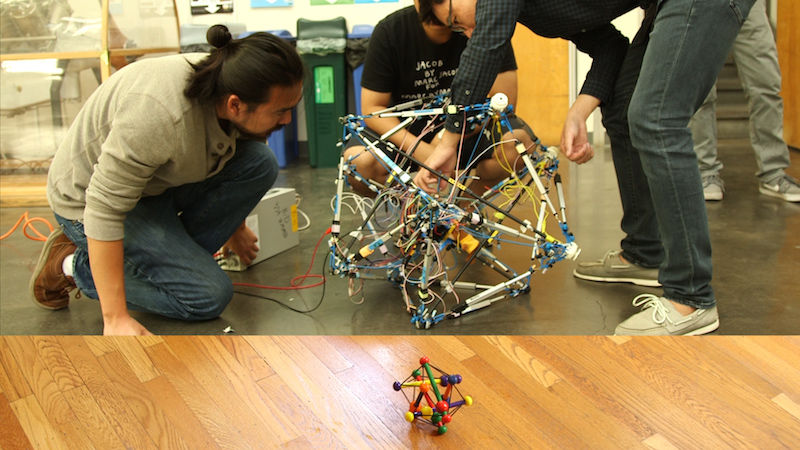
"content": "\u003cp>Alice Agogino is a mechanical engineering professor at the University of California at Berkeley, and she and \u003ca href=\"http://best.berkeley.edu/\">her lab\u003c/a> are among a group of engineers that are designing what might be the next generation of space exploring robots. These don’t look like the Mars rovers with the big wheels that you may be thinking of-- oh no, they are totally different-- and that’s the point. These robots actually look like a ball of rods and cables, and they are modelled after a baby toy, of all things.\u003c/p>\n\u003cfigure id=\"attachment_78452\" class=\"wp-caption alignleft\" style=\"max-width: 400px\">\u003ca href=\"http://ww2.kqed.org/quest/wp-content/uploads/sites/39/2015/10/Vytas_with_toy.jpg\">\u003cimg class=\"size-thumbnail wp-image-78452\" src=\"http://ww2.kqed.org/quest/wp-content/uploads/sites/39/2015/10/Vytas_with_toy-400x225.jpg\" alt=\"Vytas with bay toy\" width=\"400\" height=\"225\" srcset=\"https://ww2.kqed.org/app/uploads/sites/39/2015/10/Vytas_with_toy-400x225.jpg 400w, https://ww2.kqed.org/app/uploads/sites/39/2015/10/Vytas_with_toy-800x450.jpg 800w, https://ww2.kqed.org/app/uploads/sites/39/2015/10/Vytas_with_toy-1440x810.jpg 1440w, https://ww2.kqed.org/app/uploads/sites/39/2015/10/Vytas_with_toy-1180x664.jpg 1180w, https://ww2.kqed.org/app/uploads/sites/39/2015/10/Vytas_with_toy-960x540.jpg 960w\" sizes=\"(max-width: 400px) 100vw, 400px\">\u003c/a>\u003cfigcaption class=\"wp-caption-text\">Vytas SunSpiral with a tensegrity baby toy\u003c/figcaption>\u003c/figure>\n\u003cp>It all began when \u003ca href=\"http://www.magicalrobot.org/BeingHuman/\">Vytas SunSpiral\u003c/a>, a robotics researcher and his colleague Adrian Agogino (Alice Agogino’s son and also a robotics researcher) were brainstorming how to improve space robotics. They happened to be playing with a baby toy called a Skwish. The skwish is a type of structure known as a tensegrity structure. In tensegrity structures, rigid parts like wooden rods or steel beams aren’t directly connected to one another by nails or screws, but rather are held together by wires, cables, chains or some kind of band. As a baby toy they are fun to play with because you can squash them and throw them and they won’t break. They can \u003ca href=\"https://www.youtube.com/watch?v=LddumjHEmg8\">easily distribute and absorb forces\u003c/a> that result from impact. So after throwing this toy on the ground and observing its ability to remain intact, SunSpiral’s team realized this type of structure might be a good landing structure for a space robot.\u003c/p>\n\u003cp>Traditional space robots, like the Mars rovers are really difficult to land because you have a pretty delicate robot approaching a planet at really high speeds. As a result, engineers spend a lot of time and money making sure nothing breaks during landing. In fact, landing Curiosity, the current robot on Mars, has been nicknamed the\u003ca href=\"https://www.youtube.com/watch?v=Ki_Af_o9Q9s\"> 7 minutes of terror\u003c/a>. Traditional rovers are also somewhat limited in the places they can explore. For example, rock walls or cliff edges are too risky for them. If one were to fall down a steep slope then it could break rendering the rover useless. Sharp rocky surfaces can also tear or puncture the robot’s wheels making it difficult to move.\u003c/p>\n\u003cp>Robots based on tensegrity structures might be easier to land and cheaper to make. They could possibly even explore some of the more challenging surfaces.\u003c/p>\n\u003cfigure id=\"attachment_78455\" class=\"wp-caption alignleft\" style=\"max-width: 400px\">\u003ca href=\"http://ww2.kqed.org/quest/wp-content/uploads/sites/39/2015/10/v1.jpg\">\u003cimg class=\"size-thumbnail wp-image-78455\" src=\"http://ww2.kqed.org/quest/wp-content/uploads/sites/39/2015/10/v1-400x390.jpg\" alt=\"early prototype of tensegrity robot\" width=\"400\" height=\"390\" srcset=\"https://ww2.kqed.org/app/uploads/sites/39/2015/10/v1-400x390.jpg 400w, https://ww2.kqed.org/app/uploads/sites/39/2015/10/v1-800x780.jpg 800w, https://ww2.kqed.org/app/uploads/sites/39/2015/10/v1-960x937.jpg 960w, https://ww2.kqed.org/app/uploads/sites/39/2015/10/v1-32x32.jpg 32w, https://ww2.kqed.org/app/uploads/sites/39/2015/10/v1.jpg 1106w\" sizes=\"(max-width: 400px) 100vw, 400px\">\u003c/a>\u003cfigcaption class=\"wp-caption-text\">An early prototype of a tensegrity robot created by Alice Agogino's lab\u003c/figcaption>\u003c/figure>\n\u003cp>“So tensegrity rovers offer a lot of advantages over the traditional wheeled-structured rovers. They’re lighter weight, they’re more robust, they can handle lot of damage because the load is distributed among the tensile elements,” explains Alice Agogino.\u003c/p>\n\u003cp>[ad fullwidth]\u003c/p>\n\u003cp>SunSpiral and his colleagues have received a \u003ca href=\"https://www.youtube.com/watch?v=4Z_ablQGh-8\">NASA Innovative Advanced Concepts\u003c/a> award to see if they can get these structures to move and perform the tasks that are needed for space exploration. He is now a principal investigator of the Dynamic Tensegrity Robotics Lab at NASA Ames Research Center, and several collaborators, like Agogino’s lab at Berkeley have joined the research.\u003c/p>\n\u003cp>“How science really happens is that you get teams together, you build collaborations, you build networks of colleagues who are thinking about similar parts of the problem but may be taking slightly different approaches to it… and you work with each other and you share ideas,” adds SunSpiral.\u003c/p>\n\u003cp>There’s a lot involved in designing one of these robots. In general, computers control motors that cause the cables to stretch or compress. This causes the structure to shift its shape, altering the center of gravity and creating a rolling motion. The eventual idea is that these robots could carry instruments, like cameras and sensors. Several robots could be compactly packed into a space craft and dropped on a planet where they could roll around taking images and gathering data.\u003c/p>\n\u003cfigure id=\"attachment_78456\" class=\"wp-caption alignleft\" style=\"max-width: 400px\">\u003ca href=\"http://ww2.kqed.org/quest/wp-content/uploads/sites/39/2015/10/v2.jpg\">\u003cimg class=\"size-thumbnail wp-image-78456\" src=\"http://ww2.kqed.org/quest/wp-content/uploads/sites/39/2015/10/v2-400x225.jpg\" alt=\"Another p\" width=\"400\" height=\"225\" srcset=\"https://ww2.kqed.org/app/uploads/sites/39/2015/10/v2-400x225.jpg 400w, https://ww2.kqed.org/app/uploads/sites/39/2015/10/v2-800x450.jpg 800w, https://ww2.kqed.org/app/uploads/sites/39/2015/10/v2-1440x810.jpg 1440w, https://ww2.kqed.org/app/uploads/sites/39/2015/10/v2-1180x664.jpg 1180w, https://ww2.kqed.org/app/uploads/sites/39/2015/10/v2-960x540.jpg 960w\" sizes=\"(max-width: 400px) 100vw, 400px\">\u003c/a>\u003cfigcaption class=\"wp-caption-text\">One of the tensegrity robot prototypes developed at Alice Agogino's lab. This one has a centralized computer and uses linear actuators to expand and compress the cables to get the robots to move.\u003c/figcaption>\u003c/figure>\n\u003cp>Agogino’s lab at Berkeley has created several rapid prototypes of the tensegrity structures. For each prototype they change parameters like the materials they are making the robots out of and the types and locations of the motors. For example, one version uses motors that stretches and compresses the cables by pulling or pushing on a straight line, while another version actually wraps the cable around a spool to shorten it.\u003c/p>\n\u003cfigure id=\"attachment_78458\" class=\"wp-caption alignleft\" style=\"max-width: 400px\">\u003ca href=\"http://ww2.kqed.org/quest/wp-content/uploads/sites/39/2015/10/clean_robot.jpg\">\u003cimg class=\"size-thumbnail wp-image-78458\" src=\"http://ww2.kqed.org/quest/wp-content/uploads/sites/39/2015/10/clean_robot-400x225.jpg\" alt=\"This is the most recent tensegrity robot prototype created by Alice Agogino's lab. The computers and motors that control movement are located in the pods.\" width=\"400\" height=\"225\" srcset=\"https://ww2.kqed.org/app/uploads/sites/39/2015/10/clean_robot-400x225.jpg 400w, https://ww2.kqed.org/app/uploads/sites/39/2015/10/clean_robot-800x450.jpg 800w, https://ww2.kqed.org/app/uploads/sites/39/2015/10/clean_robot-1440x810.jpg 1440w, https://ww2.kqed.org/app/uploads/sites/39/2015/10/clean_robot-1180x664.jpg 1180w, https://ww2.kqed.org/app/uploads/sites/39/2015/10/clean_robot-960x540.jpg 960w\" sizes=\"(max-width: 400px) 100vw, 400px\">\u003c/a>\u003cfigcaption class=\"wp-caption-text\">This is the most recent tensegrity robot prototype created by Alice Agogino's lab. The computers and motors that control movement are located in the pods.\u003c/figcaption>\u003c/figure>\n\u003cp>Once the prototypes are built they test for things like how fast they go, how much energy they need to move, how much weight they can carry, how far they can be dropped, and how they respond to different environments. In additional to building physical prototypes, the teams are also exploring how to best program the robots to move using \u003ca href=\"http://ti.arc.nasa.gov/tech/asr/intelligent-robotics/tensegrity/ntrt/\">NASA’s Tensegrity Robotics Toolkit (NTRT)\u003c/a>. They also use computer simulations to build computer models of these robots.\u003c/p>\n\u003cp>An actual space mission with these robots is still a long way off. But the researchers are looking at other uses for tensegrity robotics as well. For example, they are examining how tensegrity robots could be used in home healthcare. Her lab is also developing educational toys and robots to help teach students about tensegrity and robotics.\u003c/p>\n\u003cp>“We’re exploring just the wide range of motions that we can get out of tensegrities. Can they eventually climb up stairs for home health care – that's one thing that we’re really interested in. So we’re really interested exploring the limit of what you can do with this kind of structure,” explains Alice Agogino. Tensegrity robots could offer exciting new possibilities in the world of robotics.\u003c/p>\n\u003cp>[ad floatright]\u003c/p>\n\u003cp>\u003cstrong>Discussion Questions\u003c/strong>\u003cbr>\n1. What problems were the engineers trying to solve?\u003cbr>\n2. What constraints do you think they might be working with?\u003cbr>\n3. What types of things are they testing when the engineers test their prototypes?\u003cbr>\n4. What types of changes might the engineers make to their prototypes and designs?\u003cbr>\n5. How do you think the researchers are using prototypes and computer models to design the robots?\u003c/p>\n\n",
"disqusIdentifier": "78432 http://ww2.kqed.org/quest/?p=78432",
"disqusUrl": "https://ww2.kqed.org/quest/2015/10/01/engineering-is-exploring-space-with-shape-shifting-robots/",
"stats": {
"hasVideo": false,
"hasChartOrMap": false,
"hasAudio": false,
"hasPolis": false,
"wordCount": 1070,
"hasGoogleForm": false,
"hasGallery": false,
"hasHearkenModule": false,
"iframeSrcs": [],
"paragraphCount": 15
},
"modified": 1471475573,
"excerpt": "Could the next generation of space-exploring robots be modeled after a baby toy?",
"headData": {
"twImgId": "",
"twTitle": "",
"ogTitle": "",
"ogImgId": "",
"twDescription": "",
"description": "Could the next generation of space-exploring robots be modeled after a baby toy?",
"title": "Exploring Space with Shape-Shifting Robots | KQED",
"ogDescription": "",
"schema": {
"@context": "https://schema.org",
"@type": "Article",
"headline": "Exploring Space with Shape-Shifting Robots",
"datePublished": "2015-10-01T12:05:52-07:00",
"dateModified": "2016-08-17T16:12:53-07:00",
"image": "https://cdn.kqed.org/wp-content/uploads/2020/02/KQED-OG-Image@1x.png"
}
},
"guestAuthors": [],
"slug": "engineering-is-exploring-space-with-shape-shifting-robots",
"status": "publish",
"videoEmbed": "https://www.youtube.com/watch?v=YtHrcmZoXsc",
"source": "Engineering",
"path": "/quest/78432/engineering-is-exploring-space-with-shape-shifting-robots",
"audioTrackLength": null,
"parsedContent": [
{
"type": "contentString",
"content": "\u003cdiv class=\"post-body\">\u003cp>\u003cp>Alice Agogino is a mechanical engineering professor at the University of California at Berkeley, and she and \u003ca href=\"http://best.berkeley.edu/\">her lab\u003c/a> are among a group of engineers that are designing what might be the next generation of space exploring robots. These don’t look like the Mars rovers with the big wheels that you may be thinking of-- oh no, they are totally different-- and that’s the point. These robots actually look like a ball of rods and cables, and they are modelled after a baby toy, of all things.\u003c/p>\n\u003cfigure id=\"attachment_78452\" class=\"wp-caption alignleft\" style=\"max-width: 400px\">\u003ca href=\"http://ww2.kqed.org/quest/wp-content/uploads/sites/39/2015/10/Vytas_with_toy.jpg\">\u003cimg class=\"size-thumbnail wp-image-78452\" src=\"http://ww2.kqed.org/quest/wp-content/uploads/sites/39/2015/10/Vytas_with_toy-400x225.jpg\" alt=\"Vytas with bay toy\" width=\"400\" height=\"225\" srcset=\"https://ww2.kqed.org/app/uploads/sites/39/2015/10/Vytas_with_toy-400x225.jpg 400w, https://ww2.kqed.org/app/uploads/sites/39/2015/10/Vytas_with_toy-800x450.jpg 800w, https://ww2.kqed.org/app/uploads/sites/39/2015/10/Vytas_with_toy-1440x810.jpg 1440w, https://ww2.kqed.org/app/uploads/sites/39/2015/10/Vytas_with_toy-1180x664.jpg 1180w, https://ww2.kqed.org/app/uploads/sites/39/2015/10/Vytas_with_toy-960x540.jpg 960w\" sizes=\"(max-width: 400px) 100vw, 400px\">\u003c/a>\u003cfigcaption class=\"wp-caption-text\">Vytas SunSpiral with a tensegrity baby toy\u003c/figcaption>\u003c/figure>\n\u003cp>It all began when \u003ca href=\"http://www.magicalrobot.org/BeingHuman/\">Vytas SunSpiral\u003c/a>, a robotics researcher and his colleague Adrian Agogino (Alice Agogino’s son and also a robotics researcher) were brainstorming how to improve space robotics. They happened to be playing with a baby toy called a Skwish. The skwish is a type of structure known as a tensegrity structure. In tensegrity structures, rigid parts like wooden rods or steel beams aren’t directly connected to one another by nails or screws, but rather are held together by wires, cables, chains or some kind of band. As a baby toy they are fun to play with because you can squash them and throw them and they won’t break. They can \u003ca href=\"https://www.youtube.com/watch?v=LddumjHEmg8\">easily distribute and absorb forces\u003c/a> that result from impact. So after throwing this toy on the ground and observing its ability to remain intact, SunSpiral’s team realized this type of structure might be a good landing structure for a space robot.\u003c/p>\n\u003cp>Traditional space robots, like the Mars rovers are really difficult to land because you have a pretty delicate robot approaching a planet at really high speeds. As a result, engineers spend a lot of time and money making sure nothing breaks during landing. In fact, landing Curiosity, the current robot on Mars, has been nicknamed the\u003ca href=\"https://www.youtube.com/watch?v=Ki_Af_o9Q9s\"> 7 minutes of terror\u003c/a>. Traditional rovers are also somewhat limited in the places they can explore. For example, rock walls or cliff edges are too risky for them. If one were to fall down a steep slope then it could break rendering the rover useless. Sharp rocky surfaces can also tear or puncture the robot’s wheels making it difficult to move.\u003c/p>\n\u003cp>Robots based on tensegrity structures might be easier to land and cheaper to make. They could possibly even explore some of the more challenging surfaces.\u003c/p>\n\u003cfigure id=\"attachment_78455\" class=\"wp-caption alignleft\" style=\"max-width: 400px\">\u003ca href=\"http://ww2.kqed.org/quest/wp-content/uploads/sites/39/2015/10/v1.jpg\">\u003cimg class=\"size-thumbnail wp-image-78455\" src=\"http://ww2.kqed.org/quest/wp-content/uploads/sites/39/2015/10/v1-400x390.jpg\" alt=\"early prototype of tensegrity robot\" width=\"400\" height=\"390\" srcset=\"https://ww2.kqed.org/app/uploads/sites/39/2015/10/v1-400x390.jpg 400w, https://ww2.kqed.org/app/uploads/sites/39/2015/10/v1-800x780.jpg 800w, https://ww2.kqed.org/app/uploads/sites/39/2015/10/v1-960x937.jpg 960w, https://ww2.kqed.org/app/uploads/sites/39/2015/10/v1-32x32.jpg 32w, https://ww2.kqed.org/app/uploads/sites/39/2015/10/v1.jpg 1106w\" sizes=\"(max-width: 400px) 100vw, 400px\">\u003c/a>\u003cfigcaption class=\"wp-caption-text\">An early prototype of a tensegrity robot created by Alice Agogino's lab\u003c/figcaption>\u003c/figure>\n\u003cp>“So tensegrity rovers offer a lot of advantages over the traditional wheeled-structured rovers. They’re lighter weight, they’re more robust, they can handle lot of damage because the load is distributed among the tensile elements,” explains Alice Agogino.\u003c/p>\n\u003cp>\u003c/p>\u003c/div>",
"attributes": {
"named": {},
"numeric": []
}
},
{
"type": "component",
"content": "",
"name": "ad",
"attributes": {
"named": {
"label": "fullwidth"
},
"numeric": [
"fullwidth"
]
}
},
{
"type": "contentString",
"content": "\u003cdiv class=\"post-body\">\u003cp>\u003c/p>\n\u003cp>SunSpiral and his colleagues have received a \u003ca href=\"https://www.youtube.com/watch?v=4Z_ablQGh-8\">NASA Innovative Advanced Concepts\u003c/a> award to see if they can get these structures to move and perform the tasks that are needed for space exploration. He is now a principal investigator of the Dynamic Tensegrity Robotics Lab at NASA Ames Research Center, and several collaborators, like Agogino’s lab at Berkeley have joined the research.\u003c/p>\n\u003cp>“How science really happens is that you get teams together, you build collaborations, you build networks of colleagues who are thinking about similar parts of the problem but may be taking slightly different approaches to it… and you work with each other and you share ideas,” adds SunSpiral.\u003c/p>\n\u003cp>There’s a lot involved in designing one of these robots. In general, computers control motors that cause the cables to stretch or compress. This causes the structure to shift its shape, altering the center of gravity and creating a rolling motion. The eventual idea is that these robots could carry instruments, like cameras and sensors. Several robots could be compactly packed into a space craft and dropped on a planet where they could roll around taking images and gathering data.\u003c/p>\n\u003cfigure id=\"attachment_78456\" class=\"wp-caption alignleft\" style=\"max-width: 400px\">\u003ca href=\"http://ww2.kqed.org/quest/wp-content/uploads/sites/39/2015/10/v2.jpg\">\u003cimg class=\"size-thumbnail wp-image-78456\" src=\"http://ww2.kqed.org/quest/wp-content/uploads/sites/39/2015/10/v2-400x225.jpg\" alt=\"Another p\" width=\"400\" height=\"225\" srcset=\"https://ww2.kqed.org/app/uploads/sites/39/2015/10/v2-400x225.jpg 400w, https://ww2.kqed.org/app/uploads/sites/39/2015/10/v2-800x450.jpg 800w, https://ww2.kqed.org/app/uploads/sites/39/2015/10/v2-1440x810.jpg 1440w, https://ww2.kqed.org/app/uploads/sites/39/2015/10/v2-1180x664.jpg 1180w, https://ww2.kqed.org/app/uploads/sites/39/2015/10/v2-960x540.jpg 960w\" sizes=\"(max-width: 400px) 100vw, 400px\">\u003c/a>\u003cfigcaption class=\"wp-caption-text\">One of the tensegrity robot prototypes developed at Alice Agogino's lab. This one has a centralized computer and uses linear actuators to expand and compress the cables to get the robots to move.\u003c/figcaption>\u003c/figure>\n\u003cp>Agogino’s lab at Berkeley has created several rapid prototypes of the tensegrity structures. For each prototype they change parameters like the materials they are making the robots out of and the types and locations of the motors. For example, one version uses motors that stretches and compresses the cables by pulling or pushing on a straight line, while another version actually wraps the cable around a spool to shorten it.\u003c/p>\n\u003cfigure id=\"attachment_78458\" class=\"wp-caption alignleft\" style=\"max-width: 400px\">\u003ca href=\"http://ww2.kqed.org/quest/wp-content/uploads/sites/39/2015/10/clean_robot.jpg\">\u003cimg class=\"size-thumbnail wp-image-78458\" src=\"http://ww2.kqed.org/quest/wp-content/uploads/sites/39/2015/10/clean_robot-400x225.jpg\" alt=\"This is the most recent tensegrity robot prototype created by Alice Agogino's lab. The computers and motors that control movement are located in the pods.\" width=\"400\" height=\"225\" srcset=\"https://ww2.kqed.org/app/uploads/sites/39/2015/10/clean_robot-400x225.jpg 400w, https://ww2.kqed.org/app/uploads/sites/39/2015/10/clean_robot-800x450.jpg 800w, https://ww2.kqed.org/app/uploads/sites/39/2015/10/clean_robot-1440x810.jpg 1440w, https://ww2.kqed.org/app/uploads/sites/39/2015/10/clean_robot-1180x664.jpg 1180w, https://ww2.kqed.org/app/uploads/sites/39/2015/10/clean_robot-960x540.jpg 960w\" sizes=\"(max-width: 400px) 100vw, 400px\">\u003c/a>\u003cfigcaption class=\"wp-caption-text\">This is the most recent tensegrity robot prototype created by Alice Agogino's lab. The computers and motors that control movement are located in the pods.\u003c/figcaption>\u003c/figure>\n\u003cp>Once the prototypes are built they test for things like how fast they go, how much energy they need to move, how much weight they can carry, how far they can be dropped, and how they respond to different environments. In additional to building physical prototypes, the teams are also exploring how to best program the robots to move using \u003ca href=\"http://ti.arc.nasa.gov/tech/asr/intelligent-robotics/tensegrity/ntrt/\">NASA’s Tensegrity Robotics Toolkit (NTRT)\u003c/a>. They also use computer simulations to build computer models of these robots.\u003c/p>\n\u003cp>An actual space mission with these robots is still a long way off. But the researchers are looking at other uses for tensegrity robotics as well. For example, they are examining how tensegrity robots could be used in home healthcare. Her lab is also developing educational toys and robots to help teach students about tensegrity and robotics.\u003c/p>\n\u003cp>“We’re exploring just the wide range of motions that we can get out of tensegrities. Can they eventually climb up stairs for home health care – that's one thing that we’re really interested in. So we’re really interested exploring the limit of what you can do with this kind of structure,” explains Alice Agogino. Tensegrity robots could offer exciting new possibilities in the world of robotics.\u003c/p>\n\u003cp>\u003c/p>\u003c/div>",
"attributes": {
"named": {},
"numeric": []
}
},
{
"type": "component",
"content": "",
"name": "ad",
"attributes": {
"named": {
"label": "floatright"
},
"numeric": [
"floatright"
]
}
},
{
"type": "contentString",
"content": "\u003cdiv class=\"post-body\">\u003cp>\u003c/p>\n\u003cp>\u003cstrong>Discussion Questions\u003c/strong>\u003cbr>\n1. What problems were the engineers trying to solve?\u003cbr>\n2. What constraints do you think they might be working with?\u003cbr>\n3. What types of things are they testing when the engineers test their prototypes?\u003cbr>\n4. What types of changes might the engineers make to their prototypes and designs?\u003cbr>\n5. How do you think the researchers are using prototypes and computer models to design the robots?\u003c/p>\n\n\u003c/div>\u003c/p>",
"attributes": {
"named": {},
"numeric": []
}
}
],
"link": "/quest/78432/engineering-is-exploring-space-with-shape-shifting-robots",
"authors": [
"6544"
],
"categories": [
"quest_8",
"quest_16"
],
"tags": [
"quest_13383",
"quest_13152",
"quest_1919",
"quest_2443",
"quest_2739",
"quest_12220",
"quest_11296",
"quest_12094",
"quest_3071",
"quest_13384"
],
"collections": [
"quest_13394"
],
"featImg": "quest_78451",
"label": "source_quest_78432"
},
"quest_78021": {
"type": "posts",
"id": "quest_78021",
"meta": {
"index": "posts_1716263798",
"site": "quest",
"id": "78021",
"score": null,
"sort": [
1443469592000
]
},
"parent": 0,
"labelTerm": {
"site": "quest",
"term": 13374
},
"blocks": [],
"publishDate": 1443469592,
"format": "video",
"disqusTitle": "Career Spotlight: Robotics Engineer",
"title": "Career Spotlight: Robotics Engineer",
"headTitle": "Career Spotlight | QUEST | KQED Science",
"content": "\u003cp>In seventh grade, after reading a newspaper article about female engineers at NASA, Maria Bualat knew that was what she wanted to be when she grew up. Fast forward to today. Maria is now a robotics engineer \u003ca href=\"http://ti.arc.nasa.gov/tech/asr/intelligent-robotics/\"> NASA Ames Research Center\u003c/a>; in Mountain View, CA where she develops robotics systems for space exploration. Her main project at the moment is Astrobee -- a free-flying robot for the International Space Station. It will be able to do inspections and also monitor air quality.\u003c/p>\n\u003cp>As the deputy group lead for the Intelligent Robotics Group at NASA Ames, she does high level thinking, project management and systems engineering. This means she sets the goals and direction of the project and coordinates with different teams and engineers to make sure the project is successful.\u003c/p>\n\u003cp>Maria earned a bachelor’s degree in electrical engineering and was hired at NASA right out of school. She continued her education and earned a master’s degree in electrical engineering with an emphasis in controls while simultaneously working at NASA. For students interested in a career in science or engineering, she recommends cultivating good communication and writing skills.\u003c/p>\n\u003cp>[ad fullwidth]\u003c/p>\u003cp>\u003c/p>\n",
"disqusIdentifier": "78021 http://ww2.kqed.org/quest/?p=78021",
"disqusUrl": "https://ww2.kqed.org/quest/2015/09/28/career-spotlight-robotics-engineer/",
"stats": {
"hasVideo": false,
"hasChartOrMap": false,
"hasAudio": false,
"hasPolis": false,
"wordCount": 194,
"hasGoogleForm": false,
"hasGallery": false,
"hasHearkenModule": false,
"iframeSrcs": [],
"paragraphCount": 5
},
"modified": 1451520546,
"excerpt": "Meet Maria Bualat a robotics engineer at NASA Ames Research Center.",
"headData": {
"twImgId": "",
"twTitle": "",
"ogTitle": "",
"ogImgId": "",
"twDescription": "",
"description": "Meet Maria Bualat a robotics engineer at NASA Ames Research Center.",
"title": "Career Spotlight: Robotics Engineer | KQED",
"ogDescription": "",
"schema": {
"@context": "https://schema.org",
"@type": "Article",
"headline": "Career Spotlight: Robotics Engineer",
"datePublished": "2015-09-28T12:46:32-07:00",
"dateModified": "2015-12-30T16:09:06-08:00",
"image": "https://cdn.kqed.org/wp-content/uploads/2020/02/KQED-OG-Image@1x.png"
}
},
"guestAuthors": [],
"slug": "career-spotlight-robotics-engineer",
"status": "publish",
"videoEmbed": "https://www.youtube.com/watch?v=sUOY3JZ-9C4",
"path": "/quest/78021/career-spotlight-robotics-engineer",
"audioTrackLength": null,
"parsedContent": [
{
"type": "contentString",
"content": "\u003cdiv class=\"post-body\">\u003cp>\u003cp>In seventh grade, after reading a newspaper article about female engineers at NASA, Maria Bualat knew that was what she wanted to be when she grew up. Fast forward to today. Maria is now a robotics engineer \u003ca href=\"http://ti.arc.nasa.gov/tech/asr/intelligent-robotics/\"> NASA Ames Research Center\u003c/a>; in Mountain View, CA where she develops robotics systems for space exploration. Her main project at the moment is Astrobee -- a free-flying robot for the International Space Station. It will be able to do inspections and also monitor air quality.\u003c/p>\n\u003cp>As the deputy group lead for the Intelligent Robotics Group at NASA Ames, she does high level thinking, project management and systems engineering. This means she sets the goals and direction of the project and coordinates with different teams and engineers to make sure the project is successful.\u003c/p>\n\u003cp>Maria earned a bachelor’s degree in electrical engineering and was hired at NASA right out of school. She continued her education and earned a master’s degree in electrical engineering with an emphasis in controls while simultaneously working at NASA. For students interested in a career in science or engineering, she recommends cultivating good communication and writing skills.\u003c/p>\n\u003cp>\u003c/p>\u003c/div>",
"attributes": {
"named": {},
"numeric": []
}
},
{
"type": "component",
"content": "",
"name": "ad",
"attributes": {
"named": {
"label": "fullwidth"
},
"numeric": [
"fullwidth"
]
}
},
{
"type": "contentString",
"content": "\u003cdiv class=\"post-body\">\u003cp>\u003c/p>\u003cp>\u003c/p>\n\u003c/div>\u003c/p>",
"attributes": {
"named": {},
"numeric": []
}
}
],
"link": "/quest/78021/career-spotlight-robotics-engineer",
"authors": [
"6544"
],
"series": [
"quest_13374"
],
"categories": [
"quest_8"
],
"tags": [
"quest_13130",
"quest_13128",
"quest_13378",
"quest_3351",
"quest_13379",
"quest_1918",
"quest_2349",
"quest_2443",
"quest_13380",
"quest_13381",
"quest_3071"
],
"collections": [
"quest_13394"
],
"featImg": "quest_78048",
"label": "quest_13374"
},
"quest_78003": {
"type": "posts",
"id": "quest_78003",
"meta": {
"index": "posts_1716263798",
"site": "quest",
"id": "78003",
"score": null,
"sort": [
1442596684000
]
},
"parent": 0,
"labelTerm": {
"site": "quest",
"term": 13374
},
"blocks": [],
"publishDate": 1442596684,
"format": "video",
"disqusTitle": "Career Spotlight: Industrial Engineer",
"title": "Career Spotlight: Industrial Engineer",
"headTitle": "Career Spotlight | QUEST | KQED Science",
"content": "\u003cp>Monica Barin works for a tech startup company, helping people buy solar panels to put on their homes. She’s an industrial engineer, which means it’s her job to manage, organize and optimize all the complex financial information required to connect solar panel sellers with solar panel buyers. Her job combines her talent for math and problem solving with her passion for renewable energy.\u003c/p>\n\u003cp>In college, Monica was originally an electrical engineering and computer science major. During her sophomore year, a computer science course turned out to be really difficult and stressful.\u003c/p>\n\u003cp>\"I ended up skipping midterms and finals,\" she says. \"The class made me so unhappy because it just wasn’t right for me.\"\u003c/p>\n\u003cp>Monica was put on academic probation. Being a top student her whole life, failing at school was one of her biggest fears. Monica ended up switching to industrial engineering. The course work was more in line with her strengths and reignited her curiosity.\u003c/p>\n\u003cp>\"I was excited to learn what they were teaching and studied hard — and attended my midterms and finals!\" Monica says.\u003c/p>\n\u003cp>[ad fullwidth]\u003c/p>\n\u003cp>\u003c/p>\n\u003cp>The summer before her senior year, Monica interned at a small solar installation company, where she learned more about the technology and solidified her desire to work in the field of renewable energy. After graduating from UC Berkeley in 2012, Monica got an entry-level position at her current company in customer support. After a year, she was promoted to her current position as a manager on the product team, where she continues to use her industrial engineering skill set.\u003c/p>\n\n",
"disqusIdentifier": "78003 http://ww2.kqed.org/quest/?p=78003",
"disqusUrl": "https://ww2.kqed.org/quest/2015/09/18/career-spotlight-industrial-engineer/",
"stats": {
"hasVideo": false,
"hasChartOrMap": false,
"hasAudio": false,
"hasPolis": false,
"wordCount": 265,
"hasGoogleForm": false,
"hasGallery": false,
"hasHearkenModule": false,
"iframeSrcs": [],
"paragraphCount": 8
},
"modified": 1443644848,
"excerpt": null,
"headData": {
"twImgId": "",
"twTitle": "",
"ogTitle": "",
"ogImgId": "",
"twDescription": "",
"description": "Monica Barin works for a tech startup company, helping people buy solar panels to put on their homes. She’s an industrial engineer, which means it’s her job to manage, organize and optimize all the complex financial information required to connect solar panel sellers with solar panel buyers. Her job combines her talent for math and",
"title": "Career Spotlight: Industrial Engineer | KQED",
"ogDescription": "",
"schema": {
"@context": "https://schema.org",
"@type": "Article",
"headline": "Career Spotlight: Industrial Engineer",
"datePublished": "2015-09-18T10:18:04-07:00",
"dateModified": "2015-09-30T13:27:28-07:00",
"image": "https://cdn.kqed.org/wp-content/uploads/2020/02/KQED-OG-Image@1x.png"
}
},
"guestAuthors": [],
"slug": "career-spotlight-industrial-engineer",
"status": "publish",
"videoEmbed": "https://youtu.be/duq9GeOank0",
"path": "/quest/78003/career-spotlight-industrial-engineer",
"audioTrackLength": null,
"parsedContent": [
{
"type": "contentString",
"content": "\u003cdiv class=\"post-body\">\u003cp>\u003cp>Monica Barin works for a tech startup company, helping people buy solar panels to put on their homes. She’s an industrial engineer, which means it’s her job to manage, organize and optimize all the complex financial information required to connect solar panel sellers with solar panel buyers. Her job combines her talent for math and problem solving with her passion for renewable energy.\u003c/p>\n\u003cp>In college, Monica was originally an electrical engineering and computer science major. During her sophomore year, a computer science course turned out to be really difficult and stressful.\u003c/p>\n\u003cp>\"I ended up skipping midterms and finals,\" she says. \"The class made me so unhappy because it just wasn’t right for me.\"\u003c/p>\n\u003cp>Monica was put on academic probation. Being a top student her whole life, failing at school was one of her biggest fears. Monica ended up switching to industrial engineering. The course work was more in line with her strengths and reignited her curiosity.\u003c/p>\n\u003cp>\"I was excited to learn what they were teaching and studied hard — and attended my midterms and finals!\" Monica says.\u003c/p>\n\u003cp>\u003c/p>\u003c/div>",
"attributes": {
"named": {},
"numeric": []
}
},
{
"type": "component",
"content": "",
"name": "ad",
"attributes": {
"named": {
"label": "fullwidth"
},
"numeric": [
"fullwidth"
]
}
},
{
"type": "contentString",
"content": "\u003cdiv class=\"post-body\">\u003cp>\u003c/p>\n\u003cp>\u003c/p>\n\u003cp>The summer before her senior year, Monica interned at a small solar installation company, where she learned more about the technology and solidified her desire to work in the field of renewable energy. After graduating from UC Berkeley in 2012, Monica got an entry-level position at her current company in customer support. After a year, she was promoted to her current position as a manager on the product team, where she continues to use her industrial engineering skill set.\u003c/p>\n\n\u003c/div>\u003c/p>",
"attributes": {
"named": {},
"numeric": []
}
}
],
"link": "/quest/78003/career-spotlight-industrial-engineer",
"authors": [
"10621"
],
"series": [
"quest_13374"
],
"categories": [
"quest_8"
],
"tags": [
"quest_13128",
"quest_13375",
"quest_12269",
"quest_13376",
"quest_2409",
"quest_2693",
"quest_3021",
"quest_3071"
],
"featImg": "quest_78049",
"label": "quest_13374"
},
"quest_74286": {
"type": "posts",
"id": "quest_74286",
"meta": {
"index": "posts_1716263798",
"site": "quest",
"id": "74286",
"score": null,
"sort": [
1438906059000
]
},
"parent": 0,
"labelTerm": {},
"blocks": [],
"publishDate": 1438906059,
"format": "video",
"disqusTitle": "Science Spotlight: The Good, the Bad and the Ugly of Poop",
"title": "Science Spotlight: The Good, the Bad and the Ugly of Poop",
"headTitle": "QUEST | KQED Science",
"content": "\u003cp>Thanks to \u003ca href=\"https://en.wikipedia.org/wiki/Everyone_Poops\">Taro Gomi\u003c/a>, we all know that everybody poops. Poop contains a lot of interesting stuff including tons of microbes, like bacteria. Depending on our own health, our poop can harbor both helpful and harmful microbes. And as a result, poop can spread disease.\u003c/p>\n\u003cp>So where do microbes in poop come from? Poop is a waste product formed in our intestines during digestion. Lots of different species of bacteria and other microscopic organisms like fungi and yeast live in our gut and they help our bodies break down food, make vitamins (like vitamin B and K), and fend off harmful bacteria. Some of these microbes living in our gut actually get passed in our poop.\u003c/p>\n\u003cp>If we’re sick, our poop can also contain bacteria, viruses, and parasites that cause illnesses. In fact there are a lot of diseases that are spread in poop. For example, in the United States every now and then you may hear of E.coli outbreaks. E.coli is a type of bacteria that has lots of different varieties. Most are harmless and live in the gut of healthy people and animals and are passed in our poop. However, there are a couple of types of E.coli that can make people sick and cause diarrhea and vomiting if you ingest them. In the U.S. people sometimes get E.coli by eating undercooked beef that’s been contaminated by E.coli from the gut of cows, or from raw fruits or veggies contaminated by cattle poop from runoff from cattle fields. If you get E.coli you could pass it to another person if you don’t properly wash your hands after going to the bathroom.\u003c/p>\n\u003cp>You can also get sick if poop contaminates drinking water. In the U.S. and other developed countries this doesn’t happen often because we have sewage treatment plants and water treatment processes set up to make sure our drinking water is clean and free of harmful microbes. However, many places throughout the world, particularly developing countries, don’t have sewage and water treatment so it’s really easy for bacteria and other microbes from poop to contaminate drinking water. Some common diseases spread this way include \u003ca href=\"http://www.who.int/mediacentre/factsheets/fs107/en/\">cholera\u003c/a>, \u003ca href=\"http://www.who.int/topics/typhoid_fever/en/\">typhoid fever\u003c/a>, \u003ca href=\"http://www.mayoclinic.org/diseases-conditions/giardia-infection/basics/definition/con-20024686\">giardiasis\u003c/a>, and \u003ca href=\"http://www.who.int/topics/rotavirus_infections/en/\">rotavirus\u003c/a>.\u003c/p>\n\u003cp>But poop isn’t all bad. In fact, doctors are starting to use healthy poop to treat some types of intestinal diseases, such as a condition known as \u003ca href=\"http://www.webmd.com/digestive-disorders/tc/clostridium-difficile-colitis-overview\"> C.diff colitis\u003c/a>. Check out this \u003ca href=\"https://www.youtube.com/watch?v=kNU6hOwiGcs\"> Gross Science video \u003c/a> by our friends at NOVA that explains all about this.\u003c/p>\n\u003cp>[ad fullwidth]\u003c/p>\n\u003cp>\u003c/p>\n\u003cp>This Science Spotlight video is part of our \u003ca href=\"http://water.woop.ie/\" target=\"_blank\">Engineering Is: Cleaning Poop from Drinking Water\u003c/a> e-book. The e-book explores the science and engineering principles behind a device designed by scientists and engineers at Stanford University that purifies drinking water in Dhaka, Bangladesh. The e-book includes videos, interactives and media making opportunities. You can find all of our e-books at \u003ca href=\"http://blogs.kqed.org/education/e-books/\">kqed.org/ebooks\u003c/a>.\u003c/p>\n\n",
"disqusIdentifier": "74286 http://science.kqed.org/quest/?p=74286",
"disqusUrl": "https://ww2.kqed.org/quest/2015/08/06/science-spotlight-the-good-the-bad-and-the-ugly-of-poop/",
"stats": {
"hasVideo": false,
"hasChartOrMap": false,
"hasAudio": false,
"hasPolis": false,
"wordCount": 502,
"hasGoogleForm": false,
"hasGallery": false,
"hasHearkenModule": false,
"iframeSrcs": [],
"paragraphCount": 8
},
"modified": 1444415984,
"excerpt": "Poop contains a lot of interesting stuff, including all kinds of microbes. Learn what these microbes do and how they can spread disease.",
"headData": {
"twImgId": "",
"twTitle": "",
"ogTitle": "",
"ogImgId": "",
"twDescription": "",
"description": "Poop contains a lot of interesting stuff, including all kinds of microbes. Learn what these microbes do and how they can spread disease.",
"title": "Science Spotlight: The Good, the Bad and the Ugly of Poop | KQED",
"ogDescription": "",
"schema": {
"@context": "https://schema.org",
"@type": "Article",
"headline": "Science Spotlight: The Good, the Bad and the Ugly of Poop",
"datePublished": "2015-08-06T17:07:39-07:00",
"dateModified": "2015-10-09T11:39:44-07:00",
"image": "https://cdn.kqed.org/wp-content/uploads/2020/02/KQED-OG-Image@1x.png"
}
},
"guestAuthors": [],
"slug": "science-spotlight-the-good-the-bad-and-the-ugly-of-poop",
"status": "publish",
"sourceUrl": "https://ww2.kqed.org/quest/category/health/",
"videoEmbed": "http://www.youtube.com/watch?v=ZPDd1IXL0pg",
"source": "Health",
"path": "/quest/74286/science-spotlight-the-good-the-bad-and-the-ugly-of-poop",
"audioTrackLength": null,
"parsedContent": [
{
"type": "contentString",
"content": "\u003cdiv class=\"post-body\">\u003cp>\u003cp>Thanks to \u003ca href=\"https://en.wikipedia.org/wiki/Everyone_Poops\">Taro Gomi\u003c/a>, we all know that everybody poops. Poop contains a lot of interesting stuff including tons of microbes, like bacteria. Depending on our own health, our poop can harbor both helpful and harmful microbes. And as a result, poop can spread disease.\u003c/p>\n\u003cp>So where do microbes in poop come from? Poop is a waste product formed in our intestines during digestion. Lots of different species of bacteria and other microscopic organisms like fungi and yeast live in our gut and they help our bodies break down food, make vitamins (like vitamin B and K), and fend off harmful bacteria. Some of these microbes living in our gut actually get passed in our poop.\u003c/p>\n\u003cp>If we’re sick, our poop can also contain bacteria, viruses, and parasites that cause illnesses. In fact there are a lot of diseases that are spread in poop. For example, in the United States every now and then you may hear of E.coli outbreaks. E.coli is a type of bacteria that has lots of different varieties. Most are harmless and live in the gut of healthy people and animals and are passed in our poop. However, there are a couple of types of E.coli that can make people sick and cause diarrhea and vomiting if you ingest them. In the U.S. people sometimes get E.coli by eating undercooked beef that’s been contaminated by E.coli from the gut of cows, or from raw fruits or veggies contaminated by cattle poop from runoff from cattle fields. If you get E.coli you could pass it to another person if you don’t properly wash your hands after going to the bathroom.\u003c/p>\n\u003cp>You can also get sick if poop contaminates drinking water. In the U.S. and other developed countries this doesn’t happen often because we have sewage treatment plants and water treatment processes set up to make sure our drinking water is clean and free of harmful microbes. However, many places throughout the world, particularly developing countries, don’t have sewage and water treatment so it’s really easy for bacteria and other microbes from poop to contaminate drinking water. Some common diseases spread this way include \u003ca href=\"http://www.who.int/mediacentre/factsheets/fs107/en/\">cholera\u003c/a>, \u003ca href=\"http://www.who.int/topics/typhoid_fever/en/\">typhoid fever\u003c/a>, \u003ca href=\"http://www.mayoclinic.org/diseases-conditions/giardia-infection/basics/definition/con-20024686\">giardiasis\u003c/a>, and \u003ca href=\"http://www.who.int/topics/rotavirus_infections/en/\">rotavirus\u003c/a>.\u003c/p>\n\u003cp>But poop isn’t all bad. In fact, doctors are starting to use healthy poop to treat some types of intestinal diseases, such as a condition known as \u003ca href=\"http://www.webmd.com/digestive-disorders/tc/clostridium-difficile-colitis-overview\"> C.diff colitis\u003c/a>. Check out this \u003ca href=\"https://www.youtube.com/watch?v=kNU6hOwiGcs\"> Gross Science video \u003c/a> by our friends at NOVA that explains all about this.\u003c/p>\n\u003cp>\u003c/p>\u003c/div>",
"attributes": {
"named": {},
"numeric": []
}
},
{
"type": "component",
"content": "",
"name": "ad",
"attributes": {
"named": {
"label": "fullwidth"
},
"numeric": [
"fullwidth"
]
}
},
{
"type": "contentString",
"content": "\u003cdiv class=\"post-body\">\u003cp>\u003c/p>\n\u003cp>\u003c/p>\n\u003cp>This Science Spotlight video is part of our \u003ca href=\"http://water.woop.ie/\" target=\"_blank\">Engineering Is: Cleaning Poop from Drinking Water\u003c/a> e-book. The e-book explores the science and engineering principles behind a device designed by scientists and engineers at Stanford University that purifies drinking water in Dhaka, Bangladesh. The e-book includes videos, interactives and media making opportunities. You can find all of our e-books at \u003ca href=\"http://blogs.kqed.org/education/e-books/\">kqed.org/ebooks\u003c/a>.\u003c/p>\n\n\u003c/div>\u003c/p>",
"attributes": {
"named": {},
"numeric": []
}
}
],
"link": "/quest/74286/science-spotlight-the-good-the-bad-and-the-ugly-of-poop",
"authors": [
"6544"
],
"categories": [
"quest_4",
"quest_12"
],
"tags": [
"quest_13187",
"quest_267",
"quest_13184",
"quest_12946",
"quest_898",
"quest_13181",
"quest_13185",
"quest_13182",
"quest_3351",
"quest_1812",
"quest_2261",
"quest_13183",
"quest_2349",
"quest_3071"
],
"collections": [
"quest_13362"
],
"featImg": "quest_74296",
"label": "source_quest_74286"
},
"quest_74258": {
"type": "posts",
"id": "quest_74258",
"meta": {
"index": "posts_1716263798",
"site": "quest",
"id": "74258",
"score": null,
"sort": [
1438303358000
]
},
"parent": 0,
"labelTerm": {},
"blocks": [],
"publishDate": 1438303358,
"format": "video",
"disqusTitle": "Cleaning Poop from Drinking Water",
"title": "Cleaning Poop from Drinking Water",
"headTitle": "QUEST | KQED Science",
"content": "\u003cp>Bangladesh -- a country just east of India on the Bay of Bengal -- is known for its lush, tropical environment and extensive river system. It’s capital, Dhaka, is the tenth largest city in the world and travel by boat and Rickshaw is a common way to get around town. While the waterways are an inviting lure to this populated city, water is also the source of many diseases, particularly in Dhaka’s crowded slums. Here, sewage can seep into low-pressure, old, leaky pipes that transport the town’s drinking water, exposing residents to harmful bacteria and viruses.\u003c/p>\n\u003cp>Drinking contaminated water can lead to diarrheal disease and sometimes even death. In fact, according to the \u003ca href=\"http://www.who.int/mediacentre/factsheets/fs330/en/\"> World Health Organization\u003c/a>, diarrhea is the second leading killer of children under five years of age worldwide, and it is often caused by contaminated water.\u003c/p>\n\u003cp>Dr. Stephen Luby, a professor of medicine at Stanford University and senior fellow at Stanford Woods Institute for the Environment, wanted to change that.\u003c/p>\n\u003cp>At the time, Luby was working at the U.S. Centers for Disease Control and Prevention in Bangladesh, and he was all too familiar with the number of people who were getting sick and dying from preventable waterborne diseases. In the developed world, big expensive water treatment plants clean drinking water. However, poorer countries, like Bangladesh, don’t have the resources to implement these treatment plants. Instead, residents have to clean their drinking water themselves using expensive or fragile filters, chlorine tablets or boiling the water. These types of strategies often prove difficult and cumbersome for residents.\u003c/p>\n\u003cp>“What that model asks, is to say ‘Let’s have the poorest people in the world each set up a water treatment plant in their home.’ That’s actually a big undertaking. And these are the folks who are already trying to figure out ‘How am I going to get enough money to pay rent and to feed my family?’” explains Luby.\u003c/p>\n\u003cfigure id=\"attachment_74261\" class=\"wp-caption alignleft\" style=\"max-width: 214px\">\u003ca href=\"http://ww2.kqed.org/quest/wp-content/uploads/sites/39/2015/07/142277422.IiJWNDQF.e_amy_hp.jpg\">\u003cimg class=\"size-large wp-image-74261\" src=\"http://ww2.kqed.org/quest/wp-content/uploads/sites/39/2015/07/142277422.IiJWNDQF.e_amy_hp-214x360.jpg\" alt=\"Amy Pickering with a handpump\" width=\"214\" height=\"360\">\u003c/a>\u003cfigcaption class=\"wp-caption-text\">Amy Pickering, a research associate at the Woods Institute for the Environment at Stanford University, posing with a hand pump. Courtesy of Amy Pickering/ Stanford University\u003c/figcaption>\u003c/figure>\n\u003cp>Luby enlisted the help of Amy Pickering, a research associate at Stanford Woods Institute for the Environment and in the department of civil and environmental engineering at Stanford University. Along with Jenna Davis, a professor in the department of civil and environmental engineering at Stanford University and at the Stanford Woods Institute for the Environment, they were hoping to come up with a solution to clean contaminated water that was much cheaper than traditional centralized water treatment plants, but that didn’t require users to do any extra work. They call their effort the \u003ca href=\"http://www.lotuswater.org/\"> Lotus Water Project\u003c/a>.\u003c/p>\n\u003cp>[ad fullwidth]\u003c/p>\n\u003cp>Pickering went to Dhaka to investigate possible solutions. She observed that women in the slums in Dhaka were using communal hand pumps to collect water in containers and store for later.\u003c/p>\n\u003cp>\"What we realized is that we needed a technology that could be compatible with these manual hand pumps that people are using to extract water from the systems,\" said Pickering.\u003c/p>\n\u003cp>They thought that if there was a device that attached to the hand pump that would clean the water as it was pumped out, then residents would have easy access to clean water. Learning that nothing like this already existed, the team realized they were going to have to develop something themselves. So Pickering packed a 70-pound hand pump in her suitcase and brought it back to Stanford.\u003c/p>\n\u003cp>Under the guidance of Luby and Davis, Pickering and a team of students at Stanford began developing a solution. They needed to create a device that would be cheap, easy to maintain and robust to hot temperatures and monsoons. It also couldn't rely on electricity since electricity can be hard to come by in Dhaka’s slums.\u003c/p>\n\u003cp>They decided to use liquid chlorine as the way to clean the water because it’s cheap and readily available in household bleach throughout Dhaka and in many places throughout the world.\u003c/p>\n\u003cp>But how were they going to inject the chlorine into the water without using electricity? They turned to a physics principle called the Venturi effect to accomplish this. The Venturi effect explains that when water is forced through a constricted pipe, like a funnel, the pressure of the water decreases. Pickering and her team created a system that uses the drop in water pressure caused by the Venturi effect to create a suction, which in turn sucks in chlorine stored in an attached tank. At the heart of the system is a funnel-like device that attaches to the outflow of the hand pump. They call the device \"the Venturi\" and they actually design and 3D print it themselves.\u003c/p>\n\u003cfigure id=\"attachment_74260\" class=\"wp-caption alignleft\" style=\"max-width: 640px\">\u003ca href=\"http://ww2.kqed.org/quest/wp-content/uploads/sites/39/2015/07/Labelled_device.jpg\">\u003cimg class=\"size-large wp-image-74260\" src=\"http://ww2.kqed.org/quest/wp-content/uploads/sites/39/2015/07/Labelled_device-640x360.jpg\" alt=\"Venturi device\" width=\"640\" height=\"360\">\u003c/a>\u003cfigcaption class=\"wp-caption-text\">A funnel-like device attaches directly to the hand pump and is connected to a tank that holds chlorine. When the water starts flowing through the funnel, the drop in water pressure causes the chlorine from the attached tank to be sucked into the water stream, thereby cleaning the water.\u003c/figcaption>\u003c/figure>\n\u003cp>They prototyped many different designs both in the lab and in the field in Dhaka. They tested for durability, leaks, ease of use and functionality which included testing water samples for chlorine and bacteria levels. They also interviewed and spoke with residents to understand what they liked and didn’t like about their system. They would then incorporate what they learned from user feedback and field testing by modifying their designs, often 3-D printing new devices throughout the night in their rented apartments in Bangladesh.\u003c/p>\n\u003cp>They now have proof of concept that their device can work in Dhaka, and they are currently looking at possible business models and talking with companies to try to begin implementing in the field.\u003c/p>\n\u003cp>“Right now, we’re in conversations with for-profit companies that might be interested in taking this technology and commercializing it, and we’re really excited about that. Because what we want to see is this technology being scaled up and distributed throughout the world,” says Pickering.\u003c/p>\n\u003cp>They estimate the device capital to cost $20 or less when produced at scale. The eventual goal is that their system will not only be used in Dhaka, but in other places in the developing world where contaminated water is often found at shared water points.\u003c/p>\n\u003cp>[ad floatright]\u003c/p>\n\u003cp>This video is part of our \u003ca href=\"http://water.woop.ie/\" target=\"_blank\">Engineering Is: Cleaning Poop from Drinking Water\u003c/a> e-book. The e-book explores the science and engineering principles behind the Lotus Water project's device designed to purify drinking water in Dhaka, Bangladesh. The e-book includes videos, interactives and media making opportunities. You can find all of our e-books at \u003ca href=\"http://blogs.kqed.org/education/e-books/\"> kqed.org/ebooks\u003c/a>.\u003c/p>\n\n",
"disqusIdentifier": "74258 http://science.kqed.org/quest/?p=74258",
"disqusUrl": "https://ww2.kqed.org/quest/2015/07/30/cleaning-poop-from-drinking-water/",
"stats": {
"hasVideo": false,
"hasChartOrMap": false,
"hasAudio": false,
"hasPolis": false,
"wordCount": 1133,
"hasGoogleForm": false,
"hasGallery": false,
"hasHearkenModule": false,
"iframeSrcs": [],
"paragraphCount": 19
},
"modified": 1442613235,
"excerpt": "An interdisciplinary team of scientists and engineers at Stanford University have developed a cheap way to clean contaminated drinking water in the slums of Bangladesh.\r\n",
"headData": {
"twImgId": "",
"twTitle": "",
"ogTitle": "",
"ogImgId": "",
"twDescription": "",
"description": "An interdisciplinary team of scientists and engineers at Stanford University have developed a cheap way to clean contaminated drinking water in the slums of Bangladesh.\r\n",
"title": "Cleaning Poop from Drinking Water | KQED",
"ogDescription": "",
"schema": {
"@context": "https://schema.org",
"@type": "Article",
"headline": "Cleaning Poop from Drinking Water",
"datePublished": "2015-07-30T17:42:38-07:00",
"dateModified": "2015-09-18T14:53:55-07:00",
"image": "https://cdn.kqed.org/wp-content/uploads/2020/02/KQED-OG-Image@1x.png"
}
},
"guestAuthors": [],
"slug": "cleaning-poop-from-drinking-water",
"status": "publish",
"sourceUrl": "https://ww2.kqed.org/quest/category/engineering/",
"videoEmbed": "http://www.youtube.com/watch?v=Inc-I8CWT94",
"source": "Engineering",
"path": "/quest/74258/cleaning-poop-from-drinking-water",
"audioTrackLength": null,
"parsedContent": [
{
"type": "contentString",
"content": "\u003cdiv class=\"post-body\">\u003cp>\u003cp>Bangladesh -- a country just east of India on the Bay of Bengal -- is known for its lush, tropical environment and extensive river system. It’s capital, Dhaka, is the tenth largest city in the world and travel by boat and Rickshaw is a common way to get around town. While the waterways are an inviting lure to this populated city, water is also the source of many diseases, particularly in Dhaka’s crowded slums. Here, sewage can seep into low-pressure, old, leaky pipes that transport the town’s drinking water, exposing residents to harmful bacteria and viruses.\u003c/p>\n\u003cp>Drinking contaminated water can lead to diarrheal disease and sometimes even death. In fact, according to the \u003ca href=\"http://www.who.int/mediacentre/factsheets/fs330/en/\"> World Health Organization\u003c/a>, diarrhea is the second leading killer of children under five years of age worldwide, and it is often caused by contaminated water.\u003c/p>\n\u003cp>Dr. Stephen Luby, a professor of medicine at Stanford University and senior fellow at Stanford Woods Institute for the Environment, wanted to change that.\u003c/p>\n\u003cp>At the time, Luby was working at the U.S. Centers for Disease Control and Prevention in Bangladesh, and he was all too familiar with the number of people who were getting sick and dying from preventable waterborne diseases. In the developed world, big expensive water treatment plants clean drinking water. However, poorer countries, like Bangladesh, don’t have the resources to implement these treatment plants. Instead, residents have to clean their drinking water themselves using expensive or fragile filters, chlorine tablets or boiling the water. These types of strategies often prove difficult and cumbersome for residents.\u003c/p>\n\u003cp>“What that model asks, is to say ‘Let’s have the poorest people in the world each set up a water treatment plant in their home.’ That’s actually a big undertaking. And these are the folks who are already trying to figure out ‘How am I going to get enough money to pay rent and to feed my family?’” explains Luby.\u003c/p>\n\u003cfigure id=\"attachment_74261\" class=\"wp-caption alignleft\" style=\"max-width: 214px\">\u003ca href=\"http://ww2.kqed.org/quest/wp-content/uploads/sites/39/2015/07/142277422.IiJWNDQF.e_amy_hp.jpg\">\u003cimg class=\"size-large wp-image-74261\" src=\"http://ww2.kqed.org/quest/wp-content/uploads/sites/39/2015/07/142277422.IiJWNDQF.e_amy_hp-214x360.jpg\" alt=\"Amy Pickering with a handpump\" width=\"214\" height=\"360\">\u003c/a>\u003cfigcaption class=\"wp-caption-text\">Amy Pickering, a research associate at the Woods Institute for the Environment at Stanford University, posing with a hand pump. Courtesy of Amy Pickering/ Stanford University\u003c/figcaption>\u003c/figure>\n\u003cp>Luby enlisted the help of Amy Pickering, a research associate at Stanford Woods Institute for the Environment and in the department of civil and environmental engineering at Stanford University. Along with Jenna Davis, a professor in the department of civil and environmental engineering at Stanford University and at the Stanford Woods Institute for the Environment, they were hoping to come up with a solution to clean contaminated water that was much cheaper than traditional centralized water treatment plants, but that didn’t require users to do any extra work. They call their effort the \u003ca href=\"http://www.lotuswater.org/\"> Lotus Water Project\u003c/a>.\u003c/p>\n\u003cp>\u003c/p>\u003c/div>",
"attributes": {
"named": {},
"numeric": []
}
},
{
"type": "component",
"content": "",
"name": "ad",
"attributes": {
"named": {
"label": "fullwidth"
},
"numeric": [
"fullwidth"
]
}
},
{
"type": "contentString",
"content": "\u003cdiv class=\"post-body\">\u003cp>\u003c/p>\n\u003cp>Pickering went to Dhaka to investigate possible solutions. She observed that women in the slums in Dhaka were using communal hand pumps to collect water in containers and store for later.\u003c/p>\n\u003cp>\"What we realized is that we needed a technology that could be compatible with these manual hand pumps that people are using to extract water from the systems,\" said Pickering.\u003c/p>\n\u003cp>They thought that if there was a device that attached to the hand pump that would clean the water as it was pumped out, then residents would have easy access to clean water. Learning that nothing like this already existed, the team realized they were going to have to develop something themselves. So Pickering packed a 70-pound hand pump in her suitcase and brought it back to Stanford.\u003c/p>\n\u003cp>Under the guidance of Luby and Davis, Pickering and a team of students at Stanford began developing a solution. They needed to create a device that would be cheap, easy to maintain and robust to hot temperatures and monsoons. It also couldn't rely on electricity since electricity can be hard to come by in Dhaka’s slums.\u003c/p>\n\u003cp>They decided to use liquid chlorine as the way to clean the water because it’s cheap and readily available in household bleach throughout Dhaka and in many places throughout the world.\u003c/p>\n\u003cp>But how were they going to inject the chlorine into the water without using electricity? They turned to a physics principle called the Venturi effect to accomplish this. The Venturi effect explains that when water is forced through a constricted pipe, like a funnel, the pressure of the water decreases. Pickering and her team created a system that uses the drop in water pressure caused by the Venturi effect to create a suction, which in turn sucks in chlorine stored in an attached tank. At the heart of the system is a funnel-like device that attaches to the outflow of the hand pump. They call the device \"the Venturi\" and they actually design and 3D print it themselves.\u003c/p>\n\u003cfigure id=\"attachment_74260\" class=\"wp-caption alignleft\" style=\"max-width: 640px\">\u003ca href=\"http://ww2.kqed.org/quest/wp-content/uploads/sites/39/2015/07/Labelled_device.jpg\">\u003cimg class=\"size-large wp-image-74260\" src=\"http://ww2.kqed.org/quest/wp-content/uploads/sites/39/2015/07/Labelled_device-640x360.jpg\" alt=\"Venturi device\" width=\"640\" height=\"360\">\u003c/a>\u003cfigcaption class=\"wp-caption-text\">A funnel-like device attaches directly to the hand pump and is connected to a tank that holds chlorine. When the water starts flowing through the funnel, the drop in water pressure causes the chlorine from the attached tank to be sucked into the water stream, thereby cleaning the water.\u003c/figcaption>\u003c/figure>\n\u003cp>They prototyped many different designs both in the lab and in the field in Dhaka. They tested for durability, leaks, ease of use and functionality which included testing water samples for chlorine and bacteria levels. They also interviewed and spoke with residents to understand what they liked and didn’t like about their system. They would then incorporate what they learned from user feedback and field testing by modifying their designs, often 3-D printing new devices throughout the night in their rented apartments in Bangladesh.\u003c/p>\n\u003cp>They now have proof of concept that their device can work in Dhaka, and they are currently looking at possible business models and talking with companies to try to begin implementing in the field.\u003c/p>\n\u003cp>“Right now, we’re in conversations with for-profit companies that might be interested in taking this technology and commercializing it, and we’re really excited about that. Because what we want to see is this technology being scaled up and distributed throughout the world,” says Pickering.\u003c/p>\n\u003cp>They estimate the device capital to cost $20 or less when produced at scale. The eventual goal is that their system will not only be used in Dhaka, but in other places in the developing world where contaminated water is often found at shared water points.\u003c/p>\n\u003cp>\u003c/p>\u003c/div>",
"attributes": {
"named": {},
"numeric": []
}
},
{
"type": "component",
"content": "",
"name": "ad",
"attributes": {
"named": {
"label": "floatright"
},
"numeric": [
"floatright"
]
}
},
{
"type": "contentString",
"content": "\u003cdiv class=\"post-body\">\u003cp>\u003c/p>\n\u003cp>This video is part of our \u003ca href=\"http://water.woop.ie/\" target=\"_blank\">Engineering Is: Cleaning Poop from Drinking Water\u003c/a> e-book. The e-book explores the science and engineering principles behind the Lotus Water project's device designed to purify drinking water in Dhaka, Bangladesh. The e-book includes videos, interactives and media making opportunities. You can find all of our e-books at \u003ca href=\"http://blogs.kqed.org/education/e-books/\"> kqed.org/ebooks\u003c/a>.\u003c/p>\n\n\u003c/div>\u003c/p>",
"attributes": {
"named": {},
"numeric": []
}
}
],
"link": "/quest/74258/cleaning-poop-from-drinking-water",
"authors": [
"6544"
],
"categories": [
"quest_8",
"quest_12",
"quest_11766"
],
"tags": [
"quest_13180",
"quest_12185",
"quest_12946",
"quest_13152",
"quest_12269",
"quest_3596",
"quest_13201",
"quest_3351",
"quest_13179",
"quest_2349",
"quest_2774",
"quest_3071",
"quest_3108"
],
"collections": [
"quest_13362"
],
"featImg": "quest_74277",
"label": "source_quest_74258"
},
"quest_74092": {
"type": "posts",
"id": "quest_74092",
"meta": {
"index": "posts_1716263798",
"site": "quest",
"id": "74092",
"score": null,
"sort": [
1431625782000
]
},
"parent": 0,
"labelTerm": {},
"blocks": [],
"publishDate": 1431625782,
"format": "video",
"disqusTitle": "Career Spotlight: Developmental and Stem Cell Biology Graduate Student",
"title": "Career Spotlight: Developmental and Stem Cell Biology Graduate Student",
"headTitle": "Career Spotlight | QUEST | KQED Science",
"content": "\u003cp>\u003cem>Trouble viewing the video? Stream or download it on \u003ca href=\"http://www.pbslearningmedia.org/resource/c7e42f18-46b1-4cb8-8588-1c628a3e5b18/developmental-stem-cell-biology-graduate-student/\"> PBS LearningMedia\u003c/a>.\u003c/em>\u003cbr>\n \u003cbr>\nElijah Martin is a second-year graduate student in the \u003ca href=\"https://dscb.ucsf.edu/\">Developmental and Stem Cell Biology \u003c/a>program at University of California, San Francisco. He works in the laboratory of \u003ca href=\"http://gladstoneinstitutes.org/u/dsrivastava/SrivastavaLab.htm\">Dr. Deepak Srivastava \u003c/a>at the Gladstone Institutes. Martin studies how the heart forms to try to understand the causes of heart disease in order to develop therapies. In the lab, he grows heart cells in petri dishes, which involves mixing together different chemicals and nutrients to get the cells to grow and develop into a heart. He uses microscopes to track the growth of the cells. Since he was a young child, Martin has wanted to study the heart and he says attending graduate school will help turn his dream into a career.\u003c/p>\n\u003cp>This video is featured in our \u003cb>\u003ca href=\"http://foldscope.woop.ie/\" target=\"_blank\">Engineering Is: Diagnosing Diseases with Origami Microscopes\u003c/a>\u003c/b>e-book. You can find our other e-books at \u003ca href=\"http://blogs.kqed.org/education/e-books/\">kqed.org/ebooks\u003c/a>.\u003c/p>\n\u003cp>[ad fullwidth]\u003c/p>\u003cp>\u003c/p>\n",
"disqusIdentifier": "74092 http://science.kqed.org/quest/?p=74092",
"disqusUrl": "https://ww2.kqed.org/quest/2015/05/14/career-spotlight-developmental-and-stem-cell-biology-graduate-student/",
"stats": {
"hasVideo": false,
"hasChartOrMap": false,
"hasAudio": false,
"hasPolis": false,
"wordCount": 160,
"hasGoogleForm": false,
"hasGallery": false,
"hasHearkenModule": false,
"iframeSrcs": [],
"paragraphCount": 4
},
"modified": 1450483280,
"excerpt": "Elijah Martin is a graduate student in Dr. Deepak Srivastava's Lab at Gladstone Institutes where he studies how the heart develops. ",
"headData": {
"twImgId": "",
"twTitle": "",
"ogTitle": "",
"ogImgId": "",
"twDescription": "",
"description": "Elijah Martin is a graduate student in Dr. Deepak Srivastava's Lab at Gladstone Institutes where he studies how the heart develops. ",
"title": "Career Spotlight: Developmental and Stem Cell Biology Graduate Student | KQED",
"ogDescription": "",
"schema": {
"@context": "https://schema.org",
"@type": "Article",
"headline": "Career Spotlight: Developmental and Stem Cell Biology Graduate Student",
"datePublished": "2015-05-14T10:49:42-07:00",
"dateModified": "2015-12-18T16:01:20-08:00",
"image": "https://cdn.kqed.org/wp-content/uploads/2020/02/KQED-OG-Image@1x.png"
}
},
"guestAuthors": [],
"slug": "career-spotlight-developmental-and-stem-cell-biology-graduate-student",
"status": "publish",
"sourceUrl": "https://ww2.kqed.org/quest/category/biology/",
"videoEmbed": "http://www.youtube.com/watch?v=g8a6jFrc7F4",
"source": "Biology",
"path": "/quest/74092/career-spotlight-developmental-and-stem-cell-biology-graduate-student",
"audioTrackLength": null,
"parsedContent": [
{
"type": "contentString",
"content": "\u003cdiv class=\"post-body\">\u003cp>\u003cp>\u003cem>Trouble viewing the video? Stream or download it on \u003ca href=\"http://www.pbslearningmedia.org/resource/c7e42f18-46b1-4cb8-8588-1c628a3e5b18/developmental-stem-cell-biology-graduate-student/\"> PBS LearningMedia\u003c/a>.\u003c/em>\u003cbr>\n \u003cbr>\nElijah Martin is a second-year graduate student in the \u003ca href=\"https://dscb.ucsf.edu/\">Developmental and Stem Cell Biology \u003c/a>program at University of California, San Francisco. He works in the laboratory of \u003ca href=\"http://gladstoneinstitutes.org/u/dsrivastava/SrivastavaLab.htm\">Dr. Deepak Srivastava \u003c/a>at the Gladstone Institutes. Martin studies how the heart forms to try to understand the causes of heart disease in order to develop therapies. In the lab, he grows heart cells in petri dishes, which involves mixing together different chemicals and nutrients to get the cells to grow and develop into a heart. He uses microscopes to track the growth of the cells. Since he was a young child, Martin has wanted to study the heart and he says attending graduate school will help turn his dream into a career.\u003c/p>\n\u003cp>This video is featured in our \u003cb>\u003ca href=\"http://foldscope.woop.ie/\" target=\"_blank\">Engineering Is: Diagnosing Diseases with Origami Microscopes\u003c/a>\u003c/b>e-book. You can find our other e-books at \u003ca href=\"http://blogs.kqed.org/education/e-books/\">kqed.org/ebooks\u003c/a>.\u003c/p>\n\u003cp>\u003c/p>\u003c/div>",
"attributes": {
"named": {},
"numeric": []
}
},
{
"type": "component",
"content": "",
"name": "ad",
"attributes": {
"named": {
"label": "fullwidth"
},
"numeric": [
"fullwidth"
]
}
},
{
"type": "contentString",
"content": "\u003cdiv class=\"post-body\">\u003cp>\u003c/p>\u003cp>\u003c/p>\n\u003c/div>\u003c/p>",
"attributes": {
"named": {},
"numeric": []
}
}
],
"link": "/quest/74092/career-spotlight-developmental-and-stem-cell-biology-graduate-student",
"authors": [
"6544"
],
"series": [
"quest_13374"
],
"categories": [
"quest_4",
"quest_12"
],
"tags": [
"quest_13128",
"quest_793",
"quest_12946",
"quest_13173",
"quest_12269",
"quest_1218",
"quest_13172",
"quest_1331",
"quest_1332",
"quest_3351",
"quest_2349",
"quest_2791",
"quest_3025",
"quest_3071"
],
"collections": [
"quest_13175"
],
"featImg": "quest_74094",
"label": "source_quest_74092"
},
"quest_74045": {
"type": "posts",
"id": "quest_74045",
"meta": {
"index": "posts_1716263798",
"site": "quest",
"id": "74045",
"score": null,
"sort": [
1430437639000
]
},
"parent": 0,
"labelTerm": {},
"blocks": [],
"publishDate": 1430437639,
"format": "video",
"disqusTitle": "Diagnosing Diseases With Origami Microscopes",
"title": "Diagnosing Diseases With Origami Microscopes",
"headTitle": "QUEST | KQED Science",
"content": "\u003cp>\u003cem>Trouble viewing the video? Stream or download it on \u003ca href=\"http://www.pbslearningmedia.org/resource/727416dd-b83b-4cfb-abbc-27ec2651629b/diagnosing-diseases-with-origami-microscopes/\"> PBS LearningMedia\u003c/a>.\u003c/em>\u003c/p>\n\u003cp>\u003cem>Article by Lauren Farrar\u003c/em>\u003c/p>\n\u003cp>“What if you could drop microscopes literally around the world from an airplane?” Manu Prakash, a professor of bioengineering at Stanford University would often joke with his team.\u003c/p>\n\u003cp>This musing actually heavily influenced the design of their new microscope, a paper origami microscope. They call it a Foldscope. The microscope is printed on waterproof paper. The user punches out the pieces and folds them together to create a fully functional microscope. It works with standard microscope slides and requires no batteries or electricity to operate. You simply hold the Foldscope up to a light source (like the sun) and look through the salt grain-sized lens to view the sample on the slide. The high curvature of the tiny lenses used in the Foldscope allows small objects to be highly magnified. This little invention costs less than a dollar to produce and could have major implications for global health and for science education.\u003c/p>\n\u003cfigure id=\"attachment_74155\" class=\"wp-caption alignleft\" style=\"max-width: 300px\">\u003ca href=\"http://ww2.kqed.org/quest/wp-content/uploads/sites/39/2015/04/Foldscope_CU_small_white.jpg\">\u003cimg src=\"http://ww2.kqed.org/quest/wp-content/uploads/sites/39/2015/04/Foldscope_CU_small_white-300x169.jpg\" alt=\"the Foldscope\" width=\"300\" height=\"169\" class=\"size-thumbnail wp-image-74155\">\u003c/a>\u003cfigcaption class=\"wp-caption-text\">A close up of the Foldscope.\u003c/figcaption>\u003c/figure>\n\u003cp>Prakash grew up in small towns in India where access to healthcare and diagnostic tools, like microscopes, weren’t always easy to come by. He has traveled extensively throughout developing countries and has seen firsthand how diseases like malaria, African sleeping sickness and schistosomiasis can go untreated or are mistreated because patients are not properly diagnosed. Diagnosis of diseases like these usually require a microscope to identify the presence of a particular parasite so that the proper treatment can be administered. But remote or resource poor areas don’t always have access to these heavy, expensive microscopes used in other parts of the world. Standard microscopes are also difficult to transport when doctors travel from village to village to diagnose and treat patients. And even when remote places do have microscopes, there is little support to maintain them or parts available to fix them if they break.\u003c/p>\n\u003cp>[ad fullwidth]\u003c/p>\n\u003cp>“Humidity and tropics are terrible for optics… Most of the time when we’re in the field there is fungus growing on the lenses… There were times when we were imaging there, we saw an insect colony come out of the microscope,” Prakash describes some of the challenges of doing field microscopy in remote tropical areas.\u003c/p>\n\u003cp>Prakash was determined to build a cheap, robust, easy-to-use and easy-to-fix microscope that required no power and worked with traditional microscope slides. After prototyping with simple supplies like paper, tape and scissors, he and his team came up with a design that worked. The base level requires no external power source and relies on the sun as the primary light source. The team has since developed multiple versions that allow users to do different kinds of microscopy. For example, there are versions with external light modules, versions of various magnifications, versions that allow for fluorescence microscopy, versions that allow for bright field microscopy, versions that allow for dark field microscopy, and versions that allow the user to project the image on a wall. You can even attach a smartphone to the microscope in order to record images.\u003c/p>\n\u003cp>The Foldscopes are currently undergoing validation studies and clinical trials to be approved as diagnostic tools for diseases including malaria, African sleeping sickness and schistosomiasis.\u003c/p>\n\u003cp>In addition to their potential value for global health, Foldscopes have a strong educational appeal. Prakash wanted to get these microscopes in the hands of children everywhere, so he started the \u003ca href=\"http://www.foldscope.com/\"> Ten Thousand Microscope project\u003c/a>. He wanted to create a network of learners asking questions, so he put a call out for people to submit an idea for an experiment that they would like to do with the Foldscope and then report back on their findings. This idea was so well received that he has shipped approximately 50,000 microscopes to people all around the world. Some of them are already reporting their findings on his \u003ca href=\"http://microcosmos.foldscope.com/\"> website\u003c/a>. He hopes that this project will inspire curiosity and scientific thinking.\u003c/p>\n\u003cp>“Scientific tools need to become common day-to-day objects if we want people to think scientifically,” he says.\u003c/p>\n\u003cp>While Foldscopes used for diagnostic testing come pre-folded to ensure high quality control, the ones sent out for educational purposes through the Ten Thousand Microscope Project are folded and built by the users. He hopes that school children, hackers, and tinkerers all over the world will build on and add to the microscopes. While Prakash isn’t quite dropping these Foldscopes from airplanes, he’s certainly getting them into the hands of children all around the world.\u003c/p>\n\u003cp>\u003c/p>\n\u003cp>This video is part of our \u003cstrong>\u003ca href=\"http://foldscope.woop.ie/\" target=\"_blank\">Engineering Is: Diagnosing Diseases with Origami Microscopes\u003c/a>\u003c/strong> e-book. The e-book explores the science and engineering principles behind Manu Prakash’s Foldscopes project, and includes videos, interactives and media making opportunities. You can find our other e-books at \u003ca href=\"http://blogs.kqed.org/education/e-books/\"> kqed.org/ebooks\u003c/a>.\u003c/p>\n\n",
"disqusIdentifier": "74045 http://science.kqed.org/quest/?p=74045",
"disqusUrl": "https://ww2.kqed.org/quest/2015/04/30/diagnosing-diseases-with-origami-microscopes-engineering-is/",
"stats": {
"hasVideo": false,
"hasChartOrMap": false,
"hasAudio": false,
"hasPolis": false,
"wordCount": 823,
"hasGoogleForm": false,
"hasGallery": false,
"hasHearkenModule": false,
"iframeSrcs": [],
"paragraphCount": 14
},
"modified": 1450483326,
"excerpt": "Manu Prakash has designed the Foldscope, an origami paper microscope that costs less than a dollar.",
"headData": {
"twImgId": "",
"twTitle": "",
"ogTitle": "",
"ogImgId": "",
"twDescription": "",
"description": "Manu Prakash has designed the Foldscope, an origami paper microscope that costs less than a dollar.",
"title": "Diagnosing Diseases With Origami Microscopes | KQED",
"ogDescription": "",
"schema": {
"@context": "https://schema.org",
"@type": "Article",
"headline": "Diagnosing Diseases With Origami Microscopes",
"datePublished": "2015-04-30T16:47:19-07:00",
"dateModified": "2015-12-18T16:02:06-08:00",
"image": "https://cdn.kqed.org/wp-content/uploads/2020/02/KQED-OG-Image@1x.png"
}
},
"guestAuthors": [],
"slug": "diagnosing-diseases-with-origami-microscopes-engineering-is",
"status": "publish",
"videoEmbed": "http://www.youtube.com/watch?v=k56MVoz9QIc",
"source": "Engineering",
"path": "/quest/74045/diagnosing-diseases-with-origami-microscopes-engineering-is",
"audioTrackLength": null,
"parsedContent": [
{
"type": "contentString",
"content": "\u003cdiv class=\"post-body\">\u003cp>\u003cp>\u003cem>Trouble viewing the video? Stream or download it on \u003ca href=\"http://www.pbslearningmedia.org/resource/727416dd-b83b-4cfb-abbc-27ec2651629b/diagnosing-diseases-with-origami-microscopes/\"> PBS LearningMedia\u003c/a>.\u003c/em>\u003c/p>\n\u003cp>\u003cem>Article by Lauren Farrar\u003c/em>\u003c/p>\n\u003cp>“What if you could drop microscopes literally around the world from an airplane?” Manu Prakash, a professor of bioengineering at Stanford University would often joke with his team.\u003c/p>\n\u003cp>This musing actually heavily influenced the design of their new microscope, a paper origami microscope. They call it a Foldscope. The microscope is printed on waterproof paper. The user punches out the pieces and folds them together to create a fully functional microscope. It works with standard microscope slides and requires no batteries or electricity to operate. You simply hold the Foldscope up to a light source (like the sun) and look through the salt grain-sized lens to view the sample on the slide. The high curvature of the tiny lenses used in the Foldscope allows small objects to be highly magnified. This little invention costs less than a dollar to produce and could have major implications for global health and for science education.\u003c/p>\n\u003cfigure id=\"attachment_74155\" class=\"wp-caption alignleft\" style=\"max-width: 300px\">\u003ca href=\"http://ww2.kqed.org/quest/wp-content/uploads/sites/39/2015/04/Foldscope_CU_small_white.jpg\">\u003cimg src=\"http://ww2.kqed.org/quest/wp-content/uploads/sites/39/2015/04/Foldscope_CU_small_white-300x169.jpg\" alt=\"the Foldscope\" width=\"300\" height=\"169\" class=\"size-thumbnail wp-image-74155\">\u003c/a>\u003cfigcaption class=\"wp-caption-text\">A close up of the Foldscope.\u003c/figcaption>\u003c/figure>\n\u003cp>Prakash grew up in small towns in India where access to healthcare and diagnostic tools, like microscopes, weren’t always easy to come by. He has traveled extensively throughout developing countries and has seen firsthand how diseases like malaria, African sleeping sickness and schistosomiasis can go untreated or are mistreated because patients are not properly diagnosed. Diagnosis of diseases like these usually require a microscope to identify the presence of a particular parasite so that the proper treatment can be administered. But remote or resource poor areas don’t always have access to these heavy, expensive microscopes used in other parts of the world. Standard microscopes are also difficult to transport when doctors travel from village to village to diagnose and treat patients. And even when remote places do have microscopes, there is little support to maintain them or parts available to fix them if they break.\u003c/p>\n\u003cp>\u003c/p>\u003c/div>",
"attributes": {
"named": {},
"numeric": []
}
},
{
"type": "component",
"content": "",
"name": "ad",
"attributes": {
"named": {
"label": "fullwidth"
},
"numeric": [
"fullwidth"
]
}
},
{
"type": "contentString",
"content": "\u003cdiv class=\"post-body\">\u003cp>\u003c/p>\n\u003cp>“Humidity and tropics are terrible for optics… Most of the time when we’re in the field there is fungus growing on the lenses… There were times when we were imaging there, we saw an insect colony come out of the microscope,” Prakash describes some of the challenges of doing field microscopy in remote tropical areas.\u003c/p>\n\u003cp>Prakash was determined to build a cheap, robust, easy-to-use and easy-to-fix microscope that required no power and worked with traditional microscope slides. After prototyping with simple supplies like paper, tape and scissors, he and his team came up with a design that worked. The base level requires no external power source and relies on the sun as the primary light source. The team has since developed multiple versions that allow users to do different kinds of microscopy. For example, there are versions with external light modules, versions of various magnifications, versions that allow for fluorescence microscopy, versions that allow for bright field microscopy, versions that allow for dark field microscopy, and versions that allow the user to project the image on a wall. You can even attach a smartphone to the microscope in order to record images.\u003c/p>\n\u003cp>The Foldscopes are currently undergoing validation studies and clinical trials to be approved as diagnostic tools for diseases including malaria, African sleeping sickness and schistosomiasis.\u003c/p>\n\u003cp>In addition to their potential value for global health, Foldscopes have a strong educational appeal. Prakash wanted to get these microscopes in the hands of children everywhere, so he started the \u003ca href=\"http://www.foldscope.com/\"> Ten Thousand Microscope project\u003c/a>. He wanted to create a network of learners asking questions, so he put a call out for people to submit an idea for an experiment that they would like to do with the Foldscope and then report back on their findings. This idea was so well received that he has shipped approximately 50,000 microscopes to people all around the world. Some of them are already reporting their findings on his \u003ca href=\"http://microcosmos.foldscope.com/\"> website\u003c/a>. He hopes that this project will inspire curiosity and scientific thinking.\u003c/p>\n\u003cp>“Scientific tools need to become common day-to-day objects if we want people to think scientifically,” he says.\u003c/p>\n\u003cp>While Foldscopes used for diagnostic testing come pre-folded to ensure high quality control, the ones sent out for educational purposes through the Ten Thousand Microscope Project are folded and built by the users. He hopes that school children, hackers, and tinkerers all over the world will build on and add to the microscopes. While Prakash isn’t quite dropping these Foldscopes from airplanes, he’s certainly getting them into the hands of children all around the world.\u003c/p>\n\u003cp>\u003c/p>\n\u003cp>This video is part of our \u003cstrong>\u003ca href=\"http://foldscope.woop.ie/\" target=\"_blank\">Engineering Is: Diagnosing Diseases with Origami Microscopes\u003c/a>\u003c/strong> e-book. The e-book explores the science and engineering principles behind Manu Prakash’s Foldscopes project, and includes videos, interactives and media making opportunities. You can find our other e-books at \u003ca href=\"http://blogs.kqed.org/education/e-books/\"> kqed.org/ebooks\u003c/a>.\u003c/p>\n\n\u003c/div>\u003c/p>",
"attributes": {
"named": {},
"numeric": []
}
}
],
"link": "/quest/74045/diagnosing-diseases-with-origami-microscopes-engineering-is",
"authors": [
"10423"
],
"categories": [
"quest_4",
"quest_8",
"quest_12"
],
"tags": [
"quest_13165",
"quest_838",
"quest_12946",
"quest_13126",
"quest_13197",
"quest_13162",
"quest_12269",
"quest_3351",
"quest_13161",
"quest_1815",
"quest_1816",
"quest_13164",
"quest_13163",
"quest_2349",
"quest_2774",
"quest_3071"
],
"collections": [
"quest_13175"
],
"featImg": "quest_74047",
"label": "source_quest_74045"
},
"quest_73946": {
"type": "posts",
"id": "quest_73946",
"meta": {
"index": "posts_1716263798",
"site": "quest",
"id": "73946",
"score": null,
"sort": [
1426791143000
]
},
"parent": 0,
"labelTerm": {},
"blocks": [],
"publishDate": 1426791143,
"format": "video",
"disqusTitle": "Career Spotlight: Biologist",
"title": "Career Spotlight: Biologist",
"headTitle": "Career Spotlight | QUEST | KQED Science",
"content": "\u003cp>Matt Wandell is a biologist at the \u003ca href=\"http://www.calacademy.org/exhibits/steinhart-aquarium\">Steinhart Aquarium \u003c/a> at the \u003ca href=\"http://www.calacademy.org/\">California Academy of Sciences\u003c/a>. His work involves feeding the animals, cleaning the tanks and making sure everything in the aquarium stays healthy. Wandell also participates in research expeditions to survey coral reefs and collect organisms. He was a key scientist in developing a \u003ca href=\"http://ww2.kqed.org/quest/video/bringing-fish-up-from-the-deep/\">portable decompression chamber\u003c/a> for fish that allows divers to safely transport fish from deep in the ocean’s twilight zone up to the surface. Getting paid for what he loves to do makes this his dream job, he says.\u003c/p>\n\u003cp>This video is part of our \u003cstrong>\u003ca href=\"http://decompression.woop.ie/\" target=\"_blank\">Engineering Is: Bringing Fish Up from the Deep\u003c/a>\u003c/strong> e-book. The e-book explores the science and engineering principles behind the California Academy of Sciences’ portable decompression chamber, and includes videos, interactives and media making opportunities. You can find our other e-books at \u003ca href=\"http://blogs.kqed.org/education/e-books/\"> kqed.org/ebooks\u003c/a>.\u003c/p>\n\u003cp>[ad fullwidth]\u003c/p>\u003cp>\u003c/p>\n",
"disqusIdentifier": "73946 http://science.kqed.org/quest/?p=73946",
"disqusUrl": "https://ww2.kqed.org/quest/2015/03/19/career-spotlight-biologist/",
"stats": {
"hasVideo": false,
"hasChartOrMap": false,
"hasAudio": false,
"hasPolis": false,
"wordCount": 150,
"hasGoogleForm": false,
"hasGallery": false,
"hasHearkenModule": false,
"iframeSrcs": [],
"paragraphCount": 4
},
"modified": 1471475729,
"excerpt": "Matt Wandell is a biologist at the Steinhart Aquarium at California Academy of Sciences. Watch how cool his job is.",
"headData": {
"twImgId": "",
"twTitle": "",
"ogTitle": "",
"ogImgId": "",
"twDescription": "",
"description": "Matt Wandell is a biologist at the Steinhart Aquarium at California Academy of Sciences. Watch how cool his job is.",
"title": "Career Spotlight: Biologist | KQED",
"ogDescription": "",
"schema": {
"@context": "https://schema.org",
"@type": "Article",
"headline": "Career Spotlight: Biologist",
"datePublished": "2015-03-19T11:52:23-07:00",
"dateModified": "2016-08-17T16:15:29-07:00",
"image": "https://cdn.kqed.org/wp-content/uploads/2020/02/KQED-OG-Image@1x.png"
}
},
"guestAuthors": [],
"slug": "career-spotlight-biologist",
"status": "publish",
"sourceUrl": "https://ww2.kqed.org/quest/category/biology/",
"videoEmbed": "http://www.youtube.com/watch?v=jtOxq6mpPRA",
"source": "Biology",
"path": "/quest/73946/career-spotlight-biologist",
"audioTrackLength": null,
"parsedContent": [
{
"type": "contentString",
"content": "\u003cdiv class=\"post-body\">\u003cp>\u003cp>Matt Wandell is a biologist at the \u003ca href=\"http://www.calacademy.org/exhibits/steinhart-aquarium\">Steinhart Aquarium \u003c/a> at the \u003ca href=\"http://www.calacademy.org/\">California Academy of Sciences\u003c/a>. His work involves feeding the animals, cleaning the tanks and making sure everything in the aquarium stays healthy. Wandell also participates in research expeditions to survey coral reefs and collect organisms. He was a key scientist in developing a \u003ca href=\"http://ww2.kqed.org/quest/video/bringing-fish-up-from-the-deep/\">portable decompression chamber\u003c/a> for fish that allows divers to safely transport fish from deep in the ocean’s twilight zone up to the surface. Getting paid for what he loves to do makes this his dream job, he says.\u003c/p>\n\u003cp>This video is part of our \u003cstrong>\u003ca href=\"http://decompression.woop.ie/\" target=\"_blank\">Engineering Is: Bringing Fish Up from the Deep\u003c/a>\u003c/strong> e-book. The e-book explores the science and engineering principles behind the California Academy of Sciences’ portable decompression chamber, and includes videos, interactives and media making opportunities. You can find our other e-books at \u003ca href=\"http://blogs.kqed.org/education/e-books/\"> kqed.org/ebooks\u003c/a>.\u003c/p>\n\u003cp>\u003c/p>\u003c/div>",
"attributes": {
"named": {},
"numeric": []
}
},
{
"type": "component",
"content": "",
"name": "ad",
"attributes": {
"named": {
"label": "fullwidth"
},
"numeric": [
"fullwidth"
]
}
},
{
"type": "contentString",
"content": "\u003cdiv class=\"post-body\">\u003cp>\u003c/p>\u003cp>\u003c/p>\n\u003c/div>\u003c/p>",
"attributes": {
"named": {},
"numeric": []
}
}
],
"link": "/quest/73946/career-spotlight-biologist",
"authors": [
"6544"
],
"series": [
"quest_13374"
],
"categories": [
"quest_4",
"quest_8"
],
"tags": [
"quest_13147",
"quest_439",
"quest_13130",
"quest_13128",
"quest_13149",
"quest_12946",
"quest_12269",
"quest_3351",
"quest_2141",
"quest_2349",
"quest_10662",
"quest_13148",
"quest_2787",
"quest_3071"
],
"collections": [
"quest_13156"
],
"featImg": "quest_73949",
"label": "source_quest_73946"
},
"quest_73927": {
"type": "posts",
"id": "quest_73927",
"meta": {
"index": "posts_1716263798",
"site": "quest",
"id": "73927",
"score": null,
"sort": [
1426202638000
]
},
"parent": 0,
"labelTerm": {
"site": "quest",
"term": 13156
},
"blocks": [],
"publishDate": 1426202638,
"format": "video",
"disqusTitle": "Science Spotlight: Fish, Swim Bladders and Boyle's Law",
"title": "Science Spotlight: Fish, Swim Bladders and Boyle's Law",
"headTitle": "QUEST | KQED Science",
"content": "\u003cp>Trouble viewing the video? Download or stream it on\u003ca href=\"http://www.pbslearningmedia.org/resource/b6da2a56-eab8-4829-bdb1-956cf48be126/science-spotlight-fish-swim-bladders-and-boyles-law/\"> PBS LearningMedia\u003c/a>.\u003c/p>\n\u003cp>\u003cem>Article by Lauren Farrar\u003c/em>\u003c/p>\n\u003cp>Scientists at the \u003ca href=\"http://www.calacademy.org/\"> California Academy of Sciences\u003c/a> have recently \u003ca href=\"http://ww2.kqed.org/quest/video/bringing-fish-up-from-the-deep/\"> engineered a device \u003c/a> that allows them to collect newly-discovered fish species from the ocean’s “twilight zone” and safely bring them up to the surface to study. Prior to this invention, it was difficult for scientists to study fish in this region because many fish can’t handle the rapid change in pressure they experience when being transported to the surface.\u003c/p>\n\u003cp>In water, pressure increases with depth. When you are submerged in a body of water, like the ocean, you experience pressure from the force of the water surrounding you. At the surface, the pressure from the water is the same as the pressure from the air. However, as you descend, pressure increases because there is more water above you. The weight from all that water creates a greater force pushing against you, therefore you experience greater pressure.\u003c/p>\n\u003cp>Why does this pressure matter for fish?\u003c/p>\n\u003cp>[ad fullwidth]\u003c/p>\n\u003cp>Many fish have a gas-filled organ, called a “swim bladder,” that helps them maintain their buoyancy. Because the swim bladder is filled with gas, it’s hard for fish to handle quick changes in pressure. Boyle’s Law explains the relationship between pressure and volume of a gas. As pressure increases, the volume of a gas decreases; and, as pressure decreases, the volume of a gas increases.\u003c/p>\n\u003cp>So, if scientists bring fish from the twilight zone—where the pressure is high—to the surface, where the pressure is lower, the volume of the gases in the swim bladder increases causing the swim bladder to expand. The swim bladder can expand so much that it can crush other vital organs inside the fish and cause the fish to die.\u003c/p>\n\u003cp>In the above video, Matt Wandell, a biologist at the California Academy of Sciences, demonstrates how pressure affects a fish’s swim bladder. Wandell was among one of the scientists that helped engineer a \u003ca href=\"http://ww2.kqed.org/quest/video/bringing-fish-up-from-the-deep/\">portable fish decompression chamber \u003c/a> to safely bring fish up from the twilight zone. This device maintains high pressures while fish ascend to the surface. Once at the surface, the chamber is hooked up to a pump that slowly decreases the pressure in the chamber. This allows enough time for the fish to regulate the gas in their swim bladders and adjust to life at a lower pressure.\u003c/p>\n\u003cp>\u003c/p>\n\u003cp>This Science Spotlight is a companion video to \u003ca href=\"http://ww2.kqed.org/quest/video/bringing-fish-up-from-the-deep/\"> Bringing Fish Up from the Deep \u003c/a> and is part of our \u003ca href=\"http://learning.kqed.org/ebook/decompression\"> Engineering Is: Bringing Fish Up from the Deep\u003c/a> e-book. The e-book explores the science and engineering principles behind the California Academy of Sciences’ portable decompression chamber, and includes videos, interactives and media making opportunities. You can find our other e-books at \u003ca href=\"http://blogs.kqed.org/education/e-books/\"> kqed.org/ebooks\u003c/a>.\u003c/p>\n\n",
"disqusIdentifier": "73927 http://science.kqed.org/quest/?p=73927",
"disqusUrl": "https://ww2.kqed.org/quest/2015/03/12/science-spotlight-fish-swim-bladders-and-boyles-law/",
"stats": {
"hasVideo": false,
"hasChartOrMap": false,
"hasAudio": false,
"hasPolis": false,
"wordCount": 480,
"hasGoogleForm": false,
"hasGallery": false,
"hasHearkenModule": false,
"iframeSrcs": [],
"paragraphCount": 11
},
"modified": 1433544462,
"excerpt": "Watch this demonstration of Boyle's Law that shows how changes in pressure affect a fish's swim bladder.",
"headData": {
"twImgId": "",
"twTitle": "",
"ogTitle": "",
"ogImgId": "",
"twDescription": "",
"description": "Watch this demonstration of Boyle's Law that shows how changes in pressure affect a fish's swim bladder.",
"title": "Science Spotlight: Fish, Swim Bladders and Boyle's Law | KQED",
"ogDescription": "",
"schema": {
"@context": "https://schema.org",
"@type": "Article",
"headline": "Science Spotlight: Fish, Swim Bladders and Boyle's Law",
"datePublished": "2015-03-12T16:23:58-07:00",
"dateModified": "2015-06-05T15:47:42-07:00",
"image": "https://cdn.kqed.org/wp-content/uploads/2020/02/KQED-OG-Image@1x.png"
}
},
"guestAuthors": [],
"slug": "science-spotlight-fish-swim-bladders-and-boyles-law",
"status": "publish",
"videoEmbed": "http://www.youtube.com/watch?v=MbVk0tQBMz0",
"path": "/quest/73927/science-spotlight-fish-swim-bladders-and-boyles-law",
"audioTrackLength": null,
"parsedContent": [
{
"type": "contentString",
"content": "\u003cdiv class=\"post-body\">\u003cp>\u003cp>Trouble viewing the video? Download or stream it on\u003ca href=\"http://www.pbslearningmedia.org/resource/b6da2a56-eab8-4829-bdb1-956cf48be126/science-spotlight-fish-swim-bladders-and-boyles-law/\"> PBS LearningMedia\u003c/a>.\u003c/p>\n\u003cp>\u003cem>Article by Lauren Farrar\u003c/em>\u003c/p>\n\u003cp>Scientists at the \u003ca href=\"http://www.calacademy.org/\"> California Academy of Sciences\u003c/a> have recently \u003ca href=\"http://ww2.kqed.org/quest/video/bringing-fish-up-from-the-deep/\"> engineered a device \u003c/a> that allows them to collect newly-discovered fish species from the ocean’s “twilight zone” and safely bring them up to the surface to study. Prior to this invention, it was difficult for scientists to study fish in this region because many fish can’t handle the rapid change in pressure they experience when being transported to the surface.\u003c/p>\n\u003cp>In water, pressure increases with depth. When you are submerged in a body of water, like the ocean, you experience pressure from the force of the water surrounding you. At the surface, the pressure from the water is the same as the pressure from the air. However, as you descend, pressure increases because there is more water above you. The weight from all that water creates a greater force pushing against you, therefore you experience greater pressure.\u003c/p>\n\u003cp>Why does this pressure matter for fish?\u003c/p>\n\u003cp>\u003c/p>\u003c/div>",
"attributes": {
"named": {},
"numeric": []
}
},
{
"type": "component",
"content": "",
"name": "ad",
"attributes": {
"named": {
"label": "fullwidth"
},
"numeric": [
"fullwidth"
]
}
},
{
"type": "contentString",
"content": "\u003cdiv class=\"post-body\">\u003cp>\u003c/p>\n\u003cp>Many fish have a gas-filled organ, called a “swim bladder,” that helps them maintain their buoyancy. Because the swim bladder is filled with gas, it’s hard for fish to handle quick changes in pressure. Boyle’s Law explains the relationship between pressure and volume of a gas. As pressure increases, the volume of a gas decreases; and, as pressure decreases, the volume of a gas increases.\u003c/p>\n\u003cp>So, if scientists bring fish from the twilight zone—where the pressure is high—to the surface, where the pressure is lower, the volume of the gases in the swim bladder increases causing the swim bladder to expand. The swim bladder can expand so much that it can crush other vital organs inside the fish and cause the fish to die.\u003c/p>\n\u003cp>In the above video, Matt Wandell, a biologist at the California Academy of Sciences, demonstrates how pressure affects a fish’s swim bladder. Wandell was among one of the scientists that helped engineer a \u003ca href=\"http://ww2.kqed.org/quest/video/bringing-fish-up-from-the-deep/\">portable fish decompression chamber \u003c/a> to safely bring fish up from the twilight zone. This device maintains high pressures while fish ascend to the surface. Once at the surface, the chamber is hooked up to a pump that slowly decreases the pressure in the chamber. This allows enough time for the fish to regulate the gas in their swim bladders and adjust to life at a lower pressure.\u003c/p>\n\u003cp>\u003c/p>\n\u003cp>This Science Spotlight is a companion video to \u003ca href=\"http://ww2.kqed.org/quest/video/bringing-fish-up-from-the-deep/\"> Bringing Fish Up from the Deep \u003c/a> and is part of our \u003ca href=\"http://learning.kqed.org/ebook/decompression\"> Engineering Is: Bringing Fish Up from the Deep\u003c/a> e-book. The e-book explores the science and engineering principles behind the California Academy of Sciences’ portable decompression chamber, and includes videos, interactives and media making opportunities. You can find our other e-books at \u003ca href=\"http://blogs.kqed.org/education/e-books/\"> kqed.org/ebooks\u003c/a>.\u003c/p>\n\n\u003c/div>\u003c/p>",
"attributes": {
"named": {},
"numeric": []
}
}
],
"link": "/quest/73927/science-spotlight-fish-swim-bladders-and-boyles-law",
"authors": [
"10423"
],
"categories": [
"quest_8",
"quest_16"
],
"tags": [
"quest_13146",
"quest_13138",
"quest_13143",
"quest_12946",
"quest_12269",
"quest_3351",
"quest_2141",
"quest_2288",
"quest_13144",
"quest_2349",
"quest_12289",
"quest_13142",
"quest_13139",
"quest_13145",
"quest_3071"
],
"collections": [
"quest_13156"
],
"featImg": "quest_73929",
"label": "quest_13156"
},
"quest_73891": {
"type": "posts",
"id": "quest_73891",
"meta": {
"index": "posts_1716263798",
"site": "quest",
"id": "73891",
"score": null,
"sort": [
1425590007000
]
},
"parent": 0,
"labelTerm": {},
"blocks": [],
"publishDate": 1425590007,
"format": "video",
"disqusTitle": "Bringing Fish Up from the Deep",
"title": "Bringing Fish Up from the Deep",
"headTitle": "QUEST | KQED Science",
"content": "\u003cp>Having trouble viewing the video? Download or stream it on \u003ca href=\"http://www.pbslearningmedia.org/resource/17f87952-7500-421d-9aa3-483b81de5abe/bringing-fish-up-from-the-deep/\"> PBS LearningMedia\u003c/a>.\u003c/p>\n\u003cp>\u003cem>Article by Lauren Farrar\u003c/em>\u003c/p>\n\u003cp>Deep below the ocean’s surface lies a mysterious region known as the “twilight zone.” Located 200 to 500 feet beneath the surface, this region receives scarce amounts of light, mimicking twilight—the time of day just after sunset. Some areas of the twilight zone are vast ocean space, but some are home to incredible coral reefs.\u003c/p>\n\u003cp>Scientists have many unanswered questions about this region, in part because it is so hard to reach. Diving to these depths requires specialized training and gear, and takes hours to safely ascend. Bart Shepherd and Luiz Rocha at the \u003ca href=\"http://www.calacademy.org/\"> California Academy of Sciences \u003c/a> are among a group of scientists that get to explore these depths.\u003c/p>\n\u003cp>“More people have been to the surface of the moon than have been to these reefs,” says Bart Shepherd, director of the \u003ca href=\"http://www.calacademy.org/exhibits/steinhart-aquarium\"> Steinhart Aquarium \u003c/a> at the California Academy of Sciences.\u003c/p>\n\u003cp>[ad fullwidth]\u003c/p>\n\u003cp>“Everywhere we go, about half of the fish are not known. They don’t have a scientific name. The other half, we didn’t know that they went that deep. So, these are all new records, either new records of depth extensions or range extensions, or new species,” says Luiz Rocha, curator of ichthyology at the California Academy of Sciences.\u003c/p>\n\u003cp>The scientists are studying the twilight zone to learn about the biodiversity of this region and the greater role it plays in the health of the ocean. “You know, one of the great questions that we still have is ‘What are the connections between the shallow reefs and these twilight zone reefs?’ And, that’s really why we are studying it. That’s really why we continue to go and look there,” explains Shepherd.\u003c/p>\n\u003cp>As part of their research, Shepherd and Rocha wanted to collect live fish of newly discovered species in order to study their behavior and to display in the Academy’s aquarium for the public to see. “I think in order for people to really understand and want to conserve and protect life in these depths, they really have to have a direct connection with it, and they need to be able to see things that came from there,” adds Shepherd.\u003c/p>\n\u003cp>However, the researchers ran into a problem. They knew if they tried to bring fish up from that depth, the swim bladder -- an organ that helps fish maintain their buoyancy -- would expand, crushing other vital organs inside the fish, often causing the fish to die.\u003c/p>\n\u003cp>Figuring out a solution to this problem was a team effort. Matt Wandell, a biologist at the Steinhart Aquarium, was a key player in designing the device that would allow fish to be brought up safely. “I had started to hear about the idea of the California Academy of Sciences going down and exploring deep under the ocean with divers, and possibly collecting fish down there. And since my job is to make sure that those fish come back healthy, I thought about different ways that we could make sure that they could handle that pressure change,” explains Wandell.\u003c/p>\n\u003cp>The team engineered a portable device in which they could collect fish during their dives. The device, known as a portable decompression chamber, was designed to maintain the pressure of the twilight zone while the fish are transported to the surface. Once at sea level, the pressure inside the chamber is slowly reduced, often over two to three days. This gives the fish enough time to safely adjust to living at lower pressure.\u003c/p>\n\u003cp>With this portable decompression chamber, researchers at the California Academy of Sciences have been successful in collecting fish from the twilight zone. Species from their \u003ca href=\"http://ww2.kqed.org/quest/video/diving-into-the-twilight-zone/\">recent expedition to the Philippines\u003c/a> are \u003ca href=\"http://ww2.kqed.org/news/2014/7/27/exotic-new-aquatic-species-on-display-at-cal-academy/\">now on display\u003c/a> at the Steinhart Aquarium.\u003c/p>\n\u003cp>\u003c/p>\n\u003cp>This video is part of our \u003ca href=\"http://learning.kqed.org/ebook/decompression\"> Engineering Is: Bringing Fish Up from the Deep\u003c/a> e-book. The e-book explores the science and engineering principles behind the California Academy of Sciences’ portable decompression chamber, and includes videos, interactives and media making opportunities. You can find our other e-books at \u003ca href=\"http://blogs.kqed.org/education/e-books/\">kqed.org/ebooks\u003c/a>.\u003c/p>\n\n",
"disqusIdentifier": "73891 http://science.kqed.org/quest/?p=73891",
"disqusUrl": "https://ww2.kqed.org/quest/2015/03/05/bringing-fish-up-from-the-deep/",
"stats": {
"hasVideo": false,
"hasChartOrMap": false,
"hasAudio": false,
"hasPolis": false,
"wordCount": 704,
"hasGoogleForm": false,
"hasGallery": false,
"hasHearkenModule": false,
"iframeSrcs": [],
"paragraphCount": 15
},
"modified": 1445907034,
"excerpt": "Scientists at the California Academy of Sciences have designed a portable decompression chamber to safely bring new fish species up from the twilight zone.",
"headData": {
"twImgId": "",
"twTitle": "",
"ogTitle": "",
"ogImgId": "",
"twDescription": "",
"description": "Scientists at the California Academy of Sciences have designed a portable decompression chamber to safely bring new fish species up from the twilight zone.",
"title": "Bringing Fish Up from the Deep | KQED",
"ogDescription": "",
"schema": {
"@context": "https://schema.org",
"@type": "Article",
"headline": "Bringing Fish Up from the Deep",
"datePublished": "2015-03-05T13:13:27-08:00",
"dateModified": "2015-10-26T17:50:34-07:00",
"image": "https://cdn.kqed.org/wp-content/uploads/2020/02/KQED-OG-Image@1x.png"
}
},
"guestAuthors": [],
"slug": "bringing-fish-up-from-the-deep",
"status": "publish",
"sourceUrl": "https://ww2.kqed.org/quest/category/engineering/",
"videoEmbed": "https://www.youtube.com/watch?t=5&v=c-QRgVgCpCg",
"source": "Engineering",
"path": "/quest/73891/bringing-fish-up-from-the-deep",
"audioTrackLength": null,
"parsedContent": [
{
"type": "contentString",
"content": "\u003cdiv class=\"post-body\">\u003cp>\u003cp>Having trouble viewing the video? Download or stream it on \u003ca href=\"http://www.pbslearningmedia.org/resource/17f87952-7500-421d-9aa3-483b81de5abe/bringing-fish-up-from-the-deep/\"> PBS LearningMedia\u003c/a>.\u003c/p>\n\u003cp>\u003cem>Article by Lauren Farrar\u003c/em>\u003c/p>\n\u003cp>Deep below the ocean’s surface lies a mysterious region known as the “twilight zone.” Located 200 to 500 feet beneath the surface, this region receives scarce amounts of light, mimicking twilight—the time of day just after sunset. Some areas of the twilight zone are vast ocean space, but some are home to incredible coral reefs.\u003c/p>\n\u003cp>Scientists have many unanswered questions about this region, in part because it is so hard to reach. Diving to these depths requires specialized training and gear, and takes hours to safely ascend. Bart Shepherd and Luiz Rocha at the \u003ca href=\"http://www.calacademy.org/\"> California Academy of Sciences \u003c/a> are among a group of scientists that get to explore these depths.\u003c/p>\n\u003cp>“More people have been to the surface of the moon than have been to these reefs,” says Bart Shepherd, director of the \u003ca href=\"http://www.calacademy.org/exhibits/steinhart-aquarium\"> Steinhart Aquarium \u003c/a> at the California Academy of Sciences.\u003c/p>\n\u003cp>\u003c/p>\u003c/div>",
"attributes": {
"named": {},
"numeric": []
}
},
{
"type": "component",
"content": "",
"name": "ad",
"attributes": {
"named": {
"label": "fullwidth"
},
"numeric": [
"fullwidth"
]
}
},
{
"type": "contentString",
"content": "\u003cdiv class=\"post-body\">\u003cp>\u003c/p>\n\u003cp>“Everywhere we go, about half of the fish are not known. They don’t have a scientific name. The other half, we didn’t know that they went that deep. So, these are all new records, either new records of depth extensions or range extensions, or new species,” says Luiz Rocha, curator of ichthyology at the California Academy of Sciences.\u003c/p>\n\u003cp>The scientists are studying the twilight zone to learn about the biodiversity of this region and the greater role it plays in the health of the ocean. “You know, one of the great questions that we still have is ‘What are the connections between the shallow reefs and these twilight zone reefs?’ And, that’s really why we are studying it. That’s really why we continue to go and look there,” explains Shepherd.\u003c/p>\n\u003cp>As part of their research, Shepherd and Rocha wanted to collect live fish of newly discovered species in order to study their behavior and to display in the Academy’s aquarium for the public to see. “I think in order for people to really understand and want to conserve and protect life in these depths, they really have to have a direct connection with it, and they need to be able to see things that came from there,” adds Shepherd.\u003c/p>\n\u003cp>However, the researchers ran into a problem. They knew if they tried to bring fish up from that depth, the swim bladder -- an organ that helps fish maintain their buoyancy -- would expand, crushing other vital organs inside the fish, often causing the fish to die.\u003c/p>\n\u003cp>Figuring out a solution to this problem was a team effort. Matt Wandell, a biologist at the Steinhart Aquarium, was a key player in designing the device that would allow fish to be brought up safely. “I had started to hear about the idea of the California Academy of Sciences going down and exploring deep under the ocean with divers, and possibly collecting fish down there. And since my job is to make sure that those fish come back healthy, I thought about different ways that we could make sure that they could handle that pressure change,” explains Wandell.\u003c/p>\n\u003cp>The team engineered a portable device in which they could collect fish during their dives. The device, known as a portable decompression chamber, was designed to maintain the pressure of the twilight zone while the fish are transported to the surface. Once at sea level, the pressure inside the chamber is slowly reduced, often over two to three days. This gives the fish enough time to safely adjust to living at lower pressure.\u003c/p>\n\u003cp>With this portable decompression chamber, researchers at the California Academy of Sciences have been successful in collecting fish from the twilight zone. Species from their \u003ca href=\"http://ww2.kqed.org/quest/video/diving-into-the-twilight-zone/\">recent expedition to the Philippines\u003c/a> are \u003ca href=\"http://ww2.kqed.org/news/2014/7/27/exotic-new-aquatic-species-on-display-at-cal-academy/\">now on display\u003c/a> at the Steinhart Aquarium.\u003c/p>\n\u003cp>\u003c/p>\n\u003cp>This video is part of our \u003ca href=\"http://learning.kqed.org/ebook/decompression\"> Engineering Is: Bringing Fish Up from the Deep\u003c/a> e-book. The e-book explores the science and engineering principles behind the California Academy of Sciences’ portable decompression chamber, and includes videos, interactives and media making opportunities. You can find our other e-books at \u003ca href=\"http://blogs.kqed.org/education/e-books/\">kqed.org/ebooks\u003c/a>.\u003c/p>\n\n\u003c/div>\u003c/p>",
"attributes": {
"named": {},
"numeric": []
}
}
],
"link": "/quest/73891/bringing-fish-up-from-the-deep",
"authors": [
"10423"
],
"categories": [
"quest_4",
"quest_8"
],
"tags": [
"quest_439",
"quest_13140",
"quest_13138",
"quest_12946",
"quest_1099",
"quest_12269",
"quest_3351",
"quest_2034",
"quest_2141",
"quest_2349",
"quest_2787",
"quest_13139",
"quest_13068",
"quest_3071"
],
"collections": [
"quest_13156"
],
"featImg": "quest_73901",
"label": "source_quest_73891"
},
"quest_73824": {
"type": "posts",
"id": "quest_73824",
"meta": {
"index": "posts_1716263798",
"site": "quest",
"id": "73824",
"score": null,
"sort": [
1424376011000
]
},
"parent": 0,
"labelTerm": {},
"blocks": [],
"publishDate": 1424376011,
"format": "video",
"disqusTitle": "Science Spotlight: The Combustion of Wood",
"title": "Science Spotlight: The Combustion of Wood",
"headTitle": "QUEST | KQED Science",
"content": "\u003cp>Having trouble viewing the video? Stream or download it on \u003ca href=\"http://www.pbslearningmedia.org/resource/610dd6de-ac50-4be7-9af4-65aac2270180/the-combustion-of-wood/\"> PBS LearningMedia\u003c/a>\u003c/p>\n\u003cp>Combustion, which is simply the burning of something, is a rather complex chemical process. We rely quite heavily on combustion technologies for energy. For example, we burn gasoline to power our cars; we often burn oil or gas in home heating systems; and power plants usually burn coal, oil or natural gas to generate electricity.\u003c/p>\n\u003cp>Many families, particularly in the developing world, burn wood and other biomass to cook food and heat their homes. However, burning wood and other solid fuels produces a lot of smoke, which is harmful to health and the environment. In fact, the \u003ca href=\"http://www.who.int/indoorair/en/\">World Health Organization\u003c/a> reports that approximately 4 million people die every year from diseases related to smoke inhalation from burning wood and other solid fuels in their homes for cooking and heating. Many of these deaths are young children.\u003c/p>\n\u003cp>Why does burning wood create so much pollution? The short answer is incomplete combustion.\u003c/p>\n\u003cp>In order to get something to burn you need three things, all in the proper combination: fuel (such as wood, oil or gas), oxygen and heat. These requirements are referred to as the “combustion triangle.” With solid fuels, like wood and other biomass, it’s really difficult to get good mixing of the fuel, oxygen and heat in the proper ratio. For example, wood fires, especially those on the ground, don’t receive enough oxygen for the wood to burn completely. Similarly cool breezes can reduce the heat needed to sustain a flame. As a result, you are often left with unburned fuel, particulates, ash, carbon monoxide and nitrogen oxides. These types of compounds are what make up smoke.\u003c/p>\n\u003cp>[ad fullwidth]\u003c/p>\n\u003cp>Watch the animation above to learn more about the chemistry of combustion.\u003c/p>\n\u003cp>This Science Spotlight video is part of our \u003ca href=\"http://learning.kqed.org/ebook/cookstoves/\" target=\"_blank\">Engineering Is: Saving the World with Cookstoves\u003c/a> e-book, and is a companion to our \u003ca href=\"http://ww2.kqed.org/quest/video/darfur-stoves-project/\">Darfur Stoves Project\u003c/a> video. The e-book tells the story of how Professor Ashok Gadgil and his team at Lawrence Berkeley National Laboratory designed a cookstove to help internally displaced persons in Darfur. They are now working on designing a new wood-burning stove to reduce indoor air pollution. The e-book includes videos, interactives and media making opportunities that explore the science and engineering principles behind this project.\u003c/p>\n\u003cp>\u003c/p>\n\u003cp> \u003c/p>\n\n",
"disqusIdentifier": "73824 http://science.kqed.org/quest/?p=73824",
"disqusUrl": "https://ww2.kqed.org/quest/2015/02/19/what-happens-when-wood-burns/",
"stats": {
"hasVideo": false,
"hasChartOrMap": false,
"hasAudio": false,
"hasPolis": false,
"wordCount": 397,
"hasGoogleForm": false,
"hasGallery": false,
"hasHearkenModule": false,
"iframeSrcs": [],
"paragraphCount": 9
},
"modified": 1442619897,
"excerpt": "What happens when wood burns? In this animated explainer, learn about the chemistry of combustion.",
"headData": {
"twImgId": "",
"twTitle": "",
"ogTitle": "",
"ogImgId": "",
"twDescription": "",
"description": "What happens when wood burns? In this animated explainer, learn about the chemistry of combustion.",
"title": "Science Spotlight: The Combustion of Wood | KQED",
"ogDescription": "",
"schema": {
"@context": "https://schema.org",
"@type": "Article",
"headline": "Science Spotlight: The Combustion of Wood",
"datePublished": "2015-02-19T12:00:11-08:00",
"dateModified": "2015-09-18T16:44:57-07:00",
"image": "https://cdn.kqed.org/wp-content/uploads/2020/02/KQED-OG-Image@1x.png"
}
},
"guestAuthors": [],
"slug": "what-happens-when-wood-burns",
"status": "publish",
"sourceUrl": "https://ww2.kqed.org/quest/category/chemistry/",
"videoEmbed": "https://www.youtube.com/watch?v=B0E4PX3e3RE",
"source": "Chemistry",
"path": "/quest/73824/what-happens-when-wood-burns",
"audioTrackLength": null,
"parsedContent": [
{
"type": "contentString",
"content": "\u003cdiv class=\"post-body\">\u003cp>\u003cp>Having trouble viewing the video? Stream or download it on \u003ca href=\"http://www.pbslearningmedia.org/resource/610dd6de-ac50-4be7-9af4-65aac2270180/the-combustion-of-wood/\"> PBS LearningMedia\u003c/a>\u003c/p>\n\u003cp>Combustion, which is simply the burning of something, is a rather complex chemical process. We rely quite heavily on combustion technologies for energy. For example, we burn gasoline to power our cars; we often burn oil or gas in home heating systems; and power plants usually burn coal, oil or natural gas to generate electricity.\u003c/p>\n\u003cp>Many families, particularly in the developing world, burn wood and other biomass to cook food and heat their homes. However, burning wood and other solid fuels produces a lot of smoke, which is harmful to health and the environment. In fact, the \u003ca href=\"http://www.who.int/indoorair/en/\">World Health Organization\u003c/a> reports that approximately 4 million people die every year from diseases related to smoke inhalation from burning wood and other solid fuels in their homes for cooking and heating. Many of these deaths are young children.\u003c/p>\n\u003cp>Why does burning wood create so much pollution? The short answer is incomplete combustion.\u003c/p>\n\u003cp>In order to get something to burn you need three things, all in the proper combination: fuel (such as wood, oil or gas), oxygen and heat. These requirements are referred to as the “combustion triangle.” With solid fuels, like wood and other biomass, it’s really difficult to get good mixing of the fuel, oxygen and heat in the proper ratio. For example, wood fires, especially those on the ground, don’t receive enough oxygen for the wood to burn completely. Similarly cool breezes can reduce the heat needed to sustain a flame. As a result, you are often left with unburned fuel, particulates, ash, carbon monoxide and nitrogen oxides. These types of compounds are what make up smoke.\u003c/p>\n\u003cp>\u003c/p>\u003c/div>",
"attributes": {
"named": {},
"numeric": []
}
},
{
"type": "component",
"content": "",
"name": "ad",
"attributes": {
"named": {
"label": "fullwidth"
},
"numeric": [
"fullwidth"
]
}
},
{
"type": "contentString",
"content": "\u003cdiv class=\"post-body\">\u003cp>\u003c/p>\n\u003cp>Watch the animation above to learn more about the chemistry of combustion.\u003c/p>\n\u003cp>This Science Spotlight video is part of our \u003ca href=\"http://learning.kqed.org/ebook/cookstoves/\" target=\"_blank\">Engineering Is: Saving the World with Cookstoves\u003c/a> e-book, and is a companion to our \u003ca href=\"http://ww2.kqed.org/quest/video/darfur-stoves-project/\">Darfur Stoves Project\u003c/a> video. The e-book tells the story of how Professor Ashok Gadgil and his team at Lawrence Berkeley National Laboratory designed a cookstove to help internally displaced persons in Darfur. They are now working on designing a new wood-burning stove to reduce indoor air pollution. The e-book includes videos, interactives and media making opportunities that explore the science and engineering principles behind this project.\u003c/p>\n\u003cp>\u003c/p>\n\u003cp> \u003c/p>\n\n\u003c/div>\u003c/p>",
"attributes": {
"named": {},
"numeric": []
}
}
],
"link": "/quest/73824/what-happens-when-wood-burns",
"authors": [
"6544"
],
"categories": [
"quest_5",
"quest_11765",
"quest_8"
],
"tags": [
"quest_413",
"quest_13133",
"quest_10220",
"quest_12946",
"quest_12269",
"quest_13131",
"quest_3351",
"quest_2141",
"quest_2349",
"quest_13132",
"quest_3071",
"quest_12046"
],
"collections": [
"quest_13134"
],
"featImg": "quest_73828",
"label": "source_quest_73824"
},
"quest_73803": {
"type": "posts",
"id": "quest_73803",
"meta": {
"index": "posts_1716263798",
"site": "quest",
"id": "73803",
"score": null,
"sort": [
1423854004000
]
},
"parent": 0,
"labelTerm": {
"site": "quest",
"term": 13374
},
"blocks": [],
"publishDate": 1423854004,
"format": "video",
"disqusTitle": "Career Spotlight: Research Scientist and Mechanical Engineer",
"title": "Career Spotlight: Research Scientist and Mechanical Engineer",
"headTitle": "Career Spotlight | QUEST | KQED Science",
"content": "\u003cp>Having trouble viewing the video? Stream it or download it on \u003ca href=\"http://www.pbslearningmedia.org/resource/8fba91c7-87a3-44e6-a435-6a6f5efd1049/research-scientist-and-mechanical-engineer/\">PBS LearningMedia \u003c/a>\u003c/p>\n\u003cp>Vi Rapp is a research scientist at \u003ca href=\"http://www.lbl.gov/\">Lawrence Berkeley National Laboratory\u003c/a>. She has a Ph.D. in mechanical engineering and focuses her research on improving combustion systems. One aspect of her work is designing cleaner, more efficient cookstoves.\u003c/p>\n\u003cp>About three billion people (almost half the world’s population), particularly in areas of Latin America, Africa and Asia, cook over fires that burn wood, charcoal and other solid materials. The smoke from these fires is harmful to human health and to the environment. In fact, according to the \u003ca href=\"http://www.who.int/indoorair/en/\">World Health Organization\u003c/a> every year about four million people, many of them young children, die from diseases related to smoke inhalation as a result of cooking and heating their homes using indoor fires.\u003c/p>\n\u003cp>To help combat this problem, Rapp is working with a team to design a new wood-burning cookstove that will produce one-tenth the pollution of traditional cooking fires.\u003c/p>\n\u003cp>This Career Spotlight video is part of our \u003ca href=\"http://learning.kqed.org/ebook/cookstoves/\" target=\"_blank\">Engineering Is: Saving the World with Cookstoves\u003c/a> e-book, which tells the story of how Professor Ashok Gadgil and his team at Lawrence Berkeley National Laboratory designed a cookstove to help internally displaced persons in Darfur. The e-book includes videos, interactives and text that explore the science and engineering principles behind this project.\u003c/p>\n\u003cp>[ad fullwidth]\u003c/p>\u003cp>\u003c/p>\n",
"disqusIdentifier": "73803 http://science.kqed.org/quest/?p=73803",
"disqusUrl": "https://ww2.kqed.org/quest/2015/02/13/career-spotlight-research-scientist-and-mechanical-engineer/",
"stats": {
"hasVideo": false,
"hasChartOrMap": false,
"hasAudio": false,
"hasPolis": false,
"wordCount": 227,
"hasGoogleForm": false,
"hasGallery": false,
"hasHearkenModule": false,
"iframeSrcs": [],
"paragraphCount": 7
},
"modified": 1443564831,
"excerpt": "Vi Rapp is a research scientist at Lawrence Berkeley National Laboratory who designs clean, efficient, wood-burning cookstoves for communities around the world.",
"headData": {
"twImgId": "",
"twTitle": "",
"ogTitle": "",
"ogImgId": "",
"twDescription": "",
"description": "Vi Rapp is a research scientist at Lawrence Berkeley National Laboratory who designs clean, efficient, wood-burning cookstoves for communities around the world.",
"title": "Career Spotlight: Research Scientist and Mechanical Engineer | KQED",
"ogDescription": "",
"schema": {
"@context": "https://schema.org",
"@type": "Article",
"headline": "Career Spotlight: Research Scientist and Mechanical Engineer",
"datePublished": "2015-02-13T11:00:04-08:00",
"dateModified": "2015-09-29T15:13:51-07:00",
"image": "https://cdn.kqed.org/wp-content/uploads/2020/02/KQED-OG-Image@1x.png"
}
},
"guestAuthors": [],
"slug": "career-spotlight-research-scientist-and-mechanical-engineer",
"status": "publish",
"videoEmbed": "https://www.youtube.com/watch?v=PAmk1wdh3tI&feature=youtu.be",
"path": "/quest/73803/career-spotlight-research-scientist-and-mechanical-engineer",
"audioTrackLength": null,
"parsedContent": [
{
"type": "contentString",
"content": "\u003cdiv class=\"post-body\">\u003cp>\u003cp>Having trouble viewing the video? Stream it or download it on \u003ca href=\"http://www.pbslearningmedia.org/resource/8fba91c7-87a3-44e6-a435-6a6f5efd1049/research-scientist-and-mechanical-engineer/\">PBS LearningMedia \u003c/a>\u003c/p>\n\u003cp>Vi Rapp is a research scientist at \u003ca href=\"http://www.lbl.gov/\">Lawrence Berkeley National Laboratory\u003c/a>. She has a Ph.D. in mechanical engineering and focuses her research on improving combustion systems. One aspect of her work is designing cleaner, more efficient cookstoves.\u003c/p>\n\u003cp>About three billion people (almost half the world’s population), particularly in areas of Latin America, Africa and Asia, cook over fires that burn wood, charcoal and other solid materials. The smoke from these fires is harmful to human health and to the environment. In fact, according to the \u003ca href=\"http://www.who.int/indoorair/en/\">World Health Organization\u003c/a> every year about four million people, many of them young children, die from diseases related to smoke inhalation as a result of cooking and heating their homes using indoor fires.\u003c/p>\n\u003cp>To help combat this problem, Rapp is working with a team to design a new wood-burning cookstove that will produce one-tenth the pollution of traditional cooking fires.\u003c/p>\n\u003cp>This Career Spotlight video is part of our \u003ca href=\"http://learning.kqed.org/ebook/cookstoves/\" target=\"_blank\">Engineering Is: Saving the World with Cookstoves\u003c/a> e-book, which tells the story of how Professor Ashok Gadgil and his team at Lawrence Berkeley National Laboratory designed a cookstove to help internally displaced persons in Darfur. The e-book includes videos, interactives and text that explore the science and engineering principles behind this project.\u003c/p>\n\u003cp>\u003c/p>\u003c/div>",
"attributes": {
"named": {},
"numeric": []
}
},
{
"type": "component",
"content": "",
"name": "ad",
"attributes": {
"named": {
"label": "fullwidth"
},
"numeric": [
"fullwidth"
]
}
},
{
"type": "contentString",
"content": "\u003cdiv class=\"post-body\">\u003cp>\u003c/p>\u003cp>\u003c/p>\n\u003c/div>\u003c/p>",
"attributes": {
"named": {},
"numeric": []
}
}
],
"link": "/quest/73803/career-spotlight-research-scientist-and-mechanical-engineer",
"authors": [
"6544"
],
"series": [
"quest_13374"
],
"categories": [
"quest_11765",
"quest_8"
],
"tags": [
"quest_13130",
"quest_12946",
"quest_13126",
"quest_13197",
"quest_12269",
"quest_1624",
"quest_2349",
"quest_13127",
"quest_3071"
],
"collections": [
"quest_13134"
],
"featImg": "quest_73815",
"label": "quest_13374"
}
},
"podcastsReducer": {
"isFetching": false,
"fetchFailed": false,
"hasFetched": false,
"podcasts": {}
},
"radioProgramsReducer": {
"isFetching": false,
"fetchFailed": false,
"hasFetched": false,
"radioPrograms": {}
},
"radioSearchSegmentsReducer": {},
"programsReducer": {
"all-things-considered": {
"id": "all-things-considered",
"title": "All Things Considered",
"info": "Every weekday, \u003cem>All Things Considered\u003c/em> hosts Robert Siegel, Audie Cornish, Ari Shapiro, and Kelly McEvers present the program's trademark mix of news, interviews, commentaries, reviews, and offbeat features. Michel Martin hosts on the weekends.",
"airtime": "MON-FRI 1pm-2pm, 4:30pm-6:30pm\u003cbr />SAT-SUN 5pm-6pm",
"imageSrc": "https://cdn.kqed.org/wp-content/uploads/2024/04/All-Things-Considered-Podcast-Tile-360x360-1.jpg",
"officialWebsiteLink": "https://www.npr.org/programs/all-things-considered/",
"meta": {
"site": "news",
"source": "npr"
},
"link": "/radio/program/all-things-considered"
},
"american-suburb-podcast": {
"id": "american-suburb-podcast",
"title": "American Suburb: The Podcast",
"tagline": "The flip side of gentrification, told through one town",
"info": "Gentrification is changing cities across America, forcing people from neighborhoods they have long called home. Call them the displaced. Now those priced out of the Bay Area are looking for a better life in an unlikely place. American Suburb follows this migration to one California town along the Delta, 45 miles from San Francisco. But is this once sleepy suburb ready for them?",
"imageSrc": "https://cdn.kqed.org/wp-content/uploads/2024/04/American-Suburb-Podcast-Tile-703x703-1.jpg",
"officialWebsiteLink": "/news/series/american-suburb-podcast",
"meta": {
"site": "news",
"source": "kqed",
"order": 19
},
"link": "/news/series/american-suburb-podcast/",
"subscribe": {
"npr": "https://rpb3r.app.goo.gl/RBrW",
"apple": "https://itunes.apple.com/WebObjects/MZStore.woa/wa/viewPodcast?mt=2&id=1287748328",
"tuneIn": "https://tunein.com/radio/American-Suburb-p1086805/",
"rss": "https://ww2.kqed.org/news/series/american-suburb-podcast/feed/podcast",
"google": "https://podcasts.google.com/feed/aHR0cHM6Ly9mZWVkcy5tZWdhcGhvbmUuZm0vS1FJTkMzMDExODgxNjA5"
}
},
"baycurious": {
"id": "baycurious",
"title": "Bay Curious",
"tagline": "Exploring the Bay Area, one question at a time",
"info": "KQED’s new podcast, Bay Curious, gets to the bottom of the mysteries — both profound and peculiar — that give the Bay Area its unique identity. And we’ll do it with your help! You ask the questions. You decide what Bay Curious investigates. And you join us on the journey to find the answers.",
"imageSrc": "https://cdn.kqed.org/wp-content/uploads/2024/04/Bay-Curious-Podcast-Tile-703x703-1.jpg",
"imageAlt": "KQED Bay Curious",
"officialWebsiteLink": "/news/series/baycurious",
"meta": {
"site": "news",
"source": "kqed",
"order": 3
},
"link": "/podcasts/baycurious",
"subscribe": {
"apple": "https://podcasts.apple.com/us/podcast/bay-curious/id1172473406",
"npr": "https://www.npr.org/podcasts/500557090/bay-curious",
"rss": "https://ww2.kqed.org/news/category/bay-curious-podcast/feed/podcast",
"amazon": "https://music.amazon.com/podcasts/9a90d476-aa04-455d-9a4c-0871ed6216d4/bay-curious",
"stitcher": "https://www.stitcher.com/podcast/kqed/bay-curious",
"spotify": "https://open.spotify.com/show/6O76IdmhixfijmhTZLIJ8k"
}
},
"bbc-world-service": {
"id": "bbc-world-service",
"title": "BBC World Service",
"info": "The day's top stories from BBC News compiled twice daily in the week, once at weekends.",
"airtime": "MON-FRI 9pm-10pm, TUE-FRI 1am-2am",
"imageSrc": "https://cdn.kqed.org/wp-content/uploads/2024/04/BBC-World-Service-Podcast-Tile-360x360-1.jpg",
"officialWebsiteLink": "https://www.bbc.co.uk/sounds/play/live:bbc_world_service",
"meta": {
"site": "news",
"source": "BBC World Service"
},
"link": "/radio/program/bbc-world-service",
"subscribe": {
"apple": "https://itunes.apple.com/us/podcast/global-news-podcast/id135067274?mt=2",
"tuneIn": "https://tunein.com/radio/BBC-World-Service-p455581/",
"rss": "https://podcasts.files.bbci.co.uk/p02nq0gn.rss"
}
},
"californiareport": {
"id": "californiareport",
"title": "The California Report",
"tagline": "California, day by day",
"info": "KQED’s statewide radio news program providing daily coverage of issues, trends and public policy decisions.",
"imageSrc": "https://cdn.kqed.org/wp-content/uploads/2024/04/The-California-Report-Podcast-Tile-703x703-1.jpg",
"imageAlt": "KQED The California Report",
"officialWebsiteLink": "/californiareport",
"meta": {
"site": "news",
"source": "kqed",
"order": 8
},
"link": "/californiareport",
"subscribe": {
"apple": "https://podcasts.apple.com/us/podcast/kqeds-the-california-report/id79681292",
"amazon": "https://music.amazon.com/podcasts/26099305-72af-4542-9dde-ac1807fe36d5/kqed-s-the-california-report",
"npr": "https://www.npr.org/podcasts/432285393/the-california-report",
"stitcher": "https://www.stitcher.com/podcast/kqedfm-kqeds-the-california-report-podcast-8838",
"rss": "https://ww2.kqed.org/news/tag/tcram/feed/podcast"
}
},
"californiareportmagazine": {
"id": "californiareportmagazine",
"title": "The California Report Magazine",
"tagline": "Your state, your stories",
"info": "Every week, The California Report Magazine takes you on a road trip for the ears: to visit the places and meet the people who make California unique. The in-depth storytelling podcast from the California Report.",
"airtime": "FRI 4:30pm-5pm, 6:30pm-7pm, 11pm-11:30pm",
"imageSrc": "https://cdn.kqed.org/wp-content/uploads/2024/04/The-California-Report-Magazine-Podcast-Tile-703x703-1.jpg",
"imageAlt": "KQED The California Report Magazine",
"officialWebsiteLink": "/californiareportmagazine",
"meta": {
"site": "news",
"source": "kqed",
"order": 10
},
"link": "/californiareportmagazine",
"subscribe": {
"apple": "https://podcasts.apple.com/us/podcast/the-california-report-magazine/id1314750545",
"google": "https://podcasts.google.com/feed/aHR0cHM6Ly9mZWVkcy5tZWdhcGhvbmUuZm0vS1FJTkM3NjkwNjk1OTAz",
"npr": "https://www.npr.org/podcasts/564733126/the-california-report-magazine",
"stitcher": "https://www.stitcher.com/podcast/kqed/the-california-report-magazine",
"rss": "https://ww2.kqed.org/news/tag/tcrmag/feed/podcast"
}
},
"city-arts": {
"id": "city-arts",
"title": "City Arts & Lectures",
"info": "A one-hour radio program to hear celebrated writers, artists and thinkers address contemporary ideas and values, often discussing the creative process. Please note: tapes or transcripts are not available",
"imageSrc": "https://ww2.kqed.org/radio/wp-content/uploads/sites/50/2018/05/cityartsandlecture-300x300.jpg",
"officialWebsiteLink": "https://www.cityarts.net/",
"airtime": "SUN 1pm-2pm, TUE 10pm, WED 1am",
"meta": {
"site": "news",
"source": "City Arts & Lectures"
},
"link": "https://www.cityarts.net",
"subscribe": {
"tuneIn": "https://tunein.com/radio/City-Arts-and-Lectures-p692/",
"rss": "https://www.cityarts.net/feed/"
}
},
"closealltabs": {
"id": "closealltabs",
"title": "Close All Tabs",
"tagline": "Your irreverent guide to the trends redefining our world",
"info": "Close All Tabs breaks down how digital culture shapes our world through thoughtful insights and irreverent humor.",
"imageSrc": "https://cdn.kqed.org/wp-content/uploads/2025/02/CAT_2_Tile-scaled.jpg",
"imageAlt": "KQED Close All Tabs",
"officialWebsiteLink": "/podcasts/closealltabs",
"meta": {
"site": "news",
"source": "kqed",
"order": 1
},
"link": "/podcasts/closealltabs",
"subscribe": {
"apple": "https://podcasts.apple.com/us/podcast/close-all-tabs/id214663465",
"rss": "https://feeds.megaphone.fm/KQINC6993880386",
"amazon": "https://music.amazon.com/podcasts/92d9d4ac-67a3-4eed-b10a-fb45d45b1ef2/close-all-tabs",
"spotify": "https://open.spotify.com/show/6LAJFHnGK1pYXYzv6SIol6?si=deb0cae19813417c"
}
},
"code-switch-life-kit": {
"id": "code-switch-life-kit",
"title": "Code Switch / Life Kit",
"info": "\u003cem>Code Switch\u003c/em>, which listeners will hear in the first part of the hour, has fearless and much-needed conversations about race. Hosted by journalists of color, the show tackles the subject of race head-on, exploring how it impacts every part of society — from politics and pop culture to history, sports and more.\u003cbr />\u003cbr />\u003cem>Life Kit\u003c/em>, which will be in the second part of the hour, guides you through spaces and feelings no one prepares you for — from finances to mental health, from workplace microaggressions to imposter syndrome, from relationships to parenting. The show features experts with real world experience and shares their knowledge. Because everyone needs a little help being human.\u003cbr />\u003cbr />\u003ca href=\"https://www.npr.org/podcasts/510312/codeswitch\">\u003cem>Code Switch\u003c/em> offical site and podcast\u003c/a>\u003cbr />\u003ca href=\"https://www.npr.org/lifekit\">\u003cem>Life Kit\u003c/em> offical site and podcast\u003c/a>\u003cbr />",
"airtime": "SUN 9pm-10pm",
"imageSrc": "https://cdn.kqed.org/wp-content/uploads/2024/04/Code-Switch-Life-Kit-Podcast-Tile-360x360-1.jpg",
"meta": {
"site": "radio",
"source": "npr"
},
"link": "/radio/program/code-switch-life-kit",
"subscribe": {
"apple": "https://podcasts.apple.com/podcast/1112190608?mt=2&at=11l79Y&ct=nprdirectory",
"google": "https://podcasts.google.com/feed/aHR0cHM6Ly93d3cubnByLm9yZy9yc3MvcG9kY2FzdC5waHA_aWQ9NTEwMzEy",
"spotify": "https://open.spotify.com/show/3bExJ9JQpkwNhoHvaIIuyV",
"rss": "https://feeds.npr.org/510312/podcast.xml"
}
},
"commonwealth-club": {
"id": "commonwealth-club",
"title": "Commonwealth Club of California Podcast",
"info": "The Commonwealth Club of California is the nation's oldest and largest public affairs forum. As a non-partisan forum, The Club brings to the public airwaves diverse viewpoints on important topics. The Club's weekly radio broadcast - the oldest in the U.S., dating back to 1924 - is carried across the nation on public radio stations and is now podcasting. Our website archive features audio of our recent programs, as well as selected speeches from our long and distinguished history. This podcast feed is usually updated twice a week and is always un-edited.",
"airtime": "THU 10pm, FRI 1am",
"imageSrc": "https://cdn.kqed.org/wp-content/uploads/2024/04/Commonwealth-Club-Podcast-Tile-360x360-1.jpg",
"officialWebsiteLink": "https://www.commonwealthclub.org/podcasts",
"meta": {
"site": "news",
"source": "Commonwealth Club of California"
},
"link": "/radio/program/commonwealth-club",
"subscribe": {
"apple": "https://itunes.apple.com/us/podcast/commonwealth-club-of-california-podcast/id976334034?mt=2",
"google": "https://podcasts.google.com/feed/aHR0cDovL3d3dy5jb21tb253ZWFsdGhjbHViLm9yZy9hdWRpby9wb2RjYXN0L3dlZWtseS54bWw",
"tuneIn": "https://tunein.com/radio/Commonwealth-Club-of-California-p1060/"
}
},
"forum": {
"id": "forum",
"title": "Forum",
"tagline": "The conversation starts here",
"info": "KQED’s live call-in program discussing local, state, national and international issues, as well as in-depth interviews.",
"airtime": "MON-FRI 9am-11am, 10pm-11pm",
"imageSrc": "https://cdn.kqed.org/wp-content/uploads/2024/04/Forum-Podcast-Tile-703x703-1.jpg",
"imageAlt": "KQED Forum with Mina Kim and Alexis Madrigal",
"officialWebsiteLink": "/forum",
"meta": {
"site": "news",
"source": "kqed",
"order": 9
},
"link": "/forum",
"subscribe": {
"apple": "https://podcasts.apple.com/us/podcast/kqeds-forum/id73329719",
"google": "https://podcasts.google.com/feed/aHR0cHM6Ly9mZWVkcy5tZWdhcGhvbmUuZm0vS1FJTkM5NTU3MzgxNjMz",
"npr": "https://www.npr.org/podcasts/432307980/forum",
"stitcher": "https://www.stitcher.com/podcast/kqedfm-kqeds-forum-podcast",
"rss": "https://feeds.megaphone.fm/KQINC9557381633"
}
},
"freakonomics-radio": {
"id": "freakonomics-radio",
"title": "Freakonomics Radio",
"info": "Freakonomics Radio is a one-hour award-winning podcast and public-radio project hosted by Stephen Dubner, with co-author Steve Levitt as a regular guest. It is produced in partnership with WNYC.",
"imageSrc": "https://ww2.kqed.org/news/wp-content/uploads/sites/10/2018/05/freakonomicsRadio.png",
"officialWebsiteLink": "http://freakonomics.com/",
"airtime": "SUN 1am-2am, SAT 3pm-4pm",
"meta": {
"site": "radio",
"source": "WNYC"
},
"link": "/radio/program/freakonomics-radio",
"subscribe": {
"npr": "https://rpb3r.app.goo.gl/4s8b",
"apple": "https://itunes.apple.com/us/podcast/freakonomics-radio/id354668519",
"tuneIn": "https://tunein.com/podcasts/WNYC-Podcasts/Freakonomics-Radio-p272293/",
"rss": "https://feeds.feedburner.com/freakonomicsradio"
}
},
"fresh-air": {
"id": "fresh-air",
"title": "Fresh Air",
"info": "Hosted by Terry Gross, \u003cem>Fresh Air from WHYY\u003c/em> is the Peabody Award-winning weekday magazine of contemporary arts and issues. One of public radio's most popular programs, Fresh Air features intimate conversations with today's biggest luminaries.",
"airtime": "MON-FRI 7pm-8pm",
"imageSrc": "https://cdn.kqed.org/wp-content/uploads/2024/04/Fresh-Air-Podcast-Tile-360x360-1.jpg",
"officialWebsiteLink": "https://www.npr.org/programs/fresh-air/",
"meta": {
"site": "radio",
"source": "npr"
},
"link": "/radio/program/fresh-air",
"subscribe": {
"npr": "https://rpb3r.app.goo.gl/4s8b",
"apple": "https://itunes.apple.com/WebObjects/MZStore.woa/wa/viewPodcast?s=143441&mt=2&id=214089682&at=11l79Y&ct=nprdirectory",
"tuneIn": "https://tunein.com/radio/Fresh-Air-p17/",
"rss": "https://feeds.npr.org/381444908/podcast.xml"
}
},
"here-and-now": {
"id": "here-and-now",
"title": "Here & Now",
"info": "A live production of NPR and WBUR Boston, in collaboration with stations across the country, Here & Now reflects the fluid world of news as it's happening in the middle of the day, with timely, in-depth news, interviews and conversation. Hosted by Robin Young, Jeremy Hobson and Tonya Mosley.",
"airtime": "MON-THU 11am-12pm",
"imageSrc": "https://cdn.kqed.org/wp-content/uploads/2024/04/Here-And-Now-Podcast-Tile-360x360-1.jpg",
"officialWebsiteLink": "http://www.wbur.org/hereandnow",
"meta": {
"site": "news",
"source": "npr"
},
"link": "/radio/program/here-and-now",
"subsdcribe": {
"apple": "https://itunes.apple.com/WebObjects/MZStore.woa/wa/viewPodcast?mt=2&id=426698661",
"tuneIn": "https://tunein.com/radio/Here--Now-p211/",
"rss": "https://feeds.npr.org/510051/podcast.xml"
}
},
"hidden-brain": {
"id": "hidden-brain",
"title": "Hidden Brain",
"info": "Shankar Vedantam uses science and storytelling to reveal the unconscious patterns that drive human behavior, shape our choices and direct our relationships.",
"imageSrc": "https://ww2.kqed.org/radio/wp-content/uploads/sites/50/2018/05/hiddenbrain.jpg",
"officialWebsiteLink": "https://www.npr.org/series/423302056/hidden-brain",
"airtime": "SUN 7pm-8pm",
"meta": {
"site": "news",
"source": "NPR"
},
"link": "/radio/program/hidden-brain",
"subscribe": {
"apple": "https://itunes.apple.com/us/podcast/hidden-brain/id1028908750?mt=2",
"tuneIn": "https://tunein.com/podcasts/Science-Podcasts/Hidden-Brain-p787503/",
"rss": "https://feeds.npr.org/510308/podcast.xml"
}
},
"how-i-built-this": {
"id": "how-i-built-this",
"title": "How I Built This with Guy Raz",
"info": "Guy Raz dives into the stories behind some of the world's best known companies. How I Built This weaves a narrative journey about innovators, entrepreneurs and idealists—and the movements they built.",
"imageSrc": "https://ww2.kqed.org/news/wp-content/uploads/sites/10/2018/05/howIBuiltThis.png",
"officialWebsiteLink": "https://www.npr.org/podcasts/510313/how-i-built-this",
"airtime": "SUN 7:30pm-8pm",
"meta": {
"site": "news",
"source": "npr"
},
"link": "/radio/program/how-i-built-this",
"subscribe": {
"npr": "https://rpb3r.app.goo.gl/3zxy",
"apple": "https://itunes.apple.com/us/podcast/how-i-built-this-with-guy-raz/id1150510297?mt=2",
"tuneIn": "https://tunein.com/podcasts/Arts--Culture-Podcasts/How-I-Built-This-p910896/",
"rss": "https://feeds.npr.org/510313/podcast.xml"
}
},
"hyphenacion": {
"id": "hyphenacion",
"title": "Hyphenación",
"tagline": "Where conversation and cultura meet",
"info": "What kind of no sabo word is Hyphenación? For us, it’s about living within a hyphenation. Like being a third-gen Mexican-American from the Texas border now living that Bay Area Chicano life. Like Xorje! Each week we bring together a couple of hyphenated Latinos to talk all about personal life choices: family, careers, relationships, belonging … everything is on the table. ",
"imageSrc": "https://cdn.kqed.org/wp-content/uploads/2025/03/Hyphenacion_FinalAssets_PodcastTile.png",
"imageAlt": "KQED Hyphenación",
"officialWebsiteLink": "/podcasts/hyphenacion",
"meta": {
"site": "news",
"source": "kqed",
"order": 15
},
"link": "/podcasts/hyphenacion",
"subscribe": {
"apple": "https://podcasts.apple.com/us/podcast/hyphenaci%C3%B3n/id1191591838",
"spotify": "https://open.spotify.com/show/2p3Fifq96nw9BPcmFdIq0o?si=39209f7b25774f38",
"youtube": "https://www.youtube.com/c/kqedarts",
"amazon": "https://music.amazon.com/podcasts/6c3dd23c-93fb-4aab-97ba-1725fa6315f1/hyphenaci%C3%B3n",
"rss": "https://feeds.megaphone.fm/KQINC2275451163"
}
},
"jerrybrown": {
"id": "jerrybrown",
"title": "The Political Mind of Jerry Brown",
"tagline": "Lessons from a lifetime in politics",
"info": "The Political Mind of Jerry Brown brings listeners the wisdom of the former Governor, Mayor, and presidential candidate. Scott Shafer interviewed Brown for more than 40 hours, covering the former governor's life and half-century in the political game – and Brown has some lessons he'd like to share. ",
"imageSrc": "https://cdn.kqed.org/wp-content/uploads/2024/04/The-Political-Mind-of-Jerry-Brown-Podcast-Tile-703x703-1.jpg",
"imageAlt": "KQED The Political Mind of Jerry Brown",
"officialWebsiteLink": "/podcasts/jerrybrown",
"meta": {
"site": "news",
"source": "kqed",
"order": 18
},
"link": "/podcasts/jerrybrown",
"subscribe": {
"npr": "https://www.npr.org/podcasts/790253322/the-political-mind-of-jerry-brown",
"apple": "https://itunes.apple.com/us/podcast/id1492194549",
"rss": "https://ww2.kqed.org/news/series/jerrybrown/feed/podcast/",
"tuneIn": "http://tun.in/pjGcK",
"stitcher": "https://www.stitcher.com/podcast/kqed/the-political-mind-of-jerry-brown",
"spotify": "https://open.spotify.com/show/54C1dmuyFyKMFttY6X2j6r?si=K8SgRCoISNK6ZbjpXrX5-w",
"amazon": "https://music.amazon.com/podcasts/44420f75-3b0e-4301-ab3b-16da6b09e543/the-political-mind-of-jerry-brown"
}
},
"latino-usa": {
"id": "latino-usa",
"title": "Latino USA",
"airtime": "MON 1am-2am, SUN 6pm-7pm",
"info": "Latino USA, the radio journal of news and culture, is the only national, English-language radio program produced from a Latino perspective.",
"imageSrc": "https://ww2.kqed.org/radio/wp-content/uploads/sites/50/2018/04/latinoUsa.jpg",
"officialWebsiteLink": "http://latinousa.org/",
"meta": {
"site": "news",
"source": "npr"
},
"link": "/radio/program/latino-usa",
"subscribe": {
"npr": "https://rpb3r.app.goo.gl/xtTd",
"apple": "https://itunes.apple.com/WebObjects/MZStore.woa/wa/viewPodcast?s=143441&mt=2&id=79681317&at=11l79Y&ct=nprdirectory",
"tuneIn": "https://tunein.com/radio/Latino-USA-p621/",
"rss": "https://feeds.npr.org/510016/podcast.xml"
}
},
"marketplace": {
"id": "marketplace",
"title": "Marketplace",
"info": "Our flagship program, helmed by Kai Ryssdal, examines what the day in money delivered, through stories, conversations, newsworthy numbers and more. Updated Monday through Friday at about 3:30 p.m. PT.",
"airtime": "MON-FRI 4pm-4:30pm, MON-WED 6:30pm-7pm",
"imageSrc": "https://cdn.kqed.org/wp-content/uploads/2024/04/Marketplace-Podcast-Tile-360x360-1.jpg",
"officialWebsiteLink": "https://www.marketplace.org/",
"meta": {
"site": "news",
"source": "American Public Media"
},
"link": "/radio/program/marketplace",
"subscribe": {
"apple": "https://itunes.apple.com/WebObjects/MZStore.woa/wa/viewPodcast?s=143441&mt=2&id=201853034&at=11l79Y&ct=nprdirectory",
"tuneIn": "https://tunein.com/radio/APM-Marketplace-p88/",
"rss": "https://feeds.publicradio.org/public_feeds/marketplace-pm/rss/rss"
}
},
"masters-of-scale": {
"id": "masters-of-scale",
"title": "Masters of Scale",
"info": "Masters of Scale is an original podcast in which LinkedIn co-founder and Greylock Partner Reid Hoffman sets out to describe and prove theories that explain how great entrepreneurs take their companies from zero to a gazillion in ingenious fashion.",
"airtime": "Every other Wednesday June 12 through October 16 at 8pm (repeats Thursdays at 2am)",
"imageSrc": "https://cdn.kqed.org/wp-content/uploads/2024/04/Masters-of-Scale-Podcast-Tile-360x360-1.jpg",
"officialWebsiteLink": "https://mastersofscale.com/",
"meta": {
"site": "radio",
"source": "WaitWhat"
},
"link": "/radio/program/masters-of-scale",
"subscribe": {
"apple": "http://mastersofscale.app.link/",
"rss": "https://rss.art19.com/masters-of-scale"
}
},
"mindshift": {
"id": "mindshift",
"title": "MindShift",
"tagline": "A podcast about the future of learning and how we raise our kids",
"info": "The MindShift podcast explores the innovations in education that are shaping how kids learn. Hosts Ki Sung and Katrina Schwartz introduce listeners to educators, researchers, parents and students who are developing effective ways to improve how kids learn. We cover topics like how fed-up administrators are developing surprising tactics to deal with classroom disruptions; how listening to podcasts are helping kids develop reading skills; the consequences of overparenting; and why interdisciplinary learning can engage students on all ends of the traditional achievement spectrum. This podcast is part of the MindShift education site, a division of KQED News. KQED is an NPR/PBS member station based in San Francisco. You can also visit the MindShift website for episodes and supplemental blog posts or tweet us \u003ca href=\"https://twitter.com/MindShiftKQED\">@MindShiftKQED\u003c/a> or visit us at \u003ca href=\"/mindshift\">MindShift.KQED.org\u003c/a>",
"imageSrc": "https://cdn.kqed.org/wp-content/uploads/2024/04/Mindshift-Podcast-Tile-703x703-1.jpg",
"imageAlt": "KQED MindShift: How We Will Learn",
"officialWebsiteLink": "/mindshift/",
"meta": {
"site": "news",
"source": "kqed",
"order": 12
},
"link": "/podcasts/mindshift",
"subscribe": {
"apple": "https://podcasts.apple.com/us/podcast/mindshift-podcast/id1078765985",
"google": "https://podcasts.google.com/feed/aHR0cHM6Ly9mZWVkcy5tZWdhcGhvbmUuZm0vS1FJTkM1NzY0NjAwNDI5",
"npr": "https://www.npr.org/podcasts/464615685/mind-shift-podcast",
"stitcher": "https://www.stitcher.com/podcast/kqed/stories-teachers-share",
"spotify": "https://open.spotify.com/show/0MxSpNYZKNprFLCl7eEtyx"
}
},
"morning-edition": {
"id": "morning-edition",
"title": "Morning Edition",
"info": "\u003cem>Morning Edition\u003c/em> takes listeners around the country and the world with multi-faceted stories and commentaries every weekday. Hosts Steve Inskeep, David Greene and Rachel Martin bring you the latest breaking news and features to prepare you for the day.",
"airtime": "MON-FRI 3am-9am",
"imageSrc": "https://cdn.kqed.org/wp-content/uploads/2024/04/Morning-Edition-Podcast-Tile-360x360-1.jpg",
"officialWebsiteLink": "https://www.npr.org/programs/morning-edition/",
"meta": {
"site": "news",
"source": "npr"
},
"link": "/radio/program/morning-edition"
},
"onourwatch": {
"id": "onourwatch",
"title": "On Our Watch",
"tagline": "Deeply-reported investigative journalism",
"info": "For decades, the process for how police police themselves has been inconsistent – if not opaque. In some states, like California, these proceedings were completely hidden. After a new police transparency law unsealed scores of internal affairs files, our reporters set out to examine these cases and the shadow world of police discipline. On Our Watch brings listeners into the rooms where officers are questioned and witnesses are interrogated to find out who this system is really protecting. Is it the officers, or the public they've sworn to serve?",
"imageSrc": "https://cdn.kqed.org/wp-content/uploads/2024/04/On-Our-Watch-Podcast-Tile-703x703-1.jpg",
"imageAlt": "On Our Watch from NPR and KQED",
"officialWebsiteLink": "/podcasts/onourwatch",
"meta": {
"site": "news",
"source": "kqed",
"order": 11
},
"link": "/podcasts/onourwatch",
"subscribe": {
"apple": "https://podcasts.apple.com/podcast/id1567098962",
"google": "https://podcasts.google.com/feed/aHR0cHM6Ly9mZWVkcy5ucHIub3JnLzUxMDM2MC9wb2RjYXN0LnhtbD9zYz1nb29nbGVwb2RjYXN0cw",
"npr": "https://rpb3r.app.goo.gl/onourwatch",
"spotify": "https://open.spotify.com/show/0OLWoyizopu6tY1XiuX70x",
"tuneIn": "https://tunein.com/radio/On-Our-Watch-p1436229/",
"stitcher": "https://www.stitcher.com/show/on-our-watch",
"rss": "https://feeds.npr.org/510360/podcast.xml"
}
},
"on-the-media": {
"id": "on-the-media",
"title": "On The Media",
"info": "Our weekly podcast explores how the media 'sausage' is made, casts an incisive eye on fluctuations in the marketplace of ideas, and examines threats to the freedom of information and expression in America and abroad. For one hour a week, the show tries to lift the veil from the process of \"making media,\" especially news media, because it's through that lens that we see the world and the world sees us",
"airtime": "SUN 2pm-3pm, MON 12am-1am",
"imageSrc": "https://ww2.kqed.org/radio/wp-content/uploads/sites/50/2018/04/onTheMedia.png",
"officialWebsiteLink": "https://www.wnycstudios.org/shows/otm",
"meta": {
"site": "news",
"source": "wnyc"
},
"link": "/radio/program/on-the-media",
"subscribe": {
"apple": "https://itunes.apple.com/us/podcast/on-the-media/id73330715?mt=2",
"tuneIn": "https://tunein.com/radio/On-the-Media-p69/",
"rss": "http://feeds.wnyc.org/onthemedia"
}
},
"pbs-newshour": {
"id": "pbs-newshour",
"title": "PBS NewsHour",
"info": "Analysis, background reports and updates from the PBS NewsHour putting today's news in context.",
"airtime": "MON-FRI 3pm-4pm",
"imageSrc": "https://cdn.kqed.org/wp-content/uploads/2024/04/PBS-News-Hour-Podcast-Tile-360x360-1.jpg",
"officialWebsiteLink": "https://www.pbs.org/newshour/",
"meta": {
"site": "news",
"source": "pbs"
},
"link": "/radio/program/pbs-newshour",
"subscribe": {
"apple": "https://itunes.apple.com/us/podcast/pbs-newshour-full-show/id394432287?mt=2",
"tuneIn": "https://tunein.com/radio/PBS-NewsHour---Full-Show-p425698/",
"rss": "https://www.pbs.org/newshour/feeds/rss/podcasts/show"
}
},
"perspectives": {
"id": "perspectives",
"title": "Perspectives",
"tagline": "KQED's series of daily listener commentaries since 1991",
"info": "KQED's series of daily listener commentaries since 1991.",
"imageSrc": "https://cdn.kqed.org/wp-content/uploads/2025/01/Perspectives_Tile_Final.jpg",
"imageAlt": "KQED Perspectives",
"officialWebsiteLink": "/perspectives/",
"meta": {
"site": "radio",
"source": "kqed",
"order": 14
},
"link": "/perspectives",
"subscribe": {
"apple": "https://podcasts.apple.com/us/podcast/id73801135",
"npr": "https://www.npr.org/podcasts/432309616/perspectives",
"rss": "https://ww2.kqed.org/perspectives/category/perspectives/feed/",
"google": "https://podcasts.google.com/feed/aHR0cHM6Ly93dzIua3FlZC5vcmcvcGVyc3BlY3RpdmVzL2NhdGVnb3J5L3BlcnNwZWN0aXZlcy9mZWVkLw"
}
},
"planet-money": {
"id": "planet-money",
"title": "Planet Money",
"info": "The economy explained. Imagine you could call up a friend and say, Meet me at the bar and tell me what's going on with the economy. Now imagine that's actually a fun evening.",
"airtime": "SUN 3pm-4pm",
"imageSrc": "https://ww2.kqed.org/radio/wp-content/uploads/sites/50/2018/04/planetmoney.jpg",
"officialWebsiteLink": "https://www.npr.org/sections/money/",
"meta": {
"site": "news",
"source": "npr"
},
"link": "/radio/program/planet-money",
"subscribe": {
"npr": "https://rpb3r.app.goo.gl/M4f5",
"apple": "https://itunes.apple.com/us/podcast/planet-money/id290783428?mt=2",
"tuneIn": "https://tunein.com/podcasts/Business--Economics-Podcasts/Planet-Money-p164680/",
"rss": "https://feeds.npr.org/510289/podcast.xml"
}
},
"politicalbreakdown": {
"id": "politicalbreakdown",
"title": "Political Breakdown",
"tagline": "Politics from a personal perspective",
"info": "Political Breakdown is a new series that explores the political intersection of California and the nation. Each week hosts Scott Shafer and Marisa Lagos are joined with a new special guest to unpack politics -- with personality — and offer an insider’s glimpse at how politics happens.",
"airtime": "THU 6:30pm-7pm",
"imageSrc": "https://cdn.kqed.org/wp-content/uploads/2024/04/Political-Breakdown-2024-Podcast-Tile-703x703-1.jpg",
"imageAlt": "KQED Political Breakdown",
"officialWebsiteLink": "/podcasts/politicalbreakdown",
"meta": {
"site": "radio",
"source": "kqed",
"order": 5
},
"link": "/podcasts/politicalbreakdown",
"subscribe": {
"apple": "https://podcasts.apple.com/us/podcast/political-breakdown/id1327641087",
"amazon": "https://music.amazon.com/podcasts/e0c2d153-ad36-4c8d-901d-f1da6a724824/political-breakdown",
"npr": "https://www.npr.org/podcasts/572155894/political-breakdown",
"stitcher": "https://www.stitcher.com/podcast/kqed/political-breakdown",
"spotify": "https://open.spotify.com/show/07RVyIjIdk2WDuVehvBMoN",
"rss": "https://ww2.kqed.org/news/tag/political-breakdown/feed/podcast"
}
},
"possible": {
"id": "possible",
"title": "Possible",
"info": "Possible is hosted by entrepreneur Reid Hoffman and writer Aria Finger. Together in Possible, Hoffman and Finger lead enlightening discussions about building a brighter collective future. The show features interviews with visionary guests like Trevor Noah, Sam Altman and Janette Sadik-Khan. Possible paints an optimistic portrait of the world we can create through science, policy, business, art and our shared humanity. It asks: What if everything goes right for once? How can we get there? Each episode also includes a short fiction story generated by advanced AI GPT-4, serving as a thought-provoking springboard to speculate how humanity could leverage technology for good.",
"airtime": "SUN 2pm",
"imageSrc": "https://cdn.kqed.org/wp-content/uploads/2024/04/Possible-Podcast-Tile-360x360-1.jpg",
"officialWebsiteLink": "https://www.possible.fm/",
"meta": {
"site": "news",
"source": "Possible"
},
"link": "/radio/program/possible",
"subscribe": {
"apple": "https://podcasts.apple.com/us/podcast/possible/id1677184070",
"spotify": "https://open.spotify.com/show/730YpdUSNlMyPQwNnyjp4k"
}
},
"pri-the-world": {
"id": "pri-the-world",
"title": "PRI's The World: Latest Edition",
"info": "Each weekday, host Marco Werman and his team of producers bring you the world's most interesting stories in an hour of radio that reminds us just how small our planet really is.",
"airtime": "MON-FRI 2pm-3pm",
"imageSrc": "https://cdn.kqed.org/wp-content/uploads/2024/04/The-World-Podcast-Tile-360x360-1.jpg",
"officialWebsiteLink": "https://www.pri.org/programs/the-world",
"meta": {
"site": "news",
"source": "PRI"
},
"link": "/radio/program/pri-the-world",
"subscribe": {
"apple": "https://itunes.apple.com/us/podcast/pris-the-world-latest-edition/id278196007?mt=2",
"tuneIn": "https://tunein.com/podcasts/News--Politics-Podcasts/PRIs-The-World-p24/",
"rss": "http://feeds.feedburner.com/pri/theworld"
}
},
"radiolab": {
"id": "radiolab",
"title": "Radiolab",
"info": "A two-time Peabody Award-winner, Radiolab is an investigation told through sounds and stories, and centered around one big idea. In the Radiolab world, information sounds like music and science and culture collide. Hosted by Jad Abumrad and Robert Krulwich, the show is designed for listeners who demand skepticism, but appreciate wonder. WNYC Studios is the producer of other leading podcasts including Freakonomics Radio, Death, Sex & Money, On the Media and many more.",
"airtime": "SUN 12am-1am, SAT 2pm-3pm",
"imageSrc": "https://ww2.kqed.org/radio/wp-content/uploads/sites/50/2018/04/radiolab1400.png",
"officialWebsiteLink": "https://www.wnycstudios.org/shows/radiolab/",
"meta": {
"site": "science",
"source": "WNYC"
},
"link": "/radio/program/radiolab",
"subscribe": {
"apple": "https://itunes.apple.com/us/podcast/radiolab/id152249110?mt=2",
"tuneIn": "https://tunein.com/radio/RadioLab-p68032/",
"rss": "https://feeds.wnyc.org/radiolab"
}
},
"reveal": {
"id": "reveal",
"title": "Reveal",
"info": "Created by The Center for Investigative Reporting and PRX, Reveal is public radios first one-hour weekly radio show and podcast dedicated to investigative reporting. Credible, fact based and without a partisan agenda, Reveal combines the power and artistry of driveway moment storytelling with data-rich reporting on critically important issues. The result is stories that inform and inspire, arming our listeners with information to right injustices, hold the powerful accountable and improve lives.Reveal is hosted by Al Letson and showcases the award-winning work of CIR and newsrooms large and small across the nation. In a radio and podcast market crowded with choices, Reveal focuses on important and often surprising stories that illuminate the world for our listeners.",
"airtime": "SAT 4pm-5pm",
"imageSrc": "https://ww2.kqed.org/radio/wp-content/uploads/sites/50/2018/04/reveal300px.png",
"officialWebsiteLink": "https://www.revealnews.org/episodes/",
"meta": {
"site": "news",
"source": "npr"
},
"link": "/radio/program/reveal",
"subscribe": {
"apple": "https://itunes.apple.com/us/podcast/reveal/id886009669",
"tuneIn": "https://tunein.com/radio/Reveal-p679597/",
"rss": "http://feeds.revealradio.org/revealpodcast"
}
},
"rightnowish": {
"id": "rightnowish",
"title": "Rightnowish",
"tagline": "Art is where you find it",
"info": "Rightnowish digs into life in the Bay Area right now… ish. Journalist Pendarvis Harshaw takes us to galleries painted on the sides of liquor stores in West Oakland. We'll dance in warehouses in the Bayview, make smoothies with kids in South Berkeley, and listen to classical music in a 1984 Cutlass Supreme in Richmond. Every week, Pen talks to movers and shakers about how the Bay Area shapes what they create, and how they shape the place we call home.",
"imageSrc": "https://cdn.kqed.org/wp-content/uploads/2024/04/Rightnowish-Podcast-Tile-500x500-1.jpg",
"imageAlt": "KQED Rightnowish with Pendarvis Harshaw",
"officialWebsiteLink": "/podcasts/rightnowish",
"meta": {
"site": "arts",
"source": "kqed",
"order": 16
},
"link": "/podcasts/rightnowish",
"subscribe": {
"npr": "https://www.npr.org/podcasts/721590300/rightnowish",
"rss": "https://ww2.kqed.org/arts/programs/rightnowish/feed/podcast",
"apple": "https://podcasts.apple.com/us/podcast/rightnowish/id1482187648",
"stitcher": "https://www.stitcher.com/podcast/kqed/rightnowish",
"google": "https://podcasts.google.com/feed/aHR0cHM6Ly9mZWVkcy5tZWdhcGhvbmUuZm0vS1FJTkMxMjU5MTY3NDc4",
"spotify": "https://open.spotify.com/show/7kEJuafTzTVan7B78ttz1I"
}
},
"science-friday": {
"id": "science-friday",
"title": "Science Friday",
"info": "Science Friday is a weekly science talk show, broadcast live over public radio stations nationwide. Each week, the show focuses on science topics that are in the news and tries to bring an educated, balanced discussion to bear on the scientific issues at hand. Panels of expert guests join host Ira Flatow, a veteran science journalist, to discuss science and to take questions from listeners during the call-in portion of the program.",
"airtime": "FRI 11am-1pm",
"imageSrc": "https://cdn.kqed.org/wp-content/uploads/2024/04/Science-Friday-Podcast-Tile-360x360-1.jpg",
"officialWebsiteLink": "https://www.wnycstudios.org/shows/science-friday",
"meta": {
"site": "news",
"source": "npr"
},
"link": "/radio/program/science-friday",
"subscribe": {
"apple": "https://itunes.apple.com/WebObjects/MZStore.woa/wa/viewPodcast?s=143441&mt=2&id=73329284&at=11l79Y&ct=nprdirectory",
"tuneIn": "https://tunein.com/radio/Science-Friday-p394/",
"rss": "http://feeds.wnyc.org/science-friday"
}
},
"snap-judgment": {
"id": "snap-judgment",
"title": "Snap Judgment",
"tagline": "Real stories with killer beats",
"info": "The Snap Judgment radio show and podcast mixes real stories with killer beats to produce cinematic, dramatic radio. Snap's musical brand of storytelling dares listeners to see the world through the eyes of another. This is storytelling... with a BEAT!! Snap first aired on public radio stations nationwide in July 2010. Today, Snap Judgment airs on over 450 public radio stations and is brought to the airwaves by KQED & PRX.",
"airtime": "SAT 1pm-2pm, 9pm-10pm",
"imageSrc": "https://cdn.kqed.org/wp-content/uploads/2024/05/Snap-Judgment-Podcast-Tile-703x703-1.jpg",
"imageAlt": "KQED Snap Judgment",
"officialWebsiteLink": "https://snapjudgment.org",
"meta": {
"site": "arts",
"source": "kqed",
"order": 4
},
"link": "https://snapjudgment.org",
"subscribe": {
"apple": "https://podcasts.apple.com/us/podcast/snap-judgment/id283657561",
"npr": "https://www.npr.org/podcasts/449018144/snap-judgment",
"stitcher": "https://www.pandora.com/podcast/snap-judgment/PC:241?source=stitcher-sunset",
"spotify": "https://open.spotify.com/show/3Cct7ZWmxHNAtLgBTqjC5v",
"rss": "https://snap.feed.snapjudgment.org/"
}
},
"soldout": {
"id": "soldout",
"title": "SOLD OUT: Rethinking Housing in America",
"tagline": "A new future for housing",
"info": "Sold Out: Rethinking Housing in America",
"imageSrc": "https://cdn.kqed.org/wp-content/uploads/2024/04/Sold-Out-Podcast-Tile-703x703-1.jpg",
"imageAlt": "KQED Sold Out: Rethinking Housing in America",
"officialWebsiteLink": "/podcasts/soldout",
"meta": {
"site": "news",
"source": "kqed",
"order": 13
},
"link": "/podcasts/soldout",
"subscribe": {
"npr": "https://www.npr.org/podcasts/911586047/s-o-l-d-o-u-t-a-new-future-for-housing",
"apple": "https://podcasts.apple.com/us/podcast/introducing-sold-out-rethinking-housing-in-america/id1531354937",
"rss": "https://feeds.megaphone.fm/soldout",
"spotify": "https://open.spotify.com/show/38dTBSk2ISFoPiyYNoKn1X",
"stitcher": "https://www.stitcher.com/podcast/kqed/sold-out-rethinking-housing-in-america",
"tunein": "https://tunein.com/radio/SOLD-OUT-Rethinking-Housing-in-America-p1365871/"
}
},
"spooked": {
"id": "spooked",
"title": "Spooked",
"tagline": "True-life supernatural stories",
"info": "",
"imageSrc": "https://cdn.kqed.org/wp-content/uploads/2024/10/Spooked-Podcast-Tile-703x703-1.jpg",
"imageAlt": "KQED Spooked",
"officialWebsiteLink": "https://spookedpodcast.org/",
"meta": {
"site": "news",
"source": "kqed",
"order": 7
},
"link": "https://spookedpodcast.org/",
"subscribe": {
"apple": "https://podcasts.apple.com/us/podcast/spooked/id1279361017",
"npr": "https://www.npr.org/podcasts/549547848/snap-judgment-presents-spooked",
"spotify": "https://open.spotify.com/show/76571Rfl3m7PLJQZKQIGCT",
"rss": "https://feeds.simplecast.com/TBotaapn"
}
},
"tech-nation": {
"id": "tech-nation",
"title": "Tech Nation Radio Podcast",
"info": "Tech Nation is a weekly public radio program, hosted by Dr. Moira Gunn. Founded in 1993, it has grown from a simple interview show to a multi-faceted production, featuring conversations with noted technology and science leaders, and a weekly science and technology-related commentary.",
"airtime": "FRI 10pm",
"imageSrc": "https://cdn.kqed.org/wp-content/uploads/2024/04/Tech-Nation-Radio-Podcast-Tile-360x360-1.jpg",
"officialWebsiteLink": "http://technation.podomatic.com/",
"meta": {
"site": "science",
"source": "Tech Nation Media"
},
"link": "/radio/program/tech-nation",
"subscribe": {
"rss": "https://technation.podomatic.com/rss2.xml"
}
},
"ted-radio-hour": {
"id": "ted-radio-hour",
"title": "TED Radio Hour",
"info": "The TED Radio Hour is a journey through fascinating ideas, astonishing inventions, fresh approaches to old problems, and new ways to think and create.",
"airtime": "SUN 3pm-4pm, SAT 10pm-11pm",
"imageSrc": "https://ww2.kqed.org/radio/wp-content/uploads/sites/50/2018/04/tedRadioHour.jpg",
"officialWebsiteLink": "https://www.npr.org/programs/ted-radio-hour/?showDate=2018-06-22",
"meta": {
"site": "news",
"source": "npr"
},
"link": "/radio/program/ted-radio-hour",
"subscribe": {
"npr": "https://rpb3r.app.goo.gl/8vsS",
"apple": "https://itunes.apple.com/WebObjects/MZStore.woa/wa/viewPodcast?s=143441&mt=2&id=523121474&at=11l79Y&ct=nprdirectory",
"tuneIn": "https://tunein.com/radio/TED-Radio-Hour-p418021/",
"rss": "https://feeds.npr.org/510298/podcast.xml"
}
},
"thebay": {
"id": "thebay",
"title": "The Bay",
"tagline": "Local news to keep you rooted",
"info": "Host Devin Katayama walks you through the biggest story of the day with reporters and newsmakers.",
"imageSrc": "https://cdn.kqed.org/wp-content/uploads/2024/04/The-Bay-Podcast-Tile-703x703-1.jpg",
"imageAlt": "KQED The Bay",
"officialWebsiteLink": "/podcasts/thebay",
"meta": {
"site": "radio",
"source": "kqed",
"order": 2
},
"link": "/podcasts/thebay",
"subscribe": {
"apple": "https://podcasts.apple.com/us/podcast/the-bay/id1350043452",
"amazon": "https://music.amazon.com/podcasts/d800ea4c-7a2c-42f2-b861-edaf78a5db0b/the-bay",
"npr": "https://www.npr.org/podcasts/586725995/the-bay",
"stitcher": "https://www.stitcher.com/podcast/kqed/the-bay",
"spotify": "https://open.spotify.com/show/4BIKBKIujizLHlIlBNaAqQ",
"rss": "https://feeds.megaphone.fm/KQINC8259786327"
}
},
"thelatest": {
"id": "thelatest",
"title": "The Latest",
"tagline": "Trusted local news in real time",
"info": "",
"imageSrc": "https://cdn.kqed.org/wp-content/uploads/2025/05/The-Latest-2025-Podcast-Tile-703x703-1.jpg",
"imageAlt": "KQED The Latest",
"officialWebsiteLink": "/thelatest",
"meta": {
"site": "news",
"source": "kqed",
"order": 6
},
"link": "/thelatest",
"subscribe": {
"apple": "https://podcasts.apple.com/us/podcast/the-latest-from-kqed/id1197721799",
"npr": "https://www.npr.org/podcasts/1257949365/the-latest-from-k-q-e-d",
"spotify": "https://open.spotify.com/show/5KIIXMgM9GTi5AepwOYvIZ?si=bd3053fec7244dba",
"rss": "https://feeds.megaphone.fm/KQINC9137121918"
}
},
"theleap": {
"id": "theleap",
"title": "The Leap",
"tagline": "What if you closed your eyes, and jumped?",
"info": "Stories about people making dramatic, risky changes, told by award-winning public radio reporter Judy Campbell.",
"imageSrc": "https://cdn.kqed.org/wp-content/uploads/2024/04/The-Leap-Podcast-Tile-703x703-1.jpg",
"imageAlt": "KQED The Leap",
"officialWebsiteLink": "/podcasts/theleap",
"meta": {
"site": "news",
"source": "kqed",
"order": 17
},
"link": "/podcasts/theleap",
"subscribe": {
"apple": "https://podcasts.apple.com/us/podcast/the-leap/id1046668171",
"npr": "https://www.npr.org/podcasts/447248267/the-leap",
"stitcher": "https://www.stitcher.com/podcast/kqed/the-leap",
"spotify": "https://open.spotify.com/show/3sSlVHHzU0ytLwuGs1SD1U",
"rss": "https://ww2.kqed.org/news/programs/the-leap/feed/podcast"
}
},
"the-moth-radio-hour": {
"id": "the-moth-radio-hour",
"title": "The Moth Radio Hour",
"info": "Since its launch in 1997, The Moth has presented thousands of true stories, told live and without notes, to standing-room-only crowds worldwide. Moth storytellers stand alone, under a spotlight, with only a microphone and a roomful of strangers. The storyteller and the audience embark on a high-wire act of shared experience which is both terrifying and exhilarating. Since 2008, The Moth podcast has featured many of our favorite stories told live on Moth stages around the country. For information on all of our programs and live events, visit themoth.org.",
"airtime": "SAT 8pm-9pm and SUN 11am-12pm",
"imageSrc": "https://ww2.kqed.org/radio/wp-content/uploads/sites/50/2018/04/theMoth.jpg",
"officialWebsiteLink": "https://themoth.org/",
"meta": {
"site": "arts",
"source": "prx"
},
"link": "/radio/program/the-moth-radio-hour",
"subscribe": {
"apple": "https://itunes.apple.com/us/podcast/the-moth-podcast/id275699983?mt=2",
"tuneIn": "https://tunein.com/radio/The-Moth-p273888/",
"rss": "http://feeds.themoth.org/themothpodcast"
}
},
"the-new-yorker-radio-hour": {
"id": "the-new-yorker-radio-hour",
"title": "The New Yorker Radio Hour",
"info": "The New Yorker Radio Hour is a weekly program presented by the magazine's editor, David Remnick, and produced by WNYC Studios and The New Yorker. Each episode features a diverse mix of interviews, profiles, storytelling, and an occasional burst of humor inspired by the magazine, and shaped by its writers, artists, and editors. This isn't a radio version of a magazine, but something all its own, reflecting the rich possibilities of audio storytelling and conversation. Theme music for the show was composed and performed by Merrill Garbus of tUnE-YArDs.",
"airtime": "SAT 10am-11am",
"imageSrc": "https://cdn.kqed.org/wp-content/uploads/2024/04/The-New-Yorker-Podcast-Tile-360x360-1.jpg",
"officialWebsiteLink": "https://www.wnycstudios.org/shows/tnyradiohour",
"meta": {
"site": "arts",
"source": "WNYC"
},
"link": "/radio/program/the-new-yorker-radio-hour",
"subscribe": {
"apple": "https://itunes.apple.com/us/podcast/id1050430296",
"tuneIn": "https://tunein.com/podcasts/WNYC-Podcasts/New-Yorker-Radio-Hour-p803804/",
"rss": "https://feeds.feedburner.com/newyorkerradiohour"
}
},
"the-sam-sanders-show": {
"id": "the-sam-sanders-show",
"title": "The Sam Sanders Show",
"info": "One of public radio's most dynamic voices, Sam Sanders helped launch The NPR Politics Podcast and hosted NPR's hit show It's Been A Minute. Now, the award-winning host returns with something brand new, The Sam Sanders Show. Every week, Sam Sanders and friends dig into the culture that shapes our lives: what's driving the biggest trends, how artists really think, and even the memes you can't stop scrolling past. Sam is beloved for his way of unpacking the world and bringing you up close to fresh currents and engaging conversations. The Sam Sanders Show is smart, funny and always a good time.",
"airtime": "FRI 12-1pm AND SAT 11am-12pm",
"imageSrc": "https://cdn.kqed.org/wp-content/uploads/2025/11/The-Sam-Sanders-Show-Podcast-Tile-400x400-1.jpg",
"officialWebsiteLink": "https://www.kcrw.com/shows/the-sam-sanders-show/latest",
"meta": {
"site": "arts",
"source": "KCRW"
},
"link": "https://www.kcrw.com/shows/the-sam-sanders-show/latest",
"subscribe": {
"rss": "https://feed.cdnstream1.com/zjb/feed/download/ac/28/59/ac28594c-e1d0-4231-8728-61865cdc80e8.xml"
}
},
"the-splendid-table": {
"id": "the-splendid-table",
"title": "The Splendid Table",
"info": "\u003cem>The Splendid Table\u003c/em> hosts our nation's conversations about cooking, sustainability and food culture.",
"imageSrc": "https://cdn.kqed.org/wp-content/uploads/2024/04/The-Splendid-Table-Podcast-Tile-360x360-1.jpg",
"officialWebsiteLink": "https://www.splendidtable.org/",
"airtime": "SUN 10-11 pm",
"meta": {
"site": "radio",
"source": "npr"
},
"link": "/radio/program/the-splendid-table"
},
"this-american-life": {
"id": "this-american-life",
"title": "This American Life",
"info": "This American Life is a weekly public radio show, heard by 2.2 million people on more than 500 stations. Another 2.5 million people download the weekly podcast. It is hosted by Ira Glass, produced in collaboration with Chicago Public Media, delivered to stations by PRX The Public Radio Exchange, and has won all of the major broadcasting awards.",
"airtime": "SAT 12pm-1pm, 7pm-8pm",
"imageSrc": "https://ww2.kqed.org/radio/wp-content/uploads/sites/50/2018/04/thisAmericanLife.png",
"officialWebsiteLink": "https://www.thisamericanlife.org/",
"meta": {
"site": "news",
"source": "wbez"
},
"link": "/radio/program/this-american-life",
"subscribe": {
"apple": "https://itunes.apple.com/WebObjects/MZStore.woa/wa/viewPodcast?s=143441&mt=2&id=201671138&at=11l79Y&ct=nprdirectory",
"rss": "https://www.thisamericanlife.org/podcast/rss.xml"
}
},
"tinydeskradio": {
"id": "tinydeskradio",
"title": "Tiny Desk Radio",
"info": "We're bringing the best of Tiny Desk to the airwaves, only on public radio.",
"airtime": "SUN 8pm and SAT 9pm",
"imageSrc": "https://cdn.kqed.org/wp-content/uploads/2025/04/300x300-For-Member-Station-Logo-Tiny-Desk-Radio-@2x.png",
"officialWebsiteLink": "https://www.npr.org/series/g-s1-52030/tiny-desk-radio",
"meta": {
"site": "news",
"source": "npr"
},
"link": "/radio/program/tinydeskradio",
"subscribe": {
"rss": "https://feeds.npr.org/g-s1-52030/rss.xml"
}
},
"wait-wait-dont-tell-me": {
"id": "wait-wait-dont-tell-me",
"title": "Wait Wait... Don't Tell Me!",
"info": "Peter Sagal and Bill Kurtis host the weekly NPR News quiz show alongside some of the best and brightest news and entertainment personalities.",
"airtime": "SUN 10am-11am, SAT 11am-12pm, SAT 6pm-7pm",
"imageSrc": "https://cdn.kqed.org/wp-content/uploads/2024/04/Wait-Wait-Podcast-Tile-300x300-1.jpg",
"officialWebsiteLink": "https://www.npr.org/programs/wait-wait-dont-tell-me/",
"meta": {
"site": "news",
"source": "npr"
},
"link": "/radio/program/wait-wait-dont-tell-me",
"subscribe": {
"npr": "https://rpb3r.app.goo.gl/Xogv",
"apple": "https://itunes.apple.com/WebObjects/MZStore.woa/wa/viewPodcast?s=143441&mt=2&id=121493804&at=11l79Y&ct=nprdirectory",
"tuneIn": "https://tunein.com/radio/Wait-Wait-Dont-Tell-Me-p46/",
"rss": "https://feeds.npr.org/344098539/podcast.xml"
}
},
"weekend-edition-saturday": {
"id": "weekend-edition-saturday",
"title": "Weekend Edition Saturday",
"info": "Weekend Edition Saturday wraps up the week's news and offers a mix of analysis and features on a wide range of topics, including arts, sports, entertainment, and human interest stories. The two-hour program is hosted by NPR's Peabody Award-winning Scott Simon.",
"airtime": "SAT 5am-10am",
"imageSrc": "https://cdn.kqed.org/wp-content/uploads/2024/04/Weekend-Edition-Podcast-Tile-360x360-1.jpg",
"officialWebsiteLink": "https://www.npr.org/programs/weekend-edition-saturday/",
"meta": {
"site": "news",
"source": "npr"
},
"link": "/radio/program/weekend-edition-saturday"
},
"weekend-edition-sunday": {
"id": "weekend-edition-sunday",
"title": "Weekend Edition Sunday",
"info": "Weekend Edition Sunday features interviews with newsmakers, artists, scientists, politicians, musicians, writers, theologians and historians. The program has covered news events from Nelson Mandela's 1990 release from a South African prison to the capture of Saddam Hussein.",
"airtime": "SUN 5am-10am",
"imageSrc": "https://cdn.kqed.org/wp-content/uploads/2024/04/Weekend-Edition-Podcast-Tile-360x360-1.jpg",
"officialWebsiteLink": "https://www.npr.org/programs/weekend-edition-sunday/",
"meta": {
"site": "news",
"source": "npr"
},
"link": "/radio/program/weekend-edition-sunday"
}
},
"racesReducer": {},
"racesGenElectionReducer": {},
"racesGenElection2026Reducer": {},
"racesGenElection2026PresidentialReducer": {},
"radioSchedulesReducer": {},
"listsReducer": {
"posts/quest?tag=tag-video": {
"isFetching": false,
"latestQuery": {
"from": 24,
"size": 12
},
"vitalsOnly": false,
"totalRequested": 12,
"isLoading": false,
"isLoadingMore": true,
"total": {
"value": 156,
"relation": "eq"
},
"items": [
"quest_78432",
"quest_78021",
"quest_78003",
"quest_74286",
"quest_74258",
"quest_74092",
"quest_74045",
"quest_73946",
"quest_73927",
"quest_73891",
"quest_73824",
"quest_73803"
],
"complete": true
}
},
"recallGuideReducer": {
"intros": {},
"policy": {},
"candidates": {}
},
"savedArticleReducer": {
"articles": [],
"status": {}
},
"newslettersReducer": {
"isFetching": false,
"fetchFailed": false,
"hasFetched": false,
"newsletters": {},
"isSubscribing": false,
"isUnsubscribing": false,
"subscribedNewsletters": {}
},
"termsReducer": {
"about": {
"name": "About",
"type": "terms",
"id": "about",
"slug": "about",
"link": "/about",
"taxonomy": "site"
},
"arts": {
"name": "Arts & Culture",
"grouping": [
"arts",
"pop",
"trulyca"
],
"description": "KQED Arts provides daily in-depth coverage of the Bay Area's music, art, film, performing arts, literature and arts news, as well as cultural commentary and criticism.",
"type": "terms",
"id": "arts",
"slug": "arts",
"link": "/arts",
"taxonomy": "site"
},
"artschool": {
"name": "Art School",
"parent": "arts",
"type": "terms",
"id": "artschool",
"slug": "artschool",
"link": "/artschool",
"taxonomy": "site"
},
"bayareabites": {
"name": "KQED food",
"grouping": [
"food",
"bayareabites",
"checkplease"
],
"parent": "food",
"type": "terms",
"id": "bayareabites",
"slug": "bayareabites",
"link": "/food",
"taxonomy": "site"
},
"bayareahiphop": {
"name": "Bay Area Hiphop",
"type": "terms",
"id": "bayareahiphop",
"slug": "bayareahiphop",
"link": "/bayareahiphop",
"taxonomy": "site"
},
"campaign21": {
"name": "Campaign 21",
"type": "terms",
"id": "campaign21",
"slug": "campaign21",
"link": "/campaign21",
"taxonomy": "site"
},
"careers": {
"name": "Careers",
"type": "terms",
"id": "careers",
"slug": "careers",
"link": "/careers",
"taxonomy": "site"
},
"checkplease": {
"name": "KQED food",
"grouping": [
"food",
"bayareabites",
"checkplease"
],
"parent": "food",
"type": "terms",
"id": "checkplease",
"slug": "checkplease",
"link": "/food",
"taxonomy": "site"
},
"education": {
"name": "Education",
"grouping": [
"education"
],
"type": "terms",
"id": "education",
"slug": "education",
"link": "/education",
"taxonomy": "site"
},
"elections": {
"name": "Elections",
"type": "terms",
"id": "elections",
"slug": "elections",
"link": "/elections",
"taxonomy": "site"
},
"events": {
"name": "Events",
"type": "terms",
"id": "events",
"slug": "events",
"link": "/events",
"taxonomy": "site"
},
"event": {
"name": "Event",
"alias": "events",
"type": "terms",
"id": "event",
"slug": "event",
"link": "/event",
"taxonomy": "site"
},
"filmschoolshorts": {
"name": "Film School Shorts",
"type": "terms",
"id": "filmschoolshorts",
"slug": "filmschoolshorts",
"link": "/filmschoolshorts",
"taxonomy": "site"
},
"food": {
"name": "KQED food",
"grouping": [
"food",
"bayareabites",
"checkplease"
],
"type": "terms",
"id": "food",
"slug": "food",
"link": "/food",
"taxonomy": "site"
},
"forum": {
"name": "Forum",
"relatedContentQuery": "posts/forum?",
"parent": "news",
"type": "terms",
"id": "forum",
"slug": "forum",
"link": "/forum",
"taxonomy": "site"
},
"futureofyou": {
"name": "Future of You",
"grouping": [
"science",
"futureofyou"
],
"parent": "science",
"type": "terms",
"id": "futureofyou",
"slug": "futureofyou",
"link": "/futureofyou",
"taxonomy": "site"
},
"jpepinheart": {
"name": "KQED food",
"relatedContentQuery": "posts/food,bayareabites,checkplease",
"parent": "food",
"type": "terms",
"id": "jpepinheart",
"slug": "jpepinheart",
"link": "/food",
"taxonomy": "site"
},
"liveblog": {
"name": "Live Blog",
"type": "terms",
"id": "liveblog",
"slug": "liveblog",
"link": "/liveblog",
"taxonomy": "site"
},
"livetv": {
"name": "Live TV",
"parent": "tv",
"type": "terms",
"id": "livetv",
"slug": "livetv",
"link": "/livetv",
"taxonomy": "site"
},
"lowdown": {
"name": "The Lowdown",
"relatedContentQuery": "posts/lowdown?",
"parent": "news",
"type": "terms",
"id": "lowdown",
"slug": "lowdown",
"link": "/lowdown",
"taxonomy": "site"
},
"mindshift": {
"name": "Mindshift",
"parent": "news",
"description": "MindShift explores the future of education by highlighting the innovative – and sometimes counterintuitive – ways educators and parents are helping all children succeed.",
"type": "terms",
"id": "mindshift",
"slug": "mindshift",
"link": "/mindshift",
"taxonomy": "site"
},
"news": {
"name": "News",
"grouping": [
"news",
"forum"
],
"type": "terms",
"id": "news",
"slug": "news",
"link": "/news",
"taxonomy": "site"
},
"newsletters": {
"name": "newsletters",
"type": "terms",
"id": "newsletters",
"slug": "newsletters",
"link": "/newsletters",
"taxonomy": "site"
},
"perspectives": {
"name": "Perspectives",
"parent": "radio",
"type": "terms",
"id": "perspectives",
"slug": "perspectives",
"link": "/perspectives",
"taxonomy": "site"
},
"podcasts": {
"name": "Podcasts",
"type": "terms",
"id": "podcasts",
"slug": "podcasts",
"link": "/podcasts",
"taxonomy": "site"
},
"pop": {
"name": "Pop",
"parent": "arts",
"type": "terms",
"id": "pop",
"slug": "pop",
"link": "/pop",
"taxonomy": "site"
},
"pressroom": {
"name": "Pressroom",
"type": "terms",
"id": "pressroom",
"slug": "pressroom",
"link": "/pressroom",
"taxonomy": "site"
},
"quest": {
"name": "Quest",
"parent": "science",
"type": "terms",
"id": "quest",
"slug": "quest",
"link": "/quest",
"taxonomy": "site"
},
"radio": {
"name": "Radio",
"grouping": [
"forum",
"perspectives"
],
"description": "Listen to KQED Public Radio – home of Forum and The California Report – on 88.5 FM in San Francisco, 89.3 FM in Sacramento, 88.3 FM in Santa Rosa and 88.1 FM in Martinez.",
"type": "terms",
"id": "radio",
"slug": "radio",
"link": "/radio",
"taxonomy": "site"
},
"root": {
"name": "KQED",
"image": "https://ww2.kqed.org/app/uploads/2020/02/KQED-OG-Image@1x.png",
"imageWidth": 1200,
"imageHeight": 630,
"headData": {
"title": "KQED | News, Radio, Podcasts, TV | Public Media for Northern California",
"description": "KQED provides public radio, television, and independent reporting on issues that matter to the Bay Area. We’re the NPR and PBS member station for Northern California."
},
"type": "terms",
"id": "root",
"slug": "root",
"link": "/root",
"taxonomy": "site"
},
"science": {
"name": "Science",
"grouping": [
"science",
"futureofyou"
],
"description": "KQED Science brings you award-winning science and environment coverage from the Bay Area and beyond.",
"type": "terms",
"id": "science",
"slug": "science",
"link": "/science",
"taxonomy": "site"
},
"stateofhealth": {
"name": "State of Health",
"parent": "science",
"type": "terms",
"id": "stateofhealth",
"slug": "stateofhealth",
"link": "/stateofhealth",
"taxonomy": "site"
},
"support": {
"name": "Support",
"type": "terms",
"id": "support",
"slug": "support",
"link": "/support",
"taxonomy": "site"
},
"thedolist": {
"name": "The Do List",
"parent": "arts",
"type": "terms",
"id": "thedolist",
"slug": "thedolist",
"link": "/thedolist",
"taxonomy": "site"
},
"trulyca": {
"name": "Truly CA",
"grouping": [
"arts",
"pop",
"trulyca"
],
"parent": "arts",
"type": "terms",
"id": "trulyca",
"slug": "trulyca",
"link": "/trulyca",
"taxonomy": "site"
},
"tv": {
"name": "TV",
"type": "terms",
"id": "tv",
"slug": "tv",
"link": "/tv",
"taxonomy": "site"
},
"voterguide": {
"name": "Voter Guide",
"parent": "elections",
"alias": "elections",
"type": "terms",
"id": "voterguide",
"slug": "voterguide",
"link": "/voterguide",
"taxonomy": "site"
},
"guiaelectoral": {
"name": "Guia Electoral",
"parent": "elections",
"alias": "elections",
"type": "terms",
"id": "guiaelectoral",
"slug": "guiaelectoral",
"link": "/guiaelectoral",
"taxonomy": "site"
},
"quest_tag_tag-video": {
"isLoading": true
},
"quest_3071": {
"type": "terms",
"id": "quest_3071",
"meta": {
"index": "terms_1716263798",
"site": "quest",
"id": "3071",
"found": true
},
"relationships": {},
"featImg": null,
"name": "video",
"description": null,
"taxonomy": "tag",
"headData": {
"twImgId": null,
"twTitle": null,
"ogTitle": null,
"ogImgId": null,
"twDescription": null,
"description": null,
"title": "video Archives | KQED Arts",
"ogDescription": null
},
"ttid": 3088,
"slug": "tag-video",
"isLoading": false,
"link": "/quest/tag/tag-video"
},
"source_quest_78432": {
"type": "terms",
"id": "source_quest_78432",
"meta": {
"override": true
},
"name": "Engineering",
"isLoading": false
},
"source_quest_74286": {
"type": "terms",
"id": "source_quest_74286",
"meta": {
"override": true
},
"name": "Health",
"link": "https://ww2.kqed.org/quest/category/health/",
"isLoading": false
},
"source_quest_74258": {
"type": "terms",
"id": "source_quest_74258",
"meta": {
"override": true
},
"name": "Engineering",
"link": "https://ww2.kqed.org/quest/category/engineering/",
"isLoading": false
},
"source_quest_74092": {
"type": "terms",
"id": "source_quest_74092",
"meta": {
"override": true
},
"name": "Biology",
"link": "https://ww2.kqed.org/quest/category/biology/",
"isLoading": false
},
"source_quest_74045": {
"type": "terms",
"id": "source_quest_74045",
"meta": {
"override": true
},
"name": "Engineering",
"isLoading": false
},
"source_quest_73946": {
"type": "terms",
"id": "source_quest_73946",
"meta": {
"override": true
},
"name": "Biology",
"link": "https://ww2.kqed.org/quest/category/biology/",
"isLoading": false
},
"source_quest_73891": {
"type": "terms",
"id": "source_quest_73891",
"meta": {
"override": true
},
"name": "Engineering",
"link": "https://ww2.kqed.org/quest/category/engineering/",
"isLoading": false
},
"source_quest_73824": {
"type": "terms",
"id": "source_quest_73824",
"meta": {
"override": true
},
"name": "Chemistry",
"link": "https://ww2.kqed.org/quest/category/chemistry/",
"isLoading": false
},
"quest_8": {
"type": "terms",
"id": "quest_8",
"meta": {
"index": "terms_1716263798",
"site": "quest",
"id": "8",
"found": true
},
"relationships": {},
"featImg": null,
"name": "Engineering",
"description": null,
"taxonomy": "category",
"headData": {
"twImgId": null,
"twTitle": null,
"ogTitle": null,
"ogImgId": null,
"twDescription": null,
"description": null,
"title": "Engineering Archives | KQED Arts",
"ogDescription": null
},
"ttid": 9,
"slug": "engineering",
"isLoading": false,
"link": "/quest/category/engineering"
},
"quest_16": {
"type": "terms",
"id": "quest_16",
"meta": {
"index": "terms_1716263798",
"site": "quest",
"id": "16",
"found": true
},
"relationships": {},
"featImg": null,
"name": "Physics",
"description": null,
"taxonomy": "category",
"headData": {
"twImgId": null,
"twTitle": null,
"ogTitle": null,
"ogImgId": null,
"twDescription": null,
"description": null,
"title": "Physics Archives | KQED Arts",
"ogDescription": null
},
"ttid": 17,
"slug": "physics",
"isLoading": false,
"link": "/quest/category/physics"
},
"quest_13383": {
"type": "terms",
"id": "quest_13383",
"meta": {
"index": "terms_1716263798",
"site": "quest",
"id": "13383",
"found": true
},
"relationships": {},
"featImg": null,
"name": "Alice Agogino",
"description": null,
"taxonomy": "tag",
"headData": {
"twImgId": null,
"twTitle": null,
"ogTitle": null,
"ogImgId": null,
"twDescription": null,
"description": null,
"title": "Alice Agogino Archives | KQED Arts",
"ogDescription": null
},
"ttid": 13391,
"slug": "alice-agogino",
"isLoading": false,
"link": "/quest/tag/alice-agogino"
},
"quest_13152": {
"type": "terms",
"id": "quest_13152",
"meta": {
"index": "terms_1716263798",
"site": "quest",
"id": "13152",
"found": true
},
"relationships": {},
"featImg": null,
"name": "Engineering Is",
"description": null,
"taxonomy": "tag",
"headData": {
"twImgId": null,
"twTitle": null,
"ogTitle": null,
"ogImgId": null,
"twDescription": null,
"description": null,
"title": "Engineering Is Archives | KQED Arts",
"ogDescription": null
},
"ttid": 13325,
"slug": "engineering-is",
"isLoading": false,
"link": "/quest/tag/engineering-is"
},
"quest_1919": {
"type": "terms",
"id": "quest_1919",
"meta": {
"index": "terms_1716263798",
"site": "quest",
"id": "1919",
"found": true
},
"relationships": {},
"featImg": null,
"name": "NASA Ames",
"description": null,
"taxonomy": "tag",
"headData": {
"twImgId": null,
"twTitle": null,
"ogTitle": null,
"ogImgId": null,
"twDescription": null,
"description": null,
"title": "NASA Ames Archives | KQED Arts",
"ogDescription": null
},
"ttid": 1931,
"slug": "nasa-ames",
"isLoading": false,
"link": "/quest/tag/nasa-ames"
},
"quest_2443": {
"type": "terms",
"id": "quest_2443",
"meta": {
"index": "terms_1716263798",
"site": "quest",
"id": "2443",
"found": true
},
"relationships": {},
"featImg": null,
"name": "robotics",
"description": null,
"taxonomy": "tag",
"headData": {
"twImgId": null,
"twTitle": null,
"ogTitle": null,
"ogImgId": null,
"twDescription": null,
"description": null,
"title": "robotics Archives | KQED Arts",
"ogDescription": null
},
"ttid": 2459,
"slug": "robotics",
"isLoading": false,
"link": "/quest/tag/robotics"
},
"quest_2739": {
"type": "terms",
"id": "quest_2739",
"meta": {
"index": "terms_1716263798",
"site": "quest",
"id": "2739",
"found": true
},
"relationships": {},
"featImg": null,
"name": "space",
"description": null,
"taxonomy": "tag",
"headData": {
"twImgId": null,
"twTitle": null,
"ogTitle": null,
"ogImgId": null,
"twDescription": null,
"description": null,
"title": "space Archives | KQED Arts",
"ogDescription": null
},
"ttid": 2755,
"slug": "space",
"isLoading": false,
"link": "/quest/tag/space"
},
"quest_12220": {
"type": "terms",
"id": "quest_12220",
"meta": {
"index": "terms_1716263798",
"site": "quest",
"id": "12220",
"found": true
},
"relationships": {},
"featImg": null,
"name": "STEM",
"description": null,
"taxonomy": "tag",
"headData": {
"twImgId": null,
"twTitle": null,
"ogTitle": null,
"ogImgId": null,
"twDescription": null,
"description": null,
"title": "STEM Archives | KQED Arts",
"ogDescription": null
},
"ttid": 12358,
"slug": "stem",
"isLoading": false,
"link": "/quest/tag/stem"
},
"quest_11296": {
"type": "terms",
"id": "quest_11296",
"meta": {
"index": "terms_1716263798",
"site": "quest",
"id": "11296",
"found": true
},
"relationships": {},
"featImg": null,
"name": "tensegrity",
"description": null,
"taxonomy": "tag",
"headData": {
"twImgId": null,
"twTitle": null,
"ogTitle": null,
"ogImgId": null,
"twDescription": null,
"description": null,
"title": "tensegrity Archives | KQED Arts",
"ogDescription": null
},
"ttid": 11329,
"slug": "tensegrity",
"isLoading": false,
"link": "/quest/tag/tensegrity"
},
"quest_12094": {
"type": "terms",
"id": "quest_12094",
"meta": {
"index": "terms_1716263798",
"site": "quest",
"id": "12094",
"found": true
},
"relationships": {},
"featImg": null,
"name": "University of California Berkeley",
"description": null,
"taxonomy": "tag",
"headData": {
"twImgId": null,
"twTitle": null,
"ogTitle": null,
"ogImgId": null,
"twDescription": null,
"description": null,
"title": "University of California Berkeley Archives | KQED Arts",
"ogDescription": null
},
"ttid": 12220,
"slug": "university-of-california-berkeley",
"isLoading": false,
"link": "/quest/tag/university-of-california-berkeley"
},
"quest_13384": {
"type": "terms",
"id": "quest_13384",
"meta": {
"index": "terms_1716263798",
"site": "quest",
"id": "13384",
"found": true
},
"relationships": {},
"featImg": null,
"name": "Vytas SunSpiral",
"description": null,
"taxonomy": "tag",
"headData": {
"twImgId": null,
"twTitle": null,
"ogTitle": null,
"ogImgId": null,
"twDescription": null,
"description": null,
"title": "Vytas SunSpiral Archives | KQED Arts",
"ogDescription": null
},
"ttid": 13392,
"slug": "vytas-sunspiral",
"isLoading": false,
"link": "/quest/tag/vytas-sunspiral"
},
"quest_13394": {
"type": "terms",
"id": "quest_13394",
"meta": {
"index": "terms_1716263798",
"site": "quest",
"id": "13394",
"found": true
},
"relationships": {},
"featImg": null,
"name": "Engineering Is Exploring Space with Shape-Shifting Robots",
"description": null,
"taxonomy": "collection",
"headData": {
"twImgId": null,
"twTitle": null,
"ogTitle": null,
"ogImgId": null,
"twDescription": null,
"description": null,
"title": "Engineering Is Exploring Space with Shape-Shifting Robots Archives | KQED Arts",
"ogDescription": null
},
"ttid": 13402,
"slug": "engineering-is-exploring-space-with-shape-shifting-robots",
"isLoading": false,
"link": "/quest/collection/engineering-is-exploring-space-with-shape-shifting-robots"
},
"quest_13374": {
"type": "terms",
"id": "quest_13374",
"meta": {
"index": "terms_1716263798",
"site": "quest",
"id": "13374",
"found": true
},
"relationships": {},
"featImg": null,
"name": "Career Spotlight",
"description": null,
"taxonomy": "series",
"headData": {
"twImgId": null,
"twTitle": null,
"ogTitle": null,
"ogImgId": null,
"twDescription": null,
"description": null,
"title": "Career Spotlight Archives | KQED Arts",
"ogDescription": null
},
"ttid": 13382,
"slug": "career-spotlight",
"isLoading": false,
"link": "/quest/series/career-spotlight"
},
"quest_13130": {
"type": "terms",
"id": "quest_13130",
"meta": {
"index": "terms_1716263798",
"site": "quest",
"id": "13130",
"found": true
},
"relationships": {},
"featImg": null,
"name": "career",
"description": null,
"taxonomy": "tag",
"headData": {
"twImgId": null,
"twTitle": null,
"ogTitle": null,
"ogImgId": null,
"twDescription": null,
"description": null,
"title": "career Archives | KQED Arts",
"ogDescription": null
},
"ttid": 13303,
"slug": "career",
"isLoading": false,
"link": "/quest/tag/career"
},
"quest_13128": {
"type": "terms",
"id": "quest_13128",
"meta": {
"index": "terms_1716263798",
"site": "quest",
"id": "13128",
"found": true
},
"relationships": {},
"featImg": null,
"name": "career spotlight",
"description": null,
"taxonomy": "tag",
"headData": {
"twImgId": null,
"twTitle": null,
"ogTitle": null,
"ogImgId": null,
"twDescription": null,
"description": null,
"title": "career spotlight Archives | KQED Arts",
"ogDescription": null
},
"ttid": 13301,
"slug": "career-spotlight",
"isLoading": false,
"link": "/quest/tag/career-spotlight"
},
"quest_13378": {
"type": "terms",
"id": "quest_13378",
"meta": {
"index": "terms_1716263798",
"site": "quest",
"id": "13378",
"found": true
},
"relationships": {},
"featImg": null,
"name": "electrical engineer",
"description": null,
"taxonomy": "tag",
"headData": {
"twImgId": null,
"twTitle": null,
"ogTitle": null,
"ogImgId": null,
"twDescription": null,
"description": null,
"title": "electrical engineer Archives | KQED Arts",
"ogDescription": null
},
"ttid": 13386,
"slug": "electrical-engineer",
"isLoading": false,
"link": "/quest/tag/electrical-engineer"
},
"quest_3351": {
"type": "terms",
"id": "quest_3351",
"meta": {
"index": "terms_1716263798",
"site": "quest",
"id": "3351",
"found": true
},
"relationships": {},
"featImg": null,
"name": "kqed",
"description": null,
"taxonomy": "tag",
"headData": {
"twImgId": null,
"twTitle": null,
"ogTitle": null,
"ogImgId": null,
"twDescription": null,
"description": null,
"title": "kqed Archives | KQED Arts",
"ogDescription": null
},
"ttid": 3376,
"slug": "kqed",
"isLoading": false,
"link": "/quest/tag/kqed"
},
"quest_13379": {
"type": "terms",
"id": "quest_13379",
"meta": {
"index": "terms_1716263798",
"site": "quest",
"id": "13379",
"found": true
},
"relationships": {},
"featImg": null,
"name": "Maria Bualat",
"description": null,
"taxonomy": "tag",
"headData": {
"twImgId": null,
"twTitle": null,
"ogTitle": null,
"ogImgId": null,
"twDescription": null,
"description": null,
"title": "Maria Bualat Archives | KQED Arts",
"ogDescription": null
},
"ttid": 13387,
"slug": "maria-bualat",
"isLoading": false,
"link": "/quest/tag/maria-bualat"
},
"quest_1918": {
"type": "terms",
"id": "quest_1918",
"meta": {
"index": "terms_1716263798",
"site": "quest",
"id": "1918",
"found": true
},
"relationships": {},
"featImg": null,
"name": "nasa",
"description": null,
"taxonomy": "tag",
"headData": {
"twImgId": null,
"twTitle": null,
"ogTitle": null,
"ogImgId": null,
"twDescription": null,
"description": null,
"title": "nasa Archives | KQED Arts",
"ogDescription": null
},
"ttid": 1930,
"slug": "nasa",
"isLoading": false,
"link": "/quest/tag/nasa"
},
"quest_2349": {
"type": "terms",
"id": "quest_2349",
"meta": {
"index": "terms_1716263798",
"site": "quest",
"id": "2349",
"found": true
},
"relationships": {},
"featImg": null,
"name": "QUEST",
"description": null,
"taxonomy": "tag",
"headData": {
"twImgId": null,
"twTitle": null,
"ogTitle": null,
"ogImgId": null,
"twDescription": null,
"description": null,
"title": "QUEST Archives | KQED Arts",
"ogDescription": null
},
"ttid": 2364,
"slug": "quest",
"isLoading": false,
"link": "/quest/tag/quest"
},
"quest_13380": {
"type": "terms",
"id": "quest_13380",
"meta": {
"index": "terms_1716263798",
"site": "quest",
"id": "13380",
"found": true
},
"relationships": {},
"featImg": null,
"name": "robotics engineer",
"description": null,
"taxonomy": "tag",
"headData": {
"twImgId": null,
"twTitle": null,
"ogTitle": null,
"ogImgId": null,
"twDescription": null,
"description": null,
"title": "robotics engineer Archives | KQED Arts",
"ogDescription": null
},
"ttid": 13388,
"slug": "robotics-engineer",
"isLoading": false,
"link": "/quest/tag/robotics-engineer"
},
"quest_13381": {
"type": "terms",
"id": "quest_13381",
"meta": {
"index": "terms_1716263798",
"site": "quest",
"id": "13381",
"found": true
},
"relationships": {},
"featImg": null,
"name": "STEM career",
"description": null,
"taxonomy": "tag",
"headData": {
"twImgId": null,
"twTitle": null,
"ogTitle": null,
"ogImgId": null,
"twDescription": null,
"description": null,
"title": "STEM career Archives | KQED Arts",
"ogDescription": null
},
"ttid": 13389,
"slug": "stem-career",
"isLoading": false,
"link": "/quest/tag/stem-career"
},
"quest_13375": {
"type": "terms",
"id": "quest_13375",
"meta": {
"index": "terms_1716263798",
"site": "quest",
"id": "13375",
"found": true
},
"relationships": {},
"featImg": null,
"name": "Clean Power Financial",
"description": null,
"taxonomy": "tag",
"headData": {
"twImgId": null,
"twTitle": null,
"ogTitle": null,
"ogImgId": null,
"twDescription": null,
"description": null,
"title": "Clean Power Financial Archives | KQED Arts",
"ogDescription": null
},
"ttid": 13383,
"slug": "clean-power-financial",
"isLoading": false,
"link": "/quest/tag/clean-power-financial"
},
"quest_12269": {
"type": "terms",
"id": "quest_12269",
"meta": {
"index": "terms_1716263798",
"site": "quest",
"id": "12269",
"found": true
},
"relationships": {},
"featImg": null,
"name": "full-image",
"description": null,
"taxonomy": "tag",
"headData": {
"twImgId": null,
"twTitle": null,
"ogTitle": null,
"ogImgId": null,
"twDescription": null,
"description": null,
"title": "full-image Archives | KQED Arts",
"ogDescription": null
},
"ttid": 12407,
"slug": "full-image",
"isLoading": false,
"link": "/quest/tag/full-image"
},
"quest_13376": {
"type": "terms",
"id": "quest_13376",
"meta": {
"index": "terms_1716263798",
"site": "quest",
"id": "13376",
"found": true
},
"relationships": {},
"featImg": null,
"name": "industrial engineering",
"description": null,
"taxonomy": "tag",
"headData": {
"twImgId": null,
"twTitle": null,
"ogTitle": null,
"ogImgId": null,
"twDescription": null,
"description": null,
"title": "industrial engineering Archives | KQED Arts",
"ogDescription": null
},
"ttid": 13384,
"slug": "industrial-engineering",
"isLoading": false,
"link": "/quest/tag/industrial-engineering"
},
"quest_2409": {
"type": "terms",
"id": "quest_2409",
"meta": {
"index": "terms_1716263798",
"site": "quest",
"id": "2409",
"found": true
},
"relationships": {},
"featImg": null,
"name": "renewable energy",
"description": null,
"taxonomy": "tag",
"headData": {
"twImgId": null,
"twTitle": null,
"ogTitle": null,
"ogImgId": null,
"twDescription": null,
"description": null,
"title": "renewable energy Archives | KQED Arts",
"ogDescription": null
},
"ttid": 2425,
"slug": "renewable-energy",
"isLoading": false,
"link": "/quest/tag/renewable-energy"
},
"quest_2693": {
"type": "terms",
"id": "quest_2693",
"meta": {
"index": "terms_1716263798",
"site": "quest",
"id": "2693",
"found": true
},
"relationships": {},
"featImg": null,
"name": "solar",
"description": null,
"taxonomy": "tag",
"headData": {
"twImgId": null,
"twTitle": null,
"ogTitle": null,
"ogImgId": null,
"twDescription": null,
"description": null,
"title": "solar Archives | KQED Arts",
"ogDescription": null
},
"ttid": 2709,
"slug": "solar",
"isLoading": false,
"link": "/quest/tag/solar"
},
"quest_3021": {
"type": "terms",
"id": "quest_3021",
"meta": {
"index": "terms_1716263798",
"site": "quest",
"id": "3021",
"found": true
},
"relationships": {},
"featImg": null,
"name": "UC Berkeley",
"description": null,
"taxonomy": "tag",
"headData": {
"twImgId": null,
"twTitle": null,
"ogTitle": null,
"ogImgId": null,
"twDescription": null,
"description": null,
"title": "UC Berkeley Archives | KQED Arts",
"ogDescription": null
},
"ttid": 3038,
"slug": "uc-berkeley",
"isLoading": false,
"link": "/quest/tag/uc-berkeley"
},
"quest_4": {
"type": "terms",
"id": "quest_4",
"meta": {
"index": "terms_1716263798",
"site": "quest",
"id": "4",
"found": true
},
"relationships": {},
"featImg": null,
"name": "Biology",
"description": null,
"taxonomy": "category",
"headData": {
"twImgId": null,
"twTitle": null,
"ogTitle": null,
"ogImgId": null,
"twDescription": null,
"description": null,
"title": "Biology Archives | KQED Arts",
"ogDescription": null
},
"ttid": 4,
"slug": "biology",
"isLoading": false,
"link": "/quest/category/biology"
},
"quest_12": {
"type": "terms",
"id": "quest_12",
"meta": {
"index": "terms_1716263798",
"site": "quest",
"id": "12",
"found": true
},
"relationships": {},
"featImg": null,
"name": "Health",
"description": null,
"taxonomy": "category",
"headData": {
"twImgId": null,
"twTitle": null,
"ogTitle": null,
"ogImgId": null,
"twDescription": null,
"description": null,
"title": "Health Archives | KQED Arts",
"ogDescription": null
},
"ttid": 13,
"slug": "health",
"isLoading": false,
"link": "/quest/category/health"
},
"quest_13187": {
"type": "terms",
"id": "quest_13187",
"meta": {
"index": "terms_1716263798",
"site": "quest",
"id": "13187",
"found": true
},
"relationships": {},
"featImg": null,
"name": "animation",
"description": null,
"taxonomy": "tag",
"headData": {
"twImgId": null,
"twTitle": null,
"ogTitle": null,
"ogImgId": null,
"twDescription": null,
"description": null,
"title": "animation Archives | KQED Arts",
"ogDescription": null
},
"ttid": 13360,
"slug": "animation",
"isLoading": false,
"link": "/quest/tag/animation"
},
"quest_267": {
"type": "terms",
"id": "quest_267",
"meta": {
"index": "terms_1716263798",
"site": "quest",
"id": "267",
"found": true
},
"relationships": {},
"featImg": null,
"name": "bacteria",
"description": null,
"taxonomy": "tag",
"headData": {
"twImgId": null,
"twTitle": null,
"ogTitle": null,
"ogImgId": null,
"twDescription": null,
"description": null,
"title": "bacteria Archives | KQED Arts",
"ogDescription": null
},
"ttid": 269,
"slug": "bacteria",
"isLoading": false,
"link": "/quest/tag/bacteria"
},
"quest_13184": {
"type": "terms",
"id": "quest_13184",
"meta": {
"index": "terms_1716263798",
"site": "quest",
"id": "13184",
"found": true
},
"relationships": {},
"featImg": null,
"name": "disease transmission",
"description": null,
"taxonomy": "tag",
"headData": {
"twImgId": null,
"twTitle": null,
"ogTitle": null,
"ogImgId": null,
"twDescription": null,
"description": null,
"title": "disease transmission Archives | KQED Arts",
"ogDescription": null
},
"ttid": 13357,
"slug": "disease-transmission",
"isLoading": false,
"link": "/quest/tag/disease-transmission"
},
"quest_12946": {
"type": "terms",
"id": "quest_12946",
"meta": {
"index": "terms_1716263798",
"site": "quest",
"id": "12946",
"found": true
},
"relationships": {},
"featImg": null,
"name": "e-book",
"description": null,
"taxonomy": "tag",
"headData": {
"twImgId": null,
"twTitle": null,
"ogTitle": null,
"ogImgId": null,
"twDescription": null,
"description": null,
"title": "e-book Archives | KQED Arts",
"ogDescription": null
},
"ttid": 13115,
"slug": "e-book",
"isLoading": false,
"link": "/quest/tag/e-book"
},
"quest_898": {
"type": "terms",
"id": "quest_898",
"meta": {
"index": "terms_1716263798",
"site": "quest",
"id": "898",
"found": true
},
"relationships": {},
"featImg": null,
"name": "E. coli",
"description": null,
"taxonomy": "tag",
"headData": {
"twImgId": null,
"twTitle": null,
"ogTitle": null,
"ogImgId": null,
"twDescription": null,
"description": null,
"title": "E. coli Archives | KQED Arts",
"ogDescription": null
},
"ttid": 903,
"slug": "e-coli",
"isLoading": false,
"link": "/quest/tag/e-coli"
},
"quest_13181": {
"type": "terms",
"id": "quest_13181",
"meta": {
"index": "terms_1716263798",
"site": "quest",
"id": "13181",
"found": true
},
"relationships": {},
"featImg": null,
"name": "germs",
"description": null,
"taxonomy": "tag",
"headData": {
"twImgId": null,
"twTitle": null,
"ogTitle": null,
"ogImgId": null,
"twDescription": null,
"description": null,
"title": "germs Archives | KQED Arts",
"ogDescription": null
},
"ttid": 13354,
"slug": "germs",
"isLoading": false,
"link": "/quest/tag/germs"
},
"quest_13185": {
"type": "terms",
"id": "quest_13185",
"meta": {
"index": "terms_1716263798",
"site": "quest",
"id": "13185",
"found": true
},
"relationships": {},
"featImg": null,
"name": "gut microbiome",
"description": null,
"taxonomy": "tag",
"headData": {
"twImgId": null,
"twTitle": null,
"ogTitle": null,
"ogImgId": null,
"twDescription": null,
"description": null,
"title": "gut microbiome Archives | KQED Arts",
"ogDescription": null
},
"ttid": 13358,
"slug": "gut-microbiome",
"isLoading": false,
"link": "/quest/tag/gut-microbiome"
},
"quest_13182": {
"type": "terms",
"id": "quest_13182",
"meta": {
"index": "terms_1716263798",
"site": "quest",
"id": "13182",
"found": true
},
"relationships": {},
"featImg": null,
"name": "intestines",
"description": null,
"taxonomy": "tag",
"headData": {
"twImgId": null,
"twTitle": null,
"ogTitle": null,
"ogImgId": null,
"twDescription": null,
"description": null,
"title": "intestines Archives | KQED Arts",
"ogDescription": null
},
"ttid": 13355,
"slug": "intestines",
"isLoading": false,
"link": "/quest/tag/intestines"
},
"quest_1812": {
"type": "terms",
"id": "quest_1812",
"meta": {
"index": "terms_1716263798",
"site": "quest",
"id": "1812",
"found": true
},
"relationships": {},
"featImg": null,
"name": "microbes",
"description": null,
"taxonomy": "tag",
"headData": {
"twImgId": null,
"twTitle": null,
"ogTitle": null,
"ogImgId": null,
"twDescription": null,
"description": null,
"title": "microbes Archives | KQED Arts",
"ogDescription": null
},
"ttid": 1824,
"slug": "microbes",
"isLoading": false,
"link": "/quest/tag/microbes"
},
"quest_2261": {
"type": "terms",
"id": "quest_2261",
"meta": {
"index": "terms_1716263798",
"site": "quest",
"id": "2261",
"found": true
},
"relationships": {},
"featImg": null,
"name": "poop",
"description": null,
"taxonomy": "tag",
"headData": {
"twImgId": null,
"twTitle": null,
"ogTitle": null,
"ogImgId": null,
"twDescription": null,
"description": null,
"title": "poop Archives | KQED Arts",
"ogDescription": null
},
"ttid": 2276,
"slug": "poop",
"isLoading": false,
"link": "/quest/tag/poop"
},
"quest_13183": {
"type": "terms",
"id": "quest_13183",
"meta": {
"index": "terms_1716263798",
"site": "quest",
"id": "13183",
"found": true
},
"relationships": {},
"featImg": null,
"name": "poop bacteria",
"description": null,
"taxonomy": "tag",
"headData": {
"twImgId": null,
"twTitle": null,
"ogTitle": null,
"ogImgId": null,
"twDescription": null,
"description": null,
"title": "poop bacteria Archives | KQED Arts",
"ogDescription": null
},
"ttid": 13356,
"slug": "poop-bacteria",
"isLoading": false,
"link": "/quest/tag/poop-bacteria"
},
"quest_13362": {
"type": "terms",
"id": "quest_13362",
"meta": {
"index": "terms_1716263798",
"site": "quest",
"id": "13362",
"found": true
},
"relationships": {},
"featImg": null,
"name": "Engineering Is Cleaning Poop from Drinking Water",
"description": "Learn how engineers designed an inexpensive water purification device made with a 3D printer for people in Bangladesh, and meet the environmental health engineer who led the project.\r\n",
"taxonomy": "collection",
"headData": {
"twImgId": null,
"twTitle": null,
"ogTitle": null,
"ogImgId": null,
"twDescription": null,
"description": "Learn how engineers designed an inexpensive water purification device made with a 3D printer for people in Bangladesh, and meet the environmental health engineer who led the project.",
"title": "Engineering Is Cleaning Poop from Drinking Water Archives | KQED Arts",
"ogDescription": null
},
"ttid": 13370,
"slug": "engineering-is-cleaning-water",
"isLoading": false,
"link": "/quest/collection/engineering-is-cleaning-water"
},
"quest_11766": {
"type": "terms",
"id": "quest_11766",
"meta": {
"index": "terms_1716263798",
"site": "quest",
"id": "11766",
"found": true
},
"relationships": {},
"featImg": null,
"name": "Water",
"description": null,
"taxonomy": "category",
"headData": {
"twImgId": null,
"twTitle": null,
"ogTitle": null,
"ogImgId": null,
"twDescription": null,
"description": null,
"title": "Water Archives | KQED Arts",
"ogDescription": null
},
"ttid": 11800,
"slug": "water",
"isLoading": false,
"link": "/quest/category/water"
},
"quest_13180": {
"type": "terms",
"id": "quest_13180",
"meta": {
"index": "terms_1716263798",
"site": "quest",
"id": "13180",
"found": true
},
"relationships": {},
"featImg": null,
"name": "Amy Pickering",
"description": null,
"taxonomy": "tag",
"headData": {
"twImgId": null,
"twTitle": null,
"ogTitle": null,
"ogImgId": null,
"twDescription": null,
"description": null,
"title": "Amy Pickering Archives | KQED Arts",
"ogDescription": null
},
"ttid": 13353,
"slug": "amy-pickering",
"isLoading": false,
"link": "/quest/tag/amy-pickering"
},
"quest_12185": {
"type": "terms",
"id": "quest_12185",
"meta": {
"index": "terms_1716263798",
"site": "quest",
"id": "12185",
"found": true
},
"relationships": {},
"featImg": null,
"name": "clean water",
"description": null,
"taxonomy": "tag",
"headData": {
"twImgId": null,
"twTitle": null,
"ogTitle": null,
"ogImgId": null,
"twDescription": null,
"description": null,
"title": "clean water Archives | KQED Arts",
"ogDescription": null
},
"ttid": 12318,
"slug": "clean-water",
"isLoading": false,
"link": "/quest/tag/clean-water"
},
"quest_3596": {
"type": "terms",
"id": "quest_3596",
"meta": {
"index": "terms_1716263798",
"site": "quest",
"id": "3596",
"found": true
},
"relationships": {},
"featImg": null,
"name": "global health",
"description": null,
"taxonomy": "tag",
"headData": {
"twImgId": null,
"twTitle": null,
"ogTitle": null,
"ogImgId": null,
"twDescription": null,
"description": null,
"title": "global health Archives | KQED Arts",
"ogDescription": null
},
"ttid": 3623,
"slug": "global-health",
"isLoading": false,
"link": "/quest/tag/global-health"
},
"quest_13201": {
"type": "terms",
"id": "quest_13201",
"meta": {
"index": "terms_1716263798",
"site": "quest",
"id": "13201",
"found": true
},
"relationships": {},
"featImg": null,
"name": "Health",
"description": null,
"taxonomy": "tag",
"headData": {
"twImgId": null,
"twTitle": null,
"ogTitle": null,
"ogImgId": null,
"twDescription": null,
"description": null,
"title": "Health Archives | KQED Arts",
"ogDescription": null
},
"ttid": 1338,
"slug": "health",
"isLoading": false,
"link": "/quest/tag/health"
},
"quest_13179": {
"type": "terms",
"id": "quest_13179",
"meta": {
"index": "terms_1716263798",
"site": "quest",
"id": "13179",
"found": true
},
"relationships": {},
"featImg": null,
"name": "Lotus Water Project",
"description": null,
"taxonomy": "tag",
"headData": {
"twImgId": null,
"twTitle": null,
"ogTitle": null,
"ogImgId": null,
"twDescription": null,
"description": null,
"title": "Lotus Water Project Archives | KQED Arts",
"ogDescription": null
},
"ttid": 13352,
"slug": "lotus-water-project",
"isLoading": false,
"link": "/quest/tag/lotus-water-project"
},
"quest_2774": {
"type": "terms",
"id": "quest_2774",
"meta": {
"index": "terms_1716263798",
"site": "quest",
"id": "2774",
"found": true
},
"relationships": {},
"featImg": null,
"name": "Stanford University",
"description": null,
"taxonomy": "tag",
"headData": {
"twImgId": null,
"twTitle": null,
"ogTitle": null,
"ogImgId": null,
"twDescription": null,
"description": null,
"title": "Stanford University Archives | KQED Arts",
"ogDescription": null
},
"ttid": 2790,
"slug": "stanford-university",
"isLoading": false,
"link": "/quest/tag/stanford-university"
},
"quest_3108": {
"type": "terms",
"id": "quest_3108",
"meta": {
"index": "terms_1716263798",
"site": "quest",
"id": "3108",
"found": true
},
"relationships": {},
"featImg": null,
"name": "water",
"description": null,
"taxonomy": "tag",
"headData": {
"twImgId": null,
"twTitle": null,
"ogTitle": null,
"ogImgId": null,
"twDescription": null,
"description": null,
"title": "water Archives | KQED Arts",
"ogDescription": null
},
"ttid": 3125,
"slug": "tag-water",
"isLoading": false,
"link": "/quest/tag/tag-water"
},
"quest_793": {
"type": "terms",
"id": "quest_793",
"meta": {
"index": "terms_1716263798",
"site": "quest",
"id": "793",
"found": true
},
"relationships": {},
"featImg": null,
"name": "Deepak Srivastava",
"description": null,
"taxonomy": "tag",
"headData": {
"twImgId": null,
"twTitle": null,
"ogTitle": null,
"ogImgId": null,
"twDescription": null,
"description": null,
"title": "Deepak Srivastava Archives | KQED Arts",
"ogDescription": null
},
"ttid": 798,
"slug": "deepak-srivastava",
"isLoading": false,
"link": "/quest/tag/deepak-srivastava"
},
"quest_13173": {
"type": "terms",
"id": "quest_13173",
"meta": {
"index": "terms_1716263798",
"site": "quest",
"id": "13173",
"found": true
},
"relationships": {},
"featImg": null,
"name": "Elijah Martin",
"description": null,
"taxonomy": "tag",
"headData": {
"twImgId": null,
"twTitle": null,
"ogTitle": null,
"ogImgId": null,
"twDescription": null,
"description": null,
"title": "Elijah Martin Archives | KQED Arts",
"ogDescription": null
},
"ttid": 13346,
"slug": "elijah-martin",
"isLoading": false,
"link": "/quest/tag/elijah-martin"
},
"quest_1218": {
"type": "terms",
"id": "quest_1218",
"meta": {
"index": "terms_1716263798",
"site": "quest",
"id": "1218",
"found": true
},
"relationships": {},
"featImg": null,
"name": "gladstone institutes",
"description": null,
"taxonomy": "tag",
"headData": {
"twImgId": null,
"twTitle": null,
"ogTitle": null,
"ogImgId": null,
"twDescription": null,
"description": null,
"title": "gladstone institutes Archives | KQED Arts",
"ogDescription": null
},
"ttid": 1228,
"slug": "gladstone-institutes",
"isLoading": false,
"link": "/quest/tag/gladstone-institutes"
},
"quest_13172": {
"type": "terms",
"id": "quest_13172",
"meta": {
"index": "terms_1716263798",
"site": "quest",
"id": "13172",
"found": true
},
"relationships": {},
"featImg": null,
"name": "graduate student",
"description": null,
"taxonomy": "tag",
"headData": {
"twImgId": null,
"twTitle": null,
"ogTitle": null,
"ogImgId": null,
"twDescription": null,
"description": null,
"title": "graduate student Archives | KQED Arts",
"ogDescription": null
},
"ttid": 13345,
"slug": "graduate-student",
"isLoading": false,
"link": "/quest/tag/graduate-student"
},
"quest_1331": {
"type": "terms",
"id": "quest_1331",
"meta": {
"index": "terms_1716263798",
"site": "quest",
"id": "1331",
"found": true
},
"relationships": {},
"featImg": null,
"name": "heart",
"description": null,
"taxonomy": "tag",
"headData": {
"twImgId": null,
"twTitle": null,
"ogTitle": null,
"ogImgId": null,
"twDescription": null,
"description": null,
"title": "heart Archives | KQED Arts",
"ogDescription": null
},
"ttid": 1342,
"slug": "heart",
"isLoading": false,
"link": "/quest/tag/heart"
},
"quest_1332": {
"type": "terms",
"id": "quest_1332",
"meta": {
"index": "terms_1716263798",
"site": "quest",
"id": "1332",
"found": true
},
"relationships": {},
"featImg": null,
"name": "heart disease",
"description": null,
"taxonomy": "tag",
"headData": {
"twImgId": null,
"twTitle": null,
"ogTitle": null,
"ogImgId": null,
"twDescription": null,
"description": null,
"title": "heart disease Archives | KQED Arts",
"ogDescription": null
},
"ttid": 1343,
"slug": "heart-disease",
"isLoading": false,
"link": "/quest/tag/heart-disease"
},
"quest_2791": {
"type": "terms",
"id": "quest_2791",
"meta": {
"index": "terms_1716263798",
"site": "quest",
"id": "2791",
"found": true
},
"relationships": {},
"featImg": null,
"name": "stem cells",
"description": null,
"taxonomy": "tag",
"headData": {
"twImgId": null,
"twTitle": null,
"ogTitle": null,
"ogImgId": null,
"twDescription": null,
"description": null,
"title": "stem cells Archives | KQED Arts",
"ogDescription": null
},
"ttid": 2807,
"slug": "stem-cells",
"isLoading": false,
"link": "/quest/tag/stem-cells"
},
"quest_3025": {
"type": "terms",
"id": "quest_3025",
"meta": {
"index": "terms_1716263798",
"site": "quest",
"id": "3025",
"found": true
},
"relationships": {},
"featImg": null,
"name": "UCSF",
"description": null,
"taxonomy": "tag",
"headData": {
"twImgId": null,
"twTitle": null,
"ogTitle": null,
"ogImgId": null,
"twDescription": null,
"description": null,
"title": "UCSF Archives | KQED Arts",
"ogDescription": null
},
"ttid": 3042,
"slug": "ucsf",
"isLoading": false,
"link": "/quest/tag/ucsf"
},
"quest_13175": {
"type": "terms",
"id": "quest_13175",
"meta": {
"index": "terms_1716263798",
"site": "quest",
"id": "13175",
"found": true
},
"relationships": {},
"featImg": null,
"name": "Engineering Is Diagnosing Diseases with Origami Microscopes",
"description": "Discover how engineers designed a $1 microscope that can fit in your pocket. Learn about optics and meet a graduate student who uses microscopes to study heart cells.",
"taxonomy": "collection",
"headData": {
"twImgId": null,
"twTitle": null,
"ogTitle": null,
"ogImgId": null,
"twDescription": null,
"description": "Discover how engineers designed a $1 microscope that can fit in your pocket. Learn about optics and meet a graduate student who uses microscopes to study heart cells.",
"title": "Engineering Is Diagnosing Diseases with Origami Microscopes Archives | KQED Arts",
"ogDescription": null
},
"ttid": 13348,
"slug": "engineering-is-diagnosing-diseases",
"isLoading": false,
"link": "/quest/collection/engineering-is-diagnosing-diseases"
},
"quest_13165": {
"type": "terms",
"id": "quest_13165",
"meta": {
"index": "terms_1716263798",
"site": "quest",
"id": "13165",
"found": true
},
"relationships": {},
"featImg": null,
"name": "diagnosis",
"description": null,
"taxonomy": "tag",
"headData": {
"twImgId": null,
"twTitle": null,
"ogTitle": null,
"ogImgId": null,
"twDescription": null,
"description": null,
"title": "diagnosis Archives | KQED Arts",
"ogDescription": null
},
"ttid": 13338,
"slug": "diagnosis",
"isLoading": false,
"link": "/quest/tag/diagnosis"
},
"quest_838": {
"type": "terms",
"id": "quest_838",
"meta": {
"index": "terms_1716263798",
"site": "quest",
"id": "838",
"found": true
},
"relationships": {},
"featImg": null,
"name": "disease",
"description": null,
"taxonomy": "tag",
"headData": {
"twImgId": null,
"twTitle": null,
"ogTitle": null,
"ogImgId": null,
"twDescription": null,
"description": null,
"title": "disease Archives | KQED Arts",
"ogDescription": null
},
"ttid": 843,
"slug": "disease",
"isLoading": false,
"link": "/quest/tag/disease"
},
"quest_13126": {
"type": "terms",
"id": "quest_13126",
"meta": {
"index": "terms_1716263798",
"site": "quest",
"id": "13126",
"found": true
},
"relationships": {},
"featImg": null,
"name": "engineer",
"description": null,
"taxonomy": "tag",
"headData": {
"twImgId": null,
"twTitle": null,
"ogTitle": null,
"ogImgId": null,
"twDescription": null,
"description": null,
"title": "engineer Archives | KQED Arts",
"ogDescription": null
},
"ttid": 13299,
"slug": "engineer",
"isLoading": false,
"link": "/quest/tag/engineer"
},
"quest_13197": {
"type": "terms",
"id": "quest_13197",
"meta": {
"index": "terms_1716263798",
"site": "quest",
"id": "13197",
"found": true
},
"relationships": {},
"featImg": null,
"name": "Engineering",
"description": null,
"taxonomy": "tag",
"headData": {
"twImgId": null,
"twTitle": null,
"ogTitle": null,
"ogImgId": null,
"twDescription": null,
"description": null,
"title": "Engineering Archives | KQED Arts",
"ogDescription": null
},
"ttid": 1005,
"slug": "engineering",
"isLoading": false,
"link": "/quest/tag/engineering"
},
"quest_13162": {
"type": "terms",
"id": "quest_13162",
"meta": {
"index": "terms_1716263798",
"site": "quest",
"id": "13162",
"found": true
},
"relationships": {},
"featImg": null,
"name": "Foldscope",
"description": null,
"taxonomy": "tag",
"headData": {
"twImgId": null,
"twTitle": null,
"ogTitle": null,
"ogImgId": null,
"twDescription": null,
"description": null,
"title": "Foldscope Archives | KQED Arts",
"ogDescription": null
},
"ttid": 13335,
"slug": "foldscope",
"isLoading": false,
"link": "/quest/tag/foldscope"
},
"quest_13161": {
"type": "terms",
"id": "quest_13161",
"meta": {
"index": "terms_1716263798",
"site": "quest",
"id": "13161",
"found": true
},
"relationships": {},
"featImg": null,
"name": "Manu Prakash",
"description": null,
"taxonomy": "tag",
"headData": {
"twImgId": null,
"twTitle": null,
"ogTitle": null,
"ogImgId": null,
"twDescription": null,
"description": null,
"title": "Manu Prakash Archives | KQED Arts",
"ogDescription": null
},
"ttid": 13334,
"slug": "manu-prakash",
"isLoading": false,
"link": "/quest/tag/manu-prakash"
},
"quest_1815": {
"type": "terms",
"id": "quest_1815",
"meta": {
"index": "terms_1716263798",
"site": "quest",
"id": "1815",
"found": true
},
"relationships": {},
"featImg": null,
"name": "microscope",
"description": null,
"taxonomy": "tag",
"headData": {
"twImgId": null,
"twTitle": null,
"ogTitle": null,
"ogImgId": null,
"twDescription": null,
"description": null,
"title": "microscope Archives | KQED Arts",
"ogDescription": null
},
"ttid": 1827,
"slug": "microscope",
"isLoading": false,
"link": "/quest/tag/microscope"
},
"quest_1816": {
"type": "terms",
"id": "quest_1816",
"meta": {
"index": "terms_1716263798",
"site": "quest",
"id": "1816",
"found": true
},
"relationships": {},
"featImg": null,
"name": "microscopy",
"description": null,
"taxonomy": "tag",
"headData": {
"twImgId": null,
"twTitle": null,
"ogTitle": null,
"ogImgId": null,
"twDescription": null,
"description": null,
"title": "microscopy Archives | KQED Arts",
"ogDescription": null
},
"ttid": 1828,
"slug": "microscopy",
"isLoading": false,
"link": "/quest/tag/microscopy"
},
"quest_13164": {
"type": "terms",
"id": "quest_13164",
"meta": {
"index": "terms_1716263798",
"site": "quest",
"id": "13164",
"found": true
},
"relationships": {},
"featImg": null,
"name": "origami",
"description": null,
"taxonomy": "tag",
"headData": {
"twImgId": null,
"twTitle": null,
"ogTitle": null,
"ogImgId": null,
"twDescription": null,
"description": null,
"title": "origami Archives | KQED Arts",
"ogDescription": null
},
"ttid": 13337,
"slug": "origami",
"isLoading": false,
"link": "/quest/tag/origami"
},
"quest_13163": {
"type": "terms",
"id": "quest_13163",
"meta": {
"index": "terms_1716263798",
"site": "quest",
"id": "13163",
"found": true
},
"relationships": {},
"featImg": null,
"name": "paper microscope",
"description": null,
"taxonomy": "tag",
"headData": {
"twImgId": null,
"twTitle": null,
"ogTitle": null,
"ogImgId": null,
"twDescription": null,
"description": null,
"title": "paper microscope Archives | KQED Arts",
"ogDescription": null
},
"ttid": 13336,
"slug": "paper-microscope",
"isLoading": false,
"link": "/quest/tag/paper-microscope"
},
"quest_13147": {
"type": "terms",
"id": "quest_13147",
"meta": {
"index": "terms_1716263798",
"site": "quest",
"id": "13147",
"found": true
},
"relationships": {},
"featImg": null,
"name": "biologist",
"description": null,
"taxonomy": "tag",
"headData": {
"twImgId": null,
"twTitle": null,
"ogTitle": null,
"ogImgId": null,
"twDescription": null,
"description": null,
"title": "biologist Archives | KQED Arts",
"ogDescription": null
},
"ttid": 13320,
"slug": "biologist",
"isLoading": false,
"link": "/quest/tag/biologist"
},
"quest_439": {
"type": "terms",
"id": "quest_439",
"meta": {
"index": "terms_1716263798",
"site": "quest",
"id": "439",
"found": true
},
"relationships": {},
"featImg": null,
"name": "california academy of sciences",
"description": null,
"taxonomy": "tag",
"headData": {
"twImgId": null,
"twTitle": null,
"ogTitle": null,
"ogImgId": null,
"twDescription": null,
"description": null,
"title": "california academy of sciences Archives | KQED Arts",
"ogDescription": null
},
"ttid": 442,
"slug": "california-academy-of-sciences",
"isLoading": false,
"link": "/quest/tag/california-academy-of-sciences"
},
"quest_13149": {
"type": "terms",
"id": "quest_13149",
"meta": {
"index": "terms_1716263798",
"site": "quest",
"id": "13149",
"found": true
},
"relationships": {},
"featImg": null,
"name": "careers in science",
"description": null,
"taxonomy": "tag",
"headData": {
"twImgId": null,
"twTitle": null,
"ogTitle": null,
"ogImgId": null,
"twDescription": null,
"description": null,
"title": "careers in science Archives | KQED Arts",
"ogDescription": null
},
"ttid": 13322,
"slug": "careers-in-science",
"isLoading": false,
"link": "/quest/tag/careers-in-science"
},
"quest_2141": {
"type": "terms",
"id": "quest_2141",
"meta": {
"index": "terms_1716263798",
"site": "quest",
"id": "2141",
"found": true
},
"relationships": {},
"featImg": null,
"name": "pbs",
"description": null,
"taxonomy": "tag",
"headData": {
"twImgId": null,
"twTitle": null,
"ogTitle": null,
"ogImgId": null,
"twDescription": null,
"description": null,
"title": "pbs Archives | KQED Arts",
"ogDescription": null
},
"ttid": 2155,
"slug": "pbs",
"isLoading": false,
"link": "/quest/tag/pbs"
},
"quest_10662": {
"type": "terms",
"id": "quest_10662",
"meta": {
"index": "terms_1716263798",
"site": "quest",
"id": "10662",
"found": true
},
"relationships": {},
"featImg": null,
"name": "science career",
"description": null,
"taxonomy": "tag",
"headData": {
"twImgId": null,
"twTitle": null,
"ogTitle": null,
"ogImgId": null,
"twDescription": null,
"description": null,
"title": "science career Archives | KQED Arts",
"ogDescription": null
},
"ttid": 10695,
"slug": "science-career",
"isLoading": false,
"link": "/quest/tag/science-career"
},
"quest_13148": {
"type": "terms",
"id": "quest_13148",
"meta": {
"index": "terms_1716263798",
"site": "quest",
"id": "13148",
"found": true
},
"relationships": {},
"featImg": null,
"name": "science careers",
"description": null,
"taxonomy": "tag",
"headData": {
"twImgId": null,
"twTitle": null,
"ogTitle": null,
"ogImgId": null,
"twDescription": null,
"description": null,
"title": "science careers Archives | KQED Arts",
"ogDescription": null
},
"ttid": 13321,
"slug": "science-careers",
"isLoading": false,
"link": "/quest/tag/science-careers"
},
"quest_2787": {
"type": "terms",
"id": "quest_2787",
"meta": {
"index": "terms_1716263798",
"site": "quest",
"id": "2787",
"found": true
},
"relationships": {},
"featImg": null,
"name": "Steinhart Aquarium",
"description": null,
"taxonomy": "tag",
"headData": {
"twImgId": null,
"twTitle": null,
"ogTitle": null,
"ogImgId": null,
"twDescription": null,
"description": null,
"title": "Steinhart Aquarium Archives | KQED Arts",
"ogDescription": null
},
"ttid": 2803,
"slug": "steinhart-aquarium",
"isLoading": false,
"link": "/quest/tag/steinhart-aquarium"
},
"quest_13156": {
"type": "terms",
"id": "quest_13156",
"meta": {
"index": "terms_1716263798",
"site": "quest",
"id": "13156",
"found": true
},
"relationships": {},
"featImg": null,
"name": "Engineering Is Bringing Fish Up from the Deep",
"description": "Find out how scientists have engineered a way to bring live fish from the ocean's twilight zone up to the surface unharmed. Learn why and how pressure changes affect fish, and meet a biologist who studies them.",
"taxonomy": "collection",
"headData": {
"twImgId": null,
"twTitle": null,
"ogTitle": null,
"ogImgId": null,
"twDescription": null,
"description": "Find out how scientists have engineered a way to bring live fish from the ocean's twilight zone up to the surface unharmed. Learn why and how pressure changes affect fish, and meet a biologist who studies them.",
"title": "Engineering Is Bringing Fish Up from the Deep Archives | KQED Arts",
"ogDescription": null
},
"ttid": 13329,
"slug": "engineering-is-bringing-fish-up",
"isLoading": false,
"link": "/quest/collection/engineering-is-bringing-fish-up"
},
"quest_13146": {
"type": "terms",
"id": "quest_13146",
"meta": {
"index": "terms_1716263798",
"site": "quest",
"id": "13146",
"found": true
},
"relationships": {},
"featImg": null,
"name": "Boyle's Law",
"description": null,
"taxonomy": "tag",
"headData": {
"twImgId": null,
"twTitle": null,
"ogTitle": null,
"ogImgId": null,
"twDescription": null,
"description": null,
"title": "Boyle's Law Archives | KQED Arts",
"ogDescription": null
},
"ttid": 13319,
"slug": "boyles-law",
"isLoading": false,
"link": "/quest/tag/boyles-law"
},
"quest_13138": {
"type": "terms",
"id": "quest_13138",
"meta": {
"index": "terms_1716263798",
"site": "quest",
"id": "13138",
"found": true
},
"relationships": {},
"featImg": null,
"name": "decompression chamber",
"description": null,
"taxonomy": "tag",
"headData": {
"twImgId": null,
"twTitle": null,
"ogTitle": null,
"ogImgId": null,
"twDescription": null,
"description": null,
"title": "decompression chamber Archives | KQED Arts",
"ogDescription": null
},
"ttid": 13311,
"slug": "decompression-chamber",
"isLoading": false,
"link": "/quest/tag/decompression-chamber"
},
"quest_13143": {
"type": "terms",
"id": "quest_13143",
"meta": {
"index": "terms_1716263798",
"site": "quest",
"id": "13143",
"found": true
},
"relationships": {},
"featImg": null,
"name": "demonstration",
"description": null,
"taxonomy": "tag",
"headData": {
"twImgId": null,
"twTitle": null,
"ogTitle": null,
"ogImgId": null,
"twDescription": null,
"description": null,
"title": "demonstration Archives | KQED Arts",
"ogDescription": null
},
"ttid": 13316,
"slug": "demonstration",
"isLoading": false,
"link": "/quest/tag/demonstration"
},
"quest_2288": {
"type": "terms",
"id": "quest_2288",
"meta": {
"index": "terms_1716263798",
"site": "quest",
"id": "2288",
"found": true
},
"relationships": {},
"featImg": null,
"name": "pressure",
"description": null,
"taxonomy": "tag",
"headData": {
"twImgId": null,
"twTitle": null,
"ogTitle": null,
"ogImgId": null,
"twDescription": null,
"description": null,
"title": "pressure Archives | KQED Arts",
"ogDescription": null
},
"ttid": 2303,
"slug": "pressure",
"isLoading": false,
"link": "/quest/tag/pressure"
},
"quest_13144": {
"type": "terms",
"id": "quest_13144",
"meta": {
"index": "terms_1716263798",
"site": "quest",
"id": "13144",
"found": true
},
"relationships": {},
"featImg": null,
"name": "pressure change",
"description": null,
"taxonomy": "tag",
"headData": {
"twImgId": null,
"twTitle": null,
"ogTitle": null,
"ogImgId": null,
"twDescription": null,
"description": null,
"title": "pressure change Archives | KQED Arts",
"ogDescription": null
},
"ttid": 13317,
"slug": "pressure-change",
"isLoading": false,
"link": "/quest/tag/pressure-change"
},
"quest_12289": {
"type": "terms",
"id": "quest_12289",
"meta": {
"index": "terms_1716263798",
"site": "quest",
"id": "12289",
"found": true
},
"relationships": {},
"featImg": null,
"name": "QUEST",
"description": "A collaboration of 6 public broadcasters around the country, QUEST is a multimedia series that strives to deepen our understanding of some of today’s most pressing sustainability topics through articles, videos, radio reports, television broadcasts, and educational materials.",
"taxonomy": "tag",
"headData": {
"twImgId": null,
"twTitle": null,
"ogTitle": null,
"ogImgId": null,
"twDescription": null,
"description": "A collaboration of 6 public broadcasters around the country, QUEST is a multimedia series that strives to deepen our understanding of some of today’s most pressing sustainability topics through articles, videos, radio reports, television broadcasts, and educational materials.",
"title": "QUEST Archives | KQED Arts",
"ogDescription": null
},
"ttid": 12431,
"slug": "quest-national",
"isLoading": false,
"link": "/quest/tag/quest-national"
},
"quest_13142": {
"type": "terms",
"id": "quest_13142",
"meta": {
"index": "terms_1716263798",
"site": "quest",
"id": "13142",
"found": true
},
"relationships": {},
"featImg": null,
"name": "science spotlight",
"description": null,
"taxonomy": "tag",
"headData": {
"twImgId": null,
"twTitle": null,
"ogTitle": null,
"ogImgId": null,
"twDescription": null,
"description": null,
"title": "science spotlight Archives | KQED Arts",
"ogDescription": null
},
"ttid": 13315,
"slug": "science-spotlight",
"isLoading": false,
"link": "/quest/tag/science-spotlight"
},
"quest_13139": {
"type": "terms",
"id": "quest_13139",
"meta": {
"index": "terms_1716263798",
"site": "quest",
"id": "13139",
"found": true
},
"relationships": {},
"featImg": null,
"name": "swim bladder",
"description": null,
"taxonomy": "tag",
"headData": {
"twImgId": null,
"twTitle": null,
"ogTitle": null,
"ogImgId": null,
"twDescription": null,
"description": null,
"title": "swim bladder Archives | KQED Arts",
"ogDescription": null
},
"ttid": 13312,
"slug": "swim-bladder",
"isLoading": false,
"link": "/quest/tag/swim-bladder"
},
"quest_13145": {
"type": "terms",
"id": "quest_13145",
"meta": {
"index": "terms_1716263798",
"site": "quest",
"id": "13145",
"found": true
},
"relationships": {},
"featImg": null,
"name": "twlight zone",
"description": null,
"taxonomy": "tag",
"headData": {
"twImgId": null,
"twTitle": null,
"ogTitle": null,
"ogImgId": null,
"twDescription": null,
"description": null,
"title": "twlight zone Archives | KQED Arts",
"ogDescription": null
},
"ttid": 13318,
"slug": "twlight-zone",
"isLoading": false,
"link": "/quest/tag/twlight-zone"
},
"quest_13140": {
"type": "terms",
"id": "quest_13140",
"meta": {
"index": "terms_1716263798",
"site": "quest",
"id": "13140",
"found": true
},
"relationships": {},
"featImg": null,
"name": "coral reef",
"description": null,
"taxonomy": "tag",
"headData": {
"twImgId": null,
"twTitle": null,
"ogTitle": null,
"ogImgId": null,
"twDescription": null,
"description": null,
"title": "coral reef Archives | KQED Arts",
"ogDescription": null
},
"ttid": 13313,
"slug": "coral-reef",
"isLoading": false,
"link": "/quest/tag/coral-reef"
},
"quest_1099": {
"type": "terms",
"id": "quest_1099",
"meta": {
"index": "terms_1716263798",
"site": "quest",
"id": "1099",
"found": true
},
"relationships": {},
"featImg": null,
"name": "fish",
"description": null,
"taxonomy": "tag",
"headData": {
"twImgId": null,
"twTitle": null,
"ogTitle": null,
"ogImgId": null,
"twDescription": null,
"description": null,
"title": "fish Archives | KQED Arts",
"ogDescription": null
},
"ttid": 1108,
"slug": "fish",
"isLoading": false,
"link": "/quest/tag/fish"
},
"quest_2034": {
"type": "terms",
"id": "quest_2034",
"meta": {
"index": "terms_1716263798",
"site": "quest",
"id": "2034",
"found": true
},
"relationships": {},
"featImg": null,
"name": "ocean",
"description": null,
"taxonomy": "tag",
"headData": {
"twImgId": null,
"twTitle": null,
"ogTitle": null,
"ogImgId": null,
"twDescription": null,
"description": null,
"title": "ocean Archives | KQED Arts",
"ogDescription": null
},
"ttid": 2047,
"slug": "ocean",
"isLoading": false,
"link": "/quest/tag/ocean"
},
"quest_13068": {
"type": "terms",
"id": "quest_13068",
"meta": {
"index": "terms_1716263798",
"site": "quest",
"id": "13068",
"found": true
},
"relationships": {},
"featImg": null,
"name": "twilight zone",
"description": null,
"taxonomy": "tag",
"headData": {
"twImgId": null,
"twTitle": null,
"ogTitle": null,
"ogImgId": null,
"twDescription": null,
"description": null,
"title": "twilight zone Archives | KQED Arts",
"ogDescription": null
},
"ttid": 13239,
"slug": "twilight-zone",
"isLoading": false,
"link": "/quest/tag/twilight-zone"
},
"quest_5": {
"type": "terms",
"id": "quest_5",
"meta": {
"index": "terms_1716263798",
"site": "quest",
"id": "5",
"found": true
},
"relationships": {},
"featImg": null,
"name": "Chemistry",
"description": null,
"taxonomy": "category",
"headData": {
"twImgId": null,
"twTitle": null,
"ogTitle": null,
"ogImgId": null,
"twDescription": null,
"description": null,
"title": "Chemistry Archives | KQED Arts",
"ogDescription": null
},
"ttid": 6,
"slug": "chemistry",
"isLoading": false,
"link": "/quest/category/chemistry"
},
"quest_11765": {
"type": "terms",
"id": "quest_11765",
"meta": {
"index": "terms_1716263798",
"site": "quest",
"id": "11765",
"found": true
},
"relationships": {},
"featImg": null,
"name": "Energy",
"description": null,
"taxonomy": "category",
"headData": {
"twImgId": null,
"twTitle": null,
"ogTitle": null,
"ogImgId": null,
"twDescription": null,
"description": null,
"title": "Energy Archives | KQED Arts",
"ogDescription": null
},
"ttid": 11799,
"slug": "energy",
"isLoading": false,
"link": "/quest/category/energy"
},
"quest_413": {
"type": "terms",
"id": "quest_413",
"meta": {
"index": "terms_1716263798",
"site": "quest",
"id": "413",
"found": true
},
"relationships": {},
"featImg": null,
"name": "burn",
"description": null,
"taxonomy": "tag",
"headData": {
"twImgId": null,
"twTitle": null,
"ogTitle": null,
"ogImgId": null,
"twDescription": null,
"description": null,
"title": "burn Archives | KQED Arts",
"ogDescription": null
},
"ttid": 416,
"slug": "burn",
"isLoading": false,
"link": "/quest/tag/burn"
},
"quest_13133": {
"type": "terms",
"id": "quest_13133",
"meta": {
"index": "terms_1716263798",
"site": "quest",
"id": "13133",
"found": true
},
"relationships": {},
"featImg": null,
"name": "chemistry of combustion",
"description": null,
"taxonomy": "tag",
"headData": {
"twImgId": null,
"twTitle": null,
"ogTitle": null,
"ogImgId": null,
"twDescription": null,
"description": null,
"title": "chemistry of combustion Archives | KQED Arts",
"ogDescription": null
},
"ttid": 13306,
"slug": "chemistry-of-combustion",
"isLoading": false,
"link": "/quest/tag/chemistry-of-combustion"
},
"quest_10220": {
"type": "terms",
"id": "quest_10220",
"meta": {
"index": "terms_1716263798",
"site": "quest",
"id": "10220",
"found": true
},
"relationships": {},
"featImg": null,
"name": "combustion",
"description": null,
"taxonomy": "tag",
"headData": {
"twImgId": null,
"twTitle": null,
"ogTitle": null,
"ogImgId": null,
"twDescription": null,
"description": null,
"title": "combustion Archives | KQED Arts",
"ogDescription": null
},
"ttid": 10253,
"slug": "combustion",
"isLoading": false,
"link": "/quest/tag/combustion"
},
"quest_13131": {
"type": "terms",
"id": "quest_13131",
"meta": {
"index": "terms_1716263798",
"site": "quest",
"id": "13131",
"found": true
},
"relationships": {},
"featImg": null,
"name": "indoor air pollution",
"description": null,
"taxonomy": "tag",
"headData": {
"twImgId": null,
"twTitle": null,
"ogTitle": null,
"ogImgId": null,
"twDescription": null,
"description": null,
"title": "indoor air pollution Archives | KQED Arts",
"ogDescription": null
},
"ttid": 13304,
"slug": "indoor-air-pollution",
"isLoading": false,
"link": "/quest/tag/indoor-air-pollution"
},
"quest_13132": {
"type": "terms",
"id": "quest_13132",
"meta": {
"index": "terms_1716263798",
"site": "quest",
"id": "13132",
"found": true
},
"relationships": {},
"featImg": null,
"name": "smoke",
"description": null,
"taxonomy": "tag",
"headData": {
"twImgId": null,
"twTitle": null,
"ogTitle": null,
"ogImgId": null,
"twDescription": null,
"description": null,
"title": "smoke Archives | KQED Arts",
"ogDescription": null
},
"ttid": 13305,
"slug": "smoke",
"isLoading": false,
"link": "/quest/tag/smoke"
},
"quest_12046": {
"type": "terms",
"id": "quest_12046",
"meta": {
"index": "terms_1716263798",
"site": "quest",
"id": "12046",
"found": true
},
"relationships": {},
"featImg": null,
"name": "wood",
"description": null,
"taxonomy": "tag",
"headData": {
"twImgId": null,
"twTitle": null,
"ogTitle": null,
"ogImgId": null,
"twDescription": null,
"description": null,
"title": "wood Archives | KQED Arts",
"ogDescription": null
},
"ttid": 12171,
"slug": "wood",
"isLoading": false,
"link": "/quest/tag/wood"
},
"quest_13134": {
"type": "terms",
"id": "quest_13134",
"meta": {
"index": "terms_1716263798",
"site": "quest",
"id": "13134",
"found": true
},
"relationships": {},
"featImg": null,
"name": "Engineering Is Saving the World with Cookstoves",
"description": "New, more efficient cookstoves have improved the quality of life for families in Darfur and around the world. Learn about the chemistry of combustion and hear from scientists working to address indoor air pollution by building better cookstoves.",
"taxonomy": "collection",
"headData": {
"twImgId": null,
"twTitle": null,
"ogTitle": null,
"ogImgId": null,
"twDescription": null,
"description": "New, more efficient cookstoves have improved the quality of life for families in Darfur and around the world. Learn about the chemistry of combustion and hear from scientists working to address indoor air pollution by building better cookstoves.",
"title": "Engineering Is Saving the World with Cookstoves Archives | KQED Arts",
"ogDescription": null
},
"ttid": 13307,
"slug": "engineering-is-cookstoves",
"isLoading": false,
"link": "/quest/collection/engineering-is-cookstoves"
},
"quest_1624": {
"type": "terms",
"id": "quest_1624",
"meta": {
"index": "terms_1716263798",
"site": "quest",
"id": "1624",
"found": true
},
"relationships": {},
"featImg": null,
"name": "lawrence berkeley national lab",
"description": null,
"taxonomy": "tag",
"headData": {
"twImgId": null,
"twTitle": null,
"ogTitle": null,
"ogImgId": null,
"twDescription": null,
"description": null,
"title": "lawrence berkeley national lab Archives | KQED Arts",
"ogDescription": null
},
"ttid": 1636,
"slug": "lawrence-berkeley-national-lab",
"isLoading": false,
"link": "/quest/tag/lawrence-berkeley-national-lab"
},
"quest_13127": {
"type": "terms",
"id": "quest_13127",
"meta": {
"index": "terms_1716263798",
"site": "quest",
"id": "13127",
"found": true
},
"relationships": {},
"featImg": null,
"name": "research scientist",
"description": null,
"taxonomy": "tag",
"headData": {
"twImgId": null,
"twTitle": null,
"ogTitle": null,
"ogImgId": null,
"twDescription": null,
"description": null,
"title": "research scientist Archives | KQED Arts",
"ogDescription": null
},
"ttid": 13300,
"slug": "research-scientist",
"isLoading": false,
"link": "/quest/tag/research-scientist"
}
},
"userPermissionsReducer": {
"wpLoggedIn": false
},
"eventsReducer": {},
"fssReducer": {},
"tvDailyScheduleReducer": {},
"tvWeeklyScheduleReducer": {},
"tvPrimetimeScheduleReducer": {},
"tvMonthlyScheduleReducer": {},
"userAccountReducer": {
"user": {
"email": null,
"emailStatus": "EMAIL_UNVALIDATED",
"loggedStatus": "LOGGED_OUT",
"loggingChecked": false,
"articles": [],
"firstName": null,
"lastName": null,
"phoneNumber": null,
"fetchingMembership": false,
"membershipError": false,
"memberships": [
{
"id": null,
"startDate": null,
"firstName": null,
"lastName": null,
"familyNumber": null,
"memberNumber": null,
"memberSince": null,
"expirationDate": null,
"pfsEligible": false,
"isSustaining": false,
"membershipLevel": "Prospect",
"membershipStatus": "Non Member",
"lastGiftDate": null,
"renewalDate": null,
"lastDonationAmount": null
}
]
},
"authModal": {
"isOpen": false,
"view": "LANDING_VIEW"
},
"error": null
},
"youthMediaReducer": {},
"checkPleaseReducer": {
"filterData": {
"region": {
"key": "Restaurant Region",
"filters": [
"Any Region"
]
},
"cuisine": {
"key": "Restaurant Cuisine",
"filters": [
"Any Cuisine"
]
}
},
"restaurantDataById": {},
"restaurantIdsSorted": [],
"error": null
},
"userAgentReducer": {
"userAgent": "Mozilla/5.0 AppleWebKit/537.36 (KHTML, like Gecko; compatible; ClaudeBot/1.0; +claudebot@anthropic.com)",
"isBot": true
},
"requestOutcomesReducer": {
"notFound": []
},
"navPromosReducer": {
"isFetching": false,
"fetchFailed": false,
"hasFetched": true,
"promos": {
"news": {
"name": "2026 Voter Guide",
"link": "/voterguide",
"imageURL": "https://cdn.kqed.org/wp-content/uploads/2026/10/Nav-News-Nov2026ElectionCoverage@2x-7bd4aad4.png",
"description": "Get informed in minutes with our Voter Guide for California’s November 3 election."
},
"podcasts-radio": {},
"video-tv": {},
"events": {},
"support": {}
}
}
}