window.__IS_SSR__=true
window.__INITIAL_STATE__={
"attachmentsReducer": {
"audio_0": {
"type": "attachments",
"id": "audio_0",
"imgSizes": {
"kqedFullSize": {
"file": "https://ww2.kqed.org/news/wp-content/themes/KQED-unified/img/audio_bgs/background0.jpg"
}
}
},
"audio_1": {
"type": "attachments",
"id": "audio_1",
"imgSizes": {
"kqedFullSize": {
"file": "https://ww2.kqed.org/news/wp-content/themes/KQED-unified/img/audio_bgs/background1.jpg"
}
}
},
"audio_2": {
"type": "attachments",
"id": "audio_2",
"imgSizes": {
"kqedFullSize": {
"file": "https://ww2.kqed.org/news/wp-content/themes/KQED-unified/img/audio_bgs/background2.jpg"
}
}
},
"audio_3": {
"type": "attachments",
"id": "audio_3",
"imgSizes": {
"kqedFullSize": {
"file": "https://ww2.kqed.org/news/wp-content/themes/KQED-unified/img/audio_bgs/background3.jpg"
}
}
},
"audio_4": {
"type": "attachments",
"id": "audio_4",
"imgSizes": {
"kqedFullSize": {
"file": "https://ww2.kqed.org/news/wp-content/themes/KQED-unified/img/audio_bgs/background4.jpg"
}
}
},
"placeholder": {
"type": "attachments",
"id": "placeholder",
"imgSizes": {
"thumbnail": {
"file": "https://cdn.kqed.org/wp-content/uploads/2024/12/KQED-Default-Image-816638274-2000x1333-1-160x107.jpg",
"width": 160,
"height": 107,
"mimeType": "image/jpeg"
},
"medium": {
"file": "https://cdn.kqed.org/wp-content/uploads/2024/12/KQED-Default-Image-816638274-2000x1333-1-800x533.jpg",
"width": 800,
"height": 533,
"mimeType": "image/jpeg"
},
"medium_large": {
"file": "https://cdn.kqed.org/wp-content/uploads/2024/12/KQED-Default-Image-816638274-2000x1333-1-768x512.jpg",
"width": 768,
"height": 512,
"mimeType": "image/jpeg"
},
"large": {
"file": "https://cdn.kqed.org/wp-content/uploads/2024/12/KQED-Default-Image-816638274-2000x1333-1-1020x680.jpg",
"width": 1020,
"height": 680,
"mimeType": "image/jpeg"
},
"1536x1536": {
"file": "https://cdn.kqed.org/wp-content/uploads/2024/12/KQED-Default-Image-816638274-2000x1333-1-1536x1024.jpg",
"width": 1536,
"height": 1024,
"mimeType": "image/jpeg"
},
"fd-lrg": {
"file": "https://cdn.kqed.org/wp-content/uploads/2024/12/KQED-Default-Image-816638274-2000x1333-1-1536x1024.jpg",
"width": 1536,
"height": 1024,
"mimeType": "image/jpeg"
},
"fd-med": {
"file": "https://cdn.kqed.org/wp-content/uploads/2024/12/KQED-Default-Image-816638274-2000x1333-1-1020x680.jpg",
"width": 1020,
"height": 680,
"mimeType": "image/jpeg"
},
"fd-sm": {
"file": "https://cdn.kqed.org/wp-content/uploads/2024/12/KQED-Default-Image-816638274-2000x1333-1-800x533.jpg",
"width": 800,
"height": 533,
"mimeType": "image/jpeg"
},
"post-thumbnail": {
"file": "https://cdn.kqed.org/wp-content/uploads/2024/12/KQED-Default-Image-816638274-2000x1333-1-672x372.jpg",
"width": 672,
"height": 372,
"mimeType": "image/jpeg"
},
"twentyfourteen-full-width": {
"file": "https://cdn.kqed.org/wp-content/uploads/2024/12/KQED-Default-Image-816638274-2000x1333-1-1038x576.jpg",
"width": 1038,
"height": 576,
"mimeType": "image/jpeg"
},
"xxsmall": {
"file": "https://cdn.kqed.org/wp-content/uploads/2024/12/KQED-Default-Image-816638274-2000x1333-1-160x107.jpg",
"width": 160,
"height": 107,
"mimeType": "image/jpeg"
},
"xsmall": {
"file": "https://cdn.kqed.org/wp-content/uploads/2024/12/KQED-Default-Image-816638274-2000x1333-1-672x372.jpg",
"width": 672,
"height": 372,
"mimeType": "image/jpeg"
},
"small": {
"file": "https://cdn.kqed.org/wp-content/uploads/2024/12/KQED-Default-Image-816638274-2000x1333-1-672x372.jpg",
"width": 672,
"height": 372,
"mimeType": "image/jpeg"
},
"xlarge": {
"file": "https://cdn.kqed.org/wp-content/uploads/2024/12/KQED-Default-Image-816638274-2000x1333-1-1020x680.jpg",
"width": 1020,
"height": 680,
"mimeType": "image/jpeg"
},
"full-width": {
"file": "https://cdn.kqed.org/wp-content/uploads/2024/12/KQED-Default-Image-816638274-2000x1333-1-1920x1280.jpg",
"width": 1920,
"height": 1280,
"mimeType": "image/jpeg"
},
"guest-author-32": {
"file": "https://cdn.kqed.org/wp-content/uploads/2025/01/KQED-Default-Image-816638274-1333x1333-1-160x160.jpg",
"width": 32,
"height": 32,
"mimeType": "image/jpeg"
},
"guest-author-50": {
"file": "https://cdn.kqed.org/wp-content/uploads/2025/01/KQED-Default-Image-816638274-1333x1333-1-160x160.jpg",
"width": 50,
"height": 50,
"mimeType": "image/jpeg"
},
"guest-author-64": {
"file": "https://cdn.kqed.org/wp-content/uploads/2025/01/KQED-Default-Image-816638274-1333x1333-1-160x160.jpg",
"width": 64,
"height": 64,
"mimeType": "image/jpeg"
},
"guest-author-96": {
"file": "https://cdn.kqed.org/wp-content/uploads/2025/01/KQED-Default-Image-816638274-1333x1333-1-160x160.jpg",
"width": 96,
"height": 96,
"mimeType": "image/jpeg"
},
"guest-author-128": {
"file": "https://cdn.kqed.org/wp-content/uploads/2025/01/KQED-Default-Image-816638274-1333x1333-1-160x160.jpg",
"width": 128,
"height": 128,
"mimeType": "image/jpeg"
},
"detail": {
"file": "https://cdn.kqed.org/wp-content/uploads/2025/01/KQED-Default-Image-816638274-1333x1333-1-160x160.jpg",
"width": 160,
"height": 160,
"mimeType": "image/jpeg"
},
"kqedFullSize": {
"file": "https://cdn.kqed.org/wp-content/uploads/2024/12/KQED-Default-Image-816638274-2000x1333-1.jpg",
"width": 2000,
"height": 1333
}
}
},
"quest_240513": {
"type": "attachments",
"id": "quest_240513",
"meta": {
"index": "attachments_1716263798",
"site": "quest",
"id": "240513",
"found": true
},
"parent": 17549,
"imgSizes": {
"small": {
"file": "https://ww2.kqed.org/app/uploads/sites/39/2010/12/WS202_tides640-520x293.jpg",
"width": 520,
"mimeType": "image/jpeg",
"height": 293
},
"thumbnail": {
"file": "https://ww2.kqed.org/app/uploads/sites/39/2010/12/WS202_tides640-160x90.jpg",
"width": 160,
"mimeType": "image/jpeg",
"height": 90
},
"xsmall": {
"file": "https://ww2.kqed.org/app/uploads/sites/39/2010/12/WS202_tides640-375x211.jpg",
"width": 375,
"mimeType": "image/jpeg",
"height": 211
},
"kqedFullSize": {
"file": "https://ww2.kqed.org/app/uploads/sites/39/2010/12/WS202_tides640.jpg",
"width": 640,
"height": 360
},
"guest-author-50": {
"file": "https://ww2.kqed.org/app/uploads/sites/39/2010/12/WS202_tides640-50x50.jpg",
"width": 50,
"mimeType": "image/jpeg",
"height": 50
},
"guest-author-96": {
"file": "https://ww2.kqed.org/app/uploads/sites/39/2010/12/WS202_tides640-96x96.jpg",
"width": 96,
"mimeType": "image/jpeg",
"height": 96
},
"guest-author-64": {
"file": "https://ww2.kqed.org/app/uploads/sites/39/2010/12/WS202_tides640-64x64.jpg",
"width": 64,
"mimeType": "image/jpeg",
"height": 64
},
"detail": {
"file": "https://ww2.kqed.org/app/uploads/sites/39/2010/12/WS202_tides640-150x150.jpg",
"width": 150,
"mimeType": "image/jpeg",
"height": 150
},
"guest-author-32": {
"file": "https://ww2.kqed.org/app/uploads/sites/39/2010/12/WS202_tides640-32x32.jpg",
"width": 32,
"mimeType": "image/jpeg",
"height": 32
},
"guest-author-128": {
"file": "https://ww2.kqed.org/app/uploads/sites/39/2010/12/WS202_tides640-128x128.jpg",
"width": 128,
"mimeType": "image/jpeg",
"height": 128
},
"xxsmall": {
"file": "https://ww2.kqed.org/app/uploads/sites/39/2010/12/WS202_tides640-240x135.jpg",
"width": 240,
"mimeType": "image/jpeg",
"height": 135
}
},
"publishDate": 1486513167,
"modified": 1486513167,
"caption": null,
"description": null,
"title": "WS202_tides640",
"credit": null,
"status": "inherit",
"isLoading": false,
"fetchFailed": false
},
"quest_11125": {
"type": "attachments",
"id": "quest_11125",
"meta": {
"index": "attachments_1716263798",
"site": "quest",
"id": "11125",
"found": true
},
"parent": 11119,
"imgSizes": {
"kqedFullSize": {
"file": "https://ww2.kqed.org/app/uploads/sites/39/2010/12/WS202_tides3001.jpg",
"width": 300,
"height": 200
},
"guest-author-96": {
"file": "https://ww2.kqed.org/app/uploads/sites/39/2010/12/WS202_tides3001-96x96.jpg",
"width": 96,
"mimeType": "image/jpeg",
"height": 96
},
"guest-author-64": {
"file": "https://ww2.kqed.org/app/uploads/sites/39/2010/12/WS202_tides3001-64x64.jpg",
"width": 64,
"mimeType": "image/jpeg",
"height": 64
},
"detail": {
"file": "https://ww2.kqed.org/app/uploads/sites/39/2010/12/WS202_tides3001-75x75.jpg",
"width": 75,
"mimeType": "image/jpeg",
"height": 75
},
"guest-author-32": {
"file": "https://ww2.kqed.org/app/uploads/sites/39/2010/12/WS202_tides3001-32x32.jpg",
"width": 32,
"mimeType": "image/jpeg",
"height": 32
},
"guest-author-128": {
"file": "https://ww2.kqed.org/app/uploads/sites/39/2010/12/WS202_tides3001-128x128.jpg",
"width": 128,
"mimeType": "image/jpeg",
"height": 128
}
},
"publishDate": 1292026054,
"modified": 1292026054,
"caption": null,
"description": "\u003cp class=\"attachment\">\u003ca href='http://ww2.kqed.org/quest/wp-content/uploads/sites/39/2010/12/WS202_tides3001.jpg' title='WS202_tides300'>\u003cimg width=\"300\" height=\"200\" src=\"http://ww2.kqed.org/quest/wp-content/uploads/sites/39/2010/12/WS202_tides3001.jpg\" class=\"attachment-medium\" alt=\"WS202_tides300\" title=\"WS202_tides300\" />\u003c/a>\u003c/p>",
"title": "WS202_tides300",
"credit": null,
"status": "inherit",
"isLoading": false,
"fetchFailed": false
},
"quest_10936": {
"type": "attachments",
"id": "quest_10936",
"meta": {
"index": "attachments_1716263798",
"site": "quest",
"id": "10936",
"found": true
},
"parent": 0,
"imgSizes": {
"kqedFullSize": {
"file": "https://ww2.kqed.org/app/uploads/sites/39/2010/12/monolake.jpg",
"width": 300,
"height": 200
},
"guest-author-96": {
"file": "https://ww2.kqed.org/app/uploads/sites/39/2010/12/monolake-96x96.jpg",
"width": 96,
"mimeType": "image/jpeg",
"height": 96
},
"guest-author-64": {
"file": "https://ww2.kqed.org/app/uploads/sites/39/2010/12/monolake-64x64.jpg",
"width": 64,
"mimeType": "image/jpeg",
"height": 64
},
"detail": {
"file": "https://ww2.kqed.org/app/uploads/sites/39/2010/12/monolake-75x75.jpg",
"width": 75,
"mimeType": "image/jpeg",
"height": 75
},
"guest-author-32": {
"file": "https://ww2.kqed.org/app/uploads/sites/39/2010/12/monolake-32x32.jpg",
"width": 32,
"mimeType": "image/jpeg",
"height": 32
},
"guest-author-128": {
"file": "https://ww2.kqed.org/app/uploads/sites/39/2010/12/monolake-128x128.jpg",
"width": 128,
"mimeType": "image/jpeg",
"height": 128
}
},
"publishDate": 1291327891,
"modified": 1291327891,
"caption": "Mono Lake",
"description": "Mono Lake, California.",
"title": "Mono Lake",
"credit": null,
"status": "inherit",
"isLoading": false,
"fetchFailed": false
},
"quest_10945": {
"type": "attachments",
"id": "quest_10945",
"meta": {
"index": "attachments_1716263798",
"site": "quest",
"id": "10945",
"found": true
},
"parent": 10941,
"imgSizes": {
"kqedFullSize": {
"file": "https://ww2.kqed.org/app/uploads/sites/39/2010/12/AAAS-Science_wolfesimon1HR-211.jpg",
"width": 300,
"height": 200
},
"guest-author-96": {
"file": "https://ww2.kqed.org/app/uploads/sites/39/2010/12/AAAS-Science_wolfesimon1HR-211-96x96.jpg",
"width": 96,
"mimeType": "image/jpeg",
"height": 96
},
"guest-author-64": {
"file": "https://ww2.kqed.org/app/uploads/sites/39/2010/12/AAAS-Science_wolfesimon1HR-211-64x64.jpg",
"width": 64,
"mimeType": "image/jpeg",
"height": 64
},
"detail": {
"file": "https://ww2.kqed.org/app/uploads/sites/39/2010/12/AAAS-Science_wolfesimon1HR-211-75x75.jpg",
"width": 75,
"mimeType": "image/jpeg",
"height": 75
},
"guest-author-32": {
"file": "https://ww2.kqed.org/app/uploads/sites/39/2010/12/AAAS-Science_wolfesimon1HR-211-32x32.jpg",
"width": 32,
"mimeType": "image/jpeg",
"height": 32
},
"guest-author-128": {
"file": "https://ww2.kqed.org/app/uploads/sites/39/2010/12/AAAS-Science_wolfesimon1HR-211-128x128.jpg",
"width": 128,
"mimeType": "image/jpeg",
"height": 128
}
},
"publishDate": 1291335568,
"modified": 1291335568,
"caption": null,
"description": "\u003cp class=\"attachment\">\u003ca href='http://ww2.kqed.org/quest/wp-content/uploads/sites/39/2010/12/AAAS-Science_wolfesimon1HR-211.jpg' title='AAAS-Science_wolfesimon1HR-2'>\u003cimg width=\"300\" height=\"200\" src=\"http://ww2.kqed.org/quest/wp-content/uploads/sites/39/2010/12/AAAS-Science_wolfesimon1HR-211.jpg\" class=\"attachment-medium\" alt=\"AAAS-Science_wolfesimon1HR-2\" title=\"AAAS-Science_wolfesimon1HR-2\" />\u003c/a>\u003c/p>",
"title": "AAAS-Science_wolfesimon1HR-2",
"credit": null,
"status": "inherit",
"isLoading": false,
"fetchFailed": false
},
"quest_10690": {
"type": "attachments",
"id": "quest_10690",
"meta": {
"index": "attachments_1716263798",
"site": "quest",
"id": "10690",
"found": true
},
"parent": 10656,
"imgSizes": {
"kqedFullSize": {
"file": "https://ww2.kqed.org/app/uploads/sites/39/2010/11/2_NASA_Ames_OREOS_471486main_OOREOS-Render2-PADOM-Deployed_800-60031.jpg",
"width": 300,
"height": 200
},
"guest-author-96": {
"file": "https://ww2.kqed.org/app/uploads/sites/39/2010/11/2_NASA_Ames_OREOS_471486main_OOREOS-Render2-PADOM-Deployed_800-60031-96x96.jpg",
"width": 96,
"mimeType": "image/jpeg",
"height": 96
},
"guest-author-64": {
"file": "https://ww2.kqed.org/app/uploads/sites/39/2010/11/2_NASA_Ames_OREOS_471486main_OOREOS-Render2-PADOM-Deployed_800-60031-64x64.jpg",
"width": 64,
"mimeType": "image/jpeg",
"height": 64
},
"detail": {
"file": "https://ww2.kqed.org/app/uploads/sites/39/2010/11/2_NASA_Ames_OREOS_471486main_OOREOS-Render2-PADOM-Deployed_800-60031-75x75.jpg",
"width": 75,
"mimeType": "image/jpeg",
"height": 75
},
"guest-author-32": {
"file": "https://ww2.kqed.org/app/uploads/sites/39/2010/11/2_NASA_Ames_OREOS_471486main_OOREOS-Render2-PADOM-Deployed_800-60031-32x32.jpg",
"width": 32,
"mimeType": "image/jpeg",
"height": 32
},
"guest-author-128": {
"file": "https://ww2.kqed.org/app/uploads/sites/39/2010/11/2_NASA_Ames_OREOS_471486main_OOREOS-Render2-PADOM-Deployed_800-60031-128x128.jpg",
"width": 128,
"mimeType": "image/jpeg",
"height": 128
}
},
"publishDate": 1290205344,
"modified": 1290205344,
"caption": null,
"description": "\u003cp class=\"attachment\">\u003ca href='http://ww2.kqed.org/quest/wp-content/uploads/sites/39/2010/11/2_NASA_Ames_OREOS_471486main_OOREOS-Render2-PADOM-Deployed_800-60031.jpg' title='2_NASA_Ames_OREOS_471486main_OOREOS Render2 (PADOM Deployed)_800-600'>\u003cimg width=\"300\" height=\"200\" src=\"http://ww2.kqed.org/quest/wp-content/uploads/sites/39/2010/11/2_NASA_Ames_OREOS_471486main_OOREOS-Render2-PADOM-Deployed_800-60031.jpg\" class=\"attachment-medium\" alt=\"2_NASA_Ames_OREOS_471486main_OOREOS Render2 (PADOM Deployed)_800-600\" title=\"2_NASA_Ames_OREOS_471486main_OOREOS Render2 (PADOM Deployed)_800-600\" />\u003c/a>\u003c/p>",
"title": "2_NASA_Ames_OREOS_471486main_OOREOS Render2 (PADOM Deployed)_800-600",
"credit": null,
"status": "inherit",
"isLoading": false,
"fetchFailed": false
},
"quest_10495": {
"type": "attachments",
"id": "quest_10495",
"meta": {
"index": "attachments_1716263798",
"site": "quest",
"id": "10495",
"found": true
},
"parent": 0,
"imgSizes": {
"kqedFullSize": {
"file": "https://ww2.kqed.org/app/uploads/sites/39/2010/11/hartley2_im3.jpg",
"width": 300,
"height": 200
},
"guest-author-96": {
"file": "https://ww2.kqed.org/app/uploads/sites/39/2010/11/hartley2_im3-96x96.jpg",
"width": 96,
"mimeType": "image/jpeg",
"height": 96
},
"guest-author-64": {
"file": "https://ww2.kqed.org/app/uploads/sites/39/2010/11/hartley2_im3-64x64.jpg",
"width": 64,
"mimeType": "image/jpeg",
"height": 64
},
"detail": {
"file": "https://ww2.kqed.org/app/uploads/sites/39/2010/11/hartley2_im3-75x75.jpg",
"width": 75,
"mimeType": "image/jpeg",
"height": 75
},
"guest-author-32": {
"file": "https://ww2.kqed.org/app/uploads/sites/39/2010/11/hartley2_im3-32x32.jpg",
"width": 32,
"mimeType": "image/jpeg",
"height": 32
},
"guest-author-128": {
"file": "https://ww2.kqed.org/app/uploads/sites/39/2010/11/hartley2_im3-128x128.jpg",
"width": 128,
"mimeType": "image/jpeg",
"height": 128
}
},
"publishDate": 1290028005,
"modified": 1290028005,
"caption": "Comet Hartley 2 During NASA/EPOXI Flyby",
"description": "Comet Hartley 2 During NASA/EPOXI Flyby, November 4, 2010.",
"title": "Comet Hartley 2 During NASA/EPOXI Flyby",
"credit": null,
"status": "inherit",
"isLoading": false,
"fetchFailed": false
}
},
"audioPlayerReducer": {
"postId": "stream_live",
"isPaused": true,
"isPlaying": false,
"pfsActive": false,
"pledgeModalIsOpen": true,
"playerDrawerIsOpen": false,
"liveAudioPlayStartedAt": 0,
"liveAudioPlayContext": ""
},
"authorsReducer": {
"laurensommer": {
"type": "authors",
"id": "239",
"meta": {
"index": "authors_1716337520",
"id": "239",
"found": true
},
"name": "Lauren Sommer",
"firstName": "Lauren",
"lastName": "Sommer",
"slug": "laurensommer",
"email": "lsommer@kqed.org",
"display_author_email": false,
"staff_mastheads": [],
"title": "KQED Contributor",
"bio": "Lauren is a radio reporter formerly covering environment, water, and energy for KQED Science. As part of her day job, she has scaled Sierra Nevada peaks, run from charging elephant seals, and desperately tried to get her sea legs - all in pursuit of good radio. Her work has appeared on Marketplace, Living on Earth, Science Friday and NPR's Morning Edition and All Things Considered. You can find her on Twitter at \u003ca href=\"https://twitter.com/lesommer\">@lesommer\u003c/a>.",
"avatar": "https://secure.gravatar.com/avatar/33aa3772bb86c6ad45b8aca6a238bbdf?s=600&d=blank&r=g",
"twitter": null,
"facebook": null,
"instagram": null,
"linkedin": null,
"sites": [
{
"site": "news",
"roles": [
"author"
]
},
{
"site": "science",
"roles": [
"editor",
"manage_content_types",
"manage_taxonomies"
]
},
{
"site": "quest",
"roles": [
"editor"
]
}
],
"headData": {
"title": "Lauren Sommer | KQED",
"description": "KQED Contributor",
"ogImgSrc": "https://secure.gravatar.com/avatar/33aa3772bb86c6ad45b8aca6a238bbdf?s=600&d=blank&r=g",
"twImgSrc": "https://secure.gravatar.com/avatar/33aa3772bb86c6ad45b8aca6a238bbdf?s=600&d=blank&r=g"
},
"isLoading": false,
"link": "/author/laurensommer"
},
"sheraz-sadiq": {
"type": "authors",
"id": "6176",
"meta": {
"index": "authors_1716337520",
"id": "6176",
"found": true
},
"name": "Sheraz Sadiq",
"firstName": "Sheraz",
"lastName": "Sadiq",
"slug": "sheraz-sadiq",
"email": "ssadiq@kqed.org",
"display_author_email": false,
"staff_mastheads": [],
"title": "KQED Contributor",
"bio": "Sheraz Sadiq is an Emmy Award-winning producer at San Francisco PBS affiliate KQED. In 2012, he received the AAAS Kavli Science Journalism award for a story he produced about the seismic retrofit of the Hetch Hetchy water delivery system which serves the San Francisco Bay Area. In addition to producing television content for KQED Science, he has also created online features and written news articles on scientific subjects ranging from astronomy to synthetic biology.",
"avatar": "https://secure.gravatar.com/avatar/d88c61c214e477c4c6f0ebaed4f581bf7c9b1dafd94cd4361285d427107adb8d?s=600&d=blank&r=g",
"twitter": null,
"bluesky": null,
"facebook": null,
"instagram": null,
"linkedin": null,
"sites": [
{
"site": "arts",
"roles": [
"subscriber"
]
},
{
"site": "news",
"roles": [
"subscriber"
]
},
{
"site": "futureofyou",
"roles": [
"subscriber"
]
},
{
"site": "science",
"roles": [
"subscriber"
]
},
{
"site": "quest",
"roles": [
"leadcoordinator",
"subscriber"
]
}
],
"headData": {
"title": "Sheraz Sadiq | KQED",
"description": "KQED Contributor",
"ogImgSrc": "https://secure.gravatar.com/avatar/d88c61c214e477c4c6f0ebaed4f581bf7c9b1dafd94cd4361285d427107adb8d?s=600&d=blank&r=g",
"twImgSrc": "https://secure.gravatar.com/avatar/d88c61c214e477c4c6f0ebaed4f581bf7c9b1dafd94cd4361285d427107adb8d?s=600&d=blank&r=g"
},
"isLoading": false,
"link": "/author/sheraz-sadiq"
},
"ben-burress": {
"type": "authors",
"id": "6180",
"meta": {
"index": "authors_1716337520",
"id": "6180",
"found": true
},
"name": "Ben Burress",
"firstName": "Ben",
"lastName": "Burress",
"slug": "ben-burress",
"email": "bburress@chabotspace.org",
"display_author_email": false,
"staff_mastheads": [],
"title": null,
"bio": "\u003cstrong>Benjamin Burress\u003c/strong> has been a staff astronomer at Chabot Space & Science Center since July 1999. He graduated from Sonoma State University in 1985 with a bachelor’s degree in physics (and minor in astronomy), after which he signed on for a two-year stint in the Peace Corps, where he taught physics and mathematics in the African nation of Cameroon. From 1989-96 he served on the crew of NASA’s Kuiper Airborne Observatory at Ames Research Center in Mountain View, CA. From 1996-99, he was Head Observer at the Naval Prototype Optical Interferometer program at Lowell Observatory in Flagstaff, AZ.\r\n\r\nRead his \u003ca href=\"http://science.kqed.org/quest/author/ben-burress/\">previous contributions\u003c/a> to \u003ca href=\"http://science.kqed.org/quest/\">QUEST\u003c/a>, a project dedicated to exploring the Science of Sustainability.",
"avatar": "https://secure.gravatar.com/avatar/8263bffa345b7e4923a0b8b9f0f6a161?s=600&d=blank&r=g",
"twitter": null,
"facebook": null,
"instagram": null,
"linkedin": null,
"sites": [
{
"site": "science",
"roles": [
"editor"
]
},
{
"site": "quest",
"roles": [
"subscriber"
]
}
],
"headData": {
"title": "Ben Burress | KQED",
"description": null,
"ogImgSrc": "https://secure.gravatar.com/avatar/8263bffa345b7e4923a0b8b9f0f6a161?s=600&d=blank&r=g",
"twImgSrc": "https://secure.gravatar.com/avatar/8263bffa345b7e4923a0b8b9f0f6a161?s=600&d=blank&r=g"
},
"isLoading": false,
"link": "/author/ben-burress"
},
"gabriela-quiros": {
"type": "authors",
"id": "6186",
"meta": {
"index": "authors_1716337520",
"id": "6186",
"found": true
},
"name": "Gabriela Quirós",
"firstName": "Gabriela",
"lastName": "Quirós",
"slug": "gabriela-quiros",
"email": "gquiros@kqed.org",
"display_author_email": false,
"staff_mastheads": [],
"title": "Supervising Producer",
"bio": "Gabriela Quirós is the \u003cstrong>supervising producer for KQED's web science video series \u003ca href=\"https://www.kqed.org/deeplook\">Deep Look\u003c/a>\u003c/strong>. She joined KQED as a TV producer when its science series QUEST started in 2006 and has covered everything from Alzheimer’s to bee die-offs to dark energy.\r\n\r\nShe won a 2022 AAAS Kavli Science Journalism Award with a team of her Deep Look colleagues. She has won six regional Emmys as a video producer and has shared eight more as the coordinating producer of Deep Look. The episode she produced about \u003ca href=\"https://www.kqed.org/science/728086/how-mosquitoes-use-six-needles-to-suck-your-blood\">How Mosquitoes Use Six Needles to Suck Your Blood\u003c/a> won a Webby \"People's Voice\" award. She has also earned awards from the Jackson Hole Wildlife Film Festival, the Society of Professional Journalists and the Society of Environmental Journalists.\r\n\r\nHer videos for KQED have also aired on NOVA scienceNOW and the PBS NewsHour, and appeared on NPR.org.\r\n\r\nAs an independent filmmaker, she produced and directed the hour-long documentary \u003ca href=\"http://lpbp.org/beautiful-sin-qa-with-producer-gabriela-quiros/\">\u003cem>Beautiful Sin\u003c/em>\u003c/a>, about the surprising story of how Costa Rica became the only country in the world to outlaw in vitro fertilization. The film aired in 2015 on public television stations throughout the U.S., and in Costa Rica.\r\n\r\nShe started her journalism career as a newspaper reporter in Costa Rica, where she grew up. She won the National Science Journalism Award there for a series of articles about organic agriculture, and developed a life-long interest in health reporting. She moved to the Bay Area in 1996 to study documentary filmmaking at the University of California, Berkeley, where she received master’s degrees in journalism and Latin American studies.",
"avatar": "https://secure.gravatar.com/avatar/6d82c20152affd1b434c31a904c40809?s=600&d=blank&r=g",
"twitter": "gabrielaquirosr",
"facebook": null,
"instagram": null,
"linkedin": null,
"sites": [
{
"site": "science",
"roles": []
},
{
"site": "quest",
"roles": [
"ef_view_calendar",
"ef_view_story_budget"
]
}
],
"headData": {
"title": "Gabriela Quirós | KQED",
"description": "Supervising Producer",
"ogImgSrc": "https://secure.gravatar.com/avatar/6d82c20152affd1b434c31a904c40809?s=600&d=blank&r=g",
"twImgSrc": "https://secure.gravatar.com/avatar/6d82c20152affd1b434c31a904c40809?s=600&d=blank&r=g"
},
"isLoading": false,
"link": "/author/gabriela-quiros"
},
"chris-bauer": {
"type": "authors",
"id": "10169",
"meta": {
"index": "authors_1716337520",
"id": "10169",
"found": true
},
"name": "Chris Bauer",
"firstName": "Chris",
"lastName": "Bauer",
"slug": "chris-bauer",
"email": "cbauer@kqed.org",
"display_author_email": false,
"staff_mastheads": [],
"title": null,
"bio": "Chris Bauer is a Freelance Media Producer with over 20 years experience working in broadcast television; producing sports, history, technology, science, environment and adventure related programming. He is a two-time winner of the international Society of Environmental Journalists Award for Outstanding Television Story and has received multiple Northern California Emmy Awards. Some of his Quest stories have been featured in the San Francisco Ocean Film Festival, Jackson Hole Wildlife Film Festival, United Nations Association Film Festival, the BLUE Ocean Film Festival and the Environmental Film Festival in Washington DC. A 5th generation Bay Area resident and a graduate of St. Mary's College of California, his hobbies include canoeing, snowboarding, wood-working and trying to play the ukulele. He and his family live in Alameda, CA.",
"avatar": "https://secure.gravatar.com/avatar/d606424d49e072570290f2ab542490b0?s=600&d=blank&r=g",
"twitter": null,
"facebook": null,
"instagram": null,
"linkedin": null,
"sites": [
{
"site": "quest",
"roles": [
"subscriber"
]
}
],
"headData": {
"title": "Chris Bauer | KQED",
"description": null,
"ogImgSrc": "https://secure.gravatar.com/avatar/d606424d49e072570290f2ab542490b0?s=600&d=blank&r=g",
"twImgSrc": "https://secure.gravatar.com/avatar/d606424d49e072570290f2ab542490b0?s=600&d=blank&r=g"
},
"isLoading": false,
"link": "/author/chris-bauer"
},
"cat": {
"type": "authors",
"id": "10173",
"meta": {
"index": "authors_1716337520",
"id": "10173",
"found": true
},
"name": "Cat",
"firstName": "Cat",
"lastName": "Aboudara",
"slug": "cat",
"email": "caboudara@calacademy.org",
"display_author_email": false,
"staff_mastheads": [],
"title": null,
"bio": "Cathleen (Cat) is the former \u003cstrong>Special Projects Manager at California Academy of Sciences\u003c/strong> and worked in the public programs division.\r\nBefore working at the Academy, Cat got her start as an intern at \u003ca href=\"http://www.wildlife-museum.org/\">Lindsay Wildlife Museum\u003c/a> for four years and worked with animals ranging from snakes and hawks to foxes and bobcats. She has a deep curiosity about the natural world and native California wildlife.",
"avatar": "https://secure.gravatar.com/avatar/1db01bf4502e099faeb0628c5015e81f?s=600&d=blank&r=g",
"twitter": null,
"facebook": null,
"instagram": null,
"linkedin": null,
"sites": [
{
"site": "quest",
"roles": [
"subscriber"
]
}
],
"headData": {
"title": "Cat | KQED",
"description": null,
"ogImgSrc": "https://secure.gravatar.com/avatar/1db01bf4502e099faeb0628c5015e81f?s=600&d=blank&r=g",
"twImgSrc": "https://secure.gravatar.com/avatar/1db01bf4502e099faeb0628c5015e81f?s=600&d=blank&r=g"
},
"isLoading": false,
"link": "/author/cat"
}
},
"pagesReducer": {
"quest_category_astronomy": {
"type": "terms",
"id": "quest_3",
"meta": {
"index": "terms_1716263798",
"site": "quest",
"id": "3",
"score": 12.939345
},
"featImg": null,
"name": "Astronomy",
"description": null,
"taxonomy": "category",
"headData": {
"twImgId": null,
"twTitle": null,
"ogTitle": null,
"ogImgId": null,
"twDescription": null,
"description": null,
"title": "Astronomy Archives | KQED Arts",
"ogDescription": null
},
"ttid": 3,
"slug": "astronomy",
"isLoading": false,
"title": "Astronomy",
"pageMeta": {
"site": "quest",
"WpPageTemplate": "page-topic-editorial",
"currentPage": 11
},
"blocks": [
{
"blockName": "kqed/post-list",
"attrs": {
"layout": "cardArticle2",
"query": "posts/quest?category=astronomy",
"seeMore": false,
"paginated": true,
"page": 11
}
},
{
"blockName": "kqed/ad"
}
]
}
},
"pfsSessionReducer": {},
"postsReducer": {
"stream_live": {
"type": "live",
"id": "stream_live",
"audioUrl": "https://hls.kqed.org/hls/kqed_app/playlist.m3u8",
"title": "Live Stream",
"excerpt": "Live Stream information currently unavailable.",
"link": "/radio",
"featImg": "",
"label": {
"name": "KQED Live",
"link": "/"
}
},
"stream_kqedNewscast": {
"type": "posts",
"id": "stream_kqedNewscast",
"audioUrl": "https://www.kqed.org/.stream/anon/radio/RDnews/newscast.mp3?_=1",
"title": "KQED Newscast",
"featImg": "",
"label": {
"name": "88.5 FM",
"link": "/"
}
},
"quest_17549": {
"type": "posts",
"id": "quest_17549",
"meta": {
"index": "posts_1716263798",
"site": "quest",
"id": "17549",
"score": null,
"sort": [
1292025720000
]
},
"parent": 0,
"labelTerm": {
"site": "quest",
"term": 3296
},
"blocks": [],
"publishDate": 1292025720,
"format": "video",
"disqusTitle": "Science on the SPOT: Watching the Tides",
"title": "Science on the SPOT: Watching the Tides",
"headTitle": "Science on the SPOT | QUEST | KQED Science",
"content": "\u003cp>Ocean tides rise and fall twice a day, influenced by the gravitational forces of the sun and moon. Studying tides' rhythmic movements helps us understand both the ocean and the cosmos. Astronomer Ben Burress explains how tides work, and QUEST visits Crissy Field in San Francisco to see the oldest continually operating tidal gauge in the Western Hemisphere.\u003c/p>\n\u003cp>[ad fullwidth]\u003c/p>\u003cp>\u003c/p>\n",
"disqusIdentifier": "17549 http://science.kqed.org/quest/video/science-on-the-spot-watching-the-tides/",
"disqusUrl": "https://ww2.kqed.org/quest/2010/12/10/science-on-the-spot-watching-the-tides/",
"stats": {
"hasVideo": false,
"hasChartOrMap": false,
"hasAudio": false,
"hasPolis": false,
"wordCount": 60,
"hasGoogleForm": false,
"hasGallery": false,
"hasHearkenModule": false,
"iframeSrcs": [],
"paragraphCount": 3
},
"modified": 1486513191,
"excerpt": "Ocean tides rise and fall twice a day, influenced by the gravitational forces of the sun and moon. QUEST explores how tides work and visits the oldest continually operating tidal gauge in the Western Hemisphere.",
"headData": {
"twImgId": "",
"twTitle": "",
"ogTitle": "",
"ogImgId": "",
"twDescription": "",
"description": "",
"title": "Science on the SPOT: Watching the Tides | KQED",
"ogDescription": "",
"schema": {
"@context": "https://schema.org",
"@type": "Article",
"headline": "Science on the SPOT: Watching the Tides",
"datePublished": "2010-12-10T16:02:00-08:00",
"dateModified": "2017-02-07T16:19:51-08:00",
"image": "https://cdn.kqed.org/wp-content/uploads/2020/02/KQED-OG-Image@1x.png"
}
},
"guestAuthors": [],
"slug": "science-on-the-spot-watching-the-tides",
"status": "publish",
"videoEmbed": "https://www.youtube.com/watch?v=QcbN9SVkqYU",
"path": "/quest/17549/science-on-the-spot-watching-the-tides",
"audioTrackLength": null,
"parsedContent": [
{
"type": "contentString",
"content": "\u003cdiv class=\"post-body\">\u003cp>\u003cp>Ocean tides rise and fall twice a day, influenced by the gravitational forces of the sun and moon. Studying tides' rhythmic movements helps us understand both the ocean and the cosmos. Astronomer Ben Burress explains how tides work, and QUEST visits Crissy Field in San Francisco to see the oldest continually operating tidal gauge in the Western Hemisphere.\u003c/p>\n\u003cp>\u003c/p>\u003c/div>",
"attributes": {
"named": {},
"numeric": []
}
},
{
"type": "component",
"content": "",
"name": "ad",
"attributes": {
"named": {
"label": "fullwidth"
},
"numeric": [
"fullwidth"
]
}
},
{
"type": "contentString",
"content": "\u003cdiv class=\"post-body\">\u003cp>\u003c/p>\u003cp>\u003c/p>\n\u003c/div>\u003c/p>",
"attributes": {
"named": {},
"numeric": []
}
}
],
"link": "/quest/17549/science-on-the-spot-watching-the-tides",
"authors": [
"10169"
],
"series": [
"quest_3296"
],
"categories": [
"quest_3",
"quest_6"
],
"tags": [
"quest_544",
"quest_731",
"quest_2001",
"quest_13",
"quest_10156"
],
"featImg": "quest_240513",
"label": "quest_3296"
},
"quest_11119": {
"type": "posts",
"id": "quest_11119",
"meta": {
"index": "posts_1716263798",
"site": "quest",
"id": "11119",
"score": null,
"sort": [
1292011228000
]
},
"parent": 0,
"labelTerm": {
"site": "quest"
},
"blocks": [],
"publishDate": 1292011228,
"format": "standard",
"disqusTitle": "Producer's Notes: Science on the SPOT: Watching the Tides",
"title": "Producer's Notes: Science on the SPOT: Watching the Tides",
"headTitle": "QUEST | KQED Science",
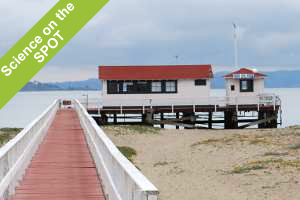
"content": "\u003cp>\u003cspan class=\"left\">\u003ca href=\"http://ww2.kqed.org/quest/video/science-on-the-spot-watching-the-tides\">\u003cimg src=\"http://ww2.kqed.org/quest/wp-content/uploads/sites/39/2010/12/WS202_tides3001.jpg\" alt=\"\">\u003c/a>\u003cem>Sittin' on the dock of the bay, watchin' the tides roll away.\u003c/em>\u003c/span> Walking along the shore of San Francisco Bay at Crissy Field in San Francisco, you might not take notice of the small building at the end of a short pier. But this little white shack with the red roof holds a lot of history and houses vitally important scientific instruments. “This is the front line of our data,” says Mary Jane Schramm of the National Oceanic and Atmospheric Administration. “This is the oldest continually operating tidal gauge in the Western Hemisphere. It’s been in continuous operation since 1854, so it’s weathered the great San Francisco earthquake and many other natural disasters that have put other tidal gauges out of commission.”\u003c/p>\n\u003cp>\u003c!--more-->\u003c/p>\n\u003cp>This is important because the bay and ocean currents flooding in and out of the Golden Gate are notoriously treacherous. The US Government realized early on the importance of San Francisco Bay and the need to better understand the movements of the water for navigation. Soon after California became a State, American surveyors were sent to San Francisco to study the water conditions of the great port. And the work has continued non-stop ever since. For over 150 years the San Francisco Tide Station, now operated by NOAA, has produced a continuous recording of water levels and other vital maritime information.\u003c/p>\n\u003cp>Today the tide station uses state of the art equipment to measure the water movement of San Francisco Bay. The water gauges are connected to the NOAA Physical Oceanographic Real-Time System (PORTS), and measure nearly real-time water levels, surface and sub-surface currents and other information such as winds, weather and climate data. This information is available to the public so sailors know the best times to cast off, make transits, load or unload cargo, or when to ride the tides in or out of the bay. According to \u003ca href=\"http://oceanservice.noaa.gov/topics/navops/ports/150_years_of_tides.pdf\">a report written by Captain Albert E. Theberge, NOAA (Ret.)\u003c/a>, “This information is critically important considering that there is an average of 261 deep-draft vessels entering San Francisco Bay each month and there are approximately 85,000 registered pleasure boats using approximately 100 yacht clubs in the Bay system.”\u003c/p>\n\u003cp>“The historical record from the tide station at San Francisco transcends the maritime history of the San Francisco Bay,” according to Captain Theberge. “From the days when clipper ships relied upon tide predictions provided by the station to navigate the dynamic waters of the Golden Gate, to the modern day mariner that obtains real-time water levels so that the huge ship and crane barge operators can tell if they have enough depth in the channels and enough clearance under the bridges.”\u003c/p>\n\u003cp>[ad fullwidth]\u003c/p>\n\u003cp>In the process of collecting data to insure safe passage in and out of the bay, the San Francisco Tide Station has been instrumental in collecting a long and continuous stream of scientific data that has advanced our knowledge of the oceans and the earth. This data has benefited meteorologists, oceanographers and climatologists alike. As we look to the future and attempt to better understand the changing climate and what that will mean to things such as sea level rise, the current and long-term data collected at this small station will become increasingly more important. “San Francisco is an amazing city in terms of its heritage,” says Mary Jane Schramm, “ The human heritage as well as the magic and mystique of the great Golden Gate. It’s a portal for exploration. We are explorers and by virtue of having this facility here helps foster that process along.”\u003c/p>\n\u003cp>\u003c/p>\n\u003cp> 37.8035713 -122.4593512\u003c/p>\n\n",
"disqusIdentifier": "11119 http://www.kqed.org/quest/blog/?p=11119",
"disqusUrl": "https://ww2.kqed.org/quest/2010/12/10/producers-notes-science-on-the-spot-watching-the-tides/",
"stats": {
"hasVideo": false,
"hasChartOrMap": false,
"hasAudio": false,
"hasPolis": false,
"wordCount": 634,
"hasGoogleForm": false,
"hasGallery": false,
"hasHearkenModule": false,
"iframeSrcs": [],
"paragraphCount": 9
},
"modified": 1292011228,
"excerpt": "A little white shack with the red roof along Crissy Field holds a lot of history and houses vitally important scientific instruments.",
"headData": {
"twImgId": "",
"twTitle": "",
"ogTitle": "",
"ogImgId": "",
"twDescription": "",
"description": "A little white shack with the red roof along Crissy Field holds a lot of history and houses vitally important scientific instruments.",
"title": "Producer's Notes: Science on the SPOT: Watching the Tides | KQED",
"ogDescription": "",
"schema": {
"@context": "https://schema.org",
"@type": "Article",
"headline": "Producer's Notes: Science on the SPOT: Watching the Tides",
"datePublished": "2010-12-10T12:00:28-08:00",
"dateModified": "2010-12-10T12:00:28-08:00",
"image": "https://cdn.kqed.org/wp-content/uploads/2020/02/KQED-OG-Image@1x.png"
}
},
"guestAuthors": [],
"slug": "producers-notes-science-on-the-spot-watching-the-tides",
"status": "publish",
"path": "/quest/11119/producers-notes-science-on-the-spot-watching-the-tides",
"audioTrackLength": null,
"parsedContent": [
{
"type": "contentString",
"content": "\u003cdiv class=\"post-body\">\u003cp>\u003cp>\u003cspan class=\"left\">\u003ca href=\"http://ww2.kqed.org/quest/video/science-on-the-spot-watching-the-tides\">\u003cimg src=\"http://ww2.kqed.org/quest/wp-content/uploads/sites/39/2010/12/WS202_tides3001.jpg\" alt=\"\">\u003c/a>\u003cem>Sittin' on the dock of the bay, watchin' the tides roll away.\u003c/em>\u003c/span> Walking along the shore of San Francisco Bay at Crissy Field in San Francisco, you might not take notice of the small building at the end of a short pier. But this little white shack with the red roof holds a lot of history and houses vitally important scientific instruments. “This is the front line of our data,” says Mary Jane Schramm of the National Oceanic and Atmospheric Administration. “This is the oldest continually operating tidal gauge in the Western Hemisphere. It’s been in continuous operation since 1854, so it’s weathered the great San Francisco earthquake and many other natural disasters that have put other tidal gauges out of commission.”\u003c/p>\n\u003cp>\u003c!--more-->\u003c/p>\n\u003cp>This is important because the bay and ocean currents flooding in and out of the Golden Gate are notoriously treacherous. The US Government realized early on the importance of San Francisco Bay and the need to better understand the movements of the water for navigation. Soon after California became a State, American surveyors were sent to San Francisco to study the water conditions of the great port. And the work has continued non-stop ever since. For over 150 years the San Francisco Tide Station, now operated by NOAA, has produced a continuous recording of water levels and other vital maritime information.\u003c/p>\n\u003cp>Today the tide station uses state of the art equipment to measure the water movement of San Francisco Bay. The water gauges are connected to the NOAA Physical Oceanographic Real-Time System (PORTS), and measure nearly real-time water levels, surface and sub-surface currents and other information such as winds, weather and climate data. This information is available to the public so sailors know the best times to cast off, make transits, load or unload cargo, or when to ride the tides in or out of the bay. According to \u003ca href=\"http://oceanservice.noaa.gov/topics/navops/ports/150_years_of_tides.pdf\">a report written by Captain Albert E. Theberge, NOAA (Ret.)\u003c/a>, “This information is critically important considering that there is an average of 261 deep-draft vessels entering San Francisco Bay each month and there are approximately 85,000 registered pleasure boats using approximately 100 yacht clubs in the Bay system.”\u003c/p>\n\u003cp>“The historical record from the tide station at San Francisco transcends the maritime history of the San Francisco Bay,” according to Captain Theberge. “From the days when clipper ships relied upon tide predictions provided by the station to navigate the dynamic waters of the Golden Gate, to the modern day mariner that obtains real-time water levels so that the huge ship and crane barge operators can tell if they have enough depth in the channels and enough clearance under the bridges.”\u003c/p>\n\u003cp>\u003c/p>\u003c/div>",
"attributes": {
"named": {},
"numeric": []
}
},
{
"type": "component",
"content": "",
"name": "ad",
"attributes": {
"named": {
"label": "fullwidth"
},
"numeric": [
"fullwidth"
]
}
},
{
"type": "contentString",
"content": "\u003cdiv class=\"post-body\">\u003cp>\u003c/p>\n\u003cp>In the process of collecting data to insure safe passage in and out of the bay, the San Francisco Tide Station has been instrumental in collecting a long and continuous stream of scientific data that has advanced our knowledge of the oceans and the earth. This data has benefited meteorologists, oceanographers and climatologists alike. As we look to the future and attempt to better understand the changing climate and what that will mean to things such as sea level rise, the current and long-term data collected at this small station will become increasingly more important. “San Francisco is an amazing city in terms of its heritage,” says Mary Jane Schramm, “ The human heritage as well as the magic and mystique of the great Golden Gate. It’s a portal for exploration. We are explorers and by virtue of having this facility here helps foster that process along.”\u003c/p>\n\u003cp>\u003c/p>\n\u003cp> 37.8035713 -122.4593512\u003c/p>\n\n\u003c/div>\u003c/p>",
"attributes": {
"named": {},
"numeric": []
}
}
],
"link": "/quest/11119/producers-notes-science-on-the-spot-watching-the-tides",
"authors": [
"10169"
],
"categories": [
"quest_3",
"quest_6"
],
"tags": [
"quest_13210",
"quest_731",
"quest_1284",
"quest_1398",
"quest_3351",
"quest_1870",
"quest_2001",
"quest_2141",
"quest_2349",
"quest_2486",
"quest_2540",
"quest_2936",
"quest_2937",
"quest_2938"
],
"featImg": "quest_11125",
"label": "quest"
},
"quest_10933": {
"type": "posts",
"id": "quest_10933",
"meta": {
"index": "posts_1716263798",
"site": "quest",
"id": "10933",
"score": null,
"sort": [
1291395041000
]
},
"parent": 0,
"labelTerm": {
"site": "quest"
},
"blocks": [],
"publishDate": 1291395041,
"format": "standard",
"disqusTitle": "Arsenic and Old Lakes: NASA Finds Life NOT As We Know It",
"title": "Arsenic and Old Lakes: NASA Finds Life NOT As We Know It",
"headTitle": "QUEST | KQED Science",
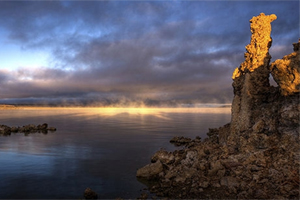
"content": "\u003cp>\u003cspan class=\"left\">\u003cimg src=\"http://ww2.kqed.org/quest/wp-content/uploads/sites/39/2010/12/monolake.jpg\">\u003cem>An alien landscape home to extraterrestrial life? No--it's Mono\u003cbr> Lake in California, but home to a very unexpected form of life!\u003c/em>\u003c/span>I was going to title this blog \"Life is Out There!\" But, that risks sensationalizing the available facts, so I won't.\u003c/p>\n\u003cp>I'm starting to write this blog before NASA's big announcement of a discovery relating to astrobiology and extraterrestrial life. That announcement will be (was) made on Thursday, December 2nd, 2010 at 11:00 AM PST. What will it be? There's been a lot of wild speculation that NASA is going to report actually finding extraterrestrial life…but let's wait and see. I'll let you know what cat has been let out of the bag by the end of this blog….\u003c/p>\n\u003cp>\u003c!--more-->\u003c/p>\n\u003cp>In the mean time, what about it: Life Out There? \u003c/p>\n\u003cp>It seems we've been on the verge of finding it somewhere out there for a very long time, in one form or another. Speculation of life and intelligence and civilizations on other worlds has gone on for untold centuries. You might even count the ancient beliefs that the planets were embodiments of deities…but can a deity actually be counted as a form of life? Hmmm. Straying from topic….\u003c/p>\n\u003cp>[ad fullwidth]\u003c/p>\n\u003cp>Even a century-plus ago, \u003ca href=\"http://www.npr.org/templates/story/story.php?storyId=5630660&ps=rs\">Percival Lowell \u003c/a>squinting through the eyepiece of his telescope on Mars Hill thought he saw the signs of life: streaks and lines he perceived on the blurry disk of Mars that he claimed might be canals constructed by a civilization on Mars. \u003c/p>\n\u003cp>Life on the Moon? While the Apollo program went to the Moon for rocks and glory, they were careful to quarantine their returning astronauts just in case they picked up a Moon bug. \u003c/p>\n\u003cp>We've been scratching around on Mars since the Viking missions looking for signs (and will soon be scratching some more when the \u003ca href=\"http://marsprogram.jpl.nasa.gov/msl/\">Mars Science Laboratory \u003c/a>begins its patrol)—and the sensation created by strange microbe-like rock features in a \u003ca href=\"http://ww2.kqed.org/quest/2009/12/04/new-evidence-of-martian-life-found-in-antarctica/\">meteorite from Mars (ALH84001)\u003c/a> as possible Martian fossils is an ongoing investigation. \u003c/p>\n\u003cp>We also study forms of Terrestrial life we call \"\u003ca href=\"http://science.howstuffworks.com/environmental/life/cellular-microscopic/extremophile.htm\">extremophiles\u003c/a>\" because of their ability to thrive in extreme heat or cold or toxicity, and we compare those extreme environments to other locations in the solar system that may have similar conditions, looking to those places (especially the watery ones, like Europa and Enceladus and maybe Mars) as possible homes for life. \u003c/p>\n\u003cp>While I'm waiting for the announcement, I find myself thinking about the possibilities if life is as common in the Universe as some scientists think it might be. Finding other life in our own solar system would be awesome, even if it's fossilized remains of extinct life that we'll never meet microscope-to-photoreceptor. \u003c/p>\n\u003cp>With evidence suggesting that planets are not only common, but probably far outnumber stars, coupled with profuse examples of Earthly life existing in a vast range of environments, imagine the potential variety of life in the galaxy, or the Universe. Imagine how different, apparently or fundamentally, the spectrum of possible life could be from one end to the other—if that spectrum has ends at all. Imagine how much life might be going on out there right now, maybe even close to home in our stellar neighborhood. \u003c/p>\n\u003cp>And then imagine, as the \u003ca href=\"http://www.seti.org/\">SETI Institute \u003c/a>has, the possibilities of intelligent life with technological civilizations. How vastly different could they be from our intelligence, and our civilization? \u003c/p>\n\u003cp>The mind boggles. \u003c/p>\n\u003cp>Flash! This just in--\u003ca href=\"http://science.nasa.gov/science-news/science-at-nasa/2010/02dec_monolake/\">NASA's big announcement\u003c/a>: A bacterium has been found in the arsenic-rich environment of Mono Lake; a microbe that has the ability to substitute arsenic for phosphorous in its biochemistry, phosphorous being one of the essential elements for life as we know it (to which arsenic is toxic). While it is an Earthly microbe, the opening comment of the announcement was that this is NOT life as we have known it. (Funny—NASA's search for life on other planets has been for \"life as we know it,\" and here they find an example of another sort right here on Earth….)\u003c/p>\n\u003cp>I realize NASA's talking chemistry and not psychic alien embryos that latch onto your spinal column…but this is pretty awesome.\u003c/p>\n\u003cp>Though it isn't quite the same as the eventual announcement of the discovery of extraterrestrial life (which I can see happening at some point), the ramification of this homeland discovery that most excites me is how it \"widens the lens\" of our view on possible environments in which we might find life in the Universe. \u003c/p>\n\u003cp>Life is out there (I expect), and now we have more places to look for it….\u003c/p>\n\u003cp>\u003c/p>\n\u003cp> 37.8148 -122.178\u003c/p>\n\n",
"disqusIdentifier": "10933 http://www.kqed.org/quest/blog/?p=10933",
"disqusUrl": "https://ww2.kqed.org/quest/2010/12/03/arsenic-and-old-lakes-nasa-finds-life-not-as-we-know-it/",
"stats": {
"hasVideo": false,
"hasChartOrMap": false,
"hasAudio": false,
"hasPolis": false,
"wordCount": 795,
"hasGoogleForm": false,
"hasGallery": false,
"hasHearkenModule": false,
"iframeSrcs": [],
"paragraphCount": 20
},
"modified": 1371064257,
"excerpt": "NASA announces finding \"life NOT as we know it\" in the arsenic-laced waters of Mono Lake.",
"headData": {
"twImgId": "",
"twTitle": "",
"ogTitle": "",
"ogImgId": "",
"twDescription": "",
"description": "NASA announces finding "life NOT as we know it" in the arsenic-laced waters of Mono Lake.",
"title": "Arsenic and Old Lakes: NASA Finds Life NOT As We Know It | KQED",
"ogDescription": "",
"schema": {
"@context": "https://schema.org",
"@type": "Article",
"headline": "Arsenic and Old Lakes: NASA Finds Life NOT As We Know It",
"datePublished": "2010-12-03T08:50:41-08:00",
"dateModified": "2013-06-12T12:10:57-07:00",
"image": "https://cdn.kqed.org/wp-content/uploads/2020/02/KQED-OG-Image@1x.png"
}
},
"guestAuthors": [],
"slug": "arsenic-and-old-lakes-nasa-finds-life-not-as-we-know-it",
"status": "publish",
"path": "/quest/10933/arsenic-and-old-lakes-nasa-finds-life-not-as-we-know-it",
"audioTrackLength": null,
"parsedContent": [
{
"type": "contentString",
"content": "\u003cdiv class=\"post-body\">\u003cp>\u003cp>\u003cspan class=\"left\">\u003cimg src=\"http://ww2.kqed.org/quest/wp-content/uploads/sites/39/2010/12/monolake.jpg\">\u003cem>An alien landscape home to extraterrestrial life? No--it's Mono\u003cbr> Lake in California, but home to a very unexpected form of life!\u003c/em>\u003c/span>I was going to title this blog \"Life is Out There!\" But, that risks sensationalizing the available facts, so I won't.\u003c/p>\n\u003cp>I'm starting to write this blog before NASA's big announcement of a discovery relating to astrobiology and extraterrestrial life. That announcement will be (was) made on Thursday, December 2nd, 2010 at 11:00 AM PST. What will it be? There's been a lot of wild speculation that NASA is going to report actually finding extraterrestrial life…but let's wait and see. I'll let you know what cat has been let out of the bag by the end of this blog….\u003c/p>\n\u003cp>\u003c!--more-->\u003c/p>\n\u003cp>In the mean time, what about it: Life Out There? \u003c/p>\n\u003cp>It seems we've been on the verge of finding it somewhere out there for a very long time, in one form or another. Speculation of life and intelligence and civilizations on other worlds has gone on for untold centuries. You might even count the ancient beliefs that the planets were embodiments of deities…but can a deity actually be counted as a form of life? Hmmm. Straying from topic….\u003c/p>\n\u003cp>\u003c/p>\u003c/div>",
"attributes": {
"named": {},
"numeric": []
}
},
{
"type": "component",
"content": "",
"name": "ad",
"attributes": {
"named": {
"label": "fullwidth"
},
"numeric": [
"fullwidth"
]
}
},
{
"type": "contentString",
"content": "\u003cdiv class=\"post-body\">\u003cp>\u003c/p>\n\u003cp>Even a century-plus ago, \u003ca href=\"http://www.npr.org/templates/story/story.php?storyId=5630660&ps=rs\">Percival Lowell \u003c/a>squinting through the eyepiece of his telescope on Mars Hill thought he saw the signs of life: streaks and lines he perceived on the blurry disk of Mars that he claimed might be canals constructed by a civilization on Mars. \u003c/p>\n\u003cp>Life on the Moon? While the Apollo program went to the Moon for rocks and glory, they were careful to quarantine their returning astronauts just in case they picked up a Moon bug. \u003c/p>\n\u003cp>We've been scratching around on Mars since the Viking missions looking for signs (and will soon be scratching some more when the \u003ca href=\"http://marsprogram.jpl.nasa.gov/msl/\">Mars Science Laboratory \u003c/a>begins its patrol)—and the sensation created by strange microbe-like rock features in a \u003ca href=\"http://ww2.kqed.org/quest/2009/12/04/new-evidence-of-martian-life-found-in-antarctica/\">meteorite from Mars (ALH84001)\u003c/a> as possible Martian fossils is an ongoing investigation. \u003c/p>\n\u003cp>We also study forms of Terrestrial life we call \"\u003ca href=\"http://science.howstuffworks.com/environmental/life/cellular-microscopic/extremophile.htm\">extremophiles\u003c/a>\" because of their ability to thrive in extreme heat or cold or toxicity, and we compare those extreme environments to other locations in the solar system that may have similar conditions, looking to those places (especially the watery ones, like Europa and Enceladus and maybe Mars) as possible homes for life. \u003c/p>\n\u003cp>While I'm waiting for the announcement, I find myself thinking about the possibilities if life is as common in the Universe as some scientists think it might be. Finding other life in our own solar system would be awesome, even if it's fossilized remains of extinct life that we'll never meet microscope-to-photoreceptor. \u003c/p>\n\u003cp>With evidence suggesting that planets are not only common, but probably far outnumber stars, coupled with profuse examples of Earthly life existing in a vast range of environments, imagine the potential variety of life in the galaxy, or the Universe. Imagine how different, apparently or fundamentally, the spectrum of possible life could be from one end to the other—if that spectrum has ends at all. Imagine how much life might be going on out there right now, maybe even close to home in our stellar neighborhood. \u003c/p>\n\u003cp>And then imagine, as the \u003ca href=\"http://www.seti.org/\">SETI Institute \u003c/a>has, the possibilities of intelligent life with technological civilizations. How vastly different could they be from our intelligence, and our civilization? \u003c/p>\n\u003cp>The mind boggles. \u003c/p>\n\u003cp>Flash! This just in--\u003ca href=\"http://science.nasa.gov/science-news/science-at-nasa/2010/02dec_monolake/\">NASA's big announcement\u003c/a>: A bacterium has been found in the arsenic-rich environment of Mono Lake; a microbe that has the ability to substitute arsenic for phosphorous in its biochemistry, phosphorous being one of the essential elements for life as we know it (to which arsenic is toxic). While it is an Earthly microbe, the opening comment of the announcement was that this is NOT life as we have known it. (Funny—NASA's search for life on other planets has been for \"life as we know it,\" and here they find an example of another sort right here on Earth….)\u003c/p>\n\u003cp>I realize NASA's talking chemistry and not psychic alien embryos that latch onto your spinal column…but this is pretty awesome.\u003c/p>\n\u003cp>Though it isn't quite the same as the eventual announcement of the discovery of extraterrestrial life (which I can see happening at some point), the ramification of this homeland discovery that most excites me is how it \"widens the lens\" of our view on possible environments in which we might find life in the Universe. \u003c/p>\n\u003cp>Life is out there (I expect), and now we have more places to look for it….\u003c/p>\n\u003cp>\u003c/p>\n\u003cp> 37.8148 -122.178\u003c/p>\n\n\u003c/div>\u003c/p>",
"attributes": {
"named": {},
"numeric": []
}
}
],
"link": "/quest/10933/arsenic-and-old-lakes-nasa-finds-life-not-as-we-know-it",
"authors": [
"6180"
],
"categories": [
"quest_3"
],
"tags": [
"quest_215",
"quest_237",
"quest_13192",
"quest_268",
"quest_1051",
"quest_1656",
"quest_1861",
"quest_1918"
],
"featImg": "quest_10936",
"label": "quest"
},
"quest_10941": {
"type": "posts",
"id": "quest_10941",
"meta": {
"index": "posts_1716263798",
"site": "quest",
"id": "10941",
"score": null,
"sort": [
1291337444000
]
},
"parent": 0,
"labelTerm": {
"site": "quest"
},
"blocks": [],
"publishDate": 1291337444,
"format": "standard",
"disqusTitle": "Arsenic-Eating Bacteria Expands Definition of Life",
"title": "Arsenic-Eating Bacteria Expands Definition of Life",
"headTitle": "QUEST | KQED Science",
"content": "\u003cp>\u003cspan class=\"left\">\u003ca href=\"http://www.kqed.org/quest\">\u003cimg src=\"http://ww2.kqed.org/quest/wp-content/uploads/sites/39/2010/12/AAAS-Science_wolfesimon1HR-22.jpg\" alt=\"\">\u003c/a>\u003cem> Scanning electron microscope image of the arsenic-loving bacteria GFAJ-1. (Credit: AAAS/Science) \u003c/em>\u003c/span>\u003c/p>\n\u003cp>\u003cem>Reported for \u003ca href=\"http://www.kqed.org/news/\">KQEDnews.org\u003c/a>.\u003c/em>\u003c/p>\n\u003cp>A Bay Area biochemist has found a new strain of bacteria living in the briny shores of Mono Lake that can eat and thrive on arsenic, a substance highly toxic to most organisms. The discovery may lead to a significant shift in how scientists search for extraterrestrial life. \u003c/p>\n\u003cp>“All life that we know of requires carbon, hydrogen, oxygen, nitrogen, sulfur and phosphorus,” said Felisa Wolfe-Simon, the lead author of the study and a NASA Astrobiology Research Fellow in residence at the U.S. Geological Survey in Menlo Park. “We discovered an organism that can substitute one element for another,” she added. \u003c/p>\n\u003cp>Those six major elements comprise the building blocks of key components of living cells, such as DNA, RNA and proteins – the molecular switches which power the cells and instruct them to perform tasks critical for cellular growth and survival. Researchers know of no other microbe that can consume arsenic let alone substitute it for phosphorus, thereby expanding the definition of what constitutes life on Earth and elsewhere in the universe. \u003c/p>\n\u003cp>[ad fullwidth]\u003c/p>\n\u003cp>\u003c!--more-->\u003c/p>\n\u003cp>“As someone who regularly gives lectures in which I state, ‘every living thing uses phosphorus to build its DNA’, the idea that I’m sitting here today discussing the possibility that that’s not true is quite shocking,” said James Elser, a professor at Arizona State University who participated in a NASA teleconference convened today to discuss the findings. \u003c/p>\n\u003cp>The discovery of the arsenic-loving microbe also “opens new doors” to explore what life may look like in other reaches of the solar system, on environments such as Mars or the moons of Jupiter and Saturn that have previously been thought to be too cold and harsh to support life. \u003c/p>\n\u003cp>\u003cspan class=\"right\">\u003ca href=\"http://www.kqed.org/quest\">\u003cimg src=\"http://ww2.kqed.org/quest/wp-content/uploads/sites/39/2010/12/AAAS-Science_wolfesimon4HR-21.jpg\" alt=\"\">\u003c/a>\u003cem>Felicia Wolfe-Simon of the NASA Ames Research Center and USGS collects samples from a sediment core extracted from the shores of Mono Lake in eastern California. (Credit: Henry Bortman)\u003c/em>\u003c/span>\u003c/p>\n\u003cp>“We still don’t know everything there is to know about what might make a habitable environment on another planet or a satellite of another planet,” said Pamela Conrad, an astrobiologist at NASA’s Goddard Space Flight Center in Greenbelt, Maryland. “Perhaps arsenic is not an essential component for habitability or life but it may be one that can be tolerated and it opens our perspective to try and understand what other potential components may be tolerated or perhaps even essential that we presently haven’t thought of,” she added. \u003c/p>\n\u003cp>A paper describing the finding appears in this week’s edition of the journal \u003cem>\u003ca href=\"http://www.sciencemag.org/content/early/2010/12/01/science.1197258\">Science Express\u003c/a>\u003c/em>. \u003c/p>\n\u003cp>But before the embargo on the paper was lifted on Thursday, a flurry of speculation was set off earlier in the week that NASA had discovered proof of alien life, fueled by an ambiguous press release issued by NASA on Monday which trumpeted “an astrobiology finding that will impact the search for evidence of extraterrestrial life.” In fact, the embargo was lifted roughly two hours earlier than planned because reports of the finding, some of them erroneous, were already beginning to appear online in publications like \u003cem>The Huffington Post\u003c/em> and the \u003cem>Guardian\u003c/em>. \u003c/p>\n\u003cp>At the end of NASA’s Thursday teleconference, Mary Voytek, director of the Astrobiology Program at NASA headquarters in Washington, D.C. responded to a question from a \u003cem>USA Today\u003c/em> journalist about the disappointment felt by its readers that in fact, NASA would not be pulling E.T out of a hat. \u003c/p>\n\u003cp>“I guess what I would say is that while being able to announce the discovery of an extra-terrestrial would be an incredible announcement, from our perspective, this is a phenomenal finding. It will require some paragraphs in textbooks to be rewritten,” said Voytek. “It will fundamentally change how we define life and how we look for it, maybe we’ll be able to find E.T. now because we’ve got more information about what we might be looking for,” she added.\u003c/p>\n\u003cp>The research team, led by Wolfe-Simon, discovered the new strain of bacteria, GFAJ-1, in muddy sediment cores extracted from the shores of Mono Lake, located in eastern California, near the Sierra Nevada mountains. The 70 square-mile inland lake is highly salty and alkaline with high concentrations of naturally-occurring arsenic. It has been separated from freshwater for 50 years and teems with brine shrimp and algae. It also serves as a major stop-over point for migratory birds. \u003c/p>\n\u003cp>Wolfe-Simon chose to investigate how GFAJ-1 responded to arsenic because of the toxic compound’s chemical similarity to phosphorus. She pointed out that arsenic lies just below phosphorus on the periodic table and that their atoms are roughly the same in size. But arsenic is highly toxic to most living organisms because it disrupts metabolic pathways in the cells which take up arsenic readily, given its chemical similarity to phosphorus. \u003c/p>\n\u003cp>So Wolfe-Simon took the muddy samples containing the bacteria and grew them in petri dishes in a watery solution containing sugar and high levels of arsenic, while reducing the amount of phosphate salt the bacteria were fed. Eventually, the bacteria were fed only a diet of arsenic. \u003c/p>\n\u003cp>“It grew and it thrived, and this was amazing. Nothing should have grown,” said Simon. \u003c/p>\n\u003cp>In just six days, the bacteria multiplied twenty-fold as it wolfed down the arsenic. \u003c/p>\n\u003cp>Simon and her colleagues used radiolabeled arsenate, a form of arsenic, to track the movement of arsenic inside the bacteria. With the aid of additional laboratory techniques, they found that the bacteria’s cellular machinery of lipids, proteins, even its DNA, were now made up of arsenic. So the bacteria were able to fully substitute phosphorus, which provides the chemical backbone of DNA, for arsenic and still function and grow just fine. \u003c/p>\n\u003cp>\u003cspan class=\"left\">\u003ca href=\"http://www.kqed.org/quest\">\u003cimg src=\"http://ww2.kqed.org/quest/wp-content/uploads/sites/39/2010/12/AAAS-Science_wolfesimon7HR-21.jpg\" alt=\"\">\u003c/a>\u003cem>Mono Lake, located in eastern California, next to the Sierra Nevada mountains, is highly saline and has high concentrations of arsenic. (Credit: Henry Bortman)\u003c/em>\u003c/span>\u003c/p>\n\u003cp>\"We know that some microbes can breathe arsenic, but what we've found is a microbe doing something new -- building parts of itself out of arsenic,\" said Wolfe-Simon.\u003c/p>\n\u003cp>And according to Professor Elser at Arizona State University, the discovery of a microbe that thrives on arsenic may have value beyond the lab and academic papers. Elser mused on the possibility of using GFAJ-1 to clean up naturally-occurring arsenic, which can pollute groundwater and lead to failure of organs such as the kidneys and liver if ingested. \u003c/p>\n\u003cp>Then there’s the burgeoning field of biofuels, the next generation of which include algae. But algae and other plants being cultivated for renewable fuels require phosphorus to grow. \u003c/p>\n\u003cp>“So what if someone was clever enough to be able to develop a bioenergy creature, a microorganism, based on this metabolism that doesn’t need phosphorus, so you don’t need to drain the fertilizer supply in order to solve the bioenergy problem,” said Elser. “It’s pretty exciting to think about the possibility of organisms that may be able to live without phosphorous,” he added. \u003c/p>\n\u003cp>For Felisa Wolfe-Simon, the discovery of the arsenic-loving bacteria is an important milestone in astrobiology, a discipline which combines chemistry, astronomy, biology and other sciences to understand the evolution of life and the future of life – on Earth and beyond. \u003c/p>\n\u003cp>“We’ve cracked open the door to what’s possible for life elsewhere in the universe and that’s profound and to understand how life has formed and where life is going,” she said. “And what else might we find, what else might we want to look for?”\u003c/p>\n\u003cp>[ad floatright]\u003c/p>\n\u003cp> 37.52119957659491 -122.0086669921875\u003c/p>\n\n",
"disqusIdentifier": "10941 http://www.kqed.org/quest/blog/2010/12/02/10941/",
"disqusUrl": "https://ww2.kqed.org/quest/2010/12/02/arsenic-bacteria/",
"stats": {
"hasVideo": false,
"hasChartOrMap": false,
"hasAudio": false,
"hasPolis": false,
"wordCount": 1322,
"hasGoogleForm": false,
"hasGallery": false,
"hasHearkenModule": false,
"iframeSrcs": [],
"paragraphCount": 30
},
"modified": 1316925477,
"excerpt": "A Bay Area biochemist has found a new strain of bacteria living in the briny shores of Mono Lake that can not only eat arsenic, a substance highly toxic to most organisms, but thrive on it.",
"headData": {
"twImgId": "",
"twTitle": "",
"ogTitle": "",
"ogImgId": "",
"twDescription": "",
"description": "A Bay Area biochemist has found a new strain of bacteria living in the briny shores of Mono Lake that can not only eat arsenic, a substance highly toxic to most organisms, but thrive on it.",
"title": "Arsenic-Eating Bacteria Expands Definition of Life | KQED",
"ogDescription": "",
"schema": {
"@context": "https://schema.org",
"@type": "Article",
"headline": "Arsenic-Eating Bacteria Expands Definition of Life",
"datePublished": "2010-12-02T16:50:44-08:00",
"dateModified": "2011-09-24T21:37:57-07:00",
"image": "https://cdn.kqed.org/wp-content/uploads/2020/02/KQED-OG-Image@1x.png"
}
},
"guestAuthors": [],
"slug": "arsenic-bacteria",
"status": "publish",
"path": "/quest/10941/arsenic-bacteria",
"audioTrackLength": null,
"parsedContent": [
{
"type": "contentString",
"content": "\u003cdiv class=\"post-body\">\u003cp>\u003cp>\u003cspan class=\"left\">\u003ca href=\"http://www.kqed.org/quest\">\u003cimg src=\"http://ww2.kqed.org/quest/wp-content/uploads/sites/39/2010/12/AAAS-Science_wolfesimon1HR-22.jpg\" alt=\"\">\u003c/a>\u003cem> Scanning electron microscope image of the arsenic-loving bacteria GFAJ-1. (Credit: AAAS/Science) \u003c/em>\u003c/span>\u003c/p>\n\u003cp>\u003cem>Reported for \u003ca href=\"http://www.kqed.org/news/\">KQEDnews.org\u003c/a>.\u003c/em>\u003c/p>\n\u003cp>A Bay Area biochemist has found a new strain of bacteria living in the briny shores of Mono Lake that can eat and thrive on arsenic, a substance highly toxic to most organisms. The discovery may lead to a significant shift in how scientists search for extraterrestrial life. \u003c/p>\n\u003cp>“All life that we know of requires carbon, hydrogen, oxygen, nitrogen, sulfur and phosphorus,” said Felisa Wolfe-Simon, the lead author of the study and a NASA Astrobiology Research Fellow in residence at the U.S. Geological Survey in Menlo Park. “We discovered an organism that can substitute one element for another,” she added. \u003c/p>\n\u003cp>Those six major elements comprise the building blocks of key components of living cells, such as DNA, RNA and proteins – the molecular switches which power the cells and instruct them to perform tasks critical for cellular growth and survival. Researchers know of no other microbe that can consume arsenic let alone substitute it for phosphorus, thereby expanding the definition of what constitutes life on Earth and elsewhere in the universe. \u003c/p>\n\u003cp>\u003c/p>\u003c/div>",
"attributes": {
"named": {},
"numeric": []
}
},
{
"type": "component",
"content": "",
"name": "ad",
"attributes": {
"named": {
"label": "fullwidth"
},
"numeric": [
"fullwidth"
]
}
},
{
"type": "contentString",
"content": "\u003cdiv class=\"post-body\">\u003cp>\u003c/p>\n\u003cp>\u003c!--more-->\u003c/p>\n\u003cp>“As someone who regularly gives lectures in which I state, ‘every living thing uses phosphorus to build its DNA’, the idea that I’m sitting here today discussing the possibility that that’s not true is quite shocking,” said James Elser, a professor at Arizona State University who participated in a NASA teleconference convened today to discuss the findings. \u003c/p>\n\u003cp>The discovery of the arsenic-loving microbe also “opens new doors” to explore what life may look like in other reaches of the solar system, on environments such as Mars or the moons of Jupiter and Saturn that have previously been thought to be too cold and harsh to support life. \u003c/p>\n\u003cp>\u003cspan class=\"right\">\u003ca href=\"http://www.kqed.org/quest\">\u003cimg src=\"http://ww2.kqed.org/quest/wp-content/uploads/sites/39/2010/12/AAAS-Science_wolfesimon4HR-21.jpg\" alt=\"\">\u003c/a>\u003cem>Felicia Wolfe-Simon of the NASA Ames Research Center and USGS collects samples from a sediment core extracted from the shores of Mono Lake in eastern California. (Credit: Henry Bortman)\u003c/em>\u003c/span>\u003c/p>\n\u003cp>“We still don’t know everything there is to know about what might make a habitable environment on another planet or a satellite of another planet,” said Pamela Conrad, an astrobiologist at NASA’s Goddard Space Flight Center in Greenbelt, Maryland. “Perhaps arsenic is not an essential component for habitability or life but it may be one that can be tolerated and it opens our perspective to try and understand what other potential components may be tolerated or perhaps even essential that we presently haven’t thought of,” she added. \u003c/p>\n\u003cp>A paper describing the finding appears in this week’s edition of the journal \u003cem>\u003ca href=\"http://www.sciencemag.org/content/early/2010/12/01/science.1197258\">Science Express\u003c/a>\u003c/em>. \u003c/p>\n\u003cp>But before the embargo on the paper was lifted on Thursday, a flurry of speculation was set off earlier in the week that NASA had discovered proof of alien life, fueled by an ambiguous press release issued by NASA on Monday which trumpeted “an astrobiology finding that will impact the search for evidence of extraterrestrial life.” In fact, the embargo was lifted roughly two hours earlier than planned because reports of the finding, some of them erroneous, were already beginning to appear online in publications like \u003cem>The Huffington Post\u003c/em> and the \u003cem>Guardian\u003c/em>. \u003c/p>\n\u003cp>At the end of NASA’s Thursday teleconference, Mary Voytek, director of the Astrobiology Program at NASA headquarters in Washington, D.C. responded to a question from a \u003cem>USA Today\u003c/em> journalist about the disappointment felt by its readers that in fact, NASA would not be pulling E.T out of a hat. \u003c/p>\n\u003cp>“I guess what I would say is that while being able to announce the discovery of an extra-terrestrial would be an incredible announcement, from our perspective, this is a phenomenal finding. It will require some paragraphs in textbooks to be rewritten,” said Voytek. “It will fundamentally change how we define life and how we look for it, maybe we’ll be able to find E.T. now because we’ve got more information about what we might be looking for,” she added.\u003c/p>\n\u003cp>The research team, led by Wolfe-Simon, discovered the new strain of bacteria, GFAJ-1, in muddy sediment cores extracted from the shores of Mono Lake, located in eastern California, near the Sierra Nevada mountains. The 70 square-mile inland lake is highly salty and alkaline with high concentrations of naturally-occurring arsenic. It has been separated from freshwater for 50 years and teems with brine shrimp and algae. It also serves as a major stop-over point for migratory birds. \u003c/p>\n\u003cp>Wolfe-Simon chose to investigate how GFAJ-1 responded to arsenic because of the toxic compound’s chemical similarity to phosphorus. She pointed out that arsenic lies just below phosphorus on the periodic table and that their atoms are roughly the same in size. But arsenic is highly toxic to most living organisms because it disrupts metabolic pathways in the cells which take up arsenic readily, given its chemical similarity to phosphorus. \u003c/p>\n\u003cp>So Wolfe-Simon took the muddy samples containing the bacteria and grew them in petri dishes in a watery solution containing sugar and high levels of arsenic, while reducing the amount of phosphate salt the bacteria were fed. Eventually, the bacteria were fed only a diet of arsenic. \u003c/p>\n\u003cp>“It grew and it thrived, and this was amazing. Nothing should have grown,” said Simon. \u003c/p>\n\u003cp>In just six days, the bacteria multiplied twenty-fold as it wolfed down the arsenic. \u003c/p>\n\u003cp>Simon and her colleagues used radiolabeled arsenate, a form of arsenic, to track the movement of arsenic inside the bacteria. With the aid of additional laboratory techniques, they found that the bacteria’s cellular machinery of lipids, proteins, even its DNA, were now made up of arsenic. So the bacteria were able to fully substitute phosphorus, which provides the chemical backbone of DNA, for arsenic and still function and grow just fine. \u003c/p>\n\u003cp>\u003cspan class=\"left\">\u003ca href=\"http://www.kqed.org/quest\">\u003cimg src=\"http://ww2.kqed.org/quest/wp-content/uploads/sites/39/2010/12/AAAS-Science_wolfesimon7HR-21.jpg\" alt=\"\">\u003c/a>\u003cem>Mono Lake, located in eastern California, next to the Sierra Nevada mountains, is highly saline and has high concentrations of arsenic. (Credit: Henry Bortman)\u003c/em>\u003c/span>\u003c/p>\n\u003cp>\"We know that some microbes can breathe arsenic, but what we've found is a microbe doing something new -- building parts of itself out of arsenic,\" said Wolfe-Simon.\u003c/p>\n\u003cp>And according to Professor Elser at Arizona State University, the discovery of a microbe that thrives on arsenic may have value beyond the lab and academic papers. Elser mused on the possibility of using GFAJ-1 to clean up naturally-occurring arsenic, which can pollute groundwater and lead to failure of organs such as the kidneys and liver if ingested. \u003c/p>\n\u003cp>Then there’s the burgeoning field of biofuels, the next generation of which include algae. But algae and other plants being cultivated for renewable fuels require phosphorus to grow. \u003c/p>\n\u003cp>“So what if someone was clever enough to be able to develop a bioenergy creature, a microorganism, based on this metabolism that doesn’t need phosphorus, so you don’t need to drain the fertilizer supply in order to solve the bioenergy problem,” said Elser. “It’s pretty exciting to think about the possibility of organisms that may be able to live without phosphorous,” he added. \u003c/p>\n\u003cp>For Felisa Wolfe-Simon, the discovery of the arsenic-loving bacteria is an important milestone in astrobiology, a discipline which combines chemistry, astronomy, biology and other sciences to understand the evolution of life and the future of life – on Earth and beyond. \u003c/p>\n\u003cp>“We’ve cracked open the door to what’s possible for life elsewhere in the universe and that’s profound and to understand how life has formed and where life is going,” she said. “And what else might we find, what else might we want to look for?”\u003c/p>\n\u003cp>\u003c/p>\u003c/div>",
"attributes": {
"named": {},
"numeric": []
}
},
{
"type": "component",
"content": "",
"name": "ad",
"attributes": {
"named": {
"label": "floatright"
},
"numeric": [
"floatright"
]
}
},
{
"type": "contentString",
"content": "\u003cdiv class=\"post-body\">\u003cp>\u003c/p>\n\u003cp> 37.52119957659491 -122.0086669921875\u003c/p>\n\n\u003c/div>\u003c/p>",
"attributes": {
"named": {},
"numeric": []
}
}
],
"link": "/quest/10941/arsenic-bacteria",
"authors": [
"6176"
],
"categories": [
"quest_3",
"quest_4",
"quest_5"
],
"tags": [
"quest_237",
"quest_267",
"quest_1215",
"quest_1918",
"quest_13203"
],
"featImg": "quest_10945",
"label": "quest"
},
"quest_10656": {
"type": "posts",
"id": "quest_10656",
"meta": {
"index": "posts_1716263798",
"site": "quest",
"id": "10656",
"score": null,
"sort": [
1290211141000
]
},
"parent": 0,
"labelTerm": {
"site": "quest"
},
"blocks": [],
"publishDate": 1290211141,
"format": "standard",
"disqusTitle": "Tiny Satellites Give NASA Big Returns",
"title": "Tiny Satellites Give NASA Big Returns",
"headTitle": "QUEST | KQED Science",
"content": "\u003cp>\u003cspan class=\"left\">\u003ca href=\"http://www.kqed.org/quest\">\u003cimg src=\"http://ww2.kqed.org/quest/wp-content/uploads/sites/39/2010/11/2_NASA_Ames_OREOS_471486main_OOREOS-Render2-PADOM-Deployed_800-60031.jpg\" alt=\"\">\u003c/a>\u003cem>A computer-generated image of the O/OREOS nanosatellite. (Credit: NASA Ames Research Center)\u003c/em>\u003c/span>\u003c/p>\n\u003cp>\u003cem>Reported for \u003ca href=\"http://www.kqed.org/news/\">KQEDnews.org\u003c/a>.\u003c/em>\u003c/p>\n\u003cp>On Friday, a NASA satellite hitched a ride aboard a U.S. Air Force rocket that launched into space from Kodiak Island, Alaska. \u003c/p>\n\u003cp>But this isn’t your typical satellite. At 12 pounds and the size of a box of Saltine crackers, the ‘nanosatellite’ was built by the \u003ca href=\"http://www.nasa.gov/centers/ames/home/index.html\">NASA Ames Research Center\u003c/a> in Mountain View with a mix of custom-made and commercially available, off-the-shelf parts in just 18 months. The cost: nearly $3 million – less than one percent of the cost of a traditional satellite.\u003c/p>\n\u003cp>\u003c!--more-->\u003c/p>\n\u003cp>[ad fullwidth]\u003c/p>\n\u003cp>\u003ca href=\"http://www.nasa.gov/mission_pages/smallsats/oreos/main/index.html\">The mission\u003c/a> is designed to help reveal how biological materials respond to space conditions. But perhaps as important, it also will allow engineers to further test the capabilities of a new generation of tiny, cheaper satellites that could change the next generation of space exploration. \u003c/p>\n\u003cp>“If you can do 80 percent of the mission at 20 percent of cost, you can do more with these smaller spacecrafts,” said Bruce Yost, mission manager of Friday’s launch.\u003c/p>\n\u003cp>It’s the third nanosatellite mission for NASA Ames, which is the only one of 10 NASA centers in the United States to have its own office dedicated to nanosatellite research and development. \u003c/p>\n\u003cp>Meanwhile, a larger trend is gathering momentum. Since 1999, 20 nanosatellites have been launched by American universities, the U.S. military and NASA. At least 80 universities around the world are currently developing nanosatellites. And in February, NASA announced a new initiative to launch at least 20 nanosatellites on four spacecrafts in the next two years. \u003c/p>\n\u003cp>Yost cited “three perfect storms” that allowed tiny satellites to flourish: the miniaturization of electronic components, the proof that nanosatellites could be used to do science experiments in space and the ability to build them quickly at low cost.\u003c/p>\n\u003cp>\u003cspan class=\"right\">\u003ca href=\"http://www.kqed.org/quest\">\u003cimg src=\"http://ww2.kqed.org/quest/wp-content/uploads/sites/39/2010/11/2_NASA_Ames_OREOS_469848main_AD10-0128-038_800-6001.jpg\" alt=\"\">\u003c/a>\u003cem>The O/OREOS nanosatellite with one solar panel removed, exposing the electronics and the two science experiment compartments. (Credit: NASA/Dominic Hart)\u003c/em>\u003c/span>\u003c/p>\n\u003cp>To streamline their construction, the majority of these satellites feature a cube-shaped design, a standard that was developed in 1999 by Bob Twiggs, an engineering professor at Stanford University in Palo Alto, and Jordi Puig-Suari at California State Polytechnic University in San Luis Obispo. \u003c/p>\n\u003cp>“I went and looked for something that would resemble what this satellite would be and I bought a four-inch box. And those four-inch boxes were actually for beanie babies,” said Bob Twiggs in a 2009 interview with KQED Public Radio. His prototype for the ‘CubeSat’ led to an open-source blueprint that any university can follow to build a nanosatellite that can easily be mounted onto a rocket or larger satellite. \u003c/p>\n\u003cp>A nanosatellite is between two and 22 pounds. While that sounds small, there is actually a smaller class of satellites – picosatellites – that weigh less than two pounds. In comparison, a typical NASA satellite weighs several thousand pounds and can be the size of a school bus. \u003c/p>\n\u003cp>Since 2000, engineering students at Stanford’s Space and Systems Development Lab have built four nanosatellites, including one that NASA’s Jet Propulsion Laboratory hopes to launch to test a new radio transponder device. Talks between Twiggs and John Hines, a NASA Ames official, also sparked the idea to use for the first time nanosatellites to do biological experiments in space. \u003ca href=\"http://www.nasa.gov/centers/ames/missions/2007/genesat1.html\">GeneSat\u003c/a>, which launched in 2006, was the first such mission, allowing scientists to monitor the growth rates and gene expression of E. coli bacteria in space. \u003c/p>\n\u003cp>With Friday’s launch, known as the “Organism/Organic Exposure to Orbital Stresses” mission, or “O/OREOS” for short, scientists at NASA Ames hope to build on what they learned from GeneSat to further push the limits of nanosatellites.\u003c/p>\n\u003cp>“The primary goal is to show that the technology works and that we have the tools that enable us to do new science. And if we get new science out of it, that is a huge bonus,” said Tony Ricco, the instrument technologist on the O/OREOS mission and a former director of the National Center for Space Biological Technologies at Stanford University.\u003c/p>\n\u003cp>\u003cspan class=\"left\">\u003ca href=\"http://www.kqed.org/quest\">\u003cimg src=\"http://ww2.kqed.org/quest/wp-content/uploads/sites/39/2010/11/2_NASA_Ames_469872main_AD10-0128-062_800-6001.jpg\" alt=\"\">\u003c/a>\u003cem>NASA engineers inspect the O/OREOS spacecraft’s interface with the satellite deployment system. (Credit: NASA/Dominic Hart)\u003c/em>\u003c/span>\u003c/p>\n\u003cp>The O/OREOS satellite consists of three aluminum cubes fused together. One compartment serves as the brains, with lithium-ion batteries, a computer chip microprocessor and a $350 wireless radio found in a household phone to communicate with the satellite. The other two compartments contain live, biological samples and organic molecules that will be subjected to high-energy charged particles, gamma rays, UV light rays and the temperature extremes of space.\u003c/p>\n\u003cp>The bacteria and biological molecules will be subjected to 75,000 times more radiation than a person is exposed to on a six-hour transatlantic flight. “It’s almost impossible to replicate that space environment on Earth,” said Yost.\u003c/p>\n\u003cp>It’s also the first time two independent science experiments will be conducted in space aboard a nanosatellite traveling at such a high orbit, 400 miles above Earth’s surface. \u003c/p>\n\u003cp>One of the experiments contains two kinds of bacteria, including one commonly found in dirt.\u003c/p>\n\u003cp>“The key thing with it is that it is capable of forming a hard outer shell coating around it, which allows it to survive in harsh environments, like droughts. That’s why it was chosen - to see if bacteria could be transported between planets on meteorites,” said Yost. \u003c/p>\n\u003cp>The second experiment will monitor the degradation and change of four classes of organic molecules, including an amino acid and another molecule, iron porphyrin, which is similar to the oxygen-carrying protein in human blood.\u003c/p>\n\u003cp>“We picked that because it’s a biologically relevant molecule. It is a sign that there could be life out there,” said Ricco. “If we had a space mission that went to an asteroid that was in the vicinity of Earth, and we found a porphyrin compound, how long could it have been there? The idea is to figure out what the lifetime of those molecules is and as they degrade, what else they become.” \u003c/p>\n\u003cp>As the bacteria feed on a nutrient solution, an on-board detector will measure the rate of growth and death in the bacteria for six months and beam the data down to the mission control center at Santa Clara University. \u003c/p>\n\u003cp>But don’t expect to find a room full of grizzled NASA astrophysicists and engineers pecking away at keyboards and barking commands. The mission control team consists of two dozen graduate and undergraduate engineering students in the \u003ca href=\"http://rsl.engr.scu.edu/\">robotics lab \u003c/a>of mechanical engineering professor Chris Kitts. \u003c/p>\n\u003cp>“Our students are sending the commands to the satellites, looking at the data, doing the analysis on the data and handing it to the science team,” said Kitts. “And all the equipment that we use to do this is student developed, including the communication stations and the software to track and communicate with the satellite.”\u003c/p>\n\u003cp>Kitts and his students have worked on NASA Ames nanosatellite missions since 2004. \u003c/p>\n\u003cp>“There are a few other universities that do portions of operations with NASA, but we provide all the ground infrastructure and communication stations,” he said. “We are the only university in the country that does the entire mission operations on a NASA mission and to have it be student-run is amazing.” \u003c/p>\n\u003cp>\u003cspan class=\"right\">\u003ca href=\"http://www.kqed.org/quest\">\u003cimg src=\"http://ww2.kqed.org/quest/wp-content/uploads/sites/39/2010/11/2_SCUMOC_640x4801.jpg\" alt=\"\">\u003c/a>\u003cem>Students at the mission control center at Santa Clara University. (Credit: Mike Rasay)\u003c/em>\u003c/span>\u003c/p>\n\u003cp>The students receive academic credit for their involvement in the missions and a rare opportunity for real-world flight experience on a NASA mission. Four of Kitts’ former students have gone on to work at NASA Ames. \u003c/p>\n\u003cp>Cost is another driver for NASA to contract out mission control work to Santa Clara University. The amount of money Santa Clara University has received from NASA Ames to oversee the mission operations is less than the salary of one full-time NASA mission control engineer. By working with the university, NASA Ames enjoys access to SCU’s equipment, software and a staff of dozens of bright, motivated students. \u003c/p>\n\u003cp>“How do we do this even better in the future?” said Yost. “By working with them, we have a way to understand the next generation of systems, and we can tap into all this brain power over there.” \u003c/p>\n\u003cp>Laura Bica is a senior at Santa Clara University who has been working on the mission since the summer. She is writing software that will allow amateur astronomers and ham radio enthusiasts to track the tiny satellite and \u003ca href=\"http://ooreos.engr.scu.edu/dashboard.htm\">to share data with the mission control crew\u003c/a> on its solar panel activity, battery power and other facets. The public’s involvement means that the students can maximize the amount of data that is sent via radio signals from the O/OREOS spacecraft as it orbits Earth. \u003c/p>\n\u003cp>Bica said the mission offers her an exciting opportunity to leapfrog from the walls of academia to the infinite expanse of space. \u003c/p>\n\u003cp>“Now I can apply my major on a much bigger scale and do work that people all over the world can see,” she said. “Being involved in the robotics lab and this project has opened my eyes to different applications of computer engineering.” \u003c/p>\n\u003cp>\u003cspan class=\"left\">\u003ca href=\"http://www.kqed.org/quest\">\u003cimg src=\"http://ww2.kqed.org/quest/wp-content/uploads/sites/39/2010/11/2_NASA_Ames_OREOS_467086main_ACD09-0262-006_800-6001.jpg\" alt=\"\">\u003c/a>\u003cem>NASA engineers perform software tests to simulate the O/OREOS mission. (Credit: NASA/Dominic Hart)\u003c/em>\u003c/span>\u003c/p>\n\u003cp>Despite their small size, nanosatellites can do more than science experiments with live biological samples. According to Ricco, nanosatellites can be used for telecommunications, to study the upper part of Earth’s atmosphere, to conduct astronomy experiments and even to image coral reefs. \u003c/p>\n\u003cp>And although these small satellites offer big potential despite their diminutive size, their larger, more robust counterparts still will remain in high demand.\u003c/p>\n\u003cp>“They won't replace the larger satellites,” said Ricco. “There are science experiments and missions that require a large volume and a large mass to do what needs to be done. But the clever way to do it is to be aware of platforms of all sizes and understand the small satellites and use them where they make sense.”\u003c/p>\n\u003cp>Nonetheless, NASA officials view nanosatellites as an increasingly important way to get to space cheaper, faster and tackle fundamental questions about the origins of life in the universe.\u003c/p>\n\u003cp> “In 10 to 20 years, I see frequent and routine access to space for nanosatellites performing on levels we only see in large satellites or ground based systems today,” said Jason Crusan of the NASA Space Operations Mission Directorate in Washington, D.C.\u003c/p>\n\u003cp>In 2011 the trend will continue. NASA Ames plans to launch MisST, a nanosatellite that will send even more complex living organisms into space – tiny roundworms – and beam microscope pictures of them down to Earth.\u003c/p>\n\u003cp>[ad floatright]\u003c/p>\n\u003cp> 37.52119957659491 -122.0086669921875\u003c/p>\n\n",
"disqusIdentifier": "10656 http://www.kqed.org/quest/blog/2010/11/19/tiny-satellites-give-nasa-big-returns/",
"disqusUrl": "https://ww2.kqed.org/quest/2010/11/19/tiny-satellites-give-nasa-big-returns/",
"stats": {
"hasVideo": false,
"hasChartOrMap": false,
"hasAudio": false,
"hasPolis": false,
"wordCount": 1851,
"hasGoogleForm": false,
"hasGallery": false,
"hasHearkenModule": false,
"iframeSrcs": [],
"paragraphCount": 47
},
"modified": 1290211141,
"excerpt": "On Friday, a NASA satellite hitched a ride aboard a U.S. Air Force rocket that launched into space from Kodiak Island, Alaska. But this isn’t your typical satellite.",
"headData": {
"twImgId": "",
"twTitle": "",
"ogTitle": "",
"ogImgId": "",
"twDescription": "",
"description": "On Friday, a NASA satellite hitched a ride aboard a U.S. Air Force rocket that launched into space from Kodiak Island, Alaska. But this isn’t your typical satellite.",
"title": "Tiny Satellites Give NASA Big Returns | KQED",
"ogDescription": "",
"schema": {
"@context": "https://schema.org",
"@type": "Article",
"headline": "Tiny Satellites Give NASA Big Returns",
"datePublished": "2010-11-19T15:59:01-08:00",
"dateModified": "2010-11-19T15:59:01-08:00",
"image": "https://cdn.kqed.org/wp-content/uploads/2020/02/KQED-OG-Image@1x.png"
}
},
"guestAuthors": [],
"slug": "tiny-satellites-give-nasa-big-returns",
"status": "publish",
"path": "/quest/10656/tiny-satellites-give-nasa-big-returns",
"audioTrackLength": null,
"parsedContent": [
{
"type": "contentString",
"content": "\u003cdiv class=\"post-body\">\u003cp>\u003cp>\u003cspan class=\"left\">\u003ca href=\"http://www.kqed.org/quest\">\u003cimg src=\"http://ww2.kqed.org/quest/wp-content/uploads/sites/39/2010/11/2_NASA_Ames_OREOS_471486main_OOREOS-Render2-PADOM-Deployed_800-60031.jpg\" alt=\"\">\u003c/a>\u003cem>A computer-generated image of the O/OREOS nanosatellite. (Credit: NASA Ames Research Center)\u003c/em>\u003c/span>\u003c/p>\n\u003cp>\u003cem>Reported for \u003ca href=\"http://www.kqed.org/news/\">KQEDnews.org\u003c/a>.\u003c/em>\u003c/p>\n\u003cp>On Friday, a NASA satellite hitched a ride aboard a U.S. Air Force rocket that launched into space from Kodiak Island, Alaska. \u003c/p>\n\u003cp>But this isn’t your typical satellite. At 12 pounds and the size of a box of Saltine crackers, the ‘nanosatellite’ was built by the \u003ca href=\"http://www.nasa.gov/centers/ames/home/index.html\">NASA Ames Research Center\u003c/a> in Mountain View with a mix of custom-made and commercially available, off-the-shelf parts in just 18 months. The cost: nearly $3 million – less than one percent of the cost of a traditional satellite.\u003c/p>\n\u003cp>\u003c!--more-->\u003c/p>\n\u003cp>\u003c/p>\u003c/div>",
"attributes": {
"named": {},
"numeric": []
}
},
{
"type": "component",
"content": "",
"name": "ad",
"attributes": {
"named": {
"label": "fullwidth"
},
"numeric": [
"fullwidth"
]
}
},
{
"type": "contentString",
"content": "\u003cdiv class=\"post-body\">\u003cp>\u003c/p>\n\u003cp>\u003ca href=\"http://www.nasa.gov/mission_pages/smallsats/oreos/main/index.html\">The mission\u003c/a> is designed to help reveal how biological materials respond to space conditions. But perhaps as important, it also will allow engineers to further test the capabilities of a new generation of tiny, cheaper satellites that could change the next generation of space exploration. \u003c/p>\n\u003cp>“If you can do 80 percent of the mission at 20 percent of cost, you can do more with these smaller spacecrafts,” said Bruce Yost, mission manager of Friday’s launch.\u003c/p>\n\u003cp>It’s the third nanosatellite mission for NASA Ames, which is the only one of 10 NASA centers in the United States to have its own office dedicated to nanosatellite research and development. \u003c/p>\n\u003cp>Meanwhile, a larger trend is gathering momentum. Since 1999, 20 nanosatellites have been launched by American universities, the U.S. military and NASA. At least 80 universities around the world are currently developing nanosatellites. And in February, NASA announced a new initiative to launch at least 20 nanosatellites on four spacecrafts in the next two years. \u003c/p>\n\u003cp>Yost cited “three perfect storms” that allowed tiny satellites to flourish: the miniaturization of electronic components, the proof that nanosatellites could be used to do science experiments in space and the ability to build them quickly at low cost.\u003c/p>\n\u003cp>\u003cspan class=\"right\">\u003ca href=\"http://www.kqed.org/quest\">\u003cimg src=\"http://ww2.kqed.org/quest/wp-content/uploads/sites/39/2010/11/2_NASA_Ames_OREOS_469848main_AD10-0128-038_800-6001.jpg\" alt=\"\">\u003c/a>\u003cem>The O/OREOS nanosatellite with one solar panel removed, exposing the electronics and the two science experiment compartments. (Credit: NASA/Dominic Hart)\u003c/em>\u003c/span>\u003c/p>\n\u003cp>To streamline their construction, the majority of these satellites feature a cube-shaped design, a standard that was developed in 1999 by Bob Twiggs, an engineering professor at Stanford University in Palo Alto, and Jordi Puig-Suari at California State Polytechnic University in San Luis Obispo. \u003c/p>\n\u003cp>“I went and looked for something that would resemble what this satellite would be and I bought a four-inch box. And those four-inch boxes were actually for beanie babies,” said Bob Twiggs in a 2009 interview with KQED Public Radio. His prototype for the ‘CubeSat’ led to an open-source blueprint that any university can follow to build a nanosatellite that can easily be mounted onto a rocket or larger satellite. \u003c/p>\n\u003cp>A nanosatellite is between two and 22 pounds. While that sounds small, there is actually a smaller class of satellites – picosatellites – that weigh less than two pounds. In comparison, a typical NASA satellite weighs several thousand pounds and can be the size of a school bus. \u003c/p>\n\u003cp>Since 2000, engineering students at Stanford’s Space and Systems Development Lab have built four nanosatellites, including one that NASA’s Jet Propulsion Laboratory hopes to launch to test a new radio transponder device. Talks between Twiggs and John Hines, a NASA Ames official, also sparked the idea to use for the first time nanosatellites to do biological experiments in space. \u003ca href=\"http://www.nasa.gov/centers/ames/missions/2007/genesat1.html\">GeneSat\u003c/a>, which launched in 2006, was the first such mission, allowing scientists to monitor the growth rates and gene expression of E. coli bacteria in space. \u003c/p>\n\u003cp>With Friday’s launch, known as the “Organism/Organic Exposure to Orbital Stresses” mission, or “O/OREOS” for short, scientists at NASA Ames hope to build on what they learned from GeneSat to further push the limits of nanosatellites.\u003c/p>\n\u003cp>“The primary goal is to show that the technology works and that we have the tools that enable us to do new science. And if we get new science out of it, that is a huge bonus,” said Tony Ricco, the instrument technologist on the O/OREOS mission and a former director of the National Center for Space Biological Technologies at Stanford University.\u003c/p>\n\u003cp>\u003cspan class=\"left\">\u003ca href=\"http://www.kqed.org/quest\">\u003cimg src=\"http://ww2.kqed.org/quest/wp-content/uploads/sites/39/2010/11/2_NASA_Ames_469872main_AD10-0128-062_800-6001.jpg\" alt=\"\">\u003c/a>\u003cem>NASA engineers inspect the O/OREOS spacecraft’s interface with the satellite deployment system. (Credit: NASA/Dominic Hart)\u003c/em>\u003c/span>\u003c/p>\n\u003cp>The O/OREOS satellite consists of three aluminum cubes fused together. One compartment serves as the brains, with lithium-ion batteries, a computer chip microprocessor and a $350 wireless radio found in a household phone to communicate with the satellite. The other two compartments contain live, biological samples and organic molecules that will be subjected to high-energy charged particles, gamma rays, UV light rays and the temperature extremes of space.\u003c/p>\n\u003cp>The bacteria and biological molecules will be subjected to 75,000 times more radiation than a person is exposed to on a six-hour transatlantic flight. “It’s almost impossible to replicate that space environment on Earth,” said Yost.\u003c/p>\n\u003cp>It’s also the first time two independent science experiments will be conducted in space aboard a nanosatellite traveling at such a high orbit, 400 miles above Earth’s surface. \u003c/p>\n\u003cp>One of the experiments contains two kinds of bacteria, including one commonly found in dirt.\u003c/p>\n\u003cp>“The key thing with it is that it is capable of forming a hard outer shell coating around it, which allows it to survive in harsh environments, like droughts. That’s why it was chosen - to see if bacteria could be transported between planets on meteorites,” said Yost. \u003c/p>\n\u003cp>The second experiment will monitor the degradation and change of four classes of organic molecules, including an amino acid and another molecule, iron porphyrin, which is similar to the oxygen-carrying protein in human blood.\u003c/p>\n\u003cp>“We picked that because it’s a biologically relevant molecule. It is a sign that there could be life out there,” said Ricco. “If we had a space mission that went to an asteroid that was in the vicinity of Earth, and we found a porphyrin compound, how long could it have been there? The idea is to figure out what the lifetime of those molecules is and as they degrade, what else they become.” \u003c/p>\n\u003cp>As the bacteria feed on a nutrient solution, an on-board detector will measure the rate of growth and death in the bacteria for six months and beam the data down to the mission control center at Santa Clara University. \u003c/p>\n\u003cp>But don’t expect to find a room full of grizzled NASA astrophysicists and engineers pecking away at keyboards and barking commands. The mission control team consists of two dozen graduate and undergraduate engineering students in the \u003ca href=\"http://rsl.engr.scu.edu/\">robotics lab \u003c/a>of mechanical engineering professor Chris Kitts. \u003c/p>\n\u003cp>“Our students are sending the commands to the satellites, looking at the data, doing the analysis on the data and handing it to the science team,” said Kitts. “And all the equipment that we use to do this is student developed, including the communication stations and the software to track and communicate with the satellite.”\u003c/p>\n\u003cp>Kitts and his students have worked on NASA Ames nanosatellite missions since 2004. \u003c/p>\n\u003cp>“There are a few other universities that do portions of operations with NASA, but we provide all the ground infrastructure and communication stations,” he said. “We are the only university in the country that does the entire mission operations on a NASA mission and to have it be student-run is amazing.” \u003c/p>\n\u003cp>\u003cspan class=\"right\">\u003ca href=\"http://www.kqed.org/quest\">\u003cimg src=\"http://ww2.kqed.org/quest/wp-content/uploads/sites/39/2010/11/2_SCUMOC_640x4801.jpg\" alt=\"\">\u003c/a>\u003cem>Students at the mission control center at Santa Clara University. (Credit: Mike Rasay)\u003c/em>\u003c/span>\u003c/p>\n\u003cp>The students receive academic credit for their involvement in the missions and a rare opportunity for real-world flight experience on a NASA mission. Four of Kitts’ former students have gone on to work at NASA Ames. \u003c/p>\n\u003cp>Cost is another driver for NASA to contract out mission control work to Santa Clara University. The amount of money Santa Clara University has received from NASA Ames to oversee the mission operations is less than the salary of one full-time NASA mission control engineer. By working with the university, NASA Ames enjoys access to SCU’s equipment, software and a staff of dozens of bright, motivated students. \u003c/p>\n\u003cp>“How do we do this even better in the future?” said Yost. “By working with them, we have a way to understand the next generation of systems, and we can tap into all this brain power over there.” \u003c/p>\n\u003cp>Laura Bica is a senior at Santa Clara University who has been working on the mission since the summer. She is writing software that will allow amateur astronomers and ham radio enthusiasts to track the tiny satellite and \u003ca href=\"http://ooreos.engr.scu.edu/dashboard.htm\">to share data with the mission control crew\u003c/a> on its solar panel activity, battery power and other facets. The public’s involvement means that the students can maximize the amount of data that is sent via radio signals from the O/OREOS spacecraft as it orbits Earth. \u003c/p>\n\u003cp>Bica said the mission offers her an exciting opportunity to leapfrog from the walls of academia to the infinite expanse of space. \u003c/p>\n\u003cp>“Now I can apply my major on a much bigger scale and do work that people all over the world can see,” she said. “Being involved in the robotics lab and this project has opened my eyes to different applications of computer engineering.” \u003c/p>\n\u003cp>\u003cspan class=\"left\">\u003ca href=\"http://www.kqed.org/quest\">\u003cimg src=\"http://ww2.kqed.org/quest/wp-content/uploads/sites/39/2010/11/2_NASA_Ames_OREOS_467086main_ACD09-0262-006_800-6001.jpg\" alt=\"\">\u003c/a>\u003cem>NASA engineers perform software tests to simulate the O/OREOS mission. (Credit: NASA/Dominic Hart)\u003c/em>\u003c/span>\u003c/p>\n\u003cp>Despite their small size, nanosatellites can do more than science experiments with live biological samples. According to Ricco, nanosatellites can be used for telecommunications, to study the upper part of Earth’s atmosphere, to conduct astronomy experiments and even to image coral reefs. \u003c/p>\n\u003cp>And although these small satellites offer big potential despite their diminutive size, their larger, more robust counterparts still will remain in high demand.\u003c/p>\n\u003cp>“They won't replace the larger satellites,” said Ricco. “There are science experiments and missions that require a large volume and a large mass to do what needs to be done. But the clever way to do it is to be aware of platforms of all sizes and understand the small satellites and use them where they make sense.”\u003c/p>\n\u003cp>Nonetheless, NASA officials view nanosatellites as an increasingly important way to get to space cheaper, faster and tackle fundamental questions about the origins of life in the universe.\u003c/p>\n\u003cp> “In 10 to 20 years, I see frequent and routine access to space for nanosatellites performing on levels we only see in large satellites or ground based systems today,” said Jason Crusan of the NASA Space Operations Mission Directorate in Washington, D.C.\u003c/p>\n\u003cp>In 2011 the trend will continue. NASA Ames plans to launch MisST, a nanosatellite that will send even more complex living organisms into space – tiny roundworms – and beam microscope pictures of them down to Earth.\u003c/p>\n\u003cp>\u003c/p>\u003c/div>",
"attributes": {
"named": {},
"numeric": []
}
},
{
"type": "component",
"content": "",
"name": "ad",
"attributes": {
"named": {
"label": "floatright"
},
"numeric": [
"floatright"
]
}
},
{
"type": "contentString",
"content": "\u003cdiv class=\"post-body\">\u003cp>\u003c/p>\n\u003cp> 37.52119957659491 -122.0086669921875\u003c/p>\n\n\u003c/div>\u003c/p>",
"attributes": {
"named": {},
"numeric": []
}
}
],
"link": "/quest/10656/tiny-satellites-give-nasa-big-returns",
"authors": [
"6176"
],
"categories": [
"quest_3",
"quest_4",
"quest_8"
],
"tags": [
"quest_358",
"quest_391",
"quest_13199",
"quest_1910",
"quest_1918",
"quest_1920",
"quest_13203",
"quest_2023",
"quest_2505",
"quest_2774",
"quest_2957"
],
"featImg": "quest_10690",
"label": "quest"
},
"quest_10493": {
"type": "posts",
"id": "quest_10493",
"meta": {
"index": "posts_1716263798",
"site": "quest",
"id": "10493",
"score": null,
"sort": [
1290187839000
]
},
"parent": 0,
"labelTerm": {
"site": "quest"
},
"blocks": [],
"publishDate": 1290187839,
"format": "standard",
"disqusTitle": "Comet Hartley 2: Up Close and Personal",
"title": "Comet Hartley 2: Up Close and Personal",
"headTitle": "QUEST | KQED Science",
"content": "\u003cp>\u003cspan class=\"left\">\u003cimg src=\"http://ww2.kqed.org/quest/wp-content/uploads/sites/39/2010/11/hartley2_im3.jpg\">\u003cem>Comet Hartley 2 during the November 4, 2010 NASA/EPOXI\u003cbr> flyby mission\u003c/em>\u003c/span>Thursday, November 4, 2010: the morning I got up, drove to work, poured my coffee, and whizzed past a mountain-sized chunk of space ice at a hair over 27,000 miles per hour. My job just never gets old….\u003c/p>\n\u003cp>If you were with us early that morning, you were one of a lucky and intrepid few to experience live the flight of NASA's EPOXI mission (aka the Deep Impact spacecraft) past the nucleus of tiny Comet Hartley 2—a comet that we had been watching through our telescopes for a few weeks. Live space exploration as a public experience is a rare and extraordinary opportunity, and we strive to share it with you whenever we can. Kudos to those who got up before 6:00 AM to join us. \u003c/p>\n\u003cp>\u003c!--more-->\u003c/p>\n\u003cp>\u003ca href=\"http://epoxi.umd.edu/\">EPOXI \u003c/a>is the name for the extended mission of the re-purposed \u003ca href=\"http://www.nasa.gov/mission_pages/deepimpact/main/index.html\">Deep Impact \u003c/a>spacecraft, which you may remember lobbed a projectile at Comet Tempel 1 back in 2005. Since that encounter, the spacecraft has been orbiting the Sun, keeping itself busy with other observational activities, including looking for extra-solar planets. But the time had come, the orbital trajectories matched, for an encounter with Hartley 2, a smallish comet circling the Sun between the orbits of Earth and Jupiter. The EPOXI flyby was the fifth time in history that we have captured close-up images of a comet nucleus, and the first time a single spacecraft has bagged two. \u003c/p>\n\u003cp>What are scientists looking for by sending spacecraft to these distant space-bergs that they can't get with big ground-based telescopes, or the Hubble? In a word, details. From afar, we have observed \u003ca href=\"http://nineplanets.org/comets.html\">comets \u003c/a>for a long time, and can point telescopes at their nuclei, their comas (the shroud of gas they develop when the comets' ices are warmed in a pass by the Sun), and their long tails—yes, plural: comets typically develop two tails, one a trail of dust and the other a plume of gas, blown by the ever-present breeze of plasma from the Sun called the \u003ca href=\"http://helios.gsfc.nasa.gov/sw.html\">solar wind\u003c/a>. \u003c/p>\n\u003cp>[ad fullwidth]\u003c/p>\n\u003cp>But comets are tiny objects, generally--even famous comet Halley is less than ten miles across—and usually relatively far away from Earth (a fact that we can give thanks for). Comet Hartley 2 is only about a mile across. This makes seeing details of comet structure and surface difficult even with the biggest ground-based telescopes. And though EPOXI's sweep is considered a close encounter, even that situation would be like using a modest-sized telescope to examine Emeryville, California from Los Angeles.\u003c/p>\n\u003cp>When EPOXI flew past the comet nucleus that morning, coming to within 435 miles, the comet was quite active, spewing out jets of carbon dioxide gas and traces of cyanide (!) in several directions. With its cameras trained on the nucleus during the flyby, EPOXI captured stunning detailed images that revealed which parts of the comet's surface were the sources of the gas plumes—two dots that had never before been connected in our observations of comets. Adding to the excitement of this encounter, an \u003ca href=\"http://science.nasa.gov/science-news/science-at-nasa/2010/18nov_cometsnowstorm/\">unexpected discovery \u003c/a>was made after the flyby, when the data collected by EPOXI was analyzed: unlike the other comet nuclei that we have probed up close (Halley, Borrelly, Wilde 2, and Tempel 1), Hartley 2 was surrounded by a cocoon of snow! \u003c/p>\n\u003cp>Seeing the structure of the comet (which turns out to be quite peanut-shaped), the surface details across different parts of it, and the nature of the regions spewing out the gases, scientists can gain insight into the overall nature of this comet. Stay tuned for more as EPOXI data is further analyzed....\u003c/p>\n\u003cp>Back to our own flyby experience: sitting in our Megadome Theater watching 30-foot images from NASA/JPL Mission Control and waiting for our first up-close glimpse of the comet nucleus would have had me sitting on the edge of my seat—if I could have sat down. It was that exciting….\u003c/p>\n\u003cp>\u003c/p>\n\u003cp> 37.8148 -122.178\u003c/p>\n\n",
"disqusIdentifier": "10493 http://www.kqed.org/quest/blog/?p=10493",
"disqusUrl": "https://ww2.kqed.org/quest/2010/11/19/comet-hartley-2-up-close-and-personal/",
"stats": {
"hasVideo": false,
"hasChartOrMap": false,
"hasAudio": false,
"hasPolis": false,
"wordCount": 688,
"hasGoogleForm": false,
"hasGallery": false,
"hasHearkenModule": false,
"iframeSrcs": [],
"paragraphCount": 12
},
"modified": 1371064317,
"excerpt": "On November 4, 2010, NASA's EPOXI flyby mission captured stunning close-up images of comet Hartley 2, and let web and satellite audiences fly along on an exciting live experience of the encounter.",
"headData": {
"twImgId": "",
"twTitle": "",
"ogTitle": "",
"ogImgId": "",
"twDescription": "",
"description": "On November 4, 2010, NASA's EPOXI flyby mission captured stunning close-up images of comet Hartley 2, and let web and satellite audiences fly along on an exciting live experience of the encounter.",
"title": "Comet Hartley 2: Up Close and Personal | KQED",
"ogDescription": "",
"schema": {
"@context": "https://schema.org",
"@type": "Article",
"headline": "Comet Hartley 2: Up Close and Personal",
"datePublished": "2010-11-19T09:30:39-08:00",
"dateModified": "2013-06-12T12:11:57-07:00",
"image": "https://cdn.kqed.org/wp-content/uploads/2020/02/KQED-OG-Image@1x.png"
}
},
"guestAuthors": [],
"slug": "comet-hartley-2-up-close-and-personal",
"status": "publish",
"path": "/quest/10493/comet-hartley-2-up-close-and-personal",
"audioTrackLength": null,
"parsedContent": [
{
"type": "contentString",
"content": "\u003cdiv class=\"post-body\">\u003cp>\u003cp>\u003cspan class=\"left\">\u003cimg src=\"http://ww2.kqed.org/quest/wp-content/uploads/sites/39/2010/11/hartley2_im3.jpg\">\u003cem>Comet Hartley 2 during the November 4, 2010 NASA/EPOXI\u003cbr> flyby mission\u003c/em>\u003c/span>Thursday, November 4, 2010: the morning I got up, drove to work, poured my coffee, and whizzed past a mountain-sized chunk of space ice at a hair over 27,000 miles per hour. My job just never gets old….\u003c/p>\n\u003cp>If you were with us early that morning, you were one of a lucky and intrepid few to experience live the flight of NASA's EPOXI mission (aka the Deep Impact spacecraft) past the nucleus of tiny Comet Hartley 2—a comet that we had been watching through our telescopes for a few weeks. Live space exploration as a public experience is a rare and extraordinary opportunity, and we strive to share it with you whenever we can. Kudos to those who got up before 6:00 AM to join us. \u003c/p>\n\u003cp>\u003c!--more-->\u003c/p>\n\u003cp>\u003ca href=\"http://epoxi.umd.edu/\">EPOXI \u003c/a>is the name for the extended mission of the re-purposed \u003ca href=\"http://www.nasa.gov/mission_pages/deepimpact/main/index.html\">Deep Impact \u003c/a>spacecraft, which you may remember lobbed a projectile at Comet Tempel 1 back in 2005. Since that encounter, the spacecraft has been orbiting the Sun, keeping itself busy with other observational activities, including looking for extra-solar planets. But the time had come, the orbital trajectories matched, for an encounter with Hartley 2, a smallish comet circling the Sun between the orbits of Earth and Jupiter. The EPOXI flyby was the fifth time in history that we have captured close-up images of a comet nucleus, and the first time a single spacecraft has bagged two. \u003c/p>\n\u003cp>What are scientists looking for by sending spacecraft to these distant space-bergs that they can't get with big ground-based telescopes, or the Hubble? In a word, details. From afar, we have observed \u003ca href=\"http://nineplanets.org/comets.html\">comets \u003c/a>for a long time, and can point telescopes at their nuclei, their comas (the shroud of gas they develop when the comets' ices are warmed in a pass by the Sun), and their long tails—yes, plural: comets typically develop two tails, one a trail of dust and the other a plume of gas, blown by the ever-present breeze of plasma from the Sun called the \u003ca href=\"http://helios.gsfc.nasa.gov/sw.html\">solar wind\u003c/a>. \u003c/p>\n\u003cp>\u003c/p>\u003c/div>",
"attributes": {
"named": {},
"numeric": []
}
},
{
"type": "component",
"content": "",
"name": "ad",
"attributes": {
"named": {
"label": "fullwidth"
},
"numeric": [
"fullwidth"
]
}
},
{
"type": "contentString",
"content": "\u003cdiv class=\"post-body\">\u003cp>\u003c/p>\n\u003cp>But comets are tiny objects, generally--even famous comet Halley is less than ten miles across—and usually relatively far away from Earth (a fact that we can give thanks for). Comet Hartley 2 is only about a mile across. This makes seeing details of comet structure and surface difficult even with the biggest ground-based telescopes. And though EPOXI's sweep is considered a close encounter, even that situation would be like using a modest-sized telescope to examine Emeryville, California from Los Angeles.\u003c/p>\n\u003cp>When EPOXI flew past the comet nucleus that morning, coming to within 435 miles, the comet was quite active, spewing out jets of carbon dioxide gas and traces of cyanide (!) in several directions. With its cameras trained on the nucleus during the flyby, EPOXI captured stunning detailed images that revealed which parts of the comet's surface were the sources of the gas plumes—two dots that had never before been connected in our observations of comets. Adding to the excitement of this encounter, an \u003ca href=\"http://science.nasa.gov/science-news/science-at-nasa/2010/18nov_cometsnowstorm/\">unexpected discovery \u003c/a>was made after the flyby, when the data collected by EPOXI was analyzed: unlike the other comet nuclei that we have probed up close (Halley, Borrelly, Wilde 2, and Tempel 1), Hartley 2 was surrounded by a cocoon of snow! \u003c/p>\n\u003cp>Seeing the structure of the comet (which turns out to be quite peanut-shaped), the surface details across different parts of it, and the nature of the regions spewing out the gases, scientists can gain insight into the overall nature of this comet. Stay tuned for more as EPOXI data is further analyzed....\u003c/p>\n\u003cp>Back to our own flyby experience: sitting in our Megadome Theater watching 30-foot images from NASA/JPL Mission Control and waiting for our first up-close glimpse of the comet nucleus would have had me sitting on the edge of my seat—if I could have sat down. It was that exciting….\u003c/p>\n\u003cp>\u003c/p>\n\u003cp> 37.8148 -122.178\u003c/p>\n\n\u003c/div>\u003c/p>",
"attributes": {
"named": {},
"numeric": []
}
}
],
"link": "/quest/10493/comet-hartley-2-up-close-and-personal",
"authors": [
"6180"
],
"categories": [
"quest_3"
],
"tags": [
"quest_13192",
"quest_658",
"quest_788",
"quest_1014",
"quest_1317",
"quest_1453",
"quest_1918"
],
"featImg": "quest_10495",
"label": "quest"
},
"quest_9910": {
"type": "posts",
"id": "quest_9910",
"meta": {
"index": "posts_1716263798",
"site": "quest",
"id": "9910",
"score": null,
"sort": [
1288288861000
]
},
"parent": 0,
"labelTerm": {
"site": "quest"
},
"blocks": [],
"publishDate": 1288288861,
"format": "standard",
"title": "Earth-Sized Planets Could Be Common",
"headTitle": "Earth-Sized Planets Could Be Common | KQED",
"content": "\u003cp>\u003cspan class=\"left\">\u003ca href=\"http://kepler.nasa.gov/\">\u003cimg decoding=\"async\" src=\"http://ww2.kqed.org/quest/wp-content/uploads/sites/39/2010/10/477859main_KeplerSinglePanelStill.jpg\" alt=\"\">\u003c/a>\u003cem>Artist’s rendering of exoplanets around a star. (Credit: NASA)\u003c/em>\u003c/span>\u003cem>Reported for \u003ca href=\"http://www.kqed.org/news/\">KQEDnews.org\u003c/a>.\u003c/em>\u003c/p>\n\u003cp>The Earth may not be as unique as we think it is. That’s according to findings announced today by UC Berkeley. Astronomers there believe that Earth-sized planets may be more abundant in the universe than previously thought.\u003c/p>\n\u003cp>For five years, a team of scientists lead by UC Berkeley watched 166 stars, similar in size to our Sun and all within 80 light years of Earth. In all, they discovered extra-solar planets or “exoplanets” orbiting 22 of the stars. Some are as large as Jupiter while others are about three times the size of Earth, the smallest planet they can detect. Smaller planets were found more frequently than the larger planets.\u003c/p>\n\u003cp>“We found smaller planets in spades,” said astronomer Andrew Howard of UC Berkeley. Using the data, Howard and his team created a statistical model to predict what other planets might be present. “We extrapolated that trend down to Earth-sized planets.”\u003c/p>\n\u003cp>\u003c!--more-->\u003c/p>\n\u003cp>[ad fullwidth]\u003c/p>\n\u003cp>Howard says the data shows that nearly one in four stars like our Sun could have Earth-sized planets. “This is really the first quantitative estimate of the fraction of sun-like stars that have Earth-like planets. Before, the guesses were all over the map. Some people thought it was 100%. Some people thought it was one in a million.”\u003c/p>\n\u003cp>The 33 planets found in the study orbit very close to their stars, meaning temperatures there are most likely too high to support life. The discoveries were made with the Keck Observatory in Hawaii using 10-meter ground telescopes. The planets were found using the “wobble” of the stars – the subtle movement that occurs when a star is pulled by the gravity of its orbiting planets.\u003c/p>\n\u003cp>The announcement joins a number of exoplanet discoveries in recent months, including \u003ca href=\"http://ww2.kqed.org/quest/2010/08/26/kepler-scientists-find-new-planetary-system/\" target=\"_blank\" rel=\"noopener\">NASA’s finding of two exoplanets in August\u003c/a>. Today’s findings were published in the journal \u003cem>Science\u003c/em>.\u003c/p>\n\u003cp>Howard says while the ultimate goal is to find Earth-like planets that could have liquid water, this finding is an important first step. “People have wondered for millennia: is the Earth common or is it rare? And we’re starting to learn that the Earth is not a one-off in the universe. It may have cousins out there.”\u003c/p>\n\u003cp>\u003c/p>\n\u003cp> 37.8642 -122.286\u003c/p>\n\n",
"stats": {
"hasVideo": false,
"hasChartOrMap": false,
"hasAudio": false,
"hasPolis": false,
"wordCount": 408,
"hasGoogleForm": false,
"hasGallery": false,
"hasHearkenModule": false,
"iframeSrcs": [],
"paragraphCount": 12
},
"modified": 1684974712,
"excerpt": "The Earth may not be as unique as we think it is. That's according to findings announced today by UC Berkeley. Astronomers there believe that Earth-sized planets may be more abundant in the universe than previously thought.",
"headData": {
"twImgId": "",
"twTitle": "",
"ogTitle": "",
"ogImgId": "",
"twDescription": "",
"description": "The Earth may not be as unique as we think it is. That's according to findings announced today by UC Berkeley. Astronomers there believe that Earth-sized planets may be more abundant in the universe than previously thought.",
"title": "Earth-Sized Planets Could Be Common | KQED",
"ogDescription": "",
"schema": {
"@context": "https://schema.org",
"@type": "Article",
"headline": "Earth-Sized Planets Could Be Common",
"datePublished": "2010-10-28T11:01:01-07:00",
"dateModified": "2023-05-24T17:31:52-07:00",
"image": "https://cdn.kqed.org/wp-content/uploads/2020/02/KQED-OG-Image@1x.png"
}
},
"guestAuthors": [],
"slug": "earth-sized-planets-could-be-common",
"status": "publish",
"templateType": "standard",
"excludeFromSiteSearch": "Include",
"featuredImageType": "standard",
"articleAge": "0",
"path": "/quest/9910/earth-sized-planets-could-be-common",
"audioTrackLength": null,
"parsedContent": [
{
"type": "contentString",
"content": "\u003cdiv class=\"post-body\">\u003cp>\u003cp>\u003cspan class=\"left\">\u003ca href=\"http://kepler.nasa.gov/\">\u003cimg decoding=\"async\" src=\"http://ww2.kqed.org/quest/wp-content/uploads/sites/39/2010/10/477859main_KeplerSinglePanelStill.jpg\" alt=\"\">\u003c/a>\u003cem>Artist’s rendering of exoplanets around a star. (Credit: NASA)\u003c/em>\u003c/span>\u003cem>Reported for \u003ca href=\"http://www.kqed.org/news/\">KQEDnews.org\u003c/a>.\u003c/em>\u003c/p>\n\u003cp>The Earth may not be as unique as we think it is. That’s according to findings announced today by UC Berkeley. Astronomers there believe that Earth-sized planets may be more abundant in the universe than previously thought.\u003c/p>\n\u003cp>For five years, a team of scientists lead by UC Berkeley watched 166 stars, similar in size to our Sun and all within 80 light years of Earth. In all, they discovered extra-solar planets or “exoplanets” orbiting 22 of the stars. Some are as large as Jupiter while others are about three times the size of Earth, the smallest planet they can detect. Smaller planets were found more frequently than the larger planets.\u003c/p>\n\u003cp>“We found smaller planets in spades,” said astronomer Andrew Howard of UC Berkeley. Using the data, Howard and his team created a statistical model to predict what other planets might be present. “We extrapolated that trend down to Earth-sized planets.”\u003c/p>\n\u003cp>\u003c!--more-->\u003c/p>\n\u003cp>\u003c/p>\u003c/div>",
"attributes": {
"named": {},
"numeric": []
}
},
{
"type": "component",
"content": "",
"name": "ad",
"attributes": {
"named": {
"label": "fullwidth"
},
"numeric": [
"fullwidth"
]
}
},
{
"type": "contentString",
"content": "\u003cdiv class=\"post-body\">\u003cp>\u003c/p>\n\u003cp>Howard says the data shows that nearly one in four stars like our Sun could have Earth-sized planets. “This is really the first quantitative estimate of the fraction of sun-like stars that have Earth-like planets. Before, the guesses were all over the map. Some people thought it was 100%. Some people thought it was one in a million.”\u003c/p>\n\u003cp>The 33 planets found in the study orbit very close to their stars, meaning temperatures there are most likely too high to support life. The discoveries were made with the Keck Observatory in Hawaii using 10-meter ground telescopes. The planets were found using the “wobble” of the stars – the subtle movement that occurs when a star is pulled by the gravity of its orbiting planets.\u003c/p>\n\u003cp>The announcement joins a number of exoplanet discoveries in recent months, including \u003ca href=\"http://ww2.kqed.org/quest/2010/08/26/kepler-scientists-find-new-planetary-system/\" target=\"_blank\" rel=\"noopener\">NASA’s finding of two exoplanets in August\u003c/a>. Today’s findings were published in the journal \u003cem>Science\u003c/em>.\u003c/p>\n\u003cp>Howard says while the ultimate goal is to find Earth-like planets that could have liquid water, this finding is an important first step. “People have wondered for millennia: is the Earth common or is it rare? And we’re starting to learn that the Earth is not a one-off in the universe. It may have cousins out there.”\u003c/p>\n\u003cp>\u003c/p>\n\u003cp> 37.8642 -122.286\u003c/p>\n\n\u003c/div>\u003c/p>",
"attributes": {
"named": {},
"numeric": []
}
}
],
"link": "/quest/9910/earth-sized-planets-could-be-common",
"authors": [
"239"
],
"categories": [
"quest_3"
],
"tags": [
"quest_13192",
"quest_1038",
"quest_1586",
"quest_13203",
"quest_2780",
"quest_2891",
"quest_3021"
],
"label": "quest"
},
"quest_9902": {
"type": "posts",
"id": "quest_9902",
"meta": {
"index": "posts_1716263798",
"site": "quest",
"id": "9902",
"score": null,
"sort": [
1288201758000
]
},
"parent": 0,
"labelTerm": {
"site": "quest"
},
"blocks": [],
"publishDate": 1288201758,
"format": "standard",
"disqusTitle": "A National Expo of Science",
"title": "A National Expo of Science",
"headTitle": "QUEST | KQED Science",
"content": "\u003cp>\u003cspan class=\"left\">\u003ca href=\"http://www.calacademy.org/\">\u003cimg src=\"http://ww2.kqed.org/quest/wp-content/uploads/sites/39/2010/10/usascience.jpg\" alt=\"\">\u003c/a>\u003cem>The USA Science and Engineering Festival's mission was to “re-invigorate the interest of our nation’s youth in science, technology, engineering and math (STEM) by producing and presenting the most compelling, exciting, educational and entertaining science gatherings in the United States”.\u003c/em>\u003c/span>\u003c/p>\n\u003cp>This past weekend, I was on the National Mall in Washington, D.C. with a notebook and a very good pair of walking shoes. I spent the weekend exploring the inaugural expo of the \u003ca href=\"http://www.usasciencefestival.org/about/mission\">USA Science and Engineering Festival\u003c/a>. The festival’s mission was to “re-invigorate the interest of our nation’s youth in science, technology, engineering and math (STEM) by producing and presenting the most compelling, exciting, educational and entertaining science gatherings in the United States”. It was a great weekend that re-invigorated my passion for science and presenting it to the public.\u003c/p>\n\u003cp>\u003c!--more-->\u003c/p>\n\u003cp>The Expo encompassed booths from groups around the United States, robotic stations sponsored by Lockheed Martin, mobile museums and medical vans and a variety of stage performances in celebration of science, technology, math and engineering. Booths were spread out over the National Mall in front of the capital as well as the Wilson and Freedom Plazas in downtown DC. There was so much variety of interests, issues and fields represented that I learned about a range of subjects from dark matter to biomes.\u003c/p>\n\u003cp>There were a few things that I took away from the experience. First off, low-tech is still a tried and true way to convey science. Kids were crowded around the booths that offered a hands-on approach. One station showed the make up of the universe with marbles and it worked great. Another booth conveyed physics by showing how much weight a boat could withstand and still float. Those booths with TV screens and a media approach just didn’t hold attention if the kids but those that had an experiment to work on were packed. The one exception was the robotic stations. Kids were driving robots in arenas playing soccer and were engrossed in the activity.\u003c/p>\n\u003cp>[ad fullwidth]\u003c/p>\n\u003cp>The Expo also gave me a renewed respect for higher learning institutions. Across the board, some of the best science conveyed was coming out from University science departments and student run science clubs. They did a fantastic job. I was also pleasantly surprised to see so much content directed towards girls and women in the sciences. Overall, I was really inspired by the Expo and more importantly all the kids and family that were engaged throughout the weekend. \u003c/p>\n\u003cp>One of the swag items I got at the Expo was a button that said “I am a Scientific American” which seemed to sum up my experience at the Expo; I felt truly inspired about the huge numbers of groups that came together to share about science. In the Fall of 2011, UCSF will be presenting an inaugural \u003ca href=\"http://www.sciencefestivals.org/component/festival/festival/viewfestival/bay-area-science-festival\">Bay Area Science Festival\u003c/a> in our locale. I can’t wait to see how the festival materializes and conveys the rich science and technology we have right here in the San Francisco Bay Area. I hope there will be a button that reads “I am a Scientific San Franciscan”.\u003c/p>\n\u003cp>\u003c/p>\n\u003cp> 37.7699 -122.467174\u003c/p>\n\n",
"disqusIdentifier": "9902 http://science.kqed.org/quest/2010/10/27/a-national-expo-of-science/",
"disqusUrl": "https://ww2.kqed.org/quest/2010/10/27/a-national-expo-of-science/",
"stats": {
"hasVideo": false,
"hasChartOrMap": false,
"hasAudio": false,
"hasPolis": false,
"wordCount": 544,
"hasGoogleForm": false,
"hasGallery": false,
"hasHearkenModule": false,
"iframeSrcs": [],
"paragraphCount": 10
},
"modified": 1288201758,
"excerpt": "This past weekend, I was on the National Mall in Washington, D.C. with a notebook and a very good pair of walking shoes. I spent the weekend exploring the inaugural expo of the USA Science and Engineering Festival.",
"headData": {
"twImgId": "",
"twTitle": "",
"ogTitle": "",
"ogImgId": "",
"twDescription": "",
"description": "This past weekend, I was on the National Mall in Washington, D.C. with a notebook and a very good pair of walking shoes. I spent the weekend exploring the inaugural expo of the USA Science and Engineering Festival.",
"title": "A National Expo of Science | KQED",
"ogDescription": "",
"schema": {
"@context": "https://schema.org",
"@type": "Article",
"headline": "A National Expo of Science",
"datePublished": "2010-10-27T10:49:18-07:00",
"dateModified": "2010-10-27T10:49:18-07:00",
"image": "https://cdn.kqed.org/wp-content/uploads/2020/02/KQED-OG-Image@1x.png"
}
},
"guestAuthors": [],
"slug": "a-national-expo-of-science",
"status": "publish",
"path": "/quest/9902/a-national-expo-of-science",
"audioTrackLength": null,
"parsedContent": [
{
"type": "contentString",
"content": "\u003cdiv class=\"post-body\">\u003cp>\u003cp>\u003cspan class=\"left\">\u003ca href=\"http://www.calacademy.org/\">\u003cimg src=\"http://ww2.kqed.org/quest/wp-content/uploads/sites/39/2010/10/usascience.jpg\" alt=\"\">\u003c/a>\u003cem>The USA Science and Engineering Festival's mission was to “re-invigorate the interest of our nation’s youth in science, technology, engineering and math (STEM) by producing and presenting the most compelling, exciting, educational and entertaining science gatherings in the United States”.\u003c/em>\u003c/span>\u003c/p>\n\u003cp>This past weekend, I was on the National Mall in Washington, D.C. with a notebook and a very good pair of walking shoes. I spent the weekend exploring the inaugural expo of the \u003ca href=\"http://www.usasciencefestival.org/about/mission\">USA Science and Engineering Festival\u003c/a>. The festival’s mission was to “re-invigorate the interest of our nation’s youth in science, technology, engineering and math (STEM) by producing and presenting the most compelling, exciting, educational and entertaining science gatherings in the United States”. It was a great weekend that re-invigorated my passion for science and presenting it to the public.\u003c/p>\n\u003cp>\u003c!--more-->\u003c/p>\n\u003cp>The Expo encompassed booths from groups around the United States, robotic stations sponsored by Lockheed Martin, mobile museums and medical vans and a variety of stage performances in celebration of science, technology, math and engineering. Booths were spread out over the National Mall in front of the capital as well as the Wilson and Freedom Plazas in downtown DC. There was so much variety of interests, issues and fields represented that I learned about a range of subjects from dark matter to biomes.\u003c/p>\n\u003cp>There were a few things that I took away from the experience. First off, low-tech is still a tried and true way to convey science. Kids were crowded around the booths that offered a hands-on approach. One station showed the make up of the universe with marbles and it worked great. Another booth conveyed physics by showing how much weight a boat could withstand and still float. Those booths with TV screens and a media approach just didn’t hold attention if the kids but those that had an experiment to work on were packed. The one exception was the robotic stations. Kids were driving robots in arenas playing soccer and were engrossed in the activity.\u003c/p>\n\u003cp>\u003c/p>\u003c/div>",
"attributes": {
"named": {},
"numeric": []
}
},
{
"type": "component",
"content": "",
"name": "ad",
"attributes": {
"named": {
"label": "fullwidth"
},
"numeric": [
"fullwidth"
]
}
},
{
"type": "contentString",
"content": "\u003cdiv class=\"post-body\">\u003cp>\u003c/p>\n\u003cp>The Expo also gave me a renewed respect for higher learning institutions. Across the board, some of the best science conveyed was coming out from University science departments and student run science clubs. They did a fantastic job. I was also pleasantly surprised to see so much content directed towards girls and women in the sciences. Overall, I was really inspired by the Expo and more importantly all the kids and family that were engaged throughout the weekend. \u003c/p>\n\u003cp>One of the swag items I got at the Expo was a button that said “I am a Scientific American” which seemed to sum up my experience at the Expo; I felt truly inspired about the huge numbers of groups that came together to share about science. In the Fall of 2011, UCSF will be presenting an inaugural \u003ca href=\"http://www.sciencefestivals.org/component/festival/festival/viewfestival/bay-area-science-festival\">Bay Area Science Festival\u003c/a> in our locale. I can’t wait to see how the festival materializes and conveys the rich science and technology we have right here in the San Francisco Bay Area. I hope there will be a button that reads “I am a Scientific San Franciscan”.\u003c/p>\n\u003cp>\u003c/p>\n\u003cp> 37.7699 -122.467174\u003c/p>\n\n\u003c/div>\u003c/p>",
"attributes": {
"named": {},
"numeric": []
}
}
],
"link": "/quest/9902/a-national-expo-of-science",
"authors": [
"10173"
],
"categories": [
"quest_3",
"quest_4",
"quest_5",
"quest_6",
"quest_8",
"quest_12",
"quest_16"
],
"tags": [
"quest_13199",
"quest_2530",
"quest_3045"
],
"label": "quest"
},
"quest_9779": {
"type": "posts",
"id": "quest_9779",
"meta": {
"index": "posts_1716263798",
"site": "quest",
"id": "9779",
"score": null,
"sort": [
1287766095000
]
},
"parent": 0,
"labelTerm": {
"site": "quest"
},
"blocks": [],
"publishDate": 1287766095,
"format": "standard",
"disqusTitle": "Much More Water on the Moon than Previously Thought",
"title": "Much More Water on the Moon than Previously Thought",
"headTitle": "QUEST | KQED Science",
"content": "\u003cp>\u003cspan class=\"right\">\u003ca href=\"http://ww2.kqed.org/quest/video/nasa-ames-rocket-to-the-moon\">\u003cimg src=\"http://ww2.kqed.org/quest/wp-content/uploads/sites/39/2010/10/NASA_scaled_LCROSS_167848main_lcross_hires.jpg\" alt=\"\">\u003c/a>\u003cem>Artist's rendering of the LCROSS spacecraft and its upper stage Centaur rocket. Image courtesy of NASA.\u003c/em>\u003c/span>\u003c/p>\n\u003cp>\u003cem>Reported for \u003ca href=\"http://www.kqed.org/news/\">KQEDnews.org\u003c/a>.\u003c/em>\u003c/p>\n\u003cp>Last year, NASA scientists in Mountain View made international headlines when they crashed a rocket into a permanently shadowed crater on the moon's south pole and announced they had found water there.\u003c/p>\n\u003cp>On Thursday, they unveiled new findings about the amount of water on the moon and a \"treasure trove\" of gases and metals buried within the lunar soil, which along with the water, could be extracted to make rocket fuel on the moon. The research appears in the October 22nd edition of the journal \u003cem>Science\u003c/em>. \u003c/p>\n\u003cp>\u003c!--more-->\u003c/p>\n\u003cp>[ad fullwidth]\u003c/p>\n\u003cp>\"If you took the 10 kilometer region around the LCROSS site, that is said to have 5 percent concentration of water, that would be equivalent to a billion gallons of water,\" said Tony Colaprete, the principal investigator on the Lunar Crater Observation and Sensing Satellite mission to search for water on the moon. A billion gallons is enough to fill 1500 Olympic-sized swimming pools. The lunar scientists now suspect that there is 50 percent more water than they had previously estimated. \u003c/p>\n\u003cp>Colaprete also said that given the large number of craters on the moon, which function as \"cold traps\" that accumulate molecules of water over billions of years, \"potentially, you could have 10 to 100 times that total amount of water.\" \u003c/p>\n\u003cp>\"We found some of the coldest places in the solar system and they’re on our moon. These places have temperatures that are so cold that they can preserve water ice in a vacuum for billions of years,\" said Michael Wargo, a chief lunar scientist at NASA headquarters in Washington, D.C.\u003c/p>\n\u003cp>The lunar water is thought to exist in \"oases,\" or deposits, instead of being uniformly distributed across the moon. It also exists mainly in the form of water ice crystals. \u003c/p>\n\u003cp>\"That's good news because water ice is very much a friendly resource to work with. It's easy to extract and turn it into a resource, you don’t have to warm it very much, you can pull it out of the dirt really easy,\" said Colaprete, who described a process of extraction whereby the ice-bearing lunar soil could be heated to 100 degrees Celsius to collect the water vapor. \u003c/p>\n\u003cp>During the live NASA teleconference, the scientists said that the amount of other materials they detected on the moon - including mercury, ammonia, methane, carbon dioxide, sodium and silver - may make up as much as 20 percent of the lunar dust plume kicked up by the impact of the LCROSS rocket. \u003c/p>\n\u003cp>Both discoveries could be instrumental in one day making it easier to set up a lunar colony, the researchers said, because of the high cost of transporting materials to the moon, which can exceed thousands of dollars per pound. \u003c/p>\n\u003cp>Last year, NASA shot a Centaur rocket carrying the LCROSS and Lunar Reconnaissance Orbiter from Cape Canaveral, Florida, and in October, they deliberately crashed the rocket at 6,000 mph into Cabeus, a cold, dark crater on the moon’s south pole that hasn’t seen sunlight in billions of years.\u003c/p>\n\u003cp>The impact sent up a plume of lunar soil and debris several miles over the crater’s rim, exposing it to sunlight. Meanwhile, the spacecraft collected data for four crucial minutes, allowing scientists to analyze the chemical makeup of the ejected lunar soil, before it too crashed into the crater. Since then, the LCROSS team has been sifting through the information to glean clues about earth’s 4.5 billion year-old neighbor. \u003c/p>\n\u003cp>So how did the water get there? According to Colaprete, it’s likely a combination of sources. One way it could have arrived is from solar wind depositing hydrogen into the lunar granules which contain oxygen atoms. Another way is from impacts by icy comets slamming into the moon, a theory supported by the observation of these other chemicals and hydrocarbons that also exist in comets. \u003c/p>\n\u003cp>The last manned lunar mission was Apollo 17 in 1972. In recent years, the U.S., along with Japan, China and India have launched various unmanned lunar mission. NASA is scheduled to launch two other lunar exploratory missions, GRAIL and LADEE in 2011 and 2012, respectively, to map the moon’s interior structure and further analyze the moon’s dust. \u003c/p>\n\u003cp>Sometime in the next several decades, a new generation of astronauts may return to set up a lunar outpost, setting the stage for future missions to Mars. \u003c/p>\n\u003cp>“In the next 20 years, next 10 years, you’re going to see the moon continue to expand in its diversity, and its complexity and its interest, among the communities of both laypeople and professionals and that’s going to pull us there,” said Colaprete. \u003c/p>\n\u003cp>Instruments currently orbiting the moon are allowing the scientists to map in much greater detail hydrogen-rich, lunar \"permafrost\" regions that may contain deposits of water ice and other compounds that could help support a future lunar colony. \u003c/p>\n\u003cp>But before that lunar colony can be set up, there has to be a more sophisticated understanding of where exactly the water is and how easy or difficult it will be to mine when it's found. \u003c/p>\n\u003cp>\"The next step is to look at smaller and smaller scales at the lunar surface of the distribution of water as a resource,\" said Colaprete.\u003c/p>\n\u003cp>\"If I were an astronaut walking along, how far do I have to walk before I find some water and how extensive are these pockets of water?\" \u003c/p>\n\u003cp>\u003c/p>\n\u003cp> 37.52119957659491 -122.0086669921875\u003c/p>\n\n",
"disqusIdentifier": "9779 http://science.kqed.org/quest/2010/10/22/much-more-water-on-the-moon-than-previously-thought/",
"disqusUrl": "https://ww2.kqed.org/quest/2010/10/22/much-more-water-on-the-moon-than-previously-thought/",
"stats": {
"hasVideo": false,
"hasChartOrMap": false,
"hasAudio": false,
"hasPolis": false,
"wordCount": 941,
"hasGoogleForm": false,
"hasGallery": false,
"hasHearkenModule": false,
"iframeSrcs": [],
"paragraphCount": 25
},
"modified": 1310068118,
"excerpt": "NASA scientists reveal that water on the moon isn’t spread out in vast oceans, but rather is concentrated in oases, and that the lunar surface appears to contain a wealth of other materials.",
"headData": {
"twImgId": "",
"twTitle": "",
"ogTitle": "",
"ogImgId": "",
"twDescription": "",
"description": "NASA scientists reveal that water on the moon isn’t spread out in vast oceans, but rather is concentrated in oases, and that the lunar surface appears to contain a wealth of other materials.",
"title": "Much More Water on the Moon than Previously Thought | KQED",
"ogDescription": "",
"schema": {
"@context": "https://schema.org",
"@type": "Article",
"headline": "Much More Water on the Moon than Previously Thought",
"datePublished": "2010-10-22T09:48:15-07:00",
"dateModified": "2011-07-07T12:48:38-07:00",
"image": "https://cdn.kqed.org/wp-content/uploads/2020/02/KQED-OG-Image@1x.png"
}
},
"guestAuthors": [],
"slug": "much-more-water-on-the-moon-than-previously-thought",
"status": "publish",
"path": "/quest/9779/much-more-water-on-the-moon-than-previously-thought",
"audioTrackLength": null,
"parsedContent": [
{
"type": "contentString",
"content": "\u003cdiv class=\"post-body\">\u003cp>\u003cp>\u003cspan class=\"right\">\u003ca href=\"http://ww2.kqed.org/quest/video/nasa-ames-rocket-to-the-moon\">\u003cimg src=\"http://ww2.kqed.org/quest/wp-content/uploads/sites/39/2010/10/NASA_scaled_LCROSS_167848main_lcross_hires.jpg\" alt=\"\">\u003c/a>\u003cem>Artist's rendering of the LCROSS spacecraft and its upper stage Centaur rocket. Image courtesy of NASA.\u003c/em>\u003c/span>\u003c/p>\n\u003cp>\u003cem>Reported for \u003ca href=\"http://www.kqed.org/news/\">KQEDnews.org\u003c/a>.\u003c/em>\u003c/p>\n\u003cp>Last year, NASA scientists in Mountain View made international headlines when they crashed a rocket into a permanently shadowed crater on the moon's south pole and announced they had found water there.\u003c/p>\n\u003cp>On Thursday, they unveiled new findings about the amount of water on the moon and a \"treasure trove\" of gases and metals buried within the lunar soil, which along with the water, could be extracted to make rocket fuel on the moon. The research appears in the October 22nd edition of the journal \u003cem>Science\u003c/em>. \u003c/p>\n\u003cp>\u003c!--more-->\u003c/p>\n\u003cp>\u003c/p>\u003c/div>",
"attributes": {
"named": {},
"numeric": []
}
},
{
"type": "component",
"content": "",
"name": "ad",
"attributes": {
"named": {
"label": "fullwidth"
},
"numeric": [
"fullwidth"
]
}
},
{
"type": "contentString",
"content": "\u003cdiv class=\"post-body\">\u003cp>\u003c/p>\n\u003cp>\"If you took the 10 kilometer region around the LCROSS site, that is said to have 5 percent concentration of water, that would be equivalent to a billion gallons of water,\" said Tony Colaprete, the principal investigator on the Lunar Crater Observation and Sensing Satellite mission to search for water on the moon. A billion gallons is enough to fill 1500 Olympic-sized swimming pools. The lunar scientists now suspect that there is 50 percent more water than they had previously estimated. \u003c/p>\n\u003cp>Colaprete also said that given the large number of craters on the moon, which function as \"cold traps\" that accumulate molecules of water over billions of years, \"potentially, you could have 10 to 100 times that total amount of water.\" \u003c/p>\n\u003cp>\"We found some of the coldest places in the solar system and they’re on our moon. These places have temperatures that are so cold that they can preserve water ice in a vacuum for billions of years,\" said Michael Wargo, a chief lunar scientist at NASA headquarters in Washington, D.C.\u003c/p>\n\u003cp>The lunar water is thought to exist in \"oases,\" or deposits, instead of being uniformly distributed across the moon. It also exists mainly in the form of water ice crystals. \u003c/p>\n\u003cp>\"That's good news because water ice is very much a friendly resource to work with. It's easy to extract and turn it into a resource, you don’t have to warm it very much, you can pull it out of the dirt really easy,\" said Colaprete, who described a process of extraction whereby the ice-bearing lunar soil could be heated to 100 degrees Celsius to collect the water vapor. \u003c/p>\n\u003cp>During the live NASA teleconference, the scientists said that the amount of other materials they detected on the moon - including mercury, ammonia, methane, carbon dioxide, sodium and silver - may make up as much as 20 percent of the lunar dust plume kicked up by the impact of the LCROSS rocket. \u003c/p>\n\u003cp>Both discoveries could be instrumental in one day making it easier to set up a lunar colony, the researchers said, because of the high cost of transporting materials to the moon, which can exceed thousands of dollars per pound. \u003c/p>\n\u003cp>Last year, NASA shot a Centaur rocket carrying the LCROSS and Lunar Reconnaissance Orbiter from Cape Canaveral, Florida, and in October, they deliberately crashed the rocket at 6,000 mph into Cabeus, a cold, dark crater on the moon’s south pole that hasn’t seen sunlight in billions of years.\u003c/p>\n\u003cp>The impact sent up a plume of lunar soil and debris several miles over the crater’s rim, exposing it to sunlight. Meanwhile, the spacecraft collected data for four crucial minutes, allowing scientists to analyze the chemical makeup of the ejected lunar soil, before it too crashed into the crater. Since then, the LCROSS team has been sifting through the information to glean clues about earth’s 4.5 billion year-old neighbor. \u003c/p>\n\u003cp>So how did the water get there? According to Colaprete, it’s likely a combination of sources. One way it could have arrived is from solar wind depositing hydrogen into the lunar granules which contain oxygen atoms. Another way is from impacts by icy comets slamming into the moon, a theory supported by the observation of these other chemicals and hydrocarbons that also exist in comets. \u003c/p>\n\u003cp>The last manned lunar mission was Apollo 17 in 1972. In recent years, the U.S., along with Japan, China and India have launched various unmanned lunar mission. NASA is scheduled to launch two other lunar exploratory missions, GRAIL and LADEE in 2011 and 2012, respectively, to map the moon’s interior structure and further analyze the moon’s dust. \u003c/p>\n\u003cp>Sometime in the next several decades, a new generation of astronauts may return to set up a lunar outpost, setting the stage for future missions to Mars. \u003c/p>\n\u003cp>“In the next 20 years, next 10 years, you’re going to see the moon continue to expand in its diversity, and its complexity and its interest, among the communities of both laypeople and professionals and that’s going to pull us there,” said Colaprete. \u003c/p>\n\u003cp>Instruments currently orbiting the moon are allowing the scientists to map in much greater detail hydrogen-rich, lunar \"permafrost\" regions that may contain deposits of water ice and other compounds that could help support a future lunar colony. \u003c/p>\n\u003cp>But before that lunar colony can be set up, there has to be a more sophisticated understanding of where exactly the water is and how easy or difficult it will be to mine when it's found. \u003c/p>\n\u003cp>\"The next step is to look at smaller and smaller scales at the lunar surface of the distribution of water as a resource,\" said Colaprete.\u003c/p>\n\u003cp>\"If I were an astronaut walking along, how far do I have to walk before I find some water and how extensive are these pockets of water?\" \u003c/p>\n\u003cp>\u003c/p>\n\u003cp> 37.52119957659491 -122.0086669921875\u003c/p>\n\n\u003c/div>\u003c/p>",
"attributes": {
"named": {},
"numeric": []
}
}
],
"link": "/quest/9779/much-more-water-on-the-moon-than-previously-thought",
"authors": [
"6176"
],
"categories": [
"quest_3"
],
"tags": [
"quest_242",
"quest_243",
"quest_13192",
"quest_3351",
"quest_1583",
"quest_1631",
"quest_1700",
"quest_30",
"quest_1870",
"quest_1918",
"quest_1919",
"quest_13203",
"quest_2141",
"quest_2218",
"quest_2349",
"quest_2530",
"quest_2539",
"quest_2740",
"quest_3108"
],
"label": "quest"
},
"quest_9644": {
"type": "posts",
"id": "quest_9644",
"meta": {
"index": "posts_1716263798",
"site": "quest",
"id": "9644",
"score": null,
"sort": [
1287756045000
]
},
"parent": 0,
"labelTerm": {
"site": "quest"
},
"blocks": [],
"publishDate": 1287756045,
"format": "standard",
"disqusTitle": "Flashes in the Night",
"title": "Flashes in the Night",
"headTitle": "QUEST | KQED Science",
"content": "\u003cp>\u003cspan class=\"left\">\u003cimg src=\"http://ww2.kqed.org/quest/wp-content/uploads/sites/39/2010/10/2850080974_1c2daeb0e7.gif\">\u003cem>Wide-angle, long exposure of a meteor shower.\u003c/em>\u003c/span>\"I was visiting my parents, and around ten o'clock I went outside to take a look at the stars, looked straight up—and I saw a strange flash of light. Did I see a UFO?\" \u003c/p>\n\u003cp>I get this kind of question on occasion. This time, however, the situation is different. I didn't get this comment via email, or the \u003ca href=\"http://www.chabotspace.org/ask-a-scientist-astronomer.htm\">Ask a Scientist \u003c/a>link on Chabot's website, or by phone. The UFO witness in question was, in fact, myself….\u003c/p>\n\u003cp>\u003c!--more-->\u003c/p>\n\u003cp>Before I go on, I'd like to say that I believe there is probably an explanation for what I saw that doesn't require the existence of extraterrestrial spacecraft. In fact, I don't feel that an extraterrestrial spacecraft is even a good candidate to account for what I saw—so throw it on the list of candidates if you wish. \u003c/p>\n\u003cp>My parents live in Oroville: it was a nice dark, crystal-clear sky on the evening of October 9th. I was gazing almost directly overhead, in the midst of the constellation of \u003ca href=\"http://www.stargazing.net/david/constel/skymaps/oct.html\">Pegasus\u003c/a>—the Great Square, just east of the Summer Triangle, about where the nose of Delphinius the Dolphin is pointing. \u003c/p>\n\u003cp>[ad fullwidth]\u003c/p>\n\u003cp>Then, suddenly, I saw a star-like pinpoint of light flash into existence, and then out again, gone in the time it takes a star to twinkle once (maybe a half second or less). Wondering if it was a high altitude airplane's head or tail light or a satellite turning and flashing in the sunlight high above, I kept watching, expanding my area of focus to keep it in sight as it moved. But, not only did I find it had not moved much when the flash did reoccur, it in fact had not moved at all: the same point in the sky, not far from a pair of stars in Pegasus, issued the same quick, star-like flash.\u003c/p>\n\u003cp>Now quite intrigued, I glued my eyes on Pegasus. In the next five minutes or so, I saw five or six more flashes. A couple times they were in the exact same spot as the first two, but in other cases they appeared in different parts of Pegasus, though not far from original location; all of the flashes occurred in an area of the sky smaller than my fist held at arm's length.\u003c/p>\n\u003cp>Then followed my usual process of trying to eliminate suspects. It wasn't an airplane with a flashing tail light or wing lights (at least, not one behaving conventionally): the flashes were not at regular intervals, and did not fall upon a discernible line or arc as the plane moved.\u003c/p>\n\u003cp>It was not a low-altitude satellite: Even more than airplanes, these must travel along a line--so even the ones that appear because they have a reflective surface (like a solar panel) and are \u003ca href=\"http://www.satobs.org/tumble/tumbleintro.html\">flashing us as they rotate \u003c/a>will appear as a string of flashes, not a cluster of flashes of random brightness and with random and repeating positions. What I saw more resembled the flash pattern of a cloud of broken glass fragments falling in sunlight, almost like glitter.\u003c/p>\n\u003cp>\u003ca href=\"http://www.satobs.org/iridium.html#iridium\">Iridium satellites \u003c/a>exhibit flashes as they turn in the Sun—you can even find out when and \u003ca href=\"http://www.heavens-above.com/iridium.asp?Dur=7&lat=0&lng=0&loc=Unspecified&alt=0&tz=CET\">where they are going to occur\u003c/a>. But Iridium flares occur as a single, relatively slow flash, with evident motion, and they don't occur in clusters. \u003c/p>\n\u003cp>Very high altitude satellites—those far enough from Earth as to appear motionless—are too far away to normally be visible to the eye. But what about a rotating high altitude satellite with reflective surfaces? Maybe...but again, why a cluster of them? What conditions would make this possibility ripe?\u003c/p>\n\u003cp>What this left me with, at least on my short list, are point meteors: ones that fly directly toward you and so appear as a point-like flash rather than a moving streak. In fact, while I was waiting for more flashes, I noticed two meteors streak away to the north that actually started their flashy flights right in Pegasus. There was even a meteor shower that was just past its peak: the \u003ca href=\"http://books.google.com/books?id=3-Ik5VrGtdIC&printsec=frontcover#v=onepage&q&f=false\">Draconids\u003c/a>, aka the Giacominids. The two I saw were traveling more toward Draco, and not away from it. \u003c/p>\n\u003cp>Coincidence? Well, to draw on one of my favorite quotes, \"I believe that coincidences go on all the time. But I don't trust coincidences.\" \u003c/p>\n\u003cp>If they were point meteors, then I witnessed a highly improbably event: six or seven of them within a five minute span, and from a spot on the sky that was not currently the radiant point of any annual meteor shower. What was it, then? A new meteor shower? Less than likely considering the time of night and the apparent radiant point—but I won't strike it from my list. \u003c/p>\n\u003cp>Believe me, I wish I had an answer for you. \u003ca href=\"http://www.astronomyguru.com/phenomena.html\">Others have reported\u003c/a> very similar observations, but also don't have a definitive answer. One thing is for certain: in the future, I will answer other people's questions about \"what was that thing I saw in the sky?\" with a somewhat more sympathetic predisposition….\u003c/p>\n\u003cp>\u003c/p>\n\u003cp> 37.8148 -122.178\u003c/p>\n\n",
"disqusIdentifier": "9644 http://www.kqed.org/quest/blog/?p=9644",
"disqusUrl": "https://ww2.kqed.org/quest/2010/10/22/flashes-in-the-night/",
"stats": {
"hasVideo": false,
"hasChartOrMap": false,
"hasAudio": false,
"hasPolis": false,
"wordCount": 879,
"hasGoogleForm": false,
"hasGallery": false,
"hasHearkenModule": false,
"iframeSrcs": [],
"paragraphCount": 18
},
"modified": 1371075886,
"excerpt": "\"I was visiting my parents, and around ten o'clock I went outside to take a look at the stars, looked straight up—and I saw a strange flash of light. Did I see a UFO?\"",
"headData": {
"twImgId": "",
"twTitle": "",
"ogTitle": "",
"ogImgId": "",
"twDescription": "",
"description": ""I was visiting my parents, and around ten o'clock I went outside to take a look at the stars, looked straight up—and I saw a strange flash of light. Did I see a UFO?"",
"title": "Flashes in the Night | KQED",
"ogDescription": "",
"schema": {
"@context": "https://schema.org",
"@type": "Article",
"headline": "Flashes in the Night",
"datePublished": "2010-10-22T07:00:45-07:00",
"dateModified": "2013-06-12T15:24:46-07:00",
"image": "https://cdn.kqed.org/wp-content/uploads/2020/02/KQED-OG-Image@1x.png"
}
},
"guestAuthors": [],
"slug": "flashes-in-the-night",
"status": "publish",
"path": "/quest/9644/flashes-in-the-night",
"audioTrackLength": null,
"parsedContent": [
{
"type": "contentString",
"content": "\u003cdiv class=\"post-body\">\u003cp>\u003cp>\u003cspan class=\"left\">\u003cimg src=\"http://ww2.kqed.org/quest/wp-content/uploads/sites/39/2010/10/2850080974_1c2daeb0e7.gif\">\u003cem>Wide-angle, long exposure of a meteor shower.\u003c/em>\u003c/span>\"I was visiting my parents, and around ten o'clock I went outside to take a look at the stars, looked straight up—and I saw a strange flash of light. Did I see a UFO?\" \u003c/p>\n\u003cp>I get this kind of question on occasion. This time, however, the situation is different. I didn't get this comment via email, or the \u003ca href=\"http://www.chabotspace.org/ask-a-scientist-astronomer.htm\">Ask a Scientist \u003c/a>link on Chabot's website, or by phone. The UFO witness in question was, in fact, myself….\u003c/p>\n\u003cp>\u003c!--more-->\u003c/p>\n\u003cp>Before I go on, I'd like to say that I believe there is probably an explanation for what I saw that doesn't require the existence of extraterrestrial spacecraft. In fact, I don't feel that an extraterrestrial spacecraft is even a good candidate to account for what I saw—so throw it on the list of candidates if you wish. \u003c/p>\n\u003cp>My parents live in Oroville: it was a nice dark, crystal-clear sky on the evening of October 9th. I was gazing almost directly overhead, in the midst of the constellation of \u003ca href=\"http://www.stargazing.net/david/constel/skymaps/oct.html\">Pegasus\u003c/a>—the Great Square, just east of the Summer Triangle, about where the nose of Delphinius the Dolphin is pointing. \u003c/p>\n\u003cp>\u003c/p>\u003c/div>",
"attributes": {
"named": {},
"numeric": []
}
},
{
"type": "component",
"content": "",
"name": "ad",
"attributes": {
"named": {
"label": "fullwidth"
},
"numeric": [
"fullwidth"
]
}
},
{
"type": "contentString",
"content": "\u003cdiv class=\"post-body\">\u003cp>\u003c/p>\n\u003cp>Then, suddenly, I saw a star-like pinpoint of light flash into existence, and then out again, gone in the time it takes a star to twinkle once (maybe a half second or less). Wondering if it was a high altitude airplane's head or tail light or a satellite turning and flashing in the sunlight high above, I kept watching, expanding my area of focus to keep it in sight as it moved. But, not only did I find it had not moved much when the flash did reoccur, it in fact had not moved at all: the same point in the sky, not far from a pair of stars in Pegasus, issued the same quick, star-like flash.\u003c/p>\n\u003cp>Now quite intrigued, I glued my eyes on Pegasus. In the next five minutes or so, I saw five or six more flashes. A couple times they were in the exact same spot as the first two, but in other cases they appeared in different parts of Pegasus, though not far from original location; all of the flashes occurred in an area of the sky smaller than my fist held at arm's length.\u003c/p>\n\u003cp>Then followed my usual process of trying to eliminate suspects. It wasn't an airplane with a flashing tail light or wing lights (at least, not one behaving conventionally): the flashes were not at regular intervals, and did not fall upon a discernible line or arc as the plane moved.\u003c/p>\n\u003cp>It was not a low-altitude satellite: Even more than airplanes, these must travel along a line--so even the ones that appear because they have a reflective surface (like a solar panel) and are \u003ca href=\"http://www.satobs.org/tumble/tumbleintro.html\">flashing us as they rotate \u003c/a>will appear as a string of flashes, not a cluster of flashes of random brightness and with random and repeating positions. What I saw more resembled the flash pattern of a cloud of broken glass fragments falling in sunlight, almost like glitter.\u003c/p>\n\u003cp>\u003ca href=\"http://www.satobs.org/iridium.html#iridium\">Iridium satellites \u003c/a>exhibit flashes as they turn in the Sun—you can even find out when and \u003ca href=\"http://www.heavens-above.com/iridium.asp?Dur=7&lat=0&lng=0&loc=Unspecified&alt=0&tz=CET\">where they are going to occur\u003c/a>. But Iridium flares occur as a single, relatively slow flash, with evident motion, and they don't occur in clusters. \u003c/p>\n\u003cp>Very high altitude satellites—those far enough from Earth as to appear motionless—are too far away to normally be visible to the eye. But what about a rotating high altitude satellite with reflective surfaces? Maybe...but again, why a cluster of them? What conditions would make this possibility ripe?\u003c/p>\n\u003cp>What this left me with, at least on my short list, are point meteors: ones that fly directly toward you and so appear as a point-like flash rather than a moving streak. In fact, while I was waiting for more flashes, I noticed two meteors streak away to the north that actually started their flashy flights right in Pegasus. There was even a meteor shower that was just past its peak: the \u003ca href=\"http://books.google.com/books?id=3-Ik5VrGtdIC&printsec=frontcover#v=onepage&q&f=false\">Draconids\u003c/a>, aka the Giacominids. The two I saw were traveling more toward Draco, and not away from it. \u003c/p>\n\u003cp>Coincidence? Well, to draw on one of my favorite quotes, \"I believe that coincidences go on all the time. But I don't trust coincidences.\" \u003c/p>\n\u003cp>If they were point meteors, then I witnessed a highly improbably event: six or seven of them within a five minute span, and from a spot on the sky that was not currently the radiant point of any annual meteor shower. What was it, then? A new meteor shower? Less than likely considering the time of night and the apparent radiant point—but I won't strike it from my list. \u003c/p>\n\u003cp>Believe me, I wish I had an answer for you. \u003ca href=\"http://www.astronomyguru.com/phenomena.html\">Others have reported\u003c/a> very similar observations, but also don't have a definitive answer. One thing is for certain: in the future, I will answer other people's questions about \"what was that thing I saw in the sky?\" with a somewhat more sympathetic predisposition….\u003c/p>\n\u003cp>\u003c/p>\n\u003cp> 37.8148 -122.178\u003c/p>\n\n\u003c/div>\u003c/p>",
"attributes": {
"named": {},
"numeric": []
}
}
],
"link": "/quest/9644/flashes-in-the-night",
"authors": [
"6180"
],
"categories": [
"quest_3"
],
"tags": [
"quest_13192",
"quest_1502",
"quest_1799",
"quest_2146",
"quest_2244",
"quest_2511",
"quest_2624"
],
"label": "quest"
},
"quest_9167": {
"type": "posts",
"id": "quest_9167",
"meta": {
"index": "posts_1716263798",
"site": "quest",
"id": "9167",
"score": null,
"sort": [
1286548233000
]
},
"parent": 0,
"labelTerm": {
"site": "quest"
},
"blocks": [],
"publishDate": 1286548233,
"format": "standard",
"disqusTitle": "Reality Rocks: Prospecting on Mars",
"title": "Reality Rocks: Prospecting on Mars",
"headTitle": "QUEST | KQED Science",
"content": "\u003cp>\u003cspan class=\"left\">\u003cimg src=\"http://ww2.kqed.org/quest/wp-content/uploads/sites/39/2010/10/B2371-meteorite-falsecolor-.gif\">\u003cem>Close-up of a nickel-iron meteorite discovered on Mars by\u003cbr> the rover Opportunity. Image Courtesy of NASA.\u003c/em>\u003c/span>\u003c/p>\n\u003cp>Trundling along the wind-swept plains of Meridiani Planum, \u003ca href=\"http://marsrover.nasa.gov/home/\">NASA's Mars rover Opportunity \u003c/a>stumbles upon yet another rock that looks like it could be an iron meteorite. Does the image of a Gold Rush era prospector leading his burro across desert sands and pecking at a rock with a hammer come to mind? Ah, but more precious than gold is common sand and stone when it's on Mars!\u003c/p>\n\u003cp>\u003c!--more-->\u003c/p>\n\u003cp>Sounds a bit lonely, like the lives of real gold prospectors; right now, Opportunity is the only active explorer on the surface of the entire planet, surrounded by the now eternally sleeping derelicts of the Vikings, Pathfinder, Spirit, Phoenix, and a few lost souls like Beagle and some Soviet landers…. \u003c/p>\n\u003cp>But, it really is an amazing time to be alive. Each new report from our exploration of space—Mars in particular—reminds me of the state of our knowledge of the solar system when I was a starry-eyed child, back in the 1960s. I recall having to imagine what the surface of that planet might look like; I remember poring over pictures in books and posters of artists' concepts of what the Martian desert might be like, or the even more mysterious shrouded surface of Venus, or how a scene of Saturn and it rings from the surface of one of its moons—Titan, Enceladus, Iapetus--might look. \u003c/p>\n\u003cp>[ad fullwidth]\u003c/p>\n\u003cp>(Speaking of Venus, I remember a page from the old Time-Life book series--I think it was \"The Planets\" volume--that showed different possibilities of what might lie under the perpetual shroud of cloud: a rocky desert, a vast ocean, a steamy swamps. Isn't imagination great for filling in the gaps in our knowledge? Remember, prior to 1964, we had sent no spacecraft to any planets, so all we had to go on was what we saw through ground-based telescopes.)\u003c/p>\n\u003cp>But back to Opportunity, lone prospector of Mars now traversing its 15th mile as it marches steadily on to Endurance Crater. \u003ca href=\"http://marsrover.nasa.gov/gallery/press/opportunity/20101005a.html\">NASA sent the rover \u003c/a>to the meteorite suspect it spotted from a distance to take a closer look. Why? We sent the rovers to Mars to examine Martian geology, not interplanetary debris that happened to fall from the sky. Sounds a bit like going to Paris to sample French cuisine and running into the McDonalds.\u003c/p>\n\u003cp>Actually, even a meteorite can tell us something about Mars. Depending on when the meteorite fell, an examination might reveal clues as to the thickness of the atmosphere at the time. And a reading of the content of certain radioactive isotopes (though Opportunity does not possess this capability) might reveal how long ago the meteorite stopped being exposed to interplanetary radiation—see my earlier blog, \u003ca href=\"http://ww2.kqed.org/quest/2009/08/15/mars-rock-talks-opportunity-listens/\">Mars Rock Talks, Opportunity Listens\u003c/a>, for more on that. \u003c/p>\n\u003cp>Though the highly imaginative ideas about Mars and other places in our solar system are being summarily swept away by the extremely revealing close-up images taken by our robotic explorers, the reality of those places is at least as enthralling. No, no steamy, dinosaur-filled \u003ca href=\"http://people.uncw.edu/smithms/Ace%20singles/sD-series/D-354.jpg\">swamps on Venus\u003c/a>; no \u003ca href=\"http://www.umich.edu/~lowbrows/reflections/2004/dsnyder.12.html\">Martian-constructed water-bearing canals on the Red Planet\u003c/a>; no strange black obelisks on a Moon of Saturn (that we know of). But, being privileged to stand in the wheels of Opportunity and \u003ca href=\"http://marsrover.nasa.gov/gallery/press/opportunity/20100921a/B2363-OileanRuaidh-pancam_br.jpg\">gaze across real Martian sands at a lump of extra-Martian iron \u003c/a>through the rover's eyes is, just, awesome….\u003c/p>\n\u003cp>\u003c/p>\n\u003cp> 37.8148 -122.178\u003c/p>\n\n",
"disqusIdentifier": "9167 http://www.kqed.org/quest/blog/?p=9167",
"disqusUrl": "https://ww2.kqed.org/quest/2010/10/08/reality-rocks-prospecting-on-mars/",
"stats": {
"hasVideo": false,
"hasChartOrMap": false,
"hasAudio": false,
"hasPolis": false,
"wordCount": 595,
"hasGoogleForm": false,
"hasGallery": false,
"hasHearkenModule": false,
"iframeSrcs": [],
"paragraphCount": 12
},
"modified": 1371075963,
"excerpt": "It really is an amazing time to be alive: each new report from our exploration of space reminds me of the state of our knowledge of the solar system when I was a starry-eyed child, back in the 1960s.",
"headData": {
"twImgId": "",
"twTitle": "",
"ogTitle": "",
"ogImgId": "",
"twDescription": "",
"description": "It really is an amazing time to be alive: each new report from our exploration of space reminds me of the state of our knowledge of the solar system when I was a starry-eyed child, back in the 1960s.",
"title": "Reality Rocks: Prospecting on Mars | KQED",
"ogDescription": "",
"schema": {
"@context": "https://schema.org",
"@type": "Article",
"headline": "Reality Rocks: Prospecting on Mars",
"datePublished": "2010-10-08T07:30:33-07:00",
"dateModified": "2013-06-12T15:26:03-07:00",
"image": "https://cdn.kqed.org/wp-content/uploads/2020/02/KQED-OG-Image@1x.png"
}
},
"guestAuthors": [],
"slug": "reality-rocks-prospecting-on-mars",
"status": "publish",
"path": "/quest/9167/reality-rocks-prospecting-on-mars",
"audioTrackLength": null,
"parsedContent": [
{
"type": "contentString",
"content": "\u003cdiv class=\"post-body\">\u003cp>\u003cp>\u003cspan class=\"left\">\u003cimg src=\"http://ww2.kqed.org/quest/wp-content/uploads/sites/39/2010/10/B2371-meteorite-falsecolor-.gif\">\u003cem>Close-up of a nickel-iron meteorite discovered on Mars by\u003cbr> the rover Opportunity. Image Courtesy of NASA.\u003c/em>\u003c/span>\u003c/p>\n\u003cp>Trundling along the wind-swept plains of Meridiani Planum, \u003ca href=\"http://marsrover.nasa.gov/home/\">NASA's Mars rover Opportunity \u003c/a>stumbles upon yet another rock that looks like it could be an iron meteorite. Does the image of a Gold Rush era prospector leading his burro across desert sands and pecking at a rock with a hammer come to mind? Ah, but more precious than gold is common sand and stone when it's on Mars!\u003c/p>\n\u003cp>\u003c!--more-->\u003c/p>\n\u003cp>Sounds a bit lonely, like the lives of real gold prospectors; right now, Opportunity is the only active explorer on the surface of the entire planet, surrounded by the now eternally sleeping derelicts of the Vikings, Pathfinder, Spirit, Phoenix, and a few lost souls like Beagle and some Soviet landers…. \u003c/p>\n\u003cp>But, it really is an amazing time to be alive. Each new report from our exploration of space—Mars in particular—reminds me of the state of our knowledge of the solar system when I was a starry-eyed child, back in the 1960s. I recall having to imagine what the surface of that planet might look like; I remember poring over pictures in books and posters of artists' concepts of what the Martian desert might be like, or the even more mysterious shrouded surface of Venus, or how a scene of Saturn and it rings from the surface of one of its moons—Titan, Enceladus, Iapetus--might look. \u003c/p>\n\u003cp>\u003c/p>\u003c/div>",
"attributes": {
"named": {},
"numeric": []
}
},
{
"type": "component",
"content": "",
"name": "ad",
"attributes": {
"named": {
"label": "fullwidth"
},
"numeric": [
"fullwidth"
]
}
},
{
"type": "contentString",
"content": "\u003cdiv class=\"post-body\">\u003cp>\u003c/p>\n\u003cp>(Speaking of Venus, I remember a page from the old Time-Life book series--I think it was \"The Planets\" volume--that showed different possibilities of what might lie under the perpetual shroud of cloud: a rocky desert, a vast ocean, a steamy swamps. Isn't imagination great for filling in the gaps in our knowledge? Remember, prior to 1964, we had sent no spacecraft to any planets, so all we had to go on was what we saw through ground-based telescopes.)\u003c/p>\n\u003cp>But back to Opportunity, lone prospector of Mars now traversing its 15th mile as it marches steadily on to Endurance Crater. \u003ca href=\"http://marsrover.nasa.gov/gallery/press/opportunity/20101005a.html\">NASA sent the rover \u003c/a>to the meteorite suspect it spotted from a distance to take a closer look. Why? We sent the rovers to Mars to examine Martian geology, not interplanetary debris that happened to fall from the sky. Sounds a bit like going to Paris to sample French cuisine and running into the McDonalds.\u003c/p>\n\u003cp>Actually, even a meteorite can tell us something about Mars. Depending on when the meteorite fell, an examination might reveal clues as to the thickness of the atmosphere at the time. And a reading of the content of certain radioactive isotopes (though Opportunity does not possess this capability) might reveal how long ago the meteorite stopped being exposed to interplanetary radiation—see my earlier blog, \u003ca href=\"http://ww2.kqed.org/quest/2009/08/15/mars-rock-talks-opportunity-listens/\">Mars Rock Talks, Opportunity Listens\u003c/a>, for more on that. \u003c/p>\n\u003cp>Though the highly imaginative ideas about Mars and other places in our solar system are being summarily swept away by the extremely revealing close-up images taken by our robotic explorers, the reality of those places is at least as enthralling. No, no steamy, dinosaur-filled \u003ca href=\"http://people.uncw.edu/smithms/Ace%20singles/sD-series/D-354.jpg\">swamps on Venus\u003c/a>; no \u003ca href=\"http://www.umich.edu/~lowbrows/reflections/2004/dsnyder.12.html\">Martian-constructed water-bearing canals on the Red Planet\u003c/a>; no strange black obelisks on a Moon of Saturn (that we know of). But, being privileged to stand in the wheels of Opportunity and \u003ca href=\"http://marsrover.nasa.gov/gallery/press/opportunity/20100921a/B2363-OileanRuaidh-pancam_br.jpg\">gaze across real Martian sands at a lump of extra-Martian iron \u003c/a>through the rover's eyes is, just, awesome….\u003c/p>\n\u003cp>\u003c/p>\n\u003cp> 37.8148 -122.178\u003c/p>\n\n\u003c/div>\u003c/p>",
"attributes": {
"named": {},
"numeric": []
}
}
],
"link": "/quest/9167/reality-rocks-prospecting-on-mars",
"authors": [
"6180"
],
"categories": [
"quest_3"
],
"tags": [
"quest_13192",
"quest_1751",
"quest_1800",
"quest_1918",
"quest_2079"
],
"label": "quest"
},
"quest_8727": {
"type": "posts",
"id": "quest_8727",
"meta": {
"index": "posts_1716263798",
"site": "quest",
"id": "8727",
"score": null,
"sort": [
1285716053000
]
},
"parent": 0,
"labelTerm": {
"site": "quest"
},
"blocks": [],
"publishDate": 1285716053,
"format": "standard",
"disqusTitle": "Aviation Authorities Prepare for Space Tourism",
"title": "Aviation Authorities Prepare for Space Tourism",
"headTitle": "QUEST | KQED Science",
"content": "\u003cp>\u003cspan class=\"left\">\u003ca href=\"http://www.kqed.org/quest\">\u003cimg src=\"http://ww2.kqed.org/quest/wp-content/uploads/sites/39/2010/09/Dan-Miller-and-son-Cooper-at-zeroG_resized.jpg\" alt=\"\">\u003c/a>\u003cem>Space travel will take off in the U.S. in the near future. Meanwhile, at least one part of the experience – weightlessness – can be achieved on an airplane flight by a company called Zero-G. (Courtesy Dan Miller)\u003c/em>\u003c/span>\u003c/p>\n\u003cp>\u003cem>Reported for \u003ca href=\"http://www.kqed.org/news/\">KQEDnews.org\u003c/a>\u003c/em>\u003c/p>\n\u003cp>Space tourism – once the stuff of sci-fi novels and the Jetsons – is nearly here.\u003c/p>\n\u003cp>Several private companies are planning to offer the public rides into space starting in the next two to five years. The accommodations won’t be as lavish as in the movies or on television, but the \u003ca href=\"http://www.faa.gov/\">Federal Aviation Administration\u003c/a> has already started to prepare for a future in which airplanes and spaceships will share the air, and private companies will play a bigger role in space transportation of all kinds.\u003cbr>\n\u003c!--more-->\u003c/p>\n\u003cp>Last month, the FAA created a think tank to bring together industry, government and seven universities – among them Stanford – to conduct research and propose regulations for commercial space travel. The \u003ca href=\"http://engr.nmsu.edu/news_items/2010_news/news_10_08_faa.shtml\">Center of Excellence for Commercial Space Transportation\u003c/a> will be located at New Mexico State University, in Las Cruces.\u003c/p>\n\u003cp>[ad fullwidth]\u003c/p>\n\u003cp>The idea of private space travel may sound like fun, but the potential challenges it brings are deadly serious, experts say.\u003c/p>\n\u003cp>Among them: How can rockets and airplanes safely share the air? What kind of floating junk might spacecraft run into? How fit do private citizens need to be to go into space? And just how good of a business is space tourism?\u003c/p>\n\u003cp>“If you start to have launches once a day rather than once a month, and they occur in the middle of the nation rather than at the coasts, this could change how you manage your air traffic,” said Scott Hubbard, a Stanford professor of aeronautics and astronautics and former director of \u003ca href=\"http://www.arc.nasa.gov/\">NASA Ames Research Center\u003c/a> in Mountain View.\u003c/p>\n\u003cp>\u003cstrong>Sharing the air\u003c/strong>\u003c/p>\n\u003cp>Currently, only 20 to 30 spacecraft are launched in the United States each year, said Stanford professor of aeronautics and astronautics Juan Alonso, who will be conducting research for the FAA along with Hubbard. They leave from launching pads on the coasts – at \u003ca href=\"http://www.vandenberg.af.mil/\">Vandenberg Air Force Base\u003c/a>, in Santa Barbara County, and \u003ca href=\"http://www.kennedyspacecenter.com/\">Kennedy Space Center\u003c/a>, near Orlando, Florida – to minimize the impact of any accident.\u003c/p>\n\u003cp>\u003cspan class=\"right\">\u003ca href=\"http://www.kqed.org/quest\">\u003cimg src=\"http://ww2.kqed.org/quest/wp-content/uploads/sites/39/2010/09/CST-100-Launch-Pad-Atlas-402-High-Res-Sept-13-10_resized.jpg\" alt=\"\">\u003c/a>\u003cem> Communication satellites are regularly launched by private companies on rockets like this one at Kennedy Space Center in Florida. (Credit: Boeing)\u003c/em>\u003c/span>\u003c/p>\n\u003cp>“Because it’s so limited, we don’t have to come up with a particular system to not collide or disturb the traffic,” Alonso said. The FAA simply creates a temporary flight restriction along the spacecraft’s path so that airplanes won’t fly into the area during the few minutes it takes for the rocket to lift off.\u003c/p>\n\u003cp>But in the next 15 years, as the number of space flights grows and more of them depart from specialized space travel airports located inland, in places like New Mexico, managing air traffic control will become a more complex job. And today’s tools could fall dangerously short.\u003c/p>\n\u003cp>“Air traffic management is based on principles that were developed 50 years ago,” said Stanford’s Alonso. “Air traffic controllers get a plan and they direct the flights. In general, only the controllers know where all the airplanes are.”\u003c/p>\n\u003cp>This is because the system is based on radar, a technology by which dishes on the ground emit signals that bounce off of moving objects and send back information about their location and speed.\u003c/p>\n\u003cp>“Some areas of the world aren’t covered by radar,” said Alonso. “And if there’s a mountain between the dish and the object, it doesn’t work.”\u003c/p>\n\u003cp>The FAA is already planning to replace its radar-based air traffic control system with one that uses satellite information, said FAA spokesperson Laura Brown. A satellite-based system will enable aircraft to share information on their positions and provide a much more precise picture of where everything is. It also would make it possible to create tools that could simulate the likely trajectories of airplanes and spaceships, said Alonso.\u003c/p>\n\u003cp>\u003cstrong>Risky business\u003c/strong>\u003c/p>\n\u003cp>The biggest difference in regulating space flight and air flight is that the FAA currently ensures the safety of airplanes and passengers by requiring things like regular repairs and safety equipment. That won’t be the case with space flight, which will be treated more like an adventure sport. When the first paying customers go up to space, they’ll have to sign an informed consent form.\u003c/p>\n\u003cp>“It’s very similar to skiing,” said John Gedmark, executive director of the \u003ca href=\"http://www.commercialspaceflight.org/\">Commercial Spaceflight Federation\u003c/a>, in Washington, D.C., which represents some 30 companies. “Whenever anyone goes skiing, they have to sign a waiver that shows that they understand the risks that they’re about to take.” He said that his group is developing a form that would be used on the first space flights.\u003c/p>\n\u003cp>The difference in safety requirements between air flights and space flights is meant as a way to allow the new industry room to develop, said FAA spokesperson Brown. It’s also a reflection of space flight’s risks.\u003c/p>\n\u003cp>\u003cspan class=\"left\">\u003ca href=\"http://www.kqed.org/quest\">\u003cimg src=\"http://ww2.kqed.org/quest/wp-content/uploads/sites/39/2010/09/CST-100-in-LEO-High-Res-Sept-13-10_resized.jpg\" alt=\"\">\u003c/a>\u003cem>Multi-day space trips, like the ones that this Boeing spacecraft might one day perform, will carry more risk than short flights. (Artist rendering credit: Boeing)\u003c/em>\u003c/span>\u003c/p>\n\u003cp>“Flying on a commercial space vehicle won’t be considered as safe as flying in a commercial airplane when operations first start,” said Brown. “But just as in the early days of aviation, some people are willing to take those risks.”\u003c/p>\n\u003cp>And even after thousands of space flights, whizzing away on a rocket is likely to never be as safe as flying in a plane, said the industry’s Gedmark.\u003c/p>\n\u003cp>The chance of a plane suffering an accident is one in a million, said Stanford’s Scott Hubbard, while manned space launches have been about 95 to 96 percent successful since they first started 40 years ago.\u003c/p>\n\u003cp>“So that means you had a 5 percent chance of something very wrong happening,” said Hubbard.\u003c/p>\n\u003cp>Two of the companies leading the commercial space business are Boeing and Lockheed Martin. Both have been putting satellites into orbit since the 1960s and helped build the space shuttle for NASA. Now they and about a dozen newer, smaller companies are poised to play a bigger role in space.\u003c/p>\n\u003cp>Some companies will take over transportation of crew and cargo to the International Space Station after NASA launches the space shuttle for the last time in 2011. Among them are \u003ca href=\"http://www.spacex.com/\">SpaceX\u003c/a>, a company in Hawthorne, California, owned by entrepreneur Elon Musk, also the founder of the Palo Alto-based electric car company Tesla.\u003c/p>\n\u003cp>Meanwhile, in April, President Obama announced a new space policy that increases the role of private industry in space transportation and calls for spending $5.8 billion over five years to support commercial space travel. The Senate approved a NASA budget that allots this amount, but negotiations are underway with the House, which is less supportive of private efforts. [UPDATE: On Sept. 30, the House approved a bill that authorizes $1.4 billion for commercial space transportation over three years. The final amount will be determined by legislation that still needs to be approved, said NASA spokesperson Bob Jacobs.]\u003c/p>\n\u003cp>Other private companies are focusing on building spacecraft to carry tourists on short flights in which they would achieve weightlessness, but not orbit the Earth. And some like \u003ca href=\"http://www.boeing.com/defense-space/space_exploration\">Boeing\u003c/a> are combining transportation to the space station with tourism. The company hopes to sell tickets on its planned flights to the space station, just as the Russians have done on eight of their missions to raise funds for their space program.\u003c/p>\n\u003cp>\u003cstrong>Shorter, but safer\u003c/strong>\u003c/p>\n\u003cp>The safety of space flight will vary depending on how far into space passengers venture. And that will depend on how much they can afford, though more money might actually increase the risk.\u003c/p>\n\u003cp>Starting at $200,000, \u003ca href=\"http://www.virgingalactic.com/\">Virgin Galactic\u003c/a> is offering space tourists tickets for a two-hour trip that will take them 60 miles up to the edge of space. They’ll float around surrounded by darkness – stars don’t twinkle in space – and they’ll be able to snap photos of the Earth. These flights are called suborbital because the spacecraft doesn’t go into orbit around the Earth the way that a flight to the International Space Station would. Virgin Galactic has collected $45 million in deposits from 330 people, and intends to fly its first space tourists sometime in 2012, the AFP news agency reported this week.\u003c/p>\n\u003cp>\u003cspan class=\"left\">\u003ca href=\"http://www.kqed.org/quest\">\u003cimg src=\"http://ww2.kqed.org/quest/wp-content/uploads/sites/39/2010/09/vms-eve-and-vss-eve-cc03_resized1.jpg\" alt=\"\">\u003c/a>\u003cem> Virgin Galactic tested its SpaceShipTwo spacecraft in July above the Mojave Desert. The spaceship is in the middle, carried by a vehicle with two fuselages. (Credit: Mark Greenberg)\u003c/em>\u003c/span>\u003c/p>\n\u003cp>The weightless experience would last only a few minutes, said Stanford’s Hubbard.\u003c/p>\n\u003cp>That type of short flight will be far less risky than longer space trips because the rocket won’t need as much energy to launch and won’t be coming back through the atmosphere as fast, said Hubbard.\u003c/p>\n\u003cp>Short flights also won’t be likely to cause the health problems that longer space trips can trigger, said Millie Hughes-Fulford, former space shuttle astronaut and University of California-San Francisco professor of biochemistry and biophysics. On trips lasting from nine days to 6 months, humans and animals have been found to suffer a whole host of physical effects.\u003c/p>\n\u003cp>“Loss of bone has been verified, loss of immune function, loss of muscle strength,” she said. “And humans don’t regain bone that they lose in orbit.”\u003c/p>\n\u003cp>\u003cstrong>Million-dollar diaper\u003c/strong>\u003c/p>\n\u003cp>Still, Boeing is betting that a few people will want to make the longer trip. Those with several million dollars to spare have so far only had the opportunity to fly to the International Space Station on board a Russian spacecraft. They soon might be able to board a U.S. vehicle.\u003c/p>\n\u003cp>Boeing’s seven-person spacecraft, called the CST-100, will be cozy, with three people sitting above four others inside the capsule.\u003c/p>\n\u003cp>“If you stood up, your head would be about to hit the ceiling,” said Keith Reiley, Boeing’s commercial crew development program manager. But once you were floating around, he said, it would feel “more roomy.”\u003c/p>\n\u003cp>\u003cspan class=\"left\">\u003ca href=\"http://www.kqed.org/quest\">\u003cimg src=\"http://ww2.kqed.org/quest/wp-content/uploads/sites/39/2010/09/CST-100-CAD-300v2.jpg\" alt=\"\">\u003c/a>\u003cem> Boeing's spacecraft would seat seven. (Credit: Boeing)\u003c/em>\u003c/span>\u003c/p>\n\u003cp>It would take eight hours to get to the space station, which is in orbit about 260 miles from Earth. Diapers would be provided for “number one,” said Reiley. As for “number two,” the facilities would be located behind a privacy curtain.\u003c/p>\n\u003cp>Boeing isn’t ready to say how much tickets will be. It depends on the market the company finds, Reiley said. But judging by the almost $40 million the Russian space agency charged Cirque du Soleil founder Guy Laliberté to travel to the space station in 2009, those could be some very expensive diapers.\u003c/p>\n\u003cp>Boeing is designing the spacecraft in Houston and Hawthorne, California, with $18 million in stimulus funds. If NASA decides to move forward with the vehicle, Boeing would deliver it in 2015.\u003c/p>\n\u003cp>Since NASA only needs four of the seats, the company has partnered with the Virginia-based \u003ca href=\"http://www.spaceadventures.com/\">Space Adventures\u003c/a> to market the rest of the seats to private individuals, companies, non-governmental organizations and federal agencies besides NASA. Space Adventures already markets the trips on board the Russian spacecraft. Boeing’s idea in following the Russian model is to bring down the cost of missions for NASA, Reiley said.\u003c/p>\n\u003cp>\u003cstrong>Floating on the cheap\u003c/strong>\u003c/p>\n\u003cp>For those who have $5,000 of expendable income, the experience of weightlessness is already available. Space Adventures, through its Virginia-based company called \u003ca href=\"http://www.gozerog.com/\">Zero-G\u003c/a>, provides short airplane trips that create weightlessness without the need to travel to space.\u003c/p>\n\u003cp>Berkeley-based venture capitalist Dan Miller took his first Zero-G trip four years ago, flying out of San José, and liked weightlessness so much that he returned with his 12-year-old son, on a trip leaving from Las Vegas.\u003c/p>\n\u003cp>\u003cspan class=\"right\">\u003ca href=\"http://www.kqed.org/quest\">\u003cimg src=\"http://ww2.kqed.org/quest/wp-content/uploads/sites/39/2010/09/Dan-Miller-at-zeroG_resized.jpg\" alt=\"\">\u003c/a>\u003cem> Dan Miller experiences weightlessness on board a Zero-G flight. Astronauts train on similar flights. (Courtesy Dan Miller)\u003c/em>\u003c/span>\u003c/p>\n\u003cp>“It was peaceful, calm,” he said. “It felt like a very natural state to be.”\u003c/p>\n\u003cp>Weightlessness, as it turns out, isn’t the result of escaping the gravitational pull of the Earth. In fact, the Earth’s pull is so strong that it keeps the Moon orbiting around it.\u003c/p>\n\u003cp>Zero-G’s modified Boeing 727 jets climb about 6 miles up into the air, then pitch the nose. As passengers fall with the plane, nothing resists their mass the way that the Earth offers resistance when our feet are planted on it. That’s why they’re able to float around an area of the plane where the seats have been removed.\u003c/p>\n\u003cp>“It’s the exact same weightlessness that astronauts experience,” said Miller, who wanted to be an astronaut as a child. On Zero-G’s planes, the experience lasts 30 seconds, repeated 12 to 15 times, as the plane climbs and falls.\u003c/p>\n\u003cp>So what’s next for Miller?\u003c/p>\n\u003cp>“I would prefer to go orbital because you’re living weightless for a few days,” he said.\u003c/p>\n\u003cp>And the view isn’t shabby either, said former astronaut Hughes-Fulford, who spent nine days on board the space shuttle Columbia in 1991.\u003c/p>\n\u003cp>“Take your camera,” she said encouragingly. “You get one life, you should use it how you want to – with your family’s agreement.”\u003c/p>\n\u003cp>\u003cbr>\n\u003cobject classid=\"d27cdb6e-ae6d-11cf-96b8-444553540000\" width=\"480\" height=\"385\" codebase=\"http://download.macromedia.com/pub/shockwave/cabs/flash/swflash.cab#version=6,0,40,0\">\u003cparam name=\"allowFullScreen\" value=\"true\">\u003cparam name=\"allowscriptaccess\" value=\"always\">\u003cparam name=\"src\" value=\"http://www.youtube.com/v/KS_FxxgC-6k?fs=1&hl=en_US\">\u003cparam name=\"allowfullscreen\" value=\"true\">\u003cembed type=\"application/x-shockwave-flash\" width=\"480\" height=\"385\" src=\"http://www.youtube.com/v/KS_FxxgC-6k?fs=1&hl=en_US\" allowscriptaccess=\"always\" allowfullscreen=\"true\">\u003c/embed>\u003c/object>\u003cbr>\nIn this artist rendering of Boeing's planned flight, the CST-100 spacecraft docks to a private space station built by Las Vegas company \u003ca href=\"http://www.bigelowaerospace.com/\">Bigelow Aerospace\u003c/a>.\u003c/p>\n\u003cp>\u003cbr>\n\u003cstrong>More video:\u003c/strong>\u003cbr>\nWatch our QUEST story about \u003ca href=\"http://ww2.kqed.org/quest/video/nasa-ames-rocket-to-the-moon\">LCROSS\u003c/a>, a NASA mission that could pave the way for a moonbase.\u003c/p>\n\u003cp>[ad floatright]\u003c/p>\n\u003cp> 37.424106 -122.1660756\u003c/p>\n\n",
"disqusIdentifier": "8727 http://www.kqed.org/quest/blog/2010/09/28/aviation-authorities-prepare-for-space-tourism/",
"disqusUrl": "https://ww2.kqed.org/quest/2010/09/28/aviation-authorities-prepare-for-space-tourism/",
"stats": {
"hasVideo": false,
"hasChartOrMap": false,
"hasAudio": false,
"hasPolis": false,
"wordCount": 2364,
"hasGoogleForm": false,
"hasGallery": false,
"hasHearkenModule": false,
"iframeSrcs": [],
"paragraphCount": 64
},
"modified": 1443833740,
"excerpt": "Several private companies are planning to offer the public rides into space starting in the next two to five years. Aviation authorities are preparing for a future in which airplanes and spaceships will share the air.",
"headData": {
"twImgId": "",
"twTitle": "",
"ogTitle": "",
"ogImgId": "",
"twDescription": "",
"description": "Several private companies are planning to offer the public rides into space starting in the next two to five years. Aviation authorities are preparing for a future in which airplanes and spaceships will share the air.",
"title": "Aviation Authorities Prepare for Space Tourism | KQED",
"ogDescription": "",
"schema": {
"@context": "https://schema.org",
"@type": "Article",
"headline": "Aviation Authorities Prepare for Space Tourism",
"datePublished": "2010-09-28T16:20:53-07:00",
"dateModified": "2015-10-02T17:55:40-07:00",
"image": "https://cdn.kqed.org/wp-content/uploads/2020/02/KQED-OG-Image@1x.png"
}
},
"guestAuthors": [],
"slug": "aviation-authorities-prepare-for-space-tourism",
"status": "publish",
"path": "/quest/8727/aviation-authorities-prepare-for-space-tourism",
"audioTrackLength": null,
"parsedContent": [
{
"type": "contentString",
"content": "\u003cdiv class=\"post-body\">\u003cp>\u003cp>\u003cspan class=\"left\">\u003ca href=\"http://www.kqed.org/quest\">\u003cimg src=\"http://ww2.kqed.org/quest/wp-content/uploads/sites/39/2010/09/Dan-Miller-and-son-Cooper-at-zeroG_resized.jpg\" alt=\"\">\u003c/a>\u003cem>Space travel will take off in the U.S. in the near future. Meanwhile, at least one part of the experience – weightlessness – can be achieved on an airplane flight by a company called Zero-G. (Courtesy Dan Miller)\u003c/em>\u003c/span>\u003c/p>\n\u003cp>\u003cem>Reported for \u003ca href=\"http://www.kqed.org/news/\">KQEDnews.org\u003c/a>\u003c/em>\u003c/p>\n\u003cp>Space tourism – once the stuff of sci-fi novels and the Jetsons – is nearly here.\u003c/p>\n\u003cp>Several private companies are planning to offer the public rides into space starting in the next two to five years. The accommodations won’t be as lavish as in the movies or on television, but the \u003ca href=\"http://www.faa.gov/\">Federal Aviation Administration\u003c/a> has already started to prepare for a future in which airplanes and spaceships will share the air, and private companies will play a bigger role in space transportation of all kinds.\u003cbr>\n\u003c!--more-->\u003c/p>\n\u003cp>Last month, the FAA created a think tank to bring together industry, government and seven universities – among them Stanford – to conduct research and propose regulations for commercial space travel. The \u003ca href=\"http://engr.nmsu.edu/news_items/2010_news/news_10_08_faa.shtml\">Center of Excellence for Commercial Space Transportation\u003c/a> will be located at New Mexico State University, in Las Cruces.\u003c/p>\n\u003cp>\u003c/p>\u003c/div>",
"attributes": {
"named": {},
"numeric": []
}
},
{
"type": "component",
"content": "",
"name": "ad",
"attributes": {
"named": {
"label": "fullwidth"
},
"numeric": [
"fullwidth"
]
}
},
{
"type": "contentString",
"content": "\u003cdiv class=\"post-body\">\u003cp>\u003c/p>\n\u003cp>The idea of private space travel may sound like fun, but the potential challenges it brings are deadly serious, experts say.\u003c/p>\n\u003cp>Among them: How can rockets and airplanes safely share the air? What kind of floating junk might spacecraft run into? How fit do private citizens need to be to go into space? And just how good of a business is space tourism?\u003c/p>\n\u003cp>“If you start to have launches once a day rather than once a month, and they occur in the middle of the nation rather than at the coasts, this could change how you manage your air traffic,” said Scott Hubbard, a Stanford professor of aeronautics and astronautics and former director of \u003ca href=\"http://www.arc.nasa.gov/\">NASA Ames Research Center\u003c/a> in Mountain View.\u003c/p>\n\u003cp>\u003cstrong>Sharing the air\u003c/strong>\u003c/p>\n\u003cp>Currently, only 20 to 30 spacecraft are launched in the United States each year, said Stanford professor of aeronautics and astronautics Juan Alonso, who will be conducting research for the FAA along with Hubbard. They leave from launching pads on the coasts – at \u003ca href=\"http://www.vandenberg.af.mil/\">Vandenberg Air Force Base\u003c/a>, in Santa Barbara County, and \u003ca href=\"http://www.kennedyspacecenter.com/\">Kennedy Space Center\u003c/a>, near Orlando, Florida – to minimize the impact of any accident.\u003c/p>\n\u003cp>\u003cspan class=\"right\">\u003ca href=\"http://www.kqed.org/quest\">\u003cimg src=\"http://ww2.kqed.org/quest/wp-content/uploads/sites/39/2010/09/CST-100-Launch-Pad-Atlas-402-High-Res-Sept-13-10_resized.jpg\" alt=\"\">\u003c/a>\u003cem> Communication satellites are regularly launched by private companies on rockets like this one at Kennedy Space Center in Florida. (Credit: Boeing)\u003c/em>\u003c/span>\u003c/p>\n\u003cp>“Because it’s so limited, we don’t have to come up with a particular system to not collide or disturb the traffic,” Alonso said. The FAA simply creates a temporary flight restriction along the spacecraft’s path so that airplanes won’t fly into the area during the few minutes it takes for the rocket to lift off.\u003c/p>\n\u003cp>But in the next 15 years, as the number of space flights grows and more of them depart from specialized space travel airports located inland, in places like New Mexico, managing air traffic control will become a more complex job. And today’s tools could fall dangerously short.\u003c/p>\n\u003cp>“Air traffic management is based on principles that were developed 50 years ago,” said Stanford’s Alonso. “Air traffic controllers get a plan and they direct the flights. In general, only the controllers know where all the airplanes are.”\u003c/p>\n\u003cp>This is because the system is based on radar, a technology by which dishes on the ground emit signals that bounce off of moving objects and send back information about their location and speed.\u003c/p>\n\u003cp>“Some areas of the world aren’t covered by radar,” said Alonso. “And if there’s a mountain between the dish and the object, it doesn’t work.”\u003c/p>\n\u003cp>The FAA is already planning to replace its radar-based air traffic control system with one that uses satellite information, said FAA spokesperson Laura Brown. A satellite-based system will enable aircraft to share information on their positions and provide a much more precise picture of where everything is. It also would make it possible to create tools that could simulate the likely trajectories of airplanes and spaceships, said Alonso.\u003c/p>\n\u003cp>\u003cstrong>Risky business\u003c/strong>\u003c/p>\n\u003cp>The biggest difference in regulating space flight and air flight is that the FAA currently ensures the safety of airplanes and passengers by requiring things like regular repairs and safety equipment. That won’t be the case with space flight, which will be treated more like an adventure sport. When the first paying customers go up to space, they’ll have to sign an informed consent form.\u003c/p>\n\u003cp>“It’s very similar to skiing,” said John Gedmark, executive director of the \u003ca href=\"http://www.commercialspaceflight.org/\">Commercial Spaceflight Federation\u003c/a>, in Washington, D.C., which represents some 30 companies. “Whenever anyone goes skiing, they have to sign a waiver that shows that they understand the risks that they’re about to take.” He said that his group is developing a form that would be used on the first space flights.\u003c/p>\n\u003cp>The difference in safety requirements between air flights and space flights is meant as a way to allow the new industry room to develop, said FAA spokesperson Brown. It’s also a reflection of space flight’s risks.\u003c/p>\n\u003cp>\u003cspan class=\"left\">\u003ca href=\"http://www.kqed.org/quest\">\u003cimg src=\"http://ww2.kqed.org/quest/wp-content/uploads/sites/39/2010/09/CST-100-in-LEO-High-Res-Sept-13-10_resized.jpg\" alt=\"\">\u003c/a>\u003cem>Multi-day space trips, like the ones that this Boeing spacecraft might one day perform, will carry more risk than short flights. (Artist rendering credit: Boeing)\u003c/em>\u003c/span>\u003c/p>\n\u003cp>“Flying on a commercial space vehicle won’t be considered as safe as flying in a commercial airplane when operations first start,” said Brown. “But just as in the early days of aviation, some people are willing to take those risks.”\u003c/p>\n\u003cp>And even after thousands of space flights, whizzing away on a rocket is likely to never be as safe as flying in a plane, said the industry’s Gedmark.\u003c/p>\n\u003cp>The chance of a plane suffering an accident is one in a million, said Stanford’s Scott Hubbard, while manned space launches have been about 95 to 96 percent successful since they first started 40 years ago.\u003c/p>\n\u003cp>“So that means you had a 5 percent chance of something very wrong happening,” said Hubbard.\u003c/p>\n\u003cp>Two of the companies leading the commercial space business are Boeing and Lockheed Martin. Both have been putting satellites into orbit since the 1960s and helped build the space shuttle for NASA. Now they and about a dozen newer, smaller companies are poised to play a bigger role in space.\u003c/p>\n\u003cp>Some companies will take over transportation of crew and cargo to the International Space Station after NASA launches the space shuttle for the last time in 2011. Among them are \u003ca href=\"http://www.spacex.com/\">SpaceX\u003c/a>, a company in Hawthorne, California, owned by entrepreneur Elon Musk, also the founder of the Palo Alto-based electric car company Tesla.\u003c/p>\n\u003cp>Meanwhile, in April, President Obama announced a new space policy that increases the role of private industry in space transportation and calls for spending $5.8 billion over five years to support commercial space travel. The Senate approved a NASA budget that allots this amount, but negotiations are underway with the House, which is less supportive of private efforts. [UPDATE: On Sept. 30, the House approved a bill that authorizes $1.4 billion for commercial space transportation over three years. The final amount will be determined by legislation that still needs to be approved, said NASA spokesperson Bob Jacobs.]\u003c/p>\n\u003cp>Other private companies are focusing on building spacecraft to carry tourists on short flights in which they would achieve weightlessness, but not orbit the Earth. And some like \u003ca href=\"http://www.boeing.com/defense-space/space_exploration\">Boeing\u003c/a> are combining transportation to the space station with tourism. The company hopes to sell tickets on its planned flights to the space station, just as the Russians have done on eight of their missions to raise funds for their space program.\u003c/p>\n\u003cp>\u003cstrong>Shorter, but safer\u003c/strong>\u003c/p>\n\u003cp>The safety of space flight will vary depending on how far into space passengers venture. And that will depend on how much they can afford, though more money might actually increase the risk.\u003c/p>\n\u003cp>Starting at $200,000, \u003ca href=\"http://www.virgingalactic.com/\">Virgin Galactic\u003c/a> is offering space tourists tickets for a two-hour trip that will take them 60 miles up to the edge of space. They’ll float around surrounded by darkness – stars don’t twinkle in space – and they’ll be able to snap photos of the Earth. These flights are called suborbital because the spacecraft doesn’t go into orbit around the Earth the way that a flight to the International Space Station would. Virgin Galactic has collected $45 million in deposits from 330 people, and intends to fly its first space tourists sometime in 2012, the AFP news agency reported this week.\u003c/p>\n\u003cp>\u003cspan class=\"left\">\u003ca href=\"http://www.kqed.org/quest\">\u003cimg src=\"http://ww2.kqed.org/quest/wp-content/uploads/sites/39/2010/09/vms-eve-and-vss-eve-cc03_resized1.jpg\" alt=\"\">\u003c/a>\u003cem> Virgin Galactic tested its SpaceShipTwo spacecraft in July above the Mojave Desert. The spaceship is in the middle, carried by a vehicle with two fuselages. (Credit: Mark Greenberg)\u003c/em>\u003c/span>\u003c/p>\n\u003cp>The weightless experience would last only a few minutes, said Stanford’s Hubbard.\u003c/p>\n\u003cp>That type of short flight will be far less risky than longer space trips because the rocket won’t need as much energy to launch and won’t be coming back through the atmosphere as fast, said Hubbard.\u003c/p>\n\u003cp>Short flights also won’t be likely to cause the health problems that longer space trips can trigger, said Millie Hughes-Fulford, former space shuttle astronaut and University of California-San Francisco professor of biochemistry and biophysics. On trips lasting from nine days to 6 months, humans and animals have been found to suffer a whole host of physical effects.\u003c/p>\n\u003cp>“Loss of bone has been verified, loss of immune function, loss of muscle strength,” she said. “And humans don’t regain bone that they lose in orbit.”\u003c/p>\n\u003cp>\u003cstrong>Million-dollar diaper\u003c/strong>\u003c/p>\n\u003cp>Still, Boeing is betting that a few people will want to make the longer trip. Those with several million dollars to spare have so far only had the opportunity to fly to the International Space Station on board a Russian spacecraft. They soon might be able to board a U.S. vehicle.\u003c/p>\n\u003cp>Boeing’s seven-person spacecraft, called the CST-100, will be cozy, with three people sitting above four others inside the capsule.\u003c/p>\n\u003cp>“If you stood up, your head would be about to hit the ceiling,” said Keith Reiley, Boeing’s commercial crew development program manager. But once you were floating around, he said, it would feel “more roomy.”\u003c/p>\n\u003cp>\u003cspan class=\"left\">\u003ca href=\"http://www.kqed.org/quest\">\u003cimg src=\"http://ww2.kqed.org/quest/wp-content/uploads/sites/39/2010/09/CST-100-CAD-300v2.jpg\" alt=\"\">\u003c/a>\u003cem> Boeing's spacecraft would seat seven. (Credit: Boeing)\u003c/em>\u003c/span>\u003c/p>\n\u003cp>It would take eight hours to get to the space station, which is in orbit about 260 miles from Earth. Diapers would be provided for “number one,” said Reiley. As for “number two,” the facilities would be located behind a privacy curtain.\u003c/p>\n\u003cp>Boeing isn’t ready to say how much tickets will be. It depends on the market the company finds, Reiley said. But judging by the almost $40 million the Russian space agency charged Cirque du Soleil founder Guy Laliberté to travel to the space station in 2009, those could be some very expensive diapers.\u003c/p>\n\u003cp>Boeing is designing the spacecraft in Houston and Hawthorne, California, with $18 million in stimulus funds. If NASA decides to move forward with the vehicle, Boeing would deliver it in 2015.\u003c/p>\n\u003cp>Since NASA only needs four of the seats, the company has partnered with the Virginia-based \u003ca href=\"http://www.spaceadventures.com/\">Space Adventures\u003c/a> to market the rest of the seats to private individuals, companies, non-governmental organizations and federal agencies besides NASA. Space Adventures already markets the trips on board the Russian spacecraft. Boeing’s idea in following the Russian model is to bring down the cost of missions for NASA, Reiley said.\u003c/p>\n\u003cp>\u003cstrong>Floating on the cheap\u003c/strong>\u003c/p>\n\u003cp>For those who have $5,000 of expendable income, the experience of weightlessness is already available. Space Adventures, through its Virginia-based company called \u003ca href=\"http://www.gozerog.com/\">Zero-G\u003c/a>, provides short airplane trips that create weightlessness without the need to travel to space.\u003c/p>\n\u003cp>Berkeley-based venture capitalist Dan Miller took his first Zero-G trip four years ago, flying out of San José, and liked weightlessness so much that he returned with his 12-year-old son, on a trip leaving from Las Vegas.\u003c/p>\n\u003cp>\u003cspan class=\"right\">\u003ca href=\"http://www.kqed.org/quest\">\u003cimg src=\"http://ww2.kqed.org/quest/wp-content/uploads/sites/39/2010/09/Dan-Miller-at-zeroG_resized.jpg\" alt=\"\">\u003c/a>\u003cem> Dan Miller experiences weightlessness on board a Zero-G flight. Astronauts train on similar flights. (Courtesy Dan Miller)\u003c/em>\u003c/span>\u003c/p>\n\u003cp>“It was peaceful, calm,” he said. “It felt like a very natural state to be.”\u003c/p>\n\u003cp>Weightlessness, as it turns out, isn’t the result of escaping the gravitational pull of the Earth. In fact, the Earth’s pull is so strong that it keeps the Moon orbiting around it.\u003c/p>\n\u003cp>Zero-G’s modified Boeing 727 jets climb about 6 miles up into the air, then pitch the nose. As passengers fall with the plane, nothing resists their mass the way that the Earth offers resistance when our feet are planted on it. That’s why they’re able to float around an area of the plane where the seats have been removed.\u003c/p>\n\u003cp>“It’s the exact same weightlessness that astronauts experience,” said Miller, who wanted to be an astronaut as a child. On Zero-G’s planes, the experience lasts 30 seconds, repeated 12 to 15 times, as the plane climbs and falls.\u003c/p>\n\u003cp>So what’s next for Miller?\u003c/p>\n\u003cp>“I would prefer to go orbital because you’re living weightless for a few days,” he said.\u003c/p>\n\u003cp>And the view isn’t shabby either, said former astronaut Hughes-Fulford, who spent nine days on board the space shuttle Columbia in 1991.\u003c/p>\n\u003cp>“Take your camera,” she said encouragingly. “You get one life, you should use it how you want to – with your family’s agreement.”\u003c/p>\n\u003cp>\u003cbr>\n\u003cobject classid=\"d27cdb6e-ae6d-11cf-96b8-444553540000\" width=\"480\" height=\"385\" codebase=\"http://download.macromedia.com/pub/shockwave/cabs/flash/swflash.cab#version=6,0,40,0\">\u003cparam name=\"allowFullScreen\" value=\"true\">\u003cparam name=\"allowscriptaccess\" value=\"always\">\u003cparam name=\"src\" value=\"http://www.youtube.com/v/KS_FxxgC-6k?fs=1&hl=en_US\">\u003cparam name=\"allowfullscreen\" value=\"true\">\u003cembed type=\"application/x-shockwave-flash\" width=\"480\" height=\"385\" src=\"http://www.youtube.com/v/KS_FxxgC-6k?fs=1&hl=en_US\" allowscriptaccess=\"always\" allowfullscreen=\"true\">\u003c/embed>\u003c/object>\u003cbr>\nIn this artist rendering of Boeing's planned flight, the CST-100 spacecraft docks to a private space station built by Las Vegas company \u003ca href=\"http://www.bigelowaerospace.com/\">Bigelow Aerospace\u003c/a>.\u003c/p>\n\u003cp>\u003cbr>\n\u003cstrong>More video:\u003c/strong>\u003cbr>\nWatch our QUEST story about \u003ca href=\"http://ww2.kqed.org/quest/video/nasa-ames-rocket-to-the-moon\">LCROSS\u003c/a>, a NASA mission that could pave the way for a moonbase.\u003c/p>\n\u003cp>\u003c/p>\u003c/div>",
"attributes": {
"named": {},
"numeric": []
}
},
{
"type": "component",
"content": "",
"name": "ad",
"attributes": {
"named": {
"label": "floatright"
},
"numeric": [
"floatright"
]
}
},
{
"type": "contentString",
"content": "\u003cdiv class=\"post-body\">\u003cp>\u003c/p>\n\u003cp> 37.424106 -122.1660756\u003c/p>\n\n\u003c/div>\u003c/p>",
"attributes": {
"named": {},
"numeric": []
}
}
],
"link": "/quest/8727/aviation-authorities-prepare-for-space-tourism",
"authors": [
"6186"
],
"categories": [
"quest_3",
"quest_8"
],
"tags": [
"quest_13203",
"quest_2742"
],
"label": "quest"
}
},
"podcastsReducer": {
"isFetching": false,
"fetchFailed": false,
"hasFetched": false,
"podcasts": {}
},
"radioProgramsReducer": {
"isFetching": false,
"fetchFailed": false,
"hasFetched": false,
"radioPrograms": {}
},
"radioSearchSegmentsReducer": {},
"programsReducer": {
"all-things-considered": {
"id": "all-things-considered",
"title": "All Things Considered",
"info": "Every weekday, \u003cem>All Things Considered\u003c/em> hosts Robert Siegel, Audie Cornish, Ari Shapiro, and Kelly McEvers present the program's trademark mix of news, interviews, commentaries, reviews, and offbeat features. Michel Martin hosts on the weekends.",
"airtime": "MON-FRI 1pm-2pm, 4:30pm-6:30pm\u003cbr />SAT-SUN 5pm-6pm",
"imageSrc": "https://cdn.kqed.org/wp-content/uploads/2024/04/All-Things-Considered-Podcast-Tile-360x360-1.jpg",
"officialWebsiteLink": "https://www.npr.org/programs/all-things-considered/",
"meta": {
"site": "news",
"source": "npr"
},
"link": "/radio/program/all-things-considered"
},
"american-suburb-podcast": {
"id": "american-suburb-podcast",
"title": "American Suburb: The Podcast",
"tagline": "The flip side of gentrification, told through one town",
"info": "Gentrification is changing cities across America, forcing people from neighborhoods they have long called home. Call them the displaced. Now those priced out of the Bay Area are looking for a better life in an unlikely place. American Suburb follows this migration to one California town along the Delta, 45 miles from San Francisco. But is this once sleepy suburb ready for them?",
"imageSrc": "https://cdn.kqed.org/wp-content/uploads/2024/04/American-Suburb-Podcast-Tile-703x703-1.jpg",
"officialWebsiteLink": "/news/series/american-suburb-podcast",
"meta": {
"site": "news",
"source": "kqed",
"order": 19
},
"link": "/news/series/american-suburb-podcast/",
"subscribe": {
"npr": "https://rpb3r.app.goo.gl/RBrW",
"apple": "https://itunes.apple.com/WebObjects/MZStore.woa/wa/viewPodcast?mt=2&id=1287748328",
"tuneIn": "https://tunein.com/radio/American-Suburb-p1086805/",
"rss": "https://ww2.kqed.org/news/series/american-suburb-podcast/feed/podcast",
"google": "https://podcasts.google.com/feed/aHR0cHM6Ly9mZWVkcy5tZWdhcGhvbmUuZm0vS1FJTkMzMDExODgxNjA5"
}
},
"baycurious": {
"id": "baycurious",
"title": "Bay Curious",
"tagline": "Exploring the Bay Area, one question at a time",
"info": "KQED’s new podcast, Bay Curious, gets to the bottom of the mysteries — both profound and peculiar — that give the Bay Area its unique identity. And we’ll do it with your help! You ask the questions. You decide what Bay Curious investigates. And you join us on the journey to find the answers.",
"imageSrc": "https://cdn.kqed.org/wp-content/uploads/2024/04/Bay-Curious-Podcast-Tile-703x703-1.jpg",
"imageAlt": "KQED Bay Curious",
"officialWebsiteLink": "/news/series/baycurious",
"meta": {
"site": "news",
"source": "kqed",
"order": 3
},
"link": "/podcasts/baycurious",
"subscribe": {
"apple": "https://podcasts.apple.com/us/podcast/bay-curious/id1172473406",
"npr": "https://www.npr.org/podcasts/500557090/bay-curious",
"rss": "https://ww2.kqed.org/news/category/bay-curious-podcast/feed/podcast",
"amazon": "https://music.amazon.com/podcasts/9a90d476-aa04-455d-9a4c-0871ed6216d4/bay-curious",
"stitcher": "https://www.stitcher.com/podcast/kqed/bay-curious",
"spotify": "https://open.spotify.com/show/6O76IdmhixfijmhTZLIJ8k"
}
},
"bbc-world-service": {
"id": "bbc-world-service",
"title": "BBC World Service",
"info": "The day's top stories from BBC News compiled twice daily in the week, once at weekends.",
"airtime": "MON-FRI 9pm-10pm, TUE-FRI 1am-2am",
"imageSrc": "https://cdn.kqed.org/wp-content/uploads/2024/04/BBC-World-Service-Podcast-Tile-360x360-1.jpg",
"officialWebsiteLink": "https://www.bbc.co.uk/sounds/play/live:bbc_world_service",
"meta": {
"site": "news",
"source": "BBC World Service"
},
"link": "/radio/program/bbc-world-service",
"subscribe": {
"apple": "https://itunes.apple.com/us/podcast/global-news-podcast/id135067274?mt=2",
"tuneIn": "https://tunein.com/radio/BBC-World-Service-p455581/",
"rss": "https://podcasts.files.bbci.co.uk/p02nq0gn.rss"
}
},
"californiareport": {
"id": "californiareport",
"title": "The California Report",
"tagline": "California, day by day",
"info": "KQED’s statewide radio news program providing daily coverage of issues, trends and public policy decisions.",
"imageSrc": "https://cdn.kqed.org/wp-content/uploads/2024/04/The-California-Report-Podcast-Tile-703x703-1.jpg",
"imageAlt": "KQED The California Report",
"officialWebsiteLink": "/californiareport",
"meta": {
"site": "news",
"source": "kqed",
"order": 8
},
"link": "/californiareport",
"subscribe": {
"apple": "https://podcasts.apple.com/us/podcast/kqeds-the-california-report/id79681292",
"amazon": "https://music.amazon.com/podcasts/26099305-72af-4542-9dde-ac1807fe36d5/kqed-s-the-california-report",
"npr": "https://www.npr.org/podcasts/432285393/the-california-report",
"stitcher": "https://www.stitcher.com/podcast/kqedfm-kqeds-the-california-report-podcast-8838",
"rss": "https://ww2.kqed.org/news/tag/tcram/feed/podcast"
}
},
"californiareportmagazine": {
"id": "californiareportmagazine",
"title": "The California Report Magazine",
"tagline": "Your state, your stories",
"info": "Every week, The California Report Magazine takes you on a road trip for the ears: to visit the places and meet the people who make California unique. The in-depth storytelling podcast from the California Report.",
"airtime": "FRI 4:30pm-5pm, 6:30pm-7pm, 11pm-11:30pm",
"imageSrc": "https://cdn.kqed.org/wp-content/uploads/2024/04/The-California-Report-Magazine-Podcast-Tile-703x703-1.jpg",
"imageAlt": "KQED The California Report Magazine",
"officialWebsiteLink": "/californiareportmagazine",
"meta": {
"site": "news",
"source": "kqed",
"order": 10
},
"link": "/californiareportmagazine",
"subscribe": {
"apple": "https://podcasts.apple.com/us/podcast/the-california-report-magazine/id1314750545",
"google": "https://podcasts.google.com/feed/aHR0cHM6Ly9mZWVkcy5tZWdhcGhvbmUuZm0vS1FJTkM3NjkwNjk1OTAz",
"npr": "https://www.npr.org/podcasts/564733126/the-california-report-magazine",
"stitcher": "https://www.stitcher.com/podcast/kqed/the-california-report-magazine",
"rss": "https://ww2.kqed.org/news/tag/tcrmag/feed/podcast"
}
},
"city-arts": {
"id": "city-arts",
"title": "City Arts & Lectures",
"info": "A one-hour radio program to hear celebrated writers, artists and thinkers address contemporary ideas and values, often discussing the creative process. Please note: tapes or transcripts are not available",
"imageSrc": "https://ww2.kqed.org/radio/wp-content/uploads/sites/50/2018/05/cityartsandlecture-300x300.jpg",
"officialWebsiteLink": "https://www.cityarts.net/",
"airtime": "SUN 1pm-2pm, TUE 10pm, WED 1am",
"meta": {
"site": "news",
"source": "City Arts & Lectures"
},
"link": "https://www.cityarts.net",
"subscribe": {
"tuneIn": "https://tunein.com/radio/City-Arts-and-Lectures-p692/",
"rss": "https://www.cityarts.net/feed/"
}
},
"closealltabs": {
"id": "closealltabs",
"title": "Close All Tabs",
"tagline": "Your irreverent guide to the trends redefining our world",
"info": "Close All Tabs breaks down how digital culture shapes our world through thoughtful insights and irreverent humor.",
"imageSrc": "https://cdn.kqed.org/wp-content/uploads/2025/02/CAT_2_Tile-scaled.jpg",
"imageAlt": "KQED Close All Tabs",
"officialWebsiteLink": "/podcasts/closealltabs",
"meta": {
"site": "news",
"source": "kqed",
"order": 1
},
"link": "/podcasts/closealltabs",
"subscribe": {
"apple": "https://podcasts.apple.com/us/podcast/close-all-tabs/id214663465",
"rss": "https://feeds.megaphone.fm/KQINC6993880386",
"amazon": "https://music.amazon.com/podcasts/92d9d4ac-67a3-4eed-b10a-fb45d45b1ef2/close-all-tabs",
"spotify": "https://open.spotify.com/show/6LAJFHnGK1pYXYzv6SIol6?si=deb0cae19813417c"
}
},
"code-switch-life-kit": {
"id": "code-switch-life-kit",
"title": "Code Switch / Life Kit",
"info": "\u003cem>Code Switch\u003c/em>, which listeners will hear in the first part of the hour, has fearless and much-needed conversations about race. Hosted by journalists of color, the show tackles the subject of race head-on, exploring how it impacts every part of society — from politics and pop culture to history, sports and more.\u003cbr />\u003cbr />\u003cem>Life Kit\u003c/em>, which will be in the second part of the hour, guides you through spaces and feelings no one prepares you for — from finances to mental health, from workplace microaggressions to imposter syndrome, from relationships to parenting. The show features experts with real world experience and shares their knowledge. Because everyone needs a little help being human.\u003cbr />\u003cbr />\u003ca href=\"https://www.npr.org/podcasts/510312/codeswitch\">\u003cem>Code Switch\u003c/em> offical site and podcast\u003c/a>\u003cbr />\u003ca href=\"https://www.npr.org/lifekit\">\u003cem>Life Kit\u003c/em> offical site and podcast\u003c/a>\u003cbr />",
"airtime": "SUN 9pm-10pm",
"imageSrc": "https://cdn.kqed.org/wp-content/uploads/2024/04/Code-Switch-Life-Kit-Podcast-Tile-360x360-1.jpg",
"meta": {
"site": "radio",
"source": "npr"
},
"link": "/radio/program/code-switch-life-kit",
"subscribe": {
"apple": "https://podcasts.apple.com/podcast/1112190608?mt=2&at=11l79Y&ct=nprdirectory",
"google": "https://podcasts.google.com/feed/aHR0cHM6Ly93d3cubnByLm9yZy9yc3MvcG9kY2FzdC5waHA_aWQ9NTEwMzEy",
"spotify": "https://open.spotify.com/show/3bExJ9JQpkwNhoHvaIIuyV",
"rss": "https://feeds.npr.org/510312/podcast.xml"
}
},
"commonwealth-club": {
"id": "commonwealth-club",
"title": "Commonwealth Club of California Podcast",
"info": "The Commonwealth Club of California is the nation's oldest and largest public affairs forum. As a non-partisan forum, The Club brings to the public airwaves diverse viewpoints on important topics. The Club's weekly radio broadcast - the oldest in the U.S., dating back to 1924 - is carried across the nation on public radio stations and is now podcasting. Our website archive features audio of our recent programs, as well as selected speeches from our long and distinguished history. This podcast feed is usually updated twice a week and is always un-edited.",
"airtime": "THU 10pm, FRI 1am",
"imageSrc": "https://cdn.kqed.org/wp-content/uploads/2024/04/Commonwealth-Club-Podcast-Tile-360x360-1.jpg",
"officialWebsiteLink": "https://www.commonwealthclub.org/podcasts",
"meta": {
"site": "news",
"source": "Commonwealth Club of California"
},
"link": "/radio/program/commonwealth-club",
"subscribe": {
"apple": "https://itunes.apple.com/us/podcast/commonwealth-club-of-california-podcast/id976334034?mt=2",
"google": "https://podcasts.google.com/feed/aHR0cDovL3d3dy5jb21tb253ZWFsdGhjbHViLm9yZy9hdWRpby9wb2RjYXN0L3dlZWtseS54bWw",
"tuneIn": "https://tunein.com/radio/Commonwealth-Club-of-California-p1060/"
}
},
"forum": {
"id": "forum",
"title": "Forum",
"tagline": "The conversation starts here",
"info": "KQED’s live call-in program discussing local, state, national and international issues, as well as in-depth interviews.",
"airtime": "MON-FRI 9am-11am, 10pm-11pm",
"imageSrc": "https://cdn.kqed.org/wp-content/uploads/2024/04/Forum-Podcast-Tile-703x703-1.jpg",
"imageAlt": "KQED Forum with Mina Kim and Alexis Madrigal",
"officialWebsiteLink": "/forum",
"meta": {
"site": "news",
"source": "kqed",
"order": 9
},
"link": "/forum",
"subscribe": {
"apple": "https://podcasts.apple.com/us/podcast/kqeds-forum/id73329719",
"google": "https://podcasts.google.com/feed/aHR0cHM6Ly9mZWVkcy5tZWdhcGhvbmUuZm0vS1FJTkM5NTU3MzgxNjMz",
"npr": "https://www.npr.org/podcasts/432307980/forum",
"stitcher": "https://www.stitcher.com/podcast/kqedfm-kqeds-forum-podcast",
"rss": "https://feeds.megaphone.fm/KQINC9557381633"
}
},
"freakonomics-radio": {
"id": "freakonomics-radio",
"title": "Freakonomics Radio",
"info": "Freakonomics Radio is a one-hour award-winning podcast and public-radio project hosted by Stephen Dubner, with co-author Steve Levitt as a regular guest. It is produced in partnership with WNYC.",
"imageSrc": "https://ww2.kqed.org/news/wp-content/uploads/sites/10/2018/05/freakonomicsRadio.png",
"officialWebsiteLink": "http://freakonomics.com/",
"airtime": "SUN 1am-2am, SAT 3pm-4pm",
"meta": {
"site": "radio",
"source": "WNYC"
},
"link": "/radio/program/freakonomics-radio",
"subscribe": {
"npr": "https://rpb3r.app.goo.gl/4s8b",
"apple": "https://itunes.apple.com/us/podcast/freakonomics-radio/id354668519",
"tuneIn": "https://tunein.com/podcasts/WNYC-Podcasts/Freakonomics-Radio-p272293/",
"rss": "https://feeds.feedburner.com/freakonomicsradio"
}
},
"fresh-air": {
"id": "fresh-air",
"title": "Fresh Air",
"info": "Hosted by Terry Gross, \u003cem>Fresh Air from WHYY\u003c/em> is the Peabody Award-winning weekday magazine of contemporary arts and issues. One of public radio's most popular programs, Fresh Air features intimate conversations with today's biggest luminaries.",
"airtime": "MON-FRI 7pm-8pm",
"imageSrc": "https://cdn.kqed.org/wp-content/uploads/2024/04/Fresh-Air-Podcast-Tile-360x360-1.jpg",
"officialWebsiteLink": "https://www.npr.org/programs/fresh-air/",
"meta": {
"site": "radio",
"source": "npr"
},
"link": "/radio/program/fresh-air",
"subscribe": {
"npr": "https://rpb3r.app.goo.gl/4s8b",
"apple": "https://itunes.apple.com/WebObjects/MZStore.woa/wa/viewPodcast?s=143441&mt=2&id=214089682&at=11l79Y&ct=nprdirectory",
"tuneIn": "https://tunein.com/radio/Fresh-Air-p17/",
"rss": "https://feeds.npr.org/381444908/podcast.xml"
}
},
"here-and-now": {
"id": "here-and-now",
"title": "Here & Now",
"info": "A live production of NPR and WBUR Boston, in collaboration with stations across the country, Here & Now reflects the fluid world of news as it's happening in the middle of the day, with timely, in-depth news, interviews and conversation. Hosted by Robin Young, Jeremy Hobson and Tonya Mosley.",
"airtime": "MON-THU 11am-12pm",
"imageSrc": "https://cdn.kqed.org/wp-content/uploads/2024/04/Here-And-Now-Podcast-Tile-360x360-1.jpg",
"officialWebsiteLink": "http://www.wbur.org/hereandnow",
"meta": {
"site": "news",
"source": "npr"
},
"link": "/radio/program/here-and-now",
"subsdcribe": {
"apple": "https://itunes.apple.com/WebObjects/MZStore.woa/wa/viewPodcast?mt=2&id=426698661",
"tuneIn": "https://tunein.com/radio/Here--Now-p211/",
"rss": "https://feeds.npr.org/510051/podcast.xml"
}
},
"hidden-brain": {
"id": "hidden-brain",
"title": "Hidden Brain",
"info": "Shankar Vedantam uses science and storytelling to reveal the unconscious patterns that drive human behavior, shape our choices and direct our relationships.",
"imageSrc": "https://ww2.kqed.org/radio/wp-content/uploads/sites/50/2018/05/hiddenbrain.jpg",
"officialWebsiteLink": "https://www.npr.org/series/423302056/hidden-brain",
"airtime": "SUN 7pm-8pm",
"meta": {
"site": "news",
"source": "NPR"
},
"link": "/radio/program/hidden-brain",
"subscribe": {
"apple": "https://itunes.apple.com/us/podcast/hidden-brain/id1028908750?mt=2",
"tuneIn": "https://tunein.com/podcasts/Science-Podcasts/Hidden-Brain-p787503/",
"rss": "https://feeds.npr.org/510308/podcast.xml"
}
},
"how-i-built-this": {
"id": "how-i-built-this",
"title": "How I Built This with Guy Raz",
"info": "Guy Raz dives into the stories behind some of the world's best known companies. How I Built This weaves a narrative journey about innovators, entrepreneurs and idealists—and the movements they built.",
"imageSrc": "https://ww2.kqed.org/news/wp-content/uploads/sites/10/2018/05/howIBuiltThis.png",
"officialWebsiteLink": "https://www.npr.org/podcasts/510313/how-i-built-this",
"airtime": "SUN 7:30pm-8pm",
"meta": {
"site": "news",
"source": "npr"
},
"link": "/radio/program/how-i-built-this",
"subscribe": {
"npr": "https://rpb3r.app.goo.gl/3zxy",
"apple": "https://itunes.apple.com/us/podcast/how-i-built-this-with-guy-raz/id1150510297?mt=2",
"tuneIn": "https://tunein.com/podcasts/Arts--Culture-Podcasts/How-I-Built-This-p910896/",
"rss": "https://feeds.npr.org/510313/podcast.xml"
}
},
"hyphenacion": {
"id": "hyphenacion",
"title": "Hyphenación",
"tagline": "Where conversation and cultura meet",
"info": "What kind of no sabo word is Hyphenación? For us, it’s about living within a hyphenation. Like being a third-gen Mexican-American from the Texas border now living that Bay Area Chicano life. Like Xorje! Each week we bring together a couple of hyphenated Latinos to talk all about personal life choices: family, careers, relationships, belonging … everything is on the table. ",
"imageSrc": "https://cdn.kqed.org/wp-content/uploads/2025/03/Hyphenacion_FinalAssets_PodcastTile.png",
"imageAlt": "KQED Hyphenación",
"officialWebsiteLink": "/podcasts/hyphenacion",
"meta": {
"site": "news",
"source": "kqed",
"order": 15
},
"link": "/podcasts/hyphenacion",
"subscribe": {
"apple": "https://podcasts.apple.com/us/podcast/hyphenaci%C3%B3n/id1191591838",
"spotify": "https://open.spotify.com/show/2p3Fifq96nw9BPcmFdIq0o?si=39209f7b25774f38",
"youtube": "https://www.youtube.com/c/kqedarts",
"amazon": "https://music.amazon.com/podcasts/6c3dd23c-93fb-4aab-97ba-1725fa6315f1/hyphenaci%C3%B3n",
"rss": "https://feeds.megaphone.fm/KQINC2275451163"
}
},
"jerrybrown": {
"id": "jerrybrown",
"title": "The Political Mind of Jerry Brown",
"tagline": "Lessons from a lifetime in politics",
"info": "The Political Mind of Jerry Brown brings listeners the wisdom of the former Governor, Mayor, and presidential candidate. Scott Shafer interviewed Brown for more than 40 hours, covering the former governor's life and half-century in the political game – and Brown has some lessons he'd like to share. ",
"imageSrc": "https://cdn.kqed.org/wp-content/uploads/2024/04/The-Political-Mind-of-Jerry-Brown-Podcast-Tile-703x703-1.jpg",
"imageAlt": "KQED The Political Mind of Jerry Brown",
"officialWebsiteLink": "/podcasts/jerrybrown",
"meta": {
"site": "news",
"source": "kqed",
"order": 18
},
"link": "/podcasts/jerrybrown",
"subscribe": {
"npr": "https://www.npr.org/podcasts/790253322/the-political-mind-of-jerry-brown",
"apple": "https://itunes.apple.com/us/podcast/id1492194549",
"rss": "https://ww2.kqed.org/news/series/jerrybrown/feed/podcast/",
"tuneIn": "http://tun.in/pjGcK",
"stitcher": "https://www.stitcher.com/podcast/kqed/the-political-mind-of-jerry-brown",
"spotify": "https://open.spotify.com/show/54C1dmuyFyKMFttY6X2j6r?si=K8SgRCoISNK6ZbjpXrX5-w",
"amazon": "https://music.amazon.com/podcasts/44420f75-3b0e-4301-ab3b-16da6b09e543/the-political-mind-of-jerry-brown"
}
},
"latino-usa": {
"id": "latino-usa",
"title": "Latino USA",
"airtime": "MON 1am-2am, SUN 6pm-7pm",
"info": "Latino USA, the radio journal of news and culture, is the only national, English-language radio program produced from a Latino perspective.",
"imageSrc": "https://ww2.kqed.org/radio/wp-content/uploads/sites/50/2018/04/latinoUsa.jpg",
"officialWebsiteLink": "http://latinousa.org/",
"meta": {
"site": "news",
"source": "npr"
},
"link": "/radio/program/latino-usa",
"subscribe": {
"npr": "https://rpb3r.app.goo.gl/xtTd",
"apple": "https://itunes.apple.com/WebObjects/MZStore.woa/wa/viewPodcast?s=143441&mt=2&id=79681317&at=11l79Y&ct=nprdirectory",
"tuneIn": "https://tunein.com/radio/Latino-USA-p621/",
"rss": "https://feeds.npr.org/510016/podcast.xml"
}
},
"marketplace": {
"id": "marketplace",
"title": "Marketplace",
"info": "Our flagship program, helmed by Kai Ryssdal, examines what the day in money delivered, through stories, conversations, newsworthy numbers and more. Updated Monday through Friday at about 3:30 p.m. PT.",
"airtime": "MON-FRI 4pm-4:30pm, MON-WED 6:30pm-7pm",
"imageSrc": "https://cdn.kqed.org/wp-content/uploads/2024/04/Marketplace-Podcast-Tile-360x360-1.jpg",
"officialWebsiteLink": "https://www.marketplace.org/",
"meta": {
"site": "news",
"source": "American Public Media"
},
"link": "/radio/program/marketplace",
"subscribe": {
"apple": "https://itunes.apple.com/WebObjects/MZStore.woa/wa/viewPodcast?s=143441&mt=2&id=201853034&at=11l79Y&ct=nprdirectory",
"tuneIn": "https://tunein.com/radio/APM-Marketplace-p88/",
"rss": "https://feeds.publicradio.org/public_feeds/marketplace-pm/rss/rss"
}
},
"masters-of-scale": {
"id": "masters-of-scale",
"title": "Masters of Scale",
"info": "Masters of Scale is an original podcast in which LinkedIn co-founder and Greylock Partner Reid Hoffman sets out to describe and prove theories that explain how great entrepreneurs take their companies from zero to a gazillion in ingenious fashion.",
"airtime": "Every other Wednesday June 12 through October 16 at 8pm (repeats Thursdays at 2am)",
"imageSrc": "https://cdn.kqed.org/wp-content/uploads/2024/04/Masters-of-Scale-Podcast-Tile-360x360-1.jpg",
"officialWebsiteLink": "https://mastersofscale.com/",
"meta": {
"site": "radio",
"source": "WaitWhat"
},
"link": "/radio/program/masters-of-scale",
"subscribe": {
"apple": "http://mastersofscale.app.link/",
"rss": "https://rss.art19.com/masters-of-scale"
}
},
"mindshift": {
"id": "mindshift",
"title": "MindShift",
"tagline": "A podcast about the future of learning and how we raise our kids",
"info": "The MindShift podcast explores the innovations in education that are shaping how kids learn. Hosts Ki Sung and Katrina Schwartz introduce listeners to educators, researchers, parents and students who are developing effective ways to improve how kids learn. We cover topics like how fed-up administrators are developing surprising tactics to deal with classroom disruptions; how listening to podcasts are helping kids develop reading skills; the consequences of overparenting; and why interdisciplinary learning can engage students on all ends of the traditional achievement spectrum. This podcast is part of the MindShift education site, a division of KQED News. KQED is an NPR/PBS member station based in San Francisco. You can also visit the MindShift website for episodes and supplemental blog posts or tweet us \u003ca href=\"https://twitter.com/MindShiftKQED\">@MindShiftKQED\u003c/a> or visit us at \u003ca href=\"/mindshift\">MindShift.KQED.org\u003c/a>",
"imageSrc": "https://cdn.kqed.org/wp-content/uploads/2024/04/Mindshift-Podcast-Tile-703x703-1.jpg",
"imageAlt": "KQED MindShift: How We Will Learn",
"officialWebsiteLink": "/mindshift/",
"meta": {
"site": "news",
"source": "kqed",
"order": 12
},
"link": "/podcasts/mindshift",
"subscribe": {
"apple": "https://podcasts.apple.com/us/podcast/mindshift-podcast/id1078765985",
"google": "https://podcasts.google.com/feed/aHR0cHM6Ly9mZWVkcy5tZWdhcGhvbmUuZm0vS1FJTkM1NzY0NjAwNDI5",
"npr": "https://www.npr.org/podcasts/464615685/mind-shift-podcast",
"stitcher": "https://www.stitcher.com/podcast/kqed/stories-teachers-share",
"spotify": "https://open.spotify.com/show/0MxSpNYZKNprFLCl7eEtyx"
}
},
"morning-edition": {
"id": "morning-edition",
"title": "Morning Edition",
"info": "\u003cem>Morning Edition\u003c/em> takes listeners around the country and the world with multi-faceted stories and commentaries every weekday. Hosts Steve Inskeep, David Greene and Rachel Martin bring you the latest breaking news and features to prepare you for the day.",
"airtime": "MON-FRI 3am-9am",
"imageSrc": "https://cdn.kqed.org/wp-content/uploads/2024/04/Morning-Edition-Podcast-Tile-360x360-1.jpg",
"officialWebsiteLink": "https://www.npr.org/programs/morning-edition/",
"meta": {
"site": "news",
"source": "npr"
},
"link": "/radio/program/morning-edition"
},
"onourwatch": {
"id": "onourwatch",
"title": "On Our Watch",
"tagline": "Deeply-reported investigative journalism",
"info": "For decades, the process for how police police themselves has been inconsistent – if not opaque. In some states, like California, these proceedings were completely hidden. After a new police transparency law unsealed scores of internal affairs files, our reporters set out to examine these cases and the shadow world of police discipline. On Our Watch brings listeners into the rooms where officers are questioned and witnesses are interrogated to find out who this system is really protecting. Is it the officers, or the public they've sworn to serve?",
"imageSrc": "https://cdn.kqed.org/wp-content/uploads/2024/04/On-Our-Watch-Podcast-Tile-703x703-1.jpg",
"imageAlt": "On Our Watch from NPR and KQED",
"officialWebsiteLink": "/podcasts/onourwatch",
"meta": {
"site": "news",
"source": "kqed",
"order": 11
},
"link": "/podcasts/onourwatch",
"subscribe": {
"apple": "https://podcasts.apple.com/podcast/id1567098962",
"google": "https://podcasts.google.com/feed/aHR0cHM6Ly9mZWVkcy5ucHIub3JnLzUxMDM2MC9wb2RjYXN0LnhtbD9zYz1nb29nbGVwb2RjYXN0cw",
"npr": "https://rpb3r.app.goo.gl/onourwatch",
"spotify": "https://open.spotify.com/show/0OLWoyizopu6tY1XiuX70x",
"tuneIn": "https://tunein.com/radio/On-Our-Watch-p1436229/",
"stitcher": "https://www.stitcher.com/show/on-our-watch",
"rss": "https://feeds.npr.org/510360/podcast.xml"
}
},
"on-the-media": {
"id": "on-the-media",
"title": "On The Media",
"info": "Our weekly podcast explores how the media 'sausage' is made, casts an incisive eye on fluctuations in the marketplace of ideas, and examines threats to the freedom of information and expression in America and abroad. For one hour a week, the show tries to lift the veil from the process of \"making media,\" especially news media, because it's through that lens that we see the world and the world sees us",
"airtime": "SUN 2pm-3pm, MON 12am-1am",
"imageSrc": "https://ww2.kqed.org/radio/wp-content/uploads/sites/50/2018/04/onTheMedia.png",
"officialWebsiteLink": "https://www.wnycstudios.org/shows/otm",
"meta": {
"site": "news",
"source": "wnyc"
},
"link": "/radio/program/on-the-media",
"subscribe": {
"apple": "https://itunes.apple.com/us/podcast/on-the-media/id73330715?mt=2",
"tuneIn": "https://tunein.com/radio/On-the-Media-p69/",
"rss": "http://feeds.wnyc.org/onthemedia"
}
},
"pbs-newshour": {
"id": "pbs-newshour",
"title": "PBS NewsHour",
"info": "Analysis, background reports and updates from the PBS NewsHour putting today's news in context.",
"airtime": "MON-FRI 3pm-4pm",
"imageSrc": "https://cdn.kqed.org/wp-content/uploads/2024/04/PBS-News-Hour-Podcast-Tile-360x360-1.jpg",
"officialWebsiteLink": "https://www.pbs.org/newshour/",
"meta": {
"site": "news",
"source": "pbs"
},
"link": "/radio/program/pbs-newshour",
"subscribe": {
"apple": "https://itunes.apple.com/us/podcast/pbs-newshour-full-show/id394432287?mt=2",
"tuneIn": "https://tunein.com/radio/PBS-NewsHour---Full-Show-p425698/",
"rss": "https://www.pbs.org/newshour/feeds/rss/podcasts/show"
}
},
"perspectives": {
"id": "perspectives",
"title": "Perspectives",
"tagline": "KQED's series of daily listener commentaries since 1991",
"info": "KQED's series of daily listener commentaries since 1991.",
"imageSrc": "https://cdn.kqed.org/wp-content/uploads/2025/01/Perspectives_Tile_Final.jpg",
"imageAlt": "KQED Perspectives",
"officialWebsiteLink": "/perspectives/",
"meta": {
"site": "radio",
"source": "kqed",
"order": 14
},
"link": "/perspectives",
"subscribe": {
"apple": "https://podcasts.apple.com/us/podcast/id73801135",
"npr": "https://www.npr.org/podcasts/432309616/perspectives",
"rss": "https://ww2.kqed.org/perspectives/category/perspectives/feed/",
"google": "https://podcasts.google.com/feed/aHR0cHM6Ly93dzIua3FlZC5vcmcvcGVyc3BlY3RpdmVzL2NhdGVnb3J5L3BlcnNwZWN0aXZlcy9mZWVkLw"
}
},
"planet-money": {
"id": "planet-money",
"title": "Planet Money",
"info": "The economy explained. Imagine you could call up a friend and say, Meet me at the bar and tell me what's going on with the economy. Now imagine that's actually a fun evening.",
"airtime": "SUN 3pm-4pm",
"imageSrc": "https://ww2.kqed.org/radio/wp-content/uploads/sites/50/2018/04/planetmoney.jpg",
"officialWebsiteLink": "https://www.npr.org/sections/money/",
"meta": {
"site": "news",
"source": "npr"
},
"link": "/radio/program/planet-money",
"subscribe": {
"npr": "https://rpb3r.app.goo.gl/M4f5",
"apple": "https://itunes.apple.com/us/podcast/planet-money/id290783428?mt=2",
"tuneIn": "https://tunein.com/podcasts/Business--Economics-Podcasts/Planet-Money-p164680/",
"rss": "https://feeds.npr.org/510289/podcast.xml"
}
},
"politicalbreakdown": {
"id": "politicalbreakdown",
"title": "Political Breakdown",
"tagline": "Politics from a personal perspective",
"info": "Political Breakdown is a new series that explores the political intersection of California and the nation. Each week hosts Scott Shafer and Marisa Lagos are joined with a new special guest to unpack politics -- with personality — and offer an insider’s glimpse at how politics happens.",
"airtime": "THU 6:30pm-7pm",
"imageSrc": "https://cdn.kqed.org/wp-content/uploads/2024/04/Political-Breakdown-2024-Podcast-Tile-703x703-1.jpg",
"imageAlt": "KQED Political Breakdown",
"officialWebsiteLink": "/podcasts/politicalbreakdown",
"meta": {
"site": "radio",
"source": "kqed",
"order": 5
},
"link": "/podcasts/politicalbreakdown",
"subscribe": {
"apple": "https://podcasts.apple.com/us/podcast/political-breakdown/id1327641087",
"amazon": "https://music.amazon.com/podcasts/e0c2d153-ad36-4c8d-901d-f1da6a724824/political-breakdown",
"npr": "https://www.npr.org/podcasts/572155894/political-breakdown",
"stitcher": "https://www.stitcher.com/podcast/kqed/political-breakdown",
"spotify": "https://open.spotify.com/show/07RVyIjIdk2WDuVehvBMoN",
"rss": "https://ww2.kqed.org/news/tag/political-breakdown/feed/podcast"
}
},
"possible": {
"id": "possible",
"title": "Possible",
"info": "Possible is hosted by entrepreneur Reid Hoffman and writer Aria Finger. Together in Possible, Hoffman and Finger lead enlightening discussions about building a brighter collective future. The show features interviews with visionary guests like Trevor Noah, Sam Altman and Janette Sadik-Khan. Possible paints an optimistic portrait of the world we can create through science, policy, business, art and our shared humanity. It asks: What if everything goes right for once? How can we get there? Each episode also includes a short fiction story generated by advanced AI GPT-4, serving as a thought-provoking springboard to speculate how humanity could leverage technology for good.",
"airtime": "SUN 2pm",
"imageSrc": "https://cdn.kqed.org/wp-content/uploads/2024/04/Possible-Podcast-Tile-360x360-1.jpg",
"officialWebsiteLink": "https://www.possible.fm/",
"meta": {
"site": "news",
"source": "Possible"
},
"link": "/radio/program/possible",
"subscribe": {
"apple": "https://podcasts.apple.com/us/podcast/possible/id1677184070",
"spotify": "https://open.spotify.com/show/730YpdUSNlMyPQwNnyjp4k"
}
},
"pri-the-world": {
"id": "pri-the-world",
"title": "PRI's The World: Latest Edition",
"info": "Each weekday, host Marco Werman and his team of producers bring you the world's most interesting stories in an hour of radio that reminds us just how small our planet really is.",
"airtime": "MON-FRI 2pm-3pm",
"imageSrc": "https://cdn.kqed.org/wp-content/uploads/2024/04/The-World-Podcast-Tile-360x360-1.jpg",
"officialWebsiteLink": "https://www.pri.org/programs/the-world",
"meta": {
"site": "news",
"source": "PRI"
},
"link": "/radio/program/pri-the-world",
"subscribe": {
"apple": "https://itunes.apple.com/us/podcast/pris-the-world-latest-edition/id278196007?mt=2",
"tuneIn": "https://tunein.com/podcasts/News--Politics-Podcasts/PRIs-The-World-p24/",
"rss": "http://feeds.feedburner.com/pri/theworld"
}
},
"radiolab": {
"id": "radiolab",
"title": "Radiolab",
"info": "A two-time Peabody Award-winner, Radiolab is an investigation told through sounds and stories, and centered around one big idea. In the Radiolab world, information sounds like music and science and culture collide. Hosted by Jad Abumrad and Robert Krulwich, the show is designed for listeners who demand skepticism, but appreciate wonder. WNYC Studios is the producer of other leading podcasts including Freakonomics Radio, Death, Sex & Money, On the Media and many more.",
"airtime": "SUN 12am-1am, SAT 2pm-3pm",
"imageSrc": "https://ww2.kqed.org/radio/wp-content/uploads/sites/50/2018/04/radiolab1400.png",
"officialWebsiteLink": "https://www.wnycstudios.org/shows/radiolab/",
"meta": {
"site": "science",
"source": "WNYC"
},
"link": "/radio/program/radiolab",
"subscribe": {
"apple": "https://itunes.apple.com/us/podcast/radiolab/id152249110?mt=2",
"tuneIn": "https://tunein.com/radio/RadioLab-p68032/",
"rss": "https://feeds.wnyc.org/radiolab"
}
},
"reveal": {
"id": "reveal",
"title": "Reveal",
"info": "Created by The Center for Investigative Reporting and PRX, Reveal is public radios first one-hour weekly radio show and podcast dedicated to investigative reporting. Credible, fact based and without a partisan agenda, Reveal combines the power and artistry of driveway moment storytelling with data-rich reporting on critically important issues. The result is stories that inform and inspire, arming our listeners with information to right injustices, hold the powerful accountable and improve lives.Reveal is hosted by Al Letson and showcases the award-winning work of CIR and newsrooms large and small across the nation. In a radio and podcast market crowded with choices, Reveal focuses on important and often surprising stories that illuminate the world for our listeners.",
"airtime": "SAT 4pm-5pm",
"imageSrc": "https://ww2.kqed.org/radio/wp-content/uploads/sites/50/2018/04/reveal300px.png",
"officialWebsiteLink": "https://www.revealnews.org/episodes/",
"meta": {
"site": "news",
"source": "npr"
},
"link": "/radio/program/reveal",
"subscribe": {
"apple": "https://itunes.apple.com/us/podcast/reveal/id886009669",
"tuneIn": "https://tunein.com/radio/Reveal-p679597/",
"rss": "http://feeds.revealradio.org/revealpodcast"
}
},
"rightnowish": {
"id": "rightnowish",
"title": "Rightnowish",
"tagline": "Art is where you find it",
"info": "Rightnowish digs into life in the Bay Area right now… ish. Journalist Pendarvis Harshaw takes us to galleries painted on the sides of liquor stores in West Oakland. We'll dance in warehouses in the Bayview, make smoothies with kids in South Berkeley, and listen to classical music in a 1984 Cutlass Supreme in Richmond. Every week, Pen talks to movers and shakers about how the Bay Area shapes what they create, and how they shape the place we call home.",
"imageSrc": "https://cdn.kqed.org/wp-content/uploads/2024/04/Rightnowish-Podcast-Tile-500x500-1.jpg",
"imageAlt": "KQED Rightnowish with Pendarvis Harshaw",
"officialWebsiteLink": "/podcasts/rightnowish",
"meta": {
"site": "arts",
"source": "kqed",
"order": 16
},
"link": "/podcasts/rightnowish",
"subscribe": {
"npr": "https://www.npr.org/podcasts/721590300/rightnowish",
"rss": "https://ww2.kqed.org/arts/programs/rightnowish/feed/podcast",
"apple": "https://podcasts.apple.com/us/podcast/rightnowish/id1482187648",
"stitcher": "https://www.stitcher.com/podcast/kqed/rightnowish",
"google": "https://podcasts.google.com/feed/aHR0cHM6Ly9mZWVkcy5tZWdhcGhvbmUuZm0vS1FJTkMxMjU5MTY3NDc4",
"spotify": "https://open.spotify.com/show/7kEJuafTzTVan7B78ttz1I"
}
},
"science-friday": {
"id": "science-friday",
"title": "Science Friday",
"info": "Science Friday is a weekly science talk show, broadcast live over public radio stations nationwide. Each week, the show focuses on science topics that are in the news and tries to bring an educated, balanced discussion to bear on the scientific issues at hand. Panels of expert guests join host Ira Flatow, a veteran science journalist, to discuss science and to take questions from listeners during the call-in portion of the program.",
"airtime": "FRI 11am-1pm",
"imageSrc": "https://cdn.kqed.org/wp-content/uploads/2024/04/Science-Friday-Podcast-Tile-360x360-1.jpg",
"officialWebsiteLink": "https://www.wnycstudios.org/shows/science-friday",
"meta": {
"site": "news",
"source": "npr"
},
"link": "/radio/program/science-friday",
"subscribe": {
"apple": "https://itunes.apple.com/WebObjects/MZStore.woa/wa/viewPodcast?s=143441&mt=2&id=73329284&at=11l79Y&ct=nprdirectory",
"tuneIn": "https://tunein.com/radio/Science-Friday-p394/",
"rss": "http://feeds.wnyc.org/science-friday"
}
},
"snap-judgment": {
"id": "snap-judgment",
"title": "Snap Judgment",
"tagline": "Real stories with killer beats",
"info": "The Snap Judgment radio show and podcast mixes real stories with killer beats to produce cinematic, dramatic radio. Snap's musical brand of storytelling dares listeners to see the world through the eyes of another. This is storytelling... with a BEAT!! Snap first aired on public radio stations nationwide in July 2010. Today, Snap Judgment airs on over 450 public radio stations and is brought to the airwaves by KQED & PRX.",
"airtime": "SAT 1pm-2pm, 9pm-10pm",
"imageSrc": "https://cdn.kqed.org/wp-content/uploads/2024/05/Snap-Judgment-Podcast-Tile-703x703-1.jpg",
"imageAlt": "KQED Snap Judgment",
"officialWebsiteLink": "https://snapjudgment.org",
"meta": {
"site": "arts",
"source": "kqed",
"order": 4
},
"link": "https://snapjudgment.org",
"subscribe": {
"apple": "https://podcasts.apple.com/us/podcast/snap-judgment/id283657561",
"npr": "https://www.npr.org/podcasts/449018144/snap-judgment",
"stitcher": "https://www.pandora.com/podcast/snap-judgment/PC:241?source=stitcher-sunset",
"spotify": "https://open.spotify.com/show/3Cct7ZWmxHNAtLgBTqjC5v",
"rss": "https://snap.feed.snapjudgment.org/"
}
},
"soldout": {
"id": "soldout",
"title": "SOLD OUT: Rethinking Housing in America",
"tagline": "A new future for housing",
"info": "Sold Out: Rethinking Housing in America",
"imageSrc": "https://cdn.kqed.org/wp-content/uploads/2024/04/Sold-Out-Podcast-Tile-703x703-1.jpg",
"imageAlt": "KQED Sold Out: Rethinking Housing in America",
"officialWebsiteLink": "/podcasts/soldout",
"meta": {
"site": "news",
"source": "kqed",
"order": 13
},
"link": "/podcasts/soldout",
"subscribe": {
"npr": "https://www.npr.org/podcasts/911586047/s-o-l-d-o-u-t-a-new-future-for-housing",
"apple": "https://podcasts.apple.com/us/podcast/introducing-sold-out-rethinking-housing-in-america/id1531354937",
"rss": "https://feeds.megaphone.fm/soldout",
"spotify": "https://open.spotify.com/show/38dTBSk2ISFoPiyYNoKn1X",
"stitcher": "https://www.stitcher.com/podcast/kqed/sold-out-rethinking-housing-in-america",
"tunein": "https://tunein.com/radio/SOLD-OUT-Rethinking-Housing-in-America-p1365871/"
}
},
"spooked": {
"id": "spooked",
"title": "Spooked",
"tagline": "True-life supernatural stories",
"info": "",
"imageSrc": "https://cdn.kqed.org/wp-content/uploads/2024/10/Spooked-Podcast-Tile-703x703-1.jpg",
"imageAlt": "KQED Spooked",
"officialWebsiteLink": "https://spookedpodcast.org/",
"meta": {
"site": "news",
"source": "kqed",
"order": 7
},
"link": "https://spookedpodcast.org/",
"subscribe": {
"apple": "https://podcasts.apple.com/us/podcast/spooked/id1279361017",
"npr": "https://www.npr.org/podcasts/549547848/snap-judgment-presents-spooked",
"spotify": "https://open.spotify.com/show/76571Rfl3m7PLJQZKQIGCT",
"rss": "https://feeds.simplecast.com/TBotaapn"
}
},
"tech-nation": {
"id": "tech-nation",
"title": "Tech Nation Radio Podcast",
"info": "Tech Nation is a weekly public radio program, hosted by Dr. Moira Gunn. Founded in 1993, it has grown from a simple interview show to a multi-faceted production, featuring conversations with noted technology and science leaders, and a weekly science and technology-related commentary.",
"airtime": "FRI 10pm",
"imageSrc": "https://cdn.kqed.org/wp-content/uploads/2024/04/Tech-Nation-Radio-Podcast-Tile-360x360-1.jpg",
"officialWebsiteLink": "http://technation.podomatic.com/",
"meta": {
"site": "science",
"source": "Tech Nation Media"
},
"link": "/radio/program/tech-nation",
"subscribe": {
"rss": "https://technation.podomatic.com/rss2.xml"
}
},
"ted-radio-hour": {
"id": "ted-radio-hour",
"title": "TED Radio Hour",
"info": "The TED Radio Hour is a journey through fascinating ideas, astonishing inventions, fresh approaches to old problems, and new ways to think and create.",
"airtime": "SUN 3pm-4pm, SAT 10pm-11pm",
"imageSrc": "https://ww2.kqed.org/radio/wp-content/uploads/sites/50/2018/04/tedRadioHour.jpg",
"officialWebsiteLink": "https://www.npr.org/programs/ted-radio-hour/?showDate=2018-06-22",
"meta": {
"site": "news",
"source": "npr"
},
"link": "/radio/program/ted-radio-hour",
"subscribe": {
"npr": "https://rpb3r.app.goo.gl/8vsS",
"apple": "https://itunes.apple.com/WebObjects/MZStore.woa/wa/viewPodcast?s=143441&mt=2&id=523121474&at=11l79Y&ct=nprdirectory",
"tuneIn": "https://tunein.com/radio/TED-Radio-Hour-p418021/",
"rss": "https://feeds.npr.org/510298/podcast.xml"
}
},
"thebay": {
"id": "thebay",
"title": "The Bay",
"tagline": "Local news to keep you rooted",
"info": "Host Devin Katayama walks you through the biggest story of the day with reporters and newsmakers.",
"imageSrc": "https://cdn.kqed.org/wp-content/uploads/2024/04/The-Bay-Podcast-Tile-703x703-1.jpg",
"imageAlt": "KQED The Bay",
"officialWebsiteLink": "/podcasts/thebay",
"meta": {
"site": "radio",
"source": "kqed",
"order": 2
},
"link": "/podcasts/thebay",
"subscribe": {
"apple": "https://podcasts.apple.com/us/podcast/the-bay/id1350043452",
"amazon": "https://music.amazon.com/podcasts/d800ea4c-7a2c-42f2-b861-edaf78a5db0b/the-bay",
"npr": "https://www.npr.org/podcasts/586725995/the-bay",
"stitcher": "https://www.stitcher.com/podcast/kqed/the-bay",
"spotify": "https://open.spotify.com/show/4BIKBKIujizLHlIlBNaAqQ",
"rss": "https://feeds.megaphone.fm/KQINC8259786327"
}
},
"thelatest": {
"id": "thelatest",
"title": "The Latest",
"tagline": "Trusted local news in real time",
"info": "",
"imageSrc": "https://cdn.kqed.org/wp-content/uploads/2025/05/The-Latest-2025-Podcast-Tile-703x703-1.jpg",
"imageAlt": "KQED The Latest",
"officialWebsiteLink": "/thelatest",
"meta": {
"site": "news",
"source": "kqed",
"order": 6
},
"link": "/thelatest",
"subscribe": {
"apple": "https://podcasts.apple.com/us/podcast/the-latest-from-kqed/id1197721799",
"npr": "https://www.npr.org/podcasts/1257949365/the-latest-from-k-q-e-d",
"spotify": "https://open.spotify.com/show/5KIIXMgM9GTi5AepwOYvIZ?si=bd3053fec7244dba",
"rss": "https://feeds.megaphone.fm/KQINC9137121918"
}
},
"theleap": {
"id": "theleap",
"title": "The Leap",
"tagline": "What if you closed your eyes, and jumped?",
"info": "Stories about people making dramatic, risky changes, told by award-winning public radio reporter Judy Campbell.",
"imageSrc": "https://cdn.kqed.org/wp-content/uploads/2024/04/The-Leap-Podcast-Tile-703x703-1.jpg",
"imageAlt": "KQED The Leap",
"officialWebsiteLink": "/podcasts/theleap",
"meta": {
"site": "news",
"source": "kqed",
"order": 17
},
"link": "/podcasts/theleap",
"subscribe": {
"apple": "https://podcasts.apple.com/us/podcast/the-leap/id1046668171",
"npr": "https://www.npr.org/podcasts/447248267/the-leap",
"stitcher": "https://www.stitcher.com/podcast/kqed/the-leap",
"spotify": "https://open.spotify.com/show/3sSlVHHzU0ytLwuGs1SD1U",
"rss": "https://ww2.kqed.org/news/programs/the-leap/feed/podcast"
}
},
"the-moth-radio-hour": {
"id": "the-moth-radio-hour",
"title": "The Moth Radio Hour",
"info": "Since its launch in 1997, The Moth has presented thousands of true stories, told live and without notes, to standing-room-only crowds worldwide. Moth storytellers stand alone, under a spotlight, with only a microphone and a roomful of strangers. The storyteller and the audience embark on a high-wire act of shared experience which is both terrifying and exhilarating. Since 2008, The Moth podcast has featured many of our favorite stories told live on Moth stages around the country. For information on all of our programs and live events, visit themoth.org.",
"airtime": "SAT 8pm-9pm and SUN 11am-12pm",
"imageSrc": "https://ww2.kqed.org/radio/wp-content/uploads/sites/50/2018/04/theMoth.jpg",
"officialWebsiteLink": "https://themoth.org/",
"meta": {
"site": "arts",
"source": "prx"
},
"link": "/radio/program/the-moth-radio-hour",
"subscribe": {
"apple": "https://itunes.apple.com/us/podcast/the-moth-podcast/id275699983?mt=2",
"tuneIn": "https://tunein.com/radio/The-Moth-p273888/",
"rss": "http://feeds.themoth.org/themothpodcast"
}
},
"the-new-yorker-radio-hour": {
"id": "the-new-yorker-radio-hour",
"title": "The New Yorker Radio Hour",
"info": "The New Yorker Radio Hour is a weekly program presented by the magazine's editor, David Remnick, and produced by WNYC Studios and The New Yorker. Each episode features a diverse mix of interviews, profiles, storytelling, and an occasional burst of humor inspired by the magazine, and shaped by its writers, artists, and editors. This isn't a radio version of a magazine, but something all its own, reflecting the rich possibilities of audio storytelling and conversation. Theme music for the show was composed and performed by Merrill Garbus of tUnE-YArDs.",
"airtime": "SAT 10am-11am",
"imageSrc": "https://cdn.kqed.org/wp-content/uploads/2024/04/The-New-Yorker-Podcast-Tile-360x360-1.jpg",
"officialWebsiteLink": "https://www.wnycstudios.org/shows/tnyradiohour",
"meta": {
"site": "arts",
"source": "WNYC"
},
"link": "/radio/program/the-new-yorker-radio-hour",
"subscribe": {
"apple": "https://itunes.apple.com/us/podcast/id1050430296",
"tuneIn": "https://tunein.com/podcasts/WNYC-Podcasts/New-Yorker-Radio-Hour-p803804/",
"rss": "https://feeds.feedburner.com/newyorkerradiohour"
}
},
"the-sam-sanders-show": {
"id": "the-sam-sanders-show",
"title": "The Sam Sanders Show",
"info": "One of public radio's most dynamic voices, Sam Sanders helped launch The NPR Politics Podcast and hosted NPR's hit show It's Been A Minute. Now, the award-winning host returns with something brand new, The Sam Sanders Show. Every week, Sam Sanders and friends dig into the culture that shapes our lives: what's driving the biggest trends, how artists really think, and even the memes you can't stop scrolling past. Sam is beloved for his way of unpacking the world and bringing you up close to fresh currents and engaging conversations. The Sam Sanders Show is smart, funny and always a good time.",
"airtime": "FRI 12-1pm AND SAT 11am-12pm",
"imageSrc": "https://cdn.kqed.org/wp-content/uploads/2025/11/The-Sam-Sanders-Show-Podcast-Tile-400x400-1.jpg",
"officialWebsiteLink": "https://www.kcrw.com/shows/the-sam-sanders-show/latest",
"meta": {
"site": "arts",
"source": "KCRW"
},
"link": "https://www.kcrw.com/shows/the-sam-sanders-show/latest",
"subscribe": {
"rss": "https://feed.cdnstream1.com/zjb/feed/download/ac/28/59/ac28594c-e1d0-4231-8728-61865cdc80e8.xml"
}
},
"the-splendid-table": {
"id": "the-splendid-table",
"title": "The Splendid Table",
"info": "\u003cem>The Splendid Table\u003c/em> hosts our nation's conversations about cooking, sustainability and food culture.",
"imageSrc": "https://cdn.kqed.org/wp-content/uploads/2024/04/The-Splendid-Table-Podcast-Tile-360x360-1.jpg",
"officialWebsiteLink": "https://www.splendidtable.org/",
"airtime": "SUN 10-11 pm",
"meta": {
"site": "radio",
"source": "npr"
},
"link": "/radio/program/the-splendid-table"
},
"this-american-life": {
"id": "this-american-life",
"title": "This American Life",
"info": "This American Life is a weekly public radio show, heard by 2.2 million people on more than 500 stations. Another 2.5 million people download the weekly podcast. It is hosted by Ira Glass, produced in collaboration with Chicago Public Media, delivered to stations by PRX The Public Radio Exchange, and has won all of the major broadcasting awards.",
"airtime": "SAT 12pm-1pm, 7pm-8pm",
"imageSrc": "https://ww2.kqed.org/radio/wp-content/uploads/sites/50/2018/04/thisAmericanLife.png",
"officialWebsiteLink": "https://www.thisamericanlife.org/",
"meta": {
"site": "news",
"source": "wbez"
},
"link": "/radio/program/this-american-life",
"subscribe": {
"apple": "https://itunes.apple.com/WebObjects/MZStore.woa/wa/viewPodcast?s=143441&mt=2&id=201671138&at=11l79Y&ct=nprdirectory",
"rss": "https://www.thisamericanlife.org/podcast/rss.xml"
}
},
"tinydeskradio": {
"id": "tinydeskradio",
"title": "Tiny Desk Radio",
"info": "We're bringing the best of Tiny Desk to the airwaves, only on public radio.",
"airtime": "SUN 8pm and SAT 9pm",
"imageSrc": "https://cdn.kqed.org/wp-content/uploads/2025/04/300x300-For-Member-Station-Logo-Tiny-Desk-Radio-@2x.png",
"officialWebsiteLink": "https://www.npr.org/series/g-s1-52030/tiny-desk-radio",
"meta": {
"site": "news",
"source": "npr"
},
"link": "/radio/program/tinydeskradio",
"subscribe": {
"rss": "https://feeds.npr.org/g-s1-52030/rss.xml"
}
},
"wait-wait-dont-tell-me": {
"id": "wait-wait-dont-tell-me",
"title": "Wait Wait... Don't Tell Me!",
"info": "Peter Sagal and Bill Kurtis host the weekly NPR News quiz show alongside some of the best and brightest news and entertainment personalities.",
"airtime": "SUN 10am-11am, SAT 11am-12pm, SAT 6pm-7pm",
"imageSrc": "https://cdn.kqed.org/wp-content/uploads/2024/04/Wait-Wait-Podcast-Tile-300x300-1.jpg",
"officialWebsiteLink": "https://www.npr.org/programs/wait-wait-dont-tell-me/",
"meta": {
"site": "news",
"source": "npr"
},
"link": "/radio/program/wait-wait-dont-tell-me",
"subscribe": {
"npr": "https://rpb3r.app.goo.gl/Xogv",
"apple": "https://itunes.apple.com/WebObjects/MZStore.woa/wa/viewPodcast?s=143441&mt=2&id=121493804&at=11l79Y&ct=nprdirectory",
"tuneIn": "https://tunein.com/radio/Wait-Wait-Dont-Tell-Me-p46/",
"rss": "https://feeds.npr.org/344098539/podcast.xml"
}
},
"weekend-edition-saturday": {
"id": "weekend-edition-saturday",
"title": "Weekend Edition Saturday",
"info": "Weekend Edition Saturday wraps up the week's news and offers a mix of analysis and features on a wide range of topics, including arts, sports, entertainment, and human interest stories. The two-hour program is hosted by NPR's Peabody Award-winning Scott Simon.",
"airtime": "SAT 5am-10am",
"imageSrc": "https://cdn.kqed.org/wp-content/uploads/2024/04/Weekend-Edition-Podcast-Tile-360x360-1.jpg",
"officialWebsiteLink": "https://www.npr.org/programs/weekend-edition-saturday/",
"meta": {
"site": "news",
"source": "npr"
},
"link": "/radio/program/weekend-edition-saturday"
},
"weekend-edition-sunday": {
"id": "weekend-edition-sunday",
"title": "Weekend Edition Sunday",
"info": "Weekend Edition Sunday features interviews with newsmakers, artists, scientists, politicians, musicians, writers, theologians and historians. The program has covered news events from Nelson Mandela's 1990 release from a South African prison to the capture of Saddam Hussein.",
"airtime": "SUN 5am-10am",
"imageSrc": "https://cdn.kqed.org/wp-content/uploads/2024/04/Weekend-Edition-Podcast-Tile-360x360-1.jpg",
"officialWebsiteLink": "https://www.npr.org/programs/weekend-edition-sunday/",
"meta": {
"site": "news",
"source": "npr"
},
"link": "/radio/program/weekend-edition-sunday"
}
},
"racesReducer": {},
"racesGenElectionReducer": {},
"racesGenElection2026Reducer": {},
"racesGeneralEl2026Reducer": {},
"radioSchedulesReducer": {},
"listsReducer": {
"posts/quest?category=astronomy": {
"isFetching": false,
"latestQuery": {
"from": 120,
"size": 12
},
"vitalsOnly": false,
"totalRequested": 12,
"isLoading": false,
"isLoadingMore": true,
"total": {
"value": 319,
"relation": "eq"
},
"items": [
"quest_17549",
"quest_11119",
"quest_10933",
"quest_10941",
"quest_10656",
"quest_10493",
"quest_9910",
"quest_9902",
"quest_9779",
"quest_9644",
"quest_9167",
"quest_8727"
],
"complete": true
}
},
"recallGuideReducer": {
"intros": {},
"policy": {},
"candidates": {}
},
"savedArticleReducer": {
"articles": [],
"status": {}
},
"newslettersReducer": {
"isFetching": false,
"fetchFailed": false,
"hasFetched": false,
"newsletters": {},
"isSubscribing": false,
"isUnsubscribing": false,
"subscribedNewsletters": {}
},
"termsReducer": {
"about": {
"name": "About",
"type": "terms",
"id": "about",
"slug": "about",
"link": "/about",
"taxonomy": "site"
},
"arts": {
"name": "Arts & Culture",
"grouping": [
"arts",
"pop",
"trulyca"
],
"description": "KQED Arts provides daily in-depth coverage of the Bay Area's music, art, film, performing arts, literature and arts news, as well as cultural commentary and criticism.",
"type": "terms",
"id": "arts",
"slug": "arts",
"link": "/arts",
"taxonomy": "site"
},
"artschool": {
"name": "Art School",
"parent": "arts",
"type": "terms",
"id": "artschool",
"slug": "artschool",
"link": "/artschool",
"taxonomy": "site"
},
"bayareabites": {
"name": "KQED food",
"grouping": [
"food",
"bayareabites",
"checkplease"
],
"parent": "food",
"type": "terms",
"id": "bayareabites",
"slug": "bayareabites",
"link": "/food",
"taxonomy": "site"
},
"bayareahiphop": {
"name": "Bay Area Hiphop",
"type": "terms",
"id": "bayareahiphop",
"slug": "bayareahiphop",
"link": "/bayareahiphop",
"taxonomy": "site"
},
"campaign21": {
"name": "Campaign 21",
"type": "terms",
"id": "campaign21",
"slug": "campaign21",
"link": "/campaign21",
"taxonomy": "site"
},
"careers": {
"name": "Careers",
"type": "terms",
"id": "careers",
"slug": "careers",
"link": "/careers",
"taxonomy": "site"
},
"checkplease": {
"name": "KQED food",
"grouping": [
"food",
"bayareabites",
"checkplease"
],
"parent": "food",
"type": "terms",
"id": "checkplease",
"slug": "checkplease",
"link": "/food",
"taxonomy": "site"
},
"education": {
"name": "Education",
"grouping": [
"education"
],
"type": "terms",
"id": "education",
"slug": "education",
"link": "/education",
"taxonomy": "site"
},
"elections": {
"name": "Elections",
"type": "terms",
"id": "elections",
"slug": "elections",
"link": "/elections",
"taxonomy": "site"
},
"events": {
"name": "Events",
"type": "terms",
"id": "events",
"slug": "events",
"link": "/events",
"taxonomy": "site"
},
"event": {
"name": "Event",
"alias": "events",
"type": "terms",
"id": "event",
"slug": "event",
"link": "/event",
"taxonomy": "site"
},
"filmschoolshorts": {
"name": "Film School Shorts",
"type": "terms",
"id": "filmschoolshorts",
"slug": "filmschoolshorts",
"link": "/filmschoolshorts",
"taxonomy": "site"
},
"food": {
"name": "KQED food",
"grouping": [
"food",
"bayareabites",
"checkplease"
],
"type": "terms",
"id": "food",
"slug": "food",
"link": "/food",
"taxonomy": "site"
},
"forum": {
"name": "Forum",
"relatedContentQuery": "posts/forum?",
"parent": "news",
"type": "terms",
"id": "forum",
"slug": "forum",
"link": "/forum",
"taxonomy": "site"
},
"futureofyou": {
"name": "Future of You",
"grouping": [
"science",
"futureofyou"
],
"parent": "science",
"type": "terms",
"id": "futureofyou",
"slug": "futureofyou",
"link": "/futureofyou",
"taxonomy": "site"
},
"jpepinheart": {
"name": "KQED food",
"relatedContentQuery": "posts/food,bayareabites,checkplease",
"parent": "food",
"type": "terms",
"id": "jpepinheart",
"slug": "jpepinheart",
"link": "/food",
"taxonomy": "site"
},
"liveblog": {
"name": "Live Blog",
"type": "terms",
"id": "liveblog",
"slug": "liveblog",
"link": "/liveblog",
"taxonomy": "site"
},
"livetv": {
"name": "Live TV",
"parent": "tv",
"type": "terms",
"id": "livetv",
"slug": "livetv",
"link": "/livetv",
"taxonomy": "site"
},
"lowdown": {
"name": "The Lowdown",
"relatedContentQuery": "posts/lowdown?",
"parent": "news",
"type": "terms",
"id": "lowdown",
"slug": "lowdown",
"link": "/lowdown",
"taxonomy": "site"
},
"mindshift": {
"name": "Mindshift",
"parent": "news",
"description": "MindShift explores the future of education by highlighting the innovative – and sometimes counterintuitive – ways educators and parents are helping all children succeed.",
"type": "terms",
"id": "mindshift",
"slug": "mindshift",
"link": "/mindshift",
"taxonomy": "site"
},
"news": {
"name": "News",
"grouping": [
"news",
"forum"
],
"type": "terms",
"id": "news",
"slug": "news",
"link": "/news",
"taxonomy": "site"
},
"newsletters": {
"name": "newsletters",
"type": "terms",
"id": "newsletters",
"slug": "newsletters",
"link": "/newsletters",
"taxonomy": "site"
},
"perspectives": {
"name": "Perspectives",
"parent": "radio",
"type": "terms",
"id": "perspectives",
"slug": "perspectives",
"link": "/perspectives",
"taxonomy": "site"
},
"podcasts": {
"name": "Podcasts",
"type": "terms",
"id": "podcasts",
"slug": "podcasts",
"link": "/podcasts",
"taxonomy": "site"
},
"pop": {
"name": "Pop",
"parent": "arts",
"type": "terms",
"id": "pop",
"slug": "pop",
"link": "/pop",
"taxonomy": "site"
},
"pressroom": {
"name": "Pressroom",
"type": "terms",
"id": "pressroom",
"slug": "pressroom",
"link": "/pressroom",
"taxonomy": "site"
},
"quest": {
"name": "Quest",
"parent": "science",
"type": "terms",
"id": "quest",
"slug": "quest",
"link": "/quest",
"taxonomy": "site"
},
"radio": {
"name": "Radio",
"grouping": [
"forum",
"perspectives"
],
"description": "Listen to KQED Public Radio – home of Forum and The California Report – on 88.5 FM in San Francisco, 89.3 FM in Sacramento, 88.3 FM in Santa Rosa and 88.1 FM in Martinez.",
"type": "terms",
"id": "radio",
"slug": "radio",
"link": "/radio",
"taxonomy": "site"
},
"root": {
"name": "KQED",
"image": "https://ww2.kqed.org/app/uploads/2020/02/KQED-OG-Image@1x.png",
"imageWidth": 1200,
"imageHeight": 630,
"headData": {
"title": "KQED | News, Radio, Podcasts, TV | Public Media for Northern California",
"description": "KQED provides public radio, television, and independent reporting on issues that matter to the Bay Area. We’re the NPR and PBS member station for Northern California."
},
"type": "terms",
"id": "root",
"slug": "root",
"link": "/root",
"taxonomy": "site"
},
"science": {
"name": "Science",
"grouping": [
"science",
"futureofyou"
],
"description": "KQED Science brings you award-winning science and environment coverage from the Bay Area and beyond.",
"type": "terms",
"id": "science",
"slug": "science",
"link": "/science",
"taxonomy": "site"
},
"stateofhealth": {
"name": "State of Health",
"parent": "science",
"type": "terms",
"id": "stateofhealth",
"slug": "stateofhealth",
"link": "/stateofhealth",
"taxonomy": "site"
},
"support": {
"name": "Support",
"type": "terms",
"id": "support",
"slug": "support",
"link": "/support",
"taxonomy": "site"
},
"thedolist": {
"name": "The Do List",
"parent": "arts",
"type": "terms",
"id": "thedolist",
"slug": "thedolist",
"link": "/thedolist",
"taxonomy": "site"
},
"trulyca": {
"name": "Truly CA",
"grouping": [
"arts",
"pop",
"trulyca"
],
"parent": "arts",
"type": "terms",
"id": "trulyca",
"slug": "trulyca",
"link": "/trulyca",
"taxonomy": "site"
},
"tv": {
"name": "TV",
"type": "terms",
"id": "tv",
"slug": "tv",
"link": "/tv",
"taxonomy": "site"
},
"voterguide": {
"name": "Voter Guide",
"parent": "elections",
"alias": "elections",
"type": "terms",
"id": "voterguide",
"slug": "voterguide",
"link": "/voterguide",
"taxonomy": "site"
},
"guiaelectoral": {
"name": "Guia Electoral",
"parent": "elections",
"alias": "elections",
"type": "terms",
"id": "guiaelectoral",
"slug": "guiaelectoral",
"link": "/guiaelectoral",
"taxonomy": "site"
},
"quest_category_astronomy": {
"isLoading": true
},
"quest_3": {
"type": "terms",
"id": "quest_3",
"meta": {
"index": "terms_1716263798",
"site": "quest",
"id": "3",
"found": true
},
"relationships": {},
"featImg": null,
"name": "Astronomy",
"description": null,
"taxonomy": "category",
"headData": {
"twImgId": null,
"twTitle": null,
"ogTitle": null,
"ogImgId": null,
"twDescription": null,
"description": null,
"title": "Astronomy Archives | KQED Arts",
"ogDescription": null
},
"ttid": 3,
"slug": "astronomy",
"isLoading": false,
"link": "/quest/category/astronomy"
},
"quest_3296": {
"type": "terms",
"id": "quest_3296",
"meta": {
"index": "terms_1716263798",
"site": "quest",
"id": "3296",
"found": true
},
"relationships": {},
"featImg": null,
"name": "Science on the SPOT",
"description": "The Science on the SPOT original web video series from KQED's QUEST goes behind the scenes at local Bay Area labs, follows breaking discoveries, and gets you special access to obscure science locations and collections, plus much more.",
"taxonomy": "series",
"headData": {
"twImgId": null,
"twTitle": null,
"ogTitle": null,
"ogImgId": null,
"twDescription": null,
"description": "The Science on the SPOT original web video series from KQED's QUEST goes behind the scenes at local Bay Area labs, follows breaking discoveries, and gets you special access to obscure science locations and collections, plus much more.",
"title": "Science on the SPOT Archives | KQED Arts",
"ogDescription": null
},
"ttid": 3318,
"slug": "sots",
"isLoading": false,
"link": "/quest/series/sots"
},
"quest_6": {
"type": "terms",
"id": "quest_6",
"meta": {
"index": "terms_1716263798",
"site": "quest",
"id": "6",
"found": true
},
"relationships": {},
"featImg": null,
"name": "Climate",
"description": null,
"taxonomy": "category",
"headData": {
"twImgId": null,
"twTitle": null,
"ogTitle": null,
"ogImgId": null,
"twDescription": null,
"description": null,
"title": "Climate Archives | KQED Arts",
"ogDescription": null
},
"ttid": 7,
"slug": "climate",
"isLoading": false,
"link": "/quest/category/climate"
},
"quest_544": {
"type": "terms",
"id": "quest_544",
"meta": {
"index": "terms_1716263798",
"site": "quest",
"id": "544",
"found": true
},
"relationships": {},
"featImg": null,
"name": "Chabot Space & Science Center",
"description": "http://www.chabotspace.org/",
"taxonomy": "tag",
"headData": {
"twImgId": null,
"twTitle": null,
"ogTitle": null,
"ogImgId": null,
"twDescription": null,
"description": "http://www.chabotspace.org/",
"title": "Chabot Space & Science Center Archives | KQED Arts",
"ogDescription": null
},
"ttid": 3332,
"slug": "chabot-space-science-center",
"isLoading": false,
"link": "/quest/tag/chabot-space-science-center"
},
"quest_731": {
"type": "terms",
"id": "quest_731",
"meta": {
"index": "terms_1716263798",
"site": "quest",
"id": "731",
"found": true
},
"relationships": {},
"featImg": null,
"name": "crissy field",
"description": null,
"taxonomy": "tag",
"headData": {
"twImgId": null,
"twTitle": null,
"ogTitle": null,
"ogImgId": null,
"twDescription": null,
"description": null,
"title": "crissy field Archives | KQED Arts",
"ogDescription": null
},
"ttid": 736,
"slug": "crissy-field",
"isLoading": false,
"link": "/quest/tag/crissy-field"
},
"quest_2001": {
"type": "terms",
"id": "quest_2001",
"meta": {
"index": "terms_1716263798",
"site": "quest",
"id": "2001",
"found": true
},
"relationships": {},
"featImg": null,
"name": "NOAA",
"description": null,
"taxonomy": "tag",
"headData": {
"twImgId": null,
"twTitle": null,
"ogTitle": null,
"ogImgId": null,
"twDescription": null,
"description": null,
"title": "NOAA Archives | KQED Arts",
"ogDescription": null
},
"ttid": 2014,
"slug": "noaa",
"isLoading": false,
"link": "/quest/tag/noaa"
},
"quest_13": {
"type": "terms",
"id": "quest_13",
"meta": {
"index": "terms_1716263798",
"site": "quest",
"id": "13",
"found": true
},
"relationships": {},
"featImg": null,
"name": "QUEST Northern California",
"description": null,
"taxonomy": "tag",
"headData": {
"twImgId": null,
"twTitle": null,
"ogTitle": null,
"ogImgId": null,
"twDescription": null,
"description": null,
"title": "QUEST Northern California Archives | KQED Arts",
"ogDescription": null
},
"ttid": 1594,
"slug": "northern-california",
"isLoading": false,
"link": "/quest/tag/northern-california"
},
"quest_10156": {
"type": "terms",
"id": "quest_10156",
"meta": {
"index": "terms_1716263798",
"site": "quest",
"id": "10156",
"found": true
},
"relationships": {},
"featImg": null,
"name": "tidal gauge",
"description": null,
"taxonomy": "tag",
"headData": {
"twImgId": null,
"twTitle": null,
"ogTitle": null,
"ogImgId": null,
"twDescription": null,
"description": null,
"title": "tidal gauge Archives | KQED Arts",
"ogDescription": null
},
"ttid": 10189,
"slug": "tidal-gauge",
"isLoading": false,
"link": "/quest/tag/tidal-gauge"
},
"quest_13210": {
"type": "terms",
"id": "quest_13210",
"meta": {
"index": "terms_1716263798",
"site": "quest",
"id": "13210",
"found": true
},
"relationships": {},
"featImg": null,
"name": "Chabot Space & Science Center",
"description": null,
"taxonomy": "tag",
"headData": {
"twImgId": null,
"twTitle": null,
"ogTitle": null,
"ogImgId": null,
"twDescription": null,
"description": null,
"title": "Chabot Space & Science Center Archives | KQED Arts",
"ogDescription": null
},
"ttid": 547,
"slug": "chabot-space-science-center",
"isLoading": false,
"link": "/quest/tag/chabot-space-science-center"
},
"quest_1284": {
"type": "terms",
"id": "quest_1284",
"meta": {
"index": "terms_1716263798",
"site": "quest",
"id": "1284",
"found": true
},
"relationships": {},
"featImg": null,
"name": "Gulf of the Farallones",
"description": null,
"taxonomy": "tag",
"headData": {
"twImgId": null,
"twTitle": null,
"ogTitle": null,
"ogImgId": null,
"twDescription": null,
"description": null,
"title": "Gulf of the Farallones Archives | KQED Arts",
"ogDescription": null
},
"ttid": 1294,
"slug": "gulf-of-the-farallones",
"isLoading": false,
"link": "/quest/tag/gulf-of-the-farallones"
},
"quest_1398": {
"type": "terms",
"id": "quest_1398",
"meta": {
"index": "terms_1716263798",
"site": "quest",
"id": "1398",
"found": true
},
"relationships": {},
"featImg": null,
"name": "how tides work",
"description": null,
"taxonomy": "tag",
"headData": {
"twImgId": null,
"twTitle": null,
"ogTitle": null,
"ogImgId": null,
"twDescription": null,
"description": null,
"title": "how tides work Archives | KQED Arts",
"ogDescription": null
},
"ttid": 1409,
"slug": "how-tides-work",
"isLoading": false,
"link": "/quest/tag/how-tides-work"
},
"quest_3351": {
"type": "terms",
"id": "quest_3351",
"meta": {
"index": "terms_1716263798",
"site": "quest",
"id": "3351",
"found": true
},
"relationships": {},
"featImg": null,
"name": "kqed",
"description": null,
"taxonomy": "tag",
"headData": {
"twImgId": null,
"twTitle": null,
"ogTitle": null,
"ogImgId": null,
"twDescription": null,
"description": null,
"title": "kqed Archives | KQED Arts",
"ogDescription": null
},
"ttid": 3376,
"slug": "kqed",
"isLoading": false,
"link": "/quest/tag/kqed"
},
"quest_1870": {
"type": "terms",
"id": "quest_1870",
"meta": {
"index": "terms_1716263798",
"site": "quest",
"id": "1870",
"found": true
},
"relationships": {},
"featImg": null,
"name": "moon",
"description": null,
"taxonomy": "tag",
"headData": {
"twImgId": null,
"twTitle": null,
"ogTitle": null,
"ogImgId": null,
"twDescription": null,
"description": null,
"title": "moon Archives | KQED Arts",
"ogDescription": null
},
"ttid": 1882,
"slug": "moon",
"isLoading": false,
"link": "/quest/tag/moon"
},
"quest_2141": {
"type": "terms",
"id": "quest_2141",
"meta": {
"index": "terms_1716263798",
"site": "quest",
"id": "2141",
"found": true
},
"relationships": {},
"featImg": null,
"name": "pbs",
"description": null,
"taxonomy": "tag",
"headData": {
"twImgId": null,
"twTitle": null,
"ogTitle": null,
"ogImgId": null,
"twDescription": null,
"description": null,
"title": "pbs Archives | KQED Arts",
"ogDescription": null
},
"ttid": 2155,
"slug": "pbs",
"isLoading": false,
"link": "/quest/tag/pbs"
},
"quest_2349": {
"type": "terms",
"id": "quest_2349",
"meta": {
"index": "terms_1716263798",
"site": "quest",
"id": "2349",
"found": true
},
"relationships": {},
"featImg": null,
"name": "QUEST",
"description": null,
"taxonomy": "tag",
"headData": {
"twImgId": null,
"twTitle": null,
"ogTitle": null,
"ogImgId": null,
"twDescription": null,
"description": null,
"title": "QUEST Archives | KQED Arts",
"ogDescription": null
},
"ttid": 2364,
"slug": "quest",
"isLoading": false,
"link": "/quest/tag/quest"
},
"quest_2486": {
"type": "terms",
"id": "quest_2486",
"meta": {
"index": "terms_1716263798",
"site": "quest",
"id": "2486",
"found": true
},
"relationships": {},
"featImg": null,
"name": "san francisco",
"description": null,
"taxonomy": "tag",
"headData": {
"twImgId": null,
"twTitle": null,
"ogTitle": null,
"ogImgId": null,
"twDescription": null,
"description": null,
"title": "san francisco Archives | KQED Arts",
"ogDescription": null
},
"ttid": 2502,
"slug": "san-francisco",
"isLoading": false,
"link": "/quest/tag/san-francisco"
},
"quest_2540": {
"type": "terms",
"id": "quest_2540",
"meta": {
"index": "terms_1716263798",
"site": "quest",
"id": "2540",
"found": true
},
"relationships": {},
"featImg": null,
"name": "Science on the SPOT",
"description": null,
"taxonomy": "tag",
"headData": {
"twImgId": null,
"twTitle": null,
"ogTitle": null,
"ogImgId": null,
"twDescription": null,
"description": null,
"title": "Science on the SPOT Archives | KQED Arts",
"ogDescription": null
},
"ttid": 2556,
"slug": "science-on-the-spot",
"isLoading": false,
"link": "/quest/tag/science-on-the-spot"
},
"quest_2936": {
"type": "terms",
"id": "quest_2936",
"meta": {
"index": "terms_1716263798",
"site": "quest",
"id": "2936",
"found": true
},
"relationships": {},
"featImg": null,
"name": "Tidal",
"description": null,
"taxonomy": "tag",
"headData": {
"twImgId": null,
"twTitle": null,
"ogTitle": null,
"ogImgId": null,
"twDescription": null,
"description": null,
"title": "Tidal Archives | KQED Arts",
"ogDescription": null
},
"ttid": 2952,
"slug": "tidal",
"isLoading": false,
"link": "/quest/tag/tidal"
},
"quest_2937": {
"type": "terms",
"id": "quest_2937",
"meta": {
"index": "terms_1716263798",
"site": "quest",
"id": "2937",
"found": true
},
"relationships": {},
"featImg": null,
"name": "tide",
"description": null,
"taxonomy": "tag",
"headData": {
"twImgId": null,
"twTitle": null,
"ogTitle": null,
"ogImgId": null,
"twDescription": null,
"description": null,
"title": "tide Archives | KQED Arts",
"ogDescription": null
},
"ttid": 2953,
"slug": "tide",
"isLoading": false,
"link": "/quest/tag/tide"
},
"quest_2938": {
"type": "terms",
"id": "quest_2938",
"meta": {
"index": "terms_1716263798",
"site": "quest",
"id": "2938",
"found": true
},
"relationships": {},
"featImg": null,
"name": "Tide Station",
"description": null,
"taxonomy": "tag",
"headData": {
"twImgId": null,
"twTitle": null,
"ogTitle": null,
"ogImgId": null,
"twDescription": null,
"description": null,
"title": "Tide Station Archives | KQED Arts",
"ogDescription": null
},
"ttid": 2954,
"slug": "tide-station",
"isLoading": false,
"link": "/quest/tag/tide-station"
},
"quest_215": {
"type": "terms",
"id": "quest_215",
"meta": {
"index": "terms_1716263798",
"site": "quest",
"id": "215",
"found": true
},
"relationships": {},
"featImg": null,
"name": "arsenic",
"description": null,
"taxonomy": "tag",
"headData": {
"twImgId": null,
"twTitle": null,
"ogTitle": null,
"ogImgId": null,
"twDescription": null,
"description": null,
"title": "arsenic Archives | KQED Arts",
"ogDescription": null
},
"ttid": 216,
"slug": "arsenic",
"isLoading": false,
"link": "/quest/tag/arsenic"
},
"quest_237": {
"type": "terms",
"id": "quest_237",
"meta": {
"index": "terms_1716263798",
"site": "quest",
"id": "237",
"found": true
},
"relationships": {},
"featImg": null,
"name": "astrobiology",
"description": null,
"taxonomy": "tag",
"headData": {
"twImgId": null,
"twTitle": null,
"ogTitle": null,
"ogImgId": null,
"twDescription": null,
"description": null,
"title": "astrobiology Archives | KQED Arts",
"ogDescription": null
},
"ttid": 238,
"slug": "astrobiology",
"isLoading": false,
"link": "/quest/tag/astrobiology"
},
"quest_13192": {
"type": "terms",
"id": "quest_13192",
"meta": {
"index": "terms_1716263798",
"site": "quest",
"id": "13192",
"found": true
},
"relationships": {},
"featImg": null,
"name": "Astronomy",
"description": null,
"taxonomy": "tag",
"headData": {
"twImgId": null,
"twTitle": null,
"ogTitle": null,
"ogImgId": null,
"twDescription": null,
"description": null,
"title": "Astronomy Archives | KQED Arts",
"ogDescription": null
},
"ttid": 245,
"slug": "astronomy",
"isLoading": false,
"link": "/quest/tag/astronomy"
},
"quest_268": {
"type": "terms",
"id": "quest_268",
"meta": {
"index": "terms_1716263798",
"site": "quest",
"id": "268",
"found": true
},
"relationships": {},
"featImg": null,
"name": "bacterium",
"description": null,
"taxonomy": "tag",
"headData": {
"twImgId": null,
"twTitle": null,
"ogTitle": null,
"ogImgId": null,
"twDescription": null,
"description": null,
"title": "bacterium Archives | KQED Arts",
"ogDescription": null
},
"ttid": 270,
"slug": "bacterium",
"isLoading": false,
"link": "/quest/tag/bacterium"
},
"quest_1051": {
"type": "terms",
"id": "quest_1051",
"meta": {
"index": "terms_1716263798",
"site": "quest",
"id": "1051",
"found": true
},
"relationships": {},
"featImg": null,
"name": "extraterrestrial",
"description": null,
"taxonomy": "tag",
"headData": {
"twImgId": null,
"twTitle": null,
"ogTitle": null,
"ogImgId": null,
"twDescription": null,
"description": null,
"title": "extraterrestrial Archives | KQED Arts",
"ogDescription": null
},
"ttid": 1060,
"slug": "extraterrestrial",
"isLoading": false,
"link": "/quest/tag/extraterrestrial"
},
"quest_1656": {
"type": "terms",
"id": "quest_1656",
"meta": {
"index": "terms_1716263798",
"site": "quest",
"id": "1656",
"found": true
},
"relationships": {},
"featImg": null,
"name": "life",
"description": null,
"taxonomy": "tag",
"headData": {
"twImgId": null,
"twTitle": null,
"ogTitle": null,
"ogImgId": null,
"twDescription": null,
"description": null,
"title": "life Archives | KQED Arts",
"ogDescription": null
},
"ttid": 1668,
"slug": "life",
"isLoading": false,
"link": "/quest/tag/life"
},
"quest_1861": {
"type": "terms",
"id": "quest_1861",
"meta": {
"index": "terms_1716263798",
"site": "quest",
"id": "1861",
"found": true
},
"relationships": {},
"featImg": null,
"name": "mono lake",
"description": null,
"taxonomy": "tag",
"headData": {
"twImgId": null,
"twTitle": null,
"ogTitle": null,
"ogImgId": null,
"twDescription": null,
"description": null,
"title": "mono lake Archives | KQED Arts",
"ogDescription": null
},
"ttid": 1873,
"slug": "mono-lake",
"isLoading": false,
"link": "/quest/tag/mono-lake"
},
"quest_1918": {
"type": "terms",
"id": "quest_1918",
"meta": {
"index": "terms_1716263798",
"site": "quest",
"id": "1918",
"found": true
},
"relationships": {},
"featImg": null,
"name": "nasa",
"description": null,
"taxonomy": "tag",
"headData": {
"twImgId": null,
"twTitle": null,
"ogTitle": null,
"ogImgId": null,
"twDescription": null,
"description": null,
"title": "nasa Archives | KQED Arts",
"ogDescription": null
},
"ttid": 1930,
"slug": "nasa",
"isLoading": false,
"link": "/quest/tag/nasa"
},
"quest_4": {
"type": "terms",
"id": "quest_4",
"meta": {
"index": "terms_1716263798",
"site": "quest",
"id": "4",
"found": true
},
"relationships": {},
"featImg": null,
"name": "Biology",
"description": null,
"taxonomy": "category",
"headData": {
"twImgId": null,
"twTitle": null,
"ogTitle": null,
"ogImgId": null,
"twDescription": null,
"description": null,
"title": "Biology Archives | KQED Arts",
"ogDescription": null
},
"ttid": 4,
"slug": "biology",
"isLoading": false,
"link": "/quest/category/biology"
},
"quest_5": {
"type": "terms",
"id": "quest_5",
"meta": {
"index": "terms_1716263798",
"site": "quest",
"id": "5",
"found": true
},
"relationships": {},
"featImg": null,
"name": "Chemistry",
"description": null,
"taxonomy": "category",
"headData": {
"twImgId": null,
"twTitle": null,
"ogTitle": null,
"ogImgId": null,
"twDescription": null,
"description": null,
"title": "Chemistry Archives | KQED Arts",
"ogDescription": null
},
"ttid": 6,
"slug": "chemistry",
"isLoading": false,
"link": "/quest/category/chemistry"
},
"quest_267": {
"type": "terms",
"id": "quest_267",
"meta": {
"index": "terms_1716263798",
"site": "quest",
"id": "267",
"found": true
},
"relationships": {},
"featImg": null,
"name": "bacteria",
"description": null,
"taxonomy": "tag",
"headData": {
"twImgId": null,
"twTitle": null,
"ogTitle": null,
"ogImgId": null,
"twDescription": null,
"description": null,
"title": "bacteria Archives | KQED Arts",
"ogDescription": null
},
"ttid": 269,
"slug": "bacteria",
"isLoading": false,
"link": "/quest/tag/bacteria"
},
"quest_1215": {
"type": "terms",
"id": "quest_1215",
"meta": {
"index": "terms_1716263798",
"site": "quest",
"id": "1215",
"found": true
},
"relationships": {},
"featImg": null,
"name": "GJAF-1",
"description": null,
"taxonomy": "tag",
"headData": {
"twImgId": null,
"twTitle": null,
"ogTitle": null,
"ogImgId": null,
"twDescription": null,
"description": null,
"title": "GJAF-1 Archives | KQED Arts",
"ogDescription": null
},
"ttid": 1225,
"slug": "gjaf-1",
"isLoading": false,
"link": "/quest/tag/gjaf-1"
},
"quest_13203": {
"type": "terms",
"id": "quest_13203",
"meta": {
"index": "terms_1716263798",
"site": "quest",
"id": "13203",
"found": true
},
"relationships": {},
"featImg": null,
"name": "News",
"description": null,
"taxonomy": "tag",
"headData": {
"twImgId": null,
"twTitle": null,
"ogTitle": null,
"ogImgId": null,
"twDescription": null,
"description": null,
"title": "News Archives | KQED Arts",
"ogDescription": null
},
"ttid": 2001,
"slug": "news",
"isLoading": false,
"link": "/quest/tag/news"
},
"quest_8": {
"type": "terms",
"id": "quest_8",
"meta": {
"index": "terms_1716263798",
"site": "quest",
"id": "8",
"found": true
},
"relationships": {},
"featImg": null,
"name": "Engineering",
"description": null,
"taxonomy": "category",
"headData": {
"twImgId": null,
"twTitle": null,
"ogTitle": null,
"ogImgId": null,
"twDescription": null,
"description": null,
"title": "Engineering Archives | KQED Arts",
"ogDescription": null
},
"ttid": 9,
"slug": "engineering",
"isLoading": false,
"link": "/quest/category/engineering"
},
"quest_358": {
"type": "terms",
"id": "quest_358",
"meta": {
"index": "terms_1716263798",
"site": "quest",
"id": "358",
"found": true
},
"relationships": {},
"featImg": null,
"name": "Bob Twiggs",
"description": null,
"taxonomy": "tag",
"headData": {
"twImgId": null,
"twTitle": null,
"ogTitle": null,
"ogImgId": null,
"twDescription": null,
"description": null,
"title": "Bob Twiggs Archives | KQED Arts",
"ogDescription": null
},
"ttid": 361,
"slug": "bob-twiggs",
"isLoading": false,
"link": "/quest/tag/bob-twiggs"
},
"quest_391": {
"type": "terms",
"id": "quest_391",
"meta": {
"index": "terms_1716263798",
"site": "quest",
"id": "391",
"found": true
},
"relationships": {},
"featImg": null,
"name": "Bruce Yost",
"description": null,
"taxonomy": "tag",
"headData": {
"twImgId": null,
"twTitle": null,
"ogTitle": null,
"ogImgId": null,
"twDescription": null,
"description": null,
"title": "Bruce Yost Archives | KQED Arts",
"ogDescription": null
},
"ttid": 394,
"slug": "bruce-yost",
"isLoading": false,
"link": "/quest/tag/bruce-yost"
},
"quest_13199": {
"type": "terms",
"id": "quest_13199",
"meta": {
"index": "terms_1716263798",
"site": "quest",
"id": "13199",
"found": true
},
"relationships": {},
"featImg": null,
"name": "Events",
"description": null,
"taxonomy": "tag",
"headData": {
"twImgId": null,
"twTitle": null,
"ogTitle": null,
"ogImgId": null,
"twDescription": null,
"description": null,
"title": "Events Archives | KQED Arts",
"ogDescription": null
},
"ttid": 1038,
"slug": "events",
"isLoading": false,
"link": "/quest/tag/events"
},
"quest_1910": {
"type": "terms",
"id": "quest_1910",
"meta": {
"index": "terms_1716263798",
"site": "quest",
"id": "1910",
"found": true
},
"relationships": {},
"featImg": null,
"name": "nanosatellite",
"description": null,
"taxonomy": "tag",
"headData": {
"twImgId": null,
"twTitle": null,
"ogTitle": null,
"ogImgId": null,
"twDescription": null,
"description": null,
"title": "nanosatellite Archives | KQED Arts",
"ogDescription": null
},
"ttid": 1922,
"slug": "nanosatellite",
"isLoading": false,
"link": "/quest/tag/nanosatellite"
},
"quest_1920": {
"type": "terms",
"id": "quest_1920",
"meta": {
"index": "terms_1716263798",
"site": "quest",
"id": "1920",
"found": true
},
"relationships": {},
"featImg": null,
"name": "NASA Ames Research Center",
"description": null,
"taxonomy": "tag",
"headData": {
"twImgId": null,
"twTitle": null,
"ogTitle": null,
"ogImgId": null,
"twDescription": null,
"description": null,
"title": "NASA Ames Research Center Archives | KQED Arts",
"ogDescription": null
},
"ttid": 1932,
"slug": "nasa-ames-research-center",
"isLoading": false,
"link": "/quest/tag/nasa-ames-research-center"
},
"quest_2023": {
"type": "terms",
"id": "quest_2023",
"meta": {
"index": "terms_1716263798",
"site": "quest",
"id": "2023",
"found": true
},
"relationships": {},
"featImg": null,
"name": "O/OREOS",
"description": null,
"taxonomy": "tag",
"headData": {
"twImgId": null,
"twTitle": null,
"ogTitle": null,
"ogImgId": null,
"twDescription": null,
"description": null,
"title": "O/OREOS Archives | KQED Arts",
"ogDescription": null
},
"ttid": 2036,
"slug": "ooreos",
"isLoading": false,
"link": "/quest/tag/ooreos"
},
"quest_2505": {
"type": "terms",
"id": "quest_2505",
"meta": {
"index": "terms_1716263798",
"site": "quest",
"id": "2505",
"found": true
},
"relationships": {},
"featImg": null,
"name": "Santa Clara University",
"description": null,
"taxonomy": "tag",
"headData": {
"twImgId": null,
"twTitle": null,
"ogTitle": null,
"ogImgId": null,
"twDescription": null,
"description": null,
"title": "Santa Clara University Archives | KQED Arts",
"ogDescription": null
},
"ttid": 2521,
"slug": "santa-clara-university",
"isLoading": false,
"link": "/quest/tag/santa-clara-university"
},
"quest_2774": {
"type": "terms",
"id": "quest_2774",
"meta": {
"index": "terms_1716263798",
"site": "quest",
"id": "2774",
"found": true
},
"relationships": {},
"featImg": null,
"name": "Stanford University",
"description": null,
"taxonomy": "tag",
"headData": {
"twImgId": null,
"twTitle": null,
"ogTitle": null,
"ogImgId": null,
"twDescription": null,
"description": null,
"title": "Stanford University Archives | KQED Arts",
"ogDescription": null
},
"ttid": 2790,
"slug": "stanford-university",
"isLoading": false,
"link": "/quest/tag/stanford-university"
},
"quest_2957": {
"type": "terms",
"id": "quest_2957",
"meta": {
"index": "terms_1716263798",
"site": "quest",
"id": "2957",
"found": true
},
"relationships": {},
"featImg": null,
"name": "Tony Ricco",
"description": null,
"taxonomy": "tag",
"headData": {
"twImgId": null,
"twTitle": null,
"ogTitle": null,
"ogImgId": null,
"twDescription": null,
"description": null,
"title": "Tony Ricco Archives | KQED Arts",
"ogDescription": null
},
"ttid": 2973,
"slug": "tony-ricco",
"isLoading": false,
"link": "/quest/tag/tony-ricco"
},
"quest_658": {
"type": "terms",
"id": "quest_658",
"meta": {
"index": "terms_1716263798",
"site": "quest",
"id": "658",
"found": true
},
"relationships": {},
"featImg": null,
"name": "comet",
"description": null,
"taxonomy": "tag",
"headData": {
"twImgId": null,
"twTitle": null,
"ogTitle": null,
"ogImgId": null,
"twDescription": null,
"description": null,
"title": "comet Archives | KQED Arts",
"ogDescription": null
},
"ttid": 663,
"slug": "comet",
"isLoading": false,
"link": "/quest/tag/comet"
},
"quest_788": {
"type": "terms",
"id": "quest_788",
"meta": {
"index": "terms_1716263798",
"site": "quest",
"id": "788",
"found": true
},
"relationships": {},
"featImg": null,
"name": "deep",
"description": null,
"taxonomy": "tag",
"headData": {
"twImgId": null,
"twTitle": null,
"ogTitle": null,
"ogImgId": null,
"twDescription": null,
"description": null,
"title": "deep Archives | KQED Arts",
"ogDescription": null
},
"ttid": 793,
"slug": "deep",
"isLoading": false,
"link": "/quest/tag/deep"
},
"quest_1014": {
"type": "terms",
"id": "quest_1014",
"meta": {
"index": "terms_1716263798",
"site": "quest",
"id": "1014",
"found": true
},
"relationships": {},
"featImg": null,
"name": "epoxi",
"description": null,
"taxonomy": "tag",
"headData": {
"twImgId": null,
"twTitle": null,
"ogTitle": null,
"ogImgId": null,
"twDescription": null,
"description": null,
"title": "epoxi Archives | KQED Arts",
"ogDescription": null
},
"ttid": 1022,
"slug": "epoxi",
"isLoading": false,
"link": "/quest/tag/epoxi"
},
"quest_1317": {
"type": "terms",
"id": "quest_1317",
"meta": {
"index": "terms_1716263798",
"site": "quest",
"id": "1317",
"found": true
},
"relationships": {},
"featImg": null,
"name": "hartley",
"description": null,
"taxonomy": "tag",
"headData": {
"twImgId": null,
"twTitle": null,
"ogTitle": null,
"ogImgId": null,
"twDescription": null,
"description": null,
"title": "hartley Archives | KQED Arts",
"ogDescription": null
},
"ttid": 1327,
"slug": "hartley",
"isLoading": false,
"link": "/quest/tag/hartley"
},
"quest_1453": {
"type": "terms",
"id": "quest_1453",
"meta": {
"index": "terms_1716263798",
"site": "quest",
"id": "1453",
"found": true
},
"relationships": {},
"featImg": null,
"name": "impact",
"description": null,
"taxonomy": "tag",
"headData": {
"twImgId": null,
"twTitle": null,
"ogTitle": null,
"ogImgId": null,
"twDescription": null,
"description": null,
"title": "impact Archives | KQED Arts",
"ogDescription": null
},
"ttid": 1464,
"slug": "impact",
"isLoading": false,
"link": "/quest/tag/impact"
},
"quest_1038": {
"type": "terms",
"id": "quest_1038",
"meta": {
"index": "terms_1716263798",
"site": "quest",
"id": "1038",
"found": true
},
"relationships": {},
"featImg": null,
"name": "exoplanets",
"description": null,
"taxonomy": "tag",
"headData": {
"twImgId": null,
"twTitle": null,
"ogTitle": null,
"ogImgId": null,
"twDescription": null,
"description": null,
"title": "exoplanets Archives | KQED Arts",
"ogDescription": null
},
"ttid": 1047,
"slug": "exoplanets",
"isLoading": false,
"link": "/quest/tag/exoplanets"
},
"quest_1586": {
"type": "terms",
"id": "quest_1586",
"meta": {
"index": "terms_1716263798",
"site": "quest",
"id": "1586",
"found": true
},
"relationships": {},
"featImg": null,
"name": "kqedquest",
"description": null,
"taxonomy": "tag",
"headData": {
"twImgId": null,
"twTitle": null,
"ogTitle": null,
"ogImgId": null,
"twDescription": null,
"description": null,
"title": "kqedquest Archives | KQED Arts",
"ogDescription": null
},
"ttid": 1598,
"slug": "kqedquest",
"isLoading": false,
"link": "/quest/tag/kqedquest"
},
"quest_2780": {
"type": "terms",
"id": "quest_2780",
"meta": {
"index": "terms_1716263798",
"site": "quest",
"id": "2780",
"found": true
},
"relationships": {},
"featImg": null,
"name": "stars",
"description": null,
"taxonomy": "tag",
"headData": {
"twImgId": null,
"twTitle": null,
"ogTitle": null,
"ogImgId": null,
"twDescription": null,
"description": null,
"title": "stars Archives | KQED Arts",
"ogDescription": null
},
"ttid": 2796,
"slug": "stars",
"isLoading": false,
"link": "/quest/tag/stars"
},
"quest_2891": {
"type": "terms",
"id": "quest_2891",
"meta": {
"index": "terms_1716263798",
"site": "quest",
"id": "2891",
"found": true
},
"relationships": {},
"featImg": null,
"name": "telescope",
"description": null,
"taxonomy": "tag",
"headData": {
"twImgId": null,
"twTitle": null,
"ogTitle": null,
"ogImgId": null,
"twDescription": null,
"description": null,
"title": "telescope Archives | KQED Arts",
"ogDescription": null
},
"ttid": 2907,
"slug": "telescope",
"isLoading": false,
"link": "/quest/tag/telescope"
},
"quest_3021": {
"type": "terms",
"id": "quest_3021",
"meta": {
"index": "terms_1716263798",
"site": "quest",
"id": "3021",
"found": true
},
"relationships": {},
"featImg": null,
"name": "UC Berkeley",
"description": null,
"taxonomy": "tag",
"headData": {
"twImgId": null,
"twTitle": null,
"ogTitle": null,
"ogImgId": null,
"twDescription": null,
"description": null,
"title": "UC Berkeley Archives | KQED Arts",
"ogDescription": null
},
"ttid": 3038,
"slug": "uc-berkeley",
"isLoading": false,
"link": "/quest/tag/uc-berkeley"
},
"quest_12": {
"type": "terms",
"id": "quest_12",
"meta": {
"index": "terms_1716263798",
"site": "quest",
"id": "12",
"found": true
},
"relationships": {},
"featImg": null,
"name": "Health",
"description": null,
"taxonomy": "category",
"headData": {
"twImgId": null,
"twTitle": null,
"ogTitle": null,
"ogImgId": null,
"twDescription": null,
"description": null,
"title": "Health Archives | KQED Arts",
"ogDescription": null
},
"ttid": 13,
"slug": "health",
"isLoading": false,
"link": "/quest/category/health"
},
"quest_16": {
"type": "terms",
"id": "quest_16",
"meta": {
"index": "terms_1716263798",
"site": "quest",
"id": "16",
"found": true
},
"relationships": {},
"featImg": null,
"name": "Physics",
"description": null,
"taxonomy": "category",
"headData": {
"twImgId": null,
"twTitle": null,
"ogTitle": null,
"ogImgId": null,
"twDescription": null,
"description": null,
"title": "Physics Archives | KQED Arts",
"ogDescription": null
},
"ttid": 17,
"slug": "physics",
"isLoading": false,
"link": "/quest/category/physics"
},
"quest_2530": {
"type": "terms",
"id": "quest_2530",
"meta": {
"index": "terms_1716263798",
"site": "quest",
"id": "2530",
"found": true
},
"relationships": {},
"featImg": null,
"name": "Science",
"description": null,
"taxonomy": "tag",
"headData": {
"twImgId": null,
"twTitle": null,
"ogTitle": null,
"ogImgId": null,
"twDescription": null,
"description": null,
"title": "Science Archives | KQED Arts",
"ogDescription": null
},
"ttid": 2546,
"slug": "science",
"isLoading": false,
"link": "/quest/tag/science"
},
"quest_3045": {
"type": "terms",
"id": "quest_3045",
"meta": {
"index": "terms_1716263798",
"site": "quest",
"id": "3045",
"found": true
},
"relationships": {},
"featImg": null,
"name": "USA Science and Engineering Festival",
"description": null,
"taxonomy": "tag",
"headData": {
"twImgId": null,
"twTitle": null,
"ogTitle": null,
"ogImgId": null,
"twDescription": null,
"description": null,
"title": "USA Science and Engineering Festival Archives | KQED Arts",
"ogDescription": null
},
"ttid": 3062,
"slug": "usa-science-and-engineering-festival",
"isLoading": false,
"link": "/quest/tag/usa-science-and-engineering-festival"
},
"quest_242": {
"type": "terms",
"id": "quest_242",
"meta": {
"index": "terms_1716263798",
"site": "quest",
"id": "242",
"found": true
},
"relationships": {},
"featImg": null,
"name": "astronomer",
"description": null,
"taxonomy": "tag",
"headData": {
"twImgId": null,
"twTitle": null,
"ogTitle": null,
"ogImgId": null,
"twDescription": null,
"description": null,
"title": "astronomer Archives | KQED Arts",
"ogDescription": null
},
"ttid": 243,
"slug": "astronomer",
"isLoading": false,
"link": "/quest/tag/astronomer"
},
"quest_243": {
"type": "terms",
"id": "quest_243",
"meta": {
"index": "terms_1716263798",
"site": "quest",
"id": "243",
"found": true
},
"relationships": {},
"featImg": null,
"name": "astronomers",
"description": null,
"taxonomy": "tag",
"headData": {
"twImgId": null,
"twTitle": null,
"ogTitle": null,
"ogImgId": null,
"twDescription": null,
"description": null,
"title": "astronomers Archives | KQED Arts",
"ogDescription": null
},
"ttid": 244,
"slug": "astronomers",
"isLoading": false,
"link": "/quest/tag/astronomers"
},
"quest_1583": {
"type": "terms",
"id": "quest_1583",
"meta": {
"index": "terms_1716263798",
"site": "quest",
"id": "1583",
"found": true
},
"relationships": {},
"featImg": null,
"name": "kqed news",
"description": null,
"taxonomy": "tag",
"headData": {
"twImgId": null,
"twTitle": null,
"ogTitle": null,
"ogImgId": null,
"twDescription": null,
"description": null,
"title": "kqed news Archives | KQED Arts",
"ogDescription": null
},
"ttid": 1595,
"slug": "kqed-news",
"isLoading": false,
"link": "/quest/tag/kqed-news"
},
"quest_1631": {
"type": "terms",
"id": "quest_1631",
"meta": {
"index": "terms_1716263798",
"site": "quest",
"id": "1631",
"found": true
},
"relationships": {},
"featImg": null,
"name": "lcross",
"description": null,
"taxonomy": "tag",
"headData": {
"twImgId": null,
"twTitle": null,
"ogTitle": null,
"ogImgId": null,
"twDescription": null,
"description": null,
"title": "lcross Archives | KQED Arts",
"ogDescription": null
},
"ttid": 1643,
"slug": "lcross",
"isLoading": false,
"link": "/quest/tag/lcross"
},
"quest_1700": {
"type": "terms",
"id": "quest_1700",
"meta": {
"index": "terms_1716263798",
"site": "quest",
"id": "1700",
"found": true
},
"relationships": {},
"featImg": null,
"name": "lunar",
"description": null,
"taxonomy": "tag",
"headData": {
"twImgId": null,
"twTitle": null,
"ogTitle": null,
"ogImgId": null,
"twDescription": null,
"description": null,
"title": "lunar Archives | KQED Arts",
"ogDescription": null
},
"ttid": 1712,
"slug": "lunar",
"isLoading": false,
"link": "/quest/tag/lunar"
},
"quest_30": {
"type": "terms",
"id": "quest_30",
"meta": {
"index": "terms_1716263798",
"site": "quest",
"id": "30",
"found": true
},
"relationships": {},
"featImg": null,
"name": "Moffett Field",
"description": null,
"taxonomy": "tag",
"headData": {
"twImgId": null,
"twTitle": null,
"ogTitle": null,
"ogImgId": null,
"twDescription": null,
"description": null,
"title": "Moffett Field Archives | KQED Arts",
"ogDescription": null
},
"ttid": 31,
"slug": "moffett-field",
"isLoading": false,
"link": "/quest/tag/moffett-field"
},
"quest_1919": {
"type": "terms",
"id": "quest_1919",
"meta": {
"index": "terms_1716263798",
"site": "quest",
"id": "1919",
"found": true
},
"relationships": {},
"featImg": null,
"name": "NASA Ames",
"description": null,
"taxonomy": "tag",
"headData": {
"twImgId": null,
"twTitle": null,
"ogTitle": null,
"ogImgId": null,
"twDescription": null,
"description": null,
"title": "NASA Ames Archives | KQED Arts",
"ogDescription": null
},
"ttid": 1931,
"slug": "nasa-ames",
"isLoading": false,
"link": "/quest/tag/nasa-ames"
},
"quest_2218": {
"type": "terms",
"id": "quest_2218",
"meta": {
"index": "terms_1716263798",
"site": "quest",
"id": "2218",
"found": true
},
"relationships": {},
"featImg": null,
"name": "planets",
"description": null,
"taxonomy": "tag",
"headData": {
"twImgId": null,
"twTitle": null,
"ogTitle": null,
"ogImgId": null,
"twDescription": null,
"description": null,
"title": "planets Archives | KQED Arts",
"ogDescription": null
},
"ttid": 2233,
"slug": "planets",
"isLoading": false,
"link": "/quest/tag/planets"
},
"quest_2539": {
"type": "terms",
"id": "quest_2539",
"meta": {
"index": "terms_1716263798",
"site": "quest",
"id": "2539",
"found": true
},
"relationships": {},
"featImg": null,
"name": "science news",
"description": null,
"taxonomy": "tag",
"headData": {
"twImgId": null,
"twTitle": null,
"ogTitle": null,
"ogImgId": null,
"twDescription": null,
"description": null,
"title": "science news Archives | KQED Arts",
"ogDescription": null
},
"ttid": 2555,
"slug": "science-news",
"isLoading": false,
"link": "/quest/tag/science-news"
},
"quest_2740": {
"type": "terms",
"id": "quest_2740",
"meta": {
"index": "terms_1716263798",
"site": "quest",
"id": "2740",
"found": true
},
"relationships": {},
"featImg": null,
"name": "space exploration",
"description": null,
"taxonomy": "tag",
"headData": {
"twImgId": null,
"twTitle": null,
"ogTitle": null,
"ogImgId": null,
"twDescription": null,
"description": null,
"title": "space exploration Archives | KQED Arts",
"ogDescription": null
},
"ttid": 2756,
"slug": "space-exploration",
"isLoading": false,
"link": "/quest/tag/space-exploration"
},
"quest_3108": {
"type": "terms",
"id": "quest_3108",
"meta": {
"index": "terms_1716263798",
"site": "quest",
"id": "3108",
"found": true
},
"relationships": {},
"featImg": null,
"name": "water",
"description": null,
"taxonomy": "tag",
"headData": {
"twImgId": null,
"twTitle": null,
"ogTitle": null,
"ogImgId": null,
"twDescription": null,
"description": null,
"title": "water Archives | KQED Arts",
"ogDescription": null
},
"ttid": 3125,
"slug": "tag-water",
"isLoading": false,
"link": "/quest/tag/tag-water"
},
"quest_1502": {
"type": "terms",
"id": "quest_1502",
"meta": {
"index": "terms_1716263798",
"site": "quest",
"id": "1502",
"found": true
},
"relationships": {},
"featImg": null,
"name": "iridium flare",
"description": null,
"taxonomy": "tag",
"headData": {
"twImgId": null,
"twTitle": null,
"ogTitle": null,
"ogImgId": null,
"twDescription": null,
"description": null,
"title": "iridium flare Archives | KQED Arts",
"ogDescription": null
},
"ttid": 1513,
"slug": "iridium-flare",
"isLoading": false,
"link": "/quest/tag/iridium-flare"
},
"quest_1799": {
"type": "terms",
"id": "quest_1799",
"meta": {
"index": "terms_1716263798",
"site": "quest",
"id": "1799",
"found": true
},
"relationships": {},
"featImg": null,
"name": "meteor",
"description": null,
"taxonomy": "tag",
"headData": {
"twImgId": null,
"twTitle": null,
"ogTitle": null,
"ogImgId": null,
"twDescription": null,
"description": null,
"title": "meteor Archives | KQED Arts",
"ogDescription": null
},
"ttid": 1811,
"slug": "meteor",
"isLoading": false,
"link": "/quest/tag/meteor"
},
"quest_2146": {
"type": "terms",
"id": "quest_2146",
"meta": {
"index": "terms_1716263798",
"site": "quest",
"id": "2146",
"found": true
},
"relationships": {},
"featImg": null,
"name": "pegasus",
"description": null,
"taxonomy": "tag",
"headData": {
"twImgId": null,
"twTitle": null,
"ogTitle": null,
"ogImgId": null,
"twDescription": null,
"description": null,
"title": "pegasus Archives | KQED Arts",
"ogDescription": null
},
"ttid": 2160,
"slug": "pegasus",
"isLoading": false,
"link": "/quest/tag/pegasus"
},
"quest_2244": {
"type": "terms",
"id": "quest_2244",
"meta": {
"index": "terms_1716263798",
"site": "quest",
"id": "2244",
"found": true
},
"relationships": {},
"featImg": null,
"name": "point meteor",
"description": null,
"taxonomy": "tag",
"headData": {
"twImgId": null,
"twTitle": null,
"ogTitle": null,
"ogImgId": null,
"twDescription": null,
"description": null,
"title": "point meteor Archives | KQED Arts",
"ogDescription": null
},
"ttid": 2259,
"slug": "point-meteor",
"isLoading": false,
"link": "/quest/tag/point-meteor"
},
"quest_2511": {
"type": "terms",
"id": "quest_2511",
"meta": {
"index": "terms_1716263798",
"site": "quest",
"id": "2511",
"found": true
},
"relationships": {},
"featImg": null,
"name": "satellite",
"description": null,
"taxonomy": "tag",
"headData": {
"twImgId": null,
"twTitle": null,
"ogTitle": null,
"ogImgId": null,
"twDescription": null,
"description": null,
"title": "satellite Archives | KQED Arts",
"ogDescription": null
},
"ttid": 2527,
"slug": "satellite",
"isLoading": false,
"link": "/quest/tag/satellite"
},
"quest_2624": {
"type": "terms",
"id": "quest_2624",
"meta": {
"index": "terms_1716263798",
"site": "quest",
"id": "2624",
"found": true
},
"relationships": {},
"featImg": null,
"name": "shower",
"description": null,
"taxonomy": "tag",
"headData": {
"twImgId": null,
"twTitle": null,
"ogTitle": null,
"ogImgId": null,
"twDescription": null,
"description": null,
"title": "shower Archives | KQED Arts",
"ogDescription": null
},
"ttid": 2640,
"slug": "shower",
"isLoading": false,
"link": "/quest/tag/shower"
},
"quest_1751": {
"type": "terms",
"id": "quest_1751",
"meta": {
"index": "terms_1716263798",
"site": "quest",
"id": "1751",
"found": true
},
"relationships": {},
"featImg": null,
"name": "mars",
"description": null,
"taxonomy": "tag",
"headData": {
"twImgId": null,
"twTitle": null,
"ogTitle": null,
"ogImgId": null,
"twDescription": null,
"description": null,
"title": "mars Archives | KQED Arts",
"ogDescription": null
},
"ttid": 1763,
"slug": "mars",
"isLoading": false,
"link": "/quest/tag/mars"
},
"quest_1800": {
"type": "terms",
"id": "quest_1800",
"meta": {
"index": "terms_1716263798",
"site": "quest",
"id": "1800",
"found": true
},
"relationships": {},
"featImg": null,
"name": "meteorite",
"description": null,
"taxonomy": "tag",
"headData": {
"twImgId": null,
"twTitle": null,
"ogTitle": null,
"ogImgId": null,
"twDescription": null,
"description": null,
"title": "meteorite Archives | KQED Arts",
"ogDescription": null
},
"ttid": 1812,
"slug": "meteorite",
"isLoading": false,
"link": "/quest/tag/meteorite"
},
"quest_2079": {
"type": "terms",
"id": "quest_2079",
"meta": {
"index": "terms_1716263798",
"site": "quest",
"id": "2079",
"found": true
},
"relationships": {},
"featImg": null,
"name": "opportunity",
"description": null,
"taxonomy": "tag",
"headData": {
"twImgId": null,
"twTitle": null,
"ogTitle": null,
"ogImgId": null,
"twDescription": null,
"description": null,
"title": "opportunity Archives | KQED Arts",
"ogDescription": null
},
"ttid": 2092,
"slug": "opportunity",
"isLoading": false,
"link": "/quest/tag/opportunity"
},
"quest_2742": {
"type": "terms",
"id": "quest_2742",
"meta": {
"index": "terms_1716263798",
"site": "quest",
"id": "2742",
"found": true
},
"relationships": {},
"featImg": null,
"name": "spacecraft",
"description": null,
"taxonomy": "tag",
"headData": {
"twImgId": null,
"twTitle": null,
"ogTitle": null,
"ogImgId": null,
"twDescription": null,
"description": null,
"title": "spacecraft Archives | KQED Arts",
"ogDescription": null
},
"ttid": 2758,
"slug": "spacecraft",
"isLoading": false,
"link": "/quest/tag/spacecraft"
}
},
"userPermissionsReducer": {
"wpLoggedIn": false
},
"eventsReducer": {},
"fssReducer": {},
"tvDailyScheduleReducer": {},
"tvWeeklyScheduleReducer": {},
"tvPrimetimeScheduleReducer": {},
"tvMonthlyScheduleReducer": {},
"userAccountReducer": {
"user": {
"email": null,
"emailStatus": "EMAIL_UNVALIDATED",
"loggedStatus": "LOGGED_OUT",
"loggingChecked": false,
"articles": [],
"firstName": null,
"lastName": null,
"phoneNumber": null,
"fetchingMembership": false,
"membershipError": false,
"memberships": [
{
"id": null,
"startDate": null,
"firstName": null,
"lastName": null,
"familyNumber": null,
"memberNumber": null,
"memberSince": null,
"expirationDate": null,
"pfsEligible": false,
"isSustaining": false,
"membershipLevel": "Prospect",
"membershipStatus": "Non Member",
"lastGiftDate": null,
"renewalDate": null,
"lastDonationAmount": null
}
]
},
"authModal": {
"isOpen": false,
"view": "LANDING_VIEW"
},
"error": null
},
"youthMediaReducer": {},
"checkPleaseReducer": {
"filterData": {
"region": {
"key": "Restaurant Region",
"filters": [
"Any Region"
]
},
"cuisine": {
"key": "Restaurant Cuisine",
"filters": [
"Any Cuisine"
]
}
},
"restaurantDataById": {},
"restaurantIdsSorted": [],
"error": null
},
"userAgentReducer": {
"userAgent": "Mozilla/5.0 AppleWebKit/537.36 (KHTML, like Gecko; compatible; ClaudeBot/1.0; +claudebot@anthropic.com)",
"isBot": true
},
"requestOutcomesReducer": {
"notFound": []
},
"navPromosReducer": {
"isFetching": false,
"fetchFailed": false,
"hasFetched": true,
"promos": {
"news": {
"name": "2026 Voter Guide",
"link": "/voterguide",
"imageURL": "https://cdn.kqed.org/wp-content/uploads/2026/10/Nav-News-Nov2026ElectionCoverage@2x-7bd4aad4.png",
"description": "Get informed in minutes with our Voter Guide for California’s November 3 election."
},
"podcasts-radio": {},
"video-tv": {},
"events": {},
"support": {}
}
}
}