window.__IS_SSR__=true
window.__INITIAL_STATE__={
"attachmentsReducer": {
"audio_0": {
"type": "attachments",
"id": "audio_0",
"imgSizes": {
"kqedFullSize": {
"file": "https://ww2.kqed.org/news/wp-content/themes/KQED-unified/img/audio_bgs/background0.jpg"
}
}
},
"audio_1": {
"type": "attachments",
"id": "audio_1",
"imgSizes": {
"kqedFullSize": {
"file": "https://ww2.kqed.org/news/wp-content/themes/KQED-unified/img/audio_bgs/background1.jpg"
}
}
},
"audio_2": {
"type": "attachments",
"id": "audio_2",
"imgSizes": {
"kqedFullSize": {
"file": "https://ww2.kqed.org/news/wp-content/themes/KQED-unified/img/audio_bgs/background2.jpg"
}
}
},
"audio_3": {
"type": "attachments",
"id": "audio_3",
"imgSizes": {
"kqedFullSize": {
"file": "https://ww2.kqed.org/news/wp-content/themes/KQED-unified/img/audio_bgs/background3.jpg"
}
}
},
"audio_4": {
"type": "attachments",
"id": "audio_4",
"imgSizes": {
"kqedFullSize": {
"file": "https://ww2.kqed.org/news/wp-content/themes/KQED-unified/img/audio_bgs/background4.jpg"
}
}
},
"placeholder": {
"type": "attachments",
"id": "placeholder",
"imgSizes": {
"thumbnail": {
"file": "https://cdn.kqed.org/wp-content/uploads/2024/12/KQED-Default-Image-816638274-2000x1333-1-160x107.jpg",
"width": 160,
"height": 107,
"mimeType": "image/jpeg"
},
"medium": {
"file": "https://cdn.kqed.org/wp-content/uploads/2024/12/KQED-Default-Image-816638274-2000x1333-1-800x533.jpg",
"width": 800,
"height": 533,
"mimeType": "image/jpeg"
},
"medium_large": {
"file": "https://cdn.kqed.org/wp-content/uploads/2024/12/KQED-Default-Image-816638274-2000x1333-1-768x512.jpg",
"width": 768,
"height": 512,
"mimeType": "image/jpeg"
},
"large": {
"file": "https://cdn.kqed.org/wp-content/uploads/2024/12/KQED-Default-Image-816638274-2000x1333-1-1020x680.jpg",
"width": 1020,
"height": 680,
"mimeType": "image/jpeg"
},
"1536x1536": {
"file": "https://cdn.kqed.org/wp-content/uploads/2024/12/KQED-Default-Image-816638274-2000x1333-1-1536x1024.jpg",
"width": 1536,
"height": 1024,
"mimeType": "image/jpeg"
},
"fd-lrg": {
"file": "https://cdn.kqed.org/wp-content/uploads/2024/12/KQED-Default-Image-816638274-2000x1333-1-1536x1024.jpg",
"width": 1536,
"height": 1024,
"mimeType": "image/jpeg"
},
"fd-med": {
"file": "https://cdn.kqed.org/wp-content/uploads/2024/12/KQED-Default-Image-816638274-2000x1333-1-1020x680.jpg",
"width": 1020,
"height": 680,
"mimeType": "image/jpeg"
},
"fd-sm": {
"file": "https://cdn.kqed.org/wp-content/uploads/2024/12/KQED-Default-Image-816638274-2000x1333-1-800x533.jpg",
"width": 800,
"height": 533,
"mimeType": "image/jpeg"
},
"post-thumbnail": {
"file": "https://cdn.kqed.org/wp-content/uploads/2024/12/KQED-Default-Image-816638274-2000x1333-1-672x372.jpg",
"width": 672,
"height": 372,
"mimeType": "image/jpeg"
},
"twentyfourteen-full-width": {
"file": "https://cdn.kqed.org/wp-content/uploads/2024/12/KQED-Default-Image-816638274-2000x1333-1-1038x576.jpg",
"width": 1038,
"height": 576,
"mimeType": "image/jpeg"
},
"xxsmall": {
"file": "https://cdn.kqed.org/wp-content/uploads/2024/12/KQED-Default-Image-816638274-2000x1333-1-160x107.jpg",
"width": 160,
"height": 107,
"mimeType": "image/jpeg"
},
"xsmall": {
"file": "https://cdn.kqed.org/wp-content/uploads/2024/12/KQED-Default-Image-816638274-2000x1333-1-672x372.jpg",
"width": 672,
"height": 372,
"mimeType": "image/jpeg"
},
"small": {
"file": "https://cdn.kqed.org/wp-content/uploads/2024/12/KQED-Default-Image-816638274-2000x1333-1-672x372.jpg",
"width": 672,
"height": 372,
"mimeType": "image/jpeg"
},
"xlarge": {
"file": "https://cdn.kqed.org/wp-content/uploads/2024/12/KQED-Default-Image-816638274-2000x1333-1-1020x680.jpg",
"width": 1020,
"height": 680,
"mimeType": "image/jpeg"
},
"full-width": {
"file": "https://cdn.kqed.org/wp-content/uploads/2024/12/KQED-Default-Image-816638274-2000x1333-1-1920x1280.jpg",
"width": 1920,
"height": 1280,
"mimeType": "image/jpeg"
},
"guest-author-32": {
"file": "https://cdn.kqed.org/wp-content/uploads/2025/01/KQED-Default-Image-816638274-1333x1333-1-160x160.jpg",
"width": 32,
"height": 32,
"mimeType": "image/jpeg"
},
"guest-author-50": {
"file": "https://cdn.kqed.org/wp-content/uploads/2025/01/KQED-Default-Image-816638274-1333x1333-1-160x160.jpg",
"width": 50,
"height": 50,
"mimeType": "image/jpeg"
},
"guest-author-64": {
"file": "https://cdn.kqed.org/wp-content/uploads/2025/01/KQED-Default-Image-816638274-1333x1333-1-160x160.jpg",
"width": 64,
"height": 64,
"mimeType": "image/jpeg"
},
"guest-author-96": {
"file": "https://cdn.kqed.org/wp-content/uploads/2025/01/KQED-Default-Image-816638274-1333x1333-1-160x160.jpg",
"width": 96,
"height": 96,
"mimeType": "image/jpeg"
},
"guest-author-128": {
"file": "https://cdn.kqed.org/wp-content/uploads/2025/01/KQED-Default-Image-816638274-1333x1333-1-160x160.jpg",
"width": 128,
"height": 128,
"mimeType": "image/jpeg"
},
"detail": {
"file": "https://cdn.kqed.org/wp-content/uploads/2025/01/KQED-Default-Image-816638274-1333x1333-1-160x160.jpg",
"width": 160,
"height": 160,
"mimeType": "image/jpeg"
},
"kqedFullSize": {
"file": "https://cdn.kqed.org/wp-content/uploads/2024/12/KQED-Default-Image-816638274-2000x1333-1.jpg",
"width": 2000,
"height": 1333
}
}
},
"news_12058519": {
"type": "attachments",
"id": "news_12058519",
"meta": {
"index": "attachments_1716263798",
"site": "news",
"id": "12058519",
"found": true
},
"title": "Yosemite National Park To Begin Reservations",
"publishDate": 1759449230,
"status": "inherit",
"parent": 12058508,
"modified": 1759449259,
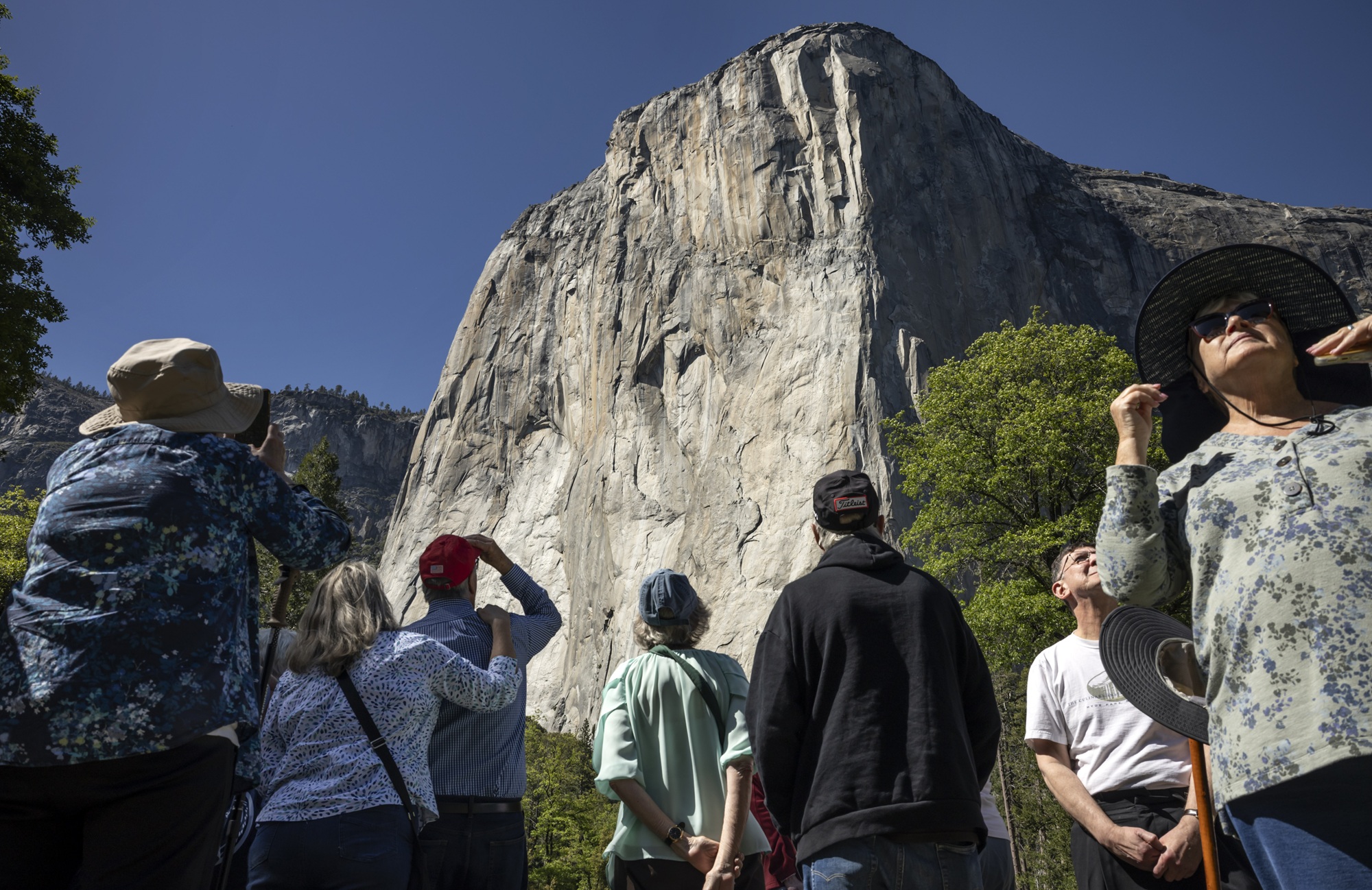
"caption": "Visitors look up at El Capitan from El Capitan Meadow in Yosemite National Park, California, on May 20, 2025. Visitors to Yosemite right now will find open gates, but also a lack of rangers and facilities. Here’s what to know.",
"credit": "Carlos Avila Gonzalez/San Francisco Chronicle via Getty Images",
"altTag": null,
"description": null,
"imgSizes": {
"thumbnail": {
"file": "https://cdn.kqed.org/wp-content/uploads/sites/10/2025/10/YosemiteGetty-160x104.jpg",
"width": 160,
"height": 104,
"mimeType": "image/jpeg"
},
"1536x1536": {
"file": "https://cdn.kqed.org/wp-content/uploads/sites/10/2025/10/YosemiteGetty-1536x997.jpg",
"width": 1536,
"height": 997,
"mimeType": "image/jpeg"
},
"post-thumbnail": {
"file": "https://cdn.kqed.org/wp-content/uploads/sites/10/2025/10/YosemiteGetty-672x372.jpg",
"width": 672,
"height": 372,
"mimeType": "image/jpeg"
},
"twentyfourteen-full-width": {
"file": "https://cdn.kqed.org/wp-content/uploads/sites/10/2025/10/YosemiteGetty-1038x576.jpg",
"width": 1038,
"height": 576,
"mimeType": "image/jpeg"
},
"kqedFullSize": {
"file": "https://cdn.kqed.org/wp-content/uploads/sites/10/2025/10/YosemiteGetty.jpg",
"width": 2000,
"height": 1298
}
},
"isLoading": false,
"fetchFailed": false
},
"news_12055667": {
"type": "attachments",
"id": "news_12055667",
"meta": {
"index": "attachments_1716263798",
"site": "news",
"id": "12055667",
"found": true
},
"title": "US Government Orders Change To Park Service History Of Muir Woods Nat'l Monument",
"publishDate": 1757621375,
"status": "inherit",
"parent": 12055659,
"modified": 1757621436,
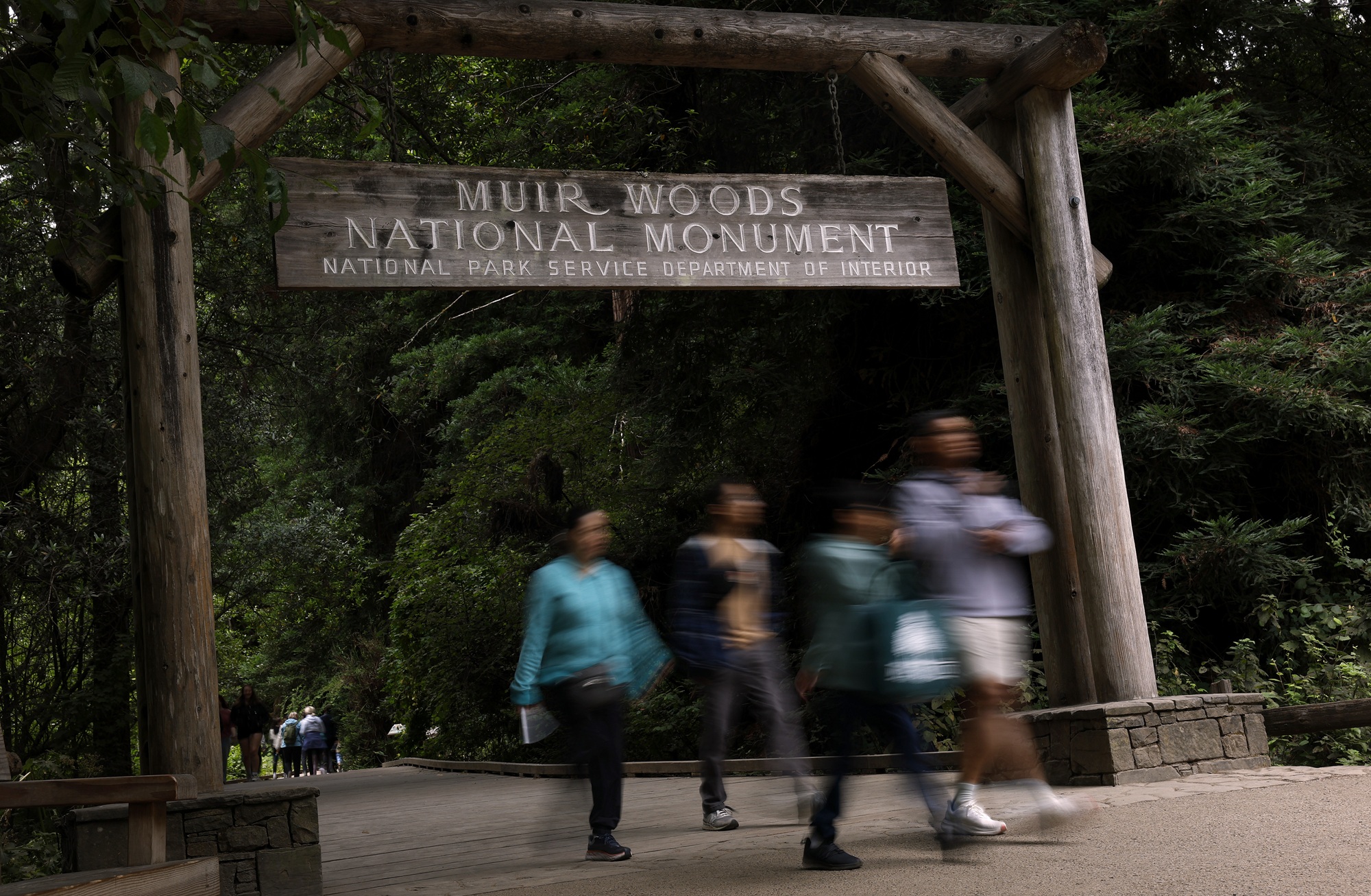
"caption": "Visitors leave Muir Woods National Monument on July 24, 2025, in Muir Woods National Monument, California. Under a directive from Interior Secretary Doug Burgum and the Trump administration, the National Park Service has removed an exhibit at Muir Woods National Monument that aimed to tell a more comprehensive history of the site. The exhibit was installed in 2021 and amended to highlight previously untold narratives of the Coast Miwok and Southern Pomo peoples who stewarded the land for hundreds of years, and the efforts by the California Club, a women’s organization, to save the forest in the early 20th century. ",
"credit": "Justin Sullivan/Getty Images",
"altTag": null,
"description": null,
"imgSizes": {
"thumbnail": {
"file": "https://cdn.kqed.org/wp-content/uploads/sites/10/2025/09/TrumpCaliforniaNatlParksGetty-160x105.jpg",
"width": 160,
"height": 105,
"mimeType": "image/jpeg"
},
"1536x1536": {
"file": "https://cdn.kqed.org/wp-content/uploads/sites/10/2025/09/TrumpCaliforniaNatlParksGetty-1536x1004.jpg",
"width": 1536,
"height": 1004,
"mimeType": "image/jpeg"
},
"post-thumbnail": {
"file": "https://cdn.kqed.org/wp-content/uploads/sites/10/2025/09/TrumpCaliforniaNatlParksGetty-672x372.jpg",
"width": 672,
"height": 372,
"mimeType": "image/jpeg"
},
"twentyfourteen-full-width": {
"file": "https://cdn.kqed.org/wp-content/uploads/sites/10/2025/09/TrumpCaliforniaNatlParksGetty-1038x576.jpg",
"width": 1038,
"height": 576,
"mimeType": "image/jpeg"
},
"kqedFullSize": {
"file": "https://cdn.kqed.org/wp-content/uploads/sites/10/2025/09/TrumpCaliforniaNatlParksGetty.jpg",
"width": 2000,
"height": 1307
}
},
"isLoading": false,
"fetchFailed": false
},
"news_11972166": {
"type": "attachments",
"id": "news_11972166",
"meta": {
"index": "attachments_1716263798",
"site": "news",
"id": "11972166",
"found": true
},
"parent": 11972095,
"imgSizes": {
"twentyfourteen-full-width": {
"file": "https://cdn.kqed.org/wp-content/uploads/sites/10/2024/01/HetchHetchyCentennial_05022023-qut-1038x576.jpg",
"width": 1038,
"mimeType": "image/jpeg",
"height": 576
},
"thumbnail": {
"file": "https://cdn.kqed.org/wp-content/uploads/sites/10/2024/01/HetchHetchyCentennial_05022023-qut-160x107.jpg",
"width": 160,
"mimeType": "image/jpeg",
"height": 107
},
"post-thumbnail": {
"file": "https://cdn.kqed.org/wp-content/uploads/sites/10/2024/01/HetchHetchyCentennial_05022023-qut-672x372.jpg",
"width": 672,
"mimeType": "image/jpeg",
"height": 372
},
"kqedFullSize": {
"file": "https://cdn.kqed.org/wp-content/uploads/sites/10/2024/01/HetchHetchyCentennial_05022023-qut.jpg",
"width": 1920,
"height": 1280
},
"large": {
"file": "https://cdn.kqed.org/wp-content/uploads/sites/10/2024/01/HetchHetchyCentennial_05022023-qut-1020x680.jpg",
"width": 1020,
"mimeType": "image/jpeg",
"height": 680
},
"1536x1536": {
"file": "https://cdn.kqed.org/wp-content/uploads/sites/10/2024/01/HetchHetchyCentennial_05022023-qut-1536x1024.jpg",
"width": 1536,
"mimeType": "image/jpeg",
"height": 1024
},
"medium": {
"file": "https://cdn.kqed.org/wp-content/uploads/sites/10/2024/01/HetchHetchyCentennial_05022023-qut-800x533.jpg",
"width": 800,
"mimeType": "image/jpeg",
"height": 533
}
},
"publishDate": 1704909129,
"modified": 1704909200,
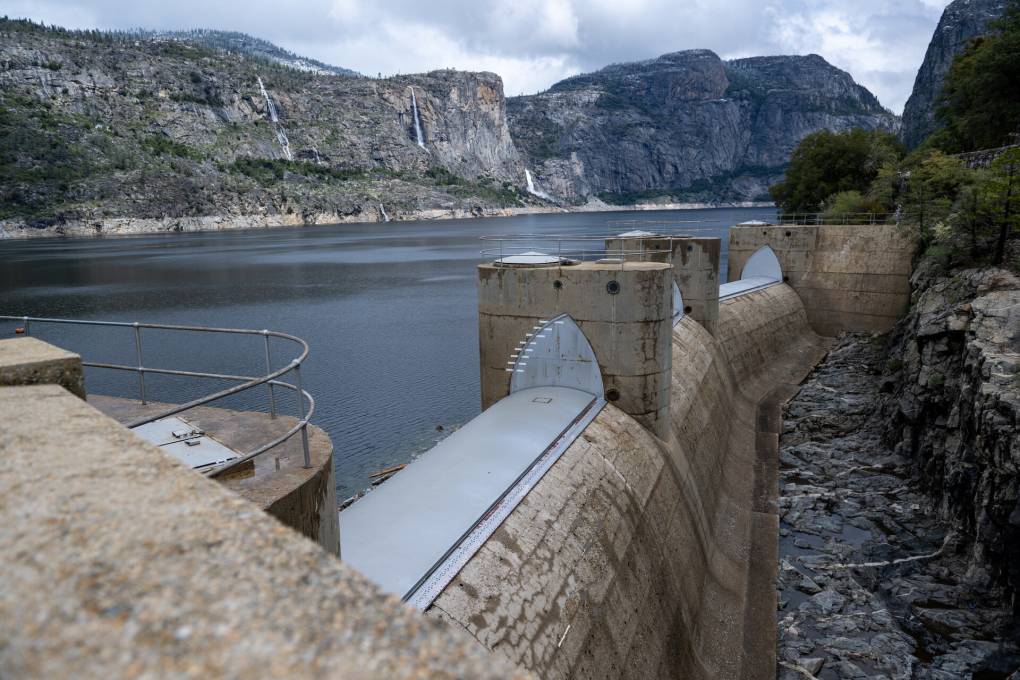
"caption": "The Hetch Hetchy Reservoir in Yosemite National Park on May 2, 2023. This reservoir provides water to much of the Bay Area.",
"description": null,
"title": "The Hetch Hetchy Reservoir in Yosemite National Park on May 2, 2023.",
"credit": "Beth LaBerge/KQED",
"status": "inherit",
"altTag": "A long wall stretches across the right side holding back a huge lake with mountains rising behind.",
"isLoading": false,
"fetchFailed": false
},
"news_12029489": {
"type": "attachments",
"id": "news_12029489",
"meta": {
"index": "attachments_1716263798",
"site": "news",
"id": "12029489",
"found": true
},
"title": "US-POLITICS-ENVIRONMENT-NATURE-PARKS-PROTEST",
"publishDate": 1741040569,
"status": "inherit",
"parent": 12029182,
"modified": 1741040606,
"caption": "A volunteer for the National Park Service welcomes visitors at the Exploration Center in Yosemite Valley, at Yosemite National Park on March 1, 2025.",
"credit": "Laure Andrillon/AFP via Getty",
"altTag": null,
"description": null,
"imgSizes": {
"medium": {
"file": "https://cdn.kqed.org/wp-content/uploads/sites/10/2025/03/CaliforniaPublicLandsGetty1-800x534.jpg",
"width": 800,
"height": 534,
"mimeType": "image/jpeg"
},
"large": {
"file": "https://cdn.kqed.org/wp-content/uploads/sites/10/2025/03/CaliforniaPublicLandsGetty1-1020x681.jpg",
"width": 1020,
"height": 681,
"mimeType": "image/jpeg"
},
"thumbnail": {
"file": "https://cdn.kqed.org/wp-content/uploads/sites/10/2025/03/CaliforniaPublicLandsGetty1-160x107.jpg",
"width": 160,
"height": 107,
"mimeType": "image/jpeg"
},
"1536x1536": {
"file": "https://cdn.kqed.org/wp-content/uploads/sites/10/2025/03/CaliforniaPublicLandsGetty1-1536x1025.jpg",
"width": 1536,
"height": 1025,
"mimeType": "image/jpeg"
},
"post-thumbnail": {
"file": "https://cdn.kqed.org/wp-content/uploads/sites/10/2025/03/CaliforniaPublicLandsGetty1-672x372.jpg",
"width": 672,
"height": 372,
"mimeType": "image/jpeg"
},
"twentyfourteen-full-width": {
"file": "https://cdn.kqed.org/wp-content/uploads/sites/10/2025/03/CaliforniaPublicLandsGetty1-1038x576.jpg",
"width": 1038,
"height": 576,
"mimeType": "image/jpeg"
},
"full-width": {
"file": "https://cdn.kqed.org/wp-content/uploads/sites/10/2025/03/CaliforniaPublicLandsGetty1-1920x1282.jpg",
"width": 1920,
"height": 1282,
"mimeType": "image/jpeg"
},
"kqedFullSize": {
"file": "https://cdn.kqed.org/wp-content/uploads/sites/10/2025/03/CaliforniaPublicLandsGetty1.jpg",
"width": 2000,
"height": 1335
}
},
"isLoading": false,
"fetchFailed": false
},
"news_12053096": {
"type": "attachments",
"id": "news_12053096",
"meta": {
"index": "attachments_1716263798",
"site": "news",
"id": "12053096",
"found": true
},
"title": "Trans Flag Hung From El Capitan",
"publishDate": 1755734796,
"status": "inherit",
"parent": 12053078,
"modified": 1755734855,
"caption": "A group of transgender, queer and allied climbers unfurled a trans pride flag on El Capitan in Yosemite National Park, California, on May 20, 2025. The flag is the largest flag ever flown on the famed granite monolith in the park, and hangs beneath Heart Ledges, a symbolic location near the literal and figurative heart of El Capitan. ",
"credit": "Carlos Avila Gonzalez/San Francisco Chronicle via Getty Images",
"altTag": null,
"description": null,
"imgSizes": {
"thumbnail": {
"file": "https://cdn.kqed.org/wp-content/uploads/sites/10/2025/08/YosemiteTransFlagGetty-160x107.jpg",
"width": 160,
"height": 107,
"mimeType": "image/jpeg"
},
"1536x1536": {
"file": "https://cdn.kqed.org/wp-content/uploads/sites/10/2025/08/YosemiteTransFlagGetty-1536x1024.jpg",
"width": 1536,
"height": 1024,
"mimeType": "image/jpeg"
},
"post-thumbnail": {
"file": "https://cdn.kqed.org/wp-content/uploads/sites/10/2025/08/YosemiteTransFlagGetty-672x372.jpg",
"width": 672,
"height": 372,
"mimeType": "image/jpeg"
},
"twentyfourteen-full-width": {
"file": "https://cdn.kqed.org/wp-content/uploads/sites/10/2025/08/YosemiteTransFlagGetty-1038x576.jpg",
"width": 1038,
"height": 576,
"mimeType": "image/jpeg"
},
"kqedFullSize": {
"file": "https://cdn.kqed.org/wp-content/uploads/sites/10/2025/08/YosemiteTransFlagGetty.jpg",
"width": 2000,
"height": 1333
}
},
"isLoading": false,
"fetchFailed": false
},
"news_11985178": {
"type": "attachments",
"id": "news_11985178",
"meta": {
"index": "attachments_1716263798",
"site": "news",
"id": "11985178",
"found": true
},
"parent": 0,
"imgSizes": {
"twentyfourteen-full-width": {
"file": "https://cdn.kqed.org/wp-content/uploads/sites/10/2024/05/BETH-RODDEN-CLIMBING-IN-YOSEMITE-2022-KQED-1038x576.jpg",
"width": 1038,
"mimeType": "image/jpeg",
"height": 576
},
"thumbnail": {
"file": "https://cdn.kqed.org/wp-content/uploads/sites/10/2024/05/BETH-RODDEN-CLIMBING-IN-YOSEMITE-2022-KQED-160x107.jpg",
"width": 160,
"mimeType": "image/jpeg",
"height": 107
},
"post-thumbnail": {
"file": "https://cdn.kqed.org/wp-content/uploads/sites/10/2024/05/BETH-RODDEN-CLIMBING-IN-YOSEMITE-2022-KQED-672x372.jpg",
"width": 672,
"mimeType": "image/jpeg",
"height": 372
},
"kqedFullSize": {
"file": "https://cdn.kqed.org/wp-content/uploads/sites/10/2024/05/BETH-RODDEN-CLIMBING-IN-YOSEMITE-2022-KQED.jpg",
"width": 2000,
"height": 1333
},
"large": {
"file": "https://cdn.kqed.org/wp-content/uploads/sites/10/2024/05/BETH-RODDEN-CLIMBING-IN-YOSEMITE-2022-KQED-1020x680.jpg",
"width": 1020,
"mimeType": "image/jpeg",
"height": 680
},
"1536x1536": {
"file": "https://cdn.kqed.org/wp-content/uploads/sites/10/2024/05/BETH-RODDEN-CLIMBING-IN-YOSEMITE-2022-KQED-1536x1024.jpg",
"width": 1536,
"mimeType": "image/jpeg",
"height": 1024
},
"full-width": {
"file": "https://cdn.kqed.org/wp-content/uploads/sites/10/2024/05/BETH-RODDEN-CLIMBING-IN-YOSEMITE-2022-KQED-1920x1280.jpg",
"width": 1920,
"mimeType": "image/jpeg",
"height": 1280
},
"medium": {
"file": "https://cdn.kqed.org/wp-content/uploads/sites/10/2024/05/BETH-RODDEN-CLIMBING-IN-YOSEMITE-2022-KQED-800x533.jpg",
"width": 800,
"mimeType": "image/jpeg",
"height": 533
}
},
"publishDate": 1715100264,
"modified": 1715100378,
"caption": "Beth Rodden climbing in Yosemite in 2022. ",
"description": null,
"title": null,
"credit": "Courtesy of Beth Rodden",
"status": "inherit",
"altTag": null,
"isLoading": false,
"fetchFailed": false
},
"news_11961884": {
"type": "attachments",
"id": "news_11961884",
"meta": {
"index": "attachments_1716263798",
"site": "news",
"id": "11961884",
"found": true
},
"parent": 0,
"imgSizes": {
"twentyfourteen-full-width": {
"file": "https://ww2.kqed.org/app/uploads/sites/10/2023/09/GettyImages-1410429911-qut-1038x576.jpg",
"width": 1038,
"mimeType": "image/jpeg",
"height": 576
},
"thumbnail": {
"file": "https://ww2.kqed.org/app/uploads/sites/10/2023/09/GettyImages-1410429911-qut-160x107.jpg",
"width": 160,
"mimeType": "image/jpeg",
"height": 107
},
"post-thumbnail": {
"file": "https://ww2.kqed.org/app/uploads/sites/10/2023/09/GettyImages-1410429911-qut-672x372.jpg",
"width": 672,
"mimeType": "image/jpeg",
"height": 372
},
"kqedFullSize": {
"file": "https://ww2.kqed.org/app/uploads/sites/10/2023/09/GettyImages-1410429911-qut.jpg",
"width": 1920,
"height": 1280
},
"large": {
"file": "https://ww2.kqed.org/app/uploads/sites/10/2023/09/GettyImages-1410429911-qut-1020x680.jpg",
"width": 1020,
"mimeType": "image/jpeg",
"height": 680
},
"1536x1536": {
"file": "https://ww2.kqed.org/app/uploads/sites/10/2023/09/GettyImages-1410429911-qut-1536x1024.jpg",
"width": 1536,
"mimeType": "image/jpeg",
"height": 1024
},
"medium": {
"file": "https://ww2.kqed.org/app/uploads/sites/10/2023/09/GettyImages-1410429911-qut-800x533.jpg",
"width": 800,
"mimeType": "image/jpeg",
"height": 533
}
},
"publishDate": 1695230136,
"modified": 1695241511,
"caption": "A home burns as the Oak Fire moves through the area on July 23, 2022 near Mariposa in Mariposa County. The fast-moving Oak Fire burned outside of Yosemite National Park and forced evacuations, charred over 7 square miles and destroyed several homes.",
"description": null,
"title": "Oak Fire Sparks Evacuations in Mariposa County",
"credit": "Justin Sullivan/Getty Images",
"status": "inherit",
"altTag": "Massive, burning orange flames engulf a home. A screen door glows with fire behind it.",
"isLoading": false,
"fetchFailed": false
},
"news_11955251": {
"type": "attachments",
"id": "news_11955251",
"meta": {
"index": "attachments_1716263798",
"site": "news",
"id": "11955251",
"found": true
},
"parent": 0,
"imgSizes": {
"twentyfourteen-full-width": {
"file": "https://ww2.kqed.org/app/uploads/sites/10/2023/07/Screenshot-2023-07-07-at-6.09.13-PM-1038x576.png",
"width": 1038,
"mimeType": "image/png",
"height": 576
},
"thumbnail": {
"file": "https://ww2.kqed.org/app/uploads/sites/10/2023/07/Screenshot-2023-07-07-at-6.09.13-PM-160x102.png",
"width": 160,
"mimeType": "image/png",
"height": 102
},
"post-thumbnail": {
"file": "https://ww2.kqed.org/app/uploads/sites/10/2023/07/Screenshot-2023-07-07-at-6.09.13-PM-672x372.png",
"width": 672,
"mimeType": "image/png",
"height": 372
},
"kqedFullSize": {
"file": "https://ww2.kqed.org/app/uploads/sites/10/2023/07/Screenshot-2023-07-07-at-6.09.13-PM.png",
"width": 2942,
"height": 1874
},
"2048x2048": {
"file": "https://ww2.kqed.org/app/uploads/sites/10/2023/07/Screenshot-2023-07-07-at-6.09.13-PM-2048x1305.png",
"width": 2048,
"mimeType": "image/png",
"height": 1305
},
"large": {
"file": "https://ww2.kqed.org/app/uploads/sites/10/2023/07/Screenshot-2023-07-07-at-6.09.13-PM-1020x650.png",
"width": 1020,
"mimeType": "image/png",
"height": 650
},
"1536x1536": {
"file": "https://ww2.kqed.org/app/uploads/sites/10/2023/07/Screenshot-2023-07-07-at-6.09.13-PM-1536x978.png",
"width": 1536,
"mimeType": "image/png",
"height": 978
},
"full-width": {
"file": "https://ww2.kqed.org/app/uploads/sites/10/2023/07/Screenshot-2023-07-07-at-6.09.13-PM-1920x1223.png",
"width": 1920,
"mimeType": "image/png",
"height": 1223
},
"medium": {
"file": "https://ww2.kqed.org/app/uploads/sites/10/2023/07/Screenshot-2023-07-07-at-6.09.13-PM-800x510.png",
"width": 800,
"mimeType": "image/png",
"height": 510
}
},
"publishDate": 1688778819,
"modified": 1689017508,
"caption": "In a screenshot from a National Park Service video, a crew is seen working on June 21, 2023, to clear Yosemite National Park's Tioga Road. After the previous winter's historic snowfall, the road is facing its latest opening date since at least 1938.",
"description": null,
"title": "tioga-pass",
"credit": "Courtesy of Yosemite National Park",
"status": "inherit",
"altTag": "A worker in hardhat and backpack directs bulldozer operators working to clear piles of snow from mountain road.",
"isLoading": false,
"fetchFailed": false
},
"news_11919228": {
"type": "attachments",
"id": "news_11919228",
"meta": {
"index": "attachments_1716263798",
"site": "news",
"id": "11919228",
"found": true
},
"parent": 11919221,
"imgSizes": {
"twentyfourteen-full-width": {
"file": "https://ww2.kqed.org/app/uploads/sites/10/2022/07/RS57177_Washburn_Fire_07102022-qut-1038x576.jpg",
"width": 1038,
"mimeType": "image/jpeg",
"height": 576
},
"thumbnail": {
"file": "https://ww2.kqed.org/app/uploads/sites/10/2022/07/RS57177_Washburn_Fire_07102022-qut-160x120.jpg",
"width": 160,
"mimeType": "image/jpeg",
"height": 120
},
"post-thumbnail": {
"file": "https://ww2.kqed.org/app/uploads/sites/10/2022/07/RS57177_Washburn_Fire_07102022-qut-672x372.jpg",
"width": 672,
"mimeType": "image/jpeg",
"height": 372
},
"kqedFullSize": {
"file": "https://ww2.kqed.org/app/uploads/sites/10/2022/07/RS57177_Washburn_Fire_07102022-qut.jpg",
"width": 1080,
"height": 810
},
"large": {
"file": "https://ww2.kqed.org/app/uploads/sites/10/2022/07/RS57177_Washburn_Fire_07102022-qut-1020x765.jpg",
"width": 1020,
"mimeType": "image/jpeg",
"height": 765
},
"medium": {
"file": "https://ww2.kqed.org/app/uploads/sites/10/2022/07/RS57177_Washburn_Fire_07102022-qut-800x600.jpg",
"width": 800,
"mimeType": "image/jpeg",
"height": 600
}
},
"publishDate": 1657485168,
"modified": 1657565542,
"caption": "The Washburn Fire as seen from along Highway 41 on July 9, 2022.",
"description": null,
"title": "RS57177_Washburn_Fire_07102022-qut",
"credit": "Courtesy of Yosemite Fire and Aviation",
"status": "inherit",
"altTag": "Fire amidst trees",
"isLoading": false,
"fetchFailed": false
},
"news_11879126": {
"type": "attachments",
"id": "news_11879126",
"meta": {
"index": "attachments_1716263798",
"site": "news",
"id": "11879126",
"found": true
},
"parent": 11879124,
"imgSizes": {
"twentyfourteen-full-width": {
"file": "https://ww2.kqed.org/app/uploads/sites/10/2021/06/moises-monterrubio-on-the-line-taken-by-ryan-sheridan_wide-dbece448642e00dab8f981c651718a1647d146fa-1038x576.jpg",
"width": 1038,
"mimeType": "image/jpeg",
"height": 576
},
"thumbnail": {
"file": "https://ww2.kqed.org/app/uploads/sites/10/2021/06/moises-monterrubio-on-the-line-taken-by-ryan-sheridan_wide-dbece448642e00dab8f981c651718a1647d146fa-160x90.jpg",
"width": 160,
"mimeType": "image/jpeg",
"height": 90
},
"post-thumbnail": {
"file": "https://ww2.kqed.org/app/uploads/sites/10/2021/06/moises-monterrubio-on-the-line-taken-by-ryan-sheridan_wide-dbece448642e00dab8f981c651718a1647d146fa-672x372.jpg",
"width": 672,
"mimeType": "image/jpeg",
"height": 372
},
"kqedFullSize": {
"file": "https://ww2.kqed.org/app/uploads/sites/10/2021/06/moises-monterrubio-on-the-line-taken-by-ryan-sheridan_wide-dbece448642e00dab8f981c651718a1647d146fa-scaled.jpg",
"width": 2560,
"height": 1440
},
"2048x2048": {
"file": "https://ww2.kqed.org/app/uploads/sites/10/2021/06/moises-monterrubio-on-the-line-taken-by-ryan-sheridan_wide-dbece448642e00dab8f981c651718a1647d146fa-2048x1152.jpg",
"width": 2048,
"mimeType": "image/jpeg",
"height": 1152
},
"large": {
"file": "https://ww2.kqed.org/app/uploads/sites/10/2021/06/moises-monterrubio-on-the-line-taken-by-ryan-sheridan_wide-dbece448642e00dab8f981c651718a1647d146fa-1020x574.jpg",
"width": 1020,
"mimeType": "image/jpeg",
"height": 574
},
"1536x1536": {
"file": "https://ww2.kqed.org/app/uploads/sites/10/2021/06/moises-monterrubio-on-the-line-taken-by-ryan-sheridan_wide-dbece448642e00dab8f981c651718a1647d146fa-1536x864.jpg",
"width": 1536,
"mimeType": "image/jpeg",
"height": 864
},
"full-width": {
"file": "https://ww2.kqed.org/app/uploads/sites/10/2021/06/moises-monterrubio-on-the-line-taken-by-ryan-sheridan_wide-dbece448642e00dab8f981c651718a1647d146fa-1920x1080.jpg",
"width": 1920,
"mimeType": "image/jpeg",
"height": 1080
},
"medium": {
"file": "https://ww2.kqed.org/app/uploads/sites/10/2021/06/moises-monterrubio-on-the-line-taken-by-ryan-sheridan_wide-dbece448642e00dab8f981c651718a1647d146fa-800x450.jpg",
"width": 800,
"mimeType": "image/jpeg",
"height": 450
}
},
"publishDate": 1624492038,
"modified": 1624492515,
"caption": "Moises Monterrubio walks a highline 1,600 feet in the air at Yosemite National Park in June. The line stretched 2,800 feet, setting a record in Yosemite and in California, according to the International Slackline Association.",
"description": "Moises Monterrubio walks a highline 1,600 feet in the air at Yosemite National Park in June. The line stretched 2,800 feet, setting a record in Yosemite and in California, according to the International Slackline Association.",
"title": "Moises Monterrubio walks a highline 1,600 feet in the air at Yosemite National Park in June. The line stretched 2,800 feet, setting a record in Yosemite and in California, according to the International Slackline Association.",
"credit": "Ryan Sheridan/Moises Monterrubio",
"status": "inherit",
"altTag": null,
"isLoading": false,
"fetchFailed": false
}
},
"audioPlayerReducer": {
"postId": "stream_live",
"isPaused": true,
"isPlaying": false,
"pfsActive": false,
"pledgeModalIsOpen": true,
"playerDrawerIsOpen": false,
"liveAudioPlayStartedAt": 0,
"liveAudioPlayContext": ""
},
"authorsReducer": {
"byline_news_11961878": {
"type": "authors",
"id": "byline_news_11961878",
"meta": {
"override": true
},
"slug": "byline_news_11961878",
"name": "\u003ca href=\"https://www.npr.org/people/1113762078/chloe-veltman\">Chloe Veltman\u003c/a>",
"isLoading": false
},
"byline_news_11919221": {
"type": "authors",
"id": "byline_news_11919221",
"meta": {
"override": true
},
"slug": "byline_news_11919221",
"name": "The Associated Press",
"isLoading": false
},
"byline_news_11879124": {
"type": "authors",
"id": "byline_news_11879124",
"meta": {
"override": true
},
"slug": "byline_news_11879124",
"name": "Anna Sirianni and James Doubek",
"isLoading": false
},
"danbrekke": {
"type": "authors",
"id": "222",
"meta": {
"index": "authors_1716337520",
"id": "222",
"found": true
},
"name": "Dan Brekke",
"firstName": "Dan",
"lastName": "Brekke",
"slug": "danbrekke",
"email": "dbrekke@kqed.org",
"display_author_email": true,
"staff_mastheads": [
"news",
"science"
],
"title": "KQED Editor and Reporter",
"bio": "Dan Brekke is a reporter and editor for KQED News, responsible for coverage of topics ranging from California water issues to the Bay Area's transportation challenges. In a newsroom career that began in Chicago in 1972, Dan has worked for \u003cem>The San Francisco Examiner,\u003c/em> Wired and TechTV and has been published in The New York Times, The New York Times Magazine, Business 2.0, Salon and elsewhere.\r\n\r\nSince joining KQED in 2007, Dan has reported, edited and produced both radio and online features and breaking news pieces. He has shared as both editor and reporter in four Society of Professional Journalists Norcal Excellence in Journalism awards and one Edward R. Murrow regional award. He was chosen for a spring 2017 residency at the Mesa Refuge to advance his research on California salmon.\r\n\r\nEmail Dan at: \u003ca href=\"mailto:dbrekke@kqed.org\">dbrekke@kqed.org\u003c/a>\r\n\r\n\u003cstrong>Twitter:\u003c/strong> \u003ca href=\"https://twitter.com/danbrekke\" rel=\"noopener noreferrer\">twitter.com/danbrekke\u003c/a>\r\n\u003cstrong>Facebook:\u003c/strong> \u003ca href=\"https://www.facebook.com/danbrekke\" rel=\"noopener noreferrer\">www.facebook.com/danbrekke\u003c/a>\r\n\u003cstrong>LinkedIn:\u003c/strong> \u003ca href=\"https://www.linkedin.com/in/danbrekke\" rel=\"noopener noreferrer\">www.linkedin.com/in/danbrekke\u003c/a>",
"avatar": "https://secure.gravatar.com/avatar/8f1f0d2a978fb3b23426c922c7e2af558fa36905b49c4ce76a97dc3c72d27226?s=600&d=mm&r=g",
"twitter": "danbrekke",
"bluesky": null,
"facebook": null,
"instagram": "https://www.instagram.com/dan.brekke/",
"linkedin": "https://www.linkedin.com/in/danbrekke/",
"sites": [
{
"site": "news",
"roles": [
"administrator",
"create_posts"
]
},
{
"site": "stateofhealth",
"roles": [
"editor"
]
},
{
"site": "science",
"roles": [
"editor"
]
},
{
"site": "quest",
"roles": [
"contributor"
]
},
{
"site": "food",
"roles": [
"contributor"
]
},
{
"site": "forum",
"roles": [
"contributor"
]
},
{
"site": "elections",
"roles": [
"editor"
]
},
{
"site": "liveblog",
"roles": [
"editor"
]
}
],
"headData": {
"title": "Dan Brekke | KQED",
"description": "KQED Editor and Reporter",
"ogImgSrc": "https://secure.gravatar.com/avatar/8f1f0d2a978fb3b23426c922c7e2af558fa36905b49c4ce76a97dc3c72d27226?s=600&d=mm&r=g",
"twImgSrc": "https://secure.gravatar.com/avatar/8f1f0d2a978fb3b23426c922c7e2af558fa36905b49c4ce76a97dc3c72d27226?s=600&d=mm&r=g"
},
"isLoading": false,
"link": "/author/danbrekke"
},
"carlysevern": {
"type": "authors",
"id": "3243",
"meta": {
"index": "authors_1716337520",
"id": "3243",
"found": true
},
"name": "Carly Severn",
"firstName": "Carly",
"lastName": "Severn",
"slug": "carlysevern",
"email": "csevern@kqed.org",
"display_author_email": false,
"staff_mastheads": [
"news"
],
"title": "Senior Editor, Audience News ",
"bio": "Carly is KQED's Senior Editor of Audience News on the Digital News team, and has reported for the California Report Magazine, Bay Curious and KQED Arts. She's formerly the host of \u003ca href=\"http://ww2.kqed.org/pop/category/the-cooler/\" rel=\"noopener noreferrer\">The Cooler\u003c/a> podcast.",
"avatar": "https://secure.gravatar.com/avatar/54037bf5c128fe678f0ef26cec97a93f2e7f220a22d7285703328f12c42c1b1d?s=600&d=blank&r=g",
"twitter": "teacupinthebay",
"bluesky": null,
"facebook": null,
"instagram": null,
"linkedin": null,
"sites": [
{
"site": "",
"roles": [
"editor"
]
},
{
"site": "arts",
"roles": [
"editor"
]
},
{
"site": "news",
"roles": [
"administrator"
]
},
{
"site": "pop",
"roles": [
"editor"
]
},
{
"site": "futureofyou",
"roles": [
"editor"
]
},
{
"site": "about",
"roles": [
"administrator"
]
},
{
"site": "mindshift",
"roles": [
"editor"
]
},
{
"site": "bayareabites",
"roles": [
"editor"
]
},
{
"site": "stateofhealth",
"roles": [
"editor"
]
},
{
"site": "science",
"roles": [
"editor"
]
},
{
"site": "food",
"roles": [
"contributor"
]
},
{
"site": "forum",
"roles": [
"editor"
]
},
{
"site": "perspectives",
"roles": [
"administrator"
]
},
{
"site": "liveblog",
"roles": [
"editor"
]
}
],
"headData": {
"title": "Carly Severn | KQED",
"description": "Senior Editor, Audience News ",
"ogImgSrc": "https://secure.gravatar.com/avatar/54037bf5c128fe678f0ef26cec97a93f2e7f220a22d7285703328f12c42c1b1d?s=600&d=blank&r=g",
"twImgSrc": "https://secure.gravatar.com/avatar/54037bf5c128fe678f0ef26cec97a93f2e7f220a22d7285703328f12c42c1b1d?s=600&d=blank&r=g"
},
"isLoading": false,
"link": "/author/carlysevern"
},
"ecruzguevarra": {
"type": "authors",
"id": "8654",
"meta": {
"index": "authors_1716337520",
"id": "8654",
"found": true
},
"name": "Ericka Cruz Guevarra",
"firstName": "Ericka",
"lastName": "Cruz Guevarra",
"slug": "ecruzguevarra",
"email": "ecruzguevarra@kqed.org",
"display_author_email": true,
"staff_mastheads": [
"news"
],
"title": "Producer, The Bay Podcast",
"bio": "Ericka Cruz Guevarra is host of \u003ca href=\"https://www.kqed.org/podcasts/thebay\">\u003cem>The Bay\u003c/em>\u003c/a> podcast at KQED. Before host, she was the show’s producer. Her work in that capacity includes a three-part reported series on policing in Vallejo, which won a 2020 excellence in journalism award from the Society of Professional Journalists. Ericka has worked as a breaking news reporter at Oregon Public Broadcasting, helped produce the Code Switch podcast, and was KQED’s inaugural Raul Ramirez Diversity Fund intern. She’s also an alumna of NPR’s Next Generation Radio program. Send her an email if you have strong feelings about whether Fairfield and Suisun City are the Bay. Ericka is represented by SAG-AFTRA.",
"avatar": "https://secure.gravatar.com/avatar/accefc1de4bafc7e234b69bcb9b6f6536c130fd84709bc3069ef11a78787e1bb?s=600&d=blank&r=g",
"twitter": "NotoriousECG",
"bluesky": null,
"facebook": null,
"instagram": null,
"linkedin": null,
"sites": [
{
"site": "arts",
"roles": [
"subscriber"
]
},
{
"site": "news",
"roles": [
"editor",
"manage_categories"
]
},
{
"site": "futureofyou",
"roles": [
"subscriber"
]
},
{
"site": "stateofhealth",
"roles": [
"subscriber"
]
},
{
"site": "science",
"roles": [
"editor"
]
},
{
"site": "forum",
"roles": [
"subscriber"
]
}
],
"headData": {
"title": "Ericka Cruz Guevarra | KQED",
"description": "Producer, The Bay Podcast",
"ogImgSrc": "https://secure.gravatar.com/avatar/accefc1de4bafc7e234b69bcb9b6f6536c130fd84709bc3069ef11a78787e1bb?s=600&d=blank&r=g",
"twImgSrc": "https://secure.gravatar.com/avatar/accefc1de4bafc7e234b69bcb9b6f6536c130fd84709bc3069ef11a78787e1bb?s=600&d=blank&r=g"
},
"isLoading": false,
"link": "/author/ecruzguevarra"
},
"btaylor": {
"type": "authors",
"id": "11365",
"meta": {
"index": "authors_1716337520",
"id": "11365",
"found": true
},
"name": "Bianca Taylor",
"firstName": "Bianca",
"lastName": "Taylor",
"slug": "btaylor",
"email": "btaylor@KQED.org",
"display_author_email": false,
"staff_mastheads": [
"news"
],
"title": "Host and Producer ",
"bio": "Bianca Taylor is a news producer and host of KQED's The Latest podcast.\r\n\r\nHer work with KQED has been honored by the Society of Professional Journalists NorCal, the Webby's, the Regional Murrow Awards, and ONA. She has also worked with NPR, the BBC World Service, and the Washington Post Creative Group.\r\n\r\nBianca is represented by SAG-AFTRA.",
"avatar": "https://secure.gravatar.com/avatar/6b9d3f6552dd10470c5d1c2e58cfe717?s=600&d=blank&r=g",
"twitter": "SoundsLkeBianca",
"facebook": null,
"instagram": null,
"linkedin": null,
"sites": [
{
"site": "arts",
"roles": [
"editor"
]
},
{
"site": "news",
"roles": [
"edit_others_posts",
"editor"
]
},
{
"site": "pop",
"roles": [
"editor"
]
},
{
"site": "bayareabites",
"roles": [
"author"
]
},
{
"site": "science",
"roles": [
"editor"
]
},
{
"site": "forum",
"roles": [
"editor"
]
},
{
"site": "radio",
"roles": [
"editor"
]
},
{
"site": "podcasts",
"roles": [
"editor"
]
}
],
"headData": {
"title": "Bianca Taylor | KQED",
"description": "Host and Producer ",
"ogImgSrc": "https://secure.gravatar.com/avatar/6b9d3f6552dd10470c5d1c2e58cfe717?s=600&d=blank&r=g",
"twImgSrc": "https://secure.gravatar.com/avatar/6b9d3f6552dd10470c5d1c2e58cfe717?s=600&d=blank&r=g"
},
"isLoading": false,
"link": "/author/btaylor"
},
"amontecillo": {
"type": "authors",
"id": "11649",
"meta": {
"index": "authors_1716337520",
"id": "11649",
"found": true
},
"name": "Alan Montecillo",
"firstName": "Alan",
"lastName": "Montecillo",
"slug": "amontecillo",
"email": "amontecillo@kqed.org",
"display_author_email": false,
"staff_mastheads": [
"news"
],
"title": "KQED Contributor",
"bio": "Alan Montecillo is the senior editor of \u003cem>\u003ca href=\"http://kqed.org/thebay\">The Bay\u003c/a>, \u003c/em> KQED's local news podcast. Before moving to the Bay Area, he worked as a senior talk show producer for WILL in Champaign-Urbana, Illinois and at Oregon Public Broadcasting in Portland, Oregon. He has won journalism awards from the Society of Professional Journalists Northern California, the Public Media Journalists Association, The Signal Awards, and has also received a regional Edward R. Murrow award. Alan is a Filipino American from Hong Kong and a graduate of Reed College.",
"avatar": "https://secure.gravatar.com/avatar/268f53a2066899ea9efdd8a5900218b17c822d9862cbc9326cccec53ef41d349?s=600&d=blank&r=g",
"twitter": "alanmontecillo",
"bluesky": null,
"facebook": null,
"instagram": null,
"linkedin": null,
"sites": [
{
"site": "",
"roles": [
"editor"
]
},
{
"site": "news",
"roles": [
"editor",
"manage_categories"
]
}
],
"headData": {
"title": "Alan Montecillo | KQED",
"description": "KQED Contributor",
"ogImgSrc": "https://secure.gravatar.com/avatar/268f53a2066899ea9efdd8a5900218b17c822d9862cbc9326cccec53ef41d349?s=600&d=blank&r=g",
"twImgSrc": "https://secure.gravatar.com/avatar/268f53a2066899ea9efdd8a5900218b17c822d9862cbc9326cccec53ef41d349?s=600&d=blank&r=g"
},
"isLoading": false,
"link": "/author/amontecillo"
},
"eromero": {
"type": "authors",
"id": "11746",
"meta": {
"index": "authors_1716337520",
"id": "11746",
"found": true
},
"name": "Ezra David Romero",
"firstName": "Ezra David",
"lastName": "Romero",
"slug": "eromero",
"email": "eromero@kqed.org",
"display_author_email": true,
"staff_mastheads": [
"news",
"science"
],
"title": "Climate Reporter",
"bio": "Ezra David Romero is a climate reporter for KQED News. He covers the absence and excess of water in the Bay Area — think sea level rise, flooding and drought. For nearly a decade he’s covered how warming temperatures are altering the lives of Californians. He’s reported on farmers worried their pistachio trees aren’t getting enough sleep, families desperate for water, scientists studying dying giant sequoias, and alongside firefighters containing wildfires. His work has appeared on local stations across California and nationally on public radio shows like Morning Edition, Here and Now, All Things Considered and Science Friday. ",
"avatar": "https://secure.gravatar.com/avatar/c76404d287c10ed40224227551ac36e24352c7306f106632caf6fead76f8801f?s=600&d=blank&r=g",
"twitter": "ezraromero",
"bluesky": null,
"facebook": null,
"instagram": null,
"linkedin": null,
"sites": [
{
"site": "arts",
"roles": [
"editor"
]
},
{
"site": "news",
"roles": [
"editor"
]
},
{
"site": "science",
"roles": [
"editor"
]
},
{
"site": "liveblog",
"roles": [
"author"
]
}
],
"headData": {
"title": "Ezra David Romero | KQED",
"description": "Climate Reporter",
"ogImgSrc": "https://secure.gravatar.com/avatar/c76404d287c10ed40224227551ac36e24352c7306f106632caf6fead76f8801f?s=600&d=blank&r=g",
"twImgSrc": "https://secure.gravatar.com/avatar/c76404d287c10ed40224227551ac36e24352c7306f106632caf6fead76f8801f?s=600&d=blank&r=g"
},
"isLoading": false,
"link": "/author/eromero"
},
"jessicakariisa": {
"type": "authors",
"id": "11831",
"meta": {
"index": "authors_1716337520",
"id": "11831",
"found": true
},
"name": "Jessica Kariisa",
"firstName": "Jessica",
"lastName": "Kariisa",
"slug": "jessicakariisa",
"email": "jkariisa@kqed.org",
"display_author_email": false,
"staff_mastheads": [],
"title": "Producer, The Bay",
"bio": "Jessica Kariisa is the producer of The Bay. She first joined KQED as an intern for The California Report Magazine, after which she became an on-call producer. She reported a Bay Curious episode on the use of rap lyrics in criminal trials which won a Society of Professional Journalists award in 2023 for Excellence in Features Journalism and the 2023 Signal Award for Best Conversation Starter. She’s worked on podcasts for Snap Judgment and American Public Media. Before embarking on her audio career, she was a music journalist.\r\n\r\nJessica Kariisa is represented by SAG-AFTRA.",
"avatar": "https://secure.gravatar.com/avatar/522e97b28ac0b3d411621c0fde8f3419c7b71ea2c5c262c57c4bb600963f328c?s=600&d=blank&r=g",
"twitter": null,
"bluesky": null,
"facebook": null,
"instagram": null,
"linkedin": null,
"sites": [
{
"site": "arts",
"roles": [
"author"
]
},
{
"site": "news",
"roles": [
"editor",
"manage_categories"
]
}
],
"headData": {
"title": "Jessica Kariisa | KQED",
"description": "Producer, The Bay",
"ogImgSrc": "https://secure.gravatar.com/avatar/522e97b28ac0b3d411621c0fde8f3419c7b71ea2c5c262c57c4bb600963f328c?s=600&d=blank&r=g",
"twImgSrc": "https://secure.gravatar.com/avatar/522e97b28ac0b3d411621c0fde8f3419c7b71ea2c5c262c57c4bb600963f328c?s=600&d=blank&r=g"
},
"isLoading": false,
"link": "/author/jessicakariisa"
},
"bsiavoshy": {
"type": "authors",
"id": "11890",
"meta": {
"index": "authors_1716337520",
"id": "11890",
"found": true
},
"name": "Bejan Siavoshy",
"firstName": "Bejan",
"lastName": "Siavoshy",
"slug": "bsiavoshy",
"email": "bsiavoshy@kqed.org",
"display_author_email": false,
"staff_mastheads": [],
"title": "KQED Contributor",
"bio": null,
"avatar": "https://secure.gravatar.com/avatar/ead3e7c509634b37a73b1f57677e49f9?s=600&d=blank&r=g",
"twitter": null,
"facebook": null,
"instagram": null,
"linkedin": null,
"sites": [
{
"site": "news",
"roles": [
"editor"
]
}
],
"headData": {
"title": "Bejan Siavoshy | KQED",
"description": "KQED Contributor",
"ogImgSrc": "https://secure.gravatar.com/avatar/ead3e7c509634b37a73b1f57677e49f9?s=600&d=blank&r=g",
"twImgSrc": "https://secure.gravatar.com/avatar/ead3e7c509634b37a73b1f57677e49f9?s=600&d=blank&r=g"
},
"isLoading": false,
"link": "/author/bsiavoshy"
},
"rcooke": {
"type": "authors",
"id": "11921",
"meta": {
"index": "authors_1716337520",
"id": "11921",
"found": true
},
"name": "Riley Cooke",
"firstName": "Riley",
"lastName": "Cooke",
"slug": "rcooke",
"email": "rcooke@kqed.org",
"display_author_email": true,
"staff_mastheads": [
"news"
],
"title": "KQED Contributor",
"bio": "Riley is a senior at UC Berkeley, where she studies political science and journalism. Her work has appeared in SFGate, NBC Bay Area, Local News Matters and more. She enjoys reporting on politics, housing and homelessness — and using as many em dashes as her editors will allow.",
"avatar": "https://secure.gravatar.com/avatar/792f98c126cc5e270a8a96f77f7224ea?s=600&d=blank&r=g",
"twitter": "rrileycooke",
"facebook": null,
"instagram": null,
"linkedin": null,
"sites": [
{
"site": "arts",
"roles": [
"author"
]
},
{
"site": "news",
"roles": [
"author"
]
}
],
"headData": {
"title": "Riley Cooke | KQED",
"description": "KQED Contributor",
"ogImgSrc": "https://secure.gravatar.com/avatar/792f98c126cc5e270a8a96f77f7224ea?s=600&d=blank&r=g",
"twImgSrc": "https://secure.gravatar.com/avatar/792f98c126cc5e270a8a96f77f7224ea?s=600&d=blank&r=g"
},
"isLoading": false,
"link": "/author/rcooke"
},
"sarahwright": {
"type": "authors",
"id": "11956",
"meta": {
"index": "authors_1716337520",
"id": "11956",
"found": true
},
"name": "Sarah Wright",
"firstName": "Sarah",
"lastName": "Wright",
"slug": "sarahwright",
"email": "swright@kqed.org",
"display_author_email": true,
"staff_mastheads": [],
"title": "Outdoors Engagement Reporter",
"bio": "Sarah Wright is KQED's Outdoors Engagement Reporter. Originally from Lake Tahoe, she completed a thru-hike of the Pacific Crest Trail in 2019 and was a U.S. Fulbright Program grantee to Argentina in 2023. Her journalism has appeared in The Guardian, The San Francisco Standard, The Palo Alto Weekly and the Half Moon Bay Review.",
"avatar": "https://secure.gravatar.com/avatar/c161a3d6441865cba25e6db4fa561099ad665799e9432e34da2b84d7e371524c?s=600&d=blank&r=g",
"twitter": null,
"bluesky": null,
"facebook": null,
"instagram": null,
"linkedin": null,
"sites": [
{
"site": "arts",
"roles": [
"editor"
]
},
{
"site": "news",
"roles": [
"editor"
]
},
{
"site": "science",
"roles": [
"contributor",
"author"
]
},
{
"site": "forum",
"roles": [
"editor"
]
}
],
"headData": {
"title": "Sarah Wright | KQED",
"description": "Outdoors Engagement Reporter",
"ogImgSrc": "https://secure.gravatar.com/avatar/c161a3d6441865cba25e6db4fa561099ad665799e9432e34da2b84d7e371524c?s=600&d=blank&r=g",
"twImgSrc": "https://secure.gravatar.com/avatar/c161a3d6441865cba25e6db4fa561099ad665799e9432e34da2b84d7e371524c?s=600&d=blank&r=g"
},
"isLoading": false,
"link": "/author/sarahwright"
}
},
"pagesReducer": {
"news_tag_yosemite-national-park": {
"type": "terms",
"id": "news_4746",
"meta": {
"index": "terms_1716263798",
"site": "news",
"id": "4746",
"score": 10.407375
},
"featImg": null,
"name": "Yosemite National Park",
"description": null,
"taxonomy": "tag",
"headData": {
"twImgId": null,
"twTitle": null,
"ogTitle": null,
"ogImgId": null,
"twDescription": null,
"description": null,
"title": "Yosemite National Park Archives | KQED News",
"ogDescription": null
},
"ttid": 4765,
"slug": "yosemite-national-park",
"isLoading": false,
"title": "Yosemite National Park",
"pageMeta": {
"site": "news",
"WpPageTemplate": "page-topic-editorial",
"currentPage": 2
},
"blocks": [
{
"blockName": "kqed/post-list",
"attrs": {
"layout": "cardArticle2",
"query": "posts/news?tag=yosemite-national-park",
"seeMore": false,
"paginated": true,
"page": 2
}
},
{
"blockName": "kqed/ad"
}
]
}
},
"pfsSessionReducer": {},
"postsReducer": {
"stream_live": {
"type": "live",
"id": "stream_live",
"audioUrl": "https://hls.kqed.org/hls/kqed_app/playlist.m3u8",
"title": "Live Stream",
"excerpt": "Live Stream information currently unavailable.",
"link": "/radio",
"featImg": "",
"label": {
"name": "KQED Live",
"link": "/"
}
},
"stream_kqedNewscast": {
"type": "posts",
"id": "stream_kqedNewscast",
"audioUrl": "https://www.kqed.org/.stream/anon/radio/RDnews/newscast.mp3?_=1",
"title": "KQED Newscast",
"featImg": "",
"label": {
"name": "88.5 FM",
"link": "/"
}
},
"news_12058508": {
"type": "posts",
"id": "news_12058508",
"meta": {
"index": "posts_1716263798",
"site": "news",
"id": "12058508",
"score": null,
"sort": [
1759449652000
]
},
"guestAuthors": [],
"slug": "yes-yosemite-is-open-during-the-shutdown-but-with-lots-of-changes-for-visitors",
"title": "Yes, Yosemite is Open During the Shutdown — But With Lots of Changes for Visitors",
"publishDate": 1759449652,
"format": "standard",
"headTitle": "Yes, Yosemite is Open During the Shutdown — But With Lots of Changes for Visitors | KQED",
"labelTerm": {
"site": "news"
},
"content": "\u003cp>\u003ca href=\"https://www.kqed.org/news/12057777\">The shutdown of the federal government\u003c/a> has brought \u003ca href=\"https://www.kqed.org/news/12058291/san-francisco-national-parks-government-shutdown-bay-area-muir-woods-redwoods-fort-point\">the full or partial closure of many National Park Service sites\u003c/a> across California — including \u003ca href=\"https://www.kqed.org/news/12058298/at-muir-woods-tourists-heartbroken-over-national-park-closure-during-shutdown\">Muir Woods\u003c/a>, where visitors on Wednesday were \u003ca href=\"https://www.kqed.org/news/12058298/at-muir-woods-tourists-heartbroken-over-national-park-closure-during-shutdown\">met with locked gates\u003c/a>, and \u003ca href=\"https://www.nps.gov/alca/index.htm\">Alcatraz Island\u003c/a>.\u003c/p>\n\u003cp>And the closures have many people, especially curious about the state’s most visited national park, asking: “Is Yosemite National Park open right now?”\u003c/p>\n\u003cp>The quick answer is \u003ca href=\"https://www.yosemite.com/current-conditions/\">yes, Yosemite is still open to the public\u003c/a>. But because of the shutdown, many federal employees who staff the park aren’t working. That means many buildings, facilities and resources aren’t currently available in Yosemite, in a way that could have real consequences for a person’s visit.\u003c/p>\n\u003cp>[ad fullwidth]\u003c/p>\n\u003cp>\u003ca href=\"https://irma.nps.gov/Stats/SSRSReports/Park%20Specific%20Reports/Annual%20Park%20Recreation%20Visitation%20(1904%20-%20Last%20Calendar%20Year)?Park=YOSE\">Over 4 million people visited Yosemite last year\u003c/a>, and \u003ca href=\"https://irma.nps.gov/Stats/SSRSReports/Park%20Specific%20Reports/Monthly%20Public%20Use?Park=YOSE\">almost 12% of those made their trips in the month of October\u003c/a>. So if you’re one of those hoping to visit the park in the coming days, keep reading for what to know about visiting Yosemite National Park during the government shutdown — and how to stay safe doing so.\u003c/p>\n\u003cp>\u003cstrong>Jump straight to:\u003c/strong>\u003c/p>\n\u003cul>\n\u003cli>\u003cstrong>\u003ca href=\"#Findingmapsandadvice\">Finding maps and advice\u003c/a>\u003c/strong>\u003c/li>\n\u003cli>\u003cstrong>\u003ca href=\"#Hotelandcampgroundreservations\">Hotel and campground reservations\u003c/a>\u003c/strong>\u003c/li>\n\u003cli>\u003cstrong>\u003ca href=\"#Wildernesspermits\">Wilderness permits\u003c/a>\u003c/strong>\u003c/li>\n\u003c/ul>\n\u003ch2>There will be no rangers at the gates to meet you — or collect your entry fee\u003c/h2>\n\u003cp>Instead of being stopped and greeted by a park staffer at the Yosemite gates, you’ll now drive straight through. This means there’s nobody in those booths to collect your entry fee (\u003ca href=\"https://www.nps.gov/yose/planyourvisit/fees.htm\">usually $35 per vehicle\u003c/a>) or to offer you guidance on your visit — including timely updates on weather conditions and any road closures.\u003c/p>\n\u003cp>Such expert advice is helpful even for seasoned park-goers, and this is where the visitor centers \u003cem>outside\u003c/em> Yosemite really come in handy, said Kim Lawson, director of communications and content at the Yosemite Mariposa County Tourism Bureau.\u003c/p>\n\u003cfigure id=\"attachment_11715469\" class=\"wp-caption aligncenter\" style=\"max-width: 1920px\">\u003cimg loading=\"lazy\" decoding=\"async\" class=\"size-full wp-image-11715469\" src=\"https://cdn.kqed.org/wp-content/uploads/sites/10/2018/12/GettyImages-178312467-e1546294307457.jpg\" alt=\"\" width=\"1920\" height=\"1281\" srcset=\"https://cdn.kqed.org/wp-content/uploads/sites/10/2018/12/GettyImages-178312467-e1546294307457.jpg 1920w, https://cdn.kqed.org/wp-content/uploads/sites/10/2018/12/GettyImages-178312467-e1546294307457-160x107.jpg 160w, https://cdn.kqed.org/wp-content/uploads/sites/10/2018/12/GettyImages-178312467-e1546294307457-800x534.jpg 800w, https://cdn.kqed.org/wp-content/uploads/sites/10/2018/12/GettyImages-178312467-e1546294307457-1020x681.jpg 1020w, https://cdn.kqed.org/wp-content/uploads/sites/10/2018/12/GettyImages-178312467-e1546294307457-1200x801.jpg 1200w\" sizes=\"auto, (max-width: 1920px) 100vw, 1920px\">\u003cfigcaption class=\"wp-caption-text\">Yosemite National Park. \u003ccite>(Justin Sullivan/Getty Images)\u003c/cite>\u003c/figcaption>\u003c/figure>\n\u003cp>“What we’re recommending is visitors to stop in the gateway communities as they come through,” Lawson said, especially since the Yosemite Welcome Center in Yosemite Valley will be closed during the shutdown. Resources outside the park include:\u003c/p>\n\u003cp>\u003ca href=\"https://www.yosemitethisyear.com/\">\u003cstrong>Visit Yosemite Madera County: Oakhurst Visitor Center\u003c/strong>\u003c/a>\u003c/p>\n\u003cp>40343 Highway 41, Oakhurst, CA 93644\u003c/p>\n\u003cp>Phone: 559.683.4636\u003c/p>\n\u003cp>\u003ca href=\"https://www.yosemite.com/things-to-do/mariposa-county-visitor-center/\">\u003cstrong>Mariposa County Visitor Center\u003c/strong>\u003c/a>\u003c/p>\n\u003cp>5158 California 140, Mariposa, CA 95338\u003c/p>\n\u003cp>Phone: 209.966.2456\u003c/p>\n\u003cp>\u003ca href=\"https://www.visittuolumne.com/\">\u003cstrong>Visit Tuolumne County Visitor Center\u003c/strong>\u003c/a>\u003c/p>\n\u003cp>193 S Washington St., Sonora, CA 95370\u003c/p>\n\u003cp>Phone: 800.446.1333 or 209.533.4420\u003c/p>\n\u003cp>Lawson said visitors can also consult \u003ca href=\"https://www.yosemite.com/current-conditions/\">the Yosemite shutdown information\u003c/a> on the Yosemite Mariposa County Tourism Bureau’s website, which contains info taken from a call this week with Yosemite’s acting superintendent, Ray McPadden.\u003c/p>\n\u003ch2>\u003ca id=\"Findingmapsandadvice\">\u003c/a>You should bring your own maps into Yosemite (which has very little phone signal)\u003c/h2>\n\u003cp>Lawson recommends either \u003ca href=\"https://www.yosemite.com/yosemite-mariposa-county-region/maps/\">downloading a map of the park on your phone\u003c/a> you can access offline, bringing a print-out from home or picking up a map at one of the visitor centers outside the park, “since they’re not handing them out at the gateway.”\u003c/p>\n\u003cfigure id=\"attachment_11970738\" class=\"wp-caption aligncenter\" style=\"max-width: 2000px\">\u003cimg loading=\"lazy\" decoding=\"async\" class=\"size-full wp-image-11970738\" src=\"https://cdn.kqed.org/wp-content/uploads/sites/10/2023/12/GettyImages-1846156476-scaled-e1759449061670.jpg\" alt=\"state parks\" width=\"2000\" height=\"1334\">\u003cfigcaption class=\"wp-caption-text\">A welcome sign is seen at the Yosemite National Park on Dec. 13, 2023. \u003ccite>(Tayfun Coskun/Anadolu via Getty Images)\u003c/cite>\u003c/figcaption>\u003c/figure>\n\u003cp>You can also \u003ca href=\"https://support.google.com/maps/answer/6291838?hl=en&co=GENIE.Platform%3DAndroid\">download Google Maps for offline GPS navigation\u003c/a>, although this navigation will not reflect live updates such as road closures or traffic.\u003c/p>\n\u003cp>Make sure you download any maps or information you need well ahead of entering Yosemite, where cellphone signal ranges from patchy to nonexistent. You might be able to find some signal in Yosemite Village itself, Lawson said.\u003c/p>\n\u003ch2>You’ll still be able to buy food in Yosemite\u003c/h2>\n\u003cp>The National Park Service’s concessionaire, \u003ca href=\"https://www.yosemitethisyear.com/account/yosemite-hospitality-dining-lodging-attractions-in-yosemite\">Yosemite Hospitality\u003c/a>, will continue operating its food and lodging services within the park.\u003c/p>\n\u003cp>(If it’s your first time visiting Yosemite, prepare for higher-than-average prices at cafes and restaurants, given its location.)\u003c/p>\n\u003cp>[aside postID=news_12058291 hero='https://cdn.kqed.org/wp-content/uploads/sites/10/2025/10/GGBridgeGetty.jpg']\u003c/p>\n\u003ch2>\u003ca id=\"Hotelandcampgroundreservations\">\u003c/a>Hotel and campground reservations will be honored\u003c/h2>\n\u003cp>\u003ca href=\"https://www.travelyosemite.com/\">Yosemite Hospitality’s website confirms:\u003c/a> “If you have a reservation for lodging at The Ahwahnee, Yosemite Valley Lodge, Curry Village or Housekeeping Camp, your reservation will remain unchanged.”\u003c/p>\n\u003ch2>The bathrooms are open and maintenance services are continuing\u003c/h2>\n\u003cp>During the last government shutdown in December 2018 and January 2019, visitors \u003ca href=\"https://www.pbs.org/newshour/nation/national-parks-suffer-vandalism-overflowing-toilets-during-government-shutdown#:~:text=National%20parks%20suffer%20vandalism%2C%20overflowing,Wayne%20is%20your%20local%20station.\">reported overflowing bathrooms and unsanitary conditions \u003c/a>in Yosemite due to lack of staff. This time around, the National Park Service said that \u003ca href=\"https://www.yosemite.com/current-conditions/\">“sanitation facilities” will remain open \u003c/a>and that staff will still be performing maintenance.\u003c/p>\n\u003cp>But remember: Just because these services are technically continuing doesn’t mean they’ll necessarily be running at normal levels or on their regular service. You may consider packing extra hand sanitizer, soap and water just in case you encounter an unmaintained bathroom. If you bring wet wipes, remember to securely dispose of them or pack them out.\u003c/p>\n\u003ch2>Emergency services will continue in Yosemite\u003c/h2>\n\u003cp>While emergency services — like medical attention — aren’t being stopped in Yosemite during the shutdown, \u003ca href=\"https://www.doi.gov/sites/default/files/documents/2025-09/doi-nps-lapse-plan2025930508.pdf\">the Department of the Interior’s contingency plan for parks \u003c/a>makes clear these services could be limited during this period.\u003c/p>\n\u003cp>This is especially important to bear in mind if you’re attempting anything athletic within Yosemite or planning to be in the backcountry. Make sure you’re even more prepared than usual to take care of yourself in all circumstances: Check the weather, make sure you’re adequately dressed for the elements, bring a first-aid kit and figure out your communications plan between group members.\u003c/p>\n\u003cfigure id=\"attachment_11997996\" class=\"wp-caption aligncenter\" style=\"max-width: 2000px\">\u003cimg loading=\"lazy\" decoding=\"async\" class=\"size-full wp-image-11997996\" src=\"https://cdn.kqed.org/wp-content/uploads/sites/10/2024/07/GETTYIMAGES-2021284785-KQED.jpg\" alt=\"\" width=\"2000\" height=\"1333\" srcset=\"https://cdn.kqed.org/wp-content/uploads/sites/10/2024/07/GETTYIMAGES-2021284785-KQED.jpg 2000w, https://cdn.kqed.org/wp-content/uploads/sites/10/2024/07/GETTYIMAGES-2021284785-KQED-800x533.jpg 800w, https://cdn.kqed.org/wp-content/uploads/sites/10/2024/07/GETTYIMAGES-2021284785-KQED-1020x680.jpg 1020w, https://cdn.kqed.org/wp-content/uploads/sites/10/2024/07/GETTYIMAGES-2021284785-KQED-160x107.jpg 160w, https://cdn.kqed.org/wp-content/uploads/sites/10/2024/07/GETTYIMAGES-2021284785-KQED-1536x1024.jpg 1536w, https://cdn.kqed.org/wp-content/uploads/sites/10/2024/07/GETTYIMAGES-2021284785-KQED-1920x1280.jpg 1920w\" sizes=\"auto, (max-width: 2000px) 100vw, 2000px\">\u003cfigcaption class=\"wp-caption-text\">Upper Yosemite Fall is reflected in the Merced River at Swinging Bridge in Yosemite National Park on June 13, 2023. \u003ccite>(Tracy Barbutes/The Washington Post via Getty Images)\u003c/cite>\u003c/figcaption>\u003c/figure>\n\u003ch2>\u003ca id=\"Wildernesspermits\">\u003c/a>Wilderness permits are still available but only on a self-serve basis\u003c/h2>\n\u003cp>While\u003ca href=\"https://www.politico.com/news/2025/10/01/yosemite-government-shutdown-national-parks-00591258\"> Yosemite rangers were still personally handing out backcountry permits on Wednesday\u003c/a>, no new permits will be issued at this time, Lawson said — and a self-check-in system is now in place for existing permits.\u003c/p>\n\u003cp>Like many visitor centers within Yosemite, the park’s wilderness centers are closed. This means that anyone with an existing permit should pick it up at a self-registration station, which are located at:\u003c/p>\n\u003cul>\n\u003cli>Big Oak Flat Information Station\u003c/li>\n\u003cli>Tuolumne Meadows Wilderness Center\u003c/li>\n\u003cli>Hill’s Studio in Wawona\u003c/li>\n\u003cli>Outside the Welcome Center in Yosemite Valley.\u003c/li>\n\u003c/ul>\n\u003cp>You should pick up your permit at the station closest to your trailhead, Lawson said.\u003c/p>\n\u003cp>Another thing to remember: There are no bear canister rentals available in Yosemite during the shutdown, meaning that anyone planning to enter the backcountry must come prepared with their own\u003ca href=\"https://www.nps.gov/yose/planyourvisit/containers.htm\"> approved bear canister\u003c/a>. You may also find bear canisters for sale outside the park.\u003c/p>\n\u003ch2>If you’re going to visit right now, protect the landscape as much as you can\u003c/h2>\n\u003cp>Previous government shutdowns have been grueling on national parks, even when some staffing remains in place.\u003c/p>\n\u003cfigure id=\"attachment_11740797\" class=\"wp-caption aligncenter\" style=\"max-width: 1920px\">\u003cimg loading=\"lazy\" decoding=\"async\" class=\"size-full wp-image-11740797\" src=\"https://cdn.kqed.org/wp-content/uploads/sites/10/2019/04/RS29765__FB-24-of-69-qut.jpg\" alt=\"\" width=\"1920\" height=\"1280\" srcset=\"https://cdn.kqed.org/wp-content/uploads/sites/10/2019/04/RS29765__FB-24-of-69-qut.jpg 1920w, https://cdn.kqed.org/wp-content/uploads/sites/10/2019/04/RS29765__FB-24-of-69-qut-160x107.jpg 160w, https://cdn.kqed.org/wp-content/uploads/sites/10/2019/04/RS29765__FB-24-of-69-qut-800x533.jpg 800w, https://cdn.kqed.org/wp-content/uploads/sites/10/2019/04/RS29765__FB-24-of-69-qut-1020x680.jpg 1020w, https://cdn.kqed.org/wp-content/uploads/sites/10/2019/04/RS29765__FB-24-of-69-qut-1200x800.jpg 1200w\" sizes=\"auto, (max-width: 1920px) 100vw, 1920px\">\u003cfigcaption class=\"wp-caption-text\">Joshua Tree National Park. \u003ccite>(Ashley Urdang/KQED)\u003c/cite>\u003c/figcaption>\u003c/figure>\n\u003cp>During the 2018–19 government shutdown, unsupervised visitors caused serious damage to Joshua Tree National Park, where pounds of trash accumulated, vehicles went off-road and \u003ca href=\"https://www.nytimes.com/2019/01/29/us/joshua-tree-shutdown.html\">iconic Joshua trees were cut down\u003c/a>.\u003c/p>\n\u003cp>At Yosemite this time around, “the staff is very, very limited,” stressed Lawson. “So it’s really helpful if guests come in aware and knowing, ‘Hey, I have an impact and how can I be a part of protecting this amazing, extraordinary place?’”\u003c/p>\n\u003cp>This means: Leave no trace, pack out your trash and stay patient with the park rangers that are still working unpaid through the shutdown. “That’s for all of us,” Lawson said.\u003c/p>\n\u003cp>[ad floatright]\u003c/p>\n",
"blocks": [],
"excerpt": "Visitors to Yosemite right now will find open gates, but also a lack of rangers and facilities. Here’s what to know.",
"status": "publish",
"parent": 0,
"modified": 1761760628,
"stats": {
"hasAudio": false,
"hasVideo": false,
"hasChartOrMap": false,
"iframeSrcs": [],
"hasGoogleForm": false,
"hasGallery": false,
"hasHearkenModule": false,
"hasPolis": false,
"paragraphCount": 39,
"wordCount": 1282
},
"headData": {
"title": "Yes, Yosemite is Open During the Shutdown — But With Lots of Changes for Visitors | KQED",
"description": "Visitors to Yosemite right now will find open gates, but also a lack of rangers and facilities. Here’s what to know.",
"ogTitle": "",
"ogDescription": "",
"ogImgId": "",
"twTitle": "",
"twDescription": "",
"twImgId": "",
"schema": {
"@context": "https://schema.org",
"@type": "NewsArticle",
"headline": "Yes, Yosemite is Open During the Shutdown — But With Lots of Changes for Visitors",
"datePublished": "2025-10-02T17:00:52-07:00",
"dateModified": "2025-10-29T10:57:08-07:00",
"image": "https://cdn.kqed.org/wp-content/uploads/2020/02/KQED-OG-Image@1x.png",
"isAccessibleForFree": "True",
"publisher": {
"@type": "NewsMediaOrganization",
"@id": "https://www.kqed.org/#organization",
"name": "KQED",
"logo": "https://cdn.kqed.org/wp-content/uploads/2020/02/KQED-OG-Image@1x.png",
"url": "https://www.kqed.org",
"sameAs": [
"https://www.facebook.com/KQED",
"https://twitter.com/KQED",
"https://www.instagram.com/kqed/",
"https://www.tiktok.com/@kqedofficial",
"https://www.linkedin.com/company/kqed",
"https://www.youtube.com/channel/UCeC0IOo7i1P_61zVUWbJ4nw"
]
}
}
},
"primaryCategory": {
"termId": 31795,
"slug": "california",
"name": "California"
},
"sticky": false,
"nprStoryId": "kqed-12058508",
"templateType": "standard",
"featuredImageType": "standard",
"excludeFromSiteSearch": "Include",
"articleAge": "0",
"path": "/news/12058508/yes-yosemite-is-open-during-the-shutdown-but-with-lots-of-changes-for-visitors",
"audioTrackLength": null,
"parsedContent": [
{
"type": "contentString",
"content": "\u003cdiv class=\"post-body\">\u003cp>\u003cp>\u003ca href=\"https://www.kqed.org/news/12057777\">The shutdown of the federal government\u003c/a> has brought \u003ca href=\"https://www.kqed.org/news/12058291/san-francisco-national-parks-government-shutdown-bay-area-muir-woods-redwoods-fort-point\">the full or partial closure of many National Park Service sites\u003c/a> across California — including \u003ca href=\"https://www.kqed.org/news/12058298/at-muir-woods-tourists-heartbroken-over-national-park-closure-during-shutdown\">Muir Woods\u003c/a>, where visitors on Wednesday were \u003ca href=\"https://www.kqed.org/news/12058298/at-muir-woods-tourists-heartbroken-over-national-park-closure-during-shutdown\">met with locked gates\u003c/a>, and \u003ca href=\"https://www.nps.gov/alca/index.htm\">Alcatraz Island\u003c/a>.\u003c/p>\n\u003cp>And the closures have many people, especially curious about the state’s most visited national park, asking: “Is Yosemite National Park open right now?”\u003c/p>\n\u003cp>The quick answer is \u003ca href=\"https://www.yosemite.com/current-conditions/\">yes, Yosemite is still open to the public\u003c/a>. But because of the shutdown, many federal employees who staff the park aren’t working. That means many buildings, facilities and resources aren’t currently available in Yosemite, in a way that could have real consequences for a person’s visit.\u003c/p>\n\u003cp>\u003c/p>\u003c/div>",
"attributes": {
"named": {},
"numeric": []
}
},
{
"type": "component",
"content": "",
"name": "ad",
"attributes": {
"named": {
"label": "fullwidth"
},
"numeric": [
"fullwidth"
]
}
},
{
"type": "contentString",
"content": "\u003cdiv class=\"post-body\">\u003cp>\u003c/p>\n\u003cp>\u003ca href=\"https://irma.nps.gov/Stats/SSRSReports/Park%20Specific%20Reports/Annual%20Park%20Recreation%20Visitation%20(1904%20-%20Last%20Calendar%20Year)?Park=YOSE\">Over 4 million people visited Yosemite last year\u003c/a>, and \u003ca href=\"https://irma.nps.gov/Stats/SSRSReports/Park%20Specific%20Reports/Monthly%20Public%20Use?Park=YOSE\">almost 12% of those made their trips in the month of October\u003c/a>. So if you’re one of those hoping to visit the park in the coming days, keep reading for what to know about visiting Yosemite National Park during the government shutdown — and how to stay safe doing so.\u003c/p>\n\u003cp>\u003cstrong>Jump straight to:\u003c/strong>\u003c/p>\n\u003cul>\n\u003cli>\u003cstrong>\u003ca href=\"#Findingmapsandadvice\">Finding maps and advice\u003c/a>\u003c/strong>\u003c/li>\n\u003cli>\u003cstrong>\u003ca href=\"#Hotelandcampgroundreservations\">Hotel and campground reservations\u003c/a>\u003c/strong>\u003c/li>\n\u003cli>\u003cstrong>\u003ca href=\"#Wildernesspermits\">Wilderness permits\u003c/a>\u003c/strong>\u003c/li>\n\u003c/ul>\n\u003ch2>There will be no rangers at the gates to meet you — or collect your entry fee\u003c/h2>\n\u003cp>Instead of being stopped and greeted by a park staffer at the Yosemite gates, you’ll now drive straight through. This means there’s nobody in those booths to collect your entry fee (\u003ca href=\"https://www.nps.gov/yose/planyourvisit/fees.htm\">usually $35 per vehicle\u003c/a>) or to offer you guidance on your visit — including timely updates on weather conditions and any road closures.\u003c/p>\n\u003cp>Such expert advice is helpful even for seasoned park-goers, and this is where the visitor centers \u003cem>outside\u003c/em> Yosemite really come in handy, said Kim Lawson, director of communications and content at the Yosemite Mariposa County Tourism Bureau.\u003c/p>\n\u003cfigure id=\"attachment_11715469\" class=\"wp-caption aligncenter\" style=\"max-width: 1920px\">\u003cimg loading=\"lazy\" decoding=\"async\" class=\"size-full wp-image-11715469\" src=\"https://cdn.kqed.org/wp-content/uploads/sites/10/2018/12/GettyImages-178312467-e1546294307457.jpg\" alt=\"\" width=\"1920\" height=\"1281\" srcset=\"https://cdn.kqed.org/wp-content/uploads/sites/10/2018/12/GettyImages-178312467-e1546294307457.jpg 1920w, https://cdn.kqed.org/wp-content/uploads/sites/10/2018/12/GettyImages-178312467-e1546294307457-160x107.jpg 160w, https://cdn.kqed.org/wp-content/uploads/sites/10/2018/12/GettyImages-178312467-e1546294307457-800x534.jpg 800w, https://cdn.kqed.org/wp-content/uploads/sites/10/2018/12/GettyImages-178312467-e1546294307457-1020x681.jpg 1020w, https://cdn.kqed.org/wp-content/uploads/sites/10/2018/12/GettyImages-178312467-e1546294307457-1200x801.jpg 1200w\" sizes=\"auto, (max-width: 1920px) 100vw, 1920px\">\u003cfigcaption class=\"wp-caption-text\">Yosemite National Park. \u003ccite>(Justin Sullivan/Getty Images)\u003c/cite>\u003c/figcaption>\u003c/figure>\n\u003cp>“What we’re recommending is visitors to stop in the gateway communities as they come through,” Lawson said, especially since the Yosemite Welcome Center in Yosemite Valley will be closed during the shutdown. Resources outside the park include:\u003c/p>\n\u003cp>\u003ca href=\"https://www.yosemitethisyear.com/\">\u003cstrong>Visit Yosemite Madera County: Oakhurst Visitor Center\u003c/strong>\u003c/a>\u003c/p>\n\u003cp>40343 Highway 41, Oakhurst, CA 93644\u003c/p>\n\u003cp>Phone: 559.683.4636\u003c/p>\n\u003cp>\u003ca href=\"https://www.yosemite.com/things-to-do/mariposa-county-visitor-center/\">\u003cstrong>Mariposa County Visitor Center\u003c/strong>\u003c/a>\u003c/p>\n\u003cp>5158 California 140, Mariposa, CA 95338\u003c/p>\n\u003cp>Phone: 209.966.2456\u003c/p>\n\u003cp>\u003ca href=\"https://www.visittuolumne.com/\">\u003cstrong>Visit Tuolumne County Visitor Center\u003c/strong>\u003c/a>\u003c/p>\n\u003cp>193 S Washington St., Sonora, CA 95370\u003c/p>\n\u003cp>Phone: 800.446.1333 or 209.533.4420\u003c/p>\n\u003cp>Lawson said visitors can also consult \u003ca href=\"https://www.yosemite.com/current-conditions/\">the Yosemite shutdown information\u003c/a> on the Yosemite Mariposa County Tourism Bureau’s website, which contains info taken from a call this week with Yosemite’s acting superintendent, Ray McPadden.\u003c/p>\n\u003ch2>\u003ca id=\"Findingmapsandadvice\">\u003c/a>You should bring your own maps into Yosemite (which has very little phone signal)\u003c/h2>\n\u003cp>Lawson recommends either \u003ca href=\"https://www.yosemite.com/yosemite-mariposa-county-region/maps/\">downloading a map of the park on your phone\u003c/a> you can access offline, bringing a print-out from home or picking up a map at one of the visitor centers outside the park, “since they’re not handing them out at the gateway.”\u003c/p>\n\u003cfigure id=\"attachment_11970738\" class=\"wp-caption aligncenter\" style=\"max-width: 2000px\">\u003cimg loading=\"lazy\" decoding=\"async\" class=\"size-full wp-image-11970738\" src=\"https://cdn.kqed.org/wp-content/uploads/sites/10/2023/12/GettyImages-1846156476-scaled-e1759449061670.jpg\" alt=\"state parks\" width=\"2000\" height=\"1334\">\u003cfigcaption class=\"wp-caption-text\">A welcome sign is seen at the Yosemite National Park on Dec. 13, 2023. \u003ccite>(Tayfun Coskun/Anadolu via Getty Images)\u003c/cite>\u003c/figcaption>\u003c/figure>\n\u003cp>You can also \u003ca href=\"https://support.google.com/maps/answer/6291838?hl=en&co=GENIE.Platform%3DAndroid\">download Google Maps for offline GPS navigation\u003c/a>, although this navigation will not reflect live updates such as road closures or traffic.\u003c/p>\n\u003cp>Make sure you download any maps or information you need well ahead of entering Yosemite, where cellphone signal ranges from patchy to nonexistent. You might be able to find some signal in Yosemite Village itself, Lawson said.\u003c/p>\n\u003ch2>You’ll still be able to buy food in Yosemite\u003c/h2>\n\u003cp>The National Park Service’s concessionaire, \u003ca href=\"https://www.yosemitethisyear.com/account/yosemite-hospitality-dining-lodging-attractions-in-yosemite\">Yosemite Hospitality\u003c/a>, will continue operating its food and lodging services within the park.\u003c/p>\n\u003cp>(If it’s your first time visiting Yosemite, prepare for higher-than-average prices at cafes and restaurants, given its location.)\u003c/p>\n\u003cp>\u003c/p>\u003c/div>",
"attributes": {
"named": {},
"numeric": []
}
},
{
"type": "component",
"content": "",
"name": "aside",
"attributes": {
"named": {
"postid": "news_12058291",
"hero": "https://cdn.kqed.org/wp-content/uploads/sites/10/2025/10/GGBridgeGetty.jpg",
"label": ""
},
"numeric": []
}
},
{
"type": "contentString",
"content": "\u003cdiv class=\"post-body\">\u003cp>\u003c/p>\n\u003ch2>\u003ca id=\"Hotelandcampgroundreservations\">\u003c/a>Hotel and campground reservations will be honored\u003c/h2>\n\u003cp>\u003ca href=\"https://www.travelyosemite.com/\">Yosemite Hospitality’s website confirms:\u003c/a> “If you have a reservation for lodging at The Ahwahnee, Yosemite Valley Lodge, Curry Village or Housekeeping Camp, your reservation will remain unchanged.”\u003c/p>\n\u003ch2>The bathrooms are open and maintenance services are continuing\u003c/h2>\n\u003cp>During the last government shutdown in December 2018 and January 2019, visitors \u003ca href=\"https://www.pbs.org/newshour/nation/national-parks-suffer-vandalism-overflowing-toilets-during-government-shutdown#:~:text=National%20parks%20suffer%20vandalism%2C%20overflowing,Wayne%20is%20your%20local%20station.\">reported overflowing bathrooms and unsanitary conditions \u003c/a>in Yosemite due to lack of staff. This time around, the National Park Service said that \u003ca href=\"https://www.yosemite.com/current-conditions/\">“sanitation facilities” will remain open \u003c/a>and that staff will still be performing maintenance.\u003c/p>\n\u003cp>But remember: Just because these services are technically continuing doesn’t mean they’ll necessarily be running at normal levels or on their regular service. You may consider packing extra hand sanitizer, soap and water just in case you encounter an unmaintained bathroom. If you bring wet wipes, remember to securely dispose of them or pack them out.\u003c/p>\n\u003ch2>Emergency services will continue in Yosemite\u003c/h2>\n\u003cp>While emergency services — like medical attention — aren’t being stopped in Yosemite during the shutdown, \u003ca href=\"https://www.doi.gov/sites/default/files/documents/2025-09/doi-nps-lapse-plan2025930508.pdf\">the Department of the Interior’s contingency plan for parks \u003c/a>makes clear these services could be limited during this period.\u003c/p>\n\u003cp>This is especially important to bear in mind if you’re attempting anything athletic within Yosemite or planning to be in the backcountry. Make sure you’re even more prepared than usual to take care of yourself in all circumstances: Check the weather, make sure you’re adequately dressed for the elements, bring a first-aid kit and figure out your communications plan between group members.\u003c/p>\n\u003cfigure id=\"attachment_11997996\" class=\"wp-caption aligncenter\" style=\"max-width: 2000px\">\u003cimg loading=\"lazy\" decoding=\"async\" class=\"size-full wp-image-11997996\" src=\"https://cdn.kqed.org/wp-content/uploads/sites/10/2024/07/GETTYIMAGES-2021284785-KQED.jpg\" alt=\"\" width=\"2000\" height=\"1333\" srcset=\"https://cdn.kqed.org/wp-content/uploads/sites/10/2024/07/GETTYIMAGES-2021284785-KQED.jpg 2000w, https://cdn.kqed.org/wp-content/uploads/sites/10/2024/07/GETTYIMAGES-2021284785-KQED-800x533.jpg 800w, https://cdn.kqed.org/wp-content/uploads/sites/10/2024/07/GETTYIMAGES-2021284785-KQED-1020x680.jpg 1020w, https://cdn.kqed.org/wp-content/uploads/sites/10/2024/07/GETTYIMAGES-2021284785-KQED-160x107.jpg 160w, https://cdn.kqed.org/wp-content/uploads/sites/10/2024/07/GETTYIMAGES-2021284785-KQED-1536x1024.jpg 1536w, https://cdn.kqed.org/wp-content/uploads/sites/10/2024/07/GETTYIMAGES-2021284785-KQED-1920x1280.jpg 1920w\" sizes=\"auto, (max-width: 2000px) 100vw, 2000px\">\u003cfigcaption class=\"wp-caption-text\">Upper Yosemite Fall is reflected in the Merced River at Swinging Bridge in Yosemite National Park on June 13, 2023. \u003ccite>(Tracy Barbutes/The Washington Post via Getty Images)\u003c/cite>\u003c/figcaption>\u003c/figure>\n\u003ch2>\u003ca id=\"Wildernesspermits\">\u003c/a>Wilderness permits are still available but only on a self-serve basis\u003c/h2>\n\u003cp>While\u003ca href=\"https://www.politico.com/news/2025/10/01/yosemite-government-shutdown-national-parks-00591258\"> Yosemite rangers were still personally handing out backcountry permits on Wednesday\u003c/a>, no new permits will be issued at this time, Lawson said — and a self-check-in system is now in place for existing permits.\u003c/p>\n\u003cp>Like many visitor centers within Yosemite, the park’s wilderness centers are closed. This means that anyone with an existing permit should pick it up at a self-registration station, which are located at:\u003c/p>\n\u003cul>\n\u003cli>Big Oak Flat Information Station\u003c/li>\n\u003cli>Tuolumne Meadows Wilderness Center\u003c/li>\n\u003cli>Hill’s Studio in Wawona\u003c/li>\n\u003cli>Outside the Welcome Center in Yosemite Valley.\u003c/li>\n\u003c/ul>\n\u003cp>You should pick up your permit at the station closest to your trailhead, Lawson said.\u003c/p>\n\u003cp>Another thing to remember: There are no bear canister rentals available in Yosemite during the shutdown, meaning that anyone planning to enter the backcountry must come prepared with their own\u003ca href=\"https://www.nps.gov/yose/planyourvisit/containers.htm\"> approved bear canister\u003c/a>. You may also find bear canisters for sale outside the park.\u003c/p>\n\u003ch2>If you’re going to visit right now, protect the landscape as much as you can\u003c/h2>\n\u003cp>Previous government shutdowns have been grueling on national parks, even when some staffing remains in place.\u003c/p>\n\u003cfigure id=\"attachment_11740797\" class=\"wp-caption aligncenter\" style=\"max-width: 1920px\">\u003cimg loading=\"lazy\" decoding=\"async\" class=\"size-full wp-image-11740797\" src=\"https://cdn.kqed.org/wp-content/uploads/sites/10/2019/04/RS29765__FB-24-of-69-qut.jpg\" alt=\"\" width=\"1920\" height=\"1280\" srcset=\"https://cdn.kqed.org/wp-content/uploads/sites/10/2019/04/RS29765__FB-24-of-69-qut.jpg 1920w, https://cdn.kqed.org/wp-content/uploads/sites/10/2019/04/RS29765__FB-24-of-69-qut-160x107.jpg 160w, https://cdn.kqed.org/wp-content/uploads/sites/10/2019/04/RS29765__FB-24-of-69-qut-800x533.jpg 800w, https://cdn.kqed.org/wp-content/uploads/sites/10/2019/04/RS29765__FB-24-of-69-qut-1020x680.jpg 1020w, https://cdn.kqed.org/wp-content/uploads/sites/10/2019/04/RS29765__FB-24-of-69-qut-1200x800.jpg 1200w\" sizes=\"auto, (max-width: 1920px) 100vw, 1920px\">\u003cfigcaption class=\"wp-caption-text\">Joshua Tree National Park. \u003ccite>(Ashley Urdang/KQED)\u003c/cite>\u003c/figcaption>\u003c/figure>\n\u003cp>During the 2018–19 government shutdown, unsupervised visitors caused serious damage to Joshua Tree National Park, where pounds of trash accumulated, vehicles went off-road and \u003ca href=\"https://www.nytimes.com/2019/01/29/us/joshua-tree-shutdown.html\">iconic Joshua trees were cut down\u003c/a>.\u003c/p>\n\u003cp>At Yosemite this time around, “the staff is very, very limited,” stressed Lawson. “So it’s really helpful if guests come in aware and knowing, ‘Hey, I have an impact and how can I be a part of protecting this amazing, extraordinary place?’”\u003c/p>\n\u003cp>This means: Leave no trace, pack out your trash and stay patient with the park rangers that are still working unpaid through the shutdown. “That’s for all of us,” Lawson said.\u003c/p>\n\u003cp>\u003c/p>\u003c/div>",
"attributes": {
"named": {},
"numeric": []
}
},
{
"type": "component",
"content": "",
"name": "ad",
"attributes": {
"named": {
"label": "floatright"
},
"numeric": [
"floatright"
]
}
},
{
"type": "contentString",
"content": "\u003cdiv class=\"post-body\">\u003cp>\u003c/p>\n\u003c/div>\u003c/p>",
"attributes": {
"named": {},
"numeric": []
}
}
],
"link": "/news/12058508/yes-yosemite-is-open-during-the-shutdown-but-with-lots-of-changes-for-visitors",
"authors": [
"3243"
],
"categories": [
"news_31795",
"news_34168",
"news_8",
"news_13"
],
"tags": [
"news_32707",
"news_36020",
"news_18538",
"news_35888",
"news_27626",
"news_2715",
"news_35725",
"news_17968",
"news_17603",
"news_4746"
],
"featImg": "news_12058519",
"label": "news"
},
"news_12056140": {
"type": "posts",
"id": "news_12056140",
"meta": {
"index": "posts_1716263798",
"site": "news",
"id": "12056140",
"score": null,
"sort": [
1758103216000
]
},
"guestAuthors": [],
"slug": "trump-directs-national-parks-to-erase-histories-that-disparage-americans",
"title": "Trump Directs National Parks to Erase Histories That ‘Disparage Americans’",
"publishDate": 1758103216,
"format": "audio",
"headTitle": "Trump Directs National Parks to Erase Histories That ‘Disparage Americans’ | KQED",
"labelTerm": {},
"content": "\u003cp class=\"e-91036-text encore-text-body-medium\" data-encore-id=\"text\" data-slate-node=\"element\">\u003cspan data-slate-node=\"text\">\u003cspan class=\"sc-dhKdcB cgUUbz\" data-slate-leaf=\"true\">Earlier this Spring, the Trump Administration issued an Executive Order telling U.S. National Park Service staff, including those in California, to scrub parks of any materials that “inappropriately disparage Americans past or living.” Advocates and park workers say following through has been confusing and chaotic, and many worry that a true record of California’s history is at stake. \u003c/span>\u003c/span>\u003c/p>\n\u003cp data-encore-id=\"text\" data-slate-node=\"element\">\n\u003c!-- iframe plugin v.4.3 wordpress.org/plugins/iframe/ -->\u003cbr>\n\u003ciframe loading=\"lazy\" frameborder=\"0\" height=\"200\" scrolling=\"no\" src=\"https://playlist.megaphone.fm?e=KQINC4323114838&light=true\" width=\"100%\" class=\"iframe-class\">\u003c/iframe>\n\u003c/p>\n\u003cp data-encore-id=\"text\" data-slate-node=\"element\">\u003cstrong>Links:\u003c/strong>\u003c/p>\n\u003cul>\n\u003cli style=\"list-style-type: none\">\n\u003cul>\n\u003cli data-encore-id=\"text\" data-slate-node=\"element\">\u003ca href=\"https://www.kqed.org/news/12055659/national-park-service-california-yosemite-muir-woods-trump-executive-order\">As Trump Targets National Parks that ‘Disparage Americans,’ Advocates Warn California History Is At Stake\u003c/a>\u003c/li>\n\u003cli data-encore-id=\"text\" data-slate-node=\"element\">\u003ca href=\"https://www.kqed.org/news/12049405/muir-woods-national-monument-exhibit-removal-trump-executive-order-national-parks-history-under-construction-sticky-notes\">What’s Going on With the Muir Woods Exhibit Removal?\u003c/a>\u003c/li>\n\u003c/ul>\n\u003c/li>\n\u003c/ul>\n\u003cp class=\"e-91036-text encore-text-body-medium\" data-encore-id=\"text\" data-slate-node=\"element\" data-slate-fragment=\"JTVCJTdCJTIydHlwZSUyMiUzQSUyMnBhcmFncmFwaCUyMiUyQyUyMmNoaWxkcmVuJTIyJTNBJTVCJTdCJTIydGV4dCUyMiUzQSUyMkVhcmxpZXIlMjB0aGlzJTIwU3ByaW5nJTJDJTIwdGhlJTIwVHJ1bXAlMjBBZG1pbmlzdHJhdGlvbiUyMGlzc3VlZCUyMGFuJTIwRXhlY3V0aXZlJTIwT3JkZXIlMjB0ZWxsaW5nJTIwVS5TLiUyME5hdGlvbmFsJTIwUGFyayUyMFNlcnZpY2UlMjBzdGFmZiUyQyUyMGluY2x1ZGluZyUyMHRob3NlJTIwaW4lMjBDYWxpZm9ybmlhJTJDJTIwdG8lMjBzY3J1YiUyMHBhcmtzJTIwb2YlMjBhbnklMjBtYXRlcmlhbHMlMjB0aGF0JTIwJUUyJTgwJTlDaW5hcHByb3ByaWF0ZWx5JTIwZGlzcGFyYWdlJTIwQW1lcmljYW5zJTIwcGFzdCUyMG9yJTIwbGl2aW5nLiVFMiU4MCU5RCUyMEFkdm9jYXRlcyUyMGFuZCUyMHBhcmslMjB3b3JrZXJzJTIwc2F5JTIwZm9sbG93aW5nJTIwdGhyb3VnaCUyMGhhcyUyMGJlZW4lMjBjb25mdXNpbmclMjBhbmQlMjBjaGFvdGljJTJDJTIwYW5kJTIwbWFueSUyMHdvcnJ5JTIwdGhhdCUyMGElMjB0cnVlJTIwcmVjb3JkJTIwb2YlMjBDYWxpZm9ybmlhJUUyJTgwJTk5cyUyMGhpc3RvcnklMjBpcyUyMGF0JTIwc3Rha2UuJUMyJUEwJTIyJTdEJTVEJTdEJTJDJTdCJTIydHlwZSUyMiUzQSUyMnBhcmFncmFwaCUyMiUyQyUyMmNoaWxkcmVuJTIyJTNBJTVCJTdCJTIydGV4dCUyMiUzQSUyMiUyMiUyQyUyMmJyJTIyJTNBdHJ1ZSU3RCU1RCU3RCUyQyU3QiUyMnR5cGUlMjIlM0ElMjJwYXJhZ3JhcGglMjIlMkMlMjJjaGlsZHJlbiUyMiUzQSU1QiU3QiUyMnRleHQlMjIlM0ElMjJUaGlzJTIwZXBpc29kZSUyMHdhcyUyMGhvc3RlZCUyMGJ5JTIwRXJpY2thJTIwQ3J1eiUyMEd1ZXZhcnJhJTIwYW5kJTIwcHJvZHVjZWQlMjBieSUyMEplc3NpY2ElMjBLYXJpaXNhJTIwYW5kJTIwQWxhbiUyME1vbnRlY2lsbG8lMjIlMkMlMjJiciUyMiUzQXRydWUlMkMlMjJpdGFsaWMlMjIlM0F0cnVlJTdEJTJDJTdCJTIyYnIlMjIlM0F0cnVlJTJDJTIydGV4dCUyMiUzQSUyMiU1Q24lNUNuJTIyJTdEJTVEJTdEJTVE\">\u003cem>\u003ci>Some members of the KQED podcast team are represented by The Screen Actors Guild, American Federation of Television and Radio Artists. San Francisco Northern California Local.\u003c/i>\u003c/em>\u003c/p>\n\u003cp>\u003cem>This transcript is computer-generated. While our team has reviewed it, there may be errors.\u003c/em>\u003c/p>\n\u003cp>[ad fullwidth]\u003c/p>\n\u003cp>\u003cstrong>Sarah Wright \u003c/strong>[00:02:05] Ever since January, the president’s inauguration, there has been wave after wave of issues within national parks.\u003c/p>\n\u003cp>\u003cstrong>Ericka Cruz Guevarra \u003c/strong>[00:02:17] Sarah Wright covers the outdoors for KQED.\u003c/p>\n\u003cp>\u003cstrong>Sarah Wright \u003c/strong>[00:02:22] It kind of started with the February mass firing of National Parks employees. Many of those employees were reinstated to their positions, but many chose to leave and take other opportunities because they weren’t sure about the future of their work and many others retired early. So just to start off the year, staffing kind of plummeted by 25%, according to some estimates. After that, Trump started discussing budget cuts, and then he also started to come out with this series of executive orders. And the orders attempt to change what’s going on inside national parks. And one of the main ways he’s trying to do this is by changing the stories that they tell.\u003c/p>\n\u003cp>\u003cstrong>Ericka Cruz Guevarra \u003c/strong>[00:03:10] I want to step back just a little bit, Sarah, and go back to March when Trump first issued this executive order that we’re talking about today. What is it exactly, and what did it do?\u003c/p>\n\u003cp>\u003cstrong>Sarah Wright \u003c/strong>[00:03:23] So in March, President Trump issued an executive order called Restoring Truth and Sanity to American History. And the idea was that parks everywhere across the nation had to flag anything that might be critical of U.S. History or Americans past or living. The rationale was to focus on what he calls the beauty and grandeur of America. So he’s trying to shape this narrative that What we should focus on in these celebratory places, which many parks are, is how great the US is. And that’s in line with a lot of Trump’s rhetoric, Trump’s policies, is to emphasize the good and not put too much weight or spend too much time talking about the bad.\u003c/p>\n\u003cp>\u003cstrong>Ericka Cruz Guevarra \u003c/strong>[00:04:12] So after this executive order, how did it actually play out in practice? Like what were park staff told to do?\u003c/p>\n\u003cp>\u003cstrong>Sarah Wright \u003c/strong>[00:04:19] First staff were told to post these signs with QR codes on them. That was to solicit feedback from the public about how the park is doing, anything they like or dislike, but mostly to ask them to identify anything about the park that disparages Americans. After that, over the summer, parks were told to basically document every single piece of content in the parks, maybe a wayside sign that you see on the road. That’s maybe a sign when you’re entering an exhibit. That could be a brochure you get. Even books in the bookstores and films that are shown in parks were part of this. And submit basically a big Excel sheet to their higher ups. And so that took a couple of weeks. They had a deadline to submit that over the summer and then they were told to wait. What happened next is a few parks got information back saying, thank you for flagging this. You need to come up with a plan to remove it. So they’re having to make these decisions kind of on their own with no real guidance.\u003c/p>\n\u003cp>\u003cstrong>Ericka Cruz Guevarra \u003c/strong>[00:05:37] Which is awkward in so many ways, including the fact that probably many of the people who are being asked to remove these things are the same people who worked really hard to put them together or put them up so that the public could understand and know about these histories of these parks, right?\u003c/p>\n\u003cp>\u003cstrong>Sarah Wright \u003c/strong>[00:05:54] Yeah, in fact, that could be exactly what happened here in California at Muir Woods. There was an exhibit put up in 2021 in response to a lot of the conversations around Black Lives Matter. And staff worked really hard to create this exhibit that showed we used to have this sign, it didn’t have enough context on the history of this park. And so they added sticky notes and other information to sort of annotate the sign. To let visitors know all of this is true on this sign, but it’s not the complete story. So let’s add the contributions of women to creating this park, the contributions to the indigenous people, and some of the context around the founder’s often racist past. And so that was an effort that the whole park supported, that the park was excited about. And this year when Muir Woods staff were asked to take down those sticky notes, we don’t know if those are the exact same staff who put them up, but there was a lot of confusion, surprise, and even anger about this directive.\u003c/p>\n\u003cp>\u003cstrong>Chris Lehnertz \u003c/strong>[00:07:00] We were surprised that changes happened at Muir Woods so quickly.\u003c/p>\n\u003cp>\u003cstrong>Sarah Wright \u003c/strong>[00:07:04] Chris Lehnertz is the president and CEO of the Golden Gate National Parks Conservancy. It’s the nonprofit that partners with the Golden gate National Recreation Area. That group manages Muir Woods. It manages lots of other parks here in the Bay area.\u003c/p>\n\u003cp>\u003cstrong>Chris Lehnertz \u003c/strong>[00:07:20] You know, I can tell you that it’s a very big lift for parks. There are some parks that have 500 interpretive signs.\u003c/p>\n\u003cp>\u003cstrong>Sarah Wright \u003c/strong>[00:07:29] Chris told me that when she found out that the signage was changed at Muir Woods, it was shocking.\u003c/p>\n\u003cp>\u003cstrong>Chris Lehnertz \u003c/strong>[00:07:38] I don’t think that the histories told in parks are a threat to America. They share multiple human experiences. So I hope that in the coming weeks what we see come out of Washington, D.C. Is an embrace of that multifaceted history, not a judgment of it.\u003c/p>\n\u003cp>\u003cstrong>Ericka Cruz Guevarra \u003c/strong>[00:08:06] I know you actually talked to National Park Service workers directly about how these Trump directives are sort of playing out on the ground. But many of them only spoke with you anonymously. Why was that?\u003c/p>\n\u003cp>\u003cstrong>Sarah Wright \u003c/strong>[00:08:28] Yeah, so it’s a really fearful time inside of parks. Speaking with the parks superintendents who I did, they were really careful not to say anything in our interview that might be specific to their park site and they’re worried about retaliation.\u003c/p>\n\u003cp>\u003cstrong>Ericka Cruz Guevarra \u003c/strong>[00:08:46] What did they tell you, what did you hear from them about what it’s been like on the ground to follow these executive orders from the Trump administration? And it sounds like these are really confusing orders.\u003c/p>\n\u003cp>\u003cstrong>Sarah Wright \u003c/strong>[00:08:59] That was kind of the main theme of a lot of our conversations was like chaos and confusion. One superintendent told me every single week it felt like, and even every single day we were getting new directives. And we weren’t really sure which ones to act on first or how to act on them. And when we would ask follow up questions, we wouldn’t get answers. And that’s what I experienced as well in reporting this story. I asked the National Park Service to clarify a couple of points, including, who is reviewing the signage up in the national office somewhere, and I didn’t get a response to that. It’s been kind of a cloud of uncertainty, and that’s not even to mention the lack of staffing in parks right now, the fear for the future of budget cuts, and the uncertainty about whether or not parks will have the capacity to carry out their mission even next year.\u003c/p>\n\u003cp>\u003cstrong>Ericka Cruz Guevarra \u003c/strong>[00:09:55] What did other rangers or park staff that you talked to say about their worries around all this?\u003c/p>\n\u003cp>\u003cstrong>Sarah Wright \u003c/strong>[00:10:02] Yeah, so a lot of people were worried here in California about the narratives around our Indigenous history. There was a major effort to get those stories into parks. So those histories are the types of histories that sometimes discuss how genocide occurred here in California against Indigenous people, or in the case of Manzanar, how incarceration of hundred thousand people occurred here in the state.\u003c/p>\n\u003cp>\u003cstrong>Bruce Embrey \u003c/strong>[00:10:29] It’s dangerous because the false narratives lead to great harm to communities of color in particular.\u003c/p>\n\u003cp>\u003cstrong>Sarah Wright \u003c/strong>[00:10:37] I also spoke to Bruce Embrey. He co-chairs the Manzanar Committee that his mother, who is incarcerated there, co-founded in 1970.\u003c/p>\n\u003cp>\u003cstrong>Bruce Embrey \u003c/strong>[00:10:46] The site was created by the Paiute and Shoshoni people whose land Manzanar sits on and Japanese Americans who were incarcerated there during World War II. It took decades of work to create that site.\u003c/p>\n\u003cp>\u003cstrong>Sarah Wright \u003c/strong>[00:11:01] He and other Manzanar advocates have been among the most vocal against the Trump administration because they’re worried that this attempt to cover up or erase history might in fact cause it to be repeated.\u003c/p>\n\u003cp>\u003cstrong>Bruce Embrey \u003c/strong>[00:11:15] Our story is a cautionary tale, one that shows the dangers to our country when the constitution is torn up and tossed aside. I think the Trump administration and its allies want nothing more than to erase anything from our history that will show how what they’re doing is dangerous to our country.\u003c/p>\n\u003cp>\u003cstrong>Sarah Wright \u003c/strong>[00:11:44] Over in the South, they’re worried about the conversations around slavery. And in fact, the Washington Post reported this week that the Trump administration did direct some national park sites in West Virginia and Pennsylvania to start taking down signs. So it’s all of those stories are kind of what’s at stake.\u003c/p>\n\u003cp>\u003cstrong>Ericka Cruz Guevarra \u003c/strong>[00:12:11] I mean, I’m even thinking about myself and maybe how I might’ve taken for granted seeing some of those, these signs or these histories that are just, that were just present. When do you think it might become obvious for people like me or visitors that these changes are happening, or will they notice you?\u003c/p>\n\u003cp>\u003cstrong>Sarah Wright \u003c/strong>[00:12:30] That is a huge question. A lot of people told me they’re worried that people won’t notice because they won’t know what they’re missing in a park. They won’t know the stories that aren’t being told. And Jesse Chakrin, who’s the executive director for Fund for People In Parks, he told me that getting signage created is very expensive and a very lengthy process.\u003c/p>\n\u003cp>\u003cstrong>Jesse Chakrin \u003c/strong>[00:12:51] This is not a funded mandate. There’s no money behind this secretarial order to actually do the work that would be necessary if this were in good faith even to tell a more full and complete story.\u003c/p>\n\u003cp>\u003cstrong>Sarah Wright \u003c/strong>[00:13:05] A single sign can cost up to $5,000 and months of work. So more likely what you’ll see is signs starting to be covered up, which will just kind of, in my opinion, create a weird visitor experience because you’re like tempted to peel back the tape like what was there. But it might be quieter than that, in fact. It might just be a new sign that was on the docket to be created in the next year or so is just no longer gonna happen. Or a new exhibit that people have worked hard to think about is just gonna die before it can even be created.\u003c/p>\n\u003cp>\u003cstrong>Jesse Chakrin \u003c/strong>[00:13:40] People will stop telling full and complete stories. People will start to think about the ways that they can be careful so as to not offend. And so much of the work of the last 20, 30, 40, 60 years to really explore what it means to be an American, we’re just gonna erase those because we’re afraid.\u003c/p>\n\u003cp>\u003cstrong>Ericka Cruz Guevarra \u003c/strong>[00:14:02] And I mean, we’re talking about national parks, but it’s not the only place where the Trump administration has been removing history and information, right?\u003c/p>\n\u003cp>\u003cstrong>Sarah Wright \u003c/strong>[00:14:10] It’s part of a larger effort that we’ve seen from the Trump administration to scrub public sites. In the past, we’ve see this with the CDC, the EPA sites, and other public agencies. We saw it with websites on LGBTQ history at the Smithsonian. The worry is that if these histories aren’t in the public consciousness, people will forget. They won’t know the contributions of trans activists to Stonewall if the word trans is removed from a website. I also talked to some advocates who said, you know, the NPS isn’t the only keeper of these stories. We have a lot of private museums, we have a lotta state-run groups that, you know are really, really dedicating to holding onto these histories and so we may have to get creative in where we’re going for our sourcing. In the meantime while these sites are being edited, changed, or taken down.\u003c/p>\n\u003cp>\u003cstrong>Ericka Cruz Guevarra \u003c/strong>[00:15:09] It’s crazy because I guess it hadn’t even really occurred to me like how big of a role a national park might play in telling histories like this and I guess I’m curious what’s your sense of how park goers or visitors are feeling about these executive orders.\u003c/p>\n\u003cp>[ad floatright]\u003c/p>\n\u003cp>\u003cstrong>Sarah Wright \u003c/strong>[00:15:26] We actually got back the results from the QR codes. We got a document that was basically full of people advocating for parks. And so it seems like visitors are just as surprised as many parks workers that the Trump administration would seek to change signage in parks. And they’re really outspoken about loving the national parks that they’re visiting. So it really is heartening, I think, to a lot of parks advocates. While the impetus for the QR codes wasn’t very exciting, the results of them actually, I think, reaffirmed their work.\u003c/p>\n\n",
"blocks": [],
"excerpt": "Many worry that a true record of California’s history is at stake. ",
"status": "publish",
"parent": 0,
"modified": 1758128052,
"stats": {
"hasAudio": true,
"hasVideo": false,
"hasChartOrMap": false,
"iframeSrcs": [],
"hasGoogleForm": false,
"hasGallery": false,
"hasHearkenModule": false,
"hasPolis": false,
"paragraphCount": 38,
"wordCount": 2551
},
"headData": {
"title": "Trump Directs National Parks to Erase Histories That ‘Disparage Americans’ | KQED",
"description": "Many worry that a true record of California’s history is at stake. ",
"ogTitle": "",
"ogDescription": "",
"ogImgId": "",
"twTitle": "",
"twDescription": "",
"twImgId": "",
"schema": {
"@context": "https://schema.org",
"@type": "NewsArticle",
"headline": "Trump Directs National Parks to Erase Histories That ‘Disparage Americans’",
"datePublished": "2025-09-17T03:00:16-07:00",
"dateModified": "2025-09-17T09:54:12-07:00",
"image": "https://cdn.kqed.org/wp-content/uploads/2020/02/KQED-OG-Image@1x.png",
"isAccessibleForFree": "True",
"publisher": {
"@type": "NewsMediaOrganization",
"@id": "https://www.kqed.org/#organization",
"name": "KQED",
"logo": "https://cdn.kqed.org/wp-content/uploads/2020/02/KQED-OG-Image@1x.png",
"url": "https://www.kqed.org",
"sameAs": [
"https://www.facebook.com/KQED",
"https://twitter.com/KQED",
"https://www.instagram.com/kqed/",
"https://www.tiktok.com/@kqedofficial",
"https://www.linkedin.com/company/kqed",
"https://www.youtube.com/channel/UCeC0IOo7i1P_61zVUWbJ4nw"
]
}
}
},
"primaryCategory": {
"termId": 8,
"slug": "news",
"name": "News"
},
"source": "The Bay",
"sourceUrl": "https://www.kqed.org/podcasts/thebay",
"audioUrl": "https://www.podtrac.com/pts/redirect.mp3/chrt.fm/track/G6C7C3/traffic.megaphone.fm/KQINC4323114838.mp3",
"sticky": false,
"nprStoryId": "kqed-12056140",
"templateType": "standard",
"featuredImageType": "standard",
"excludeFromSiteSearch": "Include",
"articleAge": "0",
"path": "/news/12056140/trump-directs-national-parks-to-erase-histories-that-disparage-americans",
"audioTrackLength": null,
"parsedContent": [
{
"type": "contentString",
"content": "\u003cdiv class=\"post-body\">\u003cp>\u003cp class=\"e-91036-text encore-text-body-medium\" data-encore-id=\"text\" data-slate-node=\"element\">\u003cspan data-slate-node=\"text\">\u003cspan class=\"sc-dhKdcB cgUUbz\" data-slate-leaf=\"true\">Earlier this Spring, the Trump Administration issued an Executive Order telling U.S. National Park Service staff, including those in California, to scrub parks of any materials that “inappropriately disparage Americans past or living.” Advocates and park workers say following through has been confusing and chaotic, and many worry that a true record of California’s history is at stake. \u003c/span>\u003c/span>\u003c/p>\n\u003cp data-encore-id=\"text\" data-slate-node=\"element\">\n\u003c!-- iframe plugin v.4.3 wordpress.org/plugins/iframe/ -->\u003cbr>\n\u003ciframe loading=\"lazy\" frameborder=\"0\" height=\"200\" scrolling=\"no\" src=\"https://playlist.megaphone.fm?e=KQINC4323114838&light=true\" width=\"100%\" class=\"iframe-class\">\u003c/iframe>\n\u003c/p>\n\u003cp data-encore-id=\"text\" data-slate-node=\"element\">\u003cstrong>Links:\u003c/strong>\u003c/p>\n\u003cul>\n\u003cli style=\"list-style-type: none\">\n\u003cul>\n\u003cli data-encore-id=\"text\" data-slate-node=\"element\">\u003ca href=\"https://www.kqed.org/news/12055659/national-park-service-california-yosemite-muir-woods-trump-executive-order\">As Trump Targets National Parks that ‘Disparage Americans,’ Advocates Warn California History Is At Stake\u003c/a>\u003c/li>\n\u003cli data-encore-id=\"text\" data-slate-node=\"element\">\u003ca href=\"https://www.kqed.org/news/12049405/muir-woods-national-monument-exhibit-removal-trump-executive-order-national-parks-history-under-construction-sticky-notes\">What’s Going on With the Muir Woods Exhibit Removal?\u003c/a>\u003c/li>\n\u003c/ul>\n\u003c/li>\n\u003c/ul>\n\u003cp class=\"e-91036-text encore-text-body-medium\" data-encore-id=\"text\" data-slate-node=\"element\" data-slate-fragment=\"JTVCJTdCJTIydHlwZSUyMiUzQSUyMnBhcmFncmFwaCUyMiUyQyUyMmNoaWxkcmVuJTIyJTNBJTVCJTdCJTIydGV4dCUyMiUzQSUyMkVhcmxpZXIlMjB0aGlzJTIwU3ByaW5nJTJDJTIwdGhlJTIwVHJ1bXAlMjBBZG1pbmlzdHJhdGlvbiUyMGlzc3VlZCUyMGFuJTIwRXhlY3V0aXZlJTIwT3JkZXIlMjB0ZWxsaW5nJTIwVS5TLiUyME5hdGlvbmFsJTIwUGFyayUyMFNlcnZpY2UlMjBzdGFmZiUyQyUyMGluY2x1ZGluZyUyMHRob3NlJTIwaW4lMjBDYWxpZm9ybmlhJTJDJTIwdG8lMjBzY3J1YiUyMHBhcmtzJTIwb2YlMjBhbnklMjBtYXRlcmlhbHMlMjB0aGF0JTIwJUUyJTgwJTlDaW5hcHByb3ByaWF0ZWx5JTIwZGlzcGFyYWdlJTIwQW1lcmljYW5zJTIwcGFzdCUyMG9yJTIwbGl2aW5nLiVFMiU4MCU5RCUyMEFkdm9jYXRlcyUyMGFuZCUyMHBhcmslMjB3b3JrZXJzJTIwc2F5JTIwZm9sbG93aW5nJTIwdGhyb3VnaCUyMGhhcyUyMGJlZW4lMjBjb25mdXNpbmclMjBhbmQlMjBjaGFvdGljJTJDJTIwYW5kJTIwbWFueSUyMHdvcnJ5JTIwdGhhdCUyMGElMjB0cnVlJTIwcmVjb3JkJTIwb2YlMjBDYWxpZm9ybmlhJUUyJTgwJTk5cyUyMGhpc3RvcnklMjBpcyUyMGF0JTIwc3Rha2UuJUMyJUEwJTIyJTdEJTVEJTdEJTJDJTdCJTIydHlwZSUyMiUzQSUyMnBhcmFncmFwaCUyMiUyQyUyMmNoaWxkcmVuJTIyJTNBJTVCJTdCJTIydGV4dCUyMiUzQSUyMiUyMiUyQyUyMmJyJTIyJTNBdHJ1ZSU3RCU1RCU3RCUyQyU3QiUyMnR5cGUlMjIlM0ElMjJwYXJhZ3JhcGglMjIlMkMlMjJjaGlsZHJlbiUyMiUzQSU1QiU3QiUyMnRleHQlMjIlM0ElMjJUaGlzJTIwZXBpc29kZSUyMHdhcyUyMGhvc3RlZCUyMGJ5JTIwRXJpY2thJTIwQ3J1eiUyMEd1ZXZhcnJhJTIwYW5kJTIwcHJvZHVjZWQlMjBieSUyMEplc3NpY2ElMjBLYXJpaXNhJTIwYW5kJTIwQWxhbiUyME1vbnRlY2lsbG8lMjIlMkMlMjJiciUyMiUzQXRydWUlMkMlMjJpdGFsaWMlMjIlM0F0cnVlJTdEJTJDJTdCJTIyYnIlMjIlM0F0cnVlJTJDJTIydGV4dCUyMiUzQSUyMiU1Q24lNUNuJTIyJTdEJTVEJTdEJTVE\">\u003cem>\u003ci>Some members of the KQED podcast team are represented by The Screen Actors Guild, American Federation of Television and Radio Artists. San Francisco Northern California Local.\u003c/i>\u003c/em>\u003c/p>\n\u003cp>\u003cem>This transcript is computer-generated. While our team has reviewed it, there may be errors.\u003c/em>\u003c/p>\n\u003cp>\u003c/p>\u003c/div>",
"attributes": {
"named": {},
"numeric": []
}
},
{
"type": "component",
"content": "",
"name": "ad",
"attributes": {
"named": {
"label": "fullwidth"
},
"numeric": [
"fullwidth"
]
}
},
{
"type": "contentString",
"content": "\u003cdiv class=\"post-body\">\u003cp>\u003c/p>\n\u003cp>\u003cstrong>Sarah Wright \u003c/strong>[00:02:05] Ever since January, the president’s inauguration, there has been wave after wave of issues within national parks.\u003c/p>\n\u003cp>\u003cstrong>Ericka Cruz Guevarra \u003c/strong>[00:02:17] Sarah Wright covers the outdoors for KQED.\u003c/p>\n\u003cp>\u003cstrong>Sarah Wright \u003c/strong>[00:02:22] It kind of started with the February mass firing of National Parks employees. Many of those employees were reinstated to their positions, but many chose to leave and take other opportunities because they weren’t sure about the future of their work and many others retired early. So just to start off the year, staffing kind of plummeted by 25%, according to some estimates. After that, Trump started discussing budget cuts, and then he also started to come out with this series of executive orders. And the orders attempt to change what’s going on inside national parks. And one of the main ways he’s trying to do this is by changing the stories that they tell.\u003c/p>\n\u003cp>\u003cstrong>Ericka Cruz Guevarra \u003c/strong>[00:03:10] I want to step back just a little bit, Sarah, and go back to March when Trump first issued this executive order that we’re talking about today. What is it exactly, and what did it do?\u003c/p>\n\u003cp>\u003cstrong>Sarah Wright \u003c/strong>[00:03:23] So in March, President Trump issued an executive order called Restoring Truth and Sanity to American History. And the idea was that parks everywhere across the nation had to flag anything that might be critical of U.S. History or Americans past or living. The rationale was to focus on what he calls the beauty and grandeur of America. So he’s trying to shape this narrative that What we should focus on in these celebratory places, which many parks are, is how great the US is. And that’s in line with a lot of Trump’s rhetoric, Trump’s policies, is to emphasize the good and not put too much weight or spend too much time talking about the bad.\u003c/p>\n\u003cp>\u003cstrong>Ericka Cruz Guevarra \u003c/strong>[00:04:12] So after this executive order, how did it actually play out in practice? Like what were park staff told to do?\u003c/p>\n\u003cp>\u003cstrong>Sarah Wright \u003c/strong>[00:04:19] First staff were told to post these signs with QR codes on them. That was to solicit feedback from the public about how the park is doing, anything they like or dislike, but mostly to ask them to identify anything about the park that disparages Americans. After that, over the summer, parks were told to basically document every single piece of content in the parks, maybe a wayside sign that you see on the road. That’s maybe a sign when you’re entering an exhibit. That could be a brochure you get. Even books in the bookstores and films that are shown in parks were part of this. And submit basically a big Excel sheet to their higher ups. And so that took a couple of weeks. They had a deadline to submit that over the summer and then they were told to wait. What happened next is a few parks got information back saying, thank you for flagging this. You need to come up with a plan to remove it. So they’re having to make these decisions kind of on their own with no real guidance.\u003c/p>\n\u003cp>\u003cstrong>Ericka Cruz Guevarra \u003c/strong>[00:05:37] Which is awkward in so many ways, including the fact that probably many of the people who are being asked to remove these things are the same people who worked really hard to put them together or put them up so that the public could understand and know about these histories of these parks, right?\u003c/p>\n\u003cp>\u003cstrong>Sarah Wright \u003c/strong>[00:05:54] Yeah, in fact, that could be exactly what happened here in California at Muir Woods. There was an exhibit put up in 2021 in response to a lot of the conversations around Black Lives Matter. And staff worked really hard to create this exhibit that showed we used to have this sign, it didn’t have enough context on the history of this park. And so they added sticky notes and other information to sort of annotate the sign. To let visitors know all of this is true on this sign, but it’s not the complete story. So let’s add the contributions of women to creating this park, the contributions to the indigenous people, and some of the context around the founder’s often racist past. And so that was an effort that the whole park supported, that the park was excited about. And this year when Muir Woods staff were asked to take down those sticky notes, we don’t know if those are the exact same staff who put them up, but there was a lot of confusion, surprise, and even anger about this directive.\u003c/p>\n\u003cp>\u003cstrong>Chris Lehnertz \u003c/strong>[00:07:00] We were surprised that changes happened at Muir Woods so quickly.\u003c/p>\n\u003cp>\u003cstrong>Sarah Wright \u003c/strong>[00:07:04] Chris Lehnertz is the president and CEO of the Golden Gate National Parks Conservancy. It’s the nonprofit that partners with the Golden gate National Recreation Area. That group manages Muir Woods. It manages lots of other parks here in the Bay area.\u003c/p>\n\u003cp>\u003cstrong>Chris Lehnertz \u003c/strong>[00:07:20] You know, I can tell you that it’s a very big lift for parks. There are some parks that have 500 interpretive signs.\u003c/p>\n\u003cp>\u003cstrong>Sarah Wright \u003c/strong>[00:07:29] Chris told me that when she found out that the signage was changed at Muir Woods, it was shocking.\u003c/p>\n\u003cp>\u003cstrong>Chris Lehnertz \u003c/strong>[00:07:38] I don’t think that the histories told in parks are a threat to America. They share multiple human experiences. So I hope that in the coming weeks what we see come out of Washington, D.C. Is an embrace of that multifaceted history, not a judgment of it.\u003c/p>\n\u003cp>\u003cstrong>Ericka Cruz Guevarra \u003c/strong>[00:08:06] I know you actually talked to National Park Service workers directly about how these Trump directives are sort of playing out on the ground. But many of them only spoke with you anonymously. Why was that?\u003c/p>\n\u003cp>\u003cstrong>Sarah Wright \u003c/strong>[00:08:28] Yeah, so it’s a really fearful time inside of parks. Speaking with the parks superintendents who I did, they were really careful not to say anything in our interview that might be specific to their park site and they’re worried about retaliation.\u003c/p>\n\u003cp>\u003cstrong>Ericka Cruz Guevarra \u003c/strong>[00:08:46] What did they tell you, what did you hear from them about what it’s been like on the ground to follow these executive orders from the Trump administration? And it sounds like these are really confusing orders.\u003c/p>\n\u003cp>\u003cstrong>Sarah Wright \u003c/strong>[00:08:59] That was kind of the main theme of a lot of our conversations was like chaos and confusion. One superintendent told me every single week it felt like, and even every single day we were getting new directives. And we weren’t really sure which ones to act on first or how to act on them. And when we would ask follow up questions, we wouldn’t get answers. And that’s what I experienced as well in reporting this story. I asked the National Park Service to clarify a couple of points, including, who is reviewing the signage up in the national office somewhere, and I didn’t get a response to that. It’s been kind of a cloud of uncertainty, and that’s not even to mention the lack of staffing in parks right now, the fear for the future of budget cuts, and the uncertainty about whether or not parks will have the capacity to carry out their mission even next year.\u003c/p>\n\u003cp>\u003cstrong>Ericka Cruz Guevarra \u003c/strong>[00:09:55] What did other rangers or park staff that you talked to say about their worries around all this?\u003c/p>\n\u003cp>\u003cstrong>Sarah Wright \u003c/strong>[00:10:02] Yeah, so a lot of people were worried here in California about the narratives around our Indigenous history. There was a major effort to get those stories into parks. So those histories are the types of histories that sometimes discuss how genocide occurred here in California against Indigenous people, or in the case of Manzanar, how incarceration of hundred thousand people occurred here in the state.\u003c/p>\n\u003cp>\u003cstrong>Bruce Embrey \u003c/strong>[00:10:29] It’s dangerous because the false narratives lead to great harm to communities of color in particular.\u003c/p>\n\u003cp>\u003cstrong>Sarah Wright \u003c/strong>[00:10:37] I also spoke to Bruce Embrey. He co-chairs the Manzanar Committee that his mother, who is incarcerated there, co-founded in 1970.\u003c/p>\n\u003cp>\u003cstrong>Bruce Embrey \u003c/strong>[00:10:46] The site was created by the Paiute and Shoshoni people whose land Manzanar sits on and Japanese Americans who were incarcerated there during World War II. It took decades of work to create that site.\u003c/p>\n\u003cp>\u003cstrong>Sarah Wright \u003c/strong>[00:11:01] He and other Manzanar advocates have been among the most vocal against the Trump administration because they’re worried that this attempt to cover up or erase history might in fact cause it to be repeated.\u003c/p>\n\u003cp>\u003cstrong>Bruce Embrey \u003c/strong>[00:11:15] Our story is a cautionary tale, one that shows the dangers to our country when the constitution is torn up and tossed aside. I think the Trump administration and its allies want nothing more than to erase anything from our history that will show how what they’re doing is dangerous to our country.\u003c/p>\n\u003cp>\u003cstrong>Sarah Wright \u003c/strong>[00:11:44] Over in the South, they’re worried about the conversations around slavery. And in fact, the Washington Post reported this week that the Trump administration did direct some national park sites in West Virginia and Pennsylvania to start taking down signs. So it’s all of those stories are kind of what’s at stake.\u003c/p>\n\u003cp>\u003cstrong>Ericka Cruz Guevarra \u003c/strong>[00:12:11] I mean, I’m even thinking about myself and maybe how I might’ve taken for granted seeing some of those, these signs or these histories that are just, that were just present. When do you think it might become obvious for people like me or visitors that these changes are happening, or will they notice you?\u003c/p>\n\u003cp>\u003cstrong>Sarah Wright \u003c/strong>[00:12:30] That is a huge question. A lot of people told me they’re worried that people won’t notice because they won’t know what they’re missing in a park. They won’t know the stories that aren’t being told. And Jesse Chakrin, who’s the executive director for Fund for People In Parks, he told me that getting signage created is very expensive and a very lengthy process.\u003c/p>\n\u003cp>\u003cstrong>Jesse Chakrin \u003c/strong>[00:12:51] This is not a funded mandate. There’s no money behind this secretarial order to actually do the work that would be necessary if this were in good faith even to tell a more full and complete story.\u003c/p>\n\u003cp>\u003cstrong>Sarah Wright \u003c/strong>[00:13:05] A single sign can cost up to $5,000 and months of work. So more likely what you’ll see is signs starting to be covered up, which will just kind of, in my opinion, create a weird visitor experience because you’re like tempted to peel back the tape like what was there. But it might be quieter than that, in fact. It might just be a new sign that was on the docket to be created in the next year or so is just no longer gonna happen. Or a new exhibit that people have worked hard to think about is just gonna die before it can even be created.\u003c/p>\n\u003cp>\u003cstrong>Jesse Chakrin \u003c/strong>[00:13:40] People will stop telling full and complete stories. People will start to think about the ways that they can be careful so as to not offend. And so much of the work of the last 20, 30, 40, 60 years to really explore what it means to be an American, we’re just gonna erase those because we’re afraid.\u003c/p>\n\u003cp>\u003cstrong>Ericka Cruz Guevarra \u003c/strong>[00:14:02] And I mean, we’re talking about national parks, but it’s not the only place where the Trump administration has been removing history and information, right?\u003c/p>\n\u003cp>\u003cstrong>Sarah Wright \u003c/strong>[00:14:10] It’s part of a larger effort that we’ve seen from the Trump administration to scrub public sites. In the past, we’ve see this with the CDC, the EPA sites, and other public agencies. We saw it with websites on LGBTQ history at the Smithsonian. The worry is that if these histories aren’t in the public consciousness, people will forget. They won’t know the contributions of trans activists to Stonewall if the word trans is removed from a website. I also talked to some advocates who said, you know, the NPS isn’t the only keeper of these stories. We have a lot of private museums, we have a lotta state-run groups that, you know are really, really dedicating to holding onto these histories and so we may have to get creative in where we’re going for our sourcing. In the meantime while these sites are being edited, changed, or taken down.\u003c/p>\n\u003cp>\u003cstrong>Ericka Cruz Guevarra \u003c/strong>[00:15:09] It’s crazy because I guess it hadn’t even really occurred to me like how big of a role a national park might play in telling histories like this and I guess I’m curious what’s your sense of how park goers or visitors are feeling about these executive orders.\u003c/p>\n\u003cp>\u003c/p>\u003c/div>",
"attributes": {
"named": {},
"numeric": []
}
},
{
"type": "component",
"content": "",
"name": "ad",
"attributes": {
"named": {
"label": "floatright"
},
"numeric": [
"floatright"
]
}
},
{
"type": "contentString",
"content": "\u003cdiv class=\"post-body\">\u003cp>\u003c/p>\n\u003cp>\u003cstrong>Sarah Wright \u003c/strong>[00:15:26] We actually got back the results from the QR codes. We got a document that was basically full of people advocating for parks. And so it seems like visitors are just as surprised as many parks workers that the Trump administration would seek to change signage in parks. And they’re really outspoken about loving the national parks that they’re visiting. So it really is heartening, I think, to a lot of parks advocates. While the impetus for the QR codes wasn’t very exciting, the results of them actually, I think, reaffirmed their work.\u003c/p>\n\n\u003c/div>\u003c/p>",
"attributes": {
"named": {},
"numeric": []
}
}
],
"link": "/news/12056140/trump-directs-national-parks-to-erase-histories-that-disparage-americans",
"authors": [
"8654",
"11956",
"11831",
"11649"
],
"categories": [
"news_8"
],
"tags": [
"news_160",
"news_33812",
"news_3971",
"news_17898",
"news_2715",
"news_2905",
"news_22598",
"news_35256",
"news_4746"
],
"featImg": "news_12055667",
"label": "source_news_12056140"
},
"news_12054241": {
"type": "posts",
"id": "news_12054241",
"meta": {
"index": "posts_1716263798",
"site": "news",
"id": "12054241",
"score": null,
"sort": [
1756720847000
]
},
"guestAuthors": [],
"slug": "yosemites-hetch-hetchy-reservoir-in-the-era-of-climate-change",
"title": "Yosemite’s Hetch Hetchy Reservoir in the Era of Climate Change",
"publishDate": 1756720847,
"format": "audio",
"headTitle": "Yosemite’s Hetch Hetchy Reservoir in the Era of Climate Change | KQED",
"labelTerm": {},
"content": "\u003cp>For the last 102 years, the Hetch Hetchy reservoir in Yosemite National Park has supplied millions of Bay Area residents with some of the cleanest water in the country. But climate change has made it harder to manage the reservoir.\u003c/p>\n\u003cp>\u003c!-- iframe plugin v.4.3 wordpress.org/plugins/iframe/ -->\u003cbr>\n\u003ciframe loading=\"lazy\" frameborder=\"0\" height=\"200\" scrolling=\"no\" src=\"https://playlist.megaphone.fm?e=KQINC3597138280\" width=\"100%\" class=\"iframe-class\">\u003c/iframe>\u003c/p>\n\u003cp>\u003ci>This episode originally aired on May 10, 2023.\u003c/i>\u003c/p>\n\u003cp>\u003cem>\u003ci>Some members of the KQED podcast team are represented by The Screen Actors Guild, American Federation of Television and Radio Artists. San Francisco Northern California Local.\u003c/i>\u003c/em>\u003c/p>\n\u003cp>[ad fullwidth]\u003c/p>\u003cp>\u003c/p>\n",
"blocks": [],
"excerpt": "For the last 102 years, the Hetch Hetchy reservoir in Yosemite National Park has supplied millions of Bay Area residents with some of the cleanest water in the country. But climate change has made it harder to manage the reservoir.",
"status": "publish",
"parent": 0,
"modified": 1756839167,
"stats": {
"hasAudio": true,
"hasVideo": false,
"hasChartOrMap": false,
"iframeSrcs": [],
"hasGoogleForm": false,
"hasGallery": false,
"hasHearkenModule": false,
"hasPolis": false,
"paragraphCount": 6,
"wordCount": 76
},
"headData": {
"title": "Yosemite’s Hetch Hetchy Reservoir in the Era of Climate Change | KQED",
"description": "For the last 102 years, the Hetch Hetchy reservoir in Yosemite National Park has supplied millions of Bay Area residents with some of the cleanest water in the country. But climate change has made it harder to manage the reservoir.",
"ogTitle": "",
"ogDescription": "",
"ogImgId": "",
"twTitle": "",
"twDescription": "",
"twImgId": "",
"schema": {
"@context": "https://schema.org",
"@type": "NewsArticle",
"headline": "Yosemite’s Hetch Hetchy Reservoir in the Era of Climate Change",
"datePublished": "2025-09-01T03:00:47-07:00",
"dateModified": "2025-09-02T11:52:47-07:00",
"image": "https://cdn.kqed.org/wp-content/uploads/2020/02/KQED-OG-Image@1x.png",
"isAccessibleForFree": "True",
"publisher": {
"@type": "NewsMediaOrganization",
"@id": "https://www.kqed.org/#organization",
"name": "KQED",
"logo": "https://cdn.kqed.org/wp-content/uploads/2020/02/KQED-OG-Image@1x.png",
"url": "https://www.kqed.org",
"sameAs": [
"https://www.facebook.com/KQED",
"https://twitter.com/KQED",
"https://www.instagram.com/kqed/",
"https://www.tiktok.com/@kqedofficial",
"https://www.linkedin.com/company/kqed",
"https://www.youtube.com/channel/UCeC0IOo7i1P_61zVUWbJ4nw"
]
}
}
},
"primaryCategory": {
"termId": 8,
"slug": "news",
"name": "News"
},
"source": "The Bay",
"sourceUrl": "https://www.kqed.org/podcasts/thebay",
"audioUrl": "https://www.podtrac.com/pts/redirect.mp3/chrt.fm/track/G6C7C3/traffic.megaphone.fm/KQINC3597138280.mp3",
"sticky": false,
"nprStoryId": "kqed-12054241",
"templateType": "standard",
"featuredImageType": "standard",
"excludeFromSiteSearch": "Include",
"articleAge": "0",
"path": "/news/12054241/yosemites-hetch-hetchy-reservoir-in-the-era-of-climate-change",
"audioTrackLength": null,
"parsedContent": [
{
"type": "contentString",
"content": "\u003cdiv class=\"post-body\">\u003cp>\u003cp>For the last 102 years, the Hetch Hetchy reservoir in Yosemite National Park has supplied millions of Bay Area residents with some of the cleanest water in the country. But climate change has made it harder to manage the reservoir.\u003c/p>\n\u003cp>\u003c!-- iframe plugin v.4.3 wordpress.org/plugins/iframe/ -->\u003cbr>\n\u003ciframe loading=\"lazy\" frameborder=\"0\" height=\"200\" scrolling=\"no\" src=\"https://playlist.megaphone.fm?e=KQINC3597138280\" width=\"100%\" class=\"iframe-class\">\u003c/iframe>\u003c/p>\n\u003cp>\u003ci>This episode originally aired on May 10, 2023.\u003c/i>\u003c/p>\n\u003cp>\u003cem>\u003ci>Some members of the KQED podcast team are represented by The Screen Actors Guild, American Federation of Television and Radio Artists. San Francisco Northern California Local.\u003c/i>\u003c/em>\u003c/p>\n\u003cp>\u003c/p>\u003c/div>",
"attributes": {
"named": {},
"numeric": []
}
},
{
"type": "component",
"content": "",
"name": "ad",
"attributes": {
"named": {
"label": "fullwidth"
},
"numeric": [
"fullwidth"
]
}
},
{
"type": "contentString",
"content": "\u003cdiv class=\"post-body\">\u003cp>\u003c/p>\u003cp>\u003c/p>\n\u003c/div>\u003c/p>",
"attributes": {
"named": {},
"numeric": []
}
}
],
"link": "/news/12054241/yosemites-hetch-hetchy-reservoir-in-the-era-of-climate-change",
"authors": [
"8654",
"11746"
],
"categories": [
"news_8"
],
"tags": [
"news_35800",
"news_19204",
"news_3776",
"news_33812",
"news_22598",
"news_17603",
"news_4746"
],
"featImg": "news_11972166",
"label": "source_news_12054241"
},
"news_12054083": {
"type": "posts",
"id": "news_12054083",
"meta": {
"index": "posts_1716263798",
"site": "news",
"id": "12054083",
"score": null,
"sort": [
1756423117000
]
},
"guestAuthors": [],
"slug": "yosemite-sequoia-and-kings-canyon-workers-unionize-amid-fears-of-further-firings",
"title": "National Parks Staff at Yosemite and Sequoia Unionize, Citing DOGE Firings and Working Conditions",
"publishDate": 1756423117,
"format": "standard",
"headTitle": "National Parks Staff at Yosemite and Sequoia Unionize, Citing DOGE Firings and Working Conditions | KQED",
"labelTerm": {
"site": "news"
},
"content": "\u003cp>More than 600 staff across Yosemite and Sequoia & Kings Canyon National Parks have unionized after results of a summer election were \u003ca href=\"https://nffe.org/press-release/workers-at-yosemite-sequoia-kings-canyon-national-parks-organize-a-union-under-nffe/\">certified this week.\u003c/a>\u003c/p>\n\u003cp>According to the National Federation of Federal Employees, a union that represents employees of the federal government, 97% of employees voted to elect NFFE as their union representative. The voting lasted from July 22 to Aug. 19, and included both permanent and seasonal employees.\u003c/p>\n\u003cp>The NFFE already represents workers at a number of national parks across the country, including Yellowstone and Cuyahoga Valley National Parks. At the two California parks, all National Park Service employees — from park rangers to researchers to first responders — will be eligible for the union.\u003c/p>\n\u003cp>[ad fullwidth]\u003c/p>\n\u003cp>According to one park ranger who was part of the parks’ unionizing effort, who wished to remain anonymous for fear of retaliation, said the move was largely driven by the White House’s \u003ca href=\"https://www.kqed.org/news/12041320/in-crisis-mode-former-national-park-leaders-say-cuts-will-hit-public-lands-hard\">mass layoff of parks workers\u003c/a> in February — many of whom were reinstated as the legality of the firings is being \u003ca href=\"https://federalnewsnetwork.com/federal-report/2025/08/courts-ready-to-hear-arguments-on-fired-probationary-feds-cases/\">debated in court. \u003c/a>\u003c/p>\n\u003cp>“These firings kind of tipped over the scale,” the ranger said. “We need to have some protections, and I wish that we had had them before February, but better late than never.” (KQED has reached out to NPS for comment on the unionization.)\u003c/p>\n\u003ch2>‘Someone on our side’\u003c/h2>\n\u003cp>Under President Donald Trump’s second administration, National Park Service staff have found themselves increasingly under fire. In addition to the February layoffs and his \u003ca href=\"https://www.npr.org/2025/06/08/nx-s1-5424547/trumps-efforts-to-cut-national-parks-budget-faces-bipartisan-pushback\">proposal to slash the National Park Service’s budget\u003c/a>, Trump issued an executive order in March directing parks staff — and visitors — to \u003ca href=\"https://www.kqed.org/news/12049405/muir-woods-national-monument-exhibit-removal-trump-executive-order-national-parks-history-under-construction-sticky-notes\">flag any content on display within national parks that “inappropriately disparage[s] Americans past or living”\u003c/a> for removal.\u003c/p>\n\u003cp>\u003ca href=\"https://www.npca.org/articles/9551-staffing-crisis-at-national-parks-reaches-breaking-point-new-data-shows-24\">Permanent staffing at national parks around the United States has fallen 24% \u003c/a>since Trump took office, according to the National Parks Conservation Association.\u003c/p>\n\u003cfigure id=\"attachment_12029490\" class=\"wp-caption aligncenter\" style=\"max-width: 2000px\">\u003cimg loading=\"lazy\" decoding=\"async\" class=\"size-full wp-image-12029490\" src=\"https://cdn.kqed.org/wp-content/uploads/sites/10/2025/03/CaliforniaPublicLandGetty2.jpg\" alt=\"\" width=\"2000\" height=\"1335\" srcset=\"https://cdn.kqed.org/wp-content/uploads/sites/10/2025/03/CaliforniaPublicLandGetty2.jpg 2000w, https://cdn.kqed.org/wp-content/uploads/sites/10/2025/03/CaliforniaPublicLandGetty2-800x534.jpg 800w, https://cdn.kqed.org/wp-content/uploads/sites/10/2025/03/CaliforniaPublicLandGetty2-1020x681.jpg 1020w, https://cdn.kqed.org/wp-content/uploads/sites/10/2025/03/CaliforniaPublicLandGetty2-160x107.jpg 160w, https://cdn.kqed.org/wp-content/uploads/sites/10/2025/03/CaliforniaPublicLandGetty2-1536x1025.jpg 1536w, https://cdn.kqed.org/wp-content/uploads/sites/10/2025/03/CaliforniaPublicLandGetty2-1920x1282.jpg 1920w\" sizes=\"auto, (max-width: 2000px) 100vw, 2000px\">\u003cfigcaption class=\"wp-caption-text\">People demonstrate against federal employee layoffs at Yosemite National Park on March 1, 2025. \u003ccite>(Laure Andrillon/AFP via Getty)\u003c/cite>\u003c/figcaption>\u003c/figure>\n\u003cp>When it comes to contract negotiations, National President of the NFFE Randy Erwin said the union also hopes to address longstanding issues facing national parks workers like low pay and what he called “deplorable” housing conditions.\u003c/p>\n\u003cp>“They’re tired of their agencies and the work that they do being threatened,” he said, “and they understand that through a union, they can protect themselves and solve a lot of the problems that they’re dealing with right now.”\u003c/p>\n\u003cp>The park ranger who spoke to KQED echoed Erwin’s concerns about housing and other workplace safety issues, noting that while this year has brought \u003ca href=\"https://www.kqed.org/news/12053628/richmond-rally-national-parks-trump-white-house-rosie-the-riveter-world-war-ii-homefront\">unprecedented challenges to their workforce\u003c/a>, workers have long been calling for better working conditions.[aside postID=news_12053078 hero='https://cdn.kqed.org/wp-content/uploads/sites/10/2025/08/YosemiteTransFlagGetty.jpg']Park staff’s requests have included hazard pay for working outside amid \u003ca href=\"https://www.kqed.org/science/1926793/protecting-your-health-from-toxic-wildfire-smoke\">dangerous levels of wildfire smoke\u003c/a> and employer-provided housing that’s safe from contaminants like hantavirus — a disease \u003ca href=\"https://www.outsideonline.com/adventure-travel/national-parks/death-yosemite-story-behind-last-summers-hantavirus-outbreak/?scope=anon\">that has long posed a health problem at Yosemite\u003c/a>. That’s on top of their concerns that rising rent costs at the employer-provided housing are outpacing their pay increases, the ranger said.\u003c/p>\n\u003cp>“Our employer is not just responsible for our salary and workplace, but also they’re our landlord,” the ranger said. “So they control our rent, they control our housing quality … and so it just makes sense that there should be a contract that goes the other direction as well.”\u003c/p>\n\u003cp>Erwin said the union may face obstacles in negotiating with the federal government, as NFFE has been “\u003ca href=\"https://nffe.org/press-release/nffe-urges-house-members-to-sign-discharge-petition-to-force-vote-on-restoring-collective-bargaining-rights-for-federal-workers/\">getting all kinds of pushback from this administration in collective bargaining\u003c/a>.”\u003c/p>\n\u003cp>But in the near term, the ranger told KQED that park workers will have access to something new: legal representation should they get fired or be subject to any illegal practices.\u003c/p>\n\u003cp>“The union can hold [the administration] to some level of accountability, to do their diligence,” he said. “That would go a long ways in all of this — to feel like there’s someone on our side.”\u003c/p>\n\u003cp>\u003c/p>\n",
"blocks": [],
"excerpt": "February mass firings brought new urgency to the unionization effort.",
"status": "publish",
"parent": 0,
"modified": 1756426716,
"stats": {
"hasAudio": false,
"hasVideo": false,
"hasChartOrMap": false,
"iframeSrcs": [],
"hasGoogleForm": false,
"hasGallery": false,
"hasHearkenModule": false,
"hasPolis": false,
"paragraphCount": 16,
"wordCount": 711
},
"headData": {
"title": "National Parks Staff at Yosemite and Sequoia Unionize, Citing DOGE Firings and Working Conditions | KQED",
"description": "February mass firings brought new urgency to the unionization effort.",
"ogTitle": "",
"ogDescription": "",
"ogImgId": "",
"twTitle": "",
"twDescription": "",
"twImgId": "",
"schema": {
"@context": "https://schema.org",
"@type": "NewsArticle",
"headline": "National Parks Staff at Yosemite and Sequoia Unionize, Citing DOGE Firings and Working Conditions",
"datePublished": "2025-08-28T16:18:37-07:00",
"dateModified": "2025-08-28T17:18:36-07:00",
"image": "https://cdn.kqed.org/wp-content/uploads/2020/02/KQED-OG-Image@1x.png",
"isAccessibleForFree": "True",
"publisher": {
"@type": "NewsMediaOrganization",
"@id": "https://www.kqed.org/#organization",
"name": "KQED",
"logo": "https://cdn.kqed.org/wp-content/uploads/2020/02/KQED-OG-Image@1x.png",
"url": "https://www.kqed.org",
"sameAs": [
"https://www.facebook.com/KQED",
"https://twitter.com/KQED",
"https://www.instagram.com/kqed/",
"https://www.tiktok.com/@kqedofficial",
"https://www.linkedin.com/company/kqed",
"https://www.youtube.com/channel/UCeC0IOo7i1P_61zVUWbJ4nw"
]
}
}
},
"primaryCategory": {
"termId": 8,
"slug": "news",
"name": "News"
},
"sticky": false,
"nprStoryId": "kqed-12054083",
"templateType": "standard",
"featuredImageType": "standard",
"excludeFromSiteSearch": "Include",
"articleAge": "0",
"path": "/news/12054083/yosemite-sequoia-and-kings-canyon-workers-unionize-amid-fears-of-further-firings",
"audioTrackLength": null,
"parsedContent": [
{
"type": "contentString",
"content": "\u003cdiv class=\"post-body\">\u003cp>\u003cp>More than 600 staff across Yosemite and Sequoia & Kings Canyon National Parks have unionized after results of a summer election were \u003ca href=\"https://nffe.org/press-release/workers-at-yosemite-sequoia-kings-canyon-national-parks-organize-a-union-under-nffe/\">certified this week.\u003c/a>\u003c/p>\n\u003cp>According to the National Federation of Federal Employees, a union that represents employees of the federal government, 97% of employees voted to elect NFFE as their union representative. The voting lasted from July 22 to Aug. 19, and included both permanent and seasonal employees.\u003c/p>\n\u003cp>The NFFE already represents workers at a number of national parks across the country, including Yellowstone and Cuyahoga Valley National Parks. At the two California parks, all National Park Service employees — from park rangers to researchers to first responders — will be eligible for the union.\u003c/p>\n\u003cp>\u003c/p>\u003c/div>",
"attributes": {
"named": {},
"numeric": []
}
},
{
"type": "component",
"content": "",
"name": "ad",
"attributes": {
"named": {
"label": "fullwidth"
},
"numeric": [
"fullwidth"
]
}
},
{
"type": "contentString",
"content": "\u003cdiv class=\"post-body\">\u003cp>\u003c/p>\n\u003cp>According to one park ranger who was part of the parks’ unionizing effort, who wished to remain anonymous for fear of retaliation, said the move was largely driven by the White House’s \u003ca href=\"https://www.kqed.org/news/12041320/in-crisis-mode-former-national-park-leaders-say-cuts-will-hit-public-lands-hard\">mass layoff of parks workers\u003c/a> in February — many of whom were reinstated as the legality of the firings is being \u003ca href=\"https://federalnewsnetwork.com/federal-report/2025/08/courts-ready-to-hear-arguments-on-fired-probationary-feds-cases/\">debated in court. \u003c/a>\u003c/p>\n\u003cp>“These firings kind of tipped over the scale,” the ranger said. “We need to have some protections, and I wish that we had had them before February, but better late than never.” (KQED has reached out to NPS for comment on the unionization.)\u003c/p>\n\u003ch2>‘Someone on our side’\u003c/h2>\n\u003cp>Under President Donald Trump’s second administration, National Park Service staff have found themselves increasingly under fire. In addition to the February layoffs and his \u003ca href=\"https://www.npr.org/2025/06/08/nx-s1-5424547/trumps-efforts-to-cut-national-parks-budget-faces-bipartisan-pushback\">proposal to slash the National Park Service’s budget\u003c/a>, Trump issued an executive order in March directing parks staff — and visitors — to \u003ca href=\"https://www.kqed.org/news/12049405/muir-woods-national-monument-exhibit-removal-trump-executive-order-national-parks-history-under-construction-sticky-notes\">flag any content on display within national parks that “inappropriately disparage[s] Americans past or living”\u003c/a> for removal.\u003c/p>\n\u003cp>\u003ca href=\"https://www.npca.org/articles/9551-staffing-crisis-at-national-parks-reaches-breaking-point-new-data-shows-24\">Permanent staffing at national parks around the United States has fallen 24% \u003c/a>since Trump took office, according to the National Parks Conservation Association.\u003c/p>\n\u003cfigure id=\"attachment_12029490\" class=\"wp-caption aligncenter\" style=\"max-width: 2000px\">\u003cimg loading=\"lazy\" decoding=\"async\" class=\"size-full wp-image-12029490\" src=\"https://cdn.kqed.org/wp-content/uploads/sites/10/2025/03/CaliforniaPublicLandGetty2.jpg\" alt=\"\" width=\"2000\" height=\"1335\" srcset=\"https://cdn.kqed.org/wp-content/uploads/sites/10/2025/03/CaliforniaPublicLandGetty2.jpg 2000w, https://cdn.kqed.org/wp-content/uploads/sites/10/2025/03/CaliforniaPublicLandGetty2-800x534.jpg 800w, https://cdn.kqed.org/wp-content/uploads/sites/10/2025/03/CaliforniaPublicLandGetty2-1020x681.jpg 1020w, https://cdn.kqed.org/wp-content/uploads/sites/10/2025/03/CaliforniaPublicLandGetty2-160x107.jpg 160w, https://cdn.kqed.org/wp-content/uploads/sites/10/2025/03/CaliforniaPublicLandGetty2-1536x1025.jpg 1536w, https://cdn.kqed.org/wp-content/uploads/sites/10/2025/03/CaliforniaPublicLandGetty2-1920x1282.jpg 1920w\" sizes=\"auto, (max-width: 2000px) 100vw, 2000px\">\u003cfigcaption class=\"wp-caption-text\">People demonstrate against federal employee layoffs at Yosemite National Park on March 1, 2025. \u003ccite>(Laure Andrillon/AFP via Getty)\u003c/cite>\u003c/figcaption>\u003c/figure>\n\u003cp>When it comes to contract negotiations, National President of the NFFE Randy Erwin said the union also hopes to address longstanding issues facing national parks workers like low pay and what he called “deplorable” housing conditions.\u003c/p>\n\u003cp>“They’re tired of their agencies and the work that they do being threatened,” he said, “and they understand that through a union, they can protect themselves and solve a lot of the problems that they’re dealing with right now.”\u003c/p>\n\u003cp>The park ranger who spoke to KQED echoed Erwin’s concerns about housing and other workplace safety issues, noting that while this year has brought \u003ca href=\"https://www.kqed.org/news/12053628/richmond-rally-national-parks-trump-white-house-rosie-the-riveter-world-war-ii-homefront\">unprecedented challenges to their workforce\u003c/a>, workers have long been calling for better working conditions.\u003c/p>\u003c/div>",
"attributes": {
"named": {},
"numeric": []
}
},
{
"type": "component",
"content": "",
"name": "aside",
"attributes": {
"named": {
"postid": "news_12053078",
"hero": "https://cdn.kqed.org/wp-content/uploads/sites/10/2025/08/YosemiteTransFlagGetty.jpg",
"label": ""
},
"numeric": []
}
},
{
"type": "contentString",
"content": "\u003cdiv class=\"post-body\">\u003cp>Park staff’s requests have included hazard pay for working outside amid \u003ca href=\"https://www.kqed.org/science/1926793/protecting-your-health-from-toxic-wildfire-smoke\">dangerous levels of wildfire smoke\u003c/a> and employer-provided housing that’s safe from contaminants like hantavirus — a disease \u003ca href=\"https://www.outsideonline.com/adventure-travel/national-parks/death-yosemite-story-behind-last-summers-hantavirus-outbreak/?scope=anon\">that has long posed a health problem at Yosemite\u003c/a>. That’s on top of their concerns that rising rent costs at the employer-provided housing are outpacing their pay increases, the ranger said.\u003c/p>\n\u003cp>“Our employer is not just responsible for our salary and workplace, but also they’re our landlord,” the ranger said. “So they control our rent, they control our housing quality … and so it just makes sense that there should be a contract that goes the other direction as well.”\u003c/p>\n\u003cp>Erwin said the union may face obstacles in negotiating with the federal government, as NFFE has been “\u003ca href=\"https://nffe.org/press-release/nffe-urges-house-members-to-sign-discharge-petition-to-force-vote-on-restoring-collective-bargaining-rights-for-federal-workers/\">getting all kinds of pushback from this administration in collective bargaining\u003c/a>.”\u003c/p>\n\u003cp>But in the near term, the ranger told KQED that park workers will have access to something new: legal representation should they get fired or be subject to any illegal practices.\u003c/p>\n\u003cp>“The union can hold [the administration] to some level of accountability, to do their diligence,” he said. “That would go a long ways in all of this — to feel like there’s someone on our side.”\u003c/p>\n\u003cp>\u003c/p>\n\u003c/div>\u003c/p>",
"attributes": {
"named": {},
"numeric": []
}
}
],
"link": "/news/12054083/yosemite-sequoia-and-kings-canyon-workers-unionize-amid-fears-of-further-firings",
"authors": [
"11956"
],
"categories": [
"news_31795",
"news_34168",
"news_34551",
"news_8",
"news_13"
],
"tags": [
"news_32707",
"news_18538",
"news_24345",
"news_1323",
"news_27626",
"news_19904",
"news_20482",
"news_2715",
"news_35725",
"news_17968",
"news_17603",
"news_4746"
],
"featImg": "news_12029489",
"label": "news"
},
"news_12053078": {
"type": "posts",
"id": "news_12053078",
"meta": {
"index": "posts_1716263798",
"site": "news",
"id": "12053078",
"score": null,
"sort": [
1755793388000
]
},
"guestAuthors": [],
"slug": "yosemite-biologist-fired-after-hanging-transgender-pride-flag-from-el-capitan",
"title": "Yosemite Biologist Fired After Hanging Transgender Pride Flag From El Capitan",
"publishDate": 1755793388,
"format": "standard",
"headTitle": "Yosemite Biologist Fired After Hanging Transgender Pride Flag From El Capitan | KQED",
"labelTerm": {
"site": "news"
},
"content": "\u003cp>A \u003ca href=\"https://www.kqed.org/news/tag/yosemite-national-park\">Yosemite National Park\u003c/a> ranger was fired last week after they hung a transgender pride flag from famed climbing wall El Capitan this spring.\u003c/p>\n\u003cp>SJ Joslin, formerly a wildlife biologist at Yosemite, and several others lugged a 58 lb flag up the imposing wall and flew the flag on a heart-shaped feature of the rock for two hours in a celebration of their transgender identity, they said in an interview with KQED.\u003c/p>\n\u003cp>Joslin was not on duty at the time and was not acting on behalf of the National Parks Service, they said.\u003c/p>\n\u003cp>[ad fullwidth]\u003c/p>\n\u003cp>“I just thought: What better of a place to hang a huge flag whose entire point is acceptance and celebration of a group of people — and really everyone?” they said.\u003c/p>\n\u003cp>But last week, Joslin received their termination letter, which said they “failed to demonstrate acceptable conduct.”\u003c/p>\n\u003cp>Rachel Pawlitz, spokesperson for the National Park Service, would not comment on Joslin’s specific case, but confirmed NPS is “pursuing administrative action against multiple employees for failing to follow National Park Service regulations.”\u003c/p>\n\u003cfigure id=\"attachment_11947774\" class=\"wp-caption aligncenter\" style=\"max-width: 1920px\">\u003cimg loading=\"lazy\" decoding=\"async\" class=\"size-full wp-image-11947774\" src=\"https://cdn.kqed.org/wp-content/uploads/sites/10/2023/04/RS64733_GettyImages-1244209043-qut.jpg\" alt=\"A view of El Capitan in Yosemite, a sheer rock face with a bright blue sky behind it. An orange car drives on the road in the foreground.\" width=\"1920\" height=\"1280\" srcset=\"https://cdn.kqed.org/wp-content/uploads/sites/10/2023/04/RS64733_GettyImages-1244209043-qut.jpg 1920w, https://cdn.kqed.org/wp-content/uploads/sites/10/2023/04/RS64733_GettyImages-1244209043-qut-800x533.jpg 800w, https://cdn.kqed.org/wp-content/uploads/sites/10/2023/04/RS64733_GettyImages-1244209043-qut-1020x680.jpg 1020w, https://cdn.kqed.org/wp-content/uploads/sites/10/2023/04/RS64733_GettyImages-1244209043-qut-160x107.jpg 160w, https://cdn.kqed.org/wp-content/uploads/sites/10/2023/04/RS64733_GettyImages-1244209043-qut-1536x1024.jpg 1536w\" sizes=\"auto, (max-width: 1920px) 100vw, 1920px\">\u003cfigcaption class=\"wp-caption-text\">A view of El Capitan in Yosemite National Park on Oct. 23, 2022. \u003ccite>(Tayfun Coskun/Anadolu Agency via Getty Images)\u003c/cite>\u003c/figcaption>\u003c/figure>\n\u003cp>Pawlitz wrote in a statement that there have been multiple “unauthorized demonstrations involving El Capitan” and that “displaying signs, banners, and flags outside of designated First-Amendment areas detracts from the visitor experience and the protection of the park.” Demonstrations, she added, require a \u003ca href=\"https://www.nps.gov/yose/learn/management/upload/ep-compendium.pdf\">permit\u003c/a>.\u003c/p>\n\u003cp>Yosemite has First Amendment \u003ca href=\"https://public-nps.opendata.arcgis.com/datasets/nps::yosemite-national-park-designated-first-amendment-areas-open-data/about\">zones\u003c/a>, where 25 or more people can gather in permitted demonstrations.\u003c/p>\n\u003cp>“We want to emphasize that we take the protection of the park’s resources and the experience of our visitors very seriously, and will not tolerate violations of laws and regulations that impact those resources and experiences,” Pawlitz wrote.\u003c/p>\n\u003cp>Joslin said flying the flag was not a demonstration, but rather a celebration of identity, and criticized the parks service for taking action against them and not others who have similarly displayed flags on the prominent rock wall facing Yosemite Valley.[aside postID=news_12050945 hero='https://cdn.kqed.org/wp-content/uploads/sites/10/2025/08/20250725_KaiserTransProtest_GC-1_qed.jpg']In fact, the park changed its flag-flying \u003ca href=\"https://www.climbing.com/news/yosemite-bans-large-flags-on-el-cap-and-other-walls/\">policy \u003c/a>just one day after Joslin scaled the wall, banning large flags over 15 square feet in wilderness areas within the park.\u003c/p>\n\u003cp>“Hanging flags on El Capitan goes back decades,” they said, referring to a recent “\u003ca href=\"https://www.climbing.com/news/stop-the-genocide-banner-from-el-capitan/\">Stop the Genocide” flag\u003c/a> hung in 2024 and an upside-down\u003ca href=\"https://www.cnn.com/2025/02/24/travel/upside-down-american-flag-firefall-yosemite\"> American flag\u003c/a> flown in February of this year, among many others.\u003c/p>\n\u003cp>Yet, “we are the only group of people that have been prosecuted for hanging a flag.”\u003c/p>\n\u003cp>Joanna Citron Day, \u003ca href=\"https://peer.org/\">general counsel\u003c/a> at Public Employees for Environmental Responsibility, a legal assistance group that plans to assist Joslin in pursuing reinstatement to their position, said Joslin’s firing was arbitrary and “politically motivated.”\u003c/p>\n\u003cp>“SJ got fired for exercising their First Amendment right — period,” she said. “The message it sends is be scared and be quiet.”\u003c/p>\n\u003cp>LGBTQ+ advocates in the Bay Area condemned Joslin’s dismissal as part of the administration’s ongoing attacks on the trans community.\u003c/p>\n\u003cp>\u003ca href=\"https://www.pattiegonia.net/\">Pattie Gonia\u003c/a>, a drag queen and environmental activist, who was also involved in hanging the flag, defended Joslin, writing in a statement that their firing “is not just an attack on SJ, but a targeted move by the Trump administration to silence and punish anyone who practices free speech and dares to stand in defiance of the erasure of trans people.”\u003c/p>\n\u003cfigure id=\"attachment_11643341\" class=\"wp-caption aligncenter\" style=\"max-width: 1920px\">\u003cimg loading=\"lazy\" decoding=\"async\" class=\"size-full wp-image-11643341\" src=\"https://cdn.kqed.org/wp-content/uploads/sites/10/2018/01/RS16413_GettyImages-476571408-qut.jpg\" alt=\"Some visitors to many parks, monuments and public lands were frustrated with spotty service caused by the government shutdown. The El Capitan monolith in the Yosemite National Park in California.\" width=\"1920\" height=\"1378\" srcset=\"https://cdn.kqed.org/wp-content/uploads/sites/10/2018/01/RS16413_GettyImages-476571408-qut.jpg 1920w, https://cdn.kqed.org/wp-content/uploads/sites/10/2018/01/RS16413_GettyImages-476571408-qut-160x115.jpg 160w, https://cdn.kqed.org/wp-content/uploads/sites/10/2018/01/RS16413_GettyImages-476571408-qut-800x574.jpg 800w, https://cdn.kqed.org/wp-content/uploads/sites/10/2018/01/RS16413_GettyImages-476571408-qut-1020x732.jpg 1020w, https://cdn.kqed.org/wp-content/uploads/sites/10/2018/01/RS16413_GettyImages-476571408-qut-1180x847.jpg 1180w, https://cdn.kqed.org/wp-content/uploads/sites/10/2018/01/RS16413_GettyImages-476571408-qut-960x689.jpg 960w, https://cdn.kqed.org/wp-content/uploads/sites/10/2018/01/RS16413_GettyImages-476571408-qut-240x172.jpg 240w, https://cdn.kqed.org/wp-content/uploads/sites/10/2018/01/RS16413_GettyImages-476571408-qut-375x269.jpg 375w, https://cdn.kqed.org/wp-content/uploads/sites/10/2018/01/RS16413_GettyImages-476571408-qut-520x373.jpg 520w\" sizes=\"auto, (max-width: 1920px) 100vw, 1920px\">\u003cfigcaption class=\"wp-caption-text\">The El Capitan monolith in the Yosemite National Park in California. \u003ccite>(Mark Ralston/AFP/Getty Images)\u003c/cite>\u003c/figcaption>\u003c/figure>\n\u003cp>Elizabeth Villano, an organizer with \u003ca href=\"https://www.resistancerangers.org/\">Resistance Rangers\u003c/a>, an unofficial group of off-duty rangers advocating for public lands, said Joslin’s firing — along with a recently-revoked Department of Interior order that asked applicants to government jobs to answer questions about how they would help \u003ca href=\"https://subscriber.politicopro.com/article/eenews/2025/07/02/opm-backs-off-pro-trump-essay-requirement-for-job-applicants-00437027\">implement \u003c/a>Trump’s agenda — is part of a concerted effort to make what should be nonpartisan work ideological.\u003c/p>\n\u003cp>“What the Trump administration is trying to do is to make sure that those people who are on the ground in these bipartisan jobs are only supporting his agenda,” Villano said. “It seems as though what they’re slowly trying to do is weed out the people who disagree with them.”\u003c/p>\n\u003cp>Villano said the rules National Parks rangers must abide by while on duty are strict — they can’t so much as recommend their favorite restaurant to a visitor, for example — but those rules don’t apply when they are off-duty.\u003c/p>\n\u003cp>Plus, she said, Joslin’s firing also goes against Trump’s early 2025 \u003ca href=\"https://www.whitehouse.gov/presidential-actions/2025/01/restoring-freedom-of-speech-and-ending-federal-censorship/\">order \u003c/a>that bars federal officials from infringing upon free speech, creating “a really disturbing pattern.”\u003c/p>\n\u003cp>“It makes you wonder what they mean when they say they want to bring back free speech,” Villano said. “To me, the harder they push back on that, the more it reminds us of how powerful it is when we speak out.”\u003c/p>\n\u003cp>Joslin said they plan to pursue legal action to try to get their job back, and that their firing indicates that “the rules only apply to certain people.”\u003c/p>\n\u003cp>“I think that my firing is a signal to other federal workers, especially NPS workers, that if you don’t comply with the ideology or the message that this current administration wants to send, then you will be eliminated,” they said. “I really care about Yosemite National Park and I want to continue caring for it in my role as a wildlife biologist.”\u003c/p>\n\u003cp>\u003c/p>\n",
"blocks": [],
"excerpt": "Advocates say the National Park Service ranger’s firing constitutes a First Amendment violation.\r\n",
"status": "publish",
"parent": 0,
"modified": 1755797760,
"stats": {
"hasAudio": false,
"hasVideo": false,
"hasChartOrMap": false,
"iframeSrcs": [],
"hasGoogleForm": false,
"hasGallery": false,
"hasHearkenModule": false,
"hasPolis": false,
"paragraphCount": 25,
"wordCount": 969
},
"headData": {
"title": "Yosemite Biologist Fired After Hanging Transgender Pride Flag From El Capitan | KQED",
"description": "Advocates say the National Park Service ranger’s firing constitutes a First Amendment violation.\r\n",
"ogTitle": "",
"ogDescription": "",
"ogImgId": "",
"twTitle": "",
"twDescription": "",
"twImgId": "",
"schema": {
"@context": "https://schema.org",
"@type": "NewsArticle",
"headline": "Yosemite Biologist Fired After Hanging Transgender Pride Flag From El Capitan",
"datePublished": "2025-08-21T09:23:08-07:00",
"dateModified": "2025-08-21T10:36:00-07:00",
"image": "https://cdn.kqed.org/wp-content/uploads/2020/02/KQED-OG-Image@1x.png",
"isAccessibleForFree": "True",
"publisher": {
"@type": "NewsMediaOrganization",
"@id": "https://www.kqed.org/#organization",
"name": "KQED",
"logo": "https://cdn.kqed.org/wp-content/uploads/2020/02/KQED-OG-Image@1x.png",
"url": "https://www.kqed.org",
"sameAs": [
"https://www.facebook.com/KQED",
"https://twitter.com/KQED",
"https://www.instagram.com/kqed/",
"https://www.tiktok.com/@kqedofficial",
"https://www.linkedin.com/company/kqed",
"https://www.youtube.com/channel/UCeC0IOo7i1P_61zVUWbJ4nw"
]
}
}
},
"primaryCategory": {
"termId": 8,
"slug": "news",
"name": "News"
},
"sticky": false,
"nprStoryId": "kqed-12053078",
"templateType": "standard",
"featuredImageType": "standard",
"excludeFromSiteSearch": "Include",
"articleAge": "0",
"path": "/news/12053078/yosemite-biologist-fired-after-hanging-transgender-pride-flag-from-el-capitan",
"audioTrackLength": null,
"parsedContent": [
{
"type": "contentString",
"content": "\u003cdiv class=\"post-body\">\u003cp>\u003cp>A \u003ca href=\"https://www.kqed.org/news/tag/yosemite-national-park\">Yosemite National Park\u003c/a> ranger was fired last week after they hung a transgender pride flag from famed climbing wall El Capitan this spring.\u003c/p>\n\u003cp>SJ Joslin, formerly a wildlife biologist at Yosemite, and several others lugged a 58 lb flag up the imposing wall and flew the flag on a heart-shaped feature of the rock for two hours in a celebration of their transgender identity, they said in an interview with KQED.\u003c/p>\n\u003cp>Joslin was not on duty at the time and was not acting on behalf of the National Parks Service, they said.\u003c/p>\n\u003cp>\u003c/p>\u003c/div>",
"attributes": {
"named": {},
"numeric": []
}
},
{
"type": "component",
"content": "",
"name": "ad",
"attributes": {
"named": {
"label": "fullwidth"
},
"numeric": [
"fullwidth"
]
}
},
{
"type": "contentString",
"content": "\u003cdiv class=\"post-body\">\u003cp>\u003c/p>\n\u003cp>“I just thought: What better of a place to hang a huge flag whose entire point is acceptance and celebration of a group of people — and really everyone?” they said.\u003c/p>\n\u003cp>But last week, Joslin received their termination letter, which said they “failed to demonstrate acceptable conduct.”\u003c/p>\n\u003cp>Rachel Pawlitz, spokesperson for the National Park Service, would not comment on Joslin’s specific case, but confirmed NPS is “pursuing administrative action against multiple employees for failing to follow National Park Service regulations.”\u003c/p>\n\u003cfigure id=\"attachment_11947774\" class=\"wp-caption aligncenter\" style=\"max-width: 1920px\">\u003cimg loading=\"lazy\" decoding=\"async\" class=\"size-full wp-image-11947774\" src=\"https://cdn.kqed.org/wp-content/uploads/sites/10/2023/04/RS64733_GettyImages-1244209043-qut.jpg\" alt=\"A view of El Capitan in Yosemite, a sheer rock face with a bright blue sky behind it. An orange car drives on the road in the foreground.\" width=\"1920\" height=\"1280\" srcset=\"https://cdn.kqed.org/wp-content/uploads/sites/10/2023/04/RS64733_GettyImages-1244209043-qut.jpg 1920w, https://cdn.kqed.org/wp-content/uploads/sites/10/2023/04/RS64733_GettyImages-1244209043-qut-800x533.jpg 800w, https://cdn.kqed.org/wp-content/uploads/sites/10/2023/04/RS64733_GettyImages-1244209043-qut-1020x680.jpg 1020w, https://cdn.kqed.org/wp-content/uploads/sites/10/2023/04/RS64733_GettyImages-1244209043-qut-160x107.jpg 160w, https://cdn.kqed.org/wp-content/uploads/sites/10/2023/04/RS64733_GettyImages-1244209043-qut-1536x1024.jpg 1536w\" sizes=\"auto, (max-width: 1920px) 100vw, 1920px\">\u003cfigcaption class=\"wp-caption-text\">A view of El Capitan in Yosemite National Park on Oct. 23, 2022. \u003ccite>(Tayfun Coskun/Anadolu Agency via Getty Images)\u003c/cite>\u003c/figcaption>\u003c/figure>\n\u003cp>Pawlitz wrote in a statement that there have been multiple “unauthorized demonstrations involving El Capitan” and that “displaying signs, banners, and flags outside of designated First-Amendment areas detracts from the visitor experience and the protection of the park.” Demonstrations, she added, require a \u003ca href=\"https://www.nps.gov/yose/learn/management/upload/ep-compendium.pdf\">permit\u003c/a>.\u003c/p>\n\u003cp>Yosemite has First Amendment \u003ca href=\"https://public-nps.opendata.arcgis.com/datasets/nps::yosemite-national-park-designated-first-amendment-areas-open-data/about\">zones\u003c/a>, where 25 or more people can gather in permitted demonstrations.\u003c/p>\n\u003cp>“We want to emphasize that we take the protection of the park’s resources and the experience of our visitors very seriously, and will not tolerate violations of laws and regulations that impact those resources and experiences,” Pawlitz wrote.\u003c/p>\n\u003cp>Joslin said flying the flag was not a demonstration, but rather a celebration of identity, and criticized the parks service for taking action against them and not others who have similarly displayed flags on the prominent rock wall facing Yosemite Valley.\u003c/p>\u003c/div>",
"attributes": {
"named": {},
"numeric": []
}
},
{
"type": "component",
"content": "",
"name": "aside",
"attributes": {
"named": {
"postid": "news_12050945",
"hero": "https://cdn.kqed.org/wp-content/uploads/sites/10/2025/08/20250725_KaiserTransProtest_GC-1_qed.jpg",
"label": ""
},
"numeric": []
}
},
{
"type": "contentString",
"content": "\u003cdiv class=\"post-body\">\u003cp>In fact, the park changed its flag-flying \u003ca href=\"https://www.climbing.com/news/yosemite-bans-large-flags-on-el-cap-and-other-walls/\">policy \u003c/a>just one day after Joslin scaled the wall, banning large flags over 15 square feet in wilderness areas within the park.\u003c/p>\n\u003cp>“Hanging flags on El Capitan goes back decades,” they said, referring to a recent “\u003ca href=\"https://www.climbing.com/news/stop-the-genocide-banner-from-el-capitan/\">Stop the Genocide” flag\u003c/a> hung in 2024 and an upside-down\u003ca href=\"https://www.cnn.com/2025/02/24/travel/upside-down-american-flag-firefall-yosemite\"> American flag\u003c/a> flown in February of this year, among many others.\u003c/p>\n\u003cp>Yet, “we are the only group of people that have been prosecuted for hanging a flag.”\u003c/p>\n\u003cp>Joanna Citron Day, \u003ca href=\"https://peer.org/\">general counsel\u003c/a> at Public Employees for Environmental Responsibility, a legal assistance group that plans to assist Joslin in pursuing reinstatement to their position, said Joslin’s firing was arbitrary and “politically motivated.”\u003c/p>\n\u003cp>“SJ got fired for exercising their First Amendment right — period,” she said. “The message it sends is be scared and be quiet.”\u003c/p>\n\u003cp>LGBTQ+ advocates in the Bay Area condemned Joslin’s dismissal as part of the administration’s ongoing attacks on the trans community.\u003c/p>\n\u003cp>\u003ca href=\"https://www.pattiegonia.net/\">Pattie Gonia\u003c/a>, a drag queen and environmental activist, who was also involved in hanging the flag, defended Joslin, writing in a statement that their firing “is not just an attack on SJ, but a targeted move by the Trump administration to silence and punish anyone who practices free speech and dares to stand in defiance of the erasure of trans people.”\u003c/p>\n\u003cfigure id=\"attachment_11643341\" class=\"wp-caption aligncenter\" style=\"max-width: 1920px\">\u003cimg loading=\"lazy\" decoding=\"async\" class=\"size-full wp-image-11643341\" src=\"https://cdn.kqed.org/wp-content/uploads/sites/10/2018/01/RS16413_GettyImages-476571408-qut.jpg\" alt=\"Some visitors to many parks, monuments and public lands were frustrated with spotty service caused by the government shutdown. The El Capitan monolith in the Yosemite National Park in California.\" width=\"1920\" height=\"1378\" srcset=\"https://cdn.kqed.org/wp-content/uploads/sites/10/2018/01/RS16413_GettyImages-476571408-qut.jpg 1920w, https://cdn.kqed.org/wp-content/uploads/sites/10/2018/01/RS16413_GettyImages-476571408-qut-160x115.jpg 160w, https://cdn.kqed.org/wp-content/uploads/sites/10/2018/01/RS16413_GettyImages-476571408-qut-800x574.jpg 800w, https://cdn.kqed.org/wp-content/uploads/sites/10/2018/01/RS16413_GettyImages-476571408-qut-1020x732.jpg 1020w, https://cdn.kqed.org/wp-content/uploads/sites/10/2018/01/RS16413_GettyImages-476571408-qut-1180x847.jpg 1180w, https://cdn.kqed.org/wp-content/uploads/sites/10/2018/01/RS16413_GettyImages-476571408-qut-960x689.jpg 960w, https://cdn.kqed.org/wp-content/uploads/sites/10/2018/01/RS16413_GettyImages-476571408-qut-240x172.jpg 240w, https://cdn.kqed.org/wp-content/uploads/sites/10/2018/01/RS16413_GettyImages-476571408-qut-375x269.jpg 375w, https://cdn.kqed.org/wp-content/uploads/sites/10/2018/01/RS16413_GettyImages-476571408-qut-520x373.jpg 520w\" sizes=\"auto, (max-width: 1920px) 100vw, 1920px\">\u003cfigcaption class=\"wp-caption-text\">The El Capitan monolith in the Yosemite National Park in California. \u003ccite>(Mark Ralston/AFP/Getty Images)\u003c/cite>\u003c/figcaption>\u003c/figure>\n\u003cp>Elizabeth Villano, an organizer with \u003ca href=\"https://www.resistancerangers.org/\">Resistance Rangers\u003c/a>, an unofficial group of off-duty rangers advocating for public lands, said Joslin’s firing — along with a recently-revoked Department of Interior order that asked applicants to government jobs to answer questions about how they would help \u003ca href=\"https://subscriber.politicopro.com/article/eenews/2025/07/02/opm-backs-off-pro-trump-essay-requirement-for-job-applicants-00437027\">implement \u003c/a>Trump’s agenda — is part of a concerted effort to make what should be nonpartisan work ideological.\u003c/p>\n\u003cp>“What the Trump administration is trying to do is to make sure that those people who are on the ground in these bipartisan jobs are only supporting his agenda,” Villano said. “It seems as though what they’re slowly trying to do is weed out the people who disagree with them.”\u003c/p>\n\u003cp>Villano said the rules National Parks rangers must abide by while on duty are strict — they can’t so much as recommend their favorite restaurant to a visitor, for example — but those rules don’t apply when they are off-duty.\u003c/p>\n\u003cp>Plus, she said, Joslin’s firing also goes against Trump’s early 2025 \u003ca href=\"https://www.whitehouse.gov/presidential-actions/2025/01/restoring-freedom-of-speech-and-ending-federal-censorship/\">order \u003c/a>that bars federal officials from infringing upon free speech, creating “a really disturbing pattern.”\u003c/p>\n\u003cp>“It makes you wonder what they mean when they say they want to bring back free speech,” Villano said. “To me, the harder they push back on that, the more it reminds us of how powerful it is when we speak out.”\u003c/p>\n\u003cp>Joslin said they plan to pursue legal action to try to get their job back, and that their firing indicates that “the rules only apply to certain people.”\u003c/p>\n\u003cp>“I think that my firing is a signal to other federal workers, especially NPS workers, that if you don’t comply with the ideology or the message that this current administration wants to send, then you will be eliminated,” they said. “I really care about Yosemite National Park and I want to continue caring for it in my role as a wildlife biologist.”\u003c/p>\n\u003cp>\u003c/p>\n\u003c/div>\u003c/p>",
"attributes": {
"named": {},
"numeric": []
}
}
],
"link": "/news/12053078/yosemite-biologist-fired-after-hanging-transgender-pride-flag-from-el-capitan",
"authors": [
"11956"
],
"categories": [
"news_31795",
"news_8",
"news_13"
],
"tags": [
"news_32707",
"news_18538",
"news_27626",
"news_23960",
"news_19904",
"news_20004",
"news_19345",
"news_17898",
"news_2715",
"news_17968",
"news_2486",
"news_17603",
"news_4746"
],
"featImg": "news_12053096",
"label": "news"
},
"news_12051224": {
"type": "posts",
"id": "news_12051224",
"meta": {
"index": "posts_1716263798",
"site": "news",
"id": "12051224",
"score": null,
"sort": [
1754583884000
]
},
"guestAuthors": [],
"slug": "federal-cuts-left-seasonal-employees-at-yosemite-unpaid-for-weeks",
"title": "Federal Cuts Left Seasonal Employees at Yosemite Unpaid for Weeks",
"publishDate": 1754583884,
"format": "audio",
"headTitle": "Federal Cuts Left Seasonal Employees at Yosemite Unpaid for Weeks | KQED",
"labelTerm": {},
"content": "\u003cp>\u003cstrong>Here’s the morning’s top stories on Thursday, August 7th, 2025:\u003c/strong>\u003c/p>\n\u003cul>\n\u003cli>Yosemite National Park welcomes millions of visitors per year, according to the National Parks Service. The massive figure means that seasonal workers are integral for all of the park’s services to function smoothly. But an NPR investigation revealed that dozens of seasonal workers at Yosemite were on the job for weeks, without getting paid for it.\u003c/li>\n\u003c/ul>\n\u003cul>\n\u003cli>More than 2,000 DACA recipients in California are on track to lose their health insurance at the end of August, after the Trump Administration axed a rule that allowed them to obtain health coverage through Covered California.\u003c/li>\n\u003c/ul>\n\u003cp>\u003ca href=\"https://www.npr.org/2025/08/04/nx-s1-5387722/yosemite-workers-housing-volunteer-no-pay\">\u003cstrong>Dozens of Seasonal Employees at Yosemite National Park Went Weeks Before Seeing a Paycheck\u003c/strong>\u003c/a>\u003c/p>\n\u003cp>Some seasonal employees at Yosemite National Park worked for as long as six weeks without pay this spring and summer as park supervisors scrambled to manage hiring amid federal budget cuts, workers told NPR. The employees said they are now receiving hourly wages but have not been paid for the work they were asked to do as volunteers while they waited to be put on the federal payroll.\u003c/p>\n\u003cp>Some of the workers said they feel exploited.\u003c/p>\n\u003cp>NPR spoke with four seasonal and two full-time workers employed by the National Park Service who described the situation. NPR has agreed not to publish the names of the employees because they are not permitted to speak publicly and feared retribution.\u003c/p>\n\u003cp>[ad fullwidth]\u003c/p>\n\u003cp>To find out why these workers went so long with no pay, The California Report’s Keith Mizuguchi spoke with NPR Investigative Reporter, Chiara Eisner, who covered the story.\u003c/p>\n\u003cp>\u003cstrong>\u003ca href=\"https://www.kqed.org/news/12051104/covered-california-is-dropping-daca-recipients-whats-available-now\">The Trump Administration Undoes Healthcare Access for Thousands of Californians on the DACA Program\u003c/a> \u003c/strong>\u003c/p>\n\u003cp>On Aug. 31, Covered California, the state’s health insurance marketplace, will stop offering coverage to residents who are part of the \u003ca href=\"https://www.kqed.org/news/tag/daca\">Deferred Action for Childhood Arrivals\u003c/a> program.\u003c/p>\n\u003cp>This means DACA recipients who currently have health insurance through Covered California, approximately 2,300 people statewide, will lose their existing coverage by the end of the month.\u003c/p>\n\u003cp>State officials \u003ca href=\"https://www.coveredca.com/newsroom/news-releases/2025/07/31/covered-california-offers-information-and-resources-for-daca-recipients-no-longer-eligible-for-affordable-care-act-coverage/\">are complying with new rules\u003c/a> from President Donald Trump’s administration, which \u003ca href=\"https://www.cms.gov/newsroom/fact-sheets/2025-marketplace-integrity-and-affordability-final-rule\">block DACA recipients\u003c/a> from seeking insurance in state marketplaces created by the Affordable Care Act and also disqualify them from federal funds to help pay for their health plans.\u003c/p>\n\u003cp> \u003c/p>\n\u003cp>\u003c/p>\n\u003cp> \u003c/p>\n\n",
"blocks": [],
"excerpt": null,
"status": "publish",
"parent": 0,
"modified": 1754583884,
"stats": {
"hasAudio": false,
"hasVideo": false,
"hasChartOrMap": false,
"iframeSrcs": [],
"hasGoogleForm": false,
"hasGallery": false,
"hasHearkenModule": false,
"hasPolis": false,
"paragraphCount": 12,
"wordCount": 399
},
"headData": {
"title": "Federal Cuts Left Seasonal Employees at Yosemite Unpaid for Weeks | KQED",
"description": "Here's the morning's top stories on Thursday, August 7th, 2025: Yosemite National Park welcomes millions of visitors per year, according to the National Parks Service. The massive figure means that seasonal workers are integral for all of the park's services to function smoothly. But an NPR investigation revealed that dozens of seasonal workers at Yosemite were on the job for weeks, without getting paid for it. More than 2,000 DACA recipients in California are on track to lose their health insurance at the end of August, after the Trump Administration axed a rule that allowed them to obtain health coverage",
"ogTitle": "",
"ogDescription": "",
"ogImgId": "",
"twTitle": "",
"twDescription": "",
"twImgId": "",
"schema": {
"@context": "https://schema.org",
"@type": "NewsArticle",
"headline": "Federal Cuts Left Seasonal Employees at Yosemite Unpaid for Weeks",
"datePublished": "2025-08-07T09:24:44-07:00",
"dateModified": "2025-08-07T09:24:44-07:00",
"image": "https://cdn.kqed.org/wp-content/uploads/2020/02/KQED-OG-Image@1x.png",
"isAccessibleForFree": "True",
"publisher": {
"@type": "NewsMediaOrganization",
"@id": "https://www.kqed.org/#organization",
"name": "KQED",
"logo": "https://cdn.kqed.org/wp-content/uploads/2020/02/KQED-OG-Image@1x.png",
"url": "https://www.kqed.org",
"sameAs": [
"https://www.facebook.com/KQED",
"https://twitter.com/KQED",
"https://www.instagram.com/kqed/",
"https://www.tiktok.com/@kqedofficial",
"https://www.linkedin.com/company/kqed",
"https://www.youtube.com/channel/UCeC0IOo7i1P_61zVUWbJ4nw"
]
}
}
},
"primaryCategory": {
"termId": 33520,
"slug": "podcast",
"name": "Podcast"
},
"source": "The California Report",
"sourceUrl": "https://www.kqed.org/news/tag/tcrarchive/",
"audioUrl": "https://www.podtrac.com/pts/redirect.mp3/chrt.fm/track/G6C7C3/traffic.megaphone.fm/KQINC4785071383.mp3?updated=1754583981",
"sticky": false,
"nprStoryId": "kqed-12051224",
"templateType": "standard",
"featuredImageType": "standard",
"excludeFromSiteSearch": "Include",
"articleAge": "0",
"path": "/news/12051224/federal-cuts-left-seasonal-employees-at-yosemite-unpaid-for-weeks",
"audioTrackLength": null,
"parsedContent": [
{
"type": "contentString",
"content": "\u003cdiv class=\"post-body\">\u003cp>\u003cp>\u003cstrong>Here’s the morning’s top stories on Thursday, August 7th, 2025:\u003c/strong>\u003c/p>\n\u003cul>\n\u003cli>Yosemite National Park welcomes millions of visitors per year, according to the National Parks Service. The massive figure means that seasonal workers are integral for all of the park’s services to function smoothly. But an NPR investigation revealed that dozens of seasonal workers at Yosemite were on the job for weeks, without getting paid for it.\u003c/li>\n\u003c/ul>\n\u003cul>\n\u003cli>More than 2,000 DACA recipients in California are on track to lose their health insurance at the end of August, after the Trump Administration axed a rule that allowed them to obtain health coverage through Covered California.\u003c/li>\n\u003c/ul>\n\u003cp>\u003ca href=\"https://www.npr.org/2025/08/04/nx-s1-5387722/yosemite-workers-housing-volunteer-no-pay\">\u003cstrong>Dozens of Seasonal Employees at Yosemite National Park Went Weeks Before Seeing a Paycheck\u003c/strong>\u003c/a>\u003c/p>\n\u003cp>Some seasonal employees at Yosemite National Park worked for as long as six weeks without pay this spring and summer as park supervisors scrambled to manage hiring amid federal budget cuts, workers told NPR. The employees said they are now receiving hourly wages but have not been paid for the work they were asked to do as volunteers while they waited to be put on the federal payroll.\u003c/p>\n\u003cp>Some of the workers said they feel exploited.\u003c/p>\n\u003cp>NPR spoke with four seasonal and two full-time workers employed by the National Park Service who described the situation. NPR has agreed not to publish the names of the employees because they are not permitted to speak publicly and feared retribution.\u003c/p>\n\u003cp>\u003c/p>\u003c/div>",
"attributes": {
"named": {},
"numeric": []
}
},
{
"type": "component",
"content": "",
"name": "ad",
"attributes": {
"named": {
"label": "fullwidth"
},
"numeric": [
"fullwidth"
]
}
},
{
"type": "contentString",
"content": "\u003cdiv class=\"post-body\">\u003cp>\u003c/p>\n\u003cp>To find out why these workers went so long with no pay, The California Report’s Keith Mizuguchi spoke with NPR Investigative Reporter, Chiara Eisner, who covered the story.\u003c/p>\n\u003cp>\u003cstrong>\u003ca href=\"https://www.kqed.org/news/12051104/covered-california-is-dropping-daca-recipients-whats-available-now\">The Trump Administration Undoes Healthcare Access for Thousands of Californians on the DACA Program\u003c/a> \u003c/strong>\u003c/p>\n\u003cp>On Aug. 31, Covered California, the state’s health insurance marketplace, will stop offering coverage to residents who are part of the \u003ca href=\"https://www.kqed.org/news/tag/daca\">Deferred Action for Childhood Arrivals\u003c/a> program.\u003c/p>\n\u003cp>This means DACA recipients who currently have health insurance through Covered California, approximately 2,300 people statewide, will lose their existing coverage by the end of the month.\u003c/p>\n\u003cp>State officials \u003ca href=\"https://www.coveredca.com/newsroom/news-releases/2025/07/31/covered-california-offers-information-and-resources-for-daca-recipients-no-longer-eligible-for-affordable-care-act-coverage/\">are complying with new rules\u003c/a> from President Donald Trump’s administration, which \u003ca href=\"https://www.cms.gov/newsroom/fact-sheets/2025-marketplace-integrity-and-affordability-final-rule\">block DACA recipients\u003c/a> from seeking insurance in state marketplaces created by the Affordable Care Act and also disqualify them from federal funds to help pay for their health plans.\u003c/p>\n\u003cp> \u003c/p>\n\u003cp>\u003c/p>\n\u003cp> \u003c/p>\n\n\u003c/div>\u003c/p>",
"attributes": {
"named": {},
"numeric": []
}
}
],
"link": "/news/12051224/federal-cuts-left-seasonal-employees-at-yosemite-unpaid-for-weeks",
"authors": [
"11890"
],
"programs": [
"news_72"
],
"categories": [
"news_33520",
"news_34018"
],
"tags": [
"news_35723",
"news_35725",
"news_35724",
"news_21998",
"news_21268",
"news_20851",
"news_35256",
"news_35726",
"news_35728",
"news_35727",
"news_17603",
"news_4746"
],
"featImg": "news_12029489",
"label": "source_news_12051224"
},
"news_12041320": {
"type": "posts",
"id": "news_12041320",
"meta": {
"index": "posts_1716263798",
"site": "news",
"id": "12041320",
"score": null,
"sort": [
1748269842000
]
},
"guestAuthors": [],
"slug": "in-crisis-mode-former-national-park-leaders-say-cuts-will-hit-public-lands-hard",
"title": "‘In Crisis Mode’: Former National Park Leaders Say Cuts Will Hit Public Lands Hard",
"publishDate": 1748269842,
"format": "standard",
"headTitle": "‘In Crisis Mode’: Former National Park Leaders Say Cuts Will Hit Public Lands Hard | KQED",
"labelTerm": {
"site": "news"
},
"content": "\u003cp>Former \u003ca href=\"https://www.kqed.org/news/tag/national-park-service\">National Park Service\u003c/a> leaders are warning Californians about degrading conditions and safety risks on public lands this summer following the Trump administration’s \u003ca href=\"https://www.kqed.org/news/12030343/layoffs-have-hit-the-beloved-national-park-service-how-will-it-affect-your-visit\">cuts to staffing\u003c/a>.\u003c/p>\n\u003cp>Despite firing 1,000 probationary employees this year and implementing a hiring freeze, the secretary of the interior \u003ca href=\"https://www.doi.gov/document-library/secretary-order/so-3426-ensuring-national-parks-are-open-and-accessible\">ordered all national parks to remain “open and accessible”\u003c/a> — something that Don Neubacher, former superintendent of Yosemite National Park, said is untenable.\u003c/p>\n\u003cp>“You just can’t have more visitors, less staff, less money and do an adequate job,” he said. “This is not possible. So I think you’re going to find long lines, less law enforcement presence, less search and rescue capability, and less visitor centers.”\u003c/p>\n\u003cp>[ad fullwidth]\u003c/p>\n\u003cp>At \u003ca href=\"https://www.kqed.org/science/1996682/yosemite-reservation-system-2025-vehicles-camping\">Yosemite\u003c/a>, he said the quality of service is already declining: the popular High Sierra Camps are closed, and other campgrounds have had to delay their opening ahead of the busy season.\u003c/p>\n\u003cp>Russell Galipeau, who retired as superintendent of Channel Islands National Park in 2018, said he noticed cuts already beginning to affect service in his last few years on the job. However, he added that the recent hiring freeze and additional cuts in the proposed White House budget are unlike anything he has ever seen.\u003c/p>\n\u003cfigure id=\"attachment_11997996\" class=\"wp-caption aligncenter\" style=\"max-width: 2000px\">\u003cimg loading=\"lazy\" decoding=\"async\" class=\"size-full wp-image-11997996\" src=\"https://cdn.kqed.org/wp-content/uploads/sites/10/2024/07/GETTYIMAGES-2021284785-KQED.jpg\" alt=\"\" width=\"2000\" height=\"1333\" srcset=\"https://cdn.kqed.org/wp-content/uploads/sites/10/2024/07/GETTYIMAGES-2021284785-KQED.jpg 2000w, https://cdn.kqed.org/wp-content/uploads/sites/10/2024/07/GETTYIMAGES-2021284785-KQED-800x533.jpg 800w, https://cdn.kqed.org/wp-content/uploads/sites/10/2024/07/GETTYIMAGES-2021284785-KQED-1020x680.jpg 1020w, https://cdn.kqed.org/wp-content/uploads/sites/10/2024/07/GETTYIMAGES-2021284785-KQED-160x107.jpg 160w, https://cdn.kqed.org/wp-content/uploads/sites/10/2024/07/GETTYIMAGES-2021284785-KQED-1536x1024.jpg 1536w, https://cdn.kqed.org/wp-content/uploads/sites/10/2024/07/GETTYIMAGES-2021284785-KQED-1920x1280.jpg 1920w\" sizes=\"auto, (max-width: 2000px) 100vw, 2000px\">\u003cfigcaption class=\"wp-caption-text\">Upper Yosemite Fall is reflected in the Merced River at Swinging Bridge in Yosemite National Park on June 13, 2023. \u003ccite>(Tracy Barbutes for The Washington Post via Getty Images)\u003c/cite>\u003c/figcaption>\u003c/figure>\n\u003cp>“The poor park service is left in a catch-22,” he said. “They want to keep the parks, but they don’t have the human resources or the funding to do it.”\u003c/p>\n\u003cp>Both Neubacher and Galipeau are also members of the executive council of the Coalition to Protect America’s National Parks, a nonprofit organization made up of current and former parks employees.\u003c/p>\n\u003cp>In a statement, the National Park Service said, “It’s not unusual or unique to this year for questions to come up about staffing or for the staffing needs to fluctuate.”\u003c/p>\n\u003cp>But according to Neubacher, the \u003ca href=\"https://www.kqed.org/science/1996198/what-you-should-know-about-visiting-national-parks-right-now\">situation on the ground\u003c/a> is much more severe.\u003c/p>\n\u003cp>“They’re saying everything’s fine, but I don’t think one person in the park service believes that. And all the people I talk to say it’s really traumatic and it’s in crisis mode,” Neubacher said.\u003c/p>\n\u003cp>He added that many park staffers are so demoralized on the job that they are “jumping ship” at the first opportunity.[aside postID=news_12029839 hero='https://cdn.kqed.org/wp-content/uploads/sites/10/2025/03/250224-Presidio-20-BL_qed-1020x680.jpg']Besides longer lines and dirtier facilities, Galipeau said reduced staffing could also endanger park visitors. Fewer staffers will mean longer emergency service response times and less preventive maintenance for roads and trails.\u003c/p>\n\u003cp>“You have a bad experience or you get lost or you get hurt or maybe there’s a crime that occurs in the park, and there’s no one for you to turn to,” Galipeau said. “All this equates to a bad visitor experience, and a bad visitor experience means you won’t go back.”\u003c/p>\n\u003cp>The lack of maintenance also spells trouble for the beginning of the peak wildfire season in California, and Neubacher said the parks are less prepared now than ever.\u003c/p>\n\u003cp>Not only will there be fewer people to maintain vegetation and remove invasive species, but park rangers are also trained medics and firefighters. Galipeau said rangers are often sent to other regions or states to offer disaster aid; as a ranger at Everglades National Park in Florida, he was once sent to help fight fires in Oregon.\u003c/p>\n\u003cp>“If we don’t have those people around, how are we going to help when there’s a catastrophe? We won’t be able to,” Galipeau said.\u003c/p>\n\u003cp>Despite the issues they anticipate, the former park service leaders said that people should still visit the parks this summer — if anything, to see for themselves how bad it is and offer their sympathies to staff.\u003c/p>\n\u003cp>“Go there, enjoy your heritage. That’s why we set these places aside as a country,” Galipeau said. “But then if you see things that are broken, you need to go back home, you need to dial up your member of Congress or your senator and say, ‘You need to stop this.’”\u003c/p>\n\u003cp>\u003c/p>\n",
"blocks": [],
"excerpt": "After the Trump administration’s cuts to National Park Service staffing, former agency leaders warn Californians about degrading conditions and safety risks this summer.",
"status": "publish",
"parent": 0,
"modified": 1748042644,
"stats": {
"hasAudio": false,
"hasVideo": false,
"hasChartOrMap": false,
"iframeSrcs": [],
"hasGoogleForm": false,
"hasGallery": false,
"hasHearkenModule": false,
"hasPolis": false,
"paragraphCount": 19,
"wordCount": 752
},
"headData": {
"title": "‘In Crisis Mode’: Former National Park Leaders Say Cuts Will Hit Public Lands Hard | KQED",
"description": "After the Trump administration’s cuts to National Park Service staffing, former agency leaders warn Californians about degrading conditions and safety risks this summer.",
"ogTitle": "",
"ogDescription": "",
"ogImgId": "",
"twTitle": "",
"twDescription": "",
"twImgId": "",
"schema": {
"@context": "https://schema.org",
"@type": "NewsArticle",
"headline": "‘In Crisis Mode’: Former National Park Leaders Say Cuts Will Hit Public Lands Hard",
"datePublished": "2025-05-26T07:30:42-07:00",
"dateModified": "2025-05-23T16:24:04-07:00",
"image": "https://cdn.kqed.org/wp-content/uploads/2020/02/KQED-OG-Image@1x.png",
"isAccessibleForFree": "True",
"publisher": {
"@type": "NewsMediaOrganization",
"@id": "https://www.kqed.org/#organization",
"name": "KQED",
"logo": "https://cdn.kqed.org/wp-content/uploads/2020/02/KQED-OG-Image@1x.png",
"url": "https://www.kqed.org",
"sameAs": [
"https://www.facebook.com/KQED",
"https://twitter.com/KQED",
"https://www.instagram.com/kqed/",
"https://www.tiktok.com/@kqedofficial",
"https://www.linkedin.com/company/kqed",
"https://www.youtube.com/channel/UCeC0IOo7i1P_61zVUWbJ4nw"
]
}
}
},
"sticky": false,
"templateType": "standard",
"featuredImageType": "standard",
"excludeFromSiteSearch": "Include",
"articleAge": "0",
"path": "/news/12041320/in-crisis-mode-former-national-park-leaders-say-cuts-will-hit-public-lands-hard",
"audioTrackLength": null,
"parsedContent": [
{
"type": "contentString",
"content": "\u003cdiv class=\"post-body\">\u003cp>\u003cp>Former \u003ca href=\"https://www.kqed.org/news/tag/national-park-service\">National Park Service\u003c/a> leaders are warning Californians about degrading conditions and safety risks on public lands this summer following the Trump administration’s \u003ca href=\"https://www.kqed.org/news/12030343/layoffs-have-hit-the-beloved-national-park-service-how-will-it-affect-your-visit\">cuts to staffing\u003c/a>.\u003c/p>\n\u003cp>Despite firing 1,000 probationary employees this year and implementing a hiring freeze, the secretary of the interior \u003ca href=\"https://www.doi.gov/document-library/secretary-order/so-3426-ensuring-national-parks-are-open-and-accessible\">ordered all national parks to remain “open and accessible”\u003c/a> — something that Don Neubacher, former superintendent of Yosemite National Park, said is untenable.\u003c/p>\n\u003cp>“You just can’t have more visitors, less staff, less money and do an adequate job,” he said. “This is not possible. So I think you’re going to find long lines, less law enforcement presence, less search and rescue capability, and less visitor centers.”\u003c/p>\n\u003cp>\u003c/p>\u003c/div>",
"attributes": {
"named": {},
"numeric": []
}
},
{
"type": "component",
"content": "",
"name": "ad",
"attributes": {
"named": {
"label": "fullwidth"
},
"numeric": [
"fullwidth"
]
}
},
{
"type": "contentString",
"content": "\u003cdiv class=\"post-body\">\u003cp>\u003c/p>\n\u003cp>At \u003ca href=\"https://www.kqed.org/science/1996682/yosemite-reservation-system-2025-vehicles-camping\">Yosemite\u003c/a>, he said the quality of service is already declining: the popular High Sierra Camps are closed, and other campgrounds have had to delay their opening ahead of the busy season.\u003c/p>\n\u003cp>Russell Galipeau, who retired as superintendent of Channel Islands National Park in 2018, said he noticed cuts already beginning to affect service in his last few years on the job. However, he added that the recent hiring freeze and additional cuts in the proposed White House budget are unlike anything he has ever seen.\u003c/p>\n\u003cfigure id=\"attachment_11997996\" class=\"wp-caption aligncenter\" style=\"max-width: 2000px\">\u003cimg loading=\"lazy\" decoding=\"async\" class=\"size-full wp-image-11997996\" src=\"https://cdn.kqed.org/wp-content/uploads/sites/10/2024/07/GETTYIMAGES-2021284785-KQED.jpg\" alt=\"\" width=\"2000\" height=\"1333\" srcset=\"https://cdn.kqed.org/wp-content/uploads/sites/10/2024/07/GETTYIMAGES-2021284785-KQED.jpg 2000w, https://cdn.kqed.org/wp-content/uploads/sites/10/2024/07/GETTYIMAGES-2021284785-KQED-800x533.jpg 800w, https://cdn.kqed.org/wp-content/uploads/sites/10/2024/07/GETTYIMAGES-2021284785-KQED-1020x680.jpg 1020w, https://cdn.kqed.org/wp-content/uploads/sites/10/2024/07/GETTYIMAGES-2021284785-KQED-160x107.jpg 160w, https://cdn.kqed.org/wp-content/uploads/sites/10/2024/07/GETTYIMAGES-2021284785-KQED-1536x1024.jpg 1536w, https://cdn.kqed.org/wp-content/uploads/sites/10/2024/07/GETTYIMAGES-2021284785-KQED-1920x1280.jpg 1920w\" sizes=\"auto, (max-width: 2000px) 100vw, 2000px\">\u003cfigcaption class=\"wp-caption-text\">Upper Yosemite Fall is reflected in the Merced River at Swinging Bridge in Yosemite National Park on June 13, 2023. \u003ccite>(Tracy Barbutes for The Washington Post via Getty Images)\u003c/cite>\u003c/figcaption>\u003c/figure>\n\u003cp>“The poor park service is left in a catch-22,” he said. “They want to keep the parks, but they don’t have the human resources or the funding to do it.”\u003c/p>\n\u003cp>Both Neubacher and Galipeau are also members of the executive council of the Coalition to Protect America’s National Parks, a nonprofit organization made up of current and former parks employees.\u003c/p>\n\u003cp>In a statement, the National Park Service said, “It’s not unusual or unique to this year for questions to come up about staffing or for the staffing needs to fluctuate.”\u003c/p>\n\u003cp>But according to Neubacher, the \u003ca href=\"https://www.kqed.org/science/1996198/what-you-should-know-about-visiting-national-parks-right-now\">situation on the ground\u003c/a> is much more severe.\u003c/p>\n\u003cp>“They’re saying everything’s fine, but I don’t think one person in the park service believes that. And all the people I talk to say it’s really traumatic and it’s in crisis mode,” Neubacher said.\u003c/p>\n\u003cp>He added that many park staffers are so demoralized on the job that they are “jumping ship” at the first opportunity.\u003c/p>\u003c/div>",
"attributes": {
"named": {},
"numeric": []
}
},
{
"type": "component",
"content": "",
"name": "aside",
"attributes": {
"named": {
"postid": "news_12029839",
"hero": "https://cdn.kqed.org/wp-content/uploads/sites/10/2025/03/250224-Presidio-20-BL_qed-1020x680.jpg",
"label": ""
},
"numeric": []
}
},
{
"type": "contentString",
"content": "\u003cdiv class=\"post-body\">\u003cp>Besides longer lines and dirtier facilities, Galipeau said reduced staffing could also endanger park visitors. Fewer staffers will mean longer emergency service response times and less preventive maintenance for roads and trails.\u003c/p>\n\u003cp>“You have a bad experience or you get lost or you get hurt or maybe there’s a crime that occurs in the park, and there’s no one for you to turn to,” Galipeau said. “All this equates to a bad visitor experience, and a bad visitor experience means you won’t go back.”\u003c/p>\n\u003cp>The lack of maintenance also spells trouble for the beginning of the peak wildfire season in California, and Neubacher said the parks are less prepared now than ever.\u003c/p>\n\u003cp>Not only will there be fewer people to maintain vegetation and remove invasive species, but park rangers are also trained medics and firefighters. Galipeau said rangers are often sent to other regions or states to offer disaster aid; as a ranger at Everglades National Park in Florida, he was once sent to help fight fires in Oregon.\u003c/p>\n\u003cp>“If we don’t have those people around, how are we going to help when there’s a catastrophe? We won’t be able to,” Galipeau said.\u003c/p>\n\u003cp>Despite the issues they anticipate, the former park service leaders said that people should still visit the parks this summer — if anything, to see for themselves how bad it is and offer their sympathies to staff.\u003c/p>\n\u003cp>“Go there, enjoy your heritage. That’s why we set these places aside as a country,” Galipeau said. “But then if you see things that are broken, you need to go back home, you need to dial up your member of Congress or your senator and say, ‘You need to stop this.’”\u003c/p>\n\u003cp>\u003c/p>\n\u003c/div>\u003c/p>",
"attributes": {
"named": {},
"numeric": []
}
}
],
"link": "/news/12041320/in-crisis-mode-former-national-park-leaders-say-cuts-will-hit-public-lands-hard",
"authors": [
"11921"
],
"categories": [
"news_31795",
"news_8",
"news_13"
],
"tags": [
"news_3854",
"news_18538",
"news_1323",
"news_20466",
"news_27626",
"news_35063",
"news_21370",
"news_2715",
"news_5663",
"news_22456",
"news_4170",
"news_4463",
"news_4746"
],
"featImg": "news_12029489",
"label": "news"
},
"news_11985235": {
"type": "posts",
"id": "news_11985235",
"meta": {
"index": "posts_1716263798",
"site": "news",
"id": "11985235",
"score": null,
"sort": [
1715351421000
]
},
"guestAuthors": [],
"slug": "sf-born-rock-climber-beth-rodden-shares-triumphs-traumas-in-new-memoir",
"title": "Bay Area Rock Climber Beth Rodden Shares Triumphs, Traumas in New Memoir",
"publishDate": 1715351421,
"format": "standard",
"headTitle": "Bay Area Rock Climber Beth Rodden Shares Triumphs, Traumas in New Memoir | KQED",
"labelTerm": {
"term": 26731,
"site": "news"
},
"content": "\u003cp>Beth Rodden is considered rock climbing royalty.\u003c/p>\n\u003cp>She has a reputation for conquering some of the most treacherous climbs in the world. In some cases, she was the first person ever to scale such heights. In a long list of accomplishments, a few things stand out. She was the first woman to complete two routes up \u003ca href=\"https://www.nationalgeographic.com/adventure/article/beth-rodden-mom-climber\">Yosemite’s notorious El Capitan\u003c/a>, with no gear helping to pull her up. She was also the first person ever to climb one of the hardest routes in Yosemite, a route called “Meltdown.”\u003c/p>\n\u003cp>https://www.youtube.com/watch?v=YAMuoSiEiM4\u003c/p>\n\u003cp>But despite her success, she was battling injuries, raging self-doubt and trauma.\u003c/p>\n\u003cp>She chronicles these challenges and her extraordinary climbing career in her new memoir, \u003cem>A Light Through the Cracks: A Climber’s Story\u003c/em>. Beth spoke about it with The California Report Magazine’s Bianca Taylor.\u003c/p>\n\u003cp>\u003cem>Below are excerpts from their conversation. For the full interview, listen to the audio at the top of this story on The California Report Magazine.\u003c/em>\u003c/p>\n\u003cfigure id=\"attachment_11985174\" class=\"wp-caption alignleft\" style=\"max-width: 1292px\">\u003cimg loading=\"lazy\" decoding=\"async\" class=\"size-full wp-image-11985174\" src=\"https://cdn.kqed.org/wp-content/uploads/sites/10/2024/05/1995-BETH-MISSION-CLIFFS-KQED.jpg\" alt=\"\" width=\"1292\" height=\"1078\" srcset=\"https://cdn.kqed.org/wp-content/uploads/sites/10/2024/05/1995-BETH-MISSION-CLIFFS-KQED.jpg 1292w, https://cdn.kqed.org/wp-content/uploads/sites/10/2024/05/1995-BETH-MISSION-CLIFFS-KQED-800x667.jpg 800w, https://cdn.kqed.org/wp-content/uploads/sites/10/2024/05/1995-BETH-MISSION-CLIFFS-KQED-1020x851.jpg 1020w, https://cdn.kqed.org/wp-content/uploads/sites/10/2024/05/1995-BETH-MISSION-CLIFFS-KQED-160x133.jpg 160w\" sizes=\"(max-width: 1292px) 100vw, 1292px\">\u003cfigcaption class=\"wp-caption-text\">Rodden at Mission Cliffs in 1995. \u003ccite>(Courtesy of Beth Rodden)\u003c/cite>\u003c/figcaption>\u003c/figure>\n\u003cp>\u003cstrong>Bianca Taylor: \u003c/strong>How did you first get hooked on rock climbing?\u003c/p>\n\u003cp>\u003cstrong>Beth Rodden:\u003c/strong> My dad took me to the local climbing gym in Davis. He was a recreational climber. I loved the actual movement of climbing. I also really liked the social aspect of it, especially back then. It was much less structured. It was a much scrappier sport back then.\u003c/p>\n\u003cp>It was totally self-driven because there were no coaches or anything — and I really liked that. There [were] perhaps one or two women on each climbing team versus, you know, a dozen men or something like that. So it was kind of like this alternative sport, you know, it was this sport that was born out of pushing against social norms. [It was] much smaller, much harder for women to make their name in it.\u003c/p>\n\u003cp>In 1999, one of my climbing heroes, Lynn Hill, invited me on this climbing expedition, all female at the time, which [was] unheard of, to Madagascar to pioneer these first routes and these first ascents. And I feel like on that trip, I just thought, this is what I want to do. I’m all in from here.\u003c/p>\n\u003cp>\u003cstrong>In your memoir, you describe harrowing moments during a climbing expedition in Kyrgyzstan in 2000, where you were kidnapped. What happened?\u003c/strong>\u003c/p>\n\u003cp>I was 20, and at the time, I remember feeling so grown up. But looking back at it now, it’s like you’re just a child. I didn’t want to recount the entire ordeal [in my memoir], but I wanted to recount my personal experience and how it impacted me.\u003c/p>\n\u003cp>https://www.youtube.com/watch?v=DijlYnO8YL8&t=16s\u003c/p>\n\u003cp>Honestly, I don’t think I could have done that until recently. I was very unaware and naive about how much it permeated my life and where it would bubble up. I think it took 20 years for me to be able to really dig back into those memories and those details and know how they impacted me personally.\u003c/p>\n\u003cp>\u003cstrong>Tell me about the significance of completing Meltdown.\u003c/strong>\u003c/p>\n\u003cp>At the time, it had never been done before. So I was trying to do the first ascent of it, which means people had maybe tried it, but nobody had completed it. It was the hardest thing that I ever did. I had worked harder on it than any other climb. [But] I don’t think I appreciated how hard it was for me or the climbing world until it started to get repeated in the past handful of years.\u003c/p>\n\u003cp>It’s a lot more pressure as a female to go out on a limb and say it’s the hardest crack climb in the world, which is traditionally a very male-dominated part of the sport. And so to say that here’s this, you know, small in stature, quiet female that’s now established one of the hardest crack climbs in the world was a pretty big statement.\u003c/p>\n\u003cp>\u003cstrong>What’s your experience as far as sexism and machismo within the climbing industry?\u003c/strong>\u003c/p>\n\u003cp>Growing up in the ’90s and climbing in the early 2000s, it was a very big community of bravado and that type of thing. So, I just subscribed to that.\u003c/p>\n\u003cfigure id=\"attachment_11985176\" class=\"wp-caption alignright\" style=\"max-width: 1500px\">\u003cimg loading=\"lazy\" decoding=\"async\" class=\"size-full wp-image-11985176\" src=\"https://cdn.kqed.org/wp-content/uploads/sites/10/2024/05/BETH-AND-HER-SON-IN-YOSEMITE-KQED.jpg\" alt=\"\" width=\"1500\" height=\"2000\" srcset=\"https://cdn.kqed.org/wp-content/uploads/sites/10/2024/05/BETH-AND-HER-SON-IN-YOSEMITE-KQED.jpg 1500w, https://cdn.kqed.org/wp-content/uploads/sites/10/2024/05/BETH-AND-HER-SON-IN-YOSEMITE-KQED-800x1067.jpg 800w, https://cdn.kqed.org/wp-content/uploads/sites/10/2024/05/BETH-AND-HER-SON-IN-YOSEMITE-KQED-1020x1360.jpg 1020w, https://cdn.kqed.org/wp-content/uploads/sites/10/2024/05/BETH-AND-HER-SON-IN-YOSEMITE-KQED-160x213.jpg 160w, https://cdn.kqed.org/wp-content/uploads/sites/10/2024/05/BETH-AND-HER-SON-IN-YOSEMITE-KQED-1152x1536.jpg 1152w\" sizes=\"(max-width: 1500px) 100vw, 1500px\">\u003cfigcaption class=\"wp-caption-text\">Rodden and her son in Yosemite. \u003ccite>(Courtesy of Beth Rodden)\u003c/cite>\u003c/figcaption>\u003c/figure>\n\u003cp>Do we still have a long ways to go? Yes, but it’s absolutely changing. And I see women and all genders being portrayed differently. I see all body types being portrayed differently, more equity in what’s being marketed and who’s being taken on to teams. So it’s definitely changing. But does that still exist? Absolutely.\u003c/p>\n\u003cp>Honestly, becoming a mother has helped because you’re just this person who now is trying to set an example for your child, but then also realizing that, wait, why did I subscribe to this when these aren’t necessarily great things? And why is this something that is so celebrated in the climbing community when we could be kinder to ourselves and each other?\u003c/p>\n\u003cp>\u003cstrong>Has climbing ever taken a toll on your mental health? \u003c/strong>\u003c/p>\n\u003cp>Yeah. I don’t think it’s a good thing, honestly. It’s not good to totally deny all your feelings and all your emotions. In terms of physical things, I was just like this little processor, like, OK, well, that’s going to require a Band-Aid, not a big deal, or that’s going to be really dangerous, maybe a big deal. I was pretty good at thinking, that’s OK.\u003c/p>\n\u003cp>I think what really started to build inside me was just trying to shove down and ignore the fear that it would constantly come up. I just assumed that I was always so close to death when I was climbing. You know, that the other shoe would drop, that something terrible would happen. Because it had happened. But it definitely filled my brain all the time, which was an interesting conflict because it was something that I loved, and it was something that I was really driven to do, but it was also something that totally terrified me.\u003c/p>\n\u003cp>\u003cstrong>What are your future climbing goals? \u003c/strong>\u003c/p>\n\u003cp>Gosh, I feel like I definitely have a list that I always have there. And depending on what season it is, where I find myself in the world, what shape I’m in, then I’ll kind of pursue those. But I, thankfully, feel like I’m also at a point where if I never get to any of them, I’ll still be climbing. I’ll still be happy about it.\u003c/p>\n\u003cp>Beth Rodden now lives with her family near Yosemite. Her memoir, \u003ca href=\"https://www.bethrodden.com/\">\u003cem>A Light Through the Cracks: A Climber’s Story,\u003c/em>\u003c/a> is available now. You can see her speak at \u003ca href=\"https://www.sausalitobooksbythebay.com/\">Sausalito Books by the Bay\u003c/a> on May 21.\u003c/p>\n\u003cp>[ad fullwidth]\u003c/p>\n\u003cp>[ad floatright]\u003c/p>\n",
"blocks": [],
"excerpt": "Beth Rodden is known for her historic rock climbing career in Yosemite and around the world, but lesser known is her battle with PTSD, an eating disorder and crippling anxiety. She chronicles it all in her new memoir.",
"status": "publish",
"parent": 0,
"modified": 1729132571,
"stats": {
"hasAudio": false,
"hasVideo": true,
"hasChartOrMap": false,
"iframeSrcs": [],
"hasGoogleForm": false,
"hasGallery": false,
"hasHearkenModule": false,
"hasPolis": false,
"paragraphCount": 27,
"wordCount": 1189
},
"headData": {
"title": "Bay Area Rock Climber Beth Rodden Shares Triumphs, Traumas in New Memoir | KQED",
"description": "Beth Rodden is known for her historic rock climbing career in Yosemite and around the world, but lesser known is her battle with PTSD, an eating disorder and crippling anxiety. She chronicles it all in her new memoir.",
"ogTitle": "",
"ogDescription": "",
"ogImgId": "",
"twTitle": "",
"twDescription": "",
"twImgId": "",
"schema": {
"@context": "https://schema.org",
"@type": "NewsArticle",
"headline": "Bay Area Rock Climber Beth Rodden Shares Triumphs, Traumas in New Memoir",
"datePublished": "2024-05-10T07:30:21-07:00",
"dateModified": "2024-10-16T19:36:11-07:00",
"image": "https://cdn.kqed.org/wp-content/uploads/2020/02/KQED-OG-Image@1x.png",
"isAccessibleForFree": "True",
"publisher": {
"@type": "NewsMediaOrganization",
"@id": "https://www.kqed.org/#organization",
"name": "KQED",
"logo": "https://cdn.kqed.org/wp-content/uploads/2020/02/KQED-OG-Image@1x.png",
"url": "https://www.kqed.org",
"sameAs": [
"https://www.facebook.com/KQED",
"https://twitter.com/KQED",
"https://www.instagram.com/kqed/",
"https://www.tiktok.com/@kqedofficial",
"https://www.linkedin.com/company/kqed",
"https://www.youtube.com/channel/UCeC0IOo7i1P_61zVUWbJ4nw"
]
}
}
},
"audioUrl": "https://traffic.omny.fm/d/clips/0af137ef-751e-4b19-a055-aaef00d2d578/ffca7e9f-6831-41c5-bcaf-aaef00f5a073/ac099a9d-133e-4620-8e62-b16b011539bd/audio.mp3",
"sticky": false,
"nprStoryId": "kqed-11985235",
"excludeFromSiteSearch": "Include",
"articleAge": "0",
"path": "/news/11985235/sf-born-rock-climber-beth-rodden-shares-triumphs-traumas-in-new-memoir",
"audioTrackLength": null,
"parsedContent": [
{
"type": "contentString",
"content": "\u003cdiv class=\"post-body\">\u003cp>\u003cp>Beth Rodden is considered rock climbing royalty.\u003c/p>\n\u003cp>She has a reputation for conquering some of the most treacherous climbs in the world. In some cases, she was the first person ever to scale such heights. In a long list of accomplishments, a few things stand out. She was the first woman to complete two routes up \u003ca href=\"https://www.nationalgeographic.com/adventure/article/beth-rodden-mom-climber\">Yosemite’s notorious El Capitan\u003c/a>, with no gear helping to pull her up. She was also the first person ever to climb one of the hardest routes in Yosemite, a route called “Meltdown.”\u003c/p>\u003c/p>\u003cp>\u003cspan class='utils-parseShortcode-shortcodes-__youtubeShortcode__embedYoutube'>\n \u003cspan class='utils-parseShortcode-shortcodes-__youtubeShortcode__embedYoutubeInside'>\n \u003ciframe\n loading='lazy'\n class='utils-parseShortcode-shortcodes-__youtubeShortcode__youtubePlayer'\n type='text/html'\n src='//www.youtube.com/embed/YAMuoSiEiM4'\n title='//www.youtube.com/embed/YAMuoSiEiM4'\n allowfullscreen='true'\n style='border:0;'>\u003c/iframe>\n \u003c/span>\n \u003c/span>\u003c/p>\u003cp>\u003cp>But despite her success, she was battling injuries, raging self-doubt and trauma.\u003c/p>\n\u003cp>She chronicles these challenges and her extraordinary climbing career in her new memoir, \u003cem>A Light Through the Cracks: A Climber’s Story\u003c/em>. Beth spoke about it with The California Report Magazine’s Bianca Taylor.\u003c/p>\n\u003cp>\u003cem>Below are excerpts from their conversation. For the full interview, listen to the audio at the top of this story on The California Report Magazine.\u003c/em>\u003c/p>\n\u003cfigure id=\"attachment_11985174\" class=\"wp-caption alignleft\" style=\"max-width: 1292px\">\u003cimg loading=\"lazy\" decoding=\"async\" class=\"size-full wp-image-11985174\" src=\"https://cdn.kqed.org/wp-content/uploads/sites/10/2024/05/1995-BETH-MISSION-CLIFFS-KQED.jpg\" alt=\"\" width=\"1292\" height=\"1078\" srcset=\"https://cdn.kqed.org/wp-content/uploads/sites/10/2024/05/1995-BETH-MISSION-CLIFFS-KQED.jpg 1292w, https://cdn.kqed.org/wp-content/uploads/sites/10/2024/05/1995-BETH-MISSION-CLIFFS-KQED-800x667.jpg 800w, https://cdn.kqed.org/wp-content/uploads/sites/10/2024/05/1995-BETH-MISSION-CLIFFS-KQED-1020x851.jpg 1020w, https://cdn.kqed.org/wp-content/uploads/sites/10/2024/05/1995-BETH-MISSION-CLIFFS-KQED-160x133.jpg 160w\" sizes=\"(max-width: 1292px) 100vw, 1292px\">\u003cfigcaption class=\"wp-caption-text\">Rodden at Mission Cliffs in 1995. \u003ccite>(Courtesy of Beth Rodden)\u003c/cite>\u003c/figcaption>\u003c/figure>\n\u003cp>\u003cstrong>Bianca Taylor: \u003c/strong>How did you first get hooked on rock climbing?\u003c/p>\n\u003cp>\u003cstrong>Beth Rodden:\u003c/strong> My dad took me to the local climbing gym in Davis. He was a recreational climber. I loved the actual movement of climbing. I also really liked the social aspect of it, especially back then. It was much less structured. It was a much scrappier sport back then.\u003c/p>\n\u003cp>It was totally self-driven because there were no coaches or anything — and I really liked that. There [were] perhaps one or two women on each climbing team versus, you know, a dozen men or something like that. So it was kind of like this alternative sport, you know, it was this sport that was born out of pushing against social norms. [It was] much smaller, much harder for women to make their name in it.\u003c/p>\n\u003cp>In 1999, one of my climbing heroes, Lynn Hill, invited me on this climbing expedition, all female at the time, which [was] unheard of, to Madagascar to pioneer these first routes and these first ascents. And I feel like on that trip, I just thought, this is what I want to do. I’m all in from here.\u003c/p>\n\u003cp>\u003cstrong>In your memoir, you describe harrowing moments during a climbing expedition in Kyrgyzstan in 2000, where you were kidnapped. What happened?\u003c/strong>\u003c/p>\n\u003cp>I was 20, and at the time, I remember feeling so grown up. But looking back at it now, it’s like you’re just a child. I didn’t want to recount the entire ordeal [in my memoir], but I wanted to recount my personal experience and how it impacted me.\u003c/p>\u003c/p>\u003cp>\u003cspan class='utils-parseShortcode-shortcodes-__youtubeShortcode__embedYoutube'>\n \u003cspan class='utils-parseShortcode-shortcodes-__youtubeShortcode__embedYoutubeInside'>\n \u003ciframe\n loading='lazy'\n class='utils-parseShortcode-shortcodes-__youtubeShortcode__youtubePlayer'\n type='text/html'\n src='//www.youtube.com/embed/DijlYnO8YL8'\n title='//www.youtube.com/embed/DijlYnO8YL8'\n allowfullscreen='true'\n style='border:0;'>\u003c/iframe>\n \u003c/span>\n \u003c/span>\u003c/p>\u003cp>\u003cp>Honestly, I don’t think I could have done that until recently. I was very unaware and naive about how much it permeated my life and where it would bubble up. I think it took 20 years for me to be able to really dig back into those memories and those details and know how they impacted me personally.\u003c/p>\n\u003cp>\u003cstrong>Tell me about the significance of completing Meltdown.\u003c/strong>\u003c/p>\n\u003cp>At the time, it had never been done before. So I was trying to do the first ascent of it, which means people had maybe tried it, but nobody had completed it. It was the hardest thing that I ever did. I had worked harder on it than any other climb. [But] I don’t think I appreciated how hard it was for me or the climbing world until it started to get repeated in the past handful of years.\u003c/p>\n\u003cp>It’s a lot more pressure as a female to go out on a limb and say it’s the hardest crack climb in the world, which is traditionally a very male-dominated part of the sport. And so to say that here’s this, you know, small in stature, quiet female that’s now established one of the hardest crack climbs in the world was a pretty big statement.\u003c/p>\n\u003cp>\u003cstrong>What’s your experience as far as sexism and machismo within the climbing industry?\u003c/strong>\u003c/p>\n\u003cp>Growing up in the ’90s and climbing in the early 2000s, it was a very big community of bravado and that type of thing. So, I just subscribed to that.\u003c/p>\n\u003cfigure id=\"attachment_11985176\" class=\"wp-caption alignright\" style=\"max-width: 1500px\">\u003cimg loading=\"lazy\" decoding=\"async\" class=\"size-full wp-image-11985176\" src=\"https://cdn.kqed.org/wp-content/uploads/sites/10/2024/05/BETH-AND-HER-SON-IN-YOSEMITE-KQED.jpg\" alt=\"\" width=\"1500\" height=\"2000\" srcset=\"https://cdn.kqed.org/wp-content/uploads/sites/10/2024/05/BETH-AND-HER-SON-IN-YOSEMITE-KQED.jpg 1500w, https://cdn.kqed.org/wp-content/uploads/sites/10/2024/05/BETH-AND-HER-SON-IN-YOSEMITE-KQED-800x1067.jpg 800w, https://cdn.kqed.org/wp-content/uploads/sites/10/2024/05/BETH-AND-HER-SON-IN-YOSEMITE-KQED-1020x1360.jpg 1020w, https://cdn.kqed.org/wp-content/uploads/sites/10/2024/05/BETH-AND-HER-SON-IN-YOSEMITE-KQED-160x213.jpg 160w, https://cdn.kqed.org/wp-content/uploads/sites/10/2024/05/BETH-AND-HER-SON-IN-YOSEMITE-KQED-1152x1536.jpg 1152w\" sizes=\"(max-width: 1500px) 100vw, 1500px\">\u003cfigcaption class=\"wp-caption-text\">Rodden and her son in Yosemite. \u003ccite>(Courtesy of Beth Rodden)\u003c/cite>\u003c/figcaption>\u003c/figure>\n\u003cp>Do we still have a long ways to go? Yes, but it’s absolutely changing. And I see women and all genders being portrayed differently. I see all body types being portrayed differently, more equity in what’s being marketed and who’s being taken on to teams. So it’s definitely changing. But does that still exist? Absolutely.\u003c/p>\n\u003cp>Honestly, becoming a mother has helped because you’re just this person who now is trying to set an example for your child, but then also realizing that, wait, why did I subscribe to this when these aren’t necessarily great things? And why is this something that is so celebrated in the climbing community when we could be kinder to ourselves and each other?\u003c/p>\n\u003cp>\u003cstrong>Has climbing ever taken a toll on your mental health? \u003c/strong>\u003c/p>\n\u003cp>Yeah. I don’t think it’s a good thing, honestly. It’s not good to totally deny all your feelings and all your emotions. In terms of physical things, I was just like this little processor, like, OK, well, that’s going to require a Band-Aid, not a big deal, or that’s going to be really dangerous, maybe a big deal. I was pretty good at thinking, that’s OK.\u003c/p>\n\u003cp>I think what really started to build inside me was just trying to shove down and ignore the fear that it would constantly come up. I just assumed that I was always so close to death when I was climbing. You know, that the other shoe would drop, that something terrible would happen. Because it had happened. But it definitely filled my brain all the time, which was an interesting conflict because it was something that I loved, and it was something that I was really driven to do, but it was also something that totally terrified me.\u003c/p>\n\u003cp>\u003cstrong>What are your future climbing goals? \u003c/strong>\u003c/p>\n\u003cp>Gosh, I feel like I definitely have a list that I always have there. And depending on what season it is, where I find myself in the world, what shape I’m in, then I’ll kind of pursue those. But I, thankfully, feel like I’m also at a point where if I never get to any of them, I’ll still be climbing. I’ll still be happy about it.\u003c/p>\n\u003cp>Beth Rodden now lives with her family near Yosemite. Her memoir, \u003ca href=\"https://www.bethrodden.com/\">\u003cem>A Light Through the Cracks: A Climber’s Story,\u003c/em>\u003c/a> is available now. You can see her speak at \u003ca href=\"https://www.sausalitobooksbythebay.com/\">Sausalito Books by the Bay\u003c/a> on May 21.\u003c/p>\n\u003cp>\u003c/p>\u003c/div>",
"attributes": {
"named": {},
"numeric": []
}
},
{
"type": "component",
"content": "",
"name": "ad",
"attributes": {
"named": {
"label": "fullwidth"
},
"numeric": [
"fullwidth"
]
}
},
{
"type": "contentString",
"content": "\u003cdiv class=\"post-body\">\u003cp>\u003c/p>\n\u003cp>\u003c/p>\u003c/div>",
"attributes": {
"named": {},
"numeric": []
}
},
{
"type": "component",
"content": "",
"name": "ad",
"attributes": {
"named": {
"label": "floatright"
},
"numeric": [
"floatright"
]
}
},
{
"type": "contentString",
"content": "\u003cdiv class=\"post-body\">\u003cp>\u003c/p>\n\u003c/div>\u003c/p>",
"attributes": {
"named": {},
"numeric": []
}
}
],
"link": "/news/11985235/sf-born-rock-climber-beth-rodden-shares-triumphs-traumas-in-new-memoir",
"authors": [
"11365"
],
"programs": [
"news_26731"
],
"categories": [
"news_31795",
"news_8",
"news_33520"
],
"tags": [
"news_18538",
"news_17603",
"news_4746"
],
"featImg": "news_11985178",
"label": "news_26731"
},
"news_11961878": {
"type": "posts",
"id": "news_11961878",
"meta": {
"index": "posts_1716263798",
"site": "news",
"id": "11961878",
"score": null,
"sort": [
1695242176000
]
},
"guestAuthors": [],
"slug": "northern-california-tribe-protects-traditions-wildfire-climate-change",
"title": "A Northern California Tribe Protects Traditions Amid Wildfire Challenges",
"publishDate": 1695242176,
"format": "standard",
"headTitle": "A Northern California Tribe Protects Traditions Amid Wildfire Challenges | KQED",
"labelTerm": {
"term": 253,
"site": "news"
},
"content": "\u003cp>The Oak Fire, which burned roughly 20,000 acres west of \u003ca href=\"https://www.nps.gov/yose/index.htm\">Yosemite National Park\u003c/a> last summer, was devastating to the area’s Indigenous tribes — including the \u003ca href=\"https://www.southernsierramiwuknation.org/\">Southern Sierra Miwuk Nation\u003c/a>. The tribe is headquartered in Mariposa, California, a small town in the Sierra Nevada foothills close to the national park.\u003c/p>\n\u003cp>“It really hit our community hard,” said Tara Fouch-Moore, a member of the Southern Sierra Miwuk’s tribal council. “We lost 127 households.”\u003c/p>\n\u003cp>The Oak Fire destroyed much more than property.\u003c/p>\n\u003cp>“These super fires, they burn so hot,” said Jazzmyn Gegere Brochini, the tribe’s cultural resource preservation manager. “The Oak Fire disintegrated absolutely everything in its path.”\u003c/p>\n\u003cp>[ad fullwidth]\u003c/p>\n\u003cp>Climate change brought on by the burning of fossil fuels has exacerbated, in part, the frequency and intensity of wildfires. Such catastrophic fires have decimated culturally significant sites and treasures, raising questions about how to best protect them for the future.\u003c/p>\n\u003cp>It’s something the Southern Sierra Miwuk have had to grapple with. [pullquote size=\"medium\" align=\"right\" citation=\"Jazzmyn Gegere Brochini, cultural resource preservation manager, Southern Sierra Miwuk Nation\"]‘These super fires, they burn so hot. The Oak Fire disintegrated absolutely everything in its path.’[/pullquote] Gegere Brochini and Fouch-Moore said traditional plants like elderberry, deergrass and sedge used in native cooking, medicine and basket-making were destroyed by the Oak Fire — along with more permanent physical structures, such as the many milling stations carved into the bedrock by ancestors.\u003c/p>\n\u003cp>The Miwuk people have used these indentations in the rocks to grind traditional medicines and foods like acorns for thousands of years.\u003c/p>\n\u003cp>“And to think that something that has withstood the test of time for millennia can be destroyed by one fire sweeping through, is a sign that something is changing, and something devastating is happening,” said Fouch-Moore.\u003c/p>\n\u003ch2>Cultural heritage and climate change closely intertwined\u003c/h2>\n\u003cp>Indigenous communities have long understood cultural heritage encompasses more than historic buildings and museum artifacts.\u003c/p>\n\u003cp>“It’s also the knowledge of how to find food and how to survive or make art,” said Fouch-Moore.\u003c/p>\n\u003cp>“It’s how we coexist with the land and manage it,” said Anthony Lerma, the Southern Sierra Miwuk’s stewardship coordinator. “It’s the native way of life.” [aside postID=news_11957413 hero='https://ww2.kqed.org/app/uploads/sites/10/2023/08/TribalBuyBack01-1020x680.jpg'] The tribe’s firsthand experience of the impact of climate change on cultural traditions has been compounded by displacement.\u003c/p>\n\u003cp>The Yosemite Valley used to be populated by Indigenous peoples, including the Southern Sierra Miwuk. “In the middle of the 1800s, as Yosemite started to be ‘discovered’ by settlers, they began to push the Indigenous tribes out,” said Cicely Muldoon, the superintendent of Yosemite National Park.\u003c/p>\n\u003cp>The federal government designated the area as a national park in 1890 to protect its \u003cem>natural\u003c/em> treasures. But the \u003cem>cultural\u003c/em> ones didn’t fare so well: Muldoon said the few remaining Indigenous homes were razed in 1969.\u003c/p>\n\u003cp>“That was the last permanent occupation by the first people of Yosemite still living in their ancestral homelands,” she said.\u003c/p>\n\u003ch2>Loss of place, loss of culture\u003c/h2>\n\u003cp>With the loss of their homelands came the loss of their cultural heritage, such as the \u003ca href=\"https://www.npr.org/2020/08/21/904600242/managing-wildfire-through-cultural-burning\">long tradition of managing forest fires\u003c/a>.\u003c/p>\n\u003cp>“One of the first things the government outlawed was cultural burning,” said the Southern Sierra Miwuk’s Lerma.\u003c/p>\n\u003cfigure id=\"attachment_11961890\" class=\"wp-caption aligncenter\" style=\"max-width: 2560px\">\u003cimg loading=\"lazy\" decoding=\"async\" class=\"wp-image-11961890 size-full\" src=\"https://ww2.kqed.org/app/uploads/sites/10/2023/09/GettyImages-1242099861-scaled.jpg\" alt=\"A forest is left barren with charred tree trunks amid a gray clouded sky and burned earth.\" width=\"2560\" height=\"1708\" srcset=\"https://cdn.kqed.org/wp-content/uploads/sites/10/2023/09/GettyImages-1242099861-scaled.jpg 2560w, https://cdn.kqed.org/wp-content/uploads/sites/10/2023/09/GettyImages-1242099861-800x534.jpg 800w, https://cdn.kqed.org/wp-content/uploads/sites/10/2023/09/GettyImages-1242099861-1020x680.jpg 1020w, https://cdn.kqed.org/wp-content/uploads/sites/10/2023/09/GettyImages-1242099861-160x107.jpg 160w, https://cdn.kqed.org/wp-content/uploads/sites/10/2023/09/GettyImages-1242099861-1536x1025.jpg 1536w, https://cdn.kqed.org/wp-content/uploads/sites/10/2023/09/GettyImages-1242099861-2048x1366.jpg 2048w, https://cdn.kqed.org/wp-content/uploads/sites/10/2023/09/GettyImages-1242099861-1920x1281.jpg 1920w\" sizes=\"(max-width: 2560px) 100vw, 2560px\">\u003cfigcaption class=\"wp-caption-text\">A forest is left decimated by the Oak Fire near Mariposa, on July 24, 2022. More than 2,000 firefighters backed by 17 helicopters were deployed against the wildfire. \u003ccite>(David McNew/AFP via Getty Images)\u003c/cite>\u003c/figcaption>\u003c/figure>\n\u003cp>State officials made this tribal practice of igniting small fires illegal in 1850. The years of fire suppression that followed have made wildfires worse.\u003c/p>\n\u003cp>“‘Smokey the Bear’ all over the place,” said Fouch-Moore. “And now our forests are overgrown and in bad health. And they’re like, ‘Oh wait, maybe we should let the Indians do their thing.'”\u003c/p>\n\u003cp>In recent years, the National Park Service and the California Department of Forestry and Fire Protection (CAL FIRE) have started to collaborate with Indigenous communities to return \u003ca href=\"https://www.npr.org/2020/08/13/902073784/california-teaming-up-with-native-american-tribes-to-prevent-wildfires\">traditional burning\u003c/a> to the land.\u003c/p>\n\u003cp>Members of local tribes have helped to set prescribed burns in Yosemite National Park, among other wooded areas. The process involves rubbing pieces of wood together to generate sparks instead of using modern drip torches.\u003c/p>\n\u003cp>https://youtu.be/8F5UgpE5szA\u003c/p>\n\u003cp>“Tribal representatives help us identify and protect important cultural sites during a wildfire,” said Gregg Bratcher, deputy chief of CAL FIRE’s prescribed fire program. The agency worked with the Southern Sierra Miwuk and other tribes on the cleanup effort after last year’s Oak Fire. “We work with them to ensure these sites are not damaged by fire-fighting or other equipment,” he said. [aside postID=news_11958011 hero='https://ww2.kqed.org/app/uploads/sites/10/2023/08/CalMattersDelta01-1020x680.jpg'] Bratcher said his agency is trying to build trust with tribal communities. Gegere Brochini with the Miwuk Nation said she is glad the state’s fire department and other agencies are now actively engaging Indigenous people to clean up after wildfires burn through. She was involved in the cleanup effort after the Oak Fire. “I did a cultural resource spot check to make sure the remains of ancient village sites were protected from the dozers,” said Gegere Brochini. “Otherwise they doze everything.”\u003c/p>\n\u003cp>But Tara Fouch-Moore said the removal of Indigenous peoples from their lands makes it hard for traditions like cultural burning to thrive because out of context, these practices lose their meaning.\u003c/p>\n\u003cp>“Yes, we can share our songs despite climate change, and yes, we can learn how to process acorn,” she said. “But it needs to be whole and within the landscape to really, truly understand.”\u003c/p>\n\u003cp>That’s why the Southern Sierra Miwuk Nation has been working for years with the National Park Service to rebuild \u003ca href=\"https://www.southernsierramiwuknation.org/wahhoga\">Wahhoga\u003c/a>, a village tribal ancestors once occupied in the Yosemite Valley. [pullquote size=\"medium\" align=\"right\" citation=\"Tara Fouch-Moore, member, Southern Sierra Miwuk tribal council\"]‘That’s how you preserve cultural heritage. By making sure people are still living it.’[/pullquote] “We’re building our umachas, which are the bark houses. We are building our roundhouse and we’re going to have that area to do our ceremonies and our cultural events,” said Fouch-Moore. She expects the project to be completed within the next few years.\u003c/p>\n\u003cp>Fouch-Moore said Wahhoga will enable her people to tell their own stories.\u003c/p>\n\u003cp>“That’s how you preserve cultural heritage,” she said. “By making sure people are still living it.”\u003c/p>\n\u003cp>[ad floatright]\u003c/p>\n",
"blocks": [],
"excerpt": "The Oak Fire scorched over 30 square miles west of Yosemite National Park last summer and was devastating to Indigenous tribes like the Southern Sierra Miwuk Nation.",
"status": "publish",
"parent": 0,
"modified": 1726000644,
"stats": {
"hasAudio": false,
"hasVideo": false,
"hasChartOrMap": false,
"iframeSrcs": [],
"hasGoogleForm": false,
"hasGallery": false,
"hasHearkenModule": false,
"hasPolis": false,
"paragraphCount": 28,
"wordCount": 1181
},
"headData": {
"title": "A Northern California Tribe Protects Traditions Amid Wildfire Challenges | KQED",
"description": "The Oak Fire scorched over 30 square miles west of Yosemite National Park last summer and was devastating to Indigenous tribes like the Southern Sierra Miwuk Nation.",
"ogTitle": "",
"ogDescription": "",
"ogImgId": "",
"twTitle": "",
"twDescription": "",
"twImgId": "",
"schema": {
"@context": "https://schema.org",
"@type": "NewsArticle",
"headline": "A Northern California Tribe Protects Traditions Amid Wildfire Challenges",
"datePublished": "2023-09-20T13:36:16-07:00",
"dateModified": "2024-09-10T13:37:24-07:00",
"image": "https://cdn.kqed.org/wp-content/uploads/2020/02/KQED-OG-Image@1x.png",
"isAccessibleForFree": "True",
"publisher": {
"@type": "NewsMediaOrganization",
"@id": "https://www.kqed.org/#organization",
"name": "KQED",
"logo": "https://cdn.kqed.org/wp-content/uploads/2020/02/KQED-OG-Image@1x.png",
"url": "https://www.kqed.org",
"sameAs": [
"https://www.facebook.com/KQED",
"https://twitter.com/KQED",
"https://www.instagram.com/kqed/",
"https://www.tiktok.com/@kqedofficial",
"https://www.linkedin.com/company/kqed",
"https://www.youtube.com/channel/UCeC0IOo7i1P_61zVUWbJ4nw"
]
}
}
},
"sticky": false,
"nprByline": "\u003ca href=\"https://www.npr.org/people/1113762078/chloe-veltman\">Chloe Veltman\u003c/a>",
"excludeFromSiteSearch": "Include",
"showOnAuthorArchivePages": "No",
"articleAge": "0",
"path": "/news/11961878/northern-california-tribe-protects-traditions-wildfire-climate-change",
"audioTrackLength": null,
"parsedContent": [
{
"type": "contentString",
"content": "\u003cdiv class=\"post-body\">\u003cp>\u003cp>The Oak Fire, which burned roughly 20,000 acres west of \u003ca href=\"https://www.nps.gov/yose/index.htm\">Yosemite National Park\u003c/a> last summer, was devastating to the area’s Indigenous tribes — including the \u003ca href=\"https://www.southernsierramiwuknation.org/\">Southern Sierra Miwuk Nation\u003c/a>. The tribe is headquartered in Mariposa, California, a small town in the Sierra Nevada foothills close to the national park.\u003c/p>\n\u003cp>“It really hit our community hard,” said Tara Fouch-Moore, a member of the Southern Sierra Miwuk’s tribal council. “We lost 127 households.”\u003c/p>\n\u003cp>The Oak Fire destroyed much more than property.\u003c/p>\n\u003cp>“These super fires, they burn so hot,” said Jazzmyn Gegere Brochini, the tribe’s cultural resource preservation manager. “The Oak Fire disintegrated absolutely everything in its path.”\u003c/p>\n\u003cp>\u003c/p>\u003c/div>",
"attributes": {
"named": {},
"numeric": []
}
},
{
"type": "component",
"content": "",
"name": "ad",
"attributes": {
"named": {
"label": "fullwidth"
},
"numeric": [
"fullwidth"
]
}
},
{
"type": "contentString",
"content": "\u003cdiv class=\"post-body\">\u003cp>\u003c/p>\n\u003cp>Climate change brought on by the burning of fossil fuels has exacerbated, in part, the frequency and intensity of wildfires. Such catastrophic fires have decimated culturally significant sites and treasures, raising questions about how to best protect them for the future.\u003c/p>\n\u003cp>It’s something the Southern Sierra Miwuk have had to grapple with. \u003c/p>\u003c/div>",
"attributes": {
"named": {},
"numeric": []
}
},
{
"type": "component",
"content": "‘These super fires, they burn so hot. The Oak Fire disintegrated absolutely everything in its path.’",
"name": "pullquote",
"attributes": {
"named": {
"size": "medium",
"align": "right",
"citation": "Jazzmyn Gegere Brochini, cultural resource preservation manager, Southern Sierra Miwuk Nation",
"label": ""
},
"numeric": []
}
},
{
"type": "contentString",
"content": "\u003cdiv class=\"post-body\">\u003cp> Gegere Brochini and Fouch-Moore said traditional plants like elderberry, deergrass and sedge used in native cooking, medicine and basket-making were destroyed by the Oak Fire — along with more permanent physical structures, such as the many milling stations carved into the bedrock by ancestors.\u003c/p>\n\u003cp>The Miwuk people have used these indentations in the rocks to grind traditional medicines and foods like acorns for thousands of years.\u003c/p>\n\u003cp>“And to think that something that has withstood the test of time for millennia can be destroyed by one fire sweeping through, is a sign that something is changing, and something devastating is happening,” said Fouch-Moore.\u003c/p>\n\u003ch2>Cultural heritage and climate change closely intertwined\u003c/h2>\n\u003cp>Indigenous communities have long understood cultural heritage encompasses more than historic buildings and museum artifacts.\u003c/p>\n\u003cp>“It’s also the knowledge of how to find food and how to survive or make art,” said Fouch-Moore.\u003c/p>\n\u003cp>“It’s how we coexist with the land and manage it,” said Anthony Lerma, the Southern Sierra Miwuk’s stewardship coordinator. “It’s the native way of life.” \u003c/p>\u003c/div>",
"attributes": {
"named": {},
"numeric": []
}
},
{
"type": "component",
"content": "",
"name": "aside",
"attributes": {
"named": {
"postid": "news_11957413",
"hero": "https://ww2.kqed.org/app/uploads/sites/10/2023/08/TribalBuyBack01-1020x680.jpg",
"label": ""
},
"numeric": []
}
},
{
"type": "contentString",
"content": "\u003cdiv class=\"post-body\">\u003cp> The tribe’s firsthand experience of the impact of climate change on cultural traditions has been compounded by displacement.\u003c/p>\n\u003cp>The Yosemite Valley used to be populated by Indigenous peoples, including the Southern Sierra Miwuk. “In the middle of the 1800s, as Yosemite started to be ‘discovered’ by settlers, they began to push the Indigenous tribes out,” said Cicely Muldoon, the superintendent of Yosemite National Park.\u003c/p>\n\u003cp>The federal government designated the area as a national park in 1890 to protect its \u003cem>natural\u003c/em> treasures. But the \u003cem>cultural\u003c/em> ones didn’t fare so well: Muldoon said the few remaining Indigenous homes were razed in 1969.\u003c/p>\n\u003cp>“That was the last permanent occupation by the first people of Yosemite still living in their ancestral homelands,” she said.\u003c/p>\n\u003ch2>Loss of place, loss of culture\u003c/h2>\n\u003cp>With the loss of their homelands came the loss of their cultural heritage, such as the \u003ca href=\"https://www.npr.org/2020/08/21/904600242/managing-wildfire-through-cultural-burning\">long tradition of managing forest fires\u003c/a>.\u003c/p>\n\u003cp>“One of the first things the government outlawed was cultural burning,” said the Southern Sierra Miwuk’s Lerma.\u003c/p>\n\u003cfigure id=\"attachment_11961890\" class=\"wp-caption aligncenter\" style=\"max-width: 2560px\">\u003cimg loading=\"lazy\" decoding=\"async\" class=\"wp-image-11961890 size-full\" src=\"https://ww2.kqed.org/app/uploads/sites/10/2023/09/GettyImages-1242099861-scaled.jpg\" alt=\"A forest is left barren with charred tree trunks amid a gray clouded sky and burned earth.\" width=\"2560\" height=\"1708\" srcset=\"https://cdn.kqed.org/wp-content/uploads/sites/10/2023/09/GettyImages-1242099861-scaled.jpg 2560w, https://cdn.kqed.org/wp-content/uploads/sites/10/2023/09/GettyImages-1242099861-800x534.jpg 800w, https://cdn.kqed.org/wp-content/uploads/sites/10/2023/09/GettyImages-1242099861-1020x680.jpg 1020w, https://cdn.kqed.org/wp-content/uploads/sites/10/2023/09/GettyImages-1242099861-160x107.jpg 160w, https://cdn.kqed.org/wp-content/uploads/sites/10/2023/09/GettyImages-1242099861-1536x1025.jpg 1536w, https://cdn.kqed.org/wp-content/uploads/sites/10/2023/09/GettyImages-1242099861-2048x1366.jpg 2048w, https://cdn.kqed.org/wp-content/uploads/sites/10/2023/09/GettyImages-1242099861-1920x1281.jpg 1920w\" sizes=\"(max-width: 2560px) 100vw, 2560px\">\u003cfigcaption class=\"wp-caption-text\">A forest is left decimated by the Oak Fire near Mariposa, on July 24, 2022. More than 2,000 firefighters backed by 17 helicopters were deployed against the wildfire. \u003ccite>(David McNew/AFP via Getty Images)\u003c/cite>\u003c/figcaption>\u003c/figure>\n\u003cp>State officials made this tribal practice of igniting small fires illegal in 1850. The years of fire suppression that followed have made wildfires worse.\u003c/p>\n\u003cp>“‘Smokey the Bear’ all over the place,” said Fouch-Moore. “And now our forests are overgrown and in bad health. And they’re like, ‘Oh wait, maybe we should let the Indians do their thing.'”\u003c/p>\n\u003cp>In recent years, the National Park Service and the California Department of Forestry and Fire Protection (CAL FIRE) have started to collaborate with Indigenous communities to return \u003ca href=\"https://www.npr.org/2020/08/13/902073784/california-teaming-up-with-native-american-tribes-to-prevent-wildfires\">traditional burning\u003c/a> to the land.\u003c/p>\n\u003cp>Members of local tribes have helped to set prescribed burns in Yosemite National Park, among other wooded areas. The process involves rubbing pieces of wood together to generate sparks instead of using modern drip torches.\u003c/p>\u003c/p>\u003cp>\u003cspan class='utils-parseShortcode-shortcodes-__youtubeShortcode__embedYoutube'>\n \u003cspan class='utils-parseShortcode-shortcodes-__youtubeShortcode__embedYoutubeInside'>\n \u003ciframe\n loading='lazy'\n class='utils-parseShortcode-shortcodes-__youtubeShortcode__youtubePlayer'\n type='text/html'\n src='//www.youtube.com/embed/8F5UgpE5szA'\n title='//www.youtube.com/embed/8F5UgpE5szA'\n allowfullscreen='true'\n style='border:0;'>\u003c/iframe>\n \u003c/span>\n \u003c/span>\u003c/p>\u003cp>\u003cp>“Tribal representatives help us identify and protect important cultural sites during a wildfire,” said Gregg Bratcher, deputy chief of CAL FIRE’s prescribed fire program. The agency worked with the Southern Sierra Miwuk and other tribes on the cleanup effort after last year’s Oak Fire. “We work with them to ensure these sites are not damaged by fire-fighting or other equipment,” he said. \u003c/p>\u003c/div>",
"attributes": {
"named": {},
"numeric": []
}
},
{
"type": "component",
"content": "",
"name": "aside",
"attributes": {
"named": {
"postid": "news_11958011",
"hero": "https://ww2.kqed.org/app/uploads/sites/10/2023/08/CalMattersDelta01-1020x680.jpg",
"label": ""
},
"numeric": []
}
},
{
"type": "contentString",
"content": "\u003cdiv class=\"post-body\">\u003cp> Bratcher said his agency is trying to build trust with tribal communities. Gegere Brochini with the Miwuk Nation said she is glad the state’s fire department and other agencies are now actively engaging Indigenous people to clean up after wildfires burn through. She was involved in the cleanup effort after the Oak Fire. “I did a cultural resource spot check to make sure the remains of ancient village sites were protected from the dozers,” said Gegere Brochini. “Otherwise they doze everything.”\u003c/p>\n\u003cp>But Tara Fouch-Moore said the removal of Indigenous peoples from their lands makes it hard for traditions like cultural burning to thrive because out of context, these practices lose their meaning.\u003c/p>\n\u003cp>“Yes, we can share our songs despite climate change, and yes, we can learn how to process acorn,” she said. “But it needs to be whole and within the landscape to really, truly understand.”\u003c/p>\n\u003cp>That’s why the Southern Sierra Miwuk Nation has been working for years with the National Park Service to rebuild \u003ca href=\"https://www.southernsierramiwuknation.org/wahhoga\">Wahhoga\u003c/a>, a village tribal ancestors once occupied in the Yosemite Valley. \u003c/p>\u003c/div>",
"attributes": {
"named": {},
"numeric": []
}
},
{
"type": "component",
"content": "‘That’s how you preserve cultural heritage. By making sure people are still living it.’",
"name": "pullquote",
"attributes": {
"named": {
"size": "medium",
"align": "right",
"citation": "Tara Fouch-Moore, member, Southern Sierra Miwuk tribal council",
"label": ""
},
"numeric": []
}
},
{
"type": "contentString",
"content": "\u003cdiv class=\"post-body\">\u003cp> “We’re building our umachas, which are the bark houses. We are building our roundhouse and we’re going to have that area to do our ceremonies and our cultural events,” said Fouch-Moore. She expects the project to be completed within the next few years.\u003c/p>\n\u003cp>Fouch-Moore said Wahhoga will enable her people to tell their own stories.\u003c/p>\n\u003cp>“That’s how you preserve cultural heritage,” she said. “By making sure people are still living it.”\u003c/p>\n\u003cp>\u003c/p>\u003c/div>",
"attributes": {
"named": {},
"numeric": []
}
},
{
"type": "component",
"content": "",
"name": "ad",
"attributes": {
"named": {
"label": "floatright"
},
"numeric": [
"floatright"
]
}
},
{
"type": "contentString",
"content": "\u003cdiv class=\"post-body\">\u003cp>\u003c/p>\n\u003c/div>\u003c/p>",
"attributes": {
"named": {},
"numeric": []
}
}
],
"link": "/news/11961878/northern-california-tribe-protects-traditions-wildfire-climate-change",
"authors": [
"byline_news_11961878"
],
"categories": [
"news_31795",
"news_34165",
"news_8",
"news_356"
],
"tags": [
"news_31791",
"news_255",
"news_5930",
"news_4747",
"news_30174",
"news_31753",
"news_4463",
"news_4746"
],
"affiliates": [
"news_253"
],
"featImg": "news_11961884",
"label": "news_253"
},
"news_11955249": {
"type": "posts",
"id": "news_11955249",
"meta": {
"index": "posts_1716263798",
"site": "news",
"id": "11955249",
"score": null,
"sort": [
1689807692000
]
},
"parent": 0,
"labelTerm": {
"site": "news"
},
"blocks": [],
"publishDate": 1689807692,
"format": "standard",
"title": "Yosemite's Iconic Tioga Road Is Finally Opening After a Record-Long Closure",
"headTitle": "Yosemite’s Iconic Tioga Road Is Finally Opening After a Record-Long Closure | KQED",
"content": "\u003cp>\u003cstrong>Update, 4 p.m. Wednesday, July 19:\u003c/strong> Yosemite National Park officials announced today that the Tioga Road will open for the season this weekend. It’s a historically late opening — the latest since the park opened the route in July 1915 — after the snowiest winter on record. \u003c/p>\n\u003cp>Yosemite ranger Steve Lyon said in an email that, following recent custom, the road will be opened to bicycles on Friday. That affords cyclists an opportunity to explore the sometimes narrow high-elevation road without having to deal with motor vehicles, which will get access at 8 a.m. Saturday. \u003c/p>\n\u003cp>The winter’s heavy snow damaged the road in several places, and park officials are advising drivers to be ready for stretches of one-way traffic.\u003c/p>\n\u003cp>Many of the buildings along the Tioga corridor were wrecked or seriously damaged. While vault and portable toilets will be ready, the park says that there will be no stores open and no food, water or fuel available along the road. \u003c/p>\n\u003cp>https://twitter.com/YosemiteNPS/status/1681742579917008896\u003c/p>\n\u003cp>Before this year, the latest seasonal closure recorded on the Tioga Road was 1917, when the road opened on July 19. In several other years up through the late 1930s, the road opened as late as July 15. After 1938, the road never opened later than July 1. \u003c/p>\n\u003cp>\u003cb>Update, 5:20 p.m. Thursday, July 13:\u003c/b> Yosemite National Park’s Tioga Road remains closed, with crews working to repair high-country facilities that suffered massive damage during the historic snows last winter.\u003c/p>\n\u003cp>“I wish I had something good to tell you, but it’s a mess up there,” Steve Lyon, a park ranger, told KQED Thursday. He said virtually all of the structures along the Tioga corridor were affected, with 62% being seriously damaged or destroyed.\u003c/p>\n\u003cp>A ranger station at Tuolumne Meadows is being torn down because it was wrecked by heavy snow loads. Staff housing and other structures in the area also need repairs. The lack of housing for rangers and other staff is adding to the long-delayed road opening, which is within a few days of being the latest since the route first opened to motor vehicles in 1915.\u003c/p>\n\u003cp>“The road itself is OK,” Lyon said. “But we can’t open it until we can have rangers up there patrolling.”\u003c/p>\n\u003cp>But there is some good news for those who are seeking access to areas near Tioga Pass but outside the park.\u003c/p>\n\u003cp>On Thursday afternoon, Caltrans opened Highway 120 between the town of Lee Vining and the national park gate at the pass’s 9,945-foot summit.\u003c/p>\n\u003cp>While travelers still won’t be able to enter the park, the 12-mile stretch of highway through Lee Vining Canyon will now provide access to campgrounds and trails that have remained inaccessible while Caltrans worked to removed snow and rocks and to repair damage along the route.\u003c/p>\n\u003cp>https://twitter.com/Caltrans9/status/1679623086705111041\u003c/p>\n\u003cp>\u003cstrong>Original story, July 10:\u003c/strong> One of the rites of California’s late spring/early summer is the opening of the Tioga Road, the route across Yosemite’s high country and one treasured for its access to some of the national park’s best hiking and camping and its most memorable views.\u003c/p>\n\u003cp>This year, it’s a rite long delayed.\u003c/p>\n\u003cp>The last time the Tioga Road remained closed this late in the season was 1922, when the highway opened July 10. The only later openings occurred in 1917, on July 19, and in 1916 and 1921 — on July 15 both years.\u003c/p>\n\u003cp>This year’s long closure is the direct result of this winter’s historic snowfall, which not only buried the road in snow and ice but caused serious damage to parts of the 46-mile route and adjacent facilities.\u003c/p>\n\u003cul>\n\u003cli>\u003cstrong>Jump to: \u003ca href=\"#tiogapassopen\">How to travel to Yosemite avoiding the Tioga Pass\u003c/a>\u003c/strong>\u003c/li>\n\u003c/ul>\n\u003cp>“Everyone’s been talking about what a crazy, epic winter we’ve had and just the monumental task of getting that road open,” said Steve Lyon, a Yosemite National Park ranger, earlier this week.\u003c/p>\n\u003cp>That work has involved months of plowing with tracked vehicles, bulldozers, rotary plows and other heavy equipment. As it does every year, it has also involved trying to clear the more than two dozen segments of the road that are prone to avalanches.\u003c/p>\n\u003cp>\u003ca href=\"https://www.seattletimes.com/life/travel/blasting-winter-away-at-yosemites-high-country-tioga-road/\">The best known and perhaps most dangerous of those avalanche zones\u003c/a> is adjacent to Olmsted Point, a site famed for its spectacular views.\u003c/p>\n\u003cp>Lyon said crews have cleared that section of road but that avalanche damage to one lane there will require traffic control regulated by temporary stoplights when the road opens.\u003c/p>\n\u003cp>Lyon said part of the delay in lifting travel restrictions in the area is the need to assess and repair roadside restrooms, staff housing and other facilities damaged during the winter.\u003c/p>\n\u003cp>“There’s a fair number of buildings up there,” Lyon said. “Almost all of them have taken some damage, and some of them are just completely destroyed.”\u003c/p>\n\u003cp>Because of all the assessment and repair work, the park says it still cannot say when the road will open.\u003c/p>\n\u003cfigure id=\"attachment_11955250\" class=\"wp-caption alignnone\" style=\"max-width: 3340px\">\u003cimg decoding=\"async\" loading=\"lazy\" class=\"size-full wp-image-11955250\" src=\"https://ww2.kqed.org/app/uploads/sites/10/2023/07/Screenshot-2023-07-07-at-6.10.34-PM.png\" alt=\"Bulldozers and snowplows clearing snow from mountain road.\" width=\"3340\" height=\"1874\" srcset=\"https://ww2.kqed.org/app/uploads/sites/10/2023/07/Screenshot-2023-07-07-at-6.10.34-PM.png 3340w, https://ww2.kqed.org/app/uploads/sites/10/2023/07/Screenshot-2023-07-07-at-6.10.34-PM-800x449.png 800w, https://ww2.kqed.org/app/uploads/sites/10/2023/07/Screenshot-2023-07-07-at-6.10.34-PM-1020x572.png 1020w, https://ww2.kqed.org/app/uploads/sites/10/2023/07/Screenshot-2023-07-07-at-6.10.34-PM-160x90.png 160w, https://ww2.kqed.org/app/uploads/sites/10/2023/07/Screenshot-2023-07-07-at-6.10.34-PM-1536x862.png 1536w, https://ww2.kqed.org/app/uploads/sites/10/2023/07/Screenshot-2023-07-07-at-6.10.34-PM-2048x1149.png 2048w, https://ww2.kqed.org/app/uploads/sites/10/2023/07/Screenshot-2023-07-07-at-6.10.34-PM-1920x1077.png 1920w\" sizes=\"(max-width: 3340px) 100vw, 3340px\">\u003cfigcaption class=\"wp-caption-text\">In a screenshot from a National Park Service video, a bulldozer and snowplow work to clear the Tioga Road, Yosemite National Park’s high-country route, on June 21, 2023. \u003ccite>(Courtesy of Yosemite National Park)\u003c/cite>\u003c/figcaption>\u003c/figure>\n\u003cp>Repair work is also continuing to the east of Tioga Pass along the road’s state-owned continuation, Highway 120. Caltrans crews finished clearing snow from that steep, winding section weeks ago and have been busy ever since removing boulders deposited on the roadway during the winter and restoring roadside berms that help contain rockfalls.\u003c/p>\n\u003cp>Christopher Andriessen, spokesperson for Caltrans District 9, said in an email Friday that rock clearing continues in an area called Blue Slide, about midway along Highway 120 between the pass and the town of Lee Vining. Once that last piece of rock work is done, Andriessen said, crews will begin repairing and replacing guardrails damaged or destroyed over the winter. He said that job will take about five business days.\u003c/p>\n\u003cp>Although in the past Caltrans has worked with park officials to coordinate the opening of the road, so that the state and Yosemite sections all become accessible the same day, Andriessen said that won’t necessarily be the case this year.[pullquote align=\"right\" size=\"medium\" citation=\"Steve Lyon, Yosemite National Park ranger\"]‘Everyone’s been talking about what a crazy, epic winter we’ve had and just the monumental task of getting that road open.’[/pullquote]“We will open our gate once our preparations and repairs are complete, even if the park entrance remains closed,” he said. “This will give summer travelers access to campgrounds and lakes in the Inyo National Forest that are outside” the national park.\u003c/p>\n\u003cp>Because of its elevation and the heavy snowfall along the route — generally, the higher you go in the Sierra, the more snow you get when storms blow in — the Tioga Road is often the first of California’s mountain highways closed every fall and the last to open once the mountains emerge from winter.\u003c/p>\n\u003cp>[ad fullwidth]\u003c/p>\n\u003cp>Last fall, officials shut down the road on Halloween in anticipation of the season’s first major snowfall. The closure came a little earlier than it has in most recent years, according to records kept by Yosemite National Park and the Mono Lake Committee, but was far from unusual.\u003c/p>\n\u003cp>Then the winter came on in earnest, with two series of storms that were not only unusual but history-making, dropping record amounts of snow nearly the entire length of the Sierra. When the storms finally abated this spring, the country along the Tioga Road had received something like 240% of its average snowfall, leaving the route buried under a deeper layer of snow — and in some places ice, rocks and trees — than any living person has ever seen.\u003c/p>\n\u003cp>The road was first developed in the early 1880s as a route for mining operations near Tioga Pass. It was acquired by the federal government in 1915 and opened to trans-Sierra travelers when it was little more than a one-lane dirt track.\u003c/p>\n\u003ch2>\u003ca id=\"tiogapassopen\">\u003c/a>If you’re going to Yosemite National Park …\u003c/h2>\n\u003cp>With the eastern entrance via the Tioga Road closed, the three routes into Yosemite National Park are:\u003c/p>\n\u003cul>\n\u003cli>Highway 120/Big Oak Flat Road, via Manteca and Groveland: This is the most direct route from most of the Bay Area.\u003c/li>\n\u003cli>Highway 140, via Merced, Mariposa and El Portal.\u003c/li>\n\u003cli>Highway 41, via Fresno, Oakhurst and Wawona.\u003c/li>\n\u003cli>\u003ca href=\"https://www.nps.gov/yose/planyourvisit/driving.htm\">Driving directions to Yosemite National Park.\u003c/a>\u003c/li>\n\u003c/ul>\n\u003cp>\u003cstrong>Delays\u003c/strong>: Note that the park has experienced very heavy traffic in recent weeks, especially on weekends. Parking space in Yosemite Valley has been filling up early (often by 8:30 a.m.). Beginning later in the morning, waits of an hour or more have been typical at park entrances. At times, the eastern end of the valley has been closed to incoming traffic. \u003ca href=\"https://www.nps.gov/yose/planyourvisit/conditions.htm\">Check the park’s Current Conditions\u003c/a> page for more information.\u003c/p>\n\u003cp>\u003cstrong>Mobile alerts\u003c/strong>: Yosemite National Park is piloting a mobile alert service on parking and traffic conditions in the valley using Nixle. Text YNPTraffic to 333111 for updates.\u003c/p>\n\u003cp>\u003cem>An earlier version of this story was published on July 8.\u003c/em>\u003c/p>\n\u003cp>[ad floatright]\u003c/p>\n",
"stats": {
"hasVideo": false,
"hasChartOrMap": false,
"hasAudio": false,
"hasPolis": false,
"wordCount": 1580,
"hasGoogleForm": false,
"hasGallery": false,
"hasHearkenModule": false,
"iframeSrcs": [],
"paragraphCount": 36
},
"modified": 1689809303,
"excerpt": "The opening is the latest since the national park first welcomed travelers to the high-country route in 1915.",
"headData": {
"twImgId": "",
"twTitle": "",
"ogTitle": "",
"ogImgId": "",
"twDescription": "",
"description": "The opening is the latest since the national park first welcomed travelers to the high-country route in 1915.",
"title": "Yosemite's Iconic Tioga Road Is Finally Opening After a Record-Long Closure | KQED",
"ogDescription": "",
"schema": {
"@context": "https://schema.org",
"@type": "NewsArticle",
"headline": "Yosemite's Iconic Tioga Road Is Finally Opening After a Record-Long Closure",
"datePublished": "2023-07-19T16:01:32-07:00",
"dateModified": "2023-07-19T16:28:23-07:00",
"image": "https://cdn.kqed.org/wp-content/uploads/2020/02/KQED-OG-Image@1x.png",
"isAccessibleForFree": "True",
"publisher": {
"@type": "NewsMediaOrganization",
"@id": "https://www.kqed.org/#organization",
"name": "KQED",
"logo": "https://cdn.kqed.org/wp-content/uploads/2020/02/KQED-OG-Image@1x.png",
"url": "https://www.kqed.org",
"sameAs": [
"https://www.facebook.com/KQED",
"https://twitter.com/KQED",
"https://www.instagram.com/kqed/",
"https://www.tiktok.com/@kqedofficial",
"https://www.linkedin.com/company/kqed",
"https://www.youtube.com/channel/UCeC0IOo7i1P_61zVUWbJ4nw"
]
}
}
},
"guestAuthors": [],
"slug": "yosemites-iconic-tioga-road-remains-closed-and-its-still-not-clear-when-it-might-open",
"status": "publish",
"excludeFromSiteSearch": "Include",
"articleAge": "0",
"path": "/news/11955249/yosemites-iconic-tioga-road-remains-closed-and-its-still-not-clear-when-it-might-open",
"audioTrackLength": null,
"parsedContent": [
{
"type": "contentString",
"content": "\u003cdiv class=\"post-body\">\u003cp>\u003cp>\u003cstrong>Update, 4 p.m. Wednesday, July 19:\u003c/strong> Yosemite National Park officials announced today that the Tioga Road will open for the season this weekend. It’s a historically late opening — the latest since the park opened the route in July 1915 — after the snowiest winter on record. \u003c/p>\n\u003cp>Yosemite ranger Steve Lyon said in an email that, following recent custom, the road will be opened to bicycles on Friday. That affords cyclists an opportunity to explore the sometimes narrow high-elevation road without having to deal with motor vehicles, which will get access at 8 a.m. Saturday. \u003c/p>\n\u003cp>The winter’s heavy snow damaged the road in several places, and park officials are advising drivers to be ready for stretches of one-way traffic.\u003c/p>\n\u003cp>Many of the buildings along the Tioga corridor were wrecked or seriously damaged. While vault and portable toilets will be ready, the park says that there will be no stores open and no food, water or fuel available along the road. \u003c/p>\u003c/p>\u003c/div>",
"attributes": {
"named": {},
"numeric": []
}
},
{
"type": "component",
"content": "",
"name": "singleTwitterStatus",
"attributes": {
"named": {
"id": "1681742579917008896"
},
"numeric": []
}
},
{
"type": "contentString",
"content": "\u003cdiv class=\"post-body\">\u003cp>\n\u003cp>Before this year, the latest seasonal closure recorded on the Tioga Road was 1917, when the road opened on July 19. In several other years up through the late 1930s, the road opened as late as July 15. After 1938, the road never opened later than July 1. \u003c/p>\n\u003cp>\u003cb>Update, 5:20 p.m. Thursday, July 13:\u003c/b> Yosemite National Park’s Tioga Road remains closed, with crews working to repair high-country facilities that suffered massive damage during the historic snows last winter.\u003c/p>\n\u003cp>“I wish I had something good to tell you, but it’s a mess up there,” Steve Lyon, a park ranger, told KQED Thursday. He said virtually all of the structures along the Tioga corridor were affected, with 62% being seriously damaged or destroyed.\u003c/p>\n\u003cp>A ranger station at Tuolumne Meadows is being torn down because it was wrecked by heavy snow loads. Staff housing and other structures in the area also need repairs. The lack of housing for rangers and other staff is adding to the long-delayed road opening, which is within a few days of being the latest since the route first opened to motor vehicles in 1915.\u003c/p>\n\u003cp>“The road itself is OK,” Lyon said. “But we can’t open it until we can have rangers up there patrolling.”\u003c/p>\n\u003cp>But there is some good news for those who are seeking access to areas near Tioga Pass but outside the park.\u003c/p>\n\u003cp>On Thursday afternoon, Caltrans opened Highway 120 between the town of Lee Vining and the national park gate at the pass’s 9,945-foot summit.\u003c/p>\n\u003cp>While travelers still won’t be able to enter the park, the 12-mile stretch of highway through Lee Vining Canyon will now provide access to campgrounds and trails that have remained inaccessible while Caltrans worked to removed snow and rocks and to repair damage along the route.\u003c/p>\u003c/p>\u003c/div>",
"attributes": {
"named": {},
"numeric": []
}
},
{
"type": "component",
"content": "",
"name": "singleTwitterStatus",
"attributes": {
"named": {
"id": "1679623086705111041"
},
"numeric": []
}
},
{
"type": "contentString",
"content": "\u003cdiv class=\"post-body\">\u003cp>\n\u003cp>\u003cstrong>Original story, July 10:\u003c/strong> One of the rites of California’s late spring/early summer is the opening of the Tioga Road, the route across Yosemite’s high country and one treasured for its access to some of the national park’s best hiking and camping and its most memorable views.\u003c/p>\n\u003cp>This year, it’s a rite long delayed.\u003c/p>\n\u003cp>The last time the Tioga Road remained closed this late in the season was 1922, when the highway opened July 10. The only later openings occurred in 1917, on July 19, and in 1916 and 1921 — on July 15 both years.\u003c/p>\n\u003cp>This year’s long closure is the direct result of this winter’s historic snowfall, which not only buried the road in snow and ice but caused serious damage to parts of the 46-mile route and adjacent facilities.\u003c/p>\n\u003cul>\n\u003cli>\u003cstrong>Jump to: \u003ca href=\"#tiogapassopen\">How to travel to Yosemite avoiding the Tioga Pass\u003c/a>\u003c/strong>\u003c/li>\n\u003c/ul>\n\u003cp>“Everyone’s been talking about what a crazy, epic winter we’ve had and just the monumental task of getting that road open,” said Steve Lyon, a Yosemite National Park ranger, earlier this week.\u003c/p>\n\u003cp>That work has involved months of plowing with tracked vehicles, bulldozers, rotary plows and other heavy equipment. As it does every year, it has also involved trying to clear the more than two dozen segments of the road that are prone to avalanches.\u003c/p>\n\u003cp>\u003ca href=\"https://www.seattletimes.com/life/travel/blasting-winter-away-at-yosemites-high-country-tioga-road/\">The best known and perhaps most dangerous of those avalanche zones\u003c/a> is adjacent to Olmsted Point, a site famed for its spectacular views.\u003c/p>\n\u003cp>Lyon said crews have cleared that section of road but that avalanche damage to one lane there will require traffic control regulated by temporary stoplights when the road opens.\u003c/p>\n\u003cp>Lyon said part of the delay in lifting travel restrictions in the area is the need to assess and repair roadside restrooms, staff housing and other facilities damaged during the winter.\u003c/p>\n\u003cp>“There’s a fair number of buildings up there,” Lyon said. “Almost all of them have taken some damage, and some of them are just completely destroyed.”\u003c/p>\n\u003cp>Because of all the assessment and repair work, the park says it still cannot say when the road will open.\u003c/p>\n\u003cfigure id=\"attachment_11955250\" class=\"wp-caption alignnone\" style=\"max-width: 3340px\">\u003cimg decoding=\"async\" loading=\"lazy\" class=\"size-full wp-image-11955250\" src=\"https://ww2.kqed.org/app/uploads/sites/10/2023/07/Screenshot-2023-07-07-at-6.10.34-PM.png\" alt=\"Bulldozers and snowplows clearing snow from mountain road.\" width=\"3340\" height=\"1874\" srcset=\"https://ww2.kqed.org/app/uploads/sites/10/2023/07/Screenshot-2023-07-07-at-6.10.34-PM.png 3340w, https://ww2.kqed.org/app/uploads/sites/10/2023/07/Screenshot-2023-07-07-at-6.10.34-PM-800x449.png 800w, https://ww2.kqed.org/app/uploads/sites/10/2023/07/Screenshot-2023-07-07-at-6.10.34-PM-1020x572.png 1020w, https://ww2.kqed.org/app/uploads/sites/10/2023/07/Screenshot-2023-07-07-at-6.10.34-PM-160x90.png 160w, https://ww2.kqed.org/app/uploads/sites/10/2023/07/Screenshot-2023-07-07-at-6.10.34-PM-1536x862.png 1536w, https://ww2.kqed.org/app/uploads/sites/10/2023/07/Screenshot-2023-07-07-at-6.10.34-PM-2048x1149.png 2048w, https://ww2.kqed.org/app/uploads/sites/10/2023/07/Screenshot-2023-07-07-at-6.10.34-PM-1920x1077.png 1920w\" sizes=\"(max-width: 3340px) 100vw, 3340px\">\u003cfigcaption class=\"wp-caption-text\">In a screenshot from a National Park Service video, a bulldozer and snowplow work to clear the Tioga Road, Yosemite National Park’s high-country route, on June 21, 2023. \u003ccite>(Courtesy of Yosemite National Park)\u003c/cite>\u003c/figcaption>\u003c/figure>\n\u003cp>Repair work is also continuing to the east of Tioga Pass along the road’s state-owned continuation, Highway 120. Caltrans crews finished clearing snow from that steep, winding section weeks ago and have been busy ever since removing boulders deposited on the roadway during the winter and restoring roadside berms that help contain rockfalls.\u003c/p>\n\u003cp>Christopher Andriessen, spokesperson for Caltrans District 9, said in an email Friday that rock clearing continues in an area called Blue Slide, about midway along Highway 120 between the pass and the town of Lee Vining. Once that last piece of rock work is done, Andriessen said, crews will begin repairing and replacing guardrails damaged or destroyed over the winter. He said that job will take about five business days.\u003c/p>\n\u003cp>Although in the past Caltrans has worked with park officials to coordinate the opening of the road, so that the state and Yosemite sections all become accessible the same day, Andriessen said that won’t necessarily be the case this year.\u003c/p>\u003c/div>",
"attributes": {
"named": {},
"numeric": []
}
},
{
"type": "component",
"content": "‘Everyone’s been talking about what a crazy, epic winter we’ve had and just the monumental task of getting that road open.’",
"name": "pullquote",
"attributes": {
"named": {
"align": "right",
"size": "medium",
"citation": "Steve Lyon, Yosemite National Park ranger",
"label": ""
},
"numeric": []
}
},
{
"type": "contentString",
"content": "\u003cdiv class=\"post-body\">\u003cp>“We will open our gate once our preparations and repairs are complete, even if the park entrance remains closed,” he said. “This will give summer travelers access to campgrounds and lakes in the Inyo National Forest that are outside” the national park.\u003c/p>\n\u003cp>Because of its elevation and the heavy snowfall along the route — generally, the higher you go in the Sierra, the more snow you get when storms blow in — the Tioga Road is often the first of California’s mountain highways closed every fall and the last to open once the mountains emerge from winter.\u003c/p>\n\u003cp>\u003c/p>\u003c/div>",
"attributes": {
"named": {},
"numeric": []
}
},
{
"type": "component",
"content": "",
"name": "ad",
"attributes": {
"named": {
"label": "fullwidth"
},
"numeric": [
"fullwidth"
]
}
},
{
"type": "contentString",
"content": "\u003cdiv class=\"post-body\">\u003cp>\u003c/p>\n\u003cp>Last fall, officials shut down the road on Halloween in anticipation of the season’s first major snowfall. The closure came a little earlier than it has in most recent years, according to records kept by Yosemite National Park and the Mono Lake Committee, but was far from unusual.\u003c/p>\n\u003cp>Then the winter came on in earnest, with two series of storms that were not only unusual but history-making, dropping record amounts of snow nearly the entire length of the Sierra. When the storms finally abated this spring, the country along the Tioga Road had received something like 240% of its average snowfall, leaving the route buried under a deeper layer of snow — and in some places ice, rocks and trees — than any living person has ever seen.\u003c/p>\n\u003cp>The road was first developed in the early 1880s as a route for mining operations near Tioga Pass. It was acquired by the federal government in 1915 and opened to trans-Sierra travelers when it was little more than a one-lane dirt track.\u003c/p>\n\u003ch2>\u003ca id=\"tiogapassopen\">\u003c/a>If you’re going to Yosemite National Park …\u003c/h2>\n\u003cp>With the eastern entrance via the Tioga Road closed, the three routes into Yosemite National Park are:\u003c/p>\n\u003cul>\n\u003cli>Highway 120/Big Oak Flat Road, via Manteca and Groveland: This is the most direct route from most of the Bay Area.\u003c/li>\n\u003cli>Highway 140, via Merced, Mariposa and El Portal.\u003c/li>\n\u003cli>Highway 41, via Fresno, Oakhurst and Wawona.\u003c/li>\n\u003cli>\u003ca href=\"https://www.nps.gov/yose/planyourvisit/driving.htm\">Driving directions to Yosemite National Park.\u003c/a>\u003c/li>\n\u003c/ul>\n\u003cp>\u003cstrong>Delays\u003c/strong>: Note that the park has experienced very heavy traffic in recent weeks, especially on weekends. Parking space in Yosemite Valley has been filling up early (often by 8:30 a.m.). Beginning later in the morning, waits of an hour or more have been typical at park entrances. At times, the eastern end of the valley has been closed to incoming traffic. \u003ca href=\"https://www.nps.gov/yose/planyourvisit/conditions.htm\">Check the park’s Current Conditions\u003c/a> page for more information.\u003c/p>\n\u003cp>\u003cstrong>Mobile alerts\u003c/strong>: Yosemite National Park is piloting a mobile alert service on parking and traffic conditions in the valley using Nixle. Text YNPTraffic to 333111 for updates.\u003c/p>\n\u003cp>\u003cem>An earlier version of this story was published on July 8.\u003c/em>\u003c/p>\n\u003cp>\u003c/p>\u003c/div>",
"attributes": {
"named": {},
"numeric": []
}
},
{
"type": "component",
"content": "",
"name": "ad",
"attributes": {
"named": {
"label": "floatright"
},
"numeric": [
"floatright"
]
}
},
{
"type": "contentString",
"content": "\u003cdiv class=\"post-body\">\u003cp>\u003c/p>\n\u003c/div>\u003c/p>",
"attributes": {
"named": {},
"numeric": []
}
}
],
"link": "/news/11955249/yosemites-iconic-tioga-road-remains-closed-and-its-still-not-clear-when-it-might-open",
"authors": [
"222"
],
"categories": [
"news_19906",
"news_8"
],
"tags": [
"news_4747",
"news_32896",
"news_6218",
"news_17603",
"news_4746"
],
"featImg": "news_11955251",
"label": "news"
},
"news_11919221": {
"type": "posts",
"id": "news_11919221",
"meta": {
"index": "posts_1716263798",
"site": "news",
"id": "11919221",
"score": null,
"sort": [
1657567021000
]
},
"guestAuthors": [],
"slug": "yosemite-wildfire-threatens-iconic-sequoia-trees-of-mariposa-grove",
"title": "Yosemite Fire 22% Contained, Sequoias So Far Unharmed",
"publishDate": 1657567021,
"format": "standard",
"headTitle": "Yosemite Fire 22% Contained, Sequoias So Far Unharmed | KQED",
"labelTerm": {
"site": "news"
},
"content": "\u003cp>\u003cem>Updated 11:00 a.m. Tuesday\u003c/em>\u003c/p>\n\u003cp>California firefighters gained ground Monday in the battle against \u003ca href=\"https://apnews.com/article/wildfires-fires-california-trees-climate-and-environment-afac50730ba08092631991a7a43d9b6d\">a wildfire that poses a threat to a grove of giant sequoias and a small community\u003c/a> in Yosemite National Park.\u003c/p>\n\u003cp>The Washburn Fire on the western flank of the Sierra Nevada had scorched about 2,700 acres but was 22% contained as of Monday night, according to an incident update.\u003c/p>\n\u003cp>https://twitter.com/YosemiteFire/status/1546537638319910913\u003c/p>\n\u003cp> \u003c/p>\n\u003cp>Campers and residents near the blaze were evacuated over the weekend, while the rest of the sprawling park remained open, though heavy smoke obscured scenic vistas and created unhealthy air quality.\u003c/p>\n\u003cp>“Today it’s actually the smokiest that we’ve seen,” Nancy Phillipe, a Yosemite fire information spokesperson, said Sunday. “Up until this morning, the park has not been in that unhealthy category, but that is where we are now.”\u003c/p>\n\u003cp>More than 500 mature sequoias were threatened in the Mariposa Grove, but as of Saturday afternoon there were no reports of severe damage to any named trees, including the 3,000-year-old Grizzly Giant.\u003c/p>\n\u003cp>Mariposa Grove and Yosemite Valley have been protected since President Abraham Lincoln signed legislation in 1864.\u003c/p>\n\u003cp>“Fortunately, the Mariposa Grove has a long history of prescribed burning and studies have shown that these efforts reduce the impacts of high-severity unwanted fire,” a National Park Service statement said.\u003c/p>\n\u003cp>The cause of the fire was under investigation.\u003c/p>\n\u003cp>Beyond the trees, the small community of Wawona, which is surrounded by park and a campground, was under threat, with people ordered to leave their homes and campsites on Friday night.\u003c/p>\n\u003cp>Phillipe said the park posted a video of a temporary sprinkler system installed to protect the trees. She said she’s confident that the sprinkler system combined with previous prescribed burns is the best protection for the trees. “If we were to add the additional foil protection, that would actually create a baked potato effect on the tree, and so we’re not doing that,” she said.\u003c/p>\n\u003cp>An estimated 1,600 people were evacuated, including a hotel, a campground and permanent residents. The Red Cross has set up a shelter in Mariposa, but Phillipe said most people who evacuated ended up not needing to go there.\u003c/p>\n\u003cp>“Folks coming into the park … just be aware that the air quality today is in the unhealthy range,” she said. “Our priorities remain: firefighters, public safety, the community of Wawona and the giant sequoias in the Mariposa Grove.”\u003c/p>\n\u003cp>https://twitter.com/YosemiteFire/status/1545975359341936641\u003c/p>\n\u003cp>Phillipe also said there are crews and aerial resources, including tankers and helicopters. The fire was proving difficult to contain, with firefighters throwing “every tactic imaginable” at it, she said, adding that that included air drops of fire retardant as well as the planned use of bulldozers to create fire lines, a tactic that’s rarely used in a wilderness setting like Yosemite.\u003c/p>\n\u003cp>The bulldozers would primarily be used to put in fire lines to protect Wawona, Phillipe said.\u003c/p>\n\u003cp>https://twitter.com/savetheredwoods/status/1545471237324804097\u003c/p>\n\u003cp>Though firefighters were facing hot and dry conditions, they didn’t have to contend with intense winds on Saturday, said Jeffrey Barlow, senior meteorologist with the National Weather Service in Hanford. Given the relatively small size of the fire and minimal winds, smoke impacts were not expected to stretch far beyond the park, he said.\u003c/p>\n\u003cp>The giant sequoias, native in only about 70 groves spread along the western slope of California’s Sierra Nevada range, were once considered impervious to flames but have become increasingly vulnerable as wildfires fueled by a buildup of undergrowth from a century of fire suppression and drought exacerbated by climate change have become more intense and destructive.\u003c/p>\n\u003cp>Lightning-sparked wildfires over the past two years have killed up to a fifth of the estimated 75,000 large sequoias, which are the biggest trees by volume.\u003c/p>\n\u003cp>https://twitter.com/NWSBayArea/status/1545805007835959296\u003c/p>\n\u003cp>There was no obvious natural spark for the fire that broke out Thursday next to the park’s Washburn Trail, Phillipe said. Smoke was reported by visitors walking in the grove that reopened in 2018 after a $40 million renovation that took three years.\u003c/p>\n\u003cp>The fire had grown from 700 acres on Saturday morning to 1,600 acres on Sunday morning.\u003c/p>\n\u003cp>A fierce windstorm ripped through the grove a year and a half ago and toppled 15 giant sequoias, along with countless other trees.\u003c/p>\n\u003cp>The downed trees, along with massive numbers of pines killed by bark beetles, provided ample fuel for the flames.\u003c/p>\n\u003cp>The park has used prescribed burns to clear brush around the sequoias, which helps protect them if flames spread farther into the grove.\u003c/p>\n\u003cp>Meanwhile, most evacuation orders were lifted Saturday in the Sierra foothills about 80 miles to the northwest of the Washburn Fire, where another fire broke out on July 4. The Electra Fire, which began near Jackson, was mostly contained, and only areas directly within the fire’s perimeter remained under evacuation orders, according to the California Department of Forestry and Fire Protection.\u003c/p>\n\u003cp>So far in 2022, over 35,000 wildfires have burned nearly 4.7 million acres in the U.S., according to the National Interagency Fire Center, well above average for both number of wildfires and acres burned.\u003c/p>\n\u003ch2>Evacuations and closures\u003c/h2>\n\u003cul>\n\u003cli>Wawona Road (Highway 41) south of Yosemite West, and the Mariposa Grove, are closed until further notice. Wawona Road is also closed at the South Entrance north to Henness Ridge Road.\u003c/li>\n\u003cli>Yosemite West remains accessible via Wawona Road from the north (from Yosemite Valley). All other areas of Yosemite National Park are open.\u003c/li>\n\u003cli>Use Highways 140 or 120 to enter Yosemite. Expect smoky conditions within the park.\u003c/li>\n\u003cli>\u003ca href=\"https://www.arcgis.com/apps/webappviewer/index.html?id=17a559c2f1ff43269c76e49ca55aca60&extent=-13324689.9049%2C4498948.9321%2C-13308867.44%2C4524746.4291%2C102100\">A map of the evacuation area and current evacuation levels is available here.\u003c/a>\u003c/li>\n\u003c/ul>\n\u003cp>\u003cstrong>Evacuation shelter:\u003c/strong> \u003ca href=\"https://goo.gl/maps/i9C7GyZ3vqWmTPnu9\" target=\"_blank\" rel=\"noopener noreferrer\">New Life Christian Fellowship, 5089 Cole Road, Mariposa, CA 95338\u003c/a>\u003c/p>\n\u003cp>\u003cem>This story has been corrected to fix inaccurate information from a park spokesperson and reflects that the tree trunks are not wrapped in protective foil.\u003c/em>\u003c/p>\n\u003cp>\u003cem>KQED’s Lakshmi Sarah contributed to this report.\u003c/em>\u003cbr>\n[ad fullwidth]\u003c/p>\n\u003cp>\u003c/p>\n",
"blocks": [],
"excerpt": "The Washburn Fire has scorched about 2,700 acres but is 22% percent contained as of Monday night. The fire is a threat to more than 500 mature sequoias in the park's Mariposa Grove.",
"status": "publish",
"parent": 0,
"modified": 1722638156,
"stats": {
"hasAudio": false,
"hasVideo": false,
"hasChartOrMap": false,
"iframeSrcs": [],
"hasGoogleForm": false,
"hasGallery": false,
"hasHearkenModule": false,
"hasPolis": false,
"paragraphCount": 29,
"wordCount": 1026
},
"headData": {
"title": "Yosemite Fire 22% Contained, Sequoias So Far Unharmed | KQED",
"description": "The Washburn Fire has scorched about 2,700 acres but is 22% percent contained as of Monday night. The fire is a threat to more than 500 mature sequoias in the park's Mariposa Grove.",
"ogTitle": "",
"ogDescription": "",
"ogImgId": "",
"twTitle": "",
"twDescription": "",
"twImgId": "",
"schema": {
"@context": "https://schema.org",
"@type": "NewsArticle",
"headline": "Yosemite Fire 22% Contained, Sequoias So Far Unharmed",
"datePublished": "2022-07-11T12:17:01-07:00",
"dateModified": "2024-08-02T15:35:56-07:00",
"image": "https://cdn.kqed.org/wp-content/uploads/2020/02/KQED-OG-Image@1x.png",
"isAccessibleForFree": "True",
"publisher": {
"@type": "NewsMediaOrganization",
"@id": "https://www.kqed.org/#organization",
"name": "KQED",
"logo": "https://cdn.kqed.org/wp-content/uploads/2020/02/KQED-OG-Image@1x.png",
"url": "https://www.kqed.org",
"sameAs": [
"https://www.facebook.com/KQED",
"https://twitter.com/KQED",
"https://www.instagram.com/kqed/",
"https://www.tiktok.com/@kqedofficial",
"https://www.linkedin.com/company/kqed",
"https://www.youtube.com/channel/UCeC0IOo7i1P_61zVUWbJ4nw"
]
}
}
},
"sticky": false,
"nprByline": "The Associated Press",
"excludeFromSiteSearch": "Include",
"showOnAuthorArchivePages": "No",
"path": "/news/11919221/yosemite-wildfire-threatens-iconic-sequoia-trees-of-mariposa-grove",
"audioTrackLength": null,
"parsedContent": [
{
"type": "contentString",
"content": "\u003cdiv class=\"post-body\">\u003cp>\u003cp>\u003cem>Updated 11:00 a.m. Tuesday\u003c/em>\u003c/p>\n\u003cp>California firefighters gained ground Monday in the battle against \u003ca href=\"https://apnews.com/article/wildfires-fires-california-trees-climate-and-environment-afac50730ba08092631991a7a43d9b6d\">a wildfire that poses a threat to a grove of giant sequoias and a small community\u003c/a> in Yosemite National Park.\u003c/p>\n\u003cp>The Washburn Fire on the western flank of the Sierra Nevada had scorched about 2,700 acres but was 22% contained as of Monday night, according to an incident update.\u003c/p>\u003c/p>\u003c/div>",
"attributes": {
"named": {},
"numeric": []
}
},
{
"type": "component",
"content": "",
"name": "singleTwitterStatus",
"attributes": {
"named": {
"id": "1546537638319910913"
},
"numeric": []
}
},
{
"type": "contentString",
"content": "\u003cdiv class=\"post-body\">\u003cp>\n\u003cp> \u003c/p>\n\u003cp>Campers and residents near the blaze were evacuated over the weekend, while the rest of the sprawling park remained open, though heavy smoke obscured scenic vistas and created unhealthy air quality.\u003c/p>\n\u003cp>“Today it’s actually the smokiest that we’ve seen,” Nancy Phillipe, a Yosemite fire information spokesperson, said Sunday. “Up until this morning, the park has not been in that unhealthy category, but that is where we are now.”\u003c/p>\n\u003cp>More than 500 mature sequoias were threatened in the Mariposa Grove, but as of Saturday afternoon there were no reports of severe damage to any named trees, including the 3,000-year-old Grizzly Giant.\u003c/p>\n\u003cp>Mariposa Grove and Yosemite Valley have been protected since President Abraham Lincoln signed legislation in 1864.\u003c/p>\n\u003cp>“Fortunately, the Mariposa Grove has a long history of prescribed burning and studies have shown that these efforts reduce the impacts of high-severity unwanted fire,” a National Park Service statement said.\u003c/p>\n\u003cp>The cause of the fire was under investigation.\u003c/p>\n\u003cp>Beyond the trees, the small community of Wawona, which is surrounded by park and a campground, was under threat, with people ordered to leave their homes and campsites on Friday night.\u003c/p>\n\u003cp>Phillipe said the park posted a video of a temporary sprinkler system installed to protect the trees. She said she’s confident that the sprinkler system combined with previous prescribed burns is the best protection for the trees. “If we were to add the additional foil protection, that would actually create a baked potato effect on the tree, and so we’re not doing that,” she said.\u003c/p>\n\u003cp>An estimated 1,600 people were evacuated, including a hotel, a campground and permanent residents. The Red Cross has set up a shelter in Mariposa, but Phillipe said most people who evacuated ended up not needing to go there.\u003c/p>\n\u003cp>“Folks coming into the park … just be aware that the air quality today is in the unhealthy range,” she said. “Our priorities remain: firefighters, public safety, the community of Wawona and the giant sequoias in the Mariposa Grove.”\u003c/p>\u003c/p>\u003c/div>",
"attributes": {
"named": {},
"numeric": []
}
},
{
"type": "component",
"content": "",
"name": "singleTwitterStatus",
"attributes": {
"named": {
"id": "1545975359341936641"
},
"numeric": []
}
},
{
"type": "contentString",
"content": "\u003cdiv class=\"post-body\">\u003cp>\n\u003cp>Phillipe also said there are crews and aerial resources, including tankers and helicopters. The fire was proving difficult to contain, with firefighters throwing “every tactic imaginable” at it, she said, adding that that included air drops of fire retardant as well as the planned use of bulldozers to create fire lines, a tactic that’s rarely used in a wilderness setting like Yosemite.\u003c/p>\n\u003cp>The bulldozers would primarily be used to put in fire lines to protect Wawona, Phillipe said.\u003c/p>\u003c/p>\u003c/div>",
"attributes": {
"named": {},
"numeric": []
}
},
{
"type": "component",
"content": "",
"name": "singleTwitterStatus",
"attributes": {
"named": {
"id": "1545471237324804097"
},
"numeric": []
}
},
{
"type": "contentString",
"content": "\u003cdiv class=\"post-body\">\u003cp>\n\u003cp>Though firefighters were facing hot and dry conditions, they didn’t have to contend with intense winds on Saturday, said Jeffrey Barlow, senior meteorologist with the National Weather Service in Hanford. Given the relatively small size of the fire and minimal winds, smoke impacts were not expected to stretch far beyond the park, he said.\u003c/p>\n\u003cp>The giant sequoias, native in only about 70 groves spread along the western slope of California’s Sierra Nevada range, were once considered impervious to flames but have become increasingly vulnerable as wildfires fueled by a buildup of undergrowth from a century of fire suppression and drought exacerbated by climate change have become more intense and destructive.\u003c/p>\n\u003cp>Lightning-sparked wildfires over the past two years have killed up to a fifth of the estimated 75,000 large sequoias, which are the biggest trees by volume.\u003c/p>\u003c/p>\u003c/div>",
"attributes": {
"named": {},
"numeric": []
}
},
{
"type": "component",
"content": "",
"name": "singleTwitterStatus",
"attributes": {
"named": {
"id": "1545805007835959296"
},
"numeric": []
}
},
{
"type": "contentString",
"content": "\u003cdiv class=\"post-body\">\u003cp>\n\u003cp>There was no obvious natural spark for the fire that broke out Thursday next to the park’s Washburn Trail, Phillipe said. Smoke was reported by visitors walking in the grove that reopened in 2018 after a $40 million renovation that took three years.\u003c/p>\n\u003cp>The fire had grown from 700 acres on Saturday morning to 1,600 acres on Sunday morning.\u003c/p>\n\u003cp>A fierce windstorm ripped through the grove a year and a half ago and toppled 15 giant sequoias, along with countless other trees.\u003c/p>\n\u003cp>The downed trees, along with massive numbers of pines killed by bark beetles, provided ample fuel for the flames.\u003c/p>\n\u003cp>The park has used prescribed burns to clear brush around the sequoias, which helps protect them if flames spread farther into the grove.\u003c/p>\n\u003cp>Meanwhile, most evacuation orders were lifted Saturday in the Sierra foothills about 80 miles to the northwest of the Washburn Fire, where another fire broke out on July 4. The Electra Fire, which began near Jackson, was mostly contained, and only areas directly within the fire’s perimeter remained under evacuation orders, according to the California Department of Forestry and Fire Protection.\u003c/p>\n\u003cp>So far in 2022, over 35,000 wildfires have burned nearly 4.7 million acres in the U.S., according to the National Interagency Fire Center, well above average for both number of wildfires and acres burned.\u003c/p>\n\u003ch2>Evacuations and closures\u003c/h2>\n\u003cul>\n\u003cli>Wawona Road (Highway 41) south of Yosemite West, and the Mariposa Grove, are closed until further notice. Wawona Road is also closed at the South Entrance north to Henness Ridge Road.\u003c/li>\n\u003cli>Yosemite West remains accessible via Wawona Road from the north (from Yosemite Valley). All other areas of Yosemite National Park are open.\u003c/li>\n\u003cli>Use Highways 140 or 120 to enter Yosemite. Expect smoky conditions within the park.\u003c/li>\n\u003cli>\u003ca href=\"https://www.arcgis.com/apps/webappviewer/index.html?id=17a559c2f1ff43269c76e49ca55aca60&extent=-13324689.9049%2C4498948.9321%2C-13308867.44%2C4524746.4291%2C102100\">A map of the evacuation area and current evacuation levels is available here.\u003c/a>\u003c/li>\n\u003c/ul>\n\u003cp>\u003cstrong>Evacuation shelter:\u003c/strong> \u003ca href=\"https://goo.gl/maps/i9C7GyZ3vqWmTPnu9\" target=\"_blank\" rel=\"noopener noreferrer\">New Life Christian Fellowship, 5089 Cole Road, Mariposa, CA 95338\u003c/a>\u003c/p>\n\u003cp>\u003cem>This story has been corrected to fix inaccurate information from a park spokesperson and reflects that the tree trunks are not wrapped in protective foil.\u003c/em>\u003c/p>\n\u003cp>\u003cem>KQED’s Lakshmi Sarah contributed to this report.\u003c/em>\u003cbr>\n\u003c/p>\u003c/div>",
"attributes": {
"named": {},
"numeric": []
}
},
{
"type": "component",
"content": "",
"name": "ad",
"attributes": {
"named": {
"label": "fullwidth"
},
"numeric": [
"fullwidth"
]
}
},
{
"type": "contentString",
"content": "\u003cdiv class=\"post-body\">\u003cp>\u003c/p>\n\u003cp>\u003c/p>\n\u003c/div>\u003c/p>",
"attributes": {
"named": {},
"numeric": []
}
}
],
"link": "/news/11919221/yosemite-wildfire-threatens-iconic-sequoia-trees-of-mariposa-grove",
"authors": [
"byline_news_11919221"
],
"categories": [
"news_19906",
"news_8",
"news_356"
],
"tags": [
"news_27626",
"news_212",
"news_17898",
"news_4463",
"news_17603",
"news_4746"
],
"featImg": "news_11919228",
"label": "news"
},
"news_11879124": {
"type": "posts",
"id": "news_11879124",
"meta": {
"index": "posts_1716263798",
"site": "news",
"id": "11879124",
"score": null,
"sort": [
1624493182000
]
},
"parent": 0,
"labelTerm": {},
"blocks": [],
"publishDate": 1624493182,
"format": "image",
"disqusTitle": "Stunning Photos Capture 2 Brothers' Walk 1,600 Feet Above Yosemite",
"title": "Stunning Photos Capture 2 Brothers' Walk 1,600 Feet Above Yosemite",
"headTitle": "KQED News",
"content": "\u003cp>Two brothers living in San Francisco led a group that set a record this month for the longest highline walked in California. \u003c/p>\n\u003cp>The nylon line – about an inch or two wide and a few millimeters thick – stretched across 2,800 feet in Yosemite National Park, from Taft Point across gullies to an old tree on another outcropping nicknamed \"Your Mom.\"\u003c/p>\n\u003cp>Stepping out onto the line presented stunning views — and a drop of some 1,600 feet.\u003c/p>\n\u003cp>\u003ca href=\"https://www.instagram.com/moecheese2408/?hl=en\">Moises Monterrubio\u003c/a>, 26, and \u003ca href=\"https://www.instagram.com/daniel_monterrubio/?hl=en\">Daniel Monterrubio\u003c/a>, 23, led friends and collaborators who spent six days stringing the line across the complex terrain below, which involved rappelling from cliffs and hanging 1,000 feet in the air.\u003c/p>\n\u003cp>\"The dangerous part was actually getting the line across, not walking the line itself,\" Daniel Monterrubio tells NPR's \u003cem>All Things Considered\u003c/em>.\u003c/p>\n\u003cfigure id=\"attachment_11879127\" class=\"wp-caption aligncenter\" style=\"max-width: 1920px\">\u003cimg src=\"https://ww2.kqed.org/app/uploads/sites/10/2021/06/moises-on-the-line-by-scott-oller-_custom-9d025160ef8ec018a0ceaad5076302d3475a1074-e1624492811674.jpg\" alt=\"\" width=\"1920\" height=\"1372\" class=\"size-full wp-image-11879127\">\u003cfigcaption class=\"wp-caption-text\">Moises Monterrubio walks the line. Highlining is different from walking a tightrope, with the line dipping down significantly. \u003ccite>(Scott Oller/Moises Monterrubio)\u003c/cite>\u003c/figcaption>\u003c/figure>\n\u003cp>Daniel was the first one to walk the line on June 10, followed by Moises. They each fell during their first tries, but they were wearing safety harnesses, as most highliners do.\u003c/p>\n\u003cp>[ad fullwidth]\u003c/p>\n\u003cp>Highlining is different from walking a tightrope. It's a type of slacklining, so part of the challenge is to maintain your balance as the line dips and moves from side to side.\u003c/p>\n\u003cfigure id=\"attachment_11879128\" class=\"wp-caption aligncenter\" style=\"max-width: 1920px\">\u003cimg src=\"https://ww2.kqed.org/app/uploads/sites/10/2021/06/gopro-view-moises-monterrubio_wide-d3c508273635ef8b3bc17e6c345fe839afb80850-scaled-e1624492921951.jpe\" alt=\"\" width=\"1920\" height=\"1080\" class=\"size-full wp-image-11879128\">\u003cfigcaption class=\"wp-caption-text\">The view from Moises Monterrubio's GoPro camera as he walks across the line.\u003cbr> \u003ccite>(Moises Monterrubio)\u003c/cite>\u003c/figcaption>\u003c/figure>\n\u003cp>Others in the group took turns walking the gap over four days, according to the \u003ca href=\"https://www.sfchronicle.com/culture/travel/article/Yosemite-highliners-claim-world-record-2-800-foot-16258778.php\">San Francisco Chronicle\u003c/a>. Moises Monterrubio and another group member, Eugen Cepoi, both were able to make it across without falling. The brothers say they got approval from the park to string up their line. \u003c/p>\n\u003cp>At its center, the Monterrubios' line dipped as much as 180 feet down. The dip makes it essentially an uphill climb once you reach halfway along the line.\u003c/p>\n\u003cp>And at 2,800 feet long, it's almost three times as long as a previous longest line in Yosemite. The International Slackline Association tells NPR it is the record for the longest in Yosemite and in California.\u003c/p>\n\u003cfigure id=\"attachment_11879129\" class=\"wp-caption aligncenter\" style=\"max-width: 699px\">\u003cimg src=\"https://ww2.kqed.org/app/uploads/sites/10/2021/06/daniel-after-walking-across-the-whole-line-for-the-first-time-ever-by-cameron-baghai_vert-5b32ea696a8d5c97bc299893e2887a816983b210.png\" alt=\"\" width=\"699\" height=\"932\" class=\"size-full wp-image-11879129\" srcset=\"https://ww2.kqed.org/app/uploads/sites/10/2021/06/daniel-after-walking-across-the-whole-line-for-the-first-time-ever-by-cameron-baghai_vert-5b32ea696a8d5c97bc299893e2887a816983b210.png 699w, https://ww2.kqed.org/app/uploads/sites/10/2021/06/daniel-after-walking-across-the-whole-line-for-the-first-time-ever-by-cameron-baghai_vert-5b32ea696a8d5c97bc299893e2887a816983b210-160x213.png 160w\" sizes=\"(max-width: 699px) 100vw, 699px\">\u003cfigcaption class=\"wp-caption-text\">Daniel Monterrubio after walking across the gap for the first time.\u003cbr> \u003ccite>(Cameron Baghai/Moises Monterrubio)\u003c/cite>\u003c/figcaption>\u003c/figure>\n\u003cp>The brothers say they didn't set out to make a record but were inspired by their history with the location.\u003c/p>\n\u003cp>\"Taft Point in Yosemite is very special to us because that's where we walked our first true highline,\" Daniel Monterrubio says. That was two years ago, and the line stretched only about 100 feet. \"It's been a gap that we've talked about for a while,\" he says.\u003c/p>\n\u003cp>\"It's not like we try to go for a record,\" Moises Monterrubio says. \"We just see something that could be turned into something beautiful, like a project. And then we just imagine a line across, and we don't think about records or anything. We just say, like, 'OK, this would be a cool project.' \"\u003c/p>\n\u003cp>The brothers say they one day hope to break the record highline length for the U.S. — some 3,200 feet. But that's not the main goal. \u003c/p>\n\u003cp>\"It's more about finding new beautiful unconnected gaps,\" Daniel Monterrubio says, \"and really pushing new limits of distance where the challenges are just harder.\" \u003c/p>\n\u003cfigure id=\"attachment_11879130\" class=\"wp-caption aligncenter\" style=\"max-width: 1920px\">\u003cimg src=\"https://ww2.kqed.org/app/uploads/sites/10/2021/06/daniel-monterrubio-on-the-line-taken-by-scott-oller-_custom-fce828c313dd26baa26b0a6e91a5ffd350f07379-e1624493091676.jpg\" alt=\"\" width=\"1920\" height=\"1141\" class=\"size-full wp-image-11879130\">\u003cfigcaption class=\"wp-caption-text\">Daniel Monterrubio walks the line at sunset.\u003cbr> \u003ccite>(Scott Oller/Moises Monterrubio)\u003c/cite>\u003c/figcaption>\u003c/figure>\n\u003cp>\u003c/p>\n\u003cp>\u003cem>Anna Sirianni and Christopher Intagliata produced the audio story. James Doubek produced for the web.\u003c/em> \u003c/p>\n\u003cdiv class=\"fullattribution\">Copyright 2021 NPR. To see more, visit \u003ca href=\"https://www.npr.org\">NPR.org\u003c/a>.\u003cimg src=\"https://www.google-analytics.com/__utm.gif?utmac=UA-5828686-4&utmdt=Stunning+Photos+Capture+2+Brothers%27+Walk+1%2C600+Feet+Above+Yosemite&utme=8(APIKey)9(MDAxOTAwOTE4MDEyMTkxMDAzNjczZDljZA004)\">\u003c/div>\n\n",
"disqusIdentifier": "11879124 https://ww2.kqed.org/news/?p=11879124",
"disqusUrl": "https://ww2.kqed.org/news/2021/06/23/stunning-photos-capture-2-brothers-walk-1600-feet-above-yosemite/",
"stats": {
"hasVideo": false,
"hasChartOrMap": false,
"hasAudio": false,
"hasPolis": false,
"wordCount": 588,
"hasGoogleForm": false,
"hasGallery": false,
"hasHearkenModule": false,
"iframeSrcs": [],
"paragraphCount": 18
},
"modified": 1624494885,
"excerpt": "Moises and Daniel Monterrubio, with the help of friends, set up a nylon line across a massive gap in Yosemite National Park. They walked 2,800 feet across the line, which hung 1,600 feet above ground.",
"headData": {
"twImgId": "",
"twTitle": "",
"ogTitle": "",
"ogImgId": "",
"twDescription": "",
"description": "Moises and Daniel Monterrubio, with the help of friends, set up a nylon line across a massive gap in Yosemite National Park. They walked 2,800 feet across the line, which hung 1,600 feet above ground.",
"title": "Stunning Photos Capture 2 Brothers' Walk 1,600 Feet Above Yosemite | KQED",
"ogDescription": "",
"schema": {
"@context": "https://schema.org",
"@type": "NewsArticle",
"headline": "Stunning Photos Capture 2 Brothers' Walk 1,600 Feet Above Yosemite",
"datePublished": "2021-06-23T17:06:22-07:00",
"dateModified": "2021-06-23T17:34:45-07:00",
"image": "https://cdn.kqed.org/wp-content/uploads/2020/02/KQED-OG-Image@1x.png",
"isAccessibleForFree": "True",
"publisher": {
"@type": "NewsMediaOrganization",
"@id": "https://www.kqed.org/#organization",
"name": "KQED",
"logo": "https://cdn.kqed.org/wp-content/uploads/2020/02/KQED-OG-Image@1x.png",
"url": "https://www.kqed.org",
"sameAs": [
"https://www.facebook.com/KQED",
"https://twitter.com/KQED",
"https://www.instagram.com/kqed/",
"https://www.tiktok.com/@kqedofficial",
"https://www.linkedin.com/company/kqed",
"https://www.youtube.com/channel/UCeC0IOo7i1P_61zVUWbJ4nw"
]
}
}
},
"guestAuthors": [],
"slug": "stunning-photos-capture-2-brothers-walk-1600-feet-above-yosemite",
"status": "publish",
"nprApiLink": "http://api.npr.org/query?id=1009104849&apiKey=MDAxOTAwOTE4MDEyMTkxMDAzNjczZDljZA004",
"nprStoryDate": "Tue, 22 Jun 2021 16:31:17 -0400",
"nprLastModifiedDate": "Wed, 23 Jun 2021 13:21:28 -0400",
"nprHtmlLink": "https://www.npr.org/2021/06/22/1009104849/stunning-photos-capture-2-brothers-walk-1-600-feet-above-yosemite?ft=nprml&f=1009104849",
"nprAudio": "https://ondemand.npr.org/anon.npr-mp3/npr/atc/2021/06/20210621_atc_yosemite_highline.mp3?orgId=1&topicId=1055&d=111&story=1009104849&ft=nprml&f=1009104849",
"nprImageAgency": "Moises Monterrubio",
"source": "NPR",
"nprAudioM3u": "http://api.npr.org/m3u/11009129048-b998b2.m3u?orgId=1&topicId=1055&d=111&story=1009104849&ft=nprml&f=1009104849",
"nprStoryId": "1009104849",
"sourceUrl": "https://www.npr.org/",
"nprByline": "Anna Sirianni and James Doubek",
"nprImageCredit": "Ryan Sheridan",
"nprRetrievedStory": "1",
"nprPubDate": "Wed, 23 Jun 2021 13:21:00 -0400",
"path": "/news/11879124/stunning-photos-capture-2-brothers-walk-1600-feet-above-yosemite",
"audioUrl": "https://ondemand.npr.org/anon.npr-mp3/npr/atc/2021/06/20210621_atc_yosemite_highline.mp3?orgId=1&topicId=1055&d=111&story=1009104849&ft=nprml&f=1009104849",
"audioTrackLength": null,
"parsedContent": [
{
"type": "contentString",
"content": "\u003cdiv class=\"post-body\">\u003cp>\u003cp>Two brothers living in San Francisco led a group that set a record this month for the longest highline walked in California. \u003c/p>\n\u003cp>The nylon line – about an inch or two wide and a few millimeters thick – stretched across 2,800 feet in Yosemite National Park, from Taft Point across gullies to an old tree on another outcropping nicknamed \"Your Mom.\"\u003c/p>\n\u003cp>Stepping out onto the line presented stunning views — and a drop of some 1,600 feet.\u003c/p>\n\u003cp>\u003ca href=\"https://www.instagram.com/moecheese2408/?hl=en\">Moises Monterrubio\u003c/a>, 26, and \u003ca href=\"https://www.instagram.com/daniel_monterrubio/?hl=en\">Daniel Monterrubio\u003c/a>, 23, led friends and collaborators who spent six days stringing the line across the complex terrain below, which involved rappelling from cliffs and hanging 1,000 feet in the air.\u003c/p>\n\u003cp>\"The dangerous part was actually getting the line across, not walking the line itself,\" Daniel Monterrubio tells NPR's \u003cem>All Things Considered\u003c/em>.\u003c/p>\n\u003cfigure id=\"attachment_11879127\" class=\"wp-caption aligncenter\" style=\"max-width: 1920px\">\u003cimg src=\"https://ww2.kqed.org/app/uploads/sites/10/2021/06/moises-on-the-line-by-scott-oller-_custom-9d025160ef8ec018a0ceaad5076302d3475a1074-e1624492811674.jpg\" alt=\"\" width=\"1920\" height=\"1372\" class=\"size-full wp-image-11879127\">\u003cfigcaption class=\"wp-caption-text\">Moises Monterrubio walks the line. Highlining is different from walking a tightrope, with the line dipping down significantly. \u003ccite>(Scott Oller/Moises Monterrubio)\u003c/cite>\u003c/figcaption>\u003c/figure>\n\u003cp>Daniel was the first one to walk the line on June 10, followed by Moises. They each fell during their first tries, but they were wearing safety harnesses, as most highliners do.\u003c/p>\n\u003cp>\u003c/p>\u003c/div>",
"attributes": {
"named": {},
"numeric": []
}
},
{
"type": "component",
"content": "",
"name": "ad",
"attributes": {
"named": {
"label": "fullwidth"
},
"numeric": [
"fullwidth"
]
}
},
{
"type": "contentString",
"content": "\u003cdiv class=\"post-body\">\u003cp>\u003c/p>\n\u003cp>Highlining is different from walking a tightrope. It's a type of slacklining, so part of the challenge is to maintain your balance as the line dips and moves from side to side.\u003c/p>\n\u003cfigure id=\"attachment_11879128\" class=\"wp-caption aligncenter\" style=\"max-width: 1920px\">\u003cimg src=\"https://ww2.kqed.org/app/uploads/sites/10/2021/06/gopro-view-moises-monterrubio_wide-d3c508273635ef8b3bc17e6c345fe839afb80850-scaled-e1624492921951.jpe\" alt=\"\" width=\"1920\" height=\"1080\" class=\"size-full wp-image-11879128\">\u003cfigcaption class=\"wp-caption-text\">The view from Moises Monterrubio's GoPro camera as he walks across the line.\u003cbr> \u003ccite>(Moises Monterrubio)\u003c/cite>\u003c/figcaption>\u003c/figure>\n\u003cp>Others in the group took turns walking the gap over four days, according to the \u003ca href=\"https://www.sfchronicle.com/culture/travel/article/Yosemite-highliners-claim-world-record-2-800-foot-16258778.php\">San Francisco Chronicle\u003c/a>. Moises Monterrubio and another group member, Eugen Cepoi, both were able to make it across without falling. The brothers say they got approval from the park to string up their line. \u003c/p>\n\u003cp>At its center, the Monterrubios' line dipped as much as 180 feet down. The dip makes it essentially an uphill climb once you reach halfway along the line.\u003c/p>\n\u003cp>And at 2,800 feet long, it's almost three times as long as a previous longest line in Yosemite. The International Slackline Association tells NPR it is the record for the longest in Yosemite and in California.\u003c/p>\n\u003cfigure id=\"attachment_11879129\" class=\"wp-caption aligncenter\" style=\"max-width: 699px\">\u003cimg src=\"https://ww2.kqed.org/app/uploads/sites/10/2021/06/daniel-after-walking-across-the-whole-line-for-the-first-time-ever-by-cameron-baghai_vert-5b32ea696a8d5c97bc299893e2887a816983b210.png\" alt=\"\" width=\"699\" height=\"932\" class=\"size-full wp-image-11879129\" srcset=\"https://ww2.kqed.org/app/uploads/sites/10/2021/06/daniel-after-walking-across-the-whole-line-for-the-first-time-ever-by-cameron-baghai_vert-5b32ea696a8d5c97bc299893e2887a816983b210.png 699w, https://ww2.kqed.org/app/uploads/sites/10/2021/06/daniel-after-walking-across-the-whole-line-for-the-first-time-ever-by-cameron-baghai_vert-5b32ea696a8d5c97bc299893e2887a816983b210-160x213.png 160w\" sizes=\"(max-width: 699px) 100vw, 699px\">\u003cfigcaption class=\"wp-caption-text\">Daniel Monterrubio after walking across the gap for the first time.\u003cbr> \u003ccite>(Cameron Baghai/Moises Monterrubio)\u003c/cite>\u003c/figcaption>\u003c/figure>\n\u003cp>The brothers say they didn't set out to make a record but were inspired by their history with the location.\u003c/p>\n\u003cp>\"Taft Point in Yosemite is very special to us because that's where we walked our first true highline,\" Daniel Monterrubio says. That was two years ago, and the line stretched only about 100 feet. \"It's been a gap that we've talked about for a while,\" he says.\u003c/p>\n\u003cp>\"It's not like we try to go for a record,\" Moises Monterrubio says. \"We just see something that could be turned into something beautiful, like a project. And then we just imagine a line across, and we don't think about records or anything. We just say, like, 'OK, this would be a cool project.' \"\u003c/p>\n\u003cp>The brothers say they one day hope to break the record highline length for the U.S. — some 3,200 feet. But that's not the main goal. \u003c/p>\n\u003cp>\"It's more about finding new beautiful unconnected gaps,\" Daniel Monterrubio says, \"and really pushing new limits of distance where the challenges are just harder.\" \u003c/p>\n\u003cfigure id=\"attachment_11879130\" class=\"wp-caption aligncenter\" style=\"max-width: 1920px\">\u003cimg src=\"https://ww2.kqed.org/app/uploads/sites/10/2021/06/daniel-monterrubio-on-the-line-taken-by-scott-oller-_custom-fce828c313dd26baa26b0a6e91a5ffd350f07379-e1624493091676.jpg\" alt=\"\" width=\"1920\" height=\"1141\" class=\"size-full wp-image-11879130\">\u003cfigcaption class=\"wp-caption-text\">Daniel Monterrubio walks the line at sunset.\u003cbr> \u003ccite>(Scott Oller/Moises Monterrubio)\u003c/cite>\u003c/figcaption>\u003c/figure>\n\u003cp>\u003c/p>\n\u003cp>\u003cem>Anna Sirianni and Christopher Intagliata produced the audio story. James Doubek produced for the web.\u003c/em> \u003c/p>\n\u003cdiv class=\"fullattribution\">Copyright 2021 NPR. To see more, visit \u003ca href=\"https://www.npr.org\">NPR.org\u003c/a>.\u003cimg src=\"https://www.google-analytics.com/__utm.gif?utmac=UA-5828686-4&utmdt=Stunning+Photos+Capture+2+Brothers%27+Walk+1%2C600+Feet+Above+Yosemite&utme=8(APIKey)9(MDAxOTAwOTE4MDEyMTkxMDAzNjczZDljZA004)\">\u003c/div>\n\n\u003c/div>\u003c/p>",
"attributes": {
"named": {},
"numeric": []
}
}
],
"link": "/news/11879124/stunning-photos-capture-2-brothers-walk-1600-feet-above-yosemite",
"authors": [
"byline_news_11879124"
],
"categories": [
"news_19906",
"news_8",
"news_10"
],
"tags": [
"news_111",
"news_17603",
"news_4746"
],
"featImg": "news_11879126",
"label": "source_news_11879124"
}
},
"podcastsReducer": {
"isFetching": false,
"fetchFailed": false,
"hasFetched": false,
"podcasts": {}
},
"radioProgramsReducer": {
"isFetching": false,
"fetchFailed": false,
"hasFetched": false,
"radioPrograms": {}
},
"radioSearchSegmentsReducer": {},
"programsReducer": {
"all-things-considered": {
"id": "all-things-considered",
"title": "All Things Considered",
"info": "Every weekday, \u003cem>All Things Considered\u003c/em> hosts Robert Siegel, Audie Cornish, Ari Shapiro, and Kelly McEvers present the program's trademark mix of news, interviews, commentaries, reviews, and offbeat features. Michel Martin hosts on the weekends.",
"airtime": "MON-FRI 1pm-2pm, 4:30pm-6:30pm\u003cbr />SAT-SUN 5pm-6pm",
"imageSrc": "https://cdn.kqed.org/wp-content/uploads/2024/04/All-Things-Considered-Podcast-Tile-360x360-1.jpg",
"officialWebsiteLink": "https://www.npr.org/programs/all-things-considered/",
"meta": {
"site": "news",
"source": "npr"
},
"link": "/radio/program/all-things-considered"
},
"american-suburb-podcast": {
"id": "american-suburb-podcast",
"title": "American Suburb: The Podcast",
"tagline": "The flip side of gentrification, told through one town",
"info": "Gentrification is changing cities across America, forcing people from neighborhoods they have long called home. Call them the displaced. Now those priced out of the Bay Area are looking for a better life in an unlikely place. American Suburb follows this migration to one California town along the Delta, 45 miles from San Francisco. But is this once sleepy suburb ready for them?",
"imageSrc": "https://cdn.kqed.org/wp-content/uploads/2024/04/American-Suburb-Podcast-Tile-703x703-1.jpg",
"officialWebsiteLink": "/news/series/american-suburb-podcast",
"meta": {
"site": "news",
"source": "kqed",
"order": 19
},
"link": "/news/series/american-suburb-podcast/",
"subscribe": {
"npr": "https://rpb3r.app.goo.gl/RBrW",
"apple": "https://itunes.apple.com/WebObjects/MZStore.woa/wa/viewPodcast?mt=2&id=1287748328",
"tuneIn": "https://tunein.com/radio/American-Suburb-p1086805/",
"rss": "https://ww2.kqed.org/news/series/american-suburb-podcast/feed/podcast",
"google": "https://podcasts.google.com/feed/aHR0cHM6Ly9mZWVkcy5tZWdhcGhvbmUuZm0vS1FJTkMzMDExODgxNjA5"
}
},
"baycurious": {
"id": "baycurious",
"title": "Bay Curious",
"tagline": "Exploring the Bay Area, one question at a time",
"info": "KQED’s new podcast, Bay Curious, gets to the bottom of the mysteries — both profound and peculiar — that give the Bay Area its unique identity. And we’ll do it with your help! You ask the questions. You decide what Bay Curious investigates. And you join us on the journey to find the answers.",
"imageSrc": "https://cdn.kqed.org/wp-content/uploads/2024/04/Bay-Curious-Podcast-Tile-703x703-1.jpg",
"imageAlt": "KQED Bay Curious",
"officialWebsiteLink": "/news/series/baycurious",
"meta": {
"site": "news",
"source": "kqed",
"order": 3
},
"link": "/podcasts/baycurious",
"subscribe": {
"apple": "https://podcasts.apple.com/us/podcast/bay-curious/id1172473406",
"npr": "https://www.npr.org/podcasts/500557090/bay-curious",
"rss": "https://ww2.kqed.org/news/category/bay-curious-podcast/feed/podcast",
"amazon": "https://music.amazon.com/podcasts/9a90d476-aa04-455d-9a4c-0871ed6216d4/bay-curious",
"stitcher": "https://www.stitcher.com/podcast/kqed/bay-curious",
"spotify": "https://open.spotify.com/show/6O76IdmhixfijmhTZLIJ8k"
}
},
"bbc-world-service": {
"id": "bbc-world-service",
"title": "BBC World Service",
"info": "The day's top stories from BBC News compiled twice daily in the week, once at weekends.",
"airtime": "MON-FRI 9pm-10pm, TUE-FRI 1am-2am",
"imageSrc": "https://cdn.kqed.org/wp-content/uploads/2024/04/BBC-World-Service-Podcast-Tile-360x360-1.jpg",
"officialWebsiteLink": "https://www.bbc.co.uk/sounds/play/live:bbc_world_service",
"meta": {
"site": "news",
"source": "BBC World Service"
},
"link": "/radio/program/bbc-world-service",
"subscribe": {
"apple": "https://itunes.apple.com/us/podcast/global-news-podcast/id135067274?mt=2",
"tuneIn": "https://tunein.com/radio/BBC-World-Service-p455581/",
"rss": "https://podcasts.files.bbci.co.uk/p02nq0gn.rss"
}
},
"californiareport": {
"id": "californiareport",
"title": "The California Report",
"tagline": "California, day by day",
"info": "KQED’s statewide radio news program providing daily coverage of issues, trends and public policy decisions.",
"imageSrc": "https://cdn.kqed.org/wp-content/uploads/2024/04/The-California-Report-Podcast-Tile-703x703-1.jpg",
"imageAlt": "KQED The California Report",
"officialWebsiteLink": "/californiareport",
"meta": {
"site": "news",
"source": "kqed",
"order": 8
},
"link": "/californiareport",
"subscribe": {
"apple": "https://podcasts.apple.com/us/podcast/kqeds-the-california-report/id79681292",
"amazon": "https://music.amazon.com/podcasts/26099305-72af-4542-9dde-ac1807fe36d5/kqed-s-the-california-report",
"npr": "https://www.npr.org/podcasts/432285393/the-california-report",
"stitcher": "https://www.stitcher.com/podcast/kqedfm-kqeds-the-california-report-podcast-8838",
"rss": "https://ww2.kqed.org/news/tag/tcram/feed/podcast"
}
},
"californiareportmagazine": {
"id": "californiareportmagazine",
"title": "The California Report Magazine",
"tagline": "Your state, your stories",
"info": "Every week, The California Report Magazine takes you on a road trip for the ears: to visit the places and meet the people who make California unique. The in-depth storytelling podcast from the California Report.",
"airtime": "FRI 4:30pm-5pm, 6:30pm-7pm, 11pm-11:30pm",
"imageSrc": "https://cdn.kqed.org/wp-content/uploads/2024/04/The-California-Report-Magazine-Podcast-Tile-703x703-1.jpg",
"imageAlt": "KQED The California Report Magazine",
"officialWebsiteLink": "/californiareportmagazine",
"meta": {
"site": "news",
"source": "kqed",
"order": 10
},
"link": "/californiareportmagazine",
"subscribe": {
"apple": "https://podcasts.apple.com/us/podcast/the-california-report-magazine/id1314750545",
"google": "https://podcasts.google.com/feed/aHR0cHM6Ly9mZWVkcy5tZWdhcGhvbmUuZm0vS1FJTkM3NjkwNjk1OTAz",
"npr": "https://www.npr.org/podcasts/564733126/the-california-report-magazine",
"stitcher": "https://www.stitcher.com/podcast/kqed/the-california-report-magazine",
"rss": "https://ww2.kqed.org/news/tag/tcrmag/feed/podcast"
}
},
"city-arts": {
"id": "city-arts",
"title": "City Arts & Lectures",
"info": "A one-hour radio program to hear celebrated writers, artists and thinkers address contemporary ideas and values, often discussing the creative process. Please note: tapes or transcripts are not available",
"imageSrc": "https://ww2.kqed.org/radio/wp-content/uploads/sites/50/2018/05/cityartsandlecture-300x300.jpg",
"officialWebsiteLink": "https://www.cityarts.net/",
"airtime": "SUN 1pm-2pm, TUE 10pm, WED 1am",
"meta": {
"site": "news",
"source": "City Arts & Lectures"
},
"link": "https://www.cityarts.net",
"subscribe": {
"tuneIn": "https://tunein.com/radio/City-Arts-and-Lectures-p692/",
"rss": "https://www.cityarts.net/feed/"
}
},
"closealltabs": {
"id": "closealltabs",
"title": "Close All Tabs",
"tagline": "Your irreverent guide to the trends redefining our world",
"info": "Close All Tabs breaks down how digital culture shapes our world through thoughtful insights and irreverent humor.",
"imageSrc": "https://cdn.kqed.org/wp-content/uploads/2025/02/CAT_2_Tile-scaled.jpg",
"imageAlt": "KQED Close All Tabs",
"officialWebsiteLink": "/podcasts/closealltabs",
"meta": {
"site": "news",
"source": "kqed",
"order": 1
},
"link": "/podcasts/closealltabs",
"subscribe": {
"apple": "https://podcasts.apple.com/us/podcast/close-all-tabs/id214663465",
"rss": "https://feeds.megaphone.fm/KQINC6993880386",
"amazon": "https://music.amazon.com/podcasts/92d9d4ac-67a3-4eed-b10a-fb45d45b1ef2/close-all-tabs",
"spotify": "https://open.spotify.com/show/6LAJFHnGK1pYXYzv6SIol6?si=deb0cae19813417c"
}
},
"code-switch-life-kit": {
"id": "code-switch-life-kit",
"title": "Code Switch / Life Kit",
"info": "\u003cem>Code Switch\u003c/em>, which listeners will hear in the first part of the hour, has fearless and much-needed conversations about race. Hosted by journalists of color, the show tackles the subject of race head-on, exploring how it impacts every part of society — from politics and pop culture to history, sports and more.\u003cbr />\u003cbr />\u003cem>Life Kit\u003c/em>, which will be in the second part of the hour, guides you through spaces and feelings no one prepares you for — from finances to mental health, from workplace microaggressions to imposter syndrome, from relationships to parenting. The show features experts with real world experience and shares their knowledge. Because everyone needs a little help being human.\u003cbr />\u003cbr />\u003ca href=\"https://www.npr.org/podcasts/510312/codeswitch\">\u003cem>Code Switch\u003c/em> offical site and podcast\u003c/a>\u003cbr />\u003ca href=\"https://www.npr.org/lifekit\">\u003cem>Life Kit\u003c/em> offical site and podcast\u003c/a>\u003cbr />",
"airtime": "SUN 9pm-10pm",
"imageSrc": "https://cdn.kqed.org/wp-content/uploads/2024/04/Code-Switch-Life-Kit-Podcast-Tile-360x360-1.jpg",
"meta": {
"site": "radio",
"source": "npr"
},
"link": "/radio/program/code-switch-life-kit",
"subscribe": {
"apple": "https://podcasts.apple.com/podcast/1112190608?mt=2&at=11l79Y&ct=nprdirectory",
"google": "https://podcasts.google.com/feed/aHR0cHM6Ly93d3cubnByLm9yZy9yc3MvcG9kY2FzdC5waHA_aWQ9NTEwMzEy",
"spotify": "https://open.spotify.com/show/3bExJ9JQpkwNhoHvaIIuyV",
"rss": "https://feeds.npr.org/510312/podcast.xml"
}
},
"commonwealth-club": {
"id": "commonwealth-club",
"title": "Commonwealth Club of California Podcast",
"info": "The Commonwealth Club of California is the nation's oldest and largest public affairs forum. As a non-partisan forum, The Club brings to the public airwaves diverse viewpoints on important topics. The Club's weekly radio broadcast - the oldest in the U.S., dating back to 1924 - is carried across the nation on public radio stations and is now podcasting. Our website archive features audio of our recent programs, as well as selected speeches from our long and distinguished history. This podcast feed is usually updated twice a week and is always un-edited.",
"airtime": "THU 10pm, FRI 1am",
"imageSrc": "https://cdn.kqed.org/wp-content/uploads/2024/04/Commonwealth-Club-Podcast-Tile-360x360-1.jpg",
"officialWebsiteLink": "https://www.commonwealthclub.org/podcasts",
"meta": {
"site": "news",
"source": "Commonwealth Club of California"
},
"link": "/radio/program/commonwealth-club",
"subscribe": {
"apple": "https://itunes.apple.com/us/podcast/commonwealth-club-of-california-podcast/id976334034?mt=2",
"google": "https://podcasts.google.com/feed/aHR0cDovL3d3dy5jb21tb253ZWFsdGhjbHViLm9yZy9hdWRpby9wb2RjYXN0L3dlZWtseS54bWw",
"tuneIn": "https://tunein.com/radio/Commonwealth-Club-of-California-p1060/"
}
},
"forum": {
"id": "forum",
"title": "Forum",
"tagline": "The conversation starts here",
"info": "KQED’s live call-in program discussing local, state, national and international issues, as well as in-depth interviews.",
"airtime": "MON-FRI 9am-11am, 10pm-11pm",
"imageSrc": "https://cdn.kqed.org/wp-content/uploads/2024/04/Forum-Podcast-Tile-703x703-1.jpg",
"imageAlt": "KQED Forum with Mina Kim and Alexis Madrigal",
"officialWebsiteLink": "/forum",
"meta": {
"site": "news",
"source": "kqed",
"order": 9
},
"link": "/forum",
"subscribe": {
"apple": "https://podcasts.apple.com/us/podcast/kqeds-forum/id73329719",
"google": "https://podcasts.google.com/feed/aHR0cHM6Ly9mZWVkcy5tZWdhcGhvbmUuZm0vS1FJTkM5NTU3MzgxNjMz",
"npr": "https://www.npr.org/podcasts/432307980/forum",
"stitcher": "https://www.stitcher.com/podcast/kqedfm-kqeds-forum-podcast",
"rss": "https://feeds.megaphone.fm/KQINC9557381633"
}
},
"freakonomics-radio": {
"id": "freakonomics-radio",
"title": "Freakonomics Radio",
"info": "Freakonomics Radio is a one-hour award-winning podcast and public-radio project hosted by Stephen Dubner, with co-author Steve Levitt as a regular guest. It is produced in partnership with WNYC.",
"imageSrc": "https://ww2.kqed.org/news/wp-content/uploads/sites/10/2018/05/freakonomicsRadio.png",
"officialWebsiteLink": "http://freakonomics.com/",
"airtime": "SUN 1am-2am, SAT 3pm-4pm",
"meta": {
"site": "radio",
"source": "WNYC"
},
"link": "/radio/program/freakonomics-radio",
"subscribe": {
"npr": "https://rpb3r.app.goo.gl/4s8b",
"apple": "https://itunes.apple.com/us/podcast/freakonomics-radio/id354668519",
"tuneIn": "https://tunein.com/podcasts/WNYC-Podcasts/Freakonomics-Radio-p272293/",
"rss": "https://feeds.feedburner.com/freakonomicsradio"
}
},
"fresh-air": {
"id": "fresh-air",
"title": "Fresh Air",
"info": "Hosted by Terry Gross, \u003cem>Fresh Air from WHYY\u003c/em> is the Peabody Award-winning weekday magazine of contemporary arts and issues. One of public radio's most popular programs, Fresh Air features intimate conversations with today's biggest luminaries.",
"airtime": "MON-FRI 7pm-8pm",
"imageSrc": "https://cdn.kqed.org/wp-content/uploads/2024/04/Fresh-Air-Podcast-Tile-360x360-1.jpg",
"officialWebsiteLink": "https://www.npr.org/programs/fresh-air/",
"meta": {
"site": "radio",
"source": "npr"
},
"link": "/radio/program/fresh-air",
"subscribe": {
"npr": "https://rpb3r.app.goo.gl/4s8b",
"apple": "https://itunes.apple.com/WebObjects/MZStore.woa/wa/viewPodcast?s=143441&mt=2&id=214089682&at=11l79Y&ct=nprdirectory",
"tuneIn": "https://tunein.com/radio/Fresh-Air-p17/",
"rss": "https://feeds.npr.org/381444908/podcast.xml"
}
},
"here-and-now": {
"id": "here-and-now",
"title": "Here & Now",
"info": "A live production of NPR and WBUR Boston, in collaboration with stations across the country, Here & Now reflects the fluid world of news as it's happening in the middle of the day, with timely, in-depth news, interviews and conversation. Hosted by Robin Young, Jeremy Hobson and Tonya Mosley.",
"airtime": "MON-THU 11am-12pm",
"imageSrc": "https://cdn.kqed.org/wp-content/uploads/2024/04/Here-And-Now-Podcast-Tile-360x360-1.jpg",
"officialWebsiteLink": "http://www.wbur.org/hereandnow",
"meta": {
"site": "news",
"source": "npr"
},
"link": "/radio/program/here-and-now",
"subsdcribe": {
"apple": "https://itunes.apple.com/WebObjects/MZStore.woa/wa/viewPodcast?mt=2&id=426698661",
"tuneIn": "https://tunein.com/radio/Here--Now-p211/",
"rss": "https://feeds.npr.org/510051/podcast.xml"
}
},
"hidden-brain": {
"id": "hidden-brain",
"title": "Hidden Brain",
"info": "Shankar Vedantam uses science and storytelling to reveal the unconscious patterns that drive human behavior, shape our choices and direct our relationships.",
"imageSrc": "https://ww2.kqed.org/radio/wp-content/uploads/sites/50/2018/05/hiddenbrain.jpg",
"officialWebsiteLink": "https://www.npr.org/series/423302056/hidden-brain",
"airtime": "SUN 7pm-8pm",
"meta": {
"site": "news",
"source": "NPR"
},
"link": "/radio/program/hidden-brain",
"subscribe": {
"apple": "https://itunes.apple.com/us/podcast/hidden-brain/id1028908750?mt=2",
"tuneIn": "https://tunein.com/podcasts/Science-Podcasts/Hidden-Brain-p787503/",
"rss": "https://feeds.npr.org/510308/podcast.xml"
}
},
"how-i-built-this": {
"id": "how-i-built-this",
"title": "How I Built This with Guy Raz",
"info": "Guy Raz dives into the stories behind some of the world's best known companies. How I Built This weaves a narrative journey about innovators, entrepreneurs and idealists—and the movements they built.",
"imageSrc": "https://ww2.kqed.org/news/wp-content/uploads/sites/10/2018/05/howIBuiltThis.png",
"officialWebsiteLink": "https://www.npr.org/podcasts/510313/how-i-built-this",
"airtime": "SUN 7:30pm-8pm",
"meta": {
"site": "news",
"source": "npr"
},
"link": "/radio/program/how-i-built-this",
"subscribe": {
"npr": "https://rpb3r.app.goo.gl/3zxy",
"apple": "https://itunes.apple.com/us/podcast/how-i-built-this-with-guy-raz/id1150510297?mt=2",
"tuneIn": "https://tunein.com/podcasts/Arts--Culture-Podcasts/How-I-Built-This-p910896/",
"rss": "https://feeds.npr.org/510313/podcast.xml"
}
},
"hyphenacion": {
"id": "hyphenacion",
"title": "Hyphenación",
"tagline": "Where conversation and cultura meet",
"info": "What kind of no sabo word is Hyphenación? For us, it’s about living within a hyphenation. Like being a third-gen Mexican-American from the Texas border now living that Bay Area Chicano life. Like Xorje! Each week we bring together a couple of hyphenated Latinos to talk all about personal life choices: family, careers, relationships, belonging … everything is on the table. ",
"imageSrc": "https://cdn.kqed.org/wp-content/uploads/2025/03/Hyphenacion_FinalAssets_PodcastTile.png",
"imageAlt": "KQED Hyphenación",
"officialWebsiteLink": "/podcasts/hyphenacion",
"meta": {
"site": "news",
"source": "kqed",
"order": 15
},
"link": "/podcasts/hyphenacion",
"subscribe": {
"apple": "https://podcasts.apple.com/us/podcast/hyphenaci%C3%B3n/id1191591838",
"spotify": "https://open.spotify.com/show/2p3Fifq96nw9BPcmFdIq0o?si=39209f7b25774f38",
"youtube": "https://www.youtube.com/c/kqedarts",
"amazon": "https://music.amazon.com/podcasts/6c3dd23c-93fb-4aab-97ba-1725fa6315f1/hyphenaci%C3%B3n",
"rss": "https://feeds.megaphone.fm/KQINC2275451163"
}
},
"jerrybrown": {
"id": "jerrybrown",
"title": "The Political Mind of Jerry Brown",
"tagline": "Lessons from a lifetime in politics",
"info": "The Political Mind of Jerry Brown brings listeners the wisdom of the former Governor, Mayor, and presidential candidate. Scott Shafer interviewed Brown for more than 40 hours, covering the former governor's life and half-century in the political game – and Brown has some lessons he'd like to share. ",
"imageSrc": "https://cdn.kqed.org/wp-content/uploads/2024/04/The-Political-Mind-of-Jerry-Brown-Podcast-Tile-703x703-1.jpg",
"imageAlt": "KQED The Political Mind of Jerry Brown",
"officialWebsiteLink": "/podcasts/jerrybrown",
"meta": {
"site": "news",
"source": "kqed",
"order": 18
},
"link": "/podcasts/jerrybrown",
"subscribe": {
"npr": "https://www.npr.org/podcasts/790253322/the-political-mind-of-jerry-brown",
"apple": "https://itunes.apple.com/us/podcast/id1492194549",
"rss": "https://ww2.kqed.org/news/series/jerrybrown/feed/podcast/",
"tuneIn": "http://tun.in/pjGcK",
"stitcher": "https://www.stitcher.com/podcast/kqed/the-political-mind-of-jerry-brown",
"spotify": "https://open.spotify.com/show/54C1dmuyFyKMFttY6X2j6r?si=K8SgRCoISNK6ZbjpXrX5-w",
"amazon": "https://music.amazon.com/podcasts/44420f75-3b0e-4301-ab3b-16da6b09e543/the-political-mind-of-jerry-brown"
}
},
"latino-usa": {
"id": "latino-usa",
"title": "Latino USA",
"airtime": "MON 1am-2am, SUN 6pm-7pm",
"info": "Latino USA, the radio journal of news and culture, is the only national, English-language radio program produced from a Latino perspective.",
"imageSrc": "https://ww2.kqed.org/radio/wp-content/uploads/sites/50/2018/04/latinoUsa.jpg",
"officialWebsiteLink": "http://latinousa.org/",
"meta": {
"site": "news",
"source": "npr"
},
"link": "/radio/program/latino-usa",
"subscribe": {
"npr": "https://rpb3r.app.goo.gl/xtTd",
"apple": "https://itunes.apple.com/WebObjects/MZStore.woa/wa/viewPodcast?s=143441&mt=2&id=79681317&at=11l79Y&ct=nprdirectory",
"tuneIn": "https://tunein.com/radio/Latino-USA-p621/",
"rss": "https://feeds.npr.org/510016/podcast.xml"
}
},
"marketplace": {
"id": "marketplace",
"title": "Marketplace",
"info": "Our flagship program, helmed by Kai Ryssdal, examines what the day in money delivered, through stories, conversations, newsworthy numbers and more. Updated Monday through Friday at about 3:30 p.m. PT.",
"airtime": "MON-FRI 4pm-4:30pm, MON-WED 6:30pm-7pm",
"imageSrc": "https://cdn.kqed.org/wp-content/uploads/2024/04/Marketplace-Podcast-Tile-360x360-1.jpg",
"officialWebsiteLink": "https://www.marketplace.org/",
"meta": {
"site": "news",
"source": "American Public Media"
},
"link": "/radio/program/marketplace",
"subscribe": {
"apple": "https://itunes.apple.com/WebObjects/MZStore.woa/wa/viewPodcast?s=143441&mt=2&id=201853034&at=11l79Y&ct=nprdirectory",
"tuneIn": "https://tunein.com/radio/APM-Marketplace-p88/",
"rss": "https://feeds.publicradio.org/public_feeds/marketplace-pm/rss/rss"
}
},
"masters-of-scale": {
"id": "masters-of-scale",
"title": "Masters of Scale",
"info": "Masters of Scale is an original podcast in which LinkedIn co-founder and Greylock Partner Reid Hoffman sets out to describe and prove theories that explain how great entrepreneurs take their companies from zero to a gazillion in ingenious fashion.",
"airtime": "Every other Wednesday June 12 through October 16 at 8pm (repeats Thursdays at 2am)",
"imageSrc": "https://cdn.kqed.org/wp-content/uploads/2024/04/Masters-of-Scale-Podcast-Tile-360x360-1.jpg",
"officialWebsiteLink": "https://mastersofscale.com/",
"meta": {
"site": "radio",
"source": "WaitWhat"
},
"link": "/radio/program/masters-of-scale",
"subscribe": {
"apple": "http://mastersofscale.app.link/",
"rss": "https://rss.art19.com/masters-of-scale"
}
},
"mindshift": {
"id": "mindshift",
"title": "MindShift",
"tagline": "A podcast about the future of learning and how we raise our kids",
"info": "The MindShift podcast explores the innovations in education that are shaping how kids learn. Hosts Ki Sung and Katrina Schwartz introduce listeners to educators, researchers, parents and students who are developing effective ways to improve how kids learn. We cover topics like how fed-up administrators are developing surprising tactics to deal with classroom disruptions; how listening to podcasts are helping kids develop reading skills; the consequences of overparenting; and why interdisciplinary learning can engage students on all ends of the traditional achievement spectrum. This podcast is part of the MindShift education site, a division of KQED News. KQED is an NPR/PBS member station based in San Francisco. You can also visit the MindShift website for episodes and supplemental blog posts or tweet us \u003ca href=\"https://twitter.com/MindShiftKQED\">@MindShiftKQED\u003c/a> or visit us at \u003ca href=\"/mindshift\">MindShift.KQED.org\u003c/a>",
"imageSrc": "https://cdn.kqed.org/wp-content/uploads/2024/04/Mindshift-Podcast-Tile-703x703-1.jpg",
"imageAlt": "KQED MindShift: How We Will Learn",
"officialWebsiteLink": "/mindshift/",
"meta": {
"site": "news",
"source": "kqed",
"order": 12
},
"link": "/podcasts/mindshift",
"subscribe": {
"apple": "https://podcasts.apple.com/us/podcast/mindshift-podcast/id1078765985",
"google": "https://podcasts.google.com/feed/aHR0cHM6Ly9mZWVkcy5tZWdhcGhvbmUuZm0vS1FJTkM1NzY0NjAwNDI5",
"npr": "https://www.npr.org/podcasts/464615685/mind-shift-podcast",
"stitcher": "https://www.stitcher.com/podcast/kqed/stories-teachers-share",
"spotify": "https://open.spotify.com/show/0MxSpNYZKNprFLCl7eEtyx"
}
},
"morning-edition": {
"id": "morning-edition",
"title": "Morning Edition",
"info": "\u003cem>Morning Edition\u003c/em> takes listeners around the country and the world with multi-faceted stories and commentaries every weekday. Hosts Steve Inskeep, David Greene and Rachel Martin bring you the latest breaking news and features to prepare you for the day.",
"airtime": "MON-FRI 3am-9am",
"imageSrc": "https://cdn.kqed.org/wp-content/uploads/2024/04/Morning-Edition-Podcast-Tile-360x360-1.jpg",
"officialWebsiteLink": "https://www.npr.org/programs/morning-edition/",
"meta": {
"site": "news",
"source": "npr"
},
"link": "/radio/program/morning-edition"
},
"onourwatch": {
"id": "onourwatch",
"title": "On Our Watch",
"tagline": "Deeply-reported investigative journalism",
"info": "For decades, the process for how police police themselves has been inconsistent – if not opaque. In some states, like California, these proceedings were completely hidden. After a new police transparency law unsealed scores of internal affairs files, our reporters set out to examine these cases and the shadow world of police discipline. On Our Watch brings listeners into the rooms where officers are questioned and witnesses are interrogated to find out who this system is really protecting. Is it the officers, or the public they've sworn to serve?",
"imageSrc": "https://cdn.kqed.org/wp-content/uploads/2024/04/On-Our-Watch-Podcast-Tile-703x703-1.jpg",
"imageAlt": "On Our Watch from NPR and KQED",
"officialWebsiteLink": "/podcasts/onourwatch",
"meta": {
"site": "news",
"source": "kqed",
"order": 11
},
"link": "/podcasts/onourwatch",
"subscribe": {
"apple": "https://podcasts.apple.com/podcast/id1567098962",
"google": "https://podcasts.google.com/feed/aHR0cHM6Ly9mZWVkcy5ucHIub3JnLzUxMDM2MC9wb2RjYXN0LnhtbD9zYz1nb29nbGVwb2RjYXN0cw",
"npr": "https://rpb3r.app.goo.gl/onourwatch",
"spotify": "https://open.spotify.com/show/0OLWoyizopu6tY1XiuX70x",
"tuneIn": "https://tunein.com/radio/On-Our-Watch-p1436229/",
"stitcher": "https://www.stitcher.com/show/on-our-watch",
"rss": "https://feeds.npr.org/510360/podcast.xml"
}
},
"on-the-media": {
"id": "on-the-media",
"title": "On The Media",
"info": "Our weekly podcast explores how the media 'sausage' is made, casts an incisive eye on fluctuations in the marketplace of ideas, and examines threats to the freedom of information and expression in America and abroad. For one hour a week, the show tries to lift the veil from the process of \"making media,\" especially news media, because it's through that lens that we see the world and the world sees us",
"airtime": "SUN 2pm-3pm, MON 12am-1am",
"imageSrc": "https://ww2.kqed.org/radio/wp-content/uploads/sites/50/2018/04/onTheMedia.png",
"officialWebsiteLink": "https://www.wnycstudios.org/shows/otm",
"meta": {
"site": "news",
"source": "wnyc"
},
"link": "/radio/program/on-the-media",
"subscribe": {
"apple": "https://itunes.apple.com/us/podcast/on-the-media/id73330715?mt=2",
"tuneIn": "https://tunein.com/radio/On-the-Media-p69/",
"rss": "http://feeds.wnyc.org/onthemedia"
}
},
"pbs-newshour": {
"id": "pbs-newshour",
"title": "PBS NewsHour",
"info": "Analysis, background reports and updates from the PBS NewsHour putting today's news in context.",
"airtime": "MON-FRI 3pm-4pm",
"imageSrc": "https://cdn.kqed.org/wp-content/uploads/2024/04/PBS-News-Hour-Podcast-Tile-360x360-1.jpg",
"officialWebsiteLink": "https://www.pbs.org/newshour/",
"meta": {
"site": "news",
"source": "pbs"
},
"link": "/radio/program/pbs-newshour",
"subscribe": {
"apple": "https://itunes.apple.com/us/podcast/pbs-newshour-full-show/id394432287?mt=2",
"tuneIn": "https://tunein.com/radio/PBS-NewsHour---Full-Show-p425698/",
"rss": "https://www.pbs.org/newshour/feeds/rss/podcasts/show"
}
},
"perspectives": {
"id": "perspectives",
"title": "Perspectives",
"tagline": "KQED's series of daily listener commentaries since 1991",
"info": "KQED's series of daily listener commentaries since 1991.",
"imageSrc": "https://cdn.kqed.org/wp-content/uploads/2025/01/Perspectives_Tile_Final.jpg",
"imageAlt": "KQED Perspectives",
"officialWebsiteLink": "/perspectives/",
"meta": {
"site": "radio",
"source": "kqed",
"order": 14
},
"link": "/perspectives",
"subscribe": {
"apple": "https://podcasts.apple.com/us/podcast/id73801135",
"npr": "https://www.npr.org/podcasts/432309616/perspectives",
"rss": "https://ww2.kqed.org/perspectives/category/perspectives/feed/",
"google": "https://podcasts.google.com/feed/aHR0cHM6Ly93dzIua3FlZC5vcmcvcGVyc3BlY3RpdmVzL2NhdGVnb3J5L3BlcnNwZWN0aXZlcy9mZWVkLw"
}
},
"planet-money": {
"id": "planet-money",
"title": "Planet Money",
"info": "The economy explained. Imagine you could call up a friend and say, Meet me at the bar and tell me what's going on with the economy. Now imagine that's actually a fun evening.",
"airtime": "SUN 3pm-4pm",
"imageSrc": "https://ww2.kqed.org/radio/wp-content/uploads/sites/50/2018/04/planetmoney.jpg",
"officialWebsiteLink": "https://www.npr.org/sections/money/",
"meta": {
"site": "news",
"source": "npr"
},
"link": "/radio/program/planet-money",
"subscribe": {
"npr": "https://rpb3r.app.goo.gl/M4f5",
"apple": "https://itunes.apple.com/us/podcast/planet-money/id290783428?mt=2",
"tuneIn": "https://tunein.com/podcasts/Business--Economics-Podcasts/Planet-Money-p164680/",
"rss": "https://feeds.npr.org/510289/podcast.xml"
}
},
"politicalbreakdown": {
"id": "politicalbreakdown",
"title": "Political Breakdown",
"tagline": "Politics from a personal perspective",
"info": "Political Breakdown is a new series that explores the political intersection of California and the nation. Each week hosts Scott Shafer and Marisa Lagos are joined with a new special guest to unpack politics -- with personality — and offer an insider’s glimpse at how politics happens.",
"airtime": "THU 6:30pm-7pm",
"imageSrc": "https://cdn.kqed.org/wp-content/uploads/2024/04/Political-Breakdown-2024-Podcast-Tile-703x703-1.jpg",
"imageAlt": "KQED Political Breakdown",
"officialWebsiteLink": "/podcasts/politicalbreakdown",
"meta": {
"site": "radio",
"source": "kqed",
"order": 5
},
"link": "/podcasts/politicalbreakdown",
"subscribe": {
"apple": "https://podcasts.apple.com/us/podcast/political-breakdown/id1327641087",
"amazon": "https://music.amazon.com/podcasts/e0c2d153-ad36-4c8d-901d-f1da6a724824/political-breakdown",
"npr": "https://www.npr.org/podcasts/572155894/political-breakdown",
"stitcher": "https://www.stitcher.com/podcast/kqed/political-breakdown",
"spotify": "https://open.spotify.com/show/07RVyIjIdk2WDuVehvBMoN",
"rss": "https://ww2.kqed.org/news/tag/political-breakdown/feed/podcast"
}
},
"possible": {
"id": "possible",
"title": "Possible",
"info": "Possible is hosted by entrepreneur Reid Hoffman and writer Aria Finger. Together in Possible, Hoffman and Finger lead enlightening discussions about building a brighter collective future. The show features interviews with visionary guests like Trevor Noah, Sam Altman and Janette Sadik-Khan. Possible paints an optimistic portrait of the world we can create through science, policy, business, art and our shared humanity. It asks: What if everything goes right for once? How can we get there? Each episode also includes a short fiction story generated by advanced AI GPT-4, serving as a thought-provoking springboard to speculate how humanity could leverage technology for good.",
"airtime": "SUN 2pm",
"imageSrc": "https://cdn.kqed.org/wp-content/uploads/2024/04/Possible-Podcast-Tile-360x360-1.jpg",
"officialWebsiteLink": "https://www.possible.fm/",
"meta": {
"site": "news",
"source": "Possible"
},
"link": "/radio/program/possible",
"subscribe": {
"apple": "https://podcasts.apple.com/us/podcast/possible/id1677184070",
"spotify": "https://open.spotify.com/show/730YpdUSNlMyPQwNnyjp4k"
}
},
"pri-the-world": {
"id": "pri-the-world",
"title": "PRI's The World: Latest Edition",
"info": "Each weekday, host Marco Werman and his team of producers bring you the world's most interesting stories in an hour of radio that reminds us just how small our planet really is.",
"airtime": "MON-FRI 2pm-3pm",
"imageSrc": "https://cdn.kqed.org/wp-content/uploads/2024/04/The-World-Podcast-Tile-360x360-1.jpg",
"officialWebsiteLink": "https://www.pri.org/programs/the-world",
"meta": {
"site": "news",
"source": "PRI"
},
"link": "/radio/program/pri-the-world",
"subscribe": {
"apple": "https://itunes.apple.com/us/podcast/pris-the-world-latest-edition/id278196007?mt=2",
"tuneIn": "https://tunein.com/podcasts/News--Politics-Podcasts/PRIs-The-World-p24/",
"rss": "http://feeds.feedburner.com/pri/theworld"
}
},
"radiolab": {
"id": "radiolab",
"title": "Radiolab",
"info": "A two-time Peabody Award-winner, Radiolab is an investigation told through sounds and stories, and centered around one big idea. In the Radiolab world, information sounds like music and science and culture collide. Hosted by Jad Abumrad and Robert Krulwich, the show is designed for listeners who demand skepticism, but appreciate wonder. WNYC Studios is the producer of other leading podcasts including Freakonomics Radio, Death, Sex & Money, On the Media and many more.",
"airtime": "SUN 12am-1am, SAT 2pm-3pm",
"imageSrc": "https://ww2.kqed.org/radio/wp-content/uploads/sites/50/2018/04/radiolab1400.png",
"officialWebsiteLink": "https://www.wnycstudios.org/shows/radiolab/",
"meta": {
"site": "science",
"source": "WNYC"
},
"link": "/radio/program/radiolab",
"subscribe": {
"apple": "https://itunes.apple.com/us/podcast/radiolab/id152249110?mt=2",
"tuneIn": "https://tunein.com/radio/RadioLab-p68032/",
"rss": "https://feeds.wnyc.org/radiolab"
}
},
"reveal": {
"id": "reveal",
"title": "Reveal",
"info": "Created by The Center for Investigative Reporting and PRX, Reveal is public radios first one-hour weekly radio show and podcast dedicated to investigative reporting. Credible, fact based and without a partisan agenda, Reveal combines the power and artistry of driveway moment storytelling with data-rich reporting on critically important issues. The result is stories that inform and inspire, arming our listeners with information to right injustices, hold the powerful accountable and improve lives.Reveal is hosted by Al Letson and showcases the award-winning work of CIR and newsrooms large and small across the nation. In a radio and podcast market crowded with choices, Reveal focuses on important and often surprising stories that illuminate the world for our listeners.",
"airtime": "SAT 4pm-5pm",
"imageSrc": "https://ww2.kqed.org/radio/wp-content/uploads/sites/50/2018/04/reveal300px.png",
"officialWebsiteLink": "https://www.revealnews.org/episodes/",
"meta": {
"site": "news",
"source": "npr"
},
"link": "/radio/program/reveal",
"subscribe": {
"apple": "https://itunes.apple.com/us/podcast/reveal/id886009669",
"tuneIn": "https://tunein.com/radio/Reveal-p679597/",
"rss": "http://feeds.revealradio.org/revealpodcast"
}
},
"rightnowish": {
"id": "rightnowish",
"title": "Rightnowish",
"tagline": "Art is where you find it",
"info": "Rightnowish digs into life in the Bay Area right now… ish. Journalist Pendarvis Harshaw takes us to galleries painted on the sides of liquor stores in West Oakland. We'll dance in warehouses in the Bayview, make smoothies with kids in South Berkeley, and listen to classical music in a 1984 Cutlass Supreme in Richmond. Every week, Pen talks to movers and shakers about how the Bay Area shapes what they create, and how they shape the place we call home.",
"imageSrc": "https://cdn.kqed.org/wp-content/uploads/2024/04/Rightnowish-Podcast-Tile-500x500-1.jpg",
"imageAlt": "KQED Rightnowish with Pendarvis Harshaw",
"officialWebsiteLink": "/podcasts/rightnowish",
"meta": {
"site": "arts",
"source": "kqed",
"order": 16
},
"link": "/podcasts/rightnowish",
"subscribe": {
"npr": "https://www.npr.org/podcasts/721590300/rightnowish",
"rss": "https://ww2.kqed.org/arts/programs/rightnowish/feed/podcast",
"apple": "https://podcasts.apple.com/us/podcast/rightnowish/id1482187648",
"stitcher": "https://www.stitcher.com/podcast/kqed/rightnowish",
"google": "https://podcasts.google.com/feed/aHR0cHM6Ly9mZWVkcy5tZWdhcGhvbmUuZm0vS1FJTkMxMjU5MTY3NDc4",
"spotify": "https://open.spotify.com/show/7kEJuafTzTVan7B78ttz1I"
}
},
"science-friday": {
"id": "science-friday",
"title": "Science Friday",
"info": "Science Friday is a weekly science talk show, broadcast live over public radio stations nationwide. Each week, the show focuses on science topics that are in the news and tries to bring an educated, balanced discussion to bear on the scientific issues at hand. Panels of expert guests join host Ira Flatow, a veteran science journalist, to discuss science and to take questions from listeners during the call-in portion of the program.",
"airtime": "FRI 11am-1pm",
"imageSrc": "https://cdn.kqed.org/wp-content/uploads/2024/04/Science-Friday-Podcast-Tile-360x360-1.jpg",
"officialWebsiteLink": "https://www.wnycstudios.org/shows/science-friday",
"meta": {
"site": "news",
"source": "npr"
},
"link": "/radio/program/science-friday",
"subscribe": {
"apple": "https://itunes.apple.com/WebObjects/MZStore.woa/wa/viewPodcast?s=143441&mt=2&id=73329284&at=11l79Y&ct=nprdirectory",
"tuneIn": "https://tunein.com/radio/Science-Friday-p394/",
"rss": "http://feeds.wnyc.org/science-friday"
}
},
"snap-judgment": {
"id": "snap-judgment",
"title": "Snap Judgment",
"tagline": "Real stories with killer beats",
"info": "The Snap Judgment radio show and podcast mixes real stories with killer beats to produce cinematic, dramatic radio. Snap's musical brand of storytelling dares listeners to see the world through the eyes of another. This is storytelling... with a BEAT!! Snap first aired on public radio stations nationwide in July 2010. Today, Snap Judgment airs on over 450 public radio stations and is brought to the airwaves by KQED & PRX.",
"airtime": "SAT 1pm-2pm, 9pm-10pm",
"imageSrc": "https://cdn.kqed.org/wp-content/uploads/2024/05/Snap-Judgment-Podcast-Tile-703x703-1.jpg",
"imageAlt": "KQED Snap Judgment",
"officialWebsiteLink": "https://snapjudgment.org",
"meta": {
"site": "arts",
"source": "kqed",
"order": 4
},
"link": "https://snapjudgment.org",
"subscribe": {
"apple": "https://podcasts.apple.com/us/podcast/snap-judgment/id283657561",
"npr": "https://www.npr.org/podcasts/449018144/snap-judgment",
"stitcher": "https://www.pandora.com/podcast/snap-judgment/PC:241?source=stitcher-sunset",
"spotify": "https://open.spotify.com/show/3Cct7ZWmxHNAtLgBTqjC5v",
"rss": "https://snap.feed.snapjudgment.org/"
}
},
"soldout": {
"id": "soldout",
"title": "SOLD OUT: Rethinking Housing in America",
"tagline": "A new future for housing",
"info": "Sold Out: Rethinking Housing in America",
"imageSrc": "https://cdn.kqed.org/wp-content/uploads/2024/04/Sold-Out-Podcast-Tile-703x703-1.jpg",
"imageAlt": "KQED Sold Out: Rethinking Housing in America",
"officialWebsiteLink": "/podcasts/soldout",
"meta": {
"site": "news",
"source": "kqed",
"order": 13
},
"link": "/podcasts/soldout",
"subscribe": {
"npr": "https://www.npr.org/podcasts/911586047/s-o-l-d-o-u-t-a-new-future-for-housing",
"apple": "https://podcasts.apple.com/us/podcast/introducing-sold-out-rethinking-housing-in-america/id1531354937",
"rss": "https://feeds.megaphone.fm/soldout",
"spotify": "https://open.spotify.com/show/38dTBSk2ISFoPiyYNoKn1X",
"stitcher": "https://www.stitcher.com/podcast/kqed/sold-out-rethinking-housing-in-america",
"tunein": "https://tunein.com/radio/SOLD-OUT-Rethinking-Housing-in-America-p1365871/"
}
},
"spooked": {
"id": "spooked",
"title": "Spooked",
"tagline": "True-life supernatural stories",
"info": "",
"imageSrc": "https://cdn.kqed.org/wp-content/uploads/2024/10/Spooked-Podcast-Tile-703x703-1.jpg",
"imageAlt": "KQED Spooked",
"officialWebsiteLink": "https://spookedpodcast.org/",
"meta": {
"site": "news",
"source": "kqed",
"order": 7
},
"link": "https://spookedpodcast.org/",
"subscribe": {
"apple": "https://podcasts.apple.com/us/podcast/spooked/id1279361017",
"npr": "https://www.npr.org/podcasts/549547848/snap-judgment-presents-spooked",
"spotify": "https://open.spotify.com/show/76571Rfl3m7PLJQZKQIGCT",
"rss": "https://feeds.simplecast.com/TBotaapn"
}
},
"tech-nation": {
"id": "tech-nation",
"title": "Tech Nation Radio Podcast",
"info": "Tech Nation is a weekly public radio program, hosted by Dr. Moira Gunn. Founded in 1993, it has grown from a simple interview show to a multi-faceted production, featuring conversations with noted technology and science leaders, and a weekly science and technology-related commentary.",
"airtime": "FRI 10pm",
"imageSrc": "https://cdn.kqed.org/wp-content/uploads/2024/04/Tech-Nation-Radio-Podcast-Tile-360x360-1.jpg",
"officialWebsiteLink": "http://technation.podomatic.com/",
"meta": {
"site": "science",
"source": "Tech Nation Media"
},
"link": "/radio/program/tech-nation",
"subscribe": {
"rss": "https://technation.podomatic.com/rss2.xml"
}
},
"ted-radio-hour": {
"id": "ted-radio-hour",
"title": "TED Radio Hour",
"info": "The TED Radio Hour is a journey through fascinating ideas, astonishing inventions, fresh approaches to old problems, and new ways to think and create.",
"airtime": "SUN 3pm-4pm, SAT 10pm-11pm",
"imageSrc": "https://ww2.kqed.org/radio/wp-content/uploads/sites/50/2018/04/tedRadioHour.jpg",
"officialWebsiteLink": "https://www.npr.org/programs/ted-radio-hour/?showDate=2018-06-22",
"meta": {
"site": "news",
"source": "npr"
},
"link": "/radio/program/ted-radio-hour",
"subscribe": {
"npr": "https://rpb3r.app.goo.gl/8vsS",
"apple": "https://itunes.apple.com/WebObjects/MZStore.woa/wa/viewPodcast?s=143441&mt=2&id=523121474&at=11l79Y&ct=nprdirectory",
"tuneIn": "https://tunein.com/radio/TED-Radio-Hour-p418021/",
"rss": "https://feeds.npr.org/510298/podcast.xml"
}
},
"thebay": {
"id": "thebay",
"title": "The Bay",
"tagline": "Local news to keep you rooted",
"info": "Host Devin Katayama walks you through the biggest story of the day with reporters and newsmakers.",
"imageSrc": "https://cdn.kqed.org/wp-content/uploads/2024/04/The-Bay-Podcast-Tile-703x703-1.jpg",
"imageAlt": "KQED The Bay",
"officialWebsiteLink": "/podcasts/thebay",
"meta": {
"site": "radio",
"source": "kqed",
"order": 2
},
"link": "/podcasts/thebay",
"subscribe": {
"apple": "https://podcasts.apple.com/us/podcast/the-bay/id1350043452",
"amazon": "https://music.amazon.com/podcasts/d800ea4c-7a2c-42f2-b861-edaf78a5db0b/the-bay",
"npr": "https://www.npr.org/podcasts/586725995/the-bay",
"stitcher": "https://www.stitcher.com/podcast/kqed/the-bay",
"spotify": "https://open.spotify.com/show/4BIKBKIujizLHlIlBNaAqQ",
"rss": "https://feeds.megaphone.fm/KQINC8259786327"
}
},
"thelatest": {
"id": "thelatest",
"title": "The Latest",
"tagline": "Trusted local news in real time",
"info": "",
"imageSrc": "https://cdn.kqed.org/wp-content/uploads/2025/05/The-Latest-2025-Podcast-Tile-703x703-1.jpg",
"imageAlt": "KQED The Latest",
"officialWebsiteLink": "/thelatest",
"meta": {
"site": "news",
"source": "kqed",
"order": 6
},
"link": "/thelatest",
"subscribe": {
"apple": "https://podcasts.apple.com/us/podcast/the-latest-from-kqed/id1197721799",
"npr": "https://www.npr.org/podcasts/1257949365/the-latest-from-k-q-e-d",
"spotify": "https://open.spotify.com/show/5KIIXMgM9GTi5AepwOYvIZ?si=bd3053fec7244dba",
"rss": "https://feeds.megaphone.fm/KQINC9137121918"
}
},
"theleap": {
"id": "theleap",
"title": "The Leap",
"tagline": "What if you closed your eyes, and jumped?",
"info": "Stories about people making dramatic, risky changes, told by award-winning public radio reporter Judy Campbell.",
"imageSrc": "https://cdn.kqed.org/wp-content/uploads/2024/04/The-Leap-Podcast-Tile-703x703-1.jpg",
"imageAlt": "KQED The Leap",
"officialWebsiteLink": "/podcasts/theleap",
"meta": {
"site": "news",
"source": "kqed",
"order": 17
},
"link": "/podcasts/theleap",
"subscribe": {
"apple": "https://podcasts.apple.com/us/podcast/the-leap/id1046668171",
"npr": "https://www.npr.org/podcasts/447248267/the-leap",
"stitcher": "https://www.stitcher.com/podcast/kqed/the-leap",
"spotify": "https://open.spotify.com/show/3sSlVHHzU0ytLwuGs1SD1U",
"rss": "https://ww2.kqed.org/news/programs/the-leap/feed/podcast"
}
},
"the-moth-radio-hour": {
"id": "the-moth-radio-hour",
"title": "The Moth Radio Hour",
"info": "Since its launch in 1997, The Moth has presented thousands of true stories, told live and without notes, to standing-room-only crowds worldwide. Moth storytellers stand alone, under a spotlight, with only a microphone and a roomful of strangers. The storyteller and the audience embark on a high-wire act of shared experience which is both terrifying and exhilarating. Since 2008, The Moth podcast has featured many of our favorite stories told live on Moth stages around the country. For information on all of our programs and live events, visit themoth.org.",
"airtime": "SAT 8pm-9pm and SUN 11am-12pm",
"imageSrc": "https://ww2.kqed.org/radio/wp-content/uploads/sites/50/2018/04/theMoth.jpg",
"officialWebsiteLink": "https://themoth.org/",
"meta": {
"site": "arts",
"source": "prx"
},
"link": "/radio/program/the-moth-radio-hour",
"subscribe": {
"apple": "https://itunes.apple.com/us/podcast/the-moth-podcast/id275699983?mt=2",
"tuneIn": "https://tunein.com/radio/The-Moth-p273888/",
"rss": "http://feeds.themoth.org/themothpodcast"
}
},
"the-new-yorker-radio-hour": {
"id": "the-new-yorker-radio-hour",
"title": "The New Yorker Radio Hour",
"info": "The New Yorker Radio Hour is a weekly program presented by the magazine's editor, David Remnick, and produced by WNYC Studios and The New Yorker. Each episode features a diverse mix of interviews, profiles, storytelling, and an occasional burst of humor inspired by the magazine, and shaped by its writers, artists, and editors. This isn't a radio version of a magazine, but something all its own, reflecting the rich possibilities of audio storytelling and conversation. Theme music for the show was composed and performed by Merrill Garbus of tUnE-YArDs.",
"airtime": "SAT 10am-11am",
"imageSrc": "https://cdn.kqed.org/wp-content/uploads/2024/04/The-New-Yorker-Podcast-Tile-360x360-1.jpg",
"officialWebsiteLink": "https://www.wnycstudios.org/shows/tnyradiohour",
"meta": {
"site": "arts",
"source": "WNYC"
},
"link": "/radio/program/the-new-yorker-radio-hour",
"subscribe": {
"apple": "https://itunes.apple.com/us/podcast/id1050430296",
"tuneIn": "https://tunein.com/podcasts/WNYC-Podcasts/New-Yorker-Radio-Hour-p803804/",
"rss": "https://feeds.feedburner.com/newyorkerradiohour"
}
},
"the-sam-sanders-show": {
"id": "the-sam-sanders-show",
"title": "The Sam Sanders Show",
"info": "One of public radio's most dynamic voices, Sam Sanders helped launch The NPR Politics Podcast and hosted NPR's hit show It's Been A Minute. Now, the award-winning host returns with something brand new, The Sam Sanders Show. Every week, Sam Sanders and friends dig into the culture that shapes our lives: what's driving the biggest trends, how artists really think, and even the memes you can't stop scrolling past. Sam is beloved for his way of unpacking the world and bringing you up close to fresh currents and engaging conversations. The Sam Sanders Show is smart, funny and always a good time.",
"airtime": "FRI 12-1pm AND SAT 11am-12pm",
"imageSrc": "https://cdn.kqed.org/wp-content/uploads/2025/11/The-Sam-Sanders-Show-Podcast-Tile-400x400-1.jpg",
"officialWebsiteLink": "https://www.kcrw.com/shows/the-sam-sanders-show/latest",
"meta": {
"site": "arts",
"source": "KCRW"
},
"link": "https://www.kcrw.com/shows/the-sam-sanders-show/latest",
"subscribe": {
"rss": "https://feed.cdnstream1.com/zjb/feed/download/ac/28/59/ac28594c-e1d0-4231-8728-61865cdc80e8.xml"
}
},
"the-splendid-table": {
"id": "the-splendid-table",
"title": "The Splendid Table",
"info": "\u003cem>The Splendid Table\u003c/em> hosts our nation's conversations about cooking, sustainability and food culture.",
"imageSrc": "https://cdn.kqed.org/wp-content/uploads/2024/04/The-Splendid-Table-Podcast-Tile-360x360-1.jpg",
"officialWebsiteLink": "https://www.splendidtable.org/",
"airtime": "SUN 10-11 pm",
"meta": {
"site": "radio",
"source": "npr"
},
"link": "/radio/program/the-splendid-table"
},
"this-american-life": {
"id": "this-american-life",
"title": "This American Life",
"info": "This American Life is a weekly public radio show, heard by 2.2 million people on more than 500 stations. Another 2.5 million people download the weekly podcast. It is hosted by Ira Glass, produced in collaboration with Chicago Public Media, delivered to stations by PRX The Public Radio Exchange, and has won all of the major broadcasting awards.",
"airtime": "SAT 12pm-1pm, 7pm-8pm",
"imageSrc": "https://ww2.kqed.org/radio/wp-content/uploads/sites/50/2018/04/thisAmericanLife.png",
"officialWebsiteLink": "https://www.thisamericanlife.org/",
"meta": {
"site": "news",
"source": "wbez"
},
"link": "/radio/program/this-american-life",
"subscribe": {
"apple": "https://itunes.apple.com/WebObjects/MZStore.woa/wa/viewPodcast?s=143441&mt=2&id=201671138&at=11l79Y&ct=nprdirectory",
"rss": "https://www.thisamericanlife.org/podcast/rss.xml"
}
},
"tinydeskradio": {
"id": "tinydeskradio",
"title": "Tiny Desk Radio",
"info": "We're bringing the best of Tiny Desk to the airwaves, only on public radio.",
"airtime": "SUN 8pm and SAT 9pm",
"imageSrc": "https://cdn.kqed.org/wp-content/uploads/2025/04/300x300-For-Member-Station-Logo-Tiny-Desk-Radio-@2x.png",
"officialWebsiteLink": "https://www.npr.org/series/g-s1-52030/tiny-desk-radio",
"meta": {
"site": "news",
"source": "npr"
},
"link": "/radio/program/tinydeskradio",
"subscribe": {
"rss": "https://feeds.npr.org/g-s1-52030/rss.xml"
}
},
"wait-wait-dont-tell-me": {
"id": "wait-wait-dont-tell-me",
"title": "Wait Wait... Don't Tell Me!",
"info": "Peter Sagal and Bill Kurtis host the weekly NPR News quiz show alongside some of the best and brightest news and entertainment personalities.",
"airtime": "SUN 10am-11am, SAT 11am-12pm, SAT 6pm-7pm",
"imageSrc": "https://cdn.kqed.org/wp-content/uploads/2024/04/Wait-Wait-Podcast-Tile-300x300-1.jpg",
"officialWebsiteLink": "https://www.npr.org/programs/wait-wait-dont-tell-me/",
"meta": {
"site": "news",
"source": "npr"
},
"link": "/radio/program/wait-wait-dont-tell-me",
"subscribe": {
"npr": "https://rpb3r.app.goo.gl/Xogv",
"apple": "https://itunes.apple.com/WebObjects/MZStore.woa/wa/viewPodcast?s=143441&mt=2&id=121493804&at=11l79Y&ct=nprdirectory",
"tuneIn": "https://tunein.com/radio/Wait-Wait-Dont-Tell-Me-p46/",
"rss": "https://feeds.npr.org/344098539/podcast.xml"
}
},
"weekend-edition-saturday": {
"id": "weekend-edition-saturday",
"title": "Weekend Edition Saturday",
"info": "Weekend Edition Saturday wraps up the week's news and offers a mix of analysis and features on a wide range of topics, including arts, sports, entertainment, and human interest stories. The two-hour program is hosted by NPR's Peabody Award-winning Scott Simon.",
"airtime": "SAT 5am-10am",
"imageSrc": "https://cdn.kqed.org/wp-content/uploads/2024/04/Weekend-Edition-Podcast-Tile-360x360-1.jpg",
"officialWebsiteLink": "https://www.npr.org/programs/weekend-edition-saturday/",
"meta": {
"site": "news",
"source": "npr"
},
"link": "/radio/program/weekend-edition-saturday"
},
"weekend-edition-sunday": {
"id": "weekend-edition-sunday",
"title": "Weekend Edition Sunday",
"info": "Weekend Edition Sunday features interviews with newsmakers, artists, scientists, politicians, musicians, writers, theologians and historians. The program has covered news events from Nelson Mandela's 1990 release from a South African prison to the capture of Saddam Hussein.",
"airtime": "SUN 5am-10am",
"imageSrc": "https://cdn.kqed.org/wp-content/uploads/2024/04/Weekend-Edition-Podcast-Tile-360x360-1.jpg",
"officialWebsiteLink": "https://www.npr.org/programs/weekend-edition-sunday/",
"meta": {
"site": "news",
"source": "npr"
},
"link": "/radio/program/weekend-edition-sunday"
}
},
"racesReducer": {},
"racesGenElectionReducer": {},
"racesGenElection2026Reducer": {},
"racesGeneralEl2026Reducer": {},
"radioSchedulesReducer": {},
"listsReducer": {
"posts/news?tag=yosemite-national-park": {
"isFetching": false,
"latestQuery": {
"from": 12,
"size": 12
},
"vitalsOnly": false,
"totalRequested": 12,
"isLoading": false,
"isLoadingMore": true,
"total": {
"value": 88,
"relation": "eq"
},
"items": [
"news_12058508",
"news_12056140",
"news_12054241",
"news_12054083",
"news_12053078",
"news_12051224",
"news_12041320",
"news_11985235",
"news_11961878",
"news_11955249",
"news_11919221",
"news_11879124"
],
"complete": true
}
},
"recallGuideReducer": {
"intros": {},
"policy": {},
"candidates": {}
},
"savedArticleReducer": {
"articles": [],
"status": {}
},
"newslettersReducer": {
"isFetching": false,
"fetchFailed": false,
"hasFetched": false,
"newsletters": {},
"isSubscribing": false,
"isUnsubscribing": false,
"subscribedNewsletters": {}
},
"termsReducer": {
"about": {
"name": "About",
"type": "terms",
"id": "about",
"slug": "about",
"link": "/about",
"taxonomy": "site"
},
"arts": {
"name": "Arts & Culture",
"grouping": [
"arts",
"pop",
"trulyca"
],
"description": "KQED Arts provides daily in-depth coverage of the Bay Area's music, art, film, performing arts, literature and arts news, as well as cultural commentary and criticism.",
"type": "terms",
"id": "arts",
"slug": "arts",
"link": "/arts",
"taxonomy": "site"
},
"artschool": {
"name": "Art School",
"parent": "arts",
"type": "terms",
"id": "artschool",
"slug": "artschool",
"link": "/artschool",
"taxonomy": "site"
},
"bayareabites": {
"name": "KQED food",
"grouping": [
"food",
"bayareabites",
"checkplease"
],
"parent": "food",
"type": "terms",
"id": "bayareabites",
"slug": "bayareabites",
"link": "/food",
"taxonomy": "site"
},
"bayareahiphop": {
"name": "Bay Area Hiphop",
"type": "terms",
"id": "bayareahiphop",
"slug": "bayareahiphop",
"link": "/bayareahiphop",
"taxonomy": "site"
},
"campaign21": {
"name": "Campaign 21",
"type": "terms",
"id": "campaign21",
"slug": "campaign21",
"link": "/campaign21",
"taxonomy": "site"
},
"careers": {
"name": "Careers",
"type": "terms",
"id": "careers",
"slug": "careers",
"link": "/careers",
"taxonomy": "site"
},
"checkplease": {
"name": "KQED food",
"grouping": [
"food",
"bayareabites",
"checkplease"
],
"parent": "food",
"type": "terms",
"id": "checkplease",
"slug": "checkplease",
"link": "/food",
"taxonomy": "site"
},
"education": {
"name": "Education",
"grouping": [
"education"
],
"type": "terms",
"id": "education",
"slug": "education",
"link": "/education",
"taxonomy": "site"
},
"elections": {
"name": "Elections",
"type": "terms",
"id": "elections",
"slug": "elections",
"link": "/elections",
"taxonomy": "site"
},
"events": {
"name": "Events",
"type": "terms",
"id": "events",
"slug": "events",
"link": "/events",
"taxonomy": "site"
},
"event": {
"name": "Event",
"alias": "events",
"type": "terms",
"id": "event",
"slug": "event",
"link": "/event",
"taxonomy": "site"
},
"filmschoolshorts": {
"name": "Film School Shorts",
"type": "terms",
"id": "filmschoolshorts",
"slug": "filmschoolshorts",
"link": "/filmschoolshorts",
"taxonomy": "site"
},
"food": {
"name": "KQED food",
"grouping": [
"food",
"bayareabites",
"checkplease"
],
"type": "terms",
"id": "food",
"slug": "food",
"link": "/food",
"taxonomy": "site"
},
"forum": {
"name": "Forum",
"relatedContentQuery": "posts/forum?",
"parent": "news",
"type": "terms",
"id": "forum",
"slug": "forum",
"link": "/forum",
"taxonomy": "site"
},
"futureofyou": {
"name": "Future of You",
"grouping": [
"science",
"futureofyou"
],
"parent": "science",
"type": "terms",
"id": "futureofyou",
"slug": "futureofyou",
"link": "/futureofyou",
"taxonomy": "site"
},
"jpepinheart": {
"name": "KQED food",
"relatedContentQuery": "posts/food,bayareabites,checkplease",
"parent": "food",
"type": "terms",
"id": "jpepinheart",
"slug": "jpepinheart",
"link": "/food",
"taxonomy": "site"
},
"liveblog": {
"name": "Live Blog",
"type": "terms",
"id": "liveblog",
"slug": "liveblog",
"link": "/liveblog",
"taxonomy": "site"
},
"livetv": {
"name": "Live TV",
"parent": "tv",
"type": "terms",
"id": "livetv",
"slug": "livetv",
"link": "/livetv",
"taxonomy": "site"
},
"lowdown": {
"name": "The Lowdown",
"relatedContentQuery": "posts/lowdown?",
"parent": "news",
"type": "terms",
"id": "lowdown",
"slug": "lowdown",
"link": "/lowdown",
"taxonomy": "site"
},
"mindshift": {
"name": "Mindshift",
"parent": "news",
"description": "MindShift explores the future of education by highlighting the innovative – and sometimes counterintuitive – ways educators and parents are helping all children succeed.",
"type": "terms",
"id": "mindshift",
"slug": "mindshift",
"link": "/mindshift",
"taxonomy": "site"
},
"news": {
"name": "News",
"grouping": [
"news",
"forum"
],
"type": "terms",
"id": "news",
"slug": "news",
"link": "/news",
"taxonomy": "site"
},
"newsletters": {
"name": "newsletters",
"type": "terms",
"id": "newsletters",
"slug": "newsletters",
"link": "/newsletters",
"taxonomy": "site"
},
"perspectives": {
"name": "Perspectives",
"parent": "radio",
"type": "terms",
"id": "perspectives",
"slug": "perspectives",
"link": "/perspectives",
"taxonomy": "site"
},
"podcasts": {
"name": "Podcasts",
"type": "terms",
"id": "podcasts",
"slug": "podcasts",
"link": "/podcasts",
"taxonomy": "site"
},
"pop": {
"name": "Pop",
"parent": "arts",
"type": "terms",
"id": "pop",
"slug": "pop",
"link": "/pop",
"taxonomy": "site"
},
"pressroom": {
"name": "Pressroom",
"type": "terms",
"id": "pressroom",
"slug": "pressroom",
"link": "/pressroom",
"taxonomy": "site"
},
"quest": {
"name": "Quest",
"parent": "science",
"type": "terms",
"id": "quest",
"slug": "quest",
"link": "/quest",
"taxonomy": "site"
},
"radio": {
"name": "Radio",
"grouping": [
"forum",
"perspectives"
],
"description": "Listen to KQED Public Radio – home of Forum and The California Report – on 88.5 FM in San Francisco, 89.3 FM in Sacramento, 88.3 FM in Santa Rosa and 88.1 FM in Martinez.",
"type": "terms",
"id": "radio",
"slug": "radio",
"link": "/radio",
"taxonomy": "site"
},
"root": {
"name": "KQED",
"image": "https://ww2.kqed.org/app/uploads/2020/02/KQED-OG-Image@1x.png",
"imageWidth": 1200,
"imageHeight": 630,
"headData": {
"title": "KQED | News, Radio, Podcasts, TV | Public Media for Northern California",
"description": "KQED provides public radio, television, and independent reporting on issues that matter to the Bay Area. We’re the NPR and PBS member station for Northern California."
},
"type": "terms",
"id": "root",
"slug": "root",
"link": "/root",
"taxonomy": "site"
},
"science": {
"name": "Science",
"grouping": [
"science",
"futureofyou"
],
"description": "KQED Science brings you award-winning science and environment coverage from the Bay Area and beyond.",
"type": "terms",
"id": "science",
"slug": "science",
"link": "/science",
"taxonomy": "site"
},
"stateofhealth": {
"name": "State of Health",
"parent": "science",
"type": "terms",
"id": "stateofhealth",
"slug": "stateofhealth",
"link": "/stateofhealth",
"taxonomy": "site"
},
"support": {
"name": "Support",
"type": "terms",
"id": "support",
"slug": "support",
"link": "/support",
"taxonomy": "site"
},
"thedolist": {
"name": "The Do List",
"parent": "arts",
"type": "terms",
"id": "thedolist",
"slug": "thedolist",
"link": "/thedolist",
"taxonomy": "site"
},
"trulyca": {
"name": "Truly CA",
"grouping": [
"arts",
"pop",
"trulyca"
],
"parent": "arts",
"type": "terms",
"id": "trulyca",
"slug": "trulyca",
"link": "/trulyca",
"taxonomy": "site"
},
"tv": {
"name": "TV",
"type": "terms",
"id": "tv",
"slug": "tv",
"link": "/tv",
"taxonomy": "site"
},
"voterguide": {
"name": "Voter Guide",
"parent": "elections",
"alias": "elections",
"type": "terms",
"id": "voterguide",
"slug": "voterguide",
"link": "/voterguide",
"taxonomy": "site"
},
"guiaelectoral": {
"name": "Guia Electoral",
"parent": "elections",
"alias": "elections",
"type": "terms",
"id": "guiaelectoral",
"slug": "guiaelectoral",
"link": "/guiaelectoral",
"taxonomy": "site"
},
"news_tag_yosemite-national-park": {
"isLoading": true
},
"news_4746": {
"type": "terms",
"id": "news_4746",
"meta": {
"index": "terms_1716263798",
"site": "news",
"id": "4746",
"found": true
},
"relationships": {},
"featImg": null,
"name": "Yosemite National Park",
"description": null,
"taxonomy": "tag",
"headData": {
"twImgId": null,
"twTitle": null,
"ogTitle": null,
"ogImgId": null,
"twDescription": null,
"description": null,
"title": "Yosemite National Park Archives | KQED News",
"ogDescription": null
},
"ttid": 4765,
"slug": "yosemite-national-park",
"isLoading": false,
"link": "/news/tag/yosemite-national-park"
},
"source_news_12056140": {
"type": "terms",
"id": "source_news_12056140",
"meta": {
"override": true
},
"name": "The Bay",
"link": "https://www.kqed.org/podcasts/thebay",
"isLoading": false
},
"source_news_12054241": {
"type": "terms",
"id": "source_news_12054241",
"meta": {
"override": true
},
"name": "The Bay",
"link": "https://www.kqed.org/podcasts/thebay",
"isLoading": false
},
"source_news_12051224": {
"type": "terms",
"id": "source_news_12051224",
"meta": {
"override": true
},
"name": "The California Report",
"link": "https://www.kqed.org/news/tag/tcrarchive/",
"isLoading": false
},
"source_news_11879124": {
"type": "terms",
"id": "source_news_11879124",
"meta": {
"override": true
},
"name": "NPR",
"link": "https://www.npr.org/",
"isLoading": false
},
"news_31795": {
"type": "terms",
"id": "news_31795",
"meta": {
"index": "terms_1716263798",
"site": "news",
"id": "31795",
"found": true
},
"relationships": {},
"featImg": null,
"name": "California",
"description": null,
"taxonomy": "category",
"headData": {
"twImgId": null,
"twTitle": null,
"ogTitle": null,
"ogImgId": null,
"twDescription": null,
"description": null,
"title": "California Archives | KQED News",
"ogDescription": null
},
"ttid": 31812,
"slug": "california",
"isLoading": false,
"link": "/news/category/california"
},
"news_34168": {
"type": "terms",
"id": "news_34168",
"meta": {
"index": "terms_1716263798",
"site": "news",
"id": "34168",
"found": true
},
"relationships": {},
"name": "Guides and Explainers",
"slug": "guides-and-explainers",
"taxonomy": "category",
"description": null,
"featImg": null,
"headData": {
"title": "Guides and Explainers Archives | KQED News",
"description": null,
"ogTitle": null,
"ogDescription": null,
"ogImgId": null,
"twTitle": null,
"twDescription": null,
"twImgId": null
},
"ttid": 34185,
"isLoading": false,
"link": "/news/category/guides-and-explainers"
},
"news_8": {
"type": "terms",
"id": "news_8",
"meta": {
"index": "terms_1716263798",
"site": "news",
"id": "8",
"found": true
},
"relationships": {},
"featImg": null,
"name": "News",
"description": null,
"taxonomy": "category",
"headData": {
"twImgId": null,
"twTitle": null,
"ogTitle": null,
"ogImgId": null,
"twDescription": null,
"description": null,
"title": "News Archives | KQED News",
"ogDescription": null
},
"ttid": 8,
"slug": "news",
"isLoading": false,
"link": "/news/category/news"
},
"news_13": {
"type": "terms",
"id": "news_13",
"meta": {
"index": "terms_1716263798",
"site": "news",
"id": "13",
"found": true
},
"relationships": {},
"name": "Politics",
"slug": "politics",
"taxonomy": "category",
"description": null,
"featImg": null,
"headData": {
"title": "Politics | KQED News",
"description": null,
"ogTitle": null,
"ogDescription": null,
"ogImgId": null,
"twTitle": null,
"twDescription": null,
"twImgId": null
},
"ttid": 13,
"isLoading": false,
"link": "/news/category/politics"
},
"news_32707": {
"type": "terms",
"id": "news_32707",
"meta": {
"index": "terms_1716263798",
"site": "news",
"id": "32707",
"found": true
},
"relationships": {},
"featImg": null,
"name": "audience-news",
"description": null,
"taxonomy": "tag",
"headData": {
"twImgId": null,
"twTitle": null,
"ogTitle": null,
"ogImgId": null,
"twDescription": null,
"description": null,
"title": "audience-news Archives | KQED News",
"ogDescription": null
},
"ttid": 32724,
"slug": "audience-news",
"isLoading": false,
"link": "/news/tag/audience-news"
},
"news_36020": {
"type": "terms",
"id": "news_36020",
"meta": {
"index": "terms_1716263798",
"site": "news",
"id": "36020",
"found": true
},
"relationships": {},
"name": "audience-shutdown",
"slug": "audience-shutdown",
"taxonomy": "tag",
"description": null,
"featImg": null,
"headData": {
"title": "audience-shutdown | KQED News",
"description": null,
"ogTitle": null,
"ogDescription": null,
"ogImgId": null,
"twTitle": null,
"twDescription": null,
"twImgId": null
},
"ttid": 36037,
"isLoading": false,
"link": "/news/tag/audience-shutdown"
},
"news_18538": {
"type": "terms",
"id": "news_18538",
"meta": {
"index": "terms_1716263798",
"site": "news",
"id": "18538",
"found": true
},
"relationships": {},
"featImg": null,
"name": "California",
"description": null,
"taxonomy": "tag",
"headData": {
"twImgId": null,
"twTitle": null,
"ogTitle": null,
"ogImgId": null,
"twDescription": null,
"description": null,
"title": "California Archives | KQED News",
"ogDescription": null
},
"ttid": 31,
"slug": "california",
"isLoading": false,
"link": "/news/tag/california"
},
"news_35888": {
"type": "terms",
"id": "news_35888",
"meta": {
"index": "terms_1716263798",
"site": "news",
"id": "35888",
"found": true
},
"relationships": {},
"name": "featured-audience-news",
"slug": "featured-audience-news",
"taxonomy": "tag",
"description": null,
"featImg": null,
"headData": {
"title": "featured-audience-news | KQED News",
"description": null,
"ogTitle": null,
"ogDescription": null,
"ogImgId": null,
"twTitle": null,
"twDescription": null,
"twImgId": null
},
"ttid": 35905,
"isLoading": false,
"link": "/news/tag/featured-audience-news"
},
"news_27626": {
"type": "terms",
"id": "news_27626",
"meta": {
"index": "terms_1716263798",
"site": "news",
"id": "27626",
"found": true
},
"relationships": {},
"featImg": null,
"name": "featured-news",
"description": null,
"taxonomy": "tag",
"headData": {
"twImgId": null,
"twTitle": null,
"ogTitle": null,
"ogImgId": null,
"twDescription": null,
"description": null,
"title": "featured-news Archives | KQED News",
"ogDescription": null
},
"ttid": 27643,
"slug": "featured-news",
"isLoading": false,
"link": "/news/tag/featured-news"
},
"news_2715": {
"type": "terms",
"id": "news_2715",
"meta": {
"index": "terms_1716263798",
"site": "news",
"id": "2715",
"found": true
},
"relationships": {},
"featImg": null,
"name": "national parks",
"description": null,
"taxonomy": "tag",
"headData": {
"twImgId": null,
"twTitle": null,
"ogTitle": null,
"ogImgId": null,
"twDescription": null,
"description": null,
"title": "national parks Archives | KQED News",
"ogDescription": null
},
"ttid": 2733,
"slug": "national-parks",
"isLoading": false,
"link": "/news/tag/national-parks"
},
"news_35725": {
"type": "terms",
"id": "news_35725",
"meta": {
"index": "terms_1716263798",
"site": "news",
"id": "35725",
"found": true
},
"relationships": {},
"name": "National Parks Service",
"slug": "national-parks-service",
"taxonomy": "tag",
"description": null,
"featImg": null,
"headData": {
"title": "National Parks Service | KQED News",
"description": null,
"ogTitle": null,
"ogDescription": null,
"ogImgId": null,
"twTitle": null,
"twDescription": null,
"twImgId": null
},
"ttid": 35742,
"isLoading": false,
"link": "/news/tag/national-parks-service"
},
"news_17968": {
"type": "terms",
"id": "news_17968",
"meta": {
"index": "terms_1716263798",
"site": "news",
"id": "17968",
"found": true
},
"relationships": {},
"name": "Politics",
"slug": "politics",
"taxonomy": "tag",
"description": null,
"featImg": null,
"headData": {
"title": "Politics | KQED News",
"description": null,
"ogTitle": null,
"ogDescription": null,
"ogImgId": null,
"twTitle": null,
"twDescription": null,
"twImgId": null
},
"ttid": 18002,
"isLoading": false,
"link": "/news/tag/politics"
},
"news_17603": {
"type": "terms",
"id": "news_17603",
"meta": {
"index": "terms_1716263798",
"site": "news",
"id": "17603",
"found": true
},
"relationships": {},
"featImg": null,
"name": "Yosemite",
"description": null,
"taxonomy": "tag",
"headData": {
"twImgId": null,
"twTitle": null,
"ogTitle": null,
"ogImgId": null,
"twDescription": null,
"description": null,
"title": "Yosemite Archives | KQED News",
"ogDescription": null
},
"ttid": 17637,
"slug": "yosemite",
"isLoading": false,
"link": "/news/tag/yosemite"
},
"news_33738": {
"type": "terms",
"id": "news_33738",
"meta": {
"index": "terms_1716263798",
"site": "news",
"id": "33738",
"found": true
},
"relationships": {},
"featImg": null,
"name": "California",
"description": null,
"taxonomy": "interest",
"headData": {
"twImgId": null,
"twTitle": null,
"ogTitle": null,
"ogImgId": null,
"twDescription": null,
"description": null,
"title": "California Archives | KQED News",
"ogDescription": null
},
"ttid": 33755,
"slug": "california",
"isLoading": false,
"link": "/news/interest/california"
},
"news_33734": {
"type": "terms",
"id": "news_33734",
"meta": {
"index": "terms_1716263798",
"site": "news",
"id": "33734",
"found": true
},
"relationships": {},
"featImg": null,
"name": "Local Politics",
"description": null,
"taxonomy": "interest",
"headData": {
"twImgId": null,
"twTitle": null,
"ogTitle": null,
"ogImgId": null,
"twDescription": null,
"description": null,
"title": "Local Politics Archives | KQED News",
"ogDescription": null
},
"ttid": 33751,
"slug": "local-politics",
"isLoading": false,
"link": "/news/interest/local-politics"
},
"news_33733": {
"type": "terms",
"id": "news_33733",
"meta": {
"index": "terms_1716263798",
"site": "news",
"id": "33733",
"found": true
},
"relationships": {},
"featImg": null,
"name": "News",
"description": null,
"taxonomy": "interest",
"headData": {
"twImgId": null,
"twTitle": null,
"ogTitle": null,
"ogImgId": null,
"twDescription": null,
"description": null,
"title": "News Archives | KQED News",
"ogDescription": null
},
"ttid": 33750,
"slug": "news",
"isLoading": false,
"link": "/news/interest/news"
},
"news_160": {
"type": "terms",
"id": "news_160",
"meta": {
"index": "terms_1716263798",
"site": "news",
"id": "160",
"found": true
},
"relationships": {},
"featImg": null,
"name": "history",
"description": null,
"taxonomy": "tag",
"headData": {
"twImgId": null,
"twTitle": null,
"ogTitle": null,
"ogImgId": null,
"twDescription": null,
"description": null,
"title": "history Archives | KQED News",
"ogDescription": null
},
"ttid": 167,
"slug": "history",
"isLoading": false,
"link": "/news/tag/history"
},
"news_33812": {
"type": "terms",
"id": "news_33812",
"meta": {
"index": "terms_1716263798",
"site": "news",
"id": "33812",
"found": true
},
"relationships": {},
"featImg": null,
"name": "Interests",
"description": null,
"taxonomy": "tag",
"headData": {
"twImgId": null,
"twTitle": null,
"ogTitle": null,
"ogImgId": null,
"twDescription": null,
"description": null,
"title": "Interests Archives | KQED News",
"ogDescription": null
},
"ttid": 33829,
"slug": "interests",
"isLoading": false,
"link": "/news/tag/interests"
},
"news_3971": {
"type": "terms",
"id": "news_3971",
"meta": {
"index": "terms_1716263798",
"site": "news",
"id": "3971",
"found": true
},
"relationships": {},
"featImg": null,
"name": "muir woods",
"description": null,
"taxonomy": "tag",
"headData": {
"twImgId": null,
"twTitle": null,
"ogTitle": null,
"ogImgId": null,
"twDescription": null,
"description": null,
"title": "muir woods Archives | KQED News",
"ogDescription": null
},
"ttid": 3990,
"slug": "muir-woods",
"isLoading": false,
"link": "/news/tag/muir-woods"
},
"news_17898": {
"type": "terms",
"id": "news_17898",
"meta": {
"index": "terms_1716263798",
"site": "news",
"id": "17898",
"found": true
},
"relationships": {},
"featImg": null,
"name": "National Park Service",
"description": null,
"taxonomy": "tag",
"headData": {
"twImgId": null,
"twTitle": null,
"ogTitle": null,
"ogImgId": null,
"twDescription": null,
"description": null,
"title": "National Park Service Archives | KQED News",
"ogDescription": null
},
"ttid": 17932,
"slug": "national-park-service",
"isLoading": false,
"link": "/news/tag/national-park-service"
},
"news_2905": {
"type": "terms",
"id": "news_2905",
"meta": {
"index": "terms_1716263798",
"site": "news",
"id": "2905",
"found": true
},
"relationships": {},
"featImg": null,
"name": "parks",
"description": null,
"taxonomy": "tag",
"headData": {
"twImgId": null,
"twTitle": null,
"ogTitle": null,
"ogImgId": null,
"twDescription": null,
"description": null,
"title": "parks Archives | KQED News",
"ogDescription": null
},
"ttid": 2923,
"slug": "parks",
"isLoading": false,
"link": "/news/tag/parks"
},
"news_22598": {
"type": "terms",
"id": "news_22598",
"meta": {
"index": "terms_1716263798",
"site": "news",
"id": "22598",
"found": true
},
"relationships": {},
"featImg": null,
"name": "The Bay",
"description": "\u003cimg class=\"alignnone size-medium wp-image-11638190\" src=\"https://ww2.kqed.org/news/wp-content/uploads/sites/10/2018/02/TheBay_1200x6301.png\" alt=\"\" />\r\n\u003cbr/>\r\n\r\nEvery good story starts local. So that’s where we start. \u003ci>The Bay\u003c/i> is storytelling for daily news. KQED host Devin Katayama talks with reporters to help us make sense of what’s happening in the Bay Area. One story. One conversation. One idea.\r\n\r\n\u003cstrong>Subscribe to The Bay:\u003c/strong>\r\n\r\n\u003ca href=\"https://itunes.apple.com/us/podcast/the-bay/id1350043452?mt=2\">\u003cimg src=\"https://ww2.kqed.org/news/wp-content/uploads/sites/10/2018/01/Listen_on_Apple_Podcasts_sRGB_US-e1515635079510.png\" />\u003c/a>",
"taxonomy": "tag",
"headData": {
"twImgId": null,
"twTitle": null,
"ogTitle": null,
"ogImgId": null,
"twDescription": null,
"description": "Every good story starts local. So that’s where we start. The Bay is storytelling for daily news. KQED host Devin Katayama talks with reporters to help us make sense of what’s happening in the Bay Area. One story. One conversation. One idea. Subscribe to The Bay:",
"title": "The Bay Archives | KQED News",
"ogDescription": null
},
"ttid": 22615,
"slug": "the-bay",
"isLoading": false,
"link": "/news/tag/the-bay"
},
"news_35256": {
"type": "terms",
"id": "news_35256",
"meta": {
"index": "terms_1716263798",
"site": "news",
"id": "35256",
"found": true
},
"relationships": {},
"name": "Trump Administration",
"slug": "trump-administration",
"taxonomy": "tag",
"description": null,
"featImg": null,
"headData": {
"title": "Trump Administration | KQED News",
"description": null,
"ogTitle": null,
"ogDescription": null,
"ogImgId": null,
"twTitle": null,
"twDescription": null,
"twImgId": null
},
"ttid": 35273,
"isLoading": false,
"link": "/news/tag/trump-administration"
},
"news_35800": {
"type": "terms",
"id": "news_35800",
"meta": {
"index": "terms_1716263798",
"site": "news",
"id": "35800",
"found": true
},
"relationships": {},
"name": "clean water",
"slug": "clean-water",
"taxonomy": "tag",
"description": null,
"featImg": null,
"headData": {
"title": "clean water | KQED News",
"description": null,
"ogTitle": null,
"ogDescription": null,
"ogImgId": null,
"twTitle": null,
"twDescription": null,
"twImgId": null
},
"ttid": 35817,
"isLoading": false,
"link": "/news/tag/clean-water"
},
"news_19204": {
"type": "terms",
"id": "news_19204",
"meta": {
"index": "terms_1716263798",
"site": "news",
"id": "19204",
"found": true
},
"relationships": {},
"featImg": null,
"name": "climate",
"description": null,
"taxonomy": "tag",
"headData": {
"twImgId": null,
"twTitle": null,
"ogTitle": null,
"ogImgId": null,
"twDescription": null,
"description": null,
"title": "climate Archives | KQED News",
"ogDescription": null
},
"ttid": 19221,
"slug": "climate",
"isLoading": false,
"link": "/news/tag/climate"
},
"news_3776": {
"type": "terms",
"id": "news_3776",
"meta": {
"index": "terms_1716263798",
"site": "news",
"id": "3776",
"found": true
},
"relationships": {},
"featImg": null,
"name": "Hetch Hetchy",
"description": null,
"taxonomy": "tag",
"headData": {
"twImgId": null,
"twTitle": null,
"ogTitle": null,
"ogImgId": null,
"twDescription": null,
"description": null,
"title": "Hetch Hetchy Archives | KQED News",
"ogDescription": null
},
"ttid": 3794,
"slug": "hetch-hetchy",
"isLoading": false,
"link": "/news/tag/hetch-hetchy"
},
"news_34551": {
"type": "terms",
"id": "news_34551",
"meta": {
"index": "terms_1716263798",
"site": "news",
"id": "34551",
"found": true
},
"relationships": {},
"name": "Labor",
"slug": "labor",
"taxonomy": "category",
"description": "We examine worker safety, workplace regulation, employment trends and union organizing.",
"featImg": null,
"headData": {
"title": "Labor | KQED News",
"description": "We examine worker safety, workplace regulation, employment trends and union organizing.",
"ogTitle": null,
"ogDescription": null,
"ogImgId": null,
"twTitle": null,
"twDescription": null,
"twImgId": null
},
"ttid": 34568,
"isLoading": false,
"link": "/news/category/labor"
},
"news_24345": {
"type": "terms",
"id": "news_24345",
"meta": {
"index": "terms_1716263798",
"site": "news",
"id": "24345",
"found": true
},
"relationships": {},
"featImg": null,
"name": "California State Parks",
"description": null,
"taxonomy": "tag",
"headData": {
"twImgId": null,
"twTitle": null,
"ogTitle": null,
"ogImgId": null,
"twDescription": null,
"description": null,
"title": "California State Parks Archives | KQED News",
"ogDescription": null
},
"ttid": 24362,
"slug": "california-state-parks",
"isLoading": false,
"link": "/news/tag/california-state-parks"
},
"news_1323": {
"type": "terms",
"id": "news_1323",
"meta": {
"index": "terms_1716263798",
"site": "news",
"id": "1323",
"found": true
},
"relationships": {},
"featImg": null,
"name": "Donald Trump",
"description": null,
"taxonomy": "tag",
"headData": {
"twImgId": null,
"twTitle": null,
"ogTitle": null,
"ogImgId": null,
"twDescription": null,
"description": null,
"title": "Donald Trump Archives | KQED News",
"ogDescription": null
},
"ttid": 1335,
"slug": "donald-trump",
"isLoading": false,
"link": "/news/tag/donald-trump"
},
"news_19904": {
"type": "terms",
"id": "news_19904",
"meta": {
"index": "terms_1716263798",
"site": "news",
"id": "19904",
"found": true
},
"relationships": {},
"name": "Labor",
"slug": "labor",
"taxonomy": "tag",
"description": null,
"featImg": null,
"headData": {
"title": "Labor | KQED News",
"description": null,
"ogTitle": null,
"ogDescription": null,
"ogImgId": null,
"twTitle": null,
"twDescription": null,
"twImgId": null
},
"ttid": 19921,
"isLoading": false,
"link": "/news/tag/labor"
},
"news_20482": {
"type": "terms",
"id": "news_20482",
"meta": {
"index": "terms_1716263798",
"site": "news",
"id": "20482",
"found": true
},
"relationships": {},
"featImg": null,
"name": "labor unions",
"description": null,
"taxonomy": "tag",
"headData": {
"twImgId": null,
"twTitle": null,
"ogTitle": null,
"ogImgId": null,
"twDescription": null,
"description": null,
"title": "labor unions Archives | KQED News",
"ogDescription": null
},
"ttid": 20499,
"slug": "labor-unions",
"isLoading": false,
"link": "/news/tag/labor-unions"
},
"news_23960": {
"type": "terms",
"id": "news_23960",
"meta": {
"index": "terms_1716263798",
"site": "news",
"id": "23960",
"found": true
},
"relationships": {},
"featImg": null,
"name": "First Amendment",
"description": null,
"taxonomy": "tag",
"headData": {
"twImgId": null,
"twTitle": null,
"ogTitle": null,
"ogImgId": null,
"twDescription": null,
"description": null,
"title": "First Amendment Archives | KQED News",
"ogDescription": null
},
"ttid": 23977,
"slug": "first-amendment",
"isLoading": false,
"link": "/news/tag/first-amendment"
},
"news_20004": {
"type": "terms",
"id": "news_20004",
"meta": {
"index": "terms_1716263798",
"site": "news",
"id": "20004",
"found": true
},
"relationships": {},
"featImg": null,
"name": "LGBTQ",
"description": null,
"taxonomy": "tag",
"headData": {
"twImgId": null,
"twTitle": null,
"ogTitle": null,
"ogImgId": null,
"twDescription": null,
"description": null,
"title": "LGBTQ Archives | KQED News",
"ogDescription": null
},
"ttid": 20021,
"slug": "lgbtq",
"isLoading": false,
"link": "/news/tag/lgbtq"
},
"news_19345": {
"type": "terms",
"id": "news_19345",
"meta": {
"index": "terms_1716263798",
"site": "news",
"id": "19345",
"found": true
},
"relationships": {},
"featImg": null,
"name": "LGBTQ rights",
"description": null,
"taxonomy": "tag",
"headData": {
"twImgId": null,
"twTitle": null,
"ogTitle": null,
"ogImgId": null,
"twDescription": null,
"description": null,
"title": "LGBTQ rights Archives | KQED News",
"ogDescription": null
},
"ttid": 19362,
"slug": "lgbtq-rights",
"isLoading": false,
"link": "/news/tag/lgbtq-rights"
},
"news_2486": {
"type": "terms",
"id": "news_2486",
"meta": {
"index": "terms_1716263798",
"site": "news",
"id": "2486",
"found": true
},
"relationships": {},
"featImg": null,
"name": "transgender",
"description": null,
"taxonomy": "tag",
"headData": {
"twImgId": null,
"twTitle": null,
"ogTitle": null,
"ogImgId": null,
"twDescription": null,
"description": null,
"title": "transgender Archives | KQED News",
"ogDescription": null
},
"ttid": 2501,
"slug": "transgender",
"isLoading": false,
"link": "/news/tag/transgender"
},
"news_72": {
"type": "terms",
"id": "news_72",
"meta": {
"index": "terms_1716263798",
"site": "news",
"id": "72",
"found": true
},
"relationships": {},
"featImg": "https://ww2.kqed.org/app/uploads/sites/10/2014/10/TCR-2-Logo-Web-Banners-03.png",
"name": "The California Report",
"description": null,
"taxonomy": "program",
"headData": {
"twImgId": null,
"twTitle": null,
"ogTitle": null,
"ogImgId": null,
"twDescription": null,
"description": null,
"title": "The California Report Archives | KQED News",
"ogDescription": null
},
"ttid": 6969,
"slug": "the-california-report",
"isLoading": false,
"link": "/news/program/the-california-report"
},
"news_33520": {
"type": "terms",
"id": "news_33520",
"meta": {
"index": "terms_1716263798",
"site": "news",
"id": "33520",
"found": true
},
"relationships": {},
"featImg": null,
"name": "Podcast",
"description": null,
"taxonomy": "category",
"headData": {
"twImgId": null,
"twTitle": null,
"ogTitle": null,
"ogImgId": null,
"twDescription": null,
"description": null,
"title": "Podcast Archives | KQED News",
"ogDescription": null
},
"ttid": 33537,
"slug": "podcast",
"isLoading": false,
"link": "/news/category/podcast"
},
"news_34018": {
"type": "terms",
"id": "news_34018",
"meta": {
"index": "terms_1716263798",
"site": "news",
"id": "34018",
"found": true
},
"relationships": {},
"featImg": null,
"name": "tcr",
"description": null,
"taxonomy": "category",
"headData": {
"twImgId": null,
"twTitle": null,
"ogTitle": null,
"ogImgId": null,
"twDescription": null,
"description": null,
"title": "tcr Archives | KQED News",
"ogDescription": null
},
"ttid": 34035,
"slug": "tcr",
"isLoading": false,
"link": "/news/category/tcr"
},
"news_35723": {
"type": "terms",
"id": "news_35723",
"meta": {
"index": "terms_1716263798",
"site": "news",
"id": "35723",
"found": true
},
"relationships": {},
"name": "Federal Cuts",
"slug": "federal-cuts",
"taxonomy": "tag",
"description": null,
"featImg": null,
"headData": {
"title": "Federal Cuts | KQED News",
"description": null,
"ogTitle": null,
"ogDescription": null,
"ogImgId": null,
"twTitle": null,
"twDescription": null,
"twImgId": null
},
"ttid": 35740,
"isLoading": false,
"link": "/news/tag/federal-cuts"
},
"news_35724": {
"type": "terms",
"id": "news_35724",
"meta": {
"index": "terms_1716263798",
"site": "news",
"id": "35724",
"found": true
},
"relationships": {},
"name": "Parks Service",
"slug": "parks-service",
"taxonomy": "tag",
"description": null,
"featImg": null,
"headData": {
"title": "Parks Service | KQED News",
"description": null,
"ogTitle": null,
"ogDescription": null,
"ogImgId": null,
"twTitle": null,
"twDescription": null,
"twImgId": null
},
"ttid": 35741,
"isLoading": false,
"link": "/news/tag/parks-service"
},
"news_21998": {
"type": "terms",
"id": "news_21998",
"meta": {
"index": "terms_1716263798",
"site": "news",
"id": "21998",
"found": true
},
"relationships": {},
"featImg": null,
"name": "TCRAM",
"description": null,
"taxonomy": "tag",
"headData": {
"twImgId": null,
"twTitle": null,
"ogTitle": null,
"ogImgId": null,
"twDescription": null,
"description": null,
"title": "TCRAM Archives | KQED News",
"ogDescription": null
},
"ttid": 22015,
"slug": "tcram",
"isLoading": false,
"link": "/news/tag/tcram"
},
"news_21268": {
"type": "terms",
"id": "news_21268",
"meta": {
"index": "terms_1716263798",
"site": "news",
"id": "21268",
"found": true
},
"relationships": {},
"featImg": null,
"name": "tcrarchive",
"description": null,
"taxonomy": "tag",
"headData": {
"twImgId": null,
"twTitle": null,
"ogTitle": null,
"ogImgId": null,
"twDescription": null,
"description": null,
"title": "tcrarchive Archives | KQED News",
"ogDescription": null
},
"ttid": 21285,
"slug": "tcrarchive",
"isLoading": false,
"link": "/news/tag/tcrarchive"
},
"news_20851": {
"type": "terms",
"id": "news_20851",
"meta": {
"index": "terms_1716263798",
"site": "news",
"id": "20851",
"found": true
},
"relationships": {},
"featImg": null,
"name": "The California Report",
"description": null,
"taxonomy": "tag",
"headData": {
"twImgId": null,
"twTitle": null,
"ogTitle": null,
"ogImgId": null,
"twDescription": null,
"description": null,
"title": "The California Report Archives | KQED News",
"ogDescription": null
},
"ttid": 20868,
"slug": "the-california-report",
"isLoading": false,
"link": "/news/tag/the-california-report"
},
"news_35726": {
"type": "terms",
"id": "news_35726",
"meta": {
"index": "terms_1716263798",
"site": "news",
"id": "35726",
"found": true
},
"relationships": {},
"name": "unpaid",
"slug": "unpaid",
"taxonomy": "tag",
"description": null,
"featImg": null,
"headData": {
"title": "unpaid | KQED News",
"description": null,
"ogTitle": null,
"ogDescription": null,
"ogImgId": null,
"twTitle": null,
"twDescription": null,
"twImgId": null
},
"ttid": 35743,
"isLoading": false,
"link": "/news/tag/unpaid"
},
"news_35728": {
"type": "terms",
"id": "news_35728",
"meta": {
"index": "terms_1716263798",
"site": "news",
"id": "35728",
"found": true
},
"relationships": {},
"name": "unpaid wages",
"slug": "unpaid-wages",
"taxonomy": "tag",
"description": null,
"featImg": null,
"headData": {
"title": "unpaid wages | KQED News",
"description": null,
"ogTitle": null,
"ogDescription": null,
"ogImgId": null,
"twTitle": null,
"twDescription": null,
"twImgId": null
},
"ttid": 35745,
"isLoading": false,
"link": "/news/tag/unpaid-wages"
},
"news_35727": {
"type": "terms",
"id": "news_35727",
"meta": {
"index": "terms_1716263798",
"site": "news",
"id": "35727",
"found": true
},
"relationships": {},
"name": "unpaid workers",
"slug": "unpaid-workers",
"taxonomy": "tag",
"description": null,
"featImg": null,
"headData": {
"title": "unpaid workers | KQED News",
"description": null,
"ogTitle": null,
"ogDescription": null,
"ogImgId": null,
"twTitle": null,
"twDescription": null,
"twImgId": null
},
"ttid": 35744,
"isLoading": false,
"link": "/news/tag/unpaid-workers"
},
"news_3854": {
"type": "terms",
"id": "news_3854",
"meta": {
"index": "terms_1716263798",
"site": "news",
"id": "3854",
"found": true
},
"relationships": {},
"featImg": null,
"name": "budget cuts",
"description": null,
"taxonomy": "tag",
"headData": {
"twImgId": null,
"twTitle": null,
"ogTitle": null,
"ogImgId": null,
"twDescription": null,
"description": null,
"title": "budget cuts Archives | KQED News",
"ogDescription": null
},
"ttid": 3873,
"slug": "budget-cuts",
"isLoading": false,
"link": "/news/tag/budget-cuts"
},
"news_20466": {
"type": "terms",
"id": "news_20466",
"meta": {
"index": "terms_1716263798",
"site": "news",
"id": "20466",
"found": true
},
"relationships": {},
"featImg": null,
"name": "Executive Order",
"description": null,
"taxonomy": "tag",
"headData": {
"twImgId": null,
"twTitle": null,
"ogTitle": null,
"ogImgId": null,
"twDescription": null,
"description": null,
"title": "Executive Order Archives | KQED News",
"ogDescription": null
},
"ttid": 20483,
"slug": "executive-order",
"isLoading": false,
"link": "/news/tag/executive-order"
},
"news_35063": {
"type": "terms",
"id": "news_35063",
"meta": {
"index": "terms_1716263798",
"site": "news",
"id": "35063",
"found": true
},
"relationships": {},
"name": "federal funding",
"slug": "federal-funding",
"taxonomy": "tag",
"description": null,
"featImg": null,
"headData": {
"title": "federal funding | KQED News",
"description": null,
"ogTitle": null,
"ogDescription": null,
"ogImgId": null,
"twTitle": null,
"twDescription": null,
"twImgId": null
},
"ttid": 35080,
"isLoading": false,
"link": "/news/tag/federal-funding"
},
"news_21370": {
"type": "terms",
"id": "news_21370",
"meta": {
"index": "terms_1716263798",
"site": "news",
"id": "21370",
"found": true
},
"relationships": {},
"featImg": null,
"name": "Joshua Tree National Park",
"description": null,
"taxonomy": "tag",
"headData": {
"twImgId": null,
"twTitle": null,
"ogTitle": null,
"ogImgId": null,
"twDescription": null,
"description": null,
"title": "Joshua Tree National Park Archives | KQED News",
"ogDescription": null
},
"ttid": 21387,
"slug": "joshua-tree-national-park",
"isLoading": false,
"link": "/news/tag/joshua-tree-national-park"
},
"news_5663": {
"type": "terms",
"id": "news_5663",
"meta": {
"index": "terms_1716263798",
"site": "news",
"id": "5663",
"found": true
},
"relationships": {},
"featImg": null,
"name": "Presidio",
"description": null,
"taxonomy": "tag",
"headData": {
"twImgId": null,
"twTitle": null,
"ogTitle": null,
"ogImgId": null,
"twDescription": null,
"description": null,
"title": "Presidio Archives | KQED News",
"ogDescription": null
},
"ttid": 5687,
"slug": "presidio",
"isLoading": false,
"link": "/news/tag/presidio"
},
"news_22456": {
"type": "terms",
"id": "news_22456",
"meta": {
"index": "terms_1716263798",
"site": "news",
"id": "22456",
"found": true
},
"relationships": {},
"featImg": null,
"name": "public safety",
"description": null,
"taxonomy": "tag",
"headData": {
"twImgId": null,
"twTitle": null,
"ogTitle": null,
"ogImgId": null,
"twDescription": null,
"description": null,
"title": "public safety Archives | KQED News",
"ogDescription": null
},
"ttid": 22473,
"slug": "public-safety",
"isLoading": false,
"link": "/news/tag/public-safety"
},
"news_4170": {
"type": "terms",
"id": "news_4170",
"meta": {
"index": "terms_1716263798",
"site": "news",
"id": "4170",
"found": true
},
"relationships": {},
"featImg": null,
"name": "the Presidio",
"description": null,
"taxonomy": "tag",
"headData": {
"twImgId": null,
"twTitle": null,
"ogTitle": null,
"ogImgId": null,
"twDescription": null,
"description": null,
"title": "the Presidio Archives | KQED News",
"ogDescription": null
},
"ttid": 4189,
"slug": "the-presidio",
"isLoading": false,
"link": "/news/tag/the-presidio"
},
"news_4463": {
"type": "terms",
"id": "news_4463",
"meta": {
"index": "terms_1716263798",
"site": "news",
"id": "4463",
"found": true
},
"relationships": {},
"featImg": null,
"name": "wildfires",
"description": null,
"taxonomy": "tag",
"headData": {
"twImgId": null,
"twTitle": null,
"ogTitle": null,
"ogImgId": null,
"twDescription": null,
"description": null,
"title": "wildfires Archives | KQED News",
"ogDescription": null
},
"ttid": 4482,
"slug": "wildfires",
"isLoading": false,
"link": "/news/tag/wildfires"
},
"news_26731": {
"type": "terms",
"id": "news_26731",
"meta": {
"index": "terms_1716263798",
"site": "news",
"id": "26731",
"found": true
},
"relationships": {},
"featImg": null,
"name": "The California Report Magazine",
"description": null,
"taxonomy": "program",
"headData": {
"twImgId": null,
"twTitle": null,
"ogTitle": null,
"ogImgId": null,
"twDescription": null,
"description": null,
"title": "The California Report Magazine Archives | KQED News",
"ogDescription": null
},
"ttid": 26748,
"slug": "the-california-report-magazine",
"isLoading": false,
"link": "/news/program/the-california-report-magazine"
},
"news_34165": {
"type": "terms",
"id": "news_34165",
"meta": {
"index": "terms_1716263798",
"site": "news",
"id": "34165",
"found": true
},
"relationships": {},
"name": "Climate",
"slug": "climate",
"taxonomy": "category",
"description": null,
"featImg": null,
"headData": {
"title": "Climate Archives | KQED News",
"description": null,
"ogTitle": null,
"ogDescription": null,
"ogImgId": null,
"twTitle": null,
"twDescription": null,
"twImgId": null
},
"ttid": 34182,
"isLoading": false,
"link": "/news/category/climate"
},
"news_356": {
"type": "terms",
"id": "news_356",
"meta": {
"index": "terms_1716263798",
"site": "news",
"id": "356",
"found": true
},
"relationships": {},
"featImg": null,
"name": "Science",
"description": null,
"taxonomy": "category",
"headData": {
"twImgId": null,
"twTitle": null,
"ogTitle": null,
"ogImgId": null,
"twDescription": null,
"description": null,
"title": "Science Archives | KQED News",
"ogDescription": null
},
"ttid": 364,
"slug": "science",
"isLoading": false,
"link": "/news/category/science"
},
"news_31791": {
"type": "terms",
"id": "news_31791",
"meta": {
"index": "terms_1716263798",
"site": "news",
"id": "31791",
"found": true
},
"relationships": {},
"featImg": null,
"name": "California tribes",
"description": null,
"taxonomy": "tag",
"headData": {
"twImgId": null,
"twTitle": null,
"ogTitle": null,
"ogImgId": null,
"twDescription": null,
"description": null,
"title": "California tribes Archives | KQED News",
"ogDescription": null
},
"ttid": 31808,
"slug": "california-tribes",
"isLoading": false,
"link": "/news/tag/california-tribes"
},
"news_255": {
"type": "terms",
"id": "news_255",
"meta": {
"index": "terms_1716263798",
"site": "news",
"id": "255",
"found": true
},
"relationships": {},
"featImg": null,
"name": "climate change",
"description": null,
"taxonomy": "tag",
"headData": {
"twImgId": null,
"twTitle": null,
"ogTitle": null,
"ogImgId": null,
"twDescription": null,
"description": null,
"title": "climate change Archives | KQED News",
"ogDescription": null
},
"ttid": 263,
"slug": "climate-change",
"isLoading": false,
"link": "/news/tag/climate-change"
},
"news_5930": {
"type": "terms",
"id": "news_5930",
"meta": {
"index": "terms_1716263798",
"site": "news",
"id": "5930",
"found": true
},
"relationships": {},
"featImg": null,
"name": "Northern California",
"description": null,
"taxonomy": "tag",
"headData": {
"twImgId": null,
"twTitle": null,
"ogTitle": null,
"ogImgId": null,
"twDescription": null,
"description": null,
"title": "Northern California Archives | KQED News",
"ogDescription": null
},
"ttid": 5954,
"slug": "northern-california",
"isLoading": false,
"link": "/news/tag/northern-california"
},
"news_4747": {
"type": "terms",
"id": "news_4747",
"meta": {
"index": "terms_1716263798",
"site": "news",
"id": "4747",
"found": true
},
"relationships": {},
"featImg": null,
"name": "Sierra Nevada",
"description": null,
"taxonomy": "tag",
"headData": {
"twImgId": null,
"twTitle": null,
"ogTitle": null,
"ogImgId": null,
"twDescription": null,
"description": null,
"title": "Sierra Nevada Archives | KQED News",
"ogDescription": null
},
"ttid": 4766,
"slug": "sierra-nevada",
"isLoading": false,
"link": "/news/tag/sierra-nevada"
},
"news_30174": {
"type": "terms",
"id": "news_30174",
"meta": {
"index": "terms_1716263798",
"site": "news",
"id": "30174",
"found": true
},
"relationships": {},
"name": "tribe",
"slug": "tribe",
"taxonomy": "tag",
"description": null,
"featImg": null,
"headData": {
"title": "tribe | KQED News",
"description": null,
"ogTitle": null,
"ogDescription": null,
"ogImgId": null,
"twTitle": null,
"twDescription": null,
"twImgId": null,
"metaRobotsNoIndex": "noindex"
},
"ttid": 30191,
"isLoading": false,
"link": "/news/tag/tribe"
},
"news_31753": {
"type": "terms",
"id": "news_31753",
"meta": {
"index": "terms_1716263798",
"site": "news",
"id": "31753",
"found": true
},
"relationships": {},
"featImg": null,
"name": "tribes",
"description": null,
"taxonomy": "tag",
"headData": {
"twImgId": null,
"twTitle": null,
"ogTitle": null,
"ogImgId": null,
"twDescription": null,
"description": null,
"title": "tribes Archives | KQED News",
"ogDescription": null
},
"ttid": 31770,
"slug": "tribes",
"isLoading": false,
"link": "/news/tag/tribes"
},
"news_253": {
"type": "terms",
"id": "news_253",
"meta": {
"index": "terms_1716263798",
"site": "news",
"id": "253",
"found": true
},
"relationships": {},
"featImg": null,
"name": "NPR",
"description": null,
"taxonomy": "affiliate",
"headData": {
"twImgId": null,
"twTitle": null,
"ogTitle": null,
"ogImgId": null,
"twDescription": null,
"description": "KQED is the NPR station for the Bay Area, providing award-winning news, programming, and community engagement.",
"title": "NPR Archives - Get the Latest News and Reports from California | KQED",
"ogDescription": null
},
"ttid": 7083,
"slug": "npr",
"isLoading": false,
"link": "/news/affiliate/npr"
},
"news_19906": {
"type": "terms",
"id": "news_19906",
"meta": {
"index": "terms_1716263798",
"site": "news",
"id": "19906",
"found": true
},
"relationships": {},
"featImg": null,
"name": "Environment",
"description": null,
"taxonomy": "category",
"headData": {
"twImgId": null,
"twTitle": null,
"ogTitle": null,
"ogImgId": null,
"twDescription": null,
"description": null,
"title": "Environment Archives | KQED News",
"ogDescription": null
},
"ttid": 19923,
"slug": "environment",
"isLoading": false,
"link": "/news/category/environment"
},
"news_6218": {
"type": "terms",
"id": "news_6218",
"meta": {
"index": "terms_1716263798",
"site": "news",
"id": "6218",
"found": true
},
"relationships": {},
"name": "Tioga Pass",
"slug": "tioga-pass",
"taxonomy": "tag",
"description": null,
"featImg": null,
"headData": {
"title": "Tioga Pass | KQED News",
"description": null,
"ogTitle": null,
"ogDescription": null,
"ogImgId": null,
"twTitle": null,
"twDescription": null,
"twImgId": null,
"metaRobotsNoIndex": "noindex"
},
"ttid": 6242,
"isLoading": false,
"link": "/news/tag/tioga-pass"
},
"news_212": {
"type": "terms",
"id": "news_212",
"meta": {
"index": "terms_1716263798",
"site": "news",
"id": "212",
"found": true
},
"relationships": {},
"featImg": null,
"name": "Fire",
"description": null,
"taxonomy": "tag",
"headData": {
"twImgId": null,
"twTitle": null,
"ogTitle": null,
"ogImgId": null,
"twDescription": null,
"description": null,
"title": "Fire Archives | KQED News",
"ogDescription": null
},
"ttid": 220,
"slug": "fire",
"isLoading": false,
"link": "/news/tag/fire"
},
"news_10": {
"type": "terms",
"id": "news_10",
"meta": {
"index": "terms_1716263798",
"site": "news",
"id": "10",
"found": true
},
"relationships": {},
"featImg": null,
"name": "Sports",
"description": null,
"taxonomy": "category",
"headData": {
"twImgId": null,
"twTitle": null,
"ogTitle": null,
"ogImgId": null,
"twDescription": null,
"description": null,
"title": "Sports Archives | KQED News",
"ogDescription": null
},
"ttid": 10,
"slug": "sports",
"isLoading": false,
"link": "/news/category/sports"
}
},
"userPermissionsReducer": {
"wpLoggedIn": false
},
"eventsReducer": {},
"fssReducer": {},
"tvDailyScheduleReducer": {},
"tvWeeklyScheduleReducer": {},
"tvPrimetimeScheduleReducer": {},
"tvMonthlyScheduleReducer": {},
"userAccountReducer": {
"user": {
"email": null,
"emailStatus": "EMAIL_UNVALIDATED",
"loggedStatus": "LOGGED_OUT",
"loggingChecked": false,
"articles": [],
"firstName": null,
"lastName": null,
"phoneNumber": null,
"fetchingMembership": false,
"membershipError": false,
"memberships": [
{
"id": null,
"startDate": null,
"firstName": null,
"lastName": null,
"familyNumber": null,
"memberNumber": null,
"memberSince": null,
"expirationDate": null,
"pfsEligible": false,
"isSustaining": false,
"membershipLevel": "Prospect",
"membershipStatus": "Non Member",
"lastGiftDate": null,
"renewalDate": null,
"lastDonationAmount": null
}
]
},
"authModal": {
"isOpen": false,
"view": "LANDING_VIEW"
},
"error": null
},
"youthMediaReducer": {},
"checkPleaseReducer": {
"filterData": {
"region": {
"key": "Restaurant Region",
"filters": [
"Any Region"
]
},
"cuisine": {
"key": "Restaurant Cuisine",
"filters": [
"Any Cuisine"
]
}
},
"restaurantDataById": {},
"restaurantIdsSorted": [],
"error": null
},
"userAgentReducer": {
"userAgent": "Mozilla/5.0 AppleWebKit/537.36 (KHTML, like Gecko; compatible; ClaudeBot/1.0; +claudebot@anthropic.com)",
"isBot": true
},
"requestOutcomesReducer": {
"notFound": []
},
"navPromosReducer": {
"isFetching": false,
"fetchFailed": false,
"hasFetched": true,
"promos": {
"news": {
"name": "2026 Voter Guide",
"link": "/voterguide",
"imageURL": "https://cdn.kqed.org/wp-content/uploads/2026/10/Nav-News-Nov2026ElectionCoverage@2x-7bd4aad4.png",
"description": "Get informed in minutes with our Voter Guide for California’s November 3 election."
},
"podcasts-radio": {},
"video-tv": {},
"events": {},
"support": {}
}
}
}