window.__IS_SSR__=true
window.__INITIAL_STATE__={
"attachmentsReducer": {
"audio_0": {
"type": "attachments",
"id": "audio_0",
"imgSizes": {
"kqedFullSize": {
"file": "https://ww2.kqed.org/news/wp-content/themes/KQED-unified/img/audio_bgs/background0.jpg"
}
}
},
"audio_1": {
"type": "attachments",
"id": "audio_1",
"imgSizes": {
"kqedFullSize": {
"file": "https://ww2.kqed.org/news/wp-content/themes/KQED-unified/img/audio_bgs/background1.jpg"
}
}
},
"audio_2": {
"type": "attachments",
"id": "audio_2",
"imgSizes": {
"kqedFullSize": {
"file": "https://ww2.kqed.org/news/wp-content/themes/KQED-unified/img/audio_bgs/background2.jpg"
}
}
},
"audio_3": {
"type": "attachments",
"id": "audio_3",
"imgSizes": {
"kqedFullSize": {
"file": "https://ww2.kqed.org/news/wp-content/themes/KQED-unified/img/audio_bgs/background3.jpg"
}
}
},
"audio_4": {
"type": "attachments",
"id": "audio_4",
"imgSizes": {
"kqedFullSize": {
"file": "https://ww2.kqed.org/news/wp-content/themes/KQED-unified/img/audio_bgs/background4.jpg"
}
}
},
"placeholder": {
"type": "attachments",
"id": "placeholder",
"imgSizes": {
"thumbnail": {
"file": "https://cdn.kqed.org/wp-content/uploads/2024/12/KQED-Default-Image-816638274-2000x1333-1-160x107.jpg",
"width": 160,
"height": 107,
"mimeType": "image/jpeg"
},
"medium": {
"file": "https://cdn.kqed.org/wp-content/uploads/2024/12/KQED-Default-Image-816638274-2000x1333-1-800x533.jpg",
"width": 800,
"height": 533,
"mimeType": "image/jpeg"
},
"medium_large": {
"file": "https://cdn.kqed.org/wp-content/uploads/2024/12/KQED-Default-Image-816638274-2000x1333-1-768x512.jpg",
"width": 768,
"height": 512,
"mimeType": "image/jpeg"
},
"large": {
"file": "https://cdn.kqed.org/wp-content/uploads/2024/12/KQED-Default-Image-816638274-2000x1333-1-1020x680.jpg",
"width": 1020,
"height": 680,
"mimeType": "image/jpeg"
},
"1536x1536": {
"file": "https://cdn.kqed.org/wp-content/uploads/2024/12/KQED-Default-Image-816638274-2000x1333-1-1536x1024.jpg",
"width": 1536,
"height": 1024,
"mimeType": "image/jpeg"
},
"fd-lrg": {
"file": "https://cdn.kqed.org/wp-content/uploads/2024/12/KQED-Default-Image-816638274-2000x1333-1-1536x1024.jpg",
"width": 1536,
"height": 1024,
"mimeType": "image/jpeg"
},
"fd-med": {
"file": "https://cdn.kqed.org/wp-content/uploads/2024/12/KQED-Default-Image-816638274-2000x1333-1-1020x680.jpg",
"width": 1020,
"height": 680,
"mimeType": "image/jpeg"
},
"fd-sm": {
"file": "https://cdn.kqed.org/wp-content/uploads/2024/12/KQED-Default-Image-816638274-2000x1333-1-800x533.jpg",
"width": 800,
"height": 533,
"mimeType": "image/jpeg"
},
"post-thumbnail": {
"file": "https://cdn.kqed.org/wp-content/uploads/2024/12/KQED-Default-Image-816638274-2000x1333-1-672x372.jpg",
"width": 672,
"height": 372,
"mimeType": "image/jpeg"
},
"twentyfourteen-full-width": {
"file": "https://cdn.kqed.org/wp-content/uploads/2024/12/KQED-Default-Image-816638274-2000x1333-1-1038x576.jpg",
"width": 1038,
"height": 576,
"mimeType": "image/jpeg"
},
"xxsmall": {
"file": "https://cdn.kqed.org/wp-content/uploads/2024/12/KQED-Default-Image-816638274-2000x1333-1-160x107.jpg",
"width": 160,
"height": 107,
"mimeType": "image/jpeg"
},
"xsmall": {
"file": "https://cdn.kqed.org/wp-content/uploads/2024/12/KQED-Default-Image-816638274-2000x1333-1-672x372.jpg",
"width": 672,
"height": 372,
"mimeType": "image/jpeg"
},
"small": {
"file": "https://cdn.kqed.org/wp-content/uploads/2024/12/KQED-Default-Image-816638274-2000x1333-1-672x372.jpg",
"width": 672,
"height": 372,
"mimeType": "image/jpeg"
},
"xlarge": {
"file": "https://cdn.kqed.org/wp-content/uploads/2024/12/KQED-Default-Image-816638274-2000x1333-1-1020x680.jpg",
"width": 1020,
"height": 680,
"mimeType": "image/jpeg"
},
"full-width": {
"file": "https://cdn.kqed.org/wp-content/uploads/2024/12/KQED-Default-Image-816638274-2000x1333-1-1920x1280.jpg",
"width": 1920,
"height": 1280,
"mimeType": "image/jpeg"
},
"guest-author-32": {
"file": "https://cdn.kqed.org/wp-content/uploads/2025/01/KQED-Default-Image-816638274-1333x1333-1-160x160.jpg",
"width": 32,
"height": 32,
"mimeType": "image/jpeg"
},
"guest-author-50": {
"file": "https://cdn.kqed.org/wp-content/uploads/2025/01/KQED-Default-Image-816638274-1333x1333-1-160x160.jpg",
"width": 50,
"height": 50,
"mimeType": "image/jpeg"
},
"guest-author-64": {
"file": "https://cdn.kqed.org/wp-content/uploads/2025/01/KQED-Default-Image-816638274-1333x1333-1-160x160.jpg",
"width": 64,
"height": 64,
"mimeType": "image/jpeg"
},
"guest-author-96": {
"file": "https://cdn.kqed.org/wp-content/uploads/2025/01/KQED-Default-Image-816638274-1333x1333-1-160x160.jpg",
"width": 96,
"height": 96,
"mimeType": "image/jpeg"
},
"guest-author-128": {
"file": "https://cdn.kqed.org/wp-content/uploads/2025/01/KQED-Default-Image-816638274-1333x1333-1-160x160.jpg",
"width": 128,
"height": 128,
"mimeType": "image/jpeg"
},
"detail": {
"file": "https://cdn.kqed.org/wp-content/uploads/2025/01/KQED-Default-Image-816638274-1333x1333-1-160x160.jpg",
"width": 160,
"height": 160,
"mimeType": "image/jpeg"
},
"kqedFullSize": {
"file": "https://cdn.kqed.org/wp-content/uploads/2024/12/KQED-Default-Image-816638274-2000x1333-1.jpg",
"width": 2000,
"height": 1333
}
}
},
"news_11838872": {
"type": "attachments",
"id": "news_11838872",
"meta": {
"index": "attachments_1716263798",
"site": "news",
"id": "11838872",
"found": true
},
"parent": 11838859,
"imgSizes": {
"apple_news_ca_landscape_5_5": {
"file": "https://ww2.kqed.org/app/uploads/sites/10/2020/09/027_KQED_SanFrancisco_RGBVigil_09182020-1-1044x783.jpg",
"width": 1044,
"mimeType": "image/jpeg",
"height": 783
},
"apple_news_ca_square_4_0": {
"file": "https://ww2.kqed.org/app/uploads/sites/10/2020/09/027_KQED_SanFrancisco_RGBVigil_09182020-1-470x470.jpg",
"width": 470,
"mimeType": "image/jpeg",
"height": 470
},
"twentyfourteen-full-width": {
"file": "https://ww2.kqed.org/app/uploads/sites/10/2020/09/027_KQED_SanFrancisco_RGBVigil_09182020-1-1038x576.jpg",
"width": 1038,
"mimeType": "image/jpeg",
"height": 576
},
"thumbnail": {
"file": "https://ww2.kqed.org/app/uploads/sites/10/2020/09/027_KQED_SanFrancisco_RGBVigil_09182020-1-160x107.jpg",
"width": 160,
"mimeType": "image/jpeg",
"height": 107
},
"post-thumbnail": {
"file": "https://ww2.kqed.org/app/uploads/sites/10/2020/09/027_KQED_SanFrancisco_RGBVigil_09182020-1-672x372.jpg",
"width": 672,
"mimeType": "image/jpeg",
"height": 372
},
"kqedFullSize": {
"file": "https://ww2.kqed.org/app/uploads/sites/10/2020/09/027_KQED_SanFrancisco_RGBVigil_09182020-1.jpg",
"width": 1920,
"height": 1280
},
"apple_news_ca_landscape_4_7": {
"file": "https://ww2.kqed.org/app/uploads/sites/10/2020/09/027_KQED_SanFrancisco_RGBVigil_09182020-1-632x474.jpg",
"width": 632,
"mimeType": "image/jpeg",
"height": 474
},
"large": {
"file": "https://ww2.kqed.org/app/uploads/sites/10/2020/09/027_KQED_SanFrancisco_RGBVigil_09182020-1-1020x680.jpg",
"width": 1020,
"mimeType": "image/jpeg",
"height": 680
},
"apple_news_ca_landscape_4_0": {
"file": "https://ww2.kqed.org/app/uploads/sites/10/2020/09/027_KQED_SanFrancisco_RGBVigil_09182020-1-536x402.jpg",
"width": 536,
"mimeType": "image/jpeg",
"height": 402
},
"apple_news_ca_portrait_12_9": {
"file": "https://ww2.kqed.org/app/uploads/sites/10/2020/09/027_KQED_SanFrancisco_RGBVigil_09182020-1-1122x1280.jpg",
"width": 1122,
"mimeType": "image/jpeg",
"height": 1280
},
"medium": {
"file": "https://ww2.kqed.org/app/uploads/sites/10/2020/09/027_KQED_SanFrancisco_RGBVigil_09182020-1-800x533.jpg",
"width": 800,
"mimeType": "image/jpeg",
"height": 533
},
"apple_news_ca_portrait_4_0": {
"file": "https://ww2.kqed.org/app/uploads/sites/10/2020/09/027_KQED_SanFrancisco_RGBVigil_09182020-1-354x472.jpg",
"width": 354,
"mimeType": "image/jpeg",
"height": 472
},
"apple_news_ca_portrait_9_7": {
"file": "https://ww2.kqed.org/app/uploads/sites/10/2020/09/027_KQED_SanFrancisco_RGBVigil_09182020-1-840x1120.jpg",
"width": 840,
"mimeType": "image/jpeg",
"height": 1120
},
"apple_news_ca_landscape_12_9": {
"file": "https://ww2.kqed.org/app/uploads/sites/10/2020/09/027_KQED_SanFrancisco_RGBVigil_09182020-1-1832x1280.jpg",
"width": 1832,
"mimeType": "image/jpeg",
"height": 1280
},
"apple_news_ca_square_9_7": {
"file": "https://ww2.kqed.org/app/uploads/sites/10/2020/09/027_KQED_SanFrancisco_RGBVigil_09182020-1-1104x1104.jpg",
"width": 1104,
"mimeType": "image/jpeg",
"height": 1104
},
"1536x1536": {
"file": "https://ww2.kqed.org/app/uploads/sites/10/2020/09/027_KQED_SanFrancisco_RGBVigil_09182020-1-1536x1024.jpg",
"width": 1536,
"mimeType": "image/jpeg",
"height": 1024
},
"apple_news_ca_portrait_4_7": {
"file": "https://ww2.kqed.org/app/uploads/sites/10/2020/09/027_KQED_SanFrancisco_RGBVigil_09182020-1-414x552.jpg",
"width": 414,
"mimeType": "image/jpeg",
"height": 552
},
"apple_news_ca_square_12_9": {
"file": "https://ww2.kqed.org/app/uploads/sites/10/2020/09/027_KQED_SanFrancisco_RGBVigil_09182020-1-1472x1280.jpg",
"width": 1472,
"mimeType": "image/jpeg",
"height": 1280
},
"apple_news_ca_portrait_5_5": {
"file": "https://ww2.kqed.org/app/uploads/sites/10/2020/09/027_KQED_SanFrancisco_RGBVigil_09182020-1-687x916.jpg",
"width": 687,
"mimeType": "image/jpeg",
"height": 916
},
"apple_news_ca_square_4_7": {
"file": "https://ww2.kqed.org/app/uploads/sites/10/2020/09/027_KQED_SanFrancisco_RGBVigil_09182020-1-550x550.jpg",
"width": 550,
"mimeType": "image/jpeg",
"height": 550
},
"apple_news_ca_landscape_9_7": {
"file": "https://ww2.kqed.org/app/uploads/sites/10/2020/09/027_KQED_SanFrancisco_RGBVigil_09182020-1-1376x1032.jpg",
"width": 1376,
"mimeType": "image/jpeg",
"height": 1032
},
"apple_news_ca_square_5_5": {
"file": "https://ww2.kqed.org/app/uploads/sites/10/2020/09/027_KQED_SanFrancisco_RGBVigil_09182020-1-912x912.jpg",
"width": 912,
"mimeType": "image/jpeg",
"height": 912
}
},
"publishDate": 1600495594,
"modified": 1600712766,
"caption": "Betty Doerr brought her Justice Ruth Bader Ginsburg figurine that she bought at Cliff's Variety to the candlelit vigil in Ginsburg's honor on Sept. 18, 2020. ",
"description": null,
"title": "027_KQED_SanFrancisco_RGBVigil_09182020-(1)",
"credit": "Beth LaBerge/KQED",
"status": "inherit",
"isLoading": false,
"fetchFailed": false
},
"news_11838773": {
"type": "attachments",
"id": "news_11838773",
"meta": {
"index": "attachments_1716263798",
"site": "news",
"id": "11838773",
"found": true
},
"parent": 11838760,
"imgSizes": {
"apple_news_ca_landscape_5_5": {
"file": "https://ww2.kqed.org/app/uploads/sites/10/2020/09/2016-09-16-justice-ginsburg-0233-edit_custom-4f42035362df1e190d2692e6f3d93fdea8fc8ee6-1044x783.jpg",
"width": 1044,
"mimeType": "image/jpeg",
"height": 783
},
"apple_news_ca_square_4_0": {
"file": "https://ww2.kqed.org/app/uploads/sites/10/2020/09/2016-09-16-justice-ginsburg-0233-edit_custom-4f42035362df1e190d2692e6f3d93fdea8fc8ee6-470x470.jpg",
"width": 470,
"mimeType": "image/jpeg",
"height": 470
},
"twentyfourteen-full-width": {
"file": "https://ww2.kqed.org/app/uploads/sites/10/2020/09/2016-09-16-justice-ginsburg-0233-edit_custom-4f42035362df1e190d2692e6f3d93fdea8fc8ee6-1038x576.jpg",
"width": 1038,
"mimeType": "image/jpeg",
"height": 576
},
"thumbnail": {
"file": "https://ww2.kqed.org/app/uploads/sites/10/2020/09/2016-09-16-justice-ginsburg-0233-edit_custom-4f42035362df1e190d2692e6f3d93fdea8fc8ee6-160x106.jpg",
"width": 160,
"mimeType": "image/jpeg",
"height": 106
},
"post-thumbnail": {
"file": "https://ww2.kqed.org/app/uploads/sites/10/2020/09/2016-09-16-justice-ginsburg-0233-edit_custom-4f42035362df1e190d2692e6f3d93fdea8fc8ee6-672x372.jpg",
"width": 672,
"mimeType": "image/jpeg",
"height": 372
},
"kqedFullSize": {
"file": "https://ww2.kqed.org/app/uploads/sites/10/2020/09/2016-09-16-justice-ginsburg-0233-edit_custom-4f42035362df1e190d2692e6f3d93fdea8fc8ee6-scaled.jpg",
"width": 2560,
"height": 1690
},
"2048x2048": {
"file": "https://ww2.kqed.org/app/uploads/sites/10/2020/09/2016-09-16-justice-ginsburg-0233-edit_custom-4f42035362df1e190d2692e6f3d93fdea8fc8ee6-2048x1352.jpg",
"width": 2048,
"mimeType": "image/jpeg",
"height": 1352
},
"apple_news_ca_landscape_4_7": {
"file": "https://ww2.kqed.org/app/uploads/sites/10/2020/09/2016-09-16-justice-ginsburg-0233-edit_custom-4f42035362df1e190d2692e6f3d93fdea8fc8ee6-632x474.jpg",
"width": 632,
"mimeType": "image/jpeg",
"height": 474
},
"large": {
"file": "https://ww2.kqed.org/app/uploads/sites/10/2020/09/2016-09-16-justice-ginsburg-0233-edit_custom-4f42035362df1e190d2692e6f3d93fdea8fc8ee6-1020x673.jpg",
"width": 1020,
"mimeType": "image/jpeg",
"height": 673
},
"apple_news_ca_landscape_4_0": {
"file": "https://ww2.kqed.org/app/uploads/sites/10/2020/09/2016-09-16-justice-ginsburg-0233-edit_custom-4f42035362df1e190d2692e6f3d93fdea8fc8ee6-536x402.jpg",
"width": 536,
"mimeType": "image/jpeg",
"height": 402
},
"apple_news_ca_portrait_12_9": {
"file": "https://ww2.kqed.org/app/uploads/sites/10/2020/09/2016-09-16-justice-ginsburg-0233-edit_custom-4f42035362df1e190d2692e6f3d93fdea8fc8ee6-1122x1496.jpg",
"width": 1122,
"mimeType": "image/jpeg",
"height": 1496
},
"medium": {
"file": "https://ww2.kqed.org/app/uploads/sites/10/2020/09/2016-09-16-justice-ginsburg-0233-edit_custom-4f42035362df1e190d2692e6f3d93fdea8fc8ee6-800x528.jpg",
"width": 800,
"mimeType": "image/jpeg",
"height": 528
},
"apple_news_ca_portrait_4_0": {
"file": "https://ww2.kqed.org/app/uploads/sites/10/2020/09/2016-09-16-justice-ginsburg-0233-edit_custom-4f42035362df1e190d2692e6f3d93fdea8fc8ee6-354x472.jpg",
"width": 354,
"mimeType": "image/jpeg",
"height": 472
},
"apple_news_ca_portrait_9_7": {
"file": "https://ww2.kqed.org/app/uploads/sites/10/2020/09/2016-09-16-justice-ginsburg-0233-edit_custom-4f42035362df1e190d2692e6f3d93fdea8fc8ee6-840x1120.jpg",
"width": 840,
"mimeType": "image/jpeg",
"height": 1120
},
"apple_news_ca_landscape_12_9": {
"file": "https://ww2.kqed.org/app/uploads/sites/10/2020/09/2016-09-16-justice-ginsburg-0233-edit_custom-4f42035362df1e190d2692e6f3d93fdea8fc8ee6-1832x1374.jpg",
"width": 1832,
"mimeType": "image/jpeg",
"height": 1374
},
"apple_news_ca_square_9_7": {
"file": "https://ww2.kqed.org/app/uploads/sites/10/2020/09/2016-09-16-justice-ginsburg-0233-edit_custom-4f42035362df1e190d2692e6f3d93fdea8fc8ee6-1104x1104.jpg",
"width": 1104,
"mimeType": "image/jpeg",
"height": 1104
},
"1536x1536": {
"file": "https://ww2.kqed.org/app/uploads/sites/10/2020/09/2016-09-16-justice-ginsburg-0233-edit_custom-4f42035362df1e190d2692e6f3d93fdea8fc8ee6-1536x1014.jpg",
"width": 1536,
"mimeType": "image/jpeg",
"height": 1014
},
"apple_news_ca_portrait_4_7": {
"file": "https://ww2.kqed.org/app/uploads/sites/10/2020/09/2016-09-16-justice-ginsburg-0233-edit_custom-4f42035362df1e190d2692e6f3d93fdea8fc8ee6-414x552.jpg",
"width": 414,
"mimeType": "image/jpeg",
"height": 552
},
"apple_news_ca_square_12_9": {
"file": "https://ww2.kqed.org/app/uploads/sites/10/2020/09/2016-09-16-justice-ginsburg-0233-edit_custom-4f42035362df1e190d2692e6f3d93fdea8fc8ee6-1472x1472.jpg",
"width": 1472,
"mimeType": "image/jpeg",
"height": 1472
},
"apple_news_ca_portrait_5_5": {
"file": "https://ww2.kqed.org/app/uploads/sites/10/2020/09/2016-09-16-justice-ginsburg-0233-edit_custom-4f42035362df1e190d2692e6f3d93fdea8fc8ee6-687x916.jpg",
"width": 687,
"mimeType": "image/jpeg",
"height": 916
},
"full-width": {
"file": "https://ww2.kqed.org/app/uploads/sites/10/2020/09/2016-09-16-justice-ginsburg-0233-edit_custom-4f42035362df1e190d2692e6f3d93fdea8fc8ee6-1920x1267.jpg",
"width": 1920,
"mimeType": "image/jpeg",
"height": 1267
},
"apple_news_ca_square_4_7": {
"file": "https://ww2.kqed.org/app/uploads/sites/10/2020/09/2016-09-16-justice-ginsburg-0233-edit_custom-4f42035362df1e190d2692e6f3d93fdea8fc8ee6-550x550.jpg",
"width": 550,
"mimeType": "image/jpeg",
"height": 550
},
"apple_news_ca_landscape_9_7": {
"file": "https://ww2.kqed.org/app/uploads/sites/10/2020/09/2016-09-16-justice-ginsburg-0233-edit_custom-4f42035362df1e190d2692e6f3d93fdea8fc8ee6-1376x1032.jpg",
"width": 1376,
"mimeType": "image/jpeg",
"height": 1032
},
"apple_news_ca_square_5_5": {
"file": "https://ww2.kqed.org/app/uploads/sites/10/2020/09/2016-09-16-justice-ginsburg-0233-edit_custom-4f42035362df1e190d2692e6f3d93fdea8fc8ee6-912x912.jpg",
"width": 912,
"mimeType": "image/jpeg",
"height": 912
}
},
"publishDate": 1600472416,
"modified": 1600472607,
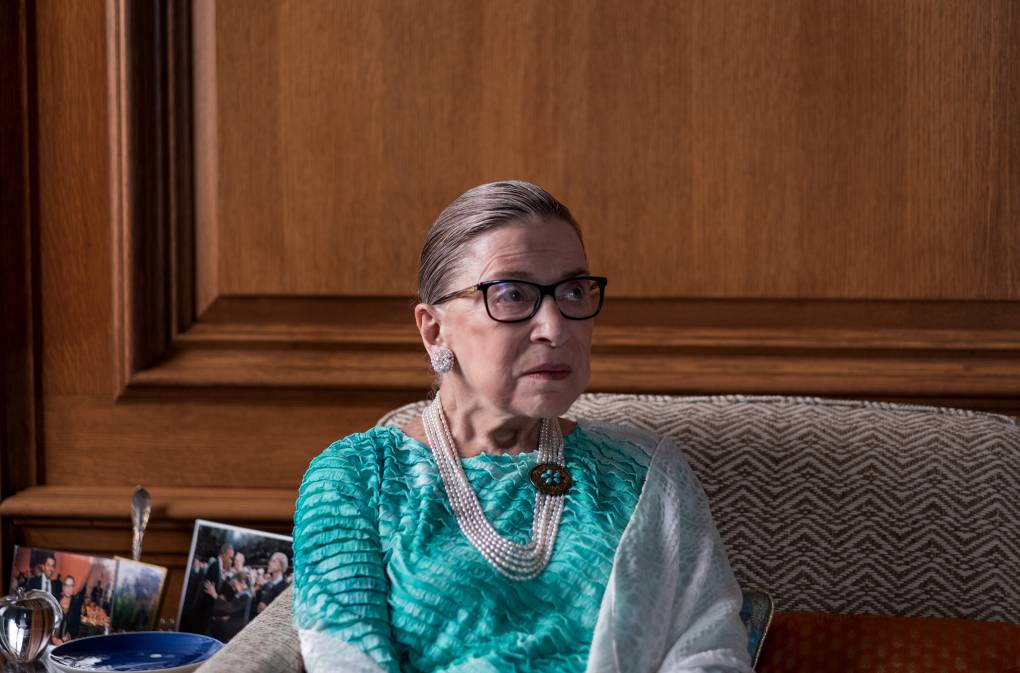
"caption": "Supreme Court Justice Ruth Bader Ginsburg is pictured in the justice's chambers in Washington, D.C., during an interview with NPR's Nina Totenberg in September 2016.",
"description": "Supreme Court Justice Ruth Bader Ginsburg is pictured in the justice's chambers in Washington, D.C., during an interview with NPR's Nina Totenberg in September 2016.",
"title": "Supreme Court Justice Ruth Bader Ginsburg is pictured in the justice's chambers in Washington, D.C., during an interview with NPR's Nina Totenberg in September 2016.",
"credit": "Ariel Zambelich/NPR",
"status": "inherit",
"isLoading": false,
"fetchFailed": false
},
"news_11824465": {
"type": "attachments",
"id": "news_11824465",
"meta": {
"index": "attachments_1716263798",
"site": "news",
"id": "11824465",
"found": true
},
"parent": 11824462,
"imgSizes": {
"apple_news_ca_landscape_5_5": {
"file": "https://ww2.kqed.org/app/uploads/sites/10/2020/06/equal_061520_final-1044x783.png",
"width": 1044,
"mimeType": "image/png",
"height": 783
},
"apple_news_ca_square_4_0": {
"file": "https://ww2.kqed.org/app/uploads/sites/10/2020/06/equal_061520_final-470x470.png",
"width": 470,
"mimeType": "image/png",
"height": 470
},
"twentyfourteen-full-width": {
"file": "https://ww2.kqed.org/app/uploads/sites/10/2020/06/equal_061520_final-1038x576.png",
"width": 1038,
"mimeType": "image/png",
"height": 576
},
"thumbnail": {
"file": "https://ww2.kqed.org/app/uploads/sites/10/2020/06/equal_061520_final-160x111.png",
"width": 160,
"mimeType": "image/png",
"height": 111
},
"post-thumbnail": {
"file": "https://ww2.kqed.org/app/uploads/sites/10/2020/06/equal_061520_final-672x372.png",
"width": 672,
"mimeType": "image/png",
"height": 372
},
"kqedFullSize": {
"file": "https://ww2.kqed.org/app/uploads/sites/10/2020/06/equal_061520_final.png",
"width": 1920,
"height": 1337
},
"apple_news_ca_landscape_4_7": {
"file": "https://ww2.kqed.org/app/uploads/sites/10/2020/06/equal_061520_final-632x474.png",
"width": 632,
"mimeType": "image/png",
"height": 474
},
"large": {
"file": "https://ww2.kqed.org/app/uploads/sites/10/2020/06/equal_061520_final-1020x710.png",
"width": 1020,
"mimeType": "image/png",
"height": 710
},
"apple_news_ca_landscape_4_0": {
"file": "https://ww2.kqed.org/app/uploads/sites/10/2020/06/equal_061520_final-536x402.png",
"width": 536,
"mimeType": "image/png",
"height": 402
},
"apple_news_ca_portrait_12_9": {
"file": "https://ww2.kqed.org/app/uploads/sites/10/2020/06/equal_061520_final-1122x1337.png",
"width": 1122,
"mimeType": "image/png",
"height": 1337
},
"medium": {
"file": "https://ww2.kqed.org/app/uploads/sites/10/2020/06/equal_061520_final-800x557.png",
"width": 800,
"mimeType": "image/png",
"height": 557
},
"apple_news_ca_portrait_4_0": {
"file": "https://ww2.kqed.org/app/uploads/sites/10/2020/06/equal_061520_final-354x472.png",
"width": 354,
"mimeType": "image/png",
"height": 472
},
"apple_news_ca_portrait_9_7": {
"file": "https://ww2.kqed.org/app/uploads/sites/10/2020/06/equal_061520_final-840x1120.png",
"width": 840,
"mimeType": "image/png",
"height": 1120
},
"apple_news_ca_landscape_12_9": {
"file": "https://ww2.kqed.org/app/uploads/sites/10/2020/06/equal_061520_final-1832x1337.png",
"width": 1832,
"mimeType": "image/png",
"height": 1337
},
"apple_news_ca_square_9_7": {
"file": "https://ww2.kqed.org/app/uploads/sites/10/2020/06/equal_061520_final-1104x1104.png",
"width": 1104,
"mimeType": "image/png",
"height": 1104
},
"apple_news_ca_portrait_4_7": {
"file": "https://ww2.kqed.org/app/uploads/sites/10/2020/06/equal_061520_final-414x552.png",
"width": 414,
"mimeType": "image/png",
"height": 552
},
"apple_news_ca_square_12_9": {
"file": "https://ww2.kqed.org/app/uploads/sites/10/2020/06/equal_061520_final-1472x1337.png",
"width": 1472,
"mimeType": "image/png",
"height": 1337
},
"apple_news_ca_portrait_5_5": {
"file": "https://ww2.kqed.org/app/uploads/sites/10/2020/06/equal_061520_final-687x916.png",
"width": 687,
"mimeType": "image/png",
"height": 916
},
"full-width": {
"file": "https://ww2.kqed.org/app/uploads/sites/10/2020/06/equal_061520_final-1920x1337.png",
"width": 1920,
"mimeType": "image/png",
"height": 1337
},
"apple_news_ca_square_4_7": {
"file": "https://ww2.kqed.org/app/uploads/sites/10/2020/06/equal_061520_final-550x550.png",
"width": 550,
"mimeType": "image/png",
"height": 550
},
"apple_news_ca_landscape_9_7": {
"file": "https://ww2.kqed.org/app/uploads/sites/10/2020/06/equal_061520_final-1376x1032.png",
"width": 1376,
"mimeType": "image/png",
"height": 1032
},
"apple_news_ca_square_5_5": {
"file": "https://ww2.kqed.org/app/uploads/sites/10/2020/06/equal_061520_final-912x912.png",
"width": 912,
"mimeType": "image/png",
"height": 912
}
},
"publishDate": 1592250929,
"modified": 1592250960,
"caption": null,
"description": null,
"title": "equal_061520_final",
"credit": null,
"status": "inherit",
"isLoading": false,
"fetchFailed": false
},
"news_11824431": {
"type": "attachments",
"id": "news_11824431",
"meta": {
"index": "attachments_1716263798",
"site": "news",
"id": "11824431",
"found": true
},
"parent": 11824426,
"imgSizes": {
"apple_news_ca_landscape_5_5": {
"file": "https://ww2.kqed.org/app/uploads/sites/10/2020/06/RS43654_GettyImages-1179836016-qut-1044x783.jpg",
"width": 1044,
"mimeType": "image/jpeg",
"height": 783
},
"apple_news_ca_square_4_0": {
"file": "https://ww2.kqed.org/app/uploads/sites/10/2020/06/RS43654_GettyImages-1179836016-qut-470x470.jpg",
"width": 470,
"mimeType": "image/jpeg",
"height": 470
},
"twentyfourteen-full-width": {
"file": "https://ww2.kqed.org/app/uploads/sites/10/2020/06/RS43654_GettyImages-1179836016-qut-1038x576.jpg",
"width": 1038,
"mimeType": "image/jpeg",
"height": 576
},
"thumbnail": {
"file": "https://ww2.kqed.org/app/uploads/sites/10/2020/06/RS43654_GettyImages-1179836016-qut-160x106.jpg",
"width": 160,
"mimeType": "image/jpeg",
"height": 106
},
"post-thumbnail": {
"file": "https://ww2.kqed.org/app/uploads/sites/10/2020/06/RS43654_GettyImages-1179836016-qut-672x372.jpg",
"width": 672,
"mimeType": "image/jpeg",
"height": 372
},
"kqedFullSize": {
"file": "https://ww2.kqed.org/app/uploads/sites/10/2020/06/RS43654_GettyImages-1179836016-qut.jpg",
"width": 1920,
"height": 1269
},
"apple_news_ca_landscape_4_7": {
"file": "https://ww2.kqed.org/app/uploads/sites/10/2020/06/RS43654_GettyImages-1179836016-qut-632x474.jpg",
"width": 632,
"mimeType": "image/jpeg",
"height": 474
},
"large": {
"file": "https://ww2.kqed.org/app/uploads/sites/10/2020/06/RS43654_GettyImages-1179836016-qut-1020x674.jpg",
"width": 1020,
"mimeType": "image/jpeg",
"height": 674
},
"apple_news_ca_landscape_4_0": {
"file": "https://ww2.kqed.org/app/uploads/sites/10/2020/06/RS43654_GettyImages-1179836016-qut-536x402.jpg",
"width": 536,
"mimeType": "image/jpeg",
"height": 402
},
"apple_news_ca_portrait_12_9": {
"file": "https://ww2.kqed.org/app/uploads/sites/10/2020/06/RS43654_GettyImages-1179836016-qut-1122x1269.jpg",
"width": 1122,
"mimeType": "image/jpeg",
"height": 1269
},
"medium": {
"file": "https://ww2.kqed.org/app/uploads/sites/10/2020/06/RS43654_GettyImages-1179836016-qut-800x529.jpg",
"width": 800,
"mimeType": "image/jpeg",
"height": 529
},
"apple_news_ca_portrait_4_0": {
"file": "https://ww2.kqed.org/app/uploads/sites/10/2020/06/RS43654_GettyImages-1179836016-qut-354x472.jpg",
"width": 354,
"mimeType": "image/jpeg",
"height": 472
},
"apple_news_ca_portrait_9_7": {
"file": "https://ww2.kqed.org/app/uploads/sites/10/2020/06/RS43654_GettyImages-1179836016-qut-840x1120.jpg",
"width": 840,
"mimeType": "image/jpeg",
"height": 1120
},
"apple_news_ca_landscape_12_9": {
"file": "https://ww2.kqed.org/app/uploads/sites/10/2020/06/RS43654_GettyImages-1179836016-qut-1832x1269.jpg",
"width": 1832,
"mimeType": "image/jpeg",
"height": 1269
},
"apple_news_ca_square_9_7": {
"file": "https://ww2.kqed.org/app/uploads/sites/10/2020/06/RS43654_GettyImages-1179836016-qut-1104x1104.jpg",
"width": 1104,
"mimeType": "image/jpeg",
"height": 1104
},
"apple_news_ca_portrait_4_7": {
"file": "https://ww2.kqed.org/app/uploads/sites/10/2020/06/RS43654_GettyImages-1179836016-qut-414x552.jpg",
"width": 414,
"mimeType": "image/jpeg",
"height": 552
},
"apple_news_ca_square_12_9": {
"file": "https://ww2.kqed.org/app/uploads/sites/10/2020/06/RS43654_GettyImages-1179836016-qut-1472x1269.jpg",
"width": 1472,
"mimeType": "image/jpeg",
"height": 1269
},
"apple_news_ca_portrait_5_5": {
"file": "https://ww2.kqed.org/app/uploads/sites/10/2020/06/RS43654_GettyImages-1179836016-qut-687x916.jpg",
"width": 687,
"mimeType": "image/jpeg",
"height": 916
},
"full-width": {
"file": "https://ww2.kqed.org/app/uploads/sites/10/2020/06/RS43654_GettyImages-1179836016-qut-1920x1269.jpg",
"width": 1920,
"mimeType": "image/jpeg",
"height": 1269
},
"apple_news_ca_square_4_7": {
"file": "https://ww2.kqed.org/app/uploads/sites/10/2020/06/RS43654_GettyImages-1179836016-qut-550x550.jpg",
"width": 550,
"mimeType": "image/jpeg",
"height": 550
},
"apple_news_ca_landscape_9_7": {
"file": "https://ww2.kqed.org/app/uploads/sites/10/2020/06/RS43654_GettyImages-1179836016-qut-1376x1032.jpg",
"width": 1376,
"mimeType": "image/jpeg",
"height": 1032
},
"apple_news_ca_square_5_5": {
"file": "https://ww2.kqed.org/app/uploads/sites/10/2020/06/RS43654_GettyImages-1179836016-qut-912x912.jpg",
"width": 912,
"mimeType": "image/jpeg",
"height": 912
}
},
"publishDate": 1592236352,
"modified": 1592236412,
"caption": "Protesters rally in front of the U.S. Supreme Court as arguments are heard in a set of cases concerning the rights of LGBT people in the workforce, on October 8, 2019 in Washington, DC.",
"description": "Protesters rally in front of the U.S. Supreme Court as arguments are heard in a set of cases concerning the rights of LGBT people in the workforce, on October 8, 2019 in Washington, DC.",
"title": "Supreme Court Hears Arguments On Gender Identity Workplace Discrimination",
"credit": "Mark Wilson/Getty Images",
"status": "inherit",
"isLoading": false,
"fetchFailed": false
},
"news_11823207": {
"type": "attachments",
"id": "news_11823207",
"meta": {
"index": "attachments_1716263798",
"site": "news",
"id": "11823207",
"found": true
},
"parent": 11823165,
"imgSizes": {
"apple_news_ca_landscape_5_5": {
"file": "https://ww2.kqed.org/app/uploads/sites/10/2020/06/RS43565_AP_20152163532566-1-qut-1044x783.jpg",
"width": 1044,
"mimeType": "image/jpeg",
"height": 783
},
"apple_news_ca_square_4_0": {
"file": "https://ww2.kqed.org/app/uploads/sites/10/2020/06/RS43565_AP_20152163532566-1-qut-470x470.jpg",
"width": 470,
"mimeType": "image/jpeg",
"height": 470
},
"twentyfourteen-full-width": {
"file": "https://ww2.kqed.org/app/uploads/sites/10/2020/06/RS43565_AP_20152163532566-1-qut-1038x576.jpg",
"width": 1038,
"mimeType": "image/jpeg",
"height": 576
},
"thumbnail": {
"file": "https://ww2.kqed.org/app/uploads/sites/10/2020/06/RS43565_AP_20152163532566-1-qut-160x106.jpg",
"width": 160,
"mimeType": "image/jpeg",
"height": 106
},
"post-thumbnail": {
"file": "https://ww2.kqed.org/app/uploads/sites/10/2020/06/RS43565_AP_20152163532566-1-qut-672x372.jpg",
"width": 672,
"mimeType": "image/jpeg",
"height": 372
},
"kqedFullSize": {
"file": "https://ww2.kqed.org/app/uploads/sites/10/2020/06/RS43565_AP_20152163532566-1-qut.jpg",
"width": 1920,
"height": 1276
},
"apple_news_ca_landscape_4_7": {
"file": "https://ww2.kqed.org/app/uploads/sites/10/2020/06/RS43565_AP_20152163532566-1-qut-632x474.jpg",
"width": 632,
"mimeType": "image/jpeg",
"height": 474
},
"large": {
"file": "https://ww2.kqed.org/app/uploads/sites/10/2020/06/RS43565_AP_20152163532566-1-qut-1020x678.jpg",
"width": 1020,
"mimeType": "image/jpeg",
"height": 678
},
"apple_news_ca_landscape_4_0": {
"file": "https://ww2.kqed.org/app/uploads/sites/10/2020/06/RS43565_AP_20152163532566-1-qut-536x402.jpg",
"width": 536,
"mimeType": "image/jpeg",
"height": 402
},
"apple_news_ca_portrait_12_9": {
"file": "https://ww2.kqed.org/app/uploads/sites/10/2020/06/RS43565_AP_20152163532566-1-qut-1122x1276.jpg",
"width": 1122,
"mimeType": "image/jpeg",
"height": 1276
},
"medium": {
"file": "https://ww2.kqed.org/app/uploads/sites/10/2020/06/RS43565_AP_20152163532566-1-qut-800x532.jpg",
"width": 800,
"mimeType": "image/jpeg",
"height": 532
},
"apple_news_ca_portrait_4_0": {
"file": "https://ww2.kqed.org/app/uploads/sites/10/2020/06/RS43565_AP_20152163532566-1-qut-354x472.jpg",
"width": 354,
"mimeType": "image/jpeg",
"height": 472
},
"apple_news_ca_portrait_9_7": {
"file": "https://ww2.kqed.org/app/uploads/sites/10/2020/06/RS43565_AP_20152163532566-1-qut-840x1120.jpg",
"width": 840,
"mimeType": "image/jpeg",
"height": 1120
},
"apple_news_ca_landscape_12_9": {
"file": "https://ww2.kqed.org/app/uploads/sites/10/2020/06/RS43565_AP_20152163532566-1-qut-1832x1276.jpg",
"width": 1832,
"mimeType": "image/jpeg",
"height": 1276
},
"apple_news_ca_square_9_7": {
"file": "https://ww2.kqed.org/app/uploads/sites/10/2020/06/RS43565_AP_20152163532566-1-qut-1104x1104.jpg",
"width": 1104,
"mimeType": "image/jpeg",
"height": 1104
},
"apple_news_ca_portrait_4_7": {
"file": "https://ww2.kqed.org/app/uploads/sites/10/2020/06/RS43565_AP_20152163532566-1-qut-414x552.jpg",
"width": 414,
"mimeType": "image/jpeg",
"height": 552
},
"apple_news_ca_square_12_9": {
"file": "https://ww2.kqed.org/app/uploads/sites/10/2020/06/RS43565_AP_20152163532566-1-qut-1472x1276.jpg",
"width": 1472,
"mimeType": "image/jpeg",
"height": 1276
},
"apple_news_ca_portrait_5_5": {
"file": "https://ww2.kqed.org/app/uploads/sites/10/2020/06/RS43565_AP_20152163532566-1-qut-687x916.jpg",
"width": 687,
"mimeType": "image/jpeg",
"height": 916
},
"full-width": {
"file": "https://ww2.kqed.org/app/uploads/sites/10/2020/06/RS43565_AP_20152163532566-1-qut-1920x1276.jpg",
"width": 1920,
"mimeType": "image/jpeg",
"height": 1276
},
"apple_news_ca_square_4_7": {
"file": "https://ww2.kqed.org/app/uploads/sites/10/2020/06/RS43565_AP_20152163532566-1-qut-550x550.jpg",
"width": 550,
"mimeType": "image/jpeg",
"height": 550
},
"apple_news_ca_landscape_9_7": {
"file": "https://ww2.kqed.org/app/uploads/sites/10/2020/06/RS43565_AP_20152163532566-1-qut-1376x1032.jpg",
"width": 1376,
"mimeType": "image/jpeg",
"height": 1032
},
"apple_news_ca_square_5_5": {
"file": "https://ww2.kqed.org/app/uploads/sites/10/2020/06/RS43565_AP_20152163532566-1-qut-912x912.jpg",
"width": 912,
"mimeType": "image/jpeg",
"height": 912
}
},
"publishDate": 1591397591,
"modified": 1591397800,
"caption": "Oscar Hernandez became the first DACA recipient to graduate from the University of California, Irvine School of Medicine. Hernandez took part in the school's first \"Drive-Thru\" commencement ceremony held on Saturday, May 30, 2020, in Irvine, Calif. ",
"description": null,
"title": "UCI School of Medicine Commencement 2020",
"credit": "Jordan Strauss/AP Images for University of California, Irvine",
"status": "inherit",
"isLoading": false,
"fetchFailed": false
},
"news_11806276": {
"type": "attachments",
"id": "news_11806276",
"meta": {
"index": "attachments_1716263798",
"site": "news",
"id": "11806276",
"found": true
},
"parent": 11806242,
"imgSizes": {
"apple_news_ca_landscape_5_5": {
"file": "https://ww2.kqed.org/app/uploads/sites/10/2020/03/GettyImages-1204802549_1920x-1044x783.jpg",
"width": 1044,
"mimeType": "image/jpeg",
"height": 783
},
"apple_news_ca_square_4_0": {
"file": "https://ww2.kqed.org/app/uploads/sites/10/2020/03/GettyImages-1204802549_1920x-470x470.jpg",
"width": 470,
"mimeType": "image/jpeg",
"height": 470
},
"twentyfourteen-full-width": {
"file": "https://ww2.kqed.org/app/uploads/sites/10/2020/03/GettyImages-1204802549_1920x-1038x576.jpg",
"width": 1038,
"mimeType": "image/jpeg",
"height": 576
},
"thumbnail": {
"file": "https://ww2.kqed.org/app/uploads/sites/10/2020/03/GettyImages-1204802549_1920x-160x109.jpg",
"width": 160,
"mimeType": "image/jpeg",
"height": 109
},
"post-thumbnail": {
"file": "https://ww2.kqed.org/app/uploads/sites/10/2020/03/GettyImages-1204802549_1920x-672x372.jpg",
"width": 672,
"mimeType": "image/jpeg",
"height": 372
},
"kqedFullSize": {
"file": "https://ww2.kqed.org/app/uploads/sites/10/2020/03/GettyImages-1204802549_1920x.jpg",
"width": 1920,
"height": 1309
},
"apple_news_ca_landscape_4_7": {
"file": "https://ww2.kqed.org/app/uploads/sites/10/2020/03/GettyImages-1204802549_1920x-632x474.jpg",
"width": 632,
"mimeType": "image/jpeg",
"height": 474
},
"large": {
"file": "https://ww2.kqed.org/app/uploads/sites/10/2020/03/GettyImages-1204802549_1920x-1020x695.jpg",
"width": 1020,
"mimeType": "image/jpeg",
"height": 695
},
"apple_news_ca_landscape_4_0": {
"file": "https://ww2.kqed.org/app/uploads/sites/10/2020/03/GettyImages-1204802549_1920x-536x402.jpg",
"width": 536,
"mimeType": "image/jpeg",
"height": 402
},
"apple_news_ca_portrait_12_9": {
"file": "https://ww2.kqed.org/app/uploads/sites/10/2020/03/GettyImages-1204802549_1920x-1122x1309.jpg",
"width": 1122,
"mimeType": "image/jpeg",
"height": 1309
},
"medium": {
"file": "https://ww2.kqed.org/app/uploads/sites/10/2020/03/GettyImages-1204802549_1920x-800x545.jpg",
"width": 800,
"mimeType": "image/jpeg",
"height": 545
},
"apple_news_ca_portrait_4_0": {
"file": "https://ww2.kqed.org/app/uploads/sites/10/2020/03/GettyImages-1204802549_1920x-354x472.jpg",
"width": 354,
"mimeType": "image/jpeg",
"height": 472
},
"apple_news_ca_portrait_9_7": {
"file": "https://ww2.kqed.org/app/uploads/sites/10/2020/03/GettyImages-1204802549_1920x-840x1120.jpg",
"width": 840,
"mimeType": "image/jpeg",
"height": 1120
},
"apple_news_ca_landscape_12_9": {
"file": "https://ww2.kqed.org/app/uploads/sites/10/2020/03/GettyImages-1204802549_1920x-1832x1309.jpg",
"width": 1832,
"mimeType": "image/jpeg",
"height": 1309
},
"apple_news_ca_square_9_7": {
"file": "https://ww2.kqed.org/app/uploads/sites/10/2020/03/GettyImages-1204802549_1920x-1104x1104.jpg",
"width": 1104,
"mimeType": "image/jpeg",
"height": 1104
},
"apple_news_ca_portrait_4_7": {
"file": "https://ww2.kqed.org/app/uploads/sites/10/2020/03/GettyImages-1204802549_1920x-414x552.jpg",
"width": 414,
"mimeType": "image/jpeg",
"height": 552
},
"apple_news_ca_square_12_9": {
"file": "https://ww2.kqed.org/app/uploads/sites/10/2020/03/GettyImages-1204802549_1920x-1472x1309.jpg",
"width": 1472,
"mimeType": "image/jpeg",
"height": 1309
},
"apple_news_ca_portrait_5_5": {
"file": "https://ww2.kqed.org/app/uploads/sites/10/2020/03/GettyImages-1204802549_1920x-687x916.jpg",
"width": 687,
"mimeType": "image/jpeg",
"height": 916
},
"full-width": {
"file": "https://ww2.kqed.org/app/uploads/sites/10/2020/03/GettyImages-1204802549_1920x-1920x1309.jpg",
"width": 1920,
"mimeType": "image/jpeg",
"height": 1309
},
"apple_news_ca_square_4_7": {
"file": "https://ww2.kqed.org/app/uploads/sites/10/2020/03/GettyImages-1204802549_1920x-550x550.jpg",
"width": 550,
"mimeType": "image/jpeg",
"height": 550
},
"apple_news_ca_landscape_9_7": {
"file": "https://ww2.kqed.org/app/uploads/sites/10/2020/03/GettyImages-1204802549_1920x-1376x1032.jpg",
"width": 1376,
"mimeType": "image/jpeg",
"height": 1032
},
"apple_news_ca_square_5_5": {
"file": "https://ww2.kqed.org/app/uploads/sites/10/2020/03/GettyImages-1204802549_1920x-912x912.jpg",
"width": 912,
"mimeType": "image/jpeg",
"height": 912
}
},
"publishDate": 1583967727,
"modified": 1583967792,
"caption": "The justices' order, over a dissenting vote by Justice Sonia Sotomayor, overturns a lower court order that would have blocked the policy, at least for people arriving at the border crossings in Arizona and California.",
"description": "The justices' order, over a dissenting vote by Justice Sonia Sotomayor, overturns a lower court order that would have blocked the policy, at least for people arriving at the border crossings in Arizona and California.",
"title": "The justices' order, over a dissenting vote by Justice Sonia Sotomayor, overturns a lower court order that would have blocked the policy, at least for people arriving at the border crossings in Arizona and California.",
"credit": "Sandy Huffaker/Getty Images",
"status": "inherit",
"isLoading": false,
"fetchFailed": false
},
"news_11802649": {
"type": "attachments",
"id": "news_11802649",
"meta": {
"index": "attachments_1716263798",
"site": "news",
"id": "11802649",
"found": true
},
"parent": 11802442,
"imgSizes": {
"apple_news_ca_landscape_5_5": {
"file": "https://ww2.kqed.org/app/uploads/sites/10/2020/02/IMG_7555-1200x750-1044x750.jpg",
"width": 1044,
"mimeType": "image/jpeg",
"height": 750
},
"apple_news_ca_square_4_0": {
"file": "https://ww2.kqed.org/app/uploads/sites/10/2020/02/IMG_7555-1200x750-470x470.jpg",
"width": 470,
"mimeType": "image/jpeg",
"height": 470
},
"twentyfourteen-full-width": {
"file": "https://ww2.kqed.org/app/uploads/sites/10/2020/02/IMG_7555-1200x750-1038x576.jpg",
"width": 1038,
"mimeType": "image/jpeg",
"height": 576
},
"thumbnail": {
"file": "https://ww2.kqed.org/app/uploads/sites/10/2020/02/IMG_7555-1200x750-160x100.jpg",
"width": 160,
"mimeType": "image/jpeg",
"height": 100
},
"post-thumbnail": {
"file": "https://ww2.kqed.org/app/uploads/sites/10/2020/02/IMG_7555-1200x750-672x372.jpg",
"width": 672,
"mimeType": "image/jpeg",
"height": 372
},
"kqedFullSize": {
"file": "https://ww2.kqed.org/app/uploads/sites/10/2020/02/IMG_7555-1200x750.jpg",
"width": 1200,
"height": 750
},
"apple_news_ca_landscape_4_7": {
"file": "https://ww2.kqed.org/app/uploads/sites/10/2020/02/IMG_7555-1200x750-632x474.jpg",
"width": 632,
"mimeType": "image/jpeg",
"height": 474
},
"large": {
"file": "https://ww2.kqed.org/app/uploads/sites/10/2020/02/IMG_7555-1200x750-1020x638.jpg",
"width": 1020,
"mimeType": "image/jpeg",
"height": 638
},
"apple_news_ca_landscape_4_0": {
"file": "https://ww2.kqed.org/app/uploads/sites/10/2020/02/IMG_7555-1200x750-536x402.jpg",
"width": 536,
"mimeType": "image/jpeg",
"height": 402
},
"apple_news_ca_portrait_12_9": {
"file": "https://ww2.kqed.org/app/uploads/sites/10/2020/02/IMG_7555-1200x750-1122x750.jpg",
"width": 1122,
"mimeType": "image/jpeg",
"height": 750
},
"medium": {
"file": "https://ww2.kqed.org/app/uploads/sites/10/2020/02/IMG_7555-1200x750-800x500.jpg",
"width": 800,
"mimeType": "image/jpeg",
"height": 500
},
"apple_news_ca_portrait_4_0": {
"file": "https://ww2.kqed.org/app/uploads/sites/10/2020/02/IMG_7555-1200x750-354x472.jpg",
"width": 354,
"mimeType": "image/jpeg",
"height": 472
},
"apple_news_ca_portrait_9_7": {
"file": "https://ww2.kqed.org/app/uploads/sites/10/2020/02/IMG_7555-1200x750-840x750.jpg",
"width": 840,
"mimeType": "image/jpeg",
"height": 750
},
"apple_news_ca_square_9_7": {
"file": "https://ww2.kqed.org/app/uploads/sites/10/2020/02/IMG_7555-1200x750-1104x750.jpg",
"width": 1104,
"mimeType": "image/jpeg",
"height": 750
},
"apple_news_ca_portrait_4_7": {
"file": "https://ww2.kqed.org/app/uploads/sites/10/2020/02/IMG_7555-1200x750-414x552.jpg",
"width": 414,
"mimeType": "image/jpeg",
"height": 552
},
"apple_news_ca_portrait_5_5": {
"file": "https://ww2.kqed.org/app/uploads/sites/10/2020/02/IMG_7555-1200x750-687x750.jpg",
"width": 687,
"mimeType": "image/jpeg",
"height": 750
},
"apple_news_ca_square_4_7": {
"file": "https://ww2.kqed.org/app/uploads/sites/10/2020/02/IMG_7555-1200x750-550x550.jpg",
"width": 550,
"mimeType": "image/jpeg",
"height": 550
},
"apple_news_ca_square_5_5": {
"file": "https://ww2.kqed.org/app/uploads/sites/10/2020/02/IMG_7555-1200x750-912x750.jpg",
"width": 912,
"mimeType": "image/jpeg",
"height": 750
}
},
"publishDate": 1582237977,
"modified": 1582238052,
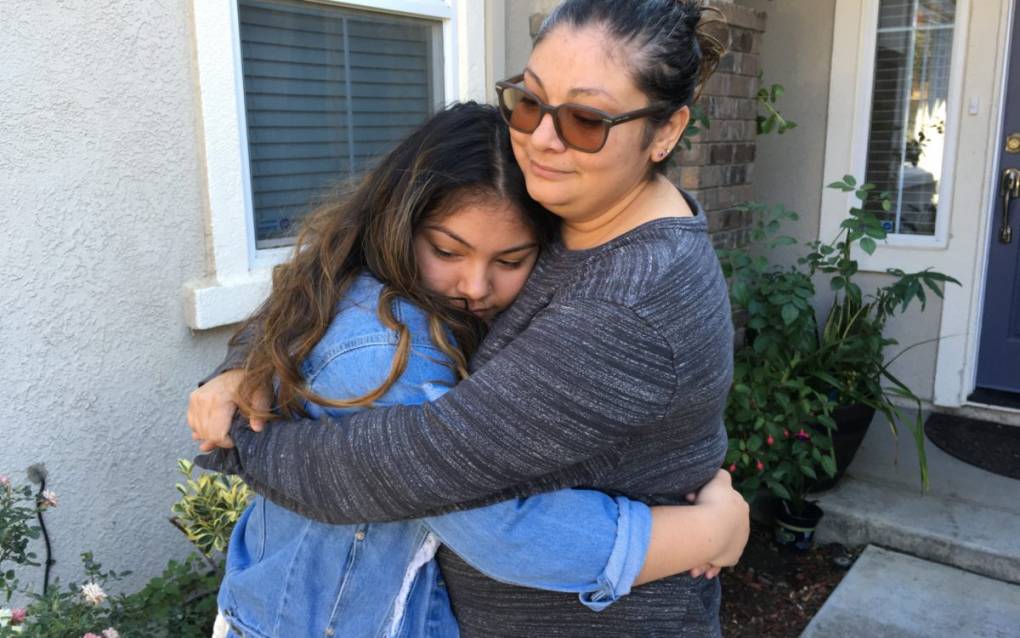
"caption": "Guadalupe Garcia (left) hugs her mother Gabriela Garcia.",
"description": null,
"title": "IMG_7555-1200x750",
"credit": "Zaidee Stavely/EdSource",
"status": "inherit",
"isLoading": false,
"fetchFailed": false
},
"news_11791468": {
"type": "attachments",
"id": "news_11791468",
"meta": {
"index": "attachments_1716263798",
"site": "news",
"id": "11791468",
"found": true
},
"parent": 11791455,
"imgSizes": {
"apple_news_ca_landscape_5_5": {
"file": "https://ww2.kqed.org/app/uploads/sites/10/2019/12/ap_19150817656770_custom-dc37f3853c38bd6b17e7df635ccb9c2b7e8b23af-s1500-c85-1044x783.jpg",
"width": 1044,
"mimeType": "image/jpeg",
"height": 783
},
"apple_news_ca_square_4_0": {
"file": "https://ww2.kqed.org/app/uploads/sites/10/2019/12/ap_19150817656770_custom-dc37f3853c38bd6b17e7df635ccb9c2b7e8b23af-s1500-c85-470x470.jpg",
"width": 470,
"mimeType": "image/jpeg",
"height": 470
},
"twentyfourteen-full-width": {
"file": "https://ww2.kqed.org/app/uploads/sites/10/2019/12/ap_19150817656770_custom-dc37f3853c38bd6b17e7df635ccb9c2b7e8b23af-s1500-c85-1038x576.jpg",
"width": 1038,
"mimeType": "image/jpeg",
"height": 576
},
"thumbnail": {
"file": "https://ww2.kqed.org/app/uploads/sites/10/2019/12/ap_19150817656770_custom-dc37f3853c38bd6b17e7df635ccb9c2b7e8b23af-s1500-c85-160x106.jpg",
"width": 160,
"mimeType": "image/jpeg",
"height": 106
},
"post-thumbnail": {
"file": "https://ww2.kqed.org/app/uploads/sites/10/2019/12/ap_19150817656770_custom-dc37f3853c38bd6b17e7df635ccb9c2b7e8b23af-s1500-c85-672x372.jpg",
"width": 672,
"mimeType": "image/jpeg",
"height": 372
},
"kqedFullSize": {
"file": "https://ww2.kqed.org/app/uploads/sites/10/2019/12/ap_19150817656770_custom-dc37f3853c38bd6b17e7df635ccb9c2b7e8b23af-s1500-c85.jpg",
"width": 1920,
"height": 1277
},
"apple_news_ca_landscape_4_7": {
"file": "https://ww2.kqed.org/app/uploads/sites/10/2019/12/ap_19150817656770_custom-dc37f3853c38bd6b17e7df635ccb9c2b7e8b23af-s1500-c85-632x474.jpg",
"width": 632,
"mimeType": "image/jpeg",
"height": 474
},
"large": {
"file": "https://ww2.kqed.org/app/uploads/sites/10/2019/12/ap_19150817656770_custom-dc37f3853c38bd6b17e7df635ccb9c2b7e8b23af-s1500-c85-1020x678.jpg",
"width": 1020,
"mimeType": "image/jpeg",
"height": 678
},
"complete_open_graph": {
"file": "https://ww2.kqed.org/app/uploads/sites/10/2019/12/ap_19150817656770_custom-dc37f3853c38bd6b17e7df635ccb9c2b7e8b23af-s1500-c85-1200x798.jpg",
"width": 1200,
"mimeType": "image/jpeg",
"height": 798
},
"apple_news_ca_landscape_4_0": {
"file": "https://ww2.kqed.org/app/uploads/sites/10/2019/12/ap_19150817656770_custom-dc37f3853c38bd6b17e7df635ccb9c2b7e8b23af-s1500-c85-536x402.jpg",
"width": 536,
"mimeType": "image/jpeg",
"height": 402
},
"apple_news_ca_portrait_12_9": {
"file": "https://ww2.kqed.org/app/uploads/sites/10/2019/12/ap_19150817656770_custom-dc37f3853c38bd6b17e7df635ccb9c2b7e8b23af-s1500-c85-1122x1277.jpg",
"width": 1122,
"mimeType": "image/jpeg",
"height": 1277
},
"medium": {
"file": "https://ww2.kqed.org/app/uploads/sites/10/2019/12/ap_19150817656770_custom-dc37f3853c38bd6b17e7df635ccb9c2b7e8b23af-s1500-c85-800x532.jpg",
"width": 800,
"mimeType": "image/jpeg",
"height": 532
},
"apple_news_ca_portrait_4_0": {
"file": "https://ww2.kqed.org/app/uploads/sites/10/2019/12/ap_19150817656770_custom-dc37f3853c38bd6b17e7df635ccb9c2b7e8b23af-s1500-c85-354x472.jpg",
"width": 354,
"mimeType": "image/jpeg",
"height": 472
},
"apple_news_ca_portrait_9_7": {
"file": "https://ww2.kqed.org/app/uploads/sites/10/2019/12/ap_19150817656770_custom-dc37f3853c38bd6b17e7df635ccb9c2b7e8b23af-s1500-c85-840x1120.jpg",
"width": 840,
"mimeType": "image/jpeg",
"height": 1120
},
"apple_news_ca_landscape_12_9": {
"file": "https://ww2.kqed.org/app/uploads/sites/10/2019/12/ap_19150817656770_custom-dc37f3853c38bd6b17e7df635ccb9c2b7e8b23af-s1500-c85-1832x1277.jpg",
"width": 1832,
"mimeType": "image/jpeg",
"height": 1277
},
"apple_news_ca_square_9_7": {
"file": "https://ww2.kqed.org/app/uploads/sites/10/2019/12/ap_19150817656770_custom-dc37f3853c38bd6b17e7df635ccb9c2b7e8b23af-s1500-c85-1104x1104.jpg",
"width": 1104,
"mimeType": "image/jpeg",
"height": 1104
},
"apple_news_ca_portrait_4_7": {
"file": "https://ww2.kqed.org/app/uploads/sites/10/2019/12/ap_19150817656770_custom-dc37f3853c38bd6b17e7df635ccb9c2b7e8b23af-s1500-c85-414x552.jpg",
"width": 414,
"mimeType": "image/jpeg",
"height": 552
},
"apple_news_ca_square_12_9": {
"file": "https://ww2.kqed.org/app/uploads/sites/10/2019/12/ap_19150817656770_custom-dc37f3853c38bd6b17e7df635ccb9c2b7e8b23af-s1500-c85-1472x1277.jpg",
"width": 1472,
"mimeType": "image/jpeg",
"height": 1277
},
"apple_news_ca_portrait_5_5": {
"file": "https://ww2.kqed.org/app/uploads/sites/10/2019/12/ap_19150817656770_custom-dc37f3853c38bd6b17e7df635ccb9c2b7e8b23af-s1500-c85-687x916.jpg",
"width": 687,
"mimeType": "image/jpeg",
"height": 916
},
"full-width": {
"file": "https://ww2.kqed.org/app/uploads/sites/10/2019/12/ap_19150817656770_custom-dc37f3853c38bd6b17e7df635ccb9c2b7e8b23af-s1500-c85-1920x1277.jpg",
"width": 1920,
"mimeType": "image/jpeg",
"height": 1277
},
"apple_news_ca_square_4_7": {
"file": "https://ww2.kqed.org/app/uploads/sites/10/2019/12/ap_19150817656770_custom-dc37f3853c38bd6b17e7df635ccb9c2b7e8b23af-s1500-c85-550x550.jpg",
"width": 550,
"mimeType": "image/jpeg",
"height": 550
},
"apple_news_ca_landscape_9_7": {
"file": "https://ww2.kqed.org/app/uploads/sites/10/2019/12/ap_19150817656770_custom-dc37f3853c38bd6b17e7df635ccb9c2b7e8b23af-s1500-c85-1376x1032.jpg",
"width": 1376,
"mimeType": "image/jpeg",
"height": 1032
},
"apple_news_ca_square_5_5": {
"file": "https://ww2.kqed.org/app/uploads/sites/10/2019/12/ap_19150817656770_custom-dc37f3853c38bd6b17e7df635ccb9c2b7e8b23af-s1500-c85-912x912.jpg",
"width": 912,
"mimeType": "image/jpeg",
"height": 912
}
},
"publishDate": 1576526010,
"modified": 1576528084,
"caption": "Tents housing homeless line a street near the LAPD Central Community Police Station in downtown Los Angeles.",
"description": "Tents housing homeless line a street near the LAPD Central Community Police Station in downtown Los Angeles.",
"title": "ap_19150817656770_custom-dc37f3853c38bd6b17e7df635ccb9c2b7e8b23af-s1500-c85",
"credit": "Richard Vogel/AP",
"status": "inherit",
"isLoading": false,
"fetchFailed": false
},
"news_11785895": {
"type": "attachments",
"id": "news_11785895",
"meta": {
"index": "attachments_1716263798",
"site": "news",
"id": "11785895",
"found": true
},
"parent": 11785839,
"imgSizes": {
"apple_news_ca_landscape_5_5": {
"file": "https://ww2.kqed.org/app/uploads/sites/10/2019/11/DACA-Protester-SCOTUS-1044x783.jpg",
"width": 1044,
"mimeType": "image/jpeg",
"height": 783
},
"apple_news_ca_square_4_0": {
"file": "https://ww2.kqed.org/app/uploads/sites/10/2019/11/DACA-Protester-SCOTUS-470x470.jpg",
"width": 470,
"mimeType": "image/jpeg",
"height": 470
},
"twentyfourteen-full-width": {
"file": "https://ww2.kqed.org/app/uploads/sites/10/2019/11/DACA-Protester-SCOTUS-1038x576.jpg",
"width": 1038,
"mimeType": "image/jpeg",
"height": 576
},
"thumbnail": {
"file": "https://ww2.kqed.org/app/uploads/sites/10/2019/11/DACA-Protester-SCOTUS-160x107.jpg",
"width": 160,
"mimeType": "image/jpeg",
"height": 107
},
"post-thumbnail": {
"file": "https://ww2.kqed.org/app/uploads/sites/10/2019/11/DACA-Protester-SCOTUS-672x372.jpg",
"width": 672,
"mimeType": "image/jpeg",
"height": 372
},
"kqedFullSize": {
"file": "https://ww2.kqed.org/app/uploads/sites/10/2019/11/DACA-Protester-SCOTUS.jpg",
"width": 1920,
"height": 1280
},
"apple_news_ca_landscape_4_7": {
"file": "https://ww2.kqed.org/app/uploads/sites/10/2019/11/DACA-Protester-SCOTUS-632x474.jpg",
"width": 632,
"mimeType": "image/jpeg",
"height": 474
},
"large": {
"file": "https://ww2.kqed.org/app/uploads/sites/10/2019/11/DACA-Protester-SCOTUS-1020x680.jpg",
"width": 1020,
"mimeType": "image/jpeg",
"height": 680
},
"complete_open_graph": {
"file": "https://ww2.kqed.org/app/uploads/sites/10/2019/11/DACA-Protester-SCOTUS-1200x800.jpg",
"width": 1200,
"mimeType": "image/jpeg",
"height": 800
},
"apple_news_ca_landscape_4_0": {
"file": "https://ww2.kqed.org/app/uploads/sites/10/2019/11/DACA-Protester-SCOTUS-536x402.jpg",
"width": 536,
"mimeType": "image/jpeg",
"height": 402
},
"apple_news_ca_portrait_12_9": {
"file": "https://ww2.kqed.org/app/uploads/sites/10/2019/11/DACA-Protester-SCOTUS-1122x1280.jpg",
"width": 1122,
"mimeType": "image/jpeg",
"height": 1280
},
"medium": {
"file": "https://ww2.kqed.org/app/uploads/sites/10/2019/11/DACA-Protester-SCOTUS-800x533.jpg",
"width": 800,
"mimeType": "image/jpeg",
"height": 533
},
"apple_news_ca_portrait_4_0": {
"file": "https://ww2.kqed.org/app/uploads/sites/10/2019/11/DACA-Protester-SCOTUS-354x472.jpg",
"width": 354,
"mimeType": "image/jpeg",
"height": 472
},
"apple_news_ca_portrait_9_7": {
"file": "https://ww2.kqed.org/app/uploads/sites/10/2019/11/DACA-Protester-SCOTUS-840x1120.jpg",
"width": 840,
"mimeType": "image/jpeg",
"height": 1120
},
"apple_news_ca_landscape_12_9": {
"file": "https://ww2.kqed.org/app/uploads/sites/10/2019/11/DACA-Protester-SCOTUS-1832x1280.jpg",
"width": 1832,
"mimeType": "image/jpeg",
"height": 1280
},
"apple_news_ca_square_9_7": {
"file": "https://ww2.kqed.org/app/uploads/sites/10/2019/11/DACA-Protester-SCOTUS-1104x1104.jpg",
"width": 1104,
"mimeType": "image/jpeg",
"height": 1104
},
"apple_news_ca_portrait_4_7": {
"file": "https://ww2.kqed.org/app/uploads/sites/10/2019/11/DACA-Protester-SCOTUS-414x552.jpg",
"width": 414,
"mimeType": "image/jpeg",
"height": 552
},
"apple_news_ca_square_12_9": {
"file": "https://ww2.kqed.org/app/uploads/sites/10/2019/11/DACA-Protester-SCOTUS-1472x1280.jpg",
"width": 1472,
"mimeType": "image/jpeg",
"height": 1280
},
"apple_news_ca_portrait_5_5": {
"file": "https://ww2.kqed.org/app/uploads/sites/10/2019/11/DACA-Protester-SCOTUS-687x916.jpg",
"width": 687,
"mimeType": "image/jpeg",
"height": 916
},
"full-width": {
"file": "https://ww2.kqed.org/app/uploads/sites/10/2019/11/DACA-Protester-SCOTUS-1920x1280.jpg",
"width": 1920,
"mimeType": "image/jpeg",
"height": 1280
},
"apple_news_ca_square_4_7": {
"file": "https://ww2.kqed.org/app/uploads/sites/10/2019/11/DACA-Protester-SCOTUS-550x550.jpg",
"width": 550,
"mimeType": "image/jpeg",
"height": 550
},
"apple_news_ca_landscape_9_7": {
"file": "https://ww2.kqed.org/app/uploads/sites/10/2019/11/DACA-Protester-SCOTUS-1376x1032.jpg",
"width": 1376,
"mimeType": "image/jpeg",
"height": 1032
},
"apple_news_ca_square_5_5": {
"file": "https://ww2.kqed.org/app/uploads/sites/10/2019/11/DACA-Protester-SCOTUS-912x912.jpg",
"width": 912,
"mimeType": "image/jpeg",
"height": 912
}
},
"publishDate": 1573255587,
"modified": 1573260411,
"caption": "DACA student Anahi Figueroa Flores, who attends Georgetown University, speaks during a rally defending Deferred Action for Childhood Arrivals (DACA) in front of the U.S. Supreme Court after they walked out from area high schools and universities on Nov. 8, 2019, in Washington, D.C. The Supreme Court will hear oral arguments on President Trump’s decision to end the DACA program on Tuesday.",
"description": "DACA student Anahi Figueroa Flores, who attends Georgetown University, speaks during a rally defending Deferred Action for Childhood Arrivals (DACA) in front of the U.S. Supreme Court after they walked out from area high schools and universities on Nov. 8, 2019 in Washington, DC. The Supreme Court will hear oral arguments on President Trump’s decision to end the DACA program on Tuesday.",
"title": "DACA-Protester-SCOTUS",
"credit": "Alex Wong/Getty Images",
"status": "inherit",
"isLoading": false,
"fetchFailed": false
},
"news_11773820": {
"type": "attachments",
"id": "news_11773820",
"meta": {
"index": "attachments_1716263798",
"site": "news",
"id": "11773820",
"found": true
},
"parent": 11773808,
"imgSizes": {
"apple_news_ca_landscape_5_5": {
"file": "https://ww2.kqed.org/app/uploads/sites/10/2019/09/RS34163_chaparral-FINAL-01-qut-1044x783.jpg",
"width": 1044,
"mimeType": "image/jpeg",
"height": 783
},
"apple_news_ca_square_4_0": {
"file": "https://ww2.kqed.org/app/uploads/sites/10/2019/09/RS34163_chaparral-FINAL-01-qut-470x470.jpg",
"width": 470,
"mimeType": "image/jpeg",
"height": 470
},
"twentyfourteen-full-width": {
"file": "https://ww2.kqed.org/app/uploads/sites/10/2019/09/RS34163_chaparral-FINAL-01-qut-1038x576.jpg",
"width": 1038,
"mimeType": "image/jpeg",
"height": 576
},
"thumbnail": {
"file": "https://ww2.kqed.org/app/uploads/sites/10/2019/09/RS34163_chaparral-FINAL-01-qut-160x106.jpg",
"width": 160,
"mimeType": "image/jpeg",
"height": 106
},
"post-thumbnail": {
"file": "https://ww2.kqed.org/app/uploads/sites/10/2019/09/RS34163_chaparral-FINAL-01-qut-672x372.jpg",
"width": 672,
"mimeType": "image/jpeg",
"height": 372
},
"kqedFullSize": {
"file": "https://ww2.kqed.org/app/uploads/sites/10/2019/09/RS34163_chaparral-FINAL-01-qut.jpg",
"width": 1800,
"height": 1198
},
"apple_news_ca_landscape_4_7": {
"file": "https://ww2.kqed.org/app/uploads/sites/10/2019/09/RS34163_chaparral-FINAL-01-qut-632x474.jpg",
"width": 632,
"mimeType": "image/jpeg",
"height": 474
},
"large": {
"file": "https://ww2.kqed.org/app/uploads/sites/10/2019/09/RS34163_chaparral-FINAL-01-qut-1020x679.jpg",
"width": 1020,
"mimeType": "image/jpeg",
"height": 679
},
"complete_open_graph": {
"file": "https://ww2.kqed.org/app/uploads/sites/10/2019/09/RS34163_chaparral-FINAL-01-qut-1200x799.jpg",
"width": 1200,
"mimeType": "image/jpeg",
"height": 799
},
"apple_news_ca_landscape_4_0": {
"file": "https://ww2.kqed.org/app/uploads/sites/10/2019/09/RS34163_chaparral-FINAL-01-qut-536x402.jpg",
"width": 536,
"mimeType": "image/jpeg",
"height": 402
},
"apple_news_ca_portrait_12_9": {
"file": "https://ww2.kqed.org/app/uploads/sites/10/2019/09/RS34163_chaparral-FINAL-01-qut-1122x1198.jpg",
"width": 1122,
"mimeType": "image/jpeg",
"height": 1198
},
"medium": {
"file": "https://ww2.kqed.org/app/uploads/sites/10/2019/09/RS34163_chaparral-FINAL-01-qut-800x532.jpg",
"width": 800,
"mimeType": "image/jpeg",
"height": 532
},
"apple_news_ca_portrait_4_0": {
"file": "https://ww2.kqed.org/app/uploads/sites/10/2019/09/RS34163_chaparral-FINAL-01-qut-354x472.jpg",
"width": 354,
"mimeType": "image/jpeg",
"height": 472
},
"apple_news_ca_portrait_9_7": {
"file": "https://ww2.kqed.org/app/uploads/sites/10/2019/09/RS34163_chaparral-FINAL-01-qut-840x1120.jpg",
"width": 840,
"mimeType": "image/jpeg",
"height": 1120
},
"apple_news_ca_square_9_7": {
"file": "https://ww2.kqed.org/app/uploads/sites/10/2019/09/RS34163_chaparral-FINAL-01-qut-1104x1104.jpg",
"width": 1104,
"mimeType": "image/jpeg",
"height": 1104
},
"apple_news_ca_portrait_4_7": {
"file": "https://ww2.kqed.org/app/uploads/sites/10/2019/09/RS34163_chaparral-FINAL-01-qut-414x552.jpg",
"width": 414,
"mimeType": "image/jpeg",
"height": 552
},
"apple_news_ca_square_12_9": {
"file": "https://ww2.kqed.org/app/uploads/sites/10/2019/09/RS34163_chaparral-FINAL-01-qut-1472x1198.jpg",
"width": 1472,
"mimeType": "image/jpeg",
"height": 1198
},
"apple_news_ca_portrait_5_5": {
"file": "https://ww2.kqed.org/app/uploads/sites/10/2019/09/RS34163_chaparral-FINAL-01-qut-687x916.jpg",
"width": 687,
"mimeType": "image/jpeg",
"height": 916
},
"apple_news_ca_square_4_7": {
"file": "https://ww2.kqed.org/app/uploads/sites/10/2019/09/RS34163_chaparral-FINAL-01-qut-550x550.jpg",
"width": 550,
"mimeType": "image/jpeg",
"height": 550
},
"apple_news_ca_landscape_9_7": {
"file": "https://ww2.kqed.org/app/uploads/sites/10/2019/09/RS34163_chaparral-FINAL-01-qut-1376x1032.jpg",
"width": 1376,
"mimeType": "image/jpeg",
"height": 1032
},
"apple_news_ca_square_5_5": {
"file": "https://ww2.kqed.org/app/uploads/sites/10/2019/09/RS34163_chaparral-FINAL-01-qut-912x912.jpg",
"width": 912,
"mimeType": "image/jpeg",
"height": 912
}
},
"publishDate": 1568245734,
"modified": 1568245791,
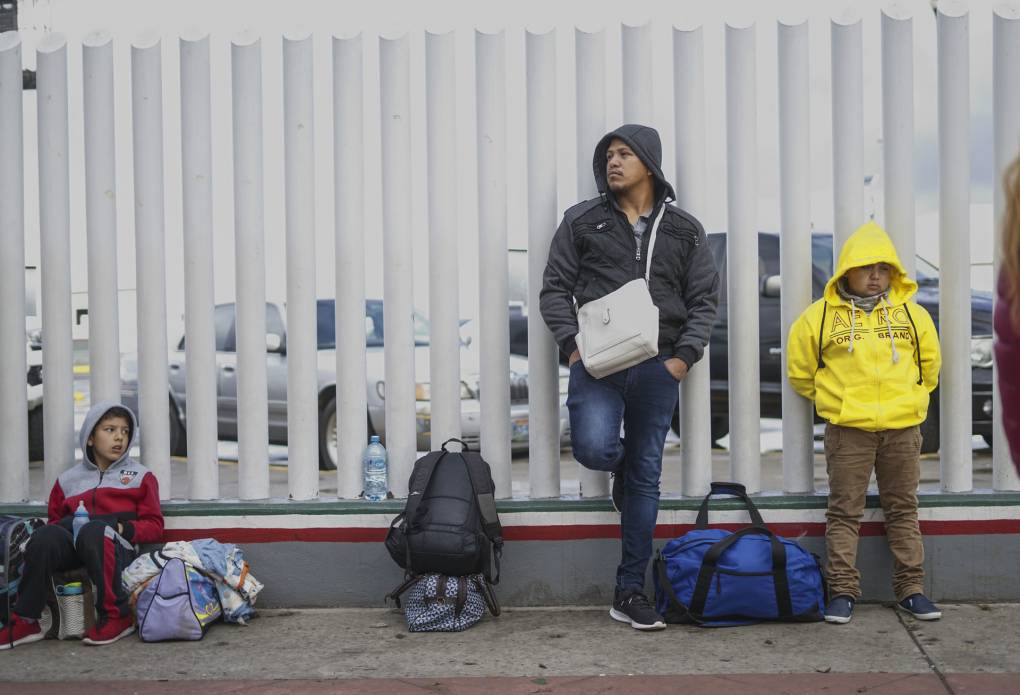
"caption": "People listen as a man calls out the names on a waiting list whose turn it is to walk to the U.S. border crossing in Tijuana where they will then ask for asylum.",
"description": "People listen as a man calls out the names on a waiting list whose turn it is to walk to the U.S. border crossing in Tijuana where they will then ask for asylum.",
"title": "RS34163_chaparral FINAL 01-qut",
"credit": "David Maung/KQED",
"status": "inherit",
"isLoading": false,
"fetchFailed": false
},
"news_11763760": {
"type": "attachments",
"id": "news_11763760",
"meta": {
"index": "attachments_1716263798",
"site": "news",
"id": "11763760",
"found": true
},
"parent": 11763752,
"imgSizes": {
"apple_news_ca_landscape_5_5": {
"file": "https://ww2.kqed.org/app/uploads/sites/10/2019/07/RS29823_GettyImages-931525888-qut-1044x783.jpg",
"width": 1044,
"mimeType": "image/jpeg",
"height": 783
},
"apple_news_ca_square_4_0": {
"file": "https://ww2.kqed.org/app/uploads/sites/10/2019/07/RS29823_GettyImages-931525888-qut-470x470.jpg",
"width": 470,
"mimeType": "image/jpeg",
"height": 470
},
"twentyfourteen-full-width": {
"file": "https://ww2.kqed.org/app/uploads/sites/10/2019/07/RS29823_GettyImages-931525888-qut-1038x576.jpg",
"width": 1038,
"mimeType": "image/jpeg",
"height": 576
},
"thumbnail": {
"file": "https://ww2.kqed.org/app/uploads/sites/10/2019/07/RS29823_GettyImages-931525888-qut-160x107.jpg",
"width": 160,
"mimeType": "image/jpeg",
"height": 107
},
"post-thumbnail": {
"file": "https://ww2.kqed.org/app/uploads/sites/10/2019/07/RS29823_GettyImages-931525888-qut-672x372.jpg",
"width": 672,
"mimeType": "image/jpeg",
"height": 372
},
"kqedFullSize": {
"file": "https://ww2.kqed.org/app/uploads/sites/10/2019/07/RS29823_GettyImages-931525888-qut.jpg",
"width": 1920,
"height": 1280
},
"apple_news_ca_landscape_4_7": {
"file": "https://ww2.kqed.org/app/uploads/sites/10/2019/07/RS29823_GettyImages-931525888-qut-632x474.jpg",
"width": 632,
"mimeType": "image/jpeg",
"height": 474
},
"large": {
"file": "https://ww2.kqed.org/app/uploads/sites/10/2019/07/RS29823_GettyImages-931525888-qut-1020x680.jpg",
"width": 1020,
"mimeType": "image/jpeg",
"height": 680
},
"complete_open_graph": {
"file": "https://ww2.kqed.org/app/uploads/sites/10/2019/07/RS29823_GettyImages-931525888-qut-1200x800.jpg",
"width": 1200,
"mimeType": "image/jpeg",
"height": 800
},
"apple_news_ca_landscape_4_0": {
"file": "https://ww2.kqed.org/app/uploads/sites/10/2019/07/RS29823_GettyImages-931525888-qut-536x402.jpg",
"width": 536,
"mimeType": "image/jpeg",
"height": 402
},
"apple_news_ca_portrait_12_9": {
"file": "https://ww2.kqed.org/app/uploads/sites/10/2019/07/RS29823_GettyImages-931525888-qut-1122x1280.jpg",
"width": 1122,
"mimeType": "image/jpeg",
"height": 1280
},
"medium": {
"file": "https://ww2.kqed.org/app/uploads/sites/10/2019/07/RS29823_GettyImages-931525888-qut-800x533.jpg",
"width": 800,
"mimeType": "image/jpeg",
"height": 533
},
"apple_news_ca_portrait_4_0": {
"file": "https://ww2.kqed.org/app/uploads/sites/10/2019/07/RS29823_GettyImages-931525888-qut-354x472.jpg",
"width": 354,
"mimeType": "image/jpeg",
"height": 472
},
"apple_news_ca_portrait_9_7": {
"file": "https://ww2.kqed.org/app/uploads/sites/10/2019/07/RS29823_GettyImages-931525888-qut-840x1120.jpg",
"width": 840,
"mimeType": "image/jpeg",
"height": 1120
},
"apple_news_ca_landscape_12_9": {
"file": "https://ww2.kqed.org/app/uploads/sites/10/2019/07/RS29823_GettyImages-931525888-qut-1832x1280.jpg",
"width": 1832,
"mimeType": "image/jpeg",
"height": 1280
},
"apple_news_ca_square_9_7": {
"file": "https://ww2.kqed.org/app/uploads/sites/10/2019/07/RS29823_GettyImages-931525888-qut-1104x1104.jpg",
"width": 1104,
"mimeType": "image/jpeg",
"height": 1104
},
"apple_news_ca_portrait_4_7": {
"file": "https://ww2.kqed.org/app/uploads/sites/10/2019/07/RS29823_GettyImages-931525888-qut-414x552.jpg",
"width": 414,
"mimeType": "image/jpeg",
"height": 552
},
"apple_news_ca_square_12_9": {
"file": "https://ww2.kqed.org/app/uploads/sites/10/2019/07/RS29823_GettyImages-931525888-qut-1472x1280.jpg",
"width": 1472,
"mimeType": "image/jpeg",
"height": 1280
},
"apple_news_ca_portrait_5_5": {
"file": "https://ww2.kqed.org/app/uploads/sites/10/2019/07/RS29823_GettyImages-931525888-qut-687x916.jpg",
"width": 687,
"mimeType": "image/jpeg",
"height": 916
},
"full-width": {
"file": "https://ww2.kqed.org/app/uploads/sites/10/2019/07/RS29823_GettyImages-931525888-qut-1920x1280.jpg",
"width": 1920,
"mimeType": "image/jpeg",
"height": 1280
},
"apple_news_ca_square_4_7": {
"file": "https://ww2.kqed.org/app/uploads/sites/10/2019/07/RS29823_GettyImages-931525888-qut-550x550.jpg",
"width": 550,
"mimeType": "image/jpeg",
"height": 550
},
"apple_news_ca_landscape_9_7": {
"file": "https://ww2.kqed.org/app/uploads/sites/10/2019/07/RS29823_GettyImages-931525888-qut-1376x1032.jpg",
"width": 1376,
"mimeType": "image/jpeg",
"height": 1032
},
"apple_news_ca_square_5_5": {
"file": "https://ww2.kqed.org/app/uploads/sites/10/2019/07/RS29823_GettyImages-931525888-qut-912x912.jpg",
"width": 912,
"mimeType": "image/jpeg",
"height": 912
}
},
"publishDate": 1564184589,
"modified": 1564184905,
"caption": "US President Donald Trump is shown border wall prototypes in San Diego, California on March 13, 2018. The Supreme Court's decision clears the way for his administration to tap millions of dollars in Pentagon funds.",
"description": "US President Donald Trump is shown border wall prototypes in San Diego, California on March 13, 2018. The Supreme Court's decision clears the way for his administration to tap millions of dollars in Pentagon funds.",
"title": "US-POLITICS-TRUMP-WALL",
"credit": "MANDEL NGAN/AFP/Getty Images",
"status": "inherit",
"isLoading": false,
"fetchFailed": false
},
"news_11761681": {
"type": "attachments",
"id": "news_11761681",
"meta": {
"index": "attachments_1716263798",
"site": "news",
"id": "11761681",
"found": true
},
"parent": 11761679,
"imgSizes": {
"apple_news_ca_square_4_0": {
"file": "https://ww2.kqed.org/app/uploads/sites/10/2019/07/PleasantValley1-470x470.jpg",
"width": 470,
"mimeType": "image/jpeg",
"height": 470
},
"thumbnail": {
"file": "https://ww2.kqed.org/app/uploads/sites/10/2019/07/PleasantValley1-160x107.jpg",
"width": 160,
"mimeType": "image/jpeg",
"height": 107
},
"post-thumbnail": {
"file": "https://ww2.kqed.org/app/uploads/sites/10/2019/07/PleasantValley1-672x372.jpg",
"width": 672,
"mimeType": "image/jpeg",
"height": 372
},
"kqedFullSize": {
"file": "https://ww2.kqed.org/app/uploads/sites/10/2019/07/PleasantValley1.jpg",
"width": 800,
"height": 533
},
"apple_news_ca_landscape_4_7": {
"file": "https://ww2.kqed.org/app/uploads/sites/10/2019/07/PleasantValley1-632x474.jpg",
"width": 632,
"mimeType": "image/jpeg",
"height": 474
},
"apple_news_ca_portrait_4_7": {
"file": "https://ww2.kqed.org/app/uploads/sites/10/2019/07/PleasantValley1-414x533.jpg",
"width": 414,
"mimeType": "image/jpeg",
"height": 533
},
"apple_news_ca_portrait_5_5": {
"file": "https://ww2.kqed.org/app/uploads/sites/10/2019/07/PleasantValley1-687x533.jpg",
"width": 687,
"mimeType": "image/jpeg",
"height": 533
},
"apple_news_ca_square_4_7": {
"file": "https://ww2.kqed.org/app/uploads/sites/10/2019/07/PleasantValley1-550x533.jpg",
"width": 550,
"mimeType": "image/jpeg",
"height": 533
},
"apple_news_ca_landscape_4_0": {
"file": "https://ww2.kqed.org/app/uploads/sites/10/2019/07/PleasantValley1-536x402.jpg",
"width": 536,
"mimeType": "image/jpeg",
"height": 402
},
"medium": {
"file": "https://ww2.kqed.org/app/uploads/sites/10/2019/07/PleasantValley1-800x533.jpg",
"width": 800,
"mimeType": "image/jpeg",
"height": 533
},
"apple_news_ca_portrait_4_0": {
"file": "https://ww2.kqed.org/app/uploads/sites/10/2019/07/PleasantValley1-354x472.jpg",
"width": 354,
"mimeType": "image/jpeg",
"height": 472
}
},
"publishDate": 1563307530,
"modified": 1563319393,
"caption": "Pleasant Valley State Prison in Fresno County.",
"description": null,
"title": "PleasantValley1",
"credit": "Kerry Klein/KVPR ",
"status": "inherit",
"isLoading": false,
"fetchFailed": false
}
},
"audioPlayerReducer": {
"postId": "stream_live",
"isPaused": true,
"isPlaying": false,
"pfsActive": false,
"pledgeModalIsOpen": true,
"playerDrawerIsOpen": false,
"liveAudioPlayStartedAt": 0,
"liveAudioPlayContext": ""
},
"authorsReducer": {
"byline_news_11838760": {
"type": "authors",
"id": "byline_news_11838760",
"meta": {
"override": true
},
"slug": "byline_news_11838760",
"name": "Nina Totenberg",
"isLoading": false
},
"byline_news_11824426": {
"type": "authors",
"id": "byline_news_11824426",
"meta": {
"override": true
},
"slug": "byline_news_11824426",
"name": "\u003ca href=\"https://www.npr.org/people/2101289/nina-totenberg\">Nina Totenberg\u003c/a>",
"isLoading": false
},
"byline_news_11806242": {
"type": "authors",
"id": "byline_news_11806242",
"meta": {
"override": true
},
"slug": "byline_news_11806242",
"name": "Mark Sherman\u003cbr />Associated Press",
"isLoading": false
},
"byline_news_11791455": {
"type": "authors",
"id": "byline_news_11791455",
"meta": {
"override": true
},
"slug": "byline_news_11791455",
"name": "Kirk Siegler and Leila Fadel\u003cbr>NPR",
"isLoading": false
},
"byline_news_11773808": {
"type": "authors",
"id": "byline_news_11773808",
"meta": {
"override": true
},
"slug": "byline_news_11773808",
"name": "Mark Sherman\u003cbr />Associated Press",
"isLoading": false
},
"byline_news_11763752": {
"type": "authors",
"id": "byline_news_11763752",
"meta": {
"override": true
},
"slug": "byline_news_11763752",
"name": "\u003cstrong>Jessica Gresko\u003cbr>Associated Press\u003c/strong>",
"isLoading": false
},
"kqed": {
"type": "authors",
"id": "236",
"meta": {
"index": "authors_1716337520",
"id": "236",
"found": true
},
"name": "KQED News Staff",
"firstName": "KQED News Staff",
"lastName": null,
"slug": "kqed",
"email": "faq@kqed.org",
"display_author_email": false,
"staff_mastheads": [],
"title": null,
"bio": null,
"avatar": "https://secure.gravatar.com/avatar/ef0e801a68c4c54afa9180db14084167?s=600&d=blank&r=g",
"twitter": null,
"facebook": null,
"instagram": null,
"linkedin": null,
"sites": [
{
"site": "arts",
"roles": [
"contributor"
]
},
{
"site": "news",
"roles": [
"editor"
]
},
{
"site": "futureofyou",
"roles": [
"author"
]
}
],
"headData": {
"title": "KQED News Staff | KQED",
"description": null,
"ogImgSrc": "https://secure.gravatar.com/avatar/ef0e801a68c4c54afa9180db14084167?s=600&d=blank&r=g",
"twImgSrc": "https://secure.gravatar.com/avatar/ef0e801a68c4c54afa9180db14084167?s=600&d=blank&r=g"
},
"isLoading": false,
"link": "/author/kqed"
},
"scottshafer": {
"type": "authors",
"id": "255",
"meta": {
"index": "authors_1716337520",
"id": "255",
"found": true
},
"name": "Scott Shafer",
"firstName": "Scott",
"lastName": "Shafer",
"slug": "scottshafer",
"email": "sshafer@kqed.org",
"display_author_email": false,
"staff_mastheads": [
"news"
],
"title": "KQED Contributor",
"bio": "Scott Shafer is a senior editor with the KQED Politics and Government desk. He is co-host of Political Breakdown, the award-winning radio show and podcast with a personal take on the world of politics. Scott came to KQED in 1998 to host the statewide\u003cem> California Report\u003c/em>. Prior to that he had extended stints in politics and government\u003cem>.\u003c/em> He uses that inside experience at KQED in his, reporting, hosting and analysis for the politics desk. Scott collaborated \u003cem>Political Breakdown a\u003c/em>nd on \u003cem>The Political Mind of Jerry Brown, \u003c/em>an eight-part series about the life and extraordinary political career of the former governor. For fun, he plays water polo with the San Francisco Tsunami.",
"avatar": "https://secure.gravatar.com/avatar/a62ebae45b79d7aed1a39a0e3bf68104?s=600&d=blank&r=g",
"twitter": "scottshafer",
"bluesky": null,
"facebook": null,
"instagram": null,
"linkedin": null,
"sites": [
{
"site": "news",
"roles": [
"editor"
]
},
{
"site": "stateofhealth",
"roles": [
"author"
]
},
{
"site": "science",
"roles": [
"author"
]
},
{
"site": "forum",
"roles": [
"subscriber"
]
},
{
"site": "liveblog",
"roles": [
"author"
]
}
],
"headData": {
"title": "Scott Shafer | KQED",
"description": "KQED Contributor",
"ogImgSrc": "https://secure.gravatar.com/avatar/a62ebae45b79d7aed1a39a0e3bf68104?s=600&d=blank&r=g",
"twImgSrc": "https://secure.gravatar.com/avatar/a62ebae45b79d7aed1a39a0e3bf68104?s=600&d=blank&r=g"
},
"isLoading": false,
"link": "/author/scottshafer"
},
"zstavely": {
"type": "authors",
"id": "3225",
"meta": {
"index": "authors_1716337520",
"id": "3225",
"found": true
},
"name": "Zaidee Stavely",
"firstName": "Zaidee",
"lastName": "Stavely",
"slug": "zstavely",
"email": "zstavely@gmail.com",
"display_author_email": false,
"staff_mastheads": [],
"title": "KQED Contributor",
"bio": "Zaidee Stavely is an award-winning reporter who writes about race, equity, immigration, and education.",
"avatar": "https://secure.gravatar.com/avatar/5154b3ee56a721c916ca429372ae629c?s=600&d=blank&r=g",
"twitter": null,
"facebook": null,
"instagram": null,
"linkedin": null,
"sites": [
{
"site": "news",
"roles": [
"subscriber"
]
},
{
"site": "mindshift",
"roles": [
"contributor"
]
}
],
"headData": {
"title": "Zaidee Stavely | KQED",
"description": "KQED Contributor",
"ogImgSrc": "https://secure.gravatar.com/avatar/5154b3ee56a721c916ca429372ae629c?s=600&d=blank&r=g",
"twImgSrc": "https://secure.gravatar.com/avatar/5154b3ee56a721c916ca429372ae629c?s=600&d=blank&r=g"
},
"isLoading": false,
"link": "/author/zstavely"
},
"markfiore": {
"type": "authors",
"id": "3236",
"meta": {
"index": "authors_1716337520",
"id": "3236",
"found": true
},
"name": "Mark Fiore",
"firstName": "Mark",
"lastName": "Fiore",
"slug": "markfiore",
"email": "mark@markfiore.com",
"display_author_email": false,
"staff_mastheads": [
"news"
],
"title": "KQED News Cartoonist",
"bio": "\u003ca href=\"http://www.MarkFiore.com\">MarkFiore.com\u003c/a> | \u003ca href=\"https://twitter.com/markfiore\">Follow on Twitter\u003c/a> | \u003ca href=\"https://www.facebook.com/pages/Mark-Fiore-Animated-Political-Cartoons/94451707396?ref=bookmarks\">Facebook\u003c/a> | \u003ca href=\"mailto:mark@markfiore.com\">email\u003c/a>\r\n\r\nPulitzer Prize-winner, Mark Fiore, who the Wall Street Journal has called “the undisputed guru of the form,” creates animated political cartoons in San Francisco, where his work has been featured regularly on the San Francisco Chronicle’s web site, SFGate.com. His work has appeared on Newsweek.com, Slate.com, CBSNews.com, MotherJones.com, DailyKos.com and NPR’s web site. Fiore’s political animation has appeared on CNN, Frontline, Bill Moyers Journal, Salon.com and cable and broadcast outlets across the globe.\r\n\r\nBeginning his professional life by drawing traditional political cartoons for newspapers, Fiore’s work appeared in publications ranging from the Washington Post to the Los Angeles Times. In the late 1990s, he began to experiment with animating political cartoons and, after a short stint at the San Jose Mercury News as their staff cartoonist, Fiore devoted all his energies to animation.\r\nGrowing up in California, Fiore also spent a good portion of his life in the backwoods of Idaho. It was this combination that shaped him politically. Mark majored in political science at Colorado College, where, in a perfect send-off for a cartoonist, he received his diploma in 1991 as commencement speaker Dick Cheney smiled approvingly.\r\nMark Fiore was awarded the Pulitzer Prize for political cartooning in 2010, a Robert F. Kennedy Journalism Award in 2004 and has twice received an Online Journalism Award for commentary from the Online News Association (2002, 2008). Fiore has received two awards for his work in new media from the National Cartoonists Society (2001, 2002), and in 2006 received The James Madison Freedom of Information Award from The Society of Professional Journalists.",
"avatar": "https://secure.gravatar.com/avatar/fc4e2a612b15b67bad0c6f0e1db4ca9b?s=600&d=blank&r=g",
"twitter": "MarkFiore",
"facebook": null,
"instagram": "https://www.instagram.com/markfiore/?hl=en",
"linkedin": null,
"sites": [
{
"site": "arts",
"roles": [
"contributor"
]
},
{
"site": "news",
"roles": [
"editor"
]
},
{
"site": "futureofyou",
"roles": [
"editor"
]
},
{
"site": "science",
"roles": [
"editor"
]
}
],
"headData": {
"title": "Mark Fiore | KQED",
"description": "KQED News Cartoonist",
"ogImgSrc": "https://secure.gravatar.com/avatar/fc4e2a612b15b67bad0c6f0e1db4ca9b?s=600&d=blank&r=g",
"twImgSrc": "https://secure.gravatar.com/avatar/fc4e2a612b15b67bad0c6f0e1db4ca9b?s=600&d=blank&r=g"
},
"isLoading": false,
"link": "/author/markfiore"
},
"fjhabvala": {
"type": "authors",
"id": "8659",
"meta": {
"index": "authors_1716337520",
"id": "8659",
"found": true
},
"name": "Farida Jhabvala Romero",
"firstName": "Farida",
"lastName": "Jhabvala Romero",
"slug": "fjhabvala",
"email": "fjhabvala@kqed.org",
"display_author_email": true,
"staff_mastheads": [
"news"
],
"title": "KQED Contributor",
"bio": "Farida Jhabvala Romero is a Labor Correspondent for KQED. She previously covered immigration. Farida was \u003ca href=\"https://www.ccnma.org/2022-most-influential-latina-journalists\">named\u003c/a> one of the 10 Most Influential Latina Journalists in California in 2022 by the California Chicano News Media Association. Her work has won awards from the Society of Professional Journalists (Northern California), as well as a national and regional Edward M. Murrow Award for the collaborative reporting projects “Dangerous Air” and “Graying California.” Before joining KQED, Farida worked as a producer at Radio Bilingüe, a national public radio network. Farida earned her master’s degree in journalism from Stanford University.",
"avatar": "https://secure.gravatar.com/avatar/f9f022d4e2609741874222a1e9d41f48fea74011aa7c615eef91d9a50c944ebe?s=600&d=blank&r=g",
"twitter": "FaridaJhabvala",
"bluesky": null,
"facebook": null,
"instagram": null,
"linkedin": "https://www.linkedin.com/in/faridajhabvala/",
"sites": [
{
"site": "news",
"roles": [
"editor"
]
},
{
"site": "stateofhealth",
"roles": [
"author"
]
},
{
"site": "liveblog",
"roles": [
"author"
]
}
],
"headData": {
"title": "Farida Jhabvala Romero | KQED",
"description": "KQED Contributor",
"ogImgSrc": "https://secure.gravatar.com/avatar/f9f022d4e2609741874222a1e9d41f48fea74011aa7c615eef91d9a50c944ebe?s=600&d=blank&r=g",
"twImgSrc": "https://secure.gravatar.com/avatar/f9f022d4e2609741874222a1e9d41f48fea74011aa7c615eef91d9a50c944ebe?s=600&d=blank&r=g"
},
"isLoading": false,
"link": "/author/fjhabvala"
}
},
"pagesReducer": {
"news_tag_u-s-supreme-court": {
"type": "terms",
"id": "news_1172",
"meta": {
"index": "terms_1716263798",
"site": "news",
"id": "1172",
"score": 10.403818
},
"featImg": null,
"name": "U.S. Supreme Court",
"description": null,
"taxonomy": "tag",
"headData": {
"twImgId": null,
"twTitle": null,
"ogTitle": null,
"ogImgId": null,
"twDescription": null,
"description": null,
"title": "U.S. Supreme Court Archives | KQED News",
"ogDescription": null
},
"ttid": 1183,
"slug": "u-s-supreme-court",
"isLoading": false,
"title": "U.S. Supreme Court",
"pageMeta": {
"site": "news",
"WpPageTemplate": "page-topic-editorial",
"currentPage": 7
},
"blocks": [
{
"blockName": "kqed/post-list",
"attrs": {
"layout": "cardArticle2",
"query": "posts/news?tag=u-s-supreme-court",
"seeMore": false,
"paginated": true,
"page": 7
}
},
{
"blockName": "kqed/ad"
}
]
}
},
"pfsSessionReducer": {},
"postsReducer": {
"stream_live": {
"type": "live",
"id": "stream_live",
"audioUrl": "https://streams.kqed.org/kqedradio",
"title": "Live Stream",
"excerpt": "Live Stream information currently unavailable.",
"link": "/radio",
"featImg": "",
"label": {
"name": "KQED Live",
"link": "/"
}
},
"stream_kqedNewscast": {
"type": "posts",
"id": "stream_kqedNewscast",
"audioUrl": "https://www.kqed.org/.stream/anon/radio/RDnews/newscast.mp3?_=1",
"title": "KQED Newscast",
"featImg": "",
"label": {
"name": "88.5 FM",
"link": "/"
}
},
"news_11838883": {
"type": "posts",
"id": "news_11838883",
"meta": {
"index": "posts_1716263798",
"site": "news",
"id": "11838883",
"score": null,
"sort": [
1600606871000
]
},
"guestAuthors": [],
"slug": "ginsburgs-death-creates-a-political-minefield-for-the-u-s-senate",
"title": "Ginsburg's Death Scrambles 2020 Election Politics",
"publishDate": 1600606871,
"format": "audio",
"headTitle": "Ginsburg’s Death Scrambles 2020 Election Politics | KQED",
"labelTerm": {
"site": "news"
},
"content": "\u003cp>Replacing Supreme Court Justice Ruth Bader Ginsburg, a liberal icon, with a staunchly conservative justice has long been the wish of Republicans, including President Trump.\u003c/p>\n\u003cp>But the death of Ginsburg on Friday also creates a sudden and unexpected minefield for Republicans in the U.S. Senate, who are at risk of losing their narrow majority in the November election.\u003c/p>\n\u003cp>Democrats in general, and in California in particular, also have a lot riding on the outcome of what is sure to be an epic political battle with implications that could last decades. And it’s unclear who will benefit from the new campaign landscape.\u003c/p>\n\u003cp>Former California Democratic Sen. Barbara Boxer believes Republicans would be making a mistake to muscle through a nominee so close to the presidential election.\u003c/p>\n\u003cp>“This election already is insane and fraught with foreign interference and voter suppression and everything, and now it looks like my former Republican colleagues are going to push ahead and be hypocrites and push an appointment forward,” Boxer said. “And I think that will throw a torch into the Senate, literally. And I think it will change everything.”\u003c/p>\n\u003cp>[ad fullwidth]\u003c/p>\n\u003cp>Boxer, along with Sen. Dianne Feinstein, D-California, was elected in the 1992 “Year of the Woman” following the contentious confirmation of Justice Clarence Thomas to the Supreme Court.\u003c/p>\n\u003cp>She was also there in 2016 when Republicans blocked a vote on former President Barack Obama’s choice to fill a seat left vacant after the death of Justice Antonin Scalia, saying it was too close to the election — which at that point was more than eight months away.\u003c/p>\n\u003cp>“And they’re just being hypocrites and double dealers and everything else. You cannot do that. You cannot just change every other day because it suits your needs,” Boxer said.\u003c/p>\n\u003cp>On the other hand, Ginsburg’s death allows Trump to do something he desperately needs: change the subject. Every day he defends his handling of the pandemic or denies allegations published in books by former disgruntled former is a day he’s losing.\u003c/p>\n\u003cp>Trump and Senate Majority Leader Mitch McConnell, R-Kentucky, are vowing to vote on a Republican nominee in the coming weeks, even though the election is just over 40 days away. The timing of any hearings is not yet clear.\u003c/p>\n\u003cp>“If he does it before the election, it’s going to put his vulnerable senators in a very bad place,” Boxer said. But she added, “Either way, if he does it after the election, I think the Republican Party will be dead and buried.”\u003c/p>\n\u003cp>https://twitter.com/NPR/status/1307348835300188162\u003c/p>\n\u003cp>But it’s not really clear what a rushed confirmation would mean politically. And Democrats also have a lot riding on how the White House and McConnell proceed.\u003c/p>\n\u003cp>As a member of the Senate Judiciary Committee, Sen. Kamala Harris, D-California, could be pressed to leave the campaign trail if confirmation hearings are set before the election. This would give Harris, known for her sharp and politically polarizing questioning of Trump nominees, a high-profile role, but not one she would necessarily want or benefit from.\u003c/p>\n\u003cp>A confirmation battle could be a good organizing tool for Democrats. But if it consumes progressive interest groups’ time and money, it could also distract from the larger issue of getting Democrats out to vote for the Biden-Harris ticket and for the Democratic Senate candidates in states they’re hoping to flip.\u003c/p>\n\u003cp>[pullquote size=\"medium\" align=\"right\" citation=\"former California Sen. Barbara Boxer\"]“I think that will throw a torch into the Senate, literally. And I think it will change everything.”[/pullquote]\u003c/p>\n\u003cp>Politics aside, states like California have a lot riding on who replaces Ginsburg. Stanford Law School professor Pamela Karlan said issues involving consumer rights, for example, could more easily be wiped away by a more conservative court.\u003c/p>\n\u003cp>“California has a lot of progressive laws and there are conservatives who would like to challenge a lot of those laws,” Karlan said. “And Ruth Bader Ginsburg was somebody who was not going to find preemption of state consumer rights issues or preemption of a state’s right to go to court.”\u003c/p>\n\u003cp>Karlan also said that issues involving immigration and immigrants’ rights, so important in a state like California, would also be at higher risk if the court shifts further to the right.\u003c/p>\n\u003cp>Women’s groups worry about the court striking down Roe v. Wade, the landmark Supreme Court ruling establishing a woman’s right to an abortion and preventing states from banning the procedure outright. The future of LGBT rights, the fate of the Affordable Care Act and even potential legal issues emanating from the November election could also be determined by a sharply more conservative court.\u003c/p>\n\u003cp>UC Berkeley Law Professor Amanda Tyler clerked for Ginsburg and is writing a book based on an on-stage conversation with her last fall. Asked what kind of person she thought Ginsburg would want as a replacement, Tyler initially said, “It’s impossible to fill her shoes. She was a legend.”\u003c/p>\n\u003cp>But, Tyler added, “if she were able to speak to it, she would say probably that she would want somebody who believes that the Constitution was a document for all of us, that the story of our Constitution is a story of being ever more welcoming and inclusive. And that we have to constantly be vigilant about working to ensure that we are building a more perfect union.”\u003c/p>\n\u003cp>Tyler went on to say she was concerned about how a bitter confirmation process would affect the court.\u003c/p>\n\u003cp>“I think it’s important for the institution that is the Supreme Court that it not be the central issue in this election,” Tyler said. “I realize that with her passing, that is in some respects almost inevitable, that it will be a major issue. But I think that (Ginsburg), like all the justices, would prefer to keep the court as insulated as possible from politics. Again, that is also not entirely possible.”\u003c/p>\n\u003cp>Democratic presidential nominee Joe Biden echoed many Democrats Friday, including Harris, his running mate, and Feinstein, in saying no one should be nominated before the presidential inauguration in January. Biden chaired the Senate Judiciary Committee during the contentious confirmation hearings for Clarence Thomas.\u003c/p>\n\u003cp>https://twitter.com/KamalaHarris/status/1307328451343515648\u003c/p>\n\u003cp>In a tweet, President Trump, who recently released a list of potential court nominees he would choose from, pressured Biden to say who he would name if he won the presidency.[aside tag=\"politics\" label=\"More political coverage\"]Karlan, the Stanford law professor, thinks that’s a bad idea.\u003c/p>\n\u003cp>“It would be a mistake for him to say who he would nominate before (the election),” Karlan said. “You know, one of the things that’s really important, and we saw this with the Brett Kavanaugh hearings, you need to do some vetting, some serious vetting before you put somebody up,” she noted.\u003c/p>\n\u003cp>“And, you know, the FBI is not under Joe Biden’s control right now. It’s under Donald Trump’s control. So, he can’t do the kind of vetting that a president would want to do.”\u003c/p>\n\u003cp>Karlan also said that Biden’s nomination decision would be determined in part by whether Democrats control the Senate in 2021.\u003c/p>\n\u003cp>Boxer agrees.\u003c/p>\n\u003cp>“If I were advising Joe on this, and believe me, he has plenty of people who are, I would say, ‘Describe the type of human being you’d put on,’ ” she said. “And you know what? It should be someone like Ruth Bader Ginsburg who had a passion for justice, a passion for equality.”\u003c/p>\n\u003cp>Ginsburg’s death has roiled an already high-anxiety campaign season, leaving uncertain what impact it will have on the election.\u003c/p>\n\u003cp>Although Ginsburg’s death is a huge loss for liberals, Boxer sees the vacancy as ultimately being an advantage for Democrats.\u003c/p>\n\u003cp>[ad floatright]\u003c/p>\n\u003cp>“If the young voters, who really had an affection for Ruth and really understand that nothing’s happening (on things like) climate change, if they get themselves up and say 60% or 55% of them vote, I think they’ll be guaranteeing that we will have Joe Biden as president. I do,” Boxer said.\u003c/p>\n\n",
"blocks": [],
"excerpt": "The death of a Supreme Court icon makes an unsettled election even more fraught.",
"status": "publish",
"parent": 0,
"modified": 1722891913,
"stats": {
"hasAudio": false,
"hasVideo": false,
"hasChartOrMap": false,
"iframeSrcs": [],
"hasGoogleForm": false,
"hasGallery": false,
"hasHearkenModule": false,
"hasPolis": false,
"paragraphCount": 35,
"wordCount": 1423
},
"headData": {
"title": "Ginsburg's Death Scrambles 2020 Election Politics | KQED",
"description": "The death of a Supreme Court icon makes an unsettled election even more fraught.",
"ogTitle": "",
"ogDescription": "",
"ogImgId": "",
"twTitle": "",
"twDescription": "",
"twImgId": "",
"schema": {
"@context": "https://schema.org",
"@type": "NewsArticle",
"headline": "Ginsburg's Death Scrambles 2020 Election Politics",
"datePublished": "2020-09-20T06:01:11-07:00",
"dateModified": "2024-08-05T14:05:13-07:00",
"image": "https://cdn.kqed.org/wp-content/uploads/2020/02/KQED-OG-Image@1x.png",
"isAccessibleForFree": "True",
"publisher": {
"@type": "NewsMediaOrganization",
"@id": "https://www.kqed.org/#organization",
"name": "KQED",
"logo": "https://cdn.kqed.org/wp-content/uploads/2020/02/KQED-OG-Image@1x.png",
"url": "https://www.kqed.org",
"sameAs": [
"https://www.facebook.com/KQED",
"https://twitter.com/KQED",
"https://www.instagram.com/kqed/",
"https://www.tiktok.com/@kqedofficial",
"https://www.linkedin.com/company/kqed",
"https://www.youtube.com/channel/UCeC0IOo7i1P_61zVUWbJ4nw"
]
}
}
},
"audioUrl": "https://traffic.omny.fm/d/clips/0af137ef-751e-4b19-a055-aaef00d2d578/ffca7e9f-6831-41c5-bcaf-aaef00f5a073/244d5b26-9a52-49d2-a578-ac3d01286e31/audio.mp3",
"sticky": false,
"subhead": "Liberal Icon's Passing Could the Affect November Election — But How? ",
"path": "/news/11838883/ginsburgs-death-creates-a-political-minefield-for-the-u-s-senate",
"audioDuration": 416000,
"audioTrackLength": null,
"parsedContent": [
{
"type": "contentString",
"content": "\u003cdiv class=\"post-body\">\u003cp>\u003cp>Replacing Supreme Court Justice Ruth Bader Ginsburg, a liberal icon, with a staunchly conservative justice has long been the wish of Republicans, including President Trump.\u003c/p>\n\u003cp>But the death of Ginsburg on Friday also creates a sudden and unexpected minefield for Republicans in the U.S. Senate, who are at risk of losing their narrow majority in the November election.\u003c/p>\n\u003cp>Democrats in general, and in California in particular, also have a lot riding on the outcome of what is sure to be an epic political battle with implications that could last decades. And it’s unclear who will benefit from the new campaign landscape.\u003c/p>\n\u003cp>Former California Democratic Sen. Barbara Boxer believes Republicans would be making a mistake to muscle through a nominee so close to the presidential election.\u003c/p>\n\u003cp>“This election already is insane and fraught with foreign interference and voter suppression and everything, and now it looks like my former Republican colleagues are going to push ahead and be hypocrites and push an appointment forward,” Boxer said. “And I think that will throw a torch into the Senate, literally. And I think it will change everything.”\u003c/p>\n\u003cp>\u003c/p>\u003c/div>",
"attributes": {
"named": {},
"numeric": []
}
},
{
"type": "component",
"content": "",
"name": "ad",
"attributes": {
"named": {
"label": "fullwidth"
},
"numeric": [
"fullwidth"
]
}
},
{
"type": "contentString",
"content": "\u003cdiv class=\"post-body\">\u003cp>\u003c/p>\n\u003cp>Boxer, along with Sen. Dianne Feinstein, D-California, was elected in the 1992 “Year of the Woman” following the contentious confirmation of Justice Clarence Thomas to the Supreme Court.\u003c/p>\n\u003cp>She was also there in 2016 when Republicans blocked a vote on former President Barack Obama’s choice to fill a seat left vacant after the death of Justice Antonin Scalia, saying it was too close to the election — which at that point was more than eight months away.\u003c/p>\n\u003cp>“And they’re just being hypocrites and double dealers and everything else. You cannot do that. You cannot just change every other day because it suits your needs,” Boxer said.\u003c/p>\n\u003cp>On the other hand, Ginsburg’s death allows Trump to do something he desperately needs: change the subject. Every day he defends his handling of the pandemic or denies allegations published in books by former disgruntled former is a day he’s losing.\u003c/p>\n\u003cp>Trump and Senate Majority Leader Mitch McConnell, R-Kentucky, are vowing to vote on a Republican nominee in the coming weeks, even though the election is just over 40 days away. The timing of any hearings is not yet clear.\u003c/p>\n\u003cp>“If he does it before the election, it’s going to put his vulnerable senators in a very bad place,” Boxer said. But she added, “Either way, if he does it after the election, I think the Republican Party will be dead and buried.”\u003c/p>\u003c/p>\u003c/div>",
"attributes": {
"named": {},
"numeric": []
}
},
{
"type": "component",
"content": "",
"name": "singleTwitterStatus",
"attributes": {
"named": {
"id": "1307348835300188162"
},
"numeric": []
}
},
{
"type": "contentString",
"content": "\u003cdiv class=\"post-body\">\u003cp>\n\u003cp>But it’s not really clear what a rushed confirmation would mean politically. And Democrats also have a lot riding on how the White House and McConnell proceed.\u003c/p>\n\u003cp>As a member of the Senate Judiciary Committee, Sen. Kamala Harris, D-California, could be pressed to leave the campaign trail if confirmation hearings are set before the election. This would give Harris, known for her sharp and politically polarizing questioning of Trump nominees, a high-profile role, but not one she would necessarily want or benefit from.\u003c/p>\n\u003cp>A confirmation battle could be a good organizing tool for Democrats. But if it consumes progressive interest groups’ time and money, it could also distract from the larger issue of getting Democrats out to vote for the Biden-Harris ticket and for the Democratic Senate candidates in states they’re hoping to flip.\u003c/p>\n\u003cp>\u003c/p>\u003c/div>",
"attributes": {
"named": {},
"numeric": []
}
},
{
"type": "component",
"content": "“I think that will throw a torch into the Senate, literally. And I think it will change everything.”",
"name": "pullquote",
"attributes": {
"named": {
"size": "medium",
"align": "right",
"citation": "former California Sen. Barbara Boxer",
"label": ""
},
"numeric": []
}
},
{
"type": "contentString",
"content": "\u003cdiv class=\"post-body\">\u003cp>\u003c/p>\n\u003cp>Politics aside, states like California have a lot riding on who replaces Ginsburg. Stanford Law School professor Pamela Karlan said issues involving consumer rights, for example, could more easily be wiped away by a more conservative court.\u003c/p>\n\u003cp>“California has a lot of progressive laws and there are conservatives who would like to challenge a lot of those laws,” Karlan said. “And Ruth Bader Ginsburg was somebody who was not going to find preemption of state consumer rights issues or preemption of a state’s right to go to court.”\u003c/p>\n\u003cp>Karlan also said that issues involving immigration and immigrants’ rights, so important in a state like California, would also be at higher risk if the court shifts further to the right.\u003c/p>\n\u003cp>Women’s groups worry about the court striking down Roe v. Wade, the landmark Supreme Court ruling establishing a woman’s right to an abortion and preventing states from banning the procedure outright. The future of LGBT rights, the fate of the Affordable Care Act and even potential legal issues emanating from the November election could also be determined by a sharply more conservative court.\u003c/p>\n\u003cp>UC Berkeley Law Professor Amanda Tyler clerked for Ginsburg and is writing a book based on an on-stage conversation with her last fall. Asked what kind of person she thought Ginsburg would want as a replacement, Tyler initially said, “It’s impossible to fill her shoes. She was a legend.”\u003c/p>\n\u003cp>But, Tyler added, “if she were able to speak to it, she would say probably that she would want somebody who believes that the Constitution was a document for all of us, that the story of our Constitution is a story of being ever more welcoming and inclusive. And that we have to constantly be vigilant about working to ensure that we are building a more perfect union.”\u003c/p>\n\u003cp>Tyler went on to say she was concerned about how a bitter confirmation process would affect the court.\u003c/p>\n\u003cp>“I think it’s important for the institution that is the Supreme Court that it not be the central issue in this election,” Tyler said. “I realize that with her passing, that is in some respects almost inevitable, that it will be a major issue. But I think that (Ginsburg), like all the justices, would prefer to keep the court as insulated as possible from politics. Again, that is also not entirely possible.”\u003c/p>\n\u003cp>Democratic presidential nominee Joe Biden echoed many Democrats Friday, including Harris, his running mate, and Feinstein, in saying no one should be nominated before the presidential inauguration in January. Biden chaired the Senate Judiciary Committee during the contentious confirmation hearings for Clarence Thomas.\u003c/p>\u003c/p>\u003c/div>",
"attributes": {
"named": {},
"numeric": []
}
},
{
"type": "component",
"content": "",
"name": "singleTwitterStatus",
"attributes": {
"named": {
"id": "1307328451343515648"
},
"numeric": []
}
},
{
"type": "contentString",
"content": "\u003cdiv class=\"post-body\">\u003cp>\n\u003cp>In a tweet, President Trump, who recently released a list of potential court nominees he would choose from, pressured Biden to say who he would name if he won the presidency.\u003c/p>\u003c/div>",
"attributes": {
"named": {},
"numeric": []
}
},
{
"type": "component",
"content": "",
"name": "aside",
"attributes": {
"named": {
"tag": "politics",
"label": "More political coverage "
},
"numeric": []
}
},
{
"type": "contentString",
"content": "\u003cdiv class=\"post-body\">\u003cp>Karlan, the Stanford law professor, thinks that’s a bad idea.\u003c/p>\n\u003cp>“It would be a mistake for him to say who he would nominate before (the election),” Karlan said. “You know, one of the things that’s really important, and we saw this with the Brett Kavanaugh hearings, you need to do some vetting, some serious vetting before you put somebody up,” she noted.\u003c/p>\n\u003cp>“And, you know, the FBI is not under Joe Biden’s control right now. It’s under Donald Trump’s control. So, he can’t do the kind of vetting that a president would want to do.”\u003c/p>\n\u003cp>Karlan also said that Biden’s nomination decision would be determined in part by whether Democrats control the Senate in 2021.\u003c/p>\n\u003cp>Boxer agrees.\u003c/p>\n\u003cp>“If I were advising Joe on this, and believe me, he has plenty of people who are, I would say, ‘Describe the type of human being you’d put on,’ ” she said. “And you know what? It should be someone like Ruth Bader Ginsburg who had a passion for justice, a passion for equality.”\u003c/p>\n\u003cp>Ginsburg’s death has roiled an already high-anxiety campaign season, leaving uncertain what impact it will have on the election.\u003c/p>\n\u003cp>Although Ginsburg’s death is a huge loss for liberals, Boxer sees the vacancy as ultimately being an advantage for Democrats.\u003c/p>\n\u003cp>\u003c/p>\u003c/div>",
"attributes": {
"named": {},
"numeric": []
}
},
{
"type": "component",
"content": "",
"name": "ad",
"attributes": {
"named": {
"label": "floatright"
},
"numeric": [
"floatright"
]
}
},
{
"type": "contentString",
"content": "\u003cdiv class=\"post-body\">\u003cp>\u003c/p>\n\u003cp>“If the young voters, who really had an affection for Ruth and really understand that nothing’s happening (on things like) climate change, if they get themselves up and say 60% or 55% of them vote, I think they’ll be guaranteeing that we will have Joe Biden as president. I do,” Boxer said.\u003c/p>\n\n\u003c/div>\u003c/p>",
"attributes": {
"named": {},
"numeric": []
}
}
],
"link": "/news/11838883/ginsburgs-death-creates-a-political-minefield-for-the-u-s-senate",
"authors": [
"255"
],
"categories": [
"news_6188",
"news_8",
"news_13"
],
"tags": [
"news_34",
"news_18538",
"news_28756",
"news_27626",
"news_61",
"news_17968",
"news_22467",
"news_1172"
],
"featImg": "news_11838872",
"label": "news"
},
"news_11838760": {
"type": "posts",
"id": "news_11838760",
"meta": {
"index": "posts_1716263798",
"site": "news",
"id": "11838760",
"score": null,
"sort": [
1600472776000
]
},
"parent": 0,
"labelTerm": {
"site": "news",
"term": 72
},
"blocks": [],
"publishDate": 1600472776,
"format": "standard",
"disqusTitle": "Justice Ruth Bader Ginsburg, Champion of Gender Equality, Dies at 87",
"title": "Justice Ruth Bader Ginsburg, Champion of Gender Equality, Dies at 87",
"headTitle": "The California Report | KQED News",
"content": "\u003cp>Justice Ruth Bader Ginsburg, the demure firebrand who in her 80s became a legal, cultural, and feminist icon has died. The Supreme Court announced her death, saying the cause was complications from cancer.\u003c/p>\n\u003cp>Architect of the legal fight for women's rights in the 1970s, Ginsburg subsequently served 27 years on the nation's highest court, becoming its most prominent member. Her death will inevitably set in motion what promises to be a nasty and tumultuous political battle over who will succeed her, and it thrusts the Supreme Court vacancy into the spotlight of the presidential campaign.\u003c/p>\n\u003cp>Just days before her death, as her strength waned, Ginsburg dictated this statement to her granddaughter Clara Spera: \"My most fervent wish is that I will not be replaced until a new president is installed.\"\u003c/p>\n\u003cp>She knew what was to come. Ginsburg's death will have profound consequences for the court and the country. Inside the court, not only is the leader of the liberal wing gone, but with the Court about to open a new term, Chief Justice John Roberts no longer holds the controlling vote in closely contested cases.\u003c/p>\n\u003cp>Though he has a consistently conservative record in most cases, he has split from fellow conservatives in a few important ones, this year casting his vote with liberals, for instance, to at least temporarily protect the so-called Dreamers from deportation by the Trump administration, to uphold a major abortion precedent, and to uphold bans on large church gatherings during the coronavirus pandemic. But with Ginsburg gone, there is no clear court majority for those outcomes.\u003c/p>\n\u003cfigure id=\"attachment_11838795\" class=\"wp-caption aligncenter\" style=\"max-width: 1982px\">\u003cimg class=\"wp-image-11838795 size-full\" src=\"https://ww2.kqed.org/app/uploads/sites/10/2020/09/ruth_12_slide-93969b5aa430b7b6996ffc5f8f081178be82fa88-2.jpg\" alt=\"\" width=\"1982\" height=\"1320\" srcset=\"https://ww2.kqed.org/app/uploads/sites/10/2020/09/ruth_12_slide-93969b5aa430b7b6996ffc5f8f081178be82fa88-2.jpg 1982w, https://ww2.kqed.org/app/uploads/sites/10/2020/09/ruth_12_slide-93969b5aa430b7b6996ffc5f8f081178be82fa88-2-800x533.jpg 800w, https://ww2.kqed.org/app/uploads/sites/10/2020/09/ruth_12_slide-93969b5aa430b7b6996ffc5f8f081178be82fa88-2-1020x679.jpg 1020w, https://ww2.kqed.org/app/uploads/sites/10/2020/09/ruth_12_slide-93969b5aa430b7b6996ffc5f8f081178be82fa88-2-160x107.jpg 160w, https://ww2.kqed.org/app/uploads/sites/10/2020/09/ruth_12_slide-93969b5aa430b7b6996ffc5f8f081178be82fa88-2-1536x1023.jpg 1536w, https://ww2.kqed.org/app/uploads/sites/10/2020/09/ruth_12_slide-93969b5aa430b7b6996ffc5f8f081178be82fa88-2-1920x1279.jpg 1920w\" sizes=\"(max-width: 1982px) 100vw, 1982px\">\u003cfigcaption class=\"wp-caption-text\">Ginsburg speaks during the annual meeting of the American Society of International Law in Washington on April 1, 2005. \u003ccite>(Haraz Ghanbari/AP)\u003c/cite>\u003c/figcaption>\u003c/figure>\n\u003ch3>\u003cstrong>Upcoming Political Battle\u003c/strong>\u003c/h3>\n\u003cp>Indeed, a week after the upcoming presidential election, the court is for the third time scheduled to hear a challenge brought by Republicans to the Affordable Care Act, known as Obamacare. In 2012 the high court upheld the law by a 5-to-4 vote, with Chief Justice Roberts casting the deciding vote and writing the opinion for the majority. But this time the outcome may well be different.\u003c/p>\n\u003cp>That's because Ginsburg's death gives Republicans the chance to tighten their grip on the court with another Trump appointment that would give conservatives a 6-to-3 majority. And that would mean that even a defection on the right would leave conservatives with enough votes to prevail in the Obamacare case and many others.\u003c/p>\n\u003cp>At the center of the battle to achieve that will be Senate Majority Leader Mitch McConnell. In 2016 he took a step unprecedented in modern times: He refused for nearly a year to allow any consideration of President Obama's supreme court nominee.\u003c/p>\n\u003cp>[pullquote size='medium' align='right' citation='Justice Ruth Bader Ginsburg']'My most fervent wish is that I will not be replaced until a new president is installed.'[/pullquote]\u003c/p>\n\u003cp>Back then, McConnell's justification was the upcoming presidential election, which he said would allow voters a chance to weigh in on what kind of justice they wanted. But now, with the tables turned, McConnell has made clear he will not follow the same course. Instead he will try immediately push through a Trump nominee so as to ensure a conservative justice to fill Ginsburg's liberal shoes, even if President Trump were to lose his reelection bid. Asked what he would do in circumstances like these, McConnell said: \"Oh, we'd fill it.\"\u003c/p>\n\u003cp>So what happens in the coming weeks will be bare-knuckle politics, writ large, on the stage of a presidential election. It will be a fight Ginsburg had hoped to avoid, telling Justice Stevens shortly before his death that she hoped to serve as long as he did — until age 90.\u003c/p>\n\u003cp>\"My dream is that I will stay on the court as long as he did,\" she said in an interview in 2019.\u003c/p>\n\u003cfigure id=\"attachment_11838802\" class=\"wp-caption aligncenter\" style=\"max-width: 2560px\">\u003cimg class=\"wp-image-11838802 size-full\" src=\"https://ww2.kqed.org/app/uploads/sites/10/2020/09/11076641_h21192027_slide-6dd2122ae20b3e23ba078e4afeb0c7cfce0227b8-2-scaled.jpg\" alt=\"\" width=\"2560\" height=\"1705\" srcset=\"https://ww2.kqed.org/app/uploads/sites/10/2020/09/11076641_h21192027_slide-6dd2122ae20b3e23ba078e4afeb0c7cfce0227b8-2-scaled.jpg 2560w, https://ww2.kqed.org/app/uploads/sites/10/2020/09/11076641_h21192027_slide-6dd2122ae20b3e23ba078e4afeb0c7cfce0227b8-2-800x533.jpg 800w, https://ww2.kqed.org/app/uploads/sites/10/2020/09/11076641_h21192027_slide-6dd2122ae20b3e23ba078e4afeb0c7cfce0227b8-2-1020x679.jpg 1020w, https://ww2.kqed.org/app/uploads/sites/10/2020/09/11076641_h21192027_slide-6dd2122ae20b3e23ba078e4afeb0c7cfce0227b8-2-160x107.jpg 160w, https://ww2.kqed.org/app/uploads/sites/10/2020/09/11076641_h21192027_slide-6dd2122ae20b3e23ba078e4afeb0c7cfce0227b8-2-1536x1023.jpg 1536w, https://ww2.kqed.org/app/uploads/sites/10/2020/09/11076641_h21192027_slide-6dd2122ae20b3e23ba078e4afeb0c7cfce0227b8-2-2048x1364.jpg 2048w, https://ww2.kqed.org/app/uploads/sites/10/2020/09/11076641_h21192027_slide-6dd2122ae20b3e23ba078e4afeb0c7cfce0227b8-2-1920x1279.jpg 1920w\" sizes=\"(max-width: 2560px) 100vw, 2560px\">\u003cfigcaption class=\"wp-caption-text\">Ginsburg hugs President Barack Obama as he arrives to deliver his State of the Union speech on Capitol Hill on Feb. 12, 2013. \u003ccite>(Jason Reed/Reuters /Landov)\u003c/cite>\u003c/figcaption>\u003c/figure>\n\u003ch3>\u003cstrong>'Tough As Nails'\u003c/strong>\u003c/h3>\n\u003cp>She didn't quite make it. But Ruth Bader Ginsburg was nonetheless an historic figure. She changed the way the world is for American women. For more than a decade, until her first judicial appointment in 1980, she led the fight in the courts for gender equality. When she began her legal crusade, women were treated, by law, differently from men. Hundreds of state and federal laws restricted what women could do, barring them from jobs, rights and even from jury service. By the time she donned judicial robes, however, Ginsburg had worked a revolution.\u003c/p>\n\u003cp>That was never more evident than in 1996 when, as a relatively new Supreme Court justice, Ginsburg wrote the court's 7-to-1 opinion declaring that the Virginia Military Institute could no longer remain an all-male institution. True, said Ginsburg, most women — indeed most men — would not want to meet the rigorous demands of VMI. But the state, she said, could not exclude women who could meet those demands.\u003c/p>\n\u003cp>\"Reliance on overbroad generalizations ... estimates about the way most men or most women are, will not suffice to deny opportunity to women whose talent and capacity place them outside the average description,\" Ginsburg wrote.\u003c/p>\n\u003cp>She was an unlikely pioneer, a diminutive and shy woman, whose soft voice and large glasses hid an intellect and attitude that, as one colleague put it, was \"tough as nails.\"\u003c/p>\n\u003cp>By the time she was in her 80s, she had become something of a rock star to women of all ages. She was the subject of a hit documentary, a biopic, an operetta, merchandise galore featuring her \"Notorious RBG\" moniker, a Time magazine cover, and regular \"Saturday Night Live\" sketches.\u003c/p>\n\u003cp>On one occasion in 2016, Ginsburg got herself into trouble and \u003ca href=\"https://www.npr.org/2016/07/14/486080234/listen-justice-ginsburg-expands-on-decision-to-apologize-for-trump-remarks\">later publicly apologized\u003c/a> for disparaging remarks she made about then-presidential candidate Donald Trump.\u003c/p>\n\u003cp>But for the most part Ginsburg enjoyed her fame and maintained a sense of humor about herself.\u003c/p>\n\u003cp>Asked about the fact that she had apparently fallen asleep during the 2015 State of the Union address, Ginsburg did not take the Fifth, admitting that although she had vowed not to drink at dinner with the other justices before the speech, the wine had just been too good to resist. The result, she said, was that she was perhaps not an entirely \"sober judge\" and kept nodding off.\u003c/p>\n\u003ch3>\u003cstrong>The Road To Law\u003c/strong>\u003c/h3>\n\u003cp>Born in Brooklyn, N.Y., Ruth Bader went to public schools, where she excelled as a student — and as a baton twirler. By all accounts, it was her mother who was the driving force in her young life, but Celia Bader died of cancer the day before the future Justice would graduate from high school.\u003c/p>\n\u003cp>Then 17, Ruth Bader went on to Cornell on full scholarship, where she met Martin (aka \"Marty\") Ginsburg. \"What made Marty so overwhelmingly attractive to me was that he cared that I had a brain,\" she said.\u003c/p>\n\u003cp>After her graduation, they were married and went off to Fort Sill, Okla., for his military service. There Mrs. Ginsburg, despite scoring high on the civil service exam, could only get a job as a typist, and when she became pregnant, she lost even that job.\u003c/p>\n\u003cp>Two years later, the couple returned to the East Coast to attend Harvard Law School. She was one of only nine women in a class of over 500 and found the dean asking her why she was taking up a place that \"should go to a man.\"\u003c/p>\n\u003cp>At Harvard, she was the academic star, not Marty. The couple was busy juggling schedules, and their toddler when Marty was diagnosed with testicular cancer. Surgeries and aggressive radiation followed.\u003c/p>\n\u003cp>\"So that left Ruth with a 3-year-old child, a fairly sick husband, the law review, classes to attend and feeding me,\" said Marty Ginsburg in a 1993 interview with NPR.\u003c/p>\n\u003cp>The experience also taught the future justice that sleep was a luxury. During the year of Marty's illness, he was only able to eat late at night; after that he would dictate his senior class paper to Ruth. At about 2 a.m., he would go back to sleep, Ginsburg recalled in an NPR interview. \"Then I'd take out the books and start reading what I needed to be prepared for classes the next day.\"\u003c/p>\n\u003cp>Marty Ginsburg survived, graduated, and got a job in New York; his wife, a year behind him in school, transferred to Columbia, where she graduated at the top of her law school class. Despite her academic achievements, the doors to law firms were closed to women, and though recommended for a Supreme Court clerkship, she wasn't even interviewed.\u003c/p>\n\u003cp>It was bad enough that she was a woman, she recalled later, but she was also a mother, and male judges worried that she would be diverted by her \"familial obligations.\"\u003c/p>\n\u003cp>A mentor, law professor Gerald Gunther, finally got her a clerkship in New York by promising Judge Edmund Palmieri that if she couldn't do the work, he would provide someone who could. That was \"the carrot,\" Ginsburg would say later. \"The stick\" was that Gunther, who regularly fed his best students to Palmieri, told the judge that if he didn't take Ginsburg, Gunther would never send him a clerk again. The Ginsburg clerkship apparently was a success; Palmieri kept her not for the usual one year, but two, from 1959-61.\u003c/p>\n\u003cp>Ginsburg's next path is rarely talked about, mainly because it doesn't fit the narrative. She learned Swedish so she could work with Anders Berzelius, a Swedish civil procedure scholar. Through the Columbia Law School Project on International Procedure, Ginsburg and Berzelius co-authored a book.\u003c/p>\n\u003cp>In 1963, Ginsburg finally landed a teaching job at Rutgers law school, where she at one point hid her second pregnancy by wearing her mother-in-law's clothes. The ruse worked; her contract was renewed before her new baby was born.\u003c/p>\n\u003cp>While at Rutgers, she began her work fighting gender discrimination.\u003c/p>\n\u003cfigure id=\"attachment_11838804\" class=\"wp-caption aligncenter\" style=\"max-width: 1185px\">\u003cimg class=\"wp-image-11838804 size-full\" src=\"https://ww2.kqed.org/app/uploads/sites/10/2020/09/ap03091207588_slide-1f65fe415831459bc01bfcf6e20b79d72a4ed335-2.jpg\" alt=\"\" width=\"1185\" height=\"790\" srcset=\"https://ww2.kqed.org/app/uploads/sites/10/2020/09/ap03091207588_slide-1f65fe415831459bc01bfcf6e20b79d72a4ed335-2.jpg 1185w, https://ww2.kqed.org/app/uploads/sites/10/2020/09/ap03091207588_slide-1f65fe415831459bc01bfcf6e20b79d72a4ed335-2-800x533.jpg 800w, https://ww2.kqed.org/app/uploads/sites/10/2020/09/ap03091207588_slide-1f65fe415831459bc01bfcf6e20b79d72a4ed335-2-1020x680.jpg 1020w, https://ww2.kqed.org/app/uploads/sites/10/2020/09/ap03091207588_slide-1f65fe415831459bc01bfcf6e20b79d72a4ed335-2-160x107.jpg 160w\" sizes=\"(max-width: 1185px) 100vw, 1185px\">\u003cfigcaption class=\"wp-caption-text\">Ginsburg and her husband, Marty, laugh as they listen to Justice Stephen Breyer speak at Columbia Law School on Sept. 12, 2003 \u003ccite>(Ed Bailey/AP)\u003c/cite>\u003c/figcaption>\u003c/figure>\n\u003ch3>\u003cstrong>The 'Mother Brief'\u003c/strong>\u003c/h3>\n\u003cp>Her first big case was a challenge to a law that barred a Colorado man named Charles Moritz from taking a tax deduction for the care of his 89-year-old mother. The IRS said the deduction, by statute, could only be claimed by women, or widowed or divorced men. But Moritz had never married.\u003c/p>\n\u003cp>The tax court concluded that the internal revenue code was immune to constitutional challenge, a notion that tax lawyer Marty Ginsburg viewed as \"preposterous.\" The two Ginsburgs took on the case, he from the tax perspective, she from the constitutional perspective.\u003c/p>\n\u003cp>According to Marty Ginsburg, for his wife, this was the \"mother brief.\" She had to think through all the issues and how to fix the inequity. The solution was to ask the court not to invalidate the statute but to apply it equally to both sexes. She won in the lower courts.\u003c/p>\n\u003cp>\"Amazingly,\" he recalled in a 1993 NPR interview, the government petitioned the United States Supreme Court, stating that the decision \"cast a cloud of unconstitutionality\" over literally hundreds of federal statutes, and it attached a list of those statutes, which it compiled with Defense Department computers.\u003c/p>\n\u003cp>Those laws, Marty Ginsburg added, \"were the statutes that my wife then litigated ... to overturn over the next decade.\"\u003c/p>\n\u003cp>In 1971, she would write her first Supreme Court brief in the case of \u003cem>Reed v. Reed. \u003c/em>Ginsburg represented Sally Reed, who thought she should be the executor of her son's estate instead of her ex-husband.\u003c/p>\n\u003cp>The constitutional issue was whether a state could automatically prefer men over women as executors of estates. The answer from the all-male supreme court: no.\u003c/p>\n\u003cp>It was the first time the court had ever struck down a state law because it discriminated based on gender.\u003c/p>\n\u003cfigure id=\"attachment_11838798\" class=\"wp-caption alignright\" style=\"max-width: 1980px\">\u003cimg class=\"size-full wp-image-11838798\" src=\"https://ww2.kqed.org/app/uploads/sites/10/2020/09/ruth_17-259490fa8dad7bbf54882da381ffae57a4ccc155-2-scaled.jpg\" alt=\"\" width=\"1980\" height=\"2560\" srcset=\"https://ww2.kqed.org/app/uploads/sites/10/2020/09/ruth_17-259490fa8dad7bbf54882da381ffae57a4ccc155-2-scaled.jpg 1980w, https://ww2.kqed.org/app/uploads/sites/10/2020/09/ruth_17-259490fa8dad7bbf54882da381ffae57a4ccc155-2-800x1035.jpg 800w, https://ww2.kqed.org/app/uploads/sites/10/2020/09/ruth_17-259490fa8dad7bbf54882da381ffae57a4ccc155-2-1020x1319.jpg 1020w, https://ww2.kqed.org/app/uploads/sites/10/2020/09/ruth_17-259490fa8dad7bbf54882da381ffae57a4ccc155-2-160x207.jpg 160w, https://ww2.kqed.org/app/uploads/sites/10/2020/09/ruth_17-259490fa8dad7bbf54882da381ffae57a4ccc155-2-1188x1536.jpg 1188w, https://ww2.kqed.org/app/uploads/sites/10/2020/09/ruth_17-259490fa8dad7bbf54882da381ffae57a4ccc155-2-1584x2048.jpg 1584w, https://ww2.kqed.org/app/uploads/sites/10/2020/09/ruth_17-259490fa8dad7bbf54882da381ffae57a4ccc155-2-1920x2483.jpg 1920w\" sizes=\"(max-width: 1980px) 100vw, 1980px\">\u003cfigcaption class=\"wp-caption-text\">Ginsburg talks with filmmaker David Grubin about his PBS series, \u003cem>The Jewish Americans\u003c/em>, on Jan. 10, 2008. \u003ccite>(Kevin Wolf/AP)\u003c/cite>\u003c/figcaption>\u003c/figure>\n\u003cp>And that was just the beginning.\u003c/p>\n\u003cp>By then Ginsburg was earning quite a reputation. She would become the first female tenured professor at Columbia Law School, and she would found the Women's Rights Project at the ACLU.\u003c/p>\n\u003cp>As the chief architect of the battle for women's legal rights, Ginsburg devised a strategy that was characteristically cautious, precise and single-mindedly aimed at one goal: winning.\u003c/p>\n\u003cp>Knowing that she had to persuade male, establishment-oriented judges, she often picked male plaintiffs, and she liked Social Security cases because they illustrated how discrimination against women can harm men. For example, in \u003cem>Weinberger v. Wiesenfeld\u003c/em>, she represented a man whose wife, the principal breadwinner, died in childbirth. The husband sought survivor's benefits to care for his child, but under the then-existing Social Security law, only widows, not widowers, were entitled to such benefits.\u003c/p>\n\u003cp>\"This absolute exclusion, based on gender per se, operates to the disadvantage of female workers, their surviving spouses, and their children,\" Ginsburg told the justices at oral argument. The Supreme Court would ultimately agree, as it did in five of the six cases she argued.\u003c/p>\n\u003cp>Over the ensuing years, Ginsburg would file dozens of briefs seeking to persuade the courts that the 14th Amendment guarantee of equal protection applies not just to racial and ethnic minorities, but to women as well.\u003c/p>\n\u003cp>In an interview with NPR, she explained the legal theory that she eventually sold to the Supreme Court.\u003c/p>\n\u003cp>\"The words of the 14th Amendment's equal protection clause — 'nor shall any state deny to any person the equal protection of the laws.' Well that word, 'any person,' covers women as well as men. And the Supreme Court woke up to that reality in 1971,\" Ginsburg said.\u003c/p>\n\u003cp>During these pioneering years, Ginsburg would often work through the night as she had during law school. But by this time, she had two children, and she later liked to tell a story about the lesson she learned when her son, in grade school, seemed to have a proclivity for getting into trouble.\u003c/p>\n\u003cp>The scrapes were hardly major, and Ginsburg grew exasperated by demands from school administrators that she come in to discuss her son's alleged misbehavior. Finally, there came a day when she had had enough. \"I had stayed up all night the night before, and I said to the principal, 'This child has two parents. Please alternate calls.'\"\u003c/p>\n\u003cp>After that, she found, the calls were few and far between. It seemed, she said, that most infractions were not worth calling a busy husband about.\u003c/p>\n\u003cfigure id=\"attachment_11838809\" class=\"wp-caption aligncenter\" style=\"max-width: 1920px\">\u003cimg class=\"wp-image-11838809 size-full\" src=\"https://ww2.kqed.org/app/uploads/sites/10/2020/09/ap120411123595_wide-5910f9126165cf78bce8466017fc59b9d3219834-2-scaled-e1600473699297.jpg\" alt=\"\" width=\"1920\" height=\"1080\">\u003cfigcaption class=\"wp-caption-text\">Ginsburg (left) joins the only three other women to sit on the U.S. Supreme Court — Sandra Day O'Connor, Sonia Sotomayor and Elena Kagan — in a celebration of O'Connor, the first woman justice, at the Newseum in Washington in 20 \u003ccite>(Manuel Balce Ceneta/AP)\u003c/cite>\u003c/figcaption>\u003c/figure>\n\u003ch3>\u003cstrong>The Supreme Court's Second Woman\u003c/strong>\u003c/h3>\n\u003cp>In 1980 then-President Jimmy Carter named Ginsburg to the U.S. Court of Appeals for the District of Columbia. Over the next 13 years, she would amass a record as something of a centrist liberal, and in 1993 then-President Bill Clinton nominated her to the Supreme Court, the second woman appointed to the position.\u003c/p>\n\u003cp>She was not first on his list. For months Clinton flirted with other potential nominees, and some women's rights activists withheld their active support because they were worried about Ginsburg's views on abortion. She had been publicly critical of the legal reasoning in \u003cem>Roe v. Wade. \u003c/em>\u003c/p>\n\u003cp>But in the background, Marty Ginsburg was lobbying hard for his wife. And finally Ruth Ginsburg was invited for a meeting with the president. As one White House official put it afterward, Clinton \"fell for her--hook, line and sinker.\" So did the Senate. She was confirmed by a vote of 96 to 3.\u003c/p>\n\u003cfigure id=\"attachment_11838774\" class=\"wp-caption aligncenter\" style=\"max-width: 2560px\">\u003cimg class=\"wp-image-11838774 size-full\" src=\"https://ww2.kqed.org/app/uploads/sites/10/2020/09/ruth_04_slide-e0cecae8ed53293f57d73bceba92176c9c11813f-1-scaled.jpg\" alt=\"\" width=\"2560\" height=\"1706\" srcset=\"https://ww2.kqed.org/app/uploads/sites/10/2020/09/ruth_04_slide-e0cecae8ed53293f57d73bceba92176c9c11813f-1-scaled.jpg 2560w, https://ww2.kqed.org/app/uploads/sites/10/2020/09/ruth_04_slide-e0cecae8ed53293f57d73bceba92176c9c11813f-1-800x533.jpg 800w, https://ww2.kqed.org/app/uploads/sites/10/2020/09/ruth_04_slide-e0cecae8ed53293f57d73bceba92176c9c11813f-1-1020x680.jpg 1020w, https://ww2.kqed.org/app/uploads/sites/10/2020/09/ruth_04_slide-e0cecae8ed53293f57d73bceba92176c9c11813f-1-160x107.jpg 160w, https://ww2.kqed.org/app/uploads/sites/10/2020/09/ruth_04_slide-e0cecae8ed53293f57d73bceba92176c9c11813f-1-1536x1023.jpg 1536w, https://ww2.kqed.org/app/uploads/sites/10/2020/09/ruth_04_slide-e0cecae8ed53293f57d73bceba92176c9c11813f-1-2048x1365.jpg 2048w, https://ww2.kqed.org/app/uploads/sites/10/2020/09/ruth_04_slide-e0cecae8ed53293f57d73bceba92176c9c11813f-1-1920x1279.jpg 1920w\" sizes=\"(max-width: 2560px) 100vw, 2560px\">\u003cfigcaption class=\"wp-caption-text\">President Bill Clinton announces Ruth Bader Ginsburg as his nominee to the Supreme Court during a news conference in Washington D.C., on June 14, 1993. Ginsburg replaced retired Justice Byron White and became the nation's second female justice. \u003ccite>(Doug Mills/AP)\u003c/cite>\u003c/figcaption>\u003c/figure>\n\u003cp>Once on the court, Ginsburg was an example of a woman who defied stereotypes. Though she looked tiny and frail, she rode horses well into her 70s and even went parasailing. At home, it was her husband who was the chef, indeed a master chef, while the justice cheerfully acknowledged that she was an awful cook.\u003c/p>\n\u003cp>Though a liberal, she and the court's conservative icon, Antonin Scalia, now deceased, were the closest of friends. Indeed, \u003ca href=\"https://www.npr.org/2013/07/10/200137481/scalia-v-ginsburg-supreme-court-sparring-put-to-music\">an opera called \u003cem>Scalia/Ginsburg\u003c/em>\u003c/a> is based on their legal disagreements, and their affection for each other.\u003c/p>\n\u003cp>Over the years, as Ginsburg's place on the court grew in seniority, so did her role. In 2006, as the court veered right after the retirement of Justice Sandra Day O'Connor, Ginsburg dissented more often and more assertively, her most passionate dissents coming in women's rights cases.\u003c/p>\n\u003cp>Dissenting in \u003cem>Ledbetter v. Goodyear\u003c/em> in 2007, she called on Congress to pass legislation that would override a court decision that drastically limited back-pay available for victims of employment discrimination. The resulting legislation was the first bill passed in 2009 after President Barack Obama took office.\u003c/p>\n\u003cp>In 2014, she dissented fiercely from the court's decision in \u003cem>Burwell v. Hobby Lobby, \u003c/em>a decision that allowed some for-profit companies to refuse, on religious grounds, to comply with a federal mandate to cover birth control in health care plans. Such an exemption, she said, would \"deny legions of women who do not hold their employers' beliefs, access to contraceptive coverage.\"\u003c/p>\n\u003cp>Where, she asked, \"is the stopping point?\" Suppose it offends an employer's religious belief \"to pay the minimum wage\" or \"to accord women equal pay?\"\u003c/p>\n\u003cp>And in 2013, when the court struck down a key provision of the Voting Rights Act, contending that times had changed and the law was no longer needed, Ginsburg dissented. She said that throwing out the provision \"when it has worked and is continuing to work ... is like throwing away your umbrella in a rainstorm because you are not getting wet.\"\u003c/p>\n\u003cp>\u003cspan style=\"font-weight: 400\">[pullquote size='medium' align='right' citation='Ruth Bader Ginsberg']'Some of my favorite opinions are dissenting opinions ... I will not live to see what becomes of them, but I remain hopeful'[/pullquote]\u003c/span>\u003c/p>\n\u003cp>She viewed her dissents as a chance to persuade a future court.\u003c/p>\n\u003cp>\"Some of my favorite opinions are dissenting opinions,\" Ginsburg told NPR. \"I will not live to see what becomes of them, but I remain hopeful.\"\u003c/p>\n\u003cp>And yet, Ginsburg still managed some unexpected victories by winning over one or two of the conservative justices in important cases. In 2015, for example, she authored the court's decision upholding independent redistricting commissions established by voter referenda as a way of removing some of the partisanship in drawing legislative district lines.\u003c/p>\n\u003cp>Ginsburg always kept a backbreaking schedule of public appearances both at home and abroad\u003cstrong>, \u003c/strong>even after five bouts with cancer: colon cancer in 1999, pancreatic cancer 10 years later, lung cancer in 2018, and then pancreatic cancer again in 2019 and liver lesions in 2020. During that time, she endured chemotherapy, radiation, and in the last years of her life, terrible pain from shingles that never went away completely. All who knew her admired her grit. In 2009, three weeks after major cancer surgery, she surprised everyone when she showed up for the State of the Union address.\u003c/p>\n\u003cp>Shortly after that, she was back on the bench; it was her husband Marty who told her she could do it, even when she thought she could not, she told NPR.\u003c/p>\n\u003cp>A year later her psychological toughness was on full display when her beloved husband of 56 years was mortally ill. As she packed up his things at the hospital before taking him home to die, she found a note he had written to her. \"My Dearest Ruth,\" it began, \"You are the only person I have ever loved,\" setting aside children and family. \"I have admired and loved you almost since the day we first met at Cornell....The time has come for me to ... take leave of life because the loss of quality simply overwhelms. I hope you will support where I come out, but I understand you may not. I will not love you a jot less.\"\u003c/p>\n\u003cp>Shortly after that, Marty Ginsburg died at home. The next day, his wife, the justice, was on the bench, reading an important opinion she had authored for the court. She was there, she said, because \"Marty would have wanted it.\"\u003c/p>\n\u003cp>[ad fullwidth]\u003c/p>\n\u003cp>Years later, she would read the letter aloud in an NPR interview, and at the end, choke down the tears.\u003c/p>\n\u003cp>In the years after Marty's death, she would persevere without him, maintaining a jam-packed schedule when she was not on the bench or working on opinions.\u003c/p>\n\u003cp>Some liberals criticicized her for not retiring while Obama was president, but she was at the top of her game, enjoyed her work enormously, and feared that Republicans might not confirm a successor. She was an avid consumer of opera, literature, and modern art. But in the end, it was her work, she said, that sustained her.\u003c/p>\n\u003cp>\"I do think that I was born under a very bright star,\" she said in an NPR interview. \"Because if you think about my life, I get out of law school. I have top grades. No law firm in the city of New York will hire me. I end up teaching; it gave me time to devote to the movement for evening out the rights of women and men. \"\u003c/p>\n\u003cp>And it was that legal crusade for women's rights that ultimately led to her appointment to the U.S. Supreme Court.\u003c/p>\n\u003cp>To the end of her tenure, she remained a special kind of feminist, both decorous and dogged.\u003c/p>\n\u003cdiv class=\"fullattribution\">Copyright 2020 NPR. To see more, visit https://www.npr.org.\u003cimg src=\"https://www.google-analytics.com/__utm.gif?utmac=UA-5828686-4&utmdt=Justice+Ruth+Bader+Ginsburg%2C+Champion+Of+Gender+Equality%2C+Dies+At+87&utme=8(APIKey)9(MDAxOTAwOTE4MDEyMTkxMDAzNjczZDljZA004)\">\u003c/div>\n\u003cdiv>\u003c/div>\n\u003cp>[ad floatright]\u003c/p>\n",
"disqusIdentifier": "11838760 https://ww2.kqed.org/news/?p=11838760",
"disqusUrl": "https://ww2.kqed.org/news/2020/09/18/justice-ruth-bader-ginsburg-champion-of-gender-equality-dies-at-87/",
"stats": {
"hasVideo": false,
"hasChartOrMap": false,
"hasAudio": false,
"hasPolis": false,
"wordCount": 3699,
"hasGoogleForm": false,
"hasGallery": false,
"hasHearkenModule": false,
"iframeSrcs": [],
"paragraphCount": 78
},
"modified": 1600479183,
"excerpt": "Ginsburg, the second woman to serve on the Supreme Court, died from complications from cancer. Her death will set in motion what promises to be a tumultuous political battle over who will succeed her.",
"headData": {
"twImgId": "",
"twTitle": "",
"ogTitle": "",
"ogImgId": "",
"twDescription": "",
"description": "Ginsburg, the second woman to serve on the Supreme Court, died from complications from cancer. Her death will set in motion what promises to be a tumultuous political battle over who will succeed her.",
"title": "Justice Ruth Bader Ginsburg, Champion of Gender Equality, Dies at 87 | KQED",
"ogDescription": "",
"schema": {
"@context": "https://schema.org",
"@type": "NewsArticle",
"headline": "Justice Ruth Bader Ginsburg, Champion of Gender Equality, Dies at 87",
"datePublished": "2020-09-18T16:46:16-07:00",
"dateModified": "2020-09-18T18:33:03-07:00",
"image": "https://cdn.kqed.org/wp-content/uploads/2020/02/KQED-OG-Image@1x.png",
"isAccessibleForFree": "True",
"publisher": {
"@type": "NewsMediaOrganization",
"@id": "https://www.kqed.org/#organization",
"name": "KQED",
"logo": "https://cdn.kqed.org/wp-content/uploads/2020/02/KQED-OG-Image@1x.png",
"url": "https://www.kqed.org",
"sameAs": [
"https://www.facebook.com/KQED",
"https://twitter.com/KQED",
"https://www.instagram.com/kqed/",
"https://www.tiktok.com/@kqedofficial",
"https://www.linkedin.com/company/kqed",
"https://www.youtube.com/channel/UCeC0IOo7i1P_61zVUWbJ4nw"
]
}
}
},
"guestAuthors": [],
"slug": "justice-ruth-bader-ginsburg-champion-of-gender-equality-dies-at-87",
"status": "publish",
"nprApiLink": "http://api.npr.org/query?id=100306972&apiKey=MDAxOTAwOTE4MDEyMTkxMDAzNjczZDljZA004",
"nprByline": "Nina Totenberg",
"nprStoryDate": "Fri, 18 Sep 2020 19:28:42 -0400",
"nprLastModifiedDate": "Fri, 18 Sep 2020 19:29:04 -0400",
"nprHtmlLink": "https://www.npr.org/2020/09/18/100306972/justice-ruth-bader-ginsburg-champion-of-gender-equality-dies-at-87?ft=nprml&f=100306972",
"nprImageAgency": "NPR",
"nprImageCredit": "Ariel Zambelich",
"nprStoryId": "100306972",
"nprRetrievedStory": "1",
"nprPubDate": "Fri, 18 Sep 2020 19:28:00 -0400",
"path": "/news/11838760/justice-ruth-bader-ginsburg-champion-of-gender-equality-dies-at-87",
"audioTrackLength": null,
"parsedContent": [
{
"type": "contentString",
"content": "\u003cdiv class=\"post-body\">\u003cp>\u003cp>Justice Ruth Bader Ginsburg, the demure firebrand who in her 80s became a legal, cultural, and feminist icon has died. The Supreme Court announced her death, saying the cause was complications from cancer.\u003c/p>\n\u003cp>Architect of the legal fight for women's rights in the 1970s, Ginsburg subsequently served 27 years on the nation's highest court, becoming its most prominent member. Her death will inevitably set in motion what promises to be a nasty and tumultuous political battle over who will succeed her, and it thrusts the Supreme Court vacancy into the spotlight of the presidential campaign.\u003c/p>\n\u003cp>Just days before her death, as her strength waned, Ginsburg dictated this statement to her granddaughter Clara Spera: \"My most fervent wish is that I will not be replaced until a new president is installed.\"\u003c/p>\n\u003cp>She knew what was to come. Ginsburg's death will have profound consequences for the court and the country. Inside the court, not only is the leader of the liberal wing gone, but with the Court about to open a new term, Chief Justice John Roberts no longer holds the controlling vote in closely contested cases.\u003c/p>\n\u003cp>Though he has a consistently conservative record in most cases, he has split from fellow conservatives in a few important ones, this year casting his vote with liberals, for instance, to at least temporarily protect the so-called Dreamers from deportation by the Trump administration, to uphold a major abortion precedent, and to uphold bans on large church gatherings during the coronavirus pandemic. But with Ginsburg gone, there is no clear court majority for those outcomes.\u003c/p>\n\u003cfigure id=\"attachment_11838795\" class=\"wp-caption aligncenter\" style=\"max-width: 1982px\">\u003cimg class=\"wp-image-11838795 size-full\" src=\"https://ww2.kqed.org/app/uploads/sites/10/2020/09/ruth_12_slide-93969b5aa430b7b6996ffc5f8f081178be82fa88-2.jpg\" alt=\"\" width=\"1982\" height=\"1320\" srcset=\"https://ww2.kqed.org/app/uploads/sites/10/2020/09/ruth_12_slide-93969b5aa430b7b6996ffc5f8f081178be82fa88-2.jpg 1982w, https://ww2.kqed.org/app/uploads/sites/10/2020/09/ruth_12_slide-93969b5aa430b7b6996ffc5f8f081178be82fa88-2-800x533.jpg 800w, https://ww2.kqed.org/app/uploads/sites/10/2020/09/ruth_12_slide-93969b5aa430b7b6996ffc5f8f081178be82fa88-2-1020x679.jpg 1020w, https://ww2.kqed.org/app/uploads/sites/10/2020/09/ruth_12_slide-93969b5aa430b7b6996ffc5f8f081178be82fa88-2-160x107.jpg 160w, https://ww2.kqed.org/app/uploads/sites/10/2020/09/ruth_12_slide-93969b5aa430b7b6996ffc5f8f081178be82fa88-2-1536x1023.jpg 1536w, https://ww2.kqed.org/app/uploads/sites/10/2020/09/ruth_12_slide-93969b5aa430b7b6996ffc5f8f081178be82fa88-2-1920x1279.jpg 1920w\" sizes=\"(max-width: 1982px) 100vw, 1982px\">\u003cfigcaption class=\"wp-caption-text\">Ginsburg speaks during the annual meeting of the American Society of International Law in Washington on April 1, 2005. \u003ccite>(Haraz Ghanbari/AP)\u003c/cite>\u003c/figcaption>\u003c/figure>\n\u003ch3>\u003cstrong>Upcoming Political Battle\u003c/strong>\u003c/h3>\n\u003cp>Indeed, a week after the upcoming presidential election, the court is for the third time scheduled to hear a challenge brought by Republicans to the Affordable Care Act, known as Obamacare. In 2012 the high court upheld the law by a 5-to-4 vote, with Chief Justice Roberts casting the deciding vote and writing the opinion for the majority. But this time the outcome may well be different.\u003c/p>\n\u003cp>That's because Ginsburg's death gives Republicans the chance to tighten their grip on the court with another Trump appointment that would give conservatives a 6-to-3 majority. And that would mean that even a defection on the right would leave conservatives with enough votes to prevail in the Obamacare case and many others.\u003c/p>\n\u003cp>At the center of the battle to achieve that will be Senate Majority Leader Mitch McConnell. In 2016 he took a step unprecedented in modern times: He refused for nearly a year to allow any consideration of President Obama's supreme court nominee.\u003c/p>\n\u003cp>\u003c/p>\u003c/div>",
"attributes": {
"named": {},
"numeric": []
}
},
{
"type": "component",
"content": "'My most fervent wish is that I will not be replaced until a new president is installed.'",
"name": "pullquote",
"attributes": {
"named": {
"size": "medium",
"align": "right",
"citation": "Justice Ruth Bader Ginsburg",
"label": ""
},
"numeric": []
}
},
{
"type": "contentString",
"content": "\u003cdiv class=\"post-body\">\u003cp>\u003c/p>\n\u003cp>Back then, McConnell's justification was the upcoming presidential election, which he said would allow voters a chance to weigh in on what kind of justice they wanted. But now, with the tables turned, McConnell has made clear he will not follow the same course. Instead he will try immediately push through a Trump nominee so as to ensure a conservative justice to fill Ginsburg's liberal shoes, even if President Trump were to lose his reelection bid. Asked what he would do in circumstances like these, McConnell said: \"Oh, we'd fill it.\"\u003c/p>\n\u003cp>So what happens in the coming weeks will be bare-knuckle politics, writ large, on the stage of a presidential election. It will be a fight Ginsburg had hoped to avoid, telling Justice Stevens shortly before his death that she hoped to serve as long as he did — until age 90.\u003c/p>\n\u003cp>\"My dream is that I will stay on the court as long as he did,\" she said in an interview in 2019.\u003c/p>\n\u003cfigure id=\"attachment_11838802\" class=\"wp-caption aligncenter\" style=\"max-width: 2560px\">\u003cimg class=\"wp-image-11838802 size-full\" src=\"https://ww2.kqed.org/app/uploads/sites/10/2020/09/11076641_h21192027_slide-6dd2122ae20b3e23ba078e4afeb0c7cfce0227b8-2-scaled.jpg\" alt=\"\" width=\"2560\" height=\"1705\" srcset=\"https://ww2.kqed.org/app/uploads/sites/10/2020/09/11076641_h21192027_slide-6dd2122ae20b3e23ba078e4afeb0c7cfce0227b8-2-scaled.jpg 2560w, https://ww2.kqed.org/app/uploads/sites/10/2020/09/11076641_h21192027_slide-6dd2122ae20b3e23ba078e4afeb0c7cfce0227b8-2-800x533.jpg 800w, https://ww2.kqed.org/app/uploads/sites/10/2020/09/11076641_h21192027_slide-6dd2122ae20b3e23ba078e4afeb0c7cfce0227b8-2-1020x679.jpg 1020w, https://ww2.kqed.org/app/uploads/sites/10/2020/09/11076641_h21192027_slide-6dd2122ae20b3e23ba078e4afeb0c7cfce0227b8-2-160x107.jpg 160w, https://ww2.kqed.org/app/uploads/sites/10/2020/09/11076641_h21192027_slide-6dd2122ae20b3e23ba078e4afeb0c7cfce0227b8-2-1536x1023.jpg 1536w, https://ww2.kqed.org/app/uploads/sites/10/2020/09/11076641_h21192027_slide-6dd2122ae20b3e23ba078e4afeb0c7cfce0227b8-2-2048x1364.jpg 2048w, https://ww2.kqed.org/app/uploads/sites/10/2020/09/11076641_h21192027_slide-6dd2122ae20b3e23ba078e4afeb0c7cfce0227b8-2-1920x1279.jpg 1920w\" sizes=\"(max-width: 2560px) 100vw, 2560px\">\u003cfigcaption class=\"wp-caption-text\">Ginsburg hugs President Barack Obama as he arrives to deliver his State of the Union speech on Capitol Hill on Feb. 12, 2013. \u003ccite>(Jason Reed/Reuters /Landov)\u003c/cite>\u003c/figcaption>\u003c/figure>\n\u003ch3>\u003cstrong>'Tough As Nails'\u003c/strong>\u003c/h3>\n\u003cp>She didn't quite make it. But Ruth Bader Ginsburg was nonetheless an historic figure. She changed the way the world is for American women. For more than a decade, until her first judicial appointment in 1980, she led the fight in the courts for gender equality. When she began her legal crusade, women were treated, by law, differently from men. Hundreds of state and federal laws restricted what women could do, barring them from jobs, rights and even from jury service. By the time she donned judicial robes, however, Ginsburg had worked a revolution.\u003c/p>\n\u003cp>That was never more evident than in 1996 when, as a relatively new Supreme Court justice, Ginsburg wrote the court's 7-to-1 opinion declaring that the Virginia Military Institute could no longer remain an all-male institution. True, said Ginsburg, most women — indeed most men — would not want to meet the rigorous demands of VMI. But the state, she said, could not exclude women who could meet those demands.\u003c/p>\n\u003cp>\"Reliance on overbroad generalizations ... estimates about the way most men or most women are, will not suffice to deny opportunity to women whose talent and capacity place them outside the average description,\" Ginsburg wrote.\u003c/p>\n\u003cp>She was an unlikely pioneer, a diminutive and shy woman, whose soft voice and large glasses hid an intellect and attitude that, as one colleague put it, was \"tough as nails.\"\u003c/p>\n\u003cp>By the time she was in her 80s, she had become something of a rock star to women of all ages. She was the subject of a hit documentary, a biopic, an operetta, merchandise galore featuring her \"Notorious RBG\" moniker, a Time magazine cover, and regular \"Saturday Night Live\" sketches.\u003c/p>\n\u003cp>On one occasion in 2016, Ginsburg got herself into trouble and \u003ca href=\"https://www.npr.org/2016/07/14/486080234/listen-justice-ginsburg-expands-on-decision-to-apologize-for-trump-remarks\">later publicly apologized\u003c/a> for disparaging remarks she made about then-presidential candidate Donald Trump.\u003c/p>\n\u003cp>But for the most part Ginsburg enjoyed her fame and maintained a sense of humor about herself.\u003c/p>\n\u003cp>Asked about the fact that she had apparently fallen asleep during the 2015 State of the Union address, Ginsburg did not take the Fifth, admitting that although she had vowed not to drink at dinner with the other justices before the speech, the wine had just been too good to resist. The result, she said, was that she was perhaps not an entirely \"sober judge\" and kept nodding off.\u003c/p>\n\u003ch3>\u003cstrong>The Road To Law\u003c/strong>\u003c/h3>\n\u003cp>Born in Brooklyn, N.Y., Ruth Bader went to public schools, where she excelled as a student — and as a baton twirler. By all accounts, it was her mother who was the driving force in her young life, but Celia Bader died of cancer the day before the future Justice would graduate from high school.\u003c/p>\n\u003cp>Then 17, Ruth Bader went on to Cornell on full scholarship, where she met Martin (aka \"Marty\") Ginsburg. \"What made Marty so overwhelmingly attractive to me was that he cared that I had a brain,\" she said.\u003c/p>\n\u003cp>After her graduation, they were married and went off to Fort Sill, Okla., for his military service. There Mrs. Ginsburg, despite scoring high on the civil service exam, could only get a job as a typist, and when she became pregnant, she lost even that job.\u003c/p>\n\u003cp>Two years later, the couple returned to the East Coast to attend Harvard Law School. She was one of only nine women in a class of over 500 and found the dean asking her why she was taking up a place that \"should go to a man.\"\u003c/p>\n\u003cp>At Harvard, she was the academic star, not Marty. The couple was busy juggling schedules, and their toddler when Marty was diagnosed with testicular cancer. Surgeries and aggressive radiation followed.\u003c/p>\n\u003cp>\"So that left Ruth with a 3-year-old child, a fairly sick husband, the law review, classes to attend and feeding me,\" said Marty Ginsburg in a 1993 interview with NPR.\u003c/p>\n\u003cp>The experience also taught the future justice that sleep was a luxury. During the year of Marty's illness, he was only able to eat late at night; after that he would dictate his senior class paper to Ruth. At about 2 a.m., he would go back to sleep, Ginsburg recalled in an NPR interview. \"Then I'd take out the books and start reading what I needed to be prepared for classes the next day.\"\u003c/p>\n\u003cp>Marty Ginsburg survived, graduated, and got a job in New York; his wife, a year behind him in school, transferred to Columbia, where she graduated at the top of her law school class. Despite her academic achievements, the doors to law firms were closed to women, and though recommended for a Supreme Court clerkship, she wasn't even interviewed.\u003c/p>\n\u003cp>It was bad enough that she was a woman, she recalled later, but she was also a mother, and male judges worried that she would be diverted by her \"familial obligations.\"\u003c/p>\n\u003cp>A mentor, law professor Gerald Gunther, finally got her a clerkship in New York by promising Judge Edmund Palmieri that if she couldn't do the work, he would provide someone who could. That was \"the carrot,\" Ginsburg would say later. \"The stick\" was that Gunther, who regularly fed his best students to Palmieri, told the judge that if he didn't take Ginsburg, Gunther would never send him a clerk again. The Ginsburg clerkship apparently was a success; Palmieri kept her not for the usual one year, but two, from 1959-61.\u003c/p>\n\u003cp>Ginsburg's next path is rarely talked about, mainly because it doesn't fit the narrative. She learned Swedish so she could work with Anders Berzelius, a Swedish civil procedure scholar. Through the Columbia Law School Project on International Procedure, Ginsburg and Berzelius co-authored a book.\u003c/p>\n\u003cp>In 1963, Ginsburg finally landed a teaching job at Rutgers law school, where she at one point hid her second pregnancy by wearing her mother-in-law's clothes. The ruse worked; her contract was renewed before her new baby was born.\u003c/p>\n\u003cp>While at Rutgers, she began her work fighting gender discrimination.\u003c/p>\n\u003cfigure id=\"attachment_11838804\" class=\"wp-caption aligncenter\" style=\"max-width: 1185px\">\u003cimg class=\"wp-image-11838804 size-full\" src=\"https://ww2.kqed.org/app/uploads/sites/10/2020/09/ap03091207588_slide-1f65fe415831459bc01bfcf6e20b79d72a4ed335-2.jpg\" alt=\"\" width=\"1185\" height=\"790\" srcset=\"https://ww2.kqed.org/app/uploads/sites/10/2020/09/ap03091207588_slide-1f65fe415831459bc01bfcf6e20b79d72a4ed335-2.jpg 1185w, https://ww2.kqed.org/app/uploads/sites/10/2020/09/ap03091207588_slide-1f65fe415831459bc01bfcf6e20b79d72a4ed335-2-800x533.jpg 800w, https://ww2.kqed.org/app/uploads/sites/10/2020/09/ap03091207588_slide-1f65fe415831459bc01bfcf6e20b79d72a4ed335-2-1020x680.jpg 1020w, https://ww2.kqed.org/app/uploads/sites/10/2020/09/ap03091207588_slide-1f65fe415831459bc01bfcf6e20b79d72a4ed335-2-160x107.jpg 160w\" sizes=\"(max-width: 1185px) 100vw, 1185px\">\u003cfigcaption class=\"wp-caption-text\">Ginsburg and her husband, Marty, laugh as they listen to Justice Stephen Breyer speak at Columbia Law School on Sept. 12, 2003 \u003ccite>(Ed Bailey/AP)\u003c/cite>\u003c/figcaption>\u003c/figure>\n\u003ch3>\u003cstrong>The 'Mother Brief'\u003c/strong>\u003c/h3>\n\u003cp>Her first big case was a challenge to a law that barred a Colorado man named Charles Moritz from taking a tax deduction for the care of his 89-year-old mother. The IRS said the deduction, by statute, could only be claimed by women, or widowed or divorced men. But Moritz had never married.\u003c/p>\n\u003cp>The tax court concluded that the internal revenue code was immune to constitutional challenge, a notion that tax lawyer Marty Ginsburg viewed as \"preposterous.\" The two Ginsburgs took on the case, he from the tax perspective, she from the constitutional perspective.\u003c/p>\n\u003cp>According to Marty Ginsburg, for his wife, this was the \"mother brief.\" She had to think through all the issues and how to fix the inequity. The solution was to ask the court not to invalidate the statute but to apply it equally to both sexes. She won in the lower courts.\u003c/p>\n\u003cp>\"Amazingly,\" he recalled in a 1993 NPR interview, the government petitioned the United States Supreme Court, stating that the decision \"cast a cloud of unconstitutionality\" over literally hundreds of federal statutes, and it attached a list of those statutes, which it compiled with Defense Department computers.\u003c/p>\n\u003cp>Those laws, Marty Ginsburg added, \"were the statutes that my wife then litigated ... to overturn over the next decade.\"\u003c/p>\n\u003cp>In 1971, she would write her first Supreme Court brief in the case of \u003cem>Reed v. Reed. \u003c/em>Ginsburg represented Sally Reed, who thought she should be the executor of her son's estate instead of her ex-husband.\u003c/p>\n\u003cp>The constitutional issue was whether a state could automatically prefer men over women as executors of estates. The answer from the all-male supreme court: no.\u003c/p>\n\u003cp>It was the first time the court had ever struck down a state law because it discriminated based on gender.\u003c/p>\n\u003cfigure id=\"attachment_11838798\" class=\"wp-caption alignright\" style=\"max-width: 1980px\">\u003cimg class=\"size-full wp-image-11838798\" src=\"https://ww2.kqed.org/app/uploads/sites/10/2020/09/ruth_17-259490fa8dad7bbf54882da381ffae57a4ccc155-2-scaled.jpg\" alt=\"\" width=\"1980\" height=\"2560\" srcset=\"https://ww2.kqed.org/app/uploads/sites/10/2020/09/ruth_17-259490fa8dad7bbf54882da381ffae57a4ccc155-2-scaled.jpg 1980w, https://ww2.kqed.org/app/uploads/sites/10/2020/09/ruth_17-259490fa8dad7bbf54882da381ffae57a4ccc155-2-800x1035.jpg 800w, https://ww2.kqed.org/app/uploads/sites/10/2020/09/ruth_17-259490fa8dad7bbf54882da381ffae57a4ccc155-2-1020x1319.jpg 1020w, https://ww2.kqed.org/app/uploads/sites/10/2020/09/ruth_17-259490fa8dad7bbf54882da381ffae57a4ccc155-2-160x207.jpg 160w, https://ww2.kqed.org/app/uploads/sites/10/2020/09/ruth_17-259490fa8dad7bbf54882da381ffae57a4ccc155-2-1188x1536.jpg 1188w, https://ww2.kqed.org/app/uploads/sites/10/2020/09/ruth_17-259490fa8dad7bbf54882da381ffae57a4ccc155-2-1584x2048.jpg 1584w, https://ww2.kqed.org/app/uploads/sites/10/2020/09/ruth_17-259490fa8dad7bbf54882da381ffae57a4ccc155-2-1920x2483.jpg 1920w\" sizes=\"(max-width: 1980px) 100vw, 1980px\">\u003cfigcaption class=\"wp-caption-text\">Ginsburg talks with filmmaker David Grubin about his PBS series, \u003cem>The Jewish Americans\u003c/em>, on Jan. 10, 2008. \u003ccite>(Kevin Wolf/AP)\u003c/cite>\u003c/figcaption>\u003c/figure>\n\u003cp>And that was just the beginning.\u003c/p>\n\u003cp>By then Ginsburg was earning quite a reputation. She would become the first female tenured professor at Columbia Law School, and she would found the Women's Rights Project at the ACLU.\u003c/p>\n\u003cp>As the chief architect of the battle for women's legal rights, Ginsburg devised a strategy that was characteristically cautious, precise and single-mindedly aimed at one goal: winning.\u003c/p>\n\u003cp>Knowing that she had to persuade male, establishment-oriented judges, she often picked male plaintiffs, and she liked Social Security cases because they illustrated how discrimination against women can harm men. For example, in \u003cem>Weinberger v. Wiesenfeld\u003c/em>, she represented a man whose wife, the principal breadwinner, died in childbirth. The husband sought survivor's benefits to care for his child, but under the then-existing Social Security law, only widows, not widowers, were entitled to such benefits.\u003c/p>\n\u003cp>\"This absolute exclusion, based on gender per se, operates to the disadvantage of female workers, their surviving spouses, and their children,\" Ginsburg told the justices at oral argument. The Supreme Court would ultimately agree, as it did in five of the six cases she argued.\u003c/p>\n\u003cp>Over the ensuing years, Ginsburg would file dozens of briefs seeking to persuade the courts that the 14th Amendment guarantee of equal protection applies not just to racial and ethnic minorities, but to women as well.\u003c/p>\n\u003cp>In an interview with NPR, she explained the legal theory that she eventually sold to the Supreme Court.\u003c/p>\n\u003cp>\"The words of the 14th Amendment's equal protection clause — 'nor shall any state deny to any person the equal protection of the laws.' Well that word, 'any person,' covers women as well as men. And the Supreme Court woke up to that reality in 1971,\" Ginsburg said.\u003c/p>\n\u003cp>During these pioneering years, Ginsburg would often work through the night as she had during law school. But by this time, she had two children, and she later liked to tell a story about the lesson she learned when her son, in grade school, seemed to have a proclivity for getting into trouble.\u003c/p>\n\u003cp>The scrapes were hardly major, and Ginsburg grew exasperated by demands from school administrators that she come in to discuss her son's alleged misbehavior. Finally, there came a day when she had had enough. \"I had stayed up all night the night before, and I said to the principal, 'This child has two parents. Please alternate calls.'\"\u003c/p>\n\u003cp>After that, she found, the calls were few and far between. It seemed, she said, that most infractions were not worth calling a busy husband about.\u003c/p>\n\u003cfigure id=\"attachment_11838809\" class=\"wp-caption aligncenter\" style=\"max-width: 1920px\">\u003cimg class=\"wp-image-11838809 size-full\" src=\"https://ww2.kqed.org/app/uploads/sites/10/2020/09/ap120411123595_wide-5910f9126165cf78bce8466017fc59b9d3219834-2-scaled-e1600473699297.jpg\" alt=\"\" width=\"1920\" height=\"1080\">\u003cfigcaption class=\"wp-caption-text\">Ginsburg (left) joins the only three other women to sit on the U.S. Supreme Court — Sandra Day O'Connor, Sonia Sotomayor and Elena Kagan — in a celebration of O'Connor, the first woman justice, at the Newseum in Washington in 20 \u003ccite>(Manuel Balce Ceneta/AP)\u003c/cite>\u003c/figcaption>\u003c/figure>\n\u003ch3>\u003cstrong>The Supreme Court's Second Woman\u003c/strong>\u003c/h3>\n\u003cp>In 1980 then-President Jimmy Carter named Ginsburg to the U.S. Court of Appeals for the District of Columbia. Over the next 13 years, she would amass a record as something of a centrist liberal, and in 1993 then-President Bill Clinton nominated her to the Supreme Court, the second woman appointed to the position.\u003c/p>\n\u003cp>She was not first on his list. For months Clinton flirted with other potential nominees, and some women's rights activists withheld their active support because they were worried about Ginsburg's views on abortion. She had been publicly critical of the legal reasoning in \u003cem>Roe v. Wade. \u003c/em>\u003c/p>\n\u003cp>But in the background, Marty Ginsburg was lobbying hard for his wife. And finally Ruth Ginsburg was invited for a meeting with the president. As one White House official put it afterward, Clinton \"fell for her--hook, line and sinker.\" So did the Senate. She was confirmed by a vote of 96 to 3.\u003c/p>\n\u003cfigure id=\"attachment_11838774\" class=\"wp-caption aligncenter\" style=\"max-width: 2560px\">\u003cimg class=\"wp-image-11838774 size-full\" src=\"https://ww2.kqed.org/app/uploads/sites/10/2020/09/ruth_04_slide-e0cecae8ed53293f57d73bceba92176c9c11813f-1-scaled.jpg\" alt=\"\" width=\"2560\" height=\"1706\" srcset=\"https://ww2.kqed.org/app/uploads/sites/10/2020/09/ruth_04_slide-e0cecae8ed53293f57d73bceba92176c9c11813f-1-scaled.jpg 2560w, https://ww2.kqed.org/app/uploads/sites/10/2020/09/ruth_04_slide-e0cecae8ed53293f57d73bceba92176c9c11813f-1-800x533.jpg 800w, https://ww2.kqed.org/app/uploads/sites/10/2020/09/ruth_04_slide-e0cecae8ed53293f57d73bceba92176c9c11813f-1-1020x680.jpg 1020w, https://ww2.kqed.org/app/uploads/sites/10/2020/09/ruth_04_slide-e0cecae8ed53293f57d73bceba92176c9c11813f-1-160x107.jpg 160w, https://ww2.kqed.org/app/uploads/sites/10/2020/09/ruth_04_slide-e0cecae8ed53293f57d73bceba92176c9c11813f-1-1536x1023.jpg 1536w, https://ww2.kqed.org/app/uploads/sites/10/2020/09/ruth_04_slide-e0cecae8ed53293f57d73bceba92176c9c11813f-1-2048x1365.jpg 2048w, https://ww2.kqed.org/app/uploads/sites/10/2020/09/ruth_04_slide-e0cecae8ed53293f57d73bceba92176c9c11813f-1-1920x1279.jpg 1920w\" sizes=\"(max-width: 2560px) 100vw, 2560px\">\u003cfigcaption class=\"wp-caption-text\">President Bill Clinton announces Ruth Bader Ginsburg as his nominee to the Supreme Court during a news conference in Washington D.C., on June 14, 1993. Ginsburg replaced retired Justice Byron White and became the nation's second female justice. \u003ccite>(Doug Mills/AP)\u003c/cite>\u003c/figcaption>\u003c/figure>\n\u003cp>Once on the court, Ginsburg was an example of a woman who defied stereotypes. Though she looked tiny and frail, she rode horses well into her 70s and even went parasailing. At home, it was her husband who was the chef, indeed a master chef, while the justice cheerfully acknowledged that she was an awful cook.\u003c/p>\n\u003cp>Though a liberal, she and the court's conservative icon, Antonin Scalia, now deceased, were the closest of friends. Indeed, \u003ca href=\"https://www.npr.org/2013/07/10/200137481/scalia-v-ginsburg-supreme-court-sparring-put-to-music\">an opera called \u003cem>Scalia/Ginsburg\u003c/em>\u003c/a> is based on their legal disagreements, and their affection for each other.\u003c/p>\n\u003cp>Over the years, as Ginsburg's place on the court grew in seniority, so did her role. In 2006, as the court veered right after the retirement of Justice Sandra Day O'Connor, Ginsburg dissented more often and more assertively, her most passionate dissents coming in women's rights cases.\u003c/p>\n\u003cp>Dissenting in \u003cem>Ledbetter v. Goodyear\u003c/em> in 2007, she called on Congress to pass legislation that would override a court decision that drastically limited back-pay available for victims of employment discrimination. The resulting legislation was the first bill passed in 2009 after President Barack Obama took office.\u003c/p>\n\u003cp>In 2014, she dissented fiercely from the court's decision in \u003cem>Burwell v. Hobby Lobby, \u003c/em>a decision that allowed some for-profit companies to refuse, on religious grounds, to comply with a federal mandate to cover birth control in health care plans. Such an exemption, she said, would \"deny legions of women who do not hold their employers' beliefs, access to contraceptive coverage.\"\u003c/p>\n\u003cp>Where, she asked, \"is the stopping point?\" Suppose it offends an employer's religious belief \"to pay the minimum wage\" or \"to accord women equal pay?\"\u003c/p>\n\u003cp>And in 2013, when the court struck down a key provision of the Voting Rights Act, contending that times had changed and the law was no longer needed, Ginsburg dissented. She said that throwing out the provision \"when it has worked and is continuing to work ... is like throwing away your umbrella in a rainstorm because you are not getting wet.\"\u003c/p>\n\u003cp>\u003cspan style=\"font-weight: 400\">\u003c/p>\u003c/div>",
"attributes": {
"named": {},
"numeric": []
}
},
{
"type": "component",
"content": "'Some of my favorite opinions are dissenting opinions ... I will not live to see what becomes of them, but I remain hopeful'",
"name": "pullquote",
"attributes": {
"named": {
"size": "medium",
"align": "right",
"citation": "Ruth Bader Ginsberg",
"label": ""
},
"numeric": []
}
},
{
"type": "contentString",
"content": "\u003cdiv class=\"post-body\">\u003cp>\u003c/span>\u003c/p>\n\u003cp>She viewed her dissents as a chance to persuade a future court.\u003c/p>\n\u003cp>\"Some of my favorite opinions are dissenting opinions,\" Ginsburg told NPR. \"I will not live to see what becomes of them, but I remain hopeful.\"\u003c/p>\n\u003cp>And yet, Ginsburg still managed some unexpected victories by winning over one or two of the conservative justices in important cases. In 2015, for example, she authored the court's decision upholding independent redistricting commissions established by voter referenda as a way of removing some of the partisanship in drawing legislative district lines.\u003c/p>\n\u003cp>Ginsburg always kept a backbreaking schedule of public appearances both at home and abroad\u003cstrong>, \u003c/strong>even after five bouts with cancer: colon cancer in 1999, pancreatic cancer 10 years later, lung cancer in 2018, and then pancreatic cancer again in 2019 and liver lesions in 2020. During that time, she endured chemotherapy, radiation, and in the last years of her life, terrible pain from shingles that never went away completely. All who knew her admired her grit. In 2009, three weeks after major cancer surgery, she surprised everyone when she showed up for the State of the Union address.\u003c/p>\n\u003cp>Shortly after that, she was back on the bench; it was her husband Marty who told her she could do it, even when she thought she could not, she told NPR.\u003c/p>\n\u003cp>A year later her psychological toughness was on full display when her beloved husband of 56 years was mortally ill. As she packed up his things at the hospital before taking him home to die, she found a note he had written to her. \"My Dearest Ruth,\" it began, \"You are the only person I have ever loved,\" setting aside children and family. \"I have admired and loved you almost since the day we first met at Cornell....The time has come for me to ... take leave of life because the loss of quality simply overwhelms. I hope you will support where I come out, but I understand you may not. I will not love you a jot less.\"\u003c/p>\n\u003cp>Shortly after that, Marty Ginsburg died at home. The next day, his wife, the justice, was on the bench, reading an important opinion she had authored for the court. She was there, she said, because \"Marty would have wanted it.\"\u003c/p>\n\u003cp>\u003c/p>\u003c/div>",
"attributes": {
"named": {},
"numeric": []
}
},
{
"type": "component",
"content": "",
"name": "ad",
"attributes": {
"named": {
"label": "fullwidth"
},
"numeric": [
"fullwidth"
]
}
},
{
"type": "contentString",
"content": "\u003cdiv class=\"post-body\">\u003cp>\u003c/p>\n\u003cp>Years later, she would read the letter aloud in an NPR interview, and at the end, choke down the tears.\u003c/p>\n\u003cp>In the years after Marty's death, she would persevere without him, maintaining a jam-packed schedule when she was not on the bench or working on opinions.\u003c/p>\n\u003cp>Some liberals criticicized her for not retiring while Obama was president, but she was at the top of her game, enjoyed her work enormously, and feared that Republicans might not confirm a successor. She was an avid consumer of opera, literature, and modern art. But in the end, it was her work, she said, that sustained her.\u003c/p>\n\u003cp>\"I do think that I was born under a very bright star,\" she said in an NPR interview. \"Because if you think about my life, I get out of law school. I have top grades. No law firm in the city of New York will hire me. I end up teaching; it gave me time to devote to the movement for evening out the rights of women and men. \"\u003c/p>\n\u003cp>And it was that legal crusade for women's rights that ultimately led to her appointment to the U.S. Supreme Court.\u003c/p>\n\u003cp>To the end of her tenure, she remained a special kind of feminist, both decorous and dogged.\u003c/p>\n\u003cdiv class=\"fullattribution\">Copyright 2020 NPR. To see more, visit https://www.npr.org.\u003cimg src=\"https://www.google-analytics.com/__utm.gif?utmac=UA-5828686-4&utmdt=Justice+Ruth+Bader+Ginsburg%2C+Champion+Of+Gender+Equality%2C+Dies+At+87&utme=8(APIKey)9(MDAxOTAwOTE4MDEyMTkxMDAzNjczZDljZA004)\">\u003c/div>\n\u003cdiv>\u003c/div>\n\u003cp>\u003c/p>\u003c/div>",
"attributes": {
"named": {},
"numeric": []
}
},
{
"type": "component",
"content": "",
"name": "ad",
"attributes": {
"named": {
"label": "floatright"
},
"numeric": [
"floatright"
]
}
},
{
"type": "contentString",
"content": "\u003cdiv class=\"post-body\">\u003cp>\u003c/p>\n\u003c/div>\u003c/p>",
"attributes": {
"named": {},
"numeric": []
}
}
],
"link": "/news/11838760/justice-ruth-bader-ginsburg-champion-of-gender-equality-dies-at-87",
"authors": [
"byline_news_11838760"
],
"programs": [
"news_72"
],
"categories": [
"news_6188",
"news_8",
"news_13"
],
"tags": [
"news_27626",
"news_21442",
"news_17827",
"news_22467",
"news_932",
"news_1172"
],
"featImg": "news_11838773",
"label": "news_72"
},
"news_11824462": {
"type": "posts",
"id": "news_11824462",
"meta": {
"index": "posts_1716263798",
"site": "news",
"id": "11824462",
"score": null,
"sort": [
1592255251000
]
},
"parent": 0,
"labelTerm": {
"site": "news",
"term": 18515
},
"blocks": [],
"publishDate": 1592255251,
"format": "standard",
"disqusTitle": "A SCOTUS Bright Spot",
"title": "A SCOTUS Bright Spot",
"headTitle": "Mark Fiore: Drawn to the Bay | KQED News",
"content": "\u003cp>The U.S. Supreme Court ruled Monday that the 1964 Civil Rights Act \u003ca href=\"https://bit.ly/fiorescotuslgbtq\">protects LGBTQ employees from being fired\u003c/a> for their sexual orientation.\u003c/p>\n\u003cp>It's incredible that we're still even talking about this, you'd think this would already have been settled law of the land by now.\u003c/p>\n\u003cp>Then again, you'd think racial justice would be more firmly established in our \u003ca href=\"https://www.kqed.org/news/tag/george-floyd/\">system of laws and policing\u003c/a> by now, too.\u003c/p>\n\u003cp>At least the Supreme Court delivered a little bright spot amid a nation wrestling with \u003ca href=\"https://www.kqed.org/news/11824381/historical-figures-reassessed-after-george-floyds-death\">400 years of pain\u003c/a>.\u003c/p>\n\u003cp>[ad fullwidth]\u003c/p>\n\u003cp>\u003c/p>\n",
"disqusIdentifier": "11824462 https://ww2.kqed.org/news/?p=11824462",
"disqusUrl": "https://ww2.kqed.org/news/2020/06/15/a-scotus-bright-spot/",
"stats": {
"hasVideo": false,
"hasChartOrMap": false,
"hasAudio": false,
"hasPolis": false,
"wordCount": 92,
"hasGoogleForm": false,
"hasGallery": false,
"hasHearkenModule": false,
"iframeSrcs": [],
"paragraphCount": 6
},
"modified": 1592255251,
"excerpt": "The U.S. Supreme Court ruled Monday that the 1964 Civil Rights Act protects LGBTQ employees from being fired for their sexual orientation.",
"headData": {
"twImgId": "",
"twTitle": "",
"ogTitle": "",
"ogImgId": "",
"twDescription": "",
"description": "The U.S. Supreme Court ruled Monday that the 1964 Civil Rights Act protects LGBTQ employees from being fired for their sexual orientation.",
"title": "A SCOTUS Bright Spot | KQED",
"ogDescription": "",
"schema": {
"@context": "https://schema.org",
"@type": "NewsArticle",
"headline": "A SCOTUS Bright Spot",
"datePublished": "2020-06-15T14:07:31-07:00",
"dateModified": "2020-06-15T14:07:31-07:00",
"image": "https://cdn.kqed.org/wp-content/uploads/2020/02/KQED-OG-Image@1x.png",
"isAccessibleForFree": "True",
"publisher": {
"@type": "NewsMediaOrganization",
"@id": "https://www.kqed.org/#organization",
"name": "KQED",
"logo": "https://cdn.kqed.org/wp-content/uploads/2020/02/KQED-OG-Image@1x.png",
"url": "https://www.kqed.org",
"sameAs": [
"https://www.facebook.com/KQED",
"https://twitter.com/KQED",
"https://www.instagram.com/kqed/",
"https://www.tiktok.com/@kqedofficial",
"https://www.linkedin.com/company/kqed",
"https://www.youtube.com/channel/UCeC0IOo7i1P_61zVUWbJ4nw"
]
}
}
},
"guestAuthors": [],
"slug": "a-scotus-bright-spot",
"status": "publish",
"path": "/news/11824462/a-scotus-bright-spot",
"audioTrackLength": null,
"parsedContent": [
{
"type": "contentString",
"content": "\u003cdiv class=\"post-body\">\u003cp>\u003cp>The U.S. Supreme Court ruled Monday that the 1964 Civil Rights Act \u003ca href=\"https://bit.ly/fiorescotuslgbtq\">protects LGBTQ employees from being fired\u003c/a> for their sexual orientation.\u003c/p>\n\u003cp>It's incredible that we're still even talking about this, you'd think this would already have been settled law of the land by now.\u003c/p>\n\u003cp>Then again, you'd think racial justice would be more firmly established in our \u003ca href=\"https://www.kqed.org/news/tag/george-floyd/\">system of laws and policing\u003c/a> by now, too.\u003c/p>\n\u003cp>At least the Supreme Court delivered a little bright spot amid a nation wrestling with \u003ca href=\"https://www.kqed.org/news/11824381/historical-figures-reassessed-after-george-floyds-death\">400 years of pain\u003c/a>.\u003c/p>\n\u003cp>\u003c/p>\u003c/div>",
"attributes": {
"named": {},
"numeric": []
}
},
{
"type": "component",
"content": "",
"name": "ad",
"attributes": {
"named": {
"label": "fullwidth"
},
"numeric": [
"fullwidth"
]
}
},
{
"type": "contentString",
"content": "\u003cdiv class=\"post-body\">\u003cp>\u003c/p>\n\u003cp>\u003c/p>\n\u003c/div>\u003c/p>",
"attributes": {
"named": {},
"numeric": []
}
}
],
"link": "/news/11824462/a-scotus-bright-spot",
"authors": [
"3236"
],
"series": [
"news_18515"
],
"categories": [
"news_6188",
"news_13"
],
"tags": [
"news_4750",
"news_20004",
"news_19345",
"news_20949",
"news_201",
"news_18037",
"news_1172"
],
"featImg": "news_11824465",
"label": "news_18515"
},
"news_11824426": {
"type": "posts",
"id": "news_11824426",
"meta": {
"index": "posts_1716263798",
"site": "news",
"id": "11824426",
"score": null,
"sort": [
1592236638000
]
},
"guestAuthors": [],
"slug": "supreme-court-delivers-major-victory-to-lgbtq-employees",
"title": "Supreme Court Delivers Major Victory to LGBTQ Employees",
"publishDate": 1592236638,
"format": "standard",
"headTitle": "Supreme Court Delivers Major Victory to LGBTQ Employees | KQED",
"labelTerm": {},
"content": "\u003cp>The U.S. Supreme Court ruled Monday that the 1964 Civil Rights Act barring sex discrimination in the workplace protects LGBTQ employees from being fired because of their sexual orientation.\u003c/p>\n\u003cp>The vote was 6-to-3, with conservatives Chief Justice John Roberts and Neil Gorsuch joining the court’s four liberal justices in the majority.\u003c/p>\n\u003cp>The \u003ca href=\"https://www.supremecourt.gov/opinions/19pdf/17-1618_hfci.pdf\">opinion is available here\u003c/a>.\u003c/p>\n\u003cp>“In Title VII, Congress adopted broad language making it illegal for an employer to rely on an employee’s sex when deciding to fire that employee,” the court held in Monday’s decision. “We do not hesitate to recognize today a necessary consequence of that legislative choice: an employer who fires an individual merely for being gay or transgender defies the law.”\u003c/p>\n\u003cp>The lawmakers who drafted and enacted the legislation didn’t necessarily need to envision how it might be applied in cases like the ones the court has since considered, Gorsuch wrote for the majority.\u003c/p>\n\u003cp>“Likely, they weren’t thinking about many of the act’s consequences that have become apparent over the years, including its prohibition against discrimination on the basis of motherhood or its ban on the sexual harassment of male employees. But the limits of the drafters’ imagination supply no reason to ignore the law’s demands.”\u003c/p>\n\u003cp>[pullquote size=\"medium\" align=\"right\" citation=\"Shannon Minter, National Center for Lesbian Rights\"]‘The fact that this court, a very conservative court, referred to Aimee Stephens as a woman, as ‘she’ with no hesitation, and talked about her decision to transition very sympathetically, that should send a huge signal to our whole country.’[/pullquote]\u003c/p>\n\u003cp>Shannon Minter, legal director at the National Center for Lesbian Rights, called the ruling a “body blow” to the Trump administration’s policies towards LGBTQ people.\u003c/p>\n\u003cp>“It is a stern rebuke… to the legal theories the administration has been relying on not only in the Title VII case but in health care, education and housing,” Minter said. “And it’s extraordinary that that rebuke came from one of the most highly regarded conservative justices in contemporary history, and that is Justice Gorsuch who wrote the opinion today.”\u003c/p>\n\u003cp>[ad fullwidth]\u003c/p>\n\u003ch3>A Group of Cases\u003c/h3>\n\u003cp>The court’s decision came in several cases brought by gay and transgender employees.\u003c/p>\n\u003cp>Gerald Bostock was the child welfare coordinator for Clayton County, Ga. He contended that he was fired after he joined a gay recreational softball league in 2013.\u003c/p>\n\u003cp>“From that point on, my life changed,” he said in an NPR interview last October. Up until then, he said, his job evaluations had been excellent, and under his guidance, the county “reached the benchmark of serving 100 percent of the children in foster care, which was an unheard of milestone in any metro Atlanta program.”\u003c/p>\n\u003cp>None of that seemed to matter, however, when word got out that he had joined the gay softball league.\u003c/p>\n\u003cp>“I lost my livelihood. I lost my medical insurance, and I was recovering from prostate cancer when this occurred,” he said. “It was devastating.”\u003c/p>\n\u003cfigure id=\"attachment_11824427\" class=\"wp-caption aligncenter\" style=\"max-width: 1920px\">\u003cimg loading=\"lazy\" decoding=\"async\" class=\"size-full wp-image-11824427\" src=\"https://ww2.kqed.org/app/uploads/sites/10/2020/06/gettyimages-1174526461_custom-8a3ba4b1a0622a7063b0b37a32f2bd96b6e7d3a6-e1592235924636.jpg\" alt=\"Transgender activist Aimee Stephens sits in her wheelchair outside the Supreme Court on Oct. 8, 2019, as the court holds oral arguments in cases dealing with workplace discrimination based on sexual orientation.\" width=\"1920\" height=\"1215\">\u003cfigcaption class=\"wp-caption-text\">Transgender activist Aimee Stephens sits in her wheelchair outside the Supreme Court on Oct. 8, 2019, as the court holds oral arguments in cases dealing with workplace discrimination based on sexual orientation. \u003ccite>(Saul Loeb/AFP via Getty Images)\u003c/cite>\u003c/figcaption>\u003c/figure>\n\u003cp>Aimee Stephens, presented as a man for six years, worked as a funeral director for the Harris Funeral Home in Livonia, Mich. But by 2012, Stephens was in despair over her gender identity, at one point contemplating suicide.\u003c/p>\n\u003cp>“I stood in the back yard with a gun to my chest. But I couldn’t do it,” she told NPR last October.\u003c/p>\n\u003cp>Instead she decided to come out at work as a transgender woman, telling her colleagues and her employer of her decision in a letter. But two weeks after giving the letter to her boss, she was fired.\u003c/p>\n\u003cp>Stephens \u003ca href=\"https://www.npr.org/2020/05/12/854946825/aimee-stephens-transgender-woman-at-center-of-major-civil-rights-case-dies-at-59\">died earlier this year\u003c/a>, but her case lived on.\u003c/p>\n\u003cp>Tom Rost, the owner of the Harris Funeral Home, who fired Stephens, explained his decision as one necessitated by the reaction he anticipated from “the families we serve. How would they possibly react to this?” he said, noting that Stephens was “the face of the Harris Funeral Home.”\u003c/p>\n\u003cp>The Supreme Court, however, seemed to have far less of a problem with Stephens’ gender identity.\u003c/p>\n\u003cp>The National Center for Lesbian Rights’ Shannon Minter applauded the court’s unflinching use of Stephens’ preferred pronouns.\u003c/p>\n\u003cp>“The fact that this court, a very conservative court, referred to Aimee Stephens as a woman, as ‘she’ with no hesitation, and talked about her decision to transition very sympathetically, that should send a huge signal to our whole country and to other federal courts.”\u003c/p>\n\u003cp>In a statement following Monday’s ruling, the director of the San Francisco LGBT Center heralded the court’s decision as historic, but emphasized there’s much more to be done.\u003c/p>\n\u003cp>“In the midst of a global pandemic, the continued murders of Black transgender women, and the administration’s efforts to roll back protections for transgender people in health care, this decision is especially encouraging,” said Rebecca Rolfe, executive director at the SF LGBT Center. “But we also must remember that until our laws remedy systemic racism and inequality, our movement’s pursuit of LGBTQ+ equality is far from done.”\u003c/p>\n\u003cp>\u003cem>This story includes reporting from KQED’s Alice Woelfle and David Marks.\u003c/em>\u003c/p>\n\u003cdiv class=\"fullattribution\">Copyright 2020 NPR. To see more, visit \u003ca href=\"https://www.npr.org\">NPR.org\u003c/a>.\u003cimg decoding=\"async\" src=\"https://www.google-analytics.com/__utm.gif?utmac=UA-5828686-4&utmdt=Supreme+Court+Delivers+Major+Victory+To+LGBTQ+Employees&utme=8(APIKey)9(MDAxOTAwOTE4MDEyMTkxMDAzNjczZDljZA004)\">\u003c/div>\n\u003cp>\u003c/p>\n",
"blocks": [],
"excerpt": "The Supreme Court says the federal ban on discrimination 'based on sex' also applies to gay, lesbian and transgender employees.",
"status": "publish",
"parent": 0,
"modified": 1721120610,
"stats": {
"hasAudio": false,
"hasVideo": false,
"hasChartOrMap": false,
"iframeSrcs": [],
"hasGoogleForm": false,
"hasGallery": false,
"hasHearkenModule": false,
"hasPolis": false,
"paragraphCount": 27,
"wordCount": 953
},
"headData": {
"title": "Supreme Court Delivers Major Victory to LGBTQ Employees | KQED",
"description": "The Supreme Court says the federal ban on discrimination 'based on sex' also applies to gay, lesbian and transgender employees.",
"ogTitle": "",
"ogDescription": "",
"ogImgId": "",
"twTitle": "",
"twDescription": "",
"twImgId": "",
"schema": {
"@context": "https://schema.org",
"@type": "NewsArticle",
"headline": "Supreme Court Delivers Major Victory to LGBTQ Employees",
"datePublished": "2020-06-15T08:57:18-07:00",
"dateModified": "2024-07-16T02:03:30-07:00",
"image": "https://cdn.kqed.org/wp-content/uploads/2020/02/KQED-OG-Image@1x.png",
"isAccessibleForFree": "True",
"publisher": {
"@type": "NewsMediaOrganization",
"@id": "https://www.kqed.org/#organization",
"name": "KQED",
"logo": "https://cdn.kqed.org/wp-content/uploads/2020/02/KQED-OG-Image@1x.png",
"url": "https://www.kqed.org",
"sameAs": [
"https://www.facebook.com/KQED",
"https://twitter.com/KQED",
"https://www.instagram.com/kqed/",
"https://www.tiktok.com/@kqedofficial",
"https://www.linkedin.com/company/kqed",
"https://www.youtube.com/channel/UCeC0IOo7i1P_61zVUWbJ4nw"
]
}
}
},
"source": "NPR",
"sourceUrl": "https://www.npr.org/",
"sticky": false,
"nprImageCredit": "Saul Loeb",
"nprByline": "\u003ca href=\"https://www.npr.org/people/2101289/nina-totenberg\">Nina Totenberg\u003c/a>",
"nprImageAgency": "AFP via Getty Images",
"nprStoryId": "863498848",
"nprApiLink": "http://api.npr.org/query?id=863498848&apiKey=MDAxOTAwOTE4MDEyMTkxMDAzNjczZDljZA004",
"nprHtmlLink": "https://www.npr.org/2020/06/15/863498848/supreme-court-delivers-major-victory-to-lgbtq-employees?ft=nprml&f=863498848",
"nprRetrievedStory": "1",
"nprPubDate": "Mon, 15 Jun 2020 11:42:00 -0400",
"nprStoryDate": "Mon, 15 Jun 2020 10:19:14 -0400",
"nprLastModifiedDate": "Mon, 15 Jun 2020 11:42:23 -0400",
"templateType": "standard",
"featuredImageType": "standard",
"path": "/news/11824426/supreme-court-delivers-major-victory-to-lgbtq-employees",
"audioTrackLength": null,
"parsedContent": [
{
"type": "contentString",
"content": "\u003cdiv class=\"post-body\">\u003cp>\u003cp>The U.S. Supreme Court ruled Monday that the 1964 Civil Rights Act barring sex discrimination in the workplace protects LGBTQ employees from being fired because of their sexual orientation.\u003c/p>\n\u003cp>The vote was 6-to-3, with conservatives Chief Justice John Roberts and Neil Gorsuch joining the court’s four liberal justices in the majority.\u003c/p>\n\u003cp>The \u003ca href=\"https://www.supremecourt.gov/opinions/19pdf/17-1618_hfci.pdf\">opinion is available here\u003c/a>.\u003c/p>\n\u003cp>“In Title VII, Congress adopted broad language making it illegal for an employer to rely on an employee’s sex when deciding to fire that employee,” the court held in Monday’s decision. “We do not hesitate to recognize today a necessary consequence of that legislative choice: an employer who fires an individual merely for being gay or transgender defies the law.”\u003c/p>\n\u003cp>The lawmakers who drafted and enacted the legislation didn’t necessarily need to envision how it might be applied in cases like the ones the court has since considered, Gorsuch wrote for the majority.\u003c/p>\n\u003cp>“Likely, they weren’t thinking about many of the act’s consequences that have become apparent over the years, including its prohibition against discrimination on the basis of motherhood or its ban on the sexual harassment of male employees. But the limits of the drafters’ imagination supply no reason to ignore the law’s demands.”\u003c/p>\n\u003cp>\u003c/p>\u003c/div>",
"attributes": {
"named": {},
"numeric": []
}
},
{
"type": "component",
"content": "‘The fact that this court, a very conservative court, referred to Aimee Stephens as a woman, as ‘she’ with no hesitation, and talked about her decision to transition very sympathetically, that should send a huge signal to our whole country.’",
"name": "pullquote",
"attributes": {
"named": {
"size": "medium",
"align": "right",
"citation": "Shannon Minter, National Center for Lesbian Rights",
"label": ""
},
"numeric": []
}
},
{
"type": "contentString",
"content": "\u003cdiv class=\"post-body\">\u003cp>\u003c/p>\n\u003cp>Shannon Minter, legal director at the National Center for Lesbian Rights, called the ruling a “body blow” to the Trump administration’s policies towards LGBTQ people.\u003c/p>\n\u003cp>“It is a stern rebuke… to the legal theories the administration has been relying on not only in the Title VII case but in health care, education and housing,” Minter said. “And it’s extraordinary that that rebuke came from one of the most highly regarded conservative justices in contemporary history, and that is Justice Gorsuch who wrote the opinion today.”\u003c/p>\n\u003cp>\u003c/p>\u003c/div>",
"attributes": {
"named": {},
"numeric": []
}
},
{
"type": "component",
"content": "",
"name": "ad",
"attributes": {
"named": {
"label": "fullwidth"
},
"numeric": [
"fullwidth"
]
}
},
{
"type": "contentString",
"content": "\u003cdiv class=\"post-body\">\u003cp>\u003c/p>\n\u003ch3>A Group of Cases\u003c/h3>\n\u003cp>The court’s decision came in several cases brought by gay and transgender employees.\u003c/p>\n\u003cp>Gerald Bostock was the child welfare coordinator for Clayton County, Ga. He contended that he was fired after he joined a gay recreational softball league in 2013.\u003c/p>\n\u003cp>“From that point on, my life changed,” he said in an NPR interview last October. Up until then, he said, his job evaluations had been excellent, and under his guidance, the county “reached the benchmark of serving 100 percent of the children in foster care, which was an unheard of milestone in any metro Atlanta program.”\u003c/p>\n\u003cp>None of that seemed to matter, however, when word got out that he had joined the gay softball league.\u003c/p>\n\u003cp>“I lost my livelihood. I lost my medical insurance, and I was recovering from prostate cancer when this occurred,” he said. “It was devastating.”\u003c/p>\n\u003cfigure id=\"attachment_11824427\" class=\"wp-caption aligncenter\" style=\"max-width: 1920px\">\u003cimg loading=\"lazy\" decoding=\"async\" class=\"size-full wp-image-11824427\" src=\"https://ww2.kqed.org/app/uploads/sites/10/2020/06/gettyimages-1174526461_custom-8a3ba4b1a0622a7063b0b37a32f2bd96b6e7d3a6-e1592235924636.jpg\" alt=\"Transgender activist Aimee Stephens sits in her wheelchair outside the Supreme Court on Oct. 8, 2019, as the court holds oral arguments in cases dealing with workplace discrimination based on sexual orientation.\" width=\"1920\" height=\"1215\">\u003cfigcaption class=\"wp-caption-text\">Transgender activist Aimee Stephens sits in her wheelchair outside the Supreme Court on Oct. 8, 2019, as the court holds oral arguments in cases dealing with workplace discrimination based on sexual orientation. \u003ccite>(Saul Loeb/AFP via Getty Images)\u003c/cite>\u003c/figcaption>\u003c/figure>\n\u003cp>Aimee Stephens, presented as a man for six years, worked as a funeral director for the Harris Funeral Home in Livonia, Mich. But by 2012, Stephens was in despair over her gender identity, at one point contemplating suicide.\u003c/p>\n\u003cp>“I stood in the back yard with a gun to my chest. But I couldn’t do it,” she told NPR last October.\u003c/p>\n\u003cp>Instead she decided to come out at work as a transgender woman, telling her colleagues and her employer of her decision in a letter. But two weeks after giving the letter to her boss, she was fired.\u003c/p>\n\u003cp>Stephens \u003ca href=\"https://www.npr.org/2020/05/12/854946825/aimee-stephens-transgender-woman-at-center-of-major-civil-rights-case-dies-at-59\">died earlier this year\u003c/a>, but her case lived on.\u003c/p>\n\u003cp>Tom Rost, the owner of the Harris Funeral Home, who fired Stephens, explained his decision as one necessitated by the reaction he anticipated from “the families we serve. How would they possibly react to this?” he said, noting that Stephens was “the face of the Harris Funeral Home.”\u003c/p>\n\u003cp>The Supreme Court, however, seemed to have far less of a problem with Stephens’ gender identity.\u003c/p>\n\u003cp>The National Center for Lesbian Rights’ Shannon Minter applauded the court’s unflinching use of Stephens’ preferred pronouns.\u003c/p>\n\u003cp>“The fact that this court, a very conservative court, referred to Aimee Stephens as a woman, as ‘she’ with no hesitation, and talked about her decision to transition very sympathetically, that should send a huge signal to our whole country and to other federal courts.”\u003c/p>\n\u003cp>In a statement following Monday’s ruling, the director of the San Francisco LGBT Center heralded the court’s decision as historic, but emphasized there’s much more to be done.\u003c/p>\n\u003cp>“In the midst of a global pandemic, the continued murders of Black transgender women, and the administration’s efforts to roll back protections for transgender people in health care, this decision is especially encouraging,” said Rebecca Rolfe, executive director at the SF LGBT Center. “But we also must remember that until our laws remedy systemic racism and inequality, our movement’s pursuit of LGBTQ+ equality is far from done.”\u003c/p>\n\u003cp>\u003cem>This story includes reporting from KQED’s Alice Woelfle and David Marks.\u003c/em>\u003c/p>\n\u003cdiv class=\"fullattribution\">Copyright 2020 NPR. To see more, visit \u003ca href=\"https://www.npr.org\">NPR.org\u003c/a>.\u003cimg decoding=\"async\" src=\"https://www.google-analytics.com/__utm.gif?utmac=UA-5828686-4&utmdt=Supreme+Court+Delivers+Major+Victory+To+LGBTQ+Employees&utme=8(APIKey)9(MDAxOTAwOTE4MDEyMTkxMDAzNjczZDljZA004)\">\u003c/div>\n\u003cp>\u003c/p>\n\u003c/div>\u003c/p>",
"attributes": {
"named": {},
"numeric": []
}
}
],
"link": "/news/11824426/supreme-court-delivers-major-victory-to-lgbtq-employees",
"authors": [
"byline_news_11824426"
],
"categories": [
"news_6188",
"news_8",
"news_13"
],
"tags": [
"news_4750",
"news_27626",
"news_82",
"news_20004",
"news_19345",
"news_201",
"news_1172"
],
"featImg": "news_11824431",
"label": "source_news_11824426"
},
"news_11823165": {
"type": "posts",
"id": "news_11823165",
"meta": {
"index": "posts_1716263798",
"site": "news",
"id": "11823165",
"score": null,
"sort": [
1591551920000
]
},
"guestAuthors": [],
"slug": "weight-back-on-my-shoulders-young-daca-doctor-awaits-supreme-court-ruling",
"title": "'Weight Back On My Shoulders:' Young DACA Doctor Awaits Supreme Court Ruling",
"publishDate": 1591551920,
"format": "audio",
"headTitle": "‘Weight Back On My Shoulders:’ Young DACA Doctor Awaits Supreme Court Ruling | KQED",
"labelTerm": {},
"content": "\u003cp>Oscar Hernandez grew up undocumented in a trailer park in San Diego. He was the first in his family to attend college, and he worked long shifts selling tacos to pay for tuition. But his goal of becoming a doctor motivated him to push through many challenging years. Last Saturday, he graduated from the University of California, Irvine School of Medicine.\u003c/p>\n\u003cp>“That was my dream ever since I can remember,” Hernandez, 31, said. “Finally getting on that little podium to graduate as a doctor, that was a really great moment for me.”\u003c/p>\n\u003cp>Because of social distancing rules, it was a drive-through celebration at the school’s parking lot. A giant screen broadcast images of the 92 graduates as they took turns stepping out of their cars and onto a stage to be hooded. Loved ones, who were told to remain in their vehicles with the windows rolled up, honked from afar.\u003c/p>\n\u003cp>“It was kind of cool, like a drive-in movie theater,” said Hernandez, grateful for the non-virtual ceremony. “It was actually in person as much as it could be.”\u003c/p>\n\u003cfigure id=\"attachment_11823205\" class=\"wp-caption alignnone\" style=\"max-width: 800px\">\u003cimg loading=\"lazy\" decoding=\"async\" class=\"size-medium wp-image-11823205\" src=\"https://ww2.kqed.org/app/uploads/sites/10/2020/06/RS43566_IMG_0801-qut-800x600.jpg\" alt=\"\" width=\"800\" height=\"600\" srcset=\"https://cdn.kqed.org/wp-content/uploads/sites/10/2020/06/RS43566_IMG_0801-qut-800x600.jpg 800w, https://cdn.kqed.org/wp-content/uploads/sites/10/2020/06/RS43566_IMG_0801-qut-160x120.jpg 160w, https://cdn.kqed.org/wp-content/uploads/sites/10/2020/06/RS43566_IMG_0801-qut-1020x765.jpg 1020w, https://cdn.kqed.org/wp-content/uploads/sites/10/2020/06/RS43566_IMG_0801-qut.jpg 1920w, https://cdn.kqed.org/wp-content/uploads/sites/10/2020/06/RS43566_IMG_0801-qut-1832x1374.jpg 1832w, https://cdn.kqed.org/wp-content/uploads/sites/10/2020/06/RS43566_IMG_0801-qut-1376x1032.jpg 1376w, https://cdn.kqed.org/wp-content/uploads/sites/10/2020/06/RS43566_IMG_0801-qut-1044x783.jpg 1044w, https://cdn.kqed.org/wp-content/uploads/sites/10/2020/06/RS43566_IMG_0801-qut-632x474.jpg 632w, https://cdn.kqed.org/wp-content/uploads/sites/10/2020/06/RS43566_IMG_0801-qut-536x402.jpg 536w\" sizes=\"auto, (max-width: 800px) 100vw, 800px\">\u003cfigcaption class=\"wp-caption-text\">Oscar Hernandez is flanked by his father Juan, mother Ana, and brother Daniel on graduation day on May 30, 2020 in Irvine, Calif. \u003ccite>(Courtesy of Oscar Hernandez)\u003c/cite>\u003c/figcaption>\u003c/figure>\n\u003cp>This week, Hernandez moved from California to Ohio to train as a surgeon at the Cleveland Clinic, one of the top hospitals in the country. He plans to return to the Golden State to work in low-income communities, like the one where he grew up.\u003c/p>\n\u003cp>[ad fullwidth]\u003c/p>\n\u003cp>All those plans could come to a halt with a highly \u003ca href=\"https://www.kqed.org/news/11785839/u-s-supreme-court-takes-on-daca-and-the-fate-of-nearly-200000-california-dreamers\" target=\"_blank\" rel=\"noopener noreferrer\">anticipated decision\u003c/a> by the U.S. Supreme Court this month on the future of Deferred Action for Childhood Arrivals, commonly known as DACA. The Obama-era program protects Hernandez and nearly \u003ca href=\"https://www.uscis.gov/sites/default/files/USCIS/Resources/Reports%20and%20Studies/Immigration%20Forms%20Data/All%20Form%20Types/DACA/DACA_Population_Receipts_since_Injunction_Dec_31_2019.pdf\" target=\"_blank\" rel=\"noopener noreferrer\">200,000\u003c/a> other undocumented Californians from deportation.\u003c/p>\n\u003ch3>\u003cstrong>Supreme Court Ruling Expected Soon\u003c/strong>\u003c/h3>\n\u003cp>The Trump administration maintains the protections, granted to young adults brought to the U.S. as children, were unlawfully established and must be terminated.\u003c/p>\n\u003cp>In 2017, then-attorney general Jeff Sessions rescinded the program, which allows nearly 650,000 people nationwide to legally work. The state of California, the University of California, DACA recipients and others sued, and the legal battle made its way to the Supreme Court.\u003c/p>\n\u003cp>If a majority of the nine justices side with President Donald Trump, \u003ca href=\"https://www.americanprogress.org/issues/immigration/news/2020/04/06/482708/demographic-profile-daca-recipients-frontlines-coronavirus-response/\" target=\"_blank\" rel=\"noopener noreferrer\">nearly 30,000\u003c/a> DACA recipients who are frontline health workers nationwide may be at risk of deportation, at a time when they are critically needed during the pandemic.\u003c/p>\n\u003cp>California already faces a \u003ca href=\"https://www.kqed.org/news/11790690/brain-waste-highly-skilled-immigrants-struggle-to-fill-workforce-gaps\" target=\"_blank\" rel=\"noopener noreferrer\">shortage of doctors\u003c/a>, especially in Latino and other low-income communities that are now disproportionately impacted by COVID-19.\u003c/p>\n\u003cp>Hernandez fears that if he loses his DACA work authorization, he won’t be able to complete his 5-year residency and practice medicine in the U.S.\u003c/p>\n\u003cp>Even as he celebrates his graduation and gets ready to start his general surgery residency, he’s waiting anxiously for the Supreme Court decision that could determine his fate.\u003c/p>\n\u003cp>“It feels like a weight has been put back on my shoulders,” said Hernandez, the first DACA recipient to graduate from UC Irvine School of Medicine. “Every time I accomplish something, this voice in the back of my head says ‘Oh, after all this, it could all get frozen again.'”\u003c/p>\n\u003ch3>\u003cstrong>The Journey to Becoming a Doctor\u003c/strong>\u003c/h3>\n\u003cp>Hernandez was 18 months old when his parents brought him to San Diego from the Mexico City area. His mom cleaned houses and his dad served food at banquets. The couple eventually opened a party rental business that allowed the family to move out of the trailer park in the city’s southeast and buy a house in the Skyline Hills area.\u003c/p>\n\u003cp>But the family lost their business and home during the Great Recession, and they had to move once again. Hernandez said he ended up living in his friend’s living room for “a long time.” His parents, who had helped him pay for college, could no longer do so.\u003c/p>\n\u003cp>As an undocumented person, Hernandez wasn’t eligible for federal financial aid and most scholarships, which require a social security number. In 2010, he dropped out of UC San Diego to work at a taqueria and laundromat. That helped him pay about $9,000 in college tuition he owed, he said.\u003c/p>\n\u003cp>Hernandez faced other obstacles as well. Some medical schools \u003ca href=\"https://static1.squarespace.com/static/5b453764f93fd480d1fcc9f9/t/5bac29c5e79c70397ee8aa26/1538013119971/PHD-MedSchoolFAQ-ver.2.pdf\">do not accept\u003c/a> undocumented students, he said, while residency training programs — necessary to get licensed as a doctor — require work authorization, which he didn’t have.\u003c/p>\n\u003cp>“At that point, I was chasing a dream without a way to actually achieve it,” he said.\u003c/p>\n\u003cp>In 2012, when then-President Barack Obama announced the DACA program, it opened up new doors for Hernandez and thousands others.\u003c/p>\n\u003cp>After signing up for the program, Hernandez was able to qualify for financial aid, volunteer at a hospital and graduate from college. He could apply to medical schools, and for the first time in his life — he could legally work.\u003c/p>\n\u003cfigure id=\"attachment_11823206\" class=\"wp-caption aligncenter\" style=\"max-width: 1920px\">\u003cimg loading=\"lazy\" decoding=\"async\" class=\"size-full wp-image-11823206\" src=\"https://ww2.kqed.org/app/uploads/sites/10/2020/06/RS43564_AP_20152163587801-UCI-SOM-Dean-Stamos-qut.jpg\" alt=\"\" width=\"1920\" height=\"1276\" srcset=\"https://cdn.kqed.org/wp-content/uploads/sites/10/2020/06/RS43564_AP_20152163587801-UCI-SOM-Dean-Stamos-qut.jpg 1920w, https://cdn.kqed.org/wp-content/uploads/sites/10/2020/06/RS43564_AP_20152163587801-UCI-SOM-Dean-Stamos-qut-160x106.jpg 160w, https://cdn.kqed.org/wp-content/uploads/sites/10/2020/06/RS43564_AP_20152163587801-UCI-SOM-Dean-Stamos-qut-800x532.jpg 800w, https://cdn.kqed.org/wp-content/uploads/sites/10/2020/06/RS43564_AP_20152163587801-UCI-SOM-Dean-Stamos-qut-1020x678.jpg 1020w\" sizes=\"auto, (max-width: 1920px) 100vw, 1920px\">\u003cfigcaption class=\"wp-caption-text\">Dean Michael J. Stamos from the University of California, Irvine’s School of Medicine, presides over the 2020 Commencement ceremony, held Saturday May 30, 2020, in Irvine, Calif. \u003ccite>(Jordan Strauss/AP Images for University of California, Irvine)\u003c/cite>\u003c/figcaption>\u003c/figure>\n\u003cp>“DACA really was the biggest relief in my life,” he said. “I was finally liberated to actually do the things that I wanted to do.”\u003c/p>\n\u003cp>He’s carried his past experience of 11-hour shifts in low-wage jobs, and translated it into his medical studies. Compared to working all day on his feet at a taco shop, medical school was “not as hard,” he said. [aside tag=\"immigration\" label=\"More Related Stories\"]\u003c/p>\n\u003cp>“That’s the perspective I took to medical school. And I think with all those things that I learned throughout my life, it led me to be accepted at the Cleveland Clinic,” he said.\u003c/p>\n\u003cp>As he stood in his empty apartment, getting ready to board his flight to Cleveland, Hernandez said he has to remain optimistic that the court will allow DACA recipients to pursue their dreams in the country they call home.\u003c/p>\n\u003cp>When then-President Obama unveiled DACA in 2012, he said the new policy was a “temporary fix” while Congress debated more permanent legalization for so-called Dreamers, but this never materialized.\u003c/p>\n\u003cp>Hernandez hopes DACA remains a “stepping stone” to wider immigration reform that allows more than 10 million undocumented people in the U.S. to come out of the shadows.\u003c/p>\n\u003cp>[ad floatright]\u003c/p>\n\u003cp>“There definitely needs to be a push for something more permanent not only for DACA recipients, but also for other undocumented citizens that want to live without ties and boundaries,” he said.\u003c/p>\n\n",
"blocks": [],
"excerpt": "The Supreme Court is expected to rule this month on the future of Deferred Action for Childhood Arrivals — an Obama-era program that protects nearly 650,000 undocumented young adults nationwide from deportation.",
"status": "publish",
"parent": 0,
"modified": 1739493795,
"stats": {
"hasAudio": false,
"hasVideo": false,
"hasChartOrMap": false,
"iframeSrcs": [],
"hasGoogleForm": false,
"hasGallery": false,
"hasHearkenModule": false,
"hasPolis": false,
"paragraphCount": 29,
"wordCount": 1151
},
"headData": {
"title": "'Weight Back On My Shoulders:' Young DACA Doctor Awaits Supreme Court Ruling | KQED",
"description": "The Supreme Court is expected to rule this month on the future of Deferred Action for Childhood Arrivals — an Obama-era program that protects nearly 650,000 undocumented young adults nationwide from deportation.",
"ogTitle": "",
"ogDescription": "",
"ogImgId": "",
"twTitle": "",
"twDescription": "",
"twImgId": "",
"schema": {
"@context": "https://schema.org",
"@type": "NewsArticle",
"headline": "'Weight Back On My Shoulders:' Young DACA Doctor Awaits Supreme Court Ruling",
"datePublished": "2020-06-07T10:45:20-07:00",
"dateModified": "2025-02-13T16:43:15-08:00",
"image": "https://cdn.kqed.org/wp-content/uploads/2020/02/KQED-OG-Image@1x.png",
"isAccessibleForFree": "True",
"publisher": {
"@type": "NewsMediaOrganization",
"@id": "https://www.kqed.org/#organization",
"name": "KQED",
"logo": "https://cdn.kqed.org/wp-content/uploads/2020/02/KQED-OG-Image@1x.png",
"url": "https://www.kqed.org",
"sameAs": [
"https://www.facebook.com/KQED",
"https://twitter.com/KQED",
"https://www.instagram.com/kqed/",
"https://www.tiktok.com/@kqedofficial",
"https://www.linkedin.com/company/kqed",
"https://www.youtube.com/channel/UCeC0IOo7i1P_61zVUWbJ4nw"
]
}
}
},
"source": "News",
"sourceUrl": "http://kqed.org/news",
"audioUrl": "https://traffic.omny.fm/d/clips/0af137ef-751e-4b19-a055-aaef00d2d578/ffca7e9f-6831-41c5-bcaf-aaef00f5a073/5e2e2c04-1663-4466-84b3-abd101054fae/audio.mp3",
"sticky": false,
"path": "/news/11823165/weight-back-on-my-shoulders-young-daca-doctor-awaits-supreme-court-ruling",
"audioTrackLength": null,
"parsedContent": [
{
"type": "contentString",
"content": "\u003cdiv class=\"post-body\">\u003cp>\u003cp>Oscar Hernandez grew up undocumented in a trailer park in San Diego. He was the first in his family to attend college, and he worked long shifts selling tacos to pay for tuition. But his goal of becoming a doctor motivated him to push through many challenging years. Last Saturday, he graduated from the University of California, Irvine School of Medicine.\u003c/p>\n\u003cp>“That was my dream ever since I can remember,” Hernandez, 31, said. “Finally getting on that little podium to graduate as a doctor, that was a really great moment for me.”\u003c/p>\n\u003cp>Because of social distancing rules, it was a drive-through celebration at the school’s parking lot. A giant screen broadcast images of the 92 graduates as they took turns stepping out of their cars and onto a stage to be hooded. Loved ones, who were told to remain in their vehicles with the windows rolled up, honked from afar.\u003c/p>\n\u003cp>“It was kind of cool, like a drive-in movie theater,” said Hernandez, grateful for the non-virtual ceremony. “It was actually in person as much as it could be.”\u003c/p>\n\u003cfigure id=\"attachment_11823205\" class=\"wp-caption alignnone\" style=\"max-width: 800px\">\u003cimg loading=\"lazy\" decoding=\"async\" class=\"size-medium wp-image-11823205\" src=\"https://ww2.kqed.org/app/uploads/sites/10/2020/06/RS43566_IMG_0801-qut-800x600.jpg\" alt=\"\" width=\"800\" height=\"600\" srcset=\"https://cdn.kqed.org/wp-content/uploads/sites/10/2020/06/RS43566_IMG_0801-qut-800x600.jpg 800w, https://cdn.kqed.org/wp-content/uploads/sites/10/2020/06/RS43566_IMG_0801-qut-160x120.jpg 160w, https://cdn.kqed.org/wp-content/uploads/sites/10/2020/06/RS43566_IMG_0801-qut-1020x765.jpg 1020w, https://cdn.kqed.org/wp-content/uploads/sites/10/2020/06/RS43566_IMG_0801-qut.jpg 1920w, https://cdn.kqed.org/wp-content/uploads/sites/10/2020/06/RS43566_IMG_0801-qut-1832x1374.jpg 1832w, https://cdn.kqed.org/wp-content/uploads/sites/10/2020/06/RS43566_IMG_0801-qut-1376x1032.jpg 1376w, https://cdn.kqed.org/wp-content/uploads/sites/10/2020/06/RS43566_IMG_0801-qut-1044x783.jpg 1044w, https://cdn.kqed.org/wp-content/uploads/sites/10/2020/06/RS43566_IMG_0801-qut-632x474.jpg 632w, https://cdn.kqed.org/wp-content/uploads/sites/10/2020/06/RS43566_IMG_0801-qut-536x402.jpg 536w\" sizes=\"auto, (max-width: 800px) 100vw, 800px\">\u003cfigcaption class=\"wp-caption-text\">Oscar Hernandez is flanked by his father Juan, mother Ana, and brother Daniel on graduation day on May 30, 2020 in Irvine, Calif. \u003ccite>(Courtesy of Oscar Hernandez)\u003c/cite>\u003c/figcaption>\u003c/figure>\n\u003cp>This week, Hernandez moved from California to Ohio to train as a surgeon at the Cleveland Clinic, one of the top hospitals in the country. He plans to return to the Golden State to work in low-income communities, like the one where he grew up.\u003c/p>\n\u003cp>\u003c/p>\u003c/div>",
"attributes": {
"named": {},
"numeric": []
}
},
{
"type": "component",
"content": "",
"name": "ad",
"attributes": {
"named": {
"label": "fullwidth"
},
"numeric": [
"fullwidth"
]
}
},
{
"type": "contentString",
"content": "\u003cdiv class=\"post-body\">\u003cp>\u003c/p>\n\u003cp>All those plans could come to a halt with a highly \u003ca href=\"https://www.kqed.org/news/11785839/u-s-supreme-court-takes-on-daca-and-the-fate-of-nearly-200000-california-dreamers\" target=\"_blank\" rel=\"noopener noreferrer\">anticipated decision\u003c/a> by the U.S. Supreme Court this month on the future of Deferred Action for Childhood Arrivals, commonly known as DACA. The Obama-era program protects Hernandez and nearly \u003ca href=\"https://www.uscis.gov/sites/default/files/USCIS/Resources/Reports%20and%20Studies/Immigration%20Forms%20Data/All%20Form%20Types/DACA/DACA_Population_Receipts_since_Injunction_Dec_31_2019.pdf\" target=\"_blank\" rel=\"noopener noreferrer\">200,000\u003c/a> other undocumented Californians from deportation.\u003c/p>\n\u003ch3>\u003cstrong>Supreme Court Ruling Expected Soon\u003c/strong>\u003c/h3>\n\u003cp>The Trump administration maintains the protections, granted to young adults brought to the U.S. as children, were unlawfully established and must be terminated.\u003c/p>\n\u003cp>In 2017, then-attorney general Jeff Sessions rescinded the program, which allows nearly 650,000 people nationwide to legally work. The state of California, the University of California, DACA recipients and others sued, and the legal battle made its way to the Supreme Court.\u003c/p>\n\u003cp>If a majority of the nine justices side with President Donald Trump, \u003ca href=\"https://www.americanprogress.org/issues/immigration/news/2020/04/06/482708/demographic-profile-daca-recipients-frontlines-coronavirus-response/\" target=\"_blank\" rel=\"noopener noreferrer\">nearly 30,000\u003c/a> DACA recipients who are frontline health workers nationwide may be at risk of deportation, at a time when they are critically needed during the pandemic.\u003c/p>\n\u003cp>California already faces a \u003ca href=\"https://www.kqed.org/news/11790690/brain-waste-highly-skilled-immigrants-struggle-to-fill-workforce-gaps\" target=\"_blank\" rel=\"noopener noreferrer\">shortage of doctors\u003c/a>, especially in Latino and other low-income communities that are now disproportionately impacted by COVID-19.\u003c/p>\n\u003cp>Hernandez fears that if he loses his DACA work authorization, he won’t be able to complete his 5-year residency and practice medicine in the U.S.\u003c/p>\n\u003cp>Even as he celebrates his graduation and gets ready to start his general surgery residency, he’s waiting anxiously for the Supreme Court decision that could determine his fate.\u003c/p>\n\u003cp>“It feels like a weight has been put back on my shoulders,” said Hernandez, the first DACA recipient to graduate from UC Irvine School of Medicine. “Every time I accomplish something, this voice in the back of my head says ‘Oh, after all this, it could all get frozen again.'”\u003c/p>\n\u003ch3>\u003cstrong>The Journey to Becoming a Doctor\u003c/strong>\u003c/h3>\n\u003cp>Hernandez was 18 months old when his parents brought him to San Diego from the Mexico City area. His mom cleaned houses and his dad served food at banquets. The couple eventually opened a party rental business that allowed the family to move out of the trailer park in the city’s southeast and buy a house in the Skyline Hills area.\u003c/p>\n\u003cp>But the family lost their business and home during the Great Recession, and they had to move once again. Hernandez said he ended up living in his friend’s living room for “a long time.” His parents, who had helped him pay for college, could no longer do so.\u003c/p>\n\u003cp>As an undocumented person, Hernandez wasn’t eligible for federal financial aid and most scholarships, which require a social security number. In 2010, he dropped out of UC San Diego to work at a taqueria and laundromat. That helped him pay about $9,000 in college tuition he owed, he said.\u003c/p>\n\u003cp>Hernandez faced other obstacles as well. Some medical schools \u003ca href=\"https://static1.squarespace.com/static/5b453764f93fd480d1fcc9f9/t/5bac29c5e79c70397ee8aa26/1538013119971/PHD-MedSchoolFAQ-ver.2.pdf\">do not accept\u003c/a> undocumented students, he said, while residency training programs — necessary to get licensed as a doctor — require work authorization, which he didn’t have.\u003c/p>\n\u003cp>“At that point, I was chasing a dream without a way to actually achieve it,” he said.\u003c/p>\n\u003cp>In 2012, when then-President Barack Obama announced the DACA program, it opened up new doors for Hernandez and thousands others.\u003c/p>\n\u003cp>After signing up for the program, Hernandez was able to qualify for financial aid, volunteer at a hospital and graduate from college. He could apply to medical schools, and for the first time in his life — he could legally work.\u003c/p>\n\u003cfigure id=\"attachment_11823206\" class=\"wp-caption aligncenter\" style=\"max-width: 1920px\">\u003cimg loading=\"lazy\" decoding=\"async\" class=\"size-full wp-image-11823206\" src=\"https://ww2.kqed.org/app/uploads/sites/10/2020/06/RS43564_AP_20152163587801-UCI-SOM-Dean-Stamos-qut.jpg\" alt=\"\" width=\"1920\" height=\"1276\" srcset=\"https://cdn.kqed.org/wp-content/uploads/sites/10/2020/06/RS43564_AP_20152163587801-UCI-SOM-Dean-Stamos-qut.jpg 1920w, https://cdn.kqed.org/wp-content/uploads/sites/10/2020/06/RS43564_AP_20152163587801-UCI-SOM-Dean-Stamos-qut-160x106.jpg 160w, https://cdn.kqed.org/wp-content/uploads/sites/10/2020/06/RS43564_AP_20152163587801-UCI-SOM-Dean-Stamos-qut-800x532.jpg 800w, https://cdn.kqed.org/wp-content/uploads/sites/10/2020/06/RS43564_AP_20152163587801-UCI-SOM-Dean-Stamos-qut-1020x678.jpg 1020w\" sizes=\"auto, (max-width: 1920px) 100vw, 1920px\">\u003cfigcaption class=\"wp-caption-text\">Dean Michael J. Stamos from the University of California, Irvine’s School of Medicine, presides over the 2020 Commencement ceremony, held Saturday May 30, 2020, in Irvine, Calif. \u003ccite>(Jordan Strauss/AP Images for University of California, Irvine)\u003c/cite>\u003c/figcaption>\u003c/figure>\n\u003cp>“DACA really was the biggest relief in my life,” he said. “I was finally liberated to actually do the things that I wanted to do.”\u003c/p>\n\u003cp>He’s carried his past experience of 11-hour shifts in low-wage jobs, and translated it into his medical studies. Compared to working all day on his feet at a taco shop, medical school was “not as hard,” he said. \u003c/p>\u003c/div>",
"attributes": {
"named": {},
"numeric": []
}
},
{
"type": "component",
"content": "",
"name": "aside",
"attributes": {
"named": {
"tag": "immigration",
"label": "More Related Stories "
},
"numeric": []
}
},
{
"type": "contentString",
"content": "\u003cdiv class=\"post-body\">\u003cp>\u003c/p>\n\u003cp>“That’s the perspective I took to medical school. And I think with all those things that I learned throughout my life, it led me to be accepted at the Cleveland Clinic,” he said.\u003c/p>\n\u003cp>As he stood in his empty apartment, getting ready to board his flight to Cleveland, Hernandez said he has to remain optimistic that the court will allow DACA recipients to pursue their dreams in the country they call home.\u003c/p>\n\u003cp>When then-President Obama unveiled DACA in 2012, he said the new policy was a “temporary fix” while Congress debated more permanent legalization for so-called Dreamers, but this never materialized.\u003c/p>\n\u003cp>Hernandez hopes DACA remains a “stepping stone” to wider immigration reform that allows more than 10 million undocumented people in the U.S. to come out of the shadows.\u003c/p>\n\u003cp>\u003c/p>\u003c/div>",
"attributes": {
"named": {},
"numeric": []
}
},
{
"type": "component",
"content": "",
"name": "ad",
"attributes": {
"named": {
"label": "floatright"
},
"numeric": [
"floatright"
]
}
},
{
"type": "contentString",
"content": "\u003cdiv class=\"post-body\">\u003cp>\u003c/p>\n\u003cp>“There definitely needs to be a push for something more permanent not only for DACA recipients, but also for other undocumented citizens that want to live without ties and boundaries,” he said.\u003c/p>\n\n\u003c/div>\u003c/p>",
"attributes": {
"named": {},
"numeric": []
}
}
],
"link": "/news/11823165/weight-back-on-my-shoulders-young-daca-doctor-awaits-supreme-court-ruling",
"authors": [
"8659"
],
"programs": [
"news_72"
],
"categories": [
"news_1169",
"news_6188",
"news_8",
"news_33520"
],
"tags": [
"news_20226",
"news_27626",
"news_20202",
"news_1172",
"news_244"
],
"featImg": "news_11823207",
"label": "source_news_11823165"
},
"news_11806242": {
"type": "posts",
"id": "news_11806242",
"meta": {
"index": "posts_1716263798",
"site": "news",
"id": "11806242",
"score": null,
"sort": [
1583968647000
]
},
"parent": 0,
"labelTerm": {
"site": "news"
},
"blocks": [],
"publishDate": 1583968647,
"format": "standard",
"disqusTitle": "Justices Allow 'Remain in Mexico' Asylum Policy to Continue",
"title": "Justices Allow 'Remain in Mexico' Asylum Policy to Continue",
"headTitle": "KQED News",
"content": "\u003cp>The Supreme Court on Wednesday said it would allow the Trump administration to continue enforcing a policy that makes asylum-seekers wait in Mexico for U.S. court hearings, despite lower court rulings that the policy is probably illegal.\u003c/p>\n\u003cp>The justices' order, over a dissenting vote by Justice Sonia Sotomayor, overturns a lower court order that would have blocked the policy, at least for people arriving at the border crossings in Arizona and California.\u003c/p>\n\u003cp>The lower court order was set to take effect on Thursday. Instead, the \"\u003ca href=\"https://www.kqed.org/news/tag/remain-in-mexico\">Remain in Mexico\u003c/a>\" policy will remain in force while a lawsuit challenging it plays out in the courts, probably at least through the end of President Trump's term in January.\u003c/p>\n\u003cp>“We are heartbroken that 'Remain in Mexico,' a lethal policy that pushes thousands of vulnerable men, women, and children into dangerous situations without any access to due process, will remain in effect,” Jordan Cunnings, attorney at Innovation Law Lab — the main plaintiffs in the lawsuit challenging the order — said in a statement. [aside tag=\"remain-in-mexico\" label=\"related coverage\"]\u003c/p>\n\u003cp>“The United States has a longstanding tradition of providing safe haven to people fleeing persecution. Through programs like Remain in Mexico, the Trump Administration is abandoning our moral obligations and practically eliminating the rights of refugees.”\u003c/p>\n\u003cp>The next step for the administration is to file a formal appeal with the Supreme Court. But the justices may not even consider the appeal until the fall and, if the case is granted full review, arguments would not be held until early 2021.\u003c/p>\n\u003cp>The high court action is the latest instance of the justices siding with the administration to allow \u003ca href=\"https://www.kqed.org/news/11801856/9-ways-trump-has-overhauled-immigration-to-the-us\">Trump's immigration policies\u003c/a> to continue after lower courts had moved to halt them. Other cases include the travel ban on visitors from some largely Muslim countries, construction of the border wall and the \"wealth test\" for people seeking green cards. [ad fullwidth]\u003c/p>\n\u003cp>The 9th U.S. Circuit Court of Appeals in San Francisco has ruled that the asylum policy, known officially as \"Migrant Protection Protocols,\" probably is illegal under U.S. law to prevent sending people to countries where their lives or freedom would be threatened because of their race, religion, nationality, political beliefs or membership in a particular social group. \u003cspan style=\"font-weight: 400\">[pullquote size='medium' align='right' citation='Attorney Jordan Cunnings']'The United States has a longstanding tradition of providing safe haven to people fleeing persecution. Through programs like 'Remain in Mexico,' the Trump Administration is abandoning our moral obligations and practically eliminating the rights of refugees.'[/pullquote]\u003c/span>\u003c/p>\n\u003cp>About 60,000 asylum-seekers have been returned to Mexico to wait for their cases to wind through clogged U.S. immigration courts since the policy was introduced in January 2019 in San Diego, and later expanded across the border.\u003c/p>\n\u003cp>\"The Court of Appeals unequivocally declared this policy to be illegal. The Supreme Court should as well,\" said Judy Rabinovitz, an American Civil Liberties Union lawyer who represents asylum-seekers and immigrant advocacy groups in the case. \"Asylum-seekers face grave danger and irreversible harm every day this depraved policy remains in effect.\"\u003c/p>\n\u003cp>The Justice Department said the high court's order restores \"the government's ability to manage the Southwest border and to work cooperatively with the Mexican government to address illegal immigration.\"\u003c/p>\n\u003cp>Human Rights First, an advocacy group that opposes the policy, said it found more than 1,000 public reports of kidnappings, torture, rape and assaults of asylum-seekers returned to Mexico.\u003c/p>\n\u003cp>The administration said in court papers that more than 36,000 of the 60,000 cases had been resolved in immigration courts. Asylum has been granted in less than 1% of the cases that have been decided. Only 5% are represented by attorneys, many of whom are reluctant to visit clients in Mexico.\u003c/p>\n\u003cp>The administration had argued that thousands of immigrants would rush the border if the high court didn't step in.\u003c/p>\n\u003cp>\u003cem>KQED's Farida Jhabvala Romero contributed to this story.\u003c/em>\u003c/p>\n\u003cp>\u003c/p>\n",
"disqusIdentifier": "11806242 https://ww2.kqed.org/news/?p=11806242",
"disqusUrl": "https://ww2.kqed.org/news/2020/03/11/justices-allow-remain-in-mexico-asylum-policy-to-continue/",
"stats": {
"hasVideo": false,
"hasChartOrMap": false,
"hasAudio": false,
"hasPolis": false,
"wordCount": 666,
"hasGoogleForm": false,
"hasGallery": false,
"hasHearkenModule": false,
"iframeSrcs": [],
"paragraphCount": 16
},
"modified": 1583970217,
"excerpt": "The Supreme Court is allowing the Trump administration to continue enforcing a policy that makes asylum-seekers wait in Mexico for U.S. court hearings, despite lower court rulings that the policy probably is illegal.",
"headData": {
"twImgId": "",
"twTitle": "",
"ogTitle": "",
"ogImgId": "",
"twDescription": "",
"description": "The Supreme Court is allowing the Trump administration to continue enforcing a policy that makes asylum-seekers wait in Mexico for U.S. court hearings, despite lower court rulings that the policy probably is illegal.",
"title": "Justices Allow 'Remain in Mexico' Asylum Policy to Continue | KQED",
"ogDescription": "",
"schema": {
"@context": "https://schema.org",
"@type": "NewsArticle",
"headline": "Justices Allow 'Remain in Mexico' Asylum Policy to Continue",
"datePublished": "2020-03-11T16:17:27-07:00",
"dateModified": "2020-03-11T16:43:37-07:00",
"image": "https://cdn.kqed.org/wp-content/uploads/2020/02/KQED-OG-Image@1x.png",
"isAccessibleForFree": "True",
"publisher": {
"@type": "NewsMediaOrganization",
"@id": "https://www.kqed.org/#organization",
"name": "KQED",
"logo": "https://cdn.kqed.org/wp-content/uploads/2020/02/KQED-OG-Image@1x.png",
"url": "https://www.kqed.org",
"sameAs": [
"https://www.facebook.com/KQED",
"https://twitter.com/KQED",
"https://www.instagram.com/kqed/",
"https://www.tiktok.com/@kqedofficial",
"https://www.linkedin.com/company/kqed",
"https://www.youtube.com/channel/UCeC0IOo7i1P_61zVUWbJ4nw"
]
}
}
},
"guestAuthors": [],
"slug": "justices-allow-remain-in-mexico-asylum-policy-to-continue",
"status": "publish",
"nprByline": "Mark Sherman\u003cbr />Associated Press",
"path": "/news/11806242/justices-allow-remain-in-mexico-asylum-policy-to-continue",
"audioTrackLength": null,
"parsedContent": [
{
"type": "contentString",
"content": "\u003cdiv class=\"post-body\">\u003cp>\u003cp>The Supreme Court on Wednesday said it would allow the Trump administration to continue enforcing a policy that makes asylum-seekers wait in Mexico for U.S. court hearings, despite lower court rulings that the policy is probably illegal.\u003c/p>\n\u003cp>The justices' order, over a dissenting vote by Justice Sonia Sotomayor, overturns a lower court order that would have blocked the policy, at least for people arriving at the border crossings in Arizona and California.\u003c/p>\n\u003cp>The lower court order was set to take effect on Thursday. Instead, the \"\u003ca href=\"https://www.kqed.org/news/tag/remain-in-mexico\">Remain in Mexico\u003c/a>\" policy will remain in force while a lawsuit challenging it plays out in the courts, probably at least through the end of President Trump's term in January.\u003c/p>\n\u003cp>“We are heartbroken that 'Remain in Mexico,' a lethal policy that pushes thousands of vulnerable men, women, and children into dangerous situations without any access to due process, will remain in effect,” Jordan Cunnings, attorney at Innovation Law Lab — the main plaintiffs in the lawsuit challenging the order — said in a statement. \u003c/p>\u003c/div>",
"attributes": {
"named": {},
"numeric": []
}
},
{
"type": "component",
"content": "",
"name": "aside",
"attributes": {
"named": {
"tag": "remain-in-mexico",
"label": "related coverage "
},
"numeric": []
}
},
{
"type": "contentString",
"content": "\u003cdiv class=\"post-body\">\u003cp>\u003c/p>\n\u003cp>“The United States has a longstanding tradition of providing safe haven to people fleeing persecution. Through programs like Remain in Mexico, the Trump Administration is abandoning our moral obligations and practically eliminating the rights of refugees.”\u003c/p>\n\u003cp>The next step for the administration is to file a formal appeal with the Supreme Court. But the justices may not even consider the appeal until the fall and, if the case is granted full review, arguments would not be held until early 2021.\u003c/p>\n\u003cp>The high court action is the latest instance of the justices siding with the administration to allow \u003ca href=\"https://www.kqed.org/news/11801856/9-ways-trump-has-overhauled-immigration-to-the-us\">Trump's immigration policies\u003c/a> to continue after lower courts had moved to halt them. Other cases include the travel ban on visitors from some largely Muslim countries, construction of the border wall and the \"wealth test\" for people seeking green cards. \u003c/p>\u003c/div>",
"attributes": {
"named": {},
"numeric": []
}
},
{
"type": "component",
"content": "",
"name": "ad",
"attributes": {
"named": {
"label": "fullwidth"
},
"numeric": [
"fullwidth"
]
}
},
{
"type": "contentString",
"content": "\u003cdiv class=\"post-body\">\u003cp>\u003c/p>\n\u003cp>The 9th U.S. Circuit Court of Appeals in San Francisco has ruled that the asylum policy, known officially as \"Migrant Protection Protocols,\" probably is illegal under U.S. law to prevent sending people to countries where their lives or freedom would be threatened because of their race, religion, nationality, political beliefs or membership in a particular social group. \u003cspan style=\"font-weight: 400\">\u003c/p>\u003c/div>",
"attributes": {
"named": {},
"numeric": []
}
},
{
"type": "component",
"content": "'The United States has a longstanding tradition of providing safe haven to people fleeing persecution. Through programs like 'Remain in Mexico,' the Trump Administration is abandoning our moral obligations and practically eliminating the rights of refugees.'",
"name": "pullquote",
"attributes": {
"named": {
"size": "medium",
"align": "right",
"citation": "Attorney Jordan Cunnings",
"label": ""
},
"numeric": []
}
},
{
"type": "contentString",
"content": "\u003cdiv class=\"post-body\">\u003cp>\u003c/span>\u003c/p>\n\u003cp>About 60,000 asylum-seekers have been returned to Mexico to wait for their cases to wind through clogged U.S. immigration courts since the policy was introduced in January 2019 in San Diego, and later expanded across the border.\u003c/p>\n\u003cp>\"The Court of Appeals unequivocally declared this policy to be illegal. The Supreme Court should as well,\" said Judy Rabinovitz, an American Civil Liberties Union lawyer who represents asylum-seekers and immigrant advocacy groups in the case. \"Asylum-seekers face grave danger and irreversible harm every day this depraved policy remains in effect.\"\u003c/p>\n\u003cp>The Justice Department said the high court's order restores \"the government's ability to manage the Southwest border and to work cooperatively with the Mexican government to address illegal immigration.\"\u003c/p>\n\u003cp>Human Rights First, an advocacy group that opposes the policy, said it found more than 1,000 public reports of kidnappings, torture, rape and assaults of asylum-seekers returned to Mexico.\u003c/p>\n\u003cp>The administration said in court papers that more than 36,000 of the 60,000 cases had been resolved in immigration courts. Asylum has been granted in less than 1% of the cases that have been decided. Only 5% are represented by attorneys, many of whom are reluctant to visit clients in Mexico.\u003c/p>\n\u003cp>The administration had argued that thousands of immigrants would rush the border if the high court didn't step in.\u003c/p>\n\u003cp>\u003cem>KQED's Farida Jhabvala Romero contributed to this story.\u003c/em>\u003c/p>\n\u003cp>\u003c/p>\n\u003c/div>\u003c/p>",
"attributes": {
"named": {},
"numeric": []
}
}
],
"link": "/news/11806242/justices-allow-remain-in-mexico-asylum-policy-to-continue",
"authors": [
"byline_news_11806242"
],
"categories": [
"news_1169",
"news_6188",
"news_8"
],
"tags": [
"news_18538",
"news_20202",
"news_26112",
"news_1172"
],
"featImg": "news_11806276",
"label": "news"
},
"news_11802442": {
"type": "posts",
"id": "news_11802442",
"meta": {
"index": "posts_1716263798",
"site": "news",
"id": "11802442",
"score": null,
"sort": [
1582390821000
]
},
"parent": 0,
"labelTerm": {},
"blocks": [],
"publishDate": 1582390821,
"format": "standard",
"disqusTitle": "I Have DACA. What Happens to Me and My Daughter?",
"title": "I Have DACA. What Happens to Me and My Daughter?",
"headTitle": "The California Report | KQED News",
"content": "\u003cp>When 15-year-old Guadalupe Garcia thinks about what could happen if the Supreme Court decides to end protections for hundreds of thousands of undocumented immigrants, she feels terrified that her mother could be deported.\u003c/p>\n\u003cp>“If something were to happen to her, I would feel like the air got knocked out of me,” Guadalupe said. “I don’t know what I would do.”\u003c/p>\n\u003cp>[aside label=\"More coverage\" tag=\"immigration\"]\u003c/p>\n\u003cp>Guadalupe is one of an estimated 250,000 U.S.-born children nationwide who have parents in the country under Deferred Action for Childhood Arrivals, or DACA, the federal program that provides temporary protection from deportation and permission to work for people who came to the U.S. as children. An estimated 72,600 children of DACA recipients live in California.\u003c/p>\n\u003cp>In 2017, President Trump announced plans to end DACA, which would subject recipients to possible deportation and revoke their ability to work when their status expires. The University of California and other plaintiffs sued to keep the program in place.\u003c/p>\n\u003cp>The case is now before the U.S. Supreme Court, where justices will consider whether the Trump administration can legally end DACA. A coalition of children’s advocacy organizations, pediatricians and child development experts submitted a statement to the court, asking the justices to consider the health and well-being of recipients’ children, arguing that ending DACA would hurt their mental and physical health.\u003c/p>\n\u003cp>[ad fullwidth]\u003c/p>\n\u003cp>“If DACA is rescinded, you have a risk of greater economic insecurity, food insecurity, housing insecurity and access to health care and other services that may be impacted because a parent won’t have DACA status,” said Mayra Alvarez, president of The Children’s Partnership, a nonprofit children’s advocacy organization based in Los Angeles that signed on to the statement to the court. “Children thrive when they’re with loving parents, loving caregivers. It’s really important to consider that that critical relationship between a parent and a child is something we’re intentionally destroying by eliminating DACA.”\u003c/p>\n\u003cp>Guadalupe’s mother, Gabriela Garcia, was brought to the United States from Mexico when she was 3 years old. She was 17 when she had her daughter; now she is 33.\u003c/p>\n\u003cfigure id=\"attachment_11802651\" class=\"wp-caption alignright\" style=\"max-width: 845px\">\u003cimg class=\"size-full wp-image-11802651\" src=\"https://ww2.kqed.org/app/uploads/sites/10/2020/02/Gabrielachild.png\" alt=\"\" width=\"845\" height=\"1131\" srcset=\"https://ww2.kqed.org/app/uploads/sites/10/2020/02/Gabrielachild.png 845w, https://ww2.kqed.org/app/uploads/sites/10/2020/02/Gabrielachild-160x214.png 160w, https://ww2.kqed.org/app/uploads/sites/10/2020/02/Gabrielachild-800x1071.png 800w\" sizes=\"(max-width: 845px) 100vw, 845px\">\u003cfigcaption class=\"wp-caption-text\">Gabriela Garcia (right) at around 3 years old, shortly before moving to the U.S. \u003ccite>(Courtesy of Gabriela Garcia.)\u003c/cite>\u003c/figcaption>\u003c/figure>\n\u003cp>When former President Barack Obama announced the DACA policy in 2012, it felt like a lifesaver. To apply, immigrants had to be between 15 and 30 years old, have been brought to the U.S. when they were younger than 16 and lived here for at least five years. They also had to either be in school, have graduated from high school or received a GED certificate or be veterans of the Armed Forces or the Coast Guard, and have no convictions for felonies, significant misdemeanors or multiple misdemeanors. Nationwide, nearly 700,000 people are currently protected under DACA, according to the most recent data from U.S. Citizenship and Immigration Services.\u003c/p>\n\u003cp>Garcia said DACA has helped her provide for Guadalupe — it allows her to work as an accountant at a computer company, where she has health insurance that has been critical to care for her daughter.\u003c/p>\n\u003cp>Guadalupe was born with a birth defect that affects her kidneys. She has been hospitalized multiple times and has had three surgeries since she was born.\u003c/p>\n\u003cp>Garcia doesn’t know how she would have paid all the medical bills without health insurance.\u003c/p>\n\u003cp>“Just seeing what the bill should have been without the health insurance, it’s crazy. It’s a big responsibility for me to make sure she has health insurance and she’s being taken care of, and we don’t miss anything in terms of her health, because that’s scary,” Garcia said.\u003c/p>\n\u003cp>The impact of ending DACA would go far beyond Guadalupe’s physical health.\u003c/p>\n\u003cp>[pullquote size='medium' align='left' citation=\"Gabriela Garcia, DACA recipient\"]'It’s a big responsibility for me to make sure she has health insurance and she’s being taken care of, and we don’t miss anything in terms of her health, because that’s scary.’[/pullquote]\u003c/p>\n\u003cp>Right now, the two live together in California’s Central Valley with their extended family — Garcia’s sister and her two children, Garcia’s other sister and brother and their parents. During the week, Garcia commutes daily to the San Francisco Bay Area for work. On the weekends, she spends most of her time with Guadalupe. They often walk her 2-year-old cousin to the local park, where he climbs up and down the play structure, calling for “Tita,” his nickname for Guadalupe, to chase him.\u003c/p>\n\u003cp>The tight-knit feeling, the family support — it all feels like it could change in an instant for Garcia and her daughter. The Supreme Court may not make a final decision on DACA until June. But the possibility of being separated from her mother already feels real to Guadalupe, already makes her anxious.\u003c/p>\n\u003cp>Afraid she might lose her DACA status after Trump became president, Garcia drew up notarized papers making her younger sister, who is a U.S. citizen, the legal guardian of Guadalupe, in case she is deported.\u003c/p>\n\u003cp>“The whole atmosphere we’re creating, that somehow it’s OK to threaten to split up a family, is devastating to a kid,” said Ted Lempert, president of Children Now, an advocacy organization based in Oakland that also signed on to the statement submitted to the court. “That uncertainty and fear has a huge impact on a kid’s health and well-being.”\u003c/p>\n\u003cp>That assertion is backed up by research that says that when children live with the fear of a parent’s deportation, they are more likely to experience anxiety and depression and perform poorly in school or drop out.\u003c/p>\n\u003cp>Guadalupe has plans to attend Cal State Fullerton after high school, then go to medical school in New York. She wants to be a pediatrician. Her mom is proud of her daughter’s dreams. Garcia said she also had good grades in high school, until she realized what it meant that she was undocumented.\u003c/p>\n\u003cp>“I didn’t think I could go to college, and I kind of like gave up,” Garcia said. “I was a good student, I had good grades, I had a really good GPA. I felt like I hit a wall and I couldn’t go or do anything when I realized I was an [undocumented] immigrant.”\u003c/p>\n\u003cp>[pullquote size='medium' align='right' citation=\"Ted Lempert, President of Children Now\"]'The whole atmosphere we’re creating, that somehow it’s OK to threaten to split up a family, is devastating to a kid.’[/pullquote]\u003c/p>\n\u003cp>Garcia worries that her own immigration status will derail her daughter’s dreams. She’s already heard her daughter say she’ll protect her mom, apply for immigration papers for her, make sure she’s able to stay. But Garcia doesn’t know if that’s even a possibility. Under current immigration law, most undocumented immigrants are barred from even applying for legal residency, even if they have U.S. citizen children or spouses, unless they leave the country for 10 years. Even then there is no guarantee the application would be approved.\u003c/p>\n\u003cp>“I wish she didn’t have to worry about this type of thing,” Garcia said. “I wish that this wasn’t a fear that she has. I want her to focus on being a kid, or being a teenager, or making sure she has her life. I don’t want her to feel like she’s responsible for me. She’ll hit a wall like I hit a wall. I don’t want that feeling for her.”\u003c/p>\n\u003cp>Hugging her daughter close after a Sunday walk to the park, Garcia joked that Guadalupe is almost an adult, that she’ll soon leave home.\u003c/p>\n\u003cp>“It’s OK, Mom, you have three years left. You’re almost done,” Guadalupe said.\u003c/p>\n\u003cp>“Am I?” Garcia answered, turning serious. “No. Never done.”\u003c/p>\n\u003cp>“It’s always been her and I,” she said. “We’ve been through a lot.”\u003c/p>\n\u003cp>They leaned into each other, holding on.\u003c/p>\n\u003cp>[ad floatright]\u003c/p>\n",
"disqusIdentifier": "11802442 https://ww2.kqed.org/news/?p=11802442",
"disqusUrl": "https://ww2.kqed.org/news/2020/02/22/i-have-daca-what-happens-to-me-and-my-daughter/",
"stats": {
"hasVideo": false,
"hasChartOrMap": false,
"hasAudio": false,
"hasPolis": false,
"wordCount": 1442,
"hasGoogleForm": false,
"hasGallery": false,
"hasHearkenModule": false,
"iframeSrcs": [],
"paragraphCount": 32
},
"modified": 1582572213,
"excerpt": "An estimated 72,600 children in California have parents who have Deferred Action for Childhood Arrivals, a federal program that provides temporary protection from deportation to unauthorized immigrants who were brought to the U.S. as children. The Supreme Court is now considering whether the Trump administration can legally end the program.",
"headData": {
"twImgId": "",
"twTitle": "",
"ogTitle": "",
"ogImgId": "",
"twDescription": "",
"description": "An estimated 72,600 children in California have parents who have Deferred Action for Childhood Arrivals, a federal program that provides temporary protection from deportation to unauthorized immigrants who were brought to the U.S. as children. The Supreme Court is now considering whether the Trump administration can legally end the program.",
"title": "I Have DACA. What Happens to Me and My Daughter? | KQED",
"ogDescription": "",
"schema": {
"@context": "https://schema.org",
"@type": "NewsArticle",
"headline": "I Have DACA. What Happens to Me and My Daughter?",
"datePublished": "2020-02-22T09:00:21-08:00",
"dateModified": "2020-02-24T11:23:33-08:00",
"image": "https://cdn.kqed.org/wp-content/uploads/2020/02/KQED-OG-Image@1x.png",
"isAccessibleForFree": "True",
"publisher": {
"@type": "NewsMediaOrganization",
"@id": "https://www.kqed.org/#organization",
"name": "KQED",
"logo": "https://cdn.kqed.org/wp-content/uploads/2020/02/KQED-OG-Image@1x.png",
"url": "https://www.kqed.org",
"sameAs": [
"https://www.facebook.com/KQED",
"https://twitter.com/KQED",
"https://www.instagram.com/kqed/",
"https://www.tiktok.com/@kqedofficial",
"https://www.linkedin.com/company/kqed",
"https://www.youtube.com/channel/UCeC0IOo7i1P_61zVUWbJ4nw"
]
}
}
},
"guestAuthors": [],
"slug": "i-have-daca-what-happens-to-me-and-my-daughter",
"status": "publish",
"sourceUrl": "https://edsource.org/2020/how-supreme-court-daca-case-could-affect-u-s-citizen-children/621756",
"source": "EdSource",
"path": "/news/11802442/i-have-daca-what-happens-to-me-and-my-daughter",
"audioUrl": "https://traffic.omny.fm/d/clips/0af137ef-751e-4b19-a055-aaef00d2d578/ffca7e9f-6831-41c5-bcaf-aaef00f5a073/9795e9cb-6516-4328-a906-ab690002b7b1/audio.mp3",
"audioDuration": 310000,
"audioTrackLength": null,
"parsedContent": [
{
"type": "contentString",
"content": "\u003cdiv class=\"post-body\">\u003cp>\u003cp>When 15-year-old Guadalupe Garcia thinks about what could happen if the Supreme Court decides to end protections for hundreds of thousands of undocumented immigrants, she feels terrified that her mother could be deported.\u003c/p>\n\u003cp>“If something were to happen to her, I would feel like the air got knocked out of me,” Guadalupe said. “I don’t know what I would do.”\u003c/p>\n\u003cp>\u003c/p>\u003c/div>",
"attributes": {
"named": {},
"numeric": []
}
},
{
"type": "component",
"content": "",
"name": "aside",
"attributes": {
"named": {
"label": "More coverage ",
"tag": "immigration"
},
"numeric": []
}
},
{
"type": "contentString",
"content": "\u003cdiv class=\"post-body\">\u003cp>\u003c/p>\n\u003cp>Guadalupe is one of an estimated 250,000 U.S.-born children nationwide who have parents in the country under Deferred Action for Childhood Arrivals, or DACA, the federal program that provides temporary protection from deportation and permission to work for people who came to the U.S. as children. An estimated 72,600 children of DACA recipients live in California.\u003c/p>\n\u003cp>In 2017, President Trump announced plans to end DACA, which would subject recipients to possible deportation and revoke their ability to work when their status expires. The University of California and other plaintiffs sued to keep the program in place.\u003c/p>\n\u003cp>The case is now before the U.S. Supreme Court, where justices will consider whether the Trump administration can legally end DACA. A coalition of children’s advocacy organizations, pediatricians and child development experts submitted a statement to the court, asking the justices to consider the health and well-being of recipients’ children, arguing that ending DACA would hurt their mental and physical health.\u003c/p>\n\u003cp>\u003c/p>\u003c/div>",
"attributes": {
"named": {},
"numeric": []
}
},
{
"type": "component",
"content": "",
"name": "ad",
"attributes": {
"named": {
"label": "fullwidth"
},
"numeric": [
"fullwidth"
]
}
},
{
"type": "contentString",
"content": "\u003cdiv class=\"post-body\">\u003cp>\u003c/p>\n\u003cp>“If DACA is rescinded, you have a risk of greater economic insecurity, food insecurity, housing insecurity and access to health care and other services that may be impacted because a parent won’t have DACA status,” said Mayra Alvarez, president of The Children’s Partnership, a nonprofit children’s advocacy organization based in Los Angeles that signed on to the statement to the court. “Children thrive when they’re with loving parents, loving caregivers. It’s really important to consider that that critical relationship between a parent and a child is something we’re intentionally destroying by eliminating DACA.”\u003c/p>\n\u003cp>Guadalupe’s mother, Gabriela Garcia, was brought to the United States from Mexico when she was 3 years old. She was 17 when she had her daughter; now she is 33.\u003c/p>\n\u003cfigure id=\"attachment_11802651\" class=\"wp-caption alignright\" style=\"max-width: 845px\">\u003cimg class=\"size-full wp-image-11802651\" src=\"https://ww2.kqed.org/app/uploads/sites/10/2020/02/Gabrielachild.png\" alt=\"\" width=\"845\" height=\"1131\" srcset=\"https://ww2.kqed.org/app/uploads/sites/10/2020/02/Gabrielachild.png 845w, https://ww2.kqed.org/app/uploads/sites/10/2020/02/Gabrielachild-160x214.png 160w, https://ww2.kqed.org/app/uploads/sites/10/2020/02/Gabrielachild-800x1071.png 800w\" sizes=\"(max-width: 845px) 100vw, 845px\">\u003cfigcaption class=\"wp-caption-text\">Gabriela Garcia (right) at around 3 years old, shortly before moving to the U.S. \u003ccite>(Courtesy of Gabriela Garcia.)\u003c/cite>\u003c/figcaption>\u003c/figure>\n\u003cp>When former President Barack Obama announced the DACA policy in 2012, it felt like a lifesaver. To apply, immigrants had to be between 15 and 30 years old, have been brought to the U.S. when they were younger than 16 and lived here for at least five years. They also had to either be in school, have graduated from high school or received a GED certificate or be veterans of the Armed Forces or the Coast Guard, and have no convictions for felonies, significant misdemeanors or multiple misdemeanors. Nationwide, nearly 700,000 people are currently protected under DACA, according to the most recent data from U.S. Citizenship and Immigration Services.\u003c/p>\n\u003cp>Garcia said DACA has helped her provide for Guadalupe — it allows her to work as an accountant at a computer company, where she has health insurance that has been critical to care for her daughter.\u003c/p>\n\u003cp>Guadalupe was born with a birth defect that affects her kidneys. She has been hospitalized multiple times and has had three surgeries since she was born.\u003c/p>\n\u003cp>Garcia doesn’t know how she would have paid all the medical bills without health insurance.\u003c/p>\n\u003cp>“Just seeing what the bill should have been without the health insurance, it’s crazy. It’s a big responsibility for me to make sure she has health insurance and she’s being taken care of, and we don’t miss anything in terms of her health, because that’s scary,” Garcia said.\u003c/p>\n\u003cp>The impact of ending DACA would go far beyond Guadalupe’s physical health.\u003c/p>\n\u003cp>\u003c/p>\u003c/div>",
"attributes": {
"named": {},
"numeric": []
}
},
{
"type": "component",
"content": "'It’s a big responsibility for me to make sure she has health insurance and she’s being taken care of, and we don’t miss anything in terms of her health, because that’s scary.’",
"name": "pullquote",
"attributes": {
"named": {
"size": "medium",
"align": "left",
"citation": "Gabriela Garcia, DACA recipient",
"label": ""
},
"numeric": []
}
},
{
"type": "contentString",
"content": "\u003cdiv class=\"post-body\">\u003cp>\u003c/p>\n\u003cp>Right now, the two live together in California’s Central Valley with their extended family — Garcia’s sister and her two children, Garcia’s other sister and brother and their parents. During the week, Garcia commutes daily to the San Francisco Bay Area for work. On the weekends, she spends most of her time with Guadalupe. They often walk her 2-year-old cousin to the local park, where he climbs up and down the play structure, calling for “Tita,” his nickname for Guadalupe, to chase him.\u003c/p>\n\u003cp>The tight-knit feeling, the family support — it all feels like it could change in an instant for Garcia and her daughter. The Supreme Court may not make a final decision on DACA until June. But the possibility of being separated from her mother already feels real to Guadalupe, already makes her anxious.\u003c/p>\n\u003cp>Afraid she might lose her DACA status after Trump became president, Garcia drew up notarized papers making her younger sister, who is a U.S. citizen, the legal guardian of Guadalupe, in case she is deported.\u003c/p>\n\u003cp>“The whole atmosphere we’re creating, that somehow it’s OK to threaten to split up a family, is devastating to a kid,” said Ted Lempert, president of Children Now, an advocacy organization based in Oakland that also signed on to the statement submitted to the court. “That uncertainty and fear has a huge impact on a kid’s health and well-being.”\u003c/p>\n\u003cp>That assertion is backed up by research that says that when children live with the fear of a parent’s deportation, they are more likely to experience anxiety and depression and perform poorly in school or drop out.\u003c/p>\n\u003cp>Guadalupe has plans to attend Cal State Fullerton after high school, then go to medical school in New York. She wants to be a pediatrician. Her mom is proud of her daughter’s dreams. Garcia said she also had good grades in high school, until she realized what it meant that she was undocumented.\u003c/p>\n\u003cp>“I didn’t think I could go to college, and I kind of like gave up,” Garcia said. “I was a good student, I had good grades, I had a really good GPA. I felt like I hit a wall and I couldn’t go or do anything when I realized I was an [undocumented] immigrant.”\u003c/p>\n\u003cp>\u003c/p>\u003c/div>",
"attributes": {
"named": {},
"numeric": []
}
},
{
"type": "component",
"content": "'The whole atmosphere we’re creating, that somehow it’s OK to threaten to split up a family, is devastating to a kid.’",
"name": "pullquote",
"attributes": {
"named": {
"size": "medium",
"align": "right",
"citation": "Ted Lempert, President of Children Now",
"label": ""
},
"numeric": []
}
},
{
"type": "contentString",
"content": "\u003cdiv class=\"post-body\">\u003cp>\u003c/p>\n\u003cp>Garcia worries that her own immigration status will derail her daughter’s dreams. She’s already heard her daughter say she’ll protect her mom, apply for immigration papers for her, make sure she’s able to stay. But Garcia doesn’t know if that’s even a possibility. Under current immigration law, most undocumented immigrants are barred from even applying for legal residency, even if they have U.S. citizen children or spouses, unless they leave the country for 10 years. Even then there is no guarantee the application would be approved.\u003c/p>\n\u003cp>“I wish she didn’t have to worry about this type of thing,” Garcia said. “I wish that this wasn’t a fear that she has. I want her to focus on being a kid, or being a teenager, or making sure she has her life. I don’t want her to feel like she’s responsible for me. She’ll hit a wall like I hit a wall. I don’t want that feeling for her.”\u003c/p>\n\u003cp>Hugging her daughter close after a Sunday walk to the park, Garcia joked that Guadalupe is almost an adult, that she’ll soon leave home.\u003c/p>\n\u003cp>“It’s OK, Mom, you have three years left. You’re almost done,” Guadalupe said.\u003c/p>\n\u003cp>“Am I?” Garcia answered, turning serious. “No. Never done.”\u003c/p>\n\u003cp>“It’s always been her and I,” she said. “We’ve been through a lot.”\u003c/p>\n\u003cp>They leaned into each other, holding on.\u003c/p>\n\u003cp>\u003c/p>\u003c/div>",
"attributes": {
"named": {},
"numeric": []
}
},
{
"type": "component",
"content": "",
"name": "ad",
"attributes": {
"named": {
"label": "floatright"
},
"numeric": [
"floatright"
]
}
},
{
"type": "contentString",
"content": "\u003cdiv class=\"post-body\">\u003cp>\u003c/p>\n\u003c/div>\u003c/p>",
"attributes": {
"named": {},
"numeric": []
}
}
],
"link": "/news/11802442/i-have-daca-what-happens-to-me-and-my-daughter",
"authors": [
"3225"
],
"programs": [
"news_72"
],
"categories": [
"news_1169",
"news_8"
],
"tags": [
"news_20226",
"news_21021",
"news_20202",
"news_1172"
],
"featImg": "news_11802649",
"label": "source_news_11802442"
},
"news_11791455": {
"type": "posts",
"id": "news_11791455",
"meta": {
"index": "posts_1716263798",
"site": "news",
"id": "11791455",
"score": null,
"sort": [
1576528109000
]
},
"guestAuthors": [],
"slug": "supreme-court-wont-hear-case-to-ticket-homeless-for-sleeping-in-public-spaces",
"title": "Supreme Court Won't Hear Case to Ticket Homeless for Sleeping in Public Spaces",
"publishDate": 1576528109,
"format": "standard",
"headTitle": "Supreme Court Won’t Hear Case to Ticket Homeless for Sleeping in Public Spaces | KQED",
"labelTerm": {},
"content": "\u003cp>\u003cstrong>Update: Dec. 16, 2019\u003c/strong>\u003c/p>\n\u003cp>The Supreme Court on Monday declined to hear an appeal in a case originating from Boise, Idaho, that would have made it a crime to camp and sleep in public spaces.\u003c/p>\n\u003cp>The decision to let a ruling from the 9th U.S. Circuit Court of Appeals stand has reverberating effects for the states under the circuit court, including California. The Supreme Court’s decision not to hear an appeal is considered a setback for governments in much of the West that are grappling with widespread homelessness by designing laws to regulate makeshift encampments on sidewalks and parks.\u003c/p>\n\u003cp>[aside postID='news_11777005,news_11764548']The case stems from a lawsuit filed nearly a decade ago. A handful of people sued the city of Boise for repeatedly ticketing them for violating an ordinance against sleeping outside. While Boise officials later amended their ordinance, the 9th Circuit eventually determined the local law was unconstitutional.\u003c/p>\n\u003cp>In a decision last year, the court said it was “cruel and unusual punishment” to enforce rules that stop homeless people from camping in public places when they have no place else to go. That means states across the 9th Circuit can no longer enforce similar statutes if they don’t have enough shelter beds for homeless people sleeping outside.\u003c/p>\n\u003cp>The case now returns to the 9th Circuit. The city of Boise says it’s evaluating its next steps.\u003cbr>\n___\u003c/p>\n\u003cp>\u003cem>\u003ca href=\"https://www.npr.org/2019/12/13/787861253/how-boises-fight-over-homelessness-is-rippling-across-the-west-coast\" target=\"_blank\" rel=\"noopener noreferrer\">NPR’s original story\u003c/a> on the Boise case published Dec. 13, 2019:\u003c/em>\u003c/p>\n\u003cp>It’s billed as one of the most livable places in the country with its good schools, leafy streets and safe neighborhoods. That’s what makes Boise, Idaho, an odd backdrop for a heated legal fight around homelessness that is reverberating across the western United States.\u003c/p>\n\u003cp>It goes back nearly a decade to when seven homeless people sued Boise for repeatedly ticketing them for sleeping outside. Last year, the 9th U.S. Circuit Court of Appeals \u003ca href=\"http://cdn.ca9.uscourts.gov/datastore/opinions/2019/04/01/15-35845.pdf\">ruled in their favor\u003c/a>. The decision said it was “cruel and unusual punishment” to enforce rules that stop homeless people from camping in public places when they have no place else to go. That means in states across the 9th Circuit — including Washington, Oregon and California — cities and counties can no longer enforce similar statutes if they don’t have enough shelter beds for homeless people sleeping outside.\u003c/p>\n\u003cp>[ad fullwidth]\u003c/p>\n\u003cp>Pam Hawkes was one of the original plaintiffs in the case. She now lives in Spokane, Washington, where she had been in and out of homelessness and only recently found stable housing. Seven years ago, she and her then-partner had nowhere to live in Boise, and many nights, they had no other choice but to pitch a tent in a wooded area along the river.\u003c/p>\n\u003cp>“I was like, ‘I just need somewhere to lay my head overnight,’ and it’s not like we left camp up,” she said. “We always packed up and we always kept it clean.”\u003c/p>\n\u003cp>Even though she says she tried to keep herself hidden, police issued her more than a dozen tickets. Like most people living on the streets, Hawkes didn’t have steady work and couldn’t pay the fines. So she ended up in jail.\u003c/p>\n\u003cp>“I’d never been in jail a whole day and night before,” she said. “It was terrifying.”\u003c/p>\n\u003cp>Boise has hired a high-powered Los Angeles-based law firm to appeal the case to the Supreme Court. Dozens of other municipalities and organizations, ranging from the downtown L.A. YMCA to a group of California counties, have filed amicus briefs in support of the review.\u003c/p>\n\u003cp>Meanwhile, the fight over how to deal with the ever-growing homelessness crisis — most acutely visible in places such as Los Angeles, San Francisco and Seattle — is dividing cities, neighborhoods and political parties.\u003c/p>\n\u003cp>It was a deciding factor in the unusually heated Boise mayoral race between two Democrats this past fall. Like many western cities, Boise is in the midst of an extraordinary affordable housing shortage. It’s also one of the fastest-growing cities in the nation, a source of tension in some corners.\u003c/p>\n\u003cp>The message that prevailed was city council president Lauren McLean’s.\u003c/p>\n\u003cp>“The part that is missed all too often is the importance of prevention, if we want to prevent camps, we have to prevent homelessness,” she said during a forum at at a local homeless shelter. “We’ve got to address the affordability crisis in the community.”\u003c/p>\n\u003cp>In a divisive runoff earlier this month, \u003ca href=\"https://www.boisestatepublicradio.org/post/runoff-election-results-2019-mclean-wins-boise-mayor-race-mcgee-takes-caldwell-city-council\">McLean handily beat the city’s longest-serving mayor\u003c/a>, Dave Bieter. He took heat for the city spending hundreds of thousands of dollars to appeal a case, money that some argued should be going to housing and more support services for the homeless.\u003c/p>\n\u003cp>But Bieter warned that the famously pleasant and livable city of Boise can remain that way only if it has the ability to issue some tickets to stop the spread of tent cities.\u003c/p>\n\u003cp>“I’m really concerned when I see Seattle or Portland or San Francisco, I go there and I see a city that’s overwhelmed by the problem,” he said.\u003c/p>\n\u003cfigure id=\"attachment_11791457\" class=\"wp-caption aligncenter\" style=\"max-width: 800px\">\u003ca href=\"https://ww2.kqed.org/news/2019/12/16/supreme-court-wont-hear-case-to-ticket-homeless-for-sleeping-in-public-spaces/san-francisco-like-many-places-across-the-west-face-a-growing-homelessness-crisis/\" rel=\"attachment wp-att-11791457\">\u003cimg loading=\"lazy\" decoding=\"async\" class=\"size-medium wp-image-11791457\" src=\"https://ww2.kqed.org/app/uploads/sites/10/2019/12/ap_19269761182883-3bfcfa8078ccf933b69ae0a098d95e5125d52c03-800x600.jpg\" alt=\"\" width=\"800\" height=\"600\" srcset=\"https://cdn.kqed.org/wp-content/uploads/sites/10/2019/12/ap_19269761182883-3bfcfa8078ccf933b69ae0a098d95e5125d52c03-800x600.jpg 800w, https://cdn.kqed.org/wp-content/uploads/sites/10/2019/12/ap_19269761182883-3bfcfa8078ccf933b69ae0a098d95e5125d52c03-160x120.jpg 160w, https://cdn.kqed.org/wp-content/uploads/sites/10/2019/12/ap_19269761182883-3bfcfa8078ccf933b69ae0a098d95e5125d52c03-1020x765.jpg 1020w, https://cdn.kqed.org/wp-content/uploads/sites/10/2019/12/ap_19269761182883-3bfcfa8078ccf933b69ae0a098d95e5125d52c03-1200x900.jpg 1200w, https://cdn.kqed.org/wp-content/uploads/sites/10/2019/12/ap_19269761182883-3bfcfa8078ccf933b69ae0a098d95e5125d52c03-1920x1439.jpg 1920w, https://cdn.kqed.org/wp-content/uploads/sites/10/2019/12/ap_19269761182883-3bfcfa8078ccf933b69ae0a098d95e5125d52c03-1832x1374.jpg 1832w, https://cdn.kqed.org/wp-content/uploads/sites/10/2019/12/ap_19269761182883-3bfcfa8078ccf933b69ae0a098d95e5125d52c03-1376x1032.jpg 1376w, https://cdn.kqed.org/wp-content/uploads/sites/10/2019/12/ap_19269761182883-3bfcfa8078ccf933b69ae0a098d95e5125d52c03-1044x783.jpg 1044w, https://cdn.kqed.org/wp-content/uploads/sites/10/2019/12/ap_19269761182883-3bfcfa8078ccf933b69ae0a098d95e5125d52c03-632x474.jpg 632w, https://cdn.kqed.org/wp-content/uploads/sites/10/2019/12/ap_19269761182883-3bfcfa8078ccf933b69ae0a098d95e5125d52c03-536x402.jpg 536w\" sizes=\"auto, (max-width: 800px) 100vw, 800px\">\u003c/a>\u003cfigcaption class=\"wp-caption-text\">San Francisco, like many places across the West, face a growing homelessness crisis. \u003ccite>(Jeff Chiu/AP)\u003c/cite>\u003c/figcaption>\u003c/figure>\n\u003cp>In cities like those, and in Los Angeles, the homelessness crisis is far more eye-opening than in Boise. Homeless encampments are sprouting up in underpasses, along streets, on scores of sidewalks and inside parks.\u003c/p>\n\u003cp>In downtown Los Angeles’ skid row, some 3,000 people sleep on the streets in the shadow of the financial district and luxury condos. The county is home to nearly 60,000 homeless people, and the city’s homeless \u003ca href=\"https://www.latimes.com/local/lanow/la-me-ln-homeless-count-encampment-affordable-housing-2019-results-20190604-story.html\">population jumped 16%\u003c/a> in the last year. California is where nearly a quarter of the country’s homeless population live.\u003c/p>\n\u003cp>Los Angeles City Attorney Mike Feuer and Los Angeles County each filed \u003ca href=\"http://filedn.com/lOJqn8isbUNJvUBnJTlV5OS/CITY%20OF%20LA%20AMICUS%20BRIEF%20CITY%20OF%20BOISE.pdf\">amicus briefs\u003c/a> in support of the appeal.\u003c/p>\n\u003cp>“I want the Supreme Court to issue clear rules that lead there to be certainty in jurisdictions like ours as to how we can regulate — constitutionally — conduct on our sidewalks,” Feuer said. “A shared space for which we need to strike a very fine balance between the rights and legitimate interests of homeless people and the rights and legitimate interests of other residents and businesses.”\u003c/p>\n\u003cp>[aside postID='news_11752329,news_11748088,news_11739894,news_11745902,news_11678178' label='The Rise in Homelessness']The Boise ruling, he said, sweeps too broadly. He wants clarity. Does Los Angeles have the right to intervene if someone, for example, refuses to take an available shelter bed even if the city doesn’t have beds for everyone? Is the city required to do burdensome nightly counts of the homeless population as compared with the number of shelter beds available?\u003c/p>\n\u003cp>“We need to assure that there are rules that everybody can live by, so that all our public spaces that are shared by everybody can be safe for everybody,” he said. “Occasionally that is going to require some level of enforcement, and sometimes a level of enforcement is going to pertain to people who are homeless, not because of their status of being homeless, but because of conduct.”\u003c/p>\n\u003cp>There is nowhere near the number of shelter beds or temporary and permanent housing for the people who need it, Feuer said. But as the city works to solve the crisis, it also needs tools to keep Los Angeles safe. Business owners, housed residents, homeless people and advocates are frustrated with the growing encampments, garbage, human feces and used needles. This is all increasing as the city spends more on tackling the homelessness crisis.\u003c/p>\n\u003cp>In 2016, voters passed \u003ca href=\"https://hcidla.lacity.org/prop-hhh\">Proposition HHH\u003c/a>, a $1.2 billion affordable housing bond program to build 10,000 supportive housing units for the chronically homeless in Los Angeles. Not one unit is complete.\u003c/p>\n\u003cfigure id=\"attachment_11791458\" class=\"wp-caption aligncenter\" style=\"max-width: 800px\">\u003ca href=\"https://ww2.kqed.org/news/2019/12/16/supreme-court-wont-hear-case-to-ticket-homeless-for-sleeping-in-public-spaces/in-los-angeles-homeless-encampments-sprout-up-in-underpasses-along-streets-on-scores-of-sidewalks-and-inside-parks/\" rel=\"attachment wp-att-11791458\">\u003cimg loading=\"lazy\" decoding=\"async\" class=\"size-medium wp-image-11791458\" src=\"https://ww2.kqed.org/app/uploads/sites/10/2019/12/ap_19260724848862_custom-aaa0707327a7a774ae1e2642b42c62ec6c22da0e-800x616.jpg\" alt=\"\" width=\"800\" height=\"616\" srcset=\"https://cdn.kqed.org/wp-content/uploads/sites/10/2019/12/ap_19260724848862_custom-aaa0707327a7a774ae1e2642b42c62ec6c22da0e-800x616.jpg 800w, https://cdn.kqed.org/wp-content/uploads/sites/10/2019/12/ap_19260724848862_custom-aaa0707327a7a774ae1e2642b42c62ec6c22da0e-160x123.jpg 160w, https://cdn.kqed.org/wp-content/uploads/sites/10/2019/12/ap_19260724848862_custom-aaa0707327a7a774ae1e2642b42c62ec6c22da0e-1020x786.jpg 1020w, https://cdn.kqed.org/wp-content/uploads/sites/10/2019/12/ap_19260724848862_custom-aaa0707327a7a774ae1e2642b42c62ec6c22da0e-1200x924.jpg 1200w, https://cdn.kqed.org/wp-content/uploads/sites/10/2019/12/ap_19260724848862_custom-aaa0707327a7a774ae1e2642b42c62ec6c22da0e-1920x1479.jpg 1920w\" sizes=\"auto, (max-width: 800px) 100vw, 800px\">\u003c/a>\u003cfigcaption class=\"wp-caption-text\">In Los Angeles, homeless encampments sprout up in underpasses, along streets, on scores of sidewalks and inside parks. \u003ccite>(Damian Dovarganes/AP)\u003c/cite>\u003c/figcaption>\u003c/figure>\n\u003cp>“Three years later, we have more houseless people than ever before. Three years later, three houseless people per day are dying. Three years later, 150 people per day are entering into the houseless ranks,” said Pete White, head of the \u003ca href=\"https://cangress.org/\">Los Angeles Community Action Network\u003c/a> or L.A. CAN, based on skid row. His organization has been on the other side of many legal challenges against city ordinances it considers anti-homeless, from property confiscation to stopping people who have nowhere to go from sleeping in public.\u003c/p>\n\u003cp>He says Los Angeles and other cities have to stop reaching into a toolbox to police the problem and start reaching into a toolbox to solve the problem. The solution is clear: affordable housing and services for the underserved.\u003c/p>\n\u003cp>Outside the L.A. CAN office, Juan Brown is shaking his head as he watches sanitation workers fill garbage trucks and power-wash the sidewalks. Police are taping off the area as outreach workers roam the streets.\u003c/p>\n\u003cp>“It’s just another ploy to harass the homeless, making us move,” he said.\u003c/p>\n\u003cp>He was living on the corner where he stands for three years before finally getting into housing a month ago. He lost his job as a truck driver after he was hit by a drunken driver. He couldn’t make rent and ended up outside. He refers to the clean streets effort he’s watching as clean sweeps, because homeless people are forced to move, temporarily. If they don’t get their stuff out of the way in time, he said, it gets confiscated.\u003c/p>\n\u003cp>“We’re targeted because Los Angeles look at us like cockroaches instead of human beings,” he said. “We’re no longer human beings out here. Homeless people are cockroaches to society now.”\u003c/p>\n\u003cp>\u003cem>Vanessa Romo of NPR also contributed reporting to this updated article.\u003c/em>\u003c/p>\n\u003cp>\u003cem>Copyright 2019 NPR. To see more, visit \u003ca href=\"https://www.npr.org\" target=\"_blank\" rel=\"noopener noreferrer\">www.npr.org\u003c/a>.\u003c/em>\u003c/p>\n\u003cp>[ad floatright]\u003c/p>\n",
"blocks": [],
"excerpt": "Cities in the West that are dealing with an explosion of homelessness urged the U.S. Supreme Court to overturn a lower court ruling limiting bans on camping. The court declined to hear the appeal.",
"status": "publish",
"parent": 0,
"modified": 1740517355,
"stats": {
"hasAudio": false,
"hasVideo": false,
"hasChartOrMap": false,
"iframeSrcs": [],
"hasGoogleForm": false,
"hasGallery": false,
"hasHearkenModule": false,
"hasPolis": false,
"paragraphCount": 39,
"wordCount": 1702
},
"headData": {
"title": "Supreme Court Won't Hear Case to Ticket Homeless for Sleeping in Public Spaces | KQED",
"description": "Cities in the West that are dealing with an explosion of homelessness urged the U.S. Supreme Court to overturn a lower court ruling limiting bans on camping. The court declined to hear the appeal.",
"ogTitle": "",
"ogDescription": "",
"ogImgId": "",
"twTitle": "",
"twDescription": "",
"twImgId": "",
"schema": {
"@context": "https://schema.org",
"@type": "NewsArticle",
"headline": "Supreme Court Won't Hear Case to Ticket Homeless for Sleeping in Public Spaces",
"datePublished": "2019-12-16T12:28:29-08:00",
"dateModified": "2025-02-25T13:02:35-08:00",
"image": "https://cdn.kqed.org/wp-content/uploads/2020/02/KQED-OG-Image@1x.png",
"isAccessibleForFree": "True",
"publisher": {
"@type": "NewsMediaOrganization",
"@id": "https://www.kqed.org/#organization",
"name": "KQED",
"logo": "https://cdn.kqed.org/wp-content/uploads/2020/02/KQED-OG-Image@1x.png",
"url": "https://www.kqed.org",
"sameAs": [
"https://www.facebook.com/KQED",
"https://twitter.com/KQED",
"https://www.instagram.com/kqed/",
"https://www.tiktok.com/@kqedofficial",
"https://www.linkedin.com/company/kqed",
"https://www.youtube.com/channel/UCeC0IOo7i1P_61zVUWbJ4nw"
]
}
}
},
"source": "NPR",
"sourceUrl": "https://www.npr.org/2019/12/16/788435163/supreme-court-wont-hear-case-to-ticket-homeless-for-sleeping-in-public-spaces",
"sticky": false,
"nprImageCredit": "Richard Vogel",
"nprByline": "Kirk Siegler and Leila Fadel\u003cbr>NPR",
"nprImageAgency": "AP",
"nprStoryId": "787861253",
"nprApiLink": "http://api.npr.org/query?id=787861253&apiKey=MDAxOTAwOTE4MDEyMTkxMDAzNjczZDljZA004",
"nprHtmlLink": "https://www.npr.org/2019/12/13/787861253/how-boises-fight-over-homelessness-is-rippling-across-the-west-coast?ft=nprml&f=787861253",
"nprRetrievedStory": "1",
"nprPubDate": "Sat, 14 Dec 2019 12:36:00 -0500",
"nprStoryDate": "Fri, 13 Dec 2019 17:00:58 -0500",
"nprLastModifiedDate": "Sat, 14 Dec 2019 12:36:08 -0500",
"nprAudio": "https://ondemand.npr.org/anon.npr-mp3/npr/me/2019/12/20191213_me_legal_battle_over_homeless_camping.mp3?orgId=1&topicId=1003&d=405&story=787861253&ft=nprml&f=787861253",
"nprAudioM3u": "http://api.npr.org/m3u/1787951319-d8cb1c.m3u?orgId=1&topicId=1003&d=405&story=787861253&ft=nprml&f=787861253",
"audioTrackLength": 405,
"path": "/news/11791455/supreme-court-wont-hear-case-to-ticket-homeless-for-sleeping-in-public-spaces",
"audioUrl": "https://ondemand.npr.org/anon.npr-mp3/npr/me/2019/12/20191213_me_legal_battle_over_homeless_camping.mp3?orgId=1&topicId=1003&d=405&story=787861253&ft=nprml&f=787861253",
"parsedContent": [
{
"type": "contentString",
"content": "\u003cdiv class=\"post-body\">\u003cp>\u003cp>\u003cstrong>Update: Dec. 16, 2019\u003c/strong>\u003c/p>\n\u003cp>The Supreme Court on Monday declined to hear an appeal in a case originating from Boise, Idaho, that would have made it a crime to camp and sleep in public spaces.\u003c/p>\n\u003cp>The decision to let a ruling from the 9th U.S. Circuit Court of Appeals stand has reverberating effects for the states under the circuit court, including California. The Supreme Court’s decision not to hear an appeal is considered a setback for governments in much of the West that are grappling with widespread homelessness by designing laws to regulate makeshift encampments on sidewalks and parks.\u003c/p>\n\u003cp>\u003c/p>\u003c/div>",
"attributes": {
"named": {},
"numeric": []
}
},
{
"type": "component",
"content": "",
"name": "aside",
"attributes": {
"named": {
"postid": "news_11777005,news_11764548",
"label": ""
},
"numeric": []
}
},
{
"type": "contentString",
"content": "\u003cdiv class=\"post-body\">\u003cp>The case stems from a lawsuit filed nearly a decade ago. A handful of people sued the city of Boise for repeatedly ticketing them for violating an ordinance against sleeping outside. While Boise officials later amended their ordinance, the 9th Circuit eventually determined the local law was unconstitutional.\u003c/p>\n\u003cp>In a decision last year, the court said it was “cruel and unusual punishment” to enforce rules that stop homeless people from camping in public places when they have no place else to go. That means states across the 9th Circuit can no longer enforce similar statutes if they don’t have enough shelter beds for homeless people sleeping outside.\u003c/p>\n\u003cp>The case now returns to the 9th Circuit. The city of Boise says it’s evaluating its next steps.\u003cbr>\n___\u003c/p>\n\u003cp>\u003cem>\u003ca href=\"https://www.npr.org/2019/12/13/787861253/how-boises-fight-over-homelessness-is-rippling-across-the-west-coast\" target=\"_blank\" rel=\"noopener noreferrer\">NPR’s original story\u003c/a> on the Boise case published Dec. 13, 2019:\u003c/em>\u003c/p>\n\u003cp>It’s billed as one of the most livable places in the country with its good schools, leafy streets and safe neighborhoods. That’s what makes Boise, Idaho, an odd backdrop for a heated legal fight around homelessness that is reverberating across the western United States.\u003c/p>\n\u003cp>It goes back nearly a decade to when seven homeless people sued Boise for repeatedly ticketing them for sleeping outside. Last year, the 9th U.S. Circuit Court of Appeals \u003ca href=\"http://cdn.ca9.uscourts.gov/datastore/opinions/2019/04/01/15-35845.pdf\">ruled in their favor\u003c/a>. The decision said it was “cruel and unusual punishment” to enforce rules that stop homeless people from camping in public places when they have no place else to go. That means in states across the 9th Circuit — including Washington, Oregon and California — cities and counties can no longer enforce similar statutes if they don’t have enough shelter beds for homeless people sleeping outside.\u003c/p>\n\u003cp>\u003c/p>\u003c/div>",
"attributes": {
"named": {},
"numeric": []
}
},
{
"type": "component",
"content": "",
"name": "ad",
"attributes": {
"named": {
"label": "fullwidth"
},
"numeric": [
"fullwidth"
]
}
},
{
"type": "contentString",
"content": "\u003cdiv class=\"post-body\">\u003cp>\u003c/p>\n\u003cp>Pam Hawkes was one of the original plaintiffs in the case. She now lives in Spokane, Washington, where she had been in and out of homelessness and only recently found stable housing. Seven years ago, she and her then-partner had nowhere to live in Boise, and many nights, they had no other choice but to pitch a tent in a wooded area along the river.\u003c/p>\n\u003cp>“I was like, ‘I just need somewhere to lay my head overnight,’ and it’s not like we left camp up,” she said. “We always packed up and we always kept it clean.”\u003c/p>\n\u003cp>Even though she says she tried to keep herself hidden, police issued her more than a dozen tickets. Like most people living on the streets, Hawkes didn’t have steady work and couldn’t pay the fines. So she ended up in jail.\u003c/p>\n\u003cp>“I’d never been in jail a whole day and night before,” she said. “It was terrifying.”\u003c/p>\n\u003cp>Boise has hired a high-powered Los Angeles-based law firm to appeal the case to the Supreme Court. Dozens of other municipalities and organizations, ranging from the downtown L.A. YMCA to a group of California counties, have filed amicus briefs in support of the review.\u003c/p>\n\u003cp>Meanwhile, the fight over how to deal with the ever-growing homelessness crisis — most acutely visible in places such as Los Angeles, San Francisco and Seattle — is dividing cities, neighborhoods and political parties.\u003c/p>\n\u003cp>It was a deciding factor in the unusually heated Boise mayoral race between two Democrats this past fall. Like many western cities, Boise is in the midst of an extraordinary affordable housing shortage. It’s also one of the fastest-growing cities in the nation, a source of tension in some corners.\u003c/p>\n\u003cp>The message that prevailed was city council president Lauren McLean’s.\u003c/p>\n\u003cp>“The part that is missed all too often is the importance of prevention, if we want to prevent camps, we have to prevent homelessness,” she said during a forum at at a local homeless shelter. “We’ve got to address the affordability crisis in the community.”\u003c/p>\n\u003cp>In a divisive runoff earlier this month, \u003ca href=\"https://www.boisestatepublicradio.org/post/runoff-election-results-2019-mclean-wins-boise-mayor-race-mcgee-takes-caldwell-city-council\">McLean handily beat the city’s longest-serving mayor\u003c/a>, Dave Bieter. He took heat for the city spending hundreds of thousands of dollars to appeal a case, money that some argued should be going to housing and more support services for the homeless.\u003c/p>\n\u003cp>But Bieter warned that the famously pleasant and livable city of Boise can remain that way only if it has the ability to issue some tickets to stop the spread of tent cities.\u003c/p>\n\u003cp>“I’m really concerned when I see Seattle or Portland or San Francisco, I go there and I see a city that’s overwhelmed by the problem,” he said.\u003c/p>\n\u003cfigure id=\"attachment_11791457\" class=\"wp-caption aligncenter\" style=\"max-width: 800px\">\u003ca href=\"https://ww2.kqed.org/news/2019/12/16/supreme-court-wont-hear-case-to-ticket-homeless-for-sleeping-in-public-spaces/san-francisco-like-many-places-across-the-west-face-a-growing-homelessness-crisis/\" rel=\"attachment wp-att-11791457\">\u003cimg loading=\"lazy\" decoding=\"async\" class=\"size-medium wp-image-11791457\" src=\"https://ww2.kqed.org/app/uploads/sites/10/2019/12/ap_19269761182883-3bfcfa8078ccf933b69ae0a098d95e5125d52c03-800x600.jpg\" alt=\"\" width=\"800\" height=\"600\" srcset=\"https://cdn.kqed.org/wp-content/uploads/sites/10/2019/12/ap_19269761182883-3bfcfa8078ccf933b69ae0a098d95e5125d52c03-800x600.jpg 800w, https://cdn.kqed.org/wp-content/uploads/sites/10/2019/12/ap_19269761182883-3bfcfa8078ccf933b69ae0a098d95e5125d52c03-160x120.jpg 160w, https://cdn.kqed.org/wp-content/uploads/sites/10/2019/12/ap_19269761182883-3bfcfa8078ccf933b69ae0a098d95e5125d52c03-1020x765.jpg 1020w, https://cdn.kqed.org/wp-content/uploads/sites/10/2019/12/ap_19269761182883-3bfcfa8078ccf933b69ae0a098d95e5125d52c03-1200x900.jpg 1200w, https://cdn.kqed.org/wp-content/uploads/sites/10/2019/12/ap_19269761182883-3bfcfa8078ccf933b69ae0a098d95e5125d52c03-1920x1439.jpg 1920w, https://cdn.kqed.org/wp-content/uploads/sites/10/2019/12/ap_19269761182883-3bfcfa8078ccf933b69ae0a098d95e5125d52c03-1832x1374.jpg 1832w, https://cdn.kqed.org/wp-content/uploads/sites/10/2019/12/ap_19269761182883-3bfcfa8078ccf933b69ae0a098d95e5125d52c03-1376x1032.jpg 1376w, https://cdn.kqed.org/wp-content/uploads/sites/10/2019/12/ap_19269761182883-3bfcfa8078ccf933b69ae0a098d95e5125d52c03-1044x783.jpg 1044w, https://cdn.kqed.org/wp-content/uploads/sites/10/2019/12/ap_19269761182883-3bfcfa8078ccf933b69ae0a098d95e5125d52c03-632x474.jpg 632w, https://cdn.kqed.org/wp-content/uploads/sites/10/2019/12/ap_19269761182883-3bfcfa8078ccf933b69ae0a098d95e5125d52c03-536x402.jpg 536w\" sizes=\"auto, (max-width: 800px) 100vw, 800px\">\u003c/a>\u003cfigcaption class=\"wp-caption-text\">San Francisco, like many places across the West, face a growing homelessness crisis. \u003ccite>(Jeff Chiu/AP)\u003c/cite>\u003c/figcaption>\u003c/figure>\n\u003cp>In cities like those, and in Los Angeles, the homelessness crisis is far more eye-opening than in Boise. Homeless encampments are sprouting up in underpasses, along streets, on scores of sidewalks and inside parks.\u003c/p>\n\u003cp>In downtown Los Angeles’ skid row, some 3,000 people sleep on the streets in the shadow of the financial district and luxury condos. The county is home to nearly 60,000 homeless people, and the city’s homeless \u003ca href=\"https://www.latimes.com/local/lanow/la-me-ln-homeless-count-encampment-affordable-housing-2019-results-20190604-story.html\">population jumped 16%\u003c/a> in the last year. California is where nearly a quarter of the country’s homeless population live.\u003c/p>\n\u003cp>Los Angeles City Attorney Mike Feuer and Los Angeles County each filed \u003ca href=\"http://filedn.com/lOJqn8isbUNJvUBnJTlV5OS/CITY%20OF%20LA%20AMICUS%20BRIEF%20CITY%20OF%20BOISE.pdf\">amicus briefs\u003c/a> in support of the appeal.\u003c/p>\n\u003cp>“I want the Supreme Court to issue clear rules that lead there to be certainty in jurisdictions like ours as to how we can regulate — constitutionally — conduct on our sidewalks,” Feuer said. “A shared space for which we need to strike a very fine balance between the rights and legitimate interests of homeless people and the rights and legitimate interests of other residents and businesses.”\u003c/p>\n\u003cp>\u003c/p>\u003c/div>",
"attributes": {
"named": {},
"numeric": []
}
},
{
"type": "component",
"content": "",
"name": "aside",
"attributes": {
"named": {
"postid": "news_11752329,news_11748088,news_11739894,news_11745902,news_11678178",
"label": "The Rise in Homelessness "
},
"numeric": []
}
},
{
"type": "contentString",
"content": "\u003cdiv class=\"post-body\">\u003cp>The Boise ruling, he said, sweeps too broadly. He wants clarity. Does Los Angeles have the right to intervene if someone, for example, refuses to take an available shelter bed even if the city doesn’t have beds for everyone? Is the city required to do burdensome nightly counts of the homeless population as compared with the number of shelter beds available?\u003c/p>\n\u003cp>“We need to assure that there are rules that everybody can live by, so that all our public spaces that are shared by everybody can be safe for everybody,” he said. “Occasionally that is going to require some level of enforcement, and sometimes a level of enforcement is going to pertain to people who are homeless, not because of their status of being homeless, but because of conduct.”\u003c/p>\n\u003cp>There is nowhere near the number of shelter beds or temporary and permanent housing for the people who need it, Feuer said. But as the city works to solve the crisis, it also needs tools to keep Los Angeles safe. Business owners, housed residents, homeless people and advocates are frustrated with the growing encampments, garbage, human feces and used needles. This is all increasing as the city spends more on tackling the homelessness crisis.\u003c/p>\n\u003cp>In 2016, voters passed \u003ca href=\"https://hcidla.lacity.org/prop-hhh\">Proposition HHH\u003c/a>, a $1.2 billion affordable housing bond program to build 10,000 supportive housing units for the chronically homeless in Los Angeles. Not one unit is complete.\u003c/p>\n\u003cfigure id=\"attachment_11791458\" class=\"wp-caption aligncenter\" style=\"max-width: 800px\">\u003ca href=\"https://ww2.kqed.org/news/2019/12/16/supreme-court-wont-hear-case-to-ticket-homeless-for-sleeping-in-public-spaces/in-los-angeles-homeless-encampments-sprout-up-in-underpasses-along-streets-on-scores-of-sidewalks-and-inside-parks/\" rel=\"attachment wp-att-11791458\">\u003cimg loading=\"lazy\" decoding=\"async\" class=\"size-medium wp-image-11791458\" src=\"https://ww2.kqed.org/app/uploads/sites/10/2019/12/ap_19260724848862_custom-aaa0707327a7a774ae1e2642b42c62ec6c22da0e-800x616.jpg\" alt=\"\" width=\"800\" height=\"616\" srcset=\"https://cdn.kqed.org/wp-content/uploads/sites/10/2019/12/ap_19260724848862_custom-aaa0707327a7a774ae1e2642b42c62ec6c22da0e-800x616.jpg 800w, https://cdn.kqed.org/wp-content/uploads/sites/10/2019/12/ap_19260724848862_custom-aaa0707327a7a774ae1e2642b42c62ec6c22da0e-160x123.jpg 160w, https://cdn.kqed.org/wp-content/uploads/sites/10/2019/12/ap_19260724848862_custom-aaa0707327a7a774ae1e2642b42c62ec6c22da0e-1020x786.jpg 1020w, https://cdn.kqed.org/wp-content/uploads/sites/10/2019/12/ap_19260724848862_custom-aaa0707327a7a774ae1e2642b42c62ec6c22da0e-1200x924.jpg 1200w, https://cdn.kqed.org/wp-content/uploads/sites/10/2019/12/ap_19260724848862_custom-aaa0707327a7a774ae1e2642b42c62ec6c22da0e-1920x1479.jpg 1920w\" sizes=\"auto, (max-width: 800px) 100vw, 800px\">\u003c/a>\u003cfigcaption class=\"wp-caption-text\">In Los Angeles, homeless encampments sprout up in underpasses, along streets, on scores of sidewalks and inside parks. \u003ccite>(Damian Dovarganes/AP)\u003c/cite>\u003c/figcaption>\u003c/figure>\n\u003cp>“Three years later, we have more houseless people than ever before. Three years later, three houseless people per day are dying. Three years later, 150 people per day are entering into the houseless ranks,” said Pete White, head of the \u003ca href=\"https://cangress.org/\">Los Angeles Community Action Network\u003c/a> or L.A. CAN, based on skid row. His organization has been on the other side of many legal challenges against city ordinances it considers anti-homeless, from property confiscation to stopping people who have nowhere to go from sleeping in public.\u003c/p>\n\u003cp>He says Los Angeles and other cities have to stop reaching into a toolbox to police the problem and start reaching into a toolbox to solve the problem. The solution is clear: affordable housing and services for the underserved.\u003c/p>\n\u003cp>Outside the L.A. CAN office, Juan Brown is shaking his head as he watches sanitation workers fill garbage trucks and power-wash the sidewalks. Police are taping off the area as outreach workers roam the streets.\u003c/p>\n\u003cp>“It’s just another ploy to harass the homeless, making us move,” he said.\u003c/p>\n\u003cp>He was living on the corner where he stands for three years before finally getting into housing a month ago. He lost his job as a truck driver after he was hit by a drunken driver. He couldn’t make rent and ended up outside. He refers to the clean streets effort he’s watching as clean sweeps, because homeless people are forced to move, temporarily. If they don’t get their stuff out of the way in time, he said, it gets confiscated.\u003c/p>\n\u003cp>“We’re targeted because Los Angeles look at us like cockroaches instead of human beings,” he said. “We’re no longer human beings out here. Homeless people are cockroaches to society now.”\u003c/p>\n\u003cp>\u003cem>Vanessa Romo of NPR also contributed reporting to this updated article.\u003c/em>\u003c/p>\n\u003cp>\u003cem>Copyright 2019 NPR. To see more, visit \u003ca href=\"https://www.npr.org\" target=\"_blank\" rel=\"noopener noreferrer\">www.npr.org\u003c/a>.\u003c/em>\u003c/p>\n\u003cp>\u003c/p>\u003c/div>",
"attributes": {
"named": {},
"numeric": []
}
},
{
"type": "component",
"content": "",
"name": "ad",
"attributes": {
"named": {
"label": "floatright"
},
"numeric": [
"floatright"
]
}
},
{
"type": "contentString",
"content": "\u003cdiv class=\"post-body\">\u003cp>\u003c/p>\n\u003c/div>\u003c/p>",
"attributes": {
"named": {},
"numeric": []
}
}
],
"link": "/news/11791455/supreme-court-wont-hear-case-to-ticket-homeless-for-sleeping-in-public-spaces",
"authors": [
"byline_news_11791455"
],
"programs": [
"news_72"
],
"categories": [
"news_6266",
"news_6188",
"news_8",
"news_33520",
"news_13"
],
"tags": [
"news_4020",
"news_1172"
],
"affiliates": [
"news_253"
],
"featImg": "news_11791468",
"label": "source_news_11791455"
},
"news_11785839": {
"type": "posts",
"id": "news_11785839",
"meta": {
"index": "posts_1716263798",
"site": "news",
"id": "11785839",
"score": null,
"sort": [
1573480993000
]
},
"guestAuthors": [],
"slug": "u-s-supreme-court-takes-on-daca-and-the-fate-of-nearly-200000-california-dreamers",
"title": "U.S. Supreme Court Takes on DACA – and Fate of Nearly 200,000 California Dreamers",
"publishDate": 1573480993,
"format": "audio",
"headTitle": "U.S. Supreme Court Takes on DACA – and Fate of Nearly 200,000 California Dreamers | KQED",
"labelTerm": {
"term": 72,
"site": "news"
},
"content": "\u003cp>These days, Dr. Jirayut “New” Latthivongskorn spends long hours in the adult inpatient unit at Zuckerberg San Francisco General Hospital and Trauma Center, treating patients with cancer, heart failure, diabetes and other illnesses as a first-year medical resident.\u003c/p>\n\u003cp>But on Tuesday, Latthivongskorn will be in Washington, D.C., at a U.S. Supreme Court hearing instead. He is one of the plaintiffs fighting the ending of Deferred Action for Childhood Arrivals, commonly known as DACA — a program that protects him and more than 660,000 undocumented young adults nationwide from deportation.\u003c/p>\n\u003cp>“I have to admit, I’m nervous,” said Latthivongskorn, 29, the first undocumented student to graduate from UCSF School of Medicine in its 155-year history. “But I do remain hopeful.”\u003c/p>\n\u003cp>[pullquote size='small' align='right' citation='Dr. Jirayut “New” Latthivongskorn']‘Any little thing in our mind could lead to the possibility of being detained and deported.’[/pullquote]The nine justices will consider whether the Trump administration’s decision to wind down DACA two years ago was arbitrary and capricious, and violated a U.S. law that controls how government agencies can make and change rules.\u003c/p>\n\u003cp>The administration maintains that the Obama-era program, which grants temporary protection from deportation to young undocumented adults brought to the U.S. as children, is unlawful.\u003c/p>\n\u003cp>[ad fullwidth]\u003c/p>\n\u003cp>“Such an open-ended circumvention of immigration laws was an unconstitutional exercise of authority by the Executive Branch,” then Attorney General Jeff Sessions \u003ca href=\"https://www.justice.gov/opa/speech/attorney-general-sessions-delivers-remarks-daca\">said\u003c/a> in September 2017. “Simply put, if we are to further our goal of strengthening the constitutional order and the rule of law in America, the Department of Justice cannot defend this type of overreach.”\u003c/p>\n\u003cp>But federal judges in San Francisco, Washington, D.C., and New York have since ordered the government to keep the protections in place for existing DACA recipients after the University of California, the state of California, DACA recipients and others sued.\u003c/p>\n\u003cp>The Trump administration appealed, and the fight over protections for so-called Dreamers made its way up to the highest court in the land.\u003c/p>\n\u003cp>“The last two years have been an extended limbo,” said Latthivongskorn, who fears he won’t be able to work as a doctor if the court allows the Trump administration to end the program.\u003c/p>\n\u003cp>Nationwide, about 27,000 DACA recipients, including Latthivongskorn, work in health care, according to \u003ca href=\"https://www.americanprogress.org/issues/immigration/news/2019/09/05/474177/know-daca-recipients-united-states/\" target=\"_blank\" rel=\"noopener\">a report\u003c/a> by the liberal Center for American Progress.\u003c/p>\n\u003cfigure id=\"attachment_11785847\" class=\"wp-caption aligncenter\" style=\"max-width: 1920px\">\u003cimg loading=\"lazy\" decoding=\"async\" class=\"size-full wp-image-11785847\" src=\"https://ww2.kqed.org/news/wp-content/uploads/sites/10/2019/11/RS40171_FullSizeRender-qut-1.jpg\" alt=\"\" width=\"1920\" height=\"1440\" srcset=\"https://cdn.kqed.org/wp-content/uploads/sites/10/2019/11/RS40171_FullSizeRender-qut-1.jpg 1920w, https://cdn.kqed.org/wp-content/uploads/sites/10/2019/11/RS40171_FullSizeRender-qut-1-160x120.jpg 160w, https://cdn.kqed.org/wp-content/uploads/sites/10/2019/11/RS40171_FullSizeRender-qut-1-800x600.jpg 800w, https://cdn.kqed.org/wp-content/uploads/sites/10/2019/11/RS40171_FullSizeRender-qut-1-1020x765.jpg 1020w, https://cdn.kqed.org/wp-content/uploads/sites/10/2019/11/RS40171_FullSizeRender-qut-1-1200x900.jpg 1200w, https://cdn.kqed.org/wp-content/uploads/sites/10/2019/11/RS40171_FullSizeRender-qut-1-1832x1374.jpg 1832w, https://cdn.kqed.org/wp-content/uploads/sites/10/2019/11/RS40171_FullSizeRender-qut-1-1376x1032.jpg 1376w, https://cdn.kqed.org/wp-content/uploads/sites/10/2019/11/RS40171_FullSizeRender-qut-1-1044x783.jpg 1044w, https://cdn.kqed.org/wp-content/uploads/sites/10/2019/11/RS40171_FullSizeRender-qut-1-632x474.jpg 632w, https://cdn.kqed.org/wp-content/uploads/sites/10/2019/11/RS40171_FullSizeRender-qut-1-536x402.jpg 536w\" sizes=\"auto, (max-width: 1920px) 100vw, 1920px\">\u003cfigcaption class=\"wp-caption-text\">Jirayut “New” Latthivongskorn, a DACA recipient, finishes a shift as a medical resident at Zuckerberg San Francisco General Hospital and Trauma Center on Nov. 4, 2019. \u003ccite>(Farida Jhabvala Romero/KQED)\u003c/cite>\u003c/figcaption>\u003c/figure>\n\u003cp>\u003cstrong>Any Little Thing Could Lead to Deportation\u003c/strong>\u003c/p>\n\u003cp>Latthivongskorn was 9 when his family came to the U.S. from Thailand on a tourist visa. They never left: He grew up in Milpitas and Sacramento, where his parents worked low-wage jobs in restaurants.\u003c/p>\n\u003cp>For many years, the fear of deportation permeated the family’s life, Latthivongskorn said.\u003c/p>\n\u003cp>“We were afraid of going to the doctor’s clinic and what that could do. We were afraid of a traffic light that we could get stopped at,” he said. “Because any little thing in our mind could lead to the possibility of being detained and deported.”\u003c/p>\n\u003cp>[pullquote]‘The administration maintains that the Obama-era program, which grants temporary protection from deportation to young undocumented adults brought to the U.S. as children, is unlawful.’[/pullquote]Growing up, Latthivongskorn dedicated his energy to excelling at school. He graduated from high school in Sacramento and won private scholarships that enabled him to get through UC Berkeley.\u003c/p>\n\u003cp>After college, Latthivongskorn and two other undocumented friends, Denisse Rojas and Angel Ku, founded Pre-Health Dreamers, an organization dedicated to helping undocumented students pursue careers in science and health.\u003c/p>\n\u003cp>\u003cstrong>Obama Announces DACA\u003c/strong>\u003c/p>\n\u003cp>On June 15, 2012, just a month after Latthivongskorn earned his bachelor’s degree in molecular and cell biology at UC Berkeley, President Barack Obama announced \u003ca href=\"https://obamawhitehouse.archives.gov/blog/2012/08/15/deferred-action-childhood-arrivals-who-can-be-considered\" target=\"_blank\" rel=\"noopener\">DACA\u003c/a>.\u003c/p>\n\u003cp>Undocumented immigrants, who had arrived in the U.S. before age 16 and were under 31 years old, passed background checks and had finished high school or were enrolled in school, would be eligible for renewable, two-year work permits and protection from deportation.\u003c/p>\n\u003cp>Obama billed the new policy as a temporary fix, while Congress debated a permanent legalization for Dreamers that never materialized.\u003c/p>\n\u003cp>“This is a temporary stopgap measure that lets us focus our resources wisely while giving a degree of relief and hope to talented, driven, patriotic young people,” he \u003ca href=\"https://obamawhitehouse.archives.gov/the-press-office/2012/06/15/remarks-president-immigration\" target=\"_blank\" rel=\"noopener\">said\u003c/a>.\u003c/p>\n\u003cp>Young, undocumented people came out of the shadows in droves, trusting the federal government with their addresses and personal information.\u003c/p>\n\u003cp>Then-Homeland Security Secretary Janet Napolitano put the program into action. Now, she is a plaintiff in one of the lawsuits to protect DACA, as president of the University of California, where about 1,700 DACA students are enrolled.\u003c/p>\n\u003cp>“DACA students are an important part of the university community,” Napolitano said. “They become doctors, they become lawyers, they become teachers, they become taxpayers. All of that return on investment is lost if DACA goes away.”\u003c/p>\n\u003cp>During her tenure, the university has allocated “several millions of dollars” to support student centers and free legal services for undocumented students, said Napolitano, who recently \u003ca href=\"https://www.universityofcalifornia.edu/press-room/university-california-president-janet-napolitano-announces-decision-step-down-next-year\" target=\"_blank\" rel=\"noopener\">announced\u003c/a> that she will step down from her post next summer.\u003c/p>\n\u003cp>\u003cstrong>DACA Benefits\u003c/strong>\u003c/p>\n\u003cp>Repealing DACA and deporting its beneficiaries would cost the U.S. about $215 billion in lost economic growth, and $60 billion in lost federal taxes over the next decade, according to a 2017 \u003ca href=\"https://www.cato.org/blog/economic-fiscal-impact-repealing-daca\" target=\"_blank\" rel=\"noopener\">study\u003c/a> by researchers at the libertarian Cato Institute.\u003c/p>\n\u003cp>The vast majority of DACA recipients are employed, and the program helps them support their families. Many of these young adults are parents, with an estimated 250,000 U.S. citizen children, including almost 73,000 kids in California, according to an \u003ca href=\"https://www.americanprogress.org/issues/immigration/news/2019/09/12/474422/know-daca-recipients-state/\" target=\"_blank\" rel=\"noopener\">analysis\u003c/a> by the Center for American Progress.\u003c/p>\n\u003cfigure id=\"attachment_11785850\" class=\"wp-caption aligncenter\" style=\"max-width: 1920px\">\u003cimg loading=\"lazy\" decoding=\"async\" class=\"size-full wp-image-11785850\" src=\"https://ww2.kqed.org/news/wp-content/uploads/sites/10/2019/11/RS40173_IMG_1734-qut.jpg\" alt=\"\" width=\"1920\" height=\"1440\" srcset=\"https://cdn.kqed.org/wp-content/uploads/sites/10/2019/11/RS40173_IMG_1734-qut.jpg 1920w, https://cdn.kqed.org/wp-content/uploads/sites/10/2019/11/RS40173_IMG_1734-qut-160x120.jpg 160w, https://cdn.kqed.org/wp-content/uploads/sites/10/2019/11/RS40173_IMG_1734-qut-800x600.jpg 800w, https://cdn.kqed.org/wp-content/uploads/sites/10/2019/11/RS40173_IMG_1734-qut-1020x765.jpg 1020w, https://cdn.kqed.org/wp-content/uploads/sites/10/2019/11/RS40173_IMG_1734-qut-1200x900.jpg 1200w, https://cdn.kqed.org/wp-content/uploads/sites/10/2019/11/RS40173_IMG_1734-qut-1832x1374.jpg 1832w, https://cdn.kqed.org/wp-content/uploads/sites/10/2019/11/RS40173_IMG_1734-qut-1376x1032.jpg 1376w, https://cdn.kqed.org/wp-content/uploads/sites/10/2019/11/RS40173_IMG_1734-qut-1044x783.jpg 1044w, https://cdn.kqed.org/wp-content/uploads/sites/10/2019/11/RS40173_IMG_1734-qut-632x474.jpg 632w, https://cdn.kqed.org/wp-content/uploads/sites/10/2019/11/RS40173_IMG_1734-qut-536x402.jpg 536w\" sizes=\"auto, (max-width: 1920px) 100vw, 1920px\">\u003cfigcaption class=\"wp-caption-text\">Jirayut “New” Latthivongskorn, a plaintiff challenging the Trump administration’s decision to end DACA, holds his badge at Zuckerberg San Francisco General Hospital and Trauma Center on Nov. 4, 2019. Latthivongskorn needs DACA to continue working as a medical resident at the hospital. \u003ccite>(Farida Jhabvala Romero/KQED)\u003c/cite>\u003c/figcaption>\u003c/figure>\n\u003cp>The principle behind DACA enjoys bipartisan support among the public, with a 2018 Pew Research Center \u003ca href=\"https://www.pewresearch.org/fact-tank/2018/01/19/public-backs-legal-status-for-immigrants-brought-to-u-s-illegally-as-children-but-not-a-bigger-border-wall/\" target=\"_blank\" rel=\"noopener\">survey\u003c/a> finding 74% of respondents favored permanent legal status for immigrants brought illegally to the U.S. as kids.\u003c/p>\n\u003cp>[pullquote size='small' align='right' citation='Janet Napolitano, University of California president']‘They (DACA students become doctors, they become lawyers, they become teachers, they become taxpayers. All of that return on investment is lost if DACA goes away.’[/pullquote]But Latthivongskorn worries that if the conservative-leaning Supreme Court allows President Trump to end DACA, the prospect of legalization for the additional 10 million undocumented people in the country will become even bleaker.\u003c/p>\n\u003cp>“If we can’t even hold up a policy like DACA, that has been shown in many ways to have positive impacts on the rest of the country, then that does scare me of what comes next,” he said.\u003c/p>\n\u003cp>Arguing for the plaintiffs will be California Solicitor General Michael Mongan, and Theodore Olson, a former solicitor general of the United States under President George W. Bush.\u003c/p>\n\u003cp>[aside tag='dreamers' label='Related Coverage']Olson’s extensive experience litigating cases before the Supreme Court, including winning President Bush’s recount dispute against Al Gore, and his conservative credentials, will be a plus for DACA supporters before the court, according to plaintiff attorneys.\u003c/p>\n\u003cp>The Supreme Court is expected to rule on DACA by June 30, 2020.\u003c/p>\n\u003cp>On Tuesday, hundreds of Dreamers and their supporters are expected to rally outside the Supreme Court, according to organizers with the nonprofit United We Dream. Elsewhere in the country, in Los Angeles, Santa Cruz and other cities, students are planning to stage school walkouts.\u003c/p>\n\u003cp>Latthivongskorn will take a red-eye flight across the country to attend the hearing in person Tuesday morning before the nine justices.\u003c/p>\n\u003cp>[ad floatright]\u003c/p>\n\u003cp>“So they see me, So I see them,” he said. “So I hear them. I hear exactly how our case, our lives are being talked about.”\u003c/p>\n\n",
"blocks": [],
"excerpt": "Justices will consider whether the Trump administration’s decision in September 2017 to wind down DACA was unlawful. The program protects nearly 700,000 undocumented young adults nationwide from deportation.",
"status": "publish",
"parent": 0,
"modified": 1739493821,
"stats": {
"hasAudio": false,
"hasVideo": false,
"hasChartOrMap": false,
"iframeSrcs": [],
"hasGoogleForm": false,
"hasGallery": false,
"hasHearkenModule": false,
"hasPolis": false,
"paragraphCount": 39,
"wordCount": 1393
},
"headData": {
"title": "U.S. Supreme Court Takes on DACA – and Fate of Nearly 200,000 California Dreamers | KQED",
"description": "Justices will consider whether the Trump administration’s decision in September 2017 to wind down DACA was unlawful. The program protects nearly 700,000 undocumented young adults nationwide from deportation.",
"ogTitle": "",
"ogDescription": "",
"ogImgId": "",
"twTitle": "",
"twDescription": "",
"twImgId": "",
"schema": {
"@context": "https://schema.org",
"@type": "NewsArticle",
"headline": "U.S. Supreme Court Takes on DACA – and Fate of Nearly 200,000 California Dreamers",
"datePublished": "2019-11-11T06:03:13-08:00",
"dateModified": "2025-02-13T16:43:41-08:00",
"image": "https://cdn.kqed.org/wp-content/uploads/2020/02/KQED-OG-Image@1x.png",
"isAccessibleForFree": "True",
"publisher": {
"@type": "NewsMediaOrganization",
"@id": "https://www.kqed.org/#organization",
"name": "KQED",
"logo": "https://cdn.kqed.org/wp-content/uploads/2020/02/KQED-OG-Image@1x.png",
"url": "https://www.kqed.org",
"sameAs": [
"https://www.facebook.com/KQED",
"https://twitter.com/KQED",
"https://www.instagram.com/kqed/",
"https://www.tiktok.com/@kqedofficial",
"https://www.linkedin.com/company/kqed",
"https://www.youtube.com/channel/UCeC0IOo7i1P_61zVUWbJ4nw"
]
}
}
},
"audioUrl": "https://www.kqed.org/.stream/anon/radio/RDnews/2019/11/RomeroDACASCOTUS.mp3",
"sticky": false,
"audioTrackLength": 229,
"path": "/news/11785839/u-s-supreme-court-takes-on-daca-and-the-fate-of-nearly-200000-california-dreamers",
"audioDuration": 229000,
"parsedContent": [
{
"type": "contentString",
"content": "\u003cdiv class=\"post-body\">\u003cp>\u003cp>These days, Dr. Jirayut “New” Latthivongskorn spends long hours in the adult inpatient unit at Zuckerberg San Francisco General Hospital and Trauma Center, treating patients with cancer, heart failure, diabetes and other illnesses as a first-year medical resident.\u003c/p>\n\u003cp>But on Tuesday, Latthivongskorn will be in Washington, D.C., at a U.S. Supreme Court hearing instead. He is one of the plaintiffs fighting the ending of Deferred Action for Childhood Arrivals, commonly known as DACA — a program that protects him and more than 660,000 undocumented young adults nationwide from deportation.\u003c/p>\n\u003cp>“I have to admit, I’m nervous,” said Latthivongskorn, 29, the first undocumented student to graduate from UCSF School of Medicine in its 155-year history. “But I do remain hopeful.”\u003c/p>\n\u003cp>\u003c/p>\u003c/div>",
"attributes": {
"named": {},
"numeric": []
}
},
{
"type": "component",
"content": "‘Any little thing in our mind could lead to the possibility of being detained and deported.’",
"name": "pullquote",
"attributes": {
"named": {
"size": "small",
"align": "right",
"citation": "Dr. Jirayut “New” Latthivongskorn",
"label": ""
},
"numeric": []
}
},
{
"type": "contentString",
"content": "\u003cdiv class=\"post-body\">\u003cp>The nine justices will consider whether the Trump administration’s decision to wind down DACA two years ago was arbitrary and capricious, and violated a U.S. law that controls how government agencies can make and change rules.\u003c/p>\n\u003cp>The administration maintains that the Obama-era program, which grants temporary protection from deportation to young undocumented adults brought to the U.S. as children, is unlawful.\u003c/p>\n\u003cp>\u003c/p>\u003c/div>",
"attributes": {
"named": {},
"numeric": []
}
},
{
"type": "component",
"content": "",
"name": "ad",
"attributes": {
"named": {
"label": "fullwidth"
},
"numeric": [
"fullwidth"
]
}
},
{
"type": "contentString",
"content": "\u003cdiv class=\"post-body\">\u003cp>\u003c/p>\n\u003cp>“Such an open-ended circumvention of immigration laws was an unconstitutional exercise of authority by the Executive Branch,” then Attorney General Jeff Sessions \u003ca href=\"https://www.justice.gov/opa/speech/attorney-general-sessions-delivers-remarks-daca\">said\u003c/a> in September 2017. “Simply put, if we are to further our goal of strengthening the constitutional order and the rule of law in America, the Department of Justice cannot defend this type of overreach.”\u003c/p>\n\u003cp>But federal judges in San Francisco, Washington, D.C., and New York have since ordered the government to keep the protections in place for existing DACA recipients after the University of California, the state of California, DACA recipients and others sued.\u003c/p>\n\u003cp>The Trump administration appealed, and the fight over protections for so-called Dreamers made its way up to the highest court in the land.\u003c/p>\n\u003cp>“The last two years have been an extended limbo,” said Latthivongskorn, who fears he won’t be able to work as a doctor if the court allows the Trump administration to end the program.\u003c/p>\n\u003cp>Nationwide, about 27,000 DACA recipients, including Latthivongskorn, work in health care, according to \u003ca href=\"https://www.americanprogress.org/issues/immigration/news/2019/09/05/474177/know-daca-recipients-united-states/\" target=\"_blank\" rel=\"noopener\">a report\u003c/a> by the liberal Center for American Progress.\u003c/p>\n\u003cfigure id=\"attachment_11785847\" class=\"wp-caption aligncenter\" style=\"max-width: 1920px\">\u003cimg loading=\"lazy\" decoding=\"async\" class=\"size-full wp-image-11785847\" src=\"https://ww2.kqed.org/news/wp-content/uploads/sites/10/2019/11/RS40171_FullSizeRender-qut-1.jpg\" alt=\"\" width=\"1920\" height=\"1440\" srcset=\"https://cdn.kqed.org/wp-content/uploads/sites/10/2019/11/RS40171_FullSizeRender-qut-1.jpg 1920w, https://cdn.kqed.org/wp-content/uploads/sites/10/2019/11/RS40171_FullSizeRender-qut-1-160x120.jpg 160w, https://cdn.kqed.org/wp-content/uploads/sites/10/2019/11/RS40171_FullSizeRender-qut-1-800x600.jpg 800w, https://cdn.kqed.org/wp-content/uploads/sites/10/2019/11/RS40171_FullSizeRender-qut-1-1020x765.jpg 1020w, https://cdn.kqed.org/wp-content/uploads/sites/10/2019/11/RS40171_FullSizeRender-qut-1-1200x900.jpg 1200w, https://cdn.kqed.org/wp-content/uploads/sites/10/2019/11/RS40171_FullSizeRender-qut-1-1832x1374.jpg 1832w, https://cdn.kqed.org/wp-content/uploads/sites/10/2019/11/RS40171_FullSizeRender-qut-1-1376x1032.jpg 1376w, https://cdn.kqed.org/wp-content/uploads/sites/10/2019/11/RS40171_FullSizeRender-qut-1-1044x783.jpg 1044w, https://cdn.kqed.org/wp-content/uploads/sites/10/2019/11/RS40171_FullSizeRender-qut-1-632x474.jpg 632w, https://cdn.kqed.org/wp-content/uploads/sites/10/2019/11/RS40171_FullSizeRender-qut-1-536x402.jpg 536w\" sizes=\"auto, (max-width: 1920px) 100vw, 1920px\">\u003cfigcaption class=\"wp-caption-text\">Jirayut “New” Latthivongskorn, a DACA recipient, finishes a shift as a medical resident at Zuckerberg San Francisco General Hospital and Trauma Center on Nov. 4, 2019. \u003ccite>(Farida Jhabvala Romero/KQED)\u003c/cite>\u003c/figcaption>\u003c/figure>\n\u003cp>\u003cstrong>Any Little Thing Could Lead to Deportation\u003c/strong>\u003c/p>\n\u003cp>Latthivongskorn was 9 when his family came to the U.S. from Thailand on a tourist visa. They never left: He grew up in Milpitas and Sacramento, where his parents worked low-wage jobs in restaurants.\u003c/p>\n\u003cp>For many years, the fear of deportation permeated the family’s life, Latthivongskorn said.\u003c/p>\n\u003cp>“We were afraid of going to the doctor’s clinic and what that could do. We were afraid of a traffic light that we could get stopped at,” he said. “Because any little thing in our mind could lead to the possibility of being detained and deported.”\u003c/p>\n\u003cp>\u003c/p>\u003c/div>",
"attributes": {
"named": {},
"numeric": []
}
},
{
"type": "component",
"content": "‘The administration maintains that the Obama-era program, which grants temporary protection from deportation to young undocumented adults brought to the U.S. as children, is unlawful.’",
"name": "pullquote",
"attributes": {
"named": {
"label": ""
},
"numeric": []
}
},
{
"type": "contentString",
"content": "\u003cdiv class=\"post-body\">\u003cp>Growing up, Latthivongskorn dedicated his energy to excelling at school. He graduated from high school in Sacramento and won private scholarships that enabled him to get through UC Berkeley.\u003c/p>\n\u003cp>After college, Latthivongskorn and two other undocumented friends, Denisse Rojas and Angel Ku, founded Pre-Health Dreamers, an organization dedicated to helping undocumented students pursue careers in science and health.\u003c/p>\n\u003cp>\u003cstrong>Obama Announces DACA\u003c/strong>\u003c/p>\n\u003cp>On June 15, 2012, just a month after Latthivongskorn earned his bachelor’s degree in molecular and cell biology at UC Berkeley, President Barack Obama announced \u003ca href=\"https://obamawhitehouse.archives.gov/blog/2012/08/15/deferred-action-childhood-arrivals-who-can-be-considered\" target=\"_blank\" rel=\"noopener\">DACA\u003c/a>.\u003c/p>\n\u003cp>Undocumented immigrants, who had arrived in the U.S. before age 16 and were under 31 years old, passed background checks and had finished high school or were enrolled in school, would be eligible for renewable, two-year work permits and protection from deportation.\u003c/p>\n\u003cp>Obama billed the new policy as a temporary fix, while Congress debated a permanent legalization for Dreamers that never materialized.\u003c/p>\n\u003cp>“This is a temporary stopgap measure that lets us focus our resources wisely while giving a degree of relief and hope to talented, driven, patriotic young people,” he \u003ca href=\"https://obamawhitehouse.archives.gov/the-press-office/2012/06/15/remarks-president-immigration\" target=\"_blank\" rel=\"noopener\">said\u003c/a>.\u003c/p>\n\u003cp>Young, undocumented people came out of the shadows in droves, trusting the federal government with their addresses and personal information.\u003c/p>\n\u003cp>Then-Homeland Security Secretary Janet Napolitano put the program into action. Now, she is a plaintiff in one of the lawsuits to protect DACA, as president of the University of California, where about 1,700 DACA students are enrolled.\u003c/p>\n\u003cp>“DACA students are an important part of the university community,” Napolitano said. “They become doctors, they become lawyers, they become teachers, they become taxpayers. All of that return on investment is lost if DACA goes away.”\u003c/p>\n\u003cp>During her tenure, the university has allocated “several millions of dollars” to support student centers and free legal services for undocumented students, said Napolitano, who recently \u003ca href=\"https://www.universityofcalifornia.edu/press-room/university-california-president-janet-napolitano-announces-decision-step-down-next-year\" target=\"_blank\" rel=\"noopener\">announced\u003c/a> that she will step down from her post next summer.\u003c/p>\n\u003cp>\u003cstrong>DACA Benefits\u003c/strong>\u003c/p>\n\u003cp>Repealing DACA and deporting its beneficiaries would cost the U.S. about $215 billion in lost economic growth, and $60 billion in lost federal taxes over the next decade, according to a 2017 \u003ca href=\"https://www.cato.org/blog/economic-fiscal-impact-repealing-daca\" target=\"_blank\" rel=\"noopener\">study\u003c/a> by researchers at the libertarian Cato Institute.\u003c/p>\n\u003cp>The vast majority of DACA recipients are employed, and the program helps them support their families. Many of these young adults are parents, with an estimated 250,000 U.S. citizen children, including almost 73,000 kids in California, according to an \u003ca href=\"https://www.americanprogress.org/issues/immigration/news/2019/09/12/474422/know-daca-recipients-state/\" target=\"_blank\" rel=\"noopener\">analysis\u003c/a> by the Center for American Progress.\u003c/p>\n\u003cfigure id=\"attachment_11785850\" class=\"wp-caption aligncenter\" style=\"max-width: 1920px\">\u003cimg loading=\"lazy\" decoding=\"async\" class=\"size-full wp-image-11785850\" src=\"https://ww2.kqed.org/news/wp-content/uploads/sites/10/2019/11/RS40173_IMG_1734-qut.jpg\" alt=\"\" width=\"1920\" height=\"1440\" srcset=\"https://cdn.kqed.org/wp-content/uploads/sites/10/2019/11/RS40173_IMG_1734-qut.jpg 1920w, https://cdn.kqed.org/wp-content/uploads/sites/10/2019/11/RS40173_IMG_1734-qut-160x120.jpg 160w, https://cdn.kqed.org/wp-content/uploads/sites/10/2019/11/RS40173_IMG_1734-qut-800x600.jpg 800w, https://cdn.kqed.org/wp-content/uploads/sites/10/2019/11/RS40173_IMG_1734-qut-1020x765.jpg 1020w, https://cdn.kqed.org/wp-content/uploads/sites/10/2019/11/RS40173_IMG_1734-qut-1200x900.jpg 1200w, https://cdn.kqed.org/wp-content/uploads/sites/10/2019/11/RS40173_IMG_1734-qut-1832x1374.jpg 1832w, https://cdn.kqed.org/wp-content/uploads/sites/10/2019/11/RS40173_IMG_1734-qut-1376x1032.jpg 1376w, https://cdn.kqed.org/wp-content/uploads/sites/10/2019/11/RS40173_IMG_1734-qut-1044x783.jpg 1044w, https://cdn.kqed.org/wp-content/uploads/sites/10/2019/11/RS40173_IMG_1734-qut-632x474.jpg 632w, https://cdn.kqed.org/wp-content/uploads/sites/10/2019/11/RS40173_IMG_1734-qut-536x402.jpg 536w\" sizes=\"auto, (max-width: 1920px) 100vw, 1920px\">\u003cfigcaption class=\"wp-caption-text\">Jirayut “New” Latthivongskorn, a plaintiff challenging the Trump administration’s decision to end DACA, holds his badge at Zuckerberg San Francisco General Hospital and Trauma Center on Nov. 4, 2019. Latthivongskorn needs DACA to continue working as a medical resident at the hospital. \u003ccite>(Farida Jhabvala Romero/KQED)\u003c/cite>\u003c/figcaption>\u003c/figure>\n\u003cp>The principle behind DACA enjoys bipartisan support among the public, with a 2018 Pew Research Center \u003ca href=\"https://www.pewresearch.org/fact-tank/2018/01/19/public-backs-legal-status-for-immigrants-brought-to-u-s-illegally-as-children-but-not-a-bigger-border-wall/\" target=\"_blank\" rel=\"noopener\">survey\u003c/a> finding 74% of respondents favored permanent legal status for immigrants brought illegally to the U.S. as kids.\u003c/p>\n\u003cp>\u003c/p>\u003c/div>",
"attributes": {
"named": {},
"numeric": []
}
},
{
"type": "component",
"content": "‘They (DACA students become doctors, they become lawyers, they become teachers, they become taxpayers. All of that return on investment is lost if DACA goes away.’",
"name": "pullquote",
"attributes": {
"named": {
"size": "small",
"align": "right",
"citation": "Janet Napolitano, University of California president",
"label": ""
},
"numeric": []
}
},
{
"type": "contentString",
"content": "\u003cdiv class=\"post-body\">\u003cp>But Latthivongskorn worries that if the conservative-leaning Supreme Court allows President Trump to end DACA, the prospect of legalization for the additional 10 million undocumented people in the country will become even bleaker.\u003c/p>\n\u003cp>“If we can’t even hold up a policy like DACA, that has been shown in many ways to have positive impacts on the rest of the country, then that does scare me of what comes next,” he said.\u003c/p>\n\u003cp>Arguing for the plaintiffs will be California Solicitor General Michael Mongan, and Theodore Olson, a former solicitor general of the United States under President George W. Bush.\u003c/p>\n\u003cp>\u003c/p>\u003c/div>",
"attributes": {
"named": {},
"numeric": []
}
},
{
"type": "component",
"content": "",
"name": "aside",
"attributes": {
"named": {
"tag": "dreamers",
"label": "Related Coverage "
},
"numeric": []
}
},
{
"type": "contentString",
"content": "\u003cdiv class=\"post-body\">\u003cp>Olson’s extensive experience litigating cases before the Supreme Court, including winning President Bush’s recount dispute against Al Gore, and his conservative credentials, will be a plus for DACA supporters before the court, according to plaintiff attorneys.\u003c/p>\n\u003cp>The Supreme Court is expected to rule on DACA by June 30, 2020.\u003c/p>\n\u003cp>On Tuesday, hundreds of Dreamers and their supporters are expected to rally outside the Supreme Court, according to organizers with the nonprofit United We Dream. Elsewhere in the country, in Los Angeles, Santa Cruz and other cities, students are planning to stage school walkouts.\u003c/p>\n\u003cp>Latthivongskorn will take a red-eye flight across the country to attend the hearing in person Tuesday morning before the nine justices.\u003c/p>\n\u003cp>\u003c/p>\u003c/div>",
"attributes": {
"named": {},
"numeric": []
}
},
{
"type": "component",
"content": "",
"name": "ad",
"attributes": {
"named": {
"label": "floatright"
},
"numeric": [
"floatright"
]
}
},
{
"type": "contentString",
"content": "\u003cdiv class=\"post-body\">\u003cp>\u003c/p>\n\u003cp>“So they see me, So I see them,” he said. “So I hear them. I hear exactly how our case, our lives are being talked about.”\u003c/p>\n\n\u003c/div>\u003c/p>",
"attributes": {
"named": {},
"numeric": []
}
}
],
"link": "/news/11785839/u-s-supreme-court-takes-on-daca-and-the-fate-of-nearly-200000-california-dreamers",
"authors": [
"8659"
],
"programs": [
"news_72"
],
"categories": [
"news_1169",
"news_6188",
"news_8",
"news_33520",
"news_13"
],
"tags": [
"news_20226",
"news_1323",
"news_20415",
"news_19542",
"news_20202",
"news_201",
"news_17041",
"news_1172",
"news_25305",
"news_244"
],
"featImg": "news_11785895",
"label": "news_72"
},
"news_11773808": {
"type": "posts",
"id": "news_11773808",
"meta": {
"index": "posts_1716263798",
"site": "news",
"id": "11773808",
"score": null,
"sort": [
1568245933000
]
},
"parent": 0,
"labelTerm": {},
"blocks": [],
"publishDate": 1568245933,
"format": "standard",
"disqusTitle": "Supreme Court Allows Trump to Ban Most Central American Asylum-Seekers",
"title": "Supreme Court Allows Trump to Ban Most Central American Asylum-Seekers",
"headTitle": "KQED News",
"content": "\u003cp>The Supreme Court is allowing nationwide enforcement of a new Trump administration rule that prevents most Central American immigrants from seeking asylum in the United States.\u003cbr>\n[aside postID=\"news_11771386,news_11770057,news_11763296\" label=\"Trump Administration's Immigration Policy\"]\u003cbr>\nThe justices' order late Wednesday temporarily undoes a lower court ruling that had blocked the new asylum policy in some states along the southern border. The policy is meant to deny asylum to anyone who passes through another country on the way to the U.S. without seeking protection there.\u003c/p>\n\u003cp>Most people crossing the southern border are Central Americans fleeing violence and poverty. They are largely ineligible under the new rule, as are asylum-seekers from Africa, Asia and South America who arrive regularly at the southern border.\u003c/p>\n\u003cp>The shift reverses decades of U.S. policy. The administration has said that it wants to close the gap between an initial asylum screening that most people pass and a final decision on asylum that most people do not win.\u003c/p>\n\u003cp>\"BIG United States Supreme Court WIN for the Border on Asylum!\" Trump tweeted.\u003c/p>\n\u003cp>https://twitter.com/realDonaldTrump/status/1171918282905018370?s=20\u003c/p>\n\u003cp>Justices Ruth Bader Ginsburg and Sonia Sotomayor dissented from the high court's order. \"Once again, the Executive Branch has issued a rule that seeks to upend longstanding practices regarding refugees who seek shelter from persecution,\" Sotomayor wrote.\u003c/p>\n\u003cp>The legal challenge to the new policy has a brief but somewhat convoluted history. U.S. District Judge Jon Tigar in San Francisco blocked the new policy from taking effect in late July. A three-judge panel of the 9th U.S. Circuit Court of Appeals narrowed Tigar's order so that it applied only in Arizona and California, states that are within the 9th Circuit.\u003c/p>\n\u003cp>That left the administration free to enforce the policy on asylum seekers arriving in New Mexico and Texas. Tigar issued a new order on Monday that reimposed a nationwide hold on asylum policy. The 9th Circuit again narrowed his order on Tuesday.\u003c/p>\n\u003cp>The high court action allows the administration to impose the new policy everywhere while the court case against it continues.\u003c/p>\n\u003cp>It's unclear how quickly the policy will be rolled out and how exactly it fits in with the other efforts by the administration to restrict border crossings and tighten asylum rules.\u003c/p>\n\u003cp>For example, thousands of people are waiting on lists at border crossings in Mexico to claim asylum in the U.S. And acting U.S. Customs and Border Protection Commissioner Mark Morgan said Thursday that 45,000 people have been \u003ca href=\"https://www.kqed.org/news/11758516/fear-confusion-and-separation-as-trump-administration-sends-migrants-back-to-mexico\" target=\"_blank\" rel=\"noopener\">turned back to Mexico\u003c/a> to wait out their asylum claims.\u003c/p>\n\u003cp>Asylum seekers must pass an initial screening called a \"credible fear\" interview, a hurdle that a vast majority clear. Under the new policy, they would fail the test unless they sought asylum in at least one country they traveled through and were denied. They would be placed in fast-track deportation proceedings and flown to their home countries at U.S. expense.\u003c/p>\n\u003cp>The American Civil Liberties Union lawyer who is representing immigrant advocacy groups in the case, Lee Gelernt, said: \"This is just a temporary step, and we're hopeful we'll prevail at the end of the day. The lives of thousands of families are at stake.\"\u003c/p>\n\u003cp>Morgan said Trump and his administration are \"doing everything that they can\" to address what he described as the crisis on the U.S. border with Mexico.\u003c/p>\n\u003cp>Migrants with valid claims \"should be seeking help and asylum from the first country they come in contact with,\" Morgan said Thursday on Fox News Channel's \"Fox and Friends.\" ''They shouldn't be paying the cartels thousands of dollars and risking their lives to take a 1,000-mile journey across several countries to get help. We want them to get help and seek asylum in the first country they get to.\"\u003c/p>\n\u003cp>Justice Department spokesperson Alexei Woltornist said the agency was \"pleased that the Supreme Court intervened in this case,\" adding, \"This action will assist the Administration in its objectives to bring order to the crisis at the southern border, close loopholes in our immigration system, and discourage frivolous claims.\"\u003c/p>\n\u003cp>[ad fullwidth]\u003c/p>\n\u003cp>\u003c/p>\n",
"disqusIdentifier": "11773808 https://ww2.kqed.org/news/?p=11773808",
"disqusUrl": "https://ww2.kqed.org/news/2019/09/11/supreme-court-allows-trump-to-ban-most-central-american-asylum-seekers/",
"stats": {
"hasVideo": false,
"hasChartOrMap": false,
"hasAudio": false,
"hasPolis": false,
"wordCount": 692,
"hasGoogleForm": false,
"hasGallery": false,
"hasHearkenModule": false,
"iframeSrcs": [],
"paragraphCount": 17
},
"modified": 1568307873,
"excerpt": "The policy is meant to deny asylum to anyone who passes through another country on the way to the U.S. without seeking protection there.",
"headData": {
"twImgId": "",
"twTitle": "",
"ogTitle": "",
"ogImgId": "",
"twDescription": "",
"description": "The policy is meant to deny asylum to anyone who passes through another country on the way to the U.S. without seeking protection there.",
"title": "Supreme Court Allows Trump to Ban Most Central American Asylum-Seekers | KQED",
"ogDescription": "",
"schema": {
"@context": "https://schema.org",
"@type": "NewsArticle",
"headline": "Supreme Court Allows Trump to Ban Most Central American Asylum-Seekers",
"datePublished": "2019-09-11T16:52:13-07:00",
"dateModified": "2019-09-12T10:04:33-07:00",
"image": "https://cdn.kqed.org/wp-content/uploads/2020/02/KQED-OG-Image@1x.png",
"isAccessibleForFree": "True",
"publisher": {
"@type": "NewsMediaOrganization",
"@id": "https://www.kqed.org/#organization",
"name": "KQED",
"logo": "https://cdn.kqed.org/wp-content/uploads/2020/02/KQED-OG-Image@1x.png",
"url": "https://www.kqed.org",
"sameAs": [
"https://www.facebook.com/KQED",
"https://twitter.com/KQED",
"https://www.instagram.com/kqed/",
"https://www.tiktok.com/@kqedofficial",
"https://www.linkedin.com/company/kqed",
"https://www.youtube.com/channel/UCeC0IOo7i1P_61zVUWbJ4nw"
]
}
}
},
"guestAuthors": [],
"slug": "supreme-court-allows-trump-to-ban-most-central-american-asylum-seekers",
"status": "publish",
"nprByline": "Mark Sherman\u003cbr />Associated Press",
"source": "Associated Press",
"path": "/news/11773808/supreme-court-allows-trump-to-ban-most-central-american-asylum-seekers",
"audioTrackLength": null,
"parsedContent": [
{
"type": "contentString",
"content": "\u003cdiv class=\"post-body\">\u003cp>\u003cp>The Supreme Court is allowing nationwide enforcement of a new Trump administration rule that prevents most Central American immigrants from seeking asylum in the United States.\u003cbr>\n\u003c/p>\u003c/div>",
"attributes": {
"named": {},
"numeric": []
}
},
{
"type": "component",
"content": "",
"name": "aside",
"attributes": {
"named": {
"postid": "news_11771386,news_11770057,news_11763296",
"label": "Trump Administration's Immigration Policy "
},
"numeric": []
}
},
{
"type": "contentString",
"content": "\u003cdiv class=\"post-body\">\u003cp>\u003cbr>\nThe justices' order late Wednesday temporarily undoes a lower court ruling that had blocked the new asylum policy in some states along the southern border. The policy is meant to deny asylum to anyone who passes through another country on the way to the U.S. without seeking protection there.\u003c/p>\n\u003cp>Most people crossing the southern border are Central Americans fleeing violence and poverty. They are largely ineligible under the new rule, as are asylum-seekers from Africa, Asia and South America who arrive regularly at the southern border.\u003c/p>\n\u003cp>The shift reverses decades of U.S. policy. The administration has said that it wants to close the gap between an initial asylum screening that most people pass and a final decision on asylum that most people do not win.\u003c/p>\n\u003cp>\"BIG United States Supreme Court WIN for the Border on Asylum!\" Trump tweeted.\u003c/p>\u003c/p>\u003c/div>",
"attributes": {
"named": {},
"numeric": []
}
},
{
"type": "component",
"content": "",
"name": "singleTwitterStatus",
"attributes": {
"named": {
"id": "1171918282905018370"
},
"numeric": []
}
},
{
"type": "contentString",
"content": "\u003cdiv class=\"post-body\">\u003cp>\n\u003cp>Justices Ruth Bader Ginsburg and Sonia Sotomayor dissented from the high court's order. \"Once again, the Executive Branch has issued a rule that seeks to upend longstanding practices regarding refugees who seek shelter from persecution,\" Sotomayor wrote.\u003c/p>\n\u003cp>The legal challenge to the new policy has a brief but somewhat convoluted history. U.S. District Judge Jon Tigar in San Francisco blocked the new policy from taking effect in late July. A three-judge panel of the 9th U.S. Circuit Court of Appeals narrowed Tigar's order so that it applied only in Arizona and California, states that are within the 9th Circuit.\u003c/p>\n\u003cp>That left the administration free to enforce the policy on asylum seekers arriving in New Mexico and Texas. Tigar issued a new order on Monday that reimposed a nationwide hold on asylum policy. The 9th Circuit again narrowed his order on Tuesday.\u003c/p>\n\u003cp>The high court action allows the administration to impose the new policy everywhere while the court case against it continues.\u003c/p>\n\u003cp>It's unclear how quickly the policy will be rolled out and how exactly it fits in with the other efforts by the administration to restrict border crossings and tighten asylum rules.\u003c/p>\n\u003cp>For example, thousands of people are waiting on lists at border crossings in Mexico to claim asylum in the U.S. And acting U.S. Customs and Border Protection Commissioner Mark Morgan said Thursday that 45,000 people have been \u003ca href=\"https://www.kqed.org/news/11758516/fear-confusion-and-separation-as-trump-administration-sends-migrants-back-to-mexico\" target=\"_blank\" rel=\"noopener\">turned back to Mexico\u003c/a> to wait out their asylum claims.\u003c/p>\n\u003cp>Asylum seekers must pass an initial screening called a \"credible fear\" interview, a hurdle that a vast majority clear. Under the new policy, they would fail the test unless they sought asylum in at least one country they traveled through and were denied. They would be placed in fast-track deportation proceedings and flown to their home countries at U.S. expense.\u003c/p>\n\u003cp>The American Civil Liberties Union lawyer who is representing immigrant advocacy groups in the case, Lee Gelernt, said: \"This is just a temporary step, and we're hopeful we'll prevail at the end of the day. The lives of thousands of families are at stake.\"\u003c/p>\n\u003cp>Morgan said Trump and his administration are \"doing everything that they can\" to address what he described as the crisis on the U.S. border with Mexico.\u003c/p>\n\u003cp>Migrants with valid claims \"should be seeking help and asylum from the first country they come in contact with,\" Morgan said Thursday on Fox News Channel's \"Fox and Friends.\" ''They shouldn't be paying the cartels thousands of dollars and risking their lives to take a 1,000-mile journey across several countries to get help. We want them to get help and seek asylum in the first country they get to.\"\u003c/p>\n\u003cp>Justice Department spokesperson Alexei Woltornist said the agency was \"pleased that the Supreme Court intervened in this case,\" adding, \"This action will assist the Administration in its objectives to bring order to the crisis at the southern border, close loopholes in our immigration system, and discourage frivolous claims.\"\u003c/p>\n\u003cp>\u003c/p>\u003c/div>",
"attributes": {
"named": {},
"numeric": []
}
},
{
"type": "component",
"content": "",
"name": "ad",
"attributes": {
"named": {
"label": "fullwidth"
},
"numeric": [
"fullwidth"
]
}
},
{
"type": "contentString",
"content": "\u003cdiv class=\"post-body\">\u003cp>\u003c/p>\n\u003cp>\u003c/p>\n\u003c/div>\u003c/p>",
"attributes": {
"named": {},
"numeric": []
}
}
],
"link": "/news/11773808/supreme-court-allows-trump-to-ban-most-central-american-asylum-seekers",
"authors": [
"byline_news_11773808"
],
"categories": [
"news_1169",
"news_6188",
"news_8",
"news_13"
],
"tags": [
"news_23087",
"news_19542",
"news_17827",
"news_21038",
"news_1172"
],
"featImg": "news_11773820",
"label": "source_news_11773808"
},
"news_11763752": {
"type": "posts",
"id": "news_11763752",
"meta": {
"index": "posts_1716263798",
"site": "news",
"id": "11763752",
"score": null,
"sort": [
1564185291000
]
},
"parent": 0,
"labelTerm": {},
"blocks": [],
"publishDate": 1564185291,
"format": "standard",
"disqusTitle": "Supreme Court Allows Use of Pentagon Funds for Border Wall",
"title": "Supreme Court Allows Use of Pentagon Funds for Border Wall",
"headTitle": "KQED News",
"content": "\u003cp>The Supreme Court cleared the way Friday for the Trump administration to tap billions of dollars in Pentagon funds to build sections of a border wall with Mexico.\u003c/p>\n\u003cp>The court’s five conservative justices gave the administration the greenlight to begin work on four contracts it has awarded using Defense Department money. Funding for the projects had been frozen by lower courts. The court’s four liberal justices wouldn’t have allowed construction to start.\u003c/p>\n\u003cp>The justices’ decision to lift the freeze on the money allows Trump to make progress on a major 2016 campaign promise heading into his race for a second term. Trump tweeted after the announcement:\u003c/p>\n\u003cp>https://twitter.com/realDonaldTrump/status/1154883345546928128\u003c/p>\n\u003cp>A trial court initially froze the funds in May and an appeals court kept that freeze in place earlier this month. The freeze had prevented the government from tapping approximately $2.5 billion in Defense Department money to replace existing sections of barrier in Arizona, California and New Mexico with more robust fencing.\u003c/p>\n\u003cp>[ad fullwidth]\u003c/p>\n\u003cp>The case the Supreme Court ruled on began after the 35-day partial government shutdown that started in December of last year. Trump ended the shutdown in February after Congress gave him approximately $1.4 billion in border wall funding. But the amount was far less than the $5.7 billion he was seeking, and Trump then declared a national emergency to take cash from other government accounts to use to construct sections of wall.\u003c/p>\n\u003cp>[aside tag='border-wall' label='the fight for the wall']The money Trump identified includes $3.6 billion from military construction funds, $2.5 billion in Defense Department money and $600 million from the Treasury Department’s asset forfeiture fund.\u003c/p>\n\u003cp>The case before the Supreme Court involved just the $2.5 billion in Defense Department funds, which the administration says will be used to construct more than 100 miles of fencing. One project would replace 46 miles of barrier in New Mexico for $789 million. Another would replace 63 miles in Arizona for $646 million. The other two projects in California and Arizona are smaller.\u003c/p>\n\u003cp>The other funds were not at issue in the case. The Treasury Department funds have so far survived legal challenges, and Customs and Border Protection has earmarked the money for work in Texas’ Rio Grande Valley but has not yet awarded contracts. Transfer of the $3.6 billion in military construction funds is waiting on approval from the defense secretary.\u003c/p>\n\u003cp>\u003c/p>\n\u003cp>The lawsuit at the Supreme Court challenging the use of the Defense Department funds was brought by the American Civil Liberties Union on behalf of the Sierra Club and Southern Border Communities Coalition.\u003c/p>\n\n",
"disqusIdentifier": "11763752 https://ww2.kqed.org/news/?p=11763752",
"disqusUrl": "https://ww2.kqed.org/news/2019/07/26/supreme-court-allows-use-of-pentagon-funds-for-border-wall/",
"stats": {
"hasVideo": false,
"hasChartOrMap": false,
"hasAudio": false,
"hasPolis": false,
"wordCount": 449,
"hasGoogleForm": false,
"hasGallery": false,
"hasHearkenModule": false,
"iframeSrcs": [],
"paragraphCount": 11
},
"modified": 1564185367,
"excerpt": "The money Trump identified includes $3.6 billion from military construction funds, $2.5 billion in Defense Department money and $600 million from the Treasury Department’s asset forfeiture fund.",
"headData": {
"twImgId": "",
"twTitle": "",
"ogTitle": "",
"ogImgId": "",
"twDescription": "",
"description": "The money Trump identified includes $3.6 billion from military construction funds, $2.5 billion in Defense Department money and $600 million from the Treasury Department’s asset forfeiture fund.",
"title": "Supreme Court Allows Use of Pentagon Funds for Border Wall | KQED",
"ogDescription": "",
"schema": {
"@context": "https://schema.org",
"@type": "NewsArticle",
"headline": "Supreme Court Allows Use of Pentagon Funds for Border Wall",
"datePublished": "2019-07-26T16:54:51-07:00",
"dateModified": "2019-07-26T16:56:07-07:00",
"image": "https://cdn.kqed.org/wp-content/uploads/2020/02/KQED-OG-Image@1x.png",
"isAccessibleForFree": "True",
"publisher": {
"@type": "NewsMediaOrganization",
"@id": "https://www.kqed.org/#organization",
"name": "KQED",
"logo": "https://cdn.kqed.org/wp-content/uploads/2020/02/KQED-OG-Image@1x.png",
"url": "https://www.kqed.org",
"sameAs": [
"https://www.facebook.com/KQED",
"https://twitter.com/KQED",
"https://www.instagram.com/kqed/",
"https://www.tiktok.com/@kqedofficial",
"https://www.linkedin.com/company/kqed",
"https://www.youtube.com/channel/UCeC0IOo7i1P_61zVUWbJ4nw"
]
}
}
},
"guestAuthors": [],
"slug": "supreme-court-allows-use-of-pentagon-funds-for-border-wall",
"status": "publish",
"sourceUrl": "https://www.apnews.com/",
"nprByline": "\u003cstrong>Jessica Gresko\u003cbr>Associated Press\u003c/strong>",
"source": "Associated Press",
"path": "/news/11763752/supreme-court-allows-use-of-pentagon-funds-for-border-wall",
"audioTrackLength": null,
"parsedContent": [
{
"type": "contentString",
"content": "\u003cdiv class=\"post-body\">\u003cp>\u003cp>The Supreme Court cleared the way Friday for the Trump administration to tap billions of dollars in Pentagon funds to build sections of a border wall with Mexico.\u003c/p>\n\u003cp>The court’s five conservative justices gave the administration the greenlight to begin work on four contracts it has awarded using Defense Department money. Funding for the projects had been frozen by lower courts. The court’s four liberal justices wouldn’t have allowed construction to start.\u003c/p>\n\u003cp>The justices’ decision to lift the freeze on the money allows Trump to make progress on a major 2016 campaign promise heading into his race for a second term. Trump tweeted after the announcement:\u003c/p>\u003c/p>\u003c/div>",
"attributes": {
"named": {},
"numeric": []
}
},
{
"type": "component",
"content": "",
"name": "singleTwitterStatus",
"attributes": {
"named": {
"id": "1154883345546928128"
},
"numeric": []
}
},
{
"type": "contentString",
"content": "\u003cdiv class=\"post-body\">\u003cp>\n\u003cp>A trial court initially froze the funds in May and an appeals court kept that freeze in place earlier this month. The freeze had prevented the government from tapping approximately $2.5 billion in Defense Department money to replace existing sections of barrier in Arizona, California and New Mexico with more robust fencing.\u003c/p>\n\u003cp>\u003c/p>\u003c/div>",
"attributes": {
"named": {},
"numeric": []
}
},
{
"type": "component",
"content": "",
"name": "ad",
"attributes": {
"named": {
"label": "fullwidth"
},
"numeric": [
"fullwidth"
]
}
},
{
"type": "contentString",
"content": "\u003cdiv class=\"post-body\">\u003cp>\u003c/p>\n\u003cp>The case the Supreme Court ruled on began after the 35-day partial government shutdown that started in December of last year. Trump ended the shutdown in February after Congress gave him approximately $1.4 billion in border wall funding. But the amount was far less than the $5.7 billion he was seeking, and Trump then declared a national emergency to take cash from other government accounts to use to construct sections of wall.\u003c/p>\n\u003cp>\u003c/p>\u003c/div>",
"attributes": {
"named": {},
"numeric": []
}
},
{
"type": "component",
"content": "",
"name": "aside",
"attributes": {
"named": {
"tag": "border-wall",
"label": "the fight for the wall "
},
"numeric": []
}
},
{
"type": "contentString",
"content": "\u003cdiv class=\"post-body\">\u003cp>The money Trump identified includes $3.6 billion from military construction funds, $2.5 billion in Defense Department money and $600 million from the Treasury Department’s asset forfeiture fund.\u003c/p>\n\u003cp>The case before the Supreme Court involved just the $2.5 billion in Defense Department funds, which the administration says will be used to construct more than 100 miles of fencing. One project would replace 46 miles of barrier in New Mexico for $789 million. Another would replace 63 miles in Arizona for $646 million. The other two projects in California and Arizona are smaller.\u003c/p>\n\u003cp>The other funds were not at issue in the case. The Treasury Department funds have so far survived legal challenges, and Customs and Border Protection has earmarked the money for work in Texas’ Rio Grande Valley but has not yet awarded contracts. Transfer of the $3.6 billion in military construction funds is waiting on approval from the defense secretary.\u003c/p>\n\u003cp>\u003c/p>\n\u003cp>The lawsuit at the Supreme Court challenging the use of the Defense Department funds was brought by the American Civil Liberties Union on behalf of the Sierra Club and Southern Border Communities Coalition.\u003c/p>\n\n\u003c/div>\u003c/p>",
"attributes": {
"named": {},
"numeric": []
}
}
],
"link": "/news/11763752/supreme-court-allows-use-of-pentagon-funds-for-border-wall",
"authors": [
"byline_news_11763752"
],
"categories": [
"news_1169",
"news_8",
"news_13"
],
"tags": [
"news_21477",
"news_25969",
"news_20446",
"news_18538",
"news_21200",
"news_1323",
"news_2403",
"news_20100",
"news_932",
"news_1172"
],
"featImg": "news_11763760",
"label": "source_news_11763752"
},
"news_11761679": {
"type": "posts",
"id": "news_11761679",
"meta": {
"index": "posts_1716263798",
"site": "news",
"id": "11761679",
"score": null,
"sort": [
1563309780000
]
},
"parent": 0,
"labelTerm": {},
"blocks": [],
"publishDate": 1563309780,
"format": "audio",
"disqusTitle": "Inmates Who Contracted Valley Fever in California Prisons Petition U.S. Supreme Court for Relief",
"title": "Inmates Who Contracted Valley Fever in California Prisons Petition U.S. Supreme Court for Relief",
"headTitle": "The California Report | KQED News",
"content": "\u003cp>For more than a decade, lawsuits have been piling up against California from \u003ca href=\"https://www.kvpr.org/post/california-prisons-reduce-risk-valley-fever-inmates\" target=\"_blank\" rel=\"noopener\">inmates who contracted the fungal disease Valley fever while incarcerated in state prison\u003c/a>. Most plaintiffs have lost. Now, many of them are turning to a higher court.\u003c/p>\n\u003cp>A group of 117 currently and formerly incarcerated people petitioned the U.S. Supreme Court in late June and early July to argue the California Department of Corrections and Rehabilitation put them at risk of developing Valley fever. The petition calls for the Supreme Court to review a decision by the 9th U.S. Circuit Court of Appeals to reject an earlier Valley fever lawsuit.\u003c/p>\n\u003cp>Benjamin Pavone, San Diego attorney and lead counsel on the petition, says that before taking on this case, he had been taking a break from prison lawsuits.\u003c/p>\n\u003cp>“And I started getting letters pleading with me, ‘help us, we’re getting sick, there’s this disease,’ ” Pavone says. “It was unlike anything else. These letters are really heartfelt, they changed my whole mindset about it.”\u003c/p>\n\u003cp>Most Valley fever cases remain mild, resolving themselves with only minor symptoms, but severe cases \u003ca href=\"https://www.kvpr.org/post/valley-fever-changes-young-girls-life\" target=\"_blank\" rel=\"noopener\">can spread beyond the lungs and become disseminated throughout the body, causing debilitating side effects and requiring long-term medical care\u003c/a>. In 2011, the case rates in Pleasant Valley State Prison in Fresno County and Avenal State Prison in Kings County were hundreds of times higher than the state average. Over a 10-year period, dozens of inmates throughout California died.\u003c/p>\n\u003cp>[ad fullwidth]\u003c/p>\n\u003cp>Pavone argues the CDCR knew some inmates were more at risk than others, yet did little to protect them.\u003c/p>\n\u003cp>“It’s like anything else. If you have a nuclear meltdown you go into a whole mode of precautions, and they just didn’t do anything,” Pavone says.\u003c/p>\n\u003cp>The suit names 14 defendants, including officials at individual prisons as well as the former head of state prisons and former Gov. Arnold Schwarzenegger, all of whom the suit alleges failed to protect inmates.\u003c/p>\n\u003cp>“They thought of it, they bandied some ideas between them, but they just didn’t take it seriously,” Pavone says.\u003c/p>\n\u003cp>\u003c/p>\n\u003cp>The Supreme Court justices will announce in October whether they will see this case. If they decline, he says he’ll continue working in lower courts and possibly take this case to the United Nations.\u003c/p>\n\n",
"disqusIdentifier": "11761679 https://ww2.kqed.org/news/?p=11761679",
"disqusUrl": "https://ww2.kqed.org/news/2019/07/16/inmates-who-contracted-valley-fever-in-california-prisons-petition-u-s-supreme-court-for-relief/",
"stats": {
"hasVideo": false,
"hasChartOrMap": false,
"hasAudio": false,
"hasPolis": false,
"wordCount": 399,
"hasGoogleForm": false,
"hasGallery": false,
"hasHearkenModule": false,
"iframeSrcs": [],
"paragraphCount": 12
},
"modified": 1563319521,
"excerpt": "A group of 117 currently and formerly incarcerated people petitioned the U.S. Supreme Court in late June and early July to argue the California Department of Corrections and Rehabilitation put them at risk of developing Valley fever.",
"headData": {
"twImgId": "",
"twTitle": "",
"ogTitle": "",
"ogImgId": "",
"twDescription": "",
"description": "A group of 117 currently and formerly incarcerated people petitioned the U.S. Supreme Court in late June and early July to argue the California Department of Corrections and Rehabilitation put them at risk of developing Valley fever.",
"title": "Inmates Who Contracted Valley Fever in California Prisons Petition U.S. Supreme Court for Relief | KQED",
"ogDescription": "",
"schema": {
"@context": "https://schema.org",
"@type": "NewsArticle",
"headline": "Inmates Who Contracted Valley Fever in California Prisons Petition U.S. Supreme Court for Relief",
"datePublished": "2019-07-16T13:43:00-07:00",
"dateModified": "2019-07-16T16:25:21-07:00",
"image": "https://cdn.kqed.org/wp-content/uploads/2020/02/KQED-OG-Image@1x.png",
"isAccessibleForFree": "True",
"publisher": {
"@type": "NewsMediaOrganization",
"@id": "https://www.kqed.org/#organization",
"name": "KQED",
"logo": "https://cdn.kqed.org/wp-content/uploads/2020/02/KQED-OG-Image@1x.png",
"url": "https://www.kqed.org",
"sameAs": [
"https://www.facebook.com/KQED",
"https://twitter.com/KQED",
"https://www.instagram.com/kqed/",
"https://www.tiktok.com/@kqedofficial",
"https://www.linkedin.com/company/kqed",
"https://www.youtube.com/channel/UCeC0IOo7i1P_61zVUWbJ4nw"
]
}
}
},
"guestAuthors": [],
"slug": "inmates-who-contracted-valley-fever-in-california-prisons-petition-u-s-supreme-court-for-relief",
"status": "publish",
"sourceUrl": "https://www.kvpr.org/",
"audioUrl": "https://www.kqed.org/.stream/anon/radio/tcr/2019/07/Kleinvalleyfever.mp3",
"audioTrackLength": 107,
"source": "KVPR",
"path": "/news/11761679/inmates-who-contracted-valley-fever-in-california-prisons-petition-u-s-supreme-court-for-relief",
"audioDuration": 107000,
"parsedContent": [
{
"type": "contentString",
"content": "\u003cdiv class=\"post-body\">\u003cp>\u003cp>For more than a decade, lawsuits have been piling up against California from \u003ca href=\"https://www.kvpr.org/post/california-prisons-reduce-risk-valley-fever-inmates\" target=\"_blank\" rel=\"noopener\">inmates who contracted the fungal disease Valley fever while incarcerated in state prison\u003c/a>. Most plaintiffs have lost. Now, many of them are turning to a higher court.\u003c/p>\n\u003cp>A group of 117 currently and formerly incarcerated people petitioned the U.S. Supreme Court in late June and early July to argue the California Department of Corrections and Rehabilitation put them at risk of developing Valley fever. The petition calls for the Supreme Court to review a decision by the 9th U.S. Circuit Court of Appeals to reject an earlier Valley fever lawsuit.\u003c/p>\n\u003cp>Benjamin Pavone, San Diego attorney and lead counsel on the petition, says that before taking on this case, he had been taking a break from prison lawsuits.\u003c/p>\n\u003cp>“And I started getting letters pleading with me, ‘help us, we’re getting sick, there’s this disease,’ ” Pavone says. “It was unlike anything else. These letters are really heartfelt, they changed my whole mindset about it.”\u003c/p>\n\u003cp>Most Valley fever cases remain mild, resolving themselves with only minor symptoms, but severe cases \u003ca href=\"https://www.kvpr.org/post/valley-fever-changes-young-girls-life\" target=\"_blank\" rel=\"noopener\">can spread beyond the lungs and become disseminated throughout the body, causing debilitating side effects and requiring long-term medical care\u003c/a>. In 2011, the case rates in Pleasant Valley State Prison in Fresno County and Avenal State Prison in Kings County were hundreds of times higher than the state average. Over a 10-year period, dozens of inmates throughout California died.\u003c/p>\n\u003cp>\u003c/p>\u003c/div>",
"attributes": {
"named": {},
"numeric": []
}
},
{
"type": "component",
"content": "",
"name": "ad",
"attributes": {
"named": {
"label": "fullwidth"
},
"numeric": [
"fullwidth"
]
}
},
{
"type": "contentString",
"content": "\u003cdiv class=\"post-body\">\u003cp>\u003c/p>\n\u003cp>Pavone argues the CDCR knew some inmates were more at risk than others, yet did little to protect them.\u003c/p>\n\u003cp>“It’s like anything else. If you have a nuclear meltdown you go into a whole mode of precautions, and they just didn’t do anything,” Pavone says.\u003c/p>\n\u003cp>The suit names 14 defendants, including officials at individual prisons as well as the former head of state prisons and former Gov. Arnold Schwarzenegger, all of whom the suit alleges failed to protect inmates.\u003c/p>\n\u003cp>“They thought of it, they bandied some ideas between them, but they just didn’t take it seriously,” Pavone says.\u003c/p>\n\u003cp>\u003c/p>\n\u003cp>The Supreme Court justices will announce in October whether they will see this case. If they decline, he says he’ll continue working in lower courts and possibly take this case to the United Nations.\u003c/p>\n\n\u003c/div>\u003c/p>",
"attributes": {
"named": {},
"numeric": []
}
}
],
"link": "/news/11761679/inmates-who-contracted-valley-fever-in-california-prisons-petition-u-s-supreme-court-for-relief",
"authors": [
"236"
],
"programs": [
"news_72"
],
"categories": [
"news_457",
"news_6188",
"news_8"
],
"tags": [
"news_1172",
"news_20548"
],
"featImg": "news_11761681",
"label": "source_news_11761679"
}
},
"podcastsReducer": {
"isFetching": false,
"fetchFailed": false,
"hasFetched": false,
"podcasts": {}
},
"radioProgramsReducer": {
"isFetching": false,
"fetchFailed": false,
"hasFetched": false,
"radioPrograms": {}
},
"radioSearchSegmentsReducer": {},
"programsReducer": {
"all-things-considered": {
"id": "all-things-considered",
"title": "All Things Considered",
"info": "Every weekday, \u003cem>All Things Considered\u003c/em> hosts Robert Siegel, Audie Cornish, Ari Shapiro, and Kelly McEvers present the program's trademark mix of news, interviews, commentaries, reviews, and offbeat features. Michel Martin hosts on the weekends.",
"airtime": "MON-FRI 1pm-2pm, 4:30pm-6:30pm\u003cbr />SAT-SUN 5pm-6pm",
"imageSrc": "https://cdn.kqed.org/wp-content/uploads/2024/04/All-Things-Considered-Podcast-Tile-360x360-1.jpg",
"officialWebsiteLink": "https://www.npr.org/programs/all-things-considered/",
"meta": {
"site": "news",
"source": "npr"
},
"link": "/radio/program/all-things-considered"
},
"american-suburb-podcast": {
"id": "american-suburb-podcast",
"title": "American Suburb: The Podcast",
"tagline": "The flip side of gentrification, told through one town",
"info": "Gentrification is changing cities across America, forcing people from neighborhoods they have long called home. Call them the displaced. Now those priced out of the Bay Area are looking for a better life in an unlikely place. American Suburb follows this migration to one California town along the Delta, 45 miles from San Francisco. But is this once sleepy suburb ready for them?",
"imageSrc": "https://cdn.kqed.org/wp-content/uploads/2024/04/American-Suburb-Podcast-Tile-703x703-1.jpg",
"officialWebsiteLink": "/news/series/american-suburb-podcast",
"meta": {
"site": "news",
"source": "kqed",
"order": 19
},
"link": "/news/series/american-suburb-podcast/",
"subscribe": {
"npr": "https://rpb3r.app.goo.gl/RBrW",
"apple": "https://itunes.apple.com/WebObjects/MZStore.woa/wa/viewPodcast?mt=2&id=1287748328",
"tuneIn": "https://tunein.com/radio/American-Suburb-p1086805/",
"rss": "https://ww2.kqed.org/news/series/american-suburb-podcast/feed/podcast",
"google": "https://podcasts.google.com/feed/aHR0cHM6Ly9mZWVkcy5tZWdhcGhvbmUuZm0vS1FJTkMzMDExODgxNjA5"
}
},
"baycurious": {
"id": "baycurious",
"title": "Bay Curious",
"tagline": "Exploring the Bay Area, one question at a time",
"info": "KQED’s new podcast, Bay Curious, gets to the bottom of the mysteries — both profound and peculiar — that give the Bay Area its unique identity. And we’ll do it with your help! You ask the questions. You decide what Bay Curious investigates. And you join us on the journey to find the answers.",
"imageSrc": "https://cdn.kqed.org/wp-content/uploads/2024/04/Bay-Curious-Podcast-Tile-703x703-1.jpg",
"imageAlt": "KQED Bay Curious",
"officialWebsiteLink": "/news/series/baycurious",
"meta": {
"site": "news",
"source": "kqed",
"order": 3
},
"link": "/podcasts/baycurious",
"subscribe": {
"apple": "https://podcasts.apple.com/us/podcast/bay-curious/id1172473406",
"npr": "https://www.npr.org/podcasts/500557090/bay-curious",
"rss": "https://ww2.kqed.org/news/category/bay-curious-podcast/feed/podcast",
"amazon": "https://music.amazon.com/podcasts/9a90d476-aa04-455d-9a4c-0871ed6216d4/bay-curious",
"stitcher": "https://www.stitcher.com/podcast/kqed/bay-curious",
"spotify": "https://open.spotify.com/show/6O76IdmhixfijmhTZLIJ8k"
}
},
"bbc-world-service": {
"id": "bbc-world-service",
"title": "BBC World Service",
"info": "The day's top stories from BBC News compiled twice daily in the week, once at weekends.",
"airtime": "MON-FRI 9pm-10pm, TUE-FRI 1am-2am",
"imageSrc": "https://cdn.kqed.org/wp-content/uploads/2024/04/BBC-World-Service-Podcast-Tile-360x360-1.jpg",
"officialWebsiteLink": "https://www.bbc.co.uk/sounds/play/live:bbc_world_service",
"meta": {
"site": "news",
"source": "BBC World Service"
},
"link": "/radio/program/bbc-world-service",
"subscribe": {
"apple": "https://itunes.apple.com/us/podcast/global-news-podcast/id135067274?mt=2",
"tuneIn": "https://tunein.com/radio/BBC-World-Service-p455581/",
"rss": "https://podcasts.files.bbci.co.uk/p02nq0gn.rss"
}
},
"californiareport": {
"id": "californiareport",
"title": "The California Report",
"tagline": "California, day by day",
"info": "KQED’s statewide radio news program providing daily coverage of issues, trends and public policy decisions.",
"imageSrc": "https://cdn.kqed.org/wp-content/uploads/2024/04/The-California-Report-Podcast-Tile-703x703-1.jpg",
"imageAlt": "KQED The California Report",
"officialWebsiteLink": "/californiareport",
"meta": {
"site": "news",
"source": "kqed",
"order": 8
},
"link": "/californiareport",
"subscribe": {
"apple": "https://podcasts.apple.com/us/podcast/kqeds-the-california-report/id79681292",
"amazon": "https://music.amazon.com/podcasts/26099305-72af-4542-9dde-ac1807fe36d5/kqed-s-the-california-report",
"npr": "https://www.npr.org/podcasts/432285393/the-california-report",
"stitcher": "https://www.stitcher.com/podcast/kqedfm-kqeds-the-california-report-podcast-8838",
"rss": "https://ww2.kqed.org/news/tag/tcram/feed/podcast"
}
},
"californiareportmagazine": {
"id": "californiareportmagazine",
"title": "The California Report Magazine",
"tagline": "Your state, your stories",
"info": "Every week, The California Report Magazine takes you on a road trip for the ears: to visit the places and meet the people who make California unique. The in-depth storytelling podcast from the California Report.",
"airtime": "FRI 4:30pm-5pm, 6:30pm-7pm, 11pm-11:30pm",
"imageSrc": "https://cdn.kqed.org/wp-content/uploads/2024/04/The-California-Report-Magazine-Podcast-Tile-703x703-1.jpg",
"imageAlt": "KQED The California Report Magazine",
"officialWebsiteLink": "/californiareportmagazine",
"meta": {
"site": "news",
"source": "kqed",
"order": 10
},
"link": "/californiareportmagazine",
"subscribe": {
"apple": "https://podcasts.apple.com/us/podcast/the-california-report-magazine/id1314750545",
"google": "https://podcasts.google.com/feed/aHR0cHM6Ly9mZWVkcy5tZWdhcGhvbmUuZm0vS1FJTkM3NjkwNjk1OTAz",
"npr": "https://www.npr.org/podcasts/564733126/the-california-report-magazine",
"stitcher": "https://www.stitcher.com/podcast/kqed/the-california-report-magazine",
"rss": "https://ww2.kqed.org/news/tag/tcrmag/feed/podcast"
}
},
"city-arts": {
"id": "city-arts",
"title": "City Arts & Lectures",
"info": "A one-hour radio program to hear celebrated writers, artists and thinkers address contemporary ideas and values, often discussing the creative process. Please note: tapes or transcripts are not available",
"imageSrc": "https://ww2.kqed.org/radio/wp-content/uploads/sites/50/2018/05/cityartsandlecture-300x300.jpg",
"officialWebsiteLink": "https://www.cityarts.net/",
"airtime": "SUN 1pm-2pm, TUE 10pm, WED 1am",
"meta": {
"site": "news",
"source": "City Arts & Lectures"
},
"link": "https://www.cityarts.net",
"subscribe": {
"tuneIn": "https://tunein.com/radio/City-Arts-and-Lectures-p692/",
"rss": "https://www.cityarts.net/feed/"
}
},
"closealltabs": {
"id": "closealltabs",
"title": "Close All Tabs",
"tagline": "Your irreverent guide to the trends redefining our world",
"info": "Close All Tabs breaks down how digital culture shapes our world through thoughtful insights and irreverent humor.",
"imageSrc": "https://cdn.kqed.org/wp-content/uploads/2025/02/CAT_2_Tile-scaled.jpg",
"imageAlt": "KQED Close All Tabs",
"officialWebsiteLink": "/podcasts/closealltabs",
"meta": {
"site": "news",
"source": "kqed",
"order": 1
},
"link": "/podcasts/closealltabs",
"subscribe": {
"apple": "https://podcasts.apple.com/us/podcast/close-all-tabs/id214663465",
"rss": "https://feeds.megaphone.fm/KQINC6993880386",
"amazon": "https://music.amazon.com/podcasts/92d9d4ac-67a3-4eed-b10a-fb45d45b1ef2/close-all-tabs",
"spotify": "https://open.spotify.com/show/6LAJFHnGK1pYXYzv6SIol6?si=deb0cae19813417c"
}
},
"code-switch-life-kit": {
"id": "code-switch-life-kit",
"title": "Code Switch / Life Kit",
"info": "\u003cem>Code Switch\u003c/em>, which listeners will hear in the first part of the hour, has fearless and much-needed conversations about race. Hosted by journalists of color, the show tackles the subject of race head-on, exploring how it impacts every part of society — from politics and pop culture to history, sports and more.\u003cbr />\u003cbr />\u003cem>Life Kit\u003c/em>, which will be in the second part of the hour, guides you through spaces and feelings no one prepares you for — from finances to mental health, from workplace microaggressions to imposter syndrome, from relationships to parenting. The show features experts with real world experience and shares their knowledge. Because everyone needs a little help being human.\u003cbr />\u003cbr />\u003ca href=\"https://www.npr.org/podcasts/510312/codeswitch\">\u003cem>Code Switch\u003c/em> offical site and podcast\u003c/a>\u003cbr />\u003ca href=\"https://www.npr.org/lifekit\">\u003cem>Life Kit\u003c/em> offical site and podcast\u003c/a>\u003cbr />",
"airtime": "SUN 9pm-10pm",
"imageSrc": "https://cdn.kqed.org/wp-content/uploads/2024/04/Code-Switch-Life-Kit-Podcast-Tile-360x360-1.jpg",
"meta": {
"site": "radio",
"source": "npr"
},
"link": "/radio/program/code-switch-life-kit",
"subscribe": {
"apple": "https://podcasts.apple.com/podcast/1112190608?mt=2&at=11l79Y&ct=nprdirectory",
"google": "https://podcasts.google.com/feed/aHR0cHM6Ly93d3cubnByLm9yZy9yc3MvcG9kY2FzdC5waHA_aWQ9NTEwMzEy",
"spotify": "https://open.spotify.com/show/3bExJ9JQpkwNhoHvaIIuyV",
"rss": "https://feeds.npr.org/510312/podcast.xml"
}
},
"commonwealth-club": {
"id": "commonwealth-club",
"title": "Commonwealth Club of California Podcast",
"info": "The Commonwealth Club of California is the nation's oldest and largest public affairs forum. As a non-partisan forum, The Club brings to the public airwaves diverse viewpoints on important topics. The Club's weekly radio broadcast - the oldest in the U.S., dating back to 1924 - is carried across the nation on public radio stations and is now podcasting. Our website archive features audio of our recent programs, as well as selected speeches from our long and distinguished history. This podcast feed is usually updated twice a week and is always un-edited.",
"airtime": "THU 10pm, FRI 1am",
"imageSrc": "https://cdn.kqed.org/wp-content/uploads/2024/04/Commonwealth-Club-Podcast-Tile-360x360-1.jpg",
"officialWebsiteLink": "https://www.commonwealthclub.org/podcasts",
"meta": {
"site": "news",
"source": "Commonwealth Club of California"
},
"link": "/radio/program/commonwealth-club",
"subscribe": {
"apple": "https://itunes.apple.com/us/podcast/commonwealth-club-of-california-podcast/id976334034?mt=2",
"google": "https://podcasts.google.com/feed/aHR0cDovL3d3dy5jb21tb253ZWFsdGhjbHViLm9yZy9hdWRpby9wb2RjYXN0L3dlZWtseS54bWw",
"tuneIn": "https://tunein.com/radio/Commonwealth-Club-of-California-p1060/"
}
},
"forum": {
"id": "forum",
"title": "Forum",
"tagline": "The conversation starts here",
"info": "KQED’s live call-in program discussing local, state, national and international issues, as well as in-depth interviews.",
"airtime": "MON-FRI 9am-11am, 10pm-11pm",
"imageSrc": "https://cdn.kqed.org/wp-content/uploads/2024/04/Forum-Podcast-Tile-703x703-1.jpg",
"imageAlt": "KQED Forum with Mina Kim and Alexis Madrigal",
"officialWebsiteLink": "/forum",
"meta": {
"site": "news",
"source": "kqed",
"order": 9
},
"link": "/forum",
"subscribe": {
"apple": "https://podcasts.apple.com/us/podcast/kqeds-forum/id73329719",
"google": "https://podcasts.google.com/feed/aHR0cHM6Ly9mZWVkcy5tZWdhcGhvbmUuZm0vS1FJTkM5NTU3MzgxNjMz",
"npr": "https://www.npr.org/podcasts/432307980/forum",
"stitcher": "https://www.stitcher.com/podcast/kqedfm-kqeds-forum-podcast",
"rss": "https://feeds.megaphone.fm/KQINC9557381633"
}
},
"freakonomics-radio": {
"id": "freakonomics-radio",
"title": "Freakonomics Radio",
"info": "Freakonomics Radio is a one-hour award-winning podcast and public-radio project hosted by Stephen Dubner, with co-author Steve Levitt as a regular guest. It is produced in partnership with WNYC.",
"imageSrc": "https://ww2.kqed.org/news/wp-content/uploads/sites/10/2018/05/freakonomicsRadio.png",
"officialWebsiteLink": "http://freakonomics.com/",
"airtime": "SUN 1am-2am, SAT 3pm-4pm",
"meta": {
"site": "radio",
"source": "WNYC"
},
"link": "/radio/program/freakonomics-radio",
"subscribe": {
"npr": "https://rpb3r.app.goo.gl/4s8b",
"apple": "https://itunes.apple.com/us/podcast/freakonomics-radio/id354668519",
"tuneIn": "https://tunein.com/podcasts/WNYC-Podcasts/Freakonomics-Radio-p272293/",
"rss": "https://feeds.feedburner.com/freakonomicsradio"
}
},
"fresh-air": {
"id": "fresh-air",
"title": "Fresh Air",
"info": "Hosted by Terry Gross, \u003cem>Fresh Air from WHYY\u003c/em> is the Peabody Award-winning weekday magazine of contemporary arts and issues. One of public radio's most popular programs, Fresh Air features intimate conversations with today's biggest luminaries.",
"airtime": "MON-FRI 7pm-8pm",
"imageSrc": "https://cdn.kqed.org/wp-content/uploads/2024/04/Fresh-Air-Podcast-Tile-360x360-1.jpg",
"officialWebsiteLink": "https://www.npr.org/programs/fresh-air/",
"meta": {
"site": "radio",
"source": "npr"
},
"link": "/radio/program/fresh-air",
"subscribe": {
"npr": "https://rpb3r.app.goo.gl/4s8b",
"apple": "https://itunes.apple.com/WebObjects/MZStore.woa/wa/viewPodcast?s=143441&mt=2&id=214089682&at=11l79Y&ct=nprdirectory",
"tuneIn": "https://tunein.com/radio/Fresh-Air-p17/",
"rss": "https://feeds.npr.org/381444908/podcast.xml"
}
},
"here-and-now": {
"id": "here-and-now",
"title": "Here & Now",
"info": "A live production of NPR and WBUR Boston, in collaboration with stations across the country, Here & Now reflects the fluid world of news as it's happening in the middle of the day, with timely, in-depth news, interviews and conversation. Hosted by Robin Young, Jeremy Hobson and Tonya Mosley.",
"airtime": "MON-THU 11am-12pm",
"imageSrc": "https://cdn.kqed.org/wp-content/uploads/2024/04/Here-And-Now-Podcast-Tile-360x360-1.jpg",
"officialWebsiteLink": "http://www.wbur.org/hereandnow",
"meta": {
"site": "news",
"source": "npr"
},
"link": "/radio/program/here-and-now",
"subsdcribe": {
"apple": "https://itunes.apple.com/WebObjects/MZStore.woa/wa/viewPodcast?mt=2&id=426698661",
"tuneIn": "https://tunein.com/radio/Here--Now-p211/",
"rss": "https://feeds.npr.org/510051/podcast.xml"
}
},
"hidden-brain": {
"id": "hidden-brain",
"title": "Hidden Brain",
"info": "Shankar Vedantam uses science and storytelling to reveal the unconscious patterns that drive human behavior, shape our choices and direct our relationships.",
"imageSrc": "https://ww2.kqed.org/radio/wp-content/uploads/sites/50/2018/05/hiddenbrain.jpg",
"officialWebsiteLink": "https://www.npr.org/series/423302056/hidden-brain",
"airtime": "SUN 7pm-8pm",
"meta": {
"site": "news",
"source": "NPR"
},
"link": "/radio/program/hidden-brain",
"subscribe": {
"apple": "https://itunes.apple.com/us/podcast/hidden-brain/id1028908750?mt=2",
"tuneIn": "https://tunein.com/podcasts/Science-Podcasts/Hidden-Brain-p787503/",
"rss": "https://feeds.npr.org/510308/podcast.xml"
}
},
"how-i-built-this": {
"id": "how-i-built-this",
"title": "How I Built This with Guy Raz",
"info": "Guy Raz dives into the stories behind some of the world's best known companies. How I Built This weaves a narrative journey about innovators, entrepreneurs and idealists—and the movements they built.",
"imageSrc": "https://ww2.kqed.org/news/wp-content/uploads/sites/10/2018/05/howIBuiltThis.png",
"officialWebsiteLink": "https://www.npr.org/podcasts/510313/how-i-built-this",
"airtime": "SUN 7:30pm-8pm",
"meta": {
"site": "news",
"source": "npr"
},
"link": "/radio/program/how-i-built-this",
"subscribe": {
"npr": "https://rpb3r.app.goo.gl/3zxy",
"apple": "https://itunes.apple.com/us/podcast/how-i-built-this-with-guy-raz/id1150510297?mt=2",
"tuneIn": "https://tunein.com/podcasts/Arts--Culture-Podcasts/How-I-Built-This-p910896/",
"rss": "https://feeds.npr.org/510313/podcast.xml"
}
},
"hyphenacion": {
"id": "hyphenacion",
"title": "Hyphenación",
"tagline": "Where conversation and cultura meet",
"info": "What kind of no sabo word is Hyphenación? For us, it’s about living within a hyphenation. Like being a third-gen Mexican-American from the Texas border now living that Bay Area Chicano life. Like Xorje! Each week we bring together a couple of hyphenated Latinos to talk all about personal life choices: family, careers, relationships, belonging … everything is on the table. ",
"imageSrc": "https://cdn.kqed.org/wp-content/uploads/2025/03/Hyphenacion_FinalAssets_PodcastTile.png",
"imageAlt": "KQED Hyphenación",
"officialWebsiteLink": "/podcasts/hyphenacion",
"meta": {
"site": "news",
"source": "kqed",
"order": 15
},
"link": "/podcasts/hyphenacion",
"subscribe": {
"apple": "https://podcasts.apple.com/us/podcast/hyphenaci%C3%B3n/id1191591838",
"spotify": "https://open.spotify.com/show/2p3Fifq96nw9BPcmFdIq0o?si=39209f7b25774f38",
"youtube": "https://www.youtube.com/c/kqedarts",
"amazon": "https://music.amazon.com/podcasts/6c3dd23c-93fb-4aab-97ba-1725fa6315f1/hyphenaci%C3%B3n",
"rss": "https://feeds.megaphone.fm/KQINC2275451163"
}
},
"jerrybrown": {
"id": "jerrybrown",
"title": "The Political Mind of Jerry Brown",
"tagline": "Lessons from a lifetime in politics",
"info": "The Political Mind of Jerry Brown brings listeners the wisdom of the former Governor, Mayor, and presidential candidate. Scott Shafer interviewed Brown for more than 40 hours, covering the former governor's life and half-century in the political game – and Brown has some lessons he'd like to share. ",
"imageSrc": "https://cdn.kqed.org/wp-content/uploads/2024/04/The-Political-Mind-of-Jerry-Brown-Podcast-Tile-703x703-1.jpg",
"imageAlt": "KQED The Political Mind of Jerry Brown",
"officialWebsiteLink": "/podcasts/jerrybrown",
"meta": {
"site": "news",
"source": "kqed",
"order": 18
},
"link": "/podcasts/jerrybrown",
"subscribe": {
"npr": "https://www.npr.org/podcasts/790253322/the-political-mind-of-jerry-brown",
"apple": "https://itunes.apple.com/us/podcast/id1492194549",
"rss": "https://ww2.kqed.org/news/series/jerrybrown/feed/podcast/",
"tuneIn": "http://tun.in/pjGcK",
"stitcher": "https://www.stitcher.com/podcast/kqed/the-political-mind-of-jerry-brown",
"spotify": "https://open.spotify.com/show/54C1dmuyFyKMFttY6X2j6r?si=K8SgRCoISNK6ZbjpXrX5-w",
"amazon": "https://music.amazon.com/podcasts/44420f75-3b0e-4301-ab3b-16da6b09e543/the-political-mind-of-jerry-brown"
}
},
"latino-usa": {
"id": "latino-usa",
"title": "Latino USA",
"airtime": "MON 1am-2am, SUN 6pm-7pm",
"info": "Latino USA, the radio journal of news and culture, is the only national, English-language radio program produced from a Latino perspective.",
"imageSrc": "https://ww2.kqed.org/radio/wp-content/uploads/sites/50/2018/04/latinoUsa.jpg",
"officialWebsiteLink": "http://latinousa.org/",
"meta": {
"site": "news",
"source": "npr"
},
"link": "/radio/program/latino-usa",
"subscribe": {
"npr": "https://rpb3r.app.goo.gl/xtTd",
"apple": "https://itunes.apple.com/WebObjects/MZStore.woa/wa/viewPodcast?s=143441&mt=2&id=79681317&at=11l79Y&ct=nprdirectory",
"tuneIn": "https://tunein.com/radio/Latino-USA-p621/",
"rss": "https://feeds.npr.org/510016/podcast.xml"
}
},
"marketplace": {
"id": "marketplace",
"title": "Marketplace",
"info": "Our flagship program, helmed by Kai Ryssdal, examines what the day in money delivered, through stories, conversations, newsworthy numbers and more. Updated Monday through Friday at about 3:30 p.m. PT.",
"airtime": "MON-FRI 4pm-4:30pm, MON-WED 6:30pm-7pm",
"imageSrc": "https://cdn.kqed.org/wp-content/uploads/2024/04/Marketplace-Podcast-Tile-360x360-1.jpg",
"officialWebsiteLink": "https://www.marketplace.org/",
"meta": {
"site": "news",
"source": "American Public Media"
},
"link": "/radio/program/marketplace",
"subscribe": {
"apple": "https://itunes.apple.com/WebObjects/MZStore.woa/wa/viewPodcast?s=143441&mt=2&id=201853034&at=11l79Y&ct=nprdirectory",
"tuneIn": "https://tunein.com/radio/APM-Marketplace-p88/",
"rss": "https://feeds.publicradio.org/public_feeds/marketplace-pm/rss/rss"
}
},
"masters-of-scale": {
"id": "masters-of-scale",
"title": "Masters of Scale",
"info": "Masters of Scale is an original podcast in which LinkedIn co-founder and Greylock Partner Reid Hoffman sets out to describe and prove theories that explain how great entrepreneurs take their companies from zero to a gazillion in ingenious fashion.",
"airtime": "Every other Wednesday June 12 through October 16 at 8pm (repeats Thursdays at 2am)",
"imageSrc": "https://cdn.kqed.org/wp-content/uploads/2024/04/Masters-of-Scale-Podcast-Tile-360x360-1.jpg",
"officialWebsiteLink": "https://mastersofscale.com/",
"meta": {
"site": "radio",
"source": "WaitWhat"
},
"link": "/radio/program/masters-of-scale",
"subscribe": {
"apple": "http://mastersofscale.app.link/",
"rss": "https://rss.art19.com/masters-of-scale"
}
},
"mindshift": {
"id": "mindshift",
"title": "MindShift",
"tagline": "A podcast about the future of learning and how we raise our kids",
"info": "The MindShift podcast explores the innovations in education that are shaping how kids learn. Hosts Ki Sung and Katrina Schwartz introduce listeners to educators, researchers, parents and students who are developing effective ways to improve how kids learn. We cover topics like how fed-up administrators are developing surprising tactics to deal with classroom disruptions; how listening to podcasts are helping kids develop reading skills; the consequences of overparenting; and why interdisciplinary learning can engage students on all ends of the traditional achievement spectrum. This podcast is part of the MindShift education site, a division of KQED News. KQED is an NPR/PBS member station based in San Francisco. You can also visit the MindShift website for episodes and supplemental blog posts or tweet us \u003ca href=\"https://twitter.com/MindShiftKQED\">@MindShiftKQED\u003c/a> or visit us at \u003ca href=\"/mindshift\">MindShift.KQED.org\u003c/a>",
"imageSrc": "https://cdn.kqed.org/wp-content/uploads/2024/04/Mindshift-Podcast-Tile-703x703-1.jpg",
"imageAlt": "KQED MindShift: How We Will Learn",
"officialWebsiteLink": "/mindshift/",
"meta": {
"site": "news",
"source": "kqed",
"order": 12
},
"link": "/podcasts/mindshift",
"subscribe": {
"apple": "https://podcasts.apple.com/us/podcast/mindshift-podcast/id1078765985",
"google": "https://podcasts.google.com/feed/aHR0cHM6Ly9mZWVkcy5tZWdhcGhvbmUuZm0vS1FJTkM1NzY0NjAwNDI5",
"npr": "https://www.npr.org/podcasts/464615685/mind-shift-podcast",
"stitcher": "https://www.stitcher.com/podcast/kqed/stories-teachers-share",
"spotify": "https://open.spotify.com/show/0MxSpNYZKNprFLCl7eEtyx"
}
},
"morning-edition": {
"id": "morning-edition",
"title": "Morning Edition",
"info": "\u003cem>Morning Edition\u003c/em> takes listeners around the country and the world with multi-faceted stories and commentaries every weekday. Hosts Steve Inskeep, David Greene and Rachel Martin bring you the latest breaking news and features to prepare you for the day.",
"airtime": "MON-FRI 3am-9am",
"imageSrc": "https://cdn.kqed.org/wp-content/uploads/2024/04/Morning-Edition-Podcast-Tile-360x360-1.jpg",
"officialWebsiteLink": "https://www.npr.org/programs/morning-edition/",
"meta": {
"site": "news",
"source": "npr"
},
"link": "/radio/program/morning-edition"
},
"onourwatch": {
"id": "onourwatch",
"title": "On Our Watch",
"tagline": "Deeply-reported investigative journalism",
"info": "For decades, the process for how police police themselves has been inconsistent – if not opaque. In some states, like California, these proceedings were completely hidden. After a new police transparency law unsealed scores of internal affairs files, our reporters set out to examine these cases and the shadow world of police discipline. On Our Watch brings listeners into the rooms where officers are questioned and witnesses are interrogated to find out who this system is really protecting. Is it the officers, or the public they've sworn to serve?",
"imageSrc": "https://cdn.kqed.org/wp-content/uploads/2024/04/On-Our-Watch-Podcast-Tile-703x703-1.jpg",
"imageAlt": "On Our Watch from NPR and KQED",
"officialWebsiteLink": "/podcasts/onourwatch",
"meta": {
"site": "news",
"source": "kqed",
"order": 11
},
"link": "/podcasts/onourwatch",
"subscribe": {
"apple": "https://podcasts.apple.com/podcast/id1567098962",
"google": "https://podcasts.google.com/feed/aHR0cHM6Ly9mZWVkcy5ucHIub3JnLzUxMDM2MC9wb2RjYXN0LnhtbD9zYz1nb29nbGVwb2RjYXN0cw",
"npr": "https://rpb3r.app.goo.gl/onourwatch",
"spotify": "https://open.spotify.com/show/0OLWoyizopu6tY1XiuX70x",
"tuneIn": "https://tunein.com/radio/On-Our-Watch-p1436229/",
"stitcher": "https://www.stitcher.com/show/on-our-watch",
"rss": "https://feeds.npr.org/510360/podcast.xml"
}
},
"on-the-media": {
"id": "on-the-media",
"title": "On The Media",
"info": "Our weekly podcast explores how the media 'sausage' is made, casts an incisive eye on fluctuations in the marketplace of ideas, and examines threats to the freedom of information and expression in America and abroad. For one hour a week, the show tries to lift the veil from the process of \"making media,\" especially news media, because it's through that lens that we see the world and the world sees us",
"airtime": "SUN 2pm-3pm, MON 12am-1am",
"imageSrc": "https://ww2.kqed.org/radio/wp-content/uploads/sites/50/2018/04/onTheMedia.png",
"officialWebsiteLink": "https://www.wnycstudios.org/shows/otm",
"meta": {
"site": "news",
"source": "wnyc"
},
"link": "/radio/program/on-the-media",
"subscribe": {
"apple": "https://itunes.apple.com/us/podcast/on-the-media/id73330715?mt=2",
"tuneIn": "https://tunein.com/radio/On-the-Media-p69/",
"rss": "http://feeds.wnyc.org/onthemedia"
}
},
"pbs-newshour": {
"id": "pbs-newshour",
"title": "PBS NewsHour",
"info": "Analysis, background reports and updates from the PBS NewsHour putting today's news in context.",
"airtime": "MON-FRI 3pm-4pm",
"imageSrc": "https://cdn.kqed.org/wp-content/uploads/2024/04/PBS-News-Hour-Podcast-Tile-360x360-1.jpg",
"officialWebsiteLink": "https://www.pbs.org/newshour/",
"meta": {
"site": "news",
"source": "pbs"
},
"link": "/radio/program/pbs-newshour",
"subscribe": {
"apple": "https://itunes.apple.com/us/podcast/pbs-newshour-full-show/id394432287?mt=2",
"tuneIn": "https://tunein.com/radio/PBS-NewsHour---Full-Show-p425698/",
"rss": "https://www.pbs.org/newshour/feeds/rss/podcasts/show"
}
},
"perspectives": {
"id": "perspectives",
"title": "Perspectives",
"tagline": "KQED's series of daily listener commentaries since 1991",
"info": "KQED's series of daily listener commentaries since 1991.",
"imageSrc": "https://cdn.kqed.org/wp-content/uploads/2025/01/Perspectives_Tile_Final.jpg",
"imageAlt": "KQED Perspectives",
"officialWebsiteLink": "/perspectives/",
"meta": {
"site": "radio",
"source": "kqed",
"order": 14
},
"link": "/perspectives",
"subscribe": {
"apple": "https://podcasts.apple.com/us/podcast/id73801135",
"npr": "https://www.npr.org/podcasts/432309616/perspectives",
"rss": "https://ww2.kqed.org/perspectives/category/perspectives/feed/",
"google": "https://podcasts.google.com/feed/aHR0cHM6Ly93dzIua3FlZC5vcmcvcGVyc3BlY3RpdmVzL2NhdGVnb3J5L3BlcnNwZWN0aXZlcy9mZWVkLw"
}
},
"planet-money": {
"id": "planet-money",
"title": "Planet Money",
"info": "The economy explained. Imagine you could call up a friend and say, Meet me at the bar and tell me what's going on with the economy. Now imagine that's actually a fun evening.",
"airtime": "SUN 3pm-4pm",
"imageSrc": "https://ww2.kqed.org/radio/wp-content/uploads/sites/50/2018/04/planetmoney.jpg",
"officialWebsiteLink": "https://www.npr.org/sections/money/",
"meta": {
"site": "news",
"source": "npr"
},
"link": "/radio/program/planet-money",
"subscribe": {
"npr": "https://rpb3r.app.goo.gl/M4f5",
"apple": "https://itunes.apple.com/us/podcast/planet-money/id290783428?mt=2",
"tuneIn": "https://tunein.com/podcasts/Business--Economics-Podcasts/Planet-Money-p164680/",
"rss": "https://feeds.npr.org/510289/podcast.xml"
}
},
"politicalbreakdown": {
"id": "politicalbreakdown",
"title": "Political Breakdown",
"tagline": "Politics from a personal perspective",
"info": "Political Breakdown is a new series that explores the political intersection of California and the nation. Each week hosts Scott Shafer and Marisa Lagos are joined with a new special guest to unpack politics -- with personality — and offer an insider’s glimpse at how politics happens.",
"airtime": "THU 6:30pm-7pm",
"imageSrc": "https://cdn.kqed.org/wp-content/uploads/2024/04/Political-Breakdown-2024-Podcast-Tile-703x703-1.jpg",
"imageAlt": "KQED Political Breakdown",
"officialWebsiteLink": "/podcasts/politicalbreakdown",
"meta": {
"site": "radio",
"source": "kqed",
"order": 5
},
"link": "/podcasts/politicalbreakdown",
"subscribe": {
"apple": "https://podcasts.apple.com/us/podcast/political-breakdown/id1327641087",
"amazon": "https://music.amazon.com/podcasts/e0c2d153-ad36-4c8d-901d-f1da6a724824/political-breakdown",
"npr": "https://www.npr.org/podcasts/572155894/political-breakdown",
"stitcher": "https://www.stitcher.com/podcast/kqed/political-breakdown",
"spotify": "https://open.spotify.com/show/07RVyIjIdk2WDuVehvBMoN",
"rss": "https://ww2.kqed.org/news/tag/political-breakdown/feed/podcast"
}
},
"possible": {
"id": "possible",
"title": "Possible",
"info": "Possible is hosted by entrepreneur Reid Hoffman and writer Aria Finger. Together in Possible, Hoffman and Finger lead enlightening discussions about building a brighter collective future. The show features interviews with visionary guests like Trevor Noah, Sam Altman and Janette Sadik-Khan. Possible paints an optimistic portrait of the world we can create through science, policy, business, art and our shared humanity. It asks: What if everything goes right for once? How can we get there? Each episode also includes a short fiction story generated by advanced AI GPT-4, serving as a thought-provoking springboard to speculate how humanity could leverage technology for good.",
"airtime": "SUN 2pm",
"imageSrc": "https://cdn.kqed.org/wp-content/uploads/2024/04/Possible-Podcast-Tile-360x360-1.jpg",
"officialWebsiteLink": "https://www.possible.fm/",
"meta": {
"site": "news",
"source": "Possible"
},
"link": "/radio/program/possible",
"subscribe": {
"apple": "https://podcasts.apple.com/us/podcast/possible/id1677184070",
"spotify": "https://open.spotify.com/show/730YpdUSNlMyPQwNnyjp4k"
}
},
"pri-the-world": {
"id": "pri-the-world",
"title": "PRI's The World: Latest Edition",
"info": "Each weekday, host Marco Werman and his team of producers bring you the world's most interesting stories in an hour of radio that reminds us just how small our planet really is.",
"airtime": "MON-FRI 2pm-3pm",
"imageSrc": "https://cdn.kqed.org/wp-content/uploads/2024/04/The-World-Podcast-Tile-360x360-1.jpg",
"officialWebsiteLink": "https://www.pri.org/programs/the-world",
"meta": {
"site": "news",
"source": "PRI"
},
"link": "/radio/program/pri-the-world",
"subscribe": {
"apple": "https://itunes.apple.com/us/podcast/pris-the-world-latest-edition/id278196007?mt=2",
"tuneIn": "https://tunein.com/podcasts/News--Politics-Podcasts/PRIs-The-World-p24/",
"rss": "http://feeds.feedburner.com/pri/theworld"
}
},
"radiolab": {
"id": "radiolab",
"title": "Radiolab",
"info": "A two-time Peabody Award-winner, Radiolab is an investigation told through sounds and stories, and centered around one big idea. In the Radiolab world, information sounds like music and science and culture collide. Hosted by Jad Abumrad and Robert Krulwich, the show is designed for listeners who demand skepticism, but appreciate wonder. WNYC Studios is the producer of other leading podcasts including Freakonomics Radio, Death, Sex & Money, On the Media and many more.",
"airtime": "SUN 12am-1am, SAT 2pm-3pm",
"imageSrc": "https://ww2.kqed.org/radio/wp-content/uploads/sites/50/2018/04/radiolab1400.png",
"officialWebsiteLink": "https://www.wnycstudios.org/shows/radiolab/",
"meta": {
"site": "science",
"source": "WNYC"
},
"link": "/radio/program/radiolab",
"subscribe": {
"apple": "https://itunes.apple.com/us/podcast/radiolab/id152249110?mt=2",
"tuneIn": "https://tunein.com/radio/RadioLab-p68032/",
"rss": "https://feeds.wnyc.org/radiolab"
}
},
"reveal": {
"id": "reveal",
"title": "Reveal",
"info": "Created by The Center for Investigative Reporting and PRX, Reveal is public radios first one-hour weekly radio show and podcast dedicated to investigative reporting. Credible, fact based and without a partisan agenda, Reveal combines the power and artistry of driveway moment storytelling with data-rich reporting on critically important issues. The result is stories that inform and inspire, arming our listeners with information to right injustices, hold the powerful accountable and improve lives.Reveal is hosted by Al Letson and showcases the award-winning work of CIR and newsrooms large and small across the nation. In a radio and podcast market crowded with choices, Reveal focuses on important and often surprising stories that illuminate the world for our listeners.",
"airtime": "SAT 4pm-5pm",
"imageSrc": "https://ww2.kqed.org/radio/wp-content/uploads/sites/50/2018/04/reveal300px.png",
"officialWebsiteLink": "https://www.revealnews.org/episodes/",
"meta": {
"site": "news",
"source": "npr"
},
"link": "/radio/program/reveal",
"subscribe": {
"apple": "https://itunes.apple.com/us/podcast/reveal/id886009669",
"tuneIn": "https://tunein.com/radio/Reveal-p679597/",
"rss": "http://feeds.revealradio.org/revealpodcast"
}
},
"rightnowish": {
"id": "rightnowish",
"title": "Rightnowish",
"tagline": "Art is where you find it",
"info": "Rightnowish digs into life in the Bay Area right now… ish. Journalist Pendarvis Harshaw takes us to galleries painted on the sides of liquor stores in West Oakland. We'll dance in warehouses in the Bayview, make smoothies with kids in South Berkeley, and listen to classical music in a 1984 Cutlass Supreme in Richmond. Every week, Pen talks to movers and shakers about how the Bay Area shapes what they create, and how they shape the place we call home.",
"imageSrc": "https://cdn.kqed.org/wp-content/uploads/2024/04/Rightnowish-Podcast-Tile-500x500-1.jpg",
"imageAlt": "KQED Rightnowish with Pendarvis Harshaw",
"officialWebsiteLink": "/podcasts/rightnowish",
"meta": {
"site": "arts",
"source": "kqed",
"order": 16
},
"link": "/podcasts/rightnowish",
"subscribe": {
"npr": "https://www.npr.org/podcasts/721590300/rightnowish",
"rss": "https://ww2.kqed.org/arts/programs/rightnowish/feed/podcast",
"apple": "https://podcasts.apple.com/us/podcast/rightnowish/id1482187648",
"stitcher": "https://www.stitcher.com/podcast/kqed/rightnowish",
"google": "https://podcasts.google.com/feed/aHR0cHM6Ly9mZWVkcy5tZWdhcGhvbmUuZm0vS1FJTkMxMjU5MTY3NDc4",
"spotify": "https://open.spotify.com/show/7kEJuafTzTVan7B78ttz1I"
}
},
"science-friday": {
"id": "science-friday",
"title": "Science Friday",
"info": "Science Friday is a weekly science talk show, broadcast live over public radio stations nationwide. Each week, the show focuses on science topics that are in the news and tries to bring an educated, balanced discussion to bear on the scientific issues at hand. Panels of expert guests join host Ira Flatow, a veteran science journalist, to discuss science and to take questions from listeners during the call-in portion of the program.",
"airtime": "FRI 11am-1pm",
"imageSrc": "https://cdn.kqed.org/wp-content/uploads/2024/04/Science-Friday-Podcast-Tile-360x360-1.jpg",
"officialWebsiteLink": "https://www.wnycstudios.org/shows/science-friday",
"meta": {
"site": "news",
"source": "npr"
},
"link": "/radio/program/science-friday",
"subscribe": {
"apple": "https://itunes.apple.com/WebObjects/MZStore.woa/wa/viewPodcast?s=143441&mt=2&id=73329284&at=11l79Y&ct=nprdirectory",
"tuneIn": "https://tunein.com/radio/Science-Friday-p394/",
"rss": "http://feeds.wnyc.org/science-friday"
}
},
"snap-judgment": {
"id": "snap-judgment",
"title": "Snap Judgment",
"tagline": "Real stories with killer beats",
"info": "The Snap Judgment radio show and podcast mixes real stories with killer beats to produce cinematic, dramatic radio. Snap's musical brand of storytelling dares listeners to see the world through the eyes of another. This is storytelling... with a BEAT!! Snap first aired on public radio stations nationwide in July 2010. Today, Snap Judgment airs on over 450 public radio stations and is brought to the airwaves by KQED & PRX.",
"airtime": "SAT 1pm-2pm, 9pm-10pm",
"imageSrc": "https://cdn.kqed.org/wp-content/uploads/2024/05/Snap-Judgment-Podcast-Tile-703x703-1.jpg",
"imageAlt": "KQED Snap Judgment",
"officialWebsiteLink": "https://snapjudgment.org",
"meta": {
"site": "arts",
"source": "kqed",
"order": 4
},
"link": "https://snapjudgment.org",
"subscribe": {
"apple": "https://podcasts.apple.com/us/podcast/snap-judgment/id283657561",
"npr": "https://www.npr.org/podcasts/449018144/snap-judgment",
"stitcher": "https://www.pandora.com/podcast/snap-judgment/PC:241?source=stitcher-sunset",
"spotify": "https://open.spotify.com/show/3Cct7ZWmxHNAtLgBTqjC5v",
"rss": "https://snap.feed.snapjudgment.org/"
}
},
"soldout": {
"id": "soldout",
"title": "SOLD OUT: Rethinking Housing in America",
"tagline": "A new future for housing",
"info": "Sold Out: Rethinking Housing in America",
"imageSrc": "https://cdn.kqed.org/wp-content/uploads/2024/04/Sold-Out-Podcast-Tile-703x703-1.jpg",
"imageAlt": "KQED Sold Out: Rethinking Housing in America",
"officialWebsiteLink": "/podcasts/soldout",
"meta": {
"site": "news",
"source": "kqed",
"order": 13
},
"link": "/podcasts/soldout",
"subscribe": {
"npr": "https://www.npr.org/podcasts/911586047/s-o-l-d-o-u-t-a-new-future-for-housing",
"apple": "https://podcasts.apple.com/us/podcast/introducing-sold-out-rethinking-housing-in-america/id1531354937",
"rss": "https://feeds.megaphone.fm/soldout",
"spotify": "https://open.spotify.com/show/38dTBSk2ISFoPiyYNoKn1X",
"stitcher": "https://www.stitcher.com/podcast/kqed/sold-out-rethinking-housing-in-america",
"tunein": "https://tunein.com/radio/SOLD-OUT-Rethinking-Housing-in-America-p1365871/"
}
},
"spooked": {
"id": "spooked",
"title": "Spooked",
"tagline": "True-life supernatural stories",
"info": "",
"imageSrc": "https://cdn.kqed.org/wp-content/uploads/2024/10/Spooked-Podcast-Tile-703x703-1.jpg",
"imageAlt": "KQED Spooked",
"officialWebsiteLink": "https://spookedpodcast.org/",
"meta": {
"site": "news",
"source": "kqed",
"order": 7
},
"link": "https://spookedpodcast.org/",
"subscribe": {
"apple": "https://podcasts.apple.com/us/podcast/spooked/id1279361017",
"npr": "https://www.npr.org/podcasts/549547848/snap-judgment-presents-spooked",
"spotify": "https://open.spotify.com/show/76571Rfl3m7PLJQZKQIGCT",
"rss": "https://feeds.simplecast.com/TBotaapn"
}
},
"tech-nation": {
"id": "tech-nation",
"title": "Tech Nation Radio Podcast",
"info": "Tech Nation is a weekly public radio program, hosted by Dr. Moira Gunn. Founded in 1993, it has grown from a simple interview show to a multi-faceted production, featuring conversations with noted technology and science leaders, and a weekly science and technology-related commentary.",
"airtime": "FRI 10pm",
"imageSrc": "https://cdn.kqed.org/wp-content/uploads/2024/04/Tech-Nation-Radio-Podcast-Tile-360x360-1.jpg",
"officialWebsiteLink": "http://technation.podomatic.com/",
"meta": {
"site": "science",
"source": "Tech Nation Media"
},
"link": "/radio/program/tech-nation",
"subscribe": {
"rss": "https://technation.podomatic.com/rss2.xml"
}
},
"ted-radio-hour": {
"id": "ted-radio-hour",
"title": "TED Radio Hour",
"info": "The TED Radio Hour is a journey through fascinating ideas, astonishing inventions, fresh approaches to old problems, and new ways to think and create.",
"airtime": "SUN 3pm-4pm, SAT 10pm-11pm",
"imageSrc": "https://ww2.kqed.org/radio/wp-content/uploads/sites/50/2018/04/tedRadioHour.jpg",
"officialWebsiteLink": "https://www.npr.org/programs/ted-radio-hour/?showDate=2018-06-22",
"meta": {
"site": "news",
"source": "npr"
},
"link": "/radio/program/ted-radio-hour",
"subscribe": {
"npr": "https://rpb3r.app.goo.gl/8vsS",
"apple": "https://itunes.apple.com/WebObjects/MZStore.woa/wa/viewPodcast?s=143441&mt=2&id=523121474&at=11l79Y&ct=nprdirectory",
"tuneIn": "https://tunein.com/radio/TED-Radio-Hour-p418021/",
"rss": "https://feeds.npr.org/510298/podcast.xml"
}
},
"thebay": {
"id": "thebay",
"title": "The Bay",
"tagline": "Local news to keep you rooted",
"info": "Host Devin Katayama walks you through the biggest story of the day with reporters and newsmakers.",
"imageSrc": "https://cdn.kqed.org/wp-content/uploads/2024/04/The-Bay-Podcast-Tile-703x703-1.jpg",
"imageAlt": "KQED The Bay",
"officialWebsiteLink": "/podcasts/thebay",
"meta": {
"site": "radio",
"source": "kqed",
"order": 2
},
"link": "/podcasts/thebay",
"subscribe": {
"apple": "https://podcasts.apple.com/us/podcast/the-bay/id1350043452",
"amazon": "https://music.amazon.com/podcasts/d800ea4c-7a2c-42f2-b861-edaf78a5db0b/the-bay",
"npr": "https://www.npr.org/podcasts/586725995/the-bay",
"stitcher": "https://www.stitcher.com/podcast/kqed/the-bay",
"spotify": "https://open.spotify.com/show/4BIKBKIujizLHlIlBNaAqQ",
"rss": "https://feeds.megaphone.fm/KQINC8259786327"
}
},
"thelatest": {
"id": "thelatest",
"title": "The Latest",
"tagline": "Trusted local news in real time",
"info": "",
"imageSrc": "https://cdn.kqed.org/wp-content/uploads/2025/05/The-Latest-2025-Podcast-Tile-703x703-1.jpg",
"imageAlt": "KQED The Latest",
"officialWebsiteLink": "/thelatest",
"meta": {
"site": "news",
"source": "kqed",
"order": 6
},
"link": "/thelatest",
"subscribe": {
"apple": "https://podcasts.apple.com/us/podcast/the-latest-from-kqed/id1197721799",
"npr": "https://www.npr.org/podcasts/1257949365/the-latest-from-k-q-e-d",
"spotify": "https://open.spotify.com/show/5KIIXMgM9GTi5AepwOYvIZ?si=bd3053fec7244dba",
"rss": "https://feeds.megaphone.fm/KQINC9137121918"
}
},
"theleap": {
"id": "theleap",
"title": "The Leap",
"tagline": "What if you closed your eyes, and jumped?",
"info": "Stories about people making dramatic, risky changes, told by award-winning public radio reporter Judy Campbell.",
"imageSrc": "https://cdn.kqed.org/wp-content/uploads/2024/04/The-Leap-Podcast-Tile-703x703-1.jpg",
"imageAlt": "KQED The Leap",
"officialWebsiteLink": "/podcasts/theleap",
"meta": {
"site": "news",
"source": "kqed",
"order": 17
},
"link": "/podcasts/theleap",
"subscribe": {
"apple": "https://podcasts.apple.com/us/podcast/the-leap/id1046668171",
"npr": "https://www.npr.org/podcasts/447248267/the-leap",
"stitcher": "https://www.stitcher.com/podcast/kqed/the-leap",
"spotify": "https://open.spotify.com/show/3sSlVHHzU0ytLwuGs1SD1U",
"rss": "https://ww2.kqed.org/news/programs/the-leap/feed/podcast"
}
},
"the-moth-radio-hour": {
"id": "the-moth-radio-hour",
"title": "The Moth Radio Hour",
"info": "Since its launch in 1997, The Moth has presented thousands of true stories, told live and without notes, to standing-room-only crowds worldwide. Moth storytellers stand alone, under a spotlight, with only a microphone and a roomful of strangers. The storyteller and the audience embark on a high-wire act of shared experience which is both terrifying and exhilarating. Since 2008, The Moth podcast has featured many of our favorite stories told live on Moth stages around the country. For information on all of our programs and live events, visit themoth.org.",
"airtime": "SAT 8pm-9pm and SUN 11am-12pm",
"imageSrc": "https://ww2.kqed.org/radio/wp-content/uploads/sites/50/2018/04/theMoth.jpg",
"officialWebsiteLink": "https://themoth.org/",
"meta": {
"site": "arts",
"source": "prx"
},
"link": "/radio/program/the-moth-radio-hour",
"subscribe": {
"apple": "https://itunes.apple.com/us/podcast/the-moth-podcast/id275699983?mt=2",
"tuneIn": "https://tunein.com/radio/The-Moth-p273888/",
"rss": "http://feeds.themoth.org/themothpodcast"
}
},
"the-new-yorker-radio-hour": {
"id": "the-new-yorker-radio-hour",
"title": "The New Yorker Radio Hour",
"info": "The New Yorker Radio Hour is a weekly program presented by the magazine's editor, David Remnick, and produced by WNYC Studios and The New Yorker. Each episode features a diverse mix of interviews, profiles, storytelling, and an occasional burst of humor inspired by the magazine, and shaped by its writers, artists, and editors. This isn't a radio version of a magazine, but something all its own, reflecting the rich possibilities of audio storytelling and conversation. Theme music for the show was composed and performed by Merrill Garbus of tUnE-YArDs.",
"airtime": "SAT 10am-11am",
"imageSrc": "https://cdn.kqed.org/wp-content/uploads/2024/04/The-New-Yorker-Podcast-Tile-360x360-1.jpg",
"officialWebsiteLink": "https://www.wnycstudios.org/shows/tnyradiohour",
"meta": {
"site": "arts",
"source": "WNYC"
},
"link": "/radio/program/the-new-yorker-radio-hour",
"subscribe": {
"apple": "https://itunes.apple.com/us/podcast/id1050430296",
"tuneIn": "https://tunein.com/podcasts/WNYC-Podcasts/New-Yorker-Radio-Hour-p803804/",
"rss": "https://feeds.feedburner.com/newyorkerradiohour"
}
},
"the-sam-sanders-show": {
"id": "the-sam-sanders-show",
"title": "The Sam Sanders Show",
"info": "One of public radio's most dynamic voices, Sam Sanders helped launch The NPR Politics Podcast and hosted NPR's hit show It's Been A Minute. Now, the award-winning host returns with something brand new, The Sam Sanders Show. Every week, Sam Sanders and friends dig into the culture that shapes our lives: what's driving the biggest trends, how artists really think, and even the memes you can't stop scrolling past. Sam is beloved for his way of unpacking the world and bringing you up close to fresh currents and engaging conversations. The Sam Sanders Show is smart, funny and always a good time.",
"airtime": "FRI 12-1pm AND SAT 11am-12pm",
"imageSrc": "https://cdn.kqed.org/wp-content/uploads/2025/11/The-Sam-Sanders-Show-Podcast-Tile-400x400-1.jpg",
"officialWebsiteLink": "https://www.kcrw.com/shows/the-sam-sanders-show/latest",
"meta": {
"site": "arts",
"source": "KCRW"
},
"link": "https://www.kcrw.com/shows/the-sam-sanders-show/latest",
"subscribe": {
"rss": "https://feed.cdnstream1.com/zjb/feed/download/ac/28/59/ac28594c-e1d0-4231-8728-61865cdc80e8.xml"
}
},
"the-splendid-table": {
"id": "the-splendid-table",
"title": "The Splendid Table",
"info": "\u003cem>The Splendid Table\u003c/em> hosts our nation's conversations about cooking, sustainability and food culture.",
"imageSrc": "https://cdn.kqed.org/wp-content/uploads/2024/04/The-Splendid-Table-Podcast-Tile-360x360-1.jpg",
"officialWebsiteLink": "https://www.splendidtable.org/",
"airtime": "SUN 10-11 pm",
"meta": {
"site": "radio",
"source": "npr"
},
"link": "/radio/program/the-splendid-table"
},
"this-american-life": {
"id": "this-american-life",
"title": "This American Life",
"info": "This American Life is a weekly public radio show, heard by 2.2 million people on more than 500 stations. Another 2.5 million people download the weekly podcast. It is hosted by Ira Glass, produced in collaboration with Chicago Public Media, delivered to stations by PRX The Public Radio Exchange, and has won all of the major broadcasting awards.",
"airtime": "SAT 12pm-1pm, 7pm-8pm",
"imageSrc": "https://ww2.kqed.org/radio/wp-content/uploads/sites/50/2018/04/thisAmericanLife.png",
"officialWebsiteLink": "https://www.thisamericanlife.org/",
"meta": {
"site": "news",
"source": "wbez"
},
"link": "/radio/program/this-american-life",
"subscribe": {
"apple": "https://itunes.apple.com/WebObjects/MZStore.woa/wa/viewPodcast?s=143441&mt=2&id=201671138&at=11l79Y&ct=nprdirectory",
"rss": "https://www.thisamericanlife.org/podcast/rss.xml"
}
},
"tinydeskradio": {
"id": "tinydeskradio",
"title": "Tiny Desk Radio",
"info": "We're bringing the best of Tiny Desk to the airwaves, only on public radio.",
"airtime": "SUN 8pm and SAT 9pm",
"imageSrc": "https://cdn.kqed.org/wp-content/uploads/2025/04/300x300-For-Member-Station-Logo-Tiny-Desk-Radio-@2x.png",
"officialWebsiteLink": "https://www.npr.org/series/g-s1-52030/tiny-desk-radio",
"meta": {
"site": "news",
"source": "npr"
},
"link": "/radio/program/tinydeskradio",
"subscribe": {
"rss": "https://feeds.npr.org/g-s1-52030/rss.xml"
}
},
"wait-wait-dont-tell-me": {
"id": "wait-wait-dont-tell-me",
"title": "Wait Wait... Don't Tell Me!",
"info": "Peter Sagal and Bill Kurtis host the weekly NPR News quiz show alongside some of the best and brightest news and entertainment personalities.",
"airtime": "SUN 10am-11am, SAT 11am-12pm, SAT 6pm-7pm",
"imageSrc": "https://cdn.kqed.org/wp-content/uploads/2024/04/Wait-Wait-Podcast-Tile-300x300-1.jpg",
"officialWebsiteLink": "https://www.npr.org/programs/wait-wait-dont-tell-me/",
"meta": {
"site": "news",
"source": "npr"
},
"link": "/radio/program/wait-wait-dont-tell-me",
"subscribe": {
"npr": "https://rpb3r.app.goo.gl/Xogv",
"apple": "https://itunes.apple.com/WebObjects/MZStore.woa/wa/viewPodcast?s=143441&mt=2&id=121493804&at=11l79Y&ct=nprdirectory",
"tuneIn": "https://tunein.com/radio/Wait-Wait-Dont-Tell-Me-p46/",
"rss": "https://feeds.npr.org/344098539/podcast.xml"
}
},
"weekend-edition-saturday": {
"id": "weekend-edition-saturday",
"title": "Weekend Edition Saturday",
"info": "Weekend Edition Saturday wraps up the week's news and offers a mix of analysis and features on a wide range of topics, including arts, sports, entertainment, and human interest stories. The two-hour program is hosted by NPR's Peabody Award-winning Scott Simon.",
"airtime": "SAT 5am-10am",
"imageSrc": "https://cdn.kqed.org/wp-content/uploads/2024/04/Weekend-Edition-Podcast-Tile-360x360-1.jpg",
"officialWebsiteLink": "https://www.npr.org/programs/weekend-edition-saturday/",
"meta": {
"site": "news",
"source": "npr"
},
"link": "/radio/program/weekend-edition-saturday"
},
"weekend-edition-sunday": {
"id": "weekend-edition-sunday",
"title": "Weekend Edition Sunday",
"info": "Weekend Edition Sunday features interviews with newsmakers, artists, scientists, politicians, musicians, writers, theologians and historians. The program has covered news events from Nelson Mandela's 1990 release from a South African prison to the capture of Saddam Hussein.",
"airtime": "SUN 5am-10am",
"imageSrc": "https://cdn.kqed.org/wp-content/uploads/2024/04/Weekend-Edition-Podcast-Tile-360x360-1.jpg",
"officialWebsiteLink": "https://www.npr.org/programs/weekend-edition-sunday/",
"meta": {
"site": "news",
"source": "npr"
},
"link": "/radio/program/weekend-edition-sunday"
}
},
"racesReducer": {},
"racesGenElectionReducer": {},
"racesGenElection2026Reducer": {},
"radioSchedulesReducer": {},
"listsReducer": {
"posts/news?tag=u-s-supreme-court": {
"isFetching": false,
"latestQuery": {
"from": 72,
"size": 12
},
"vitalsOnly": false,
"totalRequested": 12,
"isLoading": false,
"isLoadingMore": true,
"total": {
"value": 197,
"relation": "eq"
},
"items": [
"news_11838883",
"news_11838760",
"news_11824462",
"news_11824426",
"news_11823165",
"news_11806242",
"news_11802442",
"news_11791455",
"news_11785839",
"news_11773808",
"news_11763752",
"news_11761679"
],
"complete": true
}
},
"recallGuideReducer": {
"intros": {},
"policy": {},
"candidates": {}
},
"savedArticleReducer": {
"articles": [],
"status": {}
},
"newslettersReducer": {
"isFetching": false,
"fetchFailed": false,
"hasFetched": false,
"newsletters": {},
"isSubscribing": false,
"isUnsubscribing": false,
"subscribedNewsletters": {}
},
"termsReducer": {
"about": {
"name": "About",
"type": "terms",
"id": "about",
"slug": "about",
"link": "/about",
"taxonomy": "site"
},
"arts": {
"name": "Arts & Culture",
"grouping": [
"arts",
"pop",
"trulyca"
],
"description": "KQED Arts provides daily in-depth coverage of the Bay Area's music, art, film, performing arts, literature and arts news, as well as cultural commentary and criticism.",
"type": "terms",
"id": "arts",
"slug": "arts",
"link": "/arts",
"taxonomy": "site"
},
"artschool": {
"name": "Art School",
"parent": "arts",
"type": "terms",
"id": "artschool",
"slug": "artschool",
"link": "/artschool",
"taxonomy": "site"
},
"bayareabites": {
"name": "KQED food",
"grouping": [
"food",
"bayareabites",
"checkplease"
],
"parent": "food",
"type": "terms",
"id": "bayareabites",
"slug": "bayareabites",
"link": "/food",
"taxonomy": "site"
},
"bayareahiphop": {
"name": "Bay Area Hiphop",
"type": "terms",
"id": "bayareahiphop",
"slug": "bayareahiphop",
"link": "/bayareahiphop",
"taxonomy": "site"
},
"campaign21": {
"name": "Campaign 21",
"type": "terms",
"id": "campaign21",
"slug": "campaign21",
"link": "/campaign21",
"taxonomy": "site"
},
"careers": {
"name": "Careers",
"type": "terms",
"id": "careers",
"slug": "careers",
"link": "/careers",
"taxonomy": "site"
},
"checkplease": {
"name": "KQED food",
"grouping": [
"food",
"bayareabites",
"checkplease"
],
"parent": "food",
"type": "terms",
"id": "checkplease",
"slug": "checkplease",
"link": "/food",
"taxonomy": "site"
},
"education": {
"name": "Education",
"grouping": [
"education"
],
"type": "terms",
"id": "education",
"slug": "education",
"link": "/education",
"taxonomy": "site"
},
"elections": {
"name": "Elections",
"type": "terms",
"id": "elections",
"slug": "elections",
"link": "/elections",
"taxonomy": "site"
},
"events": {
"name": "Events",
"type": "terms",
"id": "events",
"slug": "events",
"link": "/events",
"taxonomy": "site"
},
"event": {
"name": "Event",
"alias": "events",
"type": "terms",
"id": "event",
"slug": "event",
"link": "/event",
"taxonomy": "site"
},
"filmschoolshorts": {
"name": "Film School Shorts",
"type": "terms",
"id": "filmschoolshorts",
"slug": "filmschoolshorts",
"link": "/filmschoolshorts",
"taxonomy": "site"
},
"food": {
"name": "KQED food",
"grouping": [
"food",
"bayareabites",
"checkplease"
],
"type": "terms",
"id": "food",
"slug": "food",
"link": "/food",
"taxonomy": "site"
},
"forum": {
"name": "Forum",
"relatedContentQuery": "posts/forum?",
"parent": "news",
"type": "terms",
"id": "forum",
"slug": "forum",
"link": "/forum",
"taxonomy": "site"
},
"futureofyou": {
"name": "Future of You",
"grouping": [
"science",
"futureofyou"
],
"parent": "science",
"type": "terms",
"id": "futureofyou",
"slug": "futureofyou",
"link": "/futureofyou",
"taxonomy": "site"
},
"jpepinheart": {
"name": "KQED food",
"relatedContentQuery": "posts/food,bayareabites,checkplease",
"parent": "food",
"type": "terms",
"id": "jpepinheart",
"slug": "jpepinheart",
"link": "/food",
"taxonomy": "site"
},
"liveblog": {
"name": "Live Blog",
"type": "terms",
"id": "liveblog",
"slug": "liveblog",
"link": "/liveblog",
"taxonomy": "site"
},
"livetv": {
"name": "Live TV",
"parent": "tv",
"type": "terms",
"id": "livetv",
"slug": "livetv",
"link": "/livetv",
"taxonomy": "site"
},
"lowdown": {
"name": "The Lowdown",
"relatedContentQuery": "posts/lowdown?",
"parent": "news",
"type": "terms",
"id": "lowdown",
"slug": "lowdown",
"link": "/lowdown",
"taxonomy": "site"
},
"mindshift": {
"name": "Mindshift",
"parent": "news",
"description": "MindShift explores the future of education by highlighting the innovative – and sometimes counterintuitive – ways educators and parents are helping all children succeed.",
"type": "terms",
"id": "mindshift",
"slug": "mindshift",
"link": "/mindshift",
"taxonomy": "site"
},
"news": {
"name": "News",
"grouping": [
"news",
"forum"
],
"type": "terms",
"id": "news",
"slug": "news",
"link": "/news",
"taxonomy": "site"
},
"newsletters": {
"name": "newsletters",
"type": "terms",
"id": "newsletters",
"slug": "newsletters",
"link": "/newsletters",
"taxonomy": "site"
},
"perspectives": {
"name": "Perspectives",
"parent": "radio",
"type": "terms",
"id": "perspectives",
"slug": "perspectives",
"link": "/perspectives",
"taxonomy": "site"
},
"podcasts": {
"name": "Podcasts",
"type": "terms",
"id": "podcasts",
"slug": "podcasts",
"link": "/podcasts",
"taxonomy": "site"
},
"pop": {
"name": "Pop",
"parent": "arts",
"type": "terms",
"id": "pop",
"slug": "pop",
"link": "/pop",
"taxonomy": "site"
},
"pressroom": {
"name": "Pressroom",
"type": "terms",
"id": "pressroom",
"slug": "pressroom",
"link": "/pressroom",
"taxonomy": "site"
},
"quest": {
"name": "Quest",
"parent": "science",
"type": "terms",
"id": "quest",
"slug": "quest",
"link": "/quest",
"taxonomy": "site"
},
"radio": {
"name": "Radio",
"grouping": [
"forum",
"perspectives"
],
"description": "Listen to KQED Public Radio – home of Forum and The California Report – on 88.5 FM in San Francisco, 89.3 FM in Sacramento, 88.3 FM in Santa Rosa and 88.1 FM in Martinez.",
"type": "terms",
"id": "radio",
"slug": "radio",
"link": "/radio",
"taxonomy": "site"
},
"root": {
"name": "KQED",
"image": "https://ww2.kqed.org/app/uploads/2020/02/KQED-OG-Image@1x.png",
"imageWidth": 1200,
"imageHeight": 630,
"headData": {
"title": "KQED | News, Radio, Podcasts, TV | Public Media for Northern California",
"description": "KQED provides public radio, television, and independent reporting on issues that matter to the Bay Area. We’re the NPR and PBS member station for Northern California."
},
"type": "terms",
"id": "root",
"slug": "root",
"link": "/root",
"taxonomy": "site"
},
"science": {
"name": "Science",
"grouping": [
"science",
"futureofyou"
],
"description": "KQED Science brings you award-winning science and environment coverage from the Bay Area and beyond.",
"type": "terms",
"id": "science",
"slug": "science",
"link": "/science",
"taxonomy": "site"
},
"stateofhealth": {
"name": "State of Health",
"parent": "science",
"type": "terms",
"id": "stateofhealth",
"slug": "stateofhealth",
"link": "/stateofhealth",
"taxonomy": "site"
},
"support": {
"name": "Support",
"type": "terms",
"id": "support",
"slug": "support",
"link": "/support",
"taxonomy": "site"
},
"thedolist": {
"name": "The Do List",
"parent": "arts",
"type": "terms",
"id": "thedolist",
"slug": "thedolist",
"link": "/thedolist",
"taxonomy": "site"
},
"trulyca": {
"name": "Truly CA",
"grouping": [
"arts",
"pop",
"trulyca"
],
"parent": "arts",
"type": "terms",
"id": "trulyca",
"slug": "trulyca",
"link": "/trulyca",
"taxonomy": "site"
},
"tv": {
"name": "TV",
"type": "terms",
"id": "tv",
"slug": "tv",
"link": "/tv",
"taxonomy": "site"
},
"voterguide": {
"name": "Voter Guide",
"parent": "elections",
"alias": "elections",
"type": "terms",
"id": "voterguide",
"slug": "voterguide",
"link": "/voterguide",
"taxonomy": "site"
},
"guiaelectoral": {
"name": "Guia Electoral",
"parent": "elections",
"alias": "elections",
"type": "terms",
"id": "guiaelectoral",
"slug": "guiaelectoral",
"link": "/guiaelectoral",
"taxonomy": "site"
},
"news_tag_u-s-supreme-court": {
"isLoading": true
},
"news_1172": {
"type": "terms",
"id": "news_1172",
"meta": {
"index": "terms_1716263798",
"site": "news",
"id": "1172",
"found": true
},
"relationships": {},
"featImg": null,
"name": "U.S. Supreme Court",
"description": null,
"taxonomy": "tag",
"headData": {
"twImgId": null,
"twTitle": null,
"ogTitle": null,
"ogImgId": null,
"twDescription": null,
"description": null,
"title": "U.S. Supreme Court Archives | KQED News",
"ogDescription": null
},
"ttid": 1183,
"slug": "u-s-supreme-court",
"isLoading": false,
"link": "/news/tag/u-s-supreme-court"
},
"source_news_11824426": {
"type": "terms",
"id": "source_news_11824426",
"meta": {
"override": true
},
"name": "NPR",
"link": "https://www.npr.org/",
"isLoading": false
},
"source_news_11823165": {
"type": "terms",
"id": "source_news_11823165",
"meta": {
"override": true
},
"name": "News",
"link": "http://kqed.org/news",
"isLoading": false
},
"source_news_11802442": {
"type": "terms",
"id": "source_news_11802442",
"meta": {
"override": true
},
"name": "EdSource",
"link": "https://edsource.org/2020/how-supreme-court-daca-case-could-affect-u-s-citizen-children/621756",
"isLoading": false
},
"source_news_11791455": {
"type": "terms",
"id": "source_news_11791455",
"meta": {
"override": true
},
"name": "NPR",
"link": "https://www.npr.org/2019/12/16/788435163/supreme-court-wont-hear-case-to-ticket-homeless-for-sleeping-in-public-spaces",
"isLoading": false
},
"source_news_11773808": {
"type": "terms",
"id": "source_news_11773808",
"meta": {
"override": true
},
"name": "Associated Press",
"isLoading": false
},
"source_news_11763752": {
"type": "terms",
"id": "source_news_11763752",
"meta": {
"override": true
},
"name": "Associated Press",
"link": "https://www.apnews.com/",
"isLoading": false
},
"source_news_11761679": {
"type": "terms",
"id": "source_news_11761679",
"meta": {
"override": true
},
"name": "KVPR",
"link": "https://www.kvpr.org/",
"isLoading": false
},
"news_6188": {
"type": "terms",
"id": "news_6188",
"meta": {
"index": "terms_1716263798",
"site": "news",
"id": "6188",
"found": true
},
"relationships": {},
"featImg": null,
"name": "Law and Justice",
"description": null,
"taxonomy": "category",
"headData": {
"twImgId": null,
"twTitle": null,
"ogTitle": null,
"ogImgId": null,
"twDescription": null,
"description": null,
"title": "Law and Justice Archives | KQED News",
"ogDescription": null
},
"ttid": 6212,
"slug": "law-and-justice",
"isLoading": false,
"link": "/news/category/law-and-justice"
},
"news_8": {
"type": "terms",
"id": "news_8",
"meta": {
"index": "terms_1716263798",
"site": "news",
"id": "8",
"found": true
},
"relationships": {},
"featImg": null,
"name": "News",
"description": null,
"taxonomy": "category",
"headData": {
"twImgId": null,
"twTitle": null,
"ogTitle": null,
"ogImgId": null,
"twDescription": null,
"description": null,
"title": "News Archives | KQED News",
"ogDescription": null
},
"ttid": 8,
"slug": "news",
"isLoading": false,
"link": "/news/category/news"
},
"news_13": {
"type": "terms",
"id": "news_13",
"meta": {
"index": "terms_1716263798",
"site": "news",
"id": "13",
"found": true
},
"relationships": {},
"name": "Politics",
"slug": "politics",
"taxonomy": "category",
"description": null,
"featImg": null,
"headData": {
"title": "Politics | KQED News",
"description": null,
"ogTitle": null,
"ogDescription": null,
"ogImgId": null,
"twTitle": null,
"twDescription": null,
"twImgId": null
},
"ttid": 13,
"isLoading": false,
"link": "/news/category/politics"
},
"news_34": {
"type": "terms",
"id": "news_34",
"meta": {
"index": "terms_1716263798",
"site": "news",
"id": "34",
"found": true
},
"relationships": {},
"featImg": null,
"name": "Barbara Boxer",
"description": null,
"taxonomy": "tag",
"headData": {
"twImgId": null,
"twTitle": null,
"ogTitle": null,
"ogImgId": null,
"twDescription": null,
"description": null,
"title": "Barbara Boxer Archives | KQED News",
"ogDescription": null
},
"ttid": 34,
"slug": "barbara-boxer",
"isLoading": false,
"link": "/news/tag/barbara-boxer"
},
"news_18538": {
"type": "terms",
"id": "news_18538",
"meta": {
"index": "terms_1716263798",
"site": "news",
"id": "18538",
"found": true
},
"relationships": {},
"featImg": null,
"name": "California",
"description": null,
"taxonomy": "tag",
"headData": {
"twImgId": null,
"twTitle": null,
"ogTitle": null,
"ogImgId": null,
"twDescription": null,
"description": null,
"title": "California Archives | KQED News",
"ogDescription": null
},
"ttid": 31,
"slug": "california",
"isLoading": false,
"link": "/news/tag/california"
},
"news_28756": {
"type": "terms",
"id": "news_28756",
"meta": {
"index": "terms_1716263798",
"site": "news",
"id": "28756",
"found": true
},
"relationships": {},
"name": "Election 2020",
"slug": "election-2020",
"taxonomy": "tag",
"description": null,
"featImg": null,
"headData": {
"title": "Election 2020 | KQED News",
"description": null,
"ogTitle": null,
"ogDescription": null,
"ogImgId": null,
"twTitle": null,
"twDescription": null,
"twImgId": null
},
"ttid": 28773,
"isLoading": false,
"link": "/news/tag/election-2020"
},
"news_27626": {
"type": "terms",
"id": "news_27626",
"meta": {
"index": "terms_1716263798",
"site": "news",
"id": "27626",
"found": true
},
"relationships": {},
"featImg": null,
"name": "featured-news",
"description": null,
"taxonomy": "tag",
"headData": {
"twImgId": null,
"twTitle": null,
"ogTitle": null,
"ogImgId": null,
"twDescription": null,
"description": null,
"title": "featured-news Archives | KQED News",
"ogDescription": null
},
"ttid": 27643,
"slug": "featured-news",
"isLoading": false,
"link": "/news/tag/featured-news"
},
"news_61": {
"type": "terms",
"id": "news_61",
"meta": {
"index": "terms_1716263798",
"site": "news",
"id": "61",
"found": true
},
"relationships": {},
"name": "Kamala Harris",
"slug": "kamala-harris",
"taxonomy": "tag",
"description": "Browse all our stories on Vice President Kamala Harris, including archive coverage of her accomplishments — and controversies — during her time in Bay Area and California politics before 2020.\r\n\r\nThe Oakland-born, Berkeley-raised Harris was San Francisco district attorney from 2004–10, California attorney general from 2011–17 and United States senator for California from 2017–21. In 2020, she became the first woman, the first Black woman and the first South Asian woman to be elected to vice president.",
"featImg": null,
"headData": {
"title": "Kamala Harris Archives | KQED News",
"description": "Browse all our stories on Vice President Kamala Harris, including archive coverage of her accomplishments — and controversies — during her time in Bay Area and California politics before 2020. The Oakland-born, Berkeley-raised Harris was San Francisco district attorney from 2004–10, California attorney general from 2011–17 and United States senator for California from 2017–21. In 2020, she became the first woman, the first Black woman and the first South Asian woman to be elected to vice president.",
"ogTitle": null,
"ogDescription": null,
"ogImgId": null,
"twTitle": null,
"twDescription": null,
"twImgId": null
},
"ttid": 62,
"isLoading": false,
"link": "/news/tag/kamala-harris"
},
"news_17968": {
"type": "terms",
"id": "news_17968",
"meta": {
"index": "terms_1716263798",
"site": "news",
"id": "17968",
"found": true
},
"relationships": {},
"name": "Politics",
"slug": "politics",
"taxonomy": "tag",
"description": null,
"featImg": null,
"headData": {
"title": "Politics | KQED News",
"description": null,
"ogTitle": null,
"ogDescription": null,
"ogImgId": null,
"twTitle": null,
"twDescription": null,
"twImgId": null
},
"ttid": 18002,
"isLoading": false,
"link": "/news/tag/politics"
},
"news_22467": {
"type": "terms",
"id": "news_22467",
"meta": {
"index": "terms_1716263798",
"site": "news",
"id": "22467",
"found": true
},
"relationships": {},
"featImg": null,
"name": "Ruth Bader Ginsburg",
"description": null,
"taxonomy": "tag",
"headData": {
"twImgId": null,
"twTitle": null,
"ogTitle": null,
"ogImgId": null,
"twDescription": null,
"description": null,
"title": "Ruth Bader Ginsburg Archives | KQED News",
"ogDescription": null
},
"ttid": 22484,
"slug": "ruth-bader-ginsburg",
"isLoading": false,
"link": "/news/tag/ruth-bader-ginsburg"
},
"news_72": {
"type": "terms",
"id": "news_72",
"meta": {
"index": "terms_1716263798",
"site": "news",
"id": "72",
"found": true
},
"relationships": {},
"featImg": "https://ww2.kqed.org/app/uploads/sites/10/2014/10/TCR-2-Logo-Web-Banners-03.png",
"name": "The California Report",
"description": null,
"taxonomy": "program",
"headData": {
"twImgId": null,
"twTitle": null,
"ogTitle": null,
"ogImgId": null,
"twDescription": null,
"description": null,
"title": "The California Report Archives | KQED News",
"ogDescription": null
},
"ttid": 6969,
"slug": "the-california-report",
"isLoading": false,
"link": "/news/program/the-california-report"
},
"news_21442": {
"type": "terms",
"id": "news_21442",
"meta": {
"index": "terms_1716263798",
"site": "news",
"id": "21442",
"found": true
},
"relationships": {},
"featImg": null,
"name": "law",
"description": null,
"taxonomy": "tag",
"headData": {
"twImgId": null,
"twTitle": null,
"ogTitle": null,
"ogImgId": null,
"twDescription": null,
"description": null,
"title": "law Archives | KQED News",
"ogDescription": null
},
"ttid": 21459,
"slug": "law",
"isLoading": false,
"link": "/news/tag/law"
},
"news_932": {
"type": "terms",
"id": "news_932",
"meta": {
"index": "terms_1716263798",
"site": "news",
"id": "932",
"found": true
},
"relationships": {},
"featImg": null,
"name": "supreme court",
"description": null,
"taxonomy": "tag",
"headData": {
"twImgId": null,
"twTitle": null,
"ogTitle": null,
"ogImgId": null,
"twDescription": null,
"description": null,
"title": "supreme court Archives | KQED News",
"ogDescription": null
},
"ttid": 942,
"slug": "supreme-court",
"isLoading": false,
"link": "/news/tag/supreme-court"
},
"news_18515": {
"type": "terms",
"id": "news_18515",
"meta": {
"index": "terms_1716263798",
"site": "news",
"id": "18515",
"found": true
},
"relationships": {},
"featImg": "https://ww2.kqed.org/app/uploads/sites/10/2015/09/DrawnBayHeader.jpg",
"name": "Mark Fiore: Drawn to the Bay",
"description": "\"Mark Fiore: Drawn to the Bay\" is a look at the Bay Area through the eyes of a longtime local cartoonist. Sometimes current, sometimes quirky, always interesting and engaging, you can find Drawn to the Bay here and on KQED’s Facebook, Twitter and Instagram feeds Monday through Friday. Mark Fiore is a Pulitzer Prize-winning political animator and cartoonist who hatched in California before the Intertubes were even invented.\r\n",
"taxonomy": "series",
"headData": {
"twImgId": null,
"twTitle": null,
"ogTitle": null,
"ogImgId": null,
"twDescription": null,
"description": "\"Mark Fiore: Drawn to the Bay\" is a look at the Bay Area through the eyes of a longtime local cartoonist. Sometimes current, sometimes quirky, always interesting and engaging, you can find Drawn to the Bay here and on KQED’s Facebook, Twitter and Instagram feeds Monday through Friday. Mark Fiore is a Pulitzer Prize-winning political animator and cartoonist who hatched in California before the Intertubes were even invented.",
"title": "Mark Fiore: Drawn to the Bay Archives | KQED News",
"ogDescription": null
},
"ttid": 18549,
"slug": "mark-fiore-drawn-to-the-bay",
"isLoading": false,
"link": "/news/series/mark-fiore-drawn-to-the-bay"
},
"news_4750": {
"type": "terms",
"id": "news_4750",
"meta": {
"index": "terms_1716263798",
"site": "news",
"id": "4750",
"found": true
},
"relationships": {},
"featImg": null,
"name": "civil rights",
"description": null,
"taxonomy": "tag",
"headData": {
"twImgId": null,
"twTitle": null,
"ogTitle": null,
"ogImgId": null,
"twDescription": null,
"description": null,
"title": "civil rights Archives | KQED News",
"ogDescription": null
},
"ttid": 4769,
"slug": "civil-rights",
"isLoading": false,
"link": "/news/tag/civil-rights"
},
"news_20004": {
"type": "terms",
"id": "news_20004",
"meta": {
"index": "terms_1716263798",
"site": "news",
"id": "20004",
"found": true
},
"relationships": {},
"featImg": null,
"name": "LGBTQ",
"description": null,
"taxonomy": "tag",
"headData": {
"twImgId": null,
"twTitle": null,
"ogTitle": null,
"ogImgId": null,
"twDescription": null,
"description": null,
"title": "LGBTQ Archives | KQED News",
"ogDescription": null
},
"ttid": 20021,
"slug": "lgbtq",
"isLoading": false,
"link": "/news/tag/lgbtq"
},
"news_19345": {
"type": "terms",
"id": "news_19345",
"meta": {
"index": "terms_1716263798",
"site": "news",
"id": "19345",
"found": true
},
"relationships": {},
"featImg": null,
"name": "LGBTQ rights",
"description": null,
"taxonomy": "tag",
"headData": {
"twImgId": null,
"twTitle": null,
"ogTitle": null,
"ogImgId": null,
"twDescription": null,
"description": null,
"title": "LGBTQ rights Archives | KQED News",
"ogDescription": null
},
"ttid": 19362,
"slug": "lgbtq-rights",
"isLoading": false,
"link": "/news/tag/lgbtq-rights"
},
"news_20949": {
"type": "terms",
"id": "news_20949",
"meta": {
"index": "terms_1716263798",
"site": "news",
"id": "20949",
"found": true
},
"relationships": {},
"featImg": null,
"name": "mark-fiore-drawn-to-the-bay-featured",
"description": null,
"taxonomy": "tag",
"headData": {
"twImgId": null,
"twTitle": null,
"ogTitle": null,
"ogImgId": null,
"twDescription": null,
"description": null,
"title": "mark-fiore-drawn-to-the-bay-featured Archives | KQED News",
"ogDescription": null
},
"ttid": 20966,
"slug": "mark-fiore-drawn-to-the-bay-featured",
"isLoading": false,
"link": "/news/tag/mark-fiore-drawn-to-the-bay-featured"
},
"news_201": {
"type": "terms",
"id": "news_201",
"meta": {
"index": "terms_1716263798",
"site": "news",
"id": "201",
"found": true
},
"relationships": {},
"featImg": null,
"name": "SCOTUS",
"description": null,
"taxonomy": "tag",
"headData": {
"twImgId": null,
"twTitle": null,
"ogTitle": null,
"ogImgId": null,
"twDescription": null,
"description": null,
"title": "SCOTUS Archives | KQED News",
"ogDescription": null
},
"ttid": 209,
"slug": "scotus",
"isLoading": false,
"link": "/news/tag/scotus"
},
"news_18037": {
"type": "terms",
"id": "news_18037",
"meta": {
"index": "terms_1716263798",
"site": "news",
"id": "18037",
"found": true
},
"relationships": {},
"featImg": null,
"name": "Supreme Court of the United States",
"description": null,
"taxonomy": "tag",
"headData": {
"twImgId": null,
"twTitle": null,
"ogTitle": null,
"ogImgId": null,
"twDescription": null,
"description": null,
"title": "Supreme Court of the United States Archives | KQED News",
"ogDescription": null
},
"ttid": 18071,
"slug": "supreme-court-of-the-united-states",
"isLoading": false,
"link": "/news/tag/supreme-court-of-the-united-states"
},
"news_82": {
"type": "terms",
"id": "news_82",
"meta": {
"index": "terms_1716263798",
"site": "news",
"id": "82",
"found": true
},
"relationships": {},
"featImg": null,
"name": "LGBT",
"description": null,
"taxonomy": "tag",
"headData": {
"twImgId": null,
"twTitle": null,
"ogTitle": null,
"ogImgId": null,
"twDescription": null,
"description": null,
"title": "LGBT Archives | KQED News",
"ogDescription": null
},
"ttid": 83,
"slug": "lgbt",
"isLoading": false,
"link": "/news/tag/lgbt"
},
"news_1169": {
"type": "terms",
"id": "news_1169",
"meta": {
"index": "terms_1716263798",
"site": "news",
"id": "1169",
"found": true
},
"relationships": {},
"featImg": null,
"name": "Immigration",
"description": null,
"taxonomy": "category",
"headData": {
"twImgId": null,
"twTitle": null,
"ogTitle": null,
"ogImgId": null,
"twDescription": null,
"description": null,
"title": "Immigration Archives | KQED News",
"ogDescription": null
},
"ttid": 1180,
"slug": "immigration",
"isLoading": false,
"link": "/news/category/immigration"
},
"news_33520": {
"type": "terms",
"id": "news_33520",
"meta": {
"index": "terms_1716263798",
"site": "news",
"id": "33520",
"found": true
},
"relationships": {},
"featImg": null,
"name": "Podcast",
"description": null,
"taxonomy": "category",
"headData": {
"twImgId": null,
"twTitle": null,
"ogTitle": null,
"ogImgId": null,
"twDescription": null,
"description": null,
"title": "Podcast Archives | KQED News",
"ogDescription": null
},
"ttid": 33537,
"slug": "podcast",
"isLoading": false,
"link": "/news/category/podcast"
},
"news_20226": {
"type": "terms",
"id": "news_20226",
"meta": {
"index": "terms_1716263798",
"site": "news",
"id": "20226",
"found": true
},
"relationships": {},
"featImg": null,
"name": "DACA",
"description": null,
"taxonomy": "tag",
"headData": {
"twImgId": null,
"twTitle": null,
"ogTitle": null,
"ogImgId": null,
"twDescription": null,
"description": null,
"title": "DACA Archives | KQED News",
"ogDescription": null
},
"ttid": 20243,
"slug": "daca",
"isLoading": false,
"link": "/news/tag/daca"
},
"news_20202": {
"type": "terms",
"id": "news_20202",
"meta": {
"index": "terms_1716263798",
"site": "news",
"id": "20202",
"found": true
},
"relationships": {},
"featImg": null,
"name": "immigration",
"description": null,
"taxonomy": "tag",
"headData": {
"twImgId": null,
"twTitle": null,
"ogTitle": null,
"ogImgId": null,
"twDescription": null,
"description": null,
"title": "immigration Archives | KQED News",
"ogDescription": null
},
"ttid": 20219,
"slug": "immigration",
"isLoading": false,
"link": "/news/tag/immigration"
},
"news_244": {
"type": "terms",
"id": "news_244",
"meta": {
"index": "terms_1716263798",
"site": "news",
"id": "244",
"found": true
},
"relationships": {},
"featImg": null,
"name": "undocumented immigrants",
"description": null,
"taxonomy": "tag",
"headData": {
"twImgId": null,
"twTitle": null,
"ogTitle": null,
"ogImgId": null,
"twDescription": null,
"description": null,
"title": "undocumented immigrants Archives | KQED News",
"ogDescription": null
},
"ttid": 252,
"slug": "undocumented-immigrants",
"isLoading": false,
"link": "/news/tag/undocumented-immigrants"
},
"news_26112": {
"type": "terms",
"id": "news_26112",
"meta": {
"index": "terms_1716263798",
"site": "news",
"id": "26112",
"found": true
},
"relationships": {},
"featImg": null,
"name": "Remain in Mexico",
"description": null,
"taxonomy": "tag",
"headData": {
"twImgId": null,
"twTitle": null,
"ogTitle": null,
"ogImgId": null,
"twDescription": null,
"description": null,
"title": "Remain in Mexico Archives | KQED News",
"ogDescription": null
},
"ttid": 26129,
"slug": "remain-in-mexico",
"isLoading": false,
"link": "/news/tag/remain-in-mexico"
},
"news_21021": {
"type": "terms",
"id": "news_21021",
"meta": {
"index": "terms_1716263798",
"site": "news",
"id": "21021",
"found": true
},
"relationships": {},
"featImg": null,
"name": "Deferred Action for Childhood Arrivals",
"description": null,
"taxonomy": "tag",
"headData": {
"twImgId": null,
"twTitle": null,
"ogTitle": null,
"ogImgId": null,
"twDescription": null,
"description": null,
"title": "Deferred Action for Childhood Arrivals Archives | KQED News",
"ogDescription": null
},
"ttid": 21038,
"slug": "deferred-action-for-childhood-arrivals",
"isLoading": false,
"link": "/news/tag/deferred-action-for-childhood-arrivals"
},
"news_6266": {
"type": "terms",
"id": "news_6266",
"meta": {
"index": "terms_1716263798",
"site": "news",
"id": "6266",
"found": true
},
"relationships": {},
"featImg": null,
"name": "Housing",
"description": null,
"taxonomy": "category",
"headData": {
"twImgId": null,
"twTitle": null,
"ogTitle": null,
"ogImgId": null,
"twDescription": null,
"description": null,
"title": "Housing Archives | KQED News",
"ogDescription": null
},
"ttid": 6290,
"slug": "housing",
"isLoading": false,
"link": "/news/category/housing"
},
"news_4020": {
"type": "terms",
"id": "news_4020",
"meta": {
"index": "terms_1716263798",
"site": "news",
"id": "4020",
"found": true
},
"relationships": {},
"name": "Homelessness",
"slug": "homelessness",
"taxonomy": "tag",
"description": null,
"featImg": null,
"headData": {
"title": "Homelessness | KQED News",
"description": null,
"ogTitle": null,
"ogDescription": null,
"ogImgId": null,
"twTitle": null,
"twDescription": null,
"twImgId": null,
"metaRobotsNoIndex": "index"
},
"ttid": 4039,
"isLoading": false,
"link": "/news/tag/homelessness"
},
"news_253": {
"type": "terms",
"id": "news_253",
"meta": {
"index": "terms_1716263798",
"site": "news",
"id": "253",
"found": true
},
"relationships": {},
"featImg": null,
"name": "NPR",
"description": null,
"taxonomy": "affiliate",
"headData": {
"twImgId": null,
"twTitle": null,
"ogTitle": null,
"ogImgId": null,
"twDescription": null,
"description": "KQED is the NPR station for the Bay Area, providing award-winning news, programming, and community engagement.",
"title": "NPR Archives - Get the Latest News and Reports from California | KQED",
"ogDescription": null
},
"ttid": 7083,
"slug": "npr",
"isLoading": false,
"link": "/news/affiliate/npr"
},
"news_1323": {
"type": "terms",
"id": "news_1323",
"meta": {
"index": "terms_1716263798",
"site": "news",
"id": "1323",
"found": true
},
"relationships": {},
"featImg": null,
"name": "Donald Trump",
"description": null,
"taxonomy": "tag",
"headData": {
"twImgId": null,
"twTitle": null,
"ogTitle": null,
"ogImgId": null,
"twDescription": null,
"description": null,
"title": "Donald Trump Archives | KQED News",
"ogDescription": null
},
"ttid": 1335,
"slug": "donald-trump",
"isLoading": false,
"link": "/news/tag/donald-trump"
},
"news_20415": {
"type": "terms",
"id": "news_20415",
"meta": {
"index": "terms_1716263798",
"site": "news",
"id": "20415",
"found": true
},
"relationships": {},
"featImg": null,
"name": "dreamers",
"description": null,
"taxonomy": "tag",
"headData": {
"twImgId": null,
"twTitle": null,
"ogTitle": null,
"ogImgId": null,
"twDescription": null,
"description": null,
"title": "dreamers Archives | KQED News",
"ogDescription": null
},
"ttid": 20432,
"slug": "dreamers",
"isLoading": false,
"link": "/news/tag/dreamers"
},
"news_19542": {
"type": "terms",
"id": "news_19542",
"meta": {
"index": "terms_1716263798",
"site": "news",
"id": "19542",
"found": true
},
"relationships": {},
"featImg": null,
"name": "featured",
"description": null,
"taxonomy": "tag",
"headData": {
"twImgId": null,
"twTitle": null,
"ogTitle": null,
"ogImgId": null,
"twDescription": null,
"description": null,
"title": "featured Archives | KQED News",
"ogDescription": null
},
"ttid": 19559,
"slug": "featured",
"isLoading": false,
"link": "/news/tag/featured"
},
"news_17041": {
"type": "terms",
"id": "news_17041",
"meta": {
"index": "terms_1716263798",
"site": "news",
"id": "17041",
"found": true
},
"relationships": {},
"featImg": null,
"name": "the-california-report-featured",
"description": null,
"taxonomy": "tag",
"headData": {
"twImgId": null,
"twTitle": null,
"ogTitle": null,
"ogImgId": null,
"twDescription": null,
"description": null,
"title": "the-california-report-featured Archives | KQED News",
"ogDescription": null
},
"ttid": 17067,
"slug": "the-california-report-featured",
"isLoading": false,
"link": "/news/tag/the-california-report-featured"
},
"news_25305": {
"type": "terms",
"id": "news_25305",
"meta": {
"index": "terms_1716263798",
"site": "news",
"id": "25305",
"found": true
},
"relationships": {},
"featImg": null,
"name": "undocumented immigrant",
"description": null,
"taxonomy": "tag",
"headData": {
"twImgId": null,
"twTitle": null,
"ogTitle": null,
"ogImgId": null,
"twDescription": null,
"description": null,
"title": "undocumented immigrant Archives | KQED News",
"ogDescription": null
},
"ttid": 25322,
"slug": "undocumented-immigrant",
"isLoading": false,
"link": "/news/tag/undocumented-immigrant"
},
"news_23087": {
"type": "terms",
"id": "news_23087",
"meta": {
"index": "terms_1716263798",
"site": "news",
"id": "23087",
"found": true
},
"relationships": {},
"featImg": null,
"name": "Asylum",
"description": null,
"taxonomy": "tag",
"headData": {
"twImgId": null,
"twTitle": null,
"ogTitle": null,
"ogImgId": null,
"twDescription": null,
"description": null,
"title": "Asylum Archives | KQED News",
"ogDescription": null
},
"ttid": 23104,
"slug": "asylum",
"isLoading": false,
"link": "/news/tag/asylum"
},
"news_21038": {
"type": "terms",
"id": "news_21038",
"meta": {
"index": "terms_1716263798",
"site": "news",
"id": "21038",
"found": true
},
"relationships": {},
"featImg": null,
"name": "U.S. Mexico border",
"description": null,
"taxonomy": "tag",
"headData": {
"twImgId": null,
"twTitle": null,
"ogTitle": null,
"ogImgId": null,
"twDescription": null,
"description": null,
"title": "U.S. Mexico border Archives | KQED News",
"ogDescription": null
},
"ttid": 21055,
"slug": "u-s-mexico-border",
"isLoading": false,
"link": "/news/tag/u-s-mexico-border"
},
"news_21477": {
"type": "terms",
"id": "news_21477",
"meta": {
"index": "terms_1716263798",
"site": "news",
"id": "21477",
"found": true
},
"relationships": {},
"featImg": null,
"name": "Arizona",
"description": null,
"taxonomy": "tag",
"headData": {
"twImgId": null,
"twTitle": null,
"ogTitle": null,
"ogImgId": null,
"twDescription": null,
"description": null,
"title": "Arizona Archives | KQED News",
"ogDescription": null
},
"ttid": 21494,
"slug": "arizona",
"isLoading": false,
"link": "/news/tag/arizona"
},
"news_25969": {
"type": "terms",
"id": "news_25969",
"meta": {
"index": "terms_1716263798",
"site": "news",
"id": "25969",
"found": true
},
"relationships": {},
"featImg": null,
"name": "border crisis",
"description": null,
"taxonomy": "tag",
"headData": {
"twImgId": null,
"twTitle": null,
"ogTitle": null,
"ogImgId": null,
"twDescription": null,
"description": null,
"title": "border crisis Archives | KQED News",
"ogDescription": null
},
"ttid": 25986,
"slug": "border-crisis",
"isLoading": false,
"link": "/news/tag/border-crisis"
},
"news_20446": {
"type": "terms",
"id": "news_20446",
"meta": {
"index": "terms_1716263798",
"site": "news",
"id": "20446",
"found": true
},
"relationships": {},
"featImg": null,
"name": "Border Wall",
"description": null,
"taxonomy": "tag",
"headData": {
"twImgId": null,
"twTitle": null,
"ogTitle": null,
"ogImgId": null,
"twDescription": null,
"description": null,
"title": "Border Wall Archives | KQED News",
"ogDescription": null
},
"ttid": 20463,
"slug": "border-wall",
"isLoading": false,
"link": "/news/tag/border-wall"
},
"news_21200": {
"type": "terms",
"id": "news_21200",
"meta": {
"index": "terms_1716263798",
"site": "news",
"id": "21200",
"found": true
},
"relationships": {},
"featImg": null,
"name": "Customs and Border Protection",
"description": null,
"taxonomy": "tag",
"headData": {
"twImgId": null,
"twTitle": null,
"ogTitle": null,
"ogImgId": null,
"twDescription": null,
"description": null,
"title": "Customs and Border Protection Archives | KQED News",
"ogDescription": null
},
"ttid": 21217,
"slug": "customs-and-border-protection",
"isLoading": false,
"link": "/news/tag/customs-and-border-protection"
},
"news_2403": {
"type": "terms",
"id": "news_2403",
"meta": {
"index": "terms_1716263798",
"site": "news",
"id": "2403",
"found": true
},
"relationships": {},
"featImg": null,
"name": "Mexico",
"description": null,
"taxonomy": "tag",
"headData": {
"twImgId": null,
"twTitle": null,
"ogTitle": null,
"ogImgId": null,
"twDescription": null,
"description": null,
"title": "Mexico Archives | KQED News",
"ogDescription": null
},
"ttid": 2418,
"slug": "mexico",
"isLoading": false,
"link": "/news/tag/mexico"
},
"news_20100": {
"type": "terms",
"id": "news_20100",
"meta": {
"index": "terms_1716263798",
"site": "news",
"id": "20100",
"found": true
},
"relationships": {},
"featImg": null,
"name": "Pentagon",
"description": null,
"taxonomy": "tag",
"headData": {
"twImgId": null,
"twTitle": null,
"ogTitle": null,
"ogImgId": null,
"twDescription": null,
"description": null,
"title": "Pentagon Archives | KQED News",
"ogDescription": null
},
"ttid": 20117,
"slug": "pentagon",
"isLoading": false,
"link": "/news/tag/pentagon"
},
"news_457": {
"type": "terms",
"id": "news_457",
"meta": {
"index": "terms_1716263798",
"site": "news",
"id": "457",
"found": true
},
"relationships": {},
"featImg": null,
"name": "Health",
"description": null,
"taxonomy": "category",
"headData": {
"twImgId": null,
"twTitle": null,
"ogTitle": null,
"ogImgId": null,
"twDescription": null,
"description": null,
"title": "Health Archives | KQED News",
"ogDescription": null
},
"ttid": 16998,
"slug": "health",
"isLoading": false,
"link": "/news/category/health"
},
"news_20548": {
"type": "terms",
"id": "news_20548",
"meta": {
"index": "terms_1716263798",
"site": "news",
"id": "20548",
"found": true
},
"relationships": {},
"featImg": null,
"name": "valley fever",
"description": null,
"taxonomy": "tag",
"headData": {
"twImgId": null,
"twTitle": null,
"ogTitle": null,
"ogImgId": null,
"twDescription": null,
"description": null,
"title": "valley fever Archives | KQED News",
"ogDescription": null
},
"ttid": 20565,
"slug": "valley-fever",
"isLoading": false,
"link": "/news/tag/valley-fever"
}
},
"userPermissionsReducer": {
"wpLoggedIn": false
},
"eventsReducer": {},
"fssReducer": {},
"tvDailyScheduleReducer": {},
"tvWeeklyScheduleReducer": {},
"tvPrimetimeScheduleReducer": {},
"tvMonthlyScheduleReducer": {},
"userAccountReducer": {
"user": {
"email": null,
"emailStatus": "EMAIL_UNVALIDATED",
"loggedStatus": "LOGGED_OUT",
"loggingChecked": false,
"articles": [],
"firstName": null,
"lastName": null,
"phoneNumber": null,
"fetchingMembership": false,
"membershipError": false,
"memberships": [
{
"id": null,
"startDate": null,
"firstName": null,
"lastName": null,
"familyNumber": null,
"memberNumber": null,
"memberSince": null,
"expirationDate": null,
"pfsEligible": false,
"isSustaining": false,
"membershipLevel": "Prospect",
"membershipStatus": "Non Member",
"lastGiftDate": null,
"renewalDate": null,
"lastDonationAmount": null
}
]
},
"authModal": {
"isOpen": false,
"view": "LANDING_VIEW"
},
"error": null
},
"youthMediaReducer": {},
"checkPleaseReducer": {
"filterData": {
"region": {
"key": "Restaurant Region",
"filters": [
"Any Region"
]
},
"cuisine": {
"key": "Restaurant Cuisine",
"filters": [
"Any Cuisine"
]
}
},
"restaurantDataById": {},
"restaurantIdsSorted": [],
"error": null
},
"userAgentReducer": {
"userAgent": "Mozilla/5.0 AppleWebKit/537.36 (KHTML, like Gecko; compatible; ClaudeBot/1.0; +claudebot@anthropic.com)",
"isBot": true
},
"requestOutcomesReducer": {
"notFound": []
}
}