window.__IS_SSR__=true
window.__INITIAL_STATE__={
"attachmentsReducer": {
"audio_0": {
"type": "attachments",
"id": "audio_0",
"imgSizes": {
"kqedFullSize": {
"file": "https://ww2.kqed.org/news/wp-content/themes/KQED-unified/img/audio_bgs/background0.jpg"
}
}
},
"audio_1": {
"type": "attachments",
"id": "audio_1",
"imgSizes": {
"kqedFullSize": {
"file": "https://ww2.kqed.org/news/wp-content/themes/KQED-unified/img/audio_bgs/background1.jpg"
}
}
},
"audio_2": {
"type": "attachments",
"id": "audio_2",
"imgSizes": {
"kqedFullSize": {
"file": "https://ww2.kqed.org/news/wp-content/themes/KQED-unified/img/audio_bgs/background2.jpg"
}
}
},
"audio_3": {
"type": "attachments",
"id": "audio_3",
"imgSizes": {
"kqedFullSize": {
"file": "https://ww2.kqed.org/news/wp-content/themes/KQED-unified/img/audio_bgs/background3.jpg"
}
}
},
"audio_4": {
"type": "attachments",
"id": "audio_4",
"imgSizes": {
"kqedFullSize": {
"file": "https://ww2.kqed.org/news/wp-content/themes/KQED-unified/img/audio_bgs/background4.jpg"
}
}
},
"placeholder": {
"type": "attachments",
"id": "placeholder",
"imgSizes": {
"thumbnail": {
"file": "https://cdn.kqed.org/wp-content/uploads/2024/12/KQED-Default-Image-816638274-2000x1333-1-160x107.jpg",
"width": 160,
"height": 107,
"mimeType": "image/jpeg"
},
"medium": {
"file": "https://cdn.kqed.org/wp-content/uploads/2024/12/KQED-Default-Image-816638274-2000x1333-1-800x533.jpg",
"width": 800,
"height": 533,
"mimeType": "image/jpeg"
},
"medium_large": {
"file": "https://cdn.kqed.org/wp-content/uploads/2024/12/KQED-Default-Image-816638274-2000x1333-1-768x512.jpg",
"width": 768,
"height": 512,
"mimeType": "image/jpeg"
},
"large": {
"file": "https://cdn.kqed.org/wp-content/uploads/2024/12/KQED-Default-Image-816638274-2000x1333-1-1020x680.jpg",
"width": 1020,
"height": 680,
"mimeType": "image/jpeg"
},
"1536x1536": {
"file": "https://cdn.kqed.org/wp-content/uploads/2024/12/KQED-Default-Image-816638274-2000x1333-1-1536x1024.jpg",
"width": 1536,
"height": 1024,
"mimeType": "image/jpeg"
},
"fd-lrg": {
"file": "https://cdn.kqed.org/wp-content/uploads/2024/12/KQED-Default-Image-816638274-2000x1333-1-1536x1024.jpg",
"width": 1536,
"height": 1024,
"mimeType": "image/jpeg"
},
"fd-med": {
"file": "https://cdn.kqed.org/wp-content/uploads/2024/12/KQED-Default-Image-816638274-2000x1333-1-1020x680.jpg",
"width": 1020,
"height": 680,
"mimeType": "image/jpeg"
},
"fd-sm": {
"file": "https://cdn.kqed.org/wp-content/uploads/2024/12/KQED-Default-Image-816638274-2000x1333-1-800x533.jpg",
"width": 800,
"height": 533,
"mimeType": "image/jpeg"
},
"post-thumbnail": {
"file": "https://cdn.kqed.org/wp-content/uploads/2024/12/KQED-Default-Image-816638274-2000x1333-1-672x372.jpg",
"width": 672,
"height": 372,
"mimeType": "image/jpeg"
},
"twentyfourteen-full-width": {
"file": "https://cdn.kqed.org/wp-content/uploads/2024/12/KQED-Default-Image-816638274-2000x1333-1-1038x576.jpg",
"width": 1038,
"height": 576,
"mimeType": "image/jpeg"
},
"xxsmall": {
"file": "https://cdn.kqed.org/wp-content/uploads/2024/12/KQED-Default-Image-816638274-2000x1333-1-160x107.jpg",
"width": 160,
"height": 107,
"mimeType": "image/jpeg"
},
"xsmall": {
"file": "https://cdn.kqed.org/wp-content/uploads/2024/12/KQED-Default-Image-816638274-2000x1333-1-672x372.jpg",
"width": 672,
"height": 372,
"mimeType": "image/jpeg"
},
"small": {
"file": "https://cdn.kqed.org/wp-content/uploads/2024/12/KQED-Default-Image-816638274-2000x1333-1-672x372.jpg",
"width": 672,
"height": 372,
"mimeType": "image/jpeg"
},
"xlarge": {
"file": "https://cdn.kqed.org/wp-content/uploads/2024/12/KQED-Default-Image-816638274-2000x1333-1-1020x680.jpg",
"width": 1020,
"height": 680,
"mimeType": "image/jpeg"
},
"full-width": {
"file": "https://cdn.kqed.org/wp-content/uploads/2024/12/KQED-Default-Image-816638274-2000x1333-1-1920x1280.jpg",
"width": 1920,
"height": 1280,
"mimeType": "image/jpeg"
},
"guest-author-32": {
"file": "https://cdn.kqed.org/wp-content/uploads/2025/01/KQED-Default-Image-816638274-1333x1333-1-160x160.jpg",
"width": 32,
"height": 32,
"mimeType": "image/jpeg"
},
"guest-author-50": {
"file": "https://cdn.kqed.org/wp-content/uploads/2025/01/KQED-Default-Image-816638274-1333x1333-1-160x160.jpg",
"width": 50,
"height": 50,
"mimeType": "image/jpeg"
},
"guest-author-64": {
"file": "https://cdn.kqed.org/wp-content/uploads/2025/01/KQED-Default-Image-816638274-1333x1333-1-160x160.jpg",
"width": 64,
"height": 64,
"mimeType": "image/jpeg"
},
"guest-author-96": {
"file": "https://cdn.kqed.org/wp-content/uploads/2025/01/KQED-Default-Image-816638274-1333x1333-1-160x160.jpg",
"width": 96,
"height": 96,
"mimeType": "image/jpeg"
},
"guest-author-128": {
"file": "https://cdn.kqed.org/wp-content/uploads/2025/01/KQED-Default-Image-816638274-1333x1333-1-160x160.jpg",
"width": 128,
"height": 128,
"mimeType": "image/jpeg"
},
"detail": {
"file": "https://cdn.kqed.org/wp-content/uploads/2025/01/KQED-Default-Image-816638274-1333x1333-1-160x160.jpg",
"width": 160,
"height": 160,
"mimeType": "image/jpeg"
},
"kqedFullSize": {
"file": "https://cdn.kqed.org/wp-content/uploads/2024/12/KQED-Default-Image-816638274-2000x1333-1.jpg",
"width": 2000,
"height": 1333
}
}
},
"news_11757891": {
"type": "attachments",
"id": "news_11757891",
"meta": {
"index": "attachments_1716263798",
"site": "news",
"id": "11757891",
"found": true
},
"parent": 11757890,
"imgSizes": {
"apple_news_ca_landscape_5_5": {
"file": "https://ww2.kqed.org/app/uploads/sites/10/2019/06/ap_18010737469139_custom-3795f676deb1cfc93e7e4a1ef57cc72575dbe379-1044x783.jpg",
"width": 1044,
"mimeType": "image/jpeg",
"height": 783
},
"apple_news_ca_square_4_0": {
"file": "https://ww2.kqed.org/app/uploads/sites/10/2019/06/ap_18010737469139_custom-3795f676deb1cfc93e7e4a1ef57cc72575dbe379-470x470.jpg",
"width": 470,
"mimeType": "image/jpeg",
"height": 470
},
"twentyfourteen-full-width": {
"file": "https://ww2.kqed.org/app/uploads/sites/10/2019/06/ap_18010737469139_custom-3795f676deb1cfc93e7e4a1ef57cc72575dbe379-1038x576.jpg",
"width": 1038,
"mimeType": "image/jpeg",
"height": 576
},
"thumbnail": {
"file": "https://ww2.kqed.org/app/uploads/sites/10/2019/06/ap_18010737469139_custom-3795f676deb1cfc93e7e4a1ef57cc72575dbe379-160x108.jpg",
"width": 160,
"mimeType": "image/jpeg",
"height": 108
},
"post-thumbnail": {
"file": "https://ww2.kqed.org/app/uploads/sites/10/2019/06/ap_18010737469139_custom-3795f676deb1cfc93e7e4a1ef57cc72575dbe379-672x372.jpg",
"width": 672,
"mimeType": "image/jpeg",
"height": 372
},
"kqedFullSize": {
"file": "https://ww2.kqed.org/app/uploads/sites/10/2019/06/ap_18010737469139_custom-3795f676deb1cfc93e7e4a1ef57cc72575dbe379-e1561730370136.jpg",
"width": 1920,
"height": 1296
},
"apple_news_ca_landscape_4_7": {
"file": "https://ww2.kqed.org/app/uploads/sites/10/2019/06/ap_18010737469139_custom-3795f676deb1cfc93e7e4a1ef57cc72575dbe379-632x474.jpg",
"width": 632,
"mimeType": "image/jpeg",
"height": 474
},
"large": {
"file": "https://ww2.kqed.org/app/uploads/sites/10/2019/06/ap_18010737469139_custom-3795f676deb1cfc93e7e4a1ef57cc72575dbe379-1020x688.jpg",
"width": 1020,
"mimeType": "image/jpeg",
"height": 688
},
"complete_open_graph": {
"file": "https://ww2.kqed.org/app/uploads/sites/10/2019/06/ap_18010737469139_custom-3795f676deb1cfc93e7e4a1ef57cc72575dbe379-1200x810.jpg",
"width": 1200,
"mimeType": "image/jpeg",
"height": 810
},
"apple_news_ca_landscape_4_0": {
"file": "https://ww2.kqed.org/app/uploads/sites/10/2019/06/ap_18010737469139_custom-3795f676deb1cfc93e7e4a1ef57cc72575dbe379-536x402.jpg",
"width": 536,
"mimeType": "image/jpeg",
"height": 402
},
"apple_news_ca_portrait_12_9": {
"file": "https://ww2.kqed.org/app/uploads/sites/10/2019/06/ap_18010737469139_custom-3795f676deb1cfc93e7e4a1ef57cc72575dbe379-1122x1496.jpg",
"width": 1122,
"mimeType": "image/jpeg",
"height": 1496
},
"medium": {
"file": "https://ww2.kqed.org/app/uploads/sites/10/2019/06/ap_18010737469139_custom-3795f676deb1cfc93e7e4a1ef57cc72575dbe379-800x540.jpg",
"width": 800,
"mimeType": "image/jpeg",
"height": 540
},
"apple_news_ca_portrait_4_0": {
"file": "https://ww2.kqed.org/app/uploads/sites/10/2019/06/ap_18010737469139_custom-3795f676deb1cfc93e7e4a1ef57cc72575dbe379-354x472.jpg",
"width": 354,
"mimeType": "image/jpeg",
"height": 472
},
"apple_news_ca_portrait_9_7": {
"file": "https://ww2.kqed.org/app/uploads/sites/10/2019/06/ap_18010737469139_custom-3795f676deb1cfc93e7e4a1ef57cc72575dbe379-840x1120.jpg",
"width": 840,
"mimeType": "image/jpeg",
"height": 1120
},
"apple_news_ca_landscape_12_9": {
"file": "https://ww2.kqed.org/app/uploads/sites/10/2019/06/ap_18010737469139_custom-3795f676deb1cfc93e7e4a1ef57cc72575dbe379-1832x1374.jpg",
"width": 1832,
"mimeType": "image/jpeg",
"height": 1374
},
"apple_news_ca_square_9_7": {
"file": "https://ww2.kqed.org/app/uploads/sites/10/2019/06/ap_18010737469139_custom-3795f676deb1cfc93e7e4a1ef57cc72575dbe379-1104x1104.jpg",
"width": 1104,
"mimeType": "image/jpeg",
"height": 1104
},
"apple_news_ca_portrait_4_7": {
"file": "https://ww2.kqed.org/app/uploads/sites/10/2019/06/ap_18010737469139_custom-3795f676deb1cfc93e7e4a1ef57cc72575dbe379-414x552.jpg",
"width": 414,
"mimeType": "image/jpeg",
"height": 552
},
"apple_news_ca_square_12_9": {
"file": "https://ww2.kqed.org/app/uploads/sites/10/2019/06/ap_18010737469139_custom-3795f676deb1cfc93e7e4a1ef57cc72575dbe379-1472x1472.jpg",
"width": 1472,
"mimeType": "image/jpeg",
"height": 1472
},
"apple_news_ca_portrait_5_5": {
"file": "https://ww2.kqed.org/app/uploads/sites/10/2019/06/ap_18010737469139_custom-3795f676deb1cfc93e7e4a1ef57cc72575dbe379-687x916.jpg",
"width": 687,
"mimeType": "image/jpeg",
"height": 916
},
"full-width": {
"file": "https://ww2.kqed.org/app/uploads/sites/10/2019/06/ap_18010737469139_custom-3795f676deb1cfc93e7e4a1ef57cc72575dbe379-1920x1295.jpg",
"width": 1920,
"mimeType": "image/jpeg",
"height": 1295
},
"apple_news_ca_square_4_7": {
"file": "https://ww2.kqed.org/app/uploads/sites/10/2019/06/ap_18010737469139_custom-3795f676deb1cfc93e7e4a1ef57cc72575dbe379-550x550.jpg",
"width": 550,
"mimeType": "image/jpeg",
"height": 550
},
"apple_news_ca_landscape_9_7": {
"file": "https://ww2.kqed.org/app/uploads/sites/10/2019/06/ap_18010737469139_custom-3795f676deb1cfc93e7e4a1ef57cc72575dbe379-1376x1032.jpg",
"width": 1376,
"mimeType": "image/jpeg",
"height": 1032
},
"apple_news_ca_square_5_5": {
"file": "https://ww2.kqed.org/app/uploads/sites/10/2019/06/ap_18010737469139_custom-3795f676deb1cfc93e7e4a1ef57cc72575dbe379-912x912.jpg",
"width": 912,
"mimeType": "image/jpeg",
"height": 912
}
},
"publishDate": 1561730296,
"modified": 1561730592,
"caption": "People brought to the U.S. illegally as children, known as \"Dreamers,\" and other supporters of the Deferred Action for Childhood Arrivals program, listen as lawmakers speak at the U.S. Capitol.",
"description": "People brought to the U.S. illegally as children, known as \"Dreamers,\" and other supporters of the Deferred Action for Childhood Arrivals program, listen as lawmakers speak at the U.S. Capitol.",
"title": "People brought to the U.S. illegally as children, known as \"Dreamers,\" and other supporters of the Deferred Action for Childhood Arrivals program, listen as lawmakers speak at the U.S. Capitol.",
"credit": "J. Scott Applewhite/AP",
"status": "inherit",
"isLoading": false,
"fetchFailed": false
},
"news_11757599": {
"type": "attachments",
"id": "news_11757599",
"meta": {
"index": "attachments_1716263798",
"site": "news",
"id": "11757599",
"found": true
},
"parent": 11757598,
"imgSizes": {
"apple_news_ca_landscape_5_5": {
"file": "https://ww2.kqed.org/app/uploads/sites/10/2019/06/gettyimages-1132918812_wide-4f38ee1f88fd3e9ec2dce281ba27a1829d3a17d5-1044x783.jpg",
"width": 1044,
"mimeType": "image/jpeg",
"height": 783
},
"apple_news_ca_square_4_0": {
"file": "https://ww2.kqed.org/app/uploads/sites/10/2019/06/gettyimages-1132918812_wide-4f38ee1f88fd3e9ec2dce281ba27a1829d3a17d5-470x470.jpg",
"width": 470,
"mimeType": "image/jpeg",
"height": 470
},
"twentyfourteen-full-width": {
"file": "https://ww2.kqed.org/app/uploads/sites/10/2019/06/gettyimages-1132918812_wide-4f38ee1f88fd3e9ec2dce281ba27a1829d3a17d5-1038x576.jpg",
"width": 1038,
"mimeType": "image/jpeg",
"height": 576
},
"thumbnail": {
"file": "https://ww2.kqed.org/app/uploads/sites/10/2019/06/gettyimages-1132918812_wide-4f38ee1f88fd3e9ec2dce281ba27a1829d3a17d5-160x90.jpg",
"width": 160,
"mimeType": "image/jpeg",
"height": 90
},
"post-thumbnail": {
"file": "https://ww2.kqed.org/app/uploads/sites/10/2019/06/gettyimages-1132918812_wide-4f38ee1f88fd3e9ec2dce281ba27a1829d3a17d5-672x372.jpg",
"width": 672,
"mimeType": "image/jpeg",
"height": 372
},
"kqedFullSize": {
"file": "https://ww2.kqed.org/app/uploads/sites/10/2019/06/gettyimages-1132918812_wide-4f38ee1f88fd3e9ec2dce281ba27a1829d3a17d5-e1561646613666.jpg",
"width": 1920,
"height": 1080
},
"apple_news_ca_landscape_4_7": {
"file": "https://ww2.kqed.org/app/uploads/sites/10/2019/06/gettyimages-1132918812_wide-4f38ee1f88fd3e9ec2dce281ba27a1829d3a17d5-632x474.jpg",
"width": 632,
"mimeType": "image/jpeg",
"height": 474
},
"large": {
"file": "https://ww2.kqed.org/app/uploads/sites/10/2019/06/gettyimages-1132918812_wide-4f38ee1f88fd3e9ec2dce281ba27a1829d3a17d5-1020x574.jpg",
"width": 1020,
"mimeType": "image/jpeg",
"height": 574
},
"complete_open_graph": {
"file": "https://ww2.kqed.org/app/uploads/sites/10/2019/06/gettyimages-1132918812_wide-4f38ee1f88fd3e9ec2dce281ba27a1829d3a17d5-1200x675.jpg",
"width": 1200,
"mimeType": "image/jpeg",
"height": 675
},
"apple_news_ca_landscape_4_0": {
"file": "https://ww2.kqed.org/app/uploads/sites/10/2019/06/gettyimages-1132918812_wide-4f38ee1f88fd3e9ec2dce281ba27a1829d3a17d5-536x402.jpg",
"width": 536,
"mimeType": "image/jpeg",
"height": 402
},
"apple_news_ca_portrait_12_9": {
"file": "https://ww2.kqed.org/app/uploads/sites/10/2019/06/gettyimages-1132918812_wide-4f38ee1f88fd3e9ec2dce281ba27a1829d3a17d5-1122x1496.jpg",
"width": 1122,
"mimeType": "image/jpeg",
"height": 1496
},
"medium": {
"file": "https://ww2.kqed.org/app/uploads/sites/10/2019/06/gettyimages-1132918812_wide-4f38ee1f88fd3e9ec2dce281ba27a1829d3a17d5-800x450.jpg",
"width": 800,
"mimeType": "image/jpeg",
"height": 450
},
"apple_news_ca_portrait_4_0": {
"file": "https://ww2.kqed.org/app/uploads/sites/10/2019/06/gettyimages-1132918812_wide-4f38ee1f88fd3e9ec2dce281ba27a1829d3a17d5-354x472.jpg",
"width": 354,
"mimeType": "image/jpeg",
"height": 472
},
"apple_news_ca_portrait_9_7": {
"file": "https://ww2.kqed.org/app/uploads/sites/10/2019/06/gettyimages-1132918812_wide-4f38ee1f88fd3e9ec2dce281ba27a1829d3a17d5-840x1120.jpg",
"width": 840,
"mimeType": "image/jpeg",
"height": 1120
},
"apple_news_ca_landscape_12_9": {
"file": "https://ww2.kqed.org/app/uploads/sites/10/2019/06/gettyimages-1132918812_wide-4f38ee1f88fd3e9ec2dce281ba27a1829d3a17d5-1832x1374.jpg",
"width": 1832,
"mimeType": "image/jpeg",
"height": 1374
},
"apple_news_ca_square_9_7": {
"file": "https://ww2.kqed.org/app/uploads/sites/10/2019/06/gettyimages-1132918812_wide-4f38ee1f88fd3e9ec2dce281ba27a1829d3a17d5-1104x1104.jpg",
"width": 1104,
"mimeType": "image/jpeg",
"height": 1104
},
"apple_news_ca_portrait_4_7": {
"file": "https://ww2.kqed.org/app/uploads/sites/10/2019/06/gettyimages-1132918812_wide-4f38ee1f88fd3e9ec2dce281ba27a1829d3a17d5-414x552.jpg",
"width": 414,
"mimeType": "image/jpeg",
"height": 552
},
"apple_news_ca_square_12_9": {
"file": "https://ww2.kqed.org/app/uploads/sites/10/2019/06/gettyimages-1132918812_wide-4f38ee1f88fd3e9ec2dce281ba27a1829d3a17d5-1472x1472.jpg",
"width": 1472,
"mimeType": "image/jpeg",
"height": 1472
},
"apple_news_ca_portrait_5_5": {
"file": "https://ww2.kqed.org/app/uploads/sites/10/2019/06/gettyimages-1132918812_wide-4f38ee1f88fd3e9ec2dce281ba27a1829d3a17d5-687x916.jpg",
"width": 687,
"mimeType": "image/jpeg",
"height": 916
},
"full-width": {
"file": "https://ww2.kqed.org/app/uploads/sites/10/2019/06/gettyimages-1132918812_wide-4f38ee1f88fd3e9ec2dce281ba27a1829d3a17d5-1920x1080.jpg",
"width": 1920,
"mimeType": "image/jpeg",
"height": 1080
},
"apple_news_ca_square_4_7": {
"file": "https://ww2.kqed.org/app/uploads/sites/10/2019/06/gettyimages-1132918812_wide-4f38ee1f88fd3e9ec2dce281ba27a1829d3a17d5-550x550.jpg",
"width": 550,
"mimeType": "image/jpeg",
"height": 550
},
"apple_news_ca_landscape_9_7": {
"file": "https://ww2.kqed.org/app/uploads/sites/10/2019/06/gettyimages-1132918812_wide-4f38ee1f88fd3e9ec2dce281ba27a1829d3a17d5-1376x1032.jpg",
"width": 1376,
"mimeType": "image/jpeg",
"height": 1032
},
"apple_news_ca_square_5_5": {
"file": "https://ww2.kqed.org/app/uploads/sites/10/2019/06/gettyimages-1132918812_wide-4f38ee1f88fd3e9ec2dce281ba27a1829d3a17d5-912x912.jpg",
"width": 912,
"mimeType": "image/jpeg",
"height": 912
}
},
"publishDate": 1561646434,
"modified": 1561646672,
"caption": "People gather during a rally to coincide with the Supreme Court hearings on the redistricting cases in Maryland and North Carolina in front of the Supreme Court on March 26.",
"description": "People gather during a rally to coincide with the Supreme Court hearings on the redistricting cases in Maryland and North Carolina in front of the Supreme Court on March 26.",
"title": "People gather during a rally to coincide with the Supreme Court hearings on the redistricting cases in Maryland and North Carolina in front of the Supreme Court on March 26.",
"credit": "Mandel Ngan/AFP/Getty Images ",
"status": "inherit",
"isLoading": false,
"fetchFailed": false
},
"news_11746777": {
"type": "attachments",
"id": "news_11746777",
"meta": {
"index": "attachments_1716263798",
"site": "news",
"id": "11746777",
"found": true
},
"parent": 11746776,
"imgSizes": {
"apple_news_ca_landscape_5_5": {
"file": "https://ww2.kqed.org/app/uploads/sites/10/2019/05/rtx6lg3o_wide-81e07ac5dff4ea0a4a53e6b1b8806fa75d672fdc-1044x783.jpg",
"width": 1044,
"mimeType": "image/jpeg",
"height": 783
},
"apple_news_ca_square_4_0": {
"file": "https://ww2.kqed.org/app/uploads/sites/10/2019/05/rtx6lg3o_wide-81e07ac5dff4ea0a4a53e6b1b8806fa75d672fdc-470x470.jpg",
"width": 470,
"mimeType": "image/jpeg",
"height": 470
},
"twentyfourteen-full-width": {
"file": "https://ww2.kqed.org/app/uploads/sites/10/2019/05/rtx6lg3o_wide-81e07ac5dff4ea0a4a53e6b1b8806fa75d672fdc-1038x576.jpg",
"width": 1038,
"mimeType": "image/jpeg",
"height": 576
},
"thumbnail": {
"file": "https://ww2.kqed.org/app/uploads/sites/10/2019/05/rtx6lg3o_wide-81e07ac5dff4ea0a4a53e6b1b8806fa75d672fdc-160x90.jpg",
"width": 160,
"mimeType": "image/jpeg",
"height": 90
},
"post-thumbnail": {
"file": "https://ww2.kqed.org/app/uploads/sites/10/2019/05/rtx6lg3o_wide-81e07ac5dff4ea0a4a53e6b1b8806fa75d672fdc-672x372.jpg",
"width": 672,
"mimeType": "image/jpeg",
"height": 372
},
"kqedFullSize": {
"file": "https://ww2.kqed.org/app/uploads/sites/10/2019/05/rtx6lg3o_wide-81e07ac5dff4ea0a4a53e6b1b8806fa75d672fdc-e1557779110746.jpg",
"width": 1920,
"height": 1080
},
"apple_news_ca_landscape_4_7": {
"file": "https://ww2.kqed.org/app/uploads/sites/10/2019/05/rtx6lg3o_wide-81e07ac5dff4ea0a4a53e6b1b8806fa75d672fdc-632x474.jpg",
"width": 632,
"mimeType": "image/jpeg",
"height": 474
},
"large": {
"file": "https://ww2.kqed.org/app/uploads/sites/10/2019/05/rtx6lg3o_wide-81e07ac5dff4ea0a4a53e6b1b8806fa75d672fdc-1020x574.jpg",
"width": 1020,
"mimeType": "image/jpeg",
"height": 574
},
"complete_open_graph": {
"file": "https://ww2.kqed.org/app/uploads/sites/10/2019/05/rtx6lg3o_wide-81e07ac5dff4ea0a4a53e6b1b8806fa75d672fdc-1200x675.jpg",
"width": 1200,
"mimeType": "image/jpeg",
"height": 675
},
"apple_news_ca_landscape_4_0": {
"file": "https://ww2.kqed.org/app/uploads/sites/10/2019/05/rtx6lg3o_wide-81e07ac5dff4ea0a4a53e6b1b8806fa75d672fdc-536x402.jpg",
"width": 536,
"mimeType": "image/jpeg",
"height": 402
},
"apple_news_ca_portrait_12_9": {
"file": "https://ww2.kqed.org/app/uploads/sites/10/2019/05/rtx6lg3o_wide-81e07ac5dff4ea0a4a53e6b1b8806fa75d672fdc-1122x1496.jpg",
"width": 1122,
"mimeType": "image/jpeg",
"height": 1496
},
"medium": {
"file": "https://ww2.kqed.org/app/uploads/sites/10/2019/05/rtx6lg3o_wide-81e07ac5dff4ea0a4a53e6b1b8806fa75d672fdc-800x450.jpg",
"width": 800,
"mimeType": "image/jpeg",
"height": 450
},
"apple_news_ca_portrait_4_0": {
"file": "https://ww2.kqed.org/app/uploads/sites/10/2019/05/rtx6lg3o_wide-81e07ac5dff4ea0a4a53e6b1b8806fa75d672fdc-354x472.jpg",
"width": 354,
"mimeType": "image/jpeg",
"height": 472
},
"apple_news_ca_portrait_9_7": {
"file": "https://ww2.kqed.org/app/uploads/sites/10/2019/05/rtx6lg3o_wide-81e07ac5dff4ea0a4a53e6b1b8806fa75d672fdc-840x1120.jpg",
"width": 840,
"mimeType": "image/jpeg",
"height": 1120
},
"apple_news_ca_landscape_12_9": {
"file": "https://ww2.kqed.org/app/uploads/sites/10/2019/05/rtx6lg3o_wide-81e07ac5dff4ea0a4a53e6b1b8806fa75d672fdc-1832x1374.jpg",
"width": 1832,
"mimeType": "image/jpeg",
"height": 1374
},
"apple_news_ca_square_9_7": {
"file": "https://ww2.kqed.org/app/uploads/sites/10/2019/05/rtx6lg3o_wide-81e07ac5dff4ea0a4a53e6b1b8806fa75d672fdc-1104x1104.jpg",
"width": 1104,
"mimeType": "image/jpeg",
"height": 1104
},
"apple_news_ca_portrait_4_7": {
"file": "https://ww2.kqed.org/app/uploads/sites/10/2019/05/rtx6lg3o_wide-81e07ac5dff4ea0a4a53e6b1b8806fa75d672fdc-414x552.jpg",
"width": 414,
"mimeType": "image/jpeg",
"height": 552
},
"apple_news_ca_square_12_9": {
"file": "https://ww2.kqed.org/app/uploads/sites/10/2019/05/rtx6lg3o_wide-81e07ac5dff4ea0a4a53e6b1b8806fa75d672fdc-1472x1472.jpg",
"width": 1472,
"mimeType": "image/jpeg",
"height": 1472
},
"apple_news_ca_portrait_5_5": {
"file": "https://ww2.kqed.org/app/uploads/sites/10/2019/05/rtx6lg3o_wide-81e07ac5dff4ea0a4a53e6b1b8806fa75d672fdc-687x916.jpg",
"width": 687,
"mimeType": "image/jpeg",
"height": 916
},
"full-width": {
"file": "https://ww2.kqed.org/app/uploads/sites/10/2019/05/rtx6lg3o_wide-81e07ac5dff4ea0a4a53e6b1b8806fa75d672fdc-1920x1080.jpg",
"width": 1920,
"mimeType": "image/jpeg",
"height": 1080
},
"apple_news_ca_square_4_7": {
"file": "https://ww2.kqed.org/app/uploads/sites/10/2019/05/rtx6lg3o_wide-81e07ac5dff4ea0a4a53e6b1b8806fa75d672fdc-550x550.jpg",
"width": 550,
"mimeType": "image/jpeg",
"height": 550
},
"apple_news_ca_landscape_9_7": {
"file": "https://ww2.kqed.org/app/uploads/sites/10/2019/05/rtx6lg3o_wide-81e07ac5dff4ea0a4a53e6b1b8806fa75d672fdc-1376x1032.jpg",
"width": 1376,
"mimeType": "image/jpeg",
"height": 1032
},
"apple_news_ca_square_5_5": {
"file": "https://ww2.kqed.org/app/uploads/sites/10/2019/05/rtx6lg3o_wide-81e07ac5dff4ea0a4a53e6b1b8806fa75d672fdc-912x912.jpg",
"width": 912,
"mimeType": "image/jpeg",
"height": 912
}
},
"publishDate": 1557778802,
"modified": 1557779102,
"caption": "Supreme Court Justices Neil Gorsuch (left) and Brett Kavanaugh wrote opposing opinions in a high-profile case involving Apple's App Store. The two Trump appointees are seen here at the Capitol in February.",
"description": "Supreme Court Justices Neil Gorsuch (left) and Brett Kavanaugh wrote opposing opinions in a high-profile case involving Apple's App Store. The two Trump appointees are seen here at the Capitol in February.",
"title": "Supreme Court Justices Neil Gorsuch (left) and Brett Kavanaugh wrote opposing opinions in a high-profile case involving Apple's App Store. The two Trump appointees are seen here at the Capitol in February.",
"credit": "Doug Mills/Pool / Reuters",
"status": "inherit",
"isLoading": false,
"fetchFailed": false
},
"news_11742100": {
"type": "attachments",
"id": "news_11742100",
"meta": {
"index": "attachments_1716263798",
"site": "news",
"id": "11742100",
"found": true
},
"parent": 11742099,
"imgSizes": {
"twentyfourteen-full-width": {
"file": "https://ww2.kqed.org/app/uploads/sites/10/2019/04/ap_19078541574413-1f3524e508bca83b96e258bcc4f58e26bad96795-1038x576.jpg",
"width": 1038,
"mimeType": "image/jpeg",
"height": 576
},
"thumbnail": {
"file": "https://ww2.kqed.org/app/uploads/sites/10/2019/04/ap_19078541574413-1f3524e508bca83b96e258bcc4f58e26bad96795-160x120.jpg",
"width": 160,
"mimeType": "image/jpeg",
"height": 120
},
"post-thumbnail": {
"file": "https://ww2.kqed.org/app/uploads/sites/10/2019/04/ap_19078541574413-1f3524e508bca83b96e258bcc4f58e26bad96795-672x372.jpg",
"width": 672,
"mimeType": "image/jpeg",
"height": 372
},
"kqedFullSize": {
"file": "https://ww2.kqed.org/app/uploads/sites/10/2019/04/ap_19078541574413-1f3524e508bca83b96e258bcc4f58e26bad96795-e1556031852827.jpg",
"width": 1920,
"height": 1440
},
"large": {
"file": "https://ww2.kqed.org/app/uploads/sites/10/2019/04/ap_19078541574413-1f3524e508bca83b96e258bcc4f58e26bad96795-1020x765.jpg",
"width": 1020,
"mimeType": "image/jpeg",
"height": 765
},
"complete_open_graph": {
"file": "https://ww2.kqed.org/app/uploads/sites/10/2019/04/ap_19078541574413-1f3524e508bca83b96e258bcc4f58e26bad96795-1200x900.jpg",
"width": 1200,
"mimeType": "image/jpeg",
"height": 900
},
"full-width": {
"file": "https://ww2.kqed.org/app/uploads/sites/10/2019/04/ap_19078541574413-1f3524e508bca83b96e258bcc4f58e26bad96795-1920x1440.jpg",
"width": 1920,
"mimeType": "image/jpeg",
"height": 1440
},
"medium": {
"file": "https://ww2.kqed.org/app/uploads/sites/10/2019/04/ap_19078541574413-1f3524e508bca83b96e258bcc4f58e26bad96795-800x600.jpg",
"width": 800,
"mimeType": "image/jpeg",
"height": 600
}
},
"publishDate": 1556031595,
"modified": 1556031845,
"caption": "The Supreme Court justices are hearing oral arguments Tuesday over the citizenship question the Trump administration wants to add to forms for the 2020 census.",
"description": "The Supreme Court justices are hearing oral arguments Tuesday over the citizenship question the Trump administration wants to add to forms for the 2020 census.",
"title": "The Supreme Court justices are hearing oral arguments Tuesday over the citizenship question the Trump administration wants to add to forms for the 2020 census.",
"credit": "Susan Walsh/AP ",
"status": "inherit",
"isLoading": false,
"fetchFailed": false
},
"news_11740526": {
"type": "attachments",
"id": "news_11740526",
"meta": {
"index": "attachments_1716263798",
"site": "news",
"id": "11740526",
"found": true
},
"parent": 11740525,
"imgSizes": {
"apple_news_ca_landscape_5_5": {
"file": "https://ww2.kqed.org/app/uploads/sites/10/2019/04/ap_19105587934040_wide-713093302e6b870bdd835c051398d3035f3389fa-1044x783.jpg",
"width": 1044,
"mimeType": "image/jpeg",
"height": 783
},
"apple_news_ca_square_4_0": {
"file": "https://ww2.kqed.org/app/uploads/sites/10/2019/04/ap_19105587934040_wide-713093302e6b870bdd835c051398d3035f3389fa-470x470.jpg",
"width": 470,
"mimeType": "image/jpeg",
"height": 470
},
"twentyfourteen-full-width": {
"file": "https://ww2.kqed.org/app/uploads/sites/10/2019/04/ap_19105587934040_wide-713093302e6b870bdd835c051398d3035f3389fa-1038x576.jpg",
"width": 1038,
"mimeType": "image/jpeg",
"height": 576
},
"thumbnail": {
"file": "https://ww2.kqed.org/app/uploads/sites/10/2019/04/ap_19105587934040_wide-713093302e6b870bdd835c051398d3035f3389fa-160x90.jpg",
"width": 160,
"mimeType": "image/jpeg",
"height": 90
},
"post-thumbnail": {
"file": "https://ww2.kqed.org/app/uploads/sites/10/2019/04/ap_19105587934040_wide-713093302e6b870bdd835c051398d3035f3389fa-672x372.jpg",
"width": 672,
"mimeType": "image/jpeg",
"height": 372
},
"kqedFullSize": {
"file": "https://ww2.kqed.org/app/uploads/sites/10/2019/04/ap_19105587934040_wide-713093302e6b870bdd835c051398d3035f3389fa-e1555438767772.jpg",
"width": 1920,
"height": 1080
},
"apple_news_ca_landscape_4_7": {
"file": "https://ww2.kqed.org/app/uploads/sites/10/2019/04/ap_19105587934040_wide-713093302e6b870bdd835c051398d3035f3389fa-632x474.jpg",
"width": 632,
"mimeType": "image/jpeg",
"height": 474
},
"large": {
"file": "https://ww2.kqed.org/app/uploads/sites/10/2019/04/ap_19105587934040_wide-713093302e6b870bdd835c051398d3035f3389fa-1020x574.jpg",
"width": 1020,
"mimeType": "image/jpeg",
"height": 574
},
"complete_open_graph": {
"file": "https://ww2.kqed.org/app/uploads/sites/10/2019/04/ap_19105587934040_wide-713093302e6b870bdd835c051398d3035f3389fa-1200x675.jpg",
"width": 1200,
"mimeType": "image/jpeg",
"height": 675
},
"apple_news_ca_landscape_4_0": {
"file": "https://ww2.kqed.org/app/uploads/sites/10/2019/04/ap_19105587934040_wide-713093302e6b870bdd835c051398d3035f3389fa-536x402.jpg",
"width": 536,
"mimeType": "image/jpeg",
"height": 402
},
"apple_news_ca_portrait_12_9": {
"file": "https://ww2.kqed.org/app/uploads/sites/10/2019/04/ap_19105587934040_wide-713093302e6b870bdd835c051398d3035f3389fa-1122x1496.jpg",
"width": 1122,
"mimeType": "image/jpeg",
"height": 1496
},
"medium": {
"file": "https://ww2.kqed.org/app/uploads/sites/10/2019/04/ap_19105587934040_wide-713093302e6b870bdd835c051398d3035f3389fa-800x450.jpg",
"width": 800,
"mimeType": "image/jpeg",
"height": 450
},
"apple_news_ca_portrait_4_0": {
"file": "https://ww2.kqed.org/app/uploads/sites/10/2019/04/ap_19105587934040_wide-713093302e6b870bdd835c051398d3035f3389fa-354x472.jpg",
"width": 354,
"mimeType": "image/jpeg",
"height": 472
},
"apple_news_ca_portrait_9_7": {
"file": "https://ww2.kqed.org/app/uploads/sites/10/2019/04/ap_19105587934040_wide-713093302e6b870bdd835c051398d3035f3389fa-840x1120.jpg",
"width": 840,
"mimeType": "image/jpeg",
"height": 1120
},
"apple_news_ca_landscape_12_9": {
"file": "https://ww2.kqed.org/app/uploads/sites/10/2019/04/ap_19105587934040_wide-713093302e6b870bdd835c051398d3035f3389fa-1832x1374.jpg",
"width": 1832,
"mimeType": "image/jpeg",
"height": 1374
},
"apple_news_ca_square_9_7": {
"file": "https://ww2.kqed.org/app/uploads/sites/10/2019/04/ap_19105587934040_wide-713093302e6b870bdd835c051398d3035f3389fa-1104x1104.jpg",
"width": 1104,
"mimeType": "image/jpeg",
"height": 1104
},
"apple_news_ca_portrait_4_7": {
"file": "https://ww2.kqed.org/app/uploads/sites/10/2019/04/ap_19105587934040_wide-713093302e6b870bdd835c051398d3035f3389fa-414x552.jpg",
"width": 414,
"mimeType": "image/jpeg",
"height": 552
},
"apple_news_ca_square_12_9": {
"file": "https://ww2.kqed.org/app/uploads/sites/10/2019/04/ap_19105587934040_wide-713093302e6b870bdd835c051398d3035f3389fa-1472x1472.jpg",
"width": 1472,
"mimeType": "image/jpeg",
"height": 1472
},
"apple_news_ca_portrait_5_5": {
"file": "https://ww2.kqed.org/app/uploads/sites/10/2019/04/ap_19105587934040_wide-713093302e6b870bdd835c051398d3035f3389fa-687x916.jpg",
"width": 687,
"mimeType": "image/jpeg",
"height": 916
},
"full-width": {
"file": "https://ww2.kqed.org/app/uploads/sites/10/2019/04/ap_19105587934040_wide-713093302e6b870bdd835c051398d3035f3389fa-1920x1080.jpg",
"width": 1920,
"mimeType": "image/jpeg",
"height": 1080
},
"apple_news_ca_square_4_7": {
"file": "https://ww2.kqed.org/app/uploads/sites/10/2019/04/ap_19105587934040_wide-713093302e6b870bdd835c051398d3035f3389fa-550x550.jpg",
"width": 550,
"mimeType": "image/jpeg",
"height": 550
},
"apple_news_ca_landscape_9_7": {
"file": "https://ww2.kqed.org/app/uploads/sites/10/2019/04/ap_19105587934040_wide-713093302e6b870bdd835c051398d3035f3389fa-1376x1032.jpg",
"width": 1376,
"mimeType": "image/jpeg",
"height": 1032
},
"apple_news_ca_square_5_5": {
"file": "https://ww2.kqed.org/app/uploads/sites/10/2019/04/ap_19105587934040_wide-713093302e6b870bdd835c051398d3035f3389fa-912x912.jpg",
"width": 912,
"mimeType": "image/jpeg",
"height": 912
}
},
"publishDate": 1555437907,
"modified": 1555438755,
"caption": "Los Angeles artist Erik Brunetti, the founder of the streetwear clothing company \"FUCT,\" leaves the Supreme Court after his trademark case was argued on Monday.",
"description": "Los Angeles artist Erik Brunetti, the founder of the streetwear clothing company \"FUCT,\" leaves the Supreme Court after his trademark case was argued on Monday.",
"title": "Los Angeles artist Erik Brunetti, the founder of the streetwear clothing company \"FUCT,\" leaves the Supreme Court after his trademark case was argued on Monday.",
"credit": "J. Scott Applewhite/AP",
"status": "inherit",
"isLoading": false,
"fetchFailed": false
},
"news_11720088": {
"type": "attachments",
"id": "news_11720088",
"meta": {
"index": "attachments_1716263798",
"site": "news",
"id": "11720088",
"found": true
},
"parent": 11720059,
"imgSizes": {
"twentyfourteen-full-width": {
"file": "https://ww2.kqed.org/app/uploads/sites/10/2019/01/19ec60d2-gettyimages-1086316242-e1548206184487-1038x576.jpg",
"width": 1038,
"mimeType": "image/jpeg",
"height": 576
},
"thumbnail": {
"file": "https://ww2.kqed.org/app/uploads/sites/10/2019/01/19ec60d2-gettyimages-1086316242-e1548206184487-160x107.jpg",
"width": 160,
"mimeType": "image/jpeg",
"height": 107
},
"post-thumbnail": {
"file": "https://ww2.kqed.org/app/uploads/sites/10/2019/01/19ec60d2-gettyimages-1086316242-e1548206184487-672x372.jpg",
"width": 672,
"mimeType": "image/jpeg",
"height": 372
},
"kqedFullSize": {
"file": "https://ww2.kqed.org/app/uploads/sites/10/2019/01/19ec60d2-gettyimages-1086316242-e1548206184487.jpg",
"width": 1920,
"height": 1280
},
"large": {
"file": "https://ww2.kqed.org/app/uploads/sites/10/2019/01/19ec60d2-gettyimages-1086316242-e1548206184487-1020x680.jpg",
"width": 1020,
"mimeType": "image/jpeg",
"height": 680
},
"complete_open_graph": {
"file": "https://ww2.kqed.org/app/uploads/sites/10/2019/01/19ec60d2-gettyimages-1086316242-e1548206184487-1200x800.jpg",
"width": 1200,
"mimeType": "image/jpeg",
"height": 800
},
"guest-author-50": {
"file": "https://ww2.kqed.org/app/uploads/sites/10/2019/01/19ec60d2-gettyimages-1086316242-e1548206184487-50x50.jpg",
"width": 50,
"mimeType": "image/jpeg",
"height": 50
},
"guest-author-96": {
"file": "https://ww2.kqed.org/app/uploads/sites/10/2019/01/19ec60d2-gettyimages-1086316242-e1548206184487-96x96.jpg",
"width": 96,
"mimeType": "image/jpeg",
"height": 96
},
"medium": {
"file": "https://ww2.kqed.org/app/uploads/sites/10/2019/01/19ec60d2-gettyimages-1086316242-e1548206184487-800x533.jpg",
"width": 800,
"mimeType": "image/jpeg",
"height": 533
},
"guest-author-64": {
"file": "https://ww2.kqed.org/app/uploads/sites/10/2019/01/19ec60d2-gettyimages-1086316242-e1548206184487-64x64.jpg",
"width": 64,
"mimeType": "image/jpeg",
"height": 64
},
"guest-author-32": {
"file": "https://ww2.kqed.org/app/uploads/sites/10/2019/01/19ec60d2-gettyimages-1086316242-e1548206184487-32x32.jpg",
"width": 32,
"mimeType": "image/jpeg",
"height": 32
},
"full-width": {
"file": "https://ww2.kqed.org/app/uploads/sites/10/2019/01/19ec60d2-gettyimages-1086316242-e1548206184487-1920x1280.jpg",
"width": 1920,
"mimeType": "image/jpeg",
"height": 1280
},
"detail": {
"file": "https://ww2.kqed.org/app/uploads/sites/10/2019/01/19ec60d2-gettyimages-1086316242-e1548206184487-150x150.jpg",
"width": 150,
"mimeType": "image/jpeg",
"height": 150
},
"guest-author-128": {
"file": "https://ww2.kqed.org/app/uploads/sites/10/2019/01/19ec60d2-gettyimages-1086316242-e1548206184487-128x128.jpg",
"width": 128,
"mimeType": "image/jpeg",
"height": 128
}
},
"publishDate": 1548203338,
"modified": 1548206253,
"caption": "The U.S. Supreme Court in Washington, DC, on January 22, 2019. The Trump administration is planning to ask the Supreme Court to take up a quick review of a lower court's ruling that blocks the addition of a citizenship question to the 2020 census.",
"description": "The U.S. Supreme Court in Washington, DC, on January 22, 2019. The Trump administration is planning to ask the Supreme Court to take up a quick review of a lower court's ruling that blocks the addition of a citizenship question to the 2020 census.",
"title": "US-POLITICS-MILITARY-TRANSGENDER",
"credit": "Jim Watson/AFP/Getty Images",
"status": "inherit",
"isLoading": false,
"fetchFailed": false
},
"news_11716514": {
"type": "attachments",
"id": "news_11716514",
"meta": {
"index": "attachments_1716263798",
"site": "news",
"id": "11716514",
"found": true
},
"parent": 11716464,
"imgSizes": {
"twentyfourteen-full-width": {
"file": "https://ww2.kqed.org/app/uploads/sites/10/2019/01/GettyImages-147427343-e1546905111557-1038x576.jpg",
"width": 1038,
"mimeType": "image/jpeg",
"height": 576
},
"thumbnail": {
"file": "https://ww2.kqed.org/app/uploads/sites/10/2019/01/GettyImages-147427343-e1546905111557-160x107.jpg",
"width": 160,
"mimeType": "image/jpeg",
"height": 107
},
"post-thumbnail": {
"file": "https://ww2.kqed.org/app/uploads/sites/10/2019/01/GettyImages-147427343-e1546905111557-672x372.jpg",
"width": 672,
"mimeType": "image/jpeg",
"height": 372
},
"kqedFullSize": {
"file": "https://ww2.kqed.org/app/uploads/sites/10/2019/01/GettyImages-147427343-e1546905111557.jpg",
"width": 1920,
"height": 1286
},
"large": {
"file": "https://ww2.kqed.org/app/uploads/sites/10/2019/01/GettyImages-147427343-e1546905111557-1020x683.jpg",
"width": 1020,
"mimeType": "image/jpeg",
"height": 683
},
"complete_open_graph": {
"file": "https://ww2.kqed.org/app/uploads/sites/10/2019/01/GettyImages-147427343-e1546905111557-1200x804.jpg",
"width": 1200,
"mimeType": "image/jpeg",
"height": 804
},
"guest-author-50": {
"file": "https://ww2.kqed.org/app/uploads/sites/10/2019/01/GettyImages-147427343-e1546905111557-50x50.jpg",
"width": 50,
"mimeType": "image/jpeg",
"height": 50
},
"guest-author-96": {
"file": "https://ww2.kqed.org/app/uploads/sites/10/2019/01/GettyImages-147427343-e1546905111557-96x96.jpg",
"width": 96,
"mimeType": "image/jpeg",
"height": 96
},
"medium": {
"file": "https://ww2.kqed.org/app/uploads/sites/10/2019/01/GettyImages-147427343-e1546905111557-800x536.jpg",
"width": 800,
"mimeType": "image/jpeg",
"height": 536
},
"guest-author-64": {
"file": "https://ww2.kqed.org/app/uploads/sites/10/2019/01/GettyImages-147427343-e1546905111557-64x64.jpg",
"width": 64,
"mimeType": "image/jpeg",
"height": 64
},
"guest-author-32": {
"file": "https://ww2.kqed.org/app/uploads/sites/10/2019/01/GettyImages-147427343-e1546905111557-32x32.jpg",
"width": 32,
"mimeType": "image/jpeg",
"height": 32
},
"full-width": {
"file": "https://ww2.kqed.org/app/uploads/sites/10/2019/01/GettyImages-147427343-e1546905111557-1920x1286.jpg",
"width": 1920,
"mimeType": "image/jpeg",
"height": 1286
},
"detail": {
"file": "https://ww2.kqed.org/app/uploads/sites/10/2019/01/GettyImages-147427343-e1546905111557-150x150.jpg",
"width": 150,
"mimeType": "image/jpeg",
"height": 150
},
"guest-author-128": {
"file": "https://ww2.kqed.org/app/uploads/sites/10/2019/01/GettyImages-147427343-e1546905111557-128x128.jpg",
"width": 128,
"mimeType": "image/jpeg",
"height": 128
}
},
"publishDate": 1546905068,
"modified": 1546905104,
"caption": "Foie gras dishes are prepared at Hot's Kitchen during a \"Farewell Fois Gras\" event on June 29, 2012 in Hermosa Beach, California.",
"description": null,
"title": "Statewide Foie Gras Ban Goes Into Effect Next Week In California",
"credit": "Kevork Djansezian/Getty Images",
"status": "inherit",
"isLoading": false,
"fetchFailed": false
},
"news_11715751": {
"type": "attachments",
"id": "news_11715751",
"meta": {
"index": "attachments_1716263798",
"site": "news",
"id": "11715751",
"found": true
},
"parent": 11715748,
"imgSizes": {
"twentyfourteen-full-width": {
"file": "https://ww2.kqed.org/app/uploads/sites/10/2019/01/XavierBecerra-1038x576.jpg",
"width": 1038,
"mimeType": "image/jpeg",
"height": 576
},
"thumbnail": {
"file": "https://ww2.kqed.org/app/uploads/sites/10/2019/01/XavierBecerra-160x105.jpg",
"width": 160,
"mimeType": "image/jpeg",
"height": 105
},
"post-thumbnail": {
"file": "https://ww2.kqed.org/app/uploads/sites/10/2019/01/XavierBecerra-672x372.jpg",
"width": 672,
"mimeType": "image/jpeg",
"height": 372
},
"kqedFullSize": {
"file": "https://ww2.kqed.org/app/uploads/sites/10/2019/01/XavierBecerra.jpg",
"width": 1920,
"height": 1254
},
"large": {
"file": "https://ww2.kqed.org/app/uploads/sites/10/2019/01/XavierBecerra-1020x666.jpg",
"width": 1020,
"mimeType": "image/jpeg",
"height": 666
},
"complete_open_graph": {
"file": "https://ww2.kqed.org/app/uploads/sites/10/2019/01/XavierBecerra-1200x784.jpg",
"width": 1200,
"mimeType": "image/jpeg",
"height": 784
},
"guest-author-50": {
"file": "https://ww2.kqed.org/app/uploads/sites/10/2019/01/XavierBecerra-50x50.jpg",
"width": 50,
"mimeType": "image/jpeg",
"height": 50
},
"guest-author-96": {
"file": "https://ww2.kqed.org/app/uploads/sites/10/2019/01/XavierBecerra-96x96.jpg",
"width": 96,
"mimeType": "image/jpeg",
"height": 96
},
"medium": {
"file": "https://ww2.kqed.org/app/uploads/sites/10/2019/01/XavierBecerra-800x523.jpg",
"width": 800,
"mimeType": "image/jpeg",
"height": 523
},
"guest-author-64": {
"file": "https://ww2.kqed.org/app/uploads/sites/10/2019/01/XavierBecerra-64x64.jpg",
"width": 64,
"mimeType": "image/jpeg",
"height": 64
},
"guest-author-32": {
"file": "https://ww2.kqed.org/app/uploads/sites/10/2019/01/XavierBecerra-32x32.jpg",
"width": 32,
"mimeType": "image/jpeg",
"height": 32
},
"full-width": {
"file": "https://ww2.kqed.org/app/uploads/sites/10/2019/01/XavierBecerra-1920x1254.jpg",
"width": 1920,
"mimeType": "image/jpeg",
"height": 1254
},
"detail": {
"file": "https://ww2.kqed.org/app/uploads/sites/10/2019/01/XavierBecerra-150x150.jpg",
"width": 150,
"mimeType": "image/jpeg",
"height": 150
},
"guest-author-128": {
"file": "https://ww2.kqed.org/app/uploads/sites/10/2019/01/XavierBecerra-128x128.jpg",
"width": 128,
"mimeType": "image/jpeg",
"height": 128
}
},
"publishDate": 1546551524,
"modified": 1559590452,
"caption": "California Attorney General Xavier Becerra.",
"description": "California Attorney General Xavier Becerra.",
"title": "Xavier Becerra opioids Purdue Pharma Richard Sackler",
"credit": "Anne Wernikoff/KQED",
"status": "inherit",
"isLoading": false,
"fetchFailed": false
},
"news_11712716": {
"type": "attachments",
"id": "news_11712716",
"meta": {
"index": "attachments_1716263798",
"site": "news",
"id": "11712716",
"found": true
},
"parent": 11712699,
"imgSizes": {
"twentyfourteen-full-width": {
"file": "https://ww2.kqed.org/app/uploads/sites/10/2018/12/tani-1015x576.jpg",
"width": 1015,
"mimeType": "image/jpeg",
"height": 576
},
"thumbnail": {
"file": "https://ww2.kqed.org/app/uploads/sites/10/2018/12/tani-160x114.jpg",
"width": 160,
"mimeType": "image/jpeg",
"height": 114
},
"post-thumbnail": {
"file": "https://ww2.kqed.org/app/uploads/sites/10/2018/12/tani-672x372.jpg",
"width": 672,
"mimeType": "image/jpeg",
"height": 372
},
"kqedFullSize": {
"file": "https://ww2.kqed.org/app/uploads/sites/10/2018/12/tani.jpg",
"width": 1015,
"height": 721
},
"guest-author-50": {
"file": "https://ww2.kqed.org/app/uploads/sites/10/2018/12/tani-50x50.jpg",
"width": 50,
"mimeType": "image/jpeg",
"height": 50
},
"guest-author-96": {
"file": "https://ww2.kqed.org/app/uploads/sites/10/2018/12/tani-96x96.jpg",
"width": 96,
"mimeType": "image/jpeg",
"height": 96
},
"medium": {
"file": "https://ww2.kqed.org/app/uploads/sites/10/2018/12/tani-800x568.jpg",
"width": 800,
"mimeType": "image/jpeg",
"height": 568
},
"guest-author-64": {
"file": "https://ww2.kqed.org/app/uploads/sites/10/2018/12/tani-64x64.jpg",
"width": 64,
"mimeType": "image/jpeg",
"height": 64
},
"detail": {
"file": "https://ww2.kqed.org/app/uploads/sites/10/2018/12/tani-150x150.jpg",
"width": 150,
"mimeType": "image/jpeg",
"height": 150
},
"guest-author-32": {
"file": "https://ww2.kqed.org/app/uploads/sites/10/2018/12/tani-32x32.jpg",
"width": 32,
"mimeType": "image/jpeg",
"height": 32
},
"guest-author-128": {
"file": "https://ww2.kqed.org/app/uploads/sites/10/2018/12/tani-128x128.jpg",
"width": 128,
"mimeType": "image/jpeg",
"height": 128
}
},
"publishDate": 1544827183,
"modified": 1544832754,
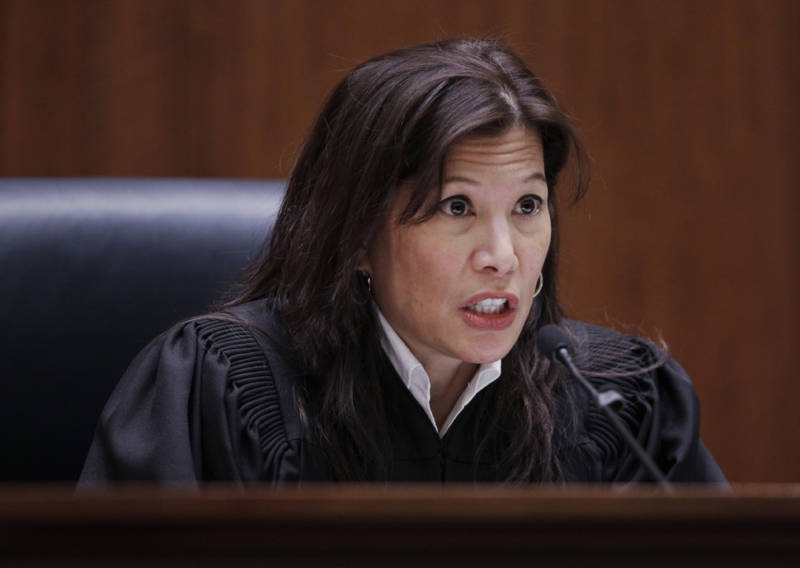
"caption": "California Supreme Court Chief Justice Tani Cantil-Sakauye addresses a hearing in San Francisco, Tuesday, Jan. 10, 2012. ",
"description": "California Supreme Court Chief Justice Tani Cantil-Sakauye addresses a hearing in San Francisco, Tuesday, Jan. 10, 2012. ",
"title": "Tani Cantil-Sakauye",
"credit": "Paul Sakuma/AP",
"status": "inherit",
"isLoading": false,
"fetchFailed": false
},
"news_11704211": {
"type": "attachments",
"id": "news_11704211",
"meta": {
"index": "attachments_1716263798",
"site": "news",
"id": "11704211",
"found": true
},
"parent": 11704210,
"imgSizes": {
"twentyfourteen-full-width": {
"file": "https://ww2.kqed.org/app/uploads/sites/10/2018/11/gettyimages-801354822_wide-0be532b5f2bdf9a28ab7b9792ee5cc0a02def536-e1541549429953-1038x576.jpg",
"width": 1038,
"mimeType": "image/jpeg",
"height": 576
},
"thumbnail": {
"file": "https://ww2.kqed.org/app/uploads/sites/10/2018/11/gettyimages-801354822_wide-0be532b5f2bdf9a28ab7b9792ee5cc0a02def536-e1541549429953-160x90.jpg",
"width": 160,
"mimeType": "image/jpeg",
"height": 90
},
"post-thumbnail": {
"file": "https://ww2.kqed.org/app/uploads/sites/10/2018/11/gettyimages-801354822_wide-0be532b5f2bdf9a28ab7b9792ee5cc0a02def536-e1541549429953-672x372.jpg",
"width": 672,
"mimeType": "image/jpeg",
"height": 372
},
"kqedFullSize": {
"file": "https://ww2.kqed.org/app/uploads/sites/10/2018/11/gettyimages-801354822_wide-0be532b5f2bdf9a28ab7b9792ee5cc0a02def536-e1541549429953.jpg",
"width": 1920,
"height": 1080
},
"large": {
"file": "https://ww2.kqed.org/app/uploads/sites/10/2018/11/gettyimages-801354822_wide-0be532b5f2bdf9a28ab7b9792ee5cc0a02def536-e1541549429953-1020x574.jpg",
"width": 1020,
"mimeType": "image/jpeg",
"height": 574
},
"complete_open_graph": {
"file": "https://ww2.kqed.org/app/uploads/sites/10/2018/11/gettyimages-801354822_wide-0be532b5f2bdf9a28ab7b9792ee5cc0a02def536-e1541549429953-1200x675.jpg",
"width": 1200,
"mimeType": "image/jpeg",
"height": 675
},
"guest-author-50": {
"file": "https://ww2.kqed.org/app/uploads/sites/10/2018/11/gettyimages-801354822_wide-0be532b5f2bdf9a28ab7b9792ee5cc0a02def536-e1541549429953-50x50.jpg",
"width": 50,
"mimeType": "image/jpeg",
"height": 50
},
"guest-author-96": {
"file": "https://ww2.kqed.org/app/uploads/sites/10/2018/11/gettyimages-801354822_wide-0be532b5f2bdf9a28ab7b9792ee5cc0a02def536-e1541549429953-96x96.jpg",
"width": 96,
"mimeType": "image/jpeg",
"height": 96
},
"medium": {
"file": "https://ww2.kqed.org/app/uploads/sites/10/2018/11/gettyimages-801354822_wide-0be532b5f2bdf9a28ab7b9792ee5cc0a02def536-e1541549429953-800x450.jpg",
"width": 800,
"mimeType": "image/jpeg",
"height": 450
},
"guest-author-64": {
"file": "https://ww2.kqed.org/app/uploads/sites/10/2018/11/gettyimages-801354822_wide-0be532b5f2bdf9a28ab7b9792ee5cc0a02def536-e1541549429953-64x64.jpg",
"width": 64,
"mimeType": "image/jpeg",
"height": 64
},
"guest-author-32": {
"file": "https://ww2.kqed.org/app/uploads/sites/10/2018/11/gettyimages-801354822_wide-0be532b5f2bdf9a28ab7b9792ee5cc0a02def536-e1541549429953-32x32.jpg",
"width": 32,
"mimeType": "image/jpeg",
"height": 32
},
"full-width": {
"file": "https://ww2.kqed.org/app/uploads/sites/10/2018/11/gettyimages-801354822_wide-0be532b5f2bdf9a28ab7b9792ee5cc0a02def536-e1541549429953-1920x1080.jpg",
"width": 1920,
"mimeType": "image/jpeg",
"height": 1080
},
"detail": {
"file": "https://ww2.kqed.org/app/uploads/sites/10/2018/11/gettyimages-801354822_wide-0be532b5f2bdf9a28ab7b9792ee5cc0a02def536-e1541549429953-150x150.jpg",
"width": 150,
"mimeType": "image/jpeg",
"height": 150
},
"guest-author-128": {
"file": "https://ww2.kqed.org/app/uploads/sites/10/2018/11/gettyimages-801354822_wide-0be532b5f2bdf9a28ab7b9792ee5cc0a02def536-e1541549429953-128x128.jpg",
"width": 128,
"mimeType": "image/jpeg",
"height": 128
}
},
"publishDate": 1541547660,
"modified": 1541549449,
"caption": "The U.S. Supreme Court has been asked to intervene in pending cases about the legality of the Trump administration's decision to end the DACA program.",
"description": "The U.S. Supreme Court has been asked to intervene in pending cases about the legality of the Trump administration's decision to end the DACA program.",
"title": "The U.S. Supreme Court has been asked to intervene in pending cases about the legality of the Trump administration's decision to end the DACA program.",
"credit": "Eric Thayer/Getty Images",
"status": "inherit",
"isLoading": false,
"fetchFailed": false
},
"news_11703895": {
"type": "attachments",
"id": "news_11703895",
"meta": {
"index": "attachments_1716263798",
"site": "news",
"id": "11703895",
"found": true
},
"parent": 11703843,
"imgSizes": {
"small": {
"file": "https://ww2.kqed.org/app/uploads/sites/10/2018/11/ajit_pai-520x347.jpg",
"width": 520,
"mimeType": "image/jpeg",
"height": 347
},
"twentyfourteen-full-width": {
"file": "https://ww2.kqed.org/app/uploads/sites/10/2018/11/ajit_pai-1038x576.jpg",
"width": 1038,
"mimeType": "image/jpeg",
"height": 576
},
"thumbnail": {
"file": "https://ww2.kqed.org/app/uploads/sites/10/2018/11/ajit_pai-160x107.jpg",
"width": 160,
"mimeType": "image/jpeg",
"height": 107
},
"fd-sm": {
"file": "https://ww2.kqed.org/app/uploads/sites/10/2018/11/ajit_pai-960x640.jpg",
"width": 960,
"mimeType": "image/jpeg",
"height": 640
},
"post-thumbnail": {
"file": "https://ww2.kqed.org/app/uploads/sites/10/2018/11/ajit_pai-672x372.jpg",
"width": 672,
"mimeType": "image/jpeg",
"height": 372
},
"xsmall": {
"file": "https://ww2.kqed.org/app/uploads/sites/10/2018/11/ajit_pai-375x250.jpg",
"width": 375,
"mimeType": "image/jpeg",
"height": 250
},
"kqedFullSize": {
"file": "https://ww2.kqed.org/app/uploads/sites/10/2018/11/ajit_pai.jpg",
"width": 1920,
"height": 1280
},
"large": {
"file": "https://ww2.kqed.org/app/uploads/sites/10/2018/11/ajit_pai-1020x680.jpg",
"width": 1020,
"mimeType": "image/jpeg",
"height": 680
},
"xlarge": {
"file": "https://ww2.kqed.org/app/uploads/sites/10/2018/11/ajit_pai-1180x787.jpg",
"width": 1180,
"mimeType": "image/jpeg",
"height": 787
},
"complete_open_graph": {
"file": "https://ww2.kqed.org/app/uploads/sites/10/2018/11/ajit_pai-1200x800.jpg",
"width": 1200,
"mimeType": "image/jpeg",
"height": 800
},
"guest-author-50": {
"file": "https://ww2.kqed.org/app/uploads/sites/10/2018/11/ajit_pai-50x50.jpg",
"width": 50,
"mimeType": "image/jpeg",
"height": 50
},
"guest-author-96": {
"file": "https://ww2.kqed.org/app/uploads/sites/10/2018/11/ajit_pai-96x96.jpg",
"width": 96,
"mimeType": "image/jpeg",
"height": 96
},
"medium": {
"file": "https://ww2.kqed.org/app/uploads/sites/10/2018/11/ajit_pai-800x533.jpg",
"width": 800,
"mimeType": "image/jpeg",
"height": 533
},
"guest-author-64": {
"file": "https://ww2.kqed.org/app/uploads/sites/10/2018/11/ajit_pai-64x64.jpg",
"width": 64,
"mimeType": "image/jpeg",
"height": 64
},
"guest-author-32": {
"file": "https://ww2.kqed.org/app/uploads/sites/10/2018/11/ajit_pai-32x32.jpg",
"width": 32,
"mimeType": "image/jpeg",
"height": 32
},
"fd-lrg": {
"file": "https://ww2.kqed.org/app/uploads/sites/10/2018/11/ajit_pai-1920x1280.jpg",
"width": 1920,
"mimeType": "image/jpeg",
"height": 1280
},
"fd-med": {
"file": "https://ww2.kqed.org/app/uploads/sites/10/2018/11/ajit_pai-1180x787.jpg",
"width": 1180,
"mimeType": "image/jpeg",
"height": 787
},
"full-width": {
"file": "https://ww2.kqed.org/app/uploads/sites/10/2018/11/ajit_pai-1920x1280.jpg",
"width": 1920,
"mimeType": "image/jpeg",
"height": 1280
},
"detail": {
"file": "https://ww2.kqed.org/app/uploads/sites/10/2018/11/ajit_pai-150x150.jpg",
"width": 150,
"mimeType": "image/jpeg",
"height": 150
},
"guest-author-128": {
"file": "https://ww2.kqed.org/app/uploads/sites/10/2018/11/ajit_pai-128x128.jpg",
"width": 128,
"mimeType": "image/jpeg",
"height": 128
},
"xxsmall": {
"file": "https://ww2.kqed.org/app/uploads/sites/10/2018/11/ajit_pai-240x160.jpg",
"width": 240,
"mimeType": "image/jpeg",
"height": 160
}
},
"publishDate": 1541459136,
"modified": 1541467571,
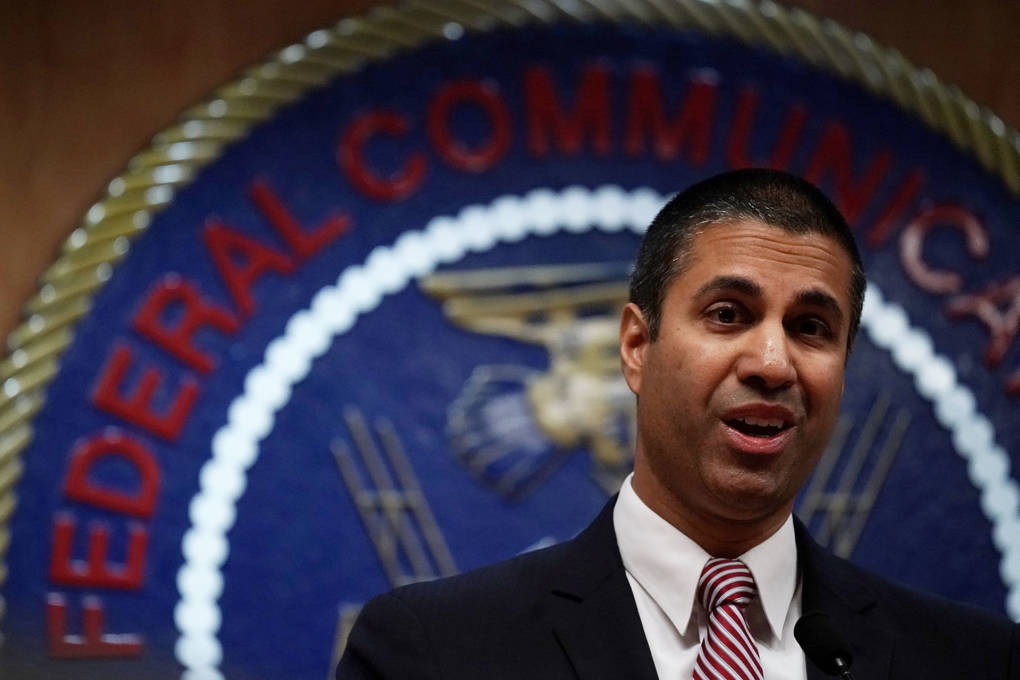
"caption": "Federal Communications Commission Chairman Ajit Pai speaks to members of the media after a commission meeting Dec. 14, 2017, in Washington, D.C.",
"description": "Federal Communications Commission Chairman Ajit Pai speaks to members of the media after a commission meeting December 14, 2017 in Washington, DC.",
"title": "FCC Holds Vote On Repeal Of Net Neutrality Rules",
"credit": "Alex Wong/Getty Images",
"status": "inherit",
"isLoading": false,
"fetchFailed": false
}
},
"audioPlayerReducer": {
"postId": "stream_live",
"isPaused": true,
"isPlaying": false,
"pfsActive": false,
"pledgeModalIsOpen": true,
"playerDrawerIsOpen": false,
"liveAudioPlayStartedAt": 0,
"liveAudioPlayContext": ""
},
"authorsReducer": {
"byline_news_11757890": {
"type": "authors",
"id": "byline_news_11757890",
"meta": {
"override": true
},
"slug": "byline_news_11757890",
"name": "\u003cstrong>Nina Totenberg and Domenico Montanaro\u003cbr />NPR\u003c/strong>",
"isLoading": false
},
"byline_news_11757610": {
"type": "authors",
"id": "byline_news_11757610",
"meta": {
"override": true
},
"slug": "byline_news_11757610",
"name": "\u003cstrong>Nina Totenberg and Hansi Lo Wang\u003cbr />NPR\u003c/strong>",
"isLoading": false
},
"byline_news_11757598": {
"type": "authors",
"id": "byline_news_11757598",
"meta": {
"override": true
},
"slug": "byline_news_11757598",
"name": "\u003cstrong>Nina Totenberg, Domenico Montanaro and Miles Parks\u003cbr />NPR\u003c/strong>",
"isLoading": false
},
"byline_news_11746776": {
"type": "authors",
"id": "byline_news_11746776",
"meta": {
"override": true
},
"slug": "byline_news_11746776",
"name": "\u003ca href=\"https://www.npr.org/people/2101289/nina-totenberg\">Nina Totenberg\u003c/a>",
"isLoading": false
},
"byline_news_11742099": {
"type": "authors",
"id": "byline_news_11742099",
"meta": {
"override": true
},
"slug": "byline_news_11742099",
"name": "\u003cstrong>Hansi Lo Wang and Nina Totenberg\u003cbr />NPR\u003c/strong>",
"isLoading": false
},
"byline_news_11740525": {
"type": "authors",
"id": "byline_news_11740525",
"meta": {
"override": true
},
"slug": "byline_news_11740525",
"name": "Nina Totenberg",
"isLoading": false
},
"byline_news_11720059": {
"type": "authors",
"id": "byline_news_11720059",
"meta": {
"override": true
},
"slug": "byline_news_11720059",
"name": "Mark Sherman\u003cbr>Associated Press",
"isLoading": false
},
"byline_news_11716464": {
"type": "authors",
"id": "byline_news_11716464",
"meta": {
"override": true
},
"slug": "byline_news_11716464",
"name": "\u003cstrong>Bay City News\u003c/strong>",
"isLoading": false
},
"byline_news_11715748": {
"type": "authors",
"id": "byline_news_11715748",
"meta": {
"override": true
},
"slug": "byline_news_11715748",
"name": "\u003ca href=\"https://calmatters.org/articles/author/ben-christopher/\">Ben Christopher\u003c/a> \u003cbr> \u003ca href=\"https://calmatters.org/articles/author/elizabeth-aguilera/\">Elizabeth Aguilera\u003c/a>",
"isLoading": false
},
"byline_news_11712699": {
"type": "authors",
"id": "byline_news_11712699",
"meta": {
"override": true
},
"slug": "byline_news_11712699",
"name": "Dan Morain",
"isLoading": false
},
"byline_news_11704210": {
"type": "authors",
"id": "byline_news_11704210",
"meta": {
"override": true
},
"slug": "byline_news_11704210",
"name": "Camila Domonoske",
"isLoading": false
},
"byline_news_11703843": {
"type": "authors",
"id": "byline_news_11703843",
"meta": {
"override": true
},
"slug": "byline_news_11703843",
"name": "\u003cstrong>\u003ca href=\"https://www.npr.org/people/14562108/bill-chappell\">Bill Chappell\u003c/a>\u003c/strong>",
"isLoading": false
}
},
"pagesReducer": {
"news_tag_u-s-supreme-court": {
"type": "terms",
"id": "news_1172",
"meta": {
"index": "terms_1716263798",
"site": "news",
"id": "1172",
"score": 10.403838
},
"featImg": null,
"name": "U.S. Supreme Court",
"description": null,
"taxonomy": "tag",
"headData": {
"twImgId": null,
"twTitle": null,
"ogTitle": null,
"ogImgId": null,
"twDescription": null,
"description": null,
"title": "U.S. Supreme Court Archives | KQED News",
"ogDescription": null
},
"ttid": 1183,
"slug": "u-s-supreme-court",
"isLoading": false,
"title": "U.S. Supreme Court",
"pageMeta": {
"site": "news",
"WpPageTemplate": "page-topic-editorial",
"currentPage": 8
},
"blocks": [
{
"blockName": "kqed/post-list",
"attrs": {
"layout": "cardArticle2",
"query": "posts/news?tag=u-s-supreme-court",
"seeMore": false,
"paginated": true,
"page": 8
}
},
{
"blockName": "kqed/ad"
}
]
}
},
"pfsSessionReducer": {},
"postsReducer": {
"stream_live": {
"type": "live",
"id": "stream_live",
"audioUrl": "https://streams.kqed.org/kqedradio",
"title": "Live Stream",
"excerpt": "Live Stream information currently unavailable.",
"link": "/radio",
"featImg": "",
"label": {
"name": "KQED Live",
"link": "/"
}
},
"stream_kqedNewscast": {
"type": "posts",
"id": "stream_kqedNewscast",
"audioUrl": "https://www.kqed.org/.stream/anon/radio/RDnews/newscast.mp3?_=1",
"title": "KQED Newscast",
"featImg": "",
"label": {
"name": "88.5 FM",
"link": "/"
}
},
"news_11757890": {
"type": "posts",
"id": "news_11757890",
"meta": {
"index": "posts_1716263798",
"site": "news",
"id": "11757890",
"score": null,
"sort": [
1561734601000
]
},
"parent": 0,
"labelTerm": {},
"blocks": [],
"publishDate": 1561734601,
"format": "standard",
"disqusTitle": "Supreme Court Takes Up DACA Appeal",
"title": "Supreme Court Takes Up DACA Appeal",
"headTitle": "The California Report | KQED News",
"content": "\u003cp>The fates of almost a million people brought to the country illegally as children, known as DREAMers, are now in the hands of the U.S. Supreme Court. \u003c/p>\n\u003cp>The court granted an appeal to the Trump administration's decision to end the DACA program, or Deferred Action for Childhood Arrivals.\u003c/p>\n\u003cp>The Obama-era program to protect DREAMers will get a one-hour hearing before the high court next term. The court said it would consolidate three appeals into one argument.\u003c/p>\n\u003cp>The program provided temporary legal status and protection from deportation for nearly 800,000 young people who were brought to the U.S. without legal papers when they were children. \u003c/p>\n\u003cp>President Trump sought to revoke their protected status in 2017, seven months after taking office. The administration claimed in court that it could revoke DREAMers' status anytime because the original Obama program was illegal. It also asserted that the courts had no power to review its decision. \u003c/p>\n\u003cp>[ad fullwidth]\u003c/p>\n\u003cp>Four federal appeals courts subsequently rejected those arguments, and the Supreme Court earlier this month refused to expedite high court consideration of the cases.\u003c/p>\n\u003cp>Now, the court will hear arguments next term, with a decision expected a year from now — just as the 2020 presidential election will be kicking into high gear.\u003c/p>\n\u003cp>While public approval for DREAMers is high — around 80% in most public opinion polls — the issues in the case are tricky. Were the administration willing to concede that President Barack Obama acted legally in enacting the program, the Trump administration could rescind the program as long as it provided a good reason and followed the rules for such a policy reversal.\u003c/p>\n\u003cp>But the administration has hinged its legal position on its contention that Obama acted illegally. And that is a tough sell, given that other administrations of both parties have used deferred action to permit certain large categories of people to remain in the United States. \u003c/p>\n\u003cp>The DACA controversy also has been intertwined with politics. President Trump sought to use the program as a bargaining chip to get Democrats to agree to build a wall along the U.S.-Mexico border. And when that failed, and the administration still maintained that DACA was illegal, the administration's push to get the case into the Supreme Court earlier was seen by some critics as an effort to shift the blame for an unpopular act onto the court. \u003c/p>\n\u003cp>The question of what to do about DREAMers was intensely debated within the Trump administration in the summer of 2017. John Kelly, then the secretary of Homeland Security, twice declined to close the program.\u003c/p>\n\u003cp>The president's daughter, Ivanka, and his son-in-law, Jared Kushner, were both said to be DACA supporters, and the president himself had often spoken approvingly about DREAMers, calling them \"great kids,\" and expressing his \"love\" for them.\u003c/p>\n\u003cp>\u003c/p>\n\u003cp>Copyright 2019 NPR. To see more, visit https://www.npr.org.\u003c/p>\n\n",
"disqusIdentifier": "11757890 https://ww2.kqed.org/news/?p=11757890",
"disqusUrl": "https://ww2.kqed.org/news/2019/06/28/supreme-court-takes-up-daca-appeal/",
"stats": {
"hasVideo": false,
"hasChartOrMap": false,
"hasAudio": false,
"hasPolis": false,
"wordCount": 484,
"hasGoogleForm": false,
"hasGallery": false,
"hasHearkenModule": false,
"iframeSrcs": [],
"paragraphCount": 15
},
"modified": 1561734774,
"excerpt": "The high court agrees to review the Trump administration's elimination of a program designed to help children brought to the country illegally.",
"headData": {
"twImgId": "",
"twTitle": "",
"ogTitle": "",
"ogImgId": "",
"twDescription": "",
"description": "The high court agrees to review the Trump administration's elimination of a program designed to help children brought to the country illegally.",
"title": "Supreme Court Takes Up DACA Appeal | KQED",
"ogDescription": "",
"schema": {
"@context": "https://schema.org",
"@type": "NewsArticle",
"headline": "Supreme Court Takes Up DACA Appeal",
"datePublished": "2019-06-28T08:10:01-07:00",
"dateModified": "2019-06-28T08:12:54-07:00",
"image": "https://cdn.kqed.org/wp-content/uploads/2020/02/KQED-OG-Image@1x.png",
"isAccessibleForFree": "True",
"publisher": {
"@type": "NewsMediaOrganization",
"@id": "https://www.kqed.org/#organization",
"name": "KQED",
"logo": "https://cdn.kqed.org/wp-content/uploads/2020/02/KQED-OG-Image@1x.png",
"url": "https://www.kqed.org",
"sameAs": [
"https://www.facebook.com/KQED",
"https://twitter.com/KQED",
"https://www.instagram.com/kqed/",
"https://www.tiktok.com/@kqedofficial",
"https://www.linkedin.com/company/kqed",
"https://www.youtube.com/channel/UCeC0IOo7i1P_61zVUWbJ4nw"
]
}
}
},
"guestAuthors": [],
"slug": "supreme-court-takes-up-daca-appeal",
"status": "publish",
"sourceUrl": "https://www.npr.org/",
"nprApiLink": "http://api.npr.org/query?id=733774906&apiKey=MDAxOTAwOTE4MDEyMTkxMDAzNjczZDljZA004",
"nprByline": "\u003cstrong>Nina Totenberg and Domenico Montanaro\u003cbr />NPR\u003c/strong>",
"nprStoryDate": "Fri, 28 Jun 2019 09:50:01 -0400",
"nprLastModifiedDate": "Fri, 28 Jun 2019 11:05:58 -0400",
"nprHtmlLink": "https://www.npr.org/2019/06/28/733774906/supreme-court-takes-up-daca-appeal?ft=nprml&f=733774906",
"nprImageAgency": "AP",
"nprImageCredit": "J. Scott Applewhite",
"source": "NPR",
"nprStoryId": "733774906",
"nprRetrievedStory": "1",
"nprPubDate": "Fri, 28 Jun 2019 11:05:00 -0400",
"path": "/news/11757890/supreme-court-takes-up-daca-appeal",
"audioTrackLength": null,
"parsedContent": [
{
"type": "contentString",
"content": "\u003cdiv class=\"post-body\">\u003cp>\u003cp>The fates of almost a million people brought to the country illegally as children, known as DREAMers, are now in the hands of the U.S. Supreme Court. \u003c/p>\n\u003cp>The court granted an appeal to the Trump administration's decision to end the DACA program, or Deferred Action for Childhood Arrivals.\u003c/p>\n\u003cp>The Obama-era program to protect DREAMers will get a one-hour hearing before the high court next term. The court said it would consolidate three appeals into one argument.\u003c/p>\n\u003cp>The program provided temporary legal status and protection from deportation for nearly 800,000 young people who were brought to the U.S. without legal papers when they were children. \u003c/p>\n\u003cp>President Trump sought to revoke their protected status in 2017, seven months after taking office. The administration claimed in court that it could revoke DREAMers' status anytime because the original Obama program was illegal. It also asserted that the courts had no power to review its decision. \u003c/p>\n\u003cp>\u003c/p>\u003c/div>",
"attributes": {
"named": {},
"numeric": []
}
},
{
"type": "component",
"content": "",
"name": "ad",
"attributes": {
"named": {
"label": "fullwidth"
},
"numeric": [
"fullwidth"
]
}
},
{
"type": "contentString",
"content": "\u003cdiv class=\"post-body\">\u003cp>\u003c/p>\n\u003cp>Four federal appeals courts subsequently rejected those arguments, and the Supreme Court earlier this month refused to expedite high court consideration of the cases.\u003c/p>\n\u003cp>Now, the court will hear arguments next term, with a decision expected a year from now — just as the 2020 presidential election will be kicking into high gear.\u003c/p>\n\u003cp>While public approval for DREAMers is high — around 80% in most public opinion polls — the issues in the case are tricky. Were the administration willing to concede that President Barack Obama acted legally in enacting the program, the Trump administration could rescind the program as long as it provided a good reason and followed the rules for such a policy reversal.\u003c/p>\n\u003cp>But the administration has hinged its legal position on its contention that Obama acted illegally. And that is a tough sell, given that other administrations of both parties have used deferred action to permit certain large categories of people to remain in the United States. \u003c/p>\n\u003cp>The DACA controversy also has been intertwined with politics. President Trump sought to use the program as a bargaining chip to get Democrats to agree to build a wall along the U.S.-Mexico border. And when that failed, and the administration still maintained that DACA was illegal, the administration's push to get the case into the Supreme Court earlier was seen by some critics as an effort to shift the blame for an unpopular act onto the court. \u003c/p>\n\u003cp>The question of what to do about DREAMers was intensely debated within the Trump administration in the summer of 2017. John Kelly, then the secretary of Homeland Security, twice declined to close the program.\u003c/p>\n\u003cp>The president's daughter, Ivanka, and his son-in-law, Jared Kushner, were both said to be DACA supporters, and the president himself had often spoken approvingly about DREAMers, calling them \"great kids,\" and expressing his \"love\" for them.\u003c/p>\n\u003cp>\u003c/p>\n\u003cp>Copyright 2019 NPR. To see more, visit https://www.npr.org.\u003c/p>\n\n\u003c/div>\u003c/p>",
"attributes": {
"named": {},
"numeric": []
}
}
],
"link": "/news/11757890/supreme-court-takes-up-daca-appeal",
"authors": [
"byline_news_11757890"
],
"programs": [
"news_72"
],
"categories": [
"news_1169",
"news_6188",
"news_8"
],
"tags": [
"news_20226",
"news_21021",
"news_1323",
"news_20415",
"news_1172"
],
"featImg": "news_11757891",
"label": "source_news_11757890"
},
"news_11757610": {
"type": "posts",
"id": "news_11757610",
"meta": {
"index": "posts_1716263798",
"site": "news",
"id": "11757610",
"score": null,
"sort": [
1561648628000
]
},
"parent": 0,
"labelTerm": {},
"blocks": [],
"publishDate": 1561648628,
"format": "standard",
"disqusTitle": "Trump Threatens Census Delay After Supreme Court Leaves Citizenship Question Blocked",
"title": "Trump Threatens Census Delay After Supreme Court Leaves Citizenship Question Blocked",
"headTitle": "The California Report | KQED News",
"content": "\u003cp>\u003cstrong>Updated at 1:46 p.m. ET\u003c/strong>\u003c/p>\n\u003cp>In a defeat for the Trump administration, the Supreme Court leaves the citizenship question blocked from the 2020 census for now, in part because of the government's explanation for why it added it in the first place.\u003c/p>\n\u003cp>Opponents of the question, who have worked for more than a year to get it removed, are claiming victory. President Trump says he is talking to lawyers about delaying the entire census count to try to get the question back on.\u003c/p>\n\u003cp>The majority opinion, written by Chief Justice John Roberts, said it \"cannot ignore the disconnect between the decision made and the explanation given\" by the Trump administration.\u003c/p>\n\u003cp>\"The reasoned explanation requirement of administrative law, after all, is meant to ensure that agencies offer genuine justifications for important decisions, reasons that can be scrutinized by courts and the interested public,\" the majority opinion continued. \"Accepting contrived reasons would defeat the purpose of the enterprise. If judicial review is to be more than an empty ritual, it must demand something better than the explanation offered for the action taken in this case.\"\u003c/p>\n\u003cp>[ad fullwidth]\u003c/p>\n\u003cp>The complicated decision comes more than a year after Commerce Secretary Wilbur Ross, who oversees the Census Bureau, overruled the unanimous advice of Census Bureau experts and approved the addition of the question, \"\u003ca href=\"https://www.npr.org/2019/06/27/717635291/supreme-court-leaves-citizenship-question-blocked-from-2020-census\" target=\"_blank\" rel=\"noopener\">Is this person a citizen of the United States?\u003c/a>\"\u003c/p>\n\u003cp>The high court's decision could have profound political consequences. The new population counts from the 2020 census will determine for the next 10 years how many seats each state gets in the U.S. House of Representatives and how many Electoral College votes each state gets in presidential elections beginning in 2024. They also help determine how some \u003ca href=\"https://gwipp.gwu.edu/sites/g/files/zaxdzs2181/f/downloads/Counting%20for%20Dollars%20%234%20Census-derived%20Datasets.pdf\" target=\"_blank\" rel=\"noopener\">$900 billion a year\u003c/a> in federal money is allocated across the country for roads, schools, hospitals, health care and more.\u003c/p>\n\u003cp>New York Attorney General Letitia James, whose office led one of the lawsuits, \u003ca href=\"https://twitter.com/hansilowang/status/1144290005344489472\" target=\"_blank\" rel=\"noopener\">says she is \"pleased\" with the court's decision\u003c/a>. \"Thanks to the Court, the census will remain a tool for delivering our government's promise of fairness and equity,\" she said in a written statement.\u003c/p>\n\u003cp>Department of Justice Spokesperson Kelly Laco \u003ca href=\"https://twitter.com/hansilowang/status/1144285539207712769\" target=\"_blank\" rel=\"noopener\">said in a statement\u003c/a> that the department is \"disappointed by the Supreme Court's decision\" and that it will \"continue to defend this Administration's lawful exercises of executive power.\"\u003c/p>\n\u003cp>Meanwhile, President Trump \u003ca href=\"https://twitter.com/realDonaldTrump/status/1144298734311878657\" target=\"_blank\" rel=\"noopener\">tweeted\u003c/a> that he has asked lawyers if they can \"delay the Census, no matter how long, until the United States Supreme Court is given additional information from which it can make a final and decisive decision on this very critical matter.\"\u003c/p>\n\u003cp>He added: \"Can anyone really believe that as a great Country, we are not able the ask whether or not someone is a Citizen. Only in America!\"\u003c/p>\n\u003cp>Census Bureau research has long shown that adding a citizenship question often leads people in households with immigrants — including those who are U.S. citizens — to simply not fill out the census form. That could result in an undercount that is not only substantial but uneven, according to Census Bureau experts, and it hits mainly in urban areas where immigrant groups live, while leaving rural, mainly white areas largely unaffected.\u003c/p>\n\u003cp>\u003ca href=\"https://apps.npr.org/documents/document.html?id=6165808-U-S-Census-Bureau-Working-Paper-Understanding\" target=\"_blank\" rel=\"noopener\">According to the Census Bureau's own expert estimates\u003c/a>, the addition of the question is likely to reduce census responses among households with at least one noncitizen by at least 8 percentage points. That translates to an estimated 9 million people not participating in the constitutionally mandated head count of every person living in the U.S.\u003c/p>\n\u003cp>The bureau has also found that responses to the question would produce data less accurate and more expensive than existing government records on citizenship.\u003c/p>\n\u003cp>Dozens of states, cities and other groups challenged the addition of the citizenship question in court. The challengers maintained that Ross' motivation for adding the question was political. Ross said the Justice Department wanted the citizenship information for enforcement of the Voting Rights Act. Three federal district courts subsequently found that explanation \"pretextual\" — in other words, a sham.\u003c/p>\n\u003cp>California Democratic Sen. Dianne Feinstein said in a statement she was \"pleased the court rejected the administration’s rationale for adding the question.\" Her statement continued:\u003c/p>\n\u003cblockquote>\u003cp>However, the court’s conservative majority overlooked clear evidence that adding a citizenship question would discourage census participation in immigrant communities and communities of color, and I’m concerned what that will mean for future rulings.\u003cbr>\n \u003cbr>\nThe Constitution calls for an accurate count of ALL individuals living in the United States. A Census Bureau report found that adding the citizenship question could result in an up to 8 percent undercount – such a result would affect everything from voting representation to federal funding for infrastructure, schools and safety-net programs – which would be particularly harmful to diverse states like California.\u003c/p>\n\u003cp>I hope the administration will abandon this partisan endeavor and instead work with Congress and the states to maximize responses to the census to ensure a fair and accurate count of everyone living in the United States.\u003c/p>\u003c/blockquote>\n\u003cp>California Attorney General Xavier Becerra said in a statement that he encouraged Californians and individuals nationwide to participate in the census. He statement read: \u003c/p>\n\u003cblockquote>\u003cp>Today’s decision calls into question the Trump Administration’s dubious reasoning for adding the citizenship question to the 2020 census, but we also know that the fight must go on. We will continue to defend a value we hold dear in California: everyone counts. We will fight to ensure that our friends, neighbors, and loved ones can stand up and be counted without fear. The services we all rely on — good schools, decent roads and public transportation, reliable public safety, and quality hospitals and clinics — are all on the line. In 2020, with this census, 40 million Californians — young and old, rich and poor, citizen and immigrant — will have a chance to lift their voices together to declare: We’re here, we count, and none of us will be pushed into the shadows.\u003c/p>\u003c/blockquote>\n\u003cp>The high court's decision comes amid a variety of new developments.\u003c/p>\n\u003cp>On June 12, \u003ca href=\"https://www.npr.org/2019/06/12/732051545/justice-dept-cites-executive-privilege-in-keeping-census-documents-from-democrat\" target=\"_blank\" rel=\"noopener\">the House oversight committee voted to hold Ross and Attorney General William Barr in contempt\u003c/a> for failure to produce \u003ca href=\"https://www.npr.org/2019/06/14/732599732/trump-blocked-congress-from-seeing-these-emails-about-the-census-unredacted\" target=\"_blank\" rel=\"noopener\">emails and other documents involving the citizenship question\u003c/a>. Unless there is an agreement, the full House could vote on the contempt citation, but the timing is unclear. And unless the issue is resolved through the usual process of negotiation, it would be litigated in the courts.\u003c/p>\n\u003cp>In a separate development later that same day, organizations challenging the addition of the citizenship question in New York \u003ca href=\"https://www.npr.org/2019/06/12/732191078/citizenship-question-lawsuit-plaintiffs-ask-supreme-court-to-delay-ruling\" target=\"_blank\" rel=\"noopener\">asked the Supreme Court to send the census case back to the lower court\u003c/a> if necessary to resolve what the plaintiffs called newly discovered evidence casting doubt on Trump administration claims. The groups cite unpublished documents regarding the citizenship question on the late Thomas Hofeller's hard drives, which were found by his daughter.\u003c/p>\n\u003cp>Hofeller, who died 10 months ago, was long one of the Republican Party's top strategists on redistricting. Attorneys for the challengers in New York, led by the ACLU, contend that his hard drives contain documents showing that Hofeller \"played a significant, previously undisclosed role in orchestrating\" the addition of the citizenship question to be able to \u003ca href=\"https://www.npr.org/2019/05/30/728232221/gop-redistricting-strategist-played-role-in-push-for-census-citizenship-question\" target=\"_blank\" rel=\"noopener\">redraw political maps to favor Republicans and non-Hispanic white people\u003c/a>. U.S. District Judge Jesse Furman of New York is \u003ca href=\"https://www.npr.org/2019/06/05/729317952/judge-delays-review-of-serious-allegations-of-citizenship-question-cover-up\" target=\"_blank\" rel=\"noopener\">set to review these allegations this summer\u003c/a>.\u003c/p>\n\u003cp>\"These allegations cut to the heart of this case,\" attorneys for the New York challengers said in their \u003ca href=\"https://www.supremecourt.gov/DocketPDF/18/18-966/102858/20190612195236397_18-966%20US%20Dept%20of%20Commerce%20v%20State%20of%20New%20York%20et%20al%20NYIC%20Respondents%20Motion%20for%20Limited%20Remand.pdf\" target=\"_blank\" rel=\"noopener\">Supreme Court filing\u003c/a>.\u003c/p>\n\u003cp>They said that the Hofeller documents, which were discovered after the census case was argued before the Supreme Court, show that the administration's rationale for adding the citizenship question was \"concocted\" to hide a racially and politically discriminatory motive.\u003c/p>\n\u003cp>The Hofeller files have also spurred U.S. District Judge George Hazel of Maryland to revisit claims in two Maryland-based lawsuits over the question. Plaintiffs in those cases asked him to reconsider claims of discrimination and of a conspiracy among Trump administration officials that the judge had previously decided did not have enough evidence to support.\u003c/p>\n\u003cp>In an \u003ca href=\"https://www.documentcloud.org/documents/6166152-June-24-2019-Opinion-by-U-S-District-Judge.html\" target=\"_blank\" rel=\"noopener\">opinion released earlier this week\u003c/a>, Hazel said the new evidence \"potentially connects the dots between a discriminatory purpose — diluting Hispanics' political power — and Secretary Ross's decision.\"\u003c/p>\n\u003cp>\"As more puzzle pieces are placed on the mat, a disturbing picture of the decisionmakers' motives takes shape,\" the judge added.\u003c/p>\n\u003cp>The Trump administration's attorneys have said Hofeller played \"little, if any, role\" in pushing for a citizenship question. But in a recent court filing, attorneys for the Maryland plaintiffs say that he was \u003ca href=\"https://www.npr.org/2019/06/15/732669380/emails-connect-census-official-with-gop-strategist-on-citizenship-question\" target=\"_blank\" rel=\"noopener\">in touch with a high-ranking Census Bureau official about the question\u003c/a> as early as 2015.\u003c/p>\n\u003cp>Finally, earlier this month, the Census Bureau \u003ca href=\"https://www.npr.org/2019/06/13/731629018/as-legal-battle-persists-census-citizenship-question-is-put-to-the-test\" target=\"_blank\" rel=\"noopener\">began conducting a test census\u003c/a> with around 480,000 households in most parts of the U.S. to come up with a better fix for offsetting the projected decrease in census participation because of a citizenship question. The results \"will inform staffing, training and planning decisions\" for next year's head count, Victoria Velkoff, an associate director at the Census Bureau, said at \u003ca href=\"https://www.youtube.com/watch?v=b96n0AiZZSE&feature=youtu.be&t=7376\" target=\"_blank\" rel=\"noopener\">a public meeting in February\u003c/a>.\u003c/p>\n\u003cp>The citizenship question issue is likely to continue to be a political lightning rod as the 2020 presidential race progresses.\u003c/p>\n\u003cp>In an April tweet, President Trump said that a census without a citizenship question would be \"\u003ca href=\"https://twitter.com/realDonaldTrump/status/1112702018383212544\" target=\"_blank\" rel=\"noopener\">meaningless\u003c/a>.\"\u003c/p>\n\u003cp>[ad floatright]\u003c/p>\n\u003cp>Copyright 2019 NPR. To see more, visit https://www.npr.org.\u003c/p>\n\n",
"disqusIdentifier": "11757610 https://ww2.kqed.org/news/?p=11757610",
"disqusUrl": "https://ww2.kqed.org/news/2019/06/27/supreme-court-leaves-citizenship-question-blocked-for-now-from-2020-census/",
"stats": {
"hasVideo": false,
"hasChartOrMap": false,
"hasAudio": false,
"hasPolis": false,
"wordCount": 1593,
"hasGoogleForm": false,
"hasGallery": false,
"hasHearkenModule": false,
"iframeSrcs": [],
"paragraphCount": 36
},
"modified": 1561667714,
"excerpt": "The decision comes more than a year after the Trump administration announced plans to include on forms for the national head count the question, \"Is this person a citizen of the United States?\"",
"headData": {
"twImgId": "",
"twTitle": "",
"ogTitle": "",
"ogImgId": "",
"twDescription": "",
"description": "The decision comes more than a year after the Trump administration announced plans to include on forms for the national head count the question, "Is this person a citizen of the United States?"",
"title": "Trump Threatens Census Delay After Supreme Court Leaves Citizenship Question Blocked | KQED",
"ogDescription": "",
"schema": {
"@context": "https://schema.org",
"@type": "NewsArticle",
"headline": "Trump Threatens Census Delay After Supreme Court Leaves Citizenship Question Blocked",
"datePublished": "2019-06-27T08:17:08-07:00",
"dateModified": "2019-06-27T13:35:14-07:00",
"image": "https://cdn.kqed.org/wp-content/uploads/2020/02/KQED-OG-Image@1x.png",
"isAccessibleForFree": "True",
"publisher": {
"@type": "NewsMediaOrganization",
"@id": "https://www.kqed.org/#organization",
"name": "KQED",
"logo": "https://cdn.kqed.org/wp-content/uploads/2020/02/KQED-OG-Image@1x.png",
"url": "https://www.kqed.org",
"sameAs": [
"https://www.facebook.com/KQED",
"https://twitter.com/KQED",
"https://www.instagram.com/kqed/",
"https://www.tiktok.com/@kqedofficial",
"https://www.linkedin.com/company/kqed",
"https://www.youtube.com/channel/UCeC0IOo7i1P_61zVUWbJ4nw"
]
}
}
},
"guestAuthors": [],
"slug": "supreme-court-leaves-citizenship-question-blocked-for-now-from-2020-census",
"status": "publish",
"sourceUrl": "https://www.npr.org/",
"audioUrl": "https://www.kqed.org/.stream/anon/radio/tcr/2019/06/JamaliChanCensus2way.mp3",
"nprByline": "\u003cstrong>Nina Totenberg and Hansi Lo Wang\u003cbr />NPR\u003c/strong>",
"audioTrackLength": 172,
"source": "NPR",
"path": "/news/11757610/supreme-court-leaves-citizenship-question-blocked-for-now-from-2020-census",
"audioDuration": 172000,
"parsedContent": [
{
"type": "contentString",
"content": "\u003cdiv class=\"post-body\">\u003cp>\u003cp>\u003cstrong>Updated at 1:46 p.m. ET\u003c/strong>\u003c/p>\n\u003cp>In a defeat for the Trump administration, the Supreme Court leaves the citizenship question blocked from the 2020 census for now, in part because of the government's explanation for why it added it in the first place.\u003c/p>\n\u003cp>Opponents of the question, who have worked for more than a year to get it removed, are claiming victory. President Trump says he is talking to lawyers about delaying the entire census count to try to get the question back on.\u003c/p>\n\u003cp>The majority opinion, written by Chief Justice John Roberts, said it \"cannot ignore the disconnect between the decision made and the explanation given\" by the Trump administration.\u003c/p>\n\u003cp>\"The reasoned explanation requirement of administrative law, after all, is meant to ensure that agencies offer genuine justifications for important decisions, reasons that can be scrutinized by courts and the interested public,\" the majority opinion continued. \"Accepting contrived reasons would defeat the purpose of the enterprise. If judicial review is to be more than an empty ritual, it must demand something better than the explanation offered for the action taken in this case.\"\u003c/p>\n\u003cp>\u003c/p>\u003c/div>",
"attributes": {
"named": {},
"numeric": []
}
},
{
"type": "component",
"content": "",
"name": "ad",
"attributes": {
"named": {
"label": "fullwidth"
},
"numeric": [
"fullwidth"
]
}
},
{
"type": "contentString",
"content": "\u003cdiv class=\"post-body\">\u003cp>\u003c/p>\n\u003cp>The complicated decision comes more than a year after Commerce Secretary Wilbur Ross, who oversees the Census Bureau, overruled the unanimous advice of Census Bureau experts and approved the addition of the question, \"\u003ca href=\"https://www.npr.org/2019/06/27/717635291/supreme-court-leaves-citizenship-question-blocked-from-2020-census\" target=\"_blank\" rel=\"noopener\">Is this person a citizen of the United States?\u003c/a>\"\u003c/p>\n\u003cp>The high court's decision could have profound political consequences. The new population counts from the 2020 census will determine for the next 10 years how many seats each state gets in the U.S. House of Representatives and how many Electoral College votes each state gets in presidential elections beginning in 2024. They also help determine how some \u003ca href=\"https://gwipp.gwu.edu/sites/g/files/zaxdzs2181/f/downloads/Counting%20for%20Dollars%20%234%20Census-derived%20Datasets.pdf\" target=\"_blank\" rel=\"noopener\">$900 billion a year\u003c/a> in federal money is allocated across the country for roads, schools, hospitals, health care and more.\u003c/p>\n\u003cp>New York Attorney General Letitia James, whose office led one of the lawsuits, \u003ca href=\"https://twitter.com/hansilowang/status/1144290005344489472\" target=\"_blank\" rel=\"noopener\">says she is \"pleased\" with the court's decision\u003c/a>. \"Thanks to the Court, the census will remain a tool for delivering our government's promise of fairness and equity,\" she said in a written statement.\u003c/p>\n\u003cp>Department of Justice Spokesperson Kelly Laco \u003ca href=\"https://twitter.com/hansilowang/status/1144285539207712769\" target=\"_blank\" rel=\"noopener\">said in a statement\u003c/a> that the department is \"disappointed by the Supreme Court's decision\" and that it will \"continue to defend this Administration's lawful exercises of executive power.\"\u003c/p>\n\u003cp>Meanwhile, President Trump \u003ca href=\"https://twitter.com/realDonaldTrump/status/1144298734311878657\" target=\"_blank\" rel=\"noopener\">tweeted\u003c/a> that he has asked lawyers if they can \"delay the Census, no matter how long, until the United States Supreme Court is given additional information from which it can make a final and decisive decision on this very critical matter.\"\u003c/p>\n\u003cp>He added: \"Can anyone really believe that as a great Country, we are not able the ask whether or not someone is a Citizen. Only in America!\"\u003c/p>\n\u003cp>Census Bureau research has long shown that adding a citizenship question often leads people in households with immigrants — including those who are U.S. citizens — to simply not fill out the census form. That could result in an undercount that is not only substantial but uneven, according to Census Bureau experts, and it hits mainly in urban areas where immigrant groups live, while leaving rural, mainly white areas largely unaffected.\u003c/p>\n\u003cp>\u003ca href=\"https://apps.npr.org/documents/document.html?id=6165808-U-S-Census-Bureau-Working-Paper-Understanding\" target=\"_blank\" rel=\"noopener\">According to the Census Bureau's own expert estimates\u003c/a>, the addition of the question is likely to reduce census responses among households with at least one noncitizen by at least 8 percentage points. That translates to an estimated 9 million people not participating in the constitutionally mandated head count of every person living in the U.S.\u003c/p>\n\u003cp>The bureau has also found that responses to the question would produce data less accurate and more expensive than existing government records on citizenship.\u003c/p>\n\u003cp>Dozens of states, cities and other groups challenged the addition of the citizenship question in court. The challengers maintained that Ross' motivation for adding the question was political. Ross said the Justice Department wanted the citizenship information for enforcement of the Voting Rights Act. Three federal district courts subsequently found that explanation \"pretextual\" — in other words, a sham.\u003c/p>\n\u003cp>California Democratic Sen. Dianne Feinstein said in a statement she was \"pleased the court rejected the administration’s rationale for adding the question.\" Her statement continued:\u003c/p>\n\u003cblockquote>\u003cp>However, the court’s conservative majority overlooked clear evidence that adding a citizenship question would discourage census participation in immigrant communities and communities of color, and I’m concerned what that will mean for future rulings.\u003cbr>\n \u003cbr>\nThe Constitution calls for an accurate count of ALL individuals living in the United States. A Census Bureau report found that adding the citizenship question could result in an up to 8 percent undercount – such a result would affect everything from voting representation to federal funding for infrastructure, schools and safety-net programs – which would be particularly harmful to diverse states like California.\u003c/p>\n\u003cp>I hope the administration will abandon this partisan endeavor and instead work with Congress and the states to maximize responses to the census to ensure a fair and accurate count of everyone living in the United States.\u003c/p>\u003c/blockquote>\n\u003cp>California Attorney General Xavier Becerra said in a statement that he encouraged Californians and individuals nationwide to participate in the census. He statement read: \u003c/p>\n\u003cblockquote>\u003cp>Today’s decision calls into question the Trump Administration’s dubious reasoning for adding the citizenship question to the 2020 census, but we also know that the fight must go on. We will continue to defend a value we hold dear in California: everyone counts. We will fight to ensure that our friends, neighbors, and loved ones can stand up and be counted without fear. The services we all rely on — good schools, decent roads and public transportation, reliable public safety, and quality hospitals and clinics — are all on the line. In 2020, with this census, 40 million Californians — young and old, rich and poor, citizen and immigrant — will have a chance to lift their voices together to declare: We’re here, we count, and none of us will be pushed into the shadows.\u003c/p>\u003c/blockquote>\n\u003cp>The high court's decision comes amid a variety of new developments.\u003c/p>\n\u003cp>On June 12, \u003ca href=\"https://www.npr.org/2019/06/12/732051545/justice-dept-cites-executive-privilege-in-keeping-census-documents-from-democrat\" target=\"_blank\" rel=\"noopener\">the House oversight committee voted to hold Ross and Attorney General William Barr in contempt\u003c/a> for failure to produce \u003ca href=\"https://www.npr.org/2019/06/14/732599732/trump-blocked-congress-from-seeing-these-emails-about-the-census-unredacted\" target=\"_blank\" rel=\"noopener\">emails and other documents involving the citizenship question\u003c/a>. Unless there is an agreement, the full House could vote on the contempt citation, but the timing is unclear. And unless the issue is resolved through the usual process of negotiation, it would be litigated in the courts.\u003c/p>\n\u003cp>In a separate development later that same day, organizations challenging the addition of the citizenship question in New York \u003ca href=\"https://www.npr.org/2019/06/12/732191078/citizenship-question-lawsuit-plaintiffs-ask-supreme-court-to-delay-ruling\" target=\"_blank\" rel=\"noopener\">asked the Supreme Court to send the census case back to the lower court\u003c/a> if necessary to resolve what the plaintiffs called newly discovered evidence casting doubt on Trump administration claims. The groups cite unpublished documents regarding the citizenship question on the late Thomas Hofeller's hard drives, which were found by his daughter.\u003c/p>\n\u003cp>Hofeller, who died 10 months ago, was long one of the Republican Party's top strategists on redistricting. Attorneys for the challengers in New York, led by the ACLU, contend that his hard drives contain documents showing that Hofeller \"played a significant, previously undisclosed role in orchestrating\" the addition of the citizenship question to be able to \u003ca href=\"https://www.npr.org/2019/05/30/728232221/gop-redistricting-strategist-played-role-in-push-for-census-citizenship-question\" target=\"_blank\" rel=\"noopener\">redraw political maps to favor Republicans and non-Hispanic white people\u003c/a>. U.S. District Judge Jesse Furman of New York is \u003ca href=\"https://www.npr.org/2019/06/05/729317952/judge-delays-review-of-serious-allegations-of-citizenship-question-cover-up\" target=\"_blank\" rel=\"noopener\">set to review these allegations this summer\u003c/a>.\u003c/p>\n\u003cp>\"These allegations cut to the heart of this case,\" attorneys for the New York challengers said in their \u003ca href=\"https://www.supremecourt.gov/DocketPDF/18/18-966/102858/20190612195236397_18-966%20US%20Dept%20of%20Commerce%20v%20State%20of%20New%20York%20et%20al%20NYIC%20Respondents%20Motion%20for%20Limited%20Remand.pdf\" target=\"_blank\" rel=\"noopener\">Supreme Court filing\u003c/a>.\u003c/p>\n\u003cp>They said that the Hofeller documents, which were discovered after the census case was argued before the Supreme Court, show that the administration's rationale for adding the citizenship question was \"concocted\" to hide a racially and politically discriminatory motive.\u003c/p>\n\u003cp>The Hofeller files have also spurred U.S. District Judge George Hazel of Maryland to revisit claims in two Maryland-based lawsuits over the question. Plaintiffs in those cases asked him to reconsider claims of discrimination and of a conspiracy among Trump administration officials that the judge had previously decided did not have enough evidence to support.\u003c/p>\n\u003cp>In an \u003ca href=\"https://www.documentcloud.org/documents/6166152-June-24-2019-Opinion-by-U-S-District-Judge.html\" target=\"_blank\" rel=\"noopener\">opinion released earlier this week\u003c/a>, Hazel said the new evidence \"potentially connects the dots between a discriminatory purpose — diluting Hispanics' political power — and Secretary Ross's decision.\"\u003c/p>\n\u003cp>\"As more puzzle pieces are placed on the mat, a disturbing picture of the decisionmakers' motives takes shape,\" the judge added.\u003c/p>\n\u003cp>The Trump administration's attorneys have said Hofeller played \"little, if any, role\" in pushing for a citizenship question. But in a recent court filing, attorneys for the Maryland plaintiffs say that he was \u003ca href=\"https://www.npr.org/2019/06/15/732669380/emails-connect-census-official-with-gop-strategist-on-citizenship-question\" target=\"_blank\" rel=\"noopener\">in touch with a high-ranking Census Bureau official about the question\u003c/a> as early as 2015.\u003c/p>\n\u003cp>Finally, earlier this month, the Census Bureau \u003ca href=\"https://www.npr.org/2019/06/13/731629018/as-legal-battle-persists-census-citizenship-question-is-put-to-the-test\" target=\"_blank\" rel=\"noopener\">began conducting a test census\u003c/a> with around 480,000 households in most parts of the U.S. to come up with a better fix for offsetting the projected decrease in census participation because of a citizenship question. The results \"will inform staffing, training and planning decisions\" for next year's head count, Victoria Velkoff, an associate director at the Census Bureau, said at \u003ca href=\"https://www.youtube.com/watch?v=b96n0AiZZSE&feature=youtu.be&t=7376\" target=\"_blank\" rel=\"noopener\">a public meeting in February\u003c/a>.\u003c/p>\n\u003cp>The citizenship question issue is likely to continue to be a political lightning rod as the 2020 presidential race progresses.\u003c/p>\n\u003cp>In an April tweet, President Trump said that a census without a citizenship question would be \"\u003ca href=\"https://twitter.com/realDonaldTrump/status/1112702018383212544\" target=\"_blank\" rel=\"noopener\">meaningless\u003c/a>.\"\u003c/p>\n\u003cp>\u003c/p>\u003c/div>",
"attributes": {
"named": {},
"numeric": []
}
},
{
"type": "component",
"content": "",
"name": "ad",
"attributes": {
"named": {
"label": "floatright"
},
"numeric": [
"floatright"
]
}
},
{
"type": "contentString",
"content": "\u003cdiv class=\"post-body\">\u003cp>\u003c/p>\n\u003cp>Copyright 2019 NPR. To see more, visit https://www.npr.org.\u003c/p>\n\n\u003c/div>\u003c/p>",
"attributes": {
"named": {},
"numeric": []
}
}
],
"link": "/news/11757610/supreme-court-leaves-citizenship-question-blocked-for-now-from-2020-census",
"authors": [
"byline_news_11757610"
],
"programs": [
"news_72"
],
"categories": [
"news_1169",
"news_6188",
"news_8",
"news_13"
],
"tags": [
"news_482",
"news_1323",
"news_19542",
"news_1172"
],
"label": "source_news_11757610"
},
"news_11757598": {
"type": "posts",
"id": "news_11757598",
"meta": {
"index": "posts_1716263798",
"site": "news",
"id": "11757598",
"score": null,
"sort": [
1561647643000
]
},
"guestAuthors": [],
"slug": "supreme-court-rules-partisan-gerrymandering-is-beyond-the-reach-of-federal-courts",
"title": "Supreme Court Rules Partisan Gerrymandering Is Beyond the Reach of Federal Courts",
"publishDate": 1561647643,
"format": "standard",
"headTitle": "Supreme Court Rules Partisan Gerrymandering Is Beyond the Reach of Federal Courts | KQED",
"labelTerm": {},
"content": "\u003cp>\u003cstrong>Updated 11:16 a.m. ET\u003c/strong>\u003c/p>\n\u003cp>In a 5-4 decision along traditional conservative-liberal ideological lines, the Supreme Court ruled that partisan redistricting is a political question, not reviewable by federal courts and can’t judge if extreme gerrymandering violates the constitution. \u003c/p>\n\u003cp>The ruling puts the onus on the legislative branch, and on individual states, to police redistricting efforts.\u003c/p>\n\u003cp>“We conclude that partisan gerrymandering claims present political questions beyond the reach of the federal courts,” Chief Justice Roberts wrote for the conservative majority. “Federal judges have no license to reallocate political power between the two major political parties, with no plausible grant of authority in the Constitution, and no legal standards to limit and direct their decisions.”\u003c/p>\n\u003cp>Roberts noted that excessive partisanship in the drawing of districts does lead to results that “reasonably seem unjust,” but he said that does not mean it is the court’s responsibility to find a solution. \u003c/p>\n\u003cp>[ad fullwidth]\u003c/p>\n\u003cp>Now just two years away from the redrawing of new districts at the start of the next decade, legislators in states that have control of all levels of governments after the 2020 election may feel emboldened by the ruling, said Justin Levitt, an election law professor at Loyola Law School. \u003c/p>\n\u003cp>“We are in Mad Max territory now, there are no rules,” Levitt said. “I think you’ll see more legislators in more states [where there is unilateral control] taking up the mantle of extreme partisan aggression against people who disagree with them.”\u003c/p>\n\u003cp>The court’s ruling came in two cases. In Maryland, Democrats who controlled the state legislature drew new lines for congressional districts to eliminate one of the state’s two GOP seats in the U.S. House of Representatives; and in North Carolina, where Republicans controlled the state legislature, they used the same tactics to isolate and limit Democratic power, and maximize their own.\u003c/p>\n\u003cp>Levitt emphasized that the issue isn’t an partisan one. While Republicans have benefited most from the practice in recent years, that’s mostly due to their success capturing statehouses in the 2010 election.\u003c/p>\n\u003cp>“This is emphatically not a specifically Republican problem,” Levitt said. “History has shown that both major parties are perfectly willing to rig the electoral rules to benefit their own, and to draw the lines to punish opposing partisans.”\u003c/p>\n\u003cp>Groups on all sides agreed that Thursday’s decision means that state-level victories will determine the future of electoral maps. \u003c/p>\n\u003cp>“The Supreme Court’s decision has made one thing clear: The only way we’ll end partisan gerrymandering is by voting Republicans out of power in state legislatures,” said Jessica Post, executive director the Democratic Legislative Campaign Committee, which focuses on helping Democrats win statehouse races. \u003c/p>\n\u003cp>Austin Chambers, the president of the Republican State Leadership Committee, echoed that point, saying his group would “do everything we can to ensure we win the legislative and judicial elections needed for fair and accurate redistricting.” \u003c/p>\n\u003cp>\u003cstrong>Kavanaugh changed the Court’s debate\u003c/strong>\u003c/p>\n\u003cp>Prior to Justice Brett Kavanaugh’s appointment to the Supreme Court, Justice Anthony Kennedy was the swing vote on this issue. He seemed open to limiting partisan redistricting if the court was presented with a “manageable standard.” But with Kavanaugh on the court, the search for that standard is over. \u003c/p>\n\u003cp>“Technology is both a threat and a promise,” Kennedy has written in a prior case, noting that with the advent of computer technology, the temptation to leverage partisan advantage would “only grow” — unless constrained by the courts. \u003c/p>\n\u003cp>That temptation was clear in North Carolina. Although voters in the state are split roughly equally between Republicans and Democrats, the Republican-controlled state legislature openly drew congressional district lines to maximize their partisan advantage. \u003c/p>\n\u003cp>As Republican David Lewis, the chairman of the state legislature’s redistricting committee, \u003ca href=\"https://www.theatlantic.com/ideas/archive/2019/03/ralph-hise-and-david-lewis-nc-gerrymandering/585619/\">put it\u003c/a>, “I propose we draw the maps to give an advantage to 10 Republicans and 3 Democrats, because I do not believe it is possible to draw a map with 11 Republicans and 2 Democrats.”\u003c/p>\n\u003cp>Republicans managed to both maximize their advantage and minimize Democratic power by drawing district lines to pack as many Democrats as possible into three districts, and then cracking other potentially Democratic districts in half or thirds, diluting the Democratic vote to create safe Republican districts.\u003c/p>\n\u003cp>The League of Women Voters, one of the challengers in the case, pointed out that the GOP had even split predominantly Democratic Greensboro so that half of the dorms at historically black North Carolina A&T State University were put in one Republican district, and half in another. \u003c/p>\n\u003cp>Adding another twist to the North Carolina case is \u003ca href=\"https://www.npr.org/2019/06/06/730260511/redistricting-gurus-hard-drives-could-mean-legal-political-woes-for-gop\">the recent unearthing of hard drives\u003c/a> belonging to Republican redistricting expert Dr. Thomas Hofeller, who drew the original 2016 map for the GOP. This month those challenging the redistricting map filed papers in the lower courts, alleging that Hofeller’s own words on his hard drive demonstrate that North Carolina Republicans used deceptive and improper tactics in their redistricting efforts.\u003c/p>\n\u003cp>In a 2016 case, the Supreme Court struck down the GOP redistricting map as an unconstitutional racial gerrymander. Those maps were nonetheless used in the 2018 election because Republican lawmakers told the lower courts that they had not done any preparation to redraw the maps, and would need considerable time to do so.\u003c/p>\n\u003cp>The newly discovered Hofeller hard drive, however, contains amended Senate and House maps that were nearly complete more than a year before the 2018 elections, according to documents filed by the plaintiffs suing to overturn the maps.\u003c/p>\n\u003cp>In addition, despite the prohibition on using racial data in redistricting, Dr. Hofeller included “the racial composition of the proposed districts for each and every iteration of his draft maps,” according to the challengers. They argue that these files indicate that North Carolina Republicans misled the lower courts in order to continue using a map in 2018 that was unconstitutionally gerrymandered along racial lines. \u003c/p>\n\u003cp>Republicans deny the charges, dismissing Dr. Hofeller’s drafts as “play maps” done on personal time.\u003c/p>\n\u003cp>There was similar evidence of partisanship in the drawing of Maryland’s lines, where former governor \u003ca href=\"https://www.baltimoresun.com/politics/bs-md-redistricting-setup-20190325-story.html\">Martin O’Malley testified\u003c/a> that the 6th district in question was drawn to “create a district where the people would be more likely to elect a Democrat than a Republican, yes, this was clearly my intent.”\u003c/p>\n\u003cp>Justice Elena Kagan, writing for the court’s four liberals, noted in an impassioned dissent: “Of all times to abandon the Court’s duty to declare the law, this was not the one. The practices challenged in these cases imperil our system of government. Part of the Court’s role in that system is to defend its foundations. None is more important than free and fair elections. With respect but deep sadness, I dissent.”\u003c/p>\n\u003cp>[ad floatright]\u003c/p>\n\u003cp>Copyright 2019 NPR. To see more, visit https://www.npr.org.\u003c/p>\n\n",
"blocks": [],
"excerpt": "The U.S. Supreme Court says partisan redistricting is a political question, not one that federal courts can weigh in on.",
"status": "publish",
"parent": 0,
"modified": 1721109891,
"stats": {
"hasAudio": false,
"hasVideo": false,
"hasChartOrMap": false,
"iframeSrcs": [],
"hasGoogleForm": false,
"hasGallery": false,
"hasHearkenModule": false,
"hasPolis": false,
"paragraphCount": 30,
"wordCount": 1190
},
"headData": {
"title": "Supreme Court Rules Partisan Gerrymandering Is Beyond the Reach of Federal Courts | KQED",
"description": "The U.S. Supreme Court says partisan redistricting is a political question, not one that federal courts can weigh in on.",
"ogTitle": "",
"ogDescription": "",
"ogImgId": "",
"twTitle": "",
"twDescription": "",
"twImgId": "",
"schema": {
"@context": "https://schema.org",
"@type": "NewsArticle",
"headline": "Supreme Court Rules Partisan Gerrymandering Is Beyond the Reach of Federal Courts",
"datePublished": "2019-06-27T08:00:43-07:00",
"dateModified": "2024-07-15T23:04:51-07:00",
"image": "https://cdn.kqed.org/wp-content/uploads/2020/02/KQED-OG-Image@1x.png",
"isAccessibleForFree": "True",
"publisher": {
"@type": "NewsMediaOrganization",
"@id": "https://www.kqed.org/#organization",
"name": "KQED",
"logo": "https://cdn.kqed.org/wp-content/uploads/2020/02/KQED-OG-Image@1x.png",
"url": "https://www.kqed.org",
"sameAs": [
"https://www.facebook.com/KQED",
"https://twitter.com/KQED",
"https://www.instagram.com/kqed/",
"https://www.tiktok.com/@kqedofficial",
"https://www.linkedin.com/company/kqed",
"https://www.youtube.com/channel/UCeC0IOo7i1P_61zVUWbJ4nw"
]
}
}
},
"source": "NPR",
"sourceUrl": "https://www.npr.org/",
"sticky": false,
"nprImageCredit": "Mandel Ngan",
"nprByline": "\u003cstrong>Nina Totenberg, Domenico Montanaro and Miles Parks\u003cbr />NPR\u003c/strong>",
"nprImageAgency": "AFP/Getty Images",
"nprStoryId": "731847977",
"nprApiLink": "http://api.npr.org/query?id=731847977&apiKey=MDAxOTAwOTE4MDEyMTkxMDAzNjczZDljZA004",
"nprHtmlLink": "https://www.npr.org/2019/06/27/731847977/supreme-court-rules-partisan-gerrymandering-is-beyond-the-reach-of-federal-court?ft=nprml&f=731847977",
"nprRetrievedStory": "1",
"nprPubDate": "Thu, 27 Jun 2019 11:37:00 -0400",
"nprStoryDate": "Thu, 27 Jun 2019 10:17:43 -0400",
"nprLastModifiedDate": "Thu, 27 Jun 2019 11:37:02 -0400",
"path": "/news/11757598/supreme-court-rules-partisan-gerrymandering-is-beyond-the-reach-of-federal-courts",
"audioTrackLength": null,
"parsedContent": [
{
"type": "contentString",
"content": "\u003cdiv class=\"post-body\">\u003cp>\u003cp>\u003cstrong>Updated 11:16 a.m. ET\u003c/strong>\u003c/p>\n\u003cp>In a 5-4 decision along traditional conservative-liberal ideological lines, the Supreme Court ruled that partisan redistricting is a political question, not reviewable by federal courts and can’t judge if extreme gerrymandering violates the constitution. \u003c/p>\n\u003cp>The ruling puts the onus on the legislative branch, and on individual states, to police redistricting efforts.\u003c/p>\n\u003cp>“We conclude that partisan gerrymandering claims present political questions beyond the reach of the federal courts,” Chief Justice Roberts wrote for the conservative majority. “Federal judges have no license to reallocate political power between the two major political parties, with no plausible grant of authority in the Constitution, and no legal standards to limit and direct their decisions.”\u003c/p>\n\u003cp>Roberts noted that excessive partisanship in the drawing of districts does lead to results that “reasonably seem unjust,” but he said that does not mean it is the court’s responsibility to find a solution. \u003c/p>\n\u003cp>\u003c/p>\u003c/div>",
"attributes": {
"named": {},
"numeric": []
}
},
{
"type": "component",
"content": "",
"name": "ad",
"attributes": {
"named": {
"label": "fullwidth"
},
"numeric": [
"fullwidth"
]
}
},
{
"type": "contentString",
"content": "\u003cdiv class=\"post-body\">\u003cp>\u003c/p>\n\u003cp>Now just two years away from the redrawing of new districts at the start of the next decade, legislators in states that have control of all levels of governments after the 2020 election may feel emboldened by the ruling, said Justin Levitt, an election law professor at Loyola Law School. \u003c/p>\n\u003cp>“We are in Mad Max territory now, there are no rules,” Levitt said. “I think you’ll see more legislators in more states [where there is unilateral control] taking up the mantle of extreme partisan aggression against people who disagree with them.”\u003c/p>\n\u003cp>The court’s ruling came in two cases. In Maryland, Democrats who controlled the state legislature drew new lines for congressional districts to eliminate one of the state’s two GOP seats in the U.S. House of Representatives; and in North Carolina, where Republicans controlled the state legislature, they used the same tactics to isolate and limit Democratic power, and maximize their own.\u003c/p>\n\u003cp>Levitt emphasized that the issue isn’t an partisan one. While Republicans have benefited most from the practice in recent years, that’s mostly due to their success capturing statehouses in the 2010 election.\u003c/p>\n\u003cp>“This is emphatically not a specifically Republican problem,” Levitt said. “History has shown that both major parties are perfectly willing to rig the electoral rules to benefit their own, and to draw the lines to punish opposing partisans.”\u003c/p>\n\u003cp>Groups on all sides agreed that Thursday’s decision means that state-level victories will determine the future of electoral maps. \u003c/p>\n\u003cp>“The Supreme Court’s decision has made one thing clear: The only way we’ll end partisan gerrymandering is by voting Republicans out of power in state legislatures,” said Jessica Post, executive director the Democratic Legislative Campaign Committee, which focuses on helping Democrats win statehouse races. \u003c/p>\n\u003cp>Austin Chambers, the president of the Republican State Leadership Committee, echoed that point, saying his group would “do everything we can to ensure we win the legislative and judicial elections needed for fair and accurate redistricting.” \u003c/p>\n\u003cp>\u003cstrong>Kavanaugh changed the Court’s debate\u003c/strong>\u003c/p>\n\u003cp>Prior to Justice Brett Kavanaugh’s appointment to the Supreme Court, Justice Anthony Kennedy was the swing vote on this issue. He seemed open to limiting partisan redistricting if the court was presented with a “manageable standard.” But with Kavanaugh on the court, the search for that standard is over. \u003c/p>\n\u003cp>“Technology is both a threat and a promise,” Kennedy has written in a prior case, noting that with the advent of computer technology, the temptation to leverage partisan advantage would “only grow” — unless constrained by the courts. \u003c/p>\n\u003cp>That temptation was clear in North Carolina. Although voters in the state are split roughly equally between Republicans and Democrats, the Republican-controlled state legislature openly drew congressional district lines to maximize their partisan advantage. \u003c/p>\n\u003cp>As Republican David Lewis, the chairman of the state legislature’s redistricting committee, \u003ca href=\"https://www.theatlantic.com/ideas/archive/2019/03/ralph-hise-and-david-lewis-nc-gerrymandering/585619/\">put it\u003c/a>, “I propose we draw the maps to give an advantage to 10 Republicans and 3 Democrats, because I do not believe it is possible to draw a map with 11 Republicans and 2 Democrats.”\u003c/p>\n\u003cp>Republicans managed to both maximize their advantage and minimize Democratic power by drawing district lines to pack as many Democrats as possible into three districts, and then cracking other potentially Democratic districts in half or thirds, diluting the Democratic vote to create safe Republican districts.\u003c/p>\n\u003cp>The League of Women Voters, one of the challengers in the case, pointed out that the GOP had even split predominantly Democratic Greensboro so that half of the dorms at historically black North Carolina A&T State University were put in one Republican district, and half in another. \u003c/p>\n\u003cp>Adding another twist to the North Carolina case is \u003ca href=\"https://www.npr.org/2019/06/06/730260511/redistricting-gurus-hard-drives-could-mean-legal-political-woes-for-gop\">the recent unearthing of hard drives\u003c/a> belonging to Republican redistricting expert Dr. Thomas Hofeller, who drew the original 2016 map for the GOP. This month those challenging the redistricting map filed papers in the lower courts, alleging that Hofeller’s own words on his hard drive demonstrate that North Carolina Republicans used deceptive and improper tactics in their redistricting efforts.\u003c/p>\n\u003cp>In a 2016 case, the Supreme Court struck down the GOP redistricting map as an unconstitutional racial gerrymander. Those maps were nonetheless used in the 2018 election because Republican lawmakers told the lower courts that they had not done any preparation to redraw the maps, and would need considerable time to do so.\u003c/p>\n\u003cp>The newly discovered Hofeller hard drive, however, contains amended Senate and House maps that were nearly complete more than a year before the 2018 elections, according to documents filed by the plaintiffs suing to overturn the maps.\u003c/p>\n\u003cp>In addition, despite the prohibition on using racial data in redistricting, Dr. Hofeller included “the racial composition of the proposed districts for each and every iteration of his draft maps,” according to the challengers. They argue that these files indicate that North Carolina Republicans misled the lower courts in order to continue using a map in 2018 that was unconstitutionally gerrymandered along racial lines. \u003c/p>\n\u003cp>Republicans deny the charges, dismissing Dr. Hofeller’s drafts as “play maps” done on personal time.\u003c/p>\n\u003cp>There was similar evidence of partisanship in the drawing of Maryland’s lines, where former governor \u003ca href=\"https://www.baltimoresun.com/politics/bs-md-redistricting-setup-20190325-story.html\">Martin O’Malley testified\u003c/a> that the 6th district in question was drawn to “create a district where the people would be more likely to elect a Democrat than a Republican, yes, this was clearly my intent.”\u003c/p>\n\u003cp>Justice Elena Kagan, writing for the court’s four liberals, noted in an impassioned dissent: “Of all times to abandon the Court’s duty to declare the law, this was not the one. The practices challenged in these cases imperil our system of government. Part of the Court’s role in that system is to defend its foundations. None is more important than free and fair elections. With respect but deep sadness, I dissent.”\u003c/p>\n\u003cp>\u003c/p>\u003c/div>",
"attributes": {
"named": {},
"numeric": []
}
},
{
"type": "component",
"content": "",
"name": "ad",
"attributes": {
"named": {
"label": "floatright"
},
"numeric": [
"floatright"
]
}
},
{
"type": "contentString",
"content": "\u003cdiv class=\"post-body\">\u003cp>\u003c/p>\n\u003cp>Copyright 2019 NPR. To see more, visit https://www.npr.org.\u003c/p>\n\n\u003c/div>\u003c/p>",
"attributes": {
"named": {},
"numeric": []
}
}
],
"link": "/news/11757598/supreme-court-rules-partisan-gerrymandering-is-beyond-the-reach-of-federal-courts",
"authors": [
"byline_news_11757598"
],
"categories": [
"news_6188",
"news_8",
"news_13"
],
"tags": [
"news_17968",
"news_1172"
],
"featImg": "news_11757599",
"label": "source_news_11757598"
},
"news_11746776": {
"type": "posts",
"id": "news_11746776",
"meta": {
"index": "posts_1716263798",
"site": "news",
"id": "11746776",
"score": null,
"sort": [
1557780022000
]
},
"parent": 0,
"labelTerm": {},
"blocks": [],
"publishDate": 1557780022,
"format": "standard",
"disqusTitle": "Supreme Court Rules Against Apple, as Kavanaugh Sides With Liberal Justices",
"title": "Supreme Court Rules Against Apple, as Kavanaugh Sides With Liberal Justices",
"headTitle": "The California Report | KQED News",
"content": "\u003cp>The U.S. Supreme Court ruled Monday that a major antitrust lawsuit against Apple over its App Store can move forward. The 5-to-4 ruling immediately plunged Apple's stock prices and opened the door to the possibility of enormous future damages against the company.\u003c/p>\n\u003cp>Justice Brett Kavanaugh, appointed by President Trump last year, wrote the decision for himself and the court's four liberal justices. In it, he stressed that the court majority was taking no position on the merits of the lawsuit but said that under long-standing precedent the suit could proceed to its next stages.\u003c/p>\n\u003cp>[aside label=\"More Apple Coverage\" tag=\"apple\"]\u003c/p>\n\u003cp>The lawsuit was brought against Apple by four iPhone users, who claimed that Apple was monopolizing the retail market for the sale of apps and using that monopoly to force higher-than-competitive charges for its apps.\u003c/p>\n\u003cp>The theory of the lawsuit is that Apple's 30% commission charge to app developers is often passed on to consumers — creating a higher-than-competitive price — and that competitors are shut out because Apple prevents iPhone owners from buying apps anywhere other than its App Store.\u003c/p>\n\u003cp>Apple sought to block the lawsuit, asserting that it had not set the prices on the apps and thus the iPhone owners had no standing to sue.\u003c/p>\n\u003cp>But the 9th U.S. Circuit Court of Appeals ruled against Apple, and on Monday the Supreme Court agreed.\u003c/p>\n\u003cp>\"Ever since Congress overwhelmingly passed and President Benjamin Harrison signed the Sherman Act in 1890, 'protecting consumers from monopoly prices' has been 'the central concern of antitrust,' \" Kavanaugh wrote in the majority opinion.\u003c/p>\n\u003cp>He added, \"The consumers here purchased apps directly from Apple, and they allege that Apple used its monopoly power over the retail apps market to charge higher-than-competitive prices.\"\u003c/p>\n\u003cp>[ad fullwidth]\u003c/p>\n\u003cp>Kavanaugh's opinion was joined by Justices Ruth Bader Ginsburg, Stephen Breyer, Elena Kagan and Sonia Sotomayor. The dissent was written by Trump's other appointee to the high court, Justice Neil Gorsuch. \u003c/p>\n\u003cp>Gorsuch's opinion was joined by Justices Clarence Thomas, Samuel Alito and Chief Justice John Roberts. They would have thrown the case out of court because in their view, iPhone users are not direct purchasers who, under the court's precedents, may bring antitrust claims.\u003c/p>\n\u003cp>Gorsuch's dissenting minority opinion cited the landmark \u003cem>Illinois Brick Co. v. Illinois\u003c/em> case of 1977 to say that \"an antitrust plaintiff can't sue a defendant for overcharging someone else who might (or might not) have passed on all (or some) of the overcharge to him.\"\u003c/p>\n\u003cp>[documentcloud url=\"https://www.documentcloud.org/documents/5999869-Supreme-Court-Apple-App-Store-Opinion.html\" responsive=true height=800]\u003c/p>\n\u003cp>Rather than allowing the four iPhone owners to sue under a \"pass on\" theory, Gorsuch wrote, the high court should have ruled that the rightful suit can only come from those who are forced to pay \"overcharges\" in a monopoly environment — in this case, the companies that develop and sell apps in Apple's online store.\u003c/p>\n\u003cp>\"If the proximate cause line is no longer to be drawn at the first injured party, how far down the causal chain can a plaintiff be and still recoup damages?\" Gorsuch asked, in his dissenting opinion that was joined by Roberts, along with Thomas and Alito.\u003c/p>\n\u003cp>Today's ruling, Gorsuch said, could begin whittling away the decision in \u003cem>Illinois Brick\u003c/em> and may also call other, older cases into question.\u003c/p>\n\u003cp>But Kavanaugh wrote that the previous decision wasn't meant \"to bar direct-purchaser suits against monopolistic retailers who employ commissions rather than markups.\"\u003c/p>\n\u003cp>He added, \"The plaintiffs seek to hold retailers to account if the retailers engage in unlawful anticompetitive conduct that harms consumers who purchase from those retailers. That is why we have antitrust law.\"\u003c/p>\n\u003cp>To the question of whether Apple could now be subject to lawsuits from different plaintiffs — by consumers who are downstream in the sales process, and by suppliers who are further upstream — Kavanaugh wrote, \"A retailer who is both a monopolist and a monopsonist may be liable to different classes of plaintiffs.\"\u003c/p>\n\u003cp>A monopsony, as we all recall, can occur when a company becomes the sole buyer of goods or labor, concentrating all the market power on its side.\u003c/p>\n\u003cp>Copyright 2019 NPR. To see more, visit https://www.npr.org.\u003c/p>\n\u003cp>\u003c/p>\n",
"disqusIdentifier": "11746776 https://ww2.kqed.org/news/?p=11746776",
"disqusUrl": "https://ww2.kqed.org/news/2019/05/13/supreme-court-rules-against-apple-as-kavanaugh-sides-with-liberal-justices/",
"stats": {
"hasVideo": false,
"hasChartOrMap": false,
"hasAudio": false,
"hasPolis": false,
"wordCount": 722,
"hasGoogleForm": false,
"hasGallery": false,
"hasHearkenModule": false,
"iframeSrcs": [],
"paragraphCount": 23
},
"modified": 1557782185,
"excerpt": "The 5-to-4 ruling immediately plunged Apple's stock prices and opened the door to the possibility of enormous future damages against the company.",
"headData": {
"twImgId": "",
"twTitle": "",
"ogTitle": "",
"ogImgId": "",
"twDescription": "",
"description": "The 5-to-4 ruling immediately plunged Apple's stock prices and opened the door to the possibility of enormous future damages against the company.",
"title": "Supreme Court Rules Against Apple, as Kavanaugh Sides With Liberal Justices | KQED",
"ogDescription": "",
"schema": {
"@context": "https://schema.org",
"@type": "NewsArticle",
"headline": "Supreme Court Rules Against Apple, as Kavanaugh Sides With Liberal Justices",
"datePublished": "2019-05-13T13:40:22-07:00",
"dateModified": "2019-05-13T14:16:25-07:00",
"image": "https://cdn.kqed.org/wp-content/uploads/2020/02/KQED-OG-Image@1x.png",
"isAccessibleForFree": "True",
"publisher": {
"@type": "NewsMediaOrganization",
"@id": "https://www.kqed.org/#organization",
"name": "KQED",
"logo": "https://cdn.kqed.org/wp-content/uploads/2020/02/KQED-OG-Image@1x.png",
"url": "https://www.kqed.org",
"sameAs": [
"https://www.facebook.com/KQED",
"https://twitter.com/KQED",
"https://www.instagram.com/kqed/",
"https://www.tiktok.com/@kqedofficial",
"https://www.linkedin.com/company/kqed",
"https://www.youtube.com/channel/UCeC0IOo7i1P_61zVUWbJ4nw"
]
}
}
},
"guestAuthors": [],
"slug": "supreme-court-rules-against-apple-as-kavanaugh-sides-with-liberal-justices",
"status": "publish",
"sourceUrl": "https://www.npr.org/",
"nprApiLink": "http://api.npr.org/query?id=722831702&apiKey=MDAxOTAwOTE4MDEyMTkxMDAzNjczZDljZA004",
"nprByline": "\u003ca href=\"https://www.npr.org/people/2101289/nina-totenberg\">Nina Totenberg\u003c/a>",
"nprStoryDate": "Mon, 13 May 2019 14:20:24 -0400",
"nprLastModifiedDate": "Mon, 13 May 2019 15:40:12 -0400",
"nprHtmlLink": "https://www.npr.org/2019/05/13/722831702/supreme-court-rules-against-apple-as-kavanaugh-sides-with-liberal-justices?ft=nprml&f=722831702",
"nprImageAgency": "Pool / Reuters ",
"nprImageCredit": "Doug Mills",
"source": "NPR",
"nprStoryId": "722831702",
"nprRetrievedStory": "1",
"nprPubDate": "Mon, 13 May 2019 14:53:00 -0400",
"path": "/news/11746776/supreme-court-rules-against-apple-as-kavanaugh-sides-with-liberal-justices",
"audioTrackLength": null,
"parsedContent": [
{
"type": "contentString",
"content": "\u003cdiv class=\"post-body\">\u003cp>\u003cp>The U.S. Supreme Court ruled Monday that a major antitrust lawsuit against Apple over its App Store can move forward. The 5-to-4 ruling immediately plunged Apple's stock prices and opened the door to the possibility of enormous future damages against the company.\u003c/p>\n\u003cp>Justice Brett Kavanaugh, appointed by President Trump last year, wrote the decision for himself and the court's four liberal justices. In it, he stressed that the court majority was taking no position on the merits of the lawsuit but said that under long-standing precedent the suit could proceed to its next stages.\u003c/p>\n\u003cp>\u003c/p>\u003c/div>",
"attributes": {
"named": {},
"numeric": []
}
},
{
"type": "component",
"content": "",
"name": "aside",
"attributes": {
"named": {
"label": "More Apple Coverage ",
"tag": "apple"
},
"numeric": []
}
},
{
"type": "contentString",
"content": "\u003cdiv class=\"post-body\">\u003cp>\u003c/p>\n\u003cp>The lawsuit was brought against Apple by four iPhone users, who claimed that Apple was monopolizing the retail market for the sale of apps and using that monopoly to force higher-than-competitive charges for its apps.\u003c/p>\n\u003cp>The theory of the lawsuit is that Apple's 30% commission charge to app developers is often passed on to consumers — creating a higher-than-competitive price — and that competitors are shut out because Apple prevents iPhone owners from buying apps anywhere other than its App Store.\u003c/p>\n\u003cp>Apple sought to block the lawsuit, asserting that it had not set the prices on the apps and thus the iPhone owners had no standing to sue.\u003c/p>\n\u003cp>But the 9th U.S. Circuit Court of Appeals ruled against Apple, and on Monday the Supreme Court agreed.\u003c/p>\n\u003cp>\"Ever since Congress overwhelmingly passed and President Benjamin Harrison signed the Sherman Act in 1890, 'protecting consumers from monopoly prices' has been 'the central concern of antitrust,' \" Kavanaugh wrote in the majority opinion.\u003c/p>\n\u003cp>He added, \"The consumers here purchased apps directly from Apple, and they allege that Apple used its monopoly power over the retail apps market to charge higher-than-competitive prices.\"\u003c/p>\n\u003cp>\u003c/p>\u003c/div>",
"attributes": {
"named": {},
"numeric": []
}
},
{
"type": "component",
"content": "",
"name": "ad",
"attributes": {
"named": {
"label": "fullwidth"
},
"numeric": [
"fullwidth"
]
}
},
{
"type": "contentString",
"content": "\u003cdiv class=\"post-body\">\u003cp>\u003c/p>\n\u003cp>Kavanaugh's opinion was joined by Justices Ruth Bader Ginsburg, Stephen Breyer, Elena Kagan and Sonia Sotomayor. The dissent was written by Trump's other appointee to the high court, Justice Neil Gorsuch. \u003c/p>\n\u003cp>Gorsuch's opinion was joined by Justices Clarence Thomas, Samuel Alito and Chief Justice John Roberts. They would have thrown the case out of court because in their view, iPhone users are not direct purchasers who, under the court's precedents, may bring antitrust claims.\u003c/p>\n\u003cp>Gorsuch's dissenting minority opinion cited the landmark \u003cem>Illinois Brick Co. v. Illinois\u003c/em> case of 1977 to say that \"an antitrust plaintiff can't sue a defendant for overcharging someone else who might (or might not) have passed on all (or some) of the overcharge to him.\"\u003c/p>\n\u003cp>\u003c/p>\u003c/div>",
"attributes": {
"named": {},
"numeric": []
}
},
{
"type": "component",
"content": "",
"name": "documentcloud",
"attributes": {
"named": {
"url": "https://www.documentcloud.org/documents/5999869-Supreme-Court-Apple-App-Store-Opinion.html",
"responsive": "true",
"height": "800",
"label": ""
},
"numeric": []
}
},
{
"type": "contentString",
"content": "\u003cdiv class=\"post-body\">\u003cp>\u003c/p>\n\u003cp>Rather than allowing the four iPhone owners to sue under a \"pass on\" theory, Gorsuch wrote, the high court should have ruled that the rightful suit can only come from those who are forced to pay \"overcharges\" in a monopoly environment — in this case, the companies that develop and sell apps in Apple's online store.\u003c/p>\n\u003cp>\"If the proximate cause line is no longer to be drawn at the first injured party, how far down the causal chain can a plaintiff be and still recoup damages?\" Gorsuch asked, in his dissenting opinion that was joined by Roberts, along with Thomas and Alito.\u003c/p>\n\u003cp>Today's ruling, Gorsuch said, could begin whittling away the decision in \u003cem>Illinois Brick\u003c/em> and may also call other, older cases into question.\u003c/p>\n\u003cp>But Kavanaugh wrote that the previous decision wasn't meant \"to bar direct-purchaser suits against monopolistic retailers who employ commissions rather than markups.\"\u003c/p>\n\u003cp>He added, \"The plaintiffs seek to hold retailers to account if the retailers engage in unlawful anticompetitive conduct that harms consumers who purchase from those retailers. That is why we have antitrust law.\"\u003c/p>\n\u003cp>To the question of whether Apple could now be subject to lawsuits from different plaintiffs — by consumers who are downstream in the sales process, and by suppliers who are further upstream — Kavanaugh wrote, \"A retailer who is both a monopolist and a monopsonist may be liable to different classes of plaintiffs.\"\u003c/p>\n\u003cp>A monopsony, as we all recall, can occur when a company becomes the sole buyer of goods or labor, concentrating all the market power on its side.\u003c/p>\n\u003cp>Copyright 2019 NPR. To see more, visit https://www.npr.org.\u003c/p>\n\u003cp>\u003c/p>\n\u003c/div>\u003c/p>",
"attributes": {
"named": {},
"numeric": []
}
}
],
"link": "/news/11746776/supreme-court-rules-against-apple-as-kavanaugh-sides-with-liberal-justices",
"authors": [
"byline_news_11746776"
],
"programs": [
"news_72"
],
"categories": [
"news_1758",
"news_6188",
"news_8",
"news_13",
"news_248"
],
"tags": [
"news_19182",
"news_23686",
"news_1172"
],
"affiliates": [
"news_253"
],
"featImg": "news_11746777",
"label": "source_news_11746776"
},
"news_11742099": {
"type": "posts",
"id": "news_11742099",
"meta": {
"index": "posts_1716263798",
"site": "news",
"id": "11742099",
"score": null,
"sort": [
1556032186000
]
},
"parent": 0,
"labelTerm": {},
"blocks": [],
"publishDate": 1556032186,
"format": "standard",
"disqusTitle": "A Decade of Implications at Stake, Supreme Court Hears Census Citizenship Question",
"title": "A Decade of Implications at Stake, Supreme Court Hears Census Citizenship Question",
"headTitle": "KQED News",
"content": "\u003cp>The U.S. Supreme Court is set to hear oral arguments Tuesday in a \u003ca href=\"https://www.supremecourt.gov/Search.aspx?FileName=/docket/docketfiles/html/public18-966.html\">legal battle\u003c/a> with lasting implications that could dramatically affect political representation and federal funding over the next decade. The justices are weighing whether to allow the Trump administration to add \u003ca href=\"https://apps.npr.org/documents/document.html?id=4426784-Planned-Questions-2020-Acs#document/p11/a414610\">a question about U.S. citizenship status\u003c/a> to forms for the upcoming 2020 census.\u003c/p>\n\u003cp>[aside postID='news_11726656,news_11720059' label='More Coverage of Citizenship Status and the U.S. Census']\u003c/p>\n\u003cp>In \u003ca href=\"https://www.npr.org/2018/11/04/661932989/how-the-2020-census-citizenship-question-ended-up-in-court\">multiple lawsuits brought by dozens of states, cities and other groups\u003c/a>, three federal judges at U.S. district courts have issued \u003ca href=\"https://www.npr.org/2019/04/05/700982993/trump-administrations-census-citizenship-question-plans-halted-by-third-judge\">rulings blocking the administration's plans for the question\u003c/a>. It asks, \"Is this person a citizen of the United States?\"\u003c/p>\n\u003cp>All three judges — in New York, California and Maryland — ruled that Commerce Secretary Wilbur Ross' decision to include the question violated procedures for adding new census questions under administrative law. The judges in California and Maryland have also ruled that adding the question is unconstitutional because it hurts the government's ability to carry out the constitutional mandate for a once-a-decade head count of every person living in the U.S.\u003c/p>\n\u003cp>\u003cstrong>Unclear motivation behind the question\u003c/strong>\u003c/p>\n\u003cp>Population counts from the 2020 census will determine how many congressional seats and Electoral College votes each state gets for the next decade. The data also guide the distribution of \u003ca href=\"https://gwipp.gwu.edu/sites/g/files/zaxdzs2181/f/downloads/Counting%20for%20Dollars%20%234%20Census-derived%20Datasets.pdf\">an estimated $880 billion a year in federal funding\u003c/a> for schools, roads and other public services. \u003c/p>\n\u003cp>\"This is not benign information,\" says Hermann Habermann, a former deputy director at the Census Bureau. \"People's lives are going to be affected by it.\"\u003c/p>\n\u003cp>[ad fullwidth]\u003c/p>\n\u003cp>The Trump administration has maintained that Ross, who oversees the Census Bureau, added the question to collect more detailed citizenship data to enforce part of the Voting Rights Act. The district court judges, however, have all concluded that was not the real reason for the administration's last-minute push for the question.\u003c/p>\n\u003cp>\"We've had the Voting Rights Act for 50 years,\" says Andrew Pincus, an attorney representing former Census Bureau directors who have filed \u003ca href=\"https://www.supremecourt.gov/DocketPDF/18/18-966/95014/20190401170915326_18-966.bsac.pdf\">a brief in the Supreme Court\u003c/a>. \"For its entire life, this data has not been available, and the Voting Rights Act has been enforced.\"\u003c/p>\n\u003cp>In fact, six of the bureau's former directors, who have served under both Democratic and Republican administrations, have warned that adding the citizenship question would jeopardize the accuracy of the population count.\u003c/p>\n\u003cp>\"The issue isn't whether or not the administration or the United States has a right to know how many citizens are there,\" Habermann says. \"The issue is what's the best way to get that piece of information so that you do not harm the census.\"\u003c/p>\n\u003cp>[pullquote size='medium' align='right' citation='Hermann Habermann, a former deputy director at the Census Bureau']'This is not benign information. People's lives are going to be affected by it.'[/pullquote]\u003c/p>\n\u003cp>In the current political climate, \u003ca href=\"https://apps.npr.org/documents/document.html?id=4797159-Understanding-the-Quality-of-Alternative\">Census Bureau research\u003c/a> indicates the question is likely to discourage households with noncitizens, including unauthorized immigrants, from taking part in the count. The bureau estimates 6.5 million people will not respond to the 2020 census themselves if a citizenship question is included. That estimate may climb higher after the agency conducts its \u003ca href=\"https://www.npr.org/2018/12/06/674107748/census-bureau-to-test-how-controversial-citizenship-question-affects-responses\">first field test of the question on a 2020 census form\u003c/a> beginning in June.\u003c/p>\n\u003cp>Still, Ross overruled the unanimous advice of experts at the Census Bureau, who recommended compiling existing government records on citizenship from other federal agencies rather than adding a citizenship question. He later testified repeatedly before Congress that he added the question only because the Justice Department wanted it on the census form.\u003c/p>\n\u003cp>The litigation uncovered emails from Ross and other Commerce Department officials showing the idea for adding the citizenship question had roots not in the Justice Department, as Ross testified in Congress, but in discussions between Ross, former White House chief strategist Steve Bannon and former Kansas Secretary of State Kris Kobach, who helped lead President Trump's now-defunct voter fraud commission.\u003c/p>\n\u003cp>The emails also show that despite repeated entreaties, Justice Department officials refused at first to ask for the addition of the question, saying that it was unnecessary.\u003c/p>\n\u003cp>\u003cstrong>The limits of Ross' discretion\u003c/strong>\u003c/p>\n\u003cp>The Trump administration does have the support of 17 Republican-controlled states, including Oklahoma. That state's solicitor general, Mithun Mansinghani, notes that attorneys at the Justice Department, which is representing the administration, are arguing that the courts do not have the authority to second-guess the commerce secretary's decision about the census.\u003c/p>\n\u003cp>\"The question is, does the secretary have the discretion to weigh the costs and benefits between asking a citizenship question and not asking one? And the department maintains he does have that discretion,\" Mansinghani says.\u003c/p>\n\u003cp>[pullquote size='medium' align='right' citation='Mithun Mansinghani, Oaklahoma solicitor general']'The question is, does the secretary have the discretion to weigh the costs and benefits between asking a citizenship question and not asking one? And the department maintains he does have that discretion.'[/pullquote]\u003c/p>\n\u003cp>But Ross' discretion is not unlimited, argues New York State Attorney General Letitia James. Her office represented plaintiffs in one of the lawsuits at the New York district court under her predecessor.\u003c/p>\n\u003cp>\"He has a constitutional and a statutory obligation to pursue an accurate count. And the record is clear, that by including the citizenship question, it would result in an inaccurate count,\" James says.\u003c/p>\n\u003cp>The administration contends that all it has to show is that Ross made a rational decision. The lower courts found that the decision, in fact, was not rational, but arbitrary.\u003c/p>\n\u003cp>\u003cstrong>The path to the Supreme Court\u003c/strong>\u003c/p>\n\u003cp>The Supreme Court is reviewing the ruling by U.S. District Judge Jesse Furman in New York — as well as whether adding the question is constitutional — in an expedited and complicated case.\u003c/p>\n\u003cp>[pullquote size='medium' align='right' citation='Letitia James, New York State attorney general']'He has a constitutional and a statutory obligation to pursue an accurate count. And the record is clear, that by including the citizenship question, it would result in an inaccurate count.'[/pullquote]\u003c/p>\n\u003cp>It appears that \u003ca href=\"https://www.npr.org/2018/09/12/646936577/trump-officials-prepared-for-supreme-court-fight-over-census-question\">Trump administration officials have long been preparing for\u003c/a> the case.\u003c/p>\n\u003cp>\"Since this issue will go to the Supreme Court we need to be diligent in preparing the administrative record,\" a Commerce Department official wrote to Ross in \u003ca href=\"https://apps.npr.org/documents/document.html?id=4872562-2018-09-11-Letter-Response#document/p40/a453277\">an internal email\u003c/a> about the citizenship question sent in August 2017, months before the administration's formal request for the question became public.\u003c/p>\n\u003cp>\u003ca href=\"https://www.npr.org/2019/02/15/692656180/supreme-court-to-decide-if-2020-census-includes-citizenship-question\">The justices decided in February\u003c/a> to take on a sped-up review of Furman's ruling after receiving an unusual request from the Trump administration to not wait for the 2nd U.S. Circuit Court of Appeals to review the administration's appeal.\u003c/p>\n\u003cp>A week before the first courtroom trial was scheduled to begin in November in New York, the administration's attorneys asked the high court to delay the proceedings.\u003cem>\u003cstrong> \u003c/strong>\u003c/em>The administration wanted the justices to first rule on its separate appeal of Furman's order for Ross to sit for questioning under oath by the plaintiffs' attorneys. The Supreme Court ultimately \u003ca href=\"https://www.npr.org/2018/10/29/659992651/trump-administration-asks-supreme-court-to-delay-census-citizenship-question-tri\">denied that emergency request\u003c/a>, with Justice Clarence Thomas, Justice Samuel Alito and Justice Neil Gorsuch dissenting from the majority vote.\u003c/p>\n\u003cp>Ross' deposition has been temporarily blocked by the high court. All of the justices are still considering whether to allow it to proceed.\u003c/p>\n\u003cp>Gorsuch and Thomas have indicated that they are not convinced there was enough evidence of \"bad faith\" to justify allowing the plaintiffs' attorneys to question Ross.\u003c/p>\n\u003cp>\"There's nothing unusual about a new cabinet secretary coming to office inclined to favor a different policy direction, soliciting support from other agencies to bolster his views, disagreeing with staff, or cutting through red tape,\" Gorsuch wrote \u003ca href=\"https://apps.npr.org/documents/document.html?id=5015737-18A375-in-Re-Department-of-Commerce\">in an opinion released in October\u003c/a> for Thomas and himself.\u003c/p>\n\u003cp>\u003ca href=\"https://apps.npr.org/documents/document.html?id=5021574-Oct-26-2018-Opinion-and-Order-From-U-S-District\">Furman said \u003c/a>he ordered Ross' deposition mainly because he \"found reason to believe that Secretary Ross had provided false explanations of his reasons for, and the genesis of, the citizenship question.\"\u003c/p>\n\u003cp>\u003cstrong>Looming deadlines\u003c/strong>\u003c/p>\n\u003cp>Tuesday's oral arguments are scheduled to last 80 minutes, including time for the general counsel of the U.S. House of Representatives to argue against the question as a friend of the court in support of the lawsuits' plaintiffs.\u003c/p>\n\u003cp>The Census Bureau says it needs a final ruling on whether to include a citizenship question by June in order for the printing of paper forms for the census to begin this summer as scheduled. But \u003ca href=\"https://www.npr.org/2019/04/17/713762546/appeal-to-census-lawsuit-ruling-adds-uncertainty-to-citizenship-questions-fate\">a recent 4th Circuit appeal by plaintiffs in one of the Maryland lawsuits, who are challenging a ruling on a racial discrimination claim\u003c/a>, could complicate the timeline.\u003c/p>\n\u003cp>If Congress provided additional funding, the bureau could extend its June deadline for finalizing census forms to as late as Oct. 31, the bureau's chief scientist \u003ca href=\"https://twitter.com/hansilowang/status/1090642712699662337%20\">testified during the New York trial\u003c/a>.\u003c/p>\n\u003cp>That would, however, put yet more pressure on the head count, which is set to officially begin in January 2020 in remote Alaska before rolling out to the rest of the country by April. \u003c/p>\n\u003cp>Copyright 2019 NPR. To see more, visit https://www.npr.org.\u003c/p>\n\u003cp>[ad floatright]\u003c/p>\n",
"disqusIdentifier": "11742099 https://ww2.kqed.org/news/?p=11742099",
"disqusUrl": "https://ww2.kqed.org/news/2019/04/23/a-decade-of-implications-at-stake-supreme-court-hears-census-citizenship-question/",
"stats": {
"hasVideo": false,
"hasChartOrMap": false,
"hasAudio": false,
"hasPolis": false,
"wordCount": 1512,
"hasGoogleForm": false,
"hasGallery": false,
"hasHearkenModule": false,
"iframeSrcs": [],
"paragraphCount": 42
},
"modified": 1556033073,
"excerpt": "The justices are weighing whether the Trump administration can include a citizenship question on the 2020 census. A decision is expected this summer, when printing of the census forms is set to begin.",
"headData": {
"twImgId": "",
"twTitle": "",
"ogTitle": "",
"ogImgId": "",
"twDescription": "",
"description": "The justices are weighing whether the Trump administration can include a citizenship question on the 2020 census. A decision is expected this summer, when printing of the census forms is set to begin.",
"title": "A Decade of Implications at Stake, Supreme Court Hears Census Citizenship Question | KQED",
"ogDescription": "",
"schema": {
"@context": "https://schema.org",
"@type": "NewsArticle",
"headline": "A Decade of Implications at Stake, Supreme Court Hears Census Citizenship Question",
"datePublished": "2019-04-23T08:09:46-07:00",
"dateModified": "2019-04-23T08:24:33-07:00",
"image": "https://cdn.kqed.org/wp-content/uploads/2020/02/KQED-OG-Image@1x.png",
"isAccessibleForFree": "True",
"publisher": {
"@type": "NewsMediaOrganization",
"@id": "https://www.kqed.org/#organization",
"name": "KQED",
"logo": "https://cdn.kqed.org/wp-content/uploads/2020/02/KQED-OG-Image@1x.png",
"url": "https://www.kqed.org",
"sameAs": [
"https://www.facebook.com/KQED",
"https://twitter.com/KQED",
"https://www.instagram.com/kqed/",
"https://www.tiktok.com/@kqedofficial",
"https://www.linkedin.com/company/kqed",
"https://www.youtube.com/channel/UCeC0IOo7i1P_61zVUWbJ4nw"
]
}
}
},
"guestAuthors": [],
"slug": "a-decade-of-implications-at-stake-supreme-court-hears-census-citizenship-question",
"status": "publish",
"sourceUrl": "https://www.npr.org/",
"nprApiLink": "http://api.npr.org/query?id=705210786&apiKey=MDAxOTAwOTE4MDEyMTkxMDAzNjczZDljZA004",
"nprByline": "\u003cstrong>Hansi Lo Wang and Nina Totenberg\u003cbr />NPR\u003c/strong>",
"nprStoryDate": "Tue, 23 Apr 2019 05:00:22 -0400",
"nprLastModifiedDate": "Tue, 23 Apr 2019 08:41:30 -0400",
"nprHtmlLink": "https://www.npr.org/2019/04/23/705210786/a-decade-of-implications-at-stake-supreme-court-hears-census-citizenship-questio?ft=nprml&f=705210786",
"nprImageAgency": "AP",
"nprImageCredit": "Susan Walsh",
"source": "NPR",
"nprStoryId": "705210786",
"nprRetrievedStory": "1",
"nprPubDate": "Tue, 23 Apr 2019 08:41:00 -0400",
"path": "/news/11742099/a-decade-of-implications-at-stake-supreme-court-hears-census-citizenship-question",
"audioTrackLength": null,
"parsedContent": [
{
"type": "contentString",
"content": "\u003cdiv class=\"post-body\">\u003cp>\u003cp>The U.S. Supreme Court is set to hear oral arguments Tuesday in a \u003ca href=\"https://www.supremecourt.gov/Search.aspx?FileName=/docket/docketfiles/html/public18-966.html\">legal battle\u003c/a> with lasting implications that could dramatically affect political representation and federal funding over the next decade. The justices are weighing whether to allow the Trump administration to add \u003ca href=\"https://apps.npr.org/documents/document.html?id=4426784-Planned-Questions-2020-Acs#document/p11/a414610\">a question about U.S. citizenship status\u003c/a> to forms for the upcoming 2020 census.\u003c/p>\n\u003cp>\u003c/p>\u003c/div>",
"attributes": {
"named": {},
"numeric": []
}
},
{
"type": "component",
"content": "",
"name": "aside",
"attributes": {
"named": {
"postid": "news_11726656,news_11720059",
"label": "More Coverage of Citizenship Status and the U.S. Census "
},
"numeric": []
}
},
{
"type": "contentString",
"content": "\u003cdiv class=\"post-body\">\u003cp>\u003c/p>\n\u003cp>In \u003ca href=\"https://www.npr.org/2018/11/04/661932989/how-the-2020-census-citizenship-question-ended-up-in-court\">multiple lawsuits brought by dozens of states, cities and other groups\u003c/a>, three federal judges at U.S. district courts have issued \u003ca href=\"https://www.npr.org/2019/04/05/700982993/trump-administrations-census-citizenship-question-plans-halted-by-third-judge\">rulings blocking the administration's plans for the question\u003c/a>. It asks, \"Is this person a citizen of the United States?\"\u003c/p>\n\u003cp>All three judges — in New York, California and Maryland — ruled that Commerce Secretary Wilbur Ross' decision to include the question violated procedures for adding new census questions under administrative law. The judges in California and Maryland have also ruled that adding the question is unconstitutional because it hurts the government's ability to carry out the constitutional mandate for a once-a-decade head count of every person living in the U.S.\u003c/p>\n\u003cp>\u003cstrong>Unclear motivation behind the question\u003c/strong>\u003c/p>\n\u003cp>Population counts from the 2020 census will determine how many congressional seats and Electoral College votes each state gets for the next decade. The data also guide the distribution of \u003ca href=\"https://gwipp.gwu.edu/sites/g/files/zaxdzs2181/f/downloads/Counting%20for%20Dollars%20%234%20Census-derived%20Datasets.pdf\">an estimated $880 billion a year in federal funding\u003c/a> for schools, roads and other public services. \u003c/p>\n\u003cp>\"This is not benign information,\" says Hermann Habermann, a former deputy director at the Census Bureau. \"People's lives are going to be affected by it.\"\u003c/p>\n\u003cp>\u003c/p>\u003c/div>",
"attributes": {
"named": {},
"numeric": []
}
},
{
"type": "component",
"content": "",
"name": "ad",
"attributes": {
"named": {
"label": "fullwidth"
},
"numeric": [
"fullwidth"
]
}
},
{
"type": "contentString",
"content": "\u003cdiv class=\"post-body\">\u003cp>\u003c/p>\n\u003cp>The Trump administration has maintained that Ross, who oversees the Census Bureau, added the question to collect more detailed citizenship data to enforce part of the Voting Rights Act. The district court judges, however, have all concluded that was not the real reason for the administration's last-minute push for the question.\u003c/p>\n\u003cp>\"We've had the Voting Rights Act for 50 years,\" says Andrew Pincus, an attorney representing former Census Bureau directors who have filed \u003ca href=\"https://www.supremecourt.gov/DocketPDF/18/18-966/95014/20190401170915326_18-966.bsac.pdf\">a brief in the Supreme Court\u003c/a>. \"For its entire life, this data has not been available, and the Voting Rights Act has been enforced.\"\u003c/p>\n\u003cp>In fact, six of the bureau's former directors, who have served under both Democratic and Republican administrations, have warned that adding the citizenship question would jeopardize the accuracy of the population count.\u003c/p>\n\u003cp>\"The issue isn't whether or not the administration or the United States has a right to know how many citizens are there,\" Habermann says. \"The issue is what's the best way to get that piece of information so that you do not harm the census.\"\u003c/p>\n\u003cp>\u003c/p>\u003c/div>",
"attributes": {
"named": {},
"numeric": []
}
},
{
"type": "component",
"content": "'This is not benign information. People's lives are going to be affected by it.'",
"name": "pullquote",
"attributes": {
"named": {
"size": "medium",
"align": "right",
"citation": "Hermann Habermann, a former deputy director at the Census Bureau",
"label": ""
},
"numeric": []
}
},
{
"type": "contentString",
"content": "\u003cdiv class=\"post-body\">\u003cp>\u003c/p>\n\u003cp>In the current political climate, \u003ca href=\"https://apps.npr.org/documents/document.html?id=4797159-Understanding-the-Quality-of-Alternative\">Census Bureau research\u003c/a> indicates the question is likely to discourage households with noncitizens, including unauthorized immigrants, from taking part in the count. The bureau estimates 6.5 million people will not respond to the 2020 census themselves if a citizenship question is included. That estimate may climb higher after the agency conducts its \u003ca href=\"https://www.npr.org/2018/12/06/674107748/census-bureau-to-test-how-controversial-citizenship-question-affects-responses\">first field test of the question on a 2020 census form\u003c/a> beginning in June.\u003c/p>\n\u003cp>Still, Ross overruled the unanimous advice of experts at the Census Bureau, who recommended compiling existing government records on citizenship from other federal agencies rather than adding a citizenship question. He later testified repeatedly before Congress that he added the question only because the Justice Department wanted it on the census form.\u003c/p>\n\u003cp>The litigation uncovered emails from Ross and other Commerce Department officials showing the idea for adding the citizenship question had roots not in the Justice Department, as Ross testified in Congress, but in discussions between Ross, former White House chief strategist Steve Bannon and former Kansas Secretary of State Kris Kobach, who helped lead President Trump's now-defunct voter fraud commission.\u003c/p>\n\u003cp>The emails also show that despite repeated entreaties, Justice Department officials refused at first to ask for the addition of the question, saying that it was unnecessary.\u003c/p>\n\u003cp>\u003cstrong>The limits of Ross' discretion\u003c/strong>\u003c/p>\n\u003cp>The Trump administration does have the support of 17 Republican-controlled states, including Oklahoma. That state's solicitor general, Mithun Mansinghani, notes that attorneys at the Justice Department, which is representing the administration, are arguing that the courts do not have the authority to second-guess the commerce secretary's decision about the census.\u003c/p>\n\u003cp>\"The question is, does the secretary have the discretion to weigh the costs and benefits between asking a citizenship question and not asking one? And the department maintains he does have that discretion,\" Mansinghani says.\u003c/p>\n\u003cp>\u003c/p>\u003c/div>",
"attributes": {
"named": {},
"numeric": []
}
},
{
"type": "component",
"content": "'The question is, does the secretary have the discretion to weigh the costs and benefits between asking a citizenship question and not asking one? And the department maintains he does have that discretion.'",
"name": "pullquote",
"attributes": {
"named": {
"size": "medium",
"align": "right",
"citation": "Mithun Mansinghani, Oaklahoma solicitor general",
"label": ""
},
"numeric": []
}
},
{
"type": "contentString",
"content": "\u003cdiv class=\"post-body\">\u003cp>\u003c/p>\n\u003cp>But Ross' discretion is not unlimited, argues New York State Attorney General Letitia James. Her office represented plaintiffs in one of the lawsuits at the New York district court under her predecessor.\u003c/p>\n\u003cp>\"He has a constitutional and a statutory obligation to pursue an accurate count. And the record is clear, that by including the citizenship question, it would result in an inaccurate count,\" James says.\u003c/p>\n\u003cp>The administration contends that all it has to show is that Ross made a rational decision. The lower courts found that the decision, in fact, was not rational, but arbitrary.\u003c/p>\n\u003cp>\u003cstrong>The path to the Supreme Court\u003c/strong>\u003c/p>\n\u003cp>The Supreme Court is reviewing the ruling by U.S. District Judge Jesse Furman in New York — as well as whether adding the question is constitutional — in an expedited and complicated case.\u003c/p>\n\u003cp>\u003c/p>\u003c/div>",
"attributes": {
"named": {},
"numeric": []
}
},
{
"type": "component",
"content": "'He has a constitutional and a statutory obligation to pursue an accurate count. And the record is clear, that by including the citizenship question, it would result in an inaccurate count.'",
"name": "pullquote",
"attributes": {
"named": {
"size": "medium",
"align": "right",
"citation": "Letitia James, New York State attorney general",
"label": ""
},
"numeric": []
}
},
{
"type": "contentString",
"content": "\u003cdiv class=\"post-body\">\u003cp>\u003c/p>\n\u003cp>It appears that \u003ca href=\"https://www.npr.org/2018/09/12/646936577/trump-officials-prepared-for-supreme-court-fight-over-census-question\">Trump administration officials have long been preparing for\u003c/a> the case.\u003c/p>\n\u003cp>\"Since this issue will go to the Supreme Court we need to be diligent in preparing the administrative record,\" a Commerce Department official wrote to Ross in \u003ca href=\"https://apps.npr.org/documents/document.html?id=4872562-2018-09-11-Letter-Response#document/p40/a453277\">an internal email\u003c/a> about the citizenship question sent in August 2017, months before the administration's formal request for the question became public.\u003c/p>\n\u003cp>\u003ca href=\"https://www.npr.org/2019/02/15/692656180/supreme-court-to-decide-if-2020-census-includes-citizenship-question\">The justices decided in February\u003c/a> to take on a sped-up review of Furman's ruling after receiving an unusual request from the Trump administration to not wait for the 2nd U.S. Circuit Court of Appeals to review the administration's appeal.\u003c/p>\n\u003cp>A week before the first courtroom trial was scheduled to begin in November in New York, the administration's attorneys asked the high court to delay the proceedings.\u003cem>\u003cstrong> \u003c/strong>\u003c/em>The administration wanted the justices to first rule on its separate appeal of Furman's order for Ross to sit for questioning under oath by the plaintiffs' attorneys. The Supreme Court ultimately \u003ca href=\"https://www.npr.org/2018/10/29/659992651/trump-administration-asks-supreme-court-to-delay-census-citizenship-question-tri\">denied that emergency request\u003c/a>, with Justice Clarence Thomas, Justice Samuel Alito and Justice Neil Gorsuch dissenting from the majority vote.\u003c/p>\n\u003cp>Ross' deposition has been temporarily blocked by the high court. All of the justices are still considering whether to allow it to proceed.\u003c/p>\n\u003cp>Gorsuch and Thomas have indicated that they are not convinced there was enough evidence of \"bad faith\" to justify allowing the plaintiffs' attorneys to question Ross.\u003c/p>\n\u003cp>\"There's nothing unusual about a new cabinet secretary coming to office inclined to favor a different policy direction, soliciting support from other agencies to bolster his views, disagreeing with staff, or cutting through red tape,\" Gorsuch wrote \u003ca href=\"https://apps.npr.org/documents/document.html?id=5015737-18A375-in-Re-Department-of-Commerce\">in an opinion released in October\u003c/a> for Thomas and himself.\u003c/p>\n\u003cp>\u003ca href=\"https://apps.npr.org/documents/document.html?id=5021574-Oct-26-2018-Opinion-and-Order-From-U-S-District\">Furman said \u003c/a>he ordered Ross' deposition mainly because he \"found reason to believe that Secretary Ross had provided false explanations of his reasons for, and the genesis of, the citizenship question.\"\u003c/p>\n\u003cp>\u003cstrong>Looming deadlines\u003c/strong>\u003c/p>\n\u003cp>Tuesday's oral arguments are scheduled to last 80 minutes, including time for the general counsel of the U.S. House of Representatives to argue against the question as a friend of the court in support of the lawsuits' plaintiffs.\u003c/p>\n\u003cp>The Census Bureau says it needs a final ruling on whether to include a citizenship question by June in order for the printing of paper forms for the census to begin this summer as scheduled. But \u003ca href=\"https://www.npr.org/2019/04/17/713762546/appeal-to-census-lawsuit-ruling-adds-uncertainty-to-citizenship-questions-fate\">a recent 4th Circuit appeal by plaintiffs in one of the Maryland lawsuits, who are challenging a ruling on a racial discrimination claim\u003c/a>, could complicate the timeline.\u003c/p>\n\u003cp>If Congress provided additional funding, the bureau could extend its June deadline for finalizing census forms to as late as Oct. 31, the bureau's chief scientist \u003ca href=\"https://twitter.com/hansilowang/status/1090642712699662337%20\">testified during the New York trial\u003c/a>.\u003c/p>\n\u003cp>That would, however, put yet more pressure on the head count, which is set to officially begin in January 2020 in remote Alaska before rolling out to the rest of the country by April. \u003c/p>\n\u003cp>Copyright 2019 NPR. To see more, visit https://www.npr.org.\u003c/p>\n\u003cp>\u003c/p>\u003c/div>",
"attributes": {
"named": {},
"numeric": []
}
},
{
"type": "component",
"content": "",
"name": "ad",
"attributes": {
"named": {
"label": "floatright"
},
"numeric": [
"floatright"
]
}
},
{
"type": "contentString",
"content": "\u003cdiv class=\"post-body\">\u003cp>\u003c/p>\n\u003c/div>\u003c/p>",
"attributes": {
"named": {},
"numeric": []
}
}
],
"link": "/news/11742099/a-decade-of-implications-at-stake-supreme-court-hears-census-citizenship-question",
"authors": [
"byline_news_11742099"
],
"categories": [
"news_1169",
"news_6188",
"news_8",
"news_13"
],
"tags": [
"news_22883",
"news_994",
"news_1172"
],
"featImg": "news_11742100",
"label": "source_news_11742099"
},
"news_11740525": {
"type": "posts",
"id": "news_11740525",
"meta": {
"index": "posts_1716263798",
"site": "news",
"id": "11740525",
"score": null,
"sort": [
1555440133000
]
},
"guestAuthors": [],
"slug": "supreme-court-dances-around-the-f-word-with-real-potential-financial-consequences",
"title": "Supreme Court Dances Around the F-Word With Real Potential Financial Consequences",
"publishDate": 1555440133,
"format": "standard",
"headTitle": "Supreme Court Dances Around the F-Word With Real Potential Financial Consequences | KQED",
"labelTerm": {},
"content": "\u003cp>Dirty words make it to the U.S. Supreme Court only occasionally. One of those occasions came Monday, in a case involving a clothing line named “\u003ca href=\"https://fuct.com/\" target=\"_blank\" rel=\"noopener\">FUCT.”\u003c/a>\u003c/p>\n\u003cp>The issue is whether the U.S. Patent and Trademark Office acted unconstitutionally when it refused to grant trademark protection to the brand name.\u003c/p>\n\u003cp>And, for the justices, the immediate problem was how to discuss the the F-word without actually saying it.\u003c/p>\n\u003cp>The “FUCT” clothing line, created by designer Eric Brunetti, is mainly hoodies, loose pants, shorts and T-shirts, all with the brand name prominently displayed.\u003c/p>\n\u003cfigure id=\"attachment_11740529\" class=\"wp-caption alignnone\" style=\"max-width: 618px\">\u003cimg loading=\"lazy\" decoding=\"async\" class=\"size-full wp-image-11740529\" src=\"https://ww2.kqed.org/news/wp-content/uploads/sites/10/2019/04/Screen-Shot-2019-04-16-at-11.23.05-AM.png\" alt=\"\" width=\"618\" height=\"297\" srcset=\"https://cdn.kqed.org/wp-content/uploads/sites/10/2019/04/Screen-Shot-2019-04-16-at-11.23.05-AM.png 618w, https://cdn.kqed.org/wp-content/uploads/sites/10/2019/04/Screen-Shot-2019-04-16-at-11.23.05-AM-160x77.png 160w\" sizes=\"(max-width: 618px) 100vw, 618px\">\u003cfigcaption class=\"wp-caption-text\">A few items from the FUCT clothing line. Courtesy of FUCT Instagram.\u003c/figcaption>\u003c/figure>\n\u003cp>Brunetti opened the line in 1990, aimed at 20-somethings, and he has been trying to get the brand trademarked ever since.\u003c/p>\n\u003cp>[ad fullwidth]\u003c/p>\n\u003cp>“Go to eBay, and you’ll see a lot of counterfeits, or go to Amazon, and you’ll see lots of counterfeits,” he said, noting that the knockoffs are costing him real money.\u003c/p>\n\u003cp>If he could get his brand trademarked, he could go after the copycats and shut them down. The U.S. government Patent and Trademark Office, however, has consistently rejected his trademark application, contending that those letters, “FUCT,” violate the federal statute that bars trademark protection for “immoral,” “shocking,” “offensive” and “scandalous” words.\u003c/p>\n\u003cp>Brunetti’s case got a boost two years ago when the Supreme Court \u003ca href=\"https://www.npr.org/sections/thetwo-way/2017/06/19/533514196/the-slants-win-supreme-court-battle-over-bands-name-in-trademark-dispute\" target=\"_blank\" rel=\"noopener\">ruled that an Asian-American band calling itself “The Slants” could not be denied \u003c/a>trademark protection. The trademark office had turned the band down, because it deemed the name racially “disparaging,” but the court said the denial amounted to unconstitutional viewpoint discrimination.\u003c/p>\n\u003cp>Dealing with the brand name “FUCT” proved a bit more daunting in the Supreme Court chamber Monday. Deputy Solicitor General Malcolm Stewart referred to the brand name as a “profane past participle form of a well-known word of profanity and perhaps the paradigmatic word of profanity in our language.”\u003c/p>\n\u003cp>[aside postID=science_1938007,news_11729888 label='Intellectual Property Disputes']\u003c/p>\n\u003cp>The government, he maintained, can deny trademark protection for that word. The justices pointed to a chart showing which terms had been granted trademarks by the government, and which ones had not. Most of the names on the chart — those granted and not granted — are not suitable for a general audience.\u003c/p>\n\u003cp>Suffice to say that while “FUCT” did not win trademark approval, “FCUK” did, and so did the well-known brand “FUBAR.” The word “crap” was registered in a trademarked name 70 times, but the S-word was consistently denied.\u003c/p>\n\u003cp>That prompted Justice Ruth Bader Ginsburg to ask how the trademark office defines what is scandalous, shocking or offensive. And, Ginsburg inquired, do 20-year-olds generally find “FUCT” to be shocking or scandalous?\u003c/p>\n\u003cp>Probably not, conceded the government’s Stewart. But he said the term would still be shocking or offensive to a substantial segment of the population. Thus, it can be denied trademark registration, he argued.\u003c/p>\n\u003cp>[pullquote size='small' align='right' citation='Deputy Solicitor General Malcolm Stewart']‘FUCT is a profane past participle form of a well-known word of profanity and perhaps the paradigmatic word of profanity in our language.’[/pullquote]\u003c/p>\n\u003cp>Justice Neil Gorsuch pointed to the chart, declaring that it was hard to see why certain trademarks either using or alluding to profanity were approved and others denied.\u003c/p>\n\u003cp>Justice Samuel Alito asked what would happen when “really dirty words” were at issue. How about “racial slurs”? asked Justice Stephen Breyer, adding those are more like “swear words,” as they are insults that sting and are remembered by those who are targeted.\u003c/p>\n\u003cp>Stewart replied that because of the court’s decision in the “Slants” case, most trademarks with racial slurs are now approved. But the most offensive slur, the N-word, for now is still not approved, he said.\u003c/p>\n\u003cp>Representing “FUCT” designer Brunetti, lawyer John Sommer didn’t have an easy time either. Justice Breyer had this question: Why doesn’t the government have the right to say, in essence, “You can use this language in your brand name, but the government doesn’t want to be associated with it by granting trademark protection?”\u003c/p>\n\u003cp>“What I’m worried about,” said Breyer, is that if a racial slur is trademarked, it will appear as a product name “on every bus where it’s advertised” and on newsstands where children and others will see it.\u003c/p>\n\u003cp>“That’s not the audience Mr. Brunetti is appealing to,” Sommer replied.\u003c/p>\n\u003cp>Chief Justice John Roberts interjected, “But that may not be the only audience he reaches.”\u003c/p>\n\u003cp>At the end of his argument, Sommer returned to the language of the statute, arguing that if “offensiveness” is the standard for turning down a trademark, “Steak ‘n Shake” can’t be registered either, because “a substantial portion of Americans believe that eating beef is immoral.”\u003c/p>\n\u003cp>\u003c/p>\n\u003cp>A decision in the case is expected by summer.\u003c/p>\n\u003cdiv class=\"fullattribution\">Copyright 2019 NPR.\u003c/div>\n\n",
"blocks": [],
"excerpt": "Is a clothing line called \"FUCT\" entitled to trademark protection? The U.S. Patent and Trademark Office said no. Now the Supreme Court must decide.",
"status": "publish",
"parent": 0,
"modified": 1721148709,
"stats": {
"hasAudio": false,
"hasVideo": false,
"hasChartOrMap": false,
"iframeSrcs": [],
"hasGoogleForm": false,
"hasGallery": false,
"hasHearkenModule": false,
"hasPolis": false,
"paragraphCount": 26,
"wordCount": 887
},
"headData": {
"title": "Supreme Court Dances Around the F-Word With Real Potential Financial Consequences | KQED",
"description": "Is a clothing line called "FUCT" entitled to trademark protection? The U.S. Patent and Trademark Office said no. Now the Supreme Court must decide.",
"ogTitle": "",
"ogDescription": "",
"ogImgId": "",
"twTitle": "",
"twDescription": "",
"twImgId": "",
"schema": {
"@context": "https://schema.org",
"@type": "NewsArticle",
"headline": "Supreme Court Dances Around the F-Word With Real Potential Financial Consequences",
"datePublished": "2019-04-16T11:42:13-07:00",
"dateModified": "2024-07-16T09:51:49-07:00",
"image": "https://cdn.kqed.org/wp-content/uploads/2020/02/KQED-OG-Image@1x.png",
"isAccessibleForFree": "True",
"publisher": {
"@type": "NewsMediaOrganization",
"@id": "https://www.kqed.org/#organization",
"name": "KQED",
"logo": "https://cdn.kqed.org/wp-content/uploads/2020/02/KQED-OG-Image@1x.png",
"url": "https://www.kqed.org",
"sameAs": [
"https://www.facebook.com/KQED",
"https://twitter.com/KQED",
"https://www.instagram.com/kqed/",
"https://www.tiktok.com/@kqedofficial",
"https://www.linkedin.com/company/kqed",
"https://www.youtube.com/channel/UCeC0IOo7i1P_61zVUWbJ4nw"
]
}
}
},
"source": "NPR",
"sourceUrl": "www.npr.org.",
"sticky": false,
"nprImageCredit": "J. Scott Applewhite",
"nprByline": "Nina Totenberg",
"nprImageAgency": "AP",
"nprStoryId": "713632552",
"nprApiLink": "http://api.npr.org/query?id=713632552&apiKey=MDAxOTAwOTE4MDEyMTkxMDAzNjczZDljZA004",
"nprHtmlLink": "https://www.npr.org/2019/04/16/713632552/supreme-court-dances-around-the-f-word-with-real-potential-financial-consequence?ft=nprml&f=713632552",
"nprRetrievedStory": "1",
"nprPubDate": "Tue, 16 Apr 2019 08:38:00 -0400",
"nprStoryDate": "Tue, 16 Apr 2019 05:00:24 -0400",
"nprLastModifiedDate": "Tue, 16 Apr 2019 08:38:23 -0400",
"nprAudio": "https://ondemand.npr.org/anon.npr-mp3/npr/atc/2019/04/20190415_atc_scotus_trademark.mp3?orgId=1&topicId=1070&d=261&story=713632552&ft=nprml&f=713632552",
"nprAudioM3u": "http://api.npr.org/m3u/1713702101-8dc209.m3u?orgId=1&topicId=1070&d=261&story=713632552&ft=nprml&f=713632552",
"audioTrackLength": 261,
"path": "/news/11740525/supreme-court-dances-around-the-f-word-with-real-potential-financial-consequences",
"audioUrl": "https://ondemand.npr.org/anon.npr-mp3/npr/atc/2019/04/20190415_atc_scotus_trademark.mp3?orgId=1&topicId=1070&d=261&story=713632552&ft=nprml&f=713632552",
"parsedContent": [
{
"type": "contentString",
"content": "\u003cdiv class=\"post-body\">\u003cp>\u003cp>Dirty words make it to the U.S. Supreme Court only occasionally. One of those occasions came Monday, in a case involving a clothing line named “\u003ca href=\"https://fuct.com/\" target=\"_blank\" rel=\"noopener\">FUCT.”\u003c/a>\u003c/p>\n\u003cp>The issue is whether the U.S. Patent and Trademark Office acted unconstitutionally when it refused to grant trademark protection to the brand name.\u003c/p>\n\u003cp>And, for the justices, the immediate problem was how to discuss the the F-word without actually saying it.\u003c/p>\n\u003cp>The “FUCT” clothing line, created by designer Eric Brunetti, is mainly hoodies, loose pants, shorts and T-shirts, all with the brand name prominently displayed.\u003c/p>\n\u003cfigure id=\"attachment_11740529\" class=\"wp-caption alignnone\" style=\"max-width: 618px\">\u003cimg loading=\"lazy\" decoding=\"async\" class=\"size-full wp-image-11740529\" src=\"https://ww2.kqed.org/news/wp-content/uploads/sites/10/2019/04/Screen-Shot-2019-04-16-at-11.23.05-AM.png\" alt=\"\" width=\"618\" height=\"297\" srcset=\"https://cdn.kqed.org/wp-content/uploads/sites/10/2019/04/Screen-Shot-2019-04-16-at-11.23.05-AM.png 618w, https://cdn.kqed.org/wp-content/uploads/sites/10/2019/04/Screen-Shot-2019-04-16-at-11.23.05-AM-160x77.png 160w\" sizes=\"(max-width: 618px) 100vw, 618px\">\u003cfigcaption class=\"wp-caption-text\">A few items from the FUCT clothing line. Courtesy of FUCT Instagram.\u003c/figcaption>\u003c/figure>\n\u003cp>Brunetti opened the line in 1990, aimed at 20-somethings, and he has been trying to get the brand trademarked ever since.\u003c/p>\n\u003cp>\u003c/p>\u003c/div>",
"attributes": {
"named": {},
"numeric": []
}
},
{
"type": "component",
"content": "",
"name": "ad",
"attributes": {
"named": {
"label": "fullwidth"
},
"numeric": [
"fullwidth"
]
}
},
{
"type": "contentString",
"content": "\u003cdiv class=\"post-body\">\u003cp>\u003c/p>\n\u003cp>“Go to eBay, and you’ll see a lot of counterfeits, or go to Amazon, and you’ll see lots of counterfeits,” he said, noting that the knockoffs are costing him real money.\u003c/p>\n\u003cp>If he could get his brand trademarked, he could go after the copycats and shut them down. The U.S. government Patent and Trademark Office, however, has consistently rejected his trademark application, contending that those letters, “FUCT,” violate the federal statute that bars trademark protection for “immoral,” “shocking,” “offensive” and “scandalous” words.\u003c/p>\n\u003cp>Brunetti’s case got a boost two years ago when the Supreme Court \u003ca href=\"https://www.npr.org/sections/thetwo-way/2017/06/19/533514196/the-slants-win-supreme-court-battle-over-bands-name-in-trademark-dispute\" target=\"_blank\" rel=\"noopener\">ruled that an Asian-American band calling itself “The Slants” could not be denied \u003c/a>trademark protection. The trademark office had turned the band down, because it deemed the name racially “disparaging,” but the court said the denial amounted to unconstitutional viewpoint discrimination.\u003c/p>\n\u003cp>Dealing with the brand name “FUCT” proved a bit more daunting in the Supreme Court chamber Monday. Deputy Solicitor General Malcolm Stewart referred to the brand name as a “profane past participle form of a well-known word of profanity and perhaps the paradigmatic word of profanity in our language.”\u003c/p>\n\u003cp>\u003c/p>\u003c/div>",
"attributes": {
"named": {},
"numeric": []
}
},
{
"type": "component",
"content": "",
"name": "aside",
"attributes": {
"named": {
"postid": "science_1938007,news_11729888",
"label": "Intellectual Property Disputes "
},
"numeric": []
}
},
{
"type": "contentString",
"content": "\u003cdiv class=\"post-body\">\u003cp>\u003c/p>\n\u003cp>The government, he maintained, can deny trademark protection for that word. The justices pointed to a chart showing which terms had been granted trademarks by the government, and which ones had not. Most of the names on the chart — those granted and not granted — are not suitable for a general audience.\u003c/p>\n\u003cp>Suffice to say that while “FUCT” did not win trademark approval, “FCUK” did, and so did the well-known brand “FUBAR.” The word “crap” was registered in a trademarked name 70 times, but the S-word was consistently denied.\u003c/p>\n\u003cp>That prompted Justice Ruth Bader Ginsburg to ask how the trademark office defines what is scandalous, shocking or offensive. And, Ginsburg inquired, do 20-year-olds generally find “FUCT” to be shocking or scandalous?\u003c/p>\n\u003cp>Probably not, conceded the government’s Stewart. But he said the term would still be shocking or offensive to a substantial segment of the population. Thus, it can be denied trademark registration, he argued.\u003c/p>\n\u003cp>\u003c/p>\u003c/div>",
"attributes": {
"named": {},
"numeric": []
}
},
{
"type": "component",
"content": "‘FUCT is a profane past participle form of a well-known word of profanity and perhaps the paradigmatic word of profanity in our language.’",
"name": "pullquote",
"attributes": {
"named": {
"size": "small",
"align": "right",
"citation": "Deputy Solicitor General Malcolm Stewart",
"label": ""
},
"numeric": []
}
},
{
"type": "contentString",
"content": "\u003cdiv class=\"post-body\">\u003cp>\u003c/p>\n\u003cp>Justice Neil Gorsuch pointed to the chart, declaring that it was hard to see why certain trademarks either using or alluding to profanity were approved and others denied.\u003c/p>\n\u003cp>Justice Samuel Alito asked what would happen when “really dirty words” were at issue. How about “racial slurs”? asked Justice Stephen Breyer, adding those are more like “swear words,” as they are insults that sting and are remembered by those who are targeted.\u003c/p>\n\u003cp>Stewart replied that because of the court’s decision in the “Slants” case, most trademarks with racial slurs are now approved. But the most offensive slur, the N-word, for now is still not approved, he said.\u003c/p>\n\u003cp>Representing “FUCT” designer Brunetti, lawyer John Sommer didn’t have an easy time either. Justice Breyer had this question: Why doesn’t the government have the right to say, in essence, “You can use this language in your brand name, but the government doesn’t want to be associated with it by granting trademark protection?”\u003c/p>\n\u003cp>“What I’m worried about,” said Breyer, is that if a racial slur is trademarked, it will appear as a product name “on every bus where it’s advertised” and on newsstands where children and others will see it.\u003c/p>\n\u003cp>“That’s not the audience Mr. Brunetti is appealing to,” Sommer replied.\u003c/p>\n\u003cp>Chief Justice John Roberts interjected, “But that may not be the only audience he reaches.”\u003c/p>\n\u003cp>At the end of his argument, Sommer returned to the language of the statute, arguing that if “offensiveness” is the standard for turning down a trademark, “Steak ‘n Shake” can’t be registered either, because “a substantial portion of Americans believe that eating beef is immoral.”\u003c/p>\n\u003cp>\u003c/p>\n\u003cp>A decision in the case is expected by summer.\u003c/p>\n\u003cdiv class=\"fullattribution\">Copyright 2019 NPR.\u003c/div>\n\n\u003c/div>\u003c/p>",
"attributes": {
"named": {},
"numeric": []
}
}
],
"link": "/news/11740525/supreme-court-dances-around-the-f-word-with-real-potential-financial-consequences",
"authors": [
"byline_news_11740525"
],
"programs": [
"news_72"
],
"categories": [
"news_223",
"news_6188",
"news_8"
],
"tags": [
"news_23681",
"news_933",
"news_1172"
],
"affiliates": [
"news_253"
],
"featImg": "news_11740526",
"label": "source_news_11740525"
},
"news_11720059": {
"type": "posts",
"id": "news_11720059",
"meta": {
"index": "posts_1716263798",
"site": "news",
"id": "11720059",
"score": null,
"sort": [
1548206511000
]
},
"guestAuthors": [],
"slug": "trump-seeks-quick-supreme-court-ruling-on-census-citizenship-question",
"title": "Trump Seeks Quick Supreme Court Ruling on Census Citizenship Question",
"publishDate": 1548206511,
"format": "standard",
"headTitle": "Trump Seeks Quick Supreme Court Ruling on Census Citizenship Question | KQED",
"labelTerm": {
"site": "news"
},
"content": "\u003cp>The Trump administration says it will appeal directly to the Supreme Court to be allowed to include a citizenship question on the 2020 census, bypassing the court of appeals and seeking a final ruling by the end of June.\u003c/p>\n\u003cp>Solicitor General Noel Francisco says in court papers filed Tuesday that the rare and fast turnaround is necessary if census questionnaires are to be printed in time.\u003c/p>\n\u003cp>A week ago, a federal judge \u003ca href=\"https://www.kqed.org/news/11718397/judge-orders-trump-administration-to-remove-2020-census-citizenship-question\" rel=\"noopener\" target=\"_blank\">blocked the administration\u003c/a> from asking about citizenship on the upcoming census.\u003c/p>\n\u003caside class=\"alignright\">\n\u003ch3>\u003ca href=\"https://www.kqed.org/news/11718397/judge-orders-trump-administration-to-remove-2020-census-citizenship-question\">Judge Orders Trump Administration to Remove 2020 Census Citizenship Question\u003c/a>\u003c/h3>\n\u003cfigure>\u003ca href=\"https://www.kqed.org/news/11718397/judge-orders-trump-administration-to-remove-2020-census-citizenship-question\">\u003cimg decoding=\"async\" src=\"https://ww2.kqed.org/news/wp-content/uploads/sites/10/2019/01/GettyImages-981260906-1180x799.jpg\" alt=\"\">\u003c/a>\u003c/figure>\n\u003c/aside>\n\u003cp>It’s been 30 years since the court took on an issue without waiting for a federal appeals court to weigh in. Francisco says the justices should hear arguments in April or a special session in May.\u003c/p>\n\u003cp>The citizenship question is the third time since October that Francisco is seeking the court’s intervention without an appellate ruling. \u003c/p>\n\u003cp>The other two are Obama-era programs to shield young immigrants from deportation and allow transgender people to serve in the military. The Supreme Court hasn’t acted on the immigration case, and an appellate court has since ruled on the issue. The justices on Tuesday \u003ca href=\"https://www.kqed.org/news/11719923/supreme-court-revives-trumps-ban-on-transgender-military-personnel-for-now\" rel=\"noopener\" target=\"_blank\">denied early review of the transgender service policy\u003c/a>, but allowed Pentagon restrictions that had been blocked by lower courts to take effect while the appeals process unfolds.\u003c/p>\n\u003cp>Commerce Secretary Wilbur Ross announced in March 2018 that the 2020 census would be the first since 1950 to include a citizenship question. The question would help the government enforce the 1965 Voting Rights Act that is intended to assure access to the ballot.\u003c/p>\n\u003cp>But 18 states, the District of Columbia, 15 big cities or counties, and immigrants’ rights groups sued the Commerce Department, which designs the census, and claimed it failed to properly analyze the effect that the question would have on households with immigrants. The challengers said the Trump administration added the question to discourage immigrants from participating, potentially leading to a population undercount — and possibly fewer seats in Congress — in places that tend to vote Democratic.\u003c/p>\n\u003cp>[ad fullwidth]\u003c/p>\n\u003cp>U.S. District Judge Jesse M. Furman used Census Bureau estimates to conclude the citizenship question would depress responses in households with noncitizens by at least 5.8 percent.\u003c/p>\n\u003cp>Furman ruled that Ross acted in an “arbitrary and capricious” manner and violated the law.\u003c/p>\n\u003cp>The justices already had agreed to an administration request to hear arguments over whether Furman could base his decision on depositions of high-ranking officials and other material that was not part of the administrative record the Commerce Department compiled in deciding to ask about citizenship. In the end, Furman largely stuck to that record and the court has now called off arguments that were scheduled for Feb. 19.\u003c/p>\n\u003cp>The question that the administration would like the justices to consider for this latest appeal, Francisco says, is whether or not Furman wrongfully ruled that the decision by Ross to add a citizenship question to the 2020 census was a misuse of Ross’ authority over the census.\u003c/p>\n\u003cp>The court could decide in the next few weeks whether to set new arguments on the timetable the Justice Department wants. The justices are next scheduled to meet and discuss cases on Feb. 15.\u003c/p>\n\u003cp>\u003cem>This report includes reporting from NPR’s Hansi Lo Wang.\u003c/em>\u003c/p>\n\u003cp>\u003c/p>\n",
"blocks": [],
"excerpt": "The Trump administration says it will appeal directly to the Supreme Court to be allowed to include a controversial citizenship question on the 2020 census.",
"status": "publish",
"parent": 0,
"modified": 1721119425,
"stats": {
"hasAudio": false,
"hasVideo": false,
"hasChartOrMap": false,
"iframeSrcs": [],
"hasGoogleForm": false,
"hasGallery": false,
"hasHearkenModule": false,
"hasPolis": false,
"paragraphCount": 16,
"wordCount": 559
},
"headData": {
"title": "Trump Seeks Quick Supreme Court Ruling on Census Citizenship Question | KQED",
"description": "The Trump administration says it will appeal directly to the Supreme Court to be allowed to include a controversial citizenship question on the 2020 census.",
"ogTitle": "",
"ogDescription": "",
"ogImgId": "",
"twTitle": "",
"twDescription": "",
"twImgId": "",
"schema": {
"@context": "https://schema.org",
"@type": "NewsArticle",
"headline": "Trump Seeks Quick Supreme Court Ruling on Census Citizenship Question",
"datePublished": "2019-01-22T17:21:51-08:00",
"dateModified": "2024-07-16T01:43:45-07:00",
"image": "https://cdn.kqed.org/wp-content/uploads/2020/02/KQED-OG-Image@1x.png",
"isAccessibleForFree": "True",
"publisher": {
"@type": "NewsMediaOrganization",
"@id": "https://www.kqed.org/#organization",
"name": "KQED",
"logo": "https://cdn.kqed.org/wp-content/uploads/2020/02/KQED-OG-Image@1x.png",
"url": "https://www.kqed.org",
"sameAs": [
"https://www.facebook.com/KQED",
"https://twitter.com/KQED",
"https://www.instagram.com/kqed/",
"https://www.tiktok.com/@kqedofficial",
"https://www.linkedin.com/company/kqed",
"https://www.youtube.com/channel/UCeC0IOo7i1P_61zVUWbJ4nw"
]
}
}
},
"sticky": false,
"nprByline": "Mark Sherman\u003cbr>Associated Press",
"path": "/news/11720059/trump-seeks-quick-supreme-court-ruling-on-census-citizenship-question",
"audioTrackLength": null,
"parsedContent": [
{
"type": "contentString",
"content": "\u003cdiv class=\"post-body\">\u003cp>\u003cp>The Trump administration says it will appeal directly to the Supreme Court to be allowed to include a citizenship question on the 2020 census, bypassing the court of appeals and seeking a final ruling by the end of June.\u003c/p>\n\u003cp>Solicitor General Noel Francisco says in court papers filed Tuesday that the rare and fast turnaround is necessary if census questionnaires are to be printed in time.\u003c/p>\n\u003cp>A week ago, a federal judge \u003ca href=\"https://www.kqed.org/news/11718397/judge-orders-trump-administration-to-remove-2020-census-citizenship-question\" rel=\"noopener\" target=\"_blank\">blocked the administration\u003c/a> from asking about citizenship on the upcoming census.\u003c/p>\n\u003caside class=\"alignright\">\n\u003ch3>\u003ca href=\"https://www.kqed.org/news/11718397/judge-orders-trump-administration-to-remove-2020-census-citizenship-question\">Judge Orders Trump Administration to Remove 2020 Census Citizenship Question\u003c/a>\u003c/h3>\n\u003cfigure>\u003ca href=\"https://www.kqed.org/news/11718397/judge-orders-trump-administration-to-remove-2020-census-citizenship-question\">\u003cimg decoding=\"async\" src=\"https://ww2.kqed.org/news/wp-content/uploads/sites/10/2019/01/GettyImages-981260906-1180x799.jpg\" alt=\"\">\u003c/a>\u003c/figure>\n\u003c/aside>\n\u003cp>It’s been 30 years since the court took on an issue without waiting for a federal appeals court to weigh in. Francisco says the justices should hear arguments in April or a special session in May.\u003c/p>\n\u003cp>The citizenship question is the third time since October that Francisco is seeking the court’s intervention without an appellate ruling. \u003c/p>\n\u003cp>The other two are Obama-era programs to shield young immigrants from deportation and allow transgender people to serve in the military. The Supreme Court hasn’t acted on the immigration case, and an appellate court has since ruled on the issue. The justices on Tuesday \u003ca href=\"https://www.kqed.org/news/11719923/supreme-court-revives-trumps-ban-on-transgender-military-personnel-for-now\" rel=\"noopener\" target=\"_blank\">denied early review of the transgender service policy\u003c/a>, but allowed Pentagon restrictions that had been blocked by lower courts to take effect while the appeals process unfolds.\u003c/p>\n\u003cp>Commerce Secretary Wilbur Ross announced in March 2018 that the 2020 census would be the first since 1950 to include a citizenship question. The question would help the government enforce the 1965 Voting Rights Act that is intended to assure access to the ballot.\u003c/p>\n\u003cp>But 18 states, the District of Columbia, 15 big cities or counties, and immigrants’ rights groups sued the Commerce Department, which designs the census, and claimed it failed to properly analyze the effect that the question would have on households with immigrants. The challengers said the Trump administration added the question to discourage immigrants from participating, potentially leading to a population undercount — and possibly fewer seats in Congress — in places that tend to vote Democratic.\u003c/p>\n\u003cp>\u003c/p>\u003c/div>",
"attributes": {
"named": {},
"numeric": []
}
},
{
"type": "component",
"content": "",
"name": "ad",
"attributes": {
"named": {
"label": "fullwidth"
},
"numeric": [
"fullwidth"
]
}
},
{
"type": "contentString",
"content": "\u003cdiv class=\"post-body\">\u003cp>\u003c/p>\n\u003cp>U.S. District Judge Jesse M. Furman used Census Bureau estimates to conclude the citizenship question would depress responses in households with noncitizens by at least 5.8 percent.\u003c/p>\n\u003cp>Furman ruled that Ross acted in an “arbitrary and capricious” manner and violated the law.\u003c/p>\n\u003cp>The justices already had agreed to an administration request to hear arguments over whether Furman could base his decision on depositions of high-ranking officials and other material that was not part of the administrative record the Commerce Department compiled in deciding to ask about citizenship. In the end, Furman largely stuck to that record and the court has now called off arguments that were scheduled for Feb. 19.\u003c/p>\n\u003cp>The question that the administration would like the justices to consider for this latest appeal, Francisco says, is whether or not Furman wrongfully ruled that the decision by Ross to add a citizenship question to the 2020 census was a misuse of Ross’ authority over the census.\u003c/p>\n\u003cp>The court could decide in the next few weeks whether to set new arguments on the timetable the Justice Department wants. The justices are next scheduled to meet and discuss cases on Feb. 15.\u003c/p>\n\u003cp>\u003cem>This report includes reporting from NPR’s Hansi Lo Wang.\u003c/em>\u003c/p>\n\u003cp>\u003c/p>\n\u003c/div>\u003c/p>",
"attributes": {
"named": {},
"numeric": []
}
}
],
"link": "/news/11720059/trump-seeks-quick-supreme-court-ruling-on-census-citizenship-question",
"authors": [
"byline_news_11720059"
],
"categories": [
"news_1169",
"news_6188",
"news_8",
"news_13"
],
"tags": [
"news_482",
"news_1323",
"news_20611",
"news_932",
"news_994",
"news_1172",
"news_22849"
],
"featImg": "news_11720088",
"label": "news"
},
"news_11716464": {
"type": "posts",
"id": "news_11716464",
"meta": {
"index": "posts_1716263798",
"site": "news",
"id": "11716464",
"score": null,
"sort": [
1546911746000
]
},
"parent": 0,
"labelTerm": {},
"blocks": [],
"publishDate": 1546911746,
"format": "standard",
"disqusTitle": "U.S. Supreme Court Declines to Hear Challenge to California Foie Gras Ban",
"title": "U.S. Supreme Court Declines to Hear Challenge to California Foie Gras Ban",
"headTitle": "The California Report | KQED News",
"content": "\u003cp>The U.S. Supreme Court cleared the way Monday for California's ban on foie gras to go into effect after a legal battle lasting more than six years.\u003c/p>\n\u003cp>The high court declined without comment to review a ruling in which the 9th U.S. Circuit Court of Appeals last year upheld a state law prohibiting the sale of foie gras from force-fed ducks and geese.\u003c/p>\n\u003cp>Kelsey Eberly, a lawyer with the Cotati-based Animal Legal Defense Fund, said she expects the 2012 law to go into effect within a day or two.\u003c/p>\n\u003cp>\"The suffering ducks endure to produce foie gras is intolerable and rightfully outlawed,\" the fund's executive director Stephen Wells said in a statement. The group filed friend-of-the-court briefs supporting the state's defense of the law.\u003c/p>\n\u003cp>The ban was challenged in a 2012 lawsuit by foie gras producers from the Canadian province of Quebec and New York state's Hudson Valley and by a Southern California restaurant chain.\u003c/p>\n\u003cp>[ad fullwidth]\u003c/p>\n\u003cp>The groups said in a statement they plan to go back to a federal trial judge in Los Angeles to argue constitutional claims against the law.\u003c/p>\n\u003cp>But Eberly said she believes there is little left for a trial judge to consider in the wake of last year's appeals court ruling.\u003c/p>\n\u003cp>\"From our perspective, the 9th Circuit decision ends the matter,\" she said.\u003c/p>\n\u003cp>In 2015, U.S. District Judge Stephen Wilson of Los Angeles \u003ca href=\"https://www.kqed.org/science/26032/foie-gras-back-on-california-menus\" rel=\"noopener\" target=\"_blank\">struck down the statute\u003c/a>, ruling that it conflicted with a federal law that prohibits states from imposing ingredient requirements that differ from federal requirements for poultry products.\u003c/p>\n\u003cp>But in its ruling last year, the 9th Circuit said the force-feeding required in producing foie gras does not concern an ingredient, but rather the way the birds are treated while alive.\u003c/p>\n\u003cp>Foie gras, which means \"fat liver\" in French, is made from the livers of ducks or geese. In the last stages of feeding, birds are force-fed through a tube in order to enlarge their livers.\u003c/p>\n\u003cp>The ban on sales within California of foie gras from birds that have been force-fed anywhere in the world was one of two parts of a law passed by the legislature in 2004. The measure went into effect in 2012.\u003c/p>\n\u003cp>\u003c/p>\n\u003cp>The second part of the law prohibited force-feeding of birds within California. That part was not challenged in the lawsuit.\u003c/p>\n\n",
"disqusIdentifier": "11716464 https://ww2.kqed.org/news/?p=11716464",
"disqusUrl": "https://ww2.kqed.org/news/2019/01/07/california-foie-gras-ban-upheld/",
"stats": {
"hasVideo": false,
"hasChartOrMap": false,
"hasAudio": false,
"hasPolis": false,
"wordCount": 400,
"hasGoogleForm": false,
"hasGallery": false,
"hasHearkenModule": false,
"iframeSrcs": [],
"paragraphCount": 15
},
"modified": 1546976218,
"excerpt": "The high court declined without comment to review a ruling in which the 9th U.S. Circuit Court of Appeals last year upheld a state law prohibiting the sale of foie gras from force-fed ducks and geese.",
"headData": {
"twImgId": "",
"twTitle": "",
"ogTitle": "",
"ogImgId": "",
"twDescription": "",
"description": "The high court declined without comment to review a ruling in which the 9th U.S. Circuit Court of Appeals last year upheld a state law prohibiting the sale of foie gras from force-fed ducks and geese.",
"title": "U.S. Supreme Court Declines to Hear Challenge to California Foie Gras Ban | KQED",
"ogDescription": "",
"schema": {
"@context": "https://schema.org",
"@type": "NewsArticle",
"headline": "U.S. Supreme Court Declines to Hear Challenge to California Foie Gras Ban",
"datePublished": "2019-01-07T17:42:26-08:00",
"dateModified": "2019-01-08T11:36:58-08:00",
"image": "https://cdn.kqed.org/wp-content/uploads/2020/02/KQED-OG-Image@1x.png",
"isAccessibleForFree": "True",
"publisher": {
"@type": "NewsMediaOrganization",
"@id": "https://www.kqed.org/#organization",
"name": "KQED",
"logo": "https://cdn.kqed.org/wp-content/uploads/2020/02/KQED-OG-Image@1x.png",
"url": "https://www.kqed.org",
"sameAs": [
"https://www.facebook.com/KQED",
"https://twitter.com/KQED",
"https://www.instagram.com/kqed/",
"https://www.tiktok.com/@kqedofficial",
"https://www.linkedin.com/company/kqed",
"https://www.youtube.com/channel/UCeC0IOo7i1P_61zVUWbJ4nw"
]
}
}
},
"guestAuthors": [],
"slug": "california-foie-gras-ban-upheld",
"status": "publish",
"nprByline": "\u003cstrong>Bay City News\u003c/strong>",
"source": "Bay City News",
"path": "/news/11716464/california-foie-gras-ban-upheld",
"audioTrackLength": null,
"parsedContent": [
{
"type": "contentString",
"content": "\u003cdiv class=\"post-body\">\u003cp>\u003cp>The U.S. Supreme Court cleared the way Monday for California's ban on foie gras to go into effect after a legal battle lasting more than six years.\u003c/p>\n\u003cp>The high court declined without comment to review a ruling in which the 9th U.S. Circuit Court of Appeals last year upheld a state law prohibiting the sale of foie gras from force-fed ducks and geese.\u003c/p>\n\u003cp>Kelsey Eberly, a lawyer with the Cotati-based Animal Legal Defense Fund, said she expects the 2012 law to go into effect within a day or two.\u003c/p>\n\u003cp>\"The suffering ducks endure to produce foie gras is intolerable and rightfully outlawed,\" the fund's executive director Stephen Wells said in a statement. The group filed friend-of-the-court briefs supporting the state's defense of the law.\u003c/p>\n\u003cp>The ban was challenged in a 2012 lawsuit by foie gras producers from the Canadian province of Quebec and New York state's Hudson Valley and by a Southern California restaurant chain.\u003c/p>\n\u003cp>\u003c/p>\u003c/div>",
"attributes": {
"named": {},
"numeric": []
}
},
{
"type": "component",
"content": "",
"name": "ad",
"attributes": {
"named": {
"label": "fullwidth"
},
"numeric": [
"fullwidth"
]
}
},
{
"type": "contentString",
"content": "\u003cdiv class=\"post-body\">\u003cp>\u003c/p>\n\u003cp>The groups said in a statement they plan to go back to a federal trial judge in Los Angeles to argue constitutional claims against the law.\u003c/p>\n\u003cp>But Eberly said she believes there is little left for a trial judge to consider in the wake of last year's appeals court ruling.\u003c/p>\n\u003cp>\"From our perspective, the 9th Circuit decision ends the matter,\" she said.\u003c/p>\n\u003cp>In 2015, U.S. District Judge Stephen Wilson of Los Angeles \u003ca href=\"https://www.kqed.org/science/26032/foie-gras-back-on-california-menus\" rel=\"noopener\" target=\"_blank\">struck down the statute\u003c/a>, ruling that it conflicted with a federal law that prohibits states from imposing ingredient requirements that differ from federal requirements for poultry products.\u003c/p>\n\u003cp>But in its ruling last year, the 9th Circuit said the force-feeding required in producing foie gras does not concern an ingredient, but rather the way the birds are treated while alive.\u003c/p>\n\u003cp>Foie gras, which means \"fat liver\" in French, is made from the livers of ducks or geese. In the last stages of feeding, birds are force-fed through a tube in order to enlarge their livers.\u003c/p>\n\u003cp>The ban on sales within California of foie gras from birds that have been force-fed anywhere in the world was one of two parts of a law passed by the legislature in 2004. The measure went into effect in 2012.\u003c/p>\n\u003cp>\u003c/p>\n\u003cp>The second part of the law prohibited force-feeding of birds within California. That part was not challenged in the lawsuit.\u003c/p>\n\n\u003c/div>\u003c/p>",
"attributes": {
"named": {},
"numeric": []
}
}
],
"link": "/news/11716464/california-foie-gras-ban-upheld",
"authors": [
"byline_news_11716464"
],
"programs": [
"news_72"
],
"categories": [
"news_24114",
"news_6188",
"news_8"
],
"tags": [
"news_1172"
],
"featImg": "news_11716514",
"label": "source_news_11716464"
},
"news_11715748": {
"type": "posts",
"id": "news_11715748",
"meta": {
"index": "posts_1716263798",
"site": "news",
"id": "11715748",
"score": null,
"sort": [
1546552089000
]
},
"parent": 0,
"labelTerm": {},
"blocks": [],
"publishDate": 1546552089,
"format": "standard",
"disqusTitle": "California Leaps to Obamacare's Defense in Fight Pitting Blue States Against Red Ones",
"title": "California Leaps to Obamacare's Defense in Fight Pitting Blue States Against Red Ones",
"headTitle": "The California Report | KQED News",
"content": "\u003cp>California is once again defending the Affordable Care Act, leading a coalition of Democratic states against a small army of Republican lawmakers seeking to undo the Obama administration’s signature health care law.\u003c/p>\n\u003cp>Thursday morning, state Attorney General Xavier Becerra and 16 other attorneys general \u003ca href=\"https://oag.ca.gov/system/files/attachments/press-docs/224_0.pdf\" target=\"_blank\" rel=\"noopener\">appealed\u003c/a> last month’s ruling by a federal judge in Texas that declared the entirety of the Affordable Care Act, also known as Obamacare, unconstitutional.\u003c/p>\n\u003cp>\"I’ve seen how the ACA has transformed lives and I’ve seen it up close,\" Becerra said in a phone call with the press. \"That is why so many of us are committed to defending the ACA.\"\u003c/p>\n\u003cp>Many legal experts, both liberal and conservative, have predicted that the Texas ruling will be overturned by a higher court.\u003c/p>\n\u003cp>Last month, Judge Reed O’Connor of Fort Worth ruled on a lawsuit filed against the federal government by top law enforcement officers and other elected leaders of 20 states, including Texas and Florida. That legal coalition of red states argued that the individual mandate, which requires people to either buy insurance or pay a fee, was unconstitutional. The Texas judge \u003ca href=\"https://www.nytimes.com/2018/12/14/health/obamacare-unconstitutional-texas-judge.html\" target=\"_blank\" rel=\"noopener\">agreed\u003c/a> — and argued that the health care law should be nixed in its entirety.\u003c/p>\n\u003cp>[ad fullwidth]\u003c/p>\n\u003cp>In 2012, the United States Supreme Court gave the green light to the mandate, arguing that Congress had the right to penalize the uninsured through its power to impose taxes. When Congress eliminated that fee as part of its sweeping change to the federal tax code last year, Republican lawmakers argued that the mandate could no longer be upheld as a tax.\u003c/p>\n\u003cp>Though the federal Justice Department disagreed that the entire law should be struck down, it declined to defend either the individual mandate or the requirement that insurance providers offer coverage to those with pre-existing medical conditions.\u003c/p>\n\u003cp>Last month, Becerra and this same blue coalition of lawmakers requested that the Texas court’s decision be suspended while the legal challenge makes its way through the court system. That process takes another step today as the 5th U.S. Circuit Court of Appeals must now decide whether to take up the challenge.\u003c/p>\n\u003cp>\"We are going to take it wherever we need to take it,\" said Becerra.\u003c/p>\n\u003cp>Since passage of the Affordable Care Act eight years ago, some 5 million more Californians get coverage through expanded Medi-Cal, private plans under the state’s Covered California exchange, and the ability of young people under age 26 to stay under their parents’ insurance.\u003c/p>\n\u003cp>That represents a \u003ca href=\"https://www.chcf.org/publication/facts-and-figures-on-the-aca-in-california-what-weve-gained-and-what-we-stand-to-lose/\" target=\"_blank\" rel=\"noopener\">quarter\u003c/a> of all Americans covered under the law. In addition, about an eighth of the state’s budget is derived from the $25 billion the federal government provides to subsidize Affordable Healthcare Act plans and the expansion of Medi-Cal.\u003c/p>\n\u003cp>\u003c/p>\n\u003cp>\u003cem>CALmatters.org is a nonprofit, nonpartisan media venture explaining California policies and politics.\u003c/em>\u003c/p>\n\n",
"disqusIdentifier": "11715748 https://ww2.kqed.org/news/?p=11715748",
"disqusUrl": "https://ww2.kqed.org/news/2019/01/03/california-leaps-to-obamacares-defense-in-fight-pitting-blue-states-against-red-ones/",
"stats": {
"hasVideo": false,
"hasChartOrMap": false,
"hasAudio": false,
"hasPolis": false,
"wordCount": 490,
"hasGoogleForm": false,
"hasGallery": false,
"hasHearkenModule": false,
"iframeSrcs": [],
"paragraphCount": 14
},
"modified": 1546558212,
"excerpt": "State Attorney General Xavier Becerra and 16 other attorneys general appealed last month’s ruling by a federal judge in Texas that declared the entirety of the Affordable Care Act unconstitutional.",
"headData": {
"twImgId": "",
"twTitle": "",
"ogTitle": "",
"ogImgId": "",
"twDescription": "",
"description": "State Attorney General Xavier Becerra and 16 other attorneys general appealed last month’s ruling by a federal judge in Texas that declared the entirety of the Affordable Care Act unconstitutional.",
"title": "California Leaps to Obamacare's Defense in Fight Pitting Blue States Against Red Ones | KQED",
"ogDescription": "",
"schema": {
"@context": "https://schema.org",
"@type": "NewsArticle",
"headline": "California Leaps to Obamacare's Defense in Fight Pitting Blue States Against Red Ones",
"datePublished": "2019-01-03T13:48:09-08:00",
"dateModified": "2019-01-03T15:30:12-08:00",
"image": "https://cdn.kqed.org/wp-content/uploads/2020/02/KQED-OG-Image@1x.png",
"isAccessibleForFree": "True",
"publisher": {
"@type": "NewsMediaOrganization",
"@id": "https://www.kqed.org/#organization",
"name": "KQED",
"logo": "https://cdn.kqed.org/wp-content/uploads/2020/02/KQED-OG-Image@1x.png",
"url": "https://www.kqed.org",
"sameAs": [
"https://www.facebook.com/KQED",
"https://twitter.com/KQED",
"https://www.instagram.com/kqed/",
"https://www.tiktok.com/@kqedofficial",
"https://www.linkedin.com/company/kqed",
"https://www.youtube.com/channel/UCeC0IOo7i1P_61zVUWbJ4nw"
]
}
}
},
"guestAuthors": [],
"slug": "california-leaps-to-obamacares-defense-in-fight-pitting-blue-states-against-red-ones",
"status": "publish",
"sourceUrl": "https://calmatters.org/",
"nprByline": "\u003ca href=\"https://calmatters.org/articles/author/ben-christopher/\">Ben Christopher\u003c/a> \u003cbr> \u003ca href=\"https://calmatters.org/articles/author/elizabeth-aguilera/\">Elizabeth Aguilera\u003c/a>",
"source": "CALmatters",
"path": "/news/11715748/california-leaps-to-obamacares-defense-in-fight-pitting-blue-states-against-red-ones",
"audioTrackLength": null,
"parsedContent": [
{
"type": "contentString",
"content": "\u003cdiv class=\"post-body\">\u003cp>\u003cp>California is once again defending the Affordable Care Act, leading a coalition of Democratic states against a small army of Republican lawmakers seeking to undo the Obama administration’s signature health care law.\u003c/p>\n\u003cp>Thursday morning, state Attorney General Xavier Becerra and 16 other attorneys general \u003ca href=\"https://oag.ca.gov/system/files/attachments/press-docs/224_0.pdf\" target=\"_blank\" rel=\"noopener\">appealed\u003c/a> last month’s ruling by a federal judge in Texas that declared the entirety of the Affordable Care Act, also known as Obamacare, unconstitutional.\u003c/p>\n\u003cp>\"I’ve seen how the ACA has transformed lives and I’ve seen it up close,\" Becerra said in a phone call with the press. \"That is why so many of us are committed to defending the ACA.\"\u003c/p>\n\u003cp>Many legal experts, both liberal and conservative, have predicted that the Texas ruling will be overturned by a higher court.\u003c/p>\n\u003cp>Last month, Judge Reed O’Connor of Fort Worth ruled on a lawsuit filed against the federal government by top law enforcement officers and other elected leaders of 20 states, including Texas and Florida. That legal coalition of red states argued that the individual mandate, which requires people to either buy insurance or pay a fee, was unconstitutional. The Texas judge \u003ca href=\"https://www.nytimes.com/2018/12/14/health/obamacare-unconstitutional-texas-judge.html\" target=\"_blank\" rel=\"noopener\">agreed\u003c/a> — and argued that the health care law should be nixed in its entirety.\u003c/p>\n\u003cp>\u003c/p>\u003c/div>",
"attributes": {
"named": {},
"numeric": []
}
},
{
"type": "component",
"content": "",
"name": "ad",
"attributes": {
"named": {
"label": "fullwidth"
},
"numeric": [
"fullwidth"
]
}
},
{
"type": "contentString",
"content": "\u003cdiv class=\"post-body\">\u003cp>\u003c/p>\n\u003cp>In 2012, the United States Supreme Court gave the green light to the mandate, arguing that Congress had the right to penalize the uninsured through its power to impose taxes. When Congress eliminated that fee as part of its sweeping change to the federal tax code last year, Republican lawmakers argued that the mandate could no longer be upheld as a tax.\u003c/p>\n\u003cp>Though the federal Justice Department disagreed that the entire law should be struck down, it declined to defend either the individual mandate or the requirement that insurance providers offer coverage to those with pre-existing medical conditions.\u003c/p>\n\u003cp>Last month, Becerra and this same blue coalition of lawmakers requested that the Texas court’s decision be suspended while the legal challenge makes its way through the court system. That process takes another step today as the 5th U.S. Circuit Court of Appeals must now decide whether to take up the challenge.\u003c/p>\n\u003cp>\"We are going to take it wherever we need to take it,\" said Becerra.\u003c/p>\n\u003cp>Since passage of the Affordable Care Act eight years ago, some 5 million more Californians get coverage through expanded Medi-Cal, private plans under the state’s Covered California exchange, and the ability of young people under age 26 to stay under their parents’ insurance.\u003c/p>\n\u003cp>That represents a \u003ca href=\"https://www.chcf.org/publication/facts-and-figures-on-the-aca-in-california-what-weve-gained-and-what-we-stand-to-lose/\" target=\"_blank\" rel=\"noopener\">quarter\u003c/a> of all Americans covered under the law. In addition, about an eighth of the state’s budget is derived from the $25 billion the federal government provides to subsidize Affordable Healthcare Act plans and the expansion of Medi-Cal.\u003c/p>\n\u003cp>\u003c/p>\n\u003cp>\u003cem>CALmatters.org is a nonprofit, nonpartisan media venture explaining California policies and politics.\u003c/em>\u003c/p>\n\n\u003c/div>\u003c/p>",
"attributes": {
"named": {},
"numeric": []
}
}
],
"link": "/news/11715748/california-leaps-to-obamacares-defense-in-fight-pitting-blue-states-against-red-ones",
"authors": [
"byline_news_11715748"
],
"programs": [
"news_72"
],
"categories": [
"news_457",
"news_6188",
"news_8",
"news_13"
],
"tags": [
"news_2409",
"news_3890",
"news_1172",
"news_20378"
],
"featImg": "news_11715751",
"label": "source_news_11715748"
},
"news_11712699": {
"type": "posts",
"id": "news_11712699",
"meta": {
"index": "posts_1716263798",
"site": "news",
"id": "11712699",
"score": null,
"sort": [
1544828597000
]
},
"guestAuthors": [],
"slug": "chief-justice-of-the-california-supreme-court-leaves-the-republican-party-citing-kavanaugh",
"title": "Chief Justice of the California Supreme Court Leaves the Republican Party, Citing Kavanaugh",
"publishDate": 1544828597,
"format": "standard",
"headTitle": "Chief Justice of the California Supreme Court Leaves the Republican Party, Citing Kavanaugh | KQED",
"labelTerm": {},
"content": "\u003cp>California Chief Justice Tani Cantil-Sakauye has quietly given up her Republican registration and re-registered as a no-party-preference voter, saying Thursday she had become increasingly uncomfortable with the GOP’s direction nationally and in the state.\u003c/p>\n\u003cp>In a phone interview with CALmatters, Cantil-Sakauye—who was a prosecutor before becoming a judge 28 years ago and California Supreme Court chief justice in 2011—said she made the final decision to change her registration after watching the U.S. Senate confirmation hearings of U.S. Supreme Court Justice Brett Kavanaugh. “You can draw your own conclusions,” she said.\u003c/p>\n\u003cp>In those hearings, Kavanaugh denied allegations by Christine Blasey Ford, a Palo Alto professor, that he assaulted her when they were high school students in Maryland.\u003c/p>\n\u003cp>“I’ve been thinking about it for some time,” Cantil-Sakauye said, adding that she talked it over with her husband and friends. Their consensus, she said, was that, “you didn’t leave the party. The party left you.”\u003c/p>\n\u003cp>The 59-year-old jurist, who as chief justice is the head of the judicial branch of government, is the latest high-profile Republican to disavow the party in the wake of President Donald Trump’s 2016 election, though she did so without fanfare. Political consultant Steve Schmidt, who ran Sen. John McCain’s 2008 presidential campaign, TV personality and former congressman Joe Scarborough and others have publicly peeled off as GOP priorities shifted to reflect the president and his administration’s combative style and nationalist agenda.\u003c/p>\n\u003cp>[ad fullwidth]\u003c/p>\n\u003cp>Her decision also underscores the GOP’s decline in California, where Republicans’ share of registered voters has plummeted to less than a quarter of the electorate, below no-party-preference registration. And it reflects the diminished support for the GOP among women, particularly since the divisive Kavanaugh hearings.\u003c/p>\n\u003cp>An Associated Press poll found that women favored Democratic candidates over Republicans 56-41 percent in the recent congressional elections. “I felt compelled to make a choice now,” said Cantil-Sakauye, the first Filipina-American Supreme Court justice and the second woman to serve as California’s chief justice. “It better suits what I do and how I approach issues.”\u003c/p>\n\u003cp>She answered the question about her party registration Thursday after appearing on a National Judicial College-hosted panel at the National Press Club with judges and justices who discussed attacks on the judiciary.\u003c/p>\n\u003cp>Cantil-Sakauye last year sent a pointed letter to then U.S. Attorney General Jeff Sessions and then Homeland Security Secretary John Kelly urging that federal law enforcement cease the practice of “stalking undocumented immigrants” to arrest them in courthouses. She warned that it would prompt immigrants to stop reporting crimes.\u003c/p>\n\u003caside class=\"alignright\">\n\u003ch3>\u003ca href=\"https://www.kqed.org/news/11712244/judges-ask-ice-to-make-courts-off-limits-to-immigration-arrests\">Judges Ask ICE to Make Courts Off Limits to Immigration Arrests\u003c/a>\u003c/h3>\n\u003cfigure>\u003ca href=\"https://www.kqed.org/news/11712244/judges-ask-ice-to-make-courts-off-limits-to-immigration-arrests\">\u003cimg decoding=\"async\" src=\"https://ww2.kqed.org/news/wp-content/uploads/sites/10/2018/12/gettyimages-888870656-e9acdd0cdcb80ec5cd16b8a05023e4e5664f30fb-1180x885.jpg\" alt=\"\">\u003c/a>\u003c/figure>\n\u003c/aside>\n\u003cp>“Enforcement policies that include stalking courthouses and arresting undocumented immigrants, the vast majority of whom pose no risk to public safety, are neither safe nor fair,” she wrote. Kelly and Sessions dismissed her request, telling her to address her concerns to Gov. Jerry Brown and that California “sanctuary” policies “threaten public safety, rather than enhance it.”\u003c/p>\n\u003cp>At the Thursday event, she cited the dispute over courthouse arrests, and also indirect attacks, including legislative efforts to shape the judiciary by using the budget to direct judges’ priorities, and sniping by other judges. She has resisted such earmarks.\u003c/p>\n\u003cp>“I don’t believe the attacks are going to stop. I do not believe the undermining and marginalizing of the branch will ever stop. And it is people’s right to speak up,” she said. But she added that judges need to help their cause by opening themselves and the courts to the public.\u003c/p>\n\u003cp>In California, she said, she, other judges, legislators, and schools are working to increase and improve civics education in public schools.Republican Govs. George Deukmejian and Pete Wilson appointed Cantil-Sakauye to the trial courts, and Republican Gov. Arnold Schwarzenegger appointed her first to an appellate court and then to the California Supreme Court as chief justice.\u003c/p>\n\u003cp>Until recently, the court had been divided, with four justices appointed by Republican governors and three by Democratic Gov. Brown. Brown’s fourth appointee, Joshua Groban, is expected to be confirmed at a hearing next week.Decisions during Cantil-Sakauye’s tenure as chief justice, however, have generally conveyed cohesion, with the court regularly issuing decisions that are unanimous or near-unanimous.\u003c/p>\n\u003cp>\u003c/p>\n\u003cp>\u003cem>CALmatters.org is a nonprofit, nonpartisan media venture explaining California policies and politics.\u003c/em>\u003c/p>\n\n",
"blocks": [],
"excerpt": "'I felt compelled to make a choice now,' said Tani Cantil-Sakauye, the second woman to serve as California's chief justice. 'It better suits what I do and how I approach issues.'",
"status": "publish",
"parent": 0,
"modified": 1728425657,
"stats": {
"hasAudio": false,
"hasVideo": false,
"hasChartOrMap": false,
"iframeSrcs": [],
"hasGoogleForm": false,
"hasGallery": false,
"hasHearkenModule": false,
"hasPolis": false,
"paragraphCount": 17,
"wordCount": 775
},
"headData": {
"title": "Chief Justice of the California Supreme Court Leaves the Republican Party, Citing Kavanaugh | KQED",
"description": "'I felt compelled to make a choice now,' said Tani Cantil-Sakauye, the second woman to serve as California's chief justice. 'It better suits what I do and how I approach issues.'",
"ogTitle": "",
"ogDescription": "",
"ogImgId": "",
"twTitle": "",
"twDescription": "",
"twImgId": "",
"schema": {
"@context": "https://schema.org",
"@type": "NewsArticle",
"headline": "Chief Justice of the California Supreme Court Leaves the Republican Party, Citing Kavanaugh",
"datePublished": "2018-12-14T15:03:17-08:00",
"dateModified": "2024-10-08T15:14:17-07:00",
"image": "https://cdn.kqed.org/wp-content/uploads/2020/02/KQED-OG-Image@1x.png",
"isAccessibleForFree": "True",
"publisher": {
"@type": "NewsMediaOrganization",
"@id": "https://www.kqed.org/#organization",
"name": "KQED",
"logo": "https://cdn.kqed.org/wp-content/uploads/2020/02/KQED-OG-Image@1x.png",
"url": "https://www.kqed.org",
"sameAs": [
"https://www.facebook.com/KQED",
"https://twitter.com/KQED",
"https://www.instagram.com/kqed/",
"https://www.tiktok.com/@kqedofficial",
"https://www.linkedin.com/company/kqed",
"https://www.youtube.com/channel/UCeC0IOo7i1P_61zVUWbJ4nw"
]
}
}
},
"source": "CALMatters",
"sourceUrl": "https://calmatters.org",
"sticky": false,
"nprByline": "Dan Morain",
"path": "/news/11712699/chief-justice-of-the-california-supreme-court-leaves-the-republican-party-citing-kavanaugh",
"audioTrackLength": null,
"parsedContent": [
{
"type": "contentString",
"content": "\u003cdiv class=\"post-body\">\u003cp>\u003cp>California Chief Justice Tani Cantil-Sakauye has quietly given up her Republican registration and re-registered as a no-party-preference voter, saying Thursday she had become increasingly uncomfortable with the GOP’s direction nationally and in the state.\u003c/p>\n\u003cp>In a phone interview with CALmatters, Cantil-Sakauye—who was a prosecutor before becoming a judge 28 years ago and California Supreme Court chief justice in 2011—said she made the final decision to change her registration after watching the U.S. Senate confirmation hearings of U.S. Supreme Court Justice Brett Kavanaugh. “You can draw your own conclusions,” she said.\u003c/p>\n\u003cp>In those hearings, Kavanaugh denied allegations by Christine Blasey Ford, a Palo Alto professor, that he assaulted her when they were high school students in Maryland.\u003c/p>\n\u003cp>“I’ve been thinking about it for some time,” Cantil-Sakauye said, adding that she talked it over with her husband and friends. Their consensus, she said, was that, “you didn’t leave the party. The party left you.”\u003c/p>\n\u003cp>The 59-year-old jurist, who as chief justice is the head of the judicial branch of government, is the latest high-profile Republican to disavow the party in the wake of President Donald Trump’s 2016 election, though she did so without fanfare. Political consultant Steve Schmidt, who ran Sen. John McCain’s 2008 presidential campaign, TV personality and former congressman Joe Scarborough and others have publicly peeled off as GOP priorities shifted to reflect the president and his administration’s combative style and nationalist agenda.\u003c/p>\n\u003cp>\u003c/p>\u003c/div>",
"attributes": {
"named": {},
"numeric": []
}
},
{
"type": "component",
"content": "",
"name": "ad",
"attributes": {
"named": {
"label": "fullwidth"
},
"numeric": [
"fullwidth"
]
}
},
{
"type": "contentString",
"content": "\u003cdiv class=\"post-body\">\u003cp>\u003c/p>\n\u003cp>Her decision also underscores the GOP’s decline in California, where Republicans’ share of registered voters has plummeted to less than a quarter of the electorate, below no-party-preference registration. And it reflects the diminished support for the GOP among women, particularly since the divisive Kavanaugh hearings.\u003c/p>\n\u003cp>An Associated Press poll found that women favored Democratic candidates over Republicans 56-41 percent in the recent congressional elections. “I felt compelled to make a choice now,” said Cantil-Sakauye, the first Filipina-American Supreme Court justice and the second woman to serve as California’s chief justice. “It better suits what I do and how I approach issues.”\u003c/p>\n\u003cp>She answered the question about her party registration Thursday after appearing on a National Judicial College-hosted panel at the National Press Club with judges and justices who discussed attacks on the judiciary.\u003c/p>\n\u003cp>Cantil-Sakauye last year sent a pointed letter to then U.S. Attorney General Jeff Sessions and then Homeland Security Secretary John Kelly urging that federal law enforcement cease the practice of “stalking undocumented immigrants” to arrest them in courthouses. She warned that it would prompt immigrants to stop reporting crimes.\u003c/p>\n\u003caside class=\"alignright\">\n\u003ch3>\u003ca href=\"https://www.kqed.org/news/11712244/judges-ask-ice-to-make-courts-off-limits-to-immigration-arrests\">Judges Ask ICE to Make Courts Off Limits to Immigration Arrests\u003c/a>\u003c/h3>\n\u003cfigure>\u003ca href=\"https://www.kqed.org/news/11712244/judges-ask-ice-to-make-courts-off-limits-to-immigration-arrests\">\u003cimg decoding=\"async\" src=\"https://ww2.kqed.org/news/wp-content/uploads/sites/10/2018/12/gettyimages-888870656-e9acdd0cdcb80ec5cd16b8a05023e4e5664f30fb-1180x885.jpg\" alt=\"\">\u003c/a>\u003c/figure>\n\u003c/aside>\n\u003cp>“Enforcement policies that include stalking courthouses and arresting undocumented immigrants, the vast majority of whom pose no risk to public safety, are neither safe nor fair,” she wrote. Kelly and Sessions dismissed her request, telling her to address her concerns to Gov. Jerry Brown and that California “sanctuary” policies “threaten public safety, rather than enhance it.”\u003c/p>\n\u003cp>At the Thursday event, she cited the dispute over courthouse arrests, and also indirect attacks, including legislative efforts to shape the judiciary by using the budget to direct judges’ priorities, and sniping by other judges. She has resisted such earmarks.\u003c/p>\n\u003cp>“I don’t believe the attacks are going to stop. I do not believe the undermining and marginalizing of the branch will ever stop. And it is people’s right to speak up,” she said. But she added that judges need to help their cause by opening themselves and the courts to the public.\u003c/p>\n\u003cp>In California, she said, she, other judges, legislators, and schools are working to increase and improve civics education in public schools.Republican Govs. George Deukmejian and Pete Wilson appointed Cantil-Sakauye to the trial courts, and Republican Gov. Arnold Schwarzenegger appointed her first to an appellate court and then to the California Supreme Court as chief justice.\u003c/p>\n\u003cp>Until recently, the court had been divided, with four justices appointed by Republican governors and three by Democratic Gov. Brown. Brown’s fourth appointee, Joshua Groban, is expected to be confirmed at a hearing next week.Decisions during Cantil-Sakauye’s tenure as chief justice, however, have generally conveyed cohesion, with the court regularly issuing decisions that are unanimous or near-unanimous.\u003c/p>\n\u003cp>\u003c/p>\n\u003cp>\u003cem>CALmatters.org is a nonprofit, nonpartisan media venture explaining California policies and politics.\u003c/em>\u003c/p>\n\n\u003c/div>\u003c/p>",
"attributes": {
"named": {},
"numeric": []
}
}
],
"link": "/news/11712699/chief-justice-of-the-california-supreme-court-leaves-the-republican-party-citing-kavanaugh",
"authors": [
"byline_news_11712699"
],
"programs": [
"news_72"
],
"categories": [
"news_6188",
"news_8",
"news_33520",
"news_13"
],
"tags": [
"news_23686",
"news_548",
"news_17968",
"news_1135",
"news_1172"
],
"affiliates": [
"news_18481"
],
"featImg": "news_11712716",
"label": "source_news_11712699"
},
"news_11704210": {
"type": "posts",
"id": "news_11704210",
"meta": {
"index": "posts_1716263798",
"site": "news",
"id": "11704210",
"score": null,
"sort": [
1541549719000
]
},
"parent": 0,
"labelTerm": {},
"blocks": [],
"publishDate": 1541549719,
"format": "standard",
"disqusTitle": "White House Asks Supreme Court to Rule on DACA Sooner, Not Later",
"title": "White House Asks Supreme Court to Rule on DACA Sooner, Not Later",
"headTitle": "The California Report | KQED News",
"content": "\u003cp>The Department of Justice has once again petitioned the Supreme Court to intervene in pending cases over the future of DACA, or Deferred Action for Childhood Arrivals, the Obama-era program that protects immigrants who were brought to the U.S. illegally as children.\u003c/p>\n\u003cp>The program is keeping about 700,000 young people from being deported, NPR's Joel Rose notes. At the moment, DACA is accepting renewals but not new applicants. If the program is ended, currently protected individuals could be deported, though it's not clear how quickly that might happen.\u003c/p>\n\u003cp>More than a year ago, the Trump administration announced it was ending the program. Multiple judges have blocked that change, and three cases have worked their way to the federal appellate level.\u003c/p>\n\u003caside class=\"alignright\">\n\u003ch3>\u003ca href=\"https://www.kqed.org/news/11682247/janet-napolitano-on-family-separations-border-security-and-daca\">UC President Janet Napolitano on Family Separations, Border Security and DACA\u003c/a>\u003c/h3>\n\u003cfigure>\u003ca href=\"https://www.kqed.org/news/11682247/janet-napolitano-on-family-separations-border-security-and-daca\">\u003cimg src=\"https://ww2.kqed.org/news/wp-content/uploads/sites/10/2018/07/Napolitano2-800x533.jpg\" alt=\"\">\u003c/a>\u003c/figure>\n\u003c/aside>\n\u003cp>But the Trump administration is asking the Supreme Court to skip ahead in the process — and step in before the lower courts are finished.\u003c/p>\n\u003cp>In a filing dated Tuesday, the department said that allowing the cases to continue to move through the normal appeals process would cause an \"untenable and unnecessary\" delay in the administration's efforts to eliminate the policy.\u003c/p>\n\u003cp>This is not the first time the federal government has made this request.\u003c/p>\n\u003cp>In early January, after a federal judge in California blocked the administration's plans, the Justice Department sought direct review from the Supreme Court. In a \u003ca href=\"https://www.justice.gov/opa/pr/justice-department-files-notice-appeal-and-intends-petition-immediate-supreme-court-review\">statement\u003c/a>, the department called that a \"rare step.\"\u003c/p>\n\u003cp>But the Supreme Court denied that request. The court said it believed the lower court \"will proceed expeditiously to decide this case.\"\u003c/p>\n\u003cp>Ten months later, the Justice Department says that isn't happening, arguing that without intervention from the Supreme Court now, \"there is little chance the Court would resolve this dispute for at least another year,\" the department argues.\u003c/p>\n\u003cp>The sticking point is a lawsuit filed by the Regents of the University of California, the university system's governing board. The case is currently before the 9th U.S. Circuit Court of Appeals, which is widely viewed as a liberal-leaning court. Oral arguments were held in May, and a decision has not been issued.\u003c/p>\n\u003caside class=\"pullquote alignleft\">\"The irregularity of the government's procedural choices mirrors the irregularity of the government's rescission of DACA itself.\" — Jeffrey Davidson, an attorney representing the Regents of the University of California\u003c/aside>\n\u003cp>In that case — like in the other lawsuits over this issue — challengers say that the White House acted \"capriciously and arbitrarily\" in ending DACA. Instead of providing a policy explanation for withdrawing DACA, the Trump administration claims that the program was always illegal.\u003c/p>\n\u003cp>The Justice Department maintains that position and has vigorously defended the president's authority to end DACA.\u003c/p>\n\u003cp>\"The last administration started DACA without a mandate or even an authorization from Congress or the courts; this administration can therefore end DACA at any time,\" Attorney General Jeff Sessions said in a statement Monday. \"That is what we have done, and it was the lawful thing to do.\"\u003c/p>\n\u003cp>Jeffrey Davidson, an attorney representing the Regents of the University of California, said in a statement that the case should \"be reviewed in the ordinary course.\"\u003c/p>\n\u003cp>[ad fullwidth]\u003c/p>\n\u003cp>\"This is the second time the Trump administration has attempted to shortcut the normal appellate process by seeking Supreme Court review prior to any decision by the Courts of Appeals,\" Davidson said. \"The irregularity of the government's procedural choices mirrors the irregularity of the government's rescission of DACA itself.\"\u003c/p>\n\u003cp>Meanwhile, it's worth noting that the status of DACA recipients also could be resolved \u003ca href=\"https://www.npr.org/2017/09/06/548766330/here-s-how-congress-could-act-to-save-daca\">through an act of Congress \u003c/a>— but in recent years, Congress has had a notoriously difficult time taking action on immigration issues.\u003c/p>\n\u003cdiv class=\"fullattribution\">Copyright 2018 NPR. To see more, visit http://www.npr.org/.\u003cimg src=\"https://www.google-analytics.com/__utm.gif?utmac=UA-5828686-4&utmdt=White+House+Asks+Supreme+Court+To+Rule+On+DACA+Sooner%2C+Not+Later&utme=8(APIKey)9(MDAxOTAwOTE4MDEyMTkxMDAzNjczZDljZA004)\">\u003c/div>\n\u003cp>\u003c/p>\n",
"disqusIdentifier": "11704210 https://ww2.kqed.org/news/?p=11704210",
"disqusUrl": "https://ww2.kqed.org/news/2018/11/06/white-house-asks-supreme-court-to-rule-on-daca-sooner-not-later/",
"stats": {
"hasVideo": false,
"hasChartOrMap": false,
"hasAudio": false,
"hasPolis": false,
"wordCount": 631,
"hasGoogleForm": false,
"hasGallery": false,
"hasHearkenModule": false,
"iframeSrcs": [],
"paragraphCount": 18
},
"modified": 1541549719,
"excerpt": "The Justice Department has asked the court to decide whether the Trump administration can dismantle the Deferred Action for Childhood Arrivals program — without waiting for rulings from lower courts. ",
"headData": {
"twImgId": "",
"twTitle": "",
"ogTitle": "",
"ogImgId": "",
"twDescription": "",
"description": "The Justice Department has asked the court to decide whether the Trump administration can dismantle the Deferred Action for Childhood Arrivals program — without waiting for rulings from lower courts. ",
"title": "White House Asks Supreme Court to Rule on DACA Sooner, Not Later | KQED",
"ogDescription": "",
"schema": {
"@context": "https://schema.org",
"@type": "NewsArticle",
"headline": "White House Asks Supreme Court to Rule on DACA Sooner, Not Later",
"datePublished": "2018-11-06T16:15:19-08:00",
"dateModified": "2018-11-06T16:15:19-08:00",
"image": "https://cdn.kqed.org/wp-content/uploads/2020/02/KQED-OG-Image@1x.png",
"isAccessibleForFree": "True",
"publisher": {
"@type": "NewsMediaOrganization",
"@id": "https://www.kqed.org/#organization",
"name": "KQED",
"logo": "https://cdn.kqed.org/wp-content/uploads/2020/02/KQED-OG-Image@1x.png",
"url": "https://www.kqed.org",
"sameAs": [
"https://www.facebook.com/KQED",
"https://twitter.com/KQED",
"https://www.instagram.com/kqed/",
"https://www.tiktok.com/@kqedofficial",
"https://www.linkedin.com/company/kqed",
"https://www.youtube.com/channel/UCeC0IOo7i1P_61zVUWbJ4nw"
]
}
}
},
"guestAuthors": [],
"slug": "white-house-asks-supreme-court-to-rule-on-daca-sooner-not-later",
"status": "publish",
"sourceUrl": "www.npr.org",
"nprApiLink": "http://api.npr.org/query?id=664649161&apiKey=MDAxOTAwOTE4MDEyMTkxMDAzNjczZDljZA004",
"nprByline": "Camila Domonoske",
"nprStoryDate": "Tue, 06 Nov 2018 12:23:13 -0500",
"nprLastModifiedDate": "Tue, 06 Nov 2018 13:32:24 -0500",
"nprHtmlLink": "https://www.npr.org/2018/11/06/664649161/white-house-asks-supreme-court-to-rule-on-daca-sooner-not-later?ft=nprml&f=664649161",
"nprImageAgency": "Getty Images",
"nprImageCredit": "Eric Thayer",
"source": "NPR",
"nprStoryId": "664649161",
"nprRetrievedStory": "1",
"nprPubDate": "Tue, 06 Nov 2018 13:32:00 -0500",
"path": "/news/11704210/white-house-asks-supreme-court-to-rule-on-daca-sooner-not-later",
"audioTrackLength": null,
"parsedContent": [
{
"type": "contentString",
"content": "\u003cdiv class=\"post-body\">\u003cp>\u003cp>The Department of Justice has once again petitioned the Supreme Court to intervene in pending cases over the future of DACA, or Deferred Action for Childhood Arrivals, the Obama-era program that protects immigrants who were brought to the U.S. illegally as children.\u003c/p>\n\u003cp>The program is keeping about 700,000 young people from being deported, NPR's Joel Rose notes. At the moment, DACA is accepting renewals but not new applicants. If the program is ended, currently protected individuals could be deported, though it's not clear how quickly that might happen.\u003c/p>\n\u003cp>More than a year ago, the Trump administration announced it was ending the program. Multiple judges have blocked that change, and three cases have worked their way to the federal appellate level.\u003c/p>\n\u003caside class=\"alignright\">\n\u003ch3>\u003ca href=\"https://www.kqed.org/news/11682247/janet-napolitano-on-family-separations-border-security-and-daca\">UC President Janet Napolitano on Family Separations, Border Security and DACA\u003c/a>\u003c/h3>\n\u003cfigure>\u003ca href=\"https://www.kqed.org/news/11682247/janet-napolitano-on-family-separations-border-security-and-daca\">\u003cimg src=\"https://ww2.kqed.org/news/wp-content/uploads/sites/10/2018/07/Napolitano2-800x533.jpg\" alt=\"\">\u003c/a>\u003c/figure>\n\u003c/aside>\n\u003cp>But the Trump administration is asking the Supreme Court to skip ahead in the process — and step in before the lower courts are finished.\u003c/p>\n\u003cp>In a filing dated Tuesday, the department said that allowing the cases to continue to move through the normal appeals process would cause an \"untenable and unnecessary\" delay in the administration's efforts to eliminate the policy.\u003c/p>\n\u003cp>This is not the first time the federal government has made this request.\u003c/p>\n\u003cp>In early January, after a federal judge in California blocked the administration's plans, the Justice Department sought direct review from the Supreme Court. In a \u003ca href=\"https://www.justice.gov/opa/pr/justice-department-files-notice-appeal-and-intends-petition-immediate-supreme-court-review\">statement\u003c/a>, the department called that a \"rare step.\"\u003c/p>\n\u003cp>But the Supreme Court denied that request. The court said it believed the lower court \"will proceed expeditiously to decide this case.\"\u003c/p>\n\u003cp>Ten months later, the Justice Department says that isn't happening, arguing that without intervention from the Supreme Court now, \"there is little chance the Court would resolve this dispute for at least another year,\" the department argues.\u003c/p>\n\u003cp>The sticking point is a lawsuit filed by the Regents of the University of California, the university system's governing board. The case is currently before the 9th U.S. Circuit Court of Appeals, which is widely viewed as a liberal-leaning court. Oral arguments were held in May, and a decision has not been issued.\u003c/p>\n\u003caside class=\"pullquote alignleft\">\"The irregularity of the government's procedural choices mirrors the irregularity of the government's rescission of DACA itself.\" — Jeffrey Davidson, an attorney representing the Regents of the University of California\u003c/aside>\n\u003cp>In that case — like in the other lawsuits over this issue — challengers say that the White House acted \"capriciously and arbitrarily\" in ending DACA. Instead of providing a policy explanation for withdrawing DACA, the Trump administration claims that the program was always illegal.\u003c/p>\n\u003cp>The Justice Department maintains that position and has vigorously defended the president's authority to end DACA.\u003c/p>\n\u003cp>\"The last administration started DACA without a mandate or even an authorization from Congress or the courts; this administration can therefore end DACA at any time,\" Attorney General Jeff Sessions said in a statement Monday. \"That is what we have done, and it was the lawful thing to do.\"\u003c/p>\n\u003cp>Jeffrey Davidson, an attorney representing the Regents of the University of California, said in a statement that the case should \"be reviewed in the ordinary course.\"\u003c/p>\n\u003cp>\u003c/p>\u003c/div>",
"attributes": {
"named": {},
"numeric": []
}
},
{
"type": "component",
"content": "",
"name": "ad",
"attributes": {
"named": {
"label": "fullwidth"
},
"numeric": [
"fullwidth"
]
}
},
{
"type": "contentString",
"content": "\u003cdiv class=\"post-body\">\u003cp>\u003c/p>\n\u003cp>\"This is the second time the Trump administration has attempted to shortcut the normal appellate process by seeking Supreme Court review prior to any decision by the Courts of Appeals,\" Davidson said. \"The irregularity of the government's procedural choices mirrors the irregularity of the government's rescission of DACA itself.\"\u003c/p>\n\u003cp>Meanwhile, it's worth noting that the status of DACA recipients also could be resolved \u003ca href=\"https://www.npr.org/2017/09/06/548766330/here-s-how-congress-could-act-to-save-daca\">through an act of Congress \u003c/a>— but in recent years, Congress has had a notoriously difficult time taking action on immigration issues.\u003c/p>\n\u003cdiv class=\"fullattribution\">Copyright 2018 NPR. To see more, visit http://www.npr.org/.\u003cimg src=\"https://www.google-analytics.com/__utm.gif?utmac=UA-5828686-4&utmdt=White+House+Asks+Supreme+Court+To+Rule+On+DACA+Sooner%2C+Not+Later&utme=8(APIKey)9(MDAxOTAwOTE4MDEyMTkxMDAzNjczZDljZA004)\">\u003c/div>\n\u003cp>\u003c/p>\n\u003c/div>\u003c/p>",
"attributes": {
"named": {},
"numeric": []
}
}
],
"link": "/news/11704210/white-house-asks-supreme-court-to-rule-on-daca-sooner-not-later",
"authors": [
"byline_news_11704210"
],
"programs": [
"news_72"
],
"categories": [
"news_1169",
"news_6188",
"news_8",
"news_13"
],
"tags": [
"news_20226",
"news_21021",
"news_1323",
"news_1790",
"news_201",
"news_1172",
"news_206"
],
"affiliates": [
"news_253"
],
"featImg": "news_11704211",
"label": "source_news_11704210"
},
"news_11703843": {
"type": "posts",
"id": "news_11703843",
"meta": {
"index": "posts_1716263798",
"site": "news",
"id": "11703843",
"score": null,
"sort": [
1541463475000
]
},
"guestAuthors": [],
"slug": "supreme-court-wont-review-decision-that-okd-obama-era-net-neutrality-rules",
"title": "Supreme Court Won't Review Decision That OK'd Obama-Era Net Neutrality Rules",
"publishDate": 1541463475,
"format": "standard",
"headTitle": "Supreme Court Won’t Review Decision That OK’d Obama-Era Net Neutrality Rules | KQED",
"labelTerm": {},
"content": "\u003cp>The Supreme Court has rejected telecom companies’ attempts to quash a lower court’s decision that upheld the Obama administration’s net neutrality rules. AT&T and other telecoms were asking the court to void the ruling; the Federal Communications Commission repealed net neutrality last year.\u003c/p>\n\u003cp>In addition to the telecom companies, the FCC itself was in favor of voiding the decision that upheld its 2015-era rules, according to Jessica Rosenworcel, a Democrat on the commission.\u003c/p>\n\u003cp>“It wasn’t enough for this FCC to roll back #NetNeutrality,” Rosenworcel said in a tweet. “It actually petitioned the Supreme Court to erase history and wipe out an earlier court decision upholding open internet policies. But today the Supreme Court refused to do so.”\u003c/p>\n\u003cp>https://twitter.com/JRosenworcel/status/1059473381706342402\u003c/p>\n\u003cp>She added, “Let’s call this interesting.”\u003c/p>\n\u003cp>[ad fullwidth]\u003c/p>\n\u003cp>The legal moves reflected a desire by conservatives and industry players to cement \u003ca href=\"https://www.npr.org/sections/thetwo-way/2017/12/14/570526390/fcc-repeals-net-neutrality-rules-for-internet-providers\">the FCC’s repeal of net neutrality\u003c/a> rules, which were designed to restrict internet service providers’ ability to manipulate loading speeds for specific websites or apps.\u003c/p>\n\u003cp>The rejection came after two conservative justices — Chief Justice John Roberts and Justice Brett Kavanaugh — “took no part in the consideration or decision of these petitions,” the court announced on Monday.\u003c/p>\n\u003cp>With those justices removing themselves from the process, Justices Clarence Thomas, Samuel Alito, and Neil Gorsuch were outnumbered. The court’s notice says the three justices wanted to “grant the petitions, vacate the judgment of the United States Court of Appeals for the District of Columbia Circuit, and remand to that court with instructions to dismiss the cases as moot.”\u003c/p>\n\u003cp>As for why Roberts and Kavanaugh recused themselves, \u003ca href=\"http://www.scotusblog.com/2018/11/divided-court-denies-review-in-net-neutrality-cases/#more-277003\">Amy Howe of SCOTUSBlog reports\u003c/a>:\u003c/p>\n\u003cblockquote>\u003cp>“The court’s newest justice, Brett Kavanaugh, was expected to recuse himself from voting on the petitions because he had participated in the cases while on the D.C. Circuit, and he did. But Chief Justice John Roberts also recused himself – presumably (although there is no way to know for sure) because he owns stock in one of the companies challenging the rules.”\u003c/p>\u003c/blockquote>\n\u003cp>As one of the plaintiffs in the case, TechFreedom, notes, Kavanaugh wrote “a powerful \u003ca href=\"https://www.cadc.uscourts.gov/internet/opinions.nsf/06F8BFD079A89E13852581130053C3F8/%24file/15-1063-1673357.pdf#page=73\">dissent\u003c/a> from the D.C. Circuit’s decision last year not to rehear a panel decision upholding the 2015 Order.”\u003c/p>\n\u003cp>Several of the plaintiffs in the case said the rejection was not surprising, given that the FCC has already repealed net neutrality.\u003c/p>\n\u003cp>“Today’s decision is not an indication of the Court’s views on the merits but simply reflects the fact that there was nothing left for the Court to rule on,” the \u003ca href=\"https://www.ncta.com/media/media-room/supremecourt-denying-nnappeal\">Internet and Television Association said\u003c/a>.\u003c/p>\n\u003cp>Still, the high court’s rejection preserves the appeals court’s decision as a possible precedent and makes it even more likely that the issue will resurface if the FCC shifts its makeup — something that would happen if Democrats are able to win back the White House in 2020.\u003c/p>\n\u003cp>\u003c/p>\n\u003cp>The FCC’s repeal of net neutrality is also the subject of separate legal battles, after it was challenged by tech companies and advocacy groups, in addition to \u003ca href=\"https://www.cnet.com/news/23-state-ags-refile-suit-challenging-net-neutrality-rollback-fcc/\">more than 20 U.S. states\u003c/a>.\u003c/p>\n\u003cdiv class=\"fullattribution\">Copyright 2018 NPR. To see more, visit http://www.npr.org/.\u003cimg decoding=\"async\" src=\"https://www.google-analytics.com/__utm.gif?utmac=UA-5828686-4&utmdt=Supreme+Court+Won%27t+Review+Decision+That+OK%27d+Obama-Era+Net+Neutrality+Rules&utme=8(APIKey)9(MDAxOTAwOTE4MDEyMTkxMDAzNjczZDljZA004)\">\u003c/div>\n\n",
"blocks": [],
"excerpt": "In addition to the telecom companies, the FCC itself was in favor of voiding the decision that upheld its 2015-era rules, according to Jessica Rosenworcel, a Democrat on the commission. ",
"status": "publish",
"parent": 0,
"modified": 1721153778,
"stats": {
"hasAudio": false,
"hasVideo": false,
"hasChartOrMap": false,
"iframeSrcs": [],
"hasGoogleForm": false,
"hasGallery": false,
"hasHearkenModule": false,
"hasPolis": false,
"paragraphCount": 16,
"wordCount": 566
},
"headData": {
"title": "Supreme Court Won't Review Decision That OK'd Obama-Era Net Neutrality Rules | KQED",
"description": "In addition to the telecom companies, the FCC itself was in favor of voiding the decision that upheld its 2015-era rules, according to Jessica Rosenworcel, a Democrat on the commission. ",
"ogTitle": "",
"ogDescription": "",
"ogImgId": "",
"twTitle": "",
"twDescription": "",
"twImgId": "",
"schema": {
"@context": "https://schema.org",
"@type": "NewsArticle",
"headline": "Supreme Court Won't Review Decision That OK'd Obama-Era Net Neutrality Rules",
"datePublished": "2018-11-05T16:17:55-08:00",
"dateModified": "2024-07-16T11:16:18-07:00",
"image": "https://cdn.kqed.org/wp-content/uploads/2020/02/KQED-OG-Image@1x.png",
"isAccessibleForFree": "True",
"publisher": {
"@type": "NewsMediaOrganization",
"@id": "https://www.kqed.org/#organization",
"name": "KQED",
"logo": "https://cdn.kqed.org/wp-content/uploads/2020/02/KQED-OG-Image@1x.png",
"url": "https://www.kqed.org",
"sameAs": [
"https://www.facebook.com/KQED",
"https://twitter.com/KQED",
"https://www.instagram.com/kqed/",
"https://www.tiktok.com/@kqedofficial",
"https://www.linkedin.com/company/kqed",
"https://www.youtube.com/channel/UCeC0IOo7i1P_61zVUWbJ4nw"
]
}
}
},
"source": "NPR",
"sourceUrl": "www.npr.org",
"sticky": false,
"nprByline": "\u003cstrong>\u003ca href=\"https://www.npr.org/people/14562108/bill-chappell\">Bill Chappell\u003c/a>\u003c/strong>",
"nprStoryId": "664451451",
"nprApiLink": "http://api.npr.org/query?id=664451451&apiKey=MDAxOTAwOTE4MDEyMTkxMDAzNjczZDljZA004",
"nprHtmlLink": "https://www.npr.org/2018/11/05/664451451/supreme-court-wont-review-decision-that-ok-d-obama-era-net-neutrality-rules?ft=nprml&f=664451451",
"nprRetrievedStory": "1",
"nprPubDate": "Mon, 05 Nov 2018 14:57:00 -0500",
"nprStoryDate": "Mon, 05 Nov 2018 14:57:57 -0500",
"nprLastModifiedDate": "Mon, 05 Nov 2018 14:57:57 -0500",
"path": "/news/11703843/supreme-court-wont-review-decision-that-okd-obama-era-net-neutrality-rules",
"audioTrackLength": null,
"parsedContent": [
{
"type": "contentString",
"content": "\u003cdiv class=\"post-body\">\u003cp>\u003cp>The Supreme Court has rejected telecom companies’ attempts to quash a lower court’s decision that upheld the Obama administration’s net neutrality rules. AT&T and other telecoms were asking the court to void the ruling; the Federal Communications Commission repealed net neutrality last year.\u003c/p>\n\u003cp>In addition to the telecom companies, the FCC itself was in favor of voiding the decision that upheld its 2015-era rules, according to Jessica Rosenworcel, a Democrat on the commission.\u003c/p>\n\u003cp>“It wasn’t enough for this FCC to roll back #NetNeutrality,” Rosenworcel said in a tweet. “It actually petitioned the Supreme Court to erase history and wipe out an earlier court decision upholding open internet policies. But today the Supreme Court refused to do so.”\u003c/p>\u003c/p>\u003c/div>",
"attributes": {
"named": {},
"numeric": []
}
},
{
"type": "component",
"content": "",
"name": "singleTwitterStatus",
"attributes": {
"named": {
"id": "1059473381706342402"
},
"numeric": []
}
},
{
"type": "contentString",
"content": "\u003cdiv class=\"post-body\">\u003cp>\n\u003cp>She added, “Let’s call this interesting.”\u003c/p>\n\u003cp>\u003c/p>\u003c/div>",
"attributes": {
"named": {},
"numeric": []
}
},
{
"type": "component",
"content": "",
"name": "ad",
"attributes": {
"named": {
"label": "fullwidth"
},
"numeric": [
"fullwidth"
]
}
},
{
"type": "contentString",
"content": "\u003cdiv class=\"post-body\">\u003cp>\u003c/p>\n\u003cp>The legal moves reflected a desire by conservatives and industry players to cement \u003ca href=\"https://www.npr.org/sections/thetwo-way/2017/12/14/570526390/fcc-repeals-net-neutrality-rules-for-internet-providers\">the FCC’s repeal of net neutrality\u003c/a> rules, which were designed to restrict internet service providers’ ability to manipulate loading speeds for specific websites or apps.\u003c/p>\n\u003cp>The rejection came after two conservative justices — Chief Justice John Roberts and Justice Brett Kavanaugh — “took no part in the consideration or decision of these petitions,” the court announced on Monday.\u003c/p>\n\u003cp>With those justices removing themselves from the process, Justices Clarence Thomas, Samuel Alito, and Neil Gorsuch were outnumbered. The court’s notice says the three justices wanted to “grant the petitions, vacate the judgment of the United States Court of Appeals for the District of Columbia Circuit, and remand to that court with instructions to dismiss the cases as moot.”\u003c/p>\n\u003cp>As for why Roberts and Kavanaugh recused themselves, \u003ca href=\"http://www.scotusblog.com/2018/11/divided-court-denies-review-in-net-neutrality-cases/#more-277003\">Amy Howe of SCOTUSBlog reports\u003c/a>:\u003c/p>\n\u003cblockquote>\u003cp>“The court’s newest justice, Brett Kavanaugh, was expected to recuse himself from voting on the petitions because he had participated in the cases while on the D.C. Circuit, and he did. But Chief Justice John Roberts also recused himself – presumably (although there is no way to know for sure) because he owns stock in one of the companies challenging the rules.”\u003c/p>\u003c/blockquote>\n\u003cp>As one of the plaintiffs in the case, TechFreedom, notes, Kavanaugh wrote “a powerful \u003ca href=\"https://www.cadc.uscourts.gov/internet/opinions.nsf/06F8BFD079A89E13852581130053C3F8/%24file/15-1063-1673357.pdf#page=73\">dissent\u003c/a> from the D.C. Circuit’s decision last year not to rehear a panel decision upholding the 2015 Order.”\u003c/p>\n\u003cp>Several of the plaintiffs in the case said the rejection was not surprising, given that the FCC has already repealed net neutrality.\u003c/p>\n\u003cp>“Today’s decision is not an indication of the Court’s views on the merits but simply reflects the fact that there was nothing left for the Court to rule on,” the \u003ca href=\"https://www.ncta.com/media/media-room/supremecourt-denying-nnappeal\">Internet and Television Association said\u003c/a>.\u003c/p>\n\u003cp>Still, the high court’s rejection preserves the appeals court’s decision as a possible precedent and makes it even more likely that the issue will resurface if the FCC shifts its makeup — something that would happen if Democrats are able to win back the White House in 2020.\u003c/p>\n\u003cp>\u003c/p>\n\u003cp>The FCC’s repeal of net neutrality is also the subject of separate legal battles, after it was challenged by tech companies and advocacy groups, in addition to \u003ca href=\"https://www.cnet.com/news/23-state-ags-refile-suit-challenging-net-neutrality-rollback-fcc/\">more than 20 U.S. states\u003c/a>.\u003c/p>\n\u003cdiv class=\"fullattribution\">Copyright 2018 NPR. To see more, visit http://www.npr.org/.\u003cimg decoding=\"async\" src=\"https://www.google-analytics.com/__utm.gif?utmac=UA-5828686-4&utmdt=Supreme+Court+Won%27t+Review+Decision+That+OK%27d+Obama-Era+Net+Neutrality+Rules&utme=8(APIKey)9(MDAxOTAwOTE4MDEyMTkxMDAzNjczZDljZA004)\">\u003c/div>\n\n\u003c/div>\u003c/p>",
"attributes": {
"named": {},
"numeric": []
}
}
],
"link": "/news/11703843/supreme-court-wont-review-decision-that-okd-obama-era-net-neutrality-rules",
"authors": [
"byline_news_11703843"
],
"programs": [
"news_72"
],
"categories": [
"news_6188",
"news_8",
"news_248"
],
"tags": [
"news_17748",
"news_17968",
"news_201",
"news_1172"
],
"affiliates": [
"news_253"
],
"featImg": "news_11703895",
"label": "source_news_11703843"
}
},
"podcastsReducer": {
"isFetching": false,
"fetchFailed": false,
"hasFetched": false,
"podcasts": {}
},
"radioProgramsReducer": {
"isFetching": false,
"fetchFailed": false,
"hasFetched": false,
"radioPrograms": {}
},
"radioSearchSegmentsReducer": {},
"programsReducer": {
"all-things-considered": {
"id": "all-things-considered",
"title": "All Things Considered",
"info": "Every weekday, \u003cem>All Things Considered\u003c/em> hosts Robert Siegel, Audie Cornish, Ari Shapiro, and Kelly McEvers present the program's trademark mix of news, interviews, commentaries, reviews, and offbeat features. Michel Martin hosts on the weekends.",
"airtime": "MON-FRI 1pm-2pm, 4:30pm-6:30pm\u003cbr />SAT-SUN 5pm-6pm",
"imageSrc": "https://cdn.kqed.org/wp-content/uploads/2024/04/All-Things-Considered-Podcast-Tile-360x360-1.jpg",
"officialWebsiteLink": "https://www.npr.org/programs/all-things-considered/",
"meta": {
"site": "news",
"source": "npr"
},
"link": "/radio/program/all-things-considered"
},
"american-suburb-podcast": {
"id": "american-suburb-podcast",
"title": "American Suburb: The Podcast",
"tagline": "The flip side of gentrification, told through one town",
"info": "Gentrification is changing cities across America, forcing people from neighborhoods they have long called home. Call them the displaced. Now those priced out of the Bay Area are looking for a better life in an unlikely place. American Suburb follows this migration to one California town along the Delta, 45 miles from San Francisco. But is this once sleepy suburb ready for them?",
"imageSrc": "https://cdn.kqed.org/wp-content/uploads/2024/04/American-Suburb-Podcast-Tile-703x703-1.jpg",
"officialWebsiteLink": "/news/series/american-suburb-podcast",
"meta": {
"site": "news",
"source": "kqed",
"order": 19
},
"link": "/news/series/american-suburb-podcast/",
"subscribe": {
"npr": "https://rpb3r.app.goo.gl/RBrW",
"apple": "https://itunes.apple.com/WebObjects/MZStore.woa/wa/viewPodcast?mt=2&id=1287748328",
"tuneIn": "https://tunein.com/radio/American-Suburb-p1086805/",
"rss": "https://ww2.kqed.org/news/series/american-suburb-podcast/feed/podcast",
"google": "https://podcasts.google.com/feed/aHR0cHM6Ly9mZWVkcy5tZWdhcGhvbmUuZm0vS1FJTkMzMDExODgxNjA5"
}
},
"baycurious": {
"id": "baycurious",
"title": "Bay Curious",
"tagline": "Exploring the Bay Area, one question at a time",
"info": "KQED’s new podcast, Bay Curious, gets to the bottom of the mysteries — both profound and peculiar — that give the Bay Area its unique identity. And we’ll do it with your help! You ask the questions. You decide what Bay Curious investigates. And you join us on the journey to find the answers.",
"imageSrc": "https://cdn.kqed.org/wp-content/uploads/2024/04/Bay-Curious-Podcast-Tile-703x703-1.jpg",
"imageAlt": "KQED Bay Curious",
"officialWebsiteLink": "/news/series/baycurious",
"meta": {
"site": "news",
"source": "kqed",
"order": 3
},
"link": "/podcasts/baycurious",
"subscribe": {
"apple": "https://podcasts.apple.com/us/podcast/bay-curious/id1172473406",
"npr": "https://www.npr.org/podcasts/500557090/bay-curious",
"rss": "https://ww2.kqed.org/news/category/bay-curious-podcast/feed/podcast",
"amazon": "https://music.amazon.com/podcasts/9a90d476-aa04-455d-9a4c-0871ed6216d4/bay-curious",
"stitcher": "https://www.stitcher.com/podcast/kqed/bay-curious",
"spotify": "https://open.spotify.com/show/6O76IdmhixfijmhTZLIJ8k"
}
},
"bbc-world-service": {
"id": "bbc-world-service",
"title": "BBC World Service",
"info": "The day's top stories from BBC News compiled twice daily in the week, once at weekends.",
"airtime": "MON-FRI 9pm-10pm, TUE-FRI 1am-2am",
"imageSrc": "https://cdn.kqed.org/wp-content/uploads/2024/04/BBC-World-Service-Podcast-Tile-360x360-1.jpg",
"officialWebsiteLink": "https://www.bbc.co.uk/sounds/play/live:bbc_world_service",
"meta": {
"site": "news",
"source": "BBC World Service"
},
"link": "/radio/program/bbc-world-service",
"subscribe": {
"apple": "https://itunes.apple.com/us/podcast/global-news-podcast/id135067274?mt=2",
"tuneIn": "https://tunein.com/radio/BBC-World-Service-p455581/",
"rss": "https://podcasts.files.bbci.co.uk/p02nq0gn.rss"
}
},
"californiareport": {
"id": "californiareport",
"title": "The California Report",
"tagline": "California, day by day",
"info": "KQED’s statewide radio news program providing daily coverage of issues, trends and public policy decisions.",
"imageSrc": "https://cdn.kqed.org/wp-content/uploads/2024/04/The-California-Report-Podcast-Tile-703x703-1.jpg",
"imageAlt": "KQED The California Report",
"officialWebsiteLink": "/californiareport",
"meta": {
"site": "news",
"source": "kqed",
"order": 8
},
"link": "/californiareport",
"subscribe": {
"apple": "https://podcasts.apple.com/us/podcast/kqeds-the-california-report/id79681292",
"amazon": "https://music.amazon.com/podcasts/26099305-72af-4542-9dde-ac1807fe36d5/kqed-s-the-california-report",
"npr": "https://www.npr.org/podcasts/432285393/the-california-report",
"stitcher": "https://www.stitcher.com/podcast/kqedfm-kqeds-the-california-report-podcast-8838",
"rss": "https://ww2.kqed.org/news/tag/tcram/feed/podcast"
}
},
"californiareportmagazine": {
"id": "californiareportmagazine",
"title": "The California Report Magazine",
"tagline": "Your state, your stories",
"info": "Every week, The California Report Magazine takes you on a road trip for the ears: to visit the places and meet the people who make California unique. The in-depth storytelling podcast from the California Report.",
"airtime": "FRI 4:30pm-5pm, 6:30pm-7pm, 11pm-11:30pm",
"imageSrc": "https://cdn.kqed.org/wp-content/uploads/2024/04/The-California-Report-Magazine-Podcast-Tile-703x703-1.jpg",
"imageAlt": "KQED The California Report Magazine",
"officialWebsiteLink": "/californiareportmagazine",
"meta": {
"site": "news",
"source": "kqed",
"order": 10
},
"link": "/californiareportmagazine",
"subscribe": {
"apple": "https://podcasts.apple.com/us/podcast/the-california-report-magazine/id1314750545",
"google": "https://podcasts.google.com/feed/aHR0cHM6Ly9mZWVkcy5tZWdhcGhvbmUuZm0vS1FJTkM3NjkwNjk1OTAz",
"npr": "https://www.npr.org/podcasts/564733126/the-california-report-magazine",
"stitcher": "https://www.stitcher.com/podcast/kqed/the-california-report-magazine",
"rss": "https://ww2.kqed.org/news/tag/tcrmag/feed/podcast"
}
},
"city-arts": {
"id": "city-arts",
"title": "City Arts & Lectures",
"info": "A one-hour radio program to hear celebrated writers, artists and thinkers address contemporary ideas and values, often discussing the creative process. Please note: tapes or transcripts are not available",
"imageSrc": "https://ww2.kqed.org/radio/wp-content/uploads/sites/50/2018/05/cityartsandlecture-300x300.jpg",
"officialWebsiteLink": "https://www.cityarts.net/",
"airtime": "SUN 1pm-2pm, TUE 10pm, WED 1am",
"meta": {
"site": "news",
"source": "City Arts & Lectures"
},
"link": "https://www.cityarts.net",
"subscribe": {
"tuneIn": "https://tunein.com/radio/City-Arts-and-Lectures-p692/",
"rss": "https://www.cityarts.net/feed/"
}
},
"closealltabs": {
"id": "closealltabs",
"title": "Close All Tabs",
"tagline": "Your irreverent guide to the trends redefining our world",
"info": "Close All Tabs breaks down how digital culture shapes our world through thoughtful insights and irreverent humor.",
"imageSrc": "https://cdn.kqed.org/wp-content/uploads/2025/02/CAT_2_Tile-scaled.jpg",
"imageAlt": "KQED Close All Tabs",
"officialWebsiteLink": "/podcasts/closealltabs",
"meta": {
"site": "news",
"source": "kqed",
"order": 1
},
"link": "/podcasts/closealltabs",
"subscribe": {
"apple": "https://podcasts.apple.com/us/podcast/close-all-tabs/id214663465",
"rss": "https://feeds.megaphone.fm/KQINC6993880386",
"amazon": "https://music.amazon.com/podcasts/92d9d4ac-67a3-4eed-b10a-fb45d45b1ef2/close-all-tabs",
"spotify": "https://open.spotify.com/show/6LAJFHnGK1pYXYzv6SIol6?si=deb0cae19813417c"
}
},
"code-switch-life-kit": {
"id": "code-switch-life-kit",
"title": "Code Switch / Life Kit",
"info": "\u003cem>Code Switch\u003c/em>, which listeners will hear in the first part of the hour, has fearless and much-needed conversations about race. Hosted by journalists of color, the show tackles the subject of race head-on, exploring how it impacts every part of society — from politics and pop culture to history, sports and more.\u003cbr />\u003cbr />\u003cem>Life Kit\u003c/em>, which will be in the second part of the hour, guides you through spaces and feelings no one prepares you for — from finances to mental health, from workplace microaggressions to imposter syndrome, from relationships to parenting. The show features experts with real world experience and shares their knowledge. Because everyone needs a little help being human.\u003cbr />\u003cbr />\u003ca href=\"https://www.npr.org/podcasts/510312/codeswitch\">\u003cem>Code Switch\u003c/em> offical site and podcast\u003c/a>\u003cbr />\u003ca href=\"https://www.npr.org/lifekit\">\u003cem>Life Kit\u003c/em> offical site and podcast\u003c/a>\u003cbr />",
"airtime": "SUN 9pm-10pm",
"imageSrc": "https://cdn.kqed.org/wp-content/uploads/2024/04/Code-Switch-Life-Kit-Podcast-Tile-360x360-1.jpg",
"meta": {
"site": "radio",
"source": "npr"
},
"link": "/radio/program/code-switch-life-kit",
"subscribe": {
"apple": "https://podcasts.apple.com/podcast/1112190608?mt=2&at=11l79Y&ct=nprdirectory",
"google": "https://podcasts.google.com/feed/aHR0cHM6Ly93d3cubnByLm9yZy9yc3MvcG9kY2FzdC5waHA_aWQ9NTEwMzEy",
"spotify": "https://open.spotify.com/show/3bExJ9JQpkwNhoHvaIIuyV",
"rss": "https://feeds.npr.org/510312/podcast.xml"
}
},
"commonwealth-club": {
"id": "commonwealth-club",
"title": "Commonwealth Club of California Podcast",
"info": "The Commonwealth Club of California is the nation's oldest and largest public affairs forum. As a non-partisan forum, The Club brings to the public airwaves diverse viewpoints on important topics. The Club's weekly radio broadcast - the oldest in the U.S., dating back to 1924 - is carried across the nation on public radio stations and is now podcasting. Our website archive features audio of our recent programs, as well as selected speeches from our long and distinguished history. This podcast feed is usually updated twice a week and is always un-edited.",
"airtime": "THU 10pm, FRI 1am",
"imageSrc": "https://cdn.kqed.org/wp-content/uploads/2024/04/Commonwealth-Club-Podcast-Tile-360x360-1.jpg",
"officialWebsiteLink": "https://www.commonwealthclub.org/podcasts",
"meta": {
"site": "news",
"source": "Commonwealth Club of California"
},
"link": "/radio/program/commonwealth-club",
"subscribe": {
"apple": "https://itunes.apple.com/us/podcast/commonwealth-club-of-california-podcast/id976334034?mt=2",
"google": "https://podcasts.google.com/feed/aHR0cDovL3d3dy5jb21tb253ZWFsdGhjbHViLm9yZy9hdWRpby9wb2RjYXN0L3dlZWtseS54bWw",
"tuneIn": "https://tunein.com/radio/Commonwealth-Club-of-California-p1060/"
}
},
"forum": {
"id": "forum",
"title": "Forum",
"tagline": "The conversation starts here",
"info": "KQED’s live call-in program discussing local, state, national and international issues, as well as in-depth interviews.",
"airtime": "MON-FRI 9am-11am, 10pm-11pm",
"imageSrc": "https://cdn.kqed.org/wp-content/uploads/2024/04/Forum-Podcast-Tile-703x703-1.jpg",
"imageAlt": "KQED Forum with Mina Kim and Alexis Madrigal",
"officialWebsiteLink": "/forum",
"meta": {
"site": "news",
"source": "kqed",
"order": 9
},
"link": "/forum",
"subscribe": {
"apple": "https://podcasts.apple.com/us/podcast/kqeds-forum/id73329719",
"google": "https://podcasts.google.com/feed/aHR0cHM6Ly9mZWVkcy5tZWdhcGhvbmUuZm0vS1FJTkM5NTU3MzgxNjMz",
"npr": "https://www.npr.org/podcasts/432307980/forum",
"stitcher": "https://www.stitcher.com/podcast/kqedfm-kqeds-forum-podcast",
"rss": "https://feeds.megaphone.fm/KQINC9557381633"
}
},
"freakonomics-radio": {
"id": "freakonomics-radio",
"title": "Freakonomics Radio",
"info": "Freakonomics Radio is a one-hour award-winning podcast and public-radio project hosted by Stephen Dubner, with co-author Steve Levitt as a regular guest. It is produced in partnership with WNYC.",
"imageSrc": "https://ww2.kqed.org/news/wp-content/uploads/sites/10/2018/05/freakonomicsRadio.png",
"officialWebsiteLink": "http://freakonomics.com/",
"airtime": "SUN 1am-2am, SAT 3pm-4pm",
"meta": {
"site": "radio",
"source": "WNYC"
},
"link": "/radio/program/freakonomics-radio",
"subscribe": {
"npr": "https://rpb3r.app.goo.gl/4s8b",
"apple": "https://itunes.apple.com/us/podcast/freakonomics-radio/id354668519",
"tuneIn": "https://tunein.com/podcasts/WNYC-Podcasts/Freakonomics-Radio-p272293/",
"rss": "https://feeds.feedburner.com/freakonomicsradio"
}
},
"fresh-air": {
"id": "fresh-air",
"title": "Fresh Air",
"info": "Hosted by Terry Gross, \u003cem>Fresh Air from WHYY\u003c/em> is the Peabody Award-winning weekday magazine of contemporary arts and issues. One of public radio's most popular programs, Fresh Air features intimate conversations with today's biggest luminaries.",
"airtime": "MON-FRI 7pm-8pm",
"imageSrc": "https://cdn.kqed.org/wp-content/uploads/2024/04/Fresh-Air-Podcast-Tile-360x360-1.jpg",
"officialWebsiteLink": "https://www.npr.org/programs/fresh-air/",
"meta": {
"site": "radio",
"source": "npr"
},
"link": "/radio/program/fresh-air",
"subscribe": {
"npr": "https://rpb3r.app.goo.gl/4s8b",
"apple": "https://itunes.apple.com/WebObjects/MZStore.woa/wa/viewPodcast?s=143441&mt=2&id=214089682&at=11l79Y&ct=nprdirectory",
"tuneIn": "https://tunein.com/radio/Fresh-Air-p17/",
"rss": "https://feeds.npr.org/381444908/podcast.xml"
}
},
"here-and-now": {
"id": "here-and-now",
"title": "Here & Now",
"info": "A live production of NPR and WBUR Boston, in collaboration with stations across the country, Here & Now reflects the fluid world of news as it's happening in the middle of the day, with timely, in-depth news, interviews and conversation. Hosted by Robin Young, Jeremy Hobson and Tonya Mosley.",
"airtime": "MON-THU 11am-12pm",
"imageSrc": "https://cdn.kqed.org/wp-content/uploads/2024/04/Here-And-Now-Podcast-Tile-360x360-1.jpg",
"officialWebsiteLink": "http://www.wbur.org/hereandnow",
"meta": {
"site": "news",
"source": "npr"
},
"link": "/radio/program/here-and-now",
"subsdcribe": {
"apple": "https://itunes.apple.com/WebObjects/MZStore.woa/wa/viewPodcast?mt=2&id=426698661",
"tuneIn": "https://tunein.com/radio/Here--Now-p211/",
"rss": "https://feeds.npr.org/510051/podcast.xml"
}
},
"hidden-brain": {
"id": "hidden-brain",
"title": "Hidden Brain",
"info": "Shankar Vedantam uses science and storytelling to reveal the unconscious patterns that drive human behavior, shape our choices and direct our relationships.",
"imageSrc": "https://ww2.kqed.org/radio/wp-content/uploads/sites/50/2018/05/hiddenbrain.jpg",
"officialWebsiteLink": "https://www.npr.org/series/423302056/hidden-brain",
"airtime": "SUN 7pm-8pm",
"meta": {
"site": "news",
"source": "NPR"
},
"link": "/radio/program/hidden-brain",
"subscribe": {
"apple": "https://itunes.apple.com/us/podcast/hidden-brain/id1028908750?mt=2",
"tuneIn": "https://tunein.com/podcasts/Science-Podcasts/Hidden-Brain-p787503/",
"rss": "https://feeds.npr.org/510308/podcast.xml"
}
},
"how-i-built-this": {
"id": "how-i-built-this",
"title": "How I Built This with Guy Raz",
"info": "Guy Raz dives into the stories behind some of the world's best known companies. How I Built This weaves a narrative journey about innovators, entrepreneurs and idealists—and the movements they built.",
"imageSrc": "https://ww2.kqed.org/news/wp-content/uploads/sites/10/2018/05/howIBuiltThis.png",
"officialWebsiteLink": "https://www.npr.org/podcasts/510313/how-i-built-this",
"airtime": "SUN 7:30pm-8pm",
"meta": {
"site": "news",
"source": "npr"
},
"link": "/radio/program/how-i-built-this",
"subscribe": {
"npr": "https://rpb3r.app.goo.gl/3zxy",
"apple": "https://itunes.apple.com/us/podcast/how-i-built-this-with-guy-raz/id1150510297?mt=2",
"tuneIn": "https://tunein.com/podcasts/Arts--Culture-Podcasts/How-I-Built-This-p910896/",
"rss": "https://feeds.npr.org/510313/podcast.xml"
}
},
"hyphenacion": {
"id": "hyphenacion",
"title": "Hyphenación",
"tagline": "Where conversation and cultura meet",
"info": "What kind of no sabo word is Hyphenación? For us, it’s about living within a hyphenation. Like being a third-gen Mexican-American from the Texas border now living that Bay Area Chicano life. Like Xorje! Each week we bring together a couple of hyphenated Latinos to talk all about personal life choices: family, careers, relationships, belonging … everything is on the table. ",
"imageSrc": "https://cdn.kqed.org/wp-content/uploads/2025/03/Hyphenacion_FinalAssets_PodcastTile.png",
"imageAlt": "KQED Hyphenación",
"officialWebsiteLink": "/podcasts/hyphenacion",
"meta": {
"site": "news",
"source": "kqed",
"order": 15
},
"link": "/podcasts/hyphenacion",
"subscribe": {
"apple": "https://podcasts.apple.com/us/podcast/hyphenaci%C3%B3n/id1191591838",
"spotify": "https://open.spotify.com/show/2p3Fifq96nw9BPcmFdIq0o?si=39209f7b25774f38",
"youtube": "https://www.youtube.com/c/kqedarts",
"amazon": "https://music.amazon.com/podcasts/6c3dd23c-93fb-4aab-97ba-1725fa6315f1/hyphenaci%C3%B3n",
"rss": "https://feeds.megaphone.fm/KQINC2275451163"
}
},
"jerrybrown": {
"id": "jerrybrown",
"title": "The Political Mind of Jerry Brown",
"tagline": "Lessons from a lifetime in politics",
"info": "The Political Mind of Jerry Brown brings listeners the wisdom of the former Governor, Mayor, and presidential candidate. Scott Shafer interviewed Brown for more than 40 hours, covering the former governor's life and half-century in the political game – and Brown has some lessons he'd like to share. ",
"imageSrc": "https://cdn.kqed.org/wp-content/uploads/2024/04/The-Political-Mind-of-Jerry-Brown-Podcast-Tile-703x703-1.jpg",
"imageAlt": "KQED The Political Mind of Jerry Brown",
"officialWebsiteLink": "/podcasts/jerrybrown",
"meta": {
"site": "news",
"source": "kqed",
"order": 18
},
"link": "/podcasts/jerrybrown",
"subscribe": {
"npr": "https://www.npr.org/podcasts/790253322/the-political-mind-of-jerry-brown",
"apple": "https://itunes.apple.com/us/podcast/id1492194549",
"rss": "https://ww2.kqed.org/news/series/jerrybrown/feed/podcast/",
"tuneIn": "http://tun.in/pjGcK",
"stitcher": "https://www.stitcher.com/podcast/kqed/the-political-mind-of-jerry-brown",
"spotify": "https://open.spotify.com/show/54C1dmuyFyKMFttY6X2j6r?si=K8SgRCoISNK6ZbjpXrX5-w",
"amazon": "https://music.amazon.com/podcasts/44420f75-3b0e-4301-ab3b-16da6b09e543/the-political-mind-of-jerry-brown"
}
},
"latino-usa": {
"id": "latino-usa",
"title": "Latino USA",
"airtime": "MON 1am-2am, SUN 6pm-7pm",
"info": "Latino USA, the radio journal of news and culture, is the only national, English-language radio program produced from a Latino perspective.",
"imageSrc": "https://ww2.kqed.org/radio/wp-content/uploads/sites/50/2018/04/latinoUsa.jpg",
"officialWebsiteLink": "http://latinousa.org/",
"meta": {
"site": "news",
"source": "npr"
},
"link": "/radio/program/latino-usa",
"subscribe": {
"npr": "https://rpb3r.app.goo.gl/xtTd",
"apple": "https://itunes.apple.com/WebObjects/MZStore.woa/wa/viewPodcast?s=143441&mt=2&id=79681317&at=11l79Y&ct=nprdirectory",
"tuneIn": "https://tunein.com/radio/Latino-USA-p621/",
"rss": "https://feeds.npr.org/510016/podcast.xml"
}
},
"marketplace": {
"id": "marketplace",
"title": "Marketplace",
"info": "Our flagship program, helmed by Kai Ryssdal, examines what the day in money delivered, through stories, conversations, newsworthy numbers and more. Updated Monday through Friday at about 3:30 p.m. PT.",
"airtime": "MON-FRI 4pm-4:30pm, MON-WED 6:30pm-7pm",
"imageSrc": "https://cdn.kqed.org/wp-content/uploads/2024/04/Marketplace-Podcast-Tile-360x360-1.jpg",
"officialWebsiteLink": "https://www.marketplace.org/",
"meta": {
"site": "news",
"source": "American Public Media"
},
"link": "/radio/program/marketplace",
"subscribe": {
"apple": "https://itunes.apple.com/WebObjects/MZStore.woa/wa/viewPodcast?s=143441&mt=2&id=201853034&at=11l79Y&ct=nprdirectory",
"tuneIn": "https://tunein.com/radio/APM-Marketplace-p88/",
"rss": "https://feeds.publicradio.org/public_feeds/marketplace-pm/rss/rss"
}
},
"masters-of-scale": {
"id": "masters-of-scale",
"title": "Masters of Scale",
"info": "Masters of Scale is an original podcast in which LinkedIn co-founder and Greylock Partner Reid Hoffman sets out to describe and prove theories that explain how great entrepreneurs take their companies from zero to a gazillion in ingenious fashion.",
"airtime": "Every other Wednesday June 12 through October 16 at 8pm (repeats Thursdays at 2am)",
"imageSrc": "https://cdn.kqed.org/wp-content/uploads/2024/04/Masters-of-Scale-Podcast-Tile-360x360-1.jpg",
"officialWebsiteLink": "https://mastersofscale.com/",
"meta": {
"site": "radio",
"source": "WaitWhat"
},
"link": "/radio/program/masters-of-scale",
"subscribe": {
"apple": "http://mastersofscale.app.link/",
"rss": "https://rss.art19.com/masters-of-scale"
}
},
"mindshift": {
"id": "mindshift",
"title": "MindShift",
"tagline": "A podcast about the future of learning and how we raise our kids",
"info": "The MindShift podcast explores the innovations in education that are shaping how kids learn. Hosts Ki Sung and Katrina Schwartz introduce listeners to educators, researchers, parents and students who are developing effective ways to improve how kids learn. We cover topics like how fed-up administrators are developing surprising tactics to deal with classroom disruptions; how listening to podcasts are helping kids develop reading skills; the consequences of overparenting; and why interdisciplinary learning can engage students on all ends of the traditional achievement spectrum. This podcast is part of the MindShift education site, a division of KQED News. KQED is an NPR/PBS member station based in San Francisco. You can also visit the MindShift website for episodes and supplemental blog posts or tweet us \u003ca href=\"https://twitter.com/MindShiftKQED\">@MindShiftKQED\u003c/a> or visit us at \u003ca href=\"/mindshift\">MindShift.KQED.org\u003c/a>",
"imageSrc": "https://cdn.kqed.org/wp-content/uploads/2024/04/Mindshift-Podcast-Tile-703x703-1.jpg",
"imageAlt": "KQED MindShift: How We Will Learn",
"officialWebsiteLink": "/mindshift/",
"meta": {
"site": "news",
"source": "kqed",
"order": 12
},
"link": "/podcasts/mindshift",
"subscribe": {
"apple": "https://podcasts.apple.com/us/podcast/mindshift-podcast/id1078765985",
"google": "https://podcasts.google.com/feed/aHR0cHM6Ly9mZWVkcy5tZWdhcGhvbmUuZm0vS1FJTkM1NzY0NjAwNDI5",
"npr": "https://www.npr.org/podcasts/464615685/mind-shift-podcast",
"stitcher": "https://www.stitcher.com/podcast/kqed/stories-teachers-share",
"spotify": "https://open.spotify.com/show/0MxSpNYZKNprFLCl7eEtyx"
}
},
"morning-edition": {
"id": "morning-edition",
"title": "Morning Edition",
"info": "\u003cem>Morning Edition\u003c/em> takes listeners around the country and the world with multi-faceted stories and commentaries every weekday. Hosts Steve Inskeep, David Greene and Rachel Martin bring you the latest breaking news and features to prepare you for the day.",
"airtime": "MON-FRI 3am-9am",
"imageSrc": "https://cdn.kqed.org/wp-content/uploads/2024/04/Morning-Edition-Podcast-Tile-360x360-1.jpg",
"officialWebsiteLink": "https://www.npr.org/programs/morning-edition/",
"meta": {
"site": "news",
"source": "npr"
},
"link": "/radio/program/morning-edition"
},
"onourwatch": {
"id": "onourwatch",
"title": "On Our Watch",
"tagline": "Deeply-reported investigative journalism",
"info": "For decades, the process for how police police themselves has been inconsistent – if not opaque. In some states, like California, these proceedings were completely hidden. After a new police transparency law unsealed scores of internal affairs files, our reporters set out to examine these cases and the shadow world of police discipline. On Our Watch brings listeners into the rooms where officers are questioned and witnesses are interrogated to find out who this system is really protecting. Is it the officers, or the public they've sworn to serve?",
"imageSrc": "https://cdn.kqed.org/wp-content/uploads/2024/04/On-Our-Watch-Podcast-Tile-703x703-1.jpg",
"imageAlt": "On Our Watch from NPR and KQED",
"officialWebsiteLink": "/podcasts/onourwatch",
"meta": {
"site": "news",
"source": "kqed",
"order": 11
},
"link": "/podcasts/onourwatch",
"subscribe": {
"apple": "https://podcasts.apple.com/podcast/id1567098962",
"google": "https://podcasts.google.com/feed/aHR0cHM6Ly9mZWVkcy5ucHIub3JnLzUxMDM2MC9wb2RjYXN0LnhtbD9zYz1nb29nbGVwb2RjYXN0cw",
"npr": "https://rpb3r.app.goo.gl/onourwatch",
"spotify": "https://open.spotify.com/show/0OLWoyizopu6tY1XiuX70x",
"tuneIn": "https://tunein.com/radio/On-Our-Watch-p1436229/",
"stitcher": "https://www.stitcher.com/show/on-our-watch",
"rss": "https://feeds.npr.org/510360/podcast.xml"
}
},
"on-the-media": {
"id": "on-the-media",
"title": "On The Media",
"info": "Our weekly podcast explores how the media 'sausage' is made, casts an incisive eye on fluctuations in the marketplace of ideas, and examines threats to the freedom of information and expression in America and abroad. For one hour a week, the show tries to lift the veil from the process of \"making media,\" especially news media, because it's through that lens that we see the world and the world sees us",
"airtime": "SUN 2pm-3pm, MON 12am-1am",
"imageSrc": "https://ww2.kqed.org/radio/wp-content/uploads/sites/50/2018/04/onTheMedia.png",
"officialWebsiteLink": "https://www.wnycstudios.org/shows/otm",
"meta": {
"site": "news",
"source": "wnyc"
},
"link": "/radio/program/on-the-media",
"subscribe": {
"apple": "https://itunes.apple.com/us/podcast/on-the-media/id73330715?mt=2",
"tuneIn": "https://tunein.com/radio/On-the-Media-p69/",
"rss": "http://feeds.wnyc.org/onthemedia"
}
},
"pbs-newshour": {
"id": "pbs-newshour",
"title": "PBS NewsHour",
"info": "Analysis, background reports and updates from the PBS NewsHour putting today's news in context.",
"airtime": "MON-FRI 3pm-4pm",
"imageSrc": "https://cdn.kqed.org/wp-content/uploads/2024/04/PBS-News-Hour-Podcast-Tile-360x360-1.jpg",
"officialWebsiteLink": "https://www.pbs.org/newshour/",
"meta": {
"site": "news",
"source": "pbs"
},
"link": "/radio/program/pbs-newshour",
"subscribe": {
"apple": "https://itunes.apple.com/us/podcast/pbs-newshour-full-show/id394432287?mt=2",
"tuneIn": "https://tunein.com/radio/PBS-NewsHour---Full-Show-p425698/",
"rss": "https://www.pbs.org/newshour/feeds/rss/podcasts/show"
}
},
"perspectives": {
"id": "perspectives",
"title": "Perspectives",
"tagline": "KQED's series of daily listener commentaries since 1991",
"info": "KQED's series of daily listener commentaries since 1991.",
"imageSrc": "https://cdn.kqed.org/wp-content/uploads/2025/01/Perspectives_Tile_Final.jpg",
"imageAlt": "KQED Perspectives",
"officialWebsiteLink": "/perspectives/",
"meta": {
"site": "radio",
"source": "kqed",
"order": 14
},
"link": "/perspectives",
"subscribe": {
"apple": "https://podcasts.apple.com/us/podcast/id73801135",
"npr": "https://www.npr.org/podcasts/432309616/perspectives",
"rss": "https://ww2.kqed.org/perspectives/category/perspectives/feed/",
"google": "https://podcasts.google.com/feed/aHR0cHM6Ly93dzIua3FlZC5vcmcvcGVyc3BlY3RpdmVzL2NhdGVnb3J5L3BlcnNwZWN0aXZlcy9mZWVkLw"
}
},
"planet-money": {
"id": "planet-money",
"title": "Planet Money",
"info": "The economy explained. Imagine you could call up a friend and say, Meet me at the bar and tell me what's going on with the economy. Now imagine that's actually a fun evening.",
"airtime": "SUN 3pm-4pm",
"imageSrc": "https://ww2.kqed.org/radio/wp-content/uploads/sites/50/2018/04/planetmoney.jpg",
"officialWebsiteLink": "https://www.npr.org/sections/money/",
"meta": {
"site": "news",
"source": "npr"
},
"link": "/radio/program/planet-money",
"subscribe": {
"npr": "https://rpb3r.app.goo.gl/M4f5",
"apple": "https://itunes.apple.com/us/podcast/planet-money/id290783428?mt=2",
"tuneIn": "https://tunein.com/podcasts/Business--Economics-Podcasts/Planet-Money-p164680/",
"rss": "https://feeds.npr.org/510289/podcast.xml"
}
},
"politicalbreakdown": {
"id": "politicalbreakdown",
"title": "Political Breakdown",
"tagline": "Politics from a personal perspective",
"info": "Political Breakdown is a new series that explores the political intersection of California and the nation. Each week hosts Scott Shafer and Marisa Lagos are joined with a new special guest to unpack politics -- with personality — and offer an insider’s glimpse at how politics happens.",
"airtime": "THU 6:30pm-7pm",
"imageSrc": "https://cdn.kqed.org/wp-content/uploads/2024/04/Political-Breakdown-2024-Podcast-Tile-703x703-1.jpg",
"imageAlt": "KQED Political Breakdown",
"officialWebsiteLink": "/podcasts/politicalbreakdown",
"meta": {
"site": "radio",
"source": "kqed",
"order": 5
},
"link": "/podcasts/politicalbreakdown",
"subscribe": {
"apple": "https://podcasts.apple.com/us/podcast/political-breakdown/id1327641087",
"amazon": "https://music.amazon.com/podcasts/e0c2d153-ad36-4c8d-901d-f1da6a724824/political-breakdown",
"npr": "https://www.npr.org/podcasts/572155894/political-breakdown",
"stitcher": "https://www.stitcher.com/podcast/kqed/political-breakdown",
"spotify": "https://open.spotify.com/show/07RVyIjIdk2WDuVehvBMoN",
"rss": "https://ww2.kqed.org/news/tag/political-breakdown/feed/podcast"
}
},
"possible": {
"id": "possible",
"title": "Possible",
"info": "Possible is hosted by entrepreneur Reid Hoffman and writer Aria Finger. Together in Possible, Hoffman and Finger lead enlightening discussions about building a brighter collective future. The show features interviews with visionary guests like Trevor Noah, Sam Altman and Janette Sadik-Khan. Possible paints an optimistic portrait of the world we can create through science, policy, business, art and our shared humanity. It asks: What if everything goes right for once? How can we get there? Each episode also includes a short fiction story generated by advanced AI GPT-4, serving as a thought-provoking springboard to speculate how humanity could leverage technology for good.",
"airtime": "SUN 2pm",
"imageSrc": "https://cdn.kqed.org/wp-content/uploads/2024/04/Possible-Podcast-Tile-360x360-1.jpg",
"officialWebsiteLink": "https://www.possible.fm/",
"meta": {
"site": "news",
"source": "Possible"
},
"link": "/radio/program/possible",
"subscribe": {
"apple": "https://podcasts.apple.com/us/podcast/possible/id1677184070",
"spotify": "https://open.spotify.com/show/730YpdUSNlMyPQwNnyjp4k"
}
},
"pri-the-world": {
"id": "pri-the-world",
"title": "PRI's The World: Latest Edition",
"info": "Each weekday, host Marco Werman and his team of producers bring you the world's most interesting stories in an hour of radio that reminds us just how small our planet really is.",
"airtime": "MON-FRI 2pm-3pm",
"imageSrc": "https://cdn.kqed.org/wp-content/uploads/2024/04/The-World-Podcast-Tile-360x360-1.jpg",
"officialWebsiteLink": "https://www.pri.org/programs/the-world",
"meta": {
"site": "news",
"source": "PRI"
},
"link": "/radio/program/pri-the-world",
"subscribe": {
"apple": "https://itunes.apple.com/us/podcast/pris-the-world-latest-edition/id278196007?mt=2",
"tuneIn": "https://tunein.com/podcasts/News--Politics-Podcasts/PRIs-The-World-p24/",
"rss": "http://feeds.feedburner.com/pri/theworld"
}
},
"radiolab": {
"id": "radiolab",
"title": "Radiolab",
"info": "A two-time Peabody Award-winner, Radiolab is an investigation told through sounds and stories, and centered around one big idea. In the Radiolab world, information sounds like music and science and culture collide. Hosted by Jad Abumrad and Robert Krulwich, the show is designed for listeners who demand skepticism, but appreciate wonder. WNYC Studios is the producer of other leading podcasts including Freakonomics Radio, Death, Sex & Money, On the Media and many more.",
"airtime": "SUN 12am-1am, SAT 2pm-3pm",
"imageSrc": "https://ww2.kqed.org/radio/wp-content/uploads/sites/50/2018/04/radiolab1400.png",
"officialWebsiteLink": "https://www.wnycstudios.org/shows/radiolab/",
"meta": {
"site": "science",
"source": "WNYC"
},
"link": "/radio/program/radiolab",
"subscribe": {
"apple": "https://itunes.apple.com/us/podcast/radiolab/id152249110?mt=2",
"tuneIn": "https://tunein.com/radio/RadioLab-p68032/",
"rss": "https://feeds.wnyc.org/radiolab"
}
},
"reveal": {
"id": "reveal",
"title": "Reveal",
"info": "Created by The Center for Investigative Reporting and PRX, Reveal is public radios first one-hour weekly radio show and podcast dedicated to investigative reporting. Credible, fact based and without a partisan agenda, Reveal combines the power and artistry of driveway moment storytelling with data-rich reporting on critically important issues. The result is stories that inform and inspire, arming our listeners with information to right injustices, hold the powerful accountable and improve lives.Reveal is hosted by Al Letson and showcases the award-winning work of CIR and newsrooms large and small across the nation. In a radio and podcast market crowded with choices, Reveal focuses on important and often surprising stories that illuminate the world for our listeners.",
"airtime": "SAT 4pm-5pm",
"imageSrc": "https://ww2.kqed.org/radio/wp-content/uploads/sites/50/2018/04/reveal300px.png",
"officialWebsiteLink": "https://www.revealnews.org/episodes/",
"meta": {
"site": "news",
"source": "npr"
},
"link": "/radio/program/reveal",
"subscribe": {
"apple": "https://itunes.apple.com/us/podcast/reveal/id886009669",
"tuneIn": "https://tunein.com/radio/Reveal-p679597/",
"rss": "http://feeds.revealradio.org/revealpodcast"
}
},
"rightnowish": {
"id": "rightnowish",
"title": "Rightnowish",
"tagline": "Art is where you find it",
"info": "Rightnowish digs into life in the Bay Area right now… ish. Journalist Pendarvis Harshaw takes us to galleries painted on the sides of liquor stores in West Oakland. We'll dance in warehouses in the Bayview, make smoothies with kids in South Berkeley, and listen to classical music in a 1984 Cutlass Supreme in Richmond. Every week, Pen talks to movers and shakers about how the Bay Area shapes what they create, and how they shape the place we call home.",
"imageSrc": "https://cdn.kqed.org/wp-content/uploads/2024/04/Rightnowish-Podcast-Tile-500x500-1.jpg",
"imageAlt": "KQED Rightnowish with Pendarvis Harshaw",
"officialWebsiteLink": "/podcasts/rightnowish",
"meta": {
"site": "arts",
"source": "kqed",
"order": 16
},
"link": "/podcasts/rightnowish",
"subscribe": {
"npr": "https://www.npr.org/podcasts/721590300/rightnowish",
"rss": "https://ww2.kqed.org/arts/programs/rightnowish/feed/podcast",
"apple": "https://podcasts.apple.com/us/podcast/rightnowish/id1482187648",
"stitcher": "https://www.stitcher.com/podcast/kqed/rightnowish",
"google": "https://podcasts.google.com/feed/aHR0cHM6Ly9mZWVkcy5tZWdhcGhvbmUuZm0vS1FJTkMxMjU5MTY3NDc4",
"spotify": "https://open.spotify.com/show/7kEJuafTzTVan7B78ttz1I"
}
},
"science-friday": {
"id": "science-friday",
"title": "Science Friday",
"info": "Science Friday is a weekly science talk show, broadcast live over public radio stations nationwide. Each week, the show focuses on science topics that are in the news and tries to bring an educated, balanced discussion to bear on the scientific issues at hand. Panels of expert guests join host Ira Flatow, a veteran science journalist, to discuss science and to take questions from listeners during the call-in portion of the program.",
"airtime": "FRI 11am-1pm",
"imageSrc": "https://cdn.kqed.org/wp-content/uploads/2024/04/Science-Friday-Podcast-Tile-360x360-1.jpg",
"officialWebsiteLink": "https://www.wnycstudios.org/shows/science-friday",
"meta": {
"site": "news",
"source": "npr"
},
"link": "/radio/program/science-friday",
"subscribe": {
"apple": "https://itunes.apple.com/WebObjects/MZStore.woa/wa/viewPodcast?s=143441&mt=2&id=73329284&at=11l79Y&ct=nprdirectory",
"tuneIn": "https://tunein.com/radio/Science-Friday-p394/",
"rss": "http://feeds.wnyc.org/science-friday"
}
},
"snap-judgment": {
"id": "snap-judgment",
"title": "Snap Judgment",
"tagline": "Real stories with killer beats",
"info": "The Snap Judgment radio show and podcast mixes real stories with killer beats to produce cinematic, dramatic radio. Snap's musical brand of storytelling dares listeners to see the world through the eyes of another. This is storytelling... with a BEAT!! Snap first aired on public radio stations nationwide in July 2010. Today, Snap Judgment airs on over 450 public radio stations and is brought to the airwaves by KQED & PRX.",
"airtime": "SAT 1pm-2pm, 9pm-10pm",
"imageSrc": "https://cdn.kqed.org/wp-content/uploads/2024/05/Snap-Judgment-Podcast-Tile-703x703-1.jpg",
"imageAlt": "KQED Snap Judgment",
"officialWebsiteLink": "https://snapjudgment.org",
"meta": {
"site": "arts",
"source": "kqed",
"order": 4
},
"link": "https://snapjudgment.org",
"subscribe": {
"apple": "https://podcasts.apple.com/us/podcast/snap-judgment/id283657561",
"npr": "https://www.npr.org/podcasts/449018144/snap-judgment",
"stitcher": "https://www.pandora.com/podcast/snap-judgment/PC:241?source=stitcher-sunset",
"spotify": "https://open.spotify.com/show/3Cct7ZWmxHNAtLgBTqjC5v",
"rss": "https://snap.feed.snapjudgment.org/"
}
},
"soldout": {
"id": "soldout",
"title": "SOLD OUT: Rethinking Housing in America",
"tagline": "A new future for housing",
"info": "Sold Out: Rethinking Housing in America",
"imageSrc": "https://cdn.kqed.org/wp-content/uploads/2024/04/Sold-Out-Podcast-Tile-703x703-1.jpg",
"imageAlt": "KQED Sold Out: Rethinking Housing in America",
"officialWebsiteLink": "/podcasts/soldout",
"meta": {
"site": "news",
"source": "kqed",
"order": 13
},
"link": "/podcasts/soldout",
"subscribe": {
"npr": "https://www.npr.org/podcasts/911586047/s-o-l-d-o-u-t-a-new-future-for-housing",
"apple": "https://podcasts.apple.com/us/podcast/introducing-sold-out-rethinking-housing-in-america/id1531354937",
"rss": "https://feeds.megaphone.fm/soldout",
"spotify": "https://open.spotify.com/show/38dTBSk2ISFoPiyYNoKn1X",
"stitcher": "https://www.stitcher.com/podcast/kqed/sold-out-rethinking-housing-in-america",
"tunein": "https://tunein.com/radio/SOLD-OUT-Rethinking-Housing-in-America-p1365871/"
}
},
"spooked": {
"id": "spooked",
"title": "Spooked",
"tagline": "True-life supernatural stories",
"info": "",
"imageSrc": "https://cdn.kqed.org/wp-content/uploads/2024/10/Spooked-Podcast-Tile-703x703-1.jpg",
"imageAlt": "KQED Spooked",
"officialWebsiteLink": "https://spookedpodcast.org/",
"meta": {
"site": "news",
"source": "kqed",
"order": 7
},
"link": "https://spookedpodcast.org/",
"subscribe": {
"apple": "https://podcasts.apple.com/us/podcast/spooked/id1279361017",
"npr": "https://www.npr.org/podcasts/549547848/snap-judgment-presents-spooked",
"spotify": "https://open.spotify.com/show/76571Rfl3m7PLJQZKQIGCT",
"rss": "https://feeds.simplecast.com/TBotaapn"
}
},
"tech-nation": {
"id": "tech-nation",
"title": "Tech Nation Radio Podcast",
"info": "Tech Nation is a weekly public radio program, hosted by Dr. Moira Gunn. Founded in 1993, it has grown from a simple interview show to a multi-faceted production, featuring conversations with noted technology and science leaders, and a weekly science and technology-related commentary.",
"airtime": "FRI 10pm",
"imageSrc": "https://cdn.kqed.org/wp-content/uploads/2024/04/Tech-Nation-Radio-Podcast-Tile-360x360-1.jpg",
"officialWebsiteLink": "http://technation.podomatic.com/",
"meta": {
"site": "science",
"source": "Tech Nation Media"
},
"link": "/radio/program/tech-nation",
"subscribe": {
"rss": "https://technation.podomatic.com/rss2.xml"
}
},
"ted-radio-hour": {
"id": "ted-radio-hour",
"title": "TED Radio Hour",
"info": "The TED Radio Hour is a journey through fascinating ideas, astonishing inventions, fresh approaches to old problems, and new ways to think and create.",
"airtime": "SUN 3pm-4pm, SAT 10pm-11pm",
"imageSrc": "https://ww2.kqed.org/radio/wp-content/uploads/sites/50/2018/04/tedRadioHour.jpg",
"officialWebsiteLink": "https://www.npr.org/programs/ted-radio-hour/?showDate=2018-06-22",
"meta": {
"site": "news",
"source": "npr"
},
"link": "/radio/program/ted-radio-hour",
"subscribe": {
"npr": "https://rpb3r.app.goo.gl/8vsS",
"apple": "https://itunes.apple.com/WebObjects/MZStore.woa/wa/viewPodcast?s=143441&mt=2&id=523121474&at=11l79Y&ct=nprdirectory",
"tuneIn": "https://tunein.com/radio/TED-Radio-Hour-p418021/",
"rss": "https://feeds.npr.org/510298/podcast.xml"
}
},
"thebay": {
"id": "thebay",
"title": "The Bay",
"tagline": "Local news to keep you rooted",
"info": "Host Devin Katayama walks you through the biggest story of the day with reporters and newsmakers.",
"imageSrc": "https://cdn.kqed.org/wp-content/uploads/2024/04/The-Bay-Podcast-Tile-703x703-1.jpg",
"imageAlt": "KQED The Bay",
"officialWebsiteLink": "/podcasts/thebay",
"meta": {
"site": "radio",
"source": "kqed",
"order": 2
},
"link": "/podcasts/thebay",
"subscribe": {
"apple": "https://podcasts.apple.com/us/podcast/the-bay/id1350043452",
"amazon": "https://music.amazon.com/podcasts/d800ea4c-7a2c-42f2-b861-edaf78a5db0b/the-bay",
"npr": "https://www.npr.org/podcasts/586725995/the-bay",
"stitcher": "https://www.stitcher.com/podcast/kqed/the-bay",
"spotify": "https://open.spotify.com/show/4BIKBKIujizLHlIlBNaAqQ",
"rss": "https://feeds.megaphone.fm/KQINC8259786327"
}
},
"thelatest": {
"id": "thelatest",
"title": "The Latest",
"tagline": "Trusted local news in real time",
"info": "",
"imageSrc": "https://cdn.kqed.org/wp-content/uploads/2025/05/The-Latest-2025-Podcast-Tile-703x703-1.jpg",
"imageAlt": "KQED The Latest",
"officialWebsiteLink": "/thelatest",
"meta": {
"site": "news",
"source": "kqed",
"order": 6
},
"link": "/thelatest",
"subscribe": {
"apple": "https://podcasts.apple.com/us/podcast/the-latest-from-kqed/id1197721799",
"npr": "https://www.npr.org/podcasts/1257949365/the-latest-from-k-q-e-d",
"spotify": "https://open.spotify.com/show/5KIIXMgM9GTi5AepwOYvIZ?si=bd3053fec7244dba",
"rss": "https://feeds.megaphone.fm/KQINC9137121918"
}
},
"theleap": {
"id": "theleap",
"title": "The Leap",
"tagline": "What if you closed your eyes, and jumped?",
"info": "Stories about people making dramatic, risky changes, told by award-winning public radio reporter Judy Campbell.",
"imageSrc": "https://cdn.kqed.org/wp-content/uploads/2024/04/The-Leap-Podcast-Tile-703x703-1.jpg",
"imageAlt": "KQED The Leap",
"officialWebsiteLink": "/podcasts/theleap",
"meta": {
"site": "news",
"source": "kqed",
"order": 17
},
"link": "/podcasts/theleap",
"subscribe": {
"apple": "https://podcasts.apple.com/us/podcast/the-leap/id1046668171",
"npr": "https://www.npr.org/podcasts/447248267/the-leap",
"stitcher": "https://www.stitcher.com/podcast/kqed/the-leap",
"spotify": "https://open.spotify.com/show/3sSlVHHzU0ytLwuGs1SD1U",
"rss": "https://ww2.kqed.org/news/programs/the-leap/feed/podcast"
}
},
"the-moth-radio-hour": {
"id": "the-moth-radio-hour",
"title": "The Moth Radio Hour",
"info": "Since its launch in 1997, The Moth has presented thousands of true stories, told live and without notes, to standing-room-only crowds worldwide. Moth storytellers stand alone, under a spotlight, with only a microphone and a roomful of strangers. The storyteller and the audience embark on a high-wire act of shared experience which is both terrifying and exhilarating. Since 2008, The Moth podcast has featured many of our favorite stories told live on Moth stages around the country. For information on all of our programs and live events, visit themoth.org.",
"airtime": "SAT 8pm-9pm and SUN 11am-12pm",
"imageSrc": "https://ww2.kqed.org/radio/wp-content/uploads/sites/50/2018/04/theMoth.jpg",
"officialWebsiteLink": "https://themoth.org/",
"meta": {
"site": "arts",
"source": "prx"
},
"link": "/radio/program/the-moth-radio-hour",
"subscribe": {
"apple": "https://itunes.apple.com/us/podcast/the-moth-podcast/id275699983?mt=2",
"tuneIn": "https://tunein.com/radio/The-Moth-p273888/",
"rss": "http://feeds.themoth.org/themothpodcast"
}
},
"the-new-yorker-radio-hour": {
"id": "the-new-yorker-radio-hour",
"title": "The New Yorker Radio Hour",
"info": "The New Yorker Radio Hour is a weekly program presented by the magazine's editor, David Remnick, and produced by WNYC Studios and The New Yorker. Each episode features a diverse mix of interviews, profiles, storytelling, and an occasional burst of humor inspired by the magazine, and shaped by its writers, artists, and editors. This isn't a radio version of a magazine, but something all its own, reflecting the rich possibilities of audio storytelling and conversation. Theme music for the show was composed and performed by Merrill Garbus of tUnE-YArDs.",
"airtime": "SAT 10am-11am",
"imageSrc": "https://cdn.kqed.org/wp-content/uploads/2024/04/The-New-Yorker-Podcast-Tile-360x360-1.jpg",
"officialWebsiteLink": "https://www.wnycstudios.org/shows/tnyradiohour",
"meta": {
"site": "arts",
"source": "WNYC"
},
"link": "/radio/program/the-new-yorker-radio-hour",
"subscribe": {
"apple": "https://itunes.apple.com/us/podcast/id1050430296",
"tuneIn": "https://tunein.com/podcasts/WNYC-Podcasts/New-Yorker-Radio-Hour-p803804/",
"rss": "https://feeds.feedburner.com/newyorkerradiohour"
}
},
"the-sam-sanders-show": {
"id": "the-sam-sanders-show",
"title": "The Sam Sanders Show",
"info": "One of public radio's most dynamic voices, Sam Sanders helped launch The NPR Politics Podcast and hosted NPR's hit show It's Been A Minute. Now, the award-winning host returns with something brand new, The Sam Sanders Show. Every week, Sam Sanders and friends dig into the culture that shapes our lives: what's driving the biggest trends, how artists really think, and even the memes you can't stop scrolling past. Sam is beloved for his way of unpacking the world and bringing you up close to fresh currents and engaging conversations. The Sam Sanders Show is smart, funny and always a good time.",
"airtime": "FRI 12-1pm AND SAT 11am-12pm",
"imageSrc": "https://cdn.kqed.org/wp-content/uploads/2025/11/The-Sam-Sanders-Show-Podcast-Tile-400x400-1.jpg",
"officialWebsiteLink": "https://www.kcrw.com/shows/the-sam-sanders-show/latest",
"meta": {
"site": "arts",
"source": "KCRW"
},
"link": "https://www.kcrw.com/shows/the-sam-sanders-show/latest",
"subscribe": {
"rss": "https://feed.cdnstream1.com/zjb/feed/download/ac/28/59/ac28594c-e1d0-4231-8728-61865cdc80e8.xml"
}
},
"the-splendid-table": {
"id": "the-splendid-table",
"title": "The Splendid Table",
"info": "\u003cem>The Splendid Table\u003c/em> hosts our nation's conversations about cooking, sustainability and food culture.",
"imageSrc": "https://cdn.kqed.org/wp-content/uploads/2024/04/The-Splendid-Table-Podcast-Tile-360x360-1.jpg",
"officialWebsiteLink": "https://www.splendidtable.org/",
"airtime": "SUN 10-11 pm",
"meta": {
"site": "radio",
"source": "npr"
},
"link": "/radio/program/the-splendid-table"
},
"this-american-life": {
"id": "this-american-life",
"title": "This American Life",
"info": "This American Life is a weekly public radio show, heard by 2.2 million people on more than 500 stations. Another 2.5 million people download the weekly podcast. It is hosted by Ira Glass, produced in collaboration with Chicago Public Media, delivered to stations by PRX The Public Radio Exchange, and has won all of the major broadcasting awards.",
"airtime": "SAT 12pm-1pm, 7pm-8pm",
"imageSrc": "https://ww2.kqed.org/radio/wp-content/uploads/sites/50/2018/04/thisAmericanLife.png",
"officialWebsiteLink": "https://www.thisamericanlife.org/",
"meta": {
"site": "news",
"source": "wbez"
},
"link": "/radio/program/this-american-life",
"subscribe": {
"apple": "https://itunes.apple.com/WebObjects/MZStore.woa/wa/viewPodcast?s=143441&mt=2&id=201671138&at=11l79Y&ct=nprdirectory",
"rss": "https://www.thisamericanlife.org/podcast/rss.xml"
}
},
"tinydeskradio": {
"id": "tinydeskradio",
"title": "Tiny Desk Radio",
"info": "We're bringing the best of Tiny Desk to the airwaves, only on public radio.",
"airtime": "SUN 8pm and SAT 9pm",
"imageSrc": "https://cdn.kqed.org/wp-content/uploads/2025/04/300x300-For-Member-Station-Logo-Tiny-Desk-Radio-@2x.png",
"officialWebsiteLink": "https://www.npr.org/series/g-s1-52030/tiny-desk-radio",
"meta": {
"site": "news",
"source": "npr"
},
"link": "/radio/program/tinydeskradio",
"subscribe": {
"rss": "https://feeds.npr.org/g-s1-52030/rss.xml"
}
},
"wait-wait-dont-tell-me": {
"id": "wait-wait-dont-tell-me",
"title": "Wait Wait... Don't Tell Me!",
"info": "Peter Sagal and Bill Kurtis host the weekly NPR News quiz show alongside some of the best and brightest news and entertainment personalities.",
"airtime": "SUN 10am-11am, SAT 11am-12pm, SAT 6pm-7pm",
"imageSrc": "https://cdn.kqed.org/wp-content/uploads/2024/04/Wait-Wait-Podcast-Tile-300x300-1.jpg",
"officialWebsiteLink": "https://www.npr.org/programs/wait-wait-dont-tell-me/",
"meta": {
"site": "news",
"source": "npr"
},
"link": "/radio/program/wait-wait-dont-tell-me",
"subscribe": {
"npr": "https://rpb3r.app.goo.gl/Xogv",
"apple": "https://itunes.apple.com/WebObjects/MZStore.woa/wa/viewPodcast?s=143441&mt=2&id=121493804&at=11l79Y&ct=nprdirectory",
"tuneIn": "https://tunein.com/radio/Wait-Wait-Dont-Tell-Me-p46/",
"rss": "https://feeds.npr.org/344098539/podcast.xml"
}
},
"weekend-edition-saturday": {
"id": "weekend-edition-saturday",
"title": "Weekend Edition Saturday",
"info": "Weekend Edition Saturday wraps up the week's news and offers a mix of analysis and features on a wide range of topics, including arts, sports, entertainment, and human interest stories. The two-hour program is hosted by NPR's Peabody Award-winning Scott Simon.",
"airtime": "SAT 5am-10am",
"imageSrc": "https://cdn.kqed.org/wp-content/uploads/2024/04/Weekend-Edition-Podcast-Tile-360x360-1.jpg",
"officialWebsiteLink": "https://www.npr.org/programs/weekend-edition-saturday/",
"meta": {
"site": "news",
"source": "npr"
},
"link": "/radio/program/weekend-edition-saturday"
},
"weekend-edition-sunday": {
"id": "weekend-edition-sunday",
"title": "Weekend Edition Sunday",
"info": "Weekend Edition Sunday features interviews with newsmakers, artists, scientists, politicians, musicians, writers, theologians and historians. The program has covered news events from Nelson Mandela's 1990 release from a South African prison to the capture of Saddam Hussein.",
"airtime": "SUN 5am-10am",
"imageSrc": "https://cdn.kqed.org/wp-content/uploads/2024/04/Weekend-Edition-Podcast-Tile-360x360-1.jpg",
"officialWebsiteLink": "https://www.npr.org/programs/weekend-edition-sunday/",
"meta": {
"site": "news",
"source": "npr"
},
"link": "/radio/program/weekend-edition-sunday"
}
},
"racesReducer": {},
"racesGenElectionReducer": {},
"racesGenElection2026Reducer": {},
"radioSchedulesReducer": {},
"listsReducer": {
"posts/news?tag=u-s-supreme-court": {
"isFetching": false,
"latestQuery": {
"from": 84,
"size": 12
},
"vitalsOnly": false,
"totalRequested": 12,
"isLoading": false,
"isLoadingMore": true,
"total": {
"value": 197,
"relation": "eq"
},
"items": [
"news_11757890",
"news_11757610",
"news_11757598",
"news_11746776",
"news_11742099",
"news_11740525",
"news_11720059",
"news_11716464",
"news_11715748",
"news_11712699",
"news_11704210",
"news_11703843"
],
"complete": true
}
},
"recallGuideReducer": {
"intros": {},
"policy": {},
"candidates": {}
},
"savedArticleReducer": {
"articles": [],
"status": {}
},
"newslettersReducer": {
"isFetching": false,
"fetchFailed": false,
"hasFetched": false,
"newsletters": {},
"isSubscribing": false,
"isUnsubscribing": false,
"subscribedNewsletters": {}
},
"termsReducer": {
"about": {
"name": "About",
"type": "terms",
"id": "about",
"slug": "about",
"link": "/about",
"taxonomy": "site"
},
"arts": {
"name": "Arts & Culture",
"grouping": [
"arts",
"pop",
"trulyca"
],
"description": "KQED Arts provides daily in-depth coverage of the Bay Area's music, art, film, performing arts, literature and arts news, as well as cultural commentary and criticism.",
"type": "terms",
"id": "arts",
"slug": "arts",
"link": "/arts",
"taxonomy": "site"
},
"artschool": {
"name": "Art School",
"parent": "arts",
"type": "terms",
"id": "artschool",
"slug": "artschool",
"link": "/artschool",
"taxonomy": "site"
},
"bayareabites": {
"name": "KQED food",
"grouping": [
"food",
"bayareabites",
"checkplease"
],
"parent": "food",
"type": "terms",
"id": "bayareabites",
"slug": "bayareabites",
"link": "/food",
"taxonomy": "site"
},
"bayareahiphop": {
"name": "Bay Area Hiphop",
"type": "terms",
"id": "bayareahiphop",
"slug": "bayareahiphop",
"link": "/bayareahiphop",
"taxonomy": "site"
},
"campaign21": {
"name": "Campaign 21",
"type": "terms",
"id": "campaign21",
"slug": "campaign21",
"link": "/campaign21",
"taxonomy": "site"
},
"careers": {
"name": "Careers",
"type": "terms",
"id": "careers",
"slug": "careers",
"link": "/careers",
"taxonomy": "site"
},
"checkplease": {
"name": "KQED food",
"grouping": [
"food",
"bayareabites",
"checkplease"
],
"parent": "food",
"type": "terms",
"id": "checkplease",
"slug": "checkplease",
"link": "/food",
"taxonomy": "site"
},
"education": {
"name": "Education",
"grouping": [
"education"
],
"type": "terms",
"id": "education",
"slug": "education",
"link": "/education",
"taxonomy": "site"
},
"elections": {
"name": "Elections",
"type": "terms",
"id": "elections",
"slug": "elections",
"link": "/elections",
"taxonomy": "site"
},
"events": {
"name": "Events",
"type": "terms",
"id": "events",
"slug": "events",
"link": "/events",
"taxonomy": "site"
},
"event": {
"name": "Event",
"alias": "events",
"type": "terms",
"id": "event",
"slug": "event",
"link": "/event",
"taxonomy": "site"
},
"filmschoolshorts": {
"name": "Film School Shorts",
"type": "terms",
"id": "filmschoolshorts",
"slug": "filmschoolshorts",
"link": "/filmschoolshorts",
"taxonomy": "site"
},
"food": {
"name": "KQED food",
"grouping": [
"food",
"bayareabites",
"checkplease"
],
"type": "terms",
"id": "food",
"slug": "food",
"link": "/food",
"taxonomy": "site"
},
"forum": {
"name": "Forum",
"relatedContentQuery": "posts/forum?",
"parent": "news",
"type": "terms",
"id": "forum",
"slug": "forum",
"link": "/forum",
"taxonomy": "site"
},
"futureofyou": {
"name": "Future of You",
"grouping": [
"science",
"futureofyou"
],
"parent": "science",
"type": "terms",
"id": "futureofyou",
"slug": "futureofyou",
"link": "/futureofyou",
"taxonomy": "site"
},
"jpepinheart": {
"name": "KQED food",
"relatedContentQuery": "posts/food,bayareabites,checkplease",
"parent": "food",
"type": "terms",
"id": "jpepinheart",
"slug": "jpepinheart",
"link": "/food",
"taxonomy": "site"
},
"liveblog": {
"name": "Live Blog",
"type": "terms",
"id": "liveblog",
"slug": "liveblog",
"link": "/liveblog",
"taxonomy": "site"
},
"livetv": {
"name": "Live TV",
"parent": "tv",
"type": "terms",
"id": "livetv",
"slug": "livetv",
"link": "/livetv",
"taxonomy": "site"
},
"lowdown": {
"name": "The Lowdown",
"relatedContentQuery": "posts/lowdown?",
"parent": "news",
"type": "terms",
"id": "lowdown",
"slug": "lowdown",
"link": "/lowdown",
"taxonomy": "site"
},
"mindshift": {
"name": "Mindshift",
"parent": "news",
"description": "MindShift explores the future of education by highlighting the innovative – and sometimes counterintuitive – ways educators and parents are helping all children succeed.",
"type": "terms",
"id": "mindshift",
"slug": "mindshift",
"link": "/mindshift",
"taxonomy": "site"
},
"news": {
"name": "News",
"grouping": [
"news",
"forum"
],
"type": "terms",
"id": "news",
"slug": "news",
"link": "/news",
"taxonomy": "site"
},
"newsletters": {
"name": "newsletters",
"type": "terms",
"id": "newsletters",
"slug": "newsletters",
"link": "/newsletters",
"taxonomy": "site"
},
"perspectives": {
"name": "Perspectives",
"parent": "radio",
"type": "terms",
"id": "perspectives",
"slug": "perspectives",
"link": "/perspectives",
"taxonomy": "site"
},
"podcasts": {
"name": "Podcasts",
"type": "terms",
"id": "podcasts",
"slug": "podcasts",
"link": "/podcasts",
"taxonomy": "site"
},
"pop": {
"name": "Pop",
"parent": "arts",
"type": "terms",
"id": "pop",
"slug": "pop",
"link": "/pop",
"taxonomy": "site"
},
"pressroom": {
"name": "Pressroom",
"type": "terms",
"id": "pressroom",
"slug": "pressroom",
"link": "/pressroom",
"taxonomy": "site"
},
"quest": {
"name": "Quest",
"parent": "science",
"type": "terms",
"id": "quest",
"slug": "quest",
"link": "/quest",
"taxonomy": "site"
},
"radio": {
"name": "Radio",
"grouping": [
"forum",
"perspectives"
],
"description": "Listen to KQED Public Radio – home of Forum and The California Report – on 88.5 FM in San Francisco, 89.3 FM in Sacramento, 88.3 FM in Santa Rosa and 88.1 FM in Martinez.",
"type": "terms",
"id": "radio",
"slug": "radio",
"link": "/radio",
"taxonomy": "site"
},
"root": {
"name": "KQED",
"image": "https://ww2.kqed.org/app/uploads/2020/02/KQED-OG-Image@1x.png",
"imageWidth": 1200,
"imageHeight": 630,
"headData": {
"title": "KQED | News, Radio, Podcasts, TV | Public Media for Northern California",
"description": "KQED provides public radio, television, and independent reporting on issues that matter to the Bay Area. We’re the NPR and PBS member station for Northern California."
},
"type": "terms",
"id": "root",
"slug": "root",
"link": "/root",
"taxonomy": "site"
},
"science": {
"name": "Science",
"grouping": [
"science",
"futureofyou"
],
"description": "KQED Science brings you award-winning science and environment coverage from the Bay Area and beyond.",
"type": "terms",
"id": "science",
"slug": "science",
"link": "/science",
"taxonomy": "site"
},
"stateofhealth": {
"name": "State of Health",
"parent": "science",
"type": "terms",
"id": "stateofhealth",
"slug": "stateofhealth",
"link": "/stateofhealth",
"taxonomy": "site"
},
"support": {
"name": "Support",
"type": "terms",
"id": "support",
"slug": "support",
"link": "/support",
"taxonomy": "site"
},
"thedolist": {
"name": "The Do List",
"parent": "arts",
"type": "terms",
"id": "thedolist",
"slug": "thedolist",
"link": "/thedolist",
"taxonomy": "site"
},
"trulyca": {
"name": "Truly CA",
"grouping": [
"arts",
"pop",
"trulyca"
],
"parent": "arts",
"type": "terms",
"id": "trulyca",
"slug": "trulyca",
"link": "/trulyca",
"taxonomy": "site"
},
"tv": {
"name": "TV",
"type": "terms",
"id": "tv",
"slug": "tv",
"link": "/tv",
"taxonomy": "site"
},
"voterguide": {
"name": "Voter Guide",
"parent": "elections",
"alias": "elections",
"type": "terms",
"id": "voterguide",
"slug": "voterguide",
"link": "/voterguide",
"taxonomy": "site"
},
"guiaelectoral": {
"name": "Guia Electoral",
"parent": "elections",
"alias": "elections",
"type": "terms",
"id": "guiaelectoral",
"slug": "guiaelectoral",
"link": "/guiaelectoral",
"taxonomy": "site"
},
"news_tag_u-s-supreme-court": {
"isLoading": true
},
"news_1172": {
"type": "terms",
"id": "news_1172",
"meta": {
"index": "terms_1716263798",
"site": "news",
"id": "1172",
"found": true
},
"relationships": {},
"featImg": null,
"name": "U.S. Supreme Court",
"description": null,
"taxonomy": "tag",
"headData": {
"twImgId": null,
"twTitle": null,
"ogTitle": null,
"ogImgId": null,
"twDescription": null,
"description": null,
"title": "U.S. Supreme Court Archives | KQED News",
"ogDescription": null
},
"ttid": 1183,
"slug": "u-s-supreme-court",
"isLoading": false,
"link": "/news/tag/u-s-supreme-court"
},
"source_news_11757890": {
"type": "terms",
"id": "source_news_11757890",
"meta": {
"override": true
},
"name": "NPR",
"link": "https://www.npr.org/",
"isLoading": false
},
"source_news_11757610": {
"type": "terms",
"id": "source_news_11757610",
"meta": {
"override": true
},
"name": "NPR",
"link": "https://www.npr.org/",
"isLoading": false
},
"source_news_11757598": {
"type": "terms",
"id": "source_news_11757598",
"meta": {
"override": true
},
"name": "NPR",
"link": "https://www.npr.org/",
"isLoading": false
},
"source_news_11746776": {
"type": "terms",
"id": "source_news_11746776",
"meta": {
"override": true
},
"name": "NPR",
"link": "https://www.npr.org/",
"isLoading": false
},
"source_news_11742099": {
"type": "terms",
"id": "source_news_11742099",
"meta": {
"override": true
},
"name": "NPR",
"link": "https://www.npr.org/",
"isLoading": false
},
"source_news_11740525": {
"type": "terms",
"id": "source_news_11740525",
"meta": {
"override": true
},
"name": "NPR",
"link": "www.npr.org.",
"isLoading": false
},
"source_news_11716464": {
"type": "terms",
"id": "source_news_11716464",
"meta": {
"override": true
},
"name": "Bay City News",
"isLoading": false
},
"source_news_11715748": {
"type": "terms",
"id": "source_news_11715748",
"meta": {
"override": true
},
"name": "CALmatters",
"link": "https://calmatters.org/",
"isLoading": false
},
"source_news_11712699": {
"type": "terms",
"id": "source_news_11712699",
"meta": {
"override": true
},
"name": "CALMatters",
"link": "https://calmatters.org",
"isLoading": false
},
"source_news_11704210": {
"type": "terms",
"id": "source_news_11704210",
"meta": {
"override": true
},
"name": "NPR",
"link": "www.npr.org",
"isLoading": false
},
"source_news_11703843": {
"type": "terms",
"id": "source_news_11703843",
"meta": {
"override": true
},
"name": "NPR",
"link": "www.npr.org",
"isLoading": false
},
"news_72": {
"type": "terms",
"id": "news_72",
"meta": {
"index": "terms_1716263798",
"site": "news",
"id": "72",
"found": true
},
"relationships": {},
"featImg": "https://ww2.kqed.org/app/uploads/sites/10/2014/10/TCR-2-Logo-Web-Banners-03.png",
"name": "The California Report",
"description": null,
"taxonomy": "program",
"headData": {
"twImgId": null,
"twTitle": null,
"ogTitle": null,
"ogImgId": null,
"twDescription": null,
"description": null,
"title": "The California Report Archives | KQED News",
"ogDescription": null
},
"ttid": 6969,
"slug": "the-california-report",
"isLoading": false,
"link": "/news/program/the-california-report"
},
"news_1169": {
"type": "terms",
"id": "news_1169",
"meta": {
"index": "terms_1716263798",
"site": "news",
"id": "1169",
"found": true
},
"relationships": {},
"featImg": null,
"name": "Immigration",
"description": null,
"taxonomy": "category",
"headData": {
"twImgId": null,
"twTitle": null,
"ogTitle": null,
"ogImgId": null,
"twDescription": null,
"description": null,
"title": "Immigration Archives | KQED News",
"ogDescription": null
},
"ttid": 1180,
"slug": "immigration",
"isLoading": false,
"link": "/news/category/immigration"
},
"news_6188": {
"type": "terms",
"id": "news_6188",
"meta": {
"index": "terms_1716263798",
"site": "news",
"id": "6188",
"found": true
},
"relationships": {},
"featImg": null,
"name": "Law and Justice",
"description": null,
"taxonomy": "category",
"headData": {
"twImgId": null,
"twTitle": null,
"ogTitle": null,
"ogImgId": null,
"twDescription": null,
"description": null,
"title": "Law and Justice Archives | KQED News",
"ogDescription": null
},
"ttid": 6212,
"slug": "law-and-justice",
"isLoading": false,
"link": "/news/category/law-and-justice"
},
"news_8": {
"type": "terms",
"id": "news_8",
"meta": {
"index": "terms_1716263798",
"site": "news",
"id": "8",
"found": true
},
"relationships": {},
"featImg": null,
"name": "News",
"description": null,
"taxonomy": "category",
"headData": {
"twImgId": null,
"twTitle": null,
"ogTitle": null,
"ogImgId": null,
"twDescription": null,
"description": null,
"title": "News Archives | KQED News",
"ogDescription": null
},
"ttid": 8,
"slug": "news",
"isLoading": false,
"link": "/news/category/news"
},
"news_20226": {
"type": "terms",
"id": "news_20226",
"meta": {
"index": "terms_1716263798",
"site": "news",
"id": "20226",
"found": true
},
"relationships": {},
"featImg": null,
"name": "DACA",
"description": null,
"taxonomy": "tag",
"headData": {
"twImgId": null,
"twTitle": null,
"ogTitle": null,
"ogImgId": null,
"twDescription": null,
"description": null,
"title": "DACA Archives | KQED News",
"ogDescription": null
},
"ttid": 20243,
"slug": "daca",
"isLoading": false,
"link": "/news/tag/daca"
},
"news_21021": {
"type": "terms",
"id": "news_21021",
"meta": {
"index": "terms_1716263798",
"site": "news",
"id": "21021",
"found": true
},
"relationships": {},
"featImg": null,
"name": "Deferred Action for Childhood Arrivals",
"description": null,
"taxonomy": "tag",
"headData": {
"twImgId": null,
"twTitle": null,
"ogTitle": null,
"ogImgId": null,
"twDescription": null,
"description": null,
"title": "Deferred Action for Childhood Arrivals Archives | KQED News",
"ogDescription": null
},
"ttid": 21038,
"slug": "deferred-action-for-childhood-arrivals",
"isLoading": false,
"link": "/news/tag/deferred-action-for-childhood-arrivals"
},
"news_1323": {
"type": "terms",
"id": "news_1323",
"meta": {
"index": "terms_1716263798",
"site": "news",
"id": "1323",
"found": true
},
"relationships": {},
"featImg": null,
"name": "Donald Trump",
"description": null,
"taxonomy": "tag",
"headData": {
"twImgId": null,
"twTitle": null,
"ogTitle": null,
"ogImgId": null,
"twDescription": null,
"description": null,
"title": "Donald Trump Archives | KQED News",
"ogDescription": null
},
"ttid": 1335,
"slug": "donald-trump",
"isLoading": false,
"link": "/news/tag/donald-trump"
},
"news_20415": {
"type": "terms",
"id": "news_20415",
"meta": {
"index": "terms_1716263798",
"site": "news",
"id": "20415",
"found": true
},
"relationships": {},
"featImg": null,
"name": "dreamers",
"description": null,
"taxonomy": "tag",
"headData": {
"twImgId": null,
"twTitle": null,
"ogTitle": null,
"ogImgId": null,
"twDescription": null,
"description": null,
"title": "dreamers Archives | KQED News",
"ogDescription": null
},
"ttid": 20432,
"slug": "dreamers",
"isLoading": false,
"link": "/news/tag/dreamers"
},
"news_13": {
"type": "terms",
"id": "news_13",
"meta": {
"index": "terms_1716263798",
"site": "news",
"id": "13",
"found": true
},
"relationships": {},
"name": "Politics",
"slug": "politics",
"taxonomy": "category",
"description": null,
"featImg": null,
"headData": {
"title": "Politics | KQED News",
"description": null,
"ogTitle": null,
"ogDescription": null,
"ogImgId": null,
"twTitle": null,
"twDescription": null,
"twImgId": null
},
"ttid": 13,
"isLoading": false,
"link": "/news/category/politics"
},
"news_482": {
"type": "terms",
"id": "news_482",
"meta": {
"index": "terms_1716263798",
"site": "news",
"id": "482",
"found": true
},
"relationships": {},
"featImg": null,
"name": "census",
"description": null,
"taxonomy": "tag",
"headData": {
"twImgId": null,
"twTitle": null,
"ogTitle": null,
"ogImgId": null,
"twDescription": null,
"description": null,
"title": "census Archives | KQED News",
"ogDescription": null
},
"ttid": 491,
"slug": "census",
"isLoading": false,
"link": "/news/tag/census"
},
"news_19542": {
"type": "terms",
"id": "news_19542",
"meta": {
"index": "terms_1716263798",
"site": "news",
"id": "19542",
"found": true
},
"relationships": {},
"featImg": null,
"name": "featured",
"description": null,
"taxonomy": "tag",
"headData": {
"twImgId": null,
"twTitle": null,
"ogTitle": null,
"ogImgId": null,
"twDescription": null,
"description": null,
"title": "featured Archives | KQED News",
"ogDescription": null
},
"ttid": 19559,
"slug": "featured",
"isLoading": false,
"link": "/news/tag/featured"
},
"news_17968": {
"type": "terms",
"id": "news_17968",
"meta": {
"index": "terms_1716263798",
"site": "news",
"id": "17968",
"found": true
},
"relationships": {},
"name": "Politics",
"slug": "politics",
"taxonomy": "tag",
"description": null,
"featImg": null,
"headData": {
"title": "Politics | KQED News",
"description": null,
"ogTitle": null,
"ogDescription": null,
"ogImgId": null,
"twTitle": null,
"twDescription": null,
"twImgId": null
},
"ttid": 18002,
"isLoading": false,
"link": "/news/tag/politics"
},
"news_1758": {
"type": "terms",
"id": "news_1758",
"meta": {
"index": "terms_1716263798",
"site": "news",
"id": "1758",
"found": true
},
"relationships": {},
"featImg": null,
"name": "Economy",
"description": null,
"taxonomy": "category",
"headData": {
"twImgId": null,
"twTitle": null,
"ogTitle": null,
"ogImgId": null,
"twDescription": null,
"description": "Full coverage of the economy",
"title": "Economy Archives | KQED News",
"ogDescription": null
},
"ttid": 2648,
"slug": "economy",
"isLoading": false,
"link": "/news/category/economy"
},
"news_248": {
"type": "terms",
"id": "news_248",
"meta": {
"index": "terms_1716263798",
"site": "news",
"id": "248",
"found": true
},
"relationships": {},
"featImg": null,
"name": "Technology",
"description": null,
"taxonomy": "category",
"headData": {
"twImgId": null,
"twTitle": null,
"ogTitle": null,
"ogImgId": null,
"twDescription": null,
"description": null,
"title": "Technology Archives | KQED News",
"ogDescription": null
},
"ttid": 256,
"slug": "technology",
"isLoading": false,
"link": "/news/category/technology"
},
"news_19182": {
"type": "terms",
"id": "news_19182",
"meta": {
"index": "terms_1716263798",
"site": "news",
"id": "19182",
"found": true
},
"relationships": {},
"featImg": null,
"name": "Apple",
"description": null,
"taxonomy": "tag",
"headData": {
"twImgId": null,
"twTitle": null,
"ogTitle": null,
"ogImgId": null,
"twDescription": null,
"description": null,
"title": "Apple Archives | KQED News",
"ogDescription": null
},
"ttid": 19199,
"slug": "apple",
"isLoading": false,
"link": "/news/tag/apple"
},
"news_23686": {
"type": "terms",
"id": "news_23686",
"meta": {
"index": "terms_1716263798",
"site": "news",
"id": "23686",
"found": true
},
"relationships": {},
"featImg": null,
"name": "Brett Kavanaugh",
"description": null,
"taxonomy": "tag",
"headData": {
"twImgId": null,
"twTitle": null,
"ogTitle": null,
"ogImgId": null,
"twDescription": null,
"description": null,
"title": "Brett Kavanaugh Archives | KQED News",
"ogDescription": null
},
"ttid": 23703,
"slug": "brett-kavanaugh",
"isLoading": false,
"link": "/news/tag/brett-kavanaugh"
},
"news_253": {
"type": "terms",
"id": "news_253",
"meta": {
"index": "terms_1716263798",
"site": "news",
"id": "253",
"found": true
},
"relationships": {},
"featImg": null,
"name": "NPR",
"description": null,
"taxonomy": "affiliate",
"headData": {
"twImgId": null,
"twTitle": null,
"ogTitle": null,
"ogImgId": null,
"twDescription": null,
"description": "KQED is the NPR station for the Bay Area, providing award-winning news, programming, and community engagement.",
"title": "NPR Archives - Get the Latest News and Reports from California | KQED",
"ogDescription": null
},
"ttid": 7083,
"slug": "npr",
"isLoading": false,
"link": "/news/affiliate/npr"
},
"news_22883": {
"type": "terms",
"id": "news_22883",
"meta": {
"index": "terms_1716263798",
"site": "news",
"id": "22883",
"found": true
},
"relationships": {},
"featImg": null,
"name": "citizenship",
"description": null,
"taxonomy": "tag",
"headData": {
"twImgId": null,
"twTitle": null,
"ogTitle": null,
"ogImgId": null,
"twDescription": null,
"description": null,
"title": "citizenship Archives | KQED News",
"ogDescription": null
},
"ttid": 22900,
"slug": "citizenship",
"isLoading": false,
"link": "/news/tag/citizenship"
},
"news_994": {
"type": "terms",
"id": "news_994",
"meta": {
"index": "terms_1716263798",
"site": "news",
"id": "994",
"found": true
},
"relationships": {},
"featImg": null,
"name": "U.S. Census",
"description": null,
"taxonomy": "tag",
"headData": {
"twImgId": null,
"twTitle": null,
"ogTitle": null,
"ogImgId": null,
"twDescription": null,
"description": null,
"title": "U.S. Census Archives | KQED News",
"ogDescription": null
},
"ttid": 1004,
"slug": "u-s-census",
"isLoading": false,
"link": "/news/tag/u-s-census"
},
"news_223": {
"type": "terms",
"id": "news_223",
"meta": {
"index": "terms_1716263798",
"site": "news",
"id": "223",
"found": true
},
"relationships": {},
"featImg": null,
"name": "Arts and Culture",
"description": null,
"taxonomy": "category",
"headData": {
"twImgId": null,
"twTitle": null,
"ogTitle": null,
"ogImgId": null,
"twDescription": null,
"description": null,
"title": "Arts and Culture Archives | KQED News",
"ogDescription": null
},
"ttid": 231,
"slug": "arts-and-culture",
"isLoading": false,
"link": "/news/category/arts-and-culture"
},
"news_23681": {
"type": "terms",
"id": "news_23681",
"meta": {
"index": "terms_1716263798",
"site": "news",
"id": "23681",
"found": true
},
"relationships": {},
"featImg": null,
"name": "fashion",
"description": null,
"taxonomy": "tag",
"headData": {
"twImgId": null,
"twTitle": null,
"ogTitle": null,
"ogImgId": null,
"twDescription": null,
"description": null,
"title": "fashion Archives | KQED News",
"ogDescription": null
},
"ttid": 23698,
"slug": "fashion",
"isLoading": false,
"link": "/news/tag/fashion"
},
"news_933": {
"type": "terms",
"id": "news_933",
"meta": {
"index": "terms_1716263798",
"site": "news",
"id": "933",
"found": true
},
"relationships": {},
"featImg": null,
"name": "patents",
"description": null,
"taxonomy": "tag",
"headData": {
"twImgId": null,
"twTitle": null,
"ogTitle": null,
"ogImgId": null,
"twDescription": null,
"description": null,
"title": "patents Archives | KQED News",
"ogDescription": null
},
"ttid": 943,
"slug": "patents",
"isLoading": false,
"link": "/news/tag/patents"
},
"news_20611": {
"type": "terms",
"id": "news_20611",
"meta": {
"index": "terms_1716263798",
"site": "news",
"id": "20611",
"found": true
},
"relationships": {},
"featImg": null,
"name": "immigrant",
"description": null,
"taxonomy": "tag",
"headData": {
"twImgId": null,
"twTitle": null,
"ogTitle": null,
"ogImgId": null,
"twDescription": null,
"description": null,
"title": "immigrant Archives | KQED News",
"ogDescription": null
},
"ttid": 20628,
"slug": "immigrant",
"isLoading": false,
"link": "/news/tag/immigrant"
},
"news_932": {
"type": "terms",
"id": "news_932",
"meta": {
"index": "terms_1716263798",
"site": "news",
"id": "932",
"found": true
},
"relationships": {},
"featImg": null,
"name": "supreme court",
"description": null,
"taxonomy": "tag",
"headData": {
"twImgId": null,
"twTitle": null,
"ogTitle": null,
"ogImgId": null,
"twDescription": null,
"description": null,
"title": "supreme court Archives | KQED News",
"ogDescription": null
},
"ttid": 942,
"slug": "supreme-court",
"isLoading": false,
"link": "/news/tag/supreme-court"
},
"news_22849": {
"type": "terms",
"id": "news_22849",
"meta": {
"index": "terms_1716263798",
"site": "news",
"id": "22849",
"found": true
},
"relationships": {},
"featImg": null,
"name": "Wilbur Ross",
"description": null,
"taxonomy": "tag",
"headData": {
"twImgId": null,
"twTitle": null,
"ogTitle": null,
"ogImgId": null,
"twDescription": null,
"description": null,
"title": "Wilbur Ross Archives | KQED News",
"ogDescription": null
},
"ttid": 22866,
"slug": "wilbur-ross",
"isLoading": false,
"link": "/news/tag/wilbur-ross"
},
"news_24114": {
"type": "terms",
"id": "news_24114",
"meta": {
"index": "terms_1716263798",
"site": "news",
"id": "24114",
"found": true
},
"relationships": {},
"featImg": null,
"name": "Food",
"description": null,
"taxonomy": "category",
"headData": {
"twImgId": null,
"twTitle": null,
"ogTitle": null,
"ogImgId": null,
"twDescription": null,
"description": null,
"title": "Food Archives | KQED News",
"ogDescription": null
},
"ttid": 24131,
"slug": "food",
"isLoading": false,
"link": "/news/category/food"
},
"news_457": {
"type": "terms",
"id": "news_457",
"meta": {
"index": "terms_1716263798",
"site": "news",
"id": "457",
"found": true
},
"relationships": {},
"featImg": null,
"name": "Health",
"description": null,
"taxonomy": "category",
"headData": {
"twImgId": null,
"twTitle": null,
"ogTitle": null,
"ogImgId": null,
"twDescription": null,
"description": null,
"title": "Health Archives | KQED News",
"ogDescription": null
},
"ttid": 16998,
"slug": "health",
"isLoading": false,
"link": "/news/category/health"
},
"news_2409": {
"type": "terms",
"id": "news_2409",
"meta": {
"index": "terms_1716263798",
"site": "news",
"id": "2409",
"found": true
},
"relationships": {},
"featImg": null,
"name": "Affordable Care Act",
"description": null,
"taxonomy": "tag",
"headData": {
"twImgId": null,
"twTitle": null,
"ogTitle": null,
"ogImgId": null,
"twDescription": null,
"description": null,
"title": "Affordable Care Act Archives | KQED News",
"ogDescription": null
},
"ttid": 2424,
"slug": "affordable-care-act",
"isLoading": false,
"link": "/news/tag/affordable-care-act"
},
"news_3890": {
"type": "terms",
"id": "news_3890",
"meta": {
"index": "terms_1716263798",
"site": "news",
"id": "3890",
"found": true
},
"relationships": {},
"featImg": null,
"name": "Obamacare",
"description": null,
"taxonomy": "tag",
"headData": {
"twImgId": null,
"twTitle": null,
"ogTitle": null,
"ogImgId": null,
"twDescription": null,
"description": null,
"title": "Obamacare Archives | KQED News",
"ogDescription": null
},
"ttid": 3909,
"slug": "obamacare",
"isLoading": false,
"link": "/news/tag/obamacare"
},
"news_20378": {
"type": "terms",
"id": "news_20378",
"meta": {
"index": "terms_1716263798",
"site": "news",
"id": "20378",
"found": true
},
"relationships": {},
"featImg": null,
"name": "Xavier Becerra",
"description": null,
"taxonomy": "tag",
"headData": {
"twImgId": null,
"twTitle": null,
"ogTitle": null,
"ogImgId": null,
"twDescription": null,
"description": null,
"title": "Xavier Becerra Archives | KQED News",
"ogDescription": null
},
"ttid": 20395,
"slug": "xavier-becerra",
"isLoading": false,
"link": "/news/tag/xavier-becerra"
},
"news_33520": {
"type": "terms",
"id": "news_33520",
"meta": {
"index": "terms_1716263798",
"site": "news",
"id": "33520",
"found": true
},
"relationships": {},
"featImg": null,
"name": "Podcast",
"description": null,
"taxonomy": "category",
"headData": {
"twImgId": null,
"twTitle": null,
"ogTitle": null,
"ogImgId": null,
"twDescription": null,
"description": null,
"title": "Podcast Archives | KQED News",
"ogDescription": null
},
"ttid": 33537,
"slug": "podcast",
"isLoading": false,
"link": "/news/category/podcast"
},
"news_548": {
"type": "terms",
"id": "news_548",
"meta": {
"index": "terms_1716263798",
"site": "news",
"id": "548",
"found": true
},
"relationships": {},
"featImg": null,
"name": "California Supreme Court",
"description": null,
"taxonomy": "tag",
"headData": {
"twImgId": null,
"twTitle": null,
"ogTitle": null,
"ogImgId": null,
"twDescription": null,
"description": null,
"title": "California Supreme Court Archives | KQED News",
"ogDescription": null
},
"ttid": 557,
"slug": "california-supreme-court",
"isLoading": false,
"link": "/news/tag/california-supreme-court"
},
"news_1135": {
"type": "terms",
"id": "news_1135",
"meta": {
"index": "terms_1716263798",
"site": "news",
"id": "1135",
"found": true
},
"relationships": {},
"featImg": null,
"name": "Tani Cantil-Sakauye",
"description": null,
"taxonomy": "tag",
"headData": {
"twImgId": null,
"twTitle": null,
"ogTitle": null,
"ogImgId": null,
"twDescription": null,
"description": null,
"title": "Tani Cantil-Sakauye Archives | KQED News",
"ogDescription": null
},
"ttid": 1146,
"slug": "tani-cantil-sakauye",
"isLoading": false,
"link": "/news/tag/tani-cantil-sakauye"
},
"news_18481": {
"type": "terms",
"id": "news_18481",
"meta": {
"index": "terms_1716263798",
"site": "news",
"id": "18481",
"found": true
},
"relationships": {},
"featImg": null,
"name": "CALmatters",
"description": null,
"taxonomy": "affiliate",
"headData": {
"twImgId": null,
"twTitle": null,
"ogTitle": null,
"ogImgId": null,
"twDescription": null,
"description": null,
"title": "CALmatters Archives | KQED Arts",
"ogDescription": null
},
"ttid": 18515,
"slug": "calmatters",
"isLoading": false,
"link": "/news/affiliate/calmatters"
},
"news_1790": {
"type": "terms",
"id": "news_1790",
"meta": {
"index": "terms_1716263798",
"site": "news",
"id": "1790",
"found": true
},
"relationships": {},
"featImg": null,
"name": "Janet Napolitano",
"description": null,
"taxonomy": "tag",
"headData": {
"twImgId": null,
"twTitle": null,
"ogTitle": null,
"ogImgId": null,
"twDescription": null,
"description": null,
"title": "Janet Napolitano Archives | KQED News",
"ogDescription": null
},
"ttid": 1805,
"slug": "janet-napolitano",
"isLoading": false,
"link": "/news/tag/janet-napolitano"
},
"news_201": {
"type": "terms",
"id": "news_201",
"meta": {
"index": "terms_1716263798",
"site": "news",
"id": "201",
"found": true
},
"relationships": {},
"featImg": null,
"name": "SCOTUS",
"description": null,
"taxonomy": "tag",
"headData": {
"twImgId": null,
"twTitle": null,
"ogTitle": null,
"ogImgId": null,
"twDescription": null,
"description": null,
"title": "SCOTUS Archives | KQED News",
"ogDescription": null
},
"ttid": 209,
"slug": "scotus",
"isLoading": false,
"link": "/news/tag/scotus"
},
"news_206": {
"type": "terms",
"id": "news_206",
"meta": {
"index": "terms_1716263798",
"site": "news",
"id": "206",
"found": true
},
"relationships": {},
"featImg": null,
"name": "University of California",
"description": null,
"taxonomy": "tag",
"headData": {
"twImgId": null,
"twTitle": null,
"ogTitle": null,
"ogImgId": null,
"twDescription": null,
"description": null,
"title": "University of California Archives | KQED News",
"ogDescription": null
},
"ttid": 214,
"slug": "university-of-california",
"isLoading": false,
"link": "/news/tag/university-of-california"
},
"news_17748": {
"type": "terms",
"id": "news_17748",
"meta": {
"index": "terms_1716263798",
"site": "news",
"id": "17748",
"found": true
},
"relationships": {},
"featImg": null,
"name": "net neutrality",
"description": null,
"taxonomy": "tag",
"headData": {
"twImgId": null,
"twTitle": null,
"ogTitle": null,
"ogImgId": null,
"twDescription": null,
"description": null,
"title": "net neutrality Archives | KQED News",
"ogDescription": null
},
"ttid": 17782,
"slug": "net-neutrality",
"isLoading": false,
"link": "/news/tag/net-neutrality"
}
},
"userPermissionsReducer": {
"wpLoggedIn": false
},
"eventsReducer": {},
"fssReducer": {},
"tvDailyScheduleReducer": {},
"tvWeeklyScheduleReducer": {},
"tvPrimetimeScheduleReducer": {},
"tvMonthlyScheduleReducer": {},
"userAccountReducer": {
"user": {
"email": null,
"emailStatus": "EMAIL_UNVALIDATED",
"loggedStatus": "LOGGED_OUT",
"loggingChecked": false,
"articles": [],
"firstName": null,
"lastName": null,
"phoneNumber": null,
"fetchingMembership": false,
"membershipError": false,
"memberships": [
{
"id": null,
"startDate": null,
"firstName": null,
"lastName": null,
"familyNumber": null,
"memberNumber": null,
"memberSince": null,
"expirationDate": null,
"pfsEligible": false,
"isSustaining": false,
"membershipLevel": "Prospect",
"membershipStatus": "Non Member",
"lastGiftDate": null,
"renewalDate": null,
"lastDonationAmount": null
}
]
},
"authModal": {
"isOpen": false,
"view": "LANDING_VIEW"
},
"error": null
},
"youthMediaReducer": {},
"checkPleaseReducer": {
"filterData": {
"region": {
"key": "Restaurant Region",
"filters": [
"Any Region"
]
},
"cuisine": {
"key": "Restaurant Cuisine",
"filters": [
"Any Cuisine"
]
}
},
"restaurantDataById": {},
"restaurantIdsSorted": [],
"error": null
},
"userAgentReducer": {
"userAgent": "Mozilla/5.0 AppleWebKit/537.36 (KHTML, like Gecko; compatible; ClaudeBot/1.0; +claudebot@anthropic.com)",
"isBot": true
},
"requestOutcomesReducer": {
"notFound": []
}
}