window.__IS_SSR__=true
window.__INITIAL_STATE__={
"attachmentsReducer": {
"audio_0": {
"type": "attachments",
"id": "audio_0",
"imgSizes": {
"kqedFullSize": {
"file": "https://ww2.kqed.org/news/wp-content/themes/KQED-unified/img/audio_bgs/background0.jpg"
}
}
},
"audio_1": {
"type": "attachments",
"id": "audio_1",
"imgSizes": {
"kqedFullSize": {
"file": "https://ww2.kqed.org/news/wp-content/themes/KQED-unified/img/audio_bgs/background1.jpg"
}
}
},
"audio_2": {
"type": "attachments",
"id": "audio_2",
"imgSizes": {
"kqedFullSize": {
"file": "https://ww2.kqed.org/news/wp-content/themes/KQED-unified/img/audio_bgs/background2.jpg"
}
}
},
"audio_3": {
"type": "attachments",
"id": "audio_3",
"imgSizes": {
"kqedFullSize": {
"file": "https://ww2.kqed.org/news/wp-content/themes/KQED-unified/img/audio_bgs/background3.jpg"
}
}
},
"audio_4": {
"type": "attachments",
"id": "audio_4",
"imgSizes": {
"kqedFullSize": {
"file": "https://ww2.kqed.org/news/wp-content/themes/KQED-unified/img/audio_bgs/background4.jpg"
}
}
},
"placeholder": {
"type": "attachments",
"id": "placeholder",
"imgSizes": {
"thumbnail": {
"file": "https://cdn.kqed.org/wp-content/uploads/2024/12/KQED-Default-Image-816638274-2000x1333-1-160x107.jpg",
"width": 160,
"height": 107,
"mimeType": "image/jpeg"
},
"medium": {
"file": "https://cdn.kqed.org/wp-content/uploads/2024/12/KQED-Default-Image-816638274-2000x1333-1-800x533.jpg",
"width": 800,
"height": 533,
"mimeType": "image/jpeg"
},
"medium_large": {
"file": "https://cdn.kqed.org/wp-content/uploads/2024/12/KQED-Default-Image-816638274-2000x1333-1-768x512.jpg",
"width": 768,
"height": 512,
"mimeType": "image/jpeg"
},
"large": {
"file": "https://cdn.kqed.org/wp-content/uploads/2024/12/KQED-Default-Image-816638274-2000x1333-1-1020x680.jpg",
"width": 1020,
"height": 680,
"mimeType": "image/jpeg"
},
"1536x1536": {
"file": "https://cdn.kqed.org/wp-content/uploads/2024/12/KQED-Default-Image-816638274-2000x1333-1-1536x1024.jpg",
"width": 1536,
"height": 1024,
"mimeType": "image/jpeg"
},
"fd-lrg": {
"file": "https://cdn.kqed.org/wp-content/uploads/2024/12/KQED-Default-Image-816638274-2000x1333-1-1536x1024.jpg",
"width": 1536,
"height": 1024,
"mimeType": "image/jpeg"
},
"fd-med": {
"file": "https://cdn.kqed.org/wp-content/uploads/2024/12/KQED-Default-Image-816638274-2000x1333-1-1020x680.jpg",
"width": 1020,
"height": 680,
"mimeType": "image/jpeg"
},
"fd-sm": {
"file": "https://cdn.kqed.org/wp-content/uploads/2024/12/KQED-Default-Image-816638274-2000x1333-1-800x533.jpg",
"width": 800,
"height": 533,
"mimeType": "image/jpeg"
},
"post-thumbnail": {
"file": "https://cdn.kqed.org/wp-content/uploads/2024/12/KQED-Default-Image-816638274-2000x1333-1-672x372.jpg",
"width": 672,
"height": 372,
"mimeType": "image/jpeg"
},
"twentyfourteen-full-width": {
"file": "https://cdn.kqed.org/wp-content/uploads/2024/12/KQED-Default-Image-816638274-2000x1333-1-1038x576.jpg",
"width": 1038,
"height": 576,
"mimeType": "image/jpeg"
},
"xxsmall": {
"file": "https://cdn.kqed.org/wp-content/uploads/2024/12/KQED-Default-Image-816638274-2000x1333-1-160x107.jpg",
"width": 160,
"height": 107,
"mimeType": "image/jpeg"
},
"xsmall": {
"file": "https://cdn.kqed.org/wp-content/uploads/2024/12/KQED-Default-Image-816638274-2000x1333-1-672x372.jpg",
"width": 672,
"height": 372,
"mimeType": "image/jpeg"
},
"small": {
"file": "https://cdn.kqed.org/wp-content/uploads/2024/12/KQED-Default-Image-816638274-2000x1333-1-672x372.jpg",
"width": 672,
"height": 372,
"mimeType": "image/jpeg"
},
"xlarge": {
"file": "https://cdn.kqed.org/wp-content/uploads/2024/12/KQED-Default-Image-816638274-2000x1333-1-1020x680.jpg",
"width": 1020,
"height": 680,
"mimeType": "image/jpeg"
},
"full-width": {
"file": "https://cdn.kqed.org/wp-content/uploads/2024/12/KQED-Default-Image-816638274-2000x1333-1-1920x1280.jpg",
"width": 1920,
"height": 1280,
"mimeType": "image/jpeg"
},
"guest-author-32": {
"file": "https://cdn.kqed.org/wp-content/uploads/2025/01/KQED-Default-Image-816638274-1333x1333-1-160x160.jpg",
"width": 32,
"height": 32,
"mimeType": "image/jpeg"
},
"guest-author-50": {
"file": "https://cdn.kqed.org/wp-content/uploads/2025/01/KQED-Default-Image-816638274-1333x1333-1-160x160.jpg",
"width": 50,
"height": 50,
"mimeType": "image/jpeg"
},
"guest-author-64": {
"file": "https://cdn.kqed.org/wp-content/uploads/2025/01/KQED-Default-Image-816638274-1333x1333-1-160x160.jpg",
"width": 64,
"height": 64,
"mimeType": "image/jpeg"
},
"guest-author-96": {
"file": "https://cdn.kqed.org/wp-content/uploads/2025/01/KQED-Default-Image-816638274-1333x1333-1-160x160.jpg",
"width": 96,
"height": 96,
"mimeType": "image/jpeg"
},
"guest-author-128": {
"file": "https://cdn.kqed.org/wp-content/uploads/2025/01/KQED-Default-Image-816638274-1333x1333-1-160x160.jpg",
"width": 128,
"height": 128,
"mimeType": "image/jpeg"
},
"detail": {
"file": "https://cdn.kqed.org/wp-content/uploads/2025/01/KQED-Default-Image-816638274-1333x1333-1-160x160.jpg",
"width": 160,
"height": 160,
"mimeType": "image/jpeg"
},
"kqedFullSize": {
"file": "https://cdn.kqed.org/wp-content/uploads/2024/12/KQED-Default-Image-816638274-2000x1333-1.jpg",
"width": 2000,
"height": 1333
}
}
},
"news_11951887": {
"type": "attachments",
"id": "news_11951887",
"meta": {
"index": "attachments_1716263798",
"site": "news",
"id": "11951887",
"found": true
},
"parent": 11951866,
"imgSizes": {
"twentyfourteen-full-width": {
"file": "https://ww2.kqed.org/app/uploads/sites/10/2023/06/RS32605_ElectricCars_AW_10-qut-1038x576.jpg",
"width": 1038,
"mimeType": "image/jpeg",
"height": 576
},
"thumbnail": {
"file": "https://ww2.kqed.org/app/uploads/sites/10/2023/06/RS32605_ElectricCars_AW_10-qut-160x107.jpg",
"width": 160,
"mimeType": "image/jpeg",
"height": 107
},
"post-thumbnail": {
"file": "https://ww2.kqed.org/app/uploads/sites/10/2023/06/RS32605_ElectricCars_AW_10-qut-672x372.jpg",
"width": 672,
"mimeType": "image/jpeg",
"height": 372
},
"kqedFullSize": {
"file": "https://ww2.kqed.org/app/uploads/sites/10/2023/06/RS32605_ElectricCars_AW_10-qut.jpg",
"width": 1920,
"height": 1280
},
"large": {
"file": "https://ww2.kqed.org/app/uploads/sites/10/2023/06/RS32605_ElectricCars_AW_10-qut-1020x680.jpg",
"width": 1020,
"mimeType": "image/jpeg",
"height": 680
},
"1536x1536": {
"file": "https://ww2.kqed.org/app/uploads/sites/10/2023/06/RS32605_ElectricCars_AW_10-qut-1536x1024.jpg",
"width": 1536,
"mimeType": "image/jpeg",
"height": 1024
},
"medium": {
"file": "https://ww2.kqed.org/app/uploads/sites/10/2023/06/RS32605_ElectricCars_AW_10-qut-800x533.jpg",
"width": 800,
"mimeType": "image/jpeg",
"height": 533
}
},
"publishDate": 1685573972,
"modified": 1685576249,
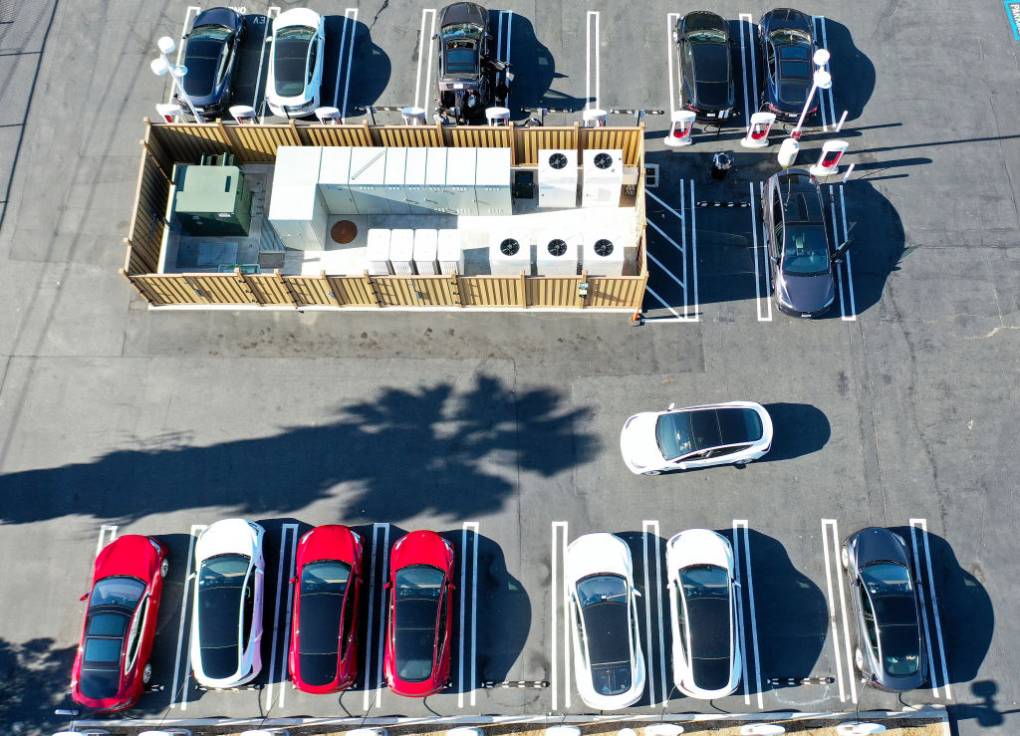
"caption": "A public charging station for electric vehicles in the Potrero neighborhood of San Francisco.",
"description": null,
"title": "RS32605_ElectricCars_AW_10-qut",
"credit": "Anne Wernikoff/KQED",
"status": "inherit",
"altTag": null,
"isLoading": false,
"fetchFailed": false
},
"news_11950407": {
"type": "attachments",
"id": "news_11950407",
"meta": {
"index": "attachments_1716263798",
"site": "news",
"id": "11950407",
"found": true
},
"parent": 0,
"imgSizes": {
"twentyfourteen-full-width": {
"file": "https://ww2.kqed.org/app/uploads/sites/10/2023/05/RS10658_IMG_6302-1038x576.jpg",
"width": 1038,
"mimeType": "image/jpeg",
"height": 576
},
"thumbnail": {
"file": "https://ww2.kqed.org/app/uploads/sites/10/2023/05/RS10658_IMG_6302-160x107.jpg",
"width": 160,
"mimeType": "image/jpeg",
"height": 107
},
"post-thumbnail": {
"file": "https://ww2.kqed.org/app/uploads/sites/10/2023/05/RS10658_IMG_6302-672x372.jpg",
"width": 672,
"mimeType": "image/jpeg",
"height": 372
},
"kqedFullSize": {
"file": "https://ww2.kqed.org/app/uploads/sites/10/2023/05/RS10658_IMG_6302.jpg",
"width": 1980,
"height": 1320
},
"large": {
"file": "https://ww2.kqed.org/app/uploads/sites/10/2023/05/RS10658_IMG_6302-1020x680.jpg",
"width": 1020,
"mimeType": "image/jpeg",
"height": 680
},
"1536x1536": {
"file": "https://ww2.kqed.org/app/uploads/sites/10/2023/05/RS10658_IMG_6302-1536x1024.jpg",
"width": 1536,
"mimeType": "image/jpeg",
"height": 1024
},
"full-width": {
"file": "https://ww2.kqed.org/app/uploads/sites/10/2023/05/RS10658_IMG_6302-1920x1280.jpg",
"width": 1920,
"mimeType": "image/jpeg",
"height": 1280
},
"medium": {
"file": "https://ww2.kqed.org/app/uploads/sites/10/2023/05/RS10658_IMG_6302-800x533.jpg",
"width": 800,
"mimeType": "image/jpeg",
"height": 533
}
},
"publishDate": 1684796207,
"modified": 1684870788,
"caption": "Passengers board the 38 bus on Geary Street, near Union Square in San Francisco on June 5, 2014.",
"description": null,
"title": "RS10658_IMG_6302",
"credit": "Mark Andrew Boyer/KQED",
"status": "inherit",
"altTag": "Passengers board a bus on a busy street in San Francisco. One man is wearing an Oakland A's baseball cap.",
"isLoading": false,
"fetchFailed": false
},
"news_11945540": {
"type": "attachments",
"id": "news_11945540",
"meta": {
"index": "attachments_1716263798",
"site": "news",
"id": "11945540",
"found": true
},
"parent": 11945484,
"imgSizes": {
"twentyfourteen-full-width": {
"file": "https://ww2.kqed.org/app/uploads/sites/10/2023/04/GettyImages-1473781948-1024x576.jpg",
"width": 1024,
"mimeType": "image/jpeg",
"height": 576
},
"thumbnail": {
"file": "https://ww2.kqed.org/app/uploads/sites/10/2023/04/GettyImages-1473781948-160x101.jpg",
"width": 160,
"mimeType": "image/jpeg",
"height": 101
},
"post-thumbnail": {
"file": "https://ww2.kqed.org/app/uploads/sites/10/2023/04/GettyImages-1473781948-672x372.jpg",
"width": 672,
"mimeType": "image/jpeg",
"height": 372
},
"kqedFullSize": {
"file": "https://ww2.kqed.org/app/uploads/sites/10/2023/04/GettyImages-1473781948.jpg",
"width": 1024,
"height": 644
},
"large": {
"file": "https://ww2.kqed.org/app/uploads/sites/10/2023/04/GettyImages-1473781948-1020x641.jpg",
"width": 1020,
"mimeType": "image/jpeg",
"height": 641
},
"medium": {
"file": "https://ww2.kqed.org/app/uploads/sites/10/2023/04/GettyImages-1473781948-800x503.jpg",
"width": 800,
"mimeType": "image/jpeg",
"height": 503
}
},
"publishDate": 1680555592,
"modified": 1680558670,
"caption": "A BART train approaches the El Cerrito Plaza station on March 15, 2023, in El Cerrito.",
"description": null,
"title": "Bay Area Rapid Transit System Faces Perilous Financial Outlook",
"credit": "Justin Sullivan/Getty Images",
"status": "inherit",
"altTag": "A train moving on tracks seen above a highway.",
"isLoading": false,
"fetchFailed": false
},
"news_11945323": {
"type": "attachments",
"id": "news_11945323",
"meta": {
"index": "attachments_1716263798",
"site": "news",
"id": "11945323",
"found": true
},
"parent": 11945278,
"imgSizes": {
"twentyfourteen-full-width": {
"file": "https://ww2.kqed.org/app/uploads/sites/10/2023/03/RS50203_IMG_6571-qut-1038x576.jpg",
"width": 1038,
"mimeType": "image/jpeg",
"height": 576
},
"thumbnail": {
"file": "https://ww2.kqed.org/app/uploads/sites/10/2023/03/RS50203_IMG_6571-qut-160x107.jpg",
"width": 160,
"mimeType": "image/jpeg",
"height": 107
},
"post-thumbnail": {
"file": "https://ww2.kqed.org/app/uploads/sites/10/2023/03/RS50203_IMG_6571-qut-672x372.jpg",
"width": 672,
"mimeType": "image/jpeg",
"height": 372
},
"kqedFullSize": {
"file": "https://ww2.kqed.org/app/uploads/sites/10/2023/03/RS50203_IMG_6571-qut.jpg",
"width": 1920,
"height": 1280
},
"large": {
"file": "https://ww2.kqed.org/app/uploads/sites/10/2023/03/RS50203_IMG_6571-qut-1020x680.jpg",
"width": 1020,
"mimeType": "image/jpeg",
"height": 680
},
"1536x1536": {
"file": "https://ww2.kqed.org/app/uploads/sites/10/2023/03/RS50203_IMG_6571-qut-1536x1024.jpg",
"width": 1536,
"mimeType": "image/jpeg",
"height": 1024
},
"medium": {
"file": "https://ww2.kqed.org/app/uploads/sites/10/2023/03/RS50203_IMG_6571-qut-800x533.jpg",
"width": 800,
"mimeType": "image/jpeg",
"height": 533
}
},
"publishDate": 1680290803,
"modified": 1680294559,
"caption": "Traffic on Interstate 880 toward Oakland jam-packed with cars and diesel trucks mid-afternoon on Monday, June 28, 2021.",
"description": null,
"title": "RS50203_IMG_6571-qut",
"credit": "Joyce Tsai/KQED",
"status": "inherit",
"altTag": "View of a freeway with cars and trucks.",
"isLoading": false,
"fetchFailed": false
},
"news_11944890": {
"type": "attachments",
"id": "news_11944890",
"meta": {
"index": "attachments_1716263798",
"site": "news",
"id": "11944890",
"found": true
},
"parent": 11944855,
"imgSizes": {
"twentyfourteen-full-width": {
"file": "https://ww2.kqed.org/app/uploads/sites/10/2023/03/GettyImages-1391531635-1024x576.jpg",
"width": 1024,
"mimeType": "image/jpeg",
"height": 576
},
"thumbnail": {
"file": "https://ww2.kqed.org/app/uploads/sites/10/2023/03/GettyImages-1391531635-160x115.jpg",
"width": 160,
"mimeType": "image/jpeg",
"height": 115
},
"post-thumbnail": {
"file": "https://ww2.kqed.org/app/uploads/sites/10/2023/03/GettyImages-1391531635-672x372.jpg",
"width": 672,
"mimeType": "image/jpeg",
"height": 372
},
"kqedFullSize": {
"file": "https://ww2.kqed.org/app/uploads/sites/10/2023/03/GettyImages-1391531635.jpg",
"width": 1024,
"height": 739
},
"large": {
"file": "https://ww2.kqed.org/app/uploads/sites/10/2023/03/GettyImages-1391531635-1020x736.jpg",
"width": 1020,
"mimeType": "image/jpeg",
"height": 736
},
"medium": {
"file": "https://ww2.kqed.org/app/uploads/sites/10/2023/03/GettyImages-1391531635-800x577.jpg",
"width": 800,
"mimeType": "image/jpeg",
"height": 577
}
},
"publishDate": 1679948507,
"modified": 1679954600,
"caption": "An aerial view of Tesla cars recharging at a Tesla Supercharger station on April 14, 2022, in Pasadena.",
"description": null,
"title": "California Aims To Ban Gas Powered Cars By 2035",
"credit": "Mario Tama/Getty Images",
"status": "inherit",
"altTag": "An aerial view of a car parking lot with charging stations.",
"isLoading": false,
"fetchFailed": false
},
"news_11944562": {
"type": "attachments",
"id": "news_11944562",
"meta": {
"index": "attachments_1716263798",
"site": "news",
"id": "11944562",
"found": true
},
"parent": 0,
"imgSizes": {
"twentyfourteen-full-width": {
"file": "https://ww2.kqed.org/app/uploads/sites/10/2023/03/RS8943_174246469-1038x576.jpg",
"width": 1038,
"mimeType": "image/jpeg",
"height": 576
},
"thumbnail": {
"file": "https://ww2.kqed.org/app/uploads/sites/10/2023/03/RS8943_174246469-160x110.jpg",
"width": 160,
"mimeType": "image/jpeg",
"height": 110
},
"post-thumbnail": {
"file": "https://ww2.kqed.org/app/uploads/sites/10/2023/03/RS8943_174246469-672x372.jpg",
"width": 672,
"mimeType": "image/jpeg",
"height": 372
},
"kqedFullSize": {
"file": "https://ww2.kqed.org/app/uploads/sites/10/2023/03/RS8943_174246469-scaled.jpg",
"width": 2560,
"height": 1753
},
"2048x2048": {
"file": "https://ww2.kqed.org/app/uploads/sites/10/2023/03/RS8943_174246469-2048x1402.jpg",
"width": 2048,
"mimeType": "image/jpeg",
"height": 1402
},
"large": {
"file": "https://ww2.kqed.org/app/uploads/sites/10/2023/03/RS8943_174246469-1020x698.jpg",
"width": 1020,
"mimeType": "image/jpeg",
"height": 698
},
"1536x1536": {
"file": "https://ww2.kqed.org/app/uploads/sites/10/2023/03/RS8943_174246469-1536x1052.jpg",
"width": 1536,
"mimeType": "image/jpeg",
"height": 1052
},
"full-width": {
"file": "https://ww2.kqed.org/app/uploads/sites/10/2023/03/RS8943_174246469-1920x1315.jpg",
"width": 1920,
"mimeType": "image/jpeg",
"height": 1315
},
"medium": {
"file": "https://ww2.kqed.org/app/uploads/sites/10/2023/03/RS8943_174246469-800x548.jpg",
"width": 800,
"mimeType": "image/jpeg",
"height": 548
}
},
"publishDate": 1679601804,
"modified": 1679613113,
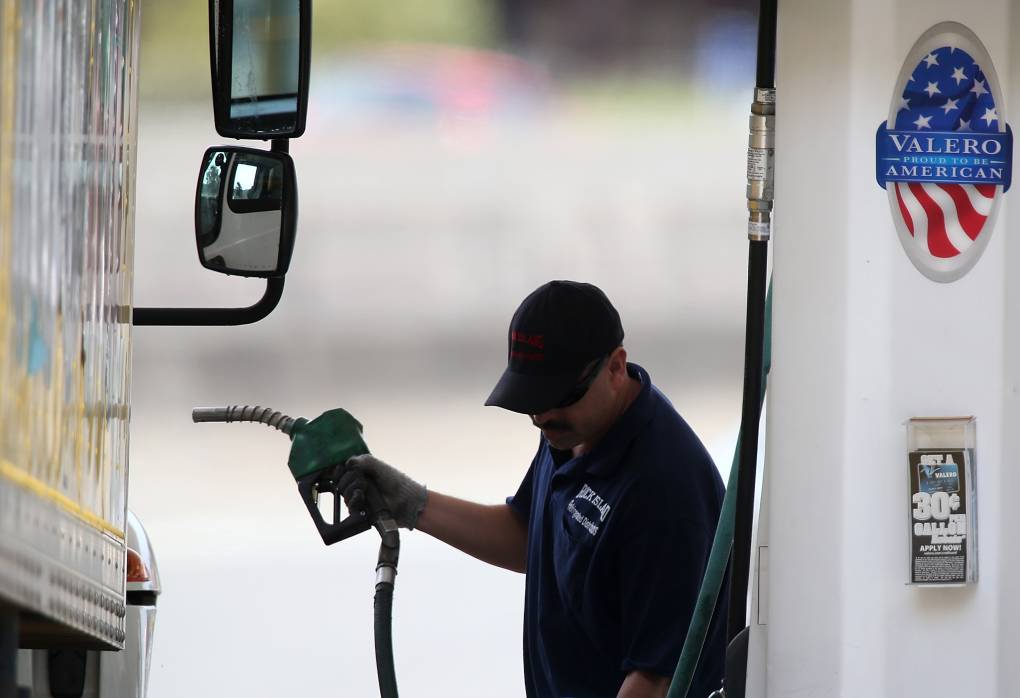
"caption": "A customer prepares to pump gas into his truck at a Valero gas station on July 22, 2013, in Mill Valley. Prices for a gallon of gasoline in the state hit record highs at $6.44 per gallon.",
"description": null,
"title": "U.S. Gas Prices Rise 12 Cents In Past Week",
"credit": "Justin Sullivan/Getty Images",
"status": "inherit",
"altTag": "A man at a gas station prepares to fill up his diesel vehicle. He wears a ballcap and blue collared work shirt.",
"isLoading": false,
"fetchFailed": false
},
"news_11843813": {
"type": "attachments",
"id": "news_11843813",
"meta": {
"index": "attachments_1716263798",
"site": "news",
"id": "11843813",
"found": true
},
"parent": 11843123,
"imgSizes": {
"apple_news_ca_landscape_5_5": {
"file": "https://ww2.kqed.org/app/uploads/sites/10/2020/10/uber-lyft-protest-sign-1044x783.jpg",
"width": 1044,
"mimeType": "image/jpeg",
"height": 783
},
"apple_news_ca_square_4_0": {
"file": "https://ww2.kqed.org/app/uploads/sites/10/2020/10/uber-lyft-protest-sign-470x470.jpg",
"width": 470,
"mimeType": "image/jpeg",
"height": 470
},
"twentyfourteen-full-width": {
"file": "https://ww2.kqed.org/app/uploads/sites/10/2020/10/uber-lyft-protest-sign-1038x576.jpg",
"width": 1038,
"mimeType": "image/jpeg",
"height": 576
},
"thumbnail": {
"file": "https://ww2.kqed.org/app/uploads/sites/10/2020/10/uber-lyft-protest-sign-160x111.jpg",
"width": 160,
"mimeType": "image/jpeg",
"height": 111
},
"post-thumbnail": {
"file": "https://ww2.kqed.org/app/uploads/sites/10/2020/10/uber-lyft-protest-sign-672x372.jpg",
"width": 672,
"mimeType": "image/jpeg",
"height": 372
},
"kqedFullSize": {
"file": "https://ww2.kqed.org/app/uploads/sites/10/2020/10/uber-lyft-protest-sign.jpg",
"width": 1920,
"height": 1330
},
"apple_news_ca_landscape_4_7": {
"file": "https://ww2.kqed.org/app/uploads/sites/10/2020/10/uber-lyft-protest-sign-632x474.jpg",
"width": 632,
"mimeType": "image/jpeg",
"height": 474
},
"large": {
"file": "https://ww2.kqed.org/app/uploads/sites/10/2020/10/uber-lyft-protest-sign-1020x707.jpg",
"width": 1020,
"mimeType": "image/jpeg",
"height": 707
},
"apple_news_ca_landscape_4_0": {
"file": "https://ww2.kqed.org/app/uploads/sites/10/2020/10/uber-lyft-protest-sign-536x402.jpg",
"width": 536,
"mimeType": "image/jpeg",
"height": 402
},
"apple_news_ca_portrait_12_9": {
"file": "https://ww2.kqed.org/app/uploads/sites/10/2020/10/uber-lyft-protest-sign-1122x1330.jpg",
"width": 1122,
"mimeType": "image/jpeg",
"height": 1330
},
"medium": {
"file": "https://ww2.kqed.org/app/uploads/sites/10/2020/10/uber-lyft-protest-sign-800x554.jpg",
"width": 800,
"mimeType": "image/jpeg",
"height": 554
},
"apple_news_ca_portrait_4_0": {
"file": "https://ww2.kqed.org/app/uploads/sites/10/2020/10/uber-lyft-protest-sign-354x472.jpg",
"width": 354,
"mimeType": "image/jpeg",
"height": 472
},
"apple_news_ca_portrait_9_7": {
"file": "https://ww2.kqed.org/app/uploads/sites/10/2020/10/uber-lyft-protest-sign-840x1120.jpg",
"width": 840,
"mimeType": "image/jpeg",
"height": 1120
},
"apple_news_ca_landscape_12_9": {
"file": "https://ww2.kqed.org/app/uploads/sites/10/2020/10/uber-lyft-protest-sign-1832x1330.jpg",
"width": 1832,
"mimeType": "image/jpeg",
"height": 1330
},
"apple_news_ca_square_9_7": {
"file": "https://ww2.kqed.org/app/uploads/sites/10/2020/10/uber-lyft-protest-sign-1104x1104.jpg",
"width": 1104,
"mimeType": "image/jpeg",
"height": 1104
},
"1536x1536": {
"file": "https://ww2.kqed.org/app/uploads/sites/10/2020/10/uber-lyft-protest-sign-1536x1064.jpg",
"width": 1536,
"mimeType": "image/jpeg",
"height": 1064
},
"apple_news_ca_portrait_4_7": {
"file": "https://ww2.kqed.org/app/uploads/sites/10/2020/10/uber-lyft-protest-sign-414x552.jpg",
"width": 414,
"mimeType": "image/jpeg",
"height": 552
},
"apple_news_ca_square_12_9": {
"file": "https://ww2.kqed.org/app/uploads/sites/10/2020/10/uber-lyft-protest-sign-1472x1330.jpg",
"width": 1472,
"mimeType": "image/jpeg",
"height": 1330
},
"apple_news_ca_portrait_5_5": {
"file": "https://ww2.kqed.org/app/uploads/sites/10/2020/10/uber-lyft-protest-sign-687x916.jpg",
"width": 687,
"mimeType": "image/jpeg",
"height": 916
},
"apple_news_ca_square_4_7": {
"file": "https://ww2.kqed.org/app/uploads/sites/10/2020/10/uber-lyft-protest-sign-550x550.jpg",
"width": 550,
"mimeType": "image/jpeg",
"height": 550
},
"apple_news_ca_landscape_9_7": {
"file": "https://ww2.kqed.org/app/uploads/sites/10/2020/10/uber-lyft-protest-sign-1376x1032.jpg",
"width": 1376,
"mimeType": "image/jpeg",
"height": 1032
},
"apple_news_ca_square_5_5": {
"file": "https://ww2.kqed.org/app/uploads/sites/10/2020/10/uber-lyft-protest-sign-912x912.jpg",
"width": 912,
"mimeType": "image/jpeg",
"height": 912
}
},
"publishDate": 1603753946,
"modified": 1678823724,
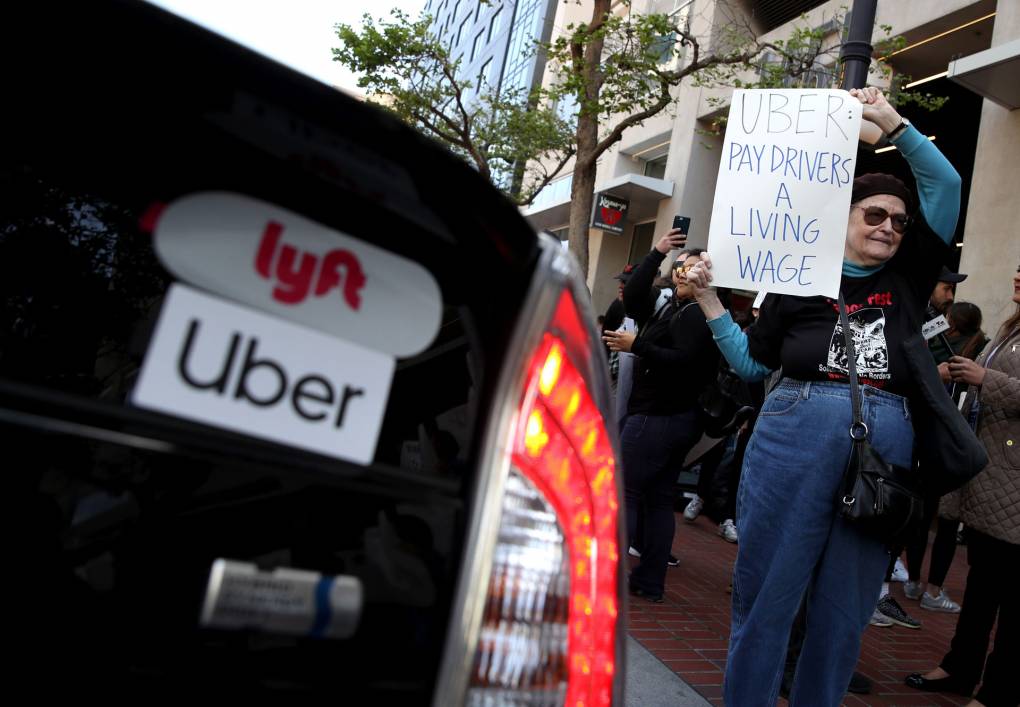
"caption": "A supporter of ride-hail drivers holds a sign during a protest in front of Uber headquarters in May 2019. Prop. 22, backed by huge amounts of cash from gig companies, would create a new class of worker in California.",
"description": "A supporter of ride-hail drivers holds a sign during a protest in front of Uber headquarters in May, 2019. Prop. 22, backed by huge amounts of cash from gig companies, would create a new class of worker in California.",
"title": "uber-lyft-protest-sign",
"credit": "Justin Sullivan/Getty Images",
"status": "inherit",
"altTag": "Protesters stand on a sidewalk in front of an office, and next to a car with Lyft and Uber stickers on the back. A woman holds a sign that says: Uber: 'Pay Drivers a Living Wage.'",
"isLoading": false,
"fetchFailed": false
},
"news_11941309": {
"type": "attachments",
"id": "news_11941309",
"meta": {
"index": "attachments_1716263798",
"site": "news",
"id": "11941309",
"found": true
},
"parent": 11941279,
"imgSizes": {
"twentyfourteen-full-width": {
"file": "https://ww2.kqed.org/app/uploads/sites/10/2023/02/image12-e1676670273661-1038x576.jpg",
"width": 1038,
"mimeType": "image/jpeg",
"height": 576
},
"thumbnail": {
"file": "https://ww2.kqed.org/app/uploads/sites/10/2023/02/image12-e1676670273661-160x107.jpg",
"width": 160,
"mimeType": "image/jpeg",
"height": 107
},
"post-thumbnail": {
"file": "https://ww2.kqed.org/app/uploads/sites/10/2023/02/image12-e1676670273661-672x372.jpg",
"width": 672,
"mimeType": "image/jpeg",
"height": 372
},
"kqedFullSize": {
"file": "https://ww2.kqed.org/app/uploads/sites/10/2023/02/image12-e1676670273661.jpg",
"width": 1920,
"height": 1281
},
"large": {
"file": "https://ww2.kqed.org/app/uploads/sites/10/2023/02/image12-e1676670273661-1020x681.jpg",
"width": 1020,
"mimeType": "image/jpeg",
"height": 681
},
"1536x1536": {
"file": "https://ww2.kqed.org/app/uploads/sites/10/2023/02/image12-e1676670273661-1536x1025.jpg",
"width": 1536,
"mimeType": "image/jpeg",
"height": 1025
},
"full-width": {
"file": "https://ww2.kqed.org/app/uploads/sites/10/2023/02/image12-1920x1281.jpg",
"width": 1920,
"mimeType": "image/jpeg",
"height": 1281
},
"medium": {
"file": "https://ww2.kqed.org/app/uploads/sites/10/2023/02/image12-e1676670273661-800x534.jpg",
"width": 800,
"mimeType": "image/jpeg",
"height": 534
}
},
"publishDate": 1676664634,
"modified": 1676680262,
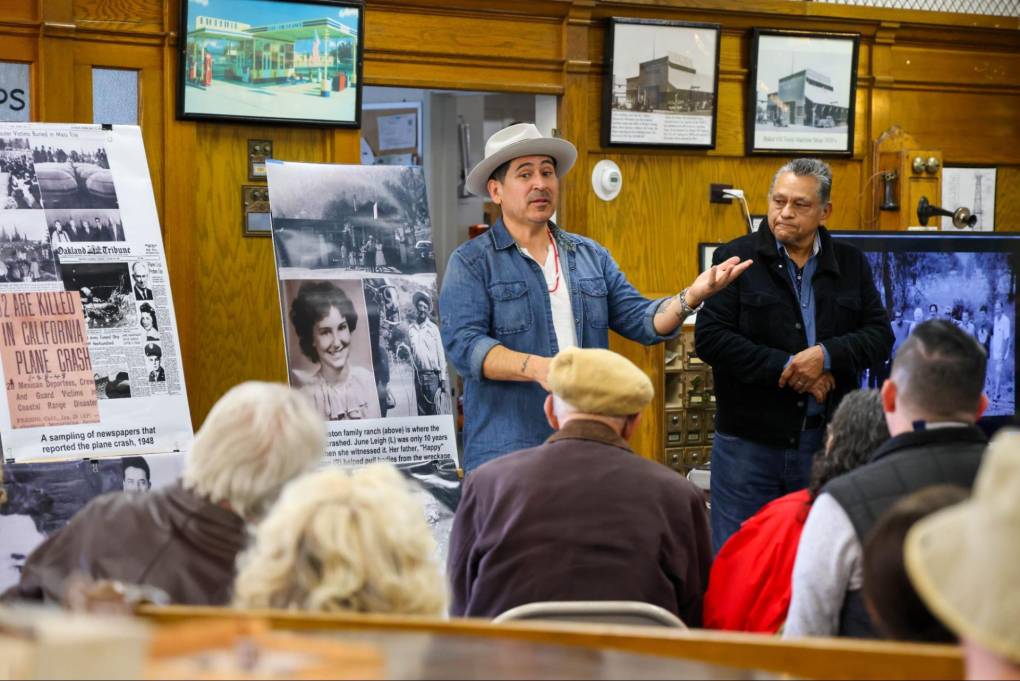
"caption": "Author Tim Z. Hernandez (center, with hat) and Jaime Ramírez (right), whose grandfather died in the 1948 plane crash, share stories during a presentation at the R.C. Baker Memorial Museum in Coalinga on Jan. 28, 2023.",
"description": null,
"title": "image12",
"credit": "Courtesy of Jacob Yeager",
"status": "inherit",
"altTag": "Two men stand in front of a seated audience, showing poster boards with photos on them.",
"isLoading": false,
"fetchFailed": false
},
"news_11939509": {
"type": "attachments",
"id": "news_11939509",
"meta": {
"index": "attachments_1716263798",
"site": "news",
"id": "11939509",
"found": true
},
"parent": 11939501,
"imgSizes": {
"twentyfourteen-full-width": {
"file": "https://ww2.kqed.org/app/uploads/sites/10/2023/01/RS60333_DSC09495-1-1038x576.jpg",
"width": 1038,
"mimeType": "image/jpeg",
"height": 576
},
"thumbnail": {
"file": "https://ww2.kqed.org/app/uploads/sites/10/2023/01/RS60333_DSC09495-1-160x107.jpg",
"width": 160,
"mimeType": "image/jpeg",
"height": 107
},
"post-thumbnail": {
"file": "https://ww2.kqed.org/app/uploads/sites/10/2023/01/RS60333_DSC09495-1-672x372.jpg",
"width": 672,
"mimeType": "image/jpeg",
"height": 372
},
"kqedFullSize": {
"file": "https://ww2.kqed.org/app/uploads/sites/10/2023/01/RS60333_DSC09495-1-scaled.jpg",
"width": 2560,
"height": 1707
},
"2048x2048": {
"file": "https://ww2.kqed.org/app/uploads/sites/10/2023/01/RS60333_DSC09495-1-2048x1365.jpg",
"width": 2048,
"mimeType": "image/jpeg",
"height": 1365
},
"large": {
"file": "https://ww2.kqed.org/app/uploads/sites/10/2023/01/RS60333_DSC09495-1-1020x680.jpg",
"width": 1020,
"mimeType": "image/jpeg",
"height": 680
},
"1536x1536": {
"file": "https://ww2.kqed.org/app/uploads/sites/10/2023/01/RS60333_DSC09495-1-1536x1024.jpg",
"width": 1536,
"mimeType": "image/jpeg",
"height": 1024
},
"full-width": {
"file": "https://ww2.kqed.org/app/uploads/sites/10/2023/01/RS60333_DSC09495-1-1920x1280.jpg",
"width": 1920,
"mimeType": "image/jpeg",
"height": 1280
},
"medium": {
"file": "https://ww2.kqed.org/app/uploads/sites/10/2023/01/RS60333_DSC09495-1-800x533.jpg",
"width": 800,
"mimeType": "image/jpeg",
"height": 533
}
},
"publishDate": 1674864242,
"modified": 1674864242,
"caption": null,
"description": null,
"title": "RS60333_DSC09495 (1)",
"credit": null,
"status": "inherit",
"altTag": null,
"isLoading": false,
"fetchFailed": false
},
"news_11936587": {
"type": "attachments",
"id": "news_11936587",
"meta": {
"index": "attachments_1716263798",
"site": "news",
"id": "11936587",
"found": true
},
"parent": 11936581,
"imgSizes": {
"twentyfourteen-full-width": {
"file": "https://ww2.kqed.org/app/uploads/sites/10/2022/12/GettyImages-1245906171-1024x576.jpg",
"width": 1024,
"mimeType": "image/jpeg",
"height": 576
},
"thumbnail": {
"file": "https://ww2.kqed.org/app/uploads/sites/10/2022/12/GettyImages-1245906171-160x107.jpg",
"width": 160,
"mimeType": "image/jpeg",
"height": 107
},
"post-thumbnail": {
"file": "https://ww2.kqed.org/app/uploads/sites/10/2022/12/GettyImages-1245906171-672x372.jpg",
"width": 672,
"mimeType": "image/jpeg",
"height": 372
},
"kqedFullSize": {
"file": "https://ww2.kqed.org/app/uploads/sites/10/2022/12/GettyImages-1245906171.jpg",
"width": 1024,
"height": 683
},
"large": {
"file": "https://ww2.kqed.org/app/uploads/sites/10/2022/12/GettyImages-1245906171-1020x680.jpg",
"width": 1020,
"mimeType": "image/jpeg",
"height": 680
},
"medium": {
"file": "https://ww2.kqed.org/app/uploads/sites/10/2022/12/GettyImages-1245906171-800x534.jpg",
"width": 800,
"mimeType": "image/jpeg",
"height": 534
}
},
"publishDate": 1672531006,
"modified": 1673036316,
"caption": "A rainstorm causes a flash flood in San Carlos, on Dec. 31, 2022.",
"description": null,
"title": "Flash flood in San Francisco Bay Area",
"credit": "Tayfun Coskun/Anadolu Agency via Getty Images",
"status": "inherit",
"altTag": "An emergency worker with a fluorescent yellow hazmat suit wades in knee-deep flood water on a street as a car drives by behind him.",
"isLoading": false,
"fetchFailed": false
},
"news_11936537": {
"type": "attachments",
"id": "news_11936537",
"meta": {
"index": "attachments_1716263798",
"site": "news",
"id": "11936537",
"found": true
},
"parent": 11936324,
"imgSizes": {
"twentyfourteen-full-width": {
"file": "https://ww2.kqed.org/app/uploads/sites/10/2022/12/FlQRD6wWYAQHX7--1038x576.jpeg",
"width": 1038,
"mimeType": "image/jpeg",
"height": 576
},
"thumbnail": {
"file": "https://ww2.kqed.org/app/uploads/sites/10/2022/12/FlQRD6wWYAQHX7--160x120.jpeg",
"width": 160,
"mimeType": "image/jpeg",
"height": 120
},
"post-thumbnail": {
"file": "https://ww2.kqed.org/app/uploads/sites/10/2022/12/FlQRD6wWYAQHX7--672x372.jpeg",
"width": 672,
"mimeType": "image/jpeg",
"height": 372
},
"kqedFullSize": {
"file": "https://ww2.kqed.org/app/uploads/sites/10/2022/12/FlQRD6wWYAQHX7-.jpeg",
"width": 2048,
"height": 1536
},
"large": {
"file": "https://ww2.kqed.org/app/uploads/sites/10/2022/12/FlQRD6wWYAQHX7--1020x765.jpeg",
"width": 1020,
"mimeType": "image/jpeg",
"height": 765
},
"1536x1536": {
"file": "https://ww2.kqed.org/app/uploads/sites/10/2022/12/FlQRD6wWYAQHX7--1536x1152.jpeg",
"width": 1536,
"mimeType": "image/jpeg",
"height": 1152
},
"full-width": {
"file": "https://ww2.kqed.org/app/uploads/sites/10/2022/12/FlQRD6wWYAQHX7--1920x1440.jpeg",
"width": 1920,
"mimeType": "image/jpeg",
"height": 1440
},
"medium": {
"file": "https://ww2.kqed.org/app/uploads/sites/10/2022/12/FlQRD6wWYAQHX7--800x600.jpeg",
"width": 800,
"mimeType": "image/jpeg",
"height": 600
}
},
"publishDate": 1672506399,
"modified": 1672506765,
"caption": "A photo of the mudslide that has closed off Niles Canyon Rd. between Pleasanton/Sunol and Fremont, Dec. 30, 2022.",
"description": null,
"title": "FlQRD6wWYAQHX7-",
"credit": "California Highway Patrol, Dublin Area via Twitter",
"status": "inherit",
"altTag": "a closed road with mud over it and trees in the background",
"isLoading": false,
"fetchFailed": false
},
"news_11932852": {
"type": "attachments",
"id": "news_11932852",
"meta": {
"index": "attachments_1716263798",
"site": "news",
"id": "11932852",
"found": true
},
"parent": 11932838,
"imgSizes": {
"twentyfourteen-full-width": {
"file": "https://ww2.kqed.org/app/uploads/sites/10/2022/11/RS60320_DSC09369-qut-1038x576.jpg",
"width": 1038,
"mimeType": "image/jpeg",
"height": 576
},
"thumbnail": {
"file": "https://ww2.kqed.org/app/uploads/sites/10/2022/11/RS60320_DSC09369-qut-160x107.jpg",
"width": 160,
"mimeType": "image/jpeg",
"height": 107
},
"post-thumbnail": {
"file": "https://ww2.kqed.org/app/uploads/sites/10/2022/11/RS60320_DSC09369-qut-672x372.jpg",
"width": 672,
"mimeType": "image/jpeg",
"height": 372
},
"kqedFullSize": {
"file": "https://ww2.kqed.org/app/uploads/sites/10/2022/11/RS60320_DSC09369-qut.jpg",
"width": 1920,
"height": 1280
},
"large": {
"file": "https://ww2.kqed.org/app/uploads/sites/10/2022/11/RS60320_DSC09369-qut-1020x680.jpg",
"width": 1020,
"mimeType": "image/jpeg",
"height": 680
},
"1536x1536": {
"file": "https://ww2.kqed.org/app/uploads/sites/10/2022/11/RS60320_DSC09369-qut-1536x1024.jpg",
"width": 1536,
"mimeType": "image/jpeg",
"height": 1024
},
"medium": {
"file": "https://ww2.kqed.org/app/uploads/sites/10/2022/11/RS60320_DSC09369-qut-800x533.jpg",
"width": 800,
"mimeType": "image/jpeg",
"height": 533
}
},
"publishDate": 1668908313,
"modified": 1669060839,
"caption": "A street view of Chinatown's brand-new Rose Pak SFMTA subway station in San Francisco on Nov. 19, 2022.",
"description": null,
"title": "RS60320_DSC09369-qut",
"credit": "Aryk Copley/KQED",
"status": "inherit",
"altTag": "Two people cross the street at a busy intersection with the new Rose Pak SFMTA station on the diagonal corner with a city skyline backdrop.",
"isLoading": false,
"fetchFailed": false
}
},
"audioPlayerReducer": {
"postId": "stream_live",
"isPaused": true,
"isPlaying": false,
"pfsActive": false,
"pledgeModalIsOpen": true,
"playerDrawerIsOpen": false,
"liveAudioPlayStartedAt": 0,
"liveAudioPlayContext": ""
},
"authorsReducer": {
"byline_news_11950403": {
"type": "authors",
"id": "byline_news_11950403",
"meta": {
"override": true
},
"slug": "byline_news_11950403",
"name": "\u003ca href=\"https://calmatters.org/author/sameea-kamal/\">Sameea Kamal\u003c/a>",
"isLoading": false
},
"byline_news_11945278": {
"type": "authors",
"id": "byline_news_11945278",
"meta": {
"override": true
},
"slug": "byline_news_11945278",
"name": "Sophie Austin \u003cbr> The Associated Press",
"isLoading": false
},
"byline_news_11944855": {
"type": "authors",
"id": "byline_news_11944855",
"meta": {
"override": true
},
"slug": "byline_news_11944855",
"name": "\u003ca href=\"https://calmatters.org/author/nadia-lopez/\">Nadia Lopez\u003c/a> and \u003ca href=\"https://calmatters.org/author/ericayee/\">Erica Yee\u003c/a>",
"isLoading": false
},
"byline_news_11944554": {
"type": "authors",
"id": "byline_news_11944554",
"meta": {
"override": true
},
"slug": "byline_news_11944554",
"name": "\u003ca href=\"https://twitter.com/adambeam\">Adam Beam\u003c/a>\u003cbr>The Associated Press",
"isLoading": false
},
"byline_news_11943454": {
"type": "authors",
"id": "byline_news_11943454",
"meta": {
"override": true
},
"slug": "byline_news_11943454",
"name": "\u003ca href=\"https://calmatters.org/author/grace-gedye/\">Grace Gedye\u003c/a>",
"isLoading": false
},
"byline_news_11936581": {
"type": "authors",
"id": "byline_news_11936581",
"meta": {
"override": true
},
"slug": "byline_news_11936581",
"name": "KQED News Staff",
"isLoading": false
},
"byline_news_11936324": {
"type": "authors",
"id": "byline_news_11936324",
"meta": {
"override": true
},
"slug": "byline_news_11936324",
"name": "The Associated Press",
"isLoading": false
},
"byline_news_11932838": {
"type": "authors",
"id": "byline_news_11932838",
"meta": {
"override": true
},
"slug": "byline_news_11932838",
"name": "KQED News Staff",
"isLoading": false
},
"danbrekke": {
"type": "authors",
"id": "222",
"meta": {
"index": "authors_1716337520",
"id": "222",
"found": true
},
"name": "Dan Brekke",
"firstName": "Dan",
"lastName": "Brekke",
"slug": "danbrekke",
"email": "dbrekke@kqed.org",
"display_author_email": true,
"staff_mastheads": [
"news",
"science"
],
"title": "KQED Editor and Reporter",
"bio": "Dan Brekke is a reporter and editor for KQED News, responsible for coverage of topics ranging from California water issues to the Bay Area's transportation challenges. In a newsroom career that began in Chicago in 1972, Dan has worked for \u003cem>The San Francisco Examiner,\u003c/em> Wired and TechTV and has been published in The New York Times, The New York Times Magazine, Business 2.0, Salon and elsewhere.\r\n\r\nSince joining KQED in 2007, Dan has reported, edited and produced both radio and online features and breaking news pieces. He has shared as both editor and reporter in four Society of Professional Journalists Norcal Excellence in Journalism awards and one Edward R. Murrow regional award. He was chosen for a spring 2017 residency at the Mesa Refuge to advance his research on California salmon.\r\n\r\nEmail Dan at: \u003ca href=\"mailto:dbrekke@kqed.org\">dbrekke@kqed.org\u003c/a>\r\n\r\n\u003cstrong>Twitter:\u003c/strong> \u003ca href=\"https://twitter.com/danbrekke\" rel=\"noopener noreferrer\">twitter.com/danbrekke\u003c/a>\r\n\u003cstrong>Facebook:\u003c/strong> \u003ca href=\"https://www.facebook.com/danbrekke\" rel=\"noopener noreferrer\">www.facebook.com/danbrekke\u003c/a>\r\n\u003cstrong>LinkedIn:\u003c/strong> \u003ca href=\"https://www.linkedin.com/in/danbrekke\" rel=\"noopener noreferrer\">www.linkedin.com/in/danbrekke\u003c/a>",
"avatar": "https://secure.gravatar.com/avatar/c8126230345efca3f7aa89b1a402be45?s=600&d=mm&r=g",
"twitter": "danbrekke",
"facebook": null,
"instagram": "https://www.instagram.com/dan.brekke/",
"linkedin": "https://www.linkedin.com/in/danbrekke/",
"sites": [
{
"site": "news",
"roles": [
"administrator",
"create_posts"
]
},
{
"site": "stateofhealth",
"roles": [
"editor"
]
},
{
"site": "science",
"roles": [
"editor"
]
},
{
"site": "quest",
"roles": [
"contributor"
]
},
{
"site": "food",
"roles": [
"contributor"
]
},
{
"site": "forum",
"roles": [
"contributor"
]
},
{
"site": "liveblog",
"roles": [
"editor"
]
}
],
"headData": {
"title": "Dan Brekke | KQED",
"description": "KQED Editor and Reporter",
"ogImgSrc": "https://secure.gravatar.com/avatar/c8126230345efca3f7aa89b1a402be45?s=600&d=mm&r=g",
"twImgSrc": "https://secure.gravatar.com/avatar/c8126230345efca3f7aa89b1a402be45?s=600&d=mm&r=g"
},
"isLoading": false,
"link": "/author/danbrekke"
},
"kqed": {
"type": "authors",
"id": "236",
"meta": {
"index": "authors_1716337520",
"id": "236",
"found": true
},
"name": "KQED News Staff",
"firstName": "KQED News Staff",
"lastName": null,
"slug": "kqed",
"email": "faq@kqed.org",
"display_author_email": false,
"staff_mastheads": [],
"title": null,
"bio": null,
"avatar": "https://secure.gravatar.com/avatar/ef0e801a68c4c54afa9180db14084167?s=600&d=blank&r=g",
"twitter": null,
"facebook": null,
"instagram": null,
"linkedin": null,
"sites": [
{
"site": "arts",
"roles": [
"contributor"
]
},
{
"site": "news",
"roles": [
"editor"
]
},
{
"site": "futureofyou",
"roles": [
"author"
]
}
],
"headData": {
"title": "KQED News Staff | KQED",
"description": null,
"ogImgSrc": "https://secure.gravatar.com/avatar/ef0e801a68c4c54afa9180db14084167?s=600&d=blank&r=g",
"twImgSrc": "https://secure.gravatar.com/avatar/ef0e801a68c4c54afa9180db14084167?s=600&d=blank&r=g"
},
"isLoading": false,
"link": "/author/kqed"
},
"sasha-khokha": {
"type": "authors",
"id": "254",
"meta": {
"index": "authors_1716337520",
"id": "254",
"found": true
},
"name": "Sasha Khokha",
"firstName": "Sasha",
"lastName": "Khokha",
"slug": "sasha-khokha",
"email": "skhokha@kqed.org",
"display_author_email": true,
"staff_mastheads": [
"news"
],
"title": "Host, The California Report Magazine",
"bio": "Sasha Khokha is the host of \u003cem>The California Report's \u003c/em> weekly magazine program, which takes listeners on sound-rich excursions to meet the people that make the Golden State unique -- through audio documentaries and long-form stories. As \u003cem>The California Report's\u003c/em> Central Valley Bureau Chief based in Fresno for nearly a dozen years, Sasha brought the lives and concerns of rural Californians to listeners around the state. Her reporting helped expose the hidden price immigrant women janitors and farmworkers may pay to keep their jobs: sexual assault at work. It inspired two new California laws to protect them from sexual harassment. She was a key member of the reporting team for the Frontline film \u003cem>Rape on the Night Shift, \u003c/em>which was nominated for two national Emmys. Sasha has also won a national Edward R. Murrow and a national PRNDI award for investigative reporting, as well as multiple prizes from the Society for Professional Journalists. Sasha is a proud alum of the UC Berkeley Graduate School of Journalism and Brown University and a member of the South Asian Journalists Association.",
"avatar": "https://secure.gravatar.com/avatar/e4b5e1541aaeea2aa356aa1fb2a68950?s=600&d=blank&r=g",
"twitter": "KQEDSashaKhokha",
"facebook": null,
"instagram": null,
"linkedin": null,
"sites": [
{
"site": "news",
"roles": [
"editor"
]
},
{
"site": "stateofhealth",
"roles": [
"author"
]
},
{
"site": "science",
"roles": [
"author"
]
},
{
"site": "quest",
"roles": [
"subscriber"
]
}
],
"headData": {
"title": "Sasha Khokha | KQED",
"description": "Host, The California Report Magazine",
"ogImgSrc": "https://secure.gravatar.com/avatar/e4b5e1541aaeea2aa356aa1fb2a68950?s=600&d=blank&r=g",
"twImgSrc": "https://secure.gravatar.com/avatar/e4b5e1541aaeea2aa356aa1fb2a68950?s=600&d=blank&r=g"
},
"isLoading": false,
"link": "/author/sasha-khokha"
},
"pbartolone": {
"type": "authors",
"id": "11879",
"meta": {
"index": "authors_1716337520",
"id": "11879",
"found": true
},
"name": "Pauline Bartolone",
"firstName": "Pauline",
"lastName": "Bartolone",
"slug": "pbartolone",
"email": "pbartolone@kqed.org",
"display_author_email": false,
"staff_mastheads": [],
"title": "KQED Contributor",
"bio": "Pauline Bartolone has been a journalist for two decades, specializing in longform audio storytelling. Before editing and producing for podcasts like Bay Curious, she was a health care journalist for public radio and print outlets such as CalMatters and Kaiser Health News. Her reporting has won several regional Edward R. Murrow awards, national recognition from the Society of Professional Journalists and a first-place prize from the Association of Health Care Journalists.\r\n\r\nPauline’s work has aired frequently on National Public Radio, and bylines have appeared in The Los Angeles Times, CNN.com, Washingtonpost.com, USA Today and Scientific American.\r\n\r\nPauline has lived in Northern California for 20 years. Her other passions are crafts (now done in collaboration with her daughter) and the Brazilian martial art of capoeira.",
"avatar": "https://secure.gravatar.com/avatar/95001c30374b0d3878007af9cf1e120a?s=600&d=blank&r=g",
"twitter": "pbartolone",
"facebook": null,
"instagram": null,
"linkedin": null,
"sites": [
{
"site": "news",
"roles": [
"editor"
]
},
{
"site": "podcasts",
"roles": [
"subscriber"
]
}
],
"headData": {
"title": "Pauline Bartolone | KQED",
"description": "KQED Contributor",
"ogImgSrc": "https://secure.gravatar.com/avatar/95001c30374b0d3878007af9cf1e120a?s=600&d=blank&r=g",
"twImgSrc": "https://secure.gravatar.com/avatar/95001c30374b0d3878007af9cf1e120a?s=600&d=blank&r=g"
},
"isLoading": false,
"link": "/author/pbartolone"
}
},
"pagesReducer": {
"news_tag_transportation": {
"type": "terms",
"id": "news_20517",
"meta": {
"index": "terms_1716263798",
"site": "news",
"id": "20517",
"score": 8.934682
},
"featImg": null,
"name": "transportation",
"description": null,
"taxonomy": "tag",
"headData": {
"twImgId": null,
"twTitle": null,
"ogTitle": null,
"ogImgId": null,
"twDescription": null,
"description": null,
"title": "transportation Archives | KQED News",
"ogDescription": null
},
"ttid": 20534,
"slug": "transportation",
"isLoading": false,
"title": "transportation",
"pageMeta": {
"site": "news",
"WpPageTemplate": "page-topic-editorial",
"currentPage": 24
},
"blocks": [
{
"blockName": "kqed/post-list",
"attrs": {
"layout": "cardArticle2",
"query": "posts/news?tag=transportation",
"seeMore": false,
"paginated": true,
"page": 24
}
},
{
"blockName": "kqed/ad"
}
]
}
},
"pfsSessionReducer": {},
"postsReducer": {
"stream_live": {
"type": "live",
"id": "stream_live",
"audioUrl": "https://streams.kqed.org/kqedradio",
"title": "Live Stream",
"excerpt": "Live Stream information currently unavailable.",
"link": "/radio",
"featImg": "",
"label": {
"name": "KQED Live",
"link": "/"
}
},
"stream_kqedNewscast": {
"type": "posts",
"id": "stream_kqedNewscast",
"audioUrl": "https://www.kqed.org/.stream/anon/radio/RDnews/newscast.mp3?_=1",
"title": "KQED Newscast",
"featImg": "",
"label": {
"name": "88.5 FM",
"link": "/"
}
},
"news_11951866": {
"type": "posts",
"id": "news_11951866",
"meta": {
"index": "posts_1716263798",
"site": "news",
"id": "11951866",
"score": null,
"sort": [
1685613605000
]
},
"guestAuthors": [],
"slug": "are-zero-emissions-vehicles-making-a-dent-in-californias-air-pollution",
"title": "Are Zero-Emission Vehicles Making a Dent in California's Air Pollution?",
"publishDate": 1685613605,
"format": "audio",
"headTitle": "Are Zero-Emission Vehicles Making a Dent in California’s Air Pollution? | KQED",
"labelTerm": {},
"content": "\u003cp>\u003cem>\u003ca href=\"https://bit.ly/3MDo218\">Read a transcript of this episode.\u003c/a>\u003c/em>\u003c/p>\n\u003cp>Last October, \u003ca href=\"https://www.kqed.org/podcasts/baycurious\">Bay Curious\u003c/a> listener Scott Mitchell got his first electric vehicle.\u003c/p>\n\u003cp>It was exciting for him — not just because he got a shiny new car, but because he now felt part of the bigger social project of creating a fleet of zero-emission vehicles on the roads.\u003c/p>\n\u003cp>“I equate it to when we switched from horse-drawn carriages to internal combustion engine cars. It’s that big of a revolution and it’s happening,” said Mitchell, a chemist living in San Carlos.\u003c/p>\n\u003cp>But simultaneously, Mitchell, an outdoorsy kind of guy, says he regularly gets grossed out looking at the air quality on hot summer days. He runs a trail in the Rancho San Antonio hills near Los Altos, and says the view from the top can be brown and smoggy.\u003c/p>\n\u003cp>[ad fullwidth]\u003c/p>\n\u003cp>“You get to the very top of the ridge, and you’re thinking you’ll see the skyline of San José. Instead, you see this smudgy view of the city that’s kind of blurry, and just looks gross,” said Mitchell. [baycuriouspodcastinfo]\u003c/p>\n\u003cp>Mitchell wants to know just how quickly California has absorbed zero-emission cars, and whether it’s significant enough to make a tangible difference in air quality.\u003c/p>\n\u003cp>“We should take some pride in that and celebrate it if we’re doing good,” said Mitchell.\u003c/p>\n\u003cp>As far as the fossil fuel-free car trend, there’s no question there’s been exponential growth in California.\u003c/p>\n\u003cp>In 2010, there were fewer than 800 zero-emission consumer vehicles on California roads, according to \u003ca href=\"https://www.energy.ca.gov/data-reports/energy-almanac/zero-emission-vehicle-and-infrastructure-statistics/light-duty-vehicle\">this dashboard put out by the California Energy Commission\u003c/a>.\u003c/p>\n\u003cp>By the end of last year, the number of zero-emission vehicles Californians used in their everyday lives shot up to more than 1.1 million. And that’s not even counting gasoline hybrid cars.\u003c/p>\n\u003cp>Not surprisingly, the counties with the highest number of zero-emission cars are the more urban ones; Los Angeles County has the most, then Orange County, then San Diego and the Bay Area counties of Santa Clara and Alameda.\u003c/p>\n\u003cp>Now time for a little math. There are about 29 million cars on California roads right now, and only 1.1 million of them are zero-emission vehicles. Is that enough to clean up the air?\u003c/p>\n\u003cp>“From a big-picture perspective, yes,” said Michael Benjamin, chief of air quality planning and science at the California Air Resources Board, or CARB, the state agency that tracks these things. “The sale of electric vehicles in California, which is increasing, is contributing to improvements in air quality that we’re seeing.”\u003c/p>\n\u003cp>Over the past 20 years, the air quality in the Bay Area and statewide has improved. CARB data shows a clear downward trend in the number of days where air quality has exceeded limits set by the federal Clean Air Act.\u003c/p>\n\u003cp>“If you ask people in Southern California who have lived there for 20 or 30 years or longer, ‘Could you see the mountains 20 years ago?,’ the answer would be no. Now it’s very common to see the mountains. And that’s a really good indicator of air pollution,” said Benjamin.\u003c/p>\n\u003cp>According to CARB, the improvements are in the two main kinds of pollution: ozone and particulate matter. Ozone is a main component in smog, and it can cause respiratory problems in people who live where pollution is high. Small-particle pollution comes from dust, soot and smoke.\u003c/p>\n\u003cp>For example, in the year 2000 in the Bay Area, there were 29 days where particle pollution exceeded standards. In 2021, there were just two days.\u003c/p>\n\u003cp>On average, the improvements in the Bay Area have been more significant than in the state as a whole.\u003c/p>\n\u003cp>When it comes to how much zero-emission cars have contributed to those air improvements, CARB says it’s hard to quantify, but in the Bay Area, it could be about 3% to 4%. Those numbers may sound low, but Benjamin says they’re sure to grow as more people phase out combustion engines.\u003c/p>\n\u003cp>Vehicle emissions are just one piece of a larger air-quality puzzle. There are hundreds of sources of air pollution, such as lawnmowers, factories and trucks — and they’re also much cleaner than they used to be, according to the state air resources agency.\u003c/p>\n\u003cp>But as usual with science, air quality is complex, and there’s a lot of variability year to year, so that downward trend in bad air days is not a straight line. With recent large wildfires in California, the number of bad air days has crept back up in certain years.\u003c/p>\n\u003cp>For example, in 2020 in the Bay Area, there were 25 days where particle pollution exceeded standards, and that year, according to CARB, was the worst wildfire year in California history. Those levels put us right back to the pollution we were seeing 20 years ago.\u003c/p>\n\u003cfigure id=\"attachment_11951886\" class=\"wp-caption aligncenter\" style=\"max-width: 800px\">\u003ca href=\"https://ww2.kqed.org/app/uploads/sites/10/2023/06/RS44792_006_KQED_SanFrancisco_OrangeSky_09092020-qut.jpg\">\u003cimg loading=\"lazy\" decoding=\"async\" class=\"size-medium wp-image-11951886\" src=\"https://ww2.kqed.org/app/uploads/sites/10/2023/06/RS44792_006_KQED_SanFrancisco_OrangeSky_09092020-qut-800x533.jpg\" alt=\"The deep, dark orange glow of thick smoke surrounds an urban skyline. \" width=\"800\" height=\"533\" srcset=\"https://cdn.kqed.org/wp-content/uploads/sites/10/2023/06/RS44792_006_KQED_SanFrancisco_OrangeSky_09092020-qut-800x533.jpg 800w, https://cdn.kqed.org/wp-content/uploads/sites/10/2023/06/RS44792_006_KQED_SanFrancisco_OrangeSky_09092020-qut-1020x680.jpg 1020w, https://cdn.kqed.org/wp-content/uploads/sites/10/2023/06/RS44792_006_KQED_SanFrancisco_OrangeSky_09092020-qut-160x107.jpg 160w, https://cdn.kqed.org/wp-content/uploads/sites/10/2023/06/RS44792_006_KQED_SanFrancisco_OrangeSky_09092020-qut-1536x1024.jpg 1536w, https://cdn.kqed.org/wp-content/uploads/sites/10/2023/06/RS44792_006_KQED_SanFrancisco_OrangeSky_09092020-qut.jpg 1920w\" sizes=\"(max-width: 800px) 100vw, 800px\">\u003c/a>\u003cfigcaption class=\"wp-caption-text\">A view of the San Francisco skyline from Dolores Park in San Francisco on Sept. 9, 2020. \u003ccite>(Beth LaBerge/KQED)\u003c/cite>\u003c/figcaption>\u003c/figure>\n\u003cp>Air quality is also very much related to where we are in space on a particular day, and to meteorological conditions. The air we breathe is different if we are standing near a highway or in a park. And weather conditions such as wind, rain and sunlight affect air quality, not just sources of pollution like car exhaust.\u003c/p>\n\u003cp>Michael Benjamin said there is reason to celebrate ways clean air efforts have been successful, but there’s still a lot more work to do to address the inequalities people experience with pollution on a neighborhood level.\u003c/p>\n\u003cp>And he says wildfires, which have been getting bigger and more frequent, really put us in danger of reversing the air quality improvements we’ve made in recent decades.\u003c/p>\n\u003cp>“We are very happy with the improvements that we’ve seen over time in regional air pollution. But our job is only half done,” he said. “We need to transition again away from fossil fuel combustion as quickly as we can.”\u003c/p>\n\u003cp>\u003c/p>\n\u003cp>[baycuriousquestion]\u003c/p>\n\n",
"blocks": [],
"excerpt": "Zero-emission vehicles have become much more popular over the last decade. How much have they done to improve air quality?",
"status": "publish",
"parent": 0,
"modified": 1721132546,
"stats": {
"hasAudio": false,
"hasVideo": false,
"hasChartOrMap": false,
"iframeSrcs": [],
"hasGoogleForm": false,
"hasGallery": false,
"hasHearkenModule": true,
"hasPolis": false,
"paragraphCount": 30,
"wordCount": 1039
},
"headData": {
"title": "Are Zero-Emission Vehicles Making a Dent in California's Air Pollution? | KQED",
"description": "Zero-emission vehicles have become much more popular over the last decade. How much have they done to improve air quality?",
"ogTitle": "",
"ogDescription": "",
"ogImgId": "",
"twTitle": "",
"twDescription": "",
"twImgId": "",
"schema": {
"@context": "https://schema.org",
"@type": "NewsArticle",
"headline": "Are Zero-Emission Vehicles Making a Dent in California's Air Pollution?",
"datePublished": "2023-06-01T03:00:05-07:00",
"dateModified": "2024-07-16T05:22:26-07:00",
"image": "https://cdn.kqed.org/wp-content/uploads/2020/02/KQED-OG-Image@1x.png",
"isAccessibleForFree": "True",
"publisher": {
"@type": "NewsMediaOrganization",
"@id": "https://www.kqed.org/#organization",
"name": "KQED",
"logo": "https://cdn.kqed.org/wp-content/uploads/2020/02/KQED-OG-Image@1x.png",
"url": "https://www.kqed.org",
"sameAs": [
"https://www.facebook.com/KQED",
"https://twitter.com/KQED",
"https://www.instagram.com/kqed/",
"https://www.tiktok.com/@kqedofficial",
"https://www.linkedin.com/company/kqed",
"https://www.youtube.com/channel/UCeC0IOo7i1P_61zVUWbJ4nw"
]
}
}
},
"source": "Bay Curious",
"sourceUrl": "https://www.kqed.org/podcasts/baycurious",
"audioUrl": "https://www.podtrac.com/pts/redirect.mp3/pdst.fm/e/chrt.fm/track/G6C7C3/traffic.megaphone.fm/KQINC8987379119.mp3?updated=1685574563",
"sticky": false,
"excludeFromSiteSearch": "Include",
"showOnAuthorArchivePages": "No",
"articleAge": "0",
"path": "/news/11951866/are-zero-emissions-vehicles-making-a-dent-in-californias-air-pollution",
"audioTrackLength": null,
"parsedContent": [
{
"type": "contentString",
"content": "\u003cdiv class=\"post-body\">\u003cp>\u003cp>\u003cem>\u003ca href=\"https://bit.ly/3MDo218\">Read a transcript of this episode.\u003c/a>\u003c/em>\u003c/p>\n\u003cp>Last October, \u003ca href=\"https://www.kqed.org/podcasts/baycurious\">Bay Curious\u003c/a> listener Scott Mitchell got his first electric vehicle.\u003c/p>\n\u003cp>It was exciting for him — not just because he got a shiny new car, but because he now felt part of the bigger social project of creating a fleet of zero-emission vehicles on the roads.\u003c/p>\n\u003cp>“I equate it to when we switched from horse-drawn carriages to internal combustion engine cars. It’s that big of a revolution and it’s happening,” said Mitchell, a chemist living in San Carlos.\u003c/p>\n\u003cp>But simultaneously, Mitchell, an outdoorsy kind of guy, says he regularly gets grossed out looking at the air quality on hot summer days. He runs a trail in the Rancho San Antonio hills near Los Altos, and says the view from the top can be brown and smoggy.\u003c/p>\n\u003cp>\u003c/p>\u003c/div>",
"attributes": {
"named": {},
"numeric": []
}
},
{
"type": "component",
"content": "",
"name": "ad",
"attributes": {
"named": {
"label": "fullwidth"
},
"numeric": [
"fullwidth"
]
}
},
{
"type": "contentString",
"content": "\u003cdiv class=\"post-body\">\u003cp>\u003c/p>\n\u003cp>“You get to the very top of the ridge, and you’re thinking you’ll see the skyline of San José. Instead, you see this smudgy view of the city that’s kind of blurry, and just looks gross,” said Mitchell. \u003c/p>\u003cp>\u003caside class=\"alignleft utils-parseShortcode-shortcodes-__bayCuriousPodcastShortcode__bayCurious\">\u003cimg src=https://cdn.kqed.org/wp-content/uploads/2023/02/bayCuriousLogo.png alt=\"Bay Curious Podcast\" loading=\"lazy\" />\n \u003ca href=\"/news/series/baycurious\">Bay Curious\u003c/a> is a podcast that answers your questions about the Bay Area.\n Subscribe on \u003ca href=\"https://itunes.apple.com/us/podcast/bay-curious/id1172473406\" target=\"_blank\" rel=\"noopener noreferrer\">Apple Podcasts\u003c/a>,\n \u003ca href=\"http://www.npr.org/podcasts/500557090/bay-curious\" target=\"_blank\" rel=\"noopener noreferrer\">NPR One\u003c/a> or your favorite podcast platform.\u003c/aside>\u003c/p>\u003cp>\u003c/p>\n\u003cp>Mitchell wants to know just how quickly California has absorbed zero-emission cars, and whether it’s significant enough to make a tangible difference in air quality.\u003c/p>\n\u003cp>“We should take some pride in that and celebrate it if we’re doing good,” said Mitchell.\u003c/p>\n\u003cp>As far as the fossil fuel-free car trend, there’s no question there’s been exponential growth in California.\u003c/p>\n\u003cp>In 2010, there were fewer than 800 zero-emission consumer vehicles on California roads, according to \u003ca href=\"https://www.energy.ca.gov/data-reports/energy-almanac/zero-emission-vehicle-and-infrastructure-statistics/light-duty-vehicle\">this dashboard put out by the California Energy Commission\u003c/a>.\u003c/p>\n\u003cp>By the end of last year, the number of zero-emission vehicles Californians used in their everyday lives shot up to more than 1.1 million. And that’s not even counting gasoline hybrid cars.\u003c/p>\n\u003cp>Not surprisingly, the counties with the highest number of zero-emission cars are the more urban ones; Los Angeles County has the most, then Orange County, then San Diego and the Bay Area counties of Santa Clara and Alameda.\u003c/p>\n\u003cp>Now time for a little math. There are about 29 million cars on California roads right now, and only 1.1 million of them are zero-emission vehicles. Is that enough to clean up the air?\u003c/p>\n\u003cp>“From a big-picture perspective, yes,” said Michael Benjamin, chief of air quality planning and science at the California Air Resources Board, or CARB, the state agency that tracks these things. “The sale of electric vehicles in California, which is increasing, is contributing to improvements in air quality that we’re seeing.”\u003c/p>\n\u003cp>Over the past 20 years, the air quality in the Bay Area and statewide has improved. CARB data shows a clear downward trend in the number of days where air quality has exceeded limits set by the federal Clean Air Act.\u003c/p>\n\u003cp>“If you ask people in Southern California who have lived there for 20 or 30 years or longer, ‘Could you see the mountains 20 years ago?,’ the answer would be no. Now it’s very common to see the mountains. And that’s a really good indicator of air pollution,” said Benjamin.\u003c/p>\n\u003cp>According to CARB, the improvements are in the two main kinds of pollution: ozone and particulate matter. Ozone is a main component in smog, and it can cause respiratory problems in people who live where pollution is high. Small-particle pollution comes from dust, soot and smoke.\u003c/p>\n\u003cp>For example, in the year 2000 in the Bay Area, there were 29 days where particle pollution exceeded standards. In 2021, there were just two days.\u003c/p>\n\u003cp>On average, the improvements in the Bay Area have been more significant than in the state as a whole.\u003c/p>\n\u003cp>When it comes to how much zero-emission cars have contributed to those air improvements, CARB says it’s hard to quantify, but in the Bay Area, it could be about 3% to 4%. Those numbers may sound low, but Benjamin says they’re sure to grow as more people phase out combustion engines.\u003c/p>\n\u003cp>Vehicle emissions are just one piece of a larger air-quality puzzle. There are hundreds of sources of air pollution, such as lawnmowers, factories and trucks — and they’re also much cleaner than they used to be, according to the state air resources agency.\u003c/p>\n\u003cp>But as usual with science, air quality is complex, and there’s a lot of variability year to year, so that downward trend in bad air days is not a straight line. With recent large wildfires in California, the number of bad air days has crept back up in certain years.\u003c/p>\n\u003cp>For example, in 2020 in the Bay Area, there were 25 days where particle pollution exceeded standards, and that year, according to CARB, was the worst wildfire year in California history. Those levels put us right back to the pollution we were seeing 20 years ago.\u003c/p>\n\u003cfigure id=\"attachment_11951886\" class=\"wp-caption aligncenter\" style=\"max-width: 800px\">\u003ca href=\"https://ww2.kqed.org/app/uploads/sites/10/2023/06/RS44792_006_KQED_SanFrancisco_OrangeSky_09092020-qut.jpg\">\u003cimg loading=\"lazy\" decoding=\"async\" class=\"size-medium wp-image-11951886\" src=\"https://ww2.kqed.org/app/uploads/sites/10/2023/06/RS44792_006_KQED_SanFrancisco_OrangeSky_09092020-qut-800x533.jpg\" alt=\"The deep, dark orange glow of thick smoke surrounds an urban skyline. \" width=\"800\" height=\"533\" srcset=\"https://cdn.kqed.org/wp-content/uploads/sites/10/2023/06/RS44792_006_KQED_SanFrancisco_OrangeSky_09092020-qut-800x533.jpg 800w, https://cdn.kqed.org/wp-content/uploads/sites/10/2023/06/RS44792_006_KQED_SanFrancisco_OrangeSky_09092020-qut-1020x680.jpg 1020w, https://cdn.kqed.org/wp-content/uploads/sites/10/2023/06/RS44792_006_KQED_SanFrancisco_OrangeSky_09092020-qut-160x107.jpg 160w, https://cdn.kqed.org/wp-content/uploads/sites/10/2023/06/RS44792_006_KQED_SanFrancisco_OrangeSky_09092020-qut-1536x1024.jpg 1536w, https://cdn.kqed.org/wp-content/uploads/sites/10/2023/06/RS44792_006_KQED_SanFrancisco_OrangeSky_09092020-qut.jpg 1920w\" sizes=\"(max-width: 800px) 100vw, 800px\">\u003c/a>\u003cfigcaption class=\"wp-caption-text\">A view of the San Francisco skyline from Dolores Park in San Francisco on Sept. 9, 2020. \u003ccite>(Beth LaBerge/KQED)\u003c/cite>\u003c/figcaption>\u003c/figure>\n\u003cp>Air quality is also very much related to where we are in space on a particular day, and to meteorological conditions. The air we breathe is different if we are standing near a highway or in a park. And weather conditions such as wind, rain and sunlight affect air quality, not just sources of pollution like car exhaust.\u003c/p>\n\u003cp>Michael Benjamin said there is reason to celebrate ways clean air efforts have been successful, but there’s still a lot more work to do to address the inequalities people experience with pollution on a neighborhood level.\u003c/p>\n\u003cp>And he says wildfires, which have been getting bigger and more frequent, really put us in danger of reversing the air quality improvements we’ve made in recent decades.\u003c/p>\n\u003cp>“We are very happy with the improvements that we’ve seen over time in regional air pollution. But our job is only half done,” he said. “We need to transition again away from fossil fuel combustion as quickly as we can.”\u003c/p>\n\u003cp>\u003c/p>\n\u003cp>\u003c/p>\u003c/div>",
"attributes": {
"named": {},
"numeric": []
}
},
{
"type": "component",
"content": "",
"name": "baycuriousquestion",
"attributes": {
"named": {
"label": ""
},
"numeric": []
}
},
{
"type": "contentString",
"content": "\u003cdiv class=\"post-body\">\u003cp>\u003c/p>\n\n\u003c/div>\u003c/p>",
"attributes": {
"named": {},
"numeric": []
}
}
],
"link": "/news/11951866/are-zero-emissions-vehicles-making-a-dent-in-californias-air-pollution",
"authors": [
"11879"
],
"programs": [
"news_33523"
],
"series": [
"news_17986"
],
"categories": [
"news_8",
"news_33520"
],
"tags": [
"news_2036",
"news_2928",
"news_21693",
"news_20517"
],
"featImg": "news_11951887",
"label": "source_news_11951866"
},
"news_11950403": {
"type": "posts",
"id": "news_11950403",
"meta": {
"index": "posts_1716263798",
"site": "news",
"id": "11950403",
"score": null,
"sort": [
1684871975000
]
},
"guestAuthors": [],
"slug": "some-bay-area-public-transit-lines-could-be-cut-this-summer-as-california-budget-deficit-looms",
"title": "Some Bay Area Public Transit Lines Could Be Cut This Summer as California Budget Deficit Looms",
"publishDate": 1684871975,
"format": "standard",
"headTitle": "Some Bay Area Public Transit Lines Could Be Cut This Summer as California Budget Deficit Looms | KQED",
"labelTerm": {},
"content": "\u003cp>As California grapples with a $31.5 billion budget deficit, Gov. Gavin Newsom in his latest spending plan denied public transit agencies a lifeline.\u003c/p>\n\u003cp>But transit officials and their supporters in the Legislature aren’t giving up hope that the state will offer at least some aid. And Friday, the California Transit Association delivered a plan for how individual agencies should ask for money — and how they would be held accountable for how they spend it.\u003c/p>\n\u003cp>Transit agencies are \u003ca href=\"https://calmatters.org/newsletters/whatmatters/2023/04/california-public-transit-budget/\">seeking $5.15 billion in operating funds\u003c/a> over the next five years — warning that without substantial cash, they’ll \u003ca href=\"https://calmatters.org/public-transportation/2023/04/public-transit-california/\">fall deep into a financial pit\u003c/a> caused by a continued decline in ridership since the pandemic and the drying up of federal funds.\u003c/p>\n\u003cp>\u003cspan style=\"font-weight: 400\">[ad fullwidth]\u003c/span>\u003c/p>\n\u003cp>Without some kind of financial infusion, Muni — San Francisco’s bus system — \u003ca href=\"https://www.sfchronicle.com/bayarea/article/bart-muni-transit-fiscal-cliff-18101045.php\">may have to start cutting bus lines this summer\u003c/a>. Other transit systems are issuing similarly dire forecasts.\u003c/p>\n\u003cp>If services are cut, commuters will be affected, including working people who can’t afford cars — and certainly not electric vehicles. Increased use of public transit \u003ca href=\"https://calmatters.org/public-transportation/2023/04/public-transit-california/\">is key to reducing carbon emissions and reaching the state’s climate goals\u003c/a> championed by Newsom and Democratic leaders.\u003c/p>\n\u003cfigure id=\"attachment_11950410\" class=\"wp-caption aligncenter\" style=\"max-width: 1920px\">\u003cimg loading=\"lazy\" decoding=\"async\" class=\"size-full wp-image-11950410\" src=\"https://ww2.kqed.org/app/uploads/sites/10/2023/05/RS42569_006_KQED_SanFrancisco_Muni_04062020-qut.jpg\" alt=\"Muni buses parked in San Francisco. They are gray with a red stripe down the side of the bus. The road is wet from rain.\" width=\"1920\" height=\"1280\" srcset=\"https://cdn.kqed.org/wp-content/uploads/sites/10/2023/05/RS42569_006_KQED_SanFrancisco_Muni_04062020-qut.jpg 1920w, https://cdn.kqed.org/wp-content/uploads/sites/10/2023/05/RS42569_006_KQED_SanFrancisco_Muni_04062020-qut-800x533.jpg 800w, https://cdn.kqed.org/wp-content/uploads/sites/10/2023/05/RS42569_006_KQED_SanFrancisco_Muni_04062020-qut-1020x680.jpg 1020w, https://cdn.kqed.org/wp-content/uploads/sites/10/2023/05/RS42569_006_KQED_SanFrancisco_Muni_04062020-qut-160x107.jpg 160w, https://cdn.kqed.org/wp-content/uploads/sites/10/2023/05/RS42569_006_KQED_SanFrancisco_Muni_04062020-qut-1536x1024.jpg 1536w\" sizes=\"(max-width: 1920px) 100vw, 1920px\">\u003cfigcaption class=\"wp-caption-text\">A bus yard in San Francisco on April 6, 2020. \u003ccite>(Beth LaBerge/KQED)\u003c/cite>\u003c/figcaption>\u003c/figure>\n\u003cp>But in his \u003ca href=\"https://calmatters.org/politics/2023/05/california-budget-deficit-newsom/\">updated budget plan unveiled this month\u003c/a>, the governor committed only to working with the Legislature to find a solution.\u003c/p>\n\u003cp>“You can’t do everything,” he said at his May 12 budget briefing. “It’s about balancing other priorities.”\u003c/p>\n\u003cp>[pullquote size=\"medium\" align=\"right\" citation=\"Zack Deutsch-Gross, policy director, TransForm\"]‘The $2.5 billion needed to save Bay Area transit is less costly, in terms of dollars, people and the planet than the $5 billion in additional transportation costs that will be paid by the people who can least afford it.’[/pullquote]\u003c/p>\n\u003cp>The state Senate wants to make public transit a priority. In its spending proposal, it included the $5.15 billion as “bridge funding.” Supporters say the money can come from a mix of sources that already support transit and would reduce general fund revenue by only $213 million.\u003c/p>\n\u003cp>TransForm, an advocacy group focused on transit and housing inequities, said it was \u003ca href=\"https://www.transformca.org/post/press-release-governor-newsom-s-may-revise-fails-to-include-transit-operations?eId=b3522a35-c234-4f3b-978a-1250c46c8709&eType=EmailBlastContent\">disappointed in Newsom’s decision\u003c/a>.\u003c/p>\n\u003cp>“The $2.5 billion needed to save Bay Area transit is less costly, in terms of dollars, people and the planet than the $5 billion in additional transportation costs that will be paid by the people who can least afford it,” said Zack Deutsch-Gross, TransForm policy director.\u003c/p>\n\u003cp>The budget negotiations are well underway, with a June 15 deadline for the Legislature to pass a budget to keep collecting pay.\u003c/p>\n\u003ch2>\u003cstrong>Call for help too late?\u003c/strong>\u003c/h2>\n\u003cp>At a \u003ca href=\"https://youtu.be/V4p2vZSN_rs?t=1634\">town hall\u003c/a> on May 12, Assemblymember \u003ca href=\"https://calmatters.org/legislator-tracker/philip-ting-1969/\">Phil Ting\u003c/a>, a Democrat from San Francisco and chair of the Assembly Budget Committee, said transit agencies should have been better prepared and should have “sounded the alarm earlier.”\u003c/p>\n\u003cp>“Having said that, we are where we are. We can’t change the past,” Ting said.\u003c/p>\n\u003cfigure id=\"attachment_11950408\" class=\"wp-caption aligncenter\" style=\"max-width: 1980px\">\u003cimg loading=\"lazy\" decoding=\"async\" class=\"wp-image-11950408 size-full\" src=\"https://ww2.kqed.org/app/uploads/sites/10/2023/05/RS6153_006.jpg\" alt=\"An Asian man with black hair combed back in a blue business suit is speaking with his hands.\" width=\"1980\" height=\"1319\" srcset=\"https://cdn.kqed.org/wp-content/uploads/sites/10/2023/05/RS6153_006.jpg 1980w, https://cdn.kqed.org/wp-content/uploads/sites/10/2023/05/RS6153_006-800x533.jpg 800w, https://cdn.kqed.org/wp-content/uploads/sites/10/2023/05/RS6153_006-1020x679.jpg 1020w, https://cdn.kqed.org/wp-content/uploads/sites/10/2023/05/RS6153_006-160x107.jpg 160w, https://cdn.kqed.org/wp-content/uploads/sites/10/2023/05/RS6153_006-1536x1023.jpg 1536w, https://cdn.kqed.org/wp-content/uploads/sites/10/2023/05/RS6153_006-1920x1279.jpg 1920w\" sizes=\"(max-width: 1980px) 100vw, 1980px\">\u003cfigcaption class=\"wp-caption-text\">Assemblymember Phil Ting at a community meeting on language access and the Affordable Care Act on Aug. 13, 2014. \u003ccite>(Deborah Svoboda/KQED)\u003c/cite>\u003c/figcaption>\u003c/figure>\n\u003cp>He said that legislators in the Bay Area Caucus he leads are focused on the issue and committed to making sure agencies don’t go over the “fiscal cliff.”\u003c/p>\n\u003cp>“We know that once these agencies have to stop service, it’s very difficult to turn it back on,” he said.\u003c/p>\n\u003cp>Ting said that, given the budget shortfall, the goal is to help get agencies to solid enough ground to pursue a local ballot measure for long-term financial sustainability.\u003c/p>\n\u003cp>But he also said that for the state to help, transit representatives need to present a spending plan and demonstrate accountability.\u003c/p>\n\u003cfigure id=\"attachment_11950411\" class=\"wp-caption aligncenter\" style=\"max-width: 1920px\">\u003cimg loading=\"lazy\" decoding=\"async\" class=\"size-full wp-image-11950411\" src=\"https://ww2.kqed.org/app/uploads/sites/10/2023/05/RS41957_007_KQED_PublicTransit_03102020_6511-qut.jpg\" alt=\"A shot of a BART train inside the Civic Center stop.\" width=\"1920\" height=\"1280\" srcset=\"https://cdn.kqed.org/wp-content/uploads/sites/10/2023/05/RS41957_007_KQED_PublicTransit_03102020_6511-qut.jpg 1920w, https://cdn.kqed.org/wp-content/uploads/sites/10/2023/05/RS41957_007_KQED_PublicTransit_03102020_6511-qut-800x533.jpg 800w, https://cdn.kqed.org/wp-content/uploads/sites/10/2023/05/RS41957_007_KQED_PublicTransit_03102020_6511-qut-1020x680.jpg 1020w, https://cdn.kqed.org/wp-content/uploads/sites/10/2023/05/RS41957_007_KQED_PublicTransit_03102020_6511-qut-160x107.jpg 160w, https://cdn.kqed.org/wp-content/uploads/sites/10/2023/05/RS41957_007_KQED_PublicTransit_03102020_6511-qut-1536x1024.jpg 1536w\" sizes=\"(max-width: 1920px) 100vw, 1920px\">\u003cfigcaption class=\"wp-caption-text\">Civic Center Station in San Francisco during the afternoon on Tuesday, March 10, 2020. \u003ccite>(Beth LaBerge/KQED)\u003c/cite>\u003c/figcaption>\u003c/figure>\n\u003cp>On Friday, the California Transit Association, which represents agencies throughout the state, \u003ca href=\"https://calmatters.org/wp-content/uploads/2022/06/California-Transit-Association-Accountability-and-Reform-Framework-FINAL.pdf\">responded with its proposal\u003c/a>, which includes an 18-month deadline to report how funds are spent. Sent to Newsom and legislative leaders, the blueprint is based on recovery plans previously created by the Bay Area’s regional transportation commission and the Los Angeles Metropolitan Transportation Authority, as well as a bill this session from Burbank-area Democratic Assemblymember \u003ca href=\"https://calmatters.org/legislator-tracker/laura-friedman-1966/\">Laura Friedman\u003c/a> on transit oversight.\u003cspan style=\"font-weight: 400\">[aside label='More Stories on Transportation' tag='transportation']\u003c/span>The association also noted that its proposal won’t solve all the underlying issues.\u003c/p>\n\u003cp>“As we advance this accountability and reform framework, we continue to elevate that significant external challenges will continue to impact agencies’ budgets, operating environments, and ridership levels, including, the hollowing out of downtown cores, the housing crisis, and rise in violent crime,” it said in a statement.\u003c/p>\n\u003cp>The proposal, however, doesn’t satisfy concerns from some lawmakers, including state Sen. \u003ca href=\"https://calmatters.org/legislator-tracker/steven-glazer-1957/\">Steve Glazer\u003c/a>, who has been vocal in his criticism of BART oversight. BART officials previously responded to some of those concerns, saying the “fiscal cliff” has more to do with the agency’s financial model rather than specific expenses and missteps.\u003c/p>\n\u003cfigure id=\"attachment_11950409\" class=\"wp-caption aligncenter\" style=\"max-width: 1920px\">\u003cimg loading=\"lazy\" decoding=\"async\" class=\"size-full wp-image-11950409\" src=\"https://ww2.kqed.org/app/uploads/sites/10/2023/05/RS41952_002_KQED_PublicTransit_03102020_6485-qut.jpg\" alt=\"A passenger on BART looks out the window from his seat.\" width=\"1920\" height=\"1280\" srcset=\"https://cdn.kqed.org/wp-content/uploads/sites/10/2023/05/RS41952_002_KQED_PublicTransit_03102020_6485-qut.jpg 1920w, https://cdn.kqed.org/wp-content/uploads/sites/10/2023/05/RS41952_002_KQED_PublicTransit_03102020_6485-qut-800x533.jpg 800w, https://cdn.kqed.org/wp-content/uploads/sites/10/2023/05/RS41952_002_KQED_PublicTransit_03102020_6485-qut-1020x680.jpg 1020w, https://cdn.kqed.org/wp-content/uploads/sites/10/2023/05/RS41952_002_KQED_PublicTransit_03102020_6485-qut-160x107.jpg 160w, https://cdn.kqed.org/wp-content/uploads/sites/10/2023/05/RS41952_002_KQED_PublicTransit_03102020_6485-qut-1536x1024.jpg 1536w\" sizes=\"(max-width: 1920px) 100vw, 1920px\">\u003cfigcaption class=\"wp-caption-text\">A BART train heading from Oakland to San Francisco in the afternoon on Tuesday, March 10, 2020. \u003ccite>(Beth LaBerge/KQED)\u003c/cite>\u003c/figcaption>\u003c/figure>\n\u003cp>“I thought it was an April Fool’s joke delivered in May,” Glazer told CalMatters of the association’s proposal. “Self-policing is not accountability.”\u003c/p>\n\u003cp>Meanwhile, agencies have already begun to make some changes to boost ridership, including BART ramping up service on its most popular line between Antioch and San Francisco, and LA Metro ramping up both homelessness services and microtransit.\u003c/p>\n\u003cp>But those changes aren’t cheap.\u003c/p>\n\u003cp>Bevan Dufty, a member of the BART board of directors, \u003ca href=\"https://www.youtube.com/watch?v=lLHzI1pK9ro\">said in April\u003c/a>: “We really can’t cut our way out of this.”\u003c/p>\n\u003cp>\u003c/p>\n",
"blocks": [],
"excerpt": "California’s public transit agencies are seeking $5 billion over five years to keep buses and trains running, but time is running out in the budget process at the state Capitol.",
"status": "publish",
"parent": 0,
"modified": 1721131426,
"stats": {
"hasAudio": false,
"hasVideo": false,
"hasChartOrMap": false,
"iframeSrcs": [],
"hasGoogleForm": false,
"hasGallery": false,
"hasHearkenModule": false,
"hasPolis": false,
"paragraphCount": 27,
"wordCount": 1016
},
"headData": {
"title": "Some Bay Area Public Transit Lines Could Be Cut This Summer as California Budget Deficit Looms | KQED",
"description": "California’s public transit agencies are seeking $5 billion over five years to keep buses and trains running, but time is running out in the budget process at the state Capitol.",
"ogTitle": "",
"ogDescription": "",
"ogImgId": "",
"twTitle": "",
"twDescription": "",
"twImgId": "",
"schema": {
"@context": "https://schema.org",
"@type": "NewsArticle",
"headline": "Some Bay Area Public Transit Lines Could Be Cut This Summer as California Budget Deficit Looms",
"datePublished": "2023-05-23T12:59:35-07:00",
"dateModified": "2024-07-16T05:03:46-07:00",
"image": "https://cdn.kqed.org/wp-content/uploads/2020/02/KQED-OG-Image@1x.png",
"isAccessibleForFree": "True",
"publisher": {
"@type": "NewsMediaOrganization",
"@id": "https://www.kqed.org/#organization",
"name": "KQED",
"logo": "https://cdn.kqed.org/wp-content/uploads/2020/02/KQED-OG-Image@1x.png",
"url": "https://www.kqed.org",
"sameAs": [
"https://www.facebook.com/KQED",
"https://twitter.com/KQED",
"https://www.instagram.com/kqed/",
"https://www.tiktok.com/@kqedofficial",
"https://www.linkedin.com/company/kqed",
"https://www.youtube.com/channel/UCeC0IOo7i1P_61zVUWbJ4nw"
]
}
}
},
"source": "Calmatters",
"sourceUrl": "https://calmatters.org/",
"sticky": false,
"nprByline": "\u003ca href=\"https://calmatters.org/author/sameea-kamal/\">Sameea Kamal\u003c/a>",
"excludeFromSiteSearch": "Include",
"showOnAuthorArchivePages": "No",
"articleAge": "0",
"path": "/news/11950403/some-bay-area-public-transit-lines-could-be-cut-this-summer-as-california-budget-deficit-looms",
"audioTrackLength": null,
"parsedContent": [
{
"type": "contentString",
"content": "\u003cdiv class=\"post-body\">\u003cp>\u003cp>As California grapples with a $31.5 billion budget deficit, Gov. Gavin Newsom in his latest spending plan denied public transit agencies a lifeline.\u003c/p>\n\u003cp>But transit officials and their supporters in the Legislature aren’t giving up hope that the state will offer at least some aid. And Friday, the California Transit Association delivered a plan for how individual agencies should ask for money — and how they would be held accountable for how they spend it.\u003c/p>\n\u003cp>Transit agencies are \u003ca href=\"https://calmatters.org/newsletters/whatmatters/2023/04/california-public-transit-budget/\">seeking $5.15 billion in operating funds\u003c/a> over the next five years — warning that without substantial cash, they’ll \u003ca href=\"https://calmatters.org/public-transportation/2023/04/public-transit-california/\">fall deep into a financial pit\u003c/a> caused by a continued decline in ridership since the pandemic and the drying up of federal funds.\u003c/p>\n\u003cp>\u003cspan style=\"font-weight: 400\">\u003c/p>\u003c/div>",
"attributes": {
"named": {},
"numeric": []
}
},
{
"type": "component",
"content": "",
"name": "ad",
"attributes": {
"named": {
"label": "fullwidth"
},
"numeric": [
"fullwidth"
]
}
},
{
"type": "contentString",
"content": "\u003cdiv class=\"post-body\">\u003cp>\u003c/span>\u003c/p>\n\u003cp>Without some kind of financial infusion, Muni — San Francisco’s bus system — \u003ca href=\"https://www.sfchronicle.com/bayarea/article/bart-muni-transit-fiscal-cliff-18101045.php\">may have to start cutting bus lines this summer\u003c/a>. Other transit systems are issuing similarly dire forecasts.\u003c/p>\n\u003cp>If services are cut, commuters will be affected, including working people who can’t afford cars — and certainly not electric vehicles. Increased use of public transit \u003ca href=\"https://calmatters.org/public-transportation/2023/04/public-transit-california/\">is key to reducing carbon emissions and reaching the state’s climate goals\u003c/a> championed by Newsom and Democratic leaders.\u003c/p>\n\u003cfigure id=\"attachment_11950410\" class=\"wp-caption aligncenter\" style=\"max-width: 1920px\">\u003cimg loading=\"lazy\" decoding=\"async\" class=\"size-full wp-image-11950410\" src=\"https://ww2.kqed.org/app/uploads/sites/10/2023/05/RS42569_006_KQED_SanFrancisco_Muni_04062020-qut.jpg\" alt=\"Muni buses parked in San Francisco. They are gray with a red stripe down the side of the bus. The road is wet from rain.\" width=\"1920\" height=\"1280\" srcset=\"https://cdn.kqed.org/wp-content/uploads/sites/10/2023/05/RS42569_006_KQED_SanFrancisco_Muni_04062020-qut.jpg 1920w, https://cdn.kqed.org/wp-content/uploads/sites/10/2023/05/RS42569_006_KQED_SanFrancisco_Muni_04062020-qut-800x533.jpg 800w, https://cdn.kqed.org/wp-content/uploads/sites/10/2023/05/RS42569_006_KQED_SanFrancisco_Muni_04062020-qut-1020x680.jpg 1020w, https://cdn.kqed.org/wp-content/uploads/sites/10/2023/05/RS42569_006_KQED_SanFrancisco_Muni_04062020-qut-160x107.jpg 160w, https://cdn.kqed.org/wp-content/uploads/sites/10/2023/05/RS42569_006_KQED_SanFrancisco_Muni_04062020-qut-1536x1024.jpg 1536w\" sizes=\"(max-width: 1920px) 100vw, 1920px\">\u003cfigcaption class=\"wp-caption-text\">A bus yard in San Francisco on April 6, 2020. \u003ccite>(Beth LaBerge/KQED)\u003c/cite>\u003c/figcaption>\u003c/figure>\n\u003cp>But in his \u003ca href=\"https://calmatters.org/politics/2023/05/california-budget-deficit-newsom/\">updated budget plan unveiled this month\u003c/a>, the governor committed only to working with the Legislature to find a solution.\u003c/p>\n\u003cp>“You can’t do everything,” he said at his May 12 budget briefing. “It’s about balancing other priorities.”\u003c/p>\n\u003cp>\u003c/p>\u003c/div>",
"attributes": {
"named": {},
"numeric": []
}
},
{
"type": "component",
"content": "‘The $2.5 billion needed to save Bay Area transit is less costly, in terms of dollars, people and the planet than the $5 billion in additional transportation costs that will be paid by the people who can least afford it.’",
"name": "pullquote",
"attributes": {
"named": {
"size": "medium",
"align": "right",
"citation": "Zack Deutsch-Gross, policy director, TransForm",
"label": ""
},
"numeric": []
}
},
{
"type": "contentString",
"content": "\u003cdiv class=\"post-body\">\u003cp>\u003c/p>\n\u003cp>The state Senate wants to make public transit a priority. In its spending proposal, it included the $5.15 billion as “bridge funding.” Supporters say the money can come from a mix of sources that already support transit and would reduce general fund revenue by only $213 million.\u003c/p>\n\u003cp>TransForm, an advocacy group focused on transit and housing inequities, said it was \u003ca href=\"https://www.transformca.org/post/press-release-governor-newsom-s-may-revise-fails-to-include-transit-operations?eId=b3522a35-c234-4f3b-978a-1250c46c8709&eType=EmailBlastContent\">disappointed in Newsom’s decision\u003c/a>.\u003c/p>\n\u003cp>“The $2.5 billion needed to save Bay Area transit is less costly, in terms of dollars, people and the planet than the $5 billion in additional transportation costs that will be paid by the people who can least afford it,” said Zack Deutsch-Gross, TransForm policy director.\u003c/p>\n\u003cp>The budget negotiations are well underway, with a June 15 deadline for the Legislature to pass a budget to keep collecting pay.\u003c/p>\n\u003ch2>\u003cstrong>Call for help too late?\u003c/strong>\u003c/h2>\n\u003cp>At a \u003ca href=\"https://youtu.be/V4p2vZSN_rs?t=1634\">town hall\u003c/a> on May 12, Assemblymember \u003ca href=\"https://calmatters.org/legislator-tracker/philip-ting-1969/\">Phil Ting\u003c/a>, a Democrat from San Francisco and chair of the Assembly Budget Committee, said transit agencies should have been better prepared and should have “sounded the alarm earlier.”\u003c/p>\n\u003cp>“Having said that, we are where we are. We can’t change the past,” Ting said.\u003c/p>\n\u003cfigure id=\"attachment_11950408\" class=\"wp-caption aligncenter\" style=\"max-width: 1980px\">\u003cimg loading=\"lazy\" decoding=\"async\" class=\"wp-image-11950408 size-full\" src=\"https://ww2.kqed.org/app/uploads/sites/10/2023/05/RS6153_006.jpg\" alt=\"An Asian man with black hair combed back in a blue business suit is speaking with his hands.\" width=\"1980\" height=\"1319\" srcset=\"https://cdn.kqed.org/wp-content/uploads/sites/10/2023/05/RS6153_006.jpg 1980w, https://cdn.kqed.org/wp-content/uploads/sites/10/2023/05/RS6153_006-800x533.jpg 800w, https://cdn.kqed.org/wp-content/uploads/sites/10/2023/05/RS6153_006-1020x679.jpg 1020w, https://cdn.kqed.org/wp-content/uploads/sites/10/2023/05/RS6153_006-160x107.jpg 160w, https://cdn.kqed.org/wp-content/uploads/sites/10/2023/05/RS6153_006-1536x1023.jpg 1536w, https://cdn.kqed.org/wp-content/uploads/sites/10/2023/05/RS6153_006-1920x1279.jpg 1920w\" sizes=\"(max-width: 1980px) 100vw, 1980px\">\u003cfigcaption class=\"wp-caption-text\">Assemblymember Phil Ting at a community meeting on language access and the Affordable Care Act on Aug. 13, 2014. \u003ccite>(Deborah Svoboda/KQED)\u003c/cite>\u003c/figcaption>\u003c/figure>\n\u003cp>He said that legislators in the Bay Area Caucus he leads are focused on the issue and committed to making sure agencies don’t go over the “fiscal cliff.”\u003c/p>\n\u003cp>“We know that once these agencies have to stop service, it’s very difficult to turn it back on,” he said.\u003c/p>\n\u003cp>Ting said that, given the budget shortfall, the goal is to help get agencies to solid enough ground to pursue a local ballot measure for long-term financial sustainability.\u003c/p>\n\u003cp>But he also said that for the state to help, transit representatives need to present a spending plan and demonstrate accountability.\u003c/p>\n\u003cfigure id=\"attachment_11950411\" class=\"wp-caption aligncenter\" style=\"max-width: 1920px\">\u003cimg loading=\"lazy\" decoding=\"async\" class=\"size-full wp-image-11950411\" src=\"https://ww2.kqed.org/app/uploads/sites/10/2023/05/RS41957_007_KQED_PublicTransit_03102020_6511-qut.jpg\" alt=\"A shot of a BART train inside the Civic Center stop.\" width=\"1920\" height=\"1280\" srcset=\"https://cdn.kqed.org/wp-content/uploads/sites/10/2023/05/RS41957_007_KQED_PublicTransit_03102020_6511-qut.jpg 1920w, https://cdn.kqed.org/wp-content/uploads/sites/10/2023/05/RS41957_007_KQED_PublicTransit_03102020_6511-qut-800x533.jpg 800w, https://cdn.kqed.org/wp-content/uploads/sites/10/2023/05/RS41957_007_KQED_PublicTransit_03102020_6511-qut-1020x680.jpg 1020w, https://cdn.kqed.org/wp-content/uploads/sites/10/2023/05/RS41957_007_KQED_PublicTransit_03102020_6511-qut-160x107.jpg 160w, https://cdn.kqed.org/wp-content/uploads/sites/10/2023/05/RS41957_007_KQED_PublicTransit_03102020_6511-qut-1536x1024.jpg 1536w\" sizes=\"(max-width: 1920px) 100vw, 1920px\">\u003cfigcaption class=\"wp-caption-text\">Civic Center Station in San Francisco during the afternoon on Tuesday, March 10, 2020. \u003ccite>(Beth LaBerge/KQED)\u003c/cite>\u003c/figcaption>\u003c/figure>\n\u003cp>On Friday, the California Transit Association, which represents agencies throughout the state, \u003ca href=\"https://calmatters.org/wp-content/uploads/2022/06/California-Transit-Association-Accountability-and-Reform-Framework-FINAL.pdf\">responded with its proposal\u003c/a>, which includes an 18-month deadline to report how funds are spent. Sent to Newsom and legislative leaders, the blueprint is based on recovery plans previously created by the Bay Area’s regional transportation commission and the Los Angeles Metropolitan Transportation Authority, as well as a bill this session from Burbank-area Democratic Assemblymember \u003ca href=\"https://calmatters.org/legislator-tracker/laura-friedman-1966/\">Laura Friedman\u003c/a> on transit oversight.\u003cspan style=\"font-weight: 400\">\u003c/p>\u003c/div>",
"attributes": {
"named": {},
"numeric": []
}
},
{
"type": "component",
"content": "",
"name": "aside",
"attributes": {
"named": {
"label": "More Stories on Transportation ",
"tag": "transportation"
},
"numeric": []
}
},
{
"type": "contentString",
"content": "\u003cdiv class=\"post-body\">\u003cp>\u003c/span>The association also noted that its proposal won’t solve all the underlying issues.\u003c/p>\n\u003cp>“As we advance this accountability and reform framework, we continue to elevate that significant external challenges will continue to impact agencies’ budgets, operating environments, and ridership levels, including, the hollowing out of downtown cores, the housing crisis, and rise in violent crime,” it said in a statement.\u003c/p>\n\u003cp>The proposal, however, doesn’t satisfy concerns from some lawmakers, including state Sen. \u003ca href=\"https://calmatters.org/legislator-tracker/steven-glazer-1957/\">Steve Glazer\u003c/a>, who has been vocal in his criticism of BART oversight. BART officials previously responded to some of those concerns, saying the “fiscal cliff” has more to do with the agency’s financial model rather than specific expenses and missteps.\u003c/p>\n\u003cfigure id=\"attachment_11950409\" class=\"wp-caption aligncenter\" style=\"max-width: 1920px\">\u003cimg loading=\"lazy\" decoding=\"async\" class=\"size-full wp-image-11950409\" src=\"https://ww2.kqed.org/app/uploads/sites/10/2023/05/RS41952_002_KQED_PublicTransit_03102020_6485-qut.jpg\" alt=\"A passenger on BART looks out the window from his seat.\" width=\"1920\" height=\"1280\" srcset=\"https://cdn.kqed.org/wp-content/uploads/sites/10/2023/05/RS41952_002_KQED_PublicTransit_03102020_6485-qut.jpg 1920w, https://cdn.kqed.org/wp-content/uploads/sites/10/2023/05/RS41952_002_KQED_PublicTransit_03102020_6485-qut-800x533.jpg 800w, https://cdn.kqed.org/wp-content/uploads/sites/10/2023/05/RS41952_002_KQED_PublicTransit_03102020_6485-qut-1020x680.jpg 1020w, https://cdn.kqed.org/wp-content/uploads/sites/10/2023/05/RS41952_002_KQED_PublicTransit_03102020_6485-qut-160x107.jpg 160w, https://cdn.kqed.org/wp-content/uploads/sites/10/2023/05/RS41952_002_KQED_PublicTransit_03102020_6485-qut-1536x1024.jpg 1536w\" sizes=\"(max-width: 1920px) 100vw, 1920px\">\u003cfigcaption class=\"wp-caption-text\">A BART train heading from Oakland to San Francisco in the afternoon on Tuesday, March 10, 2020. \u003ccite>(Beth LaBerge/KQED)\u003c/cite>\u003c/figcaption>\u003c/figure>\n\u003cp>“I thought it was an April Fool’s joke delivered in May,” Glazer told CalMatters of the association’s proposal. “Self-policing is not accountability.”\u003c/p>\n\u003cp>Meanwhile, agencies have already begun to make some changes to boost ridership, including BART ramping up service on its most popular line between Antioch and San Francisco, and LA Metro ramping up both homelessness services and microtransit.\u003c/p>\n\u003cp>But those changes aren’t cheap.\u003c/p>\n\u003cp>Bevan Dufty, a member of the BART board of directors, \u003ca href=\"https://www.youtube.com/watch?v=lLHzI1pK9ro\">said in April\u003c/a>: “We really can’t cut our way out of this.”\u003c/p>\n\u003cp>\u003c/p>\n\u003c/div>\u003c/p>",
"attributes": {
"named": {},
"numeric": []
}
}
],
"link": "/news/11950403/some-bay-area-public-transit-lines-could-be-cut-this-summer-as-california-budget-deficit-looms",
"authors": [
"byline_news_11950403"
],
"categories": [
"news_8",
"news_1397"
],
"tags": [
"news_269",
"news_18538",
"news_16",
"news_1764",
"news_1533",
"news_20517"
],
"featImg": "news_11950407",
"label": "source_news_11950403"
},
"news_11945484": {
"type": "posts",
"id": "news_11945484",
"meta": {
"index": "posts_1716263798",
"site": "news",
"id": "11945484",
"score": null,
"sort": [
1680613221000
]
},
"parent": 0,
"labelTerm": {
"site": "news"
},
"blocks": [],
"publishDate": 1680613221,
"format": "standard",
"title": "Battle Over BART Oversight Will Continue After Watchdog's Departure",
"headTitle": "KQED News",
"content": "\u003cp>Last week's announcement that BART intends to nearly triple the budget for its inspector general is unlikely to end the long-running battle over how much power the office, set up several years ago to guard against \u003ca href=\"https://www.bart.gov/about/inspector-general/investigations\">waste, fraud and abuse\u003c/a> at the agency, should enjoy.\u003c/p>\n\u003cp>BART said last Wednesday that \u003ca href=\"https://www.bart.gov/news/articles/2023/news20230329\">it had reached an agreement with the Metropolitan Transportation Commission that will increase the budget\u003c/a> for its inspector general's office from $1 million to $2.7 million a year.\u003c/p>\n\u003cp>Under the agreement, $1.1 million of the new funds will come from regional bridge tolls. BART will provide the remaining $600,000.\u003c/p>\n\u003cp>Agency General Manager Bob Powers said in a statement the dramatic increase in funding shows the agency is committed to supporting the office.\u003c/p>\n\u003cp>The announcement came after a series of recent developments that showcased the continuing tension between BART and one of its toughest critics, East Bay state Sen. Steve Glazer, about whether the agency is being held sufficiently accountable for how it handles its $2.5 billion budget.\u003c/p>\n\u003cp>Glazer crafted the language that set up the BART inspector general's office as part of a \u003ca href=\"https://www.kqed.org/news/11671240/10-things-to-know-regional-measure-3-the-proposed-bay-area-bridge-toll-increase\">2018 ballot measure\u003c/a> that raised bridge tolls on the Bay Area's seven state-owned bridges.\u003c/p>\n\u003cfigure id=\"attachment_11945495\" class=\"wp-caption aligncenter\" style=\"max-width: 800px\">\u003ca href=\"https://ww2.kqed.org/app/uploads/sites/10/2023/04/richardson230317.jpg\">\u003cimg decoding=\"async\" loading=\"lazy\" class=\"size-medium wp-image-11945495\" src=\"https://ww2.kqed.org/app/uploads/sites/10/2023/04/richardson230317-800x515.jpg\" alt=\"A man and three women stand in front of a podium with a microphone attached and signs. A press conference at BART's Orinda Station.\" width=\"800\" height=\"515\" srcset=\"https://ww2.kqed.org/app/uploads/sites/10/2023/04/richardson230317-800x515.jpg 800w, https://ww2.kqed.org/app/uploads/sites/10/2023/04/richardson230317-1020x657.jpg 1020w, https://ww2.kqed.org/app/uploads/sites/10/2023/04/richardson230317-160x103.jpg 160w, https://ww2.kqed.org/app/uploads/sites/10/2023/04/richardson230317-1536x989.jpg 1536w, https://ww2.kqed.org/app/uploads/sites/10/2023/04/richardson230317-2048x1319.jpg 2048w, https://ww2.kqed.org/app/uploads/sites/10/2023/04/richardson230317-1920x1237.jpg 1920w\" sizes=\"(max-width: 800px) 100vw, 800px\">\u003c/a>\u003cfigcaption class=\"wp-caption-text\">BART Inspector General Harriet Richardson (second from left) at a March 17, 2023, media event held to explain her resignation. Other participants included (left to right) state Sen. Steve Glazer of Orinda and BART board members Debora Allen and Liz Ames. \u003ccite>(Dan Brekke/KQED)\u003c/cite>\u003c/figcaption>\u003c/figure>\n\u003cp>Gov. Gavin Newsom appointed former Palo Alto auditor Harriet Richardson to the newly created post of inspector general in 2019. But as detailed in an \u003ca href=\"https://grandjury.wpengine.com/wp-content/uploads/2022/12/Grand.Jury_.Report.2022.for_.ITD_.Web_.pdf\">Alameda County Civil Grand Jury report (PDF)\u003c/a> last year — and in \u003ca href=\"https://grandjury.acgov.org/wp-content/uploads/2023/02/202302-BART.RESPONSE.pdf\">the BART Board of Directors' response (PDF)\u003c/a> to that report — there was significant friction between the agency and its newly designated watchdog.\u003c/p>\n\u003cp>The grand jury alleged that BART's board and management engaged in \"a pattern of obstruction\" by, among other things, interfering with a risk assessment the inspector general was conducting and by failing to cooperate with Richardson's effort to create a charter that would codify her office's powers and responsibilities.\u003c/p>\n\u003cp>The BART board's response rejected those findings and said any lack of cooperation was due to the agency's initial misunderstanding of the inspector general's role. The response also argued that Richardson had failed to follow up on delivering a charter proposal.\u003c/p>\n\u003cp>The dispute led Sen. Glazer to introduce a bill last year, \u003ca href=\"https://leginfo.legislature.ca.gov/faces/billTextClient.xhtml?bill_id=202120220SB1488\">SB 1488\u003c/a>, that would have clarified and expanded the inspector general's role. The final bill, which included a host of amendments BART requested, passed with virtually no opposition.\u003c/p>\n\u003cp>[ad fullwidth]\u003c/p>\n\u003cp>Nevertheless, BART urged Gov. Gavin Newsom to veto the bill over a provision the agency said failed to adequately protect union workers who might be compelled to meet with the inspector general during investigations.\u003c/p>\n\u003cp>Glazer said in a recent interview that he was shocked by the agency's 11th-hour move to kill the legislation.\u003c/p>\n\u003cp>\"BART asked for a number of amendments to the bill, and I agreed to every single one of them,\" he said. \"And then at the end of the day, they wrote a letter to the governor and said, 'Veto it.'\"\u003c/p>\n\u003cp>Glazer said that episode and other \"broken promises\" were behind his decision in early March to withdraw from a special committee headed by San Francisco state Sen. Scott Wiener to address the funding crisis facing transit operators statewide.\u003c/p>\n\u003cp>The agencies, joined by the \u003ca href=\"https://caltransit.org/\">California Transit Association\u003c/a>, public transportation advocates and many lawmakers, are working on a proposal that would provide bridge funding for operators that are facing huge deficits because of continued low ridership in the wake of the pandemic.\u003c/p>\n\u003cp>\"I felt it was simply a cheerleading entity for BART and for more money,\" Glazer said. \"And it didn't have as an important element to get the accountability and oversight that I think the riders and the taxpayers deserve to have.\"\u003c/p>\n\u003cp>Glazer's withdrawal from the Senate panel was followed quickly by an announcement from Richardson that she would leave her post in mid-March — five months earlier than planned. She was leaving early, she said, because of ongoing \"challenges\" dealing with the BART board and management — challenges she said were exemplified by last year's civil grand jury obstruction findings and the BART board's response.\u003c/p>\n\u003cp>Richardson's office had just released the results of several widely publicized investigations, including one in which she found that \u003ca href=\"https://www.bart.gov/sites/default/files/docs/REPORT_%24350K%20for%20Homeless%20Outreach%20Yielded%20Unclear%20Results_Final_020323.pdf\">BART paid $350,000 to an outside agency for homelessness outreach services (PDF)\u003c/a> that resulted in just one person being referred to a treatment program.\u003c/p>\n\u003cp>That finding was accompanied by the results of several other investigations, including one that substantiated \u003ca href=\"https://www.bart.gov/sites/default/files/docs/REPORT_BART%20Employee%20Collected%20Pay%20and%20Benefits%20for%20Time%20Not%20Worked_Final_020323.pdf\">an allegation that a BART worker was being paid for more than 80 hours of work a week despite not reporting for duty (PDF)\u003c/a>.\u003c/p>\n\u003cp>[aside label='Related Coverage' tag='bart']BART board member Bevan Dufty, a member of the board's audit committee, said in an interview that he felt Richardson's work helped the agency. And he insisted that far more often than not, the board supported the inspector general's findings.\u003c/p>\n\u003cp>\"Our inspector general has done good things,\" he said. \"I'd like to point out that in the inspector general's own words, she acknowledged that 90% of the recommendations that she and her staff have made are either implemented or in the process of being implemented.\"\u003c/p>\n\u003cp>Dufty conceded that the office's original $1 million budget was \"a hindrance.\" He blamed the failure to increase the budget before now on the fact that a long-running lawsuit blocked the release of \u003ca href=\"https://mtc.ca.gov/sites/default/files/RM_3_FAQ_3-1-18.pdf\">Regional Measure 3 (PDF)\u003c/a> toll revenue until earlier this year.\u003c/p>\n\u003cp>Responding to last week's announcement that the inspector general's budget will increase to $2.7 million, Glazer said in a statement, \"The announcement to take the IG off its starvation diet is a positive step forward.\"\u003c/p>\n\u003cp>But he added that be believes the office still needs expanded authority. To that end, Glazer is trying again to pass legislation to expand the inspector general's authority and guarantee its independence. His \u003ca href=\"https://leginfo.legislature.ca.gov/faces/billTextClient.xhtml?bill_id=202320240SB827\">SB 827\u003c/a> would also mandate misdemeanor criminal penalties against those who obstruct the office's investigations.\u003c/p>\n\u003cp>BART has expressed concern about the criminal penalty provision and has taken an official \"support if amended\" position on the bill, which is due for its first committee hearing next week.\u003c/p>\n\u003cp>The outcome of those legislative deliberations aside, the next task for BART will be finding Richardson's replacement. The law that created her position requires the agency to send the names of three candidates to Gov. Newsom, who will choose the next inspector general.\u003c/p>\n\u003cp>[ad floatright]\u003c/p>\n",
"stats": {
"hasVideo": false,
"hasChartOrMap": false,
"hasAudio": false,
"hasPolis": false,
"wordCount": 1124,
"hasGoogleForm": false,
"hasGallery": false,
"hasHearkenModule": false,
"iframeSrcs": [],
"paragraphCount": 28
},
"modified": 1680626852,
"excerpt": "BART's inspector general departed after long-running disagreements with the board. BART has agreed to dramatically increase the inspector general's budget, but the agency's toughest critic in the Legislature says the office's authority also needs to be significantly expanded.",
"headData": {
"twImgId": "",
"twTitle": "",
"ogTitle": "",
"ogImgId": "",
"twDescription": "",
"description": "BART's inspector general departed after long-running disagreements with the board. BART has agreed to dramatically increase the inspector general's budget, but the agency's toughest critic in the Legislature says the office's authority also needs to be significantly expanded.",
"title": "Battle Over BART Oversight Will Continue After Watchdog's Departure | KQED",
"ogDescription": "",
"schema": {
"@context": "https://schema.org",
"@type": "NewsArticle",
"headline": "Battle Over BART Oversight Will Continue After Watchdog's Departure",
"datePublished": "2023-04-04T06:00:21-07:00",
"dateModified": "2023-04-04T09:47:32-07:00",
"image": "https://cdn.kqed.org/wp-content/uploads/2020/02/KQED-OG-Image@1x.png",
"isAccessibleForFree": "True",
"publisher": {
"@type": "NewsMediaOrganization",
"@id": "https://www.kqed.org/#organization",
"name": "KQED",
"logo": "https://cdn.kqed.org/wp-content/uploads/2020/02/KQED-OG-Image@1x.png",
"url": "https://www.kqed.org",
"sameAs": [
"https://www.facebook.com/KQED",
"https://twitter.com/KQED",
"https://www.instagram.com/kqed/",
"https://www.tiktok.com/@kqedofficial",
"https://www.linkedin.com/company/kqed",
"https://www.youtube.com/channel/UCeC0IOo7i1P_61zVUWbJ4nw"
]
}
}
},
"guestAuthors": [],
"slug": "after-watchdogs-departure-battle-over-bart-oversight-will-continue",
"status": "publish",
"excludeFromSiteSearch": "Include",
"articleAge": "0",
"path": "/news/11945484/after-watchdogs-departure-battle-over-bart-oversight-will-continue",
"audioTrackLength": null,
"parsedContent": [
{
"type": "contentString",
"content": "\u003cdiv class=\"post-body\">\u003cp>\u003cp>Last week's announcement that BART intends to nearly triple the budget for its inspector general is unlikely to end the long-running battle over how much power the office, set up several years ago to guard against \u003ca href=\"https://www.bart.gov/about/inspector-general/investigations\">waste, fraud and abuse\u003c/a> at the agency, should enjoy.\u003c/p>\n\u003cp>BART said last Wednesday that \u003ca href=\"https://www.bart.gov/news/articles/2023/news20230329\">it had reached an agreement with the Metropolitan Transportation Commission that will increase the budget\u003c/a> for its inspector general's office from $1 million to $2.7 million a year.\u003c/p>\n\u003cp>Under the agreement, $1.1 million of the new funds will come from regional bridge tolls. BART will provide the remaining $600,000.\u003c/p>\n\u003cp>Agency General Manager Bob Powers said in a statement the dramatic increase in funding shows the agency is committed to supporting the office.\u003c/p>\n\u003cp>The announcement came after a series of recent developments that showcased the continuing tension between BART and one of its toughest critics, East Bay state Sen. Steve Glazer, about whether the agency is being held sufficiently accountable for how it handles its $2.5 billion budget.\u003c/p>\n\u003cp>Glazer crafted the language that set up the BART inspector general's office as part of a \u003ca href=\"https://www.kqed.org/news/11671240/10-things-to-know-regional-measure-3-the-proposed-bay-area-bridge-toll-increase\">2018 ballot measure\u003c/a> that raised bridge tolls on the Bay Area's seven state-owned bridges.\u003c/p>\n\u003cfigure id=\"attachment_11945495\" class=\"wp-caption aligncenter\" style=\"max-width: 800px\">\u003ca href=\"https://ww2.kqed.org/app/uploads/sites/10/2023/04/richardson230317.jpg\">\u003cimg decoding=\"async\" loading=\"lazy\" class=\"size-medium wp-image-11945495\" src=\"https://ww2.kqed.org/app/uploads/sites/10/2023/04/richardson230317-800x515.jpg\" alt=\"A man and three women stand in front of a podium with a microphone attached and signs. A press conference at BART's Orinda Station.\" width=\"800\" height=\"515\" srcset=\"https://ww2.kqed.org/app/uploads/sites/10/2023/04/richardson230317-800x515.jpg 800w, https://ww2.kqed.org/app/uploads/sites/10/2023/04/richardson230317-1020x657.jpg 1020w, https://ww2.kqed.org/app/uploads/sites/10/2023/04/richardson230317-160x103.jpg 160w, https://ww2.kqed.org/app/uploads/sites/10/2023/04/richardson230317-1536x989.jpg 1536w, https://ww2.kqed.org/app/uploads/sites/10/2023/04/richardson230317-2048x1319.jpg 2048w, https://ww2.kqed.org/app/uploads/sites/10/2023/04/richardson230317-1920x1237.jpg 1920w\" sizes=\"(max-width: 800px) 100vw, 800px\">\u003c/a>\u003cfigcaption class=\"wp-caption-text\">BART Inspector General Harriet Richardson (second from left) at a March 17, 2023, media event held to explain her resignation. Other participants included (left to right) state Sen. Steve Glazer of Orinda and BART board members Debora Allen and Liz Ames. \u003ccite>(Dan Brekke/KQED)\u003c/cite>\u003c/figcaption>\u003c/figure>\n\u003cp>Gov. Gavin Newsom appointed former Palo Alto auditor Harriet Richardson to the newly created post of inspector general in 2019. But as detailed in an \u003ca href=\"https://grandjury.wpengine.com/wp-content/uploads/2022/12/Grand.Jury_.Report.2022.for_.ITD_.Web_.pdf\">Alameda County Civil Grand Jury report (PDF)\u003c/a> last year — and in \u003ca href=\"https://grandjury.acgov.org/wp-content/uploads/2023/02/202302-BART.RESPONSE.pdf\">the BART Board of Directors' response (PDF)\u003c/a> to that report — there was significant friction between the agency and its newly designated watchdog.\u003c/p>\n\u003cp>The grand jury alleged that BART's board and management engaged in \"a pattern of obstruction\" by, among other things, interfering with a risk assessment the inspector general was conducting and by failing to cooperate with Richardson's effort to create a charter that would codify her office's powers and responsibilities.\u003c/p>\n\u003cp>The BART board's response rejected those findings and said any lack of cooperation was due to the agency's initial misunderstanding of the inspector general's role. The response also argued that Richardson had failed to follow up on delivering a charter proposal.\u003c/p>\n\u003cp>The dispute led Sen. Glazer to introduce a bill last year, \u003ca href=\"https://leginfo.legislature.ca.gov/faces/billTextClient.xhtml?bill_id=202120220SB1488\">SB 1488\u003c/a>, that would have clarified and expanded the inspector general's role. The final bill, which included a host of amendments BART requested, passed with virtually no opposition.\u003c/p>\n\u003cp>\u003c/p>\u003c/div>",
"attributes": {
"named": {},
"numeric": []
}
},
{
"type": "component",
"content": "",
"name": "ad",
"attributes": {
"named": {
"label": "fullwidth"
},
"numeric": [
"fullwidth"
]
}
},
{
"type": "contentString",
"content": "\u003cdiv class=\"post-body\">\u003cp>\u003c/p>\n\u003cp>Nevertheless, BART urged Gov. Gavin Newsom to veto the bill over a provision the agency said failed to adequately protect union workers who might be compelled to meet with the inspector general during investigations.\u003c/p>\n\u003cp>Glazer said in a recent interview that he was shocked by the agency's 11th-hour move to kill the legislation.\u003c/p>\n\u003cp>\"BART asked for a number of amendments to the bill, and I agreed to every single one of them,\" he said. \"And then at the end of the day, they wrote a letter to the governor and said, 'Veto it.'\"\u003c/p>\n\u003cp>Glazer said that episode and other \"broken promises\" were behind his decision in early March to withdraw from a special committee headed by San Francisco state Sen. Scott Wiener to address the funding crisis facing transit operators statewide.\u003c/p>\n\u003cp>The agencies, joined by the \u003ca href=\"https://caltransit.org/\">California Transit Association\u003c/a>, public transportation advocates and many lawmakers, are working on a proposal that would provide bridge funding for operators that are facing huge deficits because of continued low ridership in the wake of the pandemic.\u003c/p>\n\u003cp>\"I felt it was simply a cheerleading entity for BART and for more money,\" Glazer said. \"And it didn't have as an important element to get the accountability and oversight that I think the riders and the taxpayers deserve to have.\"\u003c/p>\n\u003cp>Glazer's withdrawal from the Senate panel was followed quickly by an announcement from Richardson that she would leave her post in mid-March — five months earlier than planned. She was leaving early, she said, because of ongoing \"challenges\" dealing with the BART board and management — challenges she said were exemplified by last year's civil grand jury obstruction findings and the BART board's response.\u003c/p>\n\u003cp>Richardson's office had just released the results of several widely publicized investigations, including one in which she found that \u003ca href=\"https://www.bart.gov/sites/default/files/docs/REPORT_%24350K%20for%20Homeless%20Outreach%20Yielded%20Unclear%20Results_Final_020323.pdf\">BART paid $350,000 to an outside agency for homelessness outreach services (PDF)\u003c/a> that resulted in just one person being referred to a treatment program.\u003c/p>\n\u003cp>That finding was accompanied by the results of several other investigations, including one that substantiated \u003ca href=\"https://www.bart.gov/sites/default/files/docs/REPORT_BART%20Employee%20Collected%20Pay%20and%20Benefits%20for%20Time%20Not%20Worked_Final_020323.pdf\">an allegation that a BART worker was being paid for more than 80 hours of work a week despite not reporting for duty (PDF)\u003c/a>.\u003c/p>\n\u003cp>\u003c/p>\u003c/div>",
"attributes": {
"named": {},
"numeric": []
}
},
{
"type": "component",
"content": "",
"name": "aside",
"attributes": {
"named": {
"label": "Related Coverage ",
"tag": "bart"
},
"numeric": []
}
},
{
"type": "contentString",
"content": "\u003cdiv class=\"post-body\">\u003cp>BART board member Bevan Dufty, a member of the board's audit committee, said in an interview that he felt Richardson's work helped the agency. And he insisted that far more often than not, the board supported the inspector general's findings.\u003c/p>\n\u003cp>\"Our inspector general has done good things,\" he said. \"I'd like to point out that in the inspector general's own words, she acknowledged that 90% of the recommendations that she and her staff have made are either implemented or in the process of being implemented.\"\u003c/p>\n\u003cp>Dufty conceded that the office's original $1 million budget was \"a hindrance.\" He blamed the failure to increase the budget before now on the fact that a long-running lawsuit blocked the release of \u003ca href=\"https://mtc.ca.gov/sites/default/files/RM_3_FAQ_3-1-18.pdf\">Regional Measure 3 (PDF)\u003c/a> toll revenue until earlier this year.\u003c/p>\n\u003cp>Responding to last week's announcement that the inspector general's budget will increase to $2.7 million, Glazer said in a statement, \"The announcement to take the IG off its starvation diet is a positive step forward.\"\u003c/p>\n\u003cp>But he added that be believes the office still needs expanded authority. To that end, Glazer is trying again to pass legislation to expand the inspector general's authority and guarantee its independence. His \u003ca href=\"https://leginfo.legislature.ca.gov/faces/billTextClient.xhtml?bill_id=202320240SB827\">SB 827\u003c/a> would also mandate misdemeanor criminal penalties against those who obstruct the office's investigations.\u003c/p>\n\u003cp>BART has expressed concern about the criminal penalty provision and has taken an official \"support if amended\" position on the bill, which is due for its first committee hearing next week.\u003c/p>\n\u003cp>The outcome of those legislative deliberations aside, the next task for BART will be finding Richardson's replacement. The law that created her position requires the agency to send the names of three candidates to Gov. Newsom, who will choose the next inspector general.\u003c/p>\n\u003cp>\u003c/p>\u003c/div>",
"attributes": {
"named": {},
"numeric": []
}
},
{
"type": "component",
"content": "",
"name": "ad",
"attributes": {
"named": {
"label": "floatright"
},
"numeric": [
"floatright"
]
}
},
{
"type": "contentString",
"content": "\u003cdiv class=\"post-body\">\u003cp>\u003c/p>\n\u003c/div>\u003c/p>",
"attributes": {
"named": {},
"numeric": []
}
}
],
"link": "/news/11945484/after-watchdogs-departure-battle-over-bart-oversight-will-continue",
"authors": [
"222"
],
"categories": [
"news_8",
"news_1397"
],
"tags": [
"news_269",
"news_32598",
"news_1533",
"news_17810",
"news_2684",
"news_20517"
],
"featImg": "news_11945540",
"label": "news"
},
"news_11945278": {
"type": "posts",
"id": "news_11945278",
"meta": {
"index": "posts_1716263798",
"site": "news",
"id": "11945278",
"score": null,
"sort": [
1680293540000
]
},
"guestAuthors": [],
"slug": "epa-approves-californias-plan-to-phase-out-diesel-trucks",
"title": "EPA Approves California's Plan to Phase Out Diesel Trucks",
"publishDate": 1680293540,
"format": "standard",
"headTitle": "EPA Approves California’s Plan to Phase Out Diesel Trucks | KQED",
"labelTerm": {
"site": "news"
},
"content": "\u003cp>The Biden administration cleared the way Friday for California’s plan to phase out a wide range of diesel-powered trucks, part of the state’s efforts to drastically cut planet-warming emissions and improve air quality in heavy-traffic areas like ports along the coast.\u003c/p>\n\u003cp>The decision by the U.S. Environmental Protection Agency allows California — which has some of the nation’s worst air pollution — to require truck manufacturers to sell an increasing number of zero-emission trucks over the next couple of decades. The rule applies to a wide range of trucks including box trucks, semitrailers and even large passenger pickups.\u003c/p>\n\u003cp>“Under the Clean Air Act, California has longstanding authority to address pollution from cars and trucks. Today’s announcement allows the state to take additional steps in reducing their transportation emissions through these new regulatory actions,” said EPA Administrator Michael Regan, in a statement.\u003c/p>\n\u003cp>Gov. Gavin Newsom applauded the state’s role as a leader in setting ambitious vehicle emission standards.\u003c/p>\n\u003cp>“We’re leading the charge to get dirty trucks and buses — the most polluting vehicles — off our streets, and other states and countries are lining up to follow our lead,” the Democrat said in a statement.\u003c/p>\n\u003cp>[ad fullwidth]\u003c/p>\n\u003cp>The EPA typically sets standards for tailpipe emissions from passenger cars, trucks and other vehicles, but California has historically been granted waivers to impose its own, stricter standards. Other states can then follow suit, and eight other states plan to adopt California’s truck standards, Newsom’s office said. In a letter last year, attorneys general from 15 states, Washington, D.C., and New York City urged the EPA to approve the California truck standards.\u003c/p>\n\u003cp>The transportation sector accounts for nearly 40% of California’s greenhouse gas emissions. Newsom has already moved to ban the sale of new cars that run entirely on gasoline by 2035. The EPA has not acted on those rules.[aside postID=\"news_11930562,news_11926059,news_11923540\" label=\"Related Stories\"]The new truck standards are aimed at companies that make trucks and those that own large quantities of them. Companies owning 50 or more trucks will have to report information to the state about how they use these trucks to ship goods and provide shuttle services. Manufacturers will have to sell a higher percentage of zero-emission vehicles starting in 2024. Depending on the class of truck, zero-emission ones will have to make up 40% to 75% of sales by 2035.\u003c/p>\n\u003cp>California has a long legacy of adopting stricter tailpipe emission standards, even before the federal Clean Air Act was signed into law, said Paul Cort, a lawyer with environmental nonprofit Earthjustice.\u003c/p>\n\u003cp>“We have a vehicle problem,” Cort said. “We’re addicted to our cars and trucks, and that’s a big cause of the air pollution that we’re fighting.”\u003c/p>\n\u003cp>But Wayne Winegarden, senior fellow at the Pacific Research Institute, said it’s too soon to adopt the California standards.\u003c/p>\n\u003cp>“The charging infrastructure is certainly not there,” he said about powering stations for electric vehicles. “And on top of the charging infrastructure, we have the grid issues.”\u003c/p>\n\u003cp>While California was hit this winter by atmospheric river storms that soaked much of the state, it has for years suffered from drought conditions, and in September, a brutal heat wave put its electricity \u003ca href=\"https://oag.ca.gov/system/files/attachments/press-docs/States%20HD%20Truck%20Waiver%20Comments_FINAL.pdf\">grid to the test (PDF)\u003c/a>.\u003c/p>\n\u003cp>The announcement came as advocates are pushing for more ambitious tailpipe emissions standards in other states and at the national level.\u003c/p>\n\u003cp>“We don’t just fight for California, we fight for all of the communities,” said Jan Victor Andasan, activist with East Yard Communities for Environmental Justice. The group advocates for better air quality in and around Los Angeles, the nation’s second-most populous city, which is known for its dense traffic and intense smog.\u003c/p>\n\u003cp>Andasan and other environmental activists from across the country who are part of the Moving Forward Network, a 50-member group based at Occidental College in Los Angeles, met with EPA officials recently to discuss national regulations to limit emissions from trucks and other vehicles.\u003c/p>\n\u003cp>But some in the trucking industry are concerned about how costly and burdensome the transition will be for truck drivers and companies.\u003c/p>\n\u003cp>“The state and federal regulators collaborating on this unrealistic patchwork of regulations have no grasp on the real costs of designing, building, manufacturing and operating the trucks that deliver their groceries, clothes and goods,” said Chris Spear, president of the American Trucking Associations, in a statement.[pullquote size='medium' align='left' citation=\"Chris Spear, president, American Trucking Associations\"]‘The state and federal regulators collaborating on this unrealistic patchwork of regulations have no grasp on the real costs of designing, building, manufacturing and operating the trucks that deliver their groceries, clothes and goods.’[/pullquote]“They will certainly feel the pain when these fanciful projections lead to catastrophic disruptions well beyond California’s borders,” he added.\u003c/p>\n\u003cp>Federal pollution standards for heavy trucks are also getting tougher. The \u003ca href=\"https://apnews.com/article/business-pollution-us-environmental-protection-agency-climate-and-environment-0103a23e4b31d1f6ddb407fb43f9c8c1\">EPA released rules\u003c/a> that will cut nitrogen oxide pollution, which contributes to the formation of smog, by more than 80% in 2027. The agency will propose greenhouse gas emission limits this year.\u003c/p>\n\u003cp>The agency expects that the new standards and government investment will lead to zero-emissions electric and hydrogen fuel cell trucks carrying most of the nation’s freight.\u003c/p>\n\u003cp>California activists Andasan and Brenda Huerta Soto, an organizer with The People’s Collective for Environmental Justice, are troubled by the impact of pollution from trucks and other vehicles on communities with a large population of residents of color that live near busy ports in Los Angeles, Oakland and other cities as well as warehouse-dense inland areas.\u003c/p>\n\u003cp>Huerta Soto works in Southern California’s Inland Empire, which a high concentration of trucks pass through to transport goods. On top of truck pollution, the many cars, trucks and trains that travel through the area burden residents with noise, odors and pollutants these vehicles emit, she said.\u003c/p>\n\u003cp>“We have the technology, and we have the money” to move toward zero-emission vehicles, she said.\u003c/p>\n\u003cp>\u003c/p>\n\u003cp>\u003cem>Associated Press writers Tom Krisher in Detroit and Matthew Daly in Washington, D.C., contributed to this report.\u003c/em>\u003c/p>\n\n",
"blocks": [],
"excerpt": "California has already moved to ban the sale of new cars that run only on gasoline by 2035. As many as eight states could follow in implementing new truck standards, says Gov. Gavin Newsom.",
"status": "publish",
"parent": 0,
"modified": 1726000680,
"stats": {
"hasAudio": false,
"hasVideo": false,
"hasChartOrMap": false,
"iframeSrcs": [],
"hasGoogleForm": false,
"hasGallery": false,
"hasHearkenModule": false,
"hasPolis": false,
"paragraphCount": 25,
"wordCount": 1067
},
"headData": {
"title": "EPA Approves California's Plan to Phase Out Diesel Trucks | KQED",
"description": "California has already moved to ban the sale of new cars that run only on gasoline by 2035. As many as eight states could follow in implementing new truck standards, says Gov. Gavin Newsom.",
"ogTitle": "",
"ogDescription": "",
"ogImgId": "",
"twTitle": "",
"twDescription": "",
"twImgId": "",
"schema": {
"@context": "https://schema.org",
"@type": "NewsArticle",
"headline": "EPA Approves California's Plan to Phase Out Diesel Trucks",
"datePublished": "2023-03-31T13:12:20-07:00",
"dateModified": "2024-09-10T13:38:00-07:00",
"image": "https://cdn.kqed.org/wp-content/uploads/2020/02/KQED-OG-Image@1x.png",
"isAccessibleForFree": "True",
"publisher": {
"@type": "NewsMediaOrganization",
"@id": "https://www.kqed.org/#organization",
"name": "KQED",
"logo": "https://cdn.kqed.org/wp-content/uploads/2020/02/KQED-OG-Image@1x.png",
"url": "https://www.kqed.org",
"sameAs": [
"https://www.facebook.com/KQED",
"https://twitter.com/KQED",
"https://www.instagram.com/kqed/",
"https://www.tiktok.com/@kqedofficial",
"https://www.linkedin.com/company/kqed",
"https://www.youtube.com/channel/UCeC0IOo7i1P_61zVUWbJ4nw"
]
}
}
},
"sourceUrl": "https://apnews.com/article/california-trucks-epa-greenhouse-gas-emissions-02e279026cf9d9b5c088f9ebdfad3fd9",
"sticky": false,
"nprByline": "Sophie Austin \u003cbr> The Associated Press",
"excludeFromSiteSearch": "Include",
"showOnAuthorArchivePages": "No",
"articleAge": "0",
"path": "/news/11945278/epa-approves-californias-plan-to-phase-out-diesel-trucks",
"audioTrackLength": null,
"parsedContent": [
{
"type": "contentString",
"content": "\u003cdiv class=\"post-body\">\u003cp>\u003cp>The Biden administration cleared the way Friday for California’s plan to phase out a wide range of diesel-powered trucks, part of the state’s efforts to drastically cut planet-warming emissions and improve air quality in heavy-traffic areas like ports along the coast.\u003c/p>\n\u003cp>The decision by the U.S. Environmental Protection Agency allows California — which has some of the nation’s worst air pollution — to require truck manufacturers to sell an increasing number of zero-emission trucks over the next couple of decades. The rule applies to a wide range of trucks including box trucks, semitrailers and even large passenger pickups.\u003c/p>\n\u003cp>“Under the Clean Air Act, California has longstanding authority to address pollution from cars and trucks. Today’s announcement allows the state to take additional steps in reducing their transportation emissions through these new regulatory actions,” said EPA Administrator Michael Regan, in a statement.\u003c/p>\n\u003cp>Gov. Gavin Newsom applauded the state’s role as a leader in setting ambitious vehicle emission standards.\u003c/p>\n\u003cp>“We’re leading the charge to get dirty trucks and buses — the most polluting vehicles — off our streets, and other states and countries are lining up to follow our lead,” the Democrat said in a statement.\u003c/p>\n\u003cp>\u003c/p>\u003c/div>",
"attributes": {
"named": {},
"numeric": []
}
},
{
"type": "component",
"content": "",
"name": "ad",
"attributes": {
"named": {
"label": "fullwidth"
},
"numeric": [
"fullwidth"
]
}
},
{
"type": "contentString",
"content": "\u003cdiv class=\"post-body\">\u003cp>\u003c/p>\n\u003cp>The EPA typically sets standards for tailpipe emissions from passenger cars, trucks and other vehicles, but California has historically been granted waivers to impose its own, stricter standards. Other states can then follow suit, and eight other states plan to adopt California’s truck standards, Newsom’s office said. In a letter last year, attorneys general from 15 states, Washington, D.C., and New York City urged the EPA to approve the California truck standards.\u003c/p>\n\u003cp>The transportation sector accounts for nearly 40% of California’s greenhouse gas emissions. Newsom has already moved to ban the sale of new cars that run entirely on gasoline by 2035. The EPA has not acted on those rules.\u003c/p>\u003c/div>",
"attributes": {
"named": {},
"numeric": []
}
},
{
"type": "component",
"content": "",
"name": "aside",
"attributes": {
"named": {
"postid": "news_11930562,news_11926059,news_11923540",
"label": "Related Stories "
},
"numeric": []
}
},
{
"type": "contentString",
"content": "\u003cdiv class=\"post-body\">\u003cp>The new truck standards are aimed at companies that make trucks and those that own large quantities of them. Companies owning 50 or more trucks will have to report information to the state about how they use these trucks to ship goods and provide shuttle services. Manufacturers will have to sell a higher percentage of zero-emission vehicles starting in 2024. Depending on the class of truck, zero-emission ones will have to make up 40% to 75% of sales by 2035.\u003c/p>\n\u003cp>California has a long legacy of adopting stricter tailpipe emission standards, even before the federal Clean Air Act was signed into law, said Paul Cort, a lawyer with environmental nonprofit Earthjustice.\u003c/p>\n\u003cp>“We have a vehicle problem,” Cort said. “We’re addicted to our cars and trucks, and that’s a big cause of the air pollution that we’re fighting.”\u003c/p>\n\u003cp>But Wayne Winegarden, senior fellow at the Pacific Research Institute, said it’s too soon to adopt the California standards.\u003c/p>\n\u003cp>“The charging infrastructure is certainly not there,” he said about powering stations for electric vehicles. “And on top of the charging infrastructure, we have the grid issues.”\u003c/p>\n\u003cp>While California was hit this winter by atmospheric river storms that soaked much of the state, it has for years suffered from drought conditions, and in September, a brutal heat wave put its electricity \u003ca href=\"https://oag.ca.gov/system/files/attachments/press-docs/States%20HD%20Truck%20Waiver%20Comments_FINAL.pdf\">grid to the test (PDF)\u003c/a>.\u003c/p>\n\u003cp>The announcement came as advocates are pushing for more ambitious tailpipe emissions standards in other states and at the national level.\u003c/p>\n\u003cp>“We don’t just fight for California, we fight for all of the communities,” said Jan Victor Andasan, activist with East Yard Communities for Environmental Justice. The group advocates for better air quality in and around Los Angeles, the nation’s second-most populous city, which is known for its dense traffic and intense smog.\u003c/p>\n\u003cp>Andasan and other environmental activists from across the country who are part of the Moving Forward Network, a 50-member group based at Occidental College in Los Angeles, met with EPA officials recently to discuss national regulations to limit emissions from trucks and other vehicles.\u003c/p>\n\u003cp>But some in the trucking industry are concerned about how costly and burdensome the transition will be for truck drivers and companies.\u003c/p>\n\u003cp>“The state and federal regulators collaborating on this unrealistic patchwork of regulations have no grasp on the real costs of designing, building, manufacturing and operating the trucks that deliver their groceries, clothes and goods,” said Chris Spear, president of the American Trucking Associations, in a statement.\u003c/p>\u003c/div>",
"attributes": {
"named": {},
"numeric": []
}
},
{
"type": "component",
"content": "‘The state and federal regulators collaborating on this unrealistic patchwork of regulations have no grasp on the real costs of designing, building, manufacturing and operating the trucks that deliver their groceries, clothes and goods.’",
"name": "pullquote",
"attributes": {
"named": {
"size": "medium",
"align": "left",
"citation": "Chris Spear, president, American Trucking Associations",
"label": ""
},
"numeric": []
}
},
{
"type": "contentString",
"content": "\u003cdiv class=\"post-body\">\u003cp>“They will certainly feel the pain when these fanciful projections lead to catastrophic disruptions well beyond California’s borders,” he added.\u003c/p>\n\u003cp>Federal pollution standards for heavy trucks are also getting tougher. The \u003ca href=\"https://apnews.com/article/business-pollution-us-environmental-protection-agency-climate-and-environment-0103a23e4b31d1f6ddb407fb43f9c8c1\">EPA released rules\u003c/a> that will cut nitrogen oxide pollution, which contributes to the formation of smog, by more than 80% in 2027. The agency will propose greenhouse gas emission limits this year.\u003c/p>\n\u003cp>The agency expects that the new standards and government investment will lead to zero-emissions electric and hydrogen fuel cell trucks carrying most of the nation’s freight.\u003c/p>\n\u003cp>California activists Andasan and Brenda Huerta Soto, an organizer with The People’s Collective for Environmental Justice, are troubled by the impact of pollution from trucks and other vehicles on communities with a large population of residents of color that live near busy ports in Los Angeles, Oakland and other cities as well as warehouse-dense inland areas.\u003c/p>\n\u003cp>Huerta Soto works in Southern California’s Inland Empire, which a high concentration of trucks pass through to transport goods. On top of truck pollution, the many cars, trucks and trains that travel through the area burden residents with noise, odors and pollutants these vehicles emit, she said.\u003c/p>\n\u003cp>“We have the technology, and we have the money” to move toward zero-emission vehicles, she said.\u003c/p>\n\u003cp>\u003c/p>\n\u003cp>\u003cem>Associated Press writers Tom Krisher in Detroit and Matthew Daly in Washington, D.C., contributed to this report.\u003c/em>\u003c/p>\n\n\u003c/div>\u003c/p>",
"attributes": {
"named": {},
"numeric": []
}
}
],
"link": "/news/11945278/epa-approves-californias-plan-to-phase-out-diesel-trucks",
"authors": [
"byline_news_11945278"
],
"categories": [
"news_34165",
"news_19906",
"news_8"
],
"tags": [
"news_29052",
"news_20962",
"news_255",
"news_20023",
"news_6252",
"news_30247",
"news_20517"
],
"featImg": "news_11945323",
"label": "news"
},
"news_11944855": {
"type": "posts",
"id": "news_11944855",
"meta": {
"index": "posts_1716263798",
"site": "news",
"id": "11944855",
"score": null,
"sort": [
1679955973000
]
},
"guestAuthors": [],
"slug": "black-and-latino-communities-almost-nonexistent-in-californias-electric-car-market",
"title": "Black and Latino Communities Almost Nonexistent in California's Electric Car Market",
"publishDate": 1679955973,
"format": "standard",
"headTitle": "Black and Latino Communities Almost Nonexistent in California’s Electric Car Market | KQED",
"labelTerm": {},
"content": "\u003cp>In Atherton, one of the nation’s richest towns, giant oaks and well-manicured hedges surround gated mansions owned by some of Silicon Valley’s most prominent billionaires, basketball stars, tech executives and venture capitalists.\u003c/p>\n\u003cp>Each set on an acre of land, six-bedroom estates, brick-paved pathways, neoclassical statues and cascading fountains are on full display. But increasingly, another status symbol has been parked in these driveways: a shiny electric car — sometimes two.\u003c/p>\n\u003cp>This tiny San Mateo County community — with an \u003ca href=\"https://www.zillow.com/home-values/30280/atherton-ca/\">average home value of almost $7.5 million\u003c/a> and \u003ca href=\"https://www.bloomberg.com/news/articles/2020-02-20/in-america-s-richest-town-500k-a-year-is-now-below-average\">average household income exceeding half a million dollars\u003c/a> — has California’s highest percentage of electric cars, according to a CalMatters analysis of data from the Energy Commission. About one out of every seven, or 14%, of Atherton’s 6,261 cars are electric.\u003c/p>\n\u003cp>CalMatters’ statewide analysis of ZIP codes reveals a strikingly homogenous portrait of who owns electric vehicles in California: Communities with mostly white and Asian, college-educated and high-income residents have the state’s highest concentrations of zero-emission cars. And most are concentrated in Silicon Valley cities and affluent coastal areas of Los Angeles and Orange counties.\u003c/p>\n\u003cp>This racial and economic divide may be unsurprising — but it illustrates the mammoth task that California faces as it \u003ca href=\"https://www.energy.ca.gov/data-reports/energy-almanac/zero-emission-vehicle-and-infrastructure-statistics/light-duty-vehicle\">tries to electrify its 25 million cars\u003c/a> to battle climate change, clean up its severe air pollution and reduce reliance on fossil fuels. Under a state mandate enacted last year, \u003ca href=\"https://ww2.arb.ca.gov/our-work/programs/advanced-clean-cars-program/advanced-clean-cars-ii\">35% of cars sold in California, beginning with 2026 models, must be zero-emission\u003c/a>, ramping up to 68% in 2030 and 100% in 2035.[pullquote size=\"medium\" align=\"right\" citation=\"Kevin Fingerman, associate professor of energy and climate, California State Polytechnic University, Humboldt\"]‘The barriers to people owning electric vehicles across the demographics in the state are real. But they’re solvable.’[/pullquote]\u003c/p>\n\u003cp>But if people who buy electric cars are largely white or Asian, highly educated, wealthy, coastal suburbanites, will the state’s transformation succeed? Will new electric cars be attainable for all Californians — no matter their race, income and location — in the coming decade?\u003c/p>\n\u003cp>High upfront vehicle costs, lack of chargers for renters and inadequate access to public charging stations in lower-income and rural communities hamper California’s ability to expand EV ownership beyond affluent parts of the Bay Area and Los Angeles area.[aside postID=\"news_11937772,news_11923634,news_11935585\" label=\"Related Posts\"]The cost of new electric cars is the most obvious factor driving the racial and income disparities in who buys them: The \u003ca href=\"https://b2b.kbb.com/news/view/vehicle-transaction-prices-february-2023/#:~:text=The%20average%20price%20paid%20for%20a%20new%20EV%20decreased%20by,well%20above%20the%20industry%20average.\">average as of February was $58,385\u003c/a> — about $9,600 more than the average car — although it dropped from \u003ca href=\"https://www.kbb.com/car-advice/electric-car-faqs/#:~:text=According%20to%20Cox%20Automotive%2C%20parent,%2448%2C100%20in%20the%20same%20timeframe.\">about $65,000 last year\u003c/a>. \u003ca href=\"https://www.cars.com/articles/here-are-the-11-cheapest-electric-vehicles-you-can-buy-439849/\">Lower-end fully electric cars start around $27,500.\u003c/a>\u003c/p>\n\u003cp>Kevin Fingerman, an associate professor of energy and climate at California State Polytechnic University, Humboldt, said the primary reason why more people in white, affluent, college-educated communities own electric cars is that they tend to be early adopters of new technology, with easier access.\u003c/p>\n\u003cp>“California is prioritizing the rapid electrification of the light-duty vehicle sector and it’s right in doing so. But it’s going to be important in the process to make sure that there is equitable access,” said Fingerman, who co-authored a study on racial and income disparities to electric vehicle charging.\u003c/p>\n\u003cfigure id=\"attachment_11944889\" class=\"wp-caption aligncenter\" style=\"max-width: 800px\">\u003ca href=\"https://ww2.kqed.org/app/uploads/sites/10/2023/03/GettyImages-1391526960.jpg\">\u003cimg loading=\"lazy\" decoding=\"async\" class=\"size-medium wp-image-11944889\" src=\"https://ww2.kqed.org/app/uploads/sites/10/2023/03/GettyImages-1391526960-800x538.jpg\" alt=\"\" width=\"800\" height=\"538\" srcset=\"https://cdn.kqed.org/wp-content/uploads/sites/10/2023/03/GettyImages-1391526960-800x538.jpg 800w, https://cdn.kqed.org/wp-content/uploads/sites/10/2023/03/GettyImages-1391526960-1020x685.jpg 1020w, https://cdn.kqed.org/wp-content/uploads/sites/10/2023/03/GettyImages-1391526960-160x108.jpg 160w, https://cdn.kqed.org/wp-content/uploads/sites/10/2023/03/GettyImages-1391526960.jpg 1024w\" sizes=\"auto, (max-width: 800px) 100vw, 800px\">\u003c/a>\u003cfigcaption class=\"wp-caption-text\">Jeffrey Hall waits as his Tesla car recharges at a Tesla Supercharger station on April 14, 2022, in Pasadena. \u003ccite>(Mario Tama/Getty Images)\u003c/cite>\u003c/figcaption>\u003c/figure>\n\u003cp>To rapidly electrify the fleet, state officials must address the roadblocks causing the wide gaps in electric vehicle ownership: Expanding the state’s public and in-home charging networks, funding more rebates for low and middle-income residents and increasing the pool of used electric cars. The goal is to \u003ca href=\"https://ww2.arb.ca.gov/resources/documents/cars-and-light-trucks-are-going-zero-frequently-asked-questions\">give consumers confidence in the reliability and affordability of the cars\u003c/a> and reduce their anxiety about limited range and charging availability.\u003c/p>\n\u003cp>“As more electric vehicles are on the road, we’re going to need to be creative about policy solutions to address those issues to make sure that the benefits of owning an electric vehicle are shared across the demographics in the state of California and beyond,” Fingerman said.\u003c/p>\n\u003ch2>A portrait of electric car hot spots\u003c/h2>\n\u003cp>About 838,000 electric cars were on California’s roads in 2021, and under the state mandate, it’s expected to surge to 12.5 million by 2035.\u003c/p>\n\u003cp>No statewide data exists to break down the race or other demographic characteristics of California’s car buyers. But \u003ca href=\"https://www.energy.ca.gov/data-reports/energy-almanac/zero-emission-vehicle-and-infrastructure-statistics/light-duty-vehicle\">CalMatters compared the ZIP codes of 2021 electric car registrations\u003c/a> with census information on the race, income and education of people in those ZIP codes. (Electric cars include battery-only models, plug-in hybrids and fuel-cell electric vehicles. ZIP codes with fewer than 1,000 residents were excluded from the analysis.)\u003c/p>\n\u003cp>\u003c!-- iframe plugin v.4.3 wordpress.org/plugins/iframe/ -->\u003cbr>\n\u003ciframe loading=\"lazy\" src=\"https://calmatters-graphics-zev-zip.netlify.app/top-zips#amp=1\" width=\"800\" height=\"620\" scrolling=\"yes\" class=\"iframe-class\" frameborder=\"0\">\u003c/iframe>\u003c/p>\n\u003cp>California’s highest concentrations of electric cars — between 10.9% and 14.2% of all vehicles — are in ZIP codes where residents are at least 75% white and Asian. In addition to Atherton, that includes neighborhoods in Los Altos, Palo Alto, Berkeley, Santa Monica and Newport Coast, among others.\u003c/p>\n\u003cp>In stark contrast, California ZIP codes with the largest percentages of Latino and Black residents have extremely low proportions of electric cars.\u003c/p>\n\u003cp>In the 20 California ZIP codes where Latinos make up more than 95% of the population — including parts of Kings, Tulare, Fresno, Riverside and Imperial counties — between zero and 1% of cars are electric.\u003c/p>\n\u003cp>And 17 of the 20 communities with the highest percentage of Blacks have between zero and 2.6% electric cars. (Los Angeles’ relatively affluent Ladera Heights and two Oakland ZIPs have between 3.3% and 4.7%.)\u003c/p>\n\u003cp>Still, not all communities with a lot of electric car drivers are majority white. Four of the top 20 EV ZIP codes have more Asian residents than white. For instance, more than three-quarters of residents in Fremont’s 94539, which is ranked 14th with 11.4% of registered cars electric, are Asian.\u003c/p>\n\u003cp>Income seems to be a main driver of the disparities, according to CalMatters’ analysis. Most of the median household incomes in the top 10 exceed $200,000, much higher than the statewide $84,097. Typical home values in those communities exceed $3 million, according to Zillow estimates.\u003c/p>\n\u003cp>In contrast, electric cars are nearly non-existent in California’s lowest income communities: only 1.4% of cars in Stockton’s 95202, where the median household income is $16,976, and 0.5% in Fresno’s 93701, where the median is $25,905. Most are plug-in hybrids, which are less expensive.\u003c/p>\n\u003cp>Also, at least three-quarters of residents in the top 10 communities for electric vehicle ownership have a bachelor’s degree or higher.\u003c/p>\n\u003cp>\u003c!-- iframe plugin v.4.3 wordpress.org/plugins/iframe/ -->\u003cbr>\n\u003ciframe loading=\"lazy\" src=\"https://calmatters-graphics-zev-zip.netlify.app/charts#amp=1\" width=\"800\" height=\"850\" scrolling=\"yes\" class=\"iframe-class\" frameborder=\"0\">\u003c/iframe>\u003c/p>\n\u003cp>Rural and remote parts of the state — even the entire Central Valley — also are left out of the top ZIP codes with electric cars. With limited charging access, rural residents who drive long distances fear they’ll get stranded if their car runs out of juice.\u003c/p>\n\u003cp>“It makes sense why we would see way more concentrations of EVs in densely urban areas or populated areas,” Fingerman said. “The barriers to people owning electric vehicles across the demographics in the state are real. But they’re solvable.”\u003c/p>\n\u003cp>\u003ca href=\"https://www.sciencedirect.com/science/article/pii/S0967070X20309021\">Black and Latino residents — who make up almost half of California’s population — are less than half as likely as whites to have access to a public charger\u003c/a>, according to the study Fingerman co-authored. Disparities in access are also higher in areas with more multi-unit housing, the study showed.\u003c/p>\n\u003cp>Yet \u003ca href=\"https://advocacy.consumerreports.org/press_release/evsurvey2019/\">interest in electric cars is high across all incomes and races\u003c/a>, according to a 2019 survey conducted by Consumer Reports and the Union of Concerned Scientists.\u003c/p>\n\u003cp>About a third of survey respondents making $50,000 to $99,999 a year and under $50,000 a year expressed some interest in an electric car as their next purchase. People of color also expressed interest, with 42% saying they would consider an electric vehicle as their next car.\u003c/p>\n\u003ch2>Affordability: ‘The average person can’t afford to buy’ an EV\u003c/h2>\n\u003cp>Christopher Bowe, 48, of Hayward in Alameda County, considers himself an early adopter of new technology. He purchased his electric Ford F-150 Lightning new for $70,000 late last year.\u003c/p>\n\u003cp>Bowe lives in a ZIP code where only 2% of cars are electric, but he lives next to Fremont’s 94539, where it’s 11.4%, so he regularly sees a lot of drivers with electric models.\u003c/p>\n\u003cp>Bowe, who makes a little more than $100,000 a year working for FedEx, said his income and living situation made it easy for him to opt for an electric vehicle: He lives in a single-family house with residential solar, which allows him to charge at home and keep his electric bill low.\u003c/p>\n\u003cfigure id=\"attachment_11944893\" class=\"wp-caption aligncenter\" style=\"max-width: 800px\">\u003ca href=\"https://ww2.kqed.org/app/uploads/sites/10/2023/03/Screenshot-2023-03-27-at-1.16.01-PM.png\">\u003cimg loading=\"lazy\" decoding=\"async\" class=\"size-medium wp-image-11944893\" src=\"https://ww2.kqed.org/app/uploads/sites/10/2023/03/Screenshot-2023-03-27-at-1.16.01-PM-800x551.png\" alt=\"A graphic showing a white man sitting in the driver's seat of a vehicle wearing a dark Under Armour hoodie.\" width=\"800\" height=\"551\" srcset=\"https://cdn.kqed.org/wp-content/uploads/sites/10/2023/03/Screenshot-2023-03-27-at-1.16.01-PM-800x551.png 800w, https://cdn.kqed.org/wp-content/uploads/sites/10/2023/03/Screenshot-2023-03-27-at-1.16.01-PM-1020x702.png 1020w, https://cdn.kqed.org/wp-content/uploads/sites/10/2023/03/Screenshot-2023-03-27-at-1.16.01-PM-160x110.png 160w, https://cdn.kqed.org/wp-content/uploads/sites/10/2023/03/Screenshot-2023-03-27-at-1.16.01-PM.png 1534w\" sizes=\"auto, (max-width: 800px) 100vw, 800px\">\u003c/a>\u003cfigcaption class=\"wp-caption-text\">Chris Bowe sits in the door of his all-electric Ford Lightning truck at his home in Hayward on March 2, 2022. \u003ccite>(Felix Uribe)\u003c/cite>\u003c/figcaption>\u003c/figure>\n\u003cp>Bowe had always been interested in buying an electric vehicle, but finding a pickup truck that suited his needs was a challenge for years. The 2022 F-150 Lightning was one of the first electric trucks to hit the market, and it sold out quickly.\u003c/p>\n\u003cp>“I’ve always been a truck guy and everything previous was kind of small, underpowered,” he said. “I’m a 300-pound guy. I like being up above the traffic and being able to see out in front of me. It fits my body size better.”\u003c/p>\n\u003cp>Bowe worries that the state’s 2035 timeline for 100% new electric models could be moving too fast because of the lack of affordable options. He said automakers should be given incentives to offer more affordable options.\u003c/p>\n\u003cp>The California Air Resources Board did build some incentives into its mandate: Automakers qualify for credits toward meeting their zero-emission sales target through 2031 if they sell cars at a 25% discount through community-based programs, or if they offer passenger cars for less than $20,000 and light trucks for under $27,000.\u003c/p>\n\u003cp>Automakers say they are working to speed up production and develop more affordable models. \u003ca href=\"https://www.npr.org/2023/01/13/1149002185/tesla-prices-model-y-model-3-electric-cars-elon-musk\">Tesla in January slashed prices for all models by 20%\u003c/a>, which made the cars eligible for a $7,500 federal tax credit. \u003ca href=\"https://www.tesla.com/compare\">Base prices are now $55,000 and $90,000.\u003c/a> Two weeks later, \u003ca href=\"https://s201.q4cdn.com/693218008/files/doc_news/2023/01/mach-e-pricing_press-release-(jan.-23-2023).pdf\">Ford cut the price of its most popular Mustang Mach-E (PDF)\u003c/a> by 6% to 9%, to a \u003ca href=\"https://www.ford.com/suvs/mach-e/\">starting price of $46,000\u003c/a>.\u003c/p>\n\u003cp>“We are producing more EVs to reduce customer wait times, offering competitive pricing and working to create an ownership experience that is second to none,” said Marin Gjaja, Ford’s chief customer officer. “We will continue to push the boundaries to make EVs more accessible for everybody.”\u003c/p>\n\u003cp>David Reichmuth, a senior engineer at the Union of Concerned Scientists who studies EV market trends, said the state’s mandate will help drive the market and lower prices, narrowing the gap between electric models and gas cars over the next 12 years.\u003c/p>\n\u003cp>“We know that new car buyers, both gasoline and EV buyers, are more affluent than the general population and more affluent than used car buyers,” Reichmuth said. Nearly half of all new cars nationwide are bought by households with incomes exceeding $100,000, according to his study based on 2017 data. “As the new rules kick in, we’re going to see a greater number of options go electric. That’s also going to make these vehicles more affordable,” he said.\u003c/p>\n\u003cp>In the meantime, state and federal rebates and grants are critical to making the vehicles more affordable, said air board spokesperson Melanie Turner.\u003c/p>\n\u003cp>The air board last year approved \u003ca href=\"https://ww2.arb.ca.gov/news/carb-approves-historic-26-billion-investment-largest-date-clean-cars-trucks-mobility-options\">$326 million in purchase incentives\u003c/a> for lower-income consumers, Turner said. Eligible residents can receive up to $15,000 for a new electric car and up to $19,500 for trading in a gas car — an increase of $3,000 from the state’s previous offerings. The programs \u003ca href=\"https://aspe.hhs.gov/topics/poverty-economic-mobility/poverty-guidelines\">accept applications from residents with incomes at or below 300% of the federal poverty level\u003c/a> — equivalent to $43,740 for an individual or $90,000 for a family of four.\u003c/p>\n\u003cp>In recent years, however, the programs have experienced \u003ca href=\"https://calmatters.org/environment/2022/08/california-electric-cars-rebates/\">inconsistent and inadequate funding\u003c/a>. Last year lower-income consumers were turned away — funding had run out and waitlists were shut down because of backlogs.\u003c/p>\n\u003cp>Problems with the \u003ca href=\"https://cleanvehiclegrants.org/\">Clean Vehicle Assistance Program\u003c/a> were resolved last year, Turner said. “We paid all the applications on the reservation list and we are getting ready to reopen the program with new criteria soon,” she said.\u003c/p>\n\u003cp>The state credits can be combined with \u003ca href=\"https://electrificationcoalition.org/wp-content/uploads/2022/08/SAFE_1-sheet_Webinar.pdf\">new federal tax credits (PDF)\u003c/a> under the Inflation Reduction Act. Through 2032, eligible car buyers — with caps on income and price – can get up to $7,500 for a new electric vehicle and up to $4,000 for a used one.\u003c/p>\n\u003cp>“We are hoping this boost in incentives for clean car purchases will help to make a difference,” Turner said.\u003c/p>\n\u003cp>Electric cars require far \u003ca href=\"https://calmatters.org/environment/2022/06/electric-car-mandate-california/\">less maintenance and have lower operating costs\u003c/a> than their gas-powered counterparts, making them less expensive over time. Car drivers will save an estimated $3,200 over 10 years for a 2026 electric car compared to a gas-powered car, and $7,500 for a 2035 car, according to the air board’s estimates.\u003c/p>\n\u003ch2>‘We need better options for renters’\u003c/h2>\n\u003cp>Charging remains one of the biggest concerns for people who own or are interested in buying an electric vehicle. \u003ca href=\"https://tableau.cnra.ca.gov/t/CNRA_CEC_PUBLIC/views/DMVDataPortal/ZEVInfrastructure?%3Adisplay_count=n&%3Aembed=y&%3AisGuestRedirectFromVizportal=y&%3Aorigin=viz_share_link&%3AshowAppBanner=false&%3AshowVizHome=n\">California has about 80,000 public chargers\u003c/a>, with another estimated 17,000 on the way. But the \u003ca href=\"https://www.energy.ca.gov/news/2021-06/report-shows-california-needs-12-million-electric-vehicle-chargers-2030\">state will need 1.2 million for the 7.5 million electric vehicles\u003c/a> expected on the roads by 2030.\u003c/p>\n\u003cp>Many people residing in apartments or condominiums are reliant on public charging stations because they don’t have chargers in their buildings’ parking garages. \u003ca href=\"https://www.pge.com/en_US/residential/solar-and-vehicles/options/clean-vehicles/electric/charger-options/electric-vehicles-charging-pge.page?WT.mc_id=Vanity_evcharging\">A standard level 2 charger costs between $500 and $700, plus installing an electricity meter costs $2,000 to $8,000 or more\u003c/a>, according to Pacific Gas & Electric.\u003c/p>\n\u003cp>Urvi Nagrani, 35, of Los Altos in Santa Clara County, charges her 2021 Chevy Bolt at public stations. She lives in an accessory dwelling unit with no home charger.\u003c/p>\n\u003cp>“People living in Silicon Valley have home chargers,” she said. “But we need to have better options for renters because it hasn’t gotten much better for me as a renter.”\u003c/p>\n\u003cfigure id=\"attachment_11944894\" class=\"wp-caption aligncenter\" style=\"max-width: 800px\">\u003ca href=\"https://ww2.kqed.org/app/uploads/sites/10/2023/03/Screenshot-2023-03-27-at-1.16.20-PM.png\">\u003cimg loading=\"lazy\" decoding=\"async\" class=\"size-medium wp-image-11944894\" src=\"https://ww2.kqed.org/app/uploads/sites/10/2023/03/Screenshot-2023-03-27-at-1.16.20-PM-800x547.png\" alt=\"A graphic showing a woman with sunglasses and a dark shirt standing between the driver's seat and door of a vehicle on the road.\" width=\"800\" height=\"547\" srcset=\"https://cdn.kqed.org/wp-content/uploads/sites/10/2023/03/Screenshot-2023-03-27-at-1.16.20-PM-800x547.png 800w, https://cdn.kqed.org/wp-content/uploads/sites/10/2023/03/Screenshot-2023-03-27-at-1.16.20-PM-1020x698.png 1020w, https://cdn.kqed.org/wp-content/uploads/sites/10/2023/03/Screenshot-2023-03-27-at-1.16.20-PM-160x109.png 160w, https://cdn.kqed.org/wp-content/uploads/sites/10/2023/03/Screenshot-2023-03-27-at-1.16.20-PM.png 1520w\" sizes=\"auto, (max-width: 800px) 100vw, 800px\">\u003c/a>\u003cfigcaption class=\"wp-caption-text\">Urvi Nagrani and her electric vehicle outside her home in Los Altos on March 2, 2022. \u003ccite>(Shelby Knowles/CalMatters)\u003c/cite>\u003c/figcaption>\u003c/figure>\n\u003cp>ZIP code 94024, where Nagrani lives, ranks fifth statewide in percentage of electric vehicles. Of its 19,089 car registrations, 13.4% are electric. Nagrani said there are plenty of public charging stations available — but some are broken or occupied, with long wait times.\u003c/p>\n\u003cp>Even worse, she often takes long road trips and experiences many more challenges finding reliable chargers on the road. Navigating the apps showing locations of charging stations can be confusing.\u003c/p>\n\u003cp>“There are trade-offs,” she added. “I got my EV with very clear eyes.”\u003c/p>\n\u003cp>Nagrani said she leased her Chevy Bolt for $196 per month when she had a $180,000-a-year job. She was recently laid off from her tech job, joining thousands of others in Silicon Valley who are suddenly unemployed.\u003c/p>\n\u003cp>Richard Landers, 75, a retiree in Santa Monica, earns more than $200,000 a year from his investments. He loves his Tesla 2015 Model S, which he bought new for about $90,000 that year.\u003c/p>\n\u003cp>“It’s a wonderful drive, I have had essentially no maintenance requirements in seven years and I feel good — not perfect, because it’s still a car — about my reduced environmental impact as a driver,” he said.\u003c/p>\n\u003cp>Landers, who lives in a mid-rise condominium, said he wouldn’t have switched to an electric vehicle if he couldn’t charge his car in his garage. Landers had Southern California Edison install an electric meter and hired an electrician to equip his parking space in the condo’s garage with a charger, which cost him about $2,500, he said.\u003c/p>\n\u003cp>Landers’ 90402 ZIP code ranks sixth on the list of California areas with the highest percentage of electric vehicles — 13.3% of its 8,178 cars. But even there, charging is a big problem for his neighbors in Santa Monica’s multifamily dwellings, he said.\u003c/p>\n\u003cp>“Having the ability to charge at home is very important to making electric vehicles attractive and practical for most people,” he said.\u003c/p>\n\u003cfigure id=\"attachment_11944895\" class=\"wp-caption aligncenter\" style=\"max-width: 800px\">\u003ca href=\"https://ww2.kqed.org/app/uploads/sites/10/2023/03/Screenshot-2023-03-27-at-1.16.27-PM.png\">\u003cimg loading=\"lazy\" decoding=\"async\" class=\"size-medium wp-image-11944895\" src=\"https://ww2.kqed.org/app/uploads/sites/10/2023/03/Screenshot-2023-03-27-at-1.16.27-PM-800x498.png\" alt=\"A graphic showing a while man wearing a dark jacket and light pants standing with the driver's side door open of a vehicle.\" width=\"800\" height=\"498\" srcset=\"https://cdn.kqed.org/wp-content/uploads/sites/10/2023/03/Screenshot-2023-03-27-at-1.16.27-PM-800x498.png 800w, https://cdn.kqed.org/wp-content/uploads/sites/10/2023/03/Screenshot-2023-03-27-at-1.16.27-PM-1020x635.png 1020w, https://cdn.kqed.org/wp-content/uploads/sites/10/2023/03/Screenshot-2023-03-27-at-1.16.27-PM-160x100.png 160w, https://cdn.kqed.org/wp-content/uploads/sites/10/2023/03/Screenshot-2023-03-27-at-1.16.27-PM.png 1514w\" sizes=\"auto, (max-width: 800px) 100vw, 800px\">\u003c/a>\u003cfigcaption class=\"wp-caption-text\">Richard Landers with his electric vehicle in Santa Monica on March 3, 2023. \u003ccite>(Lauren Justice/CalMatters)\u003c/cite>\u003c/figcaption>\u003c/figure>\n\u003cp>Landers worries that delayed progress in installing chargers in multifamily buildings could delay the transition to electric vehicles.\u003c/p>\n\u003cp>It’s a widespread problem that state leaders have been trying to address. By January 2025, a new law passed last year \u003ca href=\"https://leginfo.legislature.ca.gov/faces/billNavClient.xhtml?bill_id=202120220AB1738\">will require the state to adopt regulations requiring businesses to install charging stations\u003c/a> in existing commercial buildings. Another 2022 law \u003ca href=\"https://leginfo.legislature.ca.gov/faces/billTextClient.xhtml?bill_id=202120220AB2075&search_keywords=building+%23%23%23california%23%23%23code\">will require new and existing buildings, including hotels, motels and multi-family dwellings, to install charging stations\u003c/a>.\u003c/p>\n\u003cp>The state is helping fund some of these chargers through grants, including a recent investment of $26 million for 13 projects in multifamily homes, said Hannon Rasool, director of the California Energy Commission’s fuels and transportation division.\u003c/p>\n\u003ch2>The rural dilemma: ‘They don’t want to get stuck’\u003c/h2>\n\u003cp>Kay Ogden, 62, an avid environmentalist and executive director of the Eastern Sierra Land Trust, has driven her Ford Mustang Mach-E SUV for a little more than a year. She loves her electric car, which she purchased new for about $60,000.\u003c/p>\n\u003cp>But Ogden, who lives in the Sierra Nevada foothills 18 miles northwest of Bishop, said her rural community’s lack of public chargers has been a big issue for her. There aren’t enough reliable, working chargers or fast chargers for non-Teslas in Inyo County.\u003c/p>\n\u003cp>San Mateo County has 4,398 public chargers serving its \u003ca href=\"https://www.smcgov.org/fast-facts\">747 square miles\u003c/a>, while Inyo County has just 49 chargers across its massive \u003ca href=\"https://www.inyocounty.us/government/about-inyo-county/demographics\">10,140 square miles\u003c/a> — home to just 19,000 residents but visited by hundreds of thousands of hikers, skiers, anglers and other tourists. Sierra County, with \u003ca href=\"https://www.census.gov/quickfacts/fact/table/sierracountycalifornia/PST045221\">3,300 residents\u003c/a>, has just one public level 2 charger.\u003c/p>\n\u003cp>Ogden often drives long distances — at least 80 miles per day — to work, buy groceries and obtain services such as medical care. The region’s \u003ca href=\"https://www.consumerreports.org/cars/hybrids-evs/how-temperature-affects-electric-vehicle-range-a4873569949/\">cold temperatures also can substantially reduce an electric car’s range\u003c/a>.\u003c/p>\n\u003cp>Ogden initially had range anxiety so she started looking for a hybrid, but changed her mind to avoid purchasing another vehicle with an internal combustion engine reliant on fossil fuels. She chose a model with a longer range, 275 miles, to help ease her anxiety.\u003c/p>\n\u003cp>“Going from gas, going fully electric seemed so scary,” she said. “But hybrids still have internal combustion engines. So I evolved. I decided, I’m just jumping in. I’m going for it. I’m going to go electric.”\u003c/p>\n\u003cp>Bob Burris, deputy chief economic development officer at the Rural County Representatives of California, which represents 40 counties, said rural residents have widespread interest in electric vehicles, but the lack of public chargers has deterred many.\u003c/p>\n\u003cp>“They might have charging in their homes, but it is still a challenge for them to go anywhere,” he said. “They don’t want to get stuck on the side of the road, or if they’re escaping from a wildfire or a natural disaster and you need to move without readily available public charging.”\u003c/p>\n\u003cp>None of the top ZIP codes with high concentrations of electric vehicles are in the middle of the state — including the vast Central Valley — or in eastern counties. Instead, they are congregated along the coasts in populous parts of the Bay Area and Los Angeles, according to CalMatters’ analysis.\u003c/p>\n\u003cfigure id=\"attachment_11944896\" class=\"wp-caption aligncenter\" style=\"max-width: 800px\">\u003ca href=\"https://ww2.kqed.org/app/uploads/sites/10/2023/03/Screenshot-2023-03-27-at-1.49.56-PM.png\">\u003cimg loading=\"lazy\" decoding=\"async\" class=\"size-medium wp-image-11944896\" src=\"https://ww2.kqed.org/app/uploads/sites/10/2023/03/Screenshot-2023-03-27-at-1.49.56-PM-800x528.png\" alt=\"A white woman wearing a red and black jacket standing next to a red vehicle outside as it snows with water vessels stacked in the background.\" width=\"800\" height=\"528\" srcset=\"https://cdn.kqed.org/wp-content/uploads/sites/10/2023/03/Screenshot-2023-03-27-at-1.49.56-PM-800x528.png 800w, https://cdn.kqed.org/wp-content/uploads/sites/10/2023/03/Screenshot-2023-03-27-at-1.49.56-PM-1020x674.png 1020w, https://cdn.kqed.org/wp-content/uploads/sites/10/2023/03/Screenshot-2023-03-27-at-1.49.56-PM-160x106.png 160w, https://cdn.kqed.org/wp-content/uploads/sites/10/2023/03/Screenshot-2023-03-27-at-1.49.56-PM-1536x1015.png 1536w, https://cdn.kqed.org/wp-content/uploads/sites/10/2023/03/Screenshot-2023-03-27-at-1.49.56-PM.png 1544w\" sizes=\"auto, (max-width: 800px) 100vw, 800px\">\u003c/a>\u003cfigcaption class=\"wp-caption-text\">Shown with her electric Mustang as it begins to snow, Kay Ogden, who lives in Inyo County’s Round Valley, struggles to find enough working public chargers near her remote community in the remote foothills of the Sierra Nevada. \u003ccite>(Lou Bank/CalMatters)\u003c/cite>\u003c/figcaption>\u003c/figure>\n\u003cp>The unpredictability of charging stations in Sierra Nevada towns has been deeply frustrating, Ogden said.\u003c/p>\n\u003cp>“I go to charge at a certain place and three out of five are broken, or they’ve been vandalized and maybe there’s snow or trash piled up by one and you can’t get to it,” Ogden said. “The companies need to be held accountable for having chargers that are listed on apps that don’t work.”\u003c/p>\n\u003cp>More than half of 3,500 drivers in a nationwide survey, conducted by the consumer advocacy group Plug In America, \u003ca href=\"https://pluginamerica.org/wp-content/uploads/2021/02/2021-PIA-Survey-Report.pdf\">reported encountering problems with broken public chargers(PDF)\u003c/a>. Another survey by the air board found \u003ca href=\"https://ww2.arb.ca.gov/sites/default/files/2022-02/EVSE%20Standards%20Technology%20Review%204Feb22.pdf\">barriers to charging and broken chargers (PDF)\u003c/a>.\u003c/p>\n\u003cp>State officials do not track numbers of broken chargers, Rasool, of the California Energy Commission, said. But state lawmakers last year passed \u003ca href=\"https://leginfo.legislature.ca.gov/faces/billNavClient.xhtml?bill_id=202120220AB2061\">legislation establishing a reporting mechanism for broken chargers at publicly funded stations\u003c/a>. The state also plans to inspect state-funded chargers to assess how many need repair, he said.\u003c/p>\n\u003cp>The new law, however, “doesn’t give us the authority to require (reports) from a fully privately funded charging station,” he said. “We’re very committed, but we do think we need to ensure the whole network — whether we fund it or not — is reliable for drivers.”\u003c/p>\n\u003cp>The rural county organization is helping local governments access public money and streamline their permitting process for building new charging stations.\u003c/p>\n\u003cp>“If there’s a pretty robust charging system in rural areas, there’s going to be more people interested in buying EVs,” Burris said. “I don’t think we’re going to hit our goals as a state unless rural areas are included a bit more than they have been in recent years.”\u003c/p>\n\u003cp>[ad fullwidth]\u003c/p>\n\u003cp>[ad floatright]\u003c/p>\n",
"blocks": [],
"excerpt": "Communities with high concentrations of electric cars are affluent, college-educated and at least 75% white and Asian. In contrast, electric cars are almost nonexistent in Black, Latino, lower-income and rural communities — revealing the enormous task that California faces electrifying its entire fleet.",
"status": "publish",
"parent": 0,
"modified": 1743719239,
"stats": {
"hasAudio": false,
"hasVideo": false,
"hasChartOrMap": true,
"iframeSrcs": [
"https://calmatters-graphics-zev-zip.netlify.app/top-zips#amp=1",
"https://calmatters-graphics-zev-zip.netlify.app/charts#amp=1"
],
"hasGoogleForm": false,
"hasGallery": false,
"hasHearkenModule": false,
"hasPolis": false,
"paragraphCount": 80,
"wordCount": 3785
},
"headData": {
"title": "Black and Latino Communities Almost Nonexistent in California's Electric Car Market | KQED",
"description": "Communities with high concentrations of electric cars are affluent, college-educated and at least 75% white and Asian. In contrast, electric cars are almost nonexistent in Black, Latino, lower-income and rural communities — revealing the enormous task that California faces electrifying its entire fleet.",
"ogTitle": "",
"ogDescription": "",
"ogImgId": "",
"twTitle": "",
"twDescription": "",
"twImgId": "",
"schema": {
"@context": "https://schema.org",
"@type": "NewsArticle",
"headline": "Black and Latino Communities Almost Nonexistent in California's Electric Car Market",
"datePublished": "2023-03-27T15:26:13-07:00",
"dateModified": "2025-04-03T15:27:19-07:00",
"image": "https://cdn.kqed.org/wp-content/uploads/2020/02/KQED-OG-Image@1x.png",
"isAccessibleForFree": "True",
"publisher": {
"@type": "NewsMediaOrganization",
"@id": "https://www.kqed.org/#organization",
"name": "KQED",
"logo": "https://cdn.kqed.org/wp-content/uploads/2020/02/KQED-OG-Image@1x.png",
"url": "https://www.kqed.org",
"sameAs": [
"https://www.facebook.com/KQED",
"https://twitter.com/KQED",
"https://www.instagram.com/kqed/",
"https://www.tiktok.com/@kqedofficial",
"https://www.linkedin.com/company/kqed",
"https://www.youtube.com/channel/UCeC0IOo7i1P_61zVUWbJ4nw"
]
}
}
},
"source": "CalMatters",
"sourceUrl": "https://calmatters.org",
"sticky": false,
"nprByline": "\u003ca href=\"https://calmatters.org/author/nadia-lopez/\">Nadia Lopez\u003c/a> and \u003ca href=\"https://calmatters.org/author/ericayee/\">Erica Yee\u003c/a>",
"templateType": "standard",
"featuredImageType": "standard",
"excludeFromSiteSearch": "Include",
"showOnAuthorArchivePages": "No",
"articleAge": "0",
"path": "/news/11944855/black-and-latino-communities-almost-nonexistent-in-californias-electric-car-market",
"audioTrackLength": null,
"parsedContent": [
{
"type": "contentString",
"content": "\u003cdiv class=\"post-body\">\u003cp>\u003cp>In Atherton, one of the nation’s richest towns, giant oaks and well-manicured hedges surround gated mansions owned by some of Silicon Valley’s most prominent billionaires, basketball stars, tech executives and venture capitalists.\u003c/p>\n\u003cp>Each set on an acre of land, six-bedroom estates, brick-paved pathways, neoclassical statues and cascading fountains are on full display. But increasingly, another status symbol has been parked in these driveways: a shiny electric car — sometimes two.\u003c/p>\n\u003cp>This tiny San Mateo County community — with an \u003ca href=\"https://www.zillow.com/home-values/30280/atherton-ca/\">average home value of almost $7.5 million\u003c/a> and \u003ca href=\"https://www.bloomberg.com/news/articles/2020-02-20/in-america-s-richest-town-500k-a-year-is-now-below-average\">average household income exceeding half a million dollars\u003c/a> — has California’s highest percentage of electric cars, according to a CalMatters analysis of data from the Energy Commission. About one out of every seven, or 14%, of Atherton’s 6,261 cars are electric.\u003c/p>\n\u003cp>CalMatters’ statewide analysis of ZIP codes reveals a strikingly homogenous portrait of who owns electric vehicles in California: Communities with mostly white and Asian, college-educated and high-income residents have the state’s highest concentrations of zero-emission cars. And most are concentrated in Silicon Valley cities and affluent coastal areas of Los Angeles and Orange counties.\u003c/p>\n\u003cp>This racial and economic divide may be unsurprising — but it illustrates the mammoth task that California faces as it \u003ca href=\"https://www.energy.ca.gov/data-reports/energy-almanac/zero-emission-vehicle-and-infrastructure-statistics/light-duty-vehicle\">tries to electrify its 25 million cars\u003c/a> to battle climate change, clean up its severe air pollution and reduce reliance on fossil fuels. Under a state mandate enacted last year, \u003ca href=\"https://ww2.arb.ca.gov/our-work/programs/advanced-clean-cars-program/advanced-clean-cars-ii\">35% of cars sold in California, beginning with 2026 models, must be zero-emission\u003c/a>, ramping up to 68% in 2030 and 100% in 2035.\u003c/p>\u003c/div>",
"attributes": {
"named": {},
"numeric": []
}
},
{
"type": "component",
"content": "‘The barriers to people owning electric vehicles across the demographics in the state are real. But they’re solvable.’",
"name": "pullquote",
"attributes": {
"named": {
"size": "medium",
"align": "right",
"citation": "Kevin Fingerman, associate professor of energy and climate, California State Polytechnic University, Humboldt",
"label": ""
},
"numeric": []
}
},
{
"type": "contentString",
"content": "\u003cdiv class=\"post-body\">\u003cp>\u003c/p>\n\u003cp>But if people who buy electric cars are largely white or Asian, highly educated, wealthy, coastal suburbanites, will the state’s transformation succeed? Will new electric cars be attainable for all Californians — no matter their race, income and location — in the coming decade?\u003c/p>\n\u003cp>High upfront vehicle costs, lack of chargers for renters and inadequate access to public charging stations in lower-income and rural communities hamper California’s ability to expand EV ownership beyond affluent parts of the Bay Area and Los Angeles area.\u003c/p>\u003c/div>",
"attributes": {
"named": {},
"numeric": []
}
},
{
"type": "component",
"content": "",
"name": "aside",
"attributes": {
"named": {
"postid": "news_11937772,news_11923634,news_11935585",
"label": "Related Posts "
},
"numeric": []
}
},
{
"type": "contentString",
"content": "\u003cdiv class=\"post-body\">\u003cp>The cost of new electric cars is the most obvious factor driving the racial and income disparities in who buys them: The \u003ca href=\"https://b2b.kbb.com/news/view/vehicle-transaction-prices-february-2023/#:~:text=The%20average%20price%20paid%20for%20a%20new%20EV%20decreased%20by,well%20above%20the%20industry%20average.\">average as of February was $58,385\u003c/a> — about $9,600 more than the average car — although it dropped from \u003ca href=\"https://www.kbb.com/car-advice/electric-car-faqs/#:~:text=According%20to%20Cox%20Automotive%2C%20parent,%2448%2C100%20in%20the%20same%20timeframe.\">about $65,000 last year\u003c/a>. \u003ca href=\"https://www.cars.com/articles/here-are-the-11-cheapest-electric-vehicles-you-can-buy-439849/\">Lower-end fully electric cars start around $27,500.\u003c/a>\u003c/p>\n\u003cp>Kevin Fingerman, an associate professor of energy and climate at California State Polytechnic University, Humboldt, said the primary reason why more people in white, affluent, college-educated communities own electric cars is that they tend to be early adopters of new technology, with easier access.\u003c/p>\n\u003cp>“California is prioritizing the rapid electrification of the light-duty vehicle sector and it’s right in doing so. But it’s going to be important in the process to make sure that there is equitable access,” said Fingerman, who co-authored a study on racial and income disparities to electric vehicle charging.\u003c/p>\n\u003cfigure id=\"attachment_11944889\" class=\"wp-caption aligncenter\" style=\"max-width: 800px\">\u003ca href=\"https://ww2.kqed.org/app/uploads/sites/10/2023/03/GettyImages-1391526960.jpg\">\u003cimg loading=\"lazy\" decoding=\"async\" class=\"size-medium wp-image-11944889\" src=\"https://ww2.kqed.org/app/uploads/sites/10/2023/03/GettyImages-1391526960-800x538.jpg\" alt=\"\" width=\"800\" height=\"538\" srcset=\"https://cdn.kqed.org/wp-content/uploads/sites/10/2023/03/GettyImages-1391526960-800x538.jpg 800w, https://cdn.kqed.org/wp-content/uploads/sites/10/2023/03/GettyImages-1391526960-1020x685.jpg 1020w, https://cdn.kqed.org/wp-content/uploads/sites/10/2023/03/GettyImages-1391526960-160x108.jpg 160w, https://cdn.kqed.org/wp-content/uploads/sites/10/2023/03/GettyImages-1391526960.jpg 1024w\" sizes=\"auto, (max-width: 800px) 100vw, 800px\">\u003c/a>\u003cfigcaption class=\"wp-caption-text\">Jeffrey Hall waits as his Tesla car recharges at a Tesla Supercharger station on April 14, 2022, in Pasadena. \u003ccite>(Mario Tama/Getty Images)\u003c/cite>\u003c/figcaption>\u003c/figure>\n\u003cp>To rapidly electrify the fleet, state officials must address the roadblocks causing the wide gaps in electric vehicle ownership: Expanding the state’s public and in-home charging networks, funding more rebates for low and middle-income residents and increasing the pool of used electric cars. The goal is to \u003ca href=\"https://ww2.arb.ca.gov/resources/documents/cars-and-light-trucks-are-going-zero-frequently-asked-questions\">give consumers confidence in the reliability and affordability of the cars\u003c/a> and reduce their anxiety about limited range and charging availability.\u003c/p>\n\u003cp>“As more electric vehicles are on the road, we’re going to need to be creative about policy solutions to address those issues to make sure that the benefits of owning an electric vehicle are shared across the demographics in the state of California and beyond,” Fingerman said.\u003c/p>\n\u003ch2>A portrait of electric car hot spots\u003c/h2>\n\u003cp>About 838,000 electric cars were on California’s roads in 2021, and under the state mandate, it’s expected to surge to 12.5 million by 2035.\u003c/p>\n\u003cp>No statewide data exists to break down the race or other demographic characteristics of California’s car buyers. But \u003ca href=\"https://www.energy.ca.gov/data-reports/energy-almanac/zero-emission-vehicle-and-infrastructure-statistics/light-duty-vehicle\">CalMatters compared the ZIP codes of 2021 electric car registrations\u003c/a> with census information on the race, income and education of people in those ZIP codes. (Electric cars include battery-only models, plug-in hybrids and fuel-cell electric vehicles. ZIP codes with fewer than 1,000 residents were excluded from the analysis.)\u003c/p>\n\u003cp>\u003c!-- iframe plugin v.4.3 wordpress.org/plugins/iframe/ -->\u003cbr>\n\u003ciframe loading=\"lazy\" src=\"https://calmatters-graphics-zev-zip.netlify.app/top-zips#amp=1\" width=\"800\" height=\"620\" scrolling=\"yes\" class=\"iframe-class\" frameborder=\"0\">\u003c/iframe>\u003c/p>\n\u003cp>California’s highest concentrations of electric cars — between 10.9% and 14.2% of all vehicles — are in ZIP codes where residents are at least 75% white and Asian. In addition to Atherton, that includes neighborhoods in Los Altos, Palo Alto, Berkeley, Santa Monica and Newport Coast, among others.\u003c/p>\n\u003cp>In stark contrast, California ZIP codes with the largest percentages of Latino and Black residents have extremely low proportions of electric cars.\u003c/p>\n\u003cp>In the 20 California ZIP codes where Latinos make up more than 95% of the population — including parts of Kings, Tulare, Fresno, Riverside and Imperial counties — between zero and 1% of cars are electric.\u003c/p>\n\u003cp>And 17 of the 20 communities with the highest percentage of Blacks have between zero and 2.6% electric cars. (Los Angeles’ relatively affluent Ladera Heights and two Oakland ZIPs have between 3.3% and 4.7%.)\u003c/p>\n\u003cp>Still, not all communities with a lot of electric car drivers are majority white. Four of the top 20 EV ZIP codes have more Asian residents than white. For instance, more than three-quarters of residents in Fremont’s 94539, which is ranked 14th with 11.4% of registered cars electric, are Asian.\u003c/p>\n\u003cp>Income seems to be a main driver of the disparities, according to CalMatters’ analysis. Most of the median household incomes in the top 10 exceed $200,000, much higher than the statewide $84,097. Typical home values in those communities exceed $3 million, according to Zillow estimates.\u003c/p>\n\u003cp>In contrast, electric cars are nearly non-existent in California’s lowest income communities: only 1.4% of cars in Stockton’s 95202, where the median household income is $16,976, and 0.5% in Fresno’s 93701, where the median is $25,905. Most are plug-in hybrids, which are less expensive.\u003c/p>\n\u003cp>Also, at least three-quarters of residents in the top 10 communities for electric vehicle ownership have a bachelor’s degree or higher.\u003c/p>\n\u003cp>\u003c!-- iframe plugin v.4.3 wordpress.org/plugins/iframe/ -->\u003cbr>\n\u003ciframe loading=\"lazy\" src=\"https://calmatters-graphics-zev-zip.netlify.app/charts#amp=1\" width=\"800\" height=\"850\" scrolling=\"yes\" class=\"iframe-class\" frameborder=\"0\">\u003c/iframe>\u003c/p>\n\u003cp>Rural and remote parts of the state — even the entire Central Valley — also are left out of the top ZIP codes with electric cars. With limited charging access, rural residents who drive long distances fear they’ll get stranded if their car runs out of juice.\u003c/p>\n\u003cp>“It makes sense why we would see way more concentrations of EVs in densely urban areas or populated areas,” Fingerman said. “The barriers to people owning electric vehicles across the demographics in the state are real. But they’re solvable.”\u003c/p>\n\u003cp>\u003ca href=\"https://www.sciencedirect.com/science/article/pii/S0967070X20309021\">Black and Latino residents — who make up almost half of California’s population — are less than half as likely as whites to have access to a public charger\u003c/a>, according to the study Fingerman co-authored. Disparities in access are also higher in areas with more multi-unit housing, the study showed.\u003c/p>\n\u003cp>Yet \u003ca href=\"https://advocacy.consumerreports.org/press_release/evsurvey2019/\">interest in electric cars is high across all incomes and races\u003c/a>, according to a 2019 survey conducted by Consumer Reports and the Union of Concerned Scientists.\u003c/p>\n\u003cp>About a third of survey respondents making $50,000 to $99,999 a year and under $50,000 a year expressed some interest in an electric car as their next purchase. People of color also expressed interest, with 42% saying they would consider an electric vehicle as their next car.\u003c/p>\n\u003ch2>Affordability: ‘The average person can’t afford to buy’ an EV\u003c/h2>\n\u003cp>Christopher Bowe, 48, of Hayward in Alameda County, considers himself an early adopter of new technology. He purchased his electric Ford F-150 Lightning new for $70,000 late last year.\u003c/p>\n\u003cp>Bowe lives in a ZIP code where only 2% of cars are electric, but he lives next to Fremont’s 94539, where it’s 11.4%, so he regularly sees a lot of drivers with electric models.\u003c/p>\n\u003cp>Bowe, who makes a little more than $100,000 a year working for FedEx, said his income and living situation made it easy for him to opt for an electric vehicle: He lives in a single-family house with residential solar, which allows him to charge at home and keep his electric bill low.\u003c/p>\n\u003cfigure id=\"attachment_11944893\" class=\"wp-caption aligncenter\" style=\"max-width: 800px\">\u003ca href=\"https://ww2.kqed.org/app/uploads/sites/10/2023/03/Screenshot-2023-03-27-at-1.16.01-PM.png\">\u003cimg loading=\"lazy\" decoding=\"async\" class=\"size-medium wp-image-11944893\" src=\"https://ww2.kqed.org/app/uploads/sites/10/2023/03/Screenshot-2023-03-27-at-1.16.01-PM-800x551.png\" alt=\"A graphic showing a white man sitting in the driver's seat of a vehicle wearing a dark Under Armour hoodie.\" width=\"800\" height=\"551\" srcset=\"https://cdn.kqed.org/wp-content/uploads/sites/10/2023/03/Screenshot-2023-03-27-at-1.16.01-PM-800x551.png 800w, https://cdn.kqed.org/wp-content/uploads/sites/10/2023/03/Screenshot-2023-03-27-at-1.16.01-PM-1020x702.png 1020w, https://cdn.kqed.org/wp-content/uploads/sites/10/2023/03/Screenshot-2023-03-27-at-1.16.01-PM-160x110.png 160w, https://cdn.kqed.org/wp-content/uploads/sites/10/2023/03/Screenshot-2023-03-27-at-1.16.01-PM.png 1534w\" sizes=\"auto, (max-width: 800px) 100vw, 800px\">\u003c/a>\u003cfigcaption class=\"wp-caption-text\">Chris Bowe sits in the door of his all-electric Ford Lightning truck at his home in Hayward on March 2, 2022. \u003ccite>(Felix Uribe)\u003c/cite>\u003c/figcaption>\u003c/figure>\n\u003cp>Bowe had always been interested in buying an electric vehicle, but finding a pickup truck that suited his needs was a challenge for years. The 2022 F-150 Lightning was one of the first electric trucks to hit the market, and it sold out quickly.\u003c/p>\n\u003cp>“I’ve always been a truck guy and everything previous was kind of small, underpowered,” he said. “I’m a 300-pound guy. I like being up above the traffic and being able to see out in front of me. It fits my body size better.”\u003c/p>\n\u003cp>Bowe worries that the state’s 2035 timeline for 100% new electric models could be moving too fast because of the lack of affordable options. He said automakers should be given incentives to offer more affordable options.\u003c/p>\n\u003cp>The California Air Resources Board did build some incentives into its mandate: Automakers qualify for credits toward meeting their zero-emission sales target through 2031 if they sell cars at a 25% discount through community-based programs, or if they offer passenger cars for less than $20,000 and light trucks for under $27,000.\u003c/p>\n\u003cp>Automakers say they are working to speed up production and develop more affordable models. \u003ca href=\"https://www.npr.org/2023/01/13/1149002185/tesla-prices-model-y-model-3-electric-cars-elon-musk\">Tesla in January slashed prices for all models by 20%\u003c/a>, which made the cars eligible for a $7,500 federal tax credit. \u003ca href=\"https://www.tesla.com/compare\">Base prices are now $55,000 and $90,000.\u003c/a> Two weeks later, \u003ca href=\"https://s201.q4cdn.com/693218008/files/doc_news/2023/01/mach-e-pricing_press-release-(jan.-23-2023).pdf\">Ford cut the price of its most popular Mustang Mach-E (PDF)\u003c/a> by 6% to 9%, to a \u003ca href=\"https://www.ford.com/suvs/mach-e/\">starting price of $46,000\u003c/a>.\u003c/p>\n\u003cp>“We are producing more EVs to reduce customer wait times, offering competitive pricing and working to create an ownership experience that is second to none,” said Marin Gjaja, Ford’s chief customer officer. “We will continue to push the boundaries to make EVs more accessible for everybody.”\u003c/p>\n\u003cp>David Reichmuth, a senior engineer at the Union of Concerned Scientists who studies EV market trends, said the state’s mandate will help drive the market and lower prices, narrowing the gap between electric models and gas cars over the next 12 years.\u003c/p>\n\u003cp>“We know that new car buyers, both gasoline and EV buyers, are more affluent than the general population and more affluent than used car buyers,” Reichmuth said. Nearly half of all new cars nationwide are bought by households with incomes exceeding $100,000, according to his study based on 2017 data. “As the new rules kick in, we’re going to see a greater number of options go electric. That’s also going to make these vehicles more affordable,” he said.\u003c/p>\n\u003cp>In the meantime, state and federal rebates and grants are critical to making the vehicles more affordable, said air board spokesperson Melanie Turner.\u003c/p>\n\u003cp>The air board last year approved \u003ca href=\"https://ww2.arb.ca.gov/news/carb-approves-historic-26-billion-investment-largest-date-clean-cars-trucks-mobility-options\">$326 million in purchase incentives\u003c/a> for lower-income consumers, Turner said. Eligible residents can receive up to $15,000 for a new electric car and up to $19,500 for trading in a gas car — an increase of $3,000 from the state’s previous offerings. The programs \u003ca href=\"https://aspe.hhs.gov/topics/poverty-economic-mobility/poverty-guidelines\">accept applications from residents with incomes at or below 300% of the federal poverty level\u003c/a> — equivalent to $43,740 for an individual or $90,000 for a family of four.\u003c/p>\n\u003cp>In recent years, however, the programs have experienced \u003ca href=\"https://calmatters.org/environment/2022/08/california-electric-cars-rebates/\">inconsistent and inadequate funding\u003c/a>. Last year lower-income consumers were turned away — funding had run out and waitlists were shut down because of backlogs.\u003c/p>\n\u003cp>Problems with the \u003ca href=\"https://cleanvehiclegrants.org/\">Clean Vehicle Assistance Program\u003c/a> were resolved last year, Turner said. “We paid all the applications on the reservation list and we are getting ready to reopen the program with new criteria soon,” she said.\u003c/p>\n\u003cp>The state credits can be combined with \u003ca href=\"https://electrificationcoalition.org/wp-content/uploads/2022/08/SAFE_1-sheet_Webinar.pdf\">new federal tax credits (PDF)\u003c/a> under the Inflation Reduction Act. Through 2032, eligible car buyers — with caps on income and price – can get up to $7,500 for a new electric vehicle and up to $4,000 for a used one.\u003c/p>\n\u003cp>“We are hoping this boost in incentives for clean car purchases will help to make a difference,” Turner said.\u003c/p>\n\u003cp>Electric cars require far \u003ca href=\"https://calmatters.org/environment/2022/06/electric-car-mandate-california/\">less maintenance and have lower operating costs\u003c/a> than their gas-powered counterparts, making them less expensive over time. Car drivers will save an estimated $3,200 over 10 years for a 2026 electric car compared to a gas-powered car, and $7,500 for a 2035 car, according to the air board’s estimates.\u003c/p>\n\u003ch2>‘We need better options for renters’\u003c/h2>\n\u003cp>Charging remains one of the biggest concerns for people who own or are interested in buying an electric vehicle. \u003ca href=\"https://tableau.cnra.ca.gov/t/CNRA_CEC_PUBLIC/views/DMVDataPortal/ZEVInfrastructure?%3Adisplay_count=n&%3Aembed=y&%3AisGuestRedirectFromVizportal=y&%3Aorigin=viz_share_link&%3AshowAppBanner=false&%3AshowVizHome=n\">California has about 80,000 public chargers\u003c/a>, with another estimated 17,000 on the way. But the \u003ca href=\"https://www.energy.ca.gov/news/2021-06/report-shows-california-needs-12-million-electric-vehicle-chargers-2030\">state will need 1.2 million for the 7.5 million electric vehicles\u003c/a> expected on the roads by 2030.\u003c/p>\n\u003cp>Many people residing in apartments or condominiums are reliant on public charging stations because they don’t have chargers in their buildings’ parking garages. \u003ca href=\"https://www.pge.com/en_US/residential/solar-and-vehicles/options/clean-vehicles/electric/charger-options/electric-vehicles-charging-pge.page?WT.mc_id=Vanity_evcharging\">A standard level 2 charger costs between $500 and $700, plus installing an electricity meter costs $2,000 to $8,000 or more\u003c/a>, according to Pacific Gas & Electric.\u003c/p>\n\u003cp>Urvi Nagrani, 35, of Los Altos in Santa Clara County, charges her 2021 Chevy Bolt at public stations. She lives in an accessory dwelling unit with no home charger.\u003c/p>\n\u003cp>“People living in Silicon Valley have home chargers,” she said. “But we need to have better options for renters because it hasn’t gotten much better for me as a renter.”\u003c/p>\n\u003cfigure id=\"attachment_11944894\" class=\"wp-caption aligncenter\" style=\"max-width: 800px\">\u003ca href=\"https://ww2.kqed.org/app/uploads/sites/10/2023/03/Screenshot-2023-03-27-at-1.16.20-PM.png\">\u003cimg loading=\"lazy\" decoding=\"async\" class=\"size-medium wp-image-11944894\" src=\"https://ww2.kqed.org/app/uploads/sites/10/2023/03/Screenshot-2023-03-27-at-1.16.20-PM-800x547.png\" alt=\"A graphic showing a woman with sunglasses and a dark shirt standing between the driver's seat and door of a vehicle on the road.\" width=\"800\" height=\"547\" srcset=\"https://cdn.kqed.org/wp-content/uploads/sites/10/2023/03/Screenshot-2023-03-27-at-1.16.20-PM-800x547.png 800w, https://cdn.kqed.org/wp-content/uploads/sites/10/2023/03/Screenshot-2023-03-27-at-1.16.20-PM-1020x698.png 1020w, https://cdn.kqed.org/wp-content/uploads/sites/10/2023/03/Screenshot-2023-03-27-at-1.16.20-PM-160x109.png 160w, https://cdn.kqed.org/wp-content/uploads/sites/10/2023/03/Screenshot-2023-03-27-at-1.16.20-PM.png 1520w\" sizes=\"auto, (max-width: 800px) 100vw, 800px\">\u003c/a>\u003cfigcaption class=\"wp-caption-text\">Urvi Nagrani and her electric vehicle outside her home in Los Altos on March 2, 2022. \u003ccite>(Shelby Knowles/CalMatters)\u003c/cite>\u003c/figcaption>\u003c/figure>\n\u003cp>ZIP code 94024, where Nagrani lives, ranks fifth statewide in percentage of electric vehicles. Of its 19,089 car registrations, 13.4% are electric. Nagrani said there are plenty of public charging stations available — but some are broken or occupied, with long wait times.\u003c/p>\n\u003cp>Even worse, she often takes long road trips and experiences many more challenges finding reliable chargers on the road. Navigating the apps showing locations of charging stations can be confusing.\u003c/p>\n\u003cp>“There are trade-offs,” she added. “I got my EV with very clear eyes.”\u003c/p>\n\u003cp>Nagrani said she leased her Chevy Bolt for $196 per month when she had a $180,000-a-year job. She was recently laid off from her tech job, joining thousands of others in Silicon Valley who are suddenly unemployed.\u003c/p>\n\u003cp>Richard Landers, 75, a retiree in Santa Monica, earns more than $200,000 a year from his investments. He loves his Tesla 2015 Model S, which he bought new for about $90,000 that year.\u003c/p>\n\u003cp>“It’s a wonderful drive, I have had essentially no maintenance requirements in seven years and I feel good — not perfect, because it’s still a car — about my reduced environmental impact as a driver,” he said.\u003c/p>\n\u003cp>Landers, who lives in a mid-rise condominium, said he wouldn’t have switched to an electric vehicle if he couldn’t charge his car in his garage. Landers had Southern California Edison install an electric meter and hired an electrician to equip his parking space in the condo’s garage with a charger, which cost him about $2,500, he said.\u003c/p>\n\u003cp>Landers’ 90402 ZIP code ranks sixth on the list of California areas with the highest percentage of electric vehicles — 13.3% of its 8,178 cars. But even there, charging is a big problem for his neighbors in Santa Monica’s multifamily dwellings, he said.\u003c/p>\n\u003cp>“Having the ability to charge at home is very important to making electric vehicles attractive and practical for most people,” he said.\u003c/p>\n\u003cfigure id=\"attachment_11944895\" class=\"wp-caption aligncenter\" style=\"max-width: 800px\">\u003ca href=\"https://ww2.kqed.org/app/uploads/sites/10/2023/03/Screenshot-2023-03-27-at-1.16.27-PM.png\">\u003cimg loading=\"lazy\" decoding=\"async\" class=\"size-medium wp-image-11944895\" src=\"https://ww2.kqed.org/app/uploads/sites/10/2023/03/Screenshot-2023-03-27-at-1.16.27-PM-800x498.png\" alt=\"A graphic showing a while man wearing a dark jacket and light pants standing with the driver's side door open of a vehicle.\" width=\"800\" height=\"498\" srcset=\"https://cdn.kqed.org/wp-content/uploads/sites/10/2023/03/Screenshot-2023-03-27-at-1.16.27-PM-800x498.png 800w, https://cdn.kqed.org/wp-content/uploads/sites/10/2023/03/Screenshot-2023-03-27-at-1.16.27-PM-1020x635.png 1020w, https://cdn.kqed.org/wp-content/uploads/sites/10/2023/03/Screenshot-2023-03-27-at-1.16.27-PM-160x100.png 160w, https://cdn.kqed.org/wp-content/uploads/sites/10/2023/03/Screenshot-2023-03-27-at-1.16.27-PM.png 1514w\" sizes=\"auto, (max-width: 800px) 100vw, 800px\">\u003c/a>\u003cfigcaption class=\"wp-caption-text\">Richard Landers with his electric vehicle in Santa Monica on March 3, 2023. \u003ccite>(Lauren Justice/CalMatters)\u003c/cite>\u003c/figcaption>\u003c/figure>\n\u003cp>Landers worries that delayed progress in installing chargers in multifamily buildings could delay the transition to electric vehicles.\u003c/p>\n\u003cp>It’s a widespread problem that state leaders have been trying to address. By January 2025, a new law passed last year \u003ca href=\"https://leginfo.legislature.ca.gov/faces/billNavClient.xhtml?bill_id=202120220AB1738\">will require the state to adopt regulations requiring businesses to install charging stations\u003c/a> in existing commercial buildings. Another 2022 law \u003ca href=\"https://leginfo.legislature.ca.gov/faces/billTextClient.xhtml?bill_id=202120220AB2075&search_keywords=building+%23%23%23california%23%23%23code\">will require new and existing buildings, including hotels, motels and multi-family dwellings, to install charging stations\u003c/a>.\u003c/p>\n\u003cp>The state is helping fund some of these chargers through grants, including a recent investment of $26 million for 13 projects in multifamily homes, said Hannon Rasool, director of the California Energy Commission’s fuels and transportation division.\u003c/p>\n\u003ch2>The rural dilemma: ‘They don’t want to get stuck’\u003c/h2>\n\u003cp>Kay Ogden, 62, an avid environmentalist and executive director of the Eastern Sierra Land Trust, has driven her Ford Mustang Mach-E SUV for a little more than a year. She loves her electric car, which she purchased new for about $60,000.\u003c/p>\n\u003cp>But Ogden, who lives in the Sierra Nevada foothills 18 miles northwest of Bishop, said her rural community’s lack of public chargers has been a big issue for her. There aren’t enough reliable, working chargers or fast chargers for non-Teslas in Inyo County.\u003c/p>\n\u003cp>San Mateo County has 4,398 public chargers serving its \u003ca href=\"https://www.smcgov.org/fast-facts\">747 square miles\u003c/a>, while Inyo County has just 49 chargers across its massive \u003ca href=\"https://www.inyocounty.us/government/about-inyo-county/demographics\">10,140 square miles\u003c/a> — home to just 19,000 residents but visited by hundreds of thousands of hikers, skiers, anglers and other tourists. Sierra County, with \u003ca href=\"https://www.census.gov/quickfacts/fact/table/sierracountycalifornia/PST045221\">3,300 residents\u003c/a>, has just one public level 2 charger.\u003c/p>\n\u003cp>Ogden often drives long distances — at least 80 miles per day — to work, buy groceries and obtain services such as medical care. The region’s \u003ca href=\"https://www.consumerreports.org/cars/hybrids-evs/how-temperature-affects-electric-vehicle-range-a4873569949/\">cold temperatures also can substantially reduce an electric car’s range\u003c/a>.\u003c/p>\n\u003cp>Ogden initially had range anxiety so she started looking for a hybrid, but changed her mind to avoid purchasing another vehicle with an internal combustion engine reliant on fossil fuels. She chose a model with a longer range, 275 miles, to help ease her anxiety.\u003c/p>\n\u003cp>“Going from gas, going fully electric seemed so scary,” she said. “But hybrids still have internal combustion engines. So I evolved. I decided, I’m just jumping in. I’m going for it. I’m going to go electric.”\u003c/p>\n\u003cp>Bob Burris, deputy chief economic development officer at the Rural County Representatives of California, which represents 40 counties, said rural residents have widespread interest in electric vehicles, but the lack of public chargers has deterred many.\u003c/p>\n\u003cp>“They might have charging in their homes, but it is still a challenge for them to go anywhere,” he said. “They don’t want to get stuck on the side of the road, or if they’re escaping from a wildfire or a natural disaster and you need to move without readily available public charging.”\u003c/p>\n\u003cp>None of the top ZIP codes with high concentrations of electric vehicles are in the middle of the state — including the vast Central Valley — or in eastern counties. Instead, they are congregated along the coasts in populous parts of the Bay Area and Los Angeles, according to CalMatters’ analysis.\u003c/p>\n\u003cfigure id=\"attachment_11944896\" class=\"wp-caption aligncenter\" style=\"max-width: 800px\">\u003ca href=\"https://ww2.kqed.org/app/uploads/sites/10/2023/03/Screenshot-2023-03-27-at-1.49.56-PM.png\">\u003cimg loading=\"lazy\" decoding=\"async\" class=\"size-medium wp-image-11944896\" src=\"https://ww2.kqed.org/app/uploads/sites/10/2023/03/Screenshot-2023-03-27-at-1.49.56-PM-800x528.png\" alt=\"A white woman wearing a red and black jacket standing next to a red vehicle outside as it snows with water vessels stacked in the background.\" width=\"800\" height=\"528\" srcset=\"https://cdn.kqed.org/wp-content/uploads/sites/10/2023/03/Screenshot-2023-03-27-at-1.49.56-PM-800x528.png 800w, https://cdn.kqed.org/wp-content/uploads/sites/10/2023/03/Screenshot-2023-03-27-at-1.49.56-PM-1020x674.png 1020w, https://cdn.kqed.org/wp-content/uploads/sites/10/2023/03/Screenshot-2023-03-27-at-1.49.56-PM-160x106.png 160w, https://cdn.kqed.org/wp-content/uploads/sites/10/2023/03/Screenshot-2023-03-27-at-1.49.56-PM-1536x1015.png 1536w, https://cdn.kqed.org/wp-content/uploads/sites/10/2023/03/Screenshot-2023-03-27-at-1.49.56-PM.png 1544w\" sizes=\"auto, (max-width: 800px) 100vw, 800px\">\u003c/a>\u003cfigcaption class=\"wp-caption-text\">Shown with her electric Mustang as it begins to snow, Kay Ogden, who lives in Inyo County’s Round Valley, struggles to find enough working public chargers near her remote community in the remote foothills of the Sierra Nevada. \u003ccite>(Lou Bank/CalMatters)\u003c/cite>\u003c/figcaption>\u003c/figure>\n\u003cp>The unpredictability of charging stations in Sierra Nevada towns has been deeply frustrating, Ogden said.\u003c/p>\n\u003cp>“I go to charge at a certain place and three out of five are broken, or they’ve been vandalized and maybe there’s snow or trash piled up by one and you can’t get to it,” Ogden said. “The companies need to be held accountable for having chargers that are listed on apps that don’t work.”\u003c/p>\n\u003cp>More than half of 3,500 drivers in a nationwide survey, conducted by the consumer advocacy group Plug In America, \u003ca href=\"https://pluginamerica.org/wp-content/uploads/2021/02/2021-PIA-Survey-Report.pdf\">reported encountering problems with broken public chargers(PDF)\u003c/a>. Another survey by the air board found \u003ca href=\"https://ww2.arb.ca.gov/sites/default/files/2022-02/EVSE%20Standards%20Technology%20Review%204Feb22.pdf\">barriers to charging and broken chargers (PDF)\u003c/a>.\u003c/p>\n\u003cp>State officials do not track numbers of broken chargers, Rasool, of the California Energy Commission, said. But state lawmakers last year passed \u003ca href=\"https://leginfo.legislature.ca.gov/faces/billNavClient.xhtml?bill_id=202120220AB2061\">legislation establishing a reporting mechanism for broken chargers at publicly funded stations\u003c/a>. The state also plans to inspect state-funded chargers to assess how many need repair, he said.\u003c/p>\n\u003cp>The new law, however, “doesn’t give us the authority to require (reports) from a fully privately funded charging station,” he said. “We’re very committed, but we do think we need to ensure the whole network — whether we fund it or not — is reliable for drivers.”\u003c/p>\n\u003cp>The rural county organization is helping local governments access public money and streamline their permitting process for building new charging stations.\u003c/p>\n\u003cp>“If there’s a pretty robust charging system in rural areas, there’s going to be more people interested in buying EVs,” Burris said. “I don’t think we’re going to hit our goals as a state unless rural areas are included a bit more than they have been in recent years.”\u003c/p>\n\u003cp>\u003c/p>\u003c/div>",
"attributes": {
"named": {},
"numeric": []
}
},
{
"type": "component",
"content": "",
"name": "ad",
"attributes": {
"named": {
"label": "fullwidth"
},
"numeric": [
"fullwidth"
]
}
},
{
"type": "contentString",
"content": "\u003cdiv class=\"post-body\">\u003cp>\u003c/p>\n\u003cp>\u003c/p>\u003c/div>",
"attributes": {
"named": {},
"numeric": []
}
},
{
"type": "component",
"content": "",
"name": "ad",
"attributes": {
"named": {
"label": "floatright"
},
"numeric": [
"floatright"
]
}
},
{
"type": "contentString",
"content": "\u003cdiv class=\"post-body\">\u003cp>\u003c/p>\n\u003c/div>\u003c/p>",
"attributes": {
"named": {},
"numeric": []
}
}
],
"link": "/news/11944855/black-and-latino-communities-almost-nonexistent-in-californias-electric-car-market",
"authors": [
"byline_news_11944855"
],
"categories": [
"news_8"
],
"tags": [
"news_22457",
"news_20008",
"news_20517"
],
"featImg": "news_11944890",
"label": "source_news_11944855"
},
"news_11944554": {
"type": "posts",
"id": "news_11944554",
"meta": {
"index": "posts_1716263798",
"site": "news",
"id": "11944554",
"score": null,
"sort": [
1679613422000
]
},
"guestAuthors": [],
"slug": "california-advances-bill-to-punish-oil-companies-for-price-gouging-at-the-pump",
"title": "California Advances Bill to Punish Oil Companies for Price Gouging at the Pump",
"publishDate": 1679613422,
"format": "standard",
"headTitle": "California Advances Bill to Punish Oil Companies for Price Gouging at the Pump | KQED",
"labelTerm": {
"site": "news"
},
"content": "\u003cp>A first-in-the-nation bill to punish oil companies for profiting from price spikes at the pump breezed through the California Senate on Thursday at the urging of Gov. Gavin Newsom, the first major vote in an effort to pass the law by month’s end.\u003c/p>\n\u003cp>The proposal is in response to sales last summer, when the average price of a gallon of gasoline in California soared to a record high of $6.44. Drivers in some places paid as much as $8 per gallon, prompting widespread outrage in an election year.\u003c/p>\n\u003cp>Newsom, seen as a possible presidential candidate beyond 2024, reacted by attacking the oil industry, specifically the five companies that provide 97% of gasoline in the state. He asked the Democrat-controlled Legislature to pass a new tax on oil company profits, arguing it would protect consumers by preventing price spikes.\u003c/p>\n\u003cp>[aside postID=news_11940489 hero='https://ww2.kqed.org/app/uploads/sites/10/2023/02/GettyImages-1076622970-1-1020x765.jpg']\u003c/p>\n\u003cp>That idea went nowhere in the Legislature, as lawmakers feared it would create chaos in the petroleum market and cause companies to make less gasoline, thus increasing prices.\u003c/p>\n\u003cp>Instead, lawmakers and Newsom settled on a bill that would let the California Energy Commission decide whether to impose civil penalties on oil companies for price gouging. The commission — a five-member panel appointed by the governor with the consent of the Senate — would rely on information from a new state agency that would have the power to monitor the market, including forcing companies to disclose financial information and having the power to subpoena oil executives to testify.\u003c/p>\n\u003cp>At a committee hearing on Wednesday, Newsom adviser Lauren Sanchez said California needs to have subpoena power.\u003c/p>\n\u003cp>“We need to make sure that we have better data on inventories, on production levels, on imports and exports of fuel,” she said. “The state doesn’t have a real-time picture of what is driving those supply issues.”[pullquote size=\"medium\" align=\"right\" citation=\"Sen. Nancy Skinner (D-Berkeley)\"]‘It is our role to protect our residents from any practices of any business that may harm them.’[/pullquote]The bill requires the state auditor to investigate the program in 10 years to find out whether it is working to reduce gas prices. If it’s not, the auditor can order the program to shut down — but lawmakers will have six months to review that decision and reverse it if they choose.\u003c/p>\n\u003cp>“It is our role to protect our residents from any practices of any business that may harm them,” said state Sen. Nancy Skinner, a Democrat from Berkeley and author of the bill.\u003c/p>\n\u003cp>[ad fullwidth]\u003c/p>\n\u003cp>The bill highlights the challenges of balancing the competing pressures of protecting consumers at the pump while at the same time pushing policies to end the state’s reliance on fossil fuels. \u003ca href=\"https://apnews.com/article/climate-technology-pollution-carbon-neutrality-d89c04fe08f09863eba5342b123c787d\">California’s climate strategy\u003c/a> — which includes \u003ca href=\"https://apnews.com/article/technology-california-air-resources-board-climate-and-environment-dc75c11280f85a8ab134cf392497be68\">banning the sale of most new gas-powered cars by 2035\u003c/a> — would reduce demand for gasoline by 94% by 2045.\u003c/p>\n\u003cp>“To sum it all up, it’s our energy policy — our energy policy and our efforts to replace fossil fuel with all electric in a very, very short amount of time,” said state Sen. Kelly Seyarto, a Republican from Murrieta who opposes the bill. “Why can’t we just tell our constituents that? That’s why your gas prices are so high.”\u003c/p>\n\u003cfigure id=\"attachment_11944575\" class=\"wp-caption aligncenter\" style=\"max-width: 1920px\">\u003cimg loading=\"lazy\" decoding=\"async\" class=\"size-full wp-image-11944575\" src=\"https://ww2.kqed.org/app/uploads/sites/10/2023/03/RS54117_003_KQED_GasStationSF_03082022-qut.jpg\" alt=\"A digital gas station sign at Circle K reads with record high numbers for the price of a gallon of gasoline. Premium Gasoline is listed at 5.99 per gallon.\" width=\"1920\" height=\"1278\" srcset=\"https://cdn.kqed.org/wp-content/uploads/sites/10/2023/03/RS54117_003_KQED_GasStationSF_03082022-qut.jpg 1920w, https://cdn.kqed.org/wp-content/uploads/sites/10/2023/03/RS54117_003_KQED_GasStationSF_03082022-qut-800x533.jpg 800w, https://cdn.kqed.org/wp-content/uploads/sites/10/2023/03/RS54117_003_KQED_GasStationSF_03082022-qut-1020x679.jpg 1020w, https://cdn.kqed.org/wp-content/uploads/sites/10/2023/03/RS54117_003_KQED_GasStationSF_03082022-qut-160x107.jpg 160w, https://cdn.kqed.org/wp-content/uploads/sites/10/2023/03/RS54117_003_KQED_GasStationSF_03082022-qut-1536x1022.jpg 1536w\" sizes=\"(max-width: 1920px) 100vw, 1920px\">\u003cfigcaption class=\"wp-caption-text\">A sign shows prices at $5.69 a gallon for regular gasoline at a Circle K gas station on Potrero Avenue and 17th Street in San Francisco on March 8, 2022. \u003ccite>(Beth LaBerge/KQED)\u003c/cite>\u003c/figcaption>\u003c/figure>\n\u003cp>California’s gasoline prices are already higher than most other states because of taxes, fees and environmental regulations. California’s gas tax is the second-highest in the country, at $0.54 per gallon. And the state requires that oil companies make a special blend of gasoline to sell in California that is better for the environment but more expensive to produce.\u003c/p>\n\u003cp>Republicans on Thursday tried to force a vote on a separate bill that would suspend the state’s gas tax and some gas-related regulations for one year. But Democrats voted not to bring the bill up for debate.\u003c/p>\n\u003cp>At one point last year, the average price of a gallon of gasoline in California was more than $2.60 higher than the national average — a difference regulators say is too large to be explained by taxes, fees and regulations.\u003c/p>\n\u003cp>Much of the oil industry’s complaints about the bill have focused on the new, independent state agency lawmakers would create to investigate the market. Oil companies would be required to disclose massive amounts of data to this agency, giving regulators a better sense of what could be driving price spikes. And, crucially, the agency would have subpoena power to compel oil company executives to testify.[aside label='More on California Gas Prices' tag='gas-prices']Kevin Slagle, spokesperson for the Western States Petroleum Association, said oil companies would have to report data on 15,000 transactions per day, what he called “a ridiculous level of reporting” that would drive up costs. He said the real problem with California’s gas prices are state laws and regulations that hinder the supply of fuel. He criticized Newsom and lawmakers for rushing the bill through the Legislature with little input from the oil industry.\u003c/p>\n\u003cp>“Why does the governor want to jam this through? Clearly it’s because the details of this are not good for California consumers,” Slagle said. “They don’t address the problem, but it provides him a political win.”\u003c/p>\n\u003cp>Dana Williamson, Newsom’s chief of staff, said she has repeatedly had meetings with representatives from the oil industry to discuss the bill, including meetings with specific companies and two meetings with the WSPA.\u003c/p>\n\u003cp>Newsom said the bill would end “the era of oil’s outsized influence” and hold the industry accountable.\u003c/p>\n\u003cp>\u003cem>This story includes reporting from KQED’s Ted Goldberg.\u003c/em>\u003c/p>\n\u003cp>\u003c/p>\n",
"blocks": [],
"excerpt": "The first-in-the-nation proposal to hold companies accountable for last summer's gas-price spikes sailed through the state Senate.",
"status": "publish",
"parent": 0,
"modified": 1721134523,
"stats": {
"hasAudio": false,
"hasVideo": false,
"hasChartOrMap": false,
"iframeSrcs": [],
"hasGoogleForm": false,
"hasGallery": false,
"hasHearkenModule": false,
"hasPolis": false,
"paragraphCount": 21,
"wordCount": 1036
},
"headData": {
"title": "California Advances Bill to Punish Oil Companies for Price Gouging at the Pump | KQED",
"description": "The first-in-the-nation proposal to hold companies accountable for last summer's gas-price spikes sailed through the state Senate.",
"ogTitle": "",
"ogDescription": "",
"ogImgId": "",
"twTitle": "",
"twDescription": "",
"twImgId": "",
"schema": {
"@context": "https://schema.org",
"@type": "NewsArticle",
"headline": "California Advances Bill to Punish Oil Companies for Price Gouging at the Pump",
"datePublished": "2023-03-23T16:17:02-07:00",
"dateModified": "2024-07-16T05:55:23-07:00",
"image": "https://cdn.kqed.org/wp-content/uploads/2020/02/KQED-OG-Image@1x.png",
"isAccessibleForFree": "True",
"publisher": {
"@type": "NewsMediaOrganization",
"@id": "https://www.kqed.org/#organization",
"name": "KQED",
"logo": "https://cdn.kqed.org/wp-content/uploads/2020/02/KQED-OG-Image@1x.png",
"url": "https://www.kqed.org",
"sameAs": [
"https://www.facebook.com/KQED",
"https://twitter.com/KQED",
"https://www.instagram.com/kqed/",
"https://www.tiktok.com/@kqedofficial",
"https://www.linkedin.com/company/kqed",
"https://www.youtube.com/channel/UCeC0IOo7i1P_61zVUWbJ4nw"
]
}
}
},
"sticky": false,
"nprByline": "\u003ca href=\"https://twitter.com/adambeam\">Adam Beam\u003c/a>\u003cbr>The Associated Press",
"excludeFromSiteSearch": "Include",
"showOnAuthorArchivePages": "No",
"articleAge": "0",
"path": "/news/11944554/california-advances-bill-to-punish-oil-companies-for-price-gouging-at-the-pump",
"audioTrackLength": null,
"parsedContent": [
{
"type": "contentString",
"content": "\u003cdiv class=\"post-body\">\u003cp>\u003cp>A first-in-the-nation bill to punish oil companies for profiting from price spikes at the pump breezed through the California Senate on Thursday at the urging of Gov. Gavin Newsom, the first major vote in an effort to pass the law by month’s end.\u003c/p>\n\u003cp>The proposal is in response to sales last summer, when the average price of a gallon of gasoline in California soared to a record high of $6.44. Drivers in some places paid as much as $8 per gallon, prompting widespread outrage in an election year.\u003c/p>\n\u003cp>Newsom, seen as a possible presidential candidate beyond 2024, reacted by attacking the oil industry, specifically the five companies that provide 97% of gasoline in the state. He asked the Democrat-controlled Legislature to pass a new tax on oil company profits, arguing it would protect consumers by preventing price spikes.\u003c/p>\n\u003cp>\u003c/p>\u003c/div>",
"attributes": {
"named": {},
"numeric": []
}
},
{
"type": "component",
"content": "",
"name": "aside",
"attributes": {
"named": {
"postid": "news_11940489",
"hero": "https://ww2.kqed.org/app/uploads/sites/10/2023/02/GettyImages-1076622970-1-1020x765.jpg",
"label": ""
},
"numeric": []
}
},
{
"type": "contentString",
"content": "\u003cdiv class=\"post-body\">\u003cp>\u003c/p>\n\u003cp>That idea went nowhere in the Legislature, as lawmakers feared it would create chaos in the petroleum market and cause companies to make less gasoline, thus increasing prices.\u003c/p>\n\u003cp>Instead, lawmakers and Newsom settled on a bill that would let the California Energy Commission decide whether to impose civil penalties on oil companies for price gouging. The commission — a five-member panel appointed by the governor with the consent of the Senate — would rely on information from a new state agency that would have the power to monitor the market, including forcing companies to disclose financial information and having the power to subpoena oil executives to testify.\u003c/p>\n\u003cp>At a committee hearing on Wednesday, Newsom adviser Lauren Sanchez said California needs to have subpoena power.\u003c/p>\n\u003cp>“We need to make sure that we have better data on inventories, on production levels, on imports and exports of fuel,” she said. “The state doesn’t have a real-time picture of what is driving those supply issues.”\u003c/p>\u003c/div>",
"attributes": {
"named": {},
"numeric": []
}
},
{
"type": "component",
"content": "‘It is our role to protect our residents from any practices of any business that may harm them.’",
"name": "pullquote",
"attributes": {
"named": {
"size": "medium",
"align": "right",
"citation": "Sen. Nancy Skinner (D-Berkeley)",
"label": ""
},
"numeric": []
}
},
{
"type": "contentString",
"content": "\u003cdiv class=\"post-body\">\u003cp>The bill requires the state auditor to investigate the program in 10 years to find out whether it is working to reduce gas prices. If it’s not, the auditor can order the program to shut down — but lawmakers will have six months to review that decision and reverse it if they choose.\u003c/p>\n\u003cp>“It is our role to protect our residents from any practices of any business that may harm them,” said state Sen. Nancy Skinner, a Democrat from Berkeley and author of the bill.\u003c/p>\n\u003cp>\u003c/p>\u003c/div>",
"attributes": {
"named": {},
"numeric": []
}
},
{
"type": "component",
"content": "",
"name": "ad",
"attributes": {
"named": {
"label": "fullwidth"
},
"numeric": [
"fullwidth"
]
}
},
{
"type": "contentString",
"content": "\u003cdiv class=\"post-body\">\u003cp>\u003c/p>\n\u003cp>The bill highlights the challenges of balancing the competing pressures of protecting consumers at the pump while at the same time pushing policies to end the state’s reliance on fossil fuels. \u003ca href=\"https://apnews.com/article/climate-technology-pollution-carbon-neutrality-d89c04fe08f09863eba5342b123c787d\">California’s climate strategy\u003c/a> — which includes \u003ca href=\"https://apnews.com/article/technology-california-air-resources-board-climate-and-environment-dc75c11280f85a8ab134cf392497be68\">banning the sale of most new gas-powered cars by 2035\u003c/a> — would reduce demand for gasoline by 94% by 2045.\u003c/p>\n\u003cp>“To sum it all up, it’s our energy policy — our energy policy and our efforts to replace fossil fuel with all electric in a very, very short amount of time,” said state Sen. Kelly Seyarto, a Republican from Murrieta who opposes the bill. “Why can’t we just tell our constituents that? That’s why your gas prices are so high.”\u003c/p>\n\u003cfigure id=\"attachment_11944575\" class=\"wp-caption aligncenter\" style=\"max-width: 1920px\">\u003cimg loading=\"lazy\" decoding=\"async\" class=\"size-full wp-image-11944575\" src=\"https://ww2.kqed.org/app/uploads/sites/10/2023/03/RS54117_003_KQED_GasStationSF_03082022-qut.jpg\" alt=\"A digital gas station sign at Circle K reads with record high numbers for the price of a gallon of gasoline. Premium Gasoline is listed at 5.99 per gallon.\" width=\"1920\" height=\"1278\" srcset=\"https://cdn.kqed.org/wp-content/uploads/sites/10/2023/03/RS54117_003_KQED_GasStationSF_03082022-qut.jpg 1920w, https://cdn.kqed.org/wp-content/uploads/sites/10/2023/03/RS54117_003_KQED_GasStationSF_03082022-qut-800x533.jpg 800w, https://cdn.kqed.org/wp-content/uploads/sites/10/2023/03/RS54117_003_KQED_GasStationSF_03082022-qut-1020x679.jpg 1020w, https://cdn.kqed.org/wp-content/uploads/sites/10/2023/03/RS54117_003_KQED_GasStationSF_03082022-qut-160x107.jpg 160w, https://cdn.kqed.org/wp-content/uploads/sites/10/2023/03/RS54117_003_KQED_GasStationSF_03082022-qut-1536x1022.jpg 1536w\" sizes=\"(max-width: 1920px) 100vw, 1920px\">\u003cfigcaption class=\"wp-caption-text\">A sign shows prices at $5.69 a gallon for regular gasoline at a Circle K gas station on Potrero Avenue and 17th Street in San Francisco on March 8, 2022. \u003ccite>(Beth LaBerge/KQED)\u003c/cite>\u003c/figcaption>\u003c/figure>\n\u003cp>California’s gasoline prices are already higher than most other states because of taxes, fees and environmental regulations. California’s gas tax is the second-highest in the country, at $0.54 per gallon. And the state requires that oil companies make a special blend of gasoline to sell in California that is better for the environment but more expensive to produce.\u003c/p>\n\u003cp>Republicans on Thursday tried to force a vote on a separate bill that would suspend the state’s gas tax and some gas-related regulations for one year. But Democrats voted not to bring the bill up for debate.\u003c/p>\n\u003cp>At one point last year, the average price of a gallon of gasoline in California was more than $2.60 higher than the national average — a difference regulators say is too large to be explained by taxes, fees and regulations.\u003c/p>\n\u003cp>Much of the oil industry’s complaints about the bill have focused on the new, independent state agency lawmakers would create to investigate the market. Oil companies would be required to disclose massive amounts of data to this agency, giving regulators a better sense of what could be driving price spikes. And, crucially, the agency would have subpoena power to compel oil company executives to testify.\u003c/p>\u003c/div>",
"attributes": {
"named": {},
"numeric": []
}
},
{
"type": "component",
"content": "",
"name": "aside",
"attributes": {
"named": {
"label": "More on California Gas Prices ",
"tag": "gas-prices"
},
"numeric": []
}
},
{
"type": "contentString",
"content": "\u003cdiv class=\"post-body\">\u003cp>Kevin Slagle, spokesperson for the Western States Petroleum Association, said oil companies would have to report data on 15,000 transactions per day, what he called “a ridiculous level of reporting” that would drive up costs. He said the real problem with California’s gas prices are state laws and regulations that hinder the supply of fuel. He criticized Newsom and lawmakers for rushing the bill through the Legislature with little input from the oil industry.\u003c/p>\n\u003cp>“Why does the governor want to jam this through? Clearly it’s because the details of this are not good for California consumers,” Slagle said. “They don’t address the problem, but it provides him a political win.”\u003c/p>\n\u003cp>Dana Williamson, Newsom’s chief of staff, said she has repeatedly had meetings with representatives from the oil industry to discuss the bill, including meetings with specific companies and two meetings with the WSPA.\u003c/p>\n\u003cp>Newsom said the bill would end “the era of oil’s outsized influence” and hold the industry accountable.\u003c/p>\n\u003cp>\u003cem>This story includes reporting from KQED’s Ted Goldberg.\u003c/em>\u003c/p>\n\u003cp>\u003c/p>\n\u003c/div>\u003c/p>",
"attributes": {
"named": {},
"numeric": []
}
}
],
"link": "/news/11944554/california-advances-bill-to-punish-oil-companies-for-price-gouging-at-the-pump",
"authors": [
"byline_news_11944554"
],
"categories": [
"news_31795",
"news_1758",
"news_19906",
"news_6188",
"news_8",
"news_13"
],
"tags": [
"news_18538",
"news_20023",
"news_641",
"news_19105",
"news_16",
"news_20517"
],
"featImg": "news_11944562",
"label": "news"
},
"news_11943454": {
"type": "posts",
"id": "news_11943454",
"meta": {
"index": "posts_1716263798",
"site": "news",
"id": "11943454",
"score": null,
"sort": [
1678825642000
]
},
"parent": 0,
"labelTerm": {
"site": "news",
"term": 18481
},
"blocks": [],
"publishDate": 1678825642,
"format": "standard",
"title": "Court Upholds Prop. 22 in Big Win for Gig Firms Like Lyft and Uber",
"headTitle": "CALmatters | KQED News",
"content": "\u003cp>In the winding story of California’s gig-worker laws, another chapter has come to a close.\u003c/p>\n\u003cp>Justices in a California court of appeals on Monday ruled that Proposition 22 — a 2020 ballot measure that allowed Uber, Lyft and other \"gig\" companies to classify their workers as independent contractors rather than employees — is largely constitutional.\u003c/p>\n\u003cp>The distinction between employees and contractors is important: Unlike independent contractors, employees have the right to a host of benefits and protections like minimum wage, sick leave and family leave, unemployment and disability benefits, and more.\u003c/p>\n\u003cp>The three court of appeals judges in San Francisco, who heard oral arguments in the case in December, disagreed with two of the three points of a lower court's ruling that had largely \u003ca href=\"https://www.latimes.com/business/story/2021-08-20/prop-22-unconstitutional\">invalidated Prop. 22\u003c/a>.\u003c/p>\n\u003cp>But the judges on Monday did agree with the lower court that a clause in the measure — requiring collective bargaining to occur through an amendment to the proposition — “violates separation of powers principles,” and ordered it be removed.\u003c/p>\n\u003cp>[ad fullwidth]\u003c/p>\n\u003cp>Even so, the appeals court ruling leaves most of Prop. 22 intact.\u003c/p>\n\u003cp>Supporters of the measure were quick to celebrate the decision, with the Protect App-Based Drivers and Services coalition, which includes Uber, Lyft, DoorDash and Instacart, calling it “a victory for the nearly 1.4 million drivers” in California.[aside label=\"related coverage\" tag=\"proposition-22\"]“Voters knew what they were voting on,” said Jennifer Barrera, president of the California Chamber of Commerce. “They wanted to maintain the flexibility for these gig workers and provide them the opportunity to do this work. And I think that’s ultimately what the judge did — is to uphold that flexibility.”\u003c/p>\n\u003cp>But while this chapter has drawn to a close, the story probably isn’t over. The Service Employees International Union is challenging the constitutionality of the measure and may appeal the ruling.\u003c/p>\n\u003cp>“Drivers have always led this movement, and we will follow their lead as we consider all options — including seeking review from the [California] Supreme Court — to ensure that gig drivers and delivery workers have access to the same rights and protections afforded to other workers in California,” Tia Orr, executive director of SEIU California, said in a statement.\u003c/p>\n\u003cp>Lorena Gonzalez Fletcher, executive secretary-treasurer of the California Labor Federation, an umbrella organization for labor unions, which opposed Prop. 22, lambasted the ruling.\u003c/p>\n\u003cp>“Today the Appeals Court chose to stand with powerful corporations over working people, allowing companies to buy their way out of our state’s labor laws and undermine our state constitution,” she said in a statement. “Our system is broken. It would be an understatement to say we are disappointed by this decision.”\u003c/p>\n\u003cp>In an interview earlier this month, \u003ca href=\"https://www.law.berkeley.edu/our-faculty/faculty-profiles/catherine-fisk/\">UC Berkeley Law professor Catherine Fisk\u003c/a> said she’d be “stunned” if whichever side lost didn’t appeal the decision.\u003c/p>\n\u003cp>“There’s just too much money at stake — for both sides,” she said.\u003c/p>\n\u003cp>The judicial system moves slowly, so it could be months before the California Supreme Court decides on whether or not to hear an appeal.\u003c/p>\n\u003cp>The case has ramifications beyond this initiative, said \u003ca href=\"https://www.nmgovlaw.com/team/kurt-oneto/\">Kurt Oneto, an attorney with Nielsen Merksamer\u003c/a>, the firm representing the coalition of gig companies, and is defending the ballot measure in court.\u003c/p>\n\u003cp>The challenges to the initiative “would drastically undercut and restrain the initiative power of California voters,” he told CalMatters earlier this year.\u003c/p>\n\u003cp>But ultimately at stake are the kinds of pay, benefits and legal protections that drivers are entitled to, said \u003ca href=\"https://altshulerberzon.com/attorneys/stacey-leyton/\">Stacey Leyton, attorney with Altshuler Berzon\u003c/a>, the law firm representing SEIU and workers in challenging the ballot measure.\u003c/p>\n\u003cp>But the effects will extend beyond drivers, she said.\u003c/p>\n\u003cp>“When companies exploit their workers and misclassify their workers, it has the effect of harming all workers,” said Leyton.\u003c/p>\n\u003ch2>How did we get here?\u003c/h2>\n\u003cp>California’s battle over the classification of workers began in 2018, when the state Supreme Court issued a ruling that \u003ca href=\"https://calmatters.org/economy/2018/08/companies-beg-for-relief-from-pro-labor-gig-worker-ruling/\">established a new standard for who can be counted as an independent contractor\u003c/a>. That decision spurred a \u003ca href=\"https://calmatters.org/economy/2019/09/whos-in-whos-out-of-ab-5/\">new state law\u003c/a> that classified workers in many sectors — including truckers, commercial janitors, nail salon workers, physical therapists and gig economy workers — as employees.\u003c/p>\n\u003cp>After failing to get the ride-share industry exempted from the new law, Uber and Lyft upped the ante, \u003ca href=\"https://www.latimes.com/business/technology/story/2019-08-29/ab5-uber-lyft-newsom-lorena-gonzalez-ballot-tony-west\">threatening to write a ballot measure\u003c/a> to do so unless they could negotiate another deal. They argued that changing the employment status of drivers would reduce workers’ flexibility and “\u003ca href=\"https://www.sfchronicle.com/opinion/openforum/article/Open-Forum-Uber-Lyft-ready-to-do-our-part-for-13969843.php?\">pose a risk to our businesses\u003c/a>.”\u003c/p>\n\u003cp>In 2020, the companies forged ahead with Prop. 22, which became a pitched battle between labor and business, \u003ca href=\"https://www.latimes.com/projects/props-california-2020-election-money/\">breaking state campaign finance records\u003c/a> in the process.\u003c/p>\n\u003cp>In addition to \u003ca href=\"https://calmatters.org/election-2020-guide/proposition-22-gig-workers-ab-5/\">classifying workers as independent contractors\u003c/a>, the measure offered gig workers \u003ca href=\"https://lao.ca.gov/BallotAnalysis/Proposition?number=22&year=2020\">certain incentives\u003c/a>, in lieu of standard employee benefits, including 120% of minimum wage for “active” driving time (but not time waiting), a partial health care subsidy for those who clocked enough hours per week, and on-the-job injury coverage.\u003c/p>\n\u003cp>The \u003ca href=\"https://calmatters.org/election-2020-guide/proposition-22-gig-workers-ab-5/\">measure passed\u003c/a> with 58% of the vote in November 2020.\u003c/p>\n\u003cp>Shortly after Prop. 22 passed, SEIU and a group of drivers mounted a \u003ca href=\"https://www.latimes.com/business/technology/story/2021-01-12/prop-22-faces-first-legal-challenge-from-ride-share-drivers-seiu\">legal challenge\u003c/a>, arguing that it violated California’s constitution. Their case was eventually heard by a judge in Alameda County Superior Court, who in 2021 struck down \u003ca href=\"https://ca-times.brightspotcdn.com/c5/f5/7bba477c4a839d1edd9f5b5a75e9/prop-22-alameda-superior-ct.%208-20-21.pdf\">Prop. 22 (PDF)\u003c/a> as unconstitutional. But attorneys representing the state and the coalition representing gig companies appealed that decision, sending it to the appeals court.\u003c/p>\n\u003ch2 id=\"h-what-s-happened-since-prop-22-went-into-effect\">What's happened since Prop. 22 went into effect\u003c/h2>\n\u003cp>What has changed — for better or worse — since the measure took effect depends somewhat on who you ask.\u003c/p>\n\u003cp>Jose Pineda, a driver for DoorDash in Northridge who was referred to CalMatters by the industry coalition, says his hourly pay has increased from about $23–$25 (before costs) to $27–$30. After switching from Medi-Cal to an insurance plan through Covered California, he receives a health stipend of about $75 every two weeks, he said. He supported Prop. 22, and said, “I think it’s good. I think we need it. I mean, what else is out there?”\u003c/p>\n\u003cp>Contrast that with the experience of Daryush Khodadadi-Mobarakeh, who was referred to CalMatters by SEIU. Khodadadi-Mobarakeh, who drives 35 to 40 hours a week for several companies, including Uber, Lyft and DoorDash, and is a leader with the California Gig Workers Union, said his pay has consistently decreased since he began working in 2014, and particularly after Prop. 22 went into effect.\u003c/p>\n\u003cp>Now it takes him about 12 hours to make the same amount he used to earn in eight hours before Prop. 22, he said.\u003c/p>\n\u003cp>How drivers’ wages have been affected by Prop. 22 depends in part on how working hours and expenses are calculated (and who's doing the research). A \u003ca href=\"https://protectdriversandservices.com/wp-content/uploads/2022/03/UCR_CEFD_CA_AppDrivers_Analysis_2_17_2022-41.pdf\">study paid for by the industry coalition \u003c/a>and conducted by researchers at UC Riverside found that in late 2021, drivers for DoorDash, Instacart, Lyft and Uber earned $34.46 in gross pay per hour of “engaged” time — the time between accepting a ride or delivery and dropping off the order or rider. That was up from $27.34 in late 2019, before the measure passed. Those wages don’t account for the time workers spend waiting between rides, or costs like fuel, car maintenance and insurance.\u003c/p>\n\u003cp>[ad floatright]\u003c/p>\n\u003cp>But a \u003ca href=\"https://nationalequityatlas.org/prop22-paystudy\">study of Uber and Lyft drivers\u003c/a> conducted by National Equity Atlas, in partnership with Rideshare Drivers United, which opposed Prop. 22, found that drivers on average earned $26.30 in gross wages per hour in late 2021. But the study then calculated the cost of employee benefits that gig workers don't receive — including reimbursement for total miles driven and employer contributions to programs including Social Security, Medicare, unemployment insurance and paid sick time. When figured into the equation, drivers' net wages dropped to $6.20 per hour, the study found.\u003c/p>\n\n",
"stats": {
"hasVideo": false,
"hasChartOrMap": false,
"hasAudio": false,
"hasPolis": false,
"wordCount": 1369,
"hasGoogleForm": false,
"hasGallery": false,
"hasHearkenModule": false,
"iframeSrcs": [],
"paragraphCount": 33
},
"modified": 1678825642,
"excerpt": "An appeals court ruled Monday in favor of companies that want to classify some workers as independent contractors, saying that Proposition 22 is mostly constitutional.",
"headData": {
"twImgId": "",
"twTitle": "",
"ogTitle": "",
"ogImgId": "",
"twDescription": "",
"description": "An appeals court ruled Monday in favor of companies that want to classify some workers as independent contractors, saying that Proposition 22 is mostly constitutional.",
"title": "Court Upholds Prop. 22 in Big Win for Gig Firms Like Lyft and Uber | KQED",
"ogDescription": "",
"schema": {
"@context": "https://schema.org",
"@type": "NewsArticle",
"headline": "Court Upholds Prop. 22 in Big Win for Gig Firms Like Lyft and Uber",
"datePublished": "2023-03-14T13:27:22-07:00",
"dateModified": "2023-03-14T13:27:22-07:00",
"image": "https://cdn.kqed.org/wp-content/uploads/2020/02/KQED-OG-Image@1x.png",
"isAccessibleForFree": "True",
"publisher": {
"@type": "NewsMediaOrganization",
"@id": "https://www.kqed.org/#organization",
"name": "KQED",
"logo": "https://cdn.kqed.org/wp-content/uploads/2020/02/KQED-OG-Image@1x.png",
"url": "https://www.kqed.org",
"sameAs": [
"https://www.facebook.com/KQED",
"https://twitter.com/KQED",
"https://www.instagram.com/kqed/",
"https://www.tiktok.com/@kqedofficial",
"https://www.linkedin.com/company/kqed",
"https://www.youtube.com/channel/UCeC0IOo7i1P_61zVUWbJ4nw"
]
}
}
},
"guestAuthors": [],
"slug": "court-upholds-prop-22-in-big-win-for-gig-firms-like-lyft-and-uber",
"status": "publish",
"nprByline": "\u003ca href=\"https://calmatters.org/author/grace-gedye/\">Grace Gedye\u003c/a>",
"excludeFromSiteSearch": "Include",
"showOnAuthorArchivePages": "No",
"articleAge": "0",
"path": "/news/11943454/court-upholds-prop-22-in-big-win-for-gig-firms-like-lyft-and-uber",
"audioTrackLength": null,
"parsedContent": [
{
"type": "contentString",
"content": "\u003cdiv class=\"post-body\">\u003cp>\u003cp>In the winding story of California’s gig-worker laws, another chapter has come to a close.\u003c/p>\n\u003cp>Justices in a California court of appeals on Monday ruled that Proposition 22 — a 2020 ballot measure that allowed Uber, Lyft and other \"gig\" companies to classify their workers as independent contractors rather than employees — is largely constitutional.\u003c/p>\n\u003cp>The distinction between employees and contractors is important: Unlike independent contractors, employees have the right to a host of benefits and protections like minimum wage, sick leave and family leave, unemployment and disability benefits, and more.\u003c/p>\n\u003cp>The three court of appeals judges in San Francisco, who heard oral arguments in the case in December, disagreed with two of the three points of a lower court's ruling that had largely \u003ca href=\"https://www.latimes.com/business/story/2021-08-20/prop-22-unconstitutional\">invalidated Prop. 22\u003c/a>.\u003c/p>\n\u003cp>But the judges on Monday did agree with the lower court that a clause in the measure — requiring collective bargaining to occur through an amendment to the proposition — “violates separation of powers principles,” and ordered it be removed.\u003c/p>\n\u003cp>\u003c/p>\u003c/div>",
"attributes": {
"named": {},
"numeric": []
}
},
{
"type": "component",
"content": "",
"name": "ad",
"attributes": {
"named": {
"label": "fullwidth"
},
"numeric": [
"fullwidth"
]
}
},
{
"type": "contentString",
"content": "\u003cdiv class=\"post-body\">\u003cp>\u003c/p>\n\u003cp>Even so, the appeals court ruling leaves most of Prop. 22 intact.\u003c/p>\n\u003cp>Supporters of the measure were quick to celebrate the decision, with the Protect App-Based Drivers and Services coalition, which includes Uber, Lyft, DoorDash and Instacart, calling it “a victory for the nearly 1.4 million drivers” in California.\u003c/p>\u003c/div>",
"attributes": {
"named": {},
"numeric": []
}
},
{
"type": "component",
"content": "",
"name": "aside",
"attributes": {
"named": {
"label": "related coverage ",
"tag": "proposition-22"
},
"numeric": []
}
},
{
"type": "contentString",
"content": "\u003cdiv class=\"post-body\">\u003cp>“Voters knew what they were voting on,” said Jennifer Barrera, president of the California Chamber of Commerce. “They wanted to maintain the flexibility for these gig workers and provide them the opportunity to do this work. And I think that’s ultimately what the judge did — is to uphold that flexibility.”\u003c/p>\n\u003cp>But while this chapter has drawn to a close, the story probably isn’t over. The Service Employees International Union is challenging the constitutionality of the measure and may appeal the ruling.\u003c/p>\n\u003cp>“Drivers have always led this movement, and we will follow their lead as we consider all options — including seeking review from the [California] Supreme Court — to ensure that gig drivers and delivery workers have access to the same rights and protections afforded to other workers in California,” Tia Orr, executive director of SEIU California, said in a statement.\u003c/p>\n\u003cp>Lorena Gonzalez Fletcher, executive secretary-treasurer of the California Labor Federation, an umbrella organization for labor unions, which opposed Prop. 22, lambasted the ruling.\u003c/p>\n\u003cp>“Today the Appeals Court chose to stand with powerful corporations over working people, allowing companies to buy their way out of our state’s labor laws and undermine our state constitution,” she said in a statement. “Our system is broken. It would be an understatement to say we are disappointed by this decision.”\u003c/p>\n\u003cp>In an interview earlier this month, \u003ca href=\"https://www.law.berkeley.edu/our-faculty/faculty-profiles/catherine-fisk/\">UC Berkeley Law professor Catherine Fisk\u003c/a> said she’d be “stunned” if whichever side lost didn’t appeal the decision.\u003c/p>\n\u003cp>“There’s just too much money at stake — for both sides,” she said.\u003c/p>\n\u003cp>The judicial system moves slowly, so it could be months before the California Supreme Court decides on whether or not to hear an appeal.\u003c/p>\n\u003cp>The case has ramifications beyond this initiative, said \u003ca href=\"https://www.nmgovlaw.com/team/kurt-oneto/\">Kurt Oneto, an attorney with Nielsen Merksamer\u003c/a>, the firm representing the coalition of gig companies, and is defending the ballot measure in court.\u003c/p>\n\u003cp>The challenges to the initiative “would drastically undercut and restrain the initiative power of California voters,” he told CalMatters earlier this year.\u003c/p>\n\u003cp>But ultimately at stake are the kinds of pay, benefits and legal protections that drivers are entitled to, said \u003ca href=\"https://altshulerberzon.com/attorneys/stacey-leyton/\">Stacey Leyton, attorney with Altshuler Berzon\u003c/a>, the law firm representing SEIU and workers in challenging the ballot measure.\u003c/p>\n\u003cp>But the effects will extend beyond drivers, she said.\u003c/p>\n\u003cp>“When companies exploit their workers and misclassify their workers, it has the effect of harming all workers,” said Leyton.\u003c/p>\n\u003ch2>How did we get here?\u003c/h2>\n\u003cp>California’s battle over the classification of workers began in 2018, when the state Supreme Court issued a ruling that \u003ca href=\"https://calmatters.org/economy/2018/08/companies-beg-for-relief-from-pro-labor-gig-worker-ruling/\">established a new standard for who can be counted as an independent contractor\u003c/a>. That decision spurred a \u003ca href=\"https://calmatters.org/economy/2019/09/whos-in-whos-out-of-ab-5/\">new state law\u003c/a> that classified workers in many sectors — including truckers, commercial janitors, nail salon workers, physical therapists and gig economy workers — as employees.\u003c/p>\n\u003cp>After failing to get the ride-share industry exempted from the new law, Uber and Lyft upped the ante, \u003ca href=\"https://www.latimes.com/business/technology/story/2019-08-29/ab5-uber-lyft-newsom-lorena-gonzalez-ballot-tony-west\">threatening to write a ballot measure\u003c/a> to do so unless they could negotiate another deal. They argued that changing the employment status of drivers would reduce workers’ flexibility and “\u003ca href=\"https://www.sfchronicle.com/opinion/openforum/article/Open-Forum-Uber-Lyft-ready-to-do-our-part-for-13969843.php?\">pose a risk to our businesses\u003c/a>.”\u003c/p>\n\u003cp>In 2020, the companies forged ahead with Prop. 22, which became a pitched battle between labor and business, \u003ca href=\"https://www.latimes.com/projects/props-california-2020-election-money/\">breaking state campaign finance records\u003c/a> in the process.\u003c/p>\n\u003cp>In addition to \u003ca href=\"https://calmatters.org/election-2020-guide/proposition-22-gig-workers-ab-5/\">classifying workers as independent contractors\u003c/a>, the measure offered gig workers \u003ca href=\"https://lao.ca.gov/BallotAnalysis/Proposition?number=22&year=2020\">certain incentives\u003c/a>, in lieu of standard employee benefits, including 120% of minimum wage for “active” driving time (but not time waiting), a partial health care subsidy for those who clocked enough hours per week, and on-the-job injury coverage.\u003c/p>\n\u003cp>The \u003ca href=\"https://calmatters.org/election-2020-guide/proposition-22-gig-workers-ab-5/\">measure passed\u003c/a> with 58% of the vote in November 2020.\u003c/p>\n\u003cp>Shortly after Prop. 22 passed, SEIU and a group of drivers mounted a \u003ca href=\"https://www.latimes.com/business/technology/story/2021-01-12/prop-22-faces-first-legal-challenge-from-ride-share-drivers-seiu\">legal challenge\u003c/a>, arguing that it violated California’s constitution. Their case was eventually heard by a judge in Alameda County Superior Court, who in 2021 struck down \u003ca href=\"https://ca-times.brightspotcdn.com/c5/f5/7bba477c4a839d1edd9f5b5a75e9/prop-22-alameda-superior-ct.%208-20-21.pdf\">Prop. 22 (PDF)\u003c/a> as unconstitutional. But attorneys representing the state and the coalition representing gig companies appealed that decision, sending it to the appeals court.\u003c/p>\n\u003ch2 id=\"h-what-s-happened-since-prop-22-went-into-effect\">What's happened since Prop. 22 went into effect\u003c/h2>\n\u003cp>What has changed — for better or worse — since the measure took effect depends somewhat on who you ask.\u003c/p>\n\u003cp>Jose Pineda, a driver for DoorDash in Northridge who was referred to CalMatters by the industry coalition, says his hourly pay has increased from about $23–$25 (before costs) to $27–$30. After switching from Medi-Cal to an insurance plan through Covered California, he receives a health stipend of about $75 every two weeks, he said. He supported Prop. 22, and said, “I think it’s good. I think we need it. I mean, what else is out there?”\u003c/p>\n\u003cp>Contrast that with the experience of Daryush Khodadadi-Mobarakeh, who was referred to CalMatters by SEIU. Khodadadi-Mobarakeh, who drives 35 to 40 hours a week for several companies, including Uber, Lyft and DoorDash, and is a leader with the California Gig Workers Union, said his pay has consistently decreased since he began working in 2014, and particularly after Prop. 22 went into effect.\u003c/p>\n\u003cp>Now it takes him about 12 hours to make the same amount he used to earn in eight hours before Prop. 22, he said.\u003c/p>\n\u003cp>How drivers’ wages have been affected by Prop. 22 depends in part on how working hours and expenses are calculated (and who's doing the research). A \u003ca href=\"https://protectdriversandservices.com/wp-content/uploads/2022/03/UCR_CEFD_CA_AppDrivers_Analysis_2_17_2022-41.pdf\">study paid for by the industry coalition \u003c/a>and conducted by researchers at UC Riverside found that in late 2021, drivers for DoorDash, Instacart, Lyft and Uber earned $34.46 in gross pay per hour of “engaged” time — the time between accepting a ride or delivery and dropping off the order or rider. That was up from $27.34 in late 2019, before the measure passed. Those wages don’t account for the time workers spend waiting between rides, or costs like fuel, car maintenance and insurance.\u003c/p>\n\u003cp>\u003c/p>\u003c/div>",
"attributes": {
"named": {},
"numeric": []
}
},
{
"type": "component",
"content": "",
"name": "ad",
"attributes": {
"named": {
"label": "floatright"
},
"numeric": [
"floatright"
]
}
},
{
"type": "contentString",
"content": "\u003cdiv class=\"post-body\">\u003cp>\u003c/p>\n\u003cp>But a \u003ca href=\"https://nationalequityatlas.org/prop22-paystudy\">study of Uber and Lyft drivers\u003c/a> conducted by National Equity Atlas, in partnership with Rideshare Drivers United, which opposed Prop. 22, found that drivers on average earned $26.30 in gross wages per hour in late 2021. But the study then calculated the cost of employee benefits that gig workers don't receive — including reimbursement for total miles driven and employer contributions to programs including Social Security, Medicare, unemployment insurance and paid sick time. When figured into the equation, drivers' net wages dropped to $6.20 per hour, the study found.\u003c/p>\n\n\u003c/div>\u003c/p>",
"attributes": {
"named": {},
"numeric": []
}
}
],
"link": "/news/11943454/court-upholds-prop-22-in-big-win-for-gig-firms-like-lyft-and-uber",
"authors": [
"byline_news_11943454"
],
"categories": [
"news_8"
],
"tags": [
"news_26585",
"news_4524",
"news_28695",
"news_32528",
"news_25675",
"news_20517",
"news_4523"
],
"affiliates": [
"news_18481"
],
"featImg": "news_11843813",
"label": "news_18481"
},
"news_11941279": {
"type": "posts",
"id": "news_11941279",
"meta": {
"index": "posts_1716263798",
"site": "news",
"id": "11941279",
"score": null,
"sort": [
1676680336000
]
},
"guestAuthors": [],
"slug": "all-they-will-call-you-will-be-deportee-75-years-later-uncovering-the-lives-of-the-braceros-who-died-in-a-fiery-california-plane-crash",
"title": "'All They Will Call You Will Be Deportee': 75 Years Later, Uncovering the Lives of the Braceros Who Died in a Fiery California Plane Crash",
"publishDate": 1676680336,
"format": "standard",
"headTitle": "‘All They Will Call You Will Be Deportee’: 75 Years Later, Uncovering the Lives of the Braceros Who Died in a Fiery California Plane Crash | KQED",
"labelTerm": {
"term": 33547,
"site": "news"
},
"content": "\u003cp>This year marks the 75th anniversary of one of the worst plane crashes in California history. A flight heading from Oakland to the Mexican border on Jan. 28, 1948 crashed into a canyon near the Central Valley town of Coalinga, killing the 32 people on board.\u003c/p>\n\u003cp>The passengers were 28 Mexican \u003ca href=\"https://www.kqed.org/arts/13806927/bittersweet-harvest-napa-valley-museum\">braceros\u003c/a> — workers brought to the U.S. through a World War II labor program. Many of their work contracts had ended, and U.S. immigration officials were in the process of deporting them back to Mexico.\u003c/p>\n\u003cp>The bodies of the white pilot, flight attendants and immigration agent on board were sent home to their loved ones. But the remains of the Mexican passengers were buried in a mass grave in Fresno.\u003c/p>\n\u003cfigure id=\"attachment_11941297\" class=\"wp-caption alignnone\" style=\"max-width: 2560px\">\u003ca href=\"https://ww2.kqed.org/app/uploads/sites/10/2023/02/AP-photo-1-1948-scaled.jpg\">\u003cimg loading=\"lazy\" decoding=\"async\" class=\"size-full wp-image-11941297\" src=\"https://ww2.kqed.org/app/uploads/sites/10/2023/02/AP-photo-1-1948-scaled.jpg\" alt=\"Two men stand in front of a plane wreckage site.\" width=\"2560\" height=\"2008\" srcset=\"https://cdn.kqed.org/wp-content/uploads/sites/10/2023/02/AP-photo-1-1948-scaled.jpg 2560w, https://cdn.kqed.org/wp-content/uploads/sites/10/2023/02/AP-photo-1-1948-800x628.jpg 800w, https://cdn.kqed.org/wp-content/uploads/sites/10/2023/02/AP-photo-1-1948-1020x800.jpg 1020w, https://cdn.kqed.org/wp-content/uploads/sites/10/2023/02/AP-photo-1-1948-160x126.jpg 160w, https://cdn.kqed.org/wp-content/uploads/sites/10/2023/02/AP-photo-1-1948-1536x1205.jpg 1536w, https://cdn.kqed.org/wp-content/uploads/sites/10/2023/02/AP-photo-1-1948-2048x1607.jpg 2048w, https://cdn.kqed.org/wp-content/uploads/sites/10/2023/02/AP-photo-1-1948-1920x1506.jpg 1920w\" sizes=\"(max-width: 2560px) 100vw, 2560px\">\u003c/a>\u003cfigcaption class=\"wp-caption-text\">Officials examine the wreckage from the January 1948 plane crash near Coalinga. \u003ccite>(Courtesy of The Associated Press)\u003c/cite>\u003c/figcaption>\u003c/figure>\n\u003cp>The initial newspaper reports mentioned the names of the white crew members, but only referred to the Mexican passengers as “deportees.” That lack of recognition moved Woody Guthrie to write a song called “Deportee (Plane Wreck at Los Gatos)” that has \u003ca href=\"https://www.kunc.org/arts-life/2017-10-31/song-covered-by-springsteen-baez-traces-its-history-to-colorados-front-range\">become a folk anthem\u003c/a>, sung by artists including Bob Dylan, Joan Baez, Bruce Springsteen, Joni Mitchell, Sweet Honey in the Rock, and more. And the band \u003ca href=\"https://youtu.be/iVH3VKKKjvg\">Outernational\u003c/a> recorded a version of the song in 2012, as a commentary on modern-day anti-immigrant sentiment.\u003c/p>\n\u003cp>The Mexican passengers remained unnamed, memorialized only in the song, until author and American Book Award-winning poet \u003ca href=\"https://timzhernandez.com/\">Tim Z. Hernandez\u003c/a> started investigating who they were, as part of an effort to restore the dignity of their names and stories.\u003c/p>\n\u003cp>“Those lyrics: ‘Who are these friends all scattered like dry leaves? The radio says they are just deportees,’” Hernandez said. “That song hung in the air for 60 years, until the son and the grandson of migrant farmworkers, born and raised here in the San Joaquin Valley, decided, I wanted to answer that question: ‘Who are these friends?’”\u003c/p>\n\u003cfigure id=\"attachment_11941333\" class=\"wp-caption alignnone\" style=\"max-width: 1999px\">\u003ca href=\"https://ww2.kqed.org/app/uploads/sites/10/2023/02/image1.jpg\">\u003cimg loading=\"lazy\" decoding=\"async\" class=\"size-full wp-image-11941333\" src=\"https://ww2.kqed.org/app/uploads/sites/10/2023/02/image1.jpg\" alt=\"People gather around a large number of coffins at a funeral.\" width=\"1999\" height=\"1500\" srcset=\"https://cdn.kqed.org/wp-content/uploads/sites/10/2023/02/image1.jpg 1999w, https://cdn.kqed.org/wp-content/uploads/sites/10/2023/02/image1-800x600.jpg 800w, https://cdn.kqed.org/wp-content/uploads/sites/10/2023/02/image1-1020x765.jpg 1020w, https://cdn.kqed.org/wp-content/uploads/sites/10/2023/02/image1-160x120.jpg 160w, https://cdn.kqed.org/wp-content/uploads/sites/10/2023/02/image1-1536x1153.jpg 1536w, https://cdn.kqed.org/wp-content/uploads/sites/10/2023/02/image1-1920x1441.jpg 1920w\" sizes=\"(max-width: 1999px) 100vw, 1999px\">\u003c/a>\u003cfigcaption class=\"wp-caption-text\">The 28 Mexican laborers were buried in a mass grave at Fresno’s Holy Cross Cemetery in 1948. \u003ccite>(Photo courtesy of Tim Z. Hernandez)\u003c/cite>\u003c/figcaption>\u003c/figure>\n\u003cp>Hernandez has spent the last 13 years traveling across California and Mexico, collecting fragments of what happened on that fateful day, and the stories of the people who were killed. Seven of the passengers’ stories are featured in \u003ca href=\"https://www.kqed.org/news/11512311/immortalized-by-woody-guthrie-deportees-who-died-in-plane-crash-are-nameless-no-longer\">Hernandez’s 2017 book, \u003cem>All They Will Call You\u003c/em>.\u003c/a>\u003c/p>\n\u003cp>Since then, he’s located the families of six more passengers, for a forthcoming sequel. He’s also woven his research into a series of spoken-word and musical performances to commemorate the 75th anniversary of the crash, including a recent appearance in Coalinga, at a museum which still houses the propeller of the plane.\u003c/p>\n\u003cp>Here are some of the passengers’ stories:\u003c/p>\n\u003cp>\u003cstrong>Guadalupe Ramírez Lara and Ramón Paredes Gonzalez: Charco de Pantoja, Guanajuato\u003c/strong>\u003c/p>\n\u003cfigure id=\"attachment_11941339\" class=\"wp-caption alignnone\" style=\"max-width: 800px\">\u003cimg loading=\"lazy\" decoding=\"async\" class=\"size-medium wp-image-11941339\" src=\"https://ww2.kqed.org/app/uploads/sites/10/2023/02/Guadalupe-dip-800x480.jpg\" alt=\"Two old black-and-white photos of two men, side by side.\" width=\"800\" height=\"480\" srcset=\"https://cdn.kqed.org/wp-content/uploads/sites/10/2023/02/Guadalupe-dip-800x480.jpg 800w, https://cdn.kqed.org/wp-content/uploads/sites/10/2023/02/Guadalupe-dip-1020x612.jpg 1020w, https://cdn.kqed.org/wp-content/uploads/sites/10/2023/02/Guadalupe-dip-160x96.jpg 160w, https://cdn.kqed.org/wp-content/uploads/sites/10/2023/02/Guadalupe-dip-1536x922.jpg 1536w, https://cdn.kqed.org/wp-content/uploads/sites/10/2023/02/Guadalupe-dip.jpg 1920w\" sizes=\"(max-width: 800px) 100vw, 800px\">\u003cfigcaption class=\"wp-caption-text\">Ramón Paredes Gonzalez (left), Jaime Ramírez’s maternal grandfather, and Guadalupe Ramírez Lara (right), Ramírez’s great uncle on his father’s side, both died in the 1948 plane crash. Gonzalez’s wife kept the Spanish-language newspaper clipping with the names of the dead for decades, and handed it down to Ramírez when he emigrated to the U.S. \u003ccite>(Photos courtesy of Tim Z. Hernandez)\u003c/cite>\u003c/figcaption>\u003c/figure>\n\u003cp>When Jaime Ramírez was a little boy, he’d ask his grandmother where his grandfather was and why he’d never met him. She told him that he had died years before. But Ramirez never saw a grave for him at the cemetery in their tiny village of Charco de Pantoja, in the Mexican state of Guanajuato. “My grandmother Elisea just told me that he died in the U.S., in a plane crash,” Ramírez said in Spanish. “That’s all we knew. People talked about this crash where the plane caught on fire and people died jumping out to try to escape the flames.”\u003c/p>\n\u003cp>When Ramírez later came to the U.S. at the age of 19, his grandmother asked him and his brother Guillermo to try and track down what happened to their grandfather and uncle. Ramírez, who was living in Salinas, traveled to Fresno, where he suspected his grandfather and uncle were buried. He visited the county’s hall of records, and found their names on a list of people who had died in 1948. But at Fresno’s Holy Cross Cemetery, he only found a mass grave, and a caretaker told him hardly anyone came to visit.\u003c/p>\n\u003cfigure id=\"attachment_11941340\" class=\"wp-caption alignnone\" style=\"max-width: 800px\">\u003cimg loading=\"lazy\" decoding=\"async\" class=\"size-medium wp-image-11941340\" src=\"https://ww2.kqed.org/app/uploads/sites/10/2023/02/rest-800x592.jpg\" alt=\"A mural of two men on the wall of a restaurant.\" width=\"800\" height=\"592\" srcset=\"https://cdn.kqed.org/wp-content/uploads/sites/10/2023/02/rest-800x592.jpg 800w, https://cdn.kqed.org/wp-content/uploads/sites/10/2023/02/rest-1020x754.jpg 1020w, https://cdn.kqed.org/wp-content/uploads/sites/10/2023/02/rest-160x118.jpg 160w, https://cdn.kqed.org/wp-content/uploads/sites/10/2023/02/rest-1536x1136.jpg 1536w, https://cdn.kqed.org/wp-content/uploads/sites/10/2023/02/rest.jpg 1804w\" sizes=\"(max-width: 800px) 100vw, 800px\">\u003cfigcaption class=\"wp-caption-text\">Jaime Ramírez’s restaurant, Olé Frijole, in Fresno, features a mural on the wall honoring his grandfather and great-uncle, and the history of the plane crash that killed them both. \u003ccite>(Courtesy of Jaime Ramirez)\u003c/cite>\u003c/figcaption>\u003c/figure>\n\u003cp>Ramírez later moved to Fresno, where he opened a successful Mexican restaurant. He began to research his family history, and the plane crash that forever changed it. He was the first to respond to a notice that Hernandez put in the local Spanish-language newspaper, \u003cem>Vida en el Valle\u003c/em>, seeking information from relatives of the braceros who died in the crash. When Hernandez visited the restaurant, Ramírez shared photos, birth certificates, and documents, and handed him a major clue: an onion-skin-thin sheet of newspaper from 1948 that someone from Fresno had sent his grandmother, listing the names, last known addresses and kin of all 28 passengers.\u003c/p>\n\u003cp>“As fate would have it, this is the first family I would find,” said Hernandez. “[Ramírez] had been doing the research on it for his family and keeping the records of his family for all these years. And I said, ‘What would make you think to keep that newspaper for so long?’ And he said, ‘I’ve been waiting for you.’”\u003c/p>\n\u003cp>The Ramírez family helped launch Hernandez’s search, and led him to other families. Jaime Ramírez’s brother, Guillermo, accompanied Hernandez on his first research trip to Central Mexico to find and interview more relatives of the passengers.\u003c/p>\n\u003cp>\u003cstrong>Luis Miranda Cuevas:\u003c/strong> \u003cstrong>Jotopec, Jalisco\u003c/strong>\u003c/p>\n\u003cfigure id=\"attachment_11941336\" class=\"wp-caption alignnone\" style=\"max-width: 1631px\">\u003ca href=\"https://ww2.kqed.org/app/uploads/sites/10/2023/02/dip2.jpg\">\u003cimg loading=\"lazy\" decoding=\"async\" class=\"size-full wp-image-11941336\" src=\"https://ww2.kqed.org/app/uploads/sites/10/2023/02/dip2.jpg\" alt=\"Two framed portraits, next to each other, of a man and a woman.\" width=\"1631\" height=\"1032\" srcset=\"https://cdn.kqed.org/wp-content/uploads/sites/10/2023/02/dip2.jpg 1631w, https://cdn.kqed.org/wp-content/uploads/sites/10/2023/02/dip2-800x506.jpg 800w, https://cdn.kqed.org/wp-content/uploads/sites/10/2023/02/dip2-1020x645.jpg 1020w, https://cdn.kqed.org/wp-content/uploads/sites/10/2023/02/dip2-160x101.jpg 160w, https://cdn.kqed.org/wp-content/uploads/sites/10/2023/02/dip2-1536x972.jpg 1536w\" sizes=\"(max-width: 1631px) 100vw, 1631px\">\u003c/a>\u003cfigcaption class=\"wp-caption-text\">A framed portrait of Luis Miranda Cuevas (left), who died in the crash, and a framed photo of Casimira Navarro Lopez, whom he planned to propose to after returning home. \u003ccite>(Photos courtesy of Tim Z. Hernandez)\u003c/cite>\u003c/figcaption>\u003c/figure>\n\u003cp>When he shares the stories in his book, Hernandez often talks about Luis Miranda Cuevas, an adventurous young man who would do anything for love. At least that’s how his fiancée remembered him.\u003c/p>\n\u003cp>Hernandez went looking for traces of Luis Miranda Cuevas in Jotopec in the Mexican state of Jalisco. He asked everyone he met in the tiny town — municipal officials, the librarian, a school principal — for any information about surviving members of Miranda Cuevas’ family. Most told him that everyone old enough to know him would have passed away.\u003c/p>\n\u003cp>But eventually, a man came forward to say that his aunt, Casimira Navarro Lopez, was once engaged to marry Miranda Cuevas. By the time Hernandez finally found her, in 2015, she was in her 80s.\u003c/p>\n\u003cp>“And as a writer, searching for the story, you want somebody to be named Casimira in this story,” said Hernandez. “The translation of Casimira is ‘almost sees.’ Isn’t that how all of our memory works? Like, we kind of almost see it, but we don’t quite sometimes.”\u003c/p>\n\u003cfigure id=\"attachment_11941341\" class=\"wp-caption alignnone\" style=\"max-width: 1600px\">\u003ca href=\"https://ww2.kqed.org/app/uploads/sites/10/2023/02/Tim-in-Mexico-w-Casimira-2015-1.jpg\">\u003cimg loading=\"lazy\" decoding=\"async\" class=\"size-full wp-image-11941341\" src=\"https://ww2.kqed.org/app/uploads/sites/10/2023/02/Tim-in-Mexico-w-Casimira-2015-1.jpg\" alt=\"Six people, including an elderly lade in a wheelchair in the middle, pose for a photo.\" width=\"1600\" height=\"1200\" srcset=\"https://cdn.kqed.org/wp-content/uploads/sites/10/2023/02/Tim-in-Mexico-w-Casimira-2015-1.jpg 1600w, https://cdn.kqed.org/wp-content/uploads/sites/10/2023/02/Tim-in-Mexico-w-Casimira-2015-1-800x600.jpg 800w, https://cdn.kqed.org/wp-content/uploads/sites/10/2023/02/Tim-in-Mexico-w-Casimira-2015-1-1020x765.jpg 1020w, https://cdn.kqed.org/wp-content/uploads/sites/10/2023/02/Tim-in-Mexico-w-Casimira-2015-1-160x120.jpg 160w, https://cdn.kqed.org/wp-content/uploads/sites/10/2023/02/Tim-in-Mexico-w-Casimira-2015-1-1536x1152.jpg 1536w\" sizes=\"(max-width: 1600px) 100vw, 1600px\">\u003c/a>\u003cfigcaption class=\"wp-caption-text\">Casimira Navarro Lopez (center), whose soon-to-be-fiancé, Luis Miranda Cuevas, was killed in the 1948 plane crash, poses for a photo with family members and author Tim Z. Hernandez (right) at her home in Jocotepec, Jalisco in 2015. \u003ccite>(Courtesy of Tim Z. Hernandez)\u003c/cite>\u003c/figcaption>\u003c/figure>\n\u003cp>She told Hernandez that Miranda Cuevas would do anything to be with her — even when her father forbade their courtship. He would sometimes even dress up as a woman so he could sneak into their house and sew and embroider with her, Navarro Lopez said.\u003c/p>\n\u003cp>She said she had spoken to her fiancé the day before he died, when he called her from a detention center in San Francisco.[aside postID=\"news_11512311\" hero='https://ww2.kqed.org/app/uploads/sites/10/2017/07/NoLongerNameless1-1180x613.jpg']“And he said, ‘I’m ready. I saved all the money. I’ve been working in the strawberries in Watsonville,’” Hernandez said, recounting what Navarro Lopez told him. “He said, ‘Don’t worry, I’m coming back because I’m going to ask you to marry me when I get back. I’m bringing a mariachi with me.’”\u003c/p>\n\u003cp>The next day, when Navarro Lopez and her sisters went to the corner store to listen to music on one of the only radios in town, they heard a news bulletin announcing the tragic accident. “And then the radio said, here are the names of the passengers,” Hernandez said Navarro Lopez told him. “She told me, ‘I knew. Something told me Luis was going to be in that. So we all sat together, huddled around the radio and listened, and he said all the names. And then they said, Luis Miranda Cuevas.’”\u003c/p>\n\u003cp>\u003cstrong>María Rodríguez Santana: Los Guajes, Jalisco/Ensenada\u003c/strong>\u003c/p>\n\u003cp>María Rodríguez Santana, one of the workers who died, was the only female passenger on the plane.\u003c/p>\n\u003cp>Mike Rodríguez II was just 6 months old when his aunt died in the crash. Among the debris strewn across the crash site, someone found a bag of blue baby clothes that Rodríguez believes was intended as a gift for him. That’s why he wears a blue shirt whenever he attends events to commemorate the crash and honor the passengers.\u003c/p>\n\u003cp>“The amazing thing is my grandmother [María’s mother] raised me from the time I was a month old, but she never talked about it,” he said. “She never said anything about it. Shut it down completely.”\u003c/p>\n\u003cfigure id=\"attachment_11941342\" class=\"wp-caption alignnone\" style=\"max-width: 800px\">\u003cimg loading=\"lazy\" decoding=\"async\" class=\"size-medium wp-image-11941342\" src=\"https://ww2.kqed.org/app/uploads/sites/10/2023/02/fam-800x586.jpg\" alt=\"Two men and two women pose in front of a doorway.\" width=\"800\" height=\"586\" srcset=\"https://cdn.kqed.org/wp-content/uploads/sites/10/2023/02/fam-800x586.jpg 800w, https://cdn.kqed.org/wp-content/uploads/sites/10/2023/02/fam-1020x747.jpg 1020w, https://cdn.kqed.org/wp-content/uploads/sites/10/2023/02/fam-160x117.jpg 160w, https://cdn.kqed.org/wp-content/uploads/sites/10/2023/02/fam-1536x1125.jpg 1536w, https://cdn.kqed.org/wp-content/uploads/sites/10/2023/02/fam.jpg 1644w\" sizes=\"(max-width: 800px) 100vw, 800px\">\u003cfigcaption class=\"wp-caption-text\">María Rodríguez Santana’s family at an event at the LA Plaza de Cultura y Artes commemorating the 75th anniversary of the plane crash. From left: Michael Rodríguez III, Michael Rodríguez II, Sandra Andrade, Gonzalo Gonzalez. \u003ccite>(Anand Khokha/KQED)\u003c/cite>\u003c/figcaption>\u003c/figure>\n\u003cp>“There was probably a lot of trauma involved in not wanting to talk about it,” added his son, Mike Rodríguez III. “It’s devastating.”\u003c/p>\n\u003cp>After first hearing about Hernandez’s book on \u003ca href=\"https://www.npr.org/sections/altlatino/\">NPR’s alt.Latino\u003c/a> Twitter feed, Rodríguez III looked for the list of passengers who died. “I saw ‘María Santana Rodríguez’ and I said, ‘Oh, damn. Those are our last names! I think I found my Tia!’”\u003c/p>\n\u003cp>In the 1940s, Rodríguez Santana worked with her siblings at restaurants in San José, and Fresno. Her family told KQED she may have also worked as a cook at labor camps for the braceros. She saved as much as she could to support her family in Mexico. She once even bought them a solid door to replace the curtain covering the entrance to their house.[pullquote align=\"right\" size=\"medium\" citation=\"Mike Rodríguez III, whose great aunt died in the crash\"]‘We have some very strong women in our family, and I see Tía María as one of the starters of that tradition.’[/pullquote]To be one of the few women braceros “was something that was actually not just very rare, but courageous,” said her niece, Sandra Andrade, whose mother was María Rodríguez Santana’s sister. “Especially for a woman traveling on her own. She would go back and forth [across the border] on her own.”\u003c/p>\n\u003cp>“I see my Tía María as a trailblazer,” added Rodríguez III, who teaches ethnic studies at a high school in Santa Ana and works with students whose family members are facing deportation. “We have some very strong women in our family, and I see Tía María as one of the starters of that tradition.”\u003c/p>\n\u003cp>“One of our slogans [at my school] is ‘Our stories matter.’ This story has to be told. It has to be in their curriculum, in our students’ classrooms. Because it didn’t just happen in 1948. It’s happening today too. There’s a lot of people that are losing their lives [crossing the border].”\u003c/p>\n\u003cp>“We’re happy to be able to know now truly where [our Aunt María] is [buried], where she’s located,” said Andrade, her niece. “We can pay our respects now, which is something we couldn’t do before.”\u003c/p>\n\u003cp>[ad fullwidth]\u003c/p>\n\u003cp>[ad floatright]\u003c/p>\n",
"blocks": [],
"excerpt": "In 1948, 28 Mexican braceros died when their plane, en route to the Mexican border, crashed in the Central Valley. Referred to only as 'deportees,' they were buried in a mass grave and remained unnamed for decades, until writer Tim Z. Hernandez began uncovering their stories. \r\n",
"status": "publish",
"parent": 0,
"modified": 1727132327,
"stats": {
"hasAudio": false,
"hasVideo": false,
"hasChartOrMap": false,
"iframeSrcs": [],
"hasGoogleForm": false,
"hasGallery": false,
"hasHearkenModule": false,
"hasPolis": false,
"paragraphCount": 35,
"wordCount": 2226
},
"headData": {
"title": "'All They Will Call You Will Be Deportee': 75 Years Later, Uncovering the Lives of the Braceros Who Died in a Fiery California Plane Crash | KQED",
"description": "In 1948, 28 Mexican braceros died when their plane, en route to the Mexican border, crashed in the Central Valley. Referred to only as 'deportees,' they were buried in a mass grave and remained unnamed for decades, until writer Tim Z. Hernandez began uncovering their stories. \r\n",
"ogTitle": "",
"ogDescription": "",
"ogImgId": "",
"twTitle": "",
"twDescription": "",
"twImgId": "",
"schema": {
"@context": "https://schema.org",
"@type": "NewsArticle",
"headline": "'All They Will Call You Will Be Deportee': 75 Years Later, Uncovering the Lives of the Braceros Who Died in a Fiery California Plane Crash",
"datePublished": "2023-02-17T16:32:16-08:00",
"dateModified": "2024-09-23T15:58:47-07:00",
"image": "https://cdn.kqed.org/wp-content/uploads/2020/02/KQED-OG-Image@1x.png",
"isAccessibleForFree": "True",
"publisher": {
"@type": "NewsMediaOrganization",
"@id": "https://www.kqed.org/#organization",
"name": "KQED",
"logo": "https://cdn.kqed.org/wp-content/uploads/2020/02/KQED-OG-Image@1x.png",
"url": "https://www.kqed.org",
"sameAs": [
"https://www.facebook.com/KQED",
"https://twitter.com/KQED",
"https://www.instagram.com/kqed/",
"https://www.tiktok.com/@kqedofficial",
"https://www.linkedin.com/company/kqed",
"https://www.youtube.com/channel/UCeC0IOo7i1P_61zVUWbJ4nw"
]
}
}
},
"audioUrl": "https://www.podtrac.com/pts/redirect.mp3/traffic.megaphone.fm/KQINC7375215829.mp3?updated=1676595841",
"sticky": false,
"excludeFromSiteSearch": "Include",
"articleAge": "0",
"path": "/news/11941279/all-they-will-call-you-will-be-deportee-75-years-later-uncovering-the-lives-of-the-braceros-who-died-in-a-fiery-california-plane-crash",
"audioTrackLength": null,
"parsedContent": [
{
"type": "contentString",
"content": "\u003cdiv class=\"post-body\">\u003cp>\u003cp>This year marks the 75th anniversary of one of the worst plane crashes in California history. A flight heading from Oakland to the Mexican border on Jan. 28, 1948 crashed into a canyon near the Central Valley town of Coalinga, killing the 32 people on board.\u003c/p>\n\u003cp>The passengers were 28 Mexican \u003ca href=\"https://www.kqed.org/arts/13806927/bittersweet-harvest-napa-valley-museum\">braceros\u003c/a> — workers brought to the U.S. through a World War II labor program. Many of their work contracts had ended, and U.S. immigration officials were in the process of deporting them back to Mexico.\u003c/p>\n\u003cp>The bodies of the white pilot, flight attendants and immigration agent on board were sent home to their loved ones. But the remains of the Mexican passengers were buried in a mass grave in Fresno.\u003c/p>\n\u003cfigure id=\"attachment_11941297\" class=\"wp-caption alignnone\" style=\"max-width: 2560px\">\u003ca href=\"https://ww2.kqed.org/app/uploads/sites/10/2023/02/AP-photo-1-1948-scaled.jpg\">\u003cimg loading=\"lazy\" decoding=\"async\" class=\"size-full wp-image-11941297\" src=\"https://ww2.kqed.org/app/uploads/sites/10/2023/02/AP-photo-1-1948-scaled.jpg\" alt=\"Two men stand in front of a plane wreckage site.\" width=\"2560\" height=\"2008\" srcset=\"https://cdn.kqed.org/wp-content/uploads/sites/10/2023/02/AP-photo-1-1948-scaled.jpg 2560w, https://cdn.kqed.org/wp-content/uploads/sites/10/2023/02/AP-photo-1-1948-800x628.jpg 800w, https://cdn.kqed.org/wp-content/uploads/sites/10/2023/02/AP-photo-1-1948-1020x800.jpg 1020w, https://cdn.kqed.org/wp-content/uploads/sites/10/2023/02/AP-photo-1-1948-160x126.jpg 160w, https://cdn.kqed.org/wp-content/uploads/sites/10/2023/02/AP-photo-1-1948-1536x1205.jpg 1536w, https://cdn.kqed.org/wp-content/uploads/sites/10/2023/02/AP-photo-1-1948-2048x1607.jpg 2048w, https://cdn.kqed.org/wp-content/uploads/sites/10/2023/02/AP-photo-1-1948-1920x1506.jpg 1920w\" sizes=\"(max-width: 2560px) 100vw, 2560px\">\u003c/a>\u003cfigcaption class=\"wp-caption-text\">Officials examine the wreckage from the January 1948 plane crash near Coalinga. \u003ccite>(Courtesy of The Associated Press)\u003c/cite>\u003c/figcaption>\u003c/figure>\n\u003cp>The initial newspaper reports mentioned the names of the white crew members, but only referred to the Mexican passengers as “deportees.” That lack of recognition moved Woody Guthrie to write a song called “Deportee (Plane Wreck at Los Gatos)” that has \u003ca href=\"https://www.kunc.org/arts-life/2017-10-31/song-covered-by-springsteen-baez-traces-its-history-to-colorados-front-range\">become a folk anthem\u003c/a>, sung by artists including Bob Dylan, Joan Baez, Bruce Springsteen, Joni Mitchell, Sweet Honey in the Rock, and more. And the band \u003ca href=\"https://youtu.be/iVH3VKKKjvg\">Outernational\u003c/a> recorded a version of the song in 2012, as a commentary on modern-day anti-immigrant sentiment.\u003c/p>\n\u003cp>The Mexican passengers remained unnamed, memorialized only in the song, until author and American Book Award-winning poet \u003ca href=\"https://timzhernandez.com/\">Tim Z. Hernandez\u003c/a> started investigating who they were, as part of an effort to restore the dignity of their names and stories.\u003c/p>\n\u003cp>“Those lyrics: ‘Who are these friends all scattered like dry leaves? The radio says they are just deportees,’” Hernandez said. “That song hung in the air for 60 years, until the son and the grandson of migrant farmworkers, born and raised here in the San Joaquin Valley, decided, I wanted to answer that question: ‘Who are these friends?’”\u003c/p>\n\u003cfigure id=\"attachment_11941333\" class=\"wp-caption alignnone\" style=\"max-width: 1999px\">\u003ca href=\"https://ww2.kqed.org/app/uploads/sites/10/2023/02/image1.jpg\">\u003cimg loading=\"lazy\" decoding=\"async\" class=\"size-full wp-image-11941333\" src=\"https://ww2.kqed.org/app/uploads/sites/10/2023/02/image1.jpg\" alt=\"People gather around a large number of coffins at a funeral.\" width=\"1999\" height=\"1500\" srcset=\"https://cdn.kqed.org/wp-content/uploads/sites/10/2023/02/image1.jpg 1999w, https://cdn.kqed.org/wp-content/uploads/sites/10/2023/02/image1-800x600.jpg 800w, https://cdn.kqed.org/wp-content/uploads/sites/10/2023/02/image1-1020x765.jpg 1020w, https://cdn.kqed.org/wp-content/uploads/sites/10/2023/02/image1-160x120.jpg 160w, https://cdn.kqed.org/wp-content/uploads/sites/10/2023/02/image1-1536x1153.jpg 1536w, https://cdn.kqed.org/wp-content/uploads/sites/10/2023/02/image1-1920x1441.jpg 1920w\" sizes=\"(max-width: 1999px) 100vw, 1999px\">\u003c/a>\u003cfigcaption class=\"wp-caption-text\">The 28 Mexican laborers were buried in a mass grave at Fresno’s Holy Cross Cemetery in 1948. \u003ccite>(Photo courtesy of Tim Z. Hernandez)\u003c/cite>\u003c/figcaption>\u003c/figure>\n\u003cp>Hernandez has spent the last 13 years traveling across California and Mexico, collecting fragments of what happened on that fateful day, and the stories of the people who were killed. Seven of the passengers’ stories are featured in \u003ca href=\"https://www.kqed.org/news/11512311/immortalized-by-woody-guthrie-deportees-who-died-in-plane-crash-are-nameless-no-longer\">Hernandez’s 2017 book, \u003cem>All They Will Call You\u003c/em>.\u003c/a>\u003c/p>\n\u003cp>Since then, he’s located the families of six more passengers, for a forthcoming sequel. He’s also woven his research into a series of spoken-word and musical performances to commemorate the 75th anniversary of the crash, including a recent appearance in Coalinga, at a museum which still houses the propeller of the plane.\u003c/p>\n\u003cp>Here are some of the passengers’ stories:\u003c/p>\n\u003cp>\u003cstrong>Guadalupe Ramírez Lara and Ramón Paredes Gonzalez: Charco de Pantoja, Guanajuato\u003c/strong>\u003c/p>\n\u003cfigure id=\"attachment_11941339\" class=\"wp-caption alignnone\" style=\"max-width: 800px\">\u003cimg loading=\"lazy\" decoding=\"async\" class=\"size-medium wp-image-11941339\" src=\"https://ww2.kqed.org/app/uploads/sites/10/2023/02/Guadalupe-dip-800x480.jpg\" alt=\"Two old black-and-white photos of two men, side by side.\" width=\"800\" height=\"480\" srcset=\"https://cdn.kqed.org/wp-content/uploads/sites/10/2023/02/Guadalupe-dip-800x480.jpg 800w, https://cdn.kqed.org/wp-content/uploads/sites/10/2023/02/Guadalupe-dip-1020x612.jpg 1020w, https://cdn.kqed.org/wp-content/uploads/sites/10/2023/02/Guadalupe-dip-160x96.jpg 160w, https://cdn.kqed.org/wp-content/uploads/sites/10/2023/02/Guadalupe-dip-1536x922.jpg 1536w, https://cdn.kqed.org/wp-content/uploads/sites/10/2023/02/Guadalupe-dip.jpg 1920w\" sizes=\"(max-width: 800px) 100vw, 800px\">\u003cfigcaption class=\"wp-caption-text\">Ramón Paredes Gonzalez (left), Jaime Ramírez’s maternal grandfather, and Guadalupe Ramírez Lara (right), Ramírez’s great uncle on his father’s side, both died in the 1948 plane crash. Gonzalez’s wife kept the Spanish-language newspaper clipping with the names of the dead for decades, and handed it down to Ramírez when he emigrated to the U.S. \u003ccite>(Photos courtesy of Tim Z. Hernandez)\u003c/cite>\u003c/figcaption>\u003c/figure>\n\u003cp>When Jaime Ramírez was a little boy, he’d ask his grandmother where his grandfather was and why he’d never met him. She told him that he had died years before. But Ramirez never saw a grave for him at the cemetery in their tiny village of Charco de Pantoja, in the Mexican state of Guanajuato. “My grandmother Elisea just told me that he died in the U.S., in a plane crash,” Ramírez said in Spanish. “That’s all we knew. People talked about this crash where the plane caught on fire and people died jumping out to try to escape the flames.”\u003c/p>\n\u003cp>When Ramírez later came to the U.S. at the age of 19, his grandmother asked him and his brother Guillermo to try and track down what happened to their grandfather and uncle. Ramírez, who was living in Salinas, traveled to Fresno, where he suspected his grandfather and uncle were buried. He visited the county’s hall of records, and found their names on a list of people who had died in 1948. But at Fresno’s Holy Cross Cemetery, he only found a mass grave, and a caretaker told him hardly anyone came to visit.\u003c/p>\n\u003cfigure id=\"attachment_11941340\" class=\"wp-caption alignnone\" style=\"max-width: 800px\">\u003cimg loading=\"lazy\" decoding=\"async\" class=\"size-medium wp-image-11941340\" src=\"https://ww2.kqed.org/app/uploads/sites/10/2023/02/rest-800x592.jpg\" alt=\"A mural of two men on the wall of a restaurant.\" width=\"800\" height=\"592\" srcset=\"https://cdn.kqed.org/wp-content/uploads/sites/10/2023/02/rest-800x592.jpg 800w, https://cdn.kqed.org/wp-content/uploads/sites/10/2023/02/rest-1020x754.jpg 1020w, https://cdn.kqed.org/wp-content/uploads/sites/10/2023/02/rest-160x118.jpg 160w, https://cdn.kqed.org/wp-content/uploads/sites/10/2023/02/rest-1536x1136.jpg 1536w, https://cdn.kqed.org/wp-content/uploads/sites/10/2023/02/rest.jpg 1804w\" sizes=\"(max-width: 800px) 100vw, 800px\">\u003cfigcaption class=\"wp-caption-text\">Jaime Ramírez’s restaurant, Olé Frijole, in Fresno, features a mural on the wall honoring his grandfather and great-uncle, and the history of the plane crash that killed them both. \u003ccite>(Courtesy of Jaime Ramirez)\u003c/cite>\u003c/figcaption>\u003c/figure>\n\u003cp>Ramírez later moved to Fresno, where he opened a successful Mexican restaurant. He began to research his family history, and the plane crash that forever changed it. He was the first to respond to a notice that Hernandez put in the local Spanish-language newspaper, \u003cem>Vida en el Valle\u003c/em>, seeking information from relatives of the braceros who died in the crash. When Hernandez visited the restaurant, Ramírez shared photos, birth certificates, and documents, and handed him a major clue: an onion-skin-thin sheet of newspaper from 1948 that someone from Fresno had sent his grandmother, listing the names, last known addresses and kin of all 28 passengers.\u003c/p>\n\u003cp>“As fate would have it, this is the first family I would find,” said Hernandez. “[Ramírez] had been doing the research on it for his family and keeping the records of his family for all these years. And I said, ‘What would make you think to keep that newspaper for so long?’ And he said, ‘I’ve been waiting for you.’”\u003c/p>\n\u003cp>The Ramírez family helped launch Hernandez’s search, and led him to other families. Jaime Ramírez’s brother, Guillermo, accompanied Hernandez on his first research trip to Central Mexico to find and interview more relatives of the passengers.\u003c/p>\n\u003cp>\u003cstrong>Luis Miranda Cuevas:\u003c/strong> \u003cstrong>Jotopec, Jalisco\u003c/strong>\u003c/p>\n\u003cfigure id=\"attachment_11941336\" class=\"wp-caption alignnone\" style=\"max-width: 1631px\">\u003ca href=\"https://ww2.kqed.org/app/uploads/sites/10/2023/02/dip2.jpg\">\u003cimg loading=\"lazy\" decoding=\"async\" class=\"size-full wp-image-11941336\" src=\"https://ww2.kqed.org/app/uploads/sites/10/2023/02/dip2.jpg\" alt=\"Two framed portraits, next to each other, of a man and a woman.\" width=\"1631\" height=\"1032\" srcset=\"https://cdn.kqed.org/wp-content/uploads/sites/10/2023/02/dip2.jpg 1631w, https://cdn.kqed.org/wp-content/uploads/sites/10/2023/02/dip2-800x506.jpg 800w, https://cdn.kqed.org/wp-content/uploads/sites/10/2023/02/dip2-1020x645.jpg 1020w, https://cdn.kqed.org/wp-content/uploads/sites/10/2023/02/dip2-160x101.jpg 160w, https://cdn.kqed.org/wp-content/uploads/sites/10/2023/02/dip2-1536x972.jpg 1536w\" sizes=\"(max-width: 1631px) 100vw, 1631px\">\u003c/a>\u003cfigcaption class=\"wp-caption-text\">A framed portrait of Luis Miranda Cuevas (left), who died in the crash, and a framed photo of Casimira Navarro Lopez, whom he planned to propose to after returning home. \u003ccite>(Photos courtesy of Tim Z. Hernandez)\u003c/cite>\u003c/figcaption>\u003c/figure>\n\u003cp>When he shares the stories in his book, Hernandez often talks about Luis Miranda Cuevas, an adventurous young man who would do anything for love. At least that’s how his fiancée remembered him.\u003c/p>\n\u003cp>Hernandez went looking for traces of Luis Miranda Cuevas in Jotopec in the Mexican state of Jalisco. He asked everyone he met in the tiny town — municipal officials, the librarian, a school principal — for any information about surviving members of Miranda Cuevas’ family. Most told him that everyone old enough to know him would have passed away.\u003c/p>\n\u003cp>But eventually, a man came forward to say that his aunt, Casimira Navarro Lopez, was once engaged to marry Miranda Cuevas. By the time Hernandez finally found her, in 2015, she was in her 80s.\u003c/p>\n\u003cp>“And as a writer, searching for the story, you want somebody to be named Casimira in this story,” said Hernandez. “The translation of Casimira is ‘almost sees.’ Isn’t that how all of our memory works? Like, we kind of almost see it, but we don’t quite sometimes.”\u003c/p>\n\u003cfigure id=\"attachment_11941341\" class=\"wp-caption alignnone\" style=\"max-width: 1600px\">\u003ca href=\"https://ww2.kqed.org/app/uploads/sites/10/2023/02/Tim-in-Mexico-w-Casimira-2015-1.jpg\">\u003cimg loading=\"lazy\" decoding=\"async\" class=\"size-full wp-image-11941341\" src=\"https://ww2.kqed.org/app/uploads/sites/10/2023/02/Tim-in-Mexico-w-Casimira-2015-1.jpg\" alt=\"Six people, including an elderly lade in a wheelchair in the middle, pose for a photo.\" width=\"1600\" height=\"1200\" srcset=\"https://cdn.kqed.org/wp-content/uploads/sites/10/2023/02/Tim-in-Mexico-w-Casimira-2015-1.jpg 1600w, https://cdn.kqed.org/wp-content/uploads/sites/10/2023/02/Tim-in-Mexico-w-Casimira-2015-1-800x600.jpg 800w, https://cdn.kqed.org/wp-content/uploads/sites/10/2023/02/Tim-in-Mexico-w-Casimira-2015-1-1020x765.jpg 1020w, https://cdn.kqed.org/wp-content/uploads/sites/10/2023/02/Tim-in-Mexico-w-Casimira-2015-1-160x120.jpg 160w, https://cdn.kqed.org/wp-content/uploads/sites/10/2023/02/Tim-in-Mexico-w-Casimira-2015-1-1536x1152.jpg 1536w\" sizes=\"(max-width: 1600px) 100vw, 1600px\">\u003c/a>\u003cfigcaption class=\"wp-caption-text\">Casimira Navarro Lopez (center), whose soon-to-be-fiancé, Luis Miranda Cuevas, was killed in the 1948 plane crash, poses for a photo with family members and author Tim Z. Hernandez (right) at her home in Jocotepec, Jalisco in 2015. \u003ccite>(Courtesy of Tim Z. Hernandez)\u003c/cite>\u003c/figcaption>\u003c/figure>\n\u003cp>She told Hernandez that Miranda Cuevas would do anything to be with her — even when her father forbade their courtship. He would sometimes even dress up as a woman so he could sneak into their house and sew and embroider with her, Navarro Lopez said.\u003c/p>\n\u003cp>She said she had spoken to her fiancé the day before he died, when he called her from a detention center in San Francisco.\u003c/p>\u003c/div>",
"attributes": {
"named": {},
"numeric": []
}
},
{
"type": "component",
"content": "",
"name": "aside",
"attributes": {
"named": {
"postid": "news_11512311",
"hero": "https://ww2.kqed.org/app/uploads/sites/10/2017/07/NoLongerNameless1-1180x613.jpg",
"label": ""
},
"numeric": []
}
},
{
"type": "contentString",
"content": "\u003cdiv class=\"post-body\">\u003cp>“And he said, ‘I’m ready. I saved all the money. I’ve been working in the strawberries in Watsonville,’” Hernandez said, recounting what Navarro Lopez told him. “He said, ‘Don’t worry, I’m coming back because I’m going to ask you to marry me when I get back. I’m bringing a mariachi with me.’”\u003c/p>\n\u003cp>The next day, when Navarro Lopez and her sisters went to the corner store to listen to music on one of the only radios in town, they heard a news bulletin announcing the tragic accident. “And then the radio said, here are the names of the passengers,” Hernandez said Navarro Lopez told him. “She told me, ‘I knew. Something told me Luis was going to be in that. So we all sat together, huddled around the radio and listened, and he said all the names. And then they said, Luis Miranda Cuevas.’”\u003c/p>\n\u003cp>\u003cstrong>María Rodríguez Santana: Los Guajes, Jalisco/Ensenada\u003c/strong>\u003c/p>\n\u003cp>María Rodríguez Santana, one of the workers who died, was the only female passenger on the plane.\u003c/p>\n\u003cp>Mike Rodríguez II was just 6 months old when his aunt died in the crash. Among the debris strewn across the crash site, someone found a bag of blue baby clothes that Rodríguez believes was intended as a gift for him. That’s why he wears a blue shirt whenever he attends events to commemorate the crash and honor the passengers.\u003c/p>\n\u003cp>“The amazing thing is my grandmother [María’s mother] raised me from the time I was a month old, but she never talked about it,” he said. “She never said anything about it. Shut it down completely.”\u003c/p>\n\u003cfigure id=\"attachment_11941342\" class=\"wp-caption alignnone\" style=\"max-width: 800px\">\u003cimg loading=\"lazy\" decoding=\"async\" class=\"size-medium wp-image-11941342\" src=\"https://ww2.kqed.org/app/uploads/sites/10/2023/02/fam-800x586.jpg\" alt=\"Two men and two women pose in front of a doorway.\" width=\"800\" height=\"586\" srcset=\"https://cdn.kqed.org/wp-content/uploads/sites/10/2023/02/fam-800x586.jpg 800w, https://cdn.kqed.org/wp-content/uploads/sites/10/2023/02/fam-1020x747.jpg 1020w, https://cdn.kqed.org/wp-content/uploads/sites/10/2023/02/fam-160x117.jpg 160w, https://cdn.kqed.org/wp-content/uploads/sites/10/2023/02/fam-1536x1125.jpg 1536w, https://cdn.kqed.org/wp-content/uploads/sites/10/2023/02/fam.jpg 1644w\" sizes=\"(max-width: 800px) 100vw, 800px\">\u003cfigcaption class=\"wp-caption-text\">María Rodríguez Santana’s family at an event at the LA Plaza de Cultura y Artes commemorating the 75th anniversary of the plane crash. From left: Michael Rodríguez III, Michael Rodríguez II, Sandra Andrade, Gonzalo Gonzalez. \u003ccite>(Anand Khokha/KQED)\u003c/cite>\u003c/figcaption>\u003c/figure>\n\u003cp>“There was probably a lot of trauma involved in not wanting to talk about it,” added his son, Mike Rodríguez III. “It’s devastating.”\u003c/p>\n\u003cp>After first hearing about Hernandez’s book on \u003ca href=\"https://www.npr.org/sections/altlatino/\">NPR’s alt.Latino\u003c/a> Twitter feed, Rodríguez III looked for the list of passengers who died. “I saw ‘María Santana Rodríguez’ and I said, ‘Oh, damn. Those are our last names! I think I found my Tia!’”\u003c/p>\n\u003cp>In the 1940s, Rodríguez Santana worked with her siblings at restaurants in San José, and Fresno. Her family told KQED she may have also worked as a cook at labor camps for the braceros. She saved as much as she could to support her family in Mexico. She once even bought them a solid door to replace the curtain covering the entrance to their house.\u003c/p>\u003c/div>",
"attributes": {
"named": {},
"numeric": []
}
},
{
"type": "component",
"content": "‘We have some very strong women in our family, and I see Tía María as one of the starters of that tradition.’",
"name": "pullquote",
"attributes": {
"named": {
"align": "right",
"size": "medium",
"citation": "Mike Rodríguez III, whose great aunt died in the crash",
"label": ""
},
"numeric": []
}
},
{
"type": "contentString",
"content": "\u003cdiv class=\"post-body\">\u003cp>To be one of the few women braceros “was something that was actually not just very rare, but courageous,” said her niece, Sandra Andrade, whose mother was María Rodríguez Santana’s sister. “Especially for a woman traveling on her own. She would go back and forth [across the border] on her own.”\u003c/p>\n\u003cp>“I see my Tía María as a trailblazer,” added Rodríguez III, who teaches ethnic studies at a high school in Santa Ana and works with students whose family members are facing deportation. “We have some very strong women in our family, and I see Tía María as one of the starters of that tradition.”\u003c/p>\n\u003cp>“One of our slogans [at my school] is ‘Our stories matter.’ This story has to be told. It has to be in their curriculum, in our students’ classrooms. Because it didn’t just happen in 1948. It’s happening today too. There’s a lot of people that are losing their lives [crossing the border].”\u003c/p>\n\u003cp>“We’re happy to be able to know now truly where [our Aunt María] is [buried], where she’s located,” said Andrade, her niece. “We can pay our respects now, which is something we couldn’t do before.”\u003c/p>\n\u003cp>\u003c/p>\u003c/div>",
"attributes": {
"named": {},
"numeric": []
}
},
{
"type": "component",
"content": "",
"name": "ad",
"attributes": {
"named": {
"label": "fullwidth"
},
"numeric": [
"fullwidth"
]
}
},
{
"type": "contentString",
"content": "\u003cdiv class=\"post-body\">\u003cp>\u003c/p>\n\u003cp>\u003c/p>\u003c/div>",
"attributes": {
"named": {},
"numeric": []
}
},
{
"type": "component",
"content": "",
"name": "ad",
"attributes": {
"named": {
"label": "floatright"
},
"numeric": [
"floatright"
]
}
},
{
"type": "contentString",
"content": "\u003cdiv class=\"post-body\">\u003cp>\u003c/p>\n\u003c/div>\u003c/p>",
"attributes": {
"named": {},
"numeric": []
}
}
],
"link": "/news/11941279/all-they-will-call-you-will-be-deportee-75-years-later-uncovering-the-lives-of-the-braceros-who-died-in-a-fiery-california-plane-crash",
"authors": [
"254"
],
"programs": [
"news_33547"
],
"series": [
"news_21576"
],
"categories": [
"news_8",
"news_33520"
],
"tags": [
"news_21143",
"news_20517"
],
"featImg": "news_11941309",
"label": "news_33547"
},
"news_11939501": {
"type": "posts",
"id": "news_11939501",
"meta": {
"index": "posts_1716263798",
"site": "news",
"id": "11939501",
"score": null,
"sort": [
1674865394000
]
},
"guestAuthors": [],
"slug": "sfmtas-jeffrey-tumlin-ca-gun-violence",
"title": "SFMTA's Jeffrey Tumlin | CA Gun Violence",
"publishDate": 1674865394,
"format": "video",
"headTitle": "SFMTA’s Jeffrey Tumlin | CA Gun Violence | KQED",
"labelTerm": {
"term": 7052,
"site": "news"
},
"content": "\u003cp>\u003cb>California Gun Violence\u003c/b>\u003c/p>\n\u003cp>\u003cspan style=\"font-weight: 400\">Multiple waves of gun violence have left at least \u003c/span>\u003cspan style=\"font-weight: 400\">25 people dead in four mass shootings over two weeks, \u003c/span>\u003cspan style=\"font-weight: 400\">from Southern California to the Bay Area. While the motives behind the shootings are varied and murky, the trail of devastation left behind in the wake of these tragedies is clear. We focus on the violence and rise in gun ownership in the AAPI community. \u003c/span>\u003c/p>\n\u003cp> \u003c/p>\n\u003cp>\u003cspan style=\"font-weight: 400\">Guests:\u003c/span>\u003c/p>\n\u003cul>\n\u003cli style=\"font-weight: 400\">\u003cspan style=\"font-weight: 400\">Madi Bolaños, KQED co-host of The California Report\u003c/span>\u003c/li>\n\u003cli style=\"font-weight: 400\">\u003cspan style=\"font-weight: 400\">Guy Marzorati, KQED politics and government reporter\u003c/span>\u003c/li>\n\u003cli style=\"font-weight: 400\">\u003cspan style=\"font-weight: 400\">Varun Nikore, AAPI Victory Alliance executive director \u003c/span>\u003c/li>\n\u003c/ul>\n\u003cp> \u003c/p>\n\u003cp>[ad fullwidth]\u003c/p>\n\u003cp>\u003cb>SFMTA Director of Transportation\u003c/b>\u003c/p>\n\u003cp>\u003cspan style=\"font-weight: 400\">The San Francisco \u003c/span>\u003cspan style=\"font-weight: 400\">Municipal Transportation\u003c/span>\u003cspan style=\"font-weight: 400\"> Agency, commonly known as Muni, is already dealing with lower revenues caused by the pandemic. With the agency still in recovery mode, will San Francisco’s looming budget shortfall threaten them further? We discuss this time of change with SFMTA Director of Transportation Jeffrey Tumlin.\u003c/span>\u003c/p>\n\u003cp> \u003c/p>\n\u003cp>\u003cb>Something Beautiful: Ramses the Great and the Gold of the Pharaohs\u003c/b>\u003c/p>\n\u003cp>\u003c/p>\n\u003cp>\u003cspan style=\"font-weight: 400\">The de Young Museum is currently showcasing an exhibit 3,000 years in the making. As it comes to a close on Feb.12, we take one last peek at the ancient artifacts and glittering splendor of this week’s Something Beautiful: Ramses the Great and the Gold of the Pharaohs.\u003c/span>\u003c/p>\n\n",
"blocks": [],
"excerpt": null,
"status": "publish",
"parent": 0,
"modified": 1721145798,
"stats": {
"hasAudio": false,
"hasVideo": false,
"hasChartOrMap": false,
"iframeSrcs": [],
"hasGoogleForm": false,
"hasGallery": false,
"hasHearkenModule": false,
"hasPolis": false,
"paragraphCount": 9,
"wordCount": 218
},
"headData": {
"title": "SFMTA's Jeffrey Tumlin | CA Gun Violence | KQED",
"description": "California Gun Violence Multiple waves of gun violence have left at least 25 people dead in four mass shootings over two weeks, from Southern California to the Bay Area. While the motives behind the shootings are varied and murky, the trail of devastation left behind in the wake of these tragedies is clear. We focus",
"ogTitle": "",
"ogDescription": "",
"ogImgId": "",
"twTitle": "",
"twDescription": "",
"twImgId": "",
"schema": {
"@context": "https://schema.org",
"@type": "NewsArticle",
"headline": "SFMTA's Jeffrey Tumlin | CA Gun Violence",
"datePublished": "2023-01-27T16:23:14-08:00",
"dateModified": "2024-07-16T09:03:18-07:00",
"image": "https://cdn.kqed.org/wp-content/uploads/2020/02/KQED-OG-Image@1x.png",
"isAccessibleForFree": "True",
"publisher": {
"@type": "NewsMediaOrganization",
"@id": "https://www.kqed.org/#organization",
"name": "KQED",
"logo": "https://cdn.kqed.org/wp-content/uploads/2020/02/KQED-OG-Image@1x.png",
"url": "https://www.kqed.org",
"sameAs": [
"https://www.facebook.com/KQED",
"https://twitter.com/KQED",
"https://www.instagram.com/kqed/",
"https://www.tiktok.com/@kqedofficial",
"https://www.linkedin.com/company/kqed",
"https://www.youtube.com/channel/UCeC0IOo7i1P_61zVUWbJ4nw"
]
}
}
},
"videoEmbed": "https://youtu.be/Cp2RVhepuRU",
"sticky": false,
"excludeFromSiteSearch": "Include",
"articleAge": "0",
"path": "/news/11939501/sfmtas-jeffrey-tumlin-ca-gun-violence",
"audioTrackLength": null,
"parsedContent": [
{
"type": "contentString",
"content": "\u003cdiv class=\"post-body\">\u003cp>\u003cp>\u003cb>California Gun Violence\u003c/b>\u003c/p>\n\u003cp>\u003cspan style=\"font-weight: 400\">Multiple waves of gun violence have left at least \u003c/span>\u003cspan style=\"font-weight: 400\">25 people dead in four mass shootings over two weeks, \u003c/span>\u003cspan style=\"font-weight: 400\">from Southern California to the Bay Area. While the motives behind the shootings are varied and murky, the trail of devastation left behind in the wake of these tragedies is clear. We focus on the violence and rise in gun ownership in the AAPI community. \u003c/span>\u003c/p>\n\u003cp> \u003c/p>\n\u003cp>\u003cspan style=\"font-weight: 400\">Guests:\u003c/span>\u003c/p>\n\u003cul>\n\u003cli style=\"font-weight: 400\">\u003cspan style=\"font-weight: 400\">Madi Bolaños, KQED co-host of The California Report\u003c/span>\u003c/li>\n\u003cli style=\"font-weight: 400\">\u003cspan style=\"font-weight: 400\">Guy Marzorati, KQED politics and government reporter\u003c/span>\u003c/li>\n\u003cli style=\"font-weight: 400\">\u003cspan style=\"font-weight: 400\">Varun Nikore, AAPI Victory Alliance executive director \u003c/span>\u003c/li>\n\u003c/ul>\n\u003cp> \u003c/p>\n\u003cp>\u003c/p>\u003c/div>",
"attributes": {
"named": {},
"numeric": []
}
},
{
"type": "component",
"content": "",
"name": "ad",
"attributes": {
"named": {
"label": "fullwidth"
},
"numeric": [
"fullwidth"
]
}
},
{
"type": "contentString",
"content": "\u003cdiv class=\"post-body\">\u003cp>\u003c/p>\n\u003cp>\u003cb>SFMTA Director of Transportation\u003c/b>\u003c/p>\n\u003cp>\u003cspan style=\"font-weight: 400\">The San Francisco \u003c/span>\u003cspan style=\"font-weight: 400\">Municipal Transportation\u003c/span>\u003cspan style=\"font-weight: 400\"> Agency, commonly known as Muni, is already dealing with lower revenues caused by the pandemic. With the agency still in recovery mode, will San Francisco’s looming budget shortfall threaten them further? We discuss this time of change with SFMTA Director of Transportation Jeffrey Tumlin.\u003c/span>\u003c/p>\n\u003cp> \u003c/p>\n\u003cp>\u003cb>Something Beautiful: Ramses the Great and the Gold of the Pharaohs\u003c/b>\u003c/p>\n\u003cp>\u003c/p>\n\u003cp>\u003cspan style=\"font-weight: 400\">The de Young Museum is currently showcasing an exhibit 3,000 years in the making. As it comes to a close on Feb.12, we take one last peek at the ancient artifacts and glittering splendor of this week’s Something Beautiful: Ramses the Great and the Gold of the Pharaohs.\u003c/span>\u003c/p>\n\n\u003c/div>\u003c/p>",
"attributes": {
"named": {},
"numeric": []
}
}
],
"link": "/news/11939501/sfmtas-jeffrey-tumlin-ca-gun-violence",
"authors": [
"236"
],
"programs": [
"news_7052"
],
"categories": [
"news_31795",
"news_1169",
"news_6188",
"news_28250",
"news_8",
"news_13",
"news_1397"
],
"tags": [
"news_29182",
"news_19133",
"news_16",
"news_2795",
"news_1103",
"news_32332",
"news_32324",
"news_1334",
"news_20517"
],
"featImg": "news_11939509",
"label": "news_7052"
},
"news_11936581": {
"type": "posts",
"id": "news_11936581",
"meta": {
"index": "posts_1716263798",
"site": "news",
"id": "11936581",
"score": null,
"sort": [
1672535400000
]
},
"guestAuthors": [],
"slug": "please-stay-home-bay-area-sees-widespread-flooding-road-closures-and-evacuations",
"title": "'Please Stay Home': Bay Area Sees Widespread Flooding, Road Closures and Evacuations",
"publishDate": 1672535400,
"format": "standard",
"headTitle": "‘Please Stay Home’: Bay Area Sees Widespread Flooding, Road Closures and Evacuations | KQED",
"labelTerm": {
"site": "news"
},
"content": "\u003cp>\u003cstrong>Skip to:\u003c/strong>\u003c/p>\n\u003cul>\n\u003cli>\u003cstrong>\u003ca href=\"#resources\">Where can I find the latest on Bay Area weather?\u003c/a>\u003c/strong>\u003c/li>\n\u003cli>\u003cstrong>\u003ca href=\"#alerts\">How do I sign up for emergency weather updates?\u003c/a>\u003c/strong>\u003c/li>\n\u003cli>\u003ca href=\"https://water.ca.gov/What-We-Do/Flood-Preparedness/Flood-Preparedness-Week\">\u003cstrong>How to prepare for floods in California \u003c/strong>\u003c/a>\u003c/li>\n\u003c/ul>\n\u003cp>An atmospheric river drenched the San Francisco Bay Area on New Year’s Eve, causing widespread flooding and road closures.\u003c/p>\n\u003cp>San Francisco recorded more than 5 inches of rain before the day was done, \u003ca href=\"https://twitter.com/NWSBayArea/status/1609307541481353218?s=20&t=Ti83fEX57IfGgDUGYpAjWg\">breaking the previous rainfall record\u003c/a> for New Year’s Eve. Oakland broke its previous record as well.\u003c/p>\n\u003cp>“There’s widespread flooding in urban areas with poor drainage and in creeks and small streams, including San Mateo Creek near Arroyo Court, San Francisquito Creek, Alameda Creek, and also down in Santa Cruz with a flooding warning for Corralitos Creek and the San Lorenzo River near Big Trees,” said National Weather Service meteorologist Brooke Bingaman. “If you don’t have to drive today, don’t. That will allow emergency service people to get out and fix things, as there have been reports of downed trees, and it just means less work for them if you’re not dragging through a flooded road and need rescuing.”[pullquote align=\"right\" size=\"medium\" citation=\"Ashley Keehn, public information officer, Santa Cruz County Sheriff's Office\"]‘Our deputies are out there risking their lives to try to save other people so they don’t have to risk their lives once those water levels get to that dangerous point.’[/pullquote]The California Highway Patrol closed both lanes of traffic on Highway 101 in South San Francisco \u003ca href=\"https://twitter.com/SFFDPIO/status/1609299772535623680\">midday due to major flooding\u003c/a>. The CHP said it had no prediction of when the highway could be reopened as of Saturday evening.\u003c/p>\n\u003cp>Jonathan Baxter, a public information officer for the San Francisco Fire Department, said the department was responding to hundreds of emergencies, including flooding and landslides, and asked everyone to stay home if possible.\u003c/p>\n\u003cp>“We are asking the public to call 311 and not call 911 unless it’s a life-threatening emergency,” said Baxter. “Also, the New Year’s Eve light show will go on today but we are asking the public to not come into the city until after 7 p.m.”\u003c/p>\n\u003cp>The San Francisco Department of Public Works said they had responded to 10 downed trees, some of which hit parked cars, a small mudslide in Glen Park, and roadway flooding at Marina Boulevard, as well as at the intersection of 17th and Folsom Streets. SFDPW public information officer Rachel Gordon added the department had also given away hundreds of sandbags to residents and businesses and that they will continue giving away sandbags at their yard on Marin and Kansas Streets until 5 p.m. Saturday, with every resident and business able to pick up ten free bags.\u003c/p>\n\u003cp>Gordon says New Years Day will be a good time to prepare for the next storm expected later in the week, with the public able to pick up sandbags during normal giveaway hours from 8 a.m.–2 p.m. Monday to Saturday. Gordon also encourages people to clear leaves and any other debris that might have gathered in or around the storm drains near their homes to prevent additional flooding.\u003c/p>\n\u003cp>In the Santa Cruz Mountains, \u003ca href=\"https://twitter.com/sccounty/status/1609275102830694401\"> evacuation orders were issued\u003c/a> for about 80 homes in the areas of Paradise Park and Felton. Ashley Keehn, a public information officer with the Santa Cruz County Sheriff’s Office, said that the nearby San Lorenzo River had risen dangerously high.\u003c/p>\n\u003cp>“Our deputies are out there risking their lives to try to save other people so they don’t have to risk their lives once those water levels get to that dangerous point,” said Keehn. “Unless there is a reason to be on the road, please stay home, that’s probably the safest place to be,”\u003c/p>\n\u003cp>Lieutenant Ray Kelly, a public information officer for the Alameda County Sheriff’s department, said that overflowing local creeks caused road closures in parts of Castro Valley and that water pooling on the 580 and 880 highways contributed to multiple car accidents. He also urged people to stay home.\u003c/p>\n\u003cp>Flooding was also reported in Marin City where\u003ca href=\"https://www.kqed.org/science/1980525/it-comes-to-race-marin-city-residents-demand-flood-protections\"> residents have been demanding flood protections\u003c/a> and an overhaul of their long-neglected water system, having experienced flooding regularly for decades.\u003c/p>\n\u003cp>“Sausalito has seven or eight ways for water to go out from there, and we only have one way — and that’s into the wetland,” said local resident and climate activist Terrie Harris Greene, who was out placing sandbags and surveying flooding in the neighborhood on New Year’s Eve. “Now, we have been advocating with the county of Marin that, on Donahue Street, we must have a drain system put in there.”\u003c/p>\n\u003cp>The California Governor’s Office of Emergency Services\u003ca href=\"https://news.caloes.ca.gov/cal-oes-prepositions-personnel-and-resources-due-to-winter-weather/\"> announced they were prepositioning flood fighting personnel\u003c/a>, resources and materials to be available if needed. CalOES urged the public “to remain aware of their surrounding conditions … to have an emergency plan in place, emergency preparedness kits at home and vehicles full of fuel … [and to] sign-up for\u003ca href=\"https://calalerts.org/\"> emergency alerts\u003c/a>, listen to local authorities and warnings, and be prepared to evacuate if necessary.”\u003c/p>\n\u003cp>The storm is forecast to pass by this evening, with dry conditions expected tomorrow, but Brooke Bingaman with the National Weather Service says another storm is expected by mid week.\u003c/p>\n\u003cp>“Today’s cold front should be a fairly quick-moving system, which is a plus,” said Bingaman, “However, even though we’re expecting dry conditions [on Sunday], after that we’re going to start getting into a wet pattern. The concern is that our soils won’t get enough time to dry out, they’re very saturated at this point, so essentially the things we’re seeing today are likely going to be a repeat in the first week of January.”\u003c/p>\n\u003cp>The storm expected next week would be the third atmospheric river to hit the area since just after Christmas.\u003c/p>\n\u003ch2>\u003ca id=\"resources\">\u003c/a>Resources for tracking Bay Area weather\u003c/h2>\n\u003cp>There are plenty of online resources and apps available for tracking weather in real time, especially ahead of rain, storms and extreme conditions. Below is a list of sites KQED regularly uses in our reporting.\u003c/p>\n\u003cp>Websites to track basic weather information:\u003c/p>\n\u003cul>\n\u003cli>\u003ca href=\"http://www.wrh.noaa.gov/mtr/\">National Weather Service, San Francisco Bay Area\u003c/a>\u003c/li>\n\u003cli>\u003ca href=\"http://www.cnrfc.noaa.gov/\">California Nevada River Forecast Center\u003c/a>\u003c/li>\n\u003cli>\u003ca href=\"https://opensnow.com/dailysnow/tahoe\">Tahoe Daily Snow\u003c/a>\u003c/li>\n\u003c/ul>\n\u003cp>Comprehensive scientific sites for weather watch:\u003c/p>\n\u003cul>\n\u003cli>\u003ca href=\"http://earth.nullschool.net/\">Earth\u003c/a>\u003c/li>\n\u003cli>\u003ca href=\"http://www.cpc.ncep.noaa.gov/\">National Oceanic and Atmospheric Administration (NOAA) Climate Prediction Center\u003c/a>\u003c/li>\n\u003cli>\u003ca href=\"http://www.weatherwest.com/\">Weather West: California weather and climate perspectives\u003c/a>\u003c/li>\n\u003c/ul>\n\u003ch2>\u003ca id=\"alerts\">\u003c/a>Where to sign up for Bay Area emergency weather alerts\u003c/h2>\n\u003cul>\n\u003cli>\u003ca href=\"https://www.acgov.org/emergencysite/\">Alameda County emergency alerts\u003c/a>\u003c/li>\n\u003cli>\u003ca href=\"https://www.cityofberkeley.info/EmergencyAlerting/\">City of Berkeley emergency alerts\u003c/a>\u003c/li>\n\u003cli>\u003ca href=\"https://www.contracosta.ca.gov/2269/Emergency-Alerts-Resources\">Contra Costa County emergency alerts\u003c/a>\u003c/li>\n\u003cli>\u003ca href=\"https://emergency.marincounty.org/\">Marin County emergency alerts\u003c/a>\u003c/li>\n\u003cli>\u003ca href=\"https://www.countyofnapa.org/2481/Emergency-Alerts\">Napa County emergency alerts\u003c/a>\u003c/li>\n\u003cli>\u003ca href=\"https://sfdem.org/get-city-alerts\">San Francisco County emergency alerts\u003c/a>\u003c/li>\n\u003cli>\u003ca href=\"https://cmo.smcgov.org/smc-alert\">San Mateo County emergency alerts\u003c/a>\u003c/li>\n\u003cli>\u003ca href=\"https://emergencymanagement.sccgov.org/AlertSCC\">Santa Clara County emergency alerts\u003c/a>\u003c/li>\n\u003cli>\u003ca href=\"https://www.solanocounty.com/depts/oes/emergency.asp\">Solano County emergency alerts\u003c/a>\u003c/li>\n\u003cli>\u003ca href=\"https://socoemergency.org/get-ready/sign-up/\">Sonoma County emergency alerts\u003c/a>\u003c/li>\n\u003c/ul>\n\u003cp>[ad fullwidth]\u003c/p>\n\u003cp>[ad floatright]\u003c/p>\n",
"blocks": [],
"excerpt": "Officials advise the public to stay off the roads unless necessary and to be aware of their surroundings. While the storm is expected to subside late Saturday, similar conditions are anticipated in the first week of January.",
"status": "publish",
"parent": 0,
"modified": 1726005088,
"stats": {
"hasAudio": false,
"hasVideo": false,
"hasChartOrMap": false,
"iframeSrcs": [],
"hasGoogleForm": false,
"hasGallery": false,
"hasHearkenModule": false,
"hasPolis": false,
"paragraphCount": 22,
"wordCount": 1172
},
"headData": {
"title": "'Please Stay Home': Bay Area Sees Widespread Flooding, Road Closures and Evacuations | KQED",
"description": "Officials advise the public to stay off the roads unless necessary and to be aware of their surroundings. While the storm is expected to subside late Saturday, similar conditions are anticipated in the first week of January.",
"ogTitle": "",
"ogDescription": "",
"ogImgId": "",
"twTitle": "",
"twDescription": "",
"twImgId": "",
"schema": {
"@context": "https://schema.org",
"@type": "NewsArticle",
"headline": "'Please Stay Home': Bay Area Sees Widespread Flooding, Road Closures and Evacuations",
"datePublished": "2022-12-31T17:10:00-08:00",
"dateModified": "2024-09-10T14:51:28-07:00",
"image": "https://cdn.kqed.org/wp-content/uploads/2020/02/KQED-OG-Image@1x.png",
"isAccessibleForFree": "True",
"publisher": {
"@type": "NewsMediaOrganization",
"@id": "https://www.kqed.org/#organization",
"name": "KQED",
"logo": "https://cdn.kqed.org/wp-content/uploads/2020/02/KQED-OG-Image@1x.png",
"url": "https://www.kqed.org",
"sameAs": [
"https://www.facebook.com/KQED",
"https://twitter.com/KQED",
"https://www.instagram.com/kqed/",
"https://www.tiktok.com/@kqedofficial",
"https://www.linkedin.com/company/kqed",
"https://www.youtube.com/channel/UCeC0IOo7i1P_61zVUWbJ4nw"
]
}
}
},
"sticky": false,
"nprByline": "KQED News Staff",
"excludeFromSiteSearch": "Include",
"showOnAuthorArchivePages": "No",
"articleAge": "0",
"path": "/news/11936581/please-stay-home-bay-area-sees-widespread-flooding-road-closures-and-evacuations",
"audioTrackLength": null,
"parsedContent": [
{
"type": "contentString",
"content": "\u003cdiv class=\"post-body\">\u003cp>\u003cp>\u003cstrong>Skip to:\u003c/strong>\u003c/p>\n\u003cul>\n\u003cli>\u003cstrong>\u003ca href=\"#resources\">Where can I find the latest on Bay Area weather?\u003c/a>\u003c/strong>\u003c/li>\n\u003cli>\u003cstrong>\u003ca href=\"#alerts\">How do I sign up for emergency weather updates?\u003c/a>\u003c/strong>\u003c/li>\n\u003cli>\u003ca href=\"https://water.ca.gov/What-We-Do/Flood-Preparedness/Flood-Preparedness-Week\">\u003cstrong>How to prepare for floods in California \u003c/strong>\u003c/a>\u003c/li>\n\u003c/ul>\n\u003cp>An atmospheric river drenched the San Francisco Bay Area on New Year’s Eve, causing widespread flooding and road closures.\u003c/p>\n\u003cp>San Francisco recorded more than 5 inches of rain before the day was done, \u003ca href=\"https://twitter.com/NWSBayArea/status/1609307541481353218?s=20&t=Ti83fEX57IfGgDUGYpAjWg\">breaking the previous rainfall record\u003c/a> for New Year’s Eve. Oakland broke its previous record as well.\u003c/p>\n\u003cp>“There’s widespread flooding in urban areas with poor drainage and in creeks and small streams, including San Mateo Creek near Arroyo Court, San Francisquito Creek, Alameda Creek, and also down in Santa Cruz with a flooding warning for Corralitos Creek and the San Lorenzo River near Big Trees,” said National Weather Service meteorologist Brooke Bingaman. “If you don’t have to drive today, don’t. That will allow emergency service people to get out and fix things, as there have been reports of downed trees, and it just means less work for them if you’re not dragging through a flooded road and need rescuing.”\u003c/p>\u003c/div>",
"attributes": {
"named": {},
"numeric": []
}
},
{
"type": "component",
"content": "‘Our deputies are out there risking their lives to try to save other people so they don’t have to risk their lives once those water levels get to that dangerous point.’",
"name": "pullquote",
"attributes": {
"named": {
"align": "right",
"size": "medium",
"citation": "Ashley Keehn, public information officer, Santa Cruz County Sheriff's Office",
"label": ""
},
"numeric": []
}
},
{
"type": "contentString",
"content": "\u003cdiv class=\"post-body\">\u003cp>The California Highway Patrol closed both lanes of traffic on Highway 101 in South San Francisco \u003ca href=\"https://twitter.com/SFFDPIO/status/1609299772535623680\">midday due to major flooding\u003c/a>. The CHP said it had no prediction of when the highway could be reopened as of Saturday evening.\u003c/p>\n\u003cp>Jonathan Baxter, a public information officer for the San Francisco Fire Department, said the department was responding to hundreds of emergencies, including flooding and landslides, and asked everyone to stay home if possible.\u003c/p>\n\u003cp>“We are asking the public to call 311 and not call 911 unless it’s a life-threatening emergency,” said Baxter. “Also, the New Year’s Eve light show will go on today but we are asking the public to not come into the city until after 7 p.m.”\u003c/p>\n\u003cp>The San Francisco Department of Public Works said they had responded to 10 downed trees, some of which hit parked cars, a small mudslide in Glen Park, and roadway flooding at Marina Boulevard, as well as at the intersection of 17th and Folsom Streets. SFDPW public information officer Rachel Gordon added the department had also given away hundreds of sandbags to residents and businesses and that they will continue giving away sandbags at their yard on Marin and Kansas Streets until 5 p.m. Saturday, with every resident and business able to pick up ten free bags.\u003c/p>\n\u003cp>Gordon says New Years Day will be a good time to prepare for the next storm expected later in the week, with the public able to pick up sandbags during normal giveaway hours from 8 a.m.–2 p.m. Monday to Saturday. Gordon also encourages people to clear leaves and any other debris that might have gathered in or around the storm drains near their homes to prevent additional flooding.\u003c/p>\n\u003cp>In the Santa Cruz Mountains, \u003ca href=\"https://twitter.com/sccounty/status/1609275102830694401\"> evacuation orders were issued\u003c/a> for about 80 homes in the areas of Paradise Park and Felton. Ashley Keehn, a public information officer with the Santa Cruz County Sheriff’s Office, said that the nearby San Lorenzo River had risen dangerously high.\u003c/p>\n\u003cp>“Our deputies are out there risking their lives to try to save other people so they don’t have to risk their lives once those water levels get to that dangerous point,” said Keehn. “Unless there is a reason to be on the road, please stay home, that’s probably the safest place to be,”\u003c/p>\n\u003cp>Lieutenant Ray Kelly, a public information officer for the Alameda County Sheriff’s department, said that overflowing local creeks caused road closures in parts of Castro Valley and that water pooling on the 580 and 880 highways contributed to multiple car accidents. He also urged people to stay home.\u003c/p>\n\u003cp>Flooding was also reported in Marin City where\u003ca href=\"https://www.kqed.org/science/1980525/it-comes-to-race-marin-city-residents-demand-flood-protections\"> residents have been demanding flood protections\u003c/a> and an overhaul of their long-neglected water system, having experienced flooding regularly for decades.\u003c/p>\n\u003cp>“Sausalito has seven or eight ways for water to go out from there, and we only have one way — and that’s into the wetland,” said local resident and climate activist Terrie Harris Greene, who was out placing sandbags and surveying flooding in the neighborhood on New Year’s Eve. “Now, we have been advocating with the county of Marin that, on Donahue Street, we must have a drain system put in there.”\u003c/p>\n\u003cp>The California Governor’s Office of Emergency Services\u003ca href=\"https://news.caloes.ca.gov/cal-oes-prepositions-personnel-and-resources-due-to-winter-weather/\"> announced they were prepositioning flood fighting personnel\u003c/a>, resources and materials to be available if needed. CalOES urged the public “to remain aware of their surrounding conditions … to have an emergency plan in place, emergency preparedness kits at home and vehicles full of fuel … [and to] sign-up for\u003ca href=\"https://calalerts.org/\"> emergency alerts\u003c/a>, listen to local authorities and warnings, and be prepared to evacuate if necessary.”\u003c/p>\n\u003cp>The storm is forecast to pass by this evening, with dry conditions expected tomorrow, but Brooke Bingaman with the National Weather Service says another storm is expected by mid week.\u003c/p>\n\u003cp>“Today’s cold front should be a fairly quick-moving system, which is a plus,” said Bingaman, “However, even though we’re expecting dry conditions [on Sunday], after that we’re going to start getting into a wet pattern. The concern is that our soils won’t get enough time to dry out, they’re very saturated at this point, so essentially the things we’re seeing today are likely going to be a repeat in the first week of January.”\u003c/p>\n\u003cp>The storm expected next week would be the third atmospheric river to hit the area since just after Christmas.\u003c/p>\n\u003ch2>\u003ca id=\"resources\">\u003c/a>Resources for tracking Bay Area weather\u003c/h2>\n\u003cp>There are plenty of online resources and apps available for tracking weather in real time, especially ahead of rain, storms and extreme conditions. Below is a list of sites KQED regularly uses in our reporting.\u003c/p>\n\u003cp>Websites to track basic weather information:\u003c/p>\n\u003cul>\n\u003cli>\u003ca href=\"http://www.wrh.noaa.gov/mtr/\">National Weather Service, San Francisco Bay Area\u003c/a>\u003c/li>\n\u003cli>\u003ca href=\"http://www.cnrfc.noaa.gov/\">California Nevada River Forecast Center\u003c/a>\u003c/li>\n\u003cli>\u003ca href=\"https://opensnow.com/dailysnow/tahoe\">Tahoe Daily Snow\u003c/a>\u003c/li>\n\u003c/ul>\n\u003cp>Comprehensive scientific sites for weather watch:\u003c/p>\n\u003cul>\n\u003cli>\u003ca href=\"http://earth.nullschool.net/\">Earth\u003c/a>\u003c/li>\n\u003cli>\u003ca href=\"http://www.cpc.ncep.noaa.gov/\">National Oceanic and Atmospheric Administration (NOAA) Climate Prediction Center\u003c/a>\u003c/li>\n\u003cli>\u003ca href=\"http://www.weatherwest.com/\">Weather West: California weather and climate perspectives\u003c/a>\u003c/li>\n\u003c/ul>\n\u003ch2>\u003ca id=\"alerts\">\u003c/a>Where to sign up for Bay Area emergency weather alerts\u003c/h2>\n\u003cul>\n\u003cli>\u003ca href=\"https://www.acgov.org/emergencysite/\">Alameda County emergency alerts\u003c/a>\u003c/li>\n\u003cli>\u003ca href=\"https://www.cityofberkeley.info/EmergencyAlerting/\">City of Berkeley emergency alerts\u003c/a>\u003c/li>\n\u003cli>\u003ca href=\"https://www.contracosta.ca.gov/2269/Emergency-Alerts-Resources\">Contra Costa County emergency alerts\u003c/a>\u003c/li>\n\u003cli>\u003ca href=\"https://emergency.marincounty.org/\">Marin County emergency alerts\u003c/a>\u003c/li>\n\u003cli>\u003ca href=\"https://www.countyofnapa.org/2481/Emergency-Alerts\">Napa County emergency alerts\u003c/a>\u003c/li>\n\u003cli>\u003ca href=\"https://sfdem.org/get-city-alerts\">San Francisco County emergency alerts\u003c/a>\u003c/li>\n\u003cli>\u003ca href=\"https://cmo.smcgov.org/smc-alert\">San Mateo County emergency alerts\u003c/a>\u003c/li>\n\u003cli>\u003ca href=\"https://emergencymanagement.sccgov.org/AlertSCC\">Santa Clara County emergency alerts\u003c/a>\u003c/li>\n\u003cli>\u003ca href=\"https://www.solanocounty.com/depts/oes/emergency.asp\">Solano County emergency alerts\u003c/a>\u003c/li>\n\u003cli>\u003ca href=\"https://socoemergency.org/get-ready/sign-up/\">Sonoma County emergency alerts\u003c/a>\u003c/li>\n\u003c/ul>\n\u003cp>\u003c/p>\u003c/div>",
"attributes": {
"named": {},
"numeric": []
}
},
{
"type": "component",
"content": "",
"name": "ad",
"attributes": {
"named": {
"label": "fullwidth"
},
"numeric": [
"fullwidth"
]
}
},
{
"type": "contentString",
"content": "\u003cdiv class=\"post-body\">\u003cp>\u003c/p>\n\u003cp>\u003c/p>\u003c/div>",
"attributes": {
"named": {},
"numeric": []
}
},
{
"type": "component",
"content": "",
"name": "ad",
"attributes": {
"named": {
"label": "floatright"
},
"numeric": [
"floatright"
]
}
},
{
"type": "contentString",
"content": "\u003cdiv class=\"post-body\">\u003cp>\u003c/p>\n\u003c/div>\u003c/p>",
"attributes": {
"named": {},
"numeric": []
}
}
],
"link": "/news/11936581/please-stay-home-bay-area-sees-widespread-flooding-road-closures-and-evacuations",
"authors": [
"byline_news_11936581"
],
"categories": [
"news_19906",
"news_457",
"news_8"
],
"tags": [
"news_20061",
"news_20534",
"news_19542",
"news_27626",
"news_3431",
"news_18543",
"news_1142",
"news_20517",
"news_3"
],
"featImg": "news_11936587",
"label": "news"
},
"news_11936324": {
"type": "posts",
"id": "news_11936324",
"meta": {
"index": "posts_1716263798",
"site": "news",
"id": "11936324",
"score": null,
"sort": [
1672426805000
]
},
"guestAuthors": [],
"slug": "winter-storm-brings-powerful-winds-rain-and-snow-to-california",
"title": "Storm Brings Flooding, Landslides Across California",
"publishDate": 1672426805,
"format": "standard",
"headTitle": "Storm Brings Flooding, Landslides Across California | KQED",
"labelTerm": {
"site": "news"
},
"content": "\u003cp>\u003cem>Updated 9:30 a.m. Saturday\u003c/em>\u003c/p>\n\u003cp>Landslides of rock and mud closed roadways Friday across California as heavy rains kicked off what will be a series of storms poised to usher in the new year with downpours and potential flooding across much of the state and multiple feet of snow in the Sierra Nevada.\u003c/p>\n\u003cp>The atmospheric river storm, a long and wide plume of moisture pulled in from the Pacific Ocean, began sweeping across the northern part of the state Friday and was expected to bring more rain through Saturday, according to the National Weather Service in Sacramento.\u003c/p>\n\u003cp>A winter storm warning was in effect into Sunday for the upper elevations of the Sierra from south of Yosemite National Park to north of Lake Tahoe, where as much as 5 feet of snow is possible atop the mountains, the National Weather Service said in Reno, Nevada.\u003c/p>\n\u003cp>A flood watch was in effect across much of Northern California through New Year’s Eve. Officials warned that rivers and streams could overflow and urged residents to get \u003ca href=\"https://waterresources.saccounty.gov/stormready/Pages/Sandbag-Information.aspx\">sandbags\u003c/a> ready.\u003c/p>\n\u003cp>Landslides already had closed routes in the San Francisco Bay Area, \u003ca href=\"https://twitter.com/CaltransD4/status/1608943925267664896?cxt=HHwWgMDQkbf-jtQsAAAA\">between Fremont and Sunol,\u003c/a> as well as in Mendocino County near the unincorporated community of Piercy and in the Mendocino National Forest, where crews cleared debris into Friday night.\u003c/p>\n\u003cp>Humboldt County, where a 6.4 magnitude earthquake struck on December 20, also saw roadways begin to flood, according to the National Weather Service’s Eureka office. \u003ca href=\"https://twitter.com/caltransdist1/status/1608922859535228929?s=21\">A bridge that was temporarily closed\u003c/a> last week due to earthquake damage may be closed again if the Eel River, which it crosses, gets too high, officials said.\u003c/p>\n\u003cp>It was the first of several storms expected to roll across California over the next week. The current system is expected to be warmer and wetter, while next week’s storms will be colder, lowering snow levels in the mountains, said Hannah Chandler-Cooley, a meteorologist at the National Weather Service in Sacramento.\u003c/p>\n\u003cp>The Sacramento region could receive a total of 4 to 5 inches of rain over the span of the week, Chandler-Cooley said.\u003c/p>\n\u003cp>The California Highway Patrol reported some local roads in eastern Sacramento were under water and impassable at times on Friday. By nightfall, nearly 5 inches of rain had fallen over the past 24 hours in the Sierra foothills at Blue Canyon about 70 miles northeast of Sacramento, the weather service said.\u003c/p>\n\u003cp>\u003ca href=\"https://twitter.com/metrofirepio/status/1608609343636910080\">Sacramento’s fire officials planned to broadcast evacuation announcements\u003c/a> from a helicopter and a boat along the American River — a spot where many unhoused people live in encampments — to warn of flooding.\u003c/p>\n\u003cp>A winter storm warning was in effect through 4 a.m. Sunday for much of the Sierra, including the highest elevations around Lake Tahoe where more than a foot of snow was expected near the shores at an elevation of about 6,200 feet and up to 5 feet above 8,000 feet with winds gusting up to 100 mph over ridgetops.\u003c/p>\n\u003cp>“Strong winds could cause tree damage and lead to power outages and high waves on Lake Tahoe may capsize small vessels,” the weather service in Reno said.\u003c/p>\n\u003cp>Avalanche warnings were issued in the backcountry around Lake Tahoe and Mammoth Lakes south of Yosemite.\u003c/p>\n\u003cp>On the Sierra’s eastern front, flood watches and warnings continue into the weekend north and south of Reno, Nevada, where minor to moderate flooding was forecast along some rivers and streams into the weekend.\u003c/p>\n\u003cblockquote class=\"twitter-tweet\" data-width=\"500\" data-dnt=\"true\">\n\u003cp lang=\"en\" dir=\"ltr\">Beautiful baroclinic leaf structure just off of Northern California this morning. Expect moderate to heavy rain, flooding, and gusty winds today, as the cold front moves through the region. \u003ca href=\"https://twitter.com/hashtag/CAwx?src=hash&ref_src=twsrc%5Etfw\">#CAwx\u003c/a> \u003ca href=\"https://t.co/qu9g7fpgyo\">pic.twitter.com/qu9g7fpgyo\u003c/a>\u003c/p>\n\u003cp>— NWS Bay Area (@NWSBayArea) \u003ca href=\"https://twitter.com/NWSBayArea/status/1609150962052263936?ref_src=twsrc%5Etfw\">December 31, 2022\u003c/a>\u003c/p>\u003c/blockquote>\n\u003cp>\u003cscript async src=\"https://platform.twitter.com/widgets.js\" charset=\"utf-8\">\u003c/script>\u003c/p>\n\u003cp>At Susanville, California about 85 miles north of Reno, the Susan River was forecast to rise from about 5 feet Friday to a foot above the flood stage of 12 feet by Saturday morning, causing moderate flooding that could affect some homes, roads and bridges, the National Weather Service said.\u003c/p>\n\u003cp>In Southern California, moderate-to-heavy rain was forecast for Saturday. The region will begin drying out on New Year’s Day and the January 2 Rose Parade in Pasadena should avoid rainfall.\u003c/p>\n\u003cp>Heavy showers are forecast for Tuesday or Wednesday, the \u003ca href=\"https://www.weather.gov/lox/\">National Weather Service in Oxnard\u003c/a> said.\u003c/p>\n\u003cp>The rain was welcomed in drought-parched California, but much more precipitation is needed to make a significant difference. The past three years have been California’s \u003ca href=\"https://apnews.com/article/california-droughts-weather-climate-and-environment-6f591a7e40f39a0d804706b507fd4022\">driest on record\u003c/a>.\u003c/p>\n\u003cp>[ad fullwidth]\u003c/p>\n\u003cp>\u003c/p>\n",
"blocks": [],
"excerpt": "Officials warned that rivers and streams could overflow and urged residents to get sandbags ready. A flood watch was in effect in much of Northern California through New Year's Eve.",
"status": "publish",
"parent": 0,
"modified": 1721145588,
"stats": {
"hasAudio": false,
"hasVideo": false,
"hasChartOrMap": false,
"iframeSrcs": [],
"hasGoogleForm": false,
"hasGallery": false,
"hasHearkenModule": false,
"hasPolis": false,
"paragraphCount": 23,
"wordCount": 763
},
"headData": {
"title": "Storm Brings Flooding, Landslides Across California | KQED",
"description": "Officials warned that rivers and streams could overflow and urged residents to get sandbags ready. A flood watch was in effect in much of Northern California through New Year's Eve.",
"ogTitle": "",
"ogDescription": "",
"ogImgId": "",
"twTitle": "",
"twDescription": "",
"twImgId": "",
"schema": {
"@context": "https://schema.org",
"@type": "NewsArticle",
"headline": "Storm Brings Flooding, Landslides Across California",
"datePublished": "2022-12-30T11:00:05-08:00",
"dateModified": "2024-07-16T08:59:48-07:00",
"image": "https://cdn.kqed.org/wp-content/uploads/2020/02/KQED-OG-Image@1x.png",
"isAccessibleForFree": "True",
"publisher": {
"@type": "NewsMediaOrganization",
"@id": "https://www.kqed.org/#organization",
"name": "KQED",
"logo": "https://cdn.kqed.org/wp-content/uploads/2020/02/KQED-OG-Image@1x.png",
"url": "https://www.kqed.org",
"sameAs": [
"https://www.facebook.com/KQED",
"https://twitter.com/KQED",
"https://www.instagram.com/kqed/",
"https://www.tiktok.com/@kqedofficial",
"https://www.linkedin.com/company/kqed",
"https://www.youtube.com/channel/UCeC0IOo7i1P_61zVUWbJ4nw"
]
}
}
},
"sticky": false,
"nprByline": "The Associated Press",
"excludeFromSiteSearch": "Include",
"showOnAuthorArchivePages": "No",
"articleAge": "0",
"path": "/news/11936324/winter-storm-brings-powerful-winds-rain-and-snow-to-california",
"audioTrackLength": null,
"parsedContent": [
{
"type": "contentString",
"content": "\u003cdiv class=\"post-body\">\u003cp>\u003cp>\u003cem>Updated 9:30 a.m. Saturday\u003c/em>\u003c/p>\n\u003cp>Landslides of rock and mud closed roadways Friday across California as heavy rains kicked off what will be a series of storms poised to usher in the new year with downpours and potential flooding across much of the state and multiple feet of snow in the Sierra Nevada.\u003c/p>\n\u003cp>The atmospheric river storm, a long and wide plume of moisture pulled in from the Pacific Ocean, began sweeping across the northern part of the state Friday and was expected to bring more rain through Saturday, according to the National Weather Service in Sacramento.\u003c/p>\n\u003cp>A winter storm warning was in effect into Sunday for the upper elevations of the Sierra from south of Yosemite National Park to north of Lake Tahoe, where as much as 5 feet of snow is possible atop the mountains, the National Weather Service said in Reno, Nevada.\u003c/p>\n\u003cp>A flood watch was in effect across much of Northern California through New Year’s Eve. Officials warned that rivers and streams could overflow and urged residents to get \u003ca href=\"https://waterresources.saccounty.gov/stormready/Pages/Sandbag-Information.aspx\">sandbags\u003c/a> ready.\u003c/p>\n\u003cp>Landslides already had closed routes in the San Francisco Bay Area, \u003ca href=\"https://twitter.com/CaltransD4/status/1608943925267664896?cxt=HHwWgMDQkbf-jtQsAAAA\">between Fremont and Sunol,\u003c/a> as well as in Mendocino County near the unincorporated community of Piercy and in the Mendocino National Forest, where crews cleared debris into Friday night.\u003c/p>\n\u003cp>Humboldt County, where a 6.4 magnitude earthquake struck on December 20, also saw roadways begin to flood, according to the National Weather Service’s Eureka office. \u003ca href=\"https://twitter.com/caltransdist1/status/1608922859535228929?s=21\">A bridge that was temporarily closed\u003c/a> last week due to earthquake damage may be closed again if the Eel River, which it crosses, gets too high, officials said.\u003c/p>\n\u003cp>It was the first of several storms expected to roll across California over the next week. The current system is expected to be warmer and wetter, while next week’s storms will be colder, lowering snow levels in the mountains, said Hannah Chandler-Cooley, a meteorologist at the National Weather Service in Sacramento.\u003c/p>\n\u003cp>The Sacramento region could receive a total of 4 to 5 inches of rain over the span of the week, Chandler-Cooley said.\u003c/p>\n\u003cp>The California Highway Patrol reported some local roads in eastern Sacramento were under water and impassable at times on Friday. By nightfall, nearly 5 inches of rain had fallen over the past 24 hours in the Sierra foothills at Blue Canyon about 70 miles northeast of Sacramento, the weather service said.\u003c/p>\n\u003cp>\u003ca href=\"https://twitter.com/metrofirepio/status/1608609343636910080\">Sacramento’s fire officials planned to broadcast evacuation announcements\u003c/a> from a helicopter and a boat along the American River — a spot where many unhoused people live in encampments — to warn of flooding.\u003c/p>\n\u003cp>A winter storm warning was in effect through 4 a.m. Sunday for much of the Sierra, including the highest elevations around Lake Tahoe where more than a foot of snow was expected near the shores at an elevation of about 6,200 feet and up to 5 feet above 8,000 feet with winds gusting up to 100 mph over ridgetops.\u003c/p>\n\u003cp>“Strong winds could cause tree damage and lead to power outages and high waves on Lake Tahoe may capsize small vessels,” the weather service in Reno said.\u003c/p>\n\u003cp>Avalanche warnings were issued in the backcountry around Lake Tahoe and Mammoth Lakes south of Yosemite.\u003c/p>\n\u003cp>On the Sierra’s eastern front, flood watches and warnings continue into the weekend north and south of Reno, Nevada, where minor to moderate flooding was forecast along some rivers and streams into the weekend.\u003c/p>\n\u003cblockquote class=\"twitter-tweet\" data-width=\"500\" data-dnt=\"true\">\n\u003cp lang=\"en\" dir=\"ltr\">Beautiful baroclinic leaf structure just off of Northern California this morning. Expect moderate to heavy rain, flooding, and gusty winds today, as the cold front moves through the region. \u003ca href=\"https://twitter.com/hashtag/CAwx?src=hash&ref_src=twsrc%5Etfw\">#CAwx\u003c/a> \u003ca href=\"https://t.co/qu9g7fpgyo\">pic.twitter.com/qu9g7fpgyo\u003c/a>\u003c/p>\n\u003cp>— NWS Bay Area (@NWSBayArea) \u003ca href=\"https://twitter.com/NWSBayArea/status/1609150962052263936?ref_src=twsrc%5Etfw\">December 31, 2022\u003c/a>\u003c/p>\u003c/blockquote>\n\u003cp>\u003cscript async src=\"https://platform.twitter.com/widgets.js\" charset=\"utf-8\">\u003c/script>\u003c/p>\n\u003cp>At Susanville, California about 85 miles north of Reno, the Susan River was forecast to rise from about 5 feet Friday to a foot above the flood stage of 12 feet by Saturday morning, causing moderate flooding that could affect some homes, roads and bridges, the National Weather Service said.\u003c/p>\n\u003cp>In Southern California, moderate-to-heavy rain was forecast for Saturday. The region will begin drying out on New Year’s Day and the January 2 Rose Parade in Pasadena should avoid rainfall.\u003c/p>\n\u003cp>Heavy showers are forecast for Tuesday or Wednesday, the \u003ca href=\"https://www.weather.gov/lox/\">National Weather Service in Oxnard\u003c/a> said.\u003c/p>\n\u003cp>The rain was welcomed in drought-parched California, but much more precipitation is needed to make a significant difference. The past three years have been California’s \u003ca href=\"https://apnews.com/article/california-droughts-weather-climate-and-environment-6f591a7e40f39a0d804706b507fd4022\">driest on record\u003c/a>.\u003c/p>\n\u003cp>\u003c/p>\u003c/div>",
"attributes": {
"named": {},
"numeric": []
}
},
{
"type": "component",
"content": "",
"name": "ad",
"attributes": {
"named": {
"label": "fullwidth"
},
"numeric": [
"fullwidth"
]
}
},
{
"type": "contentString",
"content": "\u003cdiv class=\"post-body\">\u003cp>\u003c/p>\n\u003cp>\u003c/p>\n\u003c/div>\u003c/p>",
"attributes": {
"named": {},
"numeric": []
}
}
],
"link": "/news/11936324/winter-storm-brings-powerful-winds-rain-and-snow-to-california",
"authors": [
"byline_news_11936324"
],
"categories": [
"news_19906",
"news_8"
],
"tags": [
"news_20061",
"news_31961",
"news_3431",
"news_1142",
"news_461",
"news_20517",
"news_3",
"news_3523"
],
"featImg": "news_11936537",
"label": "news"
},
"news_11932838": {
"type": "posts",
"id": "news_11932838",
"meta": {
"index": "posts_1716263798",
"site": "news",
"id": "11932838",
"score": null,
"sort": [
1668998177000
]
},
"guestAuthors": [],
"slug": "central-subway-opening-marks-a-milestone-for-sf-and-chinatown",
"title": "Central Subway Opening Marks a Milestone for San Francisco and Chinatown",
"publishDate": 1668998177,
"format": "standard",
"headTitle": "Central Subway Opening Marks a Milestone for San Francisco and Chinatown | KQED",
"labelTerm": {
"site": "news"
},
"content": "\u003cp>After years of controversy, delays, political rancor, costly errors and going over budget, San Francisco’s Municipal Transportation Agency on Saturday \u003ca href=\"https://www.sfchronicle.com/sf/article/muni-central-subway-17593546.php\">opened the long-awaited Central Subway\u003c/a> that will eventually connect Sunnydale to Chinatown on the Muni 3rd Street line in what is being hailed as a historic accomplishment for the city.[pullquote size=\"medium\" align=\"right\" citation=\"Malcolm Yeung, executive director, Chinatown Community Development Center\"]‘I think this sends a signal to the city and the world that Chinatown is a permanent part of the fabric of San Francisco and it needs to be valued as such — and is valued as such.’[/pullquote]\u003c/p>\n\u003cp>“It means a lot, because as someone who grew up taking trips to Chinatown with my grandparents, it wasn’t an easy trip — having to walk through hills and having to take multiple bus rides — and I think this really centralizes it and gives people, like my younger self and my grandparents, an opportunity to reach places that they previously had a lot more trouble reaching,” said Adrianna Zhang, who serves as the District 7 representative on the San Francisco Youth Commission.\u003c/p>\n\u003cp>The original line will run weekends between Chinatown-Rose Pak Station, and 4th and Brannan streets. On Jan. 7, however, the line will run its full course seven days a week, direct from Sunnydale, Bayview and Visitacion Valley all the way to SoMa, Union Square and Chinatown, extending the Muni Metro T-3rd Street line on 3rd Street.\u003c/p>\n\u003cp>SFMTA’s Central Subway Project was always expected to be a complex and difficult undertaking, going underneath the Union Square area and Chinatown — not only one of the densest parts of the city, but one of the densest residential areas in the entire U.S.\u003c/p>\n\u003cp>Those expectations proved to be well-founded. The project ended up costing $2 billion and went significantly over budget due to various construction delays. All in all, it was completed four years later than planned.\u003c/p>\n\u003cfigure id=\"attachment_11932880\" class=\"wp-caption aligncenter\" style=\"max-width: 800px\">\u003ca href=\"https://ww2.kqed.org/app/uploads/sites/10/2023/11/IMG_0665-scaled.jpeg\">\u003cimg loading=\"lazy\" decoding=\"async\" class=\"size-medium wp-image-11932880\" src=\"https://ww2.kqed.org/app/uploads/sites/10/2023/11/IMG_0665-800x450.jpeg\" alt=\"Bright blue and bright pink ornamented dragon costumes are seen on the street with several children holding up decorated poles.\" width=\"800\" height=\"450\" srcset=\"https://cdn.kqed.org/wp-content/uploads/sites/10/2023/11/IMG_0665-800x450.jpeg 800w, https://cdn.kqed.org/wp-content/uploads/sites/10/2023/11/IMG_0665-1020x574.jpeg 1020w, https://cdn.kqed.org/wp-content/uploads/sites/10/2023/11/IMG_0665-160x90.jpeg 160w, https://cdn.kqed.org/wp-content/uploads/sites/10/2023/11/IMG_0665-1536x864.jpeg 1536w, https://cdn.kqed.org/wp-content/uploads/sites/10/2023/11/IMG_0665-2048x1152.jpeg 2048w, https://cdn.kqed.org/wp-content/uploads/sites/10/2023/11/IMG_0665-1920x1080.jpeg 1920w\" sizes=\"(max-width: 800px) 100vw, 800px\">\u003c/a>\u003cfigcaption class=\"wp-caption-text\">Lion dancers from the Yau Kung Moon school are seen celebrating the opening of the Chinatown-Rose Pak Station on Grant Avenue and Stockton Street, Nov. 19, 2022. \u003ccite>(Ekene Okobi/KQED)\u003c/cite>\u003c/figcaption>\u003c/figure>\n\u003cp>The project finally overcame those hurdles with the Nov. 19 opening, and is being hailed as a monumental accomplishment for San Francisco in terms of its commitment to transit over fossil-fuel vehicles, its commitment to a community where 80% of residents are estimated to be transit-dependent, and its overall commitment to moving people in the least environmentally harmful way possible.\u003c/p>\n\u003cfigure id=\"attachment_11932853\" class=\"wp-caption alignnone\" style=\"max-width: 1920px\">\u003cimg loading=\"lazy\" decoding=\"async\" class=\"size-full wp-image-11932853\" src=\"https://ww2.kqed.org/app/uploads/sites/10/2022/11/RS60338_DSC09557-qut.jpg\" alt=\"Families in line to board the train at Rose Pak station.\" width=\"1920\" height=\"1280\" srcset=\"https://cdn.kqed.org/wp-content/uploads/sites/10/2022/11/RS60338_DSC09557-qut.jpg 1920w, https://cdn.kqed.org/wp-content/uploads/sites/10/2022/11/RS60338_DSC09557-qut-800x533.jpg 800w, https://cdn.kqed.org/wp-content/uploads/sites/10/2022/11/RS60338_DSC09557-qut-1020x680.jpg 1020w, https://cdn.kqed.org/wp-content/uploads/sites/10/2022/11/RS60338_DSC09557-qut-160x107.jpg 160w, https://cdn.kqed.org/wp-content/uploads/sites/10/2022/11/RS60338_DSC09557-qut-1536x1024.jpg 1536w\" sizes=\"(max-width: 1920px) 100vw, 1920px\">\u003cfigcaption class=\"wp-caption-text\">Locals used the Central Subway for the first time on Nov. 19, 2022. An estimated 80% of Chinatown residents rely on public transit. \u003ccite>(Aryk Copley/KQED)\u003c/cite>\u003c/figcaption>\u003c/figure>\n\u003cp>But the Central Subway has meant a great deal for one neighborhood in particular, where Saturday’s opening was seen and celebrated as a victory: Chinatown.\u003c/p>\n\u003cp>Residents, business owners and community leaders in Chinatown fought hard for years to bring the Central Subway project to their neighborhood after it was initially slated to go to the Financial District, with various local organizations lending their weight, including the Chinese Chamber of Commerce and the Chinatown Community Development Center, among others.\u003c/p>\n\u003cp>“I think this sends a signal to the city and the world that Chinatown is a permanent part of the fabric of San Francisco and it needs to be valued as such — and \u003cem>is\u003c/em> valued as such,” said Malcolm Yeung, executive director of the Chinatown Community Development Center, adding that the Central Subway is an important part of Chinatown history and that the opening of this new line is the start of a new chapter for the community.\u003c/p>\n\u003cp>“We can think of Chinatown as a place where we can build upon the culture and the anchor that this has brought for generations of immigrants and San Franciscans,” Yeung said.\u003c/p>\n\u003cfigure id=\"attachment_11932845\" class=\"wp-caption alignnone\" style=\"max-width: 1200px\">\u003cimg loading=\"lazy\" decoding=\"async\" class=\"size-full wp-image-11932845\" src=\"https://ww2.kqed.org/app/uploads/sites/10/2022/11/muni-1022-metro.jpeg\" alt=\"A map of the Central Subway line effective January 2023.\" width=\"1200\" height=\"1200\" srcset=\"https://cdn.kqed.org/wp-content/uploads/sites/10/2022/11/muni-1022-metro.jpeg 1200w, https://cdn.kqed.org/wp-content/uploads/sites/10/2022/11/muni-1022-metro-800x800.jpeg 800w, https://cdn.kqed.org/wp-content/uploads/sites/10/2022/11/muni-1022-metro-1020x1020.jpeg 1020w, https://cdn.kqed.org/wp-content/uploads/sites/10/2022/11/muni-1022-metro-160x160.jpeg 160w\" sizes=\"(max-width: 1200px) 100vw, 1200px\">\u003cfigcaption class=\"wp-caption-text\">A map of the Muni lines in San Francisco, including the 3rd Street line that will be effective on January 2023. \u003ccite>(Courtesy of SFMTA)\u003c/cite>\u003c/figcaption>\u003c/figure>\n\u003cp>But the political fight to bring the line to Chinatown was actually led by \u003ca href=\"https://www.kqed.org/news/11768712/chinatown-subway-station-to-be-named-after-rose-pak-controversial-s-f-power-broker\">an unlikely and controversial figure after whom the Chinatown station was eventually renamed\u003c/a> on Aug. 20, 2019: Rose Pak.\u003c/p>\n\u003cp>Pak, who died in 2016 at age 68, had a penchant for the dramatic and a brusque, unapologetic style that won her as many opponents as it did supporters. But, love her or hate her, it was Pak’s passionate drive that won the day and brought the Central Subway to Chinatown.\u003c/p>\n\u003cfigure id=\"attachment_11932879\" class=\"wp-caption aligncenter\" style=\"max-width: 800px\">\u003ca href=\"https://ww2.kqed.org/app/uploads/sites/10/2023/11/IMG_0681-scaled.jpeg\">\u003cimg loading=\"lazy\" decoding=\"async\" class=\"size-medium wp-image-11932879\" src=\"https://ww2.kqed.org/app/uploads/sites/10/2023/11/IMG_0681-800x600.jpeg\" alt='Three display boards showing various pictures of people and a red banner that says \"Chinatown Rose Park Station.\"' width=\"800\" height=\"600\" srcset=\"https://cdn.kqed.org/wp-content/uploads/sites/10/2023/11/IMG_0681-800x600.jpeg 800w, https://cdn.kqed.org/wp-content/uploads/sites/10/2023/11/IMG_0681-1020x765.jpeg 1020w, https://cdn.kqed.org/wp-content/uploads/sites/10/2023/11/IMG_0681-160x120.jpeg 160w, https://cdn.kqed.org/wp-content/uploads/sites/10/2023/11/IMG_0681-1536x1152.jpeg 1536w, https://cdn.kqed.org/wp-content/uploads/sites/10/2023/11/IMG_0681-2048x1536.jpeg 2048w, https://cdn.kqed.org/wp-content/uploads/sites/10/2023/11/IMG_0681-1920x1440.jpeg 1920w\" sizes=\"(max-width: 800px) 100vw, 800px\">\u003c/a>\u003cfigcaption class=\"wp-caption-text\">A photo display of various stages of the development of Rose Pak Station, Nov. 19, 2022. \u003ccite>(Ekene Okobi/KQED)\u003c/cite>\u003c/figcaption>\u003c/figure>\n\u003cp>“I’m happy for Chinatown,” said Donald Luu, president of the San Francisco Chinese Chamber of Commerce. “We waited 30 years for this day. The thing that everyone touched on today was the impact of Rose Pak, how this launched the legacy, and the legend continues in Chinatown with the name of the station in Chinatown, Rose Pak Station. This day and the celebration will be in the history books for Chinatown and the Chinese community of San Francisco.”\u003c/p>\n\u003cp>Pak was a former consultant for the Chinese Chamber of Commerce and organizer of the Chinese New Year Parade in San Francisco, but never held an elective office. Nevertheless, she was a force to be reckoned with in the Chinatown community, considered by many to be a power broker and an effective fundraiser, with her support making — and sometimes breaking — electoral campaigns in local politics. \u003csup id=\"cite_ref-Wildermuth_2-1\" class=\"reference\">\u003c/sup>\u003c/p>\n\u003cp>Born in Henan, China, Pak moved to Hong Kong as a child and then to San Francisco in 1967. After studying communications at the San Francisco College for Women and receiving her master’s degree in journalism from Columbia University in New York City, Pak returned to San Francisco in 1974 to work as a reporter for The San Francisco Chronicle, taking on the Chinatown beat and immersing herself in the city’s Asian community — until she went from reporting news to making it.\u003c/p>\n\u003cfigure id=\"attachment_11932854\" class=\"wp-caption alignnone\" style=\"max-width: 1920px\">\u003cimg loading=\"lazy\" decoding=\"async\" class=\"size-full wp-image-11932854\" src=\"https://ww2.kqed.org/app/uploads/sites/10/2022/11/RS60333_DSC09495-qut.jpg\" alt=\"A train departs in the subway as passengers stand by on the platform.\" width=\"1920\" height=\"1280\" srcset=\"https://cdn.kqed.org/wp-content/uploads/sites/10/2022/11/RS60333_DSC09495-qut.jpg 1920w, https://cdn.kqed.org/wp-content/uploads/sites/10/2022/11/RS60333_DSC09495-qut-800x533.jpg 800w, https://cdn.kqed.org/wp-content/uploads/sites/10/2022/11/RS60333_DSC09495-qut-1020x680.jpg 1020w, https://cdn.kqed.org/wp-content/uploads/sites/10/2022/11/RS60333_DSC09495-qut-160x107.jpg 160w, https://cdn.kqed.org/wp-content/uploads/sites/10/2022/11/RS60333_DSC09495-qut-1536x1024.jpg 1536w\" sizes=\"(max-width: 1920px) 100vw, 1920px\">\u003cfigcaption class=\"wp-caption-text\">The Central Subway will run from Chinatown-Rose Pak Station to 4th and Brannan on weekends until January when the full 3rd St. line will open, extending from Chinatown all the way to Sunnydale. \u003ccite>(Aryk Copley/KQED)\u003c/cite>\u003c/figcaption>\u003c/figure>\n\u003cp>Pak led fundraising and community leadership efforts on a number of issues and projects — many controversial — including Chinese Hospital, the 8 Washington condominium project in Embarcadero, and the Embarcadero Freeway. But when the freeway came down in the 1989 Loma Prieta earthquake, Pak began advocating for the construction of Central Subway, an idea of hers that went all the way back to the 1980s, four decades before the project was finally completed and opened on Saturday.\u003c/p>\n\u003cp>“We needed another transit corridor, another way of connecting to Chinatown, and it was Rose Pak who was that visionary leader who led the charge,” said Yeung.\u003c/p>\n\u003cp>\u003cem>KQED’s Dan Brekke, Ekene Okobi, Spencer Whitney and Attila Pelit contributed to this story.\u003c/em>\u003c/p>\n\u003cp>[ad fullwidth]\u003c/p>\n\u003cp>[ad floatright]\u003c/p>\n",
"blocks": [],
"excerpt": "After years of controversy, setbacks, delays and political struggle, the Central Subway line opened on Saturday, hailed as a victory for SF in general and Chinatown in particular.",
"status": "publish",
"parent": 0,
"modified": 1721135679,
"stats": {
"hasAudio": false,
"hasVideo": false,
"hasChartOrMap": false,
"iframeSrcs": [],
"hasGoogleForm": false,
"hasGallery": false,
"hasHearkenModule": false,
"hasPolis": false,
"paragraphCount": 20,
"wordCount": 1181
},
"headData": {
"title": "Central Subway Opening Marks a Milestone for San Francisco and Chinatown | KQED",
"description": "After years of controversy, setbacks, delays and political struggle, the Central Subway line opened on Saturday, hailed as a victory for SF in general and Chinatown in particular.",
"ogTitle": "",
"ogDescription": "",
"ogImgId": "",
"twTitle": "",
"twDescription": "",
"twImgId": "",
"schema": {
"@context": "https://schema.org",
"@type": "NewsArticle",
"headline": "Central Subway Opening Marks a Milestone for San Francisco and Chinatown",
"datePublished": "2022-11-20T18:36:17-08:00",
"dateModified": "2024-07-16T06:14:39-07:00",
"image": "https://cdn.kqed.org/wp-content/uploads/2020/02/KQED-OG-Image@1x.png",
"isAccessibleForFree": "True",
"publisher": {
"@type": "NewsMediaOrganization",
"@id": "https://www.kqed.org/#organization",
"name": "KQED",
"logo": "https://cdn.kqed.org/wp-content/uploads/2020/02/KQED-OG-Image@1x.png",
"url": "https://www.kqed.org",
"sameAs": [
"https://www.facebook.com/KQED",
"https://twitter.com/KQED",
"https://www.instagram.com/kqed/",
"https://www.tiktok.com/@kqedofficial",
"https://www.linkedin.com/company/kqed",
"https://www.youtube.com/channel/UCeC0IOo7i1P_61zVUWbJ4nw"
]
}
}
},
"sticky": false,
"nprByline": "KQED News Staff",
"excludeFromSiteSearch": "Include",
"showOnAuthorArchivePages": "No",
"path": "/news/11932838/central-subway-opening-marks-a-milestone-for-sf-and-chinatown",
"audioTrackLength": null,
"parsedContent": [
{
"type": "contentString",
"content": "\u003cdiv class=\"post-body\">\u003cp>\u003cp>After years of controversy, delays, political rancor, costly errors and going over budget, San Francisco’s Municipal Transportation Agency on Saturday \u003ca href=\"https://www.sfchronicle.com/sf/article/muni-central-subway-17593546.php\">opened the long-awaited Central Subway\u003c/a> that will eventually connect Sunnydale to Chinatown on the Muni 3rd Street line in what is being hailed as a historic accomplishment for the city.\u003c/p>\u003c/div>",
"attributes": {
"named": {},
"numeric": []
}
},
{
"type": "component",
"content": "‘I think this sends a signal to the city and the world that Chinatown is a permanent part of the fabric of San Francisco and it needs to be valued as such — and is valued as such.’",
"name": "pullquote",
"attributes": {
"named": {
"size": "medium",
"align": "right",
"citation": "Malcolm Yeung, executive director, Chinatown Community Development Center",
"label": ""
},
"numeric": []
}
},
{
"type": "contentString",
"content": "\u003cdiv class=\"post-body\">\u003cp>\u003c/p>\n\u003cp>“It means a lot, because as someone who grew up taking trips to Chinatown with my grandparents, it wasn’t an easy trip — having to walk through hills and having to take multiple bus rides — and I think this really centralizes it and gives people, like my younger self and my grandparents, an opportunity to reach places that they previously had a lot more trouble reaching,” said Adrianna Zhang, who serves as the District 7 representative on the San Francisco Youth Commission.\u003c/p>\n\u003cp>The original line will run weekends between Chinatown-Rose Pak Station, and 4th and Brannan streets. On Jan. 7, however, the line will run its full course seven days a week, direct from Sunnydale, Bayview and Visitacion Valley all the way to SoMa, Union Square and Chinatown, extending the Muni Metro T-3rd Street line on 3rd Street.\u003c/p>\n\u003cp>SFMTA’s Central Subway Project was always expected to be a complex and difficult undertaking, going underneath the Union Square area and Chinatown — not only one of the densest parts of the city, but one of the densest residential areas in the entire U.S.\u003c/p>\n\u003cp>Those expectations proved to be well-founded. The project ended up costing $2 billion and went significantly over budget due to various construction delays. All in all, it was completed four years later than planned.\u003c/p>\n\u003cfigure id=\"attachment_11932880\" class=\"wp-caption aligncenter\" style=\"max-width: 800px\">\u003ca href=\"https://ww2.kqed.org/app/uploads/sites/10/2023/11/IMG_0665-scaled.jpeg\">\u003cimg loading=\"lazy\" decoding=\"async\" class=\"size-medium wp-image-11932880\" src=\"https://ww2.kqed.org/app/uploads/sites/10/2023/11/IMG_0665-800x450.jpeg\" alt=\"Bright blue and bright pink ornamented dragon costumes are seen on the street with several children holding up decorated poles.\" width=\"800\" height=\"450\" srcset=\"https://cdn.kqed.org/wp-content/uploads/sites/10/2023/11/IMG_0665-800x450.jpeg 800w, https://cdn.kqed.org/wp-content/uploads/sites/10/2023/11/IMG_0665-1020x574.jpeg 1020w, https://cdn.kqed.org/wp-content/uploads/sites/10/2023/11/IMG_0665-160x90.jpeg 160w, https://cdn.kqed.org/wp-content/uploads/sites/10/2023/11/IMG_0665-1536x864.jpeg 1536w, https://cdn.kqed.org/wp-content/uploads/sites/10/2023/11/IMG_0665-2048x1152.jpeg 2048w, https://cdn.kqed.org/wp-content/uploads/sites/10/2023/11/IMG_0665-1920x1080.jpeg 1920w\" sizes=\"(max-width: 800px) 100vw, 800px\">\u003c/a>\u003cfigcaption class=\"wp-caption-text\">Lion dancers from the Yau Kung Moon school are seen celebrating the opening of the Chinatown-Rose Pak Station on Grant Avenue and Stockton Street, Nov. 19, 2022. \u003ccite>(Ekene Okobi/KQED)\u003c/cite>\u003c/figcaption>\u003c/figure>\n\u003cp>The project finally overcame those hurdles with the Nov. 19 opening, and is being hailed as a monumental accomplishment for San Francisco in terms of its commitment to transit over fossil-fuel vehicles, its commitment to a community where 80% of residents are estimated to be transit-dependent, and its overall commitment to moving people in the least environmentally harmful way possible.\u003c/p>\n\u003cfigure id=\"attachment_11932853\" class=\"wp-caption alignnone\" style=\"max-width: 1920px\">\u003cimg loading=\"lazy\" decoding=\"async\" class=\"size-full wp-image-11932853\" src=\"https://ww2.kqed.org/app/uploads/sites/10/2022/11/RS60338_DSC09557-qut.jpg\" alt=\"Families in line to board the train at Rose Pak station.\" width=\"1920\" height=\"1280\" srcset=\"https://cdn.kqed.org/wp-content/uploads/sites/10/2022/11/RS60338_DSC09557-qut.jpg 1920w, https://cdn.kqed.org/wp-content/uploads/sites/10/2022/11/RS60338_DSC09557-qut-800x533.jpg 800w, https://cdn.kqed.org/wp-content/uploads/sites/10/2022/11/RS60338_DSC09557-qut-1020x680.jpg 1020w, https://cdn.kqed.org/wp-content/uploads/sites/10/2022/11/RS60338_DSC09557-qut-160x107.jpg 160w, https://cdn.kqed.org/wp-content/uploads/sites/10/2022/11/RS60338_DSC09557-qut-1536x1024.jpg 1536w\" sizes=\"(max-width: 1920px) 100vw, 1920px\">\u003cfigcaption class=\"wp-caption-text\">Locals used the Central Subway for the first time on Nov. 19, 2022. An estimated 80% of Chinatown residents rely on public transit. \u003ccite>(Aryk Copley/KQED)\u003c/cite>\u003c/figcaption>\u003c/figure>\n\u003cp>But the Central Subway has meant a great deal for one neighborhood in particular, where Saturday’s opening was seen and celebrated as a victory: Chinatown.\u003c/p>\n\u003cp>Residents, business owners and community leaders in Chinatown fought hard for years to bring the Central Subway project to their neighborhood after it was initially slated to go to the Financial District, with various local organizations lending their weight, including the Chinese Chamber of Commerce and the Chinatown Community Development Center, among others.\u003c/p>\n\u003cp>“I think this sends a signal to the city and the world that Chinatown is a permanent part of the fabric of San Francisco and it needs to be valued as such — and \u003cem>is\u003c/em> valued as such,” said Malcolm Yeung, executive director of the Chinatown Community Development Center, adding that the Central Subway is an important part of Chinatown history and that the opening of this new line is the start of a new chapter for the community.\u003c/p>\n\u003cp>“We can think of Chinatown as a place where we can build upon the culture and the anchor that this has brought for generations of immigrants and San Franciscans,” Yeung said.\u003c/p>\n\u003cfigure id=\"attachment_11932845\" class=\"wp-caption alignnone\" style=\"max-width: 1200px\">\u003cimg loading=\"lazy\" decoding=\"async\" class=\"size-full wp-image-11932845\" src=\"https://ww2.kqed.org/app/uploads/sites/10/2022/11/muni-1022-metro.jpeg\" alt=\"A map of the Central Subway line effective January 2023.\" width=\"1200\" height=\"1200\" srcset=\"https://cdn.kqed.org/wp-content/uploads/sites/10/2022/11/muni-1022-metro.jpeg 1200w, https://cdn.kqed.org/wp-content/uploads/sites/10/2022/11/muni-1022-metro-800x800.jpeg 800w, https://cdn.kqed.org/wp-content/uploads/sites/10/2022/11/muni-1022-metro-1020x1020.jpeg 1020w, https://cdn.kqed.org/wp-content/uploads/sites/10/2022/11/muni-1022-metro-160x160.jpeg 160w\" sizes=\"(max-width: 1200px) 100vw, 1200px\">\u003cfigcaption class=\"wp-caption-text\">A map of the Muni lines in San Francisco, including the 3rd Street line that will be effective on January 2023. \u003ccite>(Courtesy of SFMTA)\u003c/cite>\u003c/figcaption>\u003c/figure>\n\u003cp>But the political fight to bring the line to Chinatown was actually led by \u003ca href=\"https://www.kqed.org/news/11768712/chinatown-subway-station-to-be-named-after-rose-pak-controversial-s-f-power-broker\">an unlikely and controversial figure after whom the Chinatown station was eventually renamed\u003c/a> on Aug. 20, 2019: Rose Pak.\u003c/p>\n\u003cp>Pak, who died in 2016 at age 68, had a penchant for the dramatic and a brusque, unapologetic style that won her as many opponents as it did supporters. But, love her or hate her, it was Pak’s passionate drive that won the day and brought the Central Subway to Chinatown.\u003c/p>\n\u003cfigure id=\"attachment_11932879\" class=\"wp-caption aligncenter\" style=\"max-width: 800px\">\u003ca href=\"https://ww2.kqed.org/app/uploads/sites/10/2023/11/IMG_0681-scaled.jpeg\">\u003cimg loading=\"lazy\" decoding=\"async\" class=\"size-medium wp-image-11932879\" src=\"https://ww2.kqed.org/app/uploads/sites/10/2023/11/IMG_0681-800x600.jpeg\" alt='Three display boards showing various pictures of people and a red banner that says \"Chinatown Rose Park Station.\"' width=\"800\" height=\"600\" srcset=\"https://cdn.kqed.org/wp-content/uploads/sites/10/2023/11/IMG_0681-800x600.jpeg 800w, https://cdn.kqed.org/wp-content/uploads/sites/10/2023/11/IMG_0681-1020x765.jpeg 1020w, https://cdn.kqed.org/wp-content/uploads/sites/10/2023/11/IMG_0681-160x120.jpeg 160w, https://cdn.kqed.org/wp-content/uploads/sites/10/2023/11/IMG_0681-1536x1152.jpeg 1536w, https://cdn.kqed.org/wp-content/uploads/sites/10/2023/11/IMG_0681-2048x1536.jpeg 2048w, https://cdn.kqed.org/wp-content/uploads/sites/10/2023/11/IMG_0681-1920x1440.jpeg 1920w\" sizes=\"(max-width: 800px) 100vw, 800px\">\u003c/a>\u003cfigcaption class=\"wp-caption-text\">A photo display of various stages of the development of Rose Pak Station, Nov. 19, 2022. \u003ccite>(Ekene Okobi/KQED)\u003c/cite>\u003c/figcaption>\u003c/figure>\n\u003cp>“I’m happy for Chinatown,” said Donald Luu, president of the San Francisco Chinese Chamber of Commerce. “We waited 30 years for this day. The thing that everyone touched on today was the impact of Rose Pak, how this launched the legacy, and the legend continues in Chinatown with the name of the station in Chinatown, Rose Pak Station. This day and the celebration will be in the history books for Chinatown and the Chinese community of San Francisco.”\u003c/p>\n\u003cp>Pak was a former consultant for the Chinese Chamber of Commerce and organizer of the Chinese New Year Parade in San Francisco, but never held an elective office. Nevertheless, she was a force to be reckoned with in the Chinatown community, considered by many to be a power broker and an effective fundraiser, with her support making — and sometimes breaking — electoral campaigns in local politics. \u003csup id=\"cite_ref-Wildermuth_2-1\" class=\"reference\">\u003c/sup>\u003c/p>\n\u003cp>Born in Henan, China, Pak moved to Hong Kong as a child and then to San Francisco in 1967. After studying communications at the San Francisco College for Women and receiving her master’s degree in journalism from Columbia University in New York City, Pak returned to San Francisco in 1974 to work as a reporter for The San Francisco Chronicle, taking on the Chinatown beat and immersing herself in the city’s Asian community — until she went from reporting news to making it.\u003c/p>\n\u003cfigure id=\"attachment_11932854\" class=\"wp-caption alignnone\" style=\"max-width: 1920px\">\u003cimg loading=\"lazy\" decoding=\"async\" class=\"size-full wp-image-11932854\" src=\"https://ww2.kqed.org/app/uploads/sites/10/2022/11/RS60333_DSC09495-qut.jpg\" alt=\"A train departs in the subway as passengers stand by on the platform.\" width=\"1920\" height=\"1280\" srcset=\"https://cdn.kqed.org/wp-content/uploads/sites/10/2022/11/RS60333_DSC09495-qut.jpg 1920w, https://cdn.kqed.org/wp-content/uploads/sites/10/2022/11/RS60333_DSC09495-qut-800x533.jpg 800w, https://cdn.kqed.org/wp-content/uploads/sites/10/2022/11/RS60333_DSC09495-qut-1020x680.jpg 1020w, https://cdn.kqed.org/wp-content/uploads/sites/10/2022/11/RS60333_DSC09495-qut-160x107.jpg 160w, https://cdn.kqed.org/wp-content/uploads/sites/10/2022/11/RS60333_DSC09495-qut-1536x1024.jpg 1536w\" sizes=\"(max-width: 1920px) 100vw, 1920px\">\u003cfigcaption class=\"wp-caption-text\">The Central Subway will run from Chinatown-Rose Pak Station to 4th and Brannan on weekends until January when the full 3rd St. line will open, extending from Chinatown all the way to Sunnydale. \u003ccite>(Aryk Copley/KQED)\u003c/cite>\u003c/figcaption>\u003c/figure>\n\u003cp>Pak led fundraising and community leadership efforts on a number of issues and projects — many controversial — including Chinese Hospital, the 8 Washington condominium project in Embarcadero, and the Embarcadero Freeway. But when the freeway came down in the 1989 Loma Prieta earthquake, Pak began advocating for the construction of Central Subway, an idea of hers that went all the way back to the 1980s, four decades before the project was finally completed and opened on Saturday.\u003c/p>\n\u003cp>“We needed another transit corridor, another way of connecting to Chinatown, and it was Rose Pak who was that visionary leader who led the charge,” said Yeung.\u003c/p>\n\u003cp>\u003cem>KQED’s Dan Brekke, Ekene Okobi, Spencer Whitney and Attila Pelit contributed to this story.\u003c/em>\u003c/p>\n\u003cp>\u003c/p>\u003c/div>",
"attributes": {
"named": {},
"numeric": []
}
},
{
"type": "component",
"content": "",
"name": "ad",
"attributes": {
"named": {
"label": "fullwidth"
},
"numeric": [
"fullwidth"
]
}
},
{
"type": "contentString",
"content": "\u003cdiv class=\"post-body\">\u003cp>\u003c/p>\n\u003cp>\u003c/p>\u003c/div>",
"attributes": {
"named": {},
"numeric": []
}
},
{
"type": "component",
"content": "",
"name": "ad",
"attributes": {
"named": {
"label": "floatright"
},
"numeric": [
"floatright"
]
}
},
{
"type": "contentString",
"content": "\u003cdiv class=\"post-body\">\u003cp>\u003c/p>\n\u003c/div>\u003c/p>",
"attributes": {
"named": {},
"numeric": []
}
}
],
"link": "/news/11932838/central-subway-opening-marks-a-milestone-for-sf-and-chinatown",
"authors": [
"byline_news_11932838"
],
"categories": [
"news_8"
],
"tags": [
"news_1659",
"news_393",
"news_27626",
"news_562",
"news_1334",
"news_20517"
],
"featImg": "news_11932852",
"label": "news"
}
},
"podcastsReducer": {
"isFetching": false,
"fetchFailed": false,
"hasFetched": false,
"podcasts": {}
},
"radioProgramsReducer": {
"isFetching": false,
"fetchFailed": false,
"hasFetched": false,
"radioPrograms": {}
},
"programsReducer": {
"all-things-considered": {
"id": "all-things-considered",
"title": "All Things Considered",
"info": "Every weekday, \u003cem>All Things Considered\u003c/em> hosts Robert Siegel, Audie Cornish, Ari Shapiro, and Kelly McEvers present the program's trademark mix of news, interviews, commentaries, reviews, and offbeat features. Michel Martin hosts on the weekends.",
"airtime": "MON-FRI 1pm-2pm, 4:30pm-6:30pm\u003cbr />SAT-SUN 5pm-6pm",
"imageSrc": "https://cdn.kqed.org/wp-content/uploads/2024/04/All-Things-Considered-Podcast-Tile-360x360-1.jpg",
"officialWebsiteLink": "https://www.npr.org/programs/all-things-considered/",
"meta": {
"site": "news",
"source": "npr"
},
"link": "/radio/program/all-things-considered"
},
"american-suburb-podcast": {
"id": "american-suburb-podcast",
"title": "American Suburb: The Podcast",
"tagline": "The flip side of gentrification, told through one town",
"info": "Gentrification is changing cities across America, forcing people from neighborhoods they have long called home. Call them the displaced. Now those priced out of the Bay Area are looking for a better life in an unlikely place. American Suburb follows this migration to one California town along the Delta, 45 miles from San Francisco. But is this once sleepy suburb ready for them?",
"imageSrc": "https://cdn.kqed.org/wp-content/uploads/2024/04/American-Suburb-Podcast-Tile-703x703-1.jpg",
"officialWebsiteLink": "/news/series/american-suburb-podcast",
"meta": {
"site": "news",
"source": "kqed",
"order": 19
},
"link": "/news/series/american-suburb-podcast/",
"subscribe": {
"npr": "https://rpb3r.app.goo.gl/RBrW",
"apple": "https://itunes.apple.com/WebObjects/MZStore.woa/wa/viewPodcast?mt=2&id=1287748328",
"tuneIn": "https://tunein.com/radio/American-Suburb-p1086805/",
"rss": "https://ww2.kqed.org/news/series/american-suburb-podcast/feed/podcast",
"google": "https://podcasts.google.com/feed/aHR0cHM6Ly9mZWVkcy5tZWdhcGhvbmUuZm0vS1FJTkMzMDExODgxNjA5"
}
},
"baycurious": {
"id": "baycurious",
"title": "Bay Curious",
"tagline": "Exploring the Bay Area, one question at a time",
"info": "KQED’s new podcast, Bay Curious, gets to the bottom of the mysteries — both profound and peculiar — that give the Bay Area its unique identity. And we’ll do it with your help! You ask the questions. You decide what Bay Curious investigates. And you join us on the journey to find the answers.",
"imageSrc": "https://cdn.kqed.org/wp-content/uploads/2024/04/Bay-Curious-Podcast-Tile-703x703-1.jpg",
"imageAlt": "KQED Bay Curious",
"officialWebsiteLink": "/news/series/baycurious",
"meta": {
"site": "news",
"source": "kqed",
"order": 3
},
"link": "/podcasts/baycurious",
"subscribe": {
"apple": "https://podcasts.apple.com/us/podcast/bay-curious/id1172473406",
"npr": "https://www.npr.org/podcasts/500557090/bay-curious",
"rss": "https://ww2.kqed.org/news/category/bay-curious-podcast/feed/podcast",
"amazon": "https://music.amazon.com/podcasts/9a90d476-aa04-455d-9a4c-0871ed6216d4/bay-curious",
"stitcher": "https://www.stitcher.com/podcast/kqed/bay-curious",
"spotify": "https://open.spotify.com/show/6O76IdmhixfijmhTZLIJ8k"
}
},
"bbc-world-service": {
"id": "bbc-world-service",
"title": "BBC World Service",
"info": "The day's top stories from BBC News compiled twice daily in the week, once at weekends.",
"airtime": "MON-FRI 9pm-10pm, TUE-FRI 1am-2am",
"imageSrc": "https://cdn.kqed.org/wp-content/uploads/2024/04/BBC-World-Service-Podcast-Tile-360x360-1.jpg",
"officialWebsiteLink": "https://www.bbc.co.uk/sounds/play/live:bbc_world_service",
"meta": {
"site": "news",
"source": "BBC World Service"
},
"link": "/radio/program/bbc-world-service",
"subscribe": {
"apple": "https://itunes.apple.com/us/podcast/global-news-podcast/id135067274?mt=2",
"tuneIn": "https://tunein.com/radio/BBC-World-Service-p455581/",
"rss": "https://podcasts.files.bbci.co.uk/p02nq0gn.rss"
}
},
"californiareport": {
"id": "californiareport",
"title": "The California Report",
"tagline": "California, day by day",
"info": "KQED’s statewide radio news program providing daily coverage of issues, trends and public policy decisions.",
"imageSrc": "https://cdn.kqed.org/wp-content/uploads/2024/04/The-California-Report-Podcast-Tile-703x703-1.jpg",
"imageAlt": "KQED The California Report",
"officialWebsiteLink": "/californiareport",
"meta": {
"site": "news",
"source": "kqed",
"order": 8
},
"link": "/californiareport",
"subscribe": {
"apple": "https://podcasts.apple.com/us/podcast/kqeds-the-california-report/id79681292",
"amazon": "https://music.amazon.com/podcasts/26099305-72af-4542-9dde-ac1807fe36d5/kqed-s-the-california-report",
"npr": "https://www.npr.org/podcasts/432285393/the-california-report",
"stitcher": "https://www.stitcher.com/podcast/kqedfm-kqeds-the-california-report-podcast-8838",
"rss": "https://ww2.kqed.org/news/tag/tcram/feed/podcast"
}
},
"californiareportmagazine": {
"id": "californiareportmagazine",
"title": "The California Report Magazine",
"tagline": "Your state, your stories",
"info": "Every week, The California Report Magazine takes you on a road trip for the ears: to visit the places and meet the people who make California unique. The in-depth storytelling podcast from the California Report.",
"airtime": "FRI 4:30pm-5pm, 6:30pm-7pm, 11pm-11:30pm",
"imageSrc": "https://cdn.kqed.org/wp-content/uploads/2024/04/The-California-Report-Magazine-Podcast-Tile-703x703-1.jpg",
"imageAlt": "KQED The California Report Magazine",
"officialWebsiteLink": "/californiareportmagazine",
"meta": {
"site": "news",
"source": "kqed",
"order": 10
},
"link": "/californiareportmagazine",
"subscribe": {
"apple": "https://podcasts.apple.com/us/podcast/the-california-report-magazine/id1314750545",
"google": "https://podcasts.google.com/feed/aHR0cHM6Ly9mZWVkcy5tZWdhcGhvbmUuZm0vS1FJTkM3NjkwNjk1OTAz",
"npr": "https://www.npr.org/podcasts/564733126/the-california-report-magazine",
"stitcher": "https://www.stitcher.com/podcast/kqed/the-california-report-magazine",
"rss": "https://ww2.kqed.org/news/tag/tcrmag/feed/podcast"
}
},
"city-arts": {
"id": "city-arts",
"title": "City Arts & Lectures",
"info": "A one-hour radio program to hear celebrated writers, artists and thinkers address contemporary ideas and values, often discussing the creative process. Please note: tapes or transcripts are not available",
"imageSrc": "https://ww2.kqed.org/radio/wp-content/uploads/sites/50/2018/05/cityartsandlecture-300x300.jpg",
"officialWebsiteLink": "https://www.cityarts.net/",
"airtime": "SUN 1pm-2pm, TUE 10pm, WED 1am",
"meta": {
"site": "news",
"source": "City Arts & Lectures"
},
"link": "https://www.cityarts.net",
"subscribe": {
"tuneIn": "https://tunein.com/radio/City-Arts-and-Lectures-p692/",
"rss": "https://www.cityarts.net/feed/"
}
},
"closealltabs": {
"id": "closealltabs",
"title": "Close All Tabs",
"tagline": "Your irreverent guide to the trends redefining our world",
"info": "Close All Tabs breaks down how digital culture shapes our world through thoughtful insights and irreverent humor.",
"imageSrc": "https://cdn.kqed.org/wp-content/uploads/2025/02/CAT_2_Tile-scaled.jpg",
"imageAlt": "KQED Close All Tabs",
"officialWebsiteLink": "/podcasts/closealltabs",
"meta": {
"site": "news",
"source": "kqed",
"order": 1
},
"link": "/podcasts/closealltabs",
"subscribe": {
"apple": "https://podcasts.apple.com/us/podcast/close-all-tabs/id214663465",
"rss": "https://feeds.megaphone.fm/KQINC6993880386",
"amazon": "https://music.amazon.com/podcasts/92d9d4ac-67a3-4eed-b10a-fb45d45b1ef2/close-all-tabs",
"spotify": "https://open.spotify.com/show/6LAJFHnGK1pYXYzv6SIol6?si=deb0cae19813417c"
}
},
"code-switch-life-kit": {
"id": "code-switch-life-kit",
"title": "Code Switch / Life Kit",
"info": "\u003cem>Code Switch\u003c/em>, which listeners will hear in the first part of the hour, has fearless and much-needed conversations about race. Hosted by journalists of color, the show tackles the subject of race head-on, exploring how it impacts every part of society — from politics and pop culture to history, sports and more.\u003cbr />\u003cbr />\u003cem>Life Kit\u003c/em>, which will be in the second part of the hour, guides you through spaces and feelings no one prepares you for — from finances to mental health, from workplace microaggressions to imposter syndrome, from relationships to parenting. The show features experts with real world experience and shares their knowledge. Because everyone needs a little help being human.\u003cbr />\u003cbr />\u003ca href=\"https://www.npr.org/podcasts/510312/codeswitch\">\u003cem>Code Switch\u003c/em> offical site and podcast\u003c/a>\u003cbr />\u003ca href=\"https://www.npr.org/lifekit\">\u003cem>Life Kit\u003c/em> offical site and podcast\u003c/a>\u003cbr />",
"airtime": "SUN 9pm-10pm",
"imageSrc": "https://cdn.kqed.org/wp-content/uploads/2024/04/Code-Switch-Life-Kit-Podcast-Tile-360x360-1.jpg",
"meta": {
"site": "radio",
"source": "npr"
},
"link": "/radio/program/code-switch-life-kit",
"subscribe": {
"apple": "https://podcasts.apple.com/podcast/1112190608?mt=2&at=11l79Y&ct=nprdirectory",
"google": "https://podcasts.google.com/feed/aHR0cHM6Ly93d3cubnByLm9yZy9yc3MvcG9kY2FzdC5waHA_aWQ9NTEwMzEy",
"spotify": "https://open.spotify.com/show/3bExJ9JQpkwNhoHvaIIuyV",
"rss": "https://feeds.npr.org/510312/podcast.xml"
}
},
"commonwealth-club": {
"id": "commonwealth-club",
"title": "Commonwealth Club of California Podcast",
"info": "The Commonwealth Club of California is the nation's oldest and largest public affairs forum. As a non-partisan forum, The Club brings to the public airwaves diverse viewpoints on important topics. The Club's weekly radio broadcast - the oldest in the U.S., dating back to 1924 - is carried across the nation on public radio stations and is now podcasting. Our website archive features audio of our recent programs, as well as selected speeches from our long and distinguished history. This podcast feed is usually updated twice a week and is always un-edited.",
"airtime": "THU 10pm, FRI 1am",
"imageSrc": "https://cdn.kqed.org/wp-content/uploads/2024/04/Commonwealth-Club-Podcast-Tile-360x360-1.jpg",
"officialWebsiteLink": "https://www.commonwealthclub.org/podcasts",
"meta": {
"site": "news",
"source": "Commonwealth Club of California"
},
"link": "/radio/program/commonwealth-club",
"subscribe": {
"apple": "https://itunes.apple.com/us/podcast/commonwealth-club-of-california-podcast/id976334034?mt=2",
"google": "https://podcasts.google.com/feed/aHR0cDovL3d3dy5jb21tb253ZWFsdGhjbHViLm9yZy9hdWRpby9wb2RjYXN0L3dlZWtseS54bWw",
"tuneIn": "https://tunein.com/radio/Commonwealth-Club-of-California-p1060/"
}
},
"forum": {
"id": "forum",
"title": "Forum",
"tagline": "The conversation starts here",
"info": "KQED’s live call-in program discussing local, state, national and international issues, as well as in-depth interviews.",
"airtime": "MON-FRI 9am-11am, 10pm-11pm",
"imageSrc": "https://cdn.kqed.org/wp-content/uploads/2024/04/Forum-Podcast-Tile-703x703-1.jpg",
"imageAlt": "KQED Forum with Mina Kim and Alexis Madrigal",
"officialWebsiteLink": "/forum",
"meta": {
"site": "news",
"source": "kqed",
"order": 9
},
"link": "/forum",
"subscribe": {
"apple": "https://podcasts.apple.com/us/podcast/kqeds-forum/id73329719",
"google": "https://podcasts.google.com/feed/aHR0cHM6Ly9mZWVkcy5tZWdhcGhvbmUuZm0vS1FJTkM5NTU3MzgxNjMz",
"npr": "https://www.npr.org/podcasts/432307980/forum",
"stitcher": "https://www.stitcher.com/podcast/kqedfm-kqeds-forum-podcast",
"rss": "https://feeds.megaphone.fm/KQINC9557381633"
}
},
"freakonomics-radio": {
"id": "freakonomics-radio",
"title": "Freakonomics Radio",
"info": "Freakonomics Radio is a one-hour award-winning podcast and public-radio project hosted by Stephen Dubner, with co-author Steve Levitt as a regular guest. It is produced in partnership with WNYC.",
"imageSrc": "https://ww2.kqed.org/news/wp-content/uploads/sites/10/2018/05/freakonomicsRadio.png",
"officialWebsiteLink": "http://freakonomics.com/",
"airtime": "SUN 1am-2am, SAT 3pm-4pm",
"meta": {
"site": "radio",
"source": "WNYC"
},
"link": "/radio/program/freakonomics-radio",
"subscribe": {
"npr": "https://rpb3r.app.goo.gl/4s8b",
"apple": "https://itunes.apple.com/us/podcast/freakonomics-radio/id354668519",
"tuneIn": "https://tunein.com/podcasts/WNYC-Podcasts/Freakonomics-Radio-p272293/",
"rss": "https://feeds.feedburner.com/freakonomicsradio"
}
},
"fresh-air": {
"id": "fresh-air",
"title": "Fresh Air",
"info": "Hosted by Terry Gross, \u003cem>Fresh Air from WHYY\u003c/em> is the Peabody Award-winning weekday magazine of contemporary arts and issues. One of public radio's most popular programs, Fresh Air features intimate conversations with today's biggest luminaries.",
"airtime": "MON-FRI 7pm-8pm",
"imageSrc": "https://cdn.kqed.org/wp-content/uploads/2024/04/Fresh-Air-Podcast-Tile-360x360-1.jpg",
"officialWebsiteLink": "https://www.npr.org/programs/fresh-air/",
"meta": {
"site": "radio",
"source": "npr"
},
"link": "/radio/program/fresh-air",
"subscribe": {
"npr": "https://rpb3r.app.goo.gl/4s8b",
"apple": "https://itunes.apple.com/WebObjects/MZStore.woa/wa/viewPodcast?s=143441&mt=2&id=214089682&at=11l79Y&ct=nprdirectory",
"tuneIn": "https://tunein.com/radio/Fresh-Air-p17/",
"rss": "https://feeds.npr.org/381444908/podcast.xml"
}
},
"here-and-now": {
"id": "here-and-now",
"title": "Here & Now",
"info": "A live production of NPR and WBUR Boston, in collaboration with stations across the country, Here & Now reflects the fluid world of news as it's happening in the middle of the day, with timely, in-depth news, interviews and conversation. Hosted by Robin Young, Jeremy Hobson and Tonya Mosley.",
"airtime": "MON-THU 11am-12pm",
"imageSrc": "https://cdn.kqed.org/wp-content/uploads/2024/04/Here-And-Now-Podcast-Tile-360x360-1.jpg",
"officialWebsiteLink": "http://www.wbur.org/hereandnow",
"meta": {
"site": "news",
"source": "npr"
},
"link": "/radio/program/here-and-now",
"subsdcribe": {
"apple": "https://itunes.apple.com/WebObjects/MZStore.woa/wa/viewPodcast?mt=2&id=426698661",
"tuneIn": "https://tunein.com/radio/Here--Now-p211/",
"rss": "https://feeds.npr.org/510051/podcast.xml"
}
},
"hidden-brain": {
"id": "hidden-brain",
"title": "Hidden Brain",
"info": "Shankar Vedantam uses science and storytelling to reveal the unconscious patterns that drive human behavior, shape our choices and direct our relationships.",
"imageSrc": "https://ww2.kqed.org/radio/wp-content/uploads/sites/50/2018/05/hiddenbrain.jpg",
"officialWebsiteLink": "https://www.npr.org/series/423302056/hidden-brain",
"airtime": "SUN 7pm-8pm",
"meta": {
"site": "news",
"source": "NPR"
},
"link": "/radio/program/hidden-brain",
"subscribe": {
"apple": "https://itunes.apple.com/us/podcast/hidden-brain/id1028908750?mt=2",
"tuneIn": "https://tunein.com/podcasts/Science-Podcasts/Hidden-Brain-p787503/",
"rss": "https://feeds.npr.org/510308/podcast.xml"
}
},
"how-i-built-this": {
"id": "how-i-built-this",
"title": "How I Built This with Guy Raz",
"info": "Guy Raz dives into the stories behind some of the world's best known companies. How I Built This weaves a narrative journey about innovators, entrepreneurs and idealists—and the movements they built.",
"imageSrc": "https://ww2.kqed.org/news/wp-content/uploads/sites/10/2018/05/howIBuiltThis.png",
"officialWebsiteLink": "https://www.npr.org/podcasts/510313/how-i-built-this",
"airtime": "SUN 7:30pm-8pm",
"meta": {
"site": "news",
"source": "npr"
},
"link": "/radio/program/how-i-built-this",
"subscribe": {
"npr": "https://rpb3r.app.goo.gl/3zxy",
"apple": "https://itunes.apple.com/us/podcast/how-i-built-this-with-guy-raz/id1150510297?mt=2",
"tuneIn": "https://tunein.com/podcasts/Arts--Culture-Podcasts/How-I-Built-This-p910896/",
"rss": "https://feeds.npr.org/510313/podcast.xml"
}
},
"hyphenacion": {
"id": "hyphenacion",
"title": "Hyphenación",
"tagline": "Where conversation and cultura meet",
"info": "What kind of no sabo word is Hyphenación? For us, it’s about living within a hyphenation. Like being a third-gen Mexican-American from the Texas border now living that Bay Area Chicano life. Like Xorje! Each week we bring together a couple of hyphenated Latinos to talk all about personal life choices: family, careers, relationships, belonging … everything is on the table. ",
"imageSrc": "https://cdn.kqed.org/wp-content/uploads/2025/03/Hyphenacion_FinalAssets_PodcastTile.png",
"imageAlt": "KQED Hyphenación",
"officialWebsiteLink": "/podcasts/hyphenacion",
"meta": {
"site": "news",
"source": "kqed",
"order": 15
},
"link": "/podcasts/hyphenacion",
"subscribe": {
"apple": "https://podcasts.apple.com/us/podcast/hyphenaci%C3%B3n/id1191591838",
"spotify": "https://open.spotify.com/show/2p3Fifq96nw9BPcmFdIq0o?si=39209f7b25774f38",
"youtube": "https://www.youtube.com/c/kqedarts",
"amazon": "https://music.amazon.com/podcasts/6c3dd23c-93fb-4aab-97ba-1725fa6315f1/hyphenaci%C3%B3n",
"rss": "https://feeds.megaphone.fm/KQINC2275451163"
}
},
"jerrybrown": {
"id": "jerrybrown",
"title": "The Political Mind of Jerry Brown",
"tagline": "Lessons from a lifetime in politics",
"info": "The Political Mind of Jerry Brown brings listeners the wisdom of the former Governor, Mayor, and presidential candidate. Scott Shafer interviewed Brown for more than 40 hours, covering the former governor's life and half-century in the political game – and Brown has some lessons he'd like to share. ",
"imageSrc": "https://cdn.kqed.org/wp-content/uploads/2024/04/The-Political-Mind-of-Jerry-Brown-Podcast-Tile-703x703-1.jpg",
"imageAlt": "KQED The Political Mind of Jerry Brown",
"officialWebsiteLink": "/podcasts/jerrybrown",
"meta": {
"site": "news",
"source": "kqed",
"order": 18
},
"link": "/podcasts/jerrybrown",
"subscribe": {
"npr": "https://www.npr.org/podcasts/790253322/the-political-mind-of-jerry-brown",
"apple": "https://itunes.apple.com/us/podcast/id1492194549",
"rss": "https://ww2.kqed.org/news/series/jerrybrown/feed/podcast/",
"tuneIn": "http://tun.in/pjGcK",
"stitcher": "https://www.stitcher.com/podcast/kqed/the-political-mind-of-jerry-brown",
"spotify": "https://open.spotify.com/show/54C1dmuyFyKMFttY6X2j6r?si=K8SgRCoISNK6ZbjpXrX5-w",
"amazon": "https://music.amazon.com/podcasts/44420f75-3b0e-4301-ab3b-16da6b09e543/the-political-mind-of-jerry-brown"
}
},
"latino-usa": {
"id": "latino-usa",
"title": "Latino USA",
"airtime": "MON 1am-2am, SUN 6pm-7pm",
"info": "Latino USA, the radio journal of news and culture, is the only national, English-language radio program produced from a Latino perspective.",
"imageSrc": "https://ww2.kqed.org/radio/wp-content/uploads/sites/50/2018/04/latinoUsa.jpg",
"officialWebsiteLink": "http://latinousa.org/",
"meta": {
"site": "news",
"source": "npr"
},
"link": "/radio/program/latino-usa",
"subscribe": {
"npr": "https://rpb3r.app.goo.gl/xtTd",
"apple": "https://itunes.apple.com/WebObjects/MZStore.woa/wa/viewPodcast?s=143441&mt=2&id=79681317&at=11l79Y&ct=nprdirectory",
"tuneIn": "https://tunein.com/radio/Latino-USA-p621/",
"rss": "https://feeds.npr.org/510016/podcast.xml"
}
},
"marketplace": {
"id": "marketplace",
"title": "Marketplace",
"info": "Our flagship program, helmed by Kai Ryssdal, examines what the day in money delivered, through stories, conversations, newsworthy numbers and more. Updated Monday through Friday at about 3:30 p.m. PT.",
"airtime": "MON-FRI 4pm-4:30pm, MON-WED 6:30pm-7pm",
"imageSrc": "https://cdn.kqed.org/wp-content/uploads/2024/04/Marketplace-Podcast-Tile-360x360-1.jpg",
"officialWebsiteLink": "https://www.marketplace.org/",
"meta": {
"site": "news",
"source": "American Public Media"
},
"link": "/radio/program/marketplace",
"subscribe": {
"apple": "https://itunes.apple.com/WebObjects/MZStore.woa/wa/viewPodcast?s=143441&mt=2&id=201853034&at=11l79Y&ct=nprdirectory",
"tuneIn": "https://tunein.com/radio/APM-Marketplace-p88/",
"rss": "https://feeds.publicradio.org/public_feeds/marketplace-pm/rss/rss"
}
},
"masters-of-scale": {
"id": "masters-of-scale",
"title": "Masters of Scale",
"info": "Masters of Scale is an original podcast in which LinkedIn co-founder and Greylock Partner Reid Hoffman sets out to describe and prove theories that explain how great entrepreneurs take their companies from zero to a gazillion in ingenious fashion.",
"airtime": "Every other Wednesday June 12 through October 16 at 8pm (repeats Thursdays at 2am)",
"imageSrc": "https://cdn.kqed.org/wp-content/uploads/2024/04/Masters-of-Scale-Podcast-Tile-360x360-1.jpg",
"officialWebsiteLink": "https://mastersofscale.com/",
"meta": {
"site": "radio",
"source": "WaitWhat"
},
"link": "/radio/program/masters-of-scale",
"subscribe": {
"apple": "http://mastersofscale.app.link/",
"rss": "https://rss.art19.com/masters-of-scale"
}
},
"mindshift": {
"id": "mindshift",
"title": "MindShift",
"tagline": "A podcast about the future of learning and how we raise our kids",
"info": "The MindShift podcast explores the innovations in education that are shaping how kids learn. Hosts Ki Sung and Katrina Schwartz introduce listeners to educators, researchers, parents and students who are developing effective ways to improve how kids learn. We cover topics like how fed-up administrators are developing surprising tactics to deal with classroom disruptions; how listening to podcasts are helping kids develop reading skills; the consequences of overparenting; and why interdisciplinary learning can engage students on all ends of the traditional achievement spectrum. This podcast is part of the MindShift education site, a division of KQED News. KQED is an NPR/PBS member station based in San Francisco. You can also visit the MindShift website for episodes and supplemental blog posts or tweet us \u003ca href=\"https://twitter.com/MindShiftKQED\">@MindShiftKQED\u003c/a> or visit us at \u003ca href=\"/mindshift\">MindShift.KQED.org\u003c/a>",
"imageSrc": "https://cdn.kqed.org/wp-content/uploads/2024/04/Mindshift-Podcast-Tile-703x703-1.jpg",
"imageAlt": "KQED MindShift: How We Will Learn",
"officialWebsiteLink": "/mindshift/",
"meta": {
"site": "news",
"source": "kqed",
"order": 12
},
"link": "/podcasts/mindshift",
"subscribe": {
"apple": "https://podcasts.apple.com/us/podcast/mindshift-podcast/id1078765985",
"google": "https://podcasts.google.com/feed/aHR0cHM6Ly9mZWVkcy5tZWdhcGhvbmUuZm0vS1FJTkM1NzY0NjAwNDI5",
"npr": "https://www.npr.org/podcasts/464615685/mind-shift-podcast",
"stitcher": "https://www.stitcher.com/podcast/kqed/stories-teachers-share",
"spotify": "https://open.spotify.com/show/0MxSpNYZKNprFLCl7eEtyx"
}
},
"morning-edition": {
"id": "morning-edition",
"title": "Morning Edition",
"info": "\u003cem>Morning Edition\u003c/em> takes listeners around the country and the world with multi-faceted stories and commentaries every weekday. Hosts Steve Inskeep, David Greene and Rachel Martin bring you the latest breaking news and features to prepare you for the day.",
"airtime": "MON-FRI 3am-9am",
"imageSrc": "https://cdn.kqed.org/wp-content/uploads/2024/04/Morning-Edition-Podcast-Tile-360x360-1.jpg",
"officialWebsiteLink": "https://www.npr.org/programs/morning-edition/",
"meta": {
"site": "news",
"source": "npr"
},
"link": "/radio/program/morning-edition"
},
"onourwatch": {
"id": "onourwatch",
"title": "On Our Watch",
"tagline": "Deeply-reported investigative journalism",
"info": "For decades, the process for how police police themselves has been inconsistent – if not opaque. In some states, like California, these proceedings were completely hidden. After a new police transparency law unsealed scores of internal affairs files, our reporters set out to examine these cases and the shadow world of police discipline. On Our Watch brings listeners into the rooms where officers are questioned and witnesses are interrogated to find out who this system is really protecting. Is it the officers, or the public they've sworn to serve?",
"imageSrc": "https://cdn.kqed.org/wp-content/uploads/2024/04/On-Our-Watch-Podcast-Tile-703x703-1.jpg",
"imageAlt": "On Our Watch from NPR and KQED",
"officialWebsiteLink": "/podcasts/onourwatch",
"meta": {
"site": "news",
"source": "kqed",
"order": 11
},
"link": "/podcasts/onourwatch",
"subscribe": {
"apple": "https://podcasts.apple.com/podcast/id1567098962",
"google": "https://podcasts.google.com/feed/aHR0cHM6Ly9mZWVkcy5ucHIub3JnLzUxMDM2MC9wb2RjYXN0LnhtbD9zYz1nb29nbGVwb2RjYXN0cw",
"npr": "https://rpb3r.app.goo.gl/onourwatch",
"spotify": "https://open.spotify.com/show/0OLWoyizopu6tY1XiuX70x",
"tuneIn": "https://tunein.com/radio/On-Our-Watch-p1436229/",
"stitcher": "https://www.stitcher.com/show/on-our-watch",
"rss": "https://feeds.npr.org/510360/podcast.xml"
}
},
"on-the-media": {
"id": "on-the-media",
"title": "On The Media",
"info": "Our weekly podcast explores how the media 'sausage' is made, casts an incisive eye on fluctuations in the marketplace of ideas, and examines threats to the freedom of information and expression in America and abroad. For one hour a week, the show tries to lift the veil from the process of \"making media,\" especially news media, because it's through that lens that we see the world and the world sees us",
"airtime": "SUN 2pm-3pm, MON 12am-1am",
"imageSrc": "https://ww2.kqed.org/radio/wp-content/uploads/sites/50/2018/04/onTheMedia.png",
"officialWebsiteLink": "https://www.wnycstudios.org/shows/otm",
"meta": {
"site": "news",
"source": "wnyc"
},
"link": "/radio/program/on-the-media",
"subscribe": {
"apple": "https://itunes.apple.com/us/podcast/on-the-media/id73330715?mt=2",
"tuneIn": "https://tunein.com/radio/On-the-Media-p69/",
"rss": "http://feeds.wnyc.org/onthemedia"
}
},
"pbs-newshour": {
"id": "pbs-newshour",
"title": "PBS NewsHour",
"info": "Analysis, background reports and updates from the PBS NewsHour putting today's news in context.",
"airtime": "MON-FRI 3pm-4pm",
"imageSrc": "https://cdn.kqed.org/wp-content/uploads/2024/04/PBS-News-Hour-Podcast-Tile-360x360-1.jpg",
"officialWebsiteLink": "https://www.pbs.org/newshour/",
"meta": {
"site": "news",
"source": "pbs"
},
"link": "/radio/program/pbs-newshour",
"subscribe": {
"apple": "https://itunes.apple.com/us/podcast/pbs-newshour-full-show/id394432287?mt=2",
"tuneIn": "https://tunein.com/radio/PBS-NewsHour---Full-Show-p425698/",
"rss": "https://www.pbs.org/newshour/feeds/rss/podcasts/show"
}
},
"perspectives": {
"id": "perspectives",
"title": "Perspectives",
"tagline": "KQED's series of daily listener commentaries since 1991",
"info": "KQED's series of daily listener commentaries since 1991.",
"imageSrc": "https://cdn.kqed.org/wp-content/uploads/2025/01/Perspectives_Tile_Final.jpg",
"imageAlt": "KQED Perspectives",
"officialWebsiteLink": "/perspectives/",
"meta": {
"site": "radio",
"source": "kqed",
"order": 14
},
"link": "/perspectives",
"subscribe": {
"apple": "https://podcasts.apple.com/us/podcast/id73801135",
"npr": "https://www.npr.org/podcasts/432309616/perspectives",
"rss": "https://ww2.kqed.org/perspectives/category/perspectives/feed/",
"google": "https://podcasts.google.com/feed/aHR0cHM6Ly93dzIua3FlZC5vcmcvcGVyc3BlY3RpdmVzL2NhdGVnb3J5L3BlcnNwZWN0aXZlcy9mZWVkLw"
}
},
"planet-money": {
"id": "planet-money",
"title": "Planet Money",
"info": "The economy explained. Imagine you could call up a friend and say, Meet me at the bar and tell me what's going on with the economy. Now imagine that's actually a fun evening.",
"airtime": "SUN 3pm-4pm",
"imageSrc": "https://ww2.kqed.org/radio/wp-content/uploads/sites/50/2018/04/planetmoney.jpg",
"officialWebsiteLink": "https://www.npr.org/sections/money/",
"meta": {
"site": "news",
"source": "npr"
},
"link": "/radio/program/planet-money",
"subscribe": {
"npr": "https://rpb3r.app.goo.gl/M4f5",
"apple": "https://itunes.apple.com/us/podcast/planet-money/id290783428?mt=2",
"tuneIn": "https://tunein.com/podcasts/Business--Economics-Podcasts/Planet-Money-p164680/",
"rss": "https://feeds.npr.org/510289/podcast.xml"
}
},
"politicalbreakdown": {
"id": "politicalbreakdown",
"title": "Political Breakdown",
"tagline": "Politics from a personal perspective",
"info": "Political Breakdown is a new series that explores the political intersection of California and the nation. Each week hosts Scott Shafer and Marisa Lagos are joined with a new special guest to unpack politics -- with personality — and offer an insider’s glimpse at how politics happens.",
"airtime": "THU 6:30pm-7pm",
"imageSrc": "https://cdn.kqed.org/wp-content/uploads/2024/04/Political-Breakdown-2024-Podcast-Tile-703x703-1.jpg",
"imageAlt": "KQED Political Breakdown",
"officialWebsiteLink": "/podcasts/politicalbreakdown",
"meta": {
"site": "radio",
"source": "kqed",
"order": 5
},
"link": "/podcasts/politicalbreakdown",
"subscribe": {
"apple": "https://podcasts.apple.com/us/podcast/political-breakdown/id1327641087",
"amazon": "https://music.amazon.com/podcasts/e0c2d153-ad36-4c8d-901d-f1da6a724824/political-breakdown",
"npr": "https://www.npr.org/podcasts/572155894/political-breakdown",
"stitcher": "https://www.stitcher.com/podcast/kqed/political-breakdown",
"spotify": "https://open.spotify.com/show/07RVyIjIdk2WDuVehvBMoN",
"rss": "https://ww2.kqed.org/news/tag/political-breakdown/feed/podcast"
}
},
"possible": {
"id": "possible",
"title": "Possible",
"info": "Possible is hosted by entrepreneur Reid Hoffman and writer Aria Finger. Together in Possible, Hoffman and Finger lead enlightening discussions about building a brighter collective future. The show features interviews with visionary guests like Trevor Noah, Sam Altman and Janette Sadik-Khan. Possible paints an optimistic portrait of the world we can create through science, policy, business, art and our shared humanity. It asks: What if everything goes right for once? How can we get there? Each episode also includes a short fiction story generated by advanced AI GPT-4, serving as a thought-provoking springboard to speculate how humanity could leverage technology for good.",
"airtime": "SUN 2pm",
"imageSrc": "https://cdn.kqed.org/wp-content/uploads/2024/04/Possible-Podcast-Tile-360x360-1.jpg",
"officialWebsiteLink": "https://www.possible.fm/",
"meta": {
"site": "news",
"source": "Possible"
},
"link": "/radio/program/possible",
"subscribe": {
"apple": "https://podcasts.apple.com/us/podcast/possible/id1677184070",
"spotify": "https://open.spotify.com/show/730YpdUSNlMyPQwNnyjp4k"
}
},
"pri-the-world": {
"id": "pri-the-world",
"title": "PRI's The World: Latest Edition",
"info": "Each weekday, host Marco Werman and his team of producers bring you the world's most interesting stories in an hour of radio that reminds us just how small our planet really is.",
"airtime": "MON-FRI 2pm-3pm",
"imageSrc": "https://cdn.kqed.org/wp-content/uploads/2024/04/The-World-Podcast-Tile-360x360-1.jpg",
"officialWebsiteLink": "https://www.pri.org/programs/the-world",
"meta": {
"site": "news",
"source": "PRI"
},
"link": "/radio/program/pri-the-world",
"subscribe": {
"apple": "https://itunes.apple.com/us/podcast/pris-the-world-latest-edition/id278196007?mt=2",
"tuneIn": "https://tunein.com/podcasts/News--Politics-Podcasts/PRIs-The-World-p24/",
"rss": "http://feeds.feedburner.com/pri/theworld"
}
},
"radiolab": {
"id": "radiolab",
"title": "Radiolab",
"info": "A two-time Peabody Award-winner, Radiolab is an investigation told through sounds and stories, and centered around one big idea. In the Radiolab world, information sounds like music and science and culture collide. Hosted by Jad Abumrad and Robert Krulwich, the show is designed for listeners who demand skepticism, but appreciate wonder. WNYC Studios is the producer of other leading podcasts including Freakonomics Radio, Death, Sex & Money, On the Media and many more.",
"airtime": "SUN 12am-1am, SAT 2pm-3pm",
"imageSrc": "https://ww2.kqed.org/radio/wp-content/uploads/sites/50/2018/04/radiolab1400.png",
"officialWebsiteLink": "https://www.wnycstudios.org/shows/radiolab/",
"meta": {
"site": "science",
"source": "WNYC"
},
"link": "/radio/program/radiolab",
"subscribe": {
"apple": "https://itunes.apple.com/us/podcast/radiolab/id152249110?mt=2",
"tuneIn": "https://tunein.com/radio/RadioLab-p68032/",
"rss": "https://feeds.wnyc.org/radiolab"
}
},
"reveal": {
"id": "reveal",
"title": "Reveal",
"info": "Created by The Center for Investigative Reporting and PRX, Reveal is public radios first one-hour weekly radio show and podcast dedicated to investigative reporting. Credible, fact based and without a partisan agenda, Reveal combines the power and artistry of driveway moment storytelling with data-rich reporting on critically important issues. The result is stories that inform and inspire, arming our listeners with information to right injustices, hold the powerful accountable and improve lives.Reveal is hosted by Al Letson and showcases the award-winning work of CIR and newsrooms large and small across the nation. In a radio and podcast market crowded with choices, Reveal focuses on important and often surprising stories that illuminate the world for our listeners.",
"airtime": "SAT 4pm-5pm",
"imageSrc": "https://ww2.kqed.org/radio/wp-content/uploads/sites/50/2018/04/reveal300px.png",
"officialWebsiteLink": "https://www.revealnews.org/episodes/",
"meta": {
"site": "news",
"source": "npr"
},
"link": "/radio/program/reveal",
"subscribe": {
"apple": "https://itunes.apple.com/us/podcast/reveal/id886009669",
"tuneIn": "https://tunein.com/radio/Reveal-p679597/",
"rss": "http://feeds.revealradio.org/revealpodcast"
}
},
"rightnowish": {
"id": "rightnowish",
"title": "Rightnowish",
"tagline": "Art is where you find it",
"info": "Rightnowish digs into life in the Bay Area right now… ish. Journalist Pendarvis Harshaw takes us to galleries painted on the sides of liquor stores in West Oakland. We'll dance in warehouses in the Bayview, make smoothies with kids in South Berkeley, and listen to classical music in a 1984 Cutlass Supreme in Richmond. Every week, Pen talks to movers and shakers about how the Bay Area shapes what they create, and how they shape the place we call home.",
"imageSrc": "https://cdn.kqed.org/wp-content/uploads/2024/04/Rightnowish-Podcast-Tile-500x500-1.jpg",
"imageAlt": "KQED Rightnowish with Pendarvis Harshaw",
"officialWebsiteLink": "/podcasts/rightnowish",
"meta": {
"site": "arts",
"source": "kqed",
"order": 16
},
"link": "/podcasts/rightnowish",
"subscribe": {
"npr": "https://www.npr.org/podcasts/721590300/rightnowish",
"rss": "https://ww2.kqed.org/arts/programs/rightnowish/feed/podcast",
"apple": "https://podcasts.apple.com/us/podcast/rightnowish/id1482187648",
"stitcher": "https://www.stitcher.com/podcast/kqed/rightnowish",
"google": "https://podcasts.google.com/feed/aHR0cHM6Ly9mZWVkcy5tZWdhcGhvbmUuZm0vS1FJTkMxMjU5MTY3NDc4",
"spotify": "https://open.spotify.com/show/7kEJuafTzTVan7B78ttz1I"
}
},
"science-friday": {
"id": "science-friday",
"title": "Science Friday",
"info": "Science Friday is a weekly science talk show, broadcast live over public radio stations nationwide. Each week, the show focuses on science topics that are in the news and tries to bring an educated, balanced discussion to bear on the scientific issues at hand. Panels of expert guests join host Ira Flatow, a veteran science journalist, to discuss science and to take questions from listeners during the call-in portion of the program.",
"airtime": "FRI 11am-1pm",
"imageSrc": "https://cdn.kqed.org/wp-content/uploads/2024/04/Science-Friday-Podcast-Tile-360x360-1.jpg",
"officialWebsiteLink": "https://www.wnycstudios.org/shows/science-friday",
"meta": {
"site": "news",
"source": "npr"
},
"link": "/radio/program/science-friday",
"subscribe": {
"apple": "https://itunes.apple.com/WebObjects/MZStore.woa/wa/viewPodcast?s=143441&mt=2&id=73329284&at=11l79Y&ct=nprdirectory",
"tuneIn": "https://tunein.com/radio/Science-Friday-p394/",
"rss": "http://feeds.wnyc.org/science-friday"
}
},
"snap-judgment": {
"id": "snap-judgment",
"title": "Snap Judgment",
"tagline": "Real stories with killer beats",
"info": "The Snap Judgment radio show and podcast mixes real stories with killer beats to produce cinematic, dramatic radio. Snap's musical brand of storytelling dares listeners to see the world through the eyes of another. This is storytelling... with a BEAT!! Snap first aired on public radio stations nationwide in July 2010. Today, Snap Judgment airs on over 450 public radio stations and is brought to the airwaves by KQED & PRX.",
"airtime": "SAT 1pm-2pm, 9pm-10pm",
"imageSrc": "https://cdn.kqed.org/wp-content/uploads/2024/05/Snap-Judgment-Podcast-Tile-703x703-1.jpg",
"imageAlt": "KQED Snap Judgment",
"officialWebsiteLink": "https://snapjudgment.org",
"meta": {
"site": "arts",
"source": "kqed",
"order": 4
},
"link": "https://snapjudgment.org",
"subscribe": {
"apple": "https://podcasts.apple.com/us/podcast/snap-judgment/id283657561",
"npr": "https://www.npr.org/podcasts/449018144/snap-judgment",
"stitcher": "https://www.pandora.com/podcast/snap-judgment/PC:241?source=stitcher-sunset",
"spotify": "https://open.spotify.com/show/3Cct7ZWmxHNAtLgBTqjC5v",
"rss": "https://snap.feed.snapjudgment.org/"
}
},
"soldout": {
"id": "soldout",
"title": "SOLD OUT: Rethinking Housing in America",
"tagline": "A new future for housing",
"info": "Sold Out: Rethinking Housing in America",
"imageSrc": "https://cdn.kqed.org/wp-content/uploads/2024/04/Sold-Out-Podcast-Tile-703x703-1.jpg",
"imageAlt": "KQED Sold Out: Rethinking Housing in America",
"officialWebsiteLink": "/podcasts/soldout",
"meta": {
"site": "news",
"source": "kqed",
"order": 13
},
"link": "/podcasts/soldout",
"subscribe": {
"npr": "https://www.npr.org/podcasts/911586047/s-o-l-d-o-u-t-a-new-future-for-housing",
"apple": "https://podcasts.apple.com/us/podcast/introducing-sold-out-rethinking-housing-in-america/id1531354937",
"rss": "https://feeds.megaphone.fm/soldout",
"spotify": "https://open.spotify.com/show/38dTBSk2ISFoPiyYNoKn1X",
"stitcher": "https://www.stitcher.com/podcast/kqed/sold-out-rethinking-housing-in-america",
"tunein": "https://tunein.com/radio/SOLD-OUT-Rethinking-Housing-in-America-p1365871/"
}
},
"spooked": {
"id": "spooked",
"title": "Spooked",
"tagline": "True-life supernatural stories",
"info": "",
"imageSrc": "https://cdn.kqed.org/wp-content/uploads/2024/10/Spooked-Podcast-Tile-703x703-1.jpg",
"imageAlt": "KQED Spooked",
"officialWebsiteLink": "https://spookedpodcast.org/",
"meta": {
"site": "news",
"source": "kqed",
"order": 7
},
"link": "https://spookedpodcast.org/",
"subscribe": {
"apple": "https://podcasts.apple.com/us/podcast/spooked/id1279361017",
"npr": "https://www.npr.org/podcasts/549547848/snap-judgment-presents-spooked",
"spotify": "https://open.spotify.com/show/76571Rfl3m7PLJQZKQIGCT",
"rss": "https://feeds.simplecast.com/TBotaapn"
}
},
"tech-nation": {
"id": "tech-nation",
"title": "Tech Nation Radio Podcast",
"info": "Tech Nation is a weekly public radio program, hosted by Dr. Moira Gunn. Founded in 1993, it has grown from a simple interview show to a multi-faceted production, featuring conversations with noted technology and science leaders, and a weekly science and technology-related commentary.",
"airtime": "FRI 10pm",
"imageSrc": "https://cdn.kqed.org/wp-content/uploads/2024/04/Tech-Nation-Radio-Podcast-Tile-360x360-1.jpg",
"officialWebsiteLink": "http://technation.podomatic.com/",
"meta": {
"site": "science",
"source": "Tech Nation Media"
},
"link": "/radio/program/tech-nation",
"subscribe": {
"rss": "https://technation.podomatic.com/rss2.xml"
}
},
"ted-radio-hour": {
"id": "ted-radio-hour",
"title": "TED Radio Hour",
"info": "The TED Radio Hour is a journey through fascinating ideas, astonishing inventions, fresh approaches to old problems, and new ways to think and create.",
"airtime": "SUN 3pm-4pm, SAT 10pm-11pm",
"imageSrc": "https://ww2.kqed.org/radio/wp-content/uploads/sites/50/2018/04/tedRadioHour.jpg",
"officialWebsiteLink": "https://www.npr.org/programs/ted-radio-hour/?showDate=2018-06-22",
"meta": {
"site": "news",
"source": "npr"
},
"link": "/radio/program/ted-radio-hour",
"subscribe": {
"npr": "https://rpb3r.app.goo.gl/8vsS",
"apple": "https://itunes.apple.com/WebObjects/MZStore.woa/wa/viewPodcast?s=143441&mt=2&id=523121474&at=11l79Y&ct=nprdirectory",
"tuneIn": "https://tunein.com/radio/TED-Radio-Hour-p418021/",
"rss": "https://feeds.npr.org/510298/podcast.xml"
}
},
"thebay": {
"id": "thebay",
"title": "The Bay",
"tagline": "Local news to keep you rooted",
"info": "Host Devin Katayama walks you through the biggest story of the day with reporters and newsmakers.",
"imageSrc": "https://cdn.kqed.org/wp-content/uploads/2024/04/The-Bay-Podcast-Tile-703x703-1.jpg",
"imageAlt": "KQED The Bay",
"officialWebsiteLink": "/podcasts/thebay",
"meta": {
"site": "radio",
"source": "kqed",
"order": 2
},
"link": "/podcasts/thebay",
"subscribe": {
"apple": "https://podcasts.apple.com/us/podcast/the-bay/id1350043452",
"amazon": "https://music.amazon.com/podcasts/d800ea4c-7a2c-42f2-b861-edaf78a5db0b/the-bay",
"npr": "https://www.npr.org/podcasts/586725995/the-bay",
"stitcher": "https://www.stitcher.com/podcast/kqed/the-bay",
"spotify": "https://open.spotify.com/show/4BIKBKIujizLHlIlBNaAqQ",
"rss": "https://feeds.megaphone.fm/KQINC8259786327"
}
},
"thelatest": {
"id": "thelatest",
"title": "The Latest",
"tagline": "Trusted local news in real time",
"info": "",
"imageSrc": "https://cdn.kqed.org/wp-content/uploads/2025/05/The-Latest-2025-Podcast-Tile-703x703-1.jpg",
"imageAlt": "KQED The Latest",
"officialWebsiteLink": "/thelatest",
"meta": {
"site": "news",
"source": "kqed",
"order": 6
},
"link": "/thelatest",
"subscribe": {
"apple": "https://podcasts.apple.com/us/podcast/the-latest-from-kqed/id1197721799",
"npr": "https://www.npr.org/podcasts/1257949365/the-latest-from-k-q-e-d",
"spotify": "https://open.spotify.com/show/5KIIXMgM9GTi5AepwOYvIZ?si=bd3053fec7244dba",
"rss": "https://feeds.megaphone.fm/KQINC9137121918"
}
},
"theleap": {
"id": "theleap",
"title": "The Leap",
"tagline": "What if you closed your eyes, and jumped?",
"info": "Stories about people making dramatic, risky changes, told by award-winning public radio reporter Judy Campbell.",
"imageSrc": "https://cdn.kqed.org/wp-content/uploads/2024/04/The-Leap-Podcast-Tile-703x703-1.jpg",
"imageAlt": "KQED The Leap",
"officialWebsiteLink": "/podcasts/theleap",
"meta": {
"site": "news",
"source": "kqed",
"order": 17
},
"link": "/podcasts/theleap",
"subscribe": {
"apple": "https://podcasts.apple.com/us/podcast/the-leap/id1046668171",
"npr": "https://www.npr.org/podcasts/447248267/the-leap",
"stitcher": "https://www.stitcher.com/podcast/kqed/the-leap",
"spotify": "https://open.spotify.com/show/3sSlVHHzU0ytLwuGs1SD1U",
"rss": "https://ww2.kqed.org/news/programs/the-leap/feed/podcast"
}
},
"the-moth-radio-hour": {
"id": "the-moth-radio-hour",
"title": "The Moth Radio Hour",
"info": "Since its launch in 1997, The Moth has presented thousands of true stories, told live and without notes, to standing-room-only crowds worldwide. Moth storytellers stand alone, under a spotlight, with only a microphone and a roomful of strangers. The storyteller and the audience embark on a high-wire act of shared experience which is both terrifying and exhilarating. Since 2008, The Moth podcast has featured many of our favorite stories told live on Moth stages around the country. For information on all of our programs and live events, visit themoth.org.",
"airtime": "SAT 8pm-9pm and SUN 11am-12pm",
"imageSrc": "https://ww2.kqed.org/radio/wp-content/uploads/sites/50/2018/04/theMoth.jpg",
"officialWebsiteLink": "https://themoth.org/",
"meta": {
"site": "arts",
"source": "prx"
},
"link": "/radio/program/the-moth-radio-hour",
"subscribe": {
"apple": "https://itunes.apple.com/us/podcast/the-moth-podcast/id275699983?mt=2",
"tuneIn": "https://tunein.com/radio/The-Moth-p273888/",
"rss": "http://feeds.themoth.org/themothpodcast"
}
},
"the-new-yorker-radio-hour": {
"id": "the-new-yorker-radio-hour",
"title": "The New Yorker Radio Hour",
"info": "The New Yorker Radio Hour is a weekly program presented by the magazine's editor, David Remnick, and produced by WNYC Studios and The New Yorker. Each episode features a diverse mix of interviews, profiles, storytelling, and an occasional burst of humor inspired by the magazine, and shaped by its writers, artists, and editors. This isn't a radio version of a magazine, but something all its own, reflecting the rich possibilities of audio storytelling and conversation. Theme music for the show was composed and performed by Merrill Garbus of tUnE-YArDs.",
"airtime": "SAT 10am-11am",
"imageSrc": "https://cdn.kqed.org/wp-content/uploads/2024/04/The-New-Yorker-Podcast-Tile-360x360-1.jpg",
"officialWebsiteLink": "https://www.wnycstudios.org/shows/tnyradiohour",
"meta": {
"site": "arts",
"source": "WNYC"
},
"link": "/radio/program/the-new-yorker-radio-hour",
"subscribe": {
"apple": "https://itunes.apple.com/us/podcast/id1050430296",
"tuneIn": "https://tunein.com/podcasts/WNYC-Podcasts/New-Yorker-Radio-Hour-p803804/",
"rss": "https://feeds.feedburner.com/newyorkerradiohour"
}
},
"the-sam-sanders-show": {
"id": "the-sam-sanders-show",
"title": "The Sam Sanders Show",
"info": "One of public radio's most dynamic voices, Sam Sanders helped launch The NPR Politics Podcast and hosted NPR's hit show It's Been A Minute. Now, the award-winning host returns with something brand new, The Sam Sanders Show. Every week, Sam Sanders and friends dig into the culture that shapes our lives: what's driving the biggest trends, how artists really think, and even the memes you can't stop scrolling past. Sam is beloved for his way of unpacking the world and bringing you up close to fresh currents and engaging conversations. The Sam Sanders Show is smart, funny and always a good time.",
"airtime": "FRI 12-1pm AND SAT 11am-12pm",
"imageSrc": "https://cdn.kqed.org/wp-content/uploads/2025/11/The-Sam-Sanders-Show-Podcast-Tile-400x400-1.jpg",
"officialWebsiteLink": "https://www.kcrw.com/shows/the-sam-sanders-show/latest",
"meta": {
"site": "arts",
"source": "KCRW"
},
"link": "https://www.kcrw.com/shows/the-sam-sanders-show/latest",
"subscribe": {
"rss": "https://feed.cdnstream1.com/zjb/feed/download/ac/28/59/ac28594c-e1d0-4231-8728-61865cdc80e8.xml"
}
},
"the-splendid-table": {
"id": "the-splendid-table",
"title": "The Splendid Table",
"info": "\u003cem>The Splendid Table\u003c/em> hosts our nation's conversations about cooking, sustainability and food culture.",
"imageSrc": "https://cdn.kqed.org/wp-content/uploads/2024/04/The-Splendid-Table-Podcast-Tile-360x360-1.jpg",
"officialWebsiteLink": "https://www.splendidtable.org/",
"airtime": "SUN 10-11 pm",
"meta": {
"site": "radio",
"source": "npr"
},
"link": "/radio/program/the-splendid-table"
},
"this-american-life": {
"id": "this-american-life",
"title": "This American Life",
"info": "This American Life is a weekly public radio show, heard by 2.2 million people on more than 500 stations. Another 2.5 million people download the weekly podcast. It is hosted by Ira Glass, produced in collaboration with Chicago Public Media, delivered to stations by PRX The Public Radio Exchange, and has won all of the major broadcasting awards.",
"airtime": "SAT 12pm-1pm, 7pm-8pm",
"imageSrc": "https://ww2.kqed.org/radio/wp-content/uploads/sites/50/2018/04/thisAmericanLife.png",
"officialWebsiteLink": "https://www.thisamericanlife.org/",
"meta": {
"site": "news",
"source": "wbez"
},
"link": "/radio/program/this-american-life",
"subscribe": {
"apple": "https://itunes.apple.com/WebObjects/MZStore.woa/wa/viewPodcast?s=143441&mt=2&id=201671138&at=11l79Y&ct=nprdirectory",
"rss": "https://www.thisamericanlife.org/podcast/rss.xml"
}
},
"tinydeskradio": {
"id": "tinydeskradio",
"title": "Tiny Desk Radio",
"info": "We're bringing the best of Tiny Desk to the airwaves, only on public radio.",
"airtime": "SUN 8pm and SAT 9pm",
"imageSrc": "https://cdn.kqed.org/wp-content/uploads/2025/04/300x300-For-Member-Station-Logo-Tiny-Desk-Radio-@2x.png",
"officialWebsiteLink": "https://www.npr.org/series/g-s1-52030/tiny-desk-radio",
"meta": {
"site": "news",
"source": "npr"
},
"link": "/radio/program/tinydeskradio",
"subscribe": {
"rss": "https://feeds.npr.org/g-s1-52030/rss.xml"
}
},
"wait-wait-dont-tell-me": {
"id": "wait-wait-dont-tell-me",
"title": "Wait Wait... Don't Tell Me!",
"info": "Peter Sagal and Bill Kurtis host the weekly NPR News quiz show alongside some of the best and brightest news and entertainment personalities.",
"airtime": "SUN 10am-11am, SAT 11am-12pm, SAT 6pm-7pm",
"imageSrc": "https://cdn.kqed.org/wp-content/uploads/2024/04/Wait-Wait-Podcast-Tile-300x300-1.jpg",
"officialWebsiteLink": "https://www.npr.org/programs/wait-wait-dont-tell-me/",
"meta": {
"site": "news",
"source": "npr"
},
"link": "/radio/program/wait-wait-dont-tell-me",
"subscribe": {
"npr": "https://rpb3r.app.goo.gl/Xogv",
"apple": "https://itunes.apple.com/WebObjects/MZStore.woa/wa/viewPodcast?s=143441&mt=2&id=121493804&at=11l79Y&ct=nprdirectory",
"tuneIn": "https://tunein.com/radio/Wait-Wait-Dont-Tell-Me-p46/",
"rss": "https://feeds.npr.org/344098539/podcast.xml"
}
},
"weekend-edition-saturday": {
"id": "weekend-edition-saturday",
"title": "Weekend Edition Saturday",
"info": "Weekend Edition Saturday wraps up the week's news and offers a mix of analysis and features on a wide range of topics, including arts, sports, entertainment, and human interest stories. The two-hour program is hosted by NPR's Peabody Award-winning Scott Simon.",
"airtime": "SAT 5am-10am",
"imageSrc": "https://cdn.kqed.org/wp-content/uploads/2024/04/Weekend-Edition-Podcast-Tile-360x360-1.jpg",
"officialWebsiteLink": "https://www.npr.org/programs/weekend-edition-saturday/",
"meta": {
"site": "news",
"source": "npr"
},
"link": "/radio/program/weekend-edition-saturday"
},
"weekend-edition-sunday": {
"id": "weekend-edition-sunday",
"title": "Weekend Edition Sunday",
"info": "Weekend Edition Sunday features interviews with newsmakers, artists, scientists, politicians, musicians, writers, theologians and historians. The program has covered news events from Nelson Mandela's 1990 release from a South African prison to the capture of Saddam Hussein.",
"airtime": "SUN 5am-10am",
"imageSrc": "https://cdn.kqed.org/wp-content/uploads/2024/04/Weekend-Edition-Podcast-Tile-360x360-1.jpg",
"officialWebsiteLink": "https://www.npr.org/programs/weekend-edition-sunday/",
"meta": {
"site": "news",
"source": "npr"
},
"link": "/radio/program/weekend-edition-sunday"
}
},
"racesReducer": {},
"racesGenElectionReducer": {},
"racesGenElection2026Reducer": {},
"radioSchedulesReducer": {},
"listsReducer": {
"posts/news?tag=transportation": {
"isFetching": false,
"latestQuery": {
"from": 276,
"size": 12
},
"vitalsOnly": false,
"totalRequested": 12,
"isLoading": false,
"isLoadingMore": true,
"total": {
"value": 497,
"relation": "eq"
},
"items": [
"news_11951866",
"news_11950403",
"news_11945484",
"news_11945278",
"news_11944855",
"news_11944554",
"news_11943454",
"news_11941279",
"news_11939501",
"news_11936581",
"news_11936324",
"news_11932838"
],
"complete": true
}
},
"recallGuideReducer": {
"intros": {},
"policy": {},
"candidates": {}
},
"savedArticleReducer": {
"articles": [],
"status": {}
},
"newslettersReducer": {
"isFetching": false,
"fetchFailed": false,
"hasFetched": false,
"newsletters": {},
"isSubscribing": false,
"isUnsubscribing": false,
"subscribedNewsletters": {}
},
"termsReducer": {
"about": {
"name": "About",
"type": "terms",
"id": "about",
"slug": "about",
"link": "/about",
"taxonomy": "site"
},
"arts": {
"name": "Arts & Culture",
"grouping": [
"arts",
"pop",
"trulyca"
],
"description": "KQED Arts provides daily in-depth coverage of the Bay Area's music, art, film, performing arts, literature and arts news, as well as cultural commentary and criticism.",
"type": "terms",
"id": "arts",
"slug": "arts",
"link": "/arts",
"taxonomy": "site"
},
"artschool": {
"name": "Art School",
"parent": "arts",
"type": "terms",
"id": "artschool",
"slug": "artschool",
"link": "/artschool",
"taxonomy": "site"
},
"bayareabites": {
"name": "KQED food",
"grouping": [
"food",
"bayareabites",
"checkplease"
],
"parent": "food",
"type": "terms",
"id": "bayareabites",
"slug": "bayareabites",
"link": "/food",
"taxonomy": "site"
},
"bayareahiphop": {
"name": "Bay Area Hiphop",
"type": "terms",
"id": "bayareahiphop",
"slug": "bayareahiphop",
"link": "/bayareahiphop",
"taxonomy": "site"
},
"campaign21": {
"name": "Campaign 21",
"type": "terms",
"id": "campaign21",
"slug": "campaign21",
"link": "/campaign21",
"taxonomy": "site"
},
"careers": {
"name": "Careers",
"type": "terms",
"id": "careers",
"slug": "careers",
"link": "/careers",
"taxonomy": "site"
},
"checkplease": {
"name": "KQED food",
"grouping": [
"food",
"bayareabites",
"checkplease"
],
"parent": "food",
"type": "terms",
"id": "checkplease",
"slug": "checkplease",
"link": "/food",
"taxonomy": "site"
},
"education": {
"name": "Education",
"grouping": [
"education"
],
"type": "terms",
"id": "education",
"slug": "education",
"link": "/education",
"taxonomy": "site"
},
"elections": {
"name": "Elections",
"type": "terms",
"id": "elections",
"slug": "elections",
"link": "/elections",
"taxonomy": "site"
},
"events": {
"name": "Events",
"type": "terms",
"id": "events",
"slug": "events",
"link": "/events",
"taxonomy": "site"
},
"event": {
"name": "Event",
"alias": "events",
"type": "terms",
"id": "event",
"slug": "event",
"link": "/event",
"taxonomy": "site"
},
"filmschoolshorts": {
"name": "Film School Shorts",
"type": "terms",
"id": "filmschoolshorts",
"slug": "filmschoolshorts",
"link": "/filmschoolshorts",
"taxonomy": "site"
},
"food": {
"name": "KQED food",
"grouping": [
"food",
"bayareabites",
"checkplease"
],
"type": "terms",
"id": "food",
"slug": "food",
"link": "/food",
"taxonomy": "site"
},
"forum": {
"name": "Forum",
"relatedContentQuery": "posts/forum?",
"parent": "news",
"type": "terms",
"id": "forum",
"slug": "forum",
"link": "/forum",
"taxonomy": "site"
},
"futureofyou": {
"name": "Future of You",
"grouping": [
"science",
"futureofyou"
],
"parent": "science",
"type": "terms",
"id": "futureofyou",
"slug": "futureofyou",
"link": "/futureofyou",
"taxonomy": "site"
},
"jpepinheart": {
"name": "KQED food",
"relatedContentQuery": "posts/food,bayareabites,checkplease",
"parent": "food",
"type": "terms",
"id": "jpepinheart",
"slug": "jpepinheart",
"link": "/food",
"taxonomy": "site"
},
"liveblog": {
"name": "Live Blog",
"type": "terms",
"id": "liveblog",
"slug": "liveblog",
"link": "/liveblog",
"taxonomy": "site"
},
"livetv": {
"name": "Live TV",
"parent": "tv",
"type": "terms",
"id": "livetv",
"slug": "livetv",
"link": "/livetv",
"taxonomy": "site"
},
"lowdown": {
"name": "The Lowdown",
"relatedContentQuery": "posts/lowdown?",
"parent": "news",
"type": "terms",
"id": "lowdown",
"slug": "lowdown",
"link": "/lowdown",
"taxonomy": "site"
},
"mindshift": {
"name": "Mindshift",
"parent": "news",
"description": "MindShift explores the future of education by highlighting the innovative – and sometimes counterintuitive – ways educators and parents are helping all children succeed.",
"type": "terms",
"id": "mindshift",
"slug": "mindshift",
"link": "/mindshift",
"taxonomy": "site"
},
"news": {
"name": "News",
"grouping": [
"news",
"forum"
],
"type": "terms",
"id": "news",
"slug": "news",
"link": "/news",
"taxonomy": "site"
},
"newsletters": {
"name": "newsletters",
"type": "terms",
"id": "newsletters",
"slug": "newsletters",
"link": "/newsletters",
"taxonomy": "site"
},
"perspectives": {
"name": "Perspectives",
"parent": "radio",
"type": "terms",
"id": "perspectives",
"slug": "perspectives",
"link": "/perspectives",
"taxonomy": "site"
},
"podcasts": {
"name": "Podcasts",
"type": "terms",
"id": "podcasts",
"slug": "podcasts",
"link": "/podcasts",
"taxonomy": "site"
},
"pop": {
"name": "Pop",
"parent": "arts",
"type": "terms",
"id": "pop",
"slug": "pop",
"link": "/pop",
"taxonomy": "site"
},
"pressroom": {
"name": "Pressroom",
"type": "terms",
"id": "pressroom",
"slug": "pressroom",
"link": "/pressroom",
"taxonomy": "site"
},
"quest": {
"name": "Quest",
"parent": "science",
"type": "terms",
"id": "quest",
"slug": "quest",
"link": "/quest",
"taxonomy": "site"
},
"radio": {
"name": "Radio",
"grouping": [
"forum",
"perspectives"
],
"description": "Listen to KQED Public Radio – home of Forum and The California Report – on 88.5 FM in San Francisco, 89.3 FM in Sacramento, 88.3 FM in Santa Rosa and 88.1 FM in Martinez.",
"type": "terms",
"id": "radio",
"slug": "radio",
"link": "/radio",
"taxonomy": "site"
},
"root": {
"name": "KQED",
"image": "https://ww2.kqed.org/app/uploads/2020/02/KQED-OG-Image@1x.png",
"imageWidth": 1200,
"imageHeight": 630,
"headData": {
"title": "KQED | News, Radio, Podcasts, TV | Public Media for Northern California",
"description": "KQED provides public radio, television, and independent reporting on issues that matter to the Bay Area. We’re the NPR and PBS member station for Northern California."
},
"type": "terms",
"id": "root",
"slug": "root",
"link": "/root",
"taxonomy": "site"
},
"science": {
"name": "Science",
"grouping": [
"science",
"futureofyou"
],
"description": "KQED Science brings you award-winning science and environment coverage from the Bay Area and beyond.",
"type": "terms",
"id": "science",
"slug": "science",
"link": "/science",
"taxonomy": "site"
},
"stateofhealth": {
"name": "State of Health",
"parent": "science",
"type": "terms",
"id": "stateofhealth",
"slug": "stateofhealth",
"link": "/stateofhealth",
"taxonomy": "site"
},
"support": {
"name": "Support",
"type": "terms",
"id": "support",
"slug": "support",
"link": "/support",
"taxonomy": "site"
},
"thedolist": {
"name": "The Do List",
"parent": "arts",
"type": "terms",
"id": "thedolist",
"slug": "thedolist",
"link": "/thedolist",
"taxonomy": "site"
},
"trulyca": {
"name": "Truly CA",
"grouping": [
"arts",
"pop",
"trulyca"
],
"parent": "arts",
"type": "terms",
"id": "trulyca",
"slug": "trulyca",
"link": "/trulyca",
"taxonomy": "site"
},
"tv": {
"name": "TV",
"type": "terms",
"id": "tv",
"slug": "tv",
"link": "/tv",
"taxonomy": "site"
},
"voterguide": {
"name": "Voter Guide",
"parent": "elections",
"alias": "elections",
"type": "terms",
"id": "voterguide",
"slug": "voterguide",
"link": "/voterguide",
"taxonomy": "site"
},
"guiaelectoral": {
"name": "Guia Electoral",
"parent": "elections",
"alias": "elections",
"type": "terms",
"id": "guiaelectoral",
"slug": "guiaelectoral",
"link": "/guiaelectoral",
"taxonomy": "site"
},
"news_tag_transportation": {
"isLoading": true
},
"news_20517": {
"type": "terms",
"id": "news_20517",
"meta": {
"index": "terms_1716263798",
"site": "news",
"id": "20517",
"found": true
},
"relationships": {},
"featImg": null,
"name": "transportation",
"description": null,
"taxonomy": "tag",
"headData": {
"twImgId": null,
"twTitle": null,
"ogTitle": null,
"ogImgId": null,
"twDescription": null,
"description": null,
"title": "transportation Archives | KQED News",
"ogDescription": null
},
"ttid": 20534,
"slug": "transportation",
"isLoading": false,
"link": "/news/tag/transportation"
},
"source_news_11951866": {
"type": "terms",
"id": "source_news_11951866",
"meta": {
"override": true
},
"name": "Bay Curious",
"link": "https://www.kqed.org/podcasts/baycurious",
"isLoading": false
},
"source_news_11950403": {
"type": "terms",
"id": "source_news_11950403",
"meta": {
"override": true
},
"name": "Calmatters",
"link": "https://calmatters.org/",
"isLoading": false
},
"source_news_11944855": {
"type": "terms",
"id": "source_news_11944855",
"meta": {
"override": true
},
"name": "CalMatters",
"link": "https://calmatters.org",
"isLoading": false
},
"news_33523": {
"type": "terms",
"id": "news_33523",
"meta": {
"index": "terms_1716263798",
"site": "news",
"id": "33523",
"found": true
},
"relationships": {},
"featImg": null,
"name": "Bay Curious",
"description": null,
"taxonomy": "program",
"headData": {
"twImgId": null,
"twTitle": null,
"ogTitle": null,
"ogImgId": null,
"twDescription": null,
"description": null,
"title": "Bay Curious Archives | KQED News",
"ogDescription": null
},
"ttid": 33540,
"slug": "bay-curious",
"isLoading": false,
"link": "/news/program/bay-curious"
},
"news_17986": {
"type": "terms",
"id": "news_17986",
"meta": {
"index": "terms_1716263798",
"site": "news",
"id": "17986",
"found": true
},
"relationships": {},
"featImg": "https://ww2.kqed.org/app/uploads/sites/10/2016/11/BayCuriousLogoFinal01-e1493662037229.png",
"name": "Bay Curious",
"description": "\u003ch2>A podcast exploring the Bay Area one question at a time\u003c/h2>\r\n\r\n\u003caside>\r\n\u003cdiv style=\"width: 100%; padding-right: 20px;\">\r\n\r\nKQED’s \u003cstrong>Bay Curious\u003c/strong> gets to the bottom of the mysteries — both profound and peculiar — that give the Bay Area its unique identity. And we’ll do it with your help! You ask the questions. You decide what Bay Curious investigates. And you join us on the journey to find the answers.\r\n\u003cbr />\r\n\u003cspan class=\"alignleft\">\u003ca href=\"https://itunes.apple.com/us/podcast/id1172473406\">\u003cimg width=\"75px\" src=\"https://ww2.kqed.org/news/wp-content/uploads/sites/10/2016/11/DownloadOniTunes_100x100.png\">\u003c/a> \u003ca href=\"https://goo.gl/app/playmusic?ibi=com.google.PlayMusic&isi=691797987&ius=googleplaymusic&link=https://play.google.com/music/m/Ipi2mc5aqfen4nr2daayiziiyuy?t%3DBay_Curious\">\u003cimg width=\"75px\" src=\"https://ww2.kqed.org/news/wp-content/uploads/sites/10/2016/11/Google_Play_100x100.png\">\u003c/a>\u003c/span>\u003c/div>\r\n\u003c/aside> \r\n\u003ch2>What's your question?\u003c/h2>\r\n\u003cdiv id=\"huxq6\" class=\"curiosity-module\" data-pym-src=\"//modules.wearehearken.com/kqed/curiosity_modules/133\">\u003c/div>\r\n\u003cscript src=\"//assets.wearehearken.com/production/thirdparty/p.m.js\">\u003c/script>\r\n\u003ch2>Bay Curious monthly newsletter\u003c/h2>\r\nWe're launching it soon! \u003ca href=\"https://docs.google.com/forms/d/e/1FAIpQLSdEtzbyNbSQkRHCCAkKhoGiAl3Bd0zWxhk0ZseJ1KH_o_ZDjQ/viewform\" target=\"_blank\">Sign up\u003c/a> so you don't miss it when it drops.\r\n",
"taxonomy": "series",
"headData": {
"twImgId": null,
"twTitle": null,
"ogTitle": null,
"ogImgId": null,
"twDescription": null,
"description": "A podcast exploring the Bay Area one question at a time KQED’s Bay Curious gets to the bottom of the mysteries — both profound and peculiar — that give the Bay Area its unique identity. And we’ll do it with your help! You ask the questions. You decide what Bay Curious investigates. And you join us on the journey to find the answers. What's your question? Bay Curious monthly newsletter We're launching it soon! Sign up so you don't miss it when it drops.",
"title": "Bay Curious Archives | KQED News",
"ogDescription": null
},
"ttid": 18020,
"slug": "baycurious",
"isLoading": false,
"link": "/news/series/baycurious"
},
"news_8": {
"type": "terms",
"id": "news_8",
"meta": {
"index": "terms_1716263798",
"site": "news",
"id": "8",
"found": true
},
"relationships": {},
"featImg": null,
"name": "News",
"description": null,
"taxonomy": "category",
"headData": {
"twImgId": null,
"twTitle": null,
"ogTitle": null,
"ogImgId": null,
"twDescription": null,
"description": null,
"title": "News Archives | KQED News",
"ogDescription": null
},
"ttid": 8,
"slug": "news",
"isLoading": false,
"link": "/news/category/news"
},
"news_33520": {
"type": "terms",
"id": "news_33520",
"meta": {
"index": "terms_1716263798",
"site": "news",
"id": "33520",
"found": true
},
"relationships": {},
"featImg": null,
"name": "Podcast",
"description": null,
"taxonomy": "category",
"headData": {
"twImgId": null,
"twTitle": null,
"ogTitle": null,
"ogImgId": null,
"twDescription": null,
"description": null,
"title": "Podcast Archives | KQED News",
"ogDescription": null
},
"ttid": 33537,
"slug": "podcast",
"isLoading": false,
"link": "/news/category/podcast"
},
"news_2036": {
"type": "terms",
"id": "news_2036",
"meta": {
"index": "terms_1716263798",
"site": "news",
"id": "2036",
"found": true
},
"relationships": {},
"featImg": null,
"name": "air pollution",
"description": null,
"taxonomy": "tag",
"headData": {
"twImgId": null,
"twTitle": null,
"ogTitle": null,
"ogImgId": null,
"twDescription": null,
"description": null,
"title": "air pollution Archives | KQED News",
"ogDescription": null
},
"ttid": 2051,
"slug": "air-pollution",
"isLoading": false,
"link": "/news/tag/air-pollution"
},
"news_2928": {
"type": "terms",
"id": "news_2928",
"meta": {
"index": "terms_1716263798",
"site": "news",
"id": "2928",
"found": true
},
"relationships": {},
"featImg": null,
"name": "air quality",
"description": null,
"taxonomy": "tag",
"headData": {
"twImgId": null,
"twTitle": null,
"ogTitle": null,
"ogImgId": null,
"twDescription": null,
"description": null,
"title": "air quality Archives | KQED News",
"ogDescription": null
},
"ttid": 2946,
"slug": "air-quality",
"isLoading": false,
"link": "/news/tag/air-quality"
},
"news_21693": {
"type": "terms",
"id": "news_21693",
"meta": {
"index": "terms_1716263798",
"site": "news",
"id": "21693",
"found": true
},
"relationships": {},
"featImg": null,
"name": "Car emissions",
"description": null,
"taxonomy": "tag",
"headData": {
"twImgId": null,
"twTitle": null,
"ogTitle": null,
"ogImgId": null,
"twDescription": null,
"description": null,
"title": "Car emissions Archives | KQED News",
"ogDescription": null
},
"ttid": 21710,
"slug": "car-emissions",
"isLoading": false,
"link": "/news/tag/car-emissions"
},
"news_1397": {
"type": "terms",
"id": "news_1397",
"meta": {
"index": "terms_1716263798",
"site": "news",
"id": "1397",
"found": true
},
"relationships": {},
"featImg": null,
"name": "Transportation",
"description": null,
"taxonomy": "category",
"headData": {
"twImgId": null,
"twTitle": null,
"ogTitle": null,
"ogImgId": null,
"twDescription": null,
"description": null,
"title": "Transportation Archives | KQED News",
"ogDescription": null
},
"ttid": 1409,
"slug": "transportation",
"isLoading": false,
"link": "/news/category/transportation"
},
"news_269": {
"type": "terms",
"id": "news_269",
"meta": {
"index": "terms_1716263798",
"site": "news",
"id": "269",
"found": true
},
"relationships": {},
"featImg": null,
"name": "BART",
"description": null,
"taxonomy": "tag",
"headData": {
"twImgId": null,
"twTitle": null,
"ogTitle": null,
"ogImgId": null,
"twDescription": null,
"description": null,
"title": "BART Archives | KQED News",
"ogDescription": null
},
"ttid": 277,
"slug": "bart",
"isLoading": false,
"link": "/news/tag/bart"
},
"news_18538": {
"type": "terms",
"id": "news_18538",
"meta": {
"index": "terms_1716263798",
"site": "news",
"id": "18538",
"found": true
},
"relationships": {},
"featImg": null,
"name": "California",
"description": null,
"taxonomy": "tag",
"headData": {
"twImgId": null,
"twTitle": null,
"ogTitle": null,
"ogImgId": null,
"twDescription": null,
"description": null,
"title": "California Archives | KQED News",
"ogDescription": null
},
"ttid": 31,
"slug": "california",
"isLoading": false,
"link": "/news/tag/california"
},
"news_16": {
"type": "terms",
"id": "news_16",
"meta": {
"index": "terms_1716263798",
"site": "news",
"id": "16",
"found": true
},
"relationships": {},
"featImg": null,
"name": "Gavin Newsom",
"description": null,
"taxonomy": "tag",
"headData": {
"twImgId": null,
"twTitle": null,
"ogTitle": null,
"ogImgId": null,
"twDescription": null,
"description": null,
"title": "Gavin Newsom Archives | KQED News",
"ogDescription": null
},
"ttid": 16,
"slug": "gavin-newsom",
"isLoading": false,
"link": "/news/tag/gavin-newsom"
},
"news_1764": {
"type": "terms",
"id": "news_1764",
"meta": {
"index": "terms_1716263798",
"site": "news",
"id": "1764",
"found": true
},
"relationships": {},
"featImg": null,
"name": "public transit",
"description": null,
"taxonomy": "tag",
"headData": {
"twImgId": null,
"twTitle": null,
"ogTitle": null,
"ogImgId": null,
"twDescription": null,
"description": null,
"title": "public transit Archives | KQED News",
"ogDescription": null
},
"ttid": 1777,
"slug": "public-transit",
"isLoading": false,
"link": "/news/tag/public-transit"
},
"news_1533": {
"type": "terms",
"id": "news_1533",
"meta": {
"index": "terms_1716263798",
"site": "news",
"id": "1533",
"found": true
},
"relationships": {},
"featImg": null,
"name": "public transportation",
"description": null,
"taxonomy": "tag",
"headData": {
"twImgId": null,
"twTitle": null,
"ogTitle": null,
"ogImgId": null,
"twDescription": null,
"description": null,
"title": "public transportation Archives | KQED News",
"ogDescription": null
},
"ttid": 1545,
"slug": "public-transportation",
"isLoading": false,
"link": "/news/tag/public-transportation"
},
"news_17810": {
"type": "terms",
"id": "news_17810",
"meta": {
"index": "terms_1716263798",
"site": "news",
"id": "17810",
"found": true
},
"relationships": {},
"featImg": null,
"name": "Steve Glazer",
"description": null,
"taxonomy": "tag",
"headData": {
"twImgId": null,
"twTitle": null,
"ogTitle": null,
"ogImgId": null,
"twDescription": null,
"description": null,
"title": "Steve Glazer Archives | KQED News",
"ogDescription": null
},
"ttid": 17844,
"slug": "steve-glazer",
"isLoading": false,
"link": "/news/tag/steve-glazer"
},
"news_2684": {
"type": "terms",
"id": "news_2684",
"meta": {
"index": "terms_1716263798",
"site": "news",
"id": "2684",
"found": true
},
"relationships": {},
"featImg": null,
"name": "transit",
"description": null,
"taxonomy": "tag",
"headData": {
"twImgId": null,
"twTitle": null,
"ogTitle": null,
"ogImgId": null,
"twDescription": null,
"description": null,
"title": "transit Archives | KQED News",
"ogDescription": null
},
"ttid": 2701,
"slug": "transit",
"isLoading": false,
"link": "/news/tag/transit"
},
"news_34165": {
"type": "terms",
"id": "news_34165",
"meta": {
"index": "terms_1716263798",
"site": "news",
"id": "34165",
"found": true
},
"relationships": {},
"name": "Climate",
"slug": "climate",
"taxonomy": "category",
"description": null,
"featImg": null,
"headData": {
"title": "Climate Archives | KQED News",
"description": null,
"ogTitle": null,
"ogDescription": null,
"ogImgId": null,
"twTitle": null,
"twDescription": null,
"twImgId": null
},
"ttid": 34182,
"isLoading": false,
"link": "/news/category/climate"
},
"news_19906": {
"type": "terms",
"id": "news_19906",
"meta": {
"index": "terms_1716263798",
"site": "news",
"id": "19906",
"found": true
},
"relationships": {},
"featImg": null,
"name": "Environment",
"description": null,
"taxonomy": "category",
"headData": {
"twImgId": null,
"twTitle": null,
"ogTitle": null,
"ogImgId": null,
"twDescription": null,
"description": null,
"title": "Environment Archives | KQED News",
"ogDescription": null
},
"ttid": 19923,
"slug": "environment",
"isLoading": false,
"link": "/news/category/environment"
},
"news_29052": {
"type": "terms",
"id": "news_29052",
"meta": {
"index": "terms_1716263798",
"site": "news",
"id": "29052",
"found": true
},
"relationships": {},
"featImg": null,
"name": "biden administration",
"description": null,
"taxonomy": "tag",
"headData": {
"twImgId": null,
"twTitle": null,
"ogTitle": null,
"ogImgId": null,
"twDescription": null,
"description": null,
"title": "biden administration Archives | KQED News",
"ogDescription": null
},
"ttid": 29069,
"slug": "biden-administration",
"isLoading": false,
"link": "/news/tag/biden-administration"
},
"news_20962": {
"type": "terms",
"id": "news_20962",
"meta": {
"index": "terms_1716263798",
"site": "news",
"id": "20962",
"found": true
},
"relationships": {},
"featImg": null,
"name": "Clean Air Act",
"description": null,
"taxonomy": "tag",
"headData": {
"twImgId": null,
"twTitle": null,
"ogTitle": null,
"ogImgId": null,
"twDescription": null,
"description": null,
"title": "Clean Air Act Archives | KQED News",
"ogDescription": null
},
"ttid": 20979,
"slug": "clean-air-act",
"isLoading": false,
"link": "/news/tag/clean-air-act"
},
"news_255": {
"type": "terms",
"id": "news_255",
"meta": {
"index": "terms_1716263798",
"site": "news",
"id": "255",
"found": true
},
"relationships": {},
"featImg": null,
"name": "climate change",
"description": null,
"taxonomy": "tag",
"headData": {
"twImgId": null,
"twTitle": null,
"ogTitle": null,
"ogImgId": null,
"twDescription": null,
"description": null,
"title": "climate change Archives | KQED News",
"ogDescription": null
},
"ttid": 263,
"slug": "climate-change",
"isLoading": false,
"link": "/news/tag/climate-change"
},
"news_20023": {
"type": "terms",
"id": "news_20023",
"meta": {
"index": "terms_1716263798",
"site": "news",
"id": "20023",
"found": true
},
"relationships": {},
"featImg": null,
"name": "environment",
"description": null,
"taxonomy": "tag",
"headData": {
"twImgId": null,
"twTitle": null,
"ogTitle": null,
"ogImgId": null,
"twDescription": null,
"description": null,
"title": "environment Archives | KQED News",
"ogDescription": null
},
"ttid": 20040,
"slug": "environment",
"isLoading": false,
"link": "/news/tag/environment"
},
"news_6252": {
"type": "terms",
"id": "news_6252",
"meta": {
"index": "terms_1716263798",
"site": "news",
"id": "6252",
"found": true
},
"relationships": {},
"featImg": null,
"name": "fossil fuel",
"description": null,
"taxonomy": "tag",
"headData": {
"twImgId": null,
"twTitle": null,
"ogTitle": null,
"ogImgId": null,
"twDescription": null,
"description": null,
"title": "fossil fuel Archives | KQED News",
"ogDescription": null
},
"ttid": 6276,
"slug": "fossil-fuel",
"isLoading": false,
"link": "/news/tag/fossil-fuel"
},
"news_30247": {
"type": "terms",
"id": "news_30247",
"meta": {
"index": "terms_1716263798",
"site": "news",
"id": "30247",
"found": true
},
"relationships": {},
"featImg": null,
"name": "fossil fuels",
"description": null,
"taxonomy": "tag",
"headData": {
"twImgId": null,
"twTitle": null,
"ogTitle": null,
"ogImgId": null,
"twDescription": null,
"description": null,
"title": "fossil fuels Archives | KQED News",
"ogDescription": null
},
"ttid": 30264,
"slug": "fossil-fuels",
"isLoading": false,
"link": "/news/tag/fossil-fuels"
},
"news_22457": {
"type": "terms",
"id": "news_22457",
"meta": {
"index": "terms_1716263798",
"site": "news",
"id": "22457",
"found": true
},
"relationships": {},
"featImg": null,
"name": "electric cars",
"description": null,
"taxonomy": "tag",
"headData": {
"twImgId": null,
"twTitle": null,
"ogTitle": null,
"ogImgId": null,
"twDescription": null,
"description": null,
"title": "electric cars Archives | KQED News",
"ogDescription": null
},
"ttid": 22474,
"slug": "electric-cars",
"isLoading": false,
"link": "/news/tag/electric-cars"
},
"news_20008": {
"type": "terms",
"id": "news_20008",
"meta": {
"index": "terms_1716263798",
"site": "news",
"id": "20008",
"found": true
},
"relationships": {},
"featImg": null,
"name": "Metropolitan Transportation Commission",
"description": null,
"taxonomy": "tag",
"headData": {
"twImgId": null,
"twTitle": null,
"ogTitle": null,
"ogImgId": null,
"twDescription": null,
"description": null,
"title": "Metropolitan Transportation Commission Archives | KQED News",
"ogDescription": null
},
"ttid": 20025,
"slug": "metropolitan-transportation-commission",
"isLoading": false,
"link": "/news/tag/metropolitan-transportation-commission"
},
"news_31795": {
"type": "terms",
"id": "news_31795",
"meta": {
"index": "terms_1716263798",
"site": "news",
"id": "31795",
"found": true
},
"relationships": {},
"featImg": null,
"name": "California",
"description": null,
"taxonomy": "category",
"headData": {
"twImgId": null,
"twTitle": null,
"ogTitle": null,
"ogImgId": null,
"twDescription": null,
"description": null,
"title": "California Archives | KQED News",
"ogDescription": null
},
"ttid": 31812,
"slug": "california",
"isLoading": false,
"link": "/news/category/california"
},
"news_1758": {
"type": "terms",
"id": "news_1758",
"meta": {
"index": "terms_1716263798",
"site": "news",
"id": "1758",
"found": true
},
"relationships": {},
"featImg": null,
"name": "Economy",
"description": null,
"taxonomy": "category",
"headData": {
"twImgId": null,
"twTitle": null,
"ogTitle": null,
"ogImgId": null,
"twDescription": null,
"description": "Full coverage of the economy",
"title": "Economy Archives | KQED News",
"ogDescription": null
},
"ttid": 2648,
"slug": "economy",
"isLoading": false,
"link": "/news/category/economy"
},
"news_6188": {
"type": "terms",
"id": "news_6188",
"meta": {
"index": "terms_1716263798",
"site": "news",
"id": "6188",
"found": true
},
"relationships": {},
"featImg": null,
"name": "Law and Justice",
"description": null,
"taxonomy": "category",
"headData": {
"twImgId": null,
"twTitle": null,
"ogTitle": null,
"ogImgId": null,
"twDescription": null,
"description": null,
"title": "Law and Justice Archives | KQED News",
"ogDescription": null
},
"ttid": 6212,
"slug": "law-and-justice",
"isLoading": false,
"link": "/news/category/law-and-justice"
},
"news_13": {
"type": "terms",
"id": "news_13",
"meta": {
"index": "terms_1716263798",
"site": "news",
"id": "13",
"found": true
},
"relationships": {},
"name": "Politics",
"slug": "politics",
"taxonomy": "category",
"description": null,
"featImg": null,
"headData": {
"title": "Politics | KQED News",
"description": null,
"ogTitle": null,
"ogDescription": null,
"ogImgId": null,
"twTitle": null,
"twDescription": null,
"twImgId": null
},
"ttid": 13,
"isLoading": false,
"link": "/news/category/politics"
},
"news_641": {
"type": "terms",
"id": "news_641",
"meta": {
"index": "terms_1716263798",
"site": "news",
"id": "641",
"found": true
},
"relationships": {},
"featImg": null,
"name": "gas prices",
"description": null,
"taxonomy": "tag",
"headData": {
"twImgId": null,
"twTitle": null,
"ogTitle": null,
"ogImgId": null,
"twDescription": null,
"description": null,
"title": "gas prices Archives | KQED News",
"ogDescription": null
},
"ttid": 650,
"slug": "gas-prices",
"isLoading": false,
"link": "/news/tag/gas-prices"
},
"news_19105": {
"type": "terms",
"id": "news_19105",
"meta": {
"index": "terms_1716263798",
"site": "news",
"id": "19105",
"found": true
},
"relationships": {},
"featImg": null,
"name": "gas tax",
"description": null,
"taxonomy": "tag",
"headData": {
"twImgId": null,
"twTitle": null,
"ogTitle": null,
"ogImgId": null,
"twDescription": null,
"description": null,
"title": "gas tax Archives | KQED News",
"ogDescription": null
},
"ttid": 19122,
"slug": "gas-tax",
"isLoading": false,
"link": "/news/tag/gas-tax"
},
"news_26585": {
"type": "terms",
"id": "news_26585",
"meta": {
"index": "terms_1716263798",
"site": "news",
"id": "26585",
"found": true
},
"relationships": {},
"featImg": null,
"name": "gig workers",
"description": null,
"taxonomy": "tag",
"headData": {
"twImgId": null,
"twTitle": null,
"ogTitle": null,
"ogImgId": null,
"twDescription": null,
"description": null,
"title": "gig workers Archives | KQED News",
"ogDescription": null
},
"ttid": 26602,
"slug": "gig-workers",
"isLoading": false,
"link": "/news/tag/gig-workers"
},
"news_4524": {
"type": "terms",
"id": "news_4524",
"meta": {
"index": "terms_1716263798",
"site": "news",
"id": "4524",
"found": true
},
"relationships": {},
"featImg": null,
"name": "Lyft",
"description": null,
"taxonomy": "tag",
"headData": {
"twImgId": null,
"twTitle": null,
"ogTitle": null,
"ogImgId": null,
"twDescription": null,
"description": null,
"title": "Lyft Archives | KQED News",
"ogDescription": null
},
"ttid": 4543,
"slug": "lyft",
"isLoading": false,
"link": "/news/tag/lyft"
},
"news_28695": {
"type": "terms",
"id": "news_28695",
"meta": {
"index": "terms_1716263798",
"site": "news",
"id": "28695",
"found": true
},
"relationships": {},
"featImg": null,
"name": "proposition 22",
"description": null,
"taxonomy": "tag",
"headData": {
"twImgId": null,
"twTitle": null,
"ogTitle": null,
"ogImgId": null,
"twDescription": null,
"description": null,
"title": "proposition 22 Archives | KQED News",
"ogDescription": null
},
"ttid": 28712,
"slug": "proposition-22",
"isLoading": false,
"link": "/news/tag/proposition-22"
},
"news_25675": {
"type": "terms",
"id": "news_25675",
"meta": {
"index": "terms_1716263798",
"site": "news",
"id": "25675",
"found": true
},
"relationships": {},
"featImg": null,
"name": "rideshare",
"description": null,
"taxonomy": "tag",
"headData": {
"twImgId": null,
"twTitle": null,
"ogTitle": null,
"ogImgId": null,
"twDescription": null,
"description": null,
"title": "rideshare Archives | KQED News",
"ogDescription": null
},
"ttid": 25692,
"slug": "rideshare",
"isLoading": false,
"link": "/news/tag/rideshare"
},
"news_4523": {
"type": "terms",
"id": "news_4523",
"meta": {
"index": "terms_1716263798",
"site": "news",
"id": "4523",
"found": true
},
"relationships": {},
"featImg": null,
"name": "Uber",
"description": null,
"taxonomy": "tag",
"headData": {
"twImgId": null,
"twTitle": null,
"ogTitle": null,
"ogImgId": null,
"twDescription": null,
"description": null,
"title": "Uber Archives | KQED News",
"ogDescription": null
},
"ttid": 4542,
"slug": "uber",
"isLoading": false,
"link": "/news/tag/uber"
},
"news_18481": {
"type": "terms",
"id": "news_18481",
"meta": {
"index": "terms_1716263798",
"site": "news",
"id": "18481",
"found": true
},
"relationships": {},
"featImg": null,
"name": "CALmatters",
"description": null,
"taxonomy": "affiliate",
"headData": {
"twImgId": null,
"twTitle": null,
"ogTitle": null,
"ogImgId": null,
"twDescription": null,
"description": null,
"title": "CALmatters Archives | KQED Arts",
"ogDescription": null
},
"ttid": 18515,
"slug": "calmatters",
"isLoading": false,
"link": "/news/affiliate/calmatters"
},
"news_33547": {
"type": "terms",
"id": "news_33547",
"meta": {
"index": "terms_1716263798",
"site": "news",
"id": "33547",
"found": true
},
"relationships": {},
"featImg": null,
"name": "American Suburb",
"description": null,
"taxonomy": "program",
"headData": {
"twImgId": null,
"twTitle": null,
"ogTitle": null,
"ogImgId": null,
"twDescription": null,
"description": null,
"title": "American Suburb Archives | KQED News",
"ogDescription": null
},
"ttid": 33564,
"slug": "american-suburb",
"isLoading": false,
"link": "/news/program/american-suburb"
},
"news_21576": {
"type": "terms",
"id": "news_21576",
"meta": {
"index": "terms_1716263798",
"site": "news",
"id": "21576",
"found": true
},
"relationships": {},
"featImg": "https://ww2.kqed.org/app/uploads/sites/10/2017/09/AmericanSuburb_LandingPageImage_01-1.jpg",
"name": "American Suburb: The Podcast",
"description": "Gentrification is changing cities across America, forcing people from neighborhoods they have long called home. Call them the displaced. Now those priced out of the Bay Area are looking for a better life in an unlikely place. American Suburb follows this migration to one California town along the Delta, 45 miles from San Francisco. But is this once sleepy suburb ready for them?\r\n\r\n\u003ca href=\"https://itunes.apple.com/WebObjects/MZStore.woa/wa/viewPodcast?mt=2&id=1287748328\">\u003cimg src=\"https://ww2.kqed.org/news/wp-content/uploads/sites/10/2016/11/DownloadOniTunes_100x100.png\" width=\"75px\" />\u003c/a>\u003ca href=\"https://play.google.com/music/listen?u=0#/ps/Iwsknw544wnn7npbw7m4cdtul5u\">\u003cimg src=\"https://ww2.kqed.org/news/wp-content/uploads/sites/10/2016/11/Google_Play_100x100.png\" width=\"75px\" />\u003c/a>",
"taxonomy": "series",
"headData": {
"twImgId": null,
"twTitle": null,
"ogTitle": null,
"ogImgId": null,
"twDescription": null,
"description": "Explore the impact of gentrification and migration in the series \"American Suburb.\" Witness how displaced individuals seek new life in surburban California towns.",
"title": "American Suburb: A Podcast on Gentrification and Migration | KQED",
"ogDescription": null
},
"ttid": 21593,
"slug": "american-suburb-podcast",
"isLoading": false,
"link": "/news/series/american-suburb-podcast"
},
"news_21143": {
"type": "terms",
"id": "news_21143",
"meta": {
"index": "terms_1716263798",
"site": "news",
"id": "21143",
"found": true
},
"relationships": {},
"featImg": null,
"name": "Deportees",
"description": null,
"taxonomy": "tag",
"headData": {
"twImgId": null,
"twTitle": null,
"ogTitle": null,
"ogImgId": null,
"twDescription": null,
"description": null,
"title": "Deportees Archives | KQED News",
"ogDescription": null
},
"ttid": 21160,
"slug": "deportees",
"isLoading": false,
"link": "/news/tag/deportees"
},
"news_7052": {
"type": "terms",
"id": "news_7052",
"meta": {
"index": "terms_1716263798",
"site": "news",
"id": "7052",
"found": true
},
"relationships": {
"ogImgId": {
"data": {
"type": "attachments",
"id": "news_117396"
}
}
},
"featImg": "https://ww2.kqed.org/app/uploads/sites/10/2014/10/KQED-Newsroom-Logo-Web-Banners-051.png",
"name": "KQED Newsroom",
"description": null,
"taxonomy": "program",
"headData": {
"twImgId": null,
"twTitle": null,
"ogTitle": "KQED Newsroom",
"ogImgId": "news_117396",
"twDescription": null,
"description": "KQED Newsroom airs every Friday on KQED-9",
"title": "KQED Newsroom | KQED Arts",
"ogDescription": "KQED Newsroom is our weekly show highlighting the issues that matter most to the people of Northern California."
},
"ttid": 7078,
"slug": "kqed-newsroom",
"isLoading": false,
"link": "/news/program/kqed-newsroom"
},
"news_1169": {
"type": "terms",
"id": "news_1169",
"meta": {
"index": "terms_1716263798",
"site": "news",
"id": "1169",
"found": true
},
"relationships": {},
"featImg": null,
"name": "Immigration",
"description": null,
"taxonomy": "category",
"headData": {
"twImgId": null,
"twTitle": null,
"ogTitle": null,
"ogImgId": null,
"twDescription": null,
"description": null,
"title": "Immigration Archives | KQED News",
"ogDescription": null
},
"ttid": 1180,
"slug": "immigration",
"isLoading": false,
"link": "/news/category/immigration"
},
"news_28250": {
"type": "terms",
"id": "news_28250",
"meta": {
"index": "terms_1716263798",
"site": "news",
"id": "28250",
"found": true
},
"relationships": {},
"featImg": null,
"name": "Local",
"description": null,
"taxonomy": "category",
"headData": {
"twImgId": null,
"twTitle": null,
"ogTitle": null,
"ogImgId": null,
"twDescription": null,
"description": null,
"title": "Local Archives | KQED News",
"ogDescription": null
},
"ttid": 28267,
"slug": "local",
"isLoading": false,
"link": "/news/category/local"
},
"news_29182": {
"type": "terms",
"id": "news_29182",
"meta": {
"index": "terms_1716263798",
"site": "news",
"id": "29182",
"found": true
},
"relationships": {},
"featImg": null,
"name": "AAPI",
"description": null,
"taxonomy": "tag",
"headData": {
"twImgId": null,
"twTitle": null,
"ogTitle": null,
"ogImgId": null,
"twDescription": null,
"description": null,
"title": "AAPI Archives | KQED News",
"ogDescription": null
},
"ttid": 29199,
"slug": "aapi",
"isLoading": false,
"link": "/news/tag/aapi"
},
"news_19133": {
"type": "terms",
"id": "news_19133",
"meta": {
"index": "terms_1716263798",
"site": "news",
"id": "19133",
"found": true
},
"relationships": {},
"featImg": null,
"name": "Arts",
"description": null,
"taxonomy": "tag",
"headData": {
"twImgId": null,
"twTitle": null,
"ogTitle": null,
"ogImgId": null,
"twDescription": null,
"description": null,
"title": "Arts Archives | KQED News",
"ogDescription": null
},
"ttid": 19150,
"slug": "arts",
"isLoading": false,
"link": "/news/tag/arts"
},
"news_2795": {
"type": "terms",
"id": "news_2795",
"meta": {
"index": "terms_1716263798",
"site": "news",
"id": "2795",
"found": true
},
"relationships": {},
"featImg": null,
"name": "gun control",
"description": null,
"taxonomy": "tag",
"headData": {
"twImgId": null,
"twTitle": null,
"ogTitle": null,
"ogImgId": null,
"twDescription": null,
"description": null,
"title": "gun control Archives | KQED News",
"ogDescription": null
},
"ttid": 2813,
"slug": "gun-control",
"isLoading": false,
"link": "/news/tag/gun-control"
},
"news_1103": {
"type": "terms",
"id": "news_1103",
"meta": {
"index": "terms_1716263798",
"site": "news",
"id": "1103",
"found": true
},
"relationships": {},
"featImg": null,
"name": "guns",
"description": null,
"taxonomy": "tag",
"headData": {
"twImgId": null,
"twTitle": null,
"ogTitle": null,
"ogImgId": null,
"twDescription": null,
"description": null,
"title": "guns Archives | KQED News",
"ogDescription": null
},
"ttid": 1114,
"slug": "guns",
"isLoading": false,
"link": "/news/tag/guns"
},
"news_32332": {
"type": "terms",
"id": "news_32332",
"meta": {
"index": "terms_1716263798",
"site": "news",
"id": "32332",
"found": true
},
"relationships": {},
"featImg": null,
"name": "half moon bay shooting",
"description": null,
"taxonomy": "tag",
"headData": {
"twImgId": null,
"twTitle": null,
"ogTitle": null,
"ogImgId": null,
"twDescription": null,
"description": null,
"title": "half moon bay shooting Archives | KQED News",
"ogDescription": null
},
"ttid": 32349,
"slug": "half-moon-bay-shooting",
"isLoading": false,
"link": "/news/tag/half-moon-bay-shooting"
},
"news_32324": {
"type": "terms",
"id": "news_32324",
"meta": {
"index": "terms_1716263798",
"site": "news",
"id": "32324",
"found": true
},
"relationships": {},
"featImg": null,
"name": "monterey park",
"description": null,
"taxonomy": "tag",
"headData": {
"twImgId": null,
"twTitle": null,
"ogTitle": null,
"ogImgId": null,
"twDescription": null,
"description": null,
"title": "monterey park Archives | KQED News",
"ogDescription": null
},
"ttid": 32341,
"slug": "monterey-park",
"isLoading": false,
"link": "/news/tag/monterey-park"
},
"news_1334": {
"type": "terms",
"id": "news_1334",
"meta": {
"index": "terms_1716263798",
"site": "news",
"id": "1334",
"found": true
},
"relationships": {},
"featImg": null,
"name": "SFMTA",
"description": null,
"taxonomy": "tag",
"headData": {
"twImgId": null,
"twTitle": null,
"ogTitle": null,
"ogImgId": null,
"twDescription": null,
"description": null,
"title": "SFMTA Archives | KQED News",
"ogDescription": null
},
"ttid": 1346,
"slug": "sfmta",
"isLoading": false,
"link": "/news/tag/sfmta"
},
"news_457": {
"type": "terms",
"id": "news_457",
"meta": {
"index": "terms_1716263798",
"site": "news",
"id": "457",
"found": true
},
"relationships": {},
"featImg": null,
"name": "Health",
"description": null,
"taxonomy": "category",
"headData": {
"twImgId": null,
"twTitle": null,
"ogTitle": null,
"ogImgId": null,
"twDescription": null,
"description": null,
"title": "Health Archives | KQED News",
"ogDescription": null
},
"ttid": 16998,
"slug": "health",
"isLoading": false,
"link": "/news/category/health"
},
"news_20061": {
"type": "terms",
"id": "news_20061",
"meta": {
"index": "terms_1716263798",
"site": "news",
"id": "20061",
"found": true
},
"relationships": {},
"featImg": null,
"name": "Atmospheric River",
"description": null,
"taxonomy": "tag",
"headData": {
"twImgId": null,
"twTitle": null,
"ogTitle": null,
"ogImgId": null,
"twDescription": null,
"description": null,
"title": "Atmospheric River Archives | KQED News",
"ogDescription": null
},
"ttid": 20078,
"slug": "atmospheric-river",
"isLoading": false,
"link": "/news/tag/atmospheric-river"
},
"news_20534": {
"type": "terms",
"id": "news_20534",
"meta": {
"index": "terms_1716263798",
"site": "news",
"id": "20534",
"found": true
},
"relationships": {},
"featImg": null,
"name": "evacuations",
"description": null,
"taxonomy": "tag",
"headData": {
"twImgId": null,
"twTitle": null,
"ogTitle": null,
"ogImgId": null,
"twDescription": null,
"description": null,
"title": "evacuations Archives | KQED News",
"ogDescription": null
},
"ttid": 20551,
"slug": "evacuations",
"isLoading": false,
"link": "/news/tag/evacuations"
},
"news_19542": {
"type": "terms",
"id": "news_19542",
"meta": {
"index": "terms_1716263798",
"site": "news",
"id": "19542",
"found": true
},
"relationships": {},
"featImg": null,
"name": "featured",
"description": null,
"taxonomy": "tag",
"headData": {
"twImgId": null,
"twTitle": null,
"ogTitle": null,
"ogImgId": null,
"twDescription": null,
"description": null,
"title": "featured Archives | KQED News",
"ogDescription": null
},
"ttid": 19559,
"slug": "featured",
"isLoading": false,
"link": "/news/tag/featured"
},
"news_27626": {
"type": "terms",
"id": "news_27626",
"meta": {
"index": "terms_1716263798",
"site": "news",
"id": "27626",
"found": true
},
"relationships": {},
"featImg": null,
"name": "featured-news",
"description": null,
"taxonomy": "tag",
"headData": {
"twImgId": null,
"twTitle": null,
"ogTitle": null,
"ogImgId": null,
"twDescription": null,
"description": null,
"title": "featured-news Archives | KQED News",
"ogDescription": null
},
"ttid": 27643,
"slug": "featured-news",
"isLoading": false,
"link": "/news/tag/featured-news"
},
"news_3431": {
"type": "terms",
"id": "news_3431",
"meta": {
"index": "terms_1716263798",
"site": "news",
"id": "3431",
"found": true
},
"relationships": {},
"name": "Flooding",
"slug": "flooding",
"taxonomy": "tag",
"description": null,
"featImg": null,
"headData": {
"title": "Flooding | KQED News",
"description": null,
"ogTitle": null,
"ogDescription": null,
"ogImgId": null,
"twTitle": null,
"twDescription": null,
"twImgId": null
},
"ttid": 3449,
"isLoading": false,
"link": "/news/tag/flooding"
},
"news_18543": {
"type": "terms",
"id": "news_18543",
"meta": {
"index": "terms_1716263798",
"site": "news",
"id": "18543",
"found": true
},
"relationships": {},
"featImg": null,
"name": "Health",
"description": null,
"taxonomy": "tag",
"headData": {
"twImgId": null,
"twTitle": null,
"ogTitle": null,
"ogImgId": null,
"twDescription": null,
"description": null,
"title": "Health Archives | KQED News",
"ogDescription": null
},
"ttid": 466,
"slug": "health",
"isLoading": false,
"link": "/news/tag/health"
},
"news_1142": {
"type": "terms",
"id": "news_1142",
"meta": {
"index": "terms_1716263798",
"site": "news",
"id": "1142",
"found": true
},
"relationships": {},
"featImg": null,
"name": "landslides",
"description": null,
"taxonomy": "tag",
"headData": {
"twImgId": null,
"twTitle": null,
"ogTitle": null,
"ogImgId": null,
"twDescription": null,
"description": null,
"title": "landslides Archives | KQED News",
"ogDescription": null
},
"ttid": 1153,
"slug": "landslides",
"isLoading": false,
"link": "/news/tag/landslides"
},
"news_3": {
"type": "terms",
"id": "news_3",
"meta": {
"index": "terms_1716263798",
"site": "news",
"id": "3",
"found": true
},
"relationships": {},
"featImg": null,
"name": "weather",
"description": null,
"taxonomy": "tag",
"headData": {
"twImgId": null,
"twTitle": null,
"ogTitle": null,
"ogImgId": null,
"twDescription": null,
"description": null,
"title": "weather Archives | KQED News",
"ogDescription": null
},
"ttid": 3,
"slug": "weather",
"isLoading": false,
"link": "/news/tag/weather"
},
"news_31961": {
"type": "terms",
"id": "news_31961",
"meta": {
"index": "terms_1716263798",
"site": "news",
"id": "31961",
"found": true
},
"relationships": {},
"featImg": null,
"name": "California storm",
"description": null,
"taxonomy": "tag",
"headData": {
"twImgId": null,
"twTitle": null,
"ogTitle": null,
"ogImgId": null,
"twDescription": null,
"description": null,
"title": "California storm Archives | KQED News",
"ogDescription": null
},
"ttid": 31978,
"slug": "california-storm",
"isLoading": false,
"link": "/news/tag/california-storm"
},
"news_461": {
"type": "terms",
"id": "news_461",
"meta": {
"index": "terms_1716263798",
"site": "news",
"id": "461",
"found": true
},
"relationships": {},
"featImg": null,
"name": "National Weather Service",
"description": null,
"taxonomy": "tag",
"headData": {
"twImgId": null,
"twTitle": null,
"ogTitle": null,
"ogImgId": null,
"twDescription": null,
"description": null,
"title": "National Weather Service Archives | KQED News",
"ogDescription": null
},
"ttid": 470,
"slug": "national-weather-service",
"isLoading": false,
"link": "/news/tag/national-weather-service"
},
"news_3523": {
"type": "terms",
"id": "news_3523",
"meta": {
"index": "terms_1716263798",
"site": "news",
"id": "3523",
"found": true
},
"relationships": {},
"featImg": null,
"name": "winter storm",
"description": null,
"taxonomy": "tag",
"headData": {
"twImgId": null,
"twTitle": null,
"ogTitle": null,
"ogImgId": null,
"twDescription": null,
"description": null,
"title": "winter storm Archives | KQED News",
"ogDescription": null
},
"ttid": 3541,
"slug": "winter-storm",
"isLoading": false,
"link": "/news/tag/winter-storm"
},
"news_1659": {
"type": "terms",
"id": "news_1659",
"meta": {
"index": "terms_1716263798",
"site": "news",
"id": "1659",
"found": true
},
"relationships": {},
"featImg": null,
"name": "Central Subway",
"description": null,
"taxonomy": "tag",
"headData": {
"twImgId": null,
"twTitle": null,
"ogTitle": null,
"ogImgId": null,
"twDescription": null,
"description": null,
"title": "Central Subway Archives | KQED News",
"ogDescription": null
},
"ttid": 1671,
"slug": "central-subway",
"isLoading": false,
"link": "/news/tag/central-subway"
},
"news_393": {
"type": "terms",
"id": "news_393",
"meta": {
"index": "terms_1716263798",
"site": "news",
"id": "393",
"found": true
},
"relationships": {},
"featImg": null,
"name": "Chinatown",
"description": null,
"taxonomy": "tag",
"headData": {
"twImgId": null,
"twTitle": null,
"ogTitle": null,
"ogImgId": null,
"twDescription": null,
"description": null,
"title": "Chinatown Archives | KQED News",
"ogDescription": null
},
"ttid": 401,
"slug": "chinatown",
"isLoading": false,
"link": "/news/tag/chinatown"
},
"news_562": {
"type": "terms",
"id": "news_562",
"meta": {
"index": "terms_1716263798",
"site": "news",
"id": "562",
"found": true
},
"relationships": {},
"featImg": null,
"name": "Rose Pak",
"description": null,
"taxonomy": "tag",
"headData": {
"twImgId": null,
"twTitle": null,
"ogTitle": null,
"ogImgId": null,
"twDescription": null,
"description": null,
"title": "Rose Pak Archives | KQED News",
"ogDescription": null
},
"ttid": 571,
"slug": "rose-pak",
"isLoading": false,
"link": "/news/tag/rose-pak"
}
},
"userPermissionsReducer": {
"wpLoggedIn": false
},
"eventsReducer": {},
"fssReducer": {},
"tvDailyScheduleReducer": {},
"tvWeeklyScheduleReducer": {},
"tvPrimetimeScheduleReducer": {},
"tvMonthlyScheduleReducer": {},
"userAccountReducer": {
"user": {
"email": null,
"emailStatus": "EMAIL_UNVALIDATED",
"loggedStatus": "LOGGED_OUT",
"loggingChecked": false,
"articles": [],
"firstName": null,
"lastName": null,
"phoneNumber": null,
"fetchingMembership": false,
"membershipError": false,
"memberships": [
{
"id": null,
"startDate": null,
"firstName": null,
"lastName": null,
"familyNumber": null,
"memberNumber": null,
"memberSince": null,
"expirationDate": null,
"pfsEligible": false,
"isSustaining": false,
"membershipLevel": "Prospect",
"membershipStatus": "Non Member",
"lastGiftDate": null,
"renewalDate": null,
"lastDonationAmount": null
}
]
},
"authModal": {
"isOpen": false,
"view": "LANDING_VIEW"
},
"error": null
},
"youthMediaReducer": {},
"checkPleaseReducer": {
"filterData": {
"region": {
"key": "Restaurant Region",
"filters": [
"Any Region"
]
},
"cuisine": {
"key": "Restaurant Cuisine",
"filters": [
"Any Cuisine"
]
}
},
"restaurantDataById": {},
"restaurantIdsSorted": [],
"error": null
},
"userAgentReducer": {
"userAgent": "Mozilla/5.0 AppleWebKit/537.36 (KHTML, like Gecko; compatible; ClaudeBot/1.0; +claudebot@anthropic.com)",
"isBot": true
}
}