window.__IS_SSR__=true
window.__INITIAL_STATE__={
"attachmentsReducer": {
"audio_0": {
"type": "attachments",
"id": "audio_0",
"imgSizes": {
"kqedFullSize": {
"file": "https://ww2.kqed.org/news/wp-content/themes/KQED-unified/img/audio_bgs/background0.jpg"
}
}
},
"audio_1": {
"type": "attachments",
"id": "audio_1",
"imgSizes": {
"kqedFullSize": {
"file": "https://ww2.kqed.org/news/wp-content/themes/KQED-unified/img/audio_bgs/background1.jpg"
}
}
},
"audio_2": {
"type": "attachments",
"id": "audio_2",
"imgSizes": {
"kqedFullSize": {
"file": "https://ww2.kqed.org/news/wp-content/themes/KQED-unified/img/audio_bgs/background2.jpg"
}
}
},
"audio_3": {
"type": "attachments",
"id": "audio_3",
"imgSizes": {
"kqedFullSize": {
"file": "https://ww2.kqed.org/news/wp-content/themes/KQED-unified/img/audio_bgs/background3.jpg"
}
}
},
"audio_4": {
"type": "attachments",
"id": "audio_4",
"imgSizes": {
"kqedFullSize": {
"file": "https://ww2.kqed.org/news/wp-content/themes/KQED-unified/img/audio_bgs/background4.jpg"
}
}
},
"placeholder": {
"type": "attachments",
"id": "placeholder",
"imgSizes": {
"thumbnail": {
"file": "https://cdn.kqed.org/wp-content/uploads/2024/12/KQED-Default-Image-816638274-2000x1333-1-160x107.jpg",
"width": 160,
"height": 107,
"mimeType": "image/jpeg"
},
"medium": {
"file": "https://cdn.kqed.org/wp-content/uploads/2024/12/KQED-Default-Image-816638274-2000x1333-1-800x533.jpg",
"width": 800,
"height": 533,
"mimeType": "image/jpeg"
},
"medium_large": {
"file": "https://cdn.kqed.org/wp-content/uploads/2024/12/KQED-Default-Image-816638274-2000x1333-1-768x512.jpg",
"width": 768,
"height": 512,
"mimeType": "image/jpeg"
},
"large": {
"file": "https://cdn.kqed.org/wp-content/uploads/2024/12/KQED-Default-Image-816638274-2000x1333-1-1020x680.jpg",
"width": 1020,
"height": 680,
"mimeType": "image/jpeg"
},
"1536x1536": {
"file": "https://cdn.kqed.org/wp-content/uploads/2024/12/KQED-Default-Image-816638274-2000x1333-1-1536x1024.jpg",
"width": 1536,
"height": 1024,
"mimeType": "image/jpeg"
},
"fd-lrg": {
"file": "https://cdn.kqed.org/wp-content/uploads/2024/12/KQED-Default-Image-816638274-2000x1333-1-1536x1024.jpg",
"width": 1536,
"height": 1024,
"mimeType": "image/jpeg"
},
"fd-med": {
"file": "https://cdn.kqed.org/wp-content/uploads/2024/12/KQED-Default-Image-816638274-2000x1333-1-1020x680.jpg",
"width": 1020,
"height": 680,
"mimeType": "image/jpeg"
},
"fd-sm": {
"file": "https://cdn.kqed.org/wp-content/uploads/2024/12/KQED-Default-Image-816638274-2000x1333-1-800x533.jpg",
"width": 800,
"height": 533,
"mimeType": "image/jpeg"
},
"post-thumbnail": {
"file": "https://cdn.kqed.org/wp-content/uploads/2024/12/KQED-Default-Image-816638274-2000x1333-1-672x372.jpg",
"width": 672,
"height": 372,
"mimeType": "image/jpeg"
},
"twentyfourteen-full-width": {
"file": "https://cdn.kqed.org/wp-content/uploads/2024/12/KQED-Default-Image-816638274-2000x1333-1-1038x576.jpg",
"width": 1038,
"height": 576,
"mimeType": "image/jpeg"
},
"xxsmall": {
"file": "https://cdn.kqed.org/wp-content/uploads/2024/12/KQED-Default-Image-816638274-2000x1333-1-160x107.jpg",
"width": 160,
"height": 107,
"mimeType": "image/jpeg"
},
"xsmall": {
"file": "https://cdn.kqed.org/wp-content/uploads/2024/12/KQED-Default-Image-816638274-2000x1333-1-672x372.jpg",
"width": 672,
"height": 372,
"mimeType": "image/jpeg"
},
"small": {
"file": "https://cdn.kqed.org/wp-content/uploads/2024/12/KQED-Default-Image-816638274-2000x1333-1-672x372.jpg",
"width": 672,
"height": 372,
"mimeType": "image/jpeg"
},
"xlarge": {
"file": "https://cdn.kqed.org/wp-content/uploads/2024/12/KQED-Default-Image-816638274-2000x1333-1-1020x680.jpg",
"width": 1020,
"height": 680,
"mimeType": "image/jpeg"
},
"full-width": {
"file": "https://cdn.kqed.org/wp-content/uploads/2024/12/KQED-Default-Image-816638274-2000x1333-1-1920x1280.jpg",
"width": 1920,
"height": 1280,
"mimeType": "image/jpeg"
},
"guest-author-32": {
"file": "https://cdn.kqed.org/wp-content/uploads/2025/01/KQED-Default-Image-816638274-1333x1333-1-160x160.jpg",
"width": 32,
"height": 32,
"mimeType": "image/jpeg"
},
"guest-author-50": {
"file": "https://cdn.kqed.org/wp-content/uploads/2025/01/KQED-Default-Image-816638274-1333x1333-1-160x160.jpg",
"width": 50,
"height": 50,
"mimeType": "image/jpeg"
},
"guest-author-64": {
"file": "https://cdn.kqed.org/wp-content/uploads/2025/01/KQED-Default-Image-816638274-1333x1333-1-160x160.jpg",
"width": 64,
"height": 64,
"mimeType": "image/jpeg"
},
"guest-author-96": {
"file": "https://cdn.kqed.org/wp-content/uploads/2025/01/KQED-Default-Image-816638274-1333x1333-1-160x160.jpg",
"width": 96,
"height": 96,
"mimeType": "image/jpeg"
},
"guest-author-128": {
"file": "https://cdn.kqed.org/wp-content/uploads/2025/01/KQED-Default-Image-816638274-1333x1333-1-160x160.jpg",
"width": 128,
"height": 128,
"mimeType": "image/jpeg"
},
"detail": {
"file": "https://cdn.kqed.org/wp-content/uploads/2025/01/KQED-Default-Image-816638274-1333x1333-1-160x160.jpg",
"width": 160,
"height": 160,
"mimeType": "image/jpeg"
},
"kqedFullSize": {
"file": "https://cdn.kqed.org/wp-content/uploads/2024/12/KQED-Default-Image-816638274-2000x1333-1.jpg",
"width": 2000,
"height": 1333
}
}
},
"news_11931292": {
"type": "attachments",
"id": "news_11931292",
"meta": {
"index": "attachments_1716263798",
"site": "news",
"id": "11931292",
"found": true
},
"parent": 11931287,
"imgSizes": {
"twentyfourteen-full-width": {
"file": "https://ww2.kqed.org/app/uploads/sites/10/2022/11/GettyImages-174798960-1038x576.jpg",
"width": 1038,
"mimeType": "image/jpeg",
"height": 576
},
"thumbnail": {
"file": "https://ww2.kqed.org/app/uploads/sites/10/2022/11/GettyImages-174798960-160x107.jpg",
"width": 160,
"mimeType": "image/jpeg",
"height": 107
},
"post-thumbnail": {
"file": "https://ww2.kqed.org/app/uploads/sites/10/2022/11/GettyImages-174798960-672x372.jpg",
"width": 672,
"mimeType": "image/jpeg",
"height": 372
},
"kqedFullSize": {
"file": "https://ww2.kqed.org/app/uploads/sites/10/2022/11/GettyImages-174798960.jpg",
"width": 2121,
"height": 1414
},
"2048x2048": {
"file": "https://ww2.kqed.org/app/uploads/sites/10/2022/11/GettyImages-174798960-2048x1365.jpg",
"width": 2048,
"mimeType": "image/jpeg",
"height": 1365
},
"large": {
"file": "https://ww2.kqed.org/app/uploads/sites/10/2022/11/GettyImages-174798960-1020x680.jpg",
"width": 1020,
"mimeType": "image/jpeg",
"height": 680
},
"1536x1536": {
"file": "https://ww2.kqed.org/app/uploads/sites/10/2022/11/GettyImages-174798960-1536x1024.jpg",
"width": 1536,
"mimeType": "image/jpeg",
"height": 1024
},
"full-width": {
"file": "https://ww2.kqed.org/app/uploads/sites/10/2022/11/GettyImages-174798960-1920x1280.jpg",
"width": 1920,
"mimeType": "image/jpeg",
"height": 1280
},
"medium": {
"file": "https://ww2.kqed.org/app/uploads/sites/10/2022/11/GettyImages-174798960-800x533.jpg",
"width": 800,
"mimeType": "image/jpeg",
"height": 533
}
},
"publishDate": 1667696163,
"modified": 1667696395,
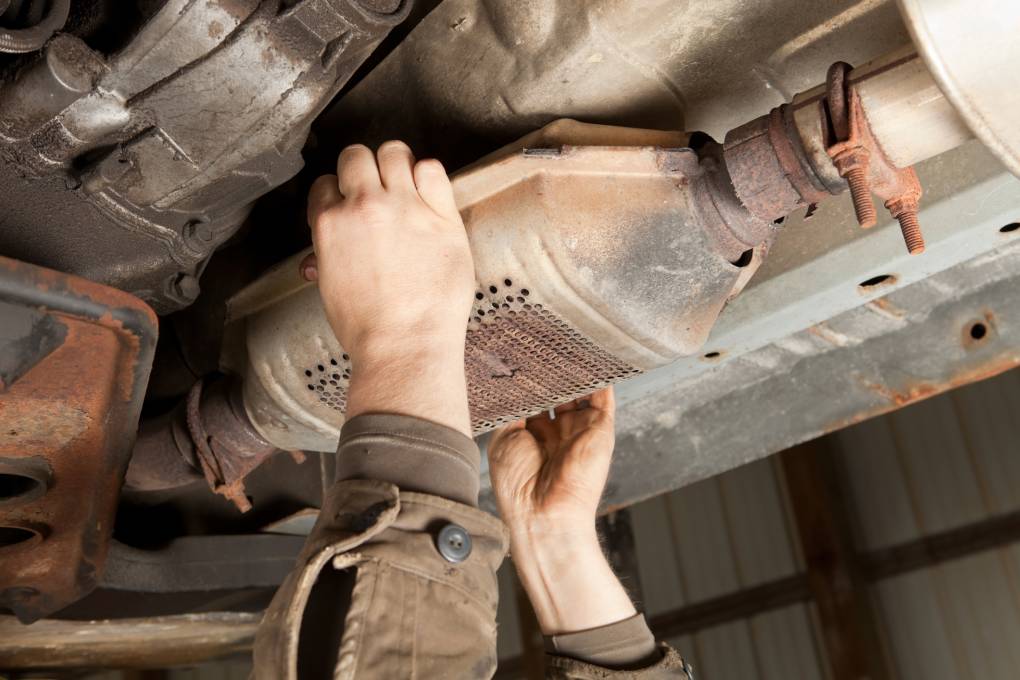
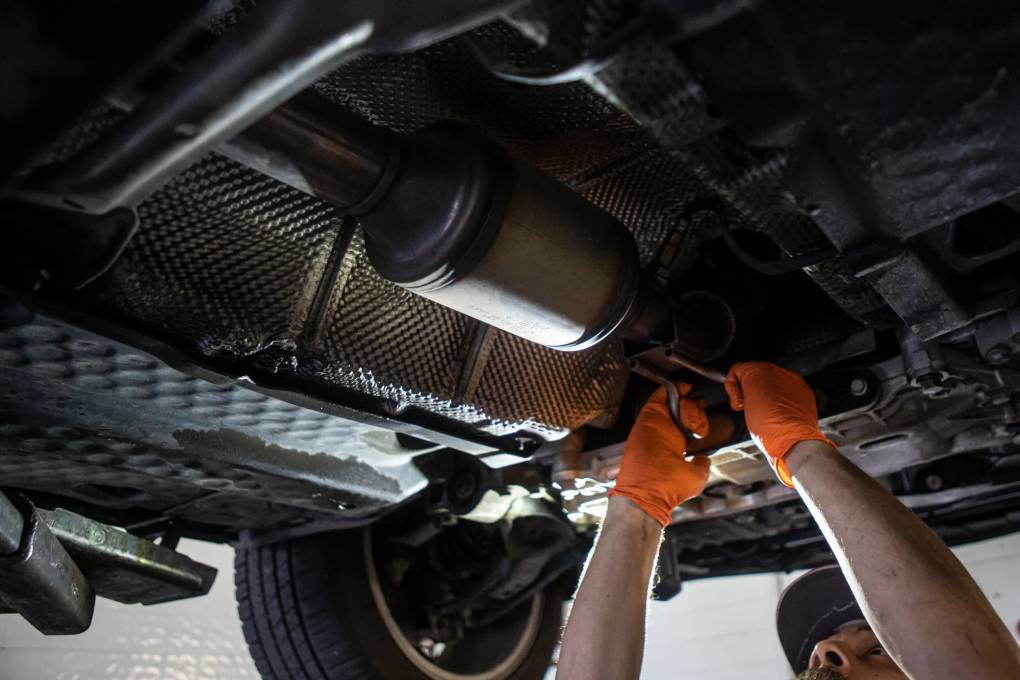
"caption": "Catalytic converters reduce pollutants by oxidizing carbon monoxide and hydrocarbons, and they contain precious metals like platinum or palladium which makes them a target for theft.",
"description": null,
"title": "Catalytic Converter Removal at a Salvage Yard",
"credit": "BanksPhotos/Getty Images",
"status": "inherit",
"altTag": "A pair of hands removing a catalytic converter.",
"isLoading": false,
"fetchFailed": false
},
"news_11930566": {
"type": "attachments",
"id": "news_11930566",
"meta": {
"index": "attachments_1716263798",
"site": "news",
"id": "11930566",
"found": true
},
"parent": 11930562,
"imgSizes": {
"twentyfourteen-full-width": {
"file": "https://ww2.kqed.org/app/uploads/sites/10/2022/10/GettyImages-1424142784-1038x576.jpg",
"width": 1038,
"mimeType": "image/jpeg",
"height": 576
},
"thumbnail": {
"file": "https://ww2.kqed.org/app/uploads/sites/10/2022/10/GettyImages-1424142784-160x92.jpg",
"width": 160,
"mimeType": "image/jpeg",
"height": 92
},
"post-thumbnail": {
"file": "https://ww2.kqed.org/app/uploads/sites/10/2022/10/GettyImages-1424142784-672x372.jpg",
"width": 672,
"mimeType": "image/jpeg",
"height": 372
},
"kqedFullSize": {
"file": "https://ww2.kqed.org/app/uploads/sites/10/2022/10/GettyImages-1424142784.jpg",
"width": 2287,
"height": 1311
},
"2048x2048": {
"file": "https://ww2.kqed.org/app/uploads/sites/10/2022/10/GettyImages-1424142784-2048x1174.jpg",
"width": 2048,
"mimeType": "image/jpeg",
"height": 1174
},
"large": {
"file": "https://ww2.kqed.org/app/uploads/sites/10/2022/10/GettyImages-1424142784-1020x585.jpg",
"width": 1020,
"mimeType": "image/jpeg",
"height": 585
},
"1536x1536": {
"file": "https://ww2.kqed.org/app/uploads/sites/10/2022/10/GettyImages-1424142784-1536x880.jpg",
"width": 1536,
"mimeType": "image/jpeg",
"height": 880
},
"full-width": {
"file": "https://ww2.kqed.org/app/uploads/sites/10/2022/10/GettyImages-1424142784-1920x1101.jpg",
"width": 1920,
"mimeType": "image/jpeg",
"height": 1101
},
"medium": {
"file": "https://ww2.kqed.org/app/uploads/sites/10/2022/10/GettyImages-1424142784-800x459.jpg",
"width": 800,
"mimeType": "image/jpeg",
"height": 459
}
},
"publishDate": 1667072677,
"modified": 1667325022,
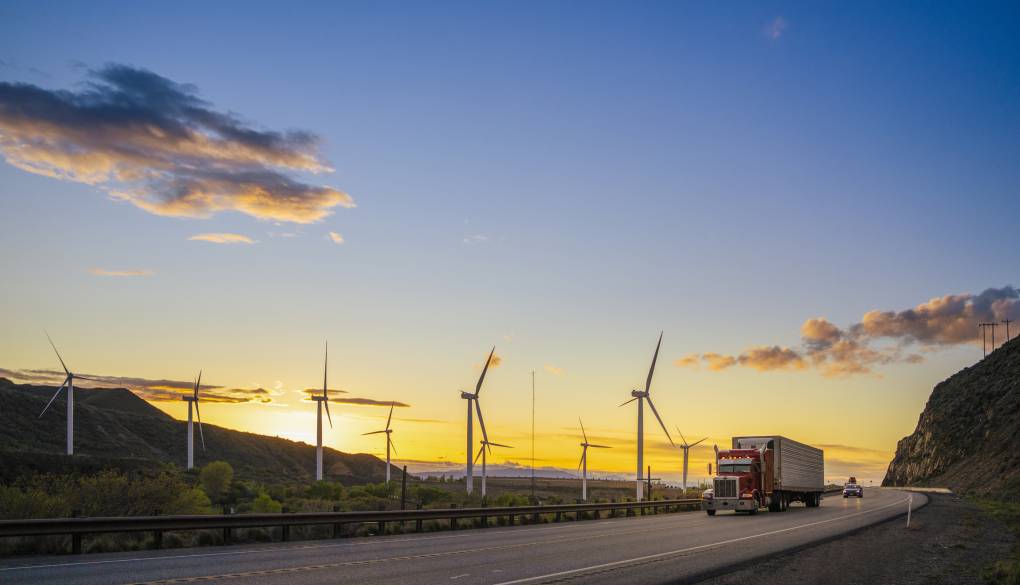
"caption": "The California Trucking Association estimates the state would need to install as many as 800 chargers per week to power truck fleets, representing anywhere from 64 to 158 megawatts of new charging capacity, or enough to power 118,000 households.",
"description": null,
"title": "Semi truck speeding in front of Wind turbines in Utah",
"credit": "THEPALMER/Getty Images",
"status": "inherit",
"altTag": "Semi truck speeding in front of wind turbines.",
"isLoading": false,
"fetchFailed": false
},
"news_11929219": {
"type": "attachments",
"id": "news_11929219",
"meta": {
"index": "attachments_1716263798",
"site": "news",
"id": "11929219",
"found": true
},
"parent": 11929172,
"imgSizes": {
"twentyfourteen-full-width": {
"file": "https://ww2.kqed.org/app/uploads/sites/10/2022/10/RS37097_IMG_3297-qut-1038x576.jpg",
"width": 1038,
"mimeType": "image/jpeg",
"height": 576
},
"thumbnail": {
"file": "https://ww2.kqed.org/app/uploads/sites/10/2022/10/RS37097_IMG_3297-qut-160x96.jpg",
"width": 160,
"mimeType": "image/jpeg",
"height": 96
},
"post-thumbnail": {
"file": "https://ww2.kqed.org/app/uploads/sites/10/2022/10/RS37097_IMG_3297-qut-672x372.jpg",
"width": 672,
"mimeType": "image/jpeg",
"height": 372
},
"kqedFullSize": {
"file": "https://ww2.kqed.org/app/uploads/sites/10/2022/10/RS37097_IMG_3297-qut.jpg",
"width": 1920,
"height": 1149
},
"large": {
"file": "https://ww2.kqed.org/app/uploads/sites/10/2022/10/RS37097_IMG_3297-qut-1020x610.jpg",
"width": 1020,
"mimeType": "image/jpeg",
"height": 610
},
"1536x1536": {
"file": "https://ww2.kqed.org/app/uploads/sites/10/2022/10/RS37097_IMG_3297-qut-1536x919.jpg",
"width": 1536,
"mimeType": "image/jpeg",
"height": 919
},
"medium": {
"file": "https://ww2.kqed.org/app/uploads/sites/10/2022/10/RS37097_IMG_3297-qut-800x479.jpg",
"width": 800,
"mimeType": "image/jpeg",
"height": 479
}
},
"publishDate": 1666032647,
"modified": 1666040849,
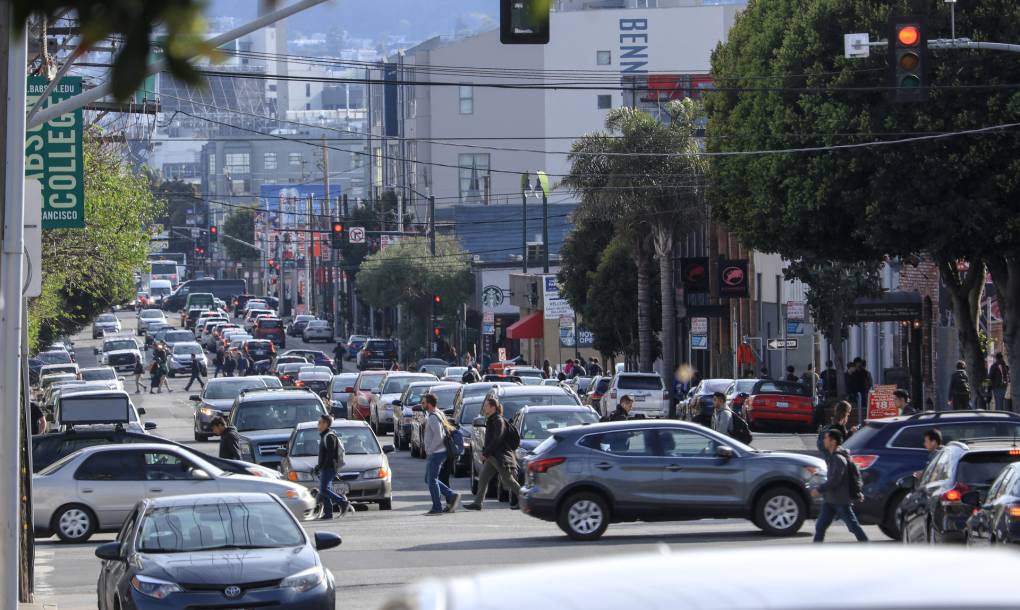
"caption": "Rush-hour traffic piles up between Bryant and Third streets in San Francisco on May 13, 2019.",
"description": null,
"title": "RS37097_IMG_3297-qut",
"credit": "Sruti Mamidanna/KQED",
"status": "inherit",
"altTag": "Several cars are on the road along with people crossing the street.",
"isLoading": false,
"fetchFailed": false
},
"news_11928800": {
"type": "attachments",
"id": "news_11928800",
"meta": {
"index": "attachments_1716263798",
"site": "news",
"id": "11928800",
"found": true
},
"parent": 11928799,
"imgSizes": {
"twentyfourteen-full-width": {
"file": "https://ww2.kqed.org/app/uploads/sites/10/2022/10/GettyImages-174798960-1038x576.jpg",
"width": 1038,
"mimeType": "image/jpeg",
"height": 576
},
"thumbnail": {
"file": "https://ww2.kqed.org/app/uploads/sites/10/2022/10/GettyImages-174798960-160x107.jpg",
"width": 160,
"mimeType": "image/jpeg",
"height": 107
},
"post-thumbnail": {
"file": "https://ww2.kqed.org/app/uploads/sites/10/2022/10/GettyImages-174798960-672x372.jpg",
"width": 672,
"mimeType": "image/jpeg",
"height": 372
},
"kqedFullSize": {
"file": "https://ww2.kqed.org/app/uploads/sites/10/2022/10/GettyImages-174798960-scaled.jpg",
"width": 2560,
"height": 1707
},
"2048x2048": {
"file": "https://ww2.kqed.org/app/uploads/sites/10/2022/10/GettyImages-174798960-2048x1365.jpg",
"width": 2048,
"mimeType": "image/jpeg",
"height": 1365
},
"large": {
"file": "https://ww2.kqed.org/app/uploads/sites/10/2022/10/GettyImages-174798960-1020x680.jpg",
"width": 1020,
"mimeType": "image/jpeg",
"height": 680
},
"1536x1536": {
"file": "https://ww2.kqed.org/app/uploads/sites/10/2022/10/GettyImages-174798960-1536x1024.jpg",
"width": 1536,
"mimeType": "image/jpeg",
"height": 1024
},
"full-width": {
"file": "https://ww2.kqed.org/app/uploads/sites/10/2022/10/GettyImages-174798960-1920x1280.jpg",
"width": 1920,
"mimeType": "image/jpeg",
"height": 1280
},
"medium": {
"file": "https://ww2.kqed.org/app/uploads/sites/10/2022/10/GettyImages-174798960-800x533.jpg",
"width": 800,
"mimeType": "image/jpeg",
"height": 533
}
},
"publishDate": 1665702624,
"modified": 1665702673,
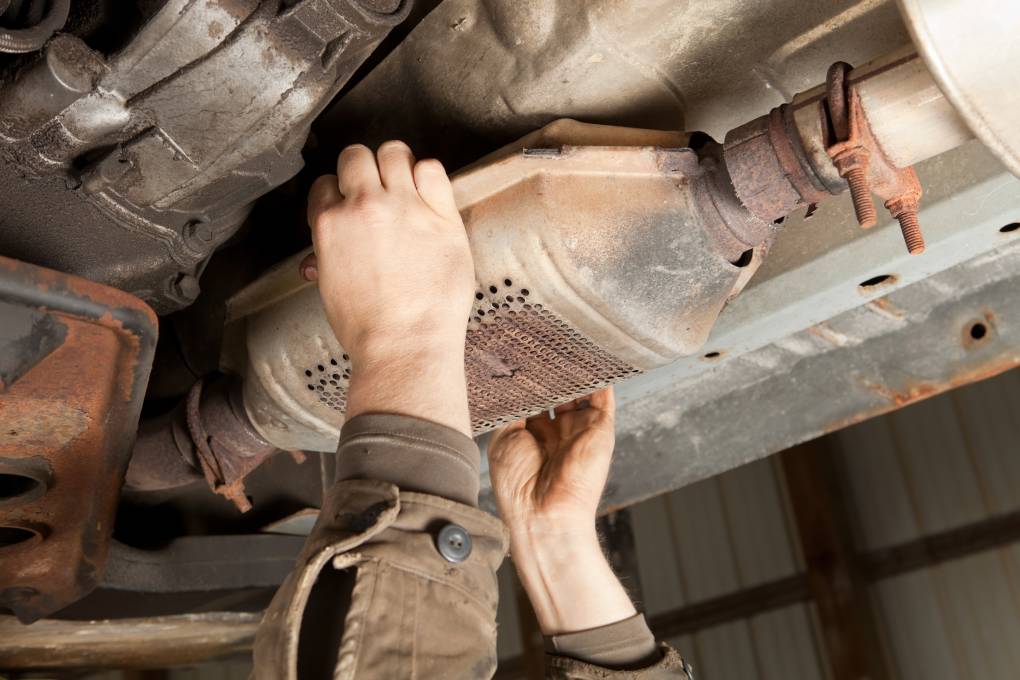
"caption": "A SUV's catalytic converter is being removed at a salvage yard. Catalytic converters reduce pollutants by oxidizing carbon monoxide and hydrocarbons. Converters contain platinum or palladium which are recovered and recycled during the salvage process. This vehicle, will be crushed, shredded and melted into recycled steel.",
"description": null,
"title": "Catalytic Converter Removal at a Salvage Yard",
"credit": "Getty Images",
"status": "inherit",
"altTag": null,
"isLoading": false,
"fetchFailed": false
},
"news_11928458": {
"type": "attachments",
"id": "news_11928458",
"meta": {
"index": "attachments_1716263798",
"site": "news",
"id": "11928458",
"found": true
},
"parent": 11928455,
"imgSizes": {
"twentyfourteen-full-width": {
"file": "https://ww2.kqed.org/app/uploads/sites/10/2022/10/091322_CatalyticConverter_LV__005-CM-1038x576.jpg",
"width": 1038,
"mimeType": "image/jpeg",
"height": 576
},
"thumbnail": {
"file": "https://ww2.kqed.org/app/uploads/sites/10/2022/10/091322_CatalyticConverter_LV__005-CM-160x107.jpg",
"width": 160,
"mimeType": "image/jpeg",
"height": 107
},
"post-thumbnail": {
"file": "https://ww2.kqed.org/app/uploads/sites/10/2022/10/091322_CatalyticConverter_LV__005-CM-672x372.jpg",
"width": 672,
"mimeType": "image/jpeg",
"height": 372
},
"kqedFullSize": {
"file": "https://ww2.kqed.org/app/uploads/sites/10/2022/10/091322_CatalyticConverter_LV__005-CM.jpg",
"width": 2000,
"height": 1333
},
"large": {
"file": "https://ww2.kqed.org/app/uploads/sites/10/2022/10/091322_CatalyticConverter_LV__005-CM-1020x680.jpg",
"width": 1020,
"mimeType": "image/jpeg",
"height": 680
},
"1536x1536": {
"file": "https://ww2.kqed.org/app/uploads/sites/10/2022/10/091322_CatalyticConverter_LV__005-CM-1536x1024.jpg",
"width": 1536,
"mimeType": "image/jpeg",
"height": 1024
},
"full-width": {
"file": "https://ww2.kqed.org/app/uploads/sites/10/2022/10/091322_CatalyticConverter_LV__005-CM-1920x1280.jpg",
"width": 1920,
"mimeType": "image/jpeg",
"height": 1280
},
"medium": {
"file": "https://ww2.kqed.org/app/uploads/sites/10/2022/10/091322_CatalyticConverter_LV__005-CM-800x533.jpg",
"width": 800,
"mimeType": "image/jpeg",
"height": 533
}
},
"publishDate": 1665511771,
"modified": 1665519360,
"caption": "Mechanic Alex Esparza works on a catalytic converter at Van Ness Auto Repair in Fresno on Sept. 13, 2022.",
"description": null,
"title": "091322_CatalyticConverter_LV__005-CM",
"credit": "Larry Valenzuela/CalMatters/CatchLight Local",
"status": "inherit",
"altTag": "a person in orange gloves works on a car",
"isLoading": false,
"fetchFailed": false
},
"news_11927810": {
"type": "attachments",
"id": "news_11927810",
"meta": {
"index": "attachments_1716263798",
"site": "news",
"id": "11927810",
"found": true
},
"parent": 11927758,
"imgSizes": {
"thumbnail": {
"file": "https://ww2.kqed.org/app/uploads/sites/10/2022/10/GettyImages-472067545-160x107.jpg",
"width": 160,
"mimeType": "image/jpeg",
"height": 107
},
"post-thumbnail": {
"file": "https://ww2.kqed.org/app/uploads/sites/10/2022/10/GettyImages-472067545-672x372.jpg",
"width": 672,
"mimeType": "image/jpeg",
"height": 372
},
"kqedFullSize": {
"file": "https://ww2.kqed.org/app/uploads/sites/10/2022/10/GettyImages-472067545.jpg",
"width": 724,
"height": 483
}
},
"publishDate": 1665006363,
"modified": 1665087788,
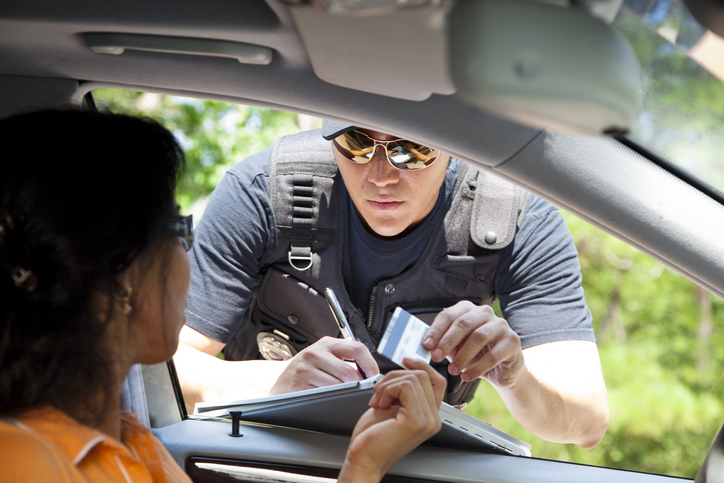
"caption": "A report by nonprofit SPUR analyzing stop data from seven locations in the state finds that California's huge amount of traffic ticket penalties are disproportionately affecting lower-income communities of color.",
"description": null,
"title": "Crime: Policeman gives driver a traffic ticket.",
"credit": "fstop123/Getty Images",
"status": "inherit",
"altTag": "Policeman stops woman driver to give her a traffic ticket for speeding. He takes her driver's license.",
"isLoading": false,
"fetchFailed": false
},
"news_11927033": {
"type": "attachments",
"id": "news_11927033",
"meta": {
"index": "attachments_1716263798",
"site": "news",
"id": "11927033",
"found": true
},
"parent": 11926998,
"imgSizes": {
"twentyfourteen-full-width": {
"file": "https://ww2.kqed.org/app/uploads/sites/10/2022/09/RS32599_ElectricCars_AW_03-qut-1038x576.jpg",
"width": 1038,
"mimeType": "image/jpeg",
"height": 576
},
"thumbnail": {
"file": "https://ww2.kqed.org/app/uploads/sites/10/2022/09/RS32599_ElectricCars_AW_03-qut-160x107.jpg",
"width": 160,
"mimeType": "image/jpeg",
"height": 107
},
"post-thumbnail": {
"file": "https://ww2.kqed.org/app/uploads/sites/10/2022/09/RS32599_ElectricCars_AW_03-qut-672x372.jpg",
"width": 672,
"mimeType": "image/jpeg",
"height": 372
},
"kqedFullSize": {
"file": "https://ww2.kqed.org/app/uploads/sites/10/2022/09/RS32599_ElectricCars_AW_03-qut.jpg",
"width": 1920,
"height": 1280
},
"large": {
"file": "https://ww2.kqed.org/app/uploads/sites/10/2022/09/RS32599_ElectricCars_AW_03-qut-1020x680.jpg",
"width": 1020,
"mimeType": "image/jpeg",
"height": 680
},
"1536x1536": {
"file": "https://ww2.kqed.org/app/uploads/sites/10/2022/09/RS32599_ElectricCars_AW_03-qut-1536x1024.jpg",
"width": 1536,
"mimeType": "image/jpeg",
"height": 1024
},
"medium": {
"file": "https://ww2.kqed.org/app/uploads/sites/10/2022/09/RS32599_ElectricCars_AW_03-qut-800x533.jpg",
"width": 800,
"mimeType": "image/jpeg",
"height": 533
}
},
"publishDate": 1664404726,
"modified": 1664404825,
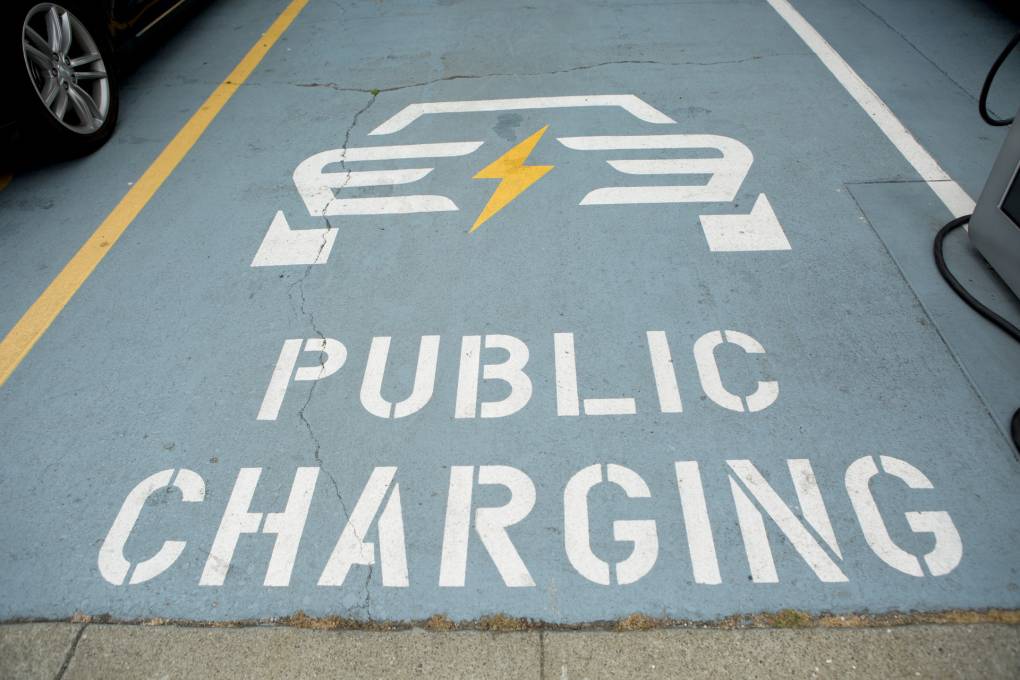
"caption": "A public charging station for electric vehicles in San Francisco's Potrero neighborhood. If Prop. 30 passes, money would be used to install more public charging infrastructure.",
"description": null,
"title": "RS32599_ElectricCars_AW_03-qut",
"credit": "Anne Wernikoff/KQED",
"status": "inherit",
"altTag": "Graphic painted on the ground says \"public charging\" with an image of electricity",
"isLoading": false,
"fetchFailed": false
},
"news_11926063": {
"type": "attachments",
"id": "news_11926063",
"meta": {
"index": "attachments_1716263798",
"site": "news",
"id": "11926063",
"found": true
},
"parent": 11926059,
"imgSizes": {
"twentyfourteen-full-width": {
"file": "https://ww2.kqed.org/app/uploads/sites/10/2022/09/072522-AB5-TRUCKER-PROTEST-OAKLAND-MHN-01-CM-1038x576.jpg",
"width": 1038,
"mimeType": "image/jpeg",
"height": 576
},
"thumbnail": {
"file": "https://ww2.kqed.org/app/uploads/sites/10/2022/09/072522-AB5-TRUCKER-PROTEST-OAKLAND-MHN-01-CM-160x100.jpg",
"width": 160,
"mimeType": "image/jpeg",
"height": 100
},
"post-thumbnail": {
"file": "https://ww2.kqed.org/app/uploads/sites/10/2022/09/072522-AB5-TRUCKER-PROTEST-OAKLAND-MHN-01-CM-672x372.jpg",
"width": 672,
"mimeType": "image/jpeg",
"height": 372
},
"kqedFullSize": {
"file": "https://ww2.kqed.org/app/uploads/sites/10/2022/09/072522-AB5-TRUCKER-PROTEST-OAKLAND-MHN-01-CM.jpg",
"width": 2000,
"height": 1251
},
"large": {
"file": "https://ww2.kqed.org/app/uploads/sites/10/2022/09/072522-AB5-TRUCKER-PROTEST-OAKLAND-MHN-01-CM-1020x638.jpg",
"width": 1020,
"mimeType": "image/jpeg",
"height": 638
},
"1536x1536": {
"file": "https://ww2.kqed.org/app/uploads/sites/10/2022/09/072522-AB5-TRUCKER-PROTEST-OAKLAND-MHN-01-CM-1536x961.jpg",
"width": 1536,
"mimeType": "image/jpeg",
"height": 961
},
"full-width": {
"file": "https://ww2.kqed.org/app/uploads/sites/10/2022/09/072522-AB5-TRUCKER-PROTEST-OAKLAND-MHN-01-CM-1920x1201.jpg",
"width": 1920,
"mimeType": "image/jpeg",
"height": 1201
},
"medium": {
"file": "https://ww2.kqed.org/app/uploads/sites/10/2022/09/072522-AB5-TRUCKER-PROTEST-OAKLAND-MHN-01-CM-800x500.jpg",
"width": 800,
"mimeType": "image/jpeg",
"height": 500
}
},
"publishDate": 1663367165,
"modified": 1694551514,
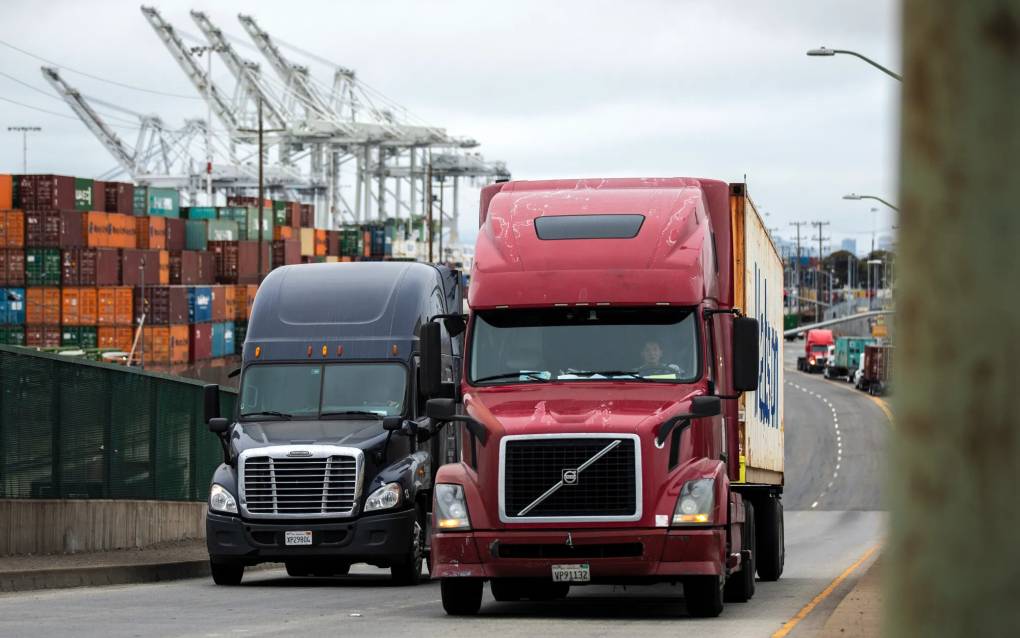
"caption": "Shipments of cargo leave the Port of Oakland on July 25, 2022. ",
"description": "Cargo is loaded onto trucks at the Port of Oakland. ",
"title": "072522-AB5-TRUCKER-PROTEST-OAKLAND-MHN-01-CM",
"credit": "Martin do Nascimento/CalMatters",
"status": "inherit",
"altTag": "two big rig trucks drive with cranes at the Port of Oakland in the background",
"isLoading": false,
"fetchFailed": false
},
"news_11925298": {
"type": "attachments",
"id": "news_11925298",
"meta": {
"index": "attachments_1716263798",
"site": "news",
"id": "11925298",
"found": true
},
"parent": 11925297,
"imgSizes": {
"twentyfourteen-full-width": {
"file": "https://ww2.kqed.org/app/uploads/sites/10/2022/09/20220808sanpedroports0540_slide-47912fe19be5fa6e9880dda6f4a62235008f0186-1038x576.jpg",
"width": 1038,
"mimeType": "image/jpeg",
"height": 576
},
"thumbnail": {
"file": "https://ww2.kqed.org/app/uploads/sites/10/2022/09/20220808sanpedroports0540_slide-47912fe19be5fa6e9880dda6f4a62235008f0186-160x107.jpg",
"width": 160,
"mimeType": "image/jpeg",
"height": 107
},
"post-thumbnail": {
"file": "https://ww2.kqed.org/app/uploads/sites/10/2022/09/20220808sanpedroports0540_slide-47912fe19be5fa6e9880dda6f4a62235008f0186-672x372.jpg",
"width": 672,
"mimeType": "image/jpeg",
"height": 372
},
"kqedFullSize": {
"file": "https://ww2.kqed.org/app/uploads/sites/10/2022/09/20220808sanpedroports0540_slide-47912fe19be5fa6e9880dda6f4a62235008f0186.jpg",
"width": 2535,
"height": 1690
},
"2048x2048": {
"file": "https://ww2.kqed.org/app/uploads/sites/10/2022/09/20220808sanpedroports0540_slide-47912fe19be5fa6e9880dda6f4a62235008f0186-2048x1365.jpg",
"width": 2048,
"mimeType": "image/jpeg",
"height": 1365
},
"large": {
"file": "https://ww2.kqed.org/app/uploads/sites/10/2022/09/20220808sanpedroports0540_slide-47912fe19be5fa6e9880dda6f4a62235008f0186-1020x680.jpg",
"width": 1020,
"mimeType": "image/jpeg",
"height": 680
},
"1536x1536": {
"file": "https://ww2.kqed.org/app/uploads/sites/10/2022/09/20220808sanpedroports0540_slide-47912fe19be5fa6e9880dda6f4a62235008f0186-1536x1024.jpg",
"width": 1536,
"mimeType": "image/jpeg",
"height": 1024
},
"full-width": {
"file": "https://ww2.kqed.org/app/uploads/sites/10/2022/09/20220808sanpedroports0540_slide-47912fe19be5fa6e9880dda6f4a62235008f0186-1920x1280.jpg",
"width": 1920,
"mimeType": "image/jpeg",
"height": 1280
},
"medium": {
"file": "https://ww2.kqed.org/app/uploads/sites/10/2022/09/20220808sanpedroports0540_slide-47912fe19be5fa6e9880dda6f4a62235008f0186-800x533.jpg",
"width": 800,
"mimeType": "image/jpeg",
"height": 533
}
},
"publishDate": 1662923700,
"modified": 1663096708,
"caption": "Jim Spinosa, 82, former International President of the International Longshore and Warehouse Union (ILWU), poses for a portrait at the Los Angeles Maritime Museum on Aug. 8, 2022.",
"description": "SAN PEDRO, CALIFORNIA - August 8, 2022: Jim Spinosa, 82, former International President of the International Longshore and Warehouse Union (ILWU), poses for a portrait at the Los Angeles Maritime Museum. CREDIT: Philip Cheung for NPR",
"title": "James \"Spinner\" Spinosa followed his uncles to the Los Angeles waterfront in 1969. He served in various leadership positions in the International Longshore and Warehouse Union, including as international president.",
"credit": "Philip Cheung for NPR",
"status": "inherit",
"altTag": "A man wearing a blue shirt and glasses stands outside on a dock.",
"isLoading": false,
"fetchFailed": false
},
"news_11914732": {
"type": "attachments",
"id": "news_11914732",
"meta": {
"index": "attachments_1716263798",
"site": "news",
"id": "11914732",
"found": true
},
"parent": 11914731,
"imgSizes": {
"twentyfourteen-full-width": {
"file": "https://ww2.kqed.org/app/uploads/sites/10/2022/05/GettyImages-1397970522-1038x576.jpg",
"width": 1038,
"mimeType": "image/jpeg",
"height": 576
},
"thumbnail": {
"file": "https://ww2.kqed.org/app/uploads/sites/10/2022/05/GettyImages-1397970522-160x109.jpg",
"width": 160,
"mimeType": "image/jpeg",
"height": 109
},
"post-thumbnail": {
"file": "https://ww2.kqed.org/app/uploads/sites/10/2022/05/GettyImages-1397970522-672x372.jpg",
"width": 672,
"mimeType": "image/jpeg",
"height": 372
},
"kqedFullSize": {
"file": "https://ww2.kqed.org/app/uploads/sites/10/2022/05/GettyImages-1397970522-scaled.jpg",
"width": 2560,
"height": 1738
},
"2048x2048": {
"file": "https://ww2.kqed.org/app/uploads/sites/10/2022/05/GettyImages-1397970522-2048x1390.jpg",
"width": 2048,
"mimeType": "image/jpeg",
"height": 1390
},
"large": {
"file": "https://ww2.kqed.org/app/uploads/sites/10/2022/05/GettyImages-1397970522-1020x692.jpg",
"width": 1020,
"mimeType": "image/jpeg",
"height": 692
},
"1536x1536": {
"file": "https://ww2.kqed.org/app/uploads/sites/10/2022/05/GettyImages-1397970522-1536x1043.jpg",
"width": 1536,
"mimeType": "image/jpeg",
"height": 1043
},
"full-width": {
"file": "https://ww2.kqed.org/app/uploads/sites/10/2022/05/GettyImages-1397970522-1920x1303.jpg",
"width": 1920,
"mimeType": "image/jpeg",
"height": 1303
},
"medium": {
"file": "https://ww2.kqed.org/app/uploads/sites/10/2022/05/GettyImages-1397970522-800x543.jpg",
"width": 800,
"mimeType": "image/jpeg",
"height": 543
}
},
"publishDate": 1653053502,
"modified": 1662498518,
"caption": null,
"description": "PETALUMA, CALIFORNIA - MAY 18: A customer pumps gas into their car at a gas station on May 18, 2022 in Petaluma, California.",
"title": "Gas Prices Hit Record Highs In San Francisco Area",
"credit": "Justin Sullivan/Getty Images",
"status": "inherit",
"altTag": "Driver filling up gas in the Bay Area",
"isLoading": false,
"fetchFailed": false
},
"news_11923713": {
"type": "attachments",
"id": "news_11923713",
"meta": {
"index": "attachments_1716263798",
"site": "news",
"id": "11923713",
"found": true
},
"parent": 11923634,
"imgSizes": {
"twentyfourteen-full-width": {
"file": "https://ww2.kqed.org/app/uploads/sites/10/2022/08/GettyImages-1405480915-1024x576.jpg",
"width": 1024,
"mimeType": "image/jpeg",
"height": 576
},
"thumbnail": {
"file": "https://ww2.kqed.org/app/uploads/sites/10/2022/08/GettyImages-1405480915-160x110.jpg",
"width": 160,
"mimeType": "image/jpeg",
"height": 110
},
"post-thumbnail": {
"file": "https://ww2.kqed.org/app/uploads/sites/10/2022/08/GettyImages-1405480915-672x372.jpg",
"width": 672,
"mimeType": "image/jpeg",
"height": 372
},
"kqedFullSize": {
"file": "https://ww2.kqed.org/app/uploads/sites/10/2022/08/GettyImages-1405480915.jpg",
"width": 1024,
"height": 701
},
"large": {
"file": "https://ww2.kqed.org/app/uploads/sites/10/2022/08/GettyImages-1405480915-1020x698.jpg",
"width": 1020,
"mimeType": "image/jpeg",
"height": 698
},
"medium": {
"file": "https://ww2.kqed.org/app/uploads/sites/10/2022/08/GettyImages-1405480915-800x548.jpg",
"width": 800,
"mimeType": "image/jpeg",
"height": 548
}
},
"publishDate": 1661545602,
"modified": 1663202186,
"caption": "An electric car charges at a mall parking lot on June 27, 2022, in Corte Madera.",
"description": "An electric car charges at a mall parking lot on June 27, 2022, in Corte Madera.",
"title": "Average Price Of Electric Vehicles Rises, As Supply Costs Continue To Increase",
"credit": "Justin Sullivan/Getty Images",
"status": "inherit",
"altTag": "A white electric car getting charged.",
"isLoading": false,
"fetchFailed": false
},
"news_11911093": {
"type": "attachments",
"id": "news_11911093",
"meta": {
"index": "attachments_1716263798",
"site": "news",
"id": "11911093",
"found": true
},
"title": "Shares For Companies In Electric Vehicle Sector Rise As Oil Prices Soar",
"publishDate": 1649941089,
"status": "inherit",
"parent": 11911091,
"modified": 1661462407,
"caption": "Electric vehicles recharge their batteries at the East Crissy Field charging station on March 9, 2022, in San Francisco.",
"credit": "Justin Sullivan/Getty Images",
"altTag": "Electric vehicles charging up in an outdoor SF lot, with the Golden Gate Bridge in the background.",
"description": "SAN FRANCISCO, CALIFORNIA - MARCH 09: Electric vehicles recharge their batteries at the East Crissy Field charge station on March 09, 2022 in San Francisco, California. With oil prices continuing to soar, shares for companies in the electric vehicle sector are rising as consumers look to trade their gas powered cars in for electric vehicles. (Photo by Justin Sullivan/Getty Images)",
"imgSizes": {
"medium": {
"file": "https://cdn.kqed.org/wp-content/uploads/sites/10/2022/04/GettyImages-1383559813-800x517.jpg",
"width": 800,
"height": 517,
"mimeType": "image/jpeg"
},
"large": {
"file": "https://cdn.kqed.org/wp-content/uploads/sites/10/2022/04/GettyImages-1383559813-1020x660.jpg",
"width": 1020,
"height": 660,
"mimeType": "image/jpeg"
},
"thumbnail": {
"file": "https://cdn.kqed.org/wp-content/uploads/sites/10/2022/04/GettyImages-1383559813-160x103.jpg",
"width": 160,
"height": 103,
"mimeType": "image/jpeg"
},
"1536x1536": {
"file": "https://cdn.kqed.org/wp-content/uploads/sites/10/2022/04/GettyImages-1383559813-1536x994.jpg",
"width": 1536,
"height": 994,
"mimeType": "image/jpeg"
},
"2048x2048": {
"file": "https://cdn.kqed.org/wp-content/uploads/sites/10/2022/04/GettyImages-1383559813-2048x1325.jpg",
"width": 2048,
"height": 1325,
"mimeType": "image/jpeg"
},
"post-thumbnail": {
"file": "https://cdn.kqed.org/wp-content/uploads/sites/10/2022/04/GettyImages-1383559813-672x372.jpg",
"width": 672,
"height": 372,
"mimeType": "image/jpeg"
},
"twentyfourteen-full-width": {
"file": "https://cdn.kqed.org/wp-content/uploads/sites/10/2022/04/GettyImages-1383559813-1038x576.jpg",
"width": 1038,
"height": 576,
"mimeType": "image/jpeg"
},
"full-width": {
"file": "https://cdn.kqed.org/wp-content/uploads/sites/10/2022/04/GettyImages-1383559813-1920x1242.jpg",
"width": 1920,
"height": 1242,
"mimeType": "image/jpeg"
},
"kqedFullSize": {
"file": "https://cdn.kqed.org/wp-content/uploads/sites/10/2022/04/GettyImages-1383559813-scaled-e1735928702918.jpg",
"width": 2000,
"height": 1294
}
},
"isLoading": false,
"fetchFailed": false
}
},
"audioPlayerReducer": {
"postId": "stream_live",
"isPaused": true,
"isPlaying": false,
"pfsActive": false,
"pledgeModalIsOpen": true,
"playerDrawerIsOpen": false,
"liveAudioPlayStartedAt": 0,
"liveAudioPlayContext": ""
},
"authorsReducer": {
"byline_news_11931287": {
"type": "authors",
"id": "byline_news_11931287",
"meta": {
"override": true
},
"slug": "byline_news_11931287",
"name": "\u003ca href=\"https://www.npr.org/people/348743421/becky-sullivan\">Becky Sullivan\u003c/a>",
"isLoading": false
},
"byline_news_11930562": {
"type": "authors",
"id": "byline_news_11930562",
"meta": {
"override": true
},
"slug": "byline_news_11930562",
"name": "\u003ca href=\"https://calmatters.org/author/nadia-lopez/\">Nadia Lopez\u003c/a>",
"isLoading": false
},
"byline_news_11928455": {
"type": "authors",
"id": "byline_news_11928455",
"meta": {
"override": true
},
"slug": "byline_news_11928455",
"name": "\u003ca href=\"https://calmatters.org/author/grace-gedye/\">Grace Gedye\u003c/a>",
"isLoading": false
},
"byline_news_11926059": {
"type": "authors",
"id": "byline_news_11926059",
"meta": {
"override": true
},
"slug": "byline_news_11926059",
"name": "\u003ca href=\"https://calmatters.org/author/nadia-lopez/\">Nadia Lopez\u003c/a>",
"isLoading": false
},
"byline_news_11925297": {
"type": "authors",
"id": "byline_news_11925297",
"meta": {
"override": true
},
"slug": "byline_news_11925297",
"name": "Andrea Hsu",
"isLoading": false
},
"byline_news_11923634": {
"type": "authors",
"id": "byline_news_11923634",
"meta": {
"override": true
},
"slug": "byline_news_11923634",
"name": "Tom Krisher and Kathleen Ronayne\u003cbr>Associated Press",
"isLoading": false
},
"byline_news_11923540": {
"type": "authors",
"id": "byline_news_11923540",
"meta": {
"override": true
},
"slug": "byline_news_11923540",
"name": "Kathleen Ronayne\u003cbr>The Associated Press",
"isLoading": false
},
"katrinaschwartz": {
"type": "authors",
"id": "234",
"meta": {
"index": "authors_1716337520",
"id": "234",
"found": true
},
"name": "Katrina Schwartz",
"firstName": "Katrina",
"lastName": "Schwartz",
"slug": "katrinaschwartz",
"email": "kschwartz@kqed.org",
"display_author_email": false,
"staff_mastheads": [
"news"
],
"title": "Producer",
"bio": "Katrina Schwartz is a journalist based in San Francisco. She's worked at KPCC public radio in LA and has reported on air and online for KQED since 2010. She covered how teaching and learning is changing for MindShift between 2012 and 2020. She is the co-host of the MindShift podcast and now produces KQED's Bay Curious podcast.",
"avatar": "https://secure.gravatar.com/avatar/edb4ee79070447a018538c9aae6eeecf28786515b8a0c30e43b6b7dce5aa44c8?s=600&d=blank&r=g",
"twitter": "kschwart",
"bluesky": null,
"facebook": null,
"instagram": null,
"linkedin": null,
"sites": [
{
"site": "news",
"roles": [
"editor"
]
},
{
"site": "mindshift",
"roles": [
"administrator"
]
},
{
"site": "stateofhealth",
"roles": [
"author"
]
},
{
"site": "science",
"roles": [
"editor"
]
}
],
"headData": {
"title": "Katrina Schwartz | KQED",
"description": "Producer",
"ogImgSrc": "https://secure.gravatar.com/avatar/edb4ee79070447a018538c9aae6eeecf28786515b8a0c30e43b6b7dce5aa44c8?s=600&d=blank&r=g",
"twImgSrc": "https://secure.gravatar.com/avatar/edb4ee79070447a018538c9aae6eeecf28786515b8a0c30e43b6b7dce5aa44c8?s=600&d=blank&r=g"
},
"isLoading": false,
"link": "/author/katrinaschwartz"
},
"ecruzguevarra": {
"type": "authors",
"id": "8654",
"meta": {
"index": "authors_1716337520",
"id": "8654",
"found": true
},
"name": "Ericka Cruz Guevarra",
"firstName": "Ericka",
"lastName": "Cruz Guevarra",
"slug": "ecruzguevarra",
"email": "ecruzguevarra@kqed.org",
"display_author_email": true,
"staff_mastheads": [
"news"
],
"title": "Producer, The Bay Podcast",
"bio": "Ericka Cruz Guevarra is host of \u003ca href=\"https://www.kqed.org/podcasts/thebay\">\u003cem>The Bay\u003c/em>\u003c/a> podcast at KQED. Before host, she was the show’s producer. Her work in that capacity includes a three-part reported series on policing in Vallejo, which won a 2020 excellence in journalism award from the Society of Professional Journalists. Ericka has worked as a breaking news reporter at Oregon Public Broadcasting, helped produce the Code Switch podcast, and was KQED’s inaugural Raul Ramirez Diversity Fund intern. She’s also an alumna of NPR’s Next Generation Radio program. Send her an email if you have strong feelings about whether Fairfield and Suisun City are the Bay. Ericka is represented by SAG-AFTRA.",
"avatar": "https://secure.gravatar.com/avatar/25e5ab8d3d53fad2dcc7bb2b5c506b1a?s=600&d=blank&r=g",
"twitter": "NotoriousECG",
"facebook": null,
"instagram": null,
"linkedin": null,
"sites": [
{
"site": "arts",
"roles": [
"subscriber"
]
},
{
"site": "news",
"roles": [
"editor",
"manage_categories"
]
},
{
"site": "futureofyou",
"roles": [
"subscriber"
]
},
{
"site": "stateofhealth",
"roles": [
"subscriber"
]
},
{
"site": "science",
"roles": [
"editor"
]
},
{
"site": "forum",
"roles": [
"subscriber"
]
}
],
"headData": {
"title": "Ericka Cruz Guevarra | KQED",
"description": "Producer, The Bay Podcast",
"ogImgSrc": "https://secure.gravatar.com/avatar/25e5ab8d3d53fad2dcc7bb2b5c506b1a?s=600&d=blank&r=g",
"twImgSrc": "https://secure.gravatar.com/avatar/25e5ab8d3d53fad2dcc7bb2b5c506b1a?s=600&d=blank&r=g"
},
"isLoading": false,
"link": "/author/ecruzguevarra"
},
"amontecillo": {
"type": "authors",
"id": "11649",
"meta": {
"index": "authors_1716337520",
"id": "11649",
"found": true
},
"name": "Alan Montecillo",
"firstName": "Alan",
"lastName": "Montecillo",
"slug": "amontecillo",
"email": "amontecillo@kqed.org",
"display_author_email": false,
"staff_mastheads": [
"news"
],
"title": "KQED Contributor",
"bio": "Alan Montecillo is the senior editor of \u003cem>\u003ca href=\"http://kqed.org/thebay\">The Bay\u003c/a>, \u003c/em> KQED's local news podcast. Before moving to the Bay Area, he worked as a senior talk show producer for WILL in Champaign-Urbana, Illinois and at Oregon Public Broadcasting in Portland, Oregon. He has won journalism awards from the Society of Professional Journalists Northern California, the Public Media Journalists Association, The Signal Awards, and has also received a regional Edward R. Murrow award. Alan is a Filipino American from Hong Kong and a graduate of Reed College.",
"avatar": "https://secure.gravatar.com/avatar/d5e4e7a76481969ccba76f4e2b5ccabc?s=600&d=blank&r=g",
"twitter": "alanmontecillo",
"facebook": null,
"instagram": null,
"linkedin": null,
"sites": [
{
"site": "",
"roles": [
"editor"
]
},
{
"site": "news",
"roles": [
"editor",
"manage_categories"
]
}
],
"headData": {
"title": "Alan Montecillo | KQED",
"description": "KQED Contributor",
"ogImgSrc": "https://secure.gravatar.com/avatar/d5e4e7a76481969ccba76f4e2b5ccabc?s=600&d=blank&r=g",
"twImgSrc": "https://secure.gravatar.com/avatar/d5e4e7a76481969ccba76f4e2b5ccabc?s=600&d=blank&r=g"
},
"isLoading": false,
"link": "/author/amontecillo"
},
"nnavarro": {
"type": "authors",
"id": "11756",
"meta": {
"index": "authors_1716337520",
"id": "11756",
"found": true
},
"name": "Natalia Navarro",
"firstName": "Natalia",
"lastName": "Navarro",
"slug": "nnavarro",
"email": "nnavarro@kqed.org",
"display_author_email": true,
"staff_mastheads": [
"news"
],
"title": "Afternoon News Anchor",
"bio": "Natalia Navarro is KQED's afternoon radio news anchor. She came to KQED in 2021 from Colorado Public Radio, where she was a reporter and host. She has received several awards for her work covering daily and breaking news from professional organizations such as the San Francisco Press Club, Society of Professional Journalists and the Colorado Broadcasters Association. Natalia is originally from Tucson, Arizona, where she got her start in journalism writing for the Arizona Daily Star, Arizona Public Media and the Tucson Weekly. Natalia earned her bachelor's degree in journalism and economics, and her master's degree in journalism from the University of Arizona.",
"avatar": "https://secure.gravatar.com/avatar/45f866ea8b5c52bf1fa4c236dd0c03c2?s=600&d=blank&r=g",
"twitter": "@NataliaVNavarro",
"facebook": null,
"instagram": null,
"linkedin": null,
"sites": [
{
"site": "news",
"roles": [
"editor"
]
}
],
"headData": {
"title": "Natalia Navarro | KQED",
"description": "Afternoon News Anchor",
"ogImgSrc": "https://secure.gravatar.com/avatar/45f866ea8b5c52bf1fa4c236dd0c03c2?s=600&d=blank&r=g",
"twImgSrc": "https://secure.gravatar.com/avatar/45f866ea8b5c52bf1fa4c236dd0c03c2?s=600&d=blank&r=g"
},
"isLoading": false,
"link": "/author/nnavarro"
},
"apelit": {
"type": "authors",
"id": "11812",
"meta": {
"index": "authors_1716337520",
"id": "11812",
"found": true
},
"name": "Attila Pelit",
"firstName": "Attila",
"lastName": "Pelit",
"slug": "apelit",
"email": "apelit@kqed.org",
"display_author_email": false,
"staff_mastheads": [],
"title": "KQED Contributor",
"bio": null,
"avatar": "https://secure.gravatar.com/avatar/9b7b8a9e595d58a1f4d853f8608ae584?s=600&d=mm&r=g",
"twitter": null,
"facebook": null,
"instagram": null,
"linkedin": null,
"sites": [
{
"site": "news",
"roles": [
"editor"
]
},
{
"site": "science",
"roles": [
"editor"
]
},
{
"site": "elections",
"roles": [
"editor"
]
},
{
"site": "liveblog",
"roles": [
"editor"
]
}
],
"headData": {
"title": "Attila Pelit | KQED",
"description": "KQED Contributor",
"ogImgSrc": "https://secure.gravatar.com/avatar/9b7b8a9e595d58a1f4d853f8608ae584?s=600&d=mm&r=g",
"twImgSrc": "https://secure.gravatar.com/avatar/9b7b8a9e595d58a1f4d853f8608ae584?s=600&d=mm&r=g"
},
"isLoading": false,
"link": "/author/apelit"
}
},
"pagesReducer": {
"news_tag_transportation": {
"type": "terms",
"id": "news_20517",
"meta": {
"index": "terms_1716263798",
"site": "news",
"id": "20517",
"score": 8.934682
},
"featImg": null,
"name": "transportation",
"description": null,
"taxonomy": "tag",
"headData": {
"twImgId": null,
"twTitle": null,
"ogTitle": null,
"ogImgId": null,
"twDescription": null,
"description": null,
"title": "transportation Archives | KQED News",
"ogDescription": null
},
"ttid": 20534,
"slug": "transportation",
"isLoading": false,
"title": "transportation",
"pageMeta": {
"site": "news",
"WpPageTemplate": "page-topic-editorial",
"currentPage": 25
},
"blocks": [
{
"blockName": "kqed/post-list",
"attrs": {
"layout": "cardArticle2",
"query": "posts/news?tag=transportation",
"seeMore": false,
"paginated": true,
"page": 25
}
},
{
"blockName": "kqed/ad"
}
]
}
},
"pfsSessionReducer": {},
"postsReducer": {
"stream_live": {
"type": "live",
"id": "stream_live",
"audioUrl": "https://streams.kqed.org/kqedradio",
"title": "Live Stream",
"excerpt": "Live Stream information currently unavailable.",
"link": "/radio",
"featImg": "",
"label": {
"name": "KQED Live",
"link": "/"
}
},
"stream_kqedNewscast": {
"type": "posts",
"id": "stream_kqedNewscast",
"audioUrl": "https://www.kqed.org/.stream/anon/radio/RDnews/newscast.mp3?_=1",
"title": "KQED Newscast",
"featImg": "",
"label": {
"name": "88.5 FM",
"link": "/"
}
},
"news_11931287": {
"type": "posts",
"id": "news_11931287",
"meta": {
"index": "posts_1716263798",
"site": "news",
"id": "11931287",
"score": null,
"sort": [
1667779214000
]
},
"guestAuthors": [],
"slug": "how-to-protect-your-car-from-catalytic-converter-theft-and-what-to-do-if-it-happens",
"title": "How to Protect Your Car From Catalytic Converter Theft, and What to Do if It Happens",
"publishDate": 1667779214,
"format": "standard",
"headTitle": "How to Protect Your Car From Catalytic Converter Theft, and What to Do if It Happens | KQED",
"labelTerm": {
"term": 253,
"site": "news"
},
"content": "\u003cp>How can car owners protect themselves from the wave of catalytic converter theft that has swept the country?\u003c/p>\n\u003cp>Claims for stolen catalytic converters doubled in the year ending June 2022, \u003ca href=\"https://newsroom.statefarm.com/continued-surge-in-catalytic-converter-theft/\">according to State Farm\u003c/a>, the largest auto insurer in the U.S., whose customers reported more than 43,200 stolen converters that year.\u003c/p>\n\u003cp>And since 2019, converter theft has risen 1,215%, \u003ca href=\"https://www.nicb.org/news/blog/rise-vehicle-theft\">according to the National Insurance Crime Bureau\u003c/a>, an industry group that tracks insurance-related crimes.\u003c/p>\n\u003cp>On Wednesday, \u003ca href=\"https://www.npr.org/2022/11/03/1133788485/catalytic-converters-theft-ring-federal-fbi\">the Department of Justice announced the arrest of 21 people\u003c/a> in connection with a crime ring accused of making $545 million by trafficking stolen catalytic converters.\u003c/p>\n\u003cp>Catalytic converters — which helps a car clean its exhaust — have become a target for theft in large part because of the price of precious metals, like palladium and platinum, that are used in the parts.\u003c/p>\n\u003cp>And, crucially, their location on the exterior of a car’s underside makes them easy to steal, David Glawe of the NCIB \u003ca href=\"https://www.wbur.org/hereandnow/2022/04/22/catalytic-converters-cars-theft\">told NPR earlier this year\u003c/a>.\u003c/p>\n\u003cp>Stealing a converter takes just a few minutes and a battery-operated saw. “You slide under the car, slice through your exhaust system, and you’re in and out usually within 30 seconds to a minute,” Glawe said.\u003c/p>\n\u003cp>Especially at risk are cars with enough tire clearance for a thief to easily slide underneath, like SUVs and pickup trucks. Hybrids are also attractive targets because their converters contain even more precious metals.[pullquote align=\"right\" size=\"medium\" citation=\"Todd Foreman, director of law enforcement outreach, Institute of Scrap Recycling Industries\"]‘It’s happening because people go to the hospital and either park and visit, or they’re in the hospital for a long period of time, and their car sits there.’[/pullquote]Replacing a stolen converter can cost thousands. Here are some precautions you can take:\u003c/p>\n\u003ch2>How can I protect my car from catalytic converter theft?\u003c/h2>\n\u003cp>Insurance companies, mechanics and police departments have recommended a wide range of anti-theft measures designed to deter a would-be thief. “It’s a holistic approach,” said Glawe.\u003c/p>\n\u003cp>The simplest solution is to keep your car away from public access when you’re not using it. If you have access to a garage, keep your car there. Those without a garage should try to park their car in a well-lit area, or somewhere you can install a security camera.\u003c/p>\n\u003cp>But even a garage might not be enough to protect your car. Public parking spots of all kinds have become a target for daytime theft, the Institute of Scrap Recycling Industries, a recycling industry trade group, has warned.\u003c/p>\n\u003cp>“[At] hospitals, it’s happening because people go to the hospital and either park and visit, or they’re in the hospital for a long period of time, and their car sits there,” said Todd Foreman, the group’s director of law enforcement outreach. “It’s happening to big trucks, to churches.”\u003c/p>\n\u003cp>Some cities have hosted workshops in which car owners can get their vehicle identification numbers engraved on their catalytic converter for free — an indication to would-be buyers that the converter has been stolen.\u003c/p>\n\u003cp>Foreman also recommends painting your converter with brightly colored, high-temperature paint, which can put off a thief who’d have to scrape it all off before selling. “If they climb under a car and see it’s spray-painted,” he said, “they know they’re more likely to be caught stealing those catalytic converters.”\u003c/p>\n\u003cp>Other solutions might cost a bit of money: Owners can attach alarm systems that are triggered by the vibration of a thief’s saw. Other, more expensive anti-theft devices are designed to make a converter more cumbersome to remove. Mechanics can also weld on metal plates or rebar to shield the converter.\u003c/p>\n\u003ch2>What should I do if it’s been stolen?\u003c/h2>\n\u003cp>If your converter has been stolen, you’re likely to notice right away: Without the converter, your car will be much noisier than usual.\u003c/p>\n\u003cp>Most cars will run without a catalytic converter, though it’s inadvisable to do so for longer than necessary. Because the purpose of a catalytic converter is to reduce harmful emissions, cars without one will pollute much more heavily than an intact car, and you could fail an emissions inspection in states that require them.\u003c/p>\n\u003cp>When thieves use a saw to remove a catalytic converter, they can also cause damage to nearby parts of your car, like the alternator or fuel lines. It’s best to get your car checked out by a mechanic as soon as possible.\u003c/p>\n\u003cp>And check your car insurance. Comprehensive coverage on an auto insurance policy will cover damage to your car that occurs outside of a collision — including theft.\u003c/p>\n\u003cp>[ad fullwidth]\u003c/p>\n\u003cp>\u003c/p>\n",
"blocks": [],
"excerpt": "A wave of catalytic converter theft is sweeping the US, and California is the state that's been hardest hit.",
"status": "publish",
"parent": 0,
"modified": 1721135211,
"stats": {
"hasAudio": false,
"hasVideo": false,
"hasChartOrMap": false,
"iframeSrcs": [],
"hasGoogleForm": false,
"hasGallery": false,
"hasHearkenModule": false,
"hasPolis": false,
"paragraphCount": 21,
"wordCount": 826
},
"headData": {
"title": "How to Protect Your Car From Catalytic Converter Theft, and What to Do if It Happens | KQED",
"description": "A wave of catalytic converter theft is sweeping the US, and California is the state that's been hardest hit.",
"ogTitle": "",
"ogDescription": "",
"ogImgId": "",
"twTitle": "",
"twDescription": "",
"twImgId": "",
"schema": {
"@context": "https://schema.org",
"@type": "NewsArticle",
"headline": "How to Protect Your Car From Catalytic Converter Theft, and What to Do if It Happens",
"datePublished": "2022-11-06T16:00:14-08:00",
"dateModified": "2024-07-16T06:06:51-07:00",
"image": "https://cdn.kqed.org/wp-content/uploads/2020/02/KQED-OG-Image@1x.png",
"isAccessibleForFree": "True",
"publisher": {
"@type": "NewsMediaOrganization",
"@id": "https://www.kqed.org/#organization",
"name": "KQED",
"logo": "https://cdn.kqed.org/wp-content/uploads/2020/02/KQED-OG-Image@1x.png",
"url": "https://www.kqed.org",
"sameAs": [
"https://www.facebook.com/KQED",
"https://twitter.com/KQED",
"https://www.instagram.com/kqed/",
"https://www.tiktok.com/@kqedofficial",
"https://www.linkedin.com/company/kqed",
"https://www.youtube.com/channel/UCeC0IOo7i1P_61zVUWbJ4nw"
]
}
}
},
"sticky": false,
"nprByline": "\u003ca href=\"https://www.npr.org/people/348743421/becky-sullivan\">Becky Sullivan\u003c/a>",
"excludeFromSiteSearch": "Include",
"showOnAuthorArchivePages": "No",
"path": "/news/11931287/how-to-protect-your-car-from-catalytic-converter-theft-and-what-to-do-if-it-happens",
"audioTrackLength": null,
"parsedContent": [
{
"type": "contentString",
"content": "\u003cdiv class=\"post-body\">\u003cp>\u003cp>How can car owners protect themselves from the wave of catalytic converter theft that has swept the country?\u003c/p>\n\u003cp>Claims for stolen catalytic converters doubled in the year ending June 2022, \u003ca href=\"https://newsroom.statefarm.com/continued-surge-in-catalytic-converter-theft/\">according to State Farm\u003c/a>, the largest auto insurer in the U.S., whose customers reported more than 43,200 stolen converters that year.\u003c/p>\n\u003cp>And since 2019, converter theft has risen 1,215%, \u003ca href=\"https://www.nicb.org/news/blog/rise-vehicle-theft\">according to the National Insurance Crime Bureau\u003c/a>, an industry group that tracks insurance-related crimes.\u003c/p>\n\u003cp>On Wednesday, \u003ca href=\"https://www.npr.org/2022/11/03/1133788485/catalytic-converters-theft-ring-federal-fbi\">the Department of Justice announced the arrest of 21 people\u003c/a> in connection with a crime ring accused of making $545 million by trafficking stolen catalytic converters.\u003c/p>\n\u003cp>Catalytic converters — which helps a car clean its exhaust — have become a target for theft in large part because of the price of precious metals, like palladium and platinum, that are used in the parts.\u003c/p>\n\u003cp>And, crucially, their location on the exterior of a car’s underside makes them easy to steal, David Glawe of the NCIB \u003ca href=\"https://www.wbur.org/hereandnow/2022/04/22/catalytic-converters-cars-theft\">told NPR earlier this year\u003c/a>.\u003c/p>\n\u003cp>Stealing a converter takes just a few minutes and a battery-operated saw. “You slide under the car, slice through your exhaust system, and you’re in and out usually within 30 seconds to a minute,” Glawe said.\u003c/p>\n\u003cp>Especially at risk are cars with enough tire clearance for a thief to easily slide underneath, like SUVs and pickup trucks. Hybrids are also attractive targets because their converters contain even more precious metals.\u003c/p>\u003c/div>",
"attributes": {
"named": {},
"numeric": []
}
},
{
"type": "component",
"content": "‘It’s happening because people go to the hospital and either park and visit, or they’re in the hospital for a long period of time, and their car sits there.’",
"name": "pullquote",
"attributes": {
"named": {
"align": "right",
"size": "medium",
"citation": "Todd Foreman, director of law enforcement outreach, Institute of Scrap Recycling Industries",
"label": ""
},
"numeric": []
}
},
{
"type": "contentString",
"content": "\u003cdiv class=\"post-body\">\u003cp>Replacing a stolen converter can cost thousands. Here are some precautions you can take:\u003c/p>\n\u003ch2>How can I protect my car from catalytic converter theft?\u003c/h2>\n\u003cp>Insurance companies, mechanics and police departments have recommended a wide range of anti-theft measures designed to deter a would-be thief. “It’s a holistic approach,” said Glawe.\u003c/p>\n\u003cp>The simplest solution is to keep your car away from public access when you’re not using it. If you have access to a garage, keep your car there. Those without a garage should try to park their car in a well-lit area, or somewhere you can install a security camera.\u003c/p>\n\u003cp>But even a garage might not be enough to protect your car. Public parking spots of all kinds have become a target for daytime theft, the Institute of Scrap Recycling Industries, a recycling industry trade group, has warned.\u003c/p>\n\u003cp>“[At] hospitals, it’s happening because people go to the hospital and either park and visit, or they’re in the hospital for a long period of time, and their car sits there,” said Todd Foreman, the group’s director of law enforcement outreach. “It’s happening to big trucks, to churches.”\u003c/p>\n\u003cp>Some cities have hosted workshops in which car owners can get their vehicle identification numbers engraved on their catalytic converter for free — an indication to would-be buyers that the converter has been stolen.\u003c/p>\n\u003cp>Foreman also recommends painting your converter with brightly colored, high-temperature paint, which can put off a thief who’d have to scrape it all off before selling. “If they climb under a car and see it’s spray-painted,” he said, “they know they’re more likely to be caught stealing those catalytic converters.”\u003c/p>\n\u003cp>Other solutions might cost a bit of money: Owners can attach alarm systems that are triggered by the vibration of a thief’s saw. Other, more expensive anti-theft devices are designed to make a converter more cumbersome to remove. Mechanics can also weld on metal plates or rebar to shield the converter.\u003c/p>\n\u003ch2>What should I do if it’s been stolen?\u003c/h2>\n\u003cp>If your converter has been stolen, you’re likely to notice right away: Without the converter, your car will be much noisier than usual.\u003c/p>\n\u003cp>Most cars will run without a catalytic converter, though it’s inadvisable to do so for longer than necessary. Because the purpose of a catalytic converter is to reduce harmful emissions, cars without one will pollute much more heavily than an intact car, and you could fail an emissions inspection in states that require them.\u003c/p>\n\u003cp>When thieves use a saw to remove a catalytic converter, they can also cause damage to nearby parts of your car, like the alternator or fuel lines. It’s best to get your car checked out by a mechanic as soon as possible.\u003c/p>\n\u003cp>And check your car insurance. Comprehensive coverage on an auto insurance policy will cover damage to your car that occurs outside of a collision — including theft.\u003c/p>\n\u003cp>\u003c/p>\u003c/div>",
"attributes": {
"named": {},
"numeric": []
}
},
{
"type": "component",
"content": "",
"name": "ad",
"attributes": {
"named": {
"label": "fullwidth"
},
"numeric": [
"fullwidth"
]
}
},
{
"type": "contentString",
"content": "\u003cdiv class=\"post-body\">\u003cp>\u003c/p>\n\u003cp>\u003c/p>\n\u003c/div>\u003c/p>",
"attributes": {
"named": {},
"numeric": []
}
}
],
"link": "/news/11931287/how-to-protect-your-car-from-catalytic-converter-theft-and-what-to-do-if-it-happens",
"authors": [
"byline_news_11931287"
],
"categories": [
"news_8"
],
"tags": [
"news_1202",
"news_27626",
"news_18159",
"news_4500",
"news_20517"
],
"affiliates": [
"news_253"
],
"featImg": "news_11931292",
"label": "news_253"
},
"news_11930562": {
"type": "posts",
"id": "news_11930562",
"meta": {
"index": "posts_1716263798",
"site": "news",
"id": "11930562",
"score": null,
"sort": [
1667142000000
]
},
"guestAuthors": [],
"slug": "trucking-industry-and-environmentalists-spar-with-regulators-as-california-prepares-to-phase-out-fossil-fuel-trucks",
"title": "Trucking Industry and Environmentalists Spar With Regulators as California Prepares to Phase Out Fossil-Fuel Trucks",
"publishDate": 1667142000,
"format": "standard",
"headTitle": "Trucking Industry and Environmentalists Spar With Regulators as California Prepares to Phase Out Fossil-Fuel Trucks | KQED",
"labelTerm": {
"term": 18481,
"site": "news"
},
"content": "\u003cp>Environmentalists and trucking industry groups sparred\u003cstrong> \u003c/strong>with clean air regulators today over a \u003ca href=\"https://ww2.arb.ca.gov/sites/default/files/barcu/regact/2022/acf22/isor2.pdf\">contentious proposal (PDF)\u003c/a> to phase out California’s big rigs and other trucks with internal combustion engines, and force manufacturers to speed mass-production of electric trucks.\u003c/p>\n\u003cp>The California Air Resources Board held its first public hearing on rules that would ban manufacturers from selling any new fossil-fueled medium-duty and heavy-duty trucks by 2040. The new rules would also require large trucking companies to convert their fleets to electric models, buying more over time until all are zero-emission by 2042. The move is part of the state’s wider strategy to end its reliance on fossil fuels and cut planet-warming emissions.\u003c/p>\n\u003cp>“California is leading the transition to wide-scale electrification of trucks and buses,” said board chair Liane Randolph. “These actions can show the world how to simultaneously address the climate crisis, improve air quality and alleviate key concerns identified by communities.”\u003c/p>\n\u003cp>The proposed regulation received fiery criticism from both sides, as 167 members of the public lined up to speak at today’s hearing — which started at 9 a.m. and lasted well into the night.[aside label='Related Articles' tag='zero-emission']Environmentalists and public health groups called for a tougher rule that would speed up the 100% electric truck sales requirement to 2036 instead of 2040, while trucking companies said the proposal ignores concerns about electric vehicle costs and technology, lack of infrastructure and the loss of good-paying jobs.\u003c/p>\n\u003cp>The Air Resources Board is expected to hold a second hearing on the proposal and vote in the spring.\u003c/p>\n\u003cp>Jeff Cox, a truck driver of 24 years and owner of the Madera-based trucking company Best Drayage, worries the rule could drive many family-owned fleet operators out of business — especially those with certain types of trucks that the regulation would affect first.\u003c/p>\n\u003cp>“Obviously we all want cleaner air, but this would be catastrophic to the industry,” he said. “We’re operating in an already challenging environment. To add something else that is this drastic would be very harmful.”\u003c/p>\n\u003cp>California often leads the country in passing stringent emission-reduction standards. The new rule would lead to a transformation of the trucking industry, affecting about 1.8 million trucks on state roads. It builds on other mandates to reduce emissions in the transportation sector, including the \u003ca href=\"https://calmatters.org/environment/2022/08/electric-cars-california-to-phase-out-gas-cars/\">gas-powered car ban\u003c/a> adopted earlier this year and the \u003ca href=\"https://ww2.arb.ca.gov/our-work/programs/advanced-clean-trucks\">clean trucks regulation\u003c/a> passed in 2020.\u003c/p>\n\u003cp>But environmental groups often say that while the air board’s regulations on the transportation industry are well-intentioned, they don’t go far enough to reduce the production or use of fossil fuels.\u003c/p>\n\u003cp>Andrea Vidaurre, policy analyst at The People’s Collective for Environmental Justice, said the effects of toxic diesel emissions from big rigs and other heavy-duty trucks in heavily polluted communities underscores the need for California to accelerate the transition. Diesel exhaust can \u003ca href=\"https://ww2.arb.ca.gov/resources/overview-diesel-exhaust-and-health\">lead to several health problems\u003c/a>, including asthma and other respiratory illnesses, and increase the risk of hospitalization and premature death, according to air board staff.\u003c/p>\n\u003cp>“Our communities who are majority immigrant and Black have to deal with higher levels of asthma, respiratory issues, cancers and literally shortened life because of the pollution caused by diesel trucks,” she told the board. “Please use this opportunity to transform this logistics system that historically has done so much harm. Its future doesn’t have to.\u003c/p>\n\u003cp>“Please strengthen the rule.”\u003c/p>\n\u003cp>The \u003ca href=\"https://calmatters.org/environment/2022/09/california-phase-out-diesel-trucks-zero-emission/\">gradual conversion of existing fleets\u003c/a> would apply only to federal agencies and “high-priority fleets,” which are owned or operated by companies with 50 or more trucks or $50 million or more in annual revenue. Also affected: trucks weighing 10,001 pounds or more and package delivery vehicles of 8,500 pounds or more, including U.S. Postal Service, FedEx, UPS and Amazon fleets.\u003c/p>\n\u003cp>These companies and federal agencies could comply in one of two ways. They could choose to purchase only zero-emission trucks beginning in 2024 while retiring diesel trucks at the end of their useful life, or decide to phase in zero-emission trucks as an increasing percentage of their total fleet. The second option would require starting with 10% of delivery trucks and other types that are the easiest to electrify in 2025, then ramping up to 100% between 2035 and 2042.[pullquote align=\"right\" size=\"medium\" citation=\"Liane Randolph, chair, California Air Resources Board\"]‘California is leading the transition to wide-scale electrification of trucks and buses. These actions can show the world how to simultaneously address the climate crisis, improve air quality and alleviate key concerns identified by communities.’[/pullquote]The transition to electric trucks for many fleet operators would begin as early as 2024. These trucks have the strictest timeline since they are among the easiest to electrify, including delivery and drayage trucks, which transport cargo at railways and ports in Los Angeles and Long Beach. New models would need to be zero-emission in 2024, while diesel and gas drayage trucks must retire after 18 years.\u003c/p>\n\u003cp>Drayage trucks are among the most suitable for electrification because they may not need a long range to transport cargo to and from their destinations, and may have more downtime for fueling, according to air board staff’s analysis.\u003c/p>\n\u003cp>But Cox, of Best Dayage, said the rule fails to consider drayage companies with daily haul ranges of 200 to 400 miles that don’t just operate at ports or rail yards, such as those that transport goods within the Central Valley. Cox said the high upfront cost of electric trucks and lack of available models also worry drivers, who may not feel confident that the technology can improve before the mandate goes into effect.\u003c/p>\n\u003cp>“Getting the cart before the horse isn’t going to help matters by forcing the purchase of a vehicle that doesn’t exist today,” he said. “This is both impractical and impossible to comply with.”\u003c/p>\n\u003cp>Chris Shimoda, senior vice president at the California Trucking Association, which represents truck drivers, said the heavy weight of electric truck batteries could force trucks to forgo around 8,000 pounds of their load capacity, increasing the need for more trucks and drivers to transport cargo at a time when the industry is already facing a worker shortage.\u003c/p>\n\u003ch2>Enough chargers and grid capacity?\u003c/h2>\n\u003cp>Just 1,943 zero-emission medium- and heavy-duty vehicles are on the state’s roads, and nearly all of them are buses. About 300 are zero-emission commercial trucks, and less than 90 are electric semi-trucks. The rule would add about 510,000 carbon-free medium- and heavy-duty vehicles to roads and highways in 2035, increasing to 1.2 million in 2045 and nearly 1.6 million in 2050.\u003c/p>\n\u003cp>To meet that demand, Shimoda said the state would need to install as many as 800 chargers per week to power truck fleets, representing anywhere from 64 to 158 megawatts of new charging capacity, or enough to power 118,000 households.\u003c/p>\n\u003cp>“We don’t even know that chargers are going to be in place in the next two years to have somewhere to plug in the trucks,” he added. “We can’t even lose time to charging if there’s nowhere to charge.”\u003c/p>\n\u003cp>Some board members questioned whether the California Public Utilities Commission was prepared to build out the necessary infrastructure and power grid improvements under the proposed timeline.\u003c/p>\n\u003cp>“This is really a very large undertaking,” said board vice chair Sandra Berg. “I’m trying to understand where the grid problems are going to be and how they can be resolved. How much time do we really need here?”\u003c/p>\n\u003cp>Air board member Daniel Sperling, who is also director of the Institute of Transportation Studies at UC Davis, echoed many of the concerns raised by the trucking industry about installing charging stations and making rapid grid improvements.\u003c/p>\n\u003cp>“I’m having the same whiplash experience that so many fleets have been talking about — the challenges they’re having and getting hooked up to the infrastructure,” he said. “Why are we hearing from these fleets — some of them are saying that they’re not even being given a timeline for when the infrastructure will be in place.”\u003c/p>\n\u003cp>Yulia Shmidt, an analyst for the Public Advocates Office at the California Public Utilities Commission, assured the board that the agency was making significant investments in grid upgrades.\u003c/p>\n\u003cp>“That is certainly a concern that we are deeply thinking about and that is why we’re looking at the forecast to see where the new load may come from so that we can trigger upgrades in those areas if they’re needed,” she said.\u003c/p>\n\u003cp>Many truck drivers at the hearing called the proposal unfair due to the high costs of purchasing an electric truck compared to that of a traditional diesel truck.[pullquote align=\"right\" size=\"medium\" citation=\"Jeff Cox, truck driver, Best Drayage\"]‘Obviously we all want cleaner air, but this would be catastrophic to the industry. We’re operating in an already challenging environment. To add something else that is this drastic would be very harmful.’[/pullquote]Air board staff estimate that truck drivers and companies would pay higher upfront vehicle prices now but expect those costs to go down as more models enter the market, eventually bringing the cost down to that of a conventional truck.\u003c/p>\n\u003cp>When comparing diesel and electric trucks in 2035, staff project that buying and operating an electric semi-truck over its life span, for example, could range between $765,000 and $1.1 million compared to a gas or diesel truck, which could cost between $919,000 and $1.2 million. These totals exclude state and federal subsidies that some companies could receive to help them pay for a truck.\u003c/p>\n\u003cp>Staff also said lower maintenance and operational costs would save fleet operators money over time.\u003c/p>\n\u003cp>Though trucks represent just 2 million of the 30 million registered vehicles in the state, they are the largest single source of air pollution from vehicles. \u003ca href=\"https://ww2.arb.ca.gov/news/california-takes-bold-step-reduce-truck-pollution\">Heavy-duty trucks spew 70% of the state’s smog-forming gases and 80% of carcinogenic diesel pollutants\u003c/a>, according to the air board.\u003c/p>\n\u003cp>Air board member and Democratic state Sen. Connie Leyva of Chino acknowledged the disproportionate air pollution toll many communities have faced and the state’s role in that inequity.\u003c/p>\n\u003cp>“This is probably a little inappropriate, but my takeaway was that we do bad s— to poor people,” she said. “Most of what’s happening is happening in poor areas of the state.”\u003c/p>\n\u003cp>Sam Wilson, senior vehicles analyst with the Union of Concerned Scientists, a science advocacy organization, said the air board needs to tighten the rule to get more emission reductions from the most polluting trucks to avoid the damaging effects of diesel exhaust.\u003c/p>\n\u003ch2>Speeding up rules for big trucks?\u003c/h2>\n\u003cp>The proposal has different deadlines for phasing in new sales of electric models, varying based on the size and type of truck, until all are electric by 2042. In addition, the requirements for converting fleets would not apply to smaller companies that operate fewer than 50 trucks, unless they were using a larger company’s trucks. They could keep their trucks as long as they want under the proposal, although their new purchases would have to be zero-emission by 2040.\u003c/p>\n\u003cp>Wilson said the requirement for fleet operators who manage some of the largest and most polluting trucks — such as long-haulers, big rigs and semis — should be put on a faster electrification timeline, with a phase-in starting date in 2027 rather than 2030.\u003c/p>\n\u003cfigure id=\"attachment_11930567\" class=\"wp-caption alignnone\" style=\"max-width: 2560px\">\u003cimg loading=\"lazy\" decoding=\"async\" class=\"size-full wp-image-11930567\" src=\"https://ww2.kqed.org/app/uploads/sites/10/2022/10/GettyImages-1396887368-scaled.jpg\" alt=\"\" width=\"2560\" height=\"1440\" srcset=\"https://cdn.kqed.org/wp-content/uploads/sites/10/2022/10/GettyImages-1396887368-scaled.jpg 2560w, https://cdn.kqed.org/wp-content/uploads/sites/10/2022/10/GettyImages-1396887368-800x450.jpg 800w, https://cdn.kqed.org/wp-content/uploads/sites/10/2022/10/GettyImages-1396887368-1020x574.jpg 1020w, https://cdn.kqed.org/wp-content/uploads/sites/10/2022/10/GettyImages-1396887368-160x90.jpg 160w, https://cdn.kqed.org/wp-content/uploads/sites/10/2022/10/GettyImages-1396887368-1536x864.jpg 1536w, https://cdn.kqed.org/wp-content/uploads/sites/10/2022/10/GettyImages-1396887368-2048x1152.jpg 2048w, https://cdn.kqed.org/wp-content/uploads/sites/10/2022/10/GettyImages-1396887368-1920x1080.jpg 1920w\" sizes=\"(max-width: 2560px) 100vw, 2560px\">\u003cfigcaption class=\"wp-caption-text\">Close-up of a hydrogen fuel cell truck driving on a road. According to the California Air Resources Board, heavy-duty fossil-fuel trucks spew 70% of the state’s smog-forming gases and 80% of carcinogenic diesel pollutants. \u003ccite>(Aranga87/Getty Images)\u003c/cite>\u003c/figcaption>\u003c/figure>\n\u003cp>He also said the proposal threshold of 50 trucks should be lowered to 10 trucks for these fleet operators, given the outsized role large trucks have in emitting deadly soot pollution. A fleet of 10 tractor trucks emits about three times as much nitrogen oxide — a smog-forming pollutant — and about the same amount of fine particulate pollution as a fleet of 50 delivery vans, according to air board staff’s estimates.\u003c/p>\n\u003cp>“There’s a difference in the amount of pollution that is emitted between a plumbing company that has 50 vans, for example, and a hauling company that has 50 tractor trucks,” he said. “In order to account for this, a fleet of tractor trucks should have a compliance threshold of 10 rather than 50 just to account for the extremely disproportionate impact that they have.”\u003c/p>\n\u003cp>Randolph, the board chair, said it would be “counterproductive” to pursue some actions that environmentalists were calling for, including reducing the fleet size or moving up timelines for some truck classifications, suggesting that it “might create more burden than is necessary” for the trucking industry. She did, however, support the idea of moving up the manufacturer production timeline, which many board members also agreed with. The board directed staff to assess that possibility and other changes to the rule to address charging, grid and vehicle availability challenges.\u003c/p>\n\u003cp>“We as a board should discuss the possibility of an earlier 100% sales to 2036 and really push manufacturers to step up and make these vehicles available,” she added.\u003c/p>\n\u003ch2 id=\"h-other-states-set-to-follow\">Other states set to follow?\u003c/h2>\n\u003cp>A coalition of representatives from several states, including New York, Washington, Wisconsin and Connecticut, urged the board to adopt the rule and said they would move to implement it in their states, too.\u003c/p>\n\u003cp>“The board’s approval of the advanced clean-fleet regulations will enable New York and other states to adopt those regulations to support the needed transition to zero-emission transportation and cleaner, healthier communities,” said Jared Snyder, deputy commissioner for air resources, climate change and energy at the New York State Department of Environmental Conservation.\u003c/p>\n\u003cp>Although California legislators have no direct say over whether the board adopts the rule, dozens of lawmakers weighed in on the proposal — and vastly disagreed about it.\u003c/p>\n\u003cp>In a \u003ca href=\"https://static1.squarespace.com/static/60e541a40b8cea368db30028/t/634f1ddfaa801124f1e2f949/1666129376617/FINAL+Advance+Clean+Fleet+Rule+Leg+Letter+Signed+-+10.17.22+Final.pdf\">letter to the air board (PDF)\u003c/a>, a group of state legislators, including Democratic Sens. Nancy Skinner of Berkeley and Josh Becker of Menlo Park, and Assemblymember Cristina Garcia of Bell Gardens, agreed with environmentalists. They note that these changes are achievable due to this year’s massive $54 billion climate investment, which includes \u003ca href=\"https://www.gov.ca.gov/2022/01/26/governor-newsom-outlines-historic-10-billion-zero-emission-vehicle-package-to-lead-the-worlds-transition-to-clean-energy-combat-climate-change/\">$10 billion in state funding to rapidly deploy electric vehicles and charging stations\u003c/a>.\u003c/p>\n\u003cp>The climate package allocates billions for electrifying medium- and heavy-duty trucks, including $1.1 billion for zero-emission trucks, buses, off-road equipment and fueling infrastructure and $400 million for charging stations at ports. Truck drivers and companies could receive additional benefits through the federal Inflation Reduction Act, which includes a 30% tax credit for zero-emission commercial vehicles and charging stations.\u003c/p>\n\u003cp>But in \u003ca href=\"https://www.arb.ca.gov/lispub/comm/iframe_bccomdisp.php?listname=acf2022&comment_num=96&virt_num=85\">a separate statement\u003c/a>, some legislators including Democratic Assemblymembers Blanca Rubio of Baldwin Park, Carlos Villapudua of Stockton and Rudy Salas of Bakersfield — especially those from rural areas or with high concentrations of fleet operators in their districts — sided with the trucking industry, saying the proposal is too “aggressive” and places many financial burdens on fleet operators. They also said the plan fails to address many technical challenges, such as the toll electric trucks will have on the grid as power demand grows, and the fast-charging needs of heavy-duty rental vehicles like water and dump trucks that operate in remote locations.\u003c/p>\n\u003cp>[ad fullwidth]\u003c/p>\n\u003cp>[aside postID=news_11735237 hero='https://ww2.kqed.org/app/uploads/sites/10/2022/02/RS53159_013_Richmond_ChevronRefinery_01132022-qut-1020x680.jpg']\u003c/p>\n\u003cp> \u003c/p>\n\u003cp>[aside label='Related Articles' tag='Main Topic']\u003c/p>\n\u003cp>[ad floatright]\u003c/p>\n",
"blocks": [],
"excerpt": "There's fiery opposition from environmentalists and truckers as state regulators consider a proposal to ban gas-fueled truck sales and make large trucking firms convert to electric within two decades.",
"status": "publish",
"parent": 0,
"modified": 1721135454,
"stats": {
"hasAudio": false,
"hasVideo": false,
"hasChartOrMap": false,
"iframeSrcs": [],
"hasGoogleForm": false,
"hasGallery": false,
"hasHearkenModule": false,
"hasPolis": false,
"paragraphCount": 50,
"wordCount": 2713
},
"headData": {
"title": "Trucking Industry and Environmentalists Spar With Regulators as California Prepares to Phase Out Fossil-Fuel Trucks | KQED",
"description": "There's fiery opposition from environmentalists and truckers as state regulators consider a proposal to ban gas-fueled truck sales and make large trucking firms convert to electric within two decades.",
"ogTitle": "",
"ogDescription": "",
"ogImgId": "",
"twTitle": "",
"twDescription": "",
"twImgId": "",
"schema": {
"@context": "https://schema.org",
"@type": "NewsArticle",
"headline": "Trucking Industry and Environmentalists Spar With Regulators as California Prepares to Phase Out Fossil-Fuel Trucks",
"datePublished": "2022-10-30T08:00:00-07:00",
"dateModified": "2024-07-16T06:10:54-07:00",
"image": "https://cdn.kqed.org/wp-content/uploads/2020/02/KQED-OG-Image@1x.png",
"isAccessibleForFree": "True",
"publisher": {
"@type": "NewsMediaOrganization",
"@id": "https://www.kqed.org/#organization",
"name": "KQED",
"logo": "https://cdn.kqed.org/wp-content/uploads/2020/02/KQED-OG-Image@1x.png",
"url": "https://www.kqed.org",
"sameAs": [
"https://www.facebook.com/KQED",
"https://twitter.com/KQED",
"https://www.instagram.com/kqed/",
"https://www.tiktok.com/@kqedofficial",
"https://www.linkedin.com/company/kqed",
"https://www.youtube.com/channel/UCeC0IOo7i1P_61zVUWbJ4nw"
]
}
}
},
"sticky": false,
"nprByline": "\u003ca href=\"https://calmatters.org/author/nadia-lopez/\">Nadia Lopez\u003c/a>",
"excludeFromSiteSearch": "Include",
"showOnAuthorArchivePages": "No",
"path": "/news/11930562/trucking-industry-and-environmentalists-spar-with-regulators-as-california-prepares-to-phase-out-fossil-fuel-trucks",
"audioTrackLength": null,
"parsedContent": [
{
"type": "contentString",
"content": "\u003cdiv class=\"post-body\">\u003cp>\u003cp>Environmentalists and trucking industry groups sparred\u003cstrong> \u003c/strong>with clean air regulators today over a \u003ca href=\"https://ww2.arb.ca.gov/sites/default/files/barcu/regact/2022/acf22/isor2.pdf\">contentious proposal (PDF)\u003c/a> to phase out California’s big rigs and other trucks with internal combustion engines, and force manufacturers to speed mass-production of electric trucks.\u003c/p>\n\u003cp>The California Air Resources Board held its first public hearing on rules that would ban manufacturers from selling any new fossil-fueled medium-duty and heavy-duty trucks by 2040. The new rules would also require large trucking companies to convert their fleets to electric models, buying more over time until all are zero-emission by 2042. The move is part of the state’s wider strategy to end its reliance on fossil fuels and cut planet-warming emissions.\u003c/p>\n\u003cp>“California is leading the transition to wide-scale electrification of trucks and buses,” said board chair Liane Randolph. “These actions can show the world how to simultaneously address the climate crisis, improve air quality and alleviate key concerns identified by communities.”\u003c/p>\n\u003cp>The proposed regulation received fiery criticism from both sides, as 167 members of the public lined up to speak at today’s hearing — which started at 9 a.m. and lasted well into the night.\u003c/p>\u003c/div>",
"attributes": {
"named": {},
"numeric": []
}
},
{
"type": "component",
"content": "",
"name": "aside",
"attributes": {
"named": {
"label": "Related Articles ",
"tag": "zero-emission"
},
"numeric": []
}
},
{
"type": "contentString",
"content": "\u003cdiv class=\"post-body\">\u003cp>Environmentalists and public health groups called for a tougher rule that would speed up the 100% electric truck sales requirement to 2036 instead of 2040, while trucking companies said the proposal ignores concerns about electric vehicle costs and technology, lack of infrastructure and the loss of good-paying jobs.\u003c/p>\n\u003cp>The Air Resources Board is expected to hold a second hearing on the proposal and vote in the spring.\u003c/p>\n\u003cp>Jeff Cox, a truck driver of 24 years and owner of the Madera-based trucking company Best Drayage, worries the rule could drive many family-owned fleet operators out of business — especially those with certain types of trucks that the regulation would affect first.\u003c/p>\n\u003cp>“Obviously we all want cleaner air, but this would be catastrophic to the industry,” he said. “We’re operating in an already challenging environment. To add something else that is this drastic would be very harmful.”\u003c/p>\n\u003cp>California often leads the country in passing stringent emission-reduction standards. The new rule would lead to a transformation of the trucking industry, affecting about 1.8 million trucks on state roads. It builds on other mandates to reduce emissions in the transportation sector, including the \u003ca href=\"https://calmatters.org/environment/2022/08/electric-cars-california-to-phase-out-gas-cars/\">gas-powered car ban\u003c/a> adopted earlier this year and the \u003ca href=\"https://ww2.arb.ca.gov/our-work/programs/advanced-clean-trucks\">clean trucks regulation\u003c/a> passed in 2020.\u003c/p>\n\u003cp>But environmental groups often say that while the air board’s regulations on the transportation industry are well-intentioned, they don’t go far enough to reduce the production or use of fossil fuels.\u003c/p>\n\u003cp>Andrea Vidaurre, policy analyst at The People’s Collective for Environmental Justice, said the effects of toxic diesel emissions from big rigs and other heavy-duty trucks in heavily polluted communities underscores the need for California to accelerate the transition. Diesel exhaust can \u003ca href=\"https://ww2.arb.ca.gov/resources/overview-diesel-exhaust-and-health\">lead to several health problems\u003c/a>, including asthma and other respiratory illnesses, and increase the risk of hospitalization and premature death, according to air board staff.\u003c/p>\n\u003cp>“Our communities who are majority immigrant and Black have to deal with higher levels of asthma, respiratory issues, cancers and literally shortened life because of the pollution caused by diesel trucks,” she told the board. “Please use this opportunity to transform this logistics system that historically has done so much harm. Its future doesn’t have to.\u003c/p>\n\u003cp>“Please strengthen the rule.”\u003c/p>\n\u003cp>The \u003ca href=\"https://calmatters.org/environment/2022/09/california-phase-out-diesel-trucks-zero-emission/\">gradual conversion of existing fleets\u003c/a> would apply only to federal agencies and “high-priority fleets,” which are owned or operated by companies with 50 or more trucks or $50 million or more in annual revenue. Also affected: trucks weighing 10,001 pounds or more and package delivery vehicles of 8,500 pounds or more, including U.S. Postal Service, FedEx, UPS and Amazon fleets.\u003c/p>\n\u003cp>These companies and federal agencies could comply in one of two ways. They could choose to purchase only zero-emission trucks beginning in 2024 while retiring diesel trucks at the end of their useful life, or decide to phase in zero-emission trucks as an increasing percentage of their total fleet. The second option would require starting with 10% of delivery trucks and other types that are the easiest to electrify in 2025, then ramping up to 100% between 2035 and 2042.\u003c/p>\u003c/div>",
"attributes": {
"named": {},
"numeric": []
}
},
{
"type": "component",
"content": "‘California is leading the transition to wide-scale electrification of trucks and buses. These actions can show the world how to simultaneously address the climate crisis, improve air quality and alleviate key concerns identified by communities.’",
"name": "pullquote",
"attributes": {
"named": {
"align": "right",
"size": "medium",
"citation": "Liane Randolph, chair, California Air Resources Board",
"label": ""
},
"numeric": []
}
},
{
"type": "contentString",
"content": "\u003cdiv class=\"post-body\">\u003cp>The transition to electric trucks for many fleet operators would begin as early as 2024. These trucks have the strictest timeline since they are among the easiest to electrify, including delivery and drayage trucks, which transport cargo at railways and ports in Los Angeles and Long Beach. New models would need to be zero-emission in 2024, while diesel and gas drayage trucks must retire after 18 years.\u003c/p>\n\u003cp>Drayage trucks are among the most suitable for electrification because they may not need a long range to transport cargo to and from their destinations, and may have more downtime for fueling, according to air board staff’s analysis.\u003c/p>\n\u003cp>But Cox, of Best Dayage, said the rule fails to consider drayage companies with daily haul ranges of 200 to 400 miles that don’t just operate at ports or rail yards, such as those that transport goods within the Central Valley. Cox said the high upfront cost of electric trucks and lack of available models also worry drivers, who may not feel confident that the technology can improve before the mandate goes into effect.\u003c/p>\n\u003cp>“Getting the cart before the horse isn’t going to help matters by forcing the purchase of a vehicle that doesn’t exist today,” he said. “This is both impractical and impossible to comply with.”\u003c/p>\n\u003cp>Chris Shimoda, senior vice president at the California Trucking Association, which represents truck drivers, said the heavy weight of electric truck batteries could force trucks to forgo around 8,000 pounds of their load capacity, increasing the need for more trucks and drivers to transport cargo at a time when the industry is already facing a worker shortage.\u003c/p>\n\u003ch2>Enough chargers and grid capacity?\u003c/h2>\n\u003cp>Just 1,943 zero-emission medium- and heavy-duty vehicles are on the state’s roads, and nearly all of them are buses. About 300 are zero-emission commercial trucks, and less than 90 are electric semi-trucks. The rule would add about 510,000 carbon-free medium- and heavy-duty vehicles to roads and highways in 2035, increasing to 1.2 million in 2045 and nearly 1.6 million in 2050.\u003c/p>\n\u003cp>To meet that demand, Shimoda said the state would need to install as many as 800 chargers per week to power truck fleets, representing anywhere from 64 to 158 megawatts of new charging capacity, or enough to power 118,000 households.\u003c/p>\n\u003cp>“We don’t even know that chargers are going to be in place in the next two years to have somewhere to plug in the trucks,” he added. “We can’t even lose time to charging if there’s nowhere to charge.”\u003c/p>\n\u003cp>Some board members questioned whether the California Public Utilities Commission was prepared to build out the necessary infrastructure and power grid improvements under the proposed timeline.\u003c/p>\n\u003cp>“This is really a very large undertaking,” said board vice chair Sandra Berg. “I’m trying to understand where the grid problems are going to be and how they can be resolved. How much time do we really need here?”\u003c/p>\n\u003cp>Air board member Daniel Sperling, who is also director of the Institute of Transportation Studies at UC Davis, echoed many of the concerns raised by the trucking industry about installing charging stations and making rapid grid improvements.\u003c/p>\n\u003cp>“I’m having the same whiplash experience that so many fleets have been talking about — the challenges they’re having and getting hooked up to the infrastructure,” he said. “Why are we hearing from these fleets — some of them are saying that they’re not even being given a timeline for when the infrastructure will be in place.”\u003c/p>\n\u003cp>Yulia Shmidt, an analyst for the Public Advocates Office at the California Public Utilities Commission, assured the board that the agency was making significant investments in grid upgrades.\u003c/p>\n\u003cp>“That is certainly a concern that we are deeply thinking about and that is why we’re looking at the forecast to see where the new load may come from so that we can trigger upgrades in those areas if they’re needed,” she said.\u003c/p>\n\u003cp>Many truck drivers at the hearing called the proposal unfair due to the high costs of purchasing an electric truck compared to that of a traditional diesel truck.\u003c/p>\u003c/div>",
"attributes": {
"named": {},
"numeric": []
}
},
{
"type": "component",
"content": "‘Obviously we all want cleaner air, but this would be catastrophic to the industry. We’re operating in an already challenging environment. To add something else that is this drastic would be very harmful.’",
"name": "pullquote",
"attributes": {
"named": {
"align": "right",
"size": "medium",
"citation": "Jeff Cox, truck driver, Best Drayage",
"label": ""
},
"numeric": []
}
},
{
"type": "contentString",
"content": "\u003cdiv class=\"post-body\">\u003cp>Air board staff estimate that truck drivers and companies would pay higher upfront vehicle prices now but expect those costs to go down as more models enter the market, eventually bringing the cost down to that of a conventional truck.\u003c/p>\n\u003cp>When comparing diesel and electric trucks in 2035, staff project that buying and operating an electric semi-truck over its life span, for example, could range between $765,000 and $1.1 million compared to a gas or diesel truck, which could cost between $919,000 and $1.2 million. These totals exclude state and federal subsidies that some companies could receive to help them pay for a truck.\u003c/p>\n\u003cp>Staff also said lower maintenance and operational costs would save fleet operators money over time.\u003c/p>\n\u003cp>Though trucks represent just 2 million of the 30 million registered vehicles in the state, they are the largest single source of air pollution from vehicles. \u003ca href=\"https://ww2.arb.ca.gov/news/california-takes-bold-step-reduce-truck-pollution\">Heavy-duty trucks spew 70% of the state’s smog-forming gases and 80% of carcinogenic diesel pollutants\u003c/a>, according to the air board.\u003c/p>\n\u003cp>Air board member and Democratic state Sen. Connie Leyva of Chino acknowledged the disproportionate air pollution toll many communities have faced and the state’s role in that inequity.\u003c/p>\n\u003cp>“This is probably a little inappropriate, but my takeaway was that we do bad s— to poor people,” she said. “Most of what’s happening is happening in poor areas of the state.”\u003c/p>\n\u003cp>Sam Wilson, senior vehicles analyst with the Union of Concerned Scientists, a science advocacy organization, said the air board needs to tighten the rule to get more emission reductions from the most polluting trucks to avoid the damaging effects of diesel exhaust.\u003c/p>\n\u003ch2>Speeding up rules for big trucks?\u003c/h2>\n\u003cp>The proposal has different deadlines for phasing in new sales of electric models, varying based on the size and type of truck, until all are electric by 2042. In addition, the requirements for converting fleets would not apply to smaller companies that operate fewer than 50 trucks, unless they were using a larger company’s trucks. They could keep their trucks as long as they want under the proposal, although their new purchases would have to be zero-emission by 2040.\u003c/p>\n\u003cp>Wilson said the requirement for fleet operators who manage some of the largest and most polluting trucks — such as long-haulers, big rigs and semis — should be put on a faster electrification timeline, with a phase-in starting date in 2027 rather than 2030.\u003c/p>\n\u003cfigure id=\"attachment_11930567\" class=\"wp-caption alignnone\" style=\"max-width: 2560px\">\u003cimg loading=\"lazy\" decoding=\"async\" class=\"size-full wp-image-11930567\" src=\"https://ww2.kqed.org/app/uploads/sites/10/2022/10/GettyImages-1396887368-scaled.jpg\" alt=\"\" width=\"2560\" height=\"1440\" srcset=\"https://cdn.kqed.org/wp-content/uploads/sites/10/2022/10/GettyImages-1396887368-scaled.jpg 2560w, https://cdn.kqed.org/wp-content/uploads/sites/10/2022/10/GettyImages-1396887368-800x450.jpg 800w, https://cdn.kqed.org/wp-content/uploads/sites/10/2022/10/GettyImages-1396887368-1020x574.jpg 1020w, https://cdn.kqed.org/wp-content/uploads/sites/10/2022/10/GettyImages-1396887368-160x90.jpg 160w, https://cdn.kqed.org/wp-content/uploads/sites/10/2022/10/GettyImages-1396887368-1536x864.jpg 1536w, https://cdn.kqed.org/wp-content/uploads/sites/10/2022/10/GettyImages-1396887368-2048x1152.jpg 2048w, https://cdn.kqed.org/wp-content/uploads/sites/10/2022/10/GettyImages-1396887368-1920x1080.jpg 1920w\" sizes=\"(max-width: 2560px) 100vw, 2560px\">\u003cfigcaption class=\"wp-caption-text\">Close-up of a hydrogen fuel cell truck driving on a road. According to the California Air Resources Board, heavy-duty fossil-fuel trucks spew 70% of the state’s smog-forming gases and 80% of carcinogenic diesel pollutants. \u003ccite>(Aranga87/Getty Images)\u003c/cite>\u003c/figcaption>\u003c/figure>\n\u003cp>He also said the proposal threshold of 50 trucks should be lowered to 10 trucks for these fleet operators, given the outsized role large trucks have in emitting deadly soot pollution. A fleet of 10 tractor trucks emits about three times as much nitrogen oxide — a smog-forming pollutant — and about the same amount of fine particulate pollution as a fleet of 50 delivery vans, according to air board staff’s estimates.\u003c/p>\n\u003cp>“There’s a difference in the amount of pollution that is emitted between a plumbing company that has 50 vans, for example, and a hauling company that has 50 tractor trucks,” he said. “In order to account for this, a fleet of tractor trucks should have a compliance threshold of 10 rather than 50 just to account for the extremely disproportionate impact that they have.”\u003c/p>\n\u003cp>Randolph, the board chair, said it would be “counterproductive” to pursue some actions that environmentalists were calling for, including reducing the fleet size or moving up timelines for some truck classifications, suggesting that it “might create more burden than is necessary” for the trucking industry. She did, however, support the idea of moving up the manufacturer production timeline, which many board members also agreed with. The board directed staff to assess that possibility and other changes to the rule to address charging, grid and vehicle availability challenges.\u003c/p>\n\u003cp>“We as a board should discuss the possibility of an earlier 100% sales to 2036 and really push manufacturers to step up and make these vehicles available,” she added.\u003c/p>\n\u003ch2 id=\"h-other-states-set-to-follow\">Other states set to follow?\u003c/h2>\n\u003cp>A coalition of representatives from several states, including New York, Washington, Wisconsin and Connecticut, urged the board to adopt the rule and said they would move to implement it in their states, too.\u003c/p>\n\u003cp>“The board’s approval of the advanced clean-fleet regulations will enable New York and other states to adopt those regulations to support the needed transition to zero-emission transportation and cleaner, healthier communities,” said Jared Snyder, deputy commissioner for air resources, climate change and energy at the New York State Department of Environmental Conservation.\u003c/p>\n\u003cp>Although California legislators have no direct say over whether the board adopts the rule, dozens of lawmakers weighed in on the proposal — and vastly disagreed about it.\u003c/p>\n\u003cp>In a \u003ca href=\"https://static1.squarespace.com/static/60e541a40b8cea368db30028/t/634f1ddfaa801124f1e2f949/1666129376617/FINAL+Advance+Clean+Fleet+Rule+Leg+Letter+Signed+-+10.17.22+Final.pdf\">letter to the air board (PDF)\u003c/a>, a group of state legislators, including Democratic Sens. Nancy Skinner of Berkeley and Josh Becker of Menlo Park, and Assemblymember Cristina Garcia of Bell Gardens, agreed with environmentalists. They note that these changes are achievable due to this year’s massive $54 billion climate investment, which includes \u003ca href=\"https://www.gov.ca.gov/2022/01/26/governor-newsom-outlines-historic-10-billion-zero-emission-vehicle-package-to-lead-the-worlds-transition-to-clean-energy-combat-climate-change/\">$10 billion in state funding to rapidly deploy electric vehicles and charging stations\u003c/a>.\u003c/p>\n\u003cp>The climate package allocates billions for electrifying medium- and heavy-duty trucks, including $1.1 billion for zero-emission trucks, buses, off-road equipment and fueling infrastructure and $400 million for charging stations at ports. Truck drivers and companies could receive additional benefits through the federal Inflation Reduction Act, which includes a 30% tax credit for zero-emission commercial vehicles and charging stations.\u003c/p>\n\u003cp>But in \u003ca href=\"https://www.arb.ca.gov/lispub/comm/iframe_bccomdisp.php?listname=acf2022&comment_num=96&virt_num=85\">a separate statement\u003c/a>, some legislators including Democratic Assemblymembers Blanca Rubio of Baldwin Park, Carlos Villapudua of Stockton and Rudy Salas of Bakersfield — especially those from rural areas or with high concentrations of fleet operators in their districts — sided with the trucking industry, saying the proposal is too “aggressive” and places many financial burdens on fleet operators. They also said the plan fails to address many technical challenges, such as the toll electric trucks will have on the grid as power demand grows, and the fast-charging needs of heavy-duty rental vehicles like water and dump trucks that operate in remote locations.\u003c/p>\n\u003cp>\u003c/p>\u003c/div>",
"attributes": {
"named": {},
"numeric": []
}
},
{
"type": "component",
"content": "",
"name": "ad",
"attributes": {
"named": {
"label": "fullwidth"
},
"numeric": [
"fullwidth"
]
}
},
{
"type": "contentString",
"content": "\u003cdiv class=\"post-body\">\u003cp>\u003c/p>\n\u003cp>\u003c/p>\u003c/div>",
"attributes": {
"named": {},
"numeric": []
}
},
{
"type": "component",
"content": "",
"name": "aside",
"attributes": {
"named": {
"postid": "news_11735237",
"hero": "https://ww2.kqed.org/app/uploads/sites/10/2022/02/RS53159_013_Richmond_ChevronRefinery_01132022-qut-1020x680.jpg",
"label": ""
},
"numeric": []
}
},
{
"type": "contentString",
"content": "\u003cdiv class=\"post-body\">\u003cp>\u003c/p>\n\u003cp> \u003c/p>\n\u003cp>\u003c/p>\u003c/div>",
"attributes": {
"named": {},
"numeric": []
}
},
{
"type": "component",
"content": "",
"name": "aside",
"attributes": {
"named": {
"label": "Related Articles ",
"tag": "Main Topic"
},
"numeric": []
}
},
{
"type": "contentString",
"content": "\u003cdiv class=\"post-body\">\u003cp>\u003c/p>\n\u003cp>\u003c/p>\u003c/div>",
"attributes": {
"named": {},
"numeric": []
}
},
{
"type": "component",
"content": "",
"name": "ad",
"attributes": {
"named": {
"label": "floatright"
},
"numeric": [
"floatright"
]
}
},
{
"type": "contentString",
"content": "\u003cdiv class=\"post-body\">\u003cp>\u003c/p>\n\u003c/div>\u003c/p>",
"attributes": {
"named": {},
"numeric": []
}
}
],
"link": "/news/11930562/trucking-industry-and-environmentalists-spar-with-regulators-as-california-prepares-to-phase-out-fossil-fuel-trucks",
"authors": [
"byline_news_11930562"
],
"categories": [
"news_1758",
"news_19906",
"news_8",
"news_13",
"news_248"
],
"tags": [
"news_246",
"news_31926",
"news_20517"
],
"affiliates": [
"news_18481"
],
"featImg": "news_11930566",
"label": "news_18481"
},
"news_11929172": {
"type": "posts",
"id": "news_11929172",
"meta": {
"index": "posts_1716263798",
"site": "news",
"id": "11929172",
"score": null,
"sort": [
1666044199000
]
},
"guestAuthors": [],
"slug": "sf-on-track-for-deadliest-year-in-traffic-deaths-and-new-report-blames-inadequate-misdirected-police-enforcement",
"title": "SF on Track for Deadliest Year in Traffic Deaths — and New Report Blames Inadequate, Misdirected Police Enforcement",
"publishDate": 1666044199,
"format": "standard",
"headTitle": "SF on Track for Deadliest Year in Traffic Deaths — and New Report Blames Inadequate, Misdirected Police Enforcement | KQED",
"labelTerm": {
"site": "news"
},
"content": "\u003cp>San Francisco is \u003ca href=\"https://transpomaps.org/san-francisco/ca/fatalities/analysis\">headed for its worst year\u003c/a> in terms of deaths and injuries from traffic violence since 2007, due largely to both inadequate and misdirected police enforcement, \u003ca href=\"https://transpomaps.org/san-francisco/ca/sfpd-traffic-enforcement/analysis\">according to recent data\u003c/a> presented at a hearing of the San Francisco Board of Supervisors. The data paints a grim picture of the city’s prospect of achieving its \u003ca href=\"https://www.visionzerosf.org/about/what-is-vision-zero/\">Vision Zero SF\u003c/a> goal of zero traffic deaths by 2024.\u003c/p>\n\u003cp>The data, which cross-referenced 64,200 traffic citations issued by the San Francisco Police Department over the last five years with over 400 California Vehicle Code violations, was painstakingly collected and analyzed by two San Francisco residents: data analyst, graphic designer and software engineer Stephen Braitsch and community organizer Luke Bornheimer.\u003c/p>\n\u003cp>“Since the city signed Vision Zero in 2014, we’ve lost 244 people on our streets to traffic violence … and over 26,000 people have been injured,” Bornheimer said at the September 6 hearing on traffic enforcement and street safety. He added that, on average, a person was injured every 3.2 hours and that a person was killed due to traffic violence approximately every 13 days.[pullquote size=\"medium\" align=\"right\" citation=\"Luke Bornheimer, community organizer\"]‘Infrastructure is the most effective way to stop people from getting killed and seriously injured on our streets.’[/pullquote]\u003c/p>\n\u003cp>Presenting year-over-year graphs for the last five years on their \u003ca href=\"https://transpomaps.org/maps\">Transpo Maps\u003c/a> website, Braitsch and Bornheimer showed that traffic enforcement citations in 2022 had fallen to eight times below the number of citations given prior to 2020, when the pandemic hit and “\u003ca href=\"https://transpomaps.org/san-francisco/ca/sfpd-traffic-enforcement/analysis\">SFPD traffic enforcement collapsed\u003c/a>.”\u003c/p>\n\u003cp>“Currently (the SFPD) is writing on average about 10 citations per day over the last 18 months,” said Bornheimer at the board hearing, referencing a \u003ca href=\"https://www.sfgate.com/politics-op-eds/article/sf-must-reduce-car-deaths-17367997.php\">front-page story in The San Francisco Chronicle\u003c/a> that he and Braitsch wrote. “(It was) 74 back in 2017.”\u003c/p>\n\u003cp>The most revealing part of the data wasn’t just the insufficient traffic enforcement, but more so the misdirected enforcement.\u003c/p>\n\u003cp>“Of those citations that are actually being written, approximately 43% are actually focusing on the five most dangerous violations that result in physical injury,” said Bornheimer, referring to the SFPD’s policy of Focus on the Five, or FOTF, referring to the \u003ca href=\"https://sfgov.org/scorecards/transportation/percentage-citations-top-five-causes-collisions\">five most common causes of collisions and injuries\u003c/a>. “There’s an established (SFPD) goal of 50%. We’re not even hitting that.”\u003cspan style=\"font-weight: 400\">[aside postID=\"news_11927758\" \u003c/span>\u003ci>\u003cspan style=\"font-weight: 400\">label=\u003c/span>\u003c/i>\u003cspan style=\"font-weight: 400\">\"Related Post\"]\u003c/span>And it’s not just about which violations are getting citations; it’s also about where those citations are being given. In 2017, as part of Vision Zero SF, the SFMTA identified that 13% of the city’s streets accounted for 75% of all severe and fatal traffic injuries, referring to this as the “high-injury network,” or HIN. The plan was that the SFPD would focus on FOTFs in the HIN to reach Vision Zero SF goals. But Braitsch and Bornheimer found that what was happening on the ground was very different, with only 60% of all citations over the past 18 months being in the HIN.\u003c/p>\n\u003cp>Their data also reveals disproportionate and misdirected enforcement in \u003ca href=\"https://www.sfcta.org/policies/equity-priority-communities\">equity priority communities\u003c/a>, which the San Francisco County Transportation Authority describes as areas that include “populations and communities that could be considered disadvantaged or vulnerable now and in the future.”\u003c/p>\n\u003cp>“In our equity priority communities, the areas with the most vulnerable residents, only 28% of citation activity is focused on the five, which means that the SFPD is disproportionately targeting residents in our most vulnerable communities for violations that don’t actually affect public safety,” said Bornheimer. “This is broken taillights, expired tags, things like this. They should be focused on speeding and dangerous driving that actually result in physical injury.”\u003c/p>\n\u003cp>Considering that San Francisco is headed toward experiencing its deadliest year since 2007 in terms of motor vehicle violence, the most startling finding from Braitsch and Bornheimer’s analysis comes when they merge the high-injury network figures with the FOTF figures in equity priority communities, revealing that less than one-fifth of all citations are essentially contributing to improving traffic safety in the city.\u003c/p>\n\u003cp>“Only 18% of all citations citywide are on the high-injury network for violations that are focusing on the five. That is a big problem in our eyes,” said Bornheimer.\u003c/p>\n\u003cp>The solution? Braitsch and Bornheimer say three main areas could improve the situation drastically: infrastructure, data and transparency, and enforcement.\u003c/p>\n\u003cp>“Infrastructure is the most effective way to stop people from getting killed and seriously injured on our streets,” Bornheimer told District 8 Supervisor Rafael Mandelman, who called the hearing. “And so we need to ramp that up while also increasing transparency and data.”\u003c/p>\n\u003cp>Braitsch and Bornheimer listed red-light cameras, bureaucratic and procedural streamlining, and pedestrian and bike path improvements as being key infrastructural improvements, while also highlighting the need for open and transparent weekly crash data to be uploaded on \u003ca href=\"https://datasf.org/\">DataSF\u003c/a> by the SFPD and the San Francisco Department of Public Health; a monthly report on the infrastructural improvements made by the SFMTA; more interagency collaboration to standardize data; and to work with an outside vendor to update the HIN based on the latest crash data available.\u003c/p>\n\u003cp>As for enforcement, Braitsch and Bornheimer have no doubt what needs to be done.\u003c/p>\n\u003cp>“We know where our most dangerous streets are, where people get hurt most often, and we know what violations most severely impact people’s safety. We want to see the (SFPD) use the resources that they have — which have not changed much since 2019 and before — to enforce and focus on the five major violations on the high-injury network. Doing that and doing it for a certain period of time moving forward will hopefully make our streets safer.”\u003c/p>\n\u003cp>[ad fullwidth]\u003c/p>\n\u003cp>\u003c/p>\n",
"blocks": [],
"excerpt": "According to recent data, San Francisco is headed for its worst year in terms of deaths and injuries from traffic violence since 2007 due largely to both inadequate and misdirected police enforcement.",
"status": "publish",
"parent": 0,
"modified": 1721106841,
"stats": {
"hasAudio": false,
"hasVideo": false,
"hasChartOrMap": false,
"iframeSrcs": [],
"hasGoogleForm": false,
"hasGallery": false,
"hasHearkenModule": false,
"hasPolis": false,
"paragraphCount": 18,
"wordCount": 998
},
"headData": {
"title": "SF on Track for Deadliest Year in Traffic Deaths — and New Report Blames Inadequate, Misdirected Police Enforcement | KQED",
"description": "According to recent data, San Francisco is headed for its worst year in terms of deaths and injuries from traffic violence since 2007 due largely to both inadequate and misdirected police enforcement.",
"ogTitle": "",
"ogDescription": "",
"ogImgId": "",
"twTitle": "",
"twDescription": "",
"twImgId": "",
"schema": {
"@context": "https://schema.org",
"@type": "NewsArticle",
"headline": "SF on Track for Deadliest Year in Traffic Deaths — and New Report Blames Inadequate, Misdirected Police Enforcement",
"datePublished": "2022-10-17T15:03:19-07:00",
"dateModified": "2024-07-15T22:14:01-07:00",
"image": "https://cdn.kqed.org/wp-content/uploads/2020/02/KQED-OG-Image@1x.png",
"isAccessibleForFree": "True",
"publisher": {
"@type": "NewsMediaOrganization",
"@id": "https://www.kqed.org/#organization",
"name": "KQED",
"logo": "https://cdn.kqed.org/wp-content/uploads/2020/02/KQED-OG-Image@1x.png",
"url": "https://www.kqed.org",
"sameAs": [
"https://www.facebook.com/KQED",
"https://twitter.com/KQED",
"https://www.instagram.com/kqed/",
"https://www.tiktok.com/@kqedofficial",
"https://www.linkedin.com/company/kqed",
"https://www.youtube.com/channel/UCeC0IOo7i1P_61zVUWbJ4nw"
]
}
}
},
"sticky": false,
"templateType": "standard",
"featuredImageType": "standard",
"excludeFromSiteSearch": "Include",
"path": "/news/11929172/sf-on-track-for-deadliest-year-in-traffic-deaths-and-new-report-blames-inadequate-misdirected-police-enforcement",
"audioTrackLength": null,
"parsedContent": [
{
"type": "contentString",
"content": "\u003cdiv class=\"post-body\">\u003cp>\u003cp>San Francisco is \u003ca href=\"https://transpomaps.org/san-francisco/ca/fatalities/analysis\">headed for its worst year\u003c/a> in terms of deaths and injuries from traffic violence since 2007, due largely to both inadequate and misdirected police enforcement, \u003ca href=\"https://transpomaps.org/san-francisco/ca/sfpd-traffic-enforcement/analysis\">according to recent data\u003c/a> presented at a hearing of the San Francisco Board of Supervisors. The data paints a grim picture of the city’s prospect of achieving its \u003ca href=\"https://www.visionzerosf.org/about/what-is-vision-zero/\">Vision Zero SF\u003c/a> goal of zero traffic deaths by 2024.\u003c/p>\n\u003cp>The data, which cross-referenced 64,200 traffic citations issued by the San Francisco Police Department over the last five years with over 400 California Vehicle Code violations, was painstakingly collected and analyzed by two San Francisco residents: data analyst, graphic designer and software engineer Stephen Braitsch and community organizer Luke Bornheimer.\u003c/p>\n\u003cp>“Since the city signed Vision Zero in 2014, we’ve lost 244 people on our streets to traffic violence … and over 26,000 people have been injured,” Bornheimer said at the September 6 hearing on traffic enforcement and street safety. He added that, on average, a person was injured every 3.2 hours and that a person was killed due to traffic violence approximately every 13 days.\u003c/p>\u003c/div>",
"attributes": {
"named": {},
"numeric": []
}
},
{
"type": "component",
"content": "‘Infrastructure is the most effective way to stop people from getting killed and seriously injured on our streets.’",
"name": "pullquote",
"attributes": {
"named": {
"size": "medium",
"align": "right",
"citation": "Luke Bornheimer, community organizer",
"label": ""
},
"numeric": []
}
},
{
"type": "contentString",
"content": "\u003cdiv class=\"post-body\">\u003cp>\u003c/p>\n\u003cp>Presenting year-over-year graphs for the last five years on their \u003ca href=\"https://transpomaps.org/maps\">Transpo Maps\u003c/a> website, Braitsch and Bornheimer showed that traffic enforcement citations in 2022 had fallen to eight times below the number of citations given prior to 2020, when the pandemic hit and “\u003ca href=\"https://transpomaps.org/san-francisco/ca/sfpd-traffic-enforcement/analysis\">SFPD traffic enforcement collapsed\u003c/a>.”\u003c/p>\n\u003cp>“Currently (the SFPD) is writing on average about 10 citations per day over the last 18 months,” said Bornheimer at the board hearing, referencing a \u003ca href=\"https://www.sfgate.com/politics-op-eds/article/sf-must-reduce-car-deaths-17367997.php\">front-page story in The San Francisco Chronicle\u003c/a> that he and Braitsch wrote. “(It was) 74 back in 2017.”\u003c/p>\n\u003cp>The most revealing part of the data wasn’t just the insufficient traffic enforcement, but more so the misdirected enforcement.\u003c/p>\n\u003cp>“Of those citations that are actually being written, approximately 43% are actually focusing on the five most dangerous violations that result in physical injury,” said Bornheimer, referring to the SFPD’s policy of Focus on the Five, or FOTF, referring to the \u003ca href=\"https://sfgov.org/scorecards/transportation/percentage-citations-top-five-causes-collisions\">five most common causes of collisions and injuries\u003c/a>. “There’s an established (SFPD) goal of 50%. We’re not even hitting that.”\u003cspan style=\"font-weight: 400\">\u003c/p>\u003c/div>",
"attributes": {
"named": {},
"numeric": []
}
},
{
"type": "component",
"content": "",
"name": "aside",
"attributes": {
"named": {
"postid": "news_11927758",
"label": "\u003c/span>\u003ci>\u003cspan style=\"font-weight: 400\">label=\u003c/span>\u003c/i>\u003cspan style=\"font-weight: 400\">\"Related Post\""
},
"numeric": [
"\u003c/span>\u003ci>\u003cspan",
"style=\"font-weight:",
"400\">label=\u003c/span>\u003c/i>\u003cspan",
"style=\"font-weight:",
"400\">\"Related",
"Post\""
]
}
},
{
"type": "contentString",
"content": "\u003cdiv class=\"post-body\">\u003cp>\u003c/span>And it’s not just about which violations are getting citations; it’s also about where those citations are being given. In 2017, as part of Vision Zero SF, the SFMTA identified that 13% of the city’s streets accounted for 75% of all severe and fatal traffic injuries, referring to this as the “high-injury network,” or HIN. The plan was that the SFPD would focus on FOTFs in the HIN to reach Vision Zero SF goals. But Braitsch and Bornheimer found that what was happening on the ground was very different, with only 60% of all citations over the past 18 months being in the HIN.\u003c/p>\n\u003cp>Their data also reveals disproportionate and misdirected enforcement in \u003ca href=\"https://www.sfcta.org/policies/equity-priority-communities\">equity priority communities\u003c/a>, which the San Francisco County Transportation Authority describes as areas that include “populations and communities that could be considered disadvantaged or vulnerable now and in the future.”\u003c/p>\n\u003cp>“In our equity priority communities, the areas with the most vulnerable residents, only 28% of citation activity is focused on the five, which means that the SFPD is disproportionately targeting residents in our most vulnerable communities for violations that don’t actually affect public safety,” said Bornheimer. “This is broken taillights, expired tags, things like this. They should be focused on speeding and dangerous driving that actually result in physical injury.”\u003c/p>\n\u003cp>Considering that San Francisco is headed toward experiencing its deadliest year since 2007 in terms of motor vehicle violence, the most startling finding from Braitsch and Bornheimer’s analysis comes when they merge the high-injury network figures with the FOTF figures in equity priority communities, revealing that less than one-fifth of all citations are essentially contributing to improving traffic safety in the city.\u003c/p>\n\u003cp>“Only 18% of all citations citywide are on the high-injury network for violations that are focusing on the five. That is a big problem in our eyes,” said Bornheimer.\u003c/p>\n\u003cp>The solution? Braitsch and Bornheimer say three main areas could improve the situation drastically: infrastructure, data and transparency, and enforcement.\u003c/p>\n\u003cp>“Infrastructure is the most effective way to stop people from getting killed and seriously injured on our streets,” Bornheimer told District 8 Supervisor Rafael Mandelman, who called the hearing. “And so we need to ramp that up while also increasing transparency and data.”\u003c/p>\n\u003cp>Braitsch and Bornheimer listed red-light cameras, bureaucratic and procedural streamlining, and pedestrian and bike path improvements as being key infrastructural improvements, while also highlighting the need for open and transparent weekly crash data to be uploaded on \u003ca href=\"https://datasf.org/\">DataSF\u003c/a> by the SFPD and the San Francisco Department of Public Health; a monthly report on the infrastructural improvements made by the SFMTA; more interagency collaboration to standardize data; and to work with an outside vendor to update the HIN based on the latest crash data available.\u003c/p>\n\u003cp>As for enforcement, Braitsch and Bornheimer have no doubt what needs to be done.\u003c/p>\n\u003cp>“We know where our most dangerous streets are, where people get hurt most often, and we know what violations most severely impact people’s safety. We want to see the (SFPD) use the resources that they have — which have not changed much since 2019 and before — to enforce and focus on the five major violations on the high-injury network. Doing that and doing it for a certain period of time moving forward will hopefully make our streets safer.”\u003c/p>\n\u003cp>\u003c/p>\u003c/div>",
"attributes": {
"named": {},
"numeric": []
}
},
{
"type": "component",
"content": "",
"name": "ad",
"attributes": {
"named": {
"label": "fullwidth"
},
"numeric": [
"fullwidth"
]
}
},
{
"type": "contentString",
"content": "\u003cdiv class=\"post-body\">\u003cp>\u003c/p>\n\u003cp>\u003c/p>\n\u003c/div>\u003c/p>",
"attributes": {
"named": {},
"numeric": []
}
}
],
"link": "/news/11929172/sf-on-track-for-deadliest-year-in-traffic-deaths-and-new-report-blames-inadequate-misdirected-police-enforcement",
"authors": [
"11812"
],
"categories": [
"news_6188",
"news_8",
"news_13"
],
"tags": [
"news_20331",
"news_20517",
"news_31838"
],
"featImg": "news_11929219",
"label": "news"
},
"news_11928799": {
"type": "posts",
"id": "news_11928799",
"meta": {
"index": "posts_1716263798",
"site": "news",
"id": "11928799",
"score": null,
"sort": [
1665741605000
]
},
"guestAuthors": [],
"slug": "a-rise-in-catalytic-converter-thefts",
"title": "A Rise in Catalytic Converter Thefts",
"publishDate": 1665741605,
"format": "audio",
"headTitle": "A Rise in Catalytic Converter Thefts | KQED",
"labelTerm": {},
"content": "\u003cp>\u003cspan style=\"font-weight: 400\">Unless you work on cars for a living, you probably weren’t very familiar with catalytic converters until the last few years, when reported thefts of this particular car part started to skyrocket. It’s part of the exhaust system and contains valuable metals.\u003c/span>\u003c/p>\n\u003cp>\u003cspan style=\"font-weight: 400\">These thefts have set car owners back thousands of dollars, and some people lose access to their car for months while it’s getting fixed. Gov. Gavin Newsom signed two laws last month in an attempt to address the problem, but whether or not it’ll actually help is up in the air.\u003c/span>\u003c/p>\n\u003cp>\u003cb>Guest: \u003c/b>\u003ca href=\"https://twitter.com/fermoso\">\u003cspan style=\"font-weight: 400\">Jose Fermoso\u003c/span>\u003c/a>\u003cspan style=\"font-weight: 400\">, The Oaklandside senior systems reporter\u003c/span>\u003c/p>\n\u003cp>\u003c!-- iframe plugin v.4.3 wordpress.org/plugins/iframe/ -->\u003cbr>\n\u003ciframe loading=\"lazy\" frameborder=\"0\" height=\"200\" scrolling=\"no\" src=\"https://playlist.megaphone.fm?e=KQINC7658404015\" width=\"100%\" class=\"iframe-class\">\u003c/iframe>\u003c/p>\n\u003cp>\u003cb>Links:\u003c/b>\u003c/p>\n\u003cul>\n\u003cli style=\"font-weight: 400\">\u003cspan style=\"font-weight: 400\">‘\u003c/span>\u003ca href=\"https://oaklandside.org/2022/09/28/oakland-catalytic-converter-thefts-law/\">\u003cspan style=\"font-weight: 400\">Oakland residents cheer new catalytic converter law, but some worry it won’t end thefts\u003c/span>\u003c/a>\u003cspan style=\"font-weight: 400\">,’ by Jose Fermoso\u003c/span>\u003c/li>\n\u003c/ul>\n\u003cp>[ad fullwidth]\u003c/p>\u003cp>\u003c/p>\n",
"blocks": [],
"excerpt": null,
"status": "publish",
"parent": 0,
"modified": 1721135215,
"stats": {
"hasAudio": true,
"hasVideo": false,
"hasChartOrMap": false,
"iframeSrcs": [],
"hasGoogleForm": false,
"hasGallery": false,
"hasHearkenModule": false,
"hasPolis": false,
"paragraphCount": 7,
"wordCount": 133
},
"headData": {
"title": "A Rise in Catalytic Converter Thefts | KQED",
"description": "Unless you work on cars for a living, you probably weren’t very familiar with catalytic converters until the last few years, when reported thefts of this particular car part started to skyrocket. It’s part of the exhaust system and contains valuable metals. These thefts have set car owners back thousands of dollars, and some people",
"ogTitle": "",
"ogDescription": "",
"ogImgId": "",
"twTitle": "",
"twDescription": "",
"twImgId": "",
"schema": {
"@context": "https://schema.org",
"@type": "NewsArticle",
"headline": "A Rise in Catalytic Converter Thefts",
"datePublished": "2022-10-14T03:00:05-07:00",
"dateModified": "2024-07-16T06:06:55-07:00",
"image": "https://cdn.kqed.org/wp-content/uploads/2020/02/KQED-OG-Image@1x.png",
"isAccessibleForFree": "True",
"publisher": {
"@type": "NewsMediaOrganization",
"@id": "https://www.kqed.org/#organization",
"name": "KQED",
"logo": "https://cdn.kqed.org/wp-content/uploads/2020/02/KQED-OG-Image@1x.png",
"url": "https://www.kqed.org",
"sameAs": [
"https://www.facebook.com/KQED",
"https://twitter.com/KQED",
"https://www.instagram.com/kqed/",
"https://www.tiktok.com/@kqedofficial",
"https://www.linkedin.com/company/kqed",
"https://www.youtube.com/channel/UCeC0IOo7i1P_61zVUWbJ4nw"
]
}
}
},
"source": "The Bay",
"sourceUrl": "https://www.kqed.org/podcasts/thebay",
"audioUrl": "https://www.podtrac.com/pts/redirect.mp3/traffic.megaphone.fm/KQINC7658404015.mp3",
"sticky": false,
"excludeFromSiteSearch": "Include",
"path": "/news/11928799/a-rise-in-catalytic-converter-thefts",
"audioTrackLength": null,
"parsedContent": [
{
"type": "contentString",
"content": "\u003cdiv class=\"post-body\">\u003cp>\u003cp>\u003cspan style=\"font-weight: 400\">Unless you work on cars for a living, you probably weren’t very familiar with catalytic converters until the last few years, when reported thefts of this particular car part started to skyrocket. It’s part of the exhaust system and contains valuable metals.\u003c/span>\u003c/p>\n\u003cp>\u003cspan style=\"font-weight: 400\">These thefts have set car owners back thousands of dollars, and some people lose access to their car for months while it’s getting fixed. Gov. Gavin Newsom signed two laws last month in an attempt to address the problem, but whether or not it’ll actually help is up in the air.\u003c/span>\u003c/p>\n\u003cp>\u003cb>Guest: \u003c/b>\u003ca href=\"https://twitter.com/fermoso\">\u003cspan style=\"font-weight: 400\">Jose Fermoso\u003c/span>\u003c/a>\u003cspan style=\"font-weight: 400\">, The Oaklandside senior systems reporter\u003c/span>\u003c/p>\n\u003cp>\u003c!-- iframe plugin v.4.3 wordpress.org/plugins/iframe/ -->\u003cbr>\n\u003ciframe loading=\"lazy\" frameborder=\"0\" height=\"200\" scrolling=\"no\" src=\"https://playlist.megaphone.fm?e=KQINC7658404015\" width=\"100%\" class=\"iframe-class\">\u003c/iframe>\u003c/p>\n\u003cp>\u003cb>Links:\u003c/b>\u003c/p>\n\u003cul>\n\u003cli style=\"font-weight: 400\">\u003cspan style=\"font-weight: 400\">‘\u003c/span>\u003ca href=\"https://oaklandside.org/2022/09/28/oakland-catalytic-converter-thefts-law/\">\u003cspan style=\"font-weight: 400\">Oakland residents cheer new catalytic converter law, but some worry it won’t end thefts\u003c/span>\u003c/a>\u003cspan style=\"font-weight: 400\">,’ by Jose Fermoso\u003c/span>\u003c/li>\n\u003c/ul>\n\u003cp>\u003c/p>\u003c/div>",
"attributes": {
"named": {},
"numeric": []
}
},
{
"type": "component",
"content": "",
"name": "ad",
"attributes": {
"named": {
"label": "fullwidth"
},
"numeric": [
"fullwidth"
]
}
},
{
"type": "contentString",
"content": "\u003cdiv class=\"post-body\">\u003cp>\u003c/p>\u003cp>\u003c/p>\n\u003c/div>\u003c/p>",
"attributes": {
"named": {},
"numeric": []
}
}
],
"link": "/news/11928799/a-rise-in-catalytic-converter-thefts",
"authors": [
"8654",
"11649"
],
"programs": [
"news_28779"
],
"categories": [
"news_8",
"news_33520"
],
"tags": [
"news_20013",
"news_22598",
"news_4500",
"news_20517"
],
"featImg": "news_11928800",
"label": "source_news_11928799"
},
"news_11928455": {
"type": "posts",
"id": "news_11928455",
"meta": {
"index": "posts_1716263798",
"site": "news",
"id": "11928455",
"score": null,
"sort": [
1665519946000
]
},
"guestAuthors": [],
"slug": "california-is-a-hotspot-for-catalytic-converter-theft-will-new-laws-make-a-difference",
"title": "California Is a Hot Spot for Catalytic Converter Theft. Will New Laws Make a Difference?",
"publishDate": 1665519946,
"format": "standard",
"headTitle": "California Is a Hot Spot for Catalytic Converter Theft. Will New Laws Make a Difference? | KQED",
"labelTerm": {
"site": "news"
},
"content": "\u003cp>\u003ca href=\"https://calmatters.org/calmatters-en-espanol/2022/10/california-es-epicentro-del-robo-de-convertidores-cataliticos-las-nuevas-leyes-haran-alguna-diferencia/\">\u003cem>Lea este artículo en español.\u003c/em>\u003c/a>\u003c/p>\n\u003cp>A beam of light glints beneath Isaac Agyeman’s 2009 Prius, parked outside his Temecula home early one August morning. One person is under the hatchback, another is by its side and a third is stationed nearby. After a few mechanical roars and a quick scoot out from under the car, all three hurry away.\u003c/p>\n\u003cp>It was the second time Agyeman’s catalytic converter — which scrubs a car’s emissions to make them less toxic and contains precious metals — had been stolen. This time, he caught the whole thing on camera.\u003c/p>\n\u003cp>“I was upset. I was really frustrated,” Agyeman said. He filed a police report, sent them the footage and called his insurance company. On top of everything, it was his birthday.\u003c/p>\n\u003cp>Agyeman paid $500 for the repair, and his insurance covered the rest. He forked over another $150 to get a protective gate installed over his converter, hoping to deter future would-be thieves — and spent between $6,000 and $8,000 on an upgraded home security system, he estimates. As of September, he still hadn’t heard anything from the police, he said.\u003c/p>\n\u003cp>[ad fullwidth]\u003c/p>\n\u003cp>[pullquote align=\"right\" size=\"medium\" citation=\"Tamar Tokat, deputy district attorney, Los Angeles County\"]‘It’s so incredibly difficult to investigate these cases, to charge them, and to hold anybody accountable.’[/pullquote]Catalytic converter theft has spiked across the country in recent years, from 1,298 reported thefts in 2018 to 52,206 in 2021, according to claims data from the National Insurance Crime Bureau. The bureau sampled member company claims data to identify catalytic converter theft trends, and a spokesperson wrote in a statement that the numbers don’t represent all thefts.\u003c/p>\n\u003cp>California hasn’t been immune.\u003c/p>\n\u003cp>Nationally, 37% of catalytic converter theft claims tracked by the bureau in 2021 were in the Golden State — a disproportionate share, even accounting for California’s large population.\u003c/p>\n\u003cp>\u003ca href=\"https://www.bar.ca.gov/pdf/bag/202110/catalytic-converter.pdf\">About 1,600 are stolen per month\u003c/a> in California, per a 2021 presentation from the state’s Bureau of Automotive Repair. Hondas and Toyotas, particularly older Priuses, are most often targeted, according to claims data provided by the AAA Automobile Club of Southern California: Hybrids have two converters and the parts tend to get less wear, making them more valuable, according to the National Insurance Crime Bureau. Thieves sell the converters, which can be removed in minutes with an electric saw, for $50 to $250, the bureau wrote in a statement.\u003c/p>\n\u003ch2>Catalytic converter theft is hard to investigate\u003c/h2>\n\u003cp>Folks all over the state have suffered.\u003c/p>\n\u003cp>This summer, \u003ca href=\"https://www.foxla.com/news/authorities-arrested-28-people-and-recovered-112-catalytic-converters-in-the-inland-empire\">police recovered 112 converters and arrested 28 people\u003c/a> in the Inland Empire. In September, four marked San Francisco Police Department vehicles were \u003ca href=\"https://missionlocal.org/2022/09/sfpd-catalytic-converter-theft-san-francisco-police-department/\">relieved of their converters\u003c/a>.\u003c/p>\n\u003cp>In April, staff at Yolo Food Bank in Woodland realized a catalytic converter had been stolen from a Prius they use to make small deliveries. Staff used their own cars to drop off food while the Prius was out of commission, said Maria Segoviano, director of marketing communications at the food bank.\u003c/p>\n\u003cp>The organization paid about $400 for a shield to protect the converter and began parking the car inside its warehouse. And, because this wasn’t the first time they’d had someone break through a wire fence to get to their parking lot, they decided to invest in a heavy-duty, 8-foot fence.\u003c/p>\n\u003cp>It set them back $69,200 — which translates to about 81,000 pounds of fruits and vegetables, Segoviano said.\u003c/p>\n\u003cfigure id=\"attachment_11928475\" class=\"wp-caption aligncenter\" style=\"max-width: 800px\">\u003ca href=\"https://ww2.kqed.org/app/uploads/sites/10/2022/10/GettyImages-1408112462.jpg\">\u003cimg loading=\"lazy\" decoding=\"async\" class=\"size-medium wp-image-11928475\" src=\"https://ww2.kqed.org/app/uploads/sites/10/2022/10/GettyImages-1408112462-800x534.jpg\" alt=\"a catalytic converter in an auto shop\" width=\"800\" height=\"534\" srcset=\"https://cdn.kqed.org/wp-content/uploads/sites/10/2022/10/GettyImages-1408112462-800x534.jpg 800w, https://cdn.kqed.org/wp-content/uploads/sites/10/2022/10/GettyImages-1408112462-1020x680.jpg 1020w, https://cdn.kqed.org/wp-content/uploads/sites/10/2022/10/GettyImages-1408112462-160x107.jpg 160w, https://cdn.kqed.org/wp-content/uploads/sites/10/2022/10/GettyImages-1408112462.jpg 1024w\" sizes=\"(max-width: 800px) 100vw, 800px\">\u003c/a>\u003cfigcaption class=\"wp-caption-text\">A brand-new catalytic converter sits on a car lift at Johnny Franklin’s Muffler on July 11, 2022, in San Rafael. Thefts of catalytic converters are surging as thieves seek out precious metals like platinum, palladium and rhodium that fill the inside of the antipollution car part. \u003ccite>(Justin Sullivan/Getty Images)\u003c/cite>\u003c/figcaption>\u003c/figure>\n\u003cp>“Catalytic converters obviously have been around forever, and they’ve been getting stolen forever, but never this bad,” said Jared Cabrera, a service writer at Art’s Automotive in Berkeley.\u003c/p>\n\u003cp>Before the pandemic, it was almost unheard of, he said. Now he estimates he sees four or five cars a week that have had their converters stolen.\u003c/p>\n\u003cp>The value of the precious metals in converters, particularly rhodium, has skyrocketed since late 2019, potentially driving the surge in theft. Rhodium is currently valued at around $14,000 per troy ounce, about eight times the \u003ca href=\"https://www.kitco.com/gold-price-today-usa/\">current price of gold\u003c/a>.\u003c/p>\n\u003cp>\u003c!-- iframe plugin v.4.3 wordpress.org/plugins/iframe/ -->\u003cbr>\n\u003ciframe loading=\"lazy\" src=\"https://datawrapper.dwcdn.net/Gg9Es/2/\" width=\"800\" height=\"600\" scrolling=\"yes\" class=\"iframe-class\" frameborder=\"0\">\u003c/iframe>\u003c/p>\n\u003cp>“It’s so incredibly difficult to investigate these cases, to charge them, and to hold anybody accountable,” said Tamar Tokat, a Los Angeles County deputy district attorney.\u003c/p>\n\u003cp>It’s rare that people are caught by police while they’re taking the converter, since it happens so quickly. And if law enforcement finds someone with hundreds of converters, it might be suspicious but, said Tokat, because converters are unmarked, they can’t be traced back to a particular car.\u003c/p>\n\u003cp>“How can we disprove a claim that it came from a junkyard, or disprove a claim that they [were] given it by some other auto mechanic?” said Greg Totten, CEO of the California District Attorneys Association. It’s very difficult under those circumstances to prove to a jury of 12 — beyond a reasonable doubt — that it was stolen, he said.\u003c/p>\n\u003ch2>States take action\u003c/h2>\n\u003cp>Lawmakers across the country have scrambled to curb the catalytic converter crime spree.\u003c/p>\n\u003cp>Amanda Essex of the National Conference of State Legislatures said remedies have fallen mainly into three categories:\u003c/p>\n\u003cul>\n\u003cli>Regulating the sale of converters (for example, requiring more documentation).\u003c/li>\n\u003cli>Increasing or creating new criminal penalties.\u003c/li>\n\u003cli>Labeling the converters in some way so they can be traced back to owners.\u003c/li>\n\u003c/ul>\n\u003cp>States have passed at least 37 laws, according to Essex. But the laws are so recent there’s little evidence yet about which, if any, are effective.\u003c/p>\n\u003cp>California lawmakers also produced their own pile of 11 bills this most recent session. Many bills died early, but four wound their way through several layers of committees and votes. They are:\u003c/p>\n\u003cul>\n\u003cli>\u003ca href=\"https://leginfo.legislature.ca.gov/faces/billTextClient.xhtml?bill_id=202120220AB1653\">AB 1653\u003c/a>, which adds theft of vehicle parts to the list of crimes the California Highway Patrol’s Regional Property Crimes Task Force should prioritize.\u003c/li>\n\u003cli>\u003ca href=\"https://leginfo.legislature.ca.gov/faces/billNavClient.xhtml?bill_id=202120220SB1087\">SB 1087\u003c/a>, which limits legal sellers of catalytic converters to people who can prove they came from their own vehicles, and to businesses including licensed auto dismantlers and repair dealers. Fines for breaking the law start at $1,000, and escalate for repeat violations.\u003c/li>\n\u003cli>\u003ca href=\"https://leginfo.legislature.ca.gov/faces/billTextClient.xhtml?bill_id=202120220AB1740\">AB 1740\u003c/a>, which requires people or businesses who buy catalytic converters to document the purchase by recording the year, make, model and VIN number of the car that the converter came from.\u003c/li>\n\u003cli>\u003ca href=\"https://leginfo.legislature.ca.gov/faces/billTextClient.xhtml?bill_id=202120220SB986\">SB 986\u003c/a>, which would require car dealers to etch a car’s unique VIN number onto its catalytic converter if the converter is “readily accessible.” It would also require a traceable method of payment for converters.\u003c/li>\n\u003c/ul>\n\u003cp>The first three bills were signed into law while the fourth failed to pass a late August vote in the Assembly. That bill was sponsored by the Los Angeles district attorney’s office and was aimed at making it easier for law enforcement to investigate and prosecute catalytic converter theft.\u003c/p>\n\u003cp>Car dealers, who would have been tasked with etching numbers onto converters, opposed the bill. They didn’t think it would deter theft, said Brian Maas, president of the California New Car Dealers Association, and they thought it could be expensive. For cars with a catalytic converter that’s easy to get to, it wouldn’t take much time, he said. But for others — say, a car that has a converter attached to its engine block — the etching could cost hundreds or thousands of dollars, Maas said.\u003c/p>\n\u003cp>Legislators amended the bill so that it didn’t require VIN numbers if the converter wasn’t “readily accessible” and marking it “would reasonably require the significant removal or disassembly of parts of the vehicle.” But Maas said that that standard wasn’t sufficiently defined, and was worried the ambiguity would lead to lawsuits against dealerships. “I can’t tell you today what ‘significant disassembly’ means. I don’t know which car that applies to,” Maas said.\u003c/p>\n\u003cp>“We’re concerned that our dealers are going to be held responsible for not marking a catalytic converter that ultimately might have been stolen,” he said.\u003c/p>\n\u003cp>The bill’s author, Democratic State Senator Tom Umberg from Garden Grove, said he was “honestly shocked” in a statement after the bill’s failure.\u003c/p>\n\u003cp>“I’m not surprised that the auto dealers and car manufacturers would be reluctant to take on this task to support their customers — we engaged in multiple conversations with them in the last seven months. Frankly, I’m more surprised that the majority of the California State Assembly chose the concerns of the car dealers over the cries of help from their constituents.”\u003c/p>\n\u003cp>Tokat, with the Los Angeles County district attorney’s office, thinks the two laws regulating the sale of converters will be less effective without the VIN-etching bill. “We’ve already had record-keeping laws on the books for many years now and they’ve really been ineffective,” she said.\u003c/p>\n\u003cp>Still, others see the new laws as a step in the right direction. They won’t completely “wipe out” the issue, said Amanda Gualderama, a legislative advocate with AAA. But the bill limiting who can legally sell converters, SB 1087, closes loopholes in existing laws, she said.\u003c/p>\n\u003ch2>Will Congress step in?\u003c/h2>\n\u003cp>Congress could also mandate that VIN numbers be etched onto converters. Under federal law, \u003ca href=\"https://www.law.cornell.edu/cfr/text/49/541.5\">cars are already required to label several other parts\u003c/a>, including the engine. A \u003ca href=\"https://www.congress.gov/bill/117th-congress/house-bill/6394/text?r=61&s=1\">bill in Congress\u003c/a> would add catalytic converters to the list and create a grant program to help pay for marking existing vehicles.\u003c/p>\n\u003cp>“I kind of think it’s appalling that the manufacturers don’t just voluntarily put the VINs on the catalytic converters because they know they’re a huge target,” said Rosemary Shahan, president of Consumers for Auto Reliability and Safety, a consumer advocacy nonprofit.\u003c/p>\n\u003cfigure id=\"attachment_11928462\" class=\"wp-caption aligncenter\" style=\"max-width: 800px\">\u003ca href=\"https://ww2.kqed.org/app/uploads/sites/10/2022/10/092722-Catalytic-Converter-1-CM.jpg\">\u003cimg loading=\"lazy\" decoding=\"async\" class=\"size-medium wp-image-11928462\" src=\"https://ww2.kqed.org/app/uploads/sites/10/2022/10/092722-Catalytic-Converter-1-CM-800x600.jpg\" alt=\"piles of catalytic converters in containers at a warehouse\" width=\"800\" height=\"600\" srcset=\"https://cdn.kqed.org/wp-content/uploads/sites/10/2022/10/092722-Catalytic-Converter-1-CM-800x600.jpg 800w, https://cdn.kqed.org/wp-content/uploads/sites/10/2022/10/092722-Catalytic-Converter-1-CM-1020x765.jpg 1020w, https://cdn.kqed.org/wp-content/uploads/sites/10/2022/10/092722-Catalytic-Converter-1-CM-160x120.jpg 160w, https://cdn.kqed.org/wp-content/uploads/sites/10/2022/10/092722-Catalytic-Converter-1-CM-1536x1152.jpg 1536w, https://cdn.kqed.org/wp-content/uploads/sites/10/2022/10/092722-Catalytic-Converter-1-CM.jpg 1568w\" sizes=\"(max-width: 800px) 100vw, 800px\">\u003c/a>\u003cfigcaption class=\"wp-caption-text\">In June, the Fremont Police Department found approximately 300 suspected stolen catalytic converters at Arrow Recovery in Fremont. \u003ccite>(Courtesy Fremont Police Department)\u003c/cite>\u003c/figcaption>\u003c/figure>\n\u003cp>CalMatters reached out to Ford, Toyota and Honda. Ford didn’t respond to CalMatters’ questions. Toyota also didn’t answer CalMatters’ questions, but a spokesperson said in a statement, “Catalytic converter theft is an industry wide challenge … the most effective approach requires close collaboration between the broader automotive industry and local and state authorities to devise legislative solutions aimed at eliminating the market for these stolen parts.”\u003c/p>\n\u003cp>Honda, which didn’t answer questions, directed CalMatters to the Alliance for Automotive Innovation, an advocacy group for car manufacturers.\u003c/p>\n\u003cp>The Alliance did not make anyone available for an interview but said, via a statement, “Catalytic converter theft is a major problem in California and across the country … We are working closely with policymakers and law enforcement authorities on how legislation or other efforts, including increasing public awareness and enhanced penalties for unlawful possession, can help deter this kind of criminal activity.”\u003c/p>\n\u003ch2>What’s a car owner to do?\u003c/h2>\n\u003cp>There are \u003ca href=\"https://www.bar.ca.gov/consumer/smog-check-program/catalytic-converter-theft#:~:text=How%20can%20I%20protect%20my,to%20secure%20your%20catalytic%20converter.\">steps motorists can take\u003c/a> to reduce the odds their converter gets stolen, according to the Bureau of Automotive Repair. Parking on a well-lit street — or in a garage if you have one — helps. You can adjust your car’s alarm, to make it more likely to go off if someone tries to get under the vehicle. And there’s a whole niche market of shields, clamps, protective plates and cages that can be installed to protect converters.\u003c/p>\n\u003cp>But not everyone can park on a well-lit street or in a garage, and gadgets don’t guarantee protection. Cabrera, at Art’s Automotive, says he’s seen cars with theft-deterrent devices still wind up with their converters stolen.\u003c/p>\n\u003cp>For one driver, though, a converter shield has provided security — at least so far. Greg Feldmeth, a retired teacher in Altadena, had his catalytic converter stolen four times beginning in 2020. When he got a Prius years ago, he was happy with the car and its great gas mileage.\u003c/p>\n\u003cp>“Since then, I’ve wondered if it was the right choice,” he said. He’s become familiar with the “horrible” noise his Prius makes when it no longer has a converter.\u003c/p>\n\u003cp>[ad floatright]\u003c/p>\n\u003cp>After the part was stolen for a fourth time in October 2021, Feldmeth had a protective shield installed. His converter has stayed put since.\u003c/p>\n\n",
"blocks": [],
"excerpt": "A disproportionate share of thefts of the auto part happen in California. Here's what lawmakers are trying to do about it — and why one law enforcement-backed approach didn't make it out of Sacramento.",
"status": "publish",
"parent": 0,
"modified": 1721135220,
"stats": {
"hasAudio": false,
"hasVideo": false,
"hasChartOrMap": true,
"iframeSrcs": [
"https://datawrapper.dwcdn.net/Gg9Es/2/"
],
"hasGoogleForm": false,
"hasGallery": false,
"hasHearkenModule": false,
"hasPolis": false,
"paragraphCount": 45,
"wordCount": 2164
},
"headData": {
"title": "California Is a Hot Spot for Catalytic Converter Theft. Will New Laws Make a Difference? | KQED",
"description": "A disproportionate share of thefts of the auto part happen in California. Here's what lawmakers are trying to do about it — and why one law enforcement-backed approach didn't make it out of Sacramento.",
"ogTitle": "",
"ogDescription": "",
"ogImgId": "",
"twTitle": "",
"twDescription": "",
"twImgId": "",
"schema": {
"@context": "https://schema.org",
"@type": "NewsArticle",
"headline": "California Is a Hot Spot for Catalytic Converter Theft. Will New Laws Make a Difference?",
"datePublished": "2022-10-11T13:25:46-07:00",
"dateModified": "2024-07-16T06:07:00-07:00",
"image": "https://cdn.kqed.org/wp-content/uploads/2020/02/KQED-OG-Image@1x.png",
"isAccessibleForFree": "True",
"publisher": {
"@type": "NewsMediaOrganization",
"@id": "https://www.kqed.org/#organization",
"name": "KQED",
"logo": "https://cdn.kqed.org/wp-content/uploads/2020/02/KQED-OG-Image@1x.png",
"url": "https://www.kqed.org",
"sameAs": [
"https://www.facebook.com/KQED",
"https://twitter.com/KQED",
"https://www.instagram.com/kqed/",
"https://www.tiktok.com/@kqedofficial",
"https://www.linkedin.com/company/kqed",
"https://www.youtube.com/channel/UCeC0IOo7i1P_61zVUWbJ4nw"
]
}
}
},
"sticky": false,
"nprByline": "\u003ca href=\"https://calmatters.org/author/grace-gedye/\">Grace Gedye\u003c/a>",
"excludeFromSiteSearch": "Include",
"showOnAuthorArchivePages": "No",
"path": "/news/11928455/california-is-a-hotspot-for-catalytic-converter-theft-will-new-laws-make-a-difference",
"audioTrackLength": null,
"parsedContent": [
{
"type": "contentString",
"content": "\u003cdiv class=\"post-body\">\u003cp>\u003cp>\u003ca href=\"https://calmatters.org/calmatters-en-espanol/2022/10/california-es-epicentro-del-robo-de-convertidores-cataliticos-las-nuevas-leyes-haran-alguna-diferencia/\">\u003cem>Lea este artículo en español.\u003c/em>\u003c/a>\u003c/p>\n\u003cp>A beam of light glints beneath Isaac Agyeman’s 2009 Prius, parked outside his Temecula home early one August morning. One person is under the hatchback, another is by its side and a third is stationed nearby. After a few mechanical roars and a quick scoot out from under the car, all three hurry away.\u003c/p>\n\u003cp>It was the second time Agyeman’s catalytic converter — which scrubs a car’s emissions to make them less toxic and contains precious metals — had been stolen. This time, he caught the whole thing on camera.\u003c/p>\n\u003cp>“I was upset. I was really frustrated,” Agyeman said. He filed a police report, sent them the footage and called his insurance company. On top of everything, it was his birthday.\u003c/p>\n\u003cp>Agyeman paid $500 for the repair, and his insurance covered the rest. He forked over another $150 to get a protective gate installed over his converter, hoping to deter future would-be thieves — and spent between $6,000 and $8,000 on an upgraded home security system, he estimates. As of September, he still hadn’t heard anything from the police, he said.\u003c/p>\n\u003cp>\u003c/p>\u003c/div>",
"attributes": {
"named": {},
"numeric": []
}
},
{
"type": "component",
"content": "",
"name": "ad",
"attributes": {
"named": {
"label": "fullwidth"
},
"numeric": [
"fullwidth"
]
}
},
{
"type": "contentString",
"content": "\u003cdiv class=\"post-body\">\u003cp>\u003c/p>\n\u003cp>\u003c/p>\u003c/div>",
"attributes": {
"named": {},
"numeric": []
}
},
{
"type": "component",
"content": "‘It’s so incredibly difficult to investigate these cases, to charge them, and to hold anybody accountable.’",
"name": "pullquote",
"attributes": {
"named": {
"align": "right",
"size": "medium",
"citation": "Tamar Tokat, deputy district attorney, Los Angeles County",
"label": ""
},
"numeric": []
}
},
{
"type": "contentString",
"content": "\u003cdiv class=\"post-body\">\u003cp>Catalytic converter theft has spiked across the country in recent years, from 1,298 reported thefts in 2018 to 52,206 in 2021, according to claims data from the National Insurance Crime Bureau. The bureau sampled member company claims data to identify catalytic converter theft trends, and a spokesperson wrote in a statement that the numbers don’t represent all thefts.\u003c/p>\n\u003cp>California hasn’t been immune.\u003c/p>\n\u003cp>Nationally, 37% of catalytic converter theft claims tracked by the bureau in 2021 were in the Golden State — a disproportionate share, even accounting for California’s large population.\u003c/p>\n\u003cp>\u003ca href=\"https://www.bar.ca.gov/pdf/bag/202110/catalytic-converter.pdf\">About 1,600 are stolen per month\u003c/a> in California, per a 2021 presentation from the state’s Bureau of Automotive Repair. Hondas and Toyotas, particularly older Priuses, are most often targeted, according to claims data provided by the AAA Automobile Club of Southern California: Hybrids have two converters and the parts tend to get less wear, making them more valuable, according to the National Insurance Crime Bureau. Thieves sell the converters, which can be removed in minutes with an electric saw, for $50 to $250, the bureau wrote in a statement.\u003c/p>\n\u003ch2>Catalytic converter theft is hard to investigate\u003c/h2>\n\u003cp>Folks all over the state have suffered.\u003c/p>\n\u003cp>This summer, \u003ca href=\"https://www.foxla.com/news/authorities-arrested-28-people-and-recovered-112-catalytic-converters-in-the-inland-empire\">police recovered 112 converters and arrested 28 people\u003c/a> in the Inland Empire. In September, four marked San Francisco Police Department vehicles were \u003ca href=\"https://missionlocal.org/2022/09/sfpd-catalytic-converter-theft-san-francisco-police-department/\">relieved of their converters\u003c/a>.\u003c/p>\n\u003cp>In April, staff at Yolo Food Bank in Woodland realized a catalytic converter had been stolen from a Prius they use to make small deliveries. Staff used their own cars to drop off food while the Prius was out of commission, said Maria Segoviano, director of marketing communications at the food bank.\u003c/p>\n\u003cp>The organization paid about $400 for a shield to protect the converter and began parking the car inside its warehouse. And, because this wasn’t the first time they’d had someone break through a wire fence to get to their parking lot, they decided to invest in a heavy-duty, 8-foot fence.\u003c/p>\n\u003cp>It set them back $69,200 — which translates to about 81,000 pounds of fruits and vegetables, Segoviano said.\u003c/p>\n\u003cfigure id=\"attachment_11928475\" class=\"wp-caption aligncenter\" style=\"max-width: 800px\">\u003ca href=\"https://ww2.kqed.org/app/uploads/sites/10/2022/10/GettyImages-1408112462.jpg\">\u003cimg loading=\"lazy\" decoding=\"async\" class=\"size-medium wp-image-11928475\" src=\"https://ww2.kqed.org/app/uploads/sites/10/2022/10/GettyImages-1408112462-800x534.jpg\" alt=\"a catalytic converter in an auto shop\" width=\"800\" height=\"534\" srcset=\"https://cdn.kqed.org/wp-content/uploads/sites/10/2022/10/GettyImages-1408112462-800x534.jpg 800w, https://cdn.kqed.org/wp-content/uploads/sites/10/2022/10/GettyImages-1408112462-1020x680.jpg 1020w, https://cdn.kqed.org/wp-content/uploads/sites/10/2022/10/GettyImages-1408112462-160x107.jpg 160w, https://cdn.kqed.org/wp-content/uploads/sites/10/2022/10/GettyImages-1408112462.jpg 1024w\" sizes=\"(max-width: 800px) 100vw, 800px\">\u003c/a>\u003cfigcaption class=\"wp-caption-text\">A brand-new catalytic converter sits on a car lift at Johnny Franklin’s Muffler on July 11, 2022, in San Rafael. Thefts of catalytic converters are surging as thieves seek out precious metals like platinum, palladium and rhodium that fill the inside of the antipollution car part. \u003ccite>(Justin Sullivan/Getty Images)\u003c/cite>\u003c/figcaption>\u003c/figure>\n\u003cp>“Catalytic converters obviously have been around forever, and they’ve been getting stolen forever, but never this bad,” said Jared Cabrera, a service writer at Art’s Automotive in Berkeley.\u003c/p>\n\u003cp>Before the pandemic, it was almost unheard of, he said. Now he estimates he sees four or five cars a week that have had their converters stolen.\u003c/p>\n\u003cp>The value of the precious metals in converters, particularly rhodium, has skyrocketed since late 2019, potentially driving the surge in theft. Rhodium is currently valued at around $14,000 per troy ounce, about eight times the \u003ca href=\"https://www.kitco.com/gold-price-today-usa/\">current price of gold\u003c/a>.\u003c/p>\n\u003cp>\u003c!-- iframe plugin v.4.3 wordpress.org/plugins/iframe/ -->\u003cbr>\n\u003ciframe loading=\"lazy\" src=\"https://datawrapper.dwcdn.net/Gg9Es/2/\" width=\"800\" height=\"600\" scrolling=\"yes\" class=\"iframe-class\" frameborder=\"0\">\u003c/iframe>\u003c/p>\n\u003cp>“It’s so incredibly difficult to investigate these cases, to charge them, and to hold anybody accountable,” said Tamar Tokat, a Los Angeles County deputy district attorney.\u003c/p>\n\u003cp>It’s rare that people are caught by police while they’re taking the converter, since it happens so quickly. And if law enforcement finds someone with hundreds of converters, it might be suspicious but, said Tokat, because converters are unmarked, they can’t be traced back to a particular car.\u003c/p>\n\u003cp>“How can we disprove a claim that it came from a junkyard, or disprove a claim that they [were] given it by some other auto mechanic?” said Greg Totten, CEO of the California District Attorneys Association. It’s very difficult under those circumstances to prove to a jury of 12 — beyond a reasonable doubt — that it was stolen, he said.\u003c/p>\n\u003ch2>States take action\u003c/h2>\n\u003cp>Lawmakers across the country have scrambled to curb the catalytic converter crime spree.\u003c/p>\n\u003cp>Amanda Essex of the National Conference of State Legislatures said remedies have fallen mainly into three categories:\u003c/p>\n\u003cul>\n\u003cli>Regulating the sale of converters (for example, requiring more documentation).\u003c/li>\n\u003cli>Increasing or creating new criminal penalties.\u003c/li>\n\u003cli>Labeling the converters in some way so they can be traced back to owners.\u003c/li>\n\u003c/ul>\n\u003cp>States have passed at least 37 laws, according to Essex. But the laws are so recent there’s little evidence yet about which, if any, are effective.\u003c/p>\n\u003cp>California lawmakers also produced their own pile of 11 bills this most recent session. Many bills died early, but four wound their way through several layers of committees and votes. They are:\u003c/p>\n\u003cul>\n\u003cli>\u003ca href=\"https://leginfo.legislature.ca.gov/faces/billTextClient.xhtml?bill_id=202120220AB1653\">AB 1653\u003c/a>, which adds theft of vehicle parts to the list of crimes the California Highway Patrol’s Regional Property Crimes Task Force should prioritize.\u003c/li>\n\u003cli>\u003ca href=\"https://leginfo.legislature.ca.gov/faces/billNavClient.xhtml?bill_id=202120220SB1087\">SB 1087\u003c/a>, which limits legal sellers of catalytic converters to people who can prove they came from their own vehicles, and to businesses including licensed auto dismantlers and repair dealers. Fines for breaking the law start at $1,000, and escalate for repeat violations.\u003c/li>\n\u003cli>\u003ca href=\"https://leginfo.legislature.ca.gov/faces/billTextClient.xhtml?bill_id=202120220AB1740\">AB 1740\u003c/a>, which requires people or businesses who buy catalytic converters to document the purchase by recording the year, make, model and VIN number of the car that the converter came from.\u003c/li>\n\u003cli>\u003ca href=\"https://leginfo.legislature.ca.gov/faces/billTextClient.xhtml?bill_id=202120220SB986\">SB 986\u003c/a>, which would require car dealers to etch a car’s unique VIN number onto its catalytic converter if the converter is “readily accessible.” It would also require a traceable method of payment for converters.\u003c/li>\n\u003c/ul>\n\u003cp>The first three bills were signed into law while the fourth failed to pass a late August vote in the Assembly. That bill was sponsored by the Los Angeles district attorney’s office and was aimed at making it easier for law enforcement to investigate and prosecute catalytic converter theft.\u003c/p>\n\u003cp>Car dealers, who would have been tasked with etching numbers onto converters, opposed the bill. They didn’t think it would deter theft, said Brian Maas, president of the California New Car Dealers Association, and they thought it could be expensive. For cars with a catalytic converter that’s easy to get to, it wouldn’t take much time, he said. But for others — say, a car that has a converter attached to its engine block — the etching could cost hundreds or thousands of dollars, Maas said.\u003c/p>\n\u003cp>Legislators amended the bill so that it didn’t require VIN numbers if the converter wasn’t “readily accessible” and marking it “would reasonably require the significant removal or disassembly of parts of the vehicle.” But Maas said that that standard wasn’t sufficiently defined, and was worried the ambiguity would lead to lawsuits against dealerships. “I can’t tell you today what ‘significant disassembly’ means. I don’t know which car that applies to,” Maas said.\u003c/p>\n\u003cp>“We’re concerned that our dealers are going to be held responsible for not marking a catalytic converter that ultimately might have been stolen,” he said.\u003c/p>\n\u003cp>The bill’s author, Democratic State Senator Tom Umberg from Garden Grove, said he was “honestly shocked” in a statement after the bill’s failure.\u003c/p>\n\u003cp>“I’m not surprised that the auto dealers and car manufacturers would be reluctant to take on this task to support their customers — we engaged in multiple conversations with them in the last seven months. Frankly, I’m more surprised that the majority of the California State Assembly chose the concerns of the car dealers over the cries of help from their constituents.”\u003c/p>\n\u003cp>Tokat, with the Los Angeles County district attorney’s office, thinks the two laws regulating the sale of converters will be less effective without the VIN-etching bill. “We’ve already had record-keeping laws on the books for many years now and they’ve really been ineffective,” she said.\u003c/p>\n\u003cp>Still, others see the new laws as a step in the right direction. They won’t completely “wipe out” the issue, said Amanda Gualderama, a legislative advocate with AAA. But the bill limiting who can legally sell converters, SB 1087, closes loopholes in existing laws, she said.\u003c/p>\n\u003ch2>Will Congress step in?\u003c/h2>\n\u003cp>Congress could also mandate that VIN numbers be etched onto converters. Under federal law, \u003ca href=\"https://www.law.cornell.edu/cfr/text/49/541.5\">cars are already required to label several other parts\u003c/a>, including the engine. A \u003ca href=\"https://www.congress.gov/bill/117th-congress/house-bill/6394/text?r=61&s=1\">bill in Congress\u003c/a> would add catalytic converters to the list and create a grant program to help pay for marking existing vehicles.\u003c/p>\n\u003cp>“I kind of think it’s appalling that the manufacturers don’t just voluntarily put the VINs on the catalytic converters because they know they’re a huge target,” said Rosemary Shahan, president of Consumers for Auto Reliability and Safety, a consumer advocacy nonprofit.\u003c/p>\n\u003cfigure id=\"attachment_11928462\" class=\"wp-caption aligncenter\" style=\"max-width: 800px\">\u003ca href=\"https://ww2.kqed.org/app/uploads/sites/10/2022/10/092722-Catalytic-Converter-1-CM.jpg\">\u003cimg loading=\"lazy\" decoding=\"async\" class=\"size-medium wp-image-11928462\" src=\"https://ww2.kqed.org/app/uploads/sites/10/2022/10/092722-Catalytic-Converter-1-CM-800x600.jpg\" alt=\"piles of catalytic converters in containers at a warehouse\" width=\"800\" height=\"600\" srcset=\"https://cdn.kqed.org/wp-content/uploads/sites/10/2022/10/092722-Catalytic-Converter-1-CM-800x600.jpg 800w, https://cdn.kqed.org/wp-content/uploads/sites/10/2022/10/092722-Catalytic-Converter-1-CM-1020x765.jpg 1020w, https://cdn.kqed.org/wp-content/uploads/sites/10/2022/10/092722-Catalytic-Converter-1-CM-160x120.jpg 160w, https://cdn.kqed.org/wp-content/uploads/sites/10/2022/10/092722-Catalytic-Converter-1-CM-1536x1152.jpg 1536w, https://cdn.kqed.org/wp-content/uploads/sites/10/2022/10/092722-Catalytic-Converter-1-CM.jpg 1568w\" sizes=\"(max-width: 800px) 100vw, 800px\">\u003c/a>\u003cfigcaption class=\"wp-caption-text\">In June, the Fremont Police Department found approximately 300 suspected stolen catalytic converters at Arrow Recovery in Fremont. \u003ccite>(Courtesy Fremont Police Department)\u003c/cite>\u003c/figcaption>\u003c/figure>\n\u003cp>CalMatters reached out to Ford, Toyota and Honda. Ford didn’t respond to CalMatters’ questions. Toyota also didn’t answer CalMatters’ questions, but a spokesperson said in a statement, “Catalytic converter theft is an industry wide challenge … the most effective approach requires close collaboration between the broader automotive industry and local and state authorities to devise legislative solutions aimed at eliminating the market for these stolen parts.”\u003c/p>\n\u003cp>Honda, which didn’t answer questions, directed CalMatters to the Alliance for Automotive Innovation, an advocacy group for car manufacturers.\u003c/p>\n\u003cp>The Alliance did not make anyone available for an interview but said, via a statement, “Catalytic converter theft is a major problem in California and across the country … We are working closely with policymakers and law enforcement authorities on how legislation or other efforts, including increasing public awareness and enhanced penalties for unlawful possession, can help deter this kind of criminal activity.”\u003c/p>\n\u003ch2>What’s a car owner to do?\u003c/h2>\n\u003cp>There are \u003ca href=\"https://www.bar.ca.gov/consumer/smog-check-program/catalytic-converter-theft#:~:text=How%20can%20I%20protect%20my,to%20secure%20your%20catalytic%20converter.\">steps motorists can take\u003c/a> to reduce the odds their converter gets stolen, according to the Bureau of Automotive Repair. Parking on a well-lit street — or in a garage if you have one — helps. You can adjust your car’s alarm, to make it more likely to go off if someone tries to get under the vehicle. And there’s a whole niche market of shields, clamps, protective plates and cages that can be installed to protect converters.\u003c/p>\n\u003cp>But not everyone can park on a well-lit street or in a garage, and gadgets don’t guarantee protection. Cabrera, at Art’s Automotive, says he’s seen cars with theft-deterrent devices still wind up with their converters stolen.\u003c/p>\n\u003cp>For one driver, though, a converter shield has provided security — at least so far. Greg Feldmeth, a retired teacher in Altadena, had his catalytic converter stolen four times beginning in 2020. When he got a Prius years ago, he was happy with the car and its great gas mileage.\u003c/p>\n\u003cp>“Since then, I’ve wondered if it was the right choice,” he said. He’s become familiar with the “horrible” noise his Prius makes when it no longer has a converter.\u003c/p>\n\u003cp>\u003c/p>\u003c/div>",
"attributes": {
"named": {},
"numeric": []
}
},
{
"type": "component",
"content": "",
"name": "ad",
"attributes": {
"named": {
"label": "floatright"
},
"numeric": [
"floatright"
]
}
},
{
"type": "contentString",
"content": "\u003cdiv class=\"post-body\">\u003cp>\u003c/p>\n\u003cp>After the part was stolen for a fourth time in October 2021, Feldmeth had a protective shield installed. His converter has stayed put since.\u003c/p>\n\n\u003c/div>\u003c/p>",
"attributes": {
"named": {},
"numeric": []
}
}
],
"link": "/news/11928455/california-is-a-hotspot-for-catalytic-converter-theft-will-new-laws-make-a-difference",
"authors": [
"byline_news_11928455"
],
"categories": [
"news_8"
],
"tags": [
"news_18538",
"news_1202",
"news_17626",
"news_4500",
"news_20517"
],
"featImg": "news_11928458",
"label": "news"
},
"news_11927758": {
"type": "posts",
"id": "news_11927758",
"meta": {
"index": "posts_1716263798",
"site": "news",
"id": "11927758",
"score": null,
"sort": [
1665010578000
]
},
"guestAuthors": [],
"slug": "california-traffic-penalties-are-highest-in-us-and-disproportionately-affect-black-and-latinx-drivers-report-finds",
"title": "California Traffic Penalties Are Highest in US and Disproportionately Affect Black and Latinx Drivers, Report Finds",
"publishDate": 1665010578,
"format": "standard",
"headTitle": "California Traffic Penalties Are Highest in US and Disproportionately Affect Black and Latinx Drivers, Report Finds | KQED",
"labelTerm": {
"site": "news"
},
"content": "\u003cp>California has among the highest traffic ticket penalties in the country, often putting significant burdens on people with lower incomes. San Francisco nonprofit SPUR analyzed traffic stop data in seven locations across the state, looking at who was stopped by police, why they were stopped, and whether or not they were given a citation. To learn more on what they found, KQED Radio News Anchor Natalia Navarro spoke with SPUR Economic Justice Policy Director Jacob Denney.\u003c/p>\n\u003cp>\u003cem>This interview has been edited for brevity and clarity.\u003c/em>\u003c/p>\n\u003cp>\u003cb>NATALIA NAVARRO: The report published yesterday says research found that while the goal of traffic citations is presumably to discourage dangerous behavior, data is actually showing that in many cities and counties, traffic stops actually have nothing to do with actual road safety. Can you tell me more about that? How did you come to that conclusion? \u003c/b>\u003c/p>\n\u003cp>\u003cspan style=\"font-weight: 400\">\u003cstrong>JACOB DENNEY:\u003c/strong> When you look at traffic stop data, there’s moving equipment and nonmoving. Moving stops are the traffic stops that are usually related to safety. Those are the things you’re most concerned about. That’s people speeding, running red lights, taking a ride on red when they shouldn’t. The kind of thing that can endanger other people. Equipment stops tend to be stops related to care or maintenance of your vehicle. The most common equipment stop we see in many cities, including San Francisco, is your license plate being affixed incorrectly. Now, that stop doesn’t have anything to do with road safety or driver safety or making sure that people don’t harm other people with their vehicles or endanger themselves. So equipment stops are stops related to the equipment of your vehicle. They tend to be things like dice hanging from your mirror or a license plate affixed incorrectly. And what we see is that for Black and Latinx drivers across California, equipment stops are a larger share of stops than moving stops, which are the stops related to safety.[aside postID=news_11913701 hero='https://ww2.kqed.org/app/uploads/sites/10/2022/05/GettyImages-157284610-1020x680.jpg']\u003cb>Let’s turn to more of the human aspect of this. Many people cannot afford to pay these high traffic-violation fees. How does that impact the lives of Californians compared to other states? \u003c/b>\u003c/span>\u003c/p>\n\u003cp>\u003cspan style=\"font-weight: 400\">We have some of the highest traffic citations in the country. Those traffic citations are driven in large part by fees that have been added on over time and that have increased citations from, say, a base citation of $25 or $30 to over $230 for a smaller speeding ticket. There are many other large tickets or large dollar amounts attached to tickets that people get impacted with when they receive them. And when someone receives a ticket, they can’t afford to pay. They have to make choices. Oftentimes, they have to choose between paying for the ticket or paying for their electricity, or changing their grocery consumption, or whether or not they’re going to buy school clothes for their kids. And when we look at patterns of enforcement, we see a disproportionality in enforcement, which means that certain communities are going to receive more traffic tickets — \u003c/span>and \u003cem>are\u003c/em> receiving more traffic tickets — than others. And that means that people are going to have to go through this process again and again because of where they labor and who they are.\u003c/p>\n\u003cp>\u003cb>What solutions have you seen that you think are promising? \u003c/b>\u003c/p>\n\u003cp>\u003cspan style=\"font-weight: 400\">Ending pretext stops is a pretty essential component to changing disproportionality in traffic enforcement. So I think as we interrogate traffic enforcement and we think about alternatives and what the ideal way would be, we have to also kind of marry that with the idea that our fines and fees are too high, they cost too much money, and there’s no reason for them to be this high. People don’t change their driving behavior because of how expensive tickets are. If they did, we wouldn’t have the incredible amount of traffic tickets that are administered in California every year. So I think the emphasis should be on identifying and investigating alternative forms of enforcement that can reduce bias, restricting enforcement that’s biased and that disproportionately impacts communities of color and low-income communities, but then also dramatically reducing our fines and fees so they’re less punitive. \u003c/span>\u003c/p>\n\u003cp>[ad fullwidth]\u003c/p>\n\u003cp>\u003c/p>\n",
"blocks": [],
"excerpt": "A report analyzing traffic stop data finds that lower-income Black and Latinx drivers are being disproportionately affected and burdened by traffic ticket penalties in California, the highest of any state in the country.",
"status": "publish",
"parent": 0,
"modified": 1721149922,
"stats": {
"hasAudio": false,
"hasVideo": false,
"hasChartOrMap": false,
"iframeSrcs": [],
"hasGoogleForm": false,
"hasGallery": false,
"hasHearkenModule": false,
"hasPolis": false,
"paragraphCount": 9,
"wordCount": 746
},
"headData": {
"title": "California Traffic Penalties Are Highest in US and Disproportionately Affect Black and Latinx Drivers, Report Finds | KQED",
"description": "A report analyzing traffic stop data finds that lower-income Black and Latinx drivers are being disproportionately affected and burdened by traffic ticket penalties in California, the highest of any state in the country.",
"ogTitle": "",
"ogDescription": "",
"ogImgId": "",
"twTitle": "",
"twDescription": "",
"twImgId": "",
"schema": {
"@context": "https://schema.org",
"@type": "NewsArticle",
"headline": "California Traffic Penalties Are Highest in US and Disproportionately Affect Black and Latinx Drivers, Report Finds",
"datePublished": "2022-10-05T15:56:18-07:00",
"dateModified": "2024-07-16T10:12:02-07:00",
"image": "https://cdn.kqed.org/wp-content/uploads/2020/02/KQED-OG-Image@1x.png",
"isAccessibleForFree": "True",
"publisher": {
"@type": "NewsMediaOrganization",
"@id": "https://www.kqed.org/#organization",
"name": "KQED",
"logo": "https://cdn.kqed.org/wp-content/uploads/2020/02/KQED-OG-Image@1x.png",
"url": "https://www.kqed.org",
"sameAs": [
"https://www.facebook.com/KQED",
"https://twitter.com/KQED",
"https://www.instagram.com/kqed/",
"https://www.tiktok.com/@kqedofficial",
"https://www.linkedin.com/company/kqed",
"https://www.youtube.com/channel/UCeC0IOo7i1P_61zVUWbJ4nw"
]
}
}
},
"audioUrl": "https://traffic.omny.fm/d/clips/0af137ef-751e-4b19-a055-aaef00d2d578/ffca7e9f-6831-4[…]f-aaef00f5a073/57a2e087-38c6-4ca3-8838-af2401888a56/audio.mp3",
"sticky": false,
"excludeFromSiteSearch": "Include",
"path": "/news/11927758/california-traffic-penalties-are-highest-in-us-and-disproportionately-affect-black-and-latinx-drivers-report-finds",
"audioTrackLength": null,
"parsedContent": [
{
"type": "contentString",
"content": "\u003cdiv class=\"post-body\">\u003cp>\u003cp>California has among the highest traffic ticket penalties in the country, often putting significant burdens on people with lower incomes. San Francisco nonprofit SPUR analyzed traffic stop data in seven locations across the state, looking at who was stopped by police, why they were stopped, and whether or not they were given a citation. To learn more on what they found, KQED Radio News Anchor Natalia Navarro spoke with SPUR Economic Justice Policy Director Jacob Denney.\u003c/p>\n\u003cp>\u003cem>This interview has been edited for brevity and clarity.\u003c/em>\u003c/p>\n\u003cp>\u003cb>NATALIA NAVARRO: The report published yesterday says research found that while the goal of traffic citations is presumably to discourage dangerous behavior, data is actually showing that in many cities and counties, traffic stops actually have nothing to do with actual road safety. Can you tell me more about that? How did you come to that conclusion? \u003c/b>\u003c/p>\n\u003cp>\u003cspan style=\"font-weight: 400\">\u003cstrong>JACOB DENNEY:\u003c/strong> When you look at traffic stop data, there’s moving equipment and nonmoving. Moving stops are the traffic stops that are usually related to safety. Those are the things you’re most concerned about. That’s people speeding, running red lights, taking a ride on red when they shouldn’t. The kind of thing that can endanger other people. Equipment stops tend to be stops related to care or maintenance of your vehicle. The most common equipment stop we see in many cities, including San Francisco, is your license plate being affixed incorrectly. Now, that stop doesn’t have anything to do with road safety or driver safety or making sure that people don’t harm other people with their vehicles or endanger themselves. So equipment stops are stops related to the equipment of your vehicle. They tend to be things like dice hanging from your mirror or a license plate affixed incorrectly. And what we see is that for Black and Latinx drivers across California, equipment stops are a larger share of stops than moving stops, which are the stops related to safety.\u003c/p>\u003c/div>",
"attributes": {
"named": {},
"numeric": []
}
},
{
"type": "component",
"content": "",
"name": "aside",
"attributes": {
"named": {
"postid": "news_11913701",
"hero": "https://ww2.kqed.org/app/uploads/sites/10/2022/05/GettyImages-157284610-1020x680.jpg",
"label": ""
},
"numeric": []
}
},
{
"type": "contentString",
"content": "\u003cdiv class=\"post-body\">\u003cp>\u003cb>Let’s turn to more of the human aspect of this. Many people cannot afford to pay these high traffic-violation fees. How does that impact the lives of Californians compared to other states? \u003c/b>\u003c/span>\u003c/p>\n\u003cp>\u003cspan style=\"font-weight: 400\">We have some of the highest traffic citations in the country. Those traffic citations are driven in large part by fees that have been added on over time and that have increased citations from, say, a base citation of $25 or $30 to over $230 for a smaller speeding ticket. There are many other large tickets or large dollar amounts attached to tickets that people get impacted with when they receive them. And when someone receives a ticket, they can’t afford to pay. They have to make choices. Oftentimes, they have to choose between paying for the ticket or paying for their electricity, or changing their grocery consumption, or whether or not they’re going to buy school clothes for their kids. And when we look at patterns of enforcement, we see a disproportionality in enforcement, which means that certain communities are going to receive more traffic tickets — \u003c/span>and \u003cem>are\u003c/em> receiving more traffic tickets — than others. And that means that people are going to have to go through this process again and again because of where they labor and who they are.\u003c/p>\n\u003cp>\u003cb>What solutions have you seen that you think are promising? \u003c/b>\u003c/p>\n\u003cp>\u003cspan style=\"font-weight: 400\">Ending pretext stops is a pretty essential component to changing disproportionality in traffic enforcement. So I think as we interrogate traffic enforcement and we think about alternatives and what the ideal way would be, we have to also kind of marry that with the idea that our fines and fees are too high, they cost too much money, and there’s no reason for them to be this high. People don’t change their driving behavior because of how expensive tickets are. If they did, we wouldn’t have the incredible amount of traffic tickets that are administered in California every year. So I think the emphasis should be on identifying and investigating alternative forms of enforcement that can reduce bias, restricting enforcement that’s biased and that disproportionately impacts communities of color and low-income communities, but then also dramatically reducing our fines and fees so they’re less punitive. \u003c/span>\u003c/p>\n\u003cp>\u003c/p>\u003c/div>",
"attributes": {
"named": {},
"numeric": []
}
},
{
"type": "component",
"content": "",
"name": "ad",
"attributes": {
"named": {
"label": "fullwidth"
},
"numeric": [
"fullwidth"
]
}
},
{
"type": "contentString",
"content": "\u003cdiv class=\"post-body\">\u003cp>\u003c/p>\n\u003cp>\u003c/p>\n\u003c/div>\u003c/p>",
"attributes": {
"named": {},
"numeric": []
}
}
],
"link": "/news/11927758/california-traffic-penalties-are-highest-in-us-and-disproportionately-affect-black-and-latinx-drivers-report-finds",
"authors": [
"11756"
],
"categories": [
"news_6188",
"news_8"
],
"tags": [
"news_92",
"news_20517"
],
"featImg": "news_11927810",
"label": "news"
},
"news_11926998": {
"type": "posts",
"id": "news_11926998",
"meta": {
"index": "posts_1716263798",
"site": "news",
"id": "11926998",
"score": null,
"sort": [
1664964092000
]
},
"guestAuthors": [],
"slug": "take-from-the-rich-and-give-to-mother-earth-understanding-proposition-30",
"title": "Transcript: Prop. 30 Asks If the Richest Californians Should Be Taxed More to Pay for Green Infrastructure",
"publishDate": 1664964092,
"format": "standard",
"headTitle": "Transcript: Prop. 30 Asks If the Richest Californians Should Be Taxed More to Pay for Green Infrastructure | KQED",
"labelTerm": {},
"content": "\u003cp>\u003cem>This is a transcript of the Prop Fest episode explaining Proposition 30 on the 2022 California ballot. Check out \u003ca href=\"https://www.kqed.org/voterguide/\">KQED’s Voter Guide\u003c/a> for more information on local and state races.\u003c/em>\u003c/p>\n\u003cp>\u003cstrong>Olivia Allen-Price:\u003c/strong> Hey, hey, hey. I’m Olivia Allen Price. And welcome back to Prop Fest, our deep dive into this year’s California Propositions. Today, we take a closer look at Prop 30, the taxes and air quality proposition. Here’s how it will read when you see it on your ballot.\u003c/p>\n\u003cp>\u003cstrong>Ballot read:\u003c/strong> [00:00:19] Proposition 30 provides funding for programs to reduce greenhouse gas emissions by increasing tax on personal income over $2 million.\u003c/p>\n\u003cp>[baycuriouspodcastinfo]\u003c/p>\n\u003cp>\u003cstrong>Olivia Allen-Price:\u003c/strong> So, rob from the rich and give to Mother Earth, or is this properly a handout for the ride-hailing company Lyft? I’ll say this. You know, it’s going to get interesting when Governor Gavin Newsom and conservative groups in California are on the same side of an issue. We’ll dig into it all today on Prop Fest, a podcast series made by us here at Bay, Curious and our friends at the Bay.\u003c/p>\n\u003cp>[ad fullwidth]\u003c/p>\n\u003cp>Here to help us cut through the noise on Prop 30 is \u003ca href=\"https://www.kqed.org/author/kevinstark\">Kevin Stark\u003c/a>, senior editor of KQED’s Climate Desk. Welcome, Kevin.\u003c/p>\n\u003cp>\u003cstrong>Kevin Stark: [\u003c/strong>00:01:05] Thanks for having me.\u003c/p>\n\u003cp>\u003cstrong>Olivia Allen-Price:\u003c/strong> [00:01:06] So let’s start with this. At a high level, what are voters being asked to decide on in Prop 30?\u003c/p>\n\u003cp>\u003cstrong>Kevin Stark:\u003c/strong> [00:01:11] So Proposition 30 is a climate measure. It’s meant to reduce the state’s greenhouse gas emissions and fight air pollution. So the way it would work is it would raise the state income tax for people who earn more than $2 million a year by 1.75%. And this would generate between $3 billion and $4.5 billion dollars each year. That’s according to an analysis from the Legislative Analyst’s Office. The money would go into a trust fund that could be used for three things: EV car rebates, chargers for those vehicles and wildfire suppression.\u003c/p>\n\u003cp>\u003cstrong>Olivia Allen-Price:\u003c/strong> [00:01:46] Kevin, Let’s dive into those three buckets a little bit more, starting with getting more zero-emissions vehicles on the road, which is where I understand 45% of the money made from this tax increase would go.\u003c/p>\n\u003cp>\u003cstrong>Kevin Stark:\u003c/strong> [00:01:57] When a person goes out to buy a car, they get a tax rebate. It would offset the price of the car. California already has some rebates and the governor just invested another $6 billion from the state’s budget surplus into EVs. But Prop 30 creates a pot of money that can’t be raided by the general fund. It ensures continued investment over time.\u003c/p>\n\u003cp>\u003cstrong>Olivia Allen-Price:\u003c/strong> [00:02:17] And we should add, this money could also be used for zero-emissions public buses, agricultural and construction vehicles and even bikes, adding in more bike lanes or increasing bike-share access. Okay, let’s get into the second part of this fund, which would get a 35% cut of the new tax.\u003c/p>\n\u003cp>\u003cstrong>Kevin Stark:\u003c/strong> [00:02:34] Money would also be spent on chargers and infrastructure to help support all those new electric vehicles that are out on the road. A key detail here is that this investment is targeted at communities with less money and high air pollution. They would be getting these chargers.\u003c/p>\n\u003cp>\u003cstrong>Olivia Allen-Price:\u003c/strong> [00:02:47] So more car charging at apartment buildings and low-income single-family homes and more fast charging stations in publicly accessible places.\u003c/p>\n\u003cp>\u003cstrong>Kevin Stark:\u003c/strong> [00:02:56] And the rest of the money would go to firefighting and suppression programs, you know, training and hiring firefighters.\u003c/p>\n\u003cp>\u003cstrong>Olivia Allen-Price:\u003c/strong> [00:03:05] You know, the goal of this measure is to help combat climate change. Is focusing on zero-emissions vehicles really the best way to do that?\u003c/p>\n\u003cp>\u003cstrong>Kevin Stark:\u003c/strong> [00:03:14] California’s top source of greenhouse gas emissions is transportation. So overhauling how we get around is the change that we can make that will have the largest impact. You know, toxic smog, while it’s a lot better than it was in the 1960s, is a problem that California has never been able to solve. There’s one group, Move LA, that has been working on this for years. Back in 2020, they convened a bunch of California’s climate intelligentsia, climate leaders, and said they asked them this question: If you had $30 billion to spend fighting climate change, what would you do? And I covered this event at the time. Kevin de Leon, he’s a former leader of the state Senate. He’s running for mayor of L.A. He spoke and made the case that, you know, L.A. is still, for many years in a row, the most polluted city in America. Here he is speaking at that move L.A. event back in 2020.\u003c/p>\n\u003cp>\u003cstrong>Kevin De Leon:\u003c/strong> [00:04:03] And we know that these very consequential health impacts have a disproportionate impact on children, especially children of color, those of the lowest economic mean. So what I would do is first order of business is get diesel trucks off the road. Got to get diesel trucks off the road. Second is you got to build out charging infrastructure for passenger cars. The infrastructure has to be there.\u003c/p>\n\u003cp>\u003cstrong>Kevin Stark:\u003c/strong> [00:04:29] So, ideas from this event seeded, what would become Proposition 30. You know, to answer that question, how would you spend $30 billion to fight climate change? It was EV rebates and chargers.\u003c/p>\n\u003cp>\u003cstrong>Olivia Allen-Price:\u003c/strong> [00:04:41] And I understand there’s a pretty broad coalition of groups supporting this prop. And we’ll get to those in just a minute. But the involvement of one group has raised some eyebrows.\u003c/p>\n\u003cp>\u003cstrong>Kevin Stark:\u003c/strong> [00:04:51] I am fairly certain that you’re referring to Lyft the ride hailing giant. They are essentially bankrolling this campaign right now and have donated or loaned the campaign about $15 million so far, at least at the time that we’re taping this in early September. The no campaign hasn’t received any donations yet, but I think that is surely going to change.\u003c/p>\n\u003cp>\u003cstrong>Olivia Allen-Price:\u003c/strong> [00:05:12] Why is Lyft pouring money into this prop, which we should know that they did not put on the ballot themselves?\u003c/p>\n\u003cp>\u003cstrong>Kevin Stark:\u003c/strong> [00:05:17] I would say that Lyft is under a lot of pressure to increase its electric vehicles. Last year, the state mandated that they increase the rides from electric vehicles by the end of this decade, which is, you know, seven years from now, something like 90% of Lyft miles need to be with an electric vehicle. Lyft has said it’s onboard with this plan, but it wants the state to invest in chargers to make this possible. And you see that their support here is probably a part of that. The majority of Lyft drivers buy their own vehicles, so the company will have an easier time meeting this goal if EVs are more affordable for their workforce, you know, which is everyday Californians. Lyft also needs the charging infrastructure. I should note that the governor, Gavin Newsom, is opposing Prop 30.\u003c/p>\n\u003cp>[emailsignup newslettername=\"baycurious\" align=\"right\"]\u003c/p>\n\u003cp>\u003cstrong>Gavin Newsom:\u003c/strong> Fellow Californians, I need to warn you about Proposition 30, one company’s cynical scheme to grab a huge taxpayer-funded subsidy.\u003c/p>\n\u003cp>\u003cstrong>Kevin Stark:\u003c/strong> He’s painted this as a corporate bailout and he called it a special interest carve out devised by a single corporation to funnel state income tax revenue to their company. Of course, the insinuation there is that he’s talking about Lyft.\u003c/p>\n\u003cp>\u003cstrong>Olivia Allen-Price:\u003c/strong> [00:06:12] Mm. So Newsom sees this as like, instead of Lyft investing its own money to buy more EVs or help their employees buy more EVs, they’re kind of getting this help from California taxpayers.\u003c/p>\n\u003cp>\u003cstrong>Kevin Stark:\u003c/strong> [00:06:23] I think that might be good politics if you’re going to oppose something like this, to paint it as a corporate bailout, but I think it’s a cynical and disingenuous take on this measure, which was actually devised by transit and environmental justice groups around Los Angeles. I was a little bit surprised that Newsom made this statement.\u003c/p>\n\u003cp>\u003cstrong>Olivia Allen-Price:\u003c/strong> [00:06:43] Help me understand why, you know, this puts the governor at odds with his own party, environmentalists, lots of other left leaning groups. Like, what is, what’s behind this?\u003c/p>\n\u003cp>\u003cstrong>Kevin Stark:\u003c/strong> [00:06:54] I can’t say for sure what Newsom’s thinking is on this, but there are a few theories. One, people have questioned if he’s getting pressured by rich donors to his campaign who don’t want to see their taxes increased. You know, raising taxes is not a popular idea nationally, so if he’s setting himself up for some kind of national campaign, not a good idea. The second is, I think, I bit more charitable, which is that he just spent $6 billion of a budget surplus on electric vehicles. That money is going to roll out over the next five years. So, Prop 30 would add to that, but it does it through a proposition system that sort of locks the state into this spending plan and it’s really uncertain. Like, this is tied to income tax, tax from the state’s richest people, if we go into a recession, the state might be expecting money, might create programs to spend money on electric vehicles that all of a sudden isn’t there. So, it gets into the idea that this is an unstable source of revenue. The last theory is that the governor is just trying to line up with the California teachers. You know, California Teachers Union is a huge financial supporter, tons of political power in this state, and they helped him beat his recall last year. The teachers union is against Prop 30 because they’re generally against measures that might mean less money in the general fund, which is where schools get a lot of their funding from.\u003c/p>\n\u003cp>\u003cstrong>Olivia Allen-Price:\u003c/strong> [00:07:56] Joining Lyft in supporting this prop are a host of environmental groups and some unions who stand to gain from the green jobs that this prop would create or support. Tell us about them.\u003c/p>\n\u003cp>\u003cstrong>Kevin Stark:\u003c/strong> [00:08:07] It’s a really wild, broad coalition. It has groups like Youth versus Apocalypse, which is a high school Bay Area environmental justice group. You know, I see them out staging direct actions. They’re shutting down the streets of San Francisco. They’re staging die-ins at congressional leaders’ offices. But then there’s Sacramento Democrats and scientists and, yeah, a company like Lyft, it’s kind of this, like, Frankenstein coalition.\u003c/p>\n\u003cp>\u003cstrong>Olivia Allen-Price:\u003c/strong> [00:08:36] But at the end of the day, Prop 30 is a tax increase. So not everybody is a fan of that 1.75% increase on people who are earning more than $2 million. Right.\u003c/p>\n\u003cp>\u003cstrong>Kevin Stark:\u003c/strong> [00:08:47] Absolutely. There are the groups that always oppose taxes, the Howard Jarvis Taxpayers Association, there’s California Republicans, there’s, you know, the California Chamber of Commerce. They argue against this plan just on the fact that it would raise taxes. Jennifer Barrera is the chamber’s CEO. She told me, you know, they would always oppose a new tax probably. But now, given high inflation and high gas prices, it is a bad time. And she also noted that the state has already the highest personal income tax rate in the country. Here’s what she said.\u003c/p>\n\u003cp>\u003cstrong>Jennifer Barrera:\u003c/strong> [00:09:20] We have a huge concern on increasing that personal income tax rate even more, what that impact would have to our competitiveness, what that impact would have on our general fund. And so that is the primary reason why we oppose this initiative.\u003c/p>\n\u003cp>\u003cstrong>Kevin Stark:\u003c/strong> [00:09:35] So people who make more than $2 million a year in California pay more income tax than they would in any other state. For some context, Oregon and New York also have high taxes, but their rates are just below 10%. If this passes, people would be taxed at around 14%.\u003c/p>\n\u003cp>\u003cstrong>Olivia Allen-Price:\u003c/strong> [00:09:53] I found it kind of interesting that wildfire funding was sort of lumped into this prop that is primarily about electric vehicles and I get the relationship sort of between the two. But still, it makes me think back to 2020 when wildfire funding was a part of Proposition 19, which was largely about property taxes. And it kind of has me wondering, like, why is wildfire funding being kind of tossed into these props that might on the surface not seem related?\u003c/p>\n\u003cp>\u003cstrong>Kevin Stark\u003c/strong>: [00:10:23] Yeah, I think it’s a great question. So I think there’s two ways of looking at that. Let’s take a compassionate view to start. Wildfire smoke is the top source of air pollution in the West. And increasingly, this is how the vast majority of Californians are touched by climate change. You know, you probably remember back in 2020 the lightning fires that we had. You know, we had firestorms all across the Bay Area. We had 30 straight days where we had toxic air, which has never happened before in modern history. So this in some ways is about air pollution. And it makes sense if you’re going to be fighting smog, you know, reducing carbon emissions, also reducing the pollution. You could see how all of this is connected. The sort of cynical, political way of looking at this is that firefighters are an incredibly powerful political group in California, and it’s really hard to vote against tax rebates for people that want to buy electric cars and money to hire firefighters. So as organizers are building a coalition for this measure, I could see a situation in which they’re trying to bring together the most groups that would make this successful.\u003c/p>\n\u003cp>\u003cstrong>Olivia Allen-Price:\u003c/strong> [00:11:31] Kevin, thank you so much.\u003c/p>\n\u003cp>\u003cstrong>Kevin Stark:\u003c/strong> [00:11:32] Thank you.\u003c/p>\n\u003cp>\u003cstrong>Olivia Allen-Price:\u003c/strong> [00:11:33] Kevin Stark is a climate editor at KQED.\u003c/p>\n\u003cp>In a nutshell, a vote yes on Prop 30 means you want to increase taxes on Californians with incomes of more than $2 million a year. With that money going towards getting more zero emission vehicles on the road, building green infrastructure and supporting wildfire suppression and prevention programs. A vote no means you’d like things to stay as they are right now.\u003c/p>\n\u003cp>That’s it for Prop 30. You can find more prop fest episodes at baycurious.org. And if you want the lowdown on more state and local races, check out \u003ca href=\"https://www.kqed.org/voterguide\">KQED Voter Guide\u003c/a>. We’ll put a link in the show notes.\u003c/p>\n\u003cp>Propfest is a collaboration between two KQED podcasts, \u003ca href=\"https://www.kqed.org/podcasts/thebay\">The Bay\u003c/a> and Bay Curious. Find us both wherever you listen and hit that subscribe button. We’ll be back tomorrow with our final prop fest episode on Prop 31, the flavored tobacco prop. I’m Olivia Allen-Price. We’ll see you tomorrow.\u003c/p>\n\u003cp>[ad floatright]\u003c/p>\n\u003cp>[baycuriousquestion]\u003c/p>\n\n",
"blocks": [],
"excerpt": "Proposition 30 is a climate measure meant to reduce the state's greenhouse gas emissions and fight air pollution. It would do that by taxing people who earn more than $2 million per year and using the revenue for electric vehicle rebates, charging infrastructure and wildfire prevention and suppression programs.",
"status": "publish",
"parent": 0,
"modified": 1721134881,
"stats": {
"hasAudio": false,
"hasVideo": false,
"hasChartOrMap": false,
"iframeSrcs": [],
"hasGoogleForm": false,
"hasGallery": false,
"hasHearkenModule": true,
"hasPolis": false,
"paragraphCount": 47,
"wordCount": 2660
},
"headData": {
"title": "Transcript: Prop. 30 Asks If the Richest Californians Should Be Taxed More to Pay for Green Infrastructure | KQED",
"description": "Proposition 30 is a climate measure meant to reduce the state's greenhouse gas emissions and fight air pollution. It would do that by taxing people who earn more than $2 million per year and using the revenue for electric vehicle rebates, charging infrastructure and wildfire prevention and suppression programs.",
"ogTitle": "",
"ogDescription": "",
"ogImgId": "",
"twTitle": "",
"twDescription": "",
"twImgId": "",
"schema": {
"@context": "https://schema.org",
"@type": "NewsArticle",
"headline": "Transcript: Prop. 30 Asks If the Richest Californians Should Be Taxed More to Pay for Green Infrastructure",
"datePublished": "2022-10-05T03:01:32-07:00",
"dateModified": "2024-07-16T06:01:21-07:00",
"image": "https://cdn.kqed.org/wp-content/uploads/2020/02/KQED-OG-Image@1x.png",
"isAccessibleForFree": "True",
"publisher": {
"@type": "NewsMediaOrganization",
"@id": "https://www.kqed.org/#organization",
"name": "KQED",
"logo": "https://cdn.kqed.org/wp-content/uploads/2020/02/KQED-OG-Image@1x.png",
"url": "https://www.kqed.org",
"sameAs": [
"https://www.facebook.com/KQED",
"https://twitter.com/KQED",
"https://www.instagram.com/kqed/",
"https://www.tiktok.com/@kqedofficial",
"https://www.linkedin.com/company/kqed",
"https://www.youtube.com/channel/UCeC0IOo7i1P_61zVUWbJ4nw"
]
}
}
},
"source": "Bay Curious",
"sourceUrl": "https://www.kqed.org/podcasts/baycurious",
"audioUrl": "https://dcs.megaphone.fm/KQINC6775772357.mp3?key=81c1f83104f3e2b04d76317c567a1492",
"sticky": false,
"excludeFromSiteSearch": "Include",
"path": "/news/11926998/take-from-the-rich-and-give-to-mother-earth-understanding-proposition-30",
"audioTrackLength": null,
"parsedContent": [
{
"type": "contentString",
"content": "\u003cdiv class=\"post-body\">\u003cp>\u003cp>\u003cem>This is a transcript of the Prop Fest episode explaining Proposition 30 on the 2022 California ballot. Check out \u003ca href=\"https://www.kqed.org/voterguide/\">KQED’s Voter Guide\u003c/a> for more information on local and state races.\u003c/em>\u003c/p>\n\u003cp>\u003cstrong>Olivia Allen-Price:\u003c/strong> Hey, hey, hey. I’m Olivia Allen Price. And welcome back to Prop Fest, our deep dive into this year’s California Propositions. Today, we take a closer look at Prop 30, the taxes and air quality proposition. Here’s how it will read when you see it on your ballot.\u003c/p>\n\u003cp>\u003cstrong>Ballot read:\u003c/strong> [00:00:19] Proposition 30 provides funding for programs to reduce greenhouse gas emissions by increasing tax on personal income over $2 million.\u003c/p>\n\u003cp>\u003c/p>\u003cp>\u003caside class=\"alignleft utils-parseShortcode-shortcodes-__bayCuriousPodcastShortcode__bayCurious\">\u003cimg src=https://cdn.kqed.org/wp-content/uploads/2023/02/bayCuriousLogo.png alt=\"Bay Curious Podcast\" loading=\"lazy\" />\n \u003ca href=\"/news/series/baycurious\">Bay Curious\u003c/a> is a podcast that answers your questions about the Bay Area.\n Subscribe on \u003ca href=\"https://itunes.apple.com/us/podcast/bay-curious/id1172473406\" target=\"_blank\" rel=\"noopener noreferrer\">Apple Podcasts\u003c/a>,\n \u003ca href=\"http://www.npr.org/podcasts/500557090/bay-curious\" target=\"_blank\" rel=\"noopener noreferrer\">NPR One\u003c/a> or your favorite podcast platform.\u003c/aside>\u003c/p>\u003cp>\u003c/p>\n\u003cp>\u003cstrong>Olivia Allen-Price:\u003c/strong> So, rob from the rich and give to Mother Earth, or is this properly a handout for the ride-hailing company Lyft? I’ll say this. You know, it’s going to get interesting when Governor Gavin Newsom and conservative groups in California are on the same side of an issue. We’ll dig into it all today on Prop Fest, a podcast series made by us here at Bay, Curious and our friends at the Bay.\u003c/p>\n\u003cp>\u003c/p>\u003c/div>",
"attributes": {
"named": {},
"numeric": []
}
},
{
"type": "component",
"content": "",
"name": "ad",
"attributes": {
"named": {
"label": "fullwidth"
},
"numeric": [
"fullwidth"
]
}
},
{
"type": "contentString",
"content": "\u003cdiv class=\"post-body\">\u003cp>\u003c/p>\n\u003cp>Here to help us cut through the noise on Prop 30 is \u003ca href=\"https://www.kqed.org/author/kevinstark\">Kevin Stark\u003c/a>, senior editor of KQED’s Climate Desk. Welcome, Kevin.\u003c/p>\n\u003cp>\u003cstrong>Kevin Stark: [\u003c/strong>00:01:05] Thanks for having me.\u003c/p>\n\u003cp>\u003cstrong>Olivia Allen-Price:\u003c/strong> [00:01:06] So let’s start with this. At a high level, what are voters being asked to decide on in Prop 30?\u003c/p>\n\u003cp>\u003cstrong>Kevin Stark:\u003c/strong> [00:01:11] So Proposition 30 is a climate measure. It’s meant to reduce the state’s greenhouse gas emissions and fight air pollution. So the way it would work is it would raise the state income tax for people who earn more than $2 million a year by 1.75%. And this would generate between $3 billion and $4.5 billion dollars each year. That’s according to an analysis from the Legislative Analyst’s Office. The money would go into a trust fund that could be used for three things: EV car rebates, chargers for those vehicles and wildfire suppression.\u003c/p>\n\u003cp>\u003cstrong>Olivia Allen-Price:\u003c/strong> [00:01:46] Kevin, Let’s dive into those three buckets a little bit more, starting with getting more zero-emissions vehicles on the road, which is where I understand 45% of the money made from this tax increase would go.\u003c/p>\n\u003cp>\u003cstrong>Kevin Stark:\u003c/strong> [00:01:57] When a person goes out to buy a car, they get a tax rebate. It would offset the price of the car. California already has some rebates and the governor just invested another $6 billion from the state’s budget surplus into EVs. But Prop 30 creates a pot of money that can’t be raided by the general fund. It ensures continued investment over time.\u003c/p>\n\u003cp>\u003cstrong>Olivia Allen-Price:\u003c/strong> [00:02:17] And we should add, this money could also be used for zero-emissions public buses, agricultural and construction vehicles and even bikes, adding in more bike lanes or increasing bike-share access. Okay, let’s get into the second part of this fund, which would get a 35% cut of the new tax.\u003c/p>\n\u003cp>\u003cstrong>Kevin Stark:\u003c/strong> [00:02:34] Money would also be spent on chargers and infrastructure to help support all those new electric vehicles that are out on the road. A key detail here is that this investment is targeted at communities with less money and high air pollution. They would be getting these chargers.\u003c/p>\n\u003cp>\u003cstrong>Olivia Allen-Price:\u003c/strong> [00:02:47] So more car charging at apartment buildings and low-income single-family homes and more fast charging stations in publicly accessible places.\u003c/p>\n\u003cp>\u003cstrong>Kevin Stark:\u003c/strong> [00:02:56] And the rest of the money would go to firefighting and suppression programs, you know, training and hiring firefighters.\u003c/p>\n\u003cp>\u003cstrong>Olivia Allen-Price:\u003c/strong> [00:03:05] You know, the goal of this measure is to help combat climate change. Is focusing on zero-emissions vehicles really the best way to do that?\u003c/p>\n\u003cp>\u003cstrong>Kevin Stark:\u003c/strong> [00:03:14] California’s top source of greenhouse gas emissions is transportation. So overhauling how we get around is the change that we can make that will have the largest impact. You know, toxic smog, while it’s a lot better than it was in the 1960s, is a problem that California has never been able to solve. There’s one group, Move LA, that has been working on this for years. Back in 2020, they convened a bunch of California’s climate intelligentsia, climate leaders, and said they asked them this question: If you had $30 billion to spend fighting climate change, what would you do? And I covered this event at the time. Kevin de Leon, he’s a former leader of the state Senate. He’s running for mayor of L.A. He spoke and made the case that, you know, L.A. is still, for many years in a row, the most polluted city in America. Here he is speaking at that move L.A. event back in 2020.\u003c/p>\n\u003cp>\u003cstrong>Kevin De Leon:\u003c/strong> [00:04:03] And we know that these very consequential health impacts have a disproportionate impact on children, especially children of color, those of the lowest economic mean. So what I would do is first order of business is get diesel trucks off the road. Got to get diesel trucks off the road. Second is you got to build out charging infrastructure for passenger cars. The infrastructure has to be there.\u003c/p>\n\u003cp>\u003cstrong>Kevin Stark:\u003c/strong> [00:04:29] So, ideas from this event seeded, what would become Proposition 30. You know, to answer that question, how would you spend $30 billion to fight climate change? It was EV rebates and chargers.\u003c/p>\n\u003cp>\u003cstrong>Olivia Allen-Price:\u003c/strong> [00:04:41] And I understand there’s a pretty broad coalition of groups supporting this prop. And we’ll get to those in just a minute. But the involvement of one group has raised some eyebrows.\u003c/p>\n\u003cp>\u003cstrong>Kevin Stark:\u003c/strong> [00:04:51] I am fairly certain that you’re referring to Lyft the ride hailing giant. They are essentially bankrolling this campaign right now and have donated or loaned the campaign about $15 million so far, at least at the time that we’re taping this in early September. The no campaign hasn’t received any donations yet, but I think that is surely going to change.\u003c/p>\n\u003cp>\u003cstrong>Olivia Allen-Price:\u003c/strong> [00:05:12] Why is Lyft pouring money into this prop, which we should know that they did not put on the ballot themselves?\u003c/p>\n\u003cp>\u003cstrong>Kevin Stark:\u003c/strong> [00:05:17] I would say that Lyft is under a lot of pressure to increase its electric vehicles. Last year, the state mandated that they increase the rides from electric vehicles by the end of this decade, which is, you know, seven years from now, something like 90% of Lyft miles need to be with an electric vehicle. Lyft has said it’s onboard with this plan, but it wants the state to invest in chargers to make this possible. And you see that their support here is probably a part of that. The majority of Lyft drivers buy their own vehicles, so the company will have an easier time meeting this goal if EVs are more affordable for their workforce, you know, which is everyday Californians. Lyft also needs the charging infrastructure. I should note that the governor, Gavin Newsom, is opposing Prop 30.\u003c/p>\n\u003cp>\u003c/p>\u003c/div>",
"attributes": {
"named": {},
"numeric": []
}
},
{
"type": "component",
"content": "",
"name": "emailsignup",
"attributes": {
"named": {
"newslettername": "baycurious",
"align": "right",
"label": ""
},
"numeric": []
}
},
{
"type": "contentString",
"content": "\u003cdiv class=\"post-body\">\u003cp>\u003c/p>\n\u003cp>\u003cstrong>Gavin Newsom:\u003c/strong> Fellow Californians, I need to warn you about Proposition 30, one company’s cynical scheme to grab a huge taxpayer-funded subsidy.\u003c/p>\n\u003cp>\u003cstrong>Kevin Stark:\u003c/strong> He’s painted this as a corporate bailout and he called it a special interest carve out devised by a single corporation to funnel state income tax revenue to their company. Of course, the insinuation there is that he’s talking about Lyft.\u003c/p>\n\u003cp>\u003cstrong>Olivia Allen-Price:\u003c/strong> [00:06:12] Mm. So Newsom sees this as like, instead of Lyft investing its own money to buy more EVs or help their employees buy more EVs, they’re kind of getting this help from California taxpayers.\u003c/p>\n\u003cp>\u003cstrong>Kevin Stark:\u003c/strong> [00:06:23] I think that might be good politics if you’re going to oppose something like this, to paint it as a corporate bailout, but I think it’s a cynical and disingenuous take on this measure, which was actually devised by transit and environmental justice groups around Los Angeles. I was a little bit surprised that Newsom made this statement.\u003c/p>\n\u003cp>\u003cstrong>Olivia Allen-Price:\u003c/strong> [00:06:43] Help me understand why, you know, this puts the governor at odds with his own party, environmentalists, lots of other left leaning groups. Like, what is, what’s behind this?\u003c/p>\n\u003cp>\u003cstrong>Kevin Stark:\u003c/strong> [00:06:54] I can’t say for sure what Newsom’s thinking is on this, but there are a few theories. One, people have questioned if he’s getting pressured by rich donors to his campaign who don’t want to see their taxes increased. You know, raising taxes is not a popular idea nationally, so if he’s setting himself up for some kind of national campaign, not a good idea. The second is, I think, I bit more charitable, which is that he just spent $6 billion of a budget surplus on electric vehicles. That money is going to roll out over the next five years. So, Prop 30 would add to that, but it does it through a proposition system that sort of locks the state into this spending plan and it’s really uncertain. Like, this is tied to income tax, tax from the state’s richest people, if we go into a recession, the state might be expecting money, might create programs to spend money on electric vehicles that all of a sudden isn’t there. So, it gets into the idea that this is an unstable source of revenue. The last theory is that the governor is just trying to line up with the California teachers. You know, California Teachers Union is a huge financial supporter, tons of political power in this state, and they helped him beat his recall last year. The teachers union is against Prop 30 because they’re generally against measures that might mean less money in the general fund, which is where schools get a lot of their funding from.\u003c/p>\n\u003cp>\u003cstrong>Olivia Allen-Price:\u003c/strong> [00:07:56] Joining Lyft in supporting this prop are a host of environmental groups and some unions who stand to gain from the green jobs that this prop would create or support. Tell us about them.\u003c/p>\n\u003cp>\u003cstrong>Kevin Stark:\u003c/strong> [00:08:07] It’s a really wild, broad coalition. It has groups like Youth versus Apocalypse, which is a high school Bay Area environmental justice group. You know, I see them out staging direct actions. They’re shutting down the streets of San Francisco. They’re staging die-ins at congressional leaders’ offices. But then there’s Sacramento Democrats and scientists and, yeah, a company like Lyft, it’s kind of this, like, Frankenstein coalition.\u003c/p>\n\u003cp>\u003cstrong>Olivia Allen-Price:\u003c/strong> [00:08:36] But at the end of the day, Prop 30 is a tax increase. So not everybody is a fan of that 1.75% increase on people who are earning more than $2 million. Right.\u003c/p>\n\u003cp>\u003cstrong>Kevin Stark:\u003c/strong> [00:08:47] Absolutely. There are the groups that always oppose taxes, the Howard Jarvis Taxpayers Association, there’s California Republicans, there’s, you know, the California Chamber of Commerce. They argue against this plan just on the fact that it would raise taxes. Jennifer Barrera is the chamber’s CEO. She told me, you know, they would always oppose a new tax probably. But now, given high inflation and high gas prices, it is a bad time. And she also noted that the state has already the highest personal income tax rate in the country. Here’s what she said.\u003c/p>\n\u003cp>\u003cstrong>Jennifer Barrera:\u003c/strong> [00:09:20] We have a huge concern on increasing that personal income tax rate even more, what that impact would have to our competitiveness, what that impact would have on our general fund. And so that is the primary reason why we oppose this initiative.\u003c/p>\n\u003cp>\u003cstrong>Kevin Stark:\u003c/strong> [00:09:35] So people who make more than $2 million a year in California pay more income tax than they would in any other state. For some context, Oregon and New York also have high taxes, but their rates are just below 10%. If this passes, people would be taxed at around 14%.\u003c/p>\n\u003cp>\u003cstrong>Olivia Allen-Price:\u003c/strong> [00:09:53] I found it kind of interesting that wildfire funding was sort of lumped into this prop that is primarily about electric vehicles and I get the relationship sort of between the two. But still, it makes me think back to 2020 when wildfire funding was a part of Proposition 19, which was largely about property taxes. And it kind of has me wondering, like, why is wildfire funding being kind of tossed into these props that might on the surface not seem related?\u003c/p>\n\u003cp>\u003cstrong>Kevin Stark\u003c/strong>: [00:10:23] Yeah, I think it’s a great question. So I think there’s two ways of looking at that. Let’s take a compassionate view to start. Wildfire smoke is the top source of air pollution in the West. And increasingly, this is how the vast majority of Californians are touched by climate change. You know, you probably remember back in 2020 the lightning fires that we had. You know, we had firestorms all across the Bay Area. We had 30 straight days where we had toxic air, which has never happened before in modern history. So this in some ways is about air pollution. And it makes sense if you’re going to be fighting smog, you know, reducing carbon emissions, also reducing the pollution. You could see how all of this is connected. The sort of cynical, political way of looking at this is that firefighters are an incredibly powerful political group in California, and it’s really hard to vote against tax rebates for people that want to buy electric cars and money to hire firefighters. So as organizers are building a coalition for this measure, I could see a situation in which they’re trying to bring together the most groups that would make this successful.\u003c/p>\n\u003cp>\u003cstrong>Olivia Allen-Price:\u003c/strong> [00:11:31] Kevin, thank you so much.\u003c/p>\n\u003cp>\u003cstrong>Kevin Stark:\u003c/strong> [00:11:32] Thank you.\u003c/p>\n\u003cp>\u003cstrong>Olivia Allen-Price:\u003c/strong> [00:11:33] Kevin Stark is a climate editor at KQED.\u003c/p>\n\u003cp>In a nutshell, a vote yes on Prop 30 means you want to increase taxes on Californians with incomes of more than $2 million a year. With that money going towards getting more zero emission vehicles on the road, building green infrastructure and supporting wildfire suppression and prevention programs. A vote no means you’d like things to stay as they are right now.\u003c/p>\n\u003cp>That’s it for Prop 30. You can find more prop fest episodes at baycurious.org. And if you want the lowdown on more state and local races, check out \u003ca href=\"https://www.kqed.org/voterguide\">KQED Voter Guide\u003c/a>. We’ll put a link in the show notes.\u003c/p>\n\u003cp>Propfest is a collaboration between two KQED podcasts, \u003ca href=\"https://www.kqed.org/podcasts/thebay\">The Bay\u003c/a> and Bay Curious. Find us both wherever you listen and hit that subscribe button. We’ll be back tomorrow with our final prop fest episode on Prop 31, the flavored tobacco prop. I’m Olivia Allen-Price. We’ll see you tomorrow.\u003c/p>\n\u003cp>\u003c/p>\u003c/div>",
"attributes": {
"named": {},
"numeric": []
}
},
{
"type": "component",
"content": "",
"name": "ad",
"attributes": {
"named": {
"label": "floatright"
},
"numeric": [
"floatright"
]
}
},
{
"type": "contentString",
"content": "\u003cdiv class=\"post-body\">\u003cp>\u003c/p>\n\u003cp>\u003c/p>\u003c/div>",
"attributes": {
"named": {},
"numeric": []
}
},
{
"type": "component",
"content": "",
"name": "baycuriousquestion",
"attributes": {
"named": {
"label": ""
},
"numeric": []
}
},
{
"type": "contentString",
"content": "\u003cdiv class=\"post-body\">\u003cp>\u003c/p>\n\n\u003c/div>\u003c/p>",
"attributes": {
"named": {},
"numeric": []
}
}
],
"link": "/news/11926998/take-from-the-rich-and-give-to-mother-earth-understanding-proposition-30",
"authors": [
"234"
],
"programs": [
"news_33523"
],
"series": [
"news_17986"
],
"categories": [
"news_8",
"news_33520"
],
"tags": [
"news_28606",
"news_20008",
"news_17968",
"news_20517",
"news_25282"
],
"featImg": "news_11927033",
"label": "source_news_11926998"
},
"news_11926059": {
"type": "posts",
"id": "news_11926059",
"meta": {
"index": "posts_1716263798",
"site": "news",
"id": "11926059",
"score": null,
"sort": [
1663374999000
]
},
"guestAuthors": [],
"slug": "big-change-for-big-rigs-california-unveils-mandate-to-phase-out-diesel-trucks",
"title": "Big Change for Big Rigs: California Unveils Mandate to Phase Out Diesel Trucks",
"publishDate": 1663374999,
"format": "standard",
"headTitle": "Big Change for Big Rigs: California Unveils Mandate to Phase Out Diesel Trucks | KQED",
"labelTerm": {
"term": 18481,
"site": "news"
},
"content": "\u003cp>New big rigs and other trucks will have to be zero-emissions in 2040 — ending their decades-long reliance on high-polluting diesel — under a proposed regulation unveiled by the California Air Resources Board.\u003c/p>\n\u003cp>Under \u003ca href=\"https://ww2.arb.ca.gov/sites/default/files/barcu/regact/2022/acf22/isor2.pdf\">the proposal\u003c/a>, manufacturers couldn’t sell new medium-duty and heavy-duty trucks fueled by diesel or gasoline that operate in California, instead turning to electric models. In addition, large trucking companies would have to gradually convert their existing fleets to zero-emissions vehicles, buying more over time until all are zero emissions by 2042.\u003c/p>\n\u003cp>[aside label=\"Related Stories\" postID=\"news_11923224,news_11925703,news_11923634\"]In another worldwide first, California aims to amp up its efforts to end the use of fossil fuels by setting requirements for clean-burning big rigs, garbage trucks, delivery trucks and other large trucks. Transportation is California’s largest contributor to climate-warming greenhouse gases as well as smog and other air pollutants.\u003c/p>\n\u003cp>Chris Shimoda, a senior vice president at the California Trucking Association, which represents truck drivers, said zero-emissions truck technology has great possibilities, but truckers worry about “the practical unknowns,” such as the high cost of the trucks, a lack of charging stations and the limited range of the vehicles.\u003c/p>\n\u003cp>“We’re flying blind into some pretty major questions about the practicality of actually implementing this rule,” Shimoda said.\u003c/p>\n\u003cp>The air board did not include cost estimates for trucking companies and truck drivers in its proposal, only saying that their upfront costs would be high but that they’d save money over time.\u003c/p>\n\u003cp>About 1.8 million heavy-duty trucks on California’s roads would be affected by the regulation, according to the report.\u003c/p>\n\u003cp>The proposed rule could put about 510,000 carbon-free medium- and heavy-duty vehicles on California’s roads in 2035, increasing to 1.2 million in 2045 and nearly 1.6 million in 2050, according to the air board. Currently there are only \u003ca href=\"https://tableau.cnra.ca.gov/t/CNRA_CEC/views/MDHDVehiclesPop/MDHD?%3Adisplay_count=n&%3Aembed=y&%3AisGuestRedirectFromVizportal=y&%3Aorigin=viz_share_link\">1,943 zero-emissions medium- and heavy-duty vehicles\u003c/a> on the state’s roads, and nearly all of them are buses.\u003c/p>\n\u003cp>[pullquote align=\"right\" size=\"medium\" citation=\"Chris Shimoda, California Trucking Association\"]‘We’re flying blind into some pretty major questions about the practicality of actually implementing this rule.’[/pullquote]The new truck mandate is “really a critical piece of the state’s climate and clean air objectives,” said Patricio Portillo, a clean transportation advocate at the Natural Resources Defense Council. “A common sight on California’s highways are trucks clogging lanes, blowing thick smoke into the sky while overheated trucks rest at the side. It’s so normal that we stop thinking about it, but that exhaust permeating the air harms our lungs and bodies.”\u003c/p>\n\u003cp>The air board will hold a public hearing on the proposal on Oct. 27, after a 45-day public comment period. It comes just a few weeks after the air board passed another \u003ca href=\"https://calmatters.org/environment/2022/08/electric-cars-california-to-phase-out-gas-cars/\">far-reaching mandate\u003c/a> that bans sales of gas-powered cars by 2035.\u003c/p>\n\u003cp>California has been ratcheting down emissions from diesel-powered trucks and buses for decades in an effort to combat the state’s severe air pollution. The new proposal builds on a \u003ca href=\"https://ww2.arb.ca.gov/our-work/programs/advanced-clean-trucks\">clean trucks regulation\u003c/a> passed in 2020, which gradually increases the number of \u003ca href=\"https://calmatters.org/environment/2020/06/california-zero-emission-trucks/\">zero-emissions trucks\u003c/a> that manufacturers must sell, starting in 2024.\u003c/p>\n\u003cp>The provisions requiring turnover of existing fleets would apply only to federal agencies and so-called “high-priority fleets,” which are owned or operated by companies with 50 or more trucks or with $50 million or more in annual revenue. Included are trucks weighing 10,001 pounds or more and package delivery vehicles of 8,500 lbs or more, including U.S. Postal Service, FedEx, UPS and Amazon fleets.\u003c/p>\n\u003cp>These large companies and federal agencies would have a choice on how to comply: They could purchase only zero-emissions vehicles beginning in 2024 while retiring diesel trucks at the end of their useful life. Or they could phase-in zero-emissions trucks as a percentage of their total fleet, starting with 10% of delivery trucks and other types that are the easiest to electrify in 2025, then ramping up to 100% between 2035 and 2042.\u003c/p>\n\u003cp>The requirements for converting fleets would not apply to smaller companies, unless they were using a larger company’s trucks. They could keep their trucks as long as they want under the proposal, although their new purchases would have to be zero-emissions by 2040, according to Tony Brasil, chief of the air board’s transportation and technology branch.\u003c/p>\n\u003cp>“We also believe that some of the market dynamics will probably encourage fleets to replace their trucks earlier,” Brasil said. “As new zero-emissions trucks become available, the cost of operation is considerably lower.”\u003c/p>\n\u003cp>Working toward the 2040 ban on new diesel and gas trucks, the proposal has other deadlines for phasing in new sales, varying based on the type of truck.\u003c/p>\n\u003cp>Drayage trucks — used largely to transport cargo from ports and railways — would have the strictest timeline. New models would be zero-emissions in 2024, while diesel and gas drayage trucks must retire after 18 years to guarantee that they meet a zero-emissions requirement by 2035.\u003c/p>\n\u003cp>In addition, half of all new trucks purchased by state and local governments would be zero-emissions in 2024, increasing to 100% by 2027. Some exemptions are allowed, if there is a lack of available models. Counties with small populations, including Inyo, Butte, Mendocino and Tuolumne, would be exempt until 2027.\u003c/p>\n\u003cp>The new rule banning sale of diesel vehicles would not apply to emergency vehicles, such as ambulances.\u003c/p>\n\u003cp>Some manufacturers have already announced plans to ramp up sales of electric truck fleets. Tesla plans to roll out electric semi trucks with 500 miles of range \u003ca href=\"https://twitter.com/elonmusk/status/1557236629412007937?ref_src=twsrc%5Etfw%7Ctwcamp%5Etweetembed%7Ctwterm%5E1557236629412007937%7Ctwgr%5E2977be77fff926169a4689be26070d5de6a85a33%7Ctwcon%5Es1_&ref_url=https%3A%2F%2Fhypebeast.com%2F2022%2F8%2Ftesla-elon-musk-semi-truck-2022-cybertruck-2023-production\">later this year\u003c/a>, while \u003ca href=\"https://www.volvotrucks.us/trucks/vnr-electric/\">Volvo Trucks\u003c/a> and \u003ca href=\"https://nikolamotor.com/tre-bev\">Nikola Inc.\u003c/a> have launched electric big rigs and other models with ranges of up to 350 miles. Volvo Trucks this year set a global goal that half of its truck sales would be electric by 2030.\u003c/p>\n\u003cp>“We are determined to lead the transformation of the transport industry,” Roger Alm, president of Volvo Trucks, said in a statement. “The interest among customers is high and it’s quickly becoming a competitive advantage for transporters to be able to offer electric, sustainable transports.”\u003c/p>\n\u003cfigure id=\"attachment_11926077\" class=\"wp-caption aligncenter\" style=\"max-width: 1568px\">\u003ca href=\"https://ww2.kqed.org/app/uploads/sites/10/2022/09/091422-VOLVO-ELECTRIC-TRUCK-Cm.jpg\">\u003cimg loading=\"lazy\" decoding=\"async\" class=\"size-full wp-image-11926077\" src=\"https://ww2.kqed.org/app/uploads/sites/10/2022/09/091422-VOLVO-ELECTRIC-TRUCK-Cm.jpg\" alt=\"workers at a car factory manufacture an electric truck\" width=\"1568\" height=\"1046\" srcset=\"https://cdn.kqed.org/wp-content/uploads/sites/10/2022/09/091422-VOLVO-ELECTRIC-TRUCK-Cm.jpg 1568w, https://cdn.kqed.org/wp-content/uploads/sites/10/2022/09/091422-VOLVO-ELECTRIC-TRUCK-Cm-800x534.jpg 800w, https://cdn.kqed.org/wp-content/uploads/sites/10/2022/09/091422-VOLVO-ELECTRIC-TRUCK-Cm-1020x680.jpg 1020w, https://cdn.kqed.org/wp-content/uploads/sites/10/2022/09/091422-VOLVO-ELECTRIC-TRUCK-Cm-160x107.jpg 160w, https://cdn.kqed.org/wp-content/uploads/sites/10/2022/09/091422-VOLVO-ELECTRIC-TRUCK-Cm-1536x1025.jpg 1536w\" sizes=\"(max-width: 1568px) 100vw, 1568px\">\u003c/a>\u003cfigcaption class=\"wp-caption-text\">Workers at a Volvo Trucks’ plant in Sweden assemble an electric truck. \u003ccite>(Courtesy of Volvo)\u003c/cite>\u003c/figcaption>\u003c/figure>\n\u003cp>But challenges with the transition remain.\u003c/p>\n\u003cp>Many electric heavy-duty trucks currently on the market still lack the range needed to transport cargo statewide and across state lines. Some vehicles like drayage trucks are better suited for electrification because those vehicles may not need as long of a vehicle range, said Shimoda of the California Trucking Association. But for long-haulers, the mandate could pose serious problems, he said.\u003c/p>\n\u003cp>Long-haul diesel trucks can operate up to 1,000 miles before needing to refill the tank, which takes 10 to 15 minutes to fill up. But electric models have to be charged often because they have “significantly shorter range” and they take hours to charge.\u003c/p>\n\u003cp>“The charging infrastructure that is necessary to support these trucks is basically non-existent today. Even the fastest available chargers right now are going to take 3 to 4 hours to charge up to a full state,” said Shimoda, who represents California truckers.\u003c/p>\n\u003cp>Todd Spencer, president and CEO of the Owner-Operator Independent Drivers Association, said charging times of more than two hours could “cause total disruption” of the industry.\u003c/p>\n\u003cp>“Neither the technology nor the interstate infrastructure will be available in the foreseeable future to support a zero-emissions requirement for long-haul interstate trucks,” he said.\u003c/p>\n\u003cp>Some new technology, however, has already surfaced that dramatically cuts the charging time. The newest model of the Volvo eVNR tractor-trailer can recharge to 80% \u003ca href=\"https://www.volvotrucks.us/trucks/vnr-electric/\">in just 90 minutes\u003c/a>.\u003c/p>\n\u003cp>The mandate also would increase demand on the state’s already-fragile electric grid.\u003c/p>\n\u003cp>“These charging stations are going to be a huge, huge power draw,” Shimoda said. “To put into context, the Levi’s Stadium in Santa Clara on a game day uses around 300 to 350 kilowatts of power. A charging station needed for a big rig is going to be like 30 times larger.”\u003c/p>\n\u003cp>Stanley Young, an Air Resources Board spokesperson, said many concerns over the charging infrastructure are already being addressed under the buildout of the grid outlined in the state’s \u003ca href=\"https://calmatters.org/environment/2022/09/california-climate-change-plan/\">proposed scoping plan\u003c/a>, its climate change blueprint.\u003c/p>\n\u003cp>Though new model prices are high, electric trucks would need much lower maintenance costs over time compared to fossil-fueled engines and recharging with electricity would save more money than using diesel.\u003c/p>\n\u003cp>Shane Levy of Proterra, an electric-vehicle technology company, said the company has rapidly scaled up its battery technology in recent years. It is currently working with more than a dozen manufacturers to electrify medium- and heavy-duty trucks and has delivered battery systems for more than a thousand commercial vehicles.\u003c/p>\n\u003cp>He said the new rule could accelerate the market.\u003c/p>\n\u003cp>“Commercial vehicles are ripe for electrification — benefiting not only how we move people around cities and towns, but also how we provide goods and services to the communities we live in,” he added.\u003c/p>\n\u003cp>Some \u003ca href=\"https://californiahvip.org/\">state and federal subsidy programs\u003c/a> could also help provide relief to companies and truck drivers.\u003c/p>\n\u003cp>Although the board provided no cost data, staff said the long-term economic net benefits are expected to save companies about $22 billion over the life of the regulation and will save more than 5,000 California lives between 2024 and 2050, according to air board staff’s estimates.\u003c/p>\n\u003cp>Environmental groups say the deadlines should be accelerated by four years — from 2040 to 2036 — for all sales of new zero-emissions trucks.\u003c/p>\n\u003cp>Portillo, of the Natural Resources Defense Council, said speeding up the transition would have health benefits for low-income, disadvantaged communities that live near highways, railyards and ports, where trucks spew toxic diesel exhaust and smog-forming pollutants.\u003c/p>\n\u003cp>Diesel exhaust is one of the \u003ca href=\"https://ww2.arb.ca.gov/resources/overview-diesel-exhaust-and-health\">most harmful pollutants\u003c/a> that threaten Californians’ health, containing more than 40 carcinogens as well as particles that contribute to cardiovascular and respiratory disease.\u003c/p>\n\u003cp>[ad fullwidth]\u003c/p>\n\u003cp>[ad floatright]\u003c/p>\n",
"blocks": [],
"excerpt": "In a worldwide first, California would require new trucks to be zero-emissions in 2040 — meaning large trucking companies would gradually convert their fleets. But truckers worry about the plan's costs and practicality.",
"status": "publish",
"parent": 0,
"modified": 1721132956,
"stats": {
"hasAudio": false,
"hasVideo": false,
"hasChartOrMap": false,
"iframeSrcs": [],
"hasGoogleForm": false,
"hasGallery": false,
"hasHearkenModule": false,
"hasPolis": false,
"paragraphCount": 42,
"wordCount": 1744
},
"headData": {
"title": "Big Change for Big Rigs: California Unveils Mandate to Phase Out Diesel Trucks | KQED",
"description": "In a worldwide first, California would require new trucks to be zero-emissions in 2040 — meaning large trucking companies would gradually convert their fleets. But truckers worry about the plan's costs and practicality.",
"ogTitle": "",
"ogDescription": "",
"ogImgId": "",
"twTitle": "",
"twDescription": "",
"twImgId": "",
"schema": {
"@context": "https://schema.org",
"@type": "NewsArticle",
"headline": "Big Change for Big Rigs: California Unveils Mandate to Phase Out Diesel Trucks",
"datePublished": "2022-09-16T17:36:39-07:00",
"dateModified": "2024-07-16T05:29:16-07:00",
"image": "https://cdn.kqed.org/wp-content/uploads/2020/02/KQED-OG-Image@1x.png",
"isAccessibleForFree": "True",
"publisher": {
"@type": "NewsMediaOrganization",
"@id": "https://www.kqed.org/#organization",
"name": "KQED",
"logo": "https://cdn.kqed.org/wp-content/uploads/2020/02/KQED-OG-Image@1x.png",
"url": "https://www.kqed.org",
"sameAs": [
"https://www.facebook.com/KQED",
"https://twitter.com/KQED",
"https://www.instagram.com/kqed/",
"https://www.tiktok.com/@kqedofficial",
"https://www.linkedin.com/company/kqed",
"https://www.youtube.com/channel/UCeC0IOo7i1P_61zVUWbJ4nw"
]
}
}
},
"sticky": false,
"nprByline": "\u003ca href=\"https://calmatters.org/author/nadia-lopez/\">Nadia Lopez\u003c/a>",
"excludeFromSiteSearch": "Include",
"showOnAuthorArchivePages": "No",
"path": "/news/11926059/big-change-for-big-rigs-california-unveils-mandate-to-phase-out-diesel-trucks",
"audioTrackLength": null,
"parsedContent": [
{
"type": "contentString",
"content": "\u003cdiv class=\"post-body\">\u003cp>\u003cp>New big rigs and other trucks will have to be zero-emissions in 2040 — ending their decades-long reliance on high-polluting diesel — under a proposed regulation unveiled by the California Air Resources Board.\u003c/p>\n\u003cp>Under \u003ca href=\"https://ww2.arb.ca.gov/sites/default/files/barcu/regact/2022/acf22/isor2.pdf\">the proposal\u003c/a>, manufacturers couldn’t sell new medium-duty and heavy-duty trucks fueled by diesel or gasoline that operate in California, instead turning to electric models. In addition, large trucking companies would have to gradually convert their existing fleets to zero-emissions vehicles, buying more over time until all are zero emissions by 2042.\u003c/p>\n\u003cp>\u003c/p>\u003c/div>",
"attributes": {
"named": {},
"numeric": []
}
},
{
"type": "component",
"content": "",
"name": "aside",
"attributes": {
"named": {
"label": "Related Stories ",
"postid": "news_11923224,news_11925703,news_11923634"
},
"numeric": []
}
},
{
"type": "contentString",
"content": "\u003cdiv class=\"post-body\">\u003cp>In another worldwide first, California aims to amp up its efforts to end the use of fossil fuels by setting requirements for clean-burning big rigs, garbage trucks, delivery trucks and other large trucks. Transportation is California’s largest contributor to climate-warming greenhouse gases as well as smog and other air pollutants.\u003c/p>\n\u003cp>Chris Shimoda, a senior vice president at the California Trucking Association, which represents truck drivers, said zero-emissions truck technology has great possibilities, but truckers worry about “the practical unknowns,” such as the high cost of the trucks, a lack of charging stations and the limited range of the vehicles.\u003c/p>\n\u003cp>“We’re flying blind into some pretty major questions about the practicality of actually implementing this rule,” Shimoda said.\u003c/p>\n\u003cp>The air board did not include cost estimates for trucking companies and truck drivers in its proposal, only saying that their upfront costs would be high but that they’d save money over time.\u003c/p>\n\u003cp>About 1.8 million heavy-duty trucks on California’s roads would be affected by the regulation, according to the report.\u003c/p>\n\u003cp>The proposed rule could put about 510,000 carbon-free medium- and heavy-duty vehicles on California’s roads in 2035, increasing to 1.2 million in 2045 and nearly 1.6 million in 2050, according to the air board. Currently there are only \u003ca href=\"https://tableau.cnra.ca.gov/t/CNRA_CEC/views/MDHDVehiclesPop/MDHD?%3Adisplay_count=n&%3Aembed=y&%3AisGuestRedirectFromVizportal=y&%3Aorigin=viz_share_link\">1,943 zero-emissions medium- and heavy-duty vehicles\u003c/a> on the state’s roads, and nearly all of them are buses.\u003c/p>\n\u003cp>\u003c/p>\u003c/div>",
"attributes": {
"named": {},
"numeric": []
}
},
{
"type": "component",
"content": "‘We’re flying blind into some pretty major questions about the practicality of actually implementing this rule.’",
"name": "pullquote",
"attributes": {
"named": {
"align": "right",
"size": "medium",
"citation": "Chris Shimoda, California Trucking Association",
"label": ""
},
"numeric": []
}
},
{
"type": "contentString",
"content": "\u003cdiv class=\"post-body\">\u003cp>The new truck mandate is “really a critical piece of the state’s climate and clean air objectives,” said Patricio Portillo, a clean transportation advocate at the Natural Resources Defense Council. “A common sight on California’s highways are trucks clogging lanes, blowing thick smoke into the sky while overheated trucks rest at the side. It’s so normal that we stop thinking about it, but that exhaust permeating the air harms our lungs and bodies.”\u003c/p>\n\u003cp>The air board will hold a public hearing on the proposal on Oct. 27, after a 45-day public comment period. It comes just a few weeks after the air board passed another \u003ca href=\"https://calmatters.org/environment/2022/08/electric-cars-california-to-phase-out-gas-cars/\">far-reaching mandate\u003c/a> that bans sales of gas-powered cars by 2035.\u003c/p>\n\u003cp>California has been ratcheting down emissions from diesel-powered trucks and buses for decades in an effort to combat the state’s severe air pollution. The new proposal builds on a \u003ca href=\"https://ww2.arb.ca.gov/our-work/programs/advanced-clean-trucks\">clean trucks regulation\u003c/a> passed in 2020, which gradually increases the number of \u003ca href=\"https://calmatters.org/environment/2020/06/california-zero-emission-trucks/\">zero-emissions trucks\u003c/a> that manufacturers must sell, starting in 2024.\u003c/p>\n\u003cp>The provisions requiring turnover of existing fleets would apply only to federal agencies and so-called “high-priority fleets,” which are owned or operated by companies with 50 or more trucks or with $50 million or more in annual revenue. Included are trucks weighing 10,001 pounds or more and package delivery vehicles of 8,500 lbs or more, including U.S. Postal Service, FedEx, UPS and Amazon fleets.\u003c/p>\n\u003cp>These large companies and federal agencies would have a choice on how to comply: They could purchase only zero-emissions vehicles beginning in 2024 while retiring diesel trucks at the end of their useful life. Or they could phase-in zero-emissions trucks as a percentage of their total fleet, starting with 10% of delivery trucks and other types that are the easiest to electrify in 2025, then ramping up to 100% between 2035 and 2042.\u003c/p>\n\u003cp>The requirements for converting fleets would not apply to smaller companies, unless they were using a larger company’s trucks. They could keep their trucks as long as they want under the proposal, although their new purchases would have to be zero-emissions by 2040, according to Tony Brasil, chief of the air board’s transportation and technology branch.\u003c/p>\n\u003cp>“We also believe that some of the market dynamics will probably encourage fleets to replace their trucks earlier,” Brasil said. “As new zero-emissions trucks become available, the cost of operation is considerably lower.”\u003c/p>\n\u003cp>Working toward the 2040 ban on new diesel and gas trucks, the proposal has other deadlines for phasing in new sales, varying based on the type of truck.\u003c/p>\n\u003cp>Drayage trucks — used largely to transport cargo from ports and railways — would have the strictest timeline. New models would be zero-emissions in 2024, while diesel and gas drayage trucks must retire after 18 years to guarantee that they meet a zero-emissions requirement by 2035.\u003c/p>\n\u003cp>In addition, half of all new trucks purchased by state and local governments would be zero-emissions in 2024, increasing to 100% by 2027. Some exemptions are allowed, if there is a lack of available models. Counties with small populations, including Inyo, Butte, Mendocino and Tuolumne, would be exempt until 2027.\u003c/p>\n\u003cp>The new rule banning sale of diesel vehicles would not apply to emergency vehicles, such as ambulances.\u003c/p>\n\u003cp>Some manufacturers have already announced plans to ramp up sales of electric truck fleets. Tesla plans to roll out electric semi trucks with 500 miles of range \u003ca href=\"https://twitter.com/elonmusk/status/1557236629412007937?ref_src=twsrc%5Etfw%7Ctwcamp%5Etweetembed%7Ctwterm%5E1557236629412007937%7Ctwgr%5E2977be77fff926169a4689be26070d5de6a85a33%7Ctwcon%5Es1_&ref_url=https%3A%2F%2Fhypebeast.com%2F2022%2F8%2Ftesla-elon-musk-semi-truck-2022-cybertruck-2023-production\">later this year\u003c/a>, while \u003ca href=\"https://www.volvotrucks.us/trucks/vnr-electric/\">Volvo Trucks\u003c/a> and \u003ca href=\"https://nikolamotor.com/tre-bev\">Nikola Inc.\u003c/a> have launched electric big rigs and other models with ranges of up to 350 miles. Volvo Trucks this year set a global goal that half of its truck sales would be electric by 2030.\u003c/p>\n\u003cp>“We are determined to lead the transformation of the transport industry,” Roger Alm, president of Volvo Trucks, said in a statement. “The interest among customers is high and it’s quickly becoming a competitive advantage for transporters to be able to offer electric, sustainable transports.”\u003c/p>\n\u003cfigure id=\"attachment_11926077\" class=\"wp-caption aligncenter\" style=\"max-width: 1568px\">\u003ca href=\"https://ww2.kqed.org/app/uploads/sites/10/2022/09/091422-VOLVO-ELECTRIC-TRUCK-Cm.jpg\">\u003cimg loading=\"lazy\" decoding=\"async\" class=\"size-full wp-image-11926077\" src=\"https://ww2.kqed.org/app/uploads/sites/10/2022/09/091422-VOLVO-ELECTRIC-TRUCK-Cm.jpg\" alt=\"workers at a car factory manufacture an electric truck\" width=\"1568\" height=\"1046\" srcset=\"https://cdn.kqed.org/wp-content/uploads/sites/10/2022/09/091422-VOLVO-ELECTRIC-TRUCK-Cm.jpg 1568w, https://cdn.kqed.org/wp-content/uploads/sites/10/2022/09/091422-VOLVO-ELECTRIC-TRUCK-Cm-800x534.jpg 800w, https://cdn.kqed.org/wp-content/uploads/sites/10/2022/09/091422-VOLVO-ELECTRIC-TRUCK-Cm-1020x680.jpg 1020w, https://cdn.kqed.org/wp-content/uploads/sites/10/2022/09/091422-VOLVO-ELECTRIC-TRUCK-Cm-160x107.jpg 160w, https://cdn.kqed.org/wp-content/uploads/sites/10/2022/09/091422-VOLVO-ELECTRIC-TRUCK-Cm-1536x1025.jpg 1536w\" sizes=\"(max-width: 1568px) 100vw, 1568px\">\u003c/a>\u003cfigcaption class=\"wp-caption-text\">Workers at a Volvo Trucks’ plant in Sweden assemble an electric truck. \u003ccite>(Courtesy of Volvo)\u003c/cite>\u003c/figcaption>\u003c/figure>\n\u003cp>But challenges with the transition remain.\u003c/p>\n\u003cp>Many electric heavy-duty trucks currently on the market still lack the range needed to transport cargo statewide and across state lines. Some vehicles like drayage trucks are better suited for electrification because those vehicles may not need as long of a vehicle range, said Shimoda of the California Trucking Association. But for long-haulers, the mandate could pose serious problems, he said.\u003c/p>\n\u003cp>Long-haul diesel trucks can operate up to 1,000 miles before needing to refill the tank, which takes 10 to 15 minutes to fill up. But electric models have to be charged often because they have “significantly shorter range” and they take hours to charge.\u003c/p>\n\u003cp>“The charging infrastructure that is necessary to support these trucks is basically non-existent today. Even the fastest available chargers right now are going to take 3 to 4 hours to charge up to a full state,” said Shimoda, who represents California truckers.\u003c/p>\n\u003cp>Todd Spencer, president and CEO of the Owner-Operator Independent Drivers Association, said charging times of more than two hours could “cause total disruption” of the industry.\u003c/p>\n\u003cp>“Neither the technology nor the interstate infrastructure will be available in the foreseeable future to support a zero-emissions requirement for long-haul interstate trucks,” he said.\u003c/p>\n\u003cp>Some new technology, however, has already surfaced that dramatically cuts the charging time. The newest model of the Volvo eVNR tractor-trailer can recharge to 80% \u003ca href=\"https://www.volvotrucks.us/trucks/vnr-electric/\">in just 90 minutes\u003c/a>.\u003c/p>\n\u003cp>The mandate also would increase demand on the state’s already-fragile electric grid.\u003c/p>\n\u003cp>“These charging stations are going to be a huge, huge power draw,” Shimoda said. “To put into context, the Levi’s Stadium in Santa Clara on a game day uses around 300 to 350 kilowatts of power. A charging station needed for a big rig is going to be like 30 times larger.”\u003c/p>\n\u003cp>Stanley Young, an Air Resources Board spokesperson, said many concerns over the charging infrastructure are already being addressed under the buildout of the grid outlined in the state’s \u003ca href=\"https://calmatters.org/environment/2022/09/california-climate-change-plan/\">proposed scoping plan\u003c/a>, its climate change blueprint.\u003c/p>\n\u003cp>Though new model prices are high, electric trucks would need much lower maintenance costs over time compared to fossil-fueled engines and recharging with electricity would save more money than using diesel.\u003c/p>\n\u003cp>Shane Levy of Proterra, an electric-vehicle technology company, said the company has rapidly scaled up its battery technology in recent years. It is currently working with more than a dozen manufacturers to electrify medium- and heavy-duty trucks and has delivered battery systems for more than a thousand commercial vehicles.\u003c/p>\n\u003cp>He said the new rule could accelerate the market.\u003c/p>\n\u003cp>“Commercial vehicles are ripe for electrification — benefiting not only how we move people around cities and towns, but also how we provide goods and services to the communities we live in,” he added.\u003c/p>\n\u003cp>Some \u003ca href=\"https://californiahvip.org/\">state and federal subsidy programs\u003c/a> could also help provide relief to companies and truck drivers.\u003c/p>\n\u003cp>Although the board provided no cost data, staff said the long-term economic net benefits are expected to save companies about $22 billion over the life of the regulation and will save more than 5,000 California lives between 2024 and 2050, according to air board staff’s estimates.\u003c/p>\n\u003cp>Environmental groups say the deadlines should be accelerated by four years — from 2040 to 2036 — for all sales of new zero-emissions trucks.\u003c/p>\n\u003cp>Portillo, of the Natural Resources Defense Council, said speeding up the transition would have health benefits for low-income, disadvantaged communities that live near highways, railyards and ports, where trucks spew toxic diesel exhaust and smog-forming pollutants.\u003c/p>\n\u003cp>Diesel exhaust is one of the \u003ca href=\"https://ww2.arb.ca.gov/resources/overview-diesel-exhaust-and-health\">most harmful pollutants\u003c/a> that threaten Californians’ health, containing more than 40 carcinogens as well as particles that contribute to cardiovascular and respiratory disease.\u003c/p>\n\u003cp>\u003c/p>\u003c/div>",
"attributes": {
"named": {},
"numeric": []
}
},
{
"type": "component",
"content": "",
"name": "ad",
"attributes": {
"named": {
"label": "fullwidth"
},
"numeric": [
"fullwidth"
]
}
},
{
"type": "contentString",
"content": "\u003cdiv class=\"post-body\">\u003cp>\u003c/p>\n\u003cp>\u003c/p>\u003c/div>",
"attributes": {
"named": {},
"numeric": []
}
},
{
"type": "component",
"content": "",
"name": "ad",
"attributes": {
"named": {
"label": "floatright"
},
"numeric": [
"floatright"
]
}
},
{
"type": "contentString",
"content": "\u003cdiv class=\"post-body\">\u003cp>\u003c/p>\n\u003c/div>\u003c/p>",
"attributes": {
"named": {},
"numeric": []
}
}
],
"link": "/news/11926059/big-change-for-big-rigs-california-unveils-mandate-to-phase-out-diesel-trucks",
"authors": [
"byline_news_11926059"
],
"categories": [
"news_8"
],
"tags": [
"news_22457",
"news_57",
"news_20517"
],
"affiliates": [
"news_18481"
],
"featImg": "news_11926063",
"label": "news_18481"
},
"news_11925297": {
"type": "posts",
"id": "news_11925297",
"meta": {
"index": "posts_1716263798",
"site": "news",
"id": "11925297",
"score": null,
"sort": [
1662924416000
]
},
"guestAuthors": [],
"slug": "retired-labor-leader-says-his-former-union-must-think-outside-the-box-to-save-jobs",
"title": "Retired Labor Leader Says His Former Union Must Think Outside the Box to Save Jobs",
"publishDate": 1662924416,
"format": "standard",
"headTitle": "Retired Labor Leader Says His Former Union Must Think Outside the Box to Save Jobs | KQED",
"labelTerm": {
"term": 253,
"site": "news"
},
"content": "\u003cp>The first time James “Spinner” Spinosa saw a driverless machine pick up a massive shipping container and move it through a shipyard was during a trip to Rotterdam in 1989.\u003c/p>\n\u003cp>He was amazed, and in equal measures, alarmed.\u003c/p>\n\u003cp>A rising star in the West Coast dockworkers union, his mind went immediately to his union brothers and sisters back home – truck drivers and crane operators – whose jobs would be in jeopardy.\u003c/p>\n\u003cp>But that wasn’t all. The same day, Spinosa peeked through an open door into a room that was not part of the tour.[pullquote size=\"medium\" align=\"right\" citation=\"Robert Cherny, historian and author\"]‘Instead of having 75 or 90 men working on a ship, you might have many fewer, 10 or so, able to do the same amount of work or more work.’[/pullquote]\u003c/p>\n\u003cp>“Lo and behold, here was about six or eight people on computers, interfacing with what they were showing us in the yard,” he says. “I knew then, this was major changes. We have to get this work.”\u003c/p>\n\u003ch3>“Machines don’t pay taxes”\u003c/h3>\n\u003cp>Fast forward 33 years. Automation poses a bigger threat to union jobs now than ever before. Three terminals at the Ports of Los Angeles and Long Beach are now partly or fully automated, and several more are contemplating it. It’s become the hot-button issue in the contract negotiations between dockworkers and the shipping industry that started in May.\u003c/p>\n\u003cp>Now retired, Spinosa takes a forward-looking view, believing the union must look for the jobs of tomorrow to avoid being left behind.\u003c/p>\n\u003cp>But at the waterfront, current union dockworkers fear giving up any more ground.\u003c/p>\n\u003cp>“These machines don’t pay taxes. They don’t help our local economy. They don’t help with infrastructure,” says Yvette Bjazevic, who’s worked on the docks for 20 years. “We should all be outraged.”\u003c/p>\n\u003cp>But Spinosa’s take on the future is shaped by his experiences leading the International Longshore and Warehouse Union through tumultuous times.\u003c/p>\n\u003cp>Rather than block technological advancements, Spinosa doubled down on the fight for union jobs. Whatever technology was being used on the docks, he wanted to make sure that union workers were there, ready to take on new roles.\u003c/p>\n\u003cp>It’s an approach similar to one the ILWU has embraced almost since its founding.\u003c/p>\n\u003ch3>Hooks used to bring in crates of fruit. Now cranes haul massive shipping containers\u003c/h3>\n\u003cp>Spinosa followed his uncles to the waterfront in 1969, when the ships crossing the ocean were much smaller — like rowboats, he jokes — and most cargo was still handled by hand. Longshoremen used different types of hooks for different types of cargo, be it crates of fruit, bales of cotton, or sacks of borax.\u003c/p>\n\u003cp>“The old-timers that we worked with, they would take you under their wing, and they would show you how to actually handle cargo, stow cargo properly, and stay safe,” Spinosa recalls.\u003c/p>\n\u003cp>But that all changed with the advent of shipping containers, the colorful steel boxes that are now standard across the global shipping industry.\u003c/p>\n\u003ch3>A controversial agreement\u003c/h3>\n\u003cp>No longer were gangs of longshoremen needed in the holds of ships. A single crane operator could lift entire containers full of goods at once.\u003c/p>\n\u003cp>“Instead of having 75 or 90 men working on a ship, you might have many fewer, 10 or so, able to do the same amount of work or more work,” says historian Robert Cherny, author of an upcoming biography of the ILWU’s longtime president Harry Bridges.\u003c/p>\n\u003cp>The union had foreseen the threat to jobs then. In the 1960s, Bridges negotiated a controversial agreement. The union would accept the use of containers and cranes and other forms of mechanization as long as there was something in it for the workers. Above all, guaranteed wages — regardless of whether there was work.\u003c/p>\n\u003cp>“As far back as the late 1930s, early 1940s, the union had always said they were willing that the employers would introduce labor-saving machinery, but that the union had to be consulted, and the union had to essentially get a piece of it,” says Cherny.\u003c/p>\n\u003cp>Spinosa sums it up this way: Union dockworkers would go along with mechanization, as long as mechanization took them along.\u003c/p>\n\u003ch3>“Whatever work is necessary for the future, hopefully we’re there and we’re doing it”\u003c/h3>\n\u003cp>Spinosa clung to that basic tenet throughout his career. In the 1980s, he accepted that computers were bringing efficiencies to the work of marine clerks, who had for decades mapped out the movement of containers by hand. But he fought to ensure that a union worker would be in front of those computers.\u003c/p>\n\u003cp>“As long as equipment needs to be moved on the terminals, it’s done by the ILWU,” he says. “The problem arises when it becomes robotic.”\u003c/p>\n\u003cp>Spinosa worries that the union doesn’t know enough about the technology being brought to the ports today to fight for the jobs that may come open tomorrow. Employers in the shipping industry are not exactly opening their doors and announcing new positions, he says. It’s up to the union to figure it out.\u003c/p>\n\u003cp>“We have to have an offensive posture. We have to go find those jobs,” he says. “We have to understand this industry like never before.”\u003c/p>\n\u003cp>He’s urged the union to bring on experts in automation to figure out who’s sitting at all the computers and what exactly they’re doing.\u003c/p>\n\u003cp>“That’s how we’re going to try to protect the industry, so that whatever work is necessary for the future, hopefully we’re there and we’re doing it,” he says.\u003c/p>\n\u003cdiv class=\"fullattribution\">Copyright 2022 NPR. To see more, visit https://www.npr.org.\u003cimg decoding=\"async\" src=\"https://www.google-analytics.com/__utm.gif?utmac=UA-5828686-4&utmdt=Retired+labor+leader+says+his+former+union+must+think+outside+the+box+to+save+jobs&utme=8(APIKey)9(MDAxOTAwOTE4MDEyMTkxMDAzNjczZDljZA004)\">\u003c/div>\n\u003cp>[ad fullwidth]\u003c/p>\n\u003cp>\u003c/p>\n",
"blocks": [],
"excerpt": "James Spinosa led the West Coast dockworkers union through tumultuous shifts to new technologies over decades. With the shipping industry now pushing for more automation, he reflects on what's ahead.",
"status": "publish",
"parent": 0,
"modified": 1721129895,
"stats": {
"hasAudio": false,
"hasVideo": false,
"hasChartOrMap": false,
"iframeSrcs": [],
"hasGoogleForm": false,
"hasGallery": false,
"hasHearkenModule": false,
"hasPolis": false,
"paragraphCount": 28,
"wordCount": 1007
},
"headData": {
"title": "Retired Labor Leader Says His Former Union Must Think Outside the Box to Save Jobs | KQED",
"description": "James Spinosa led the West Coast dockworkers union through tumultuous shifts to new technologies over decades. With the shipping industry now pushing for more automation, he reflects on what's ahead.",
"ogTitle": "",
"ogDescription": "",
"ogImgId": "",
"twTitle": "",
"twDescription": "",
"twImgId": "",
"schema": {
"@context": "https://schema.org",
"@type": "NewsArticle",
"headline": "Retired Labor Leader Says His Former Union Must Think Outside the Box to Save Jobs",
"datePublished": "2022-09-11T12:26:56-07:00",
"dateModified": "2024-07-16T04:38:15-07:00",
"image": "https://cdn.kqed.org/wp-content/uploads/2020/02/KQED-OG-Image@1x.png",
"isAccessibleForFree": "True",
"publisher": {
"@type": "NewsMediaOrganization",
"@id": "https://www.kqed.org/#organization",
"name": "KQED",
"logo": "https://cdn.kqed.org/wp-content/uploads/2020/02/KQED-OG-Image@1x.png",
"url": "https://www.kqed.org",
"sameAs": [
"https://www.facebook.com/KQED",
"https://twitter.com/KQED",
"https://www.instagram.com/kqed/",
"https://www.tiktok.com/@kqedofficial",
"https://www.linkedin.com/company/kqed",
"https://www.youtube.com/channel/UCeC0IOo7i1P_61zVUWbJ4nw"
]
}
}
},
"sourceUrl": "https://www.npr.org/",
"sticky": false,
"nprByline": "Andrea Hsu",
"nprImageAgency": "Philip Cheung for NPR",
"nprStoryId": "1121373064",
"nprApiLink": "http://api.npr.org/query?id=1121373064&apiKey=MDAxOTAwOTE4MDEyMTkxMDAzNjczZDljZA004",
"nprHtmlLink": "https://www.npr.org/2022/09/11/1121373064/shipping-union-dockworker-ilwu-supply-chain-automation?ft=nprml&f=1121373064",
"nprRetrievedStory": "1",
"nprPubDate": "Sun, 11 Sep 2022 11:40:00 -0400",
"nprStoryDate": "Sun, 11 Sep 2022 05:00:29 -0400",
"nprLastModifiedDate": "Sun, 11 Sep 2022 11:40:42 -0400",
"excludeFromSiteSearch": "Include",
"showOnAuthorArchivePages": "No",
"path": "/news/11925297/retired-labor-leader-says-his-former-union-must-think-outside-the-box-to-save-jobs",
"audioTrackLength": null,
"parsedContent": [
{
"type": "contentString",
"content": "\u003cdiv class=\"post-body\">\u003cp>\u003cp>The first time James “Spinner” Spinosa saw a driverless machine pick up a massive shipping container and move it through a shipyard was during a trip to Rotterdam in 1989.\u003c/p>\n\u003cp>He was amazed, and in equal measures, alarmed.\u003c/p>\n\u003cp>A rising star in the West Coast dockworkers union, his mind went immediately to his union brothers and sisters back home – truck drivers and crane operators – whose jobs would be in jeopardy.\u003c/p>\n\u003cp>But that wasn’t all. The same day, Spinosa peeked through an open door into a room that was not part of the tour.\u003c/p>\u003c/div>",
"attributes": {
"named": {},
"numeric": []
}
},
{
"type": "component",
"content": "‘Instead of having 75 or 90 men working on a ship, you might have many fewer, 10 or so, able to do the same amount of work or more work.’",
"name": "pullquote",
"attributes": {
"named": {
"size": "medium",
"align": "right",
"citation": "Robert Cherny, historian and author",
"label": ""
},
"numeric": []
}
},
{
"type": "contentString",
"content": "\u003cdiv class=\"post-body\">\u003cp>\u003c/p>\n\u003cp>“Lo and behold, here was about six or eight people on computers, interfacing with what they were showing us in the yard,” he says. “I knew then, this was major changes. We have to get this work.”\u003c/p>\n\u003ch3>“Machines don’t pay taxes”\u003c/h3>\n\u003cp>Fast forward 33 years. Automation poses a bigger threat to union jobs now than ever before. Three terminals at the Ports of Los Angeles and Long Beach are now partly or fully automated, and several more are contemplating it. It’s become the hot-button issue in the contract negotiations between dockworkers and the shipping industry that started in May.\u003c/p>\n\u003cp>Now retired, Spinosa takes a forward-looking view, believing the union must look for the jobs of tomorrow to avoid being left behind.\u003c/p>\n\u003cp>But at the waterfront, current union dockworkers fear giving up any more ground.\u003c/p>\n\u003cp>“These machines don’t pay taxes. They don’t help our local economy. They don’t help with infrastructure,” says Yvette Bjazevic, who’s worked on the docks for 20 years. “We should all be outraged.”\u003c/p>\n\u003cp>But Spinosa’s take on the future is shaped by his experiences leading the International Longshore and Warehouse Union through tumultuous times.\u003c/p>\n\u003cp>Rather than block technological advancements, Spinosa doubled down on the fight for union jobs. Whatever technology was being used on the docks, he wanted to make sure that union workers were there, ready to take on new roles.\u003c/p>\n\u003cp>It’s an approach similar to one the ILWU has embraced almost since its founding.\u003c/p>\n\u003ch3>Hooks used to bring in crates of fruit. Now cranes haul massive shipping containers\u003c/h3>\n\u003cp>Spinosa followed his uncles to the waterfront in 1969, when the ships crossing the ocean were much smaller — like rowboats, he jokes — and most cargo was still handled by hand. Longshoremen used different types of hooks for different types of cargo, be it crates of fruit, bales of cotton, or sacks of borax.\u003c/p>\n\u003cp>“The old-timers that we worked with, they would take you under their wing, and they would show you how to actually handle cargo, stow cargo properly, and stay safe,” Spinosa recalls.\u003c/p>\n\u003cp>But that all changed with the advent of shipping containers, the colorful steel boxes that are now standard across the global shipping industry.\u003c/p>\n\u003ch3>A controversial agreement\u003c/h3>\n\u003cp>No longer were gangs of longshoremen needed in the holds of ships. A single crane operator could lift entire containers full of goods at once.\u003c/p>\n\u003cp>“Instead of having 75 or 90 men working on a ship, you might have many fewer, 10 or so, able to do the same amount of work or more work,” says historian Robert Cherny, author of an upcoming biography of the ILWU’s longtime president Harry Bridges.\u003c/p>\n\u003cp>The union had foreseen the threat to jobs then. In the 1960s, Bridges negotiated a controversial agreement. The union would accept the use of containers and cranes and other forms of mechanization as long as there was something in it for the workers. Above all, guaranteed wages — regardless of whether there was work.\u003c/p>\n\u003cp>“As far back as the late 1930s, early 1940s, the union had always said they were willing that the employers would introduce labor-saving machinery, but that the union had to be consulted, and the union had to essentially get a piece of it,” says Cherny.\u003c/p>\n\u003cp>Spinosa sums it up this way: Union dockworkers would go along with mechanization, as long as mechanization took them along.\u003c/p>\n\u003ch3>“Whatever work is necessary for the future, hopefully we’re there and we’re doing it”\u003c/h3>\n\u003cp>Spinosa clung to that basic tenet throughout his career. In the 1980s, he accepted that computers were bringing efficiencies to the work of marine clerks, who had for decades mapped out the movement of containers by hand. But he fought to ensure that a union worker would be in front of those computers.\u003c/p>\n\u003cp>“As long as equipment needs to be moved on the terminals, it’s done by the ILWU,” he says. “The problem arises when it becomes robotic.”\u003c/p>\n\u003cp>Spinosa worries that the union doesn’t know enough about the technology being brought to the ports today to fight for the jobs that may come open tomorrow. Employers in the shipping industry are not exactly opening their doors and announcing new positions, he says. It’s up to the union to figure it out.\u003c/p>\n\u003cp>“We have to have an offensive posture. We have to go find those jobs,” he says. “We have to understand this industry like never before.”\u003c/p>\n\u003cp>He’s urged the union to bring on experts in automation to figure out who’s sitting at all the computers and what exactly they’re doing.\u003c/p>\n\u003cp>“That’s how we’re going to try to protect the industry, so that whatever work is necessary for the future, hopefully we’re there and we’re doing it,” he says.\u003c/p>\n\u003cdiv class=\"fullattribution\">Copyright 2022 NPR. To see more, visit https://www.npr.org.\u003cimg decoding=\"async\" src=\"https://www.google-analytics.com/__utm.gif?utmac=UA-5828686-4&utmdt=Retired+labor+leader+says+his+former+union+must+think+outside+the+box+to+save+jobs&utme=8(APIKey)9(MDAxOTAwOTE4MDEyMTkxMDAzNjczZDljZA004)\">\u003c/div>\n\u003cp>\u003c/p>\u003c/div>",
"attributes": {
"named": {},
"numeric": []
}
},
{
"type": "component",
"content": "",
"name": "ad",
"attributes": {
"named": {
"label": "fullwidth"
},
"numeric": [
"fullwidth"
]
}
},
{
"type": "contentString",
"content": "\u003cdiv class=\"post-body\">\u003cp>\u003c/p>\n\u003cp>\u003c/p>\n\u003c/div>\u003c/p>",
"attributes": {
"named": {},
"numeric": []
}
}
],
"link": "/news/11925297/retired-labor-leader-says-his-former-union-must-think-outside-the-box-to-save-jobs",
"authors": [
"byline_news_11925297"
],
"categories": [
"news_8"
],
"tags": [
"news_1631",
"news_20517"
],
"affiliates": [
"news_253"
],
"featImg": "news_11925298",
"label": "news_253"
},
"news_11924765": {
"type": "posts",
"id": "news_11924765",
"meta": {
"index": "posts_1716263798",
"site": "news",
"id": "11924765",
"score": null,
"sort": [
1662544811000
]
},
"guestAuthors": [],
"slug": "in-sonoma-county-cities-are-banning-new-gas-stations",
"title": "In Sonoma County, Cities Are Banning New Gas Stations",
"publishDate": 1662544811,
"format": "audio",
"headTitle": "In Sonoma County, Cities Are Banning New Gas Stations | KQED",
"labelTerm": {},
"content": "\u003cp>\u003cspan style=\"font-weight: 400\">Sonoma County is trying to set a trend for other cities in banning the construction of new gas stations. In 2021, Petaluma became the first city in the whole country to do so. Now nearly half of the county has followed suit, including Santa Rosa.\u003c/span>\u003c/p>\n\u003cp>\u003cspan style=\"font-weight: 400\">For the residents who’ve pushed this forward, these bans are a small but important step to fighting climate change, in a county that has experienced some of the worst wildfires in the state.\u003c/span>\u003c/p>\n\u003cp>\u003cb>Guest\u003c/b>\u003cspan style=\"font-weight: 400\">: \u003ca href=\"https://twitter.com/paulinapineda22\">Paulina Pineda\u003c/a>, Santa Rosa Press Democrat city hall reporter\u003c/span>\u003c/p>\n\u003cp>\u003cem>\u003ca href=\"https://bit.ly/3RnelFm\" target=\"_blank\" rel=\"noopener noreferrer\">Read the Transcript\u003c/a>\u003c/em>\u003c/p>\n\u003cdiv class=\"card card--enclosed grey\">\n\u003cp id=\"embed-code\" class=\"inconsolata\">\n\u003c!-- iframe plugin v.4.3 wordpress.org/plugins/iframe/ -->\u003cbr>\n\u003ciframe loading=\"lazy\" frameborder=\"0\" height=\"200\" scrolling=\"no\" src=\"https://playlist.megaphone.fm?e=KQINC1392911565&light=true\" width=\"100%\" class=\"iframe-class\">\u003c/iframe>\n\u003c/p>\n\u003c/div>\n\u003cp>\u003cem>Your support makes KQED podcasts possible. You can show your love by going to \u003ca class=\"c-link\" href=\"https://kqed.org/donate/podcasts\" target=\"_blank\" rel=\"noopener noreferrer\" data-stringify-link=\"https://kqed.org/donate/podcasts\" data-sk=\"tooltip_parent\" data-remove-tab-index=\"true\">kqed.org/donate/podcasts.\u003c/a>\u003c/em>\u003c/p>\n\u003cp>[ad fullwidth]\u003c/p>\u003cp>\u003c/p>\n",
"blocks": [],
"excerpt": null,
"status": "publish",
"parent": 0,
"modified": 1726000744,
"stats": {
"hasAudio": true,
"hasVideo": false,
"hasChartOrMap": false,
"iframeSrcs": [],
"hasGoogleForm": false,
"hasGallery": false,
"hasHearkenModule": false,
"hasPolis": false,
"paragraphCount": 7,
"wordCount": 114
},
"headData": {
"title": "In Sonoma County, Cities Are Banning New Gas Stations | KQED",
"description": "Sonoma County is trying to set a trend for other cities in banning the construction of new gas stations. In 2021, Petaluma became the first city in the whole country to do so. Now nearly half of the county has followed suit, including Santa Rosa. For the residents who’ve pushed this forward, these bans are a small but important step to fighting climate change, in a county that has experienced some of the worst wildfires in the state. Guest: Paulina Pineda, Santa Rosa Press Democrat city hall reporter Read the Transcript Your support makes KQED podcasts possible. You can show",
"ogTitle": "",
"ogDescription": "",
"ogImgId": "",
"twTitle": "",
"twDescription": "",
"twImgId": "",
"schema": {
"@context": "https://schema.org",
"@type": "NewsArticle",
"headline": "In Sonoma County, Cities Are Banning New Gas Stations",
"datePublished": "2022-09-07T03:00:11-07:00",
"dateModified": "2024-09-10T13:39:04-07:00",
"image": "https://cdn.kqed.org/wp-content/uploads/2020/02/KQED-OG-Image@1x.png",
"isAccessibleForFree": "True",
"publisher": {
"@type": "NewsMediaOrganization",
"@id": "https://www.kqed.org/#organization",
"name": "KQED",
"logo": "https://cdn.kqed.org/wp-content/uploads/2020/02/KQED-OG-Image@1x.png",
"url": "https://www.kqed.org",
"sameAs": [
"https://www.facebook.com/KQED",
"https://twitter.com/KQED",
"https://www.instagram.com/kqed/",
"https://www.tiktok.com/@kqedofficial",
"https://www.linkedin.com/company/kqed",
"https://www.youtube.com/channel/UCeC0IOo7i1P_61zVUWbJ4nw"
]
}
}
},
"source": "The Bay",
"sourceUrl": "https://www.kqed.org/podcasts/thebay",
"audioUrl": "https://www.podtrac.com/pts/redirect.mp3/traffic.megaphone.fm/KQINC1392911565.mp3",
"sticky": false,
"excludeFromSiteSearch": "Include",
"path": "/news/11924765/in-sonoma-county-cities-are-banning-new-gas-stations",
"audioTrackLength": null,
"parsedContent": [
{
"type": "contentString",
"content": "\u003cdiv class=\"post-body\">\u003cp>\u003cp>\u003cspan style=\"font-weight: 400\">Sonoma County is trying to set a trend for other cities in banning the construction of new gas stations. In 2021, Petaluma became the first city in the whole country to do so. Now nearly half of the county has followed suit, including Santa Rosa.\u003c/span>\u003c/p>\n\u003cp>\u003cspan style=\"font-weight: 400\">For the residents who’ve pushed this forward, these bans are a small but important step to fighting climate change, in a county that has experienced some of the worst wildfires in the state.\u003c/span>\u003c/p>\n\u003cp>\u003cb>Guest\u003c/b>\u003cspan style=\"font-weight: 400\">: \u003ca href=\"https://twitter.com/paulinapineda22\">Paulina Pineda\u003c/a>, Santa Rosa Press Democrat city hall reporter\u003c/span>\u003c/p>\n\u003cp>\u003cem>\u003ca href=\"https://bit.ly/3RnelFm\" target=\"_blank\" rel=\"noopener noreferrer\">Read the Transcript\u003c/a>\u003c/em>\u003c/p>\n\u003cdiv class=\"card card--enclosed grey\">\n\u003cp id=\"embed-code\" class=\"inconsolata\">\n\u003c!-- iframe plugin v.4.3 wordpress.org/plugins/iframe/ -->\u003cbr>\n\u003ciframe loading=\"lazy\" frameborder=\"0\" height=\"200\" scrolling=\"no\" src=\"https://playlist.megaphone.fm?e=KQINC1392911565&light=true\" width=\"100%\" class=\"iframe-class\">\u003c/iframe>\n\u003c/p>\n\u003c/div>\n\u003cp>\u003cem>Your support makes KQED podcasts possible. You can show your love by going to \u003ca class=\"c-link\" href=\"https://kqed.org/donate/podcasts\" target=\"_blank\" rel=\"noopener noreferrer\" data-stringify-link=\"https://kqed.org/donate/podcasts\" data-sk=\"tooltip_parent\" data-remove-tab-index=\"true\">kqed.org/donate/podcasts.\u003c/a>\u003c/em>\u003c/p>\n\u003cp>\u003c/p>\u003c/div>",
"attributes": {
"named": {},
"numeric": []
}
},
{
"type": "component",
"content": "",
"name": "ad",
"attributes": {
"named": {
"label": "fullwidth"
},
"numeric": [
"fullwidth"
]
}
},
{
"type": "contentString",
"content": "\u003cdiv class=\"post-body\">\u003cp>\u003c/p>\u003cp>\u003c/p>\n\u003c/div>\u003c/p>",
"attributes": {
"named": {},
"numeric": []
}
}
],
"link": "/news/11924765/in-sonoma-county-cities-are-banning-new-gas-stations",
"authors": [
"8654",
"11649"
],
"programs": [
"news_28779"
],
"categories": [
"news_34165",
"news_8",
"news_33520"
],
"tags": [
"news_255",
"news_474",
"news_22598",
"news_20517"
],
"featImg": "news_11914732",
"label": "source_news_11924765"
},
"news_11923634": {
"type": "posts",
"id": "news_11923634",
"meta": {
"index": "posts_1716263798",
"site": "news",
"id": "11923634",
"score": null,
"sort": [
1661548272000
]
},
"guestAuthors": [],
"slug": "californias-new-ev-requirements-explained",
"title": "California's Planning to Ban the Sale of New Gas Cars in 13 Years. Here Are Some of the Challenges Ahead",
"publishDate": 1661548272,
"format": "standard",
"headTitle": "California’s Planning to Ban the Sale of New Gas Cars in 13 Years. Here Are Some of the Challenges Ahead | KQED",
"labelTerm": {
"site": "news"
},
"content": "\u003cp>California will require all new cars, light trucks and SUVs sold in the state to run on electricity or hydrogen by 2035 in the world’s most ambitious move away from gasoline-powered vehicles and the pollution they emit.\u003c/p>\n\u003cp>The \u003ca href=\"https://apnews.com/article/technology-california-air-resources-board-climate-and-environment-dc75c11280f85a8ab134cf392497be68\">requirements come in phases\u003c/a> starting in 2026, and they will take 13 years to become fully effective. But there are many challenges to meeting them.\u003c/p>\n\u003cp>EVs now cost substantially more than gas-powered vehicles. There are shortages of precious metals needed for their batteries. The U.S. has little battery manufacturing capacity.\u003c/p>\n\u003cp>But a lot can change in 13 years. Here’s what we know about the problem areas and what’s being done about them.\u003c/p>\n\u003ch2>Will auto manufacturers be able to make enough EVs to meet demand?\u003c/h2>\n\u003cp>More than likely. During the first half of this year, electric vehicle sales accounted for about 15% of California’s new vehicle market. New vehicle sales in the state normally run around 2 million per year. That’s roughly a 1.5 million difference that has to be made up by 2035. But almost every day, \u003ca href=\"https://apnews.com/article/technology-electric-vehicles-pontiac-6b9fee7ca91666f765441ca879cf0ad6\">automakers are announcing new EV models\u003c/a>, battery factories and assembly plants. Ford, General Motors, Toyota, Hyundai-Kia, Stellantis and VinFast have announced plans for 10 U.S. \u003ca href=\"https://apnews.com/article/technology-michigan-climate-and-environment-government-politics-23351b6d0cfba6161404c9946f383f33\">battery plants\u003c/a>.\u003c/p>\n\u003cp>[ad fullwidth]\u003c/p>\n\u003cp>“New plants are coming in and old plants are being converted,” said Sam Fiorani, vice president of AutoForecast Solutions. “The plans are in place for a large amount of vehicles being ready for the U.S. and global markets.”\u003c/p>\n\u003cp>The big ifs, though, are whether there will be enough precious metals, such as lithium, to make the batteries, and whether EV prices will come down quickly enough. Laurie Holmes, senior manager of government affairs for Kia, told California officials Thursday that the industry could have difficulty meeting sales targets. She urged the state to support incentives for consumers to buy EVs and to help build out a charging system.\u003c/p>\n\u003ch2>Can the electric grid handle the increased load?\u003c/h2>\n\u003cp>[aside label=\"More electric vehicle coverage\" tag=\"electric-vehicles\"]The California Energy Commission expects electric vehicles to add only a small amount of power use in the next 10 years. The commission estimates that 3.7 million light-duty electric vehicles will be in use in the state in 2030, and they will account for only about 2.6% of electricity use during peak hours. David Reichmuth, senior engineer for the Union of Concerned Scientists, said EV charging can be timed to off-peak hours, especially during the day when wind and solar power are more available. Utilities will be able to send messages to cars to start or stop charging depending on electricity demand, he said.\u003c/p>\n\u003ch2>Won’t new EVs be too expensive for many consumers?\u003c/h2>\n\u003cp>That’s possible, although prices are coming down, and they are expected to get lower as costs are spread out among more vehicles and new battery chemistries that don’t use many expensive precious metals are developed. Currently most U.S. EVs are targeted at higher-income luxury or pickup-truck buyers and start at $40,000 or more, beyond the reach of many. \u003cspan style=\"font-weight: 400\">Kelley Blue Book \u003ca href=\"https://mediaroom.kbb.com/2022-06-09-New-Vehicle-Prices-Flirt-with-Record-High-in-May,-According-to-Kelley-Blue-Book,-as-Luxury-Share-Remains-Strong#:~:text=Still%2C%20the%20average%20price%20for,luxury%20prices%20than%20mainstream%20prices.\" target=\"_blank\" rel=\"noopener noreferrer\">estimates that the average price for a new electric vehicle is over $64,000\u003c/a>, closer to the price of a new BMW or other luxury cars. \u003c/span> But prices are starting to come down. For instance, General Motors says it will offer a small Chevrolet SUV with a starting price tag of around $30,000 that’s expected to get close to 300 miles per charge. The federal government next year \u003ca href=\"https://apnews.com/article/biden-technology-electric-vehicles-north-america-climate-and-environment-5426c6c949b2a3cc08ac00563530e7aa\">will offer $7,500 tax credits\u003c/a> for EVs made in North America, bringing purchase prices down. And California is offering cash, rebates and special financing for lower-income buyers. Also, EV buyers will save on fuel and maintenance costs.\u003c/p>\n\u003ch2>Do EVs really pollute less, given all the manufacturing and mining of metals for batteries?\u003c/h2>\n\u003cp>Multiple studies, including some by the Massachusetts Institute of Technology, say yes. While there is pollution from mining, EVs are so much cleaner than gas vehicles on the road that it only takes a short time for them to make up for the mining. A study released this summer by the Union of Concerned Scientists looked at lifetime emissions, including the manufacturing process.\u003c/p>\n\u003cp>“Altogether, the lifetime emissions for an electric car or an electric pickup are less than half that of a gasoline vehicle,” Reichmuth said. The gap between gas and electric will grow as more electricity comes from renewable sources such as wind and solar, he said.\u003c/p>\n\u003cp>“There’s nothing that we’re going to do when it comes to aggressively promoting electrification that will be worse for the planet than burning fossil fuels,” said Margo Oge, chair of the International Council for Clean Transportation and a former top U.S. Environmental Protection Agency official.\u003c/p>\n\u003ch2>Are other states likely to follow suit?\u003c/h2>\n\u003cp>Currently 17 other states have adopted California’s greenhouse gas emissions requirements, most on the coasts. In total they account for about 40% of all U.S. new vehicle sales. The state of Washington has already started the process to follow the EV sales requirements, and other states are expected to. It will take the other states longer to go through the process, and many don’t have the electric vehicle demand or charging infrastructure that California does.\u003c/p>\n\u003cp>\u003c/p>\n\u003cp>\u003cem>KQED’s Kevin Stark contributed reporting to this story. \u003c/em>\u003c/p>\n\n",
"blocks": [],
"excerpt": "California will require all new cars and light trucks sold in the state to be gas free by 2035. Here are some more details on what that massive transition might look like on the ground.",
"status": "publish",
"parent": 0,
"modified": 1721158967,
"stats": {
"hasAudio": false,
"hasVideo": false,
"hasChartOrMap": false,
"iframeSrcs": [],
"hasGoogleForm": false,
"hasGallery": false,
"hasHearkenModule": false,
"hasPolis": false,
"paragraphCount": 16,
"wordCount": 926
},
"headData": {
"title": "California's Planning to Ban the Sale of New Gas Cars in 13 Years. Here Are Some of the Challenges Ahead | KQED",
"description": "California will require all new cars and light trucks sold in the state to be gas free by 2035. Here are some more details on what that massive transition might look like on the ground.",
"ogTitle": "",
"ogDescription": "",
"ogImgId": "",
"twTitle": "",
"twDescription": "",
"twImgId": "",
"schema": {
"@context": "https://schema.org",
"@type": "NewsArticle",
"headline": "California's Planning to Ban the Sale of New Gas Cars in 13 Years. Here Are Some of the Challenges Ahead",
"datePublished": "2022-08-26T14:11:12-07:00",
"dateModified": "2024-07-16T12:42:47-07:00",
"image": "https://cdn.kqed.org/wp-content/uploads/2020/02/KQED-OG-Image@1x.png",
"isAccessibleForFree": "True",
"publisher": {
"@type": "NewsMediaOrganization",
"@id": "https://www.kqed.org/#organization",
"name": "KQED",
"logo": "https://cdn.kqed.org/wp-content/uploads/2020/02/KQED-OG-Image@1x.png",
"url": "https://www.kqed.org",
"sameAs": [
"https://www.facebook.com/KQED",
"https://twitter.com/KQED",
"https://www.instagram.com/kqed/",
"https://www.tiktok.com/@kqedofficial",
"https://www.linkedin.com/company/kqed",
"https://www.youtube.com/channel/UCeC0IOo7i1P_61zVUWbJ4nw"
]
}
}
},
"sticky": false,
"WpOldSlug": "californias-aiming-to-ban-the-sale-of-new-gas-cars-in-13-years-heres-what-that-might-look-like",
"nprByline": "Tom Krisher and Kathleen Ronayne\u003cbr>Associated Press",
"excludeFromSiteSearch": "Include",
"showOnAuthorArchivePages": "No",
"path": "/news/11923634/californias-new-ev-requirements-explained",
"audioTrackLength": null,
"parsedContent": [
{
"type": "contentString",
"content": "\u003cdiv class=\"post-body\">\u003cp>\u003cp>California will require all new cars, light trucks and SUVs sold in the state to run on electricity or hydrogen by 2035 in the world’s most ambitious move away from gasoline-powered vehicles and the pollution they emit.\u003c/p>\n\u003cp>The \u003ca href=\"https://apnews.com/article/technology-california-air-resources-board-climate-and-environment-dc75c11280f85a8ab134cf392497be68\">requirements come in phases\u003c/a> starting in 2026, and they will take 13 years to become fully effective. But there are many challenges to meeting them.\u003c/p>\n\u003cp>EVs now cost substantially more than gas-powered vehicles. There are shortages of precious metals needed for their batteries. The U.S. has little battery manufacturing capacity.\u003c/p>\n\u003cp>But a lot can change in 13 years. Here’s what we know about the problem areas and what’s being done about them.\u003c/p>\n\u003ch2>Will auto manufacturers be able to make enough EVs to meet demand?\u003c/h2>\n\u003cp>More than likely. During the first half of this year, electric vehicle sales accounted for about 15% of California’s new vehicle market. New vehicle sales in the state normally run around 2 million per year. That’s roughly a 1.5 million difference that has to be made up by 2035. But almost every day, \u003ca href=\"https://apnews.com/article/technology-electric-vehicles-pontiac-6b9fee7ca91666f765441ca879cf0ad6\">automakers are announcing new EV models\u003c/a>, battery factories and assembly plants. Ford, General Motors, Toyota, Hyundai-Kia, Stellantis and VinFast have announced plans for 10 U.S. \u003ca href=\"https://apnews.com/article/technology-michigan-climate-and-environment-government-politics-23351b6d0cfba6161404c9946f383f33\">battery plants\u003c/a>.\u003c/p>\n\u003cp>\u003c/p>\u003c/div>",
"attributes": {
"named": {},
"numeric": []
}
},
{
"type": "component",
"content": "",
"name": "ad",
"attributes": {
"named": {
"label": "fullwidth"
},
"numeric": [
"fullwidth"
]
}
},
{
"type": "contentString",
"content": "\u003cdiv class=\"post-body\">\u003cp>\u003c/p>\n\u003cp>“New plants are coming in and old plants are being converted,” said Sam Fiorani, vice president of AutoForecast Solutions. “The plans are in place for a large amount of vehicles being ready for the U.S. and global markets.”\u003c/p>\n\u003cp>The big ifs, though, are whether there will be enough precious metals, such as lithium, to make the batteries, and whether EV prices will come down quickly enough. Laurie Holmes, senior manager of government affairs for Kia, told California officials Thursday that the industry could have difficulty meeting sales targets. She urged the state to support incentives for consumers to buy EVs and to help build out a charging system.\u003c/p>\n\u003ch2>Can the electric grid handle the increased load?\u003c/h2>\n\u003cp>\u003c/p>\u003c/div>",
"attributes": {
"named": {},
"numeric": []
}
},
{
"type": "component",
"content": "",
"name": "aside",
"attributes": {
"named": {
"label": "More electric vehicle coverage ",
"tag": "electric-vehicles"
},
"numeric": []
}
},
{
"type": "contentString",
"content": "\u003cdiv class=\"post-body\">\u003cp>The California Energy Commission expects electric vehicles to add only a small amount of power use in the next 10 years. The commission estimates that 3.7 million light-duty electric vehicles will be in use in the state in 2030, and they will account for only about 2.6% of electricity use during peak hours. David Reichmuth, senior engineer for the Union of Concerned Scientists, said EV charging can be timed to off-peak hours, especially during the day when wind and solar power are more available. Utilities will be able to send messages to cars to start or stop charging depending on electricity demand, he said.\u003c/p>\n\u003ch2>Won’t new EVs be too expensive for many consumers?\u003c/h2>\n\u003cp>That’s possible, although prices are coming down, and they are expected to get lower as costs are spread out among more vehicles and new battery chemistries that don’t use many expensive precious metals are developed. Currently most U.S. EVs are targeted at higher-income luxury or pickup-truck buyers and start at $40,000 or more, beyond the reach of many. \u003cspan style=\"font-weight: 400\">Kelley Blue Book \u003ca href=\"https://mediaroom.kbb.com/2022-06-09-New-Vehicle-Prices-Flirt-with-Record-High-in-May,-According-to-Kelley-Blue-Book,-as-Luxury-Share-Remains-Strong#:~:text=Still%2C%20the%20average%20price%20for,luxury%20prices%20than%20mainstream%20prices.\" target=\"_blank\" rel=\"noopener noreferrer\">estimates that the average price for a new electric vehicle is over $64,000\u003c/a>, closer to the price of a new BMW or other luxury cars. \u003c/span> But prices are starting to come down. For instance, General Motors says it will offer a small Chevrolet SUV with a starting price tag of around $30,000 that’s expected to get close to 300 miles per charge. The federal government next year \u003ca href=\"https://apnews.com/article/biden-technology-electric-vehicles-north-america-climate-and-environment-5426c6c949b2a3cc08ac00563530e7aa\">will offer $7,500 tax credits\u003c/a> for EVs made in North America, bringing purchase prices down. And California is offering cash, rebates and special financing for lower-income buyers. Also, EV buyers will save on fuel and maintenance costs.\u003c/p>\n\u003ch2>Do EVs really pollute less, given all the manufacturing and mining of metals for batteries?\u003c/h2>\n\u003cp>Multiple studies, including some by the Massachusetts Institute of Technology, say yes. While there is pollution from mining, EVs are so much cleaner than gas vehicles on the road that it only takes a short time for them to make up for the mining. A study released this summer by the Union of Concerned Scientists looked at lifetime emissions, including the manufacturing process.\u003c/p>\n\u003cp>“Altogether, the lifetime emissions for an electric car or an electric pickup are less than half that of a gasoline vehicle,” Reichmuth said. The gap between gas and electric will grow as more electricity comes from renewable sources such as wind and solar, he said.\u003c/p>\n\u003cp>“There’s nothing that we’re going to do when it comes to aggressively promoting electrification that will be worse for the planet than burning fossil fuels,” said Margo Oge, chair of the International Council for Clean Transportation and a former top U.S. Environmental Protection Agency official.\u003c/p>\n\u003ch2>Are other states likely to follow suit?\u003c/h2>\n\u003cp>Currently 17 other states have adopted California’s greenhouse gas emissions requirements, most on the coasts. In total they account for about 40% of all U.S. new vehicle sales. The state of Washington has already started the process to follow the EV sales requirements, and other states are expected to. It will take the other states longer to go through the process, and many don’t have the electric vehicle demand or charging infrastructure that California does.\u003c/p>\n\u003cp>\u003c/p>\n\u003cp>\u003cem>KQED’s Kevin Stark contributed reporting to this story. \u003c/em>\u003c/p>\n\n\u003c/div>\u003c/p>",
"attributes": {
"named": {},
"numeric": []
}
}
],
"link": "/news/11923634/californias-new-ev-requirements-explained",
"authors": [
"byline_news_11923634"
],
"categories": [
"news_8",
"news_356"
],
"tags": [
"news_21348",
"news_20517"
],
"featImg": "news_11923713",
"label": "news"
},
"news_11923540": {
"type": "posts",
"id": "news_11923540",
"meta": {
"index": "posts_1716263798",
"site": "news",
"id": "11923540",
"score": null,
"sort": [
1661449089000
]
},
"guestAuthors": [],
"slug": "california-poised-to-phase-out-sale-of-new-gas-powered-cars",
"title": "California Moves to Phase Out Sale of New Gas-Powered Cars and Light Trucks by 2035",
"publishDate": 1661449089,
"format": "standard",
"headTitle": "California Moves to Phase Out Sale of New Gas-Powered Cars and Light Trucks by 2035 | KQED",
"labelTerm": {},
"content": "\u003cp>California plans to require all new cars, trucks and SUVs to run on electricity or hydrogen by 2035 under a policy approved Thursday by regulators that seeks a dramatic cut in carbon emissions and an eventual end to gasoline-powered vehicles.\u003c/p>\n\u003cp>The decision by the California Air Resources Board came two years after Gov. Gavin Newsom \u003ca href=\"https://www.gov.ca.gov/2020/09/23/governor-newsom-announces-california-will-phase-out-gasoline-powered-cars-drastically-reduce-demand-for-fossil-fuel-in-californias-fight-against-climate-change/\">first directed regulators\u003c/a> to consider such a policy. If the goal is reached, officials estimate California would cut emissions from cars in half by 2040.\u003c/p>\n\u003cp>[pullquote size='medium' citation='Liane Randolph, chair, California Air Resources Board']‘This is a historic moment for California, for our partner states, and for the world as we set forth this path toward a zero- emission future.’[/pullquote]People can continue driving gas-fueled vehicles and purchasing used ones after 2035. The plan also allows for one-fifth of sales after 2035 to be plug-in hybrids that can run on batteries and gas.\u003c/p>\n\u003cp>The move gives the most populous U.S. state the world’s most stringent regulations for transitioning to electric vehicles. It is expected to prompt other states to follow California’s lead and to accelerate the production of zero-emission vehicles by automakers.\u003c/p>\n\u003cp>“This is the most important and the most transformative action that CARB has ever taken,” said Daniel Sperling, a 15-year member of the air board. “I was working through all the different … 2020 standards, low emission vehicles, 1990 cap and trade. This is the most transformative.”\u003c/p>\n\u003cp>The policy still needs federal approval, but that’s considered very likely under Democratic President Joe Biden’s administration.\u003c/p>\n\u003cp>“This is a historic moment for California, for our partner states, and for the world as we set forth this path toward a zero-emission future,” Liane Randolph, chair of the air board, said during a public hearing before the vote.\u003c/p>\n\u003cp>“This is a legally binding, enforceable requirement,” Randolph added. “Most of the automakers who have set their targets have a lot of caveats about … if this happens or that happens … This is an actual legally enforceable requirement.”\u003c/p>\n\u003cp>[ad fullwidth]\u003c/p>\n\u003cp>The policy allows Californians to keep driving gas-powered vehicles and buying used ones after 2035, but no new models would be sold in the state.\u003c/p>\n\u003cp>One-fifth of automakers’ sales after 2035 could be plug-in hybrids, which run on batteries and gas, but the rest must be powered solely by electricity or hydrogen.\u003c/p>\n\u003cp>The European Parliament in June backed a plan to effectively prohibit the sale of gas and diesel cars in the 27-nation European Union by 2035, and Canada has mandated the sale of zero-emission cars by the same year.\u003c/p>\n\u003cp>California climate officials say the state’s new policy is the world’s most ambitious because it sets benchmarks for ramping up electric vehicle sales over the next 13 years.\u003c/p>\n\u003cp>The first mandated threshold comes in 2026, when one-third of all vehicles sold in the state must be zero-emission. Automakers could be fined $20,000 per vehicle sold short of that goal.\u003c/p>\n\u003cp>About 16% of cars sold in California in the first three months of this year were electric.\u003c/p>\n\u003cp>Washington state and Massachusetts already have said they will follow California’s lead, and many more are likely to — New York and Pennsylvania are among 17 states that have adopted some or all of California’s tailpipe emission standards that are stricter than federal rules.\u003c/p>\n\u003cp>Kia Corp.’s Laurie Holmes said the company plans to spend $25 billion by 2025 on electric vehicles and hopes to offer seven models by 2027.\u003c/p>\n\u003cp>But she and several other representatives of auto companies expressed concern about the state’s timeline given factors such as supply chain challenges and the high cost of materials to build electric cars.\u003c/p>\n\u003cp>“Automakers could have significant difficulties meeting this target given elements outside of the control of the industry,” she said.\u003c/p>\n\u003cp>The switch from gas to electric cars will drastically reduce emissions and air pollutants, but the transition will be painful for the state’s oil industry. California remains the seventh-largest oil-producing U.S. state, though its output is falling as it pushes forward with climate goals.\u003c/p>\n\u003cp>California shouldn’t wrap its entire transportation strategy around a vehicle market powered by electricity, said Tanya DeRivi, vice president for climate policy with the Western States Petroleum Association, an oil industry group.\u003c/p>\n\u003cp>“Californians should be able to choose a vehicle technology, including electric vehicles, that best fits their needs based on availability, affordability and personal necessity,” she said.\u003c/p>\n\u003cp>California is the nation’s most populous state, with about 39 million people. They account for 10% of the U.S. car market but have 43% of the nation’s 2.6 million registered plug-in vehicles, according to the air board.[aside label=\"related coverage\" tag=\"electric-vehicles\"]Reaching the 100% goal by 2035 will mean overcoming very practical hurdles, notably enough reliable power and charging stations.\u003c/p>\n\u003cp>California now has about 80,000 stations in public places, far short of the 250,000 it wants by 2025. The Alliance for Automotive Innovation, which represents many major carmakers, warned that a lack of infrastructure, access to materials needed to make batteries, and supply chain issues are among the challenges to meeting the state’s timeline.\u003c/p>\n\u003cp>The new commitment came as California works to maintain reliable electricity while it moves away from gas-fired power plants in favor of solar, wind and other cleaner sources of energy. Earlier this year, top California energy officials warned the state could run out of power during the hottest days of summer, which happened briefly in August 2020.\u003c/p>\n\u003cp>That hasn’t happened yet this year. But Newsom, a Democrat, is pushing to keep open the state’s last-remaining nuclear plant beyond its planned closer in 2025, and the state may turn to diesel generators or natural gas plants as a backup when the electrical grid is strained.\u003c/p>\n\u003cp>Adding more car chargers will put a higher demand on the energy grid.\u003c/p>\n\u003cp>Ensuring access to charging stations is also key to ramping up electric vehicle sales. The infrastructure bill passed by Congress last year provides $5 billion for states to build charges every 50 miles along interstate highways.\u003c/p>\n\u003cp>Newsom, meanwhile, has pledged to spend billions to boost zero-emission vehicle sales, including adding chargers in lower-income neighborhoods. The new rules approved by the air board say that the vehicles need to be able to travel 150 miles on one charge.\u003c/p>\n\u003cp>Driving an electric vehicle long distances today, even in California, requires careful planning about where to stop and charge, said Mary Nichols, former chair of the California Air Resources Board. The money from the state and federal government will go a long way toward boosting that infrastructure and making electric cars a more convenient option, she said.\u003c/p>\n\u003cp>“This is going to be a transformative process, and the mandate for vehicle sales is only one piece of it,” she said.\u003c/p>\n\u003cp>Though hydrogen is a fuel option under the new regulations, cars that run on fuel cells have made up less than 1% of car sales in recent years.\u003c/p>\n\u003cp>Both the state and federal governments have rebates for thousands of dollars to offset the cost of buying electric cars, and the rules include incentives for carmakers to make used electric vehicles available to people with lower and middle incomes.\u003c/p>\n\u003cp>Over the past 12 years, California has provided more than $1 billion in rebates for the sale of 478,000 electric, plug-in or hybrid vehicles, according to the air board.\u003c/p>\n\u003cp>\u003cem>This story includes reporting from KQED’s Kevin Stark.\u003c/em>\u003c/p>\n\u003cp>[ad floatright]\u003c/p>\n",
"blocks": [],
"excerpt": "The policy, which state officials are calling the world's most ambitious, allows Californians to keep driving gas-powered vehicles and buying used ones after 2035, but bars the sale of any new models after that time.",
"status": "publish",
"parent": 0,
"modified": 1721158971,
"stats": {
"hasAudio": false,
"hasVideo": false,
"hasChartOrMap": false,
"iframeSrcs": [],
"hasGoogleForm": false,
"hasGallery": false,
"hasHearkenModule": false,
"hasPolis": false,
"paragraphCount": 36,
"wordCount": 1305
},
"headData": {
"title": "California Moves to Phase Out Sale of New Gas-Powered Cars and Light Trucks by 2035 | KQED",
"description": "The policy, which state officials are calling the world's most ambitious, allows Californians to keep driving gas-powered vehicles and buying used ones after 2035, but bars the sale of any new models after that time.",
"ogTitle": "",
"ogDescription": "",
"ogImgId": "",
"twTitle": "",
"twDescription": "",
"twImgId": "",
"schema": {
"@context": "https://schema.org",
"@type": "NewsArticle",
"headline": "California Moves to Phase Out Sale of New Gas-Powered Cars and Light Trucks by 2035",
"datePublished": "2022-08-25T10:38:09-07:00",
"dateModified": "2024-07-16T12:42:51-07:00",
"image": "https://cdn.kqed.org/wp-content/uploads/2020/02/KQED-OG-Image@1x.png",
"isAccessibleForFree": "True",
"publisher": {
"@type": "NewsMediaOrganization",
"@id": "https://www.kqed.org/#organization",
"name": "KQED",
"logo": "https://cdn.kqed.org/wp-content/uploads/2020/02/KQED-OG-Image@1x.png",
"url": "https://www.kqed.org",
"sameAs": [
"https://www.facebook.com/KQED",
"https://twitter.com/KQED",
"https://www.instagram.com/kqed/",
"https://www.tiktok.com/@kqedofficial",
"https://www.linkedin.com/company/kqed",
"https://www.youtube.com/channel/UCeC0IOo7i1P_61zVUWbJ4nw"
]
}
}
},
"source": "News",
"sticky": false,
"nprByline": "Kathleen Ronayne\u003cbr>The Associated Press",
"excludeFromSiteSearch": "Include",
"showOnAuthorArchivePages": "No",
"path": "/news/11923540/california-poised-to-phase-out-sale-of-new-gas-powered-cars",
"audioTrackLength": null,
"parsedContent": [
{
"type": "contentString",
"content": "\u003cdiv class=\"post-body\">\u003cp>\u003cp>California plans to require all new cars, trucks and SUVs to run on electricity or hydrogen by 2035 under a policy approved Thursday by regulators that seeks a dramatic cut in carbon emissions and an eventual end to gasoline-powered vehicles.\u003c/p>\n\u003cp>The decision by the California Air Resources Board came two years after Gov. Gavin Newsom \u003ca href=\"https://www.gov.ca.gov/2020/09/23/governor-newsom-announces-california-will-phase-out-gasoline-powered-cars-drastically-reduce-demand-for-fossil-fuel-in-californias-fight-against-climate-change/\">first directed regulators\u003c/a> to consider such a policy. If the goal is reached, officials estimate California would cut emissions from cars in half by 2040.\u003c/p>\n\u003cp>\u003c/p>\u003c/div>",
"attributes": {
"named": {},
"numeric": []
}
},
{
"type": "component",
"content": "‘This is a historic moment for California, for our partner states, and for the world as we set forth this path toward a zero- emission future.’",
"name": "pullquote",
"attributes": {
"named": {
"size": "medium",
"citation": "Liane Randolph, chair, California Air Resources Board",
"label": ""
},
"numeric": []
}
},
{
"type": "contentString",
"content": "\u003cdiv class=\"post-body\">\u003cp>People can continue driving gas-fueled vehicles and purchasing used ones after 2035. The plan also allows for one-fifth of sales after 2035 to be plug-in hybrids that can run on batteries and gas.\u003c/p>\n\u003cp>The move gives the most populous U.S. state the world’s most stringent regulations for transitioning to electric vehicles. It is expected to prompt other states to follow California’s lead and to accelerate the production of zero-emission vehicles by automakers.\u003c/p>\n\u003cp>“This is the most important and the most transformative action that CARB has ever taken,” said Daniel Sperling, a 15-year member of the air board. “I was working through all the different … 2020 standards, low emission vehicles, 1990 cap and trade. This is the most transformative.”\u003c/p>\n\u003cp>The policy still needs federal approval, but that’s considered very likely under Democratic President Joe Biden’s administration.\u003c/p>\n\u003cp>“This is a historic moment for California, for our partner states, and for the world as we set forth this path toward a zero-emission future,” Liane Randolph, chair of the air board, said during a public hearing before the vote.\u003c/p>\n\u003cp>“This is a legally binding, enforceable requirement,” Randolph added. “Most of the automakers who have set their targets have a lot of caveats about … if this happens or that happens … This is an actual legally enforceable requirement.”\u003c/p>\n\u003cp>\u003c/p>\u003c/div>",
"attributes": {
"named": {},
"numeric": []
}
},
{
"type": "component",
"content": "",
"name": "ad",
"attributes": {
"named": {
"label": "fullwidth"
},
"numeric": [
"fullwidth"
]
}
},
{
"type": "contentString",
"content": "\u003cdiv class=\"post-body\">\u003cp>\u003c/p>\n\u003cp>The policy allows Californians to keep driving gas-powered vehicles and buying used ones after 2035, but no new models would be sold in the state.\u003c/p>\n\u003cp>One-fifth of automakers’ sales after 2035 could be plug-in hybrids, which run on batteries and gas, but the rest must be powered solely by electricity or hydrogen.\u003c/p>\n\u003cp>The European Parliament in June backed a plan to effectively prohibit the sale of gas and diesel cars in the 27-nation European Union by 2035, and Canada has mandated the sale of zero-emission cars by the same year.\u003c/p>\n\u003cp>California climate officials say the state’s new policy is the world’s most ambitious because it sets benchmarks for ramping up electric vehicle sales over the next 13 years.\u003c/p>\n\u003cp>The first mandated threshold comes in 2026, when one-third of all vehicles sold in the state must be zero-emission. Automakers could be fined $20,000 per vehicle sold short of that goal.\u003c/p>\n\u003cp>About 16% of cars sold in California in the first three months of this year were electric.\u003c/p>\n\u003cp>Washington state and Massachusetts already have said they will follow California’s lead, and many more are likely to — New York and Pennsylvania are among 17 states that have adopted some or all of California’s tailpipe emission standards that are stricter than federal rules.\u003c/p>\n\u003cp>Kia Corp.’s Laurie Holmes said the company plans to spend $25 billion by 2025 on electric vehicles and hopes to offer seven models by 2027.\u003c/p>\n\u003cp>But she and several other representatives of auto companies expressed concern about the state’s timeline given factors such as supply chain challenges and the high cost of materials to build electric cars.\u003c/p>\n\u003cp>“Automakers could have significant difficulties meeting this target given elements outside of the control of the industry,” she said.\u003c/p>\n\u003cp>The switch from gas to electric cars will drastically reduce emissions and air pollutants, but the transition will be painful for the state’s oil industry. California remains the seventh-largest oil-producing U.S. state, though its output is falling as it pushes forward with climate goals.\u003c/p>\n\u003cp>California shouldn’t wrap its entire transportation strategy around a vehicle market powered by electricity, said Tanya DeRivi, vice president for climate policy with the Western States Petroleum Association, an oil industry group.\u003c/p>\n\u003cp>“Californians should be able to choose a vehicle technology, including electric vehicles, that best fits their needs based on availability, affordability and personal necessity,” she said.\u003c/p>\n\u003cp>California is the nation’s most populous state, with about 39 million people. They account for 10% of the U.S. car market but have 43% of the nation’s 2.6 million registered plug-in vehicles, according to the air board.\u003c/p>\u003c/div>",
"attributes": {
"named": {},
"numeric": []
}
},
{
"type": "component",
"content": "",
"name": "aside",
"attributes": {
"named": {
"label": "related coverage ",
"tag": "electric-vehicles"
},
"numeric": []
}
},
{
"type": "contentString",
"content": "\u003cdiv class=\"post-body\">\u003cp>Reaching the 100% goal by 2035 will mean overcoming very practical hurdles, notably enough reliable power and charging stations.\u003c/p>\n\u003cp>California now has about 80,000 stations in public places, far short of the 250,000 it wants by 2025. The Alliance for Automotive Innovation, which represents many major carmakers, warned that a lack of infrastructure, access to materials needed to make batteries, and supply chain issues are among the challenges to meeting the state’s timeline.\u003c/p>\n\u003cp>The new commitment came as California works to maintain reliable electricity while it moves away from gas-fired power plants in favor of solar, wind and other cleaner sources of energy. Earlier this year, top California energy officials warned the state could run out of power during the hottest days of summer, which happened briefly in August 2020.\u003c/p>\n\u003cp>That hasn’t happened yet this year. But Newsom, a Democrat, is pushing to keep open the state’s last-remaining nuclear plant beyond its planned closer in 2025, and the state may turn to diesel generators or natural gas plants as a backup when the electrical grid is strained.\u003c/p>\n\u003cp>Adding more car chargers will put a higher demand on the energy grid.\u003c/p>\n\u003cp>Ensuring access to charging stations is also key to ramping up electric vehicle sales. The infrastructure bill passed by Congress last year provides $5 billion for states to build charges every 50 miles along interstate highways.\u003c/p>\n\u003cp>Newsom, meanwhile, has pledged to spend billions to boost zero-emission vehicle sales, including adding chargers in lower-income neighborhoods. The new rules approved by the air board say that the vehicles need to be able to travel 150 miles on one charge.\u003c/p>\n\u003cp>Driving an electric vehicle long distances today, even in California, requires careful planning about where to stop and charge, said Mary Nichols, former chair of the California Air Resources Board. The money from the state and federal government will go a long way toward boosting that infrastructure and making electric cars a more convenient option, she said.\u003c/p>\n\u003cp>“This is going to be a transformative process, and the mandate for vehicle sales is only one piece of it,” she said.\u003c/p>\n\u003cp>Though hydrogen is a fuel option under the new regulations, cars that run on fuel cells have made up less than 1% of car sales in recent years.\u003c/p>\n\u003cp>Both the state and federal governments have rebates for thousands of dollars to offset the cost of buying electric cars, and the rules include incentives for carmakers to make used electric vehicles available to people with lower and middle incomes.\u003c/p>\n\u003cp>Over the past 12 years, California has provided more than $1 billion in rebates for the sale of 478,000 electric, plug-in or hybrid vehicles, according to the air board.\u003c/p>\n\u003cp>\u003cem>This story includes reporting from KQED’s Kevin Stark.\u003c/em>\u003c/p>\n\u003cp>\u003c/p>\u003c/div>",
"attributes": {
"named": {},
"numeric": []
}
},
{
"type": "component",
"content": "",
"name": "ad",
"attributes": {
"named": {
"label": "floatright"
},
"numeric": [
"floatright"
]
}
},
{
"type": "contentString",
"content": "\u003cdiv class=\"post-body\">\u003cp>\u003c/p>\n\u003c/div>\u003c/p>",
"attributes": {
"named": {},
"numeric": []
}
}
],
"link": "/news/11923540/california-poised-to-phase-out-sale-of-new-gas-powered-cars",
"authors": [
"byline_news_11923540"
],
"categories": [
"news_8",
"news_356"
],
"tags": [
"news_21348",
"news_27626",
"news_20517"
],
"featImg": "news_11911093",
"label": "source_news_11923540"
}
},
"podcastsReducer": {
"isFetching": false,
"fetchFailed": false,
"hasFetched": false,
"podcasts": {}
},
"radioProgramsReducer": {
"isFetching": false,
"fetchFailed": false,
"hasFetched": false,
"radioPrograms": {}
},
"programsReducer": {
"all-things-considered": {
"id": "all-things-considered",
"title": "All Things Considered",
"info": "Every weekday, \u003cem>All Things Considered\u003c/em> hosts Robert Siegel, Audie Cornish, Ari Shapiro, and Kelly McEvers present the program's trademark mix of news, interviews, commentaries, reviews, and offbeat features. Michel Martin hosts on the weekends.",
"airtime": "MON-FRI 1pm-2pm, 4:30pm-6:30pm\u003cbr />SAT-SUN 5pm-6pm",
"imageSrc": "https://cdn.kqed.org/wp-content/uploads/2024/04/All-Things-Considered-Podcast-Tile-360x360-1.jpg",
"officialWebsiteLink": "https://www.npr.org/programs/all-things-considered/",
"meta": {
"site": "news",
"source": "npr"
},
"link": "/radio/program/all-things-considered"
},
"american-suburb-podcast": {
"id": "american-suburb-podcast",
"title": "American Suburb: The Podcast",
"tagline": "The flip side of gentrification, told through one town",
"info": "Gentrification is changing cities across America, forcing people from neighborhoods they have long called home. Call them the displaced. Now those priced out of the Bay Area are looking for a better life in an unlikely place. American Suburb follows this migration to one California town along the Delta, 45 miles from San Francisco. But is this once sleepy suburb ready for them?",
"imageSrc": "https://cdn.kqed.org/wp-content/uploads/2024/04/American-Suburb-Podcast-Tile-703x703-1.jpg",
"officialWebsiteLink": "/news/series/american-suburb-podcast",
"meta": {
"site": "news",
"source": "kqed",
"order": 19
},
"link": "/news/series/american-suburb-podcast/",
"subscribe": {
"npr": "https://rpb3r.app.goo.gl/RBrW",
"apple": "https://itunes.apple.com/WebObjects/MZStore.woa/wa/viewPodcast?mt=2&id=1287748328",
"tuneIn": "https://tunein.com/radio/American-Suburb-p1086805/",
"rss": "https://ww2.kqed.org/news/series/american-suburb-podcast/feed/podcast",
"google": "https://podcasts.google.com/feed/aHR0cHM6Ly9mZWVkcy5tZWdhcGhvbmUuZm0vS1FJTkMzMDExODgxNjA5"
}
},
"baycurious": {
"id": "baycurious",
"title": "Bay Curious",
"tagline": "Exploring the Bay Area, one question at a time",
"info": "KQED’s new podcast, Bay Curious, gets to the bottom of the mysteries — both profound and peculiar — that give the Bay Area its unique identity. And we’ll do it with your help! You ask the questions. You decide what Bay Curious investigates. And you join us on the journey to find the answers.",
"imageSrc": "https://cdn.kqed.org/wp-content/uploads/2024/04/Bay-Curious-Podcast-Tile-703x703-1.jpg",
"imageAlt": "KQED Bay Curious",
"officialWebsiteLink": "/news/series/baycurious",
"meta": {
"site": "news",
"source": "kqed",
"order": 3
},
"link": "/podcasts/baycurious",
"subscribe": {
"apple": "https://podcasts.apple.com/us/podcast/bay-curious/id1172473406",
"npr": "https://www.npr.org/podcasts/500557090/bay-curious",
"rss": "https://ww2.kqed.org/news/category/bay-curious-podcast/feed/podcast",
"amazon": "https://music.amazon.com/podcasts/9a90d476-aa04-455d-9a4c-0871ed6216d4/bay-curious",
"stitcher": "https://www.stitcher.com/podcast/kqed/bay-curious",
"spotify": "https://open.spotify.com/show/6O76IdmhixfijmhTZLIJ8k"
}
},
"bbc-world-service": {
"id": "bbc-world-service",
"title": "BBC World Service",
"info": "The day's top stories from BBC News compiled twice daily in the week, once at weekends.",
"airtime": "MON-FRI 9pm-10pm, TUE-FRI 1am-2am",
"imageSrc": "https://cdn.kqed.org/wp-content/uploads/2024/04/BBC-World-Service-Podcast-Tile-360x360-1.jpg",
"officialWebsiteLink": "https://www.bbc.co.uk/sounds/play/live:bbc_world_service",
"meta": {
"site": "news",
"source": "BBC World Service"
},
"link": "/radio/program/bbc-world-service",
"subscribe": {
"apple": "https://itunes.apple.com/us/podcast/global-news-podcast/id135067274?mt=2",
"tuneIn": "https://tunein.com/radio/BBC-World-Service-p455581/",
"rss": "https://podcasts.files.bbci.co.uk/p02nq0gn.rss"
}
},
"californiareport": {
"id": "californiareport",
"title": "The California Report",
"tagline": "California, day by day",
"info": "KQED’s statewide radio news program providing daily coverage of issues, trends and public policy decisions.",
"imageSrc": "https://cdn.kqed.org/wp-content/uploads/2024/04/The-California-Report-Podcast-Tile-703x703-1.jpg",
"imageAlt": "KQED The California Report",
"officialWebsiteLink": "/californiareport",
"meta": {
"site": "news",
"source": "kqed",
"order": 8
},
"link": "/californiareport",
"subscribe": {
"apple": "https://podcasts.apple.com/us/podcast/kqeds-the-california-report/id79681292",
"amazon": "https://music.amazon.com/podcasts/26099305-72af-4542-9dde-ac1807fe36d5/kqed-s-the-california-report",
"npr": "https://www.npr.org/podcasts/432285393/the-california-report",
"stitcher": "https://www.stitcher.com/podcast/kqedfm-kqeds-the-california-report-podcast-8838",
"rss": "https://ww2.kqed.org/news/tag/tcram/feed/podcast"
}
},
"californiareportmagazine": {
"id": "californiareportmagazine",
"title": "The California Report Magazine",
"tagline": "Your state, your stories",
"info": "Every week, The California Report Magazine takes you on a road trip for the ears: to visit the places and meet the people who make California unique. The in-depth storytelling podcast from the California Report.",
"airtime": "FRI 4:30pm-5pm, 6:30pm-7pm, 11pm-11:30pm",
"imageSrc": "https://cdn.kqed.org/wp-content/uploads/2024/04/The-California-Report-Magazine-Podcast-Tile-703x703-1.jpg",
"imageAlt": "KQED The California Report Magazine",
"officialWebsiteLink": "/californiareportmagazine",
"meta": {
"site": "news",
"source": "kqed",
"order": 10
},
"link": "/californiareportmagazine",
"subscribe": {
"apple": "https://podcasts.apple.com/us/podcast/the-california-report-magazine/id1314750545",
"google": "https://podcasts.google.com/feed/aHR0cHM6Ly9mZWVkcy5tZWdhcGhvbmUuZm0vS1FJTkM3NjkwNjk1OTAz",
"npr": "https://www.npr.org/podcasts/564733126/the-california-report-magazine",
"stitcher": "https://www.stitcher.com/podcast/kqed/the-california-report-magazine",
"rss": "https://ww2.kqed.org/news/tag/tcrmag/feed/podcast"
}
},
"city-arts": {
"id": "city-arts",
"title": "City Arts & Lectures",
"info": "A one-hour radio program to hear celebrated writers, artists and thinkers address contemporary ideas and values, often discussing the creative process. Please note: tapes or transcripts are not available",
"imageSrc": "https://ww2.kqed.org/radio/wp-content/uploads/sites/50/2018/05/cityartsandlecture-300x300.jpg",
"officialWebsiteLink": "https://www.cityarts.net/",
"airtime": "SUN 1pm-2pm, TUE 10pm, WED 1am",
"meta": {
"site": "news",
"source": "City Arts & Lectures"
},
"link": "https://www.cityarts.net",
"subscribe": {
"tuneIn": "https://tunein.com/radio/City-Arts-and-Lectures-p692/",
"rss": "https://www.cityarts.net/feed/"
}
},
"closealltabs": {
"id": "closealltabs",
"title": "Close All Tabs",
"tagline": "Your irreverent guide to the trends redefining our world",
"info": "Close All Tabs breaks down how digital culture shapes our world through thoughtful insights and irreverent humor.",
"imageSrc": "https://cdn.kqed.org/wp-content/uploads/2025/02/CAT_2_Tile-scaled.jpg",
"imageAlt": "KQED Close All Tabs",
"officialWebsiteLink": "/podcasts/closealltabs",
"meta": {
"site": "news",
"source": "kqed",
"order": 1
},
"link": "/podcasts/closealltabs",
"subscribe": {
"apple": "https://podcasts.apple.com/us/podcast/close-all-tabs/id214663465",
"rss": "https://feeds.megaphone.fm/KQINC6993880386",
"amazon": "https://music.amazon.com/podcasts/92d9d4ac-67a3-4eed-b10a-fb45d45b1ef2/close-all-tabs",
"spotify": "https://open.spotify.com/show/6LAJFHnGK1pYXYzv6SIol6?si=deb0cae19813417c"
}
},
"code-switch-life-kit": {
"id": "code-switch-life-kit",
"title": "Code Switch / Life Kit",
"info": "\u003cem>Code Switch\u003c/em>, which listeners will hear in the first part of the hour, has fearless and much-needed conversations about race. Hosted by journalists of color, the show tackles the subject of race head-on, exploring how it impacts every part of society — from politics and pop culture to history, sports and more.\u003cbr />\u003cbr />\u003cem>Life Kit\u003c/em>, which will be in the second part of the hour, guides you through spaces and feelings no one prepares you for — from finances to mental health, from workplace microaggressions to imposter syndrome, from relationships to parenting. The show features experts with real world experience and shares their knowledge. Because everyone needs a little help being human.\u003cbr />\u003cbr />\u003ca href=\"https://www.npr.org/podcasts/510312/codeswitch\">\u003cem>Code Switch\u003c/em> offical site and podcast\u003c/a>\u003cbr />\u003ca href=\"https://www.npr.org/lifekit\">\u003cem>Life Kit\u003c/em> offical site and podcast\u003c/a>\u003cbr />",
"airtime": "SUN 9pm-10pm",
"imageSrc": "https://cdn.kqed.org/wp-content/uploads/2024/04/Code-Switch-Life-Kit-Podcast-Tile-360x360-1.jpg",
"meta": {
"site": "radio",
"source": "npr"
},
"link": "/radio/program/code-switch-life-kit",
"subscribe": {
"apple": "https://podcasts.apple.com/podcast/1112190608?mt=2&at=11l79Y&ct=nprdirectory",
"google": "https://podcasts.google.com/feed/aHR0cHM6Ly93d3cubnByLm9yZy9yc3MvcG9kY2FzdC5waHA_aWQ9NTEwMzEy",
"spotify": "https://open.spotify.com/show/3bExJ9JQpkwNhoHvaIIuyV",
"rss": "https://feeds.npr.org/510312/podcast.xml"
}
},
"commonwealth-club": {
"id": "commonwealth-club",
"title": "Commonwealth Club of California Podcast",
"info": "The Commonwealth Club of California is the nation's oldest and largest public affairs forum. As a non-partisan forum, The Club brings to the public airwaves diverse viewpoints on important topics. The Club's weekly radio broadcast - the oldest in the U.S., dating back to 1924 - is carried across the nation on public radio stations and is now podcasting. Our website archive features audio of our recent programs, as well as selected speeches from our long and distinguished history. This podcast feed is usually updated twice a week and is always un-edited.",
"airtime": "THU 10pm, FRI 1am",
"imageSrc": "https://cdn.kqed.org/wp-content/uploads/2024/04/Commonwealth-Club-Podcast-Tile-360x360-1.jpg",
"officialWebsiteLink": "https://www.commonwealthclub.org/podcasts",
"meta": {
"site": "news",
"source": "Commonwealth Club of California"
},
"link": "/radio/program/commonwealth-club",
"subscribe": {
"apple": "https://itunes.apple.com/us/podcast/commonwealth-club-of-california-podcast/id976334034?mt=2",
"google": "https://podcasts.google.com/feed/aHR0cDovL3d3dy5jb21tb253ZWFsdGhjbHViLm9yZy9hdWRpby9wb2RjYXN0L3dlZWtseS54bWw",
"tuneIn": "https://tunein.com/radio/Commonwealth-Club-of-California-p1060/"
}
},
"forum": {
"id": "forum",
"title": "Forum",
"tagline": "The conversation starts here",
"info": "KQED’s live call-in program discussing local, state, national and international issues, as well as in-depth interviews.",
"airtime": "MON-FRI 9am-11am, 10pm-11pm",
"imageSrc": "https://cdn.kqed.org/wp-content/uploads/2024/04/Forum-Podcast-Tile-703x703-1.jpg",
"imageAlt": "KQED Forum with Mina Kim and Alexis Madrigal",
"officialWebsiteLink": "/forum",
"meta": {
"site": "news",
"source": "kqed",
"order": 9
},
"link": "/forum",
"subscribe": {
"apple": "https://podcasts.apple.com/us/podcast/kqeds-forum/id73329719",
"google": "https://podcasts.google.com/feed/aHR0cHM6Ly9mZWVkcy5tZWdhcGhvbmUuZm0vS1FJTkM5NTU3MzgxNjMz",
"npr": "https://www.npr.org/podcasts/432307980/forum",
"stitcher": "https://www.stitcher.com/podcast/kqedfm-kqeds-forum-podcast",
"rss": "https://feeds.megaphone.fm/KQINC9557381633"
}
},
"freakonomics-radio": {
"id": "freakonomics-radio",
"title": "Freakonomics Radio",
"info": "Freakonomics Radio is a one-hour award-winning podcast and public-radio project hosted by Stephen Dubner, with co-author Steve Levitt as a regular guest. It is produced in partnership with WNYC.",
"imageSrc": "https://ww2.kqed.org/news/wp-content/uploads/sites/10/2018/05/freakonomicsRadio.png",
"officialWebsiteLink": "http://freakonomics.com/",
"airtime": "SUN 1am-2am, SAT 3pm-4pm",
"meta": {
"site": "radio",
"source": "WNYC"
},
"link": "/radio/program/freakonomics-radio",
"subscribe": {
"npr": "https://rpb3r.app.goo.gl/4s8b",
"apple": "https://itunes.apple.com/us/podcast/freakonomics-radio/id354668519",
"tuneIn": "https://tunein.com/podcasts/WNYC-Podcasts/Freakonomics-Radio-p272293/",
"rss": "https://feeds.feedburner.com/freakonomicsradio"
}
},
"fresh-air": {
"id": "fresh-air",
"title": "Fresh Air",
"info": "Hosted by Terry Gross, \u003cem>Fresh Air from WHYY\u003c/em> is the Peabody Award-winning weekday magazine of contemporary arts and issues. One of public radio's most popular programs, Fresh Air features intimate conversations with today's biggest luminaries.",
"airtime": "MON-FRI 7pm-8pm",
"imageSrc": "https://cdn.kqed.org/wp-content/uploads/2024/04/Fresh-Air-Podcast-Tile-360x360-1.jpg",
"officialWebsiteLink": "https://www.npr.org/programs/fresh-air/",
"meta": {
"site": "radio",
"source": "npr"
},
"link": "/radio/program/fresh-air",
"subscribe": {
"npr": "https://rpb3r.app.goo.gl/4s8b",
"apple": "https://itunes.apple.com/WebObjects/MZStore.woa/wa/viewPodcast?s=143441&mt=2&id=214089682&at=11l79Y&ct=nprdirectory",
"tuneIn": "https://tunein.com/radio/Fresh-Air-p17/",
"rss": "https://feeds.npr.org/381444908/podcast.xml"
}
},
"here-and-now": {
"id": "here-and-now",
"title": "Here & Now",
"info": "A live production of NPR and WBUR Boston, in collaboration with stations across the country, Here & Now reflects the fluid world of news as it's happening in the middle of the day, with timely, in-depth news, interviews and conversation. Hosted by Robin Young, Jeremy Hobson and Tonya Mosley.",
"airtime": "MON-THU 11am-12pm",
"imageSrc": "https://cdn.kqed.org/wp-content/uploads/2024/04/Here-And-Now-Podcast-Tile-360x360-1.jpg",
"officialWebsiteLink": "http://www.wbur.org/hereandnow",
"meta": {
"site": "news",
"source": "npr"
},
"link": "/radio/program/here-and-now",
"subsdcribe": {
"apple": "https://itunes.apple.com/WebObjects/MZStore.woa/wa/viewPodcast?mt=2&id=426698661",
"tuneIn": "https://tunein.com/radio/Here--Now-p211/",
"rss": "https://feeds.npr.org/510051/podcast.xml"
}
},
"hidden-brain": {
"id": "hidden-brain",
"title": "Hidden Brain",
"info": "Shankar Vedantam uses science and storytelling to reveal the unconscious patterns that drive human behavior, shape our choices and direct our relationships.",
"imageSrc": "https://ww2.kqed.org/radio/wp-content/uploads/sites/50/2018/05/hiddenbrain.jpg",
"officialWebsiteLink": "https://www.npr.org/series/423302056/hidden-brain",
"airtime": "SUN 7pm-8pm",
"meta": {
"site": "news",
"source": "NPR"
},
"link": "/radio/program/hidden-brain",
"subscribe": {
"apple": "https://itunes.apple.com/us/podcast/hidden-brain/id1028908750?mt=2",
"tuneIn": "https://tunein.com/podcasts/Science-Podcasts/Hidden-Brain-p787503/",
"rss": "https://feeds.npr.org/510308/podcast.xml"
}
},
"how-i-built-this": {
"id": "how-i-built-this",
"title": "How I Built This with Guy Raz",
"info": "Guy Raz dives into the stories behind some of the world's best known companies. How I Built This weaves a narrative journey about innovators, entrepreneurs and idealists—and the movements they built.",
"imageSrc": "https://ww2.kqed.org/news/wp-content/uploads/sites/10/2018/05/howIBuiltThis.png",
"officialWebsiteLink": "https://www.npr.org/podcasts/510313/how-i-built-this",
"airtime": "SUN 7:30pm-8pm",
"meta": {
"site": "news",
"source": "npr"
},
"link": "/radio/program/how-i-built-this",
"subscribe": {
"npr": "https://rpb3r.app.goo.gl/3zxy",
"apple": "https://itunes.apple.com/us/podcast/how-i-built-this-with-guy-raz/id1150510297?mt=2",
"tuneIn": "https://tunein.com/podcasts/Arts--Culture-Podcasts/How-I-Built-This-p910896/",
"rss": "https://feeds.npr.org/510313/podcast.xml"
}
},
"hyphenacion": {
"id": "hyphenacion",
"title": "Hyphenación",
"tagline": "Where conversation and cultura meet",
"info": "What kind of no sabo word is Hyphenación? For us, it’s about living within a hyphenation. Like being a third-gen Mexican-American from the Texas border now living that Bay Area Chicano life. Like Xorje! Each week we bring together a couple of hyphenated Latinos to talk all about personal life choices: family, careers, relationships, belonging … everything is on the table. ",
"imageSrc": "https://cdn.kqed.org/wp-content/uploads/2025/03/Hyphenacion_FinalAssets_PodcastTile.png",
"imageAlt": "KQED Hyphenación",
"officialWebsiteLink": "/podcasts/hyphenacion",
"meta": {
"site": "news",
"source": "kqed",
"order": 15
},
"link": "/podcasts/hyphenacion",
"subscribe": {
"apple": "https://podcasts.apple.com/us/podcast/hyphenaci%C3%B3n/id1191591838",
"spotify": "https://open.spotify.com/show/2p3Fifq96nw9BPcmFdIq0o?si=39209f7b25774f38",
"youtube": "https://www.youtube.com/c/kqedarts",
"amazon": "https://music.amazon.com/podcasts/6c3dd23c-93fb-4aab-97ba-1725fa6315f1/hyphenaci%C3%B3n",
"rss": "https://feeds.megaphone.fm/KQINC2275451163"
}
},
"jerrybrown": {
"id": "jerrybrown",
"title": "The Political Mind of Jerry Brown",
"tagline": "Lessons from a lifetime in politics",
"info": "The Political Mind of Jerry Brown brings listeners the wisdom of the former Governor, Mayor, and presidential candidate. Scott Shafer interviewed Brown for more than 40 hours, covering the former governor's life and half-century in the political game – and Brown has some lessons he'd like to share. ",
"imageSrc": "https://cdn.kqed.org/wp-content/uploads/2024/04/The-Political-Mind-of-Jerry-Brown-Podcast-Tile-703x703-1.jpg",
"imageAlt": "KQED The Political Mind of Jerry Brown",
"officialWebsiteLink": "/podcasts/jerrybrown",
"meta": {
"site": "news",
"source": "kqed",
"order": 18
},
"link": "/podcasts/jerrybrown",
"subscribe": {
"npr": "https://www.npr.org/podcasts/790253322/the-political-mind-of-jerry-brown",
"apple": "https://itunes.apple.com/us/podcast/id1492194549",
"rss": "https://ww2.kqed.org/news/series/jerrybrown/feed/podcast/",
"tuneIn": "http://tun.in/pjGcK",
"stitcher": "https://www.stitcher.com/podcast/kqed/the-political-mind-of-jerry-brown",
"spotify": "https://open.spotify.com/show/54C1dmuyFyKMFttY6X2j6r?si=K8SgRCoISNK6ZbjpXrX5-w",
"amazon": "https://music.amazon.com/podcasts/44420f75-3b0e-4301-ab3b-16da6b09e543/the-political-mind-of-jerry-brown"
}
},
"latino-usa": {
"id": "latino-usa",
"title": "Latino USA",
"airtime": "MON 1am-2am, SUN 6pm-7pm",
"info": "Latino USA, the radio journal of news and culture, is the only national, English-language radio program produced from a Latino perspective.",
"imageSrc": "https://ww2.kqed.org/radio/wp-content/uploads/sites/50/2018/04/latinoUsa.jpg",
"officialWebsiteLink": "http://latinousa.org/",
"meta": {
"site": "news",
"source": "npr"
},
"link": "/radio/program/latino-usa",
"subscribe": {
"npr": "https://rpb3r.app.goo.gl/xtTd",
"apple": "https://itunes.apple.com/WebObjects/MZStore.woa/wa/viewPodcast?s=143441&mt=2&id=79681317&at=11l79Y&ct=nprdirectory",
"tuneIn": "https://tunein.com/radio/Latino-USA-p621/",
"rss": "https://feeds.npr.org/510016/podcast.xml"
}
},
"marketplace": {
"id": "marketplace",
"title": "Marketplace",
"info": "Our flagship program, helmed by Kai Ryssdal, examines what the day in money delivered, through stories, conversations, newsworthy numbers and more. Updated Monday through Friday at about 3:30 p.m. PT.",
"airtime": "MON-FRI 4pm-4:30pm, MON-WED 6:30pm-7pm",
"imageSrc": "https://cdn.kqed.org/wp-content/uploads/2024/04/Marketplace-Podcast-Tile-360x360-1.jpg",
"officialWebsiteLink": "https://www.marketplace.org/",
"meta": {
"site": "news",
"source": "American Public Media"
},
"link": "/radio/program/marketplace",
"subscribe": {
"apple": "https://itunes.apple.com/WebObjects/MZStore.woa/wa/viewPodcast?s=143441&mt=2&id=201853034&at=11l79Y&ct=nprdirectory",
"tuneIn": "https://tunein.com/radio/APM-Marketplace-p88/",
"rss": "https://feeds.publicradio.org/public_feeds/marketplace-pm/rss/rss"
}
},
"masters-of-scale": {
"id": "masters-of-scale",
"title": "Masters of Scale",
"info": "Masters of Scale is an original podcast in which LinkedIn co-founder and Greylock Partner Reid Hoffman sets out to describe and prove theories that explain how great entrepreneurs take their companies from zero to a gazillion in ingenious fashion.",
"airtime": "Every other Wednesday June 12 through October 16 at 8pm (repeats Thursdays at 2am)",
"imageSrc": "https://cdn.kqed.org/wp-content/uploads/2024/04/Masters-of-Scale-Podcast-Tile-360x360-1.jpg",
"officialWebsiteLink": "https://mastersofscale.com/",
"meta": {
"site": "radio",
"source": "WaitWhat"
},
"link": "/radio/program/masters-of-scale",
"subscribe": {
"apple": "http://mastersofscale.app.link/",
"rss": "https://rss.art19.com/masters-of-scale"
}
},
"mindshift": {
"id": "mindshift",
"title": "MindShift",
"tagline": "A podcast about the future of learning and how we raise our kids",
"info": "The MindShift podcast explores the innovations in education that are shaping how kids learn. Hosts Ki Sung and Katrina Schwartz introduce listeners to educators, researchers, parents and students who are developing effective ways to improve how kids learn. We cover topics like how fed-up administrators are developing surprising tactics to deal with classroom disruptions; how listening to podcasts are helping kids develop reading skills; the consequences of overparenting; and why interdisciplinary learning can engage students on all ends of the traditional achievement spectrum. This podcast is part of the MindShift education site, a division of KQED News. KQED is an NPR/PBS member station based in San Francisco. You can also visit the MindShift website for episodes and supplemental blog posts or tweet us \u003ca href=\"https://twitter.com/MindShiftKQED\">@MindShiftKQED\u003c/a> or visit us at \u003ca href=\"/mindshift\">MindShift.KQED.org\u003c/a>",
"imageSrc": "https://cdn.kqed.org/wp-content/uploads/2024/04/Mindshift-Podcast-Tile-703x703-1.jpg",
"imageAlt": "KQED MindShift: How We Will Learn",
"officialWebsiteLink": "/mindshift/",
"meta": {
"site": "news",
"source": "kqed",
"order": 12
},
"link": "/podcasts/mindshift",
"subscribe": {
"apple": "https://podcasts.apple.com/us/podcast/mindshift-podcast/id1078765985",
"google": "https://podcasts.google.com/feed/aHR0cHM6Ly9mZWVkcy5tZWdhcGhvbmUuZm0vS1FJTkM1NzY0NjAwNDI5",
"npr": "https://www.npr.org/podcasts/464615685/mind-shift-podcast",
"stitcher": "https://www.stitcher.com/podcast/kqed/stories-teachers-share",
"spotify": "https://open.spotify.com/show/0MxSpNYZKNprFLCl7eEtyx"
}
},
"morning-edition": {
"id": "morning-edition",
"title": "Morning Edition",
"info": "\u003cem>Morning Edition\u003c/em> takes listeners around the country and the world with multi-faceted stories and commentaries every weekday. Hosts Steve Inskeep, David Greene and Rachel Martin bring you the latest breaking news and features to prepare you for the day.",
"airtime": "MON-FRI 3am-9am",
"imageSrc": "https://cdn.kqed.org/wp-content/uploads/2024/04/Morning-Edition-Podcast-Tile-360x360-1.jpg",
"officialWebsiteLink": "https://www.npr.org/programs/morning-edition/",
"meta": {
"site": "news",
"source": "npr"
},
"link": "/radio/program/morning-edition"
},
"onourwatch": {
"id": "onourwatch",
"title": "On Our Watch",
"tagline": "Deeply-reported investigative journalism",
"info": "For decades, the process for how police police themselves has been inconsistent – if not opaque. In some states, like California, these proceedings were completely hidden. After a new police transparency law unsealed scores of internal affairs files, our reporters set out to examine these cases and the shadow world of police discipline. On Our Watch brings listeners into the rooms where officers are questioned and witnesses are interrogated to find out who this system is really protecting. Is it the officers, or the public they've sworn to serve?",
"imageSrc": "https://cdn.kqed.org/wp-content/uploads/2024/04/On-Our-Watch-Podcast-Tile-703x703-1.jpg",
"imageAlt": "On Our Watch from NPR and KQED",
"officialWebsiteLink": "/podcasts/onourwatch",
"meta": {
"site": "news",
"source": "kqed",
"order": 11
},
"link": "/podcasts/onourwatch",
"subscribe": {
"apple": "https://podcasts.apple.com/podcast/id1567098962",
"google": "https://podcasts.google.com/feed/aHR0cHM6Ly9mZWVkcy5ucHIub3JnLzUxMDM2MC9wb2RjYXN0LnhtbD9zYz1nb29nbGVwb2RjYXN0cw",
"npr": "https://rpb3r.app.goo.gl/onourwatch",
"spotify": "https://open.spotify.com/show/0OLWoyizopu6tY1XiuX70x",
"tuneIn": "https://tunein.com/radio/On-Our-Watch-p1436229/",
"stitcher": "https://www.stitcher.com/show/on-our-watch",
"rss": "https://feeds.npr.org/510360/podcast.xml"
}
},
"on-the-media": {
"id": "on-the-media",
"title": "On The Media",
"info": "Our weekly podcast explores how the media 'sausage' is made, casts an incisive eye on fluctuations in the marketplace of ideas, and examines threats to the freedom of information and expression in America and abroad. For one hour a week, the show tries to lift the veil from the process of \"making media,\" especially news media, because it's through that lens that we see the world and the world sees us",
"airtime": "SUN 2pm-3pm, MON 12am-1am",
"imageSrc": "https://ww2.kqed.org/radio/wp-content/uploads/sites/50/2018/04/onTheMedia.png",
"officialWebsiteLink": "https://www.wnycstudios.org/shows/otm",
"meta": {
"site": "news",
"source": "wnyc"
},
"link": "/radio/program/on-the-media",
"subscribe": {
"apple": "https://itunes.apple.com/us/podcast/on-the-media/id73330715?mt=2",
"tuneIn": "https://tunein.com/radio/On-the-Media-p69/",
"rss": "http://feeds.wnyc.org/onthemedia"
}
},
"pbs-newshour": {
"id": "pbs-newshour",
"title": "PBS NewsHour",
"info": "Analysis, background reports and updates from the PBS NewsHour putting today's news in context.",
"airtime": "MON-FRI 3pm-4pm",
"imageSrc": "https://cdn.kqed.org/wp-content/uploads/2024/04/PBS-News-Hour-Podcast-Tile-360x360-1.jpg",
"officialWebsiteLink": "https://www.pbs.org/newshour/",
"meta": {
"site": "news",
"source": "pbs"
},
"link": "/radio/program/pbs-newshour",
"subscribe": {
"apple": "https://itunes.apple.com/us/podcast/pbs-newshour-full-show/id394432287?mt=2",
"tuneIn": "https://tunein.com/radio/PBS-NewsHour---Full-Show-p425698/",
"rss": "https://www.pbs.org/newshour/feeds/rss/podcasts/show"
}
},
"perspectives": {
"id": "perspectives",
"title": "Perspectives",
"tagline": "KQED's series of daily listener commentaries since 1991",
"info": "KQED's series of daily listener commentaries since 1991.",
"imageSrc": "https://cdn.kqed.org/wp-content/uploads/2025/01/Perspectives_Tile_Final.jpg",
"imageAlt": "KQED Perspectives",
"officialWebsiteLink": "/perspectives/",
"meta": {
"site": "radio",
"source": "kqed",
"order": 14
},
"link": "/perspectives",
"subscribe": {
"apple": "https://podcasts.apple.com/us/podcast/id73801135",
"npr": "https://www.npr.org/podcasts/432309616/perspectives",
"rss": "https://ww2.kqed.org/perspectives/category/perspectives/feed/",
"google": "https://podcasts.google.com/feed/aHR0cHM6Ly93dzIua3FlZC5vcmcvcGVyc3BlY3RpdmVzL2NhdGVnb3J5L3BlcnNwZWN0aXZlcy9mZWVkLw"
}
},
"planet-money": {
"id": "planet-money",
"title": "Planet Money",
"info": "The economy explained. Imagine you could call up a friend and say, Meet me at the bar and tell me what's going on with the economy. Now imagine that's actually a fun evening.",
"airtime": "SUN 3pm-4pm",
"imageSrc": "https://ww2.kqed.org/radio/wp-content/uploads/sites/50/2018/04/planetmoney.jpg",
"officialWebsiteLink": "https://www.npr.org/sections/money/",
"meta": {
"site": "news",
"source": "npr"
},
"link": "/radio/program/planet-money",
"subscribe": {
"npr": "https://rpb3r.app.goo.gl/M4f5",
"apple": "https://itunes.apple.com/us/podcast/planet-money/id290783428?mt=2",
"tuneIn": "https://tunein.com/podcasts/Business--Economics-Podcasts/Planet-Money-p164680/",
"rss": "https://feeds.npr.org/510289/podcast.xml"
}
},
"politicalbreakdown": {
"id": "politicalbreakdown",
"title": "Political Breakdown",
"tagline": "Politics from a personal perspective",
"info": "Political Breakdown is a new series that explores the political intersection of California and the nation. Each week hosts Scott Shafer and Marisa Lagos are joined with a new special guest to unpack politics -- with personality — and offer an insider’s glimpse at how politics happens.",
"airtime": "THU 6:30pm-7pm",
"imageSrc": "https://cdn.kqed.org/wp-content/uploads/2024/04/Political-Breakdown-2024-Podcast-Tile-703x703-1.jpg",
"imageAlt": "KQED Political Breakdown",
"officialWebsiteLink": "/podcasts/politicalbreakdown",
"meta": {
"site": "radio",
"source": "kqed",
"order": 5
},
"link": "/podcasts/politicalbreakdown",
"subscribe": {
"apple": "https://podcasts.apple.com/us/podcast/political-breakdown/id1327641087",
"amazon": "https://music.amazon.com/podcasts/e0c2d153-ad36-4c8d-901d-f1da6a724824/political-breakdown",
"npr": "https://www.npr.org/podcasts/572155894/political-breakdown",
"stitcher": "https://www.stitcher.com/podcast/kqed/political-breakdown",
"spotify": "https://open.spotify.com/show/07RVyIjIdk2WDuVehvBMoN",
"rss": "https://ww2.kqed.org/news/tag/political-breakdown/feed/podcast"
}
},
"possible": {
"id": "possible",
"title": "Possible",
"info": "Possible is hosted by entrepreneur Reid Hoffman and writer Aria Finger. Together in Possible, Hoffman and Finger lead enlightening discussions about building a brighter collective future. The show features interviews with visionary guests like Trevor Noah, Sam Altman and Janette Sadik-Khan. Possible paints an optimistic portrait of the world we can create through science, policy, business, art and our shared humanity. It asks: What if everything goes right for once? How can we get there? Each episode also includes a short fiction story generated by advanced AI GPT-4, serving as a thought-provoking springboard to speculate how humanity could leverage technology for good.",
"airtime": "SUN 2pm",
"imageSrc": "https://cdn.kqed.org/wp-content/uploads/2024/04/Possible-Podcast-Tile-360x360-1.jpg",
"officialWebsiteLink": "https://www.possible.fm/",
"meta": {
"site": "news",
"source": "Possible"
},
"link": "/radio/program/possible",
"subscribe": {
"apple": "https://podcasts.apple.com/us/podcast/possible/id1677184070",
"spotify": "https://open.spotify.com/show/730YpdUSNlMyPQwNnyjp4k"
}
},
"pri-the-world": {
"id": "pri-the-world",
"title": "PRI's The World: Latest Edition",
"info": "Each weekday, host Marco Werman and his team of producers bring you the world's most interesting stories in an hour of radio that reminds us just how small our planet really is.",
"airtime": "MON-FRI 2pm-3pm",
"imageSrc": "https://cdn.kqed.org/wp-content/uploads/2024/04/The-World-Podcast-Tile-360x360-1.jpg",
"officialWebsiteLink": "https://www.pri.org/programs/the-world",
"meta": {
"site": "news",
"source": "PRI"
},
"link": "/radio/program/pri-the-world",
"subscribe": {
"apple": "https://itunes.apple.com/us/podcast/pris-the-world-latest-edition/id278196007?mt=2",
"tuneIn": "https://tunein.com/podcasts/News--Politics-Podcasts/PRIs-The-World-p24/",
"rss": "http://feeds.feedburner.com/pri/theworld"
}
},
"radiolab": {
"id": "radiolab",
"title": "Radiolab",
"info": "A two-time Peabody Award-winner, Radiolab is an investigation told through sounds and stories, and centered around one big idea. In the Radiolab world, information sounds like music and science and culture collide. Hosted by Jad Abumrad and Robert Krulwich, the show is designed for listeners who demand skepticism, but appreciate wonder. WNYC Studios is the producer of other leading podcasts including Freakonomics Radio, Death, Sex & Money, On the Media and many more.",
"airtime": "SUN 12am-1am, SAT 2pm-3pm",
"imageSrc": "https://ww2.kqed.org/radio/wp-content/uploads/sites/50/2018/04/radiolab1400.png",
"officialWebsiteLink": "https://www.wnycstudios.org/shows/radiolab/",
"meta": {
"site": "science",
"source": "WNYC"
},
"link": "/radio/program/radiolab",
"subscribe": {
"apple": "https://itunes.apple.com/us/podcast/radiolab/id152249110?mt=2",
"tuneIn": "https://tunein.com/radio/RadioLab-p68032/",
"rss": "https://feeds.wnyc.org/radiolab"
}
},
"reveal": {
"id": "reveal",
"title": "Reveal",
"info": "Created by The Center for Investigative Reporting and PRX, Reveal is public radios first one-hour weekly radio show and podcast dedicated to investigative reporting. Credible, fact based and without a partisan agenda, Reveal combines the power and artistry of driveway moment storytelling with data-rich reporting on critically important issues. The result is stories that inform and inspire, arming our listeners with information to right injustices, hold the powerful accountable and improve lives.Reveal is hosted by Al Letson and showcases the award-winning work of CIR and newsrooms large and small across the nation. In a radio and podcast market crowded with choices, Reveal focuses on important and often surprising stories that illuminate the world for our listeners.",
"airtime": "SAT 4pm-5pm",
"imageSrc": "https://ww2.kqed.org/radio/wp-content/uploads/sites/50/2018/04/reveal300px.png",
"officialWebsiteLink": "https://www.revealnews.org/episodes/",
"meta": {
"site": "news",
"source": "npr"
},
"link": "/radio/program/reveal",
"subscribe": {
"apple": "https://itunes.apple.com/us/podcast/reveal/id886009669",
"tuneIn": "https://tunein.com/radio/Reveal-p679597/",
"rss": "http://feeds.revealradio.org/revealpodcast"
}
},
"rightnowish": {
"id": "rightnowish",
"title": "Rightnowish",
"tagline": "Art is where you find it",
"info": "Rightnowish digs into life in the Bay Area right now… ish. Journalist Pendarvis Harshaw takes us to galleries painted on the sides of liquor stores in West Oakland. We'll dance in warehouses in the Bayview, make smoothies with kids in South Berkeley, and listen to classical music in a 1984 Cutlass Supreme in Richmond. Every week, Pen talks to movers and shakers about how the Bay Area shapes what they create, and how they shape the place we call home.",
"imageSrc": "https://cdn.kqed.org/wp-content/uploads/2024/04/Rightnowish-Podcast-Tile-500x500-1.jpg",
"imageAlt": "KQED Rightnowish with Pendarvis Harshaw",
"officialWebsiteLink": "/podcasts/rightnowish",
"meta": {
"site": "arts",
"source": "kqed",
"order": 16
},
"link": "/podcasts/rightnowish",
"subscribe": {
"npr": "https://www.npr.org/podcasts/721590300/rightnowish",
"rss": "https://ww2.kqed.org/arts/programs/rightnowish/feed/podcast",
"apple": "https://podcasts.apple.com/us/podcast/rightnowish/id1482187648",
"stitcher": "https://www.stitcher.com/podcast/kqed/rightnowish",
"google": "https://podcasts.google.com/feed/aHR0cHM6Ly9mZWVkcy5tZWdhcGhvbmUuZm0vS1FJTkMxMjU5MTY3NDc4",
"spotify": "https://open.spotify.com/show/7kEJuafTzTVan7B78ttz1I"
}
},
"science-friday": {
"id": "science-friday",
"title": "Science Friday",
"info": "Science Friday is a weekly science talk show, broadcast live over public radio stations nationwide. Each week, the show focuses on science topics that are in the news and tries to bring an educated, balanced discussion to bear on the scientific issues at hand. Panels of expert guests join host Ira Flatow, a veteran science journalist, to discuss science and to take questions from listeners during the call-in portion of the program.",
"airtime": "FRI 11am-1pm",
"imageSrc": "https://cdn.kqed.org/wp-content/uploads/2024/04/Science-Friday-Podcast-Tile-360x360-1.jpg",
"officialWebsiteLink": "https://www.wnycstudios.org/shows/science-friday",
"meta": {
"site": "news",
"source": "npr"
},
"link": "/radio/program/science-friday",
"subscribe": {
"apple": "https://itunes.apple.com/WebObjects/MZStore.woa/wa/viewPodcast?s=143441&mt=2&id=73329284&at=11l79Y&ct=nprdirectory",
"tuneIn": "https://tunein.com/radio/Science-Friday-p394/",
"rss": "http://feeds.wnyc.org/science-friday"
}
},
"snap-judgment": {
"id": "snap-judgment",
"title": "Snap Judgment",
"tagline": "Real stories with killer beats",
"info": "The Snap Judgment radio show and podcast mixes real stories with killer beats to produce cinematic, dramatic radio. Snap's musical brand of storytelling dares listeners to see the world through the eyes of another. This is storytelling... with a BEAT!! Snap first aired on public radio stations nationwide in July 2010. Today, Snap Judgment airs on over 450 public radio stations and is brought to the airwaves by KQED & PRX.",
"airtime": "SAT 1pm-2pm, 9pm-10pm",
"imageSrc": "https://cdn.kqed.org/wp-content/uploads/2024/05/Snap-Judgment-Podcast-Tile-703x703-1.jpg",
"imageAlt": "KQED Snap Judgment",
"officialWebsiteLink": "https://snapjudgment.org",
"meta": {
"site": "arts",
"source": "kqed",
"order": 4
},
"link": "https://snapjudgment.org",
"subscribe": {
"apple": "https://podcasts.apple.com/us/podcast/snap-judgment/id283657561",
"npr": "https://www.npr.org/podcasts/449018144/snap-judgment",
"stitcher": "https://www.pandora.com/podcast/snap-judgment/PC:241?source=stitcher-sunset",
"spotify": "https://open.spotify.com/show/3Cct7ZWmxHNAtLgBTqjC5v",
"rss": "https://snap.feed.snapjudgment.org/"
}
},
"soldout": {
"id": "soldout",
"title": "SOLD OUT: Rethinking Housing in America",
"tagline": "A new future for housing",
"info": "Sold Out: Rethinking Housing in America",
"imageSrc": "https://cdn.kqed.org/wp-content/uploads/2024/04/Sold-Out-Podcast-Tile-703x703-1.jpg",
"imageAlt": "KQED Sold Out: Rethinking Housing in America",
"officialWebsiteLink": "/podcasts/soldout",
"meta": {
"site": "news",
"source": "kqed",
"order": 13
},
"link": "/podcasts/soldout",
"subscribe": {
"npr": "https://www.npr.org/podcasts/911586047/s-o-l-d-o-u-t-a-new-future-for-housing",
"apple": "https://podcasts.apple.com/us/podcast/introducing-sold-out-rethinking-housing-in-america/id1531354937",
"rss": "https://feeds.megaphone.fm/soldout",
"spotify": "https://open.spotify.com/show/38dTBSk2ISFoPiyYNoKn1X",
"stitcher": "https://www.stitcher.com/podcast/kqed/sold-out-rethinking-housing-in-america",
"tunein": "https://tunein.com/radio/SOLD-OUT-Rethinking-Housing-in-America-p1365871/"
}
},
"spooked": {
"id": "spooked",
"title": "Spooked",
"tagline": "True-life supernatural stories",
"info": "",
"imageSrc": "https://cdn.kqed.org/wp-content/uploads/2024/10/Spooked-Podcast-Tile-703x703-1.jpg",
"imageAlt": "KQED Spooked",
"officialWebsiteLink": "https://spookedpodcast.org/",
"meta": {
"site": "news",
"source": "kqed",
"order": 7
},
"link": "https://spookedpodcast.org/",
"subscribe": {
"apple": "https://podcasts.apple.com/us/podcast/spooked/id1279361017",
"npr": "https://www.npr.org/podcasts/549547848/snap-judgment-presents-spooked",
"spotify": "https://open.spotify.com/show/76571Rfl3m7PLJQZKQIGCT",
"rss": "https://feeds.simplecast.com/TBotaapn"
}
},
"tech-nation": {
"id": "tech-nation",
"title": "Tech Nation Radio Podcast",
"info": "Tech Nation is a weekly public radio program, hosted by Dr. Moira Gunn. Founded in 1993, it has grown from a simple interview show to a multi-faceted production, featuring conversations with noted technology and science leaders, and a weekly science and technology-related commentary.",
"airtime": "FRI 10pm",
"imageSrc": "https://cdn.kqed.org/wp-content/uploads/2024/04/Tech-Nation-Radio-Podcast-Tile-360x360-1.jpg",
"officialWebsiteLink": "http://technation.podomatic.com/",
"meta": {
"site": "science",
"source": "Tech Nation Media"
},
"link": "/radio/program/tech-nation",
"subscribe": {
"rss": "https://technation.podomatic.com/rss2.xml"
}
},
"ted-radio-hour": {
"id": "ted-radio-hour",
"title": "TED Radio Hour",
"info": "The TED Radio Hour is a journey through fascinating ideas, astonishing inventions, fresh approaches to old problems, and new ways to think and create.",
"airtime": "SUN 3pm-4pm, SAT 10pm-11pm",
"imageSrc": "https://ww2.kqed.org/radio/wp-content/uploads/sites/50/2018/04/tedRadioHour.jpg",
"officialWebsiteLink": "https://www.npr.org/programs/ted-radio-hour/?showDate=2018-06-22",
"meta": {
"site": "news",
"source": "npr"
},
"link": "/radio/program/ted-radio-hour",
"subscribe": {
"npr": "https://rpb3r.app.goo.gl/8vsS",
"apple": "https://itunes.apple.com/WebObjects/MZStore.woa/wa/viewPodcast?s=143441&mt=2&id=523121474&at=11l79Y&ct=nprdirectory",
"tuneIn": "https://tunein.com/radio/TED-Radio-Hour-p418021/",
"rss": "https://feeds.npr.org/510298/podcast.xml"
}
},
"thebay": {
"id": "thebay",
"title": "The Bay",
"tagline": "Local news to keep you rooted",
"info": "Host Devin Katayama walks you through the biggest story of the day with reporters and newsmakers.",
"imageSrc": "https://cdn.kqed.org/wp-content/uploads/2024/04/The-Bay-Podcast-Tile-703x703-1.jpg",
"imageAlt": "KQED The Bay",
"officialWebsiteLink": "/podcasts/thebay",
"meta": {
"site": "radio",
"source": "kqed",
"order": 2
},
"link": "/podcasts/thebay",
"subscribe": {
"apple": "https://podcasts.apple.com/us/podcast/the-bay/id1350043452",
"amazon": "https://music.amazon.com/podcasts/d800ea4c-7a2c-42f2-b861-edaf78a5db0b/the-bay",
"npr": "https://www.npr.org/podcasts/586725995/the-bay",
"stitcher": "https://www.stitcher.com/podcast/kqed/the-bay",
"spotify": "https://open.spotify.com/show/4BIKBKIujizLHlIlBNaAqQ",
"rss": "https://feeds.megaphone.fm/KQINC8259786327"
}
},
"thelatest": {
"id": "thelatest",
"title": "The Latest",
"tagline": "Trusted local news in real time",
"info": "",
"imageSrc": "https://cdn.kqed.org/wp-content/uploads/2025/05/The-Latest-2025-Podcast-Tile-703x703-1.jpg",
"imageAlt": "KQED The Latest",
"officialWebsiteLink": "/thelatest",
"meta": {
"site": "news",
"source": "kqed",
"order": 6
},
"link": "/thelatest",
"subscribe": {
"apple": "https://podcasts.apple.com/us/podcast/the-latest-from-kqed/id1197721799",
"npr": "https://www.npr.org/podcasts/1257949365/the-latest-from-k-q-e-d",
"spotify": "https://open.spotify.com/show/5KIIXMgM9GTi5AepwOYvIZ?si=bd3053fec7244dba",
"rss": "https://feeds.megaphone.fm/KQINC9137121918"
}
},
"theleap": {
"id": "theleap",
"title": "The Leap",
"tagline": "What if you closed your eyes, and jumped?",
"info": "Stories about people making dramatic, risky changes, told by award-winning public radio reporter Judy Campbell.",
"imageSrc": "https://cdn.kqed.org/wp-content/uploads/2024/04/The-Leap-Podcast-Tile-703x703-1.jpg",
"imageAlt": "KQED The Leap",
"officialWebsiteLink": "/podcasts/theleap",
"meta": {
"site": "news",
"source": "kqed",
"order": 17
},
"link": "/podcasts/theleap",
"subscribe": {
"apple": "https://podcasts.apple.com/us/podcast/the-leap/id1046668171",
"npr": "https://www.npr.org/podcasts/447248267/the-leap",
"stitcher": "https://www.stitcher.com/podcast/kqed/the-leap",
"spotify": "https://open.spotify.com/show/3sSlVHHzU0ytLwuGs1SD1U",
"rss": "https://ww2.kqed.org/news/programs/the-leap/feed/podcast"
}
},
"the-moth-radio-hour": {
"id": "the-moth-radio-hour",
"title": "The Moth Radio Hour",
"info": "Since its launch in 1997, The Moth has presented thousands of true stories, told live and without notes, to standing-room-only crowds worldwide. Moth storytellers stand alone, under a spotlight, with only a microphone and a roomful of strangers. The storyteller and the audience embark on a high-wire act of shared experience which is both terrifying and exhilarating. Since 2008, The Moth podcast has featured many of our favorite stories told live on Moth stages around the country. For information on all of our programs and live events, visit themoth.org.",
"airtime": "SAT 8pm-9pm and SUN 11am-12pm",
"imageSrc": "https://ww2.kqed.org/radio/wp-content/uploads/sites/50/2018/04/theMoth.jpg",
"officialWebsiteLink": "https://themoth.org/",
"meta": {
"site": "arts",
"source": "prx"
},
"link": "/radio/program/the-moth-radio-hour",
"subscribe": {
"apple": "https://itunes.apple.com/us/podcast/the-moth-podcast/id275699983?mt=2",
"tuneIn": "https://tunein.com/radio/The-Moth-p273888/",
"rss": "http://feeds.themoth.org/themothpodcast"
}
},
"the-new-yorker-radio-hour": {
"id": "the-new-yorker-radio-hour",
"title": "The New Yorker Radio Hour",
"info": "The New Yorker Radio Hour is a weekly program presented by the magazine's editor, David Remnick, and produced by WNYC Studios and The New Yorker. Each episode features a diverse mix of interviews, profiles, storytelling, and an occasional burst of humor inspired by the magazine, and shaped by its writers, artists, and editors. This isn't a radio version of a magazine, but something all its own, reflecting the rich possibilities of audio storytelling and conversation. Theme music for the show was composed and performed by Merrill Garbus of tUnE-YArDs.",
"airtime": "SAT 10am-11am",
"imageSrc": "https://cdn.kqed.org/wp-content/uploads/2024/04/The-New-Yorker-Podcast-Tile-360x360-1.jpg",
"officialWebsiteLink": "https://www.wnycstudios.org/shows/tnyradiohour",
"meta": {
"site": "arts",
"source": "WNYC"
},
"link": "/radio/program/the-new-yorker-radio-hour",
"subscribe": {
"apple": "https://itunes.apple.com/us/podcast/id1050430296",
"tuneIn": "https://tunein.com/podcasts/WNYC-Podcasts/New-Yorker-Radio-Hour-p803804/",
"rss": "https://feeds.feedburner.com/newyorkerradiohour"
}
},
"the-sam-sanders-show": {
"id": "the-sam-sanders-show",
"title": "The Sam Sanders Show",
"info": "One of public radio's most dynamic voices, Sam Sanders helped launch The NPR Politics Podcast and hosted NPR's hit show It's Been A Minute. Now, the award-winning host returns with something brand new, The Sam Sanders Show. Every week, Sam Sanders and friends dig into the culture that shapes our lives: what's driving the biggest trends, how artists really think, and even the memes you can't stop scrolling past. Sam is beloved for his way of unpacking the world and bringing you up close to fresh currents and engaging conversations. The Sam Sanders Show is smart, funny and always a good time.",
"airtime": "FRI 12-1pm AND SAT 11am-12pm",
"imageSrc": "https://cdn.kqed.org/wp-content/uploads/2025/11/The-Sam-Sanders-Show-Podcast-Tile-400x400-1.jpg",
"officialWebsiteLink": "https://www.kcrw.com/shows/the-sam-sanders-show/latest",
"meta": {
"site": "arts",
"source": "KCRW"
},
"link": "https://www.kcrw.com/shows/the-sam-sanders-show/latest",
"subscribe": {
"rss": "https://feed.cdnstream1.com/zjb/feed/download/ac/28/59/ac28594c-e1d0-4231-8728-61865cdc80e8.xml"
}
},
"the-splendid-table": {
"id": "the-splendid-table",
"title": "The Splendid Table",
"info": "\u003cem>The Splendid Table\u003c/em> hosts our nation's conversations about cooking, sustainability and food culture.",
"imageSrc": "https://cdn.kqed.org/wp-content/uploads/2024/04/The-Splendid-Table-Podcast-Tile-360x360-1.jpg",
"officialWebsiteLink": "https://www.splendidtable.org/",
"airtime": "SUN 10-11 pm",
"meta": {
"site": "radio",
"source": "npr"
},
"link": "/radio/program/the-splendid-table"
},
"this-american-life": {
"id": "this-american-life",
"title": "This American Life",
"info": "This American Life is a weekly public radio show, heard by 2.2 million people on more than 500 stations. Another 2.5 million people download the weekly podcast. It is hosted by Ira Glass, produced in collaboration with Chicago Public Media, delivered to stations by PRX The Public Radio Exchange, and has won all of the major broadcasting awards.",
"airtime": "SAT 12pm-1pm, 7pm-8pm",
"imageSrc": "https://ww2.kqed.org/radio/wp-content/uploads/sites/50/2018/04/thisAmericanLife.png",
"officialWebsiteLink": "https://www.thisamericanlife.org/",
"meta": {
"site": "news",
"source": "wbez"
},
"link": "/radio/program/this-american-life",
"subscribe": {
"apple": "https://itunes.apple.com/WebObjects/MZStore.woa/wa/viewPodcast?s=143441&mt=2&id=201671138&at=11l79Y&ct=nprdirectory",
"rss": "https://www.thisamericanlife.org/podcast/rss.xml"
}
},
"tinydeskradio": {
"id": "tinydeskradio",
"title": "Tiny Desk Radio",
"info": "We're bringing the best of Tiny Desk to the airwaves, only on public radio.",
"airtime": "SUN 8pm and SAT 9pm",
"imageSrc": "https://cdn.kqed.org/wp-content/uploads/2025/04/300x300-For-Member-Station-Logo-Tiny-Desk-Radio-@2x.png",
"officialWebsiteLink": "https://www.npr.org/series/g-s1-52030/tiny-desk-radio",
"meta": {
"site": "news",
"source": "npr"
},
"link": "/radio/program/tinydeskradio",
"subscribe": {
"rss": "https://feeds.npr.org/g-s1-52030/rss.xml"
}
},
"wait-wait-dont-tell-me": {
"id": "wait-wait-dont-tell-me",
"title": "Wait Wait... Don't Tell Me!",
"info": "Peter Sagal and Bill Kurtis host the weekly NPR News quiz show alongside some of the best and brightest news and entertainment personalities.",
"airtime": "SUN 10am-11am, SAT 11am-12pm, SAT 6pm-7pm",
"imageSrc": "https://cdn.kqed.org/wp-content/uploads/2024/04/Wait-Wait-Podcast-Tile-300x300-1.jpg",
"officialWebsiteLink": "https://www.npr.org/programs/wait-wait-dont-tell-me/",
"meta": {
"site": "news",
"source": "npr"
},
"link": "/radio/program/wait-wait-dont-tell-me",
"subscribe": {
"npr": "https://rpb3r.app.goo.gl/Xogv",
"apple": "https://itunes.apple.com/WebObjects/MZStore.woa/wa/viewPodcast?s=143441&mt=2&id=121493804&at=11l79Y&ct=nprdirectory",
"tuneIn": "https://tunein.com/radio/Wait-Wait-Dont-Tell-Me-p46/",
"rss": "https://feeds.npr.org/344098539/podcast.xml"
}
},
"weekend-edition-saturday": {
"id": "weekend-edition-saturday",
"title": "Weekend Edition Saturday",
"info": "Weekend Edition Saturday wraps up the week's news and offers a mix of analysis and features on a wide range of topics, including arts, sports, entertainment, and human interest stories. The two-hour program is hosted by NPR's Peabody Award-winning Scott Simon.",
"airtime": "SAT 5am-10am",
"imageSrc": "https://cdn.kqed.org/wp-content/uploads/2024/04/Weekend-Edition-Podcast-Tile-360x360-1.jpg",
"officialWebsiteLink": "https://www.npr.org/programs/weekend-edition-saturday/",
"meta": {
"site": "news",
"source": "npr"
},
"link": "/radio/program/weekend-edition-saturday"
},
"weekend-edition-sunday": {
"id": "weekend-edition-sunday",
"title": "Weekend Edition Sunday",
"info": "Weekend Edition Sunday features interviews with newsmakers, artists, scientists, politicians, musicians, writers, theologians and historians. The program has covered news events from Nelson Mandela's 1990 release from a South African prison to the capture of Saddam Hussein.",
"airtime": "SUN 5am-10am",
"imageSrc": "https://cdn.kqed.org/wp-content/uploads/2024/04/Weekend-Edition-Podcast-Tile-360x360-1.jpg",
"officialWebsiteLink": "https://www.npr.org/programs/weekend-edition-sunday/",
"meta": {
"site": "news",
"source": "npr"
},
"link": "/radio/program/weekend-edition-sunday"
}
},
"racesReducer": {},
"racesGenElectionReducer": {},
"racesGenElection2026Reducer": {},
"radioSchedulesReducer": {},
"listsReducer": {
"posts/news?tag=transportation": {
"isFetching": false,
"latestQuery": {
"from": 288,
"size": 12
},
"vitalsOnly": false,
"totalRequested": 12,
"isLoading": false,
"isLoadingMore": true,
"total": {
"value": 497,
"relation": "eq"
},
"items": [
"news_11931287",
"news_11930562",
"news_11929172",
"news_11928799",
"news_11928455",
"news_11927758",
"news_11926998",
"news_11926059",
"news_11925297",
"news_11924765",
"news_11923634",
"news_11923540"
],
"complete": true
}
},
"recallGuideReducer": {
"intros": {},
"policy": {},
"candidates": {}
},
"savedArticleReducer": {
"articles": [],
"status": {}
},
"newslettersReducer": {
"isFetching": false,
"fetchFailed": false,
"hasFetched": false,
"newsletters": {},
"isSubscribing": false,
"isUnsubscribing": false,
"subscribedNewsletters": {}
},
"termsReducer": {
"about": {
"name": "About",
"type": "terms",
"id": "about",
"slug": "about",
"link": "/about",
"taxonomy": "site"
},
"arts": {
"name": "Arts & Culture",
"grouping": [
"arts",
"pop",
"trulyca"
],
"description": "KQED Arts provides daily in-depth coverage of the Bay Area's music, art, film, performing arts, literature and arts news, as well as cultural commentary and criticism.",
"type": "terms",
"id": "arts",
"slug": "arts",
"link": "/arts",
"taxonomy": "site"
},
"artschool": {
"name": "Art School",
"parent": "arts",
"type": "terms",
"id": "artschool",
"slug": "artschool",
"link": "/artschool",
"taxonomy": "site"
},
"bayareabites": {
"name": "KQED food",
"grouping": [
"food",
"bayareabites",
"checkplease"
],
"parent": "food",
"type": "terms",
"id": "bayareabites",
"slug": "bayareabites",
"link": "/food",
"taxonomy": "site"
},
"bayareahiphop": {
"name": "Bay Area Hiphop",
"type": "terms",
"id": "bayareahiphop",
"slug": "bayareahiphop",
"link": "/bayareahiphop",
"taxonomy": "site"
},
"campaign21": {
"name": "Campaign 21",
"type": "terms",
"id": "campaign21",
"slug": "campaign21",
"link": "/campaign21",
"taxonomy": "site"
},
"careers": {
"name": "Careers",
"type": "terms",
"id": "careers",
"slug": "careers",
"link": "/careers",
"taxonomy": "site"
},
"checkplease": {
"name": "KQED food",
"grouping": [
"food",
"bayareabites",
"checkplease"
],
"parent": "food",
"type": "terms",
"id": "checkplease",
"slug": "checkplease",
"link": "/food",
"taxonomy": "site"
},
"education": {
"name": "Education",
"grouping": [
"education"
],
"type": "terms",
"id": "education",
"slug": "education",
"link": "/education",
"taxonomy": "site"
},
"elections": {
"name": "Elections",
"type": "terms",
"id": "elections",
"slug": "elections",
"link": "/elections",
"taxonomy": "site"
},
"events": {
"name": "Events",
"type": "terms",
"id": "events",
"slug": "events",
"link": "/events",
"taxonomy": "site"
},
"event": {
"name": "Event",
"alias": "events",
"type": "terms",
"id": "event",
"slug": "event",
"link": "/event",
"taxonomy": "site"
},
"filmschoolshorts": {
"name": "Film School Shorts",
"type": "terms",
"id": "filmschoolshorts",
"slug": "filmschoolshorts",
"link": "/filmschoolshorts",
"taxonomy": "site"
},
"food": {
"name": "KQED food",
"grouping": [
"food",
"bayareabites",
"checkplease"
],
"type": "terms",
"id": "food",
"slug": "food",
"link": "/food",
"taxonomy": "site"
},
"forum": {
"name": "Forum",
"relatedContentQuery": "posts/forum?",
"parent": "news",
"type": "terms",
"id": "forum",
"slug": "forum",
"link": "/forum",
"taxonomy": "site"
},
"futureofyou": {
"name": "Future of You",
"grouping": [
"science",
"futureofyou"
],
"parent": "science",
"type": "terms",
"id": "futureofyou",
"slug": "futureofyou",
"link": "/futureofyou",
"taxonomy": "site"
},
"jpepinheart": {
"name": "KQED food",
"relatedContentQuery": "posts/food,bayareabites,checkplease",
"parent": "food",
"type": "terms",
"id": "jpepinheart",
"slug": "jpepinheart",
"link": "/food",
"taxonomy": "site"
},
"liveblog": {
"name": "Live Blog",
"type": "terms",
"id": "liveblog",
"slug": "liveblog",
"link": "/liveblog",
"taxonomy": "site"
},
"livetv": {
"name": "Live TV",
"parent": "tv",
"type": "terms",
"id": "livetv",
"slug": "livetv",
"link": "/livetv",
"taxonomy": "site"
},
"lowdown": {
"name": "The Lowdown",
"relatedContentQuery": "posts/lowdown?",
"parent": "news",
"type": "terms",
"id": "lowdown",
"slug": "lowdown",
"link": "/lowdown",
"taxonomy": "site"
},
"mindshift": {
"name": "Mindshift",
"parent": "news",
"description": "MindShift explores the future of education by highlighting the innovative – and sometimes counterintuitive – ways educators and parents are helping all children succeed.",
"type": "terms",
"id": "mindshift",
"slug": "mindshift",
"link": "/mindshift",
"taxonomy": "site"
},
"news": {
"name": "News",
"grouping": [
"news",
"forum"
],
"type": "terms",
"id": "news",
"slug": "news",
"link": "/news",
"taxonomy": "site"
},
"newsletters": {
"name": "newsletters",
"type": "terms",
"id": "newsletters",
"slug": "newsletters",
"link": "/newsletters",
"taxonomy": "site"
},
"perspectives": {
"name": "Perspectives",
"parent": "radio",
"type": "terms",
"id": "perspectives",
"slug": "perspectives",
"link": "/perspectives",
"taxonomy": "site"
},
"podcasts": {
"name": "Podcasts",
"type": "terms",
"id": "podcasts",
"slug": "podcasts",
"link": "/podcasts",
"taxonomy": "site"
},
"pop": {
"name": "Pop",
"parent": "arts",
"type": "terms",
"id": "pop",
"slug": "pop",
"link": "/pop",
"taxonomy": "site"
},
"pressroom": {
"name": "Pressroom",
"type": "terms",
"id": "pressroom",
"slug": "pressroom",
"link": "/pressroom",
"taxonomy": "site"
},
"quest": {
"name": "Quest",
"parent": "science",
"type": "terms",
"id": "quest",
"slug": "quest",
"link": "/quest",
"taxonomy": "site"
},
"radio": {
"name": "Radio",
"grouping": [
"forum",
"perspectives"
],
"description": "Listen to KQED Public Radio – home of Forum and The California Report – on 88.5 FM in San Francisco, 89.3 FM in Sacramento, 88.3 FM in Santa Rosa and 88.1 FM in Martinez.",
"type": "terms",
"id": "radio",
"slug": "radio",
"link": "/radio",
"taxonomy": "site"
},
"root": {
"name": "KQED",
"image": "https://ww2.kqed.org/app/uploads/2020/02/KQED-OG-Image@1x.png",
"imageWidth": 1200,
"imageHeight": 630,
"headData": {
"title": "KQED | News, Radio, Podcasts, TV | Public Media for Northern California",
"description": "KQED provides public radio, television, and independent reporting on issues that matter to the Bay Area. We’re the NPR and PBS member station for Northern California."
},
"type": "terms",
"id": "root",
"slug": "root",
"link": "/root",
"taxonomy": "site"
},
"science": {
"name": "Science",
"grouping": [
"science",
"futureofyou"
],
"description": "KQED Science brings you award-winning science and environment coverage from the Bay Area and beyond.",
"type": "terms",
"id": "science",
"slug": "science",
"link": "/science",
"taxonomy": "site"
},
"stateofhealth": {
"name": "State of Health",
"parent": "science",
"type": "terms",
"id": "stateofhealth",
"slug": "stateofhealth",
"link": "/stateofhealth",
"taxonomy": "site"
},
"support": {
"name": "Support",
"type": "terms",
"id": "support",
"slug": "support",
"link": "/support",
"taxonomy": "site"
},
"thedolist": {
"name": "The Do List",
"parent": "arts",
"type": "terms",
"id": "thedolist",
"slug": "thedolist",
"link": "/thedolist",
"taxonomy": "site"
},
"trulyca": {
"name": "Truly CA",
"grouping": [
"arts",
"pop",
"trulyca"
],
"parent": "arts",
"type": "terms",
"id": "trulyca",
"slug": "trulyca",
"link": "/trulyca",
"taxonomy": "site"
},
"tv": {
"name": "TV",
"type": "terms",
"id": "tv",
"slug": "tv",
"link": "/tv",
"taxonomy": "site"
},
"voterguide": {
"name": "Voter Guide",
"parent": "elections",
"alias": "elections",
"type": "terms",
"id": "voterguide",
"slug": "voterguide",
"link": "/voterguide",
"taxonomy": "site"
},
"guiaelectoral": {
"name": "Guia Electoral",
"parent": "elections",
"alias": "elections",
"type": "terms",
"id": "guiaelectoral",
"slug": "guiaelectoral",
"link": "/guiaelectoral",
"taxonomy": "site"
},
"news_tag_transportation": {
"isLoading": true
},
"news_20517": {
"type": "terms",
"id": "news_20517",
"meta": {
"index": "terms_1716263798",
"site": "news",
"id": "20517",
"found": true
},
"relationships": {},
"featImg": null,
"name": "transportation",
"description": null,
"taxonomy": "tag",
"headData": {
"twImgId": null,
"twTitle": null,
"ogTitle": null,
"ogImgId": null,
"twDescription": null,
"description": null,
"title": "transportation Archives | KQED News",
"ogDescription": null
},
"ttid": 20534,
"slug": "transportation",
"isLoading": false,
"link": "/news/tag/transportation"
},
"source_news_11928799": {
"type": "terms",
"id": "source_news_11928799",
"meta": {
"override": true
},
"name": "The Bay",
"link": "https://www.kqed.org/podcasts/thebay",
"isLoading": false
},
"source_news_11926998": {
"type": "terms",
"id": "source_news_11926998",
"meta": {
"override": true
},
"name": "Bay Curious",
"link": "https://www.kqed.org/podcasts/baycurious",
"isLoading": false
},
"source_news_11924765": {
"type": "terms",
"id": "source_news_11924765",
"meta": {
"override": true
},
"name": "The Bay",
"link": "https://www.kqed.org/podcasts/thebay",
"isLoading": false
},
"source_news_11923540": {
"type": "terms",
"id": "source_news_11923540",
"meta": {
"override": true
},
"name": "News",
"isLoading": false
},
"news_8": {
"type": "terms",
"id": "news_8",
"meta": {
"index": "terms_1716263798",
"site": "news",
"id": "8",
"found": true
},
"relationships": {},
"featImg": null,
"name": "News",
"description": null,
"taxonomy": "category",
"headData": {
"twImgId": null,
"twTitle": null,
"ogTitle": null,
"ogImgId": null,
"twDescription": null,
"description": null,
"title": "News Archives | KQED News",
"ogDescription": null
},
"ttid": 8,
"slug": "news",
"isLoading": false,
"link": "/news/category/news"
},
"news_1202": {
"type": "terms",
"id": "news_1202",
"meta": {
"index": "terms_1716263798",
"site": "news",
"id": "1202",
"found": true
},
"relationships": {},
"featImg": null,
"name": "cars",
"description": null,
"taxonomy": "tag",
"headData": {
"twImgId": null,
"twTitle": null,
"ogTitle": null,
"ogImgId": null,
"twDescription": null,
"description": null,
"title": "cars Archives | KQED News",
"ogDescription": null
},
"ttid": 1214,
"slug": "cars",
"isLoading": false,
"link": "/news/tag/cars"
},
"news_27626": {
"type": "terms",
"id": "news_27626",
"meta": {
"index": "terms_1716263798",
"site": "news",
"id": "27626",
"found": true
},
"relationships": {},
"featImg": null,
"name": "featured-news",
"description": null,
"taxonomy": "tag",
"headData": {
"twImgId": null,
"twTitle": null,
"ogTitle": null,
"ogImgId": null,
"twDescription": null,
"description": null,
"title": "featured-news Archives | KQED News",
"ogDescription": null
},
"ttid": 27643,
"slug": "featured-news",
"isLoading": false,
"link": "/news/tag/featured-news"
},
"news_18159": {
"type": "terms",
"id": "news_18159",
"meta": {
"index": "terms_1716263798",
"site": "news",
"id": "18159",
"found": true
},
"relationships": {},
"featImg": null,
"name": "insurance",
"description": null,
"taxonomy": "tag",
"headData": {
"twImgId": null,
"twTitle": null,
"ogTitle": null,
"ogImgId": null,
"twDescription": null,
"description": null,
"title": "insurance Archives | KQED News",
"ogDescription": null
},
"ttid": 18193,
"slug": "insurance",
"isLoading": false,
"link": "/news/tag/insurance"
},
"news_4500": {
"type": "terms",
"id": "news_4500",
"meta": {
"index": "terms_1716263798",
"site": "news",
"id": "4500",
"found": true
},
"relationships": {},
"featImg": null,
"name": "theft",
"description": null,
"taxonomy": "tag",
"headData": {
"twImgId": null,
"twTitle": null,
"ogTitle": null,
"ogImgId": null,
"twDescription": null,
"description": null,
"title": "theft Archives | KQED News",
"ogDescription": null
},
"ttid": 4519,
"slug": "theft",
"isLoading": false,
"link": "/news/tag/theft"
},
"news_253": {
"type": "terms",
"id": "news_253",
"meta": {
"index": "terms_1716263798",
"site": "news",
"id": "253",
"found": true
},
"relationships": {},
"featImg": null,
"name": "NPR",
"description": null,
"taxonomy": "affiliate",
"headData": {
"twImgId": null,
"twTitle": null,
"ogTitle": null,
"ogImgId": null,
"twDescription": null,
"description": "KQED is the NPR station for the Bay Area, providing award-winning news, programming, and community engagement.",
"title": "NPR Archives - Get the Latest News and Reports from California | KQED",
"ogDescription": null
},
"ttid": 7083,
"slug": "npr",
"isLoading": false,
"link": "/news/affiliate/npr"
},
"news_1758": {
"type": "terms",
"id": "news_1758",
"meta": {
"index": "terms_1716263798",
"site": "news",
"id": "1758",
"found": true
},
"relationships": {},
"featImg": null,
"name": "Economy",
"description": null,
"taxonomy": "category",
"headData": {
"twImgId": null,
"twTitle": null,
"ogTitle": null,
"ogImgId": null,
"twDescription": null,
"description": "Full coverage of the economy",
"title": "Economy Archives | KQED News",
"ogDescription": null
},
"ttid": 2648,
"slug": "economy",
"isLoading": false,
"link": "/news/category/economy"
},
"news_19906": {
"type": "terms",
"id": "news_19906",
"meta": {
"index": "terms_1716263798",
"site": "news",
"id": "19906",
"found": true
},
"relationships": {},
"featImg": null,
"name": "Environment",
"description": null,
"taxonomy": "category",
"headData": {
"twImgId": null,
"twTitle": null,
"ogTitle": null,
"ogImgId": null,
"twDescription": null,
"description": null,
"title": "Environment Archives | KQED News",
"ogDescription": null
},
"ttid": 19923,
"slug": "environment",
"isLoading": false,
"link": "/news/category/environment"
},
"news_13": {
"type": "terms",
"id": "news_13",
"meta": {
"index": "terms_1716263798",
"site": "news",
"id": "13",
"found": true
},
"relationships": {},
"name": "Politics",
"slug": "politics",
"taxonomy": "category",
"description": null,
"featImg": null,
"headData": {
"title": "Politics | KQED News",
"description": null,
"ogTitle": null,
"ogDescription": null,
"ogImgId": null,
"twTitle": null,
"twDescription": null,
"twImgId": null
},
"ttid": 13,
"isLoading": false,
"link": "/news/category/politics"
},
"news_248": {
"type": "terms",
"id": "news_248",
"meta": {
"index": "terms_1716263798",
"site": "news",
"id": "248",
"found": true
},
"relationships": {},
"featImg": null,
"name": "Technology",
"description": null,
"taxonomy": "category",
"headData": {
"twImgId": null,
"twTitle": null,
"ogTitle": null,
"ogImgId": null,
"twDescription": null,
"description": null,
"title": "Technology Archives | KQED News",
"ogDescription": null
},
"ttid": 256,
"slug": "technology",
"isLoading": false,
"link": "/news/category/technology"
},
"news_246": {
"type": "terms",
"id": "news_246",
"meta": {
"index": "terms_1716263798",
"site": "news",
"id": "246",
"found": true
},
"relationships": {},
"featImg": null,
"name": "California Air Resources Board",
"description": null,
"taxonomy": "tag",
"headData": {
"twImgId": null,
"twTitle": null,
"ogTitle": null,
"ogImgId": null,
"twDescription": null,
"description": null,
"title": "California Air Resources Board Archives | KQED News",
"ogDescription": null
},
"ttid": 254,
"slug": "california-air-resources-board",
"isLoading": false,
"link": "/news/tag/california-air-resources-board"
},
"news_31926": {
"type": "terms",
"id": "news_31926",
"meta": {
"index": "terms_1716263798",
"site": "news",
"id": "31926",
"found": true
},
"relationships": {},
"featImg": null,
"name": "electric trucks",
"description": null,
"taxonomy": "tag",
"headData": {
"twImgId": null,
"twTitle": null,
"ogTitle": null,
"ogImgId": null,
"twDescription": null,
"description": null,
"title": "electric trucks Archives | KQED News",
"ogDescription": null
},
"ttid": 31943,
"slug": "electric-trucks",
"isLoading": false,
"link": "/news/tag/electric-trucks"
},
"news_18481": {
"type": "terms",
"id": "news_18481",
"meta": {
"index": "terms_1716263798",
"site": "news",
"id": "18481",
"found": true
},
"relationships": {},
"featImg": null,
"name": "CALmatters",
"description": null,
"taxonomy": "affiliate",
"headData": {
"twImgId": null,
"twTitle": null,
"ogTitle": null,
"ogImgId": null,
"twDescription": null,
"description": null,
"title": "CALmatters Archives | KQED Arts",
"ogDescription": null
},
"ttid": 18515,
"slug": "calmatters",
"isLoading": false,
"link": "/news/affiliate/calmatters"
},
"news_6188": {
"type": "terms",
"id": "news_6188",
"meta": {
"index": "terms_1716263798",
"site": "news",
"id": "6188",
"found": true
},
"relationships": {},
"featImg": null,
"name": "Law and Justice",
"description": null,
"taxonomy": "category",
"headData": {
"twImgId": null,
"twTitle": null,
"ogTitle": null,
"ogImgId": null,
"twDescription": null,
"description": null,
"title": "Law and Justice Archives | KQED News",
"ogDescription": null
},
"ttid": 6212,
"slug": "law-and-justice",
"isLoading": false,
"link": "/news/category/law-and-justice"
},
"news_20331": {
"type": "terms",
"id": "news_20331",
"meta": {
"index": "terms_1716263798",
"site": "news",
"id": "20331",
"found": true
},
"relationships": {},
"featImg": null,
"name": "SFPD",
"description": null,
"taxonomy": "tag",
"headData": {
"twImgId": null,
"twTitle": null,
"ogTitle": null,
"ogImgId": null,
"twDescription": null,
"description": null,
"title": "SFPD Archives | KQED News",
"ogDescription": null
},
"ttid": 20348,
"slug": "sfpd",
"isLoading": false,
"link": "/news/tag/sfpd"
},
"news_31838": {
"type": "terms",
"id": "news_31838",
"meta": {
"index": "terms_1716263798",
"site": "news",
"id": "31838",
"found": true
},
"relationships": {},
"featImg": null,
"name": "Vision Zero SF",
"description": null,
"taxonomy": "tag",
"headData": {
"twImgId": null,
"twTitle": null,
"ogTitle": null,
"ogImgId": null,
"twDescription": null,
"description": null,
"title": "Vision Zero SF Archives | KQED News",
"ogDescription": null
},
"ttid": 31855,
"slug": "vision-zero-sf",
"isLoading": false,
"link": "/news/tag/vision-zero-sf"
},
"news_28779": {
"type": "terms",
"id": "news_28779",
"meta": {
"index": "terms_1716263798",
"site": "news",
"id": "28779",
"found": true
},
"relationships": {},
"featImg": null,
"name": "The Bay",
"description": null,
"taxonomy": "program",
"headData": {
"twImgId": null,
"twTitle": null,
"ogTitle": null,
"ogImgId": null,
"twDescription": null,
"description": "The Bay is a daily news and culture program from KQED that covers the latest headlines, trends, and stories that matter to the Bay Area.",
"title": "The Bay Area Archives | KQED",
"ogDescription": null
},
"ttid": 28796,
"slug": "the-bay",
"isLoading": false,
"link": "/news/program/the-bay"
},
"news_33520": {
"type": "terms",
"id": "news_33520",
"meta": {
"index": "terms_1716263798",
"site": "news",
"id": "33520",
"found": true
},
"relationships": {},
"featImg": null,
"name": "Podcast",
"description": null,
"taxonomy": "category",
"headData": {
"twImgId": null,
"twTitle": null,
"ogTitle": null,
"ogImgId": null,
"twDescription": null,
"description": null,
"title": "Podcast Archives | KQED News",
"ogDescription": null
},
"ttid": 33537,
"slug": "podcast",
"isLoading": false,
"link": "/news/category/podcast"
},
"news_20013": {
"type": "terms",
"id": "news_20013",
"meta": {
"index": "terms_1716263798",
"site": "news",
"id": "20013",
"found": true
},
"relationships": {},
"featImg": null,
"name": "education",
"description": null,
"taxonomy": "tag",
"headData": {
"twImgId": null,
"twTitle": null,
"ogTitle": null,
"ogImgId": null,
"twDescription": null,
"description": null,
"title": "education Archives | KQED News",
"ogDescription": null
},
"ttid": 20030,
"slug": "education",
"isLoading": false,
"link": "/news/tag/education"
},
"news_22598": {
"type": "terms",
"id": "news_22598",
"meta": {
"index": "terms_1716263798",
"site": "news",
"id": "22598",
"found": true
},
"relationships": {},
"featImg": null,
"name": "The Bay",
"description": "\u003cimg class=\"alignnone size-medium wp-image-11638190\" src=\"https://ww2.kqed.org/news/wp-content/uploads/sites/10/2018/02/TheBay_1200x6301.png\" alt=\"\" />\r\n\u003cbr/>\r\n\r\nEvery good story starts local. So that’s where we start. \u003ci>The Bay\u003c/i> is storytelling for daily news. KQED host Devin Katayama talks with reporters to help us make sense of what’s happening in the Bay Area. One story. One conversation. One idea.\r\n\r\n\u003cstrong>Subscribe to The Bay:\u003c/strong>\r\n\r\n\u003ca href=\"https://itunes.apple.com/us/podcast/the-bay/id1350043452?mt=2\">\u003cimg src=\"https://ww2.kqed.org/news/wp-content/uploads/sites/10/2018/01/Listen_on_Apple_Podcasts_sRGB_US-e1515635079510.png\" />\u003c/a>",
"taxonomy": "tag",
"headData": {
"twImgId": null,
"twTitle": null,
"ogTitle": null,
"ogImgId": null,
"twDescription": null,
"description": "Every good story starts local. So that’s where we start. The Bay is storytelling for daily news. KQED host Devin Katayama talks with reporters to help us make sense of what’s happening in the Bay Area. One story. One conversation. One idea. Subscribe to The Bay:",
"title": "The Bay Archives | KQED News",
"ogDescription": null
},
"ttid": 22615,
"slug": "the-bay",
"isLoading": false,
"link": "/news/tag/the-bay"
},
"news_18538": {
"type": "terms",
"id": "news_18538",
"meta": {
"index": "terms_1716263798",
"site": "news",
"id": "18538",
"found": true
},
"relationships": {},
"featImg": null,
"name": "California",
"description": null,
"taxonomy": "tag",
"headData": {
"twImgId": null,
"twTitle": null,
"ogTitle": null,
"ogImgId": null,
"twDescription": null,
"description": null,
"title": "California Archives | KQED News",
"ogDescription": null
},
"ttid": 31,
"slug": "california",
"isLoading": false,
"link": "/news/tag/california"
},
"news_17626": {
"type": "terms",
"id": "news_17626",
"meta": {
"index": "terms_1716263798",
"site": "news",
"id": "17626",
"found": true
},
"relationships": {},
"featImg": null,
"name": "crime",
"description": null,
"taxonomy": "tag",
"headData": {
"twImgId": null,
"twTitle": null,
"ogTitle": null,
"ogImgId": null,
"twDescription": null,
"description": null,
"title": "crime Archives | KQED News",
"ogDescription": null
},
"ttid": 17660,
"slug": "crime",
"isLoading": false,
"link": "/news/tag/crime"
},
"news_92": {
"type": "terms",
"id": "news_92",
"meta": {
"index": "terms_1716263798",
"site": "news",
"id": "92",
"found": true
},
"relationships": {},
"featImg": null,
"name": "traffic",
"description": null,
"taxonomy": "tag",
"headData": {
"twImgId": null,
"twTitle": null,
"ogTitle": null,
"ogImgId": null,
"twDescription": null,
"description": null,
"title": "traffic Archives | KQED News",
"ogDescription": null
},
"ttid": 95,
"slug": "traffic",
"isLoading": false,
"link": "/news/tag/traffic"
},
"news_33523": {
"type": "terms",
"id": "news_33523",
"meta": {
"index": "terms_1716263798",
"site": "news",
"id": "33523",
"found": true
},
"relationships": {},
"featImg": null,
"name": "Bay Curious",
"description": null,
"taxonomy": "program",
"headData": {
"twImgId": null,
"twTitle": null,
"ogTitle": null,
"ogImgId": null,
"twDescription": null,
"description": null,
"title": "Bay Curious Archives | KQED News",
"ogDescription": null
},
"ttid": 33540,
"slug": "bay-curious",
"isLoading": false,
"link": "/news/program/bay-curious"
},
"news_17986": {
"type": "terms",
"id": "news_17986",
"meta": {
"index": "terms_1716263798",
"site": "news",
"id": "17986",
"found": true
},
"relationships": {},
"featImg": "https://ww2.kqed.org/app/uploads/sites/10/2016/11/BayCuriousLogoFinal01-e1493662037229.png",
"name": "Bay Curious",
"description": "\u003ch2>A podcast exploring the Bay Area one question at a time\u003c/h2>\r\n\r\n\u003caside>\r\n\u003cdiv style=\"width: 100%; padding-right: 20px;\">\r\n\r\nKQED’s \u003cstrong>Bay Curious\u003c/strong> gets to the bottom of the mysteries — both profound and peculiar — that give the Bay Area its unique identity. And we’ll do it with your help! You ask the questions. You decide what Bay Curious investigates. And you join us on the journey to find the answers.\r\n\u003cbr />\r\n\u003cspan class=\"alignleft\">\u003ca href=\"https://itunes.apple.com/us/podcast/id1172473406\">\u003cimg width=\"75px\" src=\"https://ww2.kqed.org/news/wp-content/uploads/sites/10/2016/11/DownloadOniTunes_100x100.png\">\u003c/a> \u003ca href=\"https://goo.gl/app/playmusic?ibi=com.google.PlayMusic&isi=691797987&ius=googleplaymusic&link=https://play.google.com/music/m/Ipi2mc5aqfen4nr2daayiziiyuy?t%3DBay_Curious\">\u003cimg width=\"75px\" src=\"https://ww2.kqed.org/news/wp-content/uploads/sites/10/2016/11/Google_Play_100x100.png\">\u003c/a>\u003c/span>\u003c/div>\r\n\u003c/aside> \r\n\u003ch2>What's your question?\u003c/h2>\r\n\u003cdiv id=\"huxq6\" class=\"curiosity-module\" data-pym-src=\"//modules.wearehearken.com/kqed/curiosity_modules/133\">\u003c/div>\r\n\u003cscript src=\"//assets.wearehearken.com/production/thirdparty/p.m.js\">\u003c/script>\r\n\u003ch2>Bay Curious monthly newsletter\u003c/h2>\r\nWe're launching it soon! \u003ca href=\"https://docs.google.com/forms/d/e/1FAIpQLSdEtzbyNbSQkRHCCAkKhoGiAl3Bd0zWxhk0ZseJ1KH_o_ZDjQ/viewform\" target=\"_blank\">Sign up\u003c/a> so you don't miss it when it drops.\r\n",
"taxonomy": "series",
"headData": {
"twImgId": null,
"twTitle": null,
"ogTitle": null,
"ogImgId": null,
"twDescription": null,
"description": "A podcast exploring the Bay Area one question at a time KQED’s Bay Curious gets to the bottom of the mysteries — both profound and peculiar — that give the Bay Area its unique identity. And we’ll do it with your help! You ask the questions. You decide what Bay Curious investigates. And you join us on the journey to find the answers. What's your question? Bay Curious monthly newsletter We're launching it soon! Sign up so you don't miss it when it drops.",
"title": "Bay Curious Archives | KQED News",
"ogDescription": null
},
"ttid": 18020,
"slug": "baycurious",
"isLoading": false,
"link": "/news/series/baycurious"
},
"news_28606": {
"type": "terms",
"id": "news_28606",
"meta": {
"index": "terms_1716263798",
"site": "news",
"id": "28606",
"found": true
},
"relationships": {},
"featImg": null,
"name": "Bay Curious Prop Fest",
"description": null,
"taxonomy": "tag",
"headData": {
"twImgId": null,
"twTitle": null,
"ogTitle": null,
"ogImgId": null,
"twDescription": null,
"description": null,
"title": "Bay Curious Prop Fest Archives | KQED News",
"ogDescription": null
},
"ttid": 28623,
"slug": "bay-curious-prop-fest",
"isLoading": false,
"link": "/news/tag/bay-curious-prop-fest"
},
"news_20008": {
"type": "terms",
"id": "news_20008",
"meta": {
"index": "terms_1716263798",
"site": "news",
"id": "20008",
"found": true
},
"relationships": {},
"featImg": null,
"name": "Metropolitan Transportation Commission",
"description": null,
"taxonomy": "tag",
"headData": {
"twImgId": null,
"twTitle": null,
"ogTitle": null,
"ogImgId": null,
"twDescription": null,
"description": null,
"title": "Metropolitan Transportation Commission Archives | KQED News",
"ogDescription": null
},
"ttid": 20025,
"slug": "metropolitan-transportation-commission",
"isLoading": false,
"link": "/news/tag/metropolitan-transportation-commission"
},
"news_17968": {
"type": "terms",
"id": "news_17968",
"meta": {
"index": "terms_1716263798",
"site": "news",
"id": "17968",
"found": true
},
"relationships": {},
"name": "Politics",
"slug": "politics",
"taxonomy": "tag",
"description": null,
"featImg": null,
"headData": {
"title": "Politics | KQED News",
"description": null,
"ogTitle": null,
"ogDescription": null,
"ogImgId": null,
"twTitle": null,
"twDescription": null,
"twImgId": null
},
"ttid": 18002,
"isLoading": false,
"link": "/news/tag/politics"
},
"news_25282": {
"type": "terms",
"id": "news_25282",
"meta": {
"index": "terms_1716263798",
"site": "news",
"id": "25282",
"found": true
},
"relationships": {},
"featImg": null,
"name": "wildfire mitigation",
"description": null,
"taxonomy": "tag",
"headData": {
"twImgId": null,
"twTitle": null,
"ogTitle": null,
"ogImgId": null,
"twDescription": null,
"description": null,
"title": "wildfire mitigation Archives | KQED News",
"ogDescription": null
},
"ttid": 25299,
"slug": "wildfire-mitigation",
"isLoading": false,
"link": "/news/tag/wildfire-mitigation"
},
"news_22457": {
"type": "terms",
"id": "news_22457",
"meta": {
"index": "terms_1716263798",
"site": "news",
"id": "22457",
"found": true
},
"relationships": {},
"featImg": null,
"name": "electric cars",
"description": null,
"taxonomy": "tag",
"headData": {
"twImgId": null,
"twTitle": null,
"ogTitle": null,
"ogImgId": null,
"twDescription": null,
"description": null,
"title": "electric cars Archives | KQED News",
"ogDescription": null
},
"ttid": 22474,
"slug": "electric-cars",
"isLoading": false,
"link": "/news/tag/electric-cars"
},
"news_57": {
"type": "terms",
"id": "news_57",
"meta": {
"index": "terms_1716263798",
"site": "news",
"id": "57",
"found": true
},
"relationships": {},
"featImg": null,
"name": "Tesla",
"description": null,
"taxonomy": "tag",
"headData": {
"twImgId": null,
"twTitle": null,
"ogTitle": null,
"ogImgId": null,
"twDescription": null,
"description": null,
"title": "Tesla Archives | KQED News",
"ogDescription": null
},
"ttid": 57,
"slug": "tesla",
"isLoading": false,
"link": "/news/tag/tesla"
},
"news_1631": {
"type": "terms",
"id": "news_1631",
"meta": {
"index": "terms_1716263798",
"site": "news",
"id": "1631",
"found": true
},
"relationships": {},
"name": "Technology",
"slug": "technology",
"taxonomy": "tag",
"description": null,
"featImg": null,
"headData": {
"title": "Technology | KQED News",
"description": null,
"ogTitle": null,
"ogDescription": null,
"ogImgId": null,
"twTitle": null,
"twDescription": null,
"twImgId": null
},
"ttid": 1643,
"isLoading": false,
"link": "/news/tag/technology"
},
"news_34165": {
"type": "terms",
"id": "news_34165",
"meta": {
"index": "terms_1716263798",
"site": "news",
"id": "34165",
"found": true
},
"relationships": {},
"name": "Climate",
"slug": "climate",
"taxonomy": "category",
"description": null,
"featImg": null,
"headData": {
"title": "Climate Archives | KQED News",
"description": null,
"ogTitle": null,
"ogDescription": null,
"ogImgId": null,
"twTitle": null,
"twDescription": null,
"twImgId": null
},
"ttid": 34182,
"isLoading": false,
"link": "/news/category/climate"
},
"news_255": {
"type": "terms",
"id": "news_255",
"meta": {
"index": "terms_1716263798",
"site": "news",
"id": "255",
"found": true
},
"relationships": {},
"featImg": null,
"name": "climate change",
"description": null,
"taxonomy": "tag",
"headData": {
"twImgId": null,
"twTitle": null,
"ogTitle": null,
"ogImgId": null,
"twDescription": null,
"description": null,
"title": "climate change Archives | KQED News",
"ogDescription": null
},
"ttid": 263,
"slug": "climate-change",
"isLoading": false,
"link": "/news/tag/climate-change"
},
"news_474": {
"type": "terms",
"id": "news_474",
"meta": {
"index": "terms_1716263798",
"site": "news",
"id": "474",
"found": true
},
"relationships": {},
"featImg": null,
"name": "Santa Rosa",
"description": null,
"taxonomy": "tag",
"headData": {
"twImgId": null,
"twTitle": null,
"ogTitle": null,
"ogImgId": null,
"twDescription": null,
"description": null,
"title": "Santa Rosa Archives | KQED News",
"ogDescription": null
},
"ttid": 483,
"slug": "santa-rosa",
"isLoading": false,
"link": "/news/tag/santa-rosa"
},
"news_356": {
"type": "terms",
"id": "news_356",
"meta": {
"index": "terms_1716263798",
"site": "news",
"id": "356",
"found": true
},
"relationships": {},
"featImg": null,
"name": "Science",
"description": null,
"taxonomy": "category",
"headData": {
"twImgId": null,
"twTitle": null,
"ogTitle": null,
"ogImgId": null,
"twDescription": null,
"description": null,
"title": "Science Archives | KQED News",
"ogDescription": null
},
"ttid": 364,
"slug": "science",
"isLoading": false,
"link": "/news/category/science"
},
"news_21348": {
"type": "terms",
"id": "news_21348",
"meta": {
"index": "terms_1716263798",
"site": "news",
"id": "21348",
"found": true
},
"relationships": {},
"featImg": null,
"name": "electric vehicles;",
"description": null,
"taxonomy": "tag",
"headData": {
"twImgId": null,
"twTitle": null,
"ogTitle": null,
"ogImgId": null,
"twDescription": null,
"description": null,
"title": "electric vehicles; Archives | KQED News",
"ogDescription": null
},
"ttid": 21365,
"slug": "electric-vehicles",
"isLoading": false,
"link": "/news/tag/electric-vehicles"
}
},
"userPermissionsReducer": {
"wpLoggedIn": false
},
"eventsReducer": {},
"fssReducer": {},
"tvDailyScheduleReducer": {},
"tvWeeklyScheduleReducer": {},
"tvPrimetimeScheduleReducer": {},
"tvMonthlyScheduleReducer": {},
"userAccountReducer": {
"user": {
"email": null,
"emailStatus": "EMAIL_UNVALIDATED",
"loggedStatus": "LOGGED_OUT",
"loggingChecked": false,
"articles": [],
"firstName": null,
"lastName": null,
"phoneNumber": null,
"fetchingMembership": false,
"membershipError": false,
"memberships": [
{
"id": null,
"startDate": null,
"firstName": null,
"lastName": null,
"familyNumber": null,
"memberNumber": null,
"memberSince": null,
"expirationDate": null,
"pfsEligible": false,
"isSustaining": false,
"membershipLevel": "Prospect",
"membershipStatus": "Non Member",
"lastGiftDate": null,
"renewalDate": null,
"lastDonationAmount": null
}
]
},
"authModal": {
"isOpen": false,
"view": "LANDING_VIEW"
},
"error": null
},
"youthMediaReducer": {},
"checkPleaseReducer": {
"filterData": {
"region": {
"key": "Restaurant Region",
"filters": [
"Any Region"
]
},
"cuisine": {
"key": "Restaurant Cuisine",
"filters": [
"Any Cuisine"
]
}
},
"restaurantDataById": {},
"restaurantIdsSorted": [],
"error": null
},
"userAgentReducer": {
"userAgent": "Mozilla/5.0 AppleWebKit/537.36 (KHTML, like Gecko; compatible; ClaudeBot/1.0; +claudebot@anthropic.com)",
"isBot": true
}
}