window.__IS_SSR__=true
window.__INITIAL_STATE__={
"attachmentsReducer": {
"audio_0": {
"type": "attachments",
"id": "audio_0",
"imgSizes": {
"kqedFullSize": {
"file": "https://ww2.kqed.org/news/wp-content/themes/KQED-unified/img/audio_bgs/background0.jpg"
}
}
},
"audio_1": {
"type": "attachments",
"id": "audio_1",
"imgSizes": {
"kqedFullSize": {
"file": "https://ww2.kqed.org/news/wp-content/themes/KQED-unified/img/audio_bgs/background1.jpg"
}
}
},
"audio_2": {
"type": "attachments",
"id": "audio_2",
"imgSizes": {
"kqedFullSize": {
"file": "https://ww2.kqed.org/news/wp-content/themes/KQED-unified/img/audio_bgs/background2.jpg"
}
}
},
"audio_3": {
"type": "attachments",
"id": "audio_3",
"imgSizes": {
"kqedFullSize": {
"file": "https://ww2.kqed.org/news/wp-content/themes/KQED-unified/img/audio_bgs/background3.jpg"
}
}
},
"audio_4": {
"type": "attachments",
"id": "audio_4",
"imgSizes": {
"kqedFullSize": {
"file": "https://ww2.kqed.org/news/wp-content/themes/KQED-unified/img/audio_bgs/background4.jpg"
}
}
},
"placeholder": {
"type": "attachments",
"id": "placeholder",
"imgSizes": {
"thumbnail": {
"file": "https://cdn.kqed.org/wp-content/uploads/2024/12/KQED-Default-Image-816638274-2000x1333-1-160x107.jpg",
"width": 160,
"height": 107,
"mimeType": "image/jpeg"
},
"medium": {
"file": "https://cdn.kqed.org/wp-content/uploads/2024/12/KQED-Default-Image-816638274-2000x1333-1-800x533.jpg",
"width": 800,
"height": 533,
"mimeType": "image/jpeg"
},
"medium_large": {
"file": "https://cdn.kqed.org/wp-content/uploads/2024/12/KQED-Default-Image-816638274-2000x1333-1-768x512.jpg",
"width": 768,
"height": 512,
"mimeType": "image/jpeg"
},
"large": {
"file": "https://cdn.kqed.org/wp-content/uploads/2024/12/KQED-Default-Image-816638274-2000x1333-1-1020x680.jpg",
"width": 1020,
"height": 680,
"mimeType": "image/jpeg"
},
"1536x1536": {
"file": "https://cdn.kqed.org/wp-content/uploads/2024/12/KQED-Default-Image-816638274-2000x1333-1-1536x1024.jpg",
"width": 1536,
"height": 1024,
"mimeType": "image/jpeg"
},
"fd-lrg": {
"file": "https://cdn.kqed.org/wp-content/uploads/2024/12/KQED-Default-Image-816638274-2000x1333-1-1536x1024.jpg",
"width": 1536,
"height": 1024,
"mimeType": "image/jpeg"
},
"fd-med": {
"file": "https://cdn.kqed.org/wp-content/uploads/2024/12/KQED-Default-Image-816638274-2000x1333-1-1020x680.jpg",
"width": 1020,
"height": 680,
"mimeType": "image/jpeg"
},
"fd-sm": {
"file": "https://cdn.kqed.org/wp-content/uploads/2024/12/KQED-Default-Image-816638274-2000x1333-1-800x533.jpg",
"width": 800,
"height": 533,
"mimeType": "image/jpeg"
},
"post-thumbnail": {
"file": "https://cdn.kqed.org/wp-content/uploads/2024/12/KQED-Default-Image-816638274-2000x1333-1-672x372.jpg",
"width": 672,
"height": 372,
"mimeType": "image/jpeg"
},
"twentyfourteen-full-width": {
"file": "https://cdn.kqed.org/wp-content/uploads/2024/12/KQED-Default-Image-816638274-2000x1333-1-1038x576.jpg",
"width": 1038,
"height": 576,
"mimeType": "image/jpeg"
},
"xxsmall": {
"file": "https://cdn.kqed.org/wp-content/uploads/2024/12/KQED-Default-Image-816638274-2000x1333-1-160x107.jpg",
"width": 160,
"height": 107,
"mimeType": "image/jpeg"
},
"xsmall": {
"file": "https://cdn.kqed.org/wp-content/uploads/2024/12/KQED-Default-Image-816638274-2000x1333-1-672x372.jpg",
"width": 672,
"height": 372,
"mimeType": "image/jpeg"
},
"small": {
"file": "https://cdn.kqed.org/wp-content/uploads/2024/12/KQED-Default-Image-816638274-2000x1333-1-672x372.jpg",
"width": 672,
"height": 372,
"mimeType": "image/jpeg"
},
"xlarge": {
"file": "https://cdn.kqed.org/wp-content/uploads/2024/12/KQED-Default-Image-816638274-2000x1333-1-1020x680.jpg",
"width": 1020,
"height": 680,
"mimeType": "image/jpeg"
},
"full-width": {
"file": "https://cdn.kqed.org/wp-content/uploads/2024/12/KQED-Default-Image-816638274-2000x1333-1-1920x1280.jpg",
"width": 1920,
"height": 1280,
"mimeType": "image/jpeg"
},
"guest-author-32": {
"file": "https://cdn.kqed.org/wp-content/uploads/2025/01/KQED-Default-Image-816638274-1333x1333-1-160x160.jpg",
"width": 32,
"height": 32,
"mimeType": "image/jpeg"
},
"guest-author-50": {
"file": "https://cdn.kqed.org/wp-content/uploads/2025/01/KQED-Default-Image-816638274-1333x1333-1-160x160.jpg",
"width": 50,
"height": 50,
"mimeType": "image/jpeg"
},
"guest-author-64": {
"file": "https://cdn.kqed.org/wp-content/uploads/2025/01/KQED-Default-Image-816638274-1333x1333-1-160x160.jpg",
"width": 64,
"height": 64,
"mimeType": "image/jpeg"
},
"guest-author-96": {
"file": "https://cdn.kqed.org/wp-content/uploads/2025/01/KQED-Default-Image-816638274-1333x1333-1-160x160.jpg",
"width": 96,
"height": 96,
"mimeType": "image/jpeg"
},
"guest-author-128": {
"file": "https://cdn.kqed.org/wp-content/uploads/2025/01/KQED-Default-Image-816638274-1333x1333-1-160x160.jpg",
"width": 128,
"height": 128,
"mimeType": "image/jpeg"
},
"detail": {
"file": "https://cdn.kqed.org/wp-content/uploads/2025/01/KQED-Default-Image-816638274-1333x1333-1-160x160.jpg",
"width": 160,
"height": 160,
"mimeType": "image/jpeg"
},
"kqedFullSize": {
"file": "https://cdn.kqed.org/wp-content/uploads/2024/12/KQED-Default-Image-816638274-2000x1333-1.jpg",
"width": 2000,
"height": 1333
}
}
},
"news_11962331": {
"type": "attachments",
"id": "news_11962331",
"meta": {
"index": "attachments_1716263798",
"site": "news",
"id": "11962331",
"found": true
},
"parent": 11970450,
"imgSizes": {
"twentyfourteen-full-width": {
"file": "https://cdn.kqed.org/wp-content/uploads/sites/10/2023/09/230921-ValenciaBikeway-015-BL-KQED-1038x576.jpg",
"width": 1038,
"mimeType": "image/jpeg",
"height": 576
},
"thumbnail": {
"file": "https://cdn.kqed.org/wp-content/uploads/sites/10/2023/09/230921-ValenciaBikeway-015-BL-KQED-160x107.jpg",
"width": 160,
"mimeType": "image/jpeg",
"height": 107
},
"post-thumbnail": {
"file": "https://cdn.kqed.org/wp-content/uploads/sites/10/2023/09/230921-ValenciaBikeway-015-BL-KQED-672x372.jpg",
"width": 672,
"mimeType": "image/jpeg",
"height": 372
},
"kqedFullSize": {
"file": "https://cdn.kqed.org/wp-content/uploads/sites/10/2023/09/230921-ValenciaBikeway-015-BL-KQED.jpg",
"width": 2000,
"height": 1333
},
"large": {
"file": "https://cdn.kqed.org/wp-content/uploads/sites/10/2023/09/230921-ValenciaBikeway-015-BL-KQED-1020x680.jpg",
"width": 1020,
"mimeType": "image/jpeg",
"height": 680
},
"1536x1536": {
"file": "https://cdn.kqed.org/wp-content/uploads/sites/10/2023/09/230921-ValenciaBikeway-015-BL-KQED-1536x1024.jpg",
"width": 1536,
"mimeType": "image/jpeg",
"height": 1024
},
"full-width": {
"file": "https://cdn.kqed.org/wp-content/uploads/sites/10/2023/09/230921-ValenciaBikeway-015-BL-KQED-1920x1280.jpg",
"width": 1920,
"mimeType": "image/jpeg",
"height": 1280
},
"medium": {
"file": "https://cdn.kqed.org/wp-content/uploads/sites/10/2023/09/230921-ValenciaBikeway-015-BL-KQED-800x533.jpg",
"width": 800,
"mimeType": "image/jpeg",
"height": 533
}
},
"publishDate": 1695666424,
"modified": 1703026547,
"caption": "Bicyclists ride on the Valencia Street bike lane in San Francisco's Mission District on Sept. 21, 2023.",
"description": null,
"title": "230921-ValenciaBikeway-015-BL-KQED",
"credit": "Beth LaBerge/KQED",
"status": "inherit",
"altTag": "People on bikes and skateboards ride down a bike path in the middle of a city street.",
"isLoading": false,
"fetchFailed": false
},
"news_11960340": {
"type": "attachments",
"id": "news_11960340",
"meta": {
"index": "attachments_1716263798",
"site": "news",
"id": "11960340",
"found": true
},
"parent": 11960324,
"imgSizes": {
"twentyfourteen-full-width": {
"file": "https://ww2.kqed.org/app/uploads/sites/10/2023/09/080923_School-Attendance_SN_CM_19-1038x576.jpg",
"width": 1038,
"mimeType": "image/jpeg",
"height": 576
},
"thumbnail": {
"file": "https://ww2.kqed.org/app/uploads/sites/10/2023/09/080923_School-Attendance_SN_CM_19-160x107.jpg",
"width": 160,
"mimeType": "image/jpeg",
"height": 107
},
"post-thumbnail": {
"file": "https://ww2.kqed.org/app/uploads/sites/10/2023/09/080923_School-Attendance_SN_CM_19-672x372.jpg",
"width": 672,
"mimeType": "image/jpeg",
"height": 372
},
"kqedFullSize": {
"file": "https://ww2.kqed.org/app/uploads/sites/10/2023/09/080923_School-Attendance_SN_CM_19.jpg",
"width": 2000,
"height": 1333
},
"large": {
"file": "https://ww2.kqed.org/app/uploads/sites/10/2023/09/080923_School-Attendance_SN_CM_19-1020x680.jpg",
"width": 1020,
"mimeType": "image/jpeg",
"height": 680
},
"1536x1536": {
"file": "https://ww2.kqed.org/app/uploads/sites/10/2023/09/080923_School-Attendance_SN_CM_19-1536x1024.jpg",
"width": 1536,
"mimeType": "image/jpeg",
"height": 1024
},
"full-width": {
"file": "https://ww2.kqed.org/app/uploads/sites/10/2023/09/080923_School-Attendance_SN_CM_19-1920x1280.jpg",
"width": 1920,
"mimeType": "image/jpeg",
"height": 1280
},
"medium": {
"file": "https://ww2.kqed.org/app/uploads/sites/10/2023/09/080923_School-Attendance_SN_CM_19-800x533.jpg",
"width": 800,
"mimeType": "image/jpeg",
"height": 533
}
},
"publishDate": 1694117456,
"modified": 1694117773,
"caption": "A student holds up a nurse note for Catalina Cisneros, secretary at Loma Vista Elementary School, on the first day of school in Salinas on Aug. 8, 2023. ",
"description": null,
"title": "080923_School-Attendance_SN_CM_19",
"credit": "Semantha Norris/CalMatters",
"status": "inherit",
"altTag": "A young woman holds a pink card against a glass window as a woman wearing glasses looks at her.",
"isLoading": false,
"fetchFailed": false
},
"news_11959304": {
"type": "attachments",
"id": "news_11959304",
"meta": {
"index": "attachments_1716263798",
"site": "news",
"id": "11959304",
"found": true
},
"parent": 11959303,
"imgSizes": {
"twentyfourteen-full-width": {
"file": "https://ww2.kqed.org/app/uploads/sites/10/2023/08/gettyimages-1529169379_custom-f2b47c72fca593e41bbbe81da6997a9de2e8cc0a-1038x576.jpg",
"width": 1038,
"mimeType": "image/jpeg",
"height": 576
},
"thumbnail": {
"file": "https://ww2.kqed.org/app/uploads/sites/10/2023/08/gettyimages-1529169379_custom-f2b47c72fca593e41bbbe81da6997a9de2e8cc0a-160x105.jpg",
"width": 160,
"mimeType": "image/jpeg",
"height": 105
},
"post-thumbnail": {
"file": "https://ww2.kqed.org/app/uploads/sites/10/2023/08/gettyimages-1529169379_custom-f2b47c72fca593e41bbbe81da6997a9de2e8cc0a-672x372.jpg",
"width": 672,
"mimeType": "image/jpeg",
"height": 372
},
"kqedFullSize": {
"file": "https://ww2.kqed.org/app/uploads/sites/10/2023/08/gettyimages-1529169379_custom-f2b47c72fca593e41bbbe81da6997a9de2e8cc0a-scaled.jpg",
"width": 2560,
"height": 1673
},
"2048x2048": {
"file": "https://ww2.kqed.org/app/uploads/sites/10/2023/08/gettyimages-1529169379_custom-f2b47c72fca593e41bbbe81da6997a9de2e8cc0a-2048x1339.jpg",
"width": 2048,
"mimeType": "image/jpeg",
"height": 1339
},
"large": {
"file": "https://ww2.kqed.org/app/uploads/sites/10/2023/08/gettyimages-1529169379_custom-f2b47c72fca593e41bbbe81da6997a9de2e8cc0a-1020x667.jpg",
"width": 1020,
"mimeType": "image/jpeg",
"height": 667
},
"1536x1536": {
"file": "https://ww2.kqed.org/app/uploads/sites/10/2023/08/gettyimages-1529169379_custom-f2b47c72fca593e41bbbe81da6997a9de2e8cc0a-1536x1004.jpg",
"width": 1536,
"mimeType": "image/jpeg",
"height": 1004
},
"full-width": {
"file": "https://ww2.kqed.org/app/uploads/sites/10/2023/08/gettyimages-1529169379_custom-f2b47c72fca593e41bbbe81da6997a9de2e8cc0a-1920x1255.jpg",
"width": 1920,
"mimeType": "image/jpeg",
"height": 1255
},
"medium": {
"file": "https://ww2.kqed.org/app/uploads/sites/10/2023/08/gettyimages-1529169379_custom-f2b47c72fca593e41bbbe81da6997a9de2e8cc0a-800x523.jpg",
"width": 800,
"mimeType": "image/jpeg",
"height": 523
}
},
"publishDate": 1693243423,
"modified": 1693246697,
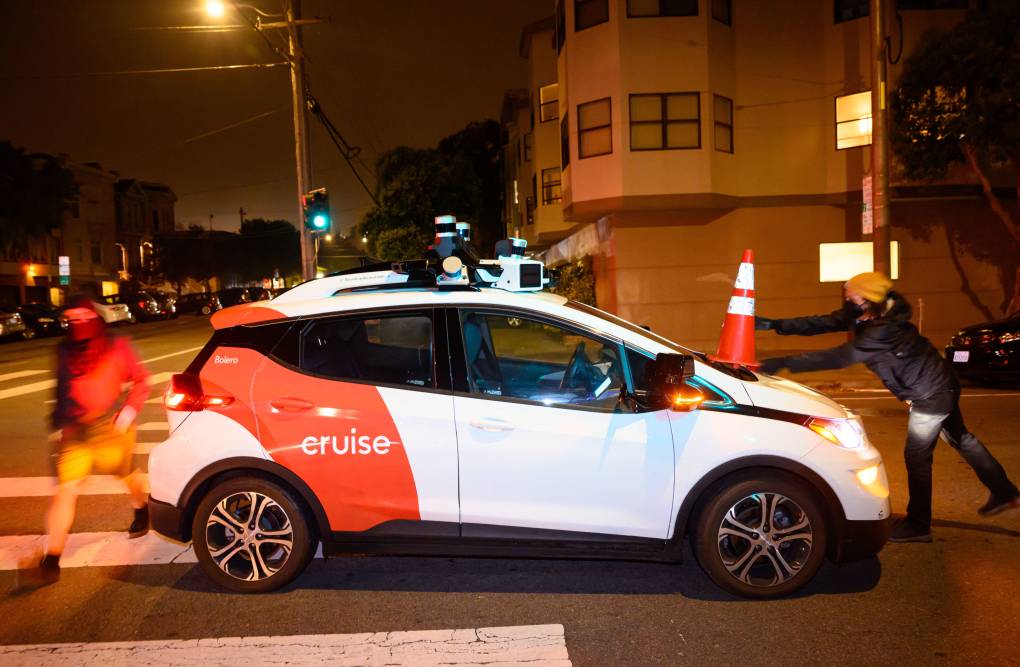
"caption": "Members of SafeStreetRebel, a group of anonymous anti-car activists, place a cone on a self-driving robotaxi to disable it in San Francisco on July 11, 2023. Members of the group have been calling for people to protest the spread of robotaxis.",
"description": "TOPSHOT - Members of SafeStreetRebel, a group of anonymous anti-car activists, place a cone on a self-driving robotaxi to disable it in San Francisco, California on July 11, 2023. Members of SafeStreetRebel, a group of anonymous anti-car activists, have been actively calling for participants to help protest the spread of robotaxis for malfunctioning and blocking traffic. (Photo by Josh Edelson / AFP) (Photo by JOSH EDELSON/AFP via Getty Images)",
"title": "Members of Safe Street Rebel place a cone on a self-driving Cruise car in San Francisco.",
"credit": "Josh Edelson/AFP via Getty Images",
"status": "inherit",
"altTag": "A person wearing a black jacket in the street places a traffic cone on a white vehicle with orange paint on the rear doors that reads \"cruise.\"",
"isLoading": false,
"fetchFailed": false
},
"news_11958863": {
"type": "attachments",
"id": "news_11958863",
"meta": {
"index": "attachments_1716263798",
"site": "news",
"id": "11958863",
"found": true
},
"parent": 0,
"imgSizes": {
"twentyfourteen-full-width": {
"file": "https://ww2.kqed.org/app/uploads/sites/10/2023/08/RS68207_230822-SafeStreetsProtest-15-BL-KQED-1038x576.jpg",
"width": 1038,
"mimeType": "image/jpeg",
"height": 576
},
"thumbnail": {
"file": "https://ww2.kqed.org/app/uploads/sites/10/2023/08/RS68207_230822-SafeStreetsProtest-15-BL-KQED-160x107.jpg",
"width": 160,
"mimeType": "image/jpeg",
"height": 107
},
"post-thumbnail": {
"file": "https://ww2.kqed.org/app/uploads/sites/10/2023/08/RS68207_230822-SafeStreetsProtest-15-BL-KQED-672x372.jpg",
"width": 672,
"mimeType": "image/jpeg",
"height": 372
},
"kqedFullSize": {
"file": "https://ww2.kqed.org/app/uploads/sites/10/2023/08/RS68207_230822-SafeStreetsProtest-15-BL-KQED.jpg",
"width": 2000,
"height": 1333
},
"large": {
"file": "https://ww2.kqed.org/app/uploads/sites/10/2023/08/RS68207_230822-SafeStreetsProtest-15-BL-KQED-1020x680.jpg",
"width": 1020,
"mimeType": "image/jpeg",
"height": 680
},
"1536x1536": {
"file": "https://ww2.kqed.org/app/uploads/sites/10/2023/08/RS68207_230822-SafeStreetsProtest-15-BL-KQED-1536x1024.jpg",
"width": 1536,
"mimeType": "image/jpeg",
"height": 1024
},
"full-width": {
"file": "https://ww2.kqed.org/app/uploads/sites/10/2023/08/RS68207_230822-SafeStreetsProtest-15-BL-KQED-1920x1280.jpg",
"width": 1920,
"mimeType": "image/jpeg",
"height": 1280
},
"medium": {
"file": "https://ww2.kqed.org/app/uploads/sites/10/2023/08/RS68207_230822-SafeStreetsProtest-15-BL-KQED-800x533.jpg",
"width": 800,
"mimeType": "image/jpeg",
"height": 533
}
},
"publishDate": 1692812487,
"modified": 1692826170,
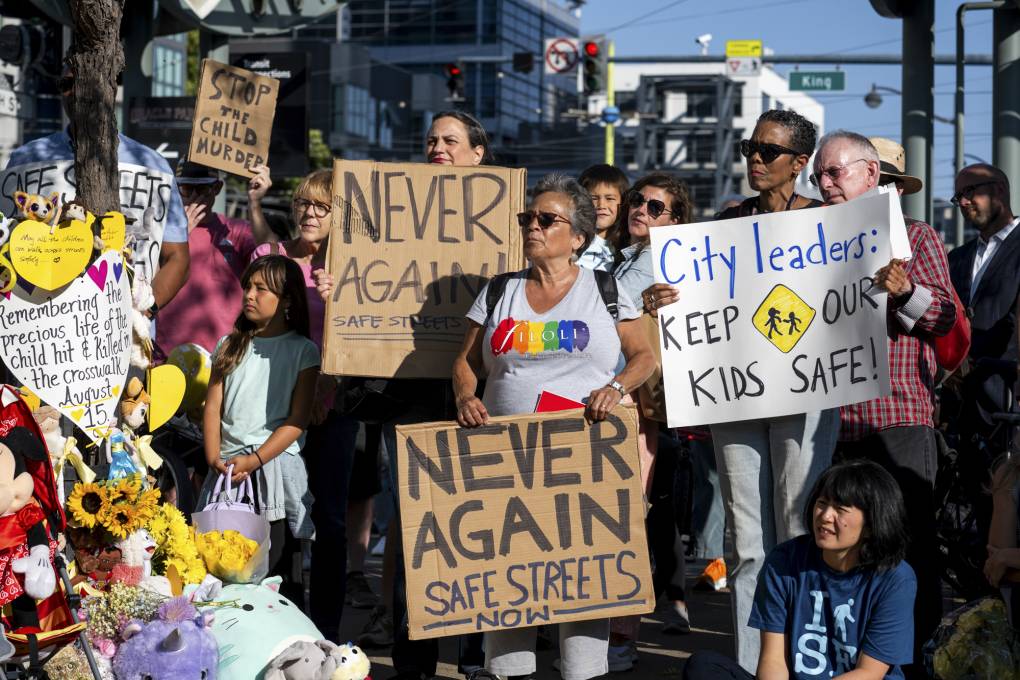
"caption": "Protesters gather to demand safe streets during a rally on 4th and King streets in San Francisco on Aug. 22, 2023, after a driver at the intersection killed a 4-year-old girl on Aug. 15, 2023.",
"description": null,
"title": "RS68207_230822-SafeStreetsProtest-15-BL-KQED",
"credit": "Beth LaBerge/KQED",
"status": "inherit",
"altTag": "A group of people holds signs that read \"Never Again, Safe Streets Now\" in an outdoor setting.",
"isLoading": false,
"fetchFailed": false
},
"news_11957650": {
"type": "attachments",
"id": "news_11957650",
"meta": {
"index": "attachments_1716263798",
"site": "news",
"id": "11957650",
"found": true
},
"parent": 0,
"imgSizes": {
"twentyfourteen-full-width": {
"file": "https://ww2.kqed.org/app/uploads/sites/10/2023/08/230808-WAYMO-Getty-JS-2-KQED-1038x576.jpg",
"width": 1038,
"mimeType": "image/jpeg",
"height": 576
},
"thumbnail": {
"file": "https://ww2.kqed.org/app/uploads/sites/10/2023/08/230808-WAYMO-Getty-JS-2-KQED-160x104.jpg",
"width": 160,
"mimeType": "image/jpeg",
"height": 104
},
"post-thumbnail": {
"file": "https://ww2.kqed.org/app/uploads/sites/10/2023/08/230808-WAYMO-Getty-JS-2-KQED-672x372.jpg",
"width": 672,
"mimeType": "image/jpeg",
"height": 372
},
"kqedFullSize": {
"file": "https://ww2.kqed.org/app/uploads/sites/10/2023/08/230808-WAYMO-Getty-JS-2-KQED.jpg",
"width": 2000,
"height": 1303
},
"large": {
"file": "https://ww2.kqed.org/app/uploads/sites/10/2023/08/230808-WAYMO-Getty-JS-2-KQED-1020x665.jpg",
"width": 1020,
"mimeType": "image/jpeg",
"height": 665
},
"1536x1536": {
"file": "https://ww2.kqed.org/app/uploads/sites/10/2023/08/230808-WAYMO-Getty-JS-2-KQED-1536x1001.jpg",
"width": 1536,
"mimeType": "image/jpeg",
"height": 1001
},
"full-width": {
"file": "https://ww2.kqed.org/app/uploads/sites/10/2023/08/230808-WAYMO-Getty-JS-2-KQED-1920x1251.jpg",
"width": 1920,
"mimeType": "image/jpeg",
"height": 1251
},
"medium": {
"file": "https://ww2.kqed.org/app/uploads/sites/10/2023/08/230808-WAYMO-Getty-JS-2-KQED-800x521.jpg",
"width": 800,
"mimeType": "image/jpeg",
"height": 521
}
},
"publishDate": 1691516695,
"modified": 1691686899,
"caption": "Waymo cars drive down a street in San Francisco on March 1, 2023.",
"description": null,
"title": "Waymo Cuts 8% Of Workforce As Tech Layoffs Continue",
"credit": "Justin Sullivan/Getty Images",
"status": "inherit",
"altTag": "Waymo cars drive down a street in San Francisco on March 01, 2023.",
"isLoading": false,
"fetchFailed": false
},
"news_11956612": {
"type": "attachments",
"id": "news_11956612",
"meta": {
"index": "attachments_1716263798",
"site": "news",
"id": "11956612",
"found": true
},
"parent": 11956602,
"imgSizes": {
"twentyfourteen-full-width": {
"file": "https://ww2.kqed.org/app/uploads/sites/10/2023/07/GettyImages-1408782176-1024x576.jpg",
"width": 1024,
"mimeType": "image/jpeg",
"height": 576
},
"thumbnail": {
"file": "https://ww2.kqed.org/app/uploads/sites/10/2023/07/GettyImages-1408782176-160x109.jpg",
"width": 160,
"mimeType": "image/jpeg",
"height": 109
},
"post-thumbnail": {
"file": "https://ww2.kqed.org/app/uploads/sites/10/2023/07/GettyImages-1408782176-672x372.jpg",
"width": 672,
"mimeType": "image/jpeg",
"height": 372
},
"kqedFullSize": {
"file": "https://ww2.kqed.org/app/uploads/sites/10/2023/07/GettyImages-1408782176.jpg",
"width": 1024,
"height": 699
},
"large": {
"file": "https://ww2.kqed.org/app/uploads/sites/10/2023/07/GettyImages-1408782176-1020x696.jpg",
"width": 1020,
"mimeType": "image/jpeg",
"height": 696
},
"medium": {
"file": "https://ww2.kqed.org/app/uploads/sites/10/2023/07/GettyImages-1408782176-800x546.jpg",
"width": 800,
"mimeType": "image/jpeg",
"height": 546
}
},
"publishDate": 1690411294,
"modified": 1690411348,
"caption": "The Ronald Tsukamoto Public Safety Building house the police department and fire department administration in Berkeley on Saturday, March 31, 2018. ",
"description": null,
"title": "The Ronald Tsukamoto Public Safety Building house the police department and fire department administration in Berkeley, Calif. on Saturday, March 31, 2018",
"credit": "Paul Chinn/The San Francisco Chronicle via Getty Images",
"status": "inherit",
"altTag": "A building seen during the day with three cars lined up outside of the building.",
"isLoading": false,
"fetchFailed": false
},
"news_11956249": {
"type": "attachments",
"id": "news_11956249",
"meta": {
"index": "attachments_1716263798",
"site": "news",
"id": "11956249",
"found": true
},
"parent": 0,
"imgSizes": {
"twentyfourteen-full-width": {
"file": "https://ww2.kqed.org/app/uploads/sites/10/2023/07/230721-TRAFFIC-CAMERA-Getty-MM-KQED-1038x576.jpg",
"width": 1038,
"mimeType": "image/jpeg",
"height": 576
},
"thumbnail": {
"file": "https://ww2.kqed.org/app/uploads/sites/10/2023/07/230721-TRAFFIC-CAMERA-Getty-MM-KQED-160x107.jpg",
"width": 160,
"mimeType": "image/jpeg",
"height": 107
},
"post-thumbnail": {
"file": "https://ww2.kqed.org/app/uploads/sites/10/2023/07/230721-TRAFFIC-CAMERA-Getty-MM-KQED-672x372.jpg",
"width": 672,
"mimeType": "image/jpeg",
"height": 372
},
"kqedFullSize": {
"file": "https://ww2.kqed.org/app/uploads/sites/10/2023/07/230721-TRAFFIC-CAMERA-Getty-MM-KQED.jpg",
"width": 2000,
"height": 1333
},
"large": {
"file": "https://ww2.kqed.org/app/uploads/sites/10/2023/07/230721-TRAFFIC-CAMERA-Getty-MM-KQED-1020x680.jpg",
"width": 1020,
"mimeType": "image/jpeg",
"height": 680
},
"1536x1536": {
"file": "https://ww2.kqed.org/app/uploads/sites/10/2023/07/230721-TRAFFIC-CAMERA-Getty-MM-KQED-1536x1024.jpg",
"width": 1536,
"mimeType": "image/jpeg",
"height": 1024
},
"full-width": {
"file": "https://ww2.kqed.org/app/uploads/sites/10/2023/07/230721-TRAFFIC-CAMERA-Getty-MM-KQED-1920x1280.jpg",
"width": 1920,
"mimeType": "image/jpeg",
"height": 1280
},
"medium": {
"file": "https://ww2.kqed.org/app/uploads/sites/10/2023/07/230721-TRAFFIC-CAMERA-Getty-MM-KQED-800x533.jpg",
"width": 800,
"mimeType": "image/jpeg",
"height": 533
}
},
"publishDate": 1689982100,
"modified": 1690482181,
"caption": "A security camera is attached to a pole next to a traffic signal on Wilshire Boulevard in Beverly Hills on April 18, 2022.",
"description": null,
"title": "Beverly Hills has in recent years added hundreds of cameras to its already widespread surveillance network",
"credit": "Mel Melcon/Los Angeles Times via Getty Images",
"status": "inherit",
"altTag": "A traffic light, sign and surveillance camera.",
"isLoading": false,
"fetchFailed": false
},
"news_11956100": {
"type": "attachments",
"id": "news_11956100",
"meta": {
"index": "attachments_1716263798",
"site": "news",
"id": "11956100",
"found": true
},
"parent": 0,
"imgSizes": {
"twentyfourteen-full-width": {
"file": "https://ww2.kqed.org/app/uploads/sites/10/2023/07/CalMattersBus01-1038x576.jpg",
"width": 1038,
"mimeType": "image/jpeg",
"height": 576
},
"thumbnail": {
"file": "https://ww2.kqed.org/app/uploads/sites/10/2023/07/CalMattersBus01-160x107.jpg",
"width": 160,
"mimeType": "image/jpeg",
"height": 107
},
"post-thumbnail": {
"file": "https://ww2.kqed.org/app/uploads/sites/10/2023/07/CalMattersBus01-672x372.jpg",
"width": 672,
"mimeType": "image/jpeg",
"height": 372
},
"kqedFullSize": {
"file": "https://ww2.kqed.org/app/uploads/sites/10/2023/07/CalMattersBus01.jpg",
"width": 2000,
"height": 1333
},
"large": {
"file": "https://ww2.kqed.org/app/uploads/sites/10/2023/07/CalMattersBus01-1020x680.jpg",
"width": 1020,
"mimeType": "image/jpeg",
"height": 680
},
"1536x1536": {
"file": "https://ww2.kqed.org/app/uploads/sites/10/2023/07/CalMattersBus01-1536x1024.jpg",
"width": 1536,
"mimeType": "image/jpeg",
"height": 1024
},
"full-width": {
"file": "https://ww2.kqed.org/app/uploads/sites/10/2023/07/CalMattersBus01-1920x1280.jpg",
"width": 1920,
"mimeType": "image/jpeg",
"height": 1280
},
"medium": {
"file": "https://ww2.kqed.org/app/uploads/sites/10/2023/07/CalMattersBus01-800x533.jpg",
"width": 800,
"mimeType": "image/jpeg",
"height": 533
}
},
"publishDate": 1689877635,
"modified": 1689877737,
"caption": "An electric powered school bus at the Cajon Valley Union School District on March 27, 2023. ",
"description": null,
"title": "CalMattersBus01",
"credit": "Courtesy of the California Electric Commission",
"status": "inherit",
"altTag": "A close-up shot of an electric-powered school bus outside of Cajon Valley Union School District. The word \"Battery\" is seen above the bus's electric battery storage.",
"isLoading": false,
"fetchFailed": false
},
"news_11955155": {
"type": "attachments",
"id": "news_11955155",
"meta": {
"index": "attachments_1716263798",
"site": "news",
"id": "11955155",
"found": true
},
"parent": 0,
"imgSizes": {
"twentyfourteen-full-width": {
"file": "https://ww2.kqed.org/app/uploads/sites/10/2023/07/230705-SOLAR-CAR-MHN-01-KQED-1038x576.jpg",
"width": 1038,
"mimeType": "image/jpeg",
"height": 576
},
"thumbnail": {
"file": "https://ww2.kqed.org/app/uploads/sites/10/2023/07/230705-SOLAR-CAR-MHN-01-KQED-160x107.jpg",
"width": 160,
"mimeType": "image/jpeg",
"height": 107
},
"post-thumbnail": {
"file": "https://ww2.kqed.org/app/uploads/sites/10/2023/07/230705-SOLAR-CAR-MHN-01-KQED-672x372.jpg",
"width": 672,
"mimeType": "image/jpeg",
"height": 372
},
"kqedFullSize": {
"file": "https://ww2.kqed.org/app/uploads/sites/10/2023/07/230705-SOLAR-CAR-MHN-01-KQED.jpg",
"width": 2000,
"height": 1333
},
"large": {
"file": "https://ww2.kqed.org/app/uploads/sites/10/2023/07/230705-SOLAR-CAR-MHN-01-KQED-1020x680.jpg",
"width": 1020,
"mimeType": "image/jpeg",
"height": 680
},
"1536x1536": {
"file": "https://ww2.kqed.org/app/uploads/sites/10/2023/07/230705-SOLAR-CAR-MHN-01-KQED-1536x1024.jpg",
"width": 1536,
"mimeType": "image/jpeg",
"height": 1024
},
"full-width": {
"file": "https://ww2.kqed.org/app/uploads/sites/10/2023/07/230705-SOLAR-CAR-MHN-01-KQED-1920x1280.jpg",
"width": 1920,
"mimeType": "image/jpeg",
"height": 1280
},
"medium": {
"file": "https://ww2.kqed.org/app/uploads/sites/10/2023/07/230705-SOLAR-CAR-MHN-01-KQED-800x533.jpg",
"width": 800,
"mimeType": "image/jpeg",
"height": 533
}
},
"publishDate": 1688749906,
"modified": 1689378352,
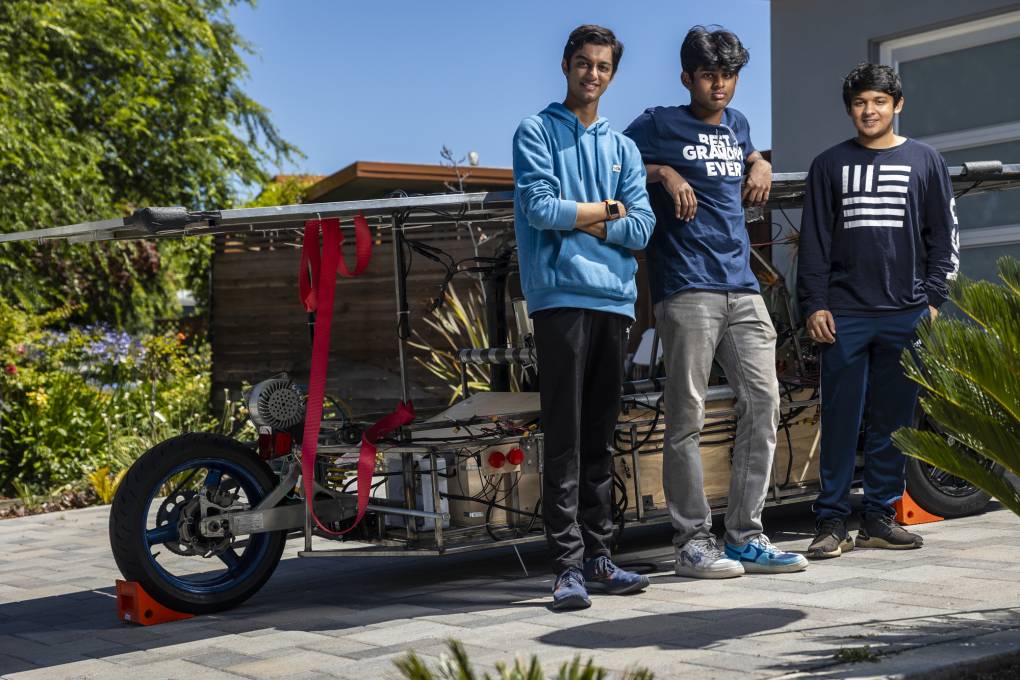
"caption": "Raghav Ranga (left), Alaap Nair (center) and Daniel Alam, members of the Palo Alto High School team competing in the 30th Solar Car Challenge, stand beside the team’s solar-powered car in Palo Alto on July 6, 2023. Ranga, Nair and Alam are the team's drivers, and will drive from Fort Worth, Texas, to Palmdale, California, as part of the challenge.",
"description": null,
"title": "230705-SOLAR CAR-MHN-01-KQED",
"credit": "Martin do Nascimento/KQED",
"status": "inherit",
"altTag": "Three high school students lean against a large metallic structure in the driveway of a home.",
"isLoading": false,
"fetchFailed": false
},
"news_11952005": {
"type": "attachments",
"id": "news_11952005",
"meta": {
"index": "attachments_1716263798",
"site": "news",
"id": "11952005",
"found": true
},
"parent": 11952003,
"imgSizes": {
"twentyfourteen-full-width": {
"file": "https://ww2.kqed.org/app/uploads/sites/10/2023/06/RS59354_BART_003-qut-1038x576.jpg",
"width": 1038,
"mimeType": "image/jpeg",
"height": 576
},
"thumbnail": {
"file": "https://ww2.kqed.org/app/uploads/sites/10/2023/06/RS59354_BART_003-qut-160x107.jpg",
"width": 160,
"mimeType": "image/jpeg",
"height": 107
},
"post-thumbnail": {
"file": "https://ww2.kqed.org/app/uploads/sites/10/2023/06/RS59354_BART_003-qut-672x372.jpg",
"width": 672,
"mimeType": "image/jpeg",
"height": 372
},
"kqedFullSize": {
"file": "https://ww2.kqed.org/app/uploads/sites/10/2023/06/RS59354_BART_003-qut.jpg",
"width": 1920,
"height": 1282
},
"large": {
"file": "https://ww2.kqed.org/app/uploads/sites/10/2023/06/RS59354_BART_003-qut-1020x681.jpg",
"width": 1020,
"mimeType": "image/jpeg",
"height": 681
},
"1536x1536": {
"file": "https://ww2.kqed.org/app/uploads/sites/10/2023/06/RS59354_BART_003-qut-1536x1026.jpg",
"width": 1536,
"mimeType": "image/jpeg",
"height": 1026
},
"medium": {
"file": "https://ww2.kqed.org/app/uploads/sites/10/2023/06/RS59354_BART_003-qut-800x534.jpg",
"width": 800,
"mimeType": "image/jpeg",
"height": 534
}
},
"publishDate": 1685662975,
"modified": 1686611044,
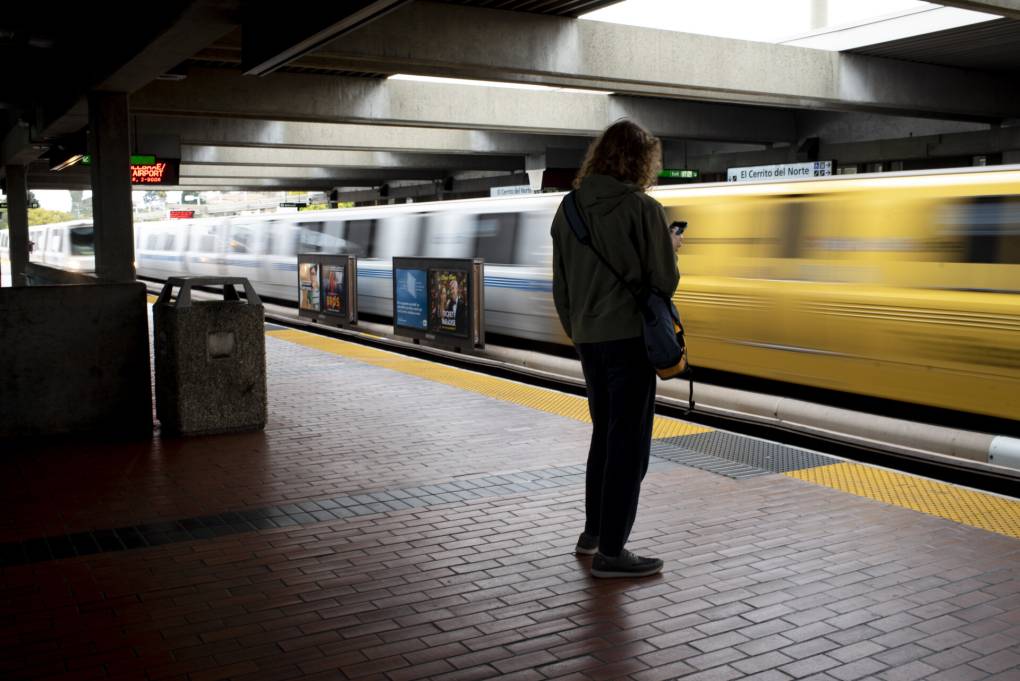
"caption": "A person waits for a train at the El Cerrito del Norte BART station in El Cerrito on Wednesday, Oct. 12, 2022. The agency is asking for billions in aid from California lawmakers to avoid service cuts.",
"description": null,
"title": "KQED_BART",
"credit": "Marlena Sloss/KQED",
"status": "inherit",
"altTag": "A person stands on a BART platform as a train arrives.",
"isLoading": false,
"fetchFailed": false
},
"news_11952492": {
"type": "attachments",
"id": "news_11952492",
"meta": {
"index": "attachments_1716263798",
"site": "news",
"id": "11952492",
"found": true
},
"parent": 11952468,
"imgSizes": {
"twentyfourteen-full-width": {
"file": "https://ww2.kqed.org/app/uploads/sites/10/2023/06/GettyImages-942262226-scaled-e1686173360385-1038x576.jpg",
"width": 1038,
"mimeType": "image/jpeg",
"height": 576
},
"thumbnail": {
"file": "https://ww2.kqed.org/app/uploads/sites/10/2023/06/GettyImages-942262226-scaled-e1686173360385-160x106.jpg",
"width": 160,
"mimeType": "image/jpeg",
"height": 106
},
"post-thumbnail": {
"file": "https://ww2.kqed.org/app/uploads/sites/10/2023/06/GettyImages-942262226-scaled-e1686173360385-672x372.jpg",
"width": 672,
"mimeType": "image/jpeg",
"height": 372
},
"kqedFullSize": {
"file": "https://ww2.kqed.org/app/uploads/sites/10/2023/06/GettyImages-942262226-scaled-e1686173360385.jpg",
"width": 1920,
"height": 1273
},
"2048x2048": {
"file": "https://ww2.kqed.org/app/uploads/sites/10/2023/06/GettyImages-942262226-2048x1358.jpg",
"width": 2048,
"mimeType": "image/jpeg",
"height": 1358
},
"large": {
"file": "https://ww2.kqed.org/app/uploads/sites/10/2023/06/GettyImages-942262226-scaled-e1686173360385-1020x676.jpg",
"width": 1020,
"mimeType": "image/jpeg",
"height": 676
},
"1536x1536": {
"file": "https://ww2.kqed.org/app/uploads/sites/10/2023/06/GettyImages-942262226-scaled-e1686173360385-1536x1018.jpg",
"width": 1536,
"mimeType": "image/jpeg",
"height": 1018
},
"full-width": {
"file": "https://ww2.kqed.org/app/uploads/sites/10/2023/06/GettyImages-942262226-1920x1273.jpg",
"width": 1920,
"mimeType": "image/jpeg",
"height": 1273
},
"medium": {
"file": "https://ww2.kqed.org/app/uploads/sites/10/2023/06/GettyImages-942262226-scaled-e1686173360385-800x530.jpg",
"width": 800,
"mimeType": "image/jpeg",
"height": 530
}
},
"publishDate": 1686173312,
"modified": 1686184324,
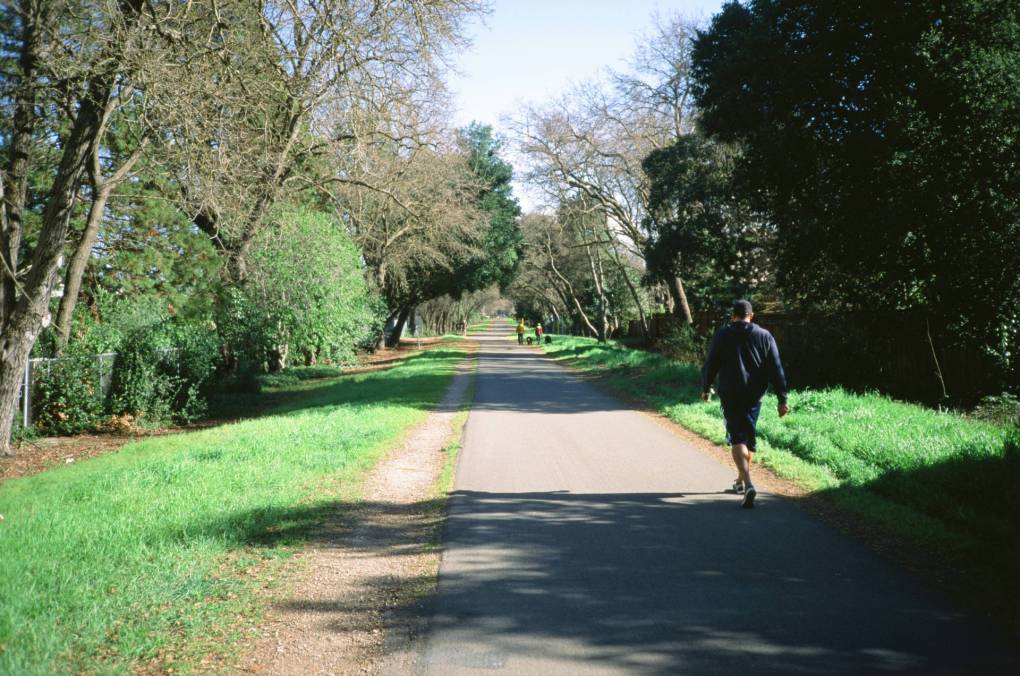
"caption": "A man walks down the Iron Horse Regional Trail, a converted rail trail in Danville, on Feb. 18, 2018.",
"description": null,
"title": "Iron Horse Trail",
"credit": "Smith Collection/Gado/Getty Images",
"status": "inherit",
"altTag": "A man walks along a wide open paved trail lines with trees.",
"isLoading": false,
"fetchFailed": false
},
"news_11928462": {
"type": "attachments",
"id": "news_11928462",
"meta": {
"index": "attachments_1716263798",
"site": "news",
"id": "11928462",
"found": true
},
"parent": 11928455,
"imgSizes": {
"twentyfourteen-full-width": {
"file": "https://ww2.kqed.org/app/uploads/sites/10/2022/10/092722-Catalytic-Converter-1-CM-1038x576.jpg",
"width": 1038,
"mimeType": "image/jpeg",
"height": 576
},
"thumbnail": {
"file": "https://ww2.kqed.org/app/uploads/sites/10/2022/10/092722-Catalytic-Converter-1-CM-160x120.jpg",
"width": 160,
"mimeType": "image/jpeg",
"height": 120
},
"post-thumbnail": {
"file": "https://ww2.kqed.org/app/uploads/sites/10/2022/10/092722-Catalytic-Converter-1-CM-672x372.jpg",
"width": 672,
"mimeType": "image/jpeg",
"height": 372
},
"kqedFullSize": {
"file": "https://ww2.kqed.org/app/uploads/sites/10/2022/10/092722-Catalytic-Converter-1-CM.jpg",
"width": 1568,
"height": 1176
},
"large": {
"file": "https://ww2.kqed.org/app/uploads/sites/10/2022/10/092722-Catalytic-Converter-1-CM-1020x765.jpg",
"width": 1020,
"mimeType": "image/jpeg",
"height": 765
},
"1536x1536": {
"file": "https://ww2.kqed.org/app/uploads/sites/10/2022/10/092722-Catalytic-Converter-1-CM-1536x1152.jpg",
"width": 1536,
"mimeType": "image/jpeg",
"height": 1152
},
"medium": {
"file": "https://ww2.kqed.org/app/uploads/sites/10/2022/10/092722-Catalytic-Converter-1-CM-800x600.jpg",
"width": 800,
"mimeType": "image/jpeg",
"height": 600
}
},
"publishDate": 1665512999,
"modified": 1665513058,
"caption": "In June the Fremont Police Department found approximately 300 suspected stolen catalytic converters at Arrow Recovery in Fremont, California. ",
"description": null,
"title": "092722-Catalytic-Converter-1-CM",
"credit": "Courtesy Fremont Police Department",
"status": "inherit",
"altTag": "piles of catalytic converters in containers at a warehouse",
"isLoading": false,
"fetchFailed": false
}
},
"audioPlayerReducer": {
"postId": "stream_live",
"isPaused": true,
"isPlaying": false,
"pfsActive": false,
"pledgeModalIsOpen": true,
"playerDrawerIsOpen": false,
"liveAudioPlayStartedAt": 0,
"liveAudioPlayContext": ""
},
"authorsReducer": {
"byline_news_11960324": {
"type": "authors",
"id": "byline_news_11960324",
"meta": {
"override": true
},
"slug": "byline_news_11960324",
"name": "\u003ca href=\"https://calmatters.org/author/carolyn-jones/\">Carolyn Jones\u003c/a>",
"isLoading": false
},
"byline_news_11959303": {
"type": "authors",
"id": "byline_news_11959303",
"meta": {
"override": true
},
"slug": "byline_news_11959303",
"name": "\u003ca href=\"https://www.npr.org/people/1147860766/dara-kerr\">Dara Kerr\u003c/a>",
"isLoading": false
},
"byline_news_11956089": {
"type": "authors",
"id": "byline_news_11956089",
"meta": {
"override": true
},
"slug": "byline_news_11956089",
"name": "\u003ca href=\"https://calmatters.org/author/alejandro-lazo/\">Alejandro Lazo\u003c/a>",
"isLoading": false
},
"byline_news_11952468": {
"type": "authors",
"id": "byline_news_11952468",
"meta": {
"override": true
},
"slug": "byline_news_11952468",
"name": "\u003ca href=\"https://www.amymayerwrites.com/\">Amy Mayer\u003c/a>",
"isLoading": false
},
"danbrekke": {
"type": "authors",
"id": "222",
"meta": {
"index": "authors_1716337520",
"id": "222",
"found": true
},
"name": "Dan Brekke",
"firstName": "Dan",
"lastName": "Brekke",
"slug": "danbrekke",
"email": "dbrekke@kqed.org",
"display_author_email": true,
"staff_mastheads": [
"news",
"science"
],
"title": "KQED Editor and Reporter",
"bio": "Dan Brekke is a reporter and editor for KQED News, responsible for coverage of topics ranging from California water issues to the Bay Area's transportation challenges. In a newsroom career that began in Chicago in 1972, Dan has worked for \u003cem>The San Francisco Examiner,\u003c/em> Wired and TechTV and has been published in The New York Times, The New York Times Magazine, Business 2.0, Salon and elsewhere.\r\n\r\nSince joining KQED in 2007, Dan has reported, edited and produced both radio and online features and breaking news pieces. He has shared as both editor and reporter in four Society of Professional Journalists Norcal Excellence in Journalism awards and one Edward R. Murrow regional award. He was chosen for a spring 2017 residency at the Mesa Refuge to advance his research on California salmon.\r\n\r\nEmail Dan at: \u003ca href=\"mailto:dbrekke@kqed.org\">dbrekke@kqed.org\u003c/a>\r\n\r\n\u003cstrong>Twitter:\u003c/strong> \u003ca href=\"https://twitter.com/danbrekke\" rel=\"noopener noreferrer\">twitter.com/danbrekke\u003c/a>\r\n\u003cstrong>Facebook:\u003c/strong> \u003ca href=\"https://www.facebook.com/danbrekke\" rel=\"noopener noreferrer\">www.facebook.com/danbrekke\u003c/a>\r\n\u003cstrong>LinkedIn:\u003c/strong> \u003ca href=\"https://www.linkedin.com/in/danbrekke\" rel=\"noopener noreferrer\">www.linkedin.com/in/danbrekke\u003c/a>",
"avatar": "https://secure.gravatar.com/avatar/c8126230345efca3f7aa89b1a402be45?s=600&d=mm&r=g",
"twitter": "danbrekke",
"facebook": null,
"instagram": "https://www.instagram.com/dan.brekke/",
"linkedin": "https://www.linkedin.com/in/danbrekke/",
"sites": [
{
"site": "news",
"roles": [
"administrator",
"create_posts"
]
},
{
"site": "stateofhealth",
"roles": [
"editor"
]
},
{
"site": "science",
"roles": [
"editor"
]
},
{
"site": "quest",
"roles": [
"contributor"
]
},
{
"site": "food",
"roles": [
"contributor"
]
},
{
"site": "forum",
"roles": [
"contributor"
]
},
{
"site": "liveblog",
"roles": [
"editor"
]
}
],
"headData": {
"title": "Dan Brekke | KQED",
"description": "KQED Editor and Reporter",
"ogImgSrc": "https://secure.gravatar.com/avatar/c8126230345efca3f7aa89b1a402be45?s=600&d=mm&r=g",
"twImgSrc": "https://secure.gravatar.com/avatar/c8126230345efca3f7aa89b1a402be45?s=600&d=mm&r=g"
},
"isLoading": false,
"link": "/author/danbrekke"
},
"rachael-myrow": {
"type": "authors",
"id": "251",
"meta": {
"index": "authors_1716337520",
"id": "251",
"found": true
},
"name": "Rachael Myrow",
"firstName": "Rachael",
"lastName": "Myrow",
"slug": "rachael-myrow",
"email": "rmyrow@kqed.org",
"display_author_email": true,
"staff_mastheads": [
"news"
],
"title": "Senior Editor of KQED's Silicon Valley News Desk",
"bio": "• I write and edit stories about how Silicon Valley power and policies shape everyday life in California. I’m also passionate about making Bay Area history and culture more accessible to a broad public. • I’ve been a journalist for most of my life, starting in high school with The Franklin Press in Los Angeles, where I grew up. While earning my first degree in English at UC Berkeley, I got my start in public radio at KALX-FM. After completing a second degree in journalism at Cal, I landed my first professional job at Marketplace, then moved on to KPCC (now LAist), and then KQED, where I hosted The California Report for more than seven years. • My reporting has appeared on NPR, The World, WBUR’s \u003ci>Here & Now\u003c/i>, and the BBC. I also guest host for KQED’s \u003ci>Forum\u003c/i>, as well as the Commonwealth Club in San Francisco. • I speak periodically on media, democracy and technology issues, and do voiceover work for documentaries and educational video projects. • Outside of the studio, you'll find me hiking Bay Area trails and whipping up Insta-ready meals in my kitchen. • I do not accept gifts, money, or favors from anyone connected to my reporting, I don't pay people for information, and I do not support or donate to political causes. • I strive to treat the people I report on with fairness, honesty, and respect. I also recognize there are often multiple sides to a story and work to verify information through multiple sources and documentation. If I get something wrong, I correct it.",
"avatar": "https://secure.gravatar.com/avatar/87bf8cb5874e045cdff430523a6d48b1?s=600&d=blank&r=g",
"twitter": "rachaelmyrow",
"facebook": null,
"instagram": null,
"linkedin": "https://www.linkedin.com/in/rachaelmyrow/",
"sites": [
{
"site": "arts",
"roles": [
"administrator"
]
},
{
"site": "news",
"roles": [
"edit_others_posts",
"editor"
]
},
{
"site": "futureofyou",
"roles": [
"editor"
]
},
{
"site": "bayareabites",
"roles": [
"editor"
]
},
{
"site": "stateofhealth",
"roles": [
"editor"
]
},
{
"site": "science",
"roles": [
"editor"
]
},
{
"site": "food",
"roles": [
"editor"
]
},
{
"site": "forum",
"roles": [
"editor"
]
},
{
"site": "liveblog",
"roles": [
"author"
]
}
],
"headData": {
"title": "Rachael Myrow | KQED",
"description": "Senior Editor of KQED's Silicon Valley News Desk",
"ogImgSrc": "https://secure.gravatar.com/avatar/87bf8cb5874e045cdff430523a6d48b1?s=600&d=blank&r=g",
"twImgSrc": "https://secure.gravatar.com/avatar/87bf8cb5874e045cdff430523a6d48b1?s=600&d=blank&r=g"
},
"isLoading": false,
"link": "/author/rachael-myrow"
},
"ecruzguevarra": {
"type": "authors",
"id": "8654",
"meta": {
"index": "authors_1716337520",
"id": "8654",
"found": true
},
"name": "Ericka Cruz Guevarra",
"firstName": "Ericka",
"lastName": "Cruz Guevarra",
"slug": "ecruzguevarra",
"email": "ecruzguevarra@kqed.org",
"display_author_email": true,
"staff_mastheads": [
"news"
],
"title": "Producer, The Bay Podcast",
"bio": "Ericka Cruz Guevarra is host of \u003ca href=\"https://www.kqed.org/podcasts/thebay\">\u003cem>The Bay\u003c/em>\u003c/a> podcast at KQED. Before host, she was the show’s producer. Her work in that capacity includes a three-part reported series on policing in Vallejo, which won a 2020 excellence in journalism award from the Society of Professional Journalists. Ericka has worked as a breaking news reporter at Oregon Public Broadcasting, helped produce the Code Switch podcast, and was KQED’s inaugural Raul Ramirez Diversity Fund intern. She’s also an alumna of NPR’s Next Generation Radio program. Send her an email if you have strong feelings about whether Fairfield and Suisun City are the Bay. Ericka is represented by SAG-AFTRA.",
"avatar": "https://secure.gravatar.com/avatar/25e5ab8d3d53fad2dcc7bb2b5c506b1a?s=600&d=blank&r=g",
"twitter": "NotoriousECG",
"facebook": null,
"instagram": null,
"linkedin": null,
"sites": [
{
"site": "arts",
"roles": [
"subscriber"
]
},
{
"site": "news",
"roles": [
"editor",
"manage_categories"
]
},
{
"site": "futureofyou",
"roles": [
"subscriber"
]
},
{
"site": "stateofhealth",
"roles": [
"subscriber"
]
},
{
"site": "science",
"roles": [
"editor"
]
},
{
"site": "forum",
"roles": [
"subscriber"
]
}
],
"headData": {
"title": "Ericka Cruz Guevarra | KQED",
"description": "Producer, The Bay Podcast",
"ogImgSrc": "https://secure.gravatar.com/avatar/25e5ab8d3d53fad2dcc7bb2b5c506b1a?s=600&d=blank&r=g",
"twImgSrc": "https://secure.gravatar.com/avatar/25e5ab8d3d53fad2dcc7bb2b5c506b1a?s=600&d=blank&r=g"
},
"isLoading": false,
"link": "/author/ecruzguevarra"
},
"swhitney": {
"type": "authors",
"id": "11784",
"meta": {
"index": "authors_1716337520",
"id": "11784",
"found": true
},
"name": "Spencer Whitney",
"firstName": "Spencer",
"lastName": "Whitney",
"slug": "swhitney",
"email": "swhitney@kqed.org",
"display_author_email": false,
"staff_mastheads": [],
"title": "KQED Digital Editor",
"bio": "Spencer Whitney is currently a Digital Editor for KQED News. Prior to joining KQED News, Spencer worked as the Multimedia Editor at the Oakland Post and an Assistant Editor in the Editorial department at the San Francisco Chronicle. He attended Howard University as an undergraduate and interned with SiriusXM. He also attended UC Berkeley's Graduate School of Journalism and had the opportunity to write for the hyperlocal news sites Richmond Confidential and Oakland North.",
"avatar": "https://secure.gravatar.com/avatar/e33ff4fd8b8f0d2796f36472fb32607ca8fc46ef5e537dcfdbdee688d8ea5b80?s=600&d=mm&r=g",
"twitter": null,
"bluesky": null,
"facebook": null,
"instagram": null,
"linkedin": null,
"sites": [
{
"site": "arts",
"roles": [
"editor"
]
},
{
"site": "news",
"roles": [
"editor"
]
},
{
"site": "science",
"roles": [
"editor"
]
},
{
"site": "perspectives",
"roles": [
"editor"
]
}
],
"headData": {
"title": "Spencer Whitney | KQED",
"description": "KQED Digital Editor",
"ogImgSrc": "https://secure.gravatar.com/avatar/e33ff4fd8b8f0d2796f36472fb32607ca8fc46ef5e537dcfdbdee688d8ea5b80?s=600&d=mm&r=g",
"twImgSrc": "https://secure.gravatar.com/avatar/e33ff4fd8b8f0d2796f36472fb32607ca8fc46ef5e537dcfdbdee688d8ea5b80?s=600&d=mm&r=g"
},
"isLoading": false,
"link": "/author/swhitney"
},
"adahlstromeckman": {
"type": "authors",
"id": "11785",
"meta": {
"index": "authors_1716337520",
"id": "11785",
"found": true
},
"name": "Azul Dahlstrom-Eckman",
"firstName": "Azul",
"lastName": "Dahlstrom-Eckman",
"slug": "adahlstromeckman",
"email": "adahlstrom-eckman@kqed.org",
"display_author_email": true,
"staff_mastheads": [],
"title": "Reporter",
"bio": "Azul is a reporter for KQED focusing on transportation and features. He joined KQED in 2021 as an alumna of KALW's Audio Academy radio journalism training program.",
"avatar": "https://secure.gravatar.com/avatar/9cb750298435add7815a777f55bf1f46845c1386bb8452555c60a7b820b5aba3?s=600&d=blank&r=g",
"twitter": "@zuliemann",
"bluesky": "@azul415.bsky.social",
"facebook": null,
"instagram": null,
"linkedin": null,
"sites": [
{
"site": "arts",
"roles": [
"editor"
]
},
{
"site": "news",
"roles": [
"editor"
]
},
{
"site": "science",
"roles": [
"editor"
]
},
{
"site": "liveblog",
"roles": [
"author"
]
}
],
"headData": {
"title": "Azul Dahlstrom-Eckman | KQED",
"description": "Reporter",
"ogImgSrc": "https://secure.gravatar.com/avatar/9cb750298435add7815a777f55bf1f46845c1386bb8452555c60a7b820b5aba3?s=600&d=blank&r=g",
"twImgSrc": "https://secure.gravatar.com/avatar/9cb750298435add7815a777f55bf1f46845c1386bb8452555c60a7b820b5aba3?s=600&d=blank&r=g"
},
"isLoading": false,
"link": "/author/adahlstromeckman"
},
"sjohnson": {
"type": "authors",
"id": "11840",
"meta": {
"index": "authors_1716337520",
"id": "11840",
"found": true
},
"name": "Sydney Johnson",
"firstName": "Sydney",
"lastName": "Johnson",
"slug": "sjohnson",
"email": "sjohnson@kqed.org",
"display_author_email": false,
"staff_mastheads": [
"news"
],
"title": "KQED Reporter",
"bio": "Sydney Johnson is a general assignment reporter at KQED. She previously reported on public health and city government at the San Francisco Examiner, and before that, she covered statewide education policy for EdSource. Her reporting has won multiple local, state and national awards. Sydney is a graduate of the University of California, Berkeley and lives in San Francisco.",
"avatar": "https://secure.gravatar.com/avatar/97855f2719b72ad6190b7c535fe642c8?s=600&d=blank&r=g",
"twitter": "sydneyfjohnson",
"facebook": null,
"instagram": null,
"linkedin": null,
"sites": [
{
"site": "news",
"roles": [
"editor"
]
}
],
"headData": {
"title": "Sydney Johnson | KQED",
"description": "KQED Reporter",
"ogImgSrc": "https://secure.gravatar.com/avatar/97855f2719b72ad6190b7c535fe642c8?s=600&d=blank&r=g",
"twImgSrc": "https://secure.gravatar.com/avatar/97855f2719b72ad6190b7c535fe642c8?s=600&d=blank&r=g"
},
"isLoading": false,
"link": "/author/sjohnson"
},
"kmonahan": {
"type": "authors",
"id": "11842",
"meta": {
"index": "authors_1716337520",
"id": "11842",
"found": true
},
"name": "Katherine Monahan",
"firstName": "Katherine",
"lastName": "Monahan",
"slug": "kmonahan",
"email": "kmonahan@kqed.org",
"display_author_email": true,
"staff_mastheads": [],
"title": "Reporter / Sound Engineer",
"bio": "I cover state and local news. I’m also a sound engineer at the station, mixing stories and running live broadcasts. I link to source materials so that readers can draw their own conclusions, and seek comment from a range of perspectives, including from people directly affected by events. Awards received include from the Society of Professional Journalists, Northern California chapter and the Alaska Press Club. I speak multiple languages and have reported and engineered in the Bay Area, Alaska, West Africa and Latin America.",
"avatar": "https://secure.gravatar.com/avatar/ff257b3a5da88893781a3d3266904b2d2f91c7f0e1bbf728f61f5fb81b74a669?s=600&d=blank&r=g",
"twitter": null,
"bluesky": null,
"facebook": null,
"instagram": null,
"linkedin": null,
"sites": [
{
"site": "news",
"roles": [
"editor"
]
},
{
"site": "science",
"roles": [
"contributor"
]
}
],
"headData": {
"title": "Katherine Monahan | KQED",
"description": "Reporter / Sound Engineer",
"ogImgSrc": "https://secure.gravatar.com/avatar/ff257b3a5da88893781a3d3266904b2d2f91c7f0e1bbf728f61f5fb81b74a669?s=600&d=blank&r=g",
"twImgSrc": "https://secure.gravatar.com/avatar/ff257b3a5da88893781a3d3266904b2d2f91c7f0e1bbf728f61f5fb81b74a669?s=600&d=blank&r=g"
},
"isLoading": false,
"link": "/author/kmonahan"
}
},
"pagesReducer": {
"news_tag_transportation": {
"type": "terms",
"id": "news_20517",
"meta": {
"index": "terms_1716263798",
"site": "news",
"id": "20517",
"score": 8.934682
},
"featImg": null,
"name": "transportation",
"description": null,
"taxonomy": "tag",
"headData": {
"twImgId": null,
"twTitle": null,
"ogTitle": null,
"ogImgId": null,
"twDescription": null,
"description": null,
"title": "transportation Archives | KQED News",
"ogDescription": null
},
"ttid": 20534,
"slug": "transportation",
"isLoading": false,
"title": "transportation",
"pageMeta": {
"site": "news",
"WpPageTemplate": "page-topic-editorial",
"currentPage": 23
},
"blocks": [
{
"blockName": "kqed/post-list",
"attrs": {
"layout": "cardArticle2",
"query": "posts/news?tag=transportation",
"seeMore": false,
"paginated": true,
"page": 23
}
},
{
"blockName": "kqed/ad"
}
]
}
},
"pfsSessionReducer": {},
"postsReducer": {
"stream_live": {
"type": "live",
"id": "stream_live",
"audioUrl": "https://streams.kqed.org/kqedradio",
"title": "Live Stream",
"excerpt": "Live Stream information currently unavailable.",
"link": "/radio",
"featImg": "",
"label": {
"name": "KQED Live",
"link": "/"
}
},
"stream_kqedNewscast": {
"type": "posts",
"id": "stream_kqedNewscast",
"audioUrl": "https://www.kqed.org/.stream/anon/radio/RDnews/newscast.mp3?_=1",
"title": "KQED Newscast",
"featImg": "",
"label": {
"name": "88.5 FM",
"link": "/"
}
},
"news_11962992": {
"type": "posts",
"id": "news_11962992",
"meta": {
"index": "posts_1716263798",
"site": "news",
"id": "11962992",
"score": null,
"sort": [
1696269684000
]
},
"parent": 0,
"labelTerm": {
"site": "news"
},
"blocks": [],
"publishDate": 1696269684,
"format": "standard",
"title": "Cyclists and Businesses Reflect on 2 Months With the Valencia Street Bikeway ",
"headTitle": "Cyclists and Businesses Reflect on 2 Months With the Valencia Street Bikeway | KQED",
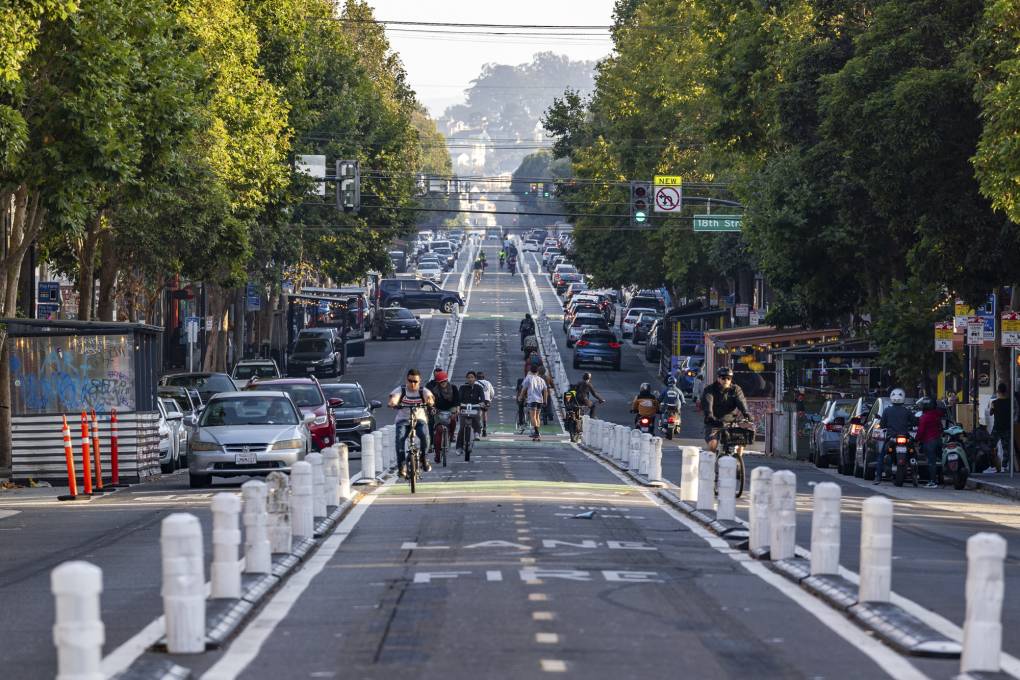
"content": "\u003cp>Avid cyclists like Laurel Matthews, who ride often through the heart of Valencia Street in San Francisco’s Mission District, have gotten used to pedaling away on the usual bike lanes that run along parked cars.\u003c/p>\n\u003cp>“In the old configuration, cars would just pull in front of you,” Matthews said. “I like that cars at least do not pull into the lane yet.”\u003c/p>\n\u003cp>Since Aug. 1, a center-running bikeway has been in effect along Valencia Street from 15th to 23rd streets. Two-way bicycle traffic happens in the middle of the street. Both plastic bollards and a rubber curb, which border either side of the lane, provide some protection from cars.\u003c/p>\n\u003cp>The change is a result of the Mid-Valencia Pilot, which was approved in April by the San Francisco Municipal Transportation Agency. SFMTA authorized the construction of the new bikeway, aiming to make the street safer and easier for businesses to work with delivery and ride-hailing apps, according to Tom Maguire, director of the Streets Division for SFMTA. (The pilot is set to last one year through August 2024.)\u003c/p>\n\u003cfigure id=\"attachment_11962332\" class=\"wp-caption alignnone\" style=\"max-width: 2000px\">\u003cimg decoding=\"async\" loading=\"lazy\" class=\"size-full wp-image-11962332\" src=\"https://ww2.kqed.org/app/uploads/sites/10/2023/09/230921-ValenciaBikeway-017-BL-KQED.jpg\" alt=\"A parking sign and a number of businesses on a city street.\" width=\"2000\" height=\"1333\" srcset=\"https://ww2.kqed.org/app/uploads/sites/10/2023/09/230921-ValenciaBikeway-017-BL-KQED.jpg 2000w, https://ww2.kqed.org/app/uploads/sites/10/2023/09/230921-ValenciaBikeway-017-BL-KQED-800x533.jpg 800w, https://ww2.kqed.org/app/uploads/sites/10/2023/09/230921-ValenciaBikeway-017-BL-KQED-1020x680.jpg 1020w, https://ww2.kqed.org/app/uploads/sites/10/2023/09/230921-ValenciaBikeway-017-BL-KQED-160x107.jpg 160w, https://ww2.kqed.org/app/uploads/sites/10/2023/09/230921-ValenciaBikeway-017-BL-KQED-1536x1024.jpg 1536w, https://ww2.kqed.org/app/uploads/sites/10/2023/09/230921-ValenciaBikeway-017-BL-KQED-1920x1280.jpg 1920w\" sizes=\"(max-width: 2000px) 100vw, 2000px\">\u003cfigcaption class=\"wp-caption-text\">A sign provides parking restrictions for Valencia Street near Nizario’s Pizza in San Francisco’s Mission District on Sept. 21, 2023. \u003ccite>(Beth LaBerge/KQED)\u003c/cite>\u003c/figcaption>\u003c/figure>\n\u003cp>“We’re trying to adapt the street to the very unique conditions that the merchants and the residents on Valencia are facing right now,” he said.\u003c/p>\n\u003cp>In addition to the new bikeway, the Mid-Valencia Pilot changed many metered parking spots to loading zones and prohibited left turns from 15th to 23rd streets.\u003c/p>\n\u003ch2>\u003cstrong>Safety first\u003c/strong>\u003c/h2>\n\u003cp>Valencia Street — both a popular bike route connecting the northern and southern parts of the city and a nightlife hub — is one of the city’s target areas for improving traffic injuries and deaths.\u003c/p>\n\u003cp>According to a May 2023 SFMTA \u003ca href=\"https://www.visionzerosf.org/wp-content/uploads/2023/05/San-Francisco-Collisions-Report-2017_2022.pdf\">report (PDF)\u003c/a>, two Valencia Street intersections had a combined 22 bicycle-involved injury collisions from 2017–2022 — among the highest reported injuries of any intersections in the city.\u003c/p>\n\u003cp>[aside postID=news_11941576 hero='https://ww2.kqed.org/app/uploads/sites/10/2023/02/GettyImages-1321285046-1020x633.jpg']Pedestrian safety is also a concern. On Sept. 20, 80-year-old Jian Huang of San Francisco was hit and killed by a driver making a left turn onto Valencia at 18th Street — marking the second pedestrian death on Valencia Street this year.\u003c/p>\n\u003cp>Following this latest tragedy, transportation advocacy groups like Walk SF want to see a ban on left turns onto Valencia, building off the pilot’s prohibition on certain left turns.\u003c/p>\n\u003cp>“If we look at every single fatality that’s happened on Valencia Street since 2014, it’s all been cars turning left,” said Jodie Medeiros, executive director of Walk SF. “This is a known problem and we need to do everything to end that problem.”\u003c/p>\n\u003cp>SFMTA plans to put out a status report on the pilot this fall. Maguire said that document will give further details, such as how vehicle, bicycle and pedestrian traffic has changed, and how businesses have been affected.\u003c/p>\n\u003cp>According to Maguire, if the pilot does not meet its goals, the city would rip up the project and go back to the drawing board.\u003c/p>\n\u003ch2>\u003cstrong>Cycling up\u003c/strong>\u003c/h2>\n\u003cp>Cyclists have mixed feelings about riding on the new center bikeway.\u003c/p>\n\u003cp>“I’ve heard from a lot of people who say they’ve either stopped biking on Valencia and started using an alternative bike route, or they just stopped biking period.” said Luke Bornheimer, a sustainable transportation advocate, who has strongly opposed the bikeway since the early planning stages.\u003c/p>\n\u003cfigure id=\"attachment_11962330\" class=\"wp-caption alignnone\" style=\"max-width: 2000px\">\u003cimg decoding=\"async\" loading=\"lazy\" class=\"size-full wp-image-11962330\" src=\"https://ww2.kqed.org/app/uploads/sites/10/2023/09/230921-ValenciaBikeway-014-BL-KQED.jpg\" alt=\"People on bikes and skateboards ride down a bike path in the middle of a city street.\" width=\"2000\" height=\"1333\" srcset=\"https://ww2.kqed.org/app/uploads/sites/10/2023/09/230921-ValenciaBikeway-014-BL-KQED.jpg 2000w, https://ww2.kqed.org/app/uploads/sites/10/2023/09/230921-ValenciaBikeway-014-BL-KQED-800x533.jpg 800w, https://ww2.kqed.org/app/uploads/sites/10/2023/09/230921-ValenciaBikeway-014-BL-KQED-1020x680.jpg 1020w, https://ww2.kqed.org/app/uploads/sites/10/2023/09/230921-ValenciaBikeway-014-BL-KQED-160x107.jpg 160w, https://ww2.kqed.org/app/uploads/sites/10/2023/09/230921-ValenciaBikeway-014-BL-KQED-1536x1024.jpg 1536w, https://ww2.kqed.org/app/uploads/sites/10/2023/09/230921-ValenciaBikeway-014-BL-KQED-1920x1280.jpg 1920w\" sizes=\"(max-width: 2000px) 100vw, 2000px\">\u003cfigcaption class=\"wp-caption-text\">Bicyclists ride on the Valencia Street bike lane in San Francisco’s Mission District on Sept. 21, 2023. \u003ccite>(Beth LaBerge/KQED)\u003c/cite>\u003c/figcaption>\u003c/figure>\n\u003cp>He says the speed bumps and posts, which border the bikeway, are not enough to protect cyclists from drivers who might illegally turn through the bikeway — and that the two-way design is unintuitive and could cause crashes.\u003c/p>\n\u003cp>Some cyclists like Kate Blumberg, who has commuted by bicycle for 28 years, are happy about the new lane.\u003c/p>\n\u003cp>“The Valencia bike lanes make me feel like king of the world,” she said. “It makes bikes seem like the clear priority on the street.”\u003c/p>\n\u003cp>Before the new bikeway, floods of app-based rideshare and delivery workers would double-park in the old bike lane while they grabbed a burrito or dropped off their passengers, forcing cyclists to merge into traffic.\u003c/p>\n\u003ch2>\u003cstrong>Business woes\u003c/strong>\u003c/h2>\n\u003cp>Yaser Awadalla, owner of Nizario’s Pizza on Valencia Street, says while things appear safer for cyclists, he’s noticed a downturn in sales since the new bikeway was installed (contributing to the overall slump caused by the COVID pandemic).\u003c/p>\n\u003cp>“There’s a lot less stop-and-go than before,” Awadalla said. “We used to depend on that a lot for pizza-by-the-slice. For the sake of the business, yeah, I would like it to go back to the way it was.”\u003c/p>\n\u003cfigure id=\"attachment_11962672\" class=\"wp-caption alignnone\" style=\"max-width: 2000px\">\u003cimg decoding=\"async\" loading=\"lazy\" class=\"size-full wp-image-11962672\" src=\"https://ww2.kqed.org/app/uploads/sites/10/2023/09/230927-ValenciaBikeway-004-BL-KQED.jpg\" alt=\"A person stands in front of a storefront with their arms crossed.\" width=\"2000\" height=\"1333\" srcset=\"https://ww2.kqed.org/app/uploads/sites/10/2023/09/230927-ValenciaBikeway-004-BL-KQED.jpg 2000w, https://ww2.kqed.org/app/uploads/sites/10/2023/09/230927-ValenciaBikeway-004-BL-KQED-800x533.jpg 800w, https://ww2.kqed.org/app/uploads/sites/10/2023/09/230927-ValenciaBikeway-004-BL-KQED-1020x680.jpg 1020w, https://ww2.kqed.org/app/uploads/sites/10/2023/09/230927-ValenciaBikeway-004-BL-KQED-160x107.jpg 160w, https://ww2.kqed.org/app/uploads/sites/10/2023/09/230927-ValenciaBikeway-004-BL-KQED-1536x1024.jpg 1536w, https://ww2.kqed.org/app/uploads/sites/10/2023/09/230927-ValenciaBikeway-004-BL-KQED-1920x1280.jpg 1920w\" sizes=\"(max-width: 2000px) 100vw, 2000px\">\u003cfigcaption class=\"wp-caption-text\">Yaser Awadalla stands outside Nizario’s Pizza, a pizza shop he owns, on Valencia Street in San Francisco on Sept. 27, 2023. \u003ccite>(Beth LaBerge/KQED)\u003c/cite>\u003c/figcaption>\u003c/figure>\n\u003cp>Next door, at Taqueria La Cumbre, cashier Duvan Duran says sales are down, too. He blames the loss of metered spots.\u003c/p>\n\u003cp>As part of the pilot, the city took away 71 metered spots and replaced many with a new type of dual-use loading zone. From 8 a.m. to 6 p.m., those spots are for commercial loading, but from 6–10 p.m., it can be used for 5-minute loading by anyone. This zone is partly intended to accommodate app-based deliveries and ride hailing, according to SFMTA.\u003c/p>\n\u003cp>“The construction workers don’t come in their trucks to eat. The painters don’t come in a group and eat. People now have five minutes to park and eat. I don’t think that’s enough time,” Duran said.\u003c/p>\n\u003cp>He wants the city to extend the amount of time people can park and reduce the amount people need to pay.\u003c/p>\n\u003cp>“Look at today. I mean, the weather is nice. There’s a lot of restaurants over here, but there’s nobody here, because it’s hard to find parking,” said Miguel Ramirez, owner of Los Amigos restaurant, which was empty when he spoke with me on a recent sunny afternoon.\u003c/p>\n\u003cfigure id=\"attachment_11962329\" class=\"wp-caption alignnone\" style=\"max-width: 2000px\">\u003cimg decoding=\"async\" loading=\"lazy\" class=\"size-full wp-image-11962329\" src=\"https://ww2.kqed.org/app/uploads/sites/10/2023/09/230921-ValenciaBikeway-006-BL-KQED.jpg\" alt=\"A person wearing a hat stands behind a bar.\" width=\"2000\" height=\"1333\" srcset=\"https://ww2.kqed.org/app/uploads/sites/10/2023/09/230921-ValenciaBikeway-006-BL-KQED.jpg 2000w, https://ww2.kqed.org/app/uploads/sites/10/2023/09/230921-ValenciaBikeway-006-BL-KQED-800x533.jpg 800w, https://ww2.kqed.org/app/uploads/sites/10/2023/09/230921-ValenciaBikeway-006-BL-KQED-1020x680.jpg 1020w, https://ww2.kqed.org/app/uploads/sites/10/2023/09/230921-ValenciaBikeway-006-BL-KQED-160x107.jpg 160w, https://ww2.kqed.org/app/uploads/sites/10/2023/09/230921-ValenciaBikeway-006-BL-KQED-1536x1024.jpg 1536w, https://ww2.kqed.org/app/uploads/sites/10/2023/09/230921-ValenciaBikeway-006-BL-KQED-1920x1280.jpg 1920w\" sizes=\"(max-width: 2000px) 100vw, 2000px\">\u003cfigcaption class=\"wp-caption-text\">Miguel Ramírez, an employee at Los Amigos restaurant, looks out the window of the restaurant on Valencia Street in San Francisco’s Mission District on Sept. 21, 2023. \u003ccite>(Beth LaBerge/KQED)\u003c/cite>\u003c/figcaption>\u003c/figure>\n\u003cp>Ramirez said he welcomes the new center bikeway — but not at the cost of dealing with the new loading zones. This fall, he and fellow restaurant owners plan to ask the city to remove the new bikeway at a future SFMTA meeting. But he doubted that the city would go through with this approach.\u003c/p>\n\u003cp>“It will be hard because they already spent the money, and they already put the lane in the middle,” Ramirez said.\u003c/p>\n\u003cp>[ad fullwidth]\u003c/p>\n\u003cp>[ad floatright]\u003c/p>\n",
"stats": {
"hasVideo": false,
"hasChartOrMap": false,
"hasAudio": false,
"hasPolis": false,
"wordCount": 1211,
"hasGoogleForm": false,
"hasGallery": false,
"hasHearkenModule": false,
"iframeSrcs": [],
"paragraphCount": 30
},
"modified": 1696274598,
"excerpt": "Since Aug. 1, a center-running bikeway has been in effect along Valencia Street from 15th to 23rd streets. But it's been an adjustment process for bicyclists and drivers, businesses and residents alike.",
"headData": {
"twImgId": "",
"twTitle": "",
"ogTitle": "",
"ogImgId": "",
"twDescription": "",
"description": "Since Aug. 1, a center-running bikeway has been in effect along Valencia Street from 15th to 23rd streets. But it's been an adjustment process for bicyclists and drivers, businesses and residents alike.",
"title": "Cyclists and Businesses Reflect on 2 Months With the Valencia Street Bikeway | KQED",
"ogDescription": "",
"schema": {
"@context": "https://schema.org",
"@type": "NewsArticle",
"headline": "Cyclists and Businesses Reflect on 2 Months With the Valencia Street Bikeway ",
"datePublished": "2023-10-02T11:01:24-07:00",
"dateModified": "2023-10-02T12:23:18-07:00",
"image": "https://cdn.kqed.org/wp-content/uploads/2020/02/KQED-OG-Image@1x.png",
"isAccessibleForFree": "True",
"publisher": {
"@type": "NewsMediaOrganization",
"@id": "https://www.kqed.org/#organization",
"name": "KQED",
"logo": "https://cdn.kqed.org/wp-content/uploads/2020/02/KQED-OG-Image@1x.png",
"url": "https://www.kqed.org",
"sameAs": [
"https://www.facebook.com/KQED",
"https://twitter.com/KQED",
"https://www.instagram.com/kqed/",
"https://www.tiktok.com/@kqedofficial",
"https://www.linkedin.com/company/kqed",
"https://www.youtube.com/channel/UCeC0IOo7i1P_61zVUWbJ4nw"
]
}
}
},
"guestAuthors": [],
"slug": "cyclists-and-businesses-reflect-on-2-months-with-the-valencia-street-bikeway",
"status": "publish",
"audioUrl": "https://traffic.omny.fm/d/clips/0af137ef-751e-4b19-a055-aaef00d2d578/ffca7e9f-6831-41c5-bcaf-aaef00f5a073/55b8855f-b828-45c2-b4bb-b0840105c964/audio.mp3",
"excludeFromSiteSearch": "Include",
"articleAge": "0",
"path": "/news/11962992/cyclists-and-businesses-reflect-on-2-months-with-the-valencia-street-bikeway",
"audioTrackLength": null,
"parsedContent": [
{
"type": "contentString",
"content": "\u003cdiv class=\"post-body\">\u003cp>\u003cp>Avid cyclists like Laurel Matthews, who ride often through the heart of Valencia Street in San Francisco’s Mission District, have gotten used to pedaling away on the usual bike lanes that run along parked cars.\u003c/p>\n\u003cp>“In the old configuration, cars would just pull in front of you,” Matthews said. “I like that cars at least do not pull into the lane yet.”\u003c/p>\n\u003cp>Since Aug. 1, a center-running bikeway has been in effect along Valencia Street from 15th to 23rd streets. Two-way bicycle traffic happens in the middle of the street. Both plastic bollards and a rubber curb, which border either side of the lane, provide some protection from cars.\u003c/p>\n\u003cp>The change is a result of the Mid-Valencia Pilot, which was approved in April by the San Francisco Municipal Transportation Agency. SFMTA authorized the construction of the new bikeway, aiming to make the street safer and easier for businesses to work with delivery and ride-hailing apps, according to Tom Maguire, director of the Streets Division for SFMTA. (The pilot is set to last one year through August 2024.)\u003c/p>\n\u003cfigure id=\"attachment_11962332\" class=\"wp-caption alignnone\" style=\"max-width: 2000px\">\u003cimg decoding=\"async\" loading=\"lazy\" class=\"size-full wp-image-11962332\" src=\"https://ww2.kqed.org/app/uploads/sites/10/2023/09/230921-ValenciaBikeway-017-BL-KQED.jpg\" alt=\"A parking sign and a number of businesses on a city street.\" width=\"2000\" height=\"1333\" srcset=\"https://ww2.kqed.org/app/uploads/sites/10/2023/09/230921-ValenciaBikeway-017-BL-KQED.jpg 2000w, https://ww2.kqed.org/app/uploads/sites/10/2023/09/230921-ValenciaBikeway-017-BL-KQED-800x533.jpg 800w, https://ww2.kqed.org/app/uploads/sites/10/2023/09/230921-ValenciaBikeway-017-BL-KQED-1020x680.jpg 1020w, https://ww2.kqed.org/app/uploads/sites/10/2023/09/230921-ValenciaBikeway-017-BL-KQED-160x107.jpg 160w, https://ww2.kqed.org/app/uploads/sites/10/2023/09/230921-ValenciaBikeway-017-BL-KQED-1536x1024.jpg 1536w, https://ww2.kqed.org/app/uploads/sites/10/2023/09/230921-ValenciaBikeway-017-BL-KQED-1920x1280.jpg 1920w\" sizes=\"(max-width: 2000px) 100vw, 2000px\">\u003cfigcaption class=\"wp-caption-text\">A sign provides parking restrictions for Valencia Street near Nizario’s Pizza in San Francisco’s Mission District on Sept. 21, 2023. \u003ccite>(Beth LaBerge/KQED)\u003c/cite>\u003c/figcaption>\u003c/figure>\n\u003cp>“We’re trying to adapt the street to the very unique conditions that the merchants and the residents on Valencia are facing right now,” he said.\u003c/p>\n\u003cp>In addition to the new bikeway, the Mid-Valencia Pilot changed many metered parking spots to loading zones and prohibited left turns from 15th to 23rd streets.\u003c/p>\n\u003ch2>\u003cstrong>Safety first\u003c/strong>\u003c/h2>\n\u003cp>Valencia Street — both a popular bike route connecting the northern and southern parts of the city and a nightlife hub — is one of the city’s target areas for improving traffic injuries and deaths.\u003c/p>\n\u003cp>According to a May 2023 SFMTA \u003ca href=\"https://www.visionzerosf.org/wp-content/uploads/2023/05/San-Francisco-Collisions-Report-2017_2022.pdf\">report (PDF)\u003c/a>, two Valencia Street intersections had a combined 22 bicycle-involved injury collisions from 2017–2022 — among the highest reported injuries of any intersections in the city.\u003c/p>\n\u003cp>\u003c/p>\u003c/div>",
"attributes": {
"named": {},
"numeric": []
}
},
{
"type": "component",
"content": "",
"name": "aside",
"attributes": {
"named": {
"postid": "news_11941576",
"hero": "https://ww2.kqed.org/app/uploads/sites/10/2023/02/GettyImages-1321285046-1020x633.jpg",
"label": ""
},
"numeric": []
}
},
{
"type": "contentString",
"content": "\u003cdiv class=\"post-body\">\u003cp>Pedestrian safety is also a concern. On Sept. 20, 80-year-old Jian Huang of San Francisco was hit and killed by a driver making a left turn onto Valencia at 18th Street — marking the second pedestrian death on Valencia Street this year.\u003c/p>\n\u003cp>Following this latest tragedy, transportation advocacy groups like Walk SF want to see a ban on left turns onto Valencia, building off the pilot’s prohibition on certain left turns.\u003c/p>\n\u003cp>“If we look at every single fatality that’s happened on Valencia Street since 2014, it’s all been cars turning left,” said Jodie Medeiros, executive director of Walk SF. “This is a known problem and we need to do everything to end that problem.”\u003c/p>\n\u003cp>SFMTA plans to put out a status report on the pilot this fall. Maguire said that document will give further details, such as how vehicle, bicycle and pedestrian traffic has changed, and how businesses have been affected.\u003c/p>\n\u003cp>According to Maguire, if the pilot does not meet its goals, the city would rip up the project and go back to the drawing board.\u003c/p>\n\u003ch2>\u003cstrong>Cycling up\u003c/strong>\u003c/h2>\n\u003cp>Cyclists have mixed feelings about riding on the new center bikeway.\u003c/p>\n\u003cp>“I’ve heard from a lot of people who say they’ve either stopped biking on Valencia and started using an alternative bike route, or they just stopped biking period.” said Luke Bornheimer, a sustainable transportation advocate, who has strongly opposed the bikeway since the early planning stages.\u003c/p>\n\u003cfigure id=\"attachment_11962330\" class=\"wp-caption alignnone\" style=\"max-width: 2000px\">\u003cimg decoding=\"async\" loading=\"lazy\" class=\"size-full wp-image-11962330\" src=\"https://ww2.kqed.org/app/uploads/sites/10/2023/09/230921-ValenciaBikeway-014-BL-KQED.jpg\" alt=\"People on bikes and skateboards ride down a bike path in the middle of a city street.\" width=\"2000\" height=\"1333\" srcset=\"https://ww2.kqed.org/app/uploads/sites/10/2023/09/230921-ValenciaBikeway-014-BL-KQED.jpg 2000w, https://ww2.kqed.org/app/uploads/sites/10/2023/09/230921-ValenciaBikeway-014-BL-KQED-800x533.jpg 800w, https://ww2.kqed.org/app/uploads/sites/10/2023/09/230921-ValenciaBikeway-014-BL-KQED-1020x680.jpg 1020w, https://ww2.kqed.org/app/uploads/sites/10/2023/09/230921-ValenciaBikeway-014-BL-KQED-160x107.jpg 160w, https://ww2.kqed.org/app/uploads/sites/10/2023/09/230921-ValenciaBikeway-014-BL-KQED-1536x1024.jpg 1536w, https://ww2.kqed.org/app/uploads/sites/10/2023/09/230921-ValenciaBikeway-014-BL-KQED-1920x1280.jpg 1920w\" sizes=\"(max-width: 2000px) 100vw, 2000px\">\u003cfigcaption class=\"wp-caption-text\">Bicyclists ride on the Valencia Street bike lane in San Francisco’s Mission District on Sept. 21, 2023. \u003ccite>(Beth LaBerge/KQED)\u003c/cite>\u003c/figcaption>\u003c/figure>\n\u003cp>He says the speed bumps and posts, which border the bikeway, are not enough to protect cyclists from drivers who might illegally turn through the bikeway — and that the two-way design is unintuitive and could cause crashes.\u003c/p>\n\u003cp>Some cyclists like Kate Blumberg, who has commuted by bicycle for 28 years, are happy about the new lane.\u003c/p>\n\u003cp>“The Valencia bike lanes make me feel like king of the world,” she said. “It makes bikes seem like the clear priority on the street.”\u003c/p>\n\u003cp>Before the new bikeway, floods of app-based rideshare and delivery workers would double-park in the old bike lane while they grabbed a burrito or dropped off their passengers, forcing cyclists to merge into traffic.\u003c/p>\n\u003ch2>\u003cstrong>Business woes\u003c/strong>\u003c/h2>\n\u003cp>Yaser Awadalla, owner of Nizario’s Pizza on Valencia Street, says while things appear safer for cyclists, he’s noticed a downturn in sales since the new bikeway was installed (contributing to the overall slump caused by the COVID pandemic).\u003c/p>\n\u003cp>“There’s a lot less stop-and-go than before,” Awadalla said. “We used to depend on that a lot for pizza-by-the-slice. For the sake of the business, yeah, I would like it to go back to the way it was.”\u003c/p>\n\u003cfigure id=\"attachment_11962672\" class=\"wp-caption alignnone\" style=\"max-width: 2000px\">\u003cimg decoding=\"async\" loading=\"lazy\" class=\"size-full wp-image-11962672\" src=\"https://ww2.kqed.org/app/uploads/sites/10/2023/09/230927-ValenciaBikeway-004-BL-KQED.jpg\" alt=\"A person stands in front of a storefront with their arms crossed.\" width=\"2000\" height=\"1333\" srcset=\"https://ww2.kqed.org/app/uploads/sites/10/2023/09/230927-ValenciaBikeway-004-BL-KQED.jpg 2000w, https://ww2.kqed.org/app/uploads/sites/10/2023/09/230927-ValenciaBikeway-004-BL-KQED-800x533.jpg 800w, https://ww2.kqed.org/app/uploads/sites/10/2023/09/230927-ValenciaBikeway-004-BL-KQED-1020x680.jpg 1020w, https://ww2.kqed.org/app/uploads/sites/10/2023/09/230927-ValenciaBikeway-004-BL-KQED-160x107.jpg 160w, https://ww2.kqed.org/app/uploads/sites/10/2023/09/230927-ValenciaBikeway-004-BL-KQED-1536x1024.jpg 1536w, https://ww2.kqed.org/app/uploads/sites/10/2023/09/230927-ValenciaBikeway-004-BL-KQED-1920x1280.jpg 1920w\" sizes=\"(max-width: 2000px) 100vw, 2000px\">\u003cfigcaption class=\"wp-caption-text\">Yaser Awadalla stands outside Nizario’s Pizza, a pizza shop he owns, on Valencia Street in San Francisco on Sept. 27, 2023. \u003ccite>(Beth LaBerge/KQED)\u003c/cite>\u003c/figcaption>\u003c/figure>\n\u003cp>Next door, at Taqueria La Cumbre, cashier Duvan Duran says sales are down, too. He blames the loss of metered spots.\u003c/p>\n\u003cp>As part of the pilot, the city took away 71 metered spots and replaced many with a new type of dual-use loading zone. From 8 a.m. to 6 p.m., those spots are for commercial loading, but from 6–10 p.m., it can be used for 5-minute loading by anyone. This zone is partly intended to accommodate app-based deliveries and ride hailing, according to SFMTA.\u003c/p>\n\u003cp>“The construction workers don’t come in their trucks to eat. The painters don’t come in a group and eat. People now have five minutes to park and eat. I don’t think that’s enough time,” Duran said.\u003c/p>\n\u003cp>He wants the city to extend the amount of time people can park and reduce the amount people need to pay.\u003c/p>\n\u003cp>“Look at today. I mean, the weather is nice. There’s a lot of restaurants over here, but there’s nobody here, because it’s hard to find parking,” said Miguel Ramirez, owner of Los Amigos restaurant, which was empty when he spoke with me on a recent sunny afternoon.\u003c/p>\n\u003cfigure id=\"attachment_11962329\" class=\"wp-caption alignnone\" style=\"max-width: 2000px\">\u003cimg decoding=\"async\" loading=\"lazy\" class=\"size-full wp-image-11962329\" src=\"https://ww2.kqed.org/app/uploads/sites/10/2023/09/230921-ValenciaBikeway-006-BL-KQED.jpg\" alt=\"A person wearing a hat stands behind a bar.\" width=\"2000\" height=\"1333\" srcset=\"https://ww2.kqed.org/app/uploads/sites/10/2023/09/230921-ValenciaBikeway-006-BL-KQED.jpg 2000w, https://ww2.kqed.org/app/uploads/sites/10/2023/09/230921-ValenciaBikeway-006-BL-KQED-800x533.jpg 800w, https://ww2.kqed.org/app/uploads/sites/10/2023/09/230921-ValenciaBikeway-006-BL-KQED-1020x680.jpg 1020w, https://ww2.kqed.org/app/uploads/sites/10/2023/09/230921-ValenciaBikeway-006-BL-KQED-160x107.jpg 160w, https://ww2.kqed.org/app/uploads/sites/10/2023/09/230921-ValenciaBikeway-006-BL-KQED-1536x1024.jpg 1536w, https://ww2.kqed.org/app/uploads/sites/10/2023/09/230921-ValenciaBikeway-006-BL-KQED-1920x1280.jpg 1920w\" sizes=\"(max-width: 2000px) 100vw, 2000px\">\u003cfigcaption class=\"wp-caption-text\">Miguel Ramírez, an employee at Los Amigos restaurant, looks out the window of the restaurant on Valencia Street in San Francisco’s Mission District on Sept. 21, 2023. \u003ccite>(Beth LaBerge/KQED)\u003c/cite>\u003c/figcaption>\u003c/figure>\n\u003cp>Ramirez said he welcomes the new center bikeway — but not at the cost of dealing with the new loading zones. This fall, he and fellow restaurant owners plan to ask the city to remove the new bikeway at a future SFMTA meeting. But he doubted that the city would go through with this approach.\u003c/p>\n\u003cp>“It will be hard because they already spent the money, and they already put the lane in the middle,” Ramirez said.\u003c/p>\n\u003cp>\u003c/p>\u003c/div>",
"attributes": {
"named": {},
"numeric": []
}
},
{
"type": "component",
"content": "",
"name": "ad",
"attributes": {
"named": {
"label": "fullwidth"
},
"numeric": [
"fullwidth"
]
}
},
{
"type": "contentString",
"content": "\u003cdiv class=\"post-body\">\u003cp>\u003c/p>\n\u003cp>\u003c/p>\u003c/div>",
"attributes": {
"named": {},
"numeric": []
}
},
{
"type": "component",
"content": "",
"name": "ad",
"attributes": {
"named": {
"label": "floatright"
},
"numeric": [
"floatright"
]
}
},
{
"type": "contentString",
"content": "\u003cdiv class=\"post-body\">\u003cp>\u003c/p>\n\u003c/div>\u003c/p>",
"attributes": {
"named": {},
"numeric": []
}
}
],
"link": "/news/11962992/cyclists-and-businesses-reflect-on-2-months-with-the-valencia-street-bikeway",
"authors": [
"11785"
],
"categories": [
"news_8",
"news_1397"
],
"tags": [
"news_578",
"news_33270",
"news_33271",
"news_18555",
"news_27626",
"news_38",
"news_20517",
"news_33269"
],
"featImg": "news_11962331",
"label": "news"
},
"news_11960324": {
"type": "posts",
"id": "news_11960324",
"meta": {
"index": "posts_1716263798",
"site": "news",
"id": "11960324",
"score": null,
"sort": [
1694183434000
]
},
"parent": 0,
"labelTerm": {
"site": "news",
"term": 18481
},
"blocks": [],
"publishDate": 1694183434,
"format": "standard",
"title": "California Schools Struggle to Deal With Soaring Chronic Absenteeism",
"headTitle": "California Schools Struggle to Deal With Soaring Chronic Absenteeism | KQED",
"content": "\u003cp>As a new school year gets underway in California, districts are desperately trying to lure thousands of missing, tardy and truant students back to the classroom in what many view as a pivotal moment for education in California.\u003c/p>\n\u003cp>In 2021–22, 30% of students in California’s public schools were chronically absent, an all-time high and more than three times the pre-pandemic rate. Advocates fear that unless schools can reverse the trend, so many students will fall behind that they may never catch up.\u003c/p>\n\u003cp>“This is a crisis, and it’s not going to change until we do everything we can to get kids back in school 100%,” said Heather Hough, director of Policy Analysis for California Education. “What we all fear is that this will become the new normal. … It is hard to overstate the importance of this issue, and it is absolutely a pivotal moment.”[pullquote size=\"medium\" align=\"right\" citation=\"Hedy Chang, executive director, Attendance Works\"]‘We need to create those deep connections, so every child knows that there’s an adult waiting with open arms to welcome them to school. That needs to be the new normal.’[/pullquote]Before the pandemic, about 10% of students in California’s public schools missed at least 10% (or 18 days) in a school year, which the state defines as chronically absent. But COVID-related school closures, remote learning and quarantines have created a new habit for millions of families: optional, not mandatory, daily school attendance.\u003c/p>\n\u003cp>Even though California \u003ca href=\"https://www.cde.ca.gov/ls/ai/sb/#:~:text=California%20compulsory%20education%20law%20requires,Exam%20and%20obtained%20parental%20permission.\">law\u003c/a> requires all children ages 6 through 18 to attend school every day, nearly 2 million students were chronically absent in 2021–22, the most recent year data is available. Nearly every group of students had high rates of absenteeism, but the highest rates were among kindergartners. Kindergartners who are Black, Pacific Islander or have disabilities all had rates of 50% or higher.\u003c/p>\n\u003cfigure id=\"attachment_11960341\" class=\"wp-caption aligncenter\" style=\"max-width: 800px\">\u003ca href=\"https://ww2.kqed.org/app/uploads/sites/10/2023/09/080923_School-Attendance_SN_CM_21.jpg\">\u003cimg decoding=\"async\" loading=\"lazy\" class=\"size-medium wp-image-11960341\" src=\"https://ww2.kqed.org/app/uploads/sites/10/2023/09/080923_School-Attendance_SN_CM_21-800x533.jpg\" alt=\"Seven small children stand in line on a playground.\" width=\"800\" height=\"533\" srcset=\"https://ww2.kqed.org/app/uploads/sites/10/2023/09/080923_School-Attendance_SN_CM_21-800x533.jpg 800w, https://ww2.kqed.org/app/uploads/sites/10/2023/09/080923_School-Attendance_SN_CM_21-1020x680.jpg 1020w, https://ww2.kqed.org/app/uploads/sites/10/2023/09/080923_School-Attendance_SN_CM_21-160x107.jpg 160w, https://ww2.kqed.org/app/uploads/sites/10/2023/09/080923_School-Attendance_SN_CM_21-1536x1024.jpg 1536w, https://ww2.kqed.org/app/uploads/sites/10/2023/09/080923_School-Attendance_SN_CM_21-1920x1280.jpg 1920w, https://ww2.kqed.org/app/uploads/sites/10/2023/09/080923_School-Attendance_SN_CM_21.jpg 2000w\" sizes=\"(max-width: 800px) 100vw, 800px\">\u003c/a>\u003cfigcaption class=\"wp-caption-text\">Students line up on the first day of school at Loma Vista Elementary School in Salinas on Aug. 8, 2023. \u003ccite>(Semantha Norris/CalMatters)\u003c/cite>\u003c/figcaption>\u003c/figure>\n\u003cp>Students’ specific reasons for missing school are varied. Lack of transportation is among the most common reasons, but sometimes students have to look after younger siblings or go to work. In some cases, students stay home because they’re being bullied or don’t like their teachers. After COVID, some parents have become overly cautious about sending their children to school with minor ailments.\u003c/p>\n\u003cp>Personal connections have made all the difference at an elementary school in Salinas — thanks in part to a school secretary the students call “Miss Cathy.”[aside postID=\"mindshift_61166,mindshift_61278,news_11940901\" label=\"Related Stories\"]As students and their parents file into Loma Vista Elementary every morning, Catalina Cisneros greets them by name, gives them hugs and catches up in Spanish, the predominant language in that part of the city. Cisneros, a Salinas native, said she understands the struggles that families face as they raise their children while working long hours, sometimes starting their days at 4 a.m. in the nearby lettuce fields.\u003c/p>\n\u003cp>“I treat the parents how I’d like to be treated, with empathy and compassion,” said Cisneros, who started working at Loma Vista Elementary three years ago. “We have to, because we want the kids in school. The parents want their kids in school, too. They’re doing the best they can, and sometimes it’s hard. I get that.”\u003c/p>\n\u003cp>Absenteeism has myriad negative impacts. For students, they’re more likely to fall behind academically, drop out and not graduate. For schools, lower attendance means less revenue from the state, which bases its funding on how many students show up every day. For teachers, poor attendance means half-empty classrooms, with some students who are weeks or months behind their peers.\u003c/p>\n\u003cfigure id=\"attachment_11960342\" class=\"wp-caption aligncenter\" style=\"max-width: 800px\">\u003ca href=\"https://ww2.kqed.org/app/uploads/sites/10/2023/09/080923_School-Attendance_SN_CM_26.jpg\">\u003cimg decoding=\"async\" loading=\"lazy\" class=\"size-medium wp-image-11960342\" src=\"https://ww2.kqed.org/app/uploads/sites/10/2023/09/080923_School-Attendance_SN_CM_26-800x533.jpg\" alt=\"A woman wearing a dress and pink sweater embraces a child wearing a blue sweater and jeans on a playground.\" width=\"800\" height=\"533\" srcset=\"https://ww2.kqed.org/app/uploads/sites/10/2023/09/080923_School-Attendance_SN_CM_26-800x533.jpg 800w, https://ww2.kqed.org/app/uploads/sites/10/2023/09/080923_School-Attendance_SN_CM_26-1020x680.jpg 1020w, https://ww2.kqed.org/app/uploads/sites/10/2023/09/080923_School-Attendance_SN_CM_26-160x107.jpg 160w, https://ww2.kqed.org/app/uploads/sites/10/2023/09/080923_School-Attendance_SN_CM_26-1536x1024.jpg 1536w, https://ww2.kqed.org/app/uploads/sites/10/2023/09/080923_School-Attendance_SN_CM_26-1920x1280.jpg 1920w, https://ww2.kqed.org/app/uploads/sites/10/2023/09/080923_School-Attendance_SN_CM_26.jpg 2000w\" sizes=\"(max-width: 800px) 100vw, 800px\">\u003c/a>\u003cfigcaption class=\"wp-caption-text\">Catalina Cisneros, secretary at Loma Vista Elementary School, gets a hug from a student on the first day of school in Salinas on Aug. 8, 2023. \u003ccite>(Semantha Norris/CalMatters)\u003c/cite>\u003c/figcaption>\u003c/figure>\n\u003cp>There are legal implications, as well. In extreme cases, local district attorneys can get involved, citing and fining parents or students who persistently flout the mandatory attendance law.\u003c/p>\n\u003cp>Alarmed at the extent of the crisis, the Legislature is intervening. The Assembly recently asked Hough’s organization, Policy Analysis for California Education, to study the issue and come up with recommendations.\u003c/p>\n\u003cp>The findings could lead to legislation that would address the issue directly. A few possibilities include increased accountability at the local level, such as offering districts more incentives to get students back in class; better data collection; and broader efforts to make school a more attractive place for students to be.\u003c/p>\n\u003cp>In response to the pandemic, the state has already invested billions in initiatives aimed at boosting student engagement, including:\u003c/p>\n\u003cul>\n\u003cli>\u003ca href=\"https://www.cde.ca.gov/ls/ex/elopinfo.asp\">After-school and summer programs\u003c/a>.\u003c/li>\n\u003cli>\u003ca href=\"https://calmatters.org/education/k-12-education/2023/08/school-lunches/\">Improved school meals\u003c/a>.\u003c/li>\n\u003cli>\u003ca href=\"https://www.cde.ca.gov/eo/in/ts-communityschools.asp\">Community schools\u003c/a>, which offer social services to students, their families and others in the neighborhood.\u003c/li>\n\u003cli>\u003ca href=\"https://www.gov.ca.gov/2022/08/18/governor-newsom-unveils-new-plan-to-transform-kids-mental-health/\">Mental health\u003c/a> counselors, on-campus wellness centers and staff training on social-emotional learning.\u003c/li>\n\u003cli>\u003ca href=\"https://stnonline.com/special-reports/historic-california-budget-provides-more-funding-to-school-transportation-questions-remain/\">Expanded school bus services\u003c/a>.\u003c/li>\n\u003c/ul>\n\u003cp>It’s unclear how much impact these programs have had so far, or if they’ll survive once COVID relief funding expires or the state budget tightens. But in any case, the state needs to do more, said Assembly Budget Chair Phil Ting, a Democrat representing San Francisco.\u003c/p>\n\u003cp>“It’s worrisome that kids are still staying home from school in record numbers,” Ting said. “Our investments in universal school meals, after-school programs and home-to-school transportation have not been enough to bring students back.”\u003c/p>\n\u003cp>[ad fullwidth]\u003c/p>\n\u003cp>Ting said he’s hopeful that studying the issue will lead to solutions.\u003c/p>\n\u003cp>“When children don’t regularly attend class, they fall behind on their lessons, and they are more likely to drop out — some as early as kindergarten. The implications of a less-educated generation are great,” he said. “We need to understand why attendance is below pre-COVID levels, so that we can better direct state resources and education leaders where they’ll be most effective in re-engaging students.”\u003c/p>\n\u003cp>Absenteeism has been so high in the Salinas City Elementary District — approaching 40% last year — that the district convened a group of teachers, administrators, counselors and others to brainstorm how to get students back in the classroom. Among the steps is encouraging office staff to be friendly, welcoming and non-judgmental, even when students are late or absent for long periods. Another step is talking to the families and students who have struggled the most with attendance, and addressing the specific reasons they can’t get to school.\u003c/p>\n\u003cfigure id=\"attachment_11960336\" class=\"wp-caption aligncenter\" style=\"max-width: 800px\">\u003ca href=\"https://ww2.kqed.org/app/uploads/sites/10/2023/09/080923_School-Attendance_SN_CM_03.jpg\">\u003cimg decoding=\"async\" loading=\"lazy\" class=\"size-medium wp-image-11960336\" src=\"https://ww2.kqed.org/app/uploads/sites/10/2023/09/080923_School-Attendance_SN_CM_03-800x533.jpg\" alt=\"A small girl wearing a purple skirt and pink backpack walks with a bald man wearing a black shirt and camouflage pants in a crosswalk.\" width=\"800\" height=\"533\" srcset=\"https://ww2.kqed.org/app/uploads/sites/10/2023/09/080923_School-Attendance_SN_CM_03-800x533.jpg 800w, https://ww2.kqed.org/app/uploads/sites/10/2023/09/080923_School-Attendance_SN_CM_03-1020x680.jpg 1020w, https://ww2.kqed.org/app/uploads/sites/10/2023/09/080923_School-Attendance_SN_CM_03-160x107.jpg 160w, https://ww2.kqed.org/app/uploads/sites/10/2023/09/080923_School-Attendance_SN_CM_03-1536x1024.jpg 1536w, https://ww2.kqed.org/app/uploads/sites/10/2023/09/080923_School-Attendance_SN_CM_03-1920x1280.jpg 1920w, https://ww2.kqed.org/app/uploads/sites/10/2023/09/080923_School-Attendance_SN_CM_03.jpg 2000w\" sizes=\"(max-width: 800px) 100vw, 800px\">\u003c/a>\u003cfigcaption class=\"wp-caption-text\">Parents walk their kids to school on the first day of classes at Loma Vista Elementary School in Salinas on Aug. 8, 2023. \u003ccite>(Semantha Norris/CalMatters)\u003c/cite>\u003c/figcaption>\u003c/figure>\n\u003cp>In some cases, families said the bus pickup time was too early. So the district purchased a fleet of vans that could do shorter bus routes, allowing for later pickup times. Other families said their children didn’t want to go to school because they felt anxious or bullied, so the district connected students with counselors, tried to end the bullying and worked to improve the overall campus climate. Some students said they simply hate school, so the district arranged for them to transfer to a school that might be a better fit.\u003c/p>\n\u003cp>The efforts appear to be working. In 2021–22, the district’s chronic absenteeism rate was 38%, almost triple the pre-pandemic rate and well above the state average. By January, it had fallen to 29%, and last week it had fallen to 21%. Loma Vista, which had one of the district’s highest absenteeism rates — 46% in 2021–22 — saw its rate drop to just over 24% so far this school year.\u003c/p>\n\u003cp>The numbers are important, said Superintendent Rebeca Andrade, but students’ success is more important. The pandemic was particularly hard on the community, and families in the lower-income agricultural region have struggled to rebound.\u003c/p>\n\u003cp>“To see so many kids missing school — it wasn’t just frustrating. It was heartbreaking,” Andrade said. “School is supposed to be a safe place, and too many students were missing that. We knew we had to do something.”\u003c/p>\n\u003cfigure id=\"attachment_11960339\" class=\"wp-caption aligncenter\" style=\"max-width: 800px\">\u003ca href=\"https://ww2.kqed.org/app/uploads/sites/10/2023/09/080923_School-Attendance_SN_CM_12.jpg\">\u003cimg decoding=\"async\" loading=\"lazy\" class=\"size-medium wp-image-11960339\" src=\"https://ww2.kqed.org/app/uploads/sites/10/2023/09/080923_School-Attendance_SN_CM_12-800x533.jpg\" alt='A woman wearing a shirt with blue and white designs holds a book that reads \"Good Morning\" with illustrations in front of children.' width=\"800\" height=\"533\" srcset=\"https://ww2.kqed.org/app/uploads/sites/10/2023/09/080923_School-Attendance_SN_CM_12-800x533.jpg 800w, https://ww2.kqed.org/app/uploads/sites/10/2023/09/080923_School-Attendance_SN_CM_12-1020x680.jpg 1020w, https://ww2.kqed.org/app/uploads/sites/10/2023/09/080923_School-Attendance_SN_CM_12-160x107.jpg 160w, https://ww2.kqed.org/app/uploads/sites/10/2023/09/080923_School-Attendance_SN_CM_12-1536x1024.jpg 1536w, https://ww2.kqed.org/app/uploads/sites/10/2023/09/080923_School-Attendance_SN_CM_12-1920x1280.jpg 1920w, https://ww2.kqed.org/app/uploads/sites/10/2023/09/080923_School-Attendance_SN_CM_12.jpg 2000w\" sizes=\"(max-width: 800px) 100vw, 800px\">\u003c/a>\u003cfigcaption class=\"wp-caption-text\">A teacher greets her students as they enter the classroom on the first day of school at Loma Vista Elementary School in Salinas on Aug. 8, 2023. \u003ccite>(Semantha Norris/CalMatters)\u003c/cite>\u003c/figcaption>\u003c/figure>\n\u003cp>Stemming absenteeism ultimately may be up to individual schools and staff, said Hedy Chang, executive director of the advocacy group Attendance Works.\u003c/p>\n\u003cp>For starters, health standards need to change, she said. Schools should promote better preventative care for students, but also convince parents that COVID is no longer a public health emergency and that children should not miss school “for every sniffle or tummy ache.”\u003c/p>\n\u003cp>But more importantly, school staff must work directly with families to address the specific reasons for absenteeism, taking into account language and cultural barriers, and build strong personal relationships with parents and students, she said.\u003c/p>\n\u003cfigure id=\"attachment_11960337\" class=\"wp-caption aligncenter\" style=\"max-width: 800px\">\u003ca href=\"https://ww2.kqed.org/app/uploads/sites/10/2023/09/080923_School-Attendance_SN_CM_08.jpg\">\u003cimg decoding=\"async\" loading=\"lazy\" class=\"size-medium wp-image-11960337\" src=\"https://ww2.kqed.org/app/uploads/sites/10/2023/09/080923_School-Attendance_SN_CM_08-800x533.jpg\" alt=\"Eight children sit in chairs on a playground with their hands on their heads facing a woman who is doing the same thing while standing.\" width=\"800\" height=\"533\" srcset=\"https://ww2.kqed.org/app/uploads/sites/10/2023/09/080923_School-Attendance_SN_CM_08-800x533.jpg 800w, https://ww2.kqed.org/app/uploads/sites/10/2023/09/080923_School-Attendance_SN_CM_08-1020x680.jpg 1020w, https://ww2.kqed.org/app/uploads/sites/10/2023/09/080923_School-Attendance_SN_CM_08-160x107.jpg 160w, https://ww2.kqed.org/app/uploads/sites/10/2023/09/080923_School-Attendance_SN_CM_08-1536x1024.jpg 1536w, https://ww2.kqed.org/app/uploads/sites/10/2023/09/080923_School-Attendance_SN_CM_08-1920x1280.jpg 1920w, https://ww2.kqed.org/app/uploads/sites/10/2023/09/080923_School-Attendance_SN_CM_08.jpg 2000w\" sizes=\"(max-width: 800px) 100vw, 800px\">\u003c/a>\u003cfigcaption class=\"wp-caption-text\">A teacher plays a game with students before an assembly on the first day of school at Loma Vista Elementary School in Salinas on Aug. 8, 2023. \u003ccite>(Semantha Norris/CalMatters)\u003c/cite>\u003c/figcaption>\u003c/figure>\n\u003cp>“We need to create those deep connections, so every child knows that there’s an adult waiting with open arms to welcome them to school,” Chang said. “That needs to be the new normal.”\u003c/p>\n\u003cp>Maria Perez, a parent at Loma Vista, said she wakes up at 5:30 a.m. to get her fourth grade daughter to school in time to be at her job at a Castroville fruit distribution center by 8 a.m. It doesn’t help, she said, when her daughter oversleeps or doesn’t feel well.\u003c/p>\n\u003cp>“Sometimes it’s a challenge. I tell her, it’s going to be a good day, it’s alright, don’t worry,” Perez said. “It’s important she goes to school because I want her to meet people, to make friends, to learn, to be someone in life.”\u003c/p>\n\u003cp>Parent Leslie Naranjo, who dropped four of her six kids off at Loma Vista on a recent morning, said getting out the door every day can be a Herculean task. She hasn’t always been as punctual as she’d like to be, but she’s trying: She now puts out her kids’ clothes the night before, bought a shoe rack so they’re not constantly searching for lost shoes, and has them shower before bed instead of in the morning.\u003c/p>\n\u003cp>It’s all helped, she said, but it’s Miss Cathy’s smiles that have made the difference.\u003c/p>\n\u003cp>“When we come in, she always says, ‘Hi!’ She’s always so happy to see us,” Naranjo said. “The kids see she’s excited to be here, so they get excited. It works.”\u003c/p>\n\u003cp>[ad floatright]\u003c/p>\n",
"stats": {
"hasVideo": false,
"hasChartOrMap": false,
"hasAudio": false,
"hasPolis": false,
"wordCount": 1873,
"hasGoogleForm": false,
"hasGallery": false,
"hasHearkenModule": false,
"iframeSrcs": [],
"paragraphCount": 32
},
"modified": 1694129158,
"excerpt": "Nearly a third of K–12 students statewide were chronically absent in 2020–21, more than 3 times the pre-pandemic rate. Some school officials fear that pattern will become the new normal.",
"headData": {
"twImgId": "",
"twTitle": "",
"ogTitle": "",
"ogImgId": "",
"twDescription": "",
"description": "Nearly a third of K–12 students statewide were chronically absent in 2020–21, more than 3 times the pre-pandemic rate. Some school officials fear that pattern will become the new normal.",
"title": "California Schools Struggle to Deal With Soaring Chronic Absenteeism | KQED",
"ogDescription": "",
"schema": {
"@context": "https://schema.org",
"@type": "NewsArticle",
"headline": "California Schools Struggle to Deal With Soaring Chronic Absenteeism",
"datePublished": "2023-09-08T07:30:34-07:00",
"dateModified": "2023-09-07T16:25:58-07:00",
"image": "https://cdn.kqed.org/wp-content/uploads/2020/02/KQED-OG-Image@1x.png",
"isAccessibleForFree": "True",
"publisher": {
"@type": "NewsMediaOrganization",
"@id": "https://www.kqed.org/#organization",
"name": "KQED",
"logo": "https://cdn.kqed.org/wp-content/uploads/2020/02/KQED-OG-Image@1x.png",
"url": "https://www.kqed.org",
"sameAs": [
"https://www.facebook.com/KQED",
"https://twitter.com/KQED",
"https://www.instagram.com/kqed/",
"https://www.tiktok.com/@kqedofficial",
"https://www.linkedin.com/company/kqed",
"https://www.youtube.com/channel/UCeC0IOo7i1P_61zVUWbJ4nw"
]
}
}
},
"guestAuthors": [],
"slug": "california-schools-struggle-to-deal-with-soaring-chronic-absenteeism",
"status": "publish",
"nprByline": "\u003ca href=\"https://calmatters.org/author/carolyn-jones/\">Carolyn Jones\u003c/a>",
"excludeFromSiteSearch": "Include",
"showOnAuthorArchivePages": "No",
"articleAge": "0",
"path": "/news/11960324/california-schools-struggle-to-deal-with-soaring-chronic-absenteeism",
"audioTrackLength": null,
"parsedContent": [
{
"type": "contentString",
"content": "\u003cdiv class=\"post-body\">\u003cp>\u003cp>As a new school year gets underway in California, districts are desperately trying to lure thousands of missing, tardy and truant students back to the classroom in what many view as a pivotal moment for education in California.\u003c/p>\n\u003cp>In 2021–22, 30% of students in California’s public schools were chronically absent, an all-time high and more than three times the pre-pandemic rate. Advocates fear that unless schools can reverse the trend, so many students will fall behind that they may never catch up.\u003c/p>\n\u003cp>“This is a crisis, and it’s not going to change until we do everything we can to get kids back in school 100%,” said Heather Hough, director of Policy Analysis for California Education. “What we all fear is that this will become the new normal. … It is hard to overstate the importance of this issue, and it is absolutely a pivotal moment.”\u003c/p>\u003c/div>",
"attributes": {
"named": {},
"numeric": []
}
},
{
"type": "component",
"content": "‘We need to create those deep connections, so every child knows that there’s an adult waiting with open arms to welcome them to school. That needs to be the new normal.’",
"name": "pullquote",
"attributes": {
"named": {
"size": "medium",
"align": "right",
"citation": "Hedy Chang, executive director, Attendance Works",
"label": ""
},
"numeric": []
}
},
{
"type": "contentString",
"content": "\u003cdiv class=\"post-body\">\u003cp>Before the pandemic, about 10% of students in California’s public schools missed at least 10% (or 18 days) in a school year, which the state defines as chronically absent. But COVID-related school closures, remote learning and quarantines have created a new habit for millions of families: optional, not mandatory, daily school attendance.\u003c/p>\n\u003cp>Even though California \u003ca href=\"https://www.cde.ca.gov/ls/ai/sb/#:~:text=California%20compulsory%20education%20law%20requires,Exam%20and%20obtained%20parental%20permission.\">law\u003c/a> requires all children ages 6 through 18 to attend school every day, nearly 2 million students were chronically absent in 2021–22, the most recent year data is available. Nearly every group of students had high rates of absenteeism, but the highest rates were among kindergartners. Kindergartners who are Black, Pacific Islander or have disabilities all had rates of 50% or higher.\u003c/p>\n\u003cfigure id=\"attachment_11960341\" class=\"wp-caption aligncenter\" style=\"max-width: 800px\">\u003ca href=\"https://ww2.kqed.org/app/uploads/sites/10/2023/09/080923_School-Attendance_SN_CM_21.jpg\">\u003cimg decoding=\"async\" loading=\"lazy\" class=\"size-medium wp-image-11960341\" src=\"https://ww2.kqed.org/app/uploads/sites/10/2023/09/080923_School-Attendance_SN_CM_21-800x533.jpg\" alt=\"Seven small children stand in line on a playground.\" width=\"800\" height=\"533\" srcset=\"https://ww2.kqed.org/app/uploads/sites/10/2023/09/080923_School-Attendance_SN_CM_21-800x533.jpg 800w, https://ww2.kqed.org/app/uploads/sites/10/2023/09/080923_School-Attendance_SN_CM_21-1020x680.jpg 1020w, https://ww2.kqed.org/app/uploads/sites/10/2023/09/080923_School-Attendance_SN_CM_21-160x107.jpg 160w, https://ww2.kqed.org/app/uploads/sites/10/2023/09/080923_School-Attendance_SN_CM_21-1536x1024.jpg 1536w, https://ww2.kqed.org/app/uploads/sites/10/2023/09/080923_School-Attendance_SN_CM_21-1920x1280.jpg 1920w, https://ww2.kqed.org/app/uploads/sites/10/2023/09/080923_School-Attendance_SN_CM_21.jpg 2000w\" sizes=\"(max-width: 800px) 100vw, 800px\">\u003c/a>\u003cfigcaption class=\"wp-caption-text\">Students line up on the first day of school at Loma Vista Elementary School in Salinas on Aug. 8, 2023. \u003ccite>(Semantha Norris/CalMatters)\u003c/cite>\u003c/figcaption>\u003c/figure>\n\u003cp>Students’ specific reasons for missing school are varied. Lack of transportation is among the most common reasons, but sometimes students have to look after younger siblings or go to work. In some cases, students stay home because they’re being bullied or don’t like their teachers. After COVID, some parents have become overly cautious about sending their children to school with minor ailments.\u003c/p>\n\u003cp>Personal connections have made all the difference at an elementary school in Salinas — thanks in part to a school secretary the students call “Miss Cathy.”\u003c/p>\u003c/div>",
"attributes": {
"named": {},
"numeric": []
}
},
{
"type": "component",
"content": "",
"name": "aside",
"attributes": {
"named": {
"postid": "mindshift_61166,mindshift_61278,news_11940901",
"label": "Related Stories "
},
"numeric": []
}
},
{
"type": "contentString",
"content": "\u003cdiv class=\"post-body\">\u003cp>As students and their parents file into Loma Vista Elementary every morning, Catalina Cisneros greets them by name, gives them hugs and catches up in Spanish, the predominant language in that part of the city. Cisneros, a Salinas native, said she understands the struggles that families face as they raise their children while working long hours, sometimes starting their days at 4 a.m. in the nearby lettuce fields.\u003c/p>\n\u003cp>“I treat the parents how I’d like to be treated, with empathy and compassion,” said Cisneros, who started working at Loma Vista Elementary three years ago. “We have to, because we want the kids in school. The parents want their kids in school, too. They’re doing the best they can, and sometimes it’s hard. I get that.”\u003c/p>\n\u003cp>Absenteeism has myriad negative impacts. For students, they’re more likely to fall behind academically, drop out and not graduate. For schools, lower attendance means less revenue from the state, which bases its funding on how many students show up every day. For teachers, poor attendance means half-empty classrooms, with some students who are weeks or months behind their peers.\u003c/p>\n\u003cfigure id=\"attachment_11960342\" class=\"wp-caption aligncenter\" style=\"max-width: 800px\">\u003ca href=\"https://ww2.kqed.org/app/uploads/sites/10/2023/09/080923_School-Attendance_SN_CM_26.jpg\">\u003cimg decoding=\"async\" loading=\"lazy\" class=\"size-medium wp-image-11960342\" src=\"https://ww2.kqed.org/app/uploads/sites/10/2023/09/080923_School-Attendance_SN_CM_26-800x533.jpg\" alt=\"A woman wearing a dress and pink sweater embraces a child wearing a blue sweater and jeans on a playground.\" width=\"800\" height=\"533\" srcset=\"https://ww2.kqed.org/app/uploads/sites/10/2023/09/080923_School-Attendance_SN_CM_26-800x533.jpg 800w, https://ww2.kqed.org/app/uploads/sites/10/2023/09/080923_School-Attendance_SN_CM_26-1020x680.jpg 1020w, https://ww2.kqed.org/app/uploads/sites/10/2023/09/080923_School-Attendance_SN_CM_26-160x107.jpg 160w, https://ww2.kqed.org/app/uploads/sites/10/2023/09/080923_School-Attendance_SN_CM_26-1536x1024.jpg 1536w, https://ww2.kqed.org/app/uploads/sites/10/2023/09/080923_School-Attendance_SN_CM_26-1920x1280.jpg 1920w, https://ww2.kqed.org/app/uploads/sites/10/2023/09/080923_School-Attendance_SN_CM_26.jpg 2000w\" sizes=\"(max-width: 800px) 100vw, 800px\">\u003c/a>\u003cfigcaption class=\"wp-caption-text\">Catalina Cisneros, secretary at Loma Vista Elementary School, gets a hug from a student on the first day of school in Salinas on Aug. 8, 2023. \u003ccite>(Semantha Norris/CalMatters)\u003c/cite>\u003c/figcaption>\u003c/figure>\n\u003cp>There are legal implications, as well. In extreme cases, local district attorneys can get involved, citing and fining parents or students who persistently flout the mandatory attendance law.\u003c/p>\n\u003cp>Alarmed at the extent of the crisis, the Legislature is intervening. The Assembly recently asked Hough’s organization, Policy Analysis for California Education, to study the issue and come up with recommendations.\u003c/p>\n\u003cp>The findings could lead to legislation that would address the issue directly. A few possibilities include increased accountability at the local level, such as offering districts more incentives to get students back in class; better data collection; and broader efforts to make school a more attractive place for students to be.\u003c/p>\n\u003cp>In response to the pandemic, the state has already invested billions in initiatives aimed at boosting student engagement, including:\u003c/p>\n\u003cul>\n\u003cli>\u003ca href=\"https://www.cde.ca.gov/ls/ex/elopinfo.asp\">After-school and summer programs\u003c/a>.\u003c/li>\n\u003cli>\u003ca href=\"https://calmatters.org/education/k-12-education/2023/08/school-lunches/\">Improved school meals\u003c/a>.\u003c/li>\n\u003cli>\u003ca href=\"https://www.cde.ca.gov/eo/in/ts-communityschools.asp\">Community schools\u003c/a>, which offer social services to students, their families and others in the neighborhood.\u003c/li>\n\u003cli>\u003ca href=\"https://www.gov.ca.gov/2022/08/18/governor-newsom-unveils-new-plan-to-transform-kids-mental-health/\">Mental health\u003c/a> counselors, on-campus wellness centers and staff training on social-emotional learning.\u003c/li>\n\u003cli>\u003ca href=\"https://stnonline.com/special-reports/historic-california-budget-provides-more-funding-to-school-transportation-questions-remain/\">Expanded school bus services\u003c/a>.\u003c/li>\n\u003c/ul>\n\u003cp>It’s unclear how much impact these programs have had so far, or if they’ll survive once COVID relief funding expires or the state budget tightens. But in any case, the state needs to do more, said Assembly Budget Chair Phil Ting, a Democrat representing San Francisco.\u003c/p>\n\u003cp>“It’s worrisome that kids are still staying home from school in record numbers,” Ting said. “Our investments in universal school meals, after-school programs and home-to-school transportation have not been enough to bring students back.”\u003c/p>\n\u003cp>\u003c/p>\u003c/div>",
"attributes": {
"named": {},
"numeric": []
}
},
{
"type": "component",
"content": "",
"name": "ad",
"attributes": {
"named": {
"label": "fullwidth"
},
"numeric": [
"fullwidth"
]
}
},
{
"type": "contentString",
"content": "\u003cdiv class=\"post-body\">\u003cp>\u003c/p>\n\u003cp>Ting said he’s hopeful that studying the issue will lead to solutions.\u003c/p>\n\u003cp>“When children don’t regularly attend class, they fall behind on their lessons, and they are more likely to drop out — some as early as kindergarten. The implications of a less-educated generation are great,” he said. “We need to understand why attendance is below pre-COVID levels, so that we can better direct state resources and education leaders where they’ll be most effective in re-engaging students.”\u003c/p>\n\u003cp>Absenteeism has been so high in the Salinas City Elementary District — approaching 40% last year — that the district convened a group of teachers, administrators, counselors and others to brainstorm how to get students back in the classroom. Among the steps is encouraging office staff to be friendly, welcoming and non-judgmental, even when students are late or absent for long periods. Another step is talking to the families and students who have struggled the most with attendance, and addressing the specific reasons they can’t get to school.\u003c/p>\n\u003cfigure id=\"attachment_11960336\" class=\"wp-caption aligncenter\" style=\"max-width: 800px\">\u003ca href=\"https://ww2.kqed.org/app/uploads/sites/10/2023/09/080923_School-Attendance_SN_CM_03.jpg\">\u003cimg decoding=\"async\" loading=\"lazy\" class=\"size-medium wp-image-11960336\" src=\"https://ww2.kqed.org/app/uploads/sites/10/2023/09/080923_School-Attendance_SN_CM_03-800x533.jpg\" alt=\"A small girl wearing a purple skirt and pink backpack walks with a bald man wearing a black shirt and camouflage pants in a crosswalk.\" width=\"800\" height=\"533\" srcset=\"https://ww2.kqed.org/app/uploads/sites/10/2023/09/080923_School-Attendance_SN_CM_03-800x533.jpg 800w, https://ww2.kqed.org/app/uploads/sites/10/2023/09/080923_School-Attendance_SN_CM_03-1020x680.jpg 1020w, https://ww2.kqed.org/app/uploads/sites/10/2023/09/080923_School-Attendance_SN_CM_03-160x107.jpg 160w, https://ww2.kqed.org/app/uploads/sites/10/2023/09/080923_School-Attendance_SN_CM_03-1536x1024.jpg 1536w, https://ww2.kqed.org/app/uploads/sites/10/2023/09/080923_School-Attendance_SN_CM_03-1920x1280.jpg 1920w, https://ww2.kqed.org/app/uploads/sites/10/2023/09/080923_School-Attendance_SN_CM_03.jpg 2000w\" sizes=\"(max-width: 800px) 100vw, 800px\">\u003c/a>\u003cfigcaption class=\"wp-caption-text\">Parents walk their kids to school on the first day of classes at Loma Vista Elementary School in Salinas on Aug. 8, 2023. \u003ccite>(Semantha Norris/CalMatters)\u003c/cite>\u003c/figcaption>\u003c/figure>\n\u003cp>In some cases, families said the bus pickup time was too early. So the district purchased a fleet of vans that could do shorter bus routes, allowing for later pickup times. Other families said their children didn’t want to go to school because they felt anxious or bullied, so the district connected students with counselors, tried to end the bullying and worked to improve the overall campus climate. Some students said they simply hate school, so the district arranged for them to transfer to a school that might be a better fit.\u003c/p>\n\u003cp>The efforts appear to be working. In 2021–22, the district’s chronic absenteeism rate was 38%, almost triple the pre-pandemic rate and well above the state average. By January, it had fallen to 29%, and last week it had fallen to 21%. Loma Vista, which had one of the district’s highest absenteeism rates — 46% in 2021–22 — saw its rate drop to just over 24% so far this school year.\u003c/p>\n\u003cp>The numbers are important, said Superintendent Rebeca Andrade, but students’ success is more important. The pandemic was particularly hard on the community, and families in the lower-income agricultural region have struggled to rebound.\u003c/p>\n\u003cp>“To see so many kids missing school — it wasn’t just frustrating. It was heartbreaking,” Andrade said. “School is supposed to be a safe place, and too many students were missing that. We knew we had to do something.”\u003c/p>\n\u003cfigure id=\"attachment_11960339\" class=\"wp-caption aligncenter\" style=\"max-width: 800px\">\u003ca href=\"https://ww2.kqed.org/app/uploads/sites/10/2023/09/080923_School-Attendance_SN_CM_12.jpg\">\u003cimg decoding=\"async\" loading=\"lazy\" class=\"size-medium wp-image-11960339\" src=\"https://ww2.kqed.org/app/uploads/sites/10/2023/09/080923_School-Attendance_SN_CM_12-800x533.jpg\" alt='A woman wearing a shirt with blue and white designs holds a book that reads \"Good Morning\" with illustrations in front of children.' width=\"800\" height=\"533\" srcset=\"https://ww2.kqed.org/app/uploads/sites/10/2023/09/080923_School-Attendance_SN_CM_12-800x533.jpg 800w, https://ww2.kqed.org/app/uploads/sites/10/2023/09/080923_School-Attendance_SN_CM_12-1020x680.jpg 1020w, https://ww2.kqed.org/app/uploads/sites/10/2023/09/080923_School-Attendance_SN_CM_12-160x107.jpg 160w, https://ww2.kqed.org/app/uploads/sites/10/2023/09/080923_School-Attendance_SN_CM_12-1536x1024.jpg 1536w, https://ww2.kqed.org/app/uploads/sites/10/2023/09/080923_School-Attendance_SN_CM_12-1920x1280.jpg 1920w, https://ww2.kqed.org/app/uploads/sites/10/2023/09/080923_School-Attendance_SN_CM_12.jpg 2000w\" sizes=\"(max-width: 800px) 100vw, 800px\">\u003c/a>\u003cfigcaption class=\"wp-caption-text\">A teacher greets her students as they enter the classroom on the first day of school at Loma Vista Elementary School in Salinas on Aug. 8, 2023. \u003ccite>(Semantha Norris/CalMatters)\u003c/cite>\u003c/figcaption>\u003c/figure>\n\u003cp>Stemming absenteeism ultimately may be up to individual schools and staff, said Hedy Chang, executive director of the advocacy group Attendance Works.\u003c/p>\n\u003cp>For starters, health standards need to change, she said. Schools should promote better preventative care for students, but also convince parents that COVID is no longer a public health emergency and that children should not miss school “for every sniffle or tummy ache.”\u003c/p>\n\u003cp>But more importantly, school staff must work directly with families to address the specific reasons for absenteeism, taking into account language and cultural barriers, and build strong personal relationships with parents and students, she said.\u003c/p>\n\u003cfigure id=\"attachment_11960337\" class=\"wp-caption aligncenter\" style=\"max-width: 800px\">\u003ca href=\"https://ww2.kqed.org/app/uploads/sites/10/2023/09/080923_School-Attendance_SN_CM_08.jpg\">\u003cimg decoding=\"async\" loading=\"lazy\" class=\"size-medium wp-image-11960337\" src=\"https://ww2.kqed.org/app/uploads/sites/10/2023/09/080923_School-Attendance_SN_CM_08-800x533.jpg\" alt=\"Eight children sit in chairs on a playground with their hands on their heads facing a woman who is doing the same thing while standing.\" width=\"800\" height=\"533\" srcset=\"https://ww2.kqed.org/app/uploads/sites/10/2023/09/080923_School-Attendance_SN_CM_08-800x533.jpg 800w, https://ww2.kqed.org/app/uploads/sites/10/2023/09/080923_School-Attendance_SN_CM_08-1020x680.jpg 1020w, https://ww2.kqed.org/app/uploads/sites/10/2023/09/080923_School-Attendance_SN_CM_08-160x107.jpg 160w, https://ww2.kqed.org/app/uploads/sites/10/2023/09/080923_School-Attendance_SN_CM_08-1536x1024.jpg 1536w, https://ww2.kqed.org/app/uploads/sites/10/2023/09/080923_School-Attendance_SN_CM_08-1920x1280.jpg 1920w, https://ww2.kqed.org/app/uploads/sites/10/2023/09/080923_School-Attendance_SN_CM_08.jpg 2000w\" sizes=\"(max-width: 800px) 100vw, 800px\">\u003c/a>\u003cfigcaption class=\"wp-caption-text\">A teacher plays a game with students before an assembly on the first day of school at Loma Vista Elementary School in Salinas on Aug. 8, 2023. \u003ccite>(Semantha Norris/CalMatters)\u003c/cite>\u003c/figcaption>\u003c/figure>\n\u003cp>“We need to create those deep connections, so every child knows that there’s an adult waiting with open arms to welcome them to school,” Chang said. “That needs to be the new normal.”\u003c/p>\n\u003cp>Maria Perez, a parent at Loma Vista, said she wakes up at 5:30 a.m. to get her fourth grade daughter to school in time to be at her job at a Castroville fruit distribution center by 8 a.m. It doesn’t help, she said, when her daughter oversleeps or doesn’t feel well.\u003c/p>\n\u003cp>“Sometimes it’s a challenge. I tell her, it’s going to be a good day, it’s alright, don’t worry,” Perez said. “It’s important she goes to school because I want her to meet people, to make friends, to learn, to be someone in life.”\u003c/p>\n\u003cp>Parent Leslie Naranjo, who dropped four of her six kids off at Loma Vista on a recent morning, said getting out the door every day can be a Herculean task. She hasn’t always been as punctual as she’d like to be, but she’s trying: She now puts out her kids’ clothes the night before, bought a shoe rack so they’re not constantly searching for lost shoes, and has them shower before bed instead of in the morning.\u003c/p>\n\u003cp>It’s all helped, she said, but it’s Miss Cathy’s smiles that have made the difference.\u003c/p>\n\u003cp>“When we come in, she always says, ‘Hi!’ She’s always so happy to see us,” Naranjo said. “The kids see she’s excited to be here, so they get excited. It works.”\u003c/p>\n\u003cp>\u003c/p>\u003c/div>",
"attributes": {
"named": {},
"numeric": []
}
},
{
"type": "component",
"content": "",
"name": "ad",
"attributes": {
"named": {
"label": "floatright"
},
"numeric": [
"floatright"
]
}
},
{
"type": "contentString",
"content": "\u003cdiv class=\"post-body\">\u003cp>\u003c/p>\n\u003c/div>\u003c/p>",
"attributes": {
"named": {},
"numeric": []
}
}
],
"link": "/news/11960324/california-schools-struggle-to-deal-with-soaring-chronic-absenteeism",
"authors": [
"byline_news_11960324"
],
"categories": [
"news_18540",
"news_8"
],
"tags": [
"news_28367",
"news_30911",
"news_31231",
"news_20517"
],
"affiliates": [
"news_18481"
],
"featImg": "news_11960340",
"label": "news_18481"
},
"news_11959303": {
"type": "posts",
"id": "news_11959303",
"meta": {
"index": "posts_1716263798",
"site": "news",
"id": "11959303",
"score": null,
"sort": [
1693246709000
]
},
"guestAuthors": [],
"slug": "sf-activists-protest-immobilize-driverless-cars-with-traffic-cones",
"title": "SF Activists Protest, Immobilize Driverless Cars With Traffic Cones",
"publishDate": 1693246709,
"format": "standard",
"headTitle": "SF Activists Protest, Immobilize Driverless Cars With Traffic Cones | KQED",
"labelTerm": {},
"content": "\u003cp>Two people dressed in dark colors and wearing masks dart into a busy street on a hill in San Francisco. One of them hauls a big orange traffic cone. They sprint toward a \u003ca href=\"https://www.npr.org/2023/08/10/1193272085/san-francisco-has-lots-of-self-driving-cars-theyre-driving-first-responders-nuts\">driverless car \u003c/a>and quickly set the cone on the hood.\u003c/p>\n\u003cp>The vehicle’s side lights burst on and start flashing orange. And then, it sits there immobile.\u003c/p>\n\u003cp>“All right, looks good,” one of them says after making sure no one is inside. “Let’s get out of here.” They hop on e-bikes and pedal off.\u003c/p>\n\u003cp>All it takes to render the technology-packed self-driving car inoperable is a traffic cone. If all goes according to plan, it will stay there, frozen, until someone comes and removes it. \u003c/p>\n\u003cp>An anonymous activist group called Safe Street Rebel is responsible for this so-called coning incident and dozens of others over the past few months. The group’s goal is to incapacitate the driverless cars roaming San Francisco’s streets as a protest against the city being used \u003ca href=\"https://www.kqed.org/news/11957833/are-you-ready-for-more-driverless-taxis-cpuc-votes-on-whether-to-let-cruise-waymo-expand-in-sf\">as a testing ground for this emerging technology\u003c/a>.\u003c/p>\n\u003cp>[ad fullwidth]\u003c/p>\n\u003cp>Over the past couple of years, driverless cars have become ubiquitous throughout San Francisco. It began with human safety drivers on board, who were there to make sure everything ran smoothly. And then, many cars started operating with no humans at all. \u003c/p>\n\u003cp>They’re mostly run by Cruise, which is owned by GM, and Waymo, which is owned by Google parent company Alphabet. Both companies have \u003ca href=\"https://www.wsj.com/articles/americas-most-tech-forward-city-has-doubts-about-self-driving-cars-d6b098e0\">poured billions of dollars\u003c/a> into developing these autonomous vehicles. Neither Cruise nor Waymo responded to questions about why the cars can be disabled by traffic cones.\u003c/p>\n\u003cp>Waymo says it has a permit for 250 cars and it deploys about 100 at any given time. Cruise says it runs 100 in San Francisco during the day and 300 at night. The Department of Motor Vehicles made Cruise \u003ca href=\"https://www.kqed.org/news/11958630/cruise-robotaxi-fleet-will-be-halved-after-2-crashes-in-san-francisco\">cut that number in half\u003c/a> after one of its cars collided with a firetruck last week. \u003c/p>\n\u003ch2>Street theater protests are nothing new in San Francisco\u003c/h2>\n\u003cp>Earlier this month, the California Public Utilities Commission voted 3-1 to let the two companies \u003ca href=\"https://www.kqed.org/news/11957833/are-you-ready-for-more-driverless-taxis-cpuc-votes-on-whether-to-let-cruise-waymo-expand-in-sf\">run their vehicles at all hours of the day\u003c/a> picking up passengers like taxis.\u003c/p>\n\u003cp>The lead-up to the commission’s vote prompted the Safe Street Rebel group to start “coning,” as they call it. Members have long used street theater shenanigans to gain attention in their fight against cars and to promote public transportation. \u003c/p>\n\u003cp>Coning driverless cars fits in line with a long history of protests against the impact of the tech industry on San Francisco. Throughout the years, activists have \u003ca href=\"https://www.npr.org/sections/alltechconsidered/2013/12/17/251960183/in-a-divided-san-francisco-private-tech-buses-drive-tension\">blockaded Google’s private commuter buses\u003c/a> from picking up employees in the city. And when scooter companies flooded the sidewalks with electric scooters, people \u003ca href=\"https://www.cnet.com/culture/the-mad-tale-of-the-electric-scooter-craze-with-bird-lime-and-spin-in-san-francisco/\">threw them into San Francisco Bay\u003c/a>.\u003c/p>\n\u003cp>“Then there was the burning of Lime scooters in front of a Google bus,” says Manissa Maharawal, an assistant professor at American University who has \u003ca href=\"https://onlinelibrary.wiley.com/doi/abs/10.1111/anti.12744\">studied these protests\u003c/a>. \u003c/p>\n\u003cp>She points out that when tech companies test their products in the city, residents don’t have much say in those decisions: “There’s been various iterations of this where it’s like, ‘Oh, yep, let’s try that out in San Francisco again,’ with very little input from anyone who lives here.”\u003c/p>\n\u003cp>That gets to the crux of Safe Street Rebel’s protest. The group only agreed to speak to NPR if they could remain anonymous because it’s unclear if what they’re doing is legal.\u003c/p>\n\u003cp>“We thought that putting cones on these [driverless cars] was a funny image that could captivate people,” says one organizer. “One of these self-driving cars with billions of dollars of venture capital investment money and R&D, just being disabled by a common traffic cone.”\u003c/p>\n\u003ch2>First responders aren’t happy with driverless cars\u003c/h2>\n\u003cp>Safe Street Rebel has \u003ca href=\"https://www.safestreetrebel.com/conesf/\">cataloged hundreds of near misses and blunders\u003c/a> with Cruise and Waymo vehicles over the past few months — even without traffic cones. \u003c/p>\n\u003cp>The cars have \u003ca href=\"https://sfstandard.com/2023/07/12/watch-san-francisco-cruise-robotaxi-appears-to-almost-get-hit-by-bus/\">run red lights\u003c/a>, \u003ca href=\"https://www.dmv.ca.gov/portal/file/cruise_032323-pdf/\">rear-ended a bus\u003c/a> and blocked crosswalks and bike paths. In one incident, dozens of confused cars \u003ca href=\"https://www.cbsnews.com/sanfrancisco/news/dead-end-sf-street-plagued-with-confused-waymo-cars-trying-to-turn-around-every-5-minutes/\">congregated in a residential cul-de-sac\u003c/a>, clogging the street. In another, a Waymo \u003ca href=\"https://techcrunch.com/2023/06/06/a-waymo-self-driving-car-killed-a-dog-in-unavoidable-accident/\">ran over and killed a dog\u003c/a>. \u003c/p>\n\u003cp>“We don’t really need traffic cones to show how vulnerable they are,” says the Safe Street Rebel organizer.\u003c/p>\n\u003cp>Both Cruise and Waymo say their vehicles are far safer than human drivers and compared to humans they’ve had relatively\u003cstrong> \u003c/strong>few incidents. They say they’ve driven millions of driverless miles without any human fatalities or life-threatening injuries. An Uber self-driving car, operating in full autonomous mode and with a safety driver in the vehicle, \u003ca href=\"https://www.wired.com/story/uber-self-driving-car-fatal-crash/\">killed a pedestrian in Arizona\u003c/a> in 2018.\u003c/p>\n\u003cp>Safe Street Rebel isn’t the only group that’s had issues with the autonomous vehicles. San Francisco’s police and fire departments have also said the cars \u003ca href=\"https://www.npr.org/2023/08/10/1193272085/san-francisco-has-lots-of-self-driving-cars-theyre-driving-first-responders-nuts\">aren’t yet ready for public roads\u003c/a>. They’ve \u003ca href=\"https://missionlocal.org/2023/08/cruise-waymo-autonomous-vehicle-robot-taxi-driverless-car-reports-san-francisco/\">tallied 55 incidents where self-driving cars have gotten in the way of rescue operations\u003c/a> in just the past six months. \u003c/p>\n\u003cp>Those incidents include driving through yellow emergency tape, blocking firehouse driveways, \u003ca href=\"https://missionlocal.org/2023/05/waymo-cruise-fire-department-police-san-francisco/\">running over fire hoses\u003c/a> and refusing to move for first responders. \u003c/p>\n\u003ch2>Autonomous vehicles are programmed to be overly conservative\u003c/h2>\n\u003cp>Ziwen Wan, a Ph.D. candidate in computer science at University of California, Irvine, has \u003ca href=\"https://www.universityofcalifornia.edu/news/autonomous-vehicles-can-be-tricked-dangerous-driving-behavior\">studied why driverless cars may be acting this way\u003c/a>. He used open source data for his research, so his findings aren’t based specifically on Cruise and Waymo. Wan found that ordinary objects on the road can lead to dangerous driving behavior. Part of this, he says, is because the cars are programmed to be overly conservative. \u003c/p>\n\u003cp>“The software can make the autonomous vehicle behave as conservatively as possible because a safety violation would be very serious,” Wan says. “But this may lead to concerns on the other side, like in some cases, even though it’s safe it will fail to drive normally.”\u003c/p>\n\u003cp>That abnormal driving includes abrupt halts, swerves, erratic behavior or just stopping in the middle of the road. \u003c/p>\n\u003cp>“The traffic cone protest is an example of how things in the real world can really confound machines, even ones as sophisticated and finely tuned as this,” says Margaret O’Mara, a history professor at the University of Washington who \u003ca href=\"https://www.margaretomara.com/\">studies the tech industry\u003c/a>. “It’s a reminder that in this very high-tech world, the most low-tech things can literally put a wrench in the machine.”\u003c/p>\n\u003cp>Despite the bumps in the road, both Waymo and Cruise are rapidly expanding their robo-taxi programs throughout the U.S. Waymo is already giving rides in Phoenix and is testing with human safety drivers in Los Angeles and Austin. And Cruise is offering rides in Phoenix and Austin and testing in Dallas, Houston, Miami, Nashville and Charlotte.\u003c/p>\n\u003cp>[ad floatright]\u003c/p>\n\u003cp>Meanwhile, in San Francisco, members of Safe Street Rebel continue to go out at night and stalk the vehicles one cone at a time. \u003c/p>\n\u003cdiv class=\"fullattribution\">Copyright 2023 NPR. To see more, visit https://www.npr.org.\u003cimg decoding=\"async\" src=\"https://www.google-analytics.com/__utm.gif?utmac=UA-5828686-4&utmdt=Armed+with+traffic+cones%2C+protesters+are+immobilizing+driverless+cars&utme=8(APIKey)9(MDAxOTAwOTE4MDEyMTkxMDAzNjczZDljZA004)\">\u003c/div>\n\n",
"blocks": [],
"excerpt": "Self-driving cars have flooded San Francisco's streets, and not everyone is happy. Street activists have been using a low-tech solution to incapacitate the vehicles.",
"status": "publish",
"parent": 0,
"modified": 1721119560,
"stats": {
"hasAudio": false,
"hasVideo": false,
"hasChartOrMap": false,
"iframeSrcs": [],
"hasGoogleForm": false,
"hasGallery": false,
"hasHearkenModule": false,
"hasPolis": false,
"paragraphCount": 29,
"wordCount": 1230
},
"headData": {
"title": "SF Activists Protest, Immobilize Driverless Cars With Traffic Cones | KQED",
"description": "Self-driving cars have flooded San Francisco's streets, and not everyone is happy. Street activists have been using a low-tech solution to incapacitate the vehicles.",
"ogTitle": "",
"ogDescription": "",
"ogImgId": "",
"twTitle": "",
"twDescription": "",
"twImgId": "",
"schema": {
"@context": "https://schema.org",
"@type": "NewsArticle",
"headline": "SF Activists Protest, Immobilize Driverless Cars With Traffic Cones",
"datePublished": "2023-08-28T11:18:29-07:00",
"dateModified": "2024-07-16T01:46:00-07:00",
"image": "https://cdn.kqed.org/wp-content/uploads/2020/02/KQED-OG-Image@1x.png",
"isAccessibleForFree": "True",
"publisher": {
"@type": "NewsMediaOrganization",
"@id": "https://www.kqed.org/#organization",
"name": "KQED",
"logo": "https://cdn.kqed.org/wp-content/uploads/2020/02/KQED-OG-Image@1x.png",
"url": "https://www.kqed.org",
"sameAs": [
"https://www.facebook.com/KQED",
"https://twitter.com/KQED",
"https://www.instagram.com/kqed/",
"https://www.tiktok.com/@kqedofficial",
"https://www.linkedin.com/company/kqed",
"https://www.youtube.com/channel/UCeC0IOo7i1P_61zVUWbJ4nw"
]
}
}
},
"source": "NPR",
"sourceUrl": "https://www.npr.org/2023/08/28/1196283050/protesters-armed-with-traffic-cones-are-immobilizing-driverless-cars",
"sticky": false,
"nprImageCredit": "Josh Edelson",
"nprByline": "\u003ca href=\"https://www.npr.org/people/1147860766/dara-kerr\">Dara Kerr\u003c/a>",
"nprImageAgency": "AFP via Getty Images",
"nprStoryId": "1195695051",
"nprApiLink": "http://api.npr.org/query?id=1195695051&apiKey=MDAxOTAwOTE4MDEyMTkxMDAzNjczZDljZA004",
"nprHtmlLink": "https://www.npr.org/2023/08/26/1195695051/driverless-cars-san-francisco-waymo-cruise?ft=nprml&f=1195695051",
"nprRetrievedStory": "1",
"nprPubDate": "Sat, 26 Aug 2023 07:01:00 -0400",
"nprStoryDate": "Sat, 26 Aug 2023 07:01:19 -0400",
"nprLastModifiedDate": "Sat, 26 Aug 2023 07:01:19 -0400",
"excludeFromSiteSearch": "Include",
"showOnAuthorArchivePages": "No",
"articleAge": "0",
"path": "/news/11959303/sf-activists-protest-immobilize-driverless-cars-with-traffic-cones",
"audioTrackLength": null,
"parsedContent": [
{
"type": "contentString",
"content": "\u003cdiv class=\"post-body\">\u003cp>\u003cp>Two people dressed in dark colors and wearing masks dart into a busy street on a hill in San Francisco. One of them hauls a big orange traffic cone. They sprint toward a \u003ca href=\"https://www.npr.org/2023/08/10/1193272085/san-francisco-has-lots-of-self-driving-cars-theyre-driving-first-responders-nuts\">driverless car \u003c/a>and quickly set the cone on the hood.\u003c/p>\n\u003cp>The vehicle’s side lights burst on and start flashing orange. And then, it sits there immobile.\u003c/p>\n\u003cp>“All right, looks good,” one of them says after making sure no one is inside. “Let’s get out of here.” They hop on e-bikes and pedal off.\u003c/p>\n\u003cp>All it takes to render the technology-packed self-driving car inoperable is a traffic cone. If all goes according to plan, it will stay there, frozen, until someone comes and removes it. \u003c/p>\n\u003cp>An anonymous activist group called Safe Street Rebel is responsible for this so-called coning incident and dozens of others over the past few months. The group’s goal is to incapacitate the driverless cars roaming San Francisco’s streets as a protest against the city being used \u003ca href=\"https://www.kqed.org/news/11957833/are-you-ready-for-more-driverless-taxis-cpuc-votes-on-whether-to-let-cruise-waymo-expand-in-sf\">as a testing ground for this emerging technology\u003c/a>.\u003c/p>\n\u003cp>\u003c/p>\u003c/div>",
"attributes": {
"named": {},
"numeric": []
}
},
{
"type": "component",
"content": "",
"name": "ad",
"attributes": {
"named": {
"label": "fullwidth"
},
"numeric": [
"fullwidth"
]
}
},
{
"type": "contentString",
"content": "\u003cdiv class=\"post-body\">\u003cp>\u003c/p>\n\u003cp>Over the past couple of years, driverless cars have become ubiquitous throughout San Francisco. It began with human safety drivers on board, who were there to make sure everything ran smoothly. And then, many cars started operating with no humans at all. \u003c/p>\n\u003cp>They’re mostly run by Cruise, which is owned by GM, and Waymo, which is owned by Google parent company Alphabet. Both companies have \u003ca href=\"https://www.wsj.com/articles/americas-most-tech-forward-city-has-doubts-about-self-driving-cars-d6b098e0\">poured billions of dollars\u003c/a> into developing these autonomous vehicles. Neither Cruise nor Waymo responded to questions about why the cars can be disabled by traffic cones.\u003c/p>\n\u003cp>Waymo says it has a permit for 250 cars and it deploys about 100 at any given time. Cruise says it runs 100 in San Francisco during the day and 300 at night. The Department of Motor Vehicles made Cruise \u003ca href=\"https://www.kqed.org/news/11958630/cruise-robotaxi-fleet-will-be-halved-after-2-crashes-in-san-francisco\">cut that number in half\u003c/a> after one of its cars collided with a firetruck last week. \u003c/p>\n\u003ch2>Street theater protests are nothing new in San Francisco\u003c/h2>\n\u003cp>Earlier this month, the California Public Utilities Commission voted 3-1 to let the two companies \u003ca href=\"https://www.kqed.org/news/11957833/are-you-ready-for-more-driverless-taxis-cpuc-votes-on-whether-to-let-cruise-waymo-expand-in-sf\">run their vehicles at all hours of the day\u003c/a> picking up passengers like taxis.\u003c/p>\n\u003cp>The lead-up to the commission’s vote prompted the Safe Street Rebel group to start “coning,” as they call it. Members have long used street theater shenanigans to gain attention in their fight against cars and to promote public transportation. \u003c/p>\n\u003cp>Coning driverless cars fits in line with a long history of protests against the impact of the tech industry on San Francisco. Throughout the years, activists have \u003ca href=\"https://www.npr.org/sections/alltechconsidered/2013/12/17/251960183/in-a-divided-san-francisco-private-tech-buses-drive-tension\">blockaded Google’s private commuter buses\u003c/a> from picking up employees in the city. And when scooter companies flooded the sidewalks with electric scooters, people \u003ca href=\"https://www.cnet.com/culture/the-mad-tale-of-the-electric-scooter-craze-with-bird-lime-and-spin-in-san-francisco/\">threw them into San Francisco Bay\u003c/a>.\u003c/p>\n\u003cp>“Then there was the burning of Lime scooters in front of a Google bus,” says Manissa Maharawal, an assistant professor at American University who has \u003ca href=\"https://onlinelibrary.wiley.com/doi/abs/10.1111/anti.12744\">studied these protests\u003c/a>. \u003c/p>\n\u003cp>She points out that when tech companies test their products in the city, residents don’t have much say in those decisions: “There’s been various iterations of this where it’s like, ‘Oh, yep, let’s try that out in San Francisco again,’ with very little input from anyone who lives here.”\u003c/p>\n\u003cp>That gets to the crux of Safe Street Rebel’s protest. The group only agreed to speak to NPR if they could remain anonymous because it’s unclear if what they’re doing is legal.\u003c/p>\n\u003cp>“We thought that putting cones on these [driverless cars] was a funny image that could captivate people,” says one organizer. “One of these self-driving cars with billions of dollars of venture capital investment money and R&D, just being disabled by a common traffic cone.”\u003c/p>\n\u003ch2>First responders aren’t happy with driverless cars\u003c/h2>\n\u003cp>Safe Street Rebel has \u003ca href=\"https://www.safestreetrebel.com/conesf/\">cataloged hundreds of near misses and blunders\u003c/a> with Cruise and Waymo vehicles over the past few months — even without traffic cones. \u003c/p>\n\u003cp>The cars have \u003ca href=\"https://sfstandard.com/2023/07/12/watch-san-francisco-cruise-robotaxi-appears-to-almost-get-hit-by-bus/\">run red lights\u003c/a>, \u003ca href=\"https://www.dmv.ca.gov/portal/file/cruise_032323-pdf/\">rear-ended a bus\u003c/a> and blocked crosswalks and bike paths. In one incident, dozens of confused cars \u003ca href=\"https://www.cbsnews.com/sanfrancisco/news/dead-end-sf-street-plagued-with-confused-waymo-cars-trying-to-turn-around-every-5-minutes/\">congregated in a residential cul-de-sac\u003c/a>, clogging the street. In another, a Waymo \u003ca href=\"https://techcrunch.com/2023/06/06/a-waymo-self-driving-car-killed-a-dog-in-unavoidable-accident/\">ran over and killed a dog\u003c/a>. \u003c/p>\n\u003cp>“We don’t really need traffic cones to show how vulnerable they are,” says the Safe Street Rebel organizer.\u003c/p>\n\u003cp>Both Cruise and Waymo say their vehicles are far safer than human drivers and compared to humans they’ve had relatively\u003cstrong> \u003c/strong>few incidents. They say they’ve driven millions of driverless miles without any human fatalities or life-threatening injuries. An Uber self-driving car, operating in full autonomous mode and with a safety driver in the vehicle, \u003ca href=\"https://www.wired.com/story/uber-self-driving-car-fatal-crash/\">killed a pedestrian in Arizona\u003c/a> in 2018.\u003c/p>\n\u003cp>Safe Street Rebel isn’t the only group that’s had issues with the autonomous vehicles. San Francisco’s police and fire departments have also said the cars \u003ca href=\"https://www.npr.org/2023/08/10/1193272085/san-francisco-has-lots-of-self-driving-cars-theyre-driving-first-responders-nuts\">aren’t yet ready for public roads\u003c/a>. They’ve \u003ca href=\"https://missionlocal.org/2023/08/cruise-waymo-autonomous-vehicle-robot-taxi-driverless-car-reports-san-francisco/\">tallied 55 incidents where self-driving cars have gotten in the way of rescue operations\u003c/a> in just the past six months. \u003c/p>\n\u003cp>Those incidents include driving through yellow emergency tape, blocking firehouse driveways, \u003ca href=\"https://missionlocal.org/2023/05/waymo-cruise-fire-department-police-san-francisco/\">running over fire hoses\u003c/a> and refusing to move for first responders. \u003c/p>\n\u003ch2>Autonomous vehicles are programmed to be overly conservative\u003c/h2>\n\u003cp>Ziwen Wan, a Ph.D. candidate in computer science at University of California, Irvine, has \u003ca href=\"https://www.universityofcalifornia.edu/news/autonomous-vehicles-can-be-tricked-dangerous-driving-behavior\">studied why driverless cars may be acting this way\u003c/a>. He used open source data for his research, so his findings aren’t based specifically on Cruise and Waymo. Wan found that ordinary objects on the road can lead to dangerous driving behavior. Part of this, he says, is because the cars are programmed to be overly conservative. \u003c/p>\n\u003cp>“The software can make the autonomous vehicle behave as conservatively as possible because a safety violation would be very serious,” Wan says. “But this may lead to concerns on the other side, like in some cases, even though it’s safe it will fail to drive normally.”\u003c/p>\n\u003cp>That abnormal driving includes abrupt halts, swerves, erratic behavior or just stopping in the middle of the road. \u003c/p>\n\u003cp>“The traffic cone protest is an example of how things in the real world can really confound machines, even ones as sophisticated and finely tuned as this,” says Margaret O’Mara, a history professor at the University of Washington who \u003ca href=\"https://www.margaretomara.com/\">studies the tech industry\u003c/a>. “It’s a reminder that in this very high-tech world, the most low-tech things can literally put a wrench in the machine.”\u003c/p>\n\u003cp>Despite the bumps in the road, both Waymo and Cruise are rapidly expanding their robo-taxi programs throughout the U.S. Waymo is already giving rides in Phoenix and is testing with human safety drivers in Los Angeles and Austin. And Cruise is offering rides in Phoenix and Austin and testing in Dallas, Houston, Miami, Nashville and Charlotte.\u003c/p>\n\u003cp>\u003c/p>\u003c/div>",
"attributes": {
"named": {},
"numeric": []
}
},
{
"type": "component",
"content": "",
"name": "ad",
"attributes": {
"named": {
"label": "floatright"
},
"numeric": [
"floatright"
]
}
},
{
"type": "contentString",
"content": "\u003cdiv class=\"post-body\">\u003cp>\u003c/p>\n\u003cp>Meanwhile, in San Francisco, members of Safe Street Rebel continue to go out at night and stalk the vehicles one cone at a time. \u003c/p>\n\u003cdiv class=\"fullattribution\">Copyright 2023 NPR. To see more, visit https://www.npr.org.\u003cimg decoding=\"async\" src=\"https://www.google-analytics.com/__utm.gif?utmac=UA-5828686-4&utmdt=Armed+with+traffic+cones%2C+protesters+are+immobilizing+driverless+cars&utme=8(APIKey)9(MDAxOTAwOTE4MDEyMTkxMDAzNjczZDljZA004)\">\u003c/div>\n\n\u003c/div>\u003c/p>",
"attributes": {
"named": {},
"numeric": []
}
}
],
"link": "/news/11959303/sf-activists-protest-immobilize-driverless-cars-with-traffic-cones",
"authors": [
"byline_news_11959303"
],
"categories": [
"news_8"
],
"tags": [
"news_33009",
"news_33028",
"news_20517",
"news_20576"
],
"affiliates": [
"news_253"
],
"featImg": "news_11959304",
"label": "source_news_11959303"
},
"news_11958918": {
"type": "posts",
"id": "news_11958918",
"meta": {
"index": "posts_1716263798",
"site": "news",
"id": "11958918",
"score": null,
"sort": [
1692828174000
]
},
"guestAuthors": [],
"slug": "advocates-rally-at-fatal-crash-site-in-soma-demand-safety-changes",
"title": "Advocates Rally at Fatal Crash Site in SoMa, Demanding Safer Streets",
"publishDate": 1692828174,
"format": "standard",
"headTitle": "Advocates Rally at Fatal Crash Site in SoMa, Demanding Safer Streets | KQED",
"labelTerm": {
"site": "news"
},
"content": "\u003cp>A week after a 4-year-old girl in a stroller was struck and killed by a car just blocks from Oracle Park in San Francisco, over a hundred advocates on Tuesday evening gathered at the crosswalk where the crash occurred, many pushing empty strollers and chanting “never again,” demanding local leaders take immediate action to improve pedestrian safety in the city.[pullquote size=\"medium\" align=\"right\" citation=\"Jodie Medeiros, executive director, Walk SF\"]‘Our streets are designed for people, for people’s safety, for safe streets.’[/pullquote]Last week’s tragic incident — at the intersection of Fourth and King streets in the South of Market neighborhood — marks the 11th pedestrian death in San Francisco so far this year, according to the advocacy group Walk San Francisco, which organized the rally. Last year, \u003ca href=\"https://sfgov.org/scorecards/transportation/traffic-fatalities\">20 people on foot\u003c/a> were struck and killed by vehicles. At Tuesday’s rally and memorial, Walk SF Executive Director Jodie Medeiros called on the city to take swift, decisive action to prevent future tragedies.\u003c/p>\n\u003cp>“We are all here today to make sure that something finally and truly changes,” she said. “Our streets are designed for people, for people’s safety, for safe streets.”\u003c/p>\n\u003cfigure id=\"attachment_11958867\" class=\"wp-caption aligncenter\" style=\"max-width: 800px\">\u003ca href=\"https://ww2.kqed.org/app/uploads/sites/10/2023/08/RS68198_230822-SafeStreetsProtest-05-BL-KQED.jpg\">\u003cimg loading=\"lazy\" decoding=\"async\" class=\"size-medium wp-image-11958867\" src=\"https://ww2.kqed.org/app/uploads/sites/10/2023/08/RS68198_230822-SafeStreetsProtest-05-BL-KQED-800x533.jpg\" alt='A memorial in an outdoor setting combining stuffed animals and signage including one reading \"May all the children can walk across streets safely.\"' width=\"800\" height=\"533\" srcset=\"https://cdn.kqed.org/wp-content/uploads/sites/10/2023/08/RS68198_230822-SafeStreetsProtest-05-BL-KQED-800x533.jpg 800w, https://cdn.kqed.org/wp-content/uploads/sites/10/2023/08/RS68198_230822-SafeStreetsProtest-05-BL-KQED-1020x680.jpg 1020w, https://cdn.kqed.org/wp-content/uploads/sites/10/2023/08/RS68198_230822-SafeStreetsProtest-05-BL-KQED-160x107.jpg 160w, https://cdn.kqed.org/wp-content/uploads/sites/10/2023/08/RS68198_230822-SafeStreetsProtest-05-BL-KQED-1536x1024.jpg 1536w, https://cdn.kqed.org/wp-content/uploads/sites/10/2023/08/RS68198_230822-SafeStreetsProtest-05-BL-KQED-1920x1280.jpg 1920w, https://cdn.kqed.org/wp-content/uploads/sites/10/2023/08/RS68198_230822-SafeStreetsProtest-05-BL-KQED.jpg 2000w\" sizes=\"(max-width: 800px) 100vw, 800px\">\u003c/a>\u003cfigcaption class=\"wp-caption-text\">Jodie Medeiros, executive director of Walk SF, speaks during a protest to demand safe streets on Fourth and King streets in San Francisco on Aug. 22, 2023. \u003ccite>(Beth LaBerge/KQED)\u003c/cite>\u003c/figcaption>\u003c/figure>\n\u003cp>[aside postID=\"news_11956244,news_11927758,news_11929172\" label=\"Related Stories\"]The rally comes a day after Mayor London Breed instructed the San Francisco Municipal Transportation Agency to quickly eliminate one right-turn lane at the Fourth and King street intersection and change the turn signal from green to yellow, among other safety measures. Breed also directed the agency to submit a plan to markedly improve safety conditions at all intersections listed in the city’s \u003ca href=\"https://sfgov.maps.arcgis.com/apps/webappviewer/index.html?id=b2743a3fc0b14dd9814cf6668fc34773\">High Injury Network\u003c/a>, before the end of 2024. Possible safety measures would likely include allowing pedestrians more time to cross streets, increasing crosswalk visibility by using thick vertical striping and installing barriers that would force turning cars to slow down.\u003c/p>\n\u003cp>“This is a heartbreaking incident that took the life of an innocent child, leaving a family changed forever and our community deeply saddened. I know I speak for every San Franciscan in continuing to hold this family in our thoughts and prayers,” Breed said in a statement. “Our streets and roads in San Francisco should be safe for everyone to enjoy without feeling their lives are in danger, which is why I have directed the SFMTA to take immediate action to prevent this from happening again.”\u003c/p>\n\u003cfigure id=\"attachment_11958865\" class=\"wp-caption alignnone\" style=\"max-width: 2000px\">\u003cimg loading=\"lazy\" decoding=\"async\" class=\"size-full wp-image-11958865\" src=\"https://ww2.kqed.org/app/uploads/sites/10/2023/08/RS68217_230822-SafeStreetsProtest-33-BL-KQED.jpg\" alt=\"A person with long hair and a child beside them speaks to a crowd in an outdoor space.\" width=\"2000\" height=\"1333\" srcset=\"https://cdn.kqed.org/wp-content/uploads/sites/10/2023/08/RS68217_230822-SafeStreetsProtest-33-BL-KQED.jpg 2000w, https://cdn.kqed.org/wp-content/uploads/sites/10/2023/08/RS68217_230822-SafeStreetsProtest-33-BL-KQED-800x533.jpg 800w, https://cdn.kqed.org/wp-content/uploads/sites/10/2023/08/RS68217_230822-SafeStreetsProtest-33-BL-KQED-1020x680.jpg 1020w, https://cdn.kqed.org/wp-content/uploads/sites/10/2023/08/RS68217_230822-SafeStreetsProtest-33-BL-KQED-160x107.jpg 160w, https://cdn.kqed.org/wp-content/uploads/sites/10/2023/08/RS68217_230822-SafeStreetsProtest-33-BL-KQED-1536x1024.jpg 1536w, https://cdn.kqed.org/wp-content/uploads/sites/10/2023/08/RS68217_230822-SafeStreetsProtest-33-BL-KQED-1920x1280.jpg 1920w\" sizes=\"(max-width: 2000px) 100vw, 2000px\">\u003cfigcaption class=\"wp-caption-text\">Lian Chikako Chang, from Walk SF, alongside her son Jay, 6, speaks during a rally to demand safe streets on Fourth and King Streets in San Francisco on Aug. 22, 2023. \u003ccite>(Beth LaBerge/KQED)\u003c/cite>\u003c/figcaption>\u003c/figure>\n\u003cp>The incident occurred in the early evening of Aug. 15, when a silver SUV in one of two right-turn lanes, plowed into the girl, who was being pushed in a stroller by her parents. The girl, whose name has not been released, was pronounced dead after arriving at San Francisco General Hospital. Her father, who was also struck by the vehicle, suffered serious injuries.\u003c/p>\n\u003cp>The driver was identified as a 71-year-old woman, who police arrested for \u003ca class=\"c-link\" href=\"https://www.sfchronicle.com/sf/article/intersection-death-4-year-old-arrest-18301658.php\" target=\"_blank\" rel=\"noopener noreferrer\" data-stringify-link=\"https://www.sfchronicle.com/sf/article/intersection-death-4-year-old-arrest-18301658.php\" data-sk=\"tooltip_parent\">vehicular manslaughter and three counts of failure to yield to pedestrians\u003c/a>, according to the department. Police said she was cooperative and did not appear to be under the influence of drugs or alcohol.\u003c/p>\n\u003cp>San Francisco Municipal Transportation Agency chief Jeffrey Tumlin addressed demonstrators on Tuesday, pledging that his agency’s rapid response team would complete the safety improvements to the intersection within three weeks — which he said would also include removing one of the two right turn lanes.\u003c/p>\n\u003cp>“No family should ever have to endure a tragedy like [what] happened here a week ago,” said Jeffrey Tumlin, SFMTA’s transportation director during the rally. “In fact, it should just be a basic fact of life in any normal city that any family should feel safe and comfortable bringing a child out in every street in San Francisco.”\u003c/p>\n\u003cfigure id=\"attachment_11958866\" class=\"wp-caption aligncenter\" style=\"max-width: 800px\">\u003ca href=\"https://ww2.kqed.org/app/uploads/sites/10/2023/08/RS68229_230822-SafeStreetsProtest-45-BL-KQED.jpg\">\u003cimg loading=\"lazy\" decoding=\"async\" class=\"size-medium wp-image-11958866\" src=\"https://ww2.kqed.org/app/uploads/sites/10/2023/08/RS68229_230822-SafeStreetsProtest-45-BL-KQED-800x533.jpg\" alt=\"People cross a city intersection.\" width=\"800\" height=\"533\" srcset=\"https://cdn.kqed.org/wp-content/uploads/sites/10/2023/08/RS68229_230822-SafeStreetsProtest-45-BL-KQED-800x533.jpg 800w, https://cdn.kqed.org/wp-content/uploads/sites/10/2023/08/RS68229_230822-SafeStreetsProtest-45-BL-KQED-1020x680.jpg 1020w, https://cdn.kqed.org/wp-content/uploads/sites/10/2023/08/RS68229_230822-SafeStreetsProtest-45-BL-KQED-160x107.jpg 160w, https://cdn.kqed.org/wp-content/uploads/sites/10/2023/08/RS68229_230822-SafeStreetsProtest-45-BL-KQED-1536x1024.jpg 1536w, https://cdn.kqed.org/wp-content/uploads/sites/10/2023/08/RS68229_230822-SafeStreetsProtest-45-BL-KQED-1920x1280.jpg 1920w, https://cdn.kqed.org/wp-content/uploads/sites/10/2023/08/RS68229_230822-SafeStreetsProtest-45-BL-KQED.jpg 2000w\" sizes=\"(max-width: 800px) 100vw, 800px\">\u003c/a>\u003cfigcaption class=\"wp-caption-text\">People cross the intersection at Fourth and King streets in San Francisco on Aug. 22, 2023, while traffic enforcement officers help guide traffic. \u003ccite>(Beth LaBerge/KQED)\u003c/cite>\u003c/figcaption>\u003c/figure>\n\u003cdiv class=\"c-message_kit__attachments\">\n\u003cdiv class=\"c-message_attachment__delete_container\">\u003c/div>\n\u003c/div>\n\u003cp>But some advocates said that while the city’s action is a good first step, it doesn’t go far enough to ensure the safety of pedestrians crossing many of the city’s most dangerous streets.\u003c/p>\n\u003cp>“The city needs to move quickly to not just fix [the Fourth and King street] intersection, but all 900 intersections on the High Injury Network,” Janelle Wong, executive director of the San Francisco Bicycle Coalition, told demonstrators. “There are over 30 neighborhood streets in San Francisco that feed into a freeway entrance or an exit. And these streets need to be treated as neighborhood streets. Designed for people’s safety is the priority, and not traffic flow.”\u003c/p>\n\u003cp>Shortly after Tuesday’s rally, a group of activists took matters into their own hands and used traffic cones and other barriers to \u003ca href=\"https://twitter.com/SafeStreetRebel/status/1694221866091901343\">shut down the turning lane\u003c/a> where the accident occurred.\u003c/p>\n\u003cp>“Today at the vigil, SFMTA said it would take 3 weeks to do a ‘quick build’ to make the intersection safer,” the group Safe Street Rebel said on X, formerly known as Twitter. “That’s too long to wait. So we did our own quick build tonight and closed one of the turn lanes.”\u003c/p>\n\u003cp>https://twitter.com/SafeStreetRebel/status/1694221866091901343\u003c/p>\n\u003cp>Walk SF has previously called attention to this and other intersections in the city that it says are among the most dangerous for pedestrians. The group leads the \u003ca href=\"https://walksf.org/our-work/campaigns/vision-zero/vision-zero-coalition/\">Vision Zero Coalition\u003c/a>, which includes over 35 nonprofit organizations representing communities across the city most impacted by traffic deaths.\u003c/p>\n\u003cp>The Vision Zero plan, which was adopted as a policy by the city in 2014, calls for using speed cameras, building protected bike lanes, and designing transportation systems that reduce the risk of severe injury or death.\u003c/p>\n\u003cp>Despite the effort, 39 people were killed in traffic crashes in San Francisco in 2022 — including pedestrians, drivers and bikers — the highest number of deaths since 2007.\u003c/p>\n\u003cp>[ad fullwidth]\u003c/p>\n\u003cp>\u003c/p>\n",
"blocks": [],
"excerpt": "A week after an SUV struck and killed a 4-year-old girl in a stroller at a busy intersection in San Francisco’s SoMa neighborhood, pedestrian safety advocates rallied to demand the city immediately improve safety conditions.",
"status": "publish",
"parent": 0,
"modified": 1727719301,
"stats": {
"hasAudio": false,
"hasVideo": false,
"hasChartOrMap": false,
"iframeSrcs": [],
"hasGoogleForm": false,
"hasGallery": false,
"hasHearkenModule": false,
"hasPolis": false,
"paragraphCount": 17,
"wordCount": 1065
},
"headData": {
"title": "Advocates Rally at Fatal Crash Site in SoMa, Demanding Safer Streets | KQED",
"description": "A week after an SUV struck and killed a 4-year-old girl in a stroller at a busy intersection in San Francisco’s SoMa neighborhood, pedestrian safety advocates rallied to demand the city immediately improve safety conditions.",
"ogTitle": "",
"ogDescription": "",
"ogImgId": "",
"twTitle": "",
"twDescription": "",
"twImgId": "",
"schema": {
"@context": "https://schema.org",
"@type": "NewsArticle",
"headline": "Advocates Rally at Fatal Crash Site in SoMa, Demanding Safer Streets",
"datePublished": "2023-08-23T15:02:54-07:00",
"dateModified": "2024-09-30T11:01:41-07:00",
"image": "https://cdn.kqed.org/wp-content/uploads/2020/02/KQED-OG-Image@1x.png",
"isAccessibleForFree": "True",
"publisher": {
"@type": "NewsMediaOrganization",
"@id": "https://www.kqed.org/#organization",
"name": "KQED",
"logo": "https://cdn.kqed.org/wp-content/uploads/2020/02/KQED-OG-Image@1x.png",
"url": "https://www.kqed.org",
"sameAs": [
"https://www.facebook.com/KQED",
"https://twitter.com/KQED",
"https://www.instagram.com/kqed/",
"https://www.tiktok.com/@kqedofficial",
"https://www.linkedin.com/company/kqed",
"https://www.youtube.com/channel/UCeC0IOo7i1P_61zVUWbJ4nw"
]
}
}
},
"sticky": false,
"excludeFromSiteSearch": "Include",
"articleAge": "0",
"path": "/news/11958918/advocates-rally-at-fatal-crash-site-in-soma-demand-safety-changes",
"audioTrackLength": null,
"parsedContent": [
{
"type": "contentString",
"content": "\u003cdiv class=\"post-body\">\u003cp>\u003cp>A week after a 4-year-old girl in a stroller was struck and killed by a car just blocks from Oracle Park in San Francisco, over a hundred advocates on Tuesday evening gathered at the crosswalk where the crash occurred, many pushing empty strollers and chanting “never again,” demanding local leaders take immediate action to improve pedestrian safety in the city.\u003c/p>\u003c/div>",
"attributes": {
"named": {},
"numeric": []
}
},
{
"type": "component",
"content": "‘Our streets are designed for people, for people’s safety, for safe streets.’",
"name": "pullquote",
"attributes": {
"named": {
"size": "medium",
"align": "right",
"citation": "Jodie Medeiros, executive director, Walk SF",
"label": ""
},
"numeric": []
}
},
{
"type": "contentString",
"content": "\u003cdiv class=\"post-body\">\u003cp>Last week’s tragic incident — at the intersection of Fourth and King streets in the South of Market neighborhood — marks the 11th pedestrian death in San Francisco so far this year, according to the advocacy group Walk San Francisco, which organized the rally. Last year, \u003ca href=\"https://sfgov.org/scorecards/transportation/traffic-fatalities\">20 people on foot\u003c/a> were struck and killed by vehicles. At Tuesday’s rally and memorial, Walk SF Executive Director Jodie Medeiros called on the city to take swift, decisive action to prevent future tragedies.\u003c/p>\n\u003cp>“We are all here today to make sure that something finally and truly changes,” she said. “Our streets are designed for people, for people’s safety, for safe streets.”\u003c/p>\n\u003cfigure id=\"attachment_11958867\" class=\"wp-caption aligncenter\" style=\"max-width: 800px\">\u003ca href=\"https://ww2.kqed.org/app/uploads/sites/10/2023/08/RS68198_230822-SafeStreetsProtest-05-BL-KQED.jpg\">\u003cimg loading=\"lazy\" decoding=\"async\" class=\"size-medium wp-image-11958867\" src=\"https://ww2.kqed.org/app/uploads/sites/10/2023/08/RS68198_230822-SafeStreetsProtest-05-BL-KQED-800x533.jpg\" alt='A memorial in an outdoor setting combining stuffed animals and signage including one reading \"May all the children can walk across streets safely.\"' width=\"800\" height=\"533\" srcset=\"https://cdn.kqed.org/wp-content/uploads/sites/10/2023/08/RS68198_230822-SafeStreetsProtest-05-BL-KQED-800x533.jpg 800w, https://cdn.kqed.org/wp-content/uploads/sites/10/2023/08/RS68198_230822-SafeStreetsProtest-05-BL-KQED-1020x680.jpg 1020w, https://cdn.kqed.org/wp-content/uploads/sites/10/2023/08/RS68198_230822-SafeStreetsProtest-05-BL-KQED-160x107.jpg 160w, https://cdn.kqed.org/wp-content/uploads/sites/10/2023/08/RS68198_230822-SafeStreetsProtest-05-BL-KQED-1536x1024.jpg 1536w, https://cdn.kqed.org/wp-content/uploads/sites/10/2023/08/RS68198_230822-SafeStreetsProtest-05-BL-KQED-1920x1280.jpg 1920w, https://cdn.kqed.org/wp-content/uploads/sites/10/2023/08/RS68198_230822-SafeStreetsProtest-05-BL-KQED.jpg 2000w\" sizes=\"(max-width: 800px) 100vw, 800px\">\u003c/a>\u003cfigcaption class=\"wp-caption-text\">Jodie Medeiros, executive director of Walk SF, speaks during a protest to demand safe streets on Fourth and King streets in San Francisco on Aug. 22, 2023. \u003ccite>(Beth LaBerge/KQED)\u003c/cite>\u003c/figcaption>\u003c/figure>\n\u003cp>\u003c/p>\u003c/div>",
"attributes": {
"named": {},
"numeric": []
}
},
{
"type": "component",
"content": "",
"name": "aside",
"attributes": {
"named": {
"postid": "news_11956244,news_11927758,news_11929172",
"label": "Related Stories "
},
"numeric": []
}
},
{
"type": "contentString",
"content": "\u003cdiv class=\"post-body\">\u003cp>The rally comes a day after Mayor London Breed instructed the San Francisco Municipal Transportation Agency to quickly eliminate one right-turn lane at the Fourth and King street intersection and change the turn signal from green to yellow, among other safety measures. Breed also directed the agency to submit a plan to markedly improve safety conditions at all intersections listed in the city’s \u003ca href=\"https://sfgov.maps.arcgis.com/apps/webappviewer/index.html?id=b2743a3fc0b14dd9814cf6668fc34773\">High Injury Network\u003c/a>, before the end of 2024. Possible safety measures would likely include allowing pedestrians more time to cross streets, increasing crosswalk visibility by using thick vertical striping and installing barriers that would force turning cars to slow down.\u003c/p>\n\u003cp>“This is a heartbreaking incident that took the life of an innocent child, leaving a family changed forever and our community deeply saddened. I know I speak for every San Franciscan in continuing to hold this family in our thoughts and prayers,” Breed said in a statement. “Our streets and roads in San Francisco should be safe for everyone to enjoy without feeling their lives are in danger, which is why I have directed the SFMTA to take immediate action to prevent this from happening again.”\u003c/p>\n\u003cfigure id=\"attachment_11958865\" class=\"wp-caption alignnone\" style=\"max-width: 2000px\">\u003cimg loading=\"lazy\" decoding=\"async\" class=\"size-full wp-image-11958865\" src=\"https://ww2.kqed.org/app/uploads/sites/10/2023/08/RS68217_230822-SafeStreetsProtest-33-BL-KQED.jpg\" alt=\"A person with long hair and a child beside them speaks to a crowd in an outdoor space.\" width=\"2000\" height=\"1333\" srcset=\"https://cdn.kqed.org/wp-content/uploads/sites/10/2023/08/RS68217_230822-SafeStreetsProtest-33-BL-KQED.jpg 2000w, https://cdn.kqed.org/wp-content/uploads/sites/10/2023/08/RS68217_230822-SafeStreetsProtest-33-BL-KQED-800x533.jpg 800w, https://cdn.kqed.org/wp-content/uploads/sites/10/2023/08/RS68217_230822-SafeStreetsProtest-33-BL-KQED-1020x680.jpg 1020w, https://cdn.kqed.org/wp-content/uploads/sites/10/2023/08/RS68217_230822-SafeStreetsProtest-33-BL-KQED-160x107.jpg 160w, https://cdn.kqed.org/wp-content/uploads/sites/10/2023/08/RS68217_230822-SafeStreetsProtest-33-BL-KQED-1536x1024.jpg 1536w, https://cdn.kqed.org/wp-content/uploads/sites/10/2023/08/RS68217_230822-SafeStreetsProtest-33-BL-KQED-1920x1280.jpg 1920w\" sizes=\"(max-width: 2000px) 100vw, 2000px\">\u003cfigcaption class=\"wp-caption-text\">Lian Chikako Chang, from Walk SF, alongside her son Jay, 6, speaks during a rally to demand safe streets on Fourth and King Streets in San Francisco on Aug. 22, 2023. \u003ccite>(Beth LaBerge/KQED)\u003c/cite>\u003c/figcaption>\u003c/figure>\n\u003cp>The incident occurred in the early evening of Aug. 15, when a silver SUV in one of two right-turn lanes, plowed into the girl, who was being pushed in a stroller by her parents. The girl, whose name has not been released, was pronounced dead after arriving at San Francisco General Hospital. Her father, who was also struck by the vehicle, suffered serious injuries.\u003c/p>\n\u003cp>The driver was identified as a 71-year-old woman, who police arrested for \u003ca class=\"c-link\" href=\"https://www.sfchronicle.com/sf/article/intersection-death-4-year-old-arrest-18301658.php\" target=\"_blank\" rel=\"noopener noreferrer\" data-stringify-link=\"https://www.sfchronicle.com/sf/article/intersection-death-4-year-old-arrest-18301658.php\" data-sk=\"tooltip_parent\">vehicular manslaughter and three counts of failure to yield to pedestrians\u003c/a>, according to the department. Police said she was cooperative and did not appear to be under the influence of drugs or alcohol.\u003c/p>\n\u003cp>San Francisco Municipal Transportation Agency chief Jeffrey Tumlin addressed demonstrators on Tuesday, pledging that his agency’s rapid response team would complete the safety improvements to the intersection within three weeks — which he said would also include removing one of the two right turn lanes.\u003c/p>\n\u003cp>“No family should ever have to endure a tragedy like [what] happened here a week ago,” said Jeffrey Tumlin, SFMTA’s transportation director during the rally. “In fact, it should just be a basic fact of life in any normal city that any family should feel safe and comfortable bringing a child out in every street in San Francisco.”\u003c/p>\n\u003cfigure id=\"attachment_11958866\" class=\"wp-caption aligncenter\" style=\"max-width: 800px\">\u003ca href=\"https://ww2.kqed.org/app/uploads/sites/10/2023/08/RS68229_230822-SafeStreetsProtest-45-BL-KQED.jpg\">\u003cimg loading=\"lazy\" decoding=\"async\" class=\"size-medium wp-image-11958866\" src=\"https://ww2.kqed.org/app/uploads/sites/10/2023/08/RS68229_230822-SafeStreetsProtest-45-BL-KQED-800x533.jpg\" alt=\"People cross a city intersection.\" width=\"800\" height=\"533\" srcset=\"https://cdn.kqed.org/wp-content/uploads/sites/10/2023/08/RS68229_230822-SafeStreetsProtest-45-BL-KQED-800x533.jpg 800w, https://cdn.kqed.org/wp-content/uploads/sites/10/2023/08/RS68229_230822-SafeStreetsProtest-45-BL-KQED-1020x680.jpg 1020w, https://cdn.kqed.org/wp-content/uploads/sites/10/2023/08/RS68229_230822-SafeStreetsProtest-45-BL-KQED-160x107.jpg 160w, https://cdn.kqed.org/wp-content/uploads/sites/10/2023/08/RS68229_230822-SafeStreetsProtest-45-BL-KQED-1536x1024.jpg 1536w, https://cdn.kqed.org/wp-content/uploads/sites/10/2023/08/RS68229_230822-SafeStreetsProtest-45-BL-KQED-1920x1280.jpg 1920w, https://cdn.kqed.org/wp-content/uploads/sites/10/2023/08/RS68229_230822-SafeStreetsProtest-45-BL-KQED.jpg 2000w\" sizes=\"(max-width: 800px) 100vw, 800px\">\u003c/a>\u003cfigcaption class=\"wp-caption-text\">People cross the intersection at Fourth and King streets in San Francisco on Aug. 22, 2023, while traffic enforcement officers help guide traffic. \u003ccite>(Beth LaBerge/KQED)\u003c/cite>\u003c/figcaption>\u003c/figure>\n\u003cdiv class=\"c-message_kit__attachments\">\n\u003cdiv class=\"c-message_attachment__delete_container\">\u003c/div>\n\u003c/div>\n\u003cp>But some advocates said that while the city’s action is a good first step, it doesn’t go far enough to ensure the safety of pedestrians crossing many of the city’s most dangerous streets.\u003c/p>\n\u003cp>“The city needs to move quickly to not just fix [the Fourth and King street] intersection, but all 900 intersections on the High Injury Network,” Janelle Wong, executive director of the San Francisco Bicycle Coalition, told demonstrators. “There are over 30 neighborhood streets in San Francisco that feed into a freeway entrance or an exit. And these streets need to be treated as neighborhood streets. Designed for people’s safety is the priority, and not traffic flow.”\u003c/p>\n\u003cp>Shortly after Tuesday’s rally, a group of activists took matters into their own hands and used traffic cones and other barriers to \u003ca href=\"https://twitter.com/SafeStreetRebel/status/1694221866091901343\">shut down the turning lane\u003c/a> where the accident occurred.\u003c/p>\n\u003cp>“Today at the vigil, SFMTA said it would take 3 weeks to do a ‘quick build’ to make the intersection safer,” the group Safe Street Rebel said on X, formerly known as Twitter. “That’s too long to wait. So we did our own quick build tonight and closed one of the turn lanes.”\u003c/p>\u003c/p>\u003c/div>",
"attributes": {
"named": {},
"numeric": []
}
},
{
"type": "component",
"content": "",
"name": "singleTwitterStatus",
"attributes": {
"named": {
"id": "1694221866091901343"
},
"numeric": []
}
},
{
"type": "contentString",
"content": "\u003cdiv class=\"post-body\">\u003cp>\n\u003cp>Walk SF has previously called attention to this and other intersections in the city that it says are among the most dangerous for pedestrians. The group leads the \u003ca href=\"https://walksf.org/our-work/campaigns/vision-zero/vision-zero-coalition/\">Vision Zero Coalition\u003c/a>, which includes over 35 nonprofit organizations representing communities across the city most impacted by traffic deaths.\u003c/p>\n\u003cp>The Vision Zero plan, which was adopted as a policy by the city in 2014, calls for using speed cameras, building protected bike lanes, and designing transportation systems that reduce the risk of severe injury or death.\u003c/p>\n\u003cp>Despite the effort, 39 people were killed in traffic crashes in San Francisco in 2022 — including pedestrians, drivers and bikers — the highest number of deaths since 2007.\u003c/p>\n\u003cp>\u003c/p>\u003c/div>",
"attributes": {
"named": {},
"numeric": []
}
},
{
"type": "component",
"content": "",
"name": "ad",
"attributes": {
"named": {
"label": "fullwidth"
},
"numeric": [
"fullwidth"
]
}
},
{
"type": "contentString",
"content": "\u003cdiv class=\"post-body\">\u003cp>\u003c/p>\n\u003cp>\u003c/p>\n\u003c/div>\u003c/p>",
"attributes": {
"named": {},
"numeric": []
}
}
],
"link": "/news/11958918/advocates-rally-at-fatal-crash-site-in-soma-demand-safety-changes",
"authors": [
"11784"
],
"categories": [
"news_8"
],
"tags": [
"news_27626",
"news_6931",
"news_5535",
"news_1334",
"news_20517",
"news_31838"
],
"featImg": "news_11958863",
"label": "news"
},
"news_11957833": {
"type": "posts",
"id": "news_11957833",
"meta": {
"index": "posts_1716263798",
"site": "news",
"id": "11957833",
"score": null,
"sort": [
1691721906000
]
},
"guestAuthors": [],
"slug": "are-you-ready-for-more-driverless-taxis-cpuc-votes-on-whether-to-let-cruise-waymo-expand-in-sf",
"title": "Are You Ready for More Driverless Taxis? CPUC Votes to Let Cruise, Waymo Expand in SF",
"publishDate": 1691721906,
"format": "audio",
"headTitle": "Are You Ready for More Driverless Taxis? CPUC Votes to Let Cruise, Waymo Expand in SF | KQED",
"labelTerm": {},
"content": "\u003cp>\u003cstrong>Update, 1:30 p.m. Friday: \u003c/strong>A San Francisco supervisor says city officials are considering ways to appeal Thursday night’s CPUC vote that gave the green light for unlimited commercial expansion of Cruise and Waymo’s autonomous vehicles.\u003c/p>\n\u003cp>The decision by state regulators followed months of protest by San Francisco officials, unions and civic groups. Supervisor Aaron Peskin says options include filing for a re-hearing, and engaging further with the DMV, state lawmakers and federal regulators.\u003c/p>\n\u003cp>“This is the beginning. This is not the end,” Peskin said. “San Francisco is not going to shirk our responsibilities around fundamental life safety, public safety issues.”\u003c/p>\n\u003cp>Mayor London Breed’s office wrote KQED: “There remain challenges we need to work to resolve, especially when [autonomous vehicles] interfere with our first responders. We are … exploring our options for next steps.”\u003c/p>\n\u003cp>[ad fullwidth]\u003c/p>\n\u003cp>\u003cstrong>Update, 7:45 p.m. Thursday:\u003c/strong> The California Public Utilities Commission voted 3–1 Thursday evening to allow Cruise and Waymo robotaxis to charge fares in San Francisco where the DMV has already determined the vehicles are deployment ready.\u003c/p>\n\u003cp>The mood was polite but charged over six-and-a-half hours of public testimony preceding the votes, as scores of people argued for and against.\u003c/p>\n\u003cp>“These are private companies testing their private R&D on public roads,” said Lauren Renaud, a data analyst in San Francisco. “You are a regulatory agency. Please do your job and create regulation. I did not consent to be a beta tester.”\u003c/p>\n\u003cp>“I think we should be championing this technology to help improve San Francisco’s infrastructure and not impede it,” said Nzechi Nwaokoro, a software engineer who said he grew up in the city.\u003c/p>\n\u003cp>Following the vote, Waymo’s co-CEO wrote that the CPUC’s approval “marks the true beginning of our commercial operations in San Francisco.”\u003c/p>\n\u003cp>Cruise’s vice president of government affairs wrote that the company is now in a position to compete with traditional ride-hail companies, namely, Uber and Lyft.\u003c/p>\n\u003cp>“It’s unfortunate the commissioners looked at this issue very narrowly and departed from their own stated mission and values of ensuring public safety,” said Justin Kloczko, a tech and privacy advocate for Consumer Watchdog. “They are failing to regulate a dangerous, nascent industry. Los Angeles is next.”\u003c/p>\n\u003cp>Waymo has been operating fully autonomous test vehicles in Los Angeles \u003ca href=\"https://twitter.com/dmitri_dolgov/status/1630231987146608640?s=20\">since February\u003c/a>.\u003c/p>\n\u003cp>\u003cstrong>Original story:\u003c/strong>\u003cbr>\nState regulators are \u003ca href=\"https://www.cpuc.ca.gov/events-and-meetings/cpuc-voting-meeting-2023-08-10\">expected to vote\u003c/a> today on whether to give the green light to \u003ca href=\"https://docs.cpuc.ca.gov/PublishedDocs/Published/G000/M516/K812/516812218.PDF\">Cruise (PDF)\u003c/a> and \u003ca href=\"https://docs.cpuc.ca.gov/PublishedDocs/Published/G000/M516/K812/516812344.PDF\">Waymo (PDF)\u003c/a> to run an unlimited fleet of driverless robotaxis in San Francisco. If approved, the two companies would be able to charge for rides, at any hour of the day or night, throughout the city, and would be able to expand their fleets without limit.\u003c/p>\n\u003cp>The California Department of Motor Vehicles gave its \u003ca href=\"https://www.dmv.ca.gov/portal/news-and-media/117199-2/\">approval\u003c/a> for commercial robotaxis back in September of 2021. And both GM-owned Cruise and Alphabet-owned Waymo already have autonomous vehicles, or AVs, roaming certain parts of the city for limited hours. But these driverless cars have also given rise to frustration and sometimes fear, documented in profusion on social media. Like this tweet, posted last Sunday:\u003c/p>\n\u003cp>https://twitter.com/shaan_ca/status/1688226890170150912?s=20\u003c/p>\n\u003cp>Or this one, posted last Monday:\u003c/p>\n\u003cp>https://twitter.com/alfsan/status/1688614136366714880?ref_src=twsrc%5Etfw\u003c/p>\n\u003cp>However, in the most recent earnings conference call for shareholders, Cruise CEO and CTO Kyle Vogt described a rosy scenario approaching, when their multibillion dollar investments might finally break out onto the open road of profitability and any current issues would be resolved. In fact, he argues driverless robotaxis will ultimately be safer and more convenient than regular cars.\u003c/p>\n\u003cp>“Safety continues to improve despite increasing complexity,” said Vogt two weeks ago. “Our analysis of the first 1 million miles shows AVs experienced 54% fewer collisions than human drivers in similar environments, and 92% fewer where the AV was the primary contributor. In other words, the vast majority of collisions are caused by inattentive human drivers, not the AV.” Vogt envisioned a day when people will find it more affordable to take robotaxis instead of owning cars.\u003c/p>\n\u003cp>The two companies must now clear a final regulatory hurdle from the California Public Utilities Commission before taking on human-driven Uber and Lyft unobstructed in San Francisco. But the votes have been delayed twice, following concerns voiced by local first responders and law enforcement.\u003c/p>\n\u003cp>There are multiple documented cases of AVs rolling into emergency scenes, oblivious to human commands to stop. The vehicles also have a tendency to “brick,” or come to a complete stop when confused, regardless of location. (See tweets above.)\u003c/p>\n\u003cfigure id=\"attachment_11957839\" class=\"wp-caption aligncenter\" style=\"max-width: 1000px\">\u003ca href=\"https://ww2.kqed.org/news/2023/08/10/are-you-ready-for-more-driverless-taxis-cpuc-votes-on-whether-to-let-cruise-waymo-expand-in-sf/city-of-san-francisco/\" rel=\"attachment wp-att-11957839\">\u003cimg loading=\"lazy\" decoding=\"async\" class=\"size-full wp-image-11957839\" src=\"https://ww2.kqed.org/app/uploads/sites/10/2023/08/city-of-san-francisco.jpg\" alt=\"a slide from a presentation shows a bar graph going up on the left and a map on the right\" width=\"1000\" height=\"565\" srcset=\"https://cdn.kqed.org/wp-content/uploads/sites/10/2023/08/city-of-san-francisco.jpg 1000w, https://cdn.kqed.org/wp-content/uploads/sites/10/2023/08/city-of-san-francisco-800x452.jpg 800w, https://cdn.kqed.org/wp-content/uploads/sites/10/2023/08/city-of-san-francisco-160x90.jpg 160w\" sizes=\"(max-width: 1000px) 100vw, 1000px\">\u003c/a>\u003cfigcaption class=\"wp-caption-text\">Screenshot from a CPUC meeting. \u003ccite>(SFFD, SFPD, SFMTA)\u003c/cite>\u003c/figcaption>\u003c/figure>\n\u003cp>Local regulators have largely had to watch from the sidewalks, and they’ve been \u003ca href=\"https://www.sfmta.com/sites/default/files/reports-and-documents/2023/08/2023.08.07_cpuc_status_conference_8.7.2023_final.pdf\">loud about their frustration (PDF)\u003c/a>. Jeffrey Tumlin, director of the San Francisco Municipal Transportation Agency, says he’s bullish about the technology, but not the way company performance data is largely a black box to local officials.\u003c/p>\n\u003cp>“The companies have mostly denied all of our data requests around performance,” he said. “So to the extent that we have data, it is largely from reporting that industry must do — at the federal level to NHTSA (National Highway Traffic Safety Administration), and at the state level to the California Public Utilities Commission and the DMV.” Tumlin claims the bulk of safety performance data San Francisco transit officials get is coming from calls to 911.\u003c/p>\n\u003cp>But Dan Chatman, chair of UC Berkeley’s Department of City and Regional Planning, says the rollout of robotaxis is inevitable — and not just for San Francisco, or California. Three years ago, there were only test vehicles in a handful of places. Now, they prowl the streets of several large cities, including \u003ca href=\"https://techcrunch.com/2023/02/27/waymo-to-test-driverless-rides-with-employees-in-los-angeles/\">Los Angeles\u003c/a>, Phoenix, Austin and Miami. Cruise began offering the public a \u003ca href=\"https://getcruise.com/\">waitlist\u003c/a> for autonomous ride hailing in San Francisco in February of 2022. Waymo began \u003ca href=\"https://waymo.com/waymo-one-san-francisco/\">offering rides\u003c/a> the following November.\u003c/p>\n\u003cp>“It isn’t completely transparent to me that, just because there are some well publicized issues with the vehicles, therefore, they should be shut down,” Chatman said. “The CPUC is in a position where it has to weigh the potential benefits and the costs, and I don’t envy them their task.”\u003c/p>\n\u003cp>“Cruise is no longer a science project,” CEO Vogt said in that earnings call earlier this month. “There was once significant risk and reasons to doubt, but it’s now a rapidly growing business and transformational product.”\u003c/p>\n\u003cp>\u003cem>KQED’s Alexander Gonzalez contributed to this story.\u003c/em>\u003c/p>\n\u003cp>[ad floatright]\u003c/p>\n",
"blocks": [],
"excerpt": "The California Public Utilities Commission voted 3–1 Thursday evening to allow Cruise and Waymo robotaxis to charge fares in San Francisco.",
"status": "publish",
"parent": 0,
"modified": 1729027500,
"stats": {
"hasAudio": false,
"hasVideo": false,
"hasChartOrMap": false,
"iframeSrcs": [],
"hasGoogleForm": false,
"hasGallery": false,
"hasHearkenModule": false,
"hasPolis": false,
"paragraphCount": 27,
"wordCount": 1139
},
"headData": {
"title": "Are You Ready for More Driverless Taxis? CPUC Votes to Let Cruise, Waymo Expand in SF | KQED",
"description": "The California Public Utilities Commission voted 3–1 Thursday evening to allow Cruise and Waymo robotaxis to charge fares in San Francisco.",
"ogTitle": "",
"ogDescription": "",
"ogImgId": "",
"twTitle": "",
"twDescription": "",
"twImgId": "",
"schema": {
"@context": "https://schema.org",
"@type": "NewsArticle",
"headline": "Are You Ready for More Driverless Taxis? CPUC Votes to Let Cruise, Waymo Expand in SF",
"datePublished": "2023-08-10T19:45:06-07:00",
"dateModified": "2024-10-15T14:25:00-07:00",
"image": "https://cdn.kqed.org/wp-content/uploads/2020/02/KQED-OG-Image@1x.png",
"isAccessibleForFree": "True",
"publisher": {
"@type": "NewsMediaOrganization",
"@id": "https://www.kqed.org/#organization",
"name": "KQED",
"logo": "https://cdn.kqed.org/wp-content/uploads/2020/02/KQED-OG-Image@1x.png",
"url": "https://www.kqed.org",
"sameAs": [
"https://www.facebook.com/KQED",
"https://twitter.com/KQED",
"https://www.instagram.com/kqed/",
"https://www.tiktok.com/@kqedofficial",
"https://www.linkedin.com/company/kqed",
"https://www.youtube.com/channel/UCeC0IOo7i1P_61zVUWbJ4nw"
]
}
}
},
"source": "Food",
"sourceUrl": "https://www.kqed.org/food",
"audioUrl": "https://traffic.omny.fm/d/clips/0af137ef-751e-4b19-a055-aaef00d2d578/ffca7e9f-6831-4[…]f-aaef00f5a073/9d390ce0-0ac7-47d0-9c92-b05c000ac408/audio.mp3",
"sticky": false,
"excludeFromSiteSearch": "Include",
"articleAge": "0",
"path": "/news/11957833/are-you-ready-for-more-driverless-taxis-cpuc-votes-on-whether-to-let-cruise-waymo-expand-in-sf",
"audioTrackLength": null,
"parsedContent": [
{
"type": "contentString",
"content": "\u003cdiv class=\"post-body\">\u003cp>\u003cp>\u003cstrong>Update, 1:30 p.m. Friday: \u003c/strong>A San Francisco supervisor says city officials are considering ways to appeal Thursday night’s CPUC vote that gave the green light for unlimited commercial expansion of Cruise and Waymo’s autonomous vehicles.\u003c/p>\n\u003cp>The decision by state regulators followed months of protest by San Francisco officials, unions and civic groups. Supervisor Aaron Peskin says options include filing for a re-hearing, and engaging further with the DMV, state lawmakers and federal regulators.\u003c/p>\n\u003cp>“This is the beginning. This is not the end,” Peskin said. “San Francisco is not going to shirk our responsibilities around fundamental life safety, public safety issues.”\u003c/p>\n\u003cp>Mayor London Breed’s office wrote KQED: “There remain challenges we need to work to resolve, especially when [autonomous vehicles] interfere with our first responders. We are … exploring our options for next steps.”\u003c/p>\n\u003cp>\u003c/p>\u003c/div>",
"attributes": {
"named": {},
"numeric": []
}
},
{
"type": "component",
"content": "",
"name": "ad",
"attributes": {
"named": {
"label": "fullwidth"
},
"numeric": [
"fullwidth"
]
}
},
{
"type": "contentString",
"content": "\u003cdiv class=\"post-body\">\u003cp>\u003c/p>\n\u003cp>\u003cstrong>Update, 7:45 p.m. Thursday:\u003c/strong> The California Public Utilities Commission voted 3–1 Thursday evening to allow Cruise and Waymo robotaxis to charge fares in San Francisco where the DMV has already determined the vehicles are deployment ready.\u003c/p>\n\u003cp>The mood was polite but charged over six-and-a-half hours of public testimony preceding the votes, as scores of people argued for and against.\u003c/p>\n\u003cp>“These are private companies testing their private R&D on public roads,” said Lauren Renaud, a data analyst in San Francisco. “You are a regulatory agency. Please do your job and create regulation. I did not consent to be a beta tester.”\u003c/p>\n\u003cp>“I think we should be championing this technology to help improve San Francisco’s infrastructure and not impede it,” said Nzechi Nwaokoro, a software engineer who said he grew up in the city.\u003c/p>\n\u003cp>Following the vote, Waymo’s co-CEO wrote that the CPUC’s approval “marks the true beginning of our commercial operations in San Francisco.”\u003c/p>\n\u003cp>Cruise’s vice president of government affairs wrote that the company is now in a position to compete with traditional ride-hail companies, namely, Uber and Lyft.\u003c/p>\n\u003cp>“It’s unfortunate the commissioners looked at this issue very narrowly and departed from their own stated mission and values of ensuring public safety,” said Justin Kloczko, a tech and privacy advocate for Consumer Watchdog. “They are failing to regulate a dangerous, nascent industry. Los Angeles is next.”\u003c/p>\n\u003cp>Waymo has been operating fully autonomous test vehicles in Los Angeles \u003ca href=\"https://twitter.com/dmitri_dolgov/status/1630231987146608640?s=20\">since February\u003c/a>.\u003c/p>\n\u003cp>\u003cstrong>Original story:\u003c/strong>\u003cbr>\nState regulators are \u003ca href=\"https://www.cpuc.ca.gov/events-and-meetings/cpuc-voting-meeting-2023-08-10\">expected to vote\u003c/a> today on whether to give the green light to \u003ca href=\"https://docs.cpuc.ca.gov/PublishedDocs/Published/G000/M516/K812/516812218.PDF\">Cruise (PDF)\u003c/a> and \u003ca href=\"https://docs.cpuc.ca.gov/PublishedDocs/Published/G000/M516/K812/516812344.PDF\">Waymo (PDF)\u003c/a> to run an unlimited fleet of driverless robotaxis in San Francisco. If approved, the two companies would be able to charge for rides, at any hour of the day or night, throughout the city, and would be able to expand their fleets without limit.\u003c/p>\n\u003cp>The California Department of Motor Vehicles gave its \u003ca href=\"https://www.dmv.ca.gov/portal/news-and-media/117199-2/\">approval\u003c/a> for commercial robotaxis back in September of 2021. And both GM-owned Cruise and Alphabet-owned Waymo already have autonomous vehicles, or AVs, roaming certain parts of the city for limited hours. But these driverless cars have also given rise to frustration and sometimes fear, documented in profusion on social media. Like this tweet, posted last Sunday:\u003c/p>\u003c/p>\u003c/div>",
"attributes": {
"named": {},
"numeric": []
}
},
{
"type": "component",
"content": "",
"name": "singleTwitterStatus",
"attributes": {
"named": {
"id": "1688226890170150912"
},
"numeric": []
}
},
{
"type": "contentString",
"content": "\u003cdiv class=\"post-body\">\u003cp>\n\u003cp>Or this one, posted last Monday:\u003c/p>\u003c/p>\u003c/div>",
"attributes": {
"named": {},
"numeric": []
}
},
{
"type": "component",
"content": "",
"name": "singleTwitterStatus",
"attributes": {
"named": {
"id": "1688614136366714880"
},
"numeric": []
}
},
{
"type": "contentString",
"content": "\u003cdiv class=\"post-body\">\u003cp>\n\u003cp>However, in the most recent earnings conference call for shareholders, Cruise CEO and CTO Kyle Vogt described a rosy scenario approaching, when their multibillion dollar investments might finally break out onto the open road of profitability and any current issues would be resolved. In fact, he argues driverless robotaxis will ultimately be safer and more convenient than regular cars.\u003c/p>\n\u003cp>“Safety continues to improve despite increasing complexity,” said Vogt two weeks ago. “Our analysis of the first 1 million miles shows AVs experienced 54% fewer collisions than human drivers in similar environments, and 92% fewer where the AV was the primary contributor. In other words, the vast majority of collisions are caused by inattentive human drivers, not the AV.” Vogt envisioned a day when people will find it more affordable to take robotaxis instead of owning cars.\u003c/p>\n\u003cp>The two companies must now clear a final regulatory hurdle from the California Public Utilities Commission before taking on human-driven Uber and Lyft unobstructed in San Francisco. But the votes have been delayed twice, following concerns voiced by local first responders and law enforcement.\u003c/p>\n\u003cp>There are multiple documented cases of AVs rolling into emergency scenes, oblivious to human commands to stop. The vehicles also have a tendency to “brick,” or come to a complete stop when confused, regardless of location. (See tweets above.)\u003c/p>\n\u003cfigure id=\"attachment_11957839\" class=\"wp-caption aligncenter\" style=\"max-width: 1000px\">\u003ca href=\"https://ww2.kqed.org/news/2023/08/10/are-you-ready-for-more-driverless-taxis-cpuc-votes-on-whether-to-let-cruise-waymo-expand-in-sf/city-of-san-francisco/\" rel=\"attachment wp-att-11957839\">\u003cimg loading=\"lazy\" decoding=\"async\" class=\"size-full wp-image-11957839\" src=\"https://ww2.kqed.org/app/uploads/sites/10/2023/08/city-of-san-francisco.jpg\" alt=\"a slide from a presentation shows a bar graph going up on the left and a map on the right\" width=\"1000\" height=\"565\" srcset=\"https://cdn.kqed.org/wp-content/uploads/sites/10/2023/08/city-of-san-francisco.jpg 1000w, https://cdn.kqed.org/wp-content/uploads/sites/10/2023/08/city-of-san-francisco-800x452.jpg 800w, https://cdn.kqed.org/wp-content/uploads/sites/10/2023/08/city-of-san-francisco-160x90.jpg 160w\" sizes=\"(max-width: 1000px) 100vw, 1000px\">\u003c/a>\u003cfigcaption class=\"wp-caption-text\">Screenshot from a CPUC meeting. \u003ccite>(SFFD, SFPD, SFMTA)\u003c/cite>\u003c/figcaption>\u003c/figure>\n\u003cp>Local regulators have largely had to watch from the sidewalks, and they’ve been \u003ca href=\"https://www.sfmta.com/sites/default/files/reports-and-documents/2023/08/2023.08.07_cpuc_status_conference_8.7.2023_final.pdf\">loud about their frustration (PDF)\u003c/a>. Jeffrey Tumlin, director of the San Francisco Municipal Transportation Agency, says he’s bullish about the technology, but not the way company performance data is largely a black box to local officials.\u003c/p>\n\u003cp>“The companies have mostly denied all of our data requests around performance,” he said. “So to the extent that we have data, it is largely from reporting that industry must do — at the federal level to NHTSA (National Highway Traffic Safety Administration), and at the state level to the California Public Utilities Commission and the DMV.” Tumlin claims the bulk of safety performance data San Francisco transit officials get is coming from calls to 911.\u003c/p>\n\u003cp>But Dan Chatman, chair of UC Berkeley’s Department of City and Regional Planning, says the rollout of robotaxis is inevitable — and not just for San Francisco, or California. Three years ago, there were only test vehicles in a handful of places. Now, they prowl the streets of several large cities, including \u003ca href=\"https://techcrunch.com/2023/02/27/waymo-to-test-driverless-rides-with-employees-in-los-angeles/\">Los Angeles\u003c/a>, Phoenix, Austin and Miami. Cruise began offering the public a \u003ca href=\"https://getcruise.com/\">waitlist\u003c/a> for autonomous ride hailing in San Francisco in February of 2022. Waymo began \u003ca href=\"https://waymo.com/waymo-one-san-francisco/\">offering rides\u003c/a> the following November.\u003c/p>\n\u003cp>“It isn’t completely transparent to me that, just because there are some well publicized issues with the vehicles, therefore, they should be shut down,” Chatman said. “The CPUC is in a position where it has to weigh the potential benefits and the costs, and I don’t envy them their task.”\u003c/p>\n\u003cp>“Cruise is no longer a science project,” CEO Vogt said in that earnings call earlier this month. “There was once significant risk and reasons to doubt, but it’s now a rapidly growing business and transformational product.”\u003c/p>\n\u003cp>\u003cem>KQED’s Alexander Gonzalez contributed to this story.\u003c/em>\u003c/p>\n\u003cp>\u003c/p>\u003c/div>",
"attributes": {
"named": {},
"numeric": []
}
},
{
"type": "component",
"content": "",
"name": "ad",
"attributes": {
"named": {
"label": "floatright"
},
"numeric": [
"floatright"
]
}
},
{
"type": "contentString",
"content": "\u003cdiv class=\"post-body\">\u003cp>\u003c/p>\n\u003c/div>\u003c/p>",
"attributes": {
"named": {},
"numeric": []
}
}
],
"link": "/news/11957833/are-you-ready-for-more-driverless-taxis-cpuc-votes-on-whether-to-let-cruise-waymo-expand-in-sf",
"authors": [
"251"
],
"categories": [
"news_8",
"news_248",
"news_1397"
],
"tags": [
"news_33011",
"news_19179",
"news_33009",
"news_33010",
"news_27626",
"news_33028",
"news_1631",
"news_20517",
"news_20576"
],
"featImg": "news_11957650",
"label": "source_news_11957833"
},
"news_11956602": {
"type": "posts",
"id": "news_11956602",
"meta": {
"index": "posts_1716263798",
"site": "news",
"id": "11956602",
"score": null,
"sort": [
1690414932000
]
},
"guestAuthors": [],
"slug": "berkeley-approves-license-plate-reader-cameras-despite-privacy-concerns",
"title": "Berkeley Approves License Plate Reader Cameras Despite Privacy Concerns",
"publishDate": 1690414932,
"format": "standard",
"headTitle": "Berkeley Approves License Plate Reader Cameras Despite Privacy Concerns | KQED",
"labelTerm": {
"site": "news"
},
"content": "\u003cp>Berkeley City Council voted 6–1 on Tuesday night to install 52 license plate scanners on street lights throughout the city to address rising auto theft, return stolen vehicles and deter other serious crimes.\u003c/p>\n\u003cp>The decision comes as \u003ca href=\"https://www.kqed.org/news/11956244/controversial-speeding-ticket-cameras-could-come-to-3-bay-area-cities-under-proposed-california-bill\">California is simultaneously seeking to pilot speeding cameras in six cities across the state\u003c/a>, including three in the Bay Area. But privacy advocates and some residents are wary of the surveillance technology, questioning its effectiveness and how the immense amount of data captured by the scanners could be used.\u003c/p>\n\u003cp>“There is insufficient evidence at this point to say that yes, this will solve our crime problems,” said Hansel Aguilar, director of the city’s Police Accountability Board. “Vehicle theft was the most clear (application) with this, but even with that, the evidence is mixed on its potential and effectiveness to prevent auto vehicle thefts.”[pullquote size=\"medium\" align=\"right\" citation=\"Hansel Aguilar, director, Berkeley’s Police Accountability Board\"]‘We should, with any surveillance technology, just be mindful of its promises and make sure we manage our expectations as a community.’[/pullquote]Berkeley Police have been pushing for the cameras, which will operate under a two-year pilot program and city leaders will evaluate after whether they should continue using them. Berkeley Police Department will begin installing the devices this fall, and exact locations have not been determined.\u003c/p>\n\u003cp>“We know that good data in, lends itself to good data out, and we are now working to accomplish that,” said Jessica Perry, public relations officer for the Berkeley Police Department.\u003c/p>\n\u003cp>Supporters say that the license plate readers can increase the likelihood and speed at which police can identify drivers who pose a risk to street safety or who are wanted for other serious crimes.\u003c/p>\n\u003cp>At least 733 stolen vehicles have been reported in Berkeley so far this year, a 67% increase from a year ago, according to \u003ca href=\"https://bpd-transparency-initiative-berkeleypd.hub.arcgis.com/pages/crimes\">police department data\u003c/a>. On the whole, crime reports in Berkeley are up 15% compared to last year.\u003c/p>\n\u003cp>The approved pilot program will require an initial setup cost of $250,000 and it will cost an estimated $175,000 annually to maintain the devices.[aside postID=\"news_11956244,news_11927758,news_11929172\" label=\"Related Stories\"]Berkeley already has some scanners installed on parking enforcement vehicles, \u003cem>Berkeleyside\u003c/em> reports, and several law enforcement agencies in Alameda County \u003ca href=\"https://www.auditor.ca.gov/reports/2019-118/summary.html\">already use some amount of automated license plate readers (ALPRs)\u003c/a>.\u003c/p>\n\u003cp>In June, Berkeley also approved the use of \u003ca href=\"https://www.berkeleyside.org/2023/06/15/berkeley-surveillance-cameras\">10 fixed surveillance cameras\u003c/a> to be placed on city intersections to help identify other crimes, like thefts and shootings.\u003c/p>\n\u003cp>Vacaville has seen a 33% dip in auto thefts since the city approved of the scanners in 2019, Berkeley Police Sgt. Joseph Ledoux said at a City Council Public Safety Committee meeting in June. But members of the Police Accountability Board questioned the statistic.\u003c/p>\n\u003cp>“That number could be misleading, because the period where that decrease occurred was before some of the ALPRs were installed,” said Aguilar.\u003c/p>\n\u003cp>Berkeley’s Police Accountability Board voted against the cameras in June. Members were not convinced that privacy risks would outweigh any benefits from the added surveillance.\u003c/p>\n\u003cp>“We should, with any surveillance technology, just be mindful of its promises and make sure we manage our expectations as a community,” Aguilar said. “I know a lot of people are concerned about these reported crime trends and I don’t want the police department to be put in a situation where we treat any tool as a magic bullet.”\u003c/p>\n\u003cp>[ad fullwidth]\u003c/p>\n\u003cp>The American Civil Liberties Union echoed their concerns with the technology and wrote a letter to Berkeley City Council ahead of Tuesday’s vote.\u003c/p>\n\u003cp>“ALPR systems represent a massive expansion of surveillance that frequently do not bring commensurate public safety benefits. Rather, in many circumstances, this technology causes more harm than good,” the letter reads.\u003c/p>\n\u003cp>In addition to data privacy concerns, ACLU wrote that technologies like ALPRs are often deployed in disadvantaged neighborhoods and could disproportionately punish residents in those areas.\u003c/p>\n\u003cp>“ALPR systems are easily misused to harm marginalized communities,” the ACLU wrote. “As with other surveillance technologies, police often deploy license plate readers in poor and historically overpoliced areas, regardless of crime rates.”\u003c/p>\n\u003cp>Tracy Rosenberg, advocacy director of Oakland Privacy, a citizens’ coalition that advocates for the regulation of surveillance technology, worries that the data collected by the scanners is susceptible to data breaches, and she’s skeptical over how the tool could prevent most types of crime.\u003c/p>\n\u003cp>“I’ve heard people saying it will prevent gun violence and a number of other things that it in very practical terms won’t do … So we have a situation where we’re using municipal resources for something that may not be able to deliver what people are being promised,” said Rosenberg.\u003c/p>\n\u003cp>“Do we really want the government tracking everywhere that our cars go and putting it into a cloud database online? These cloud databases can be leaky, things get hacked,” she added.\u003c/p>\n\u003cp>Rosenberg similarly has concerns with a statewide speed camera pilot program that is currently working its way through the California Legislature.\u003c/p>\n\u003cp>The bill, AB 645, would allow San Francisco, Oakland and San José to pilot an automated speed camera system, along with Los Angeles, Glendale and Long Beach.\u003c/p>\n\u003cp>Supporters say it can help deter pedestrian accidents and other road collisions. Funding collected from speeding tickets, which can run from $50 to $500 depending on the violation, would be earmarked for street infrastructure improvement projects.\u003c/p>\n\u003cp>Critics like Rosenberg say that cities should first invest in infrastructure improvement, violence prevention programs, and building better roads, which can improve traffic and public safety.\u003c/p>\n\u003cp>She pointed to how cities like Oakland and Richmond have used license plate scanners for years, but continue to battle many of the same challenges as Berkeley.\u003c/p>\n\u003cp>“If these readers really stop and prevent crime,” she said, “then why on earth haven’t they been working in those cities?”\u003c/p>\n\u003cp>\u003cem>KQED’s Rachael Myrow contributed reporting to this story.\u003c/em>\u003c/p>\n\u003cp>\u003c/p>\n",
"blocks": [],
"excerpt": "Berkeley Police have been pushing for the scanners to help fight rising reports of auto theft.",
"status": "publish",
"parent": 0,
"modified": 1729027504,
"stats": {
"hasAudio": false,
"hasVideo": false,
"hasChartOrMap": false,
"iframeSrcs": [],
"hasGoogleForm": false,
"hasGallery": false,
"hasHearkenModule": false,
"hasPolis": false,
"paragraphCount": 28,
"wordCount": 1028
},
"headData": {
"title": "Berkeley Approves License Plate Reader Cameras Despite Privacy Concerns | KQED",
"description": "Berkeley Police have been pushing for the scanners to help fight rising reports of auto theft.",
"ogTitle": "",
"ogDescription": "",
"ogImgId": "",
"twTitle": "",
"twDescription": "",
"twImgId": "",
"schema": {
"@context": "https://schema.org",
"@type": "NewsArticle",
"headline": "Berkeley Approves License Plate Reader Cameras Despite Privacy Concerns",
"datePublished": "2023-07-26T16:42:12-07:00",
"dateModified": "2024-10-15T14:25:04-07:00",
"image": "https://cdn.kqed.org/wp-content/uploads/2020/02/KQED-OG-Image@1x.png",
"isAccessibleForFree": "True",
"publisher": {
"@type": "NewsMediaOrganization",
"@id": "https://www.kqed.org/#organization",
"name": "KQED",
"logo": "https://cdn.kqed.org/wp-content/uploads/2020/02/KQED-OG-Image@1x.png",
"url": "https://www.kqed.org",
"sameAs": [
"https://www.facebook.com/KQED",
"https://twitter.com/KQED",
"https://www.instagram.com/kqed/",
"https://www.tiktok.com/@kqedofficial",
"https://www.linkedin.com/company/kqed",
"https://www.youtube.com/channel/UCeC0IOo7i1P_61zVUWbJ4nw"
]
}
}
},
"sticky": false,
"excludeFromSiteSearch": "Include",
"articleAge": "0",
"path": "/news/11956602/berkeley-approves-license-plate-reader-cameras-despite-privacy-concerns",
"audioTrackLength": null,
"parsedContent": [
{
"type": "contentString",
"content": "\u003cdiv class=\"post-body\">\u003cp>\u003cp>Berkeley City Council voted 6–1 on Tuesday night to install 52 license plate scanners on street lights throughout the city to address rising auto theft, return stolen vehicles and deter other serious crimes.\u003c/p>\n\u003cp>The decision comes as \u003ca href=\"https://www.kqed.org/news/11956244/controversial-speeding-ticket-cameras-could-come-to-3-bay-area-cities-under-proposed-california-bill\">California is simultaneously seeking to pilot speeding cameras in six cities across the state\u003c/a>, including three in the Bay Area. But privacy advocates and some residents are wary of the surveillance technology, questioning its effectiveness and how the immense amount of data captured by the scanners could be used.\u003c/p>\n\u003cp>“There is insufficient evidence at this point to say that yes, this will solve our crime problems,” said Hansel Aguilar, director of the city’s Police Accountability Board. “Vehicle theft was the most clear (application) with this, but even with that, the evidence is mixed on its potential and effectiveness to prevent auto vehicle thefts.”\u003c/p>\u003c/div>",
"attributes": {
"named": {},
"numeric": []
}
},
{
"type": "component",
"content": "‘We should, with any surveillance technology, just be mindful of its promises and make sure we manage our expectations as a community.’",
"name": "pullquote",
"attributes": {
"named": {
"size": "medium",
"align": "right",
"citation": "Hansel Aguilar, director, Berkeley’s Police Accountability Board",
"label": ""
},
"numeric": []
}
},
{
"type": "contentString",
"content": "\u003cdiv class=\"post-body\">\u003cp>Berkeley Police have been pushing for the cameras, which will operate under a two-year pilot program and city leaders will evaluate after whether they should continue using them. Berkeley Police Department will begin installing the devices this fall, and exact locations have not been determined.\u003c/p>\n\u003cp>“We know that good data in, lends itself to good data out, and we are now working to accomplish that,” said Jessica Perry, public relations officer for the Berkeley Police Department.\u003c/p>\n\u003cp>Supporters say that the license plate readers can increase the likelihood and speed at which police can identify drivers who pose a risk to street safety or who are wanted for other serious crimes.\u003c/p>\n\u003cp>At least 733 stolen vehicles have been reported in Berkeley so far this year, a 67% increase from a year ago, according to \u003ca href=\"https://bpd-transparency-initiative-berkeleypd.hub.arcgis.com/pages/crimes\">police department data\u003c/a>. On the whole, crime reports in Berkeley are up 15% compared to last year.\u003c/p>\n\u003cp>The approved pilot program will require an initial setup cost of $250,000 and it will cost an estimated $175,000 annually to maintain the devices.\u003c/p>\u003c/div>",
"attributes": {
"named": {},
"numeric": []
}
},
{
"type": "component",
"content": "",
"name": "aside",
"attributes": {
"named": {
"postid": "news_11956244,news_11927758,news_11929172",
"label": "Related Stories "
},
"numeric": []
}
},
{
"type": "contentString",
"content": "\u003cdiv class=\"post-body\">\u003cp>Berkeley already has some scanners installed on parking enforcement vehicles, \u003cem>Berkeleyside\u003c/em> reports, and several law enforcement agencies in Alameda County \u003ca href=\"https://www.auditor.ca.gov/reports/2019-118/summary.html\">already use some amount of automated license plate readers (ALPRs)\u003c/a>.\u003c/p>\n\u003cp>In June, Berkeley also approved the use of \u003ca href=\"https://www.berkeleyside.org/2023/06/15/berkeley-surveillance-cameras\">10 fixed surveillance cameras\u003c/a> to be placed on city intersections to help identify other crimes, like thefts and shootings.\u003c/p>\n\u003cp>Vacaville has seen a 33% dip in auto thefts since the city approved of the scanners in 2019, Berkeley Police Sgt. Joseph Ledoux said at a City Council Public Safety Committee meeting in June. But members of the Police Accountability Board questioned the statistic.\u003c/p>\n\u003cp>“That number could be misleading, because the period where that decrease occurred was before some of the ALPRs were installed,” said Aguilar.\u003c/p>\n\u003cp>Berkeley’s Police Accountability Board voted against the cameras in June. Members were not convinced that privacy risks would outweigh any benefits from the added surveillance.\u003c/p>\n\u003cp>“We should, with any surveillance technology, just be mindful of its promises and make sure we manage our expectations as a community,” Aguilar said. “I know a lot of people are concerned about these reported crime trends and I don’t want the police department to be put in a situation where we treat any tool as a magic bullet.”\u003c/p>\n\u003cp>\u003c/p>\u003c/div>",
"attributes": {
"named": {},
"numeric": []
}
},
{
"type": "component",
"content": "",
"name": "ad",
"attributes": {
"named": {
"label": "fullwidth"
},
"numeric": [
"fullwidth"
]
}
},
{
"type": "contentString",
"content": "\u003cdiv class=\"post-body\">\u003cp>\u003c/p>\n\u003cp>The American Civil Liberties Union echoed their concerns with the technology and wrote a letter to Berkeley City Council ahead of Tuesday’s vote.\u003c/p>\n\u003cp>“ALPR systems represent a massive expansion of surveillance that frequently do not bring commensurate public safety benefits. Rather, in many circumstances, this technology causes more harm than good,” the letter reads.\u003c/p>\n\u003cp>In addition to data privacy concerns, ACLU wrote that technologies like ALPRs are often deployed in disadvantaged neighborhoods and could disproportionately punish residents in those areas.\u003c/p>\n\u003cp>“ALPR systems are easily misused to harm marginalized communities,” the ACLU wrote. “As with other surveillance technologies, police often deploy license plate readers in poor and historically overpoliced areas, regardless of crime rates.”\u003c/p>\n\u003cp>Tracy Rosenberg, advocacy director of Oakland Privacy, a citizens’ coalition that advocates for the regulation of surveillance technology, worries that the data collected by the scanners is susceptible to data breaches, and she’s skeptical over how the tool could prevent most types of crime.\u003c/p>\n\u003cp>“I’ve heard people saying it will prevent gun violence and a number of other things that it in very practical terms won’t do … So we have a situation where we’re using municipal resources for something that may not be able to deliver what people are being promised,” said Rosenberg.\u003c/p>\n\u003cp>“Do we really want the government tracking everywhere that our cars go and putting it into a cloud database online? These cloud databases can be leaky, things get hacked,” she added.\u003c/p>\n\u003cp>Rosenberg similarly has concerns with a statewide speed camera pilot program that is currently working its way through the California Legislature.\u003c/p>\n\u003cp>The bill, AB 645, would allow San Francisco, Oakland and San José to pilot an automated speed camera system, along with Los Angeles, Glendale and Long Beach.\u003c/p>\n\u003cp>Supporters say it can help deter pedestrian accidents and other road collisions. Funding collected from speeding tickets, which can run from $50 to $500 depending on the violation, would be earmarked for street infrastructure improvement projects.\u003c/p>\n\u003cp>Critics like Rosenberg say that cities should first invest in infrastructure improvement, violence prevention programs, and building better roads, which can improve traffic and public safety.\u003c/p>\n\u003cp>She pointed to how cities like Oakland and Richmond have used license plate scanners for years, but continue to battle many of the same challenges as Berkeley.\u003c/p>\n\u003cp>“If these readers really stop and prevent crime,” she said, “then why on earth haven’t they been working in those cities?”\u003c/p>\n\u003cp>\u003cem>KQED’s Rachael Myrow contributed reporting to this story.\u003c/em>\u003c/p>\n\u003cp>\u003c/p>\n\u003c/div>\u003c/p>",
"attributes": {
"named": {},
"numeric": []
}
}
],
"link": "/news/11956602/berkeley-approves-license-plate-reader-cameras-despite-privacy-concerns",
"authors": [
"11840"
],
"categories": [
"news_8",
"news_248"
],
"tags": [
"news_32949",
"news_32939",
"news_673",
"news_17626",
"news_1631",
"news_20517"
],
"featImg": "news_11956612",
"label": "news"
},
"news_11956244": {
"type": "posts",
"id": "news_11956244",
"meta": {
"index": "posts_1716263798",
"site": "news",
"id": "11956244",
"score": null,
"sort": [
1690027208000
]
},
"parent": 0,
"labelTerm": {
"site": "news"
},
"blocks": [],
"publishDate": 1690027208,
"format": "standard",
"title": "Controversial Speeding Ticket Cameras Could Come to 3 Bay Area Cities Under Proposed California Bill",
"headTitle": "Controversial Speeding Ticket Cameras Could Come to 3 Bay Area Cities Under Proposed California Bill | KQED",
"content": "\u003cp>Three Bay Area cities are poised to install cameras that automatically cite tickets for driving over the speed limit, according to a state bill that is swiftly working its way through the California Legislature.\u003c/p>\n\u003cp>The bill, \u003ca href=\"https://leginfo.legislature.ca.gov/faces/billNavClient.xhtml?bill_id=202320240AB645\">AB 645\u003c/a>, comes as cities are increasingly looking at solutions to traffic accidents and ways to make streets safer for drivers and pedestrians. It would allow San Francisco, Oakland and San José to pilot a speed camera system, along with Los Angeles, Glendale and Long Beach.\u003c/p>\n\u003cp>But some privacy advocates worry the surveillance approach, which has been used in places like Chicago, will do little to change speeding issues while penalizing drivers in areas with less traffic infrastructure.\u003c/p>\n\u003cp>[ad fullwidth]\u003c/p>\n\u003cp>“The problem with automated traffic enforcement is that it forces people to pay for the traffic-calming measures that cities should be paying for proactively,” said Tracy Rosenberg, advocacy director of \u003ca href=\"https://oaklandprivacy.org/\">Oakland Privacy\u003c/a>, a citizens’ coalition that advocates for the regulation of surveillance technology.\u003c/p>\n\u003cp>“When you look at cities, you find a real uneven allocation in terms of where traffic management infrastructure has been put into place,” she said. “Often in affluent neighborhoods, there is quite a bit of it, and you get into lower-income neighborhoods and there’s nothing. It’s all a speed trap. So that’s where all the tickets are going to be issued.”\u003c/p>\n\u003cp>Supporters of the bill, like the pedestrian advocacy group \u003ca href=\"https://walksf.org/2023/07/11/speed-camera-bill-clears-its-latest-hurdle-and-now-we-wait/\">Walk San Francisco\u003c/a>, say the speed safety cameras could help prevent more traffic deaths and dangerous road activity.\u003c/p>\n\u003cp>\u003ca href=\"https://www.oaklandca.gov/projects/assembly-bill-645-friedman-speed-safety-systems-pilot-program\">The city of Oakland\u003c/a> on its website said that the bill could also help with “removing interactions between police and the community at traffic stops that have the potential to escalate.”[pullquote align=\"right\" size=\"medium\" citation=\"Tracy Rosenberg, advocacy director, Oakland Privacy\"]‘We think that it’s kind of backwards, that cities should invest in traffic-calming infrastructure before they start punishing people essentially for the infrastructure not being in place.’[/pullquote]An average of 30 people a year have died in traffic deaths since 2006 in San Francisco, according to data from \u003ca href=\"https://www.visionzerosf.org/about/how-are-we-doing/\">Vision Zero SF\u003c/a>, which advocates for and measures traffic safety in the city. In 2022, 39 people died while traveling on the streets of San Francisco. Mayor London Breed co-sponsored the legislation, which was authored by Assemblymember Laura Friedman (D-Glendale).\u003c/p>\n\u003cp>Across the Bay Area’s nine counties, more than 400 fatalities and 1,500 serious injuries occur on average each year, according to data from the \u003ca href=\"https://mtc.ca.gov/about-mtc/committees/interagency-committees/bay-area-vision-zero-working-group\">Bay Area Vision Zero Working Group\u003c/a>, a part of the region’s Metropolitan Transportation Commission.\u003c/p>\n\u003cp>Under AB 645, fines start at $50 for drivers speeding at least 11 miles per hour over the speed limit on specified city roads, and the fines can increase to up to $500 for traveling 100 miles per hour or more. Fines can be reduced if someone is unable to pay, and cities can offer community service alternatives.\u003c/p>\n\u003cp>The pilot program would run until Jan. 1, 2032, and data and outcomes would be used to determine whether it should move forward. Highways would not be included in the pilot programs.\u003c/p>\n\u003cp>For the first 30 days of the program’s rollout, cities would be required to issue warnings rather than fines. Cities would also be required to track outcomes and install additional so-called traffic-calming measures if speeding does not decrease by at least 20% in the first 18 months of the pilot.\u003c/p>\n\u003cp>Those additional changes could include adding bike lanes, media islands, roundabouts or curb extensions, and funding from the citations must be used for those types of developments.\u003c/p>\n\u003cp>Rosenberg said it should be the other way around.[aside label=\"Related Stories\" postID=\"news_11927758,news_11929172\"]“We think that it’s kind of backwards, that cities should invest in traffic-calming infrastructure before they start punishing people essentially for the infrastructure not being in place,” she said.\u003c/p>\n\u003cp>There is mixed research on how effective speed cameras are at reducing casualties. In Chicago, crash data shows that the number of injuries and deaths decreased in areas where the cameras were installed. \u003ca href=\"https://chi.streetsblog.org/2022/01/11/uic-study-speed-cams-save-lives-but-drivers-in-poc-communities-get-more-tickets\">One study from the University of Illinois at Chicago\u003c/a> found that automated speed enforcement reduced fatal crashes by 15% from 2015 to 2017.\u003c/p>\n\u003cp>But citations were not spread evenly. The UIC report also found that camera tickets were more likely to be issued in majority Black and Latino communities and lower-income neighborhoods.\u003c/p>\n\u003cp>The pilot programs would include a camera to take photos of license plates, as well as other technology including radar or laser systems to detect speeding. That also has Rosenberg concerned.\u003c/p>\n\u003cp>“There’s a lot of location data out there in the hands of the government about where we are, how we travel and how our cars move through space. And I read every week about a government system getting hacked nowadays,” she said, nodding to \u003ca href=\"https://www.oaklandca.gov/news/2023/city-of-oakland-targeted-by-ransomware-attack-core-services-not-affected\">a recent data breach at the city of Oakland\u003c/a>. “We have concerns about the privacy and security of this data.”\u003c/p>\n\u003cp>\u003cem>KQED’s Billy Cruz contributed reporting to this story.\u003c/em>\u003c/p>\n\u003cp>\u003c/p>\n",
"stats": {
"hasVideo": false,
"hasChartOrMap": false,
"hasAudio": false,
"hasPolis": false,
"wordCount": 865,
"hasGoogleForm": false,
"hasGallery": false,
"hasHearkenModule": false,
"iframeSrcs": [],
"paragraphCount": 20
},
"modified": 1689987239,
"excerpt": "Privacy advocates are pushing for infrastructure improvements over automated citations.",
"headData": {
"twImgId": "",
"twTitle": "",
"ogTitle": "",
"ogImgId": "",
"twDescription": "",
"description": "Privacy advocates are pushing for infrastructure improvements over automated citations.",
"title": "Controversial Speeding Ticket Cameras Could Come to 3 Bay Area Cities Under Proposed California Bill | KQED",
"ogDescription": "",
"schema": {
"@context": "https://schema.org",
"@type": "NewsArticle",
"headline": "Controversial Speeding Ticket Cameras Could Come to 3 Bay Area Cities Under Proposed California Bill",
"datePublished": "2023-07-22T05:00:08-07:00",
"dateModified": "2023-07-21T17:53:59-07:00",
"image": "https://cdn.kqed.org/wp-content/uploads/2020/02/KQED-OG-Image@1x.png",
"isAccessibleForFree": "True",
"publisher": {
"@type": "NewsMediaOrganization",
"@id": "https://www.kqed.org/#organization",
"name": "KQED",
"logo": "https://cdn.kqed.org/wp-content/uploads/2020/02/KQED-OG-Image@1x.png",
"url": "https://www.kqed.org",
"sameAs": [
"https://www.facebook.com/KQED",
"https://twitter.com/KQED",
"https://www.instagram.com/kqed/",
"https://www.tiktok.com/@kqedofficial",
"https://www.linkedin.com/company/kqed",
"https://www.youtube.com/channel/UCeC0IOo7i1P_61zVUWbJ4nw"
]
}
}
},
"guestAuthors": [],
"slug": "controversial-speeding-ticket-cameras-could-come-to-3-bay-area-cities-under-proposed-california-bill",
"status": "publish",
"excludeFromSiteSearch": "Include",
"articleAge": "0",
"path": "/news/11956244/controversial-speeding-ticket-cameras-could-come-to-3-bay-area-cities-under-proposed-california-bill",
"audioTrackLength": null,
"parsedContent": [
{
"type": "contentString",
"content": "\u003cdiv class=\"post-body\">\u003cp>\u003cp>Three Bay Area cities are poised to install cameras that automatically cite tickets for driving over the speed limit, according to a state bill that is swiftly working its way through the California Legislature.\u003c/p>\n\u003cp>The bill, \u003ca href=\"https://leginfo.legislature.ca.gov/faces/billNavClient.xhtml?bill_id=202320240AB645\">AB 645\u003c/a>, comes as cities are increasingly looking at solutions to traffic accidents and ways to make streets safer for drivers and pedestrians. It would allow San Francisco, Oakland and San José to pilot a speed camera system, along with Los Angeles, Glendale and Long Beach.\u003c/p>\n\u003cp>But some privacy advocates worry the surveillance approach, which has been used in places like Chicago, will do little to change speeding issues while penalizing drivers in areas with less traffic infrastructure.\u003c/p>\n\u003cp>\u003c/p>\u003c/div>",
"attributes": {
"named": {},
"numeric": []
}
},
{
"type": "component",
"content": "",
"name": "ad",
"attributes": {
"named": {
"label": "fullwidth"
},
"numeric": [
"fullwidth"
]
}
},
{
"type": "contentString",
"content": "\u003cdiv class=\"post-body\">\u003cp>\u003c/p>\n\u003cp>“The problem with automated traffic enforcement is that it forces people to pay for the traffic-calming measures that cities should be paying for proactively,” said Tracy Rosenberg, advocacy director of \u003ca href=\"https://oaklandprivacy.org/\">Oakland Privacy\u003c/a>, a citizens’ coalition that advocates for the regulation of surveillance technology.\u003c/p>\n\u003cp>“When you look at cities, you find a real uneven allocation in terms of where traffic management infrastructure has been put into place,” she said. “Often in affluent neighborhoods, there is quite a bit of it, and you get into lower-income neighborhoods and there’s nothing. It’s all a speed trap. So that’s where all the tickets are going to be issued.”\u003c/p>\n\u003cp>Supporters of the bill, like the pedestrian advocacy group \u003ca href=\"https://walksf.org/2023/07/11/speed-camera-bill-clears-its-latest-hurdle-and-now-we-wait/\">Walk San Francisco\u003c/a>, say the speed safety cameras could help prevent more traffic deaths and dangerous road activity.\u003c/p>\n\u003cp>\u003ca href=\"https://www.oaklandca.gov/projects/assembly-bill-645-friedman-speed-safety-systems-pilot-program\">The city of Oakland\u003c/a> on its website said that the bill could also help with “removing interactions between police and the community at traffic stops that have the potential to escalate.”\u003c/p>\u003c/div>",
"attributes": {
"named": {},
"numeric": []
}
},
{
"type": "component",
"content": "‘We think that it’s kind of backwards, that cities should invest in traffic-calming infrastructure before they start punishing people essentially for the infrastructure not being in place.’",
"name": "pullquote",
"attributes": {
"named": {
"align": "right",
"size": "medium",
"citation": "Tracy Rosenberg, advocacy director, Oakland Privacy",
"label": ""
},
"numeric": []
}
},
{
"type": "contentString",
"content": "\u003cdiv class=\"post-body\">\u003cp>An average of 30 people a year have died in traffic deaths since 2006 in San Francisco, according to data from \u003ca href=\"https://www.visionzerosf.org/about/how-are-we-doing/\">Vision Zero SF\u003c/a>, which advocates for and measures traffic safety in the city. In 2022, 39 people died while traveling on the streets of San Francisco. Mayor London Breed co-sponsored the legislation, which was authored by Assemblymember Laura Friedman (D-Glendale).\u003c/p>\n\u003cp>Across the Bay Area’s nine counties, more than 400 fatalities and 1,500 serious injuries occur on average each year, according to data from the \u003ca href=\"https://mtc.ca.gov/about-mtc/committees/interagency-committees/bay-area-vision-zero-working-group\">Bay Area Vision Zero Working Group\u003c/a>, a part of the region’s Metropolitan Transportation Commission.\u003c/p>\n\u003cp>Under AB 645, fines start at $50 for drivers speeding at least 11 miles per hour over the speed limit on specified city roads, and the fines can increase to up to $500 for traveling 100 miles per hour or more. Fines can be reduced if someone is unable to pay, and cities can offer community service alternatives.\u003c/p>\n\u003cp>The pilot program would run until Jan. 1, 2032, and data and outcomes would be used to determine whether it should move forward. Highways would not be included in the pilot programs.\u003c/p>\n\u003cp>For the first 30 days of the program’s rollout, cities would be required to issue warnings rather than fines. Cities would also be required to track outcomes and install additional so-called traffic-calming measures if speeding does not decrease by at least 20% in the first 18 months of the pilot.\u003c/p>\n\u003cp>Those additional changes could include adding bike lanes, media islands, roundabouts or curb extensions, and funding from the citations must be used for those types of developments.\u003c/p>\n\u003cp>Rosenberg said it should be the other way around.\u003c/p>\u003c/div>",
"attributes": {
"named": {},
"numeric": []
}
},
{
"type": "component",
"content": "",
"name": "aside",
"attributes": {
"named": {
"label": "Related Stories ",
"postid": "news_11927758,news_11929172"
},
"numeric": []
}
},
{
"type": "contentString",
"content": "\u003cdiv class=\"post-body\">\u003cp>“We think that it’s kind of backwards, that cities should invest in traffic-calming infrastructure before they start punishing people essentially for the infrastructure not being in place,” she said.\u003c/p>\n\u003cp>There is mixed research on how effective speed cameras are at reducing casualties. In Chicago, crash data shows that the number of injuries and deaths decreased in areas where the cameras were installed. \u003ca href=\"https://chi.streetsblog.org/2022/01/11/uic-study-speed-cams-save-lives-but-drivers-in-poc-communities-get-more-tickets\">One study from the University of Illinois at Chicago\u003c/a> found that automated speed enforcement reduced fatal crashes by 15% from 2015 to 2017.\u003c/p>\n\u003cp>But citations were not spread evenly. The UIC report also found that camera tickets were more likely to be issued in majority Black and Latino communities and lower-income neighborhoods.\u003c/p>\n\u003cp>The pilot programs would include a camera to take photos of license plates, as well as other technology including radar or laser systems to detect speeding. That also has Rosenberg concerned.\u003c/p>\n\u003cp>“There’s a lot of location data out there in the hands of the government about where we are, how we travel and how our cars move through space. And I read every week about a government system getting hacked nowadays,” she said, nodding to \u003ca href=\"https://www.oaklandca.gov/news/2023/city-of-oakland-targeted-by-ransomware-attack-core-services-not-affected\">a recent data breach at the city of Oakland\u003c/a>. “We have concerns about the privacy and security of this data.”\u003c/p>\n\u003cp>\u003cem>KQED’s Billy Cruz contributed reporting to this story.\u003c/em>\u003c/p>\n\u003cp>\u003c/p>\n\u003c/div>\u003c/p>",
"attributes": {
"named": {},
"numeric": []
}
}
],
"link": "/news/11956244/controversial-speeding-ticket-cameras-could-come-to-3-bay-area-cities-under-proposed-california-bill",
"authors": [
"11840"
],
"categories": [
"news_8",
"news_1397"
],
"tags": [
"news_32941",
"news_32939",
"news_1730",
"news_32940",
"news_20517"
],
"featImg": "news_11956249",
"label": "news"
},
"news_11956089": {
"type": "posts",
"id": "news_11956089",
"meta": {
"index": "posts_1716263798",
"site": "news",
"id": "11956089",
"score": null,
"sort": [
1689885180000
]
},
"guestAuthors": [],
"slug": "how-californias-electric-cars-could-feed-the-grid-and-power-peoples-homes",
"title": "How California’s Electric Cars Could Feed the Grid and Power People’s Homes",
"publishDate": 1689885180,
"format": "standard",
"headTitle": "How California’s Electric Cars Could Feed the Grid and Power People’s Homes | KQED",
"labelTerm": {},
"content": "\u003cp>As a historic 10-day heat wave threatened brownouts across California \u003ca href=\"https://www.gov.ca.gov/wp-content/uploads/2022/08/8.31.22-Heat-Proclamation.pdf?emrc=78e3fc\">last summer,\u003c/a> a small San Diego County school district did its part to help: It captured excess power from its electric school buses and \u003ca href=\"https://www.sdgenews.com/article/sdge-and-cajon-valley-union-school-district-flip-switch-regions-first-vehicle-grid-project\">sent it back to the state’s overwhelmed grid\u003c/a>.\u003c/p>\n\u003cp>The seven school buses provided enough power for 452 homes each day of the heat wave, and the buses were recharged only during off hours when the grid was not strained.\u003c/p>\n\u003cp>California energy officials have high hopes that this new power source, called bidirectional charging, will \u003ca href=\"https://calmatters.org/environment/2023/01/california-electric-cars-grid/\">boost California’s power supply\u003c/a> as it ramps up its \u003ca href=\"https://calmatters.org/environment/2022/08/electric-cars-california-to-phase-out-gas-cars/\">ambitious agenda of electrifying its cars\u003c/a>, \u003ca href=\"https://calmatters.org/environment/climate-change/2023/04/california-phases-out-diesel-trucks/\">trucks\u003c/a> and buses while switching to 100% clean energy.\u003c/p>\n\u003cp>Gov. Gavin Newsom called two-way charging technology a “game changer,” and said, “this is the future” during a speech last September, about a week after the heat wave ended.\u003c/p>\n\u003cp>[ad fullwidth]\u003c/p>\n\u003cp>This year, a \u003ca href=\"https://leginfo.legislature.ca.gov/faces/billNavClient.xhtml?bill_id=202320240SB233\">bill\u003c/a> already approved by the state Senate in a 29-9 vote would require all new electric cars sold in California to be equipped with bidirectional technology by 2030. In the Assembly, two committees approved the bill earlier this month and it is now under consideration by a third.\u003c/p>\n\u003cp>This two-way charging has big potential — but also faces big obstacles. By 2035, California expects to have 12.5 million electric cars on the road, but it’s an open question how much California can rely on them to feed the grid. Automakers say the technology would add thousands of dollars to the cost of an electric car, and California’s utilities are still sorting out how to pay ratepayers for selling them the kilowatt hours.\u003c/p>\n\u003cp>The ability to use electric cars, trucks and buses to feed energy back into the grid would be especially helpful during peak times for energy use, such as heatwaves. But relying on vehicles as a year-round power source may not be practical — at least not yet.\u003c/p>\n\u003cp>“It’s a great idea conceptually…but we haven’t had the time to flesh out the details of what needs to happen for California to be able to power itself on electric vehicles,” said Orville Thomas, state policy director for CALSTART, a sustainable energy nonprofit.\u003c/p>\n\u003cp>[pullquote size=\"medium\" align=\"right\" citation=\"Orville Thomas, state policy director, CALSTART\"]‘It’s a great idea conceptually … but we haven’t had the time to flesh out the details of what needs to happen for California to be able to power itself on electric vehicles.’[/pullquote]\u003c/p>\n\u003cp>“It should be on the menu of options that California has. Is it going to be the number one option? Definitely not.”\u003c/p>\n\u003cp>So far, its use has been limited in California. Pacific Gas and Electric has a pilot program — the first in the nation — that lets up to 1,000 residential customers with bidirectional chargers sell power back to the utility. Some school districts also are experimenting with it.\u003c/p>\n\u003cp>Only about half a dozen electric car models currently are equipped with bidirectional capabilities, including the Hyundai Ioniq 5, Nissan Leaf and Ford F-150 Lightning. Tesla announced recently that all its models will have it by 2025.\u003c/p>\n\u003cp>Electric vehicles convert one type of energy, alternating current electricity, into another, direct current, which is stored in a battery. Bidirectional charging means that an electric vehicle can convert the energy it has stored in its battery and send it to other sources, such as home appliances or back to the grid.\u003c/p>\n\u003cp>\u003cimg loading=\"lazy\" decoding=\"async\" class=\"aligncenter size-full wp-image-11956108\" src=\"https://ww2.kqed.org/app/uploads/sites/10/2023/07/Screenshot-2023-07-20-at-12.34.58-PM.png\" alt=\"A graphic image demonstrating how biodirectional charging can help bolster the power grid. A cartoon-like electric vehicle is pictured with various arrows pointing toward different areas it could help charge such as a transformer, home and a refrigerator.\" width=\"1602\" height=\"1340\" srcset=\"https://cdn.kqed.org/wp-content/uploads/sites/10/2023/07/Screenshot-2023-07-20-at-12.34.58-PM.png 1602w, https://cdn.kqed.org/wp-content/uploads/sites/10/2023/07/Screenshot-2023-07-20-at-12.34.58-PM-800x669.png 800w, https://cdn.kqed.org/wp-content/uploads/sites/10/2023/07/Screenshot-2023-07-20-at-12.34.58-PM-1020x853.png 1020w, https://cdn.kqed.org/wp-content/uploads/sites/10/2023/07/Screenshot-2023-07-20-at-12.34.58-PM-160x134.png 160w, https://cdn.kqed.org/wp-content/uploads/sites/10/2023/07/Screenshot-2023-07-20-at-12.34.58-PM-1536x1285.png 1536w\" sizes=\"(max-width: 1602px) 100vw, 1602px\">\u003c/p>\n\u003cp>Willett M. Kempton, a University of Delaware professor who has studied bidirectional charging for more than two decades, said the vast majority of the time a vehicle is parked and not using electricity.\u003c/p>\n\u003cp>“Five percent of the time you’re using the car and you want to have enough energy — electricity or gasoline — to get to where you’re going and back. But most of the time, it’s just sitting there and some other use could be made of it,” he said.\u003c/p>\n\u003cp>Kempton said these vehicles, properly managed, could be sources of reserve energy, supplanting backup sources that burn fossil fuels.\u003c/p>\n\u003cp>Gregory Poilasne, co-founder and CEO of Nuvve Holding Corp., which sells electric fleet charging services, said a big challenge is that cars are unreliable energy assets. “At any time, somebody might come in and unplug the car,” he said. But he added, as the technology becomes more reliable and affordable, bidirectional cars and fleets should increase.\u003c/p>\n\u003ch2>The cost: $3,700 per car\u003c/h2>\n\u003cp>In Denmark, bidirectional charging earns electric vehicle fleet owners who sell power to the grid $3,000 per vehicle a year, Poilasne said, adding that this reduces the average total cost of electric car ownership by about 40%.\u003c/p>\n\u003cp>But citing the high cost, automakers oppose the Senate bill that would mandate the chargers for all new cars sold in California by 2030. It would increase the average cost of an electric car by $3,700, according to an opposition letter written by Curt Augustine of the Alliance for Automotive Innovation, which represents General Motors, Ford and other major auto companies.[pullquote size=\"medium\" align=\"right\" citation=\"Curt Augustine, senior director of state affairs, Alliance for Automotive Innovation\"]‘Not all customers will see an advantage of bidirectional charging, and therefore, should not have to pay more for a technology that they will not use.’[/pullquote]About $3,000 of that cost would be adding battery capacity to meet warranty requirements, while other costs are for hardware and software.\u003c/p>\n\u003cp>“This technology is a competitive matter between vehicle manufacturers and should remain that way,” Augustine wrote. “Not all customers will see an advantage of bidirectional charging, and therefore, should not have to pay more for a technology that they will not use.”\u003c/p>\n\u003cp>Thomas of CALSTART agreed, saying it should be optional.\u003c/p>\n\u003cp>“There might be a situation where there are people that want to do it and will pay a little extra for a car that is bidirectional, but there will also be people that just want to use a vehicle for driving,” he said. “Do we raise the price of electric vehicles for everybody?”\u003c/p>\n\u003cp>But Sen. Nancy Skinner, a Democrat from Oakland who authored SB 233, said she wants to ensure that automakers don’t reserve the technology for only their higher-end models. She said since the relatively affordable Nissan Leaf has it, it can be widely available.\u003c/p>\n\u003cp>Skinner said all consumers would benefit from the technology by selling energy to the grid or using the energy in emergencies. But she said another important reason is that it could end reliance on diesel generators during power emergencies like wildfires.\u003c/p>\n\u003cfigure id=\"attachment_11956111\" class=\"wp-caption aligncenter\" style=\"max-width: 1920px\">\u003cimg loading=\"lazy\" decoding=\"async\" class=\"size-full wp-image-11956111\" src=\"https://ww2.kqed.org/app/uploads/sites/10/2023/07/RS32599_ElectricCars_AW_03-qut.jpg\" alt='A public parking space is marked with the words \"public charging.\" An icon of a car with a lightning bolt is pictured above the parking space.' width=\"1920\" height=\"1280\" srcset=\"https://cdn.kqed.org/wp-content/uploads/sites/10/2023/07/RS32599_ElectricCars_AW_03-qut.jpg 1920w, https://cdn.kqed.org/wp-content/uploads/sites/10/2023/07/RS32599_ElectricCars_AW_03-qut-800x533.jpg 800w, https://cdn.kqed.org/wp-content/uploads/sites/10/2023/07/RS32599_ElectricCars_AW_03-qut-1020x680.jpg 1020w, https://cdn.kqed.org/wp-content/uploads/sites/10/2023/07/RS32599_ElectricCars_AW_03-qut-160x107.jpg 160w, https://cdn.kqed.org/wp-content/uploads/sites/10/2023/07/RS32599_ElectricCars_AW_03-qut-1536x1024.jpg 1536w\" sizes=\"(max-width: 1920px) 100vw, 1920px\">\u003cfigcaption class=\"wp-caption-text\">State officials and utilities hope that more electric cars and fleets of trucks and buses will be equipped with biodirectional charging, which could feed electricity back into the grid. \u003ccite>(Anne Wernikoff/KQED)\u003c/cite>\u003c/figcaption>\u003c/figure>\n\u003cp>“If you have an EV you don’t need that diesel generator,” Skinner said. “Why would we want to encourage diesel generators? They’re extremely polluting.”\u003c/p>\n\u003cp>Jeffrey Lu, an air pollution specialist with the California Energy Commission’s vehicle-grid integration unit, said the state is working with owners to identify the best times to charge — called smart charging — to protect the grid. Bidirectional charging takes the concept a step further, he said.\u003c/p>\n\u003cp>The Energy Commission is not yet ready to say how reliant California will be on bidirectional charging to provide sufficient power and meet the state’s 2045 mandate for carbon-free electricity.\u003c/p>\n\u003cp>“We’re fairly early in this process. California is very committed to load flexibility broadly, but where that load flexibility specifically comes from, how many megawatts or gigawatts are coming from any particular kind of resource? We’re working on that,” he said.\u003c/p>\n\u003cp>California’s utilities are running pilot projects and studying how bidirectional charging might work and how electric car owners could be compensated for selling energy to the grid.[pullquote size=\"medium\" align=\"right\" citation=\"Chanel Parson, director of electrification, Southern California Edison\"]‘By selling it back to the grid when our rates are more expensive, then that actually helps reduce customers’ energy bills.’[/pullquote]The California Public Utilities Commission has studied the issue for more than a decade, said spokesperson Terrie D. Prosper, including funding pilot projects and establishing two working groups.\u003c/p>\n\u003cp>Last year many utilities signed a “Vehicle to Everything” \u003ca href=\"https://www.energy.gov/sites/default/files/2022-04/OTT%20V2X%20MOU%20Final%20%281%29.pdf\">memorandum of understanding\u003c/a> with car manufacturers, state agencies, the federal government and others seeking to accelerate all aspects of bidirectional charging.\u003c/p>\n\u003cp>Southern California Edison, which serves about 5 million businesses and residences, wants to go beyond using bidirectional charging as just an emergency backup.\u003c/p>\n\u003cp>Chanel Parson, Edison’s director of electrification, said the utility is working on a rate program that would allow customers to sell their power back to the grid every day of the year.\u003c/p>\n\u003cp>“By selling it back to the grid when our rates are more expensive, then that actually helps reduce customers’ energy bills. And it could be so economically attractive that they’re actually making money,” she said.\u003c/p>\n\u003cp>Pacific Gas and Electric, which serves 5.5 million electric customers in Northern California, said it is aggressively looking to build what it calls a robust vehicle-to-grid-integration. It has partnerships with \u003ca href=\"https://www.pgecurrents.com/articles/3741-power-pg-e-bmw-north-america-start-v2x-testing-california\">BMW of North America\u003c/a>, \u003ca href=\"https://www.pgecurrents.com/articles/3413-pg-e-ford-collaborate-bidirectional-electric-vehicle-charging-technology-customers-homes\">Ford Motor Company\u003c/a> and \u003ca href=\"https://www.pgecurrents.com/articles/3410-pg-e-general-motors-collaborate-pilot-reimagine-use-electric-vehicles-backup-power-sources-customers\">General Motors\u003c/a> exploring bidirectional charging.\u003c/p>\n\u003cp>The utility last year launched the nation’s first \u003ca href=\"https://www.pgecurrents.com/articles/3444-pg-e-launch-new-pilots-studying-electric-vehicle-bidirectional-charging-technology-homes-businesses-microgrids\">bidirectional charging pilot\u003c/a> available to residential customers, offering up to 1,000 customers $2,500 for enrolling and up to an additional $2,175, depending on their participation.\u003c/p>\n\u003cp>The Los Angeles Department of Water and Power also is conducting a pilot project using a small fleet of Nissan Leafs. The utility hopes the technology will eventually provide power during peak load times.\u003c/p>\n\u003cp>“Five years is definitely within reach,” said José María Paz, the utility’s project manager for vehicle-to-grid integration. “Technology is advancing quite fast.”\u003c/p>\n\u003ch2>School buses are a test case\u003c/h2>\n\u003cp>The electric school buses at the Cajon Valley Union School District in San Diego County are among a number of school district pilot projects in California. Experts see school buses as a good option for two-way charging because they have set routes and are often parked during peak load times between 4 p.m. and 9 p.m.[aside label='More on Electric Vehicles' tag='electric-cars']Nationally, Nuvve has about 350 school buses connected to its platform.\u003c/p>\n\u003cp>At the Cajon Valley district, seven electric buses sent 767-kilowatt hours of power back to the grid during the heat wave between Aug. 17 and Sept. 9, according to Nuvve.\u003c/p>\n\u003cp>Working with Nuvve, the buses power up when energy is less expensive, said Tysen Brodwolf, the district’s transportation director. Brodwolf said there are still several quirks, including the chargers not communicating properly with the grid or someone improperly plugging in a bus.\u003c/p>\n\u003cp>“But we’re getting there every day,” Brodwolf said. “We’re working through all those bumps and obviously, when you take on a pilot project, you have to take that into consideration that things aren’t necessarily going to go smoothly.”\u003c/p>\n\u003cp>[ad floatright]\u003c/p>\n",
"blocks": [],
"excerpt": "Through bidirectional charging, electric car owners can sell energy to the grid or use it to power their homes. But will the costly technology become widespread?",
"status": "publish",
"parent": 0,
"modified": 1721136009,
"stats": {
"hasAudio": false,
"hasVideo": false,
"hasChartOrMap": false,
"iframeSrcs": [],
"hasGoogleForm": false,
"hasGallery": false,
"hasHearkenModule": false,
"hasPolis": false,
"paragraphCount": 44,
"wordCount": 1941
},
"headData": {
"title": "How California’s Electric Cars Could Feed the Grid and Power People’s Homes | KQED",
"description": "Through bidirectional charging, electric car owners can sell energy to the grid or use it to power their homes. But will the costly technology become widespread?",
"ogTitle": "",
"ogDescription": "",
"ogImgId": "",
"twTitle": "",
"twDescription": "",
"twImgId": "",
"schema": {
"@context": "https://schema.org",
"@type": "NewsArticle",
"headline": "How California’s Electric Cars Could Feed the Grid and Power People’s Homes",
"datePublished": "2023-07-20T13:33:00-07:00",
"dateModified": "2024-07-16T06:20:09-07:00",
"image": "https://cdn.kqed.org/wp-content/uploads/2020/02/KQED-OG-Image@1x.png",
"isAccessibleForFree": "True",
"publisher": {
"@type": "NewsMediaOrganization",
"@id": "https://www.kqed.org/#organization",
"name": "KQED",
"logo": "https://cdn.kqed.org/wp-content/uploads/2020/02/KQED-OG-Image@1x.png",
"url": "https://www.kqed.org",
"sameAs": [
"https://www.facebook.com/KQED",
"https://twitter.com/KQED",
"https://www.instagram.com/kqed/",
"https://www.tiktok.com/@kqedofficial",
"https://www.linkedin.com/company/kqed",
"https://www.youtube.com/channel/UCeC0IOo7i1P_61zVUWbJ4nw"
]
}
}
},
"source": "CalMatters",
"sourceUrl": "https://calmatters.org/",
"sticky": false,
"nprByline": "\u003ca href=\"https://calmatters.org/author/alejandro-lazo/\">Alejandro Lazo\u003c/a>",
"excludeFromSiteSearch": "Include",
"showOnAuthorArchivePages": "No",
"articleAge": "0",
"path": "/news/11956089/how-californias-electric-cars-could-feed-the-grid-and-power-peoples-homes",
"audioTrackLength": null,
"parsedContent": [
{
"type": "contentString",
"content": "\u003cdiv class=\"post-body\">\u003cp>\u003cp>As a historic 10-day heat wave threatened brownouts across California \u003ca href=\"https://www.gov.ca.gov/wp-content/uploads/2022/08/8.31.22-Heat-Proclamation.pdf?emrc=78e3fc\">last summer,\u003c/a> a small San Diego County school district did its part to help: It captured excess power from its electric school buses and \u003ca href=\"https://www.sdgenews.com/article/sdge-and-cajon-valley-union-school-district-flip-switch-regions-first-vehicle-grid-project\">sent it back to the state’s overwhelmed grid\u003c/a>.\u003c/p>\n\u003cp>The seven school buses provided enough power for 452 homes each day of the heat wave, and the buses were recharged only during off hours when the grid was not strained.\u003c/p>\n\u003cp>California energy officials have high hopes that this new power source, called bidirectional charging, will \u003ca href=\"https://calmatters.org/environment/2023/01/california-electric-cars-grid/\">boost California’s power supply\u003c/a> as it ramps up its \u003ca href=\"https://calmatters.org/environment/2022/08/electric-cars-california-to-phase-out-gas-cars/\">ambitious agenda of electrifying its cars\u003c/a>, \u003ca href=\"https://calmatters.org/environment/climate-change/2023/04/california-phases-out-diesel-trucks/\">trucks\u003c/a> and buses while switching to 100% clean energy.\u003c/p>\n\u003cp>Gov. Gavin Newsom called two-way charging technology a “game changer,” and said, “this is the future” during a speech last September, about a week after the heat wave ended.\u003c/p>\n\u003cp>\u003c/p>\u003c/div>",
"attributes": {
"named": {},
"numeric": []
}
},
{
"type": "component",
"content": "",
"name": "ad",
"attributes": {
"named": {
"label": "fullwidth"
},
"numeric": [
"fullwidth"
]
}
},
{
"type": "contentString",
"content": "\u003cdiv class=\"post-body\">\u003cp>\u003c/p>\n\u003cp>This year, a \u003ca href=\"https://leginfo.legislature.ca.gov/faces/billNavClient.xhtml?bill_id=202320240SB233\">bill\u003c/a> already approved by the state Senate in a 29-9 vote would require all new electric cars sold in California to be equipped with bidirectional technology by 2030. In the Assembly, two committees approved the bill earlier this month and it is now under consideration by a third.\u003c/p>\n\u003cp>This two-way charging has big potential — but also faces big obstacles. By 2035, California expects to have 12.5 million electric cars on the road, but it’s an open question how much California can rely on them to feed the grid. Automakers say the technology would add thousands of dollars to the cost of an electric car, and California’s utilities are still sorting out how to pay ratepayers for selling them the kilowatt hours.\u003c/p>\n\u003cp>The ability to use electric cars, trucks and buses to feed energy back into the grid would be especially helpful during peak times for energy use, such as heatwaves. But relying on vehicles as a year-round power source may not be practical — at least not yet.\u003c/p>\n\u003cp>“It’s a great idea conceptually…but we haven’t had the time to flesh out the details of what needs to happen for California to be able to power itself on electric vehicles,” said Orville Thomas, state policy director for CALSTART, a sustainable energy nonprofit.\u003c/p>\n\u003cp>\u003c/p>\u003c/div>",
"attributes": {
"named": {},
"numeric": []
}
},
{
"type": "component",
"content": "‘It’s a great idea conceptually … but we haven’t had the time to flesh out the details of what needs to happen for California to be able to power itself on electric vehicles.’",
"name": "pullquote",
"attributes": {
"named": {
"size": "medium",
"align": "right",
"citation": "Orville Thomas, state policy director, CALSTART",
"label": ""
},
"numeric": []
}
},
{
"type": "contentString",
"content": "\u003cdiv class=\"post-body\">\u003cp>\u003c/p>\n\u003cp>“It should be on the menu of options that California has. Is it going to be the number one option? Definitely not.”\u003c/p>\n\u003cp>So far, its use has been limited in California. Pacific Gas and Electric has a pilot program — the first in the nation — that lets up to 1,000 residential customers with bidirectional chargers sell power back to the utility. Some school districts also are experimenting with it.\u003c/p>\n\u003cp>Only about half a dozen electric car models currently are equipped with bidirectional capabilities, including the Hyundai Ioniq 5, Nissan Leaf and Ford F-150 Lightning. Tesla announced recently that all its models will have it by 2025.\u003c/p>\n\u003cp>Electric vehicles convert one type of energy, alternating current electricity, into another, direct current, which is stored in a battery. Bidirectional charging means that an electric vehicle can convert the energy it has stored in its battery and send it to other sources, such as home appliances or back to the grid.\u003c/p>\n\u003cp>\u003cimg loading=\"lazy\" decoding=\"async\" class=\"aligncenter size-full wp-image-11956108\" src=\"https://ww2.kqed.org/app/uploads/sites/10/2023/07/Screenshot-2023-07-20-at-12.34.58-PM.png\" alt=\"A graphic image demonstrating how biodirectional charging can help bolster the power grid. A cartoon-like electric vehicle is pictured with various arrows pointing toward different areas it could help charge such as a transformer, home and a refrigerator.\" width=\"1602\" height=\"1340\" srcset=\"https://cdn.kqed.org/wp-content/uploads/sites/10/2023/07/Screenshot-2023-07-20-at-12.34.58-PM.png 1602w, https://cdn.kqed.org/wp-content/uploads/sites/10/2023/07/Screenshot-2023-07-20-at-12.34.58-PM-800x669.png 800w, https://cdn.kqed.org/wp-content/uploads/sites/10/2023/07/Screenshot-2023-07-20-at-12.34.58-PM-1020x853.png 1020w, https://cdn.kqed.org/wp-content/uploads/sites/10/2023/07/Screenshot-2023-07-20-at-12.34.58-PM-160x134.png 160w, https://cdn.kqed.org/wp-content/uploads/sites/10/2023/07/Screenshot-2023-07-20-at-12.34.58-PM-1536x1285.png 1536w\" sizes=\"(max-width: 1602px) 100vw, 1602px\">\u003c/p>\n\u003cp>Willett M. Kempton, a University of Delaware professor who has studied bidirectional charging for more than two decades, said the vast majority of the time a vehicle is parked and not using electricity.\u003c/p>\n\u003cp>“Five percent of the time you’re using the car and you want to have enough energy — electricity or gasoline — to get to where you’re going and back. But most of the time, it’s just sitting there and some other use could be made of it,” he said.\u003c/p>\n\u003cp>Kempton said these vehicles, properly managed, could be sources of reserve energy, supplanting backup sources that burn fossil fuels.\u003c/p>\n\u003cp>Gregory Poilasne, co-founder and CEO of Nuvve Holding Corp., which sells electric fleet charging services, said a big challenge is that cars are unreliable energy assets. “At any time, somebody might come in and unplug the car,” he said. But he added, as the technology becomes more reliable and affordable, bidirectional cars and fleets should increase.\u003c/p>\n\u003ch2>The cost: $3,700 per car\u003c/h2>\n\u003cp>In Denmark, bidirectional charging earns electric vehicle fleet owners who sell power to the grid $3,000 per vehicle a year, Poilasne said, adding that this reduces the average total cost of electric car ownership by about 40%.\u003c/p>\n\u003cp>But citing the high cost, automakers oppose the Senate bill that would mandate the chargers for all new cars sold in California by 2030. It would increase the average cost of an electric car by $3,700, according to an opposition letter written by Curt Augustine of the Alliance for Automotive Innovation, which represents General Motors, Ford and other major auto companies.\u003c/p>\u003c/div>",
"attributes": {
"named": {},
"numeric": []
}
},
{
"type": "component",
"content": "‘Not all customers will see an advantage of bidirectional charging, and therefore, should not have to pay more for a technology that they will not use.’",
"name": "pullquote",
"attributes": {
"named": {
"size": "medium",
"align": "right",
"citation": "Curt Augustine, senior director of state affairs, Alliance for Automotive Innovation",
"label": ""
},
"numeric": []
}
},
{
"type": "contentString",
"content": "\u003cdiv class=\"post-body\">\u003cp>About $3,000 of that cost would be adding battery capacity to meet warranty requirements, while other costs are for hardware and software.\u003c/p>\n\u003cp>“This technology is a competitive matter between vehicle manufacturers and should remain that way,” Augustine wrote. “Not all customers will see an advantage of bidirectional charging, and therefore, should not have to pay more for a technology that they will not use.”\u003c/p>\n\u003cp>Thomas of CALSTART agreed, saying it should be optional.\u003c/p>\n\u003cp>“There might be a situation where there are people that want to do it and will pay a little extra for a car that is bidirectional, but there will also be people that just want to use a vehicle for driving,” he said. “Do we raise the price of electric vehicles for everybody?”\u003c/p>\n\u003cp>But Sen. Nancy Skinner, a Democrat from Oakland who authored SB 233, said she wants to ensure that automakers don’t reserve the technology for only their higher-end models. She said since the relatively affordable Nissan Leaf has it, it can be widely available.\u003c/p>\n\u003cp>Skinner said all consumers would benefit from the technology by selling energy to the grid or using the energy in emergencies. But she said another important reason is that it could end reliance on diesel generators during power emergencies like wildfires.\u003c/p>\n\u003cfigure id=\"attachment_11956111\" class=\"wp-caption aligncenter\" style=\"max-width: 1920px\">\u003cimg loading=\"lazy\" decoding=\"async\" class=\"size-full wp-image-11956111\" src=\"https://ww2.kqed.org/app/uploads/sites/10/2023/07/RS32599_ElectricCars_AW_03-qut.jpg\" alt='A public parking space is marked with the words \"public charging.\" An icon of a car with a lightning bolt is pictured above the parking space.' width=\"1920\" height=\"1280\" srcset=\"https://cdn.kqed.org/wp-content/uploads/sites/10/2023/07/RS32599_ElectricCars_AW_03-qut.jpg 1920w, https://cdn.kqed.org/wp-content/uploads/sites/10/2023/07/RS32599_ElectricCars_AW_03-qut-800x533.jpg 800w, https://cdn.kqed.org/wp-content/uploads/sites/10/2023/07/RS32599_ElectricCars_AW_03-qut-1020x680.jpg 1020w, https://cdn.kqed.org/wp-content/uploads/sites/10/2023/07/RS32599_ElectricCars_AW_03-qut-160x107.jpg 160w, https://cdn.kqed.org/wp-content/uploads/sites/10/2023/07/RS32599_ElectricCars_AW_03-qut-1536x1024.jpg 1536w\" sizes=\"(max-width: 1920px) 100vw, 1920px\">\u003cfigcaption class=\"wp-caption-text\">State officials and utilities hope that more electric cars and fleets of trucks and buses will be equipped with biodirectional charging, which could feed electricity back into the grid. \u003ccite>(Anne Wernikoff/KQED)\u003c/cite>\u003c/figcaption>\u003c/figure>\n\u003cp>“If you have an EV you don’t need that diesel generator,” Skinner said. “Why would we want to encourage diesel generators? They’re extremely polluting.”\u003c/p>\n\u003cp>Jeffrey Lu, an air pollution specialist with the California Energy Commission’s vehicle-grid integration unit, said the state is working with owners to identify the best times to charge — called smart charging — to protect the grid. Bidirectional charging takes the concept a step further, he said.\u003c/p>\n\u003cp>The Energy Commission is not yet ready to say how reliant California will be on bidirectional charging to provide sufficient power and meet the state’s 2045 mandate for carbon-free electricity.\u003c/p>\n\u003cp>“We’re fairly early in this process. California is very committed to load flexibility broadly, but where that load flexibility specifically comes from, how many megawatts or gigawatts are coming from any particular kind of resource? We’re working on that,” he said.\u003c/p>\n\u003cp>California’s utilities are running pilot projects and studying how bidirectional charging might work and how electric car owners could be compensated for selling energy to the grid.\u003c/p>\u003c/div>",
"attributes": {
"named": {},
"numeric": []
}
},
{
"type": "component",
"content": "‘By selling it back to the grid when our rates are more expensive, then that actually helps reduce customers’ energy bills.’",
"name": "pullquote",
"attributes": {
"named": {
"size": "medium",
"align": "right",
"citation": "Chanel Parson, director of electrification, Southern California Edison",
"label": ""
},
"numeric": []
}
},
{
"type": "contentString",
"content": "\u003cdiv class=\"post-body\">\u003cp>The California Public Utilities Commission has studied the issue for more than a decade, said spokesperson Terrie D. Prosper, including funding pilot projects and establishing two working groups.\u003c/p>\n\u003cp>Last year many utilities signed a “Vehicle to Everything” \u003ca href=\"https://www.energy.gov/sites/default/files/2022-04/OTT%20V2X%20MOU%20Final%20%281%29.pdf\">memorandum of understanding\u003c/a> with car manufacturers, state agencies, the federal government and others seeking to accelerate all aspects of bidirectional charging.\u003c/p>\n\u003cp>Southern California Edison, which serves about 5 million businesses and residences, wants to go beyond using bidirectional charging as just an emergency backup.\u003c/p>\n\u003cp>Chanel Parson, Edison’s director of electrification, said the utility is working on a rate program that would allow customers to sell their power back to the grid every day of the year.\u003c/p>\n\u003cp>“By selling it back to the grid when our rates are more expensive, then that actually helps reduce customers’ energy bills. And it could be so economically attractive that they’re actually making money,” she said.\u003c/p>\n\u003cp>Pacific Gas and Electric, which serves 5.5 million electric customers in Northern California, said it is aggressively looking to build what it calls a robust vehicle-to-grid-integration. It has partnerships with \u003ca href=\"https://www.pgecurrents.com/articles/3741-power-pg-e-bmw-north-america-start-v2x-testing-california\">BMW of North America\u003c/a>, \u003ca href=\"https://www.pgecurrents.com/articles/3413-pg-e-ford-collaborate-bidirectional-electric-vehicle-charging-technology-customers-homes\">Ford Motor Company\u003c/a> and \u003ca href=\"https://www.pgecurrents.com/articles/3410-pg-e-general-motors-collaborate-pilot-reimagine-use-electric-vehicles-backup-power-sources-customers\">General Motors\u003c/a> exploring bidirectional charging.\u003c/p>\n\u003cp>The utility last year launched the nation’s first \u003ca href=\"https://www.pgecurrents.com/articles/3444-pg-e-launch-new-pilots-studying-electric-vehicle-bidirectional-charging-technology-homes-businesses-microgrids\">bidirectional charging pilot\u003c/a> available to residential customers, offering up to 1,000 customers $2,500 for enrolling and up to an additional $2,175, depending on their participation.\u003c/p>\n\u003cp>The Los Angeles Department of Water and Power also is conducting a pilot project using a small fleet of Nissan Leafs. The utility hopes the technology will eventually provide power during peak load times.\u003c/p>\n\u003cp>“Five years is definitely within reach,” said José María Paz, the utility’s project manager for vehicle-to-grid integration. “Technology is advancing quite fast.”\u003c/p>\n\u003ch2>School buses are a test case\u003c/h2>\n\u003cp>The electric school buses at the Cajon Valley Union School District in San Diego County are among a number of school district pilot projects in California. Experts see school buses as a good option for two-way charging because they have set routes and are often parked during peak load times between 4 p.m. and 9 p.m.\u003c/p>\u003c/div>",
"attributes": {
"named": {},
"numeric": []
}
},
{
"type": "component",
"content": "",
"name": "aside",
"attributes": {
"named": {
"label": "More on Electric Vehicles ",
"tag": "electric-cars"
},
"numeric": []
}
},
{
"type": "contentString",
"content": "\u003cdiv class=\"post-body\">\u003cp>Nationally, Nuvve has about 350 school buses connected to its platform.\u003c/p>\n\u003cp>At the Cajon Valley district, seven electric buses sent 767-kilowatt hours of power back to the grid during the heat wave between Aug. 17 and Sept. 9, according to Nuvve.\u003c/p>\n\u003cp>Working with Nuvve, the buses power up when energy is less expensive, said Tysen Brodwolf, the district’s transportation director. Brodwolf said there are still several quirks, including the chargers not communicating properly with the grid or someone improperly plugging in a bus.\u003c/p>\n\u003cp>“But we’re getting there every day,” Brodwolf said. “We’re working through all those bumps and obviously, when you take on a pilot project, you have to take that into consideration that things aren’t necessarily going to go smoothly.”\u003c/p>\n\u003cp>\u003c/p>\u003c/div>",
"attributes": {
"named": {},
"numeric": []
}
},
{
"type": "component",
"content": "",
"name": "ad",
"attributes": {
"named": {
"label": "floatright"
},
"numeric": [
"floatright"
]
}
},
{
"type": "contentString",
"content": "\u003cdiv class=\"post-body\">\u003cp>\u003c/p>\n\u003c/div>\u003c/p>",
"attributes": {
"named": {},
"numeric": []
}
}
],
"link": "/news/11956089/how-californias-electric-cars-could-feed-the-grid-and-power-peoples-homes",
"authors": [
"byline_news_11956089"
],
"categories": [
"news_19906",
"news_8",
"news_356"
],
"tags": [
"news_18538",
"news_21349",
"news_31926",
"news_21348",
"news_30472",
"news_21973",
"news_20023",
"news_18578",
"news_1092",
"news_26823",
"news_20517"
],
"affiliates": [
"news_18481"
],
"featImg": "news_11956100",
"label": "source_news_11956089"
},
"news_11955745": {
"type": "posts",
"id": "news_11955745",
"meta": {
"index": "posts_1716263798",
"site": "news",
"id": "11955745",
"score": null,
"sort": [
1689505366000
]
},
"guestAuthors": [],
"slug": "bay-area-students-enter-1400-mile-solar-car-challenge-across-country",
"title": "Bay Area Students Enter 1,400-Mile Solar Car Challenge Across the Country",
"publishDate": 1689505366,
"format": "standard",
"headTitle": "Bay Area Students Enter 1,400-Mile Solar Car Challenge Across the Country | KQED",
"labelTerm": {
"site": "news"
},
"content": "\u003cp>\u003cem>Editor’s Note: A day after the publication of this story, KQED learned that the Palo Alto High School team decided not to compete in the Solar Car Challenge. The team had been preparing for the event for nearly a week in the Texas heat at triple-digit temperatures. Program director Rupa Chaturvedi said she thought driving six hours a day in those conditions would be too dangerous for the kids. “We’re super happy that we were able to produce a roadworthy car, but pushing the limits, based on the weather conditions didn’t make any sense,” she said.\u003c/em>\u003c/p>\n\u003cp>As of Sunday, Palo Alto High School and 19 other student-led teams have embarked on an eight-day, 1,400-mile trip for the \u003ca href=\"https://www.solarcarchallenge.org/challenge/teams2023.shtml\">30th annual Solar Car Challenge\u003c/a>. \u003ca href=\"https://www.kqed.org/news/tag/students\">Students\u003c/a> from across the country built roadworthy solar cars and are driving them on freeways from the starting point in Fort Worth, Texas, to Palmdale, California.\u003c/p>\n\u003cp>The Palo Alto team, made up of 13 sophomores and juniors, spent six months building their car, which they’ve named “The Beast.” At the end of each school day, students would meet at an off-campus workshop to design, weld and tinker. The work typically involved late nights to problem-solve.\u003c/p>\n\u003cp>“I never thought we’d actually make a whole car,” said Alice Jambon, 16, the project’s build lead. “And when we saw it finally run perfectly, it was mind-blowing, honestly.”\u003c/p>\n\u003cp>[ad fullwidth]\u003c/p>\n\u003cp>The Beast has three wheels on an ATV suspension system that the students welded to an open metal frame. Its flat roof is completely covered with solar panels.\u003c/p>\n\u003cp>The car’s electric motor can go up to 50 mph, but the team is driving it at about 20 to 30 mph. The Solar Car Challenge is not a race. The winning team is the one that shows the most strategy and efficiency by covering \u003ca href=\"https://www.solarcarchallenge.org/challenge/docs/NatureOfCompetition.pdf\">the most total miles (PDF)\u003c/a>.\u003c/p>\n\u003cp>“The world sort of caught up to us,” said Lehman Marks, founder of the Solar Car Challenge.\u003c/p>\n\u003cp>[pullquote size=\"medium\" align=\"right\" citation=\"Alice Jambon, 16, Palo Alto High School student\"]‘When we saw it finally run perfectly, it was mind-blowing, honestly.’[/pullquote]\u003c/p>\n\u003cp>Marks, a retired physics teacher, started the challenge in 1993 to motivate students in science and engineering. At that time, electric cars were rare. But they have since become more efficient and affordable. With help from \u003ca href=\"https://www.whitehouse.gov/briefing-room/statements-releases/2023/02/15/fact-sheet-biden-harris-administration-announces-new-standards-and-major-progress-for-a-made-in-america-national-network-of-electric-vehicle-chargers/\">government green energy initiatives\u003c/a>, electric vehicles are even projected to outsell gasoline-powered cars \u003ca href=\"https://www.nytimes.com/interactive/2021/03/10/climate/electric-vehicle-fleet-turnover.html\">by 2050\u003c/a>.\u003c/p>\n\u003cp>Marks’ program has grown as well. The Solar Car Challenge now includes 261 teams in 39 states, in addition to Canada, Mexico, Costa Rica, Puerto Rico, the Bahamas, Spain and Singapore. “We’re spinning dreams for these kids,” he said.\u003c/p>\n\u003cp>This year, he expects 200,000 people will come out to watch the high schoolers drive their solar vehicles across the southwestern U.S. — despite projected triple-digit temperatures.\u003c/p>\n\u003cfigure id=\"attachment_11955259\" class=\"wp-caption aligncenter\" style=\"max-width: 2000px\">\u003cimg loading=\"lazy\" decoding=\"async\" class=\"wp-image-11955259 size-full\" src=\"https://ww2.kqed.org/app/uploads/sites/10/2023/07/230705-SOLAR-CAR-MHN-05-KQED-1.jpg\" alt=\"An East Indian high school student sits in the middle of a metallic frame as other students work around him.\" width=\"2000\" height=\"1333\" srcset=\"https://cdn.kqed.org/wp-content/uploads/sites/10/2023/07/230705-SOLAR-CAR-MHN-05-KQED-1.jpg 2000w, https://cdn.kqed.org/wp-content/uploads/sites/10/2023/07/230705-SOLAR-CAR-MHN-05-KQED-1-800x533.jpg 800w, https://cdn.kqed.org/wp-content/uploads/sites/10/2023/07/230705-SOLAR-CAR-MHN-05-KQED-1-1020x680.jpg 1020w, https://cdn.kqed.org/wp-content/uploads/sites/10/2023/07/230705-SOLAR-CAR-MHN-05-KQED-1-160x107.jpg 160w, https://cdn.kqed.org/wp-content/uploads/sites/10/2023/07/230705-SOLAR-CAR-MHN-05-KQED-1-1536x1024.jpg 1536w, https://cdn.kqed.org/wp-content/uploads/sites/10/2023/07/230705-SOLAR-CAR-MHN-05-KQED-1-1920x1280.jpg 1920w\" sizes=\"auto, (max-width: 2000px) 100vw, 2000px\">\u003cfigcaption class=\"wp-caption-text\">Raghav Ranga (center), a member of the Palo Alto High School team competing in the 30th Solar Car Challenge, tests out the placement of the steering wheel in the solar car in Palo Alto on July 6, 2023. \u003ccite>(Martin do Nascimento/KQED)\u003c/cite>\u003c/figcaption>\u003c/figure>\n\u003cp>“It’s a very serious project,” said Rupa Chaturvedi, the Palo Alto team’s program director. “It’s putting a human being in the car and, most likely, a 16-year-old on the freeway, right?”[aside label='More Stories on Electric Cars' tag='electric-cars']Each car is flanked by a three-vehicle convoy, which maintains radio communication with the driver and shields the solar car from passing traffic. EMT teams and a registered nurse accompany the competitors.\u003c/p>\n\u003cp>Alaap Nair, a 17-year-old driver for the Palo Alto team, just got his driver’s license.\u003c/p>\n\u003cp>“All the adrenaline that will go through my body is definitely going to keep me, like, completely focused,” he said. “Completely focused and really immersed in what I’m really driving.”\u003c/p>\n\u003cp>California teams have been part of the Solar Car Challenge since it began, but this is the first time a Bay Area team is competing. While there are no cash prizes, awards are given for elements like distance and engineering. The Palo Alto High School team is already plotting a new design to enter in next year’s challenge.\u003c/p>\n\u003cp>“We’re in Silicon Valley, and that’s where things get started,” Nair said. “Being able to be part of a group that starts something that can have a huge impact on the world — just being one of those pioneers means a lot to the whole team.”\u003c/p>\n\u003cp>\u003c/p>\n",
"blocks": [],
"excerpt": "Palo Alto High School enters the 30th annual Solar Car Challenge for the first time ever with 19 other student-led teams testing solar-powered cars they built.",
"status": "publish",
"parent": 0,
"modified": 1740613335,
"stats": {
"hasAudio": false,
"hasVideo": false,
"hasChartOrMap": false,
"iframeSrcs": [],
"hasGoogleForm": false,
"hasGallery": false,
"hasHearkenModule": false,
"hasPolis": false,
"paragraphCount": 18,
"wordCount": 807
},
"headData": {
"title": "Bay Area Students Enter 1,400-Mile Solar Car Challenge Across the Country | KQED",
"description": "Palo Alto High School enters the 30th annual Solar Car Challenge for the first time ever with 19 other student-led teams testing solar-powered cars they built.",
"ogTitle": "",
"ogDescription": "",
"ogImgId": "",
"twTitle": "",
"twDescription": "",
"twImgId": "",
"schema": {
"@context": "https://schema.org",
"@type": "NewsArticle",
"headline": "Bay Area Students Enter 1,400-Mile Solar Car Challenge Across the Country",
"datePublished": "2023-07-16T04:02:46-07:00",
"dateModified": "2025-02-26T15:42:15-08:00",
"image": "https://cdn.kqed.org/wp-content/uploads/2020/02/KQED-OG-Image@1x.png",
"isAccessibleForFree": "True",
"publisher": {
"@type": "NewsMediaOrganization",
"@id": "https://www.kqed.org/#organization",
"name": "KQED",
"logo": "https://cdn.kqed.org/wp-content/uploads/2020/02/KQED-OG-Image@1x.png",
"url": "https://www.kqed.org",
"sameAs": [
"https://www.facebook.com/KQED",
"https://twitter.com/KQED",
"https://www.instagram.com/kqed/",
"https://www.tiktok.com/@kqedofficial",
"https://www.linkedin.com/company/kqed",
"https://www.youtube.com/channel/UCeC0IOo7i1P_61zVUWbJ4nw"
]
}
}
},
"audioUrl": "https://traffic.omny.fm/d/clips/0af137ef-751e-4b19-a055-aaef00d2d578/ffca7e9f-6831-41c5-bcaf-aaef00f5a073/32001124-274b-4b82-8a66-b04201251db2/audio.mp3",
"sticky": false,
"excludeFromSiteSearch": "Include",
"showOnAuthorArchivePages": "No",
"articleAge": "0",
"path": "/news/11955745/bay-area-students-enter-1400-mile-solar-car-challenge-across-country",
"audioTrackLength": null,
"parsedContent": [
{
"type": "contentString",
"content": "\u003cdiv class=\"post-body\">\u003cp>\u003cp>\u003cem>Editor’s Note: A day after the publication of this story, KQED learned that the Palo Alto High School team decided not to compete in the Solar Car Challenge. The team had been preparing for the event for nearly a week in the Texas heat at triple-digit temperatures. Program director Rupa Chaturvedi said she thought driving six hours a day in those conditions would be too dangerous for the kids. “We’re super happy that we were able to produce a roadworthy car, but pushing the limits, based on the weather conditions didn’t make any sense,” she said.\u003c/em>\u003c/p>\n\u003cp>As of Sunday, Palo Alto High School and 19 other student-led teams have embarked on an eight-day, 1,400-mile trip for the \u003ca href=\"https://www.solarcarchallenge.org/challenge/teams2023.shtml\">30th annual Solar Car Challenge\u003c/a>. \u003ca href=\"https://www.kqed.org/news/tag/students\">Students\u003c/a> from across the country built roadworthy solar cars and are driving them on freeways from the starting point in Fort Worth, Texas, to Palmdale, California.\u003c/p>\n\u003cp>The Palo Alto team, made up of 13 sophomores and juniors, spent six months building their car, which they’ve named “The Beast.” At the end of each school day, students would meet at an off-campus workshop to design, weld and tinker. The work typically involved late nights to problem-solve.\u003c/p>\n\u003cp>“I never thought we’d actually make a whole car,” said Alice Jambon, 16, the project’s build lead. “And when we saw it finally run perfectly, it was mind-blowing, honestly.”\u003c/p>\n\u003cp>\u003c/p>\u003c/div>",
"attributes": {
"named": {},
"numeric": []
}
},
{
"type": "component",
"content": "",
"name": "ad",
"attributes": {
"named": {
"label": "fullwidth"
},
"numeric": [
"fullwidth"
]
}
},
{
"type": "contentString",
"content": "\u003cdiv class=\"post-body\">\u003cp>\u003c/p>\n\u003cp>The Beast has three wheels on an ATV suspension system that the students welded to an open metal frame. Its flat roof is completely covered with solar panels.\u003c/p>\n\u003cp>The car’s electric motor can go up to 50 mph, but the team is driving it at about 20 to 30 mph. The Solar Car Challenge is not a race. The winning team is the one that shows the most strategy and efficiency by covering \u003ca href=\"https://www.solarcarchallenge.org/challenge/docs/NatureOfCompetition.pdf\">the most total miles (PDF)\u003c/a>.\u003c/p>\n\u003cp>“The world sort of caught up to us,” said Lehman Marks, founder of the Solar Car Challenge.\u003c/p>\n\u003cp>\u003c/p>\u003c/div>",
"attributes": {
"named": {},
"numeric": []
}
},
{
"type": "component",
"content": "‘When we saw it finally run perfectly, it was mind-blowing, honestly.’",
"name": "pullquote",
"attributes": {
"named": {
"size": "medium",
"align": "right",
"citation": "Alice Jambon, 16, Palo Alto High School student",
"label": ""
},
"numeric": []
}
},
{
"type": "contentString",
"content": "\u003cdiv class=\"post-body\">\u003cp>\u003c/p>\n\u003cp>Marks, a retired physics teacher, started the challenge in 1993 to motivate students in science and engineering. At that time, electric cars were rare. But they have since become more efficient and affordable. With help from \u003ca href=\"https://www.whitehouse.gov/briefing-room/statements-releases/2023/02/15/fact-sheet-biden-harris-administration-announces-new-standards-and-major-progress-for-a-made-in-america-national-network-of-electric-vehicle-chargers/\">government green energy initiatives\u003c/a>, electric vehicles are even projected to outsell gasoline-powered cars \u003ca href=\"https://www.nytimes.com/interactive/2021/03/10/climate/electric-vehicle-fleet-turnover.html\">by 2050\u003c/a>.\u003c/p>\n\u003cp>Marks’ program has grown as well. The Solar Car Challenge now includes 261 teams in 39 states, in addition to Canada, Mexico, Costa Rica, Puerto Rico, the Bahamas, Spain and Singapore. “We’re spinning dreams for these kids,” he said.\u003c/p>\n\u003cp>This year, he expects 200,000 people will come out to watch the high schoolers drive their solar vehicles across the southwestern U.S. — despite projected triple-digit temperatures.\u003c/p>\n\u003cfigure id=\"attachment_11955259\" class=\"wp-caption aligncenter\" style=\"max-width: 2000px\">\u003cimg loading=\"lazy\" decoding=\"async\" class=\"wp-image-11955259 size-full\" src=\"https://ww2.kqed.org/app/uploads/sites/10/2023/07/230705-SOLAR-CAR-MHN-05-KQED-1.jpg\" alt=\"An East Indian high school student sits in the middle of a metallic frame as other students work around him.\" width=\"2000\" height=\"1333\" srcset=\"https://cdn.kqed.org/wp-content/uploads/sites/10/2023/07/230705-SOLAR-CAR-MHN-05-KQED-1.jpg 2000w, https://cdn.kqed.org/wp-content/uploads/sites/10/2023/07/230705-SOLAR-CAR-MHN-05-KQED-1-800x533.jpg 800w, https://cdn.kqed.org/wp-content/uploads/sites/10/2023/07/230705-SOLAR-CAR-MHN-05-KQED-1-1020x680.jpg 1020w, https://cdn.kqed.org/wp-content/uploads/sites/10/2023/07/230705-SOLAR-CAR-MHN-05-KQED-1-160x107.jpg 160w, https://cdn.kqed.org/wp-content/uploads/sites/10/2023/07/230705-SOLAR-CAR-MHN-05-KQED-1-1536x1024.jpg 1536w, https://cdn.kqed.org/wp-content/uploads/sites/10/2023/07/230705-SOLAR-CAR-MHN-05-KQED-1-1920x1280.jpg 1920w\" sizes=\"auto, (max-width: 2000px) 100vw, 2000px\">\u003cfigcaption class=\"wp-caption-text\">Raghav Ranga (center), a member of the Palo Alto High School team competing in the 30th Solar Car Challenge, tests out the placement of the steering wheel in the solar car in Palo Alto on July 6, 2023. \u003ccite>(Martin do Nascimento/KQED)\u003c/cite>\u003c/figcaption>\u003c/figure>\n\u003cp>“It’s a very serious project,” said Rupa Chaturvedi, the Palo Alto team’s program director. “It’s putting a human being in the car and, most likely, a 16-year-old on the freeway, right?”\u003c/p>\u003c/div>",
"attributes": {
"named": {},
"numeric": []
}
},
{
"type": "component",
"content": "",
"name": "aside",
"attributes": {
"named": {
"label": "More Stories on Electric Cars ",
"tag": "electric-cars"
},
"numeric": []
}
},
{
"type": "contentString",
"content": "\u003cdiv class=\"post-body\">\u003cp>Each car is flanked by a three-vehicle convoy, which maintains radio communication with the driver and shields the solar car from passing traffic. EMT teams and a registered nurse accompany the competitors.\u003c/p>\n\u003cp>Alaap Nair, a 17-year-old driver for the Palo Alto team, just got his driver’s license.\u003c/p>\n\u003cp>“All the adrenaline that will go through my body is definitely going to keep me, like, completely focused,” he said. “Completely focused and really immersed in what I’m really driving.”\u003c/p>\n\u003cp>California teams have been part of the Solar Car Challenge since it began, but this is the first time a Bay Area team is competing. While there are no cash prizes, awards are given for elements like distance and engineering. The Palo Alto High School team is already plotting a new design to enter in next year’s challenge.\u003c/p>\n\u003cp>“We’re in Silicon Valley, and that’s where things get started,” Nair said. “Being able to be part of a group that starts something that can have a huge impact on the world — just being one of those pioneers means a lot to the whole team.”\u003c/p>\n\u003cp>\u003c/p>\n\u003c/div>\u003c/p>",
"attributes": {
"named": {},
"numeric": []
}
}
],
"link": "/news/11955745/bay-area-students-enter-1400-mile-solar-car-challenge-across-country",
"authors": [
"11842"
],
"categories": [
"news_18540",
"news_8",
"news_356"
],
"tags": [
"news_18538",
"news_20013",
"news_27626",
"news_28113",
"news_803",
"news_3187",
"news_4695",
"news_394",
"news_6793",
"news_3457",
"news_21540",
"news_20517"
],
"featImg": "news_11955155",
"label": "news"
},
"news_11952821": {
"type": "posts",
"id": "news_11952821",
"meta": {
"index": "posts_1716263798",
"site": "news",
"id": "11952821",
"score": null,
"sort": [
1686611265000
]
},
"guestAuthors": [],
"slug": "1-1-billion-state-bailout-proposed-for-transit-agencies-facing-fiscal-cliff",
"title": "$1.1 Billion State Bailout Proposed for Transit Agencies Facing 'Fiscal Cliff'",
"publishDate": 1686611265,
"format": "standard",
"headTitle": "$1.1 Billion State Bailout Proposed for Transit Agencies Facing ‘Fiscal Cliff’ | KQED",
"labelTerm": {
"site": "news"
},
"content": "\u003cp>After months of pleas from transit agencies and public transportation advocates, California lawmakers have released an emergency funding plan to help commuter rail and bus operators deal with their deepening financial crisis.\u003c/p>\n\u003cp>The proposal released late Sunday would allocate $1.1 billion from the state’s cap-and-trade funds over the next three years to help agencies facing major deficits because of the continuing effects of post-pandemic ridership and revenue losses.\u003c/p>\n\u003cp>That amount represents just a fraction of the more than \u003ca href=\"https://calmatters.org/newsletters/whatmatters/2023/04/california-public-transit-budget/\">$5 billion that local transit agencies have been seeking\u003c/a> over the next five years to avoid what’s come to be known as their fiscal cliff. That would be enough funding over a long enough period of time to allow operators to develop new sources of revenue to finance their day-to-day operations, agencies say.\u003c/p>\n\u003cp>It’s also unclear exactly how the new funding will be shared among operators, whose deficit projections vary dramatically. The Los Angeles County Metropolitan Transportation Authority, the state’s biggest transit district, for instance, is facing \u003ca href=\"https://calmatters.org/newsletters/whatmatters/2023/02/california-budget-public-transit/\">even bigger deficits\u003c/a> than its Bay Area peers in coming years.\u003c/p>\n\u003cp>Even so, Democratic state Sen. Scott Wiener of San Francisco, who has led the campaign to find new state support to help pay for day-to-day transit operations, called the plan a big win.\u003c/p>\n\u003cp>[aside label=\"related coverage\" tag=\"public-transportation\"]“This is a very, very positive step,” Wiener told KQED Monday morning. “We anticipate that this will address about half the Bay Area’s fiscal cliff over the next three years. So, of course, it would have been great to solve the entire problem in one fell swoop, but solving probably half of it is still extremely positive.”\u003c/p>\n\u003cp>Wiener added that he will keep pushing the state to increase support for public transportation during ongoing budget negotiations with the governor’s office. The state Constitution requires the Legislature to pass a balanced budget by midnight June 15. But lawmakers and the governor will negotiate final details — including the possibility of finding more transit funding — for the state’s 2023–24 budget, which takes effect July 1.\u003c/p>\n\u003cp>One potential source for more transit dollars is an approximately $1 billion surplus in federal highway funding.\u003c/p>\n\u003cp>Both Muni and BART, the Bay Area’s biggest transit operators, face deficits ranging into the hundreds of millions of dollars over the next several years. Like other agencies statewide, both have relied on federal COVID relief funding to restore service close to 2019 levels. Also similar to other operators, they will exhaust those federal funds sometime in 2025.\u003c/p>\n\u003cp>In a tweet, Muni chief Jeffrey Tumlin said the plan will buy time for transit operators to work on “other solutions.” Those other solutions could well involve tax measures — either region-wide or floated by BART and/or San Francisco alone.\u003c/p>\n\u003cp>https://twitter.com/jeffreytumlin/status/1668269777691852802\u003c/p>\n\u003cp>BART Board President Janice Li told KQED the proposal “is the first good news we’ve had around the transit fiscal cliff in months. It gives me a lot more hope.”\u003c/p>\n\u003cp>But with uncertainty about how funds will be allocated, she said, “We’re still all really untangling what this means and what the continued need is.”\u003c/p>\n\u003cp>The Legislature’s proposal also restores $2 billion in capital funding — money used for long-term needs like buying new vehicles or improving and maintaining infrastructure — that was cut in Gov. Gavin Newsom’s budget blueprint.\u003c/p>\n\u003cp>[ad fullwidth]\u003c/p>\n\u003cp>The plan would allow flexibility for transit agencies to use that capital funding for immediate operating needs — an idea adopted by budget committees in both the state Assembly and Senate. But Wiener and others have warned that flexibility would carry a heavy price.\u003c/p>\n\u003cp>“It’s really bad policy to cannibalize transit capital funds for operations for two reasons,” Wiener said. “First, obviously, it prevents us from making all the capital improvements we need to have better and better transit. But even more important, if we use these capital funds for operations, we will forfeit billions of dollars of federal matching funds. And so it’s really important to keep the infrastructure funds for infrastructure.”\u003c/p>\n\u003cp>\u003c/p>\n",
"blocks": [],
"excerpt": "The plan would give the funds to bus and rail operators over the next three years to keep services running. Still unknown: exactly how much agencies like BART and Muni would get.\r\n",
"status": "publish",
"parent": 0,
"modified": 1721134409,
"stats": {
"hasAudio": false,
"hasVideo": false,
"hasChartOrMap": false,
"iframeSrcs": [],
"hasGoogleForm": false,
"hasGallery": false,
"hasHearkenModule": false,
"hasPolis": false,
"paragraphCount": 17,
"wordCount": 721
},
"headData": {
"title": "$1.1 Billion State Bailout Proposed for Transit Agencies Facing 'Fiscal Cliff' | KQED",
"description": "The plan would give the funds to bus and rail operators over the next three years to keep services running. Still unknown: exactly how much agencies like BART and Muni would get.\r\n",
"ogTitle": "",
"ogDescription": "",
"ogImgId": "",
"twTitle": "",
"twDescription": "",
"twImgId": "",
"schema": {
"@context": "https://schema.org",
"@type": "NewsArticle",
"headline": "$1.1 Billion State Bailout Proposed for Transit Agencies Facing 'Fiscal Cliff'",
"datePublished": "2023-06-12T16:07:45-07:00",
"dateModified": "2024-07-16T05:53:29-07:00",
"image": "https://cdn.kqed.org/wp-content/uploads/2020/02/KQED-OG-Image@1x.png",
"isAccessibleForFree": "True",
"publisher": {
"@type": "NewsMediaOrganization",
"@id": "https://www.kqed.org/#organization",
"name": "KQED",
"logo": "https://cdn.kqed.org/wp-content/uploads/2020/02/KQED-OG-Image@1x.png",
"url": "https://www.kqed.org",
"sameAs": [
"https://www.facebook.com/KQED",
"https://twitter.com/KQED",
"https://www.instagram.com/kqed/",
"https://www.tiktok.com/@kqedofficial",
"https://www.linkedin.com/company/kqed",
"https://www.youtube.com/channel/UCeC0IOo7i1P_61zVUWbJ4nw"
]
}
}
},
"sticky": false,
"excludeFromSiteSearch": "Include",
"articleAge": "0",
"path": "/news/11952821/1-1-billion-state-bailout-proposed-for-transit-agencies-facing-fiscal-cliff",
"audioTrackLength": null,
"parsedContent": [
{
"type": "contentString",
"content": "\u003cdiv class=\"post-body\">\u003cp>\u003cp>After months of pleas from transit agencies and public transportation advocates, California lawmakers have released an emergency funding plan to help commuter rail and bus operators deal with their deepening financial crisis.\u003c/p>\n\u003cp>The proposal released late Sunday would allocate $1.1 billion from the state’s cap-and-trade funds over the next three years to help agencies facing major deficits because of the continuing effects of post-pandemic ridership and revenue losses.\u003c/p>\n\u003cp>That amount represents just a fraction of the more than \u003ca href=\"https://calmatters.org/newsletters/whatmatters/2023/04/california-public-transit-budget/\">$5 billion that local transit agencies have been seeking\u003c/a> over the next five years to avoid what’s come to be known as their fiscal cliff. That would be enough funding over a long enough period of time to allow operators to develop new sources of revenue to finance their day-to-day operations, agencies say.\u003c/p>\n\u003cp>It’s also unclear exactly how the new funding will be shared among operators, whose deficit projections vary dramatically. The Los Angeles County Metropolitan Transportation Authority, the state’s biggest transit district, for instance, is facing \u003ca href=\"https://calmatters.org/newsletters/whatmatters/2023/02/california-budget-public-transit/\">even bigger deficits\u003c/a> than its Bay Area peers in coming years.\u003c/p>\n\u003cp>Even so, Democratic state Sen. Scott Wiener of San Francisco, who has led the campaign to find new state support to help pay for day-to-day transit operations, called the plan a big win.\u003c/p>\n\u003cp>\u003c/p>\u003c/div>",
"attributes": {
"named": {},
"numeric": []
}
},
{
"type": "component",
"content": "",
"name": "aside",
"attributes": {
"named": {
"label": "related coverage ",
"tag": "public-transportation"
},
"numeric": []
}
},
{
"type": "contentString",
"content": "\u003cdiv class=\"post-body\">\u003cp>“This is a very, very positive step,” Wiener told KQED Monday morning. “We anticipate that this will address about half the Bay Area’s fiscal cliff over the next three years. So, of course, it would have been great to solve the entire problem in one fell swoop, but solving probably half of it is still extremely positive.”\u003c/p>\n\u003cp>Wiener added that he will keep pushing the state to increase support for public transportation during ongoing budget negotiations with the governor’s office. The state Constitution requires the Legislature to pass a balanced budget by midnight June 15. But lawmakers and the governor will negotiate final details — including the possibility of finding more transit funding — for the state’s 2023–24 budget, which takes effect July 1.\u003c/p>\n\u003cp>One potential source for more transit dollars is an approximately $1 billion surplus in federal highway funding.\u003c/p>\n\u003cp>Both Muni and BART, the Bay Area’s biggest transit operators, face deficits ranging into the hundreds of millions of dollars over the next several years. Like other agencies statewide, both have relied on federal COVID relief funding to restore service close to 2019 levels. Also similar to other operators, they will exhaust those federal funds sometime in 2025.\u003c/p>\n\u003cp>In a tweet, Muni chief Jeffrey Tumlin said the plan will buy time for transit operators to work on “other solutions.” Those other solutions could well involve tax measures — either region-wide or floated by BART and/or San Francisco alone.\u003c/p>\u003c/p>\u003c/div>",
"attributes": {
"named": {},
"numeric": []
}
},
{
"type": "component",
"content": "",
"name": "singleTwitterStatus",
"attributes": {
"named": {
"id": "1668269777691852802"
},
"numeric": []
}
},
{
"type": "contentString",
"content": "\u003cdiv class=\"post-body\">\u003cp>\n\u003cp>BART Board President Janice Li told KQED the proposal “is the first good news we’ve had around the transit fiscal cliff in months. It gives me a lot more hope.”\u003c/p>\n\u003cp>But with uncertainty about how funds will be allocated, she said, “We’re still all really untangling what this means and what the continued need is.”\u003c/p>\n\u003cp>The Legislature’s proposal also restores $2 billion in capital funding — money used for long-term needs like buying new vehicles or improving and maintaining infrastructure — that was cut in Gov. Gavin Newsom’s budget blueprint.\u003c/p>\n\u003cp>\u003c/p>\u003c/div>",
"attributes": {
"named": {},
"numeric": []
}
},
{
"type": "component",
"content": "",
"name": "ad",
"attributes": {
"named": {
"label": "fullwidth"
},
"numeric": [
"fullwidth"
]
}
},
{
"type": "contentString",
"content": "\u003cdiv class=\"post-body\">\u003cp>\u003c/p>\n\u003cp>The plan would allow flexibility for transit agencies to use that capital funding for immediate operating needs — an idea adopted by budget committees in both the state Assembly and Senate. But Wiener and others have warned that flexibility would carry a heavy price.\u003c/p>\n\u003cp>“It’s really bad policy to cannibalize transit capital funds for operations for two reasons,” Wiener said. “First, obviously, it prevents us from making all the capital improvements we need to have better and better transit. But even more important, if we use these capital funds for operations, we will forfeit billions of dollars of federal matching funds. And so it’s really important to keep the infrastructure funds for infrastructure.”\u003c/p>\n\u003cp>\u003c/p>\n\u003c/div>\u003c/p>",
"attributes": {
"named": {},
"numeric": []
}
}
],
"link": "/news/11952821/1-1-billion-state-bailout-proposed-for-transit-agencies-facing-fiscal-cliff",
"authors": [
"222"
],
"categories": [
"news_8",
"news_1397"
],
"tags": [
"news_269",
"news_27626",
"news_320",
"news_1764",
"news_1533",
"news_20517"
],
"featImg": "news_11952005",
"label": "news"
},
"news_11952468": {
"type": "posts",
"id": "news_11952468",
"meta": {
"index": "posts_1716263798",
"site": "news",
"id": "11952468",
"score": null,
"sort": [
1686218427000
]
},
"guestAuthors": [],
"slug": "this-30-mile-east-bay-trail-has-roots-on-the-railroad",
"title": "This 30-Mile East Bay Trail Has Roots on the Railroad",
"publishDate": 1686218427,
"format": "audio",
"headTitle": "This 30-Mile East Bay Trail Has Roots on the Railroad | KQED",
"labelTerm": {},
"content": "\u003cp>\u003cem>\u003ca href=\"https://bit.ly/43MYaqt\">Read a transcript of this episode. \u003c/a>\u003c/em>\u003c/p>\n\u003cp>Several days a week, Bay Curious listener Linda Au walks along the \u003ca href=\"https://www.ebparks.org/trails/interpark/iron-horse\">Iron Horse Regional Trail\u003c/a> in Concord, near where she lives. It’s a paved, multiuse trail that runs alongside the \u003cem>actual\u003c/em> Walnut Creek that the city to the south is named for. Thanks to this winter’s abundant rainfall, tall grasses line the trail and water now flows in what had been a dry creek bed.\u003c/p>\n\u003cp>One day, Au’s job required her to visit an office in Pleasanton and she took a bus to get there. She said that when she arrived at her destination, “I saw the sign for Iron Horse Trail in Pleasanton. I was shocked. I didn’t know that it went all the way down there, and that was when my interest was piqued.” [baycuriouspodcastinfo]\u003c/p>\n\u003cp>The trail’s name gave a hint of its origins, prompting Au to ask about the train line that preceded it.\u003c/p>\n\u003cp>“When did actual trains run? Did they carry passengers? Where were the train stations located? Was the historic Walnut Creek Station one of them?”\u003c/p>\n\u003cp>[ad fullwidth]\u003c/p>\n\u003cp>That last question goes back further in Au’s own life. She grew up in Walnut Creek, where for a long time an old railroad depot housed a steak restaurant.\u003c/p>\n\u003cp>“I grew up passing by looking at it thinking, ‘Oh, what a cool building,’” she said. “And then (feeling) kind of sad that it wasn’t used as a train station anymore.”\u003c/p>\n\u003cp>Bay Curious set out to answer Au’s questions and explore the history of this popular East Bay Regional Park District trail through the San Ramon Valley in Contra Costa County.\u003c/p>\n\u003ch2>A new way to travel\u003c/h2>\n\u003cp>The transcontinental railroad arrived in California in 1869, with the potential to transform life for area residents. Now travel across the country to Chicago and New York could be done from the relative comfort of a train car rather than along the arduous routes cut by horse-drawn wagons. But to make use of the new system, a person — or a load of freight — first had to get to one of the major rail lines. In the San Ramon Valley, that was a challenge at the time. And winter travel meant muddy, rutted roads that at times became completely impassable.\u003c/p>\n\u003cp>Beverly Lane, curator of the Museum of the San Ramon Valley in Danville and a former board member of the East Bay Regional Park District, says some early residents in the area started to lobby for a branch line of the railroad — a connection that would extend south from the mainline near Martinez.\u003c/p>\n\u003cp>Lane says Southern Pacific wasn’t keen on investing in a branch line.\u003c/p>\n\u003cp>“They didn’t see that it would be a big moneymaker,” she said. “And so they said they wouldn’t pay for the right-of-way.”\u003c/p>\n\u003cp>The right-of-way is the corridor of land that contains the train tracks and a buffer on either side. The railroad company needs to own it in order to put down track and operate a train. Lane says much of the proposed right-of-way was privately owned at the time.\u003c/p>\n\u003cp>“People had to deed the right-of-way to them, and there were some people who didn’t see why they should be giving [away] land that would go through their ranch, when others were going to take advantage of [the train] and they didn’t lose land to the railroad,” she said.\u003c/p>\n\u003cp>Ultimately, deep-pocketed supporters of the branch line raised $15,000 to buy rights from the reluctant landowners. That’s about half a million dollars in today’s money. The rest of the needed land was donated, and the branch line was built and began operating in 1891.\u003c/p>\n\u003cfigure id=\"attachment_11952481\" class=\"wp-caption aligncenter\" style=\"max-width: 800px\">\u003ca href=\"https://ww2.kqed.org/app/uploads/sites/10/2023/06/Depot-1892.jpg\">\u003cimg loading=\"lazy\" decoding=\"async\" class=\"size-medium wp-image-11952481\" src=\"https://ww2.kqed.org/app/uploads/sites/10/2023/06/Depot-1892-800x490.jpg\" alt=\"Black and white image of a train station. People mill about near the building. A steam engine is on the tracks, and a horse and carriage sits outside the building.\" width=\"800\" height=\"490\" srcset=\"https://cdn.kqed.org/wp-content/uploads/sites/10/2023/06/Depot-1892-800x490.jpg 800w, https://cdn.kqed.org/wp-content/uploads/sites/10/2023/06/Depot-1892-160x98.jpg 160w, https://cdn.kqed.org/wp-content/uploads/sites/10/2023/06/Depot-1892.jpg 813w\" sizes=\"(max-width: 800px) 100vw, 800px\">\u003c/a>\u003cfigcaption class=\"wp-caption-text\">The lively Danville train depot in 1892, one year after the San Ramon Branch Line was built to connect the San Ramon Valley to the larger transcontinental railroad. \u003ccite>(Courtesy Museum of the San Ramon Valley)\u003c/cite>\u003c/figcaption>\u003c/figure>\n\u003cp>“When the train first started, there was lots of enthusiasm and it carried passengers and freight,” Lane said. “People came on excursions. So it was an all-purpose Southern Pacific steam railroad.”\u003c/p>\n\u003cp>Having a train line changed the communities, especially where the tracks ran close to downtown, as in Danville. Lane says that community gained its first subdivision as a direct result of the train. A major landowner carved up his property so the town could expand to fill the one long block from downtown to the train depot. After its initial success, Southern Pacific extended the line a bit farther south to connect to the Oakland-to-Tracy mainline.\u003c/p>\n\u003cp>Within 20 years of the train’s arrival in the San Ramon Valley, the population of Contra Costa County had more than doubled. Growth was happening all around, of course, but the train certainly contributed. It made year-round travel reliable, and because shipping was so much faster, farmers shifted from growing grain, which could be stored for a long time, to more perishable things like cherries and pears. Warehouses presented new business ventures, and with people traveling more, hotels and other amenities helped small towns grow.\u003c/p>\n\u003cp>But the rapid rise of cars and trucks spelled doom for the line — regular passenger service ended in the 1930s. Service picked up during World War II, when trains ferried soldiers through the valley and hauled rock for military construction projects. But after the war, Southern Pacific’s use of the tracks diminished further. Lane says when she moved to Danville in the 1970s, the company would occasionally send a train down the line “just to assert their ability to run a train.”\u003c/p>\n\u003cfigure id=\"attachment_11952480\" class=\"wp-caption aligncenter\" style=\"max-width: 800px\">\u003ca href=\"https://ww2.kqed.org/app/uploads/sites/10/2023/06/04252023-MuseumSRV-bldg-ahm_1185-scaled.jpg\">\u003cimg loading=\"lazy\" decoding=\"async\" class=\"size-medium wp-image-11952480\" src=\"https://ww2.kqed.org/app/uploads/sites/10/2023/06/04252023-MuseumSRV-bldg-ahm_1185-800x533.jpg\" alt=\"A light brown wooden building with dark brown trim and many windows.\" width=\"800\" height=\"533\" srcset=\"https://cdn.kqed.org/wp-content/uploads/sites/10/2023/06/04252023-MuseumSRV-bldg-ahm_1185-800x533.jpg 800w, https://cdn.kqed.org/wp-content/uploads/sites/10/2023/06/04252023-MuseumSRV-bldg-ahm_1185-1020x680.jpg 1020w, https://cdn.kqed.org/wp-content/uploads/sites/10/2023/06/04252023-MuseumSRV-bldg-ahm_1185-160x107.jpg 160w, https://cdn.kqed.org/wp-content/uploads/sites/10/2023/06/04252023-MuseumSRV-bldg-ahm_1185-1536x1024.jpg 1536w, https://cdn.kqed.org/wp-content/uploads/sites/10/2023/06/04252023-MuseumSRV-bldg-ahm_1185-2048x1365.jpg 2048w, https://cdn.kqed.org/wp-content/uploads/sites/10/2023/06/04252023-MuseumSRV-bldg-ahm_1185-1920x1280.jpg 1920w\" sizes=\"(max-width: 800px) 100vw, 800px\">\u003c/a>\u003cfigcaption class=\"wp-caption-text\">The Museum of the San Ramon Valley in Danville is housed in that city’s original train depot, built back in 1891. \u003ccite>(Amy Mayer/KQED)\u003c/cite>\u003c/figcaption>\u003c/figure>\n\u003ch2>Repurposing the right-of-way\u003c/h2>\n\u003cp>Southern Pacific ended service altogether in the 1970s, a time when many little-used train tracks were being decommissioned throughout the country. This often prompted residents to look differently at the straight, clear corridors, generally filled with weeds and abandoned tracks.\u003c/p>\n\u003cp>The national \u003ca href=\"https://www.railstotrails.org/\">rails-to-trails movement\u003c/a> was gaining momentum at the time. Since the early 1980s, across the country some 24,000 miles of trails have replaced train tracks on existing rights-of-way — including more than 1,000 miles in California.\u003c/p>\n\u003cp>Lane and a group of trail supporters asked the East Bay Regional Park District about converting the San Ramon Branch Line into a multiuse trail. They were surprised to learn the agency, which serves Alameda and Contra Costa counties, had that project on its radar, though it wasn’t top of the priority list.\u003c/p>\n\u003cp>“It made a big difference if there was a public group that was advocating for it,” Lane said, “which indeed was the case.”\u003c/p>\n\u003cp>Contra Costa County was able to buy the right-of-way from Southern Pacific, and that preserved the space for public use.\u003c/p>\n\u003cp>“In stops and starts, that’s how the Iron Horse Regional Trail came about,” Lane said.\u003c/p>\n\u003cfigure id=\"attachment_11952479\" class=\"wp-caption aligncenter\" style=\"max-width: 800px\">\u003ca href=\"https://ww2.kqed.org/app/uploads/sites/10/2023/06/04252023-Beverly-Lane-w-doors-ahm_1174-scaled.jpg\">\u003cimg loading=\"lazy\" decoding=\"async\" class=\"size-medium wp-image-11952479\" src=\"https://ww2.kqed.org/app/uploads/sites/10/2023/06/04252023-Beverly-Lane-w-doors-ahm_1174-800x533.jpg\" alt=\"An older woman with white hair unlatches a pair of sliding doors.\" width=\"800\" height=\"533\" srcset=\"https://cdn.kqed.org/wp-content/uploads/sites/10/2023/06/04252023-Beverly-Lane-w-doors-ahm_1174-800x533.jpg 800w, https://cdn.kqed.org/wp-content/uploads/sites/10/2023/06/04252023-Beverly-Lane-w-doors-ahm_1174-1020x680.jpg 1020w, https://cdn.kqed.org/wp-content/uploads/sites/10/2023/06/04252023-Beverly-Lane-w-doors-ahm_1174-160x107.jpg 160w, https://cdn.kqed.org/wp-content/uploads/sites/10/2023/06/04252023-Beverly-Lane-w-doors-ahm_1174-1536x1024.jpg 1536w, https://cdn.kqed.org/wp-content/uploads/sites/10/2023/06/04252023-Beverly-Lane-w-doors-ahm_1174-2048x1365.jpg 2048w, https://cdn.kqed.org/wp-content/uploads/sites/10/2023/06/04252023-Beverly-Lane-w-doors-ahm_1174-1920x1280.jpg 1920w\" sizes=\"(max-width: 800px) 100vw, 800px\">\u003c/a>\u003cfigcaption class=\"wp-caption-text\">Historian Beverly Lane demonstrates how the historic Danville train depot’s original sliding doors still function. \u003ccite>(Amy Mayer/KQED)\u003c/cite>\u003c/figcaption>\u003c/figure>\n\u003cp>The original Walnut Creek train depot has been expanded and renovated, and the refurbished building sits right on the trail. The same building style is also preserved in Danville, where the original depot building now houses the \u003ca href=\"https://museumsrv.org/\">Museum of the San Ramon Valley\u003c/a>. The regional history museum is not focused on trains, but remnants of the building’s history remain.\u003c/p>\n\u003cp>Lane unlatches the original large sliding doors that open to the street side. A matching set would have been on the track side to allow easy transit of cargo between wagons and train cars. A scale built into the floor is still present and functional. The brown and beige two-story building has many windows that flood the indoor space with natural light. The stationmaster would have lived on the second floor.\u003c/p>\n\u003cp>While today’s runners, cyclists, inline skaters and dog walkers could travel miles on the trail without considering its railroad history, there’s no denying that the Iron Horse Regional Trail is a direct descendant of the San Ramon Branch Line.\u003c/p>\n\u003cp>[ad floatright]\u003c/p>\n\u003cp>[baycuriousquestion]\u003c/p>\n\n",
"blocks": [],
"excerpt": "Iron Horse Regional Trail in the East Bay runs more than 30 miles. Its origins go back to the first train line in the San Ramon Valley, which forever changed the towns in that area.",
"status": "publish",
"parent": 0,
"modified": 1721125357,
"stats": {
"hasAudio": false,
"hasVideo": false,
"hasChartOrMap": false,
"iframeSrcs": [],
"hasGoogleForm": false,
"hasGallery": false,
"hasHearkenModule": true,
"hasPolis": false,
"paragraphCount": 31,
"wordCount": 1424
},
"headData": {
"title": "This 30-Mile East Bay Trail Has Roots on the Railroad | KQED",
"description": "Iron Horse Regional Trail in the East Bay runs more than 30 miles. Its origins go back to the first train line in the San Ramon Valley, which forever changed the towns in that area.",
"ogTitle": "",
"ogDescription": "",
"ogImgId": "",
"twTitle": "",
"twDescription": "",
"twImgId": "",
"schema": {
"@context": "https://schema.org",
"@type": "NewsArticle",
"headline": "This 30-Mile East Bay Trail Has Roots on the Railroad",
"datePublished": "2023-06-08T03:00:27-07:00",
"dateModified": "2024-07-16T03:22:37-07:00",
"image": "https://cdn.kqed.org/wp-content/uploads/2020/02/KQED-OG-Image@1x.png",
"isAccessibleForFree": "True",
"publisher": {
"@type": "NewsMediaOrganization",
"@id": "https://www.kqed.org/#organization",
"name": "KQED",
"logo": "https://cdn.kqed.org/wp-content/uploads/2020/02/KQED-OG-Image@1x.png",
"url": "https://www.kqed.org",
"sameAs": [
"https://www.facebook.com/KQED",
"https://twitter.com/KQED",
"https://www.instagram.com/kqed/",
"https://www.tiktok.com/@kqedofficial",
"https://www.linkedin.com/company/kqed",
"https://www.youtube.com/channel/UCeC0IOo7i1P_61zVUWbJ4nw"
]
}
}
},
"source": "Bay Curious",
"sourceUrl": "https://www.kqed.org/podcasts/baycurious",
"audioUrl": "https://www.podtrac.com/pts/redirect.mp3/pdst.fm/e/chrt.fm/track/G6C7C3/traffic.megaphone.fm/KQINC5373962392.mp3?updated=1686176219",
"sticky": false,
"nprByline": "\u003ca href=\"https://www.amymayerwrites.com/\">Amy Mayer\u003c/a>",
"excludeFromSiteSearch": "Include",
"showOnAuthorArchivePages": "No",
"articleAge": "0",
"path": "/news/11952468/this-30-mile-east-bay-trail-has-roots-on-the-railroad",
"audioTrackLength": null,
"parsedContent": [
{
"type": "contentString",
"content": "\u003cdiv class=\"post-body\">\u003cp>\u003cp>\u003cem>\u003ca href=\"https://bit.ly/43MYaqt\">Read a transcript of this episode. \u003c/a>\u003c/em>\u003c/p>\n\u003cp>Several days a week, Bay Curious listener Linda Au walks along the \u003ca href=\"https://www.ebparks.org/trails/interpark/iron-horse\">Iron Horse Regional Trail\u003c/a> in Concord, near where she lives. It’s a paved, multiuse trail that runs alongside the \u003cem>actual\u003c/em> Walnut Creek that the city to the south is named for. Thanks to this winter’s abundant rainfall, tall grasses line the trail and water now flows in what had been a dry creek bed.\u003c/p>\n\u003cp>One day, Au’s job required her to visit an office in Pleasanton and she took a bus to get there. She said that when she arrived at her destination, “I saw the sign for Iron Horse Trail in Pleasanton. I was shocked. I didn’t know that it went all the way down there, and that was when my interest was piqued.” \u003c/p>\u003cp>\u003caside class=\"alignleft utils-parseShortcode-shortcodes-__bayCuriousPodcastShortcode__bayCurious\">\u003cimg src=https://cdn.kqed.org/wp-content/uploads/2023/02/bayCuriousLogo.png alt=\"Bay Curious Podcast\" loading=\"lazy\" />\n \u003ca href=\"/news/series/baycurious\">Bay Curious\u003c/a> is a podcast that answers your questions about the Bay Area.\n Subscribe on \u003ca href=\"https://itunes.apple.com/us/podcast/bay-curious/id1172473406\" target=\"_blank\" rel=\"noopener noreferrer\">Apple Podcasts\u003c/a>,\n \u003ca href=\"http://www.npr.org/podcasts/500557090/bay-curious\" target=\"_blank\" rel=\"noopener noreferrer\">NPR One\u003c/a> or your favorite podcast platform.\u003c/aside>\u003c/p>\u003cp>\u003c/p>\n\u003cp>The trail’s name gave a hint of its origins, prompting Au to ask about the train line that preceded it.\u003c/p>\n\u003cp>“When did actual trains run? Did they carry passengers? Where were the train stations located? Was the historic Walnut Creek Station one of them?”\u003c/p>\n\u003cp>\u003c/p>\u003c/div>",
"attributes": {
"named": {},
"numeric": []
}
},
{
"type": "component",
"content": "",
"name": "ad",
"attributes": {
"named": {
"label": "fullwidth"
},
"numeric": [
"fullwidth"
]
}
},
{
"type": "contentString",
"content": "\u003cdiv class=\"post-body\">\u003cp>\u003c/p>\n\u003cp>That last question goes back further in Au’s own life. She grew up in Walnut Creek, where for a long time an old railroad depot housed a steak restaurant.\u003c/p>\n\u003cp>“I grew up passing by looking at it thinking, ‘Oh, what a cool building,’” she said. “And then (feeling) kind of sad that it wasn’t used as a train station anymore.”\u003c/p>\n\u003cp>Bay Curious set out to answer Au’s questions and explore the history of this popular East Bay Regional Park District trail through the San Ramon Valley in Contra Costa County.\u003c/p>\n\u003ch2>A new way to travel\u003c/h2>\n\u003cp>The transcontinental railroad arrived in California in 1869, with the potential to transform life for area residents. Now travel across the country to Chicago and New York could be done from the relative comfort of a train car rather than along the arduous routes cut by horse-drawn wagons. But to make use of the new system, a person — or a load of freight — first had to get to one of the major rail lines. In the San Ramon Valley, that was a challenge at the time. And winter travel meant muddy, rutted roads that at times became completely impassable.\u003c/p>\n\u003cp>Beverly Lane, curator of the Museum of the San Ramon Valley in Danville and a former board member of the East Bay Regional Park District, says some early residents in the area started to lobby for a branch line of the railroad — a connection that would extend south from the mainline near Martinez.\u003c/p>\n\u003cp>Lane says Southern Pacific wasn’t keen on investing in a branch line.\u003c/p>\n\u003cp>“They didn’t see that it would be a big moneymaker,” she said. “And so they said they wouldn’t pay for the right-of-way.”\u003c/p>\n\u003cp>The right-of-way is the corridor of land that contains the train tracks and a buffer on either side. The railroad company needs to own it in order to put down track and operate a train. Lane says much of the proposed right-of-way was privately owned at the time.\u003c/p>\n\u003cp>“People had to deed the right-of-way to them, and there were some people who didn’t see why they should be giving [away] land that would go through their ranch, when others were going to take advantage of [the train] and they didn’t lose land to the railroad,” she said.\u003c/p>\n\u003cp>Ultimately, deep-pocketed supporters of the branch line raised $15,000 to buy rights from the reluctant landowners. That’s about half a million dollars in today’s money. The rest of the needed land was donated, and the branch line was built and began operating in 1891.\u003c/p>\n\u003cfigure id=\"attachment_11952481\" class=\"wp-caption aligncenter\" style=\"max-width: 800px\">\u003ca href=\"https://ww2.kqed.org/app/uploads/sites/10/2023/06/Depot-1892.jpg\">\u003cimg loading=\"lazy\" decoding=\"async\" class=\"size-medium wp-image-11952481\" src=\"https://ww2.kqed.org/app/uploads/sites/10/2023/06/Depot-1892-800x490.jpg\" alt=\"Black and white image of a train station. People mill about near the building. A steam engine is on the tracks, and a horse and carriage sits outside the building.\" width=\"800\" height=\"490\" srcset=\"https://cdn.kqed.org/wp-content/uploads/sites/10/2023/06/Depot-1892-800x490.jpg 800w, https://cdn.kqed.org/wp-content/uploads/sites/10/2023/06/Depot-1892-160x98.jpg 160w, https://cdn.kqed.org/wp-content/uploads/sites/10/2023/06/Depot-1892.jpg 813w\" sizes=\"(max-width: 800px) 100vw, 800px\">\u003c/a>\u003cfigcaption class=\"wp-caption-text\">The lively Danville train depot in 1892, one year after the San Ramon Branch Line was built to connect the San Ramon Valley to the larger transcontinental railroad. \u003ccite>(Courtesy Museum of the San Ramon Valley)\u003c/cite>\u003c/figcaption>\u003c/figure>\n\u003cp>“When the train first started, there was lots of enthusiasm and it carried passengers and freight,” Lane said. “People came on excursions. So it was an all-purpose Southern Pacific steam railroad.”\u003c/p>\n\u003cp>Having a train line changed the communities, especially where the tracks ran close to downtown, as in Danville. Lane says that community gained its first subdivision as a direct result of the train. A major landowner carved up his property so the town could expand to fill the one long block from downtown to the train depot. After its initial success, Southern Pacific extended the line a bit farther south to connect to the Oakland-to-Tracy mainline.\u003c/p>\n\u003cp>Within 20 years of the train’s arrival in the San Ramon Valley, the population of Contra Costa County had more than doubled. Growth was happening all around, of course, but the train certainly contributed. It made year-round travel reliable, and because shipping was so much faster, farmers shifted from growing grain, which could be stored for a long time, to more perishable things like cherries and pears. Warehouses presented new business ventures, and with people traveling more, hotels and other amenities helped small towns grow.\u003c/p>\n\u003cp>But the rapid rise of cars and trucks spelled doom for the line — regular passenger service ended in the 1930s. Service picked up during World War II, when trains ferried soldiers through the valley and hauled rock for military construction projects. But after the war, Southern Pacific’s use of the tracks diminished further. Lane says when she moved to Danville in the 1970s, the company would occasionally send a train down the line “just to assert their ability to run a train.”\u003c/p>\n\u003cfigure id=\"attachment_11952480\" class=\"wp-caption aligncenter\" style=\"max-width: 800px\">\u003ca href=\"https://ww2.kqed.org/app/uploads/sites/10/2023/06/04252023-MuseumSRV-bldg-ahm_1185-scaled.jpg\">\u003cimg loading=\"lazy\" decoding=\"async\" class=\"size-medium wp-image-11952480\" src=\"https://ww2.kqed.org/app/uploads/sites/10/2023/06/04252023-MuseumSRV-bldg-ahm_1185-800x533.jpg\" alt=\"A light brown wooden building with dark brown trim and many windows.\" width=\"800\" height=\"533\" srcset=\"https://cdn.kqed.org/wp-content/uploads/sites/10/2023/06/04252023-MuseumSRV-bldg-ahm_1185-800x533.jpg 800w, https://cdn.kqed.org/wp-content/uploads/sites/10/2023/06/04252023-MuseumSRV-bldg-ahm_1185-1020x680.jpg 1020w, https://cdn.kqed.org/wp-content/uploads/sites/10/2023/06/04252023-MuseumSRV-bldg-ahm_1185-160x107.jpg 160w, https://cdn.kqed.org/wp-content/uploads/sites/10/2023/06/04252023-MuseumSRV-bldg-ahm_1185-1536x1024.jpg 1536w, https://cdn.kqed.org/wp-content/uploads/sites/10/2023/06/04252023-MuseumSRV-bldg-ahm_1185-2048x1365.jpg 2048w, https://cdn.kqed.org/wp-content/uploads/sites/10/2023/06/04252023-MuseumSRV-bldg-ahm_1185-1920x1280.jpg 1920w\" sizes=\"(max-width: 800px) 100vw, 800px\">\u003c/a>\u003cfigcaption class=\"wp-caption-text\">The Museum of the San Ramon Valley in Danville is housed in that city’s original train depot, built back in 1891. \u003ccite>(Amy Mayer/KQED)\u003c/cite>\u003c/figcaption>\u003c/figure>\n\u003ch2>Repurposing the right-of-way\u003c/h2>\n\u003cp>Southern Pacific ended service altogether in the 1970s, a time when many little-used train tracks were being decommissioned throughout the country. This often prompted residents to look differently at the straight, clear corridors, generally filled with weeds and abandoned tracks.\u003c/p>\n\u003cp>The national \u003ca href=\"https://www.railstotrails.org/\">rails-to-trails movement\u003c/a> was gaining momentum at the time. Since the early 1980s, across the country some 24,000 miles of trails have replaced train tracks on existing rights-of-way — including more than 1,000 miles in California.\u003c/p>\n\u003cp>Lane and a group of trail supporters asked the East Bay Regional Park District about converting the San Ramon Branch Line into a multiuse trail. They were surprised to learn the agency, which serves Alameda and Contra Costa counties, had that project on its radar, though it wasn’t top of the priority list.\u003c/p>\n\u003cp>“It made a big difference if there was a public group that was advocating for it,” Lane said, “which indeed was the case.”\u003c/p>\n\u003cp>Contra Costa County was able to buy the right-of-way from Southern Pacific, and that preserved the space for public use.\u003c/p>\n\u003cp>“In stops and starts, that’s how the Iron Horse Regional Trail came about,” Lane said.\u003c/p>\n\u003cfigure id=\"attachment_11952479\" class=\"wp-caption aligncenter\" style=\"max-width: 800px\">\u003ca href=\"https://ww2.kqed.org/app/uploads/sites/10/2023/06/04252023-Beverly-Lane-w-doors-ahm_1174-scaled.jpg\">\u003cimg loading=\"lazy\" decoding=\"async\" class=\"size-medium wp-image-11952479\" src=\"https://ww2.kqed.org/app/uploads/sites/10/2023/06/04252023-Beverly-Lane-w-doors-ahm_1174-800x533.jpg\" alt=\"An older woman with white hair unlatches a pair of sliding doors.\" width=\"800\" height=\"533\" srcset=\"https://cdn.kqed.org/wp-content/uploads/sites/10/2023/06/04252023-Beverly-Lane-w-doors-ahm_1174-800x533.jpg 800w, https://cdn.kqed.org/wp-content/uploads/sites/10/2023/06/04252023-Beverly-Lane-w-doors-ahm_1174-1020x680.jpg 1020w, https://cdn.kqed.org/wp-content/uploads/sites/10/2023/06/04252023-Beverly-Lane-w-doors-ahm_1174-160x107.jpg 160w, https://cdn.kqed.org/wp-content/uploads/sites/10/2023/06/04252023-Beverly-Lane-w-doors-ahm_1174-1536x1024.jpg 1536w, https://cdn.kqed.org/wp-content/uploads/sites/10/2023/06/04252023-Beverly-Lane-w-doors-ahm_1174-2048x1365.jpg 2048w, https://cdn.kqed.org/wp-content/uploads/sites/10/2023/06/04252023-Beverly-Lane-w-doors-ahm_1174-1920x1280.jpg 1920w\" sizes=\"(max-width: 800px) 100vw, 800px\">\u003c/a>\u003cfigcaption class=\"wp-caption-text\">Historian Beverly Lane demonstrates how the historic Danville train depot’s original sliding doors still function. \u003ccite>(Amy Mayer/KQED)\u003c/cite>\u003c/figcaption>\u003c/figure>\n\u003cp>The original Walnut Creek train depot has been expanded and renovated, and the refurbished building sits right on the trail. The same building style is also preserved in Danville, where the original depot building now houses the \u003ca href=\"https://museumsrv.org/\">Museum of the San Ramon Valley\u003c/a>. The regional history museum is not focused on trains, but remnants of the building’s history remain.\u003c/p>\n\u003cp>Lane unlatches the original large sliding doors that open to the street side. A matching set would have been on the track side to allow easy transit of cargo between wagons and train cars. A scale built into the floor is still present and functional. The brown and beige two-story building has many windows that flood the indoor space with natural light. The stationmaster would have lived on the second floor.\u003c/p>\n\u003cp>While today’s runners, cyclists, inline skaters and dog walkers could travel miles on the trail without considering its railroad history, there’s no denying that the Iron Horse Regional Trail is a direct descendant of the San Ramon Branch Line.\u003c/p>\n\u003cp>\u003c/p>\u003c/div>",
"attributes": {
"named": {},
"numeric": []
}
},
{
"type": "component",
"content": "",
"name": "ad",
"attributes": {
"named": {
"label": "floatright"
},
"numeric": [
"floatright"
]
}
},
{
"type": "contentString",
"content": "\u003cdiv class=\"post-body\">\u003cp>\u003c/p>\n\u003cp>\u003c/p>\u003c/div>",
"attributes": {
"named": {},
"numeric": []
}
},
{
"type": "component",
"content": "",
"name": "baycuriousquestion",
"attributes": {
"named": {
"label": ""
},
"numeric": []
}
},
{
"type": "contentString",
"content": "\u003cdiv class=\"post-body\">\u003cp>\u003c/p>\n\n\u003c/div>\u003c/p>",
"attributes": {
"named": {},
"numeric": []
}
}
],
"link": "/news/11952468/this-30-mile-east-bay-trail-has-roots-on-the-railroad",
"authors": [
"byline_news_11952468"
],
"programs": [
"news_33523"
],
"series": [
"news_17986"
],
"categories": [
"news_8",
"news_33520"
],
"tags": [
"news_24531",
"news_160",
"news_20517"
],
"featImg": "news_11952492",
"label": "source_news_11952468"
},
"news_11951989": {
"type": "posts",
"id": "news_11951989",
"meta": {
"index": "posts_1716263798",
"site": "news",
"id": "11951989",
"score": null,
"sort": [
1685700054000
]
},
"guestAuthors": [],
"slug": "the-headache-of-catalytic-converter-thefts",
"title": "The Headache of Catalytic Converter Thefts",
"publishDate": 1685700054,
"format": "audio",
"headTitle": "The Headache of Catalytic Converter Thefts | KQED",
"labelTerm": {},
"content": "\u003cp>\u003cspan style=\"font-weight: 400\">San Francisco is re-upping \u003ca href=\"https://patch.com/california/san-francisco/catalytic-converter-etching-program-launched-sf\">a program\u003c/a> to make catalytic converters more traceable, in hopes of slowing down the theft of the highly sought-out car part containing highly valuable metals.\u003c/span>\u003c/p>\n\u003cp>\u003cspan style=\"font-weight: 400\">The program comes months after Gov. Gavin Newsom signed two statewide laws hoping to address the problem, which has caused big headaches for car owners. When people lose their catalytic converters, they sometimes have to go months without a car, and are often on the hook for thousands of dollars in costs. \u003c/span>\u003c/p>\n\u003cp>\u003ca href=\"https://bit.ly/3oVvjBt\">Episode transcript\u003c/a>\u003c/p>\n\u003cp>\u003cb>Guest: \u003c/b> \u003ca href=\"https://twitter.com/fermoso\">Jose Fermoso\u003c/a>, road safety reporter for The Oaklandside\u003c/p>\n\u003cp>\u003c!-- iframe plugin v.4.3 wordpress.org/plugins/iframe/ -->\u003cbr>\n\u003ciframe loading=\"lazy\" frameborder=\"0\" height=\"200\" scrolling=\"no\" src=\"https://playlist.megaphone.fm/?e=KQINC4115220232\" width=\"100%\" class=\"iframe-class\">\u003c/iframe>\u003c/p>\n\u003cp>[ad fullwidth]\u003c/p>\n\u003cp>\u003c/p>\n\u003cp>\u003ci>\u003cspan style=\"font-weight: 400\">This episode\u003c/span>\u003c/i>\u003ca href=\"https://www.kqed.org/news/11928799/a-rise-in-catalytic-converter-thefts\">\u003ci>\u003cspan style=\"font-weight: 400\"> first published Oct. 22, 2022\u003c/span>\u003c/i>\u003c/a>\u003c/p>\n\n",
"blocks": [],
"excerpt": "When people lose their catalytic converters, they sometimes have to go months without a car, and are often on the hook for thousands of dollars in costs. ",
"status": "publish",
"parent": 0,
"modified": 1721135207,
"stats": {
"hasAudio": true,
"hasVideo": false,
"hasChartOrMap": false,
"iframeSrcs": [],
"hasGoogleForm": false,
"hasGallery": false,
"hasHearkenModule": false,
"hasPolis": false,
"paragraphCount": 8,
"wordCount": 105
},
"headData": {
"title": "The Headache of Catalytic Converter Thefts | KQED",
"description": "When people lose their catalytic converters, they sometimes have to go months without a car, and are often on the hook for thousands of dollars in costs. ",
"ogTitle": "",
"ogDescription": "",
"ogImgId": "",
"twTitle": "",
"twDescription": "",
"twImgId": "",
"schema": {
"@context": "https://schema.org",
"@type": "NewsArticle",
"headline": "The Headache of Catalytic Converter Thefts",
"datePublished": "2023-06-02T03:00:54-07:00",
"dateModified": "2024-07-16T06:06:47-07:00",
"image": "https://cdn.kqed.org/wp-content/uploads/2020/02/KQED-OG-Image@1x.png",
"isAccessibleForFree": "True",
"publisher": {
"@type": "NewsMediaOrganization",
"@id": "https://www.kqed.org/#organization",
"name": "KQED",
"logo": "https://cdn.kqed.org/wp-content/uploads/2020/02/KQED-OG-Image@1x.png",
"url": "https://www.kqed.org",
"sameAs": [
"https://www.facebook.com/KQED",
"https://twitter.com/KQED",
"https://www.instagram.com/kqed/",
"https://www.tiktok.com/@kqedofficial",
"https://www.linkedin.com/company/kqed",
"https://www.youtube.com/channel/UCeC0IOo7i1P_61zVUWbJ4nw"
]
}
}
},
"source": "The Bay",
"sourceUrl": "https://www.kqed.org/podcasts/thebay",
"audioUrl": "https://www.podtrac.com/pts/redirect.mp3/chrt.fm/track/G6C7C3/traffic.megaphone.fm/KQINC4115220232.mp3?updated=1685660043",
"sticky": false,
"excludeFromSiteSearch": "Include",
"articleAge": "0",
"path": "/news/11951989/the-headache-of-catalytic-converter-thefts",
"audioTrackLength": null,
"parsedContent": [
{
"type": "contentString",
"content": "\u003cdiv class=\"post-body\">\u003cp>\u003cp>\u003cspan style=\"font-weight: 400\">San Francisco is re-upping \u003ca href=\"https://patch.com/california/san-francisco/catalytic-converter-etching-program-launched-sf\">a program\u003c/a> to make catalytic converters more traceable, in hopes of slowing down the theft of the highly sought-out car part containing highly valuable metals.\u003c/span>\u003c/p>\n\u003cp>\u003cspan style=\"font-weight: 400\">The program comes months after Gov. Gavin Newsom signed two statewide laws hoping to address the problem, which has caused big headaches for car owners. When people lose their catalytic converters, they sometimes have to go months without a car, and are often on the hook for thousands of dollars in costs. \u003c/span>\u003c/p>\n\u003cp>\u003ca href=\"https://bit.ly/3oVvjBt\">Episode transcript\u003c/a>\u003c/p>\n\u003cp>\u003cb>Guest: \u003c/b> \u003ca href=\"https://twitter.com/fermoso\">Jose Fermoso\u003c/a>, road safety reporter for The Oaklandside\u003c/p>\n\u003cp>\u003c!-- iframe plugin v.4.3 wordpress.org/plugins/iframe/ -->\u003cbr>\n\u003ciframe loading=\"lazy\" frameborder=\"0\" height=\"200\" scrolling=\"no\" src=\"https://playlist.megaphone.fm/?e=KQINC4115220232\" width=\"100%\" class=\"iframe-class\">\u003c/iframe>\u003c/p>\n\u003cp>\u003c/p>\u003c/div>",
"attributes": {
"named": {},
"numeric": []
}
},
{
"type": "component",
"content": "",
"name": "ad",
"attributes": {
"named": {
"label": "fullwidth"
},
"numeric": [
"fullwidth"
]
}
},
{
"type": "contentString",
"content": "\u003cdiv class=\"post-body\">\u003cp>\u003c/p>\n\u003cp>\u003c/p>\n\u003cp>\u003ci>\u003cspan style=\"font-weight: 400\">This episode\u003c/span>\u003c/i>\u003ca href=\"https://www.kqed.org/news/11928799/a-rise-in-catalytic-converter-thefts\">\u003ci>\u003cspan style=\"font-weight: 400\"> first published Oct. 22, 2022\u003c/span>\u003c/i>\u003c/a>\u003c/p>\n\n\u003c/div>\u003c/p>",
"attributes": {
"named": {},
"numeric": []
}
}
],
"link": "/news/11951989/the-headache-of-catalytic-converter-thefts",
"authors": [
"8654"
],
"programs": [
"news_28779"
],
"categories": [
"news_8",
"news_33520"
],
"tags": [
"news_17626",
"news_38",
"news_22598",
"news_20517"
],
"featImg": "news_11928462",
"label": "source_news_11951989"
}
},
"podcastsReducer": {
"isFetching": false,
"fetchFailed": false,
"hasFetched": false,
"podcasts": {}
},
"radioProgramsReducer": {
"isFetching": false,
"fetchFailed": false,
"hasFetched": false,
"radioPrograms": {}
},
"programsReducer": {
"all-things-considered": {
"id": "all-things-considered",
"title": "All Things Considered",
"info": "Every weekday, \u003cem>All Things Considered\u003c/em> hosts Robert Siegel, Audie Cornish, Ari Shapiro, and Kelly McEvers present the program's trademark mix of news, interviews, commentaries, reviews, and offbeat features. Michel Martin hosts on the weekends.",
"airtime": "MON-FRI 1pm-2pm, 4:30pm-6:30pm\u003cbr />SAT-SUN 5pm-6pm",
"imageSrc": "https://cdn.kqed.org/wp-content/uploads/2024/04/All-Things-Considered-Podcast-Tile-360x360-1.jpg",
"officialWebsiteLink": "https://www.npr.org/programs/all-things-considered/",
"meta": {
"site": "news",
"source": "npr"
},
"link": "/radio/program/all-things-considered"
},
"american-suburb-podcast": {
"id": "american-suburb-podcast",
"title": "American Suburb: The Podcast",
"tagline": "The flip side of gentrification, told through one town",
"info": "Gentrification is changing cities across America, forcing people from neighborhoods they have long called home. Call them the displaced. Now those priced out of the Bay Area are looking for a better life in an unlikely place. American Suburb follows this migration to one California town along the Delta, 45 miles from San Francisco. But is this once sleepy suburb ready for them?",
"imageSrc": "https://cdn.kqed.org/wp-content/uploads/2024/04/American-Suburb-Podcast-Tile-703x703-1.jpg",
"officialWebsiteLink": "/news/series/american-suburb-podcast",
"meta": {
"site": "news",
"source": "kqed",
"order": 19
},
"link": "/news/series/american-suburb-podcast/",
"subscribe": {
"npr": "https://rpb3r.app.goo.gl/RBrW",
"apple": "https://itunes.apple.com/WebObjects/MZStore.woa/wa/viewPodcast?mt=2&id=1287748328",
"tuneIn": "https://tunein.com/radio/American-Suburb-p1086805/",
"rss": "https://ww2.kqed.org/news/series/american-suburb-podcast/feed/podcast",
"google": "https://podcasts.google.com/feed/aHR0cHM6Ly9mZWVkcy5tZWdhcGhvbmUuZm0vS1FJTkMzMDExODgxNjA5"
}
},
"baycurious": {
"id": "baycurious",
"title": "Bay Curious",
"tagline": "Exploring the Bay Area, one question at a time",
"info": "KQED’s new podcast, Bay Curious, gets to the bottom of the mysteries — both profound and peculiar — that give the Bay Area its unique identity. And we’ll do it with your help! You ask the questions. You decide what Bay Curious investigates. And you join us on the journey to find the answers.",
"imageSrc": "https://cdn.kqed.org/wp-content/uploads/2024/04/Bay-Curious-Podcast-Tile-703x703-1.jpg",
"imageAlt": "KQED Bay Curious",
"officialWebsiteLink": "/news/series/baycurious",
"meta": {
"site": "news",
"source": "kqed",
"order": 3
},
"link": "/podcasts/baycurious",
"subscribe": {
"apple": "https://podcasts.apple.com/us/podcast/bay-curious/id1172473406",
"npr": "https://www.npr.org/podcasts/500557090/bay-curious",
"rss": "https://ww2.kqed.org/news/category/bay-curious-podcast/feed/podcast",
"amazon": "https://music.amazon.com/podcasts/9a90d476-aa04-455d-9a4c-0871ed6216d4/bay-curious",
"stitcher": "https://www.stitcher.com/podcast/kqed/bay-curious",
"spotify": "https://open.spotify.com/show/6O76IdmhixfijmhTZLIJ8k"
}
},
"bbc-world-service": {
"id": "bbc-world-service",
"title": "BBC World Service",
"info": "The day's top stories from BBC News compiled twice daily in the week, once at weekends.",
"airtime": "MON-FRI 9pm-10pm, TUE-FRI 1am-2am",
"imageSrc": "https://cdn.kqed.org/wp-content/uploads/2024/04/BBC-World-Service-Podcast-Tile-360x360-1.jpg",
"officialWebsiteLink": "https://www.bbc.co.uk/sounds/play/live:bbc_world_service",
"meta": {
"site": "news",
"source": "BBC World Service"
},
"link": "/radio/program/bbc-world-service",
"subscribe": {
"apple": "https://itunes.apple.com/us/podcast/global-news-podcast/id135067274?mt=2",
"tuneIn": "https://tunein.com/radio/BBC-World-Service-p455581/",
"rss": "https://podcasts.files.bbci.co.uk/p02nq0gn.rss"
}
},
"californiareport": {
"id": "californiareport",
"title": "The California Report",
"tagline": "California, day by day",
"info": "KQED’s statewide radio news program providing daily coverage of issues, trends and public policy decisions.",
"imageSrc": "https://cdn.kqed.org/wp-content/uploads/2024/04/The-California-Report-Podcast-Tile-703x703-1.jpg",
"imageAlt": "KQED The California Report",
"officialWebsiteLink": "/californiareport",
"meta": {
"site": "news",
"source": "kqed",
"order": 8
},
"link": "/californiareport",
"subscribe": {
"apple": "https://podcasts.apple.com/us/podcast/kqeds-the-california-report/id79681292",
"amazon": "https://music.amazon.com/podcasts/26099305-72af-4542-9dde-ac1807fe36d5/kqed-s-the-california-report",
"npr": "https://www.npr.org/podcasts/432285393/the-california-report",
"stitcher": "https://www.stitcher.com/podcast/kqedfm-kqeds-the-california-report-podcast-8838",
"rss": "https://ww2.kqed.org/news/tag/tcram/feed/podcast"
}
},
"californiareportmagazine": {
"id": "californiareportmagazine",
"title": "The California Report Magazine",
"tagline": "Your state, your stories",
"info": "Every week, The California Report Magazine takes you on a road trip for the ears: to visit the places and meet the people who make California unique. The in-depth storytelling podcast from the California Report.",
"airtime": "FRI 4:30pm-5pm, 6:30pm-7pm, 11pm-11:30pm",
"imageSrc": "https://cdn.kqed.org/wp-content/uploads/2024/04/The-California-Report-Magazine-Podcast-Tile-703x703-1.jpg",
"imageAlt": "KQED The California Report Magazine",
"officialWebsiteLink": "/californiareportmagazine",
"meta": {
"site": "news",
"source": "kqed",
"order": 10
},
"link": "/californiareportmagazine",
"subscribe": {
"apple": "https://podcasts.apple.com/us/podcast/the-california-report-magazine/id1314750545",
"google": "https://podcasts.google.com/feed/aHR0cHM6Ly9mZWVkcy5tZWdhcGhvbmUuZm0vS1FJTkM3NjkwNjk1OTAz",
"npr": "https://www.npr.org/podcasts/564733126/the-california-report-magazine",
"stitcher": "https://www.stitcher.com/podcast/kqed/the-california-report-magazine",
"rss": "https://ww2.kqed.org/news/tag/tcrmag/feed/podcast"
}
},
"city-arts": {
"id": "city-arts",
"title": "City Arts & Lectures",
"info": "A one-hour radio program to hear celebrated writers, artists and thinkers address contemporary ideas and values, often discussing the creative process. Please note: tapes or transcripts are not available",
"imageSrc": "https://ww2.kqed.org/radio/wp-content/uploads/sites/50/2018/05/cityartsandlecture-300x300.jpg",
"officialWebsiteLink": "https://www.cityarts.net/",
"airtime": "SUN 1pm-2pm, TUE 10pm, WED 1am",
"meta": {
"site": "news",
"source": "City Arts & Lectures"
},
"link": "https://www.cityarts.net",
"subscribe": {
"tuneIn": "https://tunein.com/radio/City-Arts-and-Lectures-p692/",
"rss": "https://www.cityarts.net/feed/"
}
},
"closealltabs": {
"id": "closealltabs",
"title": "Close All Tabs",
"tagline": "Your irreverent guide to the trends redefining our world",
"info": "Close All Tabs breaks down how digital culture shapes our world through thoughtful insights and irreverent humor.",
"imageSrc": "https://cdn.kqed.org/wp-content/uploads/2025/02/CAT_2_Tile-scaled.jpg",
"imageAlt": "KQED Close All Tabs",
"officialWebsiteLink": "/podcasts/closealltabs",
"meta": {
"site": "news",
"source": "kqed",
"order": 1
},
"link": "/podcasts/closealltabs",
"subscribe": {
"apple": "https://podcasts.apple.com/us/podcast/close-all-tabs/id214663465",
"rss": "https://feeds.megaphone.fm/KQINC6993880386",
"amazon": "https://music.amazon.com/podcasts/92d9d4ac-67a3-4eed-b10a-fb45d45b1ef2/close-all-tabs",
"spotify": "https://open.spotify.com/show/6LAJFHnGK1pYXYzv6SIol6?si=deb0cae19813417c"
}
},
"code-switch-life-kit": {
"id": "code-switch-life-kit",
"title": "Code Switch / Life Kit",
"info": "\u003cem>Code Switch\u003c/em>, which listeners will hear in the first part of the hour, has fearless and much-needed conversations about race. Hosted by journalists of color, the show tackles the subject of race head-on, exploring how it impacts every part of society — from politics and pop culture to history, sports and more.\u003cbr />\u003cbr />\u003cem>Life Kit\u003c/em>, which will be in the second part of the hour, guides you through spaces and feelings no one prepares you for — from finances to mental health, from workplace microaggressions to imposter syndrome, from relationships to parenting. The show features experts with real world experience and shares their knowledge. Because everyone needs a little help being human.\u003cbr />\u003cbr />\u003ca href=\"https://www.npr.org/podcasts/510312/codeswitch\">\u003cem>Code Switch\u003c/em> offical site and podcast\u003c/a>\u003cbr />\u003ca href=\"https://www.npr.org/lifekit\">\u003cem>Life Kit\u003c/em> offical site and podcast\u003c/a>\u003cbr />",
"airtime": "SUN 9pm-10pm",
"imageSrc": "https://cdn.kqed.org/wp-content/uploads/2024/04/Code-Switch-Life-Kit-Podcast-Tile-360x360-1.jpg",
"meta": {
"site": "radio",
"source": "npr"
},
"link": "/radio/program/code-switch-life-kit",
"subscribe": {
"apple": "https://podcasts.apple.com/podcast/1112190608?mt=2&at=11l79Y&ct=nprdirectory",
"google": "https://podcasts.google.com/feed/aHR0cHM6Ly93d3cubnByLm9yZy9yc3MvcG9kY2FzdC5waHA_aWQ9NTEwMzEy",
"spotify": "https://open.spotify.com/show/3bExJ9JQpkwNhoHvaIIuyV",
"rss": "https://feeds.npr.org/510312/podcast.xml"
}
},
"commonwealth-club": {
"id": "commonwealth-club",
"title": "Commonwealth Club of California Podcast",
"info": "The Commonwealth Club of California is the nation's oldest and largest public affairs forum. As a non-partisan forum, The Club brings to the public airwaves diverse viewpoints on important topics. The Club's weekly radio broadcast - the oldest in the U.S., dating back to 1924 - is carried across the nation on public radio stations and is now podcasting. Our website archive features audio of our recent programs, as well as selected speeches from our long and distinguished history. This podcast feed is usually updated twice a week and is always un-edited.",
"airtime": "THU 10pm, FRI 1am",
"imageSrc": "https://cdn.kqed.org/wp-content/uploads/2024/04/Commonwealth-Club-Podcast-Tile-360x360-1.jpg",
"officialWebsiteLink": "https://www.commonwealthclub.org/podcasts",
"meta": {
"site": "news",
"source": "Commonwealth Club of California"
},
"link": "/radio/program/commonwealth-club",
"subscribe": {
"apple": "https://itunes.apple.com/us/podcast/commonwealth-club-of-california-podcast/id976334034?mt=2",
"google": "https://podcasts.google.com/feed/aHR0cDovL3d3dy5jb21tb253ZWFsdGhjbHViLm9yZy9hdWRpby9wb2RjYXN0L3dlZWtseS54bWw",
"tuneIn": "https://tunein.com/radio/Commonwealth-Club-of-California-p1060/"
}
},
"forum": {
"id": "forum",
"title": "Forum",
"tagline": "The conversation starts here",
"info": "KQED’s live call-in program discussing local, state, national and international issues, as well as in-depth interviews.",
"airtime": "MON-FRI 9am-11am, 10pm-11pm",
"imageSrc": "https://cdn.kqed.org/wp-content/uploads/2024/04/Forum-Podcast-Tile-703x703-1.jpg",
"imageAlt": "KQED Forum with Mina Kim and Alexis Madrigal",
"officialWebsiteLink": "/forum",
"meta": {
"site": "news",
"source": "kqed",
"order": 9
},
"link": "/forum",
"subscribe": {
"apple": "https://podcasts.apple.com/us/podcast/kqeds-forum/id73329719",
"google": "https://podcasts.google.com/feed/aHR0cHM6Ly9mZWVkcy5tZWdhcGhvbmUuZm0vS1FJTkM5NTU3MzgxNjMz",
"npr": "https://www.npr.org/podcasts/432307980/forum",
"stitcher": "https://www.stitcher.com/podcast/kqedfm-kqeds-forum-podcast",
"rss": "https://feeds.megaphone.fm/KQINC9557381633"
}
},
"freakonomics-radio": {
"id": "freakonomics-radio",
"title": "Freakonomics Radio",
"info": "Freakonomics Radio is a one-hour award-winning podcast and public-radio project hosted by Stephen Dubner, with co-author Steve Levitt as a regular guest. It is produced in partnership with WNYC.",
"imageSrc": "https://ww2.kqed.org/news/wp-content/uploads/sites/10/2018/05/freakonomicsRadio.png",
"officialWebsiteLink": "http://freakonomics.com/",
"airtime": "SUN 1am-2am, SAT 3pm-4pm",
"meta": {
"site": "radio",
"source": "WNYC"
},
"link": "/radio/program/freakonomics-radio",
"subscribe": {
"npr": "https://rpb3r.app.goo.gl/4s8b",
"apple": "https://itunes.apple.com/us/podcast/freakonomics-radio/id354668519",
"tuneIn": "https://tunein.com/podcasts/WNYC-Podcasts/Freakonomics-Radio-p272293/",
"rss": "https://feeds.feedburner.com/freakonomicsradio"
}
},
"fresh-air": {
"id": "fresh-air",
"title": "Fresh Air",
"info": "Hosted by Terry Gross, \u003cem>Fresh Air from WHYY\u003c/em> is the Peabody Award-winning weekday magazine of contemporary arts and issues. One of public radio's most popular programs, Fresh Air features intimate conversations with today's biggest luminaries.",
"airtime": "MON-FRI 7pm-8pm",
"imageSrc": "https://cdn.kqed.org/wp-content/uploads/2024/04/Fresh-Air-Podcast-Tile-360x360-1.jpg",
"officialWebsiteLink": "https://www.npr.org/programs/fresh-air/",
"meta": {
"site": "radio",
"source": "npr"
},
"link": "/radio/program/fresh-air",
"subscribe": {
"npr": "https://rpb3r.app.goo.gl/4s8b",
"apple": "https://itunes.apple.com/WebObjects/MZStore.woa/wa/viewPodcast?s=143441&mt=2&id=214089682&at=11l79Y&ct=nprdirectory",
"tuneIn": "https://tunein.com/radio/Fresh-Air-p17/",
"rss": "https://feeds.npr.org/381444908/podcast.xml"
}
},
"here-and-now": {
"id": "here-and-now",
"title": "Here & Now",
"info": "A live production of NPR and WBUR Boston, in collaboration with stations across the country, Here & Now reflects the fluid world of news as it's happening in the middle of the day, with timely, in-depth news, interviews and conversation. Hosted by Robin Young, Jeremy Hobson and Tonya Mosley.",
"airtime": "MON-THU 11am-12pm",
"imageSrc": "https://cdn.kqed.org/wp-content/uploads/2024/04/Here-And-Now-Podcast-Tile-360x360-1.jpg",
"officialWebsiteLink": "http://www.wbur.org/hereandnow",
"meta": {
"site": "news",
"source": "npr"
},
"link": "/radio/program/here-and-now",
"subsdcribe": {
"apple": "https://itunes.apple.com/WebObjects/MZStore.woa/wa/viewPodcast?mt=2&id=426698661",
"tuneIn": "https://tunein.com/radio/Here--Now-p211/",
"rss": "https://feeds.npr.org/510051/podcast.xml"
}
},
"hidden-brain": {
"id": "hidden-brain",
"title": "Hidden Brain",
"info": "Shankar Vedantam uses science and storytelling to reveal the unconscious patterns that drive human behavior, shape our choices and direct our relationships.",
"imageSrc": "https://ww2.kqed.org/radio/wp-content/uploads/sites/50/2018/05/hiddenbrain.jpg",
"officialWebsiteLink": "https://www.npr.org/series/423302056/hidden-brain",
"airtime": "SUN 7pm-8pm",
"meta": {
"site": "news",
"source": "NPR"
},
"link": "/radio/program/hidden-brain",
"subscribe": {
"apple": "https://itunes.apple.com/us/podcast/hidden-brain/id1028908750?mt=2",
"tuneIn": "https://tunein.com/podcasts/Science-Podcasts/Hidden-Brain-p787503/",
"rss": "https://feeds.npr.org/510308/podcast.xml"
}
},
"how-i-built-this": {
"id": "how-i-built-this",
"title": "How I Built This with Guy Raz",
"info": "Guy Raz dives into the stories behind some of the world's best known companies. How I Built This weaves a narrative journey about innovators, entrepreneurs and idealists—and the movements they built.",
"imageSrc": "https://ww2.kqed.org/news/wp-content/uploads/sites/10/2018/05/howIBuiltThis.png",
"officialWebsiteLink": "https://www.npr.org/podcasts/510313/how-i-built-this",
"airtime": "SUN 7:30pm-8pm",
"meta": {
"site": "news",
"source": "npr"
},
"link": "/radio/program/how-i-built-this",
"subscribe": {
"npr": "https://rpb3r.app.goo.gl/3zxy",
"apple": "https://itunes.apple.com/us/podcast/how-i-built-this-with-guy-raz/id1150510297?mt=2",
"tuneIn": "https://tunein.com/podcasts/Arts--Culture-Podcasts/How-I-Built-This-p910896/",
"rss": "https://feeds.npr.org/510313/podcast.xml"
}
},
"hyphenacion": {
"id": "hyphenacion",
"title": "Hyphenación",
"tagline": "Where conversation and cultura meet",
"info": "What kind of no sabo word is Hyphenación? For us, it’s about living within a hyphenation. Like being a third-gen Mexican-American from the Texas border now living that Bay Area Chicano life. Like Xorje! Each week we bring together a couple of hyphenated Latinos to talk all about personal life choices: family, careers, relationships, belonging … everything is on the table. ",
"imageSrc": "https://cdn.kqed.org/wp-content/uploads/2025/03/Hyphenacion_FinalAssets_PodcastTile.png",
"imageAlt": "KQED Hyphenación",
"officialWebsiteLink": "/podcasts/hyphenacion",
"meta": {
"site": "news",
"source": "kqed",
"order": 15
},
"link": "/podcasts/hyphenacion",
"subscribe": {
"apple": "https://podcasts.apple.com/us/podcast/hyphenaci%C3%B3n/id1191591838",
"spotify": "https://open.spotify.com/show/2p3Fifq96nw9BPcmFdIq0o?si=39209f7b25774f38",
"youtube": "https://www.youtube.com/c/kqedarts",
"amazon": "https://music.amazon.com/podcasts/6c3dd23c-93fb-4aab-97ba-1725fa6315f1/hyphenaci%C3%B3n",
"rss": "https://feeds.megaphone.fm/KQINC2275451163"
}
},
"jerrybrown": {
"id": "jerrybrown",
"title": "The Political Mind of Jerry Brown",
"tagline": "Lessons from a lifetime in politics",
"info": "The Political Mind of Jerry Brown brings listeners the wisdom of the former Governor, Mayor, and presidential candidate. Scott Shafer interviewed Brown for more than 40 hours, covering the former governor's life and half-century in the political game – and Brown has some lessons he'd like to share. ",
"imageSrc": "https://cdn.kqed.org/wp-content/uploads/2024/04/The-Political-Mind-of-Jerry-Brown-Podcast-Tile-703x703-1.jpg",
"imageAlt": "KQED The Political Mind of Jerry Brown",
"officialWebsiteLink": "/podcasts/jerrybrown",
"meta": {
"site": "news",
"source": "kqed",
"order": 18
},
"link": "/podcasts/jerrybrown",
"subscribe": {
"npr": "https://www.npr.org/podcasts/790253322/the-political-mind-of-jerry-brown",
"apple": "https://itunes.apple.com/us/podcast/id1492194549",
"rss": "https://ww2.kqed.org/news/series/jerrybrown/feed/podcast/",
"tuneIn": "http://tun.in/pjGcK",
"stitcher": "https://www.stitcher.com/podcast/kqed/the-political-mind-of-jerry-brown",
"spotify": "https://open.spotify.com/show/54C1dmuyFyKMFttY6X2j6r?si=K8SgRCoISNK6ZbjpXrX5-w",
"amazon": "https://music.amazon.com/podcasts/44420f75-3b0e-4301-ab3b-16da6b09e543/the-political-mind-of-jerry-brown"
}
},
"latino-usa": {
"id": "latino-usa",
"title": "Latino USA",
"airtime": "MON 1am-2am, SUN 6pm-7pm",
"info": "Latino USA, the radio journal of news and culture, is the only national, English-language radio program produced from a Latino perspective.",
"imageSrc": "https://ww2.kqed.org/radio/wp-content/uploads/sites/50/2018/04/latinoUsa.jpg",
"officialWebsiteLink": "http://latinousa.org/",
"meta": {
"site": "news",
"source": "npr"
},
"link": "/radio/program/latino-usa",
"subscribe": {
"npr": "https://rpb3r.app.goo.gl/xtTd",
"apple": "https://itunes.apple.com/WebObjects/MZStore.woa/wa/viewPodcast?s=143441&mt=2&id=79681317&at=11l79Y&ct=nprdirectory",
"tuneIn": "https://tunein.com/radio/Latino-USA-p621/",
"rss": "https://feeds.npr.org/510016/podcast.xml"
}
},
"marketplace": {
"id": "marketplace",
"title": "Marketplace",
"info": "Our flagship program, helmed by Kai Ryssdal, examines what the day in money delivered, through stories, conversations, newsworthy numbers and more. Updated Monday through Friday at about 3:30 p.m. PT.",
"airtime": "MON-FRI 4pm-4:30pm, MON-WED 6:30pm-7pm",
"imageSrc": "https://cdn.kqed.org/wp-content/uploads/2024/04/Marketplace-Podcast-Tile-360x360-1.jpg",
"officialWebsiteLink": "https://www.marketplace.org/",
"meta": {
"site": "news",
"source": "American Public Media"
},
"link": "/radio/program/marketplace",
"subscribe": {
"apple": "https://itunes.apple.com/WebObjects/MZStore.woa/wa/viewPodcast?s=143441&mt=2&id=201853034&at=11l79Y&ct=nprdirectory",
"tuneIn": "https://tunein.com/radio/APM-Marketplace-p88/",
"rss": "https://feeds.publicradio.org/public_feeds/marketplace-pm/rss/rss"
}
},
"masters-of-scale": {
"id": "masters-of-scale",
"title": "Masters of Scale",
"info": "Masters of Scale is an original podcast in which LinkedIn co-founder and Greylock Partner Reid Hoffman sets out to describe and prove theories that explain how great entrepreneurs take their companies from zero to a gazillion in ingenious fashion.",
"airtime": "Every other Wednesday June 12 through October 16 at 8pm (repeats Thursdays at 2am)",
"imageSrc": "https://cdn.kqed.org/wp-content/uploads/2024/04/Masters-of-Scale-Podcast-Tile-360x360-1.jpg",
"officialWebsiteLink": "https://mastersofscale.com/",
"meta": {
"site": "radio",
"source": "WaitWhat"
},
"link": "/radio/program/masters-of-scale",
"subscribe": {
"apple": "http://mastersofscale.app.link/",
"rss": "https://rss.art19.com/masters-of-scale"
}
},
"mindshift": {
"id": "mindshift",
"title": "MindShift",
"tagline": "A podcast about the future of learning and how we raise our kids",
"info": "The MindShift podcast explores the innovations in education that are shaping how kids learn. Hosts Ki Sung and Katrina Schwartz introduce listeners to educators, researchers, parents and students who are developing effective ways to improve how kids learn. We cover topics like how fed-up administrators are developing surprising tactics to deal with classroom disruptions; how listening to podcasts are helping kids develop reading skills; the consequences of overparenting; and why interdisciplinary learning can engage students on all ends of the traditional achievement spectrum. This podcast is part of the MindShift education site, a division of KQED News. KQED is an NPR/PBS member station based in San Francisco. You can also visit the MindShift website for episodes and supplemental blog posts or tweet us \u003ca href=\"https://twitter.com/MindShiftKQED\">@MindShiftKQED\u003c/a> or visit us at \u003ca href=\"/mindshift\">MindShift.KQED.org\u003c/a>",
"imageSrc": "https://cdn.kqed.org/wp-content/uploads/2024/04/Mindshift-Podcast-Tile-703x703-1.jpg",
"imageAlt": "KQED MindShift: How We Will Learn",
"officialWebsiteLink": "/mindshift/",
"meta": {
"site": "news",
"source": "kqed",
"order": 12
},
"link": "/podcasts/mindshift",
"subscribe": {
"apple": "https://podcasts.apple.com/us/podcast/mindshift-podcast/id1078765985",
"google": "https://podcasts.google.com/feed/aHR0cHM6Ly9mZWVkcy5tZWdhcGhvbmUuZm0vS1FJTkM1NzY0NjAwNDI5",
"npr": "https://www.npr.org/podcasts/464615685/mind-shift-podcast",
"stitcher": "https://www.stitcher.com/podcast/kqed/stories-teachers-share",
"spotify": "https://open.spotify.com/show/0MxSpNYZKNprFLCl7eEtyx"
}
},
"morning-edition": {
"id": "morning-edition",
"title": "Morning Edition",
"info": "\u003cem>Morning Edition\u003c/em> takes listeners around the country and the world with multi-faceted stories and commentaries every weekday. Hosts Steve Inskeep, David Greene and Rachel Martin bring you the latest breaking news and features to prepare you for the day.",
"airtime": "MON-FRI 3am-9am",
"imageSrc": "https://cdn.kqed.org/wp-content/uploads/2024/04/Morning-Edition-Podcast-Tile-360x360-1.jpg",
"officialWebsiteLink": "https://www.npr.org/programs/morning-edition/",
"meta": {
"site": "news",
"source": "npr"
},
"link": "/radio/program/morning-edition"
},
"onourwatch": {
"id": "onourwatch",
"title": "On Our Watch",
"tagline": "Deeply-reported investigative journalism",
"info": "For decades, the process for how police police themselves has been inconsistent – if not opaque. In some states, like California, these proceedings were completely hidden. After a new police transparency law unsealed scores of internal affairs files, our reporters set out to examine these cases and the shadow world of police discipline. On Our Watch brings listeners into the rooms where officers are questioned and witnesses are interrogated to find out who this system is really protecting. Is it the officers, or the public they've sworn to serve?",
"imageSrc": "https://cdn.kqed.org/wp-content/uploads/2024/04/On-Our-Watch-Podcast-Tile-703x703-1.jpg",
"imageAlt": "On Our Watch from NPR and KQED",
"officialWebsiteLink": "/podcasts/onourwatch",
"meta": {
"site": "news",
"source": "kqed",
"order": 11
},
"link": "/podcasts/onourwatch",
"subscribe": {
"apple": "https://podcasts.apple.com/podcast/id1567098962",
"google": "https://podcasts.google.com/feed/aHR0cHM6Ly9mZWVkcy5ucHIub3JnLzUxMDM2MC9wb2RjYXN0LnhtbD9zYz1nb29nbGVwb2RjYXN0cw",
"npr": "https://rpb3r.app.goo.gl/onourwatch",
"spotify": "https://open.spotify.com/show/0OLWoyizopu6tY1XiuX70x",
"tuneIn": "https://tunein.com/radio/On-Our-Watch-p1436229/",
"stitcher": "https://www.stitcher.com/show/on-our-watch",
"rss": "https://feeds.npr.org/510360/podcast.xml"
}
},
"on-the-media": {
"id": "on-the-media",
"title": "On The Media",
"info": "Our weekly podcast explores how the media 'sausage' is made, casts an incisive eye on fluctuations in the marketplace of ideas, and examines threats to the freedom of information and expression in America and abroad. For one hour a week, the show tries to lift the veil from the process of \"making media,\" especially news media, because it's through that lens that we see the world and the world sees us",
"airtime": "SUN 2pm-3pm, MON 12am-1am",
"imageSrc": "https://ww2.kqed.org/radio/wp-content/uploads/sites/50/2018/04/onTheMedia.png",
"officialWebsiteLink": "https://www.wnycstudios.org/shows/otm",
"meta": {
"site": "news",
"source": "wnyc"
},
"link": "/radio/program/on-the-media",
"subscribe": {
"apple": "https://itunes.apple.com/us/podcast/on-the-media/id73330715?mt=2",
"tuneIn": "https://tunein.com/radio/On-the-Media-p69/",
"rss": "http://feeds.wnyc.org/onthemedia"
}
},
"pbs-newshour": {
"id": "pbs-newshour",
"title": "PBS NewsHour",
"info": "Analysis, background reports and updates from the PBS NewsHour putting today's news in context.",
"airtime": "MON-FRI 3pm-4pm",
"imageSrc": "https://cdn.kqed.org/wp-content/uploads/2024/04/PBS-News-Hour-Podcast-Tile-360x360-1.jpg",
"officialWebsiteLink": "https://www.pbs.org/newshour/",
"meta": {
"site": "news",
"source": "pbs"
},
"link": "/radio/program/pbs-newshour",
"subscribe": {
"apple": "https://itunes.apple.com/us/podcast/pbs-newshour-full-show/id394432287?mt=2",
"tuneIn": "https://tunein.com/radio/PBS-NewsHour---Full-Show-p425698/",
"rss": "https://www.pbs.org/newshour/feeds/rss/podcasts/show"
}
},
"perspectives": {
"id": "perspectives",
"title": "Perspectives",
"tagline": "KQED's series of daily listener commentaries since 1991",
"info": "KQED's series of daily listener commentaries since 1991.",
"imageSrc": "https://cdn.kqed.org/wp-content/uploads/2025/01/Perspectives_Tile_Final.jpg",
"imageAlt": "KQED Perspectives",
"officialWebsiteLink": "/perspectives/",
"meta": {
"site": "radio",
"source": "kqed",
"order": 14
},
"link": "/perspectives",
"subscribe": {
"apple": "https://podcasts.apple.com/us/podcast/id73801135",
"npr": "https://www.npr.org/podcasts/432309616/perspectives",
"rss": "https://ww2.kqed.org/perspectives/category/perspectives/feed/",
"google": "https://podcasts.google.com/feed/aHR0cHM6Ly93dzIua3FlZC5vcmcvcGVyc3BlY3RpdmVzL2NhdGVnb3J5L3BlcnNwZWN0aXZlcy9mZWVkLw"
}
},
"planet-money": {
"id": "planet-money",
"title": "Planet Money",
"info": "The economy explained. Imagine you could call up a friend and say, Meet me at the bar and tell me what's going on with the economy. Now imagine that's actually a fun evening.",
"airtime": "SUN 3pm-4pm",
"imageSrc": "https://ww2.kqed.org/radio/wp-content/uploads/sites/50/2018/04/planetmoney.jpg",
"officialWebsiteLink": "https://www.npr.org/sections/money/",
"meta": {
"site": "news",
"source": "npr"
},
"link": "/radio/program/planet-money",
"subscribe": {
"npr": "https://rpb3r.app.goo.gl/M4f5",
"apple": "https://itunes.apple.com/us/podcast/planet-money/id290783428?mt=2",
"tuneIn": "https://tunein.com/podcasts/Business--Economics-Podcasts/Planet-Money-p164680/",
"rss": "https://feeds.npr.org/510289/podcast.xml"
}
},
"politicalbreakdown": {
"id": "politicalbreakdown",
"title": "Political Breakdown",
"tagline": "Politics from a personal perspective",
"info": "Political Breakdown is a new series that explores the political intersection of California and the nation. Each week hosts Scott Shafer and Marisa Lagos are joined with a new special guest to unpack politics -- with personality — and offer an insider’s glimpse at how politics happens.",
"airtime": "THU 6:30pm-7pm",
"imageSrc": "https://cdn.kqed.org/wp-content/uploads/2024/04/Political-Breakdown-2024-Podcast-Tile-703x703-1.jpg",
"imageAlt": "KQED Political Breakdown",
"officialWebsiteLink": "/podcasts/politicalbreakdown",
"meta": {
"site": "radio",
"source": "kqed",
"order": 5
},
"link": "/podcasts/politicalbreakdown",
"subscribe": {
"apple": "https://podcasts.apple.com/us/podcast/political-breakdown/id1327641087",
"amazon": "https://music.amazon.com/podcasts/e0c2d153-ad36-4c8d-901d-f1da6a724824/political-breakdown",
"npr": "https://www.npr.org/podcasts/572155894/political-breakdown",
"stitcher": "https://www.stitcher.com/podcast/kqed/political-breakdown",
"spotify": "https://open.spotify.com/show/07RVyIjIdk2WDuVehvBMoN",
"rss": "https://ww2.kqed.org/news/tag/political-breakdown/feed/podcast"
}
},
"possible": {
"id": "possible",
"title": "Possible",
"info": "Possible is hosted by entrepreneur Reid Hoffman and writer Aria Finger. Together in Possible, Hoffman and Finger lead enlightening discussions about building a brighter collective future. The show features interviews with visionary guests like Trevor Noah, Sam Altman and Janette Sadik-Khan. Possible paints an optimistic portrait of the world we can create through science, policy, business, art and our shared humanity. It asks: What if everything goes right for once? How can we get there? Each episode also includes a short fiction story generated by advanced AI GPT-4, serving as a thought-provoking springboard to speculate how humanity could leverage technology for good.",
"airtime": "SUN 2pm",
"imageSrc": "https://cdn.kqed.org/wp-content/uploads/2024/04/Possible-Podcast-Tile-360x360-1.jpg",
"officialWebsiteLink": "https://www.possible.fm/",
"meta": {
"site": "news",
"source": "Possible"
},
"link": "/radio/program/possible",
"subscribe": {
"apple": "https://podcasts.apple.com/us/podcast/possible/id1677184070",
"spotify": "https://open.spotify.com/show/730YpdUSNlMyPQwNnyjp4k"
}
},
"pri-the-world": {
"id": "pri-the-world",
"title": "PRI's The World: Latest Edition",
"info": "Each weekday, host Marco Werman and his team of producers bring you the world's most interesting stories in an hour of radio that reminds us just how small our planet really is.",
"airtime": "MON-FRI 2pm-3pm",
"imageSrc": "https://cdn.kqed.org/wp-content/uploads/2024/04/The-World-Podcast-Tile-360x360-1.jpg",
"officialWebsiteLink": "https://www.pri.org/programs/the-world",
"meta": {
"site": "news",
"source": "PRI"
},
"link": "/radio/program/pri-the-world",
"subscribe": {
"apple": "https://itunes.apple.com/us/podcast/pris-the-world-latest-edition/id278196007?mt=2",
"tuneIn": "https://tunein.com/podcasts/News--Politics-Podcasts/PRIs-The-World-p24/",
"rss": "http://feeds.feedburner.com/pri/theworld"
}
},
"radiolab": {
"id": "radiolab",
"title": "Radiolab",
"info": "A two-time Peabody Award-winner, Radiolab is an investigation told through sounds and stories, and centered around one big idea. In the Radiolab world, information sounds like music and science and culture collide. Hosted by Jad Abumrad and Robert Krulwich, the show is designed for listeners who demand skepticism, but appreciate wonder. WNYC Studios is the producer of other leading podcasts including Freakonomics Radio, Death, Sex & Money, On the Media and many more.",
"airtime": "SUN 12am-1am, SAT 2pm-3pm",
"imageSrc": "https://ww2.kqed.org/radio/wp-content/uploads/sites/50/2018/04/radiolab1400.png",
"officialWebsiteLink": "https://www.wnycstudios.org/shows/radiolab/",
"meta": {
"site": "science",
"source": "WNYC"
},
"link": "/radio/program/radiolab",
"subscribe": {
"apple": "https://itunes.apple.com/us/podcast/radiolab/id152249110?mt=2",
"tuneIn": "https://tunein.com/radio/RadioLab-p68032/",
"rss": "https://feeds.wnyc.org/radiolab"
}
},
"reveal": {
"id": "reveal",
"title": "Reveal",
"info": "Created by The Center for Investigative Reporting and PRX, Reveal is public radios first one-hour weekly radio show and podcast dedicated to investigative reporting. Credible, fact based and without a partisan agenda, Reveal combines the power and artistry of driveway moment storytelling with data-rich reporting on critically important issues. The result is stories that inform and inspire, arming our listeners with information to right injustices, hold the powerful accountable and improve lives.Reveal is hosted by Al Letson and showcases the award-winning work of CIR and newsrooms large and small across the nation. In a radio and podcast market crowded with choices, Reveal focuses on important and often surprising stories that illuminate the world for our listeners.",
"airtime": "SAT 4pm-5pm",
"imageSrc": "https://ww2.kqed.org/radio/wp-content/uploads/sites/50/2018/04/reveal300px.png",
"officialWebsiteLink": "https://www.revealnews.org/episodes/",
"meta": {
"site": "news",
"source": "npr"
},
"link": "/radio/program/reveal",
"subscribe": {
"apple": "https://itunes.apple.com/us/podcast/reveal/id886009669",
"tuneIn": "https://tunein.com/radio/Reveal-p679597/",
"rss": "http://feeds.revealradio.org/revealpodcast"
}
},
"rightnowish": {
"id": "rightnowish",
"title": "Rightnowish",
"tagline": "Art is where you find it",
"info": "Rightnowish digs into life in the Bay Area right now… ish. Journalist Pendarvis Harshaw takes us to galleries painted on the sides of liquor stores in West Oakland. We'll dance in warehouses in the Bayview, make smoothies with kids in South Berkeley, and listen to classical music in a 1984 Cutlass Supreme in Richmond. Every week, Pen talks to movers and shakers about how the Bay Area shapes what they create, and how they shape the place we call home.",
"imageSrc": "https://cdn.kqed.org/wp-content/uploads/2024/04/Rightnowish-Podcast-Tile-500x500-1.jpg",
"imageAlt": "KQED Rightnowish with Pendarvis Harshaw",
"officialWebsiteLink": "/podcasts/rightnowish",
"meta": {
"site": "arts",
"source": "kqed",
"order": 16
},
"link": "/podcasts/rightnowish",
"subscribe": {
"npr": "https://www.npr.org/podcasts/721590300/rightnowish",
"rss": "https://ww2.kqed.org/arts/programs/rightnowish/feed/podcast",
"apple": "https://podcasts.apple.com/us/podcast/rightnowish/id1482187648",
"stitcher": "https://www.stitcher.com/podcast/kqed/rightnowish",
"google": "https://podcasts.google.com/feed/aHR0cHM6Ly9mZWVkcy5tZWdhcGhvbmUuZm0vS1FJTkMxMjU5MTY3NDc4",
"spotify": "https://open.spotify.com/show/7kEJuafTzTVan7B78ttz1I"
}
},
"science-friday": {
"id": "science-friday",
"title": "Science Friday",
"info": "Science Friday is a weekly science talk show, broadcast live over public radio stations nationwide. Each week, the show focuses on science topics that are in the news and tries to bring an educated, balanced discussion to bear on the scientific issues at hand. Panels of expert guests join host Ira Flatow, a veteran science journalist, to discuss science and to take questions from listeners during the call-in portion of the program.",
"airtime": "FRI 11am-1pm",
"imageSrc": "https://cdn.kqed.org/wp-content/uploads/2024/04/Science-Friday-Podcast-Tile-360x360-1.jpg",
"officialWebsiteLink": "https://www.wnycstudios.org/shows/science-friday",
"meta": {
"site": "news",
"source": "npr"
},
"link": "/radio/program/science-friday",
"subscribe": {
"apple": "https://itunes.apple.com/WebObjects/MZStore.woa/wa/viewPodcast?s=143441&mt=2&id=73329284&at=11l79Y&ct=nprdirectory",
"tuneIn": "https://tunein.com/radio/Science-Friday-p394/",
"rss": "http://feeds.wnyc.org/science-friday"
}
},
"snap-judgment": {
"id": "snap-judgment",
"title": "Snap Judgment",
"tagline": "Real stories with killer beats",
"info": "The Snap Judgment radio show and podcast mixes real stories with killer beats to produce cinematic, dramatic radio. Snap's musical brand of storytelling dares listeners to see the world through the eyes of another. This is storytelling... with a BEAT!! Snap first aired on public radio stations nationwide in July 2010. Today, Snap Judgment airs on over 450 public radio stations and is brought to the airwaves by KQED & PRX.",
"airtime": "SAT 1pm-2pm, 9pm-10pm",
"imageSrc": "https://cdn.kqed.org/wp-content/uploads/2024/05/Snap-Judgment-Podcast-Tile-703x703-1.jpg",
"imageAlt": "KQED Snap Judgment",
"officialWebsiteLink": "https://snapjudgment.org",
"meta": {
"site": "arts",
"source": "kqed",
"order": 4
},
"link": "https://snapjudgment.org",
"subscribe": {
"apple": "https://podcasts.apple.com/us/podcast/snap-judgment/id283657561",
"npr": "https://www.npr.org/podcasts/449018144/snap-judgment",
"stitcher": "https://www.pandora.com/podcast/snap-judgment/PC:241?source=stitcher-sunset",
"spotify": "https://open.spotify.com/show/3Cct7ZWmxHNAtLgBTqjC5v",
"rss": "https://snap.feed.snapjudgment.org/"
}
},
"soldout": {
"id": "soldout",
"title": "SOLD OUT: Rethinking Housing in America",
"tagline": "A new future for housing",
"info": "Sold Out: Rethinking Housing in America",
"imageSrc": "https://cdn.kqed.org/wp-content/uploads/2024/04/Sold-Out-Podcast-Tile-703x703-1.jpg",
"imageAlt": "KQED Sold Out: Rethinking Housing in America",
"officialWebsiteLink": "/podcasts/soldout",
"meta": {
"site": "news",
"source": "kqed",
"order": 13
},
"link": "/podcasts/soldout",
"subscribe": {
"npr": "https://www.npr.org/podcasts/911586047/s-o-l-d-o-u-t-a-new-future-for-housing",
"apple": "https://podcasts.apple.com/us/podcast/introducing-sold-out-rethinking-housing-in-america/id1531354937",
"rss": "https://feeds.megaphone.fm/soldout",
"spotify": "https://open.spotify.com/show/38dTBSk2ISFoPiyYNoKn1X",
"stitcher": "https://www.stitcher.com/podcast/kqed/sold-out-rethinking-housing-in-america",
"tunein": "https://tunein.com/radio/SOLD-OUT-Rethinking-Housing-in-America-p1365871/"
}
},
"spooked": {
"id": "spooked",
"title": "Spooked",
"tagline": "True-life supernatural stories",
"info": "",
"imageSrc": "https://cdn.kqed.org/wp-content/uploads/2024/10/Spooked-Podcast-Tile-703x703-1.jpg",
"imageAlt": "KQED Spooked",
"officialWebsiteLink": "https://spookedpodcast.org/",
"meta": {
"site": "news",
"source": "kqed",
"order": 7
},
"link": "https://spookedpodcast.org/",
"subscribe": {
"apple": "https://podcasts.apple.com/us/podcast/spooked/id1279361017",
"npr": "https://www.npr.org/podcasts/549547848/snap-judgment-presents-spooked",
"spotify": "https://open.spotify.com/show/76571Rfl3m7PLJQZKQIGCT",
"rss": "https://feeds.simplecast.com/TBotaapn"
}
},
"tech-nation": {
"id": "tech-nation",
"title": "Tech Nation Radio Podcast",
"info": "Tech Nation is a weekly public radio program, hosted by Dr. Moira Gunn. Founded in 1993, it has grown from a simple interview show to a multi-faceted production, featuring conversations with noted technology and science leaders, and a weekly science and technology-related commentary.",
"airtime": "FRI 10pm",
"imageSrc": "https://cdn.kqed.org/wp-content/uploads/2024/04/Tech-Nation-Radio-Podcast-Tile-360x360-1.jpg",
"officialWebsiteLink": "http://technation.podomatic.com/",
"meta": {
"site": "science",
"source": "Tech Nation Media"
},
"link": "/radio/program/tech-nation",
"subscribe": {
"rss": "https://technation.podomatic.com/rss2.xml"
}
},
"ted-radio-hour": {
"id": "ted-radio-hour",
"title": "TED Radio Hour",
"info": "The TED Radio Hour is a journey through fascinating ideas, astonishing inventions, fresh approaches to old problems, and new ways to think and create.",
"airtime": "SUN 3pm-4pm, SAT 10pm-11pm",
"imageSrc": "https://ww2.kqed.org/radio/wp-content/uploads/sites/50/2018/04/tedRadioHour.jpg",
"officialWebsiteLink": "https://www.npr.org/programs/ted-radio-hour/?showDate=2018-06-22",
"meta": {
"site": "news",
"source": "npr"
},
"link": "/radio/program/ted-radio-hour",
"subscribe": {
"npr": "https://rpb3r.app.goo.gl/8vsS",
"apple": "https://itunes.apple.com/WebObjects/MZStore.woa/wa/viewPodcast?s=143441&mt=2&id=523121474&at=11l79Y&ct=nprdirectory",
"tuneIn": "https://tunein.com/radio/TED-Radio-Hour-p418021/",
"rss": "https://feeds.npr.org/510298/podcast.xml"
}
},
"thebay": {
"id": "thebay",
"title": "The Bay",
"tagline": "Local news to keep you rooted",
"info": "Host Devin Katayama walks you through the biggest story of the day with reporters and newsmakers.",
"imageSrc": "https://cdn.kqed.org/wp-content/uploads/2024/04/The-Bay-Podcast-Tile-703x703-1.jpg",
"imageAlt": "KQED The Bay",
"officialWebsiteLink": "/podcasts/thebay",
"meta": {
"site": "radio",
"source": "kqed",
"order": 2
},
"link": "/podcasts/thebay",
"subscribe": {
"apple": "https://podcasts.apple.com/us/podcast/the-bay/id1350043452",
"amazon": "https://music.amazon.com/podcasts/d800ea4c-7a2c-42f2-b861-edaf78a5db0b/the-bay",
"npr": "https://www.npr.org/podcasts/586725995/the-bay",
"stitcher": "https://www.stitcher.com/podcast/kqed/the-bay",
"spotify": "https://open.spotify.com/show/4BIKBKIujizLHlIlBNaAqQ",
"rss": "https://feeds.megaphone.fm/KQINC8259786327"
}
},
"thelatest": {
"id": "thelatest",
"title": "The Latest",
"tagline": "Trusted local news in real time",
"info": "",
"imageSrc": "https://cdn.kqed.org/wp-content/uploads/2025/05/The-Latest-2025-Podcast-Tile-703x703-1.jpg",
"imageAlt": "KQED The Latest",
"officialWebsiteLink": "/thelatest",
"meta": {
"site": "news",
"source": "kqed",
"order": 6
},
"link": "/thelatest",
"subscribe": {
"apple": "https://podcasts.apple.com/us/podcast/the-latest-from-kqed/id1197721799",
"npr": "https://www.npr.org/podcasts/1257949365/the-latest-from-k-q-e-d",
"spotify": "https://open.spotify.com/show/5KIIXMgM9GTi5AepwOYvIZ?si=bd3053fec7244dba",
"rss": "https://feeds.megaphone.fm/KQINC9137121918"
}
},
"theleap": {
"id": "theleap",
"title": "The Leap",
"tagline": "What if you closed your eyes, and jumped?",
"info": "Stories about people making dramatic, risky changes, told by award-winning public radio reporter Judy Campbell.",
"imageSrc": "https://cdn.kqed.org/wp-content/uploads/2024/04/The-Leap-Podcast-Tile-703x703-1.jpg",
"imageAlt": "KQED The Leap",
"officialWebsiteLink": "/podcasts/theleap",
"meta": {
"site": "news",
"source": "kqed",
"order": 17
},
"link": "/podcasts/theleap",
"subscribe": {
"apple": "https://podcasts.apple.com/us/podcast/the-leap/id1046668171",
"npr": "https://www.npr.org/podcasts/447248267/the-leap",
"stitcher": "https://www.stitcher.com/podcast/kqed/the-leap",
"spotify": "https://open.spotify.com/show/3sSlVHHzU0ytLwuGs1SD1U",
"rss": "https://ww2.kqed.org/news/programs/the-leap/feed/podcast"
}
},
"the-moth-radio-hour": {
"id": "the-moth-radio-hour",
"title": "The Moth Radio Hour",
"info": "Since its launch in 1997, The Moth has presented thousands of true stories, told live and without notes, to standing-room-only crowds worldwide. Moth storytellers stand alone, under a spotlight, with only a microphone and a roomful of strangers. The storyteller and the audience embark on a high-wire act of shared experience which is both terrifying and exhilarating. Since 2008, The Moth podcast has featured many of our favorite stories told live on Moth stages around the country. For information on all of our programs and live events, visit themoth.org.",
"airtime": "SAT 8pm-9pm and SUN 11am-12pm",
"imageSrc": "https://ww2.kqed.org/radio/wp-content/uploads/sites/50/2018/04/theMoth.jpg",
"officialWebsiteLink": "https://themoth.org/",
"meta": {
"site": "arts",
"source": "prx"
},
"link": "/radio/program/the-moth-radio-hour",
"subscribe": {
"apple": "https://itunes.apple.com/us/podcast/the-moth-podcast/id275699983?mt=2",
"tuneIn": "https://tunein.com/radio/The-Moth-p273888/",
"rss": "http://feeds.themoth.org/themothpodcast"
}
},
"the-new-yorker-radio-hour": {
"id": "the-new-yorker-radio-hour",
"title": "The New Yorker Radio Hour",
"info": "The New Yorker Radio Hour is a weekly program presented by the magazine's editor, David Remnick, and produced by WNYC Studios and The New Yorker. Each episode features a diverse mix of interviews, profiles, storytelling, and an occasional burst of humor inspired by the magazine, and shaped by its writers, artists, and editors. This isn't a radio version of a magazine, but something all its own, reflecting the rich possibilities of audio storytelling and conversation. Theme music for the show was composed and performed by Merrill Garbus of tUnE-YArDs.",
"airtime": "SAT 10am-11am",
"imageSrc": "https://cdn.kqed.org/wp-content/uploads/2024/04/The-New-Yorker-Podcast-Tile-360x360-1.jpg",
"officialWebsiteLink": "https://www.wnycstudios.org/shows/tnyradiohour",
"meta": {
"site": "arts",
"source": "WNYC"
},
"link": "/radio/program/the-new-yorker-radio-hour",
"subscribe": {
"apple": "https://itunes.apple.com/us/podcast/id1050430296",
"tuneIn": "https://tunein.com/podcasts/WNYC-Podcasts/New-Yorker-Radio-Hour-p803804/",
"rss": "https://feeds.feedburner.com/newyorkerradiohour"
}
},
"the-sam-sanders-show": {
"id": "the-sam-sanders-show",
"title": "The Sam Sanders Show",
"info": "One of public radio's most dynamic voices, Sam Sanders helped launch The NPR Politics Podcast and hosted NPR's hit show It's Been A Minute. Now, the award-winning host returns with something brand new, The Sam Sanders Show. Every week, Sam Sanders and friends dig into the culture that shapes our lives: what's driving the biggest trends, how artists really think, and even the memes you can't stop scrolling past. Sam is beloved for his way of unpacking the world and bringing you up close to fresh currents and engaging conversations. The Sam Sanders Show is smart, funny and always a good time.",
"airtime": "FRI 12-1pm AND SAT 11am-12pm",
"imageSrc": "https://cdn.kqed.org/wp-content/uploads/2025/11/The-Sam-Sanders-Show-Podcast-Tile-400x400-1.jpg",
"officialWebsiteLink": "https://www.kcrw.com/shows/the-sam-sanders-show/latest",
"meta": {
"site": "arts",
"source": "KCRW"
},
"link": "https://www.kcrw.com/shows/the-sam-sanders-show/latest",
"subscribe": {
"rss": "https://feed.cdnstream1.com/zjb/feed/download/ac/28/59/ac28594c-e1d0-4231-8728-61865cdc80e8.xml"
}
},
"the-splendid-table": {
"id": "the-splendid-table",
"title": "The Splendid Table",
"info": "\u003cem>The Splendid Table\u003c/em> hosts our nation's conversations about cooking, sustainability and food culture.",
"imageSrc": "https://cdn.kqed.org/wp-content/uploads/2024/04/The-Splendid-Table-Podcast-Tile-360x360-1.jpg",
"officialWebsiteLink": "https://www.splendidtable.org/",
"airtime": "SUN 10-11 pm",
"meta": {
"site": "radio",
"source": "npr"
},
"link": "/radio/program/the-splendid-table"
},
"this-american-life": {
"id": "this-american-life",
"title": "This American Life",
"info": "This American Life is a weekly public radio show, heard by 2.2 million people on more than 500 stations. Another 2.5 million people download the weekly podcast. It is hosted by Ira Glass, produced in collaboration with Chicago Public Media, delivered to stations by PRX The Public Radio Exchange, and has won all of the major broadcasting awards.",
"airtime": "SAT 12pm-1pm, 7pm-8pm",
"imageSrc": "https://ww2.kqed.org/radio/wp-content/uploads/sites/50/2018/04/thisAmericanLife.png",
"officialWebsiteLink": "https://www.thisamericanlife.org/",
"meta": {
"site": "news",
"source": "wbez"
},
"link": "/radio/program/this-american-life",
"subscribe": {
"apple": "https://itunes.apple.com/WebObjects/MZStore.woa/wa/viewPodcast?s=143441&mt=2&id=201671138&at=11l79Y&ct=nprdirectory",
"rss": "https://www.thisamericanlife.org/podcast/rss.xml"
}
},
"tinydeskradio": {
"id": "tinydeskradio",
"title": "Tiny Desk Radio",
"info": "We're bringing the best of Tiny Desk to the airwaves, only on public radio.",
"airtime": "SUN 8pm and SAT 9pm",
"imageSrc": "https://cdn.kqed.org/wp-content/uploads/2025/04/300x300-For-Member-Station-Logo-Tiny-Desk-Radio-@2x.png",
"officialWebsiteLink": "https://www.npr.org/series/g-s1-52030/tiny-desk-radio",
"meta": {
"site": "news",
"source": "npr"
},
"link": "/radio/program/tinydeskradio",
"subscribe": {
"rss": "https://feeds.npr.org/g-s1-52030/rss.xml"
}
},
"wait-wait-dont-tell-me": {
"id": "wait-wait-dont-tell-me",
"title": "Wait Wait... Don't Tell Me!",
"info": "Peter Sagal and Bill Kurtis host the weekly NPR News quiz show alongside some of the best and brightest news and entertainment personalities.",
"airtime": "SUN 10am-11am, SAT 11am-12pm, SAT 6pm-7pm",
"imageSrc": "https://cdn.kqed.org/wp-content/uploads/2024/04/Wait-Wait-Podcast-Tile-300x300-1.jpg",
"officialWebsiteLink": "https://www.npr.org/programs/wait-wait-dont-tell-me/",
"meta": {
"site": "news",
"source": "npr"
},
"link": "/radio/program/wait-wait-dont-tell-me",
"subscribe": {
"npr": "https://rpb3r.app.goo.gl/Xogv",
"apple": "https://itunes.apple.com/WebObjects/MZStore.woa/wa/viewPodcast?s=143441&mt=2&id=121493804&at=11l79Y&ct=nprdirectory",
"tuneIn": "https://tunein.com/radio/Wait-Wait-Dont-Tell-Me-p46/",
"rss": "https://feeds.npr.org/344098539/podcast.xml"
}
},
"weekend-edition-saturday": {
"id": "weekend-edition-saturday",
"title": "Weekend Edition Saturday",
"info": "Weekend Edition Saturday wraps up the week's news and offers a mix of analysis and features on a wide range of topics, including arts, sports, entertainment, and human interest stories. The two-hour program is hosted by NPR's Peabody Award-winning Scott Simon.",
"airtime": "SAT 5am-10am",
"imageSrc": "https://cdn.kqed.org/wp-content/uploads/2024/04/Weekend-Edition-Podcast-Tile-360x360-1.jpg",
"officialWebsiteLink": "https://www.npr.org/programs/weekend-edition-saturday/",
"meta": {
"site": "news",
"source": "npr"
},
"link": "/radio/program/weekend-edition-saturday"
},
"weekend-edition-sunday": {
"id": "weekend-edition-sunday",
"title": "Weekend Edition Sunday",
"info": "Weekend Edition Sunday features interviews with newsmakers, artists, scientists, politicians, musicians, writers, theologians and historians. The program has covered news events from Nelson Mandela's 1990 release from a South African prison to the capture of Saddam Hussein.",
"airtime": "SUN 5am-10am",
"imageSrc": "https://cdn.kqed.org/wp-content/uploads/2024/04/Weekend-Edition-Podcast-Tile-360x360-1.jpg",
"officialWebsiteLink": "https://www.npr.org/programs/weekend-edition-sunday/",
"meta": {
"site": "news",
"source": "npr"
},
"link": "/radio/program/weekend-edition-sunday"
}
},
"racesReducer": {},
"racesGenElectionReducer": {},
"racesGenElection2026Reducer": {},
"radioSchedulesReducer": {},
"listsReducer": {
"posts/news?tag=transportation": {
"isFetching": false,
"latestQuery": {
"from": 264,
"size": 12
},
"vitalsOnly": false,
"totalRequested": 12,
"isLoading": false,
"isLoadingMore": true,
"total": {
"value": 497,
"relation": "eq"
},
"items": [
"news_11962992",
"news_11960324",
"news_11959303",
"news_11958918",
"news_11957833",
"news_11956602",
"news_11956244",
"news_11956089",
"news_11955745",
"news_11952821",
"news_11952468",
"news_11951989"
],
"complete": true
}
},
"recallGuideReducer": {
"intros": {},
"policy": {},
"candidates": {}
},
"savedArticleReducer": {
"articles": [],
"status": {}
},
"newslettersReducer": {
"isFetching": false,
"fetchFailed": false,
"hasFetched": false,
"newsletters": {},
"isSubscribing": false,
"isUnsubscribing": false,
"subscribedNewsletters": {}
},
"termsReducer": {
"about": {
"name": "About",
"type": "terms",
"id": "about",
"slug": "about",
"link": "/about",
"taxonomy": "site"
},
"arts": {
"name": "Arts & Culture",
"grouping": [
"arts",
"pop",
"trulyca"
],
"description": "KQED Arts provides daily in-depth coverage of the Bay Area's music, art, film, performing arts, literature and arts news, as well as cultural commentary and criticism.",
"type": "terms",
"id": "arts",
"slug": "arts",
"link": "/arts",
"taxonomy": "site"
},
"artschool": {
"name": "Art School",
"parent": "arts",
"type": "terms",
"id": "artschool",
"slug": "artschool",
"link": "/artschool",
"taxonomy": "site"
},
"bayareabites": {
"name": "KQED food",
"grouping": [
"food",
"bayareabites",
"checkplease"
],
"parent": "food",
"type": "terms",
"id": "bayareabites",
"slug": "bayareabites",
"link": "/food",
"taxonomy": "site"
},
"bayareahiphop": {
"name": "Bay Area Hiphop",
"type": "terms",
"id": "bayareahiphop",
"slug": "bayareahiphop",
"link": "/bayareahiphop",
"taxonomy": "site"
},
"campaign21": {
"name": "Campaign 21",
"type": "terms",
"id": "campaign21",
"slug": "campaign21",
"link": "/campaign21",
"taxonomy": "site"
},
"careers": {
"name": "Careers",
"type": "terms",
"id": "careers",
"slug": "careers",
"link": "/careers",
"taxonomy": "site"
},
"checkplease": {
"name": "KQED food",
"grouping": [
"food",
"bayareabites",
"checkplease"
],
"parent": "food",
"type": "terms",
"id": "checkplease",
"slug": "checkplease",
"link": "/food",
"taxonomy": "site"
},
"education": {
"name": "Education",
"grouping": [
"education"
],
"type": "terms",
"id": "education",
"slug": "education",
"link": "/education",
"taxonomy": "site"
},
"elections": {
"name": "Elections",
"type": "terms",
"id": "elections",
"slug": "elections",
"link": "/elections",
"taxonomy": "site"
},
"events": {
"name": "Events",
"type": "terms",
"id": "events",
"slug": "events",
"link": "/events",
"taxonomy": "site"
},
"event": {
"name": "Event",
"alias": "events",
"type": "terms",
"id": "event",
"slug": "event",
"link": "/event",
"taxonomy": "site"
},
"filmschoolshorts": {
"name": "Film School Shorts",
"type": "terms",
"id": "filmschoolshorts",
"slug": "filmschoolshorts",
"link": "/filmschoolshorts",
"taxonomy": "site"
},
"food": {
"name": "KQED food",
"grouping": [
"food",
"bayareabites",
"checkplease"
],
"type": "terms",
"id": "food",
"slug": "food",
"link": "/food",
"taxonomy": "site"
},
"forum": {
"name": "Forum",
"relatedContentQuery": "posts/forum?",
"parent": "news",
"type": "terms",
"id": "forum",
"slug": "forum",
"link": "/forum",
"taxonomy": "site"
},
"futureofyou": {
"name": "Future of You",
"grouping": [
"science",
"futureofyou"
],
"parent": "science",
"type": "terms",
"id": "futureofyou",
"slug": "futureofyou",
"link": "/futureofyou",
"taxonomy": "site"
},
"jpepinheart": {
"name": "KQED food",
"relatedContentQuery": "posts/food,bayareabites,checkplease",
"parent": "food",
"type": "terms",
"id": "jpepinheart",
"slug": "jpepinheart",
"link": "/food",
"taxonomy": "site"
},
"liveblog": {
"name": "Live Blog",
"type": "terms",
"id": "liveblog",
"slug": "liveblog",
"link": "/liveblog",
"taxonomy": "site"
},
"livetv": {
"name": "Live TV",
"parent": "tv",
"type": "terms",
"id": "livetv",
"slug": "livetv",
"link": "/livetv",
"taxonomy": "site"
},
"lowdown": {
"name": "The Lowdown",
"relatedContentQuery": "posts/lowdown?",
"parent": "news",
"type": "terms",
"id": "lowdown",
"slug": "lowdown",
"link": "/lowdown",
"taxonomy": "site"
},
"mindshift": {
"name": "Mindshift",
"parent": "news",
"description": "MindShift explores the future of education by highlighting the innovative – and sometimes counterintuitive – ways educators and parents are helping all children succeed.",
"type": "terms",
"id": "mindshift",
"slug": "mindshift",
"link": "/mindshift",
"taxonomy": "site"
},
"news": {
"name": "News",
"grouping": [
"news",
"forum"
],
"type": "terms",
"id": "news",
"slug": "news",
"link": "/news",
"taxonomy": "site"
},
"newsletters": {
"name": "newsletters",
"type": "terms",
"id": "newsletters",
"slug": "newsletters",
"link": "/newsletters",
"taxonomy": "site"
},
"perspectives": {
"name": "Perspectives",
"parent": "radio",
"type": "terms",
"id": "perspectives",
"slug": "perspectives",
"link": "/perspectives",
"taxonomy": "site"
},
"podcasts": {
"name": "Podcasts",
"type": "terms",
"id": "podcasts",
"slug": "podcasts",
"link": "/podcasts",
"taxonomy": "site"
},
"pop": {
"name": "Pop",
"parent": "arts",
"type": "terms",
"id": "pop",
"slug": "pop",
"link": "/pop",
"taxonomy": "site"
},
"pressroom": {
"name": "Pressroom",
"type": "terms",
"id": "pressroom",
"slug": "pressroom",
"link": "/pressroom",
"taxonomy": "site"
},
"quest": {
"name": "Quest",
"parent": "science",
"type": "terms",
"id": "quest",
"slug": "quest",
"link": "/quest",
"taxonomy": "site"
},
"radio": {
"name": "Radio",
"grouping": [
"forum",
"perspectives"
],
"description": "Listen to KQED Public Radio – home of Forum and The California Report – on 88.5 FM in San Francisco, 89.3 FM in Sacramento, 88.3 FM in Santa Rosa and 88.1 FM in Martinez.",
"type": "terms",
"id": "radio",
"slug": "radio",
"link": "/radio",
"taxonomy": "site"
},
"root": {
"name": "KQED",
"image": "https://ww2.kqed.org/app/uploads/2020/02/KQED-OG-Image@1x.png",
"imageWidth": 1200,
"imageHeight": 630,
"headData": {
"title": "KQED | News, Radio, Podcasts, TV | Public Media for Northern California",
"description": "KQED provides public radio, television, and independent reporting on issues that matter to the Bay Area. We’re the NPR and PBS member station for Northern California."
},
"type": "terms",
"id": "root",
"slug": "root",
"link": "/root",
"taxonomy": "site"
},
"science": {
"name": "Science",
"grouping": [
"science",
"futureofyou"
],
"description": "KQED Science brings you award-winning science and environment coverage from the Bay Area and beyond.",
"type": "terms",
"id": "science",
"slug": "science",
"link": "/science",
"taxonomy": "site"
},
"stateofhealth": {
"name": "State of Health",
"parent": "science",
"type": "terms",
"id": "stateofhealth",
"slug": "stateofhealth",
"link": "/stateofhealth",
"taxonomy": "site"
},
"support": {
"name": "Support",
"type": "terms",
"id": "support",
"slug": "support",
"link": "/support",
"taxonomy": "site"
},
"thedolist": {
"name": "The Do List",
"parent": "arts",
"type": "terms",
"id": "thedolist",
"slug": "thedolist",
"link": "/thedolist",
"taxonomy": "site"
},
"trulyca": {
"name": "Truly CA",
"grouping": [
"arts",
"pop",
"trulyca"
],
"parent": "arts",
"type": "terms",
"id": "trulyca",
"slug": "trulyca",
"link": "/trulyca",
"taxonomy": "site"
},
"tv": {
"name": "TV",
"type": "terms",
"id": "tv",
"slug": "tv",
"link": "/tv",
"taxonomy": "site"
},
"voterguide": {
"name": "Voter Guide",
"parent": "elections",
"alias": "elections",
"type": "terms",
"id": "voterguide",
"slug": "voterguide",
"link": "/voterguide",
"taxonomy": "site"
},
"guiaelectoral": {
"name": "Guia Electoral",
"parent": "elections",
"alias": "elections",
"type": "terms",
"id": "guiaelectoral",
"slug": "guiaelectoral",
"link": "/guiaelectoral",
"taxonomy": "site"
},
"news_tag_transportation": {
"isLoading": true
},
"news_20517": {
"type": "terms",
"id": "news_20517",
"meta": {
"index": "terms_1716263798",
"site": "news",
"id": "20517",
"found": true
},
"relationships": {},
"featImg": null,
"name": "transportation",
"description": null,
"taxonomy": "tag",
"headData": {
"twImgId": null,
"twTitle": null,
"ogTitle": null,
"ogImgId": null,
"twDescription": null,
"description": null,
"title": "transportation Archives | KQED News",
"ogDescription": null
},
"ttid": 20534,
"slug": "transportation",
"isLoading": false,
"link": "/news/tag/transportation"
},
"source_news_11959303": {
"type": "terms",
"id": "source_news_11959303",
"meta": {
"override": true
},
"name": "NPR",
"link": "https://www.npr.org/2023/08/28/1196283050/protesters-armed-with-traffic-cones-are-immobilizing-driverless-cars",
"isLoading": false
},
"source_news_11957833": {
"type": "terms",
"id": "source_news_11957833",
"meta": {
"override": true
},
"name": "Food",
"link": "https://www.kqed.org/food",
"isLoading": false
},
"source_news_11956089": {
"type": "terms",
"id": "source_news_11956089",
"meta": {
"override": true
},
"name": "CalMatters",
"link": "https://calmatters.org/",
"isLoading": false
},
"source_news_11952468": {
"type": "terms",
"id": "source_news_11952468",
"meta": {
"override": true
},
"name": "Bay Curious",
"link": "https://www.kqed.org/podcasts/baycurious",
"isLoading": false
},
"source_news_11951989": {
"type": "terms",
"id": "source_news_11951989",
"meta": {
"override": true
},
"name": "The Bay",
"link": "https://www.kqed.org/podcasts/thebay",
"isLoading": false
},
"news_8": {
"type": "terms",
"id": "news_8",
"meta": {
"index": "terms_1716263798",
"site": "news",
"id": "8",
"found": true
},
"relationships": {},
"featImg": null,
"name": "News",
"description": null,
"taxonomy": "category",
"headData": {
"twImgId": null,
"twTitle": null,
"ogTitle": null,
"ogImgId": null,
"twDescription": null,
"description": null,
"title": "News Archives | KQED News",
"ogDescription": null
},
"ttid": 8,
"slug": "news",
"isLoading": false,
"link": "/news/category/news"
},
"news_1397": {
"type": "terms",
"id": "news_1397",
"meta": {
"index": "terms_1716263798",
"site": "news",
"id": "1397",
"found": true
},
"relationships": {},
"featImg": null,
"name": "Transportation",
"description": null,
"taxonomy": "category",
"headData": {
"twImgId": null,
"twTitle": null,
"ogTitle": null,
"ogImgId": null,
"twDescription": null,
"description": null,
"title": "Transportation Archives | KQED News",
"ogDescription": null
},
"ttid": 1409,
"slug": "transportation",
"isLoading": false,
"link": "/news/category/transportation"
},
"news_578": {
"type": "terms",
"id": "news_578",
"meta": {
"index": "terms_1716263798",
"site": "news",
"id": "578",
"found": true
},
"relationships": {},
"featImg": null,
"name": "bicycles",
"description": null,
"taxonomy": "tag",
"headData": {
"twImgId": null,
"twTitle": null,
"ogTitle": null,
"ogImgId": null,
"twDescription": null,
"description": null,
"title": "bicycles Archives | KQED News",
"ogDescription": null
},
"ttid": 587,
"slug": "bicycles",
"isLoading": false,
"link": "/news/tag/bicycles"
},
"news_33270": {
"type": "terms",
"id": "news_33270",
"meta": {
"index": "terms_1716263798",
"site": "news",
"id": "33270",
"found": true
},
"relationships": {},
"featImg": null,
"name": "bike lanes",
"description": null,
"taxonomy": "tag",
"headData": {
"twImgId": null,
"twTitle": null,
"ogTitle": null,
"ogImgId": null,
"twDescription": null,
"description": null,
"title": "bike lanes Archives | KQED News",
"ogDescription": null
},
"ttid": 33287,
"slug": "bike-lanes",
"isLoading": false,
"link": "/news/tag/bike-lanes"
},
"news_18555": {
"type": "terms",
"id": "news_18555",
"meta": {
"index": "terms_1716263798",
"site": "news",
"id": "18555",
"found": true
},
"relationships": {},
"featImg": null,
"name": "cycling",
"description": null,
"taxonomy": "tag",
"headData": {
"twImgId": null,
"twTitle": null,
"ogTitle": null,
"ogImgId": null,
"twDescription": null,
"description": null,
"title": "cycling Archives | KQED News",
"ogDescription": null
},
"ttid": 18572,
"slug": "cycling",
"isLoading": false,
"link": "/news/tag/cycling"
},
"news_27626": {
"type": "terms",
"id": "news_27626",
"meta": {
"index": "terms_1716263798",
"site": "news",
"id": "27626",
"found": true
},
"relationships": {},
"featImg": null,
"name": "featured-news",
"description": null,
"taxonomy": "tag",
"headData": {
"twImgId": null,
"twTitle": null,
"ogTitle": null,
"ogImgId": null,
"twDescription": null,
"description": null,
"title": "featured-news Archives | KQED News",
"ogDescription": null
},
"ttid": 27643,
"slug": "featured-news",
"isLoading": false,
"link": "/news/tag/featured-news"
},
"news_38": {
"type": "terms",
"id": "news_38",
"meta": {
"index": "terms_1716263798",
"site": "news",
"id": "38",
"found": true
},
"relationships": {},
"featImg": null,
"name": "San Francisco",
"description": null,
"taxonomy": "tag",
"headData": {
"twImgId": null,
"twTitle": null,
"ogTitle": null,
"ogImgId": null,
"twDescription": null,
"description": null,
"title": "San Francisco Archives | KQED News",
"ogDescription": null
},
"ttid": 58,
"slug": "san-francisco",
"isLoading": false,
"link": "/news/tag/san-francisco"
},
"news_33269": {
"type": "terms",
"id": "news_33269",
"meta": {
"index": "terms_1716263798",
"site": "news",
"id": "33269",
"found": true
},
"relationships": {},
"featImg": null,
"name": "Valencia Street",
"description": null,
"taxonomy": "tag",
"headData": {
"twImgId": null,
"twTitle": null,
"ogTitle": null,
"ogImgId": null,
"twDescription": null,
"description": null,
"title": "Valencia Street Archives | KQED News",
"ogDescription": null
},
"ttid": 33286,
"slug": "valencia-street",
"isLoading": false,
"link": "/news/tag/valencia-street"
},
"news_18540": {
"type": "terms",
"id": "news_18540",
"meta": {
"index": "terms_1716263798",
"site": "news",
"id": "18540",
"found": true
},
"relationships": {},
"featImg": null,
"name": "Education",
"description": null,
"taxonomy": "category",
"headData": {
"twImgId": null,
"twTitle": null,
"ogTitle": null,
"ogImgId": null,
"twDescription": null,
"description": null,
"title": "Education Archives | KQED News",
"ogDescription": null
},
"ttid": 2595,
"slug": "education",
"isLoading": false,
"link": "/news/category/education"
},
"news_28367": {
"type": "terms",
"id": "news_28367",
"meta": {
"index": "terms_1716263798",
"site": "news",
"id": "28367",
"found": true
},
"relationships": {},
"name": "attendance",
"slug": "attendance",
"taxonomy": "tag",
"description": null,
"featImg": null,
"headData": {
"title": "attendance | KQED News",
"description": null,
"ogTitle": null,
"ogDescription": null,
"ogImgId": null,
"twTitle": null,
"twDescription": null,
"twImgId": null,
"metaRobotsNoIndex": "noindex"
},
"ttid": 28384,
"isLoading": false,
"link": "/news/tag/attendance"
},
"news_30911": {
"type": "terms",
"id": "news_30911",
"meta": {
"index": "terms_1716263798",
"site": "news",
"id": "30911",
"found": true
},
"relationships": {},
"featImg": null,
"name": "california schools",
"description": null,
"taxonomy": "tag",
"headData": {
"twImgId": null,
"twTitle": null,
"ogTitle": null,
"ogImgId": null,
"twDescription": null,
"description": null,
"title": "california schools Archives | KQED News",
"ogDescription": null
},
"ttid": 30928,
"slug": "california-schools",
"isLoading": false,
"link": "/news/tag/california-schools"
},
"news_31231": {
"type": "terms",
"id": "news_31231",
"meta": {
"index": "terms_1716263798",
"site": "news",
"id": "31231",
"found": true
},
"relationships": {},
"name": "chronic absenteeism",
"slug": "chronic-absenteeism",
"taxonomy": "tag",
"description": null,
"featImg": null,
"headData": {
"title": "chronic absenteeism | KQED News",
"description": null,
"ogTitle": null,
"ogDescription": null,
"ogImgId": null,
"twTitle": null,
"twDescription": null,
"twImgId": null,
"metaRobotsNoIndex": "noindex"
},
"ttid": 31248,
"isLoading": false,
"link": "/news/tag/chronic-absenteeism"
},
"news_18481": {
"type": "terms",
"id": "news_18481",
"meta": {
"index": "terms_1716263798",
"site": "news",
"id": "18481",
"found": true
},
"relationships": {},
"featImg": null,
"name": "CALmatters",
"description": null,
"taxonomy": "affiliate",
"headData": {
"twImgId": null,
"twTitle": null,
"ogTitle": null,
"ogImgId": null,
"twDescription": null,
"description": null,
"title": "CALmatters Archives | KQED Arts",
"ogDescription": null
},
"ttid": 18515,
"slug": "calmatters",
"isLoading": false,
"link": "/news/affiliate/calmatters"
},
"news_33009": {
"type": "terms",
"id": "news_33009",
"meta": {
"index": "terms_1716263798",
"site": "news",
"id": "33009",
"found": true
},
"relationships": {},
"featImg": null,
"name": "cruise",
"description": null,
"taxonomy": "tag",
"headData": {
"twImgId": null,
"twTitle": null,
"ogTitle": null,
"ogImgId": null,
"twDescription": null,
"description": null,
"title": "cruise Archives | KQED News",
"ogDescription": null
},
"ttid": 33026,
"slug": "cruise",
"isLoading": false,
"link": "/news/tag/cruise"
},
"news_33028": {
"type": "terms",
"id": "news_33028",
"meta": {
"index": "terms_1716263798",
"site": "news",
"id": "33028",
"found": true
},
"relationships": {},
"featImg": null,
"name": "robotaxis",
"description": null,
"taxonomy": "tag",
"headData": {
"twImgId": null,
"twTitle": null,
"ogTitle": null,
"ogImgId": null,
"twDescription": null,
"description": null,
"title": "robotaxis Archives | KQED News",
"ogDescription": null
},
"ttid": 33045,
"slug": "robotaxis",
"isLoading": false,
"link": "/news/tag/robotaxis"
},
"news_20576": {
"type": "terms",
"id": "news_20576",
"meta": {
"index": "terms_1716263798",
"site": "news",
"id": "20576",
"found": true
},
"relationships": {},
"featImg": null,
"name": "Waymo",
"description": null,
"taxonomy": "tag",
"headData": {
"twImgId": null,
"twTitle": null,
"ogTitle": null,
"ogImgId": null,
"twDescription": null,
"description": null,
"title": "Waymo Archives | KQED News",
"ogDescription": null
},
"ttid": 20593,
"slug": "waymo",
"isLoading": false,
"link": "/news/tag/waymo"
},
"news_253": {
"type": "terms",
"id": "news_253",
"meta": {
"index": "terms_1716263798",
"site": "news",
"id": "253",
"found": true
},
"relationships": {},
"featImg": null,
"name": "NPR",
"description": null,
"taxonomy": "affiliate",
"headData": {
"twImgId": null,
"twTitle": null,
"ogTitle": null,
"ogImgId": null,
"twDescription": null,
"description": "KQED is the NPR station for the Bay Area, providing award-winning news, programming, and community engagement.",
"title": "NPR Archives - Get the Latest News and Reports from California | KQED",
"ogDescription": null
},
"ttid": 7083,
"slug": "npr",
"isLoading": false,
"link": "/news/affiliate/npr"
},
"news_6931": {
"type": "terms",
"id": "news_6931",
"meta": {
"index": "terms_1716263798",
"site": "news",
"id": "6931",
"found": true
},
"relationships": {},
"featImg": null,
"name": "London Breed",
"description": null,
"taxonomy": "tag",
"headData": {
"twImgId": null,
"twTitle": null,
"ogTitle": null,
"ogImgId": null,
"twDescription": null,
"description": null,
"title": "London Breed Archives | KQED News",
"ogDescription": null
},
"ttid": 6955,
"slug": "london-breed",
"isLoading": false,
"link": "/news/tag/london-breed"
},
"news_5535": {
"type": "terms",
"id": "news_5535",
"meta": {
"index": "terms_1716263798",
"site": "news",
"id": "5535",
"found": true
},
"relationships": {},
"featImg": null,
"name": "pedestrian safety",
"description": null,
"taxonomy": "tag",
"headData": {
"twImgId": null,
"twTitle": null,
"ogTitle": null,
"ogImgId": null,
"twDescription": null,
"description": null,
"title": "pedestrian safety Archives | KQED News",
"ogDescription": null
},
"ttid": 5558,
"slug": "pedestrian-safety",
"isLoading": false,
"link": "/news/tag/pedestrian-safety"
},
"news_1334": {
"type": "terms",
"id": "news_1334",
"meta": {
"index": "terms_1716263798",
"site": "news",
"id": "1334",
"found": true
},
"relationships": {},
"featImg": null,
"name": "SFMTA",
"description": null,
"taxonomy": "tag",
"headData": {
"twImgId": null,
"twTitle": null,
"ogTitle": null,
"ogImgId": null,
"twDescription": null,
"description": null,
"title": "SFMTA Archives | KQED News",
"ogDescription": null
},
"ttid": 1346,
"slug": "sfmta",
"isLoading": false,
"link": "/news/tag/sfmta"
},
"news_31838": {
"type": "terms",
"id": "news_31838",
"meta": {
"index": "terms_1716263798",
"site": "news",
"id": "31838",
"found": true
},
"relationships": {},
"featImg": null,
"name": "Vision Zero SF",
"description": null,
"taxonomy": "tag",
"headData": {
"twImgId": null,
"twTitle": null,
"ogTitle": null,
"ogImgId": null,
"twDescription": null,
"description": null,
"title": "Vision Zero SF Archives | KQED News",
"ogDescription": null
},
"ttid": 31855,
"slug": "vision-zero-sf",
"isLoading": false,
"link": "/news/tag/vision-zero-sf"
},
"news_248": {
"type": "terms",
"id": "news_248",
"meta": {
"index": "terms_1716263798",
"site": "news",
"id": "248",
"found": true
},
"relationships": {},
"featImg": null,
"name": "Technology",
"description": null,
"taxonomy": "category",
"headData": {
"twImgId": null,
"twTitle": null,
"ogTitle": null,
"ogImgId": null,
"twDescription": null,
"description": null,
"title": "Technology Archives | KQED News",
"ogDescription": null
},
"ttid": 256,
"slug": "technology",
"isLoading": false,
"link": "/news/category/technology"
},
"news_33011": {
"type": "terms",
"id": "news_33011",
"meta": {
"index": "terms_1716263798",
"site": "news",
"id": "33011",
"found": true
},
"relationships": {},
"name": "AVs",
"slug": "avs",
"taxonomy": "tag",
"description": null,
"featImg": null,
"headData": {
"title": "AVs | KQED News",
"description": null,
"ogTitle": null,
"ogDescription": null,
"ogImgId": null,
"twTitle": null,
"twDescription": null,
"twImgId": null,
"metaRobotsNoIndex": "noindex"
},
"ttid": 33028,
"isLoading": false,
"link": "/news/tag/avs"
},
"news_19179": {
"type": "terms",
"id": "news_19179",
"meta": {
"index": "terms_1716263798",
"site": "news",
"id": "19179",
"found": true
},
"relationships": {},
"featImg": null,
"name": "CPUC",
"description": null,
"taxonomy": "tag",
"headData": {
"twImgId": null,
"twTitle": null,
"ogTitle": null,
"ogImgId": null,
"twDescription": null,
"description": null,
"title": "CPUC Archives | KQED News",
"ogDescription": null
},
"ttid": 19196,
"slug": "cpuc",
"isLoading": false,
"link": "/news/tag/cpuc"
},
"news_33010": {
"type": "terms",
"id": "news_33010",
"meta": {
"index": "terms_1716263798",
"site": "news",
"id": "33010",
"found": true
},
"relationships": {},
"featImg": null,
"name": "driverless taxis",
"description": null,
"taxonomy": "tag",
"headData": {
"twImgId": null,
"twTitle": null,
"ogTitle": null,
"ogImgId": null,
"twDescription": null,
"description": null,
"title": "driverless taxis Archives | KQED News",
"ogDescription": null
},
"ttid": 33027,
"slug": "driverless-taxis",
"isLoading": false,
"link": "/news/tag/driverless-taxis"
},
"news_1631": {
"type": "terms",
"id": "news_1631",
"meta": {
"index": "terms_1716263798",
"site": "news",
"id": "1631",
"found": true
},
"relationships": {},
"name": "Technology",
"slug": "technology",
"taxonomy": "tag",
"description": null,
"featImg": null,
"headData": {
"title": "Technology | KQED News",
"description": null,
"ogTitle": null,
"ogDescription": null,
"ogImgId": null,
"twTitle": null,
"twDescription": null,
"twImgId": null
},
"ttid": 1643,
"isLoading": false,
"link": "/news/tag/technology"
},
"news_32949": {
"type": "terms",
"id": "news_32949",
"meta": {
"index": "terms_1716263798",
"site": "news",
"id": "32949",
"found": true
},
"relationships": {},
"featImg": null,
"name": "auto theft",
"description": null,
"taxonomy": "tag",
"headData": {
"twImgId": null,
"twTitle": null,
"ogTitle": null,
"ogImgId": null,
"twDescription": null,
"description": null,
"title": "auto theft Archives | KQED News",
"ogDescription": null
},
"ttid": 32966,
"slug": "auto-theft",
"isLoading": false,
"link": "/news/tag/auto-theft"
},
"news_32939": {
"type": "terms",
"id": "news_32939",
"meta": {
"index": "terms_1716263798",
"site": "news",
"id": "32939",
"found": true
},
"relationships": {},
"featImg": null,
"name": "automated speeding tickets",
"description": null,
"taxonomy": "tag",
"headData": {
"twImgId": null,
"twTitle": null,
"ogTitle": null,
"ogImgId": null,
"twDescription": null,
"description": null,
"title": "automated speeding tickets Archives | KQED News",
"ogDescription": null
},
"ttid": 32956,
"slug": "automated-speeding-tickets",
"isLoading": false,
"link": "/news/tag/automated-speeding-tickets"
},
"news_673": {
"type": "terms",
"id": "news_673",
"meta": {
"index": "terms_1716263798",
"site": "news",
"id": "673",
"found": true
},
"relationships": {},
"featImg": null,
"name": "Berkeley City Council",
"description": null,
"taxonomy": "tag",
"headData": {
"twImgId": null,
"twTitle": null,
"ogTitle": null,
"ogImgId": null,
"twDescription": null,
"description": null,
"title": "Berkeley City Council Archives | KQED News",
"ogDescription": null
},
"ttid": 682,
"slug": "berkeley-city-council",
"isLoading": false,
"link": "/news/tag/berkeley-city-council"
},
"news_17626": {
"type": "terms",
"id": "news_17626",
"meta": {
"index": "terms_1716263798",
"site": "news",
"id": "17626",
"found": true
},
"relationships": {},
"featImg": null,
"name": "crime",
"description": null,
"taxonomy": "tag",
"headData": {
"twImgId": null,
"twTitle": null,
"ogTitle": null,
"ogImgId": null,
"twDescription": null,
"description": null,
"title": "crime Archives | KQED News",
"ogDescription": null
},
"ttid": 17660,
"slug": "crime",
"isLoading": false,
"link": "/news/tag/crime"
},
"news_1730": {
"type": "terms",
"id": "news_1730",
"meta": {
"index": "terms_1716263798",
"site": "news",
"id": "1730",
"found": true
},
"relationships": {},
"featImg": null,
"name": "infrastructure",
"description": null,
"taxonomy": "tag",
"headData": {
"twImgId": null,
"twTitle": null,
"ogTitle": null,
"ogImgId": null,
"twDescription": null,
"description": null,
"title": "infrastructure Archives | KQED News",
"ogDescription": null
},
"ttid": 1742,
"slug": "infrastructure",
"isLoading": false,
"link": "/news/tag/infrastructure"
},
"news_19906": {
"type": "terms",
"id": "news_19906",
"meta": {
"index": "terms_1716263798",
"site": "news",
"id": "19906",
"found": true
},
"relationships": {},
"featImg": null,
"name": "Environment",
"description": null,
"taxonomy": "category",
"headData": {
"twImgId": null,
"twTitle": null,
"ogTitle": null,
"ogImgId": null,
"twDescription": null,
"description": null,
"title": "Environment Archives | KQED News",
"ogDescription": null
},
"ttid": 19923,
"slug": "environment",
"isLoading": false,
"link": "/news/category/environment"
},
"news_356": {
"type": "terms",
"id": "news_356",
"meta": {
"index": "terms_1716263798",
"site": "news",
"id": "356",
"found": true
},
"relationships": {},
"featImg": null,
"name": "Science",
"description": null,
"taxonomy": "category",
"headData": {
"twImgId": null,
"twTitle": null,
"ogTitle": null,
"ogImgId": null,
"twDescription": null,
"description": null,
"title": "Science Archives | KQED News",
"ogDescription": null
},
"ttid": 364,
"slug": "science",
"isLoading": false,
"link": "/news/category/science"
},
"news_18538": {
"type": "terms",
"id": "news_18538",
"meta": {
"index": "terms_1716263798",
"site": "news",
"id": "18538",
"found": true
},
"relationships": {},
"featImg": null,
"name": "California",
"description": null,
"taxonomy": "tag",
"headData": {
"twImgId": null,
"twTitle": null,
"ogTitle": null,
"ogImgId": null,
"twDescription": null,
"description": null,
"title": "California Archives | KQED News",
"ogDescription": null
},
"ttid": 31,
"slug": "california",
"isLoading": false,
"link": "/news/tag/california"
},
"news_21349": {
"type": "terms",
"id": "news_21349",
"meta": {
"index": "terms_1716263798",
"site": "news",
"id": "21349",
"found": true
},
"relationships": {},
"featImg": null,
"name": "clean energy",
"description": null,
"taxonomy": "tag",
"headData": {
"twImgId": null,
"twTitle": null,
"ogTitle": null,
"ogImgId": null,
"twDescription": null,
"description": null,
"title": "clean energy Archives | KQED News",
"ogDescription": null
},
"ttid": 21366,
"slug": "clean-energy",
"isLoading": false,
"link": "/news/tag/clean-energy"
},
"news_31926": {
"type": "terms",
"id": "news_31926",
"meta": {
"index": "terms_1716263798",
"site": "news",
"id": "31926",
"found": true
},
"relationships": {},
"featImg": null,
"name": "electric trucks",
"description": null,
"taxonomy": "tag",
"headData": {
"twImgId": null,
"twTitle": null,
"ogTitle": null,
"ogImgId": null,
"twDescription": null,
"description": null,
"title": "electric trucks Archives | KQED News",
"ogDescription": null
},
"ttid": 31943,
"slug": "electric-trucks",
"isLoading": false,
"link": "/news/tag/electric-trucks"
},
"news_21348": {
"type": "terms",
"id": "news_21348",
"meta": {
"index": "terms_1716263798",
"site": "news",
"id": "21348",
"found": true
},
"relationships": {},
"featImg": null,
"name": "electric vehicles;",
"description": null,
"taxonomy": "tag",
"headData": {
"twImgId": null,
"twTitle": null,
"ogTitle": null,
"ogImgId": null,
"twDescription": null,
"description": null,
"title": "electric vehicles; Archives | KQED News",
"ogDescription": null
},
"ttid": 21365,
"slug": "electric-vehicles",
"isLoading": false,
"link": "/news/tag/electric-vehicles"
},
"news_30472": {
"type": "terms",
"id": "news_30472",
"meta": {
"index": "terms_1716263798",
"site": "news",
"id": "30472",
"found": true
},
"relationships": {},
"featImg": null,
"name": "electrical grid",
"description": null,
"taxonomy": "tag",
"headData": {
"twImgId": null,
"twTitle": null,
"ogTitle": null,
"ogImgId": null,
"twDescription": null,
"description": null,
"title": "electrical grid Archives | KQED News",
"ogDescription": null
},
"ttid": 30489,
"slug": "electrical-grid",
"isLoading": false,
"link": "/news/tag/electrical-grid"
},
"news_21973": {
"type": "terms",
"id": "news_21973",
"meta": {
"index": "terms_1716263798",
"site": "news",
"id": "21973",
"found": true
},
"relationships": {},
"featImg": null,
"name": "energy",
"description": null,
"taxonomy": "tag",
"headData": {
"twImgId": null,
"twTitle": null,
"ogTitle": null,
"ogImgId": null,
"twDescription": null,
"description": null,
"title": "energy Archives | KQED News",
"ogDescription": null
},
"ttid": 21990,
"slug": "energy",
"isLoading": false,
"link": "/news/tag/energy"
},
"news_20023": {
"type": "terms",
"id": "news_20023",
"meta": {
"index": "terms_1716263798",
"site": "news",
"id": "20023",
"found": true
},
"relationships": {},
"featImg": null,
"name": "environment",
"description": null,
"taxonomy": "tag",
"headData": {
"twImgId": null,
"twTitle": null,
"ogTitle": null,
"ogImgId": null,
"twDescription": null,
"description": null,
"title": "environment Archives | KQED News",
"ogDescription": null
},
"ttid": 20040,
"slug": "environment",
"isLoading": false,
"link": "/news/tag/environment"
},
"news_18578": {
"type": "terms",
"id": "news_18578",
"meta": {
"index": "terms_1716263798",
"site": "news",
"id": "18578",
"found": true
},
"relationships": {},
"featImg": null,
"name": "heat wave",
"description": null,
"taxonomy": "tag",
"headData": {
"twImgId": null,
"twTitle": null,
"ogTitle": null,
"ogImgId": null,
"twDescription": null,
"description": null,
"title": "heat wave Archives | KQED News",
"ogDescription": null
},
"ttid": 18595,
"slug": "heat-wave",
"isLoading": false,
"link": "/news/tag/heat-wave"
},
"news_1092": {
"type": "terms",
"id": "news_1092",
"meta": {
"index": "terms_1716263798",
"site": "news",
"id": "1092",
"found": true
},
"relationships": {},
"featImg": null,
"name": "pacific gas and electric",
"description": null,
"taxonomy": "tag",
"headData": {
"twImgId": null,
"twTitle": null,
"ogTitle": null,
"ogImgId": null,
"twDescription": null,
"description": null,
"title": "pacific gas and electric Archives | KQED News",
"ogDescription": null
},
"ttid": 1103,
"slug": "pacific-gas-and-electric",
"isLoading": false,
"link": "/news/tag/pacific-gas-and-electric"
},
"news_26823": {
"type": "terms",
"id": "news_26823",
"meta": {
"index": "terms_1716263798",
"site": "news",
"id": "26823",
"found": true
},
"relationships": {},
"featImg": null,
"name": "power outages",
"description": null,
"taxonomy": "tag",
"headData": {
"twImgId": null,
"twTitle": null,
"ogTitle": null,
"ogImgId": null,
"twDescription": null,
"description": null,
"title": "power outages Archives | KQED News",
"ogDescription": null
},
"ttid": 26840,
"slug": "power-outages",
"isLoading": false,
"link": "/news/tag/power-outages"
},
"news_20013": {
"type": "terms",
"id": "news_20013",
"meta": {
"index": "terms_1716263798",
"site": "news",
"id": "20013",
"found": true
},
"relationships": {},
"featImg": null,
"name": "education",
"description": null,
"taxonomy": "tag",
"headData": {
"twImgId": null,
"twTitle": null,
"ogTitle": null,
"ogImgId": null,
"twDescription": null,
"description": null,
"title": "education Archives | KQED News",
"ogDescription": null
},
"ttid": 20030,
"slug": "education",
"isLoading": false,
"link": "/news/tag/education"
},
"news_28113": {
"type": "terms",
"id": "news_28113",
"meta": {
"index": "terms_1716263798",
"site": "news",
"id": "28113",
"found": true
},
"relationships": {},
"name": "Palmdale",
"slug": "palmdale",
"taxonomy": "tag",
"description": null,
"featImg": null,
"headData": {
"title": "Palmdale | KQED News",
"description": null,
"ogTitle": null,
"ogDescription": null,
"ogImgId": null,
"twTitle": null,
"twDescription": null,
"twImgId": null,
"metaRobotsNoIndex": "noindex"
},
"ttid": 28130,
"isLoading": false,
"link": "/news/tag/palmdale"
},
"news_803": {
"type": "terms",
"id": "news_803",
"meta": {
"index": "terms_1716263798",
"site": "news",
"id": "803",
"found": true
},
"relationships": {},
"featImg": null,
"name": "Palo Alto",
"description": null,
"taxonomy": "tag",
"headData": {
"twImgId": null,
"twTitle": null,
"ogTitle": null,
"ogImgId": null,
"twDescription": null,
"description": null,
"title": "Palo Alto Archives | KQED News",
"ogDescription": null
},
"ttid": 813,
"slug": "palo-alto",
"isLoading": false,
"link": "/news/tag/palo-alto"
},
"news_3187": {
"type": "terms",
"id": "news_3187",
"meta": {
"index": "terms_1716263798",
"site": "news",
"id": "3187",
"found": true
},
"relationships": {},
"featImg": null,
"name": "science",
"description": null,
"taxonomy": "tag",
"headData": {
"twImgId": null,
"twTitle": null,
"ogTitle": null,
"ogImgId": null,
"twDescription": null,
"description": null,
"title": "science Archives | KQED News",
"ogDescription": null
},
"ttid": 3205,
"slug": "science-2",
"isLoading": false,
"link": "/news/tag/science-2"
},
"news_4695": {
"type": "terms",
"id": "news_4695",
"meta": {
"index": "terms_1716263798",
"site": "news",
"id": "4695",
"found": true
},
"relationships": {},
"featImg": null,
"name": "solar energy",
"description": null,
"taxonomy": "tag",
"headData": {
"twImgId": null,
"twTitle": null,
"ogTitle": null,
"ogImgId": null,
"twDescription": null,
"description": null,
"title": "solar energy Archives | KQED News",
"ogDescription": null
},
"ttid": 4714,
"slug": "solar-energy",
"isLoading": false,
"link": "/news/tag/solar-energy"
},
"news_394": {
"type": "terms",
"id": "news_394",
"meta": {
"index": "terms_1716263798",
"site": "news",
"id": "394",
"found": true
},
"relationships": {},
"featImg": null,
"name": "solar power",
"description": null,
"taxonomy": "tag",
"headData": {
"twImgId": null,
"twTitle": null,
"ogTitle": null,
"ogImgId": null,
"twDescription": null,
"description": null,
"title": "solar power Archives | KQED News",
"ogDescription": null
},
"ttid": 402,
"slug": "solar-power",
"isLoading": false,
"link": "/news/tag/solar-power"
},
"news_6793": {
"type": "terms",
"id": "news_6793",
"meta": {
"index": "terms_1716263798",
"site": "news",
"id": "6793",
"found": true
},
"relationships": {},
"featImg": null,
"name": "STEM",
"description": null,
"taxonomy": "tag",
"headData": {
"twImgId": null,
"twTitle": null,
"ogTitle": null,
"ogImgId": null,
"twDescription": null,
"description": null,
"title": "STEM Archives | KQED News",
"ogDescription": null
},
"ttid": 6817,
"slug": "stem",
"isLoading": false,
"link": "/news/tag/stem"
},
"news_3457": {
"type": "terms",
"id": "news_3457",
"meta": {
"index": "terms_1716263798",
"site": "news",
"id": "3457",
"found": true
},
"relationships": {},
"name": "Students",
"slug": "students",
"taxonomy": "tag",
"description": null,
"featImg": null,
"headData": {
"title": "Students | KQED News",
"description": null,
"ogTitle": null,
"ogDescription": null,
"ogImgId": null,
"twTitle": null,
"twDescription": null,
"twImgId": null
},
"ttid": 3475,
"isLoading": false,
"link": "/news/tag/students"
},
"news_21540": {
"type": "terms",
"id": "news_21540",
"meta": {
"index": "terms_1716263798",
"site": "news",
"id": "21540",
"found": true
},
"relationships": {},
"featImg": null,
"name": "Texas",
"description": null,
"taxonomy": "tag",
"headData": {
"twImgId": null,
"twTitle": null,
"ogTitle": null,
"ogImgId": null,
"twDescription": null,
"description": null,
"title": "Texas Archives | KQED News",
"ogDescription": null
},
"ttid": 21557,
"slug": "texas",
"isLoading": false,
"link": "/news/tag/texas"
},
"news_269": {
"type": "terms",
"id": "news_269",
"meta": {
"index": "terms_1716263798",
"site": "news",
"id": "269",
"found": true
},
"relationships": {},
"featImg": null,
"name": "BART",
"description": null,
"taxonomy": "tag",
"headData": {
"twImgId": null,
"twTitle": null,
"ogTitle": null,
"ogImgId": null,
"twDescription": null,
"description": null,
"title": "BART Archives | KQED News",
"ogDescription": null
},
"ttid": 277,
"slug": "bart",
"isLoading": false,
"link": "/news/tag/bart"
},
"news_320": {
"type": "terms",
"id": "news_320",
"meta": {
"index": "terms_1716263798",
"site": "news",
"id": "320",
"found": true
},
"relationships": {},
"featImg": null,
"name": "Muni",
"description": null,
"taxonomy": "tag",
"headData": {
"twImgId": null,
"twTitle": null,
"ogTitle": null,
"ogImgId": null,
"twDescription": null,
"description": null,
"title": "Muni Archives | KQED News",
"ogDescription": null
},
"ttid": 328,
"slug": "muni",
"isLoading": false,
"link": "/news/tag/muni"
},
"news_1764": {
"type": "terms",
"id": "news_1764",
"meta": {
"index": "terms_1716263798",
"site": "news",
"id": "1764",
"found": true
},
"relationships": {},
"featImg": null,
"name": "public transit",
"description": null,
"taxonomy": "tag",
"headData": {
"twImgId": null,
"twTitle": null,
"ogTitle": null,
"ogImgId": null,
"twDescription": null,
"description": null,
"title": "public transit Archives | KQED News",
"ogDescription": null
},
"ttid": 1777,
"slug": "public-transit",
"isLoading": false,
"link": "/news/tag/public-transit"
},
"news_1533": {
"type": "terms",
"id": "news_1533",
"meta": {
"index": "terms_1716263798",
"site": "news",
"id": "1533",
"found": true
},
"relationships": {},
"featImg": null,
"name": "public transportation",
"description": null,
"taxonomy": "tag",
"headData": {
"twImgId": null,
"twTitle": null,
"ogTitle": null,
"ogImgId": null,
"twDescription": null,
"description": null,
"title": "public transportation Archives | KQED News",
"ogDescription": null
},
"ttid": 1545,
"slug": "public-transportation",
"isLoading": false,
"link": "/news/tag/public-transportation"
},
"news_33523": {
"type": "terms",
"id": "news_33523",
"meta": {
"index": "terms_1716263798",
"site": "news",
"id": "33523",
"found": true
},
"relationships": {},
"featImg": null,
"name": "Bay Curious",
"description": null,
"taxonomy": "program",
"headData": {
"twImgId": null,
"twTitle": null,
"ogTitle": null,
"ogImgId": null,
"twDescription": null,
"description": null,
"title": "Bay Curious Archives | KQED News",
"ogDescription": null
},
"ttid": 33540,
"slug": "bay-curious",
"isLoading": false,
"link": "/news/program/bay-curious"
},
"news_17986": {
"type": "terms",
"id": "news_17986",
"meta": {
"index": "terms_1716263798",
"site": "news",
"id": "17986",
"found": true
},
"relationships": {},
"featImg": "https://ww2.kqed.org/app/uploads/sites/10/2016/11/BayCuriousLogoFinal01-e1493662037229.png",
"name": "Bay Curious",
"description": "\u003ch2>A podcast exploring the Bay Area one question at a time\u003c/h2>\r\n\r\n\u003caside>\r\n\u003cdiv style=\"width: 100%; padding-right: 20px;\">\r\n\r\nKQED’s \u003cstrong>Bay Curious\u003c/strong> gets to the bottom of the mysteries — both profound and peculiar — that give the Bay Area its unique identity. And we’ll do it with your help! You ask the questions. You decide what Bay Curious investigates. And you join us on the journey to find the answers.\r\n\u003cbr />\r\n\u003cspan class=\"alignleft\">\u003ca href=\"https://itunes.apple.com/us/podcast/id1172473406\">\u003cimg width=\"75px\" src=\"https://ww2.kqed.org/news/wp-content/uploads/sites/10/2016/11/DownloadOniTunes_100x100.png\">\u003c/a> \u003ca href=\"https://goo.gl/app/playmusic?ibi=com.google.PlayMusic&isi=691797987&ius=googleplaymusic&link=https://play.google.com/music/m/Ipi2mc5aqfen4nr2daayiziiyuy?t%3DBay_Curious\">\u003cimg width=\"75px\" src=\"https://ww2.kqed.org/news/wp-content/uploads/sites/10/2016/11/Google_Play_100x100.png\">\u003c/a>\u003c/span>\u003c/div>\r\n\u003c/aside> \r\n\u003ch2>What's your question?\u003c/h2>\r\n\u003cdiv id=\"huxq6\" class=\"curiosity-module\" data-pym-src=\"//modules.wearehearken.com/kqed/curiosity_modules/133\">\u003c/div>\r\n\u003cscript src=\"//assets.wearehearken.com/production/thirdparty/p.m.js\">\u003c/script>\r\n\u003ch2>Bay Curious monthly newsletter\u003c/h2>\r\nWe're launching it soon! \u003ca href=\"https://docs.google.com/forms/d/e/1FAIpQLSdEtzbyNbSQkRHCCAkKhoGiAl3Bd0zWxhk0ZseJ1KH_o_ZDjQ/viewform\" target=\"_blank\">Sign up\u003c/a> so you don't miss it when it drops.\r\n",
"taxonomy": "series",
"headData": {
"twImgId": null,
"twTitle": null,
"ogTitle": null,
"ogImgId": null,
"twDescription": null,
"description": "A podcast exploring the Bay Area one question at a time KQED’s Bay Curious gets to the bottom of the mysteries — both profound and peculiar — that give the Bay Area its unique identity. And we’ll do it with your help! You ask the questions. You decide what Bay Curious investigates. And you join us on the journey to find the answers. What's your question? Bay Curious monthly newsletter We're launching it soon! Sign up so you don't miss it when it drops.",
"title": "Bay Curious Archives | KQED News",
"ogDescription": null
},
"ttid": 18020,
"slug": "baycurious",
"isLoading": false,
"link": "/news/series/baycurious"
},
"news_33520": {
"type": "terms",
"id": "news_33520",
"meta": {
"index": "terms_1716263798",
"site": "news",
"id": "33520",
"found": true
},
"relationships": {},
"featImg": null,
"name": "Podcast",
"description": null,
"taxonomy": "category",
"headData": {
"twImgId": null,
"twTitle": null,
"ogTitle": null,
"ogImgId": null,
"twDescription": null,
"description": null,
"title": "Podcast Archives | KQED News",
"ogDescription": null
},
"ttid": 33537,
"slug": "podcast",
"isLoading": false,
"link": "/news/category/podcast"
},
"news_24531": {
"type": "terms",
"id": "news_24531",
"meta": {
"index": "terms_1716263798",
"site": "news",
"id": "24531",
"found": true
},
"relationships": {},
"featImg": null,
"name": "Danville",
"description": null,
"taxonomy": "tag",
"headData": {
"twImgId": null,
"twTitle": null,
"ogTitle": null,
"ogImgId": null,
"twDescription": null,
"description": null,
"title": "Danville Archives | KQED News",
"ogDescription": null
},
"ttid": 24548,
"slug": "danville",
"isLoading": false,
"link": "/news/tag/danville"
},
"news_160": {
"type": "terms",
"id": "news_160",
"meta": {
"index": "terms_1716263798",
"site": "news",
"id": "160",
"found": true
},
"relationships": {},
"featImg": null,
"name": "history",
"description": null,
"taxonomy": "tag",
"headData": {
"twImgId": null,
"twTitle": null,
"ogTitle": null,
"ogImgId": null,
"twDescription": null,
"description": null,
"title": "history Archives | KQED News",
"ogDescription": null
},
"ttid": 167,
"slug": "history",
"isLoading": false,
"link": "/news/tag/history"
},
"news_28779": {
"type": "terms",
"id": "news_28779",
"meta": {
"index": "terms_1716263798",
"site": "news",
"id": "28779",
"found": true
},
"relationships": {},
"featImg": null,
"name": "The Bay",
"description": null,
"taxonomy": "program",
"headData": {
"twImgId": null,
"twTitle": null,
"ogTitle": null,
"ogImgId": null,
"twDescription": null,
"description": "The Bay is a daily news and culture program from KQED that covers the latest headlines, trends, and stories that matter to the Bay Area.",
"title": "The Bay Area Archives | KQED",
"ogDescription": null
},
"ttid": 28796,
"slug": "the-bay",
"isLoading": false,
"link": "/news/program/the-bay"
},
"news_22598": {
"type": "terms",
"id": "news_22598",
"meta": {
"index": "terms_1716263798",
"site": "news",
"id": "22598",
"found": true
},
"relationships": {},
"featImg": null,
"name": "The Bay",
"description": "\u003cimg class=\"alignnone size-medium wp-image-11638190\" src=\"https://ww2.kqed.org/news/wp-content/uploads/sites/10/2018/02/TheBay_1200x6301.png\" alt=\"\" />\r\n\u003cbr/>\r\n\r\nEvery good story starts local. So that’s where we start. \u003ci>The Bay\u003c/i> is storytelling for daily news. KQED host Devin Katayama talks with reporters to help us make sense of what’s happening in the Bay Area. One story. One conversation. One idea.\r\n\r\n\u003cstrong>Subscribe to The Bay:\u003c/strong>\r\n\r\n\u003ca href=\"https://itunes.apple.com/us/podcast/the-bay/id1350043452?mt=2\">\u003cimg src=\"https://ww2.kqed.org/news/wp-content/uploads/sites/10/2018/01/Listen_on_Apple_Podcasts_sRGB_US-e1515635079510.png\" />\u003c/a>",
"taxonomy": "tag",
"headData": {
"twImgId": null,
"twTitle": null,
"ogTitle": null,
"ogImgId": null,
"twDescription": null,
"description": "Every good story starts local. So that’s where we start. The Bay is storytelling for daily news. KQED host Devin Katayama talks with reporters to help us make sense of what’s happening in the Bay Area. One story. One conversation. One idea. Subscribe to The Bay:",
"title": "The Bay Archives | KQED News",
"ogDescription": null
},
"ttid": 22615,
"slug": "the-bay",
"isLoading": false,
"link": "/news/tag/the-bay"
}
},
"userPermissionsReducer": {
"wpLoggedIn": false
},
"eventsReducer": {},
"fssReducer": {},
"tvDailyScheduleReducer": {},
"tvWeeklyScheduleReducer": {},
"tvPrimetimeScheduleReducer": {},
"tvMonthlyScheduleReducer": {},
"userAccountReducer": {
"user": {
"email": null,
"emailStatus": "EMAIL_UNVALIDATED",
"loggedStatus": "LOGGED_OUT",
"loggingChecked": false,
"articles": [],
"firstName": null,
"lastName": null,
"phoneNumber": null,
"fetchingMembership": false,
"membershipError": false,
"memberships": [
{
"id": null,
"startDate": null,
"firstName": null,
"lastName": null,
"familyNumber": null,
"memberNumber": null,
"memberSince": null,
"expirationDate": null,
"pfsEligible": false,
"isSustaining": false,
"membershipLevel": "Prospect",
"membershipStatus": "Non Member",
"lastGiftDate": null,
"renewalDate": null,
"lastDonationAmount": null
}
]
},
"authModal": {
"isOpen": false,
"view": "LANDING_VIEW"
},
"error": null
},
"youthMediaReducer": {},
"checkPleaseReducer": {
"filterData": {
"region": {
"key": "Restaurant Region",
"filters": [
"Any Region"
]
},
"cuisine": {
"key": "Restaurant Cuisine",
"filters": [
"Any Cuisine"
]
}
},
"restaurantDataById": {},
"restaurantIdsSorted": [],
"error": null
},
"userAgentReducer": {
"userAgent": "Mozilla/5.0 AppleWebKit/537.36 (KHTML, like Gecko; compatible; ClaudeBot/1.0; +claudebot@anthropic.com)",
"isBot": true
}
}