window.__IS_SSR__=true
window.__INITIAL_STATE__={
"attachmentsReducer": {
"audio_0": {
"type": "attachments",
"id": "audio_0",
"imgSizes": {
"kqedFullSize": {
"file": "https://ww2.kqed.org/news/wp-content/themes/KQED-unified/img/audio_bgs/background0.jpg"
}
}
},
"audio_1": {
"type": "attachments",
"id": "audio_1",
"imgSizes": {
"kqedFullSize": {
"file": "https://ww2.kqed.org/news/wp-content/themes/KQED-unified/img/audio_bgs/background1.jpg"
}
}
},
"audio_2": {
"type": "attachments",
"id": "audio_2",
"imgSizes": {
"kqedFullSize": {
"file": "https://ww2.kqed.org/news/wp-content/themes/KQED-unified/img/audio_bgs/background2.jpg"
}
}
},
"audio_3": {
"type": "attachments",
"id": "audio_3",
"imgSizes": {
"kqedFullSize": {
"file": "https://ww2.kqed.org/news/wp-content/themes/KQED-unified/img/audio_bgs/background3.jpg"
}
}
},
"audio_4": {
"type": "attachments",
"id": "audio_4",
"imgSizes": {
"kqedFullSize": {
"file": "https://ww2.kqed.org/news/wp-content/themes/KQED-unified/img/audio_bgs/background4.jpg"
}
}
},
"placeholder": {
"type": "attachments",
"id": "placeholder",
"imgSizes": {
"thumbnail": {
"file": "https://cdn.kqed.org/wp-content/uploads/2024/12/KQED-Default-Image-816638274-2000x1333-1-160x107.jpg",
"width": 160,
"height": 107,
"mimeType": "image/jpeg"
},
"medium": {
"file": "https://cdn.kqed.org/wp-content/uploads/2024/12/KQED-Default-Image-816638274-2000x1333-1-800x533.jpg",
"width": 800,
"height": 533,
"mimeType": "image/jpeg"
},
"medium_large": {
"file": "https://cdn.kqed.org/wp-content/uploads/2024/12/KQED-Default-Image-816638274-2000x1333-1-768x512.jpg",
"width": 768,
"height": 512,
"mimeType": "image/jpeg"
},
"large": {
"file": "https://cdn.kqed.org/wp-content/uploads/2024/12/KQED-Default-Image-816638274-2000x1333-1-1020x680.jpg",
"width": 1020,
"height": 680,
"mimeType": "image/jpeg"
},
"1536x1536": {
"file": "https://cdn.kqed.org/wp-content/uploads/2024/12/KQED-Default-Image-816638274-2000x1333-1-1536x1024.jpg",
"width": 1536,
"height": 1024,
"mimeType": "image/jpeg"
},
"fd-lrg": {
"file": "https://cdn.kqed.org/wp-content/uploads/2024/12/KQED-Default-Image-816638274-2000x1333-1-1536x1024.jpg",
"width": 1536,
"height": 1024,
"mimeType": "image/jpeg"
},
"fd-med": {
"file": "https://cdn.kqed.org/wp-content/uploads/2024/12/KQED-Default-Image-816638274-2000x1333-1-1020x680.jpg",
"width": 1020,
"height": 680,
"mimeType": "image/jpeg"
},
"fd-sm": {
"file": "https://cdn.kqed.org/wp-content/uploads/2024/12/KQED-Default-Image-816638274-2000x1333-1-800x533.jpg",
"width": 800,
"height": 533,
"mimeType": "image/jpeg"
},
"post-thumbnail": {
"file": "https://cdn.kqed.org/wp-content/uploads/2024/12/KQED-Default-Image-816638274-2000x1333-1-672x372.jpg",
"width": 672,
"height": 372,
"mimeType": "image/jpeg"
},
"twentyfourteen-full-width": {
"file": "https://cdn.kqed.org/wp-content/uploads/2024/12/KQED-Default-Image-816638274-2000x1333-1-1038x576.jpg",
"width": 1038,
"height": 576,
"mimeType": "image/jpeg"
},
"xxsmall": {
"file": "https://cdn.kqed.org/wp-content/uploads/2024/12/KQED-Default-Image-816638274-2000x1333-1-160x107.jpg",
"width": 160,
"height": 107,
"mimeType": "image/jpeg"
},
"xsmall": {
"file": "https://cdn.kqed.org/wp-content/uploads/2024/12/KQED-Default-Image-816638274-2000x1333-1-672x372.jpg",
"width": 672,
"height": 372,
"mimeType": "image/jpeg"
},
"small": {
"file": "https://cdn.kqed.org/wp-content/uploads/2024/12/KQED-Default-Image-816638274-2000x1333-1-672x372.jpg",
"width": 672,
"height": 372,
"mimeType": "image/jpeg"
},
"xlarge": {
"file": "https://cdn.kqed.org/wp-content/uploads/2024/12/KQED-Default-Image-816638274-2000x1333-1-1020x680.jpg",
"width": 1020,
"height": 680,
"mimeType": "image/jpeg"
},
"full-width": {
"file": "https://cdn.kqed.org/wp-content/uploads/2024/12/KQED-Default-Image-816638274-2000x1333-1-1920x1280.jpg",
"width": 1920,
"height": 1280,
"mimeType": "image/jpeg"
},
"guest-author-32": {
"file": "https://cdn.kqed.org/wp-content/uploads/2025/01/KQED-Default-Image-816638274-1333x1333-1-160x160.jpg",
"width": 32,
"height": 32,
"mimeType": "image/jpeg"
},
"guest-author-50": {
"file": "https://cdn.kqed.org/wp-content/uploads/2025/01/KQED-Default-Image-816638274-1333x1333-1-160x160.jpg",
"width": 50,
"height": 50,
"mimeType": "image/jpeg"
},
"guest-author-64": {
"file": "https://cdn.kqed.org/wp-content/uploads/2025/01/KQED-Default-Image-816638274-1333x1333-1-160x160.jpg",
"width": 64,
"height": 64,
"mimeType": "image/jpeg"
},
"guest-author-96": {
"file": "https://cdn.kqed.org/wp-content/uploads/2025/01/KQED-Default-Image-816638274-1333x1333-1-160x160.jpg",
"width": 96,
"height": 96,
"mimeType": "image/jpeg"
},
"guest-author-128": {
"file": "https://cdn.kqed.org/wp-content/uploads/2025/01/KQED-Default-Image-816638274-1333x1333-1-160x160.jpg",
"width": 128,
"height": 128,
"mimeType": "image/jpeg"
},
"detail": {
"file": "https://cdn.kqed.org/wp-content/uploads/2025/01/KQED-Default-Image-816638274-1333x1333-1-160x160.jpg",
"width": 160,
"height": 160,
"mimeType": "image/jpeg"
},
"kqedFullSize": {
"file": "https://cdn.kqed.org/wp-content/uploads/2024/12/KQED-Default-Image-816638274-2000x1333-1.jpg",
"width": 2000,
"height": 1333
}
}
},
"news_12017830": {
"type": "attachments",
"id": "news_12017830",
"meta": {
"index": "attachments_1716263798",
"site": "news",
"id": "12017830",
"found": true
},
"title": "20241211_RichmondBridgeBike_GC-14",
"publishDate": 1733963589,
"status": "inherit",
"parent": 0,
"modified": 1742600769,
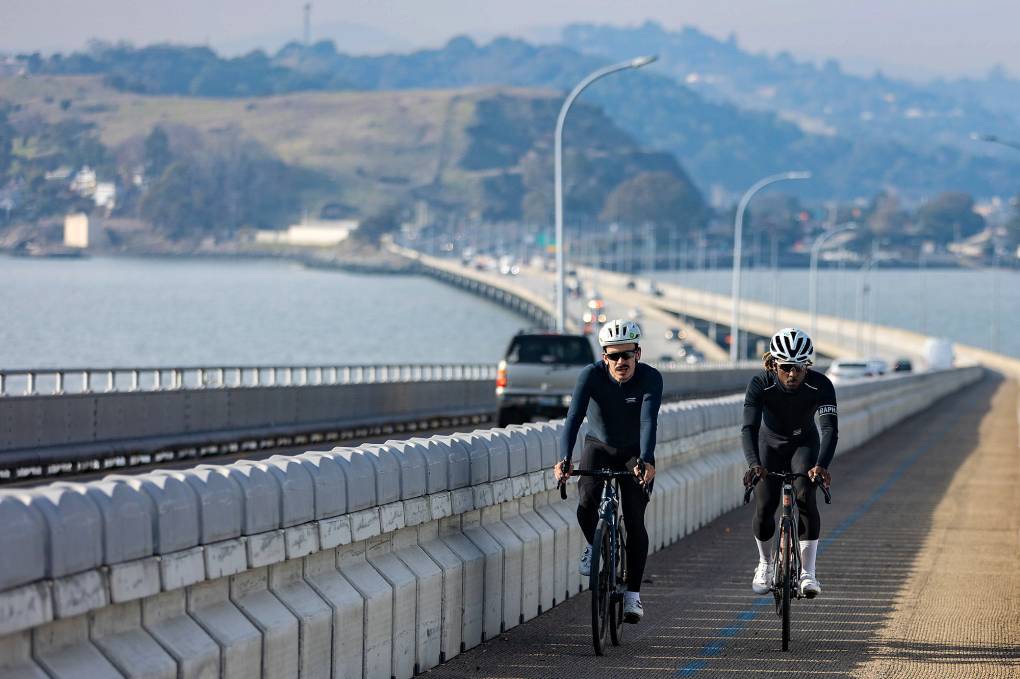
"caption": "Cyclists ride on the Richmond-San Rafael Bridge Trail on Dec. 11, 2024. Federal transportation officials said the Golden Gate, Richmond-San Rafael, Carquinez, Benicia-Martinez, Antioch and San Mateo-Hayward bridges should conduct a vulnerability assessment. ",
"credit": "Gina Castro/KQED",
"altTag": null,
"description": null,
"imgSizes": {
"medium": {
"file": "https://cdn.kqed.org/wp-content/uploads/sites/10/2024/12/20241211_RichmondBridgeBike_GC-14-800x533.jpg",
"width": 800,
"height": 533,
"mimeType": "image/jpeg"
},
"large": {
"file": "https://cdn.kqed.org/wp-content/uploads/sites/10/2024/12/20241211_RichmondBridgeBike_GC-14-1020x679.jpg",
"width": 1020,
"height": 679,
"mimeType": "image/jpeg"
},
"thumbnail": {
"file": "https://cdn.kqed.org/wp-content/uploads/sites/10/2024/12/20241211_RichmondBridgeBike_GC-14-160x107.jpg",
"width": 160,
"height": 107,
"mimeType": "image/jpeg"
},
"1536x1536": {
"file": "https://cdn.kqed.org/wp-content/uploads/sites/10/2024/12/20241211_RichmondBridgeBike_GC-14-1536x1023.jpg",
"width": 1536,
"height": 1023,
"mimeType": "image/jpeg"
},
"post-thumbnail": {
"file": "https://cdn.kqed.org/wp-content/uploads/sites/10/2024/12/20241211_RichmondBridgeBike_GC-14-672x372.jpg",
"width": 672,
"height": 372,
"mimeType": "image/jpeg"
},
"twentyfourteen-full-width": {
"file": "https://cdn.kqed.org/wp-content/uploads/sites/10/2024/12/20241211_RichmondBridgeBike_GC-14-1038x576.jpg",
"width": 1038,
"height": 576,
"mimeType": "image/jpeg"
},
"full-width": {
"file": "https://cdn.kqed.org/wp-content/uploads/sites/10/2024/12/20241211_RichmondBridgeBike_GC-14-1920x1279.jpg",
"width": 1920,
"height": 1279,
"mimeType": "image/jpeg"
},
"kqedFullSize": {
"file": "https://cdn.kqed.org/wp-content/uploads/sites/10/2024/12/20241211_RichmondBridgeBike_GC-14.jpg",
"width": 2000,
"height": 1332
}
},
"isLoading": false,
"fetchFailed": false
},
"news_11957605": {
"type": "attachments",
"id": "news_11957605",
"meta": {
"index": "attachments_1716263798",
"site": "news",
"id": "11957605",
"found": true
},
"parent": 0,
"imgSizes": {
"twentyfourteen-full-width": {
"file": "https://ww2.kqed.org/app/uploads/sites/10/2023/08/RS51745_RichmondSanRafaelBridge-13-KQED-1038x576.jpg",
"width": 1038,
"mimeType": "image/jpeg",
"height": 576
},
"thumbnail": {
"file": "https://ww2.kqed.org/app/uploads/sites/10/2023/08/RS51745_RichmondSanRafaelBridge-13-KQED-160x107.jpg",
"width": 160,
"mimeType": "image/jpeg",
"height": 107
},
"post-thumbnail": {
"file": "https://ww2.kqed.org/app/uploads/sites/10/2023/08/RS51745_RichmondSanRafaelBridge-13-KQED-672x372.jpg",
"width": 672,
"mimeType": "image/jpeg",
"height": 372
},
"kqedFullSize": {
"file": "https://ww2.kqed.org/app/uploads/sites/10/2023/08/RS51745_RichmondSanRafaelBridge-13-KQED.jpg",
"width": 2000,
"height": 1333
},
"large": {
"file": "https://ww2.kqed.org/app/uploads/sites/10/2023/08/RS51745_RichmondSanRafaelBridge-13-KQED-1020x680.jpg",
"width": 1020,
"mimeType": "image/jpeg",
"height": 680
},
"1536x1536": {
"file": "https://ww2.kqed.org/app/uploads/sites/10/2023/08/RS51745_RichmondSanRafaelBridge-13-KQED-1536x1024.jpg",
"width": 1536,
"mimeType": "image/jpeg",
"height": 1024
},
"full-width": {
"file": "https://ww2.kqed.org/app/uploads/sites/10/2023/08/RS51745_RichmondSanRafaelBridge-13-KQED-1920x1280.jpg",
"width": 1920,
"mimeType": "image/jpeg",
"height": 1280
},
"medium": {
"file": "https://ww2.kqed.org/app/uploads/sites/10/2023/08/RS51745_RichmondSanRafaelBridge-13-KQED-800x533.jpg",
"width": 800,
"mimeType": "image/jpeg",
"height": 533
}
},
"publishDate": 1691444004,
"modified": 1691444195,
"caption": "The Richmond-San Rafael Bridge stretches across the San Francisco Bay, as seen from northern Point San Quentin, in San Quentin on Sept. 23, 2021.",
"description": null,
"title": "Richmond-San Rafael Bridge",
"credit": "Joyce Tsai/KQED",
"status": "inherit",
"altTag": "A large elevated bridge crosses a body of water.",
"isLoading": false,
"fetchFailed": false
},
"news_12030673": {
"type": "attachments",
"id": "news_12030673",
"meta": {
"index": "attachments_1716263798",
"site": "news",
"id": "12030673",
"found": true
},
"title": "250220-VTASTRIKED1.-JG-8",
"publishDate": 1741648750,
"status": "inherit",
"parent": 12030584,
"modified": 1741650052,
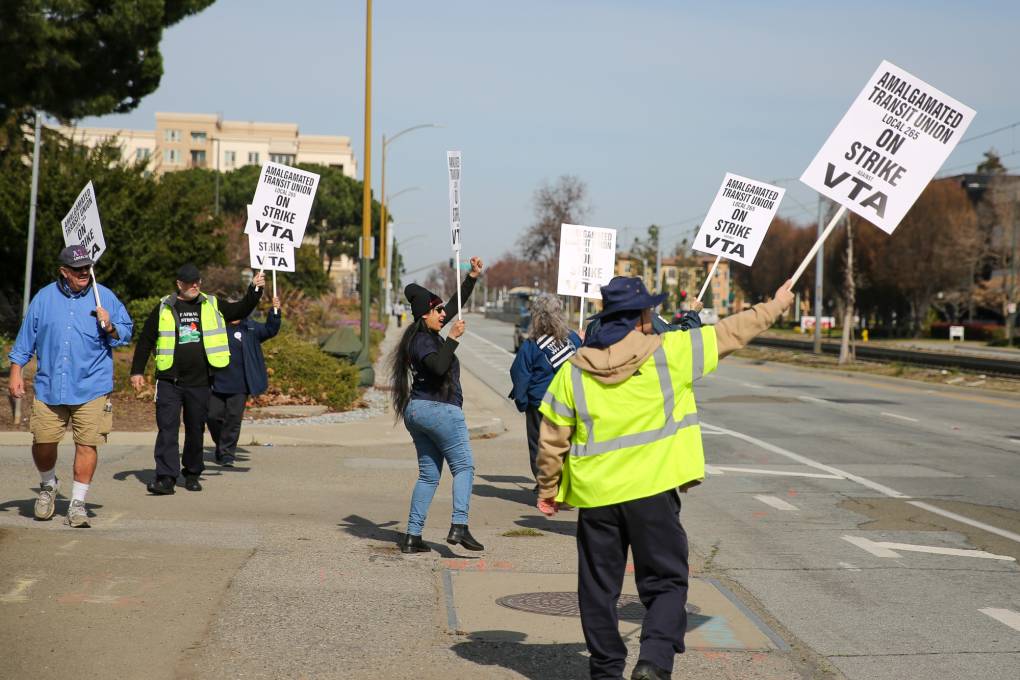
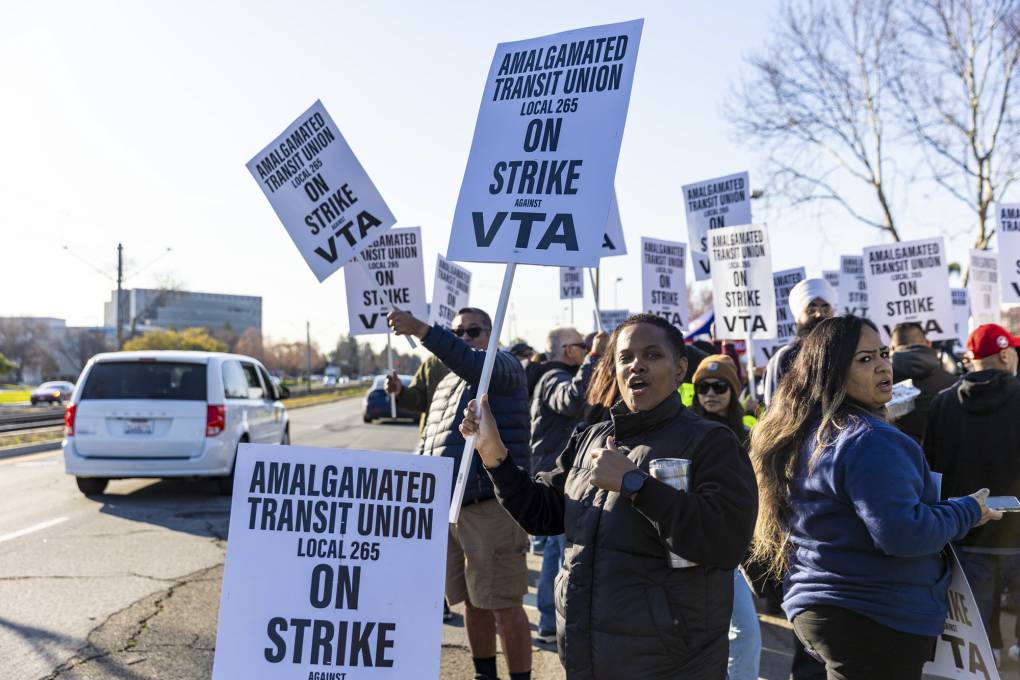
"caption": "Striking VTA workers picket acknowledge a passing honking car outside the agency's headquarters on North First Street in San José on March 10, 2025.",
"credit": "Joseph Geha/KQED",
"altTag": null,
"description": null,
"imgSizes": {
"medium": {
"file": "https://cdn.kqed.org/wp-content/uploads/sites/10/2025/03/250220-VTASTRIKED1.-JG-8-800x533.jpg",
"width": 800,
"height": 533,
"mimeType": "image/jpeg"
},
"large": {
"file": "https://cdn.kqed.org/wp-content/uploads/sites/10/2025/03/250220-VTASTRIKED1.-JG-8-1020x680.jpg",
"width": 1020,
"height": 680,
"mimeType": "image/jpeg"
},
"thumbnail": {
"file": "https://cdn.kqed.org/wp-content/uploads/sites/10/2025/03/250220-VTASTRIKED1.-JG-8-160x107.jpg",
"width": 160,
"height": 107,
"mimeType": "image/jpeg"
},
"1536x1536": {
"file": "https://cdn.kqed.org/wp-content/uploads/sites/10/2025/03/250220-VTASTRIKED1.-JG-8-1536x1024.jpg",
"width": 1536,
"height": 1024,
"mimeType": "image/jpeg"
},
"post-thumbnail": {
"file": "https://cdn.kqed.org/wp-content/uploads/sites/10/2025/03/250220-VTASTRIKED1.-JG-8-672x372.jpg",
"width": 672,
"height": 372,
"mimeType": "image/jpeg"
},
"twentyfourteen-full-width": {
"file": "https://cdn.kqed.org/wp-content/uploads/sites/10/2025/03/250220-VTASTRIKED1.-JG-8-1038x576.jpg",
"width": 1038,
"height": 576,
"mimeType": "image/jpeg"
},
"full-width": {
"file": "https://cdn.kqed.org/wp-content/uploads/sites/10/2025/03/250220-VTASTRIKED1.-JG-8-1920x1280.jpg",
"width": 1920,
"height": 1280,
"mimeType": "image/jpeg"
},
"kqedFullSize": {
"file": "https://cdn.kqed.org/wp-content/uploads/sites/10/2025/03/250220-VTASTRIKED1.-JG-8.jpg",
"width": 2000,
"height": 1333
}
},
"isLoading": false,
"fetchFailed": false
},
"news_12031469": {
"type": "attachments",
"id": "news_12031469",
"meta": {
"index": "attachments_1716263798",
"site": "news",
"id": "12031469",
"found": true
},
"title": "20250313_MUNI-OPERATOR-DAY_DMB_00008-KQED",
"publishDate": 1741993630,
"status": "inherit",
"parent": 0,
"modified": 1742228009,
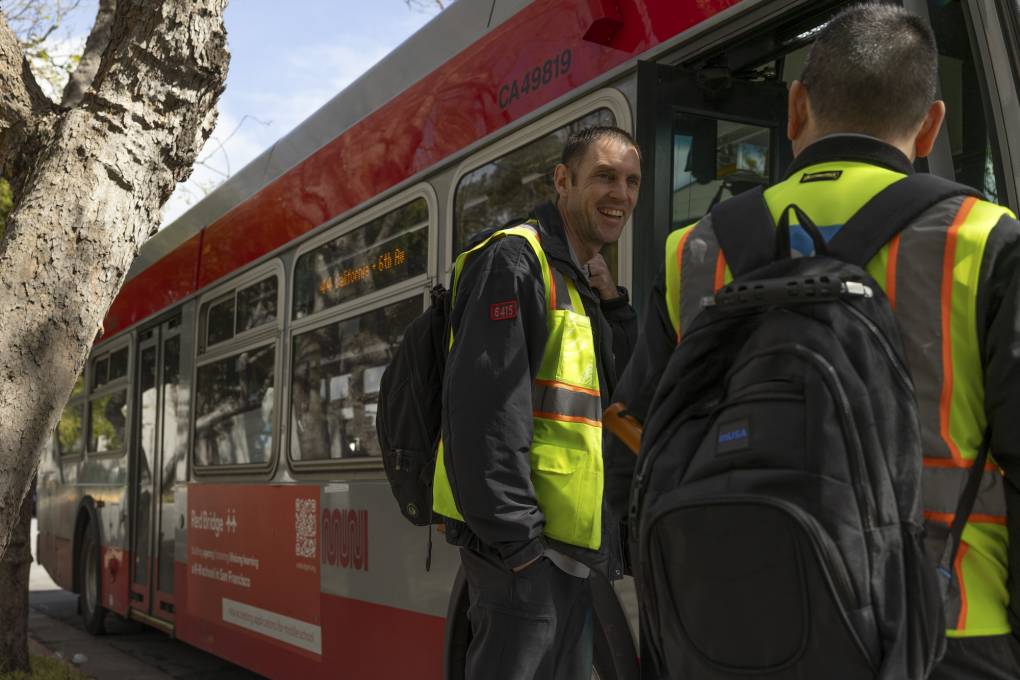
"caption": "SF Muni Transit Operator Mc Allen takes over carriage 8868 at the start of his route for the inbound 44 O’Shaughnessy in San Francisco on March 13, 2025. As Muni faces a budget shortfall, possible service cuts and the need to boost ridership, Allen is launching a project to get all of San Francisco to take a trip on March 18 and submit commendations thanking operators for their work.",
"credit": "David M. Barreda/KQED",
"altTag": null,
"description": null,
"imgSizes": {
"medium": {
"file": "https://cdn.kqed.org/wp-content/uploads/sites/10/2025/03/20250313_MUNI-OPERATOR-DAY_DMB_00008-KQED-800x533.jpg",
"width": 800,
"height": 533,
"mimeType": "image/jpeg"
},
"large": {
"file": "https://cdn.kqed.org/wp-content/uploads/sites/10/2025/03/20250313_MUNI-OPERATOR-DAY_DMB_00008-KQED-1020x680.jpg",
"width": 1020,
"height": 680,
"mimeType": "image/jpeg"
},
"thumbnail": {
"file": "https://cdn.kqed.org/wp-content/uploads/sites/10/2025/03/20250313_MUNI-OPERATOR-DAY_DMB_00008-KQED-160x107.jpg",
"width": 160,
"height": 107,
"mimeType": "image/jpeg"
},
"1536x1536": {
"file": "https://cdn.kqed.org/wp-content/uploads/sites/10/2025/03/20250313_MUNI-OPERATOR-DAY_DMB_00008-KQED-1536x1024.jpg",
"width": 1536,
"height": 1024,
"mimeType": "image/jpeg"
},
"post-thumbnail": {
"file": "https://cdn.kqed.org/wp-content/uploads/sites/10/2025/03/20250313_MUNI-OPERATOR-DAY_DMB_00008-KQED-672x372.jpg",
"width": 672,
"height": 372,
"mimeType": "image/jpeg"
},
"twentyfourteen-full-width": {
"file": "https://cdn.kqed.org/wp-content/uploads/sites/10/2025/03/20250313_MUNI-OPERATOR-DAY_DMB_00008-KQED-1038x576.jpg",
"width": 1038,
"height": 576,
"mimeType": "image/jpeg"
},
"full-width": {
"file": "https://cdn.kqed.org/wp-content/uploads/sites/10/2025/03/20250313_MUNI-OPERATOR-DAY_DMB_00008-KQED-1920x1280.jpg",
"width": 1920,
"height": 1280,
"mimeType": "image/jpeg"
},
"kqedFullSize": {
"file": "https://cdn.kqed.org/wp-content/uploads/sites/10/2025/03/20250313_MUNI-OPERATOR-DAY_DMB_00008-KQED.jpg",
"width": 2000,
"height": 1333
}
},
"isLoading": false,
"fetchFailed": false
},
"news_12030774": {
"type": "attachments",
"id": "news_12030774",
"meta": {
"index": "attachments_1716263798",
"site": "news",
"id": "12030774",
"found": true
},
"title": "An empty railroad track stop on N First St in San Jose on March 11, 2025.",
"publishDate": 1741719083,
"status": "inherit",
"parent": 12042427,
"modified": 1748907852,
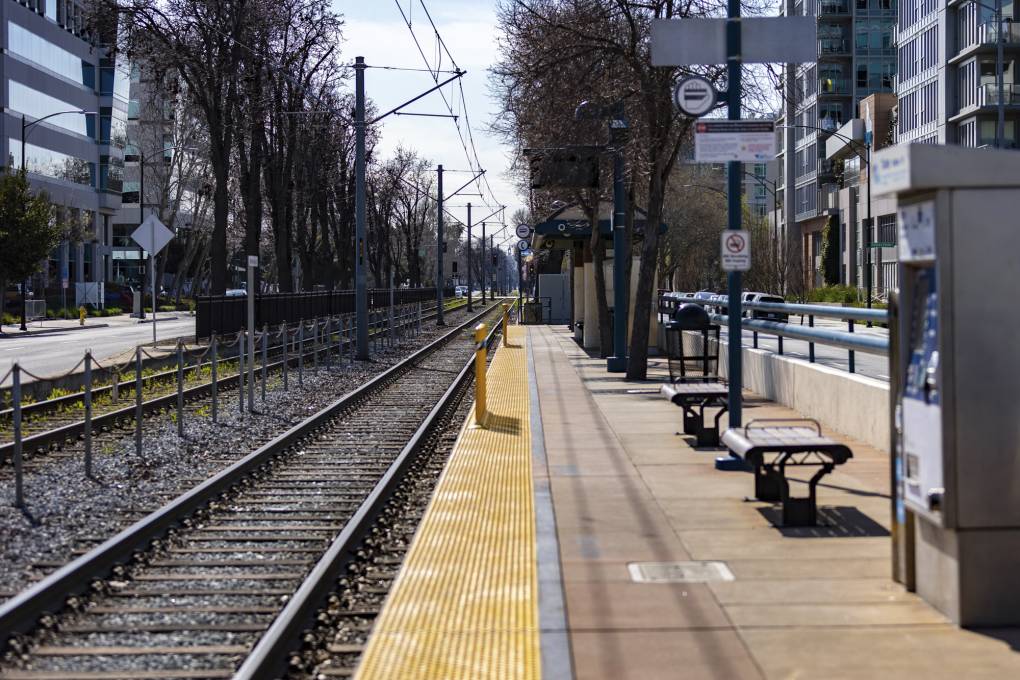
"caption": "An empty railroad track stop on North First Street in San José on March 11, 2025.",
"credit": "Gina Castro/KQED",
"altTag": null,
"description": null,
"imgSizes": {
"medium": {
"file": "https://cdn.kqed.org/wp-content/uploads/sites/10/2025/03/20250311_VTASTRIKEDAY2_GC-23-KQED-800x533.jpg",
"width": 800,
"height": 533,
"mimeType": "image/jpeg"
},
"large": {
"file": "https://cdn.kqed.org/wp-content/uploads/sites/10/2025/03/20250311_VTASTRIKEDAY2_GC-23-KQED-1020x680.jpg",
"width": 1020,
"height": 680,
"mimeType": "image/jpeg"
},
"thumbnail": {
"file": "https://cdn.kqed.org/wp-content/uploads/sites/10/2025/03/20250311_VTASTRIKEDAY2_GC-23-KQED-160x107.jpg",
"width": 160,
"height": 107,
"mimeType": "image/jpeg"
},
"1536x1536": {
"file": "https://cdn.kqed.org/wp-content/uploads/sites/10/2025/03/20250311_VTASTRIKEDAY2_GC-23-KQED-1536x1024.jpg",
"width": 1536,
"height": 1024,
"mimeType": "image/jpeg"
},
"post-thumbnail": {
"file": "https://cdn.kqed.org/wp-content/uploads/sites/10/2025/03/20250311_VTASTRIKEDAY2_GC-23-KQED-672x372.jpg",
"width": 672,
"height": 372,
"mimeType": "image/jpeg"
},
"twentyfourteen-full-width": {
"file": "https://cdn.kqed.org/wp-content/uploads/sites/10/2025/03/20250311_VTASTRIKEDAY2_GC-23-KQED-1038x576.jpg",
"width": 1038,
"height": 576,
"mimeType": "image/jpeg"
},
"full-width": {
"file": "https://cdn.kqed.org/wp-content/uploads/sites/10/2025/03/20250311_VTASTRIKEDAY2_GC-23-KQED-1920x1280.jpg",
"width": 1920,
"height": 1280,
"mimeType": "image/jpeg"
},
"kqedFullSize": {
"file": "https://cdn.kqed.org/wp-content/uploads/sites/10/2025/03/20250311_VTASTRIKEDAY2_GC-23-KQED.jpg",
"width": 2000,
"height": 1333
}
},
"isLoading": false,
"fetchFailed": false
},
"news_12030770": {
"type": "attachments",
"id": "news_12030770",
"meta": {
"index": "attachments_1716263798",
"site": "news",
"id": "12030770",
"found": true
},
"title": "20250311_VTASTRIKEDAY2_GC-2-KQED",
"publishDate": 1741719070,
"status": "inherit",
"parent": 12031632,
"modified": 1742241158,
"caption": "Dafina Cozine, a bus operator, joins a strike with hundreds of Santa Clara Valley Transportation Authority workers, represented by the Amalgamated Transit Union Local 265, on N. First Street, in San José, demanding a better contract and an increase in wages, on March 11, 2025.",
"credit": "Gina Castro/KQED",
"altTag": null,
"description": null,
"imgSizes": {
"medium": {
"file": "https://cdn.kqed.org/wp-content/uploads/sites/10/2025/03/20250311_VTASTRIKEDAY2_GC-2-KQED-800x533.jpg",
"width": 800,
"height": 533,
"mimeType": "image/jpeg"
},
"large": {
"file": "https://cdn.kqed.org/wp-content/uploads/sites/10/2025/03/20250311_VTASTRIKEDAY2_GC-2-KQED-1020x680.jpg",
"width": 1020,
"height": 680,
"mimeType": "image/jpeg"
},
"thumbnail": {
"file": "https://cdn.kqed.org/wp-content/uploads/sites/10/2025/03/20250311_VTASTRIKEDAY2_GC-2-KQED-160x107.jpg",
"width": 160,
"height": 107,
"mimeType": "image/jpeg"
},
"1536x1536": {
"file": "https://cdn.kqed.org/wp-content/uploads/sites/10/2025/03/20250311_VTASTRIKEDAY2_GC-2-KQED-1536x1024.jpg",
"width": 1536,
"height": 1024,
"mimeType": "image/jpeg"
},
"post-thumbnail": {
"file": "https://cdn.kqed.org/wp-content/uploads/sites/10/2025/03/20250311_VTASTRIKEDAY2_GC-2-KQED-672x372.jpg",
"width": 672,
"height": 372,
"mimeType": "image/jpeg"
},
"twentyfourteen-full-width": {
"file": "https://cdn.kqed.org/wp-content/uploads/sites/10/2025/03/20250311_VTASTRIKEDAY2_GC-2-KQED-1038x576.jpg",
"width": 1038,
"height": 576,
"mimeType": "image/jpeg"
},
"full-width": {
"file": "https://cdn.kqed.org/wp-content/uploads/sites/10/2025/03/20250311_VTASTRIKEDAY2_GC-2-KQED-1920x1280.jpg",
"width": 1920,
"height": 1280,
"mimeType": "image/jpeg"
},
"kqedFullSize": {
"file": "https://cdn.kqed.org/wp-content/uploads/sites/10/2025/03/20250311_VTASTRIKEDAY2_GC-2-KQED.jpg",
"width": 2000,
"height": 1333
}
},
"isLoading": false,
"fetchFailed": false
},
"news_12030672": {
"type": "attachments",
"id": "news_12030672",
"meta": {
"index": "attachments_1716263798",
"site": "news",
"id": "12030672",
"found": true
},
"title": "250220-VTASTRIKED1.-JG-4",
"publishDate": 1741648746,
"status": "inherit",
"parent": 0,
"modified": 1741648778,
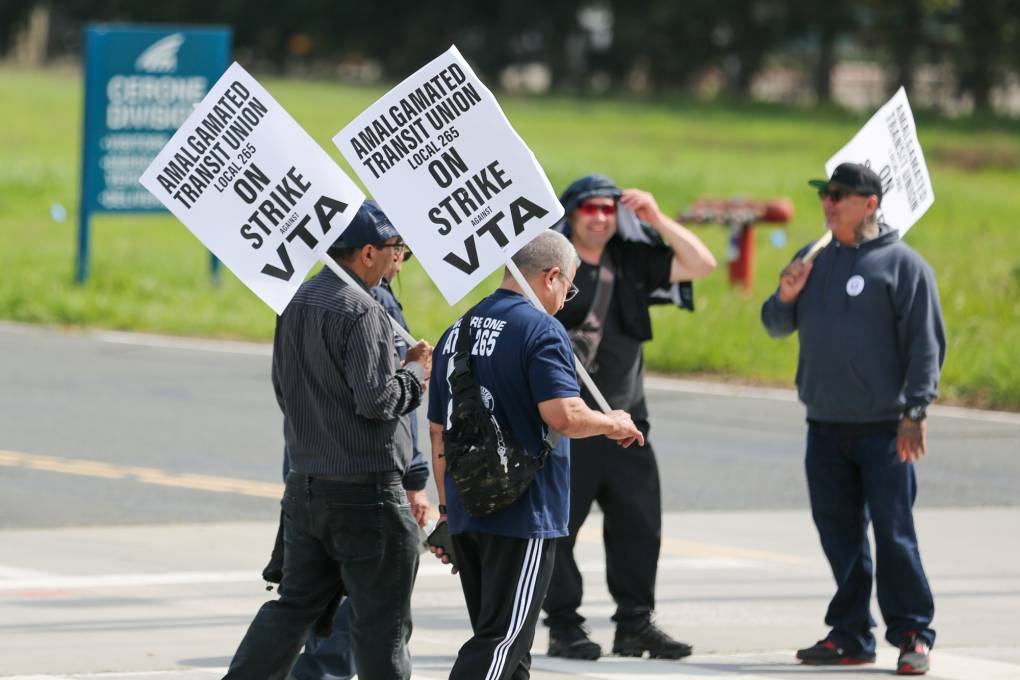
"caption": "Striking VTA workers picket outside the agency's Cerone Yard bus depot in North San José on March 10, 2025, the first day of a strike by the Amalgamated Transit Union Local 265.",
"credit": "Joseph Geha/KQED",
"altTag": null,
"description": null,
"imgSizes": {
"medium": {
"file": "https://cdn.kqed.org/wp-content/uploads/sites/10/2025/03/250220-VTASTRIKED1.-JG-4-800x533.jpg",
"width": 800,
"height": 533,
"mimeType": "image/jpeg"
},
"large": {
"file": "https://cdn.kqed.org/wp-content/uploads/sites/10/2025/03/250220-VTASTRIKED1.-JG-4-1020x680.jpg",
"width": 1020,
"height": 680,
"mimeType": "image/jpeg"
},
"thumbnail": {
"file": "https://cdn.kqed.org/wp-content/uploads/sites/10/2025/03/250220-VTASTRIKED1.-JG-4-160x107.jpg",
"width": 160,
"height": 107,
"mimeType": "image/jpeg"
},
"1536x1536": {
"file": "https://cdn.kqed.org/wp-content/uploads/sites/10/2025/03/250220-VTASTRIKED1.-JG-4-1536x1024.jpg",
"width": 1536,
"height": 1024,
"mimeType": "image/jpeg"
},
"post-thumbnail": {
"file": "https://cdn.kqed.org/wp-content/uploads/sites/10/2025/03/250220-VTASTRIKED1.-JG-4-672x372.jpg",
"width": 672,
"height": 372,
"mimeType": "image/jpeg"
},
"twentyfourteen-full-width": {
"file": "https://cdn.kqed.org/wp-content/uploads/sites/10/2025/03/250220-VTASTRIKED1.-JG-4-1038x576.jpg",
"width": 1038,
"height": 576,
"mimeType": "image/jpeg"
},
"full-width": {
"file": "https://cdn.kqed.org/wp-content/uploads/sites/10/2025/03/250220-VTASTRIKED1.-JG-4-1920x1280.jpg",
"width": 1920,
"height": 1280,
"mimeType": "image/jpeg"
},
"kqedFullSize": {
"file": "https://cdn.kqed.org/wp-content/uploads/sites/10/2025/03/250220-VTASTRIKED1.-JG-4.jpg",
"width": 2000,
"height": 1333
}
},
"isLoading": false,
"fetchFailed": false
},
"news_12030164": {
"type": "attachments",
"id": "news_12030164",
"meta": {
"index": "attachments_1716263798",
"site": "news",
"id": "12030164",
"found": true
},
"title": "240617-VTAfile-33-BL_qed",
"publishDate": 1741297401,
"status": "inherit",
"parent": 12030160,
"modified": 1741297512,
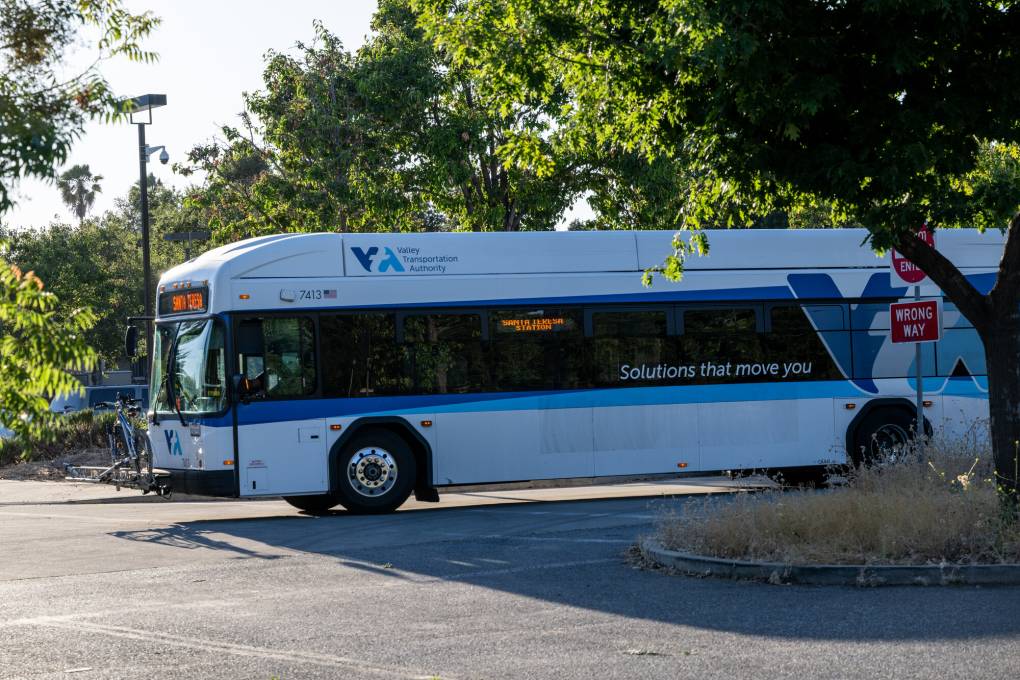
"caption": "A Santa Clara Valley Transportation Authority bus passes through the Ohlone/Chynoweth Light Rail Station in San José on June 17, 2024.",
"credit": "Beth LaBerge/KQED",
"altTag": null,
"description": null,
"imgSizes": {
"medium": {
"file": "https://cdn.kqed.org/wp-content/uploads/sites/10/2025/03/240617-VTAfile-33-BL_qed-800x533.jpg",
"width": 800,
"height": 533,
"mimeType": "image/jpeg"
},
"large": {
"file": "https://cdn.kqed.org/wp-content/uploads/sites/10/2025/03/240617-VTAfile-33-BL_qed-1020x680.jpg",
"width": 1020,
"height": 680,
"mimeType": "image/jpeg"
},
"thumbnail": {
"file": "https://cdn.kqed.org/wp-content/uploads/sites/10/2025/03/240617-VTAfile-33-BL_qed-160x107.jpg",
"width": 160,
"height": 107,
"mimeType": "image/jpeg"
},
"1536x1536": {
"file": "https://cdn.kqed.org/wp-content/uploads/sites/10/2025/03/240617-VTAfile-33-BL_qed-1536x1024.jpg",
"width": 1536,
"height": 1024,
"mimeType": "image/jpeg"
},
"post-thumbnail": {
"file": "https://cdn.kqed.org/wp-content/uploads/sites/10/2025/03/240617-VTAfile-33-BL_qed-672x372.jpg",
"width": 672,
"height": 372,
"mimeType": "image/jpeg"
},
"twentyfourteen-full-width": {
"file": "https://cdn.kqed.org/wp-content/uploads/sites/10/2025/03/240617-VTAfile-33-BL_qed-1038x576.jpg",
"width": 1038,
"height": 576,
"mimeType": "image/jpeg"
},
"full-width": {
"file": "https://cdn.kqed.org/wp-content/uploads/sites/10/2025/03/240617-VTAfile-33-BL_qed-1920x1280.jpg",
"width": 1920,
"height": 1280,
"mimeType": "image/jpeg"
},
"kqedFullSize": {
"file": "https://cdn.kqed.org/wp-content/uploads/sites/10/2025/03/240617-VTAfile-33-BL_qed.jpg",
"width": 2000,
"height": 1333
}
},
"isLoading": false,
"fetchFailed": false
},
"news_12029592": {
"type": "attachments",
"id": "news_12029592",
"meta": {
"index": "attachments_1716263798",
"site": "news",
"id": "12029592",
"found": true
},
"title": "240409-VTAfile-02-BL_qed",
"publishDate": 1741113888,
"status": "inherit",
"parent": 12029584,
"modified": 1741113975,
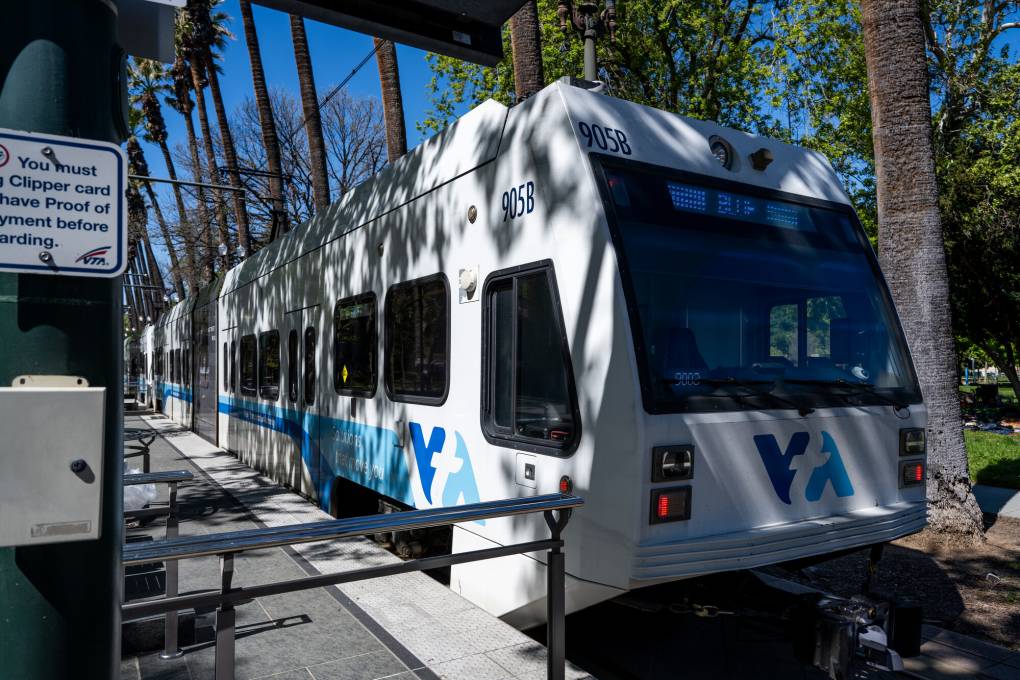
"caption": "A Santa Clara Valley Transportation Authority light rail train stops in downtown San José on June 17, 2024.",
"credit": "Beth LaBerge/KQED",
"altTag": null,
"description": null,
"imgSizes": {
"medium": {
"file": "https://cdn.kqed.org/wp-content/uploads/sites/10/2025/03/240409-VTAfile-02-BL_qed-800x533.jpg",
"width": 800,
"height": 533,
"mimeType": "image/jpeg"
},
"large": {
"file": "https://cdn.kqed.org/wp-content/uploads/sites/10/2025/03/240409-VTAfile-02-BL_qed-1020x680.jpg",
"width": 1020,
"height": 680,
"mimeType": "image/jpeg"
},
"thumbnail": {
"file": "https://cdn.kqed.org/wp-content/uploads/sites/10/2025/03/240409-VTAfile-02-BL_qed-160x107.jpg",
"width": 160,
"height": 107,
"mimeType": "image/jpeg"
},
"1536x1536": {
"file": "https://cdn.kqed.org/wp-content/uploads/sites/10/2025/03/240409-VTAfile-02-BL_qed-1536x1024.jpg",
"width": 1536,
"height": 1024,
"mimeType": "image/jpeg"
},
"post-thumbnail": {
"file": "https://cdn.kqed.org/wp-content/uploads/sites/10/2025/03/240409-VTAfile-02-BL_qed-672x372.jpg",
"width": 672,
"height": 372,
"mimeType": "image/jpeg"
},
"twentyfourteen-full-width": {
"file": "https://cdn.kqed.org/wp-content/uploads/sites/10/2025/03/240409-VTAfile-02-BL_qed-1038x576.jpg",
"width": 1038,
"height": 576,
"mimeType": "image/jpeg"
},
"full-width": {
"file": "https://cdn.kqed.org/wp-content/uploads/sites/10/2025/03/240409-VTAfile-02-BL_qed-1920x1280.jpg",
"width": 1920,
"height": 1280,
"mimeType": "image/jpeg"
},
"kqedFullSize": {
"file": "https://cdn.kqed.org/wp-content/uploads/sites/10/2025/03/240409-VTAfile-02-BL_qed.jpg",
"width": 1999,
"height": 1333
}
},
"isLoading": false,
"fetchFailed": false
},
"news_10485295": {
"type": "attachments",
"id": "news_10485295",
"meta": {
"index": "attachments_1716263798",
"site": "news",
"id": "10485295",
"found": true
},
"title": "RS13995_5682289311_963280efff_o",
"publishDate": 1428687560,
"status": "inherit",
"parent": 10485244,
"modified": 1428687808,
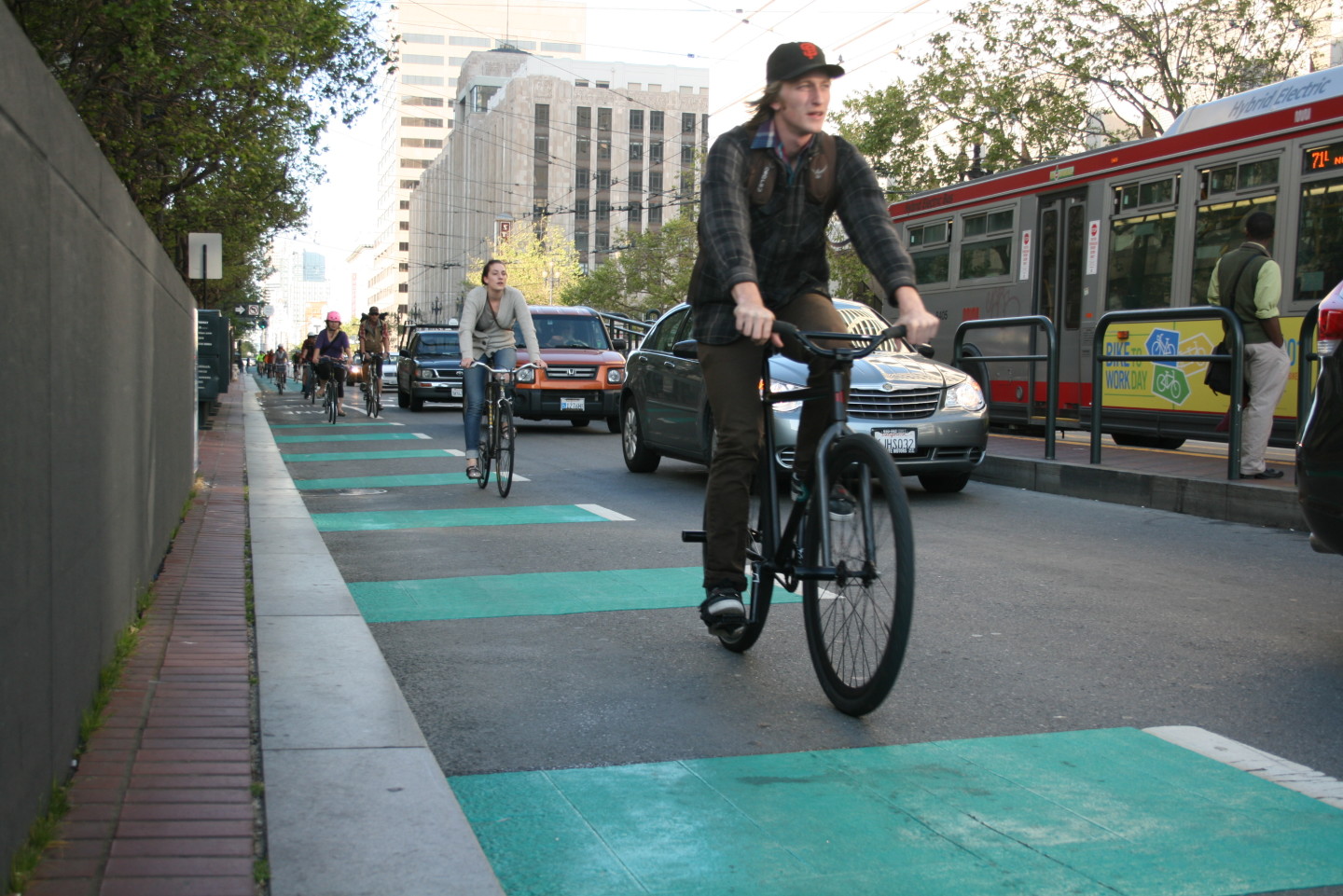
"caption": "Bicyclists ride in a green bike lane on San Francisco's Market Street.",
"credit": "San Francisco Bicycle Coalition",
"altTag": null,
"description": null,
"imgSizes": {
"thumbnail": {
"file": "https://cdn.kqed.org/wp-content/uploads/sites/10/2015/04/RS13995_5682289311_963280efff_o-400x267.jpg",
"width": 400,
"height": 267,
"mimeType": "image/jpeg"
},
"medium": {
"file": "https://cdn.kqed.org/wp-content/uploads/sites/10/2015/04/RS13995_5682289311_963280efff_o-800x534.jpg",
"width": 800,
"height": 534,
"mimeType": "image/jpeg"
},
"large": {
"file": "https://cdn.kqed.org/wp-content/uploads/sites/10/2015/04/RS13995_5682289311_963280efff_o-1440x961.jpg",
"width": 1440,
"height": 961,
"mimeType": "image/jpeg"
},
"fd-lrg": {
"file": "https://cdn.kqed.org/wp-content/uploads/sites/10/2015/04/RS13995_5682289311_963280efff_o-1180x788.jpg",
"width": 1180,
"height": 788,
"mimeType": "image/jpeg"
},
"fd-med": {
"file": "https://cdn.kqed.org/wp-content/uploads/sites/10/2015/04/RS13995_5682289311_963280efff_o-768x513.jpg",
"width": 768,
"height": 513,
"mimeType": "image/jpeg"
},
"fd-sm": {
"file": "https://cdn.kqed.org/wp-content/uploads/sites/10/2015/04/RS13995_5682289311_963280efff_o-320x214.jpg",
"width": 320,
"height": 214,
"mimeType": "image/jpeg"
},
"post-thumbnail": {
"file": "https://cdn.kqed.org/wp-content/uploads/sites/10/2015/04/RS13995_5682289311_963280efff_o-672x372.jpg",
"width": 672,
"height": 372,
"mimeType": "image/jpeg"
},
"twentyfourteen-full-width": {
"file": "https://cdn.kqed.org/wp-content/uploads/sites/10/2015/04/RS13995_5682289311_963280efff_o-1038x576.jpg",
"width": 1038,
"height": 576,
"mimeType": "image/jpeg"
},
"guest-author-32": {
"file": "https://cdn.kqed.org/wp-content/uploads/sites/10/2015/04/RS13995_5682289311_963280efff_o-32x32.jpg",
"width": 32,
"height": 32,
"mimeType": "image/jpeg"
},
"guest-author-64": {
"file": "https://cdn.kqed.org/wp-content/uploads/sites/10/2015/04/RS13995_5682289311_963280efff_o-64x64.jpg",
"width": 64,
"height": 64,
"mimeType": "image/jpeg"
},
"guest-author-96": {
"file": "https://cdn.kqed.org/wp-content/uploads/sites/10/2015/04/RS13995_5682289311_963280efff_o-96x96.jpg",
"width": 96,
"height": 96,
"mimeType": "image/jpeg"
},
"guest-author-128": {
"file": "https://cdn.kqed.org/wp-content/uploads/sites/10/2015/04/RS13995_5682289311_963280efff_o-128x128.jpg",
"width": 128,
"height": 128,
"mimeType": "image/jpeg"
},
"detail": {
"file": "https://cdn.kqed.org/wp-content/uploads/sites/10/2015/04/RS13995_5682289311_963280efff_o-75x75.jpg",
"width": 75,
"height": 75,
"mimeType": "image/jpeg"
},
"kqedFullSize": {
"file": "https://cdn.kqed.org/wp-content/uploads/sites/10/2015/04/RS13995_5682289311_963280efff_o-e1740518414897.jpg",
"width": 2000,
"height": 1335
}
},
"isLoading": false,
"fetchFailed": false
}
},
"audioPlayerReducer": {
"postId": "stream_live",
"isPaused": true,
"isPlaying": false,
"pfsActive": false,
"pledgeModalIsOpen": true,
"playerDrawerIsOpen": false,
"liveAudioPlayStartedAt": 0,
"liveAudioPlayContext": ""
},
"authorsReducer": {
"danbrekke": {
"type": "authors",
"id": "222",
"meta": {
"index": "authors_1716337520",
"id": "222",
"found": true
},
"name": "Dan Brekke",
"firstName": "Dan",
"lastName": "Brekke",
"slug": "danbrekke",
"email": "dbrekke@kqed.org",
"display_author_email": true,
"staff_mastheads": [
"news",
"science"
],
"title": "KQED Editor and Reporter",
"bio": "Dan Brekke is a reporter and editor for KQED News, responsible for coverage of topics ranging from California water issues to the Bay Area's transportation challenges. In a newsroom career that began in Chicago in 1972, Dan has worked for \u003cem>The San Francisco Examiner,\u003c/em> Wired and TechTV and has been published in The New York Times, The New York Times Magazine, Business 2.0, Salon and elsewhere.\r\n\r\nSince joining KQED in 2007, Dan has reported, edited and produced both radio and online features and breaking news pieces. He has shared as both editor and reporter in four Society of Professional Journalists Norcal Excellence in Journalism awards and one Edward R. Murrow regional award. He was chosen for a spring 2017 residency at the Mesa Refuge to advance his research on California salmon.\r\n\r\nEmail Dan at: \u003ca href=\"mailto:dbrekke@kqed.org\">dbrekke@kqed.org\u003c/a>\r\n\r\n\u003cstrong>Twitter:\u003c/strong> \u003ca href=\"https://twitter.com/danbrekke\" rel=\"noopener noreferrer\">twitter.com/danbrekke\u003c/a>\r\n\u003cstrong>Facebook:\u003c/strong> \u003ca href=\"https://www.facebook.com/danbrekke\" rel=\"noopener noreferrer\">www.facebook.com/danbrekke\u003c/a>\r\n\u003cstrong>LinkedIn:\u003c/strong> \u003ca href=\"https://www.linkedin.com/in/danbrekke\" rel=\"noopener noreferrer\">www.linkedin.com/in/danbrekke\u003c/a>",
"avatar": "https://secure.gravatar.com/avatar/c8126230345efca3f7aa89b1a402be45?s=600&d=mm&r=g",
"twitter": "danbrekke",
"facebook": null,
"instagram": "https://www.instagram.com/dan.brekke/",
"linkedin": "https://www.linkedin.com/in/danbrekke/",
"sites": [
{
"site": "news",
"roles": [
"administrator",
"create_posts"
]
},
{
"site": "stateofhealth",
"roles": [
"editor"
]
},
{
"site": "science",
"roles": [
"editor"
]
},
{
"site": "quest",
"roles": [
"contributor"
]
},
{
"site": "food",
"roles": [
"contributor"
]
},
{
"site": "forum",
"roles": [
"contributor"
]
},
{
"site": "liveblog",
"roles": [
"editor"
]
}
],
"headData": {
"title": "Dan Brekke | KQED",
"description": "KQED Editor and Reporter",
"ogImgSrc": "https://secure.gravatar.com/avatar/c8126230345efca3f7aa89b1a402be45?s=600&d=mm&r=g",
"twImgSrc": "https://secure.gravatar.com/avatar/c8126230345efca3f7aa89b1a402be45?s=600&d=mm&r=g"
},
"isLoading": false,
"link": "/author/danbrekke"
},
"matthewgreen": {
"type": "authors",
"id": "1263",
"meta": {
"index": "authors_1716337520",
"id": "1263",
"found": true
},
"name": "Matthew Green",
"firstName": "Matthew",
"lastName": "Green",
"slug": "matthewgreen",
"email": "mgreen@kqed.org",
"display_author_email": false,
"staff_mastheads": [],
"title": "KQED Editor/Reporter",
"bio": "Matthew Green is a digital media producer for KQED News. He previously produced \u003ca href=\"http://www.kqed.org/lowdown\">The Lowdown\u003c/a>, KQED’s multimedia news education blog. Matthew's written for numerous Bay Area publications, including the Oakland Tribune and San Francisco Chronicle. He also taught journalism classes at Fremont High School in East Oakland.\r\n\r\nEmail: mgreen@kqed.org; Twitter: @MGreenKQED",
"avatar": "https://secure.gravatar.com/avatar/3bf498d1267ca02c8494f33d8cfc575e?s=600&d=blank&r=g",
"twitter": "MGreenKQED",
"facebook": null,
"instagram": null,
"linkedin": null,
"sites": [
{
"site": "news",
"roles": []
},
{
"site": "lowdown",
"roles": []
},
{
"site": "science",
"roles": []
},
{
"site": "education",
"roles": []
},
{
"site": "quest",
"roles": []
},
{
"site": "liveblog",
"roles": []
}
],
"headData": {
"title": "Matthew Green | KQED",
"description": "KQED Editor/Reporter",
"ogImgSrc": "https://secure.gravatar.com/avatar/3bf498d1267ca02c8494f33d8cfc575e?s=600&d=blank&r=g",
"twImgSrc": "https://secure.gravatar.com/avatar/3bf498d1267ca02c8494f33d8cfc575e?s=600&d=blank&r=g"
},
"isLoading": false,
"link": "/author/matthewgreen"
},
"ecruzguevarra": {
"type": "authors",
"id": "8654",
"meta": {
"index": "authors_1716337520",
"id": "8654",
"found": true
},
"name": "Ericka Cruz Guevarra",
"firstName": "Ericka",
"lastName": "Cruz Guevarra",
"slug": "ecruzguevarra",
"email": "ecruzguevarra@kqed.org",
"display_author_email": true,
"staff_mastheads": [
"news"
],
"title": "Producer, The Bay Podcast",
"bio": "Ericka Cruz Guevarra is host of \u003ca href=\"https://www.kqed.org/podcasts/thebay\">\u003cem>The Bay\u003c/em>\u003c/a> podcast at KQED. Before host, she was the show’s producer. Her work in that capacity includes a three-part reported series on policing in Vallejo, which won a 2020 excellence in journalism award from the Society of Professional Journalists. Ericka has worked as a breaking news reporter at Oregon Public Broadcasting, helped produce the Code Switch podcast, and was KQED’s inaugural Raul Ramirez Diversity Fund intern. She’s also an alumna of NPR’s Next Generation Radio program. Send her an email if you have strong feelings about whether Fairfield and Suisun City are the Bay. Ericka is represented by SAG-AFTRA.",
"avatar": "https://secure.gravatar.com/avatar/25e5ab8d3d53fad2dcc7bb2b5c506b1a?s=600&d=blank&r=g",
"twitter": "NotoriousECG",
"facebook": null,
"instagram": null,
"linkedin": null,
"sites": [
{
"site": "arts",
"roles": [
"subscriber"
]
},
{
"site": "news",
"roles": [
"editor",
"manage_categories"
]
},
{
"site": "futureofyou",
"roles": [
"subscriber"
]
},
{
"site": "stateofhealth",
"roles": [
"subscriber"
]
},
{
"site": "science",
"roles": [
"editor"
]
},
{
"site": "forum",
"roles": [
"subscriber"
]
}
],
"headData": {
"title": "Ericka Cruz Guevarra | KQED",
"description": "Producer, The Bay Podcast",
"ogImgSrc": "https://secure.gravatar.com/avatar/25e5ab8d3d53fad2dcc7bb2b5c506b1a?s=600&d=blank&r=g",
"twImgSrc": "https://secure.gravatar.com/avatar/25e5ab8d3d53fad2dcc7bb2b5c506b1a?s=600&d=blank&r=g"
},
"isLoading": false,
"link": "/author/ecruzguevarra"
},
"amontecillo": {
"type": "authors",
"id": "11649",
"meta": {
"index": "authors_1716337520",
"id": "11649",
"found": true
},
"name": "Alan Montecillo",
"firstName": "Alan",
"lastName": "Montecillo",
"slug": "amontecillo",
"email": "amontecillo@kqed.org",
"display_author_email": false,
"staff_mastheads": [
"news"
],
"title": "KQED Contributor",
"bio": "Alan Montecillo is the senior editor of \u003cem>\u003ca href=\"http://kqed.org/thebay\">The Bay\u003c/a>, \u003c/em> KQED's local news podcast. Before moving to the Bay Area, he worked as a senior talk show producer for WILL in Champaign-Urbana, Illinois and at Oregon Public Broadcasting in Portland, Oregon. He has won journalism awards from the Society of Professional Journalists Northern California, the Public Media Journalists Association, The Signal Awards, and has also received a regional Edward R. Murrow award. Alan is a Filipino American from Hong Kong and a graduate of Reed College.",
"avatar": "https://secure.gravatar.com/avatar/d5e4e7a76481969ccba76f4e2b5ccabc?s=600&d=blank&r=g",
"twitter": "alanmontecillo",
"facebook": null,
"instagram": null,
"linkedin": null,
"sites": [
{
"site": "",
"roles": [
"editor"
]
},
{
"site": "news",
"roles": [
"editor",
"manage_categories"
]
}
],
"headData": {
"title": "Alan Montecillo | KQED",
"description": "KQED Contributor",
"ogImgSrc": "https://secure.gravatar.com/avatar/d5e4e7a76481969ccba76f4e2b5ccabc?s=600&d=blank&r=g",
"twImgSrc": "https://secure.gravatar.com/avatar/d5e4e7a76481969ccba76f4e2b5ccabc?s=600&d=blank&r=g"
},
"isLoading": false,
"link": "/author/amontecillo"
},
"adahlstromeckman": {
"type": "authors",
"id": "11785",
"meta": {
"index": "authors_1716337520",
"id": "11785",
"found": true
},
"name": "Azul Dahlstrom-Eckman",
"firstName": "Azul",
"lastName": "Dahlstrom-Eckman",
"slug": "adahlstromeckman",
"email": "adahlstrom-eckman@kqed.org",
"display_author_email": true,
"staff_mastheads": [],
"title": "Reporter",
"bio": "Azul is a reporter for KQED focusing on transportation and features. He joined KQED in 2021 as an alumna of KALW's Audio Academy radio journalism training program.",
"avatar": "https://secure.gravatar.com/avatar/9cb750298435add7815a777f55bf1f46845c1386bb8452555c60a7b820b5aba3?s=600&d=blank&r=g",
"twitter": "@zuliemann",
"bluesky": "@azul415.bsky.social",
"facebook": null,
"instagram": null,
"linkedin": null,
"sites": [
{
"site": "arts",
"roles": [
"editor"
]
},
{
"site": "news",
"roles": [
"editor"
]
},
{
"site": "science",
"roles": [
"editor"
]
},
{
"site": "liveblog",
"roles": [
"author"
]
}
],
"headData": {
"title": "Azul Dahlstrom-Eckman | KQED",
"description": "Reporter",
"ogImgSrc": "https://secure.gravatar.com/avatar/9cb750298435add7815a777f55bf1f46845c1386bb8452555c60a7b820b5aba3?s=600&d=blank&r=g",
"twImgSrc": "https://secure.gravatar.com/avatar/9cb750298435add7815a777f55bf1f46845c1386bb8452555c60a7b820b5aba3?s=600&d=blank&r=g"
},
"isLoading": false,
"link": "/author/adahlstromeckman"
},
"jessicakariisa": {
"type": "authors",
"id": "11831",
"meta": {
"index": "authors_1716337520",
"id": "11831",
"found": true
},
"name": "Jessica Kariisa",
"firstName": "Jessica",
"lastName": "Kariisa",
"slug": "jessicakariisa",
"email": "jkariisa@kqed.org",
"display_author_email": false,
"staff_mastheads": [],
"title": "Producer, The Bay",
"bio": "Jessica Kariisa is the producer of The Bay. She first joined KQED as an intern for The California Report Magazine, after which she became an on-call producer. She reported a Bay Curious episode on the use of rap lyrics in criminal trials which won a Society of Professional Journalists award in 2023 for Excellence in Features Journalism and the 2023 Signal Award for Best Conversation Starter. She’s worked on podcasts for Snap Judgment and American Public Media. Before embarking on her audio career, she was a music journalist.\r\n\r\nJessica Kariisa is represented by SAG-AFTRA.",
"avatar": "https://secure.gravatar.com/avatar/522e97b28ac0b3d411621c0fde8f3419c7b71ea2c5c262c57c4bb600963f328c?s=600&d=blank&r=g",
"twitter": null,
"bluesky": null,
"facebook": null,
"instagram": null,
"linkedin": null,
"sites": [
{
"site": "arts",
"roles": [
"author"
]
},
{
"site": "news",
"roles": [
"editor",
"manage_categories"
]
}
],
"headData": {
"title": "Jessica Kariisa | KQED",
"description": "Producer, The Bay",
"ogImgSrc": "https://secure.gravatar.com/avatar/522e97b28ac0b3d411621c0fde8f3419c7b71ea2c5c262c57c4bb600963f328c?s=600&d=blank&r=g",
"twImgSrc": "https://secure.gravatar.com/avatar/522e97b28ac0b3d411621c0fde8f3419c7b71ea2c5c262c57c4bb600963f328c?s=600&d=blank&r=g"
},
"isLoading": false,
"link": "/author/jessicakariisa"
},
"jgeha": {
"type": "authors",
"id": "11906",
"meta": {
"index": "authors_1716337520",
"id": "11906",
"found": true
},
"name": "Joseph Geha",
"firstName": "Joseph",
"lastName": "Geha",
"slug": "jgeha",
"email": "jgeha@kqed.org",
"display_author_email": false,
"staff_mastheads": [
"news",
"science"
],
"title": "KQED Contributor",
"bio": null,
"avatar": "https://secure.gravatar.com/avatar/ea84d2b6dd93d6369d453edf19dd583f117cd1759d2d9c9c92f9de77017354fe?s=600&d=blank&r=g",
"twitter": null,
"bluesky": null,
"facebook": null,
"instagram": null,
"linkedin": null,
"sites": [
{
"site": "news",
"roles": [
"editor"
]
},
{
"site": "liveblog",
"roles": [
"author"
]
}
],
"headData": {
"title": "Joseph Geha | KQED",
"description": "KQED Contributor",
"ogImgSrc": "https://secure.gravatar.com/avatar/ea84d2b6dd93d6369d453edf19dd583f117cd1759d2d9c9c92f9de77017354fe?s=600&d=blank&r=g",
"twImgSrc": "https://secure.gravatar.com/avatar/ea84d2b6dd93d6369d453edf19dd583f117cd1759d2d9c9c92f9de77017354fe?s=600&d=blank&r=g"
},
"isLoading": false,
"link": "/author/jgeha"
},
"mvelasquez": {
"type": "authors",
"id": "11939",
"meta": {
"index": "authors_1716337520",
"id": "11939",
"found": true
},
"name": "Mel Velasquez",
"firstName": "Mel",
"lastName": "Velasquez",
"slug": "mvelasquez",
"email": "mvelasquez@kqed.org",
"display_author_email": false,
"staff_mastheads": [],
"title": "KQED Contributor",
"bio": null,
"avatar": "https://secure.gravatar.com/avatar/409094312d56fab09fef4251e949ffa6?s=600&d=blank&r=g",
"twitter": null,
"facebook": null,
"instagram": null,
"linkedin": "www.linkedin.com/in/melanievelasquezz",
"sites": [
{
"site": "news",
"roles": [
"editor"
]
}
],
"headData": {
"title": "Mel Velasquez | KQED",
"description": "KQED Contributor",
"ogImgSrc": "https://secure.gravatar.com/avatar/409094312d56fab09fef4251e949ffa6?s=600&d=blank&r=g",
"twImgSrc": "https://secure.gravatar.com/avatar/409094312d56fab09fef4251e949ffa6?s=600&d=blank&r=g"
},
"isLoading": false,
"link": "/author/mvelasquez"
}
},
"pagesReducer": {
"news_tag_transportation": {
"type": "terms",
"id": "news_20517",
"meta": {
"index": "terms_1716263798",
"site": "news",
"id": "20517",
"score": 8.934093
},
"featImg": null,
"name": "transportation",
"description": null,
"taxonomy": "tag",
"headData": {
"twImgId": null,
"twTitle": null,
"ogTitle": null,
"ogImgId": null,
"twDescription": null,
"description": null,
"title": "transportation Archives | KQED News",
"ogDescription": null
},
"ttid": 20534,
"slug": "transportation",
"isLoading": false,
"title": "transportation",
"pageMeta": {
"site": "news",
"WpPageTemplate": "page-topic-editorial",
"currentPage": 15
},
"blocks": [
{
"blockName": "kqed/post-list",
"attrs": {
"layout": "cardArticle2",
"query": "posts/news?tag=transportation",
"seeMore": false,
"paginated": true,
"page": 15
}
},
{
"blockName": "kqed/ad"
}
]
}
},
"pfsSessionReducer": {},
"postsReducer": {
"stream_live": {
"type": "live",
"id": "stream_live",
"audioUrl": "https://streams.kqed.org/kqedradio",
"title": "Live Stream",
"excerpt": "Live Stream information currently unavailable.",
"link": "/radio",
"featImg": "",
"label": {
"name": "KQED Live",
"link": "/"
}
},
"stream_kqedNewscast": {
"type": "posts",
"id": "stream_kqedNewscast",
"audioUrl": "https://www.kqed.org/.stream/anon/radio/RDnews/newscast.mp3?_=1",
"title": "KQED Newscast",
"featImg": "",
"label": {
"name": "88.5 FM",
"link": "/"
}
},
"news_12032537": {
"type": "posts",
"id": "news_12032537",
"meta": {
"index": "posts_1716263798",
"site": "news",
"id": "12032537",
"score": null,
"sort": [
1742599332000
]
},
"guestAuthors": [],
"slug": "6-bay-area-bridges-flagged-as-vulnerable-to-collapse-ntsb-report-finds",
"title": "These 6 Bay Area Bridges Could Be Vulnerable to Collapse If Hit By Large Ship, Report Finds",
"publishDate": 1742599332,
"format": "standard",
"headTitle": "These 6 Bay Area Bridges Could Be Vulnerable to Collapse If Hit By Large Ship, Report Finds | KQED",
"labelTerm": {
"site": "news"
},
"content": "\u003cp style=\"text-align: left\">Federal transportation safety officials named six major \u003ca href=\"https://www.kqed.org/news/tag/bay-area\">Bay Area\u003c/a> bridges that could be vulnerable to collapse if hit by a large container ship.\u003c/p>\n\u003cp>The \u003ca href=\"https://www.kqed.org/news/tag/golden-gate-bridge\">Golden Gate\u003c/a>, Richmond-San Rafael, Carquinez, Benicia-Martinez, Antioch and San Mateo-Hayward bridges are among a list of 68 older spans in 19 states that “have an unknown level of risk of collapse from a vessel collision,” according to a \u003ca href=\"https://www.ntsb.gov/investigations/AccidentReports/Reports/MIR2510.pdf\">new report\u003c/a> from the National Transportation Safety Board.\u003c/p>\n\u003cp>The agency’s findings are part of an investigation into the \u003ca href=\"https://www.cbsnews.com/baltimore/news/who-is-missing-in-baltimores-francis-scott-key-bridge-collapse-what-we-know-about-those-unaccounted-for/\">collapse of the Francis Scott Key Bridge\u003c/a> in Baltimore last year after a malfunctioning cargo ship slammed into the bridge’s support column. The collision killed six construction workers.\u003c/p>\n\u003cp>[ad fullwidth]\u003c/p>\n\u003cp>In the report, NTSB investigators blamed Maryland transportation officials for failing to complete a recommended vulnerability assessment that would have shown the bridge was at significant risk of collapse from a ship strike.\u003c/p>\n\u003cp>NTSB Chair Jennifer Homendy told reporters on Thursday that the disaster “could have been prevented.”\u003c/p>\n\u003cfigure id=\"attachment_11704847\" class=\"wp-caption aligncenter\" style=\"max-width: 1920px\">\u003ca href=\"https://cdn.kqed.org/wp-content/uploads/sites/10/2018/11/beniciabridge131231.jpg\">\u003cimg loading=\"lazy\" decoding=\"async\" class=\"size-full wp-image-11704847\" src=\"https://cdn.kqed.org/wp-content/uploads/sites/10/2018/11/beniciabridge131231.jpg\" alt=\"\" width=\"1920\" height=\"1275\" srcset=\"https://cdn.kqed.org/wp-content/uploads/sites/10/2018/11/beniciabridge131231.jpg 1920w, https://cdn.kqed.org/wp-content/uploads/sites/10/2018/11/beniciabridge131231-160x106.jpg 160w, https://cdn.kqed.org/wp-content/uploads/sites/10/2018/11/beniciabridge131231-800x531.jpg 800w, https://cdn.kqed.org/wp-content/uploads/sites/10/2018/11/beniciabridge131231-1020x677.jpg 1020w, https://cdn.kqed.org/wp-content/uploads/sites/10/2018/11/beniciabridge131231-1200x797.jpg 1200w, https://cdn.kqed.org/wp-content/uploads/sites/10/2018/11/beniciabridge131231-1180x784.jpg 1180w, https://cdn.kqed.org/wp-content/uploads/sites/10/2018/11/beniciabridge131231-960x638.jpg 960w, https://cdn.kqed.org/wp-content/uploads/sites/10/2018/11/beniciabridge131231-240x159.jpg 240w, https://cdn.kqed.org/wp-content/uploads/sites/10/2018/11/beniciabridge131231-375x249.jpg 375w, https://cdn.kqed.org/wp-content/uploads/sites/10/2018/11/beniciabridge131231-520x345.jpg 520w\" sizes=\"auto, (max-width: 1920px) 100vw, 1920px\">\u003c/a>\u003cfigcaption class=\"wp-caption-text\">The Benicia Bridge and Suisun Bay, viewed from Franklin Ridge in Carquinez Strait Regional Shoreline. \u003ccite>(Dan Brekke/KQED)\u003c/cite>\u003c/figcaption>\u003c/figure>\n\u003cp>Had they done the assessment, they “would have been able to proactively identify strategies to reduce the risk of a collapse and loss of lives associated with a vessel collision with the bridge,” she said. “There’s no excuse.”\u003c/p>\n\u003cp>In light of the findings, the agency is urging state and local authorities overseeing the 68 named bridges to “develop and implement a comprehensive risk reduction plan.”\u003c/p>\n\u003cp>The NTSB’s report targets large bridges constructed before 1991, when the American Association of State Highway and Transportation Officials developed a vulnerability assessment calculation for new bridges. The agency, however, emphasized that it was not suggesting the bridges “are certain to collapse.”\u003c/p>\n\u003cp>However, Homendy emphasized that standard container ships today are substantially larger than they were when many of these bridges were built.\u003c/p>\n\u003cp>[aside postID=news_11749629 hero='https://ww2.kqed.org/app/uploads/sites/10/2019/05/aad-1447-1020x824.jpg']\u003c/p>\n\u003cp>“These bridge owners need to be looking at recent vessel traffic,” she said. “Vessels have gotten bigger, heavier. At one point in the 1950s, we had vessels that had just 800 containers on them. Now we’re talking 24,000 containers.”\u003c/p>\n\u003cp>Caltrans said it is reviewing the NTSB’s safety recommendations but noted that all state-owned bridges — including five of the Bay Area spans listed in the report — are regularly inspected and have been seismically retrofitted “to the highest national standards.”\u003c/p>\n\u003cp>“California’s bridges are safe for travel, and Caltrans has installed fender systems on all major bridges, further protecting bridge piers from the unlikely and rare event of being struck by marine traffic,” the agency said in a statement on Friday.\u003c/p>\n\u003cp>The Golden Gate Bridge, Highway and Transportation District, which owns the Golden Gate Bridge, responded similarly to NTSB’s recommendations, saying it was in full compliance with all state and federal regulations.\u003c/p>\n\u003cp>“The Golden Gate Bridge has one of the most robust ship collision protection systems of any bridge on the West Coast,” the district said in a statement. But “in light of the tragic Francis Scott Key Bridge collapse,” the district recently commissioned an assessment of the bridge’s south tower fender system’s capacity to withstand a ship collision.\u003c/p>\n\u003cfigure id=\"attachment_11938559\" class=\"wp-caption aligncenter\" style=\"max-width: 1024px\">\u003ca href=\"https://cdn.kqed.org/wp-content/uploads/sites/10/2023/01/GettyImages-1456821940.jpg\">\u003cimg loading=\"lazy\" decoding=\"async\" class=\"size-full wp-image-11938559\" src=\"https://cdn.kqed.org/wp-content/uploads/sites/10/2023/01/GettyImages-1456821940.jpg\" alt=\"Several people dressed in raincoats and holding umbrellas stand behind the Golden Gate Bridge.\" width=\"1024\" height=\"696\" srcset=\"https://cdn.kqed.org/wp-content/uploads/sites/10/2023/01/GettyImages-1456821940.jpg 1024w, https://cdn.kqed.org/wp-content/uploads/sites/10/2023/01/GettyImages-1456821940-800x544.jpg 800w, https://cdn.kqed.org/wp-content/uploads/sites/10/2023/01/GettyImages-1456821940-1020x693.jpg 1020w, https://cdn.kqed.org/wp-content/uploads/sites/10/2023/01/GettyImages-1456821940-160x109.jpg 160w\" sizes=\"auto, (max-width: 1024px) 100vw, 1024px\">\u003c/a>\u003cfigcaption class=\"wp-caption-text\">People look at the Golden Gate Bridge at a vista point during a rainfall on Jan. 15, 2023, in Sausalito. \u003ccite>(Liu Guanguan/China News Service/VCG via Getty Images)\u003c/cite>\u003c/figcaption>\u003c/figure>\n\u003cp>Absent from the NTSB’s report is the San Francisco-Oakland Bay Bridge, which survived two major ship collisions, in \u003ca href=\"https://www.kron4.com/news/bay-area/the-day-a-cargo-ship-crashed-into-sf-bay-bridge/\">2007\u003c/a> and \u003ca href=\"https://www.sfgate.com/bayarea/article/Ship-s-pilot-blamed-for-bridge-crash-4410899.php\">2013\u003c/a>, but was protected in part by its fenders.\u003c/p>\n\u003cp>“The real key, as I see it, is assessing probabilities of risk,” said John Goodwin, a spokesperson for the Metropolitan Transportation Commission, which oversees the Bay Area’s toll authority.\u003c/p>\n\u003cp>California, and the Bay Area in particular, has a lot of old bridges, Goodwin added, noting that Caltrans and local districts are conducting a multi-billion dollar, 10-year campaign “to keep every one of those structures in tip-top shape for decades to come.”\u003c/p>\n\u003cp>“This is a comprehensive assessment of what is needed to keep these bridges going really in perpetuity.”\u003c/p>\n\u003cp>\u003cem>KQED’s \u003c/em>\u003ca href=\"https://www.kqed.org/author/jlara\">\u003cem>Juan Carlos Lara\u003c/em>\u003c/a>\u003cem> contributed reporting to this story\u003c/em>.\u003c/p>\n\u003cp>\u003c/p>\n",
"blocks": [],
"excerpt": "Transportation officials said six Bay Area Bridges should conduct a vulnerability assessment to determine their risk of collapse if hit by a large container ship. ",
"status": "publish",
"parent": 0,
"modified": 1742604828,
"stats": {
"hasAudio": false,
"hasVideo": false,
"hasChartOrMap": false,
"iframeSrcs": [],
"hasGoogleForm": false,
"hasGallery": false,
"hasHearkenModule": false,
"hasPolis": false,
"paragraphCount": 21,
"wordCount": 750
},
"headData": {
"title": "These 6 Bay Area Bridges Could Be Vulnerable to Collapse If Hit By Large Ship, Report Finds | KQED",
"description": "Transportation officials said six Bay Area Bridges should conduct a vulnerability assessment to determine their risk of collapse if hit by a large container ship. ",
"ogTitle": "",
"ogDescription": "",
"ogImgId": "",
"twTitle": "",
"twDescription": "",
"twImgId": "",
"schema": {
"@context": "https://schema.org",
"@type": "NewsArticle",
"headline": "These 6 Bay Area Bridges Could Be Vulnerable to Collapse If Hit By Large Ship, Report Finds",
"datePublished": "2025-03-21T16:22:12-07:00",
"dateModified": "2025-03-21T17:53:48-07:00",
"image": "https://cdn.kqed.org/wp-content/uploads/2020/02/KQED-OG-Image@1x.png",
"isAccessibleForFree": "True",
"publisher": {
"@type": "NewsMediaOrganization",
"@id": "https://www.kqed.org/#organization",
"name": "KQED",
"logo": "https://cdn.kqed.org/wp-content/uploads/2020/02/KQED-OG-Image@1x.png",
"url": "https://www.kqed.org",
"sameAs": [
"https://www.facebook.com/KQED",
"https://twitter.com/KQED",
"https://www.instagram.com/kqed/",
"https://www.tiktok.com/@kqedofficial",
"https://www.linkedin.com/company/kqed",
"https://www.youtube.com/channel/UCeC0IOo7i1P_61zVUWbJ4nw"
]
}
}
},
"sticky": false,
"nprStoryId": "kqed-12032537",
"templateType": "standard",
"featuredImageType": "standard",
"excludeFromSiteSearch": "Include",
"articleAge": "0",
"path": "/news/12032537/6-bay-area-bridges-flagged-as-vulnerable-to-collapse-ntsb-report-finds",
"audioTrackLength": null,
"parsedContent": [
{
"type": "contentString",
"content": "\u003cdiv class=\"post-body\">\u003cp>\u003cp style=\"text-align: left\">Federal transportation safety officials named six major \u003ca href=\"https://www.kqed.org/news/tag/bay-area\">Bay Area\u003c/a> bridges that could be vulnerable to collapse if hit by a large container ship.\u003c/p>\n\u003cp>The \u003ca href=\"https://www.kqed.org/news/tag/golden-gate-bridge\">Golden Gate\u003c/a>, Richmond-San Rafael, Carquinez, Benicia-Martinez, Antioch and San Mateo-Hayward bridges are among a list of 68 older spans in 19 states that “have an unknown level of risk of collapse from a vessel collision,” according to a \u003ca href=\"https://www.ntsb.gov/investigations/AccidentReports/Reports/MIR2510.pdf\">new report\u003c/a> from the National Transportation Safety Board.\u003c/p>\n\u003cp>The agency’s findings are part of an investigation into the \u003ca href=\"https://www.cbsnews.com/baltimore/news/who-is-missing-in-baltimores-francis-scott-key-bridge-collapse-what-we-know-about-those-unaccounted-for/\">collapse of the Francis Scott Key Bridge\u003c/a> in Baltimore last year after a malfunctioning cargo ship slammed into the bridge’s support column. The collision killed six construction workers.\u003c/p>\n\u003cp>\u003c/p>\u003c/div>",
"attributes": {
"named": {},
"numeric": []
}
},
{
"type": "component",
"content": "",
"name": "ad",
"attributes": {
"named": {
"label": "fullwidth"
},
"numeric": [
"fullwidth"
]
}
},
{
"type": "contentString",
"content": "\u003cdiv class=\"post-body\">\u003cp>\u003c/p>\n\u003cp>In the report, NTSB investigators blamed Maryland transportation officials for failing to complete a recommended vulnerability assessment that would have shown the bridge was at significant risk of collapse from a ship strike.\u003c/p>\n\u003cp>NTSB Chair Jennifer Homendy told reporters on Thursday that the disaster “could have been prevented.”\u003c/p>\n\u003cfigure id=\"attachment_11704847\" class=\"wp-caption aligncenter\" style=\"max-width: 1920px\">\u003ca href=\"https://cdn.kqed.org/wp-content/uploads/sites/10/2018/11/beniciabridge131231.jpg\">\u003cimg loading=\"lazy\" decoding=\"async\" class=\"size-full wp-image-11704847\" src=\"https://cdn.kqed.org/wp-content/uploads/sites/10/2018/11/beniciabridge131231.jpg\" alt=\"\" width=\"1920\" height=\"1275\" srcset=\"https://cdn.kqed.org/wp-content/uploads/sites/10/2018/11/beniciabridge131231.jpg 1920w, https://cdn.kqed.org/wp-content/uploads/sites/10/2018/11/beniciabridge131231-160x106.jpg 160w, https://cdn.kqed.org/wp-content/uploads/sites/10/2018/11/beniciabridge131231-800x531.jpg 800w, https://cdn.kqed.org/wp-content/uploads/sites/10/2018/11/beniciabridge131231-1020x677.jpg 1020w, https://cdn.kqed.org/wp-content/uploads/sites/10/2018/11/beniciabridge131231-1200x797.jpg 1200w, https://cdn.kqed.org/wp-content/uploads/sites/10/2018/11/beniciabridge131231-1180x784.jpg 1180w, https://cdn.kqed.org/wp-content/uploads/sites/10/2018/11/beniciabridge131231-960x638.jpg 960w, https://cdn.kqed.org/wp-content/uploads/sites/10/2018/11/beniciabridge131231-240x159.jpg 240w, https://cdn.kqed.org/wp-content/uploads/sites/10/2018/11/beniciabridge131231-375x249.jpg 375w, https://cdn.kqed.org/wp-content/uploads/sites/10/2018/11/beniciabridge131231-520x345.jpg 520w\" sizes=\"auto, (max-width: 1920px) 100vw, 1920px\">\u003c/a>\u003cfigcaption class=\"wp-caption-text\">The Benicia Bridge and Suisun Bay, viewed from Franklin Ridge in Carquinez Strait Regional Shoreline. \u003ccite>(Dan Brekke/KQED)\u003c/cite>\u003c/figcaption>\u003c/figure>\n\u003cp>Had they done the assessment, they “would have been able to proactively identify strategies to reduce the risk of a collapse and loss of lives associated with a vessel collision with the bridge,” she said. “There’s no excuse.”\u003c/p>\n\u003cp>In light of the findings, the agency is urging state and local authorities overseeing the 68 named bridges to “develop and implement a comprehensive risk reduction plan.”\u003c/p>\n\u003cp>The NTSB’s report targets large bridges constructed before 1991, when the American Association of State Highway and Transportation Officials developed a vulnerability assessment calculation for new bridges. The agency, however, emphasized that it was not suggesting the bridges “are certain to collapse.”\u003c/p>\n\u003cp>However, Homendy emphasized that standard container ships today are substantially larger than they were when many of these bridges were built.\u003c/p>\n\u003cp>\u003c/p>\u003c/div>",
"attributes": {
"named": {},
"numeric": []
}
},
{
"type": "component",
"content": "",
"name": "aside",
"attributes": {
"named": {
"postid": "news_11749629",
"hero": "https://ww2.kqed.org/app/uploads/sites/10/2019/05/aad-1447-1020x824.jpg",
"label": ""
},
"numeric": []
}
},
{
"type": "contentString",
"content": "\u003cdiv class=\"post-body\">\u003cp>\u003c/p>\n\u003cp>“These bridge owners need to be looking at recent vessel traffic,” she said. “Vessels have gotten bigger, heavier. At one point in the 1950s, we had vessels that had just 800 containers on them. Now we’re talking 24,000 containers.”\u003c/p>\n\u003cp>Caltrans said it is reviewing the NTSB’s safety recommendations but noted that all state-owned bridges — including five of the Bay Area spans listed in the report — are regularly inspected and have been seismically retrofitted “to the highest national standards.”\u003c/p>\n\u003cp>“California’s bridges are safe for travel, and Caltrans has installed fender systems on all major bridges, further protecting bridge piers from the unlikely and rare event of being struck by marine traffic,” the agency said in a statement on Friday.\u003c/p>\n\u003cp>The Golden Gate Bridge, Highway and Transportation District, which owns the Golden Gate Bridge, responded similarly to NTSB’s recommendations, saying it was in full compliance with all state and federal regulations.\u003c/p>\n\u003cp>“The Golden Gate Bridge has one of the most robust ship collision protection systems of any bridge on the West Coast,” the district said in a statement. But “in light of the tragic Francis Scott Key Bridge collapse,” the district recently commissioned an assessment of the bridge’s south tower fender system’s capacity to withstand a ship collision.\u003c/p>\n\u003cfigure id=\"attachment_11938559\" class=\"wp-caption aligncenter\" style=\"max-width: 1024px\">\u003ca href=\"https://cdn.kqed.org/wp-content/uploads/sites/10/2023/01/GettyImages-1456821940.jpg\">\u003cimg loading=\"lazy\" decoding=\"async\" class=\"size-full wp-image-11938559\" src=\"https://cdn.kqed.org/wp-content/uploads/sites/10/2023/01/GettyImages-1456821940.jpg\" alt=\"Several people dressed in raincoats and holding umbrellas stand behind the Golden Gate Bridge.\" width=\"1024\" height=\"696\" srcset=\"https://cdn.kqed.org/wp-content/uploads/sites/10/2023/01/GettyImages-1456821940.jpg 1024w, https://cdn.kqed.org/wp-content/uploads/sites/10/2023/01/GettyImages-1456821940-800x544.jpg 800w, https://cdn.kqed.org/wp-content/uploads/sites/10/2023/01/GettyImages-1456821940-1020x693.jpg 1020w, https://cdn.kqed.org/wp-content/uploads/sites/10/2023/01/GettyImages-1456821940-160x109.jpg 160w\" sizes=\"auto, (max-width: 1024px) 100vw, 1024px\">\u003c/a>\u003cfigcaption class=\"wp-caption-text\">People look at the Golden Gate Bridge at a vista point during a rainfall on Jan. 15, 2023, in Sausalito. \u003ccite>(Liu Guanguan/China News Service/VCG via Getty Images)\u003c/cite>\u003c/figcaption>\u003c/figure>\n\u003cp>Absent from the NTSB’s report is the San Francisco-Oakland Bay Bridge, which survived two major ship collisions, in \u003ca href=\"https://www.kron4.com/news/bay-area/the-day-a-cargo-ship-crashed-into-sf-bay-bridge/\">2007\u003c/a> and \u003ca href=\"https://www.sfgate.com/bayarea/article/Ship-s-pilot-blamed-for-bridge-crash-4410899.php\">2013\u003c/a>, but was protected in part by its fenders.\u003c/p>\n\u003cp>“The real key, as I see it, is assessing probabilities of risk,” said John Goodwin, a spokesperson for the Metropolitan Transportation Commission, which oversees the Bay Area’s toll authority.\u003c/p>\n\u003cp>California, and the Bay Area in particular, has a lot of old bridges, Goodwin added, noting that Caltrans and local districts are conducting a multi-billion dollar, 10-year campaign “to keep every one of those structures in tip-top shape for decades to come.”\u003c/p>\n\u003cp>“This is a comprehensive assessment of what is needed to keep these bridges going really in perpetuity.”\u003c/p>\n\u003cp>\u003cem>KQED’s \u003c/em>\u003ca href=\"https://www.kqed.org/author/jlara\">\u003cem>Juan Carlos Lara\u003c/em>\u003c/a>\u003cem> contributed reporting to this story\u003c/em>.\u003c/p>\n\u003cp>\u003c/p>\n\u003c/div>\u003c/p>",
"attributes": {
"named": {},
"numeric": []
}
}
],
"link": "/news/12032537/6-bay-area-bridges-flagged-as-vulnerable-to-collapse-ntsb-report-finds",
"authors": [
"1263"
],
"categories": [
"news_31795",
"news_8",
"news_1397"
],
"tags": [
"news_1386",
"news_231",
"news_18538",
"news_1276",
"news_17996",
"news_20517"
],
"featImg": "news_12017830",
"label": "news"
},
"news_12032150": {
"type": "posts",
"id": "news_12032150",
"meta": {
"index": "posts_1716263798",
"site": "news",
"id": "12032150",
"score": null,
"sort": [
1742464829000
]
},
"guestAuthors": [],
"slug": "bridge-tolls-lane-closures-and-vanity-plates-your-bay-area-transit-questions-answered",
"title": "Bridge Tolls, Lane Closures and Vanity Plates: Your Bay Area Transit Questions Answered",
"publishDate": 1742464829,
"format": "standard",
"headTitle": "Bridge Tolls, Lane Closures and Vanity Plates: Your Bay Area Transit Questions Answered | KQED",
"labelTerm": {
"term": 33523,
"site": "news"
},
"content": "\u003cp>\u003cem>\u003ca href=\"#Transcript\">View the full episode transcript.\u003c/a>\u003c/em>\u003c/p>\n\u003cp>One thing we know for sure about the Bay Curious audience is that you have lots of questions about how we get around the Bay Area. From the very start of the podcast 10 years ago next month, transportation has been one of the topics that surface again and again and again.\u003c/p>\n\u003cp>We’ve received a lot of \u003ca href=\"https://www.kqed.org/news/11798346/why-are-bart-escalators-nearly-always-broken-and-how-did-they-build-those-tunnels\">questions\u003c/a> about BART, including \u003ca href=\"https://www.kqed.org/news/11932690/why-doesnt-bart-go-more-places\">why it doesn’t go more places\u003c/a> and how the process of \u003ca href=\"https://www.kqed.org/news/11986396/when-bart-was-built-people-and-houses-had-to-go\">clearing businesses and homes from its route\u003c/a> worked when the system was built.\u003c/p>\n\u003cp>[baycuriousbug]\u003c/p>\n\u003cp>We’ve received questions about \u003ca href=\"https://www.kqed.org/news/11892152/the-tale-of-the-bay-bridge-troll\">the Bay Bridge troll(s)\u003c/a>. And about \u003ca href=\"https://www.kqed.org/news/11864205/is-that-a-ghost-freeway-on-the-peninsula-and-are-our-highways-filthier-than-ever\">why there’s so much trash\u003c/a> on Bay Area freeways.\u003c/p>\n\u003cp>So now, after 10 years and a total of 10,000 questions from you, our loyal audience, we’re returning to the transportation theme by answering a bunch of bridge-related questions and one inquiry that touches on how Bay Area residents express their personalities on our license plates. Here goes:\u003c/p>\n\u003cp>\u003cstrong>Jump straight to:\u003c/strong>\u003c/p>\n\u003cul>\n\u003cli>\u003cstrong>\u003ca href=\"#A\">Where does the toll money from Bay Area Bridges go?\u003c/a>\u003c/strong>\u003c/li>\n\u003cli>\u003cstrong>\u003ca href=\"#B\">Why is there a closed toll lane on the Bay Bridge?\u003c/a>\u003c/strong>\u003c/li>\n\u003cli>\u003cstrong>\u003ca href=\"#C\">Is the \u003c/a>\u003ca href=\"#C\">westbound\u003c/a>\u003ca href=\"#C\"> right carpool lane onto the Bay Bridge really ‘buses only’?\u003c/a>\u003c/strong>\u003c/li>\n\u003cli>\u003cstrong>\u003ca href=\"#D\">Why do so many Bay Area freeway names end in ‘80’?\u003c/a>\u003c/strong>\u003c/li>\n\u003cli>\u003cstrong>\u003ca href=\"#E\">What’s with the third lanes on the Richmond-San Rafael Bridge?\u003c/a>\u003c/strong>\u003c/li>\n\u003cli>\u003cstrong>\u003ca href=\"#F\">Why are there so many vanity license plates?\u003c/a>\u003c/strong>\u003c/li>\n\u003c/ul>\n\u003cp>[ad fullwidth]\u003c/p>\n\u003ch2>\u003cstrong>\u003ca id=\"A\">\u003c/a>Where does all that toll money from Bay Area bridges go?\u003c/strong>\u003c/h2>\n\u003cfigure id=\"attachment_11958608\" class=\"wp-caption aligncenter\" style=\"max-width: 2560px\">\u003cimg loading=\"lazy\" decoding=\"async\" class=\"size-full wp-image-11958608\" src=\"https://cdn.kqed.org/wp-content/uploads/sites/10/2023/08/GettyImages-1528848239-scaled.jpg\" alt=\"Aerial shot of cars at a series of toll booths on a bridge, with a $7 toll fee in a digital sign above the booths.\" width=\"2560\" height=\"1634\" srcset=\"https://cdn.kqed.org/wp-content/uploads/sites/10/2023/08/GettyImages-1528848239-scaled.jpg 2560w, https://cdn.kqed.org/wp-content/uploads/sites/10/2023/08/GettyImages-1528848239-800x511.jpg 800w, https://cdn.kqed.org/wp-content/uploads/sites/10/2023/08/GettyImages-1528848239-1020x651.jpg 1020w, https://cdn.kqed.org/wp-content/uploads/sites/10/2023/08/GettyImages-1528848239-160x102.jpg 160w, https://cdn.kqed.org/wp-content/uploads/sites/10/2023/08/GettyImages-1528848239-1536x980.jpg 1536w, https://cdn.kqed.org/wp-content/uploads/sites/10/2023/08/GettyImages-1528848239-2048x1307.jpg 2048w, https://cdn.kqed.org/wp-content/uploads/sites/10/2023/08/GettyImages-1528848239-1920x1225.jpg 1920w\" sizes=\"auto, (max-width: 2560px) 100vw, 2560px\">\u003cfigcaption class=\"wp-caption-text\">Vehicles cross the toll plaza on the Bay Bridge during the afternoon commute in Oakland on June 26, 2023. \u003ccite>(Jane Tyska/Digital First Media/East Bay Times via Getty Images)\u003c/cite>\u003c/figcaption>\u003c/figure>\n\u003cp>First up, Dani Robillard has this question about the money we shell out when we drive across bridges in our region: \u003cem>Where does all that toll money from Bay Area bridges go? It’s got to be over $20 million a week, right?\u003c/em>\u003cbr>\nYour guess of $20 million a week isn’t too far off, Dani. The tolls across the seven state-owned bridges in the Bay Area will bring in about $880 million in the current fiscal year, and that comes out to about $17 million a week.\u003c/p>\n\u003cp>I think the natural inclination is to think that the money collected when you drive through a toll plaza is going to be spent on the bridge you’re crossing, end of story. But the reality is more complicated and involves decisions transportation officials and Bay Area voters have made over the last half-century or so. The tolls we pay go to operating and maintaining the bridges — and to lots of other transportation-related things.\u003c/p>\n\u003cp>Seven of the eight toll bridges in the Bay Area — the Bay Bridge, Antioch, Benicia, Carquinez, Richmond-San Rafael, San Mateo and Dumbarton spans — are owned by the state of California. The money drivers pay is collected by an agency called \u003ca href=\"https://mtc.ca.gov/about-mtc/authorities/bay-area-toll-authority-bata\">the Bay Area Toll Authority\u003c/a>, or BATA, which also makes decisions about how to spend the revenue.\u003c/p>\n\u003cp>In making its spending decisions, BATA has numerous obligations. Those include paying for ongoing maintenance and upkeep of the bridges, long-term rehabilitation projects, and \u003ca href=\"https://www.fitchratings.com/research/infrastructure-project-finance/fitch-rates-bata-series-2025-sr-toll-revs-aa-subrevs-aa-affirms-outstanding-rev-bonds-07-02-2025#:~:text=Fitch%20has%20affirmed%20BATA's%20%246.3,and%20all%20bonds%20is%20Stable.https://www.fitchratings.com/research/infrastructure-project-finance/fitch-rates-bata-series-2025-sr-toll-revs-aa-subrevs-aa-affirms-outstanding-rev-bonds-07-02-2025#:~:text=Fitch%20has%20affirmed%20BATA's%20%246.3,and%20all%20bonds%20is%20Stable.\">paying off bonds\u003c/a> floated to finance past projects like the $6.4 billion eastern span of the Bay Bridge. Last year, when tolls on the state-owned bridges were $7, BATA estimated that $4 of that charge was being spent in one way or another on the bridges.\u003c/p>\n\u003cp>But how about the other $3? That portion of your toll payment is going in all sorts of different directions due to a series of ballot measures that transportation officials and the Legislature have put before voters since the late 1980s.\u003c/p>\n\u003cp>\u003ca href=\"https://mtc.ca.gov/funding/regional-funding/regional-measure-1-rm-1\">Regional Measure 1\u003c/a>, passed in 1988, created a uniform $1 toll for all seven state-owned bridges. (Before Measure 1, tolls on the bridges ranged from 40 cents to $1.) The new funding was used for several bridge improvements but also for several major street and highway improvements, including the Richmond Parkway in Contra Costa County.\u003c/p>\n\u003cp>\u003ca href=\"https://mtc.ca.gov/funding/regional-funding/regional-measure-2\">Regional Measure 2\u003c/a>, passed in 2004, raised tolls again by $1 (bringing them to $3 because of a 1998 increase imposed to help pay for the eastern span of the Bay Bridge). The proceeds from RM2 helped pay for the fourth bore of the Caldecott Tunnel, the new Transbay (now Salesforce) Transit Center and other big capital projects. The measure continues to provide day-to-day operating funds for AC Transit’s 1T bus rapid transit line on International Boulevard and San Francisco Muni’s T-Third light rail line and other services. Some RM2 funds also help pay for pedestrian and bike projects near the bridges.\u003c/p>\n\u003cp>\u003ca href=\"https://www.kqed.org/news/11671240/10-things-to-know-regional-measure-3-the-proposed-bay-area-bridge-toll-increase\">Regional Measure 3\u003c/a>, passed in 2018, included $3 in toll increases that, as of Jan. 1 this year, brings the basic charge for crossing the state bridges to $8. RM3 is helping fund nearly three dozen projects and services around the region, including BART’s extension through downtown San José (coming in 2037, by current estimates), some of BART’s new train cars, improved ferry service, and freeway express lanes (toll lanes) in six different counties.\u003c/p>\n\u003cp>We’ll mention in closing that the Golden Gate Bridge is owned and operated by a separate agency that has its own toll and budget policies and priorities, the \u003ca href=\"https://www.goldengate.org/\">Golden Gate Bridge, Highway and Transportation District\u003c/a>. According to the district’s fiscal 2024–25 budget, tolls make up about half of its $320 million of its revenue this year. It’s spending about one-third of that — $108 million — on bridge operations. Most of the rest of the budget, $166 million, is going to pay for the district’s bus and ferry service.\u003c/p>\n\u003ch2>\u003cstrong>\u003ca id=\"B\">\u003c/a>That closed toll lane on the Bay Bridge\u003c/strong>\u003c/h2>\n\u003cfigure id=\"attachment_11635414\" class=\"wp-caption aligncenter\" style=\"max-width: 1920px\">\u003cimg loading=\"lazy\" decoding=\"async\" class=\"size-full wp-image-11635414\" src=\"https://cdn.kqed.org/wp-content/uploads/sites/10/2017/12/RS28347_IMG_1202-qut.jpg\" alt=\"\" width=\"1920\" height=\"1280\" srcset=\"https://cdn.kqed.org/wp-content/uploads/sites/10/2017/12/RS28347_IMG_1202-qut.jpg 1920w, https://cdn.kqed.org/wp-content/uploads/sites/10/2017/12/RS28347_IMG_1202-qut-160x107.jpg 160w, https://cdn.kqed.org/wp-content/uploads/sites/10/2017/12/RS28347_IMG_1202-qut-800x533.jpg 800w, https://cdn.kqed.org/wp-content/uploads/sites/10/2017/12/RS28347_IMG_1202-qut-1020x680.jpg 1020w, https://cdn.kqed.org/wp-content/uploads/sites/10/2017/12/RS28347_IMG_1202-qut-1180x787.jpg 1180w, https://cdn.kqed.org/wp-content/uploads/sites/10/2017/12/RS28347_IMG_1202-qut-960x640.jpg 960w, https://cdn.kqed.org/wp-content/uploads/sites/10/2017/12/RS28347_IMG_1202-qut-240x160.jpg 240w, https://cdn.kqed.org/wp-content/uploads/sites/10/2017/12/RS28347_IMG_1202-qut-375x250.jpg 375w, https://cdn.kqed.org/wp-content/uploads/sites/10/2017/12/RS28347_IMG_1202-qut-520x347.jpg 520w\" sizes=\"auto, (max-width: 1920px) 100vw, 1920px\">\u003cfigcaption class=\"wp-caption-text\">Vehicles approach the Bay Bridge Toll Plaza in Oakland on Dec. 5, 2017. Days before, a truck crashed into toll booth number 14 and killed worker Si Si Han. \u003ccite>(Farida Jhabvala Romero/KQED)\u003c/cite>\u003c/figcaption>\u003c/figure>\n\u003cp>The next question comes from Andres Barraza: \u003cem>Why has that single lane at the toll plaza for the Bay Bridge been closed for years, and why won’t they reopen it again? Every time I’m passing, somebody’s always making a last second swerve to avoid the closed lane. \u003c/em>\u003c/p>\n\u003cp>The closure of that lane at the Bay Bridge toll plaza — Lane 14, to be exact — is a tragic story that goes back more than seven years. In the early morning of Dec. 2, 2017, a box truck slammed into the toll booth and killed \u003ca href=\"https://www.kqed.org/news/11635239/tollbooth-worker-killed-in-bay-bridge-crash-remembered-as-kind-generous\">the veteran toll taker there, 46-year-old Si Si Han\u003c/a>. The fact that the toll booth has never been rebuilt or the lane opened is due to a combination of circumstances.\u003c/p>\n\u003cp>Bay Area bridge officials and Caltrans reportedly determined that the loss of the lane did not have a major impact on traffic flow through the toll plaza. That was especially true after the onset of the pandemic and the dramatic drop in traffic on the bridge. More recently, the rationale for leaving the lane as it is has shifted: The entire toll plaza will be phased out at some point in the next few years with the introduction of “\u003ca href=\"https://mtc.ca.gov/operations/programs-projects/bridges/open-road-tolling\">open-road tolling\u003c/a>.” That’s a system that uses an overhead structure, called a gantry, equipped with cameras and tag-reading equipment that can record vehicles passing at highway speeds.\u003c/p>\n\u003cp>You can get a little preview of how the system works on the two high-occupancy vehicle lanes on the north side of the Bay Area toll plaza, where carpool (and other) drivers currently zip beneath an overhead gantry equipped with cameras and tag readers.\u003c/p>\n\u003ch2>\u003cstrong>\u003ca id=\"C\">\u003c/a>And speaking of that high-occupancy vehicle lane… How legit is ‘buses only’?\u003c/strong>\u003c/h2>\n\u003cfigure id=\"attachment_12032187\" class=\"wp-caption aligncenter\" style=\"max-width: 1024px\">\u003cimg loading=\"lazy\" decoding=\"async\" class=\"size-full wp-image-12032187\" src=\"https://cdn.kqed.org/wp-content/uploads/sites/10/2025/03/GettyImages-1408768939.jpg\" alt=\"\" width=\"1024\" height=\"656\" srcset=\"https://cdn.kqed.org/wp-content/uploads/sites/10/2025/03/GettyImages-1408768939.jpg 1024w, https://cdn.kqed.org/wp-content/uploads/sites/10/2025/03/GettyImages-1408768939-800x513.jpg 800w, https://cdn.kqed.org/wp-content/uploads/sites/10/2025/03/GettyImages-1408768939-1020x653.jpg 1020w, https://cdn.kqed.org/wp-content/uploads/sites/10/2025/03/GettyImages-1408768939-160x103.jpg 160w\" sizes=\"auto, (max-width: 1024px) 100vw, 1024px\">\u003cfigcaption class=\"wp-caption-text\">AC Transit buses roll toward the Bay Bridge in the carpool lane of the Eastshore Freeway in Berkeley on Thursday, May 10, 2018. \u003ccite>(Paul Chinn/The San Francisco Chronicle via Getty Images)\u003c/cite>\u003c/figcaption>\u003c/figure>\n\u003cp>Listener Sam wrote this: \u003cem>Outside rush hour, the right carpool lane westbound onto the Bay Bridge is labeled buses only, but there’s always a constant stream of cars. Do they not enforce that at all, even with photo tolls? Can I use it too? \u003c/em>\u003c/p>\n\u003cp>We’ve wondered what’s going on with this lane, too, and when we got Sam’s question, we asked John Goodwin from the Metropolitan Transportation Commission (MTC) what the story is: The brief answer is that during weekday commute hours — between 5 a.m. and 10 a.m. and 3 p.m. to 7 p.m. — buses, carpools with three or more people, motorcycles and, for now, cars with valid DMV clean-air stickers — are all permitted to use the lane. Outside of those hours, \u003cem>only buses can lawfully use that lane.\u003c/em>\u003c/p>\n\u003cp>As for enforcement, the MTC contracts with the California Highway Patrol to enforce high-occupancy vehicle lanes. If you’re caught using that Bay Bridge lane outside the legal hours, you’ll be subject to a fine of $490 or more. (The same goes for violating carpool hours or passenger and decal requirements on any California HOV lane.)\u003c/p>\n\u003cp>Sam also mentions the photo toll equipment on that Bay Bridge carpool lane. Two things about that:\u003c/p>\n\u003cp>First, drivers using the HOV lanes are supposed to have FasTrak tags, which are necessary to get the 50% discount that carpoolers get during weekday commute hours. Outside the designated carpool hours, when you’re violating the law by using the carpool lane, FasTrak will charge you a non-discounted toll for passing through the toll plaza.\u003c/p>\n\u003cp>Second, the photo equipment Sam mentions is used for toll collection, not carpool enforcement. The cameras, which are deployed on all the toll lanes at the Bay Bridge, serve as a sort of backup system for Fastrak. They capture license plate images for each passing vehicle and ensure that drivers who don’t have toll tags are charged for crossing the bridges like everyone else.\u003c/p>\n\u003ch2>\u003cstrong>\u003ca id=\"D\">\u003c/a>Eighty! Eighty! Eighty!\u003c/strong>\u003c/h2>\n\u003cfigure id=\"attachment_12003260\" class=\"wp-caption aligncenter\" style=\"max-width: 1920px\">\u003cimg loading=\"lazy\" decoding=\"async\" class=\"size-full wp-image-12003260\" src=\"https://cdn.kqed.org/wp-content/uploads/sites/10/2024/09/GettyImages-1938578486.jpg\" alt=\"\" width=\"1920\" height=\"1298\" srcset=\"https://cdn.kqed.org/wp-content/uploads/sites/10/2024/09/GettyImages-1938578486.jpg 1920w, https://cdn.kqed.org/wp-content/uploads/sites/10/2024/09/GettyImages-1938578486-800x541.jpg 800w, https://cdn.kqed.org/wp-content/uploads/sites/10/2024/09/GettyImages-1938578486-1020x690.jpg 1020w, https://cdn.kqed.org/wp-content/uploads/sites/10/2024/09/GettyImages-1938578486-160x108.jpg 160w, https://cdn.kqed.org/wp-content/uploads/sites/10/2024/09/GettyImages-1938578486-1536x1038.jpg 1536w\" sizes=\"auto, (max-width: 1920px) 100vw, 1920px\">\u003cfigcaption class=\"wp-caption-text\">An aerial view, cars travel along Interstate 80 on Jan. 16, 2024, in Berkeley. \u003ccite>(Justin Sullivan/Getty Images)\u003c/cite>\u003c/figcaption>\u003c/figure>\n\u003cp>Our next question comes from Martin Aguilera, and he wants to know: \u003cem>Why do so many Bay Area freeways end with “80”? For instance, 880, 680, 280, 580. \u003c/em>\u003c/p>\n\u003cp>The simple explanation for this numbering system is that all those three-digit routes are considered to be branches of Interstate 80 in the Bay Area. I-80 stretches from the George Washington Bridge in New York City to San Francisco, where it connects to U.S. 101 and heads south.\u003c/p>\n\u003cp>Under the federal government’s \u003ca href=\"https://www.fhwa.dot.gov/programadmin/interstate.cfm\">Interstate highway numbering system\u003c/a>, there are two kinds of these branch routes, each designated with the three-digit numbers Martin mentions.\u003c/p>\n\u003cp>The routes that begin with even numbers. like 280, 680, and 880 in the Bay Area, are rather arbitrarily considered to be full or partial belt routes. Those are highways that traditionally run around the circumference of a region. The best example I know of, a true belt route, is Interstate 495 around Washington, D.C. Arguably, Interstates 680 and 280 in our region are peripheral routes, but there’s no way in the world you could put Interstate 880, from Oakland to San José, in that category. At least in our learned opinion.\u003c/p>\n\u003cp>The routes that begin with odd numbers are considered to be spur or radial routes and they connect other major routes. And so we have 380, 580, 780 and 980. Most of these routes are very short. I-980, just west of downtown Oakland, is just 2 miles long; 380, which connects 280 with U.S. 101 at San Francisco International Airport, measures a little over 3 miles, and 780, between 80 and 680 in Solano County, is 6.5 miles. But sometimes these routes are really, really long: Interstate 580 runs 75 miles from Interstate 5 in San Joaquin County all the way to U.S. 101 in Marin.\u003c/p>\n\u003ch2>\u003cstrong>\u003ca id=\"E\">\u003c/a>The saga of the third lanes on the Richmond-San Rafael Bridge\u003c/strong>\u003c/h2>\n\u003cfigure id=\"attachment_11971910\" class=\"wp-caption aligncenter\" style=\"max-width: 2000px\">\u003cimg loading=\"lazy\" decoding=\"async\" class=\"size-full wp-image-11971910\" src=\"https://cdn.kqed.org/wp-content/uploads/sites/10/2024/01/240108-RSR-BIKE-LANE-MD-08-KQED.jpg\" alt=\"\" width=\"2000\" height=\"1333\" srcset=\"https://cdn.kqed.org/wp-content/uploads/sites/10/2024/01/240108-RSR-BIKE-LANE-MD-08-KQED.jpg 2000w, https://cdn.kqed.org/wp-content/uploads/sites/10/2024/01/240108-RSR-BIKE-LANE-MD-08-KQED-800x533.jpg 800w, https://cdn.kqed.org/wp-content/uploads/sites/10/2024/01/240108-RSR-BIKE-LANE-MD-08-KQED-1020x680.jpg 1020w, https://cdn.kqed.org/wp-content/uploads/sites/10/2024/01/240108-RSR-BIKE-LANE-MD-08-KQED-160x107.jpg 160w, https://cdn.kqed.org/wp-content/uploads/sites/10/2024/01/240108-RSR-BIKE-LANE-MD-08-KQED-1536x1024.jpg 1536w, https://cdn.kqed.org/wp-content/uploads/sites/10/2024/01/240108-RSR-BIKE-LANE-MD-08-KQED-1920x1280.jpg 1920w\" sizes=\"auto, (max-width: 2000px) 100vw, 2000px\">\u003cfigcaption class=\"wp-caption-text\">Traffic on the Richmond-San Rafael Bridge on Jan. 8, 2024. \u003ccite>(Martin do Nascimento/KQED)\u003c/cite>\u003c/figcaption>\u003c/figure>\n\u003cp>Listener Phil Narodick asks: \u003cem>There’s a third lane on the lower deck of the Richmond Bridge that’s seemingly opened and closed based on the vibes. No rhyme or reason provided. What’s going on and why do they sometimes not want you to drive in it?\u003c/em>\u003c/p>\n\u003cp>To answer that, maybe a little bridge history is in order.\u003c/p>\n\u003cp>When the Richmond-San Rafael Bridge opened in 1956, both its upper, westbound deck and lower, eastbound deck were configured with three lanes of traffic. Twenty years later, nature intervened.\u003c/p>\n\u003cp>California suffered through one of its worst droughts in 1976 and 1977. It was so dry for so long that Marin County’s reservoirs threatened to dry up. To respond to that crisis, water officials worked out an agreement to build a water pipeline across the upper deck of the Richmond-San Rafael Bridge to help relieve Marin’s shortage. That arrangement took the right lane on the westbound desk out of service. As it turned out, the pipeline was used for less than a year because the rains returned in the fall of 1977. A few years later, the pipeline was removed. But the space it occupied was turned into a lane for breakdowns and maintenance crews.\u003c/p>\n\u003cp>OK — that was the upper deck, and we’ll have more to say about that in a moment.\u003c/p>\n\u003cp>On the lower deck that Phil is asking about, something similar happened, only without the pipeline. In 1980, Caltrans decided to reduce traffic from three lanes to two and use the right lane for motorist emergencies and bridge maintenance.\u003c/p>\n\u003cp>And there things stood until about a decade ago when Caltrans and other agencies came up with a proposal to restore that third lane of traffic on the lower, eastbound deck. The reason: Afternoon commute congestion had grown so acute that traffic was backing up not only across the bridge but back along Interstate 580 to U.S. 101 and to surface streets in San Rafael. By \u003ca href=\"https://www.kqed.org/news/11648255/san-rafael-richmond-bridge-eastbound-lane\">opening up a third lane\u003c/a>, traffic engineers reasoned, congestion could be reduced. The plan was adopted, and the restored third lane opened in 2018. It turned out the traffic engineers were right: Opening that lane during the afternoon commute resulted in a dramatic reduction in congestion for the corridor, one that continues today in part because of reduced traffic in the wake of the pandemic.\u003c/p>\n\u003cp>As to the operating hours for that third lane: The Metropolitan Transportation Commission’s John Goodwin said Caltrans opens the lane from 2 p.m. to 7 p.m. seven days a week. He adds that Caltrans can adjust third-lane operations based on real-time conditions, but said that has seldom happened.\u003c/p>\n\u003cp>Now let’s revisit the upper deck: As part of the same four-year pilot project proposal that restored the eastbound third lane, transportation agencies \u003ca href=\"https://www.kqed.org/news/11786768/richmond-san-rafael-bridge-bike-walking-path\">installed a bike and pedestrian pathway\u003c/a> on the old right lane of the westbound upper deck. The upper deck path opened in 2019. With the exception of the Golden Gate Bridge, which is extremely popular with bike riders, the Richmond-San Rafael path has become the most used bridge crossing for cyclists.\u003c/p>\n\u003cp>But it’s also become \u003ca href=\"https://www.kqed.org/news/11971935/richmond-bridge-bike-path-has-an-amazing-view-and-an-uncertain-future\">an object of controversy\u003c/a>. Critics of the lane contend that it’s the main culprit in the long backups that form most weekday mornings as westbound traffic makes its way through Richmond to the bridge. At the same time, \u003ca href=\"https://www.bcdc.ca.gov/wp-content/uploads/sites/354/2024/12/2025-03-20-Richmond-San-Rafael-Bridge-PATH-Study-Phase-II-Attachment-A.pdf\">a study by UC Berkeley researchers (PDF)\u003c/a> hired to analyze the path’s effect on traffic found it hasn’t had a major impact on congestion.\u003c/p>\n\u003cp>The critics, including the Bay Area Council business group and the Marin County Board of Supervisors, have urged Caltrans and the Metropolitan Transportation Commission to take action to relieve the congestion. The resulting MTC plan would close the path four days a week and use it as a breakdown lane. Bike riders and pedestrians would get to use it from Friday through Sunday, the path’s most popular days.\u003c/p>\n\u003cp>The ultimate decision on whether that plan will go forward rests with the Bay Conservation and Development Commission, which will consider the issue on April 3.\u003c/p>\n\u003ch2>\u003cstrong>\u003ca id=\"F\">\u003c/a>Why so many vanity license plates?\u003c/strong>\u003c/h2>\n\u003cfigure id=\"attachment_12032191\" class=\"wp-caption aligncenter\" style=\"max-width: 2000px\">\u003cimg loading=\"lazy\" decoding=\"async\" class=\"size-full wp-image-12032191\" src=\"https://cdn.kqed.org/wp-content/uploads/sites/10/2025/03/240128-49ersFans-07-BL_qed.jpg\" alt=\"\" width=\"2000\" height=\"1333\" srcset=\"https://cdn.kqed.org/wp-content/uploads/sites/10/2025/03/240128-49ersFans-07-BL_qed.jpg 2000w, https://cdn.kqed.org/wp-content/uploads/sites/10/2025/03/240128-49ersFans-07-BL_qed-800x533.jpg 800w, https://cdn.kqed.org/wp-content/uploads/sites/10/2025/03/240128-49ersFans-07-BL_qed-1020x680.jpg 1020w, https://cdn.kqed.org/wp-content/uploads/sites/10/2025/03/240128-49ersFans-07-BL_qed-160x107.jpg 160w, https://cdn.kqed.org/wp-content/uploads/sites/10/2025/03/240128-49ersFans-07-BL_qed-1536x1024.jpg 1536w, https://cdn.kqed.org/wp-content/uploads/sites/10/2025/03/240128-49ersFans-07-BL_qed-1920x1280.jpg 1920w\" sizes=\"auto, (max-width: 2000px) 100vw, 2000px\">\u003cfigcaption class=\"wp-caption-text\">49ers fan Bobbie Lince holds her license plate at a tailgate party outside Levi’s Stadium in Santa Clara on Jan. 28, 2024, before an NFC Championship Game between the San Francisco 49ers and the Detroit Lions. \u003ccite>(Beth LaBerge/KQED)\u003c/cite>\u003c/figcaption>\u003c/figure>\n\u003cp>\u003cem>And one final question for this episode, from Marissa in Oakland. She asks: Why are there so many vanity license plates in the Bay Area? I grew up in Connecticut and remember going on road trips hoping to find some on our route and never really saw any. But now that I’ve been in California for about 8 years, they’re literally everywhere I look.\u003c/em>\u003c/p>\n\u003cp>To our surprise, someone actually did a national survey on this. That’s very helpful in terms of giving Marissa what looks and feels like a solid answer. However, the study, carried out by the American Association of Motor Vehicle Administrators and a vanity license plate site called LCNS2ROM.com, was done in 2007. So does it reflect \u003cem>current\u003c/em> reality? We can’t swear that it does.\u003c/p>\n\u003cp>But what we can say is back then, one state stood out above all others for the popularity of personalized license plates: Virginia. \u003ca href=\"https://web.archive.org/web/20080727002335/http:/www.lcns2rom.com/vanityplatesurvey.htm\">The survey\u003c/a>, which we tracked down on the Internet Archive’s Wayback Machine, found that 16.19% of all plates issued there, one in six, were personalized. Virginia was followed by New Hampshire, Illinois, Nevada, Montana, Maine, Connecticut, New Jersey, North Dakota and Vermont. That’s your top ten for vanity license plates.\u003c/p>\n\u003cp>Where did California come in? Twenty-second, with about 3.5% of all plates issued.\u003c/p>\n\u003cp>We can offer at least a partial update for those California numbers. As of 2007, the old survey said, the state had issued about 1.1 million personalized license plates. The Department of Motor Vehicles said that number is now 1,650,184, a 50% increase over the last 18 years. With about 32 million vehicles on the road, that would mean about 5% are carrying personalized plates. What we don’t know is where California ranks now among the other 49 states.\u003c/p>\n\u003cp>[baycuriousquestion]\u003c/p>\n\u003ch2>\u003ca id=\"Transcript\">\u003c/a>Episode Transcript\u003c/h2>\n\u003cp>\u003ci>This is a computer-generated transcript. While our team has reviewed it, there may be errors.\u003c/i>\u003c/p>\n\u003cp>\u003cstrong>Olivia Allen-Price: \u003c/strong>Hey everyone, Olivia Allen-Price here. And I want to take you back for a moment to April 2015, when you could have been scanning the radio …\u003c/p>\n\u003cp>\u003cem>(sounds of switching through the radio dial)\u003c/em>\u003c/p>\n\u003cp>\u003cstrong>Olivia Allen-Price: \u003c/strong>And settled on 88.5 KQED to hear the very first airing of a Bay Curious story.\u003c/p>\n\u003cp>\u003cstrong>\u003cem>Archival Tape of KQED’s Joshua Johnson: \u003c/em>\u003c/strong>\u003cem>OK, time for something fun. Today, we’re launching a special series about local oddities, mysterious and curiosities. We’re calling it Bay Curious.\u003c/em>\u003c/p>\n\u003cp>\u003cstrong>Olivia Allen-Price: \u003c/strong>It was about this old wrecked car that hikers pass often on Mount Tamalpais. Reporter/Producer, Katrina Schwartz, and I hiked out to the wreck to check it out.\u003c/p>\n\u003cp>\u003cstrong>\u003cem>Olivia and Katrina in archival tape: \u003c/em>\u003c/strong>\u003cem>Holy cow that’s it! What a piece of junk. That is really unexpected…\u003c/em>\u003c/p>\n\u003cp>\u003cstrong>Olivia Allen-Price: \u003c/strong>In some ways, that was the perfect story to kick off what is now nearly a 10-year-old journalism experiment. It took us through some Bay Area history. We learned about car manufacturing in the 1940s. We talked to some fascinating people. It was a story that had all the elements that I hope Bay Curious has come to be known for. And … it was about a \u003cem>car\u003c/em>. Which, really, isn’t that surprising. Because, over the years, more than 10,000 questions have poured in from you, our dear audience, and \u003cem>transportation\u003c/em> is one of the topics that we get the most questions about. Maybe it’s because getting around our region … has some pain points? I dunno.\u003c/p>\n\u003cp>\u003cstrong>Olivia Allen-Price: \u003c/strong>Today, as we barrel toward our 10-year anniversary, we thought we’d answer a bunch of your transit questions that have been lingering in the Bay Curious inbox. Like “how much toll money gets collected on our bridges, and where does it go?” “Why has one toll booth been closed on the Bay Bridge for years?” And “Are there more vanity license plates in California than in other places?” It’s a transit lighting round, so hold on tight, and we will get going to pick up some answers.\u003c/p>\n\u003cp>\u003cem>(Start and rev engine in background)\u003c/em>\u003c/p>\n\u003cp>\u003cstrong>Olivia Allen-Price: \u003c/strong>When a transit question strikes, KQED editor and reporter Dan Brekke is the person that I always go to to ask. He’s been covering transportation in the Bay Area for more than 20 years, and he’s, I think it’s fair to say, an OG transit nerd. Welcome, Dan.\u003c/p>\n\u003cp>\u003cstrong>Dan Brekke: \u003c/strong>Hi Olivia\u003c/p>\n\u003cp>\u003cstrong>Olivia Allen-Price: \u003c/strong>So we have a pile of questions to get through this morning, but more than half of them have to do with our bridges. So I want to start there. Now, every time you cross one of our major bridges, you should probably hear a little ka-ching sound go off because they all come with a toll, usually somewhere in the vicinity of $8 to $10 … less if you’ve been smart enough to carpool. Now, multiply that by thousands of motorists crossing those bridges every hour, and a listener and longtime San Francisco resident, named Dani Robillard, has been seeing dollar signs.\u003c/p>\n\u003cp>\u003cstrong>Dani Robillard: \u003c/strong>Where does all that toll money from Bay Area bridges go? It’s got to be over $20 million a week, right?\u003c/p>\n\u003cp>\u003cstrong>Olivia Allen-Price: \u003c/strong>What do you know, Dan?\u003c/p>\n\u003cp>\u003cstrong>Dan Brekke: \u003c/strong>So that money goes to maintaining the bridges and to lots of other things. Your guess of $20 million a week isn’t too far off. There’s an organization called the Bay Area Toll Authority. And that’s an agency that was created to collect all the revenue from all the bridges — the seven state-owned bridges — and then to allocate it for various projects that we’ve agreed to as a region over the years. So they say that they bring in about $880 million in the current fiscal year, and that comes out to about $17 million a week.\u003c/p>\n\u003cp>\u003cstrong>Olivia Allen-Price: \u003c/strong>Can we dig in a little bit deeper because Dani wants us to break it down further…\u003c/p>\n\u003cp>\u003cstrong>Dani Robillard: \u003c/strong>We have so many bridges and prices are increasing at an alarming rate. And I just really question, when I see the roads, and at times the conditions of our cities, where does all that money go?\u003c/p>\n\u003cp>\u003cstrong>Olivia Allen-Price: \u003c/strong>I always thought the toll was to pay for the bridge. And once the bridge was paid off, the toll maybe go away. But that’s clearly not the case because some of these bridges have been around for decades and I imagine some of these bridges are paid off by now.\u003c/p>\n\u003cp>\u003cstrong>Dan Brekke: \u003c/strong>Well, the bridges themselves might be paid off. You know, the Bay Bridge opened nearly 90 years ago. Next year will be the 90th anniversary. But, you know, there are ongoing costs, right? You build something that big and complex, and you have many needs over the years just to keep it up, to pave it, to reconfigure it if you need to. And so when you look at the toll dollars we spend going into this fiscal year, the Bay Area Toll Authority said about 60% of the toll funds were going into bridge stuff, right, all the things that I was just talking about, but the other 40% goes to a bunch of things that have, on the surface may be little to do with the bridges themselves but are all very important to the Bay Area’s transportation network. And those are things that range from BART’s brand new fleet of cars, to bike and pedestrian paths around the Bay Area and everything in between. So how did we decide to apportion 40% of those funds that we’re paying at the toll booth for these other things that you don’t see on the bridge? Well, there have been a series of regional measures called, cleverly enough, regional measures one, two, and three that we passed in 1988, 2004, and 2018. Those measures did two things. They raised tolls over time, and they apportioned the money from the new tolls to all these other projects.\u003c/p>\n\u003cp>\u003cem>Music\u003c/em>\u003c/p>\n\u003cp>\u003cstrong>Olivia Allen-Price: \u003c/strong>All right, so let’s move on to our next question. And we have a few about the San Francisco-Oakland Bay Bridge specifically, which, again, not surprising, because, according to the Metropolitan Transportation Commission, the Bay Bridge carries more than a third of all the state-owned bridge traffic, something like 42 million cars or so crossed in 2022–2023 fiscal year. Let’s hear our first question about it!\u003c/p>\n\u003cp>\u003cstrong>Andrés: \u003c/strong>Hi my name is Andrés and I live in San Francisco. My question is why has that single lane at the toll plaza for the Bay Bridge been closed for years, and why won’t they open it again? Every time I’m passing, somebody’s always making a last second swerve to avoid the closed lane.\u003c/p>\n\u003cp>\u003cstrong>Dan Brekke: \u003c/strong>Well, that’s a tragic story, actually. But first, I want to say I know exactly what he’s talking about. When you’re approaching the Bay Bridge toll plaza, especially if it’s not super crowded, right? You’re approaching at some speed, and you’re kind of lining up what lane you’re in. And then all of a sudden, there’s this one lane that’s closed, and you might have to change out of that lane to get into one of the other ones. So what happened there was that toll booth was wrecked, and the toll taker inside was killed when a truck smashed into it in December 2017. And Caltrans afterward decided not to rebuild immediately. The damage was really extreme. And a construction project in the toll plaza brings a lot of complications with it. The toll booth was still not fixed at the beginning of the pandemic in early 2020. And there was a big change in how tolls were collected at that point. All the toll takers were removed from the plaza, as well as all the other toll bridges around the region, and toll collection became automated. So there was little need to replace that lane at that point, right? You still have 16 plus other lanes that drivers can use. And, you know, the pandemic started five years ago, and you would think, well, maybe there’s time to go in and do that work. Well, there’s actually a plan to replace the entire toll plaza. So that’s why it’s not getting done now. And what’s going to replace the toll plaza? Something called open road tolling. You can see how that’s going to work if you go to the north side of the toll plaza, where there are a couple of carpool lanes. They’re actually called high occupancy vehicle lanes for buses and carpools. And they’ve got overhead toll tag readers that you can drive through going 60 miles an hour, and your toll tags will be read automatically. And so this technology is going to come to the Bay Bridge and other Bay Area bridges in the next two or three years.\u003c/p>\n\u003cp>\u003cstrong>Olivia Allen-Price: \u003c/strong>All right, let’s move on to our next question, which also has to do with a lane on the Bay Bridge, not too far away from the one we’ve been talking about. Listener Sam wrote in with this: “Outside rush hour, the right carpool lane westbound onto the Bay Bridge is labeled busses only, but there’s always a constant stream of cars. Do they not enforce that at all, even with photo tolls? Can I use it too?” Dan, what have you got on this?\u003c/p>\n\u003cp>\u003cstrong>Dan Brekke: \u003c/strong>So there are a couple parts to this question. I asked John Goodwin from the MTC what the story is with this lane, and he answered with a delightful email. I’m going to read from that. “Outside of weekday commute hours, that right-hand carpool lane can be lawfully used only by buses.” So, let’s stop there. Only by busses. Everybody else is not legal. So if you see cars over there, they’re actually breaking the law. He goes on to say, “Every one of the drivers in that constant stream of cars you cite is a scofflaw, a miscreant, and a scoundrel.”\u003c/p>\n\u003cp>\u003cstrong>Olivia Allen-Price:\u003c/strong> Burn.\u003c/p>\n\u003cp>\u003cstrong>Dan Brekke: \u003c/strong>OK burn, exactly. So it’s a little judgmental, but it is very clear. You can only use that lane during carpool hours. That’s part one of the answer. But Sam is also asking, is there any enforcement there? And the answer is yes. The CHP is under contract with the Metropolitan Transportation Commission to pull drivers over when they’re violating the toll pool regulations. If the CHP is there and they pull you over, yes, you’re gonna get a ticket and you’re gonna get hit with a several hundred dollar fine. So essentially you’re taking your chances if you do that. Sam asked about the photo enforcement that’s there. Well, the photo equipment that’s there is not there for any kind of enforcement. It’s there to collect your toll. So if you drive through there in a non-carpool hour, that equipment will see you, it will record your license plate and you will be charged a toll. That’s all that will happen there. But remember, once you get through that point, sure, you’ve paid your $8 toll on the Bay Bridge, watch out for the CHP just waiting for you down the road.\u003c/p>\n\u003cp>\u003cem>Music transition\u003c/em>\u003c/p>\n\u003cp>\u003cstrong>Olivia Allen-Price: \u003c/strong>This next question takes us across the bridge to the San Francisco side of things now, still on the Bay Bridge, though, and still in the westbound direction. On the upper deck, there are structures on both sides of the roadway, and they kind of look like shelters of some sort. They have sort of openings the size of garage doors. And we’ve had a few listeners write in asking what they were. Now, I actually dug into this question a few years ago and Caltrans told me that they were once bus stops back from the era when buses could stop on the bridge, and they haven’t been used since probably about the 1960s. Dan, I was hoping you could kind of take us back to this era of bus stops on the bridge and even commuter trains on the Bay Bridge. Just what did the Bay Bridge look like in the ’60s?\u003c/p>\n\u003cp>\u003cstrong>Dan Brekke: \u003c/strong>So to begin with, the bridge was configured to have two-way traffic on the top deck, three lanes going in each direction. You also had to pay a toll each way. So you’d pay a toll coming into San Francisco and you’d pay a toll when you got back to the East Bay. That sounds like a treat, doesn’t it? And on the lower deck, there were train tracks for commuter train: The Key System, the Sacramento Northern, and the interurban electric railways all ran into the old Transbay Terminal across those tracks. There were also lanes set aside for truck traffic. No truck traffic was allowed on the upper deck. When the Key System abandoned service in the late 1950s, 1958 to be exact, a big project was undertaken to reconfigure how the bridge worked. So those train tracks were removed from the lower deck, and the two decks were made one way. Westbound traffic on the upper deck, eastbound traffic on the lower deck, just the way we see it today. And there were all sorts of little differences to the way the bridge worked. So as you said, yes, there were bus stops at the beginning of the bridge, on both sides actually and those were done away with when the bridge was reconfigured in October 1963.\u003c/p>\n\u003cp>\u003cem>Music transition\u003c/em>\u003c/p>\n\u003cp>\u003cstrong>Olivia Allen-Price: \u003c/strong>Our next question comes from Martin Aguilera, and he wants to know: “Why do so many Bay Area freeways end with 80, i.e., 880, 680, 280, 580?” And I have to admit, as somebody who, you know, gets around our region by car quite a bit, all those 80s can be sort of confusing. It makes me think of how Olympian boxer George Foreman famously named all five of his sons George, and I’ve always wondered what it’s like to live in a house with five Georges, six Georges. So Dan, why all these 80s?\u003c/p>\n\u003cp>\u003cstrong>Dan Brekke: \u003c/strong>So, you know, we actually have encountered this topic before in the Bay Curious newsletter.\u003c/p>\n\u003cp>\u003cstrong>Olivia Allen-Price: \u003c/strong>Which I’ll gently remind listeners they can subscribe to at BayCurious.org. Halfway down the page, just look for the big pink box!\u003c/p>\n\u003cp>\u003cstrong>Dan Brekke: \u003c/strong>The simple explanation for this numbering system, all those three-digit routes are considered to be branches of Interstate 80 in the Bay Area. So Interstate 80 is the main drag, right? That’s the one that goes all the way across the country to the George Washington Bridge in New York City. And it ends right there in San Francisco where U.S. 101 comes in and heads south. And all these other 80s, the 580, the 680, the 280, 780 in the North Bay, those are all considered to be branches of one type or another of Interstate 80. There are two kinds of these branch routes. The ones that begin with even numbers, like 280, 680, and 880, are considered to be loop routes that provide a way around the periphery of the region. And I’ll observe while I say those numbers that none of those are really loop routes in and of themselves. Although 280 and 680 kind of make a loop. 880 is really a straight shot from Oakland down to State Highway 17 and San José.\u003c/p>\n\u003cp>The ones that begin with odd numbers are considered to be spur or radial routes and they’re basically to connect busy routes. And so we have 380, 580, 780 and 980.\u003c/p>\n\u003cp>\u003cem>Music\u003c/em>\u003c/p>\n\u003cp>\u003cstrong>Olivia Allen-Price: \u003c/strong>OK, so we’re moving a bit north of the Bay Bridge now, on 580 I will add, to answer this question about the Richmond-San Rafael Bridge.\u003c/p>\n\u003cp>\u003cstrong>Phil Narodick: \u003c/strong>Hi my name is Phil Narodick. I live in Berkeley and here’s my question: There’s a third lane on the eastbound span of the Richmond Bridge that’s seemingly opened and closed based on the vibes. No rhyme or reason provided. What’s going on and why do they sometimes not want you to drive in it?\u003c/p>\n\u003cp>\u003cstrong>Olivia Allen-Price:\u003c/strong> Now Dan, the answer for this one might benefit from a little bridge history first — because the third lane in both directions on that bridge has had a number of uses over the years. Can you take us back?\u003c/p>\n\u003cp>\u003cstrong>Dan Brekke: \u003c/strong>This bridge opened in 1956 with three lanes in each direction, right? Upper deck, westbound, lower deck, eastbound. We had a really bad drought in 1976 and 1977. Marin was out of water. So where was it going to get water? An agreement was made for East Bay MUD to build a pipeline across the Richmond-San Rafael Bridge. Where did they put it? They put it in the right-hand lane of the upper deck. So, that lane was taken away, and it went from a three-lane to a two-lane bridge right there. Now, the pipeline was sort of a desperation measure and was very useful, but it was only needed for less than a year. And then it was taken out five years later, but traffic was never restored to that right-hand lane on the upper deck. It just became kind of a breakdown lane. And then a few years after that, on the lower deck, for no reason that I can actually determine, Caltrans decided to close the right-hand lane on the lower deck as well. There’s no reason given for it, except for the fact there wasn’t enough traffic to justify it.\u003c/p>\n\u003cp>That changed a few years ago when Caltrans and other agencies started a pilot project to restore a third lane of traffic on the lower deck, the eastbound deck that Phil is talking about. And the reasons for doing that were that there’s enough congestion in the afternoon commute headed back to Contra Costa County from the North Bay, that something had to be done about it and restoring that lane seemed to be a possible answer. So, there is a project to get that done. The lane opened, as I say, a few years ago. And the simple answer from the Metropolitan Transportation Commission is Caltrans operates that lane and they open it from 2 to 7 every day, including weekends. Those are the operational hours, period.\u003c/p>\n\u003cp>\u003cstrong>Olivia Allen-Price:\u003c/strong> Why would you have a lane closed at other times of the day?\u003c/p>\n\u003cp>\u003cstrong>Dan Brekke: \u003c/strong>Oh yeah, well, the reason you would see the lane closed at some times of day is because that third lane could still be used for construction activities, right? There’s lots of maintenance that happens on the Richmond-San Rafael bridge, and so there are other things that that lane can be used for.\u003c/p>\n\u003cp>\u003cstrong>Olivia Allen-Price: \u003c/strong>Now while we’re talking about this, the third lane on the upper deck has been in the news a lot lately, can you give us a quick update on what’s going on up there?\u003c/p>\n\u003cp>\u003cstrong>Dan Brekke: \u003c/strong>The upper deck is a focus of attention right now because there’s a bike and pedestrian path in that right-hand lane now that went into service in 2019 as part of a pilot project. And it’s proven to be, I mean, it depends on who you ask. Cyclists absolutely love it. It’s gotten more use than any of the other bridge bike paths in the Bay Area. But there are questions about whether it’s making congestion worse in the morning hours going from Contra Costa County into Marin. There’s a proposal that would actually remove that bike lane four days of the week and restore it as a breakdown lane so that if somebody has a problem up there they get flat tire, run out of gas, have a little collision, they can pull over to the side, and they don’t impede traffic in the other two lanes. That’s been a big problem up there. And I want to say, this is a hugely fraught topic. I mean, there have been studies done about whether that bike lane has affected traffic and the delay getting onto the bridge in the morning. And the conclusion is, it hasn’t made a lot of difference. But there are people who feel passionately that it is really screwing with their lives and they wanna see it change. So that’s what’s going on up there.\u003c/p>\n\u003cp>\u003cem>Music Cue\u003c/em>\u003c/p>\n\u003cp>\u003cstrong>Olivia Allen-Price: \u003c/strong>And we’ve reached the final question of this transit lightning round, and it’s about license plates. Now I’ve always had sort of the boring numbers and letters assembly that is randomly assigned, but all over our state, you will find vanity plates where people have paid a little extra to be able to choose what their license plate says. And one listener feels like they’re seeing more of these plates in California…\u003c/p>\n\u003cp>\u003cstrong>Marissa: \u003c/strong>This is Marissa from Oakland, and I’m wondering why there are so many vanity license plates in the Bay Area? I grew up in Connecticut and remember going on road trips hoping to find some on our route and never really saw any. Living in Massachusetts for years after that, I didn’t see very many either. But now that I’ve been in California for about 8 years, they’re literally everywhere I look. If I’m walking down the street, if I’m in a car, and I was just wondering why that is.\u003c/p>\n\u003cp>\u003cstrong>Dan Brekke: \u003c/strong>Well there was actually a study about this. Done a while ago. It’s the only study I can find — a survey actually, let’s call it a survey. And it was done in 2007 and what it found was California at that time ranked 22nd of the 50 states in the number of personalized or vanity plates. The number one state was Virginia. 16% of the plates in Virginia were personalized plates. And then given Marissa’s question and her regional roots, this is kind of interesting because the top 10 includes several states in the Northeast. Including New Hampshire, Maine, Connecticut, I think she said that’s her home state. And New Jersey. So, they’re out there somewhere. Maybe they were all parked up when you were looking. Of course, this was a survey done a long time ago and we did reach out to the Department of Motor Vehicles to see if there were some updated statistics. And one thing they could tell us for sure is that there are more personalized plates on the road than there used to be. So, in 2007, California had 1.1 million personalized plates, it now has about 1.6 million, so that’s quite a bit more.\u003c/p>\n\u003cp>\u003cstrong>Olivia Allen-Price:\u003c/strong> But it’s interesting if California’s vanity license plate incidence has grown since the study was done, that’s kind of a trend happening across the country. So it could just be that as time has gone on, more people are choosing to do vanity plates, maybe they’re just more fun. There’s more interest in customizing your vehicle or something along those lines.\u003c/p>\n\u003cp>\u003cstrong>Dan Brekke: \u003c/strong>Well I think that’s possible. I think something that you and I were talking about in casual conversation is how much people have to pay. Virginia is famous for charging very little for a personalized plate, I think they charge only $10. And in California to get one of those basic plates, it costs $53 to have it personalized. And then you have to pay $43 each year on an ongoing basis. If you want to get one of those specialized plates, like the ones for Yosemite National Park, it costs $103 and $83 on an ongoing basis, so you know that’s kind of steep for a lot people.\u003c/p>\n\u003cp>\u003cstrong>Olivia Allen-Price: \u003c/strong>Have you thought about what your vanity plate would be if you were to get one?\u003c/p>\n\u003cp>\u003cstrong>Dan Brekke: \u003c/strong>Um…\u003c/p>\n\u003cp>\u003cstrong>Olivia Allen-Price: \u003c/strong>TRNSIT NRD\u003c/p>\n\u003cp>\u003cstrong>Dan Brekke: \u003c/strong>TRNSIT NRD!\u003c/p>\n\u003cp>\u003cstrong>Olivia Allen-Price: \u003c/strong>TRNSIT NRD!\u003c/p>\n\u003cp>\u003cstrong>Dan Brekke: \u003c/strong>I think that’s too many letters, actually.\u003c/p>\n\u003cp>\u003cstrong>Olivia Allen-Price: \u003c/strong>Well, Dan Brekke, thank you so much for joining us today. I really appreciate you sharing all your knowledge with us.\u003c/p>\n\u003cp>\u003cstrong>Dan Brekke: \u003c/strong>Well, thanks for having me, you know, I really love being here.\u003c/p>\n\u003cp>\u003cem>Music\u003c/em>\u003c/p>\n\u003cp>\u003cstrong>Olivia Allen-Price: \u003c/strong>Two reminders on the way out — first, we have a Bay Curious Trivia night coming up on April 1, so be sure to round up a date or a few friends, and grab your tickets for that. That can be done at \u003ca href=\"http://kqed.org/live\">KQED.org/live\u003c/a>.\u003c/p>\n\u003cp>Also, we are working on an episode about the best places to take kids in the Bay Area and we would love your help! Do you have a favorite playground? Or a restaurant that’s sneakily kid-friendly? Or maybe that business where you can take your kiddos to burn off some energy? If so, share the knowledge! Send a voice memo to \u003ca href=\"mailto:baycurious@kqed.org\">baycurious@kqed.org\u003c/a> and tell us — your name, the city where you live, and your tip! You can also call our hotline and leave a message… how retro! … the number is 415-553-3334.\u003c/p>\n\u003cp>\u003cstrong>Andrés:\u003c/strong> Bay Curious is made in San Francisco at member-supported KQED.\u003c/p>\n\u003cp>\u003cstrong>Marissa: \u003c/strong>The show is produced by …\u003c/p>\n\u003cp>\u003cstrong>Christopher Beale:\u003c/strong> Christopher Beale\u003c/p>\n\u003cp>\u003cstrong>Katrina Schwartz:\u003c/strong> Katrina Schwartz\u003c/p>\n\u003cp>\u003cstrong>Olivia Allen-Price:\u003c/strong> and me, Olivia Allen-Price. Additional support from\u003c/p>\n\u003cp>\u003cstrong>Maha Sanad:\u003c/strong> Maha Sanad\u003c/p>\n\u003cp>\u003cstrong>Katie Sprenger: \u003c/strong>Katie Sprenger\u003c/p>\n\u003cp>\u003cstrong>Jen Chien: \u003c/strong>Jen Chien\u003c/p>\n\u003cp>\u003cstrong>Alana Walker:\u003c/strong> Alana Walker\u003c/p>\n\u003cp>\u003cstrong>Holly Kernan: \u003c/strong>Holly Kernan\u003c/p>\n\u003cp>\u003cstrong>Phil: \u003c/strong>And everyone at Team KQED.\u003c/p>\n\u003cp>\u003cstrong>Olivia Allen-Price:\u003c/strong> I’m your host Olivia Allen-Price. Be well, my friends.\u003c/p>\n\u003cp>[ad floatright]\u003c/p>\n",
"blocks": [],
"excerpt": "From tolls on the Bay Bridge to the third lane on the Richmond-San Rafael bridge and freeway names, we answer some of the most puzzling Bay Area transit questions.",
"status": "publish",
"parent": 0,
"modified": 1742495740,
"stats": {
"hasAudio": false,
"hasVideo": false,
"hasChartOrMap": false,
"iframeSrcs": [],
"hasGoogleForm": false,
"hasGallery": false,
"hasHearkenModule": true,
"hasPolis": false,
"paragraphCount": 127,
"wordCount": 7708
},
"headData": {
"title": "Bridge Tolls, Lane Closures and Vanity Plates: Your Bay Area Transit Questions Answered | KQED",
"description": "From tolls on the Bay Bridge to the third lane on the Richmond-San Rafael bridge and freeway names, we answer some of the most puzzling Bay Area transit questions.",
"ogTitle": "",
"ogDescription": "",
"ogImgId": "",
"twTitle": "",
"twDescription": "",
"twImgId": "",
"schema": {
"@context": "https://schema.org",
"@type": "NewsArticle",
"headline": "Bridge Tolls, Lane Closures and Vanity Plates: Your Bay Area Transit Questions Answered",
"datePublished": "2025-03-20T03:00:29-07:00",
"dateModified": "2025-03-20T11:35:40-07:00",
"image": "https://cdn.kqed.org/wp-content/uploads/2020/02/KQED-OG-Image@1x.png",
"isAccessibleForFree": "True",
"publisher": {
"@type": "NewsMediaOrganization",
"@id": "https://www.kqed.org/#organization",
"name": "KQED",
"logo": "https://cdn.kqed.org/wp-content/uploads/2020/02/KQED-OG-Image@1x.png",
"url": "https://www.kqed.org",
"sameAs": [
"https://www.facebook.com/KQED",
"https://twitter.com/KQED",
"https://www.instagram.com/kqed/",
"https://www.tiktok.com/@kqedofficial",
"https://www.linkedin.com/company/kqed",
"https://www.youtube.com/channel/UCeC0IOo7i1P_61zVUWbJ4nw"
]
}
}
},
"audioUrl": "https://www.podtrac.com/pts/redirect.mp3/pdst.fm/e/chrt.fm/track/G6C7C3/traffic.megaphone.fm/KQINC9050316283.mp3?updated=1742429431",
"sticky": false,
"nprStoryId": "kqed-12032150",
"templateType": "standard",
"featuredImageType": "standard",
"excludeFromSiteSearch": "Include",
"articleAge": "0",
"path": "/news/12032150/bridge-tolls-lane-closures-and-vanity-plates-your-bay-area-transit-questions-answered",
"audioTrackLength": null,
"parsedContent": [
{
"type": "contentString",
"content": "\u003cdiv class=\"post-body\">\u003cp>\u003cp>\u003cem>\u003ca href=\"#Transcript\">View the full episode transcript.\u003c/a>\u003c/em>\u003c/p>\n\u003cp>One thing we know for sure about the Bay Curious audience is that you have lots of questions about how we get around the Bay Area. From the very start of the podcast 10 years ago next month, transportation has been one of the topics that surface again and again and again.\u003c/p>\n\u003cp>We’ve received a lot of \u003ca href=\"https://www.kqed.org/news/11798346/why-are-bart-escalators-nearly-always-broken-and-how-did-they-build-those-tunnels\">questions\u003c/a> about BART, including \u003ca href=\"https://www.kqed.org/news/11932690/why-doesnt-bart-go-more-places\">why it doesn’t go more places\u003c/a> and how the process of \u003ca href=\"https://www.kqed.org/news/11986396/when-bart-was-built-people-and-houses-had-to-go\">clearing businesses and homes from its route\u003c/a> worked when the system was built.\u003c/p>\n\u003cp>\u003c/p>\u003cp>\u003caside class=\"alignleft utils-parseShortcode-shortcodes-__bayCuriousPodcastShortcode__bayCurious\">\u003cimg src=https://cdn.kqed.org/wp-content/uploads/2023/02/bayCuriousLogo.png alt=\"Bay Curious Podcast\" loading=\"lazy\" />\n What do you wonder about the Bay Area, its culture or people that you want KQED to investigate?\n \u003ca href=\"/news/series/baycurious\">Ask Bay Curious.\u003c/a>\u003c/aside>\u003c/p>\u003cp>\u003c/p>\n\u003cp>We’ve received questions about \u003ca href=\"https://www.kqed.org/news/11892152/the-tale-of-the-bay-bridge-troll\">the Bay Bridge troll(s)\u003c/a>. And about \u003ca href=\"https://www.kqed.org/news/11864205/is-that-a-ghost-freeway-on-the-peninsula-and-are-our-highways-filthier-than-ever\">why there’s so much trash\u003c/a> on Bay Area freeways.\u003c/p>\n\u003cp>So now, after 10 years and a total of 10,000 questions from you, our loyal audience, we’re returning to the transportation theme by answering a bunch of bridge-related questions and one inquiry that touches on how Bay Area residents express their personalities on our license plates. Here goes:\u003c/p>\n\u003cp>\u003cstrong>Jump straight to:\u003c/strong>\u003c/p>\n\u003cul>\n\u003cli>\u003cstrong>\u003ca href=\"#A\">Where does the toll money from Bay Area Bridges go?\u003c/a>\u003c/strong>\u003c/li>\n\u003cli>\u003cstrong>\u003ca href=\"#B\">Why is there a closed toll lane on the Bay Bridge?\u003c/a>\u003c/strong>\u003c/li>\n\u003cli>\u003cstrong>\u003ca href=\"#C\">Is the \u003c/a>\u003ca href=\"#C\">westbound\u003c/a>\u003ca href=\"#C\"> right carpool lane onto the Bay Bridge really ‘buses only’?\u003c/a>\u003c/strong>\u003c/li>\n\u003cli>\u003cstrong>\u003ca href=\"#D\">Why do so many Bay Area freeway names end in ‘80’?\u003c/a>\u003c/strong>\u003c/li>\n\u003cli>\u003cstrong>\u003ca href=\"#E\">What’s with the third lanes on the Richmond-San Rafael Bridge?\u003c/a>\u003c/strong>\u003c/li>\n\u003cli>\u003cstrong>\u003ca href=\"#F\">Why are there so many vanity license plates?\u003c/a>\u003c/strong>\u003c/li>\n\u003c/ul>\n\u003cp>\u003c/p>\u003c/div>",
"attributes": {
"named": {},
"numeric": []
}
},
{
"type": "component",
"content": "",
"name": "ad",
"attributes": {
"named": {
"label": "fullwidth"
},
"numeric": [
"fullwidth"
]
}
},
{
"type": "contentString",
"content": "\u003cdiv class=\"post-body\">\u003cp>\u003c/p>\n\u003ch2>\u003cstrong>\u003ca id=\"A\">\u003c/a>Where does all that toll money from Bay Area bridges go?\u003c/strong>\u003c/h2>\n\u003cfigure id=\"attachment_11958608\" class=\"wp-caption aligncenter\" style=\"max-width: 2560px\">\u003cimg loading=\"lazy\" decoding=\"async\" class=\"size-full wp-image-11958608\" src=\"https://cdn.kqed.org/wp-content/uploads/sites/10/2023/08/GettyImages-1528848239-scaled.jpg\" alt=\"Aerial shot of cars at a series of toll booths on a bridge, with a $7 toll fee in a digital sign above the booths.\" width=\"2560\" height=\"1634\" srcset=\"https://cdn.kqed.org/wp-content/uploads/sites/10/2023/08/GettyImages-1528848239-scaled.jpg 2560w, https://cdn.kqed.org/wp-content/uploads/sites/10/2023/08/GettyImages-1528848239-800x511.jpg 800w, https://cdn.kqed.org/wp-content/uploads/sites/10/2023/08/GettyImages-1528848239-1020x651.jpg 1020w, https://cdn.kqed.org/wp-content/uploads/sites/10/2023/08/GettyImages-1528848239-160x102.jpg 160w, https://cdn.kqed.org/wp-content/uploads/sites/10/2023/08/GettyImages-1528848239-1536x980.jpg 1536w, https://cdn.kqed.org/wp-content/uploads/sites/10/2023/08/GettyImages-1528848239-2048x1307.jpg 2048w, https://cdn.kqed.org/wp-content/uploads/sites/10/2023/08/GettyImages-1528848239-1920x1225.jpg 1920w\" sizes=\"auto, (max-width: 2560px) 100vw, 2560px\">\u003cfigcaption class=\"wp-caption-text\">Vehicles cross the toll plaza on the Bay Bridge during the afternoon commute in Oakland on June 26, 2023. \u003ccite>(Jane Tyska/Digital First Media/East Bay Times via Getty Images)\u003c/cite>\u003c/figcaption>\u003c/figure>\n\u003cp>First up, Dani Robillard has this question about the money we shell out when we drive across bridges in our region: \u003cem>Where does all that toll money from Bay Area bridges go? It’s got to be over $20 million a week, right?\u003c/em>\u003cbr>\nYour guess of $20 million a week isn’t too far off, Dani. The tolls across the seven state-owned bridges in the Bay Area will bring in about $880 million in the current fiscal year, and that comes out to about $17 million a week.\u003c/p>\n\u003cp>I think the natural inclination is to think that the money collected when you drive through a toll plaza is going to be spent on the bridge you’re crossing, end of story. But the reality is more complicated and involves decisions transportation officials and Bay Area voters have made over the last half-century or so. The tolls we pay go to operating and maintaining the bridges — and to lots of other transportation-related things.\u003c/p>\n\u003cp>Seven of the eight toll bridges in the Bay Area — the Bay Bridge, Antioch, Benicia, Carquinez, Richmond-San Rafael, San Mateo and Dumbarton spans — are owned by the state of California. The money drivers pay is collected by an agency called \u003ca href=\"https://mtc.ca.gov/about-mtc/authorities/bay-area-toll-authority-bata\">the Bay Area Toll Authority\u003c/a>, or BATA, which also makes decisions about how to spend the revenue.\u003c/p>\n\u003cp>In making its spending decisions, BATA has numerous obligations. Those include paying for ongoing maintenance and upkeep of the bridges, long-term rehabilitation projects, and \u003ca href=\"https://www.fitchratings.com/research/infrastructure-project-finance/fitch-rates-bata-series-2025-sr-toll-revs-aa-subrevs-aa-affirms-outstanding-rev-bonds-07-02-2025#:~:text=Fitch%20has%20affirmed%20BATA's%20%246.3,and%20all%20bonds%20is%20Stable.https://www.fitchratings.com/research/infrastructure-project-finance/fitch-rates-bata-series-2025-sr-toll-revs-aa-subrevs-aa-affirms-outstanding-rev-bonds-07-02-2025#:~:text=Fitch%20has%20affirmed%20BATA's%20%246.3,and%20all%20bonds%20is%20Stable.\">paying off bonds\u003c/a> floated to finance past projects like the $6.4 billion eastern span of the Bay Bridge. Last year, when tolls on the state-owned bridges were $7, BATA estimated that $4 of that charge was being spent in one way or another on the bridges.\u003c/p>\n\u003cp>But how about the other $3? That portion of your toll payment is going in all sorts of different directions due to a series of ballot measures that transportation officials and the Legislature have put before voters since the late 1980s.\u003c/p>\n\u003cp>\u003ca href=\"https://mtc.ca.gov/funding/regional-funding/regional-measure-1-rm-1\">Regional Measure 1\u003c/a>, passed in 1988, created a uniform $1 toll for all seven state-owned bridges. (Before Measure 1, tolls on the bridges ranged from 40 cents to $1.) The new funding was used for several bridge improvements but also for several major street and highway improvements, including the Richmond Parkway in Contra Costa County.\u003c/p>\n\u003cp>\u003ca href=\"https://mtc.ca.gov/funding/regional-funding/regional-measure-2\">Regional Measure 2\u003c/a>, passed in 2004, raised tolls again by $1 (bringing them to $3 because of a 1998 increase imposed to help pay for the eastern span of the Bay Bridge). The proceeds from RM2 helped pay for the fourth bore of the Caldecott Tunnel, the new Transbay (now Salesforce) Transit Center and other big capital projects. The measure continues to provide day-to-day operating funds for AC Transit’s 1T bus rapid transit line on International Boulevard and San Francisco Muni’s T-Third light rail line and other services. Some RM2 funds also help pay for pedestrian and bike projects near the bridges.\u003c/p>\n\u003cp>\u003ca href=\"https://www.kqed.org/news/11671240/10-things-to-know-regional-measure-3-the-proposed-bay-area-bridge-toll-increase\">Regional Measure 3\u003c/a>, passed in 2018, included $3 in toll increases that, as of Jan. 1 this year, brings the basic charge for crossing the state bridges to $8. RM3 is helping fund nearly three dozen projects and services around the region, including BART’s extension through downtown San José (coming in 2037, by current estimates), some of BART’s new train cars, improved ferry service, and freeway express lanes (toll lanes) in six different counties.\u003c/p>\n\u003cp>We’ll mention in closing that the Golden Gate Bridge is owned and operated by a separate agency that has its own toll and budget policies and priorities, the \u003ca href=\"https://www.goldengate.org/\">Golden Gate Bridge, Highway and Transportation District\u003c/a>. According to the district’s fiscal 2024–25 budget, tolls make up about half of its $320 million of its revenue this year. It’s spending about one-third of that — $108 million — on bridge operations. Most of the rest of the budget, $166 million, is going to pay for the district’s bus and ferry service.\u003c/p>\n\u003ch2>\u003cstrong>\u003ca id=\"B\">\u003c/a>That closed toll lane on the Bay Bridge\u003c/strong>\u003c/h2>\n\u003cfigure id=\"attachment_11635414\" class=\"wp-caption aligncenter\" style=\"max-width: 1920px\">\u003cimg loading=\"lazy\" decoding=\"async\" class=\"size-full wp-image-11635414\" src=\"https://cdn.kqed.org/wp-content/uploads/sites/10/2017/12/RS28347_IMG_1202-qut.jpg\" alt=\"\" width=\"1920\" height=\"1280\" srcset=\"https://cdn.kqed.org/wp-content/uploads/sites/10/2017/12/RS28347_IMG_1202-qut.jpg 1920w, https://cdn.kqed.org/wp-content/uploads/sites/10/2017/12/RS28347_IMG_1202-qut-160x107.jpg 160w, https://cdn.kqed.org/wp-content/uploads/sites/10/2017/12/RS28347_IMG_1202-qut-800x533.jpg 800w, https://cdn.kqed.org/wp-content/uploads/sites/10/2017/12/RS28347_IMG_1202-qut-1020x680.jpg 1020w, https://cdn.kqed.org/wp-content/uploads/sites/10/2017/12/RS28347_IMG_1202-qut-1180x787.jpg 1180w, https://cdn.kqed.org/wp-content/uploads/sites/10/2017/12/RS28347_IMG_1202-qut-960x640.jpg 960w, https://cdn.kqed.org/wp-content/uploads/sites/10/2017/12/RS28347_IMG_1202-qut-240x160.jpg 240w, https://cdn.kqed.org/wp-content/uploads/sites/10/2017/12/RS28347_IMG_1202-qut-375x250.jpg 375w, https://cdn.kqed.org/wp-content/uploads/sites/10/2017/12/RS28347_IMG_1202-qut-520x347.jpg 520w\" sizes=\"auto, (max-width: 1920px) 100vw, 1920px\">\u003cfigcaption class=\"wp-caption-text\">Vehicles approach the Bay Bridge Toll Plaza in Oakland on Dec. 5, 2017. Days before, a truck crashed into toll booth number 14 and killed worker Si Si Han. \u003ccite>(Farida Jhabvala Romero/KQED)\u003c/cite>\u003c/figcaption>\u003c/figure>\n\u003cp>The next question comes from Andres Barraza: \u003cem>Why has that single lane at the toll plaza for the Bay Bridge been closed for years, and why won’t they reopen it again? Every time I’m passing, somebody’s always making a last second swerve to avoid the closed lane. \u003c/em>\u003c/p>\n\u003cp>The closure of that lane at the Bay Bridge toll plaza — Lane 14, to be exact — is a tragic story that goes back more than seven years. In the early morning of Dec. 2, 2017, a box truck slammed into the toll booth and killed \u003ca href=\"https://www.kqed.org/news/11635239/tollbooth-worker-killed-in-bay-bridge-crash-remembered-as-kind-generous\">the veteran toll taker there, 46-year-old Si Si Han\u003c/a>. The fact that the toll booth has never been rebuilt or the lane opened is due to a combination of circumstances.\u003c/p>\n\u003cp>Bay Area bridge officials and Caltrans reportedly determined that the loss of the lane did not have a major impact on traffic flow through the toll plaza. That was especially true after the onset of the pandemic and the dramatic drop in traffic on the bridge. More recently, the rationale for leaving the lane as it is has shifted: The entire toll plaza will be phased out at some point in the next few years with the introduction of “\u003ca href=\"https://mtc.ca.gov/operations/programs-projects/bridges/open-road-tolling\">open-road tolling\u003c/a>.” That’s a system that uses an overhead structure, called a gantry, equipped with cameras and tag-reading equipment that can record vehicles passing at highway speeds.\u003c/p>\n\u003cp>You can get a little preview of how the system works on the two high-occupancy vehicle lanes on the north side of the Bay Area toll plaza, where carpool (and other) drivers currently zip beneath an overhead gantry equipped with cameras and tag readers.\u003c/p>\n\u003ch2>\u003cstrong>\u003ca id=\"C\">\u003c/a>And speaking of that high-occupancy vehicle lane… How legit is ‘buses only’?\u003c/strong>\u003c/h2>\n\u003cfigure id=\"attachment_12032187\" class=\"wp-caption aligncenter\" style=\"max-width: 1024px\">\u003cimg loading=\"lazy\" decoding=\"async\" class=\"size-full wp-image-12032187\" src=\"https://cdn.kqed.org/wp-content/uploads/sites/10/2025/03/GettyImages-1408768939.jpg\" alt=\"\" width=\"1024\" height=\"656\" srcset=\"https://cdn.kqed.org/wp-content/uploads/sites/10/2025/03/GettyImages-1408768939.jpg 1024w, https://cdn.kqed.org/wp-content/uploads/sites/10/2025/03/GettyImages-1408768939-800x513.jpg 800w, https://cdn.kqed.org/wp-content/uploads/sites/10/2025/03/GettyImages-1408768939-1020x653.jpg 1020w, https://cdn.kqed.org/wp-content/uploads/sites/10/2025/03/GettyImages-1408768939-160x103.jpg 160w\" sizes=\"auto, (max-width: 1024px) 100vw, 1024px\">\u003cfigcaption class=\"wp-caption-text\">AC Transit buses roll toward the Bay Bridge in the carpool lane of the Eastshore Freeway in Berkeley on Thursday, May 10, 2018. \u003ccite>(Paul Chinn/The San Francisco Chronicle via Getty Images)\u003c/cite>\u003c/figcaption>\u003c/figure>\n\u003cp>Listener Sam wrote this: \u003cem>Outside rush hour, the right carpool lane westbound onto the Bay Bridge is labeled buses only, but there’s always a constant stream of cars. Do they not enforce that at all, even with photo tolls? Can I use it too? \u003c/em>\u003c/p>\n\u003cp>We’ve wondered what’s going on with this lane, too, and when we got Sam’s question, we asked John Goodwin from the Metropolitan Transportation Commission (MTC) what the story is: The brief answer is that during weekday commute hours — between 5 a.m. and 10 a.m. and 3 p.m. to 7 p.m. — buses, carpools with three or more people, motorcycles and, for now, cars with valid DMV clean-air stickers — are all permitted to use the lane. Outside of those hours, \u003cem>only buses can lawfully use that lane.\u003c/em>\u003c/p>\n\u003cp>As for enforcement, the MTC contracts with the California Highway Patrol to enforce high-occupancy vehicle lanes. If you’re caught using that Bay Bridge lane outside the legal hours, you’ll be subject to a fine of $490 or more. (The same goes for violating carpool hours or passenger and decal requirements on any California HOV lane.)\u003c/p>\n\u003cp>Sam also mentions the photo toll equipment on that Bay Bridge carpool lane. Two things about that:\u003c/p>\n\u003cp>First, drivers using the HOV lanes are supposed to have FasTrak tags, which are necessary to get the 50% discount that carpoolers get during weekday commute hours. Outside the designated carpool hours, when you’re violating the law by using the carpool lane, FasTrak will charge you a non-discounted toll for passing through the toll plaza.\u003c/p>\n\u003cp>Second, the photo equipment Sam mentions is used for toll collection, not carpool enforcement. The cameras, which are deployed on all the toll lanes at the Bay Bridge, serve as a sort of backup system for Fastrak. They capture license plate images for each passing vehicle and ensure that drivers who don’t have toll tags are charged for crossing the bridges like everyone else.\u003c/p>\n\u003ch2>\u003cstrong>\u003ca id=\"D\">\u003c/a>Eighty! Eighty! Eighty!\u003c/strong>\u003c/h2>\n\u003cfigure id=\"attachment_12003260\" class=\"wp-caption aligncenter\" style=\"max-width: 1920px\">\u003cimg loading=\"lazy\" decoding=\"async\" class=\"size-full wp-image-12003260\" src=\"https://cdn.kqed.org/wp-content/uploads/sites/10/2024/09/GettyImages-1938578486.jpg\" alt=\"\" width=\"1920\" height=\"1298\" srcset=\"https://cdn.kqed.org/wp-content/uploads/sites/10/2024/09/GettyImages-1938578486.jpg 1920w, https://cdn.kqed.org/wp-content/uploads/sites/10/2024/09/GettyImages-1938578486-800x541.jpg 800w, https://cdn.kqed.org/wp-content/uploads/sites/10/2024/09/GettyImages-1938578486-1020x690.jpg 1020w, https://cdn.kqed.org/wp-content/uploads/sites/10/2024/09/GettyImages-1938578486-160x108.jpg 160w, https://cdn.kqed.org/wp-content/uploads/sites/10/2024/09/GettyImages-1938578486-1536x1038.jpg 1536w\" sizes=\"auto, (max-width: 1920px) 100vw, 1920px\">\u003cfigcaption class=\"wp-caption-text\">An aerial view, cars travel along Interstate 80 on Jan. 16, 2024, in Berkeley. \u003ccite>(Justin Sullivan/Getty Images)\u003c/cite>\u003c/figcaption>\u003c/figure>\n\u003cp>Our next question comes from Martin Aguilera, and he wants to know: \u003cem>Why do so many Bay Area freeways end with “80”? For instance, 880, 680, 280, 580. \u003c/em>\u003c/p>\n\u003cp>The simple explanation for this numbering system is that all those three-digit routes are considered to be branches of Interstate 80 in the Bay Area. I-80 stretches from the George Washington Bridge in New York City to San Francisco, where it connects to U.S. 101 and heads south.\u003c/p>\n\u003cp>Under the federal government’s \u003ca href=\"https://www.fhwa.dot.gov/programadmin/interstate.cfm\">Interstate highway numbering system\u003c/a>, there are two kinds of these branch routes, each designated with the three-digit numbers Martin mentions.\u003c/p>\n\u003cp>The routes that begin with even numbers. like 280, 680, and 880 in the Bay Area, are rather arbitrarily considered to be full or partial belt routes. Those are highways that traditionally run around the circumference of a region. The best example I know of, a true belt route, is Interstate 495 around Washington, D.C. Arguably, Interstates 680 and 280 in our region are peripheral routes, but there’s no way in the world you could put Interstate 880, from Oakland to San José, in that category. At least in our learned opinion.\u003c/p>\n\u003cp>The routes that begin with odd numbers are considered to be spur or radial routes and they connect other major routes. And so we have 380, 580, 780 and 980. Most of these routes are very short. I-980, just west of downtown Oakland, is just 2 miles long; 380, which connects 280 with U.S. 101 at San Francisco International Airport, measures a little over 3 miles, and 780, between 80 and 680 in Solano County, is 6.5 miles. But sometimes these routes are really, really long: Interstate 580 runs 75 miles from Interstate 5 in San Joaquin County all the way to U.S. 101 in Marin.\u003c/p>\n\u003ch2>\u003cstrong>\u003ca id=\"E\">\u003c/a>The saga of the third lanes on the Richmond-San Rafael Bridge\u003c/strong>\u003c/h2>\n\u003cfigure id=\"attachment_11971910\" class=\"wp-caption aligncenter\" style=\"max-width: 2000px\">\u003cimg loading=\"lazy\" decoding=\"async\" class=\"size-full wp-image-11971910\" src=\"https://cdn.kqed.org/wp-content/uploads/sites/10/2024/01/240108-RSR-BIKE-LANE-MD-08-KQED.jpg\" alt=\"\" width=\"2000\" height=\"1333\" srcset=\"https://cdn.kqed.org/wp-content/uploads/sites/10/2024/01/240108-RSR-BIKE-LANE-MD-08-KQED.jpg 2000w, https://cdn.kqed.org/wp-content/uploads/sites/10/2024/01/240108-RSR-BIKE-LANE-MD-08-KQED-800x533.jpg 800w, https://cdn.kqed.org/wp-content/uploads/sites/10/2024/01/240108-RSR-BIKE-LANE-MD-08-KQED-1020x680.jpg 1020w, https://cdn.kqed.org/wp-content/uploads/sites/10/2024/01/240108-RSR-BIKE-LANE-MD-08-KQED-160x107.jpg 160w, https://cdn.kqed.org/wp-content/uploads/sites/10/2024/01/240108-RSR-BIKE-LANE-MD-08-KQED-1536x1024.jpg 1536w, https://cdn.kqed.org/wp-content/uploads/sites/10/2024/01/240108-RSR-BIKE-LANE-MD-08-KQED-1920x1280.jpg 1920w\" sizes=\"auto, (max-width: 2000px) 100vw, 2000px\">\u003cfigcaption class=\"wp-caption-text\">Traffic on the Richmond-San Rafael Bridge on Jan. 8, 2024. \u003ccite>(Martin do Nascimento/KQED)\u003c/cite>\u003c/figcaption>\u003c/figure>\n\u003cp>Listener Phil Narodick asks: \u003cem>There’s a third lane on the lower deck of the Richmond Bridge that’s seemingly opened and closed based on the vibes. No rhyme or reason provided. What’s going on and why do they sometimes not want you to drive in it?\u003c/em>\u003c/p>\n\u003cp>To answer that, maybe a little bridge history is in order.\u003c/p>\n\u003cp>When the Richmond-San Rafael Bridge opened in 1956, both its upper, westbound deck and lower, eastbound deck were configured with three lanes of traffic. Twenty years later, nature intervened.\u003c/p>\n\u003cp>California suffered through one of its worst droughts in 1976 and 1977. It was so dry for so long that Marin County’s reservoirs threatened to dry up. To respond to that crisis, water officials worked out an agreement to build a water pipeline across the upper deck of the Richmond-San Rafael Bridge to help relieve Marin’s shortage. That arrangement took the right lane on the westbound desk out of service. As it turned out, the pipeline was used for less than a year because the rains returned in the fall of 1977. A few years later, the pipeline was removed. But the space it occupied was turned into a lane for breakdowns and maintenance crews.\u003c/p>\n\u003cp>OK — that was the upper deck, and we’ll have more to say about that in a moment.\u003c/p>\n\u003cp>On the lower deck that Phil is asking about, something similar happened, only without the pipeline. In 1980, Caltrans decided to reduce traffic from three lanes to two and use the right lane for motorist emergencies and bridge maintenance.\u003c/p>\n\u003cp>And there things stood until about a decade ago when Caltrans and other agencies came up with a proposal to restore that third lane of traffic on the lower, eastbound deck. The reason: Afternoon commute congestion had grown so acute that traffic was backing up not only across the bridge but back along Interstate 580 to U.S. 101 and to surface streets in San Rafael. By \u003ca href=\"https://www.kqed.org/news/11648255/san-rafael-richmond-bridge-eastbound-lane\">opening up a third lane\u003c/a>, traffic engineers reasoned, congestion could be reduced. The plan was adopted, and the restored third lane opened in 2018. It turned out the traffic engineers were right: Opening that lane during the afternoon commute resulted in a dramatic reduction in congestion for the corridor, one that continues today in part because of reduced traffic in the wake of the pandemic.\u003c/p>\n\u003cp>As to the operating hours for that third lane: The Metropolitan Transportation Commission’s John Goodwin said Caltrans opens the lane from 2 p.m. to 7 p.m. seven days a week. He adds that Caltrans can adjust third-lane operations based on real-time conditions, but said that has seldom happened.\u003c/p>\n\u003cp>Now let’s revisit the upper deck: As part of the same four-year pilot project proposal that restored the eastbound third lane, transportation agencies \u003ca href=\"https://www.kqed.org/news/11786768/richmond-san-rafael-bridge-bike-walking-path\">installed a bike and pedestrian pathway\u003c/a> on the old right lane of the westbound upper deck. The upper deck path opened in 2019. With the exception of the Golden Gate Bridge, which is extremely popular with bike riders, the Richmond-San Rafael path has become the most used bridge crossing for cyclists.\u003c/p>\n\u003cp>But it’s also become \u003ca href=\"https://www.kqed.org/news/11971935/richmond-bridge-bike-path-has-an-amazing-view-and-an-uncertain-future\">an object of controversy\u003c/a>. Critics of the lane contend that it’s the main culprit in the long backups that form most weekday mornings as westbound traffic makes its way through Richmond to the bridge. At the same time, \u003ca href=\"https://www.bcdc.ca.gov/wp-content/uploads/sites/354/2024/12/2025-03-20-Richmond-San-Rafael-Bridge-PATH-Study-Phase-II-Attachment-A.pdf\">a study by UC Berkeley researchers (PDF)\u003c/a> hired to analyze the path’s effect on traffic found it hasn’t had a major impact on congestion.\u003c/p>\n\u003cp>The critics, including the Bay Area Council business group and the Marin County Board of Supervisors, have urged Caltrans and the Metropolitan Transportation Commission to take action to relieve the congestion. The resulting MTC plan would close the path four days a week and use it as a breakdown lane. Bike riders and pedestrians would get to use it from Friday through Sunday, the path’s most popular days.\u003c/p>\n\u003cp>The ultimate decision on whether that plan will go forward rests with the Bay Conservation and Development Commission, which will consider the issue on April 3.\u003c/p>\n\u003ch2>\u003cstrong>\u003ca id=\"F\">\u003c/a>Why so many vanity license plates?\u003c/strong>\u003c/h2>\n\u003cfigure id=\"attachment_12032191\" class=\"wp-caption aligncenter\" style=\"max-width: 2000px\">\u003cimg loading=\"lazy\" decoding=\"async\" class=\"size-full wp-image-12032191\" src=\"https://cdn.kqed.org/wp-content/uploads/sites/10/2025/03/240128-49ersFans-07-BL_qed.jpg\" alt=\"\" width=\"2000\" height=\"1333\" srcset=\"https://cdn.kqed.org/wp-content/uploads/sites/10/2025/03/240128-49ersFans-07-BL_qed.jpg 2000w, https://cdn.kqed.org/wp-content/uploads/sites/10/2025/03/240128-49ersFans-07-BL_qed-800x533.jpg 800w, https://cdn.kqed.org/wp-content/uploads/sites/10/2025/03/240128-49ersFans-07-BL_qed-1020x680.jpg 1020w, https://cdn.kqed.org/wp-content/uploads/sites/10/2025/03/240128-49ersFans-07-BL_qed-160x107.jpg 160w, https://cdn.kqed.org/wp-content/uploads/sites/10/2025/03/240128-49ersFans-07-BL_qed-1536x1024.jpg 1536w, https://cdn.kqed.org/wp-content/uploads/sites/10/2025/03/240128-49ersFans-07-BL_qed-1920x1280.jpg 1920w\" sizes=\"auto, (max-width: 2000px) 100vw, 2000px\">\u003cfigcaption class=\"wp-caption-text\">49ers fan Bobbie Lince holds her license plate at a tailgate party outside Levi’s Stadium in Santa Clara on Jan. 28, 2024, before an NFC Championship Game between the San Francisco 49ers and the Detroit Lions. \u003ccite>(Beth LaBerge/KQED)\u003c/cite>\u003c/figcaption>\u003c/figure>\n\u003cp>\u003cem>And one final question for this episode, from Marissa in Oakland. She asks: Why are there so many vanity license plates in the Bay Area? I grew up in Connecticut and remember going on road trips hoping to find some on our route and never really saw any. But now that I’ve been in California for about 8 years, they’re literally everywhere I look.\u003c/em>\u003c/p>\n\u003cp>To our surprise, someone actually did a national survey on this. That’s very helpful in terms of giving Marissa what looks and feels like a solid answer. However, the study, carried out by the American Association of Motor Vehicle Administrators and a vanity license plate site called LCNS2ROM.com, was done in 2007. So does it reflect \u003cem>current\u003c/em> reality? We can’t swear that it does.\u003c/p>\n\u003cp>But what we can say is back then, one state stood out above all others for the popularity of personalized license plates: Virginia. \u003ca href=\"https://web.archive.org/web/20080727002335/http:/www.lcns2rom.com/vanityplatesurvey.htm\">The survey\u003c/a>, which we tracked down on the Internet Archive’s Wayback Machine, found that 16.19% of all plates issued there, one in six, were personalized. Virginia was followed by New Hampshire, Illinois, Nevada, Montana, Maine, Connecticut, New Jersey, North Dakota and Vermont. That’s your top ten for vanity license plates.\u003c/p>\n\u003cp>Where did California come in? Twenty-second, with about 3.5% of all plates issued.\u003c/p>\n\u003cp>We can offer at least a partial update for those California numbers. As of 2007, the old survey said, the state had issued about 1.1 million personalized license plates. The Department of Motor Vehicles said that number is now 1,650,184, a 50% increase over the last 18 years. With about 32 million vehicles on the road, that would mean about 5% are carrying personalized plates. What we don’t know is where California ranks now among the other 49 states.\u003c/p>\n\u003cp>\u003c/p>\u003c/div>",
"attributes": {
"named": {},
"numeric": []
}
},
{
"type": "component",
"content": "",
"name": "baycuriousquestion",
"attributes": {
"named": {
"label": ""
},
"numeric": []
}
},
{
"type": "contentString",
"content": "\u003cdiv class=\"post-body\">\u003cp>\u003c/p>\n\u003ch2>\u003ca id=\"Transcript\">\u003c/a>Episode Transcript\u003c/h2>\n\u003cp>\u003ci>This is a computer-generated transcript. While our team has reviewed it, there may be errors.\u003c/i>\u003c/p>\n\u003cp>\u003cstrong>Olivia Allen-Price: \u003c/strong>Hey everyone, Olivia Allen-Price here. And I want to take you back for a moment to April 2015, when you could have been scanning the radio …\u003c/p>\n\u003cp>\u003cem>(sounds of switching through the radio dial)\u003c/em>\u003c/p>\n\u003cp>\u003cstrong>Olivia Allen-Price: \u003c/strong>And settled on 88.5 KQED to hear the very first airing of a Bay Curious story.\u003c/p>\n\u003cp>\u003cstrong>\u003cem>Archival Tape of KQED’s Joshua Johnson: \u003c/em>\u003c/strong>\u003cem>OK, time for something fun. Today, we’re launching a special series about local oddities, mysterious and curiosities. We’re calling it Bay Curious.\u003c/em>\u003c/p>\n\u003cp>\u003cstrong>Olivia Allen-Price: \u003c/strong>It was about this old wrecked car that hikers pass often on Mount Tamalpais. Reporter/Producer, Katrina Schwartz, and I hiked out to the wreck to check it out.\u003c/p>\n\u003cp>\u003cstrong>\u003cem>Olivia and Katrina in archival tape: \u003c/em>\u003c/strong>\u003cem>Holy cow that’s it! What a piece of junk. That is really unexpected…\u003c/em>\u003c/p>\n\u003cp>\u003cstrong>Olivia Allen-Price: \u003c/strong>In some ways, that was the perfect story to kick off what is now nearly a 10-year-old journalism experiment. It took us through some Bay Area history. We learned about car manufacturing in the 1940s. We talked to some fascinating people. It was a story that had all the elements that I hope Bay Curious has come to be known for. And … it was about a \u003cem>car\u003c/em>. Which, really, isn’t that surprising. Because, over the years, more than 10,000 questions have poured in from you, our dear audience, and \u003cem>transportation\u003c/em> is one of the topics that we get the most questions about. Maybe it’s because getting around our region … has some pain points? I dunno.\u003c/p>\n\u003cp>\u003cstrong>Olivia Allen-Price: \u003c/strong>Today, as we barrel toward our 10-year anniversary, we thought we’d answer a bunch of your transit questions that have been lingering in the Bay Curious inbox. Like “how much toll money gets collected on our bridges, and where does it go?” “Why has one toll booth been closed on the Bay Bridge for years?” And “Are there more vanity license plates in California than in other places?” It’s a transit lighting round, so hold on tight, and we will get going to pick up some answers.\u003c/p>\n\u003cp>\u003cem>(Start and rev engine in background)\u003c/em>\u003c/p>\n\u003cp>\u003cstrong>Olivia Allen-Price: \u003c/strong>When a transit question strikes, KQED editor and reporter Dan Brekke is the person that I always go to to ask. He’s been covering transportation in the Bay Area for more than 20 years, and he’s, I think it’s fair to say, an OG transit nerd. Welcome, Dan.\u003c/p>\n\u003cp>\u003cstrong>Dan Brekke: \u003c/strong>Hi Olivia\u003c/p>\n\u003cp>\u003cstrong>Olivia Allen-Price: \u003c/strong>So we have a pile of questions to get through this morning, but more than half of them have to do with our bridges. So I want to start there. Now, every time you cross one of our major bridges, you should probably hear a little ka-ching sound go off because they all come with a toll, usually somewhere in the vicinity of $8 to $10 … less if you’ve been smart enough to carpool. Now, multiply that by thousands of motorists crossing those bridges every hour, and a listener and longtime San Francisco resident, named Dani Robillard, has been seeing dollar signs.\u003c/p>\n\u003cp>\u003cstrong>Dani Robillard: \u003c/strong>Where does all that toll money from Bay Area bridges go? It’s got to be over $20 million a week, right?\u003c/p>\n\u003cp>\u003cstrong>Olivia Allen-Price: \u003c/strong>What do you know, Dan?\u003c/p>\n\u003cp>\u003cstrong>Dan Brekke: \u003c/strong>So that money goes to maintaining the bridges and to lots of other things. Your guess of $20 million a week isn’t too far off. There’s an organization called the Bay Area Toll Authority. And that’s an agency that was created to collect all the revenue from all the bridges — the seven state-owned bridges — and then to allocate it for various projects that we’ve agreed to as a region over the years. So they say that they bring in about $880 million in the current fiscal year, and that comes out to about $17 million a week.\u003c/p>\n\u003cp>\u003cstrong>Olivia Allen-Price: \u003c/strong>Can we dig in a little bit deeper because Dani wants us to break it down further…\u003c/p>\n\u003cp>\u003cstrong>Dani Robillard: \u003c/strong>We have so many bridges and prices are increasing at an alarming rate. And I just really question, when I see the roads, and at times the conditions of our cities, where does all that money go?\u003c/p>\n\u003cp>\u003cstrong>Olivia Allen-Price: \u003c/strong>I always thought the toll was to pay for the bridge. And once the bridge was paid off, the toll maybe go away. But that’s clearly not the case because some of these bridges have been around for decades and I imagine some of these bridges are paid off by now.\u003c/p>\n\u003cp>\u003cstrong>Dan Brekke: \u003c/strong>Well, the bridges themselves might be paid off. You know, the Bay Bridge opened nearly 90 years ago. Next year will be the 90th anniversary. But, you know, there are ongoing costs, right? You build something that big and complex, and you have many needs over the years just to keep it up, to pave it, to reconfigure it if you need to. And so when you look at the toll dollars we spend going into this fiscal year, the Bay Area Toll Authority said about 60% of the toll funds were going into bridge stuff, right, all the things that I was just talking about, but the other 40% goes to a bunch of things that have, on the surface may be little to do with the bridges themselves but are all very important to the Bay Area’s transportation network. And those are things that range from BART’s brand new fleet of cars, to bike and pedestrian paths around the Bay Area and everything in between. So how did we decide to apportion 40% of those funds that we’re paying at the toll booth for these other things that you don’t see on the bridge? Well, there have been a series of regional measures called, cleverly enough, regional measures one, two, and three that we passed in 1988, 2004, and 2018. Those measures did two things. They raised tolls over time, and they apportioned the money from the new tolls to all these other projects.\u003c/p>\n\u003cp>\u003cem>Music\u003c/em>\u003c/p>\n\u003cp>\u003cstrong>Olivia Allen-Price: \u003c/strong>All right, so let’s move on to our next question. And we have a few about the San Francisco-Oakland Bay Bridge specifically, which, again, not surprising, because, according to the Metropolitan Transportation Commission, the Bay Bridge carries more than a third of all the state-owned bridge traffic, something like 42 million cars or so crossed in 2022–2023 fiscal year. Let’s hear our first question about it!\u003c/p>\n\u003cp>\u003cstrong>Andrés: \u003c/strong>Hi my name is Andrés and I live in San Francisco. My question is why has that single lane at the toll plaza for the Bay Bridge been closed for years, and why won’t they open it again? Every time I’m passing, somebody’s always making a last second swerve to avoid the closed lane.\u003c/p>\n\u003cp>\u003cstrong>Dan Brekke: \u003c/strong>Well, that’s a tragic story, actually. But first, I want to say I know exactly what he’s talking about. When you’re approaching the Bay Bridge toll plaza, especially if it’s not super crowded, right? You’re approaching at some speed, and you’re kind of lining up what lane you’re in. And then all of a sudden, there’s this one lane that’s closed, and you might have to change out of that lane to get into one of the other ones. So what happened there was that toll booth was wrecked, and the toll taker inside was killed when a truck smashed into it in December 2017. And Caltrans afterward decided not to rebuild immediately. The damage was really extreme. And a construction project in the toll plaza brings a lot of complications with it. The toll booth was still not fixed at the beginning of the pandemic in early 2020. And there was a big change in how tolls were collected at that point. All the toll takers were removed from the plaza, as well as all the other toll bridges around the region, and toll collection became automated. So there was little need to replace that lane at that point, right? You still have 16 plus other lanes that drivers can use. And, you know, the pandemic started five years ago, and you would think, well, maybe there’s time to go in and do that work. Well, there’s actually a plan to replace the entire toll plaza. So that’s why it’s not getting done now. And what’s going to replace the toll plaza? Something called open road tolling. You can see how that’s going to work if you go to the north side of the toll plaza, where there are a couple of carpool lanes. They’re actually called high occupancy vehicle lanes for buses and carpools. And they’ve got overhead toll tag readers that you can drive through going 60 miles an hour, and your toll tags will be read automatically. And so this technology is going to come to the Bay Bridge and other Bay Area bridges in the next two or three years.\u003c/p>\n\u003cp>\u003cstrong>Olivia Allen-Price: \u003c/strong>All right, let’s move on to our next question, which also has to do with a lane on the Bay Bridge, not too far away from the one we’ve been talking about. Listener Sam wrote in with this: “Outside rush hour, the right carpool lane westbound onto the Bay Bridge is labeled busses only, but there’s always a constant stream of cars. Do they not enforce that at all, even with photo tolls? Can I use it too?” Dan, what have you got on this?\u003c/p>\n\u003cp>\u003cstrong>Dan Brekke: \u003c/strong>So there are a couple parts to this question. I asked John Goodwin from the MTC what the story is with this lane, and he answered with a delightful email. I’m going to read from that. “Outside of weekday commute hours, that right-hand carpool lane can be lawfully used only by buses.” So, let’s stop there. Only by busses. Everybody else is not legal. So if you see cars over there, they’re actually breaking the law. He goes on to say, “Every one of the drivers in that constant stream of cars you cite is a scofflaw, a miscreant, and a scoundrel.”\u003c/p>\n\u003cp>\u003cstrong>Olivia Allen-Price:\u003c/strong> Burn.\u003c/p>\n\u003cp>\u003cstrong>Dan Brekke: \u003c/strong>OK burn, exactly. So it’s a little judgmental, but it is very clear. You can only use that lane during carpool hours. That’s part one of the answer. But Sam is also asking, is there any enforcement there? And the answer is yes. The CHP is under contract with the Metropolitan Transportation Commission to pull drivers over when they’re violating the toll pool regulations. If the CHP is there and they pull you over, yes, you’re gonna get a ticket and you’re gonna get hit with a several hundred dollar fine. So essentially you’re taking your chances if you do that. Sam asked about the photo enforcement that’s there. Well, the photo equipment that’s there is not there for any kind of enforcement. It’s there to collect your toll. So if you drive through there in a non-carpool hour, that equipment will see you, it will record your license plate and you will be charged a toll. That’s all that will happen there. But remember, once you get through that point, sure, you’ve paid your $8 toll on the Bay Bridge, watch out for the CHP just waiting for you down the road.\u003c/p>\n\u003cp>\u003cem>Music transition\u003c/em>\u003c/p>\n\u003cp>\u003cstrong>Olivia Allen-Price: \u003c/strong>This next question takes us across the bridge to the San Francisco side of things now, still on the Bay Bridge, though, and still in the westbound direction. On the upper deck, there are structures on both sides of the roadway, and they kind of look like shelters of some sort. They have sort of openings the size of garage doors. And we’ve had a few listeners write in asking what they were. Now, I actually dug into this question a few years ago and Caltrans told me that they were once bus stops back from the era when buses could stop on the bridge, and they haven’t been used since probably about the 1960s. Dan, I was hoping you could kind of take us back to this era of bus stops on the bridge and even commuter trains on the Bay Bridge. Just what did the Bay Bridge look like in the ’60s?\u003c/p>\n\u003cp>\u003cstrong>Dan Brekke: \u003c/strong>So to begin with, the bridge was configured to have two-way traffic on the top deck, three lanes going in each direction. You also had to pay a toll each way. So you’d pay a toll coming into San Francisco and you’d pay a toll when you got back to the East Bay. That sounds like a treat, doesn’t it? And on the lower deck, there were train tracks for commuter train: The Key System, the Sacramento Northern, and the interurban electric railways all ran into the old Transbay Terminal across those tracks. There were also lanes set aside for truck traffic. No truck traffic was allowed on the upper deck. When the Key System abandoned service in the late 1950s, 1958 to be exact, a big project was undertaken to reconfigure how the bridge worked. So those train tracks were removed from the lower deck, and the two decks were made one way. Westbound traffic on the upper deck, eastbound traffic on the lower deck, just the way we see it today. And there were all sorts of little differences to the way the bridge worked. So as you said, yes, there were bus stops at the beginning of the bridge, on both sides actually and those were done away with when the bridge was reconfigured in October 1963.\u003c/p>\n\u003cp>\u003cem>Music transition\u003c/em>\u003c/p>\n\u003cp>\u003cstrong>Olivia Allen-Price: \u003c/strong>Our next question comes from Martin Aguilera, and he wants to know: “Why do so many Bay Area freeways end with 80, i.e., 880, 680, 280, 580?” And I have to admit, as somebody who, you know, gets around our region by car quite a bit, all those 80s can be sort of confusing. It makes me think of how Olympian boxer George Foreman famously named all five of his sons George, and I’ve always wondered what it’s like to live in a house with five Georges, six Georges. So Dan, why all these 80s?\u003c/p>\n\u003cp>\u003cstrong>Dan Brekke: \u003c/strong>So, you know, we actually have encountered this topic before in the Bay Curious newsletter.\u003c/p>\n\u003cp>\u003cstrong>Olivia Allen-Price: \u003c/strong>Which I’ll gently remind listeners they can subscribe to at BayCurious.org. Halfway down the page, just look for the big pink box!\u003c/p>\n\u003cp>\u003cstrong>Dan Brekke: \u003c/strong>The simple explanation for this numbering system, all those three-digit routes are considered to be branches of Interstate 80 in the Bay Area. So Interstate 80 is the main drag, right? That’s the one that goes all the way across the country to the George Washington Bridge in New York City. And it ends right there in San Francisco where U.S. 101 comes in and heads south. And all these other 80s, the 580, the 680, the 280, 780 in the North Bay, those are all considered to be branches of one type or another of Interstate 80. There are two kinds of these branch routes. The ones that begin with even numbers, like 280, 680, and 880, are considered to be loop routes that provide a way around the periphery of the region. And I’ll observe while I say those numbers that none of those are really loop routes in and of themselves. Although 280 and 680 kind of make a loop. 880 is really a straight shot from Oakland down to State Highway 17 and San José.\u003c/p>\n\u003cp>The ones that begin with odd numbers are considered to be spur or radial routes and they’re basically to connect busy routes. And so we have 380, 580, 780 and 980.\u003c/p>\n\u003cp>\u003cem>Music\u003c/em>\u003c/p>\n\u003cp>\u003cstrong>Olivia Allen-Price: \u003c/strong>OK, so we’re moving a bit north of the Bay Bridge now, on 580 I will add, to answer this question about the Richmond-San Rafael Bridge.\u003c/p>\n\u003cp>\u003cstrong>Phil Narodick: \u003c/strong>Hi my name is Phil Narodick. I live in Berkeley and here’s my question: There’s a third lane on the eastbound span of the Richmond Bridge that’s seemingly opened and closed based on the vibes. No rhyme or reason provided. What’s going on and why do they sometimes not want you to drive in it?\u003c/p>\n\u003cp>\u003cstrong>Olivia Allen-Price:\u003c/strong> Now Dan, the answer for this one might benefit from a little bridge history first — because the third lane in both directions on that bridge has had a number of uses over the years. Can you take us back?\u003c/p>\n\u003cp>\u003cstrong>Dan Brekke: \u003c/strong>This bridge opened in 1956 with three lanes in each direction, right? Upper deck, westbound, lower deck, eastbound. We had a really bad drought in 1976 and 1977. Marin was out of water. So where was it going to get water? An agreement was made for East Bay MUD to build a pipeline across the Richmond-San Rafael Bridge. Where did they put it? They put it in the right-hand lane of the upper deck. So, that lane was taken away, and it went from a three-lane to a two-lane bridge right there. Now, the pipeline was sort of a desperation measure and was very useful, but it was only needed for less than a year. And then it was taken out five years later, but traffic was never restored to that right-hand lane on the upper deck. It just became kind of a breakdown lane. And then a few years after that, on the lower deck, for no reason that I can actually determine, Caltrans decided to close the right-hand lane on the lower deck as well. There’s no reason given for it, except for the fact there wasn’t enough traffic to justify it.\u003c/p>\n\u003cp>That changed a few years ago when Caltrans and other agencies started a pilot project to restore a third lane of traffic on the lower deck, the eastbound deck that Phil is talking about. And the reasons for doing that were that there’s enough congestion in the afternoon commute headed back to Contra Costa County from the North Bay, that something had to be done about it and restoring that lane seemed to be a possible answer. So, there is a project to get that done. The lane opened, as I say, a few years ago. And the simple answer from the Metropolitan Transportation Commission is Caltrans operates that lane and they open it from 2 to 7 every day, including weekends. Those are the operational hours, period.\u003c/p>\n\u003cp>\u003cstrong>Olivia Allen-Price:\u003c/strong> Why would you have a lane closed at other times of the day?\u003c/p>\n\u003cp>\u003cstrong>Dan Brekke: \u003c/strong>Oh yeah, well, the reason you would see the lane closed at some times of day is because that third lane could still be used for construction activities, right? There’s lots of maintenance that happens on the Richmond-San Rafael bridge, and so there are other things that that lane can be used for.\u003c/p>\n\u003cp>\u003cstrong>Olivia Allen-Price: \u003c/strong>Now while we’re talking about this, the third lane on the upper deck has been in the news a lot lately, can you give us a quick update on what’s going on up there?\u003c/p>\n\u003cp>\u003cstrong>Dan Brekke: \u003c/strong>The upper deck is a focus of attention right now because there’s a bike and pedestrian path in that right-hand lane now that went into service in 2019 as part of a pilot project. And it’s proven to be, I mean, it depends on who you ask. Cyclists absolutely love it. It’s gotten more use than any of the other bridge bike paths in the Bay Area. But there are questions about whether it’s making congestion worse in the morning hours going from Contra Costa County into Marin. There’s a proposal that would actually remove that bike lane four days of the week and restore it as a breakdown lane so that if somebody has a problem up there they get flat tire, run out of gas, have a little collision, they can pull over to the side, and they don’t impede traffic in the other two lanes. That’s been a big problem up there. And I want to say, this is a hugely fraught topic. I mean, there have been studies done about whether that bike lane has affected traffic and the delay getting onto the bridge in the morning. And the conclusion is, it hasn’t made a lot of difference. But there are people who feel passionately that it is really screwing with their lives and they wanna see it change. So that’s what’s going on up there.\u003c/p>\n\u003cp>\u003cem>Music Cue\u003c/em>\u003c/p>\n\u003cp>\u003cstrong>Olivia Allen-Price: \u003c/strong>And we’ve reached the final question of this transit lightning round, and it’s about license plates. Now I’ve always had sort of the boring numbers and letters assembly that is randomly assigned, but all over our state, you will find vanity plates where people have paid a little extra to be able to choose what their license plate says. And one listener feels like they’re seeing more of these plates in California…\u003c/p>\n\u003cp>\u003cstrong>Marissa: \u003c/strong>This is Marissa from Oakland, and I’m wondering why there are so many vanity license plates in the Bay Area? I grew up in Connecticut and remember going on road trips hoping to find some on our route and never really saw any. Living in Massachusetts for years after that, I didn’t see very many either. But now that I’ve been in California for about 8 years, they’re literally everywhere I look. If I’m walking down the street, if I’m in a car, and I was just wondering why that is.\u003c/p>\n\u003cp>\u003cstrong>Dan Brekke: \u003c/strong>Well there was actually a study about this. Done a while ago. It’s the only study I can find — a survey actually, let’s call it a survey. And it was done in 2007 and what it found was California at that time ranked 22nd of the 50 states in the number of personalized or vanity plates. The number one state was Virginia. 16% of the plates in Virginia were personalized plates. And then given Marissa’s question and her regional roots, this is kind of interesting because the top 10 includes several states in the Northeast. Including New Hampshire, Maine, Connecticut, I think she said that’s her home state. And New Jersey. So, they’re out there somewhere. Maybe they were all parked up when you were looking. Of course, this was a survey done a long time ago and we did reach out to the Department of Motor Vehicles to see if there were some updated statistics. And one thing they could tell us for sure is that there are more personalized plates on the road than there used to be. So, in 2007, California had 1.1 million personalized plates, it now has about 1.6 million, so that’s quite a bit more.\u003c/p>\n\u003cp>\u003cstrong>Olivia Allen-Price:\u003c/strong> But it’s interesting if California’s vanity license plate incidence has grown since the study was done, that’s kind of a trend happening across the country. So it could just be that as time has gone on, more people are choosing to do vanity plates, maybe they’re just more fun. There’s more interest in customizing your vehicle or something along those lines.\u003c/p>\n\u003cp>\u003cstrong>Dan Brekke: \u003c/strong>Well I think that’s possible. I think something that you and I were talking about in casual conversation is how much people have to pay. Virginia is famous for charging very little for a personalized plate, I think they charge only $10. And in California to get one of those basic plates, it costs $53 to have it personalized. And then you have to pay $43 each year on an ongoing basis. If you want to get one of those specialized plates, like the ones for Yosemite National Park, it costs $103 and $83 on an ongoing basis, so you know that’s kind of steep for a lot people.\u003c/p>\n\u003cp>\u003cstrong>Olivia Allen-Price: \u003c/strong>Have you thought about what your vanity plate would be if you were to get one?\u003c/p>\n\u003cp>\u003cstrong>Dan Brekke: \u003c/strong>Um…\u003c/p>\n\u003cp>\u003cstrong>Olivia Allen-Price: \u003c/strong>TRNSIT NRD\u003c/p>\n\u003cp>\u003cstrong>Dan Brekke: \u003c/strong>TRNSIT NRD!\u003c/p>\n\u003cp>\u003cstrong>Olivia Allen-Price: \u003c/strong>TRNSIT NRD!\u003c/p>\n\u003cp>\u003cstrong>Dan Brekke: \u003c/strong>I think that’s too many letters, actually.\u003c/p>\n\u003cp>\u003cstrong>Olivia Allen-Price: \u003c/strong>Well, Dan Brekke, thank you so much for joining us today. I really appreciate you sharing all your knowledge with us.\u003c/p>\n\u003cp>\u003cstrong>Dan Brekke: \u003c/strong>Well, thanks for having me, you know, I really love being here.\u003c/p>\n\u003cp>\u003cem>Music\u003c/em>\u003c/p>\n\u003cp>\u003cstrong>Olivia Allen-Price: \u003c/strong>Two reminders on the way out — first, we have a Bay Curious Trivia night coming up on April 1, so be sure to round up a date or a few friends, and grab your tickets for that. That can be done at \u003ca href=\"http://kqed.org/live\">KQED.org/live\u003c/a>.\u003c/p>\n\u003cp>Also, we are working on an episode about the best places to take kids in the Bay Area and we would love your help! Do you have a favorite playground? Or a restaurant that’s sneakily kid-friendly? Or maybe that business where you can take your kiddos to burn off some energy? If so, share the knowledge! Send a voice memo to \u003ca href=\"mailto:baycurious@kqed.org\">baycurious@kqed.org\u003c/a> and tell us — your name, the city where you live, and your tip! You can also call our hotline and leave a message… how retro! … the number is 415-553-3334.\u003c/p>\n\u003cp>\u003cstrong>Andrés:\u003c/strong> Bay Curious is made in San Francisco at member-supported KQED.\u003c/p>\n\u003cp>\u003cstrong>Marissa: \u003c/strong>The show is produced by …\u003c/p>\n\u003cp>\u003cstrong>Christopher Beale:\u003c/strong> Christopher Beale\u003c/p>\n\u003cp>\u003cstrong>Katrina Schwartz:\u003c/strong> Katrina Schwartz\u003c/p>\n\u003cp>\u003cstrong>Olivia Allen-Price:\u003c/strong> and me, Olivia Allen-Price. Additional support from\u003c/p>\n\u003cp>\u003cstrong>Maha Sanad:\u003c/strong> Maha Sanad\u003c/p>\n\u003cp>\u003cstrong>Katie Sprenger: \u003c/strong>Katie Sprenger\u003c/p>\n\u003cp>\u003cstrong>Jen Chien: \u003c/strong>Jen Chien\u003c/p>\n\u003cp>\u003cstrong>Alana Walker:\u003c/strong> Alana Walker\u003c/p>\n\u003cp>\u003cstrong>Holly Kernan: \u003c/strong>Holly Kernan\u003c/p>\n\u003cp>\u003cstrong>Phil: \u003c/strong>And everyone at Team KQED.\u003c/p>\n\u003cp>\u003cstrong>Olivia Allen-Price:\u003c/strong> I’m your host Olivia Allen-Price. Be well, my friends.\u003c/p>\n\u003cp>\u003c/p>\u003c/div>",
"attributes": {
"named": {},
"numeric": []
}
},
{
"type": "component",
"content": "",
"name": "ad",
"attributes": {
"named": {
"label": "floatright"
},
"numeric": [
"floatright"
]
}
},
{
"type": "contentString",
"content": "\u003cdiv class=\"post-body\">\u003cp>\u003c/p>\n\u003c/div>\u003c/p>",
"attributes": {
"named": {},
"numeric": []
}
}
],
"link": "/news/12032150/bridge-tolls-lane-closures-and-vanity-plates-your-bay-area-transit-questions-answered",
"authors": [
"222"
],
"programs": [
"news_33523"
],
"series": [
"news_17986"
],
"categories": [
"news_34168",
"news_8",
"news_1397"
],
"tags": [
"news_18426",
"news_23281",
"news_1764",
"news_1533",
"news_20517"
],
"featImg": "news_11957605",
"label": "news_33523"
},
"news_12031632": {
"type": "posts",
"id": "news_12031632",
"meta": {
"index": "posts_1716263798",
"site": "news",
"id": "12031632",
"score": null,
"sort": [
1742241300000
]
},
"guestAuthors": [],
"slug": "vtas-legal-challenge-ongoing-transit-strike-hits-snag",
"title": "VTA’s Legal Challenge to Ongoing Transit Strike Dealt Major Blow",
"publishDate": 1742241300,
"format": "standard",
"headTitle": "VTA’s Legal Challenge to Ongoing Transit Strike Dealt Major Blow | KQED",
"labelTerm": {
"site": "news"
},
"content": "\u003cp>\u003cem>Updated 7:50 p.m. Monday\u003c/em>\u003c/p>\n\u003cp>Santa Clara Valley Transportation Authotrity’s legal challenge aiming to put a stop to the \u003ca href=\"https://www.kqed.org/news/12030951/vta-strike-underscores-silicon-valleys-widening-income-inequality\">ongoing strike by transit workers\u003c/a> in the South Bay has been dealt a major blow by a judge, according to newly filed court documents.\u003c/p>\n\u003cp>In an order filed with the Santa Clara County Superior Court Monday, Judge Daniel T. Nishigaya rejected VTA’s request for a temporary restraining order to immediately halt the historic strike by more than 1,500 bus drivers and train operators.\u003c/p>\n\u003cp>The judge allowed the case to proceed and set a court date for March 26, when the Amalgamated Transit Union Local 265, whose workers have been on strike since March 10, must argue why the court should not issue an injunction to halt the strike.\u003c/p>\n\u003cp>However, the denial of the temporary restraining order means the courts are unlikely to intervene in the labor dispute before March 26, by which time the union and the VTA may have reached a new contract.\u003c/p>\n\u003cp>The agency \u003ca href=\"https://www.kqed.org/news/12030759/vta-sues-to-end-historic-south-bay-transit-workers-strike\">filed its complaint\u003c/a> a week ago, seeking to force workers back to their jobs while negotiations over a new labor contract continue.\u003c/p>\n\u003cp>[ad fullwidth]\u003c/p>\n\u003cp>The VTA has since submitted other supporting filings that helped reveal some of the \u003ca href=\"https://www.kqed.org/news/12031387/newsom-should-intervene-in-vta-strike-expert-says\">apparent bad blood\u003c/a> between the agency and its largest labor group, the Amalgamated Transit Union Local 265.\u003c/p>\n\u003cp>On Sunday, Nishigaya rejected the VTA’s initial filing on technical grounds, stating it did not comply with state court rules. He then allowed the VTA to resubmit its request for a restraining order, which he denied Monday.\u003c/p>\n\u003cp>“So unfortunately for our passengers, that does not allow for the workers to come back and therefore service to be reinstated,” Greg Richardson, VTA deputy general manager, said Monday night during a news conference.\u003c/p>\n\u003cp>Richardson said he’s hopeful that a resolution to the contract dispute could be settled before the March 26 court date, though he acknowledged the potential for the strike to drag on.\u003c/p>\n\u003cfigure id=\"attachment_12030770\" class=\"wp-caption aligncenter\" style=\"max-width: 2000px\">\u003cimg loading=\"lazy\" decoding=\"async\" class=\"size-full wp-image-12030770\" src=\"https://cdn.kqed.org/wp-content/uploads/sites/10/2025/03/20250311_VTASTRIKEDAY2_GC-2-KQED.jpg\" alt=\"\" width=\"2000\" height=\"1333\" srcset=\"https://cdn.kqed.org/wp-content/uploads/sites/10/2025/03/20250311_VTASTRIKEDAY2_GC-2-KQED.jpg 2000w, https://cdn.kqed.org/wp-content/uploads/sites/10/2025/03/20250311_VTASTRIKEDAY2_GC-2-KQED-800x533.jpg 800w, https://cdn.kqed.org/wp-content/uploads/sites/10/2025/03/20250311_VTASTRIKEDAY2_GC-2-KQED-1020x680.jpg 1020w, https://cdn.kqed.org/wp-content/uploads/sites/10/2025/03/20250311_VTASTRIKEDAY2_GC-2-KQED-160x107.jpg 160w, https://cdn.kqed.org/wp-content/uploads/sites/10/2025/03/20250311_VTASTRIKEDAY2_GC-2-KQED-1536x1024.jpg 1536w, https://cdn.kqed.org/wp-content/uploads/sites/10/2025/03/20250311_VTASTRIKEDAY2_GC-2-KQED-1920x1280.jpg 1920w\" sizes=\"auto, (max-width: 2000px) 100vw, 2000px\">\u003cfigcaption class=\"wp-caption-text\">Dafina Cozine, a bus operator, joins a strike with hundreds of Santa Clara Valley Transportation Authority workers, represented by the Amalgamated Transit Union Local 265, on N. First Street, in San José, demanding a better contract and an increase in wages on March 11, 2025. \u003ccite>(Gina Castro/KQED)\u003c/cite>\u003c/figcaption>\u003c/figure>\n\u003cp>Raj Singh, the union’s president, said members are frustrated VTA appears more focused on trying to win a court fight instead of working out a deal.\u003c/p>\n\u003cp>“They really haven’t made any efforts to resolve this issue,” he said. “They keep either going back to court or they’re hoping that the governor’s office is going to intervene.”\u003c/p>\n\u003cp>The agency and the ATU have been negotiating since August over a new contract, with the most recent contract expiring on March 3. The union \u003ca href=\"https://www.kqed.org/news/12030584/santa-clara-county-transit-grinds-to-a-halt-as-vta-workers-strike\">began striking\u003c/a> on March 10, grinding the agency’s main services to a halt and forcing tens of thousands of riders to find other ways to get around, including walking or \u003ca href=\"https://www.kqed.org/news/12030951/vta-strike-underscores-silicon-valleys-widening-income-inequality\">paying more\u003c/a> money for rideshares like Lyft and Uber.\u003c/p>\n\u003cp>Union leaders say their biggest aims are changing how arbitration is used when worker grievances are filed with the agency, as well as opposing proposed changes from VTA to reduce long-term injury or illness leave from two years to one.\u003c/p>\n\u003cp>[aside postID=news_12031268 hero='https://cdn.kqed.org/wp-content/uploads/sites/10/2025/03/20250313_MUNI-OPERATOR-DAY_DMB_00008-KQED-1020x680.jpg']\u003c/p>\n\u003cp>The agency and the union also remain very far apart on wages, with VTA offering the union members 9% raises over three years, and the union asking for 18% raises over the same period.\u003c/p>\n\u003cp>After striking with no talks for several days last week, the union and VTA met with mediators on Thursday and Friday, as well as over the weekend, but no resolution was reached, according to both ATU and the agency.\u003c/p>\n\u003cp>Some of the talks over the weekend were “productive and promising, but unfortunately at the end there was really no resolution to any of the issues that are still outstanding,” Richardson said.\u003c/p>\n\u003cp>“I do think things are closer than most people want to believe, we’ve just got to get it across the finish line,” he said.\u003c/p>\n\u003cp>On Saturday, VTA’s General Manager Carolyn Gonot wrote to Gov. Gavin Newsom, asking him to intervene by appointing a board of investigation to look into the issues in the negotiations. A labor expert interviewed by KQED recommended \u003ca href=\"https://www.kqed.org/news/12031387/newsom-should-intervene-in-vta-strike-expert-says\">Newsom’s involvement\u003c/a> last week to help break the logjam.\u003c/p>\n\u003cp>“The Governor’s intervention is clearly warranted here,” Gonot wrote to Newsom. “The abrupt disruption in service has created substantial uncertainty for VTA’s tens of thousands of daily riders and other members of the public who rely on VTA to transport their employees, students, and loved ones throughout the County and beyond.”\u003c/p>\n\u003cp>Newsom’s office didn’t respond to a request for comment. Richardson said the response from Newsom’s office was to encourage both the agency and the union to continue to negotiate in good faith.\u003c/p>\n\u003cp>Under state law, the governor can appoint a board to investigate during a public transit strike or threat of a strike and have the board make a written report of the facts of the dispute within a week. The report would not contain recommendations and would be made public.\u003c/p>\n\u003cp>\u003cem>This story has been updated to clarify when the judge’s initial order was filed in Santa Clara County Superior Court.\u003c/em>\u003c/p>\n\u003cp>\u003c/p>\n",
"blocks": [],
"excerpt": "VTA’s legal challenge to the ongoing strike by South Bay transit workers was rejected, new documents show. ",
"status": "publish",
"parent": 0,
"modified": 1742266537,
"stats": {
"hasAudio": false,
"hasVideo": false,
"hasChartOrMap": false,
"iframeSrcs": [],
"hasGoogleForm": false,
"hasGallery": false,
"hasHearkenModule": false,
"hasPolis": false,
"paragraphCount": 26,
"wordCount": 932
},
"headData": {
"title": "VTA’s Legal Challenge to Ongoing Transit Strike Dealt Major Blow | KQED",
"description": "VTA’s legal challenge to the ongoing strike by South Bay transit workers was rejected, new documents show. ",
"ogTitle": "",
"ogDescription": "",
"ogImgId": "",
"twTitle": "",
"twDescription": "",
"twImgId": "",
"schema": {
"@context": "https://schema.org",
"@type": "NewsArticle",
"headline": "VTA’s Legal Challenge to Ongoing Transit Strike Dealt Major Blow",
"datePublished": "2025-03-17T12:55:00-07:00",
"dateModified": "2025-03-17T19:55:37-07:00",
"image": "https://cdn.kqed.org/wp-content/uploads/2020/02/KQED-OG-Image@1x.png",
"isAccessibleForFree": "True",
"publisher": {
"@type": "NewsMediaOrganization",
"@id": "https://www.kqed.org/#organization",
"name": "KQED",
"logo": "https://cdn.kqed.org/wp-content/uploads/2020/02/KQED-OG-Image@1x.png",
"url": "https://www.kqed.org",
"sameAs": [
"https://www.facebook.com/KQED",
"https://twitter.com/KQED",
"https://www.instagram.com/kqed/",
"https://www.tiktok.com/@kqedofficial",
"https://www.linkedin.com/company/kqed",
"https://www.youtube.com/channel/UCeC0IOo7i1P_61zVUWbJ4nw"
]
}
}
},
"sticky": false,
"nprStoryId": "kqed-12031632",
"templateType": "standard",
"featuredImageType": "standard",
"excludeFromSiteSearch": "Include",
"articleAge": "0",
"path": "/news/12031632/vtas-legal-challenge-ongoing-transit-strike-hits-snag",
"audioTrackLength": null,
"parsedContent": [
{
"type": "contentString",
"content": "\u003cdiv class=\"post-body\">\u003cp>\u003cp>\u003cem>Updated 7:50 p.m. Monday\u003c/em>\u003c/p>\n\u003cp>Santa Clara Valley Transportation Authotrity’s legal challenge aiming to put a stop to the \u003ca href=\"https://www.kqed.org/news/12030951/vta-strike-underscores-silicon-valleys-widening-income-inequality\">ongoing strike by transit workers\u003c/a> in the South Bay has been dealt a major blow by a judge, according to newly filed court documents.\u003c/p>\n\u003cp>In an order filed with the Santa Clara County Superior Court Monday, Judge Daniel T. Nishigaya rejected VTA’s request for a temporary restraining order to immediately halt the historic strike by more than 1,500 bus drivers and train operators.\u003c/p>\n\u003cp>The judge allowed the case to proceed and set a court date for March 26, when the Amalgamated Transit Union Local 265, whose workers have been on strike since March 10, must argue why the court should not issue an injunction to halt the strike.\u003c/p>\n\u003cp>However, the denial of the temporary restraining order means the courts are unlikely to intervene in the labor dispute before March 26, by which time the union and the VTA may have reached a new contract.\u003c/p>\n\u003cp>The agency \u003ca href=\"https://www.kqed.org/news/12030759/vta-sues-to-end-historic-south-bay-transit-workers-strike\">filed its complaint\u003c/a> a week ago, seeking to force workers back to their jobs while negotiations over a new labor contract continue.\u003c/p>\n\u003cp>\u003c/p>\u003c/div>",
"attributes": {
"named": {},
"numeric": []
}
},
{
"type": "component",
"content": "",
"name": "ad",
"attributes": {
"named": {
"label": "fullwidth"
},
"numeric": [
"fullwidth"
]
}
},
{
"type": "contentString",
"content": "\u003cdiv class=\"post-body\">\u003cp>\u003c/p>\n\u003cp>The VTA has since submitted other supporting filings that helped reveal some of the \u003ca href=\"https://www.kqed.org/news/12031387/newsom-should-intervene-in-vta-strike-expert-says\">apparent bad blood\u003c/a> between the agency and its largest labor group, the Amalgamated Transit Union Local 265.\u003c/p>\n\u003cp>On Sunday, Nishigaya rejected the VTA’s initial filing on technical grounds, stating it did not comply with state court rules. He then allowed the VTA to resubmit its request for a restraining order, which he denied Monday.\u003c/p>\n\u003cp>“So unfortunately for our passengers, that does not allow for the workers to come back and therefore service to be reinstated,” Greg Richardson, VTA deputy general manager, said Monday night during a news conference.\u003c/p>\n\u003cp>Richardson said he’s hopeful that a resolution to the contract dispute could be settled before the March 26 court date, though he acknowledged the potential for the strike to drag on.\u003c/p>\n\u003cfigure id=\"attachment_12030770\" class=\"wp-caption aligncenter\" style=\"max-width: 2000px\">\u003cimg loading=\"lazy\" decoding=\"async\" class=\"size-full wp-image-12030770\" src=\"https://cdn.kqed.org/wp-content/uploads/sites/10/2025/03/20250311_VTASTRIKEDAY2_GC-2-KQED.jpg\" alt=\"\" width=\"2000\" height=\"1333\" srcset=\"https://cdn.kqed.org/wp-content/uploads/sites/10/2025/03/20250311_VTASTRIKEDAY2_GC-2-KQED.jpg 2000w, https://cdn.kqed.org/wp-content/uploads/sites/10/2025/03/20250311_VTASTRIKEDAY2_GC-2-KQED-800x533.jpg 800w, https://cdn.kqed.org/wp-content/uploads/sites/10/2025/03/20250311_VTASTRIKEDAY2_GC-2-KQED-1020x680.jpg 1020w, https://cdn.kqed.org/wp-content/uploads/sites/10/2025/03/20250311_VTASTRIKEDAY2_GC-2-KQED-160x107.jpg 160w, https://cdn.kqed.org/wp-content/uploads/sites/10/2025/03/20250311_VTASTRIKEDAY2_GC-2-KQED-1536x1024.jpg 1536w, https://cdn.kqed.org/wp-content/uploads/sites/10/2025/03/20250311_VTASTRIKEDAY2_GC-2-KQED-1920x1280.jpg 1920w\" sizes=\"auto, (max-width: 2000px) 100vw, 2000px\">\u003cfigcaption class=\"wp-caption-text\">Dafina Cozine, a bus operator, joins a strike with hundreds of Santa Clara Valley Transportation Authority workers, represented by the Amalgamated Transit Union Local 265, on N. First Street, in San José, demanding a better contract and an increase in wages on March 11, 2025. \u003ccite>(Gina Castro/KQED)\u003c/cite>\u003c/figcaption>\u003c/figure>\n\u003cp>Raj Singh, the union’s president, said members are frustrated VTA appears more focused on trying to win a court fight instead of working out a deal.\u003c/p>\n\u003cp>“They really haven’t made any efforts to resolve this issue,” he said. “They keep either going back to court or they’re hoping that the governor’s office is going to intervene.”\u003c/p>\n\u003cp>The agency and the ATU have been negotiating since August over a new contract, with the most recent contract expiring on March 3. The union \u003ca href=\"https://www.kqed.org/news/12030584/santa-clara-county-transit-grinds-to-a-halt-as-vta-workers-strike\">began striking\u003c/a> on March 10, grinding the agency’s main services to a halt and forcing tens of thousands of riders to find other ways to get around, including walking or \u003ca href=\"https://www.kqed.org/news/12030951/vta-strike-underscores-silicon-valleys-widening-income-inequality\">paying more\u003c/a> money for rideshares like Lyft and Uber.\u003c/p>\n\u003cp>Union leaders say their biggest aims are changing how arbitration is used when worker grievances are filed with the agency, as well as opposing proposed changes from VTA to reduce long-term injury or illness leave from two years to one.\u003c/p>\n\u003cp>\u003c/p>\u003c/div>",
"attributes": {
"named": {},
"numeric": []
}
},
{
"type": "component",
"content": "",
"name": "aside",
"attributes": {
"named": {
"postid": "news_12031268",
"hero": "https://cdn.kqed.org/wp-content/uploads/sites/10/2025/03/20250313_MUNI-OPERATOR-DAY_DMB_00008-KQED-1020x680.jpg",
"label": ""
},
"numeric": []
}
},
{
"type": "contentString",
"content": "\u003cdiv class=\"post-body\">\u003cp>\u003c/p>\n\u003cp>The agency and the union also remain very far apart on wages, with VTA offering the union members 9% raises over three years, and the union asking for 18% raises over the same period.\u003c/p>\n\u003cp>After striking with no talks for several days last week, the union and VTA met with mediators on Thursday and Friday, as well as over the weekend, but no resolution was reached, according to both ATU and the agency.\u003c/p>\n\u003cp>Some of the talks over the weekend were “productive and promising, but unfortunately at the end there was really no resolution to any of the issues that are still outstanding,” Richardson said.\u003c/p>\n\u003cp>“I do think things are closer than most people want to believe, we’ve just got to get it across the finish line,” he said.\u003c/p>\n\u003cp>On Saturday, VTA’s General Manager Carolyn Gonot wrote to Gov. Gavin Newsom, asking him to intervene by appointing a board of investigation to look into the issues in the negotiations. A labor expert interviewed by KQED recommended \u003ca href=\"https://www.kqed.org/news/12031387/newsom-should-intervene-in-vta-strike-expert-says\">Newsom’s involvement\u003c/a> last week to help break the logjam.\u003c/p>\n\u003cp>“The Governor’s intervention is clearly warranted here,” Gonot wrote to Newsom. “The abrupt disruption in service has created substantial uncertainty for VTA’s tens of thousands of daily riders and other members of the public who rely on VTA to transport their employees, students, and loved ones throughout the County and beyond.”\u003c/p>\n\u003cp>Newsom’s office didn’t respond to a request for comment. Richardson said the response from Newsom’s office was to encourage both the agency and the union to continue to negotiate in good faith.\u003c/p>\n\u003cp>Under state law, the governor can appoint a board to investigate during a public transit strike or threat of a strike and have the board make a written report of the facts of the dispute within a week. The report would not contain recommendations and would be made public.\u003c/p>\n\u003cp>\u003cem>This story has been updated to clarify when the judge’s initial order was filed in Santa Clara County Superior Court.\u003c/em>\u003c/p>\n\u003cp>\u003c/p>\n\u003c/div>\u003c/p>",
"attributes": {
"named": {},
"numeric": []
}
}
],
"link": "/news/12031632/vtas-legal-challenge-ongoing-transit-strike-hits-snag",
"authors": [
"11906"
],
"categories": [
"news_34551",
"news_8",
"news_1397"
],
"tags": [
"news_19904",
"news_24590",
"news_1764",
"news_1533",
"news_1749",
"news_18188",
"news_29087",
"news_20517",
"news_20675"
],
"featImg": "news_12030673",
"label": "news"
},
"news_12031268": {
"type": "posts",
"id": "news_12031268",
"meta": {
"index": "posts_1716263798",
"site": "news",
"id": "12031268",
"score": null,
"sort": [
1742221805000
]
},
"guestAuthors": [],
"slug": "sf-muni-is-struggling-to-help-this-driver-wants-you-to-ride-the-bus-and-say-thanks",
"title": "SF Muni Is Struggling. To Help, This Driver Wants You to Ride the Bus — and Say Thanks",
"publishDate": 1742221805,
"format": "standard",
"headTitle": "SF Muni Is Struggling. To Help, This Driver Wants You to Ride the Bus — and Say Thanks | KQED",
"labelTerm": {
"site": "news"
},
"content": "\u003cp>Many San Francisco drivers are familiar with the precipitous paved cliffs that double as the city’s roads. In a 40-foot-long vehicle that holds dozens of passengers, this hilly terrain is all the more difficult.\u003c/p>\n\u003cp>On certain \u003ca href=\"https://www.kqed.org/news/tag/san-francisco-muni\">Muni\u003c/a> lines like the 37 Corbett, the road is so narrow that the mirrors of the bus pass over the mirrors of parked cars on either side.\u003c/p>\n\u003cp>“It’s in its own league. Turning the wheel is the least of it,” said Mc Allen, a transit operator for Muni, as he prepared to start a recent shift driving the 44 O’Shaughnessy in the Bayview-Hunters Point neighborhood.\u003c/p>\n\u003cp>[ad fullwidth]\u003c/p>\n\u003cp>As the \u003ca href=\"https://www.kqed.org/news/tag/sfmta\">San Francisco Municipal Transportation Agency\u003c/a> faces a severe budget deficit and the \u003ca href=\"https://www.kqed.org/news/12025781/sf-muni-board-says-not-so-fast-proposed-service-cuts\">possibility of service cuts\u003c/a> to several lines, Allen is on a mission to highlight his job and raise awareness of the importance of public transit. He wants people to make a point of riding Muni on Tuesday, with a goal to increase ridership by 10%\u003ca href=\"https://www.kqed.org/news/12025781/sf-muni-board-says-not-so-fast-proposed-service-cuts\">.\u003c/a>\u003c/p>\n\u003cp>What Allen calls \u003ca href=\"https://www.sftransitoperator.day/\">San Francisco Transit Operator Day\u003c/a> comes the same day that the SFMTA board will discuss those proposed cuts.\u003c/p>\n\u003cfigure id=\"attachment_12031479\" class=\"wp-caption aligncenter\" style=\"max-width: 1999px\">\u003ca href=\"https://cdn.kqed.org/wp-content/uploads/sites/10/2025/03/20250313_Muni-Operator-Day_DMB_00043_qed.jpg\">\u003cimg loading=\"lazy\" decoding=\"async\" class=\"wp-image-12031479 size-full\" src=\"https://cdn.kqed.org/wp-content/uploads/sites/10/2025/03/20250313_Muni-Operator-Day_DMB_00043_qed.jpg\" alt=\"\" width=\"1999\" height=\"1333\" srcset=\"https://cdn.kqed.org/wp-content/uploads/sites/10/2025/03/20250313_Muni-Operator-Day_DMB_00043_qed.jpg 1999w, https://cdn.kqed.org/wp-content/uploads/sites/10/2025/03/20250313_Muni-Operator-Day_DMB_00043_qed-800x533.jpg 800w, https://cdn.kqed.org/wp-content/uploads/sites/10/2025/03/20250313_Muni-Operator-Day_DMB_00043_qed-1020x680.jpg 1020w, https://cdn.kqed.org/wp-content/uploads/sites/10/2025/03/20250313_Muni-Operator-Day_DMB_00043_qed-160x107.jpg 160w, https://cdn.kqed.org/wp-content/uploads/sites/10/2025/03/20250313_Muni-Operator-Day_DMB_00043_qed-1536x1024.jpg 1536w, https://cdn.kqed.org/wp-content/uploads/sites/10/2025/03/20250313_Muni-Operator-Day_DMB_00043_qed-1920x1280.jpg 1920w\" sizes=\"auto, (max-width: 1999px) 100vw, 1999px\">\u003c/a>\u003cfigcaption class=\"wp-caption-text\">The SF Muni 44 O’Shaughnessy line crosses San Francisco on March 13, 2025. \u003ccite>(David M. Barreda/KQED)\u003c/cite>\u003c/figcaption>\u003c/figure>\n\u003cp>He got the idea after he heard of a fellow transit operator who had never received a commendation, a kind of formal compliment to operators that members of the public can submit to SFMTA. Allen said his colleague had 14 years of service.\u003c/p>\n\u003cp>“The idea is one big day for Muni operators to celebrate transit in San Francisco and encourage people to recognize our efforts and our labor,” Allen said.\u003c/p>\n\u003cp>He’s also asking members of the public to submit a total of 500 \u003ca href=\"https://sfmta.tfaforms.net/312\">commendations\u003c/a> to drivers and added that the day is not just about recognizing the operators but also the car cleaners, mechanics, schedulers, dispatchers, station agents and other people who help make Muni run.\u003c/p>\n\u003cp>San Francisco Supervisor Bilal Mahmood, meanwhile, has introduced a resolution to officially mark March 18 as Transit Operator Day, which the board will vote on that day. (For years, SFMTA has held its own Transit Operator Appreciation Day for staff on March 18.)\u003c/p>\n\u003cp>https://www.youtube.com/watch?v=fAHZp3usV4g\u003c/p>\n\u003cp>“I think resolutions have an importance of raising awareness for our ‘invisible warriors’ in the city,” Mahmood said. “ Unless the public has awareness of the important role that the Muni operators have, they wouldn’t know that they’re an important part of the line item of the budget that we need to be advocating for.”\u003c/p>\n\u003cp>At \u003ca href=\"https://www.sfmta.com/projects/summer-2025-muni-service-cuts\">Tuesday’s meeting\u003c/a>, the SFMTA board will consider reduced service on the 5 Fulton, 9 San Bruno and 31 Balboa lines — and to combine the 21 Hayes and the 6 Haight-Parnassus lines.\u003c/p>\n\u003cp>According to SFMTA, the cuts are needed to rein in an approximately $50 million \u003ca href=\"https://www.kqed.org/news/12027759/sf-transit-board-says-no-cutting-school-crossing-guards-save-money\">budget deficit\u003c/a> for fiscal year 2025–26, which is set to begin in July — due to lower-than-expected transit and parking revenue and lower-than-expected operating transfers from the city’s general fund.\u003c/p>\n\u003cp>SFMTA officials have said these service reductions of about 4% will save the agency $15 million and that it plans to make up the remainder of next fiscal year’s deficit through improvements to fare compliance and its parking program.\u003c/p>\n\u003cfigure id=\"attachment_12031472\" class=\"wp-caption aligncenter\" style=\"max-width: 2000px\">\u003cimg loading=\"lazy\" decoding=\"async\" class=\"size-full wp-image-12031472\" src=\"https://cdn.kqed.org/wp-content/uploads/sites/10/2025/03/20250313_MUNI-OPERATOR-DAY_DMB_00037-KQED.jpg\" alt=\"\" width=\"2000\" height=\"1333\" srcset=\"https://cdn.kqed.org/wp-content/uploads/sites/10/2025/03/20250313_MUNI-OPERATOR-DAY_DMB_00037-KQED.jpg 2000w, https://cdn.kqed.org/wp-content/uploads/sites/10/2025/03/20250313_MUNI-OPERATOR-DAY_DMB_00037-KQED-800x533.jpg 800w, https://cdn.kqed.org/wp-content/uploads/sites/10/2025/03/20250313_MUNI-OPERATOR-DAY_DMB_00037-KQED-1020x680.jpg 1020w, https://cdn.kqed.org/wp-content/uploads/sites/10/2025/03/20250313_MUNI-OPERATOR-DAY_DMB_00037-KQED-160x107.jpg 160w, https://cdn.kqed.org/wp-content/uploads/sites/10/2025/03/20250313_MUNI-OPERATOR-DAY_DMB_00037-KQED-1536x1024.jpg 1536w, https://cdn.kqed.org/wp-content/uploads/sites/10/2025/03/20250313_MUNI-OPERATOR-DAY_DMB_00037-KQED-1920x1280.jpg 1920w\" sizes=\"auto, (max-width: 2000px) 100vw, 2000px\">\u003cfigcaption class=\"wp-caption-text\">SF Muni Transit Operator Mc Allen waives at another SF Muni bus as he drives the inbound 44 O’Shaughnessy in San Francisco on March 13, 2025. \u003ccite>(David M. Barreda/KQED)\u003c/cite>\u003c/figcaption>\u003c/figure>\n\u003cp>Regardless, the deficit is set to balloon to over $300 million in fiscal year 2026–27, when one-time state and federal funding related to the COVID-19 pandemic is exhausted.\u003c/p>\n\u003cp>The reductions are a pared-down version of service cuts that SFMTA staff \u003ca href=\"https://www.kqed.org/news/12014573/sf-muni-dire-need-funding-without-cuts-could-be-devastating\">proposed earlier\u003c/a>. Still, transit advocates like Jaime Viloria, the outreach and organizing manager for the nonprofit transit advocacy group San Francisco Transit Riders, said the agency should consider dipping into its financial reserves before cutting service.\u003c/p>\n\u003cp>“Everybody loves Muni, but I feel like it’s not being shown a lot of love fiscally,” he said.[aside postID=news_12031387 hero='https://cdn.kqed.org/wp-content/uploads/sites/10/2025/03/20250311_VTASTRIKEDAY2_GC-23-KQED-1020x680.jpg']Viloria is worried that with SFMTA’s budget deficit set to grow in the future, any cuts to service made now could become permanent.\u003c/p>\n\u003cp>“If people aren’t using transit, then you don’t have revenue from those fares, and then you won’t have the ridership to justify running those lines,” Viloria said. “And it just spirals out of control.”\u003c/p>\n\u003cp>San Francisco Transit Riders is among the groups organizing a protest against service cuts outside San Francisco City Hall on Tuesday.\u003c/p>\n\u003cp>Mahmood said he also advocated for SFMTA to dip into its reserves to tame the deficit, rather than reduce service.\u003c/p>\n\u003cp>For Allen, it’s just a coincidence that his Transit Operator Appreciation Day falls on the same day SFMTA’s board is expected to discuss the ongoing financial challenges.\u003c/p>\n\u003cp>He said service reductions would be “enormously impactful” to operators, meaning fewer buses on the road would strain operators.\u003c/p>\n\u003cp>“Even if you only get around in San Francisco by car, public transit is enormously valuable to you because it’s what keeps congestion in check,” Allen said. “Our street network can’t work if public transit is not there serving the hundreds of thousands of San Franciscans every day, and so whether you ride Muni or not, you benefit from it.”\u003c/p>\n\u003cp>\u003c/p>\n",
"blocks": [],
"excerpt": "The push for San Francisco Transit Operator Day aims to encourage ridership and appreciation for staff on Tuesday, as Muni service cuts are on the table. ",
"status": "publish",
"parent": 0,
"modified": 1742340664,
"stats": {
"hasAudio": false,
"hasVideo": true,
"hasChartOrMap": false,
"iframeSrcs": [],
"hasGoogleForm": false,
"hasGallery": false,
"hasHearkenModule": false,
"hasPolis": false,
"paragraphCount": 24,
"wordCount": 965
},
"headData": {
"title": "SF Muni Is Struggling. To Help, This Driver Wants You to Ride the Bus — and Say Thanks | KQED",
"description": "The push for San Francisco Transit Operator Day aims to encourage ridership and appreciation for staff on Tuesday, as Muni service cuts are on the table. ",
"ogTitle": "",
"ogDescription": "",
"ogImgId": "",
"twTitle": "",
"twDescription": "",
"twImgId": "",
"schema": {
"@context": "https://schema.org",
"@type": "NewsArticle",
"headline": "SF Muni Is Struggling. To Help, This Driver Wants You to Ride the Bus — and Say Thanks",
"datePublished": "2025-03-17T07:30:05-07:00",
"dateModified": "2025-03-18T16:31:04-07:00",
"image": "https://cdn.kqed.org/wp-content/uploads/2020/02/KQED-OG-Image@1x.png",
"isAccessibleForFree": "True",
"publisher": {
"@type": "NewsMediaOrganization",
"@id": "https://www.kqed.org/#organization",
"name": "KQED",
"logo": "https://cdn.kqed.org/wp-content/uploads/2020/02/KQED-OG-Image@1x.png",
"url": "https://www.kqed.org",
"sameAs": [
"https://www.facebook.com/KQED",
"https://twitter.com/KQED",
"https://www.instagram.com/kqed/",
"https://www.tiktok.com/@kqedofficial",
"https://www.linkedin.com/company/kqed",
"https://www.youtube.com/channel/UCeC0IOo7i1P_61zVUWbJ4nw"
]
}
}
},
"audioUrl": "https://traffic.omny.fm/d/clips/0af137ef-751e-4b19-a055-aaef00d2d578/ffca7e9f-6831-4[…]f-aaef00f5a073/e6cc708b-6512-4459-b6c0-b2a40109b304/audio.mp3",
"sticky": false,
"nprStoryId": "kqed-12031268",
"templateType": "standard",
"featuredImageType": "standard",
"excludeFromSiteSearch": "Include",
"articleAge": "0",
"path": "/news/12031268/sf-muni-is-struggling-to-help-this-driver-wants-you-to-ride-the-bus-and-say-thanks",
"audioTrackLength": null,
"parsedContent": [
{
"type": "contentString",
"content": "\u003cdiv class=\"post-body\">\u003cp>\u003cp>Many San Francisco drivers are familiar with the precipitous paved cliffs that double as the city’s roads. In a 40-foot-long vehicle that holds dozens of passengers, this hilly terrain is all the more difficult.\u003c/p>\n\u003cp>On certain \u003ca href=\"https://www.kqed.org/news/tag/san-francisco-muni\">Muni\u003c/a> lines like the 37 Corbett, the road is so narrow that the mirrors of the bus pass over the mirrors of parked cars on either side.\u003c/p>\n\u003cp>“It’s in its own league. Turning the wheel is the least of it,” said Mc Allen, a transit operator for Muni, as he prepared to start a recent shift driving the 44 O’Shaughnessy in the Bayview-Hunters Point neighborhood.\u003c/p>\n\u003cp>\u003c/p>\u003c/div>",
"attributes": {
"named": {},
"numeric": []
}
},
{
"type": "component",
"content": "",
"name": "ad",
"attributes": {
"named": {
"label": "fullwidth"
},
"numeric": [
"fullwidth"
]
}
},
{
"type": "contentString",
"content": "\u003cdiv class=\"post-body\">\u003cp>\u003c/p>\n\u003cp>As the \u003ca href=\"https://www.kqed.org/news/tag/sfmta\">San Francisco Municipal Transportation Agency\u003c/a> faces a severe budget deficit and the \u003ca href=\"https://www.kqed.org/news/12025781/sf-muni-board-says-not-so-fast-proposed-service-cuts\">possibility of service cuts\u003c/a> to several lines, Allen is on a mission to highlight his job and raise awareness of the importance of public transit. He wants people to make a point of riding Muni on Tuesday, with a goal to increase ridership by 10%\u003ca href=\"https://www.kqed.org/news/12025781/sf-muni-board-says-not-so-fast-proposed-service-cuts\">.\u003c/a>\u003c/p>\n\u003cp>What Allen calls \u003ca href=\"https://www.sftransitoperator.day/\">San Francisco Transit Operator Day\u003c/a> comes the same day that the SFMTA board will discuss those proposed cuts.\u003c/p>\n\u003cfigure id=\"attachment_12031479\" class=\"wp-caption aligncenter\" style=\"max-width: 1999px\">\u003ca href=\"https://cdn.kqed.org/wp-content/uploads/sites/10/2025/03/20250313_Muni-Operator-Day_DMB_00043_qed.jpg\">\u003cimg loading=\"lazy\" decoding=\"async\" class=\"wp-image-12031479 size-full\" src=\"https://cdn.kqed.org/wp-content/uploads/sites/10/2025/03/20250313_Muni-Operator-Day_DMB_00043_qed.jpg\" alt=\"\" width=\"1999\" height=\"1333\" srcset=\"https://cdn.kqed.org/wp-content/uploads/sites/10/2025/03/20250313_Muni-Operator-Day_DMB_00043_qed.jpg 1999w, https://cdn.kqed.org/wp-content/uploads/sites/10/2025/03/20250313_Muni-Operator-Day_DMB_00043_qed-800x533.jpg 800w, https://cdn.kqed.org/wp-content/uploads/sites/10/2025/03/20250313_Muni-Operator-Day_DMB_00043_qed-1020x680.jpg 1020w, https://cdn.kqed.org/wp-content/uploads/sites/10/2025/03/20250313_Muni-Operator-Day_DMB_00043_qed-160x107.jpg 160w, https://cdn.kqed.org/wp-content/uploads/sites/10/2025/03/20250313_Muni-Operator-Day_DMB_00043_qed-1536x1024.jpg 1536w, https://cdn.kqed.org/wp-content/uploads/sites/10/2025/03/20250313_Muni-Operator-Day_DMB_00043_qed-1920x1280.jpg 1920w\" sizes=\"auto, (max-width: 1999px) 100vw, 1999px\">\u003c/a>\u003cfigcaption class=\"wp-caption-text\">The SF Muni 44 O’Shaughnessy line crosses San Francisco on March 13, 2025. \u003ccite>(David M. Barreda/KQED)\u003c/cite>\u003c/figcaption>\u003c/figure>\n\u003cp>He got the idea after he heard of a fellow transit operator who had never received a commendation, a kind of formal compliment to operators that members of the public can submit to SFMTA. Allen said his colleague had 14 years of service.\u003c/p>\n\u003cp>“The idea is one big day for Muni operators to celebrate transit in San Francisco and encourage people to recognize our efforts and our labor,” Allen said.\u003c/p>\n\u003cp>He’s also asking members of the public to submit a total of 500 \u003ca href=\"https://sfmta.tfaforms.net/312\">commendations\u003c/a> to drivers and added that the day is not just about recognizing the operators but also the car cleaners, mechanics, schedulers, dispatchers, station agents and other people who help make Muni run.\u003c/p>\n\u003cp>San Francisco Supervisor Bilal Mahmood, meanwhile, has introduced a resolution to officially mark March 18 as Transit Operator Day, which the board will vote on that day. (For years, SFMTA has held its own Transit Operator Appreciation Day for staff on March 18.)\u003c/p>\u003c/p>\u003cp>\u003cspan class='utils-parseShortcode-shortcodes-__youtubeShortcode__embedYoutube'>\n \u003cspan class='utils-parseShortcode-shortcodes-__youtubeShortcode__embedYoutubeInside'>\n \u003ciframe\n loading='lazy'\n class='utils-parseShortcode-shortcodes-__youtubeShortcode__youtubePlayer'\n type='text/html'\n src='//www.youtube.com/embed/fAHZp3usV4g'\n title='//www.youtube.com/embed/fAHZp3usV4g'\n allowfullscreen='true'\n style='border:0;'>\u003c/iframe>\n \u003c/span>\n \u003c/span>\u003c/p>\u003cp>\u003cp>“I think resolutions have an importance of raising awareness for our ‘invisible warriors’ in the city,” Mahmood said. “ Unless the public has awareness of the important role that the Muni operators have, they wouldn’t know that they’re an important part of the line item of the budget that we need to be advocating for.”\u003c/p>\n\u003cp>At \u003ca href=\"https://www.sfmta.com/projects/summer-2025-muni-service-cuts\">Tuesday’s meeting\u003c/a>, the SFMTA board will consider reduced service on the 5 Fulton, 9 San Bruno and 31 Balboa lines — and to combine the 21 Hayes and the 6 Haight-Parnassus lines.\u003c/p>\n\u003cp>According to SFMTA, the cuts are needed to rein in an approximately $50 million \u003ca href=\"https://www.kqed.org/news/12027759/sf-transit-board-says-no-cutting-school-crossing-guards-save-money\">budget deficit\u003c/a> for fiscal year 2025–26, which is set to begin in July — due to lower-than-expected transit and parking revenue and lower-than-expected operating transfers from the city’s general fund.\u003c/p>\n\u003cp>SFMTA officials have said these service reductions of about 4% will save the agency $15 million and that it plans to make up the remainder of next fiscal year’s deficit through improvements to fare compliance and its parking program.\u003c/p>\n\u003cfigure id=\"attachment_12031472\" class=\"wp-caption aligncenter\" style=\"max-width: 2000px\">\u003cimg loading=\"lazy\" decoding=\"async\" class=\"size-full wp-image-12031472\" src=\"https://cdn.kqed.org/wp-content/uploads/sites/10/2025/03/20250313_MUNI-OPERATOR-DAY_DMB_00037-KQED.jpg\" alt=\"\" width=\"2000\" height=\"1333\" srcset=\"https://cdn.kqed.org/wp-content/uploads/sites/10/2025/03/20250313_MUNI-OPERATOR-DAY_DMB_00037-KQED.jpg 2000w, https://cdn.kqed.org/wp-content/uploads/sites/10/2025/03/20250313_MUNI-OPERATOR-DAY_DMB_00037-KQED-800x533.jpg 800w, https://cdn.kqed.org/wp-content/uploads/sites/10/2025/03/20250313_MUNI-OPERATOR-DAY_DMB_00037-KQED-1020x680.jpg 1020w, https://cdn.kqed.org/wp-content/uploads/sites/10/2025/03/20250313_MUNI-OPERATOR-DAY_DMB_00037-KQED-160x107.jpg 160w, https://cdn.kqed.org/wp-content/uploads/sites/10/2025/03/20250313_MUNI-OPERATOR-DAY_DMB_00037-KQED-1536x1024.jpg 1536w, https://cdn.kqed.org/wp-content/uploads/sites/10/2025/03/20250313_MUNI-OPERATOR-DAY_DMB_00037-KQED-1920x1280.jpg 1920w\" sizes=\"auto, (max-width: 2000px) 100vw, 2000px\">\u003cfigcaption class=\"wp-caption-text\">SF Muni Transit Operator Mc Allen waives at another SF Muni bus as he drives the inbound 44 O’Shaughnessy in San Francisco on March 13, 2025. \u003ccite>(David M. Barreda/KQED)\u003c/cite>\u003c/figcaption>\u003c/figure>\n\u003cp>Regardless, the deficit is set to balloon to over $300 million in fiscal year 2026–27, when one-time state and federal funding related to the COVID-19 pandemic is exhausted.\u003c/p>\n\u003cp>The reductions are a pared-down version of service cuts that SFMTA staff \u003ca href=\"https://www.kqed.org/news/12014573/sf-muni-dire-need-funding-without-cuts-could-be-devastating\">proposed earlier\u003c/a>. Still, transit advocates like Jaime Viloria, the outreach and organizing manager for the nonprofit transit advocacy group San Francisco Transit Riders, said the agency should consider dipping into its financial reserves before cutting service.\u003c/p>\n\u003cp>“Everybody loves Muni, but I feel like it’s not being shown a lot of love fiscally,” he said.\u003c/p>\u003c/div>",
"attributes": {
"named": {},
"numeric": []
}
},
{
"type": "component",
"content": "",
"name": "aside",
"attributes": {
"named": {
"postid": "news_12031387",
"hero": "https://cdn.kqed.org/wp-content/uploads/sites/10/2025/03/20250311_VTASTRIKEDAY2_GC-23-KQED-1020x680.jpg",
"label": ""
},
"numeric": []
}
},
{
"type": "contentString",
"content": "\u003cdiv class=\"post-body\">\u003cp>Viloria is worried that with SFMTA’s budget deficit set to grow in the future, any cuts to service made now could become permanent.\u003c/p>\n\u003cp>“If people aren’t using transit, then you don’t have revenue from those fares, and then you won’t have the ridership to justify running those lines,” Viloria said. “And it just spirals out of control.”\u003c/p>\n\u003cp>San Francisco Transit Riders is among the groups organizing a protest against service cuts outside San Francisco City Hall on Tuesday.\u003c/p>\n\u003cp>Mahmood said he also advocated for SFMTA to dip into its reserves to tame the deficit, rather than reduce service.\u003c/p>\n\u003cp>For Allen, it’s just a coincidence that his Transit Operator Appreciation Day falls on the same day SFMTA’s board is expected to discuss the ongoing financial challenges.\u003c/p>\n\u003cp>He said service reductions would be “enormously impactful” to operators, meaning fewer buses on the road would strain operators.\u003c/p>\n\u003cp>“Even if you only get around in San Francisco by car, public transit is enormously valuable to you because it’s what keeps congestion in check,” Allen said. “Our street network can’t work if public transit is not there serving the hundreds of thousands of San Franciscans every day, and so whether you ride Muni or not, you benefit from it.”\u003c/p>\n\u003cp>\u003c/p>\n\u003c/div>\u003c/p>",
"attributes": {
"named": {},
"numeric": []
}
}
],
"link": "/news/12031268/sf-muni-is-struggling-to-help-this-driver-wants-you-to-ride-the-bus-and-say-thanks",
"authors": [
"11785"
],
"categories": [
"news_31795",
"news_8",
"news_1397"
],
"tags": [
"news_27626",
"news_320",
"news_1764",
"news_1533",
"news_38",
"news_1334",
"news_20517"
],
"featImg": "news_12031469",
"label": "news"
},
"news_12031387": {
"type": "posts",
"id": "news_12031387",
"meta": {
"index": "posts_1716263798",
"site": "news",
"id": "12031387",
"score": null,
"sort": [
1741979446000
]
},
"guestAuthors": [],
"slug": "newsom-should-intervene-in-vta-strike-expert-says",
"title": "Newsom Should Intervene in VTA Strike, Expert Says",
"publishDate": 1741979446,
"format": "standard",
"headTitle": "Newsom Should Intervene in VTA Strike, Expert Says | KQED",
"labelTerm": {
"site": "news"
},
"content": "\u003cp>\u003cem>Updated 3:45 p.m. Friday\u003c/em>\u003c/p>\n\u003cp>A flurry of court filings this week is revealing more of the apparent bad blood between the South Bay’s lead transit agency and its largest labor union amid a \u003ca href=\"https://www.kqed.org/news/12030951/vta-strike-underscores-silicon-valleys-widening-income-inequality\">historic strike\u003c/a> over contract negotiations.\u003c/p>\n\u003cp>The Amalgamated Transit Union Local 265, which represents more than 1,500 bus drivers, train operators and maintenance workers, and the Santa Clara Valley Transportation Authority, have both accused the other of causing the strike and of bad-faith bargaining.\u003c/p>\n\u003cp>Meanwhile, as bus and light rail services are at a standstill for a fifth straight day, forcing tens of thousands to find alternative ways to get around, some labor law experts say the courts may not be the best route to end the strike, and the governor should step in to move things along.\u003c/p>\n\u003cp>“The business of jaw-jawing and discussing is always better than warfare, which can be harmful to the public,” William B. Gould IV, a professor emeritus at Stanford Law School, said of the ongoing dispute. Gould was the former chair of the National Labor Relations Board from 1994 to 1998.\u003c/p>\n\u003cp>[ad fullwidth]\u003c/p>\n\u003cp>Gould said he was “puzzled” that the governor hasn’t gotten involved yet to help mediate between the parties or, if necessary, to order a panel to do fact-finding.\u003c/p>\n\u003cp>VTA officials said they plan to pursue the governor’s involvement for a possible “cooling off period,” which could pause the strike while negotiations continue.\u003c/p>\n\u003cfigure id=\"attachment_12030673\" class=\"wp-caption aligncenter\" style=\"max-width: 2000px\">\u003ca href=\"https://cdn.kqed.org/wp-content/uploads/sites/10/2025/03/250220-VTASTRIKED1.-JG-8.jpg\">\u003cimg loading=\"lazy\" decoding=\"async\" class=\"size-full wp-image-12030673\" src=\"https://cdn.kqed.org/wp-content/uploads/sites/10/2025/03/250220-VTASTRIKED1.-JG-8.jpg\" alt=\"\" width=\"2000\" height=\"1333\" srcset=\"https://cdn.kqed.org/wp-content/uploads/sites/10/2025/03/250220-VTASTRIKED1.-JG-8.jpg 2000w, https://cdn.kqed.org/wp-content/uploads/sites/10/2025/03/250220-VTASTRIKED1.-JG-8-800x533.jpg 800w, https://cdn.kqed.org/wp-content/uploads/sites/10/2025/03/250220-VTASTRIKED1.-JG-8-1020x680.jpg 1020w, https://cdn.kqed.org/wp-content/uploads/sites/10/2025/03/250220-VTASTRIKED1.-JG-8-160x107.jpg 160w, https://cdn.kqed.org/wp-content/uploads/sites/10/2025/03/250220-VTASTRIKED1.-JG-8-1536x1024.jpg 1536w, https://cdn.kqed.org/wp-content/uploads/sites/10/2025/03/250220-VTASTRIKED1.-JG-8-1920x1280.jpg 1920w\" sizes=\"auto, (max-width: 2000px) 100vw, 2000px\">\u003c/a>\u003cfigcaption class=\"wp-caption-text\">Striking VTA workers picket acknowledge a passing honking car outside the agency’s headquarters on North First Street in San José on March 10, 2025. \u003ccite>(Joseph Geha/KQED)\u003c/cite>\u003c/figcaption>\u003c/figure>\n\u003cp>Gov. Gavin Newsom’s office did not respond to a request for comment on the situation.\u003c/p>\n\u003cp>“I would think that the time is right and propitious for the governor to intervene,” Gould said.\u003c/p>\n\u003cp>For all of Thursday and part of Friday, the union and the agency met with a mediator for the first negotiations since the strike began, according to Raj Singh, the union president. However, a resolution was not able to be reached, and no further talks were scheduled as of Friday afternoon.\u003c/p>\n\u003cp>The VTA, in a \u003ca href=\"https://www.kqed.org/news/12030759/vta-sues-to-end-historic-south-bay-transit-workers-strike\">complaint filed in court late Monday night\u003c/a>, followed by several more supporting filings on Wednesday and Thursday, claims the union is violating the “no-strike clause” of a collective bargaining agreement between the agency and the union.\u003c/p>\n\u003cp>The agency alleges the union did not give VTA proper notice it wanted to end or change the agreement, which expired on March 3, and claims the no-strike conditions are in full effect for another year while negotiations for a new contract continue.\u003c/p>\n\u003cp>[aside postID=news_12029843 hero='https://cdn.kqed.org/wp-content/uploads/sites/10/2025/03/240620-AffordableHousingPresser-10-BL_qed-1-1020x680.jpg']\u003c/p>\n\u003cp>The union, for its part, responded Thursday in a filing asking the judge to reject the VTA’s request. The union claims it’s clear the contract rules are no longer applicable because bargaining for a new contract had ended, as neither side budged off their last, best and final offers, and the union declared an impasse a few days before the strike began.\u003c/p>\n\u003cp>The law firm representing the VTA deferred comment to the agency, and the attorneys representing the ATU did not respond to a request for comment on Thursday.\u003c/p>\n\u003cp>“Both sides clearly have different interpretations of the contract language,” Greg Richardson, the deputy general manager for VTA, said Wednesday during a news conference. “Our belief is the current contract, although beyond its term, remains in full force during negotiations, and as such, the no strike clause is still in effect.”\u003c/p>\n\u003cp>Richardson said the lawsuit is one more attempt the agency is making to try and get service back for the tens of thousands of riders who depend on it.\u003c/p>\n\u003cp>Raj Singh, the president of ATU Local 265, said the lawsuit shows the “true colors” of the agency’s leadership and said VTA has “pushed us to this point” by wasting months of bargaining time ahead of the strike.\u003c/p>\n\u003cp>“Instead of trying to resolve this immediately, they’re choosing to litigate and go the long route. I hope that the public is seeing this,” Singh said Wednesday.\u003c/p>\n\u003cfigure id=\"attachment_12022979\" class=\"wp-caption aligncenter\" style=\"max-width: 2000px\">\u003ca href=\"https://cdn.kqed.org/wp-content/uploads/sites/10/2025/01/01062023-Newsom-Inauguration-RL-CM-03-copy.jpg\">\u003cimg loading=\"lazy\" decoding=\"async\" class=\"size-full wp-image-12022979\" src=\"https://cdn.kqed.org/wp-content/uploads/sites/10/2025/01/01062023-Newsom-Inauguration-RL-CM-03-copy.jpg\" alt=\"\" width=\"2000\" height=\"1333\" srcset=\"https://cdn.kqed.org/wp-content/uploads/sites/10/2025/01/01062023-Newsom-Inauguration-RL-CM-03-copy.jpg 2000w, https://cdn.kqed.org/wp-content/uploads/sites/10/2025/01/01062023-Newsom-Inauguration-RL-CM-03-copy-800x533.jpg 800w, https://cdn.kqed.org/wp-content/uploads/sites/10/2025/01/01062023-Newsom-Inauguration-RL-CM-03-copy-1020x680.jpg 1020w, https://cdn.kqed.org/wp-content/uploads/sites/10/2025/01/01062023-Newsom-Inauguration-RL-CM-03-copy-160x107.jpg 160w, https://cdn.kqed.org/wp-content/uploads/sites/10/2025/01/01062023-Newsom-Inauguration-RL-CM-03-copy-1536x1024.jpg 1536w, https://cdn.kqed.org/wp-content/uploads/sites/10/2025/01/01062023-Newsom-Inauguration-RL-CM-03-copy-1920x1280.jpg 1920w\" sizes=\"auto, (max-width: 2000px) 100vw, 2000px\">\u003c/a>\u003cfigcaption class=\"wp-caption-text\">Gov. Gavin Newsom addresses attendees during his inauguration for a second term at the Plaza de California in Sacramento on Jan. 6, 2023. VTA officials said they plan to pursue the governor’s involvement for a possible ‘cooling off period,’ which could pause the strike while negotiations continue. \u003ccite>(Rahul Lal/CalMatters)\u003c/cite>\u003c/figcaption>\u003c/figure>\n\u003cp>The agency’s filings accuse the union of “bad faith behavior” at the bargaining table and said for negotiations to work, the union must “want to act in the interest of the great public they serve and understand that their public agency employer’s financial means are limited by available public tax dollars,” the filing said. “The sooner that ATU remembers this, the better.”\u003c/p>\n\u003cp>While the legal fight plays out in the courts, one labor expert said a judge should not intervene in this dispute between workers and their employer.\u003c/p>\n\u003cp>Robert Ovetz, a senior political science lecturer at San José State University who teaches labor relations in the Master’s of Public Administration program, said there’s a long history of courts being used to break strikes and bust unions, especially before the passage of the National Labor Relations Act in 1935.\u003c/p>\n\u003cp>“Ultimately, the only real tool that workers have in asserting their interests is to stop working, to go on strike,” Ovetz said. “And so it would be very, very problematic for a judge to step in and then prevent them from being able to use that.”\u003c/p>\n\u003cp>Ovetz said it seemed clear to him that negotiations had broken down when the strike was started, and he thinks a judge wouldn’t have a basis to grant an injunction to stop the strike. The best way to end the dispute is to simply return to bargaining, he said.\u003c/p>\n\u003cp>As of Friday morning, the VTA said no date was set for an initial court hearing, and a judge was not assigned to the case.\u003c/p>\n\u003cp>\u003c/p>\n",
"blocks": [],
"excerpt": "VTA officials said they plan to pursue Gov. Gavin Newsom's involvement for a possible 'cooling off period,' which could pause the strike while negotiations continue.",
"status": "publish",
"parent": 0,
"modified": 1741995600,
"stats": {
"hasAudio": false,
"hasVideo": false,
"hasChartOrMap": false,
"iframeSrcs": [],
"hasGoogleForm": false,
"hasGallery": false,
"hasHearkenModule": false,
"hasPolis": false,
"paragraphCount": 27,
"wordCount": 1062
},
"headData": {
"title": "Newsom Should Intervene in VTA Strike, Expert Says | KQED",
"description": "VTA officials said they plan to pursue Gov. Gavin Newsom's involvement for a possible 'cooling off period,' which could pause the strike while negotiations continue.",
"ogTitle": "",
"ogDescription": "",
"ogImgId": "",
"twTitle": "",
"twDescription": "",
"twImgId": "",
"schema": {
"@context": "https://schema.org",
"@type": "NewsArticle",
"headline": "Newsom Should Intervene in VTA Strike, Expert Says",
"datePublished": "2025-03-14T12:10:46-07:00",
"dateModified": "2025-03-14T16:40:00-07:00",
"image": "https://cdn.kqed.org/wp-content/uploads/2020/02/KQED-OG-Image@1x.png",
"isAccessibleForFree": "True",
"publisher": {
"@type": "NewsMediaOrganization",
"@id": "https://www.kqed.org/#organization",
"name": "KQED",
"logo": "https://cdn.kqed.org/wp-content/uploads/2020/02/KQED-OG-Image@1x.png",
"url": "https://www.kqed.org",
"sameAs": [
"https://www.facebook.com/KQED",
"https://twitter.com/KQED",
"https://www.instagram.com/kqed/",
"https://www.tiktok.com/@kqedofficial",
"https://www.linkedin.com/company/kqed",
"https://www.youtube.com/channel/UCeC0IOo7i1P_61zVUWbJ4nw"
]
}
}
},
"sticky": false,
"nprStoryId": "kqed-12031387",
"templateType": "standard",
"featuredImageType": "standard",
"excludeFromSiteSearch": "Include",
"articleAge": "0",
"path": "/news/12031387/newsom-should-intervene-in-vta-strike-expert-says",
"audioTrackLength": null,
"parsedContent": [
{
"type": "contentString",
"content": "\u003cdiv class=\"post-body\">\u003cp>\u003cp>\u003cem>Updated 3:45 p.m. Friday\u003c/em>\u003c/p>\n\u003cp>A flurry of court filings this week is revealing more of the apparent bad blood between the South Bay’s lead transit agency and its largest labor union amid a \u003ca href=\"https://www.kqed.org/news/12030951/vta-strike-underscores-silicon-valleys-widening-income-inequality\">historic strike\u003c/a> over contract negotiations.\u003c/p>\n\u003cp>The Amalgamated Transit Union Local 265, which represents more than 1,500 bus drivers, train operators and maintenance workers, and the Santa Clara Valley Transportation Authority, have both accused the other of causing the strike and of bad-faith bargaining.\u003c/p>\n\u003cp>Meanwhile, as bus and light rail services are at a standstill for a fifth straight day, forcing tens of thousands to find alternative ways to get around, some labor law experts say the courts may not be the best route to end the strike, and the governor should step in to move things along.\u003c/p>\n\u003cp>“The business of jaw-jawing and discussing is always better than warfare, which can be harmful to the public,” William B. Gould IV, a professor emeritus at Stanford Law School, said of the ongoing dispute. Gould was the former chair of the National Labor Relations Board from 1994 to 1998.\u003c/p>\n\u003cp>\u003c/p>\u003c/div>",
"attributes": {
"named": {},
"numeric": []
}
},
{
"type": "component",
"content": "",
"name": "ad",
"attributes": {
"named": {
"label": "fullwidth"
},
"numeric": [
"fullwidth"
]
}
},
{
"type": "contentString",
"content": "\u003cdiv class=\"post-body\">\u003cp>\u003c/p>\n\u003cp>Gould said he was “puzzled” that the governor hasn’t gotten involved yet to help mediate between the parties or, if necessary, to order a panel to do fact-finding.\u003c/p>\n\u003cp>VTA officials said they plan to pursue the governor’s involvement for a possible “cooling off period,” which could pause the strike while negotiations continue.\u003c/p>\n\u003cfigure id=\"attachment_12030673\" class=\"wp-caption aligncenter\" style=\"max-width: 2000px\">\u003ca href=\"https://cdn.kqed.org/wp-content/uploads/sites/10/2025/03/250220-VTASTRIKED1.-JG-8.jpg\">\u003cimg loading=\"lazy\" decoding=\"async\" class=\"size-full wp-image-12030673\" src=\"https://cdn.kqed.org/wp-content/uploads/sites/10/2025/03/250220-VTASTRIKED1.-JG-8.jpg\" alt=\"\" width=\"2000\" height=\"1333\" srcset=\"https://cdn.kqed.org/wp-content/uploads/sites/10/2025/03/250220-VTASTRIKED1.-JG-8.jpg 2000w, https://cdn.kqed.org/wp-content/uploads/sites/10/2025/03/250220-VTASTRIKED1.-JG-8-800x533.jpg 800w, https://cdn.kqed.org/wp-content/uploads/sites/10/2025/03/250220-VTASTRIKED1.-JG-8-1020x680.jpg 1020w, https://cdn.kqed.org/wp-content/uploads/sites/10/2025/03/250220-VTASTRIKED1.-JG-8-160x107.jpg 160w, https://cdn.kqed.org/wp-content/uploads/sites/10/2025/03/250220-VTASTRIKED1.-JG-8-1536x1024.jpg 1536w, https://cdn.kqed.org/wp-content/uploads/sites/10/2025/03/250220-VTASTRIKED1.-JG-8-1920x1280.jpg 1920w\" sizes=\"auto, (max-width: 2000px) 100vw, 2000px\">\u003c/a>\u003cfigcaption class=\"wp-caption-text\">Striking VTA workers picket acknowledge a passing honking car outside the agency’s headquarters on North First Street in San José on March 10, 2025. \u003ccite>(Joseph Geha/KQED)\u003c/cite>\u003c/figcaption>\u003c/figure>\n\u003cp>Gov. Gavin Newsom’s office did not respond to a request for comment on the situation.\u003c/p>\n\u003cp>“I would think that the time is right and propitious for the governor to intervene,” Gould said.\u003c/p>\n\u003cp>For all of Thursday and part of Friday, the union and the agency met with a mediator for the first negotiations since the strike began, according to Raj Singh, the union president. However, a resolution was not able to be reached, and no further talks were scheduled as of Friday afternoon.\u003c/p>\n\u003cp>The VTA, in a \u003ca href=\"https://www.kqed.org/news/12030759/vta-sues-to-end-historic-south-bay-transit-workers-strike\">complaint filed in court late Monday night\u003c/a>, followed by several more supporting filings on Wednesday and Thursday, claims the union is violating the “no-strike clause” of a collective bargaining agreement between the agency and the union.\u003c/p>\n\u003cp>The agency alleges the union did not give VTA proper notice it wanted to end or change the agreement, which expired on March 3, and claims the no-strike conditions are in full effect for another year while negotiations for a new contract continue.\u003c/p>\n\u003cp>\u003c/p>\u003c/div>",
"attributes": {
"named": {},
"numeric": []
}
},
{
"type": "component",
"content": "",
"name": "aside",
"attributes": {
"named": {
"postid": "news_12029843",
"hero": "https://cdn.kqed.org/wp-content/uploads/sites/10/2025/03/240620-AffordableHousingPresser-10-BL_qed-1-1020x680.jpg",
"label": ""
},
"numeric": []
}
},
{
"type": "contentString",
"content": "\u003cdiv class=\"post-body\">\u003cp>\u003c/p>\n\u003cp>The union, for its part, responded Thursday in a filing asking the judge to reject the VTA’s request. The union claims it’s clear the contract rules are no longer applicable because bargaining for a new contract had ended, as neither side budged off their last, best and final offers, and the union declared an impasse a few days before the strike began.\u003c/p>\n\u003cp>The law firm representing the VTA deferred comment to the agency, and the attorneys representing the ATU did not respond to a request for comment on Thursday.\u003c/p>\n\u003cp>“Both sides clearly have different interpretations of the contract language,” Greg Richardson, the deputy general manager for VTA, said Wednesday during a news conference. “Our belief is the current contract, although beyond its term, remains in full force during negotiations, and as such, the no strike clause is still in effect.”\u003c/p>\n\u003cp>Richardson said the lawsuit is one more attempt the agency is making to try and get service back for the tens of thousands of riders who depend on it.\u003c/p>\n\u003cp>Raj Singh, the president of ATU Local 265, said the lawsuit shows the “true colors” of the agency’s leadership and said VTA has “pushed us to this point” by wasting months of bargaining time ahead of the strike.\u003c/p>\n\u003cp>“Instead of trying to resolve this immediately, they’re choosing to litigate and go the long route. I hope that the public is seeing this,” Singh said Wednesday.\u003c/p>\n\u003cfigure id=\"attachment_12022979\" class=\"wp-caption aligncenter\" style=\"max-width: 2000px\">\u003ca href=\"https://cdn.kqed.org/wp-content/uploads/sites/10/2025/01/01062023-Newsom-Inauguration-RL-CM-03-copy.jpg\">\u003cimg loading=\"lazy\" decoding=\"async\" class=\"size-full wp-image-12022979\" src=\"https://cdn.kqed.org/wp-content/uploads/sites/10/2025/01/01062023-Newsom-Inauguration-RL-CM-03-copy.jpg\" alt=\"\" width=\"2000\" height=\"1333\" srcset=\"https://cdn.kqed.org/wp-content/uploads/sites/10/2025/01/01062023-Newsom-Inauguration-RL-CM-03-copy.jpg 2000w, https://cdn.kqed.org/wp-content/uploads/sites/10/2025/01/01062023-Newsom-Inauguration-RL-CM-03-copy-800x533.jpg 800w, https://cdn.kqed.org/wp-content/uploads/sites/10/2025/01/01062023-Newsom-Inauguration-RL-CM-03-copy-1020x680.jpg 1020w, https://cdn.kqed.org/wp-content/uploads/sites/10/2025/01/01062023-Newsom-Inauguration-RL-CM-03-copy-160x107.jpg 160w, https://cdn.kqed.org/wp-content/uploads/sites/10/2025/01/01062023-Newsom-Inauguration-RL-CM-03-copy-1536x1024.jpg 1536w, https://cdn.kqed.org/wp-content/uploads/sites/10/2025/01/01062023-Newsom-Inauguration-RL-CM-03-copy-1920x1280.jpg 1920w\" sizes=\"auto, (max-width: 2000px) 100vw, 2000px\">\u003c/a>\u003cfigcaption class=\"wp-caption-text\">Gov. Gavin Newsom addresses attendees during his inauguration for a second term at the Plaza de California in Sacramento on Jan. 6, 2023. VTA officials said they plan to pursue the governor’s involvement for a possible ‘cooling off period,’ which could pause the strike while negotiations continue. \u003ccite>(Rahul Lal/CalMatters)\u003c/cite>\u003c/figcaption>\u003c/figure>\n\u003cp>The agency’s filings accuse the union of “bad faith behavior” at the bargaining table and said for negotiations to work, the union must “want to act in the interest of the great public they serve and understand that their public agency employer’s financial means are limited by available public tax dollars,” the filing said. “The sooner that ATU remembers this, the better.”\u003c/p>\n\u003cp>While the legal fight plays out in the courts, one labor expert said a judge should not intervene in this dispute between workers and their employer.\u003c/p>\n\u003cp>Robert Ovetz, a senior political science lecturer at San José State University who teaches labor relations in the Master’s of Public Administration program, said there’s a long history of courts being used to break strikes and bust unions, especially before the passage of the National Labor Relations Act in 1935.\u003c/p>\n\u003cp>“Ultimately, the only real tool that workers have in asserting their interests is to stop working, to go on strike,” Ovetz said. “And so it would be very, very problematic for a judge to step in and then prevent them from being able to use that.”\u003c/p>\n\u003cp>Ovetz said it seemed clear to him that negotiations had broken down when the strike was started, and he thinks a judge wouldn’t have a basis to grant an injunction to stop the strike. The best way to end the dispute is to simply return to bargaining, he said.\u003c/p>\n\u003cp>As of Friday morning, the VTA said no date was set for an initial court hearing, and a judge was not assigned to the case.\u003c/p>\n\u003cp>\u003c/p>\n\u003c/div>\u003c/p>",
"attributes": {
"named": {},
"numeric": []
}
}
],
"link": "/news/12031387/newsom-should-intervene-in-vta-strike-expert-says",
"authors": [
"11906"
],
"categories": [
"news_34551",
"news_8",
"news_1397"
],
"tags": [
"news_18538",
"news_27626",
"news_19904",
"news_18541",
"news_21285",
"news_1631",
"news_20517",
"news_20675"
],
"featImg": "news_12030774",
"label": "news"
},
"news_12030951": {
"type": "posts",
"id": "news_12030951",
"meta": {
"index": "posts_1716263798",
"site": "news",
"id": "12030951",
"score": null,
"sort": [
1741813992000
]
},
"guestAuthors": [],
"slug": "vta-strike-underscores-silicon-valleys-widening-income-inequality",
"title": "How the VTA Strike Underscores Silicon Valley’s Widening Income Inequality",
"publishDate": 1741813992,
"format": "standard",
"headTitle": "How the VTA Strike Underscores Silicon Valley’s Widening Income Inequality | KQED",
"labelTerm": {
"site": "news"
},
"content": "\u003cp>While higher wages are a key sticking point for the more than 1,500 \u003ca href=\"https://www.kqed.org/news/12030780/bus-drivers-light-rail-operators-on-strike-in-the-south-bay\">bus drivers and train operators on strike\u003c/a> in the pricey Silicon Valley, tens of thousands of riders could also face increased costs as they figure out how else to get around.\u003c/p>\n\u003cp>It’s a problem that underscores the growing income inequality and cost of living in the South Bay, both for transit operators and the riders who depend on their service.\u003c/p>\n\u003cp>“It’s definitely very inconvenient, and it’s going to affect my plans on going to work,” Chris Zin of Union City said of the strike, which ground \u003ca href=\"https://www.kqed.org/news/tag/santa-clara-valley-transportation-authority\">Santa Clara Valley Transportation Authority\u003c/a> service to a halt this week.\u003c/p>\n\u003cp>[ad fullwidth]\u003c/p>\n\u003cp>Zin took BART from Union City to Milpitas, where he was waiting Monday afternoon at a VTA bus stop near the station when he saw an electronic signboard notifying him about the lack of bus and light rail service. Because of that, he said he’ll need to pay to travel one stop farther on BART to Berryessa and then for a service like Uber or Lyft to take him the rest of the way to work.\u003c/p>\n\u003cp>“It’s going to affect my income as well,” he said.\u003c/p>\n\u003cp>The sudden loss of transit service is especially a burden on those with limited incomes, who often have few other options.\u003c/p>\n\u003cfigure id=\"attachment_12030771\" class=\"wp-caption aligncenter\" style=\"max-width: 2000px\">\u003cimg loading=\"lazy\" decoding=\"async\" class=\"wp-image-12030771 size-full\" src=\"https://cdn.kqed.org/wp-content/uploads/sites/10/2025/03/20250311_VTASTRIKEDAY2_GC-16-KQED.jpg\" alt=\"\" width=\"2000\" height=\"1333\" srcset=\"https://cdn.kqed.org/wp-content/uploads/sites/10/2025/03/20250311_VTASTRIKEDAY2_GC-16-KQED.jpg 2000w, https://cdn.kqed.org/wp-content/uploads/sites/10/2025/03/20250311_VTASTRIKEDAY2_GC-16-KQED-800x533.jpg 800w, https://cdn.kqed.org/wp-content/uploads/sites/10/2025/03/20250311_VTASTRIKEDAY2_GC-16-KQED-1020x680.jpg 1020w, https://cdn.kqed.org/wp-content/uploads/sites/10/2025/03/20250311_VTASTRIKEDAY2_GC-16-KQED-160x107.jpg 160w, https://cdn.kqed.org/wp-content/uploads/sites/10/2025/03/20250311_VTASTRIKEDAY2_GC-16-KQED-1536x1024.jpg 1536w, https://cdn.kqed.org/wp-content/uploads/sites/10/2025/03/20250311_VTASTRIKEDAY2_GC-16-KQED-1920x1280.jpg 1920w\" sizes=\"auto, (max-width: 2000px) 100vw, 2000px\">\u003cfigcaption class=\"wp-caption-text\">Hundreds of Santa Clara Valley Transportation Authority workers, represented by the Amalgamated Transit Union Local 265, strike for the second day on North First Street in San José, demanding a better contract and an increase in wages on March 11, 2025. \u003ccite>(Gina Castro/KQED)\u003c/cite>\u003c/figcaption>\u003c/figure>\n\u003cp>In a lawsuit the VTA filed to \u003ca href=\"https://www.kqed.org/news/12030759/vta-sues-to-end-historic-south-bay-transit-workers-strike\">try to halt the strike\u003c/a>, the agency said a shutdown in services “especially impacts certain sectors of the population including seniors, people with disabilities and low-income riders.” Nearly 21% of weekday VTA riders earn less than $15,000 a year, the agency said. More than 27% are going to or from school or college, and about 40% are going to or from work.\u003c/p>\n\u003cp>“We calculate that regular folks are spending $10,000 at least minimally on their transportation costs in our region. These are all really difficult things, especially when most people are now spending more than 50% of their income on housing alone,” said Russell Hancock, the president and CEO of think tank Joint Venture Silicon Valley. “So we’re a deeply burdened region.”\u003c/p>\n\u003cp>During a strike, the added costs to transit riders can be one more hit to their checking accounts or even drive people away from using transit in the future.\u003c/p>\n\u003cp>“Very often it’s the people that are in the service professions that are reliant on transit, so this can hurt,” Hancock said.\u003c/p>\n\u003cp>[aside postID=news_12030759 hero='https://cdn.kqed.org/wp-content/uploads/sites/10/2025/03/20250311_VTASTRIKEDAY2_GC-2-KQED-1020x680.jpg']\u003c/p>\n\u003cp>Raj Singh, the president of Amalgamated Transit Union Local 265, the union representing the striking VTA workers, said he empathizes with riders, but he blamed the transit agency for what he called “bad faith” negotiations that ran for more than six months before \u003ca href=\"https://www.kqed.org/news/12030584/santa-clara-county-transit-grinds-to-a-halt-as-vta-workers-strike\">the strike was called\u003c/a>.\u003c/p>\n\u003cp>“I feel for those people. The best part of our job, being an operator, is getting someone from A to B, whether it’s their doctor’s appointment, grocery shopping, or even the school trips. We take pride in the work that we do,” Singh said.\u003c/p>\n\u003cp>“It’s unfortunate that the agency has pushed us to this point,” he said. “I hope people understand that this wasn’t something that we intended on doing.”\u003c/p>\n\u003cp>The VTA’s latest offer to ATU workers includes a 9% pay increase spread over three years, with 4% coming in the first year, followed by 3% and 2%, respectively. The offer represents half of what the union is seeking — an 18% raise over the same time period.\u003c/p>\n\u003cp>VTA officials have said the agency can’t afford the union’s ask without cutting service and possibly cutting jobs, and believe their current offer is competitive, as it would ensure ATU members remain the second-highest paid transit workers in the Bay Area.\u003c/p>\n\u003cp>Hancock and some transit riders, meanwhile, said they understand that striking transit workers are also having trouble in an expensive place to live and work.\u003c/p>\n\u003cfigure id=\"attachment_12030773\" class=\"wp-caption aligncenter\" style=\"max-width: 2000px\">\u003cimg loading=\"lazy\" decoding=\"async\" class=\"size-full wp-image-12030773\" src=\"https://cdn.kqed.org/wp-content/uploads/sites/10/2025/03/20250311_VTASTRIKEDAY2_GC-22-KQED.jpg\" alt=\"\" width=\"2000\" height=\"1333\" srcset=\"https://cdn.kqed.org/wp-content/uploads/sites/10/2025/03/20250311_VTASTRIKEDAY2_GC-22-KQED.jpg 2000w, https://cdn.kqed.org/wp-content/uploads/sites/10/2025/03/20250311_VTASTRIKEDAY2_GC-22-KQED-800x533.jpg 800w, https://cdn.kqed.org/wp-content/uploads/sites/10/2025/03/20250311_VTASTRIKEDAY2_GC-22-KQED-1020x680.jpg 1020w, https://cdn.kqed.org/wp-content/uploads/sites/10/2025/03/20250311_VTASTRIKEDAY2_GC-22-KQED-160x107.jpg 160w, https://cdn.kqed.org/wp-content/uploads/sites/10/2025/03/20250311_VTASTRIKEDAY2_GC-22-KQED-1536x1024.jpg 1536w, https://cdn.kqed.org/wp-content/uploads/sites/10/2025/03/20250311_VTASTRIKEDAY2_GC-22-KQED-1920x1280.jpg 1920w\" sizes=\"auto, (max-width: 2000px) 100vw, 2000px\">\u003cfigcaption class=\"wp-caption-text\">A blacked-out sign at a railroad track stop on North First Street in San José on March 11, 2025. \u003ccite>(Gina Castro/KQED)\u003c/cite>\u003c/figcaption>\u003c/figure>\n\u003cp>Sheila Mirrielees, who takes public transit from Mountain View to work in downtown Oakland, was planning on using a VTA light rail train to get home on Monday afternoon from Milpitas BART.\u003c/p>\n\u003cp>“I didn’t listen to the news this morning. So now I have to take an Uber out to Mountain View,” Mirrielees said.\u003c/p>\n\u003cp>As long as the strike continues, Mirrielees said she’ll stick to using Caltrain and BART for her commute. Despite the inconvenience, she said she’s on the side of the striking workers.\u003c/p>\n\u003cp>“This is such an expensive area to live that the wages just don’t keep up in most professions,” she said. “People just don’t go on strike for the fun of it.”\u003c/p>\n\u003cp>While Silicon Valley was once known for its wealth as a middle-class region, that has shifted dramatically in the last few decades, Hancock said.\u003c/p>\n\u003cfigure id=\"attachment_12030673\" class=\"wp-caption aligncenter\" style=\"max-width: 2000px\">\u003cimg loading=\"lazy\" decoding=\"async\" class=\"size-full wp-image-12030673\" src=\"https://cdn.kqed.org/wp-content/uploads/sites/10/2025/03/250220-VTASTRIKED1.-JG-8.jpg\" alt=\"\" width=\"2000\" height=\"1333\" srcset=\"https://cdn.kqed.org/wp-content/uploads/sites/10/2025/03/250220-VTASTRIKED1.-JG-8.jpg 2000w, https://cdn.kqed.org/wp-content/uploads/sites/10/2025/03/250220-VTASTRIKED1.-JG-8-800x533.jpg 800w, https://cdn.kqed.org/wp-content/uploads/sites/10/2025/03/250220-VTASTRIKED1.-JG-8-1020x680.jpg 1020w, https://cdn.kqed.org/wp-content/uploads/sites/10/2025/03/250220-VTASTRIKED1.-JG-8-160x107.jpg 160w, https://cdn.kqed.org/wp-content/uploads/sites/10/2025/03/250220-VTASTRIKED1.-JG-8-1536x1024.jpg 1536w, https://cdn.kqed.org/wp-content/uploads/sites/10/2025/03/250220-VTASTRIKED1.-JG-8-1920x1280.jpg 1920w\" sizes=\"auto, (max-width: 2000px) 100vw, 2000px\">\u003cfigcaption class=\"wp-caption-text\">Striking VTA workers picket acknowledge a passing honking car outside the agency’s headquarters on North First Street in San José on March 10, 2025. \u003ccite>(Joseph Geha/KQED)\u003c/cite>\u003c/figcaption>\u003c/figure>\n\u003cp>“Now, we have the nation’s highest wealth and income gaps where the bulk of the wealth is held by a small number of people and a large number of people are barely getting by,” he said.\u003c/p>\n\u003cp>In Joint Venture’s recently published annual report, \u003ca href=\"https://jointventure.org/publications/silicon-valley-index\">the Silicon Valley Index\u003c/a>, Hancock noted that while the region remains an “economic superpower,” it is simultaneously struggling to address critical issues like homelessness, stagnating wages and higher costs for just about everything.\u003c/p>\n\u003cp>“Most people will tell you that those are the conditions for instability and that those are the conditions where you start seeing blood in the streets,” Hancock said. “It’s just a very difficult place to live.”\u003c/p>\n\u003cp>Waiting for a ride on Monday afternoon, Preeti Sharma of Milpitas described her day as “not a good one” because she was tired from the daylight saving time shift and wanted to get home quickly, but was caught off guard by the strike.\u003c/p>\n\u003cp>Sharma was catching a ride that day with her friend Helly Tanna, who takes an AC Transit bus into Milpitas BART, but due to the strike on Monday, the signboard Tanna usually checks to confirm her bus is coming was blank, even though the AC Transit is running.\u003c/p>\n\u003cp>The confusion added some stress to her day, and she had to coordinate with her husband and their baby’s sleeping schedule to arrange a last-minute pickup.\u003c/p>\n\u003cp>It’s unclear how long the strike will last, union and agency officials said.\u003c/p>\n\u003cp>“If it will be long-lasting, then it might cause trouble,” Tanna said. “We’ll see.”\u003c/p>\n\u003cp>[ad floatright]\u003c/p>\n",
"blocks": [],
"excerpt": "South Bay bus drivers and train operators are striking in part for higher wages in a costly place to live. The shutdown is also hitting riders who depend on their service. ",
"status": "publish",
"parent": 0,
"modified": 1741815414,
"stats": {
"hasAudio": false,
"hasVideo": false,
"hasChartOrMap": false,
"iframeSrcs": [],
"hasGoogleForm": false,
"hasGallery": false,
"hasHearkenModule": false,
"hasPolis": false,
"paragraphCount": 32,
"wordCount": 1245
},
"headData": {
"title": "How the VTA Strike Underscores Silicon Valley’s Widening Income Inequality | KQED",
"description": "South Bay bus drivers and train operators are striking in part for higher wages in a costly place to live. The shutdown is also hitting riders who depend on their service. ",
"ogTitle": "",
"ogDescription": "",
"ogImgId": "",
"twTitle": "",
"twDescription": "",
"twImgId": "",
"schema": {
"@context": "https://schema.org",
"@type": "NewsArticle",
"headline": "How the VTA Strike Underscores Silicon Valley’s Widening Income Inequality",
"datePublished": "2025-03-12T14:13:12-07:00",
"dateModified": "2025-03-12T14:36:54-07:00",
"image": "https://cdn.kqed.org/wp-content/uploads/2020/02/KQED-OG-Image@1x.png",
"isAccessibleForFree": "True",
"publisher": {
"@type": "NewsMediaOrganization",
"@id": "https://www.kqed.org/#organization",
"name": "KQED",
"logo": "https://cdn.kqed.org/wp-content/uploads/2020/02/KQED-OG-Image@1x.png",
"url": "https://www.kqed.org",
"sameAs": [
"https://www.facebook.com/KQED",
"https://twitter.com/KQED",
"https://www.instagram.com/kqed/",
"https://www.tiktok.com/@kqedofficial",
"https://www.linkedin.com/company/kqed",
"https://www.youtube.com/channel/UCeC0IOo7i1P_61zVUWbJ4nw"
]
}
}
},
"sticky": false,
"nprStoryId": "kqed-12030951",
"templateType": "standard",
"featuredImageType": "standard",
"excludeFromSiteSearch": "Include",
"articleAge": "0",
"path": "/news/12030951/vta-strike-underscores-silicon-valleys-widening-income-inequality",
"audioTrackLength": null,
"parsedContent": [
{
"type": "contentString",
"content": "\u003cdiv class=\"post-body\">\u003cp>\u003cp>While higher wages are a key sticking point for the more than 1,500 \u003ca href=\"https://www.kqed.org/news/12030780/bus-drivers-light-rail-operators-on-strike-in-the-south-bay\">bus drivers and train operators on strike\u003c/a> in the pricey Silicon Valley, tens of thousands of riders could also face increased costs as they figure out how else to get around.\u003c/p>\n\u003cp>It’s a problem that underscores the growing income inequality and cost of living in the South Bay, both for transit operators and the riders who depend on their service.\u003c/p>\n\u003cp>“It’s definitely very inconvenient, and it’s going to affect my plans on going to work,” Chris Zin of Union City said of the strike, which ground \u003ca href=\"https://www.kqed.org/news/tag/santa-clara-valley-transportation-authority\">Santa Clara Valley Transportation Authority\u003c/a> service to a halt this week.\u003c/p>\n\u003cp>\u003c/p>\u003c/div>",
"attributes": {
"named": {},
"numeric": []
}
},
{
"type": "component",
"content": "",
"name": "ad",
"attributes": {
"named": {
"label": "fullwidth"
},
"numeric": [
"fullwidth"
]
}
},
{
"type": "contentString",
"content": "\u003cdiv class=\"post-body\">\u003cp>\u003c/p>\n\u003cp>Zin took BART from Union City to Milpitas, where he was waiting Monday afternoon at a VTA bus stop near the station when he saw an electronic signboard notifying him about the lack of bus and light rail service. Because of that, he said he’ll need to pay to travel one stop farther on BART to Berryessa and then for a service like Uber or Lyft to take him the rest of the way to work.\u003c/p>\n\u003cp>“It’s going to affect my income as well,” he said.\u003c/p>\n\u003cp>The sudden loss of transit service is especially a burden on those with limited incomes, who often have few other options.\u003c/p>\n\u003cfigure id=\"attachment_12030771\" class=\"wp-caption aligncenter\" style=\"max-width: 2000px\">\u003cimg loading=\"lazy\" decoding=\"async\" class=\"wp-image-12030771 size-full\" src=\"https://cdn.kqed.org/wp-content/uploads/sites/10/2025/03/20250311_VTASTRIKEDAY2_GC-16-KQED.jpg\" alt=\"\" width=\"2000\" height=\"1333\" srcset=\"https://cdn.kqed.org/wp-content/uploads/sites/10/2025/03/20250311_VTASTRIKEDAY2_GC-16-KQED.jpg 2000w, https://cdn.kqed.org/wp-content/uploads/sites/10/2025/03/20250311_VTASTRIKEDAY2_GC-16-KQED-800x533.jpg 800w, https://cdn.kqed.org/wp-content/uploads/sites/10/2025/03/20250311_VTASTRIKEDAY2_GC-16-KQED-1020x680.jpg 1020w, https://cdn.kqed.org/wp-content/uploads/sites/10/2025/03/20250311_VTASTRIKEDAY2_GC-16-KQED-160x107.jpg 160w, https://cdn.kqed.org/wp-content/uploads/sites/10/2025/03/20250311_VTASTRIKEDAY2_GC-16-KQED-1536x1024.jpg 1536w, https://cdn.kqed.org/wp-content/uploads/sites/10/2025/03/20250311_VTASTRIKEDAY2_GC-16-KQED-1920x1280.jpg 1920w\" sizes=\"auto, (max-width: 2000px) 100vw, 2000px\">\u003cfigcaption class=\"wp-caption-text\">Hundreds of Santa Clara Valley Transportation Authority workers, represented by the Amalgamated Transit Union Local 265, strike for the second day on North First Street in San José, demanding a better contract and an increase in wages on March 11, 2025. \u003ccite>(Gina Castro/KQED)\u003c/cite>\u003c/figcaption>\u003c/figure>\n\u003cp>In a lawsuit the VTA filed to \u003ca href=\"https://www.kqed.org/news/12030759/vta-sues-to-end-historic-south-bay-transit-workers-strike\">try to halt the strike\u003c/a>, the agency said a shutdown in services “especially impacts certain sectors of the population including seniors, people with disabilities and low-income riders.” Nearly 21% of weekday VTA riders earn less than $15,000 a year, the agency said. More than 27% are going to or from school or college, and about 40% are going to or from work.\u003c/p>\n\u003cp>“We calculate that regular folks are spending $10,000 at least minimally on their transportation costs in our region. These are all really difficult things, especially when most people are now spending more than 50% of their income on housing alone,” said Russell Hancock, the president and CEO of think tank Joint Venture Silicon Valley. “So we’re a deeply burdened region.”\u003c/p>\n\u003cp>During a strike, the added costs to transit riders can be one more hit to their checking accounts or even drive people away from using transit in the future.\u003c/p>\n\u003cp>“Very often it’s the people that are in the service professions that are reliant on transit, so this can hurt,” Hancock said.\u003c/p>\n\u003cp>\u003c/p>\u003c/div>",
"attributes": {
"named": {},
"numeric": []
}
},
{
"type": "component",
"content": "",
"name": "aside",
"attributes": {
"named": {
"postid": "news_12030759",
"hero": "https://cdn.kqed.org/wp-content/uploads/sites/10/2025/03/20250311_VTASTRIKEDAY2_GC-2-KQED-1020x680.jpg",
"label": ""
},
"numeric": []
}
},
{
"type": "contentString",
"content": "\u003cdiv class=\"post-body\">\u003cp>\u003c/p>\n\u003cp>Raj Singh, the president of Amalgamated Transit Union Local 265, the union representing the striking VTA workers, said he empathizes with riders, but he blamed the transit agency for what he called “bad faith” negotiations that ran for more than six months before \u003ca href=\"https://www.kqed.org/news/12030584/santa-clara-county-transit-grinds-to-a-halt-as-vta-workers-strike\">the strike was called\u003c/a>.\u003c/p>\n\u003cp>“I feel for those people. The best part of our job, being an operator, is getting someone from A to B, whether it’s their doctor’s appointment, grocery shopping, or even the school trips. We take pride in the work that we do,” Singh said.\u003c/p>\n\u003cp>“It’s unfortunate that the agency has pushed us to this point,” he said. “I hope people understand that this wasn’t something that we intended on doing.”\u003c/p>\n\u003cp>The VTA’s latest offer to ATU workers includes a 9% pay increase spread over three years, with 4% coming in the first year, followed by 3% and 2%, respectively. The offer represents half of what the union is seeking — an 18% raise over the same time period.\u003c/p>\n\u003cp>VTA officials have said the agency can’t afford the union’s ask without cutting service and possibly cutting jobs, and believe their current offer is competitive, as it would ensure ATU members remain the second-highest paid transit workers in the Bay Area.\u003c/p>\n\u003cp>Hancock and some transit riders, meanwhile, said they understand that striking transit workers are also having trouble in an expensive place to live and work.\u003c/p>\n\u003cfigure id=\"attachment_12030773\" class=\"wp-caption aligncenter\" style=\"max-width: 2000px\">\u003cimg loading=\"lazy\" decoding=\"async\" class=\"size-full wp-image-12030773\" src=\"https://cdn.kqed.org/wp-content/uploads/sites/10/2025/03/20250311_VTASTRIKEDAY2_GC-22-KQED.jpg\" alt=\"\" width=\"2000\" height=\"1333\" srcset=\"https://cdn.kqed.org/wp-content/uploads/sites/10/2025/03/20250311_VTASTRIKEDAY2_GC-22-KQED.jpg 2000w, https://cdn.kqed.org/wp-content/uploads/sites/10/2025/03/20250311_VTASTRIKEDAY2_GC-22-KQED-800x533.jpg 800w, https://cdn.kqed.org/wp-content/uploads/sites/10/2025/03/20250311_VTASTRIKEDAY2_GC-22-KQED-1020x680.jpg 1020w, https://cdn.kqed.org/wp-content/uploads/sites/10/2025/03/20250311_VTASTRIKEDAY2_GC-22-KQED-160x107.jpg 160w, https://cdn.kqed.org/wp-content/uploads/sites/10/2025/03/20250311_VTASTRIKEDAY2_GC-22-KQED-1536x1024.jpg 1536w, https://cdn.kqed.org/wp-content/uploads/sites/10/2025/03/20250311_VTASTRIKEDAY2_GC-22-KQED-1920x1280.jpg 1920w\" sizes=\"auto, (max-width: 2000px) 100vw, 2000px\">\u003cfigcaption class=\"wp-caption-text\">A blacked-out sign at a railroad track stop on North First Street in San José on March 11, 2025. \u003ccite>(Gina Castro/KQED)\u003c/cite>\u003c/figcaption>\u003c/figure>\n\u003cp>Sheila Mirrielees, who takes public transit from Mountain View to work in downtown Oakland, was planning on using a VTA light rail train to get home on Monday afternoon from Milpitas BART.\u003c/p>\n\u003cp>“I didn’t listen to the news this morning. So now I have to take an Uber out to Mountain View,” Mirrielees said.\u003c/p>\n\u003cp>As long as the strike continues, Mirrielees said she’ll stick to using Caltrain and BART for her commute. Despite the inconvenience, she said she’s on the side of the striking workers.\u003c/p>\n\u003cp>“This is such an expensive area to live that the wages just don’t keep up in most professions,” she said. “People just don’t go on strike for the fun of it.”\u003c/p>\n\u003cp>While Silicon Valley was once known for its wealth as a middle-class region, that has shifted dramatically in the last few decades, Hancock said.\u003c/p>\n\u003cfigure id=\"attachment_12030673\" class=\"wp-caption aligncenter\" style=\"max-width: 2000px\">\u003cimg loading=\"lazy\" decoding=\"async\" class=\"size-full wp-image-12030673\" src=\"https://cdn.kqed.org/wp-content/uploads/sites/10/2025/03/250220-VTASTRIKED1.-JG-8.jpg\" alt=\"\" width=\"2000\" height=\"1333\" srcset=\"https://cdn.kqed.org/wp-content/uploads/sites/10/2025/03/250220-VTASTRIKED1.-JG-8.jpg 2000w, https://cdn.kqed.org/wp-content/uploads/sites/10/2025/03/250220-VTASTRIKED1.-JG-8-800x533.jpg 800w, https://cdn.kqed.org/wp-content/uploads/sites/10/2025/03/250220-VTASTRIKED1.-JG-8-1020x680.jpg 1020w, https://cdn.kqed.org/wp-content/uploads/sites/10/2025/03/250220-VTASTRIKED1.-JG-8-160x107.jpg 160w, https://cdn.kqed.org/wp-content/uploads/sites/10/2025/03/250220-VTASTRIKED1.-JG-8-1536x1024.jpg 1536w, https://cdn.kqed.org/wp-content/uploads/sites/10/2025/03/250220-VTASTRIKED1.-JG-8-1920x1280.jpg 1920w\" sizes=\"auto, (max-width: 2000px) 100vw, 2000px\">\u003cfigcaption class=\"wp-caption-text\">Striking VTA workers picket acknowledge a passing honking car outside the agency’s headquarters on North First Street in San José on March 10, 2025. \u003ccite>(Joseph Geha/KQED)\u003c/cite>\u003c/figcaption>\u003c/figure>\n\u003cp>“Now, we have the nation’s highest wealth and income gaps where the bulk of the wealth is held by a small number of people and a large number of people are barely getting by,” he said.\u003c/p>\n\u003cp>In Joint Venture’s recently published annual report, \u003ca href=\"https://jointventure.org/publications/silicon-valley-index\">the Silicon Valley Index\u003c/a>, Hancock noted that while the region remains an “economic superpower,” it is simultaneously struggling to address critical issues like homelessness, stagnating wages and higher costs for just about everything.\u003c/p>\n\u003cp>“Most people will tell you that those are the conditions for instability and that those are the conditions where you start seeing blood in the streets,” Hancock said. “It’s just a very difficult place to live.”\u003c/p>\n\u003cp>Waiting for a ride on Monday afternoon, Preeti Sharma of Milpitas described her day as “not a good one” because she was tired from the daylight saving time shift and wanted to get home quickly, but was caught off guard by the strike.\u003c/p>\n\u003cp>Sharma was catching a ride that day with her friend Helly Tanna, who takes an AC Transit bus into Milpitas BART, but due to the strike on Monday, the signboard Tanna usually checks to confirm her bus is coming was blank, even though the AC Transit is running.\u003c/p>\n\u003cp>The confusion added some stress to her day, and she had to coordinate with her husband and their baby’s sleeping schedule to arrange a last-minute pickup.\u003c/p>\n\u003cp>It’s unclear how long the strike will last, union and agency officials said.\u003c/p>\n\u003cp>“If it will be long-lasting, then it might cause trouble,” Tanna said. “We’ll see.”\u003c/p>\n\u003cp>\u003c/p>\u003c/div>",
"attributes": {
"named": {},
"numeric": []
}
},
{
"type": "component",
"content": "",
"name": "ad",
"attributes": {
"named": {
"label": "floatright"
},
"numeric": [
"floatright"
]
}
},
{
"type": "contentString",
"content": "\u003cdiv class=\"post-body\">\u003cp>\u003c/p>\n\u003c/div>\u003c/p>",
"attributes": {
"named": {},
"numeric": []
}
}
],
"link": "/news/12030951/vta-strike-underscores-silicon-valleys-widening-income-inequality",
"authors": [
"11906"
],
"categories": [
"news_34551",
"news_8",
"news_1397"
],
"tags": [
"news_1386",
"news_17768",
"news_19904",
"news_24590",
"news_1764",
"news_1533",
"news_1749",
"news_18188",
"news_29087",
"news_34586",
"news_20517",
"news_20675"
],
"featImg": "news_12030774",
"label": "news"
},
"news_12030780": {
"type": "posts",
"id": "news_12030780",
"meta": {
"index": "posts_1716263798",
"site": "news",
"id": "12030780",
"score": null,
"sort": [
1741773654000
]
},
"guestAuthors": [],
"slug": "bus-drivers-light-rail-operators-on-strike-in-the-south-bay",
"title": "Bus Drivers, Light Rail Operators On Strike in the South Bay",
"publishDate": 1741773654,
"format": "audio",
"headTitle": "Bus Drivers, Light Rail Operators On Strike in the South Bay | KQED",
"labelTerm": {},
"content": "\u003cp>\u003cspan style=\"font-weight: 400\">On Monday, more than 1,500 Santa Clara Valley Transportation Authority bus drivers, light rail operators and other employees went on strike for the first time in the agency’s history after more than six months of failed negotiations over wages and other issues.\u003c/span>\u003c/p>\n\u003cp>\u003c!-- iframe plugin v.4.3 wordpress.org/plugins/iframe/ -->\u003cbr>\n\u003ciframe loading=\"lazy\" frameborder=\"0\" height=\"200\" scrolling=\"no\" src=\"https://playlist.megaphone.fm?e=KQINC1945432953\" width=\"100%\" class=\"iframe-class\">\u003c/iframe>\u003c/p>\n\u003cp>\u003cem>This is a computer-generated transcript. While our team has reviewed it, there may be errors.\u003c/em>\u003c/p>\n\u003cp style=\"font-weight: 400\">\u003cstrong>Ericka Cruz Guevarra \u003c/strong>[00:01:33] It’s about nine a .m. on Tuesday, and we’re talking about the VTA strike. But first, I mean, just sort of stepping back here, how big of a role does the VTA play in getting people around the South Bay?\u003c/p>\n\u003cp style=\"font-weight: 400\">\u003cstrong>Joseph Geha \u003c/strong>[00:02:10] Vta, the Valley Transportation Authority, runs a ton of busses and light rail all around Santa Clara County. They serve, according to the agency right now, about 100,000 people per day. They are the transit agency for this region. And so that means they serve the most heavily populated and dense areas and do all kinds of bus and light rail transfers at really popular places like Diridon Station in downtown San Jose or at these various BART stations. They also serve the outer reaches of the county, like Morgan Hill and Gilroy with bus service, and light rail extending into the eastern foothills and into different regions all around big and small cities.\u003c/p>\n\u003cp>[ad fullwidth]\u003c/p>\n\u003cp style=\"font-weight: 400\">\u003cstrong>Ericka Cruz Guevarra \u003c/strong>[00:03:04] Okay, so we’re talking about 100,000 people across Santa Clara County who rely on the VTA every day. Now I wanna talk about the strike, which is affecting all of those folks who rely on this agency. Who exactly is on strike right now and what jobs are we talking about?\u003c/p>\n\u003cp style=\"font-weight: 400\">\u003cstrong>Joseph Geha \u003c/strong>[00:03:25] The Amalgamated Transit Union, Local 265, it’s a long name for a union, but that is the local chapter of a very large national transit union. And at VTA, Local 265 represents more than 1 ,500 currently, bus drivers and light rail train operators, as well as a series of other critical functions like maintenance workers who keep those trains and busses operating. as well as customer service agents and dispatchers.\u003c/p>\n\u003cp style=\"font-weight: 400\">\u003cstrong>Melissa Rodriguez \u003c/strong>[00:03:58] A lot of us here don’t want to, but we have to.\u003c/p>\n\u003cp style=\"font-weight: 400\">\u003cstrong>Joseph Geha \u003c/strong>[00:04:00] Melissa Rodriguez is a bus driver, and she’s been doing it for years with VTA.\u003c/p>\n\u003cp style=\"font-weight: 400\">\u003cstrong>Melissa Rodriguez \u003c/strong>[00:04:06] It’s hard to live. A lot of people, a lot of drivers live really far away. They drive two to three hours just to get here, just to go to work, and it’s hard.\u003c/p>\n\u003cp style=\"font-weight: 400\">\u003cstrong>Joseph Geha \u003c/strong>[00:04:16] And I talked to her outside of the Cerone yard. It’s a bus depot in North San Jose. And she’s essentially one of hundreds of workers yesterday who were taking shifts on picket lines and protesting essentially what they believe is an unfair contract.\u003c/p>\n\u003cp style=\"font-weight: 400\">\u003cstrong>Melissa Rodriguez \u003c/strong>[00:04:32] People that I’ve had on my bus, they were supportive. They said they had to find other avenues to go ahead and get to where they needed to get to. I feel really bad, but if we don’t do anything about this now, we’re just gonna continue to fight like this back and forth.\u003c/p>\n\u003cp style=\"font-weight: 400\">\u003cstrong>Ericka Cruz Guevarra \u003c/strong>[00:04:54] Yeah, let’s talk about that a little bit more, Joseph. Why exactly is this strike happening? And I guess how did we get here?\u003c/p>\n\u003cp style=\"font-weight: 400\">\u003cstrong>Joseph Geha \u003c/strong>[00:05:01] It’s been months and months of negotiations. ATU members were negotiating for a new contract. Their current contract expired in early March, but they’ve been negotiating with the agency to hammer out a new contract since August. Despite that, you know, more than six month negotiation period where for most weeks they were meeting twice a week, they were unable to get the contract completely figured out. And the two sides, the agency and the union, they remain really far apart on these critical issues like wages, as well as how employee grievances are handled and a couple of other issues that are important to the union right now.\u003c/p>\n\u003cp style=\"font-weight: 400\">\u003cstrong>Ericka Cruz Guevarra \u003c/strong>[00:05:50] What exactly are these VTA workers asking for? What are their demands?\u003c/p>\n\u003cp style=\"font-weight: 400\">\u003cstrong>Joseph Geha \u003c/strong>[00:05:57] Yeah, the biggest one right now, at least in terms of, you know, on paper, where they’re farthest apart is wages. So the VTA made its most recent offer to the union in late February, on February 28th, and they were offering a 9 % raise to these drivers, operators, and other workers over a period of three years. Meanwhile, on the other hand, you’ve got the union on that same day making their most recent ask. And for wages, they are asking for 18%. So they want a 6 % raise in each of the three years that this contract would cover. The union is asking for double what the agency is offering. So that is one of the biggest chasms, I guess, you could say. One of the bigger sticking points is the arbitration issue. So essentially, this is the way that the union and the agency work out disputes. When there is a problem with the way a worker was treated in the view of the union, they can bring a grievance to the agency. and that can sometimes go into the arbitration process. The ATU and the VTA have been meeting for months and negotiating multiple times a week up until this strike occurred. And the negotiation team for the union includes its president, Raj Singh, and he has been characterizing these negotiations in a really negative light.\u003c/p>\n\u003cp style=\"font-weight: 400\">\u003cstrong>Raj Singh \u003c/strong>[00:07:13] Negotiations have not been in good faith, you know, the communication was very poor. The agency has stuck to their normal routine that it’s, you know, it’s used for every single negotiations that I’ve seen in my 17 years of employment here.\u003c/p>\n\u003cp style=\"font-weight: 400\">\u003cstrong>Joseph Geha \u003c/strong>[00:07:29] He said that the agency is wasting the union’s time for the first several months of the negotiations and not addressing real issues and not making what the union considers to be real substantive offers in terms of wages. He has kind of lambasted the agency and claimed that they are the reason this strike is happening.\u003c/p>\n\u003cp style=\"font-weight: 400\">\u003cstrong>Raj Singh \u003c/strong>[00:07:49] We’re asking for the agency to, you know, present something that they believe is fair. We want to get this done sooner rather than later.\u003c/p>\n\u003cp style=\"font-weight: 400\">\u003cstrong>Ericka Cruz Guevarra \u003c/strong>[00:08:01] Wow, strong words there. And also seems like there’s just a lot going on here. The union and the agency being very far apart on wages and this sort of conflict resolution process. I mean, how has VTA responded to all of this and especially these demands?\u003c/p>\n\u003cp style=\"font-weight: 400\">\u003cstrong>Joseph Geha \u003c/strong>[00:08:24] Yeah, I mean, I think there’s been some nearly equally strong words coming from the VTA.\u003c/p>\n\u003cp style=\"font-weight: 400\">\u003cstrong>Greg Richardson \u003c/strong>[00:08:32] Let me first start by saying how disappointed we are with the action taken last night by ATU Local 265 with their communication to our board of their intent to strike.\u003c/p>\n\u003cp style=\"font-weight: 400\">\u003cstrong>Joseph Geha \u003c/strong>[00:08:45] you’ve got the deputy general manager of VTA, his name’s Greg Richardson, and he has, you know, been interviewed a million times by local media as well as held press conferences where he has decried what he calls a decision, a choice by the union to basically abandon a hundred thousand people every day.\u003c/p>\n\u003cp style=\"font-weight: 400\">\u003cstrong>Greg Richardson \u003c/strong>[00:09:05] you know these are folks who are trying to get to their job and if they’re not aware of it and they’re having a clock in clock out i mean this is going to be something that that could impact them dramatically and uh… it’s not something that we want to see.\u003c/p>\n\u003cp style=\"font-weight: 400\">\u003cstrong>Joseph Geha \u003c/strong>[00:09:18] The other thing that Greg Richardson and VTA spokespeople have noted is that there simply in their view is not enough money in the piggy bank, so to speak, to meet the union where they are asking to be met.\u003c/p>\n\u003cp style=\"font-weight: 400\">\u003cstrong>Greg Richardson \u003c/strong>[00:09:33] ATU’s demand is for a 19 .1 % increase over three years. The reality, with a wage increase at this level, or anything close to it, would be service cuts throughout our system and the likely elimination of positions across VTA.\u003c/p>\n\u003cp style=\"font-weight: 400\">\u003cstrong>Joseph Geha \u003c/strong>[00:09:50] Richardson has said, you know, it’s going to be a little bit of a fiscal challenge for the agency to be able to meet the offer that they’ve already made at 9%, but they’re willing to do that and they are committed to doing that without having to cut, first of all, any employees or cut any service.\u003c/p>\n\u003cp style=\"font-weight: 400\">\u003cstrong>Greg Richardson \u003c/strong>[00:10:06] You know, do we want to keep the ridership going? Of course. I mean, the momentum that VTA has gained over the last 18 to 24 months has been dramatic, but it’s more important about the impact it’s going to have on those riders.\u003c/p>\n\u003cp style=\"font-weight: 400\">\u003cstrong>Ericka Cruz Guevarra \u003c/strong>[00:10:21] And as we’re talking Joseph, it’s day two now of the strike. How has it gone so far?\u003c/p>\n\u003cp style=\"font-weight: 400\">\u003cstrong>Joseph Geha \u003c/strong>[00:10:27] Yeah, day one was interesting. Spirits were high, a lot of strikes with labor unions often start early in the morning, and there’s no exception here. You had workers kind of in line with their shifts, right? Because bus drivers and train operators, they get up before the crack of dawn in some cases. And so you had folks picketing outside of five locations that are run by the VTA, including their headquarters in North San Jose, and you had folks out there in the dark of night, essentially around four in the morning. beginning their picketing and their chanting of slogans and, you know, basically just making a public show of force that they won’t be ignored and that their demands are serious.\u003c/p>\n\u003cp style=\"font-weight: 400\">There was an incident in the morning at the Cerone yard where there’s this pickup truck driven by what ATU says was a VTA supervisor that kind of made contact with a couple of the picketers. And there was a dispute about whether he collided with them on purpose or what was happening. But it was a really messy situation. A couple of people got sent to the hospital just to make sure they were okay with some minor injuries. but overall that incident really increased the tensions. VTA, for its side, is saying that the picketing workers were at fault, essentially blocking the car’s way, the pickup truck’s way, and kind of getting in the way of the car on purpose. So there seems to be a lot of disagreement, but either way, nobody is happy about this incident with the pickup truck.\u003c/p>\n\u003cp style=\"font-weight: 400\">\u003cstrong>Ericka Cruz Guevarra \u003c/strong>[00:11:53] I mean, what impact is this having so far on riders in the county, Joseph? I mean, because obviously no one, it seems like, is driving the busses. So are none of the trains or busses operating right now? I mean, what does this all mean for riders?\u003c/p>\n\u003cp style=\"font-weight: 400\">\u003cstrong>Joseph Geha \u003c/strong>[00:12:14] Yeah, not a single bus or train, light rail train, from VTA is running right now and has not been running since just after midnight on Monday.\u003c/p>\n\u003cp style=\"font-weight: 400\">\u003cstrong>Sheila Mirrielees \u003c/strong>[00:12:23] And so there’s a strike that I didn’t listen to the news this morning. So now I have to take an Uber out to Mountain View.\u003c/p>\n\u003cp style=\"font-weight: 400\">\u003cstrong>Joseph Geha \u003c/strong>[00:12:32] Sheila Mirrelees of Mountain View took Cal Train and BART into work in Oakland in the morning but was coming back through BART and planned to take a VTA light rail train back home in the afternoon and she found out after walking the footbridge over to the light rail station that there were going to be no trains this week or that day.\u003c/p>\n\u003cp style=\"font-weight: 400\">\u003cstrong>Sheila Mirrielees \u003c/strong>[00:12:53] I saw people walking back but they didn’t tell me so yeah, I walked all the way over there, so\u003c/p>\n\u003cp style=\"font-weight: 400\">\u003cstrong>Joseph Geha \u003c/strong>[00:12:58] A lot of people have mixed feelings about when a public agency workforce like this goes on strike and affects so many people on a daily basis. But some of those people who were directly affected, like Sheila, still have empathy and understanding for this workforce and what they’ve chosen to do here to get a better contract.\u003c/p>\n\u003cp style=\"font-weight: 400\">\u003cstrong>Sheila Mirrielees \u003c/strong>[00:13:19] People just don’t go on strike for the fun of it. There’s something going on in their lives or they really need to for the most part.\u003c/p>\n\u003cp style=\"font-weight: 400\">\u003cstrong>Ericka Cruz Guevarra \u003c/strong>[00:13:30] Joseph, you’ve talked to both the union and the VTA at this point. Any sense on how long this could last?\u003c/p>\n\u003cp>[ad floatright]\u003c/p>\n\u003cp style=\"font-weight: 400\">\u003cstrong>Joseph Geha \u003c/strong>[00:13:40] That’s the million dollar question, but the short answer is no. There’s no big insight or secret here. The VTA says, hey, we’re ready for the union to come back to the table. And the union says, hey, we’re waiting for the VTA to improve its offer and call us back to the table. So there’s a little bit of finger pointing and a little bit of inaction, it seems, at this moment. It’s unclear how long that’ll last. You know, the union has not said if there’s a limit on how long they plan to strike. And the agency itself has not said, you know, if they would change their approach after a certain amount of time of the strike continuing. So it’s really unclear.\u003c/p>\n\n",
"blocks": [],
"excerpt": "VTA workers in Santa Clara County are on strike, halting bus and light rail services.",
"status": "publish",
"parent": 0,
"modified": 1741829869,
"stats": {
"hasAudio": true,
"hasVideo": false,
"hasChartOrMap": false,
"iframeSrcs": [],
"hasGoogleForm": false,
"hasGallery": false,
"hasHearkenModule": false,
"hasPolis": false,
"paragraphCount": 5,
"wordCount": 2393
},
"headData": {
"title": "Bus Drivers, Light Rail Operators On Strike in the South Bay | KQED",
"description": "VTA workers in Santa Clara County are on strike, halting bus and light rail services.",
"ogTitle": "",
"ogDescription": "",
"ogImgId": "",
"twTitle": "",
"twDescription": "",
"twImgId": "",
"schema": {
"@context": "https://schema.org",
"@type": "NewsArticle",
"headline": "Bus Drivers, Light Rail Operators On Strike in the South Bay",
"datePublished": "2025-03-12T03:00:54-07:00",
"dateModified": "2025-03-12T18:37:49-07:00",
"image": "https://cdn.kqed.org/wp-content/uploads/2020/02/KQED-OG-Image@1x.png",
"isAccessibleForFree": "True",
"publisher": {
"@type": "NewsMediaOrganization",
"@id": "https://www.kqed.org/#organization",
"name": "KQED",
"logo": "https://cdn.kqed.org/wp-content/uploads/2020/02/KQED-OG-Image@1x.png",
"url": "https://www.kqed.org",
"sameAs": [
"https://www.facebook.com/KQED",
"https://twitter.com/KQED",
"https://www.instagram.com/kqed/",
"https://www.tiktok.com/@kqedofficial",
"https://www.linkedin.com/company/kqed",
"https://www.youtube.com/channel/UCeC0IOo7i1P_61zVUWbJ4nw"
]
}
}
},
"source": "The Bay",
"sourceUrl": "https://www.kqed.org/podcasts/thebay",
"audioUrl": "https://www.podtrac.com/pts/redirect.mp3/chrt.fm/track/G6C7C3/traffic.megaphone.fm/KQINC1945432953.mp3?updated=1741795380",
"sticky": false,
"nprStoryId": "kqed-12030780",
"templateType": "standard",
"featuredImageType": "standard",
"excludeFromSiteSearch": "Include",
"articleAge": "0",
"path": "/news/12030780/bus-drivers-light-rail-operators-on-strike-in-the-south-bay",
"audioTrackLength": null,
"parsedContent": [
{
"type": "contentString",
"content": "\u003cdiv class=\"post-body\">\u003cp>\u003cp>\u003cspan style=\"font-weight: 400\">On Monday, more than 1,500 Santa Clara Valley Transportation Authority bus drivers, light rail operators and other employees went on strike for the first time in the agency’s history after more than six months of failed negotiations over wages and other issues.\u003c/span>\u003c/p>\n\u003cp>\u003c!-- iframe plugin v.4.3 wordpress.org/plugins/iframe/ -->\u003cbr>\n\u003ciframe loading=\"lazy\" frameborder=\"0\" height=\"200\" scrolling=\"no\" src=\"https://playlist.megaphone.fm?e=KQINC1945432953\" width=\"100%\" class=\"iframe-class\">\u003c/iframe>\u003c/p>\n\u003cp>\u003cem>This is a computer-generated transcript. While our team has reviewed it, there may be errors.\u003c/em>\u003c/p>\n\u003cp style=\"font-weight: 400\">\u003cstrong>Ericka Cruz Guevarra \u003c/strong>[00:01:33] It’s about nine a .m. on Tuesday, and we’re talking about the VTA strike. But first, I mean, just sort of stepping back here, how big of a role does the VTA play in getting people around the South Bay?\u003c/p>\n\u003cp style=\"font-weight: 400\">\u003cstrong>Joseph Geha \u003c/strong>[00:02:10] Vta, the Valley Transportation Authority, runs a ton of busses and light rail all around Santa Clara County. They serve, according to the agency right now, about 100,000 people per day. They are the transit agency for this region. And so that means they serve the most heavily populated and dense areas and do all kinds of bus and light rail transfers at really popular places like Diridon Station in downtown San Jose or at these various BART stations. They also serve the outer reaches of the county, like Morgan Hill and Gilroy with bus service, and light rail extending into the eastern foothills and into different regions all around big and small cities.\u003c/p>\n\u003cp>\u003c/p>\u003c/div>",
"attributes": {
"named": {},
"numeric": []
}
},
{
"type": "component",
"content": "",
"name": "ad",
"attributes": {
"named": {
"label": "fullwidth"
},
"numeric": [
"fullwidth"
]
}
},
{
"type": "contentString",
"content": "\u003cdiv class=\"post-body\">\u003cp>\u003c/p>\n\u003cp style=\"font-weight: 400\">\u003cstrong>Ericka Cruz Guevarra \u003c/strong>[00:03:04] Okay, so we’re talking about 100,000 people across Santa Clara County who rely on the VTA every day. Now I wanna talk about the strike, which is affecting all of those folks who rely on this agency. Who exactly is on strike right now and what jobs are we talking about?\u003c/p>\n\u003cp style=\"font-weight: 400\">\u003cstrong>Joseph Geha \u003c/strong>[00:03:25] The Amalgamated Transit Union, Local 265, it’s a long name for a union, but that is the local chapter of a very large national transit union. And at VTA, Local 265 represents more than 1 ,500 currently, bus drivers and light rail train operators, as well as a series of other critical functions like maintenance workers who keep those trains and busses operating. as well as customer service agents and dispatchers.\u003c/p>\n\u003cp style=\"font-weight: 400\">\u003cstrong>Melissa Rodriguez \u003c/strong>[00:03:58] A lot of us here don’t want to, but we have to.\u003c/p>\n\u003cp style=\"font-weight: 400\">\u003cstrong>Joseph Geha \u003c/strong>[00:04:00] Melissa Rodriguez is a bus driver, and she’s been doing it for years with VTA.\u003c/p>\n\u003cp style=\"font-weight: 400\">\u003cstrong>Melissa Rodriguez \u003c/strong>[00:04:06] It’s hard to live. A lot of people, a lot of drivers live really far away. They drive two to three hours just to get here, just to go to work, and it’s hard.\u003c/p>\n\u003cp style=\"font-weight: 400\">\u003cstrong>Joseph Geha \u003c/strong>[00:04:16] And I talked to her outside of the Cerone yard. It’s a bus depot in North San Jose. And she’s essentially one of hundreds of workers yesterday who were taking shifts on picket lines and protesting essentially what they believe is an unfair contract.\u003c/p>\n\u003cp style=\"font-weight: 400\">\u003cstrong>Melissa Rodriguez \u003c/strong>[00:04:32] People that I’ve had on my bus, they were supportive. They said they had to find other avenues to go ahead and get to where they needed to get to. I feel really bad, but if we don’t do anything about this now, we’re just gonna continue to fight like this back and forth.\u003c/p>\n\u003cp style=\"font-weight: 400\">\u003cstrong>Ericka Cruz Guevarra \u003c/strong>[00:04:54] Yeah, let’s talk about that a little bit more, Joseph. Why exactly is this strike happening? And I guess how did we get here?\u003c/p>\n\u003cp style=\"font-weight: 400\">\u003cstrong>Joseph Geha \u003c/strong>[00:05:01] It’s been months and months of negotiations. ATU members were negotiating for a new contract. Their current contract expired in early March, but they’ve been negotiating with the agency to hammer out a new contract since August. Despite that, you know, more than six month negotiation period where for most weeks they were meeting twice a week, they were unable to get the contract completely figured out. And the two sides, the agency and the union, they remain really far apart on these critical issues like wages, as well as how employee grievances are handled and a couple of other issues that are important to the union right now.\u003c/p>\n\u003cp style=\"font-weight: 400\">\u003cstrong>Ericka Cruz Guevarra \u003c/strong>[00:05:50] What exactly are these VTA workers asking for? What are their demands?\u003c/p>\n\u003cp style=\"font-weight: 400\">\u003cstrong>Joseph Geha \u003c/strong>[00:05:57] Yeah, the biggest one right now, at least in terms of, you know, on paper, where they’re farthest apart is wages. So the VTA made its most recent offer to the union in late February, on February 28th, and they were offering a 9 % raise to these drivers, operators, and other workers over a period of three years. Meanwhile, on the other hand, you’ve got the union on that same day making their most recent ask. And for wages, they are asking for 18%. So they want a 6 % raise in each of the three years that this contract would cover. The union is asking for double what the agency is offering. So that is one of the biggest chasms, I guess, you could say. One of the bigger sticking points is the arbitration issue. So essentially, this is the way that the union and the agency work out disputes. When there is a problem with the way a worker was treated in the view of the union, they can bring a grievance to the agency. and that can sometimes go into the arbitration process. The ATU and the VTA have been meeting for months and negotiating multiple times a week up until this strike occurred. And the negotiation team for the union includes its president, Raj Singh, and he has been characterizing these negotiations in a really negative light.\u003c/p>\n\u003cp style=\"font-weight: 400\">\u003cstrong>Raj Singh \u003c/strong>[00:07:13] Negotiations have not been in good faith, you know, the communication was very poor. The agency has stuck to their normal routine that it’s, you know, it’s used for every single negotiations that I’ve seen in my 17 years of employment here.\u003c/p>\n\u003cp style=\"font-weight: 400\">\u003cstrong>Joseph Geha \u003c/strong>[00:07:29] He said that the agency is wasting the union’s time for the first several months of the negotiations and not addressing real issues and not making what the union considers to be real substantive offers in terms of wages. He has kind of lambasted the agency and claimed that they are the reason this strike is happening.\u003c/p>\n\u003cp style=\"font-weight: 400\">\u003cstrong>Raj Singh \u003c/strong>[00:07:49] We’re asking for the agency to, you know, present something that they believe is fair. We want to get this done sooner rather than later.\u003c/p>\n\u003cp style=\"font-weight: 400\">\u003cstrong>Ericka Cruz Guevarra \u003c/strong>[00:08:01] Wow, strong words there. And also seems like there’s just a lot going on here. The union and the agency being very far apart on wages and this sort of conflict resolution process. I mean, how has VTA responded to all of this and especially these demands?\u003c/p>\n\u003cp style=\"font-weight: 400\">\u003cstrong>Joseph Geha \u003c/strong>[00:08:24] Yeah, I mean, I think there’s been some nearly equally strong words coming from the VTA.\u003c/p>\n\u003cp style=\"font-weight: 400\">\u003cstrong>Greg Richardson \u003c/strong>[00:08:32] Let me first start by saying how disappointed we are with the action taken last night by ATU Local 265 with their communication to our board of their intent to strike.\u003c/p>\n\u003cp style=\"font-weight: 400\">\u003cstrong>Joseph Geha \u003c/strong>[00:08:45] you’ve got the deputy general manager of VTA, his name’s Greg Richardson, and he has, you know, been interviewed a million times by local media as well as held press conferences where he has decried what he calls a decision, a choice by the union to basically abandon a hundred thousand people every day.\u003c/p>\n\u003cp style=\"font-weight: 400\">\u003cstrong>Greg Richardson \u003c/strong>[00:09:05] you know these are folks who are trying to get to their job and if they’re not aware of it and they’re having a clock in clock out i mean this is going to be something that that could impact them dramatically and uh… it’s not something that we want to see.\u003c/p>\n\u003cp style=\"font-weight: 400\">\u003cstrong>Joseph Geha \u003c/strong>[00:09:18] The other thing that Greg Richardson and VTA spokespeople have noted is that there simply in their view is not enough money in the piggy bank, so to speak, to meet the union where they are asking to be met.\u003c/p>\n\u003cp style=\"font-weight: 400\">\u003cstrong>Greg Richardson \u003c/strong>[00:09:33] ATU’s demand is for a 19 .1 % increase over three years. The reality, with a wage increase at this level, or anything close to it, would be service cuts throughout our system and the likely elimination of positions across VTA.\u003c/p>\n\u003cp style=\"font-weight: 400\">\u003cstrong>Joseph Geha \u003c/strong>[00:09:50] Richardson has said, you know, it’s going to be a little bit of a fiscal challenge for the agency to be able to meet the offer that they’ve already made at 9%, but they’re willing to do that and they are committed to doing that without having to cut, first of all, any employees or cut any service.\u003c/p>\n\u003cp style=\"font-weight: 400\">\u003cstrong>Greg Richardson \u003c/strong>[00:10:06] You know, do we want to keep the ridership going? Of course. I mean, the momentum that VTA has gained over the last 18 to 24 months has been dramatic, but it’s more important about the impact it’s going to have on those riders.\u003c/p>\n\u003cp style=\"font-weight: 400\">\u003cstrong>Ericka Cruz Guevarra \u003c/strong>[00:10:21] And as we’re talking Joseph, it’s day two now of the strike. How has it gone so far?\u003c/p>\n\u003cp style=\"font-weight: 400\">\u003cstrong>Joseph Geha \u003c/strong>[00:10:27] Yeah, day one was interesting. Spirits were high, a lot of strikes with labor unions often start early in the morning, and there’s no exception here. You had workers kind of in line with their shifts, right? Because bus drivers and train operators, they get up before the crack of dawn in some cases. And so you had folks picketing outside of five locations that are run by the VTA, including their headquarters in North San Jose, and you had folks out there in the dark of night, essentially around four in the morning. beginning their picketing and their chanting of slogans and, you know, basically just making a public show of force that they won’t be ignored and that their demands are serious.\u003c/p>\n\u003cp style=\"font-weight: 400\">There was an incident in the morning at the Cerone yard where there’s this pickup truck driven by what ATU says was a VTA supervisor that kind of made contact with a couple of the picketers. And there was a dispute about whether he collided with them on purpose or what was happening. But it was a really messy situation. A couple of people got sent to the hospital just to make sure they were okay with some minor injuries. but overall that incident really increased the tensions. VTA, for its side, is saying that the picketing workers were at fault, essentially blocking the car’s way, the pickup truck’s way, and kind of getting in the way of the car on purpose. So there seems to be a lot of disagreement, but either way, nobody is happy about this incident with the pickup truck.\u003c/p>\n\u003cp style=\"font-weight: 400\">\u003cstrong>Ericka Cruz Guevarra \u003c/strong>[00:11:53] I mean, what impact is this having so far on riders in the county, Joseph? I mean, because obviously no one, it seems like, is driving the busses. So are none of the trains or busses operating right now? I mean, what does this all mean for riders?\u003c/p>\n\u003cp style=\"font-weight: 400\">\u003cstrong>Joseph Geha \u003c/strong>[00:12:14] Yeah, not a single bus or train, light rail train, from VTA is running right now and has not been running since just after midnight on Monday.\u003c/p>\n\u003cp style=\"font-weight: 400\">\u003cstrong>Sheila Mirrielees \u003c/strong>[00:12:23] And so there’s a strike that I didn’t listen to the news this morning. So now I have to take an Uber out to Mountain View.\u003c/p>\n\u003cp style=\"font-weight: 400\">\u003cstrong>Joseph Geha \u003c/strong>[00:12:32] Sheila Mirrelees of Mountain View took Cal Train and BART into work in Oakland in the morning but was coming back through BART and planned to take a VTA light rail train back home in the afternoon and she found out after walking the footbridge over to the light rail station that there were going to be no trains this week or that day.\u003c/p>\n\u003cp style=\"font-weight: 400\">\u003cstrong>Sheila Mirrielees \u003c/strong>[00:12:53] I saw people walking back but they didn’t tell me so yeah, I walked all the way over there, so\u003c/p>\n\u003cp style=\"font-weight: 400\">\u003cstrong>Joseph Geha \u003c/strong>[00:12:58] A lot of people have mixed feelings about when a public agency workforce like this goes on strike and affects so many people on a daily basis. But some of those people who were directly affected, like Sheila, still have empathy and understanding for this workforce and what they’ve chosen to do here to get a better contract.\u003c/p>\n\u003cp style=\"font-weight: 400\">\u003cstrong>Sheila Mirrielees \u003c/strong>[00:13:19] People just don’t go on strike for the fun of it. There’s something going on in their lives or they really need to for the most part.\u003c/p>\n\u003cp style=\"font-weight: 400\">\u003cstrong>Ericka Cruz Guevarra \u003c/strong>[00:13:30] Joseph, you’ve talked to both the union and the VTA at this point. Any sense on how long this could last?\u003c/p>\n\u003cp>\u003c/p>\u003c/div>",
"attributes": {
"named": {},
"numeric": []
}
},
{
"type": "component",
"content": "",
"name": "ad",
"attributes": {
"named": {
"label": "floatright"
},
"numeric": [
"floatright"
]
}
},
{
"type": "contentString",
"content": "\u003cdiv class=\"post-body\">\u003cp>\u003c/p>\n\u003cp style=\"font-weight: 400\">\u003cstrong>Joseph Geha \u003c/strong>[00:13:40] That’s the million dollar question, but the short answer is no. There’s no big insight or secret here. The VTA says, hey, we’re ready for the union to come back to the table. And the union says, hey, we’re waiting for the VTA to improve its offer and call us back to the table. So there’s a little bit of finger pointing and a little bit of inaction, it seems, at this moment. It’s unclear how long that’ll last. You know, the union has not said if there’s a limit on how long they plan to strike. And the agency itself has not said, you know, if they would change their approach after a certain amount of time of the strike continuing. So it’s really unclear.\u003c/p>\n\n\u003c/div>\u003c/p>",
"attributes": {
"named": {},
"numeric": []
}
}
],
"link": "/news/12030780/bus-drivers-light-rail-operators-on-strike-in-the-south-bay",
"authors": [
"8654",
"11906",
"11831",
"11649",
"11939"
],
"programs": [
"news_28779"
],
"categories": [
"news_8"
],
"tags": [
"news_33812",
"news_19904",
"news_18541",
"news_1749",
"news_29087",
"news_22598",
"news_20517",
"news_20675"
],
"featImg": "news_12030770",
"label": "source_news_12030780"
},
"news_12030759": {
"type": "posts",
"id": "news_12030759",
"meta": {
"index": "posts_1716263798",
"site": "news",
"id": "12030759",
"score": null,
"sort": [
1741728880000
]
},
"guestAuthors": [],
"slug": "vta-sues-to-end-historic-south-bay-transit-workers-strike",
"title": "VTA Sues to End Historic South Bay Transit Workers’ Strike",
"publishDate": 1741728880,
"format": "standard",
"headTitle": "VTA Sues to End Historic South Bay Transit Workers’ Strike | KQED",
"labelTerm": {
"site": "news"
},
"content": "\u003cp>As South Bay transit workers continue \u003ca href=\"https://www.kqed.org/news/12030584/santa-clara-county-transit-grinds-to-a-halt-as-vta-workers-strike\">a historic strike\u003c/a> for a second day over stalled contract talks, halting bus and train service in the region, the agency that employs them is suing to force them back to work.\u003c/p>\n\u003cp>The \u003ca href=\"https://www.kqed.org/news/tag/santa-clara-valley-transportation-authority\">Santa Clara Valley Transportation Authority\u003c/a> filed a complaint late Monday night against the Amalgamated Transit Union Local 265, alleging the strike is a breach of contract and an act of bad faith.\u003c/p>\n\u003cp>“This abrupt disruption in service has created substantial uncertainty for VTA’s tens of thousands of daily riders and other members of the public who rely on VTA to transport their employees, students, and loved ones throughout the county and beyond,” reads the complaint filed in Santa Clara County Superior Court.\u003c/p>\n\u003cp>[ad fullwidth]\u003c/p>\n\u003cp>More than 1,500 ATU workers have walked off their jobs as bus drivers, train operators, maintenance technicians, dispatchers and customer service agents. The VTA is asking a judge to issue a temporary restraining order to stop the strike, the first in the 30-year history of the transit agency.\u003c/p>\n\u003cp>“This strike is having an overwhelming impact on the community, and we are working on all efforts to support our riders getting to work, school, medical appointments, and events,” VTA General Manager Carolyn Gonot said in a statement. “Getting our buses and trains rolling is imperative.”\u003c/p>\n\u003cp>The agency’s complaint alleges that the collective bargaining agreement with the ATU prohibits a strike or work stoppage not only during the life of the previous contract, which expired on March 3 but also during ongoing negotiations for a new contract.[aside postID=news_12029584 hero='https://cdn.kqed.org/wp-content/uploads/sites/10/2025/03/240409-VTAfile-02-BL_qed-1020x680.jpg']“VTA recognizes that ATU employees have the right to strike so long as they comply with the law and the collective bargaining agreement,” the agency said in a statement Tuesday. “However, ATU has failed to meet those requirements prior to initiating their strike.”\u003c/p>\n\u003cp>Raj Singh, the president of ATU Local 265, did not immediately respond to a request for comment about the lawsuit on Tuesday afternoon.\u003c/p>\n\u003cp>The agency and the union began new contract negotiations in August and even went through a round of mediation at the start of this year, but the two sides are still far apart on the critical issue of wages.\u003c/p>\n\u003cp>VTA’s latest offer, made on Feb. 28, includes a 9% raise spread over three years, with 4% offered in the first year, then 3% and 2%, respectively, in the latter years.\u003c/p>\n\u003cp>On the same day, the union requested an 18% raise over the same three-year period, with 6% raises each year.\u003c/p>\n\u003cp>Union officials have also said they are seeking a fairer arbitration process for workers who file grievances with the VTA and other deal points, including long-term leave due to injury and illness, which the agency is seeking to cut from two years to one.\u003c/p>\n\u003cp>Ahead of the strike, VTA Deputy General Manager Greg Richardson \u003ca href=\"https://www.kqed.org/news/12030160/south-bay-transit-workers-call-strike-set-to-halt-vta-bus-and-rail-service\">characterized the union’s wage demands\u003c/a> as “unreasonable” and said the agency can’t afford that level of pay increases without reducing services and possibly cutting jobs.\u003c/p>\n\u003cp>\u003cem>This is a developing story, and it will be updated.\u003c/em>\u003c/p>\n\u003cp>\u003c/p>\n",
"blocks": [],
"excerpt": "The Santa Clara Valley Transportation Authority is suing a local transit union to stop a historic strike in its tracks and force workers back to their jobs. ",
"status": "publish",
"parent": 0,
"modified": 1741741136,
"stats": {
"hasAudio": false,
"hasVideo": false,
"hasChartOrMap": false,
"iframeSrcs": [],
"hasGoogleForm": false,
"hasGallery": false,
"hasHearkenModule": false,
"hasPolis": false,
"paragraphCount": 15,
"wordCount": 550
},
"headData": {
"title": "VTA Sues to End Historic South Bay Transit Workers’ Strike | KQED",
"description": "The Santa Clara Valley Transportation Authority is suing a local transit union to stop a historic strike in its tracks and force workers back to their jobs. ",
"ogTitle": "",
"ogDescription": "",
"ogImgId": "",
"twTitle": "",
"twDescription": "",
"twImgId": "",
"schema": {
"@context": "https://schema.org",
"@type": "NewsArticle",
"headline": "VTA Sues to End Historic South Bay Transit Workers’ Strike",
"datePublished": "2025-03-11T14:34:40-07:00",
"dateModified": "2025-03-11T17:58:56-07:00",
"image": "https://cdn.kqed.org/wp-content/uploads/2020/02/KQED-OG-Image@1x.png",
"isAccessibleForFree": "True",
"publisher": {
"@type": "NewsMediaOrganization",
"@id": "https://www.kqed.org/#organization",
"name": "KQED",
"logo": "https://cdn.kqed.org/wp-content/uploads/2020/02/KQED-OG-Image@1x.png",
"url": "https://www.kqed.org",
"sameAs": [
"https://www.facebook.com/KQED",
"https://twitter.com/KQED",
"https://www.instagram.com/kqed/",
"https://www.tiktok.com/@kqedofficial",
"https://www.linkedin.com/company/kqed",
"https://www.youtube.com/channel/UCeC0IOo7i1P_61zVUWbJ4nw"
]
}
}
},
"sticky": false,
"nprStoryId": "kqed-12030759",
"templateType": "standard",
"featuredImageType": "standard",
"excludeFromSiteSearch": "Include",
"articleAge": "0",
"path": "/news/12030759/vta-sues-to-end-historic-south-bay-transit-workers-strike",
"audioTrackLength": null,
"parsedContent": [
{
"type": "contentString",
"content": "\u003cdiv class=\"post-body\">\u003cp>\u003cp>As South Bay transit workers continue \u003ca href=\"https://www.kqed.org/news/12030584/santa-clara-county-transit-grinds-to-a-halt-as-vta-workers-strike\">a historic strike\u003c/a> for a second day over stalled contract talks, halting bus and train service in the region, the agency that employs them is suing to force them back to work.\u003c/p>\n\u003cp>The \u003ca href=\"https://www.kqed.org/news/tag/santa-clara-valley-transportation-authority\">Santa Clara Valley Transportation Authority\u003c/a> filed a complaint late Monday night against the Amalgamated Transit Union Local 265, alleging the strike is a breach of contract and an act of bad faith.\u003c/p>\n\u003cp>“This abrupt disruption in service has created substantial uncertainty for VTA’s tens of thousands of daily riders and other members of the public who rely on VTA to transport their employees, students, and loved ones throughout the county and beyond,” reads the complaint filed in Santa Clara County Superior Court.\u003c/p>\n\u003cp>\u003c/p>\u003c/div>",
"attributes": {
"named": {},
"numeric": []
}
},
{
"type": "component",
"content": "",
"name": "ad",
"attributes": {
"named": {
"label": "fullwidth"
},
"numeric": [
"fullwidth"
]
}
},
{
"type": "contentString",
"content": "\u003cdiv class=\"post-body\">\u003cp>\u003c/p>\n\u003cp>More than 1,500 ATU workers have walked off their jobs as bus drivers, train operators, maintenance technicians, dispatchers and customer service agents. The VTA is asking a judge to issue a temporary restraining order to stop the strike, the first in the 30-year history of the transit agency.\u003c/p>\n\u003cp>“This strike is having an overwhelming impact on the community, and we are working on all efforts to support our riders getting to work, school, medical appointments, and events,” VTA General Manager Carolyn Gonot said in a statement. “Getting our buses and trains rolling is imperative.”\u003c/p>\n\u003cp>The agency’s complaint alleges that the collective bargaining agreement with the ATU prohibits a strike or work stoppage not only during the life of the previous contract, which expired on March 3 but also during ongoing negotiations for a new contract.\u003c/p>\u003c/div>",
"attributes": {
"named": {},
"numeric": []
}
},
{
"type": "component",
"content": "",
"name": "aside",
"attributes": {
"named": {
"postid": "news_12029584",
"hero": "https://cdn.kqed.org/wp-content/uploads/sites/10/2025/03/240409-VTAfile-02-BL_qed-1020x680.jpg",
"label": ""
},
"numeric": []
}
},
{
"type": "contentString",
"content": "\u003cdiv class=\"post-body\">\u003cp>“VTA recognizes that ATU employees have the right to strike so long as they comply with the law and the collective bargaining agreement,” the agency said in a statement Tuesday. “However, ATU has failed to meet those requirements prior to initiating their strike.”\u003c/p>\n\u003cp>Raj Singh, the president of ATU Local 265, did not immediately respond to a request for comment about the lawsuit on Tuesday afternoon.\u003c/p>\n\u003cp>The agency and the union began new contract negotiations in August and even went through a round of mediation at the start of this year, but the two sides are still far apart on the critical issue of wages.\u003c/p>\n\u003cp>VTA’s latest offer, made on Feb. 28, includes a 9% raise spread over three years, with 4% offered in the first year, then 3% and 2%, respectively, in the latter years.\u003c/p>\n\u003cp>On the same day, the union requested an 18% raise over the same three-year period, with 6% raises each year.\u003c/p>\n\u003cp>Union officials have also said they are seeking a fairer arbitration process for workers who file grievances with the VTA and other deal points, including long-term leave due to injury and illness, which the agency is seeking to cut from two years to one.\u003c/p>\n\u003cp>Ahead of the strike, VTA Deputy General Manager Greg Richardson \u003ca href=\"https://www.kqed.org/news/12030160/south-bay-transit-workers-call-strike-set-to-halt-vta-bus-and-rail-service\">characterized the union’s wage demands\u003c/a> as “unreasonable” and said the agency can’t afford that level of pay increases without reducing services and possibly cutting jobs.\u003c/p>\n\u003cp>\u003cem>This is a developing story, and it will be updated.\u003c/em>\u003c/p>\n\u003cp>\u003c/p>\n\u003c/div>\u003c/p>",
"attributes": {
"named": {},
"numeric": []
}
}
],
"link": "/news/12030759/vta-sues-to-end-historic-south-bay-transit-workers-strike",
"authors": [
"11906"
],
"categories": [
"news_34551",
"news_8",
"news_1397"
],
"tags": [
"news_1386",
"news_18538",
"news_27626",
"news_19904",
"news_24590",
"news_1764",
"news_1533",
"news_1749",
"news_18188",
"news_29087",
"news_21285",
"news_20517",
"news_20675"
],
"featImg": "news_12030770",
"label": "news"
},
"news_12030584": {
"type": "posts",
"id": "news_12030584",
"meta": {
"index": "posts_1716263798",
"site": "news",
"id": "12030584",
"score": null,
"sort": [
1741650267000
]
},
"guestAuthors": [],
"slug": "santa-clara-county-transit-grinds-to-a-halt-as-vta-workers-strike",
"title": "Santa Clara County Transit Grinds to a Halt as VTA Workers Strike",
"publishDate": 1741650267,
"format": "standard",
"headTitle": "Santa Clara County Transit Grinds to a Halt as VTA Workers Strike | KQED",
"labelTerm": {
"site": "news"
},
"content": "\u003cp>More than 1,500 \u003ca href=\"https://www.kqed.org/news/tag/santa-clara-valley-transportation-authority\">Santa Clara Valley Transportation Authority\u003c/a> employees walked off the job on Monday, bringing transit in the South Bay to a halt.\u003c/p>\n\u003cp>Bus drivers, light rail train operators, maintenance workers, dispatchers and other members of the Amalgamated Transit Union Local 265 began picketing in the dark, early morning hours outside of five VTA yards and offices. The strike comes after a monthslong contract dispute with the agency.\u003c/p>\n\u003cp>Though there have been close calls before, Monday’s strike marks the first work stoppage in VTA’s 30-year history.\u003c/p>\n\u003cp>While spirits among striking workers were high most of the day, a collision between a pickup truck and union members near a bus yard around 9 a.m. put some on edge.\u003c/p>\n\u003cp>[ad fullwidth]\u003c/p>\n\u003cp>Union officials say the strike is meant to show the agency that workers are serious about their demands for a better contract, after negotiating for more than six months over wages, benefits and other issues, such as how employee grievances are handled in arbitration.\u003c/p>\n\u003cp>“A lot of people are very appreciative that we’re putting up a fight against the agency that’s mistreated us for decades now,” Raj Singh, the union’s president, said Monday afternoon.\u003c/p>\n\u003cfigure id=\"attachment_12030671\" class=\"wp-caption aligncenter\" style=\"max-width: 2000px\">\u003cimg loading=\"lazy\" decoding=\"async\" class=\"size-full wp-image-12030671\" src=\"https://cdn.kqed.org/wp-content/uploads/sites/10/2025/03/250220-VTASTRIKED1.-JG-3.jpg\" alt=\"\" width=\"2000\" height=\"1333\" srcset=\"https://cdn.kqed.org/wp-content/uploads/sites/10/2025/03/250220-VTASTRIKED1.-JG-3.jpg 2000w, https://cdn.kqed.org/wp-content/uploads/sites/10/2025/03/250220-VTASTRIKED1.-JG-3-800x533.jpg 800w, https://cdn.kqed.org/wp-content/uploads/sites/10/2025/03/250220-VTASTRIKED1.-JG-3-1020x680.jpg 1020w, https://cdn.kqed.org/wp-content/uploads/sites/10/2025/03/250220-VTASTRIKED1.-JG-3-160x107.jpg 160w, https://cdn.kqed.org/wp-content/uploads/sites/10/2025/03/250220-VTASTRIKED1.-JG-3-1536x1024.jpg 1536w, https://cdn.kqed.org/wp-content/uploads/sites/10/2025/03/250220-VTASTRIKED1.-JG-3-1920x1280.jpg 1920w\" sizes=\"auto, (max-width: 2000px) 100vw, 2000px\">\u003cfigcaption class=\"wp-caption-text\">The Baypointe light rail platform in San José is vacant on Monday, March 10, 2025, the first day of a strike by the union representing VTA’s bus drivers and light rail train operators. \u003ccite>(Joseph Geha/KQED)\u003c/cite>\u003c/figcaption>\u003c/figure>\n\u003cp>The strike’s first day meant roughly 100,000 transit riders who depended on trains and buses to get around the county had to find alternative transportation. The union authorized a strike in early February and \u003ca href=\"https://www.kqed.org/news/12030160/south-bay-transit-workers-call-strike-set-to-halt-vta-bus-and-rail-service\">late last week warned\u003c/a> it would begin the work stoppage if a deal wasn’t reached.\u003c/p>\n\u003cp>“It’s affecting a lot of people, it’s affecting the community,” Melissa Rodriguez, a striking bus driver, said Monday while picketing outside the VTA’s Cerone Yard bus depot in North San José.\u003c/p>\n\u003cp>She said the strike is a big step, one she didn’t anticipate would come to pass, but it’s needed to gain what workers deserve in a high-cost area such as Silicon Valley.\u003c/p>\n\u003cp>[aside postID=news_12030160 hero='https://cdn.kqed.org/wp-content/uploads/sites/10/2025/03/240617-VTAfile-33-BL_qed-1020x680.jpg']\u003c/p>\n\u003cp>“I feel really bad. But if we don’t do anything about this now, we’re just gonna continue to fight like this back and forth,” she said.\u003c/p>\n\u003cp>Though some deal points have been settled in negotiations that began in August, the two sides are \u003ca href=\"https://www.kqed.org/news/12029584/south-bay-transit-strike-threat-looms-over-vta-talks-after-contract-expires\">still far apart\u003c/a> on the critical issue of wages, even as the union’s previous contract expired last week.\u003c/p>\n\u003cp>VTA negotiators offered their last offer to the union on Feb. 28, which included a 9% raise spread over three years, with 4% offered in the first year, then 3% and 2%, respectively, in the latter years.\u003c/p>\n\u003cp>On the same day, the union requested an 18% raise over the same three-year period, with 6% raises each year.\u003c/p>\n\u003cp>“VTA has made multiple modifications in the proposal it’s made in the last couple of weeks, while ATU appears to refuse to make any changes whatsoever to its demand,” Stacey Hendler Ross, a VTA spokesperson, said Monday. “There’s no way that VTA can meet the specific wage increase demands that the union is asking for without having to cut service or cut jobs, and that’s just not a tenable option.”\u003c/p>\n\u003cp>Singh said the agency must improve its offer by increasing wages and granting the union more favorable arbitration terms in worker disputes with VTA.\u003c/p>\n\u003cfigure id=\"attachment_12030673\" class=\"wp-caption aligncenter\" style=\"max-width: 2000px\">\u003cimg loading=\"lazy\" decoding=\"async\" class=\"size-full wp-image-12030673\" src=\"https://cdn.kqed.org/wp-content/uploads/sites/10/2025/03/250220-VTASTRIKED1.-JG-8.jpg\" alt=\"\" width=\"2000\" height=\"1333\" srcset=\"https://cdn.kqed.org/wp-content/uploads/sites/10/2025/03/250220-VTASTRIKED1.-JG-8.jpg 2000w, https://cdn.kqed.org/wp-content/uploads/sites/10/2025/03/250220-VTASTRIKED1.-JG-8-800x533.jpg 800w, https://cdn.kqed.org/wp-content/uploads/sites/10/2025/03/250220-VTASTRIKED1.-JG-8-1020x680.jpg 1020w, https://cdn.kqed.org/wp-content/uploads/sites/10/2025/03/250220-VTASTRIKED1.-JG-8-160x107.jpg 160w, https://cdn.kqed.org/wp-content/uploads/sites/10/2025/03/250220-VTASTRIKED1.-JG-8-1536x1024.jpg 1536w, https://cdn.kqed.org/wp-content/uploads/sites/10/2025/03/250220-VTASTRIKED1.-JG-8-1920x1280.jpg 1920w\" sizes=\"auto, (max-width: 2000px) 100vw, 2000px\">\u003cfigcaption class=\"wp-caption-text\">Striking VTA workers picket acknowledge a passing honking car outside the agency’s headquarters on North First Street in San José on March 10, 2025. \u003ccite>(Joseph Geha/KQED)\u003c/cite>\u003c/figcaption>\u003c/figure>\n\u003cp>“We’re waiting on the agency to call us to start these discussions again. We want to get this done sooner rather than later,” Singh said.\u003c/p>\n\u003cp>The tensions increased when a low-speed collision occurred outside the Cerone Yard. Singh said a pickup truck leaving the yard was driven by a VTA supervisor who became impatient with picketers in the crosswalk. The driver accelerated as he turned onto the street, and union members who were in the road made contact with the car.\u003c/p>\n\u003cp>A partial video of the incident, shared with KQED by union members, shows two people in bright vests falling after colliding with the truck in traffic lanes, with several others close by.\u003c/p>\n\u003cp>Hendler Ross said she couldn’t confirm whether the driver was a VTA employee, and said the San José Police Department is investigating the collision.\u003c/p>\n\u003cp>Singh said two people were taken to the hospital — one for injuries to their foot and the other due to swelling on their neck.[aside postID=news_12029843 hero='https://cdn.kqed.org/wp-content/uploads/sites/10/2025/03/240620-AffordableHousingPresser-10-BL_qed-1-1020x680.jpg']“People are already infuriated by the fact that the agency’s been mistreating them,” Singh said. “That’s only going to escalate things and make things worse.”\u003c/p>\n\u003cp>Hendler Ross said the agency is concerned about picketers blocking the entrances of VTA work locations to other employees and being in traffic lanes.\u003c/p>\n\u003cp>“We respect the union’s right to strike and to protest and to picket, but we would hope that they would do it in a safe manner and not be unlawfully blocking people from coming to work, unlawfully blocking traffic,” she said.\u003c/p>\n\u003cp>Outside VTA headquarters on North First Street, picketers chanted slogans just across the street from the empty River Oaks light rail stop while passing cars blared their horns.\u003c/p>\n\u003cp>Corena Medina, a striking VTA customer service agent, said striking workers have empathy for the riders they serve daily.\u003c/p>\n\u003cp>“Before we can be of service to anyone else, we must be able to take care of ourselves and be well,” she said.\u003c/p>\n\u003cp>Negotiators for the agency and the union met Sunday to try and avert the strike, but the meeting was brief and nothing meaningful was settled, according to the agency and the union.\u003c/p>\n\u003cp>Medina said workers want a solution but are resolved to strike as long as they need to.\u003c/p>\n\u003cp>“The biggest hope we have right now is that we can come back to the table with VTA,” she said. “We can try to figure out how we can come to some type of an agreement so that we can get back out there and keep this county rolling.”\u003c/p>\n\u003cp>[ad floatright]\u003c/p>\n",
"blocks": [],
"excerpt": "More than 1,500 transit workers walked off the job early Monday morning, marking the first work stoppage in VTA’s 30-year history. ",
"status": "publish",
"parent": 0,
"modified": 1741651962,
"stats": {
"hasAudio": false,
"hasVideo": false,
"hasChartOrMap": false,
"iframeSrcs": [],
"hasGoogleForm": false,
"hasGallery": false,
"hasHearkenModule": false,
"hasPolis": false,
"paragraphCount": 31,
"wordCount": 1131
},
"headData": {
"title": "Santa Clara County Transit Grinds to a Halt as VTA Workers Strike | KQED",
"description": "More than 1,500 transit workers walked off the job early Monday morning, marking the first work stoppage in VTA’s 30-year history. ",
"ogTitle": "",
"ogDescription": "",
"ogImgId": "",
"twTitle": "",
"twDescription": "",
"twImgId": "",
"schema": {
"@context": "https://schema.org",
"@type": "NewsArticle",
"headline": "Santa Clara County Transit Grinds to a Halt as VTA Workers Strike",
"datePublished": "2025-03-10T16:44:27-07:00",
"dateModified": "2025-03-10T17:12:42-07:00",
"image": "https://cdn.kqed.org/wp-content/uploads/2020/02/KQED-OG-Image@1x.png",
"isAccessibleForFree": "True",
"publisher": {
"@type": "NewsMediaOrganization",
"@id": "https://www.kqed.org/#organization",
"name": "KQED",
"logo": "https://cdn.kqed.org/wp-content/uploads/2020/02/KQED-OG-Image@1x.png",
"url": "https://www.kqed.org",
"sameAs": [
"https://www.facebook.com/KQED",
"https://twitter.com/KQED",
"https://www.instagram.com/kqed/",
"https://www.tiktok.com/@kqedofficial",
"https://www.linkedin.com/company/kqed",
"https://www.youtube.com/channel/UCeC0IOo7i1P_61zVUWbJ4nw"
]
}
}
},
"sticky": false,
"nprStoryId": "kqed-12030584",
"templateType": "standard",
"featuredImageType": "standard",
"excludeFromSiteSearch": "Include",
"articleAge": "0",
"path": "/news/12030584/santa-clara-county-transit-grinds-to-a-halt-as-vta-workers-strike",
"audioTrackLength": null,
"parsedContent": [
{
"type": "contentString",
"content": "\u003cdiv class=\"post-body\">\u003cp>\u003cp>More than 1,500 \u003ca href=\"https://www.kqed.org/news/tag/santa-clara-valley-transportation-authority\">Santa Clara Valley Transportation Authority\u003c/a> employees walked off the job on Monday, bringing transit in the South Bay to a halt.\u003c/p>\n\u003cp>Bus drivers, light rail train operators, maintenance workers, dispatchers and other members of the Amalgamated Transit Union Local 265 began picketing in the dark, early morning hours outside of five VTA yards and offices. The strike comes after a monthslong contract dispute with the agency.\u003c/p>\n\u003cp>Though there have been close calls before, Monday’s strike marks the first work stoppage in VTA’s 30-year history.\u003c/p>\n\u003cp>While spirits among striking workers were high most of the day, a collision between a pickup truck and union members near a bus yard around 9 a.m. put some on edge.\u003c/p>\n\u003cp>\u003c/p>\u003c/div>",
"attributes": {
"named": {},
"numeric": []
}
},
{
"type": "component",
"content": "",
"name": "ad",
"attributes": {
"named": {
"label": "fullwidth"
},
"numeric": [
"fullwidth"
]
}
},
{
"type": "contentString",
"content": "\u003cdiv class=\"post-body\">\u003cp>\u003c/p>\n\u003cp>Union officials say the strike is meant to show the agency that workers are serious about their demands for a better contract, after negotiating for more than six months over wages, benefits and other issues, such as how employee grievances are handled in arbitration.\u003c/p>\n\u003cp>“A lot of people are very appreciative that we’re putting up a fight against the agency that’s mistreated us for decades now,” Raj Singh, the union’s president, said Monday afternoon.\u003c/p>\n\u003cfigure id=\"attachment_12030671\" class=\"wp-caption aligncenter\" style=\"max-width: 2000px\">\u003cimg loading=\"lazy\" decoding=\"async\" class=\"size-full wp-image-12030671\" src=\"https://cdn.kqed.org/wp-content/uploads/sites/10/2025/03/250220-VTASTRIKED1.-JG-3.jpg\" alt=\"\" width=\"2000\" height=\"1333\" srcset=\"https://cdn.kqed.org/wp-content/uploads/sites/10/2025/03/250220-VTASTRIKED1.-JG-3.jpg 2000w, https://cdn.kqed.org/wp-content/uploads/sites/10/2025/03/250220-VTASTRIKED1.-JG-3-800x533.jpg 800w, https://cdn.kqed.org/wp-content/uploads/sites/10/2025/03/250220-VTASTRIKED1.-JG-3-1020x680.jpg 1020w, https://cdn.kqed.org/wp-content/uploads/sites/10/2025/03/250220-VTASTRIKED1.-JG-3-160x107.jpg 160w, https://cdn.kqed.org/wp-content/uploads/sites/10/2025/03/250220-VTASTRIKED1.-JG-3-1536x1024.jpg 1536w, https://cdn.kqed.org/wp-content/uploads/sites/10/2025/03/250220-VTASTRIKED1.-JG-3-1920x1280.jpg 1920w\" sizes=\"auto, (max-width: 2000px) 100vw, 2000px\">\u003cfigcaption class=\"wp-caption-text\">The Baypointe light rail platform in San José is vacant on Monday, March 10, 2025, the first day of a strike by the union representing VTA’s bus drivers and light rail train operators. \u003ccite>(Joseph Geha/KQED)\u003c/cite>\u003c/figcaption>\u003c/figure>\n\u003cp>The strike’s first day meant roughly 100,000 transit riders who depended on trains and buses to get around the county had to find alternative transportation. The union authorized a strike in early February and \u003ca href=\"https://www.kqed.org/news/12030160/south-bay-transit-workers-call-strike-set-to-halt-vta-bus-and-rail-service\">late last week warned\u003c/a> it would begin the work stoppage if a deal wasn’t reached.\u003c/p>\n\u003cp>“It’s affecting a lot of people, it’s affecting the community,” Melissa Rodriguez, a striking bus driver, said Monday while picketing outside the VTA’s Cerone Yard bus depot in North San José.\u003c/p>\n\u003cp>She said the strike is a big step, one she didn’t anticipate would come to pass, but it’s needed to gain what workers deserve in a high-cost area such as Silicon Valley.\u003c/p>\n\u003cp>\u003c/p>\u003c/div>",
"attributes": {
"named": {},
"numeric": []
}
},
{
"type": "component",
"content": "",
"name": "aside",
"attributes": {
"named": {
"postid": "news_12030160",
"hero": "https://cdn.kqed.org/wp-content/uploads/sites/10/2025/03/240617-VTAfile-33-BL_qed-1020x680.jpg",
"label": ""
},
"numeric": []
}
},
{
"type": "contentString",
"content": "\u003cdiv class=\"post-body\">\u003cp>\u003c/p>\n\u003cp>“I feel really bad. But if we don’t do anything about this now, we’re just gonna continue to fight like this back and forth,” she said.\u003c/p>\n\u003cp>Though some deal points have been settled in negotiations that began in August, the two sides are \u003ca href=\"https://www.kqed.org/news/12029584/south-bay-transit-strike-threat-looms-over-vta-talks-after-contract-expires\">still far apart\u003c/a> on the critical issue of wages, even as the union’s previous contract expired last week.\u003c/p>\n\u003cp>VTA negotiators offered their last offer to the union on Feb. 28, which included a 9% raise spread over three years, with 4% offered in the first year, then 3% and 2%, respectively, in the latter years.\u003c/p>\n\u003cp>On the same day, the union requested an 18% raise over the same three-year period, with 6% raises each year.\u003c/p>\n\u003cp>“VTA has made multiple modifications in the proposal it’s made in the last couple of weeks, while ATU appears to refuse to make any changes whatsoever to its demand,” Stacey Hendler Ross, a VTA spokesperson, said Monday. “There’s no way that VTA can meet the specific wage increase demands that the union is asking for without having to cut service or cut jobs, and that’s just not a tenable option.”\u003c/p>\n\u003cp>Singh said the agency must improve its offer by increasing wages and granting the union more favorable arbitration terms in worker disputes with VTA.\u003c/p>\n\u003cfigure id=\"attachment_12030673\" class=\"wp-caption aligncenter\" style=\"max-width: 2000px\">\u003cimg loading=\"lazy\" decoding=\"async\" class=\"size-full wp-image-12030673\" src=\"https://cdn.kqed.org/wp-content/uploads/sites/10/2025/03/250220-VTASTRIKED1.-JG-8.jpg\" alt=\"\" width=\"2000\" height=\"1333\" srcset=\"https://cdn.kqed.org/wp-content/uploads/sites/10/2025/03/250220-VTASTRIKED1.-JG-8.jpg 2000w, https://cdn.kqed.org/wp-content/uploads/sites/10/2025/03/250220-VTASTRIKED1.-JG-8-800x533.jpg 800w, https://cdn.kqed.org/wp-content/uploads/sites/10/2025/03/250220-VTASTRIKED1.-JG-8-1020x680.jpg 1020w, https://cdn.kqed.org/wp-content/uploads/sites/10/2025/03/250220-VTASTRIKED1.-JG-8-160x107.jpg 160w, https://cdn.kqed.org/wp-content/uploads/sites/10/2025/03/250220-VTASTRIKED1.-JG-8-1536x1024.jpg 1536w, https://cdn.kqed.org/wp-content/uploads/sites/10/2025/03/250220-VTASTRIKED1.-JG-8-1920x1280.jpg 1920w\" sizes=\"auto, (max-width: 2000px) 100vw, 2000px\">\u003cfigcaption class=\"wp-caption-text\">Striking VTA workers picket acknowledge a passing honking car outside the agency’s headquarters on North First Street in San José on March 10, 2025. \u003ccite>(Joseph Geha/KQED)\u003c/cite>\u003c/figcaption>\u003c/figure>\n\u003cp>“We’re waiting on the agency to call us to start these discussions again. We want to get this done sooner rather than later,” Singh said.\u003c/p>\n\u003cp>The tensions increased when a low-speed collision occurred outside the Cerone Yard. Singh said a pickup truck leaving the yard was driven by a VTA supervisor who became impatient with picketers in the crosswalk. The driver accelerated as he turned onto the street, and union members who were in the road made contact with the car.\u003c/p>\n\u003cp>A partial video of the incident, shared with KQED by union members, shows two people in bright vests falling after colliding with the truck in traffic lanes, with several others close by.\u003c/p>\n\u003cp>Hendler Ross said she couldn’t confirm whether the driver was a VTA employee, and said the San José Police Department is investigating the collision.\u003c/p>\n\u003cp>Singh said two people were taken to the hospital — one for injuries to their foot and the other due to swelling on their neck.\u003c/p>\u003c/div>",
"attributes": {
"named": {},
"numeric": []
}
},
{
"type": "component",
"content": "",
"name": "aside",
"attributes": {
"named": {
"postid": "news_12029843",
"hero": "https://cdn.kqed.org/wp-content/uploads/sites/10/2025/03/240620-AffordableHousingPresser-10-BL_qed-1-1020x680.jpg",
"label": ""
},
"numeric": []
}
},
{
"type": "contentString",
"content": "\u003cdiv class=\"post-body\">\u003cp>“People are already infuriated by the fact that the agency’s been mistreating them,” Singh said. “That’s only going to escalate things and make things worse.”\u003c/p>\n\u003cp>Hendler Ross said the agency is concerned about picketers blocking the entrances of VTA work locations to other employees and being in traffic lanes.\u003c/p>\n\u003cp>“We respect the union’s right to strike and to protest and to picket, but we would hope that they would do it in a safe manner and not be unlawfully blocking people from coming to work, unlawfully blocking traffic,” she said.\u003c/p>\n\u003cp>Outside VTA headquarters on North First Street, picketers chanted slogans just across the street from the empty River Oaks light rail stop while passing cars blared their horns.\u003c/p>\n\u003cp>Corena Medina, a striking VTA customer service agent, said striking workers have empathy for the riders they serve daily.\u003c/p>\n\u003cp>“Before we can be of service to anyone else, we must be able to take care of ourselves and be well,” she said.\u003c/p>\n\u003cp>Negotiators for the agency and the union met Sunday to try and avert the strike, but the meeting was brief and nothing meaningful was settled, according to the agency and the union.\u003c/p>\n\u003cp>Medina said workers want a solution but are resolved to strike as long as they need to.\u003c/p>\n\u003cp>“The biggest hope we have right now is that we can come back to the table with VTA,” she said. “We can try to figure out how we can come to some type of an agreement so that we can get back out there and keep this county rolling.”\u003c/p>\n\u003cp>\u003c/p>\u003c/div>",
"attributes": {
"named": {},
"numeric": []
}
},
{
"type": "component",
"content": "",
"name": "ad",
"attributes": {
"named": {
"label": "floatright"
},
"numeric": [
"floatright"
]
}
},
{
"type": "contentString",
"content": "\u003cdiv class=\"post-body\">\u003cp>\u003c/p>\n\u003c/div>\u003c/p>",
"attributes": {
"named": {},
"numeric": []
}
}
],
"link": "/news/12030584/santa-clara-county-transit-grinds-to-a-halt-as-vta-workers-strike",
"authors": [
"11906"
],
"categories": [
"news_31795",
"news_34551",
"news_8",
"news_1397"
],
"tags": [
"news_1386",
"news_19904",
"news_24590",
"news_1764",
"news_1533",
"news_18188",
"news_29087",
"news_21285",
"news_20517",
"news_20675"
],
"featImg": "news_12030672",
"label": "news"
},
"news_12030160": {
"type": "posts",
"id": "news_12030160",
"meta": {
"index": "posts_1716263798",
"site": "news",
"id": "12030160",
"score": null,
"sort": [
1741371727000
]
},
"guestAuthors": [],
"slug": "south-bay-transit-workers-call-strike-set-to-halt-vta-bus-and-rail-service",
"title": "South Bay Transit Workers Call Strike, Set to Halt VTA Bus and Rail Service",
"publishDate": 1741371727,
"format": "standard",
"headTitle": "South Bay Transit Workers Call Strike, Set to Halt VTA Bus and Rail Service | KQED",
"labelTerm": {
"site": "news"
},
"content": "\u003cp>\u003cem>Updated at 3:22 p.m.\u003c/em>\u003c/p>\n\u003cp>More than 1,500 South Bay transit workers plan to strike beginning Monday, disrupting \u003ca href=\"https://www.kqed.org/news/tag/santa-clara-valley-transportation-authority\">Santa Clara Valley Transportation Authority\u003c/a> bus and rail service, if a new contract deal cannot be reached, officials said.\u003c/p>\n\u003cp>Raj Singh, the president of Amalgamated Transit Union Local 265, informed the VTA Board of Directors of the decision at its meeting on Thursday evening, more than six months after the two sides began negotiations over a new pay and benefits contract.\u003c/p>\n\u003cp>“No ATU member will be rolling buses, or the light rail, or any other service provided by ATU members,” Singh said. “We hope, either today or in the near future, you guys give us something that is fair and equitable.”\u003c/p>\n\u003cp>[ad fullwidth]\u003c/p>\n\u003cp>The union’s bus drivers, train operators, maintenance workers and dispatchers make up about 70% of VTA’s total workforce, and a strike could effectively grind the entire agency’s services to a halt.\u003c/p>\n\u003cp>The strike is scheduled to begin at 12:01 a.m. Monday. VTA officials said Friday that bus and light rail service will not run starting Monday morning if the strike occurs, and some routes may be interrupted if they are normally scheduled to run past midnight on Sunday.\u003c/p>\n\u003cfigure id=\"attachment_12030165\" class=\"wp-caption alignnone\" style=\"max-width: 1999px\">\u003ca href=\"https://cdn.kqed.org/wp-content/uploads/sites/10/2025/03/240617-VTAfile-30-BL_qed.jpg\">\u003cimg loading=\"lazy\" decoding=\"async\" class=\"size-full wp-image-12030165\" src=\"https://cdn.kqed.org/wp-content/uploads/sites/10/2025/03/240617-VTAfile-30-BL_qed.jpg\" alt=\"\" width=\"1999\" height=\"1333\" srcset=\"https://cdn.kqed.org/wp-content/uploads/sites/10/2025/03/240617-VTAfile-30-BL_qed.jpg 1999w, https://cdn.kqed.org/wp-content/uploads/sites/10/2025/03/240617-VTAfile-30-BL_qed-800x533.jpg 800w, https://cdn.kqed.org/wp-content/uploads/sites/10/2025/03/240617-VTAfile-30-BL_qed-1020x680.jpg 1020w, https://cdn.kqed.org/wp-content/uploads/sites/10/2025/03/240617-VTAfile-30-BL_qed-160x107.jpg 160w, https://cdn.kqed.org/wp-content/uploads/sites/10/2025/03/240617-VTAfile-30-BL_qed-1536x1024.jpg 1536w, https://cdn.kqed.org/wp-content/uploads/sites/10/2025/03/240617-VTAfile-30-BL_qed-1920x1280.jpg 1920w\" sizes=\"auto, (max-width: 1999px) 100vw, 1999px\">\u003c/a>\u003cfigcaption class=\"wp-caption-text\">Santa Clara Valley Transportation Authority card machine at the Ohlone/Chynoweth Light Rail Station in San José on June 17, 2024. \u003ccite>(Beth LaBerge/KQED)\u003c/cite>\u003c/figcaption>\u003c/figure>\n\u003cp>Greg Richardson, VTA’s deputy general manager, said during a Friday press conference that the agency is disappointed with ATU for its decision to announce an intent to strike.\u003c/p>\n\u003cp>“We regret the impact this will have on the tens of thousands of our passengers and customers who rely on our service every day to get to school, to get to work and medical appointments,” Richardson said.\u003c/p>\n\u003cp>The agency is warning riders to begin making alternative transportation plans like carpooling, ridesharing, taking regional rail, walking and biking. VTA paratransit services are staffed by workers of another union and would not be affected, the agency said.\u003c/p>\n\u003cp>The ATU and VTA began contract talks in August, and while several deal points have been hammered out since then, the two parties \u003ca href=\"https://www.kqed.org/news/12029584/south-bay-transit-strike-threat-looms-over-vta-talks-after-contract-expires\">remain far apart\u003c/a> on the critical issue of wages. There are also disputes about how the agency should handle employee grievances in arbitration.\u003c/p>\n\u003cp>[aside postID=news_12006407 hero='https://cdn.kqed.org/wp-content/uploads/sites/10/2024/09/240925-VTARRAIGN-JG-2-1020x680.jpg']\u003c/p>\n\u003cp>VTA negotiators offered their “last, best and final” offer to the union on Feb. 28, which included a 9% raise spread over three years, with 4% offered in the first year, then 3% and 2%, respectively, in the latter years. When compounded over time, agency officials said the total increase is 9.3%.\u003c/p>\n\u003cp>The union, on the same day, made its most recent ask of the agency, which is for an 18% raise over the same three-year period, with 6% raises each year, according to Singh. When compounded over time, agency officials said the union’s ask would amount to 19.1%.\u003c/p>\n\u003cp>Richardson said the offer VTA has made to the union will maintain their status as the second-highest paid transit employees in the Bay Area, and could be put into place without any cuts to service or layoffs.\u003c/p>\n\u003cp>The ATU’s demands are simply too high of a cost for the agency to meet, he said.\u003c/p>\n\u003cp>“The reality — with a wage increase at that level or anything close to it — would be service cuts throughout our system and the likely elimination of positions across VTA,” he said. “This is not a direction that we are willing to go. We will not cut service to accommodate unreasonable demands.”\u003c/p>\n\u003cp>At the board meeting Thursday night, Singh said the union has “not had any meaningful conversation with the agency in regards to reaching terms on a new deal” since Feb. 28.\u003c/p>\n\u003cp>Earlier this week, Singh characterized communication from the agency as “very poor” and accused VTA of not acting in good faith, which an agency spokesperson contested. Singh did not respond to requests for comment Friday.\u003c/p>\n\u003cfigure id=\"attachment_12005816\" class=\"wp-caption alignnone\" style=\"max-width: 1999px\">\u003ca href=\"https://cdn.kqed.org/wp-content/uploads/sites/10/2024/09/240617-VTAfile-01-BL_qed.jpg\">\u003cimg loading=\"lazy\" decoding=\"async\" class=\"size-full wp-image-12005816\" src=\"https://cdn.kqed.org/wp-content/uploads/sites/10/2024/09/240617-VTAfile-01-BL_qed.jpg\" alt=\"\" width=\"1999\" height=\"1333\" srcset=\"https://cdn.kqed.org/wp-content/uploads/sites/10/2024/09/240617-VTAfile-01-BL_qed.jpg 1999w, https://cdn.kqed.org/wp-content/uploads/sites/10/2024/09/240617-VTAfile-01-BL_qed-800x533.jpg 800w, https://cdn.kqed.org/wp-content/uploads/sites/10/2024/09/240617-VTAfile-01-BL_qed-1020x680.jpg 1020w, https://cdn.kqed.org/wp-content/uploads/sites/10/2024/09/240617-VTAfile-01-BL_qed-160x107.jpg 160w, https://cdn.kqed.org/wp-content/uploads/sites/10/2024/09/240617-VTAfile-01-BL_qed-1536x1024.jpg 1536w, https://cdn.kqed.org/wp-content/uploads/sites/10/2024/09/240617-VTAfile-01-BL_qed-1920x1280.jpg 1920w\" sizes=\"auto, (max-width: 1999px) 100vw, 1999px\">\u003c/a>\u003cfigcaption class=\"wp-caption-text\">A Santa Clara Valley Transportation Authority bus drives on Meridian Avenue in San José on June 17, 2024. \u003ccite>(Beth LaBerge/KQED)\u003c/cite>\u003c/figcaption>\u003c/figure>\n\u003cp>It’s unclear how many of the estimated 100,000 daily riders that use VTA’s bus and light rail services are already aware of the potential strike. Richardson said the agency has been notifying riders with signage at stations and sending notices to schools and cities in Santa Clara County to try and reach as many people as possible.\u003c/p>\n\u003cp>“These are folks who are trying to get to their job. And if they’re not aware of it and they’re having to clock in, clock out, this is going to be something that could impact them dramatically. And it’s not something that we want to see,” Richardson said.\u003c/p>\n\u003cp>Adele Cuevas of Santa Clara stepped off a light rail stop near Levi’s Stadium Friday afternoon on her way home from work. She’s an in-home caretaker and relies on the VTA’s light rail and buses to get to her clients all over the South Bay. She was notified about the possible strike on the VTA.\u003c/p>\n\u003cp>“I’m probably gonna lose a lot of clients because I can only do ones that are closer to me,” Cuevas said about the possible strike. “I don’t think it should happen, because it does help those of us out that have to use the transportation. It does suck, but it is what it is.”\u003c/p>\n\u003cp>As of Friday afternoon, Richardson said no talks were scheduled over the weekend between the union and the agency but didn’t rule out that the strike could still be averted with a last-minute deal.\u003c/p>\n\u003cp>“We have always maintained that we are open to having those conversations with [ATU] to find a solution,” Richardson said.\u003c/p>\n\u003cp>\u003c/p>\n",
"blocks": [],
"excerpt": "More than 1,500 bus drivers, train operators and maintenance workers for VTA plan to strike beginning Monday morning over contract negotiations. ",
"status": "publish",
"parent": 0,
"modified": 1741392919,
"stats": {
"hasAudio": false,
"hasVideo": false,
"hasChartOrMap": false,
"iframeSrcs": [],
"hasGoogleForm": false,
"hasGallery": false,
"hasHearkenModule": false,
"hasPolis": false,
"paragraphCount": 26,
"wordCount": 1025
},
"headData": {
"title": "South Bay Transit Workers Call Strike, Set to Halt VTA Bus and Rail Service | KQED",
"description": "More than 1,500 bus drivers, train operators and maintenance workers for VTA plan to strike beginning Monday morning over contract negotiations. ",
"ogTitle": "",
"ogDescription": "",
"ogImgId": "",
"twTitle": "",
"twDescription": "",
"twImgId": "",
"schema": {
"@context": "https://schema.org",
"@type": "NewsArticle",
"headline": "South Bay Transit Workers Call Strike, Set to Halt VTA Bus and Rail Service",
"datePublished": "2025-03-07T10:22:07-08:00",
"dateModified": "2025-03-07T16:15:19-08:00",
"image": "https://cdn.kqed.org/wp-content/uploads/2020/02/KQED-OG-Image@1x.png",
"isAccessibleForFree": "True",
"publisher": {
"@type": "NewsMediaOrganization",
"@id": "https://www.kqed.org/#organization",
"name": "KQED",
"logo": "https://cdn.kqed.org/wp-content/uploads/2020/02/KQED-OG-Image@1x.png",
"url": "https://www.kqed.org",
"sameAs": [
"https://www.facebook.com/KQED",
"https://twitter.com/KQED",
"https://www.instagram.com/kqed/",
"https://www.tiktok.com/@kqedofficial",
"https://www.linkedin.com/company/kqed",
"https://www.youtube.com/channel/UCeC0IOo7i1P_61zVUWbJ4nw"
]
}
}
},
"sticky": false,
"nprStoryId": "kqed-12030160",
"templateType": "standard",
"featuredImageType": "standard",
"excludeFromSiteSearch": "Include",
"articleAge": "0",
"path": "/news/12030160/south-bay-transit-workers-call-strike-set-to-halt-vta-bus-and-rail-service",
"audioTrackLength": null,
"parsedContent": [
{
"type": "contentString",
"content": "\u003cdiv class=\"post-body\">\u003cp>\u003cp>\u003cem>Updated at 3:22 p.m.\u003c/em>\u003c/p>\n\u003cp>More than 1,500 South Bay transit workers plan to strike beginning Monday, disrupting \u003ca href=\"https://www.kqed.org/news/tag/santa-clara-valley-transportation-authority\">Santa Clara Valley Transportation Authority\u003c/a> bus and rail service, if a new contract deal cannot be reached, officials said.\u003c/p>\n\u003cp>Raj Singh, the president of Amalgamated Transit Union Local 265, informed the VTA Board of Directors of the decision at its meeting on Thursday evening, more than six months after the two sides began negotiations over a new pay and benefits contract.\u003c/p>\n\u003cp>“No ATU member will be rolling buses, or the light rail, or any other service provided by ATU members,” Singh said. “We hope, either today or in the near future, you guys give us something that is fair and equitable.”\u003c/p>\n\u003cp>\u003c/p>\u003c/div>",
"attributes": {
"named": {},
"numeric": []
}
},
{
"type": "component",
"content": "",
"name": "ad",
"attributes": {
"named": {
"label": "fullwidth"
},
"numeric": [
"fullwidth"
]
}
},
{
"type": "contentString",
"content": "\u003cdiv class=\"post-body\">\u003cp>\u003c/p>\n\u003cp>The union’s bus drivers, train operators, maintenance workers and dispatchers make up about 70% of VTA’s total workforce, and a strike could effectively grind the entire agency’s services to a halt.\u003c/p>\n\u003cp>The strike is scheduled to begin at 12:01 a.m. Monday. VTA officials said Friday that bus and light rail service will not run starting Monday morning if the strike occurs, and some routes may be interrupted if they are normally scheduled to run past midnight on Sunday.\u003c/p>\n\u003cfigure id=\"attachment_12030165\" class=\"wp-caption alignnone\" style=\"max-width: 1999px\">\u003ca href=\"https://cdn.kqed.org/wp-content/uploads/sites/10/2025/03/240617-VTAfile-30-BL_qed.jpg\">\u003cimg loading=\"lazy\" decoding=\"async\" class=\"size-full wp-image-12030165\" src=\"https://cdn.kqed.org/wp-content/uploads/sites/10/2025/03/240617-VTAfile-30-BL_qed.jpg\" alt=\"\" width=\"1999\" height=\"1333\" srcset=\"https://cdn.kqed.org/wp-content/uploads/sites/10/2025/03/240617-VTAfile-30-BL_qed.jpg 1999w, https://cdn.kqed.org/wp-content/uploads/sites/10/2025/03/240617-VTAfile-30-BL_qed-800x533.jpg 800w, https://cdn.kqed.org/wp-content/uploads/sites/10/2025/03/240617-VTAfile-30-BL_qed-1020x680.jpg 1020w, https://cdn.kqed.org/wp-content/uploads/sites/10/2025/03/240617-VTAfile-30-BL_qed-160x107.jpg 160w, https://cdn.kqed.org/wp-content/uploads/sites/10/2025/03/240617-VTAfile-30-BL_qed-1536x1024.jpg 1536w, https://cdn.kqed.org/wp-content/uploads/sites/10/2025/03/240617-VTAfile-30-BL_qed-1920x1280.jpg 1920w\" sizes=\"auto, (max-width: 1999px) 100vw, 1999px\">\u003c/a>\u003cfigcaption class=\"wp-caption-text\">Santa Clara Valley Transportation Authority card machine at the Ohlone/Chynoweth Light Rail Station in San José on June 17, 2024. \u003ccite>(Beth LaBerge/KQED)\u003c/cite>\u003c/figcaption>\u003c/figure>\n\u003cp>Greg Richardson, VTA’s deputy general manager, said during a Friday press conference that the agency is disappointed with ATU for its decision to announce an intent to strike.\u003c/p>\n\u003cp>“We regret the impact this will have on the tens of thousands of our passengers and customers who rely on our service every day to get to school, to get to work and medical appointments,” Richardson said.\u003c/p>\n\u003cp>The agency is warning riders to begin making alternative transportation plans like carpooling, ridesharing, taking regional rail, walking and biking. VTA paratransit services are staffed by workers of another union and would not be affected, the agency said.\u003c/p>\n\u003cp>The ATU and VTA began contract talks in August, and while several deal points have been hammered out since then, the two parties \u003ca href=\"https://www.kqed.org/news/12029584/south-bay-transit-strike-threat-looms-over-vta-talks-after-contract-expires\">remain far apart\u003c/a> on the critical issue of wages. There are also disputes about how the agency should handle employee grievances in arbitration.\u003c/p>\n\u003cp>\u003c/p>\u003c/div>",
"attributes": {
"named": {},
"numeric": []
}
},
{
"type": "component",
"content": "",
"name": "aside",
"attributes": {
"named": {
"postid": "news_12006407",
"hero": "https://cdn.kqed.org/wp-content/uploads/sites/10/2024/09/240925-VTARRAIGN-JG-2-1020x680.jpg",
"label": ""
},
"numeric": []
}
},
{
"type": "contentString",
"content": "\u003cdiv class=\"post-body\">\u003cp>\u003c/p>\n\u003cp>VTA negotiators offered their “last, best and final” offer to the union on Feb. 28, which included a 9% raise spread over three years, with 4% offered in the first year, then 3% and 2%, respectively, in the latter years. When compounded over time, agency officials said the total increase is 9.3%.\u003c/p>\n\u003cp>The union, on the same day, made its most recent ask of the agency, which is for an 18% raise over the same three-year period, with 6% raises each year, according to Singh. When compounded over time, agency officials said the union’s ask would amount to 19.1%.\u003c/p>\n\u003cp>Richardson said the offer VTA has made to the union will maintain their status as the second-highest paid transit employees in the Bay Area, and could be put into place without any cuts to service or layoffs.\u003c/p>\n\u003cp>The ATU’s demands are simply too high of a cost for the agency to meet, he said.\u003c/p>\n\u003cp>“The reality — with a wage increase at that level or anything close to it — would be service cuts throughout our system and the likely elimination of positions across VTA,” he said. “This is not a direction that we are willing to go. We will not cut service to accommodate unreasonable demands.”\u003c/p>\n\u003cp>At the board meeting Thursday night, Singh said the union has “not had any meaningful conversation with the agency in regards to reaching terms on a new deal” since Feb. 28.\u003c/p>\n\u003cp>Earlier this week, Singh characterized communication from the agency as “very poor” and accused VTA of not acting in good faith, which an agency spokesperson contested. Singh did not respond to requests for comment Friday.\u003c/p>\n\u003cfigure id=\"attachment_12005816\" class=\"wp-caption alignnone\" style=\"max-width: 1999px\">\u003ca href=\"https://cdn.kqed.org/wp-content/uploads/sites/10/2024/09/240617-VTAfile-01-BL_qed.jpg\">\u003cimg loading=\"lazy\" decoding=\"async\" class=\"size-full wp-image-12005816\" src=\"https://cdn.kqed.org/wp-content/uploads/sites/10/2024/09/240617-VTAfile-01-BL_qed.jpg\" alt=\"\" width=\"1999\" height=\"1333\" srcset=\"https://cdn.kqed.org/wp-content/uploads/sites/10/2024/09/240617-VTAfile-01-BL_qed.jpg 1999w, https://cdn.kqed.org/wp-content/uploads/sites/10/2024/09/240617-VTAfile-01-BL_qed-800x533.jpg 800w, https://cdn.kqed.org/wp-content/uploads/sites/10/2024/09/240617-VTAfile-01-BL_qed-1020x680.jpg 1020w, https://cdn.kqed.org/wp-content/uploads/sites/10/2024/09/240617-VTAfile-01-BL_qed-160x107.jpg 160w, https://cdn.kqed.org/wp-content/uploads/sites/10/2024/09/240617-VTAfile-01-BL_qed-1536x1024.jpg 1536w, https://cdn.kqed.org/wp-content/uploads/sites/10/2024/09/240617-VTAfile-01-BL_qed-1920x1280.jpg 1920w\" sizes=\"auto, (max-width: 1999px) 100vw, 1999px\">\u003c/a>\u003cfigcaption class=\"wp-caption-text\">A Santa Clara Valley Transportation Authority bus drives on Meridian Avenue in San José on June 17, 2024. \u003ccite>(Beth LaBerge/KQED)\u003c/cite>\u003c/figcaption>\u003c/figure>\n\u003cp>It’s unclear how many of the estimated 100,000 daily riders that use VTA’s bus and light rail services are already aware of the potential strike. Richardson said the agency has been notifying riders with signage at stations and sending notices to schools and cities in Santa Clara County to try and reach as many people as possible.\u003c/p>\n\u003cp>“These are folks who are trying to get to their job. And if they’re not aware of it and they’re having to clock in, clock out, this is going to be something that could impact them dramatically. And it’s not something that we want to see,” Richardson said.\u003c/p>\n\u003cp>Adele Cuevas of Santa Clara stepped off a light rail stop near Levi’s Stadium Friday afternoon on her way home from work. She’s an in-home caretaker and relies on the VTA’s light rail and buses to get to her clients all over the South Bay. She was notified about the possible strike on the VTA.\u003c/p>\n\u003cp>“I’m probably gonna lose a lot of clients because I can only do ones that are closer to me,” Cuevas said about the possible strike. “I don’t think it should happen, because it does help those of us out that have to use the transportation. It does suck, but it is what it is.”\u003c/p>\n\u003cp>As of Friday afternoon, Richardson said no talks were scheduled over the weekend between the union and the agency but didn’t rule out that the strike could still be averted with a last-minute deal.\u003c/p>\n\u003cp>“We have always maintained that we are open to having those conversations with [ATU] to find a solution,” Richardson said.\u003c/p>\n\u003cp>\u003c/p>\n\u003c/div>\u003c/p>",
"attributes": {
"named": {},
"numeric": []
}
}
],
"link": "/news/12030160/south-bay-transit-workers-call-strike-set-to-halt-vta-bus-and-rail-service",
"authors": [
"11906"
],
"categories": [
"news_34551",
"news_8",
"news_1397"
],
"tags": [
"news_17768",
"news_27626",
"news_19904",
"news_24590",
"news_20482",
"news_1764",
"news_1533",
"news_18188",
"news_29087",
"news_21285",
"news_20517",
"news_20675"
],
"featImg": "news_12030164",
"label": "news"
},
"news_12029584": {
"type": "posts",
"id": "news_12029584",
"meta": {
"index": "posts_1716263798",
"site": "news",
"id": "12029584",
"score": null,
"sort": [
1741116208000
]
},
"guestAuthors": [],
"slug": "south-bay-transit-strike-threat-looms-over-vta-talks-after-contract-expires",
"title": "South Bay Transit Strike Threat Looms Over VTA Talks After Contract Expires",
"publishDate": 1741116208,
"format": "standard",
"headTitle": "South Bay Transit Strike Threat Looms Over VTA Talks After Contract Expires | KQED",
"labelTerm": {
"site": "news"
},
"content": "\u003cp>More than 1,500 bus drivers, train operators and maintenance workers in the South Bay could go on strike over wage negotiations, though how soon is unclear.\u003c/p>\n\u003cp>After six months of contract talks between the \u003ca href=\"https://www.kqed.org/news/tag/santa-clara-valley-transportation-authority\">Santa Clara Valley Transportation Authority\u003c/a> and workers represented by the Amalgamated Transit Union Local 265, a new contract is still not signed.\u003c/p>\n\u003cp>“So far, the two sides have just not been able to agree,” Stacey Hendler Ross, a VTA spokesperson, said Tuesday morning.\u003c/p>\n\u003cp>[ad fullwidth]\u003c/p>\n\u003cp>Union workers last month authorized a strike if necessary, and with the previous contract expired as of Monday night, the strike threat is looming over the ongoing discussions. Workers represented by ATU make up nearly 70% of the agency’s employees.\u003c/p>\n\u003cp>On Monday afternoon, VTA officials issued a warning to transit riders that they may need to make alternative transportation plans.\u003c/p>\n\u003cfigure id=\"attachment_12005816\" class=\"wp-caption aligncenter\" style=\"max-width: 1999px\">\u003cimg loading=\"lazy\" decoding=\"async\" class=\"size-full wp-image-12005816\" src=\"https://cdn.kqed.org/wp-content/uploads/sites/10/2024/09/240617-VTAfile-01-BL_qed.jpg\" alt=\"\" width=\"1999\" height=\"1333\" srcset=\"https://cdn.kqed.org/wp-content/uploads/sites/10/2024/09/240617-VTAfile-01-BL_qed.jpg 1999w, https://cdn.kqed.org/wp-content/uploads/sites/10/2024/09/240617-VTAfile-01-BL_qed-800x533.jpg 800w, https://cdn.kqed.org/wp-content/uploads/sites/10/2024/09/240617-VTAfile-01-BL_qed-1020x680.jpg 1020w, https://cdn.kqed.org/wp-content/uploads/sites/10/2024/09/240617-VTAfile-01-BL_qed-160x107.jpg 160w, https://cdn.kqed.org/wp-content/uploads/sites/10/2024/09/240617-VTAfile-01-BL_qed-1536x1024.jpg 1536w, https://cdn.kqed.org/wp-content/uploads/sites/10/2024/09/240617-VTAfile-01-BL_qed-1920x1280.jpg 1920w\" sizes=\"auto, (max-width: 1999px) 100vw, 1999px\">\u003cfigcaption class=\"wp-caption-text\">A Santa Clara Valley Transportation Authority bus drives on Meridian Avenue in San José on June 17, 2024. \u003ccite>(Beth LaBerge/KQED)\u003c/cite>\u003c/figcaption>\u003c/figure>\n\u003cp>“What we’re concerned about at this point, now that the union has taken a strike vote, is that 100,000 customers a day have a way to get to work and school and wherever they need to go,” Hendler Ross said.\u003c/p>\n\u003cp>“And so it’s our responsibility that if we are not able to provide service, we need to give them adequate time to prepare,” she said.\u003c/p>\n\u003cp>Raj Singh, the union president, said there is no date picked for a strike, and it’s unlikely workers would strike in the next few days. The union’s members will meet on Friday to discuss the negotiations and the potential for a strike, Singh said.\u003c/p>\n\u003cp>“During the talks, at no point in time has the union ever said, ‘Hey, come March 4, we’re walking out.’ And even to this very moment, we don’t have a hard set date on when there might be a possible strike,” Singh said. “We’re hoping that they reach out, and maybe we can go back to the table and try to see if something can be done.”\u003c/p>\n\u003cp>[aside postID=news_12028615 hero='https://cdn.kqed.org/wp-content/uploads/sites/10/2025/02/GettyImages-1150473913-1020x765.jpg']\u003c/p>\n\u003cp>The latest offer from VTA to the union is a 9% raise spread over three years, with 4% offered in the first year, then 3% and 2%, respectively, in the latter years. The union’s most recent ask is for an 18% raise over the same time period, with 6% raises each year, according to Singh.\u003c/p>\n\u003cp>He said the negotiations are not just about the numbers but about fairness. For most of the talks, the agency offered union workers a total 3% raise, with 1% given each year, claiming it couldn’t afford more, Singh said. However, workers were angered to then see General Manager Carolyn Gonot given a 4% raise at a January board meeting, increasing her base compensation to $386,900 annually.\u003c/p>\n\u003cp>Following a February board meeting where hundreds of ATU workers spoke out demanding a better contract, the transit agency upped its offer to the current one, Singh said.\u003c/p>\n\u003cp>“Negotiations have not been in good faith. The communication was very poor,” Singh said. “The beginning is usually just a waste of time, and that’s what they essentially did for five months when they were off-putting that 1% on the table.”\u003c/p>\n\u003cp>But Hendler Ross rebuffed that assertion, saying the agency is negotiating in good faith. VTA’s frontline workers are the second-highest paid transit workers in the region, she said, and the agency’s current offer would maintain that status.\u003c/p>\n\u003cp>“VTA is trying to balance two very important interests here. On one hand, for our employees, we want to be as supportive and fair as possible. On the other hand, for our customers, we want to make sure that we can provide the service that they depend on,” Hendler Ross said.\u003c/p>\n\u003cp>Singh also said the agency, in recent years, has been avoiding arbitration to settle some disputes or grievances with workers, going against decades of established practice. Putting clearer rules on paper about when arbitration could be used is one of the sticking points in the talks, he said.\u003c/p>\n\u003cp>Hendler Ross declined to comment in detail about the arbitration issues.\u003c/p>\n\u003cp>“What I can tell you is that VTA is negotiating in good faith and that we have put across a very competitive and strong and supportive offer for our employees,” she said.\u003c/p>\n\u003cp>\u003c/p>\n",
"blocks": [],
"excerpt": "The South Bay’s transit agency and its biggest workers union have not reached an agreement after six months of contract negotiations, and a strike threat is looming. ",
"status": "publish",
"parent": 0,
"modified": 1741119348,
"stats": {
"hasAudio": false,
"hasVideo": false,
"hasChartOrMap": false,
"iframeSrcs": [],
"hasGoogleForm": false,
"hasGallery": false,
"hasHearkenModule": false,
"hasPolis": false,
"paragraphCount": 21,
"wordCount": 776
},
"headData": {
"title": "South Bay Transit Strike Threat Looms Over VTA Talks After Contract Expires | KQED",
"description": "The South Bay’s transit agency and its biggest workers union have not reached an agreement after six months of contract negotiations, and a strike threat is looming. ",
"ogTitle": "",
"ogDescription": "",
"ogImgId": "",
"twTitle": "",
"twDescription": "",
"twImgId": "",
"schema": {
"@context": "https://schema.org",
"@type": "NewsArticle",
"headline": "South Bay Transit Strike Threat Looms Over VTA Talks After Contract Expires",
"datePublished": "2025-03-04T11:23:28-08:00",
"dateModified": "2025-03-04T12:15:48-08:00",
"image": "https://cdn.kqed.org/wp-content/uploads/2020/02/KQED-OG-Image@1x.png",
"isAccessibleForFree": "True",
"publisher": {
"@type": "NewsMediaOrganization",
"@id": "https://www.kqed.org/#organization",
"name": "KQED",
"logo": "https://cdn.kqed.org/wp-content/uploads/2020/02/KQED-OG-Image@1x.png",
"url": "https://www.kqed.org",
"sameAs": [
"https://www.facebook.com/KQED",
"https://twitter.com/KQED",
"https://www.instagram.com/kqed/",
"https://www.tiktok.com/@kqedofficial",
"https://www.linkedin.com/company/kqed",
"https://www.youtube.com/channel/UCeC0IOo7i1P_61zVUWbJ4nw"
]
}
}
},
"sticky": false,
"nprStoryId": "kqed-12029584",
"templateType": "standard",
"featuredImageType": "standard",
"excludeFromSiteSearch": "Include",
"articleAge": "0",
"path": "/news/12029584/south-bay-transit-strike-threat-looms-over-vta-talks-after-contract-expires",
"audioTrackLength": null,
"parsedContent": [
{
"type": "contentString",
"content": "\u003cdiv class=\"post-body\">\u003cp>\u003cp>More than 1,500 bus drivers, train operators and maintenance workers in the South Bay could go on strike over wage negotiations, though how soon is unclear.\u003c/p>\n\u003cp>After six months of contract talks between the \u003ca href=\"https://www.kqed.org/news/tag/santa-clara-valley-transportation-authority\">Santa Clara Valley Transportation Authority\u003c/a> and workers represented by the Amalgamated Transit Union Local 265, a new contract is still not signed.\u003c/p>\n\u003cp>“So far, the two sides have just not been able to agree,” Stacey Hendler Ross, a VTA spokesperson, said Tuesday morning.\u003c/p>\n\u003cp>\u003c/p>\u003c/div>",
"attributes": {
"named": {},
"numeric": []
}
},
{
"type": "component",
"content": "",
"name": "ad",
"attributes": {
"named": {
"label": "fullwidth"
},
"numeric": [
"fullwidth"
]
}
},
{
"type": "contentString",
"content": "\u003cdiv class=\"post-body\">\u003cp>\u003c/p>\n\u003cp>Union workers last month authorized a strike if necessary, and with the previous contract expired as of Monday night, the strike threat is looming over the ongoing discussions. Workers represented by ATU make up nearly 70% of the agency’s employees.\u003c/p>\n\u003cp>On Monday afternoon, VTA officials issued a warning to transit riders that they may need to make alternative transportation plans.\u003c/p>\n\u003cfigure id=\"attachment_12005816\" class=\"wp-caption aligncenter\" style=\"max-width: 1999px\">\u003cimg loading=\"lazy\" decoding=\"async\" class=\"size-full wp-image-12005816\" src=\"https://cdn.kqed.org/wp-content/uploads/sites/10/2024/09/240617-VTAfile-01-BL_qed.jpg\" alt=\"\" width=\"1999\" height=\"1333\" srcset=\"https://cdn.kqed.org/wp-content/uploads/sites/10/2024/09/240617-VTAfile-01-BL_qed.jpg 1999w, https://cdn.kqed.org/wp-content/uploads/sites/10/2024/09/240617-VTAfile-01-BL_qed-800x533.jpg 800w, https://cdn.kqed.org/wp-content/uploads/sites/10/2024/09/240617-VTAfile-01-BL_qed-1020x680.jpg 1020w, https://cdn.kqed.org/wp-content/uploads/sites/10/2024/09/240617-VTAfile-01-BL_qed-160x107.jpg 160w, https://cdn.kqed.org/wp-content/uploads/sites/10/2024/09/240617-VTAfile-01-BL_qed-1536x1024.jpg 1536w, https://cdn.kqed.org/wp-content/uploads/sites/10/2024/09/240617-VTAfile-01-BL_qed-1920x1280.jpg 1920w\" sizes=\"auto, (max-width: 1999px) 100vw, 1999px\">\u003cfigcaption class=\"wp-caption-text\">A Santa Clara Valley Transportation Authority bus drives on Meridian Avenue in San José on June 17, 2024. \u003ccite>(Beth LaBerge/KQED)\u003c/cite>\u003c/figcaption>\u003c/figure>\n\u003cp>“What we’re concerned about at this point, now that the union has taken a strike vote, is that 100,000 customers a day have a way to get to work and school and wherever they need to go,” Hendler Ross said.\u003c/p>\n\u003cp>“And so it’s our responsibility that if we are not able to provide service, we need to give them adequate time to prepare,” she said.\u003c/p>\n\u003cp>Raj Singh, the union president, said there is no date picked for a strike, and it’s unlikely workers would strike in the next few days. The union’s members will meet on Friday to discuss the negotiations and the potential for a strike, Singh said.\u003c/p>\n\u003cp>“During the talks, at no point in time has the union ever said, ‘Hey, come March 4, we’re walking out.’ And even to this very moment, we don’t have a hard set date on when there might be a possible strike,” Singh said. “We’re hoping that they reach out, and maybe we can go back to the table and try to see if something can be done.”\u003c/p>\n\u003cp>\u003c/p>\u003c/div>",
"attributes": {
"named": {},
"numeric": []
}
},
{
"type": "component",
"content": "",
"name": "aside",
"attributes": {
"named": {
"postid": "news_12028615",
"hero": "https://cdn.kqed.org/wp-content/uploads/sites/10/2025/02/GettyImages-1150473913-1020x765.jpg",
"label": ""
},
"numeric": []
}
},
{
"type": "contentString",
"content": "\u003cdiv class=\"post-body\">\u003cp>\u003c/p>\n\u003cp>The latest offer from VTA to the union is a 9% raise spread over three years, with 4% offered in the first year, then 3% and 2%, respectively, in the latter years. The union’s most recent ask is for an 18% raise over the same time period, with 6% raises each year, according to Singh.\u003c/p>\n\u003cp>He said the negotiations are not just about the numbers but about fairness. For most of the talks, the agency offered union workers a total 3% raise, with 1% given each year, claiming it couldn’t afford more, Singh said. However, workers were angered to then see General Manager Carolyn Gonot given a 4% raise at a January board meeting, increasing her base compensation to $386,900 annually.\u003c/p>\n\u003cp>Following a February board meeting where hundreds of ATU workers spoke out demanding a better contract, the transit agency upped its offer to the current one, Singh said.\u003c/p>\n\u003cp>“Negotiations have not been in good faith. The communication was very poor,” Singh said. “The beginning is usually just a waste of time, and that’s what they essentially did for five months when they were off-putting that 1% on the table.”\u003c/p>\n\u003cp>But Hendler Ross rebuffed that assertion, saying the agency is negotiating in good faith. VTA’s frontline workers are the second-highest paid transit workers in the region, she said, and the agency’s current offer would maintain that status.\u003c/p>\n\u003cp>“VTA is trying to balance two very important interests here. On one hand, for our employees, we want to be as supportive and fair as possible. On the other hand, for our customers, we want to make sure that we can provide the service that they depend on,” Hendler Ross said.\u003c/p>\n\u003cp>Singh also said the agency, in recent years, has been avoiding arbitration to settle some disputes or grievances with workers, going against decades of established practice. Putting clearer rules on paper about when arbitration could be used is one of the sticking points in the talks, he said.\u003c/p>\n\u003cp>Hendler Ross declined to comment in detail about the arbitration issues.\u003c/p>\n\u003cp>“What I can tell you is that VTA is negotiating in good faith and that we have put across a very competitive and strong and supportive offer for our employees,” she said.\u003c/p>\n\u003cp>\u003c/p>\n\u003c/div>\u003c/p>",
"attributes": {
"named": {},
"numeric": []
}
}
],
"link": "/news/12029584/south-bay-transit-strike-threat-looms-over-vta-talks-after-contract-expires",
"authors": [
"11906"
],
"categories": [
"news_34551",
"news_28250",
"news_8"
],
"tags": [
"news_19904",
"news_1764",
"news_1533",
"news_18188",
"news_29087",
"news_21285",
"news_20517"
],
"featImg": "news_12029592",
"label": "news"
},
"news_12028444": {
"type": "posts",
"id": "news_12028444",
"meta": {
"index": "posts_1716263798",
"site": "news",
"id": "12028444",
"score": null,
"sort": [
1740670222000
]
},
"guestAuthors": [],
"slug": "sf-struggling-reduce-traffic-deaths-slow-streets-could-be-answer",
"title": "SF Is Struggling to Reduce Traffic Deaths. Slow Streets Could Be an Answer",
"publishDate": 1740670222,
"format": "standard",
"headTitle": "SF Is Struggling to Reduce Traffic Deaths. Slow Streets Could Be an Answer | KQED",
"labelTerm": {
"site": "news"
},
"content": "\u003cp>A new analysis of San Francisco’s Slow Streets shows the program meant to \u003ca href=\"https://www.kqed.org/news/11813410/car-free-slow-streets-coming-to-san-francisco-this-week\">reduce and slow down vehicle traffic\u003c/a> on certain residential roadways continues to deliver on one of its major promises — making streets safer for all users.\u003c/p>\n\u003cp>In \u003ca href=\"https://transpomaps.org/projects/san-francisco/slow-streets\">a study\u003c/a> relying on data from the city’s Department of Public Health, traffic safety advocate and data analyst Stephen Braitsch found that injury collisions on the network’s 32 miles of roadway have fallen 61% since it was made permanent in December 2022 compared to the previous 26 months. Citywide, the number of injury crashes rose 6% during the same period.\u003c/p>\n\u003cp>The analysis suggests that Slow Streets could represent what advocates say should be a key tool for the city as it \u003ca href=\"https://www.kqed.org/news/12020559/can-san-francisco-stop-traffic-violence-so-far-efforts-failing\">struggles to make progress on its Vision Zero goal\u003c/a> to reduce deaths and injuries in traffic collisions.\u003c/p>\n\u003cp>[ad fullwidth]\u003c/p>\n\u003cp>Braitsch said the numbers show the program, which uses a modest and relatively inexpensive set of interventions such as signs, roadway paint and plastic “soft-hit” posts on 18 different streets, “has been wildly successful at reducing vehicle crashes.”\u003c/p>\n\u003cp>Braitsch’s study on the site \u003ca href=\"https://transpomaps.org/\">Transpo Maps\u003c/a>, which builds on \u003ca href=\"https://www.sfchronicle.com/sf/article/Data-shows-traffic-crashes-have-dropped-on-most-17635433.php\">a 2022 analysis \u003c/a>he undertook just before the city’s Municipal Transportation Agency voted to make Slow Streets permanent, also looks into how reduced access to the network’s roadways has affected the Fire Department’s emergency response times.\u003c/p>\n\u003cfigure id=\"attachment_12022926\" class=\"wp-caption aligncenter\" style=\"max-width: 2000px\">\u003cimg loading=\"lazy\" decoding=\"async\" class=\"size-full wp-image-12022926\" src=\"https://cdn.kqed.org/wp-content/uploads/sites/10/2025/01/250107-PedestrianDeathStepback-22_qed.jpg\" alt=\"\" width=\"2000\" height=\"1333\" srcset=\"https://cdn.kqed.org/wp-content/uploads/sites/10/2025/01/250107-PedestrianDeathStepback-22_qed.jpg 2000w, https://cdn.kqed.org/wp-content/uploads/sites/10/2025/01/250107-PedestrianDeathStepback-22_qed-800x533.jpg 800w, https://cdn.kqed.org/wp-content/uploads/sites/10/2025/01/250107-PedestrianDeathStepback-22_qed-1020x680.jpg 1020w, https://cdn.kqed.org/wp-content/uploads/sites/10/2025/01/250107-PedestrianDeathStepback-22_qed-160x107.jpg 160w, https://cdn.kqed.org/wp-content/uploads/sites/10/2025/01/250107-PedestrianDeathStepback-22_qed-1536x1024.jpg 1536w, https://cdn.kqed.org/wp-content/uploads/sites/10/2025/01/250107-PedestrianDeathStepback-22_qed-1920x1280.jpg 1920w\" sizes=\"auto, (max-width: 2000px) 100vw, 2000px\">\u003cfigcaption class=\"wp-caption-text\">A memorial sign hangs at the site of San Francisco’s first pedestrian fatality of 2025 at the intersection of Colby Street and Silver Avenue in the Portola neighborhood of San Francisco on Jan. 7, 2025. \u003ccite>(Beth LaBerge/KQED)\u003c/cite>\u003c/figcaption>\u003c/figure>\n\u003cp>The verdict: The overall average response time for the Slow Streets network increased by 28 seconds — from 3 minutes, 46 seconds to 4 minutes, 16 seconds — since December 2022. That’s a 12% increase compared to a 5% rise in average response time citywide in the same time frame.\u003c/p>\n\u003cp>“When you look at emergency response times, it’s also really important to consider the fact that the Fire Department responding station can be up to half a mile or three-quarters of a mile away from an emergency scene on a slow street,” Braitsch said.\u003c/p>\n\u003cp>“So there’s many, many, many other streets that the Fire Department has to navigate before it actually gets to the actual slow street,” he said. “Nonetheless, we wanted to put that data out there so at least there’s a foundation from which a conversation can happen around this information.”\u003c/p>\n\u003cp>The Fire Department did not respond immediately to a request for comment on the study.\u003c/p>\n\u003cp>[aside postID=news_12027759 hero='https://cdn.kqed.org/wp-content/uploads/sites/10/2025/02/241217-DaylightingLaws-06-BL_qed-1020x680.jpg']\u003c/p>\n\u003cp>San Francisco started its \u003ca href=\"https://www.sfmta.com/projects/slow-streets-program\">Slow Streets experiment\u003c/a> five years ago as a way of creating easily accessible outdoor recreation opportunities after stay-at-home orders were imposed at the outset of the COVID-19 pandemic.\u003c/p>\n\u003cp>The program started with 14 streets in the spring of 2020. The SFMTA expanded it to the current footprint of 18 streets and made the program permanent at the end of 2022. The agency aims to limit traffic to 1,000 vehicles a day or fewer and reduce speeds to 15 mph or lower on each street in the program.\u003c/p>\n\u003cp>Braitsch said the Slow Streets program stands out as an example of what the city can accomplish as it considers how to move ahead with its Vision Zero safety program.\u003c/p>\n\u003cp>San Francisco adopted Vision Zero in 2014 with the goal of eliminating traffic fatalities within a decade. While deaths declined at first, they have surged again in recent years. Forty-two people were killed in collisions last year, the highest total in nearly two decades.\u003c/p>\n\u003cp>“The success of Slow Streets is like a mini-Vision Zero achievement because it really checks so many of the boxes that Vision Zero as a concept is trying to achieve,” Braitsch said. “The more we can expand the program throughout the city, the sooner we’re going to get closer to achieving our Vision Zero goals.”\u003c/p>\n\u003cfigure id=\"attachment_12028845\" class=\"wp-caption aligncenter\" style=\"max-width: 2000px\">\u003cimg loading=\"lazy\" decoding=\"async\" class=\"size-full wp-image-12028845\" src=\"https://cdn.kqed.org/wp-content/uploads/sites/10/2025/02/41586088481_efaa2a3126_o_qed.jpg\" alt=\"\" width=\"2000\" height=\"1333\" srcset=\"https://cdn.kqed.org/wp-content/uploads/sites/10/2025/02/41586088481_efaa2a3126_o_qed.jpg 2000w, https://cdn.kqed.org/wp-content/uploads/sites/10/2025/02/41586088481_efaa2a3126_o_qed-800x533.jpg 800w, https://cdn.kqed.org/wp-content/uploads/sites/10/2025/02/41586088481_efaa2a3126_o_qed-1020x680.jpg 1020w, https://cdn.kqed.org/wp-content/uploads/sites/10/2025/02/41586088481_efaa2a3126_o_qed-160x107.jpg 160w, https://cdn.kqed.org/wp-content/uploads/sites/10/2025/02/41586088481_efaa2a3126_o_qed-1536x1024.jpg 1536w, https://cdn.kqed.org/wp-content/uploads/sites/10/2025/02/41586088481_efaa2a3126_o_qed-1920x1280.jpg 1920w\" sizes=\"auto, (max-width: 2000px) 100vw, 2000px\">\u003cfigcaption class=\"wp-caption-text\">Cyclists of all ages ride through San Francisco with the San Francisco Bicycle Coalition on Jan. 1, 2014. \u003ccite>(Courtesy San Francisco Bicycle Coalition)\u003c/cite>\u003c/figcaption>\u003c/figure>\n\u003cp>He also points to Slow Streets as a cost-effective safety solution that the city has shown it can deliver quickly and efficiently.\u003c/p>\n\u003cp>The current SFMTA capital projects budget — funding dedicated to everything from updating Muni’s fleet to upgrading traffic signals to street safety projects — includes about $8 million for Slow Streets investments through 2029. That’s about one-third of 1% of the total $2.5 billion capital budget.\u003c/p>\n\u003cp>“What I think really comes across is that the program has been extraordinarily successful at an extremely small investment, the cost of the materials and the time to implement them,” Braitsch said. “It’s such an insignificant cost in terms of materials and labor, but yet it has had such a significant impact on public safety.”\u003c/p>\n\u003cp>[aside postID=news_12028135 hero='https://cdn.kqed.org/wp-content/uploads/sites/10/2024/04/2024_01-Fresno-1020x680.jpg']\u003c/p>\n\u003cp>Other street safety advocates agree that the SFMTA should prioritize expanding Slow Streets and investing in other “traffic-calming” projects.\u003c/p>\n\u003cp>Robin Pam, a cofounder of Kid Safe SF, said, “What all of this data shows is that when we decide a street should be safer and intervene to do that, it works. We need a more comprehensive and systematic approach to improving safety on all of our streets, the same way we have on Slow Streets.”\u003c/p>\n\u003cp>Christopher White, executive director of the \u003ca href=\"https://sfbike.org/\">San Francisco Bicycle Coalition\u003c/a>, said in a statement that Slow Streets is a key component to building a citywide network accessible to people of all ages and abilities.\u003c/p>\n\u003cp>“The city should be looking for every opportunity to expand the Slow Streets program to support local transportation within neighborhoods as well as crosstown connectivity,” he said.\u003c/p>\n\u003cp>Walk San Francisco has called on the city to adopt a long list of steps to \u003ca href=\"https://www.kqed.org/news/12020110/sf-speed-cameras-coming-march-will-they-help-cut-traffic-deaths\">slow down motor vehicle traffic\u003c/a> on city streets, perhaps the most important factor in reducing serious injuries and deaths in traffic collisions.\u003c/p>\n\u003cp>Those measures include installing equipment like posts or pavement bumpers at high-injury intersections to force drivers to slow down during turns, timing traffic lights to keep traffic flow at or below speed limits and reducing the number of lanes on streets known to be particularly dangerous — such as the network of wide, one-way streets in the city’s South of Market neighborhood.\u003c/p>\n\u003cp>Jodie Medeiros, WalkSF’s executive director, said the new Transpo Map analysis “backs up what we know to be true: When drivers go safe speeds, there are dramatically fewer crashes. If drivers would slow down on all San Francisco streets, we’d immediately see dramatically fewer crashes — just like what’s happened on Slow Streets.”\u003c/p>\n\u003cp>[ad floatright]\u003c/p>\n",
"blocks": [],
"excerpt": "A new analysis of San Francisco’s Slow Streets network shows a 61% decline in injury collisions and only a minor impact on Fire Department response times. ",
"status": "publish",
"parent": 0,
"modified": 1740679674,
"stats": {
"hasAudio": false,
"hasVideo": false,
"hasChartOrMap": false,
"iframeSrcs": [],
"hasGoogleForm": false,
"hasGallery": false,
"hasHearkenModule": false,
"hasPolis": false,
"paragraphCount": 28,
"wordCount": 1197
},
"headData": {
"title": "SF Is Struggling to Reduce Traffic Deaths. Slow Streets Could Be an Answer | KQED",
"description": "A new analysis of San Francisco’s Slow Streets network shows a 61% decline in injury collisions and only a minor impact on Fire Department response times. ",
"ogTitle": "",
"ogDescription": "",
"ogImgId": "",
"twTitle": "",
"twDescription": "",
"twImgId": "",
"schema": {
"@context": "https://schema.org",
"@type": "NewsArticle",
"headline": "SF Is Struggling to Reduce Traffic Deaths. Slow Streets Could Be an Answer",
"datePublished": "2025-02-27T07:30:22-08:00",
"dateModified": "2025-02-27T10:07:54-08:00",
"image": "https://cdn.kqed.org/wp-content/uploads/2020/02/KQED-OG-Image@1x.png",
"isAccessibleForFree": "True",
"publisher": {
"@type": "NewsMediaOrganization",
"@id": "https://www.kqed.org/#organization",
"name": "KQED",
"logo": "https://cdn.kqed.org/wp-content/uploads/2020/02/KQED-OG-Image@1x.png",
"url": "https://www.kqed.org",
"sameAs": [
"https://www.facebook.com/KQED",
"https://twitter.com/KQED",
"https://www.instagram.com/kqed/",
"https://www.tiktok.com/@kqedofficial",
"https://www.linkedin.com/company/kqed",
"https://www.youtube.com/channel/UCeC0IOo7i1P_61zVUWbJ4nw"
]
}
}
},
"sticky": false,
"nprStoryId": "kqed-12028444",
"excludeFromSiteSearch": "Include",
"articleAge": "0",
"path": "/news/12028444/sf-struggling-reduce-traffic-deaths-slow-streets-could-be-answer",
"audioTrackLength": null,
"parsedContent": [
{
"type": "contentString",
"content": "\u003cdiv class=\"post-body\">\u003cp>\u003cp>A new analysis of San Francisco’s Slow Streets shows the program meant to \u003ca href=\"https://www.kqed.org/news/11813410/car-free-slow-streets-coming-to-san-francisco-this-week\">reduce and slow down vehicle traffic\u003c/a> on certain residential roadways continues to deliver on one of its major promises — making streets safer for all users.\u003c/p>\n\u003cp>In \u003ca href=\"https://transpomaps.org/projects/san-francisco/slow-streets\">a study\u003c/a> relying on data from the city’s Department of Public Health, traffic safety advocate and data analyst Stephen Braitsch found that injury collisions on the network’s 32 miles of roadway have fallen 61% since it was made permanent in December 2022 compared to the previous 26 months. Citywide, the number of injury crashes rose 6% during the same period.\u003c/p>\n\u003cp>The analysis suggests that Slow Streets could represent what advocates say should be a key tool for the city as it \u003ca href=\"https://www.kqed.org/news/12020559/can-san-francisco-stop-traffic-violence-so-far-efforts-failing\">struggles to make progress on its Vision Zero goal\u003c/a> to reduce deaths and injuries in traffic collisions.\u003c/p>\n\u003cp>\u003c/p>\u003c/div>",
"attributes": {
"named": {},
"numeric": []
}
},
{
"type": "component",
"content": "",
"name": "ad",
"attributes": {
"named": {
"label": "fullwidth"
},
"numeric": [
"fullwidth"
]
}
},
{
"type": "contentString",
"content": "\u003cdiv class=\"post-body\">\u003cp>\u003c/p>\n\u003cp>Braitsch said the numbers show the program, which uses a modest and relatively inexpensive set of interventions such as signs, roadway paint and plastic “soft-hit” posts on 18 different streets, “has been wildly successful at reducing vehicle crashes.”\u003c/p>\n\u003cp>Braitsch’s study on the site \u003ca href=\"https://transpomaps.org/\">Transpo Maps\u003c/a>, which builds on \u003ca href=\"https://www.sfchronicle.com/sf/article/Data-shows-traffic-crashes-have-dropped-on-most-17635433.php\">a 2022 analysis \u003c/a>he undertook just before the city’s Municipal Transportation Agency voted to make Slow Streets permanent, also looks into how reduced access to the network’s roadways has affected the Fire Department’s emergency response times.\u003c/p>\n\u003cfigure id=\"attachment_12022926\" class=\"wp-caption aligncenter\" style=\"max-width: 2000px\">\u003cimg loading=\"lazy\" decoding=\"async\" class=\"size-full wp-image-12022926\" src=\"https://cdn.kqed.org/wp-content/uploads/sites/10/2025/01/250107-PedestrianDeathStepback-22_qed.jpg\" alt=\"\" width=\"2000\" height=\"1333\" srcset=\"https://cdn.kqed.org/wp-content/uploads/sites/10/2025/01/250107-PedestrianDeathStepback-22_qed.jpg 2000w, https://cdn.kqed.org/wp-content/uploads/sites/10/2025/01/250107-PedestrianDeathStepback-22_qed-800x533.jpg 800w, https://cdn.kqed.org/wp-content/uploads/sites/10/2025/01/250107-PedestrianDeathStepback-22_qed-1020x680.jpg 1020w, https://cdn.kqed.org/wp-content/uploads/sites/10/2025/01/250107-PedestrianDeathStepback-22_qed-160x107.jpg 160w, https://cdn.kqed.org/wp-content/uploads/sites/10/2025/01/250107-PedestrianDeathStepback-22_qed-1536x1024.jpg 1536w, https://cdn.kqed.org/wp-content/uploads/sites/10/2025/01/250107-PedestrianDeathStepback-22_qed-1920x1280.jpg 1920w\" sizes=\"auto, (max-width: 2000px) 100vw, 2000px\">\u003cfigcaption class=\"wp-caption-text\">A memorial sign hangs at the site of San Francisco’s first pedestrian fatality of 2025 at the intersection of Colby Street and Silver Avenue in the Portola neighborhood of San Francisco on Jan. 7, 2025. \u003ccite>(Beth LaBerge/KQED)\u003c/cite>\u003c/figcaption>\u003c/figure>\n\u003cp>The verdict: The overall average response time for the Slow Streets network increased by 28 seconds — from 3 minutes, 46 seconds to 4 minutes, 16 seconds — since December 2022. That’s a 12% increase compared to a 5% rise in average response time citywide in the same time frame.\u003c/p>\n\u003cp>“When you look at emergency response times, it’s also really important to consider the fact that the Fire Department responding station can be up to half a mile or three-quarters of a mile away from an emergency scene on a slow street,” Braitsch said.\u003c/p>\n\u003cp>“So there’s many, many, many other streets that the Fire Department has to navigate before it actually gets to the actual slow street,” he said. “Nonetheless, we wanted to put that data out there so at least there’s a foundation from which a conversation can happen around this information.”\u003c/p>\n\u003cp>The Fire Department did not respond immediately to a request for comment on the study.\u003c/p>\n\u003cp>\u003c/p>\u003c/div>",
"attributes": {
"named": {},
"numeric": []
}
},
{
"type": "component",
"content": "",
"name": "aside",
"attributes": {
"named": {
"postid": "news_12027759",
"hero": "https://cdn.kqed.org/wp-content/uploads/sites/10/2025/02/241217-DaylightingLaws-06-BL_qed-1020x680.jpg",
"label": ""
},
"numeric": []
}
},
{
"type": "contentString",
"content": "\u003cdiv class=\"post-body\">\u003cp>\u003c/p>\n\u003cp>San Francisco started its \u003ca href=\"https://www.sfmta.com/projects/slow-streets-program\">Slow Streets experiment\u003c/a> five years ago as a way of creating easily accessible outdoor recreation opportunities after stay-at-home orders were imposed at the outset of the COVID-19 pandemic.\u003c/p>\n\u003cp>The program started with 14 streets in the spring of 2020. The SFMTA expanded it to the current footprint of 18 streets and made the program permanent at the end of 2022. The agency aims to limit traffic to 1,000 vehicles a day or fewer and reduce speeds to 15 mph or lower on each street in the program.\u003c/p>\n\u003cp>Braitsch said the Slow Streets program stands out as an example of what the city can accomplish as it considers how to move ahead with its Vision Zero safety program.\u003c/p>\n\u003cp>San Francisco adopted Vision Zero in 2014 with the goal of eliminating traffic fatalities within a decade. While deaths declined at first, they have surged again in recent years. Forty-two people were killed in collisions last year, the highest total in nearly two decades.\u003c/p>\n\u003cp>“The success of Slow Streets is like a mini-Vision Zero achievement because it really checks so many of the boxes that Vision Zero as a concept is trying to achieve,” Braitsch said. “The more we can expand the program throughout the city, the sooner we’re going to get closer to achieving our Vision Zero goals.”\u003c/p>\n\u003cfigure id=\"attachment_12028845\" class=\"wp-caption aligncenter\" style=\"max-width: 2000px\">\u003cimg loading=\"lazy\" decoding=\"async\" class=\"size-full wp-image-12028845\" src=\"https://cdn.kqed.org/wp-content/uploads/sites/10/2025/02/41586088481_efaa2a3126_o_qed.jpg\" alt=\"\" width=\"2000\" height=\"1333\" srcset=\"https://cdn.kqed.org/wp-content/uploads/sites/10/2025/02/41586088481_efaa2a3126_o_qed.jpg 2000w, https://cdn.kqed.org/wp-content/uploads/sites/10/2025/02/41586088481_efaa2a3126_o_qed-800x533.jpg 800w, https://cdn.kqed.org/wp-content/uploads/sites/10/2025/02/41586088481_efaa2a3126_o_qed-1020x680.jpg 1020w, https://cdn.kqed.org/wp-content/uploads/sites/10/2025/02/41586088481_efaa2a3126_o_qed-160x107.jpg 160w, https://cdn.kqed.org/wp-content/uploads/sites/10/2025/02/41586088481_efaa2a3126_o_qed-1536x1024.jpg 1536w, https://cdn.kqed.org/wp-content/uploads/sites/10/2025/02/41586088481_efaa2a3126_o_qed-1920x1280.jpg 1920w\" sizes=\"auto, (max-width: 2000px) 100vw, 2000px\">\u003cfigcaption class=\"wp-caption-text\">Cyclists of all ages ride through San Francisco with the San Francisco Bicycle Coalition on Jan. 1, 2014. \u003ccite>(Courtesy San Francisco Bicycle Coalition)\u003c/cite>\u003c/figcaption>\u003c/figure>\n\u003cp>He also points to Slow Streets as a cost-effective safety solution that the city has shown it can deliver quickly and efficiently.\u003c/p>\n\u003cp>The current SFMTA capital projects budget — funding dedicated to everything from updating Muni’s fleet to upgrading traffic signals to street safety projects — includes about $8 million for Slow Streets investments through 2029. That’s about one-third of 1% of the total $2.5 billion capital budget.\u003c/p>\n\u003cp>“What I think really comes across is that the program has been extraordinarily successful at an extremely small investment, the cost of the materials and the time to implement them,” Braitsch said. “It’s such an insignificant cost in terms of materials and labor, but yet it has had such a significant impact on public safety.”\u003c/p>\n\u003cp>\u003c/p>\u003c/div>",
"attributes": {
"named": {},
"numeric": []
}
},
{
"type": "component",
"content": "",
"name": "aside",
"attributes": {
"named": {
"postid": "news_12028135",
"hero": "https://cdn.kqed.org/wp-content/uploads/sites/10/2024/04/2024_01-Fresno-1020x680.jpg",
"label": ""
},
"numeric": []
}
},
{
"type": "contentString",
"content": "\u003cdiv class=\"post-body\">\u003cp>\u003c/p>\n\u003cp>Other street safety advocates agree that the SFMTA should prioritize expanding Slow Streets and investing in other “traffic-calming” projects.\u003c/p>\n\u003cp>Robin Pam, a cofounder of Kid Safe SF, said, “What all of this data shows is that when we decide a street should be safer and intervene to do that, it works. We need a more comprehensive and systematic approach to improving safety on all of our streets, the same way we have on Slow Streets.”\u003c/p>\n\u003cp>Christopher White, executive director of the \u003ca href=\"https://sfbike.org/\">San Francisco Bicycle Coalition\u003c/a>, said in a statement that Slow Streets is a key component to building a citywide network accessible to people of all ages and abilities.\u003c/p>\n\u003cp>“The city should be looking for every opportunity to expand the Slow Streets program to support local transportation within neighborhoods as well as crosstown connectivity,” he said.\u003c/p>\n\u003cp>Walk San Francisco has called on the city to adopt a long list of steps to \u003ca href=\"https://www.kqed.org/news/12020110/sf-speed-cameras-coming-march-will-they-help-cut-traffic-deaths\">slow down motor vehicle traffic\u003c/a> on city streets, perhaps the most important factor in reducing serious injuries and deaths in traffic collisions.\u003c/p>\n\u003cp>Those measures include installing equipment like posts or pavement bumpers at high-injury intersections to force drivers to slow down during turns, timing traffic lights to keep traffic flow at or below speed limits and reducing the number of lanes on streets known to be particularly dangerous — such as the network of wide, one-way streets in the city’s South of Market neighborhood.\u003c/p>\n\u003cp>Jodie Medeiros, WalkSF’s executive director, said the new Transpo Map analysis “backs up what we know to be true: When drivers go safe speeds, there are dramatically fewer crashes. If drivers would slow down on all San Francisco streets, we’d immediately see dramatically fewer crashes — just like what’s happened on Slow Streets.”\u003c/p>\n\u003cp>\u003c/p>\u003c/div>",
"attributes": {
"named": {},
"numeric": []
}
},
{
"type": "component",
"content": "",
"name": "ad",
"attributes": {
"named": {
"label": "floatright"
},
"numeric": [
"floatright"
]
}
},
{
"type": "contentString",
"content": "\u003cdiv class=\"post-body\">\u003cp>\u003c/p>\n\u003c/div>\u003c/p>",
"attributes": {
"named": {},
"numeric": []
}
}
],
"link": "/news/12028444/sf-struggling-reduce-traffic-deaths-slow-streets-could-be-answer",
"authors": [
"222"
],
"categories": [
"news_28250",
"news_8",
"news_1397"
],
"tags": [
"news_3234",
"news_27626",
"news_5535",
"news_22456",
"news_38",
"news_3238",
"news_1513",
"news_20517"
],
"featImg": "news_10485295",
"label": "news"
}
},
"podcastsReducer": {
"isFetching": false,
"fetchFailed": false,
"hasFetched": false,
"podcasts": {}
},
"radioProgramsReducer": {
"isFetching": false,
"fetchFailed": false,
"hasFetched": false,
"radioPrograms": {}
},
"programsReducer": {
"all-things-considered": {
"id": "all-things-considered",
"title": "All Things Considered",
"info": "Every weekday, \u003cem>All Things Considered\u003c/em> hosts Robert Siegel, Audie Cornish, Ari Shapiro, and Kelly McEvers present the program's trademark mix of news, interviews, commentaries, reviews, and offbeat features. Michel Martin hosts on the weekends.",
"airtime": "MON-FRI 1pm-2pm, 4:30pm-6:30pm\u003cbr />SAT-SUN 5pm-6pm",
"imageSrc": "https://cdn.kqed.org/wp-content/uploads/2024/04/All-Things-Considered-Podcast-Tile-360x360-1.jpg",
"officialWebsiteLink": "https://www.npr.org/programs/all-things-considered/",
"meta": {
"site": "news",
"source": "npr"
},
"link": "/radio/program/all-things-considered"
},
"american-suburb-podcast": {
"id": "american-suburb-podcast",
"title": "American Suburb: The Podcast",
"tagline": "The flip side of gentrification, told through one town",
"info": "Gentrification is changing cities across America, forcing people from neighborhoods they have long called home. Call them the displaced. Now those priced out of the Bay Area are looking for a better life in an unlikely place. American Suburb follows this migration to one California town along the Delta, 45 miles from San Francisco. But is this once sleepy suburb ready for them?",
"imageSrc": "https://cdn.kqed.org/wp-content/uploads/2024/04/American-Suburb-Podcast-Tile-703x703-1.jpg",
"officialWebsiteLink": "/news/series/american-suburb-podcast",
"meta": {
"site": "news",
"source": "kqed",
"order": 19
},
"link": "/news/series/american-suburb-podcast/",
"subscribe": {
"npr": "https://rpb3r.app.goo.gl/RBrW",
"apple": "https://itunes.apple.com/WebObjects/MZStore.woa/wa/viewPodcast?mt=2&id=1287748328",
"tuneIn": "https://tunein.com/radio/American-Suburb-p1086805/",
"rss": "https://ww2.kqed.org/news/series/american-suburb-podcast/feed/podcast",
"google": "https://podcasts.google.com/feed/aHR0cHM6Ly9mZWVkcy5tZWdhcGhvbmUuZm0vS1FJTkMzMDExODgxNjA5"
}
},
"baycurious": {
"id": "baycurious",
"title": "Bay Curious",
"tagline": "Exploring the Bay Area, one question at a time",
"info": "KQED’s new podcast, Bay Curious, gets to the bottom of the mysteries — both profound and peculiar — that give the Bay Area its unique identity. And we’ll do it with your help! You ask the questions. You decide what Bay Curious investigates. And you join us on the journey to find the answers.",
"imageSrc": "https://cdn.kqed.org/wp-content/uploads/2024/04/Bay-Curious-Podcast-Tile-703x703-1.jpg",
"imageAlt": "KQED Bay Curious",
"officialWebsiteLink": "/news/series/baycurious",
"meta": {
"site": "news",
"source": "kqed",
"order": 3
},
"link": "/podcasts/baycurious",
"subscribe": {
"apple": "https://podcasts.apple.com/us/podcast/bay-curious/id1172473406",
"npr": "https://www.npr.org/podcasts/500557090/bay-curious",
"rss": "https://ww2.kqed.org/news/category/bay-curious-podcast/feed/podcast",
"amazon": "https://music.amazon.com/podcasts/9a90d476-aa04-455d-9a4c-0871ed6216d4/bay-curious",
"stitcher": "https://www.stitcher.com/podcast/kqed/bay-curious",
"spotify": "https://open.spotify.com/show/6O76IdmhixfijmhTZLIJ8k"
}
},
"bbc-world-service": {
"id": "bbc-world-service",
"title": "BBC World Service",
"info": "The day's top stories from BBC News compiled twice daily in the week, once at weekends.",
"airtime": "MON-FRI 9pm-10pm, TUE-FRI 1am-2am",
"imageSrc": "https://cdn.kqed.org/wp-content/uploads/2024/04/BBC-World-Service-Podcast-Tile-360x360-1.jpg",
"officialWebsiteLink": "https://www.bbc.co.uk/sounds/play/live:bbc_world_service",
"meta": {
"site": "news",
"source": "BBC World Service"
},
"link": "/radio/program/bbc-world-service",
"subscribe": {
"apple": "https://itunes.apple.com/us/podcast/global-news-podcast/id135067274?mt=2",
"tuneIn": "https://tunein.com/radio/BBC-World-Service-p455581/",
"rss": "https://podcasts.files.bbci.co.uk/p02nq0gn.rss"
}
},
"californiareport": {
"id": "californiareport",
"title": "The California Report",
"tagline": "California, day by day",
"info": "KQED’s statewide radio news program providing daily coverage of issues, trends and public policy decisions.",
"imageSrc": "https://cdn.kqed.org/wp-content/uploads/2024/04/The-California-Report-Podcast-Tile-703x703-1.jpg",
"imageAlt": "KQED The California Report",
"officialWebsiteLink": "/californiareport",
"meta": {
"site": "news",
"source": "kqed",
"order": 8
},
"link": "/californiareport",
"subscribe": {
"apple": "https://podcasts.apple.com/us/podcast/kqeds-the-california-report/id79681292",
"amazon": "https://music.amazon.com/podcasts/26099305-72af-4542-9dde-ac1807fe36d5/kqed-s-the-california-report",
"npr": "https://www.npr.org/podcasts/432285393/the-california-report",
"stitcher": "https://www.stitcher.com/podcast/kqedfm-kqeds-the-california-report-podcast-8838",
"rss": "https://ww2.kqed.org/news/tag/tcram/feed/podcast"
}
},
"californiareportmagazine": {
"id": "californiareportmagazine",
"title": "The California Report Magazine",
"tagline": "Your state, your stories",
"info": "Every week, The California Report Magazine takes you on a road trip for the ears: to visit the places and meet the people who make California unique. The in-depth storytelling podcast from the California Report.",
"airtime": "FRI 4:30pm-5pm, 6:30pm-7pm, 11pm-11:30pm",
"imageSrc": "https://cdn.kqed.org/wp-content/uploads/2024/04/The-California-Report-Magazine-Podcast-Tile-703x703-1.jpg",
"imageAlt": "KQED The California Report Magazine",
"officialWebsiteLink": "/californiareportmagazine",
"meta": {
"site": "news",
"source": "kqed",
"order": 10
},
"link": "/californiareportmagazine",
"subscribe": {
"apple": "https://podcasts.apple.com/us/podcast/the-california-report-magazine/id1314750545",
"google": "https://podcasts.google.com/feed/aHR0cHM6Ly9mZWVkcy5tZWdhcGhvbmUuZm0vS1FJTkM3NjkwNjk1OTAz",
"npr": "https://www.npr.org/podcasts/564733126/the-california-report-magazine",
"stitcher": "https://www.stitcher.com/podcast/kqed/the-california-report-magazine",
"rss": "https://ww2.kqed.org/news/tag/tcrmag/feed/podcast"
}
},
"city-arts": {
"id": "city-arts",
"title": "City Arts & Lectures",
"info": "A one-hour radio program to hear celebrated writers, artists and thinkers address contemporary ideas and values, often discussing the creative process. Please note: tapes or transcripts are not available",
"imageSrc": "https://ww2.kqed.org/radio/wp-content/uploads/sites/50/2018/05/cityartsandlecture-300x300.jpg",
"officialWebsiteLink": "https://www.cityarts.net/",
"airtime": "SUN 1pm-2pm, TUE 10pm, WED 1am",
"meta": {
"site": "news",
"source": "City Arts & Lectures"
},
"link": "https://www.cityarts.net",
"subscribe": {
"tuneIn": "https://tunein.com/radio/City-Arts-and-Lectures-p692/",
"rss": "https://www.cityarts.net/feed/"
}
},
"closealltabs": {
"id": "closealltabs",
"title": "Close All Tabs",
"tagline": "Your irreverent guide to the trends redefining our world",
"info": "Close All Tabs breaks down how digital culture shapes our world through thoughtful insights and irreverent humor.",
"imageSrc": "https://cdn.kqed.org/wp-content/uploads/2025/02/CAT_2_Tile-scaled.jpg",
"imageAlt": "KQED Close All Tabs",
"officialWebsiteLink": "/podcasts/closealltabs",
"meta": {
"site": "news",
"source": "kqed",
"order": 1
},
"link": "/podcasts/closealltabs",
"subscribe": {
"apple": "https://podcasts.apple.com/us/podcast/close-all-tabs/id214663465",
"rss": "https://feeds.megaphone.fm/KQINC6993880386",
"amazon": "https://music.amazon.com/podcasts/92d9d4ac-67a3-4eed-b10a-fb45d45b1ef2/close-all-tabs",
"spotify": "https://open.spotify.com/show/6LAJFHnGK1pYXYzv6SIol6?si=deb0cae19813417c"
}
},
"code-switch-life-kit": {
"id": "code-switch-life-kit",
"title": "Code Switch / Life Kit",
"info": "\u003cem>Code Switch\u003c/em>, which listeners will hear in the first part of the hour, has fearless and much-needed conversations about race. Hosted by journalists of color, the show tackles the subject of race head-on, exploring how it impacts every part of society — from politics and pop culture to history, sports and more.\u003cbr />\u003cbr />\u003cem>Life Kit\u003c/em>, which will be in the second part of the hour, guides you through spaces and feelings no one prepares you for — from finances to mental health, from workplace microaggressions to imposter syndrome, from relationships to parenting. The show features experts with real world experience and shares their knowledge. Because everyone needs a little help being human.\u003cbr />\u003cbr />\u003ca href=\"https://www.npr.org/podcasts/510312/codeswitch\">\u003cem>Code Switch\u003c/em> offical site and podcast\u003c/a>\u003cbr />\u003ca href=\"https://www.npr.org/lifekit\">\u003cem>Life Kit\u003c/em> offical site and podcast\u003c/a>\u003cbr />",
"airtime": "SUN 9pm-10pm",
"imageSrc": "https://cdn.kqed.org/wp-content/uploads/2024/04/Code-Switch-Life-Kit-Podcast-Tile-360x360-1.jpg",
"meta": {
"site": "radio",
"source": "npr"
},
"link": "/radio/program/code-switch-life-kit",
"subscribe": {
"apple": "https://podcasts.apple.com/podcast/1112190608?mt=2&at=11l79Y&ct=nprdirectory",
"google": "https://podcasts.google.com/feed/aHR0cHM6Ly93d3cubnByLm9yZy9yc3MvcG9kY2FzdC5waHA_aWQ9NTEwMzEy",
"spotify": "https://open.spotify.com/show/3bExJ9JQpkwNhoHvaIIuyV",
"rss": "https://feeds.npr.org/510312/podcast.xml"
}
},
"commonwealth-club": {
"id": "commonwealth-club",
"title": "Commonwealth Club of California Podcast",
"info": "The Commonwealth Club of California is the nation's oldest and largest public affairs forum. As a non-partisan forum, The Club brings to the public airwaves diverse viewpoints on important topics. The Club's weekly radio broadcast - the oldest in the U.S., dating back to 1924 - is carried across the nation on public radio stations and is now podcasting. Our website archive features audio of our recent programs, as well as selected speeches from our long and distinguished history. This podcast feed is usually updated twice a week and is always un-edited.",
"airtime": "THU 10pm, FRI 1am",
"imageSrc": "https://cdn.kqed.org/wp-content/uploads/2024/04/Commonwealth-Club-Podcast-Tile-360x360-1.jpg",
"officialWebsiteLink": "https://www.commonwealthclub.org/podcasts",
"meta": {
"site": "news",
"source": "Commonwealth Club of California"
},
"link": "/radio/program/commonwealth-club",
"subscribe": {
"apple": "https://itunes.apple.com/us/podcast/commonwealth-club-of-california-podcast/id976334034?mt=2",
"google": "https://podcasts.google.com/feed/aHR0cDovL3d3dy5jb21tb253ZWFsdGhjbHViLm9yZy9hdWRpby9wb2RjYXN0L3dlZWtseS54bWw",
"tuneIn": "https://tunein.com/radio/Commonwealth-Club-of-California-p1060/"
}
},
"forum": {
"id": "forum",
"title": "Forum",
"tagline": "The conversation starts here",
"info": "KQED’s live call-in program discussing local, state, national and international issues, as well as in-depth interviews.",
"airtime": "MON-FRI 9am-11am, 10pm-11pm",
"imageSrc": "https://cdn.kqed.org/wp-content/uploads/2024/04/Forum-Podcast-Tile-703x703-1.jpg",
"imageAlt": "KQED Forum with Mina Kim and Alexis Madrigal",
"officialWebsiteLink": "/forum",
"meta": {
"site": "news",
"source": "kqed",
"order": 9
},
"link": "/forum",
"subscribe": {
"apple": "https://podcasts.apple.com/us/podcast/kqeds-forum/id73329719",
"google": "https://podcasts.google.com/feed/aHR0cHM6Ly9mZWVkcy5tZWdhcGhvbmUuZm0vS1FJTkM5NTU3MzgxNjMz",
"npr": "https://www.npr.org/podcasts/432307980/forum",
"stitcher": "https://www.stitcher.com/podcast/kqedfm-kqeds-forum-podcast",
"rss": "https://feeds.megaphone.fm/KQINC9557381633"
}
},
"freakonomics-radio": {
"id": "freakonomics-radio",
"title": "Freakonomics Radio",
"info": "Freakonomics Radio is a one-hour award-winning podcast and public-radio project hosted by Stephen Dubner, with co-author Steve Levitt as a regular guest. It is produced in partnership with WNYC.",
"imageSrc": "https://ww2.kqed.org/news/wp-content/uploads/sites/10/2018/05/freakonomicsRadio.png",
"officialWebsiteLink": "http://freakonomics.com/",
"airtime": "SUN 1am-2am, SAT 3pm-4pm",
"meta": {
"site": "radio",
"source": "WNYC"
},
"link": "/radio/program/freakonomics-radio",
"subscribe": {
"npr": "https://rpb3r.app.goo.gl/4s8b",
"apple": "https://itunes.apple.com/us/podcast/freakonomics-radio/id354668519",
"tuneIn": "https://tunein.com/podcasts/WNYC-Podcasts/Freakonomics-Radio-p272293/",
"rss": "https://feeds.feedburner.com/freakonomicsradio"
}
},
"fresh-air": {
"id": "fresh-air",
"title": "Fresh Air",
"info": "Hosted by Terry Gross, \u003cem>Fresh Air from WHYY\u003c/em> is the Peabody Award-winning weekday magazine of contemporary arts and issues. One of public radio's most popular programs, Fresh Air features intimate conversations with today's biggest luminaries.",
"airtime": "MON-FRI 7pm-8pm",
"imageSrc": "https://cdn.kqed.org/wp-content/uploads/2024/04/Fresh-Air-Podcast-Tile-360x360-1.jpg",
"officialWebsiteLink": "https://www.npr.org/programs/fresh-air/",
"meta": {
"site": "radio",
"source": "npr"
},
"link": "/radio/program/fresh-air",
"subscribe": {
"npr": "https://rpb3r.app.goo.gl/4s8b",
"apple": "https://itunes.apple.com/WebObjects/MZStore.woa/wa/viewPodcast?s=143441&mt=2&id=214089682&at=11l79Y&ct=nprdirectory",
"tuneIn": "https://tunein.com/radio/Fresh-Air-p17/",
"rss": "https://feeds.npr.org/381444908/podcast.xml"
}
},
"here-and-now": {
"id": "here-and-now",
"title": "Here & Now",
"info": "A live production of NPR and WBUR Boston, in collaboration with stations across the country, Here & Now reflects the fluid world of news as it's happening in the middle of the day, with timely, in-depth news, interviews and conversation. Hosted by Robin Young, Jeremy Hobson and Tonya Mosley.",
"airtime": "MON-THU 11am-12pm",
"imageSrc": "https://cdn.kqed.org/wp-content/uploads/2024/04/Here-And-Now-Podcast-Tile-360x360-1.jpg",
"officialWebsiteLink": "http://www.wbur.org/hereandnow",
"meta": {
"site": "news",
"source": "npr"
},
"link": "/radio/program/here-and-now",
"subsdcribe": {
"apple": "https://itunes.apple.com/WebObjects/MZStore.woa/wa/viewPodcast?mt=2&id=426698661",
"tuneIn": "https://tunein.com/radio/Here--Now-p211/",
"rss": "https://feeds.npr.org/510051/podcast.xml"
}
},
"hidden-brain": {
"id": "hidden-brain",
"title": "Hidden Brain",
"info": "Shankar Vedantam uses science and storytelling to reveal the unconscious patterns that drive human behavior, shape our choices and direct our relationships.",
"imageSrc": "https://ww2.kqed.org/radio/wp-content/uploads/sites/50/2018/05/hiddenbrain.jpg",
"officialWebsiteLink": "https://www.npr.org/series/423302056/hidden-brain",
"airtime": "SUN 7pm-8pm",
"meta": {
"site": "news",
"source": "NPR"
},
"link": "/radio/program/hidden-brain",
"subscribe": {
"apple": "https://itunes.apple.com/us/podcast/hidden-brain/id1028908750?mt=2",
"tuneIn": "https://tunein.com/podcasts/Science-Podcasts/Hidden-Brain-p787503/",
"rss": "https://feeds.npr.org/510308/podcast.xml"
}
},
"how-i-built-this": {
"id": "how-i-built-this",
"title": "How I Built This with Guy Raz",
"info": "Guy Raz dives into the stories behind some of the world's best known companies. How I Built This weaves a narrative journey about innovators, entrepreneurs and idealists—and the movements they built.",
"imageSrc": "https://ww2.kqed.org/news/wp-content/uploads/sites/10/2018/05/howIBuiltThis.png",
"officialWebsiteLink": "https://www.npr.org/podcasts/510313/how-i-built-this",
"airtime": "SUN 7:30pm-8pm",
"meta": {
"site": "news",
"source": "npr"
},
"link": "/radio/program/how-i-built-this",
"subscribe": {
"npr": "https://rpb3r.app.goo.gl/3zxy",
"apple": "https://itunes.apple.com/us/podcast/how-i-built-this-with-guy-raz/id1150510297?mt=2",
"tuneIn": "https://tunein.com/podcasts/Arts--Culture-Podcasts/How-I-Built-This-p910896/",
"rss": "https://feeds.npr.org/510313/podcast.xml"
}
},
"hyphenacion": {
"id": "hyphenacion",
"title": "Hyphenación",
"tagline": "Where conversation and cultura meet",
"info": "What kind of no sabo word is Hyphenación? For us, it’s about living within a hyphenation. Like being a third-gen Mexican-American from the Texas border now living that Bay Area Chicano life. Like Xorje! Each week we bring together a couple of hyphenated Latinos to talk all about personal life choices: family, careers, relationships, belonging … everything is on the table. ",
"imageSrc": "https://cdn.kqed.org/wp-content/uploads/2025/03/Hyphenacion_FinalAssets_PodcastTile.png",
"imageAlt": "KQED Hyphenación",
"officialWebsiteLink": "/podcasts/hyphenacion",
"meta": {
"site": "news",
"source": "kqed",
"order": 15
},
"link": "/podcasts/hyphenacion",
"subscribe": {
"apple": "https://podcasts.apple.com/us/podcast/hyphenaci%C3%B3n/id1191591838",
"spotify": "https://open.spotify.com/show/2p3Fifq96nw9BPcmFdIq0o?si=39209f7b25774f38",
"youtube": "https://www.youtube.com/c/kqedarts",
"amazon": "https://music.amazon.com/podcasts/6c3dd23c-93fb-4aab-97ba-1725fa6315f1/hyphenaci%C3%B3n",
"rss": "https://feeds.megaphone.fm/KQINC2275451163"
}
},
"jerrybrown": {
"id": "jerrybrown",
"title": "The Political Mind of Jerry Brown",
"tagline": "Lessons from a lifetime in politics",
"info": "The Political Mind of Jerry Brown brings listeners the wisdom of the former Governor, Mayor, and presidential candidate. Scott Shafer interviewed Brown for more than 40 hours, covering the former governor's life and half-century in the political game – and Brown has some lessons he'd like to share. ",
"imageSrc": "https://cdn.kqed.org/wp-content/uploads/2024/04/The-Political-Mind-of-Jerry-Brown-Podcast-Tile-703x703-1.jpg",
"imageAlt": "KQED The Political Mind of Jerry Brown",
"officialWebsiteLink": "/podcasts/jerrybrown",
"meta": {
"site": "news",
"source": "kqed",
"order": 18
},
"link": "/podcasts/jerrybrown",
"subscribe": {
"npr": "https://www.npr.org/podcasts/790253322/the-political-mind-of-jerry-brown",
"apple": "https://itunes.apple.com/us/podcast/id1492194549",
"rss": "https://ww2.kqed.org/news/series/jerrybrown/feed/podcast/",
"tuneIn": "http://tun.in/pjGcK",
"stitcher": "https://www.stitcher.com/podcast/kqed/the-political-mind-of-jerry-brown",
"spotify": "https://open.spotify.com/show/54C1dmuyFyKMFttY6X2j6r?si=K8SgRCoISNK6ZbjpXrX5-w",
"amazon": "https://music.amazon.com/podcasts/44420f75-3b0e-4301-ab3b-16da6b09e543/the-political-mind-of-jerry-brown"
}
},
"latino-usa": {
"id": "latino-usa",
"title": "Latino USA",
"airtime": "MON 1am-2am, SUN 6pm-7pm",
"info": "Latino USA, the radio journal of news and culture, is the only national, English-language radio program produced from a Latino perspective.",
"imageSrc": "https://ww2.kqed.org/radio/wp-content/uploads/sites/50/2018/04/latinoUsa.jpg",
"officialWebsiteLink": "http://latinousa.org/",
"meta": {
"site": "news",
"source": "npr"
},
"link": "/radio/program/latino-usa",
"subscribe": {
"npr": "https://rpb3r.app.goo.gl/xtTd",
"apple": "https://itunes.apple.com/WebObjects/MZStore.woa/wa/viewPodcast?s=143441&mt=2&id=79681317&at=11l79Y&ct=nprdirectory",
"tuneIn": "https://tunein.com/radio/Latino-USA-p621/",
"rss": "https://feeds.npr.org/510016/podcast.xml"
}
},
"marketplace": {
"id": "marketplace",
"title": "Marketplace",
"info": "Our flagship program, helmed by Kai Ryssdal, examines what the day in money delivered, through stories, conversations, newsworthy numbers and more. Updated Monday through Friday at about 3:30 p.m. PT.",
"airtime": "MON-FRI 4pm-4:30pm, MON-WED 6:30pm-7pm",
"imageSrc": "https://cdn.kqed.org/wp-content/uploads/2024/04/Marketplace-Podcast-Tile-360x360-1.jpg",
"officialWebsiteLink": "https://www.marketplace.org/",
"meta": {
"site": "news",
"source": "American Public Media"
},
"link": "/radio/program/marketplace",
"subscribe": {
"apple": "https://itunes.apple.com/WebObjects/MZStore.woa/wa/viewPodcast?s=143441&mt=2&id=201853034&at=11l79Y&ct=nprdirectory",
"tuneIn": "https://tunein.com/radio/APM-Marketplace-p88/",
"rss": "https://feeds.publicradio.org/public_feeds/marketplace-pm/rss/rss"
}
},
"masters-of-scale": {
"id": "masters-of-scale",
"title": "Masters of Scale",
"info": "Masters of Scale is an original podcast in which LinkedIn co-founder and Greylock Partner Reid Hoffman sets out to describe and prove theories that explain how great entrepreneurs take their companies from zero to a gazillion in ingenious fashion.",
"airtime": "Every other Wednesday June 12 through October 16 at 8pm (repeats Thursdays at 2am)",
"imageSrc": "https://cdn.kqed.org/wp-content/uploads/2024/04/Masters-of-Scale-Podcast-Tile-360x360-1.jpg",
"officialWebsiteLink": "https://mastersofscale.com/",
"meta": {
"site": "radio",
"source": "WaitWhat"
},
"link": "/radio/program/masters-of-scale",
"subscribe": {
"apple": "http://mastersofscale.app.link/",
"rss": "https://rss.art19.com/masters-of-scale"
}
},
"mindshift": {
"id": "mindshift",
"title": "MindShift",
"tagline": "A podcast about the future of learning and how we raise our kids",
"info": "The MindShift podcast explores the innovations in education that are shaping how kids learn. Hosts Ki Sung and Katrina Schwartz introduce listeners to educators, researchers, parents and students who are developing effective ways to improve how kids learn. We cover topics like how fed-up administrators are developing surprising tactics to deal with classroom disruptions; how listening to podcasts are helping kids develop reading skills; the consequences of overparenting; and why interdisciplinary learning can engage students on all ends of the traditional achievement spectrum. This podcast is part of the MindShift education site, a division of KQED News. KQED is an NPR/PBS member station based in San Francisco. You can also visit the MindShift website for episodes and supplemental blog posts or tweet us \u003ca href=\"https://twitter.com/MindShiftKQED\">@MindShiftKQED\u003c/a> or visit us at \u003ca href=\"/mindshift\">MindShift.KQED.org\u003c/a>",
"imageSrc": "https://cdn.kqed.org/wp-content/uploads/2024/04/Mindshift-Podcast-Tile-703x703-1.jpg",
"imageAlt": "KQED MindShift: How We Will Learn",
"officialWebsiteLink": "/mindshift/",
"meta": {
"site": "news",
"source": "kqed",
"order": 12
},
"link": "/podcasts/mindshift",
"subscribe": {
"apple": "https://podcasts.apple.com/us/podcast/mindshift-podcast/id1078765985",
"google": "https://podcasts.google.com/feed/aHR0cHM6Ly9mZWVkcy5tZWdhcGhvbmUuZm0vS1FJTkM1NzY0NjAwNDI5",
"npr": "https://www.npr.org/podcasts/464615685/mind-shift-podcast",
"stitcher": "https://www.stitcher.com/podcast/kqed/stories-teachers-share",
"spotify": "https://open.spotify.com/show/0MxSpNYZKNprFLCl7eEtyx"
}
},
"morning-edition": {
"id": "morning-edition",
"title": "Morning Edition",
"info": "\u003cem>Morning Edition\u003c/em> takes listeners around the country and the world with multi-faceted stories and commentaries every weekday. Hosts Steve Inskeep, David Greene and Rachel Martin bring you the latest breaking news and features to prepare you for the day.",
"airtime": "MON-FRI 3am-9am",
"imageSrc": "https://cdn.kqed.org/wp-content/uploads/2024/04/Morning-Edition-Podcast-Tile-360x360-1.jpg",
"officialWebsiteLink": "https://www.npr.org/programs/morning-edition/",
"meta": {
"site": "news",
"source": "npr"
},
"link": "/radio/program/morning-edition"
},
"onourwatch": {
"id": "onourwatch",
"title": "On Our Watch",
"tagline": "Deeply-reported investigative journalism",
"info": "For decades, the process for how police police themselves has been inconsistent – if not opaque. In some states, like California, these proceedings were completely hidden. After a new police transparency law unsealed scores of internal affairs files, our reporters set out to examine these cases and the shadow world of police discipline. On Our Watch brings listeners into the rooms where officers are questioned and witnesses are interrogated to find out who this system is really protecting. Is it the officers, or the public they've sworn to serve?",
"imageSrc": "https://cdn.kqed.org/wp-content/uploads/2024/04/On-Our-Watch-Podcast-Tile-703x703-1.jpg",
"imageAlt": "On Our Watch from NPR and KQED",
"officialWebsiteLink": "/podcasts/onourwatch",
"meta": {
"site": "news",
"source": "kqed",
"order": 11
},
"link": "/podcasts/onourwatch",
"subscribe": {
"apple": "https://podcasts.apple.com/podcast/id1567098962",
"google": "https://podcasts.google.com/feed/aHR0cHM6Ly9mZWVkcy5ucHIub3JnLzUxMDM2MC9wb2RjYXN0LnhtbD9zYz1nb29nbGVwb2RjYXN0cw",
"npr": "https://rpb3r.app.goo.gl/onourwatch",
"spotify": "https://open.spotify.com/show/0OLWoyizopu6tY1XiuX70x",
"tuneIn": "https://tunein.com/radio/On-Our-Watch-p1436229/",
"stitcher": "https://www.stitcher.com/show/on-our-watch",
"rss": "https://feeds.npr.org/510360/podcast.xml"
}
},
"on-the-media": {
"id": "on-the-media",
"title": "On The Media",
"info": "Our weekly podcast explores how the media 'sausage' is made, casts an incisive eye on fluctuations in the marketplace of ideas, and examines threats to the freedom of information and expression in America and abroad. For one hour a week, the show tries to lift the veil from the process of \"making media,\" especially news media, because it's through that lens that we see the world and the world sees us",
"airtime": "SUN 2pm-3pm, MON 12am-1am",
"imageSrc": "https://ww2.kqed.org/radio/wp-content/uploads/sites/50/2018/04/onTheMedia.png",
"officialWebsiteLink": "https://www.wnycstudios.org/shows/otm",
"meta": {
"site": "news",
"source": "wnyc"
},
"link": "/radio/program/on-the-media",
"subscribe": {
"apple": "https://itunes.apple.com/us/podcast/on-the-media/id73330715?mt=2",
"tuneIn": "https://tunein.com/radio/On-the-Media-p69/",
"rss": "http://feeds.wnyc.org/onthemedia"
}
},
"pbs-newshour": {
"id": "pbs-newshour",
"title": "PBS NewsHour",
"info": "Analysis, background reports and updates from the PBS NewsHour putting today's news in context.",
"airtime": "MON-FRI 3pm-4pm",
"imageSrc": "https://cdn.kqed.org/wp-content/uploads/2024/04/PBS-News-Hour-Podcast-Tile-360x360-1.jpg",
"officialWebsiteLink": "https://www.pbs.org/newshour/",
"meta": {
"site": "news",
"source": "pbs"
},
"link": "/radio/program/pbs-newshour",
"subscribe": {
"apple": "https://itunes.apple.com/us/podcast/pbs-newshour-full-show/id394432287?mt=2",
"tuneIn": "https://tunein.com/radio/PBS-NewsHour---Full-Show-p425698/",
"rss": "https://www.pbs.org/newshour/feeds/rss/podcasts/show"
}
},
"perspectives": {
"id": "perspectives",
"title": "Perspectives",
"tagline": "KQED's series of daily listener commentaries since 1991",
"info": "KQED's series of daily listener commentaries since 1991.",
"imageSrc": "https://cdn.kqed.org/wp-content/uploads/2025/01/Perspectives_Tile_Final.jpg",
"imageAlt": "KQED Perspectives",
"officialWebsiteLink": "/perspectives/",
"meta": {
"site": "radio",
"source": "kqed",
"order": 14
},
"link": "/perspectives",
"subscribe": {
"apple": "https://podcasts.apple.com/us/podcast/id73801135",
"npr": "https://www.npr.org/podcasts/432309616/perspectives",
"rss": "https://ww2.kqed.org/perspectives/category/perspectives/feed/",
"google": "https://podcasts.google.com/feed/aHR0cHM6Ly93dzIua3FlZC5vcmcvcGVyc3BlY3RpdmVzL2NhdGVnb3J5L3BlcnNwZWN0aXZlcy9mZWVkLw"
}
},
"planet-money": {
"id": "planet-money",
"title": "Planet Money",
"info": "The economy explained. Imagine you could call up a friend and say, Meet me at the bar and tell me what's going on with the economy. Now imagine that's actually a fun evening.",
"airtime": "SUN 3pm-4pm",
"imageSrc": "https://ww2.kqed.org/radio/wp-content/uploads/sites/50/2018/04/planetmoney.jpg",
"officialWebsiteLink": "https://www.npr.org/sections/money/",
"meta": {
"site": "news",
"source": "npr"
},
"link": "/radio/program/planet-money",
"subscribe": {
"npr": "https://rpb3r.app.goo.gl/M4f5",
"apple": "https://itunes.apple.com/us/podcast/planet-money/id290783428?mt=2",
"tuneIn": "https://tunein.com/podcasts/Business--Economics-Podcasts/Planet-Money-p164680/",
"rss": "https://feeds.npr.org/510289/podcast.xml"
}
},
"politicalbreakdown": {
"id": "politicalbreakdown",
"title": "Political Breakdown",
"tagline": "Politics from a personal perspective",
"info": "Political Breakdown is a new series that explores the political intersection of California and the nation. Each week hosts Scott Shafer and Marisa Lagos are joined with a new special guest to unpack politics -- with personality — and offer an insider’s glimpse at how politics happens.",
"airtime": "THU 6:30pm-7pm",
"imageSrc": "https://cdn.kqed.org/wp-content/uploads/2024/04/Political-Breakdown-2024-Podcast-Tile-703x703-1.jpg",
"imageAlt": "KQED Political Breakdown",
"officialWebsiteLink": "/podcasts/politicalbreakdown",
"meta": {
"site": "radio",
"source": "kqed",
"order": 5
},
"link": "/podcasts/politicalbreakdown",
"subscribe": {
"apple": "https://podcasts.apple.com/us/podcast/political-breakdown/id1327641087",
"amazon": "https://music.amazon.com/podcasts/e0c2d153-ad36-4c8d-901d-f1da6a724824/political-breakdown",
"npr": "https://www.npr.org/podcasts/572155894/political-breakdown",
"stitcher": "https://www.stitcher.com/podcast/kqed/political-breakdown",
"spotify": "https://open.spotify.com/show/07RVyIjIdk2WDuVehvBMoN",
"rss": "https://ww2.kqed.org/news/tag/political-breakdown/feed/podcast"
}
},
"possible": {
"id": "possible",
"title": "Possible",
"info": "Possible is hosted by entrepreneur Reid Hoffman and writer Aria Finger. Together in Possible, Hoffman and Finger lead enlightening discussions about building a brighter collective future. The show features interviews with visionary guests like Trevor Noah, Sam Altman and Janette Sadik-Khan. Possible paints an optimistic portrait of the world we can create through science, policy, business, art and our shared humanity. It asks: What if everything goes right for once? How can we get there? Each episode also includes a short fiction story generated by advanced AI GPT-4, serving as a thought-provoking springboard to speculate how humanity could leverage technology for good.",
"airtime": "SUN 2pm",
"imageSrc": "https://cdn.kqed.org/wp-content/uploads/2024/04/Possible-Podcast-Tile-360x360-1.jpg",
"officialWebsiteLink": "https://www.possible.fm/",
"meta": {
"site": "news",
"source": "Possible"
},
"link": "/radio/program/possible",
"subscribe": {
"apple": "https://podcasts.apple.com/us/podcast/possible/id1677184070",
"spotify": "https://open.spotify.com/show/730YpdUSNlMyPQwNnyjp4k"
}
},
"pri-the-world": {
"id": "pri-the-world",
"title": "PRI's The World: Latest Edition",
"info": "Each weekday, host Marco Werman and his team of producers bring you the world's most interesting stories in an hour of radio that reminds us just how small our planet really is.",
"airtime": "MON-FRI 2pm-3pm",
"imageSrc": "https://cdn.kqed.org/wp-content/uploads/2024/04/The-World-Podcast-Tile-360x360-1.jpg",
"officialWebsiteLink": "https://www.pri.org/programs/the-world",
"meta": {
"site": "news",
"source": "PRI"
},
"link": "/radio/program/pri-the-world",
"subscribe": {
"apple": "https://itunes.apple.com/us/podcast/pris-the-world-latest-edition/id278196007?mt=2",
"tuneIn": "https://tunein.com/podcasts/News--Politics-Podcasts/PRIs-The-World-p24/",
"rss": "http://feeds.feedburner.com/pri/theworld"
}
},
"radiolab": {
"id": "radiolab",
"title": "Radiolab",
"info": "A two-time Peabody Award-winner, Radiolab is an investigation told through sounds and stories, and centered around one big idea. In the Radiolab world, information sounds like music and science and culture collide. Hosted by Jad Abumrad and Robert Krulwich, the show is designed for listeners who demand skepticism, but appreciate wonder. WNYC Studios is the producer of other leading podcasts including Freakonomics Radio, Death, Sex & Money, On the Media and many more.",
"airtime": "SUN 12am-1am, SAT 2pm-3pm",
"imageSrc": "https://ww2.kqed.org/radio/wp-content/uploads/sites/50/2018/04/radiolab1400.png",
"officialWebsiteLink": "https://www.wnycstudios.org/shows/radiolab/",
"meta": {
"site": "science",
"source": "WNYC"
},
"link": "/radio/program/radiolab",
"subscribe": {
"apple": "https://itunes.apple.com/us/podcast/radiolab/id152249110?mt=2",
"tuneIn": "https://tunein.com/radio/RadioLab-p68032/",
"rss": "https://feeds.wnyc.org/radiolab"
}
},
"reveal": {
"id": "reveal",
"title": "Reveal",
"info": "Created by The Center for Investigative Reporting and PRX, Reveal is public radios first one-hour weekly radio show and podcast dedicated to investigative reporting. Credible, fact based and without a partisan agenda, Reveal combines the power and artistry of driveway moment storytelling with data-rich reporting on critically important issues. The result is stories that inform and inspire, arming our listeners with information to right injustices, hold the powerful accountable and improve lives.Reveal is hosted by Al Letson and showcases the award-winning work of CIR and newsrooms large and small across the nation. In a radio and podcast market crowded with choices, Reveal focuses on important and often surprising stories that illuminate the world for our listeners.",
"airtime": "SAT 4pm-5pm",
"imageSrc": "https://ww2.kqed.org/radio/wp-content/uploads/sites/50/2018/04/reveal300px.png",
"officialWebsiteLink": "https://www.revealnews.org/episodes/",
"meta": {
"site": "news",
"source": "npr"
},
"link": "/radio/program/reveal",
"subscribe": {
"apple": "https://itunes.apple.com/us/podcast/reveal/id886009669",
"tuneIn": "https://tunein.com/radio/Reveal-p679597/",
"rss": "http://feeds.revealradio.org/revealpodcast"
}
},
"rightnowish": {
"id": "rightnowish",
"title": "Rightnowish",
"tagline": "Art is where you find it",
"info": "Rightnowish digs into life in the Bay Area right now… ish. Journalist Pendarvis Harshaw takes us to galleries painted on the sides of liquor stores in West Oakland. We'll dance in warehouses in the Bayview, make smoothies with kids in South Berkeley, and listen to classical music in a 1984 Cutlass Supreme in Richmond. Every week, Pen talks to movers and shakers about how the Bay Area shapes what they create, and how they shape the place we call home.",
"imageSrc": "https://cdn.kqed.org/wp-content/uploads/2024/04/Rightnowish-Podcast-Tile-500x500-1.jpg",
"imageAlt": "KQED Rightnowish with Pendarvis Harshaw",
"officialWebsiteLink": "/podcasts/rightnowish",
"meta": {
"site": "arts",
"source": "kqed",
"order": 16
},
"link": "/podcasts/rightnowish",
"subscribe": {
"npr": "https://www.npr.org/podcasts/721590300/rightnowish",
"rss": "https://ww2.kqed.org/arts/programs/rightnowish/feed/podcast",
"apple": "https://podcasts.apple.com/us/podcast/rightnowish/id1482187648",
"stitcher": "https://www.stitcher.com/podcast/kqed/rightnowish",
"google": "https://podcasts.google.com/feed/aHR0cHM6Ly9mZWVkcy5tZWdhcGhvbmUuZm0vS1FJTkMxMjU5MTY3NDc4",
"spotify": "https://open.spotify.com/show/7kEJuafTzTVan7B78ttz1I"
}
},
"science-friday": {
"id": "science-friday",
"title": "Science Friday",
"info": "Science Friday is a weekly science talk show, broadcast live over public radio stations nationwide. Each week, the show focuses on science topics that are in the news and tries to bring an educated, balanced discussion to bear on the scientific issues at hand. Panels of expert guests join host Ira Flatow, a veteran science journalist, to discuss science and to take questions from listeners during the call-in portion of the program.",
"airtime": "FRI 11am-1pm",
"imageSrc": "https://cdn.kqed.org/wp-content/uploads/2024/04/Science-Friday-Podcast-Tile-360x360-1.jpg",
"officialWebsiteLink": "https://www.wnycstudios.org/shows/science-friday",
"meta": {
"site": "news",
"source": "npr"
},
"link": "/radio/program/science-friday",
"subscribe": {
"apple": "https://itunes.apple.com/WebObjects/MZStore.woa/wa/viewPodcast?s=143441&mt=2&id=73329284&at=11l79Y&ct=nprdirectory",
"tuneIn": "https://tunein.com/radio/Science-Friday-p394/",
"rss": "http://feeds.wnyc.org/science-friday"
}
},
"snap-judgment": {
"id": "snap-judgment",
"title": "Snap Judgment",
"tagline": "Real stories with killer beats",
"info": "The Snap Judgment radio show and podcast mixes real stories with killer beats to produce cinematic, dramatic radio. Snap's musical brand of storytelling dares listeners to see the world through the eyes of another. This is storytelling... with a BEAT!! Snap first aired on public radio stations nationwide in July 2010. Today, Snap Judgment airs on over 450 public radio stations and is brought to the airwaves by KQED & PRX.",
"airtime": "SAT 1pm-2pm, 9pm-10pm",
"imageSrc": "https://cdn.kqed.org/wp-content/uploads/2024/05/Snap-Judgment-Podcast-Tile-703x703-1.jpg",
"imageAlt": "KQED Snap Judgment",
"officialWebsiteLink": "https://snapjudgment.org",
"meta": {
"site": "arts",
"source": "kqed",
"order": 4
},
"link": "https://snapjudgment.org",
"subscribe": {
"apple": "https://podcasts.apple.com/us/podcast/snap-judgment/id283657561",
"npr": "https://www.npr.org/podcasts/449018144/snap-judgment",
"stitcher": "https://www.pandora.com/podcast/snap-judgment/PC:241?source=stitcher-sunset",
"spotify": "https://open.spotify.com/show/3Cct7ZWmxHNAtLgBTqjC5v",
"rss": "https://snap.feed.snapjudgment.org/"
}
},
"soldout": {
"id": "soldout",
"title": "SOLD OUT: Rethinking Housing in America",
"tagline": "A new future for housing",
"info": "Sold Out: Rethinking Housing in America",
"imageSrc": "https://cdn.kqed.org/wp-content/uploads/2024/04/Sold-Out-Podcast-Tile-703x703-1.jpg",
"imageAlt": "KQED Sold Out: Rethinking Housing in America",
"officialWebsiteLink": "/podcasts/soldout",
"meta": {
"site": "news",
"source": "kqed",
"order": 13
},
"link": "/podcasts/soldout",
"subscribe": {
"npr": "https://www.npr.org/podcasts/911586047/s-o-l-d-o-u-t-a-new-future-for-housing",
"apple": "https://podcasts.apple.com/us/podcast/introducing-sold-out-rethinking-housing-in-america/id1531354937",
"rss": "https://feeds.megaphone.fm/soldout",
"spotify": "https://open.spotify.com/show/38dTBSk2ISFoPiyYNoKn1X",
"stitcher": "https://www.stitcher.com/podcast/kqed/sold-out-rethinking-housing-in-america",
"tunein": "https://tunein.com/radio/SOLD-OUT-Rethinking-Housing-in-America-p1365871/"
}
},
"spooked": {
"id": "spooked",
"title": "Spooked",
"tagline": "True-life supernatural stories",
"info": "",
"imageSrc": "https://cdn.kqed.org/wp-content/uploads/2024/10/Spooked-Podcast-Tile-703x703-1.jpg",
"imageAlt": "KQED Spooked",
"officialWebsiteLink": "https://spookedpodcast.org/",
"meta": {
"site": "news",
"source": "kqed",
"order": 7
},
"link": "https://spookedpodcast.org/",
"subscribe": {
"apple": "https://podcasts.apple.com/us/podcast/spooked/id1279361017",
"npr": "https://www.npr.org/podcasts/549547848/snap-judgment-presents-spooked",
"spotify": "https://open.spotify.com/show/76571Rfl3m7PLJQZKQIGCT",
"rss": "https://feeds.simplecast.com/TBotaapn"
}
},
"tech-nation": {
"id": "tech-nation",
"title": "Tech Nation Radio Podcast",
"info": "Tech Nation is a weekly public radio program, hosted by Dr. Moira Gunn. Founded in 1993, it has grown from a simple interview show to a multi-faceted production, featuring conversations with noted technology and science leaders, and a weekly science and technology-related commentary.",
"airtime": "FRI 10pm",
"imageSrc": "https://cdn.kqed.org/wp-content/uploads/2024/04/Tech-Nation-Radio-Podcast-Tile-360x360-1.jpg",
"officialWebsiteLink": "http://technation.podomatic.com/",
"meta": {
"site": "science",
"source": "Tech Nation Media"
},
"link": "/radio/program/tech-nation",
"subscribe": {
"rss": "https://technation.podomatic.com/rss2.xml"
}
},
"ted-radio-hour": {
"id": "ted-radio-hour",
"title": "TED Radio Hour",
"info": "The TED Radio Hour is a journey through fascinating ideas, astonishing inventions, fresh approaches to old problems, and new ways to think and create.",
"airtime": "SUN 3pm-4pm, SAT 10pm-11pm",
"imageSrc": "https://ww2.kqed.org/radio/wp-content/uploads/sites/50/2018/04/tedRadioHour.jpg",
"officialWebsiteLink": "https://www.npr.org/programs/ted-radio-hour/?showDate=2018-06-22",
"meta": {
"site": "news",
"source": "npr"
},
"link": "/radio/program/ted-radio-hour",
"subscribe": {
"npr": "https://rpb3r.app.goo.gl/8vsS",
"apple": "https://itunes.apple.com/WebObjects/MZStore.woa/wa/viewPodcast?s=143441&mt=2&id=523121474&at=11l79Y&ct=nprdirectory",
"tuneIn": "https://tunein.com/radio/TED-Radio-Hour-p418021/",
"rss": "https://feeds.npr.org/510298/podcast.xml"
}
},
"thebay": {
"id": "thebay",
"title": "The Bay",
"tagline": "Local news to keep you rooted",
"info": "Host Devin Katayama walks you through the biggest story of the day with reporters and newsmakers.",
"imageSrc": "https://cdn.kqed.org/wp-content/uploads/2024/04/The-Bay-Podcast-Tile-703x703-1.jpg",
"imageAlt": "KQED The Bay",
"officialWebsiteLink": "/podcasts/thebay",
"meta": {
"site": "radio",
"source": "kqed",
"order": 2
},
"link": "/podcasts/thebay",
"subscribe": {
"apple": "https://podcasts.apple.com/us/podcast/the-bay/id1350043452",
"amazon": "https://music.amazon.com/podcasts/d800ea4c-7a2c-42f2-b861-edaf78a5db0b/the-bay",
"npr": "https://www.npr.org/podcasts/586725995/the-bay",
"stitcher": "https://www.stitcher.com/podcast/kqed/the-bay",
"spotify": "https://open.spotify.com/show/4BIKBKIujizLHlIlBNaAqQ",
"rss": "https://feeds.megaphone.fm/KQINC8259786327"
}
},
"thelatest": {
"id": "thelatest",
"title": "The Latest",
"tagline": "Trusted local news in real time",
"info": "",
"imageSrc": "https://cdn.kqed.org/wp-content/uploads/2025/05/The-Latest-2025-Podcast-Tile-703x703-1.jpg",
"imageAlt": "KQED The Latest",
"officialWebsiteLink": "/thelatest",
"meta": {
"site": "news",
"source": "kqed",
"order": 6
},
"link": "/thelatest",
"subscribe": {
"apple": "https://podcasts.apple.com/us/podcast/the-latest-from-kqed/id1197721799",
"npr": "https://www.npr.org/podcasts/1257949365/the-latest-from-k-q-e-d",
"spotify": "https://open.spotify.com/show/5KIIXMgM9GTi5AepwOYvIZ?si=bd3053fec7244dba",
"rss": "https://feeds.megaphone.fm/KQINC9137121918"
}
},
"theleap": {
"id": "theleap",
"title": "The Leap",
"tagline": "What if you closed your eyes, and jumped?",
"info": "Stories about people making dramatic, risky changes, told by award-winning public radio reporter Judy Campbell.",
"imageSrc": "https://cdn.kqed.org/wp-content/uploads/2024/04/The-Leap-Podcast-Tile-703x703-1.jpg",
"imageAlt": "KQED The Leap",
"officialWebsiteLink": "/podcasts/theleap",
"meta": {
"site": "news",
"source": "kqed",
"order": 17
},
"link": "/podcasts/theleap",
"subscribe": {
"apple": "https://podcasts.apple.com/us/podcast/the-leap/id1046668171",
"npr": "https://www.npr.org/podcasts/447248267/the-leap",
"stitcher": "https://www.stitcher.com/podcast/kqed/the-leap",
"spotify": "https://open.spotify.com/show/3sSlVHHzU0ytLwuGs1SD1U",
"rss": "https://ww2.kqed.org/news/programs/the-leap/feed/podcast"
}
},
"the-moth-radio-hour": {
"id": "the-moth-radio-hour",
"title": "The Moth Radio Hour",
"info": "Since its launch in 1997, The Moth has presented thousands of true stories, told live and without notes, to standing-room-only crowds worldwide. Moth storytellers stand alone, under a spotlight, with only a microphone and a roomful of strangers. The storyteller and the audience embark on a high-wire act of shared experience which is both terrifying and exhilarating. Since 2008, The Moth podcast has featured many of our favorite stories told live on Moth stages around the country. For information on all of our programs and live events, visit themoth.org.",
"airtime": "SAT 8pm-9pm and SUN 11am-12pm",
"imageSrc": "https://ww2.kqed.org/radio/wp-content/uploads/sites/50/2018/04/theMoth.jpg",
"officialWebsiteLink": "https://themoth.org/",
"meta": {
"site": "arts",
"source": "prx"
},
"link": "/radio/program/the-moth-radio-hour",
"subscribe": {
"apple": "https://itunes.apple.com/us/podcast/the-moth-podcast/id275699983?mt=2",
"tuneIn": "https://tunein.com/radio/The-Moth-p273888/",
"rss": "http://feeds.themoth.org/themothpodcast"
}
},
"the-new-yorker-radio-hour": {
"id": "the-new-yorker-radio-hour",
"title": "The New Yorker Radio Hour",
"info": "The New Yorker Radio Hour is a weekly program presented by the magazine's editor, David Remnick, and produced by WNYC Studios and The New Yorker. Each episode features a diverse mix of interviews, profiles, storytelling, and an occasional burst of humor inspired by the magazine, and shaped by its writers, artists, and editors. This isn't a radio version of a magazine, but something all its own, reflecting the rich possibilities of audio storytelling and conversation. Theme music for the show was composed and performed by Merrill Garbus of tUnE-YArDs.",
"airtime": "SAT 10am-11am",
"imageSrc": "https://cdn.kqed.org/wp-content/uploads/2024/04/The-New-Yorker-Podcast-Tile-360x360-1.jpg",
"officialWebsiteLink": "https://www.wnycstudios.org/shows/tnyradiohour",
"meta": {
"site": "arts",
"source": "WNYC"
},
"link": "/radio/program/the-new-yorker-radio-hour",
"subscribe": {
"apple": "https://itunes.apple.com/us/podcast/id1050430296",
"tuneIn": "https://tunein.com/podcasts/WNYC-Podcasts/New-Yorker-Radio-Hour-p803804/",
"rss": "https://feeds.feedburner.com/newyorkerradiohour"
}
},
"the-sam-sanders-show": {
"id": "the-sam-sanders-show",
"title": "The Sam Sanders Show",
"info": "One of public radio's most dynamic voices, Sam Sanders helped launch The NPR Politics Podcast and hosted NPR's hit show It's Been A Minute. Now, the award-winning host returns with something brand new, The Sam Sanders Show. Every week, Sam Sanders and friends dig into the culture that shapes our lives: what's driving the biggest trends, how artists really think, and even the memes you can't stop scrolling past. Sam is beloved for his way of unpacking the world and bringing you up close to fresh currents and engaging conversations. The Sam Sanders Show is smart, funny and always a good time.",
"airtime": "FRI 12-1pm AND SAT 11am-12pm",
"imageSrc": "https://cdn.kqed.org/wp-content/uploads/2025/11/The-Sam-Sanders-Show-Podcast-Tile-400x400-1.jpg",
"officialWebsiteLink": "https://www.kcrw.com/shows/the-sam-sanders-show/latest",
"meta": {
"site": "arts",
"source": "KCRW"
},
"link": "https://www.kcrw.com/shows/the-sam-sanders-show/latest",
"subscribe": {
"rss": "https://feed.cdnstream1.com/zjb/feed/download/ac/28/59/ac28594c-e1d0-4231-8728-61865cdc80e8.xml"
}
},
"the-splendid-table": {
"id": "the-splendid-table",
"title": "The Splendid Table",
"info": "\u003cem>The Splendid Table\u003c/em> hosts our nation's conversations about cooking, sustainability and food culture.",
"imageSrc": "https://cdn.kqed.org/wp-content/uploads/2024/04/The-Splendid-Table-Podcast-Tile-360x360-1.jpg",
"officialWebsiteLink": "https://www.splendidtable.org/",
"airtime": "SUN 10-11 pm",
"meta": {
"site": "radio",
"source": "npr"
},
"link": "/radio/program/the-splendid-table"
},
"this-american-life": {
"id": "this-american-life",
"title": "This American Life",
"info": "This American Life is a weekly public radio show, heard by 2.2 million people on more than 500 stations. Another 2.5 million people download the weekly podcast. It is hosted by Ira Glass, produced in collaboration with Chicago Public Media, delivered to stations by PRX The Public Radio Exchange, and has won all of the major broadcasting awards.",
"airtime": "SAT 12pm-1pm, 7pm-8pm",
"imageSrc": "https://ww2.kqed.org/radio/wp-content/uploads/sites/50/2018/04/thisAmericanLife.png",
"officialWebsiteLink": "https://www.thisamericanlife.org/",
"meta": {
"site": "news",
"source": "wbez"
},
"link": "/radio/program/this-american-life",
"subscribe": {
"apple": "https://itunes.apple.com/WebObjects/MZStore.woa/wa/viewPodcast?s=143441&mt=2&id=201671138&at=11l79Y&ct=nprdirectory",
"rss": "https://www.thisamericanlife.org/podcast/rss.xml"
}
},
"tinydeskradio": {
"id": "tinydeskradio",
"title": "Tiny Desk Radio",
"info": "We're bringing the best of Tiny Desk to the airwaves, only on public radio.",
"airtime": "SUN 8pm and SAT 9pm",
"imageSrc": "https://cdn.kqed.org/wp-content/uploads/2025/04/300x300-For-Member-Station-Logo-Tiny-Desk-Radio-@2x.png",
"officialWebsiteLink": "https://www.npr.org/series/g-s1-52030/tiny-desk-radio",
"meta": {
"site": "news",
"source": "npr"
},
"link": "/radio/program/tinydeskradio",
"subscribe": {
"rss": "https://feeds.npr.org/g-s1-52030/rss.xml"
}
},
"wait-wait-dont-tell-me": {
"id": "wait-wait-dont-tell-me",
"title": "Wait Wait... Don't Tell Me!",
"info": "Peter Sagal and Bill Kurtis host the weekly NPR News quiz show alongside some of the best and brightest news and entertainment personalities.",
"airtime": "SUN 10am-11am, SAT 11am-12pm, SAT 6pm-7pm",
"imageSrc": "https://cdn.kqed.org/wp-content/uploads/2024/04/Wait-Wait-Podcast-Tile-300x300-1.jpg",
"officialWebsiteLink": "https://www.npr.org/programs/wait-wait-dont-tell-me/",
"meta": {
"site": "news",
"source": "npr"
},
"link": "/radio/program/wait-wait-dont-tell-me",
"subscribe": {
"npr": "https://rpb3r.app.goo.gl/Xogv",
"apple": "https://itunes.apple.com/WebObjects/MZStore.woa/wa/viewPodcast?s=143441&mt=2&id=121493804&at=11l79Y&ct=nprdirectory",
"tuneIn": "https://tunein.com/radio/Wait-Wait-Dont-Tell-Me-p46/",
"rss": "https://feeds.npr.org/344098539/podcast.xml"
}
},
"weekend-edition-saturday": {
"id": "weekend-edition-saturday",
"title": "Weekend Edition Saturday",
"info": "Weekend Edition Saturday wraps up the week's news and offers a mix of analysis and features on a wide range of topics, including arts, sports, entertainment, and human interest stories. The two-hour program is hosted by NPR's Peabody Award-winning Scott Simon.",
"airtime": "SAT 5am-10am",
"imageSrc": "https://cdn.kqed.org/wp-content/uploads/2024/04/Weekend-Edition-Podcast-Tile-360x360-1.jpg",
"officialWebsiteLink": "https://www.npr.org/programs/weekend-edition-saturday/",
"meta": {
"site": "news",
"source": "npr"
},
"link": "/radio/program/weekend-edition-saturday"
},
"weekend-edition-sunday": {
"id": "weekend-edition-sunday",
"title": "Weekend Edition Sunday",
"info": "Weekend Edition Sunday features interviews with newsmakers, artists, scientists, politicians, musicians, writers, theologians and historians. The program has covered news events from Nelson Mandela's 1990 release from a South African prison to the capture of Saddam Hussein.",
"airtime": "SUN 5am-10am",
"imageSrc": "https://cdn.kqed.org/wp-content/uploads/2024/04/Weekend-Edition-Podcast-Tile-360x360-1.jpg",
"officialWebsiteLink": "https://www.npr.org/programs/weekend-edition-sunday/",
"meta": {
"site": "news",
"source": "npr"
},
"link": "/radio/program/weekend-edition-sunday"
}
},
"racesReducer": {},
"racesGenElectionReducer": {},
"racesGenElection2026Reducer": {},
"radioSchedulesReducer": {},
"listsReducer": {
"posts/news?tag=transportation": {
"isFetching": false,
"latestQuery": {
"from": 168,
"size": 12
},
"vitalsOnly": false,
"totalRequested": 12,
"isLoading": false,
"isLoadingMore": true,
"total": {
"value": 497,
"relation": "eq"
},
"items": [
"news_12032537",
"news_12032150",
"news_12031632",
"news_12031268",
"news_12031387",
"news_12030951",
"news_12030780",
"news_12030759",
"news_12030584",
"news_12030160",
"news_12029584",
"news_12028444"
],
"complete": true
}
},
"recallGuideReducer": {
"intros": {},
"policy": {},
"candidates": {}
},
"savedArticleReducer": {
"articles": [],
"status": {}
},
"newslettersReducer": {
"isFetching": false,
"fetchFailed": false,
"hasFetched": false,
"newsletters": {},
"isSubscribing": false,
"isUnsubscribing": false,
"subscribedNewsletters": {}
},
"termsReducer": {
"about": {
"name": "About",
"type": "terms",
"id": "about",
"slug": "about",
"link": "/about",
"taxonomy": "site"
},
"arts": {
"name": "Arts & Culture",
"grouping": [
"arts",
"pop",
"trulyca"
],
"description": "KQED Arts provides daily in-depth coverage of the Bay Area's music, art, film, performing arts, literature and arts news, as well as cultural commentary and criticism.",
"type": "terms",
"id": "arts",
"slug": "arts",
"link": "/arts",
"taxonomy": "site"
},
"artschool": {
"name": "Art School",
"parent": "arts",
"type": "terms",
"id": "artschool",
"slug": "artschool",
"link": "/artschool",
"taxonomy": "site"
},
"bayareabites": {
"name": "KQED food",
"grouping": [
"food",
"bayareabites",
"checkplease"
],
"parent": "food",
"type": "terms",
"id": "bayareabites",
"slug": "bayareabites",
"link": "/food",
"taxonomy": "site"
},
"bayareahiphop": {
"name": "Bay Area Hiphop",
"type": "terms",
"id": "bayareahiphop",
"slug": "bayareahiphop",
"link": "/bayareahiphop",
"taxonomy": "site"
},
"campaign21": {
"name": "Campaign 21",
"type": "terms",
"id": "campaign21",
"slug": "campaign21",
"link": "/campaign21",
"taxonomy": "site"
},
"careers": {
"name": "Careers",
"type": "terms",
"id": "careers",
"slug": "careers",
"link": "/careers",
"taxonomy": "site"
},
"checkplease": {
"name": "KQED food",
"grouping": [
"food",
"bayareabites",
"checkplease"
],
"parent": "food",
"type": "terms",
"id": "checkplease",
"slug": "checkplease",
"link": "/food",
"taxonomy": "site"
},
"education": {
"name": "Education",
"grouping": [
"education"
],
"type": "terms",
"id": "education",
"slug": "education",
"link": "/education",
"taxonomy": "site"
},
"elections": {
"name": "Elections",
"type": "terms",
"id": "elections",
"slug": "elections",
"link": "/elections",
"taxonomy": "site"
},
"events": {
"name": "Events",
"type": "terms",
"id": "events",
"slug": "events",
"link": "/events",
"taxonomy": "site"
},
"event": {
"name": "Event",
"alias": "events",
"type": "terms",
"id": "event",
"slug": "event",
"link": "/event",
"taxonomy": "site"
},
"filmschoolshorts": {
"name": "Film School Shorts",
"type": "terms",
"id": "filmschoolshorts",
"slug": "filmschoolshorts",
"link": "/filmschoolshorts",
"taxonomy": "site"
},
"food": {
"name": "KQED food",
"grouping": [
"food",
"bayareabites",
"checkplease"
],
"type": "terms",
"id": "food",
"slug": "food",
"link": "/food",
"taxonomy": "site"
},
"forum": {
"name": "Forum",
"relatedContentQuery": "posts/forum?",
"parent": "news",
"type": "terms",
"id": "forum",
"slug": "forum",
"link": "/forum",
"taxonomy": "site"
},
"futureofyou": {
"name": "Future of You",
"grouping": [
"science",
"futureofyou"
],
"parent": "science",
"type": "terms",
"id": "futureofyou",
"slug": "futureofyou",
"link": "/futureofyou",
"taxonomy": "site"
},
"jpepinheart": {
"name": "KQED food",
"relatedContentQuery": "posts/food,bayareabites,checkplease",
"parent": "food",
"type": "terms",
"id": "jpepinheart",
"slug": "jpepinheart",
"link": "/food",
"taxonomy": "site"
},
"liveblog": {
"name": "Live Blog",
"type": "terms",
"id": "liveblog",
"slug": "liveblog",
"link": "/liveblog",
"taxonomy": "site"
},
"livetv": {
"name": "Live TV",
"parent": "tv",
"type": "terms",
"id": "livetv",
"slug": "livetv",
"link": "/livetv",
"taxonomy": "site"
},
"lowdown": {
"name": "The Lowdown",
"relatedContentQuery": "posts/lowdown?",
"parent": "news",
"type": "terms",
"id": "lowdown",
"slug": "lowdown",
"link": "/lowdown",
"taxonomy": "site"
},
"mindshift": {
"name": "Mindshift",
"parent": "news",
"description": "MindShift explores the future of education by highlighting the innovative – and sometimes counterintuitive – ways educators and parents are helping all children succeed.",
"type": "terms",
"id": "mindshift",
"slug": "mindshift",
"link": "/mindshift",
"taxonomy": "site"
},
"news": {
"name": "News",
"grouping": [
"news",
"forum"
],
"type": "terms",
"id": "news",
"slug": "news",
"link": "/news",
"taxonomy": "site"
},
"newsletters": {
"name": "newsletters",
"type": "terms",
"id": "newsletters",
"slug": "newsletters",
"link": "/newsletters",
"taxonomy": "site"
},
"perspectives": {
"name": "Perspectives",
"parent": "radio",
"type": "terms",
"id": "perspectives",
"slug": "perspectives",
"link": "/perspectives",
"taxonomy": "site"
},
"podcasts": {
"name": "Podcasts",
"type": "terms",
"id": "podcasts",
"slug": "podcasts",
"link": "/podcasts",
"taxonomy": "site"
},
"pop": {
"name": "Pop",
"parent": "arts",
"type": "terms",
"id": "pop",
"slug": "pop",
"link": "/pop",
"taxonomy": "site"
},
"pressroom": {
"name": "Pressroom",
"type": "terms",
"id": "pressroom",
"slug": "pressroom",
"link": "/pressroom",
"taxonomy": "site"
},
"quest": {
"name": "Quest",
"parent": "science",
"type": "terms",
"id": "quest",
"slug": "quest",
"link": "/quest",
"taxonomy": "site"
},
"radio": {
"name": "Radio",
"grouping": [
"forum",
"perspectives"
],
"description": "Listen to KQED Public Radio – home of Forum and The California Report – on 88.5 FM in San Francisco, 89.3 FM in Sacramento, 88.3 FM in Santa Rosa and 88.1 FM in Martinez.",
"type": "terms",
"id": "radio",
"slug": "radio",
"link": "/radio",
"taxonomy": "site"
},
"root": {
"name": "KQED",
"image": "https://ww2.kqed.org/app/uploads/2020/02/KQED-OG-Image@1x.png",
"imageWidth": 1200,
"imageHeight": 630,
"headData": {
"title": "KQED | News, Radio, Podcasts, TV | Public Media for Northern California",
"description": "KQED provides public radio, television, and independent reporting on issues that matter to the Bay Area. We’re the NPR and PBS member station for Northern California."
},
"type": "terms",
"id": "root",
"slug": "root",
"link": "/root",
"taxonomy": "site"
},
"science": {
"name": "Science",
"grouping": [
"science",
"futureofyou"
],
"description": "KQED Science brings you award-winning science and environment coverage from the Bay Area and beyond.",
"type": "terms",
"id": "science",
"slug": "science",
"link": "/science",
"taxonomy": "site"
},
"stateofhealth": {
"name": "State of Health",
"parent": "science",
"type": "terms",
"id": "stateofhealth",
"slug": "stateofhealth",
"link": "/stateofhealth",
"taxonomy": "site"
},
"support": {
"name": "Support",
"type": "terms",
"id": "support",
"slug": "support",
"link": "/support",
"taxonomy": "site"
},
"thedolist": {
"name": "The Do List",
"parent": "arts",
"type": "terms",
"id": "thedolist",
"slug": "thedolist",
"link": "/thedolist",
"taxonomy": "site"
},
"trulyca": {
"name": "Truly CA",
"grouping": [
"arts",
"pop",
"trulyca"
],
"parent": "arts",
"type": "terms",
"id": "trulyca",
"slug": "trulyca",
"link": "/trulyca",
"taxonomy": "site"
},
"tv": {
"name": "TV",
"type": "terms",
"id": "tv",
"slug": "tv",
"link": "/tv",
"taxonomy": "site"
},
"voterguide": {
"name": "Voter Guide",
"parent": "elections",
"alias": "elections",
"type": "terms",
"id": "voterguide",
"slug": "voterguide",
"link": "/voterguide",
"taxonomy": "site"
},
"guiaelectoral": {
"name": "Guia Electoral",
"parent": "elections",
"alias": "elections",
"type": "terms",
"id": "guiaelectoral",
"slug": "guiaelectoral",
"link": "/guiaelectoral",
"taxonomy": "site"
},
"news_tag_transportation": {
"isLoading": true
},
"news_20517": {
"type": "terms",
"id": "news_20517",
"meta": {
"index": "terms_1716263798",
"site": "news",
"id": "20517",
"found": true
},
"relationships": {},
"featImg": null,
"name": "transportation",
"description": null,
"taxonomy": "tag",
"headData": {
"twImgId": null,
"twTitle": null,
"ogTitle": null,
"ogImgId": null,
"twDescription": null,
"description": null,
"title": "transportation Archives | KQED News",
"ogDescription": null
},
"ttid": 20534,
"slug": "transportation",
"isLoading": false,
"link": "/news/tag/transportation"
},
"source_news_12030780": {
"type": "terms",
"id": "source_news_12030780",
"meta": {
"override": true
},
"name": "The Bay",
"link": "https://www.kqed.org/podcasts/thebay",
"isLoading": false
},
"news_31795": {
"type": "terms",
"id": "news_31795",
"meta": {
"index": "terms_1716263798",
"site": "news",
"id": "31795",
"found": true
},
"relationships": {},
"featImg": null,
"name": "California",
"description": null,
"taxonomy": "category",
"headData": {
"twImgId": null,
"twTitle": null,
"ogTitle": null,
"ogImgId": null,
"twDescription": null,
"description": null,
"title": "California Archives | KQED News",
"ogDescription": null
},
"ttid": 31812,
"slug": "california",
"isLoading": false,
"link": "/news/category/california"
},
"news_8": {
"type": "terms",
"id": "news_8",
"meta": {
"index": "terms_1716263798",
"site": "news",
"id": "8",
"found": true
},
"relationships": {},
"featImg": null,
"name": "News",
"description": null,
"taxonomy": "category",
"headData": {
"twImgId": null,
"twTitle": null,
"ogTitle": null,
"ogImgId": null,
"twDescription": null,
"description": null,
"title": "News Archives | KQED News",
"ogDescription": null
},
"ttid": 8,
"slug": "news",
"isLoading": false,
"link": "/news/category/news"
},
"news_1397": {
"type": "terms",
"id": "news_1397",
"meta": {
"index": "terms_1716263798",
"site": "news",
"id": "1397",
"found": true
},
"relationships": {},
"featImg": null,
"name": "Transportation",
"description": null,
"taxonomy": "category",
"headData": {
"twImgId": null,
"twTitle": null,
"ogTitle": null,
"ogImgId": null,
"twDescription": null,
"description": null,
"title": "Transportation Archives | KQED News",
"ogDescription": null
},
"ttid": 1409,
"slug": "transportation",
"isLoading": false,
"link": "/news/category/transportation"
},
"news_1386": {
"type": "terms",
"id": "news_1386",
"meta": {
"index": "terms_1716263798",
"site": "news",
"id": "1386",
"found": true
},
"relationships": {},
"featImg": null,
"name": "Bay Area",
"description": null,
"taxonomy": "tag",
"headData": {
"twImgId": null,
"twTitle": null,
"ogTitle": null,
"ogImgId": null,
"twDescription": null,
"description": null,
"title": "Bay Area Archives | KQED News",
"ogDescription": null
},
"ttid": 1398,
"slug": "bay-area",
"isLoading": false,
"link": "/news/tag/bay-area"
},
"news_231": {
"type": "terms",
"id": "news_231",
"meta": {
"index": "terms_1716263798",
"site": "news",
"id": "231",
"found": true
},
"relationships": {},
"featImg": null,
"name": "Bay Bridge",
"description": null,
"taxonomy": "tag",
"headData": {
"twImgId": null,
"twTitle": null,
"ogTitle": null,
"ogImgId": null,
"twDescription": null,
"description": null,
"title": "Bay Bridge Archives | KQED News",
"ogDescription": null
},
"ttid": 239,
"slug": "bay-bridge",
"isLoading": false,
"link": "/news/tag/bay-bridge"
},
"news_18538": {
"type": "terms",
"id": "news_18538",
"meta": {
"index": "terms_1716263798",
"site": "news",
"id": "18538",
"found": true
},
"relationships": {},
"featImg": null,
"name": "California",
"description": null,
"taxonomy": "tag",
"headData": {
"twImgId": null,
"twTitle": null,
"ogTitle": null,
"ogImgId": null,
"twDescription": null,
"description": null,
"title": "California Archives | KQED News",
"ogDescription": null
},
"ttid": 31,
"slug": "california",
"isLoading": false,
"link": "/news/tag/california"
},
"news_1276": {
"type": "terms",
"id": "news_1276",
"meta": {
"index": "terms_1716263798",
"site": "news",
"id": "1276",
"found": true
},
"relationships": {},
"featImg": null,
"name": "Golden Gate Bridge",
"description": null,
"taxonomy": "tag",
"headData": {
"twImgId": null,
"twTitle": null,
"ogTitle": null,
"ogImgId": null,
"twDescription": null,
"description": null,
"title": "Golden Gate Bridge Archives | KQED News",
"ogDescription": null
},
"ttid": 1288,
"slug": "golden-gate-bridge",
"isLoading": false,
"link": "/news/tag/golden-gate-bridge"
},
"news_17996": {
"type": "terms",
"id": "news_17996",
"meta": {
"index": "terms_1716263798",
"site": "news",
"id": "17996",
"found": true
},
"relationships": {},
"featImg": null,
"name": "News",
"description": null,
"taxonomy": "tag",
"headData": {
"twImgId": null,
"twTitle": null,
"ogTitle": null,
"ogImgId": null,
"twDescription": null,
"description": null,
"title": "News Archives | KQED News",
"ogDescription": null
},
"ttid": 18030,
"slug": "news",
"isLoading": false,
"link": "/news/tag/news"
},
"news_33738": {
"type": "terms",
"id": "news_33738",
"meta": {
"index": "terms_1716263798",
"site": "news",
"id": "33738",
"found": true
},
"relationships": {},
"featImg": null,
"name": "California",
"description": null,
"taxonomy": "interest",
"headData": {
"twImgId": null,
"twTitle": null,
"ogTitle": null,
"ogImgId": null,
"twDescription": null,
"description": null,
"title": "California Archives | KQED News",
"ogDescription": null
},
"ttid": 33755,
"slug": "california",
"isLoading": false,
"link": "/news/interest/california"
},
"news_33733": {
"type": "terms",
"id": "news_33733",
"meta": {
"index": "terms_1716263798",
"site": "news",
"id": "33733",
"found": true
},
"relationships": {},
"featImg": null,
"name": "News",
"description": null,
"taxonomy": "interest",
"headData": {
"twImgId": null,
"twTitle": null,
"ogTitle": null,
"ogImgId": null,
"twDescription": null,
"description": null,
"title": "News Archives | KQED News",
"ogDescription": null
},
"ttid": 33750,
"slug": "news",
"isLoading": false,
"link": "/news/interest/news"
},
"news_33729": {
"type": "terms",
"id": "news_33729",
"meta": {
"index": "terms_1716263798",
"site": "news",
"id": "33729",
"found": true
},
"relationships": {},
"featImg": null,
"name": "San Francisco",
"description": null,
"taxonomy": "interest",
"headData": {
"twImgId": null,
"twTitle": null,
"ogTitle": null,
"ogImgId": null,
"twDescription": null,
"description": null,
"title": "San Francisco Archives | KQED News",
"ogDescription": null
},
"ttid": 33746,
"slug": "san-francisco",
"isLoading": false,
"link": "/news/interest/san-francisco"
},
"news_33523": {
"type": "terms",
"id": "news_33523",
"meta": {
"index": "terms_1716263798",
"site": "news",
"id": "33523",
"found": true
},
"relationships": {},
"featImg": null,
"name": "Bay Curious",
"description": null,
"taxonomy": "program",
"headData": {
"twImgId": null,
"twTitle": null,
"ogTitle": null,
"ogImgId": null,
"twDescription": null,
"description": null,
"title": "Bay Curious Archives | KQED News",
"ogDescription": null
},
"ttid": 33540,
"slug": "bay-curious",
"isLoading": false,
"link": "/news/program/bay-curious"
},
"news_17986": {
"type": "terms",
"id": "news_17986",
"meta": {
"index": "terms_1716263798",
"site": "news",
"id": "17986",
"found": true
},
"relationships": {},
"featImg": "https://ww2.kqed.org/app/uploads/sites/10/2016/11/BayCuriousLogoFinal01-e1493662037229.png",
"name": "Bay Curious",
"description": "\u003ch2>A podcast exploring the Bay Area one question at a time\u003c/h2>\r\n\r\n\u003caside>\r\n\u003cdiv style=\"width: 100%; padding-right: 20px;\">\r\n\r\nKQED’s \u003cstrong>Bay Curious\u003c/strong> gets to the bottom of the mysteries — both profound and peculiar — that give the Bay Area its unique identity. And we’ll do it with your help! You ask the questions. You decide what Bay Curious investigates. And you join us on the journey to find the answers.\r\n\u003cbr />\r\n\u003cspan class=\"alignleft\">\u003ca href=\"https://itunes.apple.com/us/podcast/id1172473406\">\u003cimg width=\"75px\" src=\"https://ww2.kqed.org/news/wp-content/uploads/sites/10/2016/11/DownloadOniTunes_100x100.png\">\u003c/a> \u003ca href=\"https://goo.gl/app/playmusic?ibi=com.google.PlayMusic&isi=691797987&ius=googleplaymusic&link=https://play.google.com/music/m/Ipi2mc5aqfen4nr2daayiziiyuy?t%3DBay_Curious\">\u003cimg width=\"75px\" src=\"https://ww2.kqed.org/news/wp-content/uploads/sites/10/2016/11/Google_Play_100x100.png\">\u003c/a>\u003c/span>\u003c/div>\r\n\u003c/aside> \r\n\u003ch2>What's your question?\u003c/h2>\r\n\u003cdiv id=\"huxq6\" class=\"curiosity-module\" data-pym-src=\"//modules.wearehearken.com/kqed/curiosity_modules/133\">\u003c/div>\r\n\u003cscript src=\"//assets.wearehearken.com/production/thirdparty/p.m.js\">\u003c/script>\r\n\u003ch2>Bay Curious monthly newsletter\u003c/h2>\r\nWe're launching it soon! \u003ca href=\"https://docs.google.com/forms/d/e/1FAIpQLSdEtzbyNbSQkRHCCAkKhoGiAl3Bd0zWxhk0ZseJ1KH_o_ZDjQ/viewform\" target=\"_blank\">Sign up\u003c/a> so you don't miss it when it drops.\r\n",
"taxonomy": "series",
"headData": {
"twImgId": null,
"twTitle": null,
"ogTitle": null,
"ogImgId": null,
"twDescription": null,
"description": "A podcast exploring the Bay Area one question at a time KQED’s Bay Curious gets to the bottom of the mysteries — both profound and peculiar — that give the Bay Area its unique identity. And we’ll do it with your help! You ask the questions. You decide what Bay Curious investigates. And you join us on the journey to find the answers. What's your question? Bay Curious monthly newsletter We're launching it soon! Sign up so you don't miss it when it drops.",
"title": "Bay Curious Archives | KQED News",
"ogDescription": null
},
"ttid": 18020,
"slug": "baycurious",
"isLoading": false,
"link": "/news/series/baycurious"
},
"news_34168": {
"type": "terms",
"id": "news_34168",
"meta": {
"index": "terms_1716263798",
"site": "news",
"id": "34168",
"found": true
},
"relationships": {},
"name": "Guides and Explainers",
"slug": "guides-and-explainers",
"taxonomy": "category",
"description": null,
"featImg": null,
"headData": {
"title": "Guides and Explainers Archives | KQED News",
"description": null,
"ogTitle": null,
"ogDescription": null,
"ogImgId": null,
"twTitle": null,
"twDescription": null,
"twImgId": null
},
"ttid": 34185,
"isLoading": false,
"link": "/news/category/guides-and-explainers"
},
"news_18426": {
"type": "terms",
"id": "news_18426",
"meta": {
"index": "terms_1716263798",
"site": "news",
"id": "18426",
"found": true
},
"relationships": {},
"featImg": null,
"name": "Bay Curious",
"description": null,
"taxonomy": "tag",
"headData": {
"twImgId": null,
"twTitle": null,
"ogTitle": null,
"ogImgId": null,
"twDescription": null,
"description": null,
"title": "Bay Curious Archives | KQED News",
"ogDescription": null
},
"ttid": 18460,
"slug": "bay-curious",
"isLoading": false,
"link": "/news/tag/bay-curious"
},
"news_23281": {
"type": "terms",
"id": "news_23281",
"meta": {
"index": "terms_1716263798",
"site": "news",
"id": "23281",
"found": true
},
"relationships": {},
"featImg": null,
"name": "mass transit",
"description": null,
"taxonomy": "tag",
"headData": {
"twImgId": null,
"twTitle": null,
"ogTitle": null,
"ogImgId": null,
"twDescription": null,
"description": null,
"title": "mass transit Archives | KQED News",
"ogDescription": null
},
"ttid": 23298,
"slug": "mass-transit",
"isLoading": false,
"link": "/news/tag/mass-transit"
},
"news_1764": {
"type": "terms",
"id": "news_1764",
"meta": {
"index": "terms_1716263798",
"site": "news",
"id": "1764",
"found": true
},
"relationships": {},
"featImg": null,
"name": "public transit",
"description": null,
"taxonomy": "tag",
"headData": {
"twImgId": null,
"twTitle": null,
"ogTitle": null,
"ogImgId": null,
"twDescription": null,
"description": null,
"title": "public transit Archives | KQED News",
"ogDescription": null
},
"ttid": 1777,
"slug": "public-transit",
"isLoading": false,
"link": "/news/tag/public-transit"
},
"news_1533": {
"type": "terms",
"id": "news_1533",
"meta": {
"index": "terms_1716263798",
"site": "news",
"id": "1533",
"found": true
},
"relationships": {},
"featImg": null,
"name": "public transportation",
"description": null,
"taxonomy": "tag",
"headData": {
"twImgId": null,
"twTitle": null,
"ogTitle": null,
"ogImgId": null,
"twDescription": null,
"description": null,
"title": "public transportation Archives | KQED News",
"ogDescription": null
},
"ttid": 1545,
"slug": "public-transportation",
"isLoading": false,
"link": "/news/tag/public-transportation"
},
"news_34551": {
"type": "terms",
"id": "news_34551",
"meta": {
"index": "terms_1716263798",
"site": "news",
"id": "34551",
"found": true
},
"relationships": {},
"name": "Labor",
"slug": "labor",
"taxonomy": "category",
"description": "We examine worker safety, workplace regulation, employment trends and union organizing.",
"featImg": null,
"headData": {
"title": "Labor | KQED News",
"description": "We examine worker safety, workplace regulation, employment trends and union organizing.",
"ogTitle": null,
"ogDescription": null,
"ogImgId": null,
"twTitle": null,
"twDescription": null,
"twImgId": null
},
"ttid": 34568,
"isLoading": false,
"link": "/news/category/labor"
},
"news_19904": {
"type": "terms",
"id": "news_19904",
"meta": {
"index": "terms_1716263798",
"site": "news",
"id": "19904",
"found": true
},
"relationships": {},
"name": "Labor",
"slug": "labor",
"taxonomy": "tag",
"description": null,
"featImg": null,
"headData": {
"title": "Labor | KQED News",
"description": null,
"ogTitle": null,
"ogDescription": null,
"ogImgId": null,
"twTitle": null,
"twDescription": null,
"twImgId": null
},
"ttid": 19921,
"isLoading": false,
"link": "/news/tag/labor"
},
"news_24590": {
"type": "terms",
"id": "news_24590",
"meta": {
"index": "terms_1716263798",
"site": "news",
"id": "24590",
"found": true
},
"relationships": {},
"featImg": null,
"name": "labor strikes",
"description": null,
"taxonomy": "tag",
"headData": {
"twImgId": null,
"twTitle": null,
"ogTitle": null,
"ogImgId": null,
"twDescription": null,
"description": null,
"title": "labor strikes Archives | KQED News",
"ogDescription": null
},
"ttid": 24607,
"slug": "labor-strikes",
"isLoading": false,
"link": "/news/tag/labor-strikes"
},
"news_1749": {
"type": "terms",
"id": "news_1749",
"meta": {
"index": "terms_1716263798",
"site": "news",
"id": "1749",
"found": true
},
"relationships": {},
"featImg": null,
"name": "Santa Clara",
"description": null,
"taxonomy": "tag",
"headData": {
"twImgId": null,
"twTitle": null,
"ogTitle": null,
"ogImgId": null,
"twDescription": null,
"description": null,
"title": "Santa Clara Archives | KQED News",
"ogDescription": null
},
"ttid": 1761,
"slug": "santa-clara",
"isLoading": false,
"link": "/news/tag/santa-clara"
},
"news_18188": {
"type": "terms",
"id": "news_18188",
"meta": {
"index": "terms_1716263798",
"site": "news",
"id": "18188",
"found": true
},
"relationships": {},
"featImg": null,
"name": "Santa Clara County",
"description": null,
"taxonomy": "tag",
"headData": {
"twImgId": null,
"twTitle": null,
"ogTitle": null,
"ogImgId": null,
"twDescription": null,
"description": null,
"title": "Santa Clara County Archives | KQED News",
"ogDescription": null
},
"ttid": 18222,
"slug": "santa-clara-county",
"isLoading": false,
"link": "/news/tag/santa-clara-county"
},
"news_29087": {
"type": "terms",
"id": "news_29087",
"meta": {
"index": "terms_1716263798",
"site": "news",
"id": "29087",
"found": true
},
"relationships": {},
"featImg": null,
"name": "Santa Clara Valley Transportation Authority",
"description": null,
"taxonomy": "tag",
"headData": {
"twImgId": null,
"twTitle": null,
"ogTitle": null,
"ogImgId": null,
"twDescription": null,
"description": null,
"title": "Santa Clara Valley Transportation Authority Archives | KQED News",
"ogDescription": null
},
"ttid": 29104,
"slug": "santa-clara-valley-transportation-authority",
"isLoading": false,
"link": "/news/tag/santa-clara-valley-transportation-authority"
},
"news_20675": {
"type": "terms",
"id": "news_20675",
"meta": {
"index": "terms_1716263798",
"site": "news",
"id": "20675",
"found": true
},
"relationships": {},
"featImg": null,
"name": "VTA",
"description": null,
"taxonomy": "tag",
"headData": {
"twImgId": null,
"twTitle": null,
"ogTitle": null,
"ogImgId": null,
"twDescription": null,
"description": null,
"title": "VTA Archives | KQED News",
"ogDescription": null
},
"ttid": 20692,
"slug": "vta",
"isLoading": false,
"link": "/news/tag/vta"
},
"news_33731": {
"type": "terms",
"id": "news_33731",
"meta": {
"index": "terms_1716263798",
"site": "news",
"id": "33731",
"found": true
},
"relationships": {},
"featImg": null,
"name": "South Bay",
"description": null,
"taxonomy": "interest",
"headData": {
"twImgId": null,
"twTitle": null,
"ogTitle": null,
"ogImgId": null,
"twDescription": null,
"description": null,
"title": "South Bay Archives | KQED News",
"ogDescription": null
},
"ttid": 33748,
"slug": "south-bay",
"isLoading": false,
"link": "/news/interest/south-bay"
},
"news_27626": {
"type": "terms",
"id": "news_27626",
"meta": {
"index": "terms_1716263798",
"site": "news",
"id": "27626",
"found": true
},
"relationships": {},
"featImg": null,
"name": "featured-news",
"description": null,
"taxonomy": "tag",
"headData": {
"twImgId": null,
"twTitle": null,
"ogTitle": null,
"ogImgId": null,
"twDescription": null,
"description": null,
"title": "featured-news Archives | KQED News",
"ogDescription": null
},
"ttid": 27643,
"slug": "featured-news",
"isLoading": false,
"link": "/news/tag/featured-news"
},
"news_320": {
"type": "terms",
"id": "news_320",
"meta": {
"index": "terms_1716263798",
"site": "news",
"id": "320",
"found": true
},
"relationships": {},
"featImg": null,
"name": "Muni",
"description": null,
"taxonomy": "tag",
"headData": {
"twImgId": null,
"twTitle": null,
"ogTitle": null,
"ogImgId": null,
"twDescription": null,
"description": null,
"title": "Muni Archives | KQED News",
"ogDescription": null
},
"ttid": 328,
"slug": "muni",
"isLoading": false,
"link": "/news/tag/muni"
},
"news_38": {
"type": "terms",
"id": "news_38",
"meta": {
"index": "terms_1716263798",
"site": "news",
"id": "38",
"found": true
},
"relationships": {},
"featImg": null,
"name": "San Francisco",
"description": null,
"taxonomy": "tag",
"headData": {
"twImgId": null,
"twTitle": null,
"ogTitle": null,
"ogImgId": null,
"twDescription": null,
"description": null,
"title": "San Francisco Archives | KQED News",
"ogDescription": null
},
"ttid": 58,
"slug": "san-francisco",
"isLoading": false,
"link": "/news/tag/san-francisco"
},
"news_1334": {
"type": "terms",
"id": "news_1334",
"meta": {
"index": "terms_1716263798",
"site": "news",
"id": "1334",
"found": true
},
"relationships": {},
"featImg": null,
"name": "SFMTA",
"description": null,
"taxonomy": "tag",
"headData": {
"twImgId": null,
"twTitle": null,
"ogTitle": null,
"ogImgId": null,
"twDescription": null,
"description": null,
"title": "SFMTA Archives | KQED News",
"ogDescription": null
},
"ttid": 1346,
"slug": "sfmta",
"isLoading": false,
"link": "/news/tag/sfmta"
},
"news_18541": {
"type": "terms",
"id": "news_18541",
"meta": {
"index": "terms_1716263798",
"site": "news",
"id": "18541",
"found": true
},
"relationships": {},
"featImg": null,
"name": "San Jose",
"description": null,
"taxonomy": "tag",
"headData": {
"twImgId": null,
"twTitle": null,
"ogTitle": null,
"ogImgId": null,
"twDescription": null,
"description": null,
"title": "San Jose Archives | KQED News",
"ogDescription": null
},
"ttid": 91,
"slug": "san-jose",
"isLoading": false,
"link": "/news/tag/san-jose"
},
"news_21285": {
"type": "terms",
"id": "news_21285",
"meta": {
"index": "terms_1716263798",
"site": "news",
"id": "21285",
"found": true
},
"relationships": {},
"featImg": null,
"name": "South Bay",
"description": null,
"taxonomy": "tag",
"headData": {
"twImgId": null,
"twTitle": null,
"ogTitle": null,
"ogImgId": null,
"twDescription": null,
"description": null,
"title": "South Bay Archives | KQED News",
"ogDescription": null
},
"ttid": 21302,
"slug": "south-bay",
"isLoading": false,
"link": "/news/tag/south-bay"
},
"news_1631": {
"type": "terms",
"id": "news_1631",
"meta": {
"index": "terms_1716263798",
"site": "news",
"id": "1631",
"found": true
},
"relationships": {},
"name": "Technology",
"slug": "technology",
"taxonomy": "tag",
"description": null,
"featImg": null,
"headData": {
"title": "Technology | KQED News",
"description": null,
"ogTitle": null,
"ogDescription": null,
"ogImgId": null,
"twTitle": null,
"twDescription": null,
"twImgId": null
},
"ttid": 1643,
"isLoading": false,
"link": "/news/tag/technology"
},
"news_33744": {
"type": "terms",
"id": "news_33744",
"meta": {
"index": "terms_1716263798",
"site": "news",
"id": "33744",
"found": true
},
"relationships": {},
"featImg": null,
"name": "Peninsula",
"description": null,
"taxonomy": "interest",
"headData": {
"twImgId": null,
"twTitle": null,
"ogTitle": null,
"ogImgId": null,
"twDescription": null,
"description": null,
"title": "Peninsula Archives | KQED News",
"ogDescription": null
},
"ttid": 33761,
"slug": "peninsula",
"isLoading": false,
"link": "/news/interest/peninsula"
},
"news_17768": {
"type": "terms",
"id": "news_17768",
"meta": {
"index": "terms_1716263798",
"site": "news",
"id": "17768",
"found": true
},
"relationships": {},
"featImg": null,
"name": "commuting",
"description": null,
"taxonomy": "tag",
"headData": {
"twImgId": null,
"twTitle": null,
"ogTitle": null,
"ogImgId": null,
"twDescription": null,
"description": null,
"title": "commuting Archives | KQED News",
"ogDescription": null
},
"ttid": 17802,
"slug": "commuting",
"isLoading": false,
"link": "/news/tag/commuting"
},
"news_34586": {
"type": "terms",
"id": "news_34586",
"meta": {
"index": "terms_1716263798",
"site": "news",
"id": "34586",
"found": true
},
"relationships": {},
"name": "Silicon Valley",
"slug": "silicon-valley",
"taxonomy": "tag",
"description": null,
"featImg": null,
"headData": {
"title": "Silicon Valley | KQED News",
"description": null,
"ogTitle": null,
"ogDescription": null,
"ogImgId": null,
"twTitle": null,
"twDescription": null,
"twImgId": null
},
"ttid": 34603,
"isLoading": false,
"link": "/news/tag/silicon-valley"
},
"news_28779": {
"type": "terms",
"id": "news_28779",
"meta": {
"index": "terms_1716263798",
"site": "news",
"id": "28779",
"found": true
},
"relationships": {},
"featImg": null,
"name": "The Bay",
"description": null,
"taxonomy": "program",
"headData": {
"twImgId": null,
"twTitle": null,
"ogTitle": null,
"ogImgId": null,
"twDescription": null,
"description": "The Bay is a daily news and culture program from KQED that covers the latest headlines, trends, and stories that matter to the Bay Area.",
"title": "The Bay Area Archives | KQED",
"ogDescription": null
},
"ttid": 28796,
"slug": "the-bay",
"isLoading": false,
"link": "/news/program/the-bay"
},
"news_33812": {
"type": "terms",
"id": "news_33812",
"meta": {
"index": "terms_1716263798",
"site": "news",
"id": "33812",
"found": true
},
"relationships": {},
"featImg": null,
"name": "Interests",
"description": null,
"taxonomy": "tag",
"headData": {
"twImgId": null,
"twTitle": null,
"ogTitle": null,
"ogImgId": null,
"twDescription": null,
"description": null,
"title": "Interests Archives | KQED News",
"ogDescription": null
},
"ttid": 33829,
"slug": "interests",
"isLoading": false,
"link": "/news/tag/interests"
},
"news_22598": {
"type": "terms",
"id": "news_22598",
"meta": {
"index": "terms_1716263798",
"site": "news",
"id": "22598",
"found": true
},
"relationships": {},
"featImg": null,
"name": "The Bay",
"description": "\u003cimg class=\"alignnone size-medium wp-image-11638190\" src=\"https://ww2.kqed.org/news/wp-content/uploads/sites/10/2018/02/TheBay_1200x6301.png\" alt=\"\" />\r\n\u003cbr/>\r\n\r\nEvery good story starts local. So that’s where we start. \u003ci>The Bay\u003c/i> is storytelling for daily news. KQED host Devin Katayama talks with reporters to help us make sense of what’s happening in the Bay Area. One story. One conversation. One idea.\r\n\r\n\u003cstrong>Subscribe to The Bay:\u003c/strong>\r\n\r\n\u003ca href=\"https://itunes.apple.com/us/podcast/the-bay/id1350043452?mt=2\">\u003cimg src=\"https://ww2.kqed.org/news/wp-content/uploads/sites/10/2018/01/Listen_on_Apple_Podcasts_sRGB_US-e1515635079510.png\" />\u003c/a>",
"taxonomy": "tag",
"headData": {
"twImgId": null,
"twTitle": null,
"ogTitle": null,
"ogImgId": null,
"twDescription": null,
"description": "Every good story starts local. So that’s where we start. The Bay is storytelling for daily news. KQED host Devin Katayama talks with reporters to help us make sense of what’s happening in the Bay Area. One story. One conversation. One idea. Subscribe to The Bay:",
"title": "The Bay Archives | KQED News",
"ogDescription": null
},
"ttid": 22615,
"slug": "the-bay",
"isLoading": false,
"link": "/news/tag/the-bay"
},
"news_20482": {
"type": "terms",
"id": "news_20482",
"meta": {
"index": "terms_1716263798",
"site": "news",
"id": "20482",
"found": true
},
"relationships": {},
"featImg": null,
"name": "labor unions",
"description": null,
"taxonomy": "tag",
"headData": {
"twImgId": null,
"twTitle": null,
"ogTitle": null,
"ogImgId": null,
"twDescription": null,
"description": null,
"title": "labor unions Archives | KQED News",
"ogDescription": null
},
"ttid": 20499,
"slug": "labor-unions",
"isLoading": false,
"link": "/news/tag/labor-unions"
},
"news_28250": {
"type": "terms",
"id": "news_28250",
"meta": {
"index": "terms_1716263798",
"site": "news",
"id": "28250",
"found": true
},
"relationships": {},
"featImg": null,
"name": "Local",
"description": null,
"taxonomy": "category",
"headData": {
"twImgId": null,
"twTitle": null,
"ogTitle": null,
"ogImgId": null,
"twDescription": null,
"description": null,
"title": "Local Archives | KQED News",
"ogDescription": null
},
"ttid": 28267,
"slug": "local",
"isLoading": false,
"link": "/news/category/local"
},
"news_3234": {
"type": "terms",
"id": "news_3234",
"meta": {
"index": "terms_1716263798",
"site": "news",
"id": "3234",
"found": true
},
"relationships": {},
"featImg": null,
"name": "bicyclists",
"description": null,
"taxonomy": "tag",
"headData": {
"twImgId": null,
"twTitle": null,
"ogTitle": null,
"ogImgId": null,
"twDescription": null,
"description": null,
"title": "bicyclists Archives | KQED News",
"ogDescription": null
},
"ttid": 3252,
"slug": "bicyclists",
"isLoading": false,
"link": "/news/tag/bicyclists"
},
"news_5535": {
"type": "terms",
"id": "news_5535",
"meta": {
"index": "terms_1716263798",
"site": "news",
"id": "5535",
"found": true
},
"relationships": {},
"featImg": null,
"name": "pedestrian safety",
"description": null,
"taxonomy": "tag",
"headData": {
"twImgId": null,
"twTitle": null,
"ogTitle": null,
"ogImgId": null,
"twDescription": null,
"description": null,
"title": "pedestrian safety Archives | KQED News",
"ogDescription": null
},
"ttid": 5558,
"slug": "pedestrian-safety",
"isLoading": false,
"link": "/news/tag/pedestrian-safety"
},
"news_22456": {
"type": "terms",
"id": "news_22456",
"meta": {
"index": "terms_1716263798",
"site": "news",
"id": "22456",
"found": true
},
"relationships": {},
"featImg": null,
"name": "public safety",
"description": null,
"taxonomy": "tag",
"headData": {
"twImgId": null,
"twTitle": null,
"ogTitle": null,
"ogImgId": null,
"twDescription": null,
"description": null,
"title": "public safety Archives | KQED News",
"ogDescription": null
},
"ttid": 22473,
"slug": "public-safety",
"isLoading": false,
"link": "/news/tag/public-safety"
},
"news_3238": {
"type": "terms",
"id": "news_3238",
"meta": {
"index": "terms_1716263798",
"site": "news",
"id": "3238",
"found": true
},
"relationships": {},
"featImg": null,
"name": "San Francisco Bicycle Coalition",
"description": null,
"taxonomy": "tag",
"headData": {
"twImgId": null,
"twTitle": null,
"ogTitle": null,
"ogImgId": null,
"twDescription": null,
"description": null,
"title": "San Francisco Bicycle Coalition Archives | KQED News",
"ogDescription": null
},
"ttid": 3256,
"slug": "san-francisco-bicycle-coalition",
"isLoading": false,
"link": "/news/tag/san-francisco-bicycle-coalition"
},
"news_1513": {
"type": "terms",
"id": "news_1513",
"meta": {
"index": "terms_1716263798",
"site": "news",
"id": "1513",
"found": true
},
"relationships": {},
"featImg": null,
"name": "San Francisco Fire Department",
"description": null,
"taxonomy": "tag",
"headData": {
"twImgId": null,
"twTitle": null,
"ogTitle": null,
"ogImgId": null,
"twDescription": null,
"description": null,
"title": "San Francisco Fire Department Archives | KQED News",
"ogDescription": null
},
"ttid": 1525,
"slug": "san-francisco-fire-department",
"isLoading": false,
"link": "/news/tag/san-francisco-fire-department"
}
},
"userPermissionsReducer": {
"wpLoggedIn": false
},
"eventsReducer": {},
"fssReducer": {},
"tvDailyScheduleReducer": {},
"tvWeeklyScheduleReducer": {},
"tvPrimetimeScheduleReducer": {},
"tvMonthlyScheduleReducer": {},
"userAccountReducer": {
"user": {
"email": null,
"emailStatus": "EMAIL_UNVALIDATED",
"loggedStatus": "LOGGED_OUT",
"loggingChecked": false,
"articles": [],
"firstName": null,
"lastName": null,
"phoneNumber": null,
"fetchingMembership": false,
"membershipError": false,
"memberships": [
{
"id": null,
"startDate": null,
"firstName": null,
"lastName": null,
"familyNumber": null,
"memberNumber": null,
"memberSince": null,
"expirationDate": null,
"pfsEligible": false,
"isSustaining": false,
"membershipLevel": "Prospect",
"membershipStatus": "Non Member",
"lastGiftDate": null,
"renewalDate": null,
"lastDonationAmount": null
}
]
},
"authModal": {
"isOpen": false,
"view": "LANDING_VIEW"
},
"error": null
},
"youthMediaReducer": {},
"checkPleaseReducer": {
"filterData": {
"region": {
"key": "Restaurant Region",
"filters": [
"Any Region"
]
},
"cuisine": {
"key": "Restaurant Cuisine",
"filters": [
"Any Cuisine"
]
}
},
"restaurantDataById": {},
"restaurantIdsSorted": [],
"error": null
},
"userAgentReducer": {
"userAgent": "Mozilla/5.0 AppleWebKit/537.36 (KHTML, like Gecko; compatible; ClaudeBot/1.0; +claudebot@anthropic.com)",
"isBot": true
}
}