window.__IS_SSR__=true
window.__INITIAL_STATE__={
"attachmentsReducer": {
"audio_0": {
"type": "attachments",
"id": "audio_0",
"imgSizes": {
"kqedFullSize": {
"file": "https://ww2.kqed.org/news/wp-content/themes/KQED-unified/img/audio_bgs/background0.jpg"
}
}
},
"audio_1": {
"type": "attachments",
"id": "audio_1",
"imgSizes": {
"kqedFullSize": {
"file": "https://ww2.kqed.org/news/wp-content/themes/KQED-unified/img/audio_bgs/background1.jpg"
}
}
},
"audio_2": {
"type": "attachments",
"id": "audio_2",
"imgSizes": {
"kqedFullSize": {
"file": "https://ww2.kqed.org/news/wp-content/themes/KQED-unified/img/audio_bgs/background2.jpg"
}
}
},
"audio_3": {
"type": "attachments",
"id": "audio_3",
"imgSizes": {
"kqedFullSize": {
"file": "https://ww2.kqed.org/news/wp-content/themes/KQED-unified/img/audio_bgs/background3.jpg"
}
}
},
"audio_4": {
"type": "attachments",
"id": "audio_4",
"imgSizes": {
"kqedFullSize": {
"file": "https://ww2.kqed.org/news/wp-content/themes/KQED-unified/img/audio_bgs/background4.jpg"
}
}
},
"placeholder": {
"type": "attachments",
"id": "placeholder",
"imgSizes": {
"thumbnail": {
"file": "https://cdn.kqed.org/wp-content/uploads/2024/12/KQED-Default-Image-816638274-2000x1333-1-160x107.jpg",
"width": 160,
"height": 107,
"mimeType": "image/jpeg"
},
"medium": {
"file": "https://cdn.kqed.org/wp-content/uploads/2024/12/KQED-Default-Image-816638274-2000x1333-1-800x533.jpg",
"width": 800,
"height": 533,
"mimeType": "image/jpeg"
},
"medium_large": {
"file": "https://cdn.kqed.org/wp-content/uploads/2024/12/KQED-Default-Image-816638274-2000x1333-1-768x512.jpg",
"width": 768,
"height": 512,
"mimeType": "image/jpeg"
},
"large": {
"file": "https://cdn.kqed.org/wp-content/uploads/2024/12/KQED-Default-Image-816638274-2000x1333-1-1020x680.jpg",
"width": 1020,
"height": 680,
"mimeType": "image/jpeg"
},
"1536x1536": {
"file": "https://cdn.kqed.org/wp-content/uploads/2024/12/KQED-Default-Image-816638274-2000x1333-1-1536x1024.jpg",
"width": 1536,
"height": 1024,
"mimeType": "image/jpeg"
},
"fd-lrg": {
"file": "https://cdn.kqed.org/wp-content/uploads/2024/12/KQED-Default-Image-816638274-2000x1333-1-1536x1024.jpg",
"width": 1536,
"height": 1024,
"mimeType": "image/jpeg"
},
"fd-med": {
"file": "https://cdn.kqed.org/wp-content/uploads/2024/12/KQED-Default-Image-816638274-2000x1333-1-1020x680.jpg",
"width": 1020,
"height": 680,
"mimeType": "image/jpeg"
},
"fd-sm": {
"file": "https://cdn.kqed.org/wp-content/uploads/2024/12/KQED-Default-Image-816638274-2000x1333-1-800x533.jpg",
"width": 800,
"height": 533,
"mimeType": "image/jpeg"
},
"post-thumbnail": {
"file": "https://cdn.kqed.org/wp-content/uploads/2024/12/KQED-Default-Image-816638274-2000x1333-1-672x372.jpg",
"width": 672,
"height": 372,
"mimeType": "image/jpeg"
},
"twentyfourteen-full-width": {
"file": "https://cdn.kqed.org/wp-content/uploads/2024/12/KQED-Default-Image-816638274-2000x1333-1-1038x576.jpg",
"width": 1038,
"height": 576,
"mimeType": "image/jpeg"
},
"xxsmall": {
"file": "https://cdn.kqed.org/wp-content/uploads/2024/12/KQED-Default-Image-816638274-2000x1333-1-160x107.jpg",
"width": 160,
"height": 107,
"mimeType": "image/jpeg"
},
"xsmall": {
"file": "https://cdn.kqed.org/wp-content/uploads/2024/12/KQED-Default-Image-816638274-2000x1333-1-672x372.jpg",
"width": 672,
"height": 372,
"mimeType": "image/jpeg"
},
"small": {
"file": "https://cdn.kqed.org/wp-content/uploads/2024/12/KQED-Default-Image-816638274-2000x1333-1-672x372.jpg",
"width": 672,
"height": 372,
"mimeType": "image/jpeg"
},
"xlarge": {
"file": "https://cdn.kqed.org/wp-content/uploads/2024/12/KQED-Default-Image-816638274-2000x1333-1-1020x680.jpg",
"width": 1020,
"height": 680,
"mimeType": "image/jpeg"
},
"full-width": {
"file": "https://cdn.kqed.org/wp-content/uploads/2024/12/KQED-Default-Image-816638274-2000x1333-1-1920x1280.jpg",
"width": 1920,
"height": 1280,
"mimeType": "image/jpeg"
},
"guest-author-32": {
"file": "https://cdn.kqed.org/wp-content/uploads/2025/01/KQED-Default-Image-816638274-1333x1333-1-160x160.jpg",
"width": 32,
"height": 32,
"mimeType": "image/jpeg"
},
"guest-author-50": {
"file": "https://cdn.kqed.org/wp-content/uploads/2025/01/KQED-Default-Image-816638274-1333x1333-1-160x160.jpg",
"width": 50,
"height": 50,
"mimeType": "image/jpeg"
},
"guest-author-64": {
"file": "https://cdn.kqed.org/wp-content/uploads/2025/01/KQED-Default-Image-816638274-1333x1333-1-160x160.jpg",
"width": 64,
"height": 64,
"mimeType": "image/jpeg"
},
"guest-author-96": {
"file": "https://cdn.kqed.org/wp-content/uploads/2025/01/KQED-Default-Image-816638274-1333x1333-1-160x160.jpg",
"width": 96,
"height": 96,
"mimeType": "image/jpeg"
},
"guest-author-128": {
"file": "https://cdn.kqed.org/wp-content/uploads/2025/01/KQED-Default-Image-816638274-1333x1333-1-160x160.jpg",
"width": 128,
"height": 128,
"mimeType": "image/jpeg"
},
"detail": {
"file": "https://cdn.kqed.org/wp-content/uploads/2025/01/KQED-Default-Image-816638274-1333x1333-1-160x160.jpg",
"width": 160,
"height": 160,
"mimeType": "image/jpeg"
},
"kqedFullSize": {
"file": "https://cdn.kqed.org/wp-content/uploads/2024/12/KQED-Default-Image-816638274-2000x1333-1.jpg",
"width": 2000,
"height": 1333
}
}
},
"news_12019141": {
"type": "attachments",
"id": "news_12019141",
"meta": {
"index": "attachments_1716263798",
"site": "news",
"id": "12019141",
"found": true
},
"title": "241218-DaylightingLaws-35-BL",
"publishDate": 1734645544,
"status": "inherit",
"parent": 0,
"modified": 1735067930,
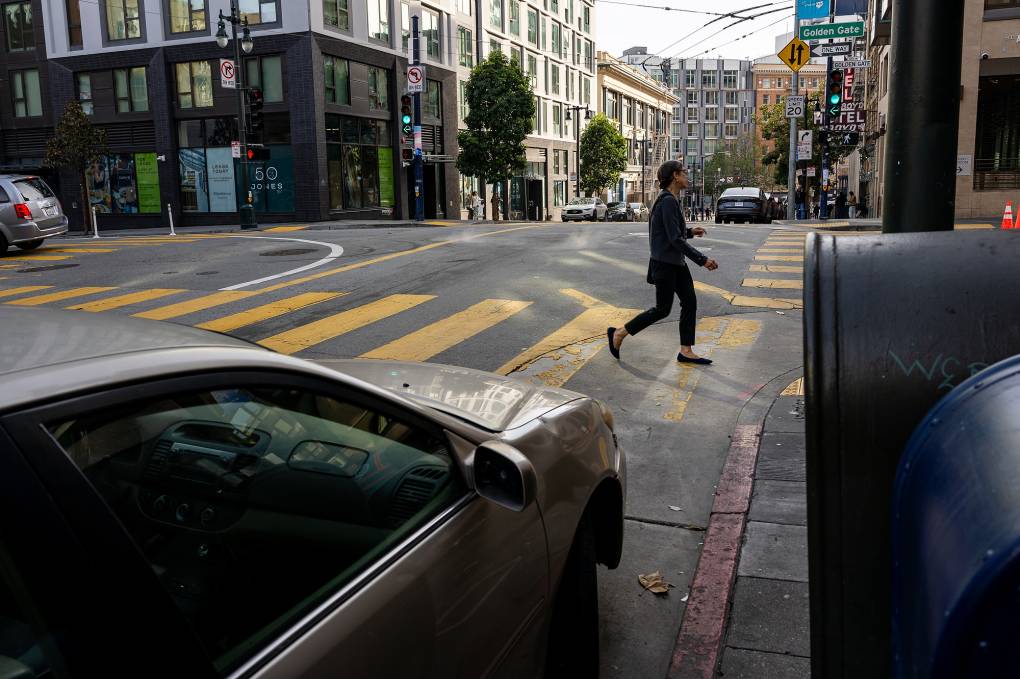
"caption": "A car is parked in a red zone at the intersection of Golden Gate Avenue and Jones Street in San Francisco on Dec. 18, 2024. The red curb designates a no-parking area to create more visibility at the intersection.",
"credit": "Beth LaBerge/KQED",
"altTag": null,
"description": null,
"imgSizes": {
"medium": {
"file": "https://cdn.kqed.org/wp-content/uploads/sites/10/2024/12/241218-DaylightingLaws-35-BL-800x533.jpg",
"width": 800,
"height": 533,
"mimeType": "image/jpeg"
},
"large": {
"file": "https://cdn.kqed.org/wp-content/uploads/sites/10/2024/12/241218-DaylightingLaws-35-BL-1020x679.jpg",
"width": 1020,
"height": 679,
"mimeType": "image/jpeg"
},
"thumbnail": {
"file": "https://cdn.kqed.org/wp-content/uploads/sites/10/2024/12/241218-DaylightingLaws-35-BL-160x107.jpg",
"width": 160,
"height": 107,
"mimeType": "image/jpeg"
},
"1536x1536": {
"file": "https://cdn.kqed.org/wp-content/uploads/sites/10/2024/12/241218-DaylightingLaws-35-BL-1536x1023.jpg",
"width": 1536,
"height": 1023,
"mimeType": "image/jpeg"
},
"post-thumbnail": {
"file": "https://cdn.kqed.org/wp-content/uploads/sites/10/2024/12/241218-DaylightingLaws-35-BL-672x372.jpg",
"width": 672,
"height": 372,
"mimeType": "image/jpeg"
},
"twentyfourteen-full-width": {
"file": "https://cdn.kqed.org/wp-content/uploads/sites/10/2024/12/241218-DaylightingLaws-35-BL-1038x576.jpg",
"width": 1038,
"height": 576,
"mimeType": "image/jpeg"
},
"full-width": {
"file": "https://cdn.kqed.org/wp-content/uploads/sites/10/2024/12/241218-DaylightingLaws-35-BL-1920x1279.jpg",
"width": 1920,
"height": 1279,
"mimeType": "image/jpeg"
},
"kqedFullSize": {
"file": "https://cdn.kqed.org/wp-content/uploads/sites/10/2024/12/241218-DaylightingLaws-35-BL.jpg",
"width": 2000,
"height": 1332
}
},
"isLoading": false,
"fetchFailed": false
},
"news_11983940": {
"type": "attachments",
"id": "news_11983940",
"meta": {
"index": "attachments_1716263798",
"site": "news",
"id": "11983940",
"found": true
},
"title": "2024_01-Fresno",
"publishDate": 1713988620,
"status": "inherit",
"parent": 11983907,
"modified": 1740184007,
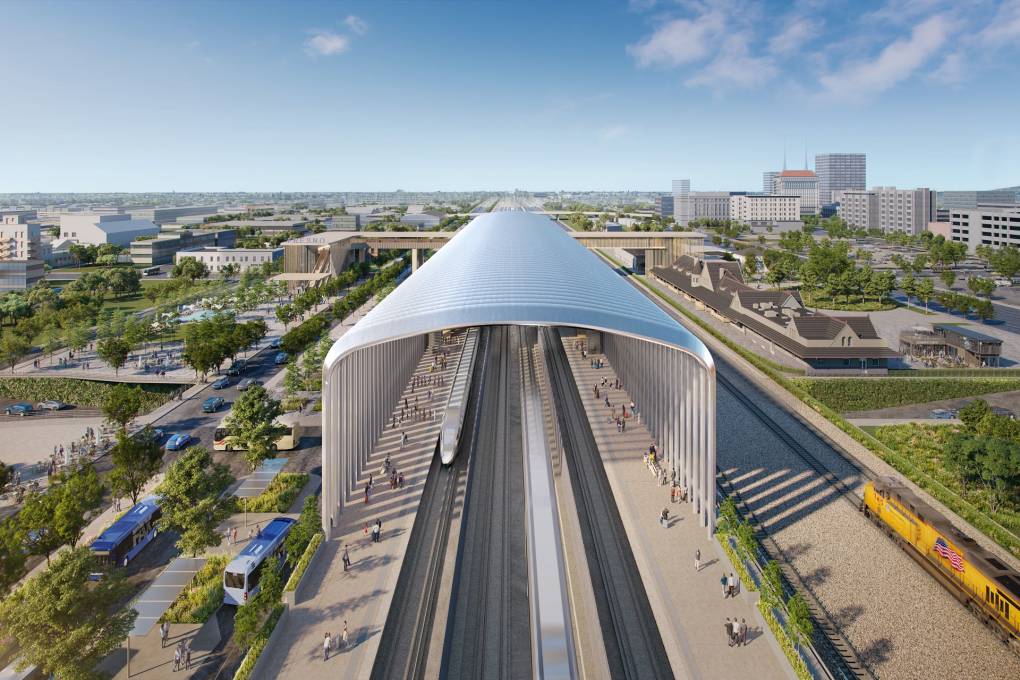
"caption": "A 2024 rendering of the high-speed rail station in Fresno.",
"credit": "Courtesy California High-Speed Rail Authority",
"altTag": null,
"description": null,
"imgSizes": {
"medium": {
"file": "https://cdn.kqed.org/wp-content/uploads/sites/10/2024/04/2024_01-Fresno-800x533.jpg",
"width": 800,
"height": 533,
"mimeType": "image/jpeg"
},
"large": {
"file": "https://cdn.kqed.org/wp-content/uploads/sites/10/2024/04/2024_01-Fresno-1020x680.jpg",
"width": 1020,
"height": 680,
"mimeType": "image/jpeg"
},
"thumbnail": {
"file": "https://cdn.kqed.org/wp-content/uploads/sites/10/2024/04/2024_01-Fresno-160x107.jpg",
"width": 160,
"height": 107,
"mimeType": "image/jpeg"
},
"1536x1536": {
"file": "https://cdn.kqed.org/wp-content/uploads/sites/10/2024/04/2024_01-Fresno-1536x1024.jpg",
"width": 1536,
"height": 1024,
"mimeType": "image/jpeg"
},
"post-thumbnail": {
"file": "https://cdn.kqed.org/wp-content/uploads/sites/10/2024/04/2024_01-Fresno-672x372.jpg",
"width": 672,
"height": 372,
"mimeType": "image/jpeg"
},
"twentyfourteen-full-width": {
"file": "https://cdn.kqed.org/wp-content/uploads/sites/10/2024/04/2024_01-Fresno-1038x576.jpg",
"width": 1038,
"height": 576,
"mimeType": "image/jpeg"
},
"kqedFullSize": {
"file": "https://cdn.kqed.org/wp-content/uploads/sites/10/2024/04/2024_01-Fresno.jpg",
"width": 1920,
"height": 1280
}
},
"isLoading": false,
"fetchFailed": false
},
"news_11913625": {
"type": "attachments",
"id": "news_11913625",
"meta": {
"index": "attachments_1716263798",
"site": "news",
"id": "11913625",
"found": true
},
"parent": 11913317,
"imgSizes": {
"twentyfourteen-full-width": {
"file": "https://ww2.kqed.org/app/uploads/sites/10/2022/05/IMG_7164-1038x576.jpeg",
"width": 1038,
"mimeType": "image/jpeg",
"height": 576
},
"thumbnail": {
"file": "https://ww2.kqed.org/app/uploads/sites/10/2022/05/IMG_7164-160x120.jpeg",
"width": 160,
"mimeType": "image/jpeg",
"height": 120
},
"post-thumbnail": {
"file": "https://ww2.kqed.org/app/uploads/sites/10/2022/05/IMG_7164-672x372.jpeg",
"width": 672,
"mimeType": "image/jpeg",
"height": 372
},
"kqedFullSize": {
"file": "https://ww2.kqed.org/app/uploads/sites/10/2022/05/IMG_7164-scaled-e1652127989772.jpeg",
"width": 1920,
"height": 1440
},
"2048x2048": {
"file": "https://ww2.kqed.org/app/uploads/sites/10/2022/05/IMG_7164-2048x1536.jpeg",
"width": 2048,
"mimeType": "image/jpeg",
"height": 1536
},
"large": {
"file": "https://ww2.kqed.org/app/uploads/sites/10/2022/05/IMG_7164-1020x765.jpeg",
"width": 1020,
"mimeType": "image/jpeg",
"height": 765
},
"1536x1536": {
"file": "https://ww2.kqed.org/app/uploads/sites/10/2022/05/IMG_7164-1536x1152.jpeg",
"width": 1536,
"mimeType": "image/jpeg",
"height": 1152
},
"full-width": {
"file": "https://ww2.kqed.org/app/uploads/sites/10/2022/05/IMG_7164-1920x1440.jpeg",
"width": 1920,
"mimeType": "image/jpeg",
"height": 1440
},
"medium": {
"file": "https://ww2.kqed.org/app/uploads/sites/10/2022/05/IMG_7164-800x600.jpeg",
"width": 800,
"mimeType": "image/jpeg",
"height": 600
}
},
"publishDate": 1652127841,
"modified": 1652133540,
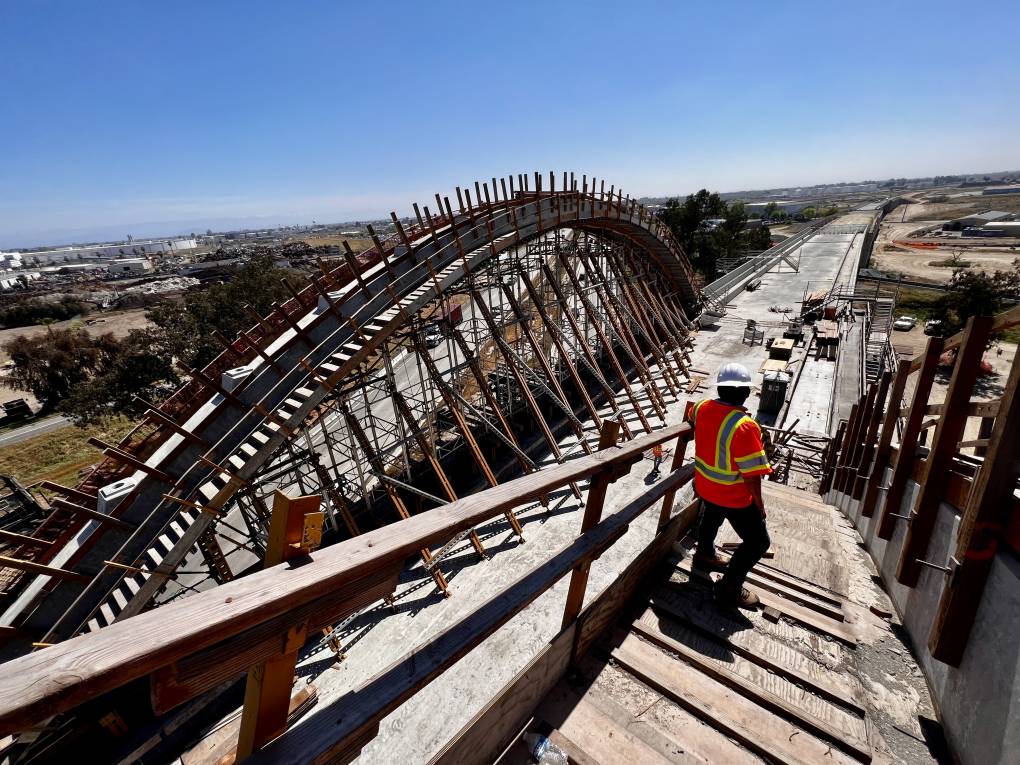
"caption": "A worker on the partially constructed Cedar Viaduct in Fresno in March. The 3,700-foot-long structure, with four massive arches, is part of California's high-speed rail project.",
"description": null,
"title": "IMG_7164",
"credit": "Saul Gonzalez/KQED",
"status": "inherit",
"altTag": "A construction worker walks down a steep bridge arch.",
"isLoading": false,
"fetchFailed": false
},
"news_12027779": {
"type": "attachments",
"id": "news_12027779",
"meta": {
"index": "attachments_1716263798",
"site": "news",
"id": "12027779",
"found": true
},
"title": "241217-DaylightingLaws-06-BL_qed",
"publishDate": 1740007578,
"status": "inherit",
"parent": 12027759,
"modified": 1740008998,
"caption": "A red curb indicates a no parking area near a crosswalk on Dolores and 16th streets in San Francisco on Dec. 17, 2024.",
"credit": "Beth LaBerge/KQED",
"altTag": null,
"description": null,
"imgSizes": {
"medium": {
"file": "https://cdn.kqed.org/wp-content/uploads/sites/10/2025/02/241217-DaylightingLaws-06-BL_qed-800x533.jpg",
"width": 800,
"height": 533,
"mimeType": "image/jpeg"
},
"large": {
"file": "https://cdn.kqed.org/wp-content/uploads/sites/10/2025/02/241217-DaylightingLaws-06-BL_qed-1020x680.jpg",
"width": 1020,
"height": 680,
"mimeType": "image/jpeg"
},
"thumbnail": {
"file": "https://cdn.kqed.org/wp-content/uploads/sites/10/2025/02/241217-DaylightingLaws-06-BL_qed-160x107.jpg",
"width": 160,
"height": 107,
"mimeType": "image/jpeg"
},
"1536x1536": {
"file": "https://cdn.kqed.org/wp-content/uploads/sites/10/2025/02/241217-DaylightingLaws-06-BL_qed-1536x1024.jpg",
"width": 1536,
"height": 1024,
"mimeType": "image/jpeg"
},
"post-thumbnail": {
"file": "https://cdn.kqed.org/wp-content/uploads/sites/10/2025/02/241217-DaylightingLaws-06-BL_qed-672x372.jpg",
"width": 672,
"height": 372,
"mimeType": "image/jpeg"
},
"twentyfourteen-full-width": {
"file": "https://cdn.kqed.org/wp-content/uploads/sites/10/2025/02/241217-DaylightingLaws-06-BL_qed-1038x576.jpg",
"width": 1038,
"height": 576,
"mimeType": "image/jpeg"
},
"full-width": {
"file": "https://cdn.kqed.org/wp-content/uploads/sites/10/2025/02/241217-DaylightingLaws-06-BL_qed-1920x1280.jpg",
"width": 1920,
"height": 1280,
"mimeType": "image/jpeg"
},
"kqedFullSize": {
"file": "https://cdn.kqed.org/wp-content/uploads/sites/10/2025/02/241217-DaylightingLaws-06-BL_qed.jpg",
"width": 2000,
"height": 1333
}
},
"isLoading": false,
"fetchFailed": false
},
"news_11967918": {
"type": "attachments",
"id": "news_11967918",
"meta": {
"index": "attachments_1716263798",
"site": "news",
"id": "11967918",
"found": true
},
"parent": 11967917,
"imgSizes": {
"thumbnail": {
"file": "https://ww2.kqed.org/app/uploads/sites/10/2023/11/gettyimages-1245034839-4e70518b157c59982b247bd973771364284a3466-160x120.jpg",
"width": 160,
"mimeType": "image/jpeg",
"height": 120
},
"post-thumbnail": {
"file": "https://ww2.kqed.org/app/uploads/sites/10/2023/11/gettyimages-1245034839-4e70518b157c59982b247bd973771364284a3466-672x372.jpg",
"width": 672,
"mimeType": "image/jpeg",
"height": 372
},
"kqedFullSize": {
"file": "https://ww2.kqed.org/app/uploads/sites/10/2023/11/gettyimages-1245034839-4e70518b157c59982b247bd973771364284a3466.jpg",
"width": 756,
"height": 567
}
},
"publishDate": 1700511028,
"modified": 1700600976,
"caption": "United Air Lines planes are seen on the tarmac of Newark Liberty International Airport (EWR), New Jersey, on the eve of Thanksgiving on Nov. 23, 2022.",
"description": "United Air Lines planes are seen on the tarmac of Newark Liberty International Airport (EWR), New Jersey, on the eve of Thanksgiving on November 23, 2022.",
"title": "United Air Lines planes line up along the busy Newark Liberty International Airport, New Jersey, on the eve of Thanksgiving on November 23, 2022.",
"credit": "Daniel Slim/AFP via Getty Images",
"status": "inherit",
"altTag": "Airplanes are on a tarmac. A city skyline is seen in the background. One plane has the word United in blue on its side.",
"isLoading": false,
"fetchFailed": false
},
"news_12024959": {
"type": "attachments",
"id": "news_12024959",
"meta": {
"index": "attachments_1716263798",
"site": "news",
"id": "12024959",
"found": true
},
"title": "240224-ChineseNYParade-38-BL_qed",
"publishDate": 1738280429,
"status": "inherit",
"parent": 12024779,
"modified": 1738280447,
"caption": "Lisa Performing Arts perform during the Chinese New Year Parade in San Francisco on Feb. 24, 2024.",
"credit": "Beth LaBerge/KQED",
"altTag": null,
"description": null,
"imgSizes": {
"medium": {
"file": "https://cdn.kqed.org/wp-content/uploads/sites/10/2026/01/240224-ChineseNYParade-38-BL_qed-800x533.jpg",
"width": 800,
"height": 533,
"mimeType": "image/jpeg"
},
"large": {
"file": "https://cdn.kqed.org/wp-content/uploads/sites/10/2026/01/240224-ChineseNYParade-38-BL_qed-1020x680.jpg",
"width": 1020,
"height": 680,
"mimeType": "image/jpeg"
},
"thumbnail": {
"file": "https://cdn.kqed.org/wp-content/uploads/sites/10/2026/01/240224-ChineseNYParade-38-BL_qed-160x107.jpg",
"width": 160,
"height": 107,
"mimeType": "image/jpeg"
},
"1536x1536": {
"file": "https://cdn.kqed.org/wp-content/uploads/sites/10/2026/01/240224-ChineseNYParade-38-BL_qed-1536x1024.jpg",
"width": 1536,
"height": 1024,
"mimeType": "image/jpeg"
},
"post-thumbnail": {
"file": "https://cdn.kqed.org/wp-content/uploads/sites/10/2026/01/240224-ChineseNYParade-38-BL_qed-672x372.jpg",
"width": 672,
"height": 372,
"mimeType": "image/jpeg"
},
"twentyfourteen-full-width": {
"file": "https://cdn.kqed.org/wp-content/uploads/sites/10/2026/01/240224-ChineseNYParade-38-BL_qed-1038x576.jpg",
"width": 1038,
"height": 576,
"mimeType": "image/jpeg"
},
"full-width": {
"file": "https://cdn.kqed.org/wp-content/uploads/sites/10/2026/01/240224-ChineseNYParade-38-BL_qed-1920x1280.jpg",
"width": 1920,
"height": 1280,
"mimeType": "image/jpeg"
},
"kqedFullSize": {
"file": "https://cdn.kqed.org/wp-content/uploads/sites/10/2026/01/240224-ChineseNYParade-38-BL_qed.jpg",
"width": 1999,
"height": 1333
}
},
"isLoading": false,
"fetchFailed": false
},
"news_11910896": {
"type": "attachments",
"id": "news_11910896",
"meta": {
"index": "attachments_1716263798",
"site": "news",
"id": "11910896",
"found": true
},
"parent": 11910890,
"imgSizes": {
"twentyfourteen-full-width": {
"file": "https://ww2.kqed.org/app/uploads/sites/10/2022/04/16thStreetStationOakland_02162022-qut-1038x576.jpg",
"width": 1038,
"mimeType": "image/jpeg",
"height": 576
},
"thumbnail": {
"file": "https://ww2.kqed.org/app/uploads/sites/10/2022/04/16thStreetStationOakland_02162022-qut-160x107.jpg",
"width": 160,
"mimeType": "image/jpeg",
"height": 107
},
"post-thumbnail": {
"file": "https://ww2.kqed.org/app/uploads/sites/10/2022/04/16thStreetStationOakland_02162022-qut-672x372.jpg",
"width": 672,
"mimeType": "image/jpeg",
"height": 372
},
"kqedFullSize": {
"file": "https://ww2.kqed.org/app/uploads/sites/10/2022/04/16thStreetStationOakland_02162022-qut.jpg",
"width": 1920,
"height": 1280
},
"large": {
"file": "https://ww2.kqed.org/app/uploads/sites/10/2022/04/16thStreetStationOakland_02162022-qut-1020x680.jpg",
"width": 1020,
"mimeType": "image/jpeg",
"height": 680
},
"1536x1536": {
"file": "https://ww2.kqed.org/app/uploads/sites/10/2022/04/16thStreetStationOakland_02162022-qut-1536x1024.jpg",
"width": 1536,
"mimeType": "image/jpeg",
"height": 1024
},
"medium": {
"file": "https://ww2.kqed.org/app/uploads/sites/10/2022/04/16thStreetStationOakland_02162022-qut-800x533.jpg",
"width": 800,
"mimeType": "image/jpeg",
"height": 533
}
},
"publishDate": 1649789007,
"modified": 1649789048,
"caption": "16th Street Station in West Oakland on Feb. 16, 2022.",
"description": null,
"title": "16th Street Station in West Oakland on Feb. 16, 2022.",
"credit": "Beth LaBerge/KQED",
"status": "inherit",
"altTag": "A huge, imposing stone building sits in a vacant lot. It has three massive arched windows and a terracotta roof.",
"isLoading": false,
"fetchFailed": false
},
"news_12014822": {
"type": "attachments",
"id": "news_12014822",
"meta": {
"index": "attachments_1716263798",
"site": "news",
"id": "12014822",
"found": true
},
"title": "A BART train stops at the Montgomery Station in San Francisco on Jan. 11, 2024.",
"publishDate": 1731805266,
"status": "inherit",
"parent": 12014817,
"modified": 1731960959,
"caption": "A BART train stops at the Montgomery Station in San Francisco on Jan. 11, 2024.",
"credit": "Beth LaBerge/KQED",
"altTag": "People get out of the train as it stops at a platform.",
"description": null,
"imgSizes": {
"medium": {
"file": "https://cdn.kqed.org/wp-content/uploads/sites/10/2024/11/240111-TransitFile-11-BL_qed-800x533.jpg",
"width": 800,
"height": 533,
"mimeType": "image/jpeg"
},
"large": {
"file": "https://cdn.kqed.org/wp-content/uploads/sites/10/2024/11/240111-TransitFile-11-BL_qed-1020x680.jpg",
"width": 1020,
"height": 680,
"mimeType": "image/jpeg"
},
"thumbnail": {
"file": "https://cdn.kqed.org/wp-content/uploads/sites/10/2024/11/240111-TransitFile-11-BL_qed-160x107.jpg",
"width": 160,
"height": 107,
"mimeType": "image/jpeg"
},
"1536x1536": {
"file": "https://cdn.kqed.org/wp-content/uploads/sites/10/2024/11/240111-TransitFile-11-BL_qed-1536x1024.jpg",
"width": 1536,
"height": 1024,
"mimeType": "image/jpeg"
},
"post-thumbnail": {
"file": "https://cdn.kqed.org/wp-content/uploads/sites/10/2024/11/240111-TransitFile-11-BL_qed-672x372.jpg",
"width": 672,
"height": 372,
"mimeType": "image/jpeg"
},
"twentyfourteen-full-width": {
"file": "https://cdn.kqed.org/wp-content/uploads/sites/10/2024/11/240111-TransitFile-11-BL_qed-1038x576.jpg",
"width": 1038,
"height": 576,
"mimeType": "image/jpeg"
},
"full-width": {
"file": "https://cdn.kqed.org/wp-content/uploads/sites/10/2024/11/240111-TransitFile-11-BL_qed-1920x1280.jpg",
"width": 1920,
"height": 1280,
"mimeType": "image/jpeg"
},
"kqedFullSize": {
"file": "https://cdn.kqed.org/wp-content/uploads/sites/10/2024/11/240111-TransitFile-11-BL_qed.jpg",
"width": 2000,
"height": 1333
}
},
"isLoading": false,
"fetchFailed": false
},
"news_12006908": {
"type": "attachments",
"id": "news_12006908",
"meta": {
"index": "attachments_1716263798",
"site": "news",
"id": "12006908",
"found": true
},
"title": "Coyote (Canis latrans), Bernal Heights, San Francisco, California, United States, North America",
"publishDate": 1727470577,
"status": "inherit",
"parent": 12006902,
"modified": 1727470627,
"caption": "Parks officials with the Golden Gate National Recreation Area are warning dog owners to be careful after several reports of dogs being attacked by coyotes at Crissy Field, including three deaths in 10 days.",
"credit": "Jouko van der Kruijssen/Getty Images",
"altTag": null,
"description": null,
"imgSizes": {
"medium": {
"file": "https://cdn.kqed.org/wp-content/uploads/sites/10/2024/09/CoyoteGetty-800x640.jpg",
"width": 800,
"height": 640,
"mimeType": "image/jpeg"
},
"large": {
"file": "https://cdn.kqed.org/wp-content/uploads/sites/10/2024/09/CoyoteGetty-1020x816.jpg",
"width": 1020,
"height": 816,
"mimeType": "image/jpeg"
},
"thumbnail": {
"file": "https://cdn.kqed.org/wp-content/uploads/sites/10/2024/09/CoyoteGetty-160x128.jpg",
"width": 160,
"height": 128,
"mimeType": "image/jpeg"
},
"1536x1536": {
"file": "https://cdn.kqed.org/wp-content/uploads/sites/10/2024/09/CoyoteGetty-1536x1229.jpg",
"width": 1536,
"height": 1229,
"mimeType": "image/jpeg"
},
"post-thumbnail": {
"file": "https://cdn.kqed.org/wp-content/uploads/sites/10/2024/09/CoyoteGetty-672x372.jpg",
"width": 672,
"height": 372,
"mimeType": "image/jpeg"
},
"twentyfourteen-full-width": {
"file": "https://cdn.kqed.org/wp-content/uploads/sites/10/2024/09/CoyoteGetty-1038x576.jpg",
"width": 1038,
"height": 576,
"mimeType": "image/jpeg"
},
"full-width": {
"file": "https://cdn.kqed.org/wp-content/uploads/sites/10/2024/09/CoyoteGetty-1920x1536.jpg",
"width": 1920,
"height": 1536,
"mimeType": "image/jpeg"
},
"kqedFullSize": {
"file": "https://cdn.kqed.org/wp-content/uploads/sites/10/2024/09/CoyoteGetty.jpg",
"width": 2000,
"height": 1600
}
},
"isLoading": false,
"fetchFailed": false
},
"news_12025783": {
"type": "attachments",
"id": "news_12025783",
"meta": {
"index": "attachments_1716263798",
"site": "news",
"id": "12025783",
"found": true
},
"title": "Muni",
"publishDate": 1738781091,
"status": "inherit",
"parent": 12025781,
"modified": 1738781131,
"caption": "The K Line arrives at West Portal Station in San Francisco on Tuesday, Nov. 28, 2023.",
"credit": "Juliana Yamada/KQED",
"altTag": null,
"description": null,
"imgSizes": {
"medium": {
"file": "https://cdn.kqed.org/wp-content/uploads/sites/10/2025/02/20231128-Muni-023-JY_qed-800x533.jpg",
"width": 800,
"height": 533,
"mimeType": "image/jpeg"
},
"large": {
"file": "https://cdn.kqed.org/wp-content/uploads/sites/10/2025/02/20231128-Muni-023-JY_qed-1020x680.jpg",
"width": 1020,
"height": 680,
"mimeType": "image/jpeg"
},
"thumbnail": {
"file": "https://cdn.kqed.org/wp-content/uploads/sites/10/2025/02/20231128-Muni-023-JY_qed-160x107.jpg",
"width": 160,
"height": 107,
"mimeType": "image/jpeg"
},
"1536x1536": {
"file": "https://cdn.kqed.org/wp-content/uploads/sites/10/2025/02/20231128-Muni-023-JY_qed-1536x1024.jpg",
"width": 1536,
"height": 1024,
"mimeType": "image/jpeg"
},
"post-thumbnail": {
"file": "https://cdn.kqed.org/wp-content/uploads/sites/10/2025/02/20231128-Muni-023-JY_qed-672x372.jpg",
"width": 672,
"height": 372,
"mimeType": "image/jpeg"
},
"twentyfourteen-full-width": {
"file": "https://cdn.kqed.org/wp-content/uploads/sites/10/2025/02/20231128-Muni-023-JY_qed-1038x576.jpg",
"width": 1038,
"height": 576,
"mimeType": "image/jpeg"
},
"full-width": {
"file": "https://cdn.kqed.org/wp-content/uploads/sites/10/2025/02/20231128-Muni-023-JY_qed-1920x1280.jpg",
"width": 1920,
"height": 1280,
"mimeType": "image/jpeg"
},
"kqedFullSize": {
"file": "https://cdn.kqed.org/wp-content/uploads/sites/10/2025/02/20231128-Muni-023-JY_qed.jpg",
"width": 2000,
"height": 1333
}
},
"isLoading": false,
"fetchFailed": false
},
"news_12025203": {
"type": "attachments",
"id": "news_12025203",
"meta": {
"index": "attachments_1716263798",
"site": "news",
"id": "12025203",
"found": true
},
"title": "241218-DaylightingLaws-29-BL_qed",
"publishDate": 1738366640,
"status": "inherit",
"parent": 12025187,
"modified": 1738366659,
"caption": "A red curb designates a no-parking area at the intersection of Sutter and Leavenworth Streets in San Francisco on Dec. 18, 2024.",
"credit": "Beth LaBerge/KQED",
"altTag": null,
"description": null,
"imgSizes": {
"medium": {
"file": "https://cdn.kqed.org/wp-content/uploads/sites/10/2025/02/241218-DaylightingLaws-29-BL_qed-800x533.jpg",
"width": 800,
"height": 533,
"mimeType": "image/jpeg"
},
"large": {
"file": "https://cdn.kqed.org/wp-content/uploads/sites/10/2025/02/241218-DaylightingLaws-29-BL_qed-1020x680.jpg",
"width": 1020,
"height": 680,
"mimeType": "image/jpeg"
},
"thumbnail": {
"file": "https://cdn.kqed.org/wp-content/uploads/sites/10/2025/02/241218-DaylightingLaws-29-BL_qed-160x107.jpg",
"width": 160,
"height": 107,
"mimeType": "image/jpeg"
},
"1536x1536": {
"file": "https://cdn.kqed.org/wp-content/uploads/sites/10/2025/02/241218-DaylightingLaws-29-BL_qed-1536x1024.jpg",
"width": 1536,
"height": 1024,
"mimeType": "image/jpeg"
},
"post-thumbnail": {
"file": "https://cdn.kqed.org/wp-content/uploads/sites/10/2025/02/241218-DaylightingLaws-29-BL_qed-672x372.jpg",
"width": 672,
"height": 372,
"mimeType": "image/jpeg"
},
"twentyfourteen-full-width": {
"file": "https://cdn.kqed.org/wp-content/uploads/sites/10/2025/02/241218-DaylightingLaws-29-BL_qed-1038x576.jpg",
"width": 1038,
"height": 576,
"mimeType": "image/jpeg"
},
"full-width": {
"file": "https://cdn.kqed.org/wp-content/uploads/sites/10/2025/02/241218-DaylightingLaws-29-BL_qed-1920x1280.jpg",
"width": 1920,
"height": 1280,
"mimeType": "image/jpeg"
},
"kqedFullSize": {
"file": "https://cdn.kqed.org/wp-content/uploads/sites/10/2025/02/241218-DaylightingLaws-29-BL_qed.jpg",
"width": 1999,
"height": 1333
}
},
"isLoading": false,
"fetchFailed": false
},
"news_12024826": {
"type": "attachments",
"id": "news_12024826",
"meta": {
"index": "attachments_1716263798",
"site": "news",
"id": "12024826",
"found": true
},
"title": "015_KQED_16thStreetStationOakland_02162022_qed (1)",
"publishDate": 1738261806,
"status": "inherit",
"parent": 12024819,
"modified": 1738261818,
"caption": "Light shines through windows in the Main Hall of the now abandoned 16th Street Station in West Oakland on Feb. 16, 2022.",
"credit": "Beth LaBerge/KQED",
"altTag": null,
"description": null,
"imgSizes": {
"medium": {
"file": "https://cdn.kqed.org/wp-content/uploads/sites/10/2025/01/015_KQED_16thStreetStationOakland_02162022_qed-1-800x533.jpg",
"width": 800,
"height": 533,
"mimeType": "image/jpeg"
},
"large": {
"file": "https://cdn.kqed.org/wp-content/uploads/sites/10/2025/01/015_KQED_16thStreetStationOakland_02162022_qed-1-1020x680.jpg",
"width": 1020,
"height": 680,
"mimeType": "image/jpeg"
},
"thumbnail": {
"file": "https://cdn.kqed.org/wp-content/uploads/sites/10/2025/01/015_KQED_16thStreetStationOakland_02162022_qed-1-160x107.jpg",
"width": 160,
"height": 107,
"mimeType": "image/jpeg"
},
"1536x1536": {
"file": "https://cdn.kqed.org/wp-content/uploads/sites/10/2025/01/015_KQED_16thStreetStationOakland_02162022_qed-1-1536x1024.jpg",
"width": 1536,
"height": 1024,
"mimeType": "image/jpeg"
},
"post-thumbnail": {
"file": "https://cdn.kqed.org/wp-content/uploads/sites/10/2025/01/015_KQED_16thStreetStationOakland_02162022_qed-1-672x372.jpg",
"width": 672,
"height": 372,
"mimeType": "image/jpeg"
},
"twentyfourteen-full-width": {
"file": "https://cdn.kqed.org/wp-content/uploads/sites/10/2025/01/015_KQED_16thStreetStationOakland_02162022_qed-1-1038x576.jpg",
"width": 1038,
"height": 576,
"mimeType": "image/jpeg"
},
"full-width": {
"file": "https://cdn.kqed.org/wp-content/uploads/sites/10/2025/01/015_KQED_16thStreetStationOakland_02162022_qed-1-1920x1280.jpg",
"width": 1920,
"height": 1280,
"mimeType": "image/jpeg"
},
"kqedFullSize": {
"file": "https://cdn.kqed.org/wp-content/uploads/sites/10/2025/01/015_KQED_16thStreetStationOakland_02162022_qed-1.jpg",
"width": 2000,
"height": 1333
}
},
"isLoading": false,
"fetchFailed": false
}
},
"audioPlayerReducer": {
"postId": "stream_live",
"isPaused": true,
"isPlaying": false,
"pfsActive": false,
"pledgeModalIsOpen": true,
"playerDrawerIsOpen": false,
"liveAudioPlayStartedAt": 0,
"liveAudioPlayContext": ""
},
"authorsReducer": {
"byline_news_12027947": {
"type": "authors",
"id": "byline_news_12027947",
"meta": {
"override": true
},
"slug": "byline_news_12027947",
"name": "The Associated Press",
"isLoading": false
},
"byline_news_12027453": {
"type": "authors",
"id": "byline_news_12027453",
"meta": {
"override": true
},
"slug": "byline_news_12027453",
"name": "Tara Copp, Associated Press",
"isLoading": false
},
"danbrekke": {
"type": "authors",
"id": "222",
"meta": {
"index": "authors_1716337520",
"id": "222",
"found": true
},
"name": "Dan Brekke",
"firstName": "Dan",
"lastName": "Brekke",
"slug": "danbrekke",
"email": "dbrekke@kqed.org",
"display_author_email": true,
"staff_mastheads": [
"news",
"science"
],
"title": "KQED Editor and Reporter",
"bio": "Dan Brekke is a reporter and editor for KQED News, responsible for coverage of topics ranging from California water issues to the Bay Area's transportation challenges. In a newsroom career that began in Chicago in 1972, Dan has worked for \u003cem>The San Francisco Examiner,\u003c/em> Wired and TechTV and has been published in The New York Times, The New York Times Magazine, Business 2.0, Salon and elsewhere.\r\n\r\nSince joining KQED in 2007, Dan has reported, edited and produced both radio and online features and breaking news pieces. He has shared as both editor and reporter in four Society of Professional Journalists Norcal Excellence in Journalism awards and one Edward R. Murrow regional award. He was chosen for a spring 2017 residency at the Mesa Refuge to advance his research on California salmon.\r\n\r\nEmail Dan at: \u003ca href=\"mailto:dbrekke@kqed.org\">dbrekke@kqed.org\u003c/a>\r\n\r\n\u003cstrong>Twitter:\u003c/strong> \u003ca href=\"https://twitter.com/danbrekke\" rel=\"noopener noreferrer\">twitter.com/danbrekke\u003c/a>\r\n\u003cstrong>Facebook:\u003c/strong> \u003ca href=\"https://www.facebook.com/danbrekke\" rel=\"noopener noreferrer\">www.facebook.com/danbrekke\u003c/a>\r\n\u003cstrong>LinkedIn:\u003c/strong> \u003ca href=\"https://www.linkedin.com/in/danbrekke\" rel=\"noopener noreferrer\">www.linkedin.com/in/danbrekke\u003c/a>",
"avatar": "https://secure.gravatar.com/avatar/c8126230345efca3f7aa89b1a402be45?s=600&d=mm&r=g",
"twitter": "danbrekke",
"facebook": null,
"instagram": "https://www.instagram.com/dan.brekke/",
"linkedin": "https://www.linkedin.com/in/danbrekke/",
"sites": [
{
"site": "news",
"roles": [
"administrator",
"create_posts"
]
},
{
"site": "stateofhealth",
"roles": [
"editor"
]
},
{
"site": "science",
"roles": [
"editor"
]
},
{
"site": "quest",
"roles": [
"contributor"
]
},
{
"site": "food",
"roles": [
"contributor"
]
},
{
"site": "forum",
"roles": [
"contributor"
]
},
{
"site": "liveblog",
"roles": [
"editor"
]
}
],
"headData": {
"title": "Dan Brekke | KQED",
"description": "KQED Editor and Reporter",
"ogImgSrc": "https://secure.gravatar.com/avatar/c8126230345efca3f7aa89b1a402be45?s=600&d=mm&r=g",
"twImgSrc": "https://secure.gravatar.com/avatar/c8126230345efca3f7aa89b1a402be45?s=600&d=mm&r=g"
},
"isLoading": false,
"link": "/author/danbrekke"
},
"adahlstromeckman": {
"type": "authors",
"id": "11785",
"meta": {
"index": "authors_1716337520",
"id": "11785",
"found": true
},
"name": "Azul Dahlstrom-Eckman",
"firstName": "Azul",
"lastName": "Dahlstrom-Eckman",
"slug": "adahlstromeckman",
"email": "adahlstrom-eckman@kqed.org",
"display_author_email": true,
"staff_mastheads": [],
"title": "Reporter",
"bio": "Azul is a reporter for KQED focusing on transportation and features. He joined KQED in 2021 as an alumna of KALW's Audio Academy radio journalism training program.",
"avatar": "https://secure.gravatar.com/avatar/9cb750298435add7815a777f55bf1f46845c1386bb8452555c60a7b820b5aba3?s=600&d=blank&r=g",
"twitter": "@zuliemann",
"bluesky": "@azul415.bsky.social",
"facebook": null,
"instagram": null,
"linkedin": null,
"sites": [
{
"site": "arts",
"roles": [
"editor"
]
},
{
"site": "news",
"roles": [
"editor"
]
},
{
"site": "science",
"roles": [
"editor"
]
},
{
"site": "liveblog",
"roles": [
"author"
]
}
],
"headData": {
"title": "Azul Dahlstrom-Eckman | KQED",
"description": "Reporter",
"ogImgSrc": "https://secure.gravatar.com/avatar/9cb750298435add7815a777f55bf1f46845c1386bb8452555c60a7b820b5aba3?s=600&d=blank&r=g",
"twImgSrc": "https://secure.gravatar.com/avatar/9cb750298435add7815a777f55bf1f46845c1386bb8452555c60a7b820b5aba3?s=600&d=blank&r=g"
},
"isLoading": false,
"link": "/author/adahlstromeckman"
},
"nkhan": {
"type": "authors",
"id": "11867",
"meta": {
"index": "authors_1716337520",
"id": "11867",
"found": true
},
"name": "Nisa Khan",
"firstName": "Nisa",
"lastName": "Khan",
"slug": "nkhan",
"email": "nkhan@kqed.org",
"display_author_email": false,
"staff_mastheads": [],
"title": "KQED Contributor",
"bio": "Nisa Khan is a reporter for KQED's Audience News Desk. She was formerly a data reporter at Michigan Radio. She earned a Bachelor of Science in Information from the University of Michigan and a Master of Arts in Communication from Stanford University.",
"avatar": "https://secure.gravatar.com/avatar/a3bf1efcfbe7658d13a434cc54d0b2e3?s=600&d=blank&r=g",
"twitter": "mnisakhan",
"bluesky": null,
"facebook": null,
"instagram": null,
"linkedin": null,
"sites": [
{
"site": "arts",
"roles": [
"editor"
]
},
{
"site": "news",
"roles": [
"editor"
]
},
{
"site": "science",
"roles": [
"editor",
"author"
]
},
{
"site": "forum",
"roles": [
"editor"
]
},
{
"site": "liveblog",
"roles": [
"contributor"
]
}
],
"headData": {
"title": "Nisa Khan | KQED",
"description": "KQED Contributor",
"ogImgSrc": "https://secure.gravatar.com/avatar/a3bf1efcfbe7658d13a434cc54d0b2e3?s=600&d=blank&r=g",
"twImgSrc": "https://secure.gravatar.com/avatar/a3bf1efcfbe7658d13a434cc54d0b2e3?s=600&d=blank&r=g"
},
"isLoading": false,
"link": "/author/nkhan"
}
},
"pagesReducer": {
"news_tag_transportation": {
"type": "terms",
"id": "news_20517",
"meta": {
"index": "terms_1716263798",
"site": "news",
"id": "20517",
"score": 8.934093
},
"featImg": null,
"name": "transportation",
"description": null,
"taxonomy": "tag",
"headData": {
"twImgId": null,
"twTitle": null,
"ogTitle": null,
"ogImgId": null,
"twDescription": null,
"description": null,
"title": "transportation Archives | KQED News",
"ogDescription": null
},
"ttid": 20534,
"slug": "transportation",
"isLoading": false,
"title": "transportation",
"pageMeta": {
"site": "news",
"WpPageTemplate": "page-topic-editorial",
"currentPage": 16
},
"blocks": [
{
"blockName": "kqed/post-list",
"attrs": {
"layout": "cardArticle2",
"query": "posts/news?tag=transportation",
"seeMore": false,
"paginated": true,
"page": 16
}
},
{
"blockName": "kqed/ad"
}
]
}
},
"pfsSessionReducer": {},
"postsReducer": {
"stream_live": {
"type": "live",
"id": "stream_live",
"audioUrl": "https://streams.kqed.org/kqedradio",
"title": "Live Stream",
"excerpt": "Live Stream information currently unavailable.",
"link": "/radio",
"featImg": "",
"label": {
"name": "KQED Live",
"link": "/"
}
},
"stream_kqedNewscast": {
"type": "posts",
"id": "stream_kqedNewscast",
"audioUrl": "https://www.kqed.org/.stream/anon/radio/RDnews/newscast.mp3?_=1",
"title": "KQED Newscast",
"featImg": "",
"label": {
"name": "88.5 FM",
"link": "/"
}
},
"news_12028846": {
"type": "posts",
"id": "news_12028846",
"meta": {
"index": "posts_1716263798",
"site": "news",
"id": "12028846",
"score": null,
"sort": [
1740657633000
]
},
"guestAuthors": [],
"slug": "the-numbers-behind-san-franciscos-illegally-painted-curb-problem",
"title": "Here's the Data Behind San Francisco's Illegally Painted Curb Problem",
"publishDate": 1740657633,
"format": "standard",
"headTitle": "Here’s the Data Behind San Francisco’s Illegally Painted Curb Problem | KQED",
"labelTerm": {
"site": "news"
},
"content": "\u003cp>A mysterious person who illegally paints curbs red and peppers parked cars with towing-threat notes handwritten on official San Francisco Municipal Transportation Agency envelopes.\u003c/p>\n\u003cp>Curbs that mysteriously turn red — or sometimes even pink or purple — overnight.\u003c/p>\n\u003cp>These are just some of the nearly 140 illegal curb-painting complaints that San Francisco residents have called in or submitted to the city’s 311 \u003ca href=\"https://www.sf.gov/report-illegal-color-curb-painting\">online portal\u003c/a> from mid-June 2024 through January 2025, according to a KQED data analysis. The complaints underscore the frustration and confusion many residents experience when their neighbors take the task of curb painting into their own hands.\u003c/p>\n\u003cp>The complaints include terms like “fake,” “illegal, “and “unauthorized.” KQED’s analysis also identified multiple instances of repeated complaints from the same address but only counted each address once for the final tally.\u003c/p>\n\u003cp>Of nearly three dozen neighborhoods included in the data from 311 — the nonemergency phone number for city services — the Mission District had the highest number of complaints about illegally painted curbs, with a total of 17 over the seven-and-a-half month period.\u003c/p>\n\u003cp>[ad fullwidth]\u003c/p>\n\u003cp>\u003c!-- iframe plugin v.4.3 wordpress.org/plugins/iframe/ -->\u003cbr>\n\u003ciframe loading=\"lazy\" title=\"Complaints by SF neighborhood\" aria-label=\"Multiple Columns\" id=\"datawrapper-chart-RcKiW\" src=\"https://datawrapper.dwcdn.net/RcKiW/4/\" scrolling=\"no\" frameborder=\"0\" style=\"border: none;\" width=\"956\" height=\"523\" data-external=\"1\" class=\"iframe-class\">\u003c/iframe>\u003c/p>\n\u003cp>“This morning, I found vehicles blocking my driveway again,” reads one entry. “The curb had been painted grey by someone, and now vehicles are taking the liberty of blocking my driveway. It’s getting very tiring to have to call parking enforcement on a daily basis.”\u003c/p>\n\u003cp>The issue of illegally painted curbs garnered \u003ca href=\"https://www.kqed.org/news/12025187/fake-red-zones-cause-confusion-for-san-francisco-drivers\">citywide attention\u003c/a> in January, when SFMTA — the agency responsible for responding to those complaints — confirmed that some curbs in the vicinity of 18th and 19th avenues and Balboa Street in the Outer Richmond District had been illegally painted overnight, in what a number of local residents presumed to be an attempt by a rogue painter to help enforce the state’s new \u003ca href=\"https://www.kqed.org/news/12019725/daylighting-laws-will-be-enforced-in-the-bay-area-in-2025-heres-how-to-avoid-a-ticket\">daylighting law\u003c/a>.\u003c/p>\n\u003cp>\u003c!-- iframe plugin v.4.3 wordpress.org/plugins/iframe/ -->\u003cbr>\n\u003ciframe loading=\"lazy\" title=\"7 months of curb complaints in San Francisco (6/24 to 1/25)\" aria-label=\"Map\" id=\"datawrapper-chart-FeLP4\" src=\"https://datawrapper.dwcdn.net/FeLP4/3/\" scrolling=\"no\" frameborder=\"0\" style=\"border: none;\" width=\"1000\" height=\"681\" data-external=\"1\" class=\"iframe-class\">\u003c/iframe>\u003c/p>\n\u003cp>\u003ca href=\"https://leginfo.legislature.ca.gov/faces/billTextClient.xhtml?bill_id=202320240AB413\">AB 413\u003c/a>, commonly known as the “daylighting law,” went into effect in January. It allows municipalities to fine drivers for parking their cars within 20 feet of a crosswalk or 15 feet from a crosswalk \u003ca href=\"https://sfbetterstreets.org/find-project-types/pedestrian-safety-and-traffic-calming/traffic-calming-overview/curb-extensions/index.html\">bulbout\u003c/a>. Restricting parking near intersections has been shown to reduce pedestrian crashes by 30%, \u003ca href=\"https://safety.fhwa.dot.gov/ped_bike/tools_solve/fhwasa18041/\">according to the Federal Highway Administration\u003c/a>.\u003c/p>\n\u003cp>SFMTA had planned to begin handing out citations to drivers who park in those daylighted zones — whether they were painted red or not — beginning in March, but recently walked back that plan after “community members and district supervisors shared their concerns about fairness in enforcement,” the agency said in a \u003ca href=\"https://www.sfmta.com/blog/making-enforcement-fair-our-new-plan-state-daylighting-law\">statement on its website\u003c/a>.\u003c/p>\n\u003cp>SFMTA has already issued more than 3,000 warnings to drivers parked in daylighted spots since Jan. 1 and said it will now only ticket cars that are parked in those spots if they are also marked with red curbs.\u003c/p>\n\u003cp>[aside label=\"Related coverage\" postID=\"news_12019725,news_12025187\"]\u003c/p>\n\u003cp>For Marcy Chapman, a resident of the city’s Richmond District, those fake curbs added a layer of confusion in a city where parking can already be stressful and in short supply — and will soon grow even scarcer when the city begins painting over more curbs in daylighted zones.\u003c/p>\n\u003cp>“We don’t have a garage, so it’s a sensitive topic for us losing parking,” said Chapman, “ I just want to know if I can park and not get a ticket, you know?”\u003c/p>\n\u003cp>People painting over official SFMTA red zones with gray paint in order to effectively nullify an official “no parking” zone is also an issue, several people told KQED.\u003c/p>\n\u003cp>Tony Albert filed a complaint to 311 in early 2024 after official SFMTA-painted red zones at the intersection of Octavia and Sutter streets, near San Francisco’s Japantown, were unofficially painted over in gray.\u003c/p>\n\u003cp>Albert said, “The [red] paint was practically still wet” when someone painted over it.\u003c/p>\n\u003cp>He said 311 marked his complaint as “resolved,” even though the red zones remain grayed out.\u003c/p>\n\u003cp>“I have a toddler, and that’s the one crosswalk that I’m most concerned about,” said Albert, arguing that the red zones, if properly enforced, would make the intersection safer because parked cars wouldn’t block the line of sight for pedestrians.\u003c/p>\n\u003cp>2024 was one of San Francisco’s deadliest years on record for traffic fatalities, with 41 deaths, including 24 pedestrians, \u003ca href=\"https://data.sfgov.org/Public-Safety/Traffic-Crashes-Resulting-in-Injury/ubvf-ztfx/about_data\">according to city data\u003c/a>, spurring calls from pedestrian advocates for the city to implement \u003ca href=\"https://www.kqed.org/news/12020559/can-san-francisco-stop-traffic-violence-so-far-efforts-failing\">further safety measures\u003c/a>.\u003c/p>\n\u003cp>Shanan Delp, a resident of Polk Gulch, said he is also disappointed by what he considers SFMTA’s lackluster response to fake-curb complaints.\u003c/p>\n\u003cp>In 2020, Delp said he submitted a request for SFMTA to paint red curbs on Polk Street at the northeast corners of Filbert and Greenwich streets to improve pedestrian visibility at what he considered a dangerous intersection.\u003c/p>\n\u003cfigure id=\"attachment_12028900\" class=\"wp-caption alignnone\" style=\"max-width: 2560px\">\u003ca href=\"https://cdn.kqed.org/wp-content/uploads/sites/10/2025/02/IMG_6020-1-scaled.jpg\">\u003cimg loading=\"lazy\" decoding=\"async\" class=\"wp-image-12028900 size-full\" src=\"https://cdn.kqed.org/wp-content/uploads/sites/10/2025/02/IMG_6020-1-scaled.jpg\" alt=\"A curb, with part of it painted red, and a smiley face painted on the sidewalk.\" width=\"2560\" height=\"1928\" srcset=\"https://cdn.kqed.org/wp-content/uploads/sites/10/2025/02/IMG_6020-1-scaled.jpg 2560w, https://cdn.kqed.org/wp-content/uploads/sites/10/2025/02/IMG_6020-1-800x603.jpg 800w, https://cdn.kqed.org/wp-content/uploads/sites/10/2025/02/IMG_6020-1-1020x768.jpg 1020w, https://cdn.kqed.org/wp-content/uploads/sites/10/2025/02/IMG_6020-1-160x121.jpg 160w, https://cdn.kqed.org/wp-content/uploads/sites/10/2025/02/IMG_6020-1-1536x1157.jpg 1536w, https://cdn.kqed.org/wp-content/uploads/sites/10/2025/02/IMG_6020-1-2048x1543.jpg 2048w, https://cdn.kqed.org/wp-content/uploads/sites/10/2025/02/IMG_6020-1-1920x1446.jpg 1920w\" sizes=\"auto, (max-width: 2560px) 100vw, 2560px\">\u003c/a>\u003cfigcaption class=\"wp-caption-text\">A homemade-looking paint job on Hampshire Street in San Francisco’s Mission District. \u003ccite>(Azul Dahlstrom-Eckman/KQED)\u003c/cite>\u003c/figcaption>\u003c/figure>\n\u003cp>“I personally felt very unsafe crossing the street with my children,” Delp said.\u003c/p>\n\u003cp>The request was approved, and the city eventually painted the curbs red, but “ within weeks, they were painted over,” he said, adding that it took the city many months to finally repaint them.\u003c/p>\n\u003cp>“I think there are really good intentions in the SFMTA, but they’re very slow, and they don’t appear to be staffed well for solving pretty basic problems like this,” he said.\u003c/p>\n\u003cp>Ethan Elkind, director of the climate program at UC Berkeley Law’s Center for Law, Energy and the Environment, said there is a multitude of negative impacts caused by unofficial curb painting, including public safety risks and costs to local government.\u003c/p>\n\u003cp>“It’s a type of vandalism that takes money to monitor and enforce. You’re asking city employees to have to double-check what was painted, what was there before, and there’s a lot of cost to that,” he said.\u003c/p>\n\u003cp>One possible solution to the ongoing curb color wars could be for the city to install more permanent infrastructure in those spaces, like benches, large rocks and plastic posts, said Luke Bornheimer, executive director of Streets Forward, a San Francisco advocacy group.\u003c/p>\n\u003cp>That would make those parking restrictions more intuitive and ensure people don’t park cars in daylighting spaces while also “reducing wasted money and resources trying to undo a vigilante’s work,” he said.\u003c/p>\n\u003cp>Meanwhile, officials at 311 advise people to “report colored curbs that do not have an SFMTA logo,” although in some cases, residents have stenciled their own custom-made SFMTA logo on the illegally painted curbs.\u003c/p>\n\u003cp>For a fee, residents \u003ca href=\"https://www.sfmta.com/driveway-red-zones#:~:text=Driveway%20Red%20Zones%20provide%20additional,both%20sides%20of%20a%20driveway.\">can also apply\u003c/a> to have the city paint a roughly 2-foot red zone on either side of their driveways if they meet certain criteria and need additional street clearance.\u003c/p>\n\u003cp>When it comes to residents painting their own curbs, SFMTA is clear: It’s completely illegal, and can land a rogue painter a fine of up to $500.\u003c/p>\n\u003cp>Ernst Schoen-Rene said he called 311 about four years ago to report a suspicious 20-foot-long strip of red on a curb in front of an apartment building near his house in the SoMa neighborhood.\u003c/p>\n\u003cp>“It was funny because SFMTA had just done a red curb around the corner, and this SFMTA stencil didn’t even look close to right,” he said. “ It isn’t particularly fair if there’s free parking and someone is illegally claiming it.”\u003c/p>\n\u003cp>About a week after Schoen-Rene filed his complaint, the curb was repainted gray, he said, although it was unclear who did it.\u003c/p>\n\u003cp>The 311 complaints also include instances in which residents claim to have received tickets from SFMTA for parking in what they later learned were fake red zones.\u003c/p>\n\u003cp>The number of complaints over the seven-month period of data is typical for the city, according to a 311 spokesperson. The data doesn’t, however, always indicate whether the city ultimately determined whether the reported curbs were, in fact, illegal.\u003c/p>\n\u003cp>SFMTA did not respond to multiple requests for comment.\u003c/p>\n\u003cfigure id=\"attachment_12019137\" class=\"wp-caption alignnone\" style=\"max-width: 2000px\">\u003ca href=\"https://cdn.kqed.org/wp-content/uploads/sites/10/2024/12/241217-DaylightingLaws-10-BL.jpg\">\u003cimg loading=\"lazy\" decoding=\"async\" class=\"wp-image-12019137 size-full\" src=\"https://cdn.kqed.org/wp-content/uploads/sites/10/2024/12/241217-DaylightingLaws-10-BL.jpg\" alt=\"\" width=\"2000\" height=\"1332\" srcset=\"https://cdn.kqed.org/wp-content/uploads/sites/10/2024/12/241217-DaylightingLaws-10-BL.jpg 2000w, https://cdn.kqed.org/wp-content/uploads/sites/10/2024/12/241217-DaylightingLaws-10-BL-800x533.jpg 800w, https://cdn.kqed.org/wp-content/uploads/sites/10/2024/12/241217-DaylightingLaws-10-BL-1020x679.jpg 1020w, https://cdn.kqed.org/wp-content/uploads/sites/10/2024/12/241217-DaylightingLaws-10-BL-160x107.jpg 160w, https://cdn.kqed.org/wp-content/uploads/sites/10/2024/12/241217-DaylightingLaws-10-BL-1536x1023.jpg 1536w, https://cdn.kqed.org/wp-content/uploads/sites/10/2024/12/241217-DaylightingLaws-10-BL-1920x1279.jpg 1920w\" sizes=\"auto, (max-width: 2000px) 100vw, 2000px\">\u003c/a>\u003cfigcaption class=\"wp-caption-text\">A red curb indicates a no parking area near a crosswalk on Dolores and 16th Streets in San Francisco on Dec. 17, 2024.\u003c/figcaption>\u003c/figure>\n\u003cp>In response to an earlier inquiry about fake curbs, SFMTA spokesperson Michael Roccaforte said in an email that the agency “would really prefer to not breathe more life into that story because our resources are stretched thin and unauthorized tampering with curb space causes a lot of confusion and headaches for both residents and our staff. We do not want for this behavior to be perpetuated.”\u003c/p>\n\u003cp>Among the 139 separate complaints KQED tallied over the most 7-month period, 44 were marked “invalid” or contained “insufficient information” due to a lack of contact details or photos of the allegedly illegal curb. But 95 of them were marked as “resolved” or “transferred,” indicating they were either forwarded to SFMTA’s color curb team or that more information had been requested.\u003c/p>\n\u003cp>In some of the resolved cases, 311’s data log indicated that a curb reported as fake was actually legitimate.\u003c/p>\n\u003cp>“Let caller know that there is a valid driveway red curb at that address but to send photos if he has any concerns,” one entry reads.\u003c/p>\n\u003cp>[ad floatright]\u003c/p>\n\u003cp>There will be plenty of legitimate wet red paint on city curbs over the next 18 months, as SFMTA rushes to mark daylighted zones, in accordance with the new state daylighting law — likely aware that some of their work might be quickly defaced.\u003c/p>\n\n",
"blocks": [],
"excerpt": "Since July 2024, more than 140 residents have submitted complaints to the city about illegally painted red curbs in their neighborhoods, an ongoing concern as San Francisco prepares to enforce its new daylighting law.",
"status": "publish",
"parent": 0,
"modified": 1742512124,
"stats": {
"hasAudio": false,
"hasVideo": false,
"hasChartOrMap": true,
"iframeSrcs": [
"https://datawrapper.dwcdn.net/RcKiW/4/",
"https://datawrapper.dwcdn.net/FeLP4/3/"
],
"hasGoogleForm": false,
"hasGallery": false,
"hasHearkenModule": false,
"hasPolis": false,
"paragraphCount": 46,
"wordCount": 1643
},
"headData": {
"title": "Here's the Data Behind San Francisco's Illegally Painted Curb Problem | KQED",
"description": "Since July 2024, more than 140 residents have submitted complaints to the city about illegally painted red curbs in their neighborhoods, an ongoing concern as San Francisco prepares to enforce its new daylighting law.",
"ogTitle": "",
"ogDescription": "",
"ogImgId": "",
"twTitle": "",
"twDescription": "",
"twImgId": "",
"schema": {
"@context": "https://schema.org",
"@type": "NewsArticle",
"headline": "Here's the Data Behind San Francisco's Illegally Painted Curb Problem",
"datePublished": "2025-02-27T04:00:33-08:00",
"dateModified": "2025-03-20T16:08:44-07:00",
"image": "https://cdn.kqed.org/wp-content/uploads/2020/02/KQED-OG-Image@1x.png",
"isAccessibleForFree": "True",
"publisher": {
"@type": "NewsMediaOrganization",
"@id": "https://www.kqed.org/#organization",
"name": "KQED",
"logo": "https://cdn.kqed.org/wp-content/uploads/2020/02/KQED-OG-Image@1x.png",
"url": "https://www.kqed.org",
"sameAs": [
"https://www.facebook.com/KQED",
"https://twitter.com/KQED",
"https://www.instagram.com/kqed/",
"https://www.tiktok.com/@kqedofficial",
"https://www.linkedin.com/company/kqed",
"https://www.youtube.com/channel/UCeC0IOo7i1P_61zVUWbJ4nw"
]
}
}
},
"audioUrl": "https://traffic.omny.fm/d/clips/0af137ef-751e-4b19-a055-aaef00d2d578/ffca7e9f-6831-41c5-bcaf-aaef00f5a073/02eb7f8b-ac4f-45b7-91b1-b2a6010466b5/audio.mp3",
"sticky": false,
"nprStoryId": "kqed-12028846",
"templateType": "standard",
"featuredImageType": "standard",
"excludeFromSiteSearch": "Include",
"articleAge": "0",
"path": "/news/12028846/the-numbers-behind-san-franciscos-illegally-painted-curb-problem",
"audioTrackLength": null,
"parsedContent": [
{
"type": "contentString",
"content": "\u003cdiv class=\"post-body\">\u003cp>\u003cp>A mysterious person who illegally paints curbs red and peppers parked cars with towing-threat notes handwritten on official San Francisco Municipal Transportation Agency envelopes.\u003c/p>\n\u003cp>Curbs that mysteriously turn red — or sometimes even pink or purple — overnight.\u003c/p>\n\u003cp>These are just some of the nearly 140 illegal curb-painting complaints that San Francisco residents have called in or submitted to the city’s 311 \u003ca href=\"https://www.sf.gov/report-illegal-color-curb-painting\">online portal\u003c/a> from mid-June 2024 through January 2025, according to a KQED data analysis. The complaints underscore the frustration and confusion many residents experience when their neighbors take the task of curb painting into their own hands.\u003c/p>\n\u003cp>The complaints include terms like “fake,” “illegal, “and “unauthorized.” KQED’s analysis also identified multiple instances of repeated complaints from the same address but only counted each address once for the final tally.\u003c/p>\n\u003cp>Of nearly three dozen neighborhoods included in the data from 311 — the nonemergency phone number for city services — the Mission District had the highest number of complaints about illegally painted curbs, with a total of 17 over the seven-and-a-half month period.\u003c/p>\n\u003cp>\u003c/p>\u003c/div>",
"attributes": {
"named": {},
"numeric": []
}
},
{
"type": "component",
"content": "",
"name": "ad",
"attributes": {
"named": {
"label": "fullwidth"
},
"numeric": [
"fullwidth"
]
}
},
{
"type": "contentString",
"content": "\u003cdiv class=\"post-body\">\u003cp>\u003c/p>\n\u003cp>\u003c!-- iframe plugin v.4.3 wordpress.org/plugins/iframe/ -->\u003cbr>\n\u003ciframe loading=\"lazy\" title=\"Complaints by SF neighborhood\" aria-label=\"Multiple Columns\" id=\"datawrapper-chart-RcKiW\" src=\"https://datawrapper.dwcdn.net/RcKiW/4/\" scrolling=\"no\" frameborder=\"0\" style=\"border: none;\" width=\"956\" height=\"523\" data-external=\"1\" class=\"iframe-class\">\u003c/iframe>\u003c/p>\n\u003cp>“This morning, I found vehicles blocking my driveway again,” reads one entry. “The curb had been painted grey by someone, and now vehicles are taking the liberty of blocking my driveway. It’s getting very tiring to have to call parking enforcement on a daily basis.”\u003c/p>\n\u003cp>The issue of illegally painted curbs garnered \u003ca href=\"https://www.kqed.org/news/12025187/fake-red-zones-cause-confusion-for-san-francisco-drivers\">citywide attention\u003c/a> in January, when SFMTA — the agency responsible for responding to those complaints — confirmed that some curbs in the vicinity of 18th and 19th avenues and Balboa Street in the Outer Richmond District had been illegally painted overnight, in what a number of local residents presumed to be an attempt by a rogue painter to help enforce the state’s new \u003ca href=\"https://www.kqed.org/news/12019725/daylighting-laws-will-be-enforced-in-the-bay-area-in-2025-heres-how-to-avoid-a-ticket\">daylighting law\u003c/a>.\u003c/p>\n\u003cp>\u003c!-- iframe plugin v.4.3 wordpress.org/plugins/iframe/ -->\u003cbr>\n\u003ciframe loading=\"lazy\" title=\"7 months of curb complaints in San Francisco (6/24 to 1/25)\" aria-label=\"Map\" id=\"datawrapper-chart-FeLP4\" src=\"https://datawrapper.dwcdn.net/FeLP4/3/\" scrolling=\"no\" frameborder=\"0\" style=\"border: none;\" width=\"1000\" height=\"681\" data-external=\"1\" class=\"iframe-class\">\u003c/iframe>\u003c/p>\n\u003cp>\u003ca href=\"https://leginfo.legislature.ca.gov/faces/billTextClient.xhtml?bill_id=202320240AB413\">AB 413\u003c/a>, commonly known as the “daylighting law,” went into effect in January. It allows municipalities to fine drivers for parking their cars within 20 feet of a crosswalk or 15 feet from a crosswalk \u003ca href=\"https://sfbetterstreets.org/find-project-types/pedestrian-safety-and-traffic-calming/traffic-calming-overview/curb-extensions/index.html\">bulbout\u003c/a>. Restricting parking near intersections has been shown to reduce pedestrian crashes by 30%, \u003ca href=\"https://safety.fhwa.dot.gov/ped_bike/tools_solve/fhwasa18041/\">according to the Federal Highway Administration\u003c/a>.\u003c/p>\n\u003cp>SFMTA had planned to begin handing out citations to drivers who park in those daylighted zones — whether they were painted red or not — beginning in March, but recently walked back that plan after “community members and district supervisors shared their concerns about fairness in enforcement,” the agency said in a \u003ca href=\"https://www.sfmta.com/blog/making-enforcement-fair-our-new-plan-state-daylighting-law\">statement on its website\u003c/a>.\u003c/p>\n\u003cp>SFMTA has already issued more than 3,000 warnings to drivers parked in daylighted spots since Jan. 1 and said it will now only ticket cars that are parked in those spots if they are also marked with red curbs.\u003c/p>\n\u003cp>\u003c/p>\u003c/div>",
"attributes": {
"named": {},
"numeric": []
}
},
{
"type": "component",
"content": "",
"name": "aside",
"attributes": {
"named": {
"label": "Related coverage ",
"postid": "news_12019725,news_12025187"
},
"numeric": []
}
},
{
"type": "contentString",
"content": "\u003cdiv class=\"post-body\">\u003cp>\u003c/p>\n\u003cp>For Marcy Chapman, a resident of the city’s Richmond District, those fake curbs added a layer of confusion in a city where parking can already be stressful and in short supply — and will soon grow even scarcer when the city begins painting over more curbs in daylighted zones.\u003c/p>\n\u003cp>“We don’t have a garage, so it’s a sensitive topic for us losing parking,” said Chapman, “ I just want to know if I can park and not get a ticket, you know?”\u003c/p>\n\u003cp>People painting over official SFMTA red zones with gray paint in order to effectively nullify an official “no parking” zone is also an issue, several people told KQED.\u003c/p>\n\u003cp>Tony Albert filed a complaint to 311 in early 2024 after official SFMTA-painted red zones at the intersection of Octavia and Sutter streets, near San Francisco’s Japantown, were unofficially painted over in gray.\u003c/p>\n\u003cp>Albert said, “The [red] paint was practically still wet” when someone painted over it.\u003c/p>\n\u003cp>He said 311 marked his complaint as “resolved,” even though the red zones remain grayed out.\u003c/p>\n\u003cp>“I have a toddler, and that’s the one crosswalk that I’m most concerned about,” said Albert, arguing that the red zones, if properly enforced, would make the intersection safer because parked cars wouldn’t block the line of sight for pedestrians.\u003c/p>\n\u003cp>2024 was one of San Francisco’s deadliest years on record for traffic fatalities, with 41 deaths, including 24 pedestrians, \u003ca href=\"https://data.sfgov.org/Public-Safety/Traffic-Crashes-Resulting-in-Injury/ubvf-ztfx/about_data\">according to city data\u003c/a>, spurring calls from pedestrian advocates for the city to implement \u003ca href=\"https://www.kqed.org/news/12020559/can-san-francisco-stop-traffic-violence-so-far-efforts-failing\">further safety measures\u003c/a>.\u003c/p>\n\u003cp>Shanan Delp, a resident of Polk Gulch, said he is also disappointed by what he considers SFMTA’s lackluster response to fake-curb complaints.\u003c/p>\n\u003cp>In 2020, Delp said he submitted a request for SFMTA to paint red curbs on Polk Street at the northeast corners of Filbert and Greenwich streets to improve pedestrian visibility at what he considered a dangerous intersection.\u003c/p>\n\u003cfigure id=\"attachment_12028900\" class=\"wp-caption alignnone\" style=\"max-width: 2560px\">\u003ca href=\"https://cdn.kqed.org/wp-content/uploads/sites/10/2025/02/IMG_6020-1-scaled.jpg\">\u003cimg loading=\"lazy\" decoding=\"async\" class=\"wp-image-12028900 size-full\" src=\"https://cdn.kqed.org/wp-content/uploads/sites/10/2025/02/IMG_6020-1-scaled.jpg\" alt=\"A curb, with part of it painted red, and a smiley face painted on the sidewalk.\" width=\"2560\" height=\"1928\" srcset=\"https://cdn.kqed.org/wp-content/uploads/sites/10/2025/02/IMG_6020-1-scaled.jpg 2560w, https://cdn.kqed.org/wp-content/uploads/sites/10/2025/02/IMG_6020-1-800x603.jpg 800w, https://cdn.kqed.org/wp-content/uploads/sites/10/2025/02/IMG_6020-1-1020x768.jpg 1020w, https://cdn.kqed.org/wp-content/uploads/sites/10/2025/02/IMG_6020-1-160x121.jpg 160w, https://cdn.kqed.org/wp-content/uploads/sites/10/2025/02/IMG_6020-1-1536x1157.jpg 1536w, https://cdn.kqed.org/wp-content/uploads/sites/10/2025/02/IMG_6020-1-2048x1543.jpg 2048w, https://cdn.kqed.org/wp-content/uploads/sites/10/2025/02/IMG_6020-1-1920x1446.jpg 1920w\" sizes=\"auto, (max-width: 2560px) 100vw, 2560px\">\u003c/a>\u003cfigcaption class=\"wp-caption-text\">A homemade-looking paint job on Hampshire Street in San Francisco’s Mission District. \u003ccite>(Azul Dahlstrom-Eckman/KQED)\u003c/cite>\u003c/figcaption>\u003c/figure>\n\u003cp>“I personally felt very unsafe crossing the street with my children,” Delp said.\u003c/p>\n\u003cp>The request was approved, and the city eventually painted the curbs red, but “ within weeks, they were painted over,” he said, adding that it took the city many months to finally repaint them.\u003c/p>\n\u003cp>“I think there are really good intentions in the SFMTA, but they’re very slow, and they don’t appear to be staffed well for solving pretty basic problems like this,” he said.\u003c/p>\n\u003cp>Ethan Elkind, director of the climate program at UC Berkeley Law’s Center for Law, Energy and the Environment, said there is a multitude of negative impacts caused by unofficial curb painting, including public safety risks and costs to local government.\u003c/p>\n\u003cp>“It’s a type of vandalism that takes money to monitor and enforce. You’re asking city employees to have to double-check what was painted, what was there before, and there’s a lot of cost to that,” he said.\u003c/p>\n\u003cp>One possible solution to the ongoing curb color wars could be for the city to install more permanent infrastructure in those spaces, like benches, large rocks and plastic posts, said Luke Bornheimer, executive director of Streets Forward, a San Francisco advocacy group.\u003c/p>\n\u003cp>That would make those parking restrictions more intuitive and ensure people don’t park cars in daylighting spaces while also “reducing wasted money and resources trying to undo a vigilante’s work,” he said.\u003c/p>\n\u003cp>Meanwhile, officials at 311 advise people to “report colored curbs that do not have an SFMTA logo,” although in some cases, residents have stenciled their own custom-made SFMTA logo on the illegally painted curbs.\u003c/p>\n\u003cp>For a fee, residents \u003ca href=\"https://www.sfmta.com/driveway-red-zones#:~:text=Driveway%20Red%20Zones%20provide%20additional,both%20sides%20of%20a%20driveway.\">can also apply\u003c/a> to have the city paint a roughly 2-foot red zone on either side of their driveways if they meet certain criteria and need additional street clearance.\u003c/p>\n\u003cp>When it comes to residents painting their own curbs, SFMTA is clear: It’s completely illegal, and can land a rogue painter a fine of up to $500.\u003c/p>\n\u003cp>Ernst Schoen-Rene said he called 311 about four years ago to report a suspicious 20-foot-long strip of red on a curb in front of an apartment building near his house in the SoMa neighborhood.\u003c/p>\n\u003cp>“It was funny because SFMTA had just done a red curb around the corner, and this SFMTA stencil didn’t even look close to right,” he said. “ It isn’t particularly fair if there’s free parking and someone is illegally claiming it.”\u003c/p>\n\u003cp>About a week after Schoen-Rene filed his complaint, the curb was repainted gray, he said, although it was unclear who did it.\u003c/p>\n\u003cp>The 311 complaints also include instances in which residents claim to have received tickets from SFMTA for parking in what they later learned were fake red zones.\u003c/p>\n\u003cp>The number of complaints over the seven-month period of data is typical for the city, according to a 311 spokesperson. The data doesn’t, however, always indicate whether the city ultimately determined whether the reported curbs were, in fact, illegal.\u003c/p>\n\u003cp>SFMTA did not respond to multiple requests for comment.\u003c/p>\n\u003cfigure id=\"attachment_12019137\" class=\"wp-caption alignnone\" style=\"max-width: 2000px\">\u003ca href=\"https://cdn.kqed.org/wp-content/uploads/sites/10/2024/12/241217-DaylightingLaws-10-BL.jpg\">\u003cimg loading=\"lazy\" decoding=\"async\" class=\"wp-image-12019137 size-full\" src=\"https://cdn.kqed.org/wp-content/uploads/sites/10/2024/12/241217-DaylightingLaws-10-BL.jpg\" alt=\"\" width=\"2000\" height=\"1332\" srcset=\"https://cdn.kqed.org/wp-content/uploads/sites/10/2024/12/241217-DaylightingLaws-10-BL.jpg 2000w, https://cdn.kqed.org/wp-content/uploads/sites/10/2024/12/241217-DaylightingLaws-10-BL-800x533.jpg 800w, https://cdn.kqed.org/wp-content/uploads/sites/10/2024/12/241217-DaylightingLaws-10-BL-1020x679.jpg 1020w, https://cdn.kqed.org/wp-content/uploads/sites/10/2024/12/241217-DaylightingLaws-10-BL-160x107.jpg 160w, https://cdn.kqed.org/wp-content/uploads/sites/10/2024/12/241217-DaylightingLaws-10-BL-1536x1023.jpg 1536w, https://cdn.kqed.org/wp-content/uploads/sites/10/2024/12/241217-DaylightingLaws-10-BL-1920x1279.jpg 1920w\" sizes=\"auto, (max-width: 2000px) 100vw, 2000px\">\u003c/a>\u003cfigcaption class=\"wp-caption-text\">A red curb indicates a no parking area near a crosswalk on Dolores and 16th Streets in San Francisco on Dec. 17, 2024.\u003c/figcaption>\u003c/figure>\n\u003cp>In response to an earlier inquiry about fake curbs, SFMTA spokesperson Michael Roccaforte said in an email that the agency “would really prefer to not breathe more life into that story because our resources are stretched thin and unauthorized tampering with curb space causes a lot of confusion and headaches for both residents and our staff. We do not want for this behavior to be perpetuated.”\u003c/p>\n\u003cp>Among the 139 separate complaints KQED tallied over the most 7-month period, 44 were marked “invalid” or contained “insufficient information” due to a lack of contact details or photos of the allegedly illegal curb. But 95 of them were marked as “resolved” or “transferred,” indicating they were either forwarded to SFMTA’s color curb team or that more information had been requested.\u003c/p>\n\u003cp>In some of the resolved cases, 311’s data log indicated that a curb reported as fake was actually legitimate.\u003c/p>\n\u003cp>“Let caller know that there is a valid driveway red curb at that address but to send photos if he has any concerns,” one entry reads.\u003c/p>\n\u003cp>\u003c/p>\u003c/div>",
"attributes": {
"named": {},
"numeric": []
}
},
{
"type": "component",
"content": "",
"name": "ad",
"attributes": {
"named": {
"label": "floatright"
},
"numeric": [
"floatright"
]
}
},
{
"type": "contentString",
"content": "\u003cdiv class=\"post-body\">\u003cp>\u003c/p>\n\u003cp>There will be plenty of legitimate wet red paint on city curbs over the next 18 months, as SFMTA rushes to mark daylighted zones, in accordance with the new state daylighting law — likely aware that some of their work might be quickly defaced.\u003c/p>\n\n\u003c/div>\u003c/p>",
"attributes": {
"named": {},
"numeric": []
}
}
],
"link": "/news/12028846/the-numbers-behind-san-franciscos-illegally-painted-curb-problem",
"authors": [
"11785"
],
"categories": [
"news_8",
"news_1397"
],
"tags": [
"news_27626",
"news_1159",
"news_38",
"news_1334",
"news_20517"
],
"featImg": "news_12019141",
"label": "news"
},
"news_12028135": {
"type": "posts",
"id": "news_12028135",
"meta": {
"index": "posts_1716263798",
"site": "news",
"id": "12028135",
"score": null,
"sort": [
1740232818000
]
},
"guestAuthors": [],
"slug": "the-future-for-california-high-speed-rail-just-got-even-more-uncertain",
"title": "The Future for California High-Speed Rail Just Got Even More Uncertain",
"publishDate": 1740232818,
"format": "standard",
"headTitle": "The Future for California High-Speed Rail Just Got Even More Uncertain | KQED",
"labelTerm": {
"site": "news"
},
"content": "\u003cp>This week’s announcement that the Trump administration is \u003ca href=\"https://www.kqed.org/news/12027947/trump-administration-considers-cutting-federal-funding-for-california-high-speed-rail\">reviewing\u003c/a> more than $4 billion in federal funding committed to California’s high-speed rail system adds a new layer of uncertainty to a long-delayed project already surrounded by questions about its future.\u003c/p>\n\u003cp>U.S. Transportation Secretary Sean Duffy announced the review on Thursday in Los Angeles, saying the administration intends to determine whether California is living up to the letter of its federal funding agreements.\u003c/p>\n\u003cp>“We can’t just say we’re going to give money and then not hold states accountable to how they spend that money,” Duffy said. “We in the Trump administration are going to take a look at whether this project is worthy of continual investment.”\u003c/p>\n\u003cp>[ad fullwidth]\u003c/p>\n\u003cp>In recent months, the inspector general for the California High-Speed Rail Authority has expressed doubts both about \u003ca href=\"https://hsr.ca.gov/wp-content/uploads/2024/10/Funding-Review-24-R-01-A11Y.pdf\">whether the agency can line up all the funding\u003c/a> needed to build the system’s initial 171-mile segment from Merced to Bakersfield and \u003ca href=\"https://hsr.ca.gov/wp-content/uploads/2025/02/Schedule-Engagement-Report-FINAL-A11Y.pdf\">whether it can meet its timetable\u003c/a> for launching service by 2033.\u003c/p>\n\u003cp>The current cost estimate for the Merced-Bakersfield link is between $32 billion and $35 billion. Even with $4.3 billion in grants promised by the Biden administration that are now under review, the state would need to find as much as $6.5 billion more to finish the Central Valley segment.\u003c/p>\n\u003cfigure id=\"attachment_11936304\" class=\"wp-caption alignnone\" style=\"max-width: 2560px\">\u003ca href=\"https://cdn.kqed.org/wp-content/uploads/sites/10/2022/12/HSR-Fresno-scaled.jpeg\">\u003cimg loading=\"lazy\" decoding=\"async\" class=\"size-full wp-image-11936304\" src=\"https://cdn.kqed.org/wp-content/uploads/sites/10/2022/12/HSR-Fresno-scaled.jpeg\" alt=\"High Speed Rail\" width=\"2560\" height=\"1920\" srcset=\"https://cdn.kqed.org/wp-content/uploads/sites/10/2022/12/HSR-Fresno-scaled.jpeg 2560w, https://cdn.kqed.org/wp-content/uploads/sites/10/2022/12/HSR-Fresno-800x600.jpeg 800w, https://cdn.kqed.org/wp-content/uploads/sites/10/2022/12/HSR-Fresno-1020x765.jpeg 1020w, https://cdn.kqed.org/wp-content/uploads/sites/10/2022/12/HSR-Fresno-160x120.jpeg 160w, https://cdn.kqed.org/wp-content/uploads/sites/10/2022/12/HSR-Fresno-1536x1152.jpeg 1536w, https://cdn.kqed.org/wp-content/uploads/sites/10/2022/12/HSR-Fresno-2048x1536.jpeg 2048w, https://cdn.kqed.org/wp-content/uploads/sites/10/2022/12/HSR-Fresno-1920x1440.jpeg 1920w\" sizes=\"auto, (max-width: 2560px) 100vw, 2560px\">\u003c/a>\u003cfigcaption class=\"wp-caption-text\">Construction workers above Highway 99 on Dec. 24, 2022. There’s no current schedule for completing the project, and the latest cost estimates for the full north-south network range from $89 billion to $128 billion. \u003ccite>(Saul Gonzalez/KQED)\u003c/cite>\u003c/figcaption>\u003c/figure>\n\u003cp>That section is just the first piece of a statewide network stretching from San Francisco to Orange County that was envisioned in a 2008 ballot measure that provided $10 billion in bond funding. The measure outlined a system that would be completed by 2020 and carried an estimated price tag of as much as $40 billion. Though the full route has now received all its environmental approvals, there’s no current schedule for completing it, and the latest cost estimates for the full north-south network range from $89 billion to $128 billion.\u003c/p>\n\u003cp>Republican lawmakers, who have been hostile to the project since its inception three decades ago, argue that the price of the first segment is too high for a service with an unproven market and have introduced new legislation to curtail further funding.\u003c/p>\n\u003cp>In Congress, Rep. Kevin Kiley (R–Rocklin) has put forward \u003ca href=\"https://d12t4t5x3vyizu.cloudfront.net/kiley.house.gov/uploads/2025/01/KILEY_001_xml.pdf\">a bill\u003c/a> that would ban future federal aid for the rail line.\u003c/p>\n\u003cp>\u003ca href=\"https://leginfo.legislature.ca.gov/faces/billNavClient.xhtml?bill_id=202520260AB267\">AB 267\u003c/a>, by Assemblymember Alexandra Macedo (R–Tulare), would cancel the state’s $1 billion annual appropriation for high-speed rail for the next two years. That funding, which comes from California’s cap-and-trade program, would be shifted to new water projects and wildfire mitigation.\u003c/p>\n\u003cp>Democratic legislators, including state Sen. Scott Wiener (D–San Francisco), say the project’s expected environmental benefits and the need to modernize California’s passenger rail network make it imperative for the state to move ahead with the project.\u003c/p>\n\u003cp>Wiener has introduced \u003ca href=\"https://leginfo.legislature.ca.gov/faces/billNavClient.xhtml?bill_id=202520260SB445\">SB 445\u003c/a>, a bill that would speed up rail construction by requiring local governments and utilities to hasten permit approvals and power and water line relocations.\u003c/p>\n\u003cp>[aside postID=news_12026627 hero='https://cdn.kqed.org/wp-content/uploads/sites/10/2024/11/240111-TransitFile-11-BL_qed.jpg']\u003c/p>\n\u003cp>Appearing at L.A.’s Union Station, Duffy’s remarks on Thursday highlighted both the partisan nature of the review and his own personal distaste for the state’s high-speed rail effort.\u003c/p>\n\u003cp>“President Trump has thought about this project. He’s talked about the project,” Duffy said. “And I think he was very kind when he said this project has been mismanaged. I would agree it has been more than likely mismanaged. And the president has called for an investigation.”\u003c/p>\n\u003cp>Several dozen protesters who had turned out for Duffy’s press conference jeered his remarks, prompting him to snap: “If you want to go protest somewhere; if you want to shout at someone; go to the governor’s mansion. Go talk to Democrats in the Legislature who have brought us this crappy project.”\u003c/p>\n\u003cp>In an interview with KQED on Thursday, Wiener blamed Republicans for the bullet train delays.\u003c/p>\n\u003cp>“The people who are most vocal in criticizing high-speed rail for delays and cost increases, the Republicans, are some of the very people who have caused those delays and cost increases,” he said.\u003c/p>\n\u003cfigure id=\"attachment_10912057\" class=\"wp-caption alignnone\" style=\"max-width: 1920px\">\u003ca href=\"https://cdn.kqed.org/wp-content/uploads/sites/10/2016/01/HSR.jpg\">\u003cimg loading=\"lazy\" decoding=\"async\" class=\"size-full wp-image-10912057\" src=\"https://cdn.kqed.org/wp-content/uploads/sites/10/2016/01/HSR.jpg\" alt=\"Rendering of high-speed rail train.\" width=\"1920\" height=\"1100\" srcset=\"https://cdn.kqed.org/wp-content/uploads/sites/10/2016/01/HSR.jpg 1920w, https://cdn.kqed.org/wp-content/uploads/sites/10/2016/01/HSR-400x229.jpg 400w, https://cdn.kqed.org/wp-content/uploads/sites/10/2016/01/HSR-800x458.jpg 800w, https://cdn.kqed.org/wp-content/uploads/sites/10/2016/01/HSR-1180x676.jpg 1180w, https://cdn.kqed.org/wp-content/uploads/sites/10/2016/01/HSR-960x550.jpg 960w\" sizes=\"auto, (max-width: 1920px) 100vw, 1920px\">\u003c/a>\u003cfigcaption class=\"wp-caption-text\">A rendering of a high-speed rail train published in 2016. But, 17 years after voters approved a $10 billion bond measure to help pay for the project and a decade since construction began in the Central Valley, California high-speed rail faces a pivotal year that could make or break the project. \u003ccite>(Courtesy of the California High-Speed Rail Authority)\u003c/cite>\u003c/figcaption>\u003c/figure>\n\u003cp>Wiener said he was confident that spending by the California High-Speed Rail Authority will stand up to the new federal scrutiny.\u003c/p>\n\u003cp>“If this investigation is fair and objective, then it will show a project that is underway, that’s happening, and that has been slowed down by permit problems, and that needs to be sped up,” he said.\u003c/p>\n\u003cp>In a statement, the high-speed-rail agency said it has been subject to multiple federal and state audits and that “every dollar is accounted for.”\u003c/p>\n\u003cp>“We welcome this investigation and the opportunity to work with our federal partners,” the agency said.\u003c/p>\n\u003cp>Wiener and others mentioned the results of a recent Emerson College poll that asked 1,000 registered California voters whether the high-speed rail project “is a good use of state funds or a bad use of state funds.”\u003c/p>\n\u003cp>The poll reported that 54% had a favorable view. That’s in line with past survey findings and very close to the 52.6% “yes” vote attained by 2008’s Proposition 1A, which approved floating bonds to build the L.A.-San Francisco rail system.\u003c/p>\n\u003cp>\u003c/p>\n",
"blocks": [],
"excerpt": "A Trump administration funding review comes amid questions about whether the project can meet the timetable for its initial Central Valley segment. ",
"status": "publish",
"parent": 0,
"modified": 1740185093,
"stats": {
"hasAudio": false,
"hasVideo": false,
"hasChartOrMap": false,
"iframeSrcs": [],
"hasGoogleForm": false,
"hasGallery": false,
"hasHearkenModule": false,
"hasPolis": false,
"paragraphCount": 25,
"wordCount": 1033
},
"headData": {
"title": "The Future for California High-Speed Rail Just Got Even More Uncertain | KQED",
"description": "A Trump administration funding review comes amid questions about whether the project can meet the timetable for its initial Central Valley segment. ",
"ogTitle": "",
"ogDescription": "",
"ogImgId": "",
"twTitle": "",
"twDescription": "",
"twImgId": "",
"schema": {
"@context": "https://schema.org",
"@type": "NewsArticle",
"headline": "The Future for California High-Speed Rail Just Got Even More Uncertain",
"datePublished": "2025-02-22T06:00:18-08:00",
"dateModified": "2025-02-21T16:44:53-08:00",
"image": "https://cdn.kqed.org/wp-content/uploads/2020/02/KQED-OG-Image@1x.png",
"isAccessibleForFree": "True",
"publisher": {
"@type": "NewsMediaOrganization",
"@id": "https://www.kqed.org/#organization",
"name": "KQED",
"logo": "https://cdn.kqed.org/wp-content/uploads/2020/02/KQED-OG-Image@1x.png",
"url": "https://www.kqed.org",
"sameAs": [
"https://www.facebook.com/KQED",
"https://twitter.com/KQED",
"https://www.instagram.com/kqed/",
"https://www.tiktok.com/@kqedofficial",
"https://www.linkedin.com/company/kqed",
"https://www.youtube.com/channel/UCeC0IOo7i1P_61zVUWbJ4nw"
]
}
}
},
"sticky": false,
"excludeFromSiteSearch": "Include",
"articleAge": "0",
"path": "/news/12028135/the-future-for-california-high-speed-rail-just-got-even-more-uncertain",
"audioTrackLength": null,
"parsedContent": [
{
"type": "contentString",
"content": "\u003cdiv class=\"post-body\">\u003cp>\u003cp>This week’s announcement that the Trump administration is \u003ca href=\"https://www.kqed.org/news/12027947/trump-administration-considers-cutting-federal-funding-for-california-high-speed-rail\">reviewing\u003c/a> more than $4 billion in federal funding committed to California’s high-speed rail system adds a new layer of uncertainty to a long-delayed project already surrounded by questions about its future.\u003c/p>\n\u003cp>U.S. Transportation Secretary Sean Duffy announced the review on Thursday in Los Angeles, saying the administration intends to determine whether California is living up to the letter of its federal funding agreements.\u003c/p>\n\u003cp>“We can’t just say we’re going to give money and then not hold states accountable to how they spend that money,” Duffy said. “We in the Trump administration are going to take a look at whether this project is worthy of continual investment.”\u003c/p>\n\u003cp>\u003c/p>\u003c/div>",
"attributes": {
"named": {},
"numeric": []
}
},
{
"type": "component",
"content": "",
"name": "ad",
"attributes": {
"named": {
"label": "fullwidth"
},
"numeric": [
"fullwidth"
]
}
},
{
"type": "contentString",
"content": "\u003cdiv class=\"post-body\">\u003cp>\u003c/p>\n\u003cp>In recent months, the inspector general for the California High-Speed Rail Authority has expressed doubts both about \u003ca href=\"https://hsr.ca.gov/wp-content/uploads/2024/10/Funding-Review-24-R-01-A11Y.pdf\">whether the agency can line up all the funding\u003c/a> needed to build the system’s initial 171-mile segment from Merced to Bakersfield and \u003ca href=\"https://hsr.ca.gov/wp-content/uploads/2025/02/Schedule-Engagement-Report-FINAL-A11Y.pdf\">whether it can meet its timetable\u003c/a> for launching service by 2033.\u003c/p>\n\u003cp>The current cost estimate for the Merced-Bakersfield link is between $32 billion and $35 billion. Even with $4.3 billion in grants promised by the Biden administration that are now under review, the state would need to find as much as $6.5 billion more to finish the Central Valley segment.\u003c/p>\n\u003cfigure id=\"attachment_11936304\" class=\"wp-caption alignnone\" style=\"max-width: 2560px\">\u003ca href=\"https://cdn.kqed.org/wp-content/uploads/sites/10/2022/12/HSR-Fresno-scaled.jpeg\">\u003cimg loading=\"lazy\" decoding=\"async\" class=\"size-full wp-image-11936304\" src=\"https://cdn.kqed.org/wp-content/uploads/sites/10/2022/12/HSR-Fresno-scaled.jpeg\" alt=\"High Speed Rail\" width=\"2560\" height=\"1920\" srcset=\"https://cdn.kqed.org/wp-content/uploads/sites/10/2022/12/HSR-Fresno-scaled.jpeg 2560w, https://cdn.kqed.org/wp-content/uploads/sites/10/2022/12/HSR-Fresno-800x600.jpeg 800w, https://cdn.kqed.org/wp-content/uploads/sites/10/2022/12/HSR-Fresno-1020x765.jpeg 1020w, https://cdn.kqed.org/wp-content/uploads/sites/10/2022/12/HSR-Fresno-160x120.jpeg 160w, https://cdn.kqed.org/wp-content/uploads/sites/10/2022/12/HSR-Fresno-1536x1152.jpeg 1536w, https://cdn.kqed.org/wp-content/uploads/sites/10/2022/12/HSR-Fresno-2048x1536.jpeg 2048w, https://cdn.kqed.org/wp-content/uploads/sites/10/2022/12/HSR-Fresno-1920x1440.jpeg 1920w\" sizes=\"auto, (max-width: 2560px) 100vw, 2560px\">\u003c/a>\u003cfigcaption class=\"wp-caption-text\">Construction workers above Highway 99 on Dec. 24, 2022. There’s no current schedule for completing the project, and the latest cost estimates for the full north-south network range from $89 billion to $128 billion. \u003ccite>(Saul Gonzalez/KQED)\u003c/cite>\u003c/figcaption>\u003c/figure>\n\u003cp>That section is just the first piece of a statewide network stretching from San Francisco to Orange County that was envisioned in a 2008 ballot measure that provided $10 billion in bond funding. The measure outlined a system that would be completed by 2020 and carried an estimated price tag of as much as $40 billion. Though the full route has now received all its environmental approvals, there’s no current schedule for completing it, and the latest cost estimates for the full north-south network range from $89 billion to $128 billion.\u003c/p>\n\u003cp>Republican lawmakers, who have been hostile to the project since its inception three decades ago, argue that the price of the first segment is too high for a service with an unproven market and have introduced new legislation to curtail further funding.\u003c/p>\n\u003cp>In Congress, Rep. Kevin Kiley (R–Rocklin) has put forward \u003ca href=\"https://d12t4t5x3vyizu.cloudfront.net/kiley.house.gov/uploads/2025/01/KILEY_001_xml.pdf\">a bill\u003c/a> that would ban future federal aid for the rail line.\u003c/p>\n\u003cp>\u003ca href=\"https://leginfo.legislature.ca.gov/faces/billNavClient.xhtml?bill_id=202520260AB267\">AB 267\u003c/a>, by Assemblymember Alexandra Macedo (R–Tulare), would cancel the state’s $1 billion annual appropriation for high-speed rail for the next two years. That funding, which comes from California’s cap-and-trade program, would be shifted to new water projects and wildfire mitigation.\u003c/p>\n\u003cp>Democratic legislators, including state Sen. Scott Wiener (D–San Francisco), say the project’s expected environmental benefits and the need to modernize California’s passenger rail network make it imperative for the state to move ahead with the project.\u003c/p>\n\u003cp>Wiener has introduced \u003ca href=\"https://leginfo.legislature.ca.gov/faces/billNavClient.xhtml?bill_id=202520260SB445\">SB 445\u003c/a>, a bill that would speed up rail construction by requiring local governments and utilities to hasten permit approvals and power and water line relocations.\u003c/p>\n\u003cp>\u003c/p>\u003c/div>",
"attributes": {
"named": {},
"numeric": []
}
},
{
"type": "component",
"content": "",
"name": "aside",
"attributes": {
"named": {
"postid": "news_12026627",
"hero": "https://cdn.kqed.org/wp-content/uploads/sites/10/2024/11/240111-TransitFile-11-BL_qed.jpg",
"label": ""
},
"numeric": []
}
},
{
"type": "contentString",
"content": "\u003cdiv class=\"post-body\">\u003cp>\u003c/p>\n\u003cp>Appearing at L.A.’s Union Station, Duffy’s remarks on Thursday highlighted both the partisan nature of the review and his own personal distaste for the state’s high-speed rail effort.\u003c/p>\n\u003cp>“President Trump has thought about this project. He’s talked about the project,” Duffy said. “And I think he was very kind when he said this project has been mismanaged. I would agree it has been more than likely mismanaged. And the president has called for an investigation.”\u003c/p>\n\u003cp>Several dozen protesters who had turned out for Duffy’s press conference jeered his remarks, prompting him to snap: “If you want to go protest somewhere; if you want to shout at someone; go to the governor’s mansion. Go talk to Democrats in the Legislature who have brought us this crappy project.”\u003c/p>\n\u003cp>In an interview with KQED on Thursday, Wiener blamed Republicans for the bullet train delays.\u003c/p>\n\u003cp>“The people who are most vocal in criticizing high-speed rail for delays and cost increases, the Republicans, are some of the very people who have caused those delays and cost increases,” he said.\u003c/p>\n\u003cfigure id=\"attachment_10912057\" class=\"wp-caption alignnone\" style=\"max-width: 1920px\">\u003ca href=\"https://cdn.kqed.org/wp-content/uploads/sites/10/2016/01/HSR.jpg\">\u003cimg loading=\"lazy\" decoding=\"async\" class=\"size-full wp-image-10912057\" src=\"https://cdn.kqed.org/wp-content/uploads/sites/10/2016/01/HSR.jpg\" alt=\"Rendering of high-speed rail train.\" width=\"1920\" height=\"1100\" srcset=\"https://cdn.kqed.org/wp-content/uploads/sites/10/2016/01/HSR.jpg 1920w, https://cdn.kqed.org/wp-content/uploads/sites/10/2016/01/HSR-400x229.jpg 400w, https://cdn.kqed.org/wp-content/uploads/sites/10/2016/01/HSR-800x458.jpg 800w, https://cdn.kqed.org/wp-content/uploads/sites/10/2016/01/HSR-1180x676.jpg 1180w, https://cdn.kqed.org/wp-content/uploads/sites/10/2016/01/HSR-960x550.jpg 960w\" sizes=\"auto, (max-width: 1920px) 100vw, 1920px\">\u003c/a>\u003cfigcaption class=\"wp-caption-text\">A rendering of a high-speed rail train published in 2016. But, 17 years after voters approved a $10 billion bond measure to help pay for the project and a decade since construction began in the Central Valley, California high-speed rail faces a pivotal year that could make or break the project. \u003ccite>(Courtesy of the California High-Speed Rail Authority)\u003c/cite>\u003c/figcaption>\u003c/figure>\n\u003cp>Wiener said he was confident that spending by the California High-Speed Rail Authority will stand up to the new federal scrutiny.\u003c/p>\n\u003cp>“If this investigation is fair and objective, then it will show a project that is underway, that’s happening, and that has been slowed down by permit problems, and that needs to be sped up,” he said.\u003c/p>\n\u003cp>In a statement, the high-speed-rail agency said it has been subject to multiple federal and state audits and that “every dollar is accounted for.”\u003c/p>\n\u003cp>“We welcome this investigation and the opportunity to work with our federal partners,” the agency said.\u003c/p>\n\u003cp>Wiener and others mentioned the results of a recent Emerson College poll that asked 1,000 registered California voters whether the high-speed rail project “is a good use of state funds or a bad use of state funds.”\u003c/p>\n\u003cp>The poll reported that 54% had a favorable view. That’s in line with past survey findings and very close to the 52.6% “yes” vote attained by 2008’s Proposition 1A, which approved floating bonds to build the L.A.-San Francisco rail system.\u003c/p>\n\u003cp>\u003c/p>\n\u003c/div>\u003c/p>",
"attributes": {
"named": {},
"numeric": []
}
}
],
"link": "/news/12028135/the-future-for-california-high-speed-rail-just-got-even-more-uncertain",
"authors": [
"222"
],
"categories": [
"news_31795",
"news_8",
"news_1397"
],
"tags": [
"news_307",
"news_1323",
"news_3897",
"news_35069",
"news_17996",
"news_2684",
"news_20517"
],
"featImg": "news_11983940",
"label": "news"
},
"news_12027947": {
"type": "posts",
"id": "news_12027947",
"meta": {
"index": "posts_1716263798",
"site": "news",
"id": "12027947",
"score": null,
"sort": [
1740091746000
]
},
"guestAuthors": [],
"slug": "trump-administration-considers-cutting-federal-funding-for-california-high-speed-rail",
"title": "Trump Administration Considers Cutting Federal Funding for California High-Speed Rail",
"publishDate": 1740091746,
"format": "standard",
"headTitle": "Trump Administration Considers Cutting Federal Funding for California High-Speed Rail | KQED",
"labelTerm": {
"site": "news"
},
"content": "\u003cp>The Trump administration is once again targeting California’s controversial high-speed rail project, with federal transportation officials on Thursday announcing an investigation and possible withdrawal of about $4 billion in federal funding.\u003c/p>\n\u003cp>Voters first approved $10 billion in bond money in 2008 for a project designed to shuttle riders between San Francisco and Los Angeles in less than three hours. It was slated to cost $33 billion and be finished by 2020. However, the project has been beset by funding challenges, cost overruns and delays.\u003c/p>\n\u003cp>[ad fullwidth]\u003c/p>\n\u003cp>Now, state officials are focused on a 171-mile stretch connecting the Central Valley cities of Bakersfield and Merced, which is set to be operating by 2033. The entire San Francisco to Los Angeles line will now cost an estimated $106 billion to finish.\u003c/p>\n\u003cp>“I am directing my staff to review and determine whether the (California High-Speed Rail Authority) has followed through on the commitments it made to receive billions of dollars in federal funding,” Transportation Secretary Sean Duffy said at a news conference in Los Angeles. “If not, I will have to consider whether that money could be given to deserving infrastructure projects elsewhere in the United States.”\u003c/p>\n\u003cp>[aside label=\"more on California HSR\" tag=\"high-speed-rail\"]\u003c/p>\n\u003cp>President Donald Trump \u003ca href=\"https://apnews.com/article/7a9b03eed47a44c986a1a2f06d0a6c4e\">canceled nearly $1 billion\u003c/a> in federal funding for the high-speed rail project in 2019, during his first term. The Biden administration later restored the funding and, in December 2023, allocated $3.3 billion more.\u003c/p>\n\u003cp>Losing federal support would be a major blow to the project. The rail authority’s most recent business plan counts on receiving up to $8 billion in federal money to help close a funding gap.\u003c/p>\n\u003cp>Ian Choudri, CEO of the California High-Speed Rail Authority, which oversees planning and funding for the project, said he welcomes the investigation.\u003c/p>\n\u003cp>“With multiple independent federal and state audits completed, every dollar is accounted for, and we stand by the progress and impact of this project,” Choudri said.\u003c/p>\n\u003cp>He said the project has created nearly 15,000 jobs and that more than 50 major structures have been completed so far.\u003c/p>\n\u003cp>\u003c/p>\n",
"blocks": [],
"excerpt": "The Trump administration is once again targeting California's controversial high-speed rail project, with officials on Thursday announcing an investigation and possible withdrawal of about $4 billion in federal funding.",
"status": "publish",
"parent": 0,
"modified": 1740701902,
"stats": {
"hasAudio": false,
"hasVideo": false,
"hasChartOrMap": false,
"iframeSrcs": [],
"hasGoogleForm": false,
"hasGallery": false,
"hasHearkenModule": false,
"hasPolis": false,
"paragraphCount": 12,
"wordCount": 362
},
"headData": {
"title": "Trump Administration Considers Cutting Federal Funding for California High-Speed Rail | KQED",
"description": "The Trump administration is once again targeting California's controversial high-speed rail project, with officials on Thursday announcing an investigation and possible withdrawal of about $4 billion in federal funding.",
"ogTitle": "",
"ogDescription": "",
"ogImgId": "",
"twTitle": "",
"twDescription": "",
"twImgId": "",
"schema": {
"@context": "https://schema.org",
"@type": "NewsArticle",
"headline": "Trump Administration Considers Cutting Federal Funding for California High-Speed Rail",
"datePublished": "2025-02-20T14:49:06-08:00",
"dateModified": "2025-02-27T16:18:22-08:00",
"image": "https://cdn.kqed.org/wp-content/uploads/2020/02/KQED-OG-Image@1x.png",
"isAccessibleForFree": "True",
"publisher": {
"@type": "NewsMediaOrganization",
"@id": "https://www.kqed.org/#organization",
"name": "KQED",
"logo": "https://cdn.kqed.org/wp-content/uploads/2020/02/KQED-OG-Image@1x.png",
"url": "https://www.kqed.org",
"sameAs": [
"https://www.facebook.com/KQED",
"https://twitter.com/KQED",
"https://www.instagram.com/kqed/",
"https://www.tiktok.com/@kqedofficial",
"https://www.linkedin.com/company/kqed",
"https://www.youtube.com/channel/UCeC0IOo7i1P_61zVUWbJ4nw"
]
}
}
},
"sticky": false,
"nprByline": "The Associated Press",
"nprStoryId": "kqed-12027947",
"excludeFromSiteSearch": "Include",
"showOnAuthorArchivePages": "No",
"articleAge": "0",
"path": "/news/12027947/trump-administration-considers-cutting-federal-funding-for-california-high-speed-rail",
"audioTrackLength": null,
"parsedContent": [
{
"type": "contentString",
"content": "\u003cdiv class=\"post-body\">\u003cp>\u003cp>The Trump administration is once again targeting California’s controversial high-speed rail project, with federal transportation officials on Thursday announcing an investigation and possible withdrawal of about $4 billion in federal funding.\u003c/p>\n\u003cp>Voters first approved $10 billion in bond money in 2008 for a project designed to shuttle riders between San Francisco and Los Angeles in less than three hours. It was slated to cost $33 billion and be finished by 2020. However, the project has been beset by funding challenges, cost overruns and delays.\u003c/p>\n\u003cp>\u003c/p>\u003c/div>",
"attributes": {
"named": {},
"numeric": []
}
},
{
"type": "component",
"content": "",
"name": "ad",
"attributes": {
"named": {
"label": "fullwidth"
},
"numeric": [
"fullwidth"
]
}
},
{
"type": "contentString",
"content": "\u003cdiv class=\"post-body\">\u003cp>\u003c/p>\n\u003cp>Now, state officials are focused on a 171-mile stretch connecting the Central Valley cities of Bakersfield and Merced, which is set to be operating by 2033. The entire San Francisco to Los Angeles line will now cost an estimated $106 billion to finish.\u003c/p>\n\u003cp>“I am directing my staff to review and determine whether the (California High-Speed Rail Authority) has followed through on the commitments it made to receive billions of dollars in federal funding,” Transportation Secretary Sean Duffy said at a news conference in Los Angeles. “If not, I will have to consider whether that money could be given to deserving infrastructure projects elsewhere in the United States.”\u003c/p>\n\u003cp>\u003c/p>\u003c/div>",
"attributes": {
"named": {},
"numeric": []
}
},
{
"type": "component",
"content": "",
"name": "aside",
"attributes": {
"named": {
"label": "more on California HSR ",
"tag": "high-speed-rail"
},
"numeric": []
}
},
{
"type": "contentString",
"content": "\u003cdiv class=\"post-body\">\u003cp>\u003c/p>\n\u003cp>President Donald Trump \u003ca href=\"https://apnews.com/article/7a9b03eed47a44c986a1a2f06d0a6c4e\">canceled nearly $1 billion\u003c/a> in federal funding for the high-speed rail project in 2019, during his first term. The Biden administration later restored the funding and, in December 2023, allocated $3.3 billion more.\u003c/p>\n\u003cp>Losing federal support would be a major blow to the project. The rail authority’s most recent business plan counts on receiving up to $8 billion in federal money to help close a funding gap.\u003c/p>\n\u003cp>Ian Choudri, CEO of the California High-Speed Rail Authority, which oversees planning and funding for the project, said he welcomes the investigation.\u003c/p>\n\u003cp>“With multiple independent federal and state audits completed, every dollar is accounted for, and we stand by the progress and impact of this project,” Choudri said.\u003c/p>\n\u003cp>He said the project has created nearly 15,000 jobs and that more than 50 major structures have been completed so far.\u003c/p>\n\u003cp>\u003c/p>\n\u003c/div>\u003c/p>",
"attributes": {
"named": {},
"numeric": []
}
}
],
"link": "/news/12027947/trump-administration-considers-cutting-federal-funding-for-california-high-speed-rail",
"authors": [
"byline_news_12027947"
],
"categories": [
"news_31795",
"news_1397"
],
"tags": [
"news_20290",
"news_1323",
"news_20517"
],
"featImg": "news_11913625",
"label": "news"
},
"news_12027759": {
"type": "posts",
"id": "news_12027759",
"meta": {
"index": "posts_1716263798",
"site": "news",
"id": "12027759",
"score": null,
"sort": [
1740007780000
]
},
"guestAuthors": [],
"slug": "sf-transit-board-says-no-cutting-school-crossing-guards-save-money",
"title": "SF Transit Board Says No to Cutting School Crossing Guards to Save Money",
"publishDate": 1740007780,
"format": "standard",
"headTitle": "SF Transit Board Says No to Cutting School Crossing Guards to Save Money | KQED",
"labelTerm": {
"site": "news"
},
"content": "\u003cp>San Francisco transportation officials in search of ways to cut their budget have abandoned one idea that appears to be universally unpopular: eliminating the city’s school crossing-guard program.\u003c/p>\n\u003cp>That proposal was floated Tuesday as part of a menu of options to help the \u003ca href=\"https://www.kqed.org/news/tag/sfmta\">San Francisco Municipal Transportation Agency\u003c/a> deal with a $50 million budget shortfall in the next fiscal year. The agency’s financial staff has identified $35 million in cuts so far.\u003c/p>\n\u003cp>Doing away with the crossing-guard program would save about $3 million, but it was obvious at the SFMTA board’s Tuesday meeting that the idea wouldn’t fly with the public.\u003c/p>\n\u003cp>[ad fullwidth]\u003c/p>\n\u003cp>The board heard emotional pleas from students, parents, crossing guards and residents of school neighborhoods who all agreed that the notion of pulling guards from the streets is unthinkable, especially as the city continues to grapple with \u003ca href=\"https://www.kqed.org/news/12020559/can-san-francisco-stop-traffic-violence-so-far-efforts-failing\">a high number of pedestrian deaths and injuries\u003c/a> in traffic crashes.\u003c/p>\n\u003cp>“Traffic is dangerous to children like me, and public safety is essential,” said a sixth-grader at Creative Arts Charter School who identified herself as Mimi.\u003c/p>\n\u003cp>“My crossing guard at my school, Sean, is so nice and does his job so well every day,” she said, breaking down in tears.\u003c/p>\n\u003cp>Elizabeth Travelslight, the mother of a sixth-grader at Creative Arts, praised the same crossing guard for managing the chaotic crossing at Turk and Pierce streets in the city’s Western Addition neighborhood.\u003c/p>\n\u003cp>[aside postID=news_12026627 hero='https://cdn.kqed.org/wp-content/uploads/sites/10/2024/11/240111-TransitFile-11-BL_qed-1020x680.jpg']\u003c/p>\n\u003cp>“The skill Sean brings to his work is extraordinary,” Travelslight said. “At considerable personal risk, armed only with a stop sign, crossing guards like Sean protect and serve thousands of our city’s children. Every day, rain or shine. It’s not an exaggeration to say crossing guards are heroes, and they save lives.”\u003c/p>\n\u003cp>After hearing from the public and SFMTA staff, the board made it clear that cutting the crossing-guard program is off the table. And as they did earlier this month, several members said they’d \u003ca href=\"https://www.kqed.org/news/12025781/sf-muni-board-says-not-so-fast-proposed-service-cuts\">resist cuts in transit service\u003c/a>.\u003c/p>\n\u003cp>Board member Steve Heminger said he’s open to some of the other proposed cuts that the staff offered, which included trimming some maintenance programs and ending subsidies for lower-income residents who have their cars towed.\u003c/p>\n\u003cp>“I can live with the non-transit cuts, except for the crossing guards,” Heminger said. “I think everyone who came today said, ‘Except for the crossing guards.’ I was one of them in the 1960s, and I loved it. I’m still loyal to the crossing guards.”\u003c/p>\n\u003cp>The board’s discussion centered largely on what steps it can take to avoid cuts in Muni transit service. Heminger has advocated tapping the SFMTA’s $140 million operating reserve to make up the $15 million the agency needs to balance its budget next year.\u003c/p>\n\u003cp>“I think our first priority is to protect the service and honor the promises we’ve made to the public and the voters about what they’ll get for their tax money,” Heminger said.\u003c/p>\n\u003cp>However, other members of the board said that with much larger deficits \u003ca href=\"https://www.kqed.org/news/12026627/with-bay-area-transit-crisis-looming-lawmaker-pushes-for-urgent-state-funding\">expected beginning in 2026\u003c/a>, the agency should combine some of the cuts proposed Tuesday with a limited withdrawal from the reserve fund.\u003c/p>\n\u003cp>The next round of the budget-cutting discussion is due for the board’s meeting on March 4, with a final decision on a plan expected on March 18. The fiscal year begins July 1.\u003c/p>\n\u003cp>\u003c/p>\n",
"blocks": [],
"excerpt": "San Francisco’s transportation agency is looking for $15 million more in cuts to balance its budget, but eliminating the guard program is universally unpopular. ",
"status": "publish",
"parent": 0,
"modified": 1740009968,
"stats": {
"hasAudio": false,
"hasVideo": false,
"hasChartOrMap": false,
"iframeSrcs": [],
"hasGoogleForm": false,
"hasGallery": false,
"hasHearkenModule": false,
"hasPolis": false,
"paragraphCount": 18,
"wordCount": 618
},
"headData": {
"title": "SF Transit Board Says No to Cutting School Crossing Guards to Save Money | KQED",
"description": "San Francisco’s transportation agency is looking for $15 million more in cuts to balance its budget, but eliminating the guard program is universally unpopular. ",
"ogTitle": "",
"ogDescription": "",
"ogImgId": "",
"twTitle": "",
"twDescription": "",
"twImgId": "",
"schema": {
"@context": "https://schema.org",
"@type": "NewsArticle",
"headline": "SF Transit Board Says No to Cutting School Crossing Guards to Save Money",
"datePublished": "2025-02-19T15:29:40-08:00",
"dateModified": "2025-02-19T16:06:08-08:00",
"image": "https://cdn.kqed.org/wp-content/uploads/2020/02/KQED-OG-Image@1x.png",
"isAccessibleForFree": "True",
"publisher": {
"@type": "NewsMediaOrganization",
"@id": "https://www.kqed.org/#organization",
"name": "KQED",
"logo": "https://cdn.kqed.org/wp-content/uploads/2020/02/KQED-OG-Image@1x.png",
"url": "https://www.kqed.org",
"sameAs": [
"https://www.facebook.com/KQED",
"https://twitter.com/KQED",
"https://www.instagram.com/kqed/",
"https://www.tiktok.com/@kqedofficial",
"https://www.linkedin.com/company/kqed",
"https://www.youtube.com/channel/UCeC0IOo7i1P_61zVUWbJ4nw"
]
}
}
},
"sticky": false,
"nprStoryId": "kqed-12027759",
"excludeFromSiteSearch": "Include",
"articleAge": "0",
"path": "/news/12027759/sf-transit-board-says-no-cutting-school-crossing-guards-save-money",
"audioTrackLength": null,
"parsedContent": [
{
"type": "contentString",
"content": "\u003cdiv class=\"post-body\">\u003cp>\u003cp>San Francisco transportation officials in search of ways to cut their budget have abandoned one idea that appears to be universally unpopular: eliminating the city’s school crossing-guard program.\u003c/p>\n\u003cp>That proposal was floated Tuesday as part of a menu of options to help the \u003ca href=\"https://www.kqed.org/news/tag/sfmta\">San Francisco Municipal Transportation Agency\u003c/a> deal with a $50 million budget shortfall in the next fiscal year. The agency’s financial staff has identified $35 million in cuts so far.\u003c/p>\n\u003cp>Doing away with the crossing-guard program would save about $3 million, but it was obvious at the SFMTA board’s Tuesday meeting that the idea wouldn’t fly with the public.\u003c/p>\n\u003cp>\u003c/p>\u003c/div>",
"attributes": {
"named": {},
"numeric": []
}
},
{
"type": "component",
"content": "",
"name": "ad",
"attributes": {
"named": {
"label": "fullwidth"
},
"numeric": [
"fullwidth"
]
}
},
{
"type": "contentString",
"content": "\u003cdiv class=\"post-body\">\u003cp>\u003c/p>\n\u003cp>The board heard emotional pleas from students, parents, crossing guards and residents of school neighborhoods who all agreed that the notion of pulling guards from the streets is unthinkable, especially as the city continues to grapple with \u003ca href=\"https://www.kqed.org/news/12020559/can-san-francisco-stop-traffic-violence-so-far-efforts-failing\">a high number of pedestrian deaths and injuries\u003c/a> in traffic crashes.\u003c/p>\n\u003cp>“Traffic is dangerous to children like me, and public safety is essential,” said a sixth-grader at Creative Arts Charter School who identified herself as Mimi.\u003c/p>\n\u003cp>“My crossing guard at my school, Sean, is so nice and does his job so well every day,” she said, breaking down in tears.\u003c/p>\n\u003cp>Elizabeth Travelslight, the mother of a sixth-grader at Creative Arts, praised the same crossing guard for managing the chaotic crossing at Turk and Pierce streets in the city’s Western Addition neighborhood.\u003c/p>\n\u003cp>\u003c/p>\u003c/div>",
"attributes": {
"named": {},
"numeric": []
}
},
{
"type": "component",
"content": "",
"name": "aside",
"attributes": {
"named": {
"postid": "news_12026627",
"hero": "https://cdn.kqed.org/wp-content/uploads/sites/10/2024/11/240111-TransitFile-11-BL_qed-1020x680.jpg",
"label": ""
},
"numeric": []
}
},
{
"type": "contentString",
"content": "\u003cdiv class=\"post-body\">\u003cp>\u003c/p>\n\u003cp>“The skill Sean brings to his work is extraordinary,” Travelslight said. “At considerable personal risk, armed only with a stop sign, crossing guards like Sean protect and serve thousands of our city’s children. Every day, rain or shine. It’s not an exaggeration to say crossing guards are heroes, and they save lives.”\u003c/p>\n\u003cp>After hearing from the public and SFMTA staff, the board made it clear that cutting the crossing-guard program is off the table. And as they did earlier this month, several members said they’d \u003ca href=\"https://www.kqed.org/news/12025781/sf-muni-board-says-not-so-fast-proposed-service-cuts\">resist cuts in transit service\u003c/a>.\u003c/p>\n\u003cp>Board member Steve Heminger said he’s open to some of the other proposed cuts that the staff offered, which included trimming some maintenance programs and ending subsidies for lower-income residents who have their cars towed.\u003c/p>\n\u003cp>“I can live with the non-transit cuts, except for the crossing guards,” Heminger said. “I think everyone who came today said, ‘Except for the crossing guards.’ I was one of them in the 1960s, and I loved it. I’m still loyal to the crossing guards.”\u003c/p>\n\u003cp>The board’s discussion centered largely on what steps it can take to avoid cuts in Muni transit service. Heminger has advocated tapping the SFMTA’s $140 million operating reserve to make up the $15 million the agency needs to balance its budget next year.\u003c/p>\n\u003cp>“I think our first priority is to protect the service and honor the promises we’ve made to the public and the voters about what they’ll get for their tax money,” Heminger said.\u003c/p>\n\u003cp>However, other members of the board said that with much larger deficits \u003ca href=\"https://www.kqed.org/news/12026627/with-bay-area-transit-crisis-looming-lawmaker-pushes-for-urgent-state-funding\">expected beginning in 2026\u003c/a>, the agency should combine some of the cuts proposed Tuesday with a limited withdrawal from the reserve fund.\u003c/p>\n\u003cp>The next round of the budget-cutting discussion is due for the board’s meeting on March 4, with a final decision on a plan expected on March 18. The fiscal year begins July 1.\u003c/p>\n\u003cp>\u003c/p>\n\u003c/div>\u003c/p>",
"attributes": {
"named": {},
"numeric": []
}
}
],
"link": "/news/12027759/sf-transit-board-says-no-cutting-school-crossing-guards-save-money",
"authors": [
"222"
],
"categories": [
"news_28250",
"news_8",
"news_1397"
],
"tags": [
"news_269",
"news_3854",
"news_17768",
"news_320",
"news_1764",
"news_38",
"news_1334",
"news_20517"
],
"featImg": "news_12027779",
"label": "news"
},
"news_12027453": {
"type": "posts",
"id": "news_12027453",
"meta": {
"index": "posts_1716263798",
"site": "news",
"id": "12027453",
"score": null,
"sort": [
1739818830000
]
},
"guestAuthors": [],
"slug": "trump-fires-hundreds-of-air-traffic-control-staff-ahead-of-busy-travel-weekend",
"title": "Trump Fires Hundreds of Air Traffic Control Staff Ahead of Busy Travel Weekend",
"publishDate": 1739818830,
"format": "standard",
"headTitle": "Trump Fires Hundreds of Air Traffic Control Staff Ahead of Busy Travel Weekend | KQED",
"labelTerm": {
"site": "news"
},
"content": "\u003cp>The Trump administration has begun firing several hundred Federal Aviation Administration employees, upending staff on a busy air travel weekend and just weeks after a January fatal mid-air collision at Ronald Reagan Washington National Airport.\u003c/p>\n\u003cp>Probationary workers were targeted in late night emails Friday notifying them they had been fired, David Spero, president of the Professional Aviation Safety Specialists union, said in a statement.\u003c/p>\n\u003cp>The impacted workers include personnel hired for FAA radar, landing and navigational aid maintenance, one air traffic controller told the Associated Press. The air traffic controller was not authorized to talk to the media and spoke on condition of anonymity.\u003c/p>\n\u003cp>The National Air Traffic Controllers Association said in a brief statement Monday it was “analyzing the effect of the reported federal employee terminations on aviation safety, the national airspace system and our members.”\u003c/p>\n\u003cp>Spero said messages began arriving after 7 p.m. on Friday and continued late into the night. More might be notified over the long weekend or barred from entering FAA buildings on Tuesday, he said.\u003c/p>\n\u003cp>[ad fullwidth]\u003c/p>\n\u003cp>The employees were fired “without cause nor based on performance or conduct,” Spero said, and the emails were “from an ‘exec order’ Microsoft email address” — not a government email address.\u003c/p>\n\u003cp>The firings hit the FAA when it faces a shortfall in controllers. Federal officials \u003ca href=\"https://apnews.com/article/airlines-faa-close-calls-senate-hearing-7309801ccbf64bcecfb0cf58e3e58498\">have been raising concerns\u003c/a> about an overtaxed and understaffed air traffic control system for years, especially after a series of close calls between planes at U.S. airports. Among the reasons they have cited for staffing shortages are uncompetitive pay, long shifts, intensive training and mandatory retirements.\u003c/p>\n\u003cp>In the Jan. 29 fatal crash between a U.S. Army Black Hawk helicopter and American Airlines passenger jet, which is still under investigation, one controller was handing \u003ca href=\"https://apnews.com/article/black-hawk-crash-night-faa-helicopter-286319ac01bee91e4992c95e7946063e\">both commercial airline and helicopter traffic\u003c/a> at the busy airport.\u003c/p>\n\u003cp>\u003cspan style=\"font-weight: 400\">[aside label='Related Coverage' tag='donald-trump']\u003c/span>\u003c/p>\n\u003cp>Just days before the collision, President Donald Trump had already \u003ca href=\"https://apnews.com/article/coast-guard-homeland-security-priorities-committees-trump-tsa-d3e4398c8871ada8d0590859442e092c\">fired all the members\u003c/a> of the Aviation Security Advisory Committee, a panel mandated by Congress after the 1988 PanAm 103 bombing over Lockerbie, Scotland. The committee is charged with examining safety issues at airlines and airports.\u003c/p>\n\u003cp>One FAA employee who was fired over the weekend suggested he was targeted for his views on Tesla and X, formerly Twitter, not as part of a general probationary-level sweep. Both are owned by Elon Musk, who is leading Trump’s effort to cut the federal government.\u003c/p>\n\u003cp>\u003ca href=\"https://www.linkedin.com/in/charles-spitzer-stadtlander-jd-mpa-9b018b25/\">Charles Spitzer-Stadtlander\u003c/a> posted on LinkedIn that he was fired just after midnight Saturday, days after he started getting harassing messages on Facebook.\u003c/p>\n\u003cp>“The official DOGE Facebook page started harassing me on my personal Facebook account after I criticized Tesla and Twitter,” Spitzer-Stadtlander wrote. “Less than a week later, I was fired, despite my position allegedly being exempted due to national security.”\u003c/p>\n\u003cp>He added: “When DOGE fired me, they turned off my computer and wiped all of my files without warning.”\u003c/p>\n\u003cp>Spitzer-Stadtlander said he was supposed to be exempted from the probationary firings because the FAA office he worked in focused on national security threats such as attacks on the national airspace by drones.\u003c/p>\n\u003cp>The Musk-led Department of Government Efficiency did not immediately respond to a request for comment. The firings were first reported by CNN.\u003c/p>\n\u003cp>\u003c/p>\n\u003cp>\u003cem>Associated Press writer Ellen Knickmeyer contributed from Washington.\u003c/em>\u003c/p>\n\n",
"blocks": [],
"excerpt": "The Trump administration has begun firing several hundred Federal Aviation Administration employees, upending staff on a busy air travel weekend and just weeks after a fatal mid-air collision in Washington.",
"status": "publish",
"parent": 0,
"modified": 1740701787,
"stats": {
"hasAudio": false,
"hasVideo": false,
"hasChartOrMap": false,
"iframeSrcs": [],
"hasGoogleForm": false,
"hasGallery": false,
"hasHearkenModule": false,
"hasPolis": false,
"paragraphCount": 19,
"wordCount": 568
},
"headData": {
"title": "Trump Fires Hundreds of Air Traffic Control Staff Ahead of Busy Travel Weekend | KQED",
"description": "The Trump administration has begun firing several hundred Federal Aviation Administration employees, upending staff on a busy air travel weekend and just weeks after a fatal mid-air collision in Washington.",
"ogTitle": "",
"ogDescription": "",
"ogImgId": "",
"twTitle": "",
"twDescription": "",
"twImgId": "",
"schema": {
"@context": "https://schema.org",
"@type": "NewsArticle",
"headline": "Trump Fires Hundreds of Air Traffic Control Staff Ahead of Busy Travel Weekend",
"datePublished": "2025-02-17T11:00:30-08:00",
"dateModified": "2025-02-27T16:16:27-08:00",
"image": "https://cdn.kqed.org/wp-content/uploads/2020/02/KQED-OG-Image@1x.png",
"isAccessibleForFree": "True",
"publisher": {
"@type": "NewsMediaOrganization",
"@id": "https://www.kqed.org/#organization",
"name": "KQED",
"logo": "https://cdn.kqed.org/wp-content/uploads/2020/02/KQED-OG-Image@1x.png",
"url": "https://www.kqed.org",
"sameAs": [
"https://www.facebook.com/KQED",
"https://twitter.com/KQED",
"https://www.instagram.com/kqed/",
"https://www.tiktok.com/@kqedofficial",
"https://www.linkedin.com/company/kqed",
"https://www.youtube.com/channel/UCeC0IOo7i1P_61zVUWbJ4nw"
]
}
}
},
"sticky": false,
"nprByline": "Tara Copp, Associated Press",
"excludeFromSiteSearch": "Include",
"showOnAuthorArchivePages": "No",
"articleAge": "0",
"path": "/news/12027453/trump-fires-hundreds-of-air-traffic-control-staff-ahead-of-busy-travel-weekend",
"audioTrackLength": null,
"parsedContent": [
{
"type": "contentString",
"content": "\u003cdiv class=\"post-body\">\u003cp>\u003cp>The Trump administration has begun firing several hundred Federal Aviation Administration employees, upending staff on a busy air travel weekend and just weeks after a January fatal mid-air collision at Ronald Reagan Washington National Airport.\u003c/p>\n\u003cp>Probationary workers were targeted in late night emails Friday notifying them they had been fired, David Spero, president of the Professional Aviation Safety Specialists union, said in a statement.\u003c/p>\n\u003cp>The impacted workers include personnel hired for FAA radar, landing and navigational aid maintenance, one air traffic controller told the Associated Press. The air traffic controller was not authorized to talk to the media and spoke on condition of anonymity.\u003c/p>\n\u003cp>The National Air Traffic Controllers Association said in a brief statement Monday it was “analyzing the effect of the reported federal employee terminations on aviation safety, the national airspace system and our members.”\u003c/p>\n\u003cp>Spero said messages began arriving after 7 p.m. on Friday and continued late into the night. More might be notified over the long weekend or barred from entering FAA buildings on Tuesday, he said.\u003c/p>\n\u003cp>\u003c/p>\u003c/div>",
"attributes": {
"named": {},
"numeric": []
}
},
{
"type": "component",
"content": "",
"name": "ad",
"attributes": {
"named": {
"label": "fullwidth"
},
"numeric": [
"fullwidth"
]
}
},
{
"type": "contentString",
"content": "\u003cdiv class=\"post-body\">\u003cp>\u003c/p>\n\u003cp>The employees were fired “without cause nor based on performance or conduct,” Spero said, and the emails were “from an ‘exec order’ Microsoft email address” — not a government email address.\u003c/p>\n\u003cp>The firings hit the FAA when it faces a shortfall in controllers. Federal officials \u003ca href=\"https://apnews.com/article/airlines-faa-close-calls-senate-hearing-7309801ccbf64bcecfb0cf58e3e58498\">have been raising concerns\u003c/a> about an overtaxed and understaffed air traffic control system for years, especially after a series of close calls between planes at U.S. airports. Among the reasons they have cited for staffing shortages are uncompetitive pay, long shifts, intensive training and mandatory retirements.\u003c/p>\n\u003cp>In the Jan. 29 fatal crash between a U.S. Army Black Hawk helicopter and American Airlines passenger jet, which is still under investigation, one controller was handing \u003ca href=\"https://apnews.com/article/black-hawk-crash-night-faa-helicopter-286319ac01bee91e4992c95e7946063e\">both commercial airline and helicopter traffic\u003c/a> at the busy airport.\u003c/p>\n\u003cp>\u003cspan style=\"font-weight: 400\">\u003c/p>\u003c/div>",
"attributes": {
"named": {},
"numeric": []
}
},
{
"type": "component",
"content": "",
"name": "aside",
"attributes": {
"named": {
"label": "Related Coverage ",
"tag": "donald-trump"
},
"numeric": []
}
},
{
"type": "contentString",
"content": "\u003cdiv class=\"post-body\">\u003cp>\u003c/span>\u003c/p>\n\u003cp>Just days before the collision, President Donald Trump had already \u003ca href=\"https://apnews.com/article/coast-guard-homeland-security-priorities-committees-trump-tsa-d3e4398c8871ada8d0590859442e092c\">fired all the members\u003c/a> of the Aviation Security Advisory Committee, a panel mandated by Congress after the 1988 PanAm 103 bombing over Lockerbie, Scotland. The committee is charged with examining safety issues at airlines and airports.\u003c/p>\n\u003cp>One FAA employee who was fired over the weekend suggested he was targeted for his views on Tesla and X, formerly Twitter, not as part of a general probationary-level sweep. Both are owned by Elon Musk, who is leading Trump’s effort to cut the federal government.\u003c/p>\n\u003cp>\u003ca href=\"https://www.linkedin.com/in/charles-spitzer-stadtlander-jd-mpa-9b018b25/\">Charles Spitzer-Stadtlander\u003c/a> posted on LinkedIn that he was fired just after midnight Saturday, days after he started getting harassing messages on Facebook.\u003c/p>\n\u003cp>“The official DOGE Facebook page started harassing me on my personal Facebook account after I criticized Tesla and Twitter,” Spitzer-Stadtlander wrote. “Less than a week later, I was fired, despite my position allegedly being exempted due to national security.”\u003c/p>\n\u003cp>He added: “When DOGE fired me, they turned off my computer and wiped all of my files without warning.”\u003c/p>\n\u003cp>Spitzer-Stadtlander said he was supposed to be exempted from the probationary firings because the FAA office he worked in focused on national security threats such as attacks on the national airspace by drones.\u003c/p>\n\u003cp>The Musk-led Department of Government Efficiency did not immediately respond to a request for comment. The firings were first reported by CNN.\u003c/p>\n\u003cp>\u003c/p>\n\u003cp>\u003cem>Associated Press writer Ellen Knickmeyer contributed from Washington.\u003c/em>\u003c/p>\n\n\u003c/div>\u003c/p>",
"attributes": {
"named": {},
"numeric": []
}
}
],
"link": "/news/12027453/trump-fires-hundreds-of-air-traffic-control-staff-ahead-of-busy-travel-weekend",
"authors": [
"byline_news_12027453"
],
"categories": [
"news_34551",
"news_28250",
"news_8",
"news_13",
"news_1397"
],
"tags": [
"news_20281",
"news_1323",
"news_5647",
"news_20517"
],
"featImg": "news_11967918",
"label": "news"
},
"news_12024779": {
"type": "posts",
"id": "news_12024779",
"meta": {
"index": "posts_1716263798",
"site": "news",
"id": "12024779",
"score": null,
"sort": [
1739476512000
]
},
"guestAuthors": [],
"slug": "2025-san-francisco-chinese-new-year-parade-map-route-closures-events",
"title": "Guide to the San Francisco Chinese New Year Parade: Routes & Events",
"publishDate": 1739476512,
"format": "standard",
"headTitle": "Guide to the San Francisco Chinese New Year Parade: Routes & Events | KQED",
"labelTerm": {
"site": "news"
},
"content": "\u003cp>Bay Area residents can celebrate the Year of the Snake with San Francisco’s \u003ca href=\"https://chineseparade.com/\">Chinese New Year Parade\u003c/a> on Saturday — which this year is closing out with \u003ca href=\"https://www.bart.gov/news/articles/2025/news20250129-0#:~:text=San%20Francisco's%20annual%20Chinese%20New,wisdom%2C%20intuition%2C%20and%20transformation!\">“a choreographed drone light”\u003c/a> show over the Embarcadero.\u003c/p>\n\u003cp>The 2025 Grand Marshal is celebrated actor Joan Chen, who recently starred in and produced the \u003ca href=\"https://www.kqed.org/forum/2010101906515/sean-wang-and-joan-chen-reflect-on-didi-%e5%bc%9f%e5%bc%9f-their-coming-of-age-film-set-in-fremont\">Bay Area coming-of-age movie \u003cem>Dìdi\u003c/em>\u003c/a>\u003cem>. \u003c/em>\u003c/p>\n\u003cp>Keep reading for what to know about the San Francisco Chinese New Year Parade on Feb. 15, including the parade route map and street closures that day. For timely updates, you can follow the Chinese New Year Festival and Parade’s official \u003ca href=\"https://www.instagram.com/chineseparade/\">social media pages\u003c/a> and \u003ca href=\"https://chineseparade.com/faq/\">website\u003c/a>.\u003c/p>\n\u003cp>\u003cstrong>Jump straight to:\u003c/strong>\u003c/p>\n\u003cul>\n\u003cli>\u003cstrong>\u003ca href=\"#sf-chinese-new-year-parade-route-map\">What’s the San Francisco Chinese New Year parade route?\u003c/a>\u003c/strong>\u003c/li>\n\u003cli>\u003cstrong>\u003ca href=\"#sf-chinese-new-year-parade-street-closures\">What streets will be closed Saturday for the parade?\u003c/a>\u003c/strong>\u003c/li>\n\u003cli>\u003cstrong>\u003ca href=\"#lunar-new-year-parties-bay-area\">Where are other Lunar New Year celebrations in the next few weeks?\u003c/a>\u003c/strong>\u003c/li>\n\u003c/ul>\n\u003cfigure id=\"attachment_11939659\" class=\"wp-caption aligncenter\" style=\"max-width: 1920px\">\u003ca href=\"https://cdn.kqed.org/wp-content/uploads/sites/10/2023/01/043_KQED_OaklandLunarNewYearParade_01292023.jpg\">\u003cimg loading=\"lazy\" decoding=\"async\" class=\"size-full wp-image-11939659\" src=\"https://cdn.kqed.org/wp-content/uploads/sites/10/2023/01/043_KQED_OaklandLunarNewYearParade_01292023.jpg\" alt=\"A man wearing a red t shirt holds a dragon's head prop outdoors.\" width=\"1920\" height=\"1280\" srcset=\"https://cdn.kqed.org/wp-content/uploads/sites/10/2023/01/043_KQED_OaklandLunarNewYearParade_01292023.jpg 1920w, https://cdn.kqed.org/wp-content/uploads/sites/10/2023/01/043_KQED_OaklandLunarNewYearParade_01292023-800x533.jpg 800w, https://cdn.kqed.org/wp-content/uploads/sites/10/2023/01/043_KQED_OaklandLunarNewYearParade_01292023-1020x680.jpg 1020w, https://cdn.kqed.org/wp-content/uploads/sites/10/2023/01/043_KQED_OaklandLunarNewYearParade_01292023-160x107.jpg 160w, https://cdn.kqed.org/wp-content/uploads/sites/10/2023/01/043_KQED_OaklandLunarNewYearParade_01292023-1536x1024.jpg 1536w\" sizes=\"auto, (max-width: 1920px) 100vw, 1920px\">\u003c/a>\u003cfigcaption class=\"wp-caption-text\">Dylan Gong leads Boy Scout Troop 201 during the Lunar New Year parade in Oakland’s Chinatown neighborhood on Jan. 29, 2023. \u003ccite>(Beth LaBerge/KQED)\u003c/cite>\u003c/figcaption>\u003c/figure>\n\u003cp>The Year of the Snake symbolizes \u003ca href=\"https://www.forbes.com/sites/maryroeloffs/2025/01/29/year-of-the-snake-kicks-off-what-to-know-about-the-lunar-new-year-in-2025-photos/\">rebirth\u003c/a> and \u003ca href=\"https://www.nbcnews.com/news/asian-america/-lunar-new-year-china-spring-festival-year-snake-rcna188025\">regeneration\u003c/a> — and since the snake’s element is wood in 2025, it also represents\u003ca href=\"https://www.forbes.com/sites/maryroeloffs/2025/01/29/year-of-the-snake-kicks-off-what-to-know-about-the-lunar-new-year-in-2025-photos/\"> growth and flexibility\u003c/a>.\u003c/p>\n\u003cp>People born under this year are described as \u003ca href=\"https://www.sydney.edu.au/news-opinion/news/2025/01/23/lunar-new-year-chinese-2025-year-of-the-snake.html\">courageous and resilient\u003c/a>. These birth years include \u003ca href=\"https://www.forbes.com/sites/jamiecartereurope/2025/01/26/chinese-lunar-new-year-2025-which-zodiac-animal-are-you/\">1953, 1965, 1977, 1989, 2001 and 2013\u003c/a>.\u003c/p>\n\u003cp>Keep reading for our guide to attending one of the biggest celebrations in the Bay Area to mark Lunar New Year 2025 — and the other events happening across the region to celebrate.\u003c/p>\n\u003ch2>\u003ca id=\"sf-chinese-new-year-parade-route-map\">\u003c/a>What is the San Francisco Chinese New Year Parade route?\u003c/h2>\n\u003cp>Saturday’s Chinese New Year parade will begin at Second and Market streets at \u003ca href=\"https://chineseparade.com/faq/\">5:00 p.m. PT\u003c/a>\u003ca href=\"https://www.bart.gov/news/articles/2025/news20250129-0#:~:text=San%20Francisco's%20annual%20Chinese%20New,wisdom%2C%20intuition%2C%20and%20transformation!\">.\u003c/a> (Remember, \u003ca href=\"https://www.timeanddate.com/sun/usa/san-francisco\">sunset will be just before 6 p.m. that evening\u003c/a>.)\u003c/p>\n\u003cfigure id=\"attachment_11976618\" class=\"wp-caption aligncenter\" style=\"max-width: 1200px\">\u003ca href=\"https://cdn.kqed.org/wp-content/uploads/sites/10/2024/02/muni_reroute_map_for_chinese_new_year_parade_2023_0.png\">\u003cimg loading=\"lazy\" decoding=\"async\" class=\"size-full wp-image-11976618\" src=\"https://cdn.kqed.org/wp-content/uploads/sites/10/2024/02/muni_reroute_map_for_chinese_new_year_parade_2023_0.png\" alt=\"A map showing transit lines within a city.\" width=\"1200\" height=\"975\" srcset=\"https://cdn.kqed.org/wp-content/uploads/sites/10/2024/02/muni_reroute_map_for_chinese_new_year_parade_2023_0.png 1200w, https://cdn.kqed.org/wp-content/uploads/sites/10/2024/02/muni_reroute_map_for_chinese_new_year_parade_2023_0-800x650.png 800w, https://cdn.kqed.org/wp-content/uploads/sites/10/2024/02/muni_reroute_map_for_chinese_new_year_parade_2023_0-1020x829.png 1020w, https://cdn.kqed.org/wp-content/uploads/sites/10/2024/02/muni_reroute_map_for_chinese_new_year_parade_2023_0-160x130.png 160w\" sizes=\"auto, (max-width: 1200px) 100vw, 1200px\">\u003c/a>\u003cfigcaption class=\"wp-caption-text\">A map detailing the Chinese Lunar New Year parade route and transportation reroutes. \u003ccite>(Courtesy ofSFMTA)\u003c/cite>\u003c/figcaption>\u003c/figure>\n\u003cp>Crowds will get busier as the route approaches Chinatown, so depending on where you’re hoping to watch from, you may want to get there early (around 4 p.m.) to secure a good viewing spot.\u003c/p>\n\u003cp>The parade then goes around Union Square and ends at Kearny and Columbus Avenue. The parade is around 1.3 miles and will last around two and a half hours.\u003c/p>\n\u003cp>The closing drone light show over the Embarcadero will begin at 8 p.m.\u003c/p>\n\u003ch2>Do I need tickets to the San Francisco Chinese New Year parade?\u003c/h2>\n\u003cp>The parade is \u003ca href=\"https://chineseparade.com/faq/\">a free event\u003c/a>. However, if you want to sit on the bleachers, you will need \u003ca href=\"https://www.eventeny.com/events/2025chineseparade-14414/\">paid tickets\u003c/a> to be assigned a specific section (but not a specific seat).\u003c/p>\n\u003cp>\u003ca href=\"https://i0.wp.com/chineseparade.com/wp-content/uploads/2022/10/bleachers.png?resize=720%2C344&ssl=1\">There are four bleacher sections\u003c/a>, each on:\u003c/p>\n\u003cul>\n\u003cli style=\"font-weight: 400;\">Washington and Jackson streets\u003c/li>\n\u003cli style=\"font-weight: 400;\">California and Sacramento streets\u003c/li>\n\u003cli style=\"font-weight: 400;\">Kearny and Grant streets\u003c/li>\n\u003cli style=\"font-weight: 400;\">Stockton and Powell streets\u003c/li>\n\u003c/ul>\n\u003cp>Tickets range from \u003ca href=\"https://www.eventeny.com/events/2025chineseparade-14414/\">$45 to $75, and can be bought online. \u003c/a>The more expensive tickets come with a gift bag.\u003c/p>\n\u003cp>The bleacher seating is free for children under two, as long as they are sitting on the lap of a caregiver. Organizers suggest that if you buy tickets, you’ll need to be seated early, close to 4 p.m., to be ready for the start of the parade.\u003c/p>\n\u003cfigure id=\"attachment_11939668\" class=\"wp-caption aligncenter\" style=\"max-width: 1920px\">\u003ca href=\"https://cdn.kqed.org/wp-content/uploads/sites/10/2023/01/RS62390_026_KQED_OaklandLunarNewYearParade_01292023-qut.jpg\">\u003cimg loading=\"lazy\" decoding=\"async\" class=\"size-full wp-image-11939668\" src=\"https://cdn.kqed.org/wp-content/uploads/sites/10/2023/01/RS62390_026_KQED_OaklandLunarNewYearParade_01292023-qut.jpg\" alt=\"People dressed in bright green costumes and pink hats with face masks walk in formation while holding red drums and drum sticks.\" width=\"1920\" height=\"1280\" srcset=\"https://cdn.kqed.org/wp-content/uploads/sites/10/2023/01/RS62390_026_KQED_OaklandLunarNewYearParade_01292023-qut.jpg 1920w, https://cdn.kqed.org/wp-content/uploads/sites/10/2023/01/RS62390_026_KQED_OaklandLunarNewYearParade_01292023-qut-800x533.jpg 800w, https://cdn.kqed.org/wp-content/uploads/sites/10/2023/01/RS62390_026_KQED_OaklandLunarNewYearParade_01292023-qut-1020x680.jpg 1020w, https://cdn.kqed.org/wp-content/uploads/sites/10/2023/01/RS62390_026_KQED_OaklandLunarNewYearParade_01292023-qut-160x107.jpg 160w, https://cdn.kqed.org/wp-content/uploads/sites/10/2023/01/RS62390_026_KQED_OaklandLunarNewYearParade_01292023-qut-1536x1024.jpg 1536w\" sizes=\"auto, (max-width: 1920px) 100vw, 1920px\">\u003c/a>\u003cfigcaption class=\"wp-caption-text\">A group performs a waist drum dance followed by traditional fan dancers during the Lunar New Year parade in Oakland’s Chinatown neighborhood on Jan. 29, 2023. \u003ccite>(Beth LaBerge/KQED)\u003c/cite>\u003c/figcaption>\u003c/figure>\n\u003cp>All sections of the bleachers will have wheelchair seating, but you will need a ticket regardless. If you need accessible spaces, you will also need a ticket.\u003c/p>\n\u003cp>Portable restrooms will be available near the bleachers.\u003c/p>\n\u003ch2>\u003ca id=\"sf-chinese-new-year-parade-street-closures\">\u003c/a>How can I get to the San Francisco Chinese New Year parade? Are there street closures?\u003c/h2>\n\u003cp>Chinese New Year organizers \u003ca href=\"https://chineseparade.com/transportation/\">strongly encourage public transportation\u003c/a> with their list of transportation options.\u003c/p>\n\u003cp>The SF Muni bus system has \u003ca href=\"https://www.sfmta.com/project-updates/chinese-new-year-parade-service-alert\">a webpage where you can view updates and changes\u003c/a> to the MUNI service and reroutes.\u003c/p>\n\u003cp>Street closures for the parade will be on Saturday from \u003ca href=\"https://www.sfmta.com/project-updates/chinese-new-year-parade-service-alert\">3 p.m. to around 9:30 p.m. \u003c/a>in the following areas:\u003c/p>\n\u003cul>\n\u003cli style=\"font-weight: 400;\">Second Street between Market and Mission (starting earlier, at 2 p.m.)\u003c/li>\n\u003cli style=\"font-weight: 400;\">Market between Second Street and Geary\u003c/li>\n\u003cli style=\"font-weight: 400;\">Geary between Market and Powell\u003c/li>\n\u003cli style=\"font-weight: 400;\">Powell between Geary and Post\u003c/li>\n\u003cli style=\"font-weight: 400;\">Post between Kearny to Powell\u003c/li>\n\u003cli style=\"font-weight: 400;\">Kearny between Geary and Pacific\u003c/li>\n\u003c/ul>\n\u003cdiv class=\"mceTemp\">\u003c/div>\n\u003cp>\u003ca href=\"https://www.bart.gov/news/articles/2025/news20250129-0#:~:text=San%20Francisco's%20annual%20Chinese%20New,wisdom%2C%20intuition%2C%20and%20transformation!\">BART also has guidance for the parade\u003c/a>, and Montgomery Station is the closest stop to the parade, at Market and 2nd streets. Embarcadero and Powell St. are also nearby.\u003c/p>\n\u003cfigure id=\"attachment_12024891\" class=\"wp-caption alignnone\" style=\"max-width: 800px\">\u003cimg loading=\"lazy\" decoding=\"async\" class=\"size-medium wp-image-12024891\" src=\"https://cdn.kqed.org/wp-content/uploads/sites/10/2026/01/SF-Chinese-New-Year-Parade-2025-Rider-Guide-800x800.png\" alt=\"\" width=\"800\" height=\"800\" srcset=\"https://cdn.kqed.org/wp-content/uploads/sites/10/2026/01/SF-Chinese-New-Year-Parade-2025-Rider-Guide-800x800.png 800w, https://cdn.kqed.org/wp-content/uploads/sites/10/2026/01/SF-Chinese-New-Year-Parade-2025-Rider-Guide-160x160.png 160w, https://cdn.kqed.org/wp-content/uploads/sites/10/2026/01/SF-Chinese-New-Year-Parade-2025-Rider-Guide.png 1020w\" sizes=\"auto, (max-width: 800px) 100vw, 800px\">\u003cfigcaption class=\"wp-caption-text\">Rider guidance for BART on Chinese New Year parade.\u003c/figcaption>\u003c/figure>\n\u003cp>For transit fans, BART is offering\u003ca href=\"https://www.railgoods.com/\"> shirts to celebrate the Year of the Snake,\u003c/a> continuing the trend of \u003ca href=\"https://www.sfchronicle.com/bayarea/article/bart-muni-transit-merchandise-18492112.php\">very wearable merch repping Bay Area public transportation\u003c/a>.\u003c/p>\n\u003ch2>Is there any parking for the Chinese New Year parade?\u003c/h2>\n\u003cp>There are \u003ca href=\"https://chineseparade.com/transportation/\">parking garages\u003c/a> at:\u003c/p>\n\u003cul>\n\u003cli style=\"font-weight: 400;\">Union Street at 123 O’Farrell St.\u003c/li>\n\u003cli style=\"font-weight: 400;\">Chinatown at 250 Clay St. and 733 Kearny St.\u003c/li>\n\u003cli style=\"font-weight: 400;\">North Beach at 735 Vallejo St. and 766 Vallejo St.\u003c/li>\n\u003c/ul>\n\u003cp>You can also get \u003ca href=\"https://spothero.com/search?kind=destination&id=49876&%243p=a_hasoffers&%24affiliate_json=http%3A%2F%2Ftracking.spothero.com%2Faff_c%3Foffer_id%3D1%26aff_id%3D1391%26file_id%3D28%26source%3Dsanfranciscochinesenewyearandfestival%26aff_sub2%3Dparkingpage%26format%3Djson&_branch_match_id=1200175964809914211&utm_source=Partnerships&utm_campaign=Tune_Platform&utm_medium=paid+advertising&_branch_referrer=H4sIAAAAAAAAA5WSW2%2FjIBCFf415zAUnsbsSWlVK%2B7gvVZ%2BtCR4CGwdYBrfKv%2B8Qp1F60WpX4mUOzOHMBzbnSD%2Fmc4ohW0xhBjHOBucP80zLKH%2F9ecLlz4PzveqRsvOQXfDC9Wp11zYbUclVHRV0FigYg4mKAsa4wUHG7jcFryxfUdX3lXzklRNottvPrhfqcGSdezpd1Y9nl871Vb1dVnJT5Kmo70rNxjgJsuWSwpg0ckXgTQKvHemgrfNI6PH1hMBib0ryFxgufjTuJLdESCVIhD0W45COkFkukcWYhnNsuub%2BwqfMciXEwSu5LizY4YYGG38aqGoe9OD04aIsZN%2F02Mp2bVYGzLpdMNa6MVg3dXs5Hih3ekwJvT5xz%2FPT9maDxxoLgMWkEerge0inLo67wRFH5s1CykJ3fZeL9L%2Fw9gGGQk4K0haPOCESlnOoL3xEhGzVB0rf%2FJazpZLinZJaiimW%2BqdQ4gan%2BjtM8RmlYpDiA0a1eANaxB3DDgMAAA%3D%3D&view=dl\">a parking pass on websites like SpotHero\u003c/a>.\u003c/p>\n\u003ch2>What will the weather be like on Saturday for the Chinese New Year parade?\u003c/h2>\n\u003cp>The parade will be happening rain or shine, according to the \u003ca href=\"https://chineseparade.com/faq/\">Chinese New Year parade’s official website\u003c/a>. It may be \u003ca href=\"https://forecast.weather.gov/MapClick.php?lat=37.7771&lon=-122.4196\">a sunny day that Saturday\u003c/a>, but it’s the Bay Area, so plan to bring warm layers and perhaps an umbrella, just in case.\u003c/p>\n\u003cp>You can also adorn yourself in lucky colors like \u003ca href=\"https://www.lofficielusa.com/fashion/chinese-new-year-fashion-red-and-gold-runway-looks\">red and gold\u003c/a> to mark the Lunar New Year.\u003c/p>\n\u003cp>[ad fullwidth]\u003c/p>\n\u003ch2>What should I \u003cb>\u003ci>not \u003c/i>\u003c/b>\u003cb>bring to the Chinese New Year parade?\u003c/b>\u003c/h2>\n\u003cp>Organizers say the parade is a public event, so \u003ca href=\"https://chineseparade.com/faq/\">you should not bring things like weapons, firearms, explosives or drones. \u003c/a>\u003c/p>\n\u003cp>“In consideration of others, we also ask that \u003ca href=\"https://chineseparade.com/faq/\">no coolers, pets, selfie sticks or camera tripods\u003c/a> are allowed in the bleacher sections,” organizers said.\u003c/p>\n\u003ch2>\u003ca id=\"lunar-new-year-parties-bay-area\">\u003c/a>What other events are happening to mark the Lunar New Year?\u003c/h2>\n\u003cp>You can view the official event calendar \u003ca href=\"https://chineseparade.com/eventscalendar/\">on the Chinese New Year Festival and Parade’s website\u003c/a>. Events include:\u003c/p>\n\u003cul>\n\u003cli>Friday, Feb. 14: \u003ca href=\"https://chineseparade.com/eventscalendar/\">Miss Chinatown USA\u003c/a>\u003c/li>\n\u003cli>Saturday, Feb. 22: \u003ca href=\"https://www.visitoakland.com/event/ocic-3rd-annual-lunar-new-year-parade-in-oakland-chinatown/33514/\">Oakland Chinatown Lunar New Year Parade\u003c/a>\u003c/li>\n\u003cli>Saturday and Sunday, Feb. 15–16: \u003ca href=\"https://chineseparade.com/eventscalendar/\">Community Street Fair\u003c/a>\u003c/li>\n\u003cli>Sunday, March 2: \u003ca href=\"https://chineseparade.com/eventscalendar/\">YMCA Run\u003c/a>\u003c/li>\n\u003c/ul>\n\u003cp>\u003cem>A version of this story originally published on Feb. 1.\u003c/em>\u003c/p>\n\u003cp>\u003c/p>\n",
"blocks": [],
"excerpt": "Read our guide to find out how to attend one of the biggest celebrations in the Bay Area to mark Lunar New Year 2025.",
"status": "publish",
"parent": 0,
"modified": 1749136659,
"stats": {
"hasAudio": false,
"hasVideo": false,
"hasChartOrMap": false,
"iframeSrcs": [],
"hasGoogleForm": false,
"hasGallery": false,
"hasHearkenModule": false,
"hasPolis": false,
"paragraphCount": 32,
"wordCount": 1037
},
"headData": {
"title": "Guide to the San Francisco Chinese New Year Parade | KQED",
"description": "Celebrate the Chinese New Year in San Francisco! Find out about the parade route, street closures, bleacher locations, and other key event details.",
"ogTitle": "",
"ogDescription": "",
"ogImgId": "",
"twTitle": "",
"twDescription": "",
"twImgId": "",
"socialTitle": "Guide to the San Francisco Chinese New Year Parade | KQED",
"socialDescription": "Celebrate the Chinese New Year in San Francisco! Find out about the parade route, street closures, bleacher locations, and other key event details.",
"schema": {
"@context": "https://schema.org",
"@type": "NewsArticle",
"headline": "Guide to the San Francisco Chinese New Year Parade: Routes & Events",
"datePublished": "2025-02-13T11:55:12-08:00",
"dateModified": "2025-06-05T08:17:39-07:00",
"image": "https://cdn.kqed.org/wp-content/uploads/2020/02/KQED-OG-Image@1x.png",
"isAccessibleForFree": "True",
"publisher": {
"@type": "NewsMediaOrganization",
"@id": "https://www.kqed.org/#organization",
"name": "KQED",
"logo": "https://cdn.kqed.org/wp-content/uploads/2020/02/KQED-OG-Image@1x.png",
"url": "https://www.kqed.org",
"sameAs": [
"https://www.facebook.com/KQED",
"https://twitter.com/KQED",
"https://www.instagram.com/kqed/",
"https://www.tiktok.com/@kqedofficial",
"https://www.linkedin.com/company/kqed",
"https://www.youtube.com/channel/UCeC0IOo7i1P_61zVUWbJ4nw"
]
}
}
},
"sticky": false,
"templateType": "standard",
"featuredImageType": "standard",
"excludeFromSiteSearch": "Include",
"articleAge": "0",
"path": "/news/12024779/2025-san-francisco-chinese-new-year-parade-map-route-closures-events",
"audioTrackLength": null,
"parsedContent": [
{
"type": "contentString",
"content": "\u003cdiv class=\"post-body\">\u003cp>\u003cp>Bay Area residents can celebrate the Year of the Snake with San Francisco’s \u003ca href=\"https://chineseparade.com/\">Chinese New Year Parade\u003c/a> on Saturday — which this year is closing out with \u003ca href=\"https://www.bart.gov/news/articles/2025/news20250129-0#:~:text=San%20Francisco's%20annual%20Chinese%20New,wisdom%2C%20intuition%2C%20and%20transformation!\">“a choreographed drone light”\u003c/a> show over the Embarcadero.\u003c/p>\n\u003cp>The 2025 Grand Marshal is celebrated actor Joan Chen, who recently starred in and produced the \u003ca href=\"https://www.kqed.org/forum/2010101906515/sean-wang-and-joan-chen-reflect-on-didi-%e5%bc%9f%e5%bc%9f-their-coming-of-age-film-set-in-fremont\">Bay Area coming-of-age movie \u003cem>Dìdi\u003c/em>\u003c/a>\u003cem>. \u003c/em>\u003c/p>\n\u003cp>Keep reading for what to know about the San Francisco Chinese New Year Parade on Feb. 15, including the parade route map and street closures that day. For timely updates, you can follow the Chinese New Year Festival and Parade’s official \u003ca href=\"https://www.instagram.com/chineseparade/\">social media pages\u003c/a> and \u003ca href=\"https://chineseparade.com/faq/\">website\u003c/a>.\u003c/p>\n\u003cp>\u003cstrong>Jump straight to:\u003c/strong>\u003c/p>\n\u003cul>\n\u003cli>\u003cstrong>\u003ca href=\"#sf-chinese-new-year-parade-route-map\">What’s the San Francisco Chinese New Year parade route?\u003c/a>\u003c/strong>\u003c/li>\n\u003cli>\u003cstrong>\u003ca href=\"#sf-chinese-new-year-parade-street-closures\">What streets will be closed Saturday for the parade?\u003c/a>\u003c/strong>\u003c/li>\n\u003cli>\u003cstrong>\u003ca href=\"#lunar-new-year-parties-bay-area\">Where are other Lunar New Year celebrations in the next few weeks?\u003c/a>\u003c/strong>\u003c/li>\n\u003c/ul>\n\u003cfigure id=\"attachment_11939659\" class=\"wp-caption aligncenter\" style=\"max-width: 1920px\">\u003ca href=\"https://cdn.kqed.org/wp-content/uploads/sites/10/2023/01/043_KQED_OaklandLunarNewYearParade_01292023.jpg\">\u003cimg loading=\"lazy\" decoding=\"async\" class=\"size-full wp-image-11939659\" src=\"https://cdn.kqed.org/wp-content/uploads/sites/10/2023/01/043_KQED_OaklandLunarNewYearParade_01292023.jpg\" alt=\"A man wearing a red t shirt holds a dragon's head prop outdoors.\" width=\"1920\" height=\"1280\" srcset=\"https://cdn.kqed.org/wp-content/uploads/sites/10/2023/01/043_KQED_OaklandLunarNewYearParade_01292023.jpg 1920w, https://cdn.kqed.org/wp-content/uploads/sites/10/2023/01/043_KQED_OaklandLunarNewYearParade_01292023-800x533.jpg 800w, https://cdn.kqed.org/wp-content/uploads/sites/10/2023/01/043_KQED_OaklandLunarNewYearParade_01292023-1020x680.jpg 1020w, https://cdn.kqed.org/wp-content/uploads/sites/10/2023/01/043_KQED_OaklandLunarNewYearParade_01292023-160x107.jpg 160w, https://cdn.kqed.org/wp-content/uploads/sites/10/2023/01/043_KQED_OaklandLunarNewYearParade_01292023-1536x1024.jpg 1536w\" sizes=\"auto, (max-width: 1920px) 100vw, 1920px\">\u003c/a>\u003cfigcaption class=\"wp-caption-text\">Dylan Gong leads Boy Scout Troop 201 during the Lunar New Year parade in Oakland’s Chinatown neighborhood on Jan. 29, 2023. \u003ccite>(Beth LaBerge/KQED)\u003c/cite>\u003c/figcaption>\u003c/figure>\n\u003cp>The Year of the Snake symbolizes \u003ca href=\"https://www.forbes.com/sites/maryroeloffs/2025/01/29/year-of-the-snake-kicks-off-what-to-know-about-the-lunar-new-year-in-2025-photos/\">rebirth\u003c/a> and \u003ca href=\"https://www.nbcnews.com/news/asian-america/-lunar-new-year-china-spring-festival-year-snake-rcna188025\">regeneration\u003c/a> — and since the snake’s element is wood in 2025, it also represents\u003ca href=\"https://www.forbes.com/sites/maryroeloffs/2025/01/29/year-of-the-snake-kicks-off-what-to-know-about-the-lunar-new-year-in-2025-photos/\"> growth and flexibility\u003c/a>.\u003c/p>\n\u003cp>People born under this year are described as \u003ca href=\"https://www.sydney.edu.au/news-opinion/news/2025/01/23/lunar-new-year-chinese-2025-year-of-the-snake.html\">courageous and resilient\u003c/a>. These birth years include \u003ca href=\"https://www.forbes.com/sites/jamiecartereurope/2025/01/26/chinese-lunar-new-year-2025-which-zodiac-animal-are-you/\">1953, 1965, 1977, 1989, 2001 and 2013\u003c/a>.\u003c/p>\n\u003cp>Keep reading for our guide to attending one of the biggest celebrations in the Bay Area to mark Lunar New Year 2025 — and the other events happening across the region to celebrate.\u003c/p>\n\u003ch2>\u003ca id=\"sf-chinese-new-year-parade-route-map\">\u003c/a>What is the San Francisco Chinese New Year Parade route?\u003c/h2>\n\u003cp>Saturday’s Chinese New Year parade will begin at Second and Market streets at \u003ca href=\"https://chineseparade.com/faq/\">5:00 p.m. PT\u003c/a>\u003ca href=\"https://www.bart.gov/news/articles/2025/news20250129-0#:~:text=San%20Francisco's%20annual%20Chinese%20New,wisdom%2C%20intuition%2C%20and%20transformation!\">.\u003c/a> (Remember, \u003ca href=\"https://www.timeanddate.com/sun/usa/san-francisco\">sunset will be just before 6 p.m. that evening\u003c/a>.)\u003c/p>\n\u003cfigure id=\"attachment_11976618\" class=\"wp-caption aligncenter\" style=\"max-width: 1200px\">\u003ca href=\"https://cdn.kqed.org/wp-content/uploads/sites/10/2024/02/muni_reroute_map_for_chinese_new_year_parade_2023_0.png\">\u003cimg loading=\"lazy\" decoding=\"async\" class=\"size-full wp-image-11976618\" src=\"https://cdn.kqed.org/wp-content/uploads/sites/10/2024/02/muni_reroute_map_for_chinese_new_year_parade_2023_0.png\" alt=\"A map showing transit lines within a city.\" width=\"1200\" height=\"975\" srcset=\"https://cdn.kqed.org/wp-content/uploads/sites/10/2024/02/muni_reroute_map_for_chinese_new_year_parade_2023_0.png 1200w, https://cdn.kqed.org/wp-content/uploads/sites/10/2024/02/muni_reroute_map_for_chinese_new_year_parade_2023_0-800x650.png 800w, https://cdn.kqed.org/wp-content/uploads/sites/10/2024/02/muni_reroute_map_for_chinese_new_year_parade_2023_0-1020x829.png 1020w, https://cdn.kqed.org/wp-content/uploads/sites/10/2024/02/muni_reroute_map_for_chinese_new_year_parade_2023_0-160x130.png 160w\" sizes=\"auto, (max-width: 1200px) 100vw, 1200px\">\u003c/a>\u003cfigcaption class=\"wp-caption-text\">A map detailing the Chinese Lunar New Year parade route and transportation reroutes. \u003ccite>(Courtesy ofSFMTA)\u003c/cite>\u003c/figcaption>\u003c/figure>\n\u003cp>Crowds will get busier as the route approaches Chinatown, so depending on where you’re hoping to watch from, you may want to get there early (around 4 p.m.) to secure a good viewing spot.\u003c/p>\n\u003cp>The parade then goes around Union Square and ends at Kearny and Columbus Avenue. The parade is around 1.3 miles and will last around two and a half hours.\u003c/p>\n\u003cp>The closing drone light show over the Embarcadero will begin at 8 p.m.\u003c/p>\n\u003ch2>Do I need tickets to the San Francisco Chinese New Year parade?\u003c/h2>\n\u003cp>The parade is \u003ca href=\"https://chineseparade.com/faq/\">a free event\u003c/a>. However, if you want to sit on the bleachers, you will need \u003ca href=\"https://www.eventeny.com/events/2025chineseparade-14414/\">paid tickets\u003c/a> to be assigned a specific section (but not a specific seat).\u003c/p>\n\u003cp>\u003ca href=\"https://i0.wp.com/chineseparade.com/wp-content/uploads/2022/10/bleachers.png?resize=720%2C344&ssl=1\">There are four bleacher sections\u003c/a>, each on:\u003c/p>\n\u003cul>\n\u003cli style=\"font-weight: 400;\">Washington and Jackson streets\u003c/li>\n\u003cli style=\"font-weight: 400;\">California and Sacramento streets\u003c/li>\n\u003cli style=\"font-weight: 400;\">Kearny and Grant streets\u003c/li>\n\u003cli style=\"font-weight: 400;\">Stockton and Powell streets\u003c/li>\n\u003c/ul>\n\u003cp>Tickets range from \u003ca href=\"https://www.eventeny.com/events/2025chineseparade-14414/\">$45 to $75, and can be bought online. \u003c/a>The more expensive tickets come with a gift bag.\u003c/p>\n\u003cp>The bleacher seating is free for children under two, as long as they are sitting on the lap of a caregiver. Organizers suggest that if you buy tickets, you’ll need to be seated early, close to 4 p.m., to be ready for the start of the parade.\u003c/p>\n\u003cfigure id=\"attachment_11939668\" class=\"wp-caption aligncenter\" style=\"max-width: 1920px\">\u003ca href=\"https://cdn.kqed.org/wp-content/uploads/sites/10/2023/01/RS62390_026_KQED_OaklandLunarNewYearParade_01292023-qut.jpg\">\u003cimg loading=\"lazy\" decoding=\"async\" class=\"size-full wp-image-11939668\" src=\"https://cdn.kqed.org/wp-content/uploads/sites/10/2023/01/RS62390_026_KQED_OaklandLunarNewYearParade_01292023-qut.jpg\" alt=\"People dressed in bright green costumes and pink hats with face masks walk in formation while holding red drums and drum sticks.\" width=\"1920\" height=\"1280\" srcset=\"https://cdn.kqed.org/wp-content/uploads/sites/10/2023/01/RS62390_026_KQED_OaklandLunarNewYearParade_01292023-qut.jpg 1920w, https://cdn.kqed.org/wp-content/uploads/sites/10/2023/01/RS62390_026_KQED_OaklandLunarNewYearParade_01292023-qut-800x533.jpg 800w, https://cdn.kqed.org/wp-content/uploads/sites/10/2023/01/RS62390_026_KQED_OaklandLunarNewYearParade_01292023-qut-1020x680.jpg 1020w, https://cdn.kqed.org/wp-content/uploads/sites/10/2023/01/RS62390_026_KQED_OaklandLunarNewYearParade_01292023-qut-160x107.jpg 160w, https://cdn.kqed.org/wp-content/uploads/sites/10/2023/01/RS62390_026_KQED_OaklandLunarNewYearParade_01292023-qut-1536x1024.jpg 1536w\" sizes=\"auto, (max-width: 1920px) 100vw, 1920px\">\u003c/a>\u003cfigcaption class=\"wp-caption-text\">A group performs a waist drum dance followed by traditional fan dancers during the Lunar New Year parade in Oakland’s Chinatown neighborhood on Jan. 29, 2023. \u003ccite>(Beth LaBerge/KQED)\u003c/cite>\u003c/figcaption>\u003c/figure>\n\u003cp>All sections of the bleachers will have wheelchair seating, but you will need a ticket regardless. If you need accessible spaces, you will also need a ticket.\u003c/p>\n\u003cp>Portable restrooms will be available near the bleachers.\u003c/p>\n\u003ch2>\u003ca id=\"sf-chinese-new-year-parade-street-closures\">\u003c/a>How can I get to the San Francisco Chinese New Year parade? Are there street closures?\u003c/h2>\n\u003cp>Chinese New Year organizers \u003ca href=\"https://chineseparade.com/transportation/\">strongly encourage public transportation\u003c/a> with their list of transportation options.\u003c/p>\n\u003cp>The SF Muni bus system has \u003ca href=\"https://www.sfmta.com/project-updates/chinese-new-year-parade-service-alert\">a webpage where you can view updates and changes\u003c/a> to the MUNI service and reroutes.\u003c/p>\n\u003cp>Street closures for the parade will be on Saturday from \u003ca href=\"https://www.sfmta.com/project-updates/chinese-new-year-parade-service-alert\">3 p.m. to around 9:30 p.m. \u003c/a>in the following areas:\u003c/p>\n\u003cul>\n\u003cli style=\"font-weight: 400;\">Second Street between Market and Mission (starting earlier, at 2 p.m.)\u003c/li>\n\u003cli style=\"font-weight: 400;\">Market between Second Street and Geary\u003c/li>\n\u003cli style=\"font-weight: 400;\">Geary between Market and Powell\u003c/li>\n\u003cli style=\"font-weight: 400;\">Powell between Geary and Post\u003c/li>\n\u003cli style=\"font-weight: 400;\">Post between Kearny to Powell\u003c/li>\n\u003cli style=\"font-weight: 400;\">Kearny between Geary and Pacific\u003c/li>\n\u003c/ul>\n\u003cdiv class=\"mceTemp\">\u003c/div>\n\u003cp>\u003ca href=\"https://www.bart.gov/news/articles/2025/news20250129-0#:~:text=San%20Francisco's%20annual%20Chinese%20New,wisdom%2C%20intuition%2C%20and%20transformation!\">BART also has guidance for the parade\u003c/a>, and Montgomery Station is the closest stop to the parade, at Market and 2nd streets. Embarcadero and Powell St. are also nearby.\u003c/p>\n\u003cfigure id=\"attachment_12024891\" class=\"wp-caption alignnone\" style=\"max-width: 800px\">\u003cimg loading=\"lazy\" decoding=\"async\" class=\"size-medium wp-image-12024891\" src=\"https://cdn.kqed.org/wp-content/uploads/sites/10/2026/01/SF-Chinese-New-Year-Parade-2025-Rider-Guide-800x800.png\" alt=\"\" width=\"800\" height=\"800\" srcset=\"https://cdn.kqed.org/wp-content/uploads/sites/10/2026/01/SF-Chinese-New-Year-Parade-2025-Rider-Guide-800x800.png 800w, https://cdn.kqed.org/wp-content/uploads/sites/10/2026/01/SF-Chinese-New-Year-Parade-2025-Rider-Guide-160x160.png 160w, https://cdn.kqed.org/wp-content/uploads/sites/10/2026/01/SF-Chinese-New-Year-Parade-2025-Rider-Guide.png 1020w\" sizes=\"auto, (max-width: 800px) 100vw, 800px\">\u003cfigcaption class=\"wp-caption-text\">Rider guidance for BART on Chinese New Year parade.\u003c/figcaption>\u003c/figure>\n\u003cp>For transit fans, BART is offering\u003ca href=\"https://www.railgoods.com/\"> shirts to celebrate the Year of the Snake,\u003c/a> continuing the trend of \u003ca href=\"https://www.sfchronicle.com/bayarea/article/bart-muni-transit-merchandise-18492112.php\">very wearable merch repping Bay Area public transportation\u003c/a>.\u003c/p>\n\u003ch2>Is there any parking for the Chinese New Year parade?\u003c/h2>\n\u003cp>There are \u003ca href=\"https://chineseparade.com/transportation/\">parking garages\u003c/a> at:\u003c/p>\n\u003cul>\n\u003cli style=\"font-weight: 400;\">Union Street at 123 O’Farrell St.\u003c/li>\n\u003cli style=\"font-weight: 400;\">Chinatown at 250 Clay St. and 733 Kearny St.\u003c/li>\n\u003cli style=\"font-weight: 400;\">North Beach at 735 Vallejo St. and 766 Vallejo St.\u003c/li>\n\u003c/ul>\n\u003cp>You can also get \u003ca href=\"https://spothero.com/search?kind=destination&id=49876&%243p=a_hasoffers&%24affiliate_json=http%3A%2F%2Ftracking.spothero.com%2Faff_c%3Foffer_id%3D1%26aff_id%3D1391%26file_id%3D28%26source%3Dsanfranciscochinesenewyearandfestival%26aff_sub2%3Dparkingpage%26format%3Djson&_branch_match_id=1200175964809914211&utm_source=Partnerships&utm_campaign=Tune_Platform&utm_medium=paid+advertising&_branch_referrer=H4sIAAAAAAAAA5WSW2%2FjIBCFf415zAUnsbsSWlVK%2B7gvVZ%2BtCR4CGwdYBrfKv%2B8Qp1F60WpX4mUOzOHMBzbnSD%2Fmc4ohW0xhBjHOBucP80zLKH%2F9ecLlz4PzveqRsvOQXfDC9Wp11zYbUclVHRV0FigYg4mKAsa4wUHG7jcFryxfUdX3lXzklRNottvPrhfqcGSdezpd1Y9nl871Vb1dVnJT5Kmo70rNxjgJsuWSwpg0ckXgTQKvHemgrfNI6PH1hMBib0ryFxgufjTuJLdESCVIhD0W45COkFkukcWYhnNsuub%2BwqfMciXEwSu5LizY4YYGG38aqGoe9OD04aIsZN%2F02Mp2bVYGzLpdMNa6MVg3dXs5Hih3ekwJvT5xz%2FPT9maDxxoLgMWkEerge0inLo67wRFH5s1CykJ3fZeL9L%2Fw9gGGQk4K0haPOCESlnOoL3xEhGzVB0rf%2FJazpZLinZJaiimW%2BqdQ4gan%2BjtM8RmlYpDiA0a1eANaxB3DDgMAAA%3D%3D&view=dl\">a parking pass on websites like SpotHero\u003c/a>.\u003c/p>\n\u003ch2>What will the weather be like on Saturday for the Chinese New Year parade?\u003c/h2>\n\u003cp>The parade will be happening rain or shine, according to the \u003ca href=\"https://chineseparade.com/faq/\">Chinese New Year parade’s official website\u003c/a>. It may be \u003ca href=\"https://forecast.weather.gov/MapClick.php?lat=37.7771&lon=-122.4196\">a sunny day that Saturday\u003c/a>, but it’s the Bay Area, so plan to bring warm layers and perhaps an umbrella, just in case.\u003c/p>\n\u003cp>You can also adorn yourself in lucky colors like \u003ca href=\"https://www.lofficielusa.com/fashion/chinese-new-year-fashion-red-and-gold-runway-looks\">red and gold\u003c/a> to mark the Lunar New Year.\u003c/p>\n\u003cp>\u003c/p>\u003c/div>",
"attributes": {
"named": {},
"numeric": []
}
},
{
"type": "component",
"content": "",
"name": "ad",
"attributes": {
"named": {
"label": "fullwidth"
},
"numeric": [
"fullwidth"
]
}
},
{
"type": "contentString",
"content": "\u003cdiv class=\"post-body\">\u003cp>\u003c/p>\n\u003ch2>What should I \u003cb>\u003ci>not \u003c/i>\u003c/b>\u003cb>bring to the Chinese New Year parade?\u003c/b>\u003c/h2>\n\u003cp>Organizers say the parade is a public event, so \u003ca href=\"https://chineseparade.com/faq/\">you should not bring things like weapons, firearms, explosives or drones. \u003c/a>\u003c/p>\n\u003cp>“In consideration of others, we also ask that \u003ca href=\"https://chineseparade.com/faq/\">no coolers, pets, selfie sticks or camera tripods\u003c/a> are allowed in the bleacher sections,” organizers said.\u003c/p>\n\u003ch2>\u003ca id=\"lunar-new-year-parties-bay-area\">\u003c/a>What other events are happening to mark the Lunar New Year?\u003c/h2>\n\u003cp>You can view the official event calendar \u003ca href=\"https://chineseparade.com/eventscalendar/\">on the Chinese New Year Festival and Parade’s website\u003c/a>. Events include:\u003c/p>\n\u003cul>\n\u003cli>Friday, Feb. 14: \u003ca href=\"https://chineseparade.com/eventscalendar/\">Miss Chinatown USA\u003c/a>\u003c/li>\n\u003cli>Saturday, Feb. 22: \u003ca href=\"https://www.visitoakland.com/event/ocic-3rd-annual-lunar-new-year-parade-in-oakland-chinatown/33514/\">Oakland Chinatown Lunar New Year Parade\u003c/a>\u003c/li>\n\u003cli>Saturday and Sunday, Feb. 15–16: \u003ca href=\"https://chineseparade.com/eventscalendar/\">Community Street Fair\u003c/a>\u003c/li>\n\u003cli>Sunday, March 2: \u003ca href=\"https://chineseparade.com/eventscalendar/\">YMCA Run\u003c/a>\u003c/li>\n\u003c/ul>\n\u003cp>\u003cem>A version of this story originally published on Feb. 1.\u003c/em>\u003c/p>\n\u003cp>\u003c/p>\n\u003c/div>\u003c/p>",
"attributes": {
"named": {},
"numeric": []
}
}
],
"link": "/news/12024779/2025-san-francisco-chinese-new-year-parade-map-route-closures-events",
"authors": [
"11867"
],
"categories": [
"news_8"
],
"tags": [
"news_32707",
"news_32319",
"news_1159",
"news_38",
"news_20517"
],
"featImg": "news_12024959",
"label": "news"
},
"news_11910890": {
"type": "posts",
"id": "news_11910890",
"meta": {
"index": "posts_1716263798",
"site": "news",
"id": "11910890",
"score": null,
"sort": [
1739444485000
]
},
"guestAuthors": [],
"slug": "how-oaklands-16th-street-train-station-helped-build-west-oakland-and-the-modern-civil-rights-movement",
"title": "How Oakland's 16th Street Train Station Helped Build West Oakland and the Modern Civil Rights Movement",
"publishDate": 1739444485,
"format": "image",
"headTitle": "How Oakland’s 16th Street Train Station Helped Build West Oakland and the Modern Civil Rights Movement | KQED",
"labelTerm": {},
"content": "\u003cp>\u003ca href=\"#episode-transcript\">\u003ci>View the full episode transcript. \u003c/i>\u003c/a>\u003cem>This story was first published on April 14, 2022, and updated on Feb. 13, 2025.\u003c/em>\u003c/p>\n\u003cp>If you’re in Oakland, take 16th Street west from downtown like you’re heading to the freeway. As you travel, single-family homes will give way to vacant lots, industrial warehouses and shiny new condominiums. Pretty soon you’ll see the 880 freeway roaring above you. You’ve hit a dead end, and you’ll be staring up at Oakland’s 16th Street Station.\u003c/p>\n\u003cp>It’s a massive, 40-foot-high stone structure covered in terra-cotta tiles. Designed in the Beaux Arts style, it’s elegant, with three large arched windows over the main door. There’s a wide parking lot, an old control tower and what looks like the skeleton of an elevated train line.\u003c/p>\n\u003cp>[baycuriouspodcastinfo]\u003c/p>\n\u003cp>For all its grandeur, it clearly has been left to the slow decay of time. Local graffiti artists have covered its once bright walls, the perimeter is encircled by cyclone fencing and weeds grow everywhere.\u003c/p>\n\u003cp>“It definitely could have been cared for better,” says Tadd Williams, our question asker. He drives by the station on 880 every day and often wonders about the lives it has lived. “What’s the deal with the 16th Street station?” he wanted to know.\u003c/p>\n\u003cp>[ad fullwidth]\u003c/p>\n\u003cp>As it happens, the 16th Street station played a crucial role in the Bay Area’s transportation infrastructure during the golden age of rail travel, helped establish a working-class Black community in West Oakland and was a major organizing force behind America’s first Black union.\u003c/p>\n\u003ch2>The golden age of rail travel\u003c/h2>\n\u003cp>The 16th Street station opened in 1912. Trains were the way to get around, and Oakland soon became a major hub for the Southern Pacific Railroad, which operated a rail yard there. In the decades following its opening, the station boomed.\u003c/p>\n\u003cfigure id=\"attachment_11910937\" class=\"wp-caption alignnone\" style=\"max-width: 800px\">\u003cimg loading=\"lazy\" decoding=\"async\" class=\"size-medium wp-image-11910937\" src=\"https://ww2.kqed.org/app/uploads/sites/10/2022/04/Busy_scene_on_the_Southern_Pacific_RR_Oakland_Pier_San_Francisco_CJ_Allen_Steel_Highway_1928-800x479.jpeg\" alt=\"Black and white photo of multiple rail lines and trains exiting a busy train station.\" width=\"800\" height=\"479\" srcset=\"https://cdn.kqed.org/wp-content/uploads/sites/10/2022/04/Busy_scene_on_the_Southern_Pacific_RR_Oakland_Pier_San_Francisco_CJ_Allen_Steel_Highway_1928-800x479.jpeg 800w, https://cdn.kqed.org/wp-content/uploads/sites/10/2022/04/Busy_scene_on_the_Southern_Pacific_RR_Oakland_Pier_San_Francisco_CJ_Allen_Steel_Highway_1928-160x96.jpeg 160w, https://cdn.kqed.org/wp-content/uploads/sites/10/2022/04/Busy_scene_on_the_Southern_Pacific_RR_Oakland_Pier_San_Francisco_CJ_Allen_Steel_Highway_1928.jpeg 803w\" sizes=\"auto, (max-width: 800px) 100vw, 800px\">\u003cfigcaption class=\"wp-caption-text\">Southern Pacific lines approaching Oakland Pier Terminal in 1928. \u003ccite>(\u003ca href=\"https://upload.wikimedia.org/wikipedia/commons/c/c6/Busy_scene_on_the_Southern_Pacific_RR%2C_Oakland_Pier%2C_San_Francisco_%28CJ_Allen%2C_Steel_Highway%2C_1928%29.jpg\">Wikimedia Commons\u003c/a>)\u003c/cite>\u003c/figcaption>\u003c/figure>\n\u003cp>“It was like an airport is today,” said Mitchell Schwarzer, a professor at California College of the Arts and author of the book “\u003ca href=\"https://www.ucpress.edu/book/9780520391536/hella-town\">Hella Town: Oakland’s History of Development and Disruption\u003c/a>.” “Back in the day, there would have been 50 or more trains coming into the station from long distances every day.”\u003c/p>\n\u003cp>Hundreds of interurban trains would pass through from all over the East Bay, as would hundreds more street cars. Some trains ran on the first elevated train tracks to be constructed west of the Mississippi.\u003c/p>\n\u003cp>The Bay Bridge wasn’t constructed until 1936, so for many years the 16th Street station was a passthrough for travelers headed to San Francisco. Trains took passengers out onto “\u003ca href=\"https://www.youtube.com/watch?v=zXbicSxD0_g\">moles\u003c/a>” — essentially, wooden piers built far out into the bay. Riders then would transfer to a ferry for the final leg of their journey.\u003c/p>\n\u003cfigure id=\"attachment_11910936\" class=\"wp-caption aligncenter\" style=\"max-width: 1600px\">\u003ca href=\"https://commons.wikimedia.org/wiki/File:Key_Route_Pier_postcard_(3).jpg\">\u003cimg loading=\"lazy\" decoding=\"async\" class=\"size-full wp-image-11910936\" src=\"https://ww2.kqed.org/app/uploads/sites/10/2022/04/Key_Route_Pier_postcard_3.jpeg\" alt=\"A color drawing shows ferries and other boats out in the Bay with a long stretch of rail tracks connecting back to the mainland.\" width=\"1600\" height=\"1002\" srcset=\"https://cdn.kqed.org/wp-content/uploads/sites/10/2022/04/Key_Route_Pier_postcard_3.jpeg 1600w, https://cdn.kqed.org/wp-content/uploads/sites/10/2022/04/Key_Route_Pier_postcard_3-800x501.jpeg 800w, https://cdn.kqed.org/wp-content/uploads/sites/10/2022/04/Key_Route_Pier_postcard_3-1020x639.jpeg 1020w, https://cdn.kqed.org/wp-content/uploads/sites/10/2022/04/Key_Route_Pier_postcard_3-160x100.jpeg 160w, https://cdn.kqed.org/wp-content/uploads/sites/10/2022/04/Key_Route_Pier_postcard_3-1536x962.jpeg 1536w\" sizes=\"auto, (max-width: 1600px) 100vw, 1600px\">\u003c/a>\u003cfigcaption class=\"wp-caption-text\">Postcard circa 1915-1930: “The Key Route Pier: San Francisco-Oakland-Berkeley, Cal.” \u003ccite>(\u003ca href=\"https://commons.wikimedia.org/wiki/File:Key_Route_Pier_postcard_(3).jpg\">Wikimedia Commons\u003c/a>)\u003c/cite>\u003c/figcaption>\u003c/figure>\n\u003cp>Perhaps even more surprising, two lanes of traffic on the lower deck of the Bay Bridge were once devoted to rail travel. From 1936, the year the Bay Bridge opened, until 1941, riders could board a train at 16th Street station and take it across the bridge into San Francisco.\u003c/p>\n\u003cp>The Southern Pacific Railroad was a major employer in Oakland, and workers migrated from all over the country to live and work in West Oakland near the station.\u003c/p>\n\u003cp>Levy Laird arrived in Oakland in the 1920s, and found a job working as a cook on trains. Like many Black people at the time, he was looking for a better life away from the Jim Crow South. The first steps of this new life were into Oakland’s 16th Street Station.\u003c/p>\n\u003cp>“Oakland was a golden doorway to a new life,” said Alan Laird, Levy’s son. “When the doors opened up, and the passengers were departing the train, the engine would let off this last blast of steam. It was like a sigh of relief, like hope is here, we made it, and now we are in a new home.”\u003c/p>\n\u003ch2>Pullman car porters make their mark on West Oakland\u003c/h2>\n\u003cp>Cross-country rail travel could be long, harsh and uncomfortable. So, it was only a matter of time until companies started catering to the wealthy who wanted to travel in style. The Pullman Palace Car Company was known for its luxury sleeping cars, like hotels on wheels.\u003c/p>\n\u003cfigure id=\"attachment_11910920\" class=\"wp-caption aligncenter\" style=\"max-width: 2288px\">\u003ca href=\"https://lccn.loc.gov/2012649450\">\u003cimg loading=\"lazy\" decoding=\"async\" class=\"size-full wp-image-11910920\" src=\"https://ww2.kqed.org/app/uploads/sites/10/2022/04/SleepingCar.png\" alt=\"Black and white photo of a woman in early 20th century clothing reading while lying down in a sleeping birth on a train. A small hammock for belongings hands abvoe her.\" width=\"2288\" height=\"858\" srcset=\"https://cdn.kqed.org/wp-content/uploads/sites/10/2022/04/SleepingCar.png 2288w, https://cdn.kqed.org/wp-content/uploads/sites/10/2022/04/SleepingCar-800x300.png 800w, https://cdn.kqed.org/wp-content/uploads/sites/10/2022/04/SleepingCar-1020x383.png 1020w, https://cdn.kqed.org/wp-content/uploads/sites/10/2022/04/SleepingCar-160x60.png 160w, https://cdn.kqed.org/wp-content/uploads/sites/10/2022/04/SleepingCar-1536x576.png 1536w, https://cdn.kqed.org/wp-content/uploads/sites/10/2022/04/SleepingCar-2048x768.png 2048w, https://cdn.kqed.org/wp-content/uploads/sites/10/2022/04/SleepingCar-1920x720.png 1920w\" sizes=\"auto, (max-width: 2288px) 100vw, 2288px\">\u003c/a>\u003cfigcaption class=\"wp-caption-text\">A woman reading in bed in a Pullman car berth with curtains up, circa 1905. \u003ccite>(\u003ca href=\"https://lccn.loc.gov/2012649450\">Geo. R. Lawrence Co./Library of Congress\u003c/a>)\u003c/cite>\u003c/figcaption>\u003c/figure>\n\u003cp>Imagine travelers sitting on plush seats, chandeliers hanging from ceilings, windows with silk curtains and dark walnut woodwork. Travelers could get almost anything on a Pullman car, and it took an army of employees to deliver that experience.\u003c/p>\n\u003cp>Pullman employed maids, waiters and cooks to provide top-quality service. But the porters were the most renowned part of the operation. They would carry luggage, shine shoes and wait on passengers’ every need. The Pullman Palace Car Company hired almost exclusively Black men for these jobs.\u003c/p>\n\u003cp>“There was this racist idea of Blacks serving whites in a subsidiary role,” Schwarzer said.\u003c/p>\n\u003cp>\u003ca href=\"https://interactive.wttw.com/a/chicago-stories-pullman-porters\">Pullman managers expected porters to work 20-hour shifts.\u003c/a> They were at the beck and call of passengers at any time, day or night. Many customers wouldn’t even call the porters by their given names, instead referring to them all as “George,” after the company’s founder, George Pullman.\u003c/p>\n\u003cp>Conditions didn’t improve over time. One report from 1935 found that the porters made just $0.278 per hour, whereas workers in manufacturing or federally funded New Deal projects made twice that. Yet despite the terrible working conditions, being a porter was considered a good job. It was one of the few opportunities Black people had to travel and earn a steady income.\u003c/p>\n\u003cfigure id=\"attachment_11911065\" class=\"wp-caption alignnone\" style=\"max-width: 800px\">\u003cimg loading=\"lazy\" decoding=\"async\" class=\"wp-image-11911065 size-medium\" src=\"https://ww2.kqed.org/app/uploads/sites/10/2022/04/MS189_1319-800x1073.jpg\" alt=\"A very old and poor quality image shows a man wearing a pullman porters uniform holding 2 pieces of luggage at a train station.\" width=\"800\" height=\"1073\" srcset=\"https://cdn.kqed.org/wp-content/uploads/sites/10/2022/04/MS189_1319-800x1073.jpg 800w, https://cdn.kqed.org/wp-content/uploads/sites/10/2022/04/MS189_1319-1020x1368.jpg 1020w, https://cdn.kqed.org/wp-content/uploads/sites/10/2022/04/MS189_1319-160x215.jpg 160w, https://cdn.kqed.org/wp-content/uploads/sites/10/2022/04/MS189_1319-1145x1536.jpg 1145w, https://cdn.kqed.org/wp-content/uploads/sites/10/2022/04/MS189_1319.jpg 1267w\" sizes=\"auto, (max-width: 800px) 100vw, 800px\">\u003cfigcaption class=\"wp-caption-text\">Clinton Jones stands at a railroad station wearing a porter’s uniform and holding two pieces of luggage, circa 1920. \u003ccite>(Cottrell Laurence Dellums papers/African American Museum and Library at Oakland)\u003c/cite>\u003c/figcaption>\u003c/figure>\n\u003cp>“It was a huge source of employment for Blacks around the country,” Schwarzer said. “The porters had a kind of role as ambassadors of information throughout the United States to Black communities.”\u003c/p>\n\u003cp>\u003ca href=\"https://www.pbs.org/blackpress/news_bios/defender.html\">Porters often distributed the Chicago Defender\u003c/a> — the largest Black newspaper at the time — across the country, including to the American South, where the paper was banned in some places. The Defender helped fuel the Great Migration out of the South by informing people of opportunities elsewhere.\u003c/p>\n\u003cp>The porters also were talking to each other on their long trips, and organizing to take on the systemic racism in the railroad business. In 1925, the porters announced they wanted to form a union. It would come to be known as the Brotherhood of Sleeping Car Porters — the first Black union in the country. It was based in Chicago.\u003c/p>\n\u003cp>“But the vice president, C.L. Dellums, was based in Oakland,” Schwarzer said. “So Oakland takes on a very large role within the brotherhood. It’s kind of the secondary headquarters of the brotherhood.”\u003c/p>\n\u003cp>\u003ca href=\"https://www.britannica.com/topic/Brotherhood-of-Sleeping-Car-Porters\">The struggle to unionize was a long one, taking 12 years.\u003c/a> The Pullman company fired workers who tried to organize, and did everything they could to discourage the union. But in the end, the porters were successful, and Oakland played no small part.\u003c/p>\n\u003cfigure id=\"attachment_11911063\" class=\"wp-caption alignnone\" style=\"max-width: 800px\">\u003cimg loading=\"lazy\" decoding=\"async\" class=\"size-medium wp-image-11911063\" src=\"https://ww2.kqed.org/app/uploads/sites/10/2022/04/MS014_B12_F11_048-800x654.jpg\" alt=\"A photo shows three black men in suits and ties standing in front of a banner for the Brotherhood of Sleeping Car Porters\" width=\"800\" height=\"654\" srcset=\"https://cdn.kqed.org/wp-content/uploads/sites/10/2022/04/MS014_B12_F11_048-800x654.jpg 800w, https://cdn.kqed.org/wp-content/uploads/sites/10/2022/04/MS014_B12_F11_048-1020x834.jpg 1020w, https://cdn.kqed.org/wp-content/uploads/sites/10/2022/04/MS014_B12_F11_048-160x131.jpg 160w, https://cdn.kqed.org/wp-content/uploads/sites/10/2022/04/MS014_B12_F11_048.jpg 1252w\" sizes=\"auto, (max-width: 800px) 100vw, 800px\">\u003cfigcaption class=\"wp-caption-text\">From left, C.L. Dellums, vice president of the Brotherhood of Sleeping Car Porters; A. Philip Randolph, president; and unidentified man, at the 28th anniversary of the union, in 1953. \u003ccite>(Cottrell Laurence Dellums papers/African American Museum and Library at Oakland)\u003c/cite>\u003c/figcaption>\u003c/figure>\n\u003cp>“It’s widely reported that the branch that was the most steadfast, that had the largest membership, who supported ongoing union efforts, was the Oakland branch under C.L. Dellums,” Schwarzer said.\u003c/p>\n\u003cp>The Brotherhood of Sleeping Car Porters is credited with helping to establish the Black middle class in America, as well as the modern civil rights movement. \u003ca href=\"https://www.zinnedproject.org/news/tdih/a-philip-randolph-first-call-mow/\">In 1941, the porters threatened to march on Washington to protest employment discrimination.\u003c/a> This was more than 20 years before the March on Washington where Martin Luther King Jr. made his “I Have a Dream” speech.\u003c/p>\n\u003cp>The \u003ca href=\"https://www.npr.org/templates/story/story.php?storyId=103880184#:~:text=Pullman%20Porters%20Helped%20Build%20Black%20Middle%20Class%20Porters%20combined%20their,for%20the%20civil%20rights%20movement.\">porter’s offspring\u003c/a> also made their mark on history. Former San Francisco Mayor Willie Brown and former Supreme Court Justice Thurgood Marshall both are descendants of Pullman porters. C.L. Dellums’s nephew, Ron Dellums, served both as the mayor of Oakland and a U.S. Representative of California in Congress.\u003c/p>\n\u003cp>“If you look at Oakland’s history of civil rights activism, this is really the start,” Schwarzer said. “If you think about the Occupy movement in the 2010s, the Black Panthers in the ’60s and ’70s, or \u003ca href=\"https://moms4housing.org/\">Moms 4 Housing\u003c/a> now, it all goes back to the Brotherhood of Sleeping Car Porters.”\u003c/p>\n\u003cp>The good railroad jobs offered at Oakland’s 16th Street Station, along with the nearby Army base, helped the community to thrive. West Oakland had a vibrant business district, swinging nightclubs and plenty of people who owned homes. Alan Laird remembers going to the porters’ union hall with his father. He looked up to the men there.\u003c/p>\n\u003cp>“It was a vibration there,” Laird said. “It felt like I was getting vitamins from them. It was like I was a sponge receiving it all.”\u003c/p>\n\u003ch2>Redevelopment guts West Oakland\u003c/h2>\n\u003cfigure id=\"attachment_11910898\" class=\"wp-caption aligncenter\" style=\"max-width: 1920px\">\u003cimg loading=\"lazy\" decoding=\"async\" class=\"size-full wp-image-11910898\" src=\"https://ww2.kqed.org/app/uploads/sites/10/2022/04/LamarMcDaniel_16thStreetStationOakland_02162022-qut.jpg\" alt=\"An older Black man wearing an athletic jacket, necklace and white hat stands in the hall of an old building. Sunlight pores through a window behind him, spotlighting the floor.\" width=\"1920\" height=\"1280\" srcset=\"https://cdn.kqed.org/wp-content/uploads/sites/10/2022/04/LamarMcDaniel_16thStreetStationOakland_02162022-qut.jpg 1920w, https://cdn.kqed.org/wp-content/uploads/sites/10/2022/04/LamarMcDaniel_16thStreetStationOakland_02162022-qut-800x533.jpg 800w, https://cdn.kqed.org/wp-content/uploads/sites/10/2022/04/LamarMcDaniel_16thStreetStationOakland_02162022-qut-1020x680.jpg 1020w, https://cdn.kqed.org/wp-content/uploads/sites/10/2022/04/LamarMcDaniel_16thStreetStationOakland_02162022-qut-160x107.jpg 160w, https://cdn.kqed.org/wp-content/uploads/sites/10/2022/04/LamarMcDaniel_16thStreetStationOakland_02162022-qut-1536x1024.jpg 1536w\" sizes=\"auto, (max-width: 1920px) 100vw, 1920px\">\u003cfigcaption class=\"wp-caption-text\">Former Amtrak employee Lamar McDaniel poses for a portrait in the Main Hall of the 16th Street station in West Oakland on Feb. 16, 2022. McDaniel toured the station with KQED’s Azul Dahlstrom-Eckman and shared his memories on the podcast. \u003ccite>(Beth LaBerge/KQED)\u003c/cite>\u003c/figcaption>\u003c/figure>\n\u003cp>In the 1950s, Oakland leaders approved two major infrastructure projects that leveled hundreds of homes and businesses, displacing thousands of mostly Black West Oakland residents. In little more than a decade, the neighborhood suffered the construction of the Cypress viaduct (part of the 880 freeway), a huge regional post office, a BART line and several other “\u003ca href=\"https://www.oaklandca.gov/topics/oaklands-history-of-resistance-to-racism\">urban renewal\u003c/a>” projects.\u003c/p>\n\u003cp>“There’s no place in the Bay Area that received more abuse than West Oakland,” Schwarzer said.\u003c/p>\n\u003cp>Without a business district, the economy of West Oakland began to decline. At the same time, the rising popularity of the automobile made the 16th Street station less relevant. By the late 1980s, just a few trains a day stopped there. In 1989, the Loma Prieta earthquake badly damaged the structure, forcing it to close. The last train rolled past it in 1994.\u003c/p>\n\u003cp>Without regular visitors, people squatted inside the building and stripped its once immaculate interior of anything useful. The tracks themselves disappeared, dug up and sold for scrap, leaving the station disconnected from the world.\u003c/p>\n\u003cp>Instead of fixing the station’s aging structure, Amtrak opened two new stations serving the Oakland area: the Jack London Square station in 1994, and the Emeryville station in 1993. The 16th Street station and West Oakland’s prosperous past became a distant memory.\u003c/p>\n\u003ch2>What’s next for the station?\u003c/h2>\n\u003cfigure id=\"attachment_11910935\" class=\"wp-caption aligncenter\" style=\"max-width: 1920px\">\u003cimg loading=\"lazy\" decoding=\"async\" class=\"size-full wp-image-11910935\" src=\"https://ww2.kqed.org/app/uploads/sites/10/2022/04/Hall_16thStreetStationOakland_02162022-qut.jpg\" alt=\"A once grand hall stands dilapidated and empty. A stairway leads up to the left and light streams in through huge windows.\" width=\"1920\" height=\"1280\" srcset=\"https://cdn.kqed.org/wp-content/uploads/sites/10/2022/04/Hall_16thStreetStationOakland_02162022-qut.jpg 1920w, https://cdn.kqed.org/wp-content/uploads/sites/10/2022/04/Hall_16thStreetStationOakland_02162022-qut-800x533.jpg 800w, https://cdn.kqed.org/wp-content/uploads/sites/10/2022/04/Hall_16thStreetStationOakland_02162022-qut-1020x680.jpg 1020w, https://cdn.kqed.org/wp-content/uploads/sites/10/2022/04/Hall_16thStreetStationOakland_02162022-qut-160x107.jpg 160w, https://cdn.kqed.org/wp-content/uploads/sites/10/2022/04/Hall_16thStreetStationOakland_02162022-qut-1536x1024.jpg 1536w\" sizes=\"auto, (max-width: 1920px) 100vw, 1920px\">\u003cfigcaption class=\"wp-caption-text\">Light shines through windows in the main hall of the now abandoned 16th Street station in West Oakland on Feb. 16, 2022. \u003ccite>(Beth LaBerge/KQED)\u003c/cite>\u003c/figcaption>\u003c/figure>\n\u003cp>Nowadays, the station stands in a strange limbo. BRIDGE Housing, a large affordable housing nonprofit, bought the station in 2005. But after nearly two decades in their care, the station still stands vacant and in disrepair.\u003c/p>\n\u003cp>“We’re not just a housing developer, we try to develop community,” said Jim Mather, chief investment officer for BRIDGE. “I think this was seen as something that could benefit the community and something that could help bring West Oakland back.”\u003c/p>\n\u003cp>But it hasn’t gone according to plan. The building needs over $50 million dollars worth of seismic retrofitting and historic restoration. BRIDGE hoped to get help footing that massive bill from local redevelopment agencies, but the 2008 recession dashed those dreams.\u003c/p>\n\u003cfigure id=\"attachment_11910897\" class=\"wp-caption aligncenter\" style=\"max-width: 1920px\">\u003cimg loading=\"lazy\" decoding=\"async\" class=\"size-full wp-image-11910897\" src=\"https://ww2.kqed.org/app/uploads/sites/10/2022/04/Disrepair_16thStreetStationOakland_02162022-qut.jpg\" alt=\"A close up of one wall shows the plaster is crumbling away and bricks can be seen underneath.\" width=\"1920\" height=\"1280\" srcset=\"https://cdn.kqed.org/wp-content/uploads/sites/10/2022/04/Disrepair_16thStreetStationOakland_02162022-qut.jpg 1920w, https://cdn.kqed.org/wp-content/uploads/sites/10/2022/04/Disrepair_16thStreetStationOakland_02162022-qut-800x533.jpg 800w, https://cdn.kqed.org/wp-content/uploads/sites/10/2022/04/Disrepair_16thStreetStationOakland_02162022-qut-1020x680.jpg 1020w, https://cdn.kqed.org/wp-content/uploads/sites/10/2022/04/Disrepair_16thStreetStationOakland_02162022-qut-160x107.jpg 160w, https://cdn.kqed.org/wp-content/uploads/sites/10/2022/04/Disrepair_16thStreetStationOakland_02162022-qut-1536x1024.jpg 1536w\" sizes=\"auto, (max-width: 1920px) 100vw, 1920px\">\u003cfigcaption class=\"wp-caption-text\">Plaster has crumbled to reveal brick in the Main Hall of 16th Street Station in West Oakland, Feb. 16, 2022. \u003ccite>(Beth LaBerge/KQED)\u003c/cite>\u003c/figcaption>\u003c/figure>\n\u003cp>“We’re on hold, trying to find the financing,” Mather said. “So if there are any billionaires listening who want a project, here it is.”\u003c/p>\n\u003cp>BRIDGE used to rent the station out for events. A few \u003ca href=\"https://www.youtube.com/watch?v=2GZbaXdK8Js\">music videos\u003c/a> were shot there. But even those uses are a thing of the past. Pieces of the ceiling can fall without warning, Mather said, and the city of Oakland won’t grant BRIDGE permits anymore.\u003c/p>\n\u003cp>“The liability is too high,” Mather said.\u003c/p>\n\u003cp>Some people want the station turned into a museum for the railroad and the porters; others want it to be an event space. Community advocates, historians and West Oaklanders who remember the building’s former glory don’t want any part of it torn down.\u003c/p>\n\u003cp>“Whatever happens here, BRIDGE is going to recognize and honor the history behind the station and its significance to the African American community of Oakland,” Mather said.\u003c/p>\n\u003cp>You may never hear a train pull into 16th Street Station again, but it’s possible the site could have a new beginning, just like the people who passed through it all those years ago.\u003c/p>\n\u003cp>\u003cstrong>Updates:\u003c/strong> The 16th Street Station was \u003ca href=\"https://www.kqed.org/news/12024819/historic-landmark-status-boosts-push-restore-iconic-west-oakland-train-station\">added to the National Register of Historic Places on Jan. 21.\u003c/a> BRIDGE Housing sold the property to City Ventures, a housing developer based in San Francisco and Irvine, in 2022.\u003c/p>\n\u003cp>[baycuriousquestion]\u003c/p>\n\u003ch2 id=\"episode-transcript\">Episode Transcript\u003c/h2>\n\u003cp>\u003cb>Olivia Allen-Price: \u003c/b>\u003cspan style=\"font-weight: 400\">Bay Curious listener Tadd Williams often finds himself driving on the 880 freeway in West Oakland. There’s this one building that’s visible from the road that he’s always wondered about…\u003c/span>\u003c/p>\n\u003cp>\u003cb>Tadd Williams:\u003c/b>\u003cspan style=\"font-weight: 400\"> It seemed like such a beautiful structure. I guess that was the first thing that kinda caught my eye. \u003c/span>\u003c/p>\n\u003cp>\u003cb>Olivia Allen-Price: \u003c/b>\u003cspan style=\"font-weight: 400\">It’s an impressive building, in a beaux arts style that looks stately and European. The front is dominated by three grand arched windows, positioned over the entrance. Everything is very symmetrical.\u003c/span>\u003c/p>\n\u003cp>\u003cspan style=\"font-weight: 400\">But the outside is routinely covered with graffiti, and this place is surrounded by a perimeter of chain link fencing … Because it’s been abandoned for more than 3 decades.\u003c/span>\u003c/p>\n\u003cp>\u003cb>Tadd Williams:\u003c/b>\u003cspan style=\"font-weight: 400\"> It’s something I’ve always seen from the freeway and I just wanted to understand more about its background, you know, its history, its purpose.\u003c/span>\u003c/p>\n\u003cp>\u003cb>Olivia Allen-Price: \u003c/b>\u003cspan style=\"font-weight: 400\">Turns out the building Tadd has been eyeing is the 16th street train station in West Oakland. It’s got a storied legacy that can hardly be overstated. It helped give rise to West Oakland’s Black community … and laid a foundation for activism in the town. But with all these accolades, why does it sit empty today? \u003c/span>\u003c/p>\n\u003cp>\u003cspan style=\"font-weight: 400\">On today’s show, we go inside the once grand, now derelict 16th Street Station.This episode first ran on Bay Curious in 2022, but there’s been an exciting update. So we’re bringing it back to refresh your memory. Hang out at the end for what’s new. That’s all just ahead on Bay Curious. I’m Olivia Allen-Price. \u003c/span>\u003c/p>\n\u003cp>\u003cb>SPONSOR MESSAGE\u003c/b>\u003c/p>\n\u003cp>\u003cb>Olivia Allen-Price: \u003c/b>\u003cspan style=\"font-weight: 400\">Question asker, Tadd Williams, sent us on a journey to learn about the impressive, and neglected, 16th Street Train Station in West Oakland. Reporter Azul Dahlstrom-Eckman found that for many coming to California, it was the end of the line. The opening scene in your next chapter …\u003c/span>\u003c/p>\n\u003cp>\u003cb>Alan Laird:\u003c/b>\u003cspan style=\"font-weight: 400\"> Oakland was a golden doorway to a new life \u003c/span>\u003c/p>\n\u003cp>\u003cb>Azul Dahlstrom-Eckman: \u003c/b>\u003cspan style=\"font-weight: 400\">This is Alan Laird, he was born in Oakland, but before he was born, his father made the journey from Mississippi to California.\u003c/span>\u003c/p>\n\u003cp>\u003cb>Alan Laird:\u003c/b>\u003cspan style=\"font-weight: 400\"> And leaving the south. Um, Uh, brown paper bags and baskets worth of fried chicken and things just to make the journey. And chairs, chair cars that would not give sometimes and your back would ache and your rock and you think, and all the time about making it to that place.\u003c/span>\u003c/p>\n\u003cp>\u003cb>Azul Dahlstrom-Eckman: \u003c/b>\u003cspan style=\"font-weight: 400\">It was an opportunity to start a\u003c/span> \u003cspan style=\"font-weight: 400\">life away from the Jim Crow South. \u003c/span>\u003c/p>\n\u003cp>\u003cb>Alan Laird:\u003c/b>\u003cspan style=\"font-weight: 400\"> When the doors opened up the engine led off this last blast of steam. Ahh. You almost hear a sigh of relief, like hope is here. We made it on time. We made it all the way through that. And now we are at home, a new home. \u003c/span>\u003c/p>\n\u003cp>\u003cb>Azul Dahlstrom-Eckman: \u003c/b>\u003cspan style=\"font-weight: 400\">For many people, the first steps of this new life would be into the 16th street station. \u003c/span>\u003c/p>\n\u003cp>\u003cb>Alan Laird:\u003c/b>\u003cspan style=\"font-weight: 400\"> And they stop and pause for a minute, getting off the train, gazing around, not knowing what to expect beyond those, uh, highly polished brass plated doors.\u003c/span>\u003c/p>\n\u003cp>\u003cb>Azul Dahlstrom-Eckman:\u003c/b>\u003cspan style=\"font-weight: 400\"> Laird’s father worked as a cook on the Southern Pacific Railroad. So Laird was there a lot in the 50’s when he was a boy.\u003c/span>\u003c/p>\n\u003cp>\u003cb>Alan Laird:\u003c/b>\u003cspan style=\"font-weight: 400\"> I remember the smell of the hot dogs and the hot peanuts and things from it, from the little snack shop there that had all the books that you could buy to read and…\u003c/span>\u003c/p>\n\u003cp>\u003cb>Azul Dahlstrom-Eckman: \u003c/b>\u003cspan style=\"font-weight: 400\">He says the marble floors were so polished, you could see the reflection of the chandeliers when you looked down. \u003c/span>\u003c/p>\n\u003cp>\u003cb>Alan Laird:\u003c/b>\u003cspan style=\"font-weight: 400\"> So I had a love affair with that station. \u003c/span>\u003c/p>\n\u003cp>\u003cspan style=\"font-weight: 400\">(music bridge)\u003c/span>\u003c/p>\n\u003cp>\u003cb>Azul Dahlstrom-Eckman:\u003c/b>\u003cspan style=\"font-weight: 400\"> It was built in 1912, during the golden age of rail travel. For decades, the station was as busy as an airport is today. There would be \u003c/span>\u003cspan style=\"font-weight: 400\">dozens of long distance trains\u003c/span>\u003cspan style=\"font-weight: 400\"> arriving every day.\u003c/span>\u003c/p>\n\u003cp>\u003cb>Alan Laird:\u003c/b>\u003cspan style=\"font-weight: 400\"> “Now on train number track 22. That Shasta Daylight coming in, now arriving.” And depending on what train my father was on, it was extra exciting.\u003c/span>\u003c/p>\n\u003cp>\u003cspan style=\"font-weight: 400\">(Music ends)\u003c/span>\u003c/p>\n\u003cp>\u003cb>Mitchell Schwarzer: \u003c/b>\u003cspan style=\"font-weight: 400\">It was the grandest railroad station ever designed in the San Francisco Bay Area. That includes San Francisco, Oakland, and all the cities around. This was the big station. \u003c/span>\u003c/p>\n\u003cp>\u003cb>Azul Dahlstrom-Eckman: \u003c/b>\u003cspan style=\"font-weight: 400\">That’s Mitchell Schwarzer, professor and author of the book \u003c/span>\u003ci>\u003cspan style=\"font-weight: 400\">“Hella Town: Oakland’s History of Development and Disruption.” \u003c/span>\u003c/i>\u003cspan style=\"font-weight: 400\">He says that the station was also home to a huge network of local trains and streetcars.\u003c/span>\u003c/p>\n\u003cp>\u003cb>Mitchell Schwarzer: T\u003c/b>\u003cspan style=\"font-weight: 400\">here would have been hundreds – 500 or more – electric interurban trains arriving from various parts of the East Bay. There would have been about 200 street cars arriving and departing every day as well.\u003c/span>\u003c/p>\n\u003cp>\u003cb>Azul Dahlstrom-Eckman: \u003c/b>\u003cspan style=\"font-weight: 400\">Before the Bay Bridge was built you could take a train from 16th street station to something called the Mole. Essentially a pier that took trains out into the bay, to a terminal where people transferred to a ferry to get to San Francisco. Later, for about five years, you could even take a train across the lower deck of the Bay Bridge into San Francisco. \u003c/span>\u003c/p>\n\u003cp>\u003cspan style=\"font-weight: 400\">(Music bridge)\u003c/span>\u003c/p>\n\u003cp>\u003cb>Azul Dahlstrom-Eckman: \u003c/b>\u003cspan style=\"font-weight: 400\">In the decades after the station was built, throughout the early 1900’s, you’d see all sorts of trains, but the most luxurious were Pullman Palace Cars. \u003c/span>\u003c/p>\n\u003cp>\u003cb>Archival tape: \u003c/b>\u003cspan style=\"font-weight: 400\">By day or by night, Pullman offers complete rest and relaxation cleanliness, safety, and comfortable transportation for the American public.\u003c/span>\u003c/p>\n\u003cp>\u003cb>Azul Dahlstrom-Eckman: \u003c/b>\u003cspan style=\"font-weight: 400\">These trains were \u003c/span>\u003ca href=\"https://www.smithsonianmag.com/arts-culture/traveling-style-and-comfort-pullman-sleeping-car-180949300/\">\u003cspan style=\"font-weight: 400\">luxury sleeping cars\u003c/span>\u003c/a>\u003cspan style=\"font-weight: 400\">, like hotels on wheels, designed for wealthy people to make the long transcontinental railroad trip in comfort. Imagine well-to-do travelers sitting on plush seats, chandeliers hanging from ceilings, windows with silk curtains and dark walnut woodwork. \u003c/span>\u003c/p>\n\u003cp>\u003cb>Archival tape: \u003c/b>\u003cspan style=\"font-weight: 400\">It takes a great army of men and women to maintain Pullman standards. The yards and shops storerooms and offices work smoothly day and night.\u003c/span>\u003c/p>\n\u003cp>\u003cb>Azul Dahlstrom-Eckman: \u003c/b>\u003cspan style=\"font-weight: 400\">It was an operation. Pullman employed maids, waiters, and cooks to provide top quality service. But the porters were the most renowned part of the operation. \u003c/span>\u003c/p>\n\u003cp>\u003cb>Archival tape: \u003c/b>\u003cspan style=\"font-weight: 400\">And electric bell with which to summon the porter at any hour. \u003c/span>\u003c/p>\n\u003cp>\u003cb>Azul Dahlstrom-Eckman: \u003c/b>\u003cspan style=\"font-weight: 400\">They would carry luggage, shine shoes, and basically wait on passengers every need. \u003c/span>\u003c/p>\n\u003cp>\u003cb>Archival tape: \u003c/b>\u003cspan style=\"font-weight: 400\">PORTER! PORTER!\u003c/span>\u003c/p>\n\u003cp>\u003cb>Azul Dahlstrom-Eckman: \u003c/b>\u003cspan style=\"font-weight: 400\">And the Pullman Palace Car company almost exclusively hired Black men for these jobs. \u003c/span>\u003c/p>\n\u003cp>\u003cb>Mitchell Schwarzer: \u003c/b>\u003cspan style=\"font-weight: 400\">So there was that kind of racist idea of Blacks serving whites in a subsidiary role. \u003c/span>\u003c/p>\n\u003cp>\u003cb>Azul Dahlstrom-Eckman: \u003c/b>\u003cspan style=\"font-weight: 400\">They were expected to work hard, 20 hour shifts. Many customers wouldn’t even call the porters by their name, they just referred to them as George, after the founder, George Pullman. Calling someone the name of their enslaver was a tradition carried over from slavery. \u003c/span>\u003c/p>\n\u003cp>\u003cb>Mitchell Schwarzer: \u003c/b>\u003cspan style=\"font-weight: 400\">But at the same time, it gave a great source of employment for Blacks around the country. \u003c/span>\u003c/p>\n\u003cp>\u003cb>Azul Dahlstrom-Eckman: \u003c/b>\u003cspan style=\"font-weight: 400\">The combination of a steady income and the ability to travel around the country was almost unheard of for Black people at the time.\u003c/span>\u003c/p>\n\u003cp>\u003cspan style=\"font-weight: 400\">(Music)\u003c/span>\u003c/p>\n\u003cp>\u003cb>Mitchell Schwarzer:\u003c/b>\u003cspan style=\"font-weight: 400\"> So the porters have a kind of role as ambassadors of information, right throughout the United States to Black communities.\u003c/span>\u003c/p>\n\u003cp>\u003cb>Azul Dahlstrom-Eckman: \u003c/b>\u003cspan style=\"font-weight: 400\">Porters were known for distributing the Chicago Defender, the largest Black newspaper at the time, across the country, including to the south, where the paper was banned in some places. The paper helped fuel The Great Migration out of the south by informing people of opportunities elsewhere.\u003c/span>\u003c/p>\n\u003cp>\u003cb>Mitchell Schwarzer: \u003c/b>\u003cspan style=\"font-weight: 400\">So they’re both, they have relatively well-paying jobs, stable jobs. They’re moving around the United States. And basically communicating to other Black communities cause they’re getting off and sleeping and then getting back on.\u003c/span>\u003c/p>\n\u003cp>\u003cb>Azul Dahlstrom-Eckman: \u003c/b>\u003cspan style=\"font-weight: 400\">Because of the hard working conditions and the systemic racism, in 1925, the Porters announced they wanted to form a union. The first Black union in the country, called the Brotherhood of Sleepingcar Porters. They were based in Chicago\u003c/span>\u003c/p>\n\u003cp>\u003cb>Mitchell Schwarzer: \u003c/b>\u003cspan style=\"font-weight: 400\">But the vice-president C.L. Dellums was based in Oakland. \u003c/span>\u003cspan style=\"font-weight: 400\">\u003cbr>\n\u003c/span>\u003cspan style=\"font-weight: 400\">\u003cbr>\n\u003c/span>\u003cspan style=\"font-weight: 400\">(Music)\u003c/span>\u003cspan style=\"font-weight: 400\">\u003cbr>\n\u003c/span>\u003cspan style=\"font-weight: 400\">\u003cbr>\n\u003c/span>\u003cb>Mitchell Schwarzer: \u003c/b>\u003cspan style=\"font-weight: 400\">So Oakland takes on a very large role within the brotherhood. You know, it’s kind of, it’s kind of what the secondary headquarters of the brotherhood.\u003c/span>\u003c/p>\n\u003cp>\u003cb>Azul Dahlstrom-Eckman: \u003c/b>\u003cspan style=\"font-weight: 400\">But the struggle to unionize was a long one. It took 12 years. The Pullman company fired workers who tried to organize, and did everything they could to discourage the union. But in the end, the porters were successful, and Oakland played no small part. \u003c/span>\u003c/p>\n\u003cp>\u003cb>Mitchell Schwarzer: \u003c/b>\u003cspan style=\"font-weight: 400\">The branch that was the most steadfast, that had the largest membership who supported ongoing union efforts was the Oakland branch under C.L. Dellums.\u003c/span>\u003c/p>\n\u003cp>\u003cb>Azul Dahlstrom-Eckman: \u003c/b>\u003cspan style=\"font-weight: 400\">The porters are credited with helping to found the Black middle class in America, as well as the modern civil rights movement. In 1941, they threaten a march on Washington to protest employment discrimination. This is more than 20 years before the March on Washington where Martin Luther King makes his “I have a dream” speech.\u003c/span>\u003c/p>\n\u003cp>\u003cb>Azul Dahlstrom-Eckman: \u003c/b>\u003cspan style=\"font-weight: 400\">Schwarzer says the community organizing that continues in West Oakland today, groups like Moms 4 Housing, are part of a legacy started by the Brotherhood. \u003c/span>\u003c/p>\n\u003cp>\u003cb>Mitchell Schwarzer: \u003c/b>\u003cspan style=\"font-weight: 400\">If you look at Oakland’s history of civil rights activism, this is really the kind of start, you know. You think about the occupy movement in the 2010s, and the Black panthers in the 60s and 70s. It all goes back to the brotherhood of sleeping car porters. \u003c/span>\u003c/p>\n\u003cp>\u003cb>Azul Dahlstrom-Eckman: \u003c/b>\u003cspan style=\"font-weight: 400\">These railroad jobs were the foundation for a neighborhood of black owned businesses, nightclubs, and homes in West Oakland. Alan Laird remembers going to the porters union hall with his father and seeing a flourishing community. \u003c/span>\u003c/p>\n\u003cp>\u003cb>Alan Laird: \u003c/b>\u003cspan style=\"font-weight: 400\">So in that community, we had all our own businesses and finances. I remember my barber shop, Stovall Barber Shop, was right there on Seventh Street. It was vibrant. It was people walking on both sides of the street going and coming with shopping bags and different things.\u003c/span>\u003c/p>\n\u003cp>\u003cb>Azul Dahlstrom-Eckman: \u003c/b>\u003cspan style=\"font-weight: 400\">West Oakland, and the 16th Street Station, were thriving. But all that starts to change in the late 1950s. The construction of the 880 freeway and later, the BART line, demolished a lot of those West Oakland businesses. And as the economy of West Oakland begins to decline, so does the 16th street station. The golden age of railroads comes to an end. Cars and airplanes become more popular and all those streetcars and suburban trains ceased to exist. By the late 80’s, just a few trains a day stopped at 16th Street Station. \u003c/span>\u003c/p>\n\u003cp>\u003cspan style=\"font-weight: 400\">Alan Laird remembers seeing the station in disrepair.\u003c/span>\u003c/p>\n\u003cp>\u003cb>Alan Laird: \u003c/b>\u003cspan style=\"font-weight: 400\">When I pass by and it’s just a hulk, with a million memories, you know, the windowpanes looked as though they’d been in steady tears. And say, “Won’t, they notice me can’t they see me don’t they know who I was,” you know?\u003c/span>\u003c/p>\n\u003cp>\u003cb>Azul Dahlstrom-Eckman: \u003c/b>\u003cspan style=\"font-weight: 400\">In 1989 the Loma Prieta Earthquake badly damaged the structure of the station, and it was closed. The last train rolled past it in 1994.\u003c/span>\u003c/p>\n\u003cp>\u003cspan style=\"font-weight: 400\">The station sat vacant and abandoned for 11 years. People squatted in it, covered it in graffiti, and stripped the interior. In 2005 it was bought by BRIDGE housing, an non-profit affordable housing developer. They wanted to turn the station into something the community could use, but like other redevelopment plans in West Oakland… \u003c/span>\u003c/p>\n\u003cp>\u003cb>Jim Mather: \u003c/b>\u003cspan style=\"font-weight: 400\">A lot of those plans have been derailed by at least two major recessions during that time. I mean, the dot com bust was one, then the big recession.\u003c/span>\u003c/p>\n\u003cp>\u003cb>Azul Dahlstrom-Eckman: \u003c/b>\u003cspan style=\"font-weight: 400\">That’s Jim Mather, the Chief Investment Officer for BRIDGE. I met him outside the station. He says those recessions dried up a lot of the funding that the station needed. And the price tag for the restoration and seismic retrofitting the station needs is at least $50 million dollars. So the station is in limbo.\u003c/span>\u003c/p>\n\u003cp>\u003cb>Jim Mather: \u003c/b>\u003cspan style=\"font-weight: 400\">We’re on hold. I mean, it’s really trying to find the financing. Any billionaires listening who want to want a project here, here it is. \u003c/span>\u003c/p>\n\u003cp>\u003cb>Frankie Whitman: \u003c/b>\u003cspan style=\"font-weight: 400\">I like to say we’re looking for, uh, somebody with deep pockets who says, this is my legacy to Oakland.\u003c/span>\u003c/p>\n\u003cp>\u003cb>Azul Dahlstrom-Eckman: \u003c/b>\u003cspan style=\"font-weight: 400\">Also here is, Frankie Whitman a consultant for BRIDGE.\u003c/span> \u003cspan style=\"font-weight: 400\">We’re going to go inside the station, for a chance to peek at some history most Oaklander’s never get to see. So I brought someone along who knows the station firsthand.\u003c/span>\u003c/p>\n\u003cp>\u003cem>\u003cspan style=\"font-weight: 400\">Recordings outside the station: \u003c/span>\u003c/em>\u003c/p>\n\u003cp>\u003cem>\u003cb>Azul Dahlstrom-Eckman: \u003c/b>\u003cspan style=\"font-weight: 400\">Hey, nice to meet you, man.\u003c/span>\u003c/em>\u003c/p>\n\u003cp>\u003cem>\u003cb>Lamar MacDaniel: \u003c/b>\u003cspan style=\"font-weight: 400\">Hey, Am I late?\u003c/span>\u003c/em>\u003c/p>\n\u003cp>\u003cem>\u003cb>Azul Dahlstrom-Eckman: \u003c/b>\u003cspan style=\"font-weight: 400\">No, you’re right on time. Perfect timing. So welcome back.\u003c/span>\u003c/em>\u003c/p>\n\u003cp>\u003cem>\u003cb>Lamar MacDaniel: \u003c/b>\u003cspan style=\"font-weight: 400\">Alright alright\u003c/span>\u003c/em>\u003c/p>\n\u003cp>\u003cem>\u003cb>Azul Dahlstrom-Eckman: \u003c/b>\u003cspan style=\"font-weight: 400\">How’s it feel to be back? \u003c/span>\u003c/em>\u003c/p>\n\u003cp>\u003cem>\u003cb>Lamar MacDaniel: \u003c/b>\u003cspan style=\"font-weight: 400\">Oh man, I just got a little chill.\u003c/span>\u003c/em>\u003c/p>\n\u003cp>\u003cb>Azul Dahlstrom-Eckman: \u003c/b>\u003cspan style=\"font-weight: 400\">This is Lamar MacDaniel. He started working out of the station in 1973. He’s 71 now. He walks a bit slowly, which he credits to working on the railroad.\u003c/span>\u003c/p>\n\u003cp>\u003cb>Lamar MacDaniel: \u003c/b>\u003cspan style=\"font-weight: 400\">By the time you leave the railroad, walking on the train, serving, waiting tables and taking all that rocking and rolling, You’d be wowed, you’ll feel like you’ve been in football game for the last 27 years. \u003c/span>\u003c/p>\n\u003cp>\u003cb>Azul Dahlstrom-Eckman: \u003c/b>\u003cspan style=\"font-weight: 400\">When he started, MacDaniel was trained by some of the last of the Pullman Porters to work on the railroads. He started as a waiter and worked his way up. \u003c/span>\u003c/p>\n\u003cp>\u003cb>Lamar MacDaniel: \u003c/b>\u003cspan style=\"font-weight: 400\">And I was the one that got, you know, I got taught a lot. That’s how I ended up being a maitre’d, which was the job that a Black guy didn’t have during the Pullman days. \u003c/span>\u003c/p>\n\u003cp>\u003cb>Azul Dahlstrom-Eckman: \u003c/b>\u003cspan style=\"font-weight: 400\">He hasn’t been inside since the station was closed.\u003c/span>\u003c/p>\n\u003cp>\u003ci>\u003cspan style=\"font-weight: 400\">Sound of door being unlocked\u003c/span>\u003c/i>\u003c/p>\n\u003cp>\u003cb>Azul Dahlstrom-Eckman: \u003c/b>\u003cspan style=\"font-weight: 400\">But today we get to go in.\u003c/span>\u003c/p>\n\u003cp>\u003ci>\u003cspan style=\"font-weight: 400\">Sound of everyone “wow” as they enter the station\u003c/span>\u003c/i>\u003c/p>\n\u003cp>\u003cb>Azul Dahlstrom-Eckman: \u003c/b>\u003cspan style=\"font-weight: 400\">The inside is jaw dropping. The ceilings are 40 feet high, adorned with intricate plaster work. Golden light filters in through arched windows. MacDaniel remembers some of the same things that made Alan Laird’s eyes big as a kid …\u003c/span>\u003c/p>\n\u003cp>\u003cb>Lamar MacDaniel: \u003c/b>\u003cspan style=\"font-weight: 400\">They used to have a guy over there that was shine shoes … and over in that corner was a snack stand. \u003c/span>\u003c/p>\n\u003cp>\u003cb>Azul Dahlstrom-Eckman: \u003c/b>\u003cspan style=\"font-weight: 400\">But the grand clocks and chandeliers that Alan Laird told me about are gone. Somethings off.\u003c/span>\u003c/p>\n\u003cp>\u003cb>Frankie Whitman: \u003c/b>\u003cspan style=\"font-weight: 400\">But you could even see here, even though it looks very distressed, it’s very evenly distressed.\u003c/span>\u003c/p>\n\u003cp>\u003cb>Azul Dahlstrom-Eckman: \u003c/b>\u003cspan style=\"font-weight: 400\">Since BRIDGE has owned the station, they’ve rented it out to companies like HBO and Netflix for TV and movies, and those companies have left a lot of their sets behind. \u003c/span>\u003c/p>\n\u003cp>\u003cb>Frankie Whitman: \u003c/b>\u003cspan style=\"font-weight: 400\">All the wainscoting, the door treatment, the window treatment, the valances … those are not elevators cause there’s no second floor. All movie set. \u003c/span>\u003c/p>\n\u003cp>\u003cb>Azul Dahlstrom-Eckman: \u003c/b>\u003cspan style=\"font-weight: 400\">More than one music video has been filmed here as well. So in the same spot where porters once carried luggage, E-40 told us how to go dumb in the Tell Me When To Go Music video.\u003c/span>\u003c/p>\n\u003cp>\u003ci>\u003cspan style=\"font-weight: 400\">Clip from “Tell Me When To Go”\u003c/span>\u003c/i>\u003c/p>\n\u003cp>\u003cb>Azul Dahlstrom-Eckman: \u003c/b>\u003cspan style=\"font-weight: 400\">Mumford and Son’s did a video here too, and it has hosted Burning Man inspired parties. But BRIDGE can’t even do that anymore. \u003c/span>\u003c/p>\n\u003cp>\u003cb>Frankie Whitman: \u003c/b>\u003cspan style=\"font-weight: 400\">This, this, this is new\u003c/span>\u003c/p>\n\u003cp>\u003cb>Azul Dahlstrom-Eckman: \u003c/b>\u003cspan style=\"font-weight: 400\">Back in the main hall, Whitman points to a pile of debris on the floor. \u003c/span>\u003c/p>\n\u003cp>\u003cem>In the train station:\u003c/em>\u003c/p>\n\u003cp>Azul Dahlstrom-Eckman: \u003cspan style=\"font-weight: 400\">Where do you think that fell from? \u003c/span>\u003c/p>\n\u003cp>\u003cem>Jim Mather: \u003cspan style=\"font-weight: 400\">Right up there. \u003c/span>\u003c/em>\u003c/p>\n\u003cp>\u003cem>Azul Dahlstrom-Eckman: \u003cspan style=\"font-weight: 400\">Wow. So the, the ceilings like actively crumbling, huh?\u003c/span>\u003c/em>\u003c/p>\n\u003cp>\u003cem>Jim Mather: \u003cspan style=\"font-weight: 400\">Yes. Another reason we don’t have, I mean, it’s part of the liability thing. Why we not having events in here anymore.\u003c/span>\u003c/em>\u003c/p>\n\u003cp>\u003cb>Azul Dahlstrom-Eckman: \u003c/b>\u003cspan style=\"font-weight: 400\">We walk out of the main hall, through a dark corridor, to the old baggage wing. \u003c/span>\u003c/p>\n\u003cp>\u003cb>Lamar MacDaniel:\u003c/b>\u003cspan style=\"font-weight: 400\"> I’m going to need my flashlight\u003c/span>\u003c/p>\n\u003cp>\u003cb>Azul Dahlstrom-Eckman: \u003c/b>\u003cspan style=\"font-weight: 400\">Yeah, it’s pretty dark here.\u003c/span>\u003c/p>\n\u003cp>\u003cb>Azul Dahlstrom-Eckman: \u003c/b>\u003cspan style=\"font-weight: 400\">The baggage wing is thick with history. There’s an old scale for weighing luggage, and a large rolling door where passengers used to wait for their things. The first elevated tracks west of the Mississippi are directly over our heads. I walk with Lamar over to another small room. It’s the utility room, where the porters would hang out between shifts.\u003c/span>\u003c/p>\n\u003cp>\u003cb>Lamar MacDaniel:\u003c/b>\u003cspan style=\"font-weight: 400\"> There would be luggage all over the place. Guys would be here, when there wasn’t a train to be ready to be serving. The red caps would just hang out, back here and shoot the breeze, tell jokes and all kinds of stuff. \u003c/span>\u003c/p>\n\u003cp>\u003cb>Azul Dahlstrom-Eckman: \u003c/b>\u003cspan style=\"font-weight: 400\">Some people want the station turned into a museum for the railroad and the porters, others want it to be an event space. Jim Mather from Bridge. \u003c/span>\u003c/p>\n\u003cp>\u003cb>Jim Mather: \u003c/b>\u003cspan style=\"font-weight: 400\">Whatever happens here, BRIDGE is going to recognize and honor the history behind the station and its significance to the African-American community of Oakland. \u003c/span>\u003c/p>\n\u003cp>\u003cb>Azul Dahlstrom-Eckman: \u003c/b>\u003cspan style=\"font-weight: 400\">Just When the doors of the 16th Street Station will reopen again is unclear. \u003c/span>\u003c/p>\n\u003cp>\u003ci>\u003cspan style=\"font-weight: 400\">Sound of freeway\u003c/span>\u003c/i>\u003c/p>\n\u003cp>\u003cb>Azul Dahlstrom-Eckman: \u003c/b>\u003cspan style=\"font-weight: 400\">To complete the tour we walk out to the back of the station. \u003c/span>\u003c/p>\n\u003cp>\u003cspan style=\"font-weight: 400\">Where once there was the shore of the bay, there’s the 880 freeway. Instead of trains, semi’s run in and out of the Port of Oakland. There are no tracks connected to 16th Street Station anymore. They’ve been dug up and taken away. It’s reminiscent of how this station has been disconnected from Oakland, the building neglected, the history obscured. Alan Laird again.\u003c/span>\u003c/p>\n\u003cp>\u003cb>Lamar MacDaniel:\u003c/b>\u003cspan style=\"font-weight: 400\"> It was like losing a friend, you know, but, you see the shadow of it right there and you want to run and tell people: “I remember when that was a palace! And that was filled with thriving hearts and minds and souls and energy and hope was waiting for you as you got off the train.”\u003c/span>\u003c/p>\n\u003cp>\u003cb>Azul Dahlstrom-Eckman: \u003c/b>\u003cspan style=\"font-weight: 400\">You’ll never hear a train pull into 16th Street Station again, but it’s still possible the station could have a new beginning, just like the people that passed through it all those years ago. \u003c/span>\u003cspan style=\"font-weight: 400\">\u003cbr>\n\u003c/span>\u003cspan style=\"font-weight: 400\">\u003cbr>\n\u003c/span>\u003cspan style=\"font-weight: 400\">(music bridge)\u003c/span>\u003c/p>\n\u003cp>\u003cb>Olivia Allen-Price:\u003c/b>\u003cspan style=\"font-weight: 400\"> So, Azul, as we mentioned earlier this story first aired in 2022, and there have been some recent developments. What’s happening now?\u003c/span>\u003c/p>\n\u003cp>\u003cb>Azul Dahlstrom-Eckman: \u003c/b>\u003cspan style=\"font-weight: 400\">So the big news is that the 16th Street Station has been added to the National Register of Historic Places. A non-profit group called the Oakland Heritage Alliance submitted the application for the station, which basically outlined the stations significance for three things; its importance to local transportation, its architectural significance, and its relation to C.L. Dellums, and that’s the labor organizer you heard about in this story. The station was one of the first places to be recognized for this newly created category within the register, that recognizes the history of African Americans in California. I spoke to Feleciai Favroth, whose the treasurer with the Oakland Heritage Alliance, about this, she said she was ecstatic.\u003c/span>\u003c/p>\n\u003cp>\u003cb>Feleciai Favroth:\u003c/b>\u003cspan style=\"font-weight: 400\"> This could be the key to make the station a viable rehab project. \u003c/span>\u003c/p>\n\u003cp>\u003cb>Azul Dahlstrom-Eckman: \u003c/b>\u003cspan style=\"font-weight: 400\">The Alliance is really hoping this will turn the tide in the battle to get the station repaired. \u003c/span>\u003c/p>\n\u003cp>\u003cb>Olivia Allen-Price: \u003c/b>\u003cspan style=\"font-weight: 400\">Historic sites make me think the building is like going to get a fancy plaque that has a little bit of history written on it. But what does historic designation mean practically?\u003c/span>\u003c/p>\n\u003cp>\u003cb>Azul Dahlstrom-Eckman: \u003c/b>\u003cspan style=\"font-weight: 400\">So yes there is a lot of notoriety and national recognition that comes with being added to the register, but a really big thing that’s tangible is that it also opens the station up to a 20% federal income tax credit. And a developer could use that towards restoration of the station. This has actually worked in the Bay Area before. Like say, have you ever been to the Fox Theater in Oakland?\u003c/span>\u003c/p>\n\u003cp>\u003cb>Olivia Allen-Price: \u003c/b>\u003cspan style=\"font-weight: 400\">Oh yeah, I’ve seen some great shows there and I always marvel at the ceiling in that place …\u003c/span>\u003c/p>\n\u003cp>\u003cb>Azul Dahlstrom-Eckman: \u003c/b>\u003cspan style=\"font-weight: 400\">Yeah, well the Fox is on the National Register, and received a federal tax credit toward its rehabilitation, including that really nice ceiling. So advocates are hoping this will happen to the 16th Street Station as well. But again this is all still just theoretical. There’s no money that has been committed yet. \u003c/span>\u003c/p>\n\u003cp>\u003cb>Olivia Allen-Price: \u003c/b>\u003cspan style=\"font-weight: 400\">So it’s not like the station is suddenly saved necessarily…\u003c/span>\u003c/p>\n\u003cp>\u003cb>Azul Dahlstrom-Eckman: \u003c/b>\u003cspan style=\"font-weight: 400\">No. There still aren’t any plans to restore the station itself. And another change is that BRIDGE Housing no longer owns the station, they sold it to City Ventures, a housing developer based in San Francisco and Irvine in 2022. \u003c/span>\u003c/p>\n\u003cp>\u003cspan style=\"font-weight: 400\">City Ventures has submitted plans to the city of Oakland to build a 77-unit townhome-style development — called “Signal House” — on the area around the station, but there’s no plan to rehabilitate the station itself.\u003c/span>\u003c/p>\n\u003cp>\u003cspan style=\"font-weight: 400\">To that end, City Ventures has hired a consulting group called OE Consulting to explore finding someone or some group to fund the rehabilitation of the station, separate from this housing project. They’re still trying to find someone to fund that. And even what the space could become is still open ended. Members of the Oakland Heritage Alliance have suggested a business incubator, or an events space, and something that highlights the history of the station, but as of now, those are all just ideas.\u003c/span>\u003c/p>\n\u003cp>\u003cb>Olivia Allen-Price: \u003c/b>\u003cspan style=\"font-weight: 400\">Alright. Azul Dahlstrom-Eckman, KQED Features Reporter – thank you.\u003c/span>\u003c/p>\n\u003cp>\u003cb>Azul Dahlstrom-Eckman: \u003c/b>\u003cspan style=\"font-weight: 400\">You’re welcome.\u003c/span>\u003c/p>\n\u003cp>\u003cspan style=\"font-weight: 400\">(Music bridge)\u003c/span>\u003c/p>\n\u003cp>\u003cb>Olivia Allen-Price:\u003c/b>\u003cspan style=\"font-weight: 400\"> If you want to see some pictures of 16th Street Station, including some from our tour inside, head to BayCurious.org. We’ll drop a link in the show notes too.\u003c/span>\u003c/p>\n\u003cp>\u003cspan style=\"font-weight: 400\">Special thanks to Dan Brekke and Paul Lancour for their help on this episode.\u003c/span>\u003c/p>\n\u003cp>\u003cspan style=\"font-weight: 400\">This episode was made by Katrina Schwartz, Sebastian Miño-Bucheli, Brendan Willard and me, Olivia Allen-Price. Additional engineering from Christopher Beale.\u003c/span>\u003c/p>\n\u003cp>\u003cspan style=\"font-weight: 400\">Bay Curious is produced at member-supported KQED in San Francisco.\u003c/span>\u003c/p>\n\u003cp>\u003cspan style=\"font-weight: 400\">I’m Olivia Allen-Price. Have a good one!\u003c/span>\u003c/p>\n\u003cp>[ad floatright]\u003c/p>\n",
"blocks": [],
"excerpt": "Oakland's 16th Street Station used to be a hub of transcontinental rail travel. Its presence in West Oakland helped build a thriving Black community and business district, before 1950s redevelopment, along with a new reliance on the automobile, disrupted everything.",
"status": "publish",
"parent": 0,
"modified": 1741118069,
"stats": {
"hasAudio": false,
"hasVideo": false,
"hasChartOrMap": false,
"iframeSrcs": [],
"hasGoogleForm": false,
"hasGallery": false,
"hasHearkenModule": true,
"hasPolis": false,
"paragraphCount": 179,
"wordCount": 6241
},
"headData": {
"title": "How Oakland's 16th Street Train Station Helped Build West Oakland and the Modern Civil Rights Movement | KQED",
"description": "Oakland's 16th Street Station used to be a hub of transcontinental rail travel. Its presence in West Oakland helped build a thriving Black community and business district, before 1950s redevelopment, along with a new reliance on the automobile, disrupted everything.",
"ogTitle": "",
"ogDescription": "",
"ogImgId": "",
"twTitle": "",
"twDescription": "",
"twImgId": "",
"schema": {
"@context": "https://schema.org",
"@type": "NewsArticle",
"headline": "How Oakland's 16th Street Train Station Helped Build West Oakland and the Modern Civil Rights Movement",
"datePublished": "2025-02-13T03:01:25-08:00",
"dateModified": "2025-03-04T11:54:29-08:00",
"image": "https://cdn.kqed.org/wp-content/uploads/2020/02/KQED-OG-Image@1x.png",
"isAccessibleForFree": "True",
"publisher": {
"@type": "NewsMediaOrganization",
"@id": "https://www.kqed.org/#organization",
"name": "KQED",
"logo": "https://cdn.kqed.org/wp-content/uploads/2020/02/KQED-OG-Image@1x.png",
"url": "https://www.kqed.org",
"sameAs": [
"https://www.facebook.com/KQED",
"https://twitter.com/KQED",
"https://www.instagram.com/kqed/",
"https://www.tiktok.com/@kqedofficial",
"https://www.linkedin.com/company/kqed",
"https://www.youtube.com/channel/UCeC0IOo7i1P_61zVUWbJ4nw"
]
}
}
},
"source": "Bay Curious",
"sourceUrl": "https://www.kqed.org/podcasts/baycurious",
"audioUrl": "https://www.podtrac.com/pts/redirect.mp3/pdst.fm/e/chrt.fm/track/G6C7C3/traffic.megaphone.fm/KQINC1944625343.mp3?updated=1739391716",
"sticky": false,
"templateType": "standard",
"featuredImageType": "standard",
"excludeFromSiteSearch": "Include",
"articleAge": "0",
"path": "/news/11910890/how-oaklands-16th-street-train-station-helped-build-west-oakland-and-the-modern-civil-rights-movement",
"audioTrackLength": null,
"parsedContent": [
{
"type": "contentString",
"content": "\u003cdiv class=\"post-body\">\u003cp>\u003cp>\u003ca href=\"#episode-transcript\">\u003ci>View the full episode transcript. \u003c/i>\u003c/a>\u003cem>This story was first published on April 14, 2022, and updated on Feb. 13, 2025.\u003c/em>\u003c/p>\n\u003cp>If you’re in Oakland, take 16th Street west from downtown like you’re heading to the freeway. As you travel, single-family homes will give way to vacant lots, industrial warehouses and shiny new condominiums. Pretty soon you’ll see the 880 freeway roaring above you. You’ve hit a dead end, and you’ll be staring up at Oakland’s 16th Street Station.\u003c/p>\n\u003cp>It’s a massive, 40-foot-high stone structure covered in terra-cotta tiles. Designed in the Beaux Arts style, it’s elegant, with three large arched windows over the main door. There’s a wide parking lot, an old control tower and what looks like the skeleton of an elevated train line.\u003c/p>\n\u003cp>\u003c/p>\u003cp>\u003caside class=\"alignleft utils-parseShortcode-shortcodes-__bayCuriousPodcastShortcode__bayCurious\">\u003cimg src=https://cdn.kqed.org/wp-content/uploads/2023/02/bayCuriousLogo.png alt=\"Bay Curious Podcast\" loading=\"lazy\" />\n \u003ca href=\"/news/series/baycurious\">Bay Curious\u003c/a> is a podcast that answers your questions about the Bay Area.\n Subscribe on \u003ca href=\"https://itunes.apple.com/us/podcast/bay-curious/id1172473406\" target=\"_blank\" rel=\"noopener noreferrer\">Apple Podcasts\u003c/a>,\n \u003ca href=\"http://www.npr.org/podcasts/500557090/bay-curious\" target=\"_blank\" rel=\"noopener noreferrer\">NPR One\u003c/a> or your favorite podcast platform.\u003c/aside>\u003c/p>\u003cp>\u003c/p>\n\u003cp>For all its grandeur, it clearly has been left to the slow decay of time. Local graffiti artists have covered its once bright walls, the perimeter is encircled by cyclone fencing and weeds grow everywhere.\u003c/p>\n\u003cp>“It definitely could have been cared for better,” says Tadd Williams, our question asker. He drives by the station on 880 every day and often wonders about the lives it has lived. “What’s the deal with the 16th Street station?” he wanted to know.\u003c/p>\n\u003cp>\u003c/p>\u003c/div>",
"attributes": {
"named": {},
"numeric": []
}
},
{
"type": "component",
"content": "",
"name": "ad",
"attributes": {
"named": {
"label": "fullwidth"
},
"numeric": [
"fullwidth"
]
}
},
{
"type": "contentString",
"content": "\u003cdiv class=\"post-body\">\u003cp>\u003c/p>\n\u003cp>As it happens, the 16th Street station played a crucial role in the Bay Area’s transportation infrastructure during the golden age of rail travel, helped establish a working-class Black community in West Oakland and was a major organizing force behind America’s first Black union.\u003c/p>\n\u003ch2>The golden age of rail travel\u003c/h2>\n\u003cp>The 16th Street station opened in 1912. Trains were the way to get around, and Oakland soon became a major hub for the Southern Pacific Railroad, which operated a rail yard there. In the decades following its opening, the station boomed.\u003c/p>\n\u003cfigure id=\"attachment_11910937\" class=\"wp-caption alignnone\" style=\"max-width: 800px\">\u003cimg loading=\"lazy\" decoding=\"async\" class=\"size-medium wp-image-11910937\" src=\"https://ww2.kqed.org/app/uploads/sites/10/2022/04/Busy_scene_on_the_Southern_Pacific_RR_Oakland_Pier_San_Francisco_CJ_Allen_Steel_Highway_1928-800x479.jpeg\" alt=\"Black and white photo of multiple rail lines and trains exiting a busy train station.\" width=\"800\" height=\"479\" srcset=\"https://cdn.kqed.org/wp-content/uploads/sites/10/2022/04/Busy_scene_on_the_Southern_Pacific_RR_Oakland_Pier_San_Francisco_CJ_Allen_Steel_Highway_1928-800x479.jpeg 800w, https://cdn.kqed.org/wp-content/uploads/sites/10/2022/04/Busy_scene_on_the_Southern_Pacific_RR_Oakland_Pier_San_Francisco_CJ_Allen_Steel_Highway_1928-160x96.jpeg 160w, https://cdn.kqed.org/wp-content/uploads/sites/10/2022/04/Busy_scene_on_the_Southern_Pacific_RR_Oakland_Pier_San_Francisco_CJ_Allen_Steel_Highway_1928.jpeg 803w\" sizes=\"auto, (max-width: 800px) 100vw, 800px\">\u003cfigcaption class=\"wp-caption-text\">Southern Pacific lines approaching Oakland Pier Terminal in 1928. \u003ccite>(\u003ca href=\"https://upload.wikimedia.org/wikipedia/commons/c/c6/Busy_scene_on_the_Southern_Pacific_RR%2C_Oakland_Pier%2C_San_Francisco_%28CJ_Allen%2C_Steel_Highway%2C_1928%29.jpg\">Wikimedia Commons\u003c/a>)\u003c/cite>\u003c/figcaption>\u003c/figure>\n\u003cp>“It was like an airport is today,” said Mitchell Schwarzer, a professor at California College of the Arts and author of the book “\u003ca href=\"https://www.ucpress.edu/book/9780520391536/hella-town\">Hella Town: Oakland’s History of Development and Disruption\u003c/a>.” “Back in the day, there would have been 50 or more trains coming into the station from long distances every day.”\u003c/p>\n\u003cp>Hundreds of interurban trains would pass through from all over the East Bay, as would hundreds more street cars. Some trains ran on the first elevated train tracks to be constructed west of the Mississippi.\u003c/p>\n\u003cp>The Bay Bridge wasn’t constructed until 1936, so for many years the 16th Street station was a passthrough for travelers headed to San Francisco. Trains took passengers out onto “\u003ca href=\"https://www.youtube.com/watch?v=zXbicSxD0_g\">moles\u003c/a>” — essentially, wooden piers built far out into the bay. Riders then would transfer to a ferry for the final leg of their journey.\u003c/p>\n\u003cfigure id=\"attachment_11910936\" class=\"wp-caption aligncenter\" style=\"max-width: 1600px\">\u003ca href=\"https://commons.wikimedia.org/wiki/File:Key_Route_Pier_postcard_(3).jpg\">\u003cimg loading=\"lazy\" decoding=\"async\" class=\"size-full wp-image-11910936\" src=\"https://ww2.kqed.org/app/uploads/sites/10/2022/04/Key_Route_Pier_postcard_3.jpeg\" alt=\"A color drawing shows ferries and other boats out in the Bay with a long stretch of rail tracks connecting back to the mainland.\" width=\"1600\" height=\"1002\" srcset=\"https://cdn.kqed.org/wp-content/uploads/sites/10/2022/04/Key_Route_Pier_postcard_3.jpeg 1600w, https://cdn.kqed.org/wp-content/uploads/sites/10/2022/04/Key_Route_Pier_postcard_3-800x501.jpeg 800w, https://cdn.kqed.org/wp-content/uploads/sites/10/2022/04/Key_Route_Pier_postcard_3-1020x639.jpeg 1020w, https://cdn.kqed.org/wp-content/uploads/sites/10/2022/04/Key_Route_Pier_postcard_3-160x100.jpeg 160w, https://cdn.kqed.org/wp-content/uploads/sites/10/2022/04/Key_Route_Pier_postcard_3-1536x962.jpeg 1536w\" sizes=\"auto, (max-width: 1600px) 100vw, 1600px\">\u003c/a>\u003cfigcaption class=\"wp-caption-text\">Postcard circa 1915-1930: “The Key Route Pier: San Francisco-Oakland-Berkeley, Cal.” \u003ccite>(\u003ca href=\"https://commons.wikimedia.org/wiki/File:Key_Route_Pier_postcard_(3).jpg\">Wikimedia Commons\u003c/a>)\u003c/cite>\u003c/figcaption>\u003c/figure>\n\u003cp>Perhaps even more surprising, two lanes of traffic on the lower deck of the Bay Bridge were once devoted to rail travel. From 1936, the year the Bay Bridge opened, until 1941, riders could board a train at 16th Street station and take it across the bridge into San Francisco.\u003c/p>\n\u003cp>The Southern Pacific Railroad was a major employer in Oakland, and workers migrated from all over the country to live and work in West Oakland near the station.\u003c/p>\n\u003cp>Levy Laird arrived in Oakland in the 1920s, and found a job working as a cook on trains. Like many Black people at the time, he was looking for a better life away from the Jim Crow South. The first steps of this new life were into Oakland’s 16th Street Station.\u003c/p>\n\u003cp>“Oakland was a golden doorway to a new life,” said Alan Laird, Levy’s son. “When the doors opened up, and the passengers were departing the train, the engine would let off this last blast of steam. It was like a sigh of relief, like hope is here, we made it, and now we are in a new home.”\u003c/p>\n\u003ch2>Pullman car porters make their mark on West Oakland\u003c/h2>\n\u003cp>Cross-country rail travel could be long, harsh and uncomfortable. So, it was only a matter of time until companies started catering to the wealthy who wanted to travel in style. The Pullman Palace Car Company was known for its luxury sleeping cars, like hotels on wheels.\u003c/p>\n\u003cfigure id=\"attachment_11910920\" class=\"wp-caption aligncenter\" style=\"max-width: 2288px\">\u003ca href=\"https://lccn.loc.gov/2012649450\">\u003cimg loading=\"lazy\" decoding=\"async\" class=\"size-full wp-image-11910920\" src=\"https://ww2.kqed.org/app/uploads/sites/10/2022/04/SleepingCar.png\" alt=\"Black and white photo of a woman in early 20th century clothing reading while lying down in a sleeping birth on a train. A small hammock for belongings hands abvoe her.\" width=\"2288\" height=\"858\" srcset=\"https://cdn.kqed.org/wp-content/uploads/sites/10/2022/04/SleepingCar.png 2288w, https://cdn.kqed.org/wp-content/uploads/sites/10/2022/04/SleepingCar-800x300.png 800w, https://cdn.kqed.org/wp-content/uploads/sites/10/2022/04/SleepingCar-1020x383.png 1020w, https://cdn.kqed.org/wp-content/uploads/sites/10/2022/04/SleepingCar-160x60.png 160w, https://cdn.kqed.org/wp-content/uploads/sites/10/2022/04/SleepingCar-1536x576.png 1536w, https://cdn.kqed.org/wp-content/uploads/sites/10/2022/04/SleepingCar-2048x768.png 2048w, https://cdn.kqed.org/wp-content/uploads/sites/10/2022/04/SleepingCar-1920x720.png 1920w\" sizes=\"auto, (max-width: 2288px) 100vw, 2288px\">\u003c/a>\u003cfigcaption class=\"wp-caption-text\">A woman reading in bed in a Pullman car berth with curtains up, circa 1905. \u003ccite>(\u003ca href=\"https://lccn.loc.gov/2012649450\">Geo. R. Lawrence Co./Library of Congress\u003c/a>)\u003c/cite>\u003c/figcaption>\u003c/figure>\n\u003cp>Imagine travelers sitting on plush seats, chandeliers hanging from ceilings, windows with silk curtains and dark walnut woodwork. Travelers could get almost anything on a Pullman car, and it took an army of employees to deliver that experience.\u003c/p>\n\u003cp>Pullman employed maids, waiters and cooks to provide top-quality service. But the porters were the most renowned part of the operation. They would carry luggage, shine shoes and wait on passengers’ every need. The Pullman Palace Car Company hired almost exclusively Black men for these jobs.\u003c/p>\n\u003cp>“There was this racist idea of Blacks serving whites in a subsidiary role,” Schwarzer said.\u003c/p>\n\u003cp>\u003ca href=\"https://interactive.wttw.com/a/chicago-stories-pullman-porters\">Pullman managers expected porters to work 20-hour shifts.\u003c/a> They were at the beck and call of passengers at any time, day or night. Many customers wouldn’t even call the porters by their given names, instead referring to them all as “George,” after the company’s founder, George Pullman.\u003c/p>\n\u003cp>Conditions didn’t improve over time. One report from 1935 found that the porters made just $0.278 per hour, whereas workers in manufacturing or federally funded New Deal projects made twice that. Yet despite the terrible working conditions, being a porter was considered a good job. It was one of the few opportunities Black people had to travel and earn a steady income.\u003c/p>\n\u003cfigure id=\"attachment_11911065\" class=\"wp-caption alignnone\" style=\"max-width: 800px\">\u003cimg loading=\"lazy\" decoding=\"async\" class=\"wp-image-11911065 size-medium\" src=\"https://ww2.kqed.org/app/uploads/sites/10/2022/04/MS189_1319-800x1073.jpg\" alt=\"A very old and poor quality image shows a man wearing a pullman porters uniform holding 2 pieces of luggage at a train station.\" width=\"800\" height=\"1073\" srcset=\"https://cdn.kqed.org/wp-content/uploads/sites/10/2022/04/MS189_1319-800x1073.jpg 800w, https://cdn.kqed.org/wp-content/uploads/sites/10/2022/04/MS189_1319-1020x1368.jpg 1020w, https://cdn.kqed.org/wp-content/uploads/sites/10/2022/04/MS189_1319-160x215.jpg 160w, https://cdn.kqed.org/wp-content/uploads/sites/10/2022/04/MS189_1319-1145x1536.jpg 1145w, https://cdn.kqed.org/wp-content/uploads/sites/10/2022/04/MS189_1319.jpg 1267w\" sizes=\"auto, (max-width: 800px) 100vw, 800px\">\u003cfigcaption class=\"wp-caption-text\">Clinton Jones stands at a railroad station wearing a porter’s uniform and holding two pieces of luggage, circa 1920. \u003ccite>(Cottrell Laurence Dellums papers/African American Museum and Library at Oakland)\u003c/cite>\u003c/figcaption>\u003c/figure>\n\u003cp>“It was a huge source of employment for Blacks around the country,” Schwarzer said. “The porters had a kind of role as ambassadors of information throughout the United States to Black communities.”\u003c/p>\n\u003cp>\u003ca href=\"https://www.pbs.org/blackpress/news_bios/defender.html\">Porters often distributed the Chicago Defender\u003c/a> — the largest Black newspaper at the time — across the country, including to the American South, where the paper was banned in some places. The Defender helped fuel the Great Migration out of the South by informing people of opportunities elsewhere.\u003c/p>\n\u003cp>The porters also were talking to each other on their long trips, and organizing to take on the systemic racism in the railroad business. In 1925, the porters announced they wanted to form a union. It would come to be known as the Brotherhood of Sleeping Car Porters — the first Black union in the country. It was based in Chicago.\u003c/p>\n\u003cp>“But the vice president, C.L. Dellums, was based in Oakland,” Schwarzer said. “So Oakland takes on a very large role within the brotherhood. It’s kind of the secondary headquarters of the brotherhood.”\u003c/p>\n\u003cp>\u003ca href=\"https://www.britannica.com/topic/Brotherhood-of-Sleeping-Car-Porters\">The struggle to unionize was a long one, taking 12 years.\u003c/a> The Pullman company fired workers who tried to organize, and did everything they could to discourage the union. But in the end, the porters were successful, and Oakland played no small part.\u003c/p>\n\u003cfigure id=\"attachment_11911063\" class=\"wp-caption alignnone\" style=\"max-width: 800px\">\u003cimg loading=\"lazy\" decoding=\"async\" class=\"size-medium wp-image-11911063\" src=\"https://ww2.kqed.org/app/uploads/sites/10/2022/04/MS014_B12_F11_048-800x654.jpg\" alt=\"A photo shows three black men in suits and ties standing in front of a banner for the Brotherhood of Sleeping Car Porters\" width=\"800\" height=\"654\" srcset=\"https://cdn.kqed.org/wp-content/uploads/sites/10/2022/04/MS014_B12_F11_048-800x654.jpg 800w, https://cdn.kqed.org/wp-content/uploads/sites/10/2022/04/MS014_B12_F11_048-1020x834.jpg 1020w, https://cdn.kqed.org/wp-content/uploads/sites/10/2022/04/MS014_B12_F11_048-160x131.jpg 160w, https://cdn.kqed.org/wp-content/uploads/sites/10/2022/04/MS014_B12_F11_048.jpg 1252w\" sizes=\"auto, (max-width: 800px) 100vw, 800px\">\u003cfigcaption class=\"wp-caption-text\">From left, C.L. Dellums, vice president of the Brotherhood of Sleeping Car Porters; A. Philip Randolph, president; and unidentified man, at the 28th anniversary of the union, in 1953. \u003ccite>(Cottrell Laurence Dellums papers/African American Museum and Library at Oakland)\u003c/cite>\u003c/figcaption>\u003c/figure>\n\u003cp>“It’s widely reported that the branch that was the most steadfast, that had the largest membership, who supported ongoing union efforts, was the Oakland branch under C.L. Dellums,” Schwarzer said.\u003c/p>\n\u003cp>The Brotherhood of Sleeping Car Porters is credited with helping to establish the Black middle class in America, as well as the modern civil rights movement. \u003ca href=\"https://www.zinnedproject.org/news/tdih/a-philip-randolph-first-call-mow/\">In 1941, the porters threatened to march on Washington to protest employment discrimination.\u003c/a> This was more than 20 years before the March on Washington where Martin Luther King Jr. made his “I Have a Dream” speech.\u003c/p>\n\u003cp>The \u003ca href=\"https://www.npr.org/templates/story/story.php?storyId=103880184#:~:text=Pullman%20Porters%20Helped%20Build%20Black%20Middle%20Class%20Porters%20combined%20their,for%20the%20civil%20rights%20movement.\">porter’s offspring\u003c/a> also made their mark on history. Former San Francisco Mayor Willie Brown and former Supreme Court Justice Thurgood Marshall both are descendants of Pullman porters. C.L. Dellums’s nephew, Ron Dellums, served both as the mayor of Oakland and a U.S. Representative of California in Congress.\u003c/p>\n\u003cp>“If you look at Oakland’s history of civil rights activism, this is really the start,” Schwarzer said. “If you think about the Occupy movement in the 2010s, the Black Panthers in the ’60s and ’70s, or \u003ca href=\"https://moms4housing.org/\">Moms 4 Housing\u003c/a> now, it all goes back to the Brotherhood of Sleeping Car Porters.”\u003c/p>\n\u003cp>The good railroad jobs offered at Oakland’s 16th Street Station, along with the nearby Army base, helped the community to thrive. West Oakland had a vibrant business district, swinging nightclubs and plenty of people who owned homes. Alan Laird remembers going to the porters’ union hall with his father. He looked up to the men there.\u003c/p>\n\u003cp>“It was a vibration there,” Laird said. “It felt like I was getting vitamins from them. It was like I was a sponge receiving it all.”\u003c/p>\n\u003ch2>Redevelopment guts West Oakland\u003c/h2>\n\u003cfigure id=\"attachment_11910898\" class=\"wp-caption aligncenter\" style=\"max-width: 1920px\">\u003cimg loading=\"lazy\" decoding=\"async\" class=\"size-full wp-image-11910898\" src=\"https://ww2.kqed.org/app/uploads/sites/10/2022/04/LamarMcDaniel_16thStreetStationOakland_02162022-qut.jpg\" alt=\"An older Black man wearing an athletic jacket, necklace and white hat stands in the hall of an old building. Sunlight pores through a window behind him, spotlighting the floor.\" width=\"1920\" height=\"1280\" srcset=\"https://cdn.kqed.org/wp-content/uploads/sites/10/2022/04/LamarMcDaniel_16thStreetStationOakland_02162022-qut.jpg 1920w, https://cdn.kqed.org/wp-content/uploads/sites/10/2022/04/LamarMcDaniel_16thStreetStationOakland_02162022-qut-800x533.jpg 800w, https://cdn.kqed.org/wp-content/uploads/sites/10/2022/04/LamarMcDaniel_16thStreetStationOakland_02162022-qut-1020x680.jpg 1020w, https://cdn.kqed.org/wp-content/uploads/sites/10/2022/04/LamarMcDaniel_16thStreetStationOakland_02162022-qut-160x107.jpg 160w, https://cdn.kqed.org/wp-content/uploads/sites/10/2022/04/LamarMcDaniel_16thStreetStationOakland_02162022-qut-1536x1024.jpg 1536w\" sizes=\"auto, (max-width: 1920px) 100vw, 1920px\">\u003cfigcaption class=\"wp-caption-text\">Former Amtrak employee Lamar McDaniel poses for a portrait in the Main Hall of the 16th Street station in West Oakland on Feb. 16, 2022. McDaniel toured the station with KQED’s Azul Dahlstrom-Eckman and shared his memories on the podcast. \u003ccite>(Beth LaBerge/KQED)\u003c/cite>\u003c/figcaption>\u003c/figure>\n\u003cp>In the 1950s, Oakland leaders approved two major infrastructure projects that leveled hundreds of homes and businesses, displacing thousands of mostly Black West Oakland residents. In little more than a decade, the neighborhood suffered the construction of the Cypress viaduct (part of the 880 freeway), a huge regional post office, a BART line and several other “\u003ca href=\"https://www.oaklandca.gov/topics/oaklands-history-of-resistance-to-racism\">urban renewal\u003c/a>” projects.\u003c/p>\n\u003cp>“There’s no place in the Bay Area that received more abuse than West Oakland,” Schwarzer said.\u003c/p>\n\u003cp>Without a business district, the economy of West Oakland began to decline. At the same time, the rising popularity of the automobile made the 16th Street station less relevant. By the late 1980s, just a few trains a day stopped there. In 1989, the Loma Prieta earthquake badly damaged the structure, forcing it to close. The last train rolled past it in 1994.\u003c/p>\n\u003cp>Without regular visitors, people squatted inside the building and stripped its once immaculate interior of anything useful. The tracks themselves disappeared, dug up and sold for scrap, leaving the station disconnected from the world.\u003c/p>\n\u003cp>Instead of fixing the station’s aging structure, Amtrak opened two new stations serving the Oakland area: the Jack London Square station in 1994, and the Emeryville station in 1993. The 16th Street station and West Oakland’s prosperous past became a distant memory.\u003c/p>\n\u003ch2>What’s next for the station?\u003c/h2>\n\u003cfigure id=\"attachment_11910935\" class=\"wp-caption aligncenter\" style=\"max-width: 1920px\">\u003cimg loading=\"lazy\" decoding=\"async\" class=\"size-full wp-image-11910935\" src=\"https://ww2.kqed.org/app/uploads/sites/10/2022/04/Hall_16thStreetStationOakland_02162022-qut.jpg\" alt=\"A once grand hall stands dilapidated and empty. A stairway leads up to the left and light streams in through huge windows.\" width=\"1920\" height=\"1280\" srcset=\"https://cdn.kqed.org/wp-content/uploads/sites/10/2022/04/Hall_16thStreetStationOakland_02162022-qut.jpg 1920w, https://cdn.kqed.org/wp-content/uploads/sites/10/2022/04/Hall_16thStreetStationOakland_02162022-qut-800x533.jpg 800w, https://cdn.kqed.org/wp-content/uploads/sites/10/2022/04/Hall_16thStreetStationOakland_02162022-qut-1020x680.jpg 1020w, https://cdn.kqed.org/wp-content/uploads/sites/10/2022/04/Hall_16thStreetStationOakland_02162022-qut-160x107.jpg 160w, https://cdn.kqed.org/wp-content/uploads/sites/10/2022/04/Hall_16thStreetStationOakland_02162022-qut-1536x1024.jpg 1536w\" sizes=\"auto, (max-width: 1920px) 100vw, 1920px\">\u003cfigcaption class=\"wp-caption-text\">Light shines through windows in the main hall of the now abandoned 16th Street station in West Oakland on Feb. 16, 2022. \u003ccite>(Beth LaBerge/KQED)\u003c/cite>\u003c/figcaption>\u003c/figure>\n\u003cp>Nowadays, the station stands in a strange limbo. BRIDGE Housing, a large affordable housing nonprofit, bought the station in 2005. But after nearly two decades in their care, the station still stands vacant and in disrepair.\u003c/p>\n\u003cp>“We’re not just a housing developer, we try to develop community,” said Jim Mather, chief investment officer for BRIDGE. “I think this was seen as something that could benefit the community and something that could help bring West Oakland back.”\u003c/p>\n\u003cp>But it hasn’t gone according to plan. The building needs over $50 million dollars worth of seismic retrofitting and historic restoration. BRIDGE hoped to get help footing that massive bill from local redevelopment agencies, but the 2008 recession dashed those dreams.\u003c/p>\n\u003cfigure id=\"attachment_11910897\" class=\"wp-caption aligncenter\" style=\"max-width: 1920px\">\u003cimg loading=\"lazy\" decoding=\"async\" class=\"size-full wp-image-11910897\" src=\"https://ww2.kqed.org/app/uploads/sites/10/2022/04/Disrepair_16thStreetStationOakland_02162022-qut.jpg\" alt=\"A close up of one wall shows the plaster is crumbling away and bricks can be seen underneath.\" width=\"1920\" height=\"1280\" srcset=\"https://cdn.kqed.org/wp-content/uploads/sites/10/2022/04/Disrepair_16thStreetStationOakland_02162022-qut.jpg 1920w, https://cdn.kqed.org/wp-content/uploads/sites/10/2022/04/Disrepair_16thStreetStationOakland_02162022-qut-800x533.jpg 800w, https://cdn.kqed.org/wp-content/uploads/sites/10/2022/04/Disrepair_16thStreetStationOakland_02162022-qut-1020x680.jpg 1020w, https://cdn.kqed.org/wp-content/uploads/sites/10/2022/04/Disrepair_16thStreetStationOakland_02162022-qut-160x107.jpg 160w, https://cdn.kqed.org/wp-content/uploads/sites/10/2022/04/Disrepair_16thStreetStationOakland_02162022-qut-1536x1024.jpg 1536w\" sizes=\"auto, (max-width: 1920px) 100vw, 1920px\">\u003cfigcaption class=\"wp-caption-text\">Plaster has crumbled to reveal brick in the Main Hall of 16th Street Station in West Oakland, Feb. 16, 2022. \u003ccite>(Beth LaBerge/KQED)\u003c/cite>\u003c/figcaption>\u003c/figure>\n\u003cp>“We’re on hold, trying to find the financing,” Mather said. “So if there are any billionaires listening who want a project, here it is.”\u003c/p>\n\u003cp>BRIDGE used to rent the station out for events. A few \u003ca href=\"https://www.youtube.com/watch?v=2GZbaXdK8Js\">music videos\u003c/a> were shot there. But even those uses are a thing of the past. Pieces of the ceiling can fall without warning, Mather said, and the city of Oakland won’t grant BRIDGE permits anymore.\u003c/p>\n\u003cp>“The liability is too high,” Mather said.\u003c/p>\n\u003cp>Some people want the station turned into a museum for the railroad and the porters; others want it to be an event space. Community advocates, historians and West Oaklanders who remember the building’s former glory don’t want any part of it torn down.\u003c/p>\n\u003cp>“Whatever happens here, BRIDGE is going to recognize and honor the history behind the station and its significance to the African American community of Oakland,” Mather said.\u003c/p>\n\u003cp>You may never hear a train pull into 16th Street Station again, but it’s possible the site could have a new beginning, just like the people who passed through it all those years ago.\u003c/p>\n\u003cp>\u003cstrong>Updates:\u003c/strong> The 16th Street Station was \u003ca href=\"https://www.kqed.org/news/12024819/historic-landmark-status-boosts-push-restore-iconic-west-oakland-train-station\">added to the National Register of Historic Places on Jan. 21.\u003c/a> BRIDGE Housing sold the property to City Ventures, a housing developer based in San Francisco and Irvine, in 2022.\u003c/p>\n\u003cp>\u003c/p>\u003c/div>",
"attributes": {
"named": {},
"numeric": []
}
},
{
"type": "component",
"content": "",
"name": "baycuriousquestion",
"attributes": {
"named": {
"label": ""
},
"numeric": []
}
},
{
"type": "contentString",
"content": "\u003cdiv class=\"post-body\">\u003c/div>",
"attributes": {
"named": {},
"numeric": []
}
},
{
"type": "contentString",
"content": "\u003cdiv class=\"post-content post-body\">\u003ch2 id=\"episode-transcript\">Episode Transcript\u003c/h2>\n\u003cp>\u003cb>Olivia Allen-Price: \u003c/b>\u003cspan style=\"font-weight: 400\">Bay Curious listener Tadd Williams often finds himself driving on the 880 freeway in West Oakland. There’s this one building that’s visible from the road that he’s always wondered about…\u003c/span>\u003c/p>\n\u003cp>\u003cb>Tadd Williams:\u003c/b>\u003cspan style=\"font-weight: 400\"> It seemed like such a beautiful structure. I guess that was the first thing that kinda caught my eye. \u003c/span>\u003c/p>\n\u003cp>\u003cb>Olivia Allen-Price: \u003c/b>\u003cspan style=\"font-weight: 400\">It’s an impressive building, in a beaux arts style that looks stately and European. The front is dominated by three grand arched windows, positioned over the entrance. Everything is very symmetrical.\u003c/span>\u003c/p>\n\u003cp>\u003cspan style=\"font-weight: 400\">But the outside is routinely covered with graffiti, and this place is surrounded by a perimeter of chain link fencing … Because it’s been abandoned for more than 3 decades.\u003c/span>\u003c/p>\n\u003cp>\u003cb>Tadd Williams:\u003c/b>\u003cspan style=\"font-weight: 400\"> It’s something I’ve always seen from the freeway and I just wanted to understand more about its background, you know, its history, its purpose.\u003c/span>\u003c/p>\n\u003cp>\u003cb>Olivia Allen-Price: \u003c/b>\u003cspan style=\"font-weight: 400\">Turns out the building Tadd has been eyeing is the 16th street train station in West Oakland. It’s got a storied legacy that can hardly be overstated. It helped give rise to West Oakland’s Black community … and laid a foundation for activism in the town. But with all these accolades, why does it sit empty today? \u003c/span>\u003c/p>\n\u003cp>\u003cspan style=\"font-weight: 400\">On today’s show, we go inside the once grand, now derelict 16th Street Station.This episode first ran on Bay Curious in 2022, but there’s been an exciting update. So we’re bringing it back to refresh your memory. Hang out at the end for what’s new. That’s all just ahead on Bay Curious. I’m Olivia Allen-Price. \u003c/span>\u003c/p>\n\u003cp>\u003cb>SPONSOR MESSAGE\u003c/b>\u003c/p>\n\u003cp>\u003cb>Olivia Allen-Price: \u003c/b>\u003cspan style=\"font-weight: 400\">Question asker, Tadd Williams, sent us on a journey to learn about the impressive, and neglected, 16th Street Train Station in West Oakland. Reporter Azul Dahlstrom-Eckman found that for many coming to California, it was the end of the line. The opening scene in your next chapter …\u003c/span>\u003c/p>\n\u003cp>\u003cb>Alan Laird:\u003c/b>\u003cspan style=\"font-weight: 400\"> Oakland was a golden doorway to a new life \u003c/span>\u003c/p>\n\u003cp>\u003cb>Azul Dahlstrom-Eckman: \u003c/b>\u003cspan style=\"font-weight: 400\">This is Alan Laird, he was born in Oakland, but before he was born, his father made the journey from Mississippi to California.\u003c/span>\u003c/p>\n\u003cp>\u003cb>Alan Laird:\u003c/b>\u003cspan style=\"font-weight: 400\"> And leaving the south. Um, Uh, brown paper bags and baskets worth of fried chicken and things just to make the journey. And chairs, chair cars that would not give sometimes and your back would ache and your rock and you think, and all the time about making it to that place.\u003c/span>\u003c/p>\n\u003cp>\u003cb>Azul Dahlstrom-Eckman: \u003c/b>\u003cspan style=\"font-weight: 400\">It was an opportunity to start a\u003c/span> \u003cspan style=\"font-weight: 400\">life away from the Jim Crow South. \u003c/span>\u003c/p>\n\u003cp>\u003cb>Alan Laird:\u003c/b>\u003cspan style=\"font-weight: 400\"> When the doors opened up the engine led off this last blast of steam. Ahh. You almost hear a sigh of relief, like hope is here. We made it on time. We made it all the way through that. And now we are at home, a new home. \u003c/span>\u003c/p>\n\u003cp>\u003cb>Azul Dahlstrom-Eckman: \u003c/b>\u003cspan style=\"font-weight: 400\">For many people, the first steps of this new life would be into the 16th street station. \u003c/span>\u003c/p>\n\u003cp>\u003cb>Alan Laird:\u003c/b>\u003cspan style=\"font-weight: 400\"> And they stop and pause for a minute, getting off the train, gazing around, not knowing what to expect beyond those, uh, highly polished brass plated doors.\u003c/span>\u003c/p>\n\u003cp>\u003cb>Azul Dahlstrom-Eckman:\u003c/b>\u003cspan style=\"font-weight: 400\"> Laird’s father worked as a cook on the Southern Pacific Railroad. So Laird was there a lot in the 50’s when he was a boy.\u003c/span>\u003c/p>\n\u003cp>\u003cb>Alan Laird:\u003c/b>\u003cspan style=\"font-weight: 400\"> I remember the smell of the hot dogs and the hot peanuts and things from it, from the little snack shop there that had all the books that you could buy to read and…\u003c/span>\u003c/p>\n\u003cp>\u003cb>Azul Dahlstrom-Eckman: \u003c/b>\u003cspan style=\"font-weight: 400\">He says the marble floors were so polished, you could see the reflection of the chandeliers when you looked down. \u003c/span>\u003c/p>\n\u003cp>\u003cb>Alan Laird:\u003c/b>\u003cspan style=\"font-weight: 400\"> So I had a love affair with that station. \u003c/span>\u003c/p>\n\u003cp>\u003cspan style=\"font-weight: 400\">(music bridge)\u003c/span>\u003c/p>\n\u003cp>\u003cb>Azul Dahlstrom-Eckman:\u003c/b>\u003cspan style=\"font-weight: 400\"> It was built in 1912, during the golden age of rail travel. For decades, the station was as busy as an airport is today. There would be \u003c/span>\u003cspan style=\"font-weight: 400\">dozens of long distance trains\u003c/span>\u003cspan style=\"font-weight: 400\"> arriving every day.\u003c/span>\u003c/p>\n\u003cp>\u003cb>Alan Laird:\u003c/b>\u003cspan style=\"font-weight: 400\"> “Now on train number track 22. That Shasta Daylight coming in, now arriving.” And depending on what train my father was on, it was extra exciting.\u003c/span>\u003c/p>\n\u003cp>\u003cspan style=\"font-weight: 400\">(Music ends)\u003c/span>\u003c/p>\n\u003cp>\u003cb>Mitchell Schwarzer: \u003c/b>\u003cspan style=\"font-weight: 400\">It was the grandest railroad station ever designed in the San Francisco Bay Area. That includes San Francisco, Oakland, and all the cities around. This was the big station. \u003c/span>\u003c/p>\n\u003cp>\u003cb>Azul Dahlstrom-Eckman: \u003c/b>\u003cspan style=\"font-weight: 400\">That’s Mitchell Schwarzer, professor and author of the book \u003c/span>\u003ci>\u003cspan style=\"font-weight: 400\">“Hella Town: Oakland’s History of Development and Disruption.” \u003c/span>\u003c/i>\u003cspan style=\"font-weight: 400\">He says that the station was also home to a huge network of local trains and streetcars.\u003c/span>\u003c/p>\n\u003cp>\u003cb>Mitchell Schwarzer: T\u003c/b>\u003cspan style=\"font-weight: 400\">here would have been hundreds – 500 or more – electric interurban trains arriving from various parts of the East Bay. There would have been about 200 street cars arriving and departing every day as well.\u003c/span>\u003c/p>\n\u003cp>\u003cb>Azul Dahlstrom-Eckman: \u003c/b>\u003cspan style=\"font-weight: 400\">Before the Bay Bridge was built you could take a train from 16th street station to something called the Mole. Essentially a pier that took trains out into the bay, to a terminal where people transferred to a ferry to get to San Francisco. Later, for about five years, you could even take a train across the lower deck of the Bay Bridge into San Francisco. \u003c/span>\u003c/p>\n\u003cp>\u003cspan style=\"font-weight: 400\">(Music bridge)\u003c/span>\u003c/p>\n\u003cp>\u003cb>Azul Dahlstrom-Eckman: \u003c/b>\u003cspan style=\"font-weight: 400\">In the decades after the station was built, throughout the early 1900’s, you’d see all sorts of trains, but the most luxurious were Pullman Palace Cars. \u003c/span>\u003c/p>\n\u003cp>\u003cb>Archival tape: \u003c/b>\u003cspan style=\"font-weight: 400\">By day or by night, Pullman offers complete rest and relaxation cleanliness, safety, and comfortable transportation for the American public.\u003c/span>\u003c/p>\n\u003cp>\u003cb>Azul Dahlstrom-Eckman: \u003c/b>\u003cspan style=\"font-weight: 400\">These trains were \u003c/span>\u003ca href=\"https://www.smithsonianmag.com/arts-culture/traveling-style-and-comfort-pullman-sleeping-car-180949300/\">\u003cspan style=\"font-weight: 400\">luxury sleeping cars\u003c/span>\u003c/a>\u003cspan style=\"font-weight: 400\">, like hotels on wheels, designed for wealthy people to make the long transcontinental railroad trip in comfort. Imagine well-to-do travelers sitting on plush seats, chandeliers hanging from ceilings, windows with silk curtains and dark walnut woodwork. \u003c/span>\u003c/p>\n\u003cp>\u003cb>Archival tape: \u003c/b>\u003cspan style=\"font-weight: 400\">It takes a great army of men and women to maintain Pullman standards. The yards and shops storerooms and offices work smoothly day and night.\u003c/span>\u003c/p>\n\u003cp>\u003cb>Azul Dahlstrom-Eckman: \u003c/b>\u003cspan style=\"font-weight: 400\">It was an operation. Pullman employed maids, waiters, and cooks to provide top quality service. But the porters were the most renowned part of the operation. \u003c/span>\u003c/p>\n\u003cp>\u003cb>Archival tape: \u003c/b>\u003cspan style=\"font-weight: 400\">And electric bell with which to summon the porter at any hour. \u003c/span>\u003c/p>\n\u003cp>\u003cb>Azul Dahlstrom-Eckman: \u003c/b>\u003cspan style=\"font-weight: 400\">They would carry luggage, shine shoes, and basically wait on passengers every need. \u003c/span>\u003c/p>\n\u003cp>\u003cb>Archival tape: \u003c/b>\u003cspan style=\"font-weight: 400\">PORTER! PORTER!\u003c/span>\u003c/p>\n\u003cp>\u003cb>Azul Dahlstrom-Eckman: \u003c/b>\u003cspan style=\"font-weight: 400\">And the Pullman Palace Car company almost exclusively hired Black men for these jobs. \u003c/span>\u003c/p>\n\u003cp>\u003cb>Mitchell Schwarzer: \u003c/b>\u003cspan style=\"font-weight: 400\">So there was that kind of racist idea of Blacks serving whites in a subsidiary role. \u003c/span>\u003c/p>\n\u003cp>\u003cb>Azul Dahlstrom-Eckman: \u003c/b>\u003cspan style=\"font-weight: 400\">They were expected to work hard, 20 hour shifts. Many customers wouldn’t even call the porters by their name, they just referred to them as George, after the founder, George Pullman. Calling someone the name of their enslaver was a tradition carried over from slavery. \u003c/span>\u003c/p>\n\u003cp>\u003cb>Mitchell Schwarzer: \u003c/b>\u003cspan style=\"font-weight: 400\">But at the same time, it gave a great source of employment for Blacks around the country. \u003c/span>\u003c/p>\n\u003cp>\u003cb>Azul Dahlstrom-Eckman: \u003c/b>\u003cspan style=\"font-weight: 400\">The combination of a steady income and the ability to travel around the country was almost unheard of for Black people at the time.\u003c/span>\u003c/p>\n\u003cp>\u003cspan style=\"font-weight: 400\">(Music)\u003c/span>\u003c/p>\n\u003cp>\u003cb>Mitchell Schwarzer:\u003c/b>\u003cspan style=\"font-weight: 400\"> So the porters have a kind of role as ambassadors of information, right throughout the United States to Black communities.\u003c/span>\u003c/p>\n\u003cp>\u003cb>Azul Dahlstrom-Eckman: \u003c/b>\u003cspan style=\"font-weight: 400\">Porters were known for distributing the Chicago Defender, the largest Black newspaper at the time, across the country, including to the south, where the paper was banned in some places. The paper helped fuel The Great Migration out of the south by informing people of opportunities elsewhere.\u003c/span>\u003c/p>\n\u003cp>\u003cb>Mitchell Schwarzer: \u003c/b>\u003cspan style=\"font-weight: 400\">So they’re both, they have relatively well-paying jobs, stable jobs. They’re moving around the United States. And basically communicating to other Black communities cause they’re getting off and sleeping and then getting back on.\u003c/span>\u003c/p>\n\u003cp>\u003cb>Azul Dahlstrom-Eckman: \u003c/b>\u003cspan style=\"font-weight: 400\">Because of the hard working conditions and the systemic racism, in 1925, the Porters announced they wanted to form a union. The first Black union in the country, called the Brotherhood of Sleepingcar Porters. They were based in Chicago\u003c/span>\u003c/p>\n\u003cp>\u003cb>Mitchell Schwarzer: \u003c/b>\u003cspan style=\"font-weight: 400\">But the vice-president C.L. Dellums was based in Oakland. \u003c/span>\u003cspan style=\"font-weight: 400\">\u003cbr>\n\u003c/span>\u003cspan style=\"font-weight: 400\">\u003cbr>\n\u003c/span>\u003cspan style=\"font-weight: 400\">(Music)\u003c/span>\u003cspan style=\"font-weight: 400\">\u003cbr>\n\u003c/span>\u003cspan style=\"font-weight: 400\">\u003cbr>\n\u003c/span>\u003cb>Mitchell Schwarzer: \u003c/b>\u003cspan style=\"font-weight: 400\">So Oakland takes on a very large role within the brotherhood. You know, it’s kind of, it’s kind of what the secondary headquarters of the brotherhood.\u003c/span>\u003c/p>\n\u003cp>\u003cb>Azul Dahlstrom-Eckman: \u003c/b>\u003cspan style=\"font-weight: 400\">But the struggle to unionize was a long one. It took 12 years. The Pullman company fired workers who tried to organize, and did everything they could to discourage the union. But in the end, the porters were successful, and Oakland played no small part. \u003c/span>\u003c/p>\n\u003cp>\u003cb>Mitchell Schwarzer: \u003c/b>\u003cspan style=\"font-weight: 400\">The branch that was the most steadfast, that had the largest membership who supported ongoing union efforts was the Oakland branch under C.L. Dellums.\u003c/span>\u003c/p>\n\u003cp>\u003cb>Azul Dahlstrom-Eckman: \u003c/b>\u003cspan style=\"font-weight: 400\">The porters are credited with helping to found the Black middle class in America, as well as the modern civil rights movement. In 1941, they threaten a march on Washington to protest employment discrimination. This is more than 20 years before the March on Washington where Martin Luther King makes his “I have a dream” speech.\u003c/span>\u003c/p>\n\u003cp>\u003cb>Azul Dahlstrom-Eckman: \u003c/b>\u003cspan style=\"font-weight: 400\">Schwarzer says the community organizing that continues in West Oakland today, groups like Moms 4 Housing, are part of a legacy started by the Brotherhood. \u003c/span>\u003c/p>\n\u003cp>\u003cb>Mitchell Schwarzer: \u003c/b>\u003cspan style=\"font-weight: 400\">If you look at Oakland’s history of civil rights activism, this is really the kind of start, you know. You think about the occupy movement in the 2010s, and the Black panthers in the 60s and 70s. It all goes back to the brotherhood of sleeping car porters. \u003c/span>\u003c/p>\n\u003cp>\u003cb>Azul Dahlstrom-Eckman: \u003c/b>\u003cspan style=\"font-weight: 400\">These railroad jobs were the foundation for a neighborhood of black owned businesses, nightclubs, and homes in West Oakland. Alan Laird remembers going to the porters union hall with his father and seeing a flourishing community. \u003c/span>\u003c/p>\n\u003cp>\u003cb>Alan Laird: \u003c/b>\u003cspan style=\"font-weight: 400\">So in that community, we had all our own businesses and finances. I remember my barber shop, Stovall Barber Shop, was right there on Seventh Street. It was vibrant. It was people walking on both sides of the street going and coming with shopping bags and different things.\u003c/span>\u003c/p>\n\u003cp>\u003cb>Azul Dahlstrom-Eckman: \u003c/b>\u003cspan style=\"font-weight: 400\">West Oakland, and the 16th Street Station, were thriving. But all that starts to change in the late 1950s. The construction of the 880 freeway and later, the BART line, demolished a lot of those West Oakland businesses. And as the economy of West Oakland begins to decline, so does the 16th street station. The golden age of railroads comes to an end. Cars and airplanes become more popular and all those streetcars and suburban trains ceased to exist. By the late 80’s, just a few trains a day stopped at 16th Street Station. \u003c/span>\u003c/p>\n\u003cp>\u003cspan style=\"font-weight: 400\">Alan Laird remembers seeing the station in disrepair.\u003c/span>\u003c/p>\n\u003cp>\u003cb>Alan Laird: \u003c/b>\u003cspan style=\"font-weight: 400\">When I pass by and it’s just a hulk, with a million memories, you know, the windowpanes looked as though they’d been in steady tears. And say, “Won’t, they notice me can’t they see me don’t they know who I was,” you know?\u003c/span>\u003c/p>\n\u003cp>\u003cb>Azul Dahlstrom-Eckman: \u003c/b>\u003cspan style=\"font-weight: 400\">In 1989 the Loma Prieta Earthquake badly damaged the structure of the station, and it was closed. The last train rolled past it in 1994.\u003c/span>\u003c/p>\n\u003cp>\u003cspan style=\"font-weight: 400\">The station sat vacant and abandoned for 11 years. People squatted in it, covered it in graffiti, and stripped the interior. In 2005 it was bought by BRIDGE housing, an non-profit affordable housing developer. They wanted to turn the station into something the community could use, but like other redevelopment plans in West Oakland… \u003c/span>\u003c/p>\n\u003cp>\u003cb>Jim Mather: \u003c/b>\u003cspan style=\"font-weight: 400\">A lot of those plans have been derailed by at least two major recessions during that time. I mean, the dot com bust was one, then the big recession.\u003c/span>\u003c/p>\n\u003cp>\u003cb>Azul Dahlstrom-Eckman: \u003c/b>\u003cspan style=\"font-weight: 400\">That’s Jim Mather, the Chief Investment Officer for BRIDGE. I met him outside the station. He says those recessions dried up a lot of the funding that the station needed. And the price tag for the restoration and seismic retrofitting the station needs is at least $50 million dollars. So the station is in limbo.\u003c/span>\u003c/p>\n\u003cp>\u003cb>Jim Mather: \u003c/b>\u003cspan style=\"font-weight: 400\">We’re on hold. I mean, it’s really trying to find the financing. Any billionaires listening who want to want a project here, here it is. \u003c/span>\u003c/p>\n\u003cp>\u003cb>Frankie Whitman: \u003c/b>\u003cspan style=\"font-weight: 400\">I like to say we’re looking for, uh, somebody with deep pockets who says, this is my legacy to Oakland.\u003c/span>\u003c/p>\n\u003cp>\u003cb>Azul Dahlstrom-Eckman: \u003c/b>\u003cspan style=\"font-weight: 400\">Also here is, Frankie Whitman a consultant for BRIDGE.\u003c/span> \u003cspan style=\"font-weight: 400\">We’re going to go inside the station, for a chance to peek at some history most Oaklander’s never get to see. So I brought someone along who knows the station firsthand.\u003c/span>\u003c/p>\n\u003cp>\u003cem>\u003cspan style=\"font-weight: 400\">Recordings outside the station: \u003c/span>\u003c/em>\u003c/p>\n\u003cp>\u003cem>\u003cb>Azul Dahlstrom-Eckman: \u003c/b>\u003cspan style=\"font-weight: 400\">Hey, nice to meet you, man.\u003c/span>\u003c/em>\u003c/p>\n\u003cp>\u003cem>\u003cb>Lamar MacDaniel: \u003c/b>\u003cspan style=\"font-weight: 400\">Hey, Am I late?\u003c/span>\u003c/em>\u003c/p>\n\u003cp>\u003cem>\u003cb>Azul Dahlstrom-Eckman: \u003c/b>\u003cspan style=\"font-weight: 400\">No, you’re right on time. Perfect timing. So welcome back.\u003c/span>\u003c/em>\u003c/p>\n\u003cp>\u003cem>\u003cb>Lamar MacDaniel: \u003c/b>\u003cspan style=\"font-weight: 400\">Alright alright\u003c/span>\u003c/em>\u003c/p>\n\u003cp>\u003cem>\u003cb>Azul Dahlstrom-Eckman: \u003c/b>\u003cspan style=\"font-weight: 400\">How’s it feel to be back? \u003c/span>\u003c/em>\u003c/p>\n\u003cp>\u003cem>\u003cb>Lamar MacDaniel: \u003c/b>\u003cspan style=\"font-weight: 400\">Oh man, I just got a little chill.\u003c/span>\u003c/em>\u003c/p>\n\u003cp>\u003cb>Azul Dahlstrom-Eckman: \u003c/b>\u003cspan style=\"font-weight: 400\">This is Lamar MacDaniel. He started working out of the station in 1973. He’s 71 now. He walks a bit slowly, which he credits to working on the railroad.\u003c/span>\u003c/p>\n\u003cp>\u003cb>Lamar MacDaniel: \u003c/b>\u003cspan style=\"font-weight: 400\">By the time you leave the railroad, walking on the train, serving, waiting tables and taking all that rocking and rolling, You’d be wowed, you’ll feel like you’ve been in football game for the last 27 years. \u003c/span>\u003c/p>\n\u003cp>\u003cb>Azul Dahlstrom-Eckman: \u003c/b>\u003cspan style=\"font-weight: 400\">When he started, MacDaniel was trained by some of the last of the Pullman Porters to work on the railroads. He started as a waiter and worked his way up. \u003c/span>\u003c/p>\n\u003cp>\u003cb>Lamar MacDaniel: \u003c/b>\u003cspan style=\"font-weight: 400\">And I was the one that got, you know, I got taught a lot. That’s how I ended up being a maitre’d, which was the job that a Black guy didn’t have during the Pullman days. \u003c/span>\u003c/p>\n\u003cp>\u003cb>Azul Dahlstrom-Eckman: \u003c/b>\u003cspan style=\"font-weight: 400\">He hasn’t been inside since the station was closed.\u003c/span>\u003c/p>\n\u003cp>\u003ci>\u003cspan style=\"font-weight: 400\">Sound of door being unlocked\u003c/span>\u003c/i>\u003c/p>\n\u003cp>\u003cb>Azul Dahlstrom-Eckman: \u003c/b>\u003cspan style=\"font-weight: 400\">But today we get to go in.\u003c/span>\u003c/p>\n\u003cp>\u003ci>\u003cspan style=\"font-weight: 400\">Sound of everyone “wow” as they enter the station\u003c/span>\u003c/i>\u003c/p>\n\u003cp>\u003cb>Azul Dahlstrom-Eckman: \u003c/b>\u003cspan style=\"font-weight: 400\">The inside is jaw dropping. The ceilings are 40 feet high, adorned with intricate plaster work. Golden light filters in through arched windows. MacDaniel remembers some of the same things that made Alan Laird’s eyes big as a kid …\u003c/span>\u003c/p>\n\u003cp>\u003cb>Lamar MacDaniel: \u003c/b>\u003cspan style=\"font-weight: 400\">They used to have a guy over there that was shine shoes … and over in that corner was a snack stand. \u003c/span>\u003c/p>\n\u003cp>\u003cb>Azul Dahlstrom-Eckman: \u003c/b>\u003cspan style=\"font-weight: 400\">But the grand clocks and chandeliers that Alan Laird told me about are gone. Somethings off.\u003c/span>\u003c/p>\n\u003cp>\u003cb>Frankie Whitman: \u003c/b>\u003cspan style=\"font-weight: 400\">But you could even see here, even though it looks very distressed, it’s very evenly distressed.\u003c/span>\u003c/p>\n\u003cp>\u003cb>Azul Dahlstrom-Eckman: \u003c/b>\u003cspan style=\"font-weight: 400\">Since BRIDGE has owned the station, they’ve rented it out to companies like HBO and Netflix for TV and movies, and those companies have left a lot of their sets behind. \u003c/span>\u003c/p>\n\u003cp>\u003cb>Frankie Whitman: \u003c/b>\u003cspan style=\"font-weight: 400\">All the wainscoting, the door treatment, the window treatment, the valances … those are not elevators cause there’s no second floor. All movie set. \u003c/span>\u003c/p>\n\u003cp>\u003cb>Azul Dahlstrom-Eckman: \u003c/b>\u003cspan style=\"font-weight: 400\">More than one music video has been filmed here as well. So in the same spot where porters once carried luggage, E-40 told us how to go dumb in the Tell Me When To Go Music video.\u003c/span>\u003c/p>\n\u003cp>\u003ci>\u003cspan style=\"font-weight: 400\">Clip from “Tell Me When To Go”\u003c/span>\u003c/i>\u003c/p>\n\u003cp>\u003cb>Azul Dahlstrom-Eckman: \u003c/b>\u003cspan style=\"font-weight: 400\">Mumford and Son’s did a video here too, and it has hosted Burning Man inspired parties. But BRIDGE can’t even do that anymore. \u003c/span>\u003c/p>\n\u003cp>\u003cb>Frankie Whitman: \u003c/b>\u003cspan style=\"font-weight: 400\">This, this, this is new\u003c/span>\u003c/p>\n\u003cp>\u003cb>Azul Dahlstrom-Eckman: \u003c/b>\u003cspan style=\"font-weight: 400\">Back in the main hall, Whitman points to a pile of debris on the floor. \u003c/span>\u003c/p>\n\u003cp>\u003cem>In the train station:\u003c/em>\u003c/p>\n\u003cp>Azul Dahlstrom-Eckman: \u003cspan style=\"font-weight: 400\">Where do you think that fell from? \u003c/span>\u003c/p>\n\u003cp>\u003cem>Jim Mather: \u003cspan style=\"font-weight: 400\">Right up there. \u003c/span>\u003c/em>\u003c/p>\n\u003cp>\u003cem>Azul Dahlstrom-Eckman: \u003cspan style=\"font-weight: 400\">Wow. So the, the ceilings like actively crumbling, huh?\u003c/span>\u003c/em>\u003c/p>\n\u003cp>\u003cem>Jim Mather: \u003cspan style=\"font-weight: 400\">Yes. Another reason we don’t have, I mean, it’s part of the liability thing. Why we not having events in here anymore.\u003c/span>\u003c/em>\u003c/p>\n\u003cp>\u003cb>Azul Dahlstrom-Eckman: \u003c/b>\u003cspan style=\"font-weight: 400\">We walk out of the main hall, through a dark corridor, to the old baggage wing. \u003c/span>\u003c/p>\n\u003cp>\u003cb>Lamar MacDaniel:\u003c/b>\u003cspan style=\"font-weight: 400\"> I’m going to need my flashlight\u003c/span>\u003c/p>\n\u003cp>\u003cb>Azul Dahlstrom-Eckman: \u003c/b>\u003cspan style=\"font-weight: 400\">Yeah, it’s pretty dark here.\u003c/span>\u003c/p>\n\u003cp>\u003cb>Azul Dahlstrom-Eckman: \u003c/b>\u003cspan style=\"font-weight: 400\">The baggage wing is thick with history. There’s an old scale for weighing luggage, and a large rolling door where passengers used to wait for their things. The first elevated tracks west of the Mississippi are directly over our heads. I walk with Lamar over to another small room. It’s the utility room, where the porters would hang out between shifts.\u003c/span>\u003c/p>\n\u003cp>\u003cb>Lamar MacDaniel:\u003c/b>\u003cspan style=\"font-weight: 400\"> There would be luggage all over the place. Guys would be here, when there wasn’t a train to be ready to be serving. The red caps would just hang out, back here and shoot the breeze, tell jokes and all kinds of stuff. \u003c/span>\u003c/p>\n\u003cp>\u003cb>Azul Dahlstrom-Eckman: \u003c/b>\u003cspan style=\"font-weight: 400\">Some people want the station turned into a museum for the railroad and the porters, others want it to be an event space. Jim Mather from Bridge. \u003c/span>\u003c/p>\n\u003cp>\u003cb>Jim Mather: \u003c/b>\u003cspan style=\"font-weight: 400\">Whatever happens here, BRIDGE is going to recognize and honor the history behind the station and its significance to the African-American community of Oakland. \u003c/span>\u003c/p>\n\u003cp>\u003cb>Azul Dahlstrom-Eckman: \u003c/b>\u003cspan style=\"font-weight: 400\">Just When the doors of the 16th Street Station will reopen again is unclear. \u003c/span>\u003c/p>\n\u003cp>\u003ci>\u003cspan style=\"font-weight: 400\">Sound of freeway\u003c/span>\u003c/i>\u003c/p>\n\u003cp>\u003cb>Azul Dahlstrom-Eckman: \u003c/b>\u003cspan style=\"font-weight: 400\">To complete the tour we walk out to the back of the station. \u003c/span>\u003c/p>\n\u003cp>\u003cspan style=\"font-weight: 400\">Where once there was the shore of the bay, there’s the 880 freeway. Instead of trains, semi’s run in and out of the Port of Oakland. There are no tracks connected to 16th Street Station anymore. They’ve been dug up and taken away. It’s reminiscent of how this station has been disconnected from Oakland, the building neglected, the history obscured. Alan Laird again.\u003c/span>\u003c/p>\n\u003cp>\u003cb>Lamar MacDaniel:\u003c/b>\u003cspan style=\"font-weight: 400\"> It was like losing a friend, you know, but, you see the shadow of it right there and you want to run and tell people: “I remember when that was a palace! And that was filled with thriving hearts and minds and souls and energy and hope was waiting for you as you got off the train.”\u003c/span>\u003c/p>\n\u003cp>\u003cb>Azul Dahlstrom-Eckman: \u003c/b>\u003cspan style=\"font-weight: 400\">You’ll never hear a train pull into 16th Street Station again, but it’s still possible the station could have a new beginning, just like the people that passed through it all those years ago. \u003c/span>\u003cspan style=\"font-weight: 400\">\u003cbr>\n\u003c/span>\u003cspan style=\"font-weight: 400\">\u003cbr>\n\u003c/span>\u003cspan style=\"font-weight: 400\">(music bridge)\u003c/span>\u003c/p>\n\u003cp>\u003cb>Olivia Allen-Price:\u003c/b>\u003cspan style=\"font-weight: 400\"> So, Azul, as we mentioned earlier this story first aired in 2022, and there have been some recent developments. What’s happening now?\u003c/span>\u003c/p>\n\u003cp>\u003cb>Azul Dahlstrom-Eckman: \u003c/b>\u003cspan style=\"font-weight: 400\">So the big news is that the 16th Street Station has been added to the National Register of Historic Places. A non-profit group called the Oakland Heritage Alliance submitted the application for the station, which basically outlined the stations significance for three things; its importance to local transportation, its architectural significance, and its relation to C.L. Dellums, and that’s the labor organizer you heard about in this story. The station was one of the first places to be recognized for this newly created category within the register, that recognizes the history of African Americans in California. I spoke to Feleciai Favroth, whose the treasurer with the Oakland Heritage Alliance, about this, she said she was ecstatic.\u003c/span>\u003c/p>\n\u003cp>\u003cb>Feleciai Favroth:\u003c/b>\u003cspan style=\"font-weight: 400\"> This could be the key to make the station a viable rehab project. \u003c/span>\u003c/p>\n\u003cp>\u003cb>Azul Dahlstrom-Eckman: \u003c/b>\u003cspan style=\"font-weight: 400\">The Alliance is really hoping this will turn the tide in the battle to get the station repaired. \u003c/span>\u003c/p>\n\u003cp>\u003cb>Olivia Allen-Price: \u003c/b>\u003cspan style=\"font-weight: 400\">Historic sites make me think the building is like going to get a fancy plaque that has a little bit of history written on it. But what does historic designation mean practically?\u003c/span>\u003c/p>\n\u003cp>\u003cb>Azul Dahlstrom-Eckman: \u003c/b>\u003cspan style=\"font-weight: 400\">So yes there is a lot of notoriety and national recognition that comes with being added to the register, but a really big thing that’s tangible is that it also opens the station up to a 20% federal income tax credit. And a developer could use that towards restoration of the station. This has actually worked in the Bay Area before. Like say, have you ever been to the Fox Theater in Oakland?\u003c/span>\u003c/p>\n\u003cp>\u003cb>Olivia Allen-Price: \u003c/b>\u003cspan style=\"font-weight: 400\">Oh yeah, I’ve seen some great shows there and I always marvel at the ceiling in that place …\u003c/span>\u003c/p>\n\u003cp>\u003cb>Azul Dahlstrom-Eckman: \u003c/b>\u003cspan style=\"font-weight: 400\">Yeah, well the Fox is on the National Register, and received a federal tax credit toward its rehabilitation, including that really nice ceiling. So advocates are hoping this will happen to the 16th Street Station as well. But again this is all still just theoretical. There’s no money that has been committed yet. \u003c/span>\u003c/p>\n\u003cp>\u003cb>Olivia Allen-Price: \u003c/b>\u003cspan style=\"font-weight: 400\">So it’s not like the station is suddenly saved necessarily…\u003c/span>\u003c/p>\n\u003cp>\u003cb>Azul Dahlstrom-Eckman: \u003c/b>\u003cspan style=\"font-weight: 400\">No. There still aren’t any plans to restore the station itself. And another change is that BRIDGE Housing no longer owns the station, they sold it to City Ventures, a housing developer based in San Francisco and Irvine in 2022. \u003c/span>\u003c/p>\n\u003cp>\u003cspan style=\"font-weight: 400\">City Ventures has submitted plans to the city of Oakland to build a 77-unit townhome-style development — called “Signal House” — on the area around the station, but there’s no plan to rehabilitate the station itself.\u003c/span>\u003c/p>\n\u003cp>\u003cspan style=\"font-weight: 400\">To that end, City Ventures has hired a consulting group called OE Consulting to explore finding someone or some group to fund the rehabilitation of the station, separate from this housing project. They’re still trying to find someone to fund that. And even what the space could become is still open ended. Members of the Oakland Heritage Alliance have suggested a business incubator, or an events space, and something that highlights the history of the station, but as of now, those are all just ideas.\u003c/span>\u003c/p>\n\u003cp>\u003cb>Olivia Allen-Price: \u003c/b>\u003cspan style=\"font-weight: 400\">Alright. Azul Dahlstrom-Eckman, KQED Features Reporter – thank you.\u003c/span>\u003c/p>\n\u003cp>\u003cb>Azul Dahlstrom-Eckman: \u003c/b>\u003cspan style=\"font-weight: 400\">You’re welcome.\u003c/span>\u003c/p>\n\u003cp>\u003cspan style=\"font-weight: 400\">(Music bridge)\u003c/span>\u003c/p>\n\u003cp>\u003cb>Olivia Allen-Price:\u003c/b>\u003cspan style=\"font-weight: 400\"> If you want to see some pictures of 16th Street Station, including some from our tour inside, head to BayCurious.org. We’ll drop a link in the show notes too.\u003c/span>\u003c/p>\n\u003cp>\u003cspan style=\"font-weight: 400\">Special thanks to Dan Brekke and Paul Lancour for their help on this episode.\u003c/span>\u003c/p>\n\u003cp>\u003cspan style=\"font-weight: 400\">This episode was made by Katrina Schwartz, Sebastian Miño-Bucheli, Brendan Willard and me, Olivia Allen-Price. Additional engineering from Christopher Beale.\u003c/span>\u003c/p>\n\u003cp>\u003cspan style=\"font-weight: 400\">Bay Curious is produced at member-supported KQED in San Francisco.\u003c/span>\u003c/p>\n\u003cp>\u003cspan style=\"font-weight: 400\">I’m Olivia Allen-Price. Have a good one!\u003c/span>\u003c/p>\n\u003cp>\u003c/p>\n\u003c/div>"
}
],
"link": "/news/11910890/how-oaklands-16th-street-train-station-helped-build-west-oakland-and-the-modern-civil-rights-movement",
"authors": [
"11785"
],
"programs": [
"news_33523",
"news_34552",
"news_28779"
],
"series": [
"news_17986"
],
"categories": [
"news_28250",
"news_8",
"news_33520"
],
"tags": [
"news_17657",
"news_27626",
"news_2266",
"news_20517",
"news_2318"
],
"featImg": "news_11910896",
"label": "source_news_11910890"
},
"news_12026627": {
"type": "posts",
"id": "news_12026627",
"meta": {
"index": "posts_1716263798",
"site": "news",
"id": "12026627",
"score": null,
"sort": [
1739398398000
]
},
"guestAuthors": [],
"slug": "with-bay-area-transit-crisis-looming-lawmaker-pushes-for-urgent-state-funding",
"title": "With Bay Area Transit Crisis Looming, Lawmakers Push for Urgent State Funding",
"publishDate": 1739398398,
"format": "standard",
"headTitle": "With Bay Area Transit Crisis Looming, Lawmakers Push for Urgent State Funding | KQED",
"labelTerm": {
"site": "news"
},
"content": "\u003cp>With Bay Area transit agencies facing a well-advertised but far-from-solved financial catastrophe, state Sens. Scott Wiener (D–San Francisco) and Jesse Arreguín (D-Berkeley) are leading an effort to secure $2 billion in state funding to help bus and rail operators avoid \u003ca href=\"https://www.kqed.org/news/12021178/sf-muni-reducing-bus-light-rail-service-amid-fiscal-crisis-more-cuts-loom\">major service cuts\u003c/a>.\u003c/p>\n\u003cp>The new push for state dollars comes as regional officials have been working for more than a year to craft at least one tax measure for the November 2026 ballot that would raise much-needed money for transit. But there has been no clear consensus on the details, and Wiener said the state needs to step in now to make sure transit operators aren’t forced to make drastic service reductions before voters go to the polls.\u003c/p>\n\u003cp>Four of the region’s five busiest transit agencies — Muni, BART, AC Transit and Caltrain — are forecasting combined deficits of more than $800 million in the fiscal year starting July 1, 2026. The financial picture doesn’t get rosier from there, with all of the agencies and many of the 20-plus smaller operators facing continuing deficits indefinitely.\u003c/p>\n\u003cp>[ad fullwidth]\u003c/p>\n\u003cp>San Francisco Mayor Daniel Lurie, meanwhile, said \u003ca href=\"https://www.kqed.org/news/12025781/sf-muni-board-says-not-so-fast-proposed-service-cuts\">service cuts for the city’s Muni transit system\u003c/a> may be inevitable.\u003c/p>\n\u003cp>“We’re in a very dangerous place when it comes to public transportation in the Bay Area,” Wiener said in an interview. “If nothing happens, if we just go with the status quo, Muni, BART, AC Transit and Caltrain will all have to make significant, big, big, big service cuts, and that will be devastating for our recovery and for the region.”\u003c/p>\n\u003cp>Wiener acknowledged that the $2 billion proposal is far from a done deal and that the state’s overall budget picture is likely to shift in coming months because of President Trump’s hostility toward California’s Democratic leadership.\u003c/p>\n\u003cp>“We do have risks from the federal government given the insane person in the White House,” Wiener said. “But we need to take care of business here in California, and it’s not tenable for the state to sit by while major public transportation systems in the Bay Area unravel.”\u003c/p>\n\u003cp>Wiener made his comment as Lurie told the San Francisco Board of Supervisors that, given the city’s larger budget emergency, Muni may not be able to avoid service cuts.\u003c/p>\n\u003cp>The \u003ca href=\"https://www.kqed.org/news/tag/sfmta\">Municipal Transportation Agency\u003c/a> is working on a plan to close a $50 million budget shortfall in the coming year and faces a dramatically increased gap — $320 million — in fiscal 2026–27.[aside postID=news_12025781 hero='https://cdn.kqed.org/wp-content/uploads/sites/10/2025/02/20231128-Muni-023-JY_qed.jpg']\u003c/p>\n\u003cp>Supervisor Myrna Melgar, who represents District 7 on the city’s west side, used the mayor’s formal monthly appearance before the Board of Supervisors on Tuesday to ask him to address the Muni funding situation.\u003c/p>\n\u003cp>Echoing warnings that San Francisco’s post-pandemic economic recovery will be in jeopardy if Muni slashes service, Melgar asked Lurie if he would “do everything in your power to ensure that we can weather the next couple of years with no service cuts to Muni while we work together on long term solutions for the system.”\u003c/p>\n\u003cp>Lurie acknowledged Muni’s importance to the city and quoted City Controller Ted Egan’s recent remark that “if we don’t have a solvent transit agency, we will never have an economic recovery.”\u003c/p>\n\u003cp>“No one, especially myself, no one wants to see Muni service cuts,” Lurie said. “But the city’s budget crisis is real, and the reality is this is what Muni may need to do to solve the wider budget crisis they’re facing.”\u003c/p>\n\u003cp>In answer to Melgar’s follow-up question about what ideas he had for solving Muni’s funding shortfall, Lurie pointed to his Monday visit to Sacramento to lobby for state transit aid.\u003c/p>\n\u003cp>“I’m doing everything in my power to secure those resources,” Lurie said. “But we need a multipronged approach. It’s almost certain that we will need both local and regional revenue measures on the 2026 ballot to support Muni’s budget, and we’re going to need help with stopgap funding this year. So I’ll continue alongside all of you to advocate for our state officials for help from Sacramento.”\u003c/p>\n\u003cp>\u003c/p>\n",
"blocks": [],
"excerpt": "State Sens. Scott Wiener of San Francisco and Jesse Arreguín of Berkeley are seeking $2 billion to help Muni, BART and others avoid drastic service cuts before a planned tax measure can go before voters. ",
"status": "publish",
"parent": 0,
"modified": 1739405306,
"stats": {
"hasAudio": false,
"hasVideo": false,
"hasChartOrMap": false,
"iframeSrcs": [],
"hasGoogleForm": false,
"hasGallery": false,
"hasHearkenModule": false,
"hasPolis": false,
"paragraphCount": 17,
"wordCount": 765
},
"headData": {
"title": "With Bay Area Transit Crisis Looming, Lawmakers Push for Urgent State Funding | KQED",
"description": "State Sens. Scott Wiener of San Francisco and Jesse Arreguín of Berkeley are seeking $2 billion to help Muni, BART and others avoid drastic service cuts before a planned tax measure can go before voters. ",
"ogTitle": "",
"ogDescription": "",
"ogImgId": "",
"twTitle": "",
"twDescription": "",
"twImgId": "",
"schema": {
"@context": "https://schema.org",
"@type": "NewsArticle",
"headline": "With Bay Area Transit Crisis Looming, Lawmakers Push for Urgent State Funding",
"datePublished": "2025-02-12T14:13:18-08:00",
"dateModified": "2025-02-12T16:08:26-08:00",
"image": "https://cdn.kqed.org/wp-content/uploads/2020/02/KQED-OG-Image@1x.png",
"isAccessibleForFree": "True",
"publisher": {
"@type": "NewsMediaOrganization",
"@id": "https://www.kqed.org/#organization",
"name": "KQED",
"logo": "https://cdn.kqed.org/wp-content/uploads/2020/02/KQED-OG-Image@1x.png",
"url": "https://www.kqed.org",
"sameAs": [
"https://www.facebook.com/KQED",
"https://twitter.com/KQED",
"https://www.instagram.com/kqed/",
"https://www.tiktok.com/@kqedofficial",
"https://www.linkedin.com/company/kqed",
"https://www.youtube.com/channel/UCeC0IOo7i1P_61zVUWbJ4nw"
]
}
}
},
"sticky": false,
"nprStoryId": "kqed-12026627",
"excludeFromSiteSearch": "Include",
"articleAge": "0",
"path": "/news/12026627/with-bay-area-transit-crisis-looming-lawmaker-pushes-for-urgent-state-funding",
"audioTrackLength": null,
"parsedContent": [
{
"type": "contentString",
"content": "\u003cdiv class=\"post-body\">\u003cp>\u003cp>With Bay Area transit agencies facing a well-advertised but far-from-solved financial catastrophe, state Sens. Scott Wiener (D–San Francisco) and Jesse Arreguín (D-Berkeley) are leading an effort to secure $2 billion in state funding to help bus and rail operators avoid \u003ca href=\"https://www.kqed.org/news/12021178/sf-muni-reducing-bus-light-rail-service-amid-fiscal-crisis-more-cuts-loom\">major service cuts\u003c/a>.\u003c/p>\n\u003cp>The new push for state dollars comes as regional officials have been working for more than a year to craft at least one tax measure for the November 2026 ballot that would raise much-needed money for transit. But there has been no clear consensus on the details, and Wiener said the state needs to step in now to make sure transit operators aren’t forced to make drastic service reductions before voters go to the polls.\u003c/p>\n\u003cp>Four of the region’s five busiest transit agencies — Muni, BART, AC Transit and Caltrain — are forecasting combined deficits of more than $800 million in the fiscal year starting July 1, 2026. The financial picture doesn’t get rosier from there, with all of the agencies and many of the 20-plus smaller operators facing continuing deficits indefinitely.\u003c/p>\n\u003cp>\u003c/p>\u003c/div>",
"attributes": {
"named": {},
"numeric": []
}
},
{
"type": "component",
"content": "",
"name": "ad",
"attributes": {
"named": {
"label": "fullwidth"
},
"numeric": [
"fullwidth"
]
}
},
{
"type": "contentString",
"content": "\u003cdiv class=\"post-body\">\u003cp>\u003c/p>\n\u003cp>San Francisco Mayor Daniel Lurie, meanwhile, said \u003ca href=\"https://www.kqed.org/news/12025781/sf-muni-board-says-not-so-fast-proposed-service-cuts\">service cuts for the city’s Muni transit system\u003c/a> may be inevitable.\u003c/p>\n\u003cp>“We’re in a very dangerous place when it comes to public transportation in the Bay Area,” Wiener said in an interview. “If nothing happens, if we just go with the status quo, Muni, BART, AC Transit and Caltrain will all have to make significant, big, big, big service cuts, and that will be devastating for our recovery and for the region.”\u003c/p>\n\u003cp>Wiener acknowledged that the $2 billion proposal is far from a done deal and that the state’s overall budget picture is likely to shift in coming months because of President Trump’s hostility toward California’s Democratic leadership.\u003c/p>\n\u003cp>“We do have risks from the federal government given the insane person in the White House,” Wiener said. “But we need to take care of business here in California, and it’s not tenable for the state to sit by while major public transportation systems in the Bay Area unravel.”\u003c/p>\n\u003cp>Wiener made his comment as Lurie told the San Francisco Board of Supervisors that, given the city’s larger budget emergency, Muni may not be able to avoid service cuts.\u003c/p>\n\u003cp>The \u003ca href=\"https://www.kqed.org/news/tag/sfmta\">Municipal Transportation Agency\u003c/a> is working on a plan to close a $50 million budget shortfall in the coming year and faces a dramatically increased gap — $320 million — in fiscal 2026–27.\u003c/p>\u003c/div>",
"attributes": {
"named": {},
"numeric": []
}
},
{
"type": "component",
"content": "",
"name": "aside",
"attributes": {
"named": {
"postid": "news_12025781",
"hero": "https://cdn.kqed.org/wp-content/uploads/sites/10/2025/02/20231128-Muni-023-JY_qed.jpg",
"label": ""
},
"numeric": []
}
},
{
"type": "contentString",
"content": "\u003cdiv class=\"post-body\">\u003cp>\u003c/p>\n\u003cp>Supervisor Myrna Melgar, who represents District 7 on the city’s west side, used the mayor’s formal monthly appearance before the Board of Supervisors on Tuesday to ask him to address the Muni funding situation.\u003c/p>\n\u003cp>Echoing warnings that San Francisco’s post-pandemic economic recovery will be in jeopardy if Muni slashes service, Melgar asked Lurie if he would “do everything in your power to ensure that we can weather the next couple of years with no service cuts to Muni while we work together on long term solutions for the system.”\u003c/p>\n\u003cp>Lurie acknowledged Muni’s importance to the city and quoted City Controller Ted Egan’s recent remark that “if we don’t have a solvent transit agency, we will never have an economic recovery.”\u003c/p>\n\u003cp>“No one, especially myself, no one wants to see Muni service cuts,” Lurie said. “But the city’s budget crisis is real, and the reality is this is what Muni may need to do to solve the wider budget crisis they’re facing.”\u003c/p>\n\u003cp>In answer to Melgar’s follow-up question about what ideas he had for solving Muni’s funding shortfall, Lurie pointed to his Monday visit to Sacramento to lobby for state transit aid.\u003c/p>\n\u003cp>“I’m doing everything in my power to secure those resources,” Lurie said. “But we need a multipronged approach. It’s almost certain that we will need both local and regional revenue measures on the 2026 ballot to support Muni’s budget, and we’re going to need help with stopgap funding this year. So I’ll continue alongside all of you to advocate for our state officials for help from Sacramento.”\u003c/p>\n\u003cp>\u003c/p>\n\u003c/div>\u003c/p>",
"attributes": {
"named": {},
"numeric": []
}
}
],
"link": "/news/12026627/with-bay-area-transit-crisis-looming-lawmaker-pushes-for-urgent-state-funding",
"authors": [
"222"
],
"categories": [
"news_31795",
"news_8",
"news_13",
"news_1397"
],
"tags": [
"news_27626",
"news_6243",
"news_1764",
"news_38",
"news_1217",
"news_20517"
],
"featImg": "news_12014822",
"label": "news"
},
"news_12025959": {
"type": "posts",
"id": "news_12025959",
"meta": {
"index": "posts_1716263798",
"site": "news",
"id": "12025959",
"score": null,
"sort": [
1738868096000
]
},
"guestAuthors": [],
"slug": "san-francisco-coyotes-now-theyre-in-the-subway-too",
"title": "San Francisco Coyotes: Now They're in the Subway, Too",
"publishDate": 1738868096,
"format": "standard",
"headTitle": "San Francisco Coyotes: Now They’re in the Subway, Too | KQED",
"labelTerm": {
"site": "news"
},
"content": "\u003cp>Coyotes have been showing up \u003ca href=\"https://www.kqed.org/news/11799871/bay-curious-coyotes\">just about everywhere\u003c/a> in San Francisco, both in places you might expect them, like \u003ca href=\"https://www.reddit.com/r/sanfrancisco/comments/1cistgk/an_unexpected_first_encounter_of_a_coyote_roaming/\">Golden Gate Park\u003c/a> and \u003ca href=\"https://presidio.gov/about/sustainability/coyotes-in-the-presidio\">the Presidio\u003c/a>, and places where the only natural reaction is a double-take, like \u003ca href=\"https://www.instagram.com/san_francisco_now_/reel/DDq2LxrMDkP/?locale=fr_FR&hl=da\">Chinatown’s Portsmouth Square\u003c/a>.\u003c/p>\n\u003cp>Now, a pair of the bold canids have been spotted in a place where none of their kind had been seen before: exploring a Muni subway tunnel.\u003c/p>\n\u003cp>[ad fullwidth]\u003c/p>\n\u003cp>San Francisco Municipal Transportation Agency interim chief Julie Kirschbaum told the SFMTA board of directors on Tuesday that two northbound coyotes were observed entering the Central Subway tunnel near Fourth and Bryant streets before dawn on Jan. 27.\u003c/p>\n\u003cp>“Our sweeper train spotted the coyotes as part of the safety preparation to open the subway” for daily service, Kirschbaum said. The train followed the coyotes for more than a mile, all the way to the end of the line at Chinatown’s Rose Pak station. Then, the question was how to get them out of the tunnel.\u003c/p>\n\u003cp>“We contacted Animal Control, but it was a little too early for them” — before 6 a.m. — Kirschbaum said.\u003c/p>\n\u003cp>[aside postID=news_12025781 hero='https://cdn.kqed.org/wp-content/uploads/sites/10/2025/02/20231128-Muni-023-JY_qed-1020x680.jpg']\u003c/p>\n\u003cp>The coyotes solved the problem themselves, heading back south past the Union Square and Yerba Buena stops and back out of the tunnel on Fourth Street.\u003c/p>\n\u003cp>It was a happy ending, Kirschbaum said, with Central Subway service opening for the day without delays.\u003c/p>\n\u003cp>San Francisco Animal Care and Control logs hundreds of reports of coyote encounters every year, ranging from simple sightings to \u003ca href=\"https://www.kqed.org/news/12006902/sf-pet-owners-on-edge-after-3-dogs-killed-by-coyotes-crissy-field\" target=\"_blank\" rel=\"noopener\">attacks on pets\u003c/a> and, rarely, \u003ca href=\"https://www.sfchronicle.com/bayarea/article/coyote-attack-san-francisco-botanical-garden-19550535.php\">humans\u003c/a>.\u003c/p>\n\u003cp>Animal care officials have estimated there are 100 coyotes living within the city limits, and UC Berkeley researchers, who analyzed a decade’s worth of city data, \u003ca href=\"https://besjournals.onlinelibrary.wiley.com/doi/full/10.1002/pan3.10549\">have found \u003c/a>that dogs were involved in 79% of San Francisco residents’ reports of conflicts with the wild canids.\u003c/p>\n\u003cp>Animal Care and Control has \u003ca href=\"https://www.sfanimalcare.org/living-with-urban-wildlife/coyote-sightings/\">published advice \u003c/a>for residents on how to handle coyote encounters — starting with the recommendation to walk away from the animals when you see them. The department also encourages residents \u003ca href=\"https://www.sfanimalcare.org/report-a-coyote-sighting/\">to report their coyote sightings\u003c/a>.\u003c/p>\n\u003cp>\u003c/p>\n",
"blocks": [],
"excerpt": "An early morning Muni crew encountered a pair of the wild canids exploring the Central Subway tunnel all the way to Chinatown last week, the SFMTA chief said.",
"status": "publish",
"parent": 0,
"modified": 1738889564,
"stats": {
"hasAudio": false,
"hasVideo": false,
"hasChartOrMap": false,
"iframeSrcs": [],
"hasGoogleForm": false,
"hasGallery": false,
"hasHearkenModule": false,
"hasPolis": false,
"paragraphCount": 13,
"wordCount": 371
},
"headData": {
"title": "San Francisco Coyotes: Now They're in the Subway, Too | KQED",
"description": "An early morning Muni crew encountered a pair of the wild canids exploring the Central Subway tunnel all the way to Chinatown last week, the SFMTA chief said.",
"ogTitle": "",
"ogDescription": "",
"ogImgId": "",
"twTitle": "",
"twDescription": "",
"twImgId": "",
"schema": {
"@context": "https://schema.org",
"@type": "NewsArticle",
"headline": "San Francisco Coyotes: Now They're in the Subway, Too",
"datePublished": "2025-02-06T10:54:56-08:00",
"dateModified": "2025-02-06T16:52:44-08:00",
"image": "https://cdn.kqed.org/wp-content/uploads/2020/02/KQED-OG-Image@1x.png",
"isAccessibleForFree": "True",
"publisher": {
"@type": "NewsMediaOrganization",
"@id": "https://www.kqed.org/#organization",
"name": "KQED",
"logo": "https://cdn.kqed.org/wp-content/uploads/2020/02/KQED-OG-Image@1x.png",
"url": "https://www.kqed.org",
"sameAs": [
"https://www.facebook.com/KQED",
"https://twitter.com/KQED",
"https://www.instagram.com/kqed/",
"https://www.tiktok.com/@kqedofficial",
"https://www.linkedin.com/company/kqed",
"https://www.youtube.com/channel/UCeC0IOo7i1P_61zVUWbJ4nw"
]
}
}
},
"sticky": false,
"nprStoryId": "kqed-12025959",
"excludeFromSiteSearch": "Include",
"articleAge": "0",
"path": "/news/12025959/san-francisco-coyotes-now-theyre-in-the-subway-too",
"audioTrackLength": null,
"parsedContent": [
{
"type": "contentString",
"content": "\u003cdiv class=\"post-body\">\u003cp>\u003cp>Coyotes have been showing up \u003ca href=\"https://www.kqed.org/news/11799871/bay-curious-coyotes\">just about everywhere\u003c/a> in San Francisco, both in places you might expect them, like \u003ca href=\"https://www.reddit.com/r/sanfrancisco/comments/1cistgk/an_unexpected_first_encounter_of_a_coyote_roaming/\">Golden Gate Park\u003c/a> and \u003ca href=\"https://presidio.gov/about/sustainability/coyotes-in-the-presidio\">the Presidio\u003c/a>, and places where the only natural reaction is a double-take, like \u003ca href=\"https://www.instagram.com/san_francisco_now_/reel/DDq2LxrMDkP/?locale=fr_FR&hl=da\">Chinatown’s Portsmouth Square\u003c/a>.\u003c/p>\n\u003cp>Now, a pair of the bold canids have been spotted in a place where none of their kind had been seen before: exploring a Muni subway tunnel.\u003c/p>\n\u003cp>\u003c/p>\u003c/div>",
"attributes": {
"named": {},
"numeric": []
}
},
{
"type": "component",
"content": "",
"name": "ad",
"attributes": {
"named": {
"label": "fullwidth"
},
"numeric": [
"fullwidth"
]
}
},
{
"type": "contentString",
"content": "\u003cdiv class=\"post-body\">\u003cp>\u003c/p>\n\u003cp>San Francisco Municipal Transportation Agency interim chief Julie Kirschbaum told the SFMTA board of directors on Tuesday that two northbound coyotes were observed entering the Central Subway tunnel near Fourth and Bryant streets before dawn on Jan. 27.\u003c/p>\n\u003cp>“Our sweeper train spotted the coyotes as part of the safety preparation to open the subway” for daily service, Kirschbaum said. The train followed the coyotes for more than a mile, all the way to the end of the line at Chinatown’s Rose Pak station. Then, the question was how to get them out of the tunnel.\u003c/p>\n\u003cp>“We contacted Animal Control, but it was a little too early for them” — before 6 a.m. — Kirschbaum said.\u003c/p>\n\u003cp>\u003c/p>\u003c/div>",
"attributes": {
"named": {},
"numeric": []
}
},
{
"type": "component",
"content": "",
"name": "aside",
"attributes": {
"named": {
"postid": "news_12025781",
"hero": "https://cdn.kqed.org/wp-content/uploads/sites/10/2025/02/20231128-Muni-023-JY_qed-1020x680.jpg",
"label": ""
},
"numeric": []
}
},
{
"type": "contentString",
"content": "\u003cdiv class=\"post-body\">\u003cp>\u003c/p>\n\u003cp>The coyotes solved the problem themselves, heading back south past the Union Square and Yerba Buena stops and back out of the tunnel on Fourth Street.\u003c/p>\n\u003cp>It was a happy ending, Kirschbaum said, with Central Subway service opening for the day without delays.\u003c/p>\n\u003cp>San Francisco Animal Care and Control logs hundreds of reports of coyote encounters every year, ranging from simple sightings to \u003ca href=\"https://www.kqed.org/news/12006902/sf-pet-owners-on-edge-after-3-dogs-killed-by-coyotes-crissy-field\" target=\"_blank\" rel=\"noopener\">attacks on pets\u003c/a> and, rarely, \u003ca href=\"https://www.sfchronicle.com/bayarea/article/coyote-attack-san-francisco-botanical-garden-19550535.php\">humans\u003c/a>.\u003c/p>\n\u003cp>Animal care officials have estimated there are 100 coyotes living within the city limits, and UC Berkeley researchers, who analyzed a decade’s worth of city data, \u003ca href=\"https://besjournals.onlinelibrary.wiley.com/doi/full/10.1002/pan3.10549\">have found \u003c/a>that dogs were involved in 79% of San Francisco residents’ reports of conflicts with the wild canids.\u003c/p>\n\u003cp>Animal Care and Control has \u003ca href=\"https://www.sfanimalcare.org/living-with-urban-wildlife/coyote-sightings/\">published advice \u003c/a>for residents on how to handle coyote encounters — starting with the recommendation to walk away from the animals when you see them. The department also encourages residents \u003ca href=\"https://www.sfanimalcare.org/report-a-coyote-sighting/\">to report their coyote sightings\u003c/a>.\u003c/p>\n\u003cp>\u003c/p>\n\u003c/div>\u003c/p>",
"attributes": {
"named": {},
"numeric": []
}
}
],
"link": "/news/12025959/san-francisco-coyotes-now-theyre-in-the-subway-too",
"authors": [
"222"
],
"categories": [
"news_28250",
"news_8",
"news_1397"
],
"tags": [
"news_34985",
"news_320",
"news_38",
"news_319",
"news_20517"
],
"featImg": "news_12006908",
"label": "news"
},
"news_12025781": {
"type": "posts",
"id": "news_12025781",
"meta": {
"index": "posts_1716263798",
"site": "news",
"id": "12025781",
"score": null,
"sort": [
1738789546000
]
},
"guestAuthors": [],
"slug": "sf-muni-board-says-not-so-fast-proposed-service-cuts",
"title": "SF Muni Board Says Not So Fast to Proposed Service Cuts",
"publishDate": 1738789546,
"format": "standard",
"headTitle": "SF Muni Board Says Not So Fast to Proposed Service Cuts | KQED",
"labelTerm": {
"site": "news"
},
"content": "\u003cp>The board that oversees San Francisco’s Muni transit system said it wants the agency to find ways other than \u003ca href=\"https://www.kqed.org/news/12021178/sf-muni-reducing-bus-light-rail-service-amid-fiscal-crisis-more-cuts-loom\">cutting bus and train service\u003c/a> to reduce the $50 million shortfall it faces in the coming fiscal year.\u003c/p>\n\u003cp>\u003ca href=\"https://www.kqed.org/news/tag/sfmta\">Municipal Transportation Agency\u003c/a> staff came to Tuesday’s board of directors meeting expecting a discussion of the proposed cuts. Instead, board members told them cuts would be a mistake that would harm riders in the short term, undermine the city’s effort to revitalize downtown and make it tougher to persuade voters to support planned ballot measures next year that would raise taxes to support transit.\u003c/p>\n\u003cp>Transit planners presented three scenarios for service reductions this summer that would trim the fiscal 2025–26 deficit by $15 million.\u003c/p>\n\u003cp>[ad fullwidth]\u003c/p>\n\u003cp>The options included suspending some of Muni’s lower ridership routes, reducing the frequency and operating hours of bus and train lines, or a hybrid scenario of line suspensions and frequency reductions coupled with increased service on the lines used most by transit-dependent riders.\u003c/p>\n\u003cp>Director Steve Heminger said that even though the proposals had been presented as choices, “the choices are ‘cut transit service, cut transit service and cut transit service.’ I think we need a couple of options that don’t involve cutting transit service.”\u003c/p>\n\u003cfigure id=\"attachment_12014596\" class=\"wp-caption aligncenter\" style=\"max-width: 2000px\">\u003cimg loading=\"lazy\" decoding=\"async\" class=\"size-full wp-image-12014596\" src=\"https://cdn.kqed.org/wp-content/uploads/sites/10/2024/11/MUNISF.jpg\" alt=\"\" width=\"2000\" height=\"1391\" srcset=\"https://cdn.kqed.org/wp-content/uploads/sites/10/2024/11/MUNISF.jpg 2000w, https://cdn.kqed.org/wp-content/uploads/sites/10/2024/11/MUNISF-800x556.jpg 800w, https://cdn.kqed.org/wp-content/uploads/sites/10/2024/11/MUNISF-1020x709.jpg 1020w, https://cdn.kqed.org/wp-content/uploads/sites/10/2024/11/MUNISF-160x111.jpg 160w, https://cdn.kqed.org/wp-content/uploads/sites/10/2024/11/MUNISF-1536x1068.jpg 1536w, https://cdn.kqed.org/wp-content/uploads/sites/10/2024/11/MUNISF-1920x1335.jpg 1920w\" sizes=\"auto, (max-width: 2000px) 100vw, 2000px\">\u003cfigcaption class=\"wp-caption-text\">Passengers board a San Francisco MUNI bus on March 7, 2007. \u003ccite>(Justin Sullivan/Getty Images)\u003c/cite>\u003c/figcaption>\u003c/figure>\n\u003cp>Heminger said the SFMTA should consider dipping into its $140 million reserve fund for the $15 million the agency would otherwise save through service cuts.\u003c/p>\n\u003cp>He also suggested the SFMTA look at other parts of the agency, which regulates parking and street-safety projects, among other activities, to find the other $35 million it needs to balance its budget next year.\u003c/p>\n\u003cp>The SFMTA has said its budget trouble is partly due to a continuing decline in parking revenue. The agency has already considered raising hourly parking rates, extending meter hours and charging more for residential parking permits — politically unpopular moves that have \u003ca href=\"https://www.kqed.org/liveblog/bay-area-transportation-news#s-f-just-ditched-a-plan-for-longer-parking-meter-hours-or-did-it\">drawn opposition\u003c/a> from members of the Board of Supervisors.\u003c/p>\n\u003cp>[aside postID=news_12024819 hero='https://cdn.kqed.org/wp-content/uploads/sites/10/2025/01/015_KQED_16thStreetStationOakland_02162022_qed-1-1020x680.jpg']\u003c/p>\n\u003cp>But Heminger said transit service cuts could be politically costly, too, as Muni joins with other Bay Area transit operators and officials to craft at least one ballot measure next year that would raise taxes to help pay for transit operating expenses and improve service regionwide.\u003c/p>\n\u003cp>“We’re going to need partners at the ballot box in the not-too-distant future,” Heminger said. “That’s for Muni as well as Caltrain and BART and everybody and their brother. … I would be very leery of reducing service in the face of that and perhaps provoking a reaction from the public that is not going to help us pass those measures.”\u003c/p>\n\u003cp>Julie Kirschbaum, the SFMTA’s interim executive director, promised to come back to the board with alternatives to the Muni service cuts. She said that with future annual deficits \u003ca href=\"https://www.kqed.org/news/12014573/sf-muni-dire-need-funding-without-cuts-could-be-devastating\">forecast to soar above $300 million\u003c/a>, virtually every aspect of the agency’s budget is already under scrutiny.\u003c/p>\n\u003cp>“We’re looking at every contract, we’re looking at all of our positions, we are looking at any capital projects that could potentially be deferred or redefined to bring you choices,” Kirschbaum said.\u003c/p>\n\u003cp>An initiative to collect more bus and train revenue by stepping up fare inspections has been successful and enabled Muni to meet this year’s budget targets, Kirschbaum said. She added that the SFMTA is bringing on 28 new parking control officers, already included in the current budget, and considering a range of new pricing and enforcement strategies to increase revenue.\u003c/p>\n\u003cp>“So we’re stretching everything to try to meet this challenge,” Kirschbaum said.\u003c/p>\n\u003cp>The SFMTA board will get its next look at budget proposals on Feb. 18. The transportation agency hopes to settle on a plan for budget reductions by the end of next month.\u003c/p>\n\u003cp>\u003c/p>\n",
"blocks": [],
"excerpt": "San Francisco transit agency staff presented various reductions in bus and train schedules to trim a $50 million deficit, but the board is asking for alternatives. ",
"status": "publish",
"parent": 0,
"modified": 1738794030,
"stats": {
"hasAudio": false,
"hasVideo": false,
"hasChartOrMap": false,
"iframeSrcs": [],
"hasGoogleForm": false,
"hasGallery": false,
"hasHearkenModule": false,
"hasPolis": false,
"paragraphCount": 18,
"wordCount": 684
},
"headData": {
"title": "SF Muni Board Says Not So Fast to Proposed Service Cuts | KQED",
"description": "San Francisco transit agency staff presented various reductions in bus and train schedules to trim a $50 million deficit, but the board is asking for alternatives. ",
"ogTitle": "",
"ogDescription": "",
"ogImgId": "",
"twTitle": "",
"twDescription": "",
"twImgId": "",
"schema": {
"@context": "https://schema.org",
"@type": "NewsArticle",
"headline": "SF Muni Board Says Not So Fast to Proposed Service Cuts",
"datePublished": "2025-02-05T13:05:46-08:00",
"dateModified": "2025-02-05T14:20:30-08:00",
"image": "https://cdn.kqed.org/wp-content/uploads/2020/02/KQED-OG-Image@1x.png",
"isAccessibleForFree": "True",
"publisher": {
"@type": "NewsMediaOrganization",
"@id": "https://www.kqed.org/#organization",
"name": "KQED",
"logo": "https://cdn.kqed.org/wp-content/uploads/2020/02/KQED-OG-Image@1x.png",
"url": "https://www.kqed.org",
"sameAs": [
"https://www.facebook.com/KQED",
"https://twitter.com/KQED",
"https://www.instagram.com/kqed/",
"https://www.tiktok.com/@kqedofficial",
"https://www.linkedin.com/company/kqed",
"https://www.youtube.com/channel/UCeC0IOo7i1P_61zVUWbJ4nw"
]
}
}
},
"sticky": false,
"nprStoryId": "kqed-12025781",
"excludeFromSiteSearch": "Include",
"articleAge": "0",
"path": "/news/12025781/sf-muni-board-says-not-so-fast-proposed-service-cuts",
"audioTrackLength": null,
"parsedContent": [
{
"type": "contentString",
"content": "\u003cdiv class=\"post-body\">\u003cp>\u003cp>The board that oversees San Francisco’s Muni transit system said it wants the agency to find ways other than \u003ca href=\"https://www.kqed.org/news/12021178/sf-muni-reducing-bus-light-rail-service-amid-fiscal-crisis-more-cuts-loom\">cutting bus and train service\u003c/a> to reduce the $50 million shortfall it faces in the coming fiscal year.\u003c/p>\n\u003cp>\u003ca href=\"https://www.kqed.org/news/tag/sfmta\">Municipal Transportation Agency\u003c/a> staff came to Tuesday’s board of directors meeting expecting a discussion of the proposed cuts. Instead, board members told them cuts would be a mistake that would harm riders in the short term, undermine the city’s effort to revitalize downtown and make it tougher to persuade voters to support planned ballot measures next year that would raise taxes to support transit.\u003c/p>\n\u003cp>Transit planners presented three scenarios for service reductions this summer that would trim the fiscal 2025–26 deficit by $15 million.\u003c/p>\n\u003cp>\u003c/p>\u003c/div>",
"attributes": {
"named": {},
"numeric": []
}
},
{
"type": "component",
"content": "",
"name": "ad",
"attributes": {
"named": {
"label": "fullwidth"
},
"numeric": [
"fullwidth"
]
}
},
{
"type": "contentString",
"content": "\u003cdiv class=\"post-body\">\u003cp>\u003c/p>\n\u003cp>The options included suspending some of Muni’s lower ridership routes, reducing the frequency and operating hours of bus and train lines, or a hybrid scenario of line suspensions and frequency reductions coupled with increased service on the lines used most by transit-dependent riders.\u003c/p>\n\u003cp>Director Steve Heminger said that even though the proposals had been presented as choices, “the choices are ‘cut transit service, cut transit service and cut transit service.’ I think we need a couple of options that don’t involve cutting transit service.”\u003c/p>\n\u003cfigure id=\"attachment_12014596\" class=\"wp-caption aligncenter\" style=\"max-width: 2000px\">\u003cimg loading=\"lazy\" decoding=\"async\" class=\"size-full wp-image-12014596\" src=\"https://cdn.kqed.org/wp-content/uploads/sites/10/2024/11/MUNISF.jpg\" alt=\"\" width=\"2000\" height=\"1391\" srcset=\"https://cdn.kqed.org/wp-content/uploads/sites/10/2024/11/MUNISF.jpg 2000w, https://cdn.kqed.org/wp-content/uploads/sites/10/2024/11/MUNISF-800x556.jpg 800w, https://cdn.kqed.org/wp-content/uploads/sites/10/2024/11/MUNISF-1020x709.jpg 1020w, https://cdn.kqed.org/wp-content/uploads/sites/10/2024/11/MUNISF-160x111.jpg 160w, https://cdn.kqed.org/wp-content/uploads/sites/10/2024/11/MUNISF-1536x1068.jpg 1536w, https://cdn.kqed.org/wp-content/uploads/sites/10/2024/11/MUNISF-1920x1335.jpg 1920w\" sizes=\"auto, (max-width: 2000px) 100vw, 2000px\">\u003cfigcaption class=\"wp-caption-text\">Passengers board a San Francisco MUNI bus on March 7, 2007. \u003ccite>(Justin Sullivan/Getty Images)\u003c/cite>\u003c/figcaption>\u003c/figure>\n\u003cp>Heminger said the SFMTA should consider dipping into its $140 million reserve fund for the $15 million the agency would otherwise save through service cuts.\u003c/p>\n\u003cp>He also suggested the SFMTA look at other parts of the agency, which regulates parking and street-safety projects, among other activities, to find the other $35 million it needs to balance its budget next year.\u003c/p>\n\u003cp>The SFMTA has said its budget trouble is partly due to a continuing decline in parking revenue. The agency has already considered raising hourly parking rates, extending meter hours and charging more for residential parking permits — politically unpopular moves that have \u003ca href=\"https://www.kqed.org/liveblog/bay-area-transportation-news#s-f-just-ditched-a-plan-for-longer-parking-meter-hours-or-did-it\">drawn opposition\u003c/a> from members of the Board of Supervisors.\u003c/p>\n\u003cp>\u003c/p>\u003c/div>",
"attributes": {
"named": {},
"numeric": []
}
},
{
"type": "component",
"content": "",
"name": "aside",
"attributes": {
"named": {
"postid": "news_12024819",
"hero": "https://cdn.kqed.org/wp-content/uploads/sites/10/2025/01/015_KQED_16thStreetStationOakland_02162022_qed-1-1020x680.jpg",
"label": ""
},
"numeric": []
}
},
{
"type": "contentString",
"content": "\u003cdiv class=\"post-body\">\u003cp>\u003c/p>\n\u003cp>But Heminger said transit service cuts could be politically costly, too, as Muni joins with other Bay Area transit operators and officials to craft at least one ballot measure next year that would raise taxes to help pay for transit operating expenses and improve service regionwide.\u003c/p>\n\u003cp>“We’re going to need partners at the ballot box in the not-too-distant future,” Heminger said. “That’s for Muni as well as Caltrain and BART and everybody and their brother. … I would be very leery of reducing service in the face of that and perhaps provoking a reaction from the public that is not going to help us pass those measures.”\u003c/p>\n\u003cp>Julie Kirschbaum, the SFMTA’s interim executive director, promised to come back to the board with alternatives to the Muni service cuts. She said that with future annual deficits \u003ca href=\"https://www.kqed.org/news/12014573/sf-muni-dire-need-funding-without-cuts-could-be-devastating\">forecast to soar above $300 million\u003c/a>, virtually every aspect of the agency’s budget is already under scrutiny.\u003c/p>\n\u003cp>“We’re looking at every contract, we’re looking at all of our positions, we are looking at any capital projects that could potentially be deferred or redefined to bring you choices,” Kirschbaum said.\u003c/p>\n\u003cp>An initiative to collect more bus and train revenue by stepping up fare inspections has been successful and enabled Muni to meet this year’s budget targets, Kirschbaum said. She added that the SFMTA is bringing on 28 new parking control officers, already included in the current budget, and considering a range of new pricing and enforcement strategies to increase revenue.\u003c/p>\n\u003cp>“So we’re stretching everything to try to meet this challenge,” Kirschbaum said.\u003c/p>\n\u003cp>The SFMTA board will get its next look at budget proposals on Feb. 18. The transportation agency hopes to settle on a plan for budget reductions by the end of next month.\u003c/p>\n\u003cp>\u003c/p>\n\u003c/div>\u003c/p>",
"attributes": {
"named": {},
"numeric": []
}
}
],
"link": "/news/12025781/sf-muni-board-says-not-so-fast-proposed-service-cuts",
"authors": [
"222"
],
"categories": [
"news_31795",
"news_8",
"news_1397"
],
"tags": [
"news_1386",
"news_34186",
"news_32983",
"news_27626",
"news_320",
"news_1764",
"news_1533",
"news_38",
"news_1334",
"news_20517"
],
"featImg": "news_12025783",
"label": "news"
},
"news_12025187": {
"type": "posts",
"id": "news_12025187",
"meta": {
"index": "posts_1716263798",
"site": "news",
"id": "12025187",
"score": null,
"sort": [
1738411208000
]
},
"guestAuthors": [],
"slug": "fake-red-zones-cause-confusion-for-san-francisco-drivers",
"title": "Fake Red Curbs Cause Confusion in San Francisco",
"publishDate": 1738411208,
"format": "standard",
"headTitle": "Fake Red Curbs Cause Confusion in San Francisco | KQED",
"labelTerm": {
"site": "news"
},
"content": "\u003cp>The first thing that aroused Marcy Chapman’s suspicions was just how fast the red curb popped up across the street from her house.\u003c/p>\n\u003cp>“It happened overnight,” said Chapman, a San Francisco Richmond district resident. “We woke up, and all the right-hand turns in the neighborhood for a few blocks had been done.”\u003c/p>\n\u003cp>There were a few other things that also looked off, said Chapman. The paint seemed brighter than normal, and it was longer than a typical red curb — around 35 feet long by some estimates \u003ca href=\"https://www.reddit.com/r/sanfrancisco/comments/1i7kn2y/fake_daylighting_curb_paint_in_richmond_district/?rdt=60589\">online\u003c/a> and by neighbors.\u003c/p>\n\u003cul>\n\u003cli>\u003cstrong>\u003ca href=\"#A\">Jump straight to: What does the law say about painting curbs?\u003c/a>\u003c/strong>\u003c/li>\n\u003c/ul>\n\u003cp>Chapman, like many of her neighbors, thought the city had painted the curbs — which now even bore the yellow SFMTA stencil — to comply with \u003ca href=\"https://www.kqed.org/news/12019725/daylighting-laws-will-be-enforced-in-the-bay-area-in-2025-heres-how-to-avoid-a-ticket\">the state’s daylighting law\u003c/a> that went into effect this year, which prevents drivers from parking within 20 feet of a pedestrian crosswalk.\u003c/p>\n\u003cp>But it turns out that all of it — the red paint, the yellow stencil — was fake. Chapman found out after seeing a \u003ca href=\"https://www.reddit.com/r/sanfrancisco/comments/1i7kn2y/fake_daylighting_curb_paint_in_richmond_district/?rdt=60589\">Reddit post\u003c/a> written by one of her own neighbors, who was more suspicious of the curbs’ origins and had written to SFMTA to query it. The agency replied, confirming they hadn’t, in fact, painted them.\u003c/p>\n\u003cp>“So, yeah, they totally fooled me,” Chapman admitted.\u003c/p>\n\u003cfigure id=\"attachment_12025128\" class=\"wp-caption aligncenter\" style=\"max-width: 2000px\">\u003cimg loading=\"lazy\" decoding=\"async\" class=\"size-full wp-image-12025128\" src=\"https://cdn.kqed.org/wp-content/uploads/sites/10/2025/01/241217-DaylightingLaws-01-BL_qed.jpg\" alt=\"\" width=\"2000\" height=\"1333\" srcset=\"https://cdn.kqed.org/wp-content/uploads/sites/10/2025/01/241217-DaylightingLaws-01-BL_qed.jpg 2000w, https://cdn.kqed.org/wp-content/uploads/sites/10/2025/01/241217-DaylightingLaws-01-BL_qed-800x533.jpg 800w, https://cdn.kqed.org/wp-content/uploads/sites/10/2025/01/241217-DaylightingLaws-01-BL_qed-1020x680.jpg 1020w, https://cdn.kqed.org/wp-content/uploads/sites/10/2025/01/241217-DaylightingLaws-01-BL_qed-160x107.jpg 160w, https://cdn.kqed.org/wp-content/uploads/sites/10/2025/01/241217-DaylightingLaws-01-BL_qed-1536x1024.jpg 1536w, https://cdn.kqed.org/wp-content/uploads/sites/10/2025/01/241217-DaylightingLaws-01-BL_qed-1920x1280.jpg 1920w\" sizes=\"auto, (max-width: 2000px) 100vw, 2000px\">\u003cfigcaption class=\"wp-caption-text\">A red curb indicates a ‘no parking’ area near a crosswalk on San Carlos Street in San Francisco on Dec. 17, 2024. \u003ccite>(Beth LaBerge/KQED)\u003c/cite>\u003c/figcaption>\u003c/figure>\n\u003cp>The newly-red curbs around Chapman’s house weren’t an isolated incident. In a statement to KQED, a spokesperson for SFMTA said that the agency is aware of several locations where red zones were painted — illegally — by an unknown source, including on 18th and 19th avenues along Balboa Street, and at least one other spot on Cabrillo Street. Residents of the Richmond District told KQED the episode has left them feeling confused, unsure of how to tell a real red curb from a fake one — and where they can actually park.\u003c/p>\n\u003cp>“ I want to follow the rules, right?” said Richmond resident Dani Islas. “But if they’re fake, how is someone supposed to know that — if they’re real or not?”\u003c/p>\n\u003ch2>‘A professional job’ causes confusion\u003c/h2>\n\u003cp>Typically, the painted SFMTA stencil on colored city curbs is seen as a way to distinguish a legitimate colored curb from an imposter. But local paint experts said the look-alike was almost identical.\u003c/p>\n\u003cp>“The yellow is dead on,” said Fabrice McKarty, a sales attendant at a local Benjamin Moore paint store, as he flipped through a catalog of colors.\u003c/p>\n\u003cp>“They did their research. It looks like a professional job.”\u003c/p>\n\u003cp>“I think anybody could mistake it for being an official one,” said McKarty. But unfortunately, he said, painting a curb this way would be fairly easy, taking as little as 20 minutes with materials that are accessible at any local paint store.\u003c/p>\n\u003cfigure id=\"attachment_12025207\" class=\"wp-caption aligncenter\" style=\"max-width: 1920px\">\u003cimg loading=\"lazy\" decoding=\"async\" class=\"size-full wp-image-12025207\" src=\"https://cdn.kqed.org/wp-content/uploads/sites/10/2025/02/IMG_5889-2-scaled-e1738366873752.jpg\" alt=\"\" width=\"1920\" height=\"1330\" srcset=\"https://cdn.kqed.org/wp-content/uploads/sites/10/2025/02/IMG_5889-2-scaled-e1738366873752.jpg 1920w, https://cdn.kqed.org/wp-content/uploads/sites/10/2025/02/IMG_5889-2-scaled-e1738366873752-800x554.jpg 800w, https://cdn.kqed.org/wp-content/uploads/sites/10/2025/02/IMG_5889-2-scaled-e1738366873752-1020x707.jpg 1020w, https://cdn.kqed.org/wp-content/uploads/sites/10/2025/02/IMG_5889-2-scaled-e1738366873752-160x111.jpg 160w, https://cdn.kqed.org/wp-content/uploads/sites/10/2025/02/IMG_5889-2-scaled-e1738366873752-1536x1064.jpg 1536w\" sizes=\"auto, (max-width: 1920px) 100vw, 1920px\">\u003cfigcaption class=\"wp-caption-text\">A curb at the intersection of 19th Avenue and Balboa Street in San Francisco’s Richmond District. The curb had previously been painted red by an unknown source but was soon repainted by the city (as shown here). \u003ccite>(Azul Dahlstrom-Eckman/KQED)\u003c/cite>\u003c/figcaption>\u003c/figure>\n\u003cp>Parking wars in San Francisco are nothing new. Any resident has witnessed the train of cars following a street sweeper on street cleaning day — or seen orange traffic cones laid out in front of a house, safeguarding their owner’s favorite spot. But to residents of the Richmond District, this stunt — which eliminated multiple parking spots but also “saved them” for no one — was puzzling, if not angering.\u003c/p>\n\u003cp>“Every parking space is so precious around here, so people were pretty upset about that,” said Graciela Ronconi, a local store owner.\u003c/p>\n\u003cp>Others couldn’t help but see it as a rogue attempt by someone to \u003ca href=\"https://www.kqed.org/news/12019725/daylighting-laws-will-be-enforced-in-the-bay-area-in-2025-heres-how-to-avoid-a-ticket\">enforce California’s new daylighting law\u003c/a> — or to otherwise increase visibility on the streets in the name of driver and pedestrian safety. “There’s another corner down the street that doesn’t have a stop sign, and there are wrecks constantly. So I understand by adding the red, maybe we’re not going to have as many wrecks,” said Marcy Chapman.\u003c/p>\n\u003ch2>\u003ca id=\"A\">\u003c/a>What does the law say about painting curbs?\u003c/h2>\n\u003cp>While some cities have begun to remove parking spots, pull out meters, paint curbs red or otherwise fill daylighting spots, they don’t actually have to do so under the law, and like other municipalities around the state, San Francisco is \u003ca href=\"https://www.kqed.org/news/12019725/#got-ticket-no-red-curb\">not painting all curbs within 20 feet of an intersection red\u003c/a>. But starting in March, drivers in the city can still get a ticket for parking within that space regardless and are expected to observe daylighting rules even in the absence of any painted curb or signage warning them.[aside label=\"Related Stories\" postID=\"news_12019725,news_12020559,news_12010882\"]When it comes to residents taking matters into their own hands, \u003ca href=\"https://www.sf.gov/report-illegal-color-curb-painting\">SFMTA is clear: Painting curbs yourself is illegal\u003c/a>. SFMTA says that if a member of the public suspects a curb has been painted illegally, they should \u003ca href=\"https://www.sf.gov/report-illegal-color-curb-painting\">call 311 or make a report at sf.gov\u003c/a>.\u003c/p>\n\u003cp>When asked if SFMTA was conducting an investigation into who painted the Richmond curbs red — or if there had been any motive or suspect identified — SFMTA spokesperson Michael Roccaforte would not “disclose that information,” adding that the agency’s “resources are stretched thin” and that “unauthorized tampering with curb space causes a lot of confusion and headaches for both residents and our staff.”\u003c/p>\n\u003cp>Proposals by the city to officially change or add color curbs go through a \u003ca href=\"https://www.sfmta.com/committees/color-curb-hearings\">formal public process\u003c/a>. San Francisco residents are allowed to \u003ca href=\"https://www.sfmta.com/driveway-red-zones\">request red zones\u003c/a> next to their driveways to provide additional clearance for vehicles accessing off-street parking.\u003c/p>\n\u003cp>[ad fullwidth]\u003c/p>\n\u003cp>\u003c/p>\n",
"blocks": [],
"excerpt": "An unknown source painted the red curbs in at least three locations in San Francisco’s Richmond district. ",
"status": "publish",
"parent": 0,
"modified": 1738371499,
"stats": {
"hasAudio": false,
"hasVideo": false,
"hasChartOrMap": false,
"iframeSrcs": [],
"hasGoogleForm": false,
"hasGallery": false,
"hasHearkenModule": false,
"hasPolis": false,
"paragraphCount": 20,
"wordCount": 1009
},
"headData": {
"title": "Fake Red Curbs Cause Confusion in San Francisco | KQED",
"description": "An unknown source painted the red curbs in at least three locations in San Francisco’s Richmond district. ",
"ogTitle": "",
"ogDescription": "",
"ogImgId": "",
"twTitle": "",
"twDescription": "",
"twImgId": "",
"schema": {
"@context": "https://schema.org",
"@type": "NewsArticle",
"headline": "Fake Red Curbs Cause Confusion in San Francisco",
"datePublished": "2025-02-01T04:00:08-08:00",
"dateModified": "2025-01-31T16:58:19-08:00",
"image": "https://cdn.kqed.org/wp-content/uploads/2020/02/KQED-OG-Image@1x.png",
"isAccessibleForFree": "True",
"publisher": {
"@type": "NewsMediaOrganization",
"@id": "https://www.kqed.org/#organization",
"name": "KQED",
"logo": "https://cdn.kqed.org/wp-content/uploads/2020/02/KQED-OG-Image@1x.png",
"url": "https://www.kqed.org",
"sameAs": [
"https://www.facebook.com/KQED",
"https://twitter.com/KQED",
"https://www.instagram.com/kqed/",
"https://www.tiktok.com/@kqedofficial",
"https://www.linkedin.com/company/kqed",
"https://www.youtube.com/channel/UCeC0IOo7i1P_61zVUWbJ4nw"
]
}
}
},
"audioUrl": "https://cdn.kqed.org/wp-content/uploads/sites/10/2025/01/Fake-Red-Zones-Suspiciously-Appear-in-San-Francisco-Neighborhoods.mp3",
"sticky": false,
"excludeFromSiteSearch": "Include",
"articleAge": "0",
"path": "/news/12025187/fake-red-zones-cause-confusion-for-san-francisco-drivers",
"audioTrackLength": null,
"parsedContent": [
{
"type": "contentString",
"content": "\u003cdiv class=\"post-body\">\u003cp>\u003cp>The first thing that aroused Marcy Chapman’s suspicions was just how fast the red curb popped up across the street from her house.\u003c/p>\n\u003cp>“It happened overnight,” said Chapman, a San Francisco Richmond district resident. “We woke up, and all the right-hand turns in the neighborhood for a few blocks had been done.”\u003c/p>\n\u003cp>There were a few other things that also looked off, said Chapman. The paint seemed brighter than normal, and it was longer than a typical red curb — around 35 feet long by some estimates \u003ca href=\"https://www.reddit.com/r/sanfrancisco/comments/1i7kn2y/fake_daylighting_curb_paint_in_richmond_district/?rdt=60589\">online\u003c/a> and by neighbors.\u003c/p>\n\u003cul>\n\u003cli>\u003cstrong>\u003ca href=\"#A\">Jump straight to: What does the law say about painting curbs?\u003c/a>\u003c/strong>\u003c/li>\n\u003c/ul>\n\u003cp>Chapman, like many of her neighbors, thought the city had painted the curbs — which now even bore the yellow SFMTA stencil — to comply with \u003ca href=\"https://www.kqed.org/news/12019725/daylighting-laws-will-be-enforced-in-the-bay-area-in-2025-heres-how-to-avoid-a-ticket\">the state’s daylighting law\u003c/a> that went into effect this year, which prevents drivers from parking within 20 feet of a pedestrian crosswalk.\u003c/p>\n\u003cp>But it turns out that all of it — the red paint, the yellow stencil — was fake. Chapman found out after seeing a \u003ca href=\"https://www.reddit.com/r/sanfrancisco/comments/1i7kn2y/fake_daylighting_curb_paint_in_richmond_district/?rdt=60589\">Reddit post\u003c/a> written by one of her own neighbors, who was more suspicious of the curbs’ origins and had written to SFMTA to query it. The agency replied, confirming they hadn’t, in fact, painted them.\u003c/p>\n\u003cp>“So, yeah, they totally fooled me,” Chapman admitted.\u003c/p>\n\u003cfigure id=\"attachment_12025128\" class=\"wp-caption aligncenter\" style=\"max-width: 2000px\">\u003cimg loading=\"lazy\" decoding=\"async\" class=\"size-full wp-image-12025128\" src=\"https://cdn.kqed.org/wp-content/uploads/sites/10/2025/01/241217-DaylightingLaws-01-BL_qed.jpg\" alt=\"\" width=\"2000\" height=\"1333\" srcset=\"https://cdn.kqed.org/wp-content/uploads/sites/10/2025/01/241217-DaylightingLaws-01-BL_qed.jpg 2000w, https://cdn.kqed.org/wp-content/uploads/sites/10/2025/01/241217-DaylightingLaws-01-BL_qed-800x533.jpg 800w, https://cdn.kqed.org/wp-content/uploads/sites/10/2025/01/241217-DaylightingLaws-01-BL_qed-1020x680.jpg 1020w, https://cdn.kqed.org/wp-content/uploads/sites/10/2025/01/241217-DaylightingLaws-01-BL_qed-160x107.jpg 160w, https://cdn.kqed.org/wp-content/uploads/sites/10/2025/01/241217-DaylightingLaws-01-BL_qed-1536x1024.jpg 1536w, https://cdn.kqed.org/wp-content/uploads/sites/10/2025/01/241217-DaylightingLaws-01-BL_qed-1920x1280.jpg 1920w\" sizes=\"auto, (max-width: 2000px) 100vw, 2000px\">\u003cfigcaption class=\"wp-caption-text\">A red curb indicates a ‘no parking’ area near a crosswalk on San Carlos Street in San Francisco on Dec. 17, 2024. \u003ccite>(Beth LaBerge/KQED)\u003c/cite>\u003c/figcaption>\u003c/figure>\n\u003cp>The newly-red curbs around Chapman’s house weren’t an isolated incident. In a statement to KQED, a spokesperson for SFMTA said that the agency is aware of several locations where red zones were painted — illegally — by an unknown source, including on 18th and 19th avenues along Balboa Street, and at least one other spot on Cabrillo Street. Residents of the Richmond District told KQED the episode has left them feeling confused, unsure of how to tell a real red curb from a fake one — and where they can actually park.\u003c/p>\n\u003cp>“ I want to follow the rules, right?” said Richmond resident Dani Islas. “But if they’re fake, how is someone supposed to know that — if they’re real or not?”\u003c/p>\n\u003ch2>‘A professional job’ causes confusion\u003c/h2>\n\u003cp>Typically, the painted SFMTA stencil on colored city curbs is seen as a way to distinguish a legitimate colored curb from an imposter. But local paint experts said the look-alike was almost identical.\u003c/p>\n\u003cp>“The yellow is dead on,” said Fabrice McKarty, a sales attendant at a local Benjamin Moore paint store, as he flipped through a catalog of colors.\u003c/p>\n\u003cp>“They did their research. It looks like a professional job.”\u003c/p>\n\u003cp>“I think anybody could mistake it for being an official one,” said McKarty. But unfortunately, he said, painting a curb this way would be fairly easy, taking as little as 20 minutes with materials that are accessible at any local paint store.\u003c/p>\n\u003cfigure id=\"attachment_12025207\" class=\"wp-caption aligncenter\" style=\"max-width: 1920px\">\u003cimg loading=\"lazy\" decoding=\"async\" class=\"size-full wp-image-12025207\" src=\"https://cdn.kqed.org/wp-content/uploads/sites/10/2025/02/IMG_5889-2-scaled-e1738366873752.jpg\" alt=\"\" width=\"1920\" height=\"1330\" srcset=\"https://cdn.kqed.org/wp-content/uploads/sites/10/2025/02/IMG_5889-2-scaled-e1738366873752.jpg 1920w, https://cdn.kqed.org/wp-content/uploads/sites/10/2025/02/IMG_5889-2-scaled-e1738366873752-800x554.jpg 800w, https://cdn.kqed.org/wp-content/uploads/sites/10/2025/02/IMG_5889-2-scaled-e1738366873752-1020x707.jpg 1020w, https://cdn.kqed.org/wp-content/uploads/sites/10/2025/02/IMG_5889-2-scaled-e1738366873752-160x111.jpg 160w, https://cdn.kqed.org/wp-content/uploads/sites/10/2025/02/IMG_5889-2-scaled-e1738366873752-1536x1064.jpg 1536w\" sizes=\"auto, (max-width: 1920px) 100vw, 1920px\">\u003cfigcaption class=\"wp-caption-text\">A curb at the intersection of 19th Avenue and Balboa Street in San Francisco’s Richmond District. The curb had previously been painted red by an unknown source but was soon repainted by the city (as shown here). \u003ccite>(Azul Dahlstrom-Eckman/KQED)\u003c/cite>\u003c/figcaption>\u003c/figure>\n\u003cp>Parking wars in San Francisco are nothing new. Any resident has witnessed the train of cars following a street sweeper on street cleaning day — or seen orange traffic cones laid out in front of a house, safeguarding their owner’s favorite spot. But to residents of the Richmond District, this stunt — which eliminated multiple parking spots but also “saved them” for no one — was puzzling, if not angering.\u003c/p>\n\u003cp>“Every parking space is so precious around here, so people were pretty upset about that,” said Graciela Ronconi, a local store owner.\u003c/p>\n\u003cp>Others couldn’t help but see it as a rogue attempt by someone to \u003ca href=\"https://www.kqed.org/news/12019725/daylighting-laws-will-be-enforced-in-the-bay-area-in-2025-heres-how-to-avoid-a-ticket\">enforce California’s new daylighting law\u003c/a> — or to otherwise increase visibility on the streets in the name of driver and pedestrian safety. “There’s another corner down the street that doesn’t have a stop sign, and there are wrecks constantly. So I understand by adding the red, maybe we’re not going to have as many wrecks,” said Marcy Chapman.\u003c/p>\n\u003ch2>\u003ca id=\"A\">\u003c/a>What does the law say about painting curbs?\u003c/h2>\n\u003cp>While some cities have begun to remove parking spots, pull out meters, paint curbs red or otherwise fill daylighting spots, they don’t actually have to do so under the law, and like other municipalities around the state, San Francisco is \u003ca href=\"https://www.kqed.org/news/12019725/#got-ticket-no-red-curb\">not painting all curbs within 20 feet of an intersection red\u003c/a>. But starting in March, drivers in the city can still get a ticket for parking within that space regardless and are expected to observe daylighting rules even in the absence of any painted curb or signage warning them.\u003c/p>\u003c/div>",
"attributes": {
"named": {},
"numeric": []
}
},
{
"type": "component",
"content": "",
"name": "aside",
"attributes": {
"named": {
"label": "Related Stories ",
"postid": "news_12019725,news_12020559,news_12010882"
},
"numeric": []
}
},
{
"type": "contentString",
"content": "\u003cdiv class=\"post-body\">\u003cp>When it comes to residents taking matters into their own hands, \u003ca href=\"https://www.sf.gov/report-illegal-color-curb-painting\">SFMTA is clear: Painting curbs yourself is illegal\u003c/a>. SFMTA says that if a member of the public suspects a curb has been painted illegally, they should \u003ca href=\"https://www.sf.gov/report-illegal-color-curb-painting\">call 311 or make a report at sf.gov\u003c/a>.\u003c/p>\n\u003cp>When asked if SFMTA was conducting an investigation into who painted the Richmond curbs red — or if there had been any motive or suspect identified — SFMTA spokesperson Michael Roccaforte would not “disclose that information,” adding that the agency’s “resources are stretched thin” and that “unauthorized tampering with curb space causes a lot of confusion and headaches for both residents and our staff.”\u003c/p>\n\u003cp>Proposals by the city to officially change or add color curbs go through a \u003ca href=\"https://www.sfmta.com/committees/color-curb-hearings\">formal public process\u003c/a>. San Francisco residents are allowed to \u003ca href=\"https://www.sfmta.com/driveway-red-zones\">request red zones\u003c/a> next to their driveways to provide additional clearance for vehicles accessing off-street parking.\u003c/p>\n\u003cp>\u003c/p>\u003c/div>",
"attributes": {
"named": {},
"numeric": []
}
},
{
"type": "component",
"content": "",
"name": "ad",
"attributes": {
"named": {
"label": "fullwidth"
},
"numeric": [
"fullwidth"
]
}
},
{
"type": "contentString",
"content": "\u003cdiv class=\"post-body\">\u003cp>\u003c/p>\n\u003cp>\u003c/p>\n\u003c/div>\u003c/p>",
"attributes": {
"named": {},
"numeric": []
}
}
],
"link": "/news/12025187/fake-red-zones-cause-confusion-for-san-francisco-drivers",
"authors": [
"11785"
],
"categories": [
"news_8",
"news_1397"
],
"tags": [
"news_30069",
"news_1159",
"news_38",
"news_1334",
"news_92",
"news_20517"
],
"featImg": "news_12025203",
"label": "news"
},
"news_12024819": {
"type": "posts",
"id": "news_12024819",
"meta": {
"index": "posts_1716263798",
"site": "news",
"id": "12024819",
"score": null,
"sort": [
1738324819000
]
},
"guestAuthors": [],
"slug": "historic-landmark-status-boosts-push-restore-iconic-west-oakland-train-station",
"title": "Historic Landmark Status Boosts Push to Restore Iconic West Oakland Train Station",
"publishDate": 1738324819,
"format": "standard",
"headTitle": "Historic Landmark Status Boosts Push to Restore Iconic West Oakland Train Station | KQED",
"labelTerm": {
"site": "news"
},
"content": "\u003cp>Advocates say West Oakland’s once-bustling, now decrepit \u003ca href=\"https://www.kqed.org/news/12014677/advocates-historic-oakland-train-station-fallen-disrepair-eye-lifeline\">Southern Pacific 16th Street Train Station\u003c/a> is finally getting the recognition it deserves.\u003c/p>\n\u003cp>Added to the National Register of Historic Places on Jan. 21, the station is recognized for its role in transportation, architecture and its connection to C.L. Dellums, an influential figure in the Brotherhood of Sleeping Car Porters, the nation’s first Black union.\u003c/p>\n\u003cp>Once hailed as the “\u003ca href=\"https://www.kqed.org/news/11910890/how-oaklands-16th-street-train-station-helped-build-west-oakland-and-the-modern-civil-rights-movement\">Grand Central Station of the West\u003c/a>,” the station has languished in disrepair since the 1989 Loma Prieta earthquake forced its closure. Advocates, long seeking funding, hope its new historic designation will spur action before it’s too late.\u003c/p>\n\u003cp>[ad fullwidth]\u003c/p>\n\u003cp>“ I am ecstatic,” said Feleciai Favroth, treasurer of the Oakland Heritage Alliance, which submitted the station’s nomination.“ This could be the key to make the station a viable rehab project.”\u003c/p>\n\u003cp>Beyond recognition, the listing makes the station eligible for a 20% federal income tax credit for restoration costs. Similar incentives have helped revive \u003ca href=\"https://ohp.parks.ca.gov/?page_id=29847\">Bay Area landmarks\u003c/a> such as Oakland’s Fox Theater and Richmond’s Ford Assembly Plant.\u003c/p>\n\u003cfigure id=\"attachment_12024827\" class=\"wp-caption aligncenter\" style=\"max-width: 1999px\">\u003cimg loading=\"lazy\" decoding=\"async\" class=\"wp-image-12024827 size-full\" src=\"https://cdn.kqed.org/wp-content/uploads/sites/10/2025/01/004_KQED_16thStreetStationOakland_02162022_qed.jpg\" alt=\"\" width=\"1999\" height=\"1333\" srcset=\"https://cdn.kqed.org/wp-content/uploads/sites/10/2025/01/004_KQED_16thStreetStationOakland_02162022_qed.jpg 1999w, https://cdn.kqed.org/wp-content/uploads/sites/10/2025/01/004_KQED_16thStreetStationOakland_02162022_qed-800x533.jpg 800w, https://cdn.kqed.org/wp-content/uploads/sites/10/2025/01/004_KQED_16thStreetStationOakland_02162022_qed-1020x680.jpg 1020w, https://cdn.kqed.org/wp-content/uploads/sites/10/2025/01/004_KQED_16thStreetStationOakland_02162022_qed-160x107.jpg 160w, https://cdn.kqed.org/wp-content/uploads/sites/10/2025/01/004_KQED_16thStreetStationOakland_02162022_qed-1536x1024.jpg 1536w, https://cdn.kqed.org/wp-content/uploads/sites/10/2025/01/004_KQED_16thStreetStationOakland_02162022_qed-1920x1280.jpg 1920w\" sizes=\"auto, (max-width: 1999px) 100vw, 1999px\">\u003cfigcaption class=\"wp-caption-text\">Weeds grow through cracks in the pavement near the 16th Street Station Signal Tower in West Oakland on Feb.16, 2022. From its website: The Signal Tower, which is still on site, served as the train traffic controller. It was built in 1913 and was twice the size of most signal towers of its age. The base is made of concrete rather than wood, another unusual feature. \u003ccite>(Beth LaBerge/KQED)\u003c/cite>\u003c/figcaption>\u003c/figure>\n\u003cp>“ The bottom line of the tax credit is it just makes things much more financially feasible and attractive for developers,” said Kara Brunzell, an architectural historian who worked on the nomination for the station.\u003c/p>\n\u003cp>Although this is a moment to celebrate, Favroth acknowledges the challenge remains: securing funding for the station’s $50 million seismic retrofit and restoration costs.\u003c/p>\n\u003cp>“ Just because we’re on the registry doesn’t mean the station is saved,” Favroth said.\u003c/p>\n\u003cp>[aside postID=news_11910890 hero='https://cdn.kqed.org/wp-content/uploads/sites/10/2022/04/16thStreetStationOakland_02162022-qut-672x372.jpg']\u003c/p>\n\u003cp>Despite multiple owners over the decades, none have secured the funds necessary to restore the station. The current owner, City Ventures, has a pending application with the city of Oakland to build a 77-unit townhome-style development, “Signal House,” around the site.\u003c/p>\n\u003cp>Under review since May 2023, the proposal excludes station rehabilitation. City Ventures has hired OE Consulting firm to explore fundraising for repairs.\u003c/p>\n\u003cp>In previous interviews, OE Consulting told KQED it was searching for an “anchor funder,” someone to underwrite a starter amount of money to jumpstart the station’s rehabilitation, who would also agree on letting the community decide what the use case for a reimagined 16th Street Station would be.\u003c/p>\n\u003cp>Favroth said the Oakland Heritage Alliance is now focused on securing funding for a feasibility study on the station’s potential.\u003c/p>\n\u003cp>“ So you have to do something that’s financially viable because that’s the big thing nowadays with historical preservation. ‘Can the asset financially sustain itself?’” Favroth said.\u003c/p>\n\u003cfigure id=\"attachment_11911066\" class=\"wp-caption aligncenter\" style=\"max-width: 2000px\">\u003cimg loading=\"lazy\" decoding=\"async\" class=\"size-full wp-image-11911066\" src=\"https://cdn.kqed.org/wp-content/uploads/sites/10/2022/04/58195sp-2-scaled-e1738284345467.jpg\" alt=\"\" width=\"2000\" height=\"1470\">\u003cfigcaption class=\"wp-caption-text\">A 1915 photo shows the elevated tracks at the rear of the 16th Street Station. \u003ccite>(Western Railway Museum Archives)\u003c/cite>\u003c/figcaption>\u003c/figure>\n\u003cp>Proposed ideas include an event venue, offices, a technology hub and a business incubator.\u003c/p>\n\u003cp>Brunzell said the station is of “the highest level of architectural and historical significance,” adding that it’s rare to have one structure that encompasses so many different kinds of history.\u003c/p>\n\u003cp>“ It’s akin to Grand Central Station in its grandeur and its solidity,” Brunzell said of the structure, which opened in 1912 and was designed in the Beaux Arts style by renowned architect Jarvis Hunt. “ I don’t think you have to be an architectural historian to just observe the beauty of that building.”\u003c/p>\n\u003cp>[aside postID=news_12024586 hero='https://cdn.kqed.org/wp-content/uploads/sites/10/2024/08/240823-VALENCIATELEGRAPHBIKELANES-36-BL-KQED-1020x680.jpg']\u003c/p>\n\u003cp>Brunzell noted the station’s significance as a key hub for both local and long-distance trains at a time when rail travel was the primary means of transportation.\u003c/p>\n\u003cp>“ You could come into the station from distant parts on the Southern Pacific, get off on the ground floor, walk upstairs and get on a local streetcar to take you to your hotel. That was really important and unusual for the time,” Brunzell said.\u003c/p>\n\u003cp>The station is also one of the first to be designated under a new category that recognizes the history of African Americans in California. Favroth said she was inspired to work on the campaign to save the 16th Street Station because of its importance to her family and the local Black community.\u003c/p>\n\u003cp>Favroth added like many African Americans, her aunts passed through the station when they migrated to Oakland from Louisiana in the 1940s.\u003c/p>\n\u003cp>“ I wanted to be able to honor their history and their memory,” Favroth said. “And this station has a strong tie to our history.”\u003c/p>\n\u003cp>\u003c/p>\n",
"blocks": [],
"excerpt": "West Oakland’s Southern Pacific 16th Street train station is now on the National Register of Historic Places, fueling hopes for its long-overdue restoration.",
"status": "publish",
"parent": 0,
"modified": 1738609493,
"stats": {
"hasAudio": false,
"hasVideo": false,
"hasChartOrMap": false,
"iframeSrcs": [],
"hasGoogleForm": false,
"hasGallery": false,
"hasHearkenModule": false,
"hasPolis": false,
"paragraphCount": 25,
"wordCount": 873
},
"headData": {
"title": "Historic Landmark Status Boosts Push to Restore Iconic West Oakland Train Station | KQED",
"description": "West Oakland’s Southern Pacific 16th Street train station is now on the National Register of Historic Places, fueling hopes for its long-overdue restoration.",
"ogTitle": "",
"ogDescription": "",
"ogImgId": "",
"twTitle": "",
"twDescription": "",
"twImgId": "",
"schema": {
"@context": "https://schema.org",
"@type": "NewsArticle",
"headline": "Historic Landmark Status Boosts Push to Restore Iconic West Oakland Train Station",
"datePublished": "2025-01-31T04:00:19-08:00",
"dateModified": "2025-02-03T11:04:53-08:00",
"image": "https://cdn.kqed.org/wp-content/uploads/2020/02/KQED-OG-Image@1x.png",
"isAccessibleForFree": "True",
"publisher": {
"@type": "NewsMediaOrganization",
"@id": "https://www.kqed.org/#organization",
"name": "KQED",
"logo": "https://cdn.kqed.org/wp-content/uploads/2020/02/KQED-OG-Image@1x.png",
"url": "https://www.kqed.org",
"sameAs": [
"https://www.facebook.com/KQED",
"https://twitter.com/KQED",
"https://www.instagram.com/kqed/",
"https://www.tiktok.com/@kqedofficial",
"https://www.linkedin.com/company/kqed",
"https://www.youtube.com/channel/UCeC0IOo7i1P_61zVUWbJ4nw"
]
}
}
},
"audioUrl": "https://traffic.omny.fm/d/clips/0af137ef-751e-4b19-a055-aaef00d2d578/ffca7e9f-6831-41c5-bcaf-aaef00f5a073/f88132ef-4e5f-40f9-ae7b-b2790119d6b7/audio.mp3",
"sticky": false,
"nprStoryId": "kqed-12024819",
"excludeFromSiteSearch": "Include",
"articleAge": "0",
"path": "/news/12024819/historic-landmark-status-boosts-push-restore-iconic-west-oakland-train-station",
"audioTrackLength": null,
"parsedContent": [
{
"type": "contentString",
"content": "\u003cdiv class=\"post-body\">\u003cp>\u003cp>Advocates say West Oakland’s once-bustling, now decrepit \u003ca href=\"https://www.kqed.org/news/12014677/advocates-historic-oakland-train-station-fallen-disrepair-eye-lifeline\">Southern Pacific 16th Street Train Station\u003c/a> is finally getting the recognition it deserves.\u003c/p>\n\u003cp>Added to the National Register of Historic Places on Jan. 21, the station is recognized for its role in transportation, architecture and its connection to C.L. Dellums, an influential figure in the Brotherhood of Sleeping Car Porters, the nation’s first Black union.\u003c/p>\n\u003cp>Once hailed as the “\u003ca href=\"https://www.kqed.org/news/11910890/how-oaklands-16th-street-train-station-helped-build-west-oakland-and-the-modern-civil-rights-movement\">Grand Central Station of the West\u003c/a>,” the station has languished in disrepair since the 1989 Loma Prieta earthquake forced its closure. Advocates, long seeking funding, hope its new historic designation will spur action before it’s too late.\u003c/p>\n\u003cp>\u003c/p>\u003c/div>",
"attributes": {
"named": {},
"numeric": []
}
},
{
"type": "component",
"content": "",
"name": "ad",
"attributes": {
"named": {
"label": "fullwidth"
},
"numeric": [
"fullwidth"
]
}
},
{
"type": "contentString",
"content": "\u003cdiv class=\"post-body\">\u003cp>\u003c/p>\n\u003cp>“ I am ecstatic,” said Feleciai Favroth, treasurer of the Oakland Heritage Alliance, which submitted the station’s nomination.“ This could be the key to make the station a viable rehab project.”\u003c/p>\n\u003cp>Beyond recognition, the listing makes the station eligible for a 20% federal income tax credit for restoration costs. Similar incentives have helped revive \u003ca href=\"https://ohp.parks.ca.gov/?page_id=29847\">Bay Area landmarks\u003c/a> such as Oakland’s Fox Theater and Richmond’s Ford Assembly Plant.\u003c/p>\n\u003cfigure id=\"attachment_12024827\" class=\"wp-caption aligncenter\" style=\"max-width: 1999px\">\u003cimg loading=\"lazy\" decoding=\"async\" class=\"wp-image-12024827 size-full\" src=\"https://cdn.kqed.org/wp-content/uploads/sites/10/2025/01/004_KQED_16thStreetStationOakland_02162022_qed.jpg\" alt=\"\" width=\"1999\" height=\"1333\" srcset=\"https://cdn.kqed.org/wp-content/uploads/sites/10/2025/01/004_KQED_16thStreetStationOakland_02162022_qed.jpg 1999w, https://cdn.kqed.org/wp-content/uploads/sites/10/2025/01/004_KQED_16thStreetStationOakland_02162022_qed-800x533.jpg 800w, https://cdn.kqed.org/wp-content/uploads/sites/10/2025/01/004_KQED_16thStreetStationOakland_02162022_qed-1020x680.jpg 1020w, https://cdn.kqed.org/wp-content/uploads/sites/10/2025/01/004_KQED_16thStreetStationOakland_02162022_qed-160x107.jpg 160w, https://cdn.kqed.org/wp-content/uploads/sites/10/2025/01/004_KQED_16thStreetStationOakland_02162022_qed-1536x1024.jpg 1536w, https://cdn.kqed.org/wp-content/uploads/sites/10/2025/01/004_KQED_16thStreetStationOakland_02162022_qed-1920x1280.jpg 1920w\" sizes=\"auto, (max-width: 1999px) 100vw, 1999px\">\u003cfigcaption class=\"wp-caption-text\">Weeds grow through cracks in the pavement near the 16th Street Station Signal Tower in West Oakland on Feb.16, 2022. From its website: The Signal Tower, which is still on site, served as the train traffic controller. It was built in 1913 and was twice the size of most signal towers of its age. The base is made of concrete rather than wood, another unusual feature. \u003ccite>(Beth LaBerge/KQED)\u003c/cite>\u003c/figcaption>\u003c/figure>\n\u003cp>“ The bottom line of the tax credit is it just makes things much more financially feasible and attractive for developers,” said Kara Brunzell, an architectural historian who worked on the nomination for the station.\u003c/p>\n\u003cp>Although this is a moment to celebrate, Favroth acknowledges the challenge remains: securing funding for the station’s $50 million seismic retrofit and restoration costs.\u003c/p>\n\u003cp>“ Just because we’re on the registry doesn’t mean the station is saved,” Favroth said.\u003c/p>\n\u003cp>\u003c/p>\u003c/div>",
"attributes": {
"named": {},
"numeric": []
}
},
{
"type": "component",
"content": "",
"name": "aside",
"attributes": {
"named": {
"postid": "news_11910890",
"hero": "https://cdn.kqed.org/wp-content/uploads/sites/10/2022/04/16thStreetStationOakland_02162022-qut-672x372.jpg",
"label": ""
},
"numeric": []
}
},
{
"type": "contentString",
"content": "\u003cdiv class=\"post-body\">\u003cp>\u003c/p>\n\u003cp>Despite multiple owners over the decades, none have secured the funds necessary to restore the station. The current owner, City Ventures, has a pending application with the city of Oakland to build a 77-unit townhome-style development, “Signal House,” around the site.\u003c/p>\n\u003cp>Under review since May 2023, the proposal excludes station rehabilitation. City Ventures has hired OE Consulting firm to explore fundraising for repairs.\u003c/p>\n\u003cp>In previous interviews, OE Consulting told KQED it was searching for an “anchor funder,” someone to underwrite a starter amount of money to jumpstart the station’s rehabilitation, who would also agree on letting the community decide what the use case for a reimagined 16th Street Station would be.\u003c/p>\n\u003cp>Favroth said the Oakland Heritage Alliance is now focused on securing funding for a feasibility study on the station’s potential.\u003c/p>\n\u003cp>“ So you have to do something that’s financially viable because that’s the big thing nowadays with historical preservation. ‘Can the asset financially sustain itself?’” Favroth said.\u003c/p>\n\u003cfigure id=\"attachment_11911066\" class=\"wp-caption aligncenter\" style=\"max-width: 2000px\">\u003cimg loading=\"lazy\" decoding=\"async\" class=\"size-full wp-image-11911066\" src=\"https://cdn.kqed.org/wp-content/uploads/sites/10/2022/04/58195sp-2-scaled-e1738284345467.jpg\" alt=\"\" width=\"2000\" height=\"1470\">\u003cfigcaption class=\"wp-caption-text\">A 1915 photo shows the elevated tracks at the rear of the 16th Street Station. \u003ccite>(Western Railway Museum Archives)\u003c/cite>\u003c/figcaption>\u003c/figure>\n\u003cp>Proposed ideas include an event venue, offices, a technology hub and a business incubator.\u003c/p>\n\u003cp>Brunzell said the station is of “the highest level of architectural and historical significance,” adding that it’s rare to have one structure that encompasses so many different kinds of history.\u003c/p>\n\u003cp>“ It’s akin to Grand Central Station in its grandeur and its solidity,” Brunzell said of the structure, which opened in 1912 and was designed in the Beaux Arts style by renowned architect Jarvis Hunt. “ I don’t think you have to be an architectural historian to just observe the beauty of that building.”\u003c/p>\n\u003cp>\u003c/p>\u003c/div>",
"attributes": {
"named": {},
"numeric": []
}
},
{
"type": "component",
"content": "",
"name": "aside",
"attributes": {
"named": {
"postid": "news_12024586",
"hero": "https://cdn.kqed.org/wp-content/uploads/sites/10/2024/08/240823-VALENCIATELEGRAPHBIKELANES-36-BL-KQED-1020x680.jpg",
"label": ""
},
"numeric": []
}
},
{
"type": "contentString",
"content": "\u003cdiv class=\"post-body\">\u003cp>\u003c/p>\n\u003cp>Brunzell noted the station’s significance as a key hub for both local and long-distance trains at a time when rail travel was the primary means of transportation.\u003c/p>\n\u003cp>“ You could come into the station from distant parts on the Southern Pacific, get off on the ground floor, walk upstairs and get on a local streetcar to take you to your hotel. That was really important and unusual for the time,” Brunzell said.\u003c/p>\n\u003cp>The station is also one of the first to be designated under a new category that recognizes the history of African Americans in California. Favroth said she was inspired to work on the campaign to save the 16th Street Station because of its importance to her family and the local Black community.\u003c/p>\n\u003cp>Favroth added like many African Americans, her aunts passed through the station when they migrated to Oakland from Louisiana in the 1940s.\u003c/p>\n\u003cp>“ I wanted to be able to honor their history and their memory,” Favroth said. “And this station has a strong tie to our history.”\u003c/p>\n\u003cp>\u003c/p>\n\u003c/div>\u003c/p>",
"attributes": {
"named": {},
"numeric": []
}
}
],
"link": "/news/12024819/historic-landmark-status-boosts-push-restore-iconic-west-oakland-train-station",
"authors": [
"11785"
],
"categories": [
"news_31795",
"news_8",
"news_1397"
],
"tags": [
"news_18538",
"news_18352",
"news_27626",
"news_5540",
"news_34054",
"news_2266",
"news_1764",
"news_1533",
"news_20517",
"news_2318"
],
"featImg": "news_12024826",
"label": "news"
}
},
"podcastsReducer": {
"isFetching": false,
"fetchFailed": false,
"hasFetched": false,
"podcasts": {}
},
"radioProgramsReducer": {
"isFetching": false,
"fetchFailed": false,
"hasFetched": false,
"radioPrograms": {}
},
"programsReducer": {
"all-things-considered": {
"id": "all-things-considered",
"title": "All Things Considered",
"info": "Every weekday, \u003cem>All Things Considered\u003c/em> hosts Robert Siegel, Audie Cornish, Ari Shapiro, and Kelly McEvers present the program's trademark mix of news, interviews, commentaries, reviews, and offbeat features. Michel Martin hosts on the weekends.",
"airtime": "MON-FRI 1pm-2pm, 4:30pm-6:30pm\u003cbr />SAT-SUN 5pm-6pm",
"imageSrc": "https://cdn.kqed.org/wp-content/uploads/2024/04/All-Things-Considered-Podcast-Tile-360x360-1.jpg",
"officialWebsiteLink": "https://www.npr.org/programs/all-things-considered/",
"meta": {
"site": "news",
"source": "npr"
},
"link": "/radio/program/all-things-considered"
},
"american-suburb-podcast": {
"id": "american-suburb-podcast",
"title": "American Suburb: The Podcast",
"tagline": "The flip side of gentrification, told through one town",
"info": "Gentrification is changing cities across America, forcing people from neighborhoods they have long called home. Call them the displaced. Now those priced out of the Bay Area are looking for a better life in an unlikely place. American Suburb follows this migration to one California town along the Delta, 45 miles from San Francisco. But is this once sleepy suburb ready for them?",
"imageSrc": "https://cdn.kqed.org/wp-content/uploads/2024/04/American-Suburb-Podcast-Tile-703x703-1.jpg",
"officialWebsiteLink": "/news/series/american-suburb-podcast",
"meta": {
"site": "news",
"source": "kqed",
"order": 19
},
"link": "/news/series/american-suburb-podcast/",
"subscribe": {
"npr": "https://rpb3r.app.goo.gl/RBrW",
"apple": "https://itunes.apple.com/WebObjects/MZStore.woa/wa/viewPodcast?mt=2&id=1287748328",
"tuneIn": "https://tunein.com/radio/American-Suburb-p1086805/",
"rss": "https://ww2.kqed.org/news/series/american-suburb-podcast/feed/podcast",
"google": "https://podcasts.google.com/feed/aHR0cHM6Ly9mZWVkcy5tZWdhcGhvbmUuZm0vS1FJTkMzMDExODgxNjA5"
}
},
"baycurious": {
"id": "baycurious",
"title": "Bay Curious",
"tagline": "Exploring the Bay Area, one question at a time",
"info": "KQED’s new podcast, Bay Curious, gets to the bottom of the mysteries — both profound and peculiar — that give the Bay Area its unique identity. And we’ll do it with your help! You ask the questions. You decide what Bay Curious investigates. And you join us on the journey to find the answers.",
"imageSrc": "https://cdn.kqed.org/wp-content/uploads/2024/04/Bay-Curious-Podcast-Tile-703x703-1.jpg",
"imageAlt": "KQED Bay Curious",
"officialWebsiteLink": "/news/series/baycurious",
"meta": {
"site": "news",
"source": "kqed",
"order": 3
},
"link": "/podcasts/baycurious",
"subscribe": {
"apple": "https://podcasts.apple.com/us/podcast/bay-curious/id1172473406",
"npr": "https://www.npr.org/podcasts/500557090/bay-curious",
"rss": "https://ww2.kqed.org/news/category/bay-curious-podcast/feed/podcast",
"amazon": "https://music.amazon.com/podcasts/9a90d476-aa04-455d-9a4c-0871ed6216d4/bay-curious",
"stitcher": "https://www.stitcher.com/podcast/kqed/bay-curious",
"spotify": "https://open.spotify.com/show/6O76IdmhixfijmhTZLIJ8k"
}
},
"bbc-world-service": {
"id": "bbc-world-service",
"title": "BBC World Service",
"info": "The day's top stories from BBC News compiled twice daily in the week, once at weekends.",
"airtime": "MON-FRI 9pm-10pm, TUE-FRI 1am-2am",
"imageSrc": "https://cdn.kqed.org/wp-content/uploads/2024/04/BBC-World-Service-Podcast-Tile-360x360-1.jpg",
"officialWebsiteLink": "https://www.bbc.co.uk/sounds/play/live:bbc_world_service",
"meta": {
"site": "news",
"source": "BBC World Service"
},
"link": "/radio/program/bbc-world-service",
"subscribe": {
"apple": "https://itunes.apple.com/us/podcast/global-news-podcast/id135067274?mt=2",
"tuneIn": "https://tunein.com/radio/BBC-World-Service-p455581/",
"rss": "https://podcasts.files.bbci.co.uk/p02nq0gn.rss"
}
},
"californiareport": {
"id": "californiareport",
"title": "The California Report",
"tagline": "California, day by day",
"info": "KQED’s statewide radio news program providing daily coverage of issues, trends and public policy decisions.",
"imageSrc": "https://cdn.kqed.org/wp-content/uploads/2024/04/The-California-Report-Podcast-Tile-703x703-1.jpg",
"imageAlt": "KQED The California Report",
"officialWebsiteLink": "/californiareport",
"meta": {
"site": "news",
"source": "kqed",
"order": 8
},
"link": "/californiareport",
"subscribe": {
"apple": "https://podcasts.apple.com/us/podcast/kqeds-the-california-report/id79681292",
"amazon": "https://music.amazon.com/podcasts/26099305-72af-4542-9dde-ac1807fe36d5/kqed-s-the-california-report",
"npr": "https://www.npr.org/podcasts/432285393/the-california-report",
"stitcher": "https://www.stitcher.com/podcast/kqedfm-kqeds-the-california-report-podcast-8838",
"rss": "https://ww2.kqed.org/news/tag/tcram/feed/podcast"
}
},
"californiareportmagazine": {
"id": "californiareportmagazine",
"title": "The California Report Magazine",
"tagline": "Your state, your stories",
"info": "Every week, The California Report Magazine takes you on a road trip for the ears: to visit the places and meet the people who make California unique. The in-depth storytelling podcast from the California Report.",
"airtime": "FRI 4:30pm-5pm, 6:30pm-7pm, 11pm-11:30pm",
"imageSrc": "https://cdn.kqed.org/wp-content/uploads/2024/04/The-California-Report-Magazine-Podcast-Tile-703x703-1.jpg",
"imageAlt": "KQED The California Report Magazine",
"officialWebsiteLink": "/californiareportmagazine",
"meta": {
"site": "news",
"source": "kqed",
"order": 10
},
"link": "/californiareportmagazine",
"subscribe": {
"apple": "https://podcasts.apple.com/us/podcast/the-california-report-magazine/id1314750545",
"google": "https://podcasts.google.com/feed/aHR0cHM6Ly9mZWVkcy5tZWdhcGhvbmUuZm0vS1FJTkM3NjkwNjk1OTAz",
"npr": "https://www.npr.org/podcasts/564733126/the-california-report-magazine",
"stitcher": "https://www.stitcher.com/podcast/kqed/the-california-report-magazine",
"rss": "https://ww2.kqed.org/news/tag/tcrmag/feed/podcast"
}
},
"city-arts": {
"id": "city-arts",
"title": "City Arts & Lectures",
"info": "A one-hour radio program to hear celebrated writers, artists and thinkers address contemporary ideas and values, often discussing the creative process. Please note: tapes or transcripts are not available",
"imageSrc": "https://ww2.kqed.org/radio/wp-content/uploads/sites/50/2018/05/cityartsandlecture-300x300.jpg",
"officialWebsiteLink": "https://www.cityarts.net/",
"airtime": "SUN 1pm-2pm, TUE 10pm, WED 1am",
"meta": {
"site": "news",
"source": "City Arts & Lectures"
},
"link": "https://www.cityarts.net",
"subscribe": {
"tuneIn": "https://tunein.com/radio/City-Arts-and-Lectures-p692/",
"rss": "https://www.cityarts.net/feed/"
}
},
"closealltabs": {
"id": "closealltabs",
"title": "Close All Tabs",
"tagline": "Your irreverent guide to the trends redefining our world",
"info": "Close All Tabs breaks down how digital culture shapes our world through thoughtful insights and irreverent humor.",
"imageSrc": "https://cdn.kqed.org/wp-content/uploads/2025/02/CAT_2_Tile-scaled.jpg",
"imageAlt": "KQED Close All Tabs",
"officialWebsiteLink": "/podcasts/closealltabs",
"meta": {
"site": "news",
"source": "kqed",
"order": 1
},
"link": "/podcasts/closealltabs",
"subscribe": {
"apple": "https://podcasts.apple.com/us/podcast/close-all-tabs/id214663465",
"rss": "https://feeds.megaphone.fm/KQINC6993880386",
"amazon": "https://music.amazon.com/podcasts/92d9d4ac-67a3-4eed-b10a-fb45d45b1ef2/close-all-tabs",
"spotify": "https://open.spotify.com/show/6LAJFHnGK1pYXYzv6SIol6?si=deb0cae19813417c"
}
},
"code-switch-life-kit": {
"id": "code-switch-life-kit",
"title": "Code Switch / Life Kit",
"info": "\u003cem>Code Switch\u003c/em>, which listeners will hear in the first part of the hour, has fearless and much-needed conversations about race. Hosted by journalists of color, the show tackles the subject of race head-on, exploring how it impacts every part of society — from politics and pop culture to history, sports and more.\u003cbr />\u003cbr />\u003cem>Life Kit\u003c/em>, which will be in the second part of the hour, guides you through spaces and feelings no one prepares you for — from finances to mental health, from workplace microaggressions to imposter syndrome, from relationships to parenting. The show features experts with real world experience and shares their knowledge. Because everyone needs a little help being human.\u003cbr />\u003cbr />\u003ca href=\"https://www.npr.org/podcasts/510312/codeswitch\">\u003cem>Code Switch\u003c/em> offical site and podcast\u003c/a>\u003cbr />\u003ca href=\"https://www.npr.org/lifekit\">\u003cem>Life Kit\u003c/em> offical site and podcast\u003c/a>\u003cbr />",
"airtime": "SUN 9pm-10pm",
"imageSrc": "https://cdn.kqed.org/wp-content/uploads/2024/04/Code-Switch-Life-Kit-Podcast-Tile-360x360-1.jpg",
"meta": {
"site": "radio",
"source": "npr"
},
"link": "/radio/program/code-switch-life-kit",
"subscribe": {
"apple": "https://podcasts.apple.com/podcast/1112190608?mt=2&at=11l79Y&ct=nprdirectory",
"google": "https://podcasts.google.com/feed/aHR0cHM6Ly93d3cubnByLm9yZy9yc3MvcG9kY2FzdC5waHA_aWQ9NTEwMzEy",
"spotify": "https://open.spotify.com/show/3bExJ9JQpkwNhoHvaIIuyV",
"rss": "https://feeds.npr.org/510312/podcast.xml"
}
},
"commonwealth-club": {
"id": "commonwealth-club",
"title": "Commonwealth Club of California Podcast",
"info": "The Commonwealth Club of California is the nation's oldest and largest public affairs forum. As a non-partisan forum, The Club brings to the public airwaves diverse viewpoints on important topics. The Club's weekly radio broadcast - the oldest in the U.S., dating back to 1924 - is carried across the nation on public radio stations and is now podcasting. Our website archive features audio of our recent programs, as well as selected speeches from our long and distinguished history. This podcast feed is usually updated twice a week and is always un-edited.",
"airtime": "THU 10pm, FRI 1am",
"imageSrc": "https://cdn.kqed.org/wp-content/uploads/2024/04/Commonwealth-Club-Podcast-Tile-360x360-1.jpg",
"officialWebsiteLink": "https://www.commonwealthclub.org/podcasts",
"meta": {
"site": "news",
"source": "Commonwealth Club of California"
},
"link": "/radio/program/commonwealth-club",
"subscribe": {
"apple": "https://itunes.apple.com/us/podcast/commonwealth-club-of-california-podcast/id976334034?mt=2",
"google": "https://podcasts.google.com/feed/aHR0cDovL3d3dy5jb21tb253ZWFsdGhjbHViLm9yZy9hdWRpby9wb2RjYXN0L3dlZWtseS54bWw",
"tuneIn": "https://tunein.com/radio/Commonwealth-Club-of-California-p1060/"
}
},
"forum": {
"id": "forum",
"title": "Forum",
"tagline": "The conversation starts here",
"info": "KQED’s live call-in program discussing local, state, national and international issues, as well as in-depth interviews.",
"airtime": "MON-FRI 9am-11am, 10pm-11pm",
"imageSrc": "https://cdn.kqed.org/wp-content/uploads/2024/04/Forum-Podcast-Tile-703x703-1.jpg",
"imageAlt": "KQED Forum with Mina Kim and Alexis Madrigal",
"officialWebsiteLink": "/forum",
"meta": {
"site": "news",
"source": "kqed",
"order": 9
},
"link": "/forum",
"subscribe": {
"apple": "https://podcasts.apple.com/us/podcast/kqeds-forum/id73329719",
"google": "https://podcasts.google.com/feed/aHR0cHM6Ly9mZWVkcy5tZWdhcGhvbmUuZm0vS1FJTkM5NTU3MzgxNjMz",
"npr": "https://www.npr.org/podcasts/432307980/forum",
"stitcher": "https://www.stitcher.com/podcast/kqedfm-kqeds-forum-podcast",
"rss": "https://feeds.megaphone.fm/KQINC9557381633"
}
},
"freakonomics-radio": {
"id": "freakonomics-radio",
"title": "Freakonomics Radio",
"info": "Freakonomics Radio is a one-hour award-winning podcast and public-radio project hosted by Stephen Dubner, with co-author Steve Levitt as a regular guest. It is produced in partnership with WNYC.",
"imageSrc": "https://ww2.kqed.org/news/wp-content/uploads/sites/10/2018/05/freakonomicsRadio.png",
"officialWebsiteLink": "http://freakonomics.com/",
"airtime": "SUN 1am-2am, SAT 3pm-4pm",
"meta": {
"site": "radio",
"source": "WNYC"
},
"link": "/radio/program/freakonomics-radio",
"subscribe": {
"npr": "https://rpb3r.app.goo.gl/4s8b",
"apple": "https://itunes.apple.com/us/podcast/freakonomics-radio/id354668519",
"tuneIn": "https://tunein.com/podcasts/WNYC-Podcasts/Freakonomics-Radio-p272293/",
"rss": "https://feeds.feedburner.com/freakonomicsradio"
}
},
"fresh-air": {
"id": "fresh-air",
"title": "Fresh Air",
"info": "Hosted by Terry Gross, \u003cem>Fresh Air from WHYY\u003c/em> is the Peabody Award-winning weekday magazine of contemporary arts and issues. One of public radio's most popular programs, Fresh Air features intimate conversations with today's biggest luminaries.",
"airtime": "MON-FRI 7pm-8pm",
"imageSrc": "https://cdn.kqed.org/wp-content/uploads/2024/04/Fresh-Air-Podcast-Tile-360x360-1.jpg",
"officialWebsiteLink": "https://www.npr.org/programs/fresh-air/",
"meta": {
"site": "radio",
"source": "npr"
},
"link": "/radio/program/fresh-air",
"subscribe": {
"npr": "https://rpb3r.app.goo.gl/4s8b",
"apple": "https://itunes.apple.com/WebObjects/MZStore.woa/wa/viewPodcast?s=143441&mt=2&id=214089682&at=11l79Y&ct=nprdirectory",
"tuneIn": "https://tunein.com/radio/Fresh-Air-p17/",
"rss": "https://feeds.npr.org/381444908/podcast.xml"
}
},
"here-and-now": {
"id": "here-and-now",
"title": "Here & Now",
"info": "A live production of NPR and WBUR Boston, in collaboration with stations across the country, Here & Now reflects the fluid world of news as it's happening in the middle of the day, with timely, in-depth news, interviews and conversation. Hosted by Robin Young, Jeremy Hobson and Tonya Mosley.",
"airtime": "MON-THU 11am-12pm",
"imageSrc": "https://cdn.kqed.org/wp-content/uploads/2024/04/Here-And-Now-Podcast-Tile-360x360-1.jpg",
"officialWebsiteLink": "http://www.wbur.org/hereandnow",
"meta": {
"site": "news",
"source": "npr"
},
"link": "/radio/program/here-and-now",
"subsdcribe": {
"apple": "https://itunes.apple.com/WebObjects/MZStore.woa/wa/viewPodcast?mt=2&id=426698661",
"tuneIn": "https://tunein.com/radio/Here--Now-p211/",
"rss": "https://feeds.npr.org/510051/podcast.xml"
}
},
"hidden-brain": {
"id": "hidden-brain",
"title": "Hidden Brain",
"info": "Shankar Vedantam uses science and storytelling to reveal the unconscious patterns that drive human behavior, shape our choices and direct our relationships.",
"imageSrc": "https://ww2.kqed.org/radio/wp-content/uploads/sites/50/2018/05/hiddenbrain.jpg",
"officialWebsiteLink": "https://www.npr.org/series/423302056/hidden-brain",
"airtime": "SUN 7pm-8pm",
"meta": {
"site": "news",
"source": "NPR"
},
"link": "/radio/program/hidden-brain",
"subscribe": {
"apple": "https://itunes.apple.com/us/podcast/hidden-brain/id1028908750?mt=2",
"tuneIn": "https://tunein.com/podcasts/Science-Podcasts/Hidden-Brain-p787503/",
"rss": "https://feeds.npr.org/510308/podcast.xml"
}
},
"how-i-built-this": {
"id": "how-i-built-this",
"title": "How I Built This with Guy Raz",
"info": "Guy Raz dives into the stories behind some of the world's best known companies. How I Built This weaves a narrative journey about innovators, entrepreneurs and idealists—and the movements they built.",
"imageSrc": "https://ww2.kqed.org/news/wp-content/uploads/sites/10/2018/05/howIBuiltThis.png",
"officialWebsiteLink": "https://www.npr.org/podcasts/510313/how-i-built-this",
"airtime": "SUN 7:30pm-8pm",
"meta": {
"site": "news",
"source": "npr"
},
"link": "/radio/program/how-i-built-this",
"subscribe": {
"npr": "https://rpb3r.app.goo.gl/3zxy",
"apple": "https://itunes.apple.com/us/podcast/how-i-built-this-with-guy-raz/id1150510297?mt=2",
"tuneIn": "https://tunein.com/podcasts/Arts--Culture-Podcasts/How-I-Built-This-p910896/",
"rss": "https://feeds.npr.org/510313/podcast.xml"
}
},
"hyphenacion": {
"id": "hyphenacion",
"title": "Hyphenación",
"tagline": "Where conversation and cultura meet",
"info": "What kind of no sabo word is Hyphenación? For us, it’s about living within a hyphenation. Like being a third-gen Mexican-American from the Texas border now living that Bay Area Chicano life. Like Xorje! Each week we bring together a couple of hyphenated Latinos to talk all about personal life choices: family, careers, relationships, belonging … everything is on the table. ",
"imageSrc": "https://cdn.kqed.org/wp-content/uploads/2025/03/Hyphenacion_FinalAssets_PodcastTile.png",
"imageAlt": "KQED Hyphenación",
"officialWebsiteLink": "/podcasts/hyphenacion",
"meta": {
"site": "news",
"source": "kqed",
"order": 15
},
"link": "/podcasts/hyphenacion",
"subscribe": {
"apple": "https://podcasts.apple.com/us/podcast/hyphenaci%C3%B3n/id1191591838",
"spotify": "https://open.spotify.com/show/2p3Fifq96nw9BPcmFdIq0o?si=39209f7b25774f38",
"youtube": "https://www.youtube.com/c/kqedarts",
"amazon": "https://music.amazon.com/podcasts/6c3dd23c-93fb-4aab-97ba-1725fa6315f1/hyphenaci%C3%B3n",
"rss": "https://feeds.megaphone.fm/KQINC2275451163"
}
},
"jerrybrown": {
"id": "jerrybrown",
"title": "The Political Mind of Jerry Brown",
"tagline": "Lessons from a lifetime in politics",
"info": "The Political Mind of Jerry Brown brings listeners the wisdom of the former Governor, Mayor, and presidential candidate. Scott Shafer interviewed Brown for more than 40 hours, covering the former governor's life and half-century in the political game – and Brown has some lessons he'd like to share. ",
"imageSrc": "https://cdn.kqed.org/wp-content/uploads/2024/04/The-Political-Mind-of-Jerry-Brown-Podcast-Tile-703x703-1.jpg",
"imageAlt": "KQED The Political Mind of Jerry Brown",
"officialWebsiteLink": "/podcasts/jerrybrown",
"meta": {
"site": "news",
"source": "kqed",
"order": 18
},
"link": "/podcasts/jerrybrown",
"subscribe": {
"npr": "https://www.npr.org/podcasts/790253322/the-political-mind-of-jerry-brown",
"apple": "https://itunes.apple.com/us/podcast/id1492194549",
"rss": "https://ww2.kqed.org/news/series/jerrybrown/feed/podcast/",
"tuneIn": "http://tun.in/pjGcK",
"stitcher": "https://www.stitcher.com/podcast/kqed/the-political-mind-of-jerry-brown",
"spotify": "https://open.spotify.com/show/54C1dmuyFyKMFttY6X2j6r?si=K8SgRCoISNK6ZbjpXrX5-w",
"amazon": "https://music.amazon.com/podcasts/44420f75-3b0e-4301-ab3b-16da6b09e543/the-political-mind-of-jerry-brown"
}
},
"latino-usa": {
"id": "latino-usa",
"title": "Latino USA",
"airtime": "MON 1am-2am, SUN 6pm-7pm",
"info": "Latino USA, the radio journal of news and culture, is the only national, English-language radio program produced from a Latino perspective.",
"imageSrc": "https://ww2.kqed.org/radio/wp-content/uploads/sites/50/2018/04/latinoUsa.jpg",
"officialWebsiteLink": "http://latinousa.org/",
"meta": {
"site": "news",
"source": "npr"
},
"link": "/radio/program/latino-usa",
"subscribe": {
"npr": "https://rpb3r.app.goo.gl/xtTd",
"apple": "https://itunes.apple.com/WebObjects/MZStore.woa/wa/viewPodcast?s=143441&mt=2&id=79681317&at=11l79Y&ct=nprdirectory",
"tuneIn": "https://tunein.com/radio/Latino-USA-p621/",
"rss": "https://feeds.npr.org/510016/podcast.xml"
}
},
"marketplace": {
"id": "marketplace",
"title": "Marketplace",
"info": "Our flagship program, helmed by Kai Ryssdal, examines what the day in money delivered, through stories, conversations, newsworthy numbers and more. Updated Monday through Friday at about 3:30 p.m. PT.",
"airtime": "MON-FRI 4pm-4:30pm, MON-WED 6:30pm-7pm",
"imageSrc": "https://cdn.kqed.org/wp-content/uploads/2024/04/Marketplace-Podcast-Tile-360x360-1.jpg",
"officialWebsiteLink": "https://www.marketplace.org/",
"meta": {
"site": "news",
"source": "American Public Media"
},
"link": "/radio/program/marketplace",
"subscribe": {
"apple": "https://itunes.apple.com/WebObjects/MZStore.woa/wa/viewPodcast?s=143441&mt=2&id=201853034&at=11l79Y&ct=nprdirectory",
"tuneIn": "https://tunein.com/radio/APM-Marketplace-p88/",
"rss": "https://feeds.publicradio.org/public_feeds/marketplace-pm/rss/rss"
}
},
"masters-of-scale": {
"id": "masters-of-scale",
"title": "Masters of Scale",
"info": "Masters of Scale is an original podcast in which LinkedIn co-founder and Greylock Partner Reid Hoffman sets out to describe and prove theories that explain how great entrepreneurs take their companies from zero to a gazillion in ingenious fashion.",
"airtime": "Every other Wednesday June 12 through October 16 at 8pm (repeats Thursdays at 2am)",
"imageSrc": "https://cdn.kqed.org/wp-content/uploads/2024/04/Masters-of-Scale-Podcast-Tile-360x360-1.jpg",
"officialWebsiteLink": "https://mastersofscale.com/",
"meta": {
"site": "radio",
"source": "WaitWhat"
},
"link": "/radio/program/masters-of-scale",
"subscribe": {
"apple": "http://mastersofscale.app.link/",
"rss": "https://rss.art19.com/masters-of-scale"
}
},
"mindshift": {
"id": "mindshift",
"title": "MindShift",
"tagline": "A podcast about the future of learning and how we raise our kids",
"info": "The MindShift podcast explores the innovations in education that are shaping how kids learn. Hosts Ki Sung and Katrina Schwartz introduce listeners to educators, researchers, parents and students who are developing effective ways to improve how kids learn. We cover topics like how fed-up administrators are developing surprising tactics to deal with classroom disruptions; how listening to podcasts are helping kids develop reading skills; the consequences of overparenting; and why interdisciplinary learning can engage students on all ends of the traditional achievement spectrum. This podcast is part of the MindShift education site, a division of KQED News. KQED is an NPR/PBS member station based in San Francisco. You can also visit the MindShift website for episodes and supplemental blog posts or tweet us \u003ca href=\"https://twitter.com/MindShiftKQED\">@MindShiftKQED\u003c/a> or visit us at \u003ca href=\"/mindshift\">MindShift.KQED.org\u003c/a>",
"imageSrc": "https://cdn.kqed.org/wp-content/uploads/2024/04/Mindshift-Podcast-Tile-703x703-1.jpg",
"imageAlt": "KQED MindShift: How We Will Learn",
"officialWebsiteLink": "/mindshift/",
"meta": {
"site": "news",
"source": "kqed",
"order": 12
},
"link": "/podcasts/mindshift",
"subscribe": {
"apple": "https://podcasts.apple.com/us/podcast/mindshift-podcast/id1078765985",
"google": "https://podcasts.google.com/feed/aHR0cHM6Ly9mZWVkcy5tZWdhcGhvbmUuZm0vS1FJTkM1NzY0NjAwNDI5",
"npr": "https://www.npr.org/podcasts/464615685/mind-shift-podcast",
"stitcher": "https://www.stitcher.com/podcast/kqed/stories-teachers-share",
"spotify": "https://open.spotify.com/show/0MxSpNYZKNprFLCl7eEtyx"
}
},
"morning-edition": {
"id": "morning-edition",
"title": "Morning Edition",
"info": "\u003cem>Morning Edition\u003c/em> takes listeners around the country and the world with multi-faceted stories and commentaries every weekday. Hosts Steve Inskeep, David Greene and Rachel Martin bring you the latest breaking news and features to prepare you for the day.",
"airtime": "MON-FRI 3am-9am",
"imageSrc": "https://cdn.kqed.org/wp-content/uploads/2024/04/Morning-Edition-Podcast-Tile-360x360-1.jpg",
"officialWebsiteLink": "https://www.npr.org/programs/morning-edition/",
"meta": {
"site": "news",
"source": "npr"
},
"link": "/radio/program/morning-edition"
},
"onourwatch": {
"id": "onourwatch",
"title": "On Our Watch",
"tagline": "Deeply-reported investigative journalism",
"info": "For decades, the process for how police police themselves has been inconsistent – if not opaque. In some states, like California, these proceedings were completely hidden. After a new police transparency law unsealed scores of internal affairs files, our reporters set out to examine these cases and the shadow world of police discipline. On Our Watch brings listeners into the rooms where officers are questioned and witnesses are interrogated to find out who this system is really protecting. Is it the officers, or the public they've sworn to serve?",
"imageSrc": "https://cdn.kqed.org/wp-content/uploads/2024/04/On-Our-Watch-Podcast-Tile-703x703-1.jpg",
"imageAlt": "On Our Watch from NPR and KQED",
"officialWebsiteLink": "/podcasts/onourwatch",
"meta": {
"site": "news",
"source": "kqed",
"order": 11
},
"link": "/podcasts/onourwatch",
"subscribe": {
"apple": "https://podcasts.apple.com/podcast/id1567098962",
"google": "https://podcasts.google.com/feed/aHR0cHM6Ly9mZWVkcy5ucHIub3JnLzUxMDM2MC9wb2RjYXN0LnhtbD9zYz1nb29nbGVwb2RjYXN0cw",
"npr": "https://rpb3r.app.goo.gl/onourwatch",
"spotify": "https://open.spotify.com/show/0OLWoyizopu6tY1XiuX70x",
"tuneIn": "https://tunein.com/radio/On-Our-Watch-p1436229/",
"stitcher": "https://www.stitcher.com/show/on-our-watch",
"rss": "https://feeds.npr.org/510360/podcast.xml"
}
},
"on-the-media": {
"id": "on-the-media",
"title": "On The Media",
"info": "Our weekly podcast explores how the media 'sausage' is made, casts an incisive eye on fluctuations in the marketplace of ideas, and examines threats to the freedom of information and expression in America and abroad. For one hour a week, the show tries to lift the veil from the process of \"making media,\" especially news media, because it's through that lens that we see the world and the world sees us",
"airtime": "SUN 2pm-3pm, MON 12am-1am",
"imageSrc": "https://ww2.kqed.org/radio/wp-content/uploads/sites/50/2018/04/onTheMedia.png",
"officialWebsiteLink": "https://www.wnycstudios.org/shows/otm",
"meta": {
"site": "news",
"source": "wnyc"
},
"link": "/radio/program/on-the-media",
"subscribe": {
"apple": "https://itunes.apple.com/us/podcast/on-the-media/id73330715?mt=2",
"tuneIn": "https://tunein.com/radio/On-the-Media-p69/",
"rss": "http://feeds.wnyc.org/onthemedia"
}
},
"pbs-newshour": {
"id": "pbs-newshour",
"title": "PBS NewsHour",
"info": "Analysis, background reports and updates from the PBS NewsHour putting today's news in context.",
"airtime": "MON-FRI 3pm-4pm",
"imageSrc": "https://cdn.kqed.org/wp-content/uploads/2024/04/PBS-News-Hour-Podcast-Tile-360x360-1.jpg",
"officialWebsiteLink": "https://www.pbs.org/newshour/",
"meta": {
"site": "news",
"source": "pbs"
},
"link": "/radio/program/pbs-newshour",
"subscribe": {
"apple": "https://itunes.apple.com/us/podcast/pbs-newshour-full-show/id394432287?mt=2",
"tuneIn": "https://tunein.com/radio/PBS-NewsHour---Full-Show-p425698/",
"rss": "https://www.pbs.org/newshour/feeds/rss/podcasts/show"
}
},
"perspectives": {
"id": "perspectives",
"title": "Perspectives",
"tagline": "KQED's series of daily listener commentaries since 1991",
"info": "KQED's series of daily listener commentaries since 1991.",
"imageSrc": "https://cdn.kqed.org/wp-content/uploads/2025/01/Perspectives_Tile_Final.jpg",
"imageAlt": "KQED Perspectives",
"officialWebsiteLink": "/perspectives/",
"meta": {
"site": "radio",
"source": "kqed",
"order": 14
},
"link": "/perspectives",
"subscribe": {
"apple": "https://podcasts.apple.com/us/podcast/id73801135",
"npr": "https://www.npr.org/podcasts/432309616/perspectives",
"rss": "https://ww2.kqed.org/perspectives/category/perspectives/feed/",
"google": "https://podcasts.google.com/feed/aHR0cHM6Ly93dzIua3FlZC5vcmcvcGVyc3BlY3RpdmVzL2NhdGVnb3J5L3BlcnNwZWN0aXZlcy9mZWVkLw"
}
},
"planet-money": {
"id": "planet-money",
"title": "Planet Money",
"info": "The economy explained. Imagine you could call up a friend and say, Meet me at the bar and tell me what's going on with the economy. Now imagine that's actually a fun evening.",
"airtime": "SUN 3pm-4pm",
"imageSrc": "https://ww2.kqed.org/radio/wp-content/uploads/sites/50/2018/04/planetmoney.jpg",
"officialWebsiteLink": "https://www.npr.org/sections/money/",
"meta": {
"site": "news",
"source": "npr"
},
"link": "/radio/program/planet-money",
"subscribe": {
"npr": "https://rpb3r.app.goo.gl/M4f5",
"apple": "https://itunes.apple.com/us/podcast/planet-money/id290783428?mt=2",
"tuneIn": "https://tunein.com/podcasts/Business--Economics-Podcasts/Planet-Money-p164680/",
"rss": "https://feeds.npr.org/510289/podcast.xml"
}
},
"politicalbreakdown": {
"id": "politicalbreakdown",
"title": "Political Breakdown",
"tagline": "Politics from a personal perspective",
"info": "Political Breakdown is a new series that explores the political intersection of California and the nation. Each week hosts Scott Shafer and Marisa Lagos are joined with a new special guest to unpack politics -- with personality — and offer an insider’s glimpse at how politics happens.",
"airtime": "THU 6:30pm-7pm",
"imageSrc": "https://cdn.kqed.org/wp-content/uploads/2024/04/Political-Breakdown-2024-Podcast-Tile-703x703-1.jpg",
"imageAlt": "KQED Political Breakdown",
"officialWebsiteLink": "/podcasts/politicalbreakdown",
"meta": {
"site": "radio",
"source": "kqed",
"order": 5
},
"link": "/podcasts/politicalbreakdown",
"subscribe": {
"apple": "https://podcasts.apple.com/us/podcast/political-breakdown/id1327641087",
"amazon": "https://music.amazon.com/podcasts/e0c2d153-ad36-4c8d-901d-f1da6a724824/political-breakdown",
"npr": "https://www.npr.org/podcasts/572155894/political-breakdown",
"stitcher": "https://www.stitcher.com/podcast/kqed/political-breakdown",
"spotify": "https://open.spotify.com/show/07RVyIjIdk2WDuVehvBMoN",
"rss": "https://ww2.kqed.org/news/tag/political-breakdown/feed/podcast"
}
},
"possible": {
"id": "possible",
"title": "Possible",
"info": "Possible is hosted by entrepreneur Reid Hoffman and writer Aria Finger. Together in Possible, Hoffman and Finger lead enlightening discussions about building a brighter collective future. The show features interviews with visionary guests like Trevor Noah, Sam Altman and Janette Sadik-Khan. Possible paints an optimistic portrait of the world we can create through science, policy, business, art and our shared humanity. It asks: What if everything goes right for once? How can we get there? Each episode also includes a short fiction story generated by advanced AI GPT-4, serving as a thought-provoking springboard to speculate how humanity could leverage technology for good.",
"airtime": "SUN 2pm",
"imageSrc": "https://cdn.kqed.org/wp-content/uploads/2024/04/Possible-Podcast-Tile-360x360-1.jpg",
"officialWebsiteLink": "https://www.possible.fm/",
"meta": {
"site": "news",
"source": "Possible"
},
"link": "/radio/program/possible",
"subscribe": {
"apple": "https://podcasts.apple.com/us/podcast/possible/id1677184070",
"spotify": "https://open.spotify.com/show/730YpdUSNlMyPQwNnyjp4k"
}
},
"pri-the-world": {
"id": "pri-the-world",
"title": "PRI's The World: Latest Edition",
"info": "Each weekday, host Marco Werman and his team of producers bring you the world's most interesting stories in an hour of radio that reminds us just how small our planet really is.",
"airtime": "MON-FRI 2pm-3pm",
"imageSrc": "https://cdn.kqed.org/wp-content/uploads/2024/04/The-World-Podcast-Tile-360x360-1.jpg",
"officialWebsiteLink": "https://www.pri.org/programs/the-world",
"meta": {
"site": "news",
"source": "PRI"
},
"link": "/radio/program/pri-the-world",
"subscribe": {
"apple": "https://itunes.apple.com/us/podcast/pris-the-world-latest-edition/id278196007?mt=2",
"tuneIn": "https://tunein.com/podcasts/News--Politics-Podcasts/PRIs-The-World-p24/",
"rss": "http://feeds.feedburner.com/pri/theworld"
}
},
"radiolab": {
"id": "radiolab",
"title": "Radiolab",
"info": "A two-time Peabody Award-winner, Radiolab is an investigation told through sounds and stories, and centered around one big idea. In the Radiolab world, information sounds like music and science and culture collide. Hosted by Jad Abumrad and Robert Krulwich, the show is designed for listeners who demand skepticism, but appreciate wonder. WNYC Studios is the producer of other leading podcasts including Freakonomics Radio, Death, Sex & Money, On the Media and many more.",
"airtime": "SUN 12am-1am, SAT 2pm-3pm",
"imageSrc": "https://ww2.kqed.org/radio/wp-content/uploads/sites/50/2018/04/radiolab1400.png",
"officialWebsiteLink": "https://www.wnycstudios.org/shows/radiolab/",
"meta": {
"site": "science",
"source": "WNYC"
},
"link": "/radio/program/radiolab",
"subscribe": {
"apple": "https://itunes.apple.com/us/podcast/radiolab/id152249110?mt=2",
"tuneIn": "https://tunein.com/radio/RadioLab-p68032/",
"rss": "https://feeds.wnyc.org/radiolab"
}
},
"reveal": {
"id": "reveal",
"title": "Reveal",
"info": "Created by The Center for Investigative Reporting and PRX, Reveal is public radios first one-hour weekly radio show and podcast dedicated to investigative reporting. Credible, fact based and without a partisan agenda, Reveal combines the power and artistry of driveway moment storytelling with data-rich reporting on critically important issues. The result is stories that inform and inspire, arming our listeners with information to right injustices, hold the powerful accountable and improve lives.Reveal is hosted by Al Letson and showcases the award-winning work of CIR and newsrooms large and small across the nation. In a radio and podcast market crowded with choices, Reveal focuses on important and often surprising stories that illuminate the world for our listeners.",
"airtime": "SAT 4pm-5pm",
"imageSrc": "https://ww2.kqed.org/radio/wp-content/uploads/sites/50/2018/04/reveal300px.png",
"officialWebsiteLink": "https://www.revealnews.org/episodes/",
"meta": {
"site": "news",
"source": "npr"
},
"link": "/radio/program/reveal",
"subscribe": {
"apple": "https://itunes.apple.com/us/podcast/reveal/id886009669",
"tuneIn": "https://tunein.com/radio/Reveal-p679597/",
"rss": "http://feeds.revealradio.org/revealpodcast"
}
},
"rightnowish": {
"id": "rightnowish",
"title": "Rightnowish",
"tagline": "Art is where you find it",
"info": "Rightnowish digs into life in the Bay Area right now… ish. Journalist Pendarvis Harshaw takes us to galleries painted on the sides of liquor stores in West Oakland. We'll dance in warehouses in the Bayview, make smoothies with kids in South Berkeley, and listen to classical music in a 1984 Cutlass Supreme in Richmond. Every week, Pen talks to movers and shakers about how the Bay Area shapes what they create, and how they shape the place we call home.",
"imageSrc": "https://cdn.kqed.org/wp-content/uploads/2024/04/Rightnowish-Podcast-Tile-500x500-1.jpg",
"imageAlt": "KQED Rightnowish with Pendarvis Harshaw",
"officialWebsiteLink": "/podcasts/rightnowish",
"meta": {
"site": "arts",
"source": "kqed",
"order": 16
},
"link": "/podcasts/rightnowish",
"subscribe": {
"npr": "https://www.npr.org/podcasts/721590300/rightnowish",
"rss": "https://ww2.kqed.org/arts/programs/rightnowish/feed/podcast",
"apple": "https://podcasts.apple.com/us/podcast/rightnowish/id1482187648",
"stitcher": "https://www.stitcher.com/podcast/kqed/rightnowish",
"google": "https://podcasts.google.com/feed/aHR0cHM6Ly9mZWVkcy5tZWdhcGhvbmUuZm0vS1FJTkMxMjU5MTY3NDc4",
"spotify": "https://open.spotify.com/show/7kEJuafTzTVan7B78ttz1I"
}
},
"science-friday": {
"id": "science-friday",
"title": "Science Friday",
"info": "Science Friday is a weekly science talk show, broadcast live over public radio stations nationwide. Each week, the show focuses on science topics that are in the news and tries to bring an educated, balanced discussion to bear on the scientific issues at hand. Panels of expert guests join host Ira Flatow, a veteran science journalist, to discuss science and to take questions from listeners during the call-in portion of the program.",
"airtime": "FRI 11am-1pm",
"imageSrc": "https://cdn.kqed.org/wp-content/uploads/2024/04/Science-Friday-Podcast-Tile-360x360-1.jpg",
"officialWebsiteLink": "https://www.wnycstudios.org/shows/science-friday",
"meta": {
"site": "news",
"source": "npr"
},
"link": "/radio/program/science-friday",
"subscribe": {
"apple": "https://itunes.apple.com/WebObjects/MZStore.woa/wa/viewPodcast?s=143441&mt=2&id=73329284&at=11l79Y&ct=nprdirectory",
"tuneIn": "https://tunein.com/radio/Science-Friday-p394/",
"rss": "http://feeds.wnyc.org/science-friday"
}
},
"snap-judgment": {
"id": "snap-judgment",
"title": "Snap Judgment",
"tagline": "Real stories with killer beats",
"info": "The Snap Judgment radio show and podcast mixes real stories with killer beats to produce cinematic, dramatic radio. Snap's musical brand of storytelling dares listeners to see the world through the eyes of another. This is storytelling... with a BEAT!! Snap first aired on public radio stations nationwide in July 2010. Today, Snap Judgment airs on over 450 public radio stations and is brought to the airwaves by KQED & PRX.",
"airtime": "SAT 1pm-2pm, 9pm-10pm",
"imageSrc": "https://cdn.kqed.org/wp-content/uploads/2024/05/Snap-Judgment-Podcast-Tile-703x703-1.jpg",
"imageAlt": "KQED Snap Judgment",
"officialWebsiteLink": "https://snapjudgment.org",
"meta": {
"site": "arts",
"source": "kqed",
"order": 4
},
"link": "https://snapjudgment.org",
"subscribe": {
"apple": "https://podcasts.apple.com/us/podcast/snap-judgment/id283657561",
"npr": "https://www.npr.org/podcasts/449018144/snap-judgment",
"stitcher": "https://www.pandora.com/podcast/snap-judgment/PC:241?source=stitcher-sunset",
"spotify": "https://open.spotify.com/show/3Cct7ZWmxHNAtLgBTqjC5v",
"rss": "https://snap.feed.snapjudgment.org/"
}
},
"soldout": {
"id": "soldout",
"title": "SOLD OUT: Rethinking Housing in America",
"tagline": "A new future for housing",
"info": "Sold Out: Rethinking Housing in America",
"imageSrc": "https://cdn.kqed.org/wp-content/uploads/2024/04/Sold-Out-Podcast-Tile-703x703-1.jpg",
"imageAlt": "KQED Sold Out: Rethinking Housing in America",
"officialWebsiteLink": "/podcasts/soldout",
"meta": {
"site": "news",
"source": "kqed",
"order": 13
},
"link": "/podcasts/soldout",
"subscribe": {
"npr": "https://www.npr.org/podcasts/911586047/s-o-l-d-o-u-t-a-new-future-for-housing",
"apple": "https://podcasts.apple.com/us/podcast/introducing-sold-out-rethinking-housing-in-america/id1531354937",
"rss": "https://feeds.megaphone.fm/soldout",
"spotify": "https://open.spotify.com/show/38dTBSk2ISFoPiyYNoKn1X",
"stitcher": "https://www.stitcher.com/podcast/kqed/sold-out-rethinking-housing-in-america",
"tunein": "https://tunein.com/radio/SOLD-OUT-Rethinking-Housing-in-America-p1365871/"
}
},
"spooked": {
"id": "spooked",
"title": "Spooked",
"tagline": "True-life supernatural stories",
"info": "",
"imageSrc": "https://cdn.kqed.org/wp-content/uploads/2024/10/Spooked-Podcast-Tile-703x703-1.jpg",
"imageAlt": "KQED Spooked",
"officialWebsiteLink": "https://spookedpodcast.org/",
"meta": {
"site": "news",
"source": "kqed",
"order": 7
},
"link": "https://spookedpodcast.org/",
"subscribe": {
"apple": "https://podcasts.apple.com/us/podcast/spooked/id1279361017",
"npr": "https://www.npr.org/podcasts/549547848/snap-judgment-presents-spooked",
"spotify": "https://open.spotify.com/show/76571Rfl3m7PLJQZKQIGCT",
"rss": "https://feeds.simplecast.com/TBotaapn"
}
},
"tech-nation": {
"id": "tech-nation",
"title": "Tech Nation Radio Podcast",
"info": "Tech Nation is a weekly public radio program, hosted by Dr. Moira Gunn. Founded in 1993, it has grown from a simple interview show to a multi-faceted production, featuring conversations with noted technology and science leaders, and a weekly science and technology-related commentary.",
"airtime": "FRI 10pm",
"imageSrc": "https://cdn.kqed.org/wp-content/uploads/2024/04/Tech-Nation-Radio-Podcast-Tile-360x360-1.jpg",
"officialWebsiteLink": "http://technation.podomatic.com/",
"meta": {
"site": "science",
"source": "Tech Nation Media"
},
"link": "/radio/program/tech-nation",
"subscribe": {
"rss": "https://technation.podomatic.com/rss2.xml"
}
},
"ted-radio-hour": {
"id": "ted-radio-hour",
"title": "TED Radio Hour",
"info": "The TED Radio Hour is a journey through fascinating ideas, astonishing inventions, fresh approaches to old problems, and new ways to think and create.",
"airtime": "SUN 3pm-4pm, SAT 10pm-11pm",
"imageSrc": "https://ww2.kqed.org/radio/wp-content/uploads/sites/50/2018/04/tedRadioHour.jpg",
"officialWebsiteLink": "https://www.npr.org/programs/ted-radio-hour/?showDate=2018-06-22",
"meta": {
"site": "news",
"source": "npr"
},
"link": "/radio/program/ted-radio-hour",
"subscribe": {
"npr": "https://rpb3r.app.goo.gl/8vsS",
"apple": "https://itunes.apple.com/WebObjects/MZStore.woa/wa/viewPodcast?s=143441&mt=2&id=523121474&at=11l79Y&ct=nprdirectory",
"tuneIn": "https://tunein.com/radio/TED-Radio-Hour-p418021/",
"rss": "https://feeds.npr.org/510298/podcast.xml"
}
},
"thebay": {
"id": "thebay",
"title": "The Bay",
"tagline": "Local news to keep you rooted",
"info": "Host Devin Katayama walks you through the biggest story of the day with reporters and newsmakers.",
"imageSrc": "https://cdn.kqed.org/wp-content/uploads/2024/04/The-Bay-Podcast-Tile-703x703-1.jpg",
"imageAlt": "KQED The Bay",
"officialWebsiteLink": "/podcasts/thebay",
"meta": {
"site": "radio",
"source": "kqed",
"order": 2
},
"link": "/podcasts/thebay",
"subscribe": {
"apple": "https://podcasts.apple.com/us/podcast/the-bay/id1350043452",
"amazon": "https://music.amazon.com/podcasts/d800ea4c-7a2c-42f2-b861-edaf78a5db0b/the-bay",
"npr": "https://www.npr.org/podcasts/586725995/the-bay",
"stitcher": "https://www.stitcher.com/podcast/kqed/the-bay",
"spotify": "https://open.spotify.com/show/4BIKBKIujizLHlIlBNaAqQ",
"rss": "https://feeds.megaphone.fm/KQINC8259786327"
}
},
"thelatest": {
"id": "thelatest",
"title": "The Latest",
"tagline": "Trusted local news in real time",
"info": "",
"imageSrc": "https://cdn.kqed.org/wp-content/uploads/2025/05/The-Latest-2025-Podcast-Tile-703x703-1.jpg",
"imageAlt": "KQED The Latest",
"officialWebsiteLink": "/thelatest",
"meta": {
"site": "news",
"source": "kqed",
"order": 6
},
"link": "/thelatest",
"subscribe": {
"apple": "https://podcasts.apple.com/us/podcast/the-latest-from-kqed/id1197721799",
"npr": "https://www.npr.org/podcasts/1257949365/the-latest-from-k-q-e-d",
"spotify": "https://open.spotify.com/show/5KIIXMgM9GTi5AepwOYvIZ?si=bd3053fec7244dba",
"rss": "https://feeds.megaphone.fm/KQINC9137121918"
}
},
"theleap": {
"id": "theleap",
"title": "The Leap",
"tagline": "What if you closed your eyes, and jumped?",
"info": "Stories about people making dramatic, risky changes, told by award-winning public radio reporter Judy Campbell.",
"imageSrc": "https://cdn.kqed.org/wp-content/uploads/2024/04/The-Leap-Podcast-Tile-703x703-1.jpg",
"imageAlt": "KQED The Leap",
"officialWebsiteLink": "/podcasts/theleap",
"meta": {
"site": "news",
"source": "kqed",
"order": 17
},
"link": "/podcasts/theleap",
"subscribe": {
"apple": "https://podcasts.apple.com/us/podcast/the-leap/id1046668171",
"npr": "https://www.npr.org/podcasts/447248267/the-leap",
"stitcher": "https://www.stitcher.com/podcast/kqed/the-leap",
"spotify": "https://open.spotify.com/show/3sSlVHHzU0ytLwuGs1SD1U",
"rss": "https://ww2.kqed.org/news/programs/the-leap/feed/podcast"
}
},
"the-moth-radio-hour": {
"id": "the-moth-radio-hour",
"title": "The Moth Radio Hour",
"info": "Since its launch in 1997, The Moth has presented thousands of true stories, told live and without notes, to standing-room-only crowds worldwide. Moth storytellers stand alone, under a spotlight, with only a microphone and a roomful of strangers. The storyteller and the audience embark on a high-wire act of shared experience which is both terrifying and exhilarating. Since 2008, The Moth podcast has featured many of our favorite stories told live on Moth stages around the country. For information on all of our programs and live events, visit themoth.org.",
"airtime": "SAT 8pm-9pm and SUN 11am-12pm",
"imageSrc": "https://ww2.kqed.org/radio/wp-content/uploads/sites/50/2018/04/theMoth.jpg",
"officialWebsiteLink": "https://themoth.org/",
"meta": {
"site": "arts",
"source": "prx"
},
"link": "/radio/program/the-moth-radio-hour",
"subscribe": {
"apple": "https://itunes.apple.com/us/podcast/the-moth-podcast/id275699983?mt=2",
"tuneIn": "https://tunein.com/radio/The-Moth-p273888/",
"rss": "http://feeds.themoth.org/themothpodcast"
}
},
"the-new-yorker-radio-hour": {
"id": "the-new-yorker-radio-hour",
"title": "The New Yorker Radio Hour",
"info": "The New Yorker Radio Hour is a weekly program presented by the magazine's editor, David Remnick, and produced by WNYC Studios and The New Yorker. Each episode features a diverse mix of interviews, profiles, storytelling, and an occasional burst of humor inspired by the magazine, and shaped by its writers, artists, and editors. This isn't a radio version of a magazine, but something all its own, reflecting the rich possibilities of audio storytelling and conversation. Theme music for the show was composed and performed by Merrill Garbus of tUnE-YArDs.",
"airtime": "SAT 10am-11am",
"imageSrc": "https://cdn.kqed.org/wp-content/uploads/2024/04/The-New-Yorker-Podcast-Tile-360x360-1.jpg",
"officialWebsiteLink": "https://www.wnycstudios.org/shows/tnyradiohour",
"meta": {
"site": "arts",
"source": "WNYC"
},
"link": "/radio/program/the-new-yorker-radio-hour",
"subscribe": {
"apple": "https://itunes.apple.com/us/podcast/id1050430296",
"tuneIn": "https://tunein.com/podcasts/WNYC-Podcasts/New-Yorker-Radio-Hour-p803804/",
"rss": "https://feeds.feedburner.com/newyorkerradiohour"
}
},
"the-sam-sanders-show": {
"id": "the-sam-sanders-show",
"title": "The Sam Sanders Show",
"info": "One of public radio's most dynamic voices, Sam Sanders helped launch The NPR Politics Podcast and hosted NPR's hit show It's Been A Minute. Now, the award-winning host returns with something brand new, The Sam Sanders Show. Every week, Sam Sanders and friends dig into the culture that shapes our lives: what's driving the biggest trends, how artists really think, and even the memes you can't stop scrolling past. Sam is beloved for his way of unpacking the world and bringing you up close to fresh currents and engaging conversations. The Sam Sanders Show is smart, funny and always a good time.",
"airtime": "FRI 12-1pm AND SAT 11am-12pm",
"imageSrc": "https://cdn.kqed.org/wp-content/uploads/2025/11/The-Sam-Sanders-Show-Podcast-Tile-400x400-1.jpg",
"officialWebsiteLink": "https://www.kcrw.com/shows/the-sam-sanders-show/latest",
"meta": {
"site": "arts",
"source": "KCRW"
},
"link": "https://www.kcrw.com/shows/the-sam-sanders-show/latest",
"subscribe": {
"rss": "https://feed.cdnstream1.com/zjb/feed/download/ac/28/59/ac28594c-e1d0-4231-8728-61865cdc80e8.xml"
}
},
"the-splendid-table": {
"id": "the-splendid-table",
"title": "The Splendid Table",
"info": "\u003cem>The Splendid Table\u003c/em> hosts our nation's conversations about cooking, sustainability and food culture.",
"imageSrc": "https://cdn.kqed.org/wp-content/uploads/2024/04/The-Splendid-Table-Podcast-Tile-360x360-1.jpg",
"officialWebsiteLink": "https://www.splendidtable.org/",
"airtime": "SUN 10-11 pm",
"meta": {
"site": "radio",
"source": "npr"
},
"link": "/radio/program/the-splendid-table"
},
"this-american-life": {
"id": "this-american-life",
"title": "This American Life",
"info": "This American Life is a weekly public radio show, heard by 2.2 million people on more than 500 stations. Another 2.5 million people download the weekly podcast. It is hosted by Ira Glass, produced in collaboration with Chicago Public Media, delivered to stations by PRX The Public Radio Exchange, and has won all of the major broadcasting awards.",
"airtime": "SAT 12pm-1pm, 7pm-8pm",
"imageSrc": "https://ww2.kqed.org/radio/wp-content/uploads/sites/50/2018/04/thisAmericanLife.png",
"officialWebsiteLink": "https://www.thisamericanlife.org/",
"meta": {
"site": "news",
"source": "wbez"
},
"link": "/radio/program/this-american-life",
"subscribe": {
"apple": "https://itunes.apple.com/WebObjects/MZStore.woa/wa/viewPodcast?s=143441&mt=2&id=201671138&at=11l79Y&ct=nprdirectory",
"rss": "https://www.thisamericanlife.org/podcast/rss.xml"
}
},
"tinydeskradio": {
"id": "tinydeskradio",
"title": "Tiny Desk Radio",
"info": "We're bringing the best of Tiny Desk to the airwaves, only on public radio.",
"airtime": "SUN 8pm and SAT 9pm",
"imageSrc": "https://cdn.kqed.org/wp-content/uploads/2025/04/300x300-For-Member-Station-Logo-Tiny-Desk-Radio-@2x.png",
"officialWebsiteLink": "https://www.npr.org/series/g-s1-52030/tiny-desk-radio",
"meta": {
"site": "news",
"source": "npr"
},
"link": "/radio/program/tinydeskradio",
"subscribe": {
"rss": "https://feeds.npr.org/g-s1-52030/rss.xml"
}
},
"wait-wait-dont-tell-me": {
"id": "wait-wait-dont-tell-me",
"title": "Wait Wait... Don't Tell Me!",
"info": "Peter Sagal and Bill Kurtis host the weekly NPR News quiz show alongside some of the best and brightest news and entertainment personalities.",
"airtime": "SUN 10am-11am, SAT 11am-12pm, SAT 6pm-7pm",
"imageSrc": "https://cdn.kqed.org/wp-content/uploads/2024/04/Wait-Wait-Podcast-Tile-300x300-1.jpg",
"officialWebsiteLink": "https://www.npr.org/programs/wait-wait-dont-tell-me/",
"meta": {
"site": "news",
"source": "npr"
},
"link": "/radio/program/wait-wait-dont-tell-me",
"subscribe": {
"npr": "https://rpb3r.app.goo.gl/Xogv",
"apple": "https://itunes.apple.com/WebObjects/MZStore.woa/wa/viewPodcast?s=143441&mt=2&id=121493804&at=11l79Y&ct=nprdirectory",
"tuneIn": "https://tunein.com/radio/Wait-Wait-Dont-Tell-Me-p46/",
"rss": "https://feeds.npr.org/344098539/podcast.xml"
}
},
"weekend-edition-saturday": {
"id": "weekend-edition-saturday",
"title": "Weekend Edition Saturday",
"info": "Weekend Edition Saturday wraps up the week's news and offers a mix of analysis and features on a wide range of topics, including arts, sports, entertainment, and human interest stories. The two-hour program is hosted by NPR's Peabody Award-winning Scott Simon.",
"airtime": "SAT 5am-10am",
"imageSrc": "https://cdn.kqed.org/wp-content/uploads/2024/04/Weekend-Edition-Podcast-Tile-360x360-1.jpg",
"officialWebsiteLink": "https://www.npr.org/programs/weekend-edition-saturday/",
"meta": {
"site": "news",
"source": "npr"
},
"link": "/radio/program/weekend-edition-saturday"
},
"weekend-edition-sunday": {
"id": "weekend-edition-sunday",
"title": "Weekend Edition Sunday",
"info": "Weekend Edition Sunday features interviews with newsmakers, artists, scientists, politicians, musicians, writers, theologians and historians. The program has covered news events from Nelson Mandela's 1990 release from a South African prison to the capture of Saddam Hussein.",
"airtime": "SUN 5am-10am",
"imageSrc": "https://cdn.kqed.org/wp-content/uploads/2024/04/Weekend-Edition-Podcast-Tile-360x360-1.jpg",
"officialWebsiteLink": "https://www.npr.org/programs/weekend-edition-sunday/",
"meta": {
"site": "news",
"source": "npr"
},
"link": "/radio/program/weekend-edition-sunday"
}
},
"racesReducer": {},
"racesGenElectionReducer": {},
"racesGenElection2026Reducer": {},
"radioSchedulesReducer": {},
"listsReducer": {
"posts/news?tag=transportation": {
"isFetching": false,
"latestQuery": {
"from": 180,
"size": 12
},
"vitalsOnly": false,
"totalRequested": 12,
"isLoading": false,
"isLoadingMore": true,
"total": {
"value": 497,
"relation": "eq"
},
"items": [
"news_12028846",
"news_12028135",
"news_12027947",
"news_12027759",
"news_12027453",
"news_12024779",
"news_11910890",
"news_12026627",
"news_12025959",
"news_12025781",
"news_12025187",
"news_12024819"
],
"complete": true
}
},
"recallGuideReducer": {
"intros": {},
"policy": {},
"candidates": {}
},
"savedArticleReducer": {
"articles": [],
"status": {}
},
"newslettersReducer": {
"isFetching": false,
"fetchFailed": false,
"hasFetched": false,
"newsletters": {},
"isSubscribing": false,
"isUnsubscribing": false,
"subscribedNewsletters": {}
},
"termsReducer": {
"about": {
"name": "About",
"type": "terms",
"id": "about",
"slug": "about",
"link": "/about",
"taxonomy": "site"
},
"arts": {
"name": "Arts & Culture",
"grouping": [
"arts",
"pop",
"trulyca"
],
"description": "KQED Arts provides daily in-depth coverage of the Bay Area's music, art, film, performing arts, literature and arts news, as well as cultural commentary and criticism.",
"type": "terms",
"id": "arts",
"slug": "arts",
"link": "/arts",
"taxonomy": "site"
},
"artschool": {
"name": "Art School",
"parent": "arts",
"type": "terms",
"id": "artschool",
"slug": "artschool",
"link": "/artschool",
"taxonomy": "site"
},
"bayareabites": {
"name": "KQED food",
"grouping": [
"food",
"bayareabites",
"checkplease"
],
"parent": "food",
"type": "terms",
"id": "bayareabites",
"slug": "bayareabites",
"link": "/food",
"taxonomy": "site"
},
"bayareahiphop": {
"name": "Bay Area Hiphop",
"type": "terms",
"id": "bayareahiphop",
"slug": "bayareahiphop",
"link": "/bayareahiphop",
"taxonomy": "site"
},
"campaign21": {
"name": "Campaign 21",
"type": "terms",
"id": "campaign21",
"slug": "campaign21",
"link": "/campaign21",
"taxonomy": "site"
},
"careers": {
"name": "Careers",
"type": "terms",
"id": "careers",
"slug": "careers",
"link": "/careers",
"taxonomy": "site"
},
"checkplease": {
"name": "KQED food",
"grouping": [
"food",
"bayareabites",
"checkplease"
],
"parent": "food",
"type": "terms",
"id": "checkplease",
"slug": "checkplease",
"link": "/food",
"taxonomy": "site"
},
"education": {
"name": "Education",
"grouping": [
"education"
],
"type": "terms",
"id": "education",
"slug": "education",
"link": "/education",
"taxonomy": "site"
},
"elections": {
"name": "Elections",
"type": "terms",
"id": "elections",
"slug": "elections",
"link": "/elections",
"taxonomy": "site"
},
"events": {
"name": "Events",
"type": "terms",
"id": "events",
"slug": "events",
"link": "/events",
"taxonomy": "site"
},
"event": {
"name": "Event",
"alias": "events",
"type": "terms",
"id": "event",
"slug": "event",
"link": "/event",
"taxonomy": "site"
},
"filmschoolshorts": {
"name": "Film School Shorts",
"type": "terms",
"id": "filmschoolshorts",
"slug": "filmschoolshorts",
"link": "/filmschoolshorts",
"taxonomy": "site"
},
"food": {
"name": "KQED food",
"grouping": [
"food",
"bayareabites",
"checkplease"
],
"type": "terms",
"id": "food",
"slug": "food",
"link": "/food",
"taxonomy": "site"
},
"forum": {
"name": "Forum",
"relatedContentQuery": "posts/forum?",
"parent": "news",
"type": "terms",
"id": "forum",
"slug": "forum",
"link": "/forum",
"taxonomy": "site"
},
"futureofyou": {
"name": "Future of You",
"grouping": [
"science",
"futureofyou"
],
"parent": "science",
"type": "terms",
"id": "futureofyou",
"slug": "futureofyou",
"link": "/futureofyou",
"taxonomy": "site"
},
"jpepinheart": {
"name": "KQED food",
"relatedContentQuery": "posts/food,bayareabites,checkplease",
"parent": "food",
"type": "terms",
"id": "jpepinheart",
"slug": "jpepinheart",
"link": "/food",
"taxonomy": "site"
},
"liveblog": {
"name": "Live Blog",
"type": "terms",
"id": "liveblog",
"slug": "liveblog",
"link": "/liveblog",
"taxonomy": "site"
},
"livetv": {
"name": "Live TV",
"parent": "tv",
"type": "terms",
"id": "livetv",
"slug": "livetv",
"link": "/livetv",
"taxonomy": "site"
},
"lowdown": {
"name": "The Lowdown",
"relatedContentQuery": "posts/lowdown?",
"parent": "news",
"type": "terms",
"id": "lowdown",
"slug": "lowdown",
"link": "/lowdown",
"taxonomy": "site"
},
"mindshift": {
"name": "Mindshift",
"parent": "news",
"description": "MindShift explores the future of education by highlighting the innovative – and sometimes counterintuitive – ways educators and parents are helping all children succeed.",
"type": "terms",
"id": "mindshift",
"slug": "mindshift",
"link": "/mindshift",
"taxonomy": "site"
},
"news": {
"name": "News",
"grouping": [
"news",
"forum"
],
"type": "terms",
"id": "news",
"slug": "news",
"link": "/news",
"taxonomy": "site"
},
"newsletters": {
"name": "newsletters",
"type": "terms",
"id": "newsletters",
"slug": "newsletters",
"link": "/newsletters",
"taxonomy": "site"
},
"perspectives": {
"name": "Perspectives",
"parent": "radio",
"type": "terms",
"id": "perspectives",
"slug": "perspectives",
"link": "/perspectives",
"taxonomy": "site"
},
"podcasts": {
"name": "Podcasts",
"type": "terms",
"id": "podcasts",
"slug": "podcasts",
"link": "/podcasts",
"taxonomy": "site"
},
"pop": {
"name": "Pop",
"parent": "arts",
"type": "terms",
"id": "pop",
"slug": "pop",
"link": "/pop",
"taxonomy": "site"
},
"pressroom": {
"name": "Pressroom",
"type": "terms",
"id": "pressroom",
"slug": "pressroom",
"link": "/pressroom",
"taxonomy": "site"
},
"quest": {
"name": "Quest",
"parent": "science",
"type": "terms",
"id": "quest",
"slug": "quest",
"link": "/quest",
"taxonomy": "site"
},
"radio": {
"name": "Radio",
"grouping": [
"forum",
"perspectives"
],
"description": "Listen to KQED Public Radio – home of Forum and The California Report – on 88.5 FM in San Francisco, 89.3 FM in Sacramento, 88.3 FM in Santa Rosa and 88.1 FM in Martinez.",
"type": "terms",
"id": "radio",
"slug": "radio",
"link": "/radio",
"taxonomy": "site"
},
"root": {
"name": "KQED",
"image": "https://ww2.kqed.org/app/uploads/2020/02/KQED-OG-Image@1x.png",
"imageWidth": 1200,
"imageHeight": 630,
"headData": {
"title": "KQED | News, Radio, Podcasts, TV | Public Media for Northern California",
"description": "KQED provides public radio, television, and independent reporting on issues that matter to the Bay Area. We’re the NPR and PBS member station for Northern California."
},
"type": "terms",
"id": "root",
"slug": "root",
"link": "/root",
"taxonomy": "site"
},
"science": {
"name": "Science",
"grouping": [
"science",
"futureofyou"
],
"description": "KQED Science brings you award-winning science and environment coverage from the Bay Area and beyond.",
"type": "terms",
"id": "science",
"slug": "science",
"link": "/science",
"taxonomy": "site"
},
"stateofhealth": {
"name": "State of Health",
"parent": "science",
"type": "terms",
"id": "stateofhealth",
"slug": "stateofhealth",
"link": "/stateofhealth",
"taxonomy": "site"
},
"support": {
"name": "Support",
"type": "terms",
"id": "support",
"slug": "support",
"link": "/support",
"taxonomy": "site"
},
"thedolist": {
"name": "The Do List",
"parent": "arts",
"type": "terms",
"id": "thedolist",
"slug": "thedolist",
"link": "/thedolist",
"taxonomy": "site"
},
"trulyca": {
"name": "Truly CA",
"grouping": [
"arts",
"pop",
"trulyca"
],
"parent": "arts",
"type": "terms",
"id": "trulyca",
"slug": "trulyca",
"link": "/trulyca",
"taxonomy": "site"
},
"tv": {
"name": "TV",
"type": "terms",
"id": "tv",
"slug": "tv",
"link": "/tv",
"taxonomy": "site"
},
"voterguide": {
"name": "Voter Guide",
"parent": "elections",
"alias": "elections",
"type": "terms",
"id": "voterguide",
"slug": "voterguide",
"link": "/voterguide",
"taxonomy": "site"
},
"guiaelectoral": {
"name": "Guia Electoral",
"parent": "elections",
"alias": "elections",
"type": "terms",
"id": "guiaelectoral",
"slug": "guiaelectoral",
"link": "/guiaelectoral",
"taxonomy": "site"
},
"news_tag_transportation": {
"isLoading": true
},
"news_20517": {
"type": "terms",
"id": "news_20517",
"meta": {
"index": "terms_1716263798",
"site": "news",
"id": "20517",
"found": true
},
"relationships": {},
"featImg": null,
"name": "transportation",
"description": null,
"taxonomy": "tag",
"headData": {
"twImgId": null,
"twTitle": null,
"ogTitle": null,
"ogImgId": null,
"twDescription": null,
"description": null,
"title": "transportation Archives | KQED News",
"ogDescription": null
},
"ttid": 20534,
"slug": "transportation",
"isLoading": false,
"link": "/news/tag/transportation"
},
"source_news_11910890": {
"type": "terms",
"id": "source_news_11910890",
"meta": {
"override": true
},
"name": "Bay Curious",
"link": "https://www.kqed.org/podcasts/baycurious",
"isLoading": false
},
"news_8": {
"type": "terms",
"id": "news_8",
"meta": {
"index": "terms_1716263798",
"site": "news",
"id": "8",
"found": true
},
"relationships": {},
"featImg": null,
"name": "News",
"description": null,
"taxonomy": "category",
"headData": {
"twImgId": null,
"twTitle": null,
"ogTitle": null,
"ogImgId": null,
"twDescription": null,
"description": null,
"title": "News Archives | KQED News",
"ogDescription": null
},
"ttid": 8,
"slug": "news",
"isLoading": false,
"link": "/news/category/news"
},
"news_1397": {
"type": "terms",
"id": "news_1397",
"meta": {
"index": "terms_1716263798",
"site": "news",
"id": "1397",
"found": true
},
"relationships": {},
"featImg": null,
"name": "Transportation",
"description": null,
"taxonomy": "category",
"headData": {
"twImgId": null,
"twTitle": null,
"ogTitle": null,
"ogImgId": null,
"twDescription": null,
"description": null,
"title": "Transportation Archives | KQED News",
"ogDescription": null
},
"ttid": 1409,
"slug": "transportation",
"isLoading": false,
"link": "/news/category/transportation"
},
"news_27626": {
"type": "terms",
"id": "news_27626",
"meta": {
"index": "terms_1716263798",
"site": "news",
"id": "27626",
"found": true
},
"relationships": {},
"featImg": null,
"name": "featured-news",
"description": null,
"taxonomy": "tag",
"headData": {
"twImgId": null,
"twTitle": null,
"ogTitle": null,
"ogImgId": null,
"twDescription": null,
"description": null,
"title": "featured-news Archives | KQED News",
"ogDescription": null
},
"ttid": 27643,
"slug": "featured-news",
"isLoading": false,
"link": "/news/tag/featured-news"
},
"news_1159": {
"type": "terms",
"id": "news_1159",
"meta": {
"index": "terms_1716263798",
"site": "news",
"id": "1159",
"found": true
},
"relationships": {},
"featImg": null,
"name": "Parking",
"description": null,
"taxonomy": "tag",
"headData": {
"twImgId": null,
"twTitle": null,
"ogTitle": null,
"ogImgId": null,
"twDescription": null,
"description": null,
"title": "Parking Archives | KQED News",
"ogDescription": null
},
"ttid": 1170,
"slug": "parking",
"isLoading": false,
"link": "/news/tag/parking"
},
"news_38": {
"type": "terms",
"id": "news_38",
"meta": {
"index": "terms_1716263798",
"site": "news",
"id": "38",
"found": true
},
"relationships": {},
"featImg": null,
"name": "San Francisco",
"description": null,
"taxonomy": "tag",
"headData": {
"twImgId": null,
"twTitle": null,
"ogTitle": null,
"ogImgId": null,
"twDescription": null,
"description": null,
"title": "San Francisco Archives | KQED News",
"ogDescription": null
},
"ttid": 58,
"slug": "san-francisco",
"isLoading": false,
"link": "/news/tag/san-francisco"
},
"news_1334": {
"type": "terms",
"id": "news_1334",
"meta": {
"index": "terms_1716263798",
"site": "news",
"id": "1334",
"found": true
},
"relationships": {},
"featImg": null,
"name": "SFMTA",
"description": null,
"taxonomy": "tag",
"headData": {
"twImgId": null,
"twTitle": null,
"ogTitle": null,
"ogImgId": null,
"twDescription": null,
"description": null,
"title": "SFMTA Archives | KQED News",
"ogDescription": null
},
"ttid": 1346,
"slug": "sfmta",
"isLoading": false,
"link": "/news/tag/sfmta"
},
"news_33729": {
"type": "terms",
"id": "news_33729",
"meta": {
"index": "terms_1716263798",
"site": "news",
"id": "33729",
"found": true
},
"relationships": {},
"featImg": null,
"name": "San Francisco",
"description": null,
"taxonomy": "interest",
"headData": {
"twImgId": null,
"twTitle": null,
"ogTitle": null,
"ogImgId": null,
"twDescription": null,
"description": null,
"title": "San Francisco Archives | KQED News",
"ogDescription": null
},
"ttid": 33746,
"slug": "san-francisco",
"isLoading": false,
"link": "/news/interest/san-francisco"
},
"news_31795": {
"type": "terms",
"id": "news_31795",
"meta": {
"index": "terms_1716263798",
"site": "news",
"id": "31795",
"found": true
},
"relationships": {},
"featImg": null,
"name": "California",
"description": null,
"taxonomy": "category",
"headData": {
"twImgId": null,
"twTitle": null,
"ogTitle": null,
"ogImgId": null,
"twDescription": null,
"description": null,
"title": "California Archives | KQED News",
"ogDescription": null
},
"ttid": 31812,
"slug": "california",
"isLoading": false,
"link": "/news/category/california"
},
"news_307": {
"type": "terms",
"id": "news_307",
"meta": {
"index": "terms_1716263798",
"site": "news",
"id": "307",
"found": true
},
"relationships": {},
"featImg": null,
"name": "California High Speed Rail Authority",
"description": null,
"taxonomy": "tag",
"headData": {
"twImgId": null,
"twTitle": null,
"ogTitle": null,
"ogImgId": null,
"twDescription": null,
"description": null,
"title": "California High Speed Rail Authority Archives | KQED News",
"ogDescription": null
},
"ttid": 315,
"slug": "california-high-speed-rail-authority",
"isLoading": false,
"link": "/news/tag/california-high-speed-rail-authority"
},
"news_1323": {
"type": "terms",
"id": "news_1323",
"meta": {
"index": "terms_1716263798",
"site": "news",
"id": "1323",
"found": true
},
"relationships": {},
"featImg": null,
"name": "Donald Trump",
"description": null,
"taxonomy": "tag",
"headData": {
"twImgId": null,
"twTitle": null,
"ogTitle": null,
"ogImgId": null,
"twDescription": null,
"description": null,
"title": "Donald Trump Archives | KQED News",
"ogDescription": null
},
"ttid": 1335,
"slug": "donald-trump",
"isLoading": false,
"link": "/news/tag/donald-trump"
},
"news_3897": {
"type": "terms",
"id": "news_3897",
"meta": {
"index": "terms_1716263798",
"site": "news",
"id": "3897",
"found": true
},
"relationships": {},
"featImg": null,
"name": "Elon Musk",
"description": null,
"taxonomy": "tag",
"headData": {
"twImgId": null,
"twTitle": null,
"ogTitle": null,
"ogImgId": null,
"twDescription": null,
"description": null,
"title": "Elon Musk Archives | KQED News",
"ogDescription": null
},
"ttid": 3916,
"slug": "elon-musk",
"isLoading": false,
"link": "/news/tag/elon-musk"
},
"news_35069": {
"type": "terms",
"id": "news_35069",
"meta": {
"index": "terms_1716263798",
"site": "news",
"id": "35069",
"found": true
},
"relationships": {},
"name": "Hyperloop high speed rail",
"slug": "hyperloop-high-speed-rail",
"taxonomy": "tag",
"description": null,
"featImg": null,
"headData": {
"title": "Hyperloop high speed rail | KQED News",
"description": null,
"ogTitle": null,
"ogDescription": null,
"ogImgId": null,
"twTitle": null,
"twDescription": null,
"twImgId": null
},
"ttid": 35086,
"isLoading": false,
"link": "/news/tag/hyperloop-high-speed-rail"
},
"news_17996": {
"type": "terms",
"id": "news_17996",
"meta": {
"index": "terms_1716263798",
"site": "news",
"id": "17996",
"found": true
},
"relationships": {},
"featImg": null,
"name": "News",
"description": null,
"taxonomy": "tag",
"headData": {
"twImgId": null,
"twTitle": null,
"ogTitle": null,
"ogImgId": null,
"twDescription": null,
"description": null,
"title": "News Archives | KQED News",
"ogDescription": null
},
"ttid": 18030,
"slug": "news",
"isLoading": false,
"link": "/news/tag/news"
},
"news_2684": {
"type": "terms",
"id": "news_2684",
"meta": {
"index": "terms_1716263798",
"site": "news",
"id": "2684",
"found": true
},
"relationships": {},
"featImg": null,
"name": "transit",
"description": null,
"taxonomy": "tag",
"headData": {
"twImgId": null,
"twTitle": null,
"ogTitle": null,
"ogImgId": null,
"twDescription": null,
"description": null,
"title": "transit Archives | KQED News",
"ogDescription": null
},
"ttid": 2701,
"slug": "transit",
"isLoading": false,
"link": "/news/tag/transit"
},
"news_33738": {
"type": "terms",
"id": "news_33738",
"meta": {
"index": "terms_1716263798",
"site": "news",
"id": "33738",
"found": true
},
"relationships": {},
"featImg": null,
"name": "California",
"description": null,
"taxonomy": "interest",
"headData": {
"twImgId": null,
"twTitle": null,
"ogTitle": null,
"ogImgId": null,
"twDescription": null,
"description": null,
"title": "California Archives | KQED News",
"ogDescription": null
},
"ttid": 33755,
"slug": "california",
"isLoading": false,
"link": "/news/interest/california"
},
"news_33733": {
"type": "terms",
"id": "news_33733",
"meta": {
"index": "terms_1716263798",
"site": "news",
"id": "33733",
"found": true
},
"relationships": {},
"featImg": null,
"name": "News",
"description": null,
"taxonomy": "interest",
"headData": {
"twImgId": null,
"twTitle": null,
"ogTitle": null,
"ogImgId": null,
"twDescription": null,
"description": null,
"title": "News Archives | KQED News",
"ogDescription": null
},
"ttid": 33750,
"slug": "news",
"isLoading": false,
"link": "/news/interest/news"
},
"news_33732": {
"type": "terms",
"id": "news_33732",
"meta": {
"index": "terms_1716263798",
"site": "news",
"id": "33732",
"found": true
},
"relationships": {},
"featImg": null,
"name": "Technology",
"description": null,
"taxonomy": "interest",
"headData": {
"twImgId": null,
"twTitle": null,
"ogTitle": null,
"ogImgId": null,
"twDescription": null,
"description": null,
"title": "Technology Archives | KQED News",
"ogDescription": null
},
"ttid": 33749,
"slug": "technology",
"isLoading": false,
"link": "/news/interest/technology"
},
"news_20290": {
"type": "terms",
"id": "news_20290",
"meta": {
"index": "terms_1716263798",
"site": "news",
"id": "20290",
"found": true
},
"relationships": {},
"featImg": null,
"name": "California High-Speed Rail",
"description": null,
"taxonomy": "tag",
"headData": {
"twImgId": null,
"twTitle": null,
"ogTitle": null,
"ogImgId": null,
"twDescription": null,
"description": null,
"title": "California High-Speed Rail Archives | KQED News",
"ogDescription": null
},
"ttid": 20307,
"slug": "california-high-speed-rail",
"isLoading": false,
"link": "/news/tag/california-high-speed-rail"
},
"news_28250": {
"type": "terms",
"id": "news_28250",
"meta": {
"index": "terms_1716263798",
"site": "news",
"id": "28250",
"found": true
},
"relationships": {},
"featImg": null,
"name": "Local",
"description": null,
"taxonomy": "category",
"headData": {
"twImgId": null,
"twTitle": null,
"ogTitle": null,
"ogImgId": null,
"twDescription": null,
"description": null,
"title": "Local Archives | KQED News",
"ogDescription": null
},
"ttid": 28267,
"slug": "local",
"isLoading": false,
"link": "/news/category/local"
},
"news_269": {
"type": "terms",
"id": "news_269",
"meta": {
"index": "terms_1716263798",
"site": "news",
"id": "269",
"found": true
},
"relationships": {},
"featImg": null,
"name": "BART",
"description": null,
"taxonomy": "tag",
"headData": {
"twImgId": null,
"twTitle": null,
"ogTitle": null,
"ogImgId": null,
"twDescription": null,
"description": null,
"title": "BART Archives | KQED News",
"ogDescription": null
},
"ttid": 277,
"slug": "bart",
"isLoading": false,
"link": "/news/tag/bart"
},
"news_3854": {
"type": "terms",
"id": "news_3854",
"meta": {
"index": "terms_1716263798",
"site": "news",
"id": "3854",
"found": true
},
"relationships": {},
"featImg": null,
"name": "budget cuts",
"description": null,
"taxonomy": "tag",
"headData": {
"twImgId": null,
"twTitle": null,
"ogTitle": null,
"ogImgId": null,
"twDescription": null,
"description": null,
"title": "budget cuts Archives | KQED News",
"ogDescription": null
},
"ttid": 3873,
"slug": "budget-cuts",
"isLoading": false,
"link": "/news/tag/budget-cuts"
},
"news_17768": {
"type": "terms",
"id": "news_17768",
"meta": {
"index": "terms_1716263798",
"site": "news",
"id": "17768",
"found": true
},
"relationships": {},
"featImg": null,
"name": "commuting",
"description": null,
"taxonomy": "tag",
"headData": {
"twImgId": null,
"twTitle": null,
"ogTitle": null,
"ogImgId": null,
"twDescription": null,
"description": null,
"title": "commuting Archives | KQED News",
"ogDescription": null
},
"ttid": 17802,
"slug": "commuting",
"isLoading": false,
"link": "/news/tag/commuting"
},
"news_320": {
"type": "terms",
"id": "news_320",
"meta": {
"index": "terms_1716263798",
"site": "news",
"id": "320",
"found": true
},
"relationships": {},
"featImg": null,
"name": "Muni",
"description": null,
"taxonomy": "tag",
"headData": {
"twImgId": null,
"twTitle": null,
"ogTitle": null,
"ogImgId": null,
"twDescription": null,
"description": null,
"title": "Muni Archives | KQED News",
"ogDescription": null
},
"ttid": 328,
"slug": "muni",
"isLoading": false,
"link": "/news/tag/muni"
},
"news_1764": {
"type": "terms",
"id": "news_1764",
"meta": {
"index": "terms_1716263798",
"site": "news",
"id": "1764",
"found": true
},
"relationships": {},
"featImg": null,
"name": "public transit",
"description": null,
"taxonomy": "tag",
"headData": {
"twImgId": null,
"twTitle": null,
"ogTitle": null,
"ogImgId": null,
"twDescription": null,
"description": null,
"title": "public transit Archives | KQED News",
"ogDescription": null
},
"ttid": 1777,
"slug": "public-transit",
"isLoading": false,
"link": "/news/tag/public-transit"
},
"news_34551": {
"type": "terms",
"id": "news_34551",
"meta": {
"index": "terms_1716263798",
"site": "news",
"id": "34551",
"found": true
},
"relationships": {},
"name": "Labor",
"slug": "labor",
"taxonomy": "category",
"description": "We examine worker safety, workplace regulation, employment trends and union organizing.",
"featImg": null,
"headData": {
"title": "Labor | KQED News",
"description": "We examine worker safety, workplace regulation, employment trends and union organizing.",
"ogTitle": null,
"ogDescription": null,
"ogImgId": null,
"twTitle": null,
"twDescription": null,
"twImgId": null
},
"ttid": 34568,
"isLoading": false,
"link": "/news/category/labor"
},
"news_13": {
"type": "terms",
"id": "news_13",
"meta": {
"index": "terms_1716263798",
"site": "news",
"id": "13",
"found": true
},
"relationships": {},
"name": "Politics",
"slug": "politics",
"taxonomy": "category",
"description": null,
"featImg": null,
"headData": {
"title": "Politics | KQED News",
"description": null,
"ogTitle": null,
"ogDescription": null,
"ogImgId": null,
"twTitle": null,
"twDescription": null,
"twImgId": null
},
"ttid": 13,
"isLoading": false,
"link": "/news/category/politics"
},
"news_20281": {
"type": "terms",
"id": "news_20281",
"meta": {
"index": "terms_1716263798",
"site": "news",
"id": "20281",
"found": true
},
"relationships": {},
"featImg": null,
"name": "air travel",
"description": null,
"taxonomy": "tag",
"headData": {
"twImgId": null,
"twTitle": null,
"ogTitle": null,
"ogImgId": null,
"twDescription": null,
"description": null,
"title": "air travel Archives | KQED News",
"ogDescription": null
},
"ttid": 20298,
"slug": "air-travel",
"isLoading": false,
"link": "/news/tag/air-travel"
},
"news_5647": {
"type": "terms",
"id": "news_5647",
"meta": {
"index": "terms_1716263798",
"site": "news",
"id": "5647",
"found": true
},
"relationships": {},
"featImg": null,
"name": "FAA",
"description": null,
"taxonomy": "tag",
"headData": {
"twImgId": null,
"twTitle": null,
"ogTitle": null,
"ogImgId": null,
"twDescription": null,
"description": null,
"title": "FAA Archives | KQED News",
"ogDescription": null
},
"ttid": 5671,
"slug": "faa",
"isLoading": false,
"link": "/news/tag/faa"
},
"news_32707": {
"type": "terms",
"id": "news_32707",
"meta": {
"index": "terms_1716263798",
"site": "news",
"id": "32707",
"found": true
},
"relationships": {},
"featImg": null,
"name": "audience-news",
"description": null,
"taxonomy": "tag",
"headData": {
"twImgId": null,
"twTitle": null,
"ogTitle": null,
"ogImgId": null,
"twDescription": null,
"description": null,
"title": "audience-news Archives | KQED News",
"ogDescription": null
},
"ttid": 32724,
"slug": "audience-news",
"isLoading": false,
"link": "/news/tag/audience-news"
},
"news_32319": {
"type": "terms",
"id": "news_32319",
"meta": {
"index": "terms_1716263798",
"site": "news",
"id": "32319",
"found": true
},
"relationships": {},
"featImg": null,
"name": "Chinese Lunar New Year",
"description": null,
"taxonomy": "tag",
"headData": {
"twImgId": null,
"twTitle": null,
"ogTitle": null,
"ogImgId": null,
"twDescription": null,
"description": null,
"title": "Chinese Lunar New Year Archives | KQED News",
"ogDescription": null
},
"ttid": 32336,
"slug": "chinese-lunar-new-year",
"isLoading": false,
"link": "/news/tag/chinese-lunar-new-year"
},
"news_33523": {
"type": "terms",
"id": "news_33523",
"meta": {
"index": "terms_1716263798",
"site": "news",
"id": "33523",
"found": true
},
"relationships": {},
"featImg": null,
"name": "Bay Curious",
"description": null,
"taxonomy": "program",
"headData": {
"twImgId": null,
"twTitle": null,
"ogTitle": null,
"ogImgId": null,
"twDescription": null,
"description": null,
"title": "Bay Curious Archives | KQED News",
"ogDescription": null
},
"ttid": 33540,
"slug": "bay-curious",
"isLoading": false,
"link": "/news/program/bay-curious"
},
"news_34552": {
"type": "terms",
"id": "news_34552",
"meta": {
"index": "terms_1716263798",
"site": "news",
"id": "34552",
"found": true
},
"relationships": {},
"name": "baycurious",
"slug": "baycurious",
"taxonomy": "program",
"description": null,
"featImg": null,
"headData": {
"title": "baycurious | KQED News",
"description": null,
"ogTitle": null,
"ogDescription": null,
"ogImgId": null,
"twTitle": null,
"twDescription": null,
"twImgId": null
},
"ttid": 34569,
"isLoading": false,
"link": "/news/program/baycurious"
},
"news_28779": {
"type": "terms",
"id": "news_28779",
"meta": {
"index": "terms_1716263798",
"site": "news",
"id": "28779",
"found": true
},
"relationships": {},
"featImg": null,
"name": "The Bay",
"description": null,
"taxonomy": "program",
"headData": {
"twImgId": null,
"twTitle": null,
"ogTitle": null,
"ogImgId": null,
"twDescription": null,
"description": "The Bay is a daily news and culture program from KQED that covers the latest headlines, trends, and stories that matter to the Bay Area.",
"title": "The Bay Area Archives | KQED",
"ogDescription": null
},
"ttid": 28796,
"slug": "the-bay",
"isLoading": false,
"link": "/news/program/the-bay"
},
"news_17986": {
"type": "terms",
"id": "news_17986",
"meta": {
"index": "terms_1716263798",
"site": "news",
"id": "17986",
"found": true
},
"relationships": {},
"featImg": "https://ww2.kqed.org/app/uploads/sites/10/2016/11/BayCuriousLogoFinal01-e1493662037229.png",
"name": "Bay Curious",
"description": "\u003ch2>A podcast exploring the Bay Area one question at a time\u003c/h2>\r\n\r\n\u003caside>\r\n\u003cdiv style=\"width: 100%; padding-right: 20px;\">\r\n\r\nKQED’s \u003cstrong>Bay Curious\u003c/strong> gets to the bottom of the mysteries — both profound and peculiar — that give the Bay Area its unique identity. And we’ll do it with your help! You ask the questions. You decide what Bay Curious investigates. And you join us on the journey to find the answers.\r\n\u003cbr />\r\n\u003cspan class=\"alignleft\">\u003ca href=\"https://itunes.apple.com/us/podcast/id1172473406\">\u003cimg width=\"75px\" src=\"https://ww2.kqed.org/news/wp-content/uploads/sites/10/2016/11/DownloadOniTunes_100x100.png\">\u003c/a> \u003ca href=\"https://goo.gl/app/playmusic?ibi=com.google.PlayMusic&isi=691797987&ius=googleplaymusic&link=https://play.google.com/music/m/Ipi2mc5aqfen4nr2daayiziiyuy?t%3DBay_Curious\">\u003cimg width=\"75px\" src=\"https://ww2.kqed.org/news/wp-content/uploads/sites/10/2016/11/Google_Play_100x100.png\">\u003c/a>\u003c/span>\u003c/div>\r\n\u003c/aside> \r\n\u003ch2>What's your question?\u003c/h2>\r\n\u003cdiv id=\"huxq6\" class=\"curiosity-module\" data-pym-src=\"//modules.wearehearken.com/kqed/curiosity_modules/133\">\u003c/div>\r\n\u003cscript src=\"//assets.wearehearken.com/production/thirdparty/p.m.js\">\u003c/script>\r\n\u003ch2>Bay Curious monthly newsletter\u003c/h2>\r\nWe're launching it soon! \u003ca href=\"https://docs.google.com/forms/d/e/1FAIpQLSdEtzbyNbSQkRHCCAkKhoGiAl3Bd0zWxhk0ZseJ1KH_o_ZDjQ/viewform\" target=\"_blank\">Sign up\u003c/a> so you don't miss it when it drops.\r\n",
"taxonomy": "series",
"headData": {
"twImgId": null,
"twTitle": null,
"ogTitle": null,
"ogImgId": null,
"twDescription": null,
"description": "A podcast exploring the Bay Area one question at a time KQED’s Bay Curious gets to the bottom of the mysteries — both profound and peculiar — that give the Bay Area its unique identity. And we’ll do it with your help! You ask the questions. You decide what Bay Curious investigates. And you join us on the journey to find the answers. What's your question? Bay Curious monthly newsletter We're launching it soon! Sign up so you don't miss it when it drops.",
"title": "Bay Curious Archives | KQED News",
"ogDescription": null
},
"ttid": 18020,
"slug": "baycurious",
"isLoading": false,
"link": "/news/series/baycurious"
},
"news_33520": {
"type": "terms",
"id": "news_33520",
"meta": {
"index": "terms_1716263798",
"site": "news",
"id": "33520",
"found": true
},
"relationships": {},
"featImg": null,
"name": "Podcast",
"description": null,
"taxonomy": "category",
"headData": {
"twImgId": null,
"twTitle": null,
"ogTitle": null,
"ogImgId": null,
"twDescription": null,
"description": null,
"title": "Podcast Archives | KQED News",
"ogDescription": null
},
"ttid": 33537,
"slug": "podcast",
"isLoading": false,
"link": "/news/category/podcast"
},
"news_17657": {
"type": "terms",
"id": "news_17657",
"meta": {
"index": "terms_1716263798",
"site": "news",
"id": "17657",
"found": true
},
"relationships": {},
"featImg": null,
"name": "architecture",
"description": null,
"taxonomy": "tag",
"headData": {
"twImgId": null,
"twTitle": null,
"ogTitle": null,
"ogImgId": null,
"twDescription": null,
"description": null,
"title": "architecture Archives | KQED News",
"ogDescription": null
},
"ttid": 17691,
"slug": "architecture",
"isLoading": false,
"link": "/news/tag/architecture"
},
"news_2266": {
"type": "terms",
"id": "news_2266",
"meta": {
"index": "terms_1716263798",
"site": "news",
"id": "2266",
"found": true
},
"relationships": {},
"featImg": null,
"name": "Oakland history",
"description": null,
"taxonomy": "tag",
"headData": {
"twImgId": null,
"twTitle": null,
"ogTitle": null,
"ogImgId": null,
"twDescription": null,
"description": null,
"title": "Oakland history Archives | KQED News",
"ogDescription": null
},
"ttid": 2281,
"slug": "oakland-history",
"isLoading": false,
"link": "/news/tag/oakland-history"
},
"news_2318": {
"type": "terms",
"id": "news_2318",
"meta": {
"index": "terms_1716263798",
"site": "news",
"id": "2318",
"found": true
},
"relationships": {},
"featImg": null,
"name": "West Oakland",
"description": null,
"taxonomy": "tag",
"headData": {
"twImgId": null,
"twTitle": null,
"ogTitle": null,
"ogImgId": null,
"twDescription": null,
"description": null,
"title": "West Oakland Archives | KQED News",
"ogDescription": null
},
"ttid": 2333,
"slug": "west-oakland",
"isLoading": false,
"link": "/news/tag/west-oakland"
},
"news_6243": {
"type": "terms",
"id": "news_6243",
"meta": {
"index": "terms_1716263798",
"site": "news",
"id": "6243",
"found": true
},
"relationships": {},
"featImg": null,
"name": "Jesse Arreguin",
"description": null,
"taxonomy": "tag",
"headData": {
"twImgId": null,
"twTitle": null,
"ogTitle": null,
"ogImgId": null,
"twDescription": null,
"description": null,
"title": "Jesse Arreguin Archives | KQED News",
"ogDescription": null
},
"ttid": 6267,
"slug": "jesse-arreguin",
"isLoading": false,
"link": "/news/tag/jesse-arreguin"
},
"news_1217": {
"type": "terms",
"id": "news_1217",
"meta": {
"index": "terms_1716263798",
"site": "news",
"id": "1217",
"found": true
},
"relationships": {},
"featImg": null,
"name": "Scott Wiener",
"description": null,
"taxonomy": "tag",
"headData": {
"twImgId": null,
"twTitle": null,
"ogTitle": null,
"ogImgId": null,
"twDescription": null,
"description": null,
"title": "Scott Wiener Archives | KQED News",
"ogDescription": null
},
"ttid": 1229,
"slug": "scott-wiener",
"isLoading": false,
"link": "/news/tag/scott-wiener"
},
"news_33734": {
"type": "terms",
"id": "news_33734",
"meta": {
"index": "terms_1716263798",
"site": "news",
"id": "33734",
"found": true
},
"relationships": {},
"featImg": null,
"name": "Local Politics",
"description": null,
"taxonomy": "interest",
"headData": {
"twImgId": null,
"twTitle": null,
"ogTitle": null,
"ogImgId": null,
"twDescription": null,
"description": null,
"title": "Local Politics Archives | KQED News",
"ogDescription": null
},
"ttid": 33751,
"slug": "local-politics",
"isLoading": false,
"link": "/news/interest/local-politics"
},
"news_34985": {
"type": "terms",
"id": "news_34985",
"meta": {
"index": "terms_1716263798",
"site": "news",
"id": "34985",
"found": true
},
"relationships": {},
"name": "coyotes",
"slug": "coyotes",
"taxonomy": "tag",
"description": null,
"featImg": null,
"headData": {
"title": "coyotes | KQED News",
"description": null,
"ogTitle": null,
"ogDescription": null,
"ogImgId": null,
"twTitle": null,
"twDescription": null,
"twImgId": null
},
"ttid": 35002,
"isLoading": false,
"link": "/news/tag/coyotes"
},
"news_319": {
"type": "terms",
"id": "news_319",
"meta": {
"index": "terms_1716263798",
"site": "news",
"id": "319",
"found": true
},
"relationships": {},
"featImg": null,
"name": "San Francisco Muni",
"description": null,
"taxonomy": "tag",
"headData": {
"twImgId": null,
"twTitle": null,
"ogTitle": null,
"ogImgId": null,
"twDescription": null,
"description": null,
"title": "San Francisco Muni Archives | KQED News",
"ogDescription": null
},
"ttid": 327,
"slug": "san-francisco-muni",
"isLoading": false,
"link": "/news/tag/san-francisco-muni"
},
"news_1386": {
"type": "terms",
"id": "news_1386",
"meta": {
"index": "terms_1716263798",
"site": "news",
"id": "1386",
"found": true
},
"relationships": {},
"featImg": null,
"name": "Bay Area",
"description": null,
"taxonomy": "tag",
"headData": {
"twImgId": null,
"twTitle": null,
"ogTitle": null,
"ogImgId": null,
"twDescription": null,
"description": null,
"title": "Bay Area Archives | KQED News",
"ogDescription": null
},
"ttid": 1398,
"slug": "bay-area",
"isLoading": false,
"link": "/news/tag/bay-area"
},
"news_34186": {
"type": "terms",
"id": "news_34186",
"meta": {
"index": "terms_1716263798",
"site": "news",
"id": "34186",
"found": true
},
"relationships": {},
"name": "budget deficit",
"slug": "budget-deficit",
"taxonomy": "tag",
"description": null,
"featImg": null,
"headData": {
"title": "budget deficit Archives | KQED News",
"description": null,
"ogTitle": null,
"ogDescription": null,
"ogImgId": null,
"twTitle": null,
"twDescription": null,
"twImgId": null
},
"ttid": 34203,
"isLoading": false,
"link": "/news/tag/budget-deficit"
},
"news_32983": {
"type": "terms",
"id": "news_32983",
"meta": {
"index": "terms_1716263798",
"site": "news",
"id": "32983",
"found": true
},
"relationships": {},
"featImg": null,
"name": "city budgets",
"description": null,
"taxonomy": "tag",
"headData": {
"twImgId": null,
"twTitle": null,
"ogTitle": null,
"ogImgId": null,
"twDescription": null,
"description": null,
"title": "city budgets Archives | KQED News",
"ogDescription": null
},
"ttid": 33000,
"slug": "city-budgets",
"isLoading": false,
"link": "/news/tag/city-budgets"
},
"news_1533": {
"type": "terms",
"id": "news_1533",
"meta": {
"index": "terms_1716263798",
"site": "news",
"id": "1533",
"found": true
},
"relationships": {},
"featImg": null,
"name": "public transportation",
"description": null,
"taxonomy": "tag",
"headData": {
"twImgId": null,
"twTitle": null,
"ogTitle": null,
"ogImgId": null,
"twDescription": null,
"description": null,
"title": "public transportation Archives | KQED News",
"ogDescription": null
},
"ttid": 1545,
"slug": "public-transportation",
"isLoading": false,
"link": "/news/tag/public-transportation"
},
"news_30069": {
"type": "terms",
"id": "news_30069",
"meta": {
"index": "terms_1716263798",
"site": "news",
"id": "30069",
"found": true
},
"relationships": {},
"featImg": null,
"name": "california law",
"description": null,
"taxonomy": "tag",
"headData": {
"twImgId": null,
"twTitle": null,
"ogTitle": null,
"ogImgId": null,
"twDescription": null,
"description": null,
"title": "california law Archives | KQED News",
"ogDescription": null
},
"ttid": 30086,
"slug": "california-law",
"isLoading": false,
"link": "/news/tag/california-law"
},
"news_92": {
"type": "terms",
"id": "news_92",
"meta": {
"index": "terms_1716263798",
"site": "news",
"id": "92",
"found": true
},
"relationships": {},
"featImg": null,
"name": "traffic",
"description": null,
"taxonomy": "tag",
"headData": {
"twImgId": null,
"twTitle": null,
"ogTitle": null,
"ogImgId": null,
"twDescription": null,
"description": null,
"title": "traffic Archives | KQED News",
"ogDescription": null
},
"ttid": 95,
"slug": "traffic",
"isLoading": false,
"link": "/news/tag/traffic"
},
"news_18538": {
"type": "terms",
"id": "news_18538",
"meta": {
"index": "terms_1716263798",
"site": "news",
"id": "18538",
"found": true
},
"relationships": {},
"featImg": null,
"name": "California",
"description": null,
"taxonomy": "tag",
"headData": {
"twImgId": null,
"twTitle": null,
"ogTitle": null,
"ogImgId": null,
"twDescription": null,
"description": null,
"title": "California Archives | KQED News",
"ogDescription": null
},
"ttid": 31,
"slug": "california",
"isLoading": false,
"link": "/news/tag/california"
},
"news_18352": {
"type": "terms",
"id": "news_18352",
"meta": {
"index": "terms_1716263798",
"site": "news",
"id": "18352",
"found": true
},
"relationships": {},
"featImg": null,
"name": "East Bay",
"description": null,
"taxonomy": "tag",
"headData": {
"twImgId": null,
"twTitle": null,
"ogTitle": null,
"ogImgId": null,
"twDescription": null,
"description": null,
"title": "East Bay Archives | KQED News",
"ogDescription": null
},
"ttid": 18386,
"slug": "east-bay",
"isLoading": false,
"link": "/news/tag/east-bay"
},
"news_5540": {
"type": "terms",
"id": "news_5540",
"meta": {
"index": "terms_1716263798",
"site": "news",
"id": "5540",
"found": true
},
"relationships": {},
"featImg": null,
"name": "landmarks",
"description": null,
"taxonomy": "tag",
"headData": {
"twImgId": null,
"twTitle": null,
"ogTitle": null,
"ogImgId": null,
"twDescription": null,
"description": null,
"title": "landmarks Archives | KQED News",
"ogDescription": null
},
"ttid": 5563,
"slug": "landmarks",
"isLoading": false,
"link": "/news/tag/landmarks"
},
"news_34054": {
"type": "terms",
"id": "news_34054",
"meta": {
"index": "terms_1716263798",
"site": "news",
"id": "34054",
"found": true
},
"relationships": {},
"featImg": null,
"name": "oakland",
"description": null,
"taxonomy": "tag",
"headData": {
"twImgId": null,
"twTitle": null,
"ogTitle": null,
"ogImgId": null,
"twDescription": null,
"description": null,
"title": "oakland Archives | KQED News",
"ogDescription": null
},
"ttid": 34071,
"slug": "oakland",
"isLoading": false,
"link": "/news/tag/oakland"
},
"news_33741": {
"type": "terms",
"id": "news_33741",
"meta": {
"index": "terms_1716263798",
"site": "news",
"id": "33741",
"found": true
},
"relationships": {},
"featImg": null,
"name": "East Bay",
"description": null,
"taxonomy": "interest",
"headData": {
"twImgId": null,
"twTitle": null,
"ogTitle": null,
"ogImgId": null,
"twDescription": null,
"description": null,
"title": "East Bay Archives | KQED News",
"ogDescription": null
},
"ttid": 33758,
"slug": "east-bay",
"isLoading": false,
"link": "/news/interest/east-bay"
},
"news_33730": {
"type": "terms",
"id": "news_33730",
"meta": {
"index": "terms_1716263798",
"site": "news",
"id": "33730",
"found": true
},
"relationships": {},
"featImg": null,
"name": "Oakland",
"description": null,
"taxonomy": "interest",
"headData": {
"twImgId": null,
"twTitle": null,
"ogTitle": null,
"ogImgId": null,
"twDescription": null,
"description": null,
"title": "Oakland Archives | KQED News",
"ogDescription": null
},
"ttid": 33747,
"slug": "oakland",
"isLoading": false,
"link": "/news/interest/oakland"
}
},
"userPermissionsReducer": {
"wpLoggedIn": false
},
"eventsReducer": {},
"fssReducer": {},
"tvDailyScheduleReducer": {},
"tvWeeklyScheduleReducer": {},
"tvPrimetimeScheduleReducer": {},
"tvMonthlyScheduleReducer": {},
"userAccountReducer": {
"user": {
"email": null,
"emailStatus": "EMAIL_UNVALIDATED",
"loggedStatus": "LOGGED_OUT",
"loggingChecked": false,
"articles": [],
"firstName": null,
"lastName": null,
"phoneNumber": null,
"fetchingMembership": false,
"membershipError": false,
"memberships": [
{
"id": null,
"startDate": null,
"firstName": null,
"lastName": null,
"familyNumber": null,
"memberNumber": null,
"memberSince": null,
"expirationDate": null,
"pfsEligible": false,
"isSustaining": false,
"membershipLevel": "Prospect",
"membershipStatus": "Non Member",
"lastGiftDate": null,
"renewalDate": null,
"lastDonationAmount": null
}
]
},
"authModal": {
"isOpen": false,
"view": "LANDING_VIEW"
},
"error": null
},
"youthMediaReducer": {},
"checkPleaseReducer": {
"filterData": {
"region": {
"key": "Restaurant Region",
"filters": [
"Any Region"
]
},
"cuisine": {
"key": "Restaurant Cuisine",
"filters": [
"Any Cuisine"
]
}
},
"restaurantDataById": {},
"restaurantIdsSorted": [],
"error": null
},
"userAgentReducer": {
"userAgent": "Mozilla/5.0 AppleWebKit/537.36 (KHTML, like Gecko; compatible; ClaudeBot/1.0; +claudebot@anthropic.com)",
"isBot": true
}
}