window.__IS_SSR__=true
window.__INITIAL_STATE__={
"attachmentsReducer": {
"audio_0": {
"type": "attachments",
"id": "audio_0",
"imgSizes": {
"kqedFullSize": {
"file": "https://ww2.kqed.org/news/wp-content/themes/KQED-unified/img/audio_bgs/background0.jpg"
}
}
},
"audio_1": {
"type": "attachments",
"id": "audio_1",
"imgSizes": {
"kqedFullSize": {
"file": "https://ww2.kqed.org/news/wp-content/themes/KQED-unified/img/audio_bgs/background1.jpg"
}
}
},
"audio_2": {
"type": "attachments",
"id": "audio_2",
"imgSizes": {
"kqedFullSize": {
"file": "https://ww2.kqed.org/news/wp-content/themes/KQED-unified/img/audio_bgs/background2.jpg"
}
}
},
"audio_3": {
"type": "attachments",
"id": "audio_3",
"imgSizes": {
"kqedFullSize": {
"file": "https://ww2.kqed.org/news/wp-content/themes/KQED-unified/img/audio_bgs/background3.jpg"
}
}
},
"audio_4": {
"type": "attachments",
"id": "audio_4",
"imgSizes": {
"kqedFullSize": {
"file": "https://ww2.kqed.org/news/wp-content/themes/KQED-unified/img/audio_bgs/background4.jpg"
}
}
},
"placeholder": {
"type": "attachments",
"id": "placeholder",
"imgSizes": {
"thumbnail": {
"file": "https://cdn.kqed.org/wp-content/uploads/2024/12/KQED-Default-Image-816638274-2000x1333-1-160x107.jpg",
"width": 160,
"height": 107,
"mimeType": "image/jpeg"
},
"medium": {
"file": "https://cdn.kqed.org/wp-content/uploads/2024/12/KQED-Default-Image-816638274-2000x1333-1-800x533.jpg",
"width": 800,
"height": 533,
"mimeType": "image/jpeg"
},
"medium_large": {
"file": "https://cdn.kqed.org/wp-content/uploads/2024/12/KQED-Default-Image-816638274-2000x1333-1-768x512.jpg",
"width": 768,
"height": 512,
"mimeType": "image/jpeg"
},
"large": {
"file": "https://cdn.kqed.org/wp-content/uploads/2024/12/KQED-Default-Image-816638274-2000x1333-1-1020x680.jpg",
"width": 1020,
"height": 680,
"mimeType": "image/jpeg"
},
"1536x1536": {
"file": "https://cdn.kqed.org/wp-content/uploads/2024/12/KQED-Default-Image-816638274-2000x1333-1-1536x1024.jpg",
"width": 1536,
"height": 1024,
"mimeType": "image/jpeg"
},
"fd-lrg": {
"file": "https://cdn.kqed.org/wp-content/uploads/2024/12/KQED-Default-Image-816638274-2000x1333-1-1536x1024.jpg",
"width": 1536,
"height": 1024,
"mimeType": "image/jpeg"
},
"fd-med": {
"file": "https://cdn.kqed.org/wp-content/uploads/2024/12/KQED-Default-Image-816638274-2000x1333-1-1020x680.jpg",
"width": 1020,
"height": 680,
"mimeType": "image/jpeg"
},
"fd-sm": {
"file": "https://cdn.kqed.org/wp-content/uploads/2024/12/KQED-Default-Image-816638274-2000x1333-1-800x533.jpg",
"width": 800,
"height": 533,
"mimeType": "image/jpeg"
},
"post-thumbnail": {
"file": "https://cdn.kqed.org/wp-content/uploads/2024/12/KQED-Default-Image-816638274-2000x1333-1-672x372.jpg",
"width": 672,
"height": 372,
"mimeType": "image/jpeg"
},
"twentyfourteen-full-width": {
"file": "https://cdn.kqed.org/wp-content/uploads/2024/12/KQED-Default-Image-816638274-2000x1333-1-1038x576.jpg",
"width": 1038,
"height": 576,
"mimeType": "image/jpeg"
},
"xxsmall": {
"file": "https://cdn.kqed.org/wp-content/uploads/2024/12/KQED-Default-Image-816638274-2000x1333-1-160x107.jpg",
"width": 160,
"height": 107,
"mimeType": "image/jpeg"
},
"xsmall": {
"file": "https://cdn.kqed.org/wp-content/uploads/2024/12/KQED-Default-Image-816638274-2000x1333-1-672x372.jpg",
"width": 672,
"height": 372,
"mimeType": "image/jpeg"
},
"small": {
"file": "https://cdn.kqed.org/wp-content/uploads/2024/12/KQED-Default-Image-816638274-2000x1333-1-672x372.jpg",
"width": 672,
"height": 372,
"mimeType": "image/jpeg"
},
"xlarge": {
"file": "https://cdn.kqed.org/wp-content/uploads/2024/12/KQED-Default-Image-816638274-2000x1333-1-1020x680.jpg",
"width": 1020,
"height": 680,
"mimeType": "image/jpeg"
},
"full-width": {
"file": "https://cdn.kqed.org/wp-content/uploads/2024/12/KQED-Default-Image-816638274-2000x1333-1-1920x1280.jpg",
"width": 1920,
"height": 1280,
"mimeType": "image/jpeg"
},
"guest-author-32": {
"file": "https://cdn.kqed.org/wp-content/uploads/2025/01/KQED-Default-Image-816638274-1333x1333-1-160x160.jpg",
"width": 32,
"height": 32,
"mimeType": "image/jpeg"
},
"guest-author-50": {
"file": "https://cdn.kqed.org/wp-content/uploads/2025/01/KQED-Default-Image-816638274-1333x1333-1-160x160.jpg",
"width": 50,
"height": 50,
"mimeType": "image/jpeg"
},
"guest-author-64": {
"file": "https://cdn.kqed.org/wp-content/uploads/2025/01/KQED-Default-Image-816638274-1333x1333-1-160x160.jpg",
"width": 64,
"height": 64,
"mimeType": "image/jpeg"
},
"guest-author-96": {
"file": "https://cdn.kqed.org/wp-content/uploads/2025/01/KQED-Default-Image-816638274-1333x1333-1-160x160.jpg",
"width": 96,
"height": 96,
"mimeType": "image/jpeg"
},
"guest-author-128": {
"file": "https://cdn.kqed.org/wp-content/uploads/2025/01/KQED-Default-Image-816638274-1333x1333-1-160x160.jpg",
"width": 128,
"height": 128,
"mimeType": "image/jpeg"
},
"detail": {
"file": "https://cdn.kqed.org/wp-content/uploads/2025/01/KQED-Default-Image-816638274-1333x1333-1-160x160.jpg",
"width": 160,
"height": 160,
"mimeType": "image/jpeg"
},
"kqedFullSize": {
"file": "https://cdn.kqed.org/wp-content/uploads/2024/12/KQED-Default-Image-816638274-2000x1333-1.jpg",
"width": 2000,
"height": 1333
}
}
},
"news_12036976": {
"type": "attachments",
"id": "news_12036976",
"meta": {
"index": "attachments_1716263798",
"site": "news",
"id": "12036976",
"found": true
},
"title": "Internet Market Considers MIcrosoft Bid for Yahoo",
"publishDate": 1745269392,
"status": "inherit",
"parent": 12036593,
"modified": 1745270950,
"caption": "Google faces a possible breakup in another landmark antitrust case. The decision could shake up internet search and send shockwaves through the tech world.",
"credit": "Chris Jackson/Getty Images",
"altTag": null,
"description": null,
"imgSizes": {
"medium": {
"file": "https://cdn.kqed.org/wp-content/uploads/sites/10/2025/04/GoogleGetty-800x588.jpg",
"width": 800,
"height": 588,
"mimeType": "image/jpeg"
},
"large": {
"file": "https://cdn.kqed.org/wp-content/uploads/sites/10/2025/04/GoogleGetty-1020x750.jpg",
"width": 1020,
"height": 750,
"mimeType": "image/jpeg"
},
"thumbnail": {
"file": "https://cdn.kqed.org/wp-content/uploads/sites/10/2025/04/GoogleGetty-160x118.jpg",
"width": 160,
"height": 118,
"mimeType": "image/jpeg"
},
"1536x1536": {
"file": "https://cdn.kqed.org/wp-content/uploads/sites/10/2025/04/GoogleGetty-1536x1129.jpg",
"width": 1536,
"height": 1129,
"mimeType": "image/jpeg"
},
"post-thumbnail": {
"file": "https://cdn.kqed.org/wp-content/uploads/sites/10/2025/04/GoogleGetty-672x372.jpg",
"width": 672,
"height": 372,
"mimeType": "image/jpeg"
},
"twentyfourteen-full-width": {
"file": "https://cdn.kqed.org/wp-content/uploads/sites/10/2025/04/GoogleGetty-1038x576.jpg",
"width": 1038,
"height": 576,
"mimeType": "image/jpeg"
},
"full-width": {
"file": "https://cdn.kqed.org/wp-content/uploads/sites/10/2025/04/GoogleGetty-1920x1411.jpg",
"width": 1920,
"height": 1411,
"mimeType": "image/jpeg"
},
"kqedFullSize": {
"file": "https://cdn.kqed.org/wp-content/uploads/sites/10/2025/04/GoogleGetty.jpg",
"width": 2000,
"height": 1470
}
},
"isLoading": false,
"fetchFailed": false
},
"news_12036476": {
"type": "attachments",
"id": "news_12036476",
"meta": {
"index": "attachments_1716263798",
"site": "news",
"id": "12036476",
"found": true
},
"title": "Google Launches New Products At \"Made By Google\" Event",
"publishDate": 1744926888,
"status": "inherit",
"parent": 12036411,
"modified": 1744926924,
"caption": "The Google logo is displayed in front of company headquarters during the Made By Google event on August 13, 2024 in Mountain View, California. Google announced new Pixel phones, watches and AI features at the event. ",
"credit": "Justin Sullivan/Getty Images",
"altTag": null,
"description": null,
"imgSizes": {
"medium": {
"file": "https://cdn.kqed.org/wp-content/uploads/sites/10/2025/04/GettyImages-2166671481-800x552.jpg",
"width": 800,
"height": 552,
"mimeType": "image/jpeg"
},
"large": {
"file": "https://cdn.kqed.org/wp-content/uploads/sites/10/2025/04/GettyImages-2166671481-1020x703.jpg",
"width": 1020,
"height": 703,
"mimeType": "image/jpeg"
},
"thumbnail": {
"file": "https://cdn.kqed.org/wp-content/uploads/sites/10/2025/04/GettyImages-2166671481-160x110.jpg",
"width": 160,
"height": 110,
"mimeType": "image/jpeg"
},
"post-thumbnail": {
"file": "https://cdn.kqed.org/wp-content/uploads/sites/10/2025/04/GettyImages-2166671481-672x372.jpg",
"width": 672,
"height": 372,
"mimeType": "image/jpeg"
},
"twentyfourteen-full-width": {
"file": "https://cdn.kqed.org/wp-content/uploads/sites/10/2025/04/GettyImages-2166671481-1024x576.jpg",
"width": 1024,
"height": 576,
"mimeType": "image/jpeg"
},
"kqedFullSize": {
"file": "https://cdn.kqed.org/wp-content/uploads/sites/10/2025/04/GettyImages-2166671481.jpg",
"width": 1024,
"height": 706
}
},
"isLoading": false,
"fetchFailed": false
},
"news_12036137": {
"type": "attachments",
"id": "news_12036137",
"meta": {
"index": "attachments_1716263798",
"site": "news",
"id": "12036137",
"found": true
},
"title": "Twitter on a vape_web img",
"publishDate": 1744762668,
"status": "inherit",
"parent": 12036123,
"modified": 1744764310,
"caption": "Tech reporter Samantha Cole holds a SWYPE touchscreen disposable vape in July 2024. She ordered the device after viral posts that summer showed digital vapes with built-in social media apps. ",
"credit": "Samantha Cole/404 Media",
"altTag": "A pink SWYPE brand disposable vape is held in a person's left hand. The vape has a glossy touchscreen displaying icons for WhatsApp, Facebook, X (formerly Twitter), and WeChat. The background shows a reddish-brown wood floor and white door frames, slightly out of focus. In the lower right corner of the image, the phrase “CLOSE ALL TABS” appears in pixelated white font.",
"description": null,
"imgSizes": {
"medium": {
"file": "https://cdn.kqed.org/wp-content/uploads/sites/10/2025/04/Twitter-on-a-vape_web-img-800x450.png",
"width": 800,
"height": 450,
"mimeType": "image/png"
},
"large": {
"file": "https://cdn.kqed.org/wp-content/uploads/sites/10/2025/04/Twitter-on-a-vape_web-img-1020x574.png",
"width": 1020,
"height": 574,
"mimeType": "image/png"
},
"thumbnail": {
"file": "https://cdn.kqed.org/wp-content/uploads/sites/10/2025/04/Twitter-on-a-vape_web-img-160x90.png",
"width": 160,
"height": 90,
"mimeType": "image/png"
},
"1536x1536": {
"file": "https://cdn.kqed.org/wp-content/uploads/sites/10/2025/04/Twitter-on-a-vape_web-img-1536x864.png",
"width": 1536,
"height": 864,
"mimeType": "image/png"
},
"post-thumbnail": {
"file": "https://cdn.kqed.org/wp-content/uploads/sites/10/2025/04/Twitter-on-a-vape_web-img-672x372.png",
"width": 672,
"height": 372,
"mimeType": "image/png"
},
"twentyfourteen-full-width": {
"file": "https://cdn.kqed.org/wp-content/uploads/sites/10/2025/04/Twitter-on-a-vape_web-img-1038x576.png",
"width": 1038,
"height": 576,
"mimeType": "image/png"
},
"kqedFullSize": {
"file": "https://cdn.kqed.org/wp-content/uploads/sites/10/2025/04/Twitter-on-a-vape_web-img.png",
"width": 1920,
"height": 1080
}
},
"isLoading": false,
"fetchFailed": false
},
"news_12035915": {
"type": "attachments",
"id": "news_12035915",
"meta": {
"index": "attachments_1716263798",
"site": "news",
"id": "12035915",
"found": true
},
"title": "US-POLITICS-TRUMP-INAUGURATION",
"publishDate": 1744661677,
"status": "inherit",
"parent": 12035855,
"modified": 1744663114,
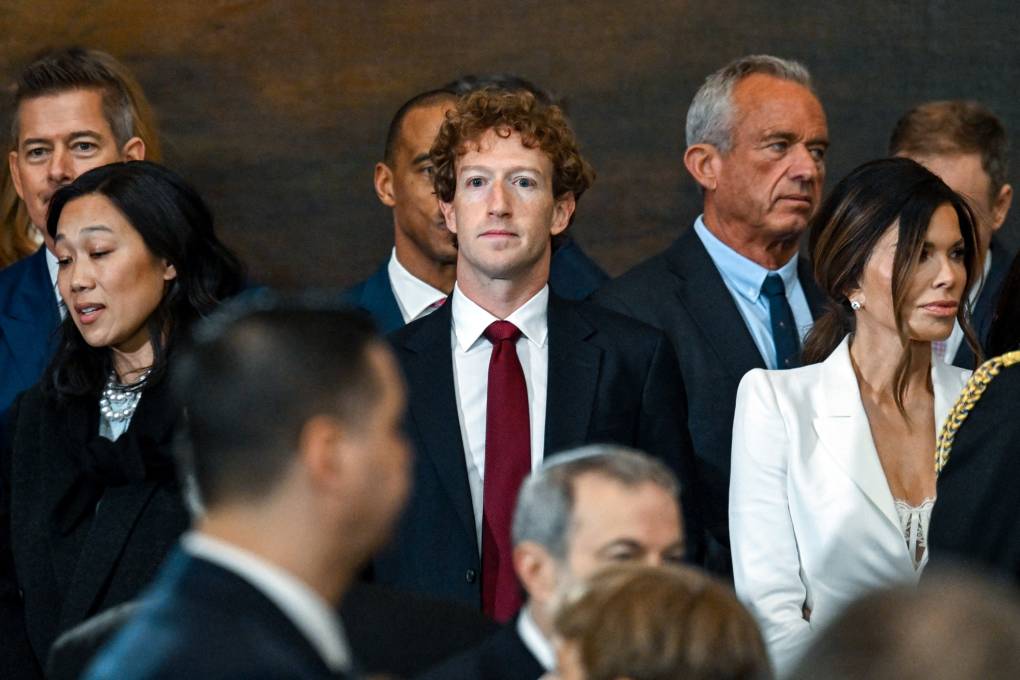
"caption": "CEO of Meta, Mark Zuckerberg (center), attends the inauguration ceremony of Donald Trump as he swears in as the 47th U.S. President in the U.S. Capitol Rotunda in Washington, D.C., on Jan. 20, 2025.",
"credit": "Kenny Holston/AFP via Getty Images",
"altTag": null,
"description": null,
"imgSizes": {
"medium": {
"file": "https://cdn.kqed.org/wp-content/uploads/sites/10/2025/04/MetaGetty-800x533.jpg",
"width": 800,
"height": 533,
"mimeType": "image/jpeg"
},
"large": {
"file": "https://cdn.kqed.org/wp-content/uploads/sites/10/2025/04/MetaGetty-1020x680.jpg",
"width": 1020,
"height": 680,
"mimeType": "image/jpeg"
},
"thumbnail": {
"file": "https://cdn.kqed.org/wp-content/uploads/sites/10/2025/04/MetaGetty-160x107.jpg",
"width": 160,
"height": 107,
"mimeType": "image/jpeg"
},
"1536x1536": {
"file": "https://cdn.kqed.org/wp-content/uploads/sites/10/2025/04/MetaGetty-1536x1024.jpg",
"width": 1536,
"height": 1024,
"mimeType": "image/jpeg"
},
"post-thumbnail": {
"file": "https://cdn.kqed.org/wp-content/uploads/sites/10/2025/04/MetaGetty-672x372.jpg",
"width": 672,
"height": 372,
"mimeType": "image/jpeg"
},
"twentyfourteen-full-width": {
"file": "https://cdn.kqed.org/wp-content/uploads/sites/10/2025/04/MetaGetty-1038x576.jpg",
"width": 1038,
"height": 576,
"mimeType": "image/jpeg"
},
"full-width": {
"file": "https://cdn.kqed.org/wp-content/uploads/sites/10/2025/04/MetaGetty-1920x1280.jpg",
"width": 1920,
"height": 1280,
"mimeType": "image/jpeg"
},
"kqedFullSize": {
"file": "https://cdn.kqed.org/wp-content/uploads/sites/10/2025/04/MetaGetty.jpg",
"width": 2000,
"height": 1333
}
},
"isLoading": false,
"fetchFailed": false
},
"news_11976118": {
"type": "attachments",
"id": "news_11976118",
"meta": {
"index": "attachments_1716263798",
"site": "news",
"id": "11976118",
"found": true
},
"title": "OpenAI CEO Samuel Altman Testifies To Senate Committee On Rules For Artificial Intelligence",
"publishDate": 1708040236,
"status": "inherit",
"parent": 11976097,
"modified": 1761950561,
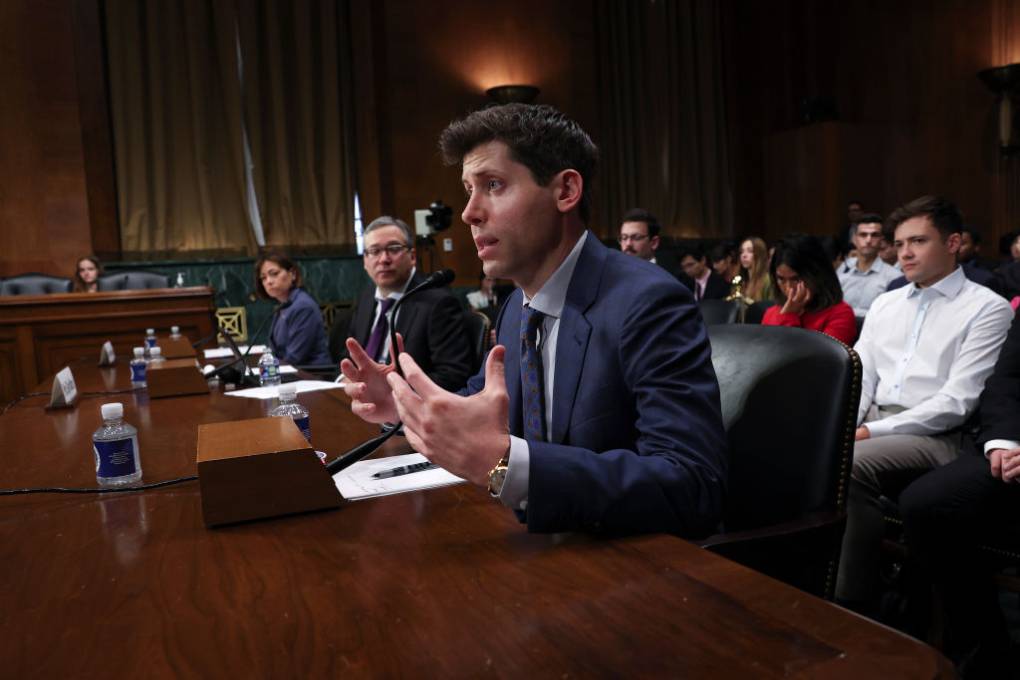
"caption": "Sam Altman, CEO of OpenAI, testifies before the Senate Judiciary Subcommittee on Privacy, Technology, and the Law on May 16, 2023, in Washington, D.C. The committee held an oversight hearing to examine AI, focusing on rules for artificial intelligence. ",
"credit": "Win McNamee/Getty Images",
"altTag": "A white man in a blue suit and tie gestures as he speaks in a congressional room surrounded by people.",
"description": "A white man in a blue suit and tie gestures as he speaks in a congressional room surrounded by people.",
"imgSizes": {
"medium": {
"file": "https://cdn.kqed.org/wp-content/uploads/sites/10/2024/02/GettyImages-1490690177-800x534.jpg",
"width": 800,
"height": 534,
"mimeType": "image/jpeg"
},
"large": {
"file": "https://cdn.kqed.org/wp-content/uploads/sites/10/2024/02/GettyImages-1490690177-1020x680.jpg",
"width": 1020,
"height": 680,
"mimeType": "image/jpeg"
},
"thumbnail": {
"file": "https://cdn.kqed.org/wp-content/uploads/sites/10/2024/02/GettyImages-1490690177-160x107.jpg",
"width": 160,
"height": 107,
"mimeType": "image/jpeg"
},
"post-thumbnail": {
"file": "https://cdn.kqed.org/wp-content/uploads/sites/10/2024/02/GettyImages-1490690177-672x372.jpg",
"width": 672,
"height": 372,
"mimeType": "image/jpeg"
},
"twentyfourteen-full-width": {
"file": "https://cdn.kqed.org/wp-content/uploads/sites/10/2024/02/GettyImages-1490690177-1024x576.jpg",
"width": 1024,
"height": 576,
"mimeType": "image/jpeg"
},
"kqedFullSize": {
"file": "https://cdn.kqed.org/wp-content/uploads/sites/10/2024/02/GettyImages-1490690177.jpg",
"width": 1024,
"height": 683
}
},
"isLoading": false,
"fetchFailed": false
},
"news_12035126": {
"type": "attachments",
"id": "news_12035126",
"meta": {
"index": "attachments_1716263798",
"site": "news",
"id": "12035126",
"found": true
},
"title": "save or scroll_web img 2",
"publishDate": 1744181304,
"status": "inherit",
"parent": 12034974,
"modified": 1744181337,
"caption": "From left, Saratoga Spring Water, Luigi Mangione and a photo illustration of the Reddit Logo. (Photos by Mat Hayward/Getty Images, Curtis Means - Pool/Getty Images, and Jaap Arriens/NurPhoto via Getty Images)",
"credit": null,
"altTag": "Composite image with three panels: On the left, a close-up of a woman's hand holding a deep blue bottle of Saratoga natural spring water, with red dots painted on her fingernails and a black wristband reading 'ALL STAR'; in the center, Luigi Mangione is seen in court wearing a white collared shirt under a dark green sweater and a black bulletproof vest, with a serious expression on his face; on the right, a hand holds a smartphone displaying the Reddit logo, a smiling alien face in a red circle, against a green blurred background.",
"description": null,
"imgSizes": {
"medium": {
"file": "https://cdn.kqed.org/wp-content/uploads/sites/10/2025/04/save-or-scroll_web-img-2-800x450.png",
"width": 800,
"height": 450,
"mimeType": "image/png"
},
"large": {
"file": "https://cdn.kqed.org/wp-content/uploads/sites/10/2025/04/save-or-scroll_web-img-2-1020x574.png",
"width": 1020,
"height": 574,
"mimeType": "image/png"
},
"thumbnail": {
"file": "https://cdn.kqed.org/wp-content/uploads/sites/10/2025/04/save-or-scroll_web-img-2-160x90.png",
"width": 160,
"height": 90,
"mimeType": "image/png"
},
"1536x1536": {
"file": "https://cdn.kqed.org/wp-content/uploads/sites/10/2025/04/save-or-scroll_web-img-2-1536x864.png",
"width": 1536,
"height": 864,
"mimeType": "image/png"
},
"post-thumbnail": {
"file": "https://cdn.kqed.org/wp-content/uploads/sites/10/2025/04/save-or-scroll_web-img-2-672x372.png",
"width": 672,
"height": 372,
"mimeType": "image/png"
},
"twentyfourteen-full-width": {
"file": "https://cdn.kqed.org/wp-content/uploads/sites/10/2025/04/save-or-scroll_web-img-2-1038x576.png",
"width": 1038,
"height": 576,
"mimeType": "image/png"
},
"kqedFullSize": {
"file": "https://cdn.kqed.org/wp-content/uploads/sites/10/2025/04/save-or-scroll_web-img-2.png",
"width": 1920,
"height": 1080
}
},
"isLoading": false,
"fetchFailed": false
},
"news_12034877": {
"type": "attachments",
"id": "news_12034877",
"meta": {
"index": "attachments_1716263798",
"site": "news",
"id": "12034877",
"found": true
},
"title": "President Trump Announces New Reciprocal Tariffs On Dozens Of Nations",
"publishDate": 1744134491,
"status": "inherit",
"parent": 12034730,
"modified": 1744135900,
"caption": "Apple iPhone 16 seen on display at an Apple store in New York on April 4, 2025. ",
"credit": "Michael M. Santiago/Getty Images",
"altTag": null,
"description": null,
"imgSizes": {
"medium": {
"file": "https://cdn.kqed.org/wp-content/uploads/sites/10/2025/04/iPhone16Getty-800x533.jpg",
"width": 800,
"height": 533,
"mimeType": "image/jpeg"
},
"large": {
"file": "https://cdn.kqed.org/wp-content/uploads/sites/10/2025/04/iPhone16Getty-1020x680.jpg",
"width": 1020,
"height": 680,
"mimeType": "image/jpeg"
},
"thumbnail": {
"file": "https://cdn.kqed.org/wp-content/uploads/sites/10/2025/04/iPhone16Getty-160x107.jpg",
"width": 160,
"height": 107,
"mimeType": "image/jpeg"
},
"1536x1536": {
"file": "https://cdn.kqed.org/wp-content/uploads/sites/10/2025/04/iPhone16Getty-1536x1024.jpg",
"width": 1536,
"height": 1024,
"mimeType": "image/jpeg"
},
"post-thumbnail": {
"file": "https://cdn.kqed.org/wp-content/uploads/sites/10/2025/04/iPhone16Getty-672x372.jpg",
"width": 672,
"height": 372,
"mimeType": "image/jpeg"
},
"twentyfourteen-full-width": {
"file": "https://cdn.kqed.org/wp-content/uploads/sites/10/2025/04/iPhone16Getty-1038x576.jpg",
"width": 1038,
"height": 576,
"mimeType": "image/jpeg"
},
"full-width": {
"file": "https://cdn.kqed.org/wp-content/uploads/sites/10/2025/04/iPhone16Getty-1920x1280.jpg",
"width": 1920,
"height": 1280,
"mimeType": "image/jpeg"
},
"kqedFullSize": {
"file": "https://cdn.kqed.org/wp-content/uploads/sites/10/2025/04/iPhone16Getty.jpg",
"width": 2000,
"height": 1333
}
},
"isLoading": false,
"fetchFailed": false
},
"news_12034620": {
"type": "attachments",
"id": "news_12034620",
"meta": {
"index": "attachments_1716263798",
"site": "news",
"id": "12034620",
"found": true
},
"title": "PadillaMentalHealthCaucus",
"publishDate": 1743803641,
"status": "inherit",
"parent": 12034490,
"modified": 1743803685,
"caption": "U.S. Sens. Alex Padilla (center), Tina Smith (left) and Thom Tillis at the launch of the bipartisan Senate Mental Health Caucus in October 2023. Padilla is one of two caucus members calling for tighter regulation of AI chatbots aimed at teenagers.",
"credit": "Courtesy of U.S. Sen. Alex Padilla",
"altTag": null,
"description": null,
"imgSizes": {
"medium": {
"file": "https://cdn.kqed.org/wp-content/uploads/sites/10/2025/04/PadillaMentalHealthCaucus-800x533.jpg",
"width": 800,
"height": 533,
"mimeType": "image/jpeg"
},
"large": {
"file": "https://cdn.kqed.org/wp-content/uploads/sites/10/2025/04/PadillaMentalHealthCaucus-1020x680.jpg",
"width": 1020,
"height": 680,
"mimeType": "image/jpeg"
},
"thumbnail": {
"file": "https://cdn.kqed.org/wp-content/uploads/sites/10/2025/04/PadillaMentalHealthCaucus-160x107.jpg",
"width": 160,
"height": 107,
"mimeType": "image/jpeg"
},
"1536x1536": {
"file": "https://cdn.kqed.org/wp-content/uploads/sites/10/2025/04/PadillaMentalHealthCaucus-1536x1024.jpg",
"width": 1536,
"height": 1024,
"mimeType": "image/jpeg"
},
"post-thumbnail": {
"file": "https://cdn.kqed.org/wp-content/uploads/sites/10/2025/04/PadillaMentalHealthCaucus-672x372.jpg",
"width": 672,
"height": 372,
"mimeType": "image/jpeg"
},
"twentyfourteen-full-width": {
"file": "https://cdn.kqed.org/wp-content/uploads/sites/10/2025/04/PadillaMentalHealthCaucus-1038x576.jpg",
"width": 1038,
"height": 576,
"mimeType": "image/jpeg"
},
"full-width": {
"file": "https://cdn.kqed.org/wp-content/uploads/sites/10/2025/04/PadillaMentalHealthCaucus-1920x1280.jpg",
"width": 1920,
"height": 1280,
"mimeType": "image/jpeg"
},
"kqedFullSize": {
"file": "https://cdn.kqed.org/wp-content/uploads/sites/10/2025/04/PadillaMentalHealthCaucus.jpg",
"width": 2000,
"height": 1333
}
},
"isLoading": false,
"fetchFailed": false
},
"news_12034018": {
"type": "attachments",
"id": "news_12034018",
"meta": {
"index": "attachments_1716263798",
"site": "news",
"id": "12034018",
"found": true
},
"title": "DSC_0194_qed",
"publishDate": 1743532379,
"status": "inherit",
"parent": 0,
"modified": 1743532556,
"caption": "Before the station opened in 1910, immigrants coming from the Pacific were housed in unsanitary facilities located at the Pacific Mail Steamship Company docks on the San Francisco waterfront. Angel Island was conceived as an ideal location for detention barracks due to its isolation from the mainland.",
"credit": "Marisol Medina-Cadena/KQED",
"altTag": null,
"description": null,
"imgSizes": {
"medium": {
"file": "https://cdn.kqed.org/wp-content/uploads/sites/10/2025/04/DSC_0194_qed-800x498.jpg",
"width": 800,
"height": 498,
"mimeType": "image/jpeg"
},
"large": {
"file": "https://cdn.kqed.org/wp-content/uploads/sites/10/2025/04/DSC_0194_qed-1020x635.jpg",
"width": 1020,
"height": 635,
"mimeType": "image/jpeg"
},
"thumbnail": {
"file": "https://cdn.kqed.org/wp-content/uploads/sites/10/2025/04/DSC_0194_qed-160x100.jpg",
"width": 160,
"height": 100,
"mimeType": "image/jpeg"
},
"1536x1536": {
"file": "https://cdn.kqed.org/wp-content/uploads/sites/10/2025/04/DSC_0194_qed-1536x957.jpg",
"width": 1536,
"height": 957,
"mimeType": "image/jpeg"
},
"post-thumbnail": {
"file": "https://cdn.kqed.org/wp-content/uploads/sites/10/2025/04/DSC_0194_qed-672x372.jpg",
"width": 672,
"height": 372,
"mimeType": "image/jpeg"
},
"twentyfourteen-full-width": {
"file": "https://cdn.kqed.org/wp-content/uploads/sites/10/2025/04/DSC_0194_qed-1038x576.jpg",
"width": 1038,
"height": 576,
"mimeType": "image/jpeg"
},
"full-width": {
"file": "https://cdn.kqed.org/wp-content/uploads/sites/10/2025/04/DSC_0194_qed-1920x1196.jpg",
"width": 1920,
"height": 1196,
"mimeType": "image/jpeg"
},
"kqedFullSize": {
"file": "https://cdn.kqed.org/wp-content/uploads/sites/10/2025/04/DSC_0194_qed.jpg",
"width": 2000,
"height": 1246
}
},
"isLoading": false,
"fetchFailed": false
},
"news_12034200": {
"type": "attachments",
"id": "news_12034200",
"meta": {
"index": "attachments_1716263798",
"site": "news",
"id": "12034200",
"found": true
},
"title": "technofascism_web img",
"publishDate": 1743560161,
"status": "inherit",
"parent": 12034198,
"modified": 1743562035,
"caption": "A close-up of a human eye on an IBM computer monitor, 1983. (Photo by Alfred Gescheidt/Getty Images ",
"credit": null,
"altTag": "A photo of an old computer from the 80s with a large zoomed in photo of an eye on the computer screen. The computer is yellow with an old keyboard and the eye on the screen is a large green eye staring back at the camera. In the upper left corner of the image, the text “CLOSE ALL TABS” appears in a pixelated, video game-style font.",
"description": null,
"imgSizes": {
"medium": {
"file": "https://cdn.kqed.org/wp-content/uploads/sites/10/2025/04/technofascism_web-img-800x450.png",
"width": 800,
"height": 450,
"mimeType": "image/png"
},
"large": {
"file": "https://cdn.kqed.org/wp-content/uploads/sites/10/2025/04/technofascism_web-img-1020x574.png",
"width": 1020,
"height": 574,
"mimeType": "image/png"
},
"thumbnail": {
"file": "https://cdn.kqed.org/wp-content/uploads/sites/10/2025/04/technofascism_web-img-160x90.png",
"width": 160,
"height": 90,
"mimeType": "image/png"
},
"1536x1536": {
"file": "https://cdn.kqed.org/wp-content/uploads/sites/10/2025/04/technofascism_web-img-1536x864.png",
"width": 1536,
"height": 864,
"mimeType": "image/png"
},
"post-thumbnail": {
"file": "https://cdn.kqed.org/wp-content/uploads/sites/10/2025/04/technofascism_web-img-672x372.png",
"width": 672,
"height": 372,
"mimeType": "image/png"
},
"twentyfourteen-full-width": {
"file": "https://cdn.kqed.org/wp-content/uploads/sites/10/2025/04/technofascism_web-img-1038x576.png",
"width": 1038,
"height": 576,
"mimeType": "image/png"
},
"kqedFullSize": {
"file": "https://cdn.kqed.org/wp-content/uploads/sites/10/2025/04/technofascism_web-img.png",
"width": 1920,
"height": 1080
}
},
"isLoading": false,
"fetchFailed": false
},
"news_12033428": {
"type": "attachments",
"id": "news_12033428",
"meta": {
"index": "attachments_1716263798",
"site": "news",
"id": "12033428",
"found": true
},
"title": "alisonyin.com",
"publishDate": 1743111983,
"status": "inherit",
"parent": 12033427,
"modified": 1743112130,
"caption": "Third graders participate in the STEAM (Science, Technology, Engineering, Art and Math) workshop at Redwood Heights Elementary School in Oakland, Wednesday, May 17, 2017. ",
"credit": "Alison Yin/EdSource",
"altTag": "Students in a classroom on computers or writing in notebooks. Sunlight streams in through the windows, the children look happy.",
"description": null,
"imgSizes": {
"medium": {
"file": "https://cdn.kqed.org/wp-content/uploads/sites/10/2025/03/Redwood_Elem_170-scaled-1-800x533.jpg",
"width": 800,
"height": 533,
"mimeType": "image/jpeg"
},
"large": {
"file": "https://cdn.kqed.org/wp-content/uploads/sites/10/2025/03/Redwood_Elem_170-scaled-1-1020x680.jpg",
"width": 1020,
"height": 680,
"mimeType": "image/jpeg"
},
"thumbnail": {
"file": "https://cdn.kqed.org/wp-content/uploads/sites/10/2025/03/Redwood_Elem_170-scaled-1-160x107.jpg",
"width": 160,
"height": 107,
"mimeType": "image/jpeg"
},
"1536x1536": {
"file": "https://cdn.kqed.org/wp-content/uploads/sites/10/2025/03/Redwood_Elem_170-scaled-1-1536x1024.jpg",
"width": 1536,
"height": 1024,
"mimeType": "image/jpeg"
},
"2048x2048": {
"file": "https://cdn.kqed.org/wp-content/uploads/sites/10/2025/03/Redwood_Elem_170-scaled-1-2048x1365.jpg",
"width": 2048,
"height": 1365,
"mimeType": "image/jpeg"
},
"post-thumbnail": {
"file": "https://cdn.kqed.org/wp-content/uploads/sites/10/2025/03/Redwood_Elem_170-scaled-1-672x372.jpg",
"width": 672,
"height": 372,
"mimeType": "image/jpeg"
},
"twentyfourteen-full-width": {
"file": "https://cdn.kqed.org/wp-content/uploads/sites/10/2025/03/Redwood_Elem_170-scaled-1-1038x576.jpg",
"width": 1038,
"height": 576,
"mimeType": "image/jpeg"
},
"full-width": {
"file": "https://cdn.kqed.org/wp-content/uploads/sites/10/2025/03/Redwood_Elem_170-scaled-1-1920x1280.jpg",
"width": 1920,
"height": 1280,
"mimeType": "image/jpeg"
},
"kqedFullSize": {
"file": "https://cdn.kqed.org/wp-content/uploads/sites/10/2025/03/Redwood_Elem_170-scaled-1.jpg",
"width": 2560,
"height": 1706
}
},
"isLoading": false,
"fetchFailed": false
},
"news_12030645": {
"type": "attachments",
"id": "news_12030645",
"meta": {
"index": "attachments_1716263798",
"site": "news",
"id": "12030645",
"found": true
},
"title": "250310-TRUMP SF-MD-02-KQED",
"publishDate": 1741642330,
"status": "inherit",
"parent": 0,
"modified": 1741722554,
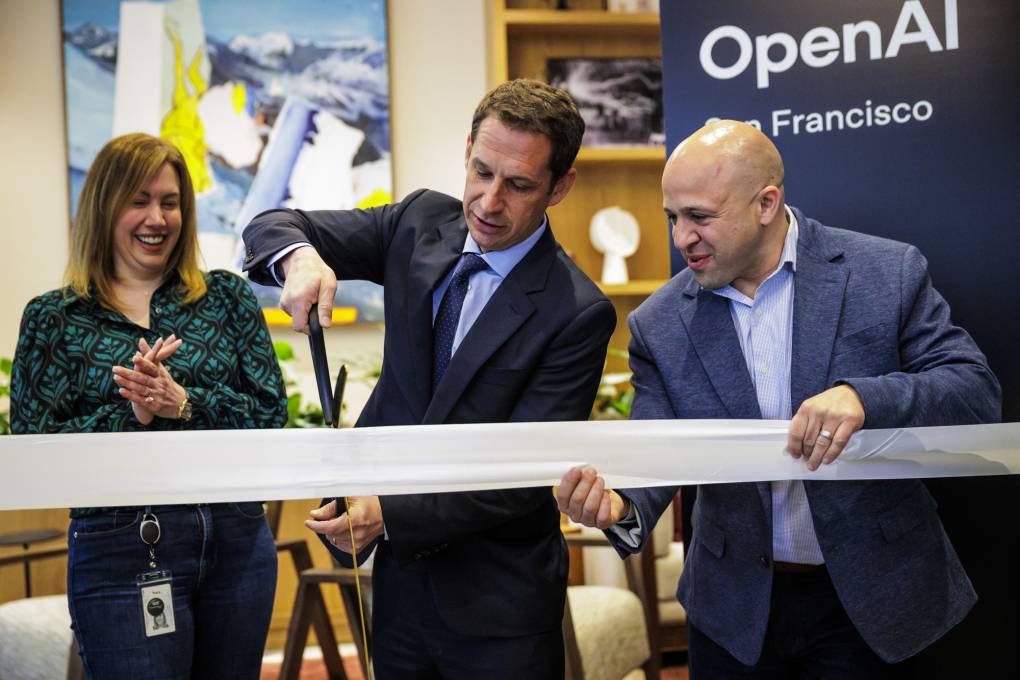
"caption": "OpenAI's Chief Commercial Officer Giancarlo Lionetti (right) helps San Francisco Mayor Daniel Lurie (center) cut a ceremonial ribbon at the opening of the new OpenAI headquarters in Mission Bay in San Francisco on March 10, 2025.",
"credit": "Martin do Nascimento/KQED",
"altTag": null,
"description": null,
"imgSizes": {
"medium": {
"file": "https://cdn.kqed.org/wp-content/uploads/sites/10/2025/03/250310-TRUMP-SF-MD-02-KQED-800x533.jpg",
"width": 800,
"height": 533,
"mimeType": "image/jpeg"
},
"large": {
"file": "https://cdn.kqed.org/wp-content/uploads/sites/10/2025/03/250310-TRUMP-SF-MD-02-KQED-1020x680.jpg",
"width": 1020,
"height": 680,
"mimeType": "image/jpeg"
},
"thumbnail": {
"file": "https://cdn.kqed.org/wp-content/uploads/sites/10/2025/03/250310-TRUMP-SF-MD-02-KQED-160x107.jpg",
"width": 160,
"height": 107,
"mimeType": "image/jpeg"
},
"1536x1536": {
"file": "https://cdn.kqed.org/wp-content/uploads/sites/10/2025/03/250310-TRUMP-SF-MD-02-KQED-1536x1024.jpg",
"width": 1536,
"height": 1024,
"mimeType": "image/jpeg"
},
"post-thumbnail": {
"file": "https://cdn.kqed.org/wp-content/uploads/sites/10/2025/03/250310-TRUMP-SF-MD-02-KQED-672x372.jpg",
"width": 672,
"height": 372,
"mimeType": "image/jpeg"
},
"twentyfourteen-full-width": {
"file": "https://cdn.kqed.org/wp-content/uploads/sites/10/2025/03/250310-TRUMP-SF-MD-02-KQED-1038x576.jpg",
"width": 1038,
"height": 576,
"mimeType": "image/jpeg"
},
"full-width": {
"file": "https://cdn.kqed.org/wp-content/uploads/sites/10/2025/03/250310-TRUMP-SF-MD-02-KQED-1920x1280.jpg",
"width": 1920,
"height": 1280,
"mimeType": "image/jpeg"
},
"kqedFullSize": {
"file": "https://cdn.kqed.org/wp-content/uploads/sites/10/2025/03/250310-TRUMP-SF-MD-02-KQED.jpg",
"width": 2000,
"height": 1333
}
},
"isLoading": false,
"fetchFailed": false
}
},
"audioPlayerReducer": {
"postId": "stream_live",
"isPaused": true,
"isPlaying": false,
"pfsActive": false,
"pledgeModalIsOpen": true,
"playerDrawerIsOpen": false,
"liveAudioPlayStartedAt": 0,
"liveAudioPlayContext": ""
},
"authorsReducer": {
"byline_news_12033427": {
"type": "authors",
"id": "byline_news_12033427",
"meta": {
"override": true
},
"slug": "byline_news_12033427",
"name": "\u003ca href=\"https://edsource.org/author/dlambert\">Diana Lambert\u003c/a>, EdSource",
"isLoading": false
},
"rachael-myrow": {
"type": "authors",
"id": "251",
"meta": {
"index": "authors_1716337520",
"id": "251",
"found": true
},
"name": "Rachael Myrow",
"firstName": "Rachael",
"lastName": "Myrow",
"slug": "rachael-myrow",
"email": "rmyrow@kqed.org",
"display_author_email": true,
"staff_mastheads": [
"news"
],
"title": "Senior Editor of KQED's Silicon Valley News Desk",
"bio": "• I write and edit stories about how Silicon Valley power and policies shape everyday life in California. I’m also passionate about making Bay Area history and culture more accessible to a broad public. • I’ve been a journalist for most of my life, starting in high school with The Franklin Press in Los Angeles, where I grew up. While earning my first degree in English at UC Berkeley, I got my start in public radio at KALX-FM. After completing a second degree in journalism at Cal, I landed my first professional job at Marketplace, then moved on to KPCC (now LAist), and then KQED, where I hosted The California Report for more than seven years. • My reporting has appeared on NPR, The World, WBUR’s \u003ci>Here & Now\u003c/i>, and the BBC. I also guest host for KQED’s \u003ci>Forum\u003c/i>, as well as the Commonwealth Club in San Francisco. • I speak periodically on media, democracy and technology issues, and do voiceover work for documentaries and educational video projects. • Outside of the studio, you'll find me hiking Bay Area trails and whipping up Insta-ready meals in my kitchen. • I do not accept gifts, money, or favors from anyone connected to my reporting, I don't pay people for information, and I do not support or donate to political causes. • I strive to treat the people I report on with fairness, honesty, and respect. I also recognize there are often multiple sides to a story and work to verify information through multiple sources and documentation. If I get something wrong, I correct it.",
"avatar": "https://secure.gravatar.com/avatar/3ed8a3c5f26025e4a805ba634cda8cd764906b97438a6d9ce216b044e340da4e?s=600&d=blank&r=g",
"twitter": "rachaelmyrow",
"bluesky": null,
"facebook": null,
"instagram": null,
"linkedin": "https://www.linkedin.com/in/rachaelmyrow/",
"sites": [
{
"site": "arts",
"roles": [
"administrator"
]
},
{
"site": "news",
"roles": [
"edit_others_posts",
"editor"
]
},
{
"site": "futureofyou",
"roles": [
"editor"
]
},
{
"site": "bayareabites",
"roles": [
"editor"
]
},
{
"site": "stateofhealth",
"roles": [
"editor"
]
},
{
"site": "science",
"roles": [
"editor"
]
},
{
"site": "food",
"roles": [
"editor"
]
},
{
"site": "forum",
"roles": [
"editor"
]
},
{
"site": "liveblog",
"roles": [
"author"
]
}
],
"headData": {
"title": "Rachael Myrow | KQED",
"description": "Senior Editor of KQED's Silicon Valley News Desk",
"ogImgSrc": "https://secure.gravatar.com/avatar/3ed8a3c5f26025e4a805ba634cda8cd764906b97438a6d9ce216b044e340da4e?s=600&d=blank&r=g",
"twImgSrc": "https://secure.gravatar.com/avatar/3ed8a3c5f26025e4a805ba634cda8cd764906b97438a6d9ce216b044e340da4e?s=600&d=blank&r=g"
},
"isLoading": false,
"link": "/author/rachael-myrow"
},
"sjohnson": {
"type": "authors",
"id": "11840",
"meta": {
"index": "authors_1716337520",
"id": "11840",
"found": true
},
"name": "Sydney Johnson",
"firstName": "Sydney",
"lastName": "Johnson",
"slug": "sjohnson",
"email": "sjohnson@kqed.org",
"display_author_email": false,
"staff_mastheads": [
"news"
],
"title": "KQED Reporter",
"bio": "Sydney Johnson is a general assignment reporter at KQED. She previously reported on public health and city government at the San Francisco Examiner, and before that, she covered statewide education policy for EdSource. Her reporting has won multiple local, state and national awards. Sydney is a graduate of the University of California, Berkeley and lives in San Francisco.",
"avatar": "https://secure.gravatar.com/avatar/97855f2719b72ad6190b7c535fe642c8?s=600&d=blank&r=g",
"twitter": "sydneyfjohnson",
"facebook": null,
"instagram": null,
"linkedin": null,
"sites": [
{
"site": "news",
"roles": [
"editor"
]
}
],
"headData": {
"title": "Sydney Johnson | KQED",
"description": "KQED Reporter",
"ogImgSrc": "https://secure.gravatar.com/avatar/97855f2719b72ad6190b7c535fe642c8?s=600&d=blank&r=g",
"twImgSrc": "https://secure.gravatar.com/avatar/97855f2719b72ad6190b7c535fe642c8?s=600&d=blank&r=g"
},
"isLoading": false,
"link": "/author/sjohnson"
},
"cegusa": {
"type": "authors",
"id": "11869",
"meta": {
"index": "authors_1716337520",
"id": "11869",
"found": true
},
"name": "Chris Egusa",
"firstName": "Chris",
"lastName": "Egusa",
"slug": "cegusa",
"email": "cegusa@kqed.org",
"display_author_email": false,
"staff_mastheads": [],
"title": "KQED Contributor",
"bio": null,
"avatar": "https://secure.gravatar.com/avatar/3562ed52747313a4c94017da88ea89f9e85cd901f63ebc056a7d5e0adf4a03da?s=600&d=blank&r=g",
"twitter": null,
"bluesky": null,
"facebook": null,
"instagram": null,
"linkedin": null,
"sites": [
{
"site": "arts",
"roles": [
"editor"
]
},
{
"site": "news",
"roles": [
"editor"
]
}
],
"headData": {
"title": "Chris Egusa | KQED",
"description": "KQED Contributor",
"ogImgSrc": "https://secure.gravatar.com/avatar/3562ed52747313a4c94017da88ea89f9e85cd901f63ebc056a7d5e0adf4a03da?s=600&d=blank&r=g",
"twImgSrc": "https://secure.gravatar.com/avatar/3562ed52747313a4c94017da88ea89f9e85cd901f63ebc056a7d5e0adf4a03da?s=600&d=blank&r=g"
},
"isLoading": false,
"link": "/author/cegusa"
},
"kdebenedetti": {
"type": "authors",
"id": "11913",
"meta": {
"index": "authors_1716337520",
"id": "11913",
"found": true
},
"name": "Katie DeBenedetti",
"firstName": "Katie",
"lastName": "DeBenedetti",
"slug": "kdebenedetti",
"email": "kdebenedetti@kqed.org",
"display_author_email": false,
"staff_mastheads": [
"news",
"science"
],
"title": "KQED Contributor",
"bio": "Katie DeBenedetti is a digital reporter covering daily news for the Express Desk. Prior to joining KQED as a culture reporting intern in January 2024, she covered education and city government for the Napa Valley Register.",
"avatar": "https://secure.gravatar.com/avatar/6e31073cb8f7e4214ab03f42771d0f45?s=600&d=blank&r=g",
"twitter": null,
"facebook": null,
"instagram": null,
"linkedin": null,
"sites": [
{
"site": "news",
"roles": [
"author"
]
},
{
"site": "science",
"roles": [
"author"
]
},
{
"site": "liveblog",
"roles": [
"author"
]
}
],
"headData": {
"title": "Katie DeBenedetti | KQED",
"description": "KQED Contributor",
"ogImgSrc": "https://secure.gravatar.com/avatar/6e31073cb8f7e4214ab03f42771d0f45?s=600&d=blank&r=g",
"twImgSrc": "https://secure.gravatar.com/avatar/6e31073cb8f7e4214ab03f42771d0f45?s=600&d=blank&r=g"
},
"isLoading": false,
"link": "/author/kdebenedetti"
},
"mcueva": {
"type": "authors",
"id": "11943",
"meta": {
"index": "authors_1716337520",
"id": "11943",
"found": true
},
"name": "Maya Cueva",
"firstName": "Maya",
"lastName": "Cueva",
"slug": "mcueva",
"email": "mcueva@kqed.org",
"display_author_email": false,
"staff_mastheads": [],
"title": "KQED Contributor",
"bio": null,
"avatar": "https://secure.gravatar.com/avatar/238c7aba67c4b6b7b891965ba8cc9e9a4928b5dbdeaf4bde6a81c13e87f49b49?s=600&d=blank&r=g",
"twitter": null,
"bluesky": null,
"facebook": null,
"instagram": null,
"linkedin": null,
"sites": [
{
"site": "news",
"roles": [
"editor"
]
}
],
"headData": {
"title": "Maya Cueva | KQED",
"description": "KQED Contributor",
"ogImgSrc": "https://secure.gravatar.com/avatar/238c7aba67c4b6b7b891965ba8cc9e9a4928b5dbdeaf4bde6a81c13e87f49b49?s=600&d=blank&r=g",
"twImgSrc": "https://secure.gravatar.com/avatar/238c7aba67c4b6b7b891965ba8cc9e9a4928b5dbdeaf4bde6a81c13e87f49b49?s=600&d=blank&r=g"
},
"isLoading": false,
"link": "/author/mcueva"
},
"msung": {
"type": "authors",
"id": "11944",
"meta": {
"index": "authors_1716337520",
"id": "11944",
"found": true
},
"name": "Morgan Sung",
"firstName": "Morgan",
"lastName": "Sung",
"slug": "msung",
"email": "msung@kqed.org",
"display_author_email": false,
"staff_mastheads": [],
"title": "Close All Tabs Host",
"bio": null,
"avatar": "https://secure.gravatar.com/avatar/34033b8d232ee6c987ca6f0a1a28f0e5?s=600&d=blank&r=g",
"twitter": null,
"facebook": null,
"instagram": null,
"linkedin": null,
"sites": [
{
"site": "news",
"roles": [
"editor"
]
}
],
"headData": {
"title": "Morgan Sung | KQED",
"description": "Close All Tabs Host",
"ogImgSrc": "https://secure.gravatar.com/avatar/34033b8d232ee6c987ca6f0a1a28f0e5?s=600&d=blank&r=g",
"twImgSrc": "https://secure.gravatar.com/avatar/34033b8d232ee6c987ca6f0a1a28f0e5?s=600&d=blank&r=g"
},
"isLoading": false,
"link": "/author/msung"
}
},
"pagesReducer": {
"news_tag_technology": {
"type": "terms",
"id": "news_1631",
"meta": {
"index": "terms_1716263798",
"site": "news",
"id": "1631",
"score": 6.9278607
},
"name": "Technology",
"slug": "technology",
"taxonomy": "tag",
"description": null,
"featImg": null,
"headData": {
"title": "Technology | KQED News",
"description": null,
"ogTitle": null,
"ogDescription": null,
"ogImgId": null,
"twTitle": null,
"twDescription": null,
"twImgId": null
},
"ttid": 1643,
"isLoading": false,
"title": "Technology",
"pageMeta": {
"site": "news",
"WpPageTemplate": "page-topic-editorial",
"currentPage": 19
},
"blocks": [
{
"blockName": "kqed/post-list",
"attrs": {
"layout": "cardArticle2",
"query": "posts/news?tag=technology",
"seeMore": false,
"paginated": true,
"page": 19
}
},
{
"blockName": "kqed/ad"
}
]
}
},
"pfsSessionReducer": {},
"postsReducer": {
"stream_live": {
"type": "live",
"id": "stream_live",
"audioUrl": "https://streams.kqed.org/kqedradio",
"title": "Live Stream",
"excerpt": "Live Stream information currently unavailable.",
"link": "/radio",
"featImg": "",
"label": {
"name": "KQED Live",
"link": "/"
}
},
"stream_kqedNewscast": {
"type": "posts",
"id": "stream_kqedNewscast",
"audioUrl": "https://www.kqed.org/.stream/anon/radio/RDnews/newscast.mp3?_=1",
"title": "KQED Newscast",
"featImg": "",
"label": {
"name": "88.5 FM",
"link": "/"
}
},
"news_12036593": {
"type": "posts",
"id": "news_12036593",
"meta": {
"index": "posts_1716263798",
"site": "news",
"id": "12036593",
"score": null,
"sort": [
1745269758000
]
},
"guestAuthors": [],
"slug": "the-most-important-case-about-the-internet-since-the-internet-was-invented-enters-its-final-phase",
"title": "The ‘Most Important Case About the Internet Since the Internet was Invented’ Enters Its Final Phase",
"publishDate": 1745269758,
"format": "standard",
"headTitle": "The ‘Most Important Case About the Internet Since the Internet was Invented’ Enters Its Final Phase | KQED",
"labelTerm": {
"site": "news"
},
"content": "\u003cp>For many people, \u003ca href=\"https://www.kqed.org/news/tag/google\" target=\"_blank\" rel=\"noopener\">Google\u003c/a> search is the default, as obvious and unremarkable as water is to fish. That could soon change.\u003c/p>\n\u003cp>In 2020, the U.S. Department of Justice and a group of states,\u003ca href=\"https://oag.ca.gov/news/press-releases/attorney-general-becerra-moves-join-federal-lawsuit-against-google\" target=\"_blank\" rel=\"noopener\"> later joined by California\u003c/a>, \u003ca href=\"https://www.justice.gov/archives/opa/press-release/file/1328941/dl\" target=\"_blank\" rel=\"noopener\">accused Google\u003c/a> of illegally stifling competition by paying to have its search engine as the default on web browsers and phones.\u003c/p>\n\u003cp>In the complaint, the DOJ argued, “Largely as a result of Google’s exclusionary agreements and anticompetitive conduct, Google in recent years has accounted for nearly 90 percent of all general-search-engine queries in the United States, and almost 95 percent of queries on mobile devices.” Google’s monopoly in general search services thus provided the company “extraordinary power as the gateway to the internet, which it uses to promote its own web content and increase its profits.”\u003c/p>\n\u003cp>[ad fullwidth]\u003c/p>\n\u003cp>Last summer, U.S. District Judge Amit Mehta \u003ca href=\"https://www.kqed.org/forum/2010101906758/will-the-government-break-up-google\" target=\"_blank\" rel=\"noopener\">agreed\u003c/a>, ruling after a 10-week trial that “Google is a monopolist, and it has acted as one to maintain its monopoly.”\u003c/p>\n\u003cp>Now, during a remedies phase expected to stretch over several weeks, attorneys for the Justice Department and Google will present competing visions of how to remedy the company’s monopolistic behavior.\u003c/p>\n\u003cp>“The Google search case, in my opinion, is the most important case about the Internet since the Internet was invented,” said Doha Mekki, \u003ca href=\"https://www.justice.gov/archives/atr/staff-profile/doha-mekki-acting-assistant-attorney-general\" target=\"_blank\" rel=\"noopener\">formerly a top antitrust official at the DOJ\u003c/a>, and currently a senior fellow at UC Berkeley’s Center for Consumer Law and Economic Justice. “The idea that we have to trust all of our innovation and ingenuity to this small set of companies is actually deeply un-American.”\u003c/p>\n\u003cfigure id=\"attachment_11999023\" class=\"wp-caption aligncenter\" style=\"max-width: 2000px\">\u003cimg loading=\"lazy\" decoding=\"async\" class=\"size-full wp-image-11999023\" src=\"https://cdn.kqed.org/wp-content/uploads/sites/10/2024/08/GoogleAntitrustGetty.jpg\" alt=\"\" width=\"2000\" height=\"1333\" srcset=\"https://cdn.kqed.org/wp-content/uploads/sites/10/2024/08/GoogleAntitrustGetty.jpg 2000w, https://cdn.kqed.org/wp-content/uploads/sites/10/2024/08/GoogleAntitrustGetty-800x533.jpg 800w, https://cdn.kqed.org/wp-content/uploads/sites/10/2024/08/GoogleAntitrustGetty-1020x680.jpg 1020w, https://cdn.kqed.org/wp-content/uploads/sites/10/2024/08/GoogleAntitrustGetty-160x107.jpg 160w, https://cdn.kqed.org/wp-content/uploads/sites/10/2024/08/GoogleAntitrustGetty-1536x1024.jpg 1536w, https://cdn.kqed.org/wp-content/uploads/sites/10/2024/08/GoogleAntitrustGetty-1920x1280.jpg 1920w\" sizes=\"auto, (max-width: 2000px) 100vw, 2000px\">\u003cfigcaption class=\"wp-caption-text\">After a judge ruled that Google held an illegal monopoly on search, legal analysts are split on whether the case will break up the company or influence other antitrust lawsuits. \u003ccite>(Drew Angerer/Getty Images)\u003c/cite>\u003c/figcaption>\u003c/figure>\n\u003cp>During her decade-long tenure at the Justice Department, Mekki had a front-row seat to a series of major antitrust cases the agency has pursued since the first Trump Administration, including cases against \u003ca href=\"https://www.kqed.org/news/12036411/googles-ad-dominance-is-illegal-federal-judge-rules\">Google over its advertising technology\u003c/a> and \u003ca href=\"https://www.kqed.org/news/12035855/metas-purchased-dominance-social-media-ftc-trial\">Facebook\u003c/a> over its purchases of WhatsApp and Instagram.\u003c/p>\n\u003cp>Mekki argues this Google antitrust case comes at a pivotal moment when large tech companies are jostling for a lead position in the development of generative artificial intelligence. “AI has done nothing to disturb the Internet search monopoly. ChatGPT has not displaced Google search,” Mekki said.\u003c/p>\n\u003cp>The Silicon Valley giant has already said it will appeal. “The U.S. Department of Justice’s 2020 search distribution lawsuit is a backwards-looking case at a time of intense \u003ca href=\"https://storage.googleapis.com/gweb-uniblog-publish-prod/documents/AI_has_Transformed_the_Tech_Industry_-_Google_Docs.pdf\">competition\u003c/a> and unprecedented innovation. With new services like ChatGPT (and foreign competitors like DeepSeek) thriving, DOJ’s sweeping remedy proposals are both unnecessary and harmful,” Lee-Anne Mulholland, Google’s Vice President for Regulatory Affairs, \u003ca href=\"https://blog.google/outreach-initiatives/public-policy/doj-search-remedies-apr-2025/\">wrote\u003c/a> in a blog post.[aside postID=news_12036411 hero='https://cdn.kqed.org/wp-content/uploads/sites/10/2025/04/GettyImages-2166671481-1020x703.jpg']In the company’s early days, Google’s search service was widely praised for its credibility. But over time, the company began to prioritize ad revenue, and its highly profitable advertising business has been powered by data harvested from user activity on Google Search and Chrome.\u003c/p>\n\u003cp>In the nearly three decades since Larry Page and Sergey Brin launched Google as a research project at Stanford University, the company has drawn criticism because of its practice of topping search results with paid product placements and even \u003ca href=\"https://www.malwarebytes.com/blog/scams/2024/04/google-ad-for-facebook-redirects-to-scam\">scam links\u003c/a>. “We heard throughout the investigation and trial of this case that Internet search is not what it used to be, that the Google search page is now more littered with ads, and there’s more routing to Google’s products and services,” Mekki said.\u003c/p>\n\u003cp>The DOJ is seeking strong remedies to address Google’s unlawful monopoly in the online search market, including proposing that Google be required to sell its Chrome browser and barring Google from entering into agreements that set its search engine as the default on devices and browsers, such as those it has with Apple. \u003c/p>\n\u003cp>“It seems like a bad idea to have people paying tens of billions of dollars to buy placement of their search engines,” said Mark Lemley, who teaches intellectual property, antitrust and internet law at Stanford Law School. “We’d probably be better off in a world in which Apple couldn’t just auction off to the highest bidder what search engine you were going to use. But Apple’s not the defendant in this case. Google is.”\u003c/p>\n\u003cp>Lemley added that Judge Mehta’s challenge is to respond to a search market where there aren’t many viable alternatives to Google search.\u003c/p>\n\u003cp>Lemley argues that the court might consider giving consumers a choice screen from which they can select Google or one of its rivals, like Bing. “My guess is most people choose Google, and so it’s not obvious that the Google monopoly in search is much diminished if that happens, but at least we’re giving [consumers] an option up front.”\u003c/p>\n\u003cp>\u003c/p>\n",
"blocks": [],
"excerpt": "Google faces a possible breakup in another landmark antitrust case. The decision could shake up internet search and send shockwaves through the tech world.",
"status": "publish",
"parent": 0,
"modified": 1745271402,
"stats": {
"hasAudio": false,
"hasVideo": false,
"hasChartOrMap": false,
"iframeSrcs": [],
"hasGoogleForm": false,
"hasGallery": false,
"hasHearkenModule": false,
"hasPolis": false,
"paragraphCount": 16,
"wordCount": 879
},
"headData": {
"title": "The ‘Most Important Case About the Internet Since the Internet was Invented’ Enters Its Final Phase | KQED",
"description": "Google faces a possible breakup in another landmark antitrust case. The decision could shake up internet search and send shockwaves through the tech world.",
"ogTitle": "",
"ogDescription": "",
"ogImgId": "",
"twTitle": "",
"twDescription": "",
"twImgId": "",
"schema": {
"@context": "https://schema.org",
"@type": "NewsArticle",
"headline": "The ‘Most Important Case About the Internet Since the Internet was Invented’ Enters Its Final Phase",
"datePublished": "2025-04-21T14:09:18-07:00",
"dateModified": "2025-04-21T14:36:42-07:00",
"image": "https://cdn.kqed.org/wp-content/uploads/2020/02/KQED-OG-Image@1x.png",
"isAccessibleForFree": "True",
"publisher": {
"@type": "NewsMediaOrganization",
"@id": "https://www.kqed.org/#organization",
"name": "KQED",
"logo": "https://cdn.kqed.org/wp-content/uploads/2020/02/KQED-OG-Image@1x.png",
"url": "https://www.kqed.org",
"sameAs": [
"https://www.facebook.com/KQED",
"https://twitter.com/KQED",
"https://www.instagram.com/kqed/",
"https://www.tiktok.com/@kqedofficial",
"https://www.linkedin.com/company/kqed",
"https://www.youtube.com/channel/UCeC0IOo7i1P_61zVUWbJ4nw"
]
}
}
},
"sticky": false,
"nprStoryId": "kqed-12036593",
"templateType": "standard",
"featuredImageType": "standard",
"excludeFromSiteSearch": "Include",
"articleAge": "0",
"path": "/news/12036593/the-most-important-case-about-the-internet-since-the-internet-was-invented-enters-its-final-phase",
"audioTrackLength": null,
"parsedContent": [
{
"type": "contentString",
"content": "\u003cdiv class=\"post-body\">\u003cp>\u003cp>For many people, \u003ca href=\"https://www.kqed.org/news/tag/google\" target=\"_blank\" rel=\"noopener\">Google\u003c/a> search is the default, as obvious and unremarkable as water is to fish. That could soon change.\u003c/p>\n\u003cp>In 2020, the U.S. Department of Justice and a group of states,\u003ca href=\"https://oag.ca.gov/news/press-releases/attorney-general-becerra-moves-join-federal-lawsuit-against-google\" target=\"_blank\" rel=\"noopener\"> later joined by California\u003c/a>, \u003ca href=\"https://www.justice.gov/archives/opa/press-release/file/1328941/dl\" target=\"_blank\" rel=\"noopener\">accused Google\u003c/a> of illegally stifling competition by paying to have its search engine as the default on web browsers and phones.\u003c/p>\n\u003cp>In the complaint, the DOJ argued, “Largely as a result of Google’s exclusionary agreements and anticompetitive conduct, Google in recent years has accounted for nearly 90 percent of all general-search-engine queries in the United States, and almost 95 percent of queries on mobile devices.” Google’s monopoly in general search services thus provided the company “extraordinary power as the gateway to the internet, which it uses to promote its own web content and increase its profits.”\u003c/p>\n\u003cp>\u003c/p>\u003c/div>",
"attributes": {
"named": {},
"numeric": []
}
},
{
"type": "component",
"content": "",
"name": "ad",
"attributes": {
"named": {
"label": "fullwidth"
},
"numeric": [
"fullwidth"
]
}
},
{
"type": "contentString",
"content": "\u003cdiv class=\"post-body\">\u003cp>\u003c/p>\n\u003cp>Last summer, U.S. District Judge Amit Mehta \u003ca href=\"https://www.kqed.org/forum/2010101906758/will-the-government-break-up-google\" target=\"_blank\" rel=\"noopener\">agreed\u003c/a>, ruling after a 10-week trial that “Google is a monopolist, and it has acted as one to maintain its monopoly.”\u003c/p>\n\u003cp>Now, during a remedies phase expected to stretch over several weeks, attorneys for the Justice Department and Google will present competing visions of how to remedy the company’s monopolistic behavior.\u003c/p>\n\u003cp>“The Google search case, in my opinion, is the most important case about the Internet since the Internet was invented,” said Doha Mekki, \u003ca href=\"https://www.justice.gov/archives/atr/staff-profile/doha-mekki-acting-assistant-attorney-general\" target=\"_blank\" rel=\"noopener\">formerly a top antitrust official at the DOJ\u003c/a>, and currently a senior fellow at UC Berkeley’s Center for Consumer Law and Economic Justice. “The idea that we have to trust all of our innovation and ingenuity to this small set of companies is actually deeply un-American.”\u003c/p>\n\u003cfigure id=\"attachment_11999023\" class=\"wp-caption aligncenter\" style=\"max-width: 2000px\">\u003cimg loading=\"lazy\" decoding=\"async\" class=\"size-full wp-image-11999023\" src=\"https://cdn.kqed.org/wp-content/uploads/sites/10/2024/08/GoogleAntitrustGetty.jpg\" alt=\"\" width=\"2000\" height=\"1333\" srcset=\"https://cdn.kqed.org/wp-content/uploads/sites/10/2024/08/GoogleAntitrustGetty.jpg 2000w, https://cdn.kqed.org/wp-content/uploads/sites/10/2024/08/GoogleAntitrustGetty-800x533.jpg 800w, https://cdn.kqed.org/wp-content/uploads/sites/10/2024/08/GoogleAntitrustGetty-1020x680.jpg 1020w, https://cdn.kqed.org/wp-content/uploads/sites/10/2024/08/GoogleAntitrustGetty-160x107.jpg 160w, https://cdn.kqed.org/wp-content/uploads/sites/10/2024/08/GoogleAntitrustGetty-1536x1024.jpg 1536w, https://cdn.kqed.org/wp-content/uploads/sites/10/2024/08/GoogleAntitrustGetty-1920x1280.jpg 1920w\" sizes=\"auto, (max-width: 2000px) 100vw, 2000px\">\u003cfigcaption class=\"wp-caption-text\">After a judge ruled that Google held an illegal monopoly on search, legal analysts are split on whether the case will break up the company or influence other antitrust lawsuits. \u003ccite>(Drew Angerer/Getty Images)\u003c/cite>\u003c/figcaption>\u003c/figure>\n\u003cp>During her decade-long tenure at the Justice Department, Mekki had a front-row seat to a series of major antitrust cases the agency has pursued since the first Trump Administration, including cases against \u003ca href=\"https://www.kqed.org/news/12036411/googles-ad-dominance-is-illegal-federal-judge-rules\">Google over its advertising technology\u003c/a> and \u003ca href=\"https://www.kqed.org/news/12035855/metas-purchased-dominance-social-media-ftc-trial\">Facebook\u003c/a> over its purchases of WhatsApp and Instagram.\u003c/p>\n\u003cp>Mekki argues this Google antitrust case comes at a pivotal moment when large tech companies are jostling for a lead position in the development of generative artificial intelligence. “AI has done nothing to disturb the Internet search monopoly. ChatGPT has not displaced Google search,” Mekki said.\u003c/p>\n\u003cp>The Silicon Valley giant has already said it will appeal. “The U.S. Department of Justice’s 2020 search distribution lawsuit is a backwards-looking case at a time of intense \u003ca href=\"https://storage.googleapis.com/gweb-uniblog-publish-prod/documents/AI_has_Transformed_the_Tech_Industry_-_Google_Docs.pdf\">competition\u003c/a> and unprecedented innovation. With new services like ChatGPT (and foreign competitors like DeepSeek) thriving, DOJ’s sweeping remedy proposals are both unnecessary and harmful,” Lee-Anne Mulholland, Google’s Vice President for Regulatory Affairs, \u003ca href=\"https://blog.google/outreach-initiatives/public-policy/doj-search-remedies-apr-2025/\">wrote\u003c/a> in a blog post.\u003c/p>\u003c/div>",
"attributes": {
"named": {},
"numeric": []
}
},
{
"type": "component",
"content": "",
"name": "aside",
"attributes": {
"named": {
"postid": "news_12036411",
"hero": "https://cdn.kqed.org/wp-content/uploads/sites/10/2025/04/GettyImages-2166671481-1020x703.jpg",
"label": ""
},
"numeric": []
}
},
{
"type": "contentString",
"content": "\u003cdiv class=\"post-body\">\u003cp>In the company’s early days, Google’s search service was widely praised for its credibility. But over time, the company began to prioritize ad revenue, and its highly profitable advertising business has been powered by data harvested from user activity on Google Search and Chrome.\u003c/p>\n\u003cp>In the nearly three decades since Larry Page and Sergey Brin launched Google as a research project at Stanford University, the company has drawn criticism because of its practice of topping search results with paid product placements and even \u003ca href=\"https://www.malwarebytes.com/blog/scams/2024/04/google-ad-for-facebook-redirects-to-scam\">scam links\u003c/a>. “We heard throughout the investigation and trial of this case that Internet search is not what it used to be, that the Google search page is now more littered with ads, and there’s more routing to Google’s products and services,” Mekki said.\u003c/p>\n\u003cp>The DOJ is seeking strong remedies to address Google’s unlawful monopoly in the online search market, including proposing that Google be required to sell its Chrome browser and barring Google from entering into agreements that set its search engine as the default on devices and browsers, such as those it has with Apple. \u003c/p>\n\u003cp>“It seems like a bad idea to have people paying tens of billions of dollars to buy placement of their search engines,” said Mark Lemley, who teaches intellectual property, antitrust and internet law at Stanford Law School. “We’d probably be better off in a world in which Apple couldn’t just auction off to the highest bidder what search engine you were going to use. But Apple’s not the defendant in this case. Google is.”\u003c/p>\n\u003cp>Lemley added that Judge Mehta’s challenge is to respond to a search market where there aren’t many viable alternatives to Google search.\u003c/p>\n\u003cp>Lemley argues that the court might consider giving consumers a choice screen from which they can select Google or one of its rivals, like Bing. “My guess is most people choose Google, and so it’s not obvious that the Google monopoly in search is much diminished if that happens, but at least we’re giving [consumers] an option up front.”\u003c/p>\n\u003cp>\u003c/p>\n\u003c/div>\u003c/p>",
"attributes": {
"named": {},
"numeric": []
}
}
],
"link": "/news/12036593/the-most-important-case-about-the-internet-since-the-internet-was-invented-enters-its-final-phase",
"authors": [
"251"
],
"categories": [
"news_31795",
"news_8",
"news_248"
],
"tags": [
"news_23736",
"news_18538",
"news_93",
"news_30214",
"news_34586",
"news_21285",
"news_1631"
],
"featImg": "news_12036976",
"label": "news"
},
"news_12036411": {
"type": "posts",
"id": "news_12036411",
"meta": {
"index": "posts_1716263798",
"site": "news",
"id": "12036411",
"score": null,
"sort": [
1744927238000
]
},
"guestAuthors": [],
"slug": "googles-ad-dominance-is-illegal-federal-judge-rules",
"title": "Google’s Ad Dominance Is Illegal, Federal Judge Rules",
"publishDate": 1744927238,
"format": "audio",
"headTitle": "Google’s Ad Dominance Is Illegal, Federal Judge Rules | KQED",
"labelTerm": {
"site": "news"
},
"content": "\u003cp>Google has illegally built “monopoly power” with its \u003ca href=\"https://www.npr.org/2024/09/10/nx-s1-5106389/google-is-back-in-court-this-time-over-its-digital-advertising-technology\">web advertising business\u003c/a>, a federal judge in Virginia \u003ca href=\"https://oag.ca.gov/system/files/attachments/press-docs/Google%20AdTech%20decision.pdf\" target=\"_blank\" rel=\"noopener\">ruled (PDF)\u003c/a> on Thursday, siding with the Department of Justice in a landmark case against the tech giant that could reshape the basic economics of running a modern website.\u003c/p>\n\u003cp>In her ruling in the case, brought by the DOJ, the District of Columbia and 17 states including California, Judge Leonie Brinkema of the U.S. District Court for the Eastern District of Virginia mostly agreed with the argument that Google’s monopoly in online advertising allowed it to charge higher prices and take a bigger cut of each ad sale. The Mountain View-based giant now faces the prospect of being forced to sell off some of its ad business, which brings in the lion’s share of its profits.\u003c/p>\n\u003cp>Judge Brinkema’s ruling addresses the technology “stack” that determines what banner ads appear on countless sites across the web. She found that Google’s monopoly in ad exchanges and server markets violated the Sherman Antitrust Act, harming advertisers and consumers, and conditioning access to one product on paying for another.\u003c/p>\n\u003cp>[ad fullwidth]\u003c/p>\n\u003cp>“In addition to depriving rivals of the ability to compete,” the judge wrote, “this exclusionary conduct substantially harmed Google’s publisher customers, the competitive process, and, ultimately, consumers of information on the open web.”\u003c/p>\n\u003cp>The ruling is the latest in a series of antitrust challenges against Google, which together could force the company to undergo drastic restructuring.\u003c/p>\n\u003cp>\u003ca href=\"https://www.kqed.org/news/11999009/landmark-google-antitrust-case-could-shake-up-silicon-valley-heres-what-to-know\">Another case\u003c/a> might force it to sell off part of its search business, including its Chrome browser. A third antitrust case threatens yet another part of its empire: the Google Play Store. Filed by a coalition of state attorneys general and led by Epic Games, that case alleges Google engaged in exclusionary practices to maintain its dominance over Android app distribution and in-app payments.\u003c/p>\n\u003cp>Taken together, the three lawsuits represent the most sweeping antitrust challenge Google has faced since its founding in 1998.\u003c/p>\n\u003cp>In this latest lawsuit, the Justice Department didn’t win on all of its legal claims. The judge rejected the government’s position that Google unlawfully monopolized a third market within the ad tech industry: the market for networks that help advertisers buy display ads across the open web.\u003c/p>\n\u003cp>[aside postID=news_11999009 hero='https://cdn.kqed.org/wp-content/uploads/sites/10/2024/08/GoogleAntitrustGetty-1020x680.jpg']\u003c/p>\n\u003cp>Nonetheless, California Attorney General Bonta declared victory.\u003cstrong> \u003c/strong>\u003c/p>\n\u003cp>“Advertising is key to a business’s success, and Google has been playing unfairly in the advertising space,” he wrote in a statement. “As the fifth largest economy in the world, California has an outsized role in protecting competition and a vibrant economy where business can thrive on merits, not on illegal business practices — today, we’ve done just that.”\u003c/p>\n\u003cp>Google’s parent company, Alphabet’s shares fell in Thursday morning trading, but company lawyers are declaring the ruling a partial win.\u003c/p>\n\u003cp>“We won half of this case and we will appeal the other half,” Lee-Anne Mulholland, Google’s Vice President of Regulatory Affairs, \u003ca href=\"https://x.com/NewsFromGoogle/status/1912892999047971152\">wrote on X\u003c/a>. “The Court found that our advertiser tools and our acquisitions, such as DoubleClick, don’t harm competition. We disagree with the Court’s decision regarding our publisher tools. Publishers have many options, and they choose Google because our ad tech tools are simple, affordable and effective.”\u003c/p>\n\u003cp>The Silicon Valley giant’s hope for salvation may ultimately lie with the conservative-leaning U.S. Supreme Court. However, even though Republican appointees now control the Justice Department and Federal Trade Commission, they have signaled an intent to continue pursuing Big Tech in the courts.\u003c/p>\n\u003cp>For example, this week, Meta’s trial got \u003ca href=\"https://www.kqed.org/news/12035855/metas-purchased-dominance-social-media-ftc-trial\">underway\u003c/a> with CEO Mark Zuckerberg taking the stand to defend the company against claims it bought its competition to maintain dominance in social media. The Justice Department has also sued Apple, arguing that the company made it difficult for consumers to leave its tightly knit universe of devices and software. Meanwhile, the Federal Trade Commission is investigating \u003ca href=\"https://www.kqed.org/news/11925651/california-sues-amazon-alleging-antitrust-and-unfair-competition-law-violations\">Amazon\u003c/a>‘s $3.9 billion acquisition of the primary health organization One Medical as well as the sign-up and cancellation practices of Amazon Prime, the company’s paid subscription service.\u003c/p>\n\u003cp>Consumer advocates say this is a long time coming.\u003c/p>\n\u003cp>“We’re excited to see such enthusiasm,” said Alison Rice with \u003ca href=\"https://accountabletech.org/about/\">Accountable Tech\u003c/a>, which targets the industry’s \u003ca href=\"https://www.youtube.com/watch?v=BjDyqZoVwMA\">surveillance advertising business model\u003c/a>. “The mechanism and the model that Big Tech has been using is taking advantage of the power that they have over this entire ecosystem to leverage nefarious designs and \u003ca href=\"https://www.kqed.org/news/12028137/california-lawmakers-take-on-predatory-surveillance-pricing\">weaponize\u003c/a> them in order to drive profits.”\u003c/p>\n\u003cp>\u003c/p>\n",
"blocks": [],
"excerpt": "A federal judge ruled Thursday that Google is operating an illegal monopoly in online advertising technology.",
"status": "publish",
"parent": 0,
"modified": 1745264944,
"stats": {
"hasAudio": false,
"hasVideo": false,
"hasChartOrMap": false,
"iframeSrcs": [],
"hasGoogleForm": false,
"hasGallery": false,
"hasHearkenModule": false,
"hasPolis": false,
"paragraphCount": 19,
"wordCount": 809
},
"headData": {
"title": "Google’s Ad Dominance Is Illegal, Federal Judge Rules | KQED",
"description": "A federal judge ruled Thursday that Google is operating an illegal monopoly in online advertising technology.",
"ogTitle": "",
"ogDescription": "",
"ogImgId": "",
"twTitle": "",
"twDescription": "",
"twImgId": "",
"schema": {
"@context": "https://schema.org",
"@type": "NewsArticle",
"headline": "Google’s Ad Dominance Is Illegal, Federal Judge Rules",
"datePublished": "2025-04-17T15:00:38-07:00",
"dateModified": "2025-04-21T12:49:04-07:00",
"image": "https://cdn.kqed.org/wp-content/uploads/2020/02/KQED-OG-Image@1x.png",
"isAccessibleForFree": "True",
"publisher": {
"@type": "NewsMediaOrganization",
"@id": "https://www.kqed.org/#organization",
"name": "KQED",
"logo": "https://cdn.kqed.org/wp-content/uploads/2020/02/KQED-OG-Image@1x.png",
"url": "https://www.kqed.org",
"sameAs": [
"https://www.facebook.com/KQED",
"https://twitter.com/KQED",
"https://www.instagram.com/kqed/",
"https://www.tiktok.com/@kqedofficial",
"https://www.linkedin.com/company/kqed",
"https://www.youtube.com/channel/UCeC0IOo7i1P_61zVUWbJ4nw"
]
}
}
},
"sourceUrl": "https://traffic.omny.fm/d/clips/0af137ef-751e-4b19-a055-aaef00d2d578/ffca7e9f-6831-4[…]f-aaef00f5a073/3b70497b-e965-48fc-ab49-b2c300fe7453/audio.mp3",
"audioUrl": "https://traffic.omny.fm/d/clips/0af137ef-751e-4b19-a055-aaef00d2d578/ffca7e9f-6831-4[…]f-aaef00f5a073/3b70497b-e965-48fc-ab49-b2c300fe7453/audio.mp3",
"sticky": false,
"nprStoryId": "kqed-12036411",
"templateType": "standard",
"featuredImageType": "standard",
"excludeFromSiteSearch": "Include",
"articleAge": "0",
"path": "/news/12036411/googles-ad-dominance-is-illegal-federal-judge-rules",
"audioTrackLength": null,
"parsedContent": [
{
"type": "contentString",
"content": "\u003cdiv class=\"post-body\">\u003cp>\u003cp>Google has illegally built “monopoly power” with its \u003ca href=\"https://www.npr.org/2024/09/10/nx-s1-5106389/google-is-back-in-court-this-time-over-its-digital-advertising-technology\">web advertising business\u003c/a>, a federal judge in Virginia \u003ca href=\"https://oag.ca.gov/system/files/attachments/press-docs/Google%20AdTech%20decision.pdf\" target=\"_blank\" rel=\"noopener\">ruled (PDF)\u003c/a> on Thursday, siding with the Department of Justice in a landmark case against the tech giant that could reshape the basic economics of running a modern website.\u003c/p>\n\u003cp>In her ruling in the case, brought by the DOJ, the District of Columbia and 17 states including California, Judge Leonie Brinkema of the U.S. District Court for the Eastern District of Virginia mostly agreed with the argument that Google’s monopoly in online advertising allowed it to charge higher prices and take a bigger cut of each ad sale. The Mountain View-based giant now faces the prospect of being forced to sell off some of its ad business, which brings in the lion’s share of its profits.\u003c/p>\n\u003cp>Judge Brinkema’s ruling addresses the technology “stack” that determines what banner ads appear on countless sites across the web. She found that Google’s monopoly in ad exchanges and server markets violated the Sherman Antitrust Act, harming advertisers and consumers, and conditioning access to one product on paying for another.\u003c/p>\n\u003cp>\u003c/p>\u003c/div>",
"attributes": {
"named": {},
"numeric": []
}
},
{
"type": "component",
"content": "",
"name": "ad",
"attributes": {
"named": {
"label": "fullwidth"
},
"numeric": [
"fullwidth"
]
}
},
{
"type": "contentString",
"content": "\u003cdiv class=\"post-body\">\u003cp>\u003c/p>\n\u003cp>“In addition to depriving rivals of the ability to compete,” the judge wrote, “this exclusionary conduct substantially harmed Google’s publisher customers, the competitive process, and, ultimately, consumers of information on the open web.”\u003c/p>\n\u003cp>The ruling is the latest in a series of antitrust challenges against Google, which together could force the company to undergo drastic restructuring.\u003c/p>\n\u003cp>\u003ca href=\"https://www.kqed.org/news/11999009/landmark-google-antitrust-case-could-shake-up-silicon-valley-heres-what-to-know\">Another case\u003c/a> might force it to sell off part of its search business, including its Chrome browser. A third antitrust case threatens yet another part of its empire: the Google Play Store. Filed by a coalition of state attorneys general and led by Epic Games, that case alleges Google engaged in exclusionary practices to maintain its dominance over Android app distribution and in-app payments.\u003c/p>\n\u003cp>Taken together, the three lawsuits represent the most sweeping antitrust challenge Google has faced since its founding in 1998.\u003c/p>\n\u003cp>In this latest lawsuit, the Justice Department didn’t win on all of its legal claims. The judge rejected the government’s position that Google unlawfully monopolized a third market within the ad tech industry: the market for networks that help advertisers buy display ads across the open web.\u003c/p>\n\u003cp>\u003c/p>\u003c/div>",
"attributes": {
"named": {},
"numeric": []
}
},
{
"type": "component",
"content": "",
"name": "aside",
"attributes": {
"named": {
"postid": "news_11999009",
"hero": "https://cdn.kqed.org/wp-content/uploads/sites/10/2024/08/GoogleAntitrustGetty-1020x680.jpg",
"label": ""
},
"numeric": []
}
},
{
"type": "contentString",
"content": "\u003cdiv class=\"post-body\">\u003cp>\u003c/p>\n\u003cp>Nonetheless, California Attorney General Bonta declared victory.\u003cstrong> \u003c/strong>\u003c/p>\n\u003cp>“Advertising is key to a business’s success, and Google has been playing unfairly in the advertising space,” he wrote in a statement. “As the fifth largest economy in the world, California has an outsized role in protecting competition and a vibrant economy where business can thrive on merits, not on illegal business practices — today, we’ve done just that.”\u003c/p>\n\u003cp>Google’s parent company, Alphabet’s shares fell in Thursday morning trading, but company lawyers are declaring the ruling a partial win.\u003c/p>\n\u003cp>“We won half of this case and we will appeal the other half,” Lee-Anne Mulholland, Google’s Vice President of Regulatory Affairs, \u003ca href=\"https://x.com/NewsFromGoogle/status/1912892999047971152\">wrote on X\u003c/a>. “The Court found that our advertiser tools and our acquisitions, such as DoubleClick, don’t harm competition. We disagree with the Court’s decision regarding our publisher tools. Publishers have many options, and they choose Google because our ad tech tools are simple, affordable and effective.”\u003c/p>\n\u003cp>The Silicon Valley giant’s hope for salvation may ultimately lie with the conservative-leaning U.S. Supreme Court. However, even though Republican appointees now control the Justice Department and Federal Trade Commission, they have signaled an intent to continue pursuing Big Tech in the courts.\u003c/p>\n\u003cp>For example, this week, Meta’s trial got \u003ca href=\"https://www.kqed.org/news/12035855/metas-purchased-dominance-social-media-ftc-trial\">underway\u003c/a> with CEO Mark Zuckerberg taking the stand to defend the company against claims it bought its competition to maintain dominance in social media. The Justice Department has also sued Apple, arguing that the company made it difficult for consumers to leave its tightly knit universe of devices and software. Meanwhile, the Federal Trade Commission is investigating \u003ca href=\"https://www.kqed.org/news/11925651/california-sues-amazon-alleging-antitrust-and-unfair-competition-law-violations\">Amazon\u003c/a>‘s $3.9 billion acquisition of the primary health organization One Medical as well as the sign-up and cancellation practices of Amazon Prime, the company’s paid subscription service.\u003c/p>\n\u003cp>Consumer advocates say this is a long time coming.\u003c/p>\n\u003cp>“We’re excited to see such enthusiasm,” said Alison Rice with \u003ca href=\"https://accountabletech.org/about/\">Accountable Tech\u003c/a>, which targets the industry’s \u003ca href=\"https://www.youtube.com/watch?v=BjDyqZoVwMA\">surveillance advertising business model\u003c/a>. “The mechanism and the model that Big Tech has been using is taking advantage of the power that they have over this entire ecosystem to leverage nefarious designs and \u003ca href=\"https://www.kqed.org/news/12028137/california-lawmakers-take-on-predatory-surveillance-pricing\">weaponize\u003c/a> them in order to drive profits.”\u003c/p>\n\u003cp>\u003c/p>\n\u003c/div>\u003c/p>",
"attributes": {
"named": {},
"numeric": []
}
}
],
"link": "/news/12036411/googles-ad-dominance-is-illegal-federal-judge-rules",
"authors": [
"251"
],
"categories": [
"news_31795",
"news_8",
"news_248"
],
"tags": [
"news_21267",
"news_18538",
"news_93",
"news_34586",
"news_21285",
"news_1631",
"news_20058"
],
"featImg": "news_12036476",
"label": "news"
},
"news_12036123": {
"type": "posts",
"id": "news_12036123",
"meta": {
"index": "posts_1716263798",
"site": "news",
"id": "12036123",
"score": null,
"sort": [
1744797610000
]
},
"guestAuthors": [],
"slug": "twitter-on-a-vape-puff-post-pollute",
"title": "Twitter on a Vape: Puff, Post, Pollute",
"publishDate": 1744797610,
"format": "audio",
"headTitle": "Twitter on a Vape: Puff, Post, Pollute | KQED",
"labelTerm": {},
"content": "\u003cp>\u003cspan style=\"font-weight: 400\">In this episode, tech reporter Samatha Cole shares what happened when she tried to “vape the internet” after seeing a viral post about a disposable touchscreen vape with built-in social media. We also hear from environmental philosopher and public health researcher Yogi Hale Hendlin, who says these high-tech disposables are made possible by a legal loophole — and that tackling the e-waste crisis will take a radical rethink of our relationship with the products we consume.\u003c/span>\u003c/p>\n\u003cp>\u003c!-- iframe plugin v.4.3 wordpress.org/plugins/iframe/ -->\u003cbr>\n\u003ciframe loading=\"lazy\" frameborder=\"0\" height=\"200\" scrolling=\"no\" src=\"https://playlist.megaphone.fm/?e=KQINC1701619724\" width=\"100%\" class=\"iframe-class\">\u003c/iframe>\u003c/p>\n\u003cp>\u003cspan style=\"font-weight: 400\">Guests:\u003c/span>\u003c/p>\n\u003cul>\n\u003cli>\u003ca href=\"https://www.404media.co/author/samantha-cole/\">\u003cspan style=\"font-weight: 400\">Samantha Cole\u003c/span>\u003c/a>\u003cspan style=\"font-weight: 400\">, Reporter and Co-Founder of \u003c/span>\u003ci>\u003cspan style=\"font-weight: 400\">404 Media\u003c/span>\u003c/i>\u003c/li>\n\u003cli>\u003ca href=\"https://www.eur.nl/en/people/yogi-hendlin\">\u003cspan style=\"font-weight: 400\">Yogi Hale Hendlin\u003c/span>\u003c/a>\u003cspan style=\"font-weight: 400\">, Environmental Philosopher and Assistant Professor at Erasmus University\u003c/span>\u003c/li>\n\u003c/ul>\n\u003cp>\u003cspan style=\"font-weight: 400\">Further reading:\u003c/span>\u003c/p>\n\u003cul>\n\u003cli style=\"font-weight: 400\">\u003ca href=\"https://www.404media.co/twitter-internet-vape-touchscreen-swype/\">\u003cspan style=\"font-weight: 400\">I Tried to Vape the Internet\u003c/span>\u003c/a>\u003cspan style=\"font-weight: 400\"> – Samantha Cole, \u003c/span>\u003ci>\u003cspan style=\"font-weight: 400\">404 Media\u003c/span>\u003c/i>\u003cspan style=\"font-weight: 400\"> \u003c/span>\u003c/li>\n\u003cli style=\"font-weight: 400\">\u003ca href=\"https://apnews.com/article/vaping-ecigarettes-waste-environment-disposable-pollution-3d19dce9693ce78dd244729f524df02a\">\u003cspan style=\"font-weight: 400\">Communities can’t recycle or trash disposable e-cigarettes. So what happens to them? \u003c/span>\u003c/a>\u003cspan style=\"font-weight: 400\">– Matthew Perrone, \u003c/span>\u003ci>\u003cspan style=\"font-weight: 400\">Associated Press\u003c/span>\u003c/i>\u003c/li>\n\u003cli style=\"font-weight: 400\">\u003ca href=\"https://www.politico.com/news/magazine/2025/01/26/vapes-flavors-china-teens-00194082\">\u003cspan style=\"font-weight: 400\">How ‘Sour Raspberry Gummy Bear’ — and Other Chinese Vapes — Made Fools of American Lawmakers \u003c/span>\u003c/a>\u003cspan style=\"font-weight: 400\">– Marc Novicoff, \u003c/span>\u003ci>\u003cspan style=\"font-weight: 400\">Politico \u003c/span>\u003c/i>\u003c/li>\n\u003cli style=\"font-weight: 400\">\u003ca href=\"https://grist.org/regulation/the-right-to-repair-is-now-law-in-3-states-is-big-tech-complying/\">\u003cspan style=\"font-weight: 400\">The right to repair electronics is now law in 3 states. Is Big Tech complying? \u003c/span>\u003c/a>\u003cspan style=\"font-weight: 400\">– Maddie Stone, \u003c/span>\u003ci>\u003cspan style=\"font-weight: 400\">Grist \u003c/span>\u003c/i>\u003cspan style=\"font-weight: 400\"> \u003c/span>\u003c/li>\n\u003cli style=\"font-weight: 400\">\u003ca href=\"https://www.materialfocus.org.uk/?press-releases=disposable-single-use-vapes-thrown-away-have-quadrupled-to-5-million-per-week\">Disposable vapes thrown away quadruples to 5M per week\u003c/a> – \u003ci>Material Focus\u003c/i>\u003c/li>\n\u003c/ul>\n\u003cp>Want to give us feedback on the show? Shoot us an email at \u003ca href=\"mailto:CloseAllTabs@KQED.org\">CloseAllTabs@KQED.org\u003c/a>\u003c/p>\n\u003cp>\u003ca href=\"https://www.instagram.com/closealltabspod/\">Follow us on Instagram\u003c/a>\u003c/p>\n\u003cp>[ad fullwidth]\u003c/p>\n\u003ch2>\u003c/h2>\n\u003ch2 id=\"episode-transcript\">Episode Transcript\u003c/h2>\n\u003cp>\u003ci data-stringify-type=\"italic\">This is a computer-generated transcript. While our team has reviewed it, there may be errors.\u003c/i>\u003c/p>\n\u003cp>\u003cb>Samantha Cole: \u003c/b>\u003cspan style=\"font-weight: 400\">I have never been a smoker, period. I have never smoked nicotine of any kind. Such a loser. \u003c/span>\u003c/p>\n\u003cp>\u003cb>Morgan Sung: \u003c/b>\u003cspan style=\"font-weight: 400\">Sam Cole is a tech journalist and co-founder of 404 Media, and last summer, she tried to vape the internet. \u003c/span>\u003c/p>\n\u003cp>\u003cb>Samantha Cole: \u003c/b>\u003cspan style=\"font-weight: 400\">There was this tweet going super viral back in July. It was a guy that was like, “no way we got Twitter on my vape.” And it was a photo of him holding a vape with Twitter on it, reading tweets on it. \u003c/span>\u003c/p>\n\u003cp>\u003cb>Morgan Sung: \u003c/b>\u003cspan style=\"font-weight: 400\">It was exactly what it sounds like, a little flip phone-sized disposable vape, with a digital screen. \u003c/span>\u003c/p>\n\u003cp>\u003cb>Samantha Cole: \u003c/b>\u003cspan style=\"font-weight: 400\">And everyone was freaking out about it. It became a meme format. Like, there was one where someone was putting Zillow on a vape. \u003c/span>\u003c/p>\n\u003cp>\u003cb>Morgan Sung: \u003c/b>\u003cspan style=\"font-weight: 400\">In other posts, people were getting breaking news alerts on their vapes or playing games like Tetris and 2048. And Sam, being an intrepid journalist, was determined to figure out if it was real. \u003c/span>\u003c/p>\n\u003cp>\u003cb>Samantha Cole: \u003c/b>\u003cspan style=\"font-weight: 400\">I’m always looking for new ways to ingest the internet. So I was like, let me look in the comments or in the replies and see if anybody actually has it. And it turned out someone did have a link. God bless the internet. A lot of them were sold out. The other flavors were Fucking Fab — I wish I knew what Fucking Fab tasted like — Juicy Peach, obviously you can imagine. Violent Rainbow was also sold out, I’m sure it was disgusting, but Watermelon Ice was like the only one left. \u003c/span>\u003c/p>\n\u003cp>\u003cb>Morgan Sung: \u003c/b>\u003cspan style=\"font-weight: 400\">Sam lives in New York, but was staying in California for a few weeks. So she bought the Watermelon Ice smart vape and shipped it to her friend’s house in Los Angeles. This is relevant. \u003c/span>\u003c/p>\n\u003cp>\u003cb>Samantha Cole: \u003c/b>\u003cspan style=\"font-weight: 400\">I was like, first of all, I can’t believe this goes through the mail. This definitely seems like something that shouldn’t between the battery and the vape juice and everything else and the electronics involved. I was like house sitting. I was, like, “I hope this doesn’t catch fire while I’m not at home.” It looks like a phone. It was, a pink, like a light pink square, kind of like a deck of cards almost. It had a touch screen that wasn’t, like, as janky as I expected a vape touch screen to be. \u003c/span>\u003c/p>\n\u003cp>\u003cb>Morgan Sung: \u003c/b>\u003cspan style=\"font-weight: 400\">Okay, so the vape looked like a phone, but it didn’t really function as one. It couldn’t connect to the internet by itself. Sam actually had to download a separate app and connect it to the vape via Bluetooth, and then authorize different apps to send notifications to the vape. \u003c/span>\u003c/p>\n\u003cp>\u003cb>Samantha Cole: \u003c/b>\u003cspan style=\"font-weight: 400\">Once you connected it to your phone, it would start getting push notifications from whatever apps that you set up to connect to the vape. So that’s where the Twitter on the vape came from. \u003c/span>\u003c/p>\n\u003cp>\u003cb>Morgan Sung: \u003c/b>\u003cspan style=\"font-weight: 400\">There was a calculator in case you need to do math while you’re vaping, and it also had a step tracker and a weather app and a few games, but a lot of the apps didn’t really work unless Sam’s phone was nearby. She said she couldn’t actually browse the internet on her vape, but because she was getting notifications on it, it created this cycle of getting pinged while puffing some watermelon ice and then checking her phone and then puffing again. \u003c/span>\u003c/p>\n\u003cp>\u003cb>Samantha Cole: \u003c/b>\u003cspan style=\"font-weight: 400\">I mean, I was very quickly like literally addicted to this thing, cause it was nicotine. I was bringing it everywhere. I was like, it was like a fun thing to show people ’cause obviously it’s like weird and kooky. I had it out like drinking and then I was vaping. I was, like, “man, this is, I need to put this away. I need you to put it in a drawer and not think about it.” And then it was just like calling me like the Green Goblin mask. \u003c/span>\u003c/p>\n\u003cp>\u003cb>Green Goblin Mask: \u003c/b>\u003cspan style=\"font-weight: 400\">COWARD! We have a new world to conquer. Hahaha!\u003c/span>\u003c/p>\n\u003cp>\u003cb>Samantha Cole: \u003c/b>\u003cspan style=\"font-weight: 400\">It was like, “I need a little, I need Watermelon Ice.”\u003c/span>\u003c/p>\n\u003cp>\u003cb>Morgan Sung: \u003c/b>\u003cspan style=\"font-weight: 400\">So Sam wrote up this tongue-in-cheek blog post for 404 Media about trying to “vape the internet,” but after publishing it, she still found herself reaching for the vape. \u003c/span>\u003c/p>\n\u003cp>\u003cb>Samantha Cole: \u003c/b>\u003cspan style=\"font-weight: 400\">So I was just like, this is like the dumbest blog I’ve ever written. It’s up there on like “the dumbest ways to get addicted to vaping” is this stunt where I’m trying to read Twitter on a vape. \u003c/span>\u003c/p>\n\u003cp>\u003cb>Morgan Sung: \u003c/b>\u003cspan style=\"font-weight: 400\">Yeah, it’s like you’re addicted to the nicotine and you’re addicted to your feed. \u003c/span>\u003c/p>\n\u003cp>\u003cb>Samantha Cole: \u003c/b>\u003cspan style=\"font-weight: 400\">Right, yeah, I was addicted to all of it at the same time, which is just so dark. Connecting like this very like neurochemical process of like being addicted to nicotine and then getting like dms on the vape and being like, “ooh who’s DMing me on twitter.” This is like such a dark path uh to go to down.\u003c/span>\u003c/p>\n\u003cp>\u003cb>Morgan Sung: \u003c/b>\u003cspan style=\"font-weight: 400\">Sam ended up kicking the habit when she left the vape at her friend’s house in LA. She said she was scared to take it through airport security. And when she got back to New York, she resisted the temptation to buy another one. Since then, she’s managed to keep her nicotine consumption limited to the very occasional analog cigarette shared among friends. \u003c/span>\u003c/p>\n\u003cp>\u003cspan style=\"font-weight: 400\">But Sam said that her vape experience was an eye-opener in more ways than one. There was her brush with this combined nicotine and internet addiction, sure, but she’s also been thinking about another issue: just how wasteful these vapes are. Remember, they’re disposable. There’s no vape pod to swap out if you want to change flavors. You can’t refill it once it’s empty. And a lot of them aren’t even rechargeable. You can easily go through one in a few weeks or a few days if you’re really puffing. Which means that you’re constantly replacing them. \u003c/span>\u003c/p>\n\u003cp>\u003cb>Samantha Cole: \u003c/b>\u003cspan style=\"font-weight: 400\">There was a time in like New York / Bushwick, surely you recall this, but just the ground was just covered in used Juul pods. It was just everywhere. At the time, I was like, “this is an ecological disaster.” And now I think- \u003c/span>\u003c/p>\n\u003cp>\u003cb>Morgan Sung: \u003c/b>\u003cspan style=\"font-weight: 400\">It was like plastic everywhere. \u003c/span>\u003c/p>\n\u003cp>\u003cb>Samantha Cole: \u003c/b>\u003cspan style=\"font-weight: 400\">Yeah, and it’s disgusting. And like, and you know, it’s like, I guess they put them in like cigarette butts, except they don’t degrade or anything. But then this I was like, “okay, when I finish this vape, I can’t refill it?” Even though it has all this stuff in it. Like it has like the touch screen, like it has chips inside of it, it has a battery inside of obviously, lots of plastic. So I was like, “damn, there’s a lot of like engineering that goes into this thing and then it becomes disposable within like a couple of weeks?” \u003c/span>\u003c/p>\n\u003cp>\u003cb>Morgan Sung: \u003c/b>\u003cspan style=\"font-weight: 400\">Okay, so what exactly makes vapes an “ecological disaster,” like Sam said? Are you supposed to recycle them? And how big of a problem is this really? That’s what we’re getting into today. \u003c/span>\u003c/p>\n\u003cp>\u003cspan style=\"font-weight: 400\">This is Close All Tabs. I’m Morgan Sung:, tech journalist, and your chronically online friend, here to open as many browser tabs as it takes to help you understand how the digital world affects our real lives. Let’s get into it. \u003c/span>\u003c/p>\n\u003cp>\u003cspan style=\"font-weight: 400\">E-waste, or electronic waste, includes any electronic device that’s thrown away instead of recycled. It’s copper wires, semiconductors, circuit boards, LED screens, heavy metals, batteries, and more. It’s the stuff in our refrigerators and our old iPhones, and in our vapes. When these materials are dumped in landfills, they don’t really break down. And the sheer rate at which people are now buying, puffing, and then tossing disposable vapes, is rapidly adding to the e-waste crisis. \u003c/span>\u003c/p>\n\u003cp>\u003cspan style=\"font-weight: 400\">Let’s make that our first tab. Disposable vapes and e-waste. \u003c/span>\u003c/p>\n\u003cp>\u003cspan style=\"font-weight: 400\">To explain how disposable vapes became so popular, let me take you back in time to the year 2019. This was the first ever “hot girl summer” as coined by Megan Thee Stallion and mango Juul pods were everywhere. \u003c/span>\u003c/p>\n\u003cp>\u003cb>Ty Dolla $ign: \u003c/b>\u003cspan style=\"font-weight: 400\">Does she got it? \u003c/span>\u003c/p>\n\u003cp>\u003cb>Morgan Sung: \u003c/b>\u003cspan style=\"font-weight: 400\">It was a simpler time. And then, fear of popcorn lung swept the nation. Popcorn lung is the informal name for a lung condition in which the small airways in your lungs become so inflamed and scarred that breathing becomes extremely difficult. It’s from inhaling a chemical called diacetyl, which is used as a buttery flavoring in products like popcorn. It’s safe to eat, but when inhaled, it can cause permanent damage. That year, a ton of people especially teenagers, started to get really sick with mysterious lung issues. \u003c/span>\u003c/p>\n\u003cp>\u003cb>News Anchor 1: \u003c/b>\u003cspan style=\"font-weight: 400\">A seemingly healthy Texas teenager suddenly unable to breathe and hospitalized with lung failure. His doctors suspect vaping was the cause. \u003c/span>\u003c/p>\n\u003cp>\u003cb>News Anchor 2: \u003c/b>\u003cspan style=\"font-weight: 400\">The CDC released some new numbers today. The new numbers show more than 2,000 people now have been diagnosed with a vaping illness. \u003c/span>\u003c/p>\n\u003cp>\u003cb>Morgan Sung: \u003c/b>\u003cspan style=\"font-weight: 400\">In the United States, there were over 2,700 confirmed cases related to this mysterious vape illness and 68 deaths. One teenager in Canada had symptoms that aligned with popcorn lung, but all of the cases in the US involved pneumonia and other symptoms that aren’t present in popcorn lung. That pointed to another culprit. The CDC actually identified a different chemical as the probable cause of these vape-related cases: Vitamin E acetate. It was used in a lot of black market weed vape cartridges to dilute cannabis oil and essentially make a cheaper product. The CDC never confirmed whether diacetyl, the flavoring chemical, was related. \u003c/span>\u003c/p>\n\u003cp>\u003cspan style=\"font-weight: 400\">Still, the fear of popcorn lung and the amount of teenagers getting sick contributed to a nationwide crackdown on flavored vapes, whether or not they contained diacetyl. At the time, Juul was the biggest e-cigarette company. They sold different flavor pods, like mango, crème brûlée, and berry, which were all interchangeable and worked with a rechargeable battery. In 2020, the FDA banned most flavored cartridges, like Juul pods. \u003c/span>\u003c/p>\n\u003cp>\u003cb>News Anchor 3: \u003c/b>\u003cspan style=\"font-weight: 400\">A targeted ban on the fruit-flavored e-cigarette cartridges, including mint, most popular with teens. \u003c/span>\u003c/p>\n\u003cp>\u003cb>Morgan Sung: \u003c/b>\u003cspan style=\"font-weight: 400\">And a recent Supreme Court decision sided with the FDA over its flavored vape ban. \u003c/span>\u003c/p>\n\u003cp>\u003cb>News Anchor 4: \u003c/b>\u003cspan style=\"font-weight: 400\">In a unanimous ruling, the Supreme Court has given the FDA victory in its ability to regulate e-cigarettes. \u003c/span>\u003c/p>\n\u003cp>\u003cb>Morgan Sung: \u003c/b>\u003cspan style=\"font-weight: 400\">I confess that I was once a Juul kid. Frankly, the flavor ban made getting ahold of my beloved mango flavored nicotine so inconvenient that I stopped vaping entirely. But that flavor ban did not apply to disposable vapes. And in the years since, an entire unregulated gray market opened up, offering more dessert flavors than Juul ever carried. \u003c/span>\u003c/p>\n\u003cp>\u003cspan style=\"font-weight: 400\">So to break this down, we’re going to hear from someone with expertise in both public health and the environment. Dr. Yogi Hale Hendlin. He’s an environmental philosopher who currently teaches at Erasmus University, Rotterdam. But when he was a researcher at UC San Francisco during the height of the vape illness crisis, he very closely studied vaping and nicotine habits. And that included keeping tabs on how people were getting rid of their vapes. \u003c/span>\u003c/p>\n\u003cp>\u003cb>Yogi Hale Hendlin: \u003c/b>\u003cspan style=\"font-weight: 400\">The FDA banned flavors for refillable, reusable vapes, but not for disposable ones. Because at the time they weren’t a thing really. Juul was the thing. They were 70% of the market for a while. You can hold them accountable at least. But when you get this disposable vape market taking this loophole and exploiting it as much as they can for the thousands and thousands of flavors. Guess which market is most interested in flavors, it’s not 80-year-old smokers looking to quit. It’s kids and young adults, and the industry knows this. The FDA has had years to close this loophole, to do something about it, because it’s really all about flavors. So flavors is driving the disposable vapes. \u003c/span>\u003c/p>\n\u003cp>\u003cb>Morgan Sung: \u003c/b>\u003cspan style=\"font-weight: 400\">For a while, it seemed like smoking was really falling out of popularity. I mean, cigarettes were really out, at least in the United States. But now it seems like vaping is more popular. What impact is this having on the environment? \u003c/span>\u003c/p>\n\u003cp>\u003cb>Yogi Hale Hendlin: \u003c/b>\u003cspan style=\"font-weight: 400\">If we look at these devices, they’re not being recycled, they’re not being built for long time use, but to last as long as necessary for a disposable vape and then thrown out. And that’s accumulating in our dumps, in our incinerators. \u003c/span>\u003c/p>\n\u003cp>\u003cb>Morgan Sung: \u003c/b>\u003cspan style=\"font-weight: 400\">A 2023 report commissioned by the United Nations found that 844 million vapes are thrown away every year. That is enough lithium to make batteries for 5,000 electric cars. Lithium is already a finite resource and mining it involves significant water consumption and deforestation. Even though lithium itself isn’t renewable, batteries that contain it can be rechargeable or can be repurposed. But single-use vapes aren’t always meant to be taken apart or recycled, so these lithium batteries are usually just discarded. \u003c/span>\u003c/p>\n\u003cp>\u003cb>Yogi Hale Hendlin: \u003c/b>\u003cspan style=\"font-weight: 400\">So this is really quite alarming that we’re allocating our resources towards continued addiction by other means, and at the same time, junking the planet. \u003c/span>\u003c/p>\n\u003cp>\u003cb>Morgan Sung: \u003c/b>\u003cspan style=\"font-weight: 400\">Right. Can you talk about why disposables are so popular, whether for e-cigarettes or even for weed vapes? Which, weed vape cartridges aren’t banned the same way that a mango Juul pod is, but people do gravitate toward disposables anyway. \u003c/span>\u003c/p>\n\u003cp>\u003cb>Yogi Hale Hendlin: \u003c/b>\u003cspan style=\"font-weight: 400\">Right now, they’re making them so cheap. We’re not reflecting the true cost of these items in our economy. We are basically subsidizing the waste at the end of life. There’s no extended producer responsibility where the manufacturer has to be responsible for it. There is no brand loyalty where you have to make sure that your device works properly for a certain amount of time. Right now, it is really a race to the bottom in terms of how much can you pack into this single thing, then you throw away. It makes it much easier for students who they can flush it down the toilet if it’s about to get confiscated, which unfortunately happens way too much. And it’s something that they can pass around. \u003c/span>\u003c/p>\n\u003cp>\u003cb>Morgan Sung: \u003c/b>\u003cspan style=\"font-weight: 400\">Are you familiar with those very advanced, like vapes with screens on them that can connect to your smartphone? They have games, some of them have step trackers. Have you seen these? \u003c/span>\u003c/p>\n\u003cp>\u003cb>Yogi Hale Hendlin: \u003c/b>\u003cspan style=\"font-weight: 400\">Absolutely. They are the logical progression of tracking multiple addictions all on one device. \u003c/span>\u003c/p>\n\u003cp>\u003cb>Morgan Sung: \u003c/b>\u003cspan style=\"font-weight: 400\">Right. And what is astonishing to me is that, yeah, these aren’t refillable. You’re not going to buy like, you know, nicotine juice at a vape shop and refill it. You are just going to use it and then get rid of it. \u003c/span>\u003c/p>\n\u003cp>\u003cb>Yogi Hale Hendlin: \u003c/b>\u003cspan style=\"font-weight: 400\">Yeah, there’s no way to even refill it if you’d want to. You know, you’d probably like break the thing. But these things have LED screens. They have like, you know, they’re like basically old school game boys. \u003c/span>\u003c/p>\n\u003cp>\u003cb>Morgan Sung: \u003c/b>\u003cspan style=\"font-weight: 400\">I mean, can you speak about like how this trend of super advanced gamified vapes exacerbates the waste issue? \u003c/span>\u003c/p>\n\u003cp>\u003cb>Yogi Hale Hendlin: \u003c/b>\u003cspan style=\"font-weight: 400\">I’m just gonna take a step back to the problem of disposables, right? So, before you would finish your juice and you’d get a refill and you do that with the same device for a year or two or three. But now you have like this whole unit, this thing that has the battery, that has now these screens, but all this circuitry too, the heating component, and you’re throwing that all away as soon as the juice is gone. Sometimes they integrate with your smartphone, but they also have like GPS tracking, social media notifications, like you said, fitness tracking and built-in games. So it’s like increasing the association of entertainment and sort of the practicality and weaves in like seamlessly with the rest of your life. And I think that this sort of integration is the dream of any product manufacturer. But when you do it with something that’s so addictive and isn’t good for you, that this raises a host of moral problems and societal ones. \u003c/span>\u003c/p>\n\u003cp>\u003cb>Morgan Sung: \u003c/b>\u003cspan style=\"font-weight: 400\">I also wanted to clarify the difference between what goes into a disposable vape and what goes in to a rechargeable vape battery. \u003c/span>\u003c/p>\n\u003cp>\u003cb>Yogi Hale Hendlin: \u003c/b>\u003cspan style=\"font-weight: 400\">Obviously with a 10,000-hit, non-rechargeable, disposable vape, you need a bigger battery to compensate for all of those hits, right, to get the heating coil to work. So you’re actually using a bigger in a disposable than you would in your standard rechargeable like a Juul, but you’re only using the battery once. Rather than renewing it, like, you know, 100 or 1,000 times, you’re using that battery once. None of these are really being made in the US anyhow, so there’s also questions about safety for health, safety for the environment, and yeah, it’s a Wild West right now. \u003c/span>\u003c/p>\n\u003cp>\u003cb>Morgan Sung: \u003c/b>\u003cspan style=\"font-weight: 400\">What happens when a vape is, you know, dropped in the environment? Like what happens to the environment, how does it break down? \u003c/span>\u003c/p>\n\u003cp>\u003cb>Yogi Hale Hendlin: \u003c/b>\u003cspan style=\"font-weight: 400\">I mean, the lithium batteries, oftentimes in dumpsters, you get dumpster fires if the thing gets impacted. Chemical fire is not so easy to put out either. Sometimes you just have to let it burn out. What happens when it’s on the curb, ultimately, it probably goes into our storm drains and probably leaches a lot of particulate matter, heavy metals into our water stream that goes out to the ocean ultimately. \u003c/span>\u003c/p>\n\u003cp>\u003cb>Morgan Sung: \u003c/b>\u003cspan style=\"font-weight: 400\">Oh great, so we’re turning the ocean into a giant like vape juice container. \u003c/span>\u003c/p>\n\u003cp>\u003cb>Yogi Hale Hendlin: \u003c/b>\u003cspan style=\"font-weight: 400\">Totally with the lithium ion batteries and all the like soldering components that are usually made with mercury it’s no bueno \u003c/span>\u003c/p>\n\u003cp>\u003cb>Morgan Sung: \u003c/b>\u003cspan style=\"font-weight: 400\">Trying to regulate the disposable vape market is like playing a game of whack-a-mole. Nearly all of them are manufactured in China, which ironically also bans flavored e-cigarettes. But it doesn’t ban the export of vapes, which is how the U.S. Became flooded with cotton candy-flavored disposables after 2020. There’s really nothing stopping retailers from selling them. The FDA keeps trying to crack down on them, but new companies pop up and find more loopholes. That also means that trash is piling up. So if it isn’t the FDA, is anyone regulating the disposal of these things? We’ll talk about that after the break. \u003c/span>\u003c/p>\n\u003cp>\u003cspan style=\"font-weight: 400\">California has some of the strictest e-waste laws in the country, but when it comes to nicotine vapes, disposal guidelines are fuzzy. New tab, California vape laws. So in California, it’s actually illegal to throw away a lot of electronics from old computers to TVs to even weed pens. They have to be disposed of at special facilities. As of last year, cannabis companies aren’t allowed to market their vapes as disposable. And a lot dispensaries have started taking back used vapes to safely get rid of them. There is a whole cottage industry of cannabis waste companies that collect used vaped from dispensary. Then, they separate the batteries and cartridges to recycle them. Not all of it is recyclable and it’s not a perfect system, but it’s a start. This same system doesn’t really exist for those disposable flavored nicotine vapes. \u003c/span>\u003c/p>\n\u003cp>\u003cb>Yogi Hale Hendlin: \u003c/b>\u003cspan style=\"font-weight: 400\">One of the major conundrums that keeps these things from being more recyclable than they are currently is that vapes are currently treated as both hazardous waste because of the nicotine and electronic waste, right? So you basically have this thing that you can’t just put in electronic waste and deal with it because it has nicotine. And so you can really have a circular economy with the way that the laws are currently set up. Circular economy is an economy where the products that you’re using are made to be disassembled, refurbished, reassembled and re-appropriated into new products with minimum energy use, minimum waste. In California, I believe that our laws are still preventing us from fully being able to recycle these things. Currently they’re not made to spec so that we can all say, okay, so this is how you take it apart and easily get the valuable metals, take the battery out. They’re not modular. \u003c/span>\u003c/p>\n\u003cp>\u003cb>Morgan Sung: \u003c/b>\u003cspan style=\"font-weight: 400\">Yeah. I mean, I didn’t know about the vape disposal law until I started reporting on this story, and a lot of people I’ve talked to also just did not know about this law. As a public health expert, is there anything California should be doing to get the message out about vape recycling? \u003c/span>\u003c/p>\n\u003cp>\u003cb>Yogi Hale Hendlin: \u003c/b>\u003cspan style=\"font-weight: 400\">We need to make it easy as pie. And this is how we do it. You put the deposit on the vape. You say, hey, you wanna buy a vape? Great, here is $5 deposit that you pay when you buy it. When you deposit your vape to be recycled, you get your five bucks back. And everybody, especially those who are in need of money, especially those were young, are going to properly deal with their vape. It’s called the deposit return system. It’s been used for milk bottles for over a century. It’s also in California on our computers. \u003c/span>\u003c/p>\n\u003cp>\u003cb>Morgan Sung: \u003c/b>\u003cspan style=\"font-weight: 400\">So California lawmakers also introduced a bill that wants to ban disposable vapes entirely. Some are concerned that banning disposable vaping entirely will push people to buy it from the black market instead. What do you think of this? Is this just fear-mongering from the big vaping industry? \u003c/span>\u003c/p>\n\u003cp>\u003cb>Yogi Hale Hendlin: \u003c/b>\u003cspan style=\"font-weight: 400\">Yes, it is. I mean, we’ve heard for a long time from the tobacco industry that, you know, if you tax cigarettes, the black market will be the place where people get their cigarettes. Most kids are not getting their things from the black market. So it’s an idea of proportionality. It’s not that those arguments are absolutely incorrect, it’s just that they overplay their hand. If we want to protect kids and young adults from these devices, if we want to get rid of the environmental harms, which are so considerable, of single-use vapes, then all you have to do is ban single- use vapes and then they’re not going to become the cool thing anymore. That’s not what people will be using. And the overton window will shift and consumer preferences will change. And so the black market issue for me is sort of a non-starter if you think it logically all the way through. \u003c/span>\u003c/p>\n\u003cp>\u003cb>Morgan Sung: \u003c/b>\u003cspan style=\"font-weight: 400\">Right. I mean, again, going back to my 21 year old little Juul addicted brain, I stopped dueling because it became inconvenient to buy Juuls. Like, is it that simple, really? \u003c/span>\u003c/p>\n\u003cp>\u003cb>Yogi Hale Hendlin: \u003c/b>\u003cspan style=\"font-weight: 400\">It really is that simple. If we make access a little bit more difficult, and a deposit is a great way to do that for an addictive drug that harms the environment, you can easily put a deposit on it and it makes it a little less accessible for kids. And it also makes sure that people who do use these devices, that they return them where they’re supposed to go. \u003c/span>\u003c/p>\n\u003cp>\u003cspan style=\"font-weight: 400\">There was a recent study showing that somewhere between 70 and 80 percent all vapes are improperly disposed of. Where are they going? They’re going in our waterways. I have a whole collection that I found on the streets of San Francisco. Not that people are always just discarding them, but people also lose them. They fall out of backpacks. So there’s a lot of carelessness because they’re so cheap and disposable and because there’s no accountability. \u003c/span>\u003c/p>\n\u003cp>\u003cb>Morgan Sung: \u003c/b>\u003cspan style=\"font-weight: 400\">If this ban passes, will moving to rechargeable vapes actually do anything for the environment, or will people just keep treating their rechargeable vape like they’re disposable and keep losing them and keep easily tossing them without actually recycling them, just paying more for it? \u003c/span>\u003c/p>\n\u003cp>\u003cb>Yogi Hale Hendlin: \u003c/b>\u003cspan style=\"font-weight: 400\">Obviously, just moving to reusable versus disposable is not going to solve the whole issue. I think we still need to deposit because there’s still going to be an end of life issue. If we want to make sure that we get those in the proper place, we also need accessibility. We need it to make it easy for people like you go to your supermarket and there’s a bin and you go the grocer and you give your device, you get your five bucks back and it’s over. So we need to integrate it into our recycling infrastructure. Yeah, there’s going to be a lag time. Just as every generation has to learn new technologies, people are going to have to get used to moving from disposable to non-disposable, just as they also did move from reusable to disposable. That was also a learning curve. \u003c/span>\u003c/p>\n\u003cp>\u003cb>Morgan Sung: \u003c/b>\u003cspan style=\"font-weight: 400\">With the current administration, the likelihood of further federal regulation on disposable vapes is unclear. Trump has promised to, quote, save vaping, end quote. And during the 2024 campaign, Business Insider reported that some conservative circles have embraced nicotine consumption as masculine and contrarian. \u003c/span>\u003c/p>\n\u003cp>\u003cspan style=\"font-weight: 400\">Look, we can regulate vapes until we’re blue in the face, but to meaningfully reduce vape waste, we need a culture-wide shift in how we consume tech products. The current state of vape prohibition hasn’t stopped people from buying flavored vapes or curbed e-waste. \u003c/span>\u003cspan style=\"font-weight: 400\">That’s why some DIY enthusiasts are actually taking it upon themselves to prove that disposable vapes can be recycled. \u003c/span>\u003c/p>\n\u003cp>\u003cspan style=\"font-weight: 400\">Let’s do one more tab, the circular economy and the right to repair. \u003c/span>\u003c/p>\n\u003cp>\u003cspan style=\"font-weight: 400\">Last month, this YouTuber who goes by NekoMichi went super viral after someone dumped a single-use vape on their doorstep. Instead of tossing it, NekoMichi broke open the plastic casing, pried the lithium battery out, and wired it to an old iPod Touch. They actually managed to power the iPod using the vape battery. NekoMichi is one of many DIYers who salvage batteries and other parts from so-called disposable vapes and repurpose them for power banks, gaming controllers, and other small devices. One person on the DIY electronics subreddit even built an e-bike battery out of 130 disposable vapes. \u003c/span>\u003c/p>\n\u003cp>\u003cb>Yogi Hale Hendlin: \u003c/b>\u003cspan style=\"font-weight: 400\">That is a great reuse of these batteries that otherwise would just end up in our landfills or incinerated. At the same time, you can’t expect your average vaper to know how to use Arduino chips and be able to do this. I think it’s a great proof of concept, right? It shows these things are totally reusable. Like it’s insane that we’re just throwing them out after, you know, a single run. We also have to be aware however, that because the batteries are not made to last, that there are lots of possible hazards that could come from that. \u003c/span>\u003c/p>\n\u003cp>\u003cb>Morgan Sung: \u003c/b>\u003cspan style=\"font-weight: 400\">Like Yogi pointed out, DIY recycling is not exactly going to solve a massive systemic issue. Taking apart and then repurposing vape components is extremely labor-intensive, requires highly technical skills, and may cause a fire that’s nearly impossible to put out. But what is inching us closer to building the circular economy that Yogi was talking about earlier is the Right to Repair movement. \u003c/span>\u003c/p>\n\u003cp>\u003cspan style=\"font-weight: 400\">Under Right to Repair laws, now in place in five states, if you buy a new electronic device, the company that sold you that device has to sell the repair manuals and spare parts to fix it if it breaks, instead of forcing you to buy a whole new one. In addition to taking back used cartridges and batteries for recycling, some cannabis vape companies also sell replacement parts and offer repair services. This might be a way forward for more sustainable e-cigarettes too. \u003c/span>\u003c/p>\n\u003cp>\u003cb>Yogi Hale Hendlin: \u003c/b>\u003cspan style=\"font-weight: 400\">I don’t want to be in disposable relationships. I like having my old cell phone that works exactly the way I like it to, and I don t have to use a month of my time figuring out the new configurations on a new one and getting them exactly how I like. I like stuff that lasts a while so that I can get cozy with it, that I get to know it. \u003c/span>\u003c/p>\n\u003cp>\u003cb>Morgan Sung: \u003c/b>\u003cspan style=\"font-weight: 400\">I mean, people will always be determined to get their nicotine fix. So when addressing this e-waste issue and having that in mind, is there any sustainable way forward? Do you think? Like, is the answer just to go back to cigarettes? \u003c/span>\u003c/p>\n\u003cp>\u003cb>Yogi Hale Hendlin: \u003c/b>\u003cspan style=\"font-weight: 400\">No, I don’t think so. But, you know, at the birth of the e-cigarette movement, there were a lot of these mods, they called them, right? So it was sort of-. \u003c/span>\u003c/p>\n\u003cp>\u003cb>Morgan Sung: \u003c/b>\u003cspan style=\"font-weight: 400\">I remember the Vapelords. \u003c/span>\u003c/p>\n\u003cp>\u003cb>Yogi Hale Hendlin: \u003c/b>\u003cspan style=\"font-weight: 400\">Yeah, exactly, right. So build your own e-cigarette. And it really did have a lot of that maker’s sort of ethos behind it, where you could optimize, you know, the liquid, the juice, and the battery, and the heating coil, look at the right ohms, so that everything’s perfect and you can blow these amazing clouds, right? \u003c/span>\u003c/p>\n\u003cp>\u003cspan style=\"font-weight: 400\">So I do think that we can help raise awareness of making things more sustainable in terms of reusable, number one, by taking off the market the option just to be totally mindless about it. And hopefully all of this is in tandem with raising awareness of the long-term effects of vaping as well because if people need their nicotine fix, they’re going to get it. But there are so many better ways to do so than with disposables. \u003c/span>\u003c/p>\n\u003cp>\u003cb>Morgan Sung: \u003c/b>\u003cspan style=\"font-weight: 400\">Okay, so here’s what you’re supposed to do when you’re ready to throw away a vape. Don’t toss them in your regular trash or rinse them out. We don’t want those chemicals hitting municipal water systems. Treat it like getting rid of batteries. Put it aside in a cool, dry place until you can drop it off at a household hazardous waste disposal spot. You can look up your local site online, contact your waste management company, or ask at the place where you bought the vape, and maybe… Consider leaving disposable vapes behind. \u003c/span>\u003c/p>\n\u003cp>\u003cb>Yogi Hale Hendlin: \u003c/b>\u003cspan style=\"font-weight: 400\">I really understand that we are social animals. We are mammals that mimic each other. And so when we are in situations where it’s just easy, out of sight, out-of-mind, hey, that’s really convenient for us. But when we’re forced to understand, okay, so maybe you had to blow up a mountain to get the lithium to make that vape, maybe you have to deforest lots of land in Malawi and have people who got green leaf sickness from harvesting the tobacco leaves. And then you had to flu cure them and extract the nicotine and make that juice. And that’s how I got my thing. Like you become a lot more aware and you treat it in a more sacred way because I’m not saying that people shouldn’t do X or Y, but when we’re aware of the full ramifications of what we’re doing, the whole commodity chain, the global commodity chains that make it super simple just to press a few buttons on the internet, have this thing delivered to me, I suck on it, I throw it in the garbage can, it goes away and that’s it, that’s my entire relationship to it. That makes it all too easy for me to totally bypass the actual impacts that it’s having on people and the environment. \u003c/span>\u003c/p>\n\u003cp>\u003cb>Morgan Sung: \u003c/b>\u003cspan style=\"font-weight: 400\">And that being said, definitely do not flush your vapes down the toilet. Let’s close these tabs. \u003c/span>\u003c/p>\n\u003cp>\u003cspan style=\"font-weight: 400\">Close All Tabs is a production of KQED Studios and is reported and hosted by me, Morgan Sung. Our Producer is Maya Cueva. Chris Egusa is our Senior Editor. Jen Chien is KQED’s Director of Podcasts and helps edit the show. Original music and sound design by Chris Egusa. Additional music by APM. Mixing and mastering by Brendan Willard. Audience engagement support from Maha Sanad and Alana Walker. Katie Springer is our Podcast Operations Manager. And Holly Kernan is our Chief Content Officer. \u003c/span>\u003c/p>\n\u003cp>\u003cspan style=\"font-weight: 400\">Support for this program comes from Birong Hu and supporters of the KQED Studios Fund. Some members of the KQED podcast team are represented by the Screen Actors Guild, American Federation of Television and Radio Artists, San Francisco, Northern California Local. Keyboard sounds were recorded on my purple and pink dust silver K84 wired mechanical keyboard with Gateron red switches. \u003c/span>\u003c/p>\n\u003cp>\u003cspan style=\"font-weight: 400\">If you have feedback, or a topic you think we should cover, hit us up at closealltabs@kqed.org. Follow us on Instagram at Close All Tabs Pod, or drop it on Discord. We’re in the Close All tabs channel at discord.gg/KQED. And if you’re enjoying the show, give us a rating on Apple Podcasts or whatever platform you use. Thanks for listening. \u003c/span>\u003c/p>\n\u003cp>\u003cb>Samantha Cole: \u003c/b>\u003cspan style=\"font-weight: 400\">I wish this thing had like a little Tamagotchi on it so then I could like. \u003c/span>\u003c/p>\n\u003cp>\u003cb>Morgan Sung: \u003c/b>\u003cspan style=\"font-weight: 400\">Oh my god, yeah. \u003c/span>\u003c/p>\n\u003cp>\u003cb>Samantha Cole: \u003c/b>\u003cspan style=\"font-weight: 400\">Care, care for my little pet and then also be vaping. \u003c/span>\u003c/p>\n\u003cp>\u003cb>Morgan Sung: \u003c/b>\u003cspan style=\"font-weight: 400\">Don’t give them ideas.\u003c/span>\u003c/p>\n\u003cp>\u003cb>Samantha Cole: \u003c/b>\u003cspan style=\"font-weight: 400\">I bet that exists. \u003c/span>\u003c/p>\n\u003cp>[ad floatright]\u003c/p>\n",
"blocks": [],
"excerpt": "Morgan Sung explores how high-tech disposable vapes are fueling the e-waste crisis.",
"status": "publish",
"parent": 0,
"modified": 1744785102,
"stats": {
"hasAudio": true,
"hasVideo": false,
"hasChartOrMap": false,
"iframeSrcs": [],
"hasGoogleForm": false,
"hasGallery": false,
"hasHearkenModule": false,
"hasPolis": false,
"paragraphCount": 104,
"wordCount": 6192
},
"headData": {
"title": "Twitter on a Vape: Puff, Post, Pollute | KQED",
"description": "In this episode, tech reporter Samatha Cole shares what happened when she tried to “vape the internet” after seeing a viral post about a disposable touchscreen vape with built-in social media. We also hear from environmental philosopher and public health researcher Yogi Hale Hendlin, who says these high-tech disposables are made possible by a legal loophole — and that tackling the e-waste crisis will take a radical rethink of our relationship with the products we consume.",
"ogTitle": "",
"ogDescription": "",
"ogImgId": "",
"twTitle": "",
"twDescription": "",
"twImgId": "",
"socialDescription": "In this episode, tech reporter Samatha Cole shares what happened when she tried to “vape the internet” after seeing a viral post about a disposable touchscreen vape with built-in social media. We also hear from environmental philosopher and public health researcher Yogi Hale Hendlin, who says these high-tech disposables are made possible by a legal loophole — and that tackling the e-waste crisis will take a radical rethink of our relationship with the products we consume.",
"schema": {
"@context": "https://schema.org",
"@type": "NewsArticle",
"headline": "Twitter on a Vape: Puff, Post, Pollute",
"datePublished": "2025-04-16T03:00:10-07:00",
"dateModified": "2025-04-15T23:31:42-07:00",
"image": "https://cdn.kqed.org/wp-content/uploads/2020/02/KQED-OG-Image@1x.png",
"isAccessibleForFree": "True",
"publisher": {
"@type": "NewsMediaOrganization",
"@id": "https://www.kqed.org/#organization",
"name": "KQED",
"logo": "https://cdn.kqed.org/wp-content/uploads/2020/02/KQED-OG-Image@1x.png",
"url": "https://www.kqed.org",
"sameAs": [
"https://www.facebook.com/KQED",
"https://twitter.com/KQED",
"https://www.instagram.com/kqed/",
"https://www.tiktok.com/@kqedofficial",
"https://www.linkedin.com/company/kqed",
"https://www.youtube.com/channel/UCeC0IOo7i1P_61zVUWbJ4nw"
]
}
}
},
"source": "Close All Tabs",
"sourceUrl": "https://www.kqed.org/podcasts/closealltabs",
"audioUrl": "https://chrt.fm/track/G6C7C3/traffic.megaphone.fm/KQINC1701619724.mp3?updated=1744760963",
"sticky": false,
"templateType": "standard",
"featuredImageType": "standard",
"excludeFromSiteSearch": "Include",
"articleAge": "0",
"path": "/news/12036123/twitter-on-a-vape-puff-post-pollute",
"audioTrackLength": null,
"parsedContent": [
{
"type": "contentString",
"content": "\u003cdiv class=\"post-body\">\u003cp>\u003cp>\u003cspan style=\"font-weight: 400\">In this episode, tech reporter Samatha Cole shares what happened when she tried to “vape the internet” after seeing a viral post about a disposable touchscreen vape with built-in social media. We also hear from environmental philosopher and public health researcher Yogi Hale Hendlin, who says these high-tech disposables are made possible by a legal loophole — and that tackling the e-waste crisis will take a radical rethink of our relationship with the products we consume.\u003c/span>\u003c/p>\n\u003cp>\u003c!-- iframe plugin v.4.3 wordpress.org/plugins/iframe/ -->\u003cbr>\n\u003ciframe loading=\"lazy\" frameborder=\"0\" height=\"200\" scrolling=\"no\" src=\"https://playlist.megaphone.fm/?e=KQINC1701619724\" width=\"100%\" class=\"iframe-class\">\u003c/iframe>\u003c/p>\n\u003cp>\u003cspan style=\"font-weight: 400\">Guests:\u003c/span>\u003c/p>\n\u003cul>\n\u003cli>\u003ca href=\"https://www.404media.co/author/samantha-cole/\">\u003cspan style=\"font-weight: 400\">Samantha Cole\u003c/span>\u003c/a>\u003cspan style=\"font-weight: 400\">, Reporter and Co-Founder of \u003c/span>\u003ci>\u003cspan style=\"font-weight: 400\">404 Media\u003c/span>\u003c/i>\u003c/li>\n\u003cli>\u003ca href=\"https://www.eur.nl/en/people/yogi-hendlin\">\u003cspan style=\"font-weight: 400\">Yogi Hale Hendlin\u003c/span>\u003c/a>\u003cspan style=\"font-weight: 400\">, Environmental Philosopher and Assistant Professor at Erasmus University\u003c/span>\u003c/li>\n\u003c/ul>\n\u003cp>\u003cspan style=\"font-weight: 400\">Further reading:\u003c/span>\u003c/p>\n\u003cul>\n\u003cli style=\"font-weight: 400\">\u003ca href=\"https://www.404media.co/twitter-internet-vape-touchscreen-swype/\">\u003cspan style=\"font-weight: 400\">I Tried to Vape the Internet\u003c/span>\u003c/a>\u003cspan style=\"font-weight: 400\"> – Samantha Cole, \u003c/span>\u003ci>\u003cspan style=\"font-weight: 400\">404 Media\u003c/span>\u003c/i>\u003cspan style=\"font-weight: 400\"> \u003c/span>\u003c/li>\n\u003cli style=\"font-weight: 400\">\u003ca href=\"https://apnews.com/article/vaping-ecigarettes-waste-environment-disposable-pollution-3d19dce9693ce78dd244729f524df02a\">\u003cspan style=\"font-weight: 400\">Communities can’t recycle or trash disposable e-cigarettes. So what happens to them? \u003c/span>\u003c/a>\u003cspan style=\"font-weight: 400\">– Matthew Perrone, \u003c/span>\u003ci>\u003cspan style=\"font-weight: 400\">Associated Press\u003c/span>\u003c/i>\u003c/li>\n\u003cli style=\"font-weight: 400\">\u003ca href=\"https://www.politico.com/news/magazine/2025/01/26/vapes-flavors-china-teens-00194082\">\u003cspan style=\"font-weight: 400\">How ‘Sour Raspberry Gummy Bear’ — and Other Chinese Vapes — Made Fools of American Lawmakers \u003c/span>\u003c/a>\u003cspan style=\"font-weight: 400\">– Marc Novicoff, \u003c/span>\u003ci>\u003cspan style=\"font-weight: 400\">Politico \u003c/span>\u003c/i>\u003c/li>\n\u003cli style=\"font-weight: 400\">\u003ca href=\"https://grist.org/regulation/the-right-to-repair-is-now-law-in-3-states-is-big-tech-complying/\">\u003cspan style=\"font-weight: 400\">The right to repair electronics is now law in 3 states. Is Big Tech complying? \u003c/span>\u003c/a>\u003cspan style=\"font-weight: 400\">– Maddie Stone, \u003c/span>\u003ci>\u003cspan style=\"font-weight: 400\">Grist \u003c/span>\u003c/i>\u003cspan style=\"font-weight: 400\"> \u003c/span>\u003c/li>\n\u003cli style=\"font-weight: 400\">\u003ca href=\"https://www.materialfocus.org.uk/?press-releases=disposable-single-use-vapes-thrown-away-have-quadrupled-to-5-million-per-week\">Disposable vapes thrown away quadruples to 5M per week\u003c/a> – \u003ci>Material Focus\u003c/i>\u003c/li>\n\u003c/ul>\n\u003cp>Want to give us feedback on the show? Shoot us an email at \u003ca href=\"mailto:CloseAllTabs@KQED.org\">CloseAllTabs@KQED.org\u003c/a>\u003c/p>\n\u003cp>\u003ca href=\"https://www.instagram.com/closealltabspod/\">Follow us on Instagram\u003c/a>\u003c/p>\n\u003cp>\u003c/p>\u003c/div>",
"attributes": {
"named": {},
"numeric": []
}
},
{
"type": "component",
"content": "",
"name": "ad",
"attributes": {
"named": {
"label": "fullwidth"
},
"numeric": [
"fullwidth"
]
}
},
{
"type": "contentString",
"content": "\u003cdiv class=\"post-body\">\u003cp>\u003c/p>\n\u003ch2>\u003c/h2>\u003c/div>",
"attributes": {
"named": {},
"numeric": []
}
},
{
"type": "contentString",
"content": "\u003cdiv class=\"post-content post-body\">\u003ch2 id=\"episode-transcript\">Episode Transcript\u003c/h2>\n\u003cp>\u003ci data-stringify-type=\"italic\">This is a computer-generated transcript. While our team has reviewed it, there may be errors.\u003c/i>\u003c/p>\n\u003cp>\u003cb>Samantha Cole: \u003c/b>\u003cspan style=\"font-weight: 400\">I have never been a smoker, period. I have never smoked nicotine of any kind. Such a loser. \u003c/span>\u003c/p>\n\u003cp>\u003cb>Morgan Sung: \u003c/b>\u003cspan style=\"font-weight: 400\">Sam Cole is a tech journalist and co-founder of 404 Media, and last summer, she tried to vape the internet. \u003c/span>\u003c/p>\n\u003cp>\u003cb>Samantha Cole: \u003c/b>\u003cspan style=\"font-weight: 400\">There was this tweet going super viral back in July. It was a guy that was like, “no way we got Twitter on my vape.” And it was a photo of him holding a vape with Twitter on it, reading tweets on it. \u003c/span>\u003c/p>\n\u003cp>\u003cb>Morgan Sung: \u003c/b>\u003cspan style=\"font-weight: 400\">It was exactly what it sounds like, a little flip phone-sized disposable vape, with a digital screen. \u003c/span>\u003c/p>\n\u003cp>\u003cb>Samantha Cole: \u003c/b>\u003cspan style=\"font-weight: 400\">And everyone was freaking out about it. It became a meme format. Like, there was one where someone was putting Zillow on a vape. \u003c/span>\u003c/p>\n\u003cp>\u003cb>Morgan Sung: \u003c/b>\u003cspan style=\"font-weight: 400\">In other posts, people were getting breaking news alerts on their vapes or playing games like Tetris and 2048. And Sam, being an intrepid journalist, was determined to figure out if it was real. \u003c/span>\u003c/p>\n\u003cp>\u003cb>Samantha Cole: \u003c/b>\u003cspan style=\"font-weight: 400\">I’m always looking for new ways to ingest the internet. So I was like, let me look in the comments or in the replies and see if anybody actually has it. And it turned out someone did have a link. God bless the internet. A lot of them were sold out. The other flavors were Fucking Fab — I wish I knew what Fucking Fab tasted like — Juicy Peach, obviously you can imagine. Violent Rainbow was also sold out, I’m sure it was disgusting, but Watermelon Ice was like the only one left. \u003c/span>\u003c/p>\n\u003cp>\u003cb>Morgan Sung: \u003c/b>\u003cspan style=\"font-weight: 400\">Sam lives in New York, but was staying in California for a few weeks. So she bought the Watermelon Ice smart vape and shipped it to her friend’s house in Los Angeles. This is relevant. \u003c/span>\u003c/p>\n\u003cp>\u003cb>Samantha Cole: \u003c/b>\u003cspan style=\"font-weight: 400\">I was like, first of all, I can’t believe this goes through the mail. This definitely seems like something that shouldn’t between the battery and the vape juice and everything else and the electronics involved. I was like house sitting. I was, like, “I hope this doesn’t catch fire while I’m not at home.” It looks like a phone. It was, a pink, like a light pink square, kind of like a deck of cards almost. It had a touch screen that wasn’t, like, as janky as I expected a vape touch screen to be. \u003c/span>\u003c/p>\n\u003cp>\u003cb>Morgan Sung: \u003c/b>\u003cspan style=\"font-weight: 400\">Okay, so the vape looked like a phone, but it didn’t really function as one. It couldn’t connect to the internet by itself. Sam actually had to download a separate app and connect it to the vape via Bluetooth, and then authorize different apps to send notifications to the vape. \u003c/span>\u003c/p>\n\u003cp>\u003cb>Samantha Cole: \u003c/b>\u003cspan style=\"font-weight: 400\">Once you connected it to your phone, it would start getting push notifications from whatever apps that you set up to connect to the vape. So that’s where the Twitter on the vape came from. \u003c/span>\u003c/p>\n\u003cp>\u003cb>Morgan Sung: \u003c/b>\u003cspan style=\"font-weight: 400\">There was a calculator in case you need to do math while you’re vaping, and it also had a step tracker and a weather app and a few games, but a lot of the apps didn’t really work unless Sam’s phone was nearby. She said she couldn’t actually browse the internet on her vape, but because she was getting notifications on it, it created this cycle of getting pinged while puffing some watermelon ice and then checking her phone and then puffing again. \u003c/span>\u003c/p>\n\u003cp>\u003cb>Samantha Cole: \u003c/b>\u003cspan style=\"font-weight: 400\">I mean, I was very quickly like literally addicted to this thing, cause it was nicotine. I was bringing it everywhere. I was like, it was like a fun thing to show people ’cause obviously it’s like weird and kooky. I had it out like drinking and then I was vaping. I was, like, “man, this is, I need to put this away. I need you to put it in a drawer and not think about it.” And then it was just like calling me like the Green Goblin mask. \u003c/span>\u003c/p>\n\u003cp>\u003cb>Green Goblin Mask: \u003c/b>\u003cspan style=\"font-weight: 400\">COWARD! We have a new world to conquer. Hahaha!\u003c/span>\u003c/p>\n\u003cp>\u003cb>Samantha Cole: \u003c/b>\u003cspan style=\"font-weight: 400\">It was like, “I need a little, I need Watermelon Ice.”\u003c/span>\u003c/p>\n\u003cp>\u003cb>Morgan Sung: \u003c/b>\u003cspan style=\"font-weight: 400\">So Sam wrote up this tongue-in-cheek blog post for 404 Media about trying to “vape the internet,” but after publishing it, she still found herself reaching for the vape. \u003c/span>\u003c/p>\n\u003cp>\u003cb>Samantha Cole: \u003c/b>\u003cspan style=\"font-weight: 400\">So I was just like, this is like the dumbest blog I’ve ever written. It’s up there on like “the dumbest ways to get addicted to vaping” is this stunt where I’m trying to read Twitter on a vape. \u003c/span>\u003c/p>\n\u003cp>\u003cb>Morgan Sung: \u003c/b>\u003cspan style=\"font-weight: 400\">Yeah, it’s like you’re addicted to the nicotine and you’re addicted to your feed. \u003c/span>\u003c/p>\n\u003cp>\u003cb>Samantha Cole: \u003c/b>\u003cspan style=\"font-weight: 400\">Right, yeah, I was addicted to all of it at the same time, which is just so dark. Connecting like this very like neurochemical process of like being addicted to nicotine and then getting like dms on the vape and being like, “ooh who’s DMing me on twitter.” This is like such a dark path uh to go to down.\u003c/span>\u003c/p>\n\u003cp>\u003cb>Morgan Sung: \u003c/b>\u003cspan style=\"font-weight: 400\">Sam ended up kicking the habit when she left the vape at her friend’s house in LA. She said she was scared to take it through airport security. And when she got back to New York, she resisted the temptation to buy another one. Since then, she’s managed to keep her nicotine consumption limited to the very occasional analog cigarette shared among friends. \u003c/span>\u003c/p>\n\u003cp>\u003cspan style=\"font-weight: 400\">But Sam said that her vape experience was an eye-opener in more ways than one. There was her brush with this combined nicotine and internet addiction, sure, but she’s also been thinking about another issue: just how wasteful these vapes are. Remember, they’re disposable. There’s no vape pod to swap out if you want to change flavors. You can’t refill it once it’s empty. And a lot of them aren’t even rechargeable. You can easily go through one in a few weeks or a few days if you’re really puffing. Which means that you’re constantly replacing them. \u003c/span>\u003c/p>\n\u003cp>\u003cb>Samantha Cole: \u003c/b>\u003cspan style=\"font-weight: 400\">There was a time in like New York / Bushwick, surely you recall this, but just the ground was just covered in used Juul pods. It was just everywhere. At the time, I was like, “this is an ecological disaster.” And now I think- \u003c/span>\u003c/p>\n\u003cp>\u003cb>Morgan Sung: \u003c/b>\u003cspan style=\"font-weight: 400\">It was like plastic everywhere. \u003c/span>\u003c/p>\n\u003cp>\u003cb>Samantha Cole: \u003c/b>\u003cspan style=\"font-weight: 400\">Yeah, and it’s disgusting. And like, and you know, it’s like, I guess they put them in like cigarette butts, except they don’t degrade or anything. But then this I was like, “okay, when I finish this vape, I can’t refill it?” Even though it has all this stuff in it. Like it has like the touch screen, like it has chips inside of it, it has a battery inside of obviously, lots of plastic. So I was like, “damn, there’s a lot of like engineering that goes into this thing and then it becomes disposable within like a couple of weeks?” \u003c/span>\u003c/p>\n\u003cp>\u003cb>Morgan Sung: \u003c/b>\u003cspan style=\"font-weight: 400\">Okay, so what exactly makes vapes an “ecological disaster,” like Sam said? Are you supposed to recycle them? And how big of a problem is this really? That’s what we’re getting into today. \u003c/span>\u003c/p>\n\u003cp>\u003cspan style=\"font-weight: 400\">This is Close All Tabs. I’m Morgan Sung:, tech journalist, and your chronically online friend, here to open as many browser tabs as it takes to help you understand how the digital world affects our real lives. Let’s get into it. \u003c/span>\u003c/p>\n\u003cp>\u003cspan style=\"font-weight: 400\">E-waste, or electronic waste, includes any electronic device that’s thrown away instead of recycled. It’s copper wires, semiconductors, circuit boards, LED screens, heavy metals, batteries, and more. It’s the stuff in our refrigerators and our old iPhones, and in our vapes. When these materials are dumped in landfills, they don’t really break down. And the sheer rate at which people are now buying, puffing, and then tossing disposable vapes, is rapidly adding to the e-waste crisis. \u003c/span>\u003c/p>\n\u003cp>\u003cspan style=\"font-weight: 400\">Let’s make that our first tab. Disposable vapes and e-waste. \u003c/span>\u003c/p>\n\u003cp>\u003cspan style=\"font-weight: 400\">To explain how disposable vapes became so popular, let me take you back in time to the year 2019. This was the first ever “hot girl summer” as coined by Megan Thee Stallion and mango Juul pods were everywhere. \u003c/span>\u003c/p>\n\u003cp>\u003cb>Ty Dolla $ign: \u003c/b>\u003cspan style=\"font-weight: 400\">Does she got it? \u003c/span>\u003c/p>\n\u003cp>\u003cb>Morgan Sung: \u003c/b>\u003cspan style=\"font-weight: 400\">It was a simpler time. And then, fear of popcorn lung swept the nation. Popcorn lung is the informal name for a lung condition in which the small airways in your lungs become so inflamed and scarred that breathing becomes extremely difficult. It’s from inhaling a chemical called diacetyl, which is used as a buttery flavoring in products like popcorn. It’s safe to eat, but when inhaled, it can cause permanent damage. That year, a ton of people especially teenagers, started to get really sick with mysterious lung issues. \u003c/span>\u003c/p>\n\u003cp>\u003cb>News Anchor 1: \u003c/b>\u003cspan style=\"font-weight: 400\">A seemingly healthy Texas teenager suddenly unable to breathe and hospitalized with lung failure. His doctors suspect vaping was the cause. \u003c/span>\u003c/p>\n\u003cp>\u003cb>News Anchor 2: \u003c/b>\u003cspan style=\"font-weight: 400\">The CDC released some new numbers today. The new numbers show more than 2,000 people now have been diagnosed with a vaping illness. \u003c/span>\u003c/p>\n\u003cp>\u003cb>Morgan Sung: \u003c/b>\u003cspan style=\"font-weight: 400\">In the United States, there were over 2,700 confirmed cases related to this mysterious vape illness and 68 deaths. One teenager in Canada had symptoms that aligned with popcorn lung, but all of the cases in the US involved pneumonia and other symptoms that aren’t present in popcorn lung. That pointed to another culprit. The CDC actually identified a different chemical as the probable cause of these vape-related cases: Vitamin E acetate. It was used in a lot of black market weed vape cartridges to dilute cannabis oil and essentially make a cheaper product. The CDC never confirmed whether diacetyl, the flavoring chemical, was related. \u003c/span>\u003c/p>\n\u003cp>\u003cspan style=\"font-weight: 400\">Still, the fear of popcorn lung and the amount of teenagers getting sick contributed to a nationwide crackdown on flavored vapes, whether or not they contained diacetyl. At the time, Juul was the biggest e-cigarette company. They sold different flavor pods, like mango, crème brûlée, and berry, which were all interchangeable and worked with a rechargeable battery. In 2020, the FDA banned most flavored cartridges, like Juul pods. \u003c/span>\u003c/p>\n\u003cp>\u003cb>News Anchor 3: \u003c/b>\u003cspan style=\"font-weight: 400\">A targeted ban on the fruit-flavored e-cigarette cartridges, including mint, most popular with teens. \u003c/span>\u003c/p>\n\u003cp>\u003cb>Morgan Sung: \u003c/b>\u003cspan style=\"font-weight: 400\">And a recent Supreme Court decision sided with the FDA over its flavored vape ban. \u003c/span>\u003c/p>\n\u003cp>\u003cb>News Anchor 4: \u003c/b>\u003cspan style=\"font-weight: 400\">In a unanimous ruling, the Supreme Court has given the FDA victory in its ability to regulate e-cigarettes. \u003c/span>\u003c/p>\n\u003cp>\u003cb>Morgan Sung: \u003c/b>\u003cspan style=\"font-weight: 400\">I confess that I was once a Juul kid. Frankly, the flavor ban made getting ahold of my beloved mango flavored nicotine so inconvenient that I stopped vaping entirely. But that flavor ban did not apply to disposable vapes. And in the years since, an entire unregulated gray market opened up, offering more dessert flavors than Juul ever carried. \u003c/span>\u003c/p>\n\u003cp>\u003cspan style=\"font-weight: 400\">So to break this down, we’re going to hear from someone with expertise in both public health and the environment. Dr. Yogi Hale Hendlin. He’s an environmental philosopher who currently teaches at Erasmus University, Rotterdam. But when he was a researcher at UC San Francisco during the height of the vape illness crisis, he very closely studied vaping and nicotine habits. And that included keeping tabs on how people were getting rid of their vapes. \u003c/span>\u003c/p>\n\u003cp>\u003cb>Yogi Hale Hendlin: \u003c/b>\u003cspan style=\"font-weight: 400\">The FDA banned flavors for refillable, reusable vapes, but not for disposable ones. Because at the time they weren’t a thing really. Juul was the thing. They were 70% of the market for a while. You can hold them accountable at least. But when you get this disposable vape market taking this loophole and exploiting it as much as they can for the thousands and thousands of flavors. Guess which market is most interested in flavors, it’s not 80-year-old smokers looking to quit. It’s kids and young adults, and the industry knows this. The FDA has had years to close this loophole, to do something about it, because it’s really all about flavors. So flavors is driving the disposable vapes. \u003c/span>\u003c/p>\n\u003cp>\u003cb>Morgan Sung: \u003c/b>\u003cspan style=\"font-weight: 400\">For a while, it seemed like smoking was really falling out of popularity. I mean, cigarettes were really out, at least in the United States. But now it seems like vaping is more popular. What impact is this having on the environment? \u003c/span>\u003c/p>\n\u003cp>\u003cb>Yogi Hale Hendlin: \u003c/b>\u003cspan style=\"font-weight: 400\">If we look at these devices, they’re not being recycled, they’re not being built for long time use, but to last as long as necessary for a disposable vape and then thrown out. And that’s accumulating in our dumps, in our incinerators. \u003c/span>\u003c/p>\n\u003cp>\u003cb>Morgan Sung: \u003c/b>\u003cspan style=\"font-weight: 400\">A 2023 report commissioned by the United Nations found that 844 million vapes are thrown away every year. That is enough lithium to make batteries for 5,000 electric cars. Lithium is already a finite resource and mining it involves significant water consumption and deforestation. Even though lithium itself isn’t renewable, batteries that contain it can be rechargeable or can be repurposed. But single-use vapes aren’t always meant to be taken apart or recycled, so these lithium batteries are usually just discarded. \u003c/span>\u003c/p>\n\u003cp>\u003cb>Yogi Hale Hendlin: \u003c/b>\u003cspan style=\"font-weight: 400\">So this is really quite alarming that we’re allocating our resources towards continued addiction by other means, and at the same time, junking the planet. \u003c/span>\u003c/p>\n\u003cp>\u003cb>Morgan Sung: \u003c/b>\u003cspan style=\"font-weight: 400\">Right. Can you talk about why disposables are so popular, whether for e-cigarettes or even for weed vapes? Which, weed vape cartridges aren’t banned the same way that a mango Juul pod is, but people do gravitate toward disposables anyway. \u003c/span>\u003c/p>\n\u003cp>\u003cb>Yogi Hale Hendlin: \u003c/b>\u003cspan style=\"font-weight: 400\">Right now, they’re making them so cheap. We’re not reflecting the true cost of these items in our economy. We are basically subsidizing the waste at the end of life. There’s no extended producer responsibility where the manufacturer has to be responsible for it. There is no brand loyalty where you have to make sure that your device works properly for a certain amount of time. Right now, it is really a race to the bottom in terms of how much can you pack into this single thing, then you throw away. It makes it much easier for students who they can flush it down the toilet if it’s about to get confiscated, which unfortunately happens way too much. And it’s something that they can pass around. \u003c/span>\u003c/p>\n\u003cp>\u003cb>Morgan Sung: \u003c/b>\u003cspan style=\"font-weight: 400\">Are you familiar with those very advanced, like vapes with screens on them that can connect to your smartphone? They have games, some of them have step trackers. Have you seen these? \u003c/span>\u003c/p>\n\u003cp>\u003cb>Yogi Hale Hendlin: \u003c/b>\u003cspan style=\"font-weight: 400\">Absolutely. They are the logical progression of tracking multiple addictions all on one device. \u003c/span>\u003c/p>\n\u003cp>\u003cb>Morgan Sung: \u003c/b>\u003cspan style=\"font-weight: 400\">Right. And what is astonishing to me is that, yeah, these aren’t refillable. You’re not going to buy like, you know, nicotine juice at a vape shop and refill it. You are just going to use it and then get rid of it. \u003c/span>\u003c/p>\n\u003cp>\u003cb>Yogi Hale Hendlin: \u003c/b>\u003cspan style=\"font-weight: 400\">Yeah, there’s no way to even refill it if you’d want to. You know, you’d probably like break the thing. But these things have LED screens. They have like, you know, they’re like basically old school game boys. \u003c/span>\u003c/p>\n\u003cp>\u003cb>Morgan Sung: \u003c/b>\u003cspan style=\"font-weight: 400\">I mean, can you speak about like how this trend of super advanced gamified vapes exacerbates the waste issue? \u003c/span>\u003c/p>\n\u003cp>\u003cb>Yogi Hale Hendlin: \u003c/b>\u003cspan style=\"font-weight: 400\">I’m just gonna take a step back to the problem of disposables, right? So, before you would finish your juice and you’d get a refill and you do that with the same device for a year or two or three. But now you have like this whole unit, this thing that has the battery, that has now these screens, but all this circuitry too, the heating component, and you’re throwing that all away as soon as the juice is gone. Sometimes they integrate with your smartphone, but they also have like GPS tracking, social media notifications, like you said, fitness tracking and built-in games. So it’s like increasing the association of entertainment and sort of the practicality and weaves in like seamlessly with the rest of your life. And I think that this sort of integration is the dream of any product manufacturer. But when you do it with something that’s so addictive and isn’t good for you, that this raises a host of moral problems and societal ones. \u003c/span>\u003c/p>\n\u003cp>\u003cb>Morgan Sung: \u003c/b>\u003cspan style=\"font-weight: 400\">I also wanted to clarify the difference between what goes into a disposable vape and what goes in to a rechargeable vape battery. \u003c/span>\u003c/p>\n\u003cp>\u003cb>Yogi Hale Hendlin: \u003c/b>\u003cspan style=\"font-weight: 400\">Obviously with a 10,000-hit, non-rechargeable, disposable vape, you need a bigger battery to compensate for all of those hits, right, to get the heating coil to work. So you’re actually using a bigger in a disposable than you would in your standard rechargeable like a Juul, but you’re only using the battery once. Rather than renewing it, like, you know, 100 or 1,000 times, you’re using that battery once. None of these are really being made in the US anyhow, so there’s also questions about safety for health, safety for the environment, and yeah, it’s a Wild West right now. \u003c/span>\u003c/p>\n\u003cp>\u003cb>Morgan Sung: \u003c/b>\u003cspan style=\"font-weight: 400\">What happens when a vape is, you know, dropped in the environment? Like what happens to the environment, how does it break down? \u003c/span>\u003c/p>\n\u003cp>\u003cb>Yogi Hale Hendlin: \u003c/b>\u003cspan style=\"font-weight: 400\">I mean, the lithium batteries, oftentimes in dumpsters, you get dumpster fires if the thing gets impacted. Chemical fire is not so easy to put out either. Sometimes you just have to let it burn out. What happens when it’s on the curb, ultimately, it probably goes into our storm drains and probably leaches a lot of particulate matter, heavy metals into our water stream that goes out to the ocean ultimately. \u003c/span>\u003c/p>\n\u003cp>\u003cb>Morgan Sung: \u003c/b>\u003cspan style=\"font-weight: 400\">Oh great, so we’re turning the ocean into a giant like vape juice container. \u003c/span>\u003c/p>\n\u003cp>\u003cb>Yogi Hale Hendlin: \u003c/b>\u003cspan style=\"font-weight: 400\">Totally with the lithium ion batteries and all the like soldering components that are usually made with mercury it’s no bueno \u003c/span>\u003c/p>\n\u003cp>\u003cb>Morgan Sung: \u003c/b>\u003cspan style=\"font-weight: 400\">Trying to regulate the disposable vape market is like playing a game of whack-a-mole. Nearly all of them are manufactured in China, which ironically also bans flavored e-cigarettes. But it doesn’t ban the export of vapes, which is how the U.S. Became flooded with cotton candy-flavored disposables after 2020. There’s really nothing stopping retailers from selling them. The FDA keeps trying to crack down on them, but new companies pop up and find more loopholes. That also means that trash is piling up. So if it isn’t the FDA, is anyone regulating the disposal of these things? We’ll talk about that after the break. \u003c/span>\u003c/p>\n\u003cp>\u003cspan style=\"font-weight: 400\">California has some of the strictest e-waste laws in the country, but when it comes to nicotine vapes, disposal guidelines are fuzzy. New tab, California vape laws. So in California, it’s actually illegal to throw away a lot of electronics from old computers to TVs to even weed pens. They have to be disposed of at special facilities. As of last year, cannabis companies aren’t allowed to market their vapes as disposable. And a lot dispensaries have started taking back used vapes to safely get rid of them. There is a whole cottage industry of cannabis waste companies that collect used vaped from dispensary. Then, they separate the batteries and cartridges to recycle them. Not all of it is recyclable and it’s not a perfect system, but it’s a start. This same system doesn’t really exist for those disposable flavored nicotine vapes. \u003c/span>\u003c/p>\n\u003cp>\u003cb>Yogi Hale Hendlin: \u003c/b>\u003cspan style=\"font-weight: 400\">One of the major conundrums that keeps these things from being more recyclable than they are currently is that vapes are currently treated as both hazardous waste because of the nicotine and electronic waste, right? So you basically have this thing that you can’t just put in electronic waste and deal with it because it has nicotine. And so you can really have a circular economy with the way that the laws are currently set up. Circular economy is an economy where the products that you’re using are made to be disassembled, refurbished, reassembled and re-appropriated into new products with minimum energy use, minimum waste. In California, I believe that our laws are still preventing us from fully being able to recycle these things. Currently they’re not made to spec so that we can all say, okay, so this is how you take it apart and easily get the valuable metals, take the battery out. They’re not modular. \u003c/span>\u003c/p>\n\u003cp>\u003cb>Morgan Sung: \u003c/b>\u003cspan style=\"font-weight: 400\">Yeah. I mean, I didn’t know about the vape disposal law until I started reporting on this story, and a lot of people I’ve talked to also just did not know about this law. As a public health expert, is there anything California should be doing to get the message out about vape recycling? \u003c/span>\u003c/p>\n\u003cp>\u003cb>Yogi Hale Hendlin: \u003c/b>\u003cspan style=\"font-weight: 400\">We need to make it easy as pie. And this is how we do it. You put the deposit on the vape. You say, hey, you wanna buy a vape? Great, here is $5 deposit that you pay when you buy it. When you deposit your vape to be recycled, you get your five bucks back. And everybody, especially those who are in need of money, especially those were young, are going to properly deal with their vape. It’s called the deposit return system. It’s been used for milk bottles for over a century. It’s also in California on our computers. \u003c/span>\u003c/p>\n\u003cp>\u003cb>Morgan Sung: \u003c/b>\u003cspan style=\"font-weight: 400\">So California lawmakers also introduced a bill that wants to ban disposable vapes entirely. Some are concerned that banning disposable vaping entirely will push people to buy it from the black market instead. What do you think of this? Is this just fear-mongering from the big vaping industry? \u003c/span>\u003c/p>\n\u003cp>\u003cb>Yogi Hale Hendlin: \u003c/b>\u003cspan style=\"font-weight: 400\">Yes, it is. I mean, we’ve heard for a long time from the tobacco industry that, you know, if you tax cigarettes, the black market will be the place where people get their cigarettes. Most kids are not getting their things from the black market. So it’s an idea of proportionality. It’s not that those arguments are absolutely incorrect, it’s just that they overplay their hand. If we want to protect kids and young adults from these devices, if we want to get rid of the environmental harms, which are so considerable, of single-use vapes, then all you have to do is ban single- use vapes and then they’re not going to become the cool thing anymore. That’s not what people will be using. And the overton window will shift and consumer preferences will change. And so the black market issue for me is sort of a non-starter if you think it logically all the way through. \u003c/span>\u003c/p>\n\u003cp>\u003cb>Morgan Sung: \u003c/b>\u003cspan style=\"font-weight: 400\">Right. I mean, again, going back to my 21 year old little Juul addicted brain, I stopped dueling because it became inconvenient to buy Juuls. Like, is it that simple, really? \u003c/span>\u003c/p>\n\u003cp>\u003cb>Yogi Hale Hendlin: \u003c/b>\u003cspan style=\"font-weight: 400\">It really is that simple. If we make access a little bit more difficult, and a deposit is a great way to do that for an addictive drug that harms the environment, you can easily put a deposit on it and it makes it a little less accessible for kids. And it also makes sure that people who do use these devices, that they return them where they’re supposed to go. \u003c/span>\u003c/p>\n\u003cp>\u003cspan style=\"font-weight: 400\">There was a recent study showing that somewhere between 70 and 80 percent all vapes are improperly disposed of. Where are they going? They’re going in our waterways. I have a whole collection that I found on the streets of San Francisco. Not that people are always just discarding them, but people also lose them. They fall out of backpacks. So there’s a lot of carelessness because they’re so cheap and disposable and because there’s no accountability. \u003c/span>\u003c/p>\n\u003cp>\u003cb>Morgan Sung: \u003c/b>\u003cspan style=\"font-weight: 400\">If this ban passes, will moving to rechargeable vapes actually do anything for the environment, or will people just keep treating their rechargeable vape like they’re disposable and keep losing them and keep easily tossing them without actually recycling them, just paying more for it? \u003c/span>\u003c/p>\n\u003cp>\u003cb>Yogi Hale Hendlin: \u003c/b>\u003cspan style=\"font-weight: 400\">Obviously, just moving to reusable versus disposable is not going to solve the whole issue. I think we still need to deposit because there’s still going to be an end of life issue. If we want to make sure that we get those in the proper place, we also need accessibility. We need it to make it easy for people like you go to your supermarket and there’s a bin and you go the grocer and you give your device, you get your five bucks back and it’s over. So we need to integrate it into our recycling infrastructure. Yeah, there’s going to be a lag time. Just as every generation has to learn new technologies, people are going to have to get used to moving from disposable to non-disposable, just as they also did move from reusable to disposable. That was also a learning curve. \u003c/span>\u003c/p>\n\u003cp>\u003cb>Morgan Sung: \u003c/b>\u003cspan style=\"font-weight: 400\">With the current administration, the likelihood of further federal regulation on disposable vapes is unclear. Trump has promised to, quote, save vaping, end quote. And during the 2024 campaign, Business Insider reported that some conservative circles have embraced nicotine consumption as masculine and contrarian. \u003c/span>\u003c/p>\n\u003cp>\u003cspan style=\"font-weight: 400\">Look, we can regulate vapes until we’re blue in the face, but to meaningfully reduce vape waste, we need a culture-wide shift in how we consume tech products. The current state of vape prohibition hasn’t stopped people from buying flavored vapes or curbed e-waste. \u003c/span>\u003cspan style=\"font-weight: 400\">That’s why some DIY enthusiasts are actually taking it upon themselves to prove that disposable vapes can be recycled. \u003c/span>\u003c/p>\n\u003cp>\u003cspan style=\"font-weight: 400\">Let’s do one more tab, the circular economy and the right to repair. \u003c/span>\u003c/p>\n\u003cp>\u003cspan style=\"font-weight: 400\">Last month, this YouTuber who goes by NekoMichi went super viral after someone dumped a single-use vape on their doorstep. Instead of tossing it, NekoMichi broke open the plastic casing, pried the lithium battery out, and wired it to an old iPod Touch. They actually managed to power the iPod using the vape battery. NekoMichi is one of many DIYers who salvage batteries and other parts from so-called disposable vapes and repurpose them for power banks, gaming controllers, and other small devices. One person on the DIY electronics subreddit even built an e-bike battery out of 130 disposable vapes. \u003c/span>\u003c/p>\n\u003cp>\u003cb>Yogi Hale Hendlin: \u003c/b>\u003cspan style=\"font-weight: 400\">That is a great reuse of these batteries that otherwise would just end up in our landfills or incinerated. At the same time, you can’t expect your average vaper to know how to use Arduino chips and be able to do this. I think it’s a great proof of concept, right? It shows these things are totally reusable. Like it’s insane that we’re just throwing them out after, you know, a single run. We also have to be aware however, that because the batteries are not made to last, that there are lots of possible hazards that could come from that. \u003c/span>\u003c/p>\n\u003cp>\u003cb>Morgan Sung: \u003c/b>\u003cspan style=\"font-weight: 400\">Like Yogi pointed out, DIY recycling is not exactly going to solve a massive systemic issue. Taking apart and then repurposing vape components is extremely labor-intensive, requires highly technical skills, and may cause a fire that’s nearly impossible to put out. But what is inching us closer to building the circular economy that Yogi was talking about earlier is the Right to Repair movement. \u003c/span>\u003c/p>\n\u003cp>\u003cspan style=\"font-weight: 400\">Under Right to Repair laws, now in place in five states, if you buy a new electronic device, the company that sold you that device has to sell the repair manuals and spare parts to fix it if it breaks, instead of forcing you to buy a whole new one. In addition to taking back used cartridges and batteries for recycling, some cannabis vape companies also sell replacement parts and offer repair services. This might be a way forward for more sustainable e-cigarettes too. \u003c/span>\u003c/p>\n\u003cp>\u003cb>Yogi Hale Hendlin: \u003c/b>\u003cspan style=\"font-weight: 400\">I don’t want to be in disposable relationships. I like having my old cell phone that works exactly the way I like it to, and I don t have to use a month of my time figuring out the new configurations on a new one and getting them exactly how I like. I like stuff that lasts a while so that I can get cozy with it, that I get to know it. \u003c/span>\u003c/p>\n\u003cp>\u003cb>Morgan Sung: \u003c/b>\u003cspan style=\"font-weight: 400\">I mean, people will always be determined to get their nicotine fix. So when addressing this e-waste issue and having that in mind, is there any sustainable way forward? Do you think? Like, is the answer just to go back to cigarettes? \u003c/span>\u003c/p>\n\u003cp>\u003cb>Yogi Hale Hendlin: \u003c/b>\u003cspan style=\"font-weight: 400\">No, I don’t think so. But, you know, at the birth of the e-cigarette movement, there were a lot of these mods, they called them, right? So it was sort of-. \u003c/span>\u003c/p>\n\u003cp>\u003cb>Morgan Sung: \u003c/b>\u003cspan style=\"font-weight: 400\">I remember the Vapelords. \u003c/span>\u003c/p>\n\u003cp>\u003cb>Yogi Hale Hendlin: \u003c/b>\u003cspan style=\"font-weight: 400\">Yeah, exactly, right. So build your own e-cigarette. And it really did have a lot of that maker’s sort of ethos behind it, where you could optimize, you know, the liquid, the juice, and the battery, and the heating coil, look at the right ohms, so that everything’s perfect and you can blow these amazing clouds, right? \u003c/span>\u003c/p>\n\u003cp>\u003cspan style=\"font-weight: 400\">So I do think that we can help raise awareness of making things more sustainable in terms of reusable, number one, by taking off the market the option just to be totally mindless about it. And hopefully all of this is in tandem with raising awareness of the long-term effects of vaping as well because if people need their nicotine fix, they’re going to get it. But there are so many better ways to do so than with disposables. \u003c/span>\u003c/p>\n\u003cp>\u003cb>Morgan Sung: \u003c/b>\u003cspan style=\"font-weight: 400\">Okay, so here’s what you’re supposed to do when you’re ready to throw away a vape. Don’t toss them in your regular trash or rinse them out. We don’t want those chemicals hitting municipal water systems. Treat it like getting rid of batteries. Put it aside in a cool, dry place until you can drop it off at a household hazardous waste disposal spot. You can look up your local site online, contact your waste management company, or ask at the place where you bought the vape, and maybe… Consider leaving disposable vapes behind. \u003c/span>\u003c/p>\n\u003cp>\u003cb>Yogi Hale Hendlin: \u003c/b>\u003cspan style=\"font-weight: 400\">I really understand that we are social animals. We are mammals that mimic each other. And so when we are in situations where it’s just easy, out of sight, out-of-mind, hey, that’s really convenient for us. But when we’re forced to understand, okay, so maybe you had to blow up a mountain to get the lithium to make that vape, maybe you have to deforest lots of land in Malawi and have people who got green leaf sickness from harvesting the tobacco leaves. And then you had to flu cure them and extract the nicotine and make that juice. And that’s how I got my thing. Like you become a lot more aware and you treat it in a more sacred way because I’m not saying that people shouldn’t do X or Y, but when we’re aware of the full ramifications of what we’re doing, the whole commodity chain, the global commodity chains that make it super simple just to press a few buttons on the internet, have this thing delivered to me, I suck on it, I throw it in the garbage can, it goes away and that’s it, that’s my entire relationship to it. That makes it all too easy for me to totally bypass the actual impacts that it’s having on people and the environment. \u003c/span>\u003c/p>\n\u003cp>\u003cb>Morgan Sung: \u003c/b>\u003cspan style=\"font-weight: 400\">And that being said, definitely do not flush your vapes down the toilet. Let’s close these tabs. \u003c/span>\u003c/p>\n\u003cp>\u003cspan style=\"font-weight: 400\">Close All Tabs is a production of KQED Studios and is reported and hosted by me, Morgan Sung. Our Producer is Maya Cueva. Chris Egusa is our Senior Editor. Jen Chien is KQED’s Director of Podcasts and helps edit the show. Original music and sound design by Chris Egusa. Additional music by APM. Mixing and mastering by Brendan Willard. Audience engagement support from Maha Sanad and Alana Walker. Katie Springer is our Podcast Operations Manager. And Holly Kernan is our Chief Content Officer. \u003c/span>\u003c/p>\n\u003cp>\u003cspan style=\"font-weight: 400\">Support for this program comes from Birong Hu and supporters of the KQED Studios Fund. Some members of the KQED podcast team are represented by the Screen Actors Guild, American Federation of Television and Radio Artists, San Francisco, Northern California Local. Keyboard sounds were recorded on my purple and pink dust silver K84 wired mechanical keyboard with Gateron red switches. \u003c/span>\u003c/p>\n\u003cp>\u003cspan style=\"font-weight: 400\">If you have feedback, or a topic you think we should cover, hit us up at closealltabs@kqed.org. Follow us on Instagram at Close All Tabs Pod, or drop it on Discord. We’re in the Close All tabs channel at discord.gg/KQED. And if you’re enjoying the show, give us a rating on Apple Podcasts or whatever platform you use. Thanks for listening. \u003c/span>\u003c/p>\n\u003cp>\u003cb>Samantha Cole: \u003c/b>\u003cspan style=\"font-weight: 400\">I wish this thing had like a little Tamagotchi on it so then I could like. \u003c/span>\u003c/p>\n\u003cp>\u003cb>Morgan Sung: \u003c/b>\u003cspan style=\"font-weight: 400\">Oh my god, yeah. \u003c/span>\u003c/p>\n\u003cp>\u003cb>Samantha Cole: \u003c/b>\u003cspan style=\"font-weight: 400\">Care, care for my little pet and then also be vaping. \u003c/span>\u003c/p>\n\u003cp>\u003cb>Morgan Sung: \u003c/b>\u003cspan style=\"font-weight: 400\">Don’t give them ideas.\u003c/span>\u003c/p>\n\u003cp>\u003cb>Samantha Cole: \u003c/b>\u003cspan style=\"font-weight: 400\">I bet that exists. \u003c/span>\u003c/p>\n\u003cp>\u003c/p>\n\u003c/div>"
}
],
"link": "/news/12036123/twitter-on-a-vape-puff-post-pollute",
"authors": [
"11944",
"11943",
"11869"
],
"programs": [
"news_35082"
],
"categories": [
"news_33520"
],
"tags": [
"news_22973",
"news_20023",
"news_31830",
"news_3137",
"news_34646",
"news_458",
"news_1089",
"news_1631",
"news_25879"
],
"featImg": "news_12036137",
"label": "source_news_12036123"
},
"news_12035855": {
"type": "posts",
"id": "news_12035855",
"meta": {
"index": "posts_1716263798",
"site": "news",
"id": "12035855",
"score": null,
"sort": [
1744662804000
]
},
"guestAuthors": [],
"slug": "metas-purchased-dominance-social-media-ftc-trial",
"title": "‘Better to Buy Than Compete’: US Challenges Meta’s Market Dominance in Court",
"publishDate": 1744662804,
"format": "audio",
"headTitle": "‘Better to Buy Than Compete’: US Challenges Meta’s Market Dominance in Court | KQED",
"labelTerm": {
"site": "news"
},
"content": "\u003cp>In 2012, Facebook announced a \u003ca href=\"https://www.kqed.org/news/61601/facebook-to-buy-instagram-for-1-billion\">$1 billion deal\u003c/a> to buy Instagram, and the Federal Trade Commission approved. Two years later, Facebook \u003ca href=\"https://www.kqed.org/news/127028/facebooks-purchase-of-whatsapp-is-about-reaching-its-next-5-billion-users\">paid $19 billion\u003c/a> to take over WhatsApp, and once again, antitrust regulators signed off.\u003c/p>\n\u003cp>But that wasn’t the end of the story for federal regulators, who observed the fallout from those corporate deals, investigated and brought a case against the Menlo-Park based \u003ca href=\"https://www.kqed.org/news/tag/mark-zuckerberg\">social media juggernaut\u003c/a>. Their primary argument: that Meta used those acquisitions to build and maintain a monopoly in the ad surveillance economy that the social media giant helped create.\u003c/p>\n\u003cp>At stake is Meta’s $1.4 trillion advertising business and the prospect of a corporate breakup the likes of which has not been seen since AT&T’s telephone monopoly was forced to split apart more than 40 years ago.\u003c/p>\n\u003cp>[ad fullwidth]\u003c/p>\n\u003cp>In his opening statement in court on Monday, FTC attorney Daniel Matheson said Meta used its size to crush rivals. “They decided that competition was too hard, and it would be easier to buy out their rivals rather than compete with them.”\u003c/p>\n\u003cp>Meta’s lawyer, Mark Hansen, countered that the quality of Meta’s apps “has improved on every objective measure,” adding that people use more of something when it becomes better. “That’s economics 101.”\u003c/p>\n\u003cfigure id=\"attachment_11951943\" class=\"wp-caption aligncenter\" style=\"max-width: 1920px\">\u003cimg loading=\"lazy\" decoding=\"async\" class=\"size-full wp-image-11951943\" src=\"https://cdn.kqed.org/wp-content/uploads/sites/10/2023/06/060123-Meta-Facebook-Instagram-AP-JC-KQED.jpg\" alt=\"The Meta booth at the Game Developers Conference 2023 in San Francisco.\" width=\"1920\" height=\"1280\" srcset=\"https://cdn.kqed.org/wp-content/uploads/sites/10/2023/06/060123-Meta-Facebook-Instagram-AP-JC-KQED.jpg 1920w, https://cdn.kqed.org/wp-content/uploads/sites/10/2023/06/060123-Meta-Facebook-Instagram-AP-JC-KQED-800x533.jpg 800w, https://cdn.kqed.org/wp-content/uploads/sites/10/2023/06/060123-Meta-Facebook-Instagram-AP-JC-KQED-1020x680.jpg 1020w, https://cdn.kqed.org/wp-content/uploads/sites/10/2023/06/060123-Meta-Facebook-Instagram-AP-JC-KQED-160x107.jpg 160w, https://cdn.kqed.org/wp-content/uploads/sites/10/2023/06/060123-Meta-Facebook-Instagram-AP-JC-KQED-1536x1024.jpg 1536w\" sizes=\"auto, (max-width: 1920px) 100vw, 1920px\">\u003cfigcaption class=\"wp-caption-text\">Despite heavy lobbying by Mark Zuckerberg to avoid a trial, the Federal Trade Commission’s case against Meta began Monday, alleging the company violated competition laws with its acquisitions of Instagram and WhatsApp. \u003ccite>(Jeff Chiu/AP Photo)\u003c/cite>\u003c/figcaption>\u003c/figure>\n\u003cp>Meta does not charge consumers money for its services, so there are no consumer price hikes to demonstrate what many consider direct evidence of monopoly power. However, the FTC will attempt to demonstrate that market power allowed Meta to diminish the quality of its product for consumers.\u003c/p>\n\u003cp>Journalist Cory Doctorow famously coined a term for this pattern, which he calls “\u003ca href=\"https://www.wired.com/story/tiktok-platforms-cory-doctorow/\">enshittification\u003c/a>.” In short, Doctorow argues that tech platforms start with a compellingly enjoyable service to build their consumer base and achieve scale. But over time, platforms inevitably try to maximize profits by stuffing their products with as much advertising as possible.[aside postID=news_12031294 hero='https://cdn.kqed.org/wp-content/uploads/sites/10/2025/03/GettyImages-1327685501-1020x720.jpg']By that point, Doctorow explains, that both users and advertisers are locked in to continued use of the platform; advertisers, because they value the market share the company dominates; consumers, because it’s difficult to replicate their social network elsewhere and they’ve posted a lot of personal history that can’t easily be shifted elsewhere.\u003c/p>\n\u003cp>“Imagine Meta is a castle, and they want to maintain their kingdom, so they build this moat around their monopoly, so no one else can access their users or take them away,” said Jen Howard, who was chief of staff at the FTC under former chair Lina Khan. Before that, Howard was at the agency when the case was opened under Joe Simons, the FTC chair during the first Trump Administration.\u003c/p>\n\u003cp>In the transition from desktop to mobile, Facebook was caught “flat-footed,” Howard argues.\u003c/p>\n\u003cp>“They didn’t have the technical talent to make Facebook a popular mobile app,” Howard said. “They panicked, absolutely panicked, and they decided to buy their way to the top.”\u003c/p>\n\u003cp>Meta, for its part, argues the FTC’s case “ignores how the market actually works and chases a theory that doesn’t hold up in the real world.”\u003c/p>\n\u003cp>Jennifer Newstead, Meta’s chief legal officer, posting on Sunday, wrote that the company has invested vast technical resources into making Instagram and WhatsApp better products, and “in reality, more time is spent on TikTok and YouTube than on either Facebook or Instagram — if you only add TikTok and YouTube into the FTC’s social media market definition, Meta has <30% market share.”\u003c/p>\n\u003cp>https://twitter.com/TrumpDailyPosts/status/1864361511776395438?ref_src=twsrc%5Etfw\u003c/p>\n\u003cp>There has been speculation that President Trump could be convinced to abandon the trial and force federal regulators to settle with Meta after CEO Mark Zuckerberg donated $1 million to Trump’s inaugural committee. Zuckerberg \u003ca href=\"https://www.npr.org/2025/01/29/nx-s1-5279570/meta-trump-settlement-facebook-instagram-suspensions\">agreed to pay\u003c/a> Trump $25 million to settle a suit Trump filed for being suspended from Facebook and Instagram in the wake of \u003ca href=\"https://www.kqed.org/news/12020383/looking-back-on-january-6-insurrection-four-years-later\">Jan. 6\u003c/a>. Zuckerberg ended fact-checking on Facebook and Instagram and dialed back diversity, equity and inclusion programs. The CEO has also repeatedly visited Trump’s White House and the Mar-a-Lago club in recent months.\u003c/p>\n\u003cp>But so far, there’s no indication that Trump is responding to the lobbying. And not just for Meta, but for Google, which \u003ca href=\"https://apnews.com/article/google-antitrust-search-engine-verdict-apple-319a61f20fb11510097845a30abaefd8\">also faces an antitrust case\u003c/a> launched during Trump’s first term. Next week, in the same courthouse where Meta’s case is happening, Alphabet’s Google will argue why it shouldn’t face a breakup after a judge found it illegally monopolized the online search market.\u003c/p>\n\u003cp>Howard calls the case a “reckoning” for Meta — and a sign the president meant what he posted when he announced Gail Slater his pick to head the Department of Justice, writing on X: “Big Tech has run wild for years, stifling competition in our most innovative sector and, as we all know, using its market power to crack down on the rights of so many Americans, as well as those of Little Tech! I was proud to fight these abuses in my First Term, and our Department of Justice’s antitrust team will continue that work.”\u003c/p>\n\u003cp>“We’re not going to be competitive if we allow these big, bloated bureaucratic businesses to continue to stifle the next generation of innovation,” Howard told KQED. “Certainly, it’s not going to come from here if we continue to protect them by allowing them to do this sort of moating of monopolies. China’s going to come, and come with something better.”\u003c/p>\n\u003cp>On that score, Howard noted, antitrust advocates on both sides of the political divide have something they can agree on.\u003c/p>\n\u003cp>\u003c/p>\n",
"blocks": [],
"excerpt": "Despite Mark Zuckerberg's heavy lobbying to avoid a trial, the Federal Trade Commission’s effort to prosecute Meta began on Monday, alleging that the social media broke competition laws in acquiring Instagram and WhatsApp.",
"status": "publish",
"parent": 0,
"modified": 1744737561,
"stats": {
"hasAudio": false,
"hasVideo": false,
"hasChartOrMap": false,
"iframeSrcs": [],
"hasGoogleForm": false,
"hasGallery": false,
"hasHearkenModule": false,
"hasPolis": false,
"paragraphCount": 19,
"wordCount": 1042
},
"headData": {
"title": "‘Better to Buy Than Compete’: US Challenges Meta’s Market Dominance in Court | KQED",
"description": "Despite Mark Zuckerberg's heavy lobbying to avoid a trial, the Federal Trade Commission’s effort to prosecute Meta began on Monday, alleging that the social media broke competition laws in acquiring Instagram and WhatsApp.",
"ogTitle": "",
"ogDescription": "",
"ogImgId": "",
"twTitle": "",
"twDescription": "",
"twImgId": "",
"schema": {
"@context": "https://schema.org",
"@type": "NewsArticle",
"headline": "‘Better to Buy Than Compete’: US Challenges Meta’s Market Dominance in Court",
"datePublished": "2025-04-14T13:33:24-07:00",
"dateModified": "2025-04-15T10:19:21-07:00",
"image": "https://cdn.kqed.org/wp-content/uploads/2020/02/KQED-OG-Image@1x.png",
"isAccessibleForFree": "True",
"publisher": {
"@type": "NewsMediaOrganization",
"@id": "https://www.kqed.org/#organization",
"name": "KQED",
"logo": "https://cdn.kqed.org/wp-content/uploads/2020/02/KQED-OG-Image@1x.png",
"url": "https://www.kqed.org",
"sameAs": [
"https://www.facebook.com/KQED",
"https://twitter.com/KQED",
"https://www.instagram.com/kqed/",
"https://www.tiktok.com/@kqedofficial",
"https://www.linkedin.com/company/kqed",
"https://www.youtube.com/channel/UCeC0IOo7i1P_61zVUWbJ4nw"
]
}
}
},
"sourceUrl": "https://traffic.omny.fm/d/clips/0af137ef-751e-4b19-a055-aaef00d2d578/ffca7e9f-6831-4[…]f-aaef00f5a073/74ea76b7-12d2-4a72-b122-b2c0010c0fd4/audio.mp3",
"audioUrl": "https://traffic.omny.fm/d/clips/0af137ef-751e-4b19-a055-aaef00d2d578/ffca7e9f-6831-4[…]f-aaef00f5a073/74ea76b7-12d2-4a72-b122-b2c0010c0fd4/audio.mp3",
"sticky": false,
"nprStoryId": "kqed-12035855",
"templateType": "standard",
"featuredImageType": "standard",
"excludeFromSiteSearch": "Include",
"articleAge": "0",
"path": "/news/12035855/metas-purchased-dominance-social-media-ftc-trial",
"audioTrackLength": null,
"parsedContent": [
{
"type": "contentString",
"content": "\u003cdiv class=\"post-body\">\u003cp>\u003cp>In 2012, Facebook announced a \u003ca href=\"https://www.kqed.org/news/61601/facebook-to-buy-instagram-for-1-billion\">$1 billion deal\u003c/a> to buy Instagram, and the Federal Trade Commission approved. Two years later, Facebook \u003ca href=\"https://www.kqed.org/news/127028/facebooks-purchase-of-whatsapp-is-about-reaching-its-next-5-billion-users\">paid $19 billion\u003c/a> to take over WhatsApp, and once again, antitrust regulators signed off.\u003c/p>\n\u003cp>But that wasn’t the end of the story for federal regulators, who observed the fallout from those corporate deals, investigated and brought a case against the Menlo-Park based \u003ca href=\"https://www.kqed.org/news/tag/mark-zuckerberg\">social media juggernaut\u003c/a>. Their primary argument: that Meta used those acquisitions to build and maintain a monopoly in the ad surveillance economy that the social media giant helped create.\u003c/p>\n\u003cp>At stake is Meta’s $1.4 trillion advertising business and the prospect of a corporate breakup the likes of which has not been seen since AT&T’s telephone monopoly was forced to split apart more than 40 years ago.\u003c/p>\n\u003cp>\u003c/p>\u003c/div>",
"attributes": {
"named": {},
"numeric": []
}
},
{
"type": "component",
"content": "",
"name": "ad",
"attributes": {
"named": {
"label": "fullwidth"
},
"numeric": [
"fullwidth"
]
}
},
{
"type": "contentString",
"content": "\u003cdiv class=\"post-body\">\u003cp>\u003c/p>\n\u003cp>In his opening statement in court on Monday, FTC attorney Daniel Matheson said Meta used its size to crush rivals. “They decided that competition was too hard, and it would be easier to buy out their rivals rather than compete with them.”\u003c/p>\n\u003cp>Meta’s lawyer, Mark Hansen, countered that the quality of Meta’s apps “has improved on every objective measure,” adding that people use more of something when it becomes better. “That’s economics 101.”\u003c/p>\n\u003cfigure id=\"attachment_11951943\" class=\"wp-caption aligncenter\" style=\"max-width: 1920px\">\u003cimg loading=\"lazy\" decoding=\"async\" class=\"size-full wp-image-11951943\" src=\"https://cdn.kqed.org/wp-content/uploads/sites/10/2023/06/060123-Meta-Facebook-Instagram-AP-JC-KQED.jpg\" alt=\"The Meta booth at the Game Developers Conference 2023 in San Francisco.\" width=\"1920\" height=\"1280\" srcset=\"https://cdn.kqed.org/wp-content/uploads/sites/10/2023/06/060123-Meta-Facebook-Instagram-AP-JC-KQED.jpg 1920w, https://cdn.kqed.org/wp-content/uploads/sites/10/2023/06/060123-Meta-Facebook-Instagram-AP-JC-KQED-800x533.jpg 800w, https://cdn.kqed.org/wp-content/uploads/sites/10/2023/06/060123-Meta-Facebook-Instagram-AP-JC-KQED-1020x680.jpg 1020w, https://cdn.kqed.org/wp-content/uploads/sites/10/2023/06/060123-Meta-Facebook-Instagram-AP-JC-KQED-160x107.jpg 160w, https://cdn.kqed.org/wp-content/uploads/sites/10/2023/06/060123-Meta-Facebook-Instagram-AP-JC-KQED-1536x1024.jpg 1536w\" sizes=\"auto, (max-width: 1920px) 100vw, 1920px\">\u003cfigcaption class=\"wp-caption-text\">Despite heavy lobbying by Mark Zuckerberg to avoid a trial, the Federal Trade Commission’s case against Meta began Monday, alleging the company violated competition laws with its acquisitions of Instagram and WhatsApp. \u003ccite>(Jeff Chiu/AP Photo)\u003c/cite>\u003c/figcaption>\u003c/figure>\n\u003cp>Meta does not charge consumers money for its services, so there are no consumer price hikes to demonstrate what many consider direct evidence of monopoly power. However, the FTC will attempt to demonstrate that market power allowed Meta to diminish the quality of its product for consumers.\u003c/p>\n\u003cp>Journalist Cory Doctorow famously coined a term for this pattern, which he calls “\u003ca href=\"https://www.wired.com/story/tiktok-platforms-cory-doctorow/\">enshittification\u003c/a>.” In short, Doctorow argues that tech platforms start with a compellingly enjoyable service to build their consumer base and achieve scale. But over time, platforms inevitably try to maximize profits by stuffing their products with as much advertising as possible.\u003c/p>\u003c/div>",
"attributes": {
"named": {},
"numeric": []
}
},
{
"type": "component",
"content": "",
"name": "aside",
"attributes": {
"named": {
"postid": "news_12031294",
"hero": "https://cdn.kqed.org/wp-content/uploads/sites/10/2025/03/GettyImages-1327685501-1020x720.jpg",
"label": ""
},
"numeric": []
}
},
{
"type": "contentString",
"content": "\u003cdiv class=\"post-body\">\u003cp>By that point, Doctorow explains, that both users and advertisers are locked in to continued use of the platform; advertisers, because they value the market share the company dominates; consumers, because it’s difficult to replicate their social network elsewhere and they’ve posted a lot of personal history that can’t easily be shifted elsewhere.\u003c/p>\n\u003cp>“Imagine Meta is a castle, and they want to maintain their kingdom, so they build this moat around their monopoly, so no one else can access their users or take them away,” said Jen Howard, who was chief of staff at the FTC under former chair Lina Khan. Before that, Howard was at the agency when the case was opened under Joe Simons, the FTC chair during the first Trump Administration.\u003c/p>\n\u003cp>In the transition from desktop to mobile, Facebook was caught “flat-footed,” Howard argues.\u003c/p>\n\u003cp>“They didn’t have the technical talent to make Facebook a popular mobile app,” Howard said. “They panicked, absolutely panicked, and they decided to buy their way to the top.”\u003c/p>\n\u003cp>Meta, for its part, argues the FTC’s case “ignores how the market actually works and chases a theory that doesn’t hold up in the real world.”\u003c/p>\n\u003cp>Jennifer Newstead, Meta’s chief legal officer, posting on Sunday, wrote that the company has invested vast technical resources into making Instagram and WhatsApp better products, and “in reality, more time is spent on TikTok and YouTube than on either Facebook or Instagram — if you only add TikTok and YouTube into the FTC’s social media market definition, Meta has <30% market share.”\u003c/p>\u003c/p>\u003c/div>",
"attributes": {
"named": {},
"numeric": []
}
},
{
"type": "component",
"content": "",
"name": "singleTwitterStatus",
"attributes": {
"named": {
"id": "1864361511776395438"
},
"numeric": []
}
},
{
"type": "contentString",
"content": "\u003cdiv class=\"post-body\">\u003cp>\n\u003cp>There has been speculation that President Trump could be convinced to abandon the trial and force federal regulators to settle with Meta after CEO Mark Zuckerberg donated $1 million to Trump’s inaugural committee. Zuckerberg \u003ca href=\"https://www.npr.org/2025/01/29/nx-s1-5279570/meta-trump-settlement-facebook-instagram-suspensions\">agreed to pay\u003c/a> Trump $25 million to settle a suit Trump filed for being suspended from Facebook and Instagram in the wake of \u003ca href=\"https://www.kqed.org/news/12020383/looking-back-on-january-6-insurrection-four-years-later\">Jan. 6\u003c/a>. Zuckerberg ended fact-checking on Facebook and Instagram and dialed back diversity, equity and inclusion programs. The CEO has also repeatedly visited Trump’s White House and the Mar-a-Lago club in recent months.\u003c/p>\n\u003cp>But so far, there’s no indication that Trump is responding to the lobbying. And not just for Meta, but for Google, which \u003ca href=\"https://apnews.com/article/google-antitrust-search-engine-verdict-apple-319a61f20fb11510097845a30abaefd8\">also faces an antitrust case\u003c/a> launched during Trump’s first term. Next week, in the same courthouse where Meta’s case is happening, Alphabet’s Google will argue why it shouldn’t face a breakup after a judge found it illegally monopolized the online search market.\u003c/p>\n\u003cp>Howard calls the case a “reckoning” for Meta — and a sign the president meant what he posted when he announced Gail Slater his pick to head the Department of Justice, writing on X: “Big Tech has run wild for years, stifling competition in our most innovative sector and, as we all know, using its market power to crack down on the rights of so many Americans, as well as those of Little Tech! I was proud to fight these abuses in my First Term, and our Department of Justice’s antitrust team will continue that work.”\u003c/p>\n\u003cp>“We’re not going to be competitive if we allow these big, bloated bureaucratic businesses to continue to stifle the next generation of innovation,” Howard told KQED. “Certainly, it’s not going to come from here if we continue to protect them by allowing them to do this sort of moating of monopolies. China’s going to come, and come with something better.”\u003c/p>\n\u003cp>On that score, Howard noted, antitrust advocates on both sides of the political divide have something they can agree on.\u003c/p>\n\u003cp>\u003c/p>\n\u003c/div>\u003c/p>",
"attributes": {
"named": {},
"numeric": []
}
}
],
"link": "/news/12035855/metas-purchased-dominance-social-media-ftc-trial",
"authors": [
"251"
],
"categories": [
"news_8",
"news_13",
"news_248"
],
"tags": [
"news_23736",
"news_1323",
"news_34377",
"news_2103",
"news_93",
"news_30214",
"news_17968",
"news_34586",
"news_1631",
"news_20058"
],
"featImg": "news_12035915",
"label": "news"
},
"news_12034916": {
"type": "posts",
"id": "news_12034916",
"meta": {
"index": "posts_1716263798",
"site": "news",
"id": "12034916",
"score": null,
"sort": [
1744214458000
]
},
"guestAuthors": [],
"slug": "about-benefiting-humanity-calls-grow-for-openai-to-make-good-on-its-promises",
"title": "Calls Grow for OpenAI to Make Good on Its Promises to Serve Public Good",
"publishDate": 1744214458,
"format": "audio",
"headTitle": "Calls Grow for OpenAI to Make Good on Its Promises to Serve Public Good | KQED",
"labelTerm": {
"site": "news"
},
"content": "\u003cp>More than 50 California labor and nonprofit organizations are asking Attorney General Rob Bonta to make sure OpenAI properly accounts for the public good as it seeks to transition from a nonprofit to a for-profit company.\u003c/p>\n\u003cp>“Artificial intelligence institution OpenAI, Inc. is a nonprofit entity that has failed to protect its charitable assets, allowing these charitable assets to be diverted for private profit and subverting its charitable mission to advance safe artificial intelligence,” reads the letter, released on Wednesday. “Petitioners request that the Attorney General act now in the instant case to again protect billions of dollars that are under threat as profit-driven hunger for power yields conflicts of interest.”\u003c/p>\n\u003cp>[ad fullwidth]\u003c/p>\n\u003cp>OpenAI’s conversion bid was launched to cash in on tens of billions of dollars promised by the \u003ca href=\"https://www.theguardian.com/technology/2025/apr/01/openai-raises-up-to-us40bn-in-deal-with-softbank\">SoftBank Group\u003c/a>, contingent on OpenAI transforming itself into a for-profit corporation.\u003c/p>\n\u003cp>“As we enter 2025, we will have to become more than a lab and a startup — we have to become an enduring company,” the company wrote in a \u003ca href=\"https://openai.com/index/why-our-structure-must-evolve-to-advance-our-mission/?utm_source=chatgpt.com\">blog post\u003c/a> last December. “Our plan is to transform our existing for-profit into a Delaware Public Benefit Corporation (PBC) with ordinary shares of stock and the OpenAI mission as its public benefit interest. The PBC is a \u003ca href=\"https://www.theinformation.com/articles/musks-xai-incorporates-as-benefit-corporation-with-positive-impact-goal\">structure\u003c/a> \u003ca href=\"https://openai.com/index/elon-musk-wanted-an-openai-for-profit/\">used\u003c/a> \u003ca href=\"https://en.wikipedia.org/wiki/Inflection_AI\">by\u003c/a> \u003ca href=\"https://www.anthropic.com/company\">many\u003c/a> \u003ca href=\"https://corpgov.law.harvard.edu/2022/02/18/converting-to-a-delaware-public-benefit-corporation-lessons-from-experience/\">others\u003c/a> that requires the company to balance shareholder interests, stakeholder interests, and a public benefit interest in its decision-making. It will enable us to raise the necessary capital with conventional terms like others in this space.”\u003c/p>\n\u003cp>It’s a controversial deal, and the subject of at least one lawsuit, \u003ca href=\"https://www.nytimes.com/2025/03/05/technology/elon-musk-openai-profit-lawsuit.html\">from Elon Musk\u003c/a>.\u003c/p>\n\u003cp>But Fred Blackwell, CEO of the San Francisco Foundation, said he just wants OpenAI to follow through on its original promise to benefit humanity. “We are not opposed to any conversion of nonprofit to for-profit. Nor are we wagging our fingers around the good or bad of AI,” said Blackwell, who heads one of the largest community foundations in the country. “We really just want to make sure that the assets are properly accounted for in this conversion. And that it’s an independent entity that comes out the other end.”\u003c/p>\n\u003cp>[aside postID=news_12034490 hero='https://cdn.kqed.org/wp-content/uploads/sites/10/2025/04/PadillaMentalHealthCaucus-1020x680.jpg']\u003c/p>\n\u003cp>In response to the letter, an Open AI spokesman wrote, “Our Board has been very clear that we intend to strengthen the non-profit so that it can deliver on its mission for the long term. We’re not selling it, we’re doubling down on its work. We look forward to the input and advice from leaders who have experience in community-based organizations on how we can help them achieve their missions, \u003ca href=\"https://url.us.m.mimecastprotect.com/s/RGZyCJ6PLru1rWp2TVfjcy1U6u?domain=openai.com\">as recently announced\u003c/a> by the creation of our advisory Commission.”\u003c/p>\n\u003cp>The AG’s office is already investigating. \u003ca href=\"https://oag.ca.gov/system/files/attachments/press-docs/Letter%20to%20OpenAI%20Inc%20.pdf\">In a letter sent to the ChatGPT maker\u003c/a> last December, Deputy Attorney General Christopher Lamerdin cited clauses in OpenAI’s articles of incorporation under which “OpenAI’s assets are irrevocably dedicated to its charitable purpose.”\u003c/p>\n\u003cp>Samuel Altman, CEO of OpenAI, testified during a Senate Judiciary Subcommittee on Privacy, Technology, and the Law oversight hearing on AI in 2023.\u003c/p>\n\u003cp>At the time, Altman urged U.S. senators to \u003ca href=\"https://www.npr.org/2024/02/21/1233024001/as-congress-lags-california-lawmakers-take-on-ai-regulations\">pass laws\u003c/a> to force accountability from the big players like Amazon, Google and OpenAI investor Microsoft. “There needs to be incredible scrutiny on us and our competitors,” Altman said. More recently, OpenAI has increased spending on \u003ca href=\"https://www.technologyreview.com/2025/01/21/1110260/openai-ups-its-lobbying-efforts-nearly-seven-fold/\">lobbying Congress sevenfold \u003c/a>and, for the \u003ca href=\"https://calmatters.org/economy/technology/2024/09/california-ai-safety-regulations-bills/\">first time, hired lobbyists\u003c/a> to oppose bills to regulate AI in Sacramento.\u003c/p>\n\u003cp>A state bill (\u003ca href=\"https://leginfo.legislature.ca.gov/faces/billNavClient.xhtml?bill_id=202520260AB501\">AB 501\u003c/a>) that would have blocked the conversion has been amended to focus on aircraft liens instead. “In the process of developing the legislation and doing the due diligence, it was determined that due to the complexity of the policy, additional time and resources to vet it and gather input were necessary,” David Burruto, district director for Assemblymember Diane Papan (D-San Mateo), wrote KQED.\u003c/p>\n\u003cp>“You have to smell lobbyists behind the scene trying to cut it down in some way or another,” said Gary Marcus, a leading AI expert, who testified to the Senate sitting next to Altman. He’s also written a blog post \u003ca href=\"https://garymarcus.substack.com/p/breaking-bill-that-would-have-blocked?r=8tdk6&utm_campaign=post&utm_medium=web&triedRedirect=true\">objecting\u003c/a> to the \u003ca href=\"https://www.sfexaminer.com/news/technology/california-bill-barring-openai-for-profit-transition-dead/article_27250d39-7577-47cc-a414-a7b13e5f6ce0.html\">gut-and-amend\u003c/a> of AB 501. “He said he was for regulation. And then, OpenAI has been lobbying behind the scenes against many regulations. So there’s a long history of this company making promises that I don’t think really have anything to do with reality. I’m not sure they ever meant them.”\u003c/p>\n\u003cp>\u003c/p>\n",
"blocks": [],
"excerpt": "As OpenAI converts from a nonprofit to a for-profit model, labor and nonprofit organizations are raising concerns and calling on Attorney General Rob Bonta to hold OpenAI accountable to its promise to benefit humanity.",
"status": "publish",
"parent": 0,
"modified": 1744311254,
"stats": {
"hasAudio": false,
"hasVideo": false,
"hasChartOrMap": false,
"iframeSrcs": [],
"hasGoogleForm": false,
"hasGallery": false,
"hasHearkenModule": false,
"hasPolis": false,
"paragraphCount": 15,
"wordCount": 800
},
"headData": {
"title": "Calls Grow for OpenAI to Make Good on Its Promises to Serve Public Good | KQED",
"description": "As OpenAI converts from a nonprofit to a for-profit model, labor and nonprofit organizations are raising concerns and calling on Attorney General Rob Bonta to hold OpenAI accountable to its promise to benefit humanity.",
"ogTitle": "",
"ogDescription": "",
"ogImgId": "",
"twTitle": "",
"twDescription": "",
"twImgId": "",
"schema": {
"@context": "https://schema.org",
"@type": "NewsArticle",
"headline": "Calls Grow for OpenAI to Make Good on Its Promises to Serve Public Good",
"datePublished": "2025-04-09T09:00:58-07:00",
"dateModified": "2025-04-10T11:54:14-07:00",
"image": "https://cdn.kqed.org/wp-content/uploads/2020/02/KQED-OG-Image@1x.png",
"isAccessibleForFree": "True",
"publisher": {
"@type": "NewsMediaOrganization",
"@id": "https://www.kqed.org/#organization",
"name": "KQED",
"logo": "https://cdn.kqed.org/wp-content/uploads/2020/02/KQED-OG-Image@1x.png",
"url": "https://www.kqed.org",
"sameAs": [
"https://www.facebook.com/KQED",
"https://twitter.com/KQED",
"https://www.instagram.com/kqed/",
"https://www.tiktok.com/@kqedofficial",
"https://www.linkedin.com/company/kqed",
"https://www.youtube.com/channel/UCeC0IOo7i1P_61zVUWbJ4nw"
]
}
}
},
"sourceUrl": "https://traffic.omny.fm/d/clips/0af137ef-751e-4b19-a055-aaef00d2d578/ffca7e9f-6831-4[…]f-aaef00f5a073/912cd12b-b28a-4933-ba05-b2bb011b000b/audio.mp3",
"audioUrl": "https://traffic.omny.fm/d/clips/0af137ef-751e-4b19-a055-aaef00d2d578/ffca7e9f-6831-4[…]f-aaef00f5a073/912cd12b-b28a-4933-ba05-b2bb011b000b/audio.mp3",
"sticky": false,
"nprStoryId": "kqed-12034916",
"templateType": "standard",
"featuredImageType": "standard",
"excludeFromSiteSearch": "Include",
"articleAge": "0",
"path": "/news/12034916/about-benefiting-humanity-calls-grow-for-openai-to-make-good-on-its-promises",
"audioTrackLength": null,
"parsedContent": [
{
"type": "contentString",
"content": "\u003cdiv class=\"post-body\">\u003cp>\u003cp>More than 50 California labor and nonprofit organizations are asking Attorney General Rob Bonta to make sure OpenAI properly accounts for the public good as it seeks to transition from a nonprofit to a for-profit company.\u003c/p>\n\u003cp>“Artificial intelligence institution OpenAI, Inc. is a nonprofit entity that has failed to protect its charitable assets, allowing these charitable assets to be diverted for private profit and subverting its charitable mission to advance safe artificial intelligence,” reads the letter, released on Wednesday. “Petitioners request that the Attorney General act now in the instant case to again protect billions of dollars that are under threat as profit-driven hunger for power yields conflicts of interest.”\u003c/p>\n\u003cp>\u003c/p>\u003c/div>",
"attributes": {
"named": {},
"numeric": []
}
},
{
"type": "component",
"content": "",
"name": "ad",
"attributes": {
"named": {
"label": "fullwidth"
},
"numeric": [
"fullwidth"
]
}
},
{
"type": "contentString",
"content": "\u003cdiv class=\"post-body\">\u003cp>\u003c/p>\n\u003cp>OpenAI’s conversion bid was launched to cash in on tens of billions of dollars promised by the \u003ca href=\"https://www.theguardian.com/technology/2025/apr/01/openai-raises-up-to-us40bn-in-deal-with-softbank\">SoftBank Group\u003c/a>, contingent on OpenAI transforming itself into a for-profit corporation.\u003c/p>\n\u003cp>“As we enter 2025, we will have to become more than a lab and a startup — we have to become an enduring company,” the company wrote in a \u003ca href=\"https://openai.com/index/why-our-structure-must-evolve-to-advance-our-mission/?utm_source=chatgpt.com\">blog post\u003c/a> last December. “Our plan is to transform our existing for-profit into a Delaware Public Benefit Corporation (PBC) with ordinary shares of stock and the OpenAI mission as its public benefit interest. The PBC is a \u003ca href=\"https://www.theinformation.com/articles/musks-xai-incorporates-as-benefit-corporation-with-positive-impact-goal\">structure\u003c/a> \u003ca href=\"https://openai.com/index/elon-musk-wanted-an-openai-for-profit/\">used\u003c/a> \u003ca href=\"https://en.wikipedia.org/wiki/Inflection_AI\">by\u003c/a> \u003ca href=\"https://www.anthropic.com/company\">many\u003c/a> \u003ca href=\"https://corpgov.law.harvard.edu/2022/02/18/converting-to-a-delaware-public-benefit-corporation-lessons-from-experience/\">others\u003c/a> that requires the company to balance shareholder interests, stakeholder interests, and a public benefit interest in its decision-making. It will enable us to raise the necessary capital with conventional terms like others in this space.”\u003c/p>\n\u003cp>It’s a controversial deal, and the subject of at least one lawsuit, \u003ca href=\"https://www.nytimes.com/2025/03/05/technology/elon-musk-openai-profit-lawsuit.html\">from Elon Musk\u003c/a>.\u003c/p>\n\u003cp>But Fred Blackwell, CEO of the San Francisco Foundation, said he just wants OpenAI to follow through on its original promise to benefit humanity. “We are not opposed to any conversion of nonprofit to for-profit. Nor are we wagging our fingers around the good or bad of AI,” said Blackwell, who heads one of the largest community foundations in the country. “We really just want to make sure that the assets are properly accounted for in this conversion. And that it’s an independent entity that comes out the other end.”\u003c/p>\n\u003cp>\u003c/p>\u003c/div>",
"attributes": {
"named": {},
"numeric": []
}
},
{
"type": "component",
"content": "",
"name": "aside",
"attributes": {
"named": {
"postid": "news_12034490",
"hero": "https://cdn.kqed.org/wp-content/uploads/sites/10/2025/04/PadillaMentalHealthCaucus-1020x680.jpg",
"label": ""
},
"numeric": []
}
},
{
"type": "contentString",
"content": "\u003cdiv class=\"post-body\">\u003cp>\u003c/p>\n\u003cp>In response to the letter, an Open AI spokesman wrote, “Our Board has been very clear that we intend to strengthen the non-profit so that it can deliver on its mission for the long term. We’re not selling it, we’re doubling down on its work. We look forward to the input and advice from leaders who have experience in community-based organizations on how we can help them achieve their missions, \u003ca href=\"https://url.us.m.mimecastprotect.com/s/RGZyCJ6PLru1rWp2TVfjcy1U6u?domain=openai.com\">as recently announced\u003c/a> by the creation of our advisory Commission.”\u003c/p>\n\u003cp>The AG’s office is already investigating. \u003ca href=\"https://oag.ca.gov/system/files/attachments/press-docs/Letter%20to%20OpenAI%20Inc%20.pdf\">In a letter sent to the ChatGPT maker\u003c/a> last December, Deputy Attorney General Christopher Lamerdin cited clauses in OpenAI’s articles of incorporation under which “OpenAI’s assets are irrevocably dedicated to its charitable purpose.”\u003c/p>\n\u003cp>Samuel Altman, CEO of OpenAI, testified during a Senate Judiciary Subcommittee on Privacy, Technology, and the Law oversight hearing on AI in 2023.\u003c/p>\n\u003cp>At the time, Altman urged U.S. senators to \u003ca href=\"https://www.npr.org/2024/02/21/1233024001/as-congress-lags-california-lawmakers-take-on-ai-regulations\">pass laws\u003c/a> to force accountability from the big players like Amazon, Google and OpenAI investor Microsoft. “There needs to be incredible scrutiny on us and our competitors,” Altman said. More recently, OpenAI has increased spending on \u003ca href=\"https://www.technologyreview.com/2025/01/21/1110260/openai-ups-its-lobbying-efforts-nearly-seven-fold/\">lobbying Congress sevenfold \u003c/a>and, for the \u003ca href=\"https://calmatters.org/economy/technology/2024/09/california-ai-safety-regulations-bills/\">first time, hired lobbyists\u003c/a> to oppose bills to regulate AI in Sacramento.\u003c/p>\n\u003cp>A state bill (\u003ca href=\"https://leginfo.legislature.ca.gov/faces/billNavClient.xhtml?bill_id=202520260AB501\">AB 501\u003c/a>) that would have blocked the conversion has been amended to focus on aircraft liens instead. “In the process of developing the legislation and doing the due diligence, it was determined that due to the complexity of the policy, additional time and resources to vet it and gather input were necessary,” David Burruto, district director for Assemblymember Diane Papan (D-San Mateo), wrote KQED.\u003c/p>\n\u003cp>“You have to smell lobbyists behind the scene trying to cut it down in some way or another,” said Gary Marcus, a leading AI expert, who testified to the Senate sitting next to Altman. He’s also written a blog post \u003ca href=\"https://garymarcus.substack.com/p/breaking-bill-that-would-have-blocked?r=8tdk6&utm_campaign=post&utm_medium=web&triedRedirect=true\">objecting\u003c/a> to the \u003ca href=\"https://www.sfexaminer.com/news/technology/california-bill-barring-openai-for-profit-transition-dead/article_27250d39-7577-47cc-a414-a7b13e5f6ce0.html\">gut-and-amend\u003c/a> of AB 501. “He said he was for regulation. And then, OpenAI has been lobbying behind the scenes against many regulations. So there’s a long history of this company making promises that I don’t think really have anything to do with reality. I’m not sure they ever meant them.”\u003c/p>\n\u003cp>\u003c/p>\n\u003c/div>\u003c/p>",
"attributes": {
"named": {},
"numeric": []
}
}
],
"link": "/news/12034916/about-benefiting-humanity-calls-grow-for-openai-to-make-good-on-its-promises",
"authors": [
"251"
],
"categories": [
"news_31795",
"news_8",
"news_248"
],
"tags": [
"news_32664",
"news_1386",
"news_3424",
"news_33542",
"news_34586",
"news_21285",
"news_1631"
],
"featImg": "news_11976118",
"label": "news"
},
"news_12034974": {
"type": "posts",
"id": "news_12034974",
"meta": {
"index": "posts_1716263798",
"site": "news",
"id": "12034974",
"score": null,
"sort": [
1744192854000
]
},
"guestAuthors": [],
"slug": "save-or-scroll-alpha-bros-luigi-sex-tapes-and-hard-launching",
"title": "Save or Scroll: Manosphere Mornings, Luigi Sex Tape Rumors, and the Art of the Hard Launch",
"publishDate": 1744192854,
"format": "audio",
"headTitle": "Save or Scroll: Manosphere Mornings, Luigi Sex Tape Rumors, and the Art of the Hard Launch | KQED",
"labelTerm": {},
"content": "\u003cp>\u003cspan style=\"font-weight: 400\">We can’t cover every wild post from every corner of the internet — and not everything online warrants a full multi-tab journey. That’s where \u003c/span>\u003ci>\u003cspan style=\"font-weight: 400\">Save or Scroll\u003c/span>\u003c/i>\u003cspan style=\"font-weight: 400\"> comes in: our series where we team up with a guest for a rapid-fire roundup. \u003c/span>\u003c/p>\n\u003cp>\u003cspan style=\"font-weight: 400\">In this episode, Morgan is joined by \u003c/span>\u003ca href=\"https://slate.com/podcasts/icymi\">\u003ci>\u003cspan style=\"font-weight: 400\">ICYMI\u003c/span>\u003c/i>\u003c/a>\u003cspan style=\"font-weight: 400\"> co-host Candice Lim to dig into the stories they haven’t been able to stop thinking about. From the viral Hailey Bieber 7-part series to alpha bro “get ready with me” videos, Reddit’s restrictions on Luigi Mangione discourse, and more — they’ve got plenty to scroll through. \u003c/span>\u003c/p>\n\u003cp>\u003cspan style=\"font-weight: 400\">At the end of each segment, they’ll decide: is the post just for the group chat, or should we save it for a future episode?\u003c/span>\u003c/p>\n\u003cp>\u003c!-- iframe plugin v.4.3 wordpress.org/plugins/iframe/ -->\u003cbr>\n\u003ciframe loading=\"lazy\" frameborder=\"0\" height=\"200\" scrolling=\"no\" src=\"https://playlist.megaphone.fm/?e=KQINC3130867233\" width=\"100%\" class=\"iframe-class\">\u003c/iframe>\u003c/p>\n\u003cp>\u003cspan style=\"font-weight: 400\">Guests:\u003c/span>\u003c/p>\n\u003cul>\n\u003cli style=\"font-weight: 400\">\u003ca href=\"https://slate.com/podcasts/icymi\">\u003cspan style=\"font-weight: 400\">Candice Lim\u003c/span>\u003c/a>\u003cspan style=\"font-weight: 400\">, Co-Host of ICYMI from \u003c/span>\u003ci>\u003cspan style=\"font-weight: 400\">Slate\u003c/span>\u003c/i>\u003c/li>\n\u003c/ul>\n\u003cp>\u003cspan style=\"font-weight: 400\">Further reading:\u003c/span>\u003c/p>\n\u003cul>\n\u003cli>\u003ca href=\"https://www.cosmopolitan.com/lifestyle/a64273592/alpha-male-morning-routines/\">\u003cspan style=\"font-weight: 400\">Should I Be Taking Notes From This Viral Alpha Male Morning Routine?\u003c/span>\u003c/a>\u003cspan style=\"font-weight: 400\"> – Annabel Iwegbue, \u003c/span>\u003ci>\u003cspan style=\"font-weight: 400\">Cosmopolitan \u003c/span>\u003c/i>\u003c/li>\n\u003cli>\u003ca href=\"https://thetab.com/2025/03/19/hailey-bieber-is-seeking-legal-action-against-social-media-trolls-heres-what-we-know\">\u003cspan style=\"font-weight: 400\">Hailey Bieber is seeking legal action against people who slate her\u003c/span>\u003c/a>\u003cspan style=\"font-weight: 400\"> – Claudia Cox, \u003c/span>\u003ci>\u003cspan style=\"font-weight: 400\">The Tab \u003c/span>\u003c/i>\u003c/li>\n\u003cli>\u003ca href=\"https://www.theinformation.com/articles/exclusive-section-230-may-finally-get-changed-lawmakers-prep-new-bill\">\u003cspan style=\"font-weight: 400\">Section 230 May Finally Get Changed as Lawmakers Prep New Bill \u003c/span>\u003c/a>\u003cspan style=\"font-weight: 400\">– Paris Martineau, \u003c/span>\u003ci>\u003cspan style=\"font-weight: 400\">The Information \u003c/span>\u003c/i>\u003c/li>\n\u003cli>\u003ca href=\"https://www.newsweek.com/luigi-mangione-sex-tape-viral-online-frenzy-2039810\">\u003cspan style=\"font-weight: 400\">Luigi Mangione Sex Tapes Report Sends Internet into Meltdown\u003c/span>\u003c/a>\u003cspan style=\"font-weight: 400\"> – Marni Rose McFall, \u003c/span>\u003ci>\u003cspan style=\"font-weight: 400\">Newsweek\u003c/span>\u003c/i>\u003c/li>\n\u003cli>\u003ca href=\"https://slate.com/technology/2025/03/reddit-elon-musk-luigi-mangione-censorship.html\">\u003cspan style=\"font-weight: 400\">Reddit Is Restricting Luigi Mangione Discourse—but It’s Even Weirder Than That\u003c/span>\u003c/a>\u003cspan style=\"font-weight: 400\"> – Nitish Pahwa, \u003c/span>\u003ci>\u003cspan style=\"font-weight: 400\">Slate\u003c/span>\u003c/i>\u003c/li>\n\u003cli>\u003ca href=\"https://www.nytimes.com/2025/03/21/technology/bryan-johnson-blueprint-confidentiality-agreements.html\">\u003cspan style=\"font-weight: 400\">How Blueprint Founder Bryan Johnson Sought Control Via Confidentiality Agreements\u003c/span>\u003c/a>\u003cspan style=\"font-weight: 400\"> – Kirsten Grind, \u003c/span>\u003ci>\u003cspan style=\"font-weight: 400\">The New York Times\u003c/span>\u003c/i>\u003c/li>\n\u003cli>\u003ca href=\"https://www.nytimes.com/athletic/6215514/2025/03/20/trinity-rodman-ben-shelton-relationships-soccer/\">Trinity Rodman, Ben Shelton and how high-profile relationships affect soccer careers \u003c/a>– Tim Spires, \u003ci>The Athletic\u003c/i>\u003c/li>\n\u003cli style=\"list-style-type: none\">\n\u003c/ul>\n\u003cp>Want to give us feedback on the show? Shoot us an email at \u003ca href=\"mailto:CloseAllTabs@KQED.org\">CloseAllTabs@KQED.org\u003c/a>\u003c/p>\n\u003cp>\u003ca href=\"https://www.instagram.com/closealltabspod/\">Follow us on Instagram\u003c/a>\u003c/p>\n\u003cp>[ad fullwidth]\u003c/p>\n\u003ch2>\u003c/h2>\n\u003ch2 id=\"episode-transcript\">Episode Transcript\u003c/h2>\n\u003cp>\u003ci data-stringify-type=\"italic\">This is a computer-generated transcript. While our team has reviewed it, there may be errors.\u003c/i>\u003c/p>\n\u003cp>\u003cb>Morgan Sung: \u003c/b>\u003cspan style=\"font-weight: 400\">Hey guys, this is Close All Tabs. I’m Morgan Sung, tech journalist and your chronically online friend, here to open as many browser tabs as it takes to help you understand how the digital world affects our real lives. Except today, we aren’t opening any tabs. We’re doing something a little different. Sometimes while scrolling, I come across a truly wild post, but spending an entire episode talking about it just doesn’t work out. Sometimes we don’t have enough time to cover it because we have so many other stories to cover. Sometimes I do a little digging and it turns out that the lore behind it just isn’t compelling enough to justify a deep dive. Sometimes there’s no lore at all. A lot of things online aren’t always a multi-tab journey. It can just be juicy gossip for the group chat. \u003c/span>\u003c/p>\n\u003cp>\u003cspan style=\"font-weight: 400\">So today we have Candice Lim joining us. Candice is also a journalist who covers the Internet and is a co-host of ICYMI, In Case You Missed It, from Slate. Candice and I have been Internet friends and real-life friends for a while, and she is one of my favorite people to gossip about the Internet with. \u003c/span>\u003c/p>\n\u003cp>\u003cb>Candice Lim: \u003c/b>\u003cspan style=\"font-weight: 400\">Hello, Morgan. \u003c/span>\u003c/p>\n\u003cp>\u003cb>Morgan Sung: \u003c/b>\u003cspan style=\"font-weight: 400\">So, Candice, we have been internet friends for awhile, but the first time we hung out in person, we couldn’t stop yapping. And because we can’t resist the content mines, why not turn hanging out into content? \u003c/span>\u003c/p>\n\u003cp>\u003cb>Candice Lim: \u003c/b>\u003cspan style=\"font-weight: 400\">Absolutely. \u003c/span>\u003c/p>\n\u003cp>\u003cb>Morgan Sung: \u003c/b>\u003cspan style=\"font-weight: 400\">Candice and I are here to play a game called “Save or Scroll.” Save as in when you see a post on TikTok or Instagram or X and you bookmark it, add it to your saved folders or drop the link in Notes app because you know you’re gonna wanna talk about it later. Scroll as in you keep scrolling. So we each have a handful of posts that we can’t stop thinking about and we’re gonna take turns and see if they’re just for the group chat or if they are actually worth a deep dive. If we decide to scroll… It means we’ve talked about it, we’re moving on. If we decide to save, it means that we may hold onto the idea for a future episode. Ready, Candice? \u003c/span>\u003c/p>\n\u003cp>\u003cb>Candice Lim: \u003c/b>\u003cspan style=\"font-weight: 400\">Yes. \u003c/span>\u003c/p>\n\u003cp>\u003cb>Morgan Sung: \u003c/b>\u003cspan style=\"font-weight: 400\">I’ll go first. So today I come to you with a truly perplexing trend. This is what I’m calling the alpha male get ready with me videos. Are you familiar with these? \u003c/span>\u003c/p>\n\u003cp>\u003cb>Candice Lim: \u003c/b>\u003cspan style=\"font-weight: 400\">I actually have not seen these until you brought them to my attention. \u003c/span>\u003c/p>\n\u003cp>\u003cb>Morgan Sung: \u003c/b>\u003cspan style=\"font-weight: 400\">So this all starts with this fitness influencer who goes by Ashton Hall Official on Instagram and he’s this mega jacked dude who posts videos of his super elaborate morning routines. It starts with him getting up at 3:52 a.m. and he pours his first glass of Saratoga spring water. Yeah. Then he takes it to the balcony and starts doing push-ups. And then at like 4:40 a.m. He records himself journaling, but then he opens his notebook to the first page and it’s clearly never been used before. At 5:46 a.m., he dumps ice into this giant glass bowl and pours more Saratoga Spring Water and like dunks his face in it. Then he goes to the gym, showers and gets dressed, and at 9 a.m., this faceless pair of women’s hands brings him another bowl of ice water for him to dunk his face again. Was there anything that really stood out about this routine for you? \u003c/span>\u003c/p>\n\u003cp>\u003cb>Candice Lim: \u003c/b>\u003cspan style=\"font-weight: 400\">So, I unfortunately saw this, and then I’ve been seeing other videos, which are basically, let’s call them just “Manosphere Day in the Lives, and a l ot of things I’m seeing in common. Number one, all of them wear mouth tape, which they like wear during sleep, they peel it off, and honestly, you should keep it on the whole day. Second, seeing a lot Bibles. I’m seeing a lot people opening Bibles, not really reading them, interesting. And third, all them dunk their face in ice water, which I really do not understand. \u003c/span>\u003c/p>\n\u003cp>\u003cb>Morgan Sung: \u003c/b>\u003cspan style=\"font-weight: 400\">Something thing that also stood out to me was when he makes a show of getting on his computer and being on a meeting and everyone’s like clowning on him for this one part because it sounds so “fake business bro.” \u003c/span>\u003c/p>\n\u003cp>\u003cb>Ashton Hall: \u003c/b>\u003cspan style=\"font-weight: 400\">So looking at it, bro, we got to go ahead and get in at least 10,000. \u003c/span>\u003c/p>\n\u003cp>\u003cb>Morgan Sung: \u003c/b>\u003cspan style=\"font-weight: 400\">At least 10,000? \u003c/span>\u003c/p>\n\u003cp>\u003cb>Candice Lim: \u003c/b>\u003cspan style=\"font-weight: 400\">10,000 of what? Yeah, dollars, views. What I also find very funny is that all of these guys, they usually start their day way too early. I’m thinking 3.52 a.m., 4 a.m. I know exactly where this came from. It’s because Mark Wahlberg once said that he gets up at like 4 a.m. to do his workout. I’m just saying you guys don’t need to wake up that early and guess what? Life doesn’t have to be this hard. That’s my motto for the year. Life doesn’t have to be this hard. \u003c/span>\u003c/p>\n\u003cp>\u003cb>Morgan Sung: \u003c/b>\u003cspan style=\"font-weight: 400\">Exactly. One thing that stood out to me, women are in this but like they’re always facing away from the camera and they’re always like performing some sort of like subservient domestic duty for these men like steaming their clothes or cooking them breakfast? \u003c/span>\u003c/p>\n\u003cp>\u003cb>Candice Lim: \u003c/b>\u003cspan style=\"font-weight: 400\">Yeah, there is a woman present who basically cooks and feeds him food. She’s faceless. Maybe that is her choice. I definitely noticed how he kept in a lot of footage of hospitality workers, of people giving him towels. There’s class commentary there, but I don’t wanna comment on it. on it. Okay, do we save? Do we scroll? \u003c/span>\u003c/p>\n\u003cp>\u003cb>Candice Lim: \u003c/b>\u003cspan style=\"font-weight: 400\">Save,. \u003c/span>\u003c/p>\n\u003cp>\u003cb>Morgan Sung: \u003c/b>\u003cspan style=\"font-weight: 400\">Okay. Yeah. All right, let’s save it. Do you like organize your save folders? Like your saved videos? \u003c/span>\u003c/p>\n\u003cp>\u003cb>Candice Lim: \u003c/b>\u003cspan style=\"font-weight: 400\">I do, on TikTok? Yeah, I do. \u003c/span>\u003c/p>\n\u003cp>\u003cb>Morgan Sung: \u003c/b>\u003cspan style=\"font-weight: 400\">I try to, but then sometimes I get lazy and like overwhelmed by like, but I’m like, “Oh my God, it’s a new category.” \u003c/span>\u003c/p>\n\u003cp>\u003cb>Candice Lim: \u003c/b>\u003cspan style=\"font-weight: 400\">It’s difficult. If you pay me 10K, I’ll do it for you, Morgan. \u003c/span>\u003c/p>\n\u003cp>\u003cb>Morgan Sung: \u003c/b>\u003cspan style=\"font-weight: 400\">I don’t have 10K. \u003c/span>\u003c/p>\n\u003cp>\u003cb>Candice Lim: \u003c/b>\u003cspan style=\"font-weight: 400\">Okay, well this guy does. \u003c/span>\u003c/p>\n\u003cp>\u003cb>Morgan Sung: \u003c/b>\u003cspan style=\"font-weight: 400\">Maybe I need 10,000 of that, maybe I need to start making these videos. So we chose save on the alpha male warning routine videos, which means we’re gonna hold onto it for a possible future episode on the manosphere. Okay, so now it’s your turn. What did you bring? \u003c/span>\u003c/p>\n\u003cp>\u003cb>Candice Lim: \u003c/b>\u003cspan style=\"font-weight: 400\">Morgan I am bringing to you the Haley Bieber seven part video. Have you heard about this? \u003c/span>\u003c/p>\n\u003cp>\u003cb>Morgan Sung: \u003c/b>\u003cspan style=\"font-weight: 400\">I have seen posts about it, but I have limited my intake because I’m like, Candice will just explain it. \u003c/span>\u003c/p>\n\u003cp>\u003cb>Candice Lim: \u003c/b>\u003cspan style=\"font-weight: 400\">Oh, I got you, and let’s start from the beginning. Okay, in August, 2024, a YouTube channel called Internet Oddities, they posted this like 18 minute long video, it is called Hailey Bieber’s Dangerous Decade Long Obsession. This video is about how Hailey Baldwin, now Bieber, allegedly plotted to date and marry Justin Bieber before, during, and after his relationship with Selena Gomez, and they do call it stalking. \u003c/span>\u003c/p>\n\u003cp>\u003cb>Internet Oddities: \u003c/b>\u003cspan style=\"font-weight: 400\">Haley would also appear at Justin’s Toyota Concert Series performance in Rockefeller Plaza before following him to Los Angeles to attend the premiere of his movie, Never Say Never, where she can be seen watching him from the sidelines as he walks the purple carpet. \u003c/span>\u003c/p>\n\u003cp>\u003cb>Candice Lim: \u003c/b>\u003cspan style=\"font-weight: 400\">The reason we’re talking about this now is this video was posted six months ago. It’s making the rounds again because someone on TikTok, they like broke up the 18 minute video into a seven part series. In terms of why now I do think it’s important to note that this person who broke up the video is a self-professed Selena Gomez stan account. \u003c/span>\u003c/p>\n\u003cp>\u003cspan style=\"font-weight: 400\">Selena Gomez just released an album with her fiance, Benny Blanco. And a part of me does wonder if this Selenator like reposted this video because look, if Selena does indeed marry Benny Blanco, there has been this cyclical narrative on the internet that’s like wishful thinking that some people think that Selena and Justin might get back together. And if she indeed marries Benny Blanco, that illusion is a little over. \u003c/span>\u003c/p>\n\u003cp>\u003cspan style=\"font-weight: 400\">And I think what is different now is that Hailey is now, according to TMZ, quote, considering taking legal action against these allegations that she’d stalked Justin. And I would just say that this doesn’t really mean anything until we see a docket, until we some papers filed in court. But I do think this is about celebrities coming for anonymous fans and haters who speak ill of them. I mean, can a celebrity prove that the rumors being put out on something as ethereal as the internet. Are they malicious enough that they deserve to be silenced completely? I don’t think so. \u003c/span>\u003c/p>\n\u003cp>\u003cb>Morgan Sung: \u003c/b>\u003cspan style=\"font-weight: 400\">I’m curious. Would she be going after the person who made the original 20 minute long YouTube video six months ago or would she be going after people who like reposted or like shared the video or like cut it up and then posted it online in seven parts? \u003c/span>\u003c/p>\n\u003cp>\u003cb>Candice Lim: \u003c/b>\u003cspan style=\"font-weight: 400\">That’s a really good question. \u003c/span>\u003c/p>\n\u003cp>\u003cb>Morgan Sung: \u003c/b>\u003cspan style=\"font-weight: 400\">Who does she go after then? \u003c/span>\u003c/p>\n\u003cp>\u003cb>Candice Lim: \u003c/b>\u003cspan style=\"font-weight: 400\">Yeah. And that’s actually the real difficulty and why maybe we haven’t seen a celebrity or an influencer fully come after like successfully legally snark pages or internet criticism. \u003c/span>\u003c/p>\n\u003cp>\u003cb>Morgan Sung: \u003c/b>\u003cspan style=\"font-weight: 400\">We’re out of time. Save or scroll? \u003c/span>\u003c/p>\n\u003cp>\u003cb>Candice Lim: \u003c/b>\u003cspan style=\"font-weight: 400\">I’m gonna say scroll. \u003c/span>\u003c/p>\n\u003cp>\u003cb>Morgan Sung: \u003c/b>\u003cspan style=\"font-weight: 400\">Scroll? Yeah, I would keep tabs on it, but I don’t think it’s worth like a full save. \u003c/span>\u003c/p>\n\u003cp>\u003cb>Candice Lim: \u003c/b>\u003cspan style=\"font-weight: 400\">Like bookmark it, but don’t keep the tab open. \u003c/span>\u003c/p>\n\u003cp>\u003cb>Morgan Sung: \u003c/b>\u003cspan style=\"font-weight: 400\">Yeah, yeah, I’m into that. Anyway, the whole idea of snark pages and like who’s held legally liable kind of brings us to our third story that I bring you, which is about the potential repeal of section 230. Are you familiar with section 230 by any chance? \u003c/span>\u003c/p>\n\u003cp>\u003cb>Candice Lim: \u003c/b>\u003cspan style=\"font-weight: 400\">A little bit, but I think this is the first time I’ve thought about it in a complex, analytical way. \u003c/span>\u003c/p>\n\u003cp>\u003cb>Morgan Sung: \u003c/b>\u003cspan style=\"font-weight: 400\">Okay, so basically, section 230 is part of the Communications Decency Act, and people say it’s the 26 words that created the internet. This is what it says, “No provider or user of an interactive computer service shall be treated as the publisher or speaker of any information provided by another information content provider.” \u003c/span>\u003c/p>\n\u003cp>\u003cspan style=\"font-weight: 400\">Earlier this month, the information reported that there’s a bipartisan effort to like repeal it. And what Section 230 does is it basically protects internet platforms and also users from any legal liability for what other people post. So if someone on the snark page was bad-mouthing Hailey Bieber, a platform like Reddit that hosts that snark page wouldn’t be held liable thanks to Section 230. The idea is that only you are responsible for your own speech online and not other people’s even if you like reposted or something. But it also means that tech platforms have less incentive to crack down on hate speech or harassment or misinformation since they aren’t legally required to. \u003c/span>\u003c/p>\n\u003cp>\u003cspan style=\"font-weight: 400\">A lot of experts worry that repealing section 230 without any other meaningful reform can have massive repercussions for free speech online. And if it’s repealed, it means that platforms like Reddit can be sued for what users say on their site. But it’s also affects individuals too. Without Section 230, you can be held liable for not just what you post, but what you repost. You can be held liable if you write a take on Substack and someone else comments on it. You can be held liable for just forwarding an email. But my question is like, will repealing Section 230 kill snark culture online? Like what does the internet look like without snarking? \u003c/span>\u003c/p>\n\u003cp>\u003cb>Candice Lim: \u003c/b>\u003cspan style=\"font-weight: 400\">Yeah, this is very tough because Section 230 has bipartisan repeal efforts because there are some people who think it is not doing enough to protect kids online and there are some people saying it’s doing too much to protect like free speech. I think this is one of those situations where repealing the whole thing is not the best option because we have a start, we just need to make it better. And that’s the other issue. We all know that legislation does not always catch up to modern society. And so I think having something like Section 230 is already a big deal, but it is a bit behind the times. \u003c/span>\u003c/p>\n\u003cp>\u003cb>Morgan Sung: \u003c/b>\u003cspan style=\"font-weight: 400\">I feel like this is like a common thing with tech policy and internet policy, where regulators don’t necessarily think about the real use cases of the laws that they’re trying to enact when it comes to the internet. \u003c/span>\u003c/p>\n\u003cp>\u003cb>Candice Lim: \u003c/b>\u003cspan style=\"font-weight: 400\">Yeah, I just think a genuine thought I always have when we hear stories about this or even stories about censorship in countries like China, India, who have kind of gone this way of they have watered down versions of TikTok. I’m like, you guys keep going after social media, but you’re not going after the dating apps, which is what we really need laws about. I’m so serious. You can’t tell me you’re 36 looking for a long term, maybe short term, open to monogamy relationship. \u003c/span>\u003c/p>\n\u003cp>\u003cb>Morgan Sung: \u003c/b>\u003cspan style=\"font-weight: 400\">Okay, so with this, do we save? Do we scroll? \u003c/span>\u003c/p>\n\u003cp>\u003cb>Candice Lim: \u003c/b>\u003cspan style=\"font-weight: 400\">Oy. Save. Because this may impact our future of our beat and our jobs. \u003c/span>\u003c/p>\n\u003cp>\u003cb>Morgan Sung: \u003c/b>\u003cspan style=\"font-weight: 400\">Okay Candice, what else did you bring? \u003c/span>\u003c/p>\n\u003cp>\u003cb>Candice Lim: \u003c/b>\u003cspan style=\"font-weight: 400\">This is so dicey, and it makes me feel icky, but I have to do it for you and for me. Luigi Mangione. A lot of us are aware of this man. He is accused of killing the CEO of United Healthcare. There have been so many headlines about him, but the one that has been stuck in my brain for at least a month is the fact that a source told Radar Online that Luigi Mangione has allegedly made upward of 20 sex tapes. Let’s just sit on that. \u003c/span>\u003c/p>\n\u003cp>\u003cb>Morgan Sung: \u003c/b>\u003cspan style=\"font-weight: 400\">20 is a high — that’s pretty high for a what, a 26 year old man? \u003c/span>\u003c/p>\n\u003cp>\u003cb>Candice Lim: \u003c/b>\u003cspan style=\"font-weight: 400\">Quantity over quality. And Morgan, I’m gonna stop you right there because when this came out, someone emailed Luigi’s lawyer, Karen Friedman Agnifilo, and she emailed them back, saying, quote, “hopefully everyone realizes these are fake and not Luigi.” And this came after a sex tape broker claimed to have footage of this nature, and he was selling it for a five. \u003c/span>\u003c/p>\n\u003cp>\u003cb>Morgan Sung: \u003c/b>\u003cspan style=\"font-weight: 400\">I’m sorry, a sex-tape broker? \u003c/span>\u003c/p>\n\u003cp>\u003cb>Candice Lim: \u003c/b>\u003cspan style=\"font-weight: 400\">Yeah, he’s not a good guy. He has a very dicey history of doing things like selling Paris Hilton sex tapes as well. And I think off the bat, this is an extremely odd allegation. It’s a weird story to run, but the good news is that TikTok is not taking the bait. \u003c/span>\u003c/p>\n\u003cp>\u003cb>Tiktok Video: \u003c/b>\u003cspan style=\"font-weight: 400\">So you guys found out that Luigi filmed some sex tapes and what I’m asking is that you guys don’t watch them please because I didn’t look good in them. My hair wasn’t done. I mean during that time I wasn’t my best \u003c/span>\u003c/p>\n\u003cp>\u003cb>Candice Lim: \u003c/b>\u003cspan style=\"font-weight: 400\">But let me stop. Morgan, do you want to jump in with thoughts? \u003c/span>\u003c/p>\n\u003cp>\u003cb>Morgan Sung: \u003c/b>\u003cspan style=\"font-weight: 400\">First of all, does a sex tape exist? Have we seen the alleged sex tape? And then second of all is that actually Luigi? \u003c/span>\u003c/p>\n\u003cp>\u003cb>Candice Lim: \u003c/b>\u003cspan style=\"font-weight: 400\">Okay, so here’s the difficulty. There is no footage that Luigi’s lawyer is saying is his. What this sex tape broker was trying to peddle was that he claimed that he had footage of someone who looked like Luigi performing acts in a bathroom. And here’s a deal. Even if that tape is Luigi, even if that tape does not exist, let’s say the tape does exist, but it’s someone else. Does this person have the consent to sell footage of that stranger for $500,000?\u003c/span>\u003c/p>\n\u003cp>\u003cb>Morgan Sung: \u003c/b>\u003cspan style=\"font-weight: 400\">Right. \u003c/span>\u003c/p>\n\u003cp>\u003cb>Candice Lim: \u003c/b>\u003cspan style=\"font-weight: 400\">Knowing that they’re probably not gonna touch that money at all? There’s consent right there, right? The second part of it is that supporters of Luigi are obviously rushing to deny this narrative that the tapes even exist, insisting that this is the media, this is places like Radar Online and Daily Mail trying to smear Luigi’s name, especially when he is being held, especially when cannot defend himself against allegations like these. \u003c/span>\u003c/p>\n\u003cp>\u003cb>Morgan Sung: \u003c/b>\u003cspan style=\"font-weight: 400\">Yeah, I mean, it seems like a really shitty attempt at capitalizing on people thinking that Luigi Mangione is attractive, and it just seems like they’re taking advantage of people wanting to sexually harass him or this poor stranger who might happen to look like him. \u003c/span>\u003c/p>\n\u003cp>\u003cb>Candice Lim: \u003c/b>\u003cspan style=\"font-weight: 400\">We are definitely having conversations about media literacy, which is not only about considering the source, but also not trusting the source in front of you. I think that’s really pertinent in not falling for headlines like these, which is click bait because the media knows that social media has been riding for Luigi and they have been weaponizing his appearance to draw in both haters and defenders. \u003c/span>\u003c/p>\n\u003cp>\u003cb>Morgan Sung: \u003c/b>\u003cspan style=\"font-weight: 400\">Ok let’s wrap it up. So do we save or do we scroll on Luigi’s sex tape? \u003c/span>\u003c/p>\n\u003cp>\u003cb>Candice Lim: \u003c/b>\u003cspan style=\"font-weight: 400\">Save. \u003c/span>\u003c/p>\n\u003cp>\u003cb>Morgan Sung: \u003c/b>\u003cspan style=\"font-weight: 400\">Save. Ok! That brings me to the story that I have brought you today, which is also Luigi related. Are you ready? Yep. Okay, so this is about allegations that Reddit is banning pro Luigi content. People were saying that like they upvoted a Luigi meme and then were banned for just like upvoting it, not even for like posting it, which seems to be part of this bigger crackdown on like people trying to really rally in support of Luigi online. \u003c/span>\u003c/p>\n\u003cp>\u003cspan style=\"font-weight: 400\">So this seems to have started in early March after a Reddit administrator announced that the site was taking a pretty significant shift in its approach to content moderation. And Mia Sato from The Verge reported that Reddit started flagging content that just mentions the word Luigi. So like Reddit’s auto-mod is flagging posts about Luigi’s Mansion 3, the video game that came out in 2019 that has nothing to do with Luigi Mangione. \u003c/span>\u003c/p>\n\u003cp>\u003cb>Candice Lim: \u003c/b>\u003cspan style=\"font-weight: 400\">Uh huh. \u003c/span>\u003c/p>\n\u003cp>\u003cb>Morgan Sung: \u003c/b>\u003cspan style=\"font-weight: 400\">And Reddit told The Verge, there isn’t a site-wide filter. They don’t expect people to stop talking about Luigi. But like, what’s the truth, babe, right? \u003c/span>\u003c/p>\n\u003cp>\u003cb>Candice Lim: \u003c/b>\u003cspan style=\"font-weight: 400\">Yeah. \u003c/span>\u003c/p>\n\u003cp>\u003cb>Morgan Sung: \u003c/b>\u003cspan style=\"font-weight: 400\">This kind of brings up questions about this larger internet-wide crackdown on free speech across all social media platforms. And you had your own experience with some Luigi content that got taken down, right. Do you want to talk about that? \u003c/span>\u003c/p>\n\u003cp>\u003cb>Candice Lim: \u003c/b>\u003cspan style=\"font-weight: 400\">Okay, so I’ve been personally affected by this, which is that on TikTok, I posted photos of him just from the courtroom on TikTok. I didn’t say I loved him. I didn’t say I hate him. I just said, fave Luigi photos. And I’m not gonna lie to you, I had a hit because within two hours, I did get 9,000 likes. And let me tell you what happened. Hours later, I get a notification from TikTok that says, your post has been removed for violating community guidelines. \u003c/span>\u003c/p>\n\u003cp>\u003cb>Morgan Sung: \u003c/b>\u003cspan style=\"font-weight: 400\">But what guidelines? \u003c/span>\u003c/p>\n\u003cp>\u003cb>Candice Lim: \u003c/b>\u003cspan style=\"font-weight: 400\">They wouldn’t tell me. They would not tell me which guidelines, they wouldn’t me how I infringed upon it. I think what’s really funny is like, literally prior to this video going up, I was a completely private account that made no content. And so they kind of swarmed on me immediately, the video was taken down. I got so angry. \u003c/span>\u003c/p>\n\u003cp>\u003cb>Morgan Sung: \u003c/b>\u003cspan style=\"font-weight: 400\">Yeah, they didn’t tell you what community guidelines you violated. And that’s kind of similar to Reddit, too, where like, yeah, there are people like, you know, advocating for violence, whatever, Reddit cracked down on that. But then there are also examples like upvoting pictures of Luigi in court in his little sweater and like people getting banned for doing that. And people were like, OK, well, what’s the truth? Are you trying to crack down on free speech? And Reddit is, of course, saying like, “No, no. Of course not.” But I do think that this is just happening online everywhere. Which brings me to my next question. Do we save or do we scroll? \u003c/span>\u003c/p>\n\u003cp>\u003cb>Candice Lim: \u003c/b>\u003cspan style=\"font-weight: 400\">We must save. \u003c/span>\u003c/p>\n\u003cp>\u003cb>Morgan Sung: \u003c/b>\u003cspan style=\"font-weight: 400\">I think we have to save this. Like I think that, oh, we will be doing a Luigi deep dive. Alright, more saving and scrolling with Candice right after this break. I have a fun one for you, and it’s a little bit unhinged. Are you ready? \u003c/span>\u003c/p>\n\u003cp>\u003cb>Candice Lim: \u003c/b>\u003cspan style=\"font-weight: 400\">Yes. \u003c/span>\u003c/p>\n\u003cp>\u003cb>Morgan Sung: \u003c/b>\u003cspan style=\"font-weight: 400\">Are you familiar with Bryan Johnson? \u003c/span>\u003c/p>\n\u003cp>\u003cb>Candice Lim: \u003c/b>\u003cspan style=\"font-weight: 400\">Sadly, yes. \u003c/span>\u003c/p>\n\u003cp>\u003cb>Morgan Sung: \u003c/b>\u003cspan style=\"font-weight: 400\">So for listeners, Bryan Johnson is this millionaire, and he basically was like, “I’m going to use my fortune to stay young forever.” \u003c/span>\u003c/p>\n\u003cp>\u003cb>Bryan Johnson: \u003c/b>\u003cspan style=\"font-weight: 400\">It’s a total plasma exchange which means I’m going to remove all the plasma from my body and get new stuff put in. Everything I do is an attempt at discovering what slows down my speed of aging and reverses my aging damage. \u003c/span>\u003c/p>\n\u003cp>\u003cb>Morgan Sung: \u003c/b>\u003cspan style=\"font-weight: 400\">Literally, he has a whole, jokingly, what he calls a cult called “Don’t Die”, and it’s this movement dedicated to like anti-aging regiments. \u003c/span>\u003c/p>\n\u003cp>\u003cb>Candice Lim: \u003c/b>\u003cspan style=\"font-weight: 400\">Right. \u003c/span>\u003c/p>\n\u003cp>\u003cb>Morgan Sung: \u003c/b>\u003cspan style=\"font-weight: 400\">So he takes dozens of daily supplements and he went super viral for doing blood transfusions with his teenage son, and he’s obsessed with like optimizing his sperm count and erections. \u003c/span>\u003c/p>\n\u003cp>\u003cb>Candice Lim: \u003c/b>\u003cspan style=\"font-weight: 400\">Mmmhmm. \u003c/span>\u003c/p>\n\u003cp>\u003cb>Morgan Sung: \u003c/b>\u003cspan style=\"font-weight: 400\">Anyway, he usually posts very tech founder-y things, like his latest biohacking results. But then a couple of weeks ago, he suddenly gets funnier online and starts participating in meme culture. He’s posting like pictures of him in this Ebenezer Scrooge getup and sunglasses and being like, “don’t forget to go to bed.” He’s speaking to a certain audience, right? He’s really endearing himself and like humanizing himself. \u003c/span>\u003c/p>\n\u003cp>\u003cspan style=\"font-weight: 400\">Well, the New York Times did a huge expose on him and they say that he makes everyone in his life sign like confidentiality agreements from his employees to his ex fiance. One of the agreements says that his employees have to like be okay with him walking around basically naked and that they’re okay with hearing about his boners and that his behavior won’t be quote, “unwelcome.” Anyway, it’s a whole mess, but people are still rallying behind him and being like, “Oh dude, you’re so funny. You’re just like some weird guy who loves to post online.” And so it makes me think that this entire rebrand was preparation for this article to drop. \u003c/span>\u003c/p>\n\u003cp>\u003cb>Candice Lim: \u003c/b>\u003cspan style=\"font-weight: 400\">Oh. \u003c/span>\u003c/p>\n\u003cp>\u003cb>Morgan Sung: \u003c/b>\u003cspan style=\"font-weight: 400\">I don’t know, have you seen this before where like the new crisis PR is meme culture? \u003c/span>\u003c/p>\n\u003cp>\u003cb>Candice Lim: \u003c/b>\u003cspan style=\"font-weight: 400\">Yeah. So this is super interesting because it’s kind of obvious that Bryan probably has hired a social media consultant to tap into this market that will hopefully find him likable, so likable that they may or may not read the New York Times piece and go, “Ah, like Bryan’s one of us.” And the thing about Bryan Johnson is that I think maybe even going all the way back to those alpha male day in the lives we were talking about earlier — maybe those are the people who find him interesting. I frankly find him boring. And on top of that, I kind of remember when he first kind of like became a news item, especially with the blood transfusions, there was some sentiment of like, he wanted to look as young as his teenage son. Yeah? \u003c/span>\u003c/p>\n\u003cp>\u003cb>Morgan Sung: \u003c/b>\u003cspan style=\"font-weight: 400\">Yeah. \u003c/span>\u003c/p>\n\u003cp>\u003cb>Candice Lim: \u003c/b>\u003cspan style=\"font-weight: 400\">The thing is, if you have ever been the daughter of a mother, you’ve been in those trenches. You’re not new, Bryan. \u003c/span>\u003c/p>\n\u003cp>\u003cb>Morgan Sung: \u003c/b>\u003cspan style=\"font-weight: 400\">Do we save or do we scroll? \u003c/span>\u003c/p>\n\u003cp>\u003cb>Candice Lim: \u003c/b>\u003cspan style=\"font-weight: 400\">I would really love to scroll on Bryan Johnson. I never want to hear from him ever again. \u003c/span>\u003c/p>\n\u003cp>\u003cb>Morgan Sung: \u003c/b>\u003cspan style=\"font-weight: 400\">Ok. Candice, what’s our last story for today? \u003c/span>\u003c/p>\n\u003cp>\u003cb>Candice Lim: \u003c/b>\u003cspan style=\"font-weight: 400\">Let’s end on a happy note, which is that, breaking news, breaking news! Trinity Rodman and Ben Shelton are dating! Do you know who I’m talking about? \u003c/span>\u003c/p>\n\u003cp>\u003cb>Morgan Sung: \u003c/b>\u003cspan style=\"font-weight: 400\">I have no clue. I don’t follow sports. What’s happening? Tell me. \u003c/span>\u003c/p>\n\u003cp>\u003cb>Candice Lim: \u003c/b>\u003cspan style=\"font-weight: 400\">All right, ESPN parlayers, clock in. So this story is not really about sports. This story is about the art of the hard launch and how one can take a soft launch and parlay it into a hard launch. \u003c/span>\u003c/p>\n\u003cp>\u003cspan style=\"font-weight: 400\">Let’s define some terms. A soft launch: it’s when you are softly, subtly, telling your audience that you are dating someone, but you are not revealing the identity of said person. An example, you post an IG story. You have two drinks in the frame. You see one hand and another, but you don’t tag the hand. You don’t show face, and that is a soft launch! The hard launch is basically when you post your significant other on grid. There’s a tag, there’s a caption. It stays on the profile until you break up with them. \u003c/span>\u003c/p>\n\u003cp>\u003cspan style=\"font-weight: 400\">And this story, is about the soft and hard launch of Trinity Rodman, who is a soccer player, and Ben Shelton, who was a tennis player. Trinity, lovely, lovely girl. She won Olympic gold. She plays for the Washington spirit. Her dad is Dennis Rodman, the basketball player. Ben Shelton, tennis player, up and coming. Slowly been raising his profile, and I think more people actually know Trinity than Ben, and I love that. They are both young. They’re both like 22 years old. They love to troll the audience. They’re known for being kind of funny and having personalities on the field. So we go to March 6th. Ben, jumped on this trend that starts with a GloRilla verse, which contains the lyrics. \u003c/span>\u003c/p>\n\u003cp>\u003cb>GloRilla: \u003c/b>\u003cspan style=\"font-weight: 400\">They say shooters, shoot. Uh, uh-huh, Duke Dennis, what’s up with you? \u003c/span>\u003c/p>\n\u003cp>\u003cb>Candice Lim: \u003c/b>\u003cspan style=\"font-weight: 400\">“They say, shooters shoot, Duke Dennis, what’s up with you?” And on TikTok, in place of Duke Dennis people will like write out the name of the person they have a crush on. So, Ben does this trend and in place of Duke Denis, he writes the letter T with six asterisks which does line up with Trinity. And at first people are like, “ha ha ha, nice try Ben, you think you can get her.” But then, the same day, Trinity posts a TikTok, same trend. For the name, she puts three underscores and people are like, “oh, B-E-N. And so what’s up with you.” March 17th. \u003c/span>\u003c/p>\n\u003cp>\u003cb>Morgan Sung: \u003c/b>\u003cspan style=\"font-weight: 400\">It’s like leaving little clues. \u003c/span>\u003c/p>\n\u003cp>\u003cb>Candice Lim: \u003c/b>\u003cspan style=\"font-weight: 400\">Exactly. \u003c/span>\u003c/p>\n\u003cp>\u003cb>Morgan Sung: \u003c/b>\u003cspan style=\"font-weight: 400\">They’ve been like teasing us. \u003c/span>\u003c/p>\n\u003cp>\u003cb>Candice Lim: \u003c/b>\u003cspan style=\"font-weight: 400\">Yeah. March 17th, Ben Shelton posts an Instagram carousel on the last pic of the carousal, it’s a photo of Trinity kissing his cheek in an elevator and the world stops. \u003c/span>\u003c/p>\n\u003cp>\u003cb>Morgan Sung: \u003c/b>\u003cspan style=\"font-weight: 400\">Hard launch, baby. \u003c/span>\u003c/p>\n\u003cp>\u003cb>Candice Lim: \u003c/b>\u003cspan style=\"font-weight: 400\">Hard launch. And look, I think this is wild and bananas because my personal theory is that I wonder if Trinity and Ben were already dating or had already connected and instead of like hard launching on the gram first, they decided to play with a TikTok trend to soft launch, to tease, to prime people up to the idea of them shooting their shot at each other. And so by the time that they post the IG, you’re either thinking, “Oh my God, Ben shot his shot and it worked”, or you’re thinking, “Oh my god, they’re so funny. They were playing with us the whole time and they used TikTok to do it.” And either way, I’m here for it. \u003c/span>\u003c/p>\n\u003cp>\u003cb>Morgan Sung: \u003c/b>\u003cspan style=\"font-weight: 400\">I love a good hard launch. I love like a good soft launch into a hard launch, but I agree. It is an art. It is like you are kind of like teasing people. You are like easing them into the idea of like no longer being single. \u003c/span>\u003c/p>\n\u003cp>\u003cb>Candice Lim: \u003c/b>\u003cspan style=\"font-weight: 400\">Now Morgan, not to turn the tables on you, but uh, should we save or scroll? \u003c/span>\u003c/p>\n\u003cp>\u003cb>Morgan Sung: \u003c/b>\u003cspan style=\"font-weight: 400\">Oh, I’m saying save. I want to do a whole episode on the art of the hard launch. So Candice, do you have any takeaways about the internet, the state of the internet, based on our stories that we have gossiped about today? \u003c/span>\u003c/p>\n\u003cp>\u003cb>Candice Lim: \u003c/b>\u003cspan style=\"font-weight: 400\">You know, I think what’s really hard about covering the beat that we do is that like oftentimes the stories that kind of breach surface that are worth an episode that are with headlines are kind of dark and dire and like kind of unhopeful. And so I think it is always important for us to hold space and find joy. \u003c/span>\u003c/p>\n\u003cp>\u003cb>Morgan Sung: \u003c/b>\u003cspan style=\"font-weight: 400\">All right, Candice, thank you so much for joining me today on our first Save or Scroll for Close All Tabs. And thank you for adding to our infinite pile of episode ideas. \u003c/span>\u003c/p>\n\u003cp>\u003cb>Candice Lim: \u003c/b>\u003cspan style=\"font-weight: 400\">Thank you for having me. \u003c/span>\u003c/p>\n\u003cp>\u003cb>Morgan Sung: \u003c/b>\u003cspan style=\"font-weight: 400\">Candice, if anyone wants to follow your work, where can they find you? \u003c/span>\u003c/p>\n\u003cp>\u003cb>Candice Lim: \u003c/b>\u003cspan style=\"font-weight: 400\">You can absolutely find me on the Slate podcast, ICYMI, In Case You Missed It. I’m there twice a week talking about internet culture with my cohost, Kate Lindsay. \u003c/span>\u003c/p>\n\u003cp>\u003cb>Morgan Sung: \u003c/b>\u003cspan style=\"font-weight: 400\">Did you hear any topics on this episode that you wanna hear more about? Anything that piqued your interest that you wish we had spent more time talking about or something we scrolled past that you wished we hadn’t? Anything we should cover in our next save or scroll? Let us know. Drop a comment in CloseAllTabs’ Discord channel at discord.gg slash KQED. Follow us on Instagram at CloseAlltabsPod or hit us up at CloseAllTabs@KQED.org. And if you’re interested in learning more about what we talked about in this episode, check out our reading recs in the episode description. \u003c/span>\u003c/p>\n\u003cp>\u003cb>Morgan Sung: \u003c/b>\u003cspan style=\"font-weight: 400\">Close All Tabs is a production of KQED Studios and is reported and hosted by me, Morgan Sung. Our producer is Maya Cueva. Chris Egusa is our Senior Editor. Jen Chien is KQED’s Director of Podcasts and helps edit the show. Sound design by Maya Cueva. Original music by Chris Egusa. Additional music by APM. Mixing and mastering by Brendan Willard. \u003c/span>\u003c/p>\n\u003cp>\u003cspan style=\"font-weight: 400\">Audience engagement support from Maha Sanad and Alana Walker. Katie Sprenger is our Podcast Operations Manager and Holly Kernan is our Chief Content Officer. Support for this program comes from Birong Hu and supporters of the KQED Studios Fund. Some members of the KQED podcast team are represented by The Screen Actors Guild, American Federation of Television and Radio Artists, San Francisco, Northern California Local. \u003c/span>\u003c/p>\n\u003cp>\u003cspan style=\"font-weight: 400\">Keyboard sounds were recorded on my purple and pink dust silver K84 wired mechanical keyboard with Gateron red switches. If you’re enjoying the show, give us a rating on Apple podcasts or whatever platform you use. \u003c/span>\u003c/p>\n\u003cp>\u003cspan style=\"font-weight: 400\">Thanks for listening. \u003c/span>\u003c/p>\n\u003cp> \u003c/p>\n\u003cp> \u003c/p>\n\u003cp>[ad floatright]\u003c/p>\n",
"blocks": [],
"excerpt": "In this episode, Morgan is joined by ICYMI co-host Candice Lim to dig into the stories they haven’t been able to stop thinking about.",
"status": "publish",
"parent": 0,
"modified": 1744181349,
"stats": {
"hasAudio": true,
"hasVideo": false,
"hasChartOrMap": false,
"iframeSrcs": [],
"hasGoogleForm": false,
"hasGallery": false,
"hasHearkenModule": false,
"hasPolis": false,
"paragraphCount": 134,
"wordCount": 6026
},
"headData": {
"title": "Save or Scroll: Manosphere Mornings, Luigi Sex Tape Rumors, and the Art of the Hard Launch | KQED",
"description": "While making this show, we don’t have time to cover every wild post from every corner of the internet. Not everything online is a multi-tab journey. It can just be juicy gossip for the group chat. That’s where “Save or Scroll” comes in.So today, we have Candice Lim joining us. Candice is also a journalist who covers the internet, and is the co-host of I-C-Y-M-I … In Case You Missed It … from Slate. Candice and I have been internet friends and real life friends for a while, and she is one of my favorite people to gossip about the internet with.",
"ogTitle": "",
"ogDescription": "",
"ogImgId": "",
"twTitle": "",
"twDescription": "",
"twImgId": "",
"socialDescription": "While making this show, we don’t have time to cover every wild post from every corner of the internet. Not everything online is a multi-tab journey. It can just be juicy gossip for the group chat. That’s where “Save or Scroll” comes in.So today, we have Candice Lim joining us. Candice is also a journalist who covers the internet, and is the co-host of I-C-Y-M-I … In Case You Missed It … from Slate. Candice and I have been internet friends and real life friends for a while, and she is one of my favorite people to gossip about the internet with.",
"schema": {
"@context": "https://schema.org",
"@type": "NewsArticle",
"headline": "Save or Scroll: Manosphere Mornings, Luigi Sex Tape Rumors, and the Art of the Hard Launch",
"datePublished": "2025-04-09T03:00:54-07:00",
"dateModified": "2025-04-08T23:49:09-07:00",
"image": "https://cdn.kqed.org/wp-content/uploads/2020/02/KQED-OG-Image@1x.png",
"isAccessibleForFree": "True",
"publisher": {
"@type": "NewsMediaOrganization",
"@id": "https://www.kqed.org/#organization",
"name": "KQED",
"logo": "https://cdn.kqed.org/wp-content/uploads/2020/02/KQED-OG-Image@1x.png",
"url": "https://www.kqed.org",
"sameAs": [
"https://www.facebook.com/KQED",
"https://twitter.com/KQED",
"https://www.instagram.com/kqed/",
"https://www.tiktok.com/@kqedofficial",
"https://www.linkedin.com/company/kqed",
"https://www.youtube.com/channel/UCeC0IOo7i1P_61zVUWbJ4nw"
]
}
}
},
"source": "Close All Tabs",
"sourceUrl": "https://www.kqed.org/podcasts/closealltabs",
"audioUrl": "https://chrt.fm/track/G6C7C3/traffic.megaphone.fm/KQINC3130867233.mp3?updated=1744147857",
"sticky": false,
"templateType": "standard",
"featuredImageType": "standard",
"excludeFromSiteSearch": "Include",
"articleAge": "0",
"path": "/news/12034974/save-or-scroll-alpha-bros-luigi-sex-tapes-and-hard-launching",
"audioTrackLength": null,
"parsedContent": [
{
"type": "contentString",
"content": "\u003cdiv class=\"post-body\">\u003cp>\u003cp>\u003cspan style=\"font-weight: 400\">We can’t cover every wild post from every corner of the internet — and not everything online warrants a full multi-tab journey. That’s where \u003c/span>\u003ci>\u003cspan style=\"font-weight: 400\">Save or Scroll\u003c/span>\u003c/i>\u003cspan style=\"font-weight: 400\"> comes in: our series where we team up with a guest for a rapid-fire roundup. \u003c/span>\u003c/p>\n\u003cp>\u003cspan style=\"font-weight: 400\">In this episode, Morgan is joined by \u003c/span>\u003ca href=\"https://slate.com/podcasts/icymi\">\u003ci>\u003cspan style=\"font-weight: 400\">ICYMI\u003c/span>\u003c/i>\u003c/a>\u003cspan style=\"font-weight: 400\"> co-host Candice Lim to dig into the stories they haven’t been able to stop thinking about. From the viral Hailey Bieber 7-part series to alpha bro “get ready with me” videos, Reddit’s restrictions on Luigi Mangione discourse, and more — they’ve got plenty to scroll through. \u003c/span>\u003c/p>\n\u003cp>\u003cspan style=\"font-weight: 400\">At the end of each segment, they’ll decide: is the post just for the group chat, or should we save it for a future episode?\u003c/span>\u003c/p>\n\u003cp>\u003c!-- iframe plugin v.4.3 wordpress.org/plugins/iframe/ -->\u003cbr>\n\u003ciframe loading=\"lazy\" frameborder=\"0\" height=\"200\" scrolling=\"no\" src=\"https://playlist.megaphone.fm/?e=KQINC3130867233\" width=\"100%\" class=\"iframe-class\">\u003c/iframe>\u003c/p>\n\u003cp>\u003cspan style=\"font-weight: 400\">Guests:\u003c/span>\u003c/p>\n\u003cul>\n\u003cli style=\"font-weight: 400\">\u003ca href=\"https://slate.com/podcasts/icymi\">\u003cspan style=\"font-weight: 400\">Candice Lim\u003c/span>\u003c/a>\u003cspan style=\"font-weight: 400\">, Co-Host of ICYMI from \u003c/span>\u003ci>\u003cspan style=\"font-weight: 400\">Slate\u003c/span>\u003c/i>\u003c/li>\n\u003c/ul>\n\u003cp>\u003cspan style=\"font-weight: 400\">Further reading:\u003c/span>\u003c/p>\n\u003cul>\n\u003cli>\u003ca href=\"https://www.cosmopolitan.com/lifestyle/a64273592/alpha-male-morning-routines/\">\u003cspan style=\"font-weight: 400\">Should I Be Taking Notes From This Viral Alpha Male Morning Routine?\u003c/span>\u003c/a>\u003cspan style=\"font-weight: 400\"> – Annabel Iwegbue, \u003c/span>\u003ci>\u003cspan style=\"font-weight: 400\">Cosmopolitan \u003c/span>\u003c/i>\u003c/li>\n\u003cli>\u003ca href=\"https://thetab.com/2025/03/19/hailey-bieber-is-seeking-legal-action-against-social-media-trolls-heres-what-we-know\">\u003cspan style=\"font-weight: 400\">Hailey Bieber is seeking legal action against people who slate her\u003c/span>\u003c/a>\u003cspan style=\"font-weight: 400\"> – Claudia Cox, \u003c/span>\u003ci>\u003cspan style=\"font-weight: 400\">The Tab \u003c/span>\u003c/i>\u003c/li>\n\u003cli>\u003ca href=\"https://www.theinformation.com/articles/exclusive-section-230-may-finally-get-changed-lawmakers-prep-new-bill\">\u003cspan style=\"font-weight: 400\">Section 230 May Finally Get Changed as Lawmakers Prep New Bill \u003c/span>\u003c/a>\u003cspan style=\"font-weight: 400\">– Paris Martineau, \u003c/span>\u003ci>\u003cspan style=\"font-weight: 400\">The Information \u003c/span>\u003c/i>\u003c/li>\n\u003cli>\u003ca href=\"https://www.newsweek.com/luigi-mangione-sex-tape-viral-online-frenzy-2039810\">\u003cspan style=\"font-weight: 400\">Luigi Mangione Sex Tapes Report Sends Internet into Meltdown\u003c/span>\u003c/a>\u003cspan style=\"font-weight: 400\"> – Marni Rose McFall, \u003c/span>\u003ci>\u003cspan style=\"font-weight: 400\">Newsweek\u003c/span>\u003c/i>\u003c/li>\n\u003cli>\u003ca href=\"https://slate.com/technology/2025/03/reddit-elon-musk-luigi-mangione-censorship.html\">\u003cspan style=\"font-weight: 400\">Reddit Is Restricting Luigi Mangione Discourse—but It’s Even Weirder Than That\u003c/span>\u003c/a>\u003cspan style=\"font-weight: 400\"> – Nitish Pahwa, \u003c/span>\u003ci>\u003cspan style=\"font-weight: 400\">Slate\u003c/span>\u003c/i>\u003c/li>\n\u003cli>\u003ca href=\"https://www.nytimes.com/2025/03/21/technology/bryan-johnson-blueprint-confidentiality-agreements.html\">\u003cspan style=\"font-weight: 400\">How Blueprint Founder Bryan Johnson Sought Control Via Confidentiality Agreements\u003c/span>\u003c/a>\u003cspan style=\"font-weight: 400\"> – Kirsten Grind, \u003c/span>\u003ci>\u003cspan style=\"font-weight: 400\">The New York Times\u003c/span>\u003c/i>\u003c/li>\n\u003cli>\u003ca href=\"https://www.nytimes.com/athletic/6215514/2025/03/20/trinity-rodman-ben-shelton-relationships-soccer/\">Trinity Rodman, Ben Shelton and how high-profile relationships affect soccer careers \u003c/a>– Tim Spires, \u003ci>The Athletic\u003c/i>\u003c/li>\n\u003cli style=\"list-style-type: none\">\n\u003c/ul>\n\u003cp>Want to give us feedback on the show? Shoot us an email at \u003ca href=\"mailto:CloseAllTabs@KQED.org\">CloseAllTabs@KQED.org\u003c/a>\u003c/p>\n\u003cp>\u003ca href=\"https://www.instagram.com/closealltabspod/\">Follow us on Instagram\u003c/a>\u003c/p>\n\u003cp>\u003c/p>\u003c/div>",
"attributes": {
"named": {},
"numeric": []
}
},
{
"type": "component",
"content": "",
"name": "ad",
"attributes": {
"named": {
"label": "fullwidth"
},
"numeric": [
"fullwidth"
]
}
},
{
"type": "contentString",
"content": "\u003cdiv class=\"post-body\">\u003cp>\u003c/p>\n\u003ch2>\u003c/h2>\u003c/div>",
"attributes": {
"named": {},
"numeric": []
}
},
{
"type": "contentString",
"content": "\u003cdiv class=\"post-content post-body\">\u003ch2 id=\"episode-transcript\">Episode Transcript\u003c/h2>\n\u003cp>\u003ci data-stringify-type=\"italic\">This is a computer-generated transcript. While our team has reviewed it, there may be errors.\u003c/i>\u003c/p>\n\u003cp>\u003cb>Morgan Sung: \u003c/b>\u003cspan style=\"font-weight: 400\">Hey guys, this is Close All Tabs. I’m Morgan Sung, tech journalist and your chronically online friend, here to open as many browser tabs as it takes to help you understand how the digital world affects our real lives. Except today, we aren’t opening any tabs. We’re doing something a little different. Sometimes while scrolling, I come across a truly wild post, but spending an entire episode talking about it just doesn’t work out. Sometimes we don’t have enough time to cover it because we have so many other stories to cover. Sometimes I do a little digging and it turns out that the lore behind it just isn’t compelling enough to justify a deep dive. Sometimes there’s no lore at all. A lot of things online aren’t always a multi-tab journey. It can just be juicy gossip for the group chat. \u003c/span>\u003c/p>\n\u003cp>\u003cspan style=\"font-weight: 400\">So today we have Candice Lim joining us. Candice is also a journalist who covers the Internet and is a co-host of ICYMI, In Case You Missed It, from Slate. Candice and I have been Internet friends and real-life friends for a while, and she is one of my favorite people to gossip about the Internet with. \u003c/span>\u003c/p>\n\u003cp>\u003cb>Candice Lim: \u003c/b>\u003cspan style=\"font-weight: 400\">Hello, Morgan. \u003c/span>\u003c/p>\n\u003cp>\u003cb>Morgan Sung: \u003c/b>\u003cspan style=\"font-weight: 400\">So, Candice, we have been internet friends for awhile, but the first time we hung out in person, we couldn’t stop yapping. And because we can’t resist the content mines, why not turn hanging out into content? \u003c/span>\u003c/p>\n\u003cp>\u003cb>Candice Lim: \u003c/b>\u003cspan style=\"font-weight: 400\">Absolutely. \u003c/span>\u003c/p>\n\u003cp>\u003cb>Morgan Sung: \u003c/b>\u003cspan style=\"font-weight: 400\">Candice and I are here to play a game called “Save or Scroll.” Save as in when you see a post on TikTok or Instagram or X and you bookmark it, add it to your saved folders or drop the link in Notes app because you know you’re gonna wanna talk about it later. Scroll as in you keep scrolling. So we each have a handful of posts that we can’t stop thinking about and we’re gonna take turns and see if they’re just for the group chat or if they are actually worth a deep dive. If we decide to scroll… It means we’ve talked about it, we’re moving on. If we decide to save, it means that we may hold onto the idea for a future episode. Ready, Candice? \u003c/span>\u003c/p>\n\u003cp>\u003cb>Candice Lim: \u003c/b>\u003cspan style=\"font-weight: 400\">Yes. \u003c/span>\u003c/p>\n\u003cp>\u003cb>Morgan Sung: \u003c/b>\u003cspan style=\"font-weight: 400\">I’ll go first. So today I come to you with a truly perplexing trend. This is what I’m calling the alpha male get ready with me videos. Are you familiar with these? \u003c/span>\u003c/p>\n\u003cp>\u003cb>Candice Lim: \u003c/b>\u003cspan style=\"font-weight: 400\">I actually have not seen these until you brought them to my attention. \u003c/span>\u003c/p>\n\u003cp>\u003cb>Morgan Sung: \u003c/b>\u003cspan style=\"font-weight: 400\">So this all starts with this fitness influencer who goes by Ashton Hall Official on Instagram and he’s this mega jacked dude who posts videos of his super elaborate morning routines. It starts with him getting up at 3:52 a.m. and he pours his first glass of Saratoga spring water. Yeah. Then he takes it to the balcony and starts doing push-ups. And then at like 4:40 a.m. He records himself journaling, but then he opens his notebook to the first page and it’s clearly never been used before. At 5:46 a.m., he dumps ice into this giant glass bowl and pours more Saratoga Spring Water and like dunks his face in it. Then he goes to the gym, showers and gets dressed, and at 9 a.m., this faceless pair of women’s hands brings him another bowl of ice water for him to dunk his face again. Was there anything that really stood out about this routine for you? \u003c/span>\u003c/p>\n\u003cp>\u003cb>Candice Lim: \u003c/b>\u003cspan style=\"font-weight: 400\">So, I unfortunately saw this, and then I’ve been seeing other videos, which are basically, let’s call them just “Manosphere Day in the Lives, and a l ot of things I’m seeing in common. Number one, all of them wear mouth tape, which they like wear during sleep, they peel it off, and honestly, you should keep it on the whole day. Second, seeing a lot Bibles. I’m seeing a lot people opening Bibles, not really reading them, interesting. And third, all them dunk their face in ice water, which I really do not understand. \u003c/span>\u003c/p>\n\u003cp>\u003cb>Morgan Sung: \u003c/b>\u003cspan style=\"font-weight: 400\">Something thing that also stood out to me was when he makes a show of getting on his computer and being on a meeting and everyone’s like clowning on him for this one part because it sounds so “fake business bro.” \u003c/span>\u003c/p>\n\u003cp>\u003cb>Ashton Hall: \u003c/b>\u003cspan style=\"font-weight: 400\">So looking at it, bro, we got to go ahead and get in at least 10,000. \u003c/span>\u003c/p>\n\u003cp>\u003cb>Morgan Sung: \u003c/b>\u003cspan style=\"font-weight: 400\">At least 10,000? \u003c/span>\u003c/p>\n\u003cp>\u003cb>Candice Lim: \u003c/b>\u003cspan style=\"font-weight: 400\">10,000 of what? Yeah, dollars, views. What I also find very funny is that all of these guys, they usually start their day way too early. I’m thinking 3.52 a.m., 4 a.m. I know exactly where this came from. It’s because Mark Wahlberg once said that he gets up at like 4 a.m. to do his workout. I’m just saying you guys don’t need to wake up that early and guess what? Life doesn’t have to be this hard. That’s my motto for the year. Life doesn’t have to be this hard. \u003c/span>\u003c/p>\n\u003cp>\u003cb>Morgan Sung: \u003c/b>\u003cspan style=\"font-weight: 400\">Exactly. One thing that stood out to me, women are in this but like they’re always facing away from the camera and they’re always like performing some sort of like subservient domestic duty for these men like steaming their clothes or cooking them breakfast? \u003c/span>\u003c/p>\n\u003cp>\u003cb>Candice Lim: \u003c/b>\u003cspan style=\"font-weight: 400\">Yeah, there is a woman present who basically cooks and feeds him food. She’s faceless. Maybe that is her choice. I definitely noticed how he kept in a lot of footage of hospitality workers, of people giving him towels. There’s class commentary there, but I don’t wanna comment on it. on it. Okay, do we save? Do we scroll? \u003c/span>\u003c/p>\n\u003cp>\u003cb>Candice Lim: \u003c/b>\u003cspan style=\"font-weight: 400\">Save,. \u003c/span>\u003c/p>\n\u003cp>\u003cb>Morgan Sung: \u003c/b>\u003cspan style=\"font-weight: 400\">Okay. Yeah. All right, let’s save it. Do you like organize your save folders? Like your saved videos? \u003c/span>\u003c/p>\n\u003cp>\u003cb>Candice Lim: \u003c/b>\u003cspan style=\"font-weight: 400\">I do, on TikTok? Yeah, I do. \u003c/span>\u003c/p>\n\u003cp>\u003cb>Morgan Sung: \u003c/b>\u003cspan style=\"font-weight: 400\">I try to, but then sometimes I get lazy and like overwhelmed by like, but I’m like, “Oh my God, it’s a new category.” \u003c/span>\u003c/p>\n\u003cp>\u003cb>Candice Lim: \u003c/b>\u003cspan style=\"font-weight: 400\">It’s difficult. If you pay me 10K, I’ll do it for you, Morgan. \u003c/span>\u003c/p>\n\u003cp>\u003cb>Morgan Sung: \u003c/b>\u003cspan style=\"font-weight: 400\">I don’t have 10K. \u003c/span>\u003c/p>\n\u003cp>\u003cb>Candice Lim: \u003c/b>\u003cspan style=\"font-weight: 400\">Okay, well this guy does. \u003c/span>\u003c/p>\n\u003cp>\u003cb>Morgan Sung: \u003c/b>\u003cspan style=\"font-weight: 400\">Maybe I need 10,000 of that, maybe I need to start making these videos. So we chose save on the alpha male warning routine videos, which means we’re gonna hold onto it for a possible future episode on the manosphere. Okay, so now it’s your turn. What did you bring? \u003c/span>\u003c/p>\n\u003cp>\u003cb>Candice Lim: \u003c/b>\u003cspan style=\"font-weight: 400\">Morgan I am bringing to you the Haley Bieber seven part video. Have you heard about this? \u003c/span>\u003c/p>\n\u003cp>\u003cb>Morgan Sung: \u003c/b>\u003cspan style=\"font-weight: 400\">I have seen posts about it, but I have limited my intake because I’m like, Candice will just explain it. \u003c/span>\u003c/p>\n\u003cp>\u003cb>Candice Lim: \u003c/b>\u003cspan style=\"font-weight: 400\">Oh, I got you, and let’s start from the beginning. Okay, in August, 2024, a YouTube channel called Internet Oddities, they posted this like 18 minute long video, it is called Hailey Bieber’s Dangerous Decade Long Obsession. This video is about how Hailey Baldwin, now Bieber, allegedly plotted to date and marry Justin Bieber before, during, and after his relationship with Selena Gomez, and they do call it stalking. \u003c/span>\u003c/p>\n\u003cp>\u003cb>Internet Oddities: \u003c/b>\u003cspan style=\"font-weight: 400\">Haley would also appear at Justin’s Toyota Concert Series performance in Rockefeller Plaza before following him to Los Angeles to attend the premiere of his movie, Never Say Never, where she can be seen watching him from the sidelines as he walks the purple carpet. \u003c/span>\u003c/p>\n\u003cp>\u003cb>Candice Lim: \u003c/b>\u003cspan style=\"font-weight: 400\">The reason we’re talking about this now is this video was posted six months ago. It’s making the rounds again because someone on TikTok, they like broke up the 18 minute video into a seven part series. In terms of why now I do think it’s important to note that this person who broke up the video is a self-professed Selena Gomez stan account. \u003c/span>\u003c/p>\n\u003cp>\u003cspan style=\"font-weight: 400\">Selena Gomez just released an album with her fiance, Benny Blanco. And a part of me does wonder if this Selenator like reposted this video because look, if Selena does indeed marry Benny Blanco, there has been this cyclical narrative on the internet that’s like wishful thinking that some people think that Selena and Justin might get back together. And if she indeed marries Benny Blanco, that illusion is a little over. \u003c/span>\u003c/p>\n\u003cp>\u003cspan style=\"font-weight: 400\">And I think what is different now is that Hailey is now, according to TMZ, quote, considering taking legal action against these allegations that she’d stalked Justin. And I would just say that this doesn’t really mean anything until we see a docket, until we some papers filed in court. But I do think this is about celebrities coming for anonymous fans and haters who speak ill of them. I mean, can a celebrity prove that the rumors being put out on something as ethereal as the internet. Are they malicious enough that they deserve to be silenced completely? I don’t think so. \u003c/span>\u003c/p>\n\u003cp>\u003cb>Morgan Sung: \u003c/b>\u003cspan style=\"font-weight: 400\">I’m curious. Would she be going after the person who made the original 20 minute long YouTube video six months ago or would she be going after people who like reposted or like shared the video or like cut it up and then posted it online in seven parts? \u003c/span>\u003c/p>\n\u003cp>\u003cb>Candice Lim: \u003c/b>\u003cspan style=\"font-weight: 400\">That’s a really good question. \u003c/span>\u003c/p>\n\u003cp>\u003cb>Morgan Sung: \u003c/b>\u003cspan style=\"font-weight: 400\">Who does she go after then? \u003c/span>\u003c/p>\n\u003cp>\u003cb>Candice Lim: \u003c/b>\u003cspan style=\"font-weight: 400\">Yeah. And that’s actually the real difficulty and why maybe we haven’t seen a celebrity or an influencer fully come after like successfully legally snark pages or internet criticism. \u003c/span>\u003c/p>\n\u003cp>\u003cb>Morgan Sung: \u003c/b>\u003cspan style=\"font-weight: 400\">We’re out of time. Save or scroll? \u003c/span>\u003c/p>\n\u003cp>\u003cb>Candice Lim: \u003c/b>\u003cspan style=\"font-weight: 400\">I’m gonna say scroll. \u003c/span>\u003c/p>\n\u003cp>\u003cb>Morgan Sung: \u003c/b>\u003cspan style=\"font-weight: 400\">Scroll? Yeah, I would keep tabs on it, but I don’t think it’s worth like a full save. \u003c/span>\u003c/p>\n\u003cp>\u003cb>Candice Lim: \u003c/b>\u003cspan style=\"font-weight: 400\">Like bookmark it, but don’t keep the tab open. \u003c/span>\u003c/p>\n\u003cp>\u003cb>Morgan Sung: \u003c/b>\u003cspan style=\"font-weight: 400\">Yeah, yeah, I’m into that. Anyway, the whole idea of snark pages and like who’s held legally liable kind of brings us to our third story that I bring you, which is about the potential repeal of section 230. Are you familiar with section 230 by any chance? \u003c/span>\u003c/p>\n\u003cp>\u003cb>Candice Lim: \u003c/b>\u003cspan style=\"font-weight: 400\">A little bit, but I think this is the first time I’ve thought about it in a complex, analytical way. \u003c/span>\u003c/p>\n\u003cp>\u003cb>Morgan Sung: \u003c/b>\u003cspan style=\"font-weight: 400\">Okay, so basically, section 230 is part of the Communications Decency Act, and people say it’s the 26 words that created the internet. This is what it says, “No provider or user of an interactive computer service shall be treated as the publisher or speaker of any information provided by another information content provider.” \u003c/span>\u003c/p>\n\u003cp>\u003cspan style=\"font-weight: 400\">Earlier this month, the information reported that there’s a bipartisan effort to like repeal it. And what Section 230 does is it basically protects internet platforms and also users from any legal liability for what other people post. So if someone on the snark page was bad-mouthing Hailey Bieber, a platform like Reddit that hosts that snark page wouldn’t be held liable thanks to Section 230. The idea is that only you are responsible for your own speech online and not other people’s even if you like reposted or something. But it also means that tech platforms have less incentive to crack down on hate speech or harassment or misinformation since they aren’t legally required to. \u003c/span>\u003c/p>\n\u003cp>\u003cspan style=\"font-weight: 400\">A lot of experts worry that repealing section 230 without any other meaningful reform can have massive repercussions for free speech online. And if it’s repealed, it means that platforms like Reddit can be sued for what users say on their site. But it’s also affects individuals too. Without Section 230, you can be held liable for not just what you post, but what you repost. You can be held liable if you write a take on Substack and someone else comments on it. You can be held liable for just forwarding an email. But my question is like, will repealing Section 230 kill snark culture online? Like what does the internet look like without snarking? \u003c/span>\u003c/p>\n\u003cp>\u003cb>Candice Lim: \u003c/b>\u003cspan style=\"font-weight: 400\">Yeah, this is very tough because Section 230 has bipartisan repeal efforts because there are some people who think it is not doing enough to protect kids online and there are some people saying it’s doing too much to protect like free speech. I think this is one of those situations where repealing the whole thing is not the best option because we have a start, we just need to make it better. And that’s the other issue. We all know that legislation does not always catch up to modern society. And so I think having something like Section 230 is already a big deal, but it is a bit behind the times. \u003c/span>\u003c/p>\n\u003cp>\u003cb>Morgan Sung: \u003c/b>\u003cspan style=\"font-weight: 400\">I feel like this is like a common thing with tech policy and internet policy, where regulators don’t necessarily think about the real use cases of the laws that they’re trying to enact when it comes to the internet. \u003c/span>\u003c/p>\n\u003cp>\u003cb>Candice Lim: \u003c/b>\u003cspan style=\"font-weight: 400\">Yeah, I just think a genuine thought I always have when we hear stories about this or even stories about censorship in countries like China, India, who have kind of gone this way of they have watered down versions of TikTok. I’m like, you guys keep going after social media, but you’re not going after the dating apps, which is what we really need laws about. I’m so serious. You can’t tell me you’re 36 looking for a long term, maybe short term, open to monogamy relationship. \u003c/span>\u003c/p>\n\u003cp>\u003cb>Morgan Sung: \u003c/b>\u003cspan style=\"font-weight: 400\">Okay, so with this, do we save? Do we scroll? \u003c/span>\u003c/p>\n\u003cp>\u003cb>Candice Lim: \u003c/b>\u003cspan style=\"font-weight: 400\">Oy. Save. Because this may impact our future of our beat and our jobs. \u003c/span>\u003c/p>\n\u003cp>\u003cb>Morgan Sung: \u003c/b>\u003cspan style=\"font-weight: 400\">Okay Candice, what else did you bring? \u003c/span>\u003c/p>\n\u003cp>\u003cb>Candice Lim: \u003c/b>\u003cspan style=\"font-weight: 400\">This is so dicey, and it makes me feel icky, but I have to do it for you and for me. Luigi Mangione. A lot of us are aware of this man. He is accused of killing the CEO of United Healthcare. There have been so many headlines about him, but the one that has been stuck in my brain for at least a month is the fact that a source told Radar Online that Luigi Mangione has allegedly made upward of 20 sex tapes. Let’s just sit on that. \u003c/span>\u003c/p>\n\u003cp>\u003cb>Morgan Sung: \u003c/b>\u003cspan style=\"font-weight: 400\">20 is a high — that’s pretty high for a what, a 26 year old man? \u003c/span>\u003c/p>\n\u003cp>\u003cb>Candice Lim: \u003c/b>\u003cspan style=\"font-weight: 400\">Quantity over quality. And Morgan, I’m gonna stop you right there because when this came out, someone emailed Luigi’s lawyer, Karen Friedman Agnifilo, and she emailed them back, saying, quote, “hopefully everyone realizes these are fake and not Luigi.” And this came after a sex tape broker claimed to have footage of this nature, and he was selling it for a five. \u003c/span>\u003c/p>\n\u003cp>\u003cb>Morgan Sung: \u003c/b>\u003cspan style=\"font-weight: 400\">I’m sorry, a sex-tape broker? \u003c/span>\u003c/p>\n\u003cp>\u003cb>Candice Lim: \u003c/b>\u003cspan style=\"font-weight: 400\">Yeah, he’s not a good guy. He has a very dicey history of doing things like selling Paris Hilton sex tapes as well. And I think off the bat, this is an extremely odd allegation. It’s a weird story to run, but the good news is that TikTok is not taking the bait. \u003c/span>\u003c/p>\n\u003cp>\u003cb>Tiktok Video: \u003c/b>\u003cspan style=\"font-weight: 400\">So you guys found out that Luigi filmed some sex tapes and what I’m asking is that you guys don’t watch them please because I didn’t look good in them. My hair wasn’t done. I mean during that time I wasn’t my best \u003c/span>\u003c/p>\n\u003cp>\u003cb>Candice Lim: \u003c/b>\u003cspan style=\"font-weight: 400\">But let me stop. Morgan, do you want to jump in with thoughts? \u003c/span>\u003c/p>\n\u003cp>\u003cb>Morgan Sung: \u003c/b>\u003cspan style=\"font-weight: 400\">First of all, does a sex tape exist? Have we seen the alleged sex tape? And then second of all is that actually Luigi? \u003c/span>\u003c/p>\n\u003cp>\u003cb>Candice Lim: \u003c/b>\u003cspan style=\"font-weight: 400\">Okay, so here’s the difficulty. There is no footage that Luigi’s lawyer is saying is his. What this sex tape broker was trying to peddle was that he claimed that he had footage of someone who looked like Luigi performing acts in a bathroom. And here’s a deal. Even if that tape is Luigi, even if that tape does not exist, let’s say the tape does exist, but it’s someone else. Does this person have the consent to sell footage of that stranger for $500,000?\u003c/span>\u003c/p>\n\u003cp>\u003cb>Morgan Sung: \u003c/b>\u003cspan style=\"font-weight: 400\">Right. \u003c/span>\u003c/p>\n\u003cp>\u003cb>Candice Lim: \u003c/b>\u003cspan style=\"font-weight: 400\">Knowing that they’re probably not gonna touch that money at all? There’s consent right there, right? The second part of it is that supporters of Luigi are obviously rushing to deny this narrative that the tapes even exist, insisting that this is the media, this is places like Radar Online and Daily Mail trying to smear Luigi’s name, especially when he is being held, especially when cannot defend himself against allegations like these. \u003c/span>\u003c/p>\n\u003cp>\u003cb>Morgan Sung: \u003c/b>\u003cspan style=\"font-weight: 400\">Yeah, I mean, it seems like a really shitty attempt at capitalizing on people thinking that Luigi Mangione is attractive, and it just seems like they’re taking advantage of people wanting to sexually harass him or this poor stranger who might happen to look like him. \u003c/span>\u003c/p>\n\u003cp>\u003cb>Candice Lim: \u003c/b>\u003cspan style=\"font-weight: 400\">We are definitely having conversations about media literacy, which is not only about considering the source, but also not trusting the source in front of you. I think that’s really pertinent in not falling for headlines like these, which is click bait because the media knows that social media has been riding for Luigi and they have been weaponizing his appearance to draw in both haters and defenders. \u003c/span>\u003c/p>\n\u003cp>\u003cb>Morgan Sung: \u003c/b>\u003cspan style=\"font-weight: 400\">Ok let’s wrap it up. So do we save or do we scroll on Luigi’s sex tape? \u003c/span>\u003c/p>\n\u003cp>\u003cb>Candice Lim: \u003c/b>\u003cspan style=\"font-weight: 400\">Save. \u003c/span>\u003c/p>\n\u003cp>\u003cb>Morgan Sung: \u003c/b>\u003cspan style=\"font-weight: 400\">Save. Ok! That brings me to the story that I have brought you today, which is also Luigi related. Are you ready? Yep. Okay, so this is about allegations that Reddit is banning pro Luigi content. People were saying that like they upvoted a Luigi meme and then were banned for just like upvoting it, not even for like posting it, which seems to be part of this bigger crackdown on like people trying to really rally in support of Luigi online. \u003c/span>\u003c/p>\n\u003cp>\u003cspan style=\"font-weight: 400\">So this seems to have started in early March after a Reddit administrator announced that the site was taking a pretty significant shift in its approach to content moderation. And Mia Sato from The Verge reported that Reddit started flagging content that just mentions the word Luigi. So like Reddit’s auto-mod is flagging posts about Luigi’s Mansion 3, the video game that came out in 2019 that has nothing to do with Luigi Mangione. \u003c/span>\u003c/p>\n\u003cp>\u003cb>Candice Lim: \u003c/b>\u003cspan style=\"font-weight: 400\">Uh huh. \u003c/span>\u003c/p>\n\u003cp>\u003cb>Morgan Sung: \u003c/b>\u003cspan style=\"font-weight: 400\">And Reddit told The Verge, there isn’t a site-wide filter. They don’t expect people to stop talking about Luigi. But like, what’s the truth, babe, right? \u003c/span>\u003c/p>\n\u003cp>\u003cb>Candice Lim: \u003c/b>\u003cspan style=\"font-weight: 400\">Yeah. \u003c/span>\u003c/p>\n\u003cp>\u003cb>Morgan Sung: \u003c/b>\u003cspan style=\"font-weight: 400\">This kind of brings up questions about this larger internet-wide crackdown on free speech across all social media platforms. And you had your own experience with some Luigi content that got taken down, right. Do you want to talk about that? \u003c/span>\u003c/p>\n\u003cp>\u003cb>Candice Lim: \u003c/b>\u003cspan style=\"font-weight: 400\">Okay, so I’ve been personally affected by this, which is that on TikTok, I posted photos of him just from the courtroom on TikTok. I didn’t say I loved him. I didn’t say I hate him. I just said, fave Luigi photos. And I’m not gonna lie to you, I had a hit because within two hours, I did get 9,000 likes. And let me tell you what happened. Hours later, I get a notification from TikTok that says, your post has been removed for violating community guidelines. \u003c/span>\u003c/p>\n\u003cp>\u003cb>Morgan Sung: \u003c/b>\u003cspan style=\"font-weight: 400\">But what guidelines? \u003c/span>\u003c/p>\n\u003cp>\u003cb>Candice Lim: \u003c/b>\u003cspan style=\"font-weight: 400\">They wouldn’t tell me. They would not tell me which guidelines, they wouldn’t me how I infringed upon it. I think what’s really funny is like, literally prior to this video going up, I was a completely private account that made no content. And so they kind of swarmed on me immediately, the video was taken down. I got so angry. \u003c/span>\u003c/p>\n\u003cp>\u003cb>Morgan Sung: \u003c/b>\u003cspan style=\"font-weight: 400\">Yeah, they didn’t tell you what community guidelines you violated. And that’s kind of similar to Reddit, too, where like, yeah, there are people like, you know, advocating for violence, whatever, Reddit cracked down on that. But then there are also examples like upvoting pictures of Luigi in court in his little sweater and like people getting banned for doing that. And people were like, OK, well, what’s the truth? Are you trying to crack down on free speech? And Reddit is, of course, saying like, “No, no. Of course not.” But I do think that this is just happening online everywhere. Which brings me to my next question. Do we save or do we scroll? \u003c/span>\u003c/p>\n\u003cp>\u003cb>Candice Lim: \u003c/b>\u003cspan style=\"font-weight: 400\">We must save. \u003c/span>\u003c/p>\n\u003cp>\u003cb>Morgan Sung: \u003c/b>\u003cspan style=\"font-weight: 400\">I think we have to save this. Like I think that, oh, we will be doing a Luigi deep dive. Alright, more saving and scrolling with Candice right after this break. I have a fun one for you, and it’s a little bit unhinged. Are you ready? \u003c/span>\u003c/p>\n\u003cp>\u003cb>Candice Lim: \u003c/b>\u003cspan style=\"font-weight: 400\">Yes. \u003c/span>\u003c/p>\n\u003cp>\u003cb>Morgan Sung: \u003c/b>\u003cspan style=\"font-weight: 400\">Are you familiar with Bryan Johnson? \u003c/span>\u003c/p>\n\u003cp>\u003cb>Candice Lim: \u003c/b>\u003cspan style=\"font-weight: 400\">Sadly, yes. \u003c/span>\u003c/p>\n\u003cp>\u003cb>Morgan Sung: \u003c/b>\u003cspan style=\"font-weight: 400\">So for listeners, Bryan Johnson is this millionaire, and he basically was like, “I’m going to use my fortune to stay young forever.” \u003c/span>\u003c/p>\n\u003cp>\u003cb>Bryan Johnson: \u003c/b>\u003cspan style=\"font-weight: 400\">It’s a total plasma exchange which means I’m going to remove all the plasma from my body and get new stuff put in. Everything I do is an attempt at discovering what slows down my speed of aging and reverses my aging damage. \u003c/span>\u003c/p>\n\u003cp>\u003cb>Morgan Sung: \u003c/b>\u003cspan style=\"font-weight: 400\">Literally, he has a whole, jokingly, what he calls a cult called “Don’t Die”, and it’s this movement dedicated to like anti-aging regiments. \u003c/span>\u003c/p>\n\u003cp>\u003cb>Candice Lim: \u003c/b>\u003cspan style=\"font-weight: 400\">Right. \u003c/span>\u003c/p>\n\u003cp>\u003cb>Morgan Sung: \u003c/b>\u003cspan style=\"font-weight: 400\">So he takes dozens of daily supplements and he went super viral for doing blood transfusions with his teenage son, and he’s obsessed with like optimizing his sperm count and erections. \u003c/span>\u003c/p>\n\u003cp>\u003cb>Candice Lim: \u003c/b>\u003cspan style=\"font-weight: 400\">Mmmhmm. \u003c/span>\u003c/p>\n\u003cp>\u003cb>Morgan Sung: \u003c/b>\u003cspan style=\"font-weight: 400\">Anyway, he usually posts very tech founder-y things, like his latest biohacking results. But then a couple of weeks ago, he suddenly gets funnier online and starts participating in meme culture. He’s posting like pictures of him in this Ebenezer Scrooge getup and sunglasses and being like, “don’t forget to go to bed.” He’s speaking to a certain audience, right? He’s really endearing himself and like humanizing himself. \u003c/span>\u003c/p>\n\u003cp>\u003cspan style=\"font-weight: 400\">Well, the New York Times did a huge expose on him and they say that he makes everyone in his life sign like confidentiality agreements from his employees to his ex fiance. One of the agreements says that his employees have to like be okay with him walking around basically naked and that they’re okay with hearing about his boners and that his behavior won’t be quote, “unwelcome.” Anyway, it’s a whole mess, but people are still rallying behind him and being like, “Oh dude, you’re so funny. You’re just like some weird guy who loves to post online.” And so it makes me think that this entire rebrand was preparation for this article to drop. \u003c/span>\u003c/p>\n\u003cp>\u003cb>Candice Lim: \u003c/b>\u003cspan style=\"font-weight: 400\">Oh. \u003c/span>\u003c/p>\n\u003cp>\u003cb>Morgan Sung: \u003c/b>\u003cspan style=\"font-weight: 400\">I don’t know, have you seen this before where like the new crisis PR is meme culture? \u003c/span>\u003c/p>\n\u003cp>\u003cb>Candice Lim: \u003c/b>\u003cspan style=\"font-weight: 400\">Yeah. So this is super interesting because it’s kind of obvious that Bryan probably has hired a social media consultant to tap into this market that will hopefully find him likable, so likable that they may or may not read the New York Times piece and go, “Ah, like Bryan’s one of us.” And the thing about Bryan Johnson is that I think maybe even going all the way back to those alpha male day in the lives we were talking about earlier — maybe those are the people who find him interesting. I frankly find him boring. And on top of that, I kind of remember when he first kind of like became a news item, especially with the blood transfusions, there was some sentiment of like, he wanted to look as young as his teenage son. Yeah? \u003c/span>\u003c/p>\n\u003cp>\u003cb>Morgan Sung: \u003c/b>\u003cspan style=\"font-weight: 400\">Yeah. \u003c/span>\u003c/p>\n\u003cp>\u003cb>Candice Lim: \u003c/b>\u003cspan style=\"font-weight: 400\">The thing is, if you have ever been the daughter of a mother, you’ve been in those trenches. You’re not new, Bryan. \u003c/span>\u003c/p>\n\u003cp>\u003cb>Morgan Sung: \u003c/b>\u003cspan style=\"font-weight: 400\">Do we save or do we scroll? \u003c/span>\u003c/p>\n\u003cp>\u003cb>Candice Lim: \u003c/b>\u003cspan style=\"font-weight: 400\">I would really love to scroll on Bryan Johnson. I never want to hear from him ever again. \u003c/span>\u003c/p>\n\u003cp>\u003cb>Morgan Sung: \u003c/b>\u003cspan style=\"font-weight: 400\">Ok. Candice, what’s our last story for today? \u003c/span>\u003c/p>\n\u003cp>\u003cb>Candice Lim: \u003c/b>\u003cspan style=\"font-weight: 400\">Let’s end on a happy note, which is that, breaking news, breaking news! Trinity Rodman and Ben Shelton are dating! Do you know who I’m talking about? \u003c/span>\u003c/p>\n\u003cp>\u003cb>Morgan Sung: \u003c/b>\u003cspan style=\"font-weight: 400\">I have no clue. I don’t follow sports. What’s happening? Tell me. \u003c/span>\u003c/p>\n\u003cp>\u003cb>Candice Lim: \u003c/b>\u003cspan style=\"font-weight: 400\">All right, ESPN parlayers, clock in. So this story is not really about sports. This story is about the art of the hard launch and how one can take a soft launch and parlay it into a hard launch. \u003c/span>\u003c/p>\n\u003cp>\u003cspan style=\"font-weight: 400\">Let’s define some terms. A soft launch: it’s when you are softly, subtly, telling your audience that you are dating someone, but you are not revealing the identity of said person. An example, you post an IG story. You have two drinks in the frame. You see one hand and another, but you don’t tag the hand. You don’t show face, and that is a soft launch! The hard launch is basically when you post your significant other on grid. There’s a tag, there’s a caption. It stays on the profile until you break up with them. \u003c/span>\u003c/p>\n\u003cp>\u003cspan style=\"font-weight: 400\">And this story, is about the soft and hard launch of Trinity Rodman, who is a soccer player, and Ben Shelton, who was a tennis player. Trinity, lovely, lovely girl. She won Olympic gold. She plays for the Washington spirit. Her dad is Dennis Rodman, the basketball player. Ben Shelton, tennis player, up and coming. Slowly been raising his profile, and I think more people actually know Trinity than Ben, and I love that. They are both young. They’re both like 22 years old. They love to troll the audience. They’re known for being kind of funny and having personalities on the field. So we go to March 6th. Ben, jumped on this trend that starts with a GloRilla verse, which contains the lyrics. \u003c/span>\u003c/p>\n\u003cp>\u003cb>GloRilla: \u003c/b>\u003cspan style=\"font-weight: 400\">They say shooters, shoot. Uh, uh-huh, Duke Dennis, what’s up with you? \u003c/span>\u003c/p>\n\u003cp>\u003cb>Candice Lim: \u003c/b>\u003cspan style=\"font-weight: 400\">“They say, shooters shoot, Duke Dennis, what’s up with you?” And on TikTok, in place of Duke Dennis people will like write out the name of the person they have a crush on. So, Ben does this trend and in place of Duke Denis, he writes the letter T with six asterisks which does line up with Trinity. And at first people are like, “ha ha ha, nice try Ben, you think you can get her.” But then, the same day, Trinity posts a TikTok, same trend. For the name, she puts three underscores and people are like, “oh, B-E-N. And so what’s up with you.” March 17th. \u003c/span>\u003c/p>\n\u003cp>\u003cb>Morgan Sung: \u003c/b>\u003cspan style=\"font-weight: 400\">It’s like leaving little clues. \u003c/span>\u003c/p>\n\u003cp>\u003cb>Candice Lim: \u003c/b>\u003cspan style=\"font-weight: 400\">Exactly. \u003c/span>\u003c/p>\n\u003cp>\u003cb>Morgan Sung: \u003c/b>\u003cspan style=\"font-weight: 400\">They’ve been like teasing us. \u003c/span>\u003c/p>\n\u003cp>\u003cb>Candice Lim: \u003c/b>\u003cspan style=\"font-weight: 400\">Yeah. March 17th, Ben Shelton posts an Instagram carousel on the last pic of the carousal, it’s a photo of Trinity kissing his cheek in an elevator and the world stops. \u003c/span>\u003c/p>\n\u003cp>\u003cb>Morgan Sung: \u003c/b>\u003cspan style=\"font-weight: 400\">Hard launch, baby. \u003c/span>\u003c/p>\n\u003cp>\u003cb>Candice Lim: \u003c/b>\u003cspan style=\"font-weight: 400\">Hard launch. And look, I think this is wild and bananas because my personal theory is that I wonder if Trinity and Ben were already dating or had already connected and instead of like hard launching on the gram first, they decided to play with a TikTok trend to soft launch, to tease, to prime people up to the idea of them shooting their shot at each other. And so by the time that they post the IG, you’re either thinking, “Oh my God, Ben shot his shot and it worked”, or you’re thinking, “Oh my god, they’re so funny. They were playing with us the whole time and they used TikTok to do it.” And either way, I’m here for it. \u003c/span>\u003c/p>\n\u003cp>\u003cb>Morgan Sung: \u003c/b>\u003cspan style=\"font-weight: 400\">I love a good hard launch. I love like a good soft launch into a hard launch, but I agree. It is an art. It is like you are kind of like teasing people. You are like easing them into the idea of like no longer being single. \u003c/span>\u003c/p>\n\u003cp>\u003cb>Candice Lim: \u003c/b>\u003cspan style=\"font-weight: 400\">Now Morgan, not to turn the tables on you, but uh, should we save or scroll? \u003c/span>\u003c/p>\n\u003cp>\u003cb>Morgan Sung: \u003c/b>\u003cspan style=\"font-weight: 400\">Oh, I’m saying save. I want to do a whole episode on the art of the hard launch. So Candice, do you have any takeaways about the internet, the state of the internet, based on our stories that we have gossiped about today? \u003c/span>\u003c/p>\n\u003cp>\u003cb>Candice Lim: \u003c/b>\u003cspan style=\"font-weight: 400\">You know, I think what’s really hard about covering the beat that we do is that like oftentimes the stories that kind of breach surface that are worth an episode that are with headlines are kind of dark and dire and like kind of unhopeful. And so I think it is always important for us to hold space and find joy. \u003c/span>\u003c/p>\n\u003cp>\u003cb>Morgan Sung: \u003c/b>\u003cspan style=\"font-weight: 400\">All right, Candice, thank you so much for joining me today on our first Save or Scroll for Close All Tabs. And thank you for adding to our infinite pile of episode ideas. \u003c/span>\u003c/p>\n\u003cp>\u003cb>Candice Lim: \u003c/b>\u003cspan style=\"font-weight: 400\">Thank you for having me. \u003c/span>\u003c/p>\n\u003cp>\u003cb>Morgan Sung: \u003c/b>\u003cspan style=\"font-weight: 400\">Candice, if anyone wants to follow your work, where can they find you? \u003c/span>\u003c/p>\n\u003cp>\u003cb>Candice Lim: \u003c/b>\u003cspan style=\"font-weight: 400\">You can absolutely find me on the Slate podcast, ICYMI, In Case You Missed It. I’m there twice a week talking about internet culture with my cohost, Kate Lindsay. \u003c/span>\u003c/p>\n\u003cp>\u003cb>Morgan Sung: \u003c/b>\u003cspan style=\"font-weight: 400\">Did you hear any topics on this episode that you wanna hear more about? Anything that piqued your interest that you wish we had spent more time talking about or something we scrolled past that you wished we hadn’t? Anything we should cover in our next save or scroll? Let us know. Drop a comment in CloseAllTabs’ Discord channel at discord.gg slash KQED. Follow us on Instagram at CloseAlltabsPod or hit us up at CloseAllTabs@KQED.org. And if you’re interested in learning more about what we talked about in this episode, check out our reading recs in the episode description. \u003c/span>\u003c/p>\n\u003cp>\u003cb>Morgan Sung: \u003c/b>\u003cspan style=\"font-weight: 400\">Close All Tabs is a production of KQED Studios and is reported and hosted by me, Morgan Sung. Our producer is Maya Cueva. Chris Egusa is our Senior Editor. Jen Chien is KQED’s Director of Podcasts and helps edit the show. Sound design by Maya Cueva. Original music by Chris Egusa. Additional music by APM. Mixing and mastering by Brendan Willard. \u003c/span>\u003c/p>\n\u003cp>\u003cspan style=\"font-weight: 400\">Audience engagement support from Maha Sanad and Alana Walker. Katie Sprenger is our Podcast Operations Manager and Holly Kernan is our Chief Content Officer. Support for this program comes from Birong Hu and supporters of the KQED Studios Fund. Some members of the KQED podcast team are represented by The Screen Actors Guild, American Federation of Television and Radio Artists, San Francisco, Northern California Local. \u003c/span>\u003c/p>\n\u003cp>\u003cspan style=\"font-weight: 400\">Keyboard sounds were recorded on my purple and pink dust silver K84 wired mechanical keyboard with Gateron red switches. If you’re enjoying the show, give us a rating on Apple podcasts or whatever platform you use. \u003c/span>\u003c/p>\n\u003cp>\u003cspan style=\"font-weight: 400\">Thanks for listening. \u003c/span>\u003c/p>\n\u003cp> \u003c/p>\n\u003cp> \u003c/p>\n\u003cp>\u003c/p>\n\u003c/div>"
}
],
"link": "/news/12034974/save-or-scroll-alpha-bros-luigi-sex-tapes-and-hard-launching",
"authors": [
"11944",
"11943",
"11869"
],
"programs": [
"news_35082"
],
"categories": [
"news_8",
"news_33520"
],
"tags": [
"news_22973",
"news_3137",
"news_3301",
"news_1089",
"news_1631"
],
"featImg": "news_12035126",
"label": "source_news_12034974"
},
"news_12034730": {
"type": "posts",
"id": "news_12034730",
"meta": {
"index": "posts_1716263798",
"site": "news",
"id": "12034730",
"score": null,
"sort": [
1744135392000
]
},
"guestAuthors": [],
"slug": "trump-tariffs-shake-world-economy-rattling-silicon-valley",
"title": "Trump Tariffs Shake World Economy, Rattling Silicon Valley",
"publishDate": 1744135392,
"format": "standard",
"headTitle": "Trump Tariffs Shake World Economy, Rattling Silicon Valley | KQED",
"labelTerm": {
"site": "news"
},
"content": "\u003cp>Silicon Valley companies, especially those that rely heavily on international supply chains, have seen their stocks drop precipitously since President Trump revealed \u003ca href=\"https://www.whitehouse.gov/presidential-actions/2025/04/regulating-imports-with-a-reciprocal-tariff-to-rectify-trade-practices-that-contribute-to-large-and-persistent-annual-united-states-goods-trade-deficits/\">his tariff plan\u003c/a> on April 2.\u003c/p>\n\u003cp>A 10% tariff on all imported goods went into effect on April 5 and higher tariffs on specific countries (like China and Mexico) are scheduled to begin on April 9. While it’s unclear whether all the tariffs are here to stay, companies are already acting as if Trump will deliver on his threats in the long term.\u003c/p>\n\u003cp>More of Apple’s iPhones, famously constructed from parts sourced all over the world, may soon be \u003ca href=\"https://www.wsj.com/tech/apple-iphone-production-china-tariffs-6cc37f40\">assembled in India\u003c/a> to sidestep Chinese tariffs that could raise the hardware cost of the iPhone 16 Pro by $300 each. Nintendo is \u003ca href=\"https://www.bloomberg.com/news/articles/2025-04-04/nintendo-delays-pre-orders-for-switch-2-after-trump-tariffs\">delaying pre-orders\u003c/a> for the new Switch 2 in the U.S. while it games out-market conditions. It’s about to become much more expensive for Amazon, Meta, Google and Microsoft to build the \u003ca href=\"https://www.nytimes.com/interactive/2025/03/16/technology/ai-data-centers.html\">supercomputers to power artificial intelligence\u003c/a>, and while they have the cash reserves to stay in the game, rivals in China and elsewhere will become a graver threat.\u003c/p>\n\u003cp>[ad fullwidth]\u003c/p>\n\u003cp>The global economy has run on international trade for half a century. So, Trump’s decision to upend the status quo is disruptive for global industries like tech.\u003c/p>\n\u003cp>“Apple and Tesla and other leading firms are selling to people all across the world,” said economics professor Neale Mahoney, who is also director of the Stanford Institute for Economic Policy Research. “We’re going to really feel that in not just the stock price of these firms, but their decisions around investment and expansion, and ultimately, their decisions to pull back.”\u003c/p>\n\u003cp>Russell Hancock, head of Joint Venture Silicon Valley, which studies economic and social trends in the region, says he can’t see any silver lining for tech companies, whether or not they’re involved in manufacturing or consumer retail. Meta, Google and Amazon, for instance, enjoy enormous \u003ca href=\"https://www.nytimes.com/2025/04/04/technology/trump-tariffs-meta.html\">ad revenues that could suffer\u003c/a> from a foreign retreat in spending.\u003c/p>\n\u003cfigure id=\"attachment_11923228\" class=\"wp-caption aligncenter\" style=\"max-width: 2560px\">\u003cimg loading=\"lazy\" decoding=\"async\" class=\"size-full wp-image-11923228\" src=\"https://cdn.kqed.org/wp-content/uploads/sites/10/2022/08/gettyimages-1405480844-d0869ec2fd9e972fcc6285312c29f78ee1099fd5-scaled.jpg\" alt=\"\" width=\"2560\" height=\"1919\" srcset=\"https://cdn.kqed.org/wp-content/uploads/sites/10/2022/08/gettyimages-1405480844-d0869ec2fd9e972fcc6285312c29f78ee1099fd5-scaled.jpg 2560w, https://cdn.kqed.org/wp-content/uploads/sites/10/2022/08/gettyimages-1405480844-d0869ec2fd9e972fcc6285312c29f78ee1099fd5-800x600.jpg 800w, https://cdn.kqed.org/wp-content/uploads/sites/10/2022/08/gettyimages-1405480844-d0869ec2fd9e972fcc6285312c29f78ee1099fd5-1020x764.jpg 1020w, https://cdn.kqed.org/wp-content/uploads/sites/10/2022/08/gettyimages-1405480844-d0869ec2fd9e972fcc6285312c29f78ee1099fd5-160x120.jpg 160w, https://cdn.kqed.org/wp-content/uploads/sites/10/2022/08/gettyimages-1405480844-d0869ec2fd9e972fcc6285312c29f78ee1099fd5-1536x1151.jpg 1536w, https://cdn.kqed.org/wp-content/uploads/sites/10/2022/08/gettyimages-1405480844-d0869ec2fd9e972fcc6285312c29f78ee1099fd5-2048x1535.jpg 2048w, https://cdn.kqed.org/wp-content/uploads/sites/10/2022/08/gettyimages-1405480844-d0869ec2fd9e972fcc6285312c29f78ee1099fd5-1920x1439.jpg 1920w\" sizes=\"auto, (max-width: 2560px) 100vw, 2560px\">\u003cfigcaption class=\"wp-caption-text\">Brand new Tesla cars sit in a parking lot at a Tesla showroom on June 27, 2022, in Corte Madera, California. \u003ccite>(Justin Sullivan/Getty Images)\u003c/cite>\u003c/figcaption>\u003c/figure>\n\u003cp>“Personally, I think [Trump’s new tariff regime] is crazy,” Hancock said. “What I see is instability, retaliation [from other countries], and the upsetting of international systems that have been in place for a very long time.”\u003c/p>\n\u003cp>He also predicts more layoffs in the Bay Area if Trump doesn’t change course soon. But Hancock isn’t just talking about tariffs.\u003c/p>\n\u003cp>The San Francisco Bay Area has historically enjoyed a proximity to top academic institutions like Stanford University, University of California, Berkeley and San José State University, providing a ready talent pool and a steady stream of start-ups. However, those universities are facing uncertainties and enacting job freezes as the Trump administration tries to\u003ca href=\"https://www.npr.org/sections/shots-health-news/2025/02/08/g-s1-47383/nih-announces-new-funding-policy-that-rattles-medical-researchers\"> limit the National Institutes of Health research funding\u003c/a> they rely on, as well as research into emerging technologies like quantum computing.\u003c/p>\n\u003cp>The Trump administration is also taking on the H1B visa popular in Silicon Valley by \u003ca href=\"https://www.ndtv.com/world-news/trump-shuts-down-office-helping-immigrants-with-green-cards-h-1b-visas-8105875\">shutting down\u003c/a> the Office of the Citizenship and Immigration Services Ombudsman, which helps applicants who are struggling to get their cases processed. Tech companies are telling immigrant employees on visas \u003ca href=\"https://www.washingtonpost.com/technology/2025/03/31/immigration-h1b-fear-siliconvalley/\">not to leave the U.S.\u003c/a>, for fear they might not be let back in.[aside postID=news_12026185 hero='https://cdn.kqed.org/wp-content/uploads/sites/10/2024/11/TrumpOilGasRegulationsAP-1020x680.jpg']“We’re already seeing that companies are expanding elsewhere, at a faster rate than they are here, in Silicon Valley,” Hancock said. “If you’re a major tech company, you’ve also been adding people in Boston, Miami, London and Asia. [Tariffs] will accelerate that trend.” He also anticipates that companies and individuals from abroad will not be as keen to invest in the Bay Area as\u003ca href=\"https://www.kqed.org/news/11738951/something-in-the-silicon-valley-air-why-multinational-firms-send-their-entrepreneurs-here\"> they have been\u003c/a> over the last half century.\u003c/p>\n\u003cp>Some Valley watchers are holding out hope that the president is rattling his sabre as a bargaining tactic to wring more concessions from the nation’s trading partners. But venture capitalist, entrepreneur, and technology investor Chamath Palihapitiya, co-host of the mostly libertarian “All-In” podcast, said on the podcast he \u003ca href=\"https://www.youtube.com/watch?v=j2zvPf0SyHU\">doesn’t believe Trump will back down\u003c/a> because the president has consistently spoken in favor of tariffs as a macroeconomic tool to restore American manufacturing supremacy lost over the last 40 years.\u003c/p>\n\u003cp>Missing from the public conversation, in news articles and social media, are the direct voices of tech company leaders. This is in large part due to fears of attracting negative attention from the Trump administration. “CEOs with large global supply chains can’t be outspoken on this topic publicly because they need to cut deals,” Aaron Levie, chief executive of Box, \u003ca href=\"https://x.com/levie/status/1908572050261995522\">wrote on social media platform X\u003c/a>. “But this is the tone of the convos happening right now,” he added, reposting pointedly negative comments about the tariffs from tech analyst Dan Ives.\u003c/p>\n\u003cp>“If these tariffs (in current form/rates) hold, there is no debate … it would set the US tech world back a decade in our opinion while China is the clear winner,” \u003ca href=\"https://x.com/DivesTech/status/1908545270452732369/photo/1\">Ives wrote\u003c/a>.\u003c/p>\n\u003cp>Ives continued, “In one day, this tariff policy, if enacted, will create an upside down supply chain, massive costs … and slow down US tech innovation.”\u003c/p>\n\u003cp>\u003c/p>\n",
"blocks": [],
"excerpt": "From semiconductor chips to iPhones to video games, Silicon Valley’s manufacturing supply chain is multinational. So what happens now that Trump’s tariff threats turn out to be real? ",
"status": "publish",
"parent": 0,
"modified": 1744154460,
"stats": {
"hasAudio": false,
"hasVideo": false,
"hasChartOrMap": false,
"iframeSrcs": [],
"hasGoogleForm": false,
"hasGallery": false,
"hasHearkenModule": false,
"hasPolis": false,
"paragraphCount": 16,
"wordCount": 926
},
"headData": {
"title": "Trump Tariffs Shake World Economy, Rattling Silicon Valley | KQED",
"description": "From semiconductor chips to iPhones to video games, Silicon Valley’s manufacturing supply chain is multinational. So what happens now that Trump’s tariff threats turn out to be real? ",
"ogTitle": "",
"ogDescription": "",
"ogImgId": "",
"twTitle": "",
"twDescription": "",
"twImgId": "",
"schema": {
"@context": "https://schema.org",
"@type": "NewsArticle",
"headline": "Trump Tariffs Shake World Economy, Rattling Silicon Valley",
"datePublished": "2025-04-08T11:03:12-07:00",
"dateModified": "2025-04-08T16:21:00-07:00",
"image": "https://cdn.kqed.org/wp-content/uploads/2020/02/KQED-OG-Image@1x.png",
"isAccessibleForFree": "True",
"publisher": {
"@type": "NewsMediaOrganization",
"@id": "https://www.kqed.org/#organization",
"name": "KQED",
"logo": "https://cdn.kqed.org/wp-content/uploads/2020/02/KQED-OG-Image@1x.png",
"url": "https://www.kqed.org",
"sameAs": [
"https://www.facebook.com/KQED",
"https://twitter.com/KQED",
"https://www.instagram.com/kqed/",
"https://www.tiktok.com/@kqedofficial",
"https://www.linkedin.com/company/kqed",
"https://www.youtube.com/channel/UCeC0IOo7i1P_61zVUWbJ4nw"
]
}
}
},
"audioUrl": "https://traffic.omny.fm/d/clips/0af137ef-751e-4b19-a055-aaef00d2d578/ffca7e9f-6831-41c5-bcaf-aaef00f5a073/6d4f0b54-3782-4980-afcb-b2b901048d74/audio.mp3",
"sticky": false,
"nprStoryId": "kqed-12034730",
"templateType": "standard",
"featuredImageType": "standard",
"excludeFromSiteSearch": "Include",
"articleAge": "0",
"path": "/news/12034730/trump-tariffs-shake-world-economy-rattling-silicon-valley",
"audioTrackLength": null,
"parsedContent": [
{
"type": "contentString",
"content": "\u003cdiv class=\"post-body\">\u003cp>\u003cp>Silicon Valley companies, especially those that rely heavily on international supply chains, have seen their stocks drop precipitously since President Trump revealed \u003ca href=\"https://www.whitehouse.gov/presidential-actions/2025/04/regulating-imports-with-a-reciprocal-tariff-to-rectify-trade-practices-that-contribute-to-large-and-persistent-annual-united-states-goods-trade-deficits/\">his tariff plan\u003c/a> on April 2.\u003c/p>\n\u003cp>A 10% tariff on all imported goods went into effect on April 5 and higher tariffs on specific countries (like China and Mexico) are scheduled to begin on April 9. While it’s unclear whether all the tariffs are here to stay, companies are already acting as if Trump will deliver on his threats in the long term.\u003c/p>\n\u003cp>More of Apple’s iPhones, famously constructed from parts sourced all over the world, may soon be \u003ca href=\"https://www.wsj.com/tech/apple-iphone-production-china-tariffs-6cc37f40\">assembled in India\u003c/a> to sidestep Chinese tariffs that could raise the hardware cost of the iPhone 16 Pro by $300 each. Nintendo is \u003ca href=\"https://www.bloomberg.com/news/articles/2025-04-04/nintendo-delays-pre-orders-for-switch-2-after-trump-tariffs\">delaying pre-orders\u003c/a> for the new Switch 2 in the U.S. while it games out-market conditions. It’s about to become much more expensive for Amazon, Meta, Google and Microsoft to build the \u003ca href=\"https://www.nytimes.com/interactive/2025/03/16/technology/ai-data-centers.html\">supercomputers to power artificial intelligence\u003c/a>, and while they have the cash reserves to stay in the game, rivals in China and elsewhere will become a graver threat.\u003c/p>\n\u003cp>\u003c/p>\u003c/div>",
"attributes": {
"named": {},
"numeric": []
}
},
{
"type": "component",
"content": "",
"name": "ad",
"attributes": {
"named": {
"label": "fullwidth"
},
"numeric": [
"fullwidth"
]
}
},
{
"type": "contentString",
"content": "\u003cdiv class=\"post-body\">\u003cp>\u003c/p>\n\u003cp>The global economy has run on international trade for half a century. So, Trump’s decision to upend the status quo is disruptive for global industries like tech.\u003c/p>\n\u003cp>“Apple and Tesla and other leading firms are selling to people all across the world,” said economics professor Neale Mahoney, who is also director of the Stanford Institute for Economic Policy Research. “We’re going to really feel that in not just the stock price of these firms, but their decisions around investment and expansion, and ultimately, their decisions to pull back.”\u003c/p>\n\u003cp>Russell Hancock, head of Joint Venture Silicon Valley, which studies economic and social trends in the region, says he can’t see any silver lining for tech companies, whether or not they’re involved in manufacturing or consumer retail. Meta, Google and Amazon, for instance, enjoy enormous \u003ca href=\"https://www.nytimes.com/2025/04/04/technology/trump-tariffs-meta.html\">ad revenues that could suffer\u003c/a> from a foreign retreat in spending.\u003c/p>\n\u003cfigure id=\"attachment_11923228\" class=\"wp-caption aligncenter\" style=\"max-width: 2560px\">\u003cimg loading=\"lazy\" decoding=\"async\" class=\"size-full wp-image-11923228\" src=\"https://cdn.kqed.org/wp-content/uploads/sites/10/2022/08/gettyimages-1405480844-d0869ec2fd9e972fcc6285312c29f78ee1099fd5-scaled.jpg\" alt=\"\" width=\"2560\" height=\"1919\" srcset=\"https://cdn.kqed.org/wp-content/uploads/sites/10/2022/08/gettyimages-1405480844-d0869ec2fd9e972fcc6285312c29f78ee1099fd5-scaled.jpg 2560w, https://cdn.kqed.org/wp-content/uploads/sites/10/2022/08/gettyimages-1405480844-d0869ec2fd9e972fcc6285312c29f78ee1099fd5-800x600.jpg 800w, https://cdn.kqed.org/wp-content/uploads/sites/10/2022/08/gettyimages-1405480844-d0869ec2fd9e972fcc6285312c29f78ee1099fd5-1020x764.jpg 1020w, https://cdn.kqed.org/wp-content/uploads/sites/10/2022/08/gettyimages-1405480844-d0869ec2fd9e972fcc6285312c29f78ee1099fd5-160x120.jpg 160w, https://cdn.kqed.org/wp-content/uploads/sites/10/2022/08/gettyimages-1405480844-d0869ec2fd9e972fcc6285312c29f78ee1099fd5-1536x1151.jpg 1536w, https://cdn.kqed.org/wp-content/uploads/sites/10/2022/08/gettyimages-1405480844-d0869ec2fd9e972fcc6285312c29f78ee1099fd5-2048x1535.jpg 2048w, https://cdn.kqed.org/wp-content/uploads/sites/10/2022/08/gettyimages-1405480844-d0869ec2fd9e972fcc6285312c29f78ee1099fd5-1920x1439.jpg 1920w\" sizes=\"auto, (max-width: 2560px) 100vw, 2560px\">\u003cfigcaption class=\"wp-caption-text\">Brand new Tesla cars sit in a parking lot at a Tesla showroom on June 27, 2022, in Corte Madera, California. \u003ccite>(Justin Sullivan/Getty Images)\u003c/cite>\u003c/figcaption>\u003c/figure>\n\u003cp>“Personally, I think [Trump’s new tariff regime] is crazy,” Hancock said. “What I see is instability, retaliation [from other countries], and the upsetting of international systems that have been in place for a very long time.”\u003c/p>\n\u003cp>He also predicts more layoffs in the Bay Area if Trump doesn’t change course soon. But Hancock isn’t just talking about tariffs.\u003c/p>\n\u003cp>The San Francisco Bay Area has historically enjoyed a proximity to top academic institutions like Stanford University, University of California, Berkeley and San José State University, providing a ready talent pool and a steady stream of start-ups. However, those universities are facing uncertainties and enacting job freezes as the Trump administration tries to\u003ca href=\"https://www.npr.org/sections/shots-health-news/2025/02/08/g-s1-47383/nih-announces-new-funding-policy-that-rattles-medical-researchers\"> limit the National Institutes of Health research funding\u003c/a> they rely on, as well as research into emerging technologies like quantum computing.\u003c/p>\n\u003cp>The Trump administration is also taking on the H1B visa popular in Silicon Valley by \u003ca href=\"https://www.ndtv.com/world-news/trump-shuts-down-office-helping-immigrants-with-green-cards-h-1b-visas-8105875\">shutting down\u003c/a> the Office of the Citizenship and Immigration Services Ombudsman, which helps applicants who are struggling to get their cases processed. Tech companies are telling immigrant employees on visas \u003ca href=\"https://www.washingtonpost.com/technology/2025/03/31/immigration-h1b-fear-siliconvalley/\">not to leave the U.S.\u003c/a>, for fear they might not be let back in.\u003c/p>\u003c/div>",
"attributes": {
"named": {},
"numeric": []
}
},
{
"type": "component",
"content": "",
"name": "aside",
"attributes": {
"named": {
"postid": "news_12026185",
"hero": "https://cdn.kqed.org/wp-content/uploads/sites/10/2024/11/TrumpOilGasRegulationsAP-1020x680.jpg",
"label": ""
},
"numeric": []
}
},
{
"type": "contentString",
"content": "\u003cdiv class=\"post-body\">\u003cp>“We’re already seeing that companies are expanding elsewhere, at a faster rate than they are here, in Silicon Valley,” Hancock said. “If you’re a major tech company, you’ve also been adding people in Boston, Miami, London and Asia. [Tariffs] will accelerate that trend.” He also anticipates that companies and individuals from abroad will not be as keen to invest in the Bay Area as\u003ca href=\"https://www.kqed.org/news/11738951/something-in-the-silicon-valley-air-why-multinational-firms-send-their-entrepreneurs-here\"> they have been\u003c/a> over the last half century.\u003c/p>\n\u003cp>Some Valley watchers are holding out hope that the president is rattling his sabre as a bargaining tactic to wring more concessions from the nation’s trading partners. But venture capitalist, entrepreneur, and technology investor Chamath Palihapitiya, co-host of the mostly libertarian “All-In” podcast, said on the podcast he \u003ca href=\"https://www.youtube.com/watch?v=j2zvPf0SyHU\">doesn’t believe Trump will back down\u003c/a> because the president has consistently spoken in favor of tariffs as a macroeconomic tool to restore American manufacturing supremacy lost over the last 40 years.\u003c/p>\n\u003cp>Missing from the public conversation, in news articles and social media, are the direct voices of tech company leaders. This is in large part due to fears of attracting negative attention from the Trump administration. “CEOs with large global supply chains can’t be outspoken on this topic publicly because they need to cut deals,” Aaron Levie, chief executive of Box, \u003ca href=\"https://x.com/levie/status/1908572050261995522\">wrote on social media platform X\u003c/a>. “But this is the tone of the convos happening right now,” he added, reposting pointedly negative comments about the tariffs from tech analyst Dan Ives.\u003c/p>\n\u003cp>“If these tariffs (in current form/rates) hold, there is no debate … it would set the US tech world back a decade in our opinion while China is the clear winner,” \u003ca href=\"https://x.com/DivesTech/status/1908545270452732369/photo/1\">Ives wrote\u003c/a>.\u003c/p>\n\u003cp>Ives continued, “In one day, this tariff policy, if enacted, will create an upside down supply chain, massive costs … and slow down US tech innovation.”\u003c/p>\n\u003cp>\u003c/p>\n\u003c/div>\u003c/p>",
"attributes": {
"named": {},
"numeric": []
}
}
],
"link": "/news/12034730/trump-tariffs-shake-world-economy-rattling-silicon-valley",
"authors": [
"251"
],
"categories": [
"news_31795",
"news_8",
"news_13"
],
"tags": [
"news_18538",
"news_1323",
"news_20466",
"news_34377",
"news_17968",
"news_34586",
"news_23908",
"news_1631"
],
"featImg": "news_12034877",
"label": "news"
},
"news_12034490": {
"type": "posts",
"id": "news_12034490",
"meta": {
"index": "posts_1716263798",
"site": "news",
"id": "12034490",
"score": null,
"sort": [
1743804122000
]
},
"guestAuthors": [],
"slug": "ai-companions-seductive-risk-teens-senators-want-more-guardrails",
"title": "AI Companions Can Be a Seductive Risk for Teens. Senators Want More Guardrails.",
"publishDate": 1743804122,
"format": "audio",
"headTitle": "AI Companions Can Be a Seductive Risk for Teens. Senators Want More Guardrails. | KQED",
"labelTerm": {
"site": "news"
},
"content": "\u003cp>After Megan Garcia’s 14-year-old son died by suicide last year, she said she thought he was spending the bulk of the time on his phone “talking to friends, playing games, looking at sports: the regular things that \u003ca href=\"https://www.kqed.org/news/12000954/smartphone-bans-havent-worked-in-california-schools-but-some-districts-share-advice-on-what-may-work\">teenagers do on their cellphones\u003c/a>.”\u003c/p>\n\u003cp>Instead, the Florida teen was having conversations with an artificial intelligence chatbot — and growing emotionally connected to it. \u003ca href=\"https://youtu.be/FCXWgZjybm0?si=khMUy1ByyRr6R9YI\">Speaking to “CBS Mornings”\u003c/a> shortly after suing Bay Area-based \u003ca href=\"http://character.ai\">Character.AI\u003c/a> (C.AI) and Google last fall, Garcia said she was blindsided by the intensity of the interactions her son had with C.AI’s chatbot shortly before his death.\u003c/p>\n\u003cp>“I didn’t know that he was talking to a very human-like AI chatbot that has the ability to mimic human emotion and human sentiment,” said Garcia, who is a lawyer. “It makes me sad that this was my child’s first experience being in love or romance. That’s saddening to me.”\u003c/p>\n\u003cp>Garcia blames C.AI for her son’s death.\u003c/p>\n\u003cp>[ad fullwidth]\u003c/p>\n\u003cp>This week, U.S. Sen. Alex Padilla, D-Calif., co-founder of the bipartisan \u003ca href=\"https://www.padilla.senate.gov/mhc/\">Senate Mental Health Caucus\u003c/a>, and Sen. Peter Welch, D-Vt., sent letters to the CEOs of the companies behind C.AI and two other leading AI chatbots, Chai and Replika, urging them to do more to ensure their products do not contribute to self-harm or suicide among young users.\u003c/p>\n\u003cp>Although a couple of the companies recently announced new safety features, Padilla and Welch insist the reliability of these systems is unclear. That’s even though surveys show teens are looking to AI for answers about their \u003ca href=\"https://www.kqed.org/mindshift/64014/teens-are-looking-to-ai-for-answers-about-their-personal-lives-not-just-homework-help\">personal lives\u003c/a>, not just help with homework.\u003c/p>\n\u003cp>“The synthetic attention users receive from these chatbots (e.g., streams of expressive messages, sycophantic and agreeable responses, AI-generated selfies, and convincing voice calls) can, and has already, led to dangerous levels of attachment and unearned trust,” the senators wrote in the letters to \u003ca href=\"https://www.padilla.senate.gov/wp-content/uploads/AI-Chatbot-Safety-Character-Technologies.pdf\">Character Technologies\u003c/a> of Menlo Park, \u003ca href=\"https://www.padilla.senate.gov/wp-content/uploads/AI-Chatbot-Safety-Chai.pdf\">Chai Research\u003c/a> of Palo Alto, and \u003ca href=\"https://www.padilla.senate.gov/wp-content/uploads/AI-Chatbot-Safety-Replika.pdf\">Luka\u003c/a> of San Francisco.[aside postID=science_1996504 hero='https://cdn.kqed.org/wp-content/uploads/sites/35/2025/03/IMG_0962-1020x765.jpg']“Policymakers, parents, and their kids deserve to know what your companies are doing to protect users from these known risks,” the senators wrote, “given that young people are accessing your products — where the average user spends approximately 60–90 minutes per day interacting with these AI chatbots.”\u003c/p>\n\u003cp>AI companionship apps tend to be more permissive than better-known general apps like ChatGPT, Claude and Gemini. That’s because companionship app users are often looking to engage with them as sexual and/or romantic partners. On the Character.AI \u003ca href=\"https://www.reddit.com/r/CharacterAI/\">subreddit\u003c/a>, it doesn’t take a long search to find questions like: “How many of you here use character.ai for loneliness? I’ve had no friends or social life for about 10 years and rarely leave my house, character.ai has really helped me feel a little bit better.”\u003c/p>\n\u003cp>On Character.AI, users can create their own chatbots and give them directions about how they should act. They can also select from chatbots created by others that mimic historical figures and celebrities. The Florida teen, for instance, used a bot mimicking the “Game of Thrones” character \u003ca href=\"https://www.youtube.com/watch?v=YbuBfizSnPk\">Daenerys Targaryen\u003c/a>.\u003c/p>\n\u003cp>“AI companions are kind of a sleeper issue for a lot of Americans,” said Danny Weiss, the chief advocacy officer for Common Sense Media. “Many parents don’t even know that their kids might be developing relationships with machines.”\u003c/p>\n\u003cp>Chelsea Harrison, head of communications at Character.AI, told KQED that the company welcomes working with regulators and lawmakers and has been in contact with Padilla’s and Welch’s offices.\u003c/p>\n\u003cp>“Over the past year, we’ve rolled out many safety features on the platform, including \u003ca href=\"https://blog.character.ai/introducing-parental-insights-enhanced-safety-for-teens/\">Parental Insights\u003c/a>, which provides parents and guardians access to a summary of their teen’s activity on the platform,” Harrison wrote.\u003c/p>\n\u003cp>Harrison added that the company serves a separate experience to teenagers “that is designed to further reduce the likelihood of users encountering, or prompting the model to return, sensitive or suggestive content.”\u003c/p>\n\u003cp>While it’s unlikely Democratic lawmakers will be able to move the Republican-led Congress to regulate AI, Weiss applauded Padilla and Welch for drawing attention to the issue and noted the dozens of AI-related bills introduced in Sacramento have a greater chance of making it into law.\u003c/p>\n\u003cp>“Right now, there are no guardrails on artificial intelligence companions,” Weiss said. “That is ridiculous. This technology is amazingly powerful. It’s seductive. It’s exciting.”\u003c/p>\n\u003cp>Assemblymember Rebecca Bauer-Kahan, in partnership with Common Sense, introduced \u003ca href=\"https://leginfo.legislature.ca.gov/faces/billNavClient.xhtml?bill_id=202520260AB1064\">AB 1064\u003c/a>, which would establish a standards board to assess and regulate AI technologies used by children.\u003c/p>\n\u003cp>\u003ca href=\"https://leginfo.legislature.ca.gov/faces/billNavClient.xhtml?bill_id=202520260SB243\">Senate Bill 243\u003c/a>, introduced by Sen. Steve Padilla, D-San Diego, will be heard by the Senate Judiciary Committee this Tuesday. The measure, which Common Sense also supports, would require chatbot operators to implement critical safeguards to protect users from the addictive, isolating and influential aspects of AI chatbots.\u003c/p>\n\u003cp>Ahead of the hearing, Padilla will promote the bill with a press conference, where he’ll be joined by the bereft Florida mother, Megan Garcia.\u003c/p>\n\u003cp>\u003cem>To help a young person who may be struggling with depression or anxiety, dial 988 to reach the national Suicide and Crisis Lifeline\u003c/em>.\u003c/p>\n\u003cp>\u003c/p>\n",
"blocks": [],
"excerpt": "The two senators’ letters to Bay Area AI companies come after several families — including a Florida mom whose son died by suicide — sued Menlo Park startup Character.AI.",
"status": "publish",
"parent": 0,
"modified": 1752606738,
"stats": {
"hasAudio": false,
"hasVideo": false,
"hasChartOrMap": false,
"iframeSrcs": [],
"hasGoogleForm": false,
"hasGallery": false,
"hasHearkenModule": false,
"hasPolis": false,
"paragraphCount": 21,
"wordCount": 931
},
"headData": {
"title": "AI Companions Can Be a Seductive Risk for Teens. Senators Want More Guardrails. | KQED",
"description": "The two senators’ letters to Bay Area AI companies come after several families — including a Florida mom whose son died by suicide — sued Menlo Park startup Character.AI.",
"ogTitle": "",
"ogDescription": "",
"ogImgId": "",
"twTitle": "",
"twDescription": "",
"twImgId": "",
"schema": {
"@context": "https://schema.org",
"@type": "NewsArticle",
"headline": "AI Companions Can Be a Seductive Risk for Teens. Senators Want More Guardrails.",
"datePublished": "2025-04-04T15:02:02-07:00",
"dateModified": "2025-07-15T12:12:18-07:00",
"image": "https://cdn.kqed.org/wp-content/uploads/2020/02/KQED-OG-Image@1x.png",
"isAccessibleForFree": "True",
"publisher": {
"@type": "NewsMediaOrganization",
"@id": "https://www.kqed.org/#organization",
"name": "KQED",
"logo": "https://cdn.kqed.org/wp-content/uploads/2020/02/KQED-OG-Image@1x.png",
"url": "https://www.kqed.org",
"sameAs": [
"https://www.facebook.com/KQED",
"https://twitter.com/KQED",
"https://www.instagram.com/kqed/",
"https://www.tiktok.com/@kqedofficial",
"https://www.linkedin.com/company/kqed",
"https://www.youtube.com/channel/UCeC0IOo7i1P_61zVUWbJ4nw"
]
}
}
},
"primaryCategory": {
"termId": 8,
"slug": "news",
"name": "News"
},
"sourceUrl": "https://traffic.omny.fm/d/clips/0af137ef-751e-4b19-a055-aaef00d2d578/ffca7e9f-6831-4[…]f-aaef00f5a073/99267ba1-c565-4f8d-9d66-b2b801047bd4/audio.mp3",
"audioUrl": "https://traffic.omny.fm/d/clips/0af137ef-751e-4b19-a055-aaef00d2d578/ffca7e9f-6831-4[…]f-aaef00f5a073/99267ba1-c565-4f8d-9d66-b2b801047bd4/audio.mp3",
"sticky": false,
"nprStoryId": "kqed-12034490",
"templateType": "standard",
"featuredImageType": "standard",
"excludeFromSiteSearch": "Include",
"articleAge": "0",
"path": "/news/12034490/ai-companions-seductive-risk-teens-senators-want-more-guardrails",
"audioTrackLength": null,
"parsedContent": [
{
"type": "contentString",
"content": "\u003cdiv class=\"post-body\">\u003cp>\u003cp>After Megan Garcia’s 14-year-old son died by suicide last year, she said she thought he was spending the bulk of the time on his phone “talking to friends, playing games, looking at sports: the regular things that \u003ca href=\"https://www.kqed.org/news/12000954/smartphone-bans-havent-worked-in-california-schools-but-some-districts-share-advice-on-what-may-work\">teenagers do on their cellphones\u003c/a>.”\u003c/p>\n\u003cp>Instead, the Florida teen was having conversations with an artificial intelligence chatbot — and growing emotionally connected to it. \u003ca href=\"https://youtu.be/FCXWgZjybm0?si=khMUy1ByyRr6R9YI\">Speaking to “CBS Mornings”\u003c/a> shortly after suing Bay Area-based \u003ca href=\"http://character.ai\">Character.AI\u003c/a> (C.AI) and Google last fall, Garcia said she was blindsided by the intensity of the interactions her son had with C.AI’s chatbot shortly before his death.\u003c/p>\n\u003cp>“I didn’t know that he was talking to a very human-like AI chatbot that has the ability to mimic human emotion and human sentiment,” said Garcia, who is a lawyer. “It makes me sad that this was my child’s first experience being in love or romance. That’s saddening to me.”\u003c/p>\n\u003cp>Garcia blames C.AI for her son’s death.\u003c/p>\n\u003cp>\u003c/p>\u003c/div>",
"attributes": {
"named": {},
"numeric": []
}
},
{
"type": "component",
"content": "",
"name": "ad",
"attributes": {
"named": {
"label": "fullwidth"
},
"numeric": [
"fullwidth"
]
}
},
{
"type": "contentString",
"content": "\u003cdiv class=\"post-body\">\u003cp>\u003c/p>\n\u003cp>This week, U.S. Sen. Alex Padilla, D-Calif., co-founder of the bipartisan \u003ca href=\"https://www.padilla.senate.gov/mhc/\">Senate Mental Health Caucus\u003c/a>, and Sen. Peter Welch, D-Vt., sent letters to the CEOs of the companies behind C.AI and two other leading AI chatbots, Chai and Replika, urging them to do more to ensure their products do not contribute to self-harm or suicide among young users.\u003c/p>\n\u003cp>Although a couple of the companies recently announced new safety features, Padilla and Welch insist the reliability of these systems is unclear. That’s even though surveys show teens are looking to AI for answers about their \u003ca href=\"https://www.kqed.org/mindshift/64014/teens-are-looking-to-ai-for-answers-about-their-personal-lives-not-just-homework-help\">personal lives\u003c/a>, not just help with homework.\u003c/p>\n\u003cp>“The synthetic attention users receive from these chatbots (e.g., streams of expressive messages, sycophantic and agreeable responses, AI-generated selfies, and convincing voice calls) can, and has already, led to dangerous levels of attachment and unearned trust,” the senators wrote in the letters to \u003ca href=\"https://www.padilla.senate.gov/wp-content/uploads/AI-Chatbot-Safety-Character-Technologies.pdf\">Character Technologies\u003c/a> of Menlo Park, \u003ca href=\"https://www.padilla.senate.gov/wp-content/uploads/AI-Chatbot-Safety-Chai.pdf\">Chai Research\u003c/a> of Palo Alto, and \u003ca href=\"https://www.padilla.senate.gov/wp-content/uploads/AI-Chatbot-Safety-Replika.pdf\">Luka\u003c/a> of San Francisco.\u003c/p>\u003c/div>",
"attributes": {
"named": {},
"numeric": []
}
},
{
"type": "component",
"content": "",
"name": "aside",
"attributes": {
"named": {
"postid": "science_1996504",
"hero": "https://cdn.kqed.org/wp-content/uploads/sites/35/2025/03/IMG_0962-1020x765.jpg",
"label": ""
},
"numeric": []
}
},
{
"type": "contentString",
"content": "\u003cdiv class=\"post-body\">\u003cp>“Policymakers, parents, and their kids deserve to know what your companies are doing to protect users from these known risks,” the senators wrote, “given that young people are accessing your products — where the average user spends approximately 60–90 minutes per day interacting with these AI chatbots.”\u003c/p>\n\u003cp>AI companionship apps tend to be more permissive than better-known general apps like ChatGPT, Claude and Gemini. That’s because companionship app users are often looking to engage with them as sexual and/or romantic partners. On the Character.AI \u003ca href=\"https://www.reddit.com/r/CharacterAI/\">subreddit\u003c/a>, it doesn’t take a long search to find questions like: “How many of you here use character.ai for loneliness? I’ve had no friends or social life for about 10 years and rarely leave my house, character.ai has really helped me feel a little bit better.”\u003c/p>\n\u003cp>On Character.AI, users can create their own chatbots and give them directions about how they should act. They can also select from chatbots created by others that mimic historical figures and celebrities. The Florida teen, for instance, used a bot mimicking the “Game of Thrones” character \u003ca href=\"https://www.youtube.com/watch?v=YbuBfizSnPk\">Daenerys Targaryen\u003c/a>.\u003c/p>\n\u003cp>“AI companions are kind of a sleeper issue for a lot of Americans,” said Danny Weiss, the chief advocacy officer for Common Sense Media. “Many parents don’t even know that their kids might be developing relationships with machines.”\u003c/p>\n\u003cp>Chelsea Harrison, head of communications at Character.AI, told KQED that the company welcomes working with regulators and lawmakers and has been in contact with Padilla’s and Welch’s offices.\u003c/p>\n\u003cp>“Over the past year, we’ve rolled out many safety features on the platform, including \u003ca href=\"https://blog.character.ai/introducing-parental-insights-enhanced-safety-for-teens/\">Parental Insights\u003c/a>, which provides parents and guardians access to a summary of their teen’s activity on the platform,” Harrison wrote.\u003c/p>\n\u003cp>Harrison added that the company serves a separate experience to teenagers “that is designed to further reduce the likelihood of users encountering, or prompting the model to return, sensitive or suggestive content.”\u003c/p>\n\u003cp>While it’s unlikely Democratic lawmakers will be able to move the Republican-led Congress to regulate AI, Weiss applauded Padilla and Welch for drawing attention to the issue and noted the dozens of AI-related bills introduced in Sacramento have a greater chance of making it into law.\u003c/p>\n\u003cp>“Right now, there are no guardrails on artificial intelligence companions,” Weiss said. “That is ridiculous. This technology is amazingly powerful. It’s seductive. It’s exciting.”\u003c/p>\n\u003cp>Assemblymember Rebecca Bauer-Kahan, in partnership with Common Sense, introduced \u003ca href=\"https://leginfo.legislature.ca.gov/faces/billNavClient.xhtml?bill_id=202520260AB1064\">AB 1064\u003c/a>, which would establish a standards board to assess and regulate AI technologies used by children.\u003c/p>\n\u003cp>\u003ca href=\"https://leginfo.legislature.ca.gov/faces/billNavClient.xhtml?bill_id=202520260SB243\">Senate Bill 243\u003c/a>, introduced by Sen. Steve Padilla, D-San Diego, will be heard by the Senate Judiciary Committee this Tuesday. The measure, which Common Sense also supports, would require chatbot operators to implement critical safeguards to protect users from the addictive, isolating and influential aspects of AI chatbots.\u003c/p>\n\u003cp>Ahead of the hearing, Padilla will promote the bill with a press conference, where he’ll be joined by the bereft Florida mother, Megan Garcia.\u003c/p>\n\u003cp>\u003cem>To help a young person who may be struggling with depression or anxiety, dial 988 to reach the national Suicide and Crisis Lifeline\u003c/em>.\u003c/p>\n\u003cp>\u003c/p>\n\u003c/div>\u003c/p>",
"attributes": {
"named": {},
"numeric": []
}
}
],
"link": "/news/12034490/ai-companions-seductive-risk-teens-senators-want-more-guardrails",
"authors": [
"251"
],
"categories": [
"news_31795",
"news_8",
"news_248"
],
"tags": [
"news_25184",
"news_32664",
"news_19112",
"news_18538",
"news_32668",
"news_33542",
"news_34586",
"news_1631"
],
"featImg": "news_12034620",
"label": "news"
},
"news_12034009": {
"type": "posts",
"id": "news_12034009",
"meta": {
"index": "posts_1716263798",
"site": "news",
"id": "12034009",
"score": null,
"sort": [
1743604202000
]
},
"guestAuthors": [],
"slug": "angel-island-exhibit-aims-shine-light-border-surveillance-american-exclusion",
"title": "Angel Island Exhibit Aims to Shine Light on Border Surveillance, American Exclusion",
"publishDate": 1743604202,
"format": "standard",
"headTitle": "Angel Island Exhibit Aims to Shine Light on Border Surveillance, American Exclusion | KQED",
"labelTerm": {
"site": "news"
},
"content": "\u003cp>As the Trump administration cracks down on \u003ca href=\"https://www.kqed.org/immigration\">immigration\u003c/a>, a new exhibit on Angel Island in the San Francisco Bay draws attention to the “virtual wall” that already looms over the \u003ca href=\"https://www.kqed.org/news/tag/u-s-mexico-border\">U.S.–Mexico border\u003c/a> — and the island’s past as a piece of exclusionary American immigration policy.\u003c/p>\n\u003cp>In the early 1900s, the Angel Island Immigration Museum was the site of a hospital and processing station for detained asylum seekers, most of them from China or other parts of Asia. Now, posters set out in the airy building display the blimp-like cameras and tall towers that surveil zones on the U.S.’s southern border.\u003c/p>\n\u003cp>Border communities are keenly aware of the license plate readers that can track their cars and the cameras that can peer into their backyards or at the jungle gyms where their kids play, according to Matthew Guariglia, a senior policy analyst at the Electronic Frontier Foundation, which installed the Angel Island State Park exhibit.\u003c/p>\n\u003cp>[ad fullwidth]\u003c/p>\n\u003cp>The exhibit, which opens Wednesday, “provides a kind of border surveillance 101” for others who might not be aware of the privacy-impeding technology already creating a barrier between the U.S. and its southern neighbor, Guariglia told KQED. “How much surveillance infrastructure there really is on the U.S.–Mexico border, what technology there is, and how it’s being used.”\u003c/p>\n\u003cp>For the past few years, the EFF has been conducting research along the southern border, identifying where surveillance equipment is and the ways that it can be disguised — like the seismic trail sensors that track movement and often look like rocks or litter scattered throughout the desert.\u003c/p>\n\u003cfigure id=\"attachment_12034023\" class=\"wp-caption aligncenter\" style=\"max-width: 2000px\">\u003cimg loading=\"lazy\" decoding=\"async\" class=\"size-full wp-image-12034023\" src=\"https://cdn.kqed.org/wp-content/uploads/sites/10/2025/04/AngelIsland1.jpg\" alt=\"\" width=\"2000\" height=\"1331\" srcset=\"https://cdn.kqed.org/wp-content/uploads/sites/10/2025/04/AngelIsland1.jpg 2000w, https://cdn.kqed.org/wp-content/uploads/sites/10/2025/04/AngelIsland1-800x532.jpg 800w, https://cdn.kqed.org/wp-content/uploads/sites/10/2025/04/AngelIsland1-1020x679.jpg 1020w, https://cdn.kqed.org/wp-content/uploads/sites/10/2025/04/AngelIsland1-160x106.jpg 160w, https://cdn.kqed.org/wp-content/uploads/sites/10/2025/04/AngelIsland1-1536x1022.jpg 1536w, https://cdn.kqed.org/wp-content/uploads/sites/10/2025/04/AngelIsland1-1920x1278.jpg 1920w\" sizes=\"auto, (max-width: 2000px) 100vw, 2000px\">\u003cfigcaption class=\"wp-caption-text\">A visitor observes the Electronic Frontier Foundation’s new exhibit at Angel Island State Park, “Border Surveillance: Places, People and Technology,” the first of its kind in a California State Park. Open through late May, the display examines the U.S. government’s “virtual wall” along the U.S.-Mexico border and its impact on civil rights. \u003ccite>(Courtesy of Electronic Frontier Foundation)\u003c/cite>\u003c/figcaption>\u003c/figure>\n\u003cp>\u003ca href=\"https://www.kqed.org/news/11821133/the-little-known-history-of-japanese-internment-on-angel-island\">Angel Island\u003c/a> felt like the perfect place to debut the work the team has done so far because, according to Guariglia, it is a past “product of Chinese exclusion.”\u003c/p>\n\u003cp>“Here we had right in our own backyard a kind of encapsulation of how the government throws its power around on some of the most vulnerable people there are, which are immigrants,” he said.\u003c/p>\n\u003cp>“From the time that Angel Island served as an immigration station from 1910 to 1940, where the majority of the immigrants detained and processed there were of Asian immigrant heritage, there have also been concurrent efforts along the southern border,” said Ed Tepporn, the executive director of the Angel Island Immigration Station Foundation.[aside postID=news_12032263 hero='https://cdn.kqed.org/wp-content/uploads/sites/10/2025/03/250320-JAPANESEAMERICANSDENOUNCE-03-BL-KQED-1020x680.jpg']Tepporn said that the museum on the island now serves as an educational site for Americans who don’t know as much as they should about the Chinese Exclusion Act — and subsequent expansion of exclusionary efforts to other Asian and Pacific Islander nations.\u003c/p>\n\u003cp>“They’re not just the things that happened to people from a long time ago, but unfortunately, the same detention, exclusion, racism and xenophobia that immigrants who were held and detained at Angel Island experienced over a hundred years ago in many ways is happening to specific immigrant communities today,” he told KQED.\u003c/p>\n\u003cp>The exhibit opens as the Trump administration has promised in its first months to carry out \u003ca href=\"https://www.kqed.org/news/12016488/how-trumps-plan-for-mass-deportations-could-play-out\">mass deportations\u003c/a> of illegal immigrants and attempts to \u003ca href=\"https://www.kqed.org/news/12024082/qa-what-to-know-about-birthright-citizenship\">narrow legal pathways\u003c/a> into the U.S. But the exhibit, and the surveillance it shows, has been in the works for much longer, according to Guariglia.\u003c/p>\n\u003cp>“Now, this is more important than ever, but really, it kind of doesn’t matter who’s been in office,” he said. “Administrations from both [U.S. political] parties have really kind of increased spending on government surveillance infrastructure at the U.S.–Mexico border over the last 20 years.”\u003c/p>\n\u003cfigure id=\"attachment_12034017\" class=\"wp-caption aligncenter\" style=\"max-width: 1999px\">\u003cimg loading=\"lazy\" decoding=\"async\" class=\"size-full wp-image-12034017\" src=\"https://cdn.kqed.org/wp-content/uploads/sites/10/2025/04/KQED-10_qed.jpg\" alt=\"\" width=\"1999\" height=\"1333\" srcset=\"https://cdn.kqed.org/wp-content/uploads/sites/10/2025/04/KQED-10_qed.jpg 1999w, https://cdn.kqed.org/wp-content/uploads/sites/10/2025/04/KQED-10_qed-800x533.jpg 800w, https://cdn.kqed.org/wp-content/uploads/sites/10/2025/04/KQED-10_qed-1020x680.jpg 1020w, https://cdn.kqed.org/wp-content/uploads/sites/10/2025/04/KQED-10_qed-160x107.jpg 160w, https://cdn.kqed.org/wp-content/uploads/sites/10/2025/04/KQED-10_qed-1536x1024.jpg 1536w, https://cdn.kqed.org/wp-content/uploads/sites/10/2025/04/KQED-10_qed-1920x1280.jpg 1920w\" sizes=\"auto, (max-width: 1999px) 100vw, 1999px\">\u003cfigcaption class=\"wp-caption-text\">The U.S.-Mexico border wall runs west between the eastern outskirts of Tijuana and the Otay Mountain Wilderness on Sept. 16, 2024. \u003ccite>(Zoë Meyers for KQED)\u003c/cite>\u003c/figcaption>\u003c/figure>\n\u003cp>That spans the terms of Democrats Barack Obama, who was infamously labeled the “deporter in chief” by immigrant rights groups, and \u003ca href=\"https://www.kqed.org/news/11958372/biden-border-policies-face-challenges-from-left-and-right\">Joe Biden\u003c/a>, whose administration attempted to crack down on the southern border during his — and \u003ca href=\"https://www.kqed.org/news/11999721/as-republicans-attack-harris-on-immigration-heres-what-her-california-record-reveals\">Kamala Harris’\u003c/a> — campaigns last year.\u003c/p>\n\u003cp>Guariglia said that since finalizing the exhibit, the EFF has turned to examining legal and policy strategies to combat the “intense” surveillance happening in border towns. In the meantime, he and Tepporn hope more people become cognizant of the U.S.’s presence there.\u003c/p>\n\u003cp>“Visitors have a chance to reflect on how these histories connect to their own families or their own communities’ experiences and perhaps to imagine together a future that is filled with more welcome and more belonging,” Tepporn told KQED.\u003c/p>\n\u003cp>After the tenancy at Angel Island, the EFF hopes to display its research across the country, potentially moving to Southern California next.\u003c/p>\n\u003cp>\u003cem>KQED’s \u003c/em>\u003ca href=\"https://www.kqed.org/author/emanoukian\">\u003cem>Elize Manoukian\u003c/em>\u003c/a>\u003cem> contributed to this report.\u003c/em>\u003c/p>\n\u003cp>\u003c/p>\n",
"blocks": [],
"excerpt": "Amid Trump’s immigration crackdown, a new exhibit about the U.S.-Mexico border’s “virtual wall” comes to Angel Island, where detained asylum seekers were processed in the 1900s.",
"status": "publish",
"parent": 0,
"modified": 1743554457,
"stats": {
"hasAudio": false,
"hasVideo": false,
"hasChartOrMap": false,
"iframeSrcs": [],
"hasGoogleForm": false,
"hasGallery": false,
"hasHearkenModule": false,
"hasPolis": false,
"paragraphCount": 18,
"wordCount": 897
},
"headData": {
"title": "Angel Island Exhibit Aims to Shine Light on Border Surveillance, American Exclusion | KQED",
"description": "Amid Trump’s immigration crackdown, a new exhibit about the U.S.-Mexico border’s “virtual wall” comes to Angel Island, where detained asylum seekers were processed in the 1900s.",
"ogTitle": "",
"ogDescription": "",
"ogImgId": "",
"twTitle": "",
"twDescription": "",
"twImgId": "",
"schema": {
"@context": "https://schema.org",
"@type": "NewsArticle",
"headline": "Angel Island Exhibit Aims to Shine Light on Border Surveillance, American Exclusion",
"datePublished": "2025-04-02T07:30:02-07:00",
"dateModified": "2025-04-01T17:40:57-07:00",
"image": "https://cdn.kqed.org/wp-content/uploads/2020/02/KQED-OG-Image@1x.png",
"isAccessibleForFree": "True",
"publisher": {
"@type": "NewsMediaOrganization",
"@id": "https://www.kqed.org/#organization",
"name": "KQED",
"logo": "https://cdn.kqed.org/wp-content/uploads/2020/02/KQED-OG-Image@1x.png",
"url": "https://www.kqed.org",
"sameAs": [
"https://www.facebook.com/KQED",
"https://twitter.com/KQED",
"https://www.instagram.com/kqed/",
"https://www.tiktok.com/@kqedofficial",
"https://www.linkedin.com/company/kqed",
"https://www.youtube.com/channel/UCeC0IOo7i1P_61zVUWbJ4nw"
]
}
}
},
"sticky": false,
"templateType": "standard",
"featuredImageType": "standard",
"excludeFromSiteSearch": "Include",
"articleAge": "0",
"path": "/news/12034009/angel-island-exhibit-aims-shine-light-border-surveillance-american-exclusion",
"audioTrackLength": null,
"parsedContent": [
{
"type": "contentString",
"content": "\u003cdiv class=\"post-body\">\u003cp>\u003cp>As the Trump administration cracks down on \u003ca href=\"https://www.kqed.org/immigration\">immigration\u003c/a>, a new exhibit on Angel Island in the San Francisco Bay draws attention to the “virtual wall” that already looms over the \u003ca href=\"https://www.kqed.org/news/tag/u-s-mexico-border\">U.S.–Mexico border\u003c/a> — and the island’s past as a piece of exclusionary American immigration policy.\u003c/p>\n\u003cp>In the early 1900s, the Angel Island Immigration Museum was the site of a hospital and processing station for detained asylum seekers, most of them from China or other parts of Asia. Now, posters set out in the airy building display the blimp-like cameras and tall towers that surveil zones on the U.S.’s southern border.\u003c/p>\n\u003cp>Border communities are keenly aware of the license plate readers that can track their cars and the cameras that can peer into their backyards or at the jungle gyms where their kids play, according to Matthew Guariglia, a senior policy analyst at the Electronic Frontier Foundation, which installed the Angel Island State Park exhibit.\u003c/p>\n\u003cp>\u003c/p>\u003c/div>",
"attributes": {
"named": {},
"numeric": []
}
},
{
"type": "component",
"content": "",
"name": "ad",
"attributes": {
"named": {
"label": "fullwidth"
},
"numeric": [
"fullwidth"
]
}
},
{
"type": "contentString",
"content": "\u003cdiv class=\"post-body\">\u003cp>\u003c/p>\n\u003cp>The exhibit, which opens Wednesday, “provides a kind of border surveillance 101” for others who might not be aware of the privacy-impeding technology already creating a barrier between the U.S. and its southern neighbor, Guariglia told KQED. “How much surveillance infrastructure there really is on the U.S.–Mexico border, what technology there is, and how it’s being used.”\u003c/p>\n\u003cp>For the past few years, the EFF has been conducting research along the southern border, identifying where surveillance equipment is and the ways that it can be disguised — like the seismic trail sensors that track movement and often look like rocks or litter scattered throughout the desert.\u003c/p>\n\u003cfigure id=\"attachment_12034023\" class=\"wp-caption aligncenter\" style=\"max-width: 2000px\">\u003cimg loading=\"lazy\" decoding=\"async\" class=\"size-full wp-image-12034023\" src=\"https://cdn.kqed.org/wp-content/uploads/sites/10/2025/04/AngelIsland1.jpg\" alt=\"\" width=\"2000\" height=\"1331\" srcset=\"https://cdn.kqed.org/wp-content/uploads/sites/10/2025/04/AngelIsland1.jpg 2000w, https://cdn.kqed.org/wp-content/uploads/sites/10/2025/04/AngelIsland1-800x532.jpg 800w, https://cdn.kqed.org/wp-content/uploads/sites/10/2025/04/AngelIsland1-1020x679.jpg 1020w, https://cdn.kqed.org/wp-content/uploads/sites/10/2025/04/AngelIsland1-160x106.jpg 160w, https://cdn.kqed.org/wp-content/uploads/sites/10/2025/04/AngelIsland1-1536x1022.jpg 1536w, https://cdn.kqed.org/wp-content/uploads/sites/10/2025/04/AngelIsland1-1920x1278.jpg 1920w\" sizes=\"auto, (max-width: 2000px) 100vw, 2000px\">\u003cfigcaption class=\"wp-caption-text\">A visitor observes the Electronic Frontier Foundation’s new exhibit at Angel Island State Park, “Border Surveillance: Places, People and Technology,” the first of its kind in a California State Park. Open through late May, the display examines the U.S. government’s “virtual wall” along the U.S.-Mexico border and its impact on civil rights. \u003ccite>(Courtesy of Electronic Frontier Foundation)\u003c/cite>\u003c/figcaption>\u003c/figure>\n\u003cp>\u003ca href=\"https://www.kqed.org/news/11821133/the-little-known-history-of-japanese-internment-on-angel-island\">Angel Island\u003c/a> felt like the perfect place to debut the work the team has done so far because, according to Guariglia, it is a past “product of Chinese exclusion.”\u003c/p>\n\u003cp>“Here we had right in our own backyard a kind of encapsulation of how the government throws its power around on some of the most vulnerable people there are, which are immigrants,” he said.\u003c/p>\n\u003cp>“From the time that Angel Island served as an immigration station from 1910 to 1940, where the majority of the immigrants detained and processed there were of Asian immigrant heritage, there have also been concurrent efforts along the southern border,” said Ed Tepporn, the executive director of the Angel Island Immigration Station Foundation.\u003c/p>\u003c/div>",
"attributes": {
"named": {},
"numeric": []
}
},
{
"type": "component",
"content": "",
"name": "aside",
"attributes": {
"named": {
"postid": "news_12032263",
"hero": "https://cdn.kqed.org/wp-content/uploads/sites/10/2025/03/250320-JAPANESEAMERICANSDENOUNCE-03-BL-KQED-1020x680.jpg",
"label": ""
},
"numeric": []
}
},
{
"type": "contentString",
"content": "\u003cdiv class=\"post-body\">\u003cp>Tepporn said that the museum on the island now serves as an educational site for Americans who don’t know as much as they should about the Chinese Exclusion Act — and subsequent expansion of exclusionary efforts to other Asian and Pacific Islander nations.\u003c/p>\n\u003cp>“They’re not just the things that happened to people from a long time ago, but unfortunately, the same detention, exclusion, racism and xenophobia that immigrants who were held and detained at Angel Island experienced over a hundred years ago in many ways is happening to specific immigrant communities today,” he told KQED.\u003c/p>\n\u003cp>The exhibit opens as the Trump administration has promised in its first months to carry out \u003ca href=\"https://www.kqed.org/news/12016488/how-trumps-plan-for-mass-deportations-could-play-out\">mass deportations\u003c/a> of illegal immigrants and attempts to \u003ca href=\"https://www.kqed.org/news/12024082/qa-what-to-know-about-birthright-citizenship\">narrow legal pathways\u003c/a> into the U.S. But the exhibit, and the surveillance it shows, has been in the works for much longer, according to Guariglia.\u003c/p>\n\u003cp>“Now, this is more important than ever, but really, it kind of doesn’t matter who’s been in office,” he said. “Administrations from both [U.S. political] parties have really kind of increased spending on government surveillance infrastructure at the U.S.–Mexico border over the last 20 years.”\u003c/p>\n\u003cfigure id=\"attachment_12034017\" class=\"wp-caption aligncenter\" style=\"max-width: 1999px\">\u003cimg loading=\"lazy\" decoding=\"async\" class=\"size-full wp-image-12034017\" src=\"https://cdn.kqed.org/wp-content/uploads/sites/10/2025/04/KQED-10_qed.jpg\" alt=\"\" width=\"1999\" height=\"1333\" srcset=\"https://cdn.kqed.org/wp-content/uploads/sites/10/2025/04/KQED-10_qed.jpg 1999w, https://cdn.kqed.org/wp-content/uploads/sites/10/2025/04/KQED-10_qed-800x533.jpg 800w, https://cdn.kqed.org/wp-content/uploads/sites/10/2025/04/KQED-10_qed-1020x680.jpg 1020w, https://cdn.kqed.org/wp-content/uploads/sites/10/2025/04/KQED-10_qed-160x107.jpg 160w, https://cdn.kqed.org/wp-content/uploads/sites/10/2025/04/KQED-10_qed-1536x1024.jpg 1536w, https://cdn.kqed.org/wp-content/uploads/sites/10/2025/04/KQED-10_qed-1920x1280.jpg 1920w\" sizes=\"auto, (max-width: 1999px) 100vw, 1999px\">\u003cfigcaption class=\"wp-caption-text\">The U.S.-Mexico border wall runs west between the eastern outskirts of Tijuana and the Otay Mountain Wilderness on Sept. 16, 2024. \u003ccite>(Zoë Meyers for KQED)\u003c/cite>\u003c/figcaption>\u003c/figure>\n\u003cp>That spans the terms of Democrats Barack Obama, who was infamously labeled the “deporter in chief” by immigrant rights groups, and \u003ca href=\"https://www.kqed.org/news/11958372/biden-border-policies-face-challenges-from-left-and-right\">Joe Biden\u003c/a>, whose administration attempted to crack down on the southern border during his — and \u003ca href=\"https://www.kqed.org/news/11999721/as-republicans-attack-harris-on-immigration-heres-what-her-california-record-reveals\">Kamala Harris’\u003c/a> — campaigns last year.\u003c/p>\n\u003cp>Guariglia said that since finalizing the exhibit, the EFF has turned to examining legal and policy strategies to combat the “intense” surveillance happening in border towns. In the meantime, he and Tepporn hope more people become cognizant of the U.S.’s presence there.\u003c/p>\n\u003cp>“Visitors have a chance to reflect on how these histories connect to their own families or their own communities’ experiences and perhaps to imagine together a future that is filled with more welcome and more belonging,” Tepporn told KQED.\u003c/p>\n\u003cp>After the tenancy at Angel Island, the EFF hopes to display its research across the country, potentially moving to Southern California next.\u003c/p>\n\u003cp>\u003cem>KQED’s \u003c/em>\u003ca href=\"https://www.kqed.org/author/emanoukian\">\u003cem>Elize Manoukian\u003c/em>\u003c/a>\u003cem> contributed to this report.\u003c/em>\u003c/p>\n\u003cp>\u003c/p>\n\u003c/div>\u003c/p>",
"attributes": {
"named": {},
"numeric": []
}
}
],
"link": "/news/12034009/angel-island-exhibit-aims-shine-light-border-surveillance-american-exclusion",
"authors": [
"11913"
],
"categories": [
"news_31795",
"news_1169",
"news_8"
],
"tags": [
"news_28025",
"news_1386",
"news_20458",
"news_20594",
"news_1323",
"news_20466",
"news_34377",
"news_20202",
"news_17968",
"news_1861",
"news_4289",
"news_1631",
"news_21038"
],
"featImg": "news_12034018",
"label": "news"
},
"news_12034198": {
"type": "posts",
"id": "news_12034198",
"meta": {
"index": "posts_1716263798",
"site": "news",
"id": "12034198",
"score": null,
"sort": [
1743588020000
]
},
"guestAuthors": [],
"slug": "the-broligarchy-pt-2-is-this-techno-fascism",
"title": "The Broligarchy Pt 2: Is this Techno-Fascism?",
"publishDate": 1743588020,
"format": "audio",
"headTitle": "The Broligarchy Pt 2: Is this Techno-Fascism? | KQED",
"labelTerm": {},
"content": "\u003cp>The ”broligarchy” didn’t come together in a vacuum — this combination of extreme wealth, right wing leanings, and an anti-establishment point of view has been brewing for decades. There are lots of names for this ideology coming up in the news: techno-fascism, techno-feudalism, tech oligarchy, cyber-populism, authoritarian technocracy. What does it all mean? As tech business leaders align with the president, and Elon Musk leads the dismantling of federal agencies, what is the best way to describe what is going on in our country right now? In the second part of our two-parter on the “broligarchy,” Morgan speaks with historian and University of Washington professor, Margaret O’Mara, to discuss techno-fascism and other terms to see what really fits to describe our current reality.\u003c/p>\n\u003cp>\u003c!-- iframe plugin v.4.3 wordpress.org/plugins/iframe/ -->\u003cbr>\n\u003ciframe loading=\"lazy\" frameborder=\"0\" height=\"200\" scrolling=\"no\" src=\"https://playlist.megaphone.fm/?e=KQINC6489378718\" width=\"100%\" class=\"iframe-class\">\u003c/iframe>\u003c/p>\n\u003cp>\u003cspan style=\"font-weight: 400\">Guests:\u003c/span>\u003c/p>\n\u003cul>\n\u003cli style=\"font-weight: 400\">\u003ca href=\"https://www.penguinrandomhouse.com/books/534709/the-code-by-margaret-omara/\">\u003cspan style=\"font-weight: 400\"> Margaret O’Mara\u003c/span>\u003c/a>\u003cspan style=\"font-weight: 400\">, Historian and Professor at the University of Washington\u003c/span>\u003c/li>\n\u003c/ul>\n\u003cp>\u003cspan style=\"font-weight: 400\">Further reading:\u003c/span>\u003c/p>\n\u003cul>\n\u003cli>\u003ca href=\"https://www.theatlantic.com/magazine/archive/2024/03/facebook-meta-silicon-valley-politics/677168/#selection-891.0-891.17\">\u003cspan style=\"font-weight: 400\">“The Rise of Techno-authoritarianism”\u003c/span>\u003c/a>\u003cspan style=\"font-weight: 400\"> — Adrienne LaFrance, The Atlantic \u003c/span>\u003c/li>\n\u003cli>\u003ca href=\"https://www.currentaffairs.org/news/2023/10/techno-optimism-is-not-something-you-should-believe-in\">\u003cspan style=\"font-weight: 400\">“‘Techno-Optimism’ is Not Something You Should Believe In”\u003c/span>\u003c/a>\u003cspan style=\"font-weight: 400\"> — Jag Bhalla & Nathan J. Robinson, Current Affairs\u003c/span>\u003c/li>\n\u003cli>\u003ca href=\"https://www.theguardian.com/technology/ng-interactive/2025/jan/29/silicon-valley-rightwing-technofascism\">\u003cspan style=\"font-weight: 400\">“‘Headed for technofascism’”: the rightwing roots of Silicon Valley\u003c/span>\u003c/a>\u003cspan style=\"font-weight: 400\"> – Becca Lewis, The Guardian\u003c/span>\u003c/li>\n\u003cli>\u003ca href=\"https://www.newyorker.com/culture/infinite-scroll/techno-fascism-comes-to-america-elon-musk\">“Techno-Fascism Comes to America”\u003c/a> – Kyle Chayka, The New Yorker\u003c/li>\n\u003c/ul>\n\u003cp>Want to give us feedback on the show? Shoot us an email at \u003ca href=\"mailto:CloseAllTabs@KQED.org\">CloseAllTabs@KQED.org\u003c/a>\u003c/p>\n\u003cp>\u003ca href=\"https://www.instagram.com/closealltabspod/\">Follow us on Instagram\u003c/a>\u003c/p>\n\u003cp>[ad fullwidth]\u003c/p>\n\u003ch2>\u003c/h2>\n\u003ch2 id=\"episode-transcript\">Episode Transcript\u003c/h2>\n\u003cp>\u003ci data-stringify-type=\"italic\">This is a computer-generated transcript. While our team has reviewed it, there may be errors.\u003c/i>\u003c/p>\n\u003cp>\u003cb>Morgan Sung: \u003c/b>\u003cspan style=\"font-weight: 400\">So there’s this bit in Silicon Valley, the HBO show I mean, where one of the characters, Jared, gets into a self-driving car owned by this billionaire named Peter Gregory. \u003c/span>\u003c/p>\n\u003cp>\u003cb>Automated Voice: \u003c/b>\u003cspan style=\"font-weight: 400\">Buckle up, please. Okay. Enjoy your ride. \u003c/span>\u003c/p>\n\u003cp>\u003cb>Morgan Sung: \u003c/b>\u003cspan style=\"font-weight: 400\">But then, things go off the rails. \u003c/span>\u003c/p>\n\u003cp>\u003cb>Automated Voice: \u003c/b>\u003cspan style=\"font-weight: 400\">Destination override. New destination, 1 Gregory Drive, Arallon. Distance to destination, 4,126 miles. Enjoy your ride. \u003c/span>\u003c/p>\n\u003cp>\u003cb>Morgan Sung: \u003c/b>\u003cspan style=\"font-weight: 400\">Instead of taking him home, like it’s supposed to, the car ends up getting rerouted to Peter Gregory’s offshore private island. It’s situated in international waters, so it’s basically in the middle of nowhere. And when Jared’s finally able to get out of the car, he faces another horrifying predicament. \u003c/span>\u003c/p>\n\u003cp>\u003cb>Jared Dunn: \u003c/b>\u003cspan style=\"font-weight: 400\">Excuse me, can you help me? \u003c/span>\u003c/p>\n\u003cp>\u003cb>Automated Voice: \u003c/b>\u003cspan style=\"font-weight: 400\">Obstacle averted. Resuming operations. Please be careful. \u003c/span>\u003c/p>\n\u003cp>\u003cb>Morgan Sung: \u003c/b>\u003cspan style=\"font-weight: 400\">The man-made island is run entirely by robots, so there’s no one around to help him. The idea of a sovereign, self-contained tech utopia island sounds like a TV satire exaggeration, but here’s the thing, it’s drawn from real life. Silicon Valley’s Peter Gregory is based on Peter Thiel, the godfather of the PayPal mafia and an actual tech billionaire who funded a similar project to the one parodied in the TV show. Though there’s no public record of anyone actually getting stuck on one. \u003c/span>\u003c/p>\n\u003cp>\u003cspan style=\"font-weight: 400\">In the late 2000s, he became a huge proponent of what’s now known as seasteading, the dream of establishing these offshore, autonomous ocean communities that would be hubs for innovation. The purpose of seasteading was to put technological progress above everything else, to build them outside the grasp of anything that could limit that progress, especially things like pesky government regulations. Thiel was an early investor in the Seasteading Institute, an organization that originally planned to establish libertarian startup countries off the coast of San Francisco. \u003c/span>\u003c/p>\n\u003cp>\u003cspan style=\"font-weight: 400\">While that never came to pass, and similar VC-funded Tech Island projects in the years since have also faced a slew of issues, this ideology persists: the belief that innovation shouldn’t be hampered by regulation or any kind of social responsibility really, and that tech business leaders should be the ones in charge, not elected officials in a traditional government structure. And with a growing group of broligarchs stepping out from behind their standing desks and into positions of real political power and control, it seems like they’re getting closer to that goal. So, what’s behind this continued mingling of the tech industry and government power? \u003c/span>\u003c/p>\n\u003cp>\u003cspan style=\"font-weight: 400\">This is Close All Tabs. I’m Morgan Sung, tech journalist and your chronically online friend, here to open as many browser tabs as it takes to help you understand how the digital world affects our real lives. Let’s get into it. \u003c/span>\u003c/p>\n\u003cp>\u003cspan style=\"font-weight: 400\">Okay, so we’re seeing tech business leaders aligning with the president, Elon Musk leading the dismantling of federal agencies, and the anti-government ideologies fueling things like the seasteading movement. We’ve been calling this the brologarchy, but there are other terms getting thrown around in an effort to describe what’s going on in our country right now. \u003c/span>\u003c/p>\n\u003cp>\u003cspan style=\"font-weight: 400\">Let me just list them out. I’m gonna grab my whiteboard. \u003c/span>\u003c/p>\n\u003cp>\u003cspan style=\"font-weight: 400\">Okay, so we’ve got authoritarian technocracy, cyber-populism, tech oligarchy, techno-feudalism, techno-libertarianism. Oh, and I’ve seen this one a lot lately, techno-fascism. But what do these jargony terms even mean? Are they just hyperbole? Is one more accurate than the others to describe what’s happening right now? I think it’s time for a deep dive. You ready? \u003c/span>\u003c/p>\n\u003cp>\u003cspan style=\"font-weight: 400\">All right, let’s open a new tab. Is this techno-fascism? \u003c/span>\u003c/p>\n\u003cp>\u003cspan style=\"font-weight: 400\">Do you know faskism? It’s coming to get us. Is the broligarchy really driven by “faskism,” sorry, fascism as former bachelorette and TikTok icon Gabby Windey says? To get an expert opinion, I called up Margaret O’Mara. She’s a historian and a professor at the University of Washington where she teaches about the tech economy and American politics. She also wrote a history of the modern tech industry in her book, The Code: Silicon Valley, and the Remaking of America. \u003c/span>\u003c/p>\n\u003cp>\u003cb>Margaret O’Mara: \u003c/b>\u003cspan style=\"font-weight: 400\">First of all, the brologarchy is a delicious term and I’m going to deploy it often. You know, I think for one thing, the tech industry, Silicon Valley, has always contained multitudes, right? But it is novel to, you know, dial back to January of this year and see all of those tech CEOs on the dais at the inauguration. John Rockefeller and Andrew Carnegie did not show up at William McKinley’s inauguration, this is really unusual to kind of just have the front and center display of, these are people who are so proximate to power where the president is kind of showing “I have these close connections with these people.”\u003c/span>\u003c/p>\n\u003cp>\u003cb>Morgan Sung: \u003c/b>\u003cspan style=\"font-weight: 400\">Okay, let’s go back to our whiteboard. I asked Margaret about a few of our jargony terms. First, technocracy. \u003c/span>\u003c/p>\n\u003cp>\u003cb>Margaret O’Mara: \u003c/b>\u003cspan style=\"font-weight: 400\">Is that what this is? Well, it’s really interesting because technocracy is a really old term and it goes back more than a century ago. Rather than being anti-institutional or anti-establishment, it’s been, “hey, let’s bring expertise to these big institutions. Let’s use the best knowledge and specialized knowledge we can to inform policymaking or inform whatever we’re doing to, whatever we are governing and however we’re governing it.” This isn’t really technocracy. Technocracy is like bureaucracy kind of slow and kind of deliberate and very much in the institution and using people who are not partisans but just pointy headed experts. And sometimes that’s right now some of these pretty headed experts aren’t really in fashion with the prevailing administration. \u003c/span>\u003c/p>\n\u003cp>\u003cb>Morgan Sung: \u003c/b>\u003cspan style=\"font-weight: 400\">Right, I’m thinking of during FDR’s administration, that’s kind of when we saw a lot of technocrats establishing these government agencies, which DOGE is currently slashing. \u003c/span>\u003c/p>\n\u003cp>\u003cb>Margaret O’Mara: \u003c/b>\u003cspan style=\"font-weight: 400\">That’s right, the 1930s, the New Deal, the advisors around Franklin Roosevelt were known as The Brains Trust. They were there because of their expertise, not because of who they knew or because of their political acumen, although some of them were very good at politics. But they were technocrats, and they believed in the power of government to steer the economy in a certain direction. \u003c/span>\u003c/p>\n\u003cp>\u003cb>Morgan Sung: \u003c/b>\u003cspan style=\"font-weight: 400\">Okay, crossing out technocracy. How about techno-libertarian? Libertarianism being the idea that the government should generally stay out of people’s lives. \u003c/span>\u003c/p>\n\u003cp>\u003cb>Margaret O’Mara: \u003c/b>\u003cspan style=\"font-weight: 400\">You know, techno-libertarianism has always been kind of a slippery term because, you know, truly pure libertarianism in any context is a really hard thing to stick to because you really have to be comfortable with, even if it’s something that I don’t agree with, I believe that the government, you know, shouldn’t be doing anything about it to change that status quo or change that from happening. So this is kind of different. You know, this is very specific actions that are directed at specific parts of the government. \u003c/span>\u003c/p>\n\u003cp>\u003cspan style=\"font-weight: 400\">Like for example, and this is a priority that Elon Musk supports very vocally is kind of getting rid of DEI or kind of quote unquote woke-ism in the government and in sort of a micromanaging way, right? Like banning certain words from government documents and websites, preventing funding of certain programs and not just things that are kind of new from the last several years, but things like the EPA’s environmental justice program, which is designed to address the disproportionately high levels of pollution in poor neighborhoods. And this isn’t libertarianism, this is very much trying to steer U.S. society in a certain way. \u003c/span>\u003c/p>\n\u003cp>\u003cb>Morgan Sung: \u003c/b>\u003cspan style=\"font-weight: 400\">Got it. So, techno-libertarian doesn’t really describe what’s happening. Cross that off. What about techno-fascism? Historian Janice Mimura wrote about this concept in her book, Planning for Empire, which focuses on Japan’s colonization of Manchuria in the 1930s as a test case for techno-fascism. She defines it as an authoritarian regime driven by technology with technocrats at the helm. Some people also call this technocratic populism. \u003c/span>\u003c/p>\n\u003cp>\u003cspan style=\"font-weight: 400\">I\u003c/span>\u003cspan style=\"font-weight: 400\">n this example of Imperial Japan, the fascist rule wasn’t concentrated behind a single leader. They still had an emperor, but the real power was in the hands of the technocrats. They established huge bureaucracies to force industrial development in Manchuria by exploiting the people that Japan colonized. Essentially, the public and private sphere were fused into one. This is just one example, but Margaret says there is a historic link between technological progress and fascism around the world. \u003c/span>\u003c/p>\n\u003cp>\u003cb>Margaret O’Mara: \u003c/b>\u003cspan style=\"font-weight: 400\">I mean, you go back to authoritarian regimes of the 20th century of different political systems, whether it be Stalinism, whether the fascism of Mussolini and Hitler, whether it be other authoritarian regimes, communist and non in during the Cold War, and often technology and technological progress plays a really important role. It’s something that that these leaders invest in and technologists are often favored actors in that. You know, you go back to Nazi Germany and the V-2 rocket program of 1930s, 1940s Nazi Germany. That was the technology that was so advanced and so valuable that the U.S. allowed the rocket scientists from the Nazi regime to emigrate to the United States. And they became the people who were building NASA’s own space program. \u003c/span>\u003c/p>\n\u003cp>\u003cb>Morgan Sung: \u003c/b>\u003cspan style=\"font-weight: 400\">Some argue that aspects of life in the U.S. right now do point to fascism—the scapegoating of minority groups, attacks on education, rising sexism, potentially illegal deportations—and that the broligarchs’ incursion into the government is a sure sign of techno-fascism’s arrival. But Margaret is wary of using that term. She says the current movement is too anti-bureaucratic to be techno- fascism. She says it’s not technocracy, and not quite techno-libertarianism either. So what is it? Maybe there isn’t one fixed term to describe exactly what’s happening, or maybe it’s more of an amalgamation of a bunch of these things. But Margaret did bring up one more term that was not on my whiteboard. \u003c/span>\u003c/p>\n\u003cp>\u003cb>Margaret O’Mara: \u003c/b>\u003cspan style=\"font-weight: 400\">I think one thing that’s kind of consistent through a through line is techno-optimism or a belief in the power of technology to do good things and that more technology is better, and that I think with that kind of is an adversarial or a suspicion of government bureaucracy, feeling like tech is better than the bureaucrats. This tech is something that… ultimately, will do things better and improve things. \u003c/span>\u003c/p>\n\u003cp>\u003cb>Morgan Sung: \u003c/b>\u003cspan style=\"font-weight: 400\">Techno-optimism sounds, honestly, kind of positive? But right now we’re also seeing the very real consequences of this ideology play out in government operations, people losing their government jobs, infrastructure crumbling. I mean, we could talk about that for the rest of the episode. What even are the core beliefs here? Who’s pushing it? And that is another tab. Techno-optimism? So Margaret was just telling us about this adversarial relationship between techno-optimists and government bureaucracy. \u003c/span>\u003c/p>\n\u003cp>\u003cb>Margaret O’Mara: \u003c/b>\u003cspan style=\"font-weight: 400\">That sentiment ranges from yes, a sort of explicitly anti-government, you know, get the state out of things as much as possible, liberate currency, liberate individuals and groups from the control of state regulations and nation states. And then there’s also a kind of more affirmative, “hey, the government needs our help, let’s improve it and use all of these principles that we’ve used in developing these amazing products in the valley and let’s bring them to the government.” \u003c/span>\u003c/p>\n\u003cp>\u003cb>Morgan Sung: \u003c/b>\u003cspan style=\"font-weight: 400\"> A lot of these beliefs are laid out in The Techno-Optimist Manifesto. It was written in 2023 by venture capitalist Marc Andreessen. Here he is reading from it on the Startup Archive YouTube channel. \u003c/span>\u003c/p>\n\u003cp>\u003cb>Marc Andreessen: \u003c/b>\u003cspan style=\"font-weight: 400\">We believe that we have been and will always be the masters of technology, not mastered by technology. This is a really key point today. \u003c/span>\u003c/p>\n\u003cp>\u003cb>Morgan Sung: \u003c/b>\u003cspan style=\"font-weight: 400\">Mark Andreessen was the co-founder of one of the early internet browsers. \u003c/span>\u003c/p>\n\u003cp>\u003cb>Margaret O’Mara: \u003c/b>\u003cspan style=\"font-weight: 400\">Netscape, which was the kind of original kind of gateway drug to the internet. This was the browser that started it all. This was also the company that when it went public 14 months after it was established, it started the dot-com boom. By the time he’s 25 years old, he’s on the cover of Time magazine sitting on a throne. \u003c/span>\u003c/p>\n\u003cp>\u003cb>Morgan Sung: \u003c/b>\u003cspan style=\"font-weight: 400\">Andreessen went on to co-found the legendary Andreessen Horowitz Venture Capital Fund that has, among other things, invested heavily in crypto. And unsurprisingly, investing in crypto, a currency that doesn’t rely on a government or bank to maintain it, is informed by his beliefs. In his 5,000-word techno-optimist manifesto, Andreessen writes this: “Centralized planning is doomed to fail. The system of production and consumption is too complex. Decentralization harnesses complexity for the benefit of everyone. Centralization will starve you to death.” \u003c/span>\u003c/p>\n\u003cp>\u003cb>Margaret O’Mara: \u003c/b>\u003cspan style=\"font-weight: 400\">Oh yeah, that’s such a fascinating document. Andreessen’s framing of techno-optimism and his manifesto really points the finger at not just bureaucracy and government bureaucracy and regulation as something that’s standing in the way, but also programs like DEI programs and the pressure that tech employees have brought on within companies over the last five years to diversify workforce and to create better working conditions for different types of employees. Um, unionization drives, you know, we’ve seen this activism in tech that really was unprecedented in the industry up until the last decade. I mean, not at this scale. So these are things that are, you know, being identified as this is standing in the way of, you know our progress. \u003c/span>\u003c/p>\n\u003cp>\u003cb>Marc Andreessen: \u003c/b>\u003cspan style=\"font-weight: 400\">Victim mentality is a curse in every domain of life, including in our relationship with technology. Both unnecessary and self-defeating, we are not victims, we’re conquerors. \u003c/span>\u003c/p>\n\u003cp>\u003cb>Morgan Sung: \u003c/b>\u003cspan style=\"font-weight: 400\">This manifesto is considered extreme, even in the tech industry. In it, Andreessen names what he calls “enemies.” Bureaucracy, regulation, academia, risk management, tech ethics, sustainability, social responsibility, and trust and safety. His version of techno-optimism sees anything that could hinder technological progress as the enemy. Even things that most people would agree make society better. like user safety or labor rights. In his manifesto, he also makes some very dubious claims that society doesn’t need those things because the free market will only drive innovation that is ultimately good for humanity. \u003c/span>\u003c/p>\n\u003cp>\u003cspan style=\"font-weight: 400\">Andreessen’s manifesto doesn’t speak for everyone in Silicon Valley, but a lot of these broligarchs seem to espouse very similar anti-government, anti-diversity talking points. And this lines up very well with the modern Republican Party. But techno-optimism is an ideology that doesn’t fit neatly into a political box. So how can we make sense of the recent political swings of the tech world? \u003c/span>\u003cspan style=\"font-weight: 400\">Okay, let’s dig into this when we come back from this break. \u003c/span>\u003c/p>\n\u003cp>\u003cspan style=\"font-weight: 400\">Let’s open a new tab. Is Silicon Valley right or left? \u003c/span>\u003c/p>\n\u003cp>\u003cspan style=\"font-weight: 400\">In recent history, tech industry leaders have aligned with political parties, not necessarily by ideology. They’ve stood by whichever party was better for business. And following the techno-optimist way of thinking, they’ve chosen whichever party wouldn’t stand in the way of innovation. \u003c/span>\u003c/p>\n\u003cp>\u003cb>Margaret O’Mara: \u003c/b>\u003cspan style=\"font-weight: 400\">It’s moved from being Republican to Democrat to back again. Even though in recent years, Silicon Valley and the Bay Area generally has been a pretty blue place, right? It’s associated with Democrats, with national Democratic lawmakers, and for a long time it was the Republican party that was just pro-business, low taxes. There were enough Californians and Northern Californians in Washington during the Reagan years that there were people who could advocate for the special things that, say, the semiconductor industry needed and its competition with Japanese chipmakers, which was a really big deal in the 80s. And then that changes in the 90s. The Republican party, social conservatism becomes more predominant. And the Democrats, particularly Bill Clinton and Al Gore, kind of presented themselves as business-friendly centrists and especially internet business-friendly centrists and really wooed Silicon Valley very successfully. \u003c/span>\u003c/p>\n\u003cp>\u003cb>Morgan Sung: \u003c/b>\u003cspan style=\"font-weight: 400\">And this very friendly approach to tech continued throughout Obama’s eight years as president, which meant that regulations were minimal. Very techno-optimist, right? \u003c/span>\u003c/p>\n\u003cp>\u003cb>Margaret O’Mara: \u003c/b>\u003cspan style=\"font-weight: 400\">This is also when everyone’s kind of feeling that social media is basically a net good and awesome and hadn’t realized that bringing humanity online would bring all the great things about humanity online as well as the not great things. \u003c/span>\u003c/p>\n\u003cp>\u003cb>Morgan Sung: \u003c/b>\u003cspan style=\"font-weight: 400\">In the years after Obama was in office, technology has progressed at a breakneck pace. And with that, society has realized that progress at all costs isn’t always what’s best for actual human beings. Remember when whistleblower Edward Snowden exposed government surveillance programs? Or when the Cambridge Analytica scandal happened and news broke that your Facebook data could be mined for political advertising without your consent? And then there’s everything happening now with AI. \u003c/span>\u003c/p>\n\u003cp>\u003cb>Margaret O’Mara: \u003c/b>\u003cspan style=\"font-weight: 400\">This isn’t what we signed up for. And then there’s increased criticism of privacy or lack thereof. These companies not doing enough to protect user privacy, that’s starting to gather steam. There’s starting to be criticism of the gender imbalance in VC and in companies. \u003c/span>\u003c/p>\n\u003cp>\u003cb>Morgan Sung: \u003c/b>\u003cspan style=\"font-weight: 400\">Still, the tech industry was doing pretty well by the end of Trump’s first term. Margaret says that tax cuts and other incentives were part of it, but there were outside forces too. Think of the state of the world back then. The COVID pandemic had just started, and online platforms had a huge growth spurt because everyone kind of just had to be online. So, Silicon Valley flourished. \u003c/span>\u003c/p>\n\u003cp>\u003cb>Margaret O’Mara: \u003c/b>\u003cspan style=\"font-weight: 400\">And then Biden is elected, and his administration kind of takes a more aggressive stance when it comes to antitrust. It’s kind of going back to the way things were 50 years ago, but that’s after this really long time of very loose enforcement. What happened during the Biden years is this love affair between the Democratic Party and Silicon Valley started souring because there were antitrust enforcement actions and there were, you know, support of the unionization drives in some of these tech companies and some pretty tough talk from the Biden White House about “tech is too big and we need to do something about it.” But for this handful of very powerful, very influential, very vocal tech leaders, they really shifted their allegiance. \u003c/span>\u003c/p>\n\u003cp>\u003cb>Morgan Sung: \u003c/b>\u003cspan style=\"font-weight: 400\">Yeah, I also am really curious by your thoughts on whether this shift to the right in Silicon Valley is actually purely just about business, just about pro-capitalism, or if it’s actually ideological. I mean, I’m thinking, like you said, Marc Andreessen was once a—well, he keeps flip-flopping. He was a Republican and a Democrat, now Republican again. Elon Musk was a Democrat until a couple years ago. I mean, I’m thinking of a tweet where he was like bragging about LGBTQ equality at Tesla, which seems unfathomable now. \u003c/span>\u003c/p>\n\u003cp>\u003cb>Margaret O’Mara: \u003c/b>\u003cspan style=\"font-weight: 400\">It was a different world. Yeah. I mean, Elon Musk built electric cars. Democrats were and are his constituency. Yeah, it’s very different. I think it is both business and ideology, and it’s all bound up together. That’s the way I read it. I think there is kind of a core, let’s protect the business. But there’s also, yes, I think there’s ideology. I think there is a lot of resentment. There is a lot of, you know, these billionaires are feeling aggrieved. They’re like, all we did was we built these amazing products that you guys love so much that you can’t stop using. You don’t even understand how this stuff works. And you’re trying to regulate us. \u003c/span>\u003c/p>\n\u003cp>\u003cspan style=\"font-weight: 400\">There’s this real sort of disdain for Washington policymakers who legitimately have, you now, time and again, there have been many instances in which senators and members of Congress have shown their deep ignorance about technology. That is fair. And there’s also resentment of like, okay, our employees are like rising up against us and they’re not focused on building the next great thing. They’re focused on, you know, other stuff that we don’t think is important to the business. \u003c/span>\u003c/p>\n\u003cp>\u003cb>Morgan Sung: \u003c/b>\u003cspan style=\"font-weight: 400\">So we’ve got this foundation of resentment, ideology, and business interests. What is it building toward? How about another tab? What’s the techno-optimist agenda? At the top of this episode, we have a bit about those self-governed islands funded by tech billionaires. \u003c/span>\u003c/p>\n\u003cp>\u003cb>Automated Voice: \u003c/b>\u003cspan style=\"font-weight: 400\">Distance to destination, 4126 miles. Enjoy your ride. \u003c/span>\u003c/p>\n\u003cp>\u003cb>Morgan Sung: \u003c/b>\u003cspan style=\"font-weight: 400\">But it’s not just a bit. These are real-life projects. How does that play into the dream of techno-optimism? \u003c/span>\u003c/p>\n\u003cp>\u003cb>Margaret O’Mara: \u003c/b>\u003cspan style=\"font-weight: 400\">Oh yeah, the self-funded, it’s all in the name of escaping from the state, escaping from the old ways of doing things. It’s the ultimate disruption, right? And we can see lots of different products and projects and tools, both fantastical utopian ones that haven’t come into being yet, and ones that are very, very real, like, say, the blockchain, spurred by this philosophy that the existing financial institutions, governmental institutions, fiat currency, you name it, that has failed people. It is something where nation states have too much power. And also it’s kind of this populist argument too, that ordinary, the little guy’s been, you know, hasn’t been given a fair shake. \u003c/span>\u003c/p>\n\u003cp>\u003cb>Morgan Sung: \u003c/b>\u003cspan style=\"font-weight: 400\">While cryptocurrency hasn’t reached the widespread adoption its advocates predicted, it’s still doing pretty well for itself. But in practice, these techno-optimist, human-built startup islands that operate outside of government oversight have fizzled out. Unfortunately for Peter Thiel’s seasteading dream, the flourishing network of independent tech hub islands off the coast of San Francisco still does not exist. The Seasteading Institute has tried, again and again, to build floating cities in different parts of the world over the years, but those plans have also… sunk. \u003c/span>\u003c/p>\n\u003cp>\u003cspan style=\"font-weight: 400\">And then there’s Prospera, another VC-funded libertarian city, this time built on existing land. It’s on an island off the coast of Honduras, backed by familiar names like Peter Thiel and Marc Andreessen. Construction started in 2021, but since then, the project has been accused of neocolonialism, weighed down with legal battles and embroiled in political turmoil. So instead of going through all the effort of building whole new tech island nations, it appears that some techno optimists are shifting their focus back home. They’re trying to bring it stateside, like California forever. A couple of years ago, this company started buying up acres of empty farmland in the Northeast Bay Area. \u003c/span>\u003c/p>\n\u003cp>\u003cb>News Anchor: \u003c/b>\u003cspan style=\"font-weight: 400\">Getting some exclusive renderings tonight of a proposed new city in Solano County, California Forever. The group behind this huge plan says the community will be home eventually to some 400,000 people. \u003c/span>\u003c/p>\n\u003cp>\u003cb>Morgan Sung: \u003c/b>\u003cspan style=\"font-weight: 400\">They’re trying to build a utopian walkable city of tech startups and sustainable residential homes from scratch, about 50 miles from San Francisco. They’ve got some pretty big name investors backing the project, like Mark Andreessen and PayPal mafia member and LinkedIn co-founder, Reid Hoffman. But this project is also facing a lot of local resistance. Some of these proposed cities go even further than just being startup hubs. According to reporting from Wired, some groups have met with Trump to launch Prospera-like startup nations here in the United States, what they call “freedom cities.” They want to build modern-day company towns on federal land, which would be exempt from any regulatory oversight or taxes. But it begs the question, “whose freedom would be prioritized?” Freedom cities would not be required to be democratically run and wouldn’t be held to workers’ rights laws. \u003c/span>\u003c/p>\n\u003cp>\u003cb>Margaret O’Mara: \u003c/b>\u003cspan style=\"font-weight: 400\">It isn’t about a better government. It isn’t about a better, you know, better delivery of government services. It’s about, “let’s get this government out of the way and let’s build something entirely new and something that we control that’s driven by this engineering thinking, by this tech-forward, techno-libertarian thinking, because we have made amazing things, we have been responsible for amazing progress, and if we are given the power to do it and the smartest people in the room are allowed to build these things independent of government.” \u003c/span>\u003c/p>\n\u003cp>\u003cspan style=\"font-weight: 400\">So it’s not technocracy. It’s not bringing the experts into government necessarily, although a number of Valley people are now in the government. But I see sort of an end game kind of feeding into this philosophy that seems kind of radical but is something that’s been percolating for a really long time, which is, “where we’re going and where we need to go as a — humanity needs to go is beyond these old bureaucratic governmental structures as they are now.” \u003c/span>\u003c/p>\n\u003cp>\u003cb>Morgan Sung: \u003c/b>\u003cspan style=\"font-weight: 400\">Techno-optimism says that we don’t need tech ethics or regulatory bodies or any sense of social responsibility because the invisible hand of the free market will guide innovation. But if you look at history, that story that techno-optimists like to tell is complete fiction. Okay, how about one last tab? The real story of Silicon Valley innovation. So despite the origin story that a lot of tech titans like to claim, Margaret says that the legendary innovation of Silicon Valley exists because of government intervention, not in spite of it. \u003c/span>\u003c/p>\n\u003cp>\u003cb>Margaret O’Mara: \u003c/b>\u003cspan style=\"font-weight: 400\">There’s a really interesting collective amnesia that is part of the secret of Silicon Valley, funnily enough. So the government has played a huge, huge role in the growth of the electronics industry, the computing industry over time here and elsewhere. But it’s done in a way that’s kind of been hard to see. It’s been indirect, right? It’s contracts going to private companies or universities. It’s regulations that are lowering taxes or lowering regulation. I mean, that’s government action. That’s government help, right. because it has been kind of indirect and subtle, a lot of people in the industry kind of say, okay, where our success comes from, government getting out of the way. Like we are so great because government has not been kind of micromanaging us or curbing our growth. And yeah, that is true, but part of this was this industry was only in the last 15 years has become as enormous as it has. \u003c/span>\u003c/p>\n\u003cp>\u003cb>Morgan Sung: \u003c/b>\u003cspan style=\"font-weight: 400\">Turns out, that dreaded government regulation that these corporations fear so much has historically been great for the industry. \u003c/span>\u003c/p>\n\u003cp>\u003cb>Margaret O’Mara: \u003c/b>\u003cspan style=\"font-weight: 400\">Anti-trust enforcement has been this really important factor in driving innovation over time. \u003c/span>\u003c/p>\n\u003cp>\u003cb>Morgan Sung: \u003c/b>\u003cspan style=\"font-weight: 400\">As an example, Margaret talks about the history of the transitor. \u003c/span>\u003c/p>\n\u003cp>\u003cb>Margaret O’Mara: \u003c/b>\u003cspan style=\"font-weight: 400\">The invention that started it all, the thing that is the core of every microchip, that this is the digital revolution, the transistor. That was developed in Bell Labs, which was AT&T’s industrial laboratory in New Jersey in 1947. \u003c/span>\u003c/p>\n\u003cp>\u003cb>Morgan Sung: \u003c/b>\u003cspan style=\"font-weight: 400\">The transistor was revolutionary in electronics. It basically controls the flow of electric signals. At the time, Bell Labs and AT&T had a monopoly over the telecommunications industry. They manufactured all the parts and operated the service itself. In 1949, the Department of Justice opened an antitrust investigation into AT&T. They settled the lawsuit in 1956, and AT&T was required to grant all applicants non-exclusive licenses for all existing and future Bell System patents, including the transistor. \u003c/span>\u003c/p>\n\u003cp>\u003cb>Margaret O’Mara: \u003c/b>\u003cspan style=\"font-weight: 400\">And so the DOJ forced AT&T to allow the transistor to be freely licensed by other companies. And this is how you had chip companies that emerge in the valley in the first place. We would not have silicon in the Valley if not for that Department of Justice condition, you know, putting that restraint on AT&T. This is why this political history is really useful to be aware of because there’s a, it’s legitimate to fear government interference in the innovation machine if you think that this has been a free market miracle and if government’s around, it is going to mess it up. But if you know the history and you realize, “oh, the innovation machine has actually been something that the government’s been part of and entrepreneurialism and government policy have existed side by side the whole time. Like, oh okay. So maybe that isn’t a bad thing.” \u003c/span>\u003c/p>\n\u003cp>\u003cspan style=\"font-weight: 400\">Just the sheer presence of having regulation or having policymakers and politicians in the room, setting the terms of the debate, that’s not going to be an innovation killer. In fact, an innovation killer will be if all the power just resides in the hands of a few companies and a few people. \u003c/span>\u003c/p>\n\u003cp>\u003cb>Morgan Sung: \u003c/b>\u003cspan style=\"font-weight: 400\">Of course, there are so many terms that can still apply, but we can’t cover all of political theory in a single deep dive, and no single ideology will explain what’s happening with our government. What we do know is that beyond semantics, we can always look at history to understand why this is happening now. \u003c/span>\u003c/p>\n\u003cp>\u003cb>Margaret O’Mara: \u003c/b>\u003cspan style=\"font-weight: 400\">We are in uncharted waters in many ways right now in terms of where things will go next, but I do believe that historical knowledge is power. So the more you know, the more, you know. \u003c/span>\u003c/p>\n\u003cp>\u003cb>Morgan Sung: \u003c/b>\u003cspan style=\"font-weight: 400\">Okay. I’m gonna cap these markers, roll away this whiteboard, and close all these tabs. \u003c/span>\u003c/p>\n\u003cp>\u003cspan style=\"font-weight: 400\">Close All Tabs is a production of KQED Studios and is reported and hosted by me, Morgan Sung. Our producer is Maya Cueva. Chris Egusa is our senior editor. Jen Chien is KQED’s Director of Podcasts and helps edit the show. Original music and sound design by Chris Egusa. Additional music by APM. Mixing and mastering by Brendan Willard and Catherine Monahan. Audience engagement support from Maha Sanad and Alana Walker. Katie Sprenger is our Podcast Operations Manager. and Holly Kernan is our Chief Content Officer. \u003c/span>\u003c/p>\n\u003cp>\u003cspan style=\"font-weight: 400\">Support for this program comes from Birong Hu and supporters of the KQED Studios Fund. Some members of the KQED podcast team are represented by the Screen Actors Guild, American Federation of Television and Radio Artists, San Francisco, Northern California Local. Keyboard sounds were recorded on my purple and pink DustSilver K84 wired mechanical keyboard with Gateron red switches. \u003c/span>\u003c/p>\n\u003cp>\u003cspan style=\"font-weight: 400\">If you have feedback or a topic you think we should cover, hit us up at CloseAllTabs@KQED.org, follow us on Instagram @CloseAllTabsPod, or drop it on Discord. We’re in the Close All Tabs channel at Discord.gg/KQED. And if you’re enjoying the show, give us a rating on Apple Podcasts or whatever platform you use. \u003c/span>\u003c/p>\n\u003cp>\u003cspan style=\"font-weight: 400\">Thanks for listening! \u003c/span>\u003c/p>\n\u003cp> \u003c/p>\n\u003cp>[ad floatright]\u003c/p>\n",
"blocks": [],
"excerpt": "As tech business leaders align with the president, and Elon Musk leads the dismantling of federal agencies, what is the best way to describe what is going on in our country right now?",
"status": "publish",
"parent": 0,
"modified": 1743621604,
"stats": {
"hasAudio": true,
"hasVideo": false,
"hasChartOrMap": false,
"iframeSrcs": [],
"hasGoogleForm": false,
"hasGallery": false,
"hasHearkenModule": false,
"hasPolis": false,
"paragraphCount": 87,
"wordCount": 5787
},
"headData": {
"title": "The Broligarchy Pt 2: Is this Techno-Fascism? | KQED",
"description": "The ”broligarchy” didn’t come together in a vacuum — this combination of extreme wealth, right wing leanings, and an anti-establishment point of view has been brewing for decades. There are lots of names for this ideology coming up in the news: techno-fascism, techno-feudalism, tech oligarchy, cyber-populism, authoritarian technocracy. What does it all mean? As tech business leaders align with the president, and Elon Musk leads the dismantling of federal agencies, what is the best way to describe what is going on in our country right now? In the second part of our two-parter on the “broligarchy,” Morgan speaks with historian and University of Washington professor, Margaret O’Mara, to discuss techno-fascism and other terms to see what really fits to describe our current reality.",
"ogTitle": "",
"ogDescription": "",
"ogImgId": "",
"twTitle": "",
"twDescription": "",
"twImgId": "",
"socialDescription": "The ”broligarchy” didn’t come together in a vacuum — this combination of extreme wealth, right wing leanings, and an anti-establishment point of view has been brewing for decades. There are lots of names for this ideology coming up in the news: techno-fascism, techno-feudalism, tech oligarchy, cyber-populism, authoritarian technocracy. What does it all mean? As tech business leaders align with the president, and Elon Musk leads the dismantling of federal agencies, what is the best way to describe what is going on in our country right now? In the second part of our two-parter on the “broligarchy,” Morgan speaks with historian and University of Washington professor, Margaret O’Mara, to discuss techno-fascism and other terms to see what really fits to describe our current reality.",
"schema": {
"@context": "https://schema.org",
"@type": "NewsArticle",
"headline": "The Broligarchy Pt 2: Is this Techno-Fascism?",
"datePublished": "2025-04-02T03:00:20-07:00",
"dateModified": "2025-04-02T12:20:04-07:00",
"image": "https://cdn.kqed.org/wp-content/uploads/2020/02/KQED-OG-Image@1x.png",
"isAccessibleForFree": "True",
"publisher": {
"@type": "NewsMediaOrganization",
"@id": "https://www.kqed.org/#organization",
"name": "KQED",
"logo": "https://cdn.kqed.org/wp-content/uploads/2020/02/KQED-OG-Image@1x.png",
"url": "https://www.kqed.org",
"sameAs": [
"https://www.facebook.com/KQED",
"https://twitter.com/KQED",
"https://www.instagram.com/kqed/",
"https://www.tiktok.com/@kqedofficial",
"https://www.linkedin.com/company/kqed",
"https://www.youtube.com/channel/UCeC0IOo7i1P_61zVUWbJ4nw"
]
}
}
},
"source": "Close All Tabs",
"sourceUrl": "https://www.kqed.org/podcasts/closealltabs",
"audioUrl": "https://chrt.fm/track/G6C7C3/traffic.megaphone.fm/KQINC6489378718.mp3?updated=1743559744",
"sticky": false,
"nprStoryId": "kqed-12034198",
"templateType": "standard",
"featuredImageType": "standard",
"excludeFromSiteSearch": "Include",
"articleAge": "0",
"path": "/news/12034198/the-broligarchy-pt-2-is-this-techno-fascism",
"audioTrackLength": null,
"parsedContent": [
{
"type": "contentString",
"content": "\u003cdiv class=\"post-body\">\u003cp>\u003cp>The ”broligarchy” didn’t come together in a vacuum — this combination of extreme wealth, right wing leanings, and an anti-establishment point of view has been brewing for decades. There are lots of names for this ideology coming up in the news: techno-fascism, techno-feudalism, tech oligarchy, cyber-populism, authoritarian technocracy. What does it all mean? As tech business leaders align with the president, and Elon Musk leads the dismantling of federal agencies, what is the best way to describe what is going on in our country right now? In the second part of our two-parter on the “broligarchy,” Morgan speaks with historian and University of Washington professor, Margaret O’Mara, to discuss techno-fascism and other terms to see what really fits to describe our current reality.\u003c/p>\n\u003cp>\u003c!-- iframe plugin v.4.3 wordpress.org/plugins/iframe/ -->\u003cbr>\n\u003ciframe loading=\"lazy\" frameborder=\"0\" height=\"200\" scrolling=\"no\" src=\"https://playlist.megaphone.fm/?e=KQINC6489378718\" width=\"100%\" class=\"iframe-class\">\u003c/iframe>\u003c/p>\n\u003cp>\u003cspan style=\"font-weight: 400\">Guests:\u003c/span>\u003c/p>\n\u003cul>\n\u003cli style=\"font-weight: 400\">\u003ca href=\"https://www.penguinrandomhouse.com/books/534709/the-code-by-margaret-omara/\">\u003cspan style=\"font-weight: 400\"> Margaret O’Mara\u003c/span>\u003c/a>\u003cspan style=\"font-weight: 400\">, Historian and Professor at the University of Washington\u003c/span>\u003c/li>\n\u003c/ul>\n\u003cp>\u003cspan style=\"font-weight: 400\">Further reading:\u003c/span>\u003c/p>\n\u003cul>\n\u003cli>\u003ca href=\"https://www.theatlantic.com/magazine/archive/2024/03/facebook-meta-silicon-valley-politics/677168/#selection-891.0-891.17\">\u003cspan style=\"font-weight: 400\">“The Rise of Techno-authoritarianism”\u003c/span>\u003c/a>\u003cspan style=\"font-weight: 400\"> — Adrienne LaFrance, The Atlantic \u003c/span>\u003c/li>\n\u003cli>\u003ca href=\"https://www.currentaffairs.org/news/2023/10/techno-optimism-is-not-something-you-should-believe-in\">\u003cspan style=\"font-weight: 400\">“‘Techno-Optimism’ is Not Something You Should Believe In”\u003c/span>\u003c/a>\u003cspan style=\"font-weight: 400\"> — Jag Bhalla & Nathan J. Robinson, Current Affairs\u003c/span>\u003c/li>\n\u003cli>\u003ca href=\"https://www.theguardian.com/technology/ng-interactive/2025/jan/29/silicon-valley-rightwing-technofascism\">\u003cspan style=\"font-weight: 400\">“‘Headed for technofascism’”: the rightwing roots of Silicon Valley\u003c/span>\u003c/a>\u003cspan style=\"font-weight: 400\"> – Becca Lewis, The Guardian\u003c/span>\u003c/li>\n\u003cli>\u003ca href=\"https://www.newyorker.com/culture/infinite-scroll/techno-fascism-comes-to-america-elon-musk\">“Techno-Fascism Comes to America”\u003c/a> – Kyle Chayka, The New Yorker\u003c/li>\n\u003c/ul>\n\u003cp>Want to give us feedback on the show? Shoot us an email at \u003ca href=\"mailto:CloseAllTabs@KQED.org\">CloseAllTabs@KQED.org\u003c/a>\u003c/p>\n\u003cp>\u003ca href=\"https://www.instagram.com/closealltabspod/\">Follow us on Instagram\u003c/a>\u003c/p>\n\u003cp>\u003c/p>\u003c/div>",
"attributes": {
"named": {},
"numeric": []
}
},
{
"type": "component",
"content": "",
"name": "ad",
"attributes": {
"named": {
"label": "fullwidth"
},
"numeric": [
"fullwidth"
]
}
},
{
"type": "contentString",
"content": "\u003cdiv class=\"post-body\">\u003cp>\u003c/p>\n\u003ch2>\u003c/h2>\u003c/div>",
"attributes": {
"named": {},
"numeric": []
}
},
{
"type": "contentString",
"content": "\u003cdiv class=\"post-content post-body\">\u003ch2 id=\"episode-transcript\">Episode Transcript\u003c/h2>\n\u003cp>\u003ci data-stringify-type=\"italic\">This is a computer-generated transcript. While our team has reviewed it, there may be errors.\u003c/i>\u003c/p>\n\u003cp>\u003cb>Morgan Sung: \u003c/b>\u003cspan style=\"font-weight: 400\">So there’s this bit in Silicon Valley, the HBO show I mean, where one of the characters, Jared, gets into a self-driving car owned by this billionaire named Peter Gregory. \u003c/span>\u003c/p>\n\u003cp>\u003cb>Automated Voice: \u003c/b>\u003cspan style=\"font-weight: 400\">Buckle up, please. Okay. Enjoy your ride. \u003c/span>\u003c/p>\n\u003cp>\u003cb>Morgan Sung: \u003c/b>\u003cspan style=\"font-weight: 400\">But then, things go off the rails. \u003c/span>\u003c/p>\n\u003cp>\u003cb>Automated Voice: \u003c/b>\u003cspan style=\"font-weight: 400\">Destination override. New destination, 1 Gregory Drive, Arallon. Distance to destination, 4,126 miles. Enjoy your ride. \u003c/span>\u003c/p>\n\u003cp>\u003cb>Morgan Sung: \u003c/b>\u003cspan style=\"font-weight: 400\">Instead of taking him home, like it’s supposed to, the car ends up getting rerouted to Peter Gregory’s offshore private island. It’s situated in international waters, so it’s basically in the middle of nowhere. And when Jared’s finally able to get out of the car, he faces another horrifying predicament. \u003c/span>\u003c/p>\n\u003cp>\u003cb>Jared Dunn: \u003c/b>\u003cspan style=\"font-weight: 400\">Excuse me, can you help me? \u003c/span>\u003c/p>\n\u003cp>\u003cb>Automated Voice: \u003c/b>\u003cspan style=\"font-weight: 400\">Obstacle averted. Resuming operations. Please be careful. \u003c/span>\u003c/p>\n\u003cp>\u003cb>Morgan Sung: \u003c/b>\u003cspan style=\"font-weight: 400\">The man-made island is run entirely by robots, so there’s no one around to help him. The idea of a sovereign, self-contained tech utopia island sounds like a TV satire exaggeration, but here’s the thing, it’s drawn from real life. Silicon Valley’s Peter Gregory is based on Peter Thiel, the godfather of the PayPal mafia and an actual tech billionaire who funded a similar project to the one parodied in the TV show. Though there’s no public record of anyone actually getting stuck on one. \u003c/span>\u003c/p>\n\u003cp>\u003cspan style=\"font-weight: 400\">In the late 2000s, he became a huge proponent of what’s now known as seasteading, the dream of establishing these offshore, autonomous ocean communities that would be hubs for innovation. The purpose of seasteading was to put technological progress above everything else, to build them outside the grasp of anything that could limit that progress, especially things like pesky government regulations. Thiel was an early investor in the Seasteading Institute, an organization that originally planned to establish libertarian startup countries off the coast of San Francisco. \u003c/span>\u003c/p>\n\u003cp>\u003cspan style=\"font-weight: 400\">While that never came to pass, and similar VC-funded Tech Island projects in the years since have also faced a slew of issues, this ideology persists: the belief that innovation shouldn’t be hampered by regulation or any kind of social responsibility really, and that tech business leaders should be the ones in charge, not elected officials in a traditional government structure. And with a growing group of broligarchs stepping out from behind their standing desks and into positions of real political power and control, it seems like they’re getting closer to that goal. So, what’s behind this continued mingling of the tech industry and government power? \u003c/span>\u003c/p>\n\u003cp>\u003cspan style=\"font-weight: 400\">This is Close All Tabs. I’m Morgan Sung, tech journalist and your chronically online friend, here to open as many browser tabs as it takes to help you understand how the digital world affects our real lives. Let’s get into it. \u003c/span>\u003c/p>\n\u003cp>\u003cspan style=\"font-weight: 400\">Okay, so we’re seeing tech business leaders aligning with the president, Elon Musk leading the dismantling of federal agencies, and the anti-government ideologies fueling things like the seasteading movement. We’ve been calling this the brologarchy, but there are other terms getting thrown around in an effort to describe what’s going on in our country right now. \u003c/span>\u003c/p>\n\u003cp>\u003cspan style=\"font-weight: 400\">Let me just list them out. I’m gonna grab my whiteboard. \u003c/span>\u003c/p>\n\u003cp>\u003cspan style=\"font-weight: 400\">Okay, so we’ve got authoritarian technocracy, cyber-populism, tech oligarchy, techno-feudalism, techno-libertarianism. Oh, and I’ve seen this one a lot lately, techno-fascism. But what do these jargony terms even mean? Are they just hyperbole? Is one more accurate than the others to describe what’s happening right now? I think it’s time for a deep dive. You ready? \u003c/span>\u003c/p>\n\u003cp>\u003cspan style=\"font-weight: 400\">All right, let’s open a new tab. Is this techno-fascism? \u003c/span>\u003c/p>\n\u003cp>\u003cspan style=\"font-weight: 400\">Do you know faskism? It’s coming to get us. Is the broligarchy really driven by “faskism,” sorry, fascism as former bachelorette and TikTok icon Gabby Windey says? To get an expert opinion, I called up Margaret O’Mara. She’s a historian and a professor at the University of Washington where she teaches about the tech economy and American politics. She also wrote a history of the modern tech industry in her book, The Code: Silicon Valley, and the Remaking of America. \u003c/span>\u003c/p>\n\u003cp>\u003cb>Margaret O’Mara: \u003c/b>\u003cspan style=\"font-weight: 400\">First of all, the brologarchy is a delicious term and I’m going to deploy it often. You know, I think for one thing, the tech industry, Silicon Valley, has always contained multitudes, right? But it is novel to, you know, dial back to January of this year and see all of those tech CEOs on the dais at the inauguration. John Rockefeller and Andrew Carnegie did not show up at William McKinley’s inauguration, this is really unusual to kind of just have the front and center display of, these are people who are so proximate to power where the president is kind of showing “I have these close connections with these people.”\u003c/span>\u003c/p>\n\u003cp>\u003cb>Morgan Sung: \u003c/b>\u003cspan style=\"font-weight: 400\">Okay, let’s go back to our whiteboard. I asked Margaret about a few of our jargony terms. First, technocracy. \u003c/span>\u003c/p>\n\u003cp>\u003cb>Margaret O’Mara: \u003c/b>\u003cspan style=\"font-weight: 400\">Is that what this is? Well, it’s really interesting because technocracy is a really old term and it goes back more than a century ago. Rather than being anti-institutional or anti-establishment, it’s been, “hey, let’s bring expertise to these big institutions. Let’s use the best knowledge and specialized knowledge we can to inform policymaking or inform whatever we’re doing to, whatever we are governing and however we’re governing it.” This isn’t really technocracy. Technocracy is like bureaucracy kind of slow and kind of deliberate and very much in the institution and using people who are not partisans but just pointy headed experts. And sometimes that’s right now some of these pretty headed experts aren’t really in fashion with the prevailing administration. \u003c/span>\u003c/p>\n\u003cp>\u003cb>Morgan Sung: \u003c/b>\u003cspan style=\"font-weight: 400\">Right, I’m thinking of during FDR’s administration, that’s kind of when we saw a lot of technocrats establishing these government agencies, which DOGE is currently slashing. \u003c/span>\u003c/p>\n\u003cp>\u003cb>Margaret O’Mara: \u003c/b>\u003cspan style=\"font-weight: 400\">That’s right, the 1930s, the New Deal, the advisors around Franklin Roosevelt were known as The Brains Trust. They were there because of their expertise, not because of who they knew or because of their political acumen, although some of them were very good at politics. But they were technocrats, and they believed in the power of government to steer the economy in a certain direction. \u003c/span>\u003c/p>\n\u003cp>\u003cb>Morgan Sung: \u003c/b>\u003cspan style=\"font-weight: 400\">Okay, crossing out technocracy. How about techno-libertarian? Libertarianism being the idea that the government should generally stay out of people’s lives. \u003c/span>\u003c/p>\n\u003cp>\u003cb>Margaret O’Mara: \u003c/b>\u003cspan style=\"font-weight: 400\">You know, techno-libertarianism has always been kind of a slippery term because, you know, truly pure libertarianism in any context is a really hard thing to stick to because you really have to be comfortable with, even if it’s something that I don’t agree with, I believe that the government, you know, shouldn’t be doing anything about it to change that status quo or change that from happening. So this is kind of different. You know, this is very specific actions that are directed at specific parts of the government. \u003c/span>\u003c/p>\n\u003cp>\u003cspan style=\"font-weight: 400\">Like for example, and this is a priority that Elon Musk supports very vocally is kind of getting rid of DEI or kind of quote unquote woke-ism in the government and in sort of a micromanaging way, right? Like banning certain words from government documents and websites, preventing funding of certain programs and not just things that are kind of new from the last several years, but things like the EPA’s environmental justice program, which is designed to address the disproportionately high levels of pollution in poor neighborhoods. And this isn’t libertarianism, this is very much trying to steer U.S. society in a certain way. \u003c/span>\u003c/p>\n\u003cp>\u003cb>Morgan Sung: \u003c/b>\u003cspan style=\"font-weight: 400\">Got it. So, techno-libertarian doesn’t really describe what’s happening. Cross that off. What about techno-fascism? Historian Janice Mimura wrote about this concept in her book, Planning for Empire, which focuses on Japan’s colonization of Manchuria in the 1930s as a test case for techno-fascism. She defines it as an authoritarian regime driven by technology with technocrats at the helm. Some people also call this technocratic populism. \u003c/span>\u003c/p>\n\u003cp>\u003cspan style=\"font-weight: 400\">I\u003c/span>\u003cspan style=\"font-weight: 400\">n this example of Imperial Japan, the fascist rule wasn’t concentrated behind a single leader. They still had an emperor, but the real power was in the hands of the technocrats. They established huge bureaucracies to force industrial development in Manchuria by exploiting the people that Japan colonized. Essentially, the public and private sphere were fused into one. This is just one example, but Margaret says there is a historic link between technological progress and fascism around the world. \u003c/span>\u003c/p>\n\u003cp>\u003cb>Margaret O’Mara: \u003c/b>\u003cspan style=\"font-weight: 400\">I mean, you go back to authoritarian regimes of the 20th century of different political systems, whether it be Stalinism, whether the fascism of Mussolini and Hitler, whether it be other authoritarian regimes, communist and non in during the Cold War, and often technology and technological progress plays a really important role. It’s something that that these leaders invest in and technologists are often favored actors in that. You know, you go back to Nazi Germany and the V-2 rocket program of 1930s, 1940s Nazi Germany. That was the technology that was so advanced and so valuable that the U.S. allowed the rocket scientists from the Nazi regime to emigrate to the United States. And they became the people who were building NASA’s own space program. \u003c/span>\u003c/p>\n\u003cp>\u003cb>Morgan Sung: \u003c/b>\u003cspan style=\"font-weight: 400\">Some argue that aspects of life in the U.S. right now do point to fascism—the scapegoating of minority groups, attacks on education, rising sexism, potentially illegal deportations—and that the broligarchs’ incursion into the government is a sure sign of techno-fascism’s arrival. But Margaret is wary of using that term. She says the current movement is too anti-bureaucratic to be techno- fascism. She says it’s not technocracy, and not quite techno-libertarianism either. So what is it? Maybe there isn’t one fixed term to describe exactly what’s happening, or maybe it’s more of an amalgamation of a bunch of these things. But Margaret did bring up one more term that was not on my whiteboard. \u003c/span>\u003c/p>\n\u003cp>\u003cb>Margaret O’Mara: \u003c/b>\u003cspan style=\"font-weight: 400\">I think one thing that’s kind of consistent through a through line is techno-optimism or a belief in the power of technology to do good things and that more technology is better, and that I think with that kind of is an adversarial or a suspicion of government bureaucracy, feeling like tech is better than the bureaucrats. This tech is something that… ultimately, will do things better and improve things. \u003c/span>\u003c/p>\n\u003cp>\u003cb>Morgan Sung: \u003c/b>\u003cspan style=\"font-weight: 400\">Techno-optimism sounds, honestly, kind of positive? But right now we’re also seeing the very real consequences of this ideology play out in government operations, people losing their government jobs, infrastructure crumbling. I mean, we could talk about that for the rest of the episode. What even are the core beliefs here? Who’s pushing it? And that is another tab. Techno-optimism? So Margaret was just telling us about this adversarial relationship between techno-optimists and government bureaucracy. \u003c/span>\u003c/p>\n\u003cp>\u003cb>Margaret O’Mara: \u003c/b>\u003cspan style=\"font-weight: 400\">That sentiment ranges from yes, a sort of explicitly anti-government, you know, get the state out of things as much as possible, liberate currency, liberate individuals and groups from the control of state regulations and nation states. And then there’s also a kind of more affirmative, “hey, the government needs our help, let’s improve it and use all of these principles that we’ve used in developing these amazing products in the valley and let’s bring them to the government.” \u003c/span>\u003c/p>\n\u003cp>\u003cb>Morgan Sung: \u003c/b>\u003cspan style=\"font-weight: 400\"> A lot of these beliefs are laid out in The Techno-Optimist Manifesto. It was written in 2023 by venture capitalist Marc Andreessen. Here he is reading from it on the Startup Archive YouTube channel. \u003c/span>\u003c/p>\n\u003cp>\u003cb>Marc Andreessen: \u003c/b>\u003cspan style=\"font-weight: 400\">We believe that we have been and will always be the masters of technology, not mastered by technology. This is a really key point today. \u003c/span>\u003c/p>\n\u003cp>\u003cb>Morgan Sung: \u003c/b>\u003cspan style=\"font-weight: 400\">Mark Andreessen was the co-founder of one of the early internet browsers. \u003c/span>\u003c/p>\n\u003cp>\u003cb>Margaret O’Mara: \u003c/b>\u003cspan style=\"font-weight: 400\">Netscape, which was the kind of original kind of gateway drug to the internet. This was the browser that started it all. This was also the company that when it went public 14 months after it was established, it started the dot-com boom. By the time he’s 25 years old, he’s on the cover of Time magazine sitting on a throne. \u003c/span>\u003c/p>\n\u003cp>\u003cb>Morgan Sung: \u003c/b>\u003cspan style=\"font-weight: 400\">Andreessen went on to co-found the legendary Andreessen Horowitz Venture Capital Fund that has, among other things, invested heavily in crypto. And unsurprisingly, investing in crypto, a currency that doesn’t rely on a government or bank to maintain it, is informed by his beliefs. In his 5,000-word techno-optimist manifesto, Andreessen writes this: “Centralized planning is doomed to fail. The system of production and consumption is too complex. Decentralization harnesses complexity for the benefit of everyone. Centralization will starve you to death.” \u003c/span>\u003c/p>\n\u003cp>\u003cb>Margaret O’Mara: \u003c/b>\u003cspan style=\"font-weight: 400\">Oh yeah, that’s such a fascinating document. Andreessen’s framing of techno-optimism and his manifesto really points the finger at not just bureaucracy and government bureaucracy and regulation as something that’s standing in the way, but also programs like DEI programs and the pressure that tech employees have brought on within companies over the last five years to diversify workforce and to create better working conditions for different types of employees. Um, unionization drives, you know, we’ve seen this activism in tech that really was unprecedented in the industry up until the last decade. I mean, not at this scale. So these are things that are, you know, being identified as this is standing in the way of, you know our progress. \u003c/span>\u003c/p>\n\u003cp>\u003cb>Marc Andreessen: \u003c/b>\u003cspan style=\"font-weight: 400\">Victim mentality is a curse in every domain of life, including in our relationship with technology. Both unnecessary and self-defeating, we are not victims, we’re conquerors. \u003c/span>\u003c/p>\n\u003cp>\u003cb>Morgan Sung: \u003c/b>\u003cspan style=\"font-weight: 400\">This manifesto is considered extreme, even in the tech industry. In it, Andreessen names what he calls “enemies.” Bureaucracy, regulation, academia, risk management, tech ethics, sustainability, social responsibility, and trust and safety. His version of techno-optimism sees anything that could hinder technological progress as the enemy. Even things that most people would agree make society better. like user safety or labor rights. In his manifesto, he also makes some very dubious claims that society doesn’t need those things because the free market will only drive innovation that is ultimately good for humanity. \u003c/span>\u003c/p>\n\u003cp>\u003cspan style=\"font-weight: 400\">Andreessen’s manifesto doesn’t speak for everyone in Silicon Valley, but a lot of these broligarchs seem to espouse very similar anti-government, anti-diversity talking points. And this lines up very well with the modern Republican Party. But techno-optimism is an ideology that doesn’t fit neatly into a political box. So how can we make sense of the recent political swings of the tech world? \u003c/span>\u003cspan style=\"font-weight: 400\">Okay, let’s dig into this when we come back from this break. \u003c/span>\u003c/p>\n\u003cp>\u003cspan style=\"font-weight: 400\">Let’s open a new tab. Is Silicon Valley right or left? \u003c/span>\u003c/p>\n\u003cp>\u003cspan style=\"font-weight: 400\">In recent history, tech industry leaders have aligned with political parties, not necessarily by ideology. They’ve stood by whichever party was better for business. And following the techno-optimist way of thinking, they’ve chosen whichever party wouldn’t stand in the way of innovation. \u003c/span>\u003c/p>\n\u003cp>\u003cb>Margaret O’Mara: \u003c/b>\u003cspan style=\"font-weight: 400\">It’s moved from being Republican to Democrat to back again. Even though in recent years, Silicon Valley and the Bay Area generally has been a pretty blue place, right? It’s associated with Democrats, with national Democratic lawmakers, and for a long time it was the Republican party that was just pro-business, low taxes. There were enough Californians and Northern Californians in Washington during the Reagan years that there were people who could advocate for the special things that, say, the semiconductor industry needed and its competition with Japanese chipmakers, which was a really big deal in the 80s. And then that changes in the 90s. The Republican party, social conservatism becomes more predominant. And the Democrats, particularly Bill Clinton and Al Gore, kind of presented themselves as business-friendly centrists and especially internet business-friendly centrists and really wooed Silicon Valley very successfully. \u003c/span>\u003c/p>\n\u003cp>\u003cb>Morgan Sung: \u003c/b>\u003cspan style=\"font-weight: 400\">And this very friendly approach to tech continued throughout Obama’s eight years as president, which meant that regulations were minimal. Very techno-optimist, right? \u003c/span>\u003c/p>\n\u003cp>\u003cb>Margaret O’Mara: \u003c/b>\u003cspan style=\"font-weight: 400\">This is also when everyone’s kind of feeling that social media is basically a net good and awesome and hadn’t realized that bringing humanity online would bring all the great things about humanity online as well as the not great things. \u003c/span>\u003c/p>\n\u003cp>\u003cb>Morgan Sung: \u003c/b>\u003cspan style=\"font-weight: 400\">In the years after Obama was in office, technology has progressed at a breakneck pace. And with that, society has realized that progress at all costs isn’t always what’s best for actual human beings. Remember when whistleblower Edward Snowden exposed government surveillance programs? Or when the Cambridge Analytica scandal happened and news broke that your Facebook data could be mined for political advertising without your consent? And then there’s everything happening now with AI. \u003c/span>\u003c/p>\n\u003cp>\u003cb>Margaret O’Mara: \u003c/b>\u003cspan style=\"font-weight: 400\">This isn’t what we signed up for. And then there’s increased criticism of privacy or lack thereof. These companies not doing enough to protect user privacy, that’s starting to gather steam. There’s starting to be criticism of the gender imbalance in VC and in companies. \u003c/span>\u003c/p>\n\u003cp>\u003cb>Morgan Sung: \u003c/b>\u003cspan style=\"font-weight: 400\">Still, the tech industry was doing pretty well by the end of Trump’s first term. Margaret says that tax cuts and other incentives were part of it, but there were outside forces too. Think of the state of the world back then. The COVID pandemic had just started, and online platforms had a huge growth spurt because everyone kind of just had to be online. So, Silicon Valley flourished. \u003c/span>\u003c/p>\n\u003cp>\u003cb>Margaret O’Mara: \u003c/b>\u003cspan style=\"font-weight: 400\">And then Biden is elected, and his administration kind of takes a more aggressive stance when it comes to antitrust. It’s kind of going back to the way things were 50 years ago, but that’s after this really long time of very loose enforcement. What happened during the Biden years is this love affair between the Democratic Party and Silicon Valley started souring because there were antitrust enforcement actions and there were, you know, support of the unionization drives in some of these tech companies and some pretty tough talk from the Biden White House about “tech is too big and we need to do something about it.” But for this handful of very powerful, very influential, very vocal tech leaders, they really shifted their allegiance. \u003c/span>\u003c/p>\n\u003cp>\u003cb>Morgan Sung: \u003c/b>\u003cspan style=\"font-weight: 400\">Yeah, I also am really curious by your thoughts on whether this shift to the right in Silicon Valley is actually purely just about business, just about pro-capitalism, or if it’s actually ideological. I mean, I’m thinking, like you said, Marc Andreessen was once a—well, he keeps flip-flopping. He was a Republican and a Democrat, now Republican again. Elon Musk was a Democrat until a couple years ago. I mean, I’m thinking of a tweet where he was like bragging about LGBTQ equality at Tesla, which seems unfathomable now. \u003c/span>\u003c/p>\n\u003cp>\u003cb>Margaret O’Mara: \u003c/b>\u003cspan style=\"font-weight: 400\">It was a different world. Yeah. I mean, Elon Musk built electric cars. Democrats were and are his constituency. Yeah, it’s very different. I think it is both business and ideology, and it’s all bound up together. That’s the way I read it. I think there is kind of a core, let’s protect the business. But there’s also, yes, I think there’s ideology. I think there is a lot of resentment. There is a lot of, you know, these billionaires are feeling aggrieved. They’re like, all we did was we built these amazing products that you guys love so much that you can’t stop using. You don’t even understand how this stuff works. And you’re trying to regulate us. \u003c/span>\u003c/p>\n\u003cp>\u003cspan style=\"font-weight: 400\">There’s this real sort of disdain for Washington policymakers who legitimately have, you now, time and again, there have been many instances in which senators and members of Congress have shown their deep ignorance about technology. That is fair. And there’s also resentment of like, okay, our employees are like rising up against us and they’re not focused on building the next great thing. They’re focused on, you know, other stuff that we don’t think is important to the business. \u003c/span>\u003c/p>\n\u003cp>\u003cb>Morgan Sung: \u003c/b>\u003cspan style=\"font-weight: 400\">So we’ve got this foundation of resentment, ideology, and business interests. What is it building toward? How about another tab? What’s the techno-optimist agenda? At the top of this episode, we have a bit about those self-governed islands funded by tech billionaires. \u003c/span>\u003c/p>\n\u003cp>\u003cb>Automated Voice: \u003c/b>\u003cspan style=\"font-weight: 400\">Distance to destination, 4126 miles. Enjoy your ride. \u003c/span>\u003c/p>\n\u003cp>\u003cb>Morgan Sung: \u003c/b>\u003cspan style=\"font-weight: 400\">But it’s not just a bit. These are real-life projects. How does that play into the dream of techno-optimism? \u003c/span>\u003c/p>\n\u003cp>\u003cb>Margaret O’Mara: \u003c/b>\u003cspan style=\"font-weight: 400\">Oh yeah, the self-funded, it’s all in the name of escaping from the state, escaping from the old ways of doing things. It’s the ultimate disruption, right? And we can see lots of different products and projects and tools, both fantastical utopian ones that haven’t come into being yet, and ones that are very, very real, like, say, the blockchain, spurred by this philosophy that the existing financial institutions, governmental institutions, fiat currency, you name it, that has failed people. It is something where nation states have too much power. And also it’s kind of this populist argument too, that ordinary, the little guy’s been, you know, hasn’t been given a fair shake. \u003c/span>\u003c/p>\n\u003cp>\u003cb>Morgan Sung: \u003c/b>\u003cspan style=\"font-weight: 400\">While cryptocurrency hasn’t reached the widespread adoption its advocates predicted, it’s still doing pretty well for itself. But in practice, these techno-optimist, human-built startup islands that operate outside of government oversight have fizzled out. Unfortunately for Peter Thiel’s seasteading dream, the flourishing network of independent tech hub islands off the coast of San Francisco still does not exist. The Seasteading Institute has tried, again and again, to build floating cities in different parts of the world over the years, but those plans have also… sunk. \u003c/span>\u003c/p>\n\u003cp>\u003cspan style=\"font-weight: 400\">And then there’s Prospera, another VC-funded libertarian city, this time built on existing land. It’s on an island off the coast of Honduras, backed by familiar names like Peter Thiel and Marc Andreessen. Construction started in 2021, but since then, the project has been accused of neocolonialism, weighed down with legal battles and embroiled in political turmoil. So instead of going through all the effort of building whole new tech island nations, it appears that some techno optimists are shifting their focus back home. They’re trying to bring it stateside, like California forever. A couple of years ago, this company started buying up acres of empty farmland in the Northeast Bay Area. \u003c/span>\u003c/p>\n\u003cp>\u003cb>News Anchor: \u003c/b>\u003cspan style=\"font-weight: 400\">Getting some exclusive renderings tonight of a proposed new city in Solano County, California Forever. The group behind this huge plan says the community will be home eventually to some 400,000 people. \u003c/span>\u003c/p>\n\u003cp>\u003cb>Morgan Sung: \u003c/b>\u003cspan style=\"font-weight: 400\">They’re trying to build a utopian walkable city of tech startups and sustainable residential homes from scratch, about 50 miles from San Francisco. They’ve got some pretty big name investors backing the project, like Mark Andreessen and PayPal mafia member and LinkedIn co-founder, Reid Hoffman. But this project is also facing a lot of local resistance. Some of these proposed cities go even further than just being startup hubs. According to reporting from Wired, some groups have met with Trump to launch Prospera-like startup nations here in the United States, what they call “freedom cities.” They want to build modern-day company towns on federal land, which would be exempt from any regulatory oversight or taxes. But it begs the question, “whose freedom would be prioritized?” Freedom cities would not be required to be democratically run and wouldn’t be held to workers’ rights laws. \u003c/span>\u003c/p>\n\u003cp>\u003cb>Margaret O’Mara: \u003c/b>\u003cspan style=\"font-weight: 400\">It isn’t about a better government. It isn’t about a better, you know, better delivery of government services. It’s about, “let’s get this government out of the way and let’s build something entirely new and something that we control that’s driven by this engineering thinking, by this tech-forward, techno-libertarian thinking, because we have made amazing things, we have been responsible for amazing progress, and if we are given the power to do it and the smartest people in the room are allowed to build these things independent of government.” \u003c/span>\u003c/p>\n\u003cp>\u003cspan style=\"font-weight: 400\">So it’s not technocracy. It’s not bringing the experts into government necessarily, although a number of Valley people are now in the government. But I see sort of an end game kind of feeding into this philosophy that seems kind of radical but is something that’s been percolating for a really long time, which is, “where we’re going and where we need to go as a — humanity needs to go is beyond these old bureaucratic governmental structures as they are now.” \u003c/span>\u003c/p>\n\u003cp>\u003cb>Morgan Sung: \u003c/b>\u003cspan style=\"font-weight: 400\">Techno-optimism says that we don’t need tech ethics or regulatory bodies or any sense of social responsibility because the invisible hand of the free market will guide innovation. But if you look at history, that story that techno-optimists like to tell is complete fiction. Okay, how about one last tab? The real story of Silicon Valley innovation. So despite the origin story that a lot of tech titans like to claim, Margaret says that the legendary innovation of Silicon Valley exists because of government intervention, not in spite of it. \u003c/span>\u003c/p>\n\u003cp>\u003cb>Margaret O’Mara: \u003c/b>\u003cspan style=\"font-weight: 400\">There’s a really interesting collective amnesia that is part of the secret of Silicon Valley, funnily enough. So the government has played a huge, huge role in the growth of the electronics industry, the computing industry over time here and elsewhere. But it’s done in a way that’s kind of been hard to see. It’s been indirect, right? It’s contracts going to private companies or universities. It’s regulations that are lowering taxes or lowering regulation. I mean, that’s government action. That’s government help, right. because it has been kind of indirect and subtle, a lot of people in the industry kind of say, okay, where our success comes from, government getting out of the way. Like we are so great because government has not been kind of micromanaging us or curbing our growth. And yeah, that is true, but part of this was this industry was only in the last 15 years has become as enormous as it has. \u003c/span>\u003c/p>\n\u003cp>\u003cb>Morgan Sung: \u003c/b>\u003cspan style=\"font-weight: 400\">Turns out, that dreaded government regulation that these corporations fear so much has historically been great for the industry. \u003c/span>\u003c/p>\n\u003cp>\u003cb>Margaret O’Mara: \u003c/b>\u003cspan style=\"font-weight: 400\">Anti-trust enforcement has been this really important factor in driving innovation over time. \u003c/span>\u003c/p>\n\u003cp>\u003cb>Morgan Sung: \u003c/b>\u003cspan style=\"font-weight: 400\">As an example, Margaret talks about the history of the transitor. \u003c/span>\u003c/p>\n\u003cp>\u003cb>Margaret O’Mara: \u003c/b>\u003cspan style=\"font-weight: 400\">The invention that started it all, the thing that is the core of every microchip, that this is the digital revolution, the transistor. That was developed in Bell Labs, which was AT&T’s industrial laboratory in New Jersey in 1947. \u003c/span>\u003c/p>\n\u003cp>\u003cb>Morgan Sung: \u003c/b>\u003cspan style=\"font-weight: 400\">The transistor was revolutionary in electronics. It basically controls the flow of electric signals. At the time, Bell Labs and AT&T had a monopoly over the telecommunications industry. They manufactured all the parts and operated the service itself. In 1949, the Department of Justice opened an antitrust investigation into AT&T. They settled the lawsuit in 1956, and AT&T was required to grant all applicants non-exclusive licenses for all existing and future Bell System patents, including the transistor. \u003c/span>\u003c/p>\n\u003cp>\u003cb>Margaret O’Mara: \u003c/b>\u003cspan style=\"font-weight: 400\">And so the DOJ forced AT&T to allow the transistor to be freely licensed by other companies. And this is how you had chip companies that emerge in the valley in the first place. We would not have silicon in the Valley if not for that Department of Justice condition, you know, putting that restraint on AT&T. This is why this political history is really useful to be aware of because there’s a, it’s legitimate to fear government interference in the innovation machine if you think that this has been a free market miracle and if government’s around, it is going to mess it up. But if you know the history and you realize, “oh, the innovation machine has actually been something that the government’s been part of and entrepreneurialism and government policy have existed side by side the whole time. Like, oh okay. So maybe that isn’t a bad thing.” \u003c/span>\u003c/p>\n\u003cp>\u003cspan style=\"font-weight: 400\">Just the sheer presence of having regulation or having policymakers and politicians in the room, setting the terms of the debate, that’s not going to be an innovation killer. In fact, an innovation killer will be if all the power just resides in the hands of a few companies and a few people. \u003c/span>\u003c/p>\n\u003cp>\u003cb>Morgan Sung: \u003c/b>\u003cspan style=\"font-weight: 400\">Of course, there are so many terms that can still apply, but we can’t cover all of political theory in a single deep dive, and no single ideology will explain what’s happening with our government. What we do know is that beyond semantics, we can always look at history to understand why this is happening now. \u003c/span>\u003c/p>\n\u003cp>\u003cb>Margaret O’Mara: \u003c/b>\u003cspan style=\"font-weight: 400\">We are in uncharted waters in many ways right now in terms of where things will go next, but I do believe that historical knowledge is power. So the more you know, the more, you know. \u003c/span>\u003c/p>\n\u003cp>\u003cb>Morgan Sung: \u003c/b>\u003cspan style=\"font-weight: 400\">Okay. I’m gonna cap these markers, roll away this whiteboard, and close all these tabs. \u003c/span>\u003c/p>\n\u003cp>\u003cspan style=\"font-weight: 400\">Close All Tabs is a production of KQED Studios and is reported and hosted by me, Morgan Sung. Our producer is Maya Cueva. Chris Egusa is our senior editor. Jen Chien is KQED’s Director of Podcasts and helps edit the show. Original music and sound design by Chris Egusa. Additional music by APM. Mixing and mastering by Brendan Willard and Catherine Monahan. Audience engagement support from Maha Sanad and Alana Walker. Katie Sprenger is our Podcast Operations Manager. and Holly Kernan is our Chief Content Officer. \u003c/span>\u003c/p>\n\u003cp>\u003cspan style=\"font-weight: 400\">Support for this program comes from Birong Hu and supporters of the KQED Studios Fund. Some members of the KQED podcast team are represented by the Screen Actors Guild, American Federation of Television and Radio Artists, San Francisco, Northern California Local. Keyboard sounds were recorded on my purple and pink DustSilver K84 wired mechanical keyboard with Gateron red switches. \u003c/span>\u003c/p>\n\u003cp>\u003cspan style=\"font-weight: 400\">If you have feedback or a topic you think we should cover, hit us up at CloseAllTabs@KQED.org, follow us on Instagram @CloseAllTabsPod, or drop it on Discord. We’re in the Close All Tabs channel at Discord.gg/KQED. And if you’re enjoying the show, give us a rating on Apple Podcasts or whatever platform you use. \u003c/span>\u003c/p>\n\u003cp>\u003cspan style=\"font-weight: 400\">Thanks for listening! \u003c/span>\u003c/p>\n\u003cp> \u003c/p>\n\u003cp>\u003c/p>\n\u003c/div>"
}
],
"link": "/news/12034198/the-broligarchy-pt-2-is-this-techno-fascism",
"authors": [
"11944",
"11943",
"11869"
],
"programs": [
"news_35082"
],
"categories": [
"news_33520"
],
"tags": [
"news_22973",
"news_34646",
"news_250",
"news_34586",
"news_1631"
],
"featImg": "news_12034200",
"label": "source_news_12034198"
},
"news_12033427": {
"type": "posts",
"id": "news_12033427",
"meta": {
"index": "posts_1716263798",
"site": "news",
"id": "12033427",
"score": null,
"sort": [
1743354028000
]
},
"guestAuthors": [],
"slug": "how-covid-changed-teaching-in-california-fewer-pencils-more-technology",
"title": "How COVID Changed Teaching in California: Fewer Pencils, More Technology",
"publishDate": 1743354028,
"format": "standard",
"headTitle": "How COVID Changed Teaching in California: Fewer Pencils, More Technology | KQED",
"labelTerm": {
"term": 33681,
"site": "news"
},
"content": "\u003cp>The COVID-19 pandemic has significantly changed how students and teachers spend their time in the classroom. Now, instead of writing with paper and pencil, students use computers for most assignments.\u003c/p>\n\u003cp>Teachers lecture less and spend more time on individualized instruction, social-emotional learning and relationship building.\u003c/p>\n\u003cp>\u003ca href=\"https://edsource.org/2025/covids-long-shadow-in-california-chronic-absences-student-depression-and-the-limits-of-money/728640\">The last five years\u003c/a> have not been easy. Students returned to campuses in the spring of 2021, after spending more than a year learning alone from home on computers. They had knowledge gaps, and many felt isolated and unsure, often resulting in chronic absenteeism and bad behavior.\u003c/p>\n\u003cp>[ad fullwidth]\u003c/p>\n\u003cp>\u003ca href=\"https://edsource.org/2022/covid-challenges-bad-student-behavior-push-teachers-to-the-limit-and-out-the-door/673124\">Thousands of California teachers\u003c/a>, discouraged by disciplinary problems, quit the profession.\u003c/p>\n\u003cp>But others doubled down on individualized instruction and social-emotional support, spending a good portion of class time reacquainting their students with how to behave in the classroom and encouraging them to socialize with their peers.\u003c/p>\n\u003cp>Now, five years after COVID closed schools, student scores on the state’s standardized \u003ca href=\"https://edsource.org/2024/state-test-scores-inch-up-but-still-lag-pre-covid-numbers/720392\">Smarter Balanced\u003c/a> tests have improved slightly, although achievement is still not back to pre-COVID levels.\u003c/p>\n\u003cp>California teachers interviewed by EdSource are optimistic, reporting that interventions are working and that student discipline is improving.\u003c/p>\n\u003cp>“They don’t miss their houses,” said Erika Cedeno, who teaches Spanish at Golden Valley High School in Santa Clarita. “They don’t miss anything related to COVID. They want to be at school, and they are enjoying sports. They are playing tennis and swimming. It’s very different. I think we are probably getting to the point that we were before COVID.”\u003c/p>\n\u003ch2 class=\"wp-block-heading\">More personalized learning\u003c/h2>\n\u003cp>Teachers report placing a greater emphasis on small-group instruction and personalized learning to accommodate students who returned from school closures with diverse learning needs, according to “\u003ca class=\"external\" href=\"https://www.brookings.edu/articles/rewiring-the-classroom-how-the-covid-19-pandemic-transformed-k-12-education/\" target=\"_blank\" rel=\"noopener\">Rewiring the classroom\u003c/a>: How the COVID-19 pandemic transformed K–12 education,” released in August by the Brookings Institution.\u003c/p>\n\u003cp>[aside postID=news_12028948 hero='https://cdn.kqed.org/wp-content/uploads/sites/10/2025/02/20250206_OUSDChromebooks_GC-33-1020x680.jpg']\u003c/p>\n\u003cp>The spring 2023 survey of 1,000 K–12 teachers and administrators across the country revealed that students now spend less time in lectures and more time working on educational software tailored to their needs. The increased use of technology by students, teachers and parents is the biggest change in the classroom since COVID-19 closures, said Brian Jacob, who co-authored the Brookings report.\u003c/p>\n\u003cp>After months of working on educational software during pandemic school closures, teachers are now more likely to incorporate it into their classrooms, according to the report. In early 2023, 70% of all students and 80% of all middle and high school students in the United States had a personal computing device.\u003c/p>\n\u003cp>“I use technology more freely in the classroom now, and it’s an expected part of the day,” Todd Shadbourne, a sixth grade teacher at Foulks Ranch Elementary School in Elk Grove, told EdSource.\u003c/p>\n\u003cp>“We used to do a research project and everybody had to go to the library and get a book, and hope they could get a book,” Shadbourne said. “And we couldn’t study biographies when my neighboring class was doing biographies because there’s only so many books. … Now you have other resources because you have a computer in front of you.”\u003c/p>\n\u003ch3 class=\"wp-block-heading\">Too much technology isn’t good\u003c/h3>\n\u003cp>There are some drawbacks to the increased use of technology in schools, however. \u003ca class=\"external\" href=\"https://journals.sagepub.com/stoken/default+domain/ZWGEZIZQHS3RHNPCJDVD/full\" target=\"_blank\" rel=\"noopener\">Research shows\u003c/a> that reading comprehension is better when students read printed texts instead of online materials, Jacob said. Students also struggle with writing and spelling because all their school work is done on computers equipped with programs that correct spelling and grammar, he said.\u003c/p>\n\u003cp>“School officials and researchers really need to look at that carefully and determine how much time students are spending on devices, and how is that going?” Jacob said.\u003c/p>\n\u003cp>Some California teachers try to limit their students’ screen time and require them to spend more time reading text, writing with pencil and paper and collaborating with their classmates.\u003c/p>\n\u003cp>San Diego special education teacher Carly Bresee says the use of technology by students outside the classroom has also increased, prompting her to use less technology in class than before the pandemic.\u003c/p>\n\u003cp>“I know that general ed teachers are kind of facing that question,” Bresee said. “How much computer use is healthy and positive for the students? They are having difficulty with that balance, knowing what the best formula is for learning.”\u003c/p>\n\u003ch2 class=\"wp-block-heading\">Back to classroom carts at some schools\u003c/h2>\n\u003cp>School officials at James Lick Middle School have decided to go back to classroom computer carts because the school, in financially strapped San Francisco Unified, could no longer afford to maintain and replace student computers that are broken, lost or outdated.\u003c/p>\n\u003cp>“Kids have broken them on purpose,” said Keith Carames, who teaches theater arts and English at the school. “Kids have lost them. Kids have dropped them.”\u003c/p>\n\u003cp>That move away from technology is a big disappointment to Carames, who became a convert after spending three months learning how to use Zoom, Google Classroom and other online education programs.\u003c/p>\n\u003cp>“I saw the light,” Carames said. “I can edit stuff online with them (the students). I can post videos. I have resources that are accessible. If they are absent, they can get work. There are letters that you can send to the family and newsletters and interactive things. It changed my practice as an educator. ”\u003c/p>\n\u003cp>Carames calls the transition back to paper and pen “a nightmare.”\u003c/p>\n\u003cp>“There are some kids who don’t even know how to spell their own first name,” he said.\u003c/p>\n\u003ch2 class=\"wp-block-heading\">Changing views on school attendance\u003c/h2>\n\u003cp>The biggest change for Elk Grove’s Shadbourne since COVID is the perception among some students and parents that attending school is optional. Students go on vacation during the school year or decide to work from home on a given day because they think they can get assignments on Google Classroom and email them to the teacher.\u003c/p>\n\u003cp>“And the social benefits of school, and the problem-solving that we do as a group, and the common culture we hope to create, it’s hard to do that when people are gone,” Shadbourne said.\u003c/p>\n\u003cp>The impact of absences is amplified in special education, where a student might make progress one day, miss a day of school, and lose that progress, Bresee said.\u003c/p>\n\u003ch2 class=\"wp-block-heading\">Students need social-emotional support\u003c/h2>\n\u003cp>Since schools reopened in 2020, California teachers have been spending more time greeting their students at the door, sending them notes and planning activities that encourage communication and help build relationships. Making these connections helps students develop social-emotional skills and encourages them to come to school.\u003c/p>\n\u003cp>“In special education, we saw a huge increase in maladaptive behaviors, and that was really difficult both for the students, the support staff and for teachers,” said Bresee, a TK–1 special education teacher at Perkins K-8 School. “… It was hard to maintain a regular routine because it felt like we were more frequently in crisis mode.”\u003c/p>\n\u003cp>Students, especially younger ones, had to learn how to play and communicate effectively with others. That meant more time was set aside for adult-facilitated playtime than before the pandemic, Bresee said.\u003c/p>\n\u003cp>“It became, in my eyes, an even more important part of the day, right up there with our literacy and math lessons,” Breese said.\u003c/p>\n\u003cp>The effort seems to be paying off. This year, student behavior has improved, and the class routine is back on track, according to Bresee.\u003c/p>\n\u003cp>Social-emotional support and building connections between students and their teachers and classmates are equally important for older students.\u003c/p>\n\u003cp>Cedeno greets her Spanish students at the door every day and then spends roughly seven minutes at the beginning of each class asking questions to draw students into conversations meant to help them connect with her and their classmates.\u003c/p>\n\u003cp>“Cuál es tu color favorito (What is your favorite color)?” she asks one day. “Cuál es tu dulce favorito (What is your favorite candy)?” she asks on another day.\u003c/p>\n\u003cp>Cedeno also invites students to have lunch in her classroom if they need a safe space to relax and a microwave to heat their food.\u003c/p>\n\u003cp>“We are trying to rebuild this step by step,” Cedeno said. “We are not there yet. But I think we are going to get there if we put in a lot of effort, a lot of compassion and empathy, because these kids, they need this.”\u003c/p>\n\u003cp>\u003ca href=\"https://edsource.org/2025/how-covid-changed-teaching-fewer-pencils-more-technology/729158\">\u003cem>This story originally appeared in EdSource.\u003c/em>\u003c/a>\u003c/p>\n\u003cp>[ad floatright]\u003c/p>\n",
"blocks": [],
"excerpt": "Social-emotional supports improving student behavior",
"status": "publish",
"parent": 0,
"modified": 1743116372,
"stats": {
"hasAudio": false,
"hasVideo": false,
"hasChartOrMap": false,
"iframeSrcs": [],
"hasGoogleForm": false,
"hasGallery": false,
"hasHearkenModule": false,
"hasPolis": false,
"paragraphCount": 41,
"wordCount": 1467
},
"headData": {
"title": "How COVID Changed Teaching in California: Fewer Pencils, More Technology | KQED",
"description": "Social-emotional supports improving student behavior",
"ogTitle": "",
"ogDescription": "",
"ogImgId": "",
"twTitle": "",
"twDescription": "",
"twImgId": "",
"schema": {
"@context": "https://schema.org",
"@type": "NewsArticle",
"headline": "How COVID Changed Teaching in California: Fewer Pencils, More Technology",
"datePublished": "2025-03-30T10:00:28-07:00",
"dateModified": "2025-03-27T15:59:32-07:00",
"image": "https://cdn.kqed.org/wp-content/uploads/2020/02/KQED-OG-Image@1x.png",
"isAccessibleForFree": "True",
"publisher": {
"@type": "NewsMediaOrganization",
"@id": "https://www.kqed.org/#organization",
"name": "KQED",
"logo": "https://cdn.kqed.org/wp-content/uploads/2020/02/KQED-OG-Image@1x.png",
"url": "https://www.kqed.org",
"sameAs": [
"https://www.facebook.com/KQED",
"https://twitter.com/KQED",
"https://www.instagram.com/kqed/",
"https://www.tiktok.com/@kqedofficial",
"https://www.linkedin.com/company/kqed",
"https://www.youtube.com/channel/UCeC0IOo7i1P_61zVUWbJ4nw"
]
}
}
},
"sticky": false,
"nprByline": "\u003ca href=\"https://edsource.org/author/dlambert\">Diana Lambert\u003c/a>, EdSource",
"templateType": "standard",
"featuredImageType": "standard",
"excludeFromSiteSearch": "Include",
"showOnAuthorArchivePages": "No",
"articleAge": "0",
"path": "/news/12033427/how-covid-changed-teaching-in-california-fewer-pencils-more-technology",
"audioTrackLength": null,
"parsedContent": [
{
"type": "contentString",
"content": "\u003cdiv class=\"post-body\">\u003cp>\u003cp>The COVID-19 pandemic has significantly changed how students and teachers spend their time in the classroom. Now, instead of writing with paper and pencil, students use computers for most assignments.\u003c/p>\n\u003cp>Teachers lecture less and spend more time on individualized instruction, social-emotional learning and relationship building.\u003c/p>\n\u003cp>\u003ca href=\"https://edsource.org/2025/covids-long-shadow-in-california-chronic-absences-student-depression-and-the-limits-of-money/728640\">The last five years\u003c/a> have not been easy. Students returned to campuses in the spring of 2021, after spending more than a year learning alone from home on computers. They had knowledge gaps, and many felt isolated and unsure, often resulting in chronic absenteeism and bad behavior.\u003c/p>\n\u003cp>\u003c/p>\u003c/div>",
"attributes": {
"named": {},
"numeric": []
}
},
{
"type": "component",
"content": "",
"name": "ad",
"attributes": {
"named": {
"label": "fullwidth"
},
"numeric": [
"fullwidth"
]
}
},
{
"type": "contentString",
"content": "\u003cdiv class=\"post-body\">\u003cp>\u003c/p>\n\u003cp>\u003ca href=\"https://edsource.org/2022/covid-challenges-bad-student-behavior-push-teachers-to-the-limit-and-out-the-door/673124\">Thousands of California teachers\u003c/a>, discouraged by disciplinary problems, quit the profession.\u003c/p>\n\u003cp>But others doubled down on individualized instruction and social-emotional support, spending a good portion of class time reacquainting their students with how to behave in the classroom and encouraging them to socialize with their peers.\u003c/p>\n\u003cp>Now, five years after COVID closed schools, student scores on the state’s standardized \u003ca href=\"https://edsource.org/2024/state-test-scores-inch-up-but-still-lag-pre-covid-numbers/720392\">Smarter Balanced\u003c/a> tests have improved slightly, although achievement is still not back to pre-COVID levels.\u003c/p>\n\u003cp>California teachers interviewed by EdSource are optimistic, reporting that interventions are working and that student discipline is improving.\u003c/p>\n\u003cp>“They don’t miss their houses,” said Erika Cedeno, who teaches Spanish at Golden Valley High School in Santa Clarita. “They don’t miss anything related to COVID. They want to be at school, and they are enjoying sports. They are playing tennis and swimming. It’s very different. I think we are probably getting to the point that we were before COVID.”\u003c/p>\n\u003ch2 class=\"wp-block-heading\">More personalized learning\u003c/h2>\n\u003cp>Teachers report placing a greater emphasis on small-group instruction and personalized learning to accommodate students who returned from school closures with diverse learning needs, according to “\u003ca class=\"external\" href=\"https://www.brookings.edu/articles/rewiring-the-classroom-how-the-covid-19-pandemic-transformed-k-12-education/\" target=\"_blank\" rel=\"noopener\">Rewiring the classroom\u003c/a>: How the COVID-19 pandemic transformed K–12 education,” released in August by the Brookings Institution.\u003c/p>\n\u003cp>\u003c/p>\u003c/div>",
"attributes": {
"named": {},
"numeric": []
}
},
{
"type": "component",
"content": "",
"name": "aside",
"attributes": {
"named": {
"postid": "news_12028948",
"hero": "https://cdn.kqed.org/wp-content/uploads/sites/10/2025/02/20250206_OUSDChromebooks_GC-33-1020x680.jpg",
"label": ""
},
"numeric": []
}
},
{
"type": "contentString",
"content": "\u003cdiv class=\"post-body\">\u003cp>\u003c/p>\n\u003cp>The spring 2023 survey of 1,000 K–12 teachers and administrators across the country revealed that students now spend less time in lectures and more time working on educational software tailored to their needs. The increased use of technology by students, teachers and parents is the biggest change in the classroom since COVID-19 closures, said Brian Jacob, who co-authored the Brookings report.\u003c/p>\n\u003cp>After months of working on educational software during pandemic school closures, teachers are now more likely to incorporate it into their classrooms, according to the report. In early 2023, 70% of all students and 80% of all middle and high school students in the United States had a personal computing device.\u003c/p>\n\u003cp>“I use technology more freely in the classroom now, and it’s an expected part of the day,” Todd Shadbourne, a sixth grade teacher at Foulks Ranch Elementary School in Elk Grove, told EdSource.\u003c/p>\n\u003cp>“We used to do a research project and everybody had to go to the library and get a book, and hope they could get a book,” Shadbourne said. “And we couldn’t study biographies when my neighboring class was doing biographies because there’s only so many books. … Now you have other resources because you have a computer in front of you.”\u003c/p>\n\u003ch3 class=\"wp-block-heading\">Too much technology isn’t good\u003c/h3>\n\u003cp>There are some drawbacks to the increased use of technology in schools, however. \u003ca class=\"external\" href=\"https://journals.sagepub.com/stoken/default+domain/ZWGEZIZQHS3RHNPCJDVD/full\" target=\"_blank\" rel=\"noopener\">Research shows\u003c/a> that reading comprehension is better when students read printed texts instead of online materials, Jacob said. Students also struggle with writing and spelling because all their school work is done on computers equipped with programs that correct spelling and grammar, he said.\u003c/p>\n\u003cp>“School officials and researchers really need to look at that carefully and determine how much time students are spending on devices, and how is that going?” Jacob said.\u003c/p>\n\u003cp>Some California teachers try to limit their students’ screen time and require them to spend more time reading text, writing with pencil and paper and collaborating with their classmates.\u003c/p>\n\u003cp>San Diego special education teacher Carly Bresee says the use of technology by students outside the classroom has also increased, prompting her to use less technology in class than before the pandemic.\u003c/p>\n\u003cp>“I know that general ed teachers are kind of facing that question,” Bresee said. “How much computer use is healthy and positive for the students? They are having difficulty with that balance, knowing what the best formula is for learning.”\u003c/p>\n\u003ch2 class=\"wp-block-heading\">Back to classroom carts at some schools\u003c/h2>\n\u003cp>School officials at James Lick Middle School have decided to go back to classroom computer carts because the school, in financially strapped San Francisco Unified, could no longer afford to maintain and replace student computers that are broken, lost or outdated.\u003c/p>\n\u003cp>“Kids have broken them on purpose,” said Keith Carames, who teaches theater arts and English at the school. “Kids have lost them. Kids have dropped them.”\u003c/p>\n\u003cp>That move away from technology is a big disappointment to Carames, who became a convert after spending three months learning how to use Zoom, Google Classroom and other online education programs.\u003c/p>\n\u003cp>“I saw the light,” Carames said. “I can edit stuff online with them (the students). I can post videos. I have resources that are accessible. If they are absent, they can get work. There are letters that you can send to the family and newsletters and interactive things. It changed my practice as an educator. ”\u003c/p>\n\u003cp>Carames calls the transition back to paper and pen “a nightmare.”\u003c/p>\n\u003cp>“There are some kids who don’t even know how to spell their own first name,” he said.\u003c/p>\n\u003ch2 class=\"wp-block-heading\">Changing views on school attendance\u003c/h2>\n\u003cp>The biggest change for Elk Grove’s Shadbourne since COVID is the perception among some students and parents that attending school is optional. Students go on vacation during the school year or decide to work from home on a given day because they think they can get assignments on Google Classroom and email them to the teacher.\u003c/p>\n\u003cp>“And the social benefits of school, and the problem-solving that we do as a group, and the common culture we hope to create, it’s hard to do that when people are gone,” Shadbourne said.\u003c/p>\n\u003cp>The impact of absences is amplified in special education, where a student might make progress one day, miss a day of school, and lose that progress, Bresee said.\u003c/p>\n\u003ch2 class=\"wp-block-heading\">Students need social-emotional support\u003c/h2>\n\u003cp>Since schools reopened in 2020, California teachers have been spending more time greeting their students at the door, sending them notes and planning activities that encourage communication and help build relationships. Making these connections helps students develop social-emotional skills and encourages them to come to school.\u003c/p>\n\u003cp>“In special education, we saw a huge increase in maladaptive behaviors, and that was really difficult both for the students, the support staff and for teachers,” said Bresee, a TK–1 special education teacher at Perkins K-8 School. “… It was hard to maintain a regular routine because it felt like we were more frequently in crisis mode.”\u003c/p>\n\u003cp>Students, especially younger ones, had to learn how to play and communicate effectively with others. That meant more time was set aside for adult-facilitated playtime than before the pandemic, Bresee said.\u003c/p>\n\u003cp>“It became, in my eyes, an even more important part of the day, right up there with our literacy and math lessons,” Breese said.\u003c/p>\n\u003cp>The effort seems to be paying off. This year, student behavior has improved, and the class routine is back on track, according to Bresee.\u003c/p>\n\u003cp>Social-emotional support and building connections between students and their teachers and classmates are equally important for older students.\u003c/p>\n\u003cp>Cedeno greets her Spanish students at the door every day and then spends roughly seven minutes at the beginning of each class asking questions to draw students into conversations meant to help them connect with her and their classmates.\u003c/p>\n\u003cp>“Cuál es tu color favorito (What is your favorite color)?” she asks one day. “Cuál es tu dulce favorito (What is your favorite candy)?” she asks on another day.\u003c/p>\n\u003cp>Cedeno also invites students to have lunch in her classroom if they need a safe space to relax and a microwave to heat their food.\u003c/p>\n\u003cp>“We are trying to rebuild this step by step,” Cedeno said. “We are not there yet. But I think we are going to get there if we put in a lot of effort, a lot of compassion and empathy, because these kids, they need this.”\u003c/p>\n\u003cp>\u003ca href=\"https://edsource.org/2025/how-covid-changed-teaching-fewer-pencils-more-technology/729158\">\u003cem>This story originally appeared in EdSource.\u003c/em>\u003c/a>\u003c/p>\n\u003cp>\u003c/p>\u003c/div>",
"attributes": {
"named": {},
"numeric": []
}
},
{
"type": "component",
"content": "",
"name": "ad",
"attributes": {
"named": {
"label": "floatright"
},
"numeric": [
"floatright"
]
}
},
{
"type": "contentString",
"content": "\u003cdiv class=\"post-body\">\u003cp>\u003c/p>\n\u003c/div>\u003c/p>",
"attributes": {
"named": {},
"numeric": []
}
}
],
"link": "/news/12033427/how-covid-changed-teaching-in-california-fewer-pencils-more-technology",
"authors": [
"byline_news_12033427"
],
"categories": [
"news_18540",
"news_8",
"news_248"
],
"tags": [
"news_31933",
"news_30911",
"news_1631"
],
"affiliates": [
"news_33681"
],
"featImg": "news_12033428",
"label": "news_33681"
},
"news_12032892": {
"type": "posts",
"id": "news_12032892",
"meta": {
"index": "posts_1716263798",
"site": "news",
"id": "12032892",
"score": null,
"sort": [
1742986832000
]
},
"guestAuthors": [],
"slug": "billionaire-influence-deepens-divisions-among-san-francisco-democrats",
"title": "Billionaire Influence Deepens Divisions Among San Francisco Democrats",
"publishDate": 1742986832,
"format": "standard",
"headTitle": "Billionaire Influence Deepens Divisions Among San Francisco Democrats | KQED",
"labelTerm": {
"site": "news"
},
"content": "\u003cp>Silicon Valley billionaires \u003ca href=\"https://www.kqed.org/news/12017551/is-san-francisco-a-bellwether-for-cryptocurrency-influence-on-local-elections\">poured millions of dollars\u003c/a> into San Francisco elections in November to increase policing, consolidate mayoral power and shift the city to the center politically.\u003c/p>\n\u003cp>The bets paid off — for some.\u003c/p>\n\u003cp>\u003ca href=\"https://www.kqed.org/news/tag/daniel-lurie\">Mayor Daniel Lurie\u003c/a> tapped OpenAI CEO Sam Altman, cryptocurrency CEO Chris Larsen and other business leaders to help lure major companies and their employees back to San Francisco.\u003c/p>\n\u003cp>The move is a boon for private sector leaders, who now have a direct line to City Hall, and comes as San Francisco’s economy struggles to rebound from the pandemic.\u003c/p>\n\u003cp>[ad fullwidth]\u003c/p>\n\u003cp>However, several billionaires shaping San Francisco are also working with \u003ca href=\"https://www.kqed.org/news/tag/donald-trump\">President Donald Trump\u003c/a>. The money flowing into local politics has deepened fractures among San Francisco Democratic leaders, mirroring the national Democratic Party’s struggle to unite behind a single strategy.\u003c/p>\n\u003cp>“San Francisco should be leading the resistance and opposition to Donald Trump, but we’re seeing how big money in San Francisco has kind of neutered the city. It has neutralized us on issues,” said Peter Gallotta, a member of San Francisco’s Democratic County Central Committee. “We’re struggling now with an identity crisis of ‘who are we?’”\u003c/p>\n\u003cfigure id=\"attachment_12030646\" class=\"wp-caption aligncenter\" style=\"max-width: 2000px\">\u003cimg loading=\"lazy\" decoding=\"async\" class=\"size-full wp-image-12030646\" src=\"https://cdn.kqed.org/wp-content/uploads/sites/10/2025/03/250310-TRUMP-SF-MD-06-KQED.jpg\" alt=\"\" width=\"2000\" height=\"1333\" srcset=\"https://cdn.kqed.org/wp-content/uploads/sites/10/2025/03/250310-TRUMP-SF-MD-06-KQED.jpg 2000w, https://cdn.kqed.org/wp-content/uploads/sites/10/2025/03/250310-TRUMP-SF-MD-06-KQED-800x533.jpg 800w, https://cdn.kqed.org/wp-content/uploads/sites/10/2025/03/250310-TRUMP-SF-MD-06-KQED-1020x680.jpg 1020w, https://cdn.kqed.org/wp-content/uploads/sites/10/2025/03/250310-TRUMP-SF-MD-06-KQED-160x107.jpg 160w, https://cdn.kqed.org/wp-content/uploads/sites/10/2025/03/250310-TRUMP-SF-MD-06-KQED-1536x1024.jpg 1536w, https://cdn.kqed.org/wp-content/uploads/sites/10/2025/03/250310-TRUMP-SF-MD-06-KQED-1920x1280.jpg 1920w\" sizes=\"auto, (max-width: 2000px) 100vw, 2000px\">\u003cfigcaption class=\"wp-caption-text\">San Francisco Mayor Daniel Lurie speaks at the opening of the new OpenAI headquarters in Mission Bay in San Francisco on March 10, 2025. \u003ccite>(Martin do Nascimento/KQED)\u003c/cite>\u003c/figcaption>\u003c/figure>\n\u003cp>The identity crisis was palpable shortly after Trump’s inauguration when Gallotta proposed a \u003ca href=\"https://drive.google.com/file/d/143yCoEPWOXYbmCVtUrH7K2GSLncG_ebm/view\">resolution condemning tech titans\u003c/a> who supported Democrats in San Francisco while cozying up to Republicans in Washington.\u003c/p>\n\u003cp>Gallotta, a DCCC member since 2017, sought to spotlight figures like Larsen, who contributed more than $1 million to moderate Democratic candidates in San Francisco’s November election, campaign finance records show. Ripple, the cryptocurrency company Larsen co-founded and chairs, donated $5 million to Trump’s inauguration fund.\u003c/p>\n\u003cp>WhatsApp CEO Jan Koum donated $250,000 to a PAC supporting Lurie for mayor and $5.1 million to Trump’s campaign. Venture capitalist William Oberndorf, co-founder of Neighbors for a Better San Francisco, a moderate organizing group, spent over $1 million on San Francisco elections in 2024, primarily backing mayoral candidate Mark Farrell. Oberndorf also contributed $100,000 to Mitch McConnell’s Senate Leadership Fund, according to Federal Election Commission data.[aside postID=news_12023569 hero='https://cdn.kqed.org/wp-content/uploads/sites/10/2025/01/240108-LurieInaugurationDay-34_qed-1020x680.jpg']Altman, who contributed $1 million to Trump’s inauguration, was \u003ca href=\"https://www.kqed.org/news/12014714/san-francisco-mayor-elect-daniel-lurie-taps-openai-founder-transition-team\">a key advisor\u003c/a> on Lurie’s City Hall transition team.\u003c/p>\n\u003cp>“Democrats really need to point to how this money is already influencing the policies of the Trump administration, and also just how big money continues to influence our political system here in California and in San Francisco,” Gallotta, one of the remaining progressives on the DCCC after moderates took over the majority in 2024, told KQED.\u003c/p>\n\u003cp>Gallotta’s resolution passed, but several members pushed back against language that called out leaders in tech, one of the city’s biggest industries for tax revenue. Nancy Tung, chair of the DCCC, voted against the resolution.\u003c/p>\n\u003cp>“If it was an indictment on the amount of money that gets spent in our political elections in San Francisco, then it was really one-sided,” Tung told KQED, pointing to money spent by organized labor on local races.\u003c/p>\n\u003cp>Silicon Valley’s spending power often outweighs that of organized labor, said Jane Kim, a member of the DCCC and director of the California Working Families Party.\u003c/p>\n\u003cp>“Billionaire wealth will vastly outpower labor’s ability to give,” she said. “What we see is an unfortunate imbalance of who gets influence in government today.”\u003c/p>\n\u003cfigure id=\"attachment_11656798\" class=\"wp-caption aligncenter\" style=\"max-width: 1920px\">\u003cimg loading=\"lazy\" decoding=\"async\" class=\"size-full wp-image-11656798\" src=\"https://cdn.kqed.org/wp-content/uploads/sites/10/2018/03/kim-20180319.jpg\" alt=\"\" width=\"1920\" height=\"1280\" srcset=\"https://cdn.kqed.org/wp-content/uploads/sites/10/2018/03/kim-20180319.jpg 1920w, https://cdn.kqed.org/wp-content/uploads/sites/10/2018/03/kim-20180319-160x107.jpg 160w, https://cdn.kqed.org/wp-content/uploads/sites/10/2018/03/kim-20180319-800x533.jpg 800w, https://cdn.kqed.org/wp-content/uploads/sites/10/2018/03/kim-20180319-1020x680.jpg 1020w, https://cdn.kqed.org/wp-content/uploads/sites/10/2018/03/kim-20180319-1180x787.jpg 1180w, https://cdn.kqed.org/wp-content/uploads/sites/10/2018/03/kim-20180319-960x640.jpg 960w, https://cdn.kqed.org/wp-content/uploads/sites/10/2018/03/kim-20180319-240x160.jpg 240w, https://cdn.kqed.org/wp-content/uploads/sites/10/2018/03/kim-20180319-375x250.jpg 375w, https://cdn.kqed.org/wp-content/uploads/sites/10/2018/03/kim-20180319-520x347.jpg 520w\" sizes=\"auto, (max-width: 1920px) 100vw, 1920px\">\u003cfigcaption class=\"wp-caption-text\">Former San Francisco Supervisor Jane Kim at a mayoral debate on March 19, 2018. Kim is a member of the DCCC and director of the California Working Families Party. \u003ccite>(Samantha Shanahan/KQED)\u003c/cite>\u003c/figcaption>\u003c/figure>\n\u003cp>Others wanted to dilute Galotta’s resolution to rebuke Trump rather than his donors who are influencing San Francisco.\u003c/p>\n\u003cp>“What we need to perpetuate is a united voice opposing Donald Trump, not having the same old tired fights,” DCCC member Trevor Chandler said during January’s meeting.\u003c/p>\n\u003cp>The DCCC later voted to create a \u003ca href=\"https://drive.google.com/file/d/1PuX1yWyVLI10gegryZPmnNZ_kzd6DN13/view\">separate resolution\u003c/a> based on Chandler’s proposal to denounce Trump’s agenda targeting the city’s sanctuary status, transgender rights and other issues. It passed in February after additional infighting.\u003c/p>\n\u003cp>“The resistance against Trump this time around is really going to be in the courts again,” Tung said. “I understand that people are very frustrated, and they want to be demonstrating in the streets, but it’s exhausting to do that.”[aside postID=news_12017551 hero='https://cdn.kqed.org/wp-content/uploads/sites/10/2024/12/GettyImages-2162428471-1020x680.jpg']Democrats in Washington are struggling to find a strategy for countering Trump. Their disagreements came to a head this month when Senate Minority Leader Chuck Schumer was one of 10 Democrats to vote for a Republican spending bill aimed at delaying a government shutdown.\u003c/p>\n\u003cp>“I myself don’t give away anything for nothing,” Speaker Emerita Nancy Pelosi told reporters in a dig at Schumer after the bill passed.\u003c/p>\n\u003cp>As representatives in Washington splinter over government funding, San Francisco faces its own nearly $1 billion budget deficit. Kim, a former San Francisco supervisor, compared agitation among San Francisco Democrats to intraparty fights at the national level.\u003c/p>\n\u003cp>“We see a lot of the same advisors and donors for both Lurie’s administration and the Trump administration, and the fact that he hasn’t spoken for that is disappointing,” Kim said. “Clearly, they’re very different in terms of the goals that they have.\u003c/p>\n\u003cp>“But they have a similar approach to government — that you don’t need any government experience in order to lead and that hiring the wealthiest people with private sector experience is going to fix the government.”\u003c/p>\n\u003cp>Lurie, who had no prior elected experience before becoming mayor, broke the city’s record for the \u003ca href=\"https://www.kqed.org/news/12013464/daniel-lurie-clinches-victory-become-sfs-next-mayor-unseating-london-breed\">most expensive mayoral campaign in history\u003c/a>, the majority coming from his own wealth as an heir of the Levi Strauss fortune.\u003c/p>\n\u003cfigure id=\"attachment_12020970\" class=\"wp-caption aligncenter\" style=\"max-width: 2000px\">\u003cimg loading=\"lazy\" decoding=\"async\" class=\"size-full wp-image-12020970\" src=\"https://cdn.kqed.org/wp-content/uploads/sites/10/2025/01/20250108_LurieInauguration_GC-13.jpg\" alt=\"\" width=\"2000\" height=\"1333\" srcset=\"https://cdn.kqed.org/wp-content/uploads/sites/10/2025/01/20250108_LurieInauguration_GC-13.jpg 2000w, https://cdn.kqed.org/wp-content/uploads/sites/10/2025/01/20250108_LurieInauguration_GC-13-800x533.jpg 800w, https://cdn.kqed.org/wp-content/uploads/sites/10/2025/01/20250108_LurieInauguration_GC-13-1020x680.jpg 1020w, https://cdn.kqed.org/wp-content/uploads/sites/10/2025/01/20250108_LurieInauguration_GC-13-160x107.jpg 160w, https://cdn.kqed.org/wp-content/uploads/sites/10/2025/01/20250108_LurieInauguration_GC-13-1536x1024.jpg 1536w, https://cdn.kqed.org/wp-content/uploads/sites/10/2025/01/20250108_LurieInauguration_GC-13-1920x1280.jpg 1920w\" sizes=\"auto, (max-width: 2000px) 100vw, 2000px\">\u003cfigcaption class=\"wp-caption-text\">Audience members attend Mayor-elect Daniel Lurie’s inauguration ceremony at Civic Center Plaza in San Francisco on Jan. 8, 2025. \u003ccite>(Gina Castro/KQED)\u003c/cite>\u003c/figcaption>\u003c/figure>\n\u003cp>Since taking office, Lurie has \u003ca href=\"https://www.kqed.org/news/12015128/sfs-next-mayor-wants-city-lean-into-ai-stay-out-regulating\">boosted the city as an artificial intelligence hub\u003c/a>. Accompanied by a live pianist, Lurie recently promised tech workers at the new Mission Bay headquarters of OpenAI, the artificial intelligence company and maker of ChatGPT, that San Francisco’s reputation as the tech capital of the world would soon rise again.\u003c/p>\n\u003cp>“OpenAI is leading our city’s latest tech resurgence,” he said. “My administration will ensure that our city is a place where companies can succeed and a place where your employees are proud to live.”\u003c/p>\n\u003cp>Lurie has \u003ca href=\"https://www.kqed.org/news/12023569/lurie-tiptoes-around-trump-as-sf-leaders-challenge-executive-orders\">remained quiet on Trump\u003c/a> and his relationship with Altman, Elon Musk, David Sachs and other Silicon Valley billionaires. Instead, City Attorney David Chiu and city supervisors have led resistance to Trump’s attacks on LGBTQ rights, immigrants and public funding as \u003ca href=\"https://www.sfchronicle.com/politics/article/california-democrats-constituents-resistance-20207038.php\">Bay Area residents\u003c/a> increasingly demand Democratic representatives in Washington press harder against executive orders from the White House.\u003c/p>\n\u003cp>“Daniel Lurie is the poster child of our politics becoming an oligarchy. But he didn’t pass Citizens United — he exploited it. And we need to give him a chance,” said political consultant Eric Jaye, referring to the 2010 Supreme Court ruling in \u003cem>Citizens United v. Federal Election Commission\u003c/em>, which allowed wealthy people and corporations to spend unlimited money on elections. “This country has been sliding away from a vigorous democracy. You can buy elections now.”\u003c/p>\n\u003cp>Without campaign finance reform, private interests will continue to wield and consolidate power locally and nationally, Jaye said.\u003c/p>\n\u003cp>“The richest people in the world want to control the San Francisco government, and they are spending virtually unlimited amounts of money in an attempt to do so,” he added.\u003c/p>\n\u003cp>[ad floatright]\u003c/p>\n",
"blocks": [],
"excerpt": "The money flowing into local politics has deepened fractures in San Francisco’s Democratic Party, mirroring the national party’s struggle to unite.",
"status": "publish",
"parent": 0,
"modified": 1743008765,
"stats": {
"hasAudio": false,
"hasVideo": false,
"hasChartOrMap": false,
"iframeSrcs": [],
"hasGoogleForm": false,
"hasGallery": false,
"hasHearkenModule": false,
"hasPolis": false,
"paragraphCount": 31,
"wordCount": 1374
},
"headData": {
"title": "Billionaire Influence Deepens Divisions Among San Francisco Democrats | KQED",
"description": "The money flowing into local politics has deepened fractures in San Francisco’s Democratic Party, mirroring the national party’s struggle to unite.",
"ogTitle": "",
"ogDescription": "",
"ogImgId": "",
"twTitle": "",
"twDescription": "",
"twImgId": "",
"schema": {
"@context": "https://schema.org",
"@type": "NewsArticle",
"headline": "Billionaire Influence Deepens Divisions Among San Francisco Democrats",
"datePublished": "2025-03-26T04:00:32-07:00",
"dateModified": "2025-03-26T10:06:05-07:00",
"image": "https://cdn.kqed.org/wp-content/uploads/2020/02/KQED-OG-Image@1x.png",
"isAccessibleForFree": "True",
"publisher": {
"@type": "NewsMediaOrganization",
"@id": "https://www.kqed.org/#organization",
"name": "KQED",
"logo": "https://cdn.kqed.org/wp-content/uploads/2020/02/KQED-OG-Image@1x.png",
"url": "https://www.kqed.org",
"sameAs": [
"https://www.facebook.com/KQED",
"https://twitter.com/KQED",
"https://www.instagram.com/kqed/",
"https://www.tiktok.com/@kqedofficial",
"https://www.linkedin.com/company/kqed",
"https://www.youtube.com/channel/UCeC0IOo7i1P_61zVUWbJ4nw"
]
}
}
},
"sticky": false,
"nprStoryId": "kqed-12032892",
"templateType": "standard",
"featuredImageType": "standard",
"excludeFromSiteSearch": "Include",
"articleAge": "0",
"path": "/news/12032892/billionaire-influence-deepens-divisions-among-san-francisco-democrats",
"audioTrackLength": null,
"parsedContent": [
{
"type": "contentString",
"content": "\u003cdiv class=\"post-body\">\u003cp>\u003cp>Silicon Valley billionaires \u003ca href=\"https://www.kqed.org/news/12017551/is-san-francisco-a-bellwether-for-cryptocurrency-influence-on-local-elections\">poured millions of dollars\u003c/a> into San Francisco elections in November to increase policing, consolidate mayoral power and shift the city to the center politically.\u003c/p>\n\u003cp>The bets paid off — for some.\u003c/p>\n\u003cp>\u003ca href=\"https://www.kqed.org/news/tag/daniel-lurie\">Mayor Daniel Lurie\u003c/a> tapped OpenAI CEO Sam Altman, cryptocurrency CEO Chris Larsen and other business leaders to help lure major companies and their employees back to San Francisco.\u003c/p>\n\u003cp>The move is a boon for private sector leaders, who now have a direct line to City Hall, and comes as San Francisco’s economy struggles to rebound from the pandemic.\u003c/p>\n\u003cp>\u003c/p>\u003c/div>",
"attributes": {
"named": {},
"numeric": []
}
},
{
"type": "component",
"content": "",
"name": "ad",
"attributes": {
"named": {
"label": "fullwidth"
},
"numeric": [
"fullwidth"
]
}
},
{
"type": "contentString",
"content": "\u003cdiv class=\"post-body\">\u003cp>\u003c/p>\n\u003cp>However, several billionaires shaping San Francisco are also working with \u003ca href=\"https://www.kqed.org/news/tag/donald-trump\">President Donald Trump\u003c/a>. The money flowing into local politics has deepened fractures among San Francisco Democratic leaders, mirroring the national Democratic Party’s struggle to unite behind a single strategy.\u003c/p>\n\u003cp>“San Francisco should be leading the resistance and opposition to Donald Trump, but we’re seeing how big money in San Francisco has kind of neutered the city. It has neutralized us on issues,” said Peter Gallotta, a member of San Francisco’s Democratic County Central Committee. “We’re struggling now with an identity crisis of ‘who are we?’”\u003c/p>\n\u003cfigure id=\"attachment_12030646\" class=\"wp-caption aligncenter\" style=\"max-width: 2000px\">\u003cimg loading=\"lazy\" decoding=\"async\" class=\"size-full wp-image-12030646\" src=\"https://cdn.kqed.org/wp-content/uploads/sites/10/2025/03/250310-TRUMP-SF-MD-06-KQED.jpg\" alt=\"\" width=\"2000\" height=\"1333\" srcset=\"https://cdn.kqed.org/wp-content/uploads/sites/10/2025/03/250310-TRUMP-SF-MD-06-KQED.jpg 2000w, https://cdn.kqed.org/wp-content/uploads/sites/10/2025/03/250310-TRUMP-SF-MD-06-KQED-800x533.jpg 800w, https://cdn.kqed.org/wp-content/uploads/sites/10/2025/03/250310-TRUMP-SF-MD-06-KQED-1020x680.jpg 1020w, https://cdn.kqed.org/wp-content/uploads/sites/10/2025/03/250310-TRUMP-SF-MD-06-KQED-160x107.jpg 160w, https://cdn.kqed.org/wp-content/uploads/sites/10/2025/03/250310-TRUMP-SF-MD-06-KQED-1536x1024.jpg 1536w, https://cdn.kqed.org/wp-content/uploads/sites/10/2025/03/250310-TRUMP-SF-MD-06-KQED-1920x1280.jpg 1920w\" sizes=\"auto, (max-width: 2000px) 100vw, 2000px\">\u003cfigcaption class=\"wp-caption-text\">San Francisco Mayor Daniel Lurie speaks at the opening of the new OpenAI headquarters in Mission Bay in San Francisco on March 10, 2025. \u003ccite>(Martin do Nascimento/KQED)\u003c/cite>\u003c/figcaption>\u003c/figure>\n\u003cp>The identity crisis was palpable shortly after Trump’s inauguration when Gallotta proposed a \u003ca href=\"https://drive.google.com/file/d/143yCoEPWOXYbmCVtUrH7K2GSLncG_ebm/view\">resolution condemning tech titans\u003c/a> who supported Democrats in San Francisco while cozying up to Republicans in Washington.\u003c/p>\n\u003cp>Gallotta, a DCCC member since 2017, sought to spotlight figures like Larsen, who contributed more than $1 million to moderate Democratic candidates in San Francisco’s November election, campaign finance records show. Ripple, the cryptocurrency company Larsen co-founded and chairs, donated $5 million to Trump’s inauguration fund.\u003c/p>\n\u003cp>WhatsApp CEO Jan Koum donated $250,000 to a PAC supporting Lurie for mayor and $5.1 million to Trump’s campaign. Venture capitalist William Oberndorf, co-founder of Neighbors for a Better San Francisco, a moderate organizing group, spent over $1 million on San Francisco elections in 2024, primarily backing mayoral candidate Mark Farrell. Oberndorf also contributed $100,000 to Mitch McConnell’s Senate Leadership Fund, according to Federal Election Commission data.\u003c/p>\u003c/div>",
"attributes": {
"named": {},
"numeric": []
}
},
{
"type": "component",
"content": "",
"name": "aside",
"attributes": {
"named": {
"postid": "news_12023569",
"hero": "https://cdn.kqed.org/wp-content/uploads/sites/10/2025/01/240108-LurieInaugurationDay-34_qed-1020x680.jpg",
"label": ""
},
"numeric": []
}
},
{
"type": "contentString",
"content": "\u003cdiv class=\"post-body\">\u003cp>Altman, who contributed $1 million to Trump’s inauguration, was \u003ca href=\"https://www.kqed.org/news/12014714/san-francisco-mayor-elect-daniel-lurie-taps-openai-founder-transition-team\">a key advisor\u003c/a> on Lurie’s City Hall transition team.\u003c/p>\n\u003cp>“Democrats really need to point to how this money is already influencing the policies of the Trump administration, and also just how big money continues to influence our political system here in California and in San Francisco,” Gallotta, one of the remaining progressives on the DCCC after moderates took over the majority in 2024, told KQED.\u003c/p>\n\u003cp>Gallotta’s resolution passed, but several members pushed back against language that called out leaders in tech, one of the city’s biggest industries for tax revenue. Nancy Tung, chair of the DCCC, voted against the resolution.\u003c/p>\n\u003cp>“If it was an indictment on the amount of money that gets spent in our political elections in San Francisco, then it was really one-sided,” Tung told KQED, pointing to money spent by organized labor on local races.\u003c/p>\n\u003cp>Silicon Valley’s spending power often outweighs that of organized labor, said Jane Kim, a member of the DCCC and director of the California Working Families Party.\u003c/p>\n\u003cp>“Billionaire wealth will vastly outpower labor’s ability to give,” she said. “What we see is an unfortunate imbalance of who gets influence in government today.”\u003c/p>\n\u003cfigure id=\"attachment_11656798\" class=\"wp-caption aligncenter\" style=\"max-width: 1920px\">\u003cimg loading=\"lazy\" decoding=\"async\" class=\"size-full wp-image-11656798\" src=\"https://cdn.kqed.org/wp-content/uploads/sites/10/2018/03/kim-20180319.jpg\" alt=\"\" width=\"1920\" height=\"1280\" srcset=\"https://cdn.kqed.org/wp-content/uploads/sites/10/2018/03/kim-20180319.jpg 1920w, https://cdn.kqed.org/wp-content/uploads/sites/10/2018/03/kim-20180319-160x107.jpg 160w, https://cdn.kqed.org/wp-content/uploads/sites/10/2018/03/kim-20180319-800x533.jpg 800w, https://cdn.kqed.org/wp-content/uploads/sites/10/2018/03/kim-20180319-1020x680.jpg 1020w, https://cdn.kqed.org/wp-content/uploads/sites/10/2018/03/kim-20180319-1180x787.jpg 1180w, https://cdn.kqed.org/wp-content/uploads/sites/10/2018/03/kim-20180319-960x640.jpg 960w, https://cdn.kqed.org/wp-content/uploads/sites/10/2018/03/kim-20180319-240x160.jpg 240w, https://cdn.kqed.org/wp-content/uploads/sites/10/2018/03/kim-20180319-375x250.jpg 375w, https://cdn.kqed.org/wp-content/uploads/sites/10/2018/03/kim-20180319-520x347.jpg 520w\" sizes=\"auto, (max-width: 1920px) 100vw, 1920px\">\u003cfigcaption class=\"wp-caption-text\">Former San Francisco Supervisor Jane Kim at a mayoral debate on March 19, 2018. Kim is a member of the DCCC and director of the California Working Families Party. \u003ccite>(Samantha Shanahan/KQED)\u003c/cite>\u003c/figcaption>\u003c/figure>\n\u003cp>Others wanted to dilute Galotta’s resolution to rebuke Trump rather than his donors who are influencing San Francisco.\u003c/p>\n\u003cp>“What we need to perpetuate is a united voice opposing Donald Trump, not having the same old tired fights,” DCCC member Trevor Chandler said during January’s meeting.\u003c/p>\n\u003cp>The DCCC later voted to create a \u003ca href=\"https://drive.google.com/file/d/1PuX1yWyVLI10gegryZPmnNZ_kzd6DN13/view\">separate resolution\u003c/a> based on Chandler’s proposal to denounce Trump’s agenda targeting the city’s sanctuary status, transgender rights and other issues. It passed in February after additional infighting.\u003c/p>\n\u003cp>“The resistance against Trump this time around is really going to be in the courts again,” Tung said. “I understand that people are very frustrated, and they want to be demonstrating in the streets, but it’s exhausting to do that.”\u003c/p>\u003c/div>",
"attributes": {
"named": {},
"numeric": []
}
},
{
"type": "component",
"content": "",
"name": "aside",
"attributes": {
"named": {
"postid": "news_12017551",
"hero": "https://cdn.kqed.org/wp-content/uploads/sites/10/2024/12/GettyImages-2162428471-1020x680.jpg",
"label": ""
},
"numeric": []
}
},
{
"type": "contentString",
"content": "\u003cdiv class=\"post-body\">\u003cp>Democrats in Washington are struggling to find a strategy for countering Trump. Their disagreements came to a head this month when Senate Minority Leader Chuck Schumer was one of 10 Democrats to vote for a Republican spending bill aimed at delaying a government shutdown.\u003c/p>\n\u003cp>“I myself don’t give away anything for nothing,” Speaker Emerita Nancy Pelosi told reporters in a dig at Schumer after the bill passed.\u003c/p>\n\u003cp>As representatives in Washington splinter over government funding, San Francisco faces its own nearly $1 billion budget deficit. Kim, a former San Francisco supervisor, compared agitation among San Francisco Democrats to intraparty fights at the national level.\u003c/p>\n\u003cp>“We see a lot of the same advisors and donors for both Lurie’s administration and the Trump administration, and the fact that he hasn’t spoken for that is disappointing,” Kim said. “Clearly, they’re very different in terms of the goals that they have.\u003c/p>\n\u003cp>“But they have a similar approach to government — that you don’t need any government experience in order to lead and that hiring the wealthiest people with private sector experience is going to fix the government.”\u003c/p>\n\u003cp>Lurie, who had no prior elected experience before becoming mayor, broke the city’s record for the \u003ca href=\"https://www.kqed.org/news/12013464/daniel-lurie-clinches-victory-become-sfs-next-mayor-unseating-london-breed\">most expensive mayoral campaign in history\u003c/a>, the majority coming from his own wealth as an heir of the Levi Strauss fortune.\u003c/p>\n\u003cfigure id=\"attachment_12020970\" class=\"wp-caption aligncenter\" style=\"max-width: 2000px\">\u003cimg loading=\"lazy\" decoding=\"async\" class=\"size-full wp-image-12020970\" src=\"https://cdn.kqed.org/wp-content/uploads/sites/10/2025/01/20250108_LurieInauguration_GC-13.jpg\" alt=\"\" width=\"2000\" height=\"1333\" srcset=\"https://cdn.kqed.org/wp-content/uploads/sites/10/2025/01/20250108_LurieInauguration_GC-13.jpg 2000w, https://cdn.kqed.org/wp-content/uploads/sites/10/2025/01/20250108_LurieInauguration_GC-13-800x533.jpg 800w, https://cdn.kqed.org/wp-content/uploads/sites/10/2025/01/20250108_LurieInauguration_GC-13-1020x680.jpg 1020w, https://cdn.kqed.org/wp-content/uploads/sites/10/2025/01/20250108_LurieInauguration_GC-13-160x107.jpg 160w, https://cdn.kqed.org/wp-content/uploads/sites/10/2025/01/20250108_LurieInauguration_GC-13-1536x1024.jpg 1536w, https://cdn.kqed.org/wp-content/uploads/sites/10/2025/01/20250108_LurieInauguration_GC-13-1920x1280.jpg 1920w\" sizes=\"auto, (max-width: 2000px) 100vw, 2000px\">\u003cfigcaption class=\"wp-caption-text\">Audience members attend Mayor-elect Daniel Lurie’s inauguration ceremony at Civic Center Plaza in San Francisco on Jan. 8, 2025. \u003ccite>(Gina Castro/KQED)\u003c/cite>\u003c/figcaption>\u003c/figure>\n\u003cp>Since taking office, Lurie has \u003ca href=\"https://www.kqed.org/news/12015128/sfs-next-mayor-wants-city-lean-into-ai-stay-out-regulating\">boosted the city as an artificial intelligence hub\u003c/a>. Accompanied by a live pianist, Lurie recently promised tech workers at the new Mission Bay headquarters of OpenAI, the artificial intelligence company and maker of ChatGPT, that San Francisco’s reputation as the tech capital of the world would soon rise again.\u003c/p>\n\u003cp>“OpenAI is leading our city’s latest tech resurgence,” he said. “My administration will ensure that our city is a place where companies can succeed and a place where your employees are proud to live.”\u003c/p>\n\u003cp>Lurie has \u003ca href=\"https://www.kqed.org/news/12023569/lurie-tiptoes-around-trump-as-sf-leaders-challenge-executive-orders\">remained quiet on Trump\u003c/a> and his relationship with Altman, Elon Musk, David Sachs and other Silicon Valley billionaires. Instead, City Attorney David Chiu and city supervisors have led resistance to Trump’s attacks on LGBTQ rights, immigrants and public funding as \u003ca href=\"https://www.sfchronicle.com/politics/article/california-democrats-constituents-resistance-20207038.php\">Bay Area residents\u003c/a> increasingly demand Democratic representatives in Washington press harder against executive orders from the White House.\u003c/p>\n\u003cp>“Daniel Lurie is the poster child of our politics becoming an oligarchy. But he didn’t pass Citizens United — he exploited it. And we need to give him a chance,” said political consultant Eric Jaye, referring to the 2010 Supreme Court ruling in \u003cem>Citizens United v. Federal Election Commission\u003c/em>, which allowed wealthy people and corporations to spend unlimited money on elections. “This country has been sliding away from a vigorous democracy. You can buy elections now.”\u003c/p>\n\u003cp>Without campaign finance reform, private interests will continue to wield and consolidate power locally and nationally, Jaye said.\u003c/p>\n\u003cp>“The richest people in the world want to control the San Francisco government, and they are spending virtually unlimited amounts of money in an attempt to do so,” he added.\u003c/p>\n\u003cp>\u003c/p>\u003c/div>",
"attributes": {
"named": {},
"numeric": []
}
},
{
"type": "component",
"content": "",
"name": "ad",
"attributes": {
"named": {
"label": "floatright"
},
"numeric": [
"floatright"
]
}
},
{
"type": "contentString",
"content": "\u003cdiv class=\"post-body\">\u003cp>\u003c/p>\n\u003c/div>\u003c/p>",
"attributes": {
"named": {},
"numeric": []
}
}
],
"link": "/news/12032892/billionaire-influence-deepens-divisions-among-san-francisco-democrats",
"authors": [
"11840"
],
"categories": [
"news_31795",
"news_8",
"news_13"
],
"tags": [
"news_34061",
"news_20251",
"news_34055",
"news_176",
"news_1323",
"news_27626",
"news_34377",
"news_736",
"news_33542",
"news_17968",
"news_38",
"news_34586",
"news_1631"
],
"featImg": "news_12030645",
"label": "news"
}
},
"podcastsReducer": {
"isFetching": false,
"fetchFailed": false,
"hasFetched": false,
"podcasts": {}
},
"radioProgramsReducer": {
"isFetching": false,
"fetchFailed": false,
"hasFetched": false,
"radioPrograms": {}
},
"radioSearchSegmentsReducer": {},
"programsReducer": {
"all-things-considered": {
"id": "all-things-considered",
"title": "All Things Considered",
"info": "Every weekday, \u003cem>All Things Considered\u003c/em> hosts Robert Siegel, Audie Cornish, Ari Shapiro, and Kelly McEvers present the program's trademark mix of news, interviews, commentaries, reviews, and offbeat features. Michel Martin hosts on the weekends.",
"airtime": "MON-FRI 1pm-2pm, 4:30pm-6:30pm\u003cbr />SAT-SUN 5pm-6pm",
"imageSrc": "https://cdn.kqed.org/wp-content/uploads/2024/04/All-Things-Considered-Podcast-Tile-360x360-1.jpg",
"officialWebsiteLink": "https://www.npr.org/programs/all-things-considered/",
"meta": {
"site": "news",
"source": "npr"
},
"link": "/radio/program/all-things-considered"
},
"american-suburb-podcast": {
"id": "american-suburb-podcast",
"title": "American Suburb: The Podcast",
"tagline": "The flip side of gentrification, told through one town",
"info": "Gentrification is changing cities across America, forcing people from neighborhoods they have long called home. Call them the displaced. Now those priced out of the Bay Area are looking for a better life in an unlikely place. American Suburb follows this migration to one California town along the Delta, 45 miles from San Francisco. But is this once sleepy suburb ready for them?",
"imageSrc": "https://cdn.kqed.org/wp-content/uploads/2024/04/American-Suburb-Podcast-Tile-703x703-1.jpg",
"officialWebsiteLink": "/news/series/american-suburb-podcast",
"meta": {
"site": "news",
"source": "kqed",
"order": 19
},
"link": "/news/series/american-suburb-podcast/",
"subscribe": {
"npr": "https://rpb3r.app.goo.gl/RBrW",
"apple": "https://itunes.apple.com/WebObjects/MZStore.woa/wa/viewPodcast?mt=2&id=1287748328",
"tuneIn": "https://tunein.com/radio/American-Suburb-p1086805/",
"rss": "https://ww2.kqed.org/news/series/american-suburb-podcast/feed/podcast",
"google": "https://podcasts.google.com/feed/aHR0cHM6Ly9mZWVkcy5tZWdhcGhvbmUuZm0vS1FJTkMzMDExODgxNjA5"
}
},
"baycurious": {
"id": "baycurious",
"title": "Bay Curious",
"tagline": "Exploring the Bay Area, one question at a time",
"info": "KQED’s new podcast, Bay Curious, gets to the bottom of the mysteries — both profound and peculiar — that give the Bay Area its unique identity. And we’ll do it with your help! You ask the questions. You decide what Bay Curious investigates. And you join us on the journey to find the answers.",
"imageSrc": "https://cdn.kqed.org/wp-content/uploads/2024/04/Bay-Curious-Podcast-Tile-703x703-1.jpg",
"imageAlt": "KQED Bay Curious",
"officialWebsiteLink": "/news/series/baycurious",
"meta": {
"site": "news",
"source": "kqed",
"order": 3
},
"link": "/podcasts/baycurious",
"subscribe": {
"apple": "https://podcasts.apple.com/us/podcast/bay-curious/id1172473406",
"npr": "https://www.npr.org/podcasts/500557090/bay-curious",
"rss": "https://ww2.kqed.org/news/category/bay-curious-podcast/feed/podcast",
"amazon": "https://music.amazon.com/podcasts/9a90d476-aa04-455d-9a4c-0871ed6216d4/bay-curious",
"stitcher": "https://www.stitcher.com/podcast/kqed/bay-curious",
"spotify": "https://open.spotify.com/show/6O76IdmhixfijmhTZLIJ8k"
}
},
"bbc-world-service": {
"id": "bbc-world-service",
"title": "BBC World Service",
"info": "The day's top stories from BBC News compiled twice daily in the week, once at weekends.",
"airtime": "MON-FRI 9pm-10pm, TUE-FRI 1am-2am",
"imageSrc": "https://cdn.kqed.org/wp-content/uploads/2024/04/BBC-World-Service-Podcast-Tile-360x360-1.jpg",
"officialWebsiteLink": "https://www.bbc.co.uk/sounds/play/live:bbc_world_service",
"meta": {
"site": "news",
"source": "BBC World Service"
},
"link": "/radio/program/bbc-world-service",
"subscribe": {
"apple": "https://itunes.apple.com/us/podcast/global-news-podcast/id135067274?mt=2",
"tuneIn": "https://tunein.com/radio/BBC-World-Service-p455581/",
"rss": "https://podcasts.files.bbci.co.uk/p02nq0gn.rss"
}
},
"californiareport": {
"id": "californiareport",
"title": "The California Report",
"tagline": "California, day by day",
"info": "KQED’s statewide radio news program providing daily coverage of issues, trends and public policy decisions.",
"imageSrc": "https://cdn.kqed.org/wp-content/uploads/2024/04/The-California-Report-Podcast-Tile-703x703-1.jpg",
"imageAlt": "KQED The California Report",
"officialWebsiteLink": "/californiareport",
"meta": {
"site": "news",
"source": "kqed",
"order": 8
},
"link": "/californiareport",
"subscribe": {
"apple": "https://podcasts.apple.com/us/podcast/kqeds-the-california-report/id79681292",
"amazon": "https://music.amazon.com/podcasts/26099305-72af-4542-9dde-ac1807fe36d5/kqed-s-the-california-report",
"npr": "https://www.npr.org/podcasts/432285393/the-california-report",
"stitcher": "https://www.stitcher.com/podcast/kqedfm-kqeds-the-california-report-podcast-8838",
"rss": "https://ww2.kqed.org/news/tag/tcram/feed/podcast"
}
},
"californiareportmagazine": {
"id": "californiareportmagazine",
"title": "The California Report Magazine",
"tagline": "Your state, your stories",
"info": "Every week, The California Report Magazine takes you on a road trip for the ears: to visit the places and meet the people who make California unique. The in-depth storytelling podcast from the California Report.",
"airtime": "FRI 4:30pm-5pm, 6:30pm-7pm, 11pm-11:30pm",
"imageSrc": "https://cdn.kqed.org/wp-content/uploads/2024/04/The-California-Report-Magazine-Podcast-Tile-703x703-1.jpg",
"imageAlt": "KQED The California Report Magazine",
"officialWebsiteLink": "/californiareportmagazine",
"meta": {
"site": "news",
"source": "kqed",
"order": 10
},
"link": "/californiareportmagazine",
"subscribe": {
"apple": "https://podcasts.apple.com/us/podcast/the-california-report-magazine/id1314750545",
"google": "https://podcasts.google.com/feed/aHR0cHM6Ly9mZWVkcy5tZWdhcGhvbmUuZm0vS1FJTkM3NjkwNjk1OTAz",
"npr": "https://www.npr.org/podcasts/564733126/the-california-report-magazine",
"stitcher": "https://www.stitcher.com/podcast/kqed/the-california-report-magazine",
"rss": "https://ww2.kqed.org/news/tag/tcrmag/feed/podcast"
}
},
"city-arts": {
"id": "city-arts",
"title": "City Arts & Lectures",
"info": "A one-hour radio program to hear celebrated writers, artists and thinkers address contemporary ideas and values, often discussing the creative process. Please note: tapes or transcripts are not available",
"imageSrc": "https://ww2.kqed.org/radio/wp-content/uploads/sites/50/2018/05/cityartsandlecture-300x300.jpg",
"officialWebsiteLink": "https://www.cityarts.net/",
"airtime": "SUN 1pm-2pm, TUE 10pm, WED 1am",
"meta": {
"site": "news",
"source": "City Arts & Lectures"
},
"link": "https://www.cityarts.net",
"subscribe": {
"tuneIn": "https://tunein.com/radio/City-Arts-and-Lectures-p692/",
"rss": "https://www.cityarts.net/feed/"
}
},
"closealltabs": {
"id": "closealltabs",
"title": "Close All Tabs",
"tagline": "Your irreverent guide to the trends redefining our world",
"info": "Close All Tabs breaks down how digital culture shapes our world through thoughtful insights and irreverent humor.",
"imageSrc": "https://cdn.kqed.org/wp-content/uploads/2025/02/CAT_2_Tile-scaled.jpg",
"imageAlt": "KQED Close All Tabs",
"officialWebsiteLink": "/podcasts/closealltabs",
"meta": {
"site": "news",
"source": "kqed",
"order": 1
},
"link": "/podcasts/closealltabs",
"subscribe": {
"apple": "https://podcasts.apple.com/us/podcast/close-all-tabs/id214663465",
"rss": "https://feeds.megaphone.fm/KQINC6993880386",
"amazon": "https://music.amazon.com/podcasts/92d9d4ac-67a3-4eed-b10a-fb45d45b1ef2/close-all-tabs",
"spotify": "https://open.spotify.com/show/6LAJFHnGK1pYXYzv6SIol6?si=deb0cae19813417c"
}
},
"code-switch-life-kit": {
"id": "code-switch-life-kit",
"title": "Code Switch / Life Kit",
"info": "\u003cem>Code Switch\u003c/em>, which listeners will hear in the first part of the hour, has fearless and much-needed conversations about race. Hosted by journalists of color, the show tackles the subject of race head-on, exploring how it impacts every part of society — from politics and pop culture to history, sports and more.\u003cbr />\u003cbr />\u003cem>Life Kit\u003c/em>, which will be in the second part of the hour, guides you through spaces and feelings no one prepares you for — from finances to mental health, from workplace microaggressions to imposter syndrome, from relationships to parenting. The show features experts with real world experience and shares their knowledge. Because everyone needs a little help being human.\u003cbr />\u003cbr />\u003ca href=\"https://www.npr.org/podcasts/510312/codeswitch\">\u003cem>Code Switch\u003c/em> offical site and podcast\u003c/a>\u003cbr />\u003ca href=\"https://www.npr.org/lifekit\">\u003cem>Life Kit\u003c/em> offical site and podcast\u003c/a>\u003cbr />",
"airtime": "SUN 9pm-10pm",
"imageSrc": "https://cdn.kqed.org/wp-content/uploads/2024/04/Code-Switch-Life-Kit-Podcast-Tile-360x360-1.jpg",
"meta": {
"site": "radio",
"source": "npr"
},
"link": "/radio/program/code-switch-life-kit",
"subscribe": {
"apple": "https://podcasts.apple.com/podcast/1112190608?mt=2&at=11l79Y&ct=nprdirectory",
"google": "https://podcasts.google.com/feed/aHR0cHM6Ly93d3cubnByLm9yZy9yc3MvcG9kY2FzdC5waHA_aWQ9NTEwMzEy",
"spotify": "https://open.spotify.com/show/3bExJ9JQpkwNhoHvaIIuyV",
"rss": "https://feeds.npr.org/510312/podcast.xml"
}
},
"commonwealth-club": {
"id": "commonwealth-club",
"title": "Commonwealth Club of California Podcast",
"info": "The Commonwealth Club of California is the nation's oldest and largest public affairs forum. As a non-partisan forum, The Club brings to the public airwaves diverse viewpoints on important topics. The Club's weekly radio broadcast - the oldest in the U.S., dating back to 1924 - is carried across the nation on public radio stations and is now podcasting. Our website archive features audio of our recent programs, as well as selected speeches from our long and distinguished history. This podcast feed is usually updated twice a week and is always un-edited.",
"airtime": "THU 10pm, FRI 1am",
"imageSrc": "https://cdn.kqed.org/wp-content/uploads/2024/04/Commonwealth-Club-Podcast-Tile-360x360-1.jpg",
"officialWebsiteLink": "https://www.commonwealthclub.org/podcasts",
"meta": {
"site": "news",
"source": "Commonwealth Club of California"
},
"link": "/radio/program/commonwealth-club",
"subscribe": {
"apple": "https://itunes.apple.com/us/podcast/commonwealth-club-of-california-podcast/id976334034?mt=2",
"google": "https://podcasts.google.com/feed/aHR0cDovL3d3dy5jb21tb253ZWFsdGhjbHViLm9yZy9hdWRpby9wb2RjYXN0L3dlZWtseS54bWw",
"tuneIn": "https://tunein.com/radio/Commonwealth-Club-of-California-p1060/"
}
},
"forum": {
"id": "forum",
"title": "Forum",
"tagline": "The conversation starts here",
"info": "KQED’s live call-in program discussing local, state, national and international issues, as well as in-depth interviews.",
"airtime": "MON-FRI 9am-11am, 10pm-11pm",
"imageSrc": "https://cdn.kqed.org/wp-content/uploads/2024/04/Forum-Podcast-Tile-703x703-1.jpg",
"imageAlt": "KQED Forum with Mina Kim and Alexis Madrigal",
"officialWebsiteLink": "/forum",
"meta": {
"site": "news",
"source": "kqed",
"order": 9
},
"link": "/forum",
"subscribe": {
"apple": "https://podcasts.apple.com/us/podcast/kqeds-forum/id73329719",
"google": "https://podcasts.google.com/feed/aHR0cHM6Ly9mZWVkcy5tZWdhcGhvbmUuZm0vS1FJTkM5NTU3MzgxNjMz",
"npr": "https://www.npr.org/podcasts/432307980/forum",
"stitcher": "https://www.stitcher.com/podcast/kqedfm-kqeds-forum-podcast",
"rss": "https://feeds.megaphone.fm/KQINC9557381633"
}
},
"freakonomics-radio": {
"id": "freakonomics-radio",
"title": "Freakonomics Radio",
"info": "Freakonomics Radio is a one-hour award-winning podcast and public-radio project hosted by Stephen Dubner, with co-author Steve Levitt as a regular guest. It is produced in partnership with WNYC.",
"imageSrc": "https://ww2.kqed.org/news/wp-content/uploads/sites/10/2018/05/freakonomicsRadio.png",
"officialWebsiteLink": "http://freakonomics.com/",
"airtime": "SUN 1am-2am, SAT 3pm-4pm",
"meta": {
"site": "radio",
"source": "WNYC"
},
"link": "/radio/program/freakonomics-radio",
"subscribe": {
"npr": "https://rpb3r.app.goo.gl/4s8b",
"apple": "https://itunes.apple.com/us/podcast/freakonomics-radio/id354668519",
"tuneIn": "https://tunein.com/podcasts/WNYC-Podcasts/Freakonomics-Radio-p272293/",
"rss": "https://feeds.feedburner.com/freakonomicsradio"
}
},
"fresh-air": {
"id": "fresh-air",
"title": "Fresh Air",
"info": "Hosted by Terry Gross, \u003cem>Fresh Air from WHYY\u003c/em> is the Peabody Award-winning weekday magazine of contemporary arts and issues. One of public radio's most popular programs, Fresh Air features intimate conversations with today's biggest luminaries.",
"airtime": "MON-FRI 7pm-8pm",
"imageSrc": "https://cdn.kqed.org/wp-content/uploads/2024/04/Fresh-Air-Podcast-Tile-360x360-1.jpg",
"officialWebsiteLink": "https://www.npr.org/programs/fresh-air/",
"meta": {
"site": "radio",
"source": "npr"
},
"link": "/radio/program/fresh-air",
"subscribe": {
"npr": "https://rpb3r.app.goo.gl/4s8b",
"apple": "https://itunes.apple.com/WebObjects/MZStore.woa/wa/viewPodcast?s=143441&mt=2&id=214089682&at=11l79Y&ct=nprdirectory",
"tuneIn": "https://tunein.com/radio/Fresh-Air-p17/",
"rss": "https://feeds.npr.org/381444908/podcast.xml"
}
},
"here-and-now": {
"id": "here-and-now",
"title": "Here & Now",
"info": "A live production of NPR and WBUR Boston, in collaboration with stations across the country, Here & Now reflects the fluid world of news as it's happening in the middle of the day, with timely, in-depth news, interviews and conversation. Hosted by Robin Young, Jeremy Hobson and Tonya Mosley.",
"airtime": "MON-THU 11am-12pm",
"imageSrc": "https://cdn.kqed.org/wp-content/uploads/2024/04/Here-And-Now-Podcast-Tile-360x360-1.jpg",
"officialWebsiteLink": "http://www.wbur.org/hereandnow",
"meta": {
"site": "news",
"source": "npr"
},
"link": "/radio/program/here-and-now",
"subsdcribe": {
"apple": "https://itunes.apple.com/WebObjects/MZStore.woa/wa/viewPodcast?mt=2&id=426698661",
"tuneIn": "https://tunein.com/radio/Here--Now-p211/",
"rss": "https://feeds.npr.org/510051/podcast.xml"
}
},
"hidden-brain": {
"id": "hidden-brain",
"title": "Hidden Brain",
"info": "Shankar Vedantam uses science and storytelling to reveal the unconscious patterns that drive human behavior, shape our choices and direct our relationships.",
"imageSrc": "https://ww2.kqed.org/radio/wp-content/uploads/sites/50/2018/05/hiddenbrain.jpg",
"officialWebsiteLink": "https://www.npr.org/series/423302056/hidden-brain",
"airtime": "SUN 7pm-8pm",
"meta": {
"site": "news",
"source": "NPR"
},
"link": "/radio/program/hidden-brain",
"subscribe": {
"apple": "https://itunes.apple.com/us/podcast/hidden-brain/id1028908750?mt=2",
"tuneIn": "https://tunein.com/podcasts/Science-Podcasts/Hidden-Brain-p787503/",
"rss": "https://feeds.npr.org/510308/podcast.xml"
}
},
"how-i-built-this": {
"id": "how-i-built-this",
"title": "How I Built This with Guy Raz",
"info": "Guy Raz dives into the stories behind some of the world's best known companies. How I Built This weaves a narrative journey about innovators, entrepreneurs and idealists—and the movements they built.",
"imageSrc": "https://ww2.kqed.org/news/wp-content/uploads/sites/10/2018/05/howIBuiltThis.png",
"officialWebsiteLink": "https://www.npr.org/podcasts/510313/how-i-built-this",
"airtime": "SUN 7:30pm-8pm",
"meta": {
"site": "news",
"source": "npr"
},
"link": "/radio/program/how-i-built-this",
"subscribe": {
"npr": "https://rpb3r.app.goo.gl/3zxy",
"apple": "https://itunes.apple.com/us/podcast/how-i-built-this-with-guy-raz/id1150510297?mt=2",
"tuneIn": "https://tunein.com/podcasts/Arts--Culture-Podcasts/How-I-Built-This-p910896/",
"rss": "https://feeds.npr.org/510313/podcast.xml"
}
},
"hyphenacion": {
"id": "hyphenacion",
"title": "Hyphenación",
"tagline": "Where conversation and cultura meet",
"info": "What kind of no sabo word is Hyphenación? For us, it’s about living within a hyphenation. Like being a third-gen Mexican-American from the Texas border now living that Bay Area Chicano life. Like Xorje! Each week we bring together a couple of hyphenated Latinos to talk all about personal life choices: family, careers, relationships, belonging … everything is on the table. ",
"imageSrc": "https://cdn.kqed.org/wp-content/uploads/2025/03/Hyphenacion_FinalAssets_PodcastTile.png",
"imageAlt": "KQED Hyphenación",
"officialWebsiteLink": "/podcasts/hyphenacion",
"meta": {
"site": "news",
"source": "kqed",
"order": 15
},
"link": "/podcasts/hyphenacion",
"subscribe": {
"apple": "https://podcasts.apple.com/us/podcast/hyphenaci%C3%B3n/id1191591838",
"spotify": "https://open.spotify.com/show/2p3Fifq96nw9BPcmFdIq0o?si=39209f7b25774f38",
"youtube": "https://www.youtube.com/c/kqedarts",
"amazon": "https://music.amazon.com/podcasts/6c3dd23c-93fb-4aab-97ba-1725fa6315f1/hyphenaci%C3%B3n",
"rss": "https://feeds.megaphone.fm/KQINC2275451163"
}
},
"jerrybrown": {
"id": "jerrybrown",
"title": "The Political Mind of Jerry Brown",
"tagline": "Lessons from a lifetime in politics",
"info": "The Political Mind of Jerry Brown brings listeners the wisdom of the former Governor, Mayor, and presidential candidate. Scott Shafer interviewed Brown for more than 40 hours, covering the former governor's life and half-century in the political game – and Brown has some lessons he'd like to share. ",
"imageSrc": "https://cdn.kqed.org/wp-content/uploads/2024/04/The-Political-Mind-of-Jerry-Brown-Podcast-Tile-703x703-1.jpg",
"imageAlt": "KQED The Political Mind of Jerry Brown",
"officialWebsiteLink": "/podcasts/jerrybrown",
"meta": {
"site": "news",
"source": "kqed",
"order": 18
},
"link": "/podcasts/jerrybrown",
"subscribe": {
"npr": "https://www.npr.org/podcasts/790253322/the-political-mind-of-jerry-brown",
"apple": "https://itunes.apple.com/us/podcast/id1492194549",
"rss": "https://ww2.kqed.org/news/series/jerrybrown/feed/podcast/",
"tuneIn": "http://tun.in/pjGcK",
"stitcher": "https://www.stitcher.com/podcast/kqed/the-political-mind-of-jerry-brown",
"spotify": "https://open.spotify.com/show/54C1dmuyFyKMFttY6X2j6r?si=K8SgRCoISNK6ZbjpXrX5-w",
"amazon": "https://music.amazon.com/podcasts/44420f75-3b0e-4301-ab3b-16da6b09e543/the-political-mind-of-jerry-brown"
}
},
"latino-usa": {
"id": "latino-usa",
"title": "Latino USA",
"airtime": "MON 1am-2am, SUN 6pm-7pm",
"info": "Latino USA, the radio journal of news and culture, is the only national, English-language radio program produced from a Latino perspective.",
"imageSrc": "https://ww2.kqed.org/radio/wp-content/uploads/sites/50/2018/04/latinoUsa.jpg",
"officialWebsiteLink": "http://latinousa.org/",
"meta": {
"site": "news",
"source": "npr"
},
"link": "/radio/program/latino-usa",
"subscribe": {
"npr": "https://rpb3r.app.goo.gl/xtTd",
"apple": "https://itunes.apple.com/WebObjects/MZStore.woa/wa/viewPodcast?s=143441&mt=2&id=79681317&at=11l79Y&ct=nprdirectory",
"tuneIn": "https://tunein.com/radio/Latino-USA-p621/",
"rss": "https://feeds.npr.org/510016/podcast.xml"
}
},
"marketplace": {
"id": "marketplace",
"title": "Marketplace",
"info": "Our flagship program, helmed by Kai Ryssdal, examines what the day in money delivered, through stories, conversations, newsworthy numbers and more. Updated Monday through Friday at about 3:30 p.m. PT.",
"airtime": "MON-FRI 4pm-4:30pm, MON-WED 6:30pm-7pm",
"imageSrc": "https://cdn.kqed.org/wp-content/uploads/2024/04/Marketplace-Podcast-Tile-360x360-1.jpg",
"officialWebsiteLink": "https://www.marketplace.org/",
"meta": {
"site": "news",
"source": "American Public Media"
},
"link": "/radio/program/marketplace",
"subscribe": {
"apple": "https://itunes.apple.com/WebObjects/MZStore.woa/wa/viewPodcast?s=143441&mt=2&id=201853034&at=11l79Y&ct=nprdirectory",
"tuneIn": "https://tunein.com/radio/APM-Marketplace-p88/",
"rss": "https://feeds.publicradio.org/public_feeds/marketplace-pm/rss/rss"
}
},
"masters-of-scale": {
"id": "masters-of-scale",
"title": "Masters of Scale",
"info": "Masters of Scale is an original podcast in which LinkedIn co-founder and Greylock Partner Reid Hoffman sets out to describe and prove theories that explain how great entrepreneurs take their companies from zero to a gazillion in ingenious fashion.",
"airtime": "Every other Wednesday June 12 through October 16 at 8pm (repeats Thursdays at 2am)",
"imageSrc": "https://cdn.kqed.org/wp-content/uploads/2024/04/Masters-of-Scale-Podcast-Tile-360x360-1.jpg",
"officialWebsiteLink": "https://mastersofscale.com/",
"meta": {
"site": "radio",
"source": "WaitWhat"
},
"link": "/radio/program/masters-of-scale",
"subscribe": {
"apple": "http://mastersofscale.app.link/",
"rss": "https://rss.art19.com/masters-of-scale"
}
},
"mindshift": {
"id": "mindshift",
"title": "MindShift",
"tagline": "A podcast about the future of learning and how we raise our kids",
"info": "The MindShift podcast explores the innovations in education that are shaping how kids learn. Hosts Ki Sung and Katrina Schwartz introduce listeners to educators, researchers, parents and students who are developing effective ways to improve how kids learn. We cover topics like how fed-up administrators are developing surprising tactics to deal with classroom disruptions; how listening to podcasts are helping kids develop reading skills; the consequences of overparenting; and why interdisciplinary learning can engage students on all ends of the traditional achievement spectrum. This podcast is part of the MindShift education site, a division of KQED News. KQED is an NPR/PBS member station based in San Francisco. You can also visit the MindShift website for episodes and supplemental blog posts or tweet us \u003ca href=\"https://twitter.com/MindShiftKQED\">@MindShiftKQED\u003c/a> or visit us at \u003ca href=\"/mindshift\">MindShift.KQED.org\u003c/a>",
"imageSrc": "https://cdn.kqed.org/wp-content/uploads/2024/04/Mindshift-Podcast-Tile-703x703-1.jpg",
"imageAlt": "KQED MindShift: How We Will Learn",
"officialWebsiteLink": "/mindshift/",
"meta": {
"site": "news",
"source": "kqed",
"order": 12
},
"link": "/podcasts/mindshift",
"subscribe": {
"apple": "https://podcasts.apple.com/us/podcast/mindshift-podcast/id1078765985",
"google": "https://podcasts.google.com/feed/aHR0cHM6Ly9mZWVkcy5tZWdhcGhvbmUuZm0vS1FJTkM1NzY0NjAwNDI5",
"npr": "https://www.npr.org/podcasts/464615685/mind-shift-podcast",
"stitcher": "https://www.stitcher.com/podcast/kqed/stories-teachers-share",
"spotify": "https://open.spotify.com/show/0MxSpNYZKNprFLCl7eEtyx"
}
},
"morning-edition": {
"id": "morning-edition",
"title": "Morning Edition",
"info": "\u003cem>Morning Edition\u003c/em> takes listeners around the country and the world with multi-faceted stories and commentaries every weekday. Hosts Steve Inskeep, David Greene and Rachel Martin bring you the latest breaking news and features to prepare you for the day.",
"airtime": "MON-FRI 3am-9am",
"imageSrc": "https://cdn.kqed.org/wp-content/uploads/2024/04/Morning-Edition-Podcast-Tile-360x360-1.jpg",
"officialWebsiteLink": "https://www.npr.org/programs/morning-edition/",
"meta": {
"site": "news",
"source": "npr"
},
"link": "/radio/program/morning-edition"
},
"onourwatch": {
"id": "onourwatch",
"title": "On Our Watch",
"tagline": "Deeply-reported investigative journalism",
"info": "For decades, the process for how police police themselves has been inconsistent – if not opaque. In some states, like California, these proceedings were completely hidden. After a new police transparency law unsealed scores of internal affairs files, our reporters set out to examine these cases and the shadow world of police discipline. On Our Watch brings listeners into the rooms where officers are questioned and witnesses are interrogated to find out who this system is really protecting. Is it the officers, or the public they've sworn to serve?",
"imageSrc": "https://cdn.kqed.org/wp-content/uploads/2024/04/On-Our-Watch-Podcast-Tile-703x703-1.jpg",
"imageAlt": "On Our Watch from NPR and KQED",
"officialWebsiteLink": "/podcasts/onourwatch",
"meta": {
"site": "news",
"source": "kqed",
"order": 11
},
"link": "/podcasts/onourwatch",
"subscribe": {
"apple": "https://podcasts.apple.com/podcast/id1567098962",
"google": "https://podcasts.google.com/feed/aHR0cHM6Ly9mZWVkcy5ucHIub3JnLzUxMDM2MC9wb2RjYXN0LnhtbD9zYz1nb29nbGVwb2RjYXN0cw",
"npr": "https://rpb3r.app.goo.gl/onourwatch",
"spotify": "https://open.spotify.com/show/0OLWoyizopu6tY1XiuX70x",
"tuneIn": "https://tunein.com/radio/On-Our-Watch-p1436229/",
"stitcher": "https://www.stitcher.com/show/on-our-watch",
"rss": "https://feeds.npr.org/510360/podcast.xml"
}
},
"on-the-media": {
"id": "on-the-media",
"title": "On The Media",
"info": "Our weekly podcast explores how the media 'sausage' is made, casts an incisive eye on fluctuations in the marketplace of ideas, and examines threats to the freedom of information and expression in America and abroad. For one hour a week, the show tries to lift the veil from the process of \"making media,\" especially news media, because it's through that lens that we see the world and the world sees us",
"airtime": "SUN 2pm-3pm, MON 12am-1am",
"imageSrc": "https://ww2.kqed.org/radio/wp-content/uploads/sites/50/2018/04/onTheMedia.png",
"officialWebsiteLink": "https://www.wnycstudios.org/shows/otm",
"meta": {
"site": "news",
"source": "wnyc"
},
"link": "/radio/program/on-the-media",
"subscribe": {
"apple": "https://itunes.apple.com/us/podcast/on-the-media/id73330715?mt=2",
"tuneIn": "https://tunein.com/radio/On-the-Media-p69/",
"rss": "http://feeds.wnyc.org/onthemedia"
}
},
"pbs-newshour": {
"id": "pbs-newshour",
"title": "PBS NewsHour",
"info": "Analysis, background reports and updates from the PBS NewsHour putting today's news in context.",
"airtime": "MON-FRI 3pm-4pm",
"imageSrc": "https://cdn.kqed.org/wp-content/uploads/2024/04/PBS-News-Hour-Podcast-Tile-360x360-1.jpg",
"officialWebsiteLink": "https://www.pbs.org/newshour/",
"meta": {
"site": "news",
"source": "pbs"
},
"link": "/radio/program/pbs-newshour",
"subscribe": {
"apple": "https://itunes.apple.com/us/podcast/pbs-newshour-full-show/id394432287?mt=2",
"tuneIn": "https://tunein.com/radio/PBS-NewsHour---Full-Show-p425698/",
"rss": "https://www.pbs.org/newshour/feeds/rss/podcasts/show"
}
},
"perspectives": {
"id": "perspectives",
"title": "Perspectives",
"tagline": "KQED's series of daily listener commentaries since 1991",
"info": "KQED's series of daily listener commentaries since 1991.",
"imageSrc": "https://cdn.kqed.org/wp-content/uploads/2025/01/Perspectives_Tile_Final.jpg",
"imageAlt": "KQED Perspectives",
"officialWebsiteLink": "/perspectives/",
"meta": {
"site": "radio",
"source": "kqed",
"order": 14
},
"link": "/perspectives",
"subscribe": {
"apple": "https://podcasts.apple.com/us/podcast/id73801135",
"npr": "https://www.npr.org/podcasts/432309616/perspectives",
"rss": "https://ww2.kqed.org/perspectives/category/perspectives/feed/",
"google": "https://podcasts.google.com/feed/aHR0cHM6Ly93dzIua3FlZC5vcmcvcGVyc3BlY3RpdmVzL2NhdGVnb3J5L3BlcnNwZWN0aXZlcy9mZWVkLw"
}
},
"planet-money": {
"id": "planet-money",
"title": "Planet Money",
"info": "The economy explained. Imagine you could call up a friend and say, Meet me at the bar and tell me what's going on with the economy. Now imagine that's actually a fun evening.",
"airtime": "SUN 3pm-4pm",
"imageSrc": "https://ww2.kqed.org/radio/wp-content/uploads/sites/50/2018/04/planetmoney.jpg",
"officialWebsiteLink": "https://www.npr.org/sections/money/",
"meta": {
"site": "news",
"source": "npr"
},
"link": "/radio/program/planet-money",
"subscribe": {
"npr": "https://rpb3r.app.goo.gl/M4f5",
"apple": "https://itunes.apple.com/us/podcast/planet-money/id290783428?mt=2",
"tuneIn": "https://tunein.com/podcasts/Business--Economics-Podcasts/Planet-Money-p164680/",
"rss": "https://feeds.npr.org/510289/podcast.xml"
}
},
"politicalbreakdown": {
"id": "politicalbreakdown",
"title": "Political Breakdown",
"tagline": "Politics from a personal perspective",
"info": "Political Breakdown is a new series that explores the political intersection of California and the nation. Each week hosts Scott Shafer and Marisa Lagos are joined with a new special guest to unpack politics -- with personality — and offer an insider’s glimpse at how politics happens.",
"airtime": "THU 6:30pm-7pm",
"imageSrc": "https://cdn.kqed.org/wp-content/uploads/2024/04/Political-Breakdown-2024-Podcast-Tile-703x703-1.jpg",
"imageAlt": "KQED Political Breakdown",
"officialWebsiteLink": "/podcasts/politicalbreakdown",
"meta": {
"site": "radio",
"source": "kqed",
"order": 5
},
"link": "/podcasts/politicalbreakdown",
"subscribe": {
"apple": "https://podcasts.apple.com/us/podcast/political-breakdown/id1327641087",
"amazon": "https://music.amazon.com/podcasts/e0c2d153-ad36-4c8d-901d-f1da6a724824/political-breakdown",
"npr": "https://www.npr.org/podcasts/572155894/political-breakdown",
"stitcher": "https://www.stitcher.com/podcast/kqed/political-breakdown",
"spotify": "https://open.spotify.com/show/07RVyIjIdk2WDuVehvBMoN",
"rss": "https://ww2.kqed.org/news/tag/political-breakdown/feed/podcast"
}
},
"possible": {
"id": "possible",
"title": "Possible",
"info": "Possible is hosted by entrepreneur Reid Hoffman and writer Aria Finger. Together in Possible, Hoffman and Finger lead enlightening discussions about building a brighter collective future. The show features interviews with visionary guests like Trevor Noah, Sam Altman and Janette Sadik-Khan. Possible paints an optimistic portrait of the world we can create through science, policy, business, art and our shared humanity. It asks: What if everything goes right for once? How can we get there? Each episode also includes a short fiction story generated by advanced AI GPT-4, serving as a thought-provoking springboard to speculate how humanity could leverage technology for good.",
"airtime": "SUN 2pm",
"imageSrc": "https://cdn.kqed.org/wp-content/uploads/2024/04/Possible-Podcast-Tile-360x360-1.jpg",
"officialWebsiteLink": "https://www.possible.fm/",
"meta": {
"site": "news",
"source": "Possible"
},
"link": "/radio/program/possible",
"subscribe": {
"apple": "https://podcasts.apple.com/us/podcast/possible/id1677184070",
"spotify": "https://open.spotify.com/show/730YpdUSNlMyPQwNnyjp4k"
}
},
"pri-the-world": {
"id": "pri-the-world",
"title": "PRI's The World: Latest Edition",
"info": "Each weekday, host Marco Werman and his team of producers bring you the world's most interesting stories in an hour of radio that reminds us just how small our planet really is.",
"airtime": "MON-FRI 2pm-3pm",
"imageSrc": "https://cdn.kqed.org/wp-content/uploads/2024/04/The-World-Podcast-Tile-360x360-1.jpg",
"officialWebsiteLink": "https://www.pri.org/programs/the-world",
"meta": {
"site": "news",
"source": "PRI"
},
"link": "/radio/program/pri-the-world",
"subscribe": {
"apple": "https://itunes.apple.com/us/podcast/pris-the-world-latest-edition/id278196007?mt=2",
"tuneIn": "https://tunein.com/podcasts/News--Politics-Podcasts/PRIs-The-World-p24/",
"rss": "http://feeds.feedburner.com/pri/theworld"
}
},
"radiolab": {
"id": "radiolab",
"title": "Radiolab",
"info": "A two-time Peabody Award-winner, Radiolab is an investigation told through sounds and stories, and centered around one big idea. In the Radiolab world, information sounds like music and science and culture collide. Hosted by Jad Abumrad and Robert Krulwich, the show is designed for listeners who demand skepticism, but appreciate wonder. WNYC Studios is the producer of other leading podcasts including Freakonomics Radio, Death, Sex & Money, On the Media and many more.",
"airtime": "SUN 12am-1am, SAT 2pm-3pm",
"imageSrc": "https://ww2.kqed.org/radio/wp-content/uploads/sites/50/2018/04/radiolab1400.png",
"officialWebsiteLink": "https://www.wnycstudios.org/shows/radiolab/",
"meta": {
"site": "science",
"source": "WNYC"
},
"link": "/radio/program/radiolab",
"subscribe": {
"apple": "https://itunes.apple.com/us/podcast/radiolab/id152249110?mt=2",
"tuneIn": "https://tunein.com/radio/RadioLab-p68032/",
"rss": "https://feeds.wnyc.org/radiolab"
}
},
"reveal": {
"id": "reveal",
"title": "Reveal",
"info": "Created by The Center for Investigative Reporting and PRX, Reveal is public radios first one-hour weekly radio show and podcast dedicated to investigative reporting. Credible, fact based and without a partisan agenda, Reveal combines the power and artistry of driveway moment storytelling with data-rich reporting on critically important issues. The result is stories that inform and inspire, arming our listeners with information to right injustices, hold the powerful accountable and improve lives.Reveal is hosted by Al Letson and showcases the award-winning work of CIR and newsrooms large and small across the nation. In a radio and podcast market crowded with choices, Reveal focuses on important and often surprising stories that illuminate the world for our listeners.",
"airtime": "SAT 4pm-5pm",
"imageSrc": "https://ww2.kqed.org/radio/wp-content/uploads/sites/50/2018/04/reveal300px.png",
"officialWebsiteLink": "https://www.revealnews.org/episodes/",
"meta": {
"site": "news",
"source": "npr"
},
"link": "/radio/program/reveal",
"subscribe": {
"apple": "https://itunes.apple.com/us/podcast/reveal/id886009669",
"tuneIn": "https://tunein.com/radio/Reveal-p679597/",
"rss": "http://feeds.revealradio.org/revealpodcast"
}
},
"rightnowish": {
"id": "rightnowish",
"title": "Rightnowish",
"tagline": "Art is where you find it",
"info": "Rightnowish digs into life in the Bay Area right now… ish. Journalist Pendarvis Harshaw takes us to galleries painted on the sides of liquor stores in West Oakland. We'll dance in warehouses in the Bayview, make smoothies with kids in South Berkeley, and listen to classical music in a 1984 Cutlass Supreme in Richmond. Every week, Pen talks to movers and shakers about how the Bay Area shapes what they create, and how they shape the place we call home.",
"imageSrc": "https://cdn.kqed.org/wp-content/uploads/2024/04/Rightnowish-Podcast-Tile-500x500-1.jpg",
"imageAlt": "KQED Rightnowish with Pendarvis Harshaw",
"officialWebsiteLink": "/podcasts/rightnowish",
"meta": {
"site": "arts",
"source": "kqed",
"order": 16
},
"link": "/podcasts/rightnowish",
"subscribe": {
"npr": "https://www.npr.org/podcasts/721590300/rightnowish",
"rss": "https://ww2.kqed.org/arts/programs/rightnowish/feed/podcast",
"apple": "https://podcasts.apple.com/us/podcast/rightnowish/id1482187648",
"stitcher": "https://www.stitcher.com/podcast/kqed/rightnowish",
"google": "https://podcasts.google.com/feed/aHR0cHM6Ly9mZWVkcy5tZWdhcGhvbmUuZm0vS1FJTkMxMjU5MTY3NDc4",
"spotify": "https://open.spotify.com/show/7kEJuafTzTVan7B78ttz1I"
}
},
"science-friday": {
"id": "science-friday",
"title": "Science Friday",
"info": "Science Friday is a weekly science talk show, broadcast live over public radio stations nationwide. Each week, the show focuses on science topics that are in the news and tries to bring an educated, balanced discussion to bear on the scientific issues at hand. Panels of expert guests join host Ira Flatow, a veteran science journalist, to discuss science and to take questions from listeners during the call-in portion of the program.",
"airtime": "FRI 11am-1pm",
"imageSrc": "https://cdn.kqed.org/wp-content/uploads/2024/04/Science-Friday-Podcast-Tile-360x360-1.jpg",
"officialWebsiteLink": "https://www.wnycstudios.org/shows/science-friday",
"meta": {
"site": "news",
"source": "npr"
},
"link": "/radio/program/science-friday",
"subscribe": {
"apple": "https://itunes.apple.com/WebObjects/MZStore.woa/wa/viewPodcast?s=143441&mt=2&id=73329284&at=11l79Y&ct=nprdirectory",
"tuneIn": "https://tunein.com/radio/Science-Friday-p394/",
"rss": "http://feeds.wnyc.org/science-friday"
}
},
"snap-judgment": {
"id": "snap-judgment",
"title": "Snap Judgment",
"tagline": "Real stories with killer beats",
"info": "The Snap Judgment radio show and podcast mixes real stories with killer beats to produce cinematic, dramatic radio. Snap's musical brand of storytelling dares listeners to see the world through the eyes of another. This is storytelling... with a BEAT!! Snap first aired on public radio stations nationwide in July 2010. Today, Snap Judgment airs on over 450 public radio stations and is brought to the airwaves by KQED & PRX.",
"airtime": "SAT 1pm-2pm, 9pm-10pm",
"imageSrc": "https://cdn.kqed.org/wp-content/uploads/2024/05/Snap-Judgment-Podcast-Tile-703x703-1.jpg",
"imageAlt": "KQED Snap Judgment",
"officialWebsiteLink": "https://snapjudgment.org",
"meta": {
"site": "arts",
"source": "kqed",
"order": 4
},
"link": "https://snapjudgment.org",
"subscribe": {
"apple": "https://podcasts.apple.com/us/podcast/snap-judgment/id283657561",
"npr": "https://www.npr.org/podcasts/449018144/snap-judgment",
"stitcher": "https://www.pandora.com/podcast/snap-judgment/PC:241?source=stitcher-sunset",
"spotify": "https://open.spotify.com/show/3Cct7ZWmxHNAtLgBTqjC5v",
"rss": "https://snap.feed.snapjudgment.org/"
}
},
"soldout": {
"id": "soldout",
"title": "SOLD OUT: Rethinking Housing in America",
"tagline": "A new future for housing",
"info": "Sold Out: Rethinking Housing in America",
"imageSrc": "https://cdn.kqed.org/wp-content/uploads/2024/04/Sold-Out-Podcast-Tile-703x703-1.jpg",
"imageAlt": "KQED Sold Out: Rethinking Housing in America",
"officialWebsiteLink": "/podcasts/soldout",
"meta": {
"site": "news",
"source": "kqed",
"order": 13
},
"link": "/podcasts/soldout",
"subscribe": {
"npr": "https://www.npr.org/podcasts/911586047/s-o-l-d-o-u-t-a-new-future-for-housing",
"apple": "https://podcasts.apple.com/us/podcast/introducing-sold-out-rethinking-housing-in-america/id1531354937",
"rss": "https://feeds.megaphone.fm/soldout",
"spotify": "https://open.spotify.com/show/38dTBSk2ISFoPiyYNoKn1X",
"stitcher": "https://www.stitcher.com/podcast/kqed/sold-out-rethinking-housing-in-america",
"tunein": "https://tunein.com/radio/SOLD-OUT-Rethinking-Housing-in-America-p1365871/"
}
},
"spooked": {
"id": "spooked",
"title": "Spooked",
"tagline": "True-life supernatural stories",
"info": "",
"imageSrc": "https://cdn.kqed.org/wp-content/uploads/2024/10/Spooked-Podcast-Tile-703x703-1.jpg",
"imageAlt": "KQED Spooked",
"officialWebsiteLink": "https://spookedpodcast.org/",
"meta": {
"site": "news",
"source": "kqed",
"order": 7
},
"link": "https://spookedpodcast.org/",
"subscribe": {
"apple": "https://podcasts.apple.com/us/podcast/spooked/id1279361017",
"npr": "https://www.npr.org/podcasts/549547848/snap-judgment-presents-spooked",
"spotify": "https://open.spotify.com/show/76571Rfl3m7PLJQZKQIGCT",
"rss": "https://feeds.simplecast.com/TBotaapn"
}
},
"tech-nation": {
"id": "tech-nation",
"title": "Tech Nation Radio Podcast",
"info": "Tech Nation is a weekly public radio program, hosted by Dr. Moira Gunn. Founded in 1993, it has grown from a simple interview show to a multi-faceted production, featuring conversations with noted technology and science leaders, and a weekly science and technology-related commentary.",
"airtime": "FRI 10pm",
"imageSrc": "https://cdn.kqed.org/wp-content/uploads/2024/04/Tech-Nation-Radio-Podcast-Tile-360x360-1.jpg",
"officialWebsiteLink": "http://technation.podomatic.com/",
"meta": {
"site": "science",
"source": "Tech Nation Media"
},
"link": "/radio/program/tech-nation",
"subscribe": {
"rss": "https://technation.podomatic.com/rss2.xml"
}
},
"ted-radio-hour": {
"id": "ted-radio-hour",
"title": "TED Radio Hour",
"info": "The TED Radio Hour is a journey through fascinating ideas, astonishing inventions, fresh approaches to old problems, and new ways to think and create.",
"airtime": "SUN 3pm-4pm, SAT 10pm-11pm",
"imageSrc": "https://ww2.kqed.org/radio/wp-content/uploads/sites/50/2018/04/tedRadioHour.jpg",
"officialWebsiteLink": "https://www.npr.org/programs/ted-radio-hour/?showDate=2018-06-22",
"meta": {
"site": "news",
"source": "npr"
},
"link": "/radio/program/ted-radio-hour",
"subscribe": {
"npr": "https://rpb3r.app.goo.gl/8vsS",
"apple": "https://itunes.apple.com/WebObjects/MZStore.woa/wa/viewPodcast?s=143441&mt=2&id=523121474&at=11l79Y&ct=nprdirectory",
"tuneIn": "https://tunein.com/radio/TED-Radio-Hour-p418021/",
"rss": "https://feeds.npr.org/510298/podcast.xml"
}
},
"thebay": {
"id": "thebay",
"title": "The Bay",
"tagline": "Local news to keep you rooted",
"info": "Host Devin Katayama walks you through the biggest story of the day with reporters and newsmakers.",
"imageSrc": "https://cdn.kqed.org/wp-content/uploads/2024/04/The-Bay-Podcast-Tile-703x703-1.jpg",
"imageAlt": "KQED The Bay",
"officialWebsiteLink": "/podcasts/thebay",
"meta": {
"site": "radio",
"source": "kqed",
"order": 2
},
"link": "/podcasts/thebay",
"subscribe": {
"apple": "https://podcasts.apple.com/us/podcast/the-bay/id1350043452",
"amazon": "https://music.amazon.com/podcasts/d800ea4c-7a2c-42f2-b861-edaf78a5db0b/the-bay",
"npr": "https://www.npr.org/podcasts/586725995/the-bay",
"stitcher": "https://www.stitcher.com/podcast/kqed/the-bay",
"spotify": "https://open.spotify.com/show/4BIKBKIujizLHlIlBNaAqQ",
"rss": "https://feeds.megaphone.fm/KQINC8259786327"
}
},
"thelatest": {
"id": "thelatest",
"title": "The Latest",
"tagline": "Trusted local news in real time",
"info": "",
"imageSrc": "https://cdn.kqed.org/wp-content/uploads/2025/05/The-Latest-2025-Podcast-Tile-703x703-1.jpg",
"imageAlt": "KQED The Latest",
"officialWebsiteLink": "/thelatest",
"meta": {
"site": "news",
"source": "kqed",
"order": 6
},
"link": "/thelatest",
"subscribe": {
"apple": "https://podcasts.apple.com/us/podcast/the-latest-from-kqed/id1197721799",
"npr": "https://www.npr.org/podcasts/1257949365/the-latest-from-k-q-e-d",
"spotify": "https://open.spotify.com/show/5KIIXMgM9GTi5AepwOYvIZ?si=bd3053fec7244dba",
"rss": "https://feeds.megaphone.fm/KQINC9137121918"
}
},
"theleap": {
"id": "theleap",
"title": "The Leap",
"tagline": "What if you closed your eyes, and jumped?",
"info": "Stories about people making dramatic, risky changes, told by award-winning public radio reporter Judy Campbell.",
"imageSrc": "https://cdn.kqed.org/wp-content/uploads/2024/04/The-Leap-Podcast-Tile-703x703-1.jpg",
"imageAlt": "KQED The Leap",
"officialWebsiteLink": "/podcasts/theleap",
"meta": {
"site": "news",
"source": "kqed",
"order": 17
},
"link": "/podcasts/theleap",
"subscribe": {
"apple": "https://podcasts.apple.com/us/podcast/the-leap/id1046668171",
"npr": "https://www.npr.org/podcasts/447248267/the-leap",
"stitcher": "https://www.stitcher.com/podcast/kqed/the-leap",
"spotify": "https://open.spotify.com/show/3sSlVHHzU0ytLwuGs1SD1U",
"rss": "https://ww2.kqed.org/news/programs/the-leap/feed/podcast"
}
},
"the-moth-radio-hour": {
"id": "the-moth-radio-hour",
"title": "The Moth Radio Hour",
"info": "Since its launch in 1997, The Moth has presented thousands of true stories, told live and without notes, to standing-room-only crowds worldwide. Moth storytellers stand alone, under a spotlight, with only a microphone and a roomful of strangers. The storyteller and the audience embark on a high-wire act of shared experience which is both terrifying and exhilarating. Since 2008, The Moth podcast has featured many of our favorite stories told live on Moth stages around the country. For information on all of our programs and live events, visit themoth.org.",
"airtime": "SAT 8pm-9pm and SUN 11am-12pm",
"imageSrc": "https://ww2.kqed.org/radio/wp-content/uploads/sites/50/2018/04/theMoth.jpg",
"officialWebsiteLink": "https://themoth.org/",
"meta": {
"site": "arts",
"source": "prx"
},
"link": "/radio/program/the-moth-radio-hour",
"subscribe": {
"apple": "https://itunes.apple.com/us/podcast/the-moth-podcast/id275699983?mt=2",
"tuneIn": "https://tunein.com/radio/The-Moth-p273888/",
"rss": "http://feeds.themoth.org/themothpodcast"
}
},
"the-new-yorker-radio-hour": {
"id": "the-new-yorker-radio-hour",
"title": "The New Yorker Radio Hour",
"info": "The New Yorker Radio Hour is a weekly program presented by the magazine's editor, David Remnick, and produced by WNYC Studios and The New Yorker. Each episode features a diverse mix of interviews, profiles, storytelling, and an occasional burst of humor inspired by the magazine, and shaped by its writers, artists, and editors. This isn't a radio version of a magazine, but something all its own, reflecting the rich possibilities of audio storytelling and conversation. Theme music for the show was composed and performed by Merrill Garbus of tUnE-YArDs.",
"airtime": "SAT 10am-11am",
"imageSrc": "https://cdn.kqed.org/wp-content/uploads/2024/04/The-New-Yorker-Podcast-Tile-360x360-1.jpg",
"officialWebsiteLink": "https://www.wnycstudios.org/shows/tnyradiohour",
"meta": {
"site": "arts",
"source": "WNYC"
},
"link": "/radio/program/the-new-yorker-radio-hour",
"subscribe": {
"apple": "https://itunes.apple.com/us/podcast/id1050430296",
"tuneIn": "https://tunein.com/podcasts/WNYC-Podcasts/New-Yorker-Radio-Hour-p803804/",
"rss": "https://feeds.feedburner.com/newyorkerradiohour"
}
},
"the-sam-sanders-show": {
"id": "the-sam-sanders-show",
"title": "The Sam Sanders Show",
"info": "One of public radio's most dynamic voices, Sam Sanders helped launch The NPR Politics Podcast and hosted NPR's hit show It's Been A Minute. Now, the award-winning host returns with something brand new, The Sam Sanders Show. Every week, Sam Sanders and friends dig into the culture that shapes our lives: what's driving the biggest trends, how artists really think, and even the memes you can't stop scrolling past. Sam is beloved for his way of unpacking the world and bringing you up close to fresh currents and engaging conversations. The Sam Sanders Show is smart, funny and always a good time.",
"airtime": "FRI 12-1pm AND SAT 11am-12pm",
"imageSrc": "https://cdn.kqed.org/wp-content/uploads/2025/11/The-Sam-Sanders-Show-Podcast-Tile-400x400-1.jpg",
"officialWebsiteLink": "https://www.kcrw.com/shows/the-sam-sanders-show/latest",
"meta": {
"site": "arts",
"source": "KCRW"
},
"link": "https://www.kcrw.com/shows/the-sam-sanders-show/latest",
"subscribe": {
"rss": "https://feed.cdnstream1.com/zjb/feed/download/ac/28/59/ac28594c-e1d0-4231-8728-61865cdc80e8.xml"
}
},
"the-splendid-table": {
"id": "the-splendid-table",
"title": "The Splendid Table",
"info": "\u003cem>The Splendid Table\u003c/em> hosts our nation's conversations about cooking, sustainability and food culture.",
"imageSrc": "https://cdn.kqed.org/wp-content/uploads/2024/04/The-Splendid-Table-Podcast-Tile-360x360-1.jpg",
"officialWebsiteLink": "https://www.splendidtable.org/",
"airtime": "SUN 10-11 pm",
"meta": {
"site": "radio",
"source": "npr"
},
"link": "/radio/program/the-splendid-table"
},
"this-american-life": {
"id": "this-american-life",
"title": "This American Life",
"info": "This American Life is a weekly public radio show, heard by 2.2 million people on more than 500 stations. Another 2.5 million people download the weekly podcast. It is hosted by Ira Glass, produced in collaboration with Chicago Public Media, delivered to stations by PRX The Public Radio Exchange, and has won all of the major broadcasting awards.",
"airtime": "SAT 12pm-1pm, 7pm-8pm",
"imageSrc": "https://ww2.kqed.org/radio/wp-content/uploads/sites/50/2018/04/thisAmericanLife.png",
"officialWebsiteLink": "https://www.thisamericanlife.org/",
"meta": {
"site": "news",
"source": "wbez"
},
"link": "/radio/program/this-american-life",
"subscribe": {
"apple": "https://itunes.apple.com/WebObjects/MZStore.woa/wa/viewPodcast?s=143441&mt=2&id=201671138&at=11l79Y&ct=nprdirectory",
"rss": "https://www.thisamericanlife.org/podcast/rss.xml"
}
},
"tinydeskradio": {
"id": "tinydeskradio",
"title": "Tiny Desk Radio",
"info": "We're bringing the best of Tiny Desk to the airwaves, only on public radio.",
"airtime": "SUN 8pm and SAT 9pm",
"imageSrc": "https://cdn.kqed.org/wp-content/uploads/2025/04/300x300-For-Member-Station-Logo-Tiny-Desk-Radio-@2x.png",
"officialWebsiteLink": "https://www.npr.org/series/g-s1-52030/tiny-desk-radio",
"meta": {
"site": "news",
"source": "npr"
},
"link": "/radio/program/tinydeskradio",
"subscribe": {
"rss": "https://feeds.npr.org/g-s1-52030/rss.xml"
}
},
"wait-wait-dont-tell-me": {
"id": "wait-wait-dont-tell-me",
"title": "Wait Wait... Don't Tell Me!",
"info": "Peter Sagal and Bill Kurtis host the weekly NPR News quiz show alongside some of the best and brightest news and entertainment personalities.",
"airtime": "SUN 10am-11am, SAT 11am-12pm, SAT 6pm-7pm",
"imageSrc": "https://cdn.kqed.org/wp-content/uploads/2024/04/Wait-Wait-Podcast-Tile-300x300-1.jpg",
"officialWebsiteLink": "https://www.npr.org/programs/wait-wait-dont-tell-me/",
"meta": {
"site": "news",
"source": "npr"
},
"link": "/radio/program/wait-wait-dont-tell-me",
"subscribe": {
"npr": "https://rpb3r.app.goo.gl/Xogv",
"apple": "https://itunes.apple.com/WebObjects/MZStore.woa/wa/viewPodcast?s=143441&mt=2&id=121493804&at=11l79Y&ct=nprdirectory",
"tuneIn": "https://tunein.com/radio/Wait-Wait-Dont-Tell-Me-p46/",
"rss": "https://feeds.npr.org/344098539/podcast.xml"
}
},
"weekend-edition-saturday": {
"id": "weekend-edition-saturday",
"title": "Weekend Edition Saturday",
"info": "Weekend Edition Saturday wraps up the week's news and offers a mix of analysis and features on a wide range of topics, including arts, sports, entertainment, and human interest stories. The two-hour program is hosted by NPR's Peabody Award-winning Scott Simon.",
"airtime": "SAT 5am-10am",
"imageSrc": "https://cdn.kqed.org/wp-content/uploads/2024/04/Weekend-Edition-Podcast-Tile-360x360-1.jpg",
"officialWebsiteLink": "https://www.npr.org/programs/weekend-edition-saturday/",
"meta": {
"site": "news",
"source": "npr"
},
"link": "/radio/program/weekend-edition-saturday"
},
"weekend-edition-sunday": {
"id": "weekend-edition-sunday",
"title": "Weekend Edition Sunday",
"info": "Weekend Edition Sunday features interviews with newsmakers, artists, scientists, politicians, musicians, writers, theologians and historians. The program has covered news events from Nelson Mandela's 1990 release from a South African prison to the capture of Saddam Hussein.",
"airtime": "SUN 5am-10am",
"imageSrc": "https://cdn.kqed.org/wp-content/uploads/2024/04/Weekend-Edition-Podcast-Tile-360x360-1.jpg",
"officialWebsiteLink": "https://www.npr.org/programs/weekend-edition-sunday/",
"meta": {
"site": "news",
"source": "npr"
},
"link": "/radio/program/weekend-edition-sunday"
}
},
"racesReducer": {},
"racesGenElectionReducer": {},
"racesGenElection2026Reducer": {},
"radioSchedulesReducer": {},
"listsReducer": {
"posts/news?tag=technology": {
"isFetching": false,
"latestQuery": {
"from": 216,
"size": 12
},
"vitalsOnly": false,
"totalRequested": 12,
"isLoading": false,
"isLoadingMore": true,
"total": {
"value": 311,
"relation": "eq"
},
"items": [
"news_12036593",
"news_12036411",
"news_12036123",
"news_12035855",
"news_12034916",
"news_12034974",
"news_12034730",
"news_12034490",
"news_12034009",
"news_12034198",
"news_12033427",
"news_12032892"
],
"complete": true
}
},
"recallGuideReducer": {
"intros": {},
"policy": {},
"candidates": {}
},
"savedArticleReducer": {
"articles": [],
"status": {}
},
"newslettersReducer": {
"isFetching": false,
"fetchFailed": false,
"hasFetched": false,
"newsletters": {},
"isSubscribing": false,
"isUnsubscribing": false,
"subscribedNewsletters": {}
},
"termsReducer": {
"about": {
"name": "About",
"type": "terms",
"id": "about",
"slug": "about",
"link": "/about",
"taxonomy": "site"
},
"arts": {
"name": "Arts & Culture",
"grouping": [
"arts",
"pop",
"trulyca"
],
"description": "KQED Arts provides daily in-depth coverage of the Bay Area's music, art, film, performing arts, literature and arts news, as well as cultural commentary and criticism.",
"type": "terms",
"id": "arts",
"slug": "arts",
"link": "/arts",
"taxonomy": "site"
},
"artschool": {
"name": "Art School",
"parent": "arts",
"type": "terms",
"id": "artschool",
"slug": "artschool",
"link": "/artschool",
"taxonomy": "site"
},
"bayareabites": {
"name": "KQED food",
"grouping": [
"food",
"bayareabites",
"checkplease"
],
"parent": "food",
"type": "terms",
"id": "bayareabites",
"slug": "bayareabites",
"link": "/food",
"taxonomy": "site"
},
"bayareahiphop": {
"name": "Bay Area Hiphop",
"type": "terms",
"id": "bayareahiphop",
"slug": "bayareahiphop",
"link": "/bayareahiphop",
"taxonomy": "site"
},
"campaign21": {
"name": "Campaign 21",
"type": "terms",
"id": "campaign21",
"slug": "campaign21",
"link": "/campaign21",
"taxonomy": "site"
},
"careers": {
"name": "Careers",
"type": "terms",
"id": "careers",
"slug": "careers",
"link": "/careers",
"taxonomy": "site"
},
"checkplease": {
"name": "KQED food",
"grouping": [
"food",
"bayareabites",
"checkplease"
],
"parent": "food",
"type": "terms",
"id": "checkplease",
"slug": "checkplease",
"link": "/food",
"taxonomy": "site"
},
"education": {
"name": "Education",
"grouping": [
"education"
],
"type": "terms",
"id": "education",
"slug": "education",
"link": "/education",
"taxonomy": "site"
},
"elections": {
"name": "Elections",
"type": "terms",
"id": "elections",
"slug": "elections",
"link": "/elections",
"taxonomy": "site"
},
"events": {
"name": "Events",
"type": "terms",
"id": "events",
"slug": "events",
"link": "/events",
"taxonomy": "site"
},
"event": {
"name": "Event",
"alias": "events",
"type": "terms",
"id": "event",
"slug": "event",
"link": "/event",
"taxonomy": "site"
},
"filmschoolshorts": {
"name": "Film School Shorts",
"type": "terms",
"id": "filmschoolshorts",
"slug": "filmschoolshorts",
"link": "/filmschoolshorts",
"taxonomy": "site"
},
"food": {
"name": "KQED food",
"grouping": [
"food",
"bayareabites",
"checkplease"
],
"type": "terms",
"id": "food",
"slug": "food",
"link": "/food",
"taxonomy": "site"
},
"forum": {
"name": "Forum",
"relatedContentQuery": "posts/forum?",
"parent": "news",
"type": "terms",
"id": "forum",
"slug": "forum",
"link": "/forum",
"taxonomy": "site"
},
"futureofyou": {
"name": "Future of You",
"grouping": [
"science",
"futureofyou"
],
"parent": "science",
"type": "terms",
"id": "futureofyou",
"slug": "futureofyou",
"link": "/futureofyou",
"taxonomy": "site"
},
"jpepinheart": {
"name": "KQED food",
"relatedContentQuery": "posts/food,bayareabites,checkplease",
"parent": "food",
"type": "terms",
"id": "jpepinheart",
"slug": "jpepinheart",
"link": "/food",
"taxonomy": "site"
},
"liveblog": {
"name": "Live Blog",
"type": "terms",
"id": "liveblog",
"slug": "liveblog",
"link": "/liveblog",
"taxonomy": "site"
},
"livetv": {
"name": "Live TV",
"parent": "tv",
"type": "terms",
"id": "livetv",
"slug": "livetv",
"link": "/livetv",
"taxonomy": "site"
},
"lowdown": {
"name": "The Lowdown",
"relatedContentQuery": "posts/lowdown?",
"parent": "news",
"type": "terms",
"id": "lowdown",
"slug": "lowdown",
"link": "/lowdown",
"taxonomy": "site"
},
"mindshift": {
"name": "Mindshift",
"parent": "news",
"description": "MindShift explores the future of education by highlighting the innovative – and sometimes counterintuitive – ways educators and parents are helping all children succeed.",
"type": "terms",
"id": "mindshift",
"slug": "mindshift",
"link": "/mindshift",
"taxonomy": "site"
},
"news": {
"name": "News",
"grouping": [
"news",
"forum"
],
"type": "terms",
"id": "news",
"slug": "news",
"link": "/news",
"taxonomy": "site"
},
"newsletters": {
"name": "newsletters",
"type": "terms",
"id": "newsletters",
"slug": "newsletters",
"link": "/newsletters",
"taxonomy": "site"
},
"perspectives": {
"name": "Perspectives",
"parent": "radio",
"type": "terms",
"id": "perspectives",
"slug": "perspectives",
"link": "/perspectives",
"taxonomy": "site"
},
"podcasts": {
"name": "Podcasts",
"type": "terms",
"id": "podcasts",
"slug": "podcasts",
"link": "/podcasts",
"taxonomy": "site"
},
"pop": {
"name": "Pop",
"parent": "arts",
"type": "terms",
"id": "pop",
"slug": "pop",
"link": "/pop",
"taxonomy": "site"
},
"pressroom": {
"name": "Pressroom",
"type": "terms",
"id": "pressroom",
"slug": "pressroom",
"link": "/pressroom",
"taxonomy": "site"
},
"quest": {
"name": "Quest",
"parent": "science",
"type": "terms",
"id": "quest",
"slug": "quest",
"link": "/quest",
"taxonomy": "site"
},
"radio": {
"name": "Radio",
"grouping": [
"forum",
"perspectives"
],
"description": "Listen to KQED Public Radio – home of Forum and The California Report – on 88.5 FM in San Francisco, 89.3 FM in Sacramento, 88.3 FM in Santa Rosa and 88.1 FM in Martinez.",
"type": "terms",
"id": "radio",
"slug": "radio",
"link": "/radio",
"taxonomy": "site"
},
"root": {
"name": "KQED",
"image": "https://ww2.kqed.org/app/uploads/2020/02/KQED-OG-Image@1x.png",
"imageWidth": 1200,
"imageHeight": 630,
"headData": {
"title": "KQED | News, Radio, Podcasts, TV | Public Media for Northern California",
"description": "KQED provides public radio, television, and independent reporting on issues that matter to the Bay Area. We’re the NPR and PBS member station for Northern California."
},
"type": "terms",
"id": "root",
"slug": "root",
"link": "/root",
"taxonomy": "site"
},
"science": {
"name": "Science",
"grouping": [
"science",
"futureofyou"
],
"description": "KQED Science brings you award-winning science and environment coverage from the Bay Area and beyond.",
"type": "terms",
"id": "science",
"slug": "science",
"link": "/science",
"taxonomy": "site"
},
"stateofhealth": {
"name": "State of Health",
"parent": "science",
"type": "terms",
"id": "stateofhealth",
"slug": "stateofhealth",
"link": "/stateofhealth",
"taxonomy": "site"
},
"support": {
"name": "Support",
"type": "terms",
"id": "support",
"slug": "support",
"link": "/support",
"taxonomy": "site"
},
"thedolist": {
"name": "The Do List",
"parent": "arts",
"type": "terms",
"id": "thedolist",
"slug": "thedolist",
"link": "/thedolist",
"taxonomy": "site"
},
"trulyca": {
"name": "Truly CA",
"grouping": [
"arts",
"pop",
"trulyca"
],
"parent": "arts",
"type": "terms",
"id": "trulyca",
"slug": "trulyca",
"link": "/trulyca",
"taxonomy": "site"
},
"tv": {
"name": "TV",
"type": "terms",
"id": "tv",
"slug": "tv",
"link": "/tv",
"taxonomy": "site"
},
"voterguide": {
"name": "Voter Guide",
"parent": "elections",
"alias": "elections",
"type": "terms",
"id": "voterguide",
"slug": "voterguide",
"link": "/voterguide",
"taxonomy": "site"
},
"guiaelectoral": {
"name": "Guia Electoral",
"parent": "elections",
"alias": "elections",
"type": "terms",
"id": "guiaelectoral",
"slug": "guiaelectoral",
"link": "/guiaelectoral",
"taxonomy": "site"
},
"news_tag_technology": {
"isLoading": true
},
"news_1631": {
"type": "terms",
"id": "news_1631",
"meta": {
"index": "terms_1716263798",
"site": "news",
"id": "1631",
"found": true
},
"relationships": {},
"name": "Technology",
"slug": "technology",
"taxonomy": "tag",
"description": null,
"featImg": null,
"headData": {
"title": "Technology | KQED News",
"description": null,
"ogTitle": null,
"ogDescription": null,
"ogImgId": null,
"twTitle": null,
"twDescription": null,
"twImgId": null
},
"ttid": 1643,
"isLoading": false,
"link": "/news/tag/technology"
},
"source_news_12036123": {
"type": "terms",
"id": "source_news_12036123",
"meta": {
"override": true
},
"name": "Close All Tabs",
"link": "https://www.kqed.org/podcasts/closealltabs",
"isLoading": false
},
"source_news_12034974": {
"type": "terms",
"id": "source_news_12034974",
"meta": {
"override": true
},
"name": "Close All Tabs",
"link": "https://www.kqed.org/podcasts/closealltabs",
"isLoading": false
},
"source_news_12034198": {
"type": "terms",
"id": "source_news_12034198",
"meta": {
"override": true
},
"name": "Close All Tabs",
"link": "https://www.kqed.org/podcasts/closealltabs",
"isLoading": false
},
"news_31795": {
"type": "terms",
"id": "news_31795",
"meta": {
"index": "terms_1716263798",
"site": "news",
"id": "31795",
"found": true
},
"relationships": {},
"featImg": null,
"name": "California",
"description": null,
"taxonomy": "category",
"headData": {
"twImgId": null,
"twTitle": null,
"ogTitle": null,
"ogImgId": null,
"twDescription": null,
"description": null,
"title": "California Archives | KQED News",
"ogDescription": null
},
"ttid": 31812,
"slug": "california",
"isLoading": false,
"link": "/news/category/california"
},
"news_8": {
"type": "terms",
"id": "news_8",
"meta": {
"index": "terms_1716263798",
"site": "news",
"id": "8",
"found": true
},
"relationships": {},
"featImg": null,
"name": "News",
"description": null,
"taxonomy": "category",
"headData": {
"twImgId": null,
"twTitle": null,
"ogTitle": null,
"ogImgId": null,
"twDescription": null,
"description": null,
"title": "News Archives | KQED News",
"ogDescription": null
},
"ttid": 8,
"slug": "news",
"isLoading": false,
"link": "/news/category/news"
},
"news_248": {
"type": "terms",
"id": "news_248",
"meta": {
"index": "terms_1716263798",
"site": "news",
"id": "248",
"found": true
},
"relationships": {},
"featImg": null,
"name": "Technology",
"description": null,
"taxonomy": "category",
"headData": {
"twImgId": null,
"twTitle": null,
"ogTitle": null,
"ogImgId": null,
"twDescription": null,
"description": null,
"title": "Technology Archives | KQED News",
"ogDescription": null
},
"ttid": 256,
"slug": "technology",
"isLoading": false,
"link": "/news/category/technology"
},
"news_23736": {
"type": "terms",
"id": "news_23736",
"meta": {
"index": "terms_1716263798",
"site": "news",
"id": "23736",
"found": true
},
"relationships": {},
"featImg": null,
"name": "antitrust",
"description": null,
"taxonomy": "tag",
"headData": {
"twImgId": null,
"twTitle": null,
"ogTitle": null,
"ogImgId": null,
"twDescription": null,
"description": null,
"title": "antitrust Archives | KQED News",
"ogDescription": null
},
"ttid": 23753,
"slug": "antitrust",
"isLoading": false,
"link": "/news/tag/antitrust"
},
"news_18538": {
"type": "terms",
"id": "news_18538",
"meta": {
"index": "terms_1716263798",
"site": "news",
"id": "18538",
"found": true
},
"relationships": {},
"featImg": null,
"name": "California",
"description": null,
"taxonomy": "tag",
"headData": {
"twImgId": null,
"twTitle": null,
"ogTitle": null,
"ogImgId": null,
"twDescription": null,
"description": null,
"title": "California Archives | KQED News",
"ogDescription": null
},
"ttid": 31,
"slug": "california",
"isLoading": false,
"link": "/news/tag/california"
},
"news_93": {
"type": "terms",
"id": "news_93",
"meta": {
"index": "terms_1716263798",
"site": "news",
"id": "93",
"found": true
},
"relationships": {},
"featImg": null,
"name": "Google",
"description": null,
"taxonomy": "tag",
"headData": {
"twImgId": null,
"twTitle": null,
"ogTitle": null,
"ogImgId": null,
"twDescription": null,
"description": null,
"title": "Google Archives | KQED News",
"ogDescription": null
},
"ttid": 96,
"slug": "google",
"isLoading": false,
"link": "/news/tag/google"
},
"news_30214": {
"type": "terms",
"id": "news_30214",
"meta": {
"index": "terms_1716263798",
"site": "news",
"id": "30214",
"found": true
},
"relationships": {},
"featImg": null,
"name": "Meta",
"description": null,
"taxonomy": "tag",
"headData": {
"twImgId": null,
"twTitle": null,
"ogTitle": null,
"ogImgId": null,
"twDescription": null,
"description": null,
"title": "Meta Archives | KQED News",
"ogDescription": null
},
"ttid": 30231,
"slug": "meta",
"isLoading": false,
"link": "/news/tag/meta"
},
"news_34586": {
"type": "terms",
"id": "news_34586",
"meta": {
"index": "terms_1716263798",
"site": "news",
"id": "34586",
"found": true
},
"relationships": {},
"name": "Silicon Valley",
"slug": "silicon-valley",
"taxonomy": "tag",
"description": null,
"featImg": null,
"headData": {
"title": "Silicon Valley | KQED News",
"description": null,
"ogTitle": null,
"ogDescription": null,
"ogImgId": null,
"twTitle": null,
"twDescription": null,
"twImgId": null
},
"ttid": 34603,
"isLoading": false,
"link": "/news/tag/silicon-valley"
},
"news_21285": {
"type": "terms",
"id": "news_21285",
"meta": {
"index": "terms_1716263798",
"site": "news",
"id": "21285",
"found": true
},
"relationships": {},
"featImg": null,
"name": "South Bay",
"description": null,
"taxonomy": "tag",
"headData": {
"twImgId": null,
"twTitle": null,
"ogTitle": null,
"ogImgId": null,
"twDescription": null,
"description": null,
"title": "South Bay Archives | KQED News",
"ogDescription": null
},
"ttid": 21302,
"slug": "south-bay",
"isLoading": false,
"link": "/news/tag/south-bay"
},
"news_33733": {
"type": "terms",
"id": "news_33733",
"meta": {
"index": "terms_1716263798",
"site": "news",
"id": "33733",
"found": true
},
"relationships": {},
"featImg": null,
"name": "News",
"description": null,
"taxonomy": "interest",
"headData": {
"twImgId": null,
"twTitle": null,
"ogTitle": null,
"ogImgId": null,
"twDescription": null,
"description": null,
"title": "News Archives | KQED News",
"ogDescription": null
},
"ttid": 33750,
"slug": "news",
"isLoading": false,
"link": "/news/interest/news"
},
"news_33731": {
"type": "terms",
"id": "news_33731",
"meta": {
"index": "terms_1716263798",
"site": "news",
"id": "33731",
"found": true
},
"relationships": {},
"featImg": null,
"name": "South Bay",
"description": null,
"taxonomy": "interest",
"headData": {
"twImgId": null,
"twTitle": null,
"ogTitle": null,
"ogImgId": null,
"twDescription": null,
"description": null,
"title": "South Bay Archives | KQED News",
"ogDescription": null
},
"ttid": 33748,
"slug": "south-bay",
"isLoading": false,
"link": "/news/interest/south-bay"
},
"news_33732": {
"type": "terms",
"id": "news_33732",
"meta": {
"index": "terms_1716263798",
"site": "news",
"id": "33732",
"found": true
},
"relationships": {},
"featImg": null,
"name": "Technology",
"description": null,
"taxonomy": "interest",
"headData": {
"twImgId": null,
"twTitle": null,
"ogTitle": null,
"ogImgId": null,
"twDescription": null,
"description": null,
"title": "Technology Archives | KQED News",
"ogDescription": null
},
"ttid": 33749,
"slug": "technology",
"isLoading": false,
"link": "/news/interest/technology"
},
"news_21267": {
"type": "terms",
"id": "news_21267",
"meta": {
"index": "terms_1716263798",
"site": "news",
"id": "21267",
"found": true
},
"relationships": {},
"featImg": null,
"name": "Advertising",
"description": null,
"taxonomy": "tag",
"headData": {
"twImgId": null,
"twTitle": null,
"ogTitle": null,
"ogImgId": null,
"twDescription": null,
"description": null,
"title": "Advertising Archives | KQED News",
"ogDescription": null
},
"ttid": 21284,
"slug": "advertising",
"isLoading": false,
"link": "/news/tag/advertising"
},
"news_20058": {
"type": "terms",
"id": "news_20058",
"meta": {
"index": "terms_1716263798",
"site": "news",
"id": "20058",
"found": true
},
"relationships": {},
"featImg": null,
"name": "U.S. Department of Justice",
"description": null,
"taxonomy": "tag",
"headData": {
"twImgId": null,
"twTitle": null,
"ogTitle": null,
"ogImgId": null,
"twDescription": null,
"description": null,
"title": "U.S. Department of Justice Archives | KQED News",
"ogDescription": null
},
"ttid": 20075,
"slug": "u-s-department-of-justice",
"isLoading": false,
"link": "/news/tag/u-s-department-of-justice"
},
"news_35082": {
"type": "terms",
"id": "news_35082",
"meta": {
"index": "terms_1716263798",
"site": "news",
"id": "35082",
"found": true
},
"relationships": {},
"name": "Close All Tabs",
"slug": "close-all-tabs",
"taxonomy": "program",
"description": null,
"featImg": null,
"headData": {
"title": "Close All Tabs | KQED News",
"description": null,
"ogTitle": null,
"ogDescription": null,
"ogImgId": null,
"twTitle": null,
"twDescription": null,
"twImgId": null
},
"ttid": 35099,
"isLoading": false,
"link": "/news/program/close-all-tabs"
},
"news_33520": {
"type": "terms",
"id": "news_33520",
"meta": {
"index": "terms_1716263798",
"site": "news",
"id": "33520",
"found": true
},
"relationships": {},
"featImg": null,
"name": "Podcast",
"description": null,
"taxonomy": "category",
"headData": {
"twImgId": null,
"twTitle": null,
"ogTitle": null,
"ogImgId": null,
"twDescription": null,
"description": null,
"title": "Podcast Archives | KQED News",
"ogDescription": null
},
"ttid": 33537,
"slug": "podcast",
"isLoading": false,
"link": "/news/category/podcast"
},
"news_22973": {
"type": "terms",
"id": "news_22973",
"meta": {
"index": "terms_1716263798",
"site": "news",
"id": "22973",
"found": true
},
"relationships": {},
"featImg": null,
"name": "culture",
"description": null,
"taxonomy": "tag",
"headData": {
"twImgId": null,
"twTitle": null,
"ogTitle": null,
"ogImgId": null,
"twDescription": null,
"description": null,
"title": "culture Archives | KQED News",
"ogDescription": null
},
"ttid": 22990,
"slug": "culture",
"isLoading": false,
"link": "/news/tag/culture"
},
"news_20023": {
"type": "terms",
"id": "news_20023",
"meta": {
"index": "terms_1716263798",
"site": "news",
"id": "20023",
"found": true
},
"relationships": {},
"featImg": null,
"name": "environment",
"description": null,
"taxonomy": "tag",
"headData": {
"twImgId": null,
"twTitle": null,
"ogTitle": null,
"ogImgId": null,
"twDescription": null,
"description": null,
"title": "environment Archives | KQED News",
"ogDescription": null
},
"ttid": 20040,
"slug": "environment",
"isLoading": false,
"link": "/news/tag/environment"
},
"news_31830": {
"type": "terms",
"id": "news_31830",
"meta": {
"index": "terms_1716263798",
"site": "news",
"id": "31830",
"found": true
},
"relationships": {},
"featImg": null,
"name": "environmental pollution",
"description": null,
"taxonomy": "tag",
"headData": {
"twImgId": null,
"twTitle": null,
"ogTitle": null,
"ogImgId": null,
"twDescription": null,
"description": null,
"title": "environmental pollution Archives | KQED News",
"ogDescription": null
},
"ttid": 31847,
"slug": "environmental-pollution",
"isLoading": false,
"link": "/news/tag/environmental-pollution"
},
"news_3137": {
"type": "terms",
"id": "news_3137",
"meta": {
"index": "terms_1716263798",
"site": "news",
"id": "3137",
"found": true
},
"relationships": {},
"featImg": null,
"name": "internet",
"description": null,
"taxonomy": "tag",
"headData": {
"twImgId": null,
"twTitle": null,
"ogTitle": null,
"ogImgId": null,
"twDescription": null,
"description": null,
"title": "internet Archives | KQED News",
"ogDescription": null
},
"ttid": 3155,
"slug": "internet",
"isLoading": false,
"link": "/news/tag/internet"
},
"news_34646": {
"type": "terms",
"id": "news_34646",
"meta": {
"index": "terms_1716263798",
"site": "news",
"id": "34646",
"found": true
},
"relationships": {},
"name": "internet culture",
"slug": "internet-culture",
"taxonomy": "tag",
"description": null,
"featImg": null,
"headData": {
"title": "internet culture | KQED News",
"description": null,
"ogTitle": null,
"ogDescription": null,
"ogImgId": null,
"twTitle": null,
"twDescription": null,
"twImgId": null
},
"ttid": 34663,
"isLoading": false,
"link": "/news/tag/internet-culture"
},
"news_458": {
"type": "terms",
"id": "news_458",
"meta": {
"index": "terms_1716263798",
"site": "news",
"id": "458",
"found": true
},
"relationships": {},
"featImg": null,
"name": "smoking",
"description": null,
"taxonomy": "tag",
"headData": {
"twImgId": null,
"twTitle": null,
"ogTitle": null,
"ogImgId": null,
"twDescription": null,
"description": null,
"title": "smoking Archives | KQED News",
"ogDescription": null
},
"ttid": 467,
"slug": "smoking",
"isLoading": false,
"link": "/news/tag/smoking"
},
"news_1089": {
"type": "terms",
"id": "news_1089",
"meta": {
"index": "terms_1716263798",
"site": "news",
"id": "1089",
"found": true
},
"relationships": {},
"featImg": null,
"name": "social media",
"description": null,
"taxonomy": "tag",
"headData": {
"twImgId": null,
"twTitle": null,
"ogTitle": null,
"ogImgId": null,
"twDescription": null,
"description": null,
"title": "social media Archives | KQED News",
"ogDescription": null
},
"ttid": 1100,
"slug": "social-media",
"isLoading": false,
"link": "/news/tag/social-media"
},
"news_25879": {
"type": "terms",
"id": "news_25879",
"meta": {
"index": "terms_1716263798",
"site": "news",
"id": "25879",
"found": true
},
"relationships": {},
"featImg": null,
"name": "vape",
"description": null,
"taxonomy": "tag",
"headData": {
"twImgId": null,
"twTitle": null,
"ogTitle": null,
"ogImgId": null,
"twDescription": null,
"description": null,
"title": "vape Archives | KQED News",
"ogDescription": null
},
"ttid": 25896,
"slug": "vape",
"isLoading": false,
"link": "/news/tag/vape"
},
"news_13": {
"type": "terms",
"id": "news_13",
"meta": {
"index": "terms_1716263798",
"site": "news",
"id": "13",
"found": true
},
"relationships": {},
"name": "Politics",
"slug": "politics",
"taxonomy": "category",
"description": null,
"featImg": null,
"headData": {
"title": "Politics | KQED News",
"description": null,
"ogTitle": null,
"ogDescription": null,
"ogImgId": null,
"twTitle": null,
"twDescription": null,
"twImgId": null
},
"ttid": 13,
"isLoading": false,
"link": "/news/category/politics"
},
"news_1323": {
"type": "terms",
"id": "news_1323",
"meta": {
"index": "terms_1716263798",
"site": "news",
"id": "1323",
"found": true
},
"relationships": {},
"featImg": null,
"name": "Donald Trump",
"description": null,
"taxonomy": "tag",
"headData": {
"twImgId": null,
"twTitle": null,
"ogTitle": null,
"ogImgId": null,
"twDescription": null,
"description": null,
"title": "Donald Trump Archives | KQED News",
"ogDescription": null
},
"ttid": 1335,
"slug": "donald-trump",
"isLoading": false,
"link": "/news/tag/donald-trump"
},
"news_34377": {
"type": "terms",
"id": "news_34377",
"meta": {
"index": "terms_1716263798",
"site": "news",
"id": "34377",
"found": true
},
"relationships": {},
"name": "featured-politics",
"slug": "featured-politics",
"taxonomy": "tag",
"description": null,
"featImg": null,
"headData": {
"title": "featured-politics Archives | KQED News",
"description": null,
"ogTitle": null,
"ogDescription": null,
"ogImgId": null,
"twTitle": null,
"twDescription": null,
"twImgId": null
},
"ttid": 34394,
"isLoading": false,
"link": "/news/tag/featured-politics"
},
"news_2103": {
"type": "terms",
"id": "news_2103",
"meta": {
"index": "terms_1716263798",
"site": "news",
"id": "2103",
"found": true
},
"relationships": {},
"featImg": null,
"name": "Federal Trade Commission",
"description": null,
"taxonomy": "tag",
"headData": {
"twImgId": null,
"twTitle": null,
"ogTitle": null,
"ogImgId": null,
"twDescription": null,
"description": null,
"title": "Federal Trade Commission Archives | KQED News",
"ogDescription": null
},
"ttid": 2118,
"slug": "federal-trade-commission",
"isLoading": false,
"link": "/news/tag/federal-trade-commission"
},
"news_17968": {
"type": "terms",
"id": "news_17968",
"meta": {
"index": "terms_1716263798",
"site": "news",
"id": "17968",
"found": true
},
"relationships": {},
"name": "Politics",
"slug": "politics",
"taxonomy": "tag",
"description": null,
"featImg": null,
"headData": {
"title": "Politics | KQED News",
"description": null,
"ogTitle": null,
"ogDescription": null,
"ogImgId": null,
"twTitle": null,
"twDescription": null,
"twImgId": null
},
"ttid": 18002,
"isLoading": false,
"link": "/news/tag/politics"
},
"news_33734": {
"type": "terms",
"id": "news_33734",
"meta": {
"index": "terms_1716263798",
"site": "news",
"id": "33734",
"found": true
},
"relationships": {},
"featImg": null,
"name": "Local Politics",
"description": null,
"taxonomy": "interest",
"headData": {
"twImgId": null,
"twTitle": null,
"ogTitle": null,
"ogImgId": null,
"twDescription": null,
"description": null,
"title": "Local Politics Archives | KQED News",
"ogDescription": null
},
"ttid": 33751,
"slug": "local-politics",
"isLoading": false,
"link": "/news/interest/local-politics"
},
"news_32664": {
"type": "terms",
"id": "news_32664",
"meta": {
"index": "terms_1716263798",
"site": "news",
"id": "32664",
"found": true
},
"relationships": {},
"name": "AI software",
"slug": "ai-software",
"taxonomy": "tag",
"description": null,
"featImg": null,
"headData": {
"title": "AI software | KQED News",
"description": null,
"ogTitle": null,
"ogDescription": null,
"ogImgId": null,
"twTitle": null,
"twDescription": null,
"twImgId": null
},
"ttid": 32681,
"isLoading": false,
"link": "/news/tag/ai-software"
},
"news_1386": {
"type": "terms",
"id": "news_1386",
"meta": {
"index": "terms_1716263798",
"site": "news",
"id": "1386",
"found": true
},
"relationships": {},
"featImg": null,
"name": "Bay Area",
"description": null,
"taxonomy": "tag",
"headData": {
"twImgId": null,
"twTitle": null,
"ogTitle": null,
"ogImgId": null,
"twDescription": null,
"description": null,
"title": "Bay Area Archives | KQED News",
"ogDescription": null
},
"ttid": 1398,
"slug": "bay-area",
"isLoading": false,
"link": "/news/tag/bay-area"
},
"news_3424": {
"type": "terms",
"id": "news_3424",
"meta": {
"index": "terms_1716263798",
"site": "news",
"id": "3424",
"found": true
},
"relationships": {},
"featImg": null,
"name": "nonprofits",
"description": null,
"taxonomy": "tag",
"headData": {
"twImgId": null,
"twTitle": null,
"ogTitle": null,
"ogImgId": null,
"twDescription": null,
"description": null,
"title": "nonprofits Archives | KQED News",
"ogDescription": null
},
"ttid": 3442,
"slug": "nonprofits",
"isLoading": false,
"link": "/news/tag/nonprofits"
},
"news_33542": {
"type": "terms",
"id": "news_33542",
"meta": {
"index": "terms_1716263798",
"site": "news",
"id": "33542",
"found": true
},
"relationships": {},
"featImg": null,
"name": "OpenAI",
"description": null,
"taxonomy": "tag",
"headData": {
"twImgId": null,
"twTitle": null,
"ogTitle": null,
"ogImgId": null,
"twDescription": null,
"description": null,
"title": "OpenAI Archives | KQED News",
"ogDescription": null
},
"ttid": 33559,
"slug": "openai",
"isLoading": false,
"link": "/news/tag/openai"
},
"news_3301": {
"type": "terms",
"id": "news_3301",
"meta": {
"index": "terms_1716263798",
"site": "news",
"id": "3301",
"found": true
},
"relationships": {},
"featImg": null,
"name": "Reddit",
"description": null,
"taxonomy": "tag",
"headData": {
"twImgId": null,
"twTitle": null,
"ogTitle": null,
"ogImgId": null,
"twDescription": null,
"description": null,
"title": "Reddit Archives | KQED News",
"ogDescription": null
},
"ttid": 3319,
"slug": "reddit",
"isLoading": false,
"link": "/news/tag/reddit"
},
"news_20466": {
"type": "terms",
"id": "news_20466",
"meta": {
"index": "terms_1716263798",
"site": "news",
"id": "20466",
"found": true
},
"relationships": {},
"featImg": null,
"name": "Executive Order",
"description": null,
"taxonomy": "tag",
"headData": {
"twImgId": null,
"twTitle": null,
"ogTitle": null,
"ogImgId": null,
"twDescription": null,
"description": null,
"title": "Executive Order Archives | KQED News",
"ogDescription": null
},
"ttid": 20483,
"slug": "executive-order",
"isLoading": false,
"link": "/news/tag/executive-order"
},
"news_23908": {
"type": "terms",
"id": "news_23908",
"meta": {
"index": "terms_1716263798",
"site": "news",
"id": "23908",
"found": true
},
"relationships": {},
"featImg": null,
"name": "tariffs",
"description": null,
"taxonomy": "tag",
"headData": {
"twImgId": null,
"twTitle": null,
"ogTitle": null,
"ogImgId": null,
"twDescription": null,
"description": null,
"title": "tariffs Archives | KQED News",
"ogDescription": null
},
"ttid": 23925,
"slug": "tariffs",
"isLoading": false,
"link": "/news/tag/tariffs"
},
"news_25184": {
"type": "terms",
"id": "news_25184",
"meta": {
"index": "terms_1716263798",
"site": "news",
"id": "25184",
"found": true
},
"relationships": {},
"featImg": null,
"name": "AI",
"description": null,
"taxonomy": "tag",
"headData": {
"twImgId": null,
"twTitle": null,
"ogTitle": null,
"ogImgId": null,
"twDescription": null,
"description": null,
"title": "AI Archives | KQED News",
"ogDescription": null
},
"ttid": 25201,
"slug": "ai",
"isLoading": false,
"link": "/news/tag/ai"
},
"news_19112": {
"type": "terms",
"id": "news_19112",
"meta": {
"index": "terms_1716263798",
"site": "news",
"id": "19112",
"found": true
},
"relationships": {},
"featImg": null,
"name": "Alex Padilla",
"description": null,
"taxonomy": "tag",
"headData": {
"twImgId": null,
"twTitle": null,
"ogTitle": null,
"ogImgId": null,
"twDescription": null,
"description": null,
"title": "Alex Padilla Archives | KQED News",
"ogDescription": null
},
"ttid": 19129,
"slug": "alex-padilla",
"isLoading": false,
"link": "/news/tag/alex-padilla"
},
"news_32668": {
"type": "terms",
"id": "news_32668",
"meta": {
"index": "terms_1716263798",
"site": "news",
"id": "32668",
"found": true
},
"relationships": {},
"featImg": null,
"name": "ChatGPT",
"description": null,
"taxonomy": "tag",
"headData": {
"twImgId": null,
"twTitle": null,
"ogTitle": null,
"ogImgId": null,
"twDescription": null,
"description": null,
"title": "ChatGPT Archives | KQED News",
"ogDescription": null
},
"ttid": 32685,
"slug": "chatgpt",
"isLoading": false,
"link": "/news/tag/chatgpt"
},
"news_33738": {
"type": "terms",
"id": "news_33738",
"meta": {
"index": "terms_1716263798",
"site": "news",
"id": "33738",
"found": true
},
"relationships": {},
"featImg": null,
"name": "California",
"description": null,
"taxonomy": "interest",
"headData": {
"twImgId": null,
"twTitle": null,
"ogTitle": null,
"ogImgId": null,
"twDescription": null,
"description": null,
"title": "California Archives | KQED News",
"ogDescription": null
},
"ttid": 33755,
"slug": "california",
"isLoading": false,
"link": "/news/interest/california"
},
"news_1169": {
"type": "terms",
"id": "news_1169",
"meta": {
"index": "terms_1716263798",
"site": "news",
"id": "1169",
"found": true
},
"relationships": {},
"featImg": null,
"name": "Immigration",
"description": null,
"taxonomy": "category",
"headData": {
"twImgId": null,
"twTitle": null,
"ogTitle": null,
"ogImgId": null,
"twDescription": null,
"description": null,
"title": "Immigration Archives | KQED News",
"ogDescription": null
},
"ttid": 1180,
"slug": "immigration",
"isLoading": false,
"link": "/news/category/immigration"
},
"news_28025": {
"type": "terms",
"id": "news_28025",
"meta": {
"index": "terms_1716263798",
"site": "news",
"id": "28025",
"found": true
},
"relationships": {},
"featImg": null,
"name": "Angel Island",
"description": null,
"taxonomy": "tag",
"headData": {
"twImgId": null,
"twTitle": null,
"ogTitle": null,
"ogImgId": null,
"twDescription": null,
"description": null,
"title": "Angel Island Archives | KQED News",
"ogDescription": null
},
"ttid": 28042,
"slug": "angel-island",
"isLoading": false,
"link": "/news/tag/angel-island"
},
"news_20458": {
"type": "terms",
"id": "news_20458",
"meta": {
"index": "terms_1716263798",
"site": "news",
"id": "20458",
"found": true
},
"relationships": {},
"featImg": null,
"name": "border",
"description": null,
"taxonomy": "tag",
"headData": {
"twImgId": null,
"twTitle": null,
"ogTitle": null,
"ogImgId": null,
"twDescription": null,
"description": null,
"title": "border Archives | KQED News",
"ogDescription": null
},
"ttid": 20475,
"slug": "border",
"isLoading": false,
"link": "/news/tag/border"
},
"news_20594": {
"type": "terms",
"id": "news_20594",
"meta": {
"index": "terms_1716263798",
"site": "news",
"id": "20594",
"found": true
},
"relationships": {},
"featImg": null,
"name": "border security",
"description": null,
"taxonomy": "tag",
"headData": {
"twImgId": null,
"twTitle": null,
"ogTitle": null,
"ogImgId": null,
"twDescription": null,
"description": null,
"title": "border security Archives | KQED News",
"ogDescription": null
},
"ttid": 20611,
"slug": "border-security",
"isLoading": false,
"link": "/news/tag/border-security"
},
"news_20202": {
"type": "terms",
"id": "news_20202",
"meta": {
"index": "terms_1716263798",
"site": "news",
"id": "20202",
"found": true
},
"relationships": {},
"featImg": null,
"name": "immigration",
"description": null,
"taxonomy": "tag",
"headData": {
"twImgId": null,
"twTitle": null,
"ogTitle": null,
"ogImgId": null,
"twDescription": null,
"description": null,
"title": "immigration Archives | KQED News",
"ogDescription": null
},
"ttid": 20219,
"slug": "immigration",
"isLoading": false,
"link": "/news/tag/immigration"
},
"news_1861": {
"type": "terms",
"id": "news_1861",
"meta": {
"index": "terms_1716263798",
"site": "news",
"id": "1861",
"found": true
},
"relationships": {},
"featImg": null,
"name": "San Francisco Bay",
"description": null,
"taxonomy": "tag",
"headData": {
"twImgId": null,
"twTitle": null,
"ogTitle": null,
"ogImgId": null,
"twDescription": null,
"description": null,
"title": "San Francisco Bay Archives | KQED News",
"ogDescription": null
},
"ttid": 1876,
"slug": "san-francisco-bay",
"isLoading": false,
"link": "/news/tag/san-francisco-bay"
},
"news_4289": {
"type": "terms",
"id": "news_4289",
"meta": {
"index": "terms_1716263798",
"site": "news",
"id": "4289",
"found": true
},
"relationships": {},
"featImg": null,
"name": "surveillance",
"description": null,
"taxonomy": "tag",
"headData": {
"twImgId": null,
"twTitle": null,
"ogTitle": null,
"ogImgId": null,
"twDescription": null,
"description": null,
"title": "surveillance Archives | KQED News",
"ogDescription": null
},
"ttid": 4308,
"slug": "surveillance",
"isLoading": false,
"link": "/news/tag/surveillance"
},
"news_21038": {
"type": "terms",
"id": "news_21038",
"meta": {
"index": "terms_1716263798",
"site": "news",
"id": "21038",
"found": true
},
"relationships": {},
"featImg": null,
"name": "U.S. Mexico border",
"description": null,
"taxonomy": "tag",
"headData": {
"twImgId": null,
"twTitle": null,
"ogTitle": null,
"ogImgId": null,
"twDescription": null,
"description": null,
"title": "U.S. Mexico border Archives | KQED News",
"ogDescription": null
},
"ttid": 21055,
"slug": "u-s-mexico-border",
"isLoading": false,
"link": "/news/tag/u-s-mexico-border"
},
"news_33748": {
"type": "terms",
"id": "news_33748",
"meta": {
"index": "terms_1716263798",
"site": "news",
"id": "33748",
"found": true
},
"relationships": {},
"featImg": null,
"name": "Immigration",
"description": null,
"taxonomy": "interest",
"headData": {
"twImgId": null,
"twTitle": null,
"ogTitle": null,
"ogImgId": null,
"twDescription": null,
"description": null,
"title": "Immigration Archives | KQED News",
"ogDescription": null
},
"ttid": 33765,
"slug": "immigration",
"isLoading": false,
"link": "/news/interest/immigration"
},
"news_33729": {
"type": "terms",
"id": "news_33729",
"meta": {
"index": "terms_1716263798",
"site": "news",
"id": "33729",
"found": true
},
"relationships": {},
"featImg": null,
"name": "San Francisco",
"description": null,
"taxonomy": "interest",
"headData": {
"twImgId": null,
"twTitle": null,
"ogTitle": null,
"ogImgId": null,
"twDescription": null,
"description": null,
"title": "San Francisco Archives | KQED News",
"ogDescription": null
},
"ttid": 33746,
"slug": "san-francisco",
"isLoading": false,
"link": "/news/interest/san-francisco"
},
"news_250": {
"type": "terms",
"id": "news_250",
"meta": {
"index": "terms_1716263798",
"site": "news",
"id": "250",
"found": true
},
"relationships": {},
"featImg": null,
"name": "Mark Zuckerberg",
"description": null,
"taxonomy": "tag",
"headData": {
"twImgId": null,
"twTitle": null,
"ogTitle": null,
"ogImgId": null,
"twDescription": null,
"description": null,
"title": "Mark Zuckerberg Archives | KQED News",
"ogDescription": null
},
"ttid": 258,
"slug": "mark-zuckerberg",
"isLoading": false,
"link": "/news/tag/mark-zuckerberg"
},
"news_18540": {
"type": "terms",
"id": "news_18540",
"meta": {
"index": "terms_1716263798",
"site": "news",
"id": "18540",
"found": true
},
"relationships": {},
"featImg": null,
"name": "Education",
"description": null,
"taxonomy": "category",
"headData": {
"twImgId": null,
"twTitle": null,
"ogTitle": null,
"ogImgId": null,
"twDescription": null,
"description": null,
"title": "Education Archives | KQED News",
"ogDescription": null
},
"ttid": 2595,
"slug": "education",
"isLoading": false,
"link": "/news/category/education"
},
"news_31933": {
"type": "terms",
"id": "news_31933",
"meta": {
"index": "terms_1716263798",
"site": "news",
"id": "31933",
"found": true
},
"relationships": {},
"featImg": null,
"name": "California education",
"description": null,
"taxonomy": "tag",
"headData": {
"twImgId": null,
"twTitle": null,
"ogTitle": null,
"ogImgId": null,
"twDescription": null,
"description": null,
"title": "California education Archives | KQED News",
"ogDescription": null
},
"ttid": 31950,
"slug": "california-education",
"isLoading": false,
"link": "/news/tag/california-education"
},
"news_30911": {
"type": "terms",
"id": "news_30911",
"meta": {
"index": "terms_1716263798",
"site": "news",
"id": "30911",
"found": true
},
"relationships": {},
"featImg": null,
"name": "california schools",
"description": null,
"taxonomy": "tag",
"headData": {
"twImgId": null,
"twTitle": null,
"ogTitle": null,
"ogImgId": null,
"twDescription": null,
"description": null,
"title": "california schools Archives | KQED News",
"ogDescription": null
},
"ttid": 30928,
"slug": "california-schools",
"isLoading": false,
"link": "/news/tag/california-schools"
},
"news_33681": {
"type": "terms",
"id": "news_33681",
"meta": {
"index": "terms_1716263798",
"site": "news",
"id": "33681",
"found": true
},
"relationships": {},
"featImg": null,
"name": "EdSource",
"description": null,
"taxonomy": "affiliate",
"headData": {
"twImgId": null,
"twTitle": null,
"ogTitle": null,
"ogImgId": null,
"twDescription": null,
"description": null,
"title": "EdSource Archives | KQED News",
"ogDescription": null
},
"ttid": 33698,
"slug": "edsource",
"isLoading": false,
"link": "/news/affiliate/edsource"
},
"news_33746": {
"type": "terms",
"id": "news_33746",
"meta": {
"index": "terms_1716263798",
"site": "news",
"id": "33746",
"found": true
},
"relationships": {},
"featImg": null,
"name": "Education",
"description": null,
"taxonomy": "interest",
"headData": {
"twImgId": null,
"twTitle": null,
"ogTitle": null,
"ogImgId": null,
"twDescription": null,
"description": null,
"title": "Education Archives | KQED News",
"ogDescription": null
},
"ttid": 33763,
"slug": "education",
"isLoading": false,
"link": "/news/interest/education"
},
"news_34061": {
"type": "terms",
"id": "news_34061",
"meta": {
"index": "terms_1716263798",
"site": "news",
"id": "34061",
"found": true
},
"relationships": {},
"featImg": null,
"name": "billionaires",
"description": null,
"taxonomy": "tag",
"headData": {
"twImgId": null,
"twTitle": null,
"ogTitle": null,
"ogImgId": null,
"twDescription": null,
"description": null,
"title": "billionaires Archives | KQED News",
"ogDescription": null
},
"ttid": 34078,
"slug": "billionaires",
"isLoading": false,
"link": "/news/tag/billionaires"
},
"news_20251": {
"type": "terms",
"id": "news_20251",
"meta": {
"index": "terms_1716263798",
"site": "news",
"id": "20251",
"found": true
},
"relationships": {},
"featImg": null,
"name": "California Democrats",
"description": null,
"taxonomy": "tag",
"headData": {
"twImgId": null,
"twTitle": null,
"ogTitle": null,
"ogImgId": null,
"twDescription": null,
"description": null,
"title": "California Democrats Archives | KQED News",
"ogDescription": null
},
"ttid": 20268,
"slug": "california-democrats",
"isLoading": false,
"link": "/news/tag/california-democrats"
},
"news_34055": {
"type": "terms",
"id": "news_34055",
"meta": {
"index": "terms_1716263798",
"site": "news",
"id": "34055",
"found": true
},
"relationships": {},
"name": "Daniel Lurie",
"slug": "daniel-lurie",
"taxonomy": "tag",
"description": null,
"featImg": null,
"headData": {
"title": "Daniel Lurie | KQED News",
"description": null,
"ogTitle": null,
"ogDescription": null,
"ogImgId": null,
"twTitle": null,
"twDescription": null,
"twImgId": null
},
"ttid": 34072,
"isLoading": false,
"link": "/news/tag/daniel-lurie"
},
"news_176": {
"type": "terms",
"id": "news_176",
"meta": {
"index": "terms_1716263798",
"site": "news",
"id": "176",
"found": true
},
"relationships": {},
"featImg": null,
"name": "Democrats",
"description": null,
"taxonomy": "tag",
"headData": {
"twImgId": null,
"twTitle": null,
"ogTitle": null,
"ogImgId": null,
"twDescription": null,
"description": null,
"title": "Democrats Archives | KQED News",
"ogDescription": null
},
"ttid": 183,
"slug": "democrats",
"isLoading": false,
"link": "/news/tag/democrats"
},
"news_27626": {
"type": "terms",
"id": "news_27626",
"meta": {
"index": "terms_1716263798",
"site": "news",
"id": "27626",
"found": true
},
"relationships": {},
"featImg": null,
"name": "featured-news",
"description": null,
"taxonomy": "tag",
"headData": {
"twImgId": null,
"twTitle": null,
"ogTitle": null,
"ogImgId": null,
"twDescription": null,
"description": null,
"title": "featured-news Archives | KQED News",
"ogDescription": null
},
"ttid": 27643,
"slug": "featured-news",
"isLoading": false,
"link": "/news/tag/featured-news"
},
"news_736": {
"type": "terms",
"id": "news_736",
"meta": {
"index": "terms_1716263798",
"site": "news",
"id": "736",
"found": true
},
"relationships": {},
"featImg": null,
"name": "Jane Kim",
"description": null,
"taxonomy": "tag",
"headData": {
"twImgId": null,
"twTitle": null,
"ogTitle": null,
"ogImgId": null,
"twDescription": null,
"description": null,
"title": "Jane Kim Archives | KQED News",
"ogDescription": null
},
"ttid": 745,
"slug": "jane-kim",
"isLoading": false,
"link": "/news/tag/jane-kim"
},
"news_38": {
"type": "terms",
"id": "news_38",
"meta": {
"index": "terms_1716263798",
"site": "news",
"id": "38",
"found": true
},
"relationships": {},
"featImg": null,
"name": "San Francisco",
"description": null,
"taxonomy": "tag",
"headData": {
"twImgId": null,
"twTitle": null,
"ogTitle": null,
"ogImgId": null,
"twDescription": null,
"description": null,
"title": "San Francisco Archives | KQED News",
"ogDescription": null
},
"ttid": 58,
"slug": "san-francisco",
"isLoading": false,
"link": "/news/tag/san-francisco"
}
},
"userPermissionsReducer": {
"wpLoggedIn": false
},
"eventsReducer": {},
"fssReducer": {},
"tvDailyScheduleReducer": {},
"tvWeeklyScheduleReducer": {},
"tvPrimetimeScheduleReducer": {},
"tvMonthlyScheduleReducer": {},
"userAccountReducer": {
"user": {
"email": null,
"emailStatus": "EMAIL_UNVALIDATED",
"loggedStatus": "LOGGED_OUT",
"loggingChecked": false,
"articles": [],
"firstName": null,
"lastName": null,
"phoneNumber": null,
"fetchingMembership": false,
"membershipError": false,
"memberships": [
{
"id": null,
"startDate": null,
"firstName": null,
"lastName": null,
"familyNumber": null,
"memberNumber": null,
"memberSince": null,
"expirationDate": null,
"pfsEligible": false,
"isSustaining": false,
"membershipLevel": "Prospect",
"membershipStatus": "Non Member",
"lastGiftDate": null,
"renewalDate": null,
"lastDonationAmount": null
}
]
},
"authModal": {
"isOpen": false,
"view": "LANDING_VIEW"
},
"error": null
},
"youthMediaReducer": {},
"checkPleaseReducer": {
"filterData": {
"region": {
"key": "Restaurant Region",
"filters": [
"Any Region"
]
},
"cuisine": {
"key": "Restaurant Cuisine",
"filters": [
"Any Cuisine"
]
}
},
"restaurantDataById": {},
"restaurantIdsSorted": [],
"error": null
},
"userAgentReducer": {
"userAgent": "Mozilla/5.0 AppleWebKit/537.36 (KHTML, like Gecko; compatible; ClaudeBot/1.0; +claudebot@anthropic.com)",
"isBot": true
},
"requestOutcomesReducer": {
"notFound": []
}
}