window.__IS_SSR__=true
window.__INITIAL_STATE__={
"attachmentsReducer": {
"audio_0": {
"type": "attachments",
"id": "audio_0",
"imgSizes": {
"kqedFullSize": {
"file": "https://ww2.kqed.org/news/wp-content/themes/KQED-unified/img/audio_bgs/background0.jpg"
}
}
},
"audio_1": {
"type": "attachments",
"id": "audio_1",
"imgSizes": {
"kqedFullSize": {
"file": "https://ww2.kqed.org/news/wp-content/themes/KQED-unified/img/audio_bgs/background1.jpg"
}
}
},
"audio_2": {
"type": "attachments",
"id": "audio_2",
"imgSizes": {
"kqedFullSize": {
"file": "https://ww2.kqed.org/news/wp-content/themes/KQED-unified/img/audio_bgs/background2.jpg"
}
}
},
"audio_3": {
"type": "attachments",
"id": "audio_3",
"imgSizes": {
"kqedFullSize": {
"file": "https://ww2.kqed.org/news/wp-content/themes/KQED-unified/img/audio_bgs/background3.jpg"
}
}
},
"audio_4": {
"type": "attachments",
"id": "audio_4",
"imgSizes": {
"kqedFullSize": {
"file": "https://ww2.kqed.org/news/wp-content/themes/KQED-unified/img/audio_bgs/background4.jpg"
}
}
},
"placeholder": {
"type": "attachments",
"id": "placeholder",
"imgSizes": {
"thumbnail": {
"file": "https://cdn.kqed.org/wp-content/uploads/2024/12/KQED-Default-Image-816638274-2000x1333-1-160x107.jpg",
"width": 160,
"height": 107,
"mimeType": "image/jpeg"
},
"medium": {
"file": "https://cdn.kqed.org/wp-content/uploads/2024/12/KQED-Default-Image-816638274-2000x1333-1-800x533.jpg",
"width": 800,
"height": 533,
"mimeType": "image/jpeg"
},
"medium_large": {
"file": "https://cdn.kqed.org/wp-content/uploads/2024/12/KQED-Default-Image-816638274-2000x1333-1-768x512.jpg",
"width": 768,
"height": 512,
"mimeType": "image/jpeg"
},
"large": {
"file": "https://cdn.kqed.org/wp-content/uploads/2024/12/KQED-Default-Image-816638274-2000x1333-1-1020x680.jpg",
"width": 1020,
"height": 680,
"mimeType": "image/jpeg"
},
"1536x1536": {
"file": "https://cdn.kqed.org/wp-content/uploads/2024/12/KQED-Default-Image-816638274-2000x1333-1-1536x1024.jpg",
"width": 1536,
"height": 1024,
"mimeType": "image/jpeg"
},
"fd-lrg": {
"file": "https://cdn.kqed.org/wp-content/uploads/2024/12/KQED-Default-Image-816638274-2000x1333-1-1536x1024.jpg",
"width": 1536,
"height": 1024,
"mimeType": "image/jpeg"
},
"fd-med": {
"file": "https://cdn.kqed.org/wp-content/uploads/2024/12/KQED-Default-Image-816638274-2000x1333-1-1020x680.jpg",
"width": 1020,
"height": 680,
"mimeType": "image/jpeg"
},
"fd-sm": {
"file": "https://cdn.kqed.org/wp-content/uploads/2024/12/KQED-Default-Image-816638274-2000x1333-1-800x533.jpg",
"width": 800,
"height": 533,
"mimeType": "image/jpeg"
},
"post-thumbnail": {
"file": "https://cdn.kqed.org/wp-content/uploads/2024/12/KQED-Default-Image-816638274-2000x1333-1-672x372.jpg",
"width": 672,
"height": 372,
"mimeType": "image/jpeg"
},
"twentyfourteen-full-width": {
"file": "https://cdn.kqed.org/wp-content/uploads/2024/12/KQED-Default-Image-816638274-2000x1333-1-1038x576.jpg",
"width": 1038,
"height": 576,
"mimeType": "image/jpeg"
},
"xxsmall": {
"file": "https://cdn.kqed.org/wp-content/uploads/2024/12/KQED-Default-Image-816638274-2000x1333-1-160x107.jpg",
"width": 160,
"height": 107,
"mimeType": "image/jpeg"
},
"xsmall": {
"file": "https://cdn.kqed.org/wp-content/uploads/2024/12/KQED-Default-Image-816638274-2000x1333-1-672x372.jpg",
"width": 672,
"height": 372,
"mimeType": "image/jpeg"
},
"small": {
"file": "https://cdn.kqed.org/wp-content/uploads/2024/12/KQED-Default-Image-816638274-2000x1333-1-672x372.jpg",
"width": 672,
"height": 372,
"mimeType": "image/jpeg"
},
"xlarge": {
"file": "https://cdn.kqed.org/wp-content/uploads/2024/12/KQED-Default-Image-816638274-2000x1333-1-1020x680.jpg",
"width": 1020,
"height": 680,
"mimeType": "image/jpeg"
},
"full-width": {
"file": "https://cdn.kqed.org/wp-content/uploads/2024/12/KQED-Default-Image-816638274-2000x1333-1-1920x1280.jpg",
"width": 1920,
"height": 1280,
"mimeType": "image/jpeg"
},
"guest-author-32": {
"file": "https://cdn.kqed.org/wp-content/uploads/2025/01/KQED-Default-Image-816638274-1333x1333-1-160x160.jpg",
"width": 32,
"height": 32,
"mimeType": "image/jpeg"
},
"guest-author-50": {
"file": "https://cdn.kqed.org/wp-content/uploads/2025/01/KQED-Default-Image-816638274-1333x1333-1-160x160.jpg",
"width": 50,
"height": 50,
"mimeType": "image/jpeg"
},
"guest-author-64": {
"file": "https://cdn.kqed.org/wp-content/uploads/2025/01/KQED-Default-Image-816638274-1333x1333-1-160x160.jpg",
"width": 64,
"height": 64,
"mimeType": "image/jpeg"
},
"guest-author-96": {
"file": "https://cdn.kqed.org/wp-content/uploads/2025/01/KQED-Default-Image-816638274-1333x1333-1-160x160.jpg",
"width": 96,
"height": 96,
"mimeType": "image/jpeg"
},
"guest-author-128": {
"file": "https://cdn.kqed.org/wp-content/uploads/2025/01/KQED-Default-Image-816638274-1333x1333-1-160x160.jpg",
"width": 128,
"height": 128,
"mimeType": "image/jpeg"
},
"detail": {
"file": "https://cdn.kqed.org/wp-content/uploads/2025/01/KQED-Default-Image-816638274-1333x1333-1-160x160.jpg",
"width": 160,
"height": 160,
"mimeType": "image/jpeg"
},
"kqedFullSize": {
"file": "https://cdn.kqed.org/wp-content/uploads/2024/12/KQED-Default-Image-816638274-2000x1333-1.jpg",
"width": 2000,
"height": 1333
}
}
},
"news_12066914": {
"type": "attachments",
"id": "news_12066914",
"meta": {
"index": "attachments_1716263798",
"site": "news",
"id": "12066914",
"found": true
},
"title": "President Trump Signs Executive Orders In The Oval Office",
"publishDate": 1765563347,
"status": "inherit",
"parent": 12066910,
"modified": 1765563390,
"caption": "U.S. President Donald Trump displays a signed executive order in the Oval Office of the White House on Dec. 11, 2025, in Washington, D.C. The executive order curbs states' ability to regulate artificial intelligence, something for which the tech industry has been lobbying. ",
"credit": "Alex Wong/Getty Images",
"altTag": null,
"description": null,
"imgSizes": {
"thumbnail": {
"file": "https://cdn.kqed.org/wp-content/uploads/sites/10/2025/12/DonaldTrumpGetty1-160x110.jpg",
"width": 160,
"height": 110,
"mimeType": "image/jpeg"
},
"1536x1536": {
"file": "https://cdn.kqed.org/wp-content/uploads/sites/10/2025/12/DonaldTrumpGetty1-1536x1059.jpg",
"width": 1536,
"height": 1059,
"mimeType": "image/jpeg"
},
"post-thumbnail": {
"file": "https://cdn.kqed.org/wp-content/uploads/sites/10/2025/12/DonaldTrumpGetty1-672x372.jpg",
"width": 672,
"height": 372,
"mimeType": "image/jpeg"
},
"twentyfourteen-full-width": {
"file": "https://cdn.kqed.org/wp-content/uploads/sites/10/2025/12/DonaldTrumpGetty1-1038x576.jpg",
"width": 1038,
"height": 576,
"mimeType": "image/jpeg"
},
"npr-cds-wide": {
"file": "https://cdn.kqed.org/wp-content/uploads/sites/10/2025/12/DonaldTrumpGetty1-1200x675.jpg",
"width": 1200,
"height": 675,
"mimeType": "image/jpeg"
},
"kqedFullSize": {
"file": "https://cdn.kqed.org/wp-content/uploads/sites/10/2025/12/DonaldTrumpGetty1.jpg",
"width": 2000,
"height": 1379
}
},
"isLoading": false,
"fetchFailed": false
},
"news_12066268": {
"type": "attachments",
"id": "news_12066268",
"meta": {
"index": "attachments_1716263798",
"site": "news",
"id": "12066268",
"found": true
},
"title": "OpenAIProtestKQED2",
"publishDate": 1764962340,
"status": "inherit",
"parent": 12066171,
"modified": 1764969095,
"caption": "San Francisco police command protestors and reporters to stand back as they detain members of Stop AI after they chained shut the front doors of OpenAI's San Francisco headquarters on Feb. 22, 2025. Several of the group members are awaiting trial on trespassing and disrupting a business.",
"credit": "Brian Krans/KQED",
"altTag": null,
"description": null,
"imgSizes": {
"thumbnail": {
"file": "https://cdn.kqed.org/wp-content/uploads/sites/10/2025/12/OpenAIProtestKQED2-160x107.jpg",
"width": 160,
"height": 107,
"mimeType": "image/jpeg"
},
"1536x1536": {
"file": "https://cdn.kqed.org/wp-content/uploads/sites/10/2025/12/OpenAIProtestKQED2-1536x1024.jpg",
"width": 1536,
"height": 1024,
"mimeType": "image/jpeg"
},
"post-thumbnail": {
"file": "https://cdn.kqed.org/wp-content/uploads/sites/10/2025/12/OpenAIProtestKQED2-672x372.jpg",
"width": 672,
"height": 372,
"mimeType": "image/jpeg"
},
"twentyfourteen-full-width": {
"file": "https://cdn.kqed.org/wp-content/uploads/sites/10/2025/12/OpenAIProtestKQED2-1038x576.jpg",
"width": 1038,
"height": 576,
"mimeType": "image/jpeg"
},
"npr-cds-wide": {
"file": "https://cdn.kqed.org/wp-content/uploads/sites/10/2025/12/OpenAIProtestKQED2-1200x675.jpg",
"width": 1200,
"height": 675,
"mimeType": "image/jpeg"
},
"kqedFullSize": {
"file": "https://cdn.kqed.org/wp-content/uploads/sites/10/2025/12/OpenAIProtestKQED2.jpg",
"width": 2000,
"height": 1333
}
},
"isLoading": false,
"fetchFailed": false
},
"news_11999988": {
"type": "attachments",
"id": "news_11999988",
"meta": {
"index": "attachments_1716263798",
"site": "news",
"id": "11999988",
"found": true
},
"title": "California Earthquake Early Warning App",
"publishDate": 1723572548,
"status": "inherit",
"parent": 11999982,
"modified": 1723576682,
"caption": "The nation's first statewide Earthquake Early Warning System, also known as the MyShake app, developed by professor Richard Allen, director of the UC Berkeley Seismological Laboratory, is displayed in Oakland, California, on Oct. 17, 2019.",
"credit": "Yichuan Cao/NurPhoto via Getty Images",
"altTag": null,
"description": null,
"imgSizes": {
"medium": {
"file": "https://cdn.kqed.org/wp-content/uploads/sites/10/2024/08/MyShakeUCBerkeley-800x532.jpg",
"width": 800,
"height": 532,
"mimeType": "image/jpeg"
},
"large": {
"file": "https://cdn.kqed.org/wp-content/uploads/sites/10/2024/08/MyShakeUCBerkeley-1020x679.jpg",
"width": 1020,
"height": 679,
"mimeType": "image/jpeg"
},
"thumbnail": {
"file": "https://cdn.kqed.org/wp-content/uploads/sites/10/2024/08/MyShakeUCBerkeley-160x106.jpg",
"width": 160,
"height": 106,
"mimeType": "image/jpeg"
},
"1536x1536": {
"file": "https://cdn.kqed.org/wp-content/uploads/sites/10/2024/08/MyShakeUCBerkeley-1536x1022.jpg",
"width": 1536,
"height": 1022,
"mimeType": "image/jpeg"
},
"post-thumbnail": {
"file": "https://cdn.kqed.org/wp-content/uploads/sites/10/2024/08/MyShakeUCBerkeley-672x372.jpg",
"width": 672,
"height": 372,
"mimeType": "image/jpeg"
},
"twentyfourteen-full-width": {
"file": "https://cdn.kqed.org/wp-content/uploads/sites/10/2024/08/MyShakeUCBerkeley-1038x576.jpg",
"width": 1038,
"height": 576,
"mimeType": "image/jpeg"
},
"full-width": {
"file": "https://cdn.kqed.org/wp-content/uploads/sites/10/2024/08/MyShakeUCBerkeley-1920x1278.jpg",
"width": 1920,
"height": 1278,
"mimeType": "image/jpeg"
},
"kqedFullSize": {
"file": "https://cdn.kqed.org/wp-content/uploads/sites/10/2024/08/MyShakeUCBerkeley.jpg",
"width": 2000,
"height": 1331
}
},
"isLoading": false,
"fetchFailed": false
},
"news_12065827": {
"type": "attachments",
"id": "news_12065827",
"meta": {
"index": "attachments_1716263798",
"site": "news",
"id": "12065827",
"found": true
},
"title": "CAT_PurpleMoon_Img",
"publishDate": 1764722878,
"status": "inherit",
"parent": 12065815,
"modified": 1764725542,
"caption": "A composite image showing vintage computer screens displaying artwork from games created by Purple Moon, an indie game developer that released girl-focused games in the late ‘90s. Also displayed is Purple Moon founder Brenda Laurel. ",
"credit": "Courtesy of Purple Moon and Brenda Laurel; composite by Maya Cueva and Chris Egusa",
"altTag": "Five purple computer screens and keyboards from the 90s/2000s are stacked on top of each other, each displaying an image from Purple Moon computer games. Purple Moon’s creator Brenda Laurel is sticking out of one screen. The Purple Moon logo is in the background. The words “CLOSE ALL TABS” appear in pixelated text in the lower right, with a mouse cursor next to them.",
"description": null,
"imgSizes": {
"thumbnail": {
"file": "https://cdn.kqed.org/wp-content/uploads/sites/10/2025/12/CAT_PurpleMoon_Img-160x90.png",
"width": 160,
"height": 90,
"mimeType": "image/png"
},
"1536x1536": {
"file": "https://cdn.kqed.org/wp-content/uploads/sites/10/2025/12/CAT_PurpleMoon_Img-1536x864.png",
"width": 1536,
"height": 864,
"mimeType": "image/png"
},
"post-thumbnail": {
"file": "https://cdn.kqed.org/wp-content/uploads/sites/10/2025/12/CAT_PurpleMoon_Img-672x372.png",
"width": 672,
"height": 372,
"mimeType": "image/png"
},
"twentyfourteen-full-width": {
"file": "https://cdn.kqed.org/wp-content/uploads/sites/10/2025/12/CAT_PurpleMoon_Img-1038x576.png",
"width": 1038,
"height": 576,
"mimeType": "image/png"
},
"npr-cds-wide": {
"file": "https://cdn.kqed.org/wp-content/uploads/sites/10/2025/12/CAT_PurpleMoon_Img-1200x675.png",
"width": 1200,
"height": 675,
"mimeType": "image/png"
},
"kqedFullSize": {
"file": "https://cdn.kqed.org/wp-content/uploads/sites/10/2025/12/CAT_PurpleMoon_Img.png",
"width": 1920,
"height": 1080
}
},
"isLoading": false,
"fetchFailed": false
},
"news_12064732": {
"type": "attachments",
"id": "news_12064732",
"meta": {
"index": "attachments_1716263798",
"site": "news",
"id": "12064732",
"found": true
},
"title": "251119-From Rust to Robots-01-KQED",
"publishDate": 1763580131,
"status": "inherit",
"parent": 0,
"modified": 1763580211,
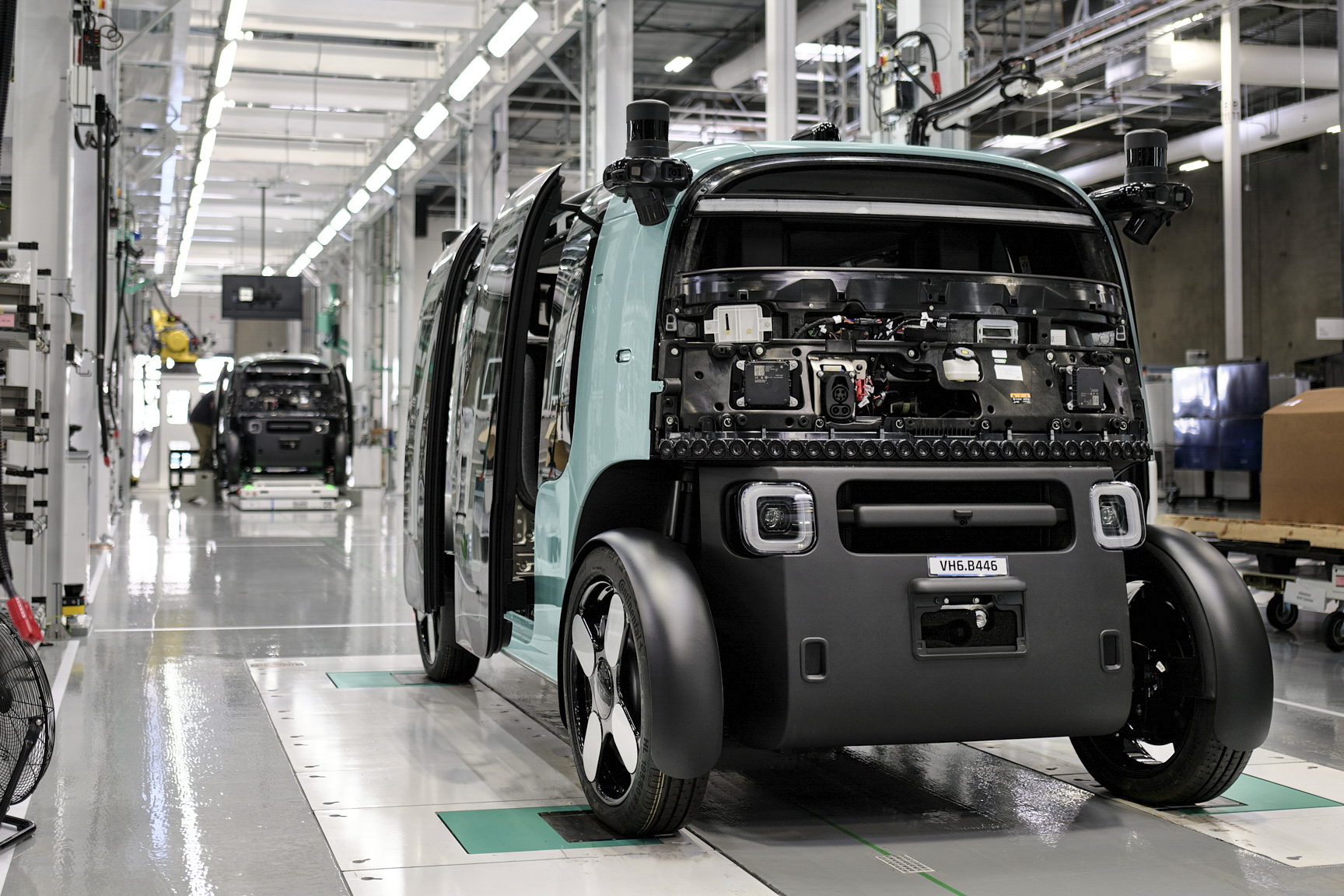
"caption": "A Zoox robo taxi rolls down the assembly line at the company’s manufacturing facility in Hayward. ",
"credit": "Courtesy of Zoox, Inc.",
"altTag": null,
"description": null,
"imgSizes": {
"thumbnail": {
"file": "https://cdn.kqed.org/wp-content/uploads/sites/10/2025/11/251119-From-Rust-to-Robots-01-KQED-160x107.jpg",
"width": 160,
"height": 107,
"mimeType": "image/jpeg"
},
"1536x1536": {
"file": "https://cdn.kqed.org/wp-content/uploads/sites/10/2025/11/251119-From-Rust-to-Robots-01-KQED-1536x1024.jpg",
"width": 1536,
"height": 1024,
"mimeType": "image/jpeg"
},
"post-thumbnail": {
"file": "https://cdn.kqed.org/wp-content/uploads/sites/10/2025/11/251119-From-Rust-to-Robots-01-KQED-672x372.jpg",
"width": 672,
"height": 372,
"mimeType": "image/jpeg"
},
"twentyfourteen-full-width": {
"file": "https://cdn.kqed.org/wp-content/uploads/sites/10/2025/11/251119-From-Rust-to-Robots-01-KQED-1038x576.jpg",
"width": 1038,
"height": 576,
"mimeType": "image/jpeg"
},
"npr-cds-wide": {
"file": "https://cdn.kqed.org/wp-content/uploads/sites/10/2025/11/251119-From-Rust-to-Robots-01-KQED-1200x675.jpg",
"width": 1200,
"height": 675,
"mimeType": "image/jpeg"
},
"kqedFullSize": {
"file": "https://cdn.kqed.org/wp-content/uploads/sites/10/2025/11/251119-From-Rust-to-Robots-01-KQED.jpg",
"width": 1728,
"height": 1152
}
},
"isLoading": false,
"fetchFailed": false
},
"news_12064677": {
"type": "attachments",
"id": "news_12064677",
"meta": {
"index": "attachments_1716263798",
"site": "news",
"id": "12064677",
"found": true
},
"title": "CAT Geeks of War_img",
"publishDate": 1763524148,
"status": "inherit",
"parent": 12064670,
"modified": 1763524292,
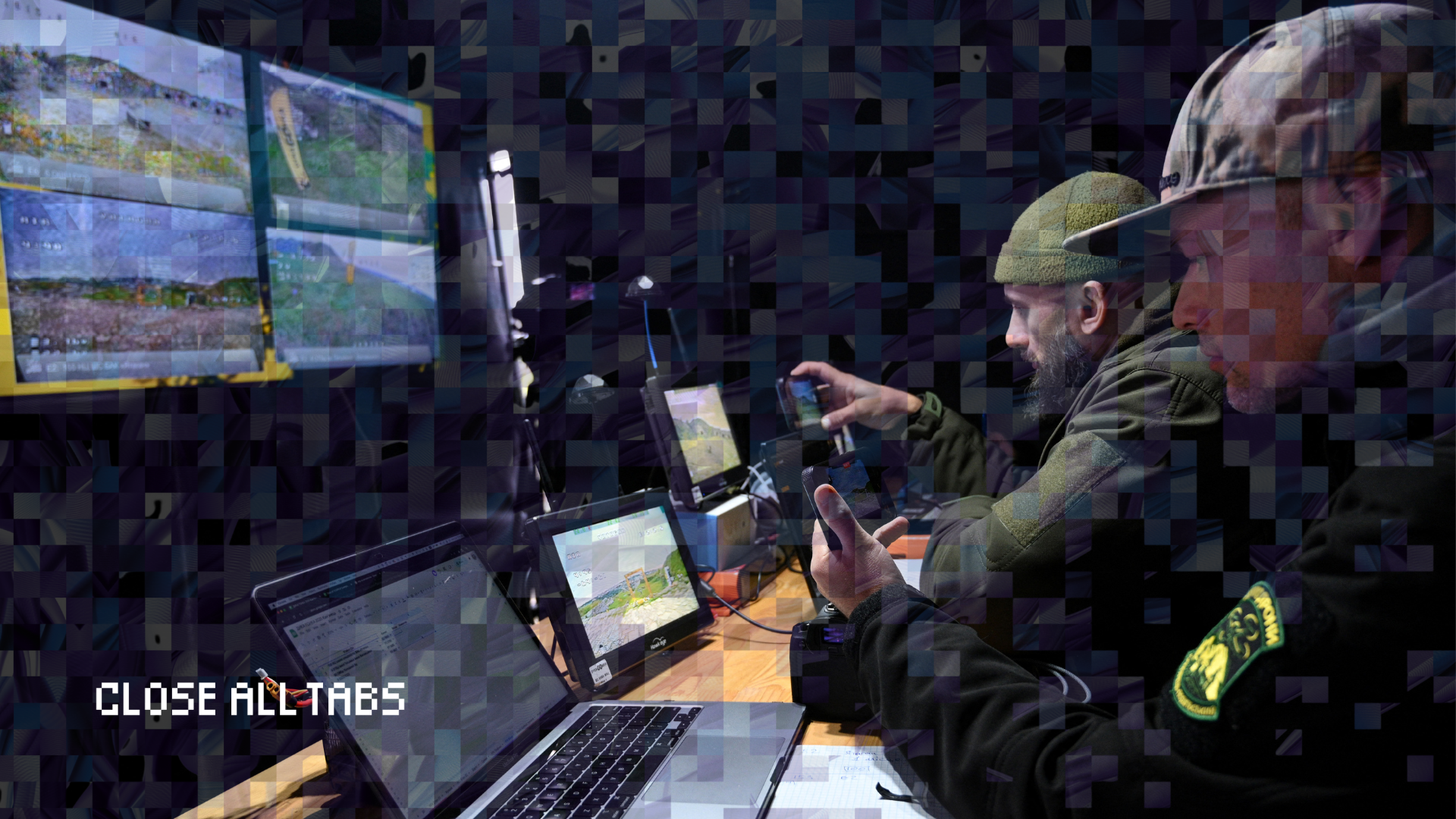
"caption": "A drone-racing event simulating combat conditions in Kamianets-Podilskyi, Ukraine, on Oct. 5, 2025. Drone technology has become increasingly central to the conflict. ",
"credit": "Photo by YURIY DYACHYSHYN/AFP via Getty Images",
"altTag": "Two Ukrainian service members sit inside a dimly lit mobile command center, monitoring several screens showing drone footage. Laptops, monitors, and handheld devices cover the desk in front of them. A pixelated overlay obscures parts of the image, and the ‘Close All Tabs’ logo appears in the lower left corner.",
"description": null,
"imgSizes": {
"thumbnail": {
"file": "https://cdn.kqed.org/wp-content/uploads/sites/10/2025/11/CAT-Geeks-of-War_img-160x90.png",
"width": 160,
"height": 90,
"mimeType": "image/png"
},
"1536x1536": {
"file": "https://cdn.kqed.org/wp-content/uploads/sites/10/2025/11/CAT-Geeks-of-War_img-1536x864.png",
"width": 1536,
"height": 864,
"mimeType": "image/png"
},
"post-thumbnail": {
"file": "https://cdn.kqed.org/wp-content/uploads/sites/10/2025/11/CAT-Geeks-of-War_img-672x372.png",
"width": 672,
"height": 372,
"mimeType": "image/png"
},
"twentyfourteen-full-width": {
"file": "https://cdn.kqed.org/wp-content/uploads/sites/10/2025/11/CAT-Geeks-of-War_img-1038x576.png",
"width": 1038,
"height": 576,
"mimeType": "image/png"
},
"npr-cds-wide": {
"file": "https://cdn.kqed.org/wp-content/uploads/sites/10/2025/11/CAT-Geeks-of-War_img-1200x675.png",
"width": 1200,
"height": 675,
"mimeType": "image/png"
},
"kqedFullSize": {
"file": "https://cdn.kqed.org/wp-content/uploads/sites/10/2025/11/CAT-Geeks-of-War_img.png",
"width": 1920,
"height": 1080
}
},
"isLoading": false,
"fetchFailed": false
},
"news_12064595": {
"type": "attachments",
"id": "news_12064595",
"meta": {
"index": "attachments_1716263798",
"site": "news",
"id": "12064595",
"found": true
},
"title": "image (9)",
"publishDate": 1763494109,
"status": "inherit",
"parent": 12064587,
"modified": 1763494167,
"caption": "San José Mayor Matt Mahan helps to install a Flock Safety brand automated license plate reader on April 23, 2024. The city and Mahan are now being sued by civil liberties groups over the technology's uses.",
"credit": "Joseph Geha/KQED",
"altTag": null,
"description": null,
"imgSizes": {
"thumbnail": {
"file": "https://cdn.kqed.org/wp-content/uploads/sites/10/2025/11/image-9-160x107.png",
"width": 160,
"height": 107,
"mimeType": "image/png"
},
"1536x1536": {
"file": "https://cdn.kqed.org/wp-content/uploads/sites/10/2025/11/image-9-1536x1024.png",
"width": 1536,
"height": 1024,
"mimeType": "image/png"
},
"post-thumbnail": {
"file": "https://cdn.kqed.org/wp-content/uploads/sites/10/2025/11/image-9-672x372.png",
"width": 672,
"height": 372,
"mimeType": "image/png"
},
"twentyfourteen-full-width": {
"file": "https://cdn.kqed.org/wp-content/uploads/sites/10/2025/11/image-9-1038x576.png",
"width": 1038,
"height": 576,
"mimeType": "image/png"
},
"npr-cds-wide": {
"file": "https://cdn.kqed.org/wp-content/uploads/sites/10/2025/11/image-9-1200x675.png",
"width": 1200,
"height": 675,
"mimeType": "image/png"
},
"kqedFullSize": {
"file": "https://cdn.kqed.org/wp-content/uploads/sites/10/2025/11/image-9.png",
"width": 2000,
"height": 1333
}
},
"isLoading": false,
"fetchFailed": false
},
"news_12064092": {
"type": "attachments",
"id": "news_12064092",
"meta": {
"index": "attachments_1716263798",
"site": "news",
"id": "12064092",
"found": true
},
"title": "woman choosing music on her cell phone to listen to on her smart speaker",
"publishDate": 1763083071,
"status": "inherit",
"parent": 12064091,
"modified": 1763083094,
"caption": "woman sitting on the sofa choosing music on her cell phone to listen to on her smart speaker at home",
"credit": "David Espejo/Getty Images",
"altTag": null,
"description": null,
"imgSizes": {
"medium": {
"file": "https://cdn.kqed.org/wp-content/uploads/sites/10/2025/11/GettyImages-1320549811-2000x1335.jpg",
"width": 2000,
"height": 1335,
"mimeType": "image/jpeg"
},
"large": {
"file": "https://cdn.kqed.org/wp-content/uploads/sites/10/2025/11/GettyImages-1320549811-2000x1335.jpg",
"width": 2000,
"height": 1335,
"mimeType": "image/jpeg"
},
"thumbnail": {
"file": "https://cdn.kqed.org/wp-content/uploads/sites/10/2025/11/GettyImages-1320549811-160x107.jpg",
"width": 160,
"height": 107,
"mimeType": "image/jpeg"
},
"1536x1536": {
"file": "https://cdn.kqed.org/wp-content/uploads/sites/10/2025/11/GettyImages-1320549811-1536x1025.jpg",
"width": 1536,
"height": 1025,
"mimeType": "image/jpeg"
},
"2048x2048": {
"file": "https://cdn.kqed.org/wp-content/uploads/sites/10/2025/11/GettyImages-1320549811-2048x1367.jpg",
"width": 2048,
"height": 1367,
"mimeType": "image/jpeg"
},
"post-thumbnail": {
"file": "https://cdn.kqed.org/wp-content/uploads/sites/10/2025/11/GettyImages-1320549811-672x372.jpg",
"width": 672,
"height": 372,
"mimeType": "image/jpeg"
},
"twentyfourteen-full-width": {
"file": "https://cdn.kqed.org/wp-content/uploads/sites/10/2025/11/GettyImages-1320549811-1038x576.jpg",
"width": 1038,
"height": 576,
"mimeType": "image/jpeg"
},
"full-width": {
"file": "https://cdn.kqed.org/wp-content/uploads/sites/10/2025/11/GettyImages-1320549811-2000x1335.jpg",
"width": 2000,
"height": 1335,
"mimeType": "image/jpeg"
},
"npr-cds-wide": {
"file": "https://cdn.kqed.org/wp-content/uploads/sites/10/2025/11/GettyImages-1320549811-1200x675.jpg",
"width": 1200,
"height": 675,
"mimeType": "image/jpeg"
},
"kqedFullSize": {
"file": "https://cdn.kqed.org/wp-content/uploads/sites/10/2025/11/GettyImages-1320549811.jpg",
"width": 2119,
"height": 1414
}
},
"isLoading": false,
"fetchFailed": false
},
"news_12063808": {
"type": "attachments",
"id": "news_12063808",
"meta": {
"index": "attachments_1716263798",
"site": "news",
"id": "12063808",
"found": true
},
"title": "San Francisco Waymo",
"publishDate": 1762972196,
"status": "inherit",
"parent": 12063805,
"modified": 1762976313,
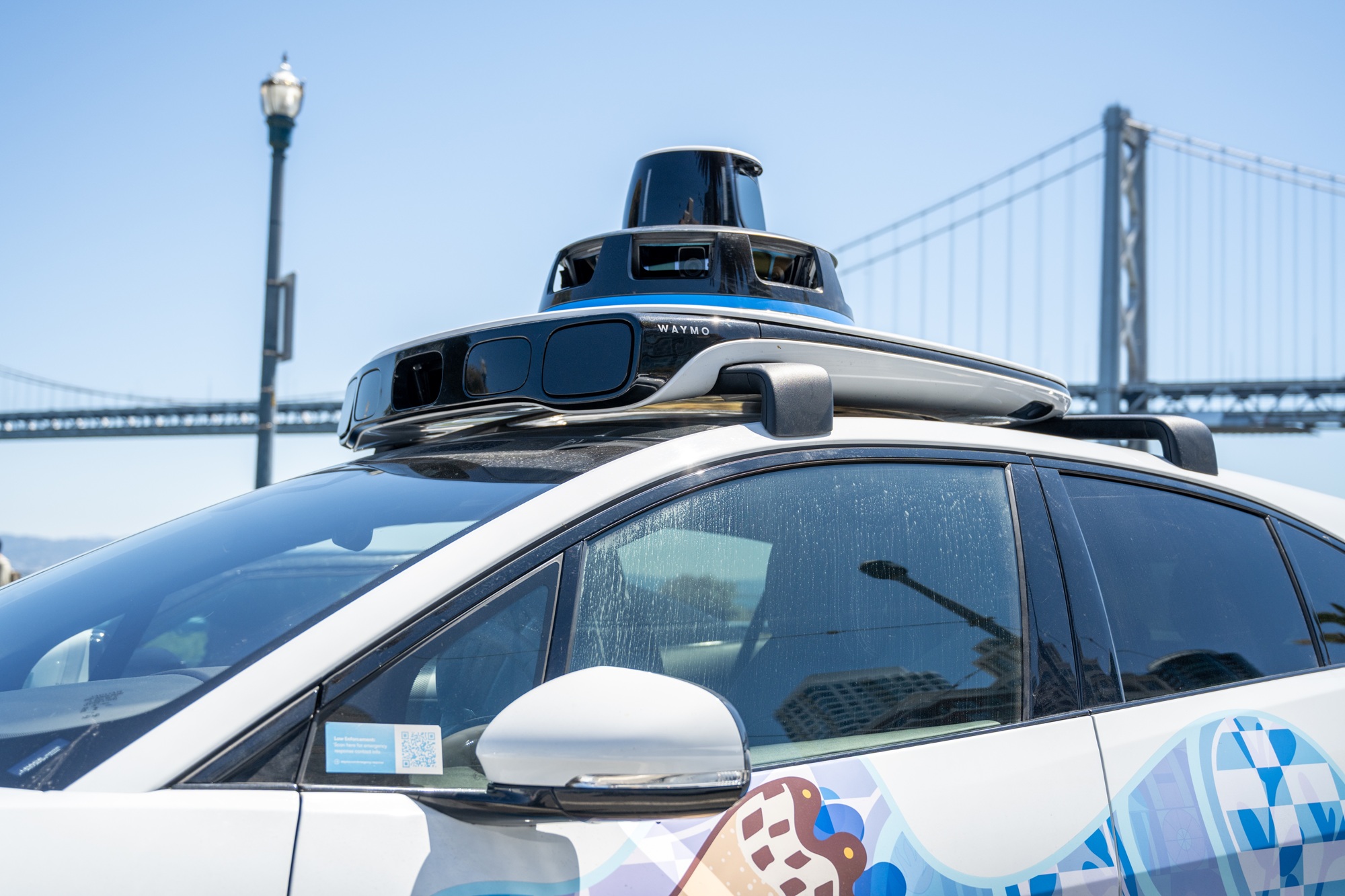
"caption": "A self-driving Waymo car with rooftop lidar and a bird-themed mural on the Embarcadero with the San Francisco-Oakland Bay Bridge in the background, in San Francisco, California, on Aug. 14, 2025. ",
"credit": "Smith Collection/Gado via Getty Images",
"altTag": null,
"description": null,
"imgSizes": {
"thumbnail": {
"file": "https://cdn.kqed.org/wp-content/uploads/sites/10/2025/11/WaymoSFGetty-160x107.jpg",
"width": 160,
"height": 107,
"mimeType": "image/jpeg"
},
"1536x1536": {
"file": "https://cdn.kqed.org/wp-content/uploads/sites/10/2025/11/WaymoSFGetty-1536x1024.jpg",
"width": 1536,
"height": 1024,
"mimeType": "image/jpeg"
},
"post-thumbnail": {
"file": "https://cdn.kqed.org/wp-content/uploads/sites/10/2025/11/WaymoSFGetty-672x372.jpg",
"width": 672,
"height": 372,
"mimeType": "image/jpeg"
},
"twentyfourteen-full-width": {
"file": "https://cdn.kqed.org/wp-content/uploads/sites/10/2025/11/WaymoSFGetty-1038x576.jpg",
"width": 1038,
"height": 576,
"mimeType": "image/jpeg"
},
"npr-cds-wide": {
"file": "https://cdn.kqed.org/wp-content/uploads/sites/10/2025/11/WaymoSFGetty-1200x675.jpg",
"width": 1200,
"height": 675,
"mimeType": "image/jpeg"
},
"kqedFullSize": {
"file": "https://cdn.kqed.org/wp-content/uploads/sites/10/2025/11/WaymoSFGetty.jpg",
"width": 2000,
"height": 1333
}
},
"isLoading": false,
"fetchFailed": false
},
"news_12063465": {
"type": "attachments",
"id": "news_12063465",
"meta": {
"index": "attachments_1716263798",
"site": "news",
"id": "12063465",
"found": true
},
"title": "Low Angle View Of Woman Using Mobile Phone While Sitting On Bed In Darkroom",
"publishDate": 1762550603,
"status": "inherit",
"parent": 12063401,
"modified": 1762550628,
"caption": "Low Angle View Of Woman Using Mobile Phone While Sitting On Bed In Darkroom",
"credit": "EyeEm Mobile GmbH/Getty Images",
"altTag": null,
"description": null,
"imgSizes": {
"thumbnail": {
"file": "https://cdn.kqed.org/wp-content/uploads/sites/10/2025/11/OpenAiLawsuitsGetty-160x120.jpg",
"width": 160,
"height": 120,
"mimeType": "image/jpeg"
},
"1536x1536": {
"file": "https://cdn.kqed.org/wp-content/uploads/sites/10/2025/11/OpenAiLawsuitsGetty-1536x1152.jpg",
"width": 1536,
"height": 1152,
"mimeType": "image/jpeg"
},
"post-thumbnail": {
"file": "https://cdn.kqed.org/wp-content/uploads/sites/10/2025/11/OpenAiLawsuitsGetty-672x372.jpg",
"width": 672,
"height": 372,
"mimeType": "image/jpeg"
},
"twentyfourteen-full-width": {
"file": "https://cdn.kqed.org/wp-content/uploads/sites/10/2025/11/OpenAiLawsuitsGetty-1038x576.jpg",
"width": 1038,
"height": 576,
"mimeType": "image/jpeg"
},
"npr-cds-wide": {
"file": "https://cdn.kqed.org/wp-content/uploads/sites/10/2025/11/OpenAiLawsuitsGetty-1200x675.jpg",
"width": 1200,
"height": 675,
"mimeType": "image/jpeg"
},
"kqedFullSize": {
"file": "https://cdn.kqed.org/wp-content/uploads/sites/10/2025/11/OpenAiLawsuitsGetty.jpg",
"width": 2000,
"height": 1500
}
},
"isLoading": false,
"fetchFailed": false
},
"news_12062600": {
"type": "attachments",
"id": "news_12062600",
"meta": {
"index": "attachments_1716263798",
"site": "news",
"id": "12062600",
"found": true
},
"title": "111623_Sam-Altman_AP_CM_01",
"publishDate": 1761950606,
"status": "inherit",
"parent": 12062523,
"modified": 1775852918,
"caption": "OpenAI restructured to a for-profit company in a move tied to an agreement with California Attorney General Rob Bonta. Company CEO Sam Altman participates in a discussion in San Francisco on Nov. 16, 2023.",
"credit": "Photo by Eric Risberg, AP Photo",
"altTag": null,
"description": null,
"imgSizes": {
"thumbnail": {
"file": "https://cdn.kqed.org/wp-content/uploads/sites/10/2025/10/111623_Sam-Altman_AP_CM_01-160x107.jpeg",
"width": 160,
"height": 107,
"mimeType": "image/jpeg"
},
"1536x1536": {
"file": "https://cdn.kqed.org/wp-content/uploads/sites/10/2025/10/111623_Sam-Altman_AP_CM_01-1536x1024.jpeg",
"width": 1536,
"height": 1024,
"mimeType": "image/jpeg"
},
"post-thumbnail": {
"file": "https://cdn.kqed.org/wp-content/uploads/sites/10/2025/10/111623_Sam-Altman_AP_CM_01-672x372.jpeg",
"width": 672,
"height": 372,
"mimeType": "image/jpeg"
},
"twentyfourteen-full-width": {
"file": "https://cdn.kqed.org/wp-content/uploads/sites/10/2025/10/111623_Sam-Altman_AP_CM_01-1038x576.jpeg",
"width": 1038,
"height": 576,
"mimeType": "image/jpeg"
},
"npr-cds-wide": {
"file": "https://cdn.kqed.org/wp-content/uploads/sites/10/2025/10/111623_Sam-Altman_AP_CM_01-1200x675.jpeg",
"width": 1200,
"height": 675,
"mimeType": "image/jpeg"
},
"kqedFullSize": {
"file": "https://cdn.kqed.org/wp-content/uploads/sites/10/2025/10/111623_Sam-Altman_AP_CM_01.jpeg",
"width": 2000,
"height": 1333
}
},
"isLoading": false,
"fetchFailed": false
},
"news_12044809": {
"type": "attachments",
"id": "news_12044809",
"meta": {
"index": "attachments_1716263798",
"site": "news",
"id": "12044809",
"found": true
},
"title": "250617-FOODBANKS-JG-06_qed",
"publishDate": 1750200928,
"status": "inherit",
"parent": 12044713,
"modified": 1750200944,
"caption": "Volunteers pack potatoes and carrots into food boxes inside the Second Harvest of Silicon Valley warehouse in San José on June 17, 2025.",
"credit": "Joseph Geha/KQED",
"altTag": null,
"description": null,
"imgSizes": {
"thumbnail": {
"file": "https://cdn.kqed.org/wp-content/uploads/sites/10/2025/06/250617-FOODBANKS-JG-06_qed-160x107.jpg",
"width": 160,
"height": 107,
"mimeType": "image/jpeg"
},
"1536x1536": {
"file": "https://cdn.kqed.org/wp-content/uploads/sites/10/2025/06/250617-FOODBANKS-JG-06_qed-1536x1024.jpg",
"width": 1536,
"height": 1024,
"mimeType": "image/jpeg"
},
"post-thumbnail": {
"file": "https://cdn.kqed.org/wp-content/uploads/sites/10/2025/06/250617-FOODBANKS-JG-06_qed-672x372.jpg",
"width": 672,
"height": 372,
"mimeType": "image/jpeg"
},
"twentyfourteen-full-width": {
"file": "https://cdn.kqed.org/wp-content/uploads/sites/10/2025/06/250617-FOODBANKS-JG-06_qed-1038x576.jpg",
"width": 1038,
"height": 576,
"mimeType": "image/jpeg"
},
"kqedFullSize": {
"file": "https://cdn.kqed.org/wp-content/uploads/sites/10/2025/06/250617-FOODBANKS-JG-06_qed.jpg",
"width": 1999,
"height": 1333
}
},
"isLoading": false,
"fetchFailed": false
}
},
"audioPlayerReducer": {
"postId": "stream_live",
"isPaused": true,
"isPlaying": false,
"pfsActive": false,
"pledgeModalIsOpen": true,
"playerDrawerIsOpen": false,
"liveAudioPlayStartedAt": 0,
"liveAudioPlayContext": ""
},
"authorsReducer": {
"byline_news_12064670": {
"type": "authors",
"id": "byline_news_12064670",
"meta": {
"override": true
},
"slug": "byline_news_12064670",
"name": "Erica Hellerstein",
"isLoading": false
},
"byline_news_12062523": {
"type": "authors",
"id": "byline_news_12062523",
"meta": {
"override": true
},
"slug": "byline_news_12062523",
"name": "Khari Johnson and Levi Sumagaysay, CalMatters",
"isLoading": false
},
"danbrekke": {
"type": "authors",
"id": "222",
"meta": {
"index": "authors_1716337520",
"id": "222",
"found": true
},
"name": "Dan Brekke",
"firstName": "Dan",
"lastName": "Brekke",
"slug": "danbrekke",
"email": "dbrekke@kqed.org",
"display_author_email": true,
"staff_mastheads": [
"news",
"science"
],
"title": "KQED Editor and Reporter",
"bio": "Dan Brekke is a reporter and editor for KQED News, responsible for coverage of topics ranging from California water issues to the Bay Area's transportation challenges. In a newsroom career that began in Chicago in 1972, Dan has worked for \u003cem>The San Francisco Examiner,\u003c/em> Wired and TechTV and has been published in The New York Times, The New York Times Magazine, Business 2.0, Salon and elsewhere.\r\n\r\nSince joining KQED in 2007, Dan has reported, edited and produced both radio and online features and breaking news pieces. He has shared as both editor and reporter in four Society of Professional Journalists Norcal Excellence in Journalism awards and one Edward R. Murrow regional award. He was chosen for a spring 2017 residency at the Mesa Refuge to advance his research on California salmon.\r\n\r\nEmail Dan at: \u003ca href=\"mailto:dbrekke@kqed.org\">dbrekke@kqed.org\u003c/a>\r\n\r\n\u003cstrong>Twitter:\u003c/strong> \u003ca href=\"https://twitter.com/danbrekke\" rel=\"noopener noreferrer\">twitter.com/danbrekke\u003c/a>\r\n\u003cstrong>Facebook:\u003c/strong> \u003ca href=\"https://www.facebook.com/danbrekke\" rel=\"noopener noreferrer\">www.facebook.com/danbrekke\u003c/a>\r\n\u003cstrong>LinkedIn:\u003c/strong> \u003ca href=\"https://www.linkedin.com/in/danbrekke\" rel=\"noopener noreferrer\">www.linkedin.com/in/danbrekke\u003c/a>",
"avatar": "https://secure.gravatar.com/avatar/c8126230345efca3f7aa89b1a402be45?s=600&d=mm&r=g",
"twitter": "danbrekke",
"facebook": null,
"instagram": "https://www.instagram.com/dan.brekke/",
"linkedin": "https://www.linkedin.com/in/danbrekke/",
"sites": [
{
"site": "news",
"roles": [
"administrator",
"create_posts"
]
},
{
"site": "stateofhealth",
"roles": [
"editor"
]
},
{
"site": "science",
"roles": [
"editor"
]
},
{
"site": "quest",
"roles": [
"contributor"
]
},
{
"site": "food",
"roles": [
"contributor"
]
},
{
"site": "forum",
"roles": [
"contributor"
]
},
{
"site": "liveblog",
"roles": [
"editor"
]
}
],
"headData": {
"title": "Dan Brekke | KQED",
"description": "KQED Editor and Reporter",
"ogImgSrc": "https://secure.gravatar.com/avatar/c8126230345efca3f7aa89b1a402be45?s=600&d=mm&r=g",
"twImgSrc": "https://secure.gravatar.com/avatar/c8126230345efca3f7aa89b1a402be45?s=600&d=mm&r=g"
},
"isLoading": false,
"link": "/author/danbrekke"
},
"rachael-myrow": {
"type": "authors",
"id": "251",
"meta": {
"index": "authors_1716337520",
"id": "251",
"found": true
},
"name": "Rachael Myrow",
"firstName": "Rachael",
"lastName": "Myrow",
"slug": "rachael-myrow",
"email": "rmyrow@kqed.org",
"display_author_email": true,
"staff_mastheads": [
"news"
],
"title": "Senior Editor of KQED's Silicon Valley News Desk",
"bio": "• I write and edit stories about how Silicon Valley power and policies shape everyday life in California. I’m also passionate about making Bay Area history and culture more accessible to a broad public. • I’ve been a journalist for most of my life, starting in high school with The Franklin Press in Los Angeles, where I grew up. While earning my first degree in English at UC Berkeley, I got my start in public radio at KALX-FM. After completing a second degree in journalism at Cal, I landed my first professional job at Marketplace, then moved on to KPCC (now LAist), and then KQED, where I hosted The California Report for more than seven years. • My reporting has appeared on NPR, The World, WBUR’s \u003ci>Here & Now\u003c/i>, and the BBC. I also guest host for KQED’s \u003ci>Forum\u003c/i>, as well as the Commonwealth Club in San Francisco. • I speak periodically on media, democracy and technology issues, and do voiceover work for documentaries and educational video projects. • Outside of the studio, you'll find me hiking Bay Area trails and whipping up Insta-ready meals in my kitchen. • I do not accept gifts, money, or favors from anyone connected to my reporting, I don't pay people for information, and I do not support or donate to political causes. • I strive to treat the people I report on with fairness, honesty, and respect. I also recognize there are often multiple sides to a story and work to verify information through multiple sources and documentation. If I get something wrong, I correct it.",
"avatar": "https://secure.gravatar.com/avatar/3ed8a3c5f26025e4a805ba634cda8cd764906b97438a6d9ce216b044e340da4e?s=600&d=blank&r=g",
"twitter": "rachaelmyrow",
"bluesky": null,
"facebook": null,
"instagram": null,
"linkedin": "https://www.linkedin.com/in/rachaelmyrow/",
"sites": [
{
"site": "arts",
"roles": [
"administrator"
]
},
{
"site": "news",
"roles": [
"edit_others_posts",
"editor"
]
},
{
"site": "futureofyou",
"roles": [
"editor"
]
},
{
"site": "bayareabites",
"roles": [
"editor"
]
},
{
"site": "stateofhealth",
"roles": [
"editor"
]
},
{
"site": "science",
"roles": [
"editor"
]
},
{
"site": "food",
"roles": [
"editor"
]
},
{
"site": "forum",
"roles": [
"editor"
]
},
{
"site": "liveblog",
"roles": [
"author"
]
}
],
"headData": {
"title": "Rachael Myrow | KQED",
"description": "Senior Editor of KQED's Silicon Valley News Desk",
"ogImgSrc": "https://secure.gravatar.com/avatar/3ed8a3c5f26025e4a805ba634cda8cd764906b97438a6d9ce216b044e340da4e?s=600&d=blank&r=g",
"twImgSrc": "https://secure.gravatar.com/avatar/3ed8a3c5f26025e4a805ba634cda8cd764906b97438a6d9ce216b044e340da4e?s=600&d=blank&r=g"
},
"isLoading": false,
"link": "/author/rachael-myrow"
},
"ecruzguevarra": {
"type": "authors",
"id": "8654",
"meta": {
"index": "authors_1716337520",
"id": "8654",
"found": true
},
"name": "Ericka Cruz Guevarra",
"firstName": "Ericka",
"lastName": "Cruz Guevarra",
"slug": "ecruzguevarra",
"email": "ecruzguevarra@kqed.org",
"display_author_email": true,
"staff_mastheads": [
"news"
],
"title": "Producer, The Bay Podcast",
"bio": "Ericka Cruz Guevarra is host of \u003ca href=\"https://www.kqed.org/podcasts/thebay\">\u003cem>The Bay\u003c/em>\u003c/a> podcast at KQED. Before host, she was the show’s producer. Her work in that capacity includes a three-part reported series on policing in Vallejo, which won a 2020 excellence in journalism award from the Society of Professional Journalists. Ericka has worked as a breaking news reporter at Oregon Public Broadcasting, helped produce the Code Switch podcast, and was KQED’s inaugural Raul Ramirez Diversity Fund intern. She’s also an alumna of NPR’s Next Generation Radio program. Send her an email if you have strong feelings about whether Fairfield and Suisun City are the Bay. Ericka is represented by SAG-AFTRA.",
"avatar": "https://secure.gravatar.com/avatar/accefc1de4bafc7e234b69bcb9b6f6536c130fd84709bc3069ef11a78787e1bb?s=600&d=blank&r=g",
"twitter": "NotoriousECG",
"bluesky": null,
"facebook": null,
"instagram": null,
"linkedin": null,
"sites": [
{
"site": "arts",
"roles": [
"subscriber"
]
},
{
"site": "news",
"roles": [
"editor",
"manage_categories"
]
},
{
"site": "futureofyou",
"roles": [
"subscriber"
]
},
{
"site": "stateofhealth",
"roles": [
"subscriber"
]
},
{
"site": "science",
"roles": [
"editor"
]
},
{
"site": "forum",
"roles": [
"subscriber"
]
}
],
"headData": {
"title": "Ericka Cruz Guevarra | KQED",
"description": "Producer, The Bay Podcast",
"ogImgSrc": "https://secure.gravatar.com/avatar/accefc1de4bafc7e234b69bcb9b6f6536c130fd84709bc3069ef11a78787e1bb?s=600&d=blank&r=g",
"twImgSrc": "https://secure.gravatar.com/avatar/accefc1de4bafc7e234b69bcb9b6f6536c130fd84709bc3069ef11a78787e1bb?s=600&d=blank&r=g"
},
"isLoading": false,
"link": "/author/ecruzguevarra"
},
"nvoynovskaya": {
"type": "authors",
"id": "11387",
"meta": {
"index": "authors_1716337520",
"id": "11387",
"found": true
},
"name": "Nastia Voynovskaya",
"firstName": "Nastia",
"lastName": "Voynovskaya",
"slug": "nvoynovskaya",
"email": "nvoynovskaya@kqed.org",
"display_author_email": false,
"staff_mastheads": [
"arts"
],
"title": "Editor and reporter",
"bio": "Nastia Voynovskaya is a reporter, editor and host at KQED Arts & Culture. She's been covering the arts in the Bay Area for over a decade, with a focus on music, queer culture, labor issues and grassroots organizing. She has edited KQED story series such as Trans Bay: A History of San Francisco's Gender-Diverse Community, and co-created KQED's Bay Area hip-hop history project, That's My Word. Nastia's work has been recognized by the Society of Professional Journalists and San Francisco Press Club. She regularly appears on podcasts and radio programs, including NPR's All Songs Considered, and hosts live events where music, culture and conversation meet.",
"avatar": "https://secure.gravatar.com/avatar/5025ee460e5a85d69ca20ea6c6f2f80d7e17795c828f61ea3aecfcd924e9042e?s=600&d=blank&r=g",
"twitter": null,
"bluesky": null,
"facebook": null,
"instagram": "https://www.instagram.com/nananastia/",
"linkedin": null,
"sites": [
{
"site": "",
"roles": [
"editor"
]
},
{
"site": "arts",
"roles": [
"administrator"
]
},
{
"site": "news",
"roles": [
"editor"
]
},
{
"site": "pop",
"roles": [
"administrator"
]
},
{
"site": "bayareabites",
"roles": [
"editor"
]
},
{
"site": "podcasts",
"roles": [
"editor"
]
},
{
"site": "hiphop",
"roles": [
"editor"
]
}
],
"headData": {
"title": "Nastia Voynovskaya | KQED",
"description": "Editor and reporter",
"ogImgSrc": "https://secure.gravatar.com/avatar/5025ee460e5a85d69ca20ea6c6f2f80d7e17795c828f61ea3aecfcd924e9042e?s=600&d=blank&r=g",
"twImgSrc": "https://secure.gravatar.com/avatar/5025ee460e5a85d69ca20ea6c6f2f80d7e17795c828f61ea3aecfcd924e9042e?s=600&d=blank&r=g"
},
"isLoading": false,
"link": "/author/nvoynovskaya"
},
"kevinstark": {
"type": "authors",
"id": "11608",
"meta": {
"index": "authors_1716337520",
"id": "11608",
"found": true
},
"name": "Kevin Stark",
"firstName": "Kevin",
"lastName": "Stark",
"slug": "kevinstark",
"email": "kstark@kqed.org",
"display_author_email": true,
"staff_mastheads": [
"science"
],
"title": "Senior Editor",
"bio": "Kevin is a senior editor for KQED Science, managing the station's health and climate desks. His journalism career began in the Pacific Northwest, and he later became a lead reporter for the San Francisco Public Press. His work has appeared in Pacific Standard magazine, the Energy News Network, the Center for Investigative Reporting's Reveal and WBEZ in Chicago. Kevin joined KQED in 2019, and has covered issues related to energy, wildfire, climate change and the environment.",
"avatar": "https://secure.gravatar.com/avatar/365aaa4b597d3a8374f67504ff0facd323d7906e8eb4be0a7efd2427408e802c?s=600&d=blank&r=g",
"twitter": "starkkev",
"bluesky": null,
"facebook": null,
"instagram": null,
"linkedin": null,
"sites": [
{
"site": "",
"roles": [
"editor"
]
},
{
"site": "news",
"roles": [
"editor"
]
},
{
"site": "science",
"roles": [
"administrator"
]
}
],
"headData": {
"title": "Kevin Stark | KQED",
"description": "Senior Editor",
"ogImgSrc": "https://secure.gravatar.com/avatar/365aaa4b597d3a8374f67504ff0facd323d7906e8eb4be0a7efd2427408e802c?s=600&d=blank&r=g",
"twImgSrc": "https://secure.gravatar.com/avatar/365aaa4b597d3a8374f67504ff0facd323d7906e8eb4be0a7efd2427408e802c?s=600&d=blank&r=g"
},
"isLoading": false,
"link": "/author/kevinstark"
},
"amontecillo": {
"type": "authors",
"id": "11649",
"meta": {
"index": "authors_1716337520",
"id": "11649",
"found": true
},
"name": "Alan Montecillo",
"firstName": "Alan",
"lastName": "Montecillo",
"slug": "amontecillo",
"email": "amontecillo@kqed.org",
"display_author_email": false,
"staff_mastheads": [
"news"
],
"title": "KQED Contributor",
"bio": "Alan Montecillo is the senior editor of \u003cem>\u003ca href=\"http://kqed.org/thebay\">The Bay\u003c/a>, \u003c/em> KQED's local news podcast. Before moving to the Bay Area, he worked as a senior talk show producer for WILL in Champaign-Urbana, Illinois and at Oregon Public Broadcasting in Portland, Oregon. He has won journalism awards from the Society of Professional Journalists Northern California, the Public Media Journalists Association, The Signal Awards, and has also received a regional Edward R. Murrow award. Alan is a Filipino American from Hong Kong and a graduate of Reed College.",
"avatar": "https://secure.gravatar.com/avatar/268f53a2066899ea9efdd8a5900218b17c822d9862cbc9326cccec53ef41d349?s=600&d=blank&r=g",
"twitter": "alanmontecillo",
"bluesky": null,
"facebook": null,
"instagram": null,
"linkedin": null,
"sites": [
{
"site": "",
"roles": [
"editor"
]
},
{
"site": "news",
"roles": [
"editor",
"manage_categories"
]
}
],
"headData": {
"title": "Alan Montecillo | KQED",
"description": "KQED Contributor",
"ogImgSrc": "https://secure.gravatar.com/avatar/268f53a2066899ea9efdd8a5900218b17c822d9862cbc9326cccec53ef41d349?s=600&d=blank&r=g",
"twImgSrc": "https://secure.gravatar.com/avatar/268f53a2066899ea9efdd8a5900218b17c822d9862cbc9326cccec53ef41d349?s=600&d=blank&r=g"
},
"isLoading": false,
"link": "/author/amontecillo"
},
"jessicakariisa": {
"type": "authors",
"id": "11831",
"meta": {
"index": "authors_1716337520",
"id": "11831",
"found": true
},
"name": "Jessica Kariisa",
"firstName": "Jessica",
"lastName": "Kariisa",
"slug": "jessicakariisa",
"email": "jkariisa@kqed.org",
"display_author_email": false,
"staff_mastheads": [],
"title": "Producer, The Bay",
"bio": "Jessica Kariisa is the producer of The Bay. She first joined KQED as an intern for The California Report Magazine, after which she became an on-call producer. She reported a Bay Curious episode on the use of rap lyrics in criminal trials which won a Society of Professional Journalists award in 2023 for Excellence in Features Journalism and the 2023 Signal Award for Best Conversation Starter. She’s worked on podcasts for Snap Judgment and American Public Media. Before embarking on her audio career, she was a music journalist.\r\n\r\nJessica Kariisa is represented by SAG-AFTRA.",
"avatar": "https://secure.gravatar.com/avatar/522e97b28ac0b3d411621c0fde8f3419c7b71ea2c5c262c57c4bb600963f328c?s=600&d=blank&r=g",
"twitter": null,
"bluesky": null,
"facebook": null,
"instagram": null,
"linkedin": null,
"sites": [
{
"site": "arts",
"roles": [
"author"
]
},
{
"site": "news",
"roles": [
"editor",
"manage_categories"
]
}
],
"headData": {
"title": "Jessica Kariisa | KQED",
"description": "Producer, The Bay",
"ogImgSrc": "https://secure.gravatar.com/avatar/522e97b28ac0b3d411621c0fde8f3419c7b71ea2c5c262c57c4bb600963f328c?s=600&d=blank&r=g",
"twImgSrc": "https://secure.gravatar.com/avatar/522e97b28ac0b3d411621c0fde8f3419c7b71ea2c5c262c57c4bb600963f328c?s=600&d=blank&r=g"
},
"isLoading": false,
"link": "/author/jessicakariisa"
},
"chambrick": {
"type": "authors",
"id": "11832",
"meta": {
"index": "authors_1716337520",
"id": "11832",
"found": true
},
"name": "Chris Hambrick",
"firstName": "Chris",
"lastName": "Hambrick",
"slug": "chambrick",
"email": "chambrick@kqed.org",
"display_author_email": false,
"staff_mastheads": [],
"title": "KQED Contributor",
"bio": null,
"avatar": "https://secure.gravatar.com/avatar/23cb83888bc440645af5d36d0d1909e8ecb6cef21f2fdb96abf9a55495bb19d8?s=600&d=blank&r=g",
"twitter": null,
"bluesky": null,
"facebook": null,
"instagram": null,
"linkedin": null,
"sites": [
{
"site": "",
"roles": [
"editor"
]
},
{
"site": "arts",
"roles": [
"editor"
]
},
{
"site": "news",
"roles": [
"editor"
]
},
{
"site": "podcasts",
"roles": [
"editor"
]
}
],
"headData": {
"title": "Chris Hambrick | KQED",
"description": "KQED Contributor",
"ogImgSrc": "https://secure.gravatar.com/avatar/23cb83888bc440645af5d36d0d1909e8ecb6cef21f2fdb96abf9a55495bb19d8?s=600&d=blank&r=g",
"twImgSrc": "https://secure.gravatar.com/avatar/23cb83888bc440645af5d36d0d1909e8ecb6cef21f2fdb96abf9a55495bb19d8?s=600&d=blank&r=g"
},
"isLoading": false,
"link": "/author/chambrick"
},
"cegusa": {
"type": "authors",
"id": "11869",
"meta": {
"index": "authors_1716337520",
"id": "11869",
"found": true
},
"name": "Chris Egusa",
"firstName": "Chris",
"lastName": "Egusa",
"slug": "cegusa",
"email": "cegusa@kqed.org",
"display_author_email": false,
"staff_mastheads": [],
"title": "KQED Contributor",
"bio": null,
"avatar": "https://secure.gravatar.com/avatar/3562ed52747313a4c94017da88ea89f9e85cd901f63ebc056a7d5e0adf4a03da?s=600&d=blank&r=g",
"twitter": null,
"bluesky": null,
"facebook": null,
"instagram": null,
"linkedin": null,
"sites": [
{
"site": "arts",
"roles": [
"editor"
]
},
{
"site": "news",
"roles": [
"editor"
]
}
],
"headData": {
"title": "Chris Egusa | KQED",
"description": "KQED Contributor",
"ogImgSrc": "https://secure.gravatar.com/avatar/3562ed52747313a4c94017da88ea89f9e85cd901f63ebc056a7d5e0adf4a03da?s=600&d=blank&r=g",
"twImgSrc": "https://secure.gravatar.com/avatar/3562ed52747313a4c94017da88ea89f9e85cd901f63ebc056a7d5e0adf4a03da?s=600&d=blank&r=g"
},
"isLoading": false,
"link": "/author/cegusa"
},
"jgeha": {
"type": "authors",
"id": "11906",
"meta": {
"index": "authors_1716337520",
"id": "11906",
"found": true
},
"name": "Joseph Geha",
"firstName": "Joseph",
"lastName": "Geha",
"slug": "jgeha",
"email": "jgeha@kqed.org",
"display_author_email": false,
"staff_mastheads": [
"news",
"science"
],
"title": "KQED Contributor",
"bio": null,
"avatar": "https://secure.gravatar.com/avatar/ea84d2b6dd93d6369d453edf19dd583f117cd1759d2d9c9c92f9de77017354fe?s=600&d=blank&r=g",
"twitter": null,
"bluesky": null,
"facebook": null,
"instagram": null,
"linkedin": null,
"sites": [
{
"site": "news",
"roles": [
"editor"
]
},
{
"site": "liveblog",
"roles": [
"author"
]
}
],
"headData": {
"title": "Joseph Geha | KQED",
"description": "KQED Contributor",
"ogImgSrc": "https://secure.gravatar.com/avatar/ea84d2b6dd93d6369d453edf19dd583f117cd1759d2d9c9c92f9de77017354fe?s=600&d=blank&r=g",
"twImgSrc": "https://secure.gravatar.com/avatar/ea84d2b6dd93d6369d453edf19dd583f117cd1759d2d9c9c92f9de77017354fe?s=600&d=blank&r=g"
},
"isLoading": false,
"link": "/author/jgeha"
},
"kdebenedetti": {
"type": "authors",
"id": "11913",
"meta": {
"index": "authors_1716337520",
"id": "11913",
"found": true
},
"name": "Katie DeBenedetti",
"firstName": "Katie",
"lastName": "DeBenedetti",
"slug": "kdebenedetti",
"email": "kdebenedetti@kqed.org",
"display_author_email": false,
"staff_mastheads": [
"news",
"science"
],
"title": "KQED Contributor",
"bio": "Katie DeBenedetti is a digital reporter covering daily news for the Express Desk. Prior to joining KQED as a culture reporting intern in January 2024, she covered education and city government for the Napa Valley Register.",
"avatar": "https://secure.gravatar.com/avatar/6e31073cb8f7e4214ab03f42771d0f45?s=600&d=blank&r=g",
"twitter": null,
"facebook": null,
"instagram": null,
"linkedin": null,
"sites": [
{
"site": "news",
"roles": [
"author"
]
},
{
"site": "science",
"roles": [
"author"
]
},
{
"site": "liveblog",
"roles": [
"author"
]
}
],
"headData": {
"title": "Katie DeBenedetti | KQED",
"description": "KQED Contributor",
"ogImgSrc": "https://secure.gravatar.com/avatar/6e31073cb8f7e4214ab03f42771d0f45?s=600&d=blank&r=g",
"twImgSrc": "https://secure.gravatar.com/avatar/6e31073cb8f7e4214ab03f42771d0f45?s=600&d=blank&r=g"
},
"isLoading": false,
"link": "/author/kdebenedetti"
},
"bkrans": {
"type": "authors",
"id": "11923",
"meta": {
"index": "authors_1716337520",
"id": "11923",
"found": true
},
"name": "Brian Krans",
"firstName": "Brian",
"lastName": "Krans",
"slug": "bkrans",
"email": "bkrans@kqed.org",
"display_author_email": false,
"staff_mastheads": [
"news"
],
"title": "KQED Contributing Reporter",
"bio": "Brian Krans is an award-winning local news and investigative reporter who has been proudly working as a general assignment reporter for KQED since August 2023. He lives in Richmond, where he also reports on air pollution for Richmondside. He is also a founding member of the Vallejo Sun.",
"avatar": "https://secure.gravatar.com/avatar/71fa91f931774612559f7640390b53d9c2840ff72b20f195a25239aab2d9fbb9?s=600&d=blank&r=g",
"twitter": "citizenkrans",
"bluesky": null,
"facebook": null,
"instagram": null,
"linkedin": null,
"sites": [
{
"site": "news",
"roles": [
"editor"
]
}
],
"headData": {
"title": "Brian Krans | KQED",
"description": "KQED Contributing Reporter",
"ogImgSrc": "https://secure.gravatar.com/avatar/71fa91f931774612559f7640390b53d9c2840ff72b20f195a25239aab2d9fbb9?s=600&d=blank&r=g",
"twImgSrc": "https://secure.gravatar.com/avatar/71fa91f931774612559f7640390b53d9c2840ff72b20f195a25239aab2d9fbb9?s=600&d=blank&r=g"
},
"isLoading": false,
"link": "/author/bkrans"
},
"mcueva": {
"type": "authors",
"id": "11943",
"meta": {
"index": "authors_1716337520",
"id": "11943",
"found": true
},
"name": "Maya Cueva",
"firstName": "Maya",
"lastName": "Cueva",
"slug": "mcueva",
"email": "mcueva@kqed.org",
"display_author_email": false,
"staff_mastheads": [],
"title": "KQED Contributor",
"bio": null,
"avatar": "https://secure.gravatar.com/avatar/238c7aba67c4b6b7b891965ba8cc9e9a4928b5dbdeaf4bde6a81c13e87f49b49?s=600&d=blank&r=g",
"twitter": null,
"bluesky": null,
"facebook": null,
"instagram": null,
"linkedin": null,
"sites": [
{
"site": "news",
"roles": [
"editor"
]
}
],
"headData": {
"title": "Maya Cueva | KQED",
"description": "KQED Contributor",
"ogImgSrc": "https://secure.gravatar.com/avatar/238c7aba67c4b6b7b891965ba8cc9e9a4928b5dbdeaf4bde6a81c13e87f49b49?s=600&d=blank&r=g",
"twImgSrc": "https://secure.gravatar.com/avatar/238c7aba67c4b6b7b891965ba8cc9e9a4928b5dbdeaf4bde6a81c13e87f49b49?s=600&d=blank&r=g"
},
"isLoading": false,
"link": "/author/mcueva"
},
"msung": {
"type": "authors",
"id": "11944",
"meta": {
"index": "authors_1716337520",
"id": "11944",
"found": true
},
"name": "Morgan Sung",
"firstName": "Morgan",
"lastName": "Sung",
"slug": "msung",
"email": "msung@kqed.org",
"display_author_email": false,
"staff_mastheads": [],
"title": "Close All Tabs Host",
"bio": null,
"avatar": "https://secure.gravatar.com/avatar/34033b8d232ee6c987ca6f0a1a28f0e5?s=600&d=blank&r=g",
"twitter": null,
"facebook": null,
"instagram": null,
"linkedin": null,
"sites": [
{
"site": "news",
"roles": [
"editor"
]
}
],
"headData": {
"title": "Morgan Sung | KQED",
"description": "Close All Tabs Host",
"ogImgSrc": "https://secure.gravatar.com/avatar/34033b8d232ee6c987ca6f0a1a28f0e5?s=600&d=blank&r=g",
"twImgSrc": "https://secure.gravatar.com/avatar/34033b8d232ee6c987ca6f0a1a28f0e5?s=600&d=blank&r=g"
},
"isLoading": false,
"link": "/author/msung"
}
},
"pagesReducer": {
"news_tag_technology": {
"type": "terms",
"id": "news_1631",
"meta": {
"index": "terms_1716263798",
"site": "news",
"id": "1631",
"score": 6.9278607
},
"name": "Technology",
"slug": "technology",
"taxonomy": "tag",
"description": null,
"featImg": null,
"headData": {
"title": "Technology | KQED News",
"description": null,
"ogTitle": null,
"ogDescription": null,
"ogImgId": null,
"twTitle": null,
"twDescription": null,
"twImgId": null
},
"ttid": 1643,
"isLoading": false,
"title": "Technology",
"pageMeta": {
"site": "news",
"WpPageTemplate": "page-topic-editorial",
"currentPage": 13
},
"blocks": [
{
"blockName": "kqed/post-list",
"attrs": {
"layout": "cardArticle2",
"query": "posts/news?tag=technology",
"seeMore": false,
"paginated": true,
"page": 13
}
},
{
"blockName": "kqed/ad"
}
]
}
},
"pfsSessionReducer": {},
"postsReducer": {
"stream_live": {
"type": "live",
"id": "stream_live",
"audioUrl": "https://streams.kqed.org/kqedradio",
"title": "Live Stream",
"excerpt": "Live Stream information currently unavailable.",
"link": "/radio",
"featImg": "",
"label": {
"name": "KQED Live",
"link": "/"
}
},
"stream_kqedNewscast": {
"type": "posts",
"id": "stream_kqedNewscast",
"audioUrl": "https://www.kqed.org/.stream/anon/radio/RDnews/newscast.mp3?_=1",
"title": "KQED Newscast",
"featImg": "",
"label": {
"name": "88.5 FM",
"link": "/"
}
},
"news_12066910": {
"type": "posts",
"id": "news_12066910",
"meta": {
"index": "posts_1716263798",
"site": "news",
"id": "12066910",
"score": null,
"sort": [
1765573663000
]
},
"guestAuthors": [],
"slug": "trumps-ai-order-provokes-pushback-from-california-officials-and-consumer-advocates",
"title": "Trump’s AI Order Provokes Pushback from California Officials and Consumer Advocates",
"publishDate": 1765573663,
"format": "audio",
"headTitle": "Trump’s AI Order Provokes Pushback from California Officials and Consumer Advocates | KQED",
"labelTerm": {
"site": "news"
},
"content": "\u003cp>In the last decade, California has passed 42 laws to regulate artificial intelligence, more than any other state, according to \u003ca href=\"https://hai.stanford.edu/ai-index/2025-ai-index-report\">Stanford’s Institute for Human-Centered AI\u003c/a>. So it comes as no surprise that state leaders reacted with ire to President Donald Trump’s \u003ca href=\"https://www.whitehouse.gov/presidential-actions/2025/12/eliminating-state-law-obstruction-of-national-artificial-intelligence-policy/\">executive order\u003c/a> slapping down state efforts to regulate AI.\u003c/p>\n\u003cp>The clash highlights the growing friction between California’s push for consumer protections and the tech industry’s efforts to neutralize regulation. The executive order follows \u003ca href=\"https://www.wsj.com/tech/ai/the-silicon-valley-campaign-to-win-trump-over-on-ai-regulation-214bd6bd\">previous failures\u003c/a> led by Silicon Valley venture capitalist David Sacks, now the president’s AI and crypto advisor, to pass a moratorium on state AI regulation through Congress.\u003c/p>\n\u003cp>“President Trump and Davis Sacks aren’t making policy — they’re running a con. And every day, they push the limits to see how far they can take it,” Gov. Gavin Newsom wrote in a statement on Thursday.\u003c/p>\n\u003cp>[ad fullwidth]\u003c/p>\n\u003cp>As an earlier draft of the order circulated in Washington, critics warned it would neuter state laws designed to protect children and adults from the more predatory forms of commercial AI.\u003c/p>\n\u003cp>Trump’s executive order echoed talking points articulated by Silicon Valley leaders, including calls for a uniform federal regulatory framework, and concerns that state regulations could slow the pace of AI innovation.\u003c/p>\n\u003cp>“POTUS stepping in creates space for builders to focus on innovation while Congress finishes the job,”\u003ca href=\"https://x.com/Collin_McCune/status/1999264399459066212?s=20\"> wrote\u003c/a> Collin McCune, who leads government affairs for the Menlo Park-based venture capital firm Andreessen Horowitz, which is among the companies that have spent tens of millions of dollars to block or weaken Congressional action. “Now lawmakers have to act. Our standing in the global AI race—and the direct benefits Americans will see from it—depend on it,” he added.\u003c/p>\n\u003cp>https://twitter.com/RapidResponse47/status/1999257391356125348\u003c/p>\n\u003cp>The industry push to get the White House to supersede state legislation is “shortsighted,” said State Sen. Josh Becker, D-Menlo Park, who has worked to pass several of California’s state bills governing AI. “I think they’re going to pay the price in the long run.”\u003c/p>\n\u003cp>But just how big of an effect the order will have on California’s AI regulations is unclear. It includes exemptions for laws that cover child safety, data center infrastructure, state government use of AI and “other topics as shall be determined.”\u003c/p>\n\u003cp>“This is going to sow massive confusion in the industry,” Becker said.\u003c/p>\n\u003cp>Becker is wondering about the future of several AI bills he co-authored, including one regulating AI companion chatbots, due to go into effect in January, which Newsom \u003ca href=\"https://www.gov.ca.gov/2025/10/13/governor-newsom-signs-bills-to-further-strengthen-californias-leadership-in-protecting-children-online/\">signed\u003c/a> into law as part of a \u003ca href=\"https://www.kqed.org/news/12059714/newsom-vetoes-most-watched-childrens-ai-bill-signs-16-others-targeting-tech\">broader package\u003c/a> of online safety and emerging-tech protections.\u003c/p>\n\u003cp>“Is that affected by this? Because there’s a big part of it that deals with kids and chatbots, but there were parts of the bill that dealt with other things,” Becker said.[aside postID=forum_2010101912169 hero='https://cdn.kqed.org/wp-content/uploads/sites/43/2025/11/GettyImages-2203864303-2000x1333.jpg']The executive order is widely expected to prompt legal challenges because only Congress has the authority to override state laws. Speaking in Sacramento on Friday, California Attorney General Rob Bonta said it was too early to determine any legal action.\u003c/p>\n\u003cp>“Where it’s headed, and what it intends to do, raises great concerns and flags. But we don’t sue until there’s action that we can take. Sometimes that’s upon the issuance of the executive order. Sometimes it’s later,” said Bonta, whose office has sued the Trump administration 49 times this year.\u003c/p>\n\u003cp>Bonta’s measured stance contrasts with state lawmakers who see imminent danger in this latest move from the White House.\u003c/p>\n\u003cp>“President Trump’s executive order is a dangerous attack on states’ constitutional authority to protect our residents from urgent AI harms,” wrote Assemblymember Rebecca Bauer-Kahan, D-Orinda, who has authored multiple AI bills regulating everything from algorithmic discrimination and transparency to protections for children and Hollywood creatives.\u003c/p>\n\u003cp>“While the tech industry lobbies for deregulation, women are being victimized by AI-powered nudification apps, artists and creators are having their livelihoods cannibalized without notice, deepfakes are being weaponized for harassment and fraud, and AI systems are perpetuating discrimination in housing, employment, and lending. These aren’t theoretical risks— they’re happening now and demand action,” Bauer-Kahan wrote.\u003c/p>\n\u003cp>California is not alone in its efforts to regulate AI at the state level. This year, all 50 states and territories introduced AI legislation and 38 states adopted about 100 laws, according to the \u003ca href=\"https://www.ncsl.org/state-legislatures-news/details/as-ai-tools-become-commonplace-so-do-concerns\">National Conference of State Legislatures\u003c/a>.\u003c/p>\n\u003cp>“This executive order is an outrageous betrayal of the states that, as Congress has stalled, have worked tirelessly to protect their residents from the very real risks of AI,” wrote James Steyer, head of Common Sense Media. The advocacy group has sponsored state bills in California and elsewhere. “Stripping states of their constitutional rights to protect their residents from unsafe AI — while holding critical broadband funding hostage, no less — erases the progress they are making and puts lives in danger,” Steyer wrote.\u003c/p>\n\u003cp>\u003c/p>\n",
"blocks": [],
"excerpt": "President Trump’s executive order directing federal agencies to challenge, preempt or otherwise neutralize state AI rules is widely seen as a win for Silicon Valley companies that lobbied against regulation, but blowback is expected imminently.\r\n",
"status": "publish",
"parent": 0,
"modified": 1765654804,
"stats": {
"hasAudio": false,
"hasVideo": false,
"hasChartOrMap": false,
"iframeSrcs": [],
"hasGoogleForm": false,
"hasGallery": false,
"hasHearkenModule": false,
"hasPolis": false,
"paragraphCount": 19,
"wordCount": 890
},
"headData": {
"title": "Trump’s AI Order Provokes Pushback from California Officials and Consumer Advocates | KQED",
"description": "President Trump’s executive order directing federal agencies to challenge, preempt or otherwise neutralize state AI rules is widely seen as a win for Silicon Valley companies that lobbied against regulation, but blowback is expected imminently.\r\n",
"ogTitle": "",
"ogDescription": "",
"ogImgId": "",
"twTitle": "",
"twDescription": "",
"twImgId": "",
"schema": {
"@context": "https://schema.org",
"@type": "NewsArticle",
"headline": "Trump’s AI Order Provokes Pushback from California Officials and Consumer Advocates",
"datePublished": "2025-12-12T13:07:43-08:00",
"dateModified": "2025-12-13T11:40:04-08:00",
"image": "https://cdn.kqed.org/wp-content/uploads/2020/02/KQED-OG-Image@1x.png",
"isAccessibleForFree": "True",
"publisher": {
"@type": "NewsMediaOrganization",
"@id": "https://www.kqed.org/#organization",
"name": "KQED",
"logo": "https://cdn.kqed.org/wp-content/uploads/2020/02/KQED-OG-Image@1x.png",
"url": "https://www.kqed.org",
"sameAs": [
"https://www.facebook.com/KQED",
"https://twitter.com/KQED",
"https://www.instagram.com/kqed/",
"https://www.tiktok.com/@kqedofficial",
"https://www.linkedin.com/company/kqed",
"https://www.youtube.com/channel/UCeC0IOo7i1P_61zVUWbJ4nw"
]
}
}
},
"primaryCategory": {
"termId": 248,
"slug": "technology",
"name": "Technology"
},
"audioUrl": "https://traffic.omny.fm/d/clips/0af137ef-751e-4b19-a055-aaef00d2d578/ffca7e9f-6831-4[…]f-aaef00f5a073/6afb0475-7a02-409c-abe7-b3b200048172/audio.mp3",
"sticky": false,
"nprStoryId": "kqed-12066910",
"templateType": "standard",
"featuredImageType": "standard",
"excludeFromSiteSearch": "Include",
"articleAge": "0",
"path": "/news/12066910/trumps-ai-order-provokes-pushback-from-california-officials-and-consumer-advocates",
"audioTrackLength": null,
"parsedContent": [
{
"type": "contentString",
"content": "\u003cdiv class=\"post-body\">\u003cp>\u003cp>In the last decade, California has passed 42 laws to regulate artificial intelligence, more than any other state, according to \u003ca href=\"https://hai.stanford.edu/ai-index/2025-ai-index-report\">Stanford’s Institute for Human-Centered AI\u003c/a>. So it comes as no surprise that state leaders reacted with ire to President Donald Trump’s \u003ca href=\"https://www.whitehouse.gov/presidential-actions/2025/12/eliminating-state-law-obstruction-of-national-artificial-intelligence-policy/\">executive order\u003c/a> slapping down state efforts to regulate AI.\u003c/p>\n\u003cp>The clash highlights the growing friction between California’s push for consumer protections and the tech industry’s efforts to neutralize regulation. The executive order follows \u003ca href=\"https://www.wsj.com/tech/ai/the-silicon-valley-campaign-to-win-trump-over-on-ai-regulation-214bd6bd\">previous failures\u003c/a> led by Silicon Valley venture capitalist David Sacks, now the president’s AI and crypto advisor, to pass a moratorium on state AI regulation through Congress.\u003c/p>\n\u003cp>“President Trump and Davis Sacks aren’t making policy — they’re running a con. And every day, they push the limits to see how far they can take it,” Gov. Gavin Newsom wrote in a statement on Thursday.\u003c/p>\n\u003cp>\u003c/p>\u003c/div>",
"attributes": {
"named": {},
"numeric": []
}
},
{
"type": "component",
"content": "",
"name": "ad",
"attributes": {
"named": {
"label": "fullwidth"
},
"numeric": [
"fullwidth"
]
}
},
{
"type": "contentString",
"content": "\u003cdiv class=\"post-body\">\u003cp>\u003c/p>\n\u003cp>As an earlier draft of the order circulated in Washington, critics warned it would neuter state laws designed to protect children and adults from the more predatory forms of commercial AI.\u003c/p>\n\u003cp>Trump’s executive order echoed talking points articulated by Silicon Valley leaders, including calls for a uniform federal regulatory framework, and concerns that state regulations could slow the pace of AI innovation.\u003c/p>\n\u003cp>“POTUS stepping in creates space for builders to focus on innovation while Congress finishes the job,”\u003ca href=\"https://x.com/Collin_McCune/status/1999264399459066212?s=20\"> wrote\u003c/a> Collin McCune, who leads government affairs for the Menlo Park-based venture capital firm Andreessen Horowitz, which is among the companies that have spent tens of millions of dollars to block or weaken Congressional action. “Now lawmakers have to act. Our standing in the global AI race—and the direct benefits Americans will see from it—depend on it,” he added.\u003c/p>\u003c/p>\u003c/div>",
"attributes": {
"named": {},
"numeric": []
}
},
{
"type": "component",
"content": "",
"name": "singleTwitterStatus",
"attributes": {
"named": {
"id": "1999257391356125348"
},
"numeric": []
}
},
{
"type": "contentString",
"content": "\u003cdiv class=\"post-body\">\u003cp>\n\u003cp>The industry push to get the White House to supersede state legislation is “shortsighted,” said State Sen. Josh Becker, D-Menlo Park, who has worked to pass several of California’s state bills governing AI. “I think they’re going to pay the price in the long run.”\u003c/p>\n\u003cp>But just how big of an effect the order will have on California’s AI regulations is unclear. It includes exemptions for laws that cover child safety, data center infrastructure, state government use of AI and “other topics as shall be determined.”\u003c/p>\n\u003cp>“This is going to sow massive confusion in the industry,” Becker said.\u003c/p>\n\u003cp>Becker is wondering about the future of several AI bills he co-authored, including one regulating AI companion chatbots, due to go into effect in January, which Newsom \u003ca href=\"https://www.gov.ca.gov/2025/10/13/governor-newsom-signs-bills-to-further-strengthen-californias-leadership-in-protecting-children-online/\">signed\u003c/a> into law as part of a \u003ca href=\"https://www.kqed.org/news/12059714/newsom-vetoes-most-watched-childrens-ai-bill-signs-16-others-targeting-tech\">broader package\u003c/a> of online safety and emerging-tech protections.\u003c/p>\n\u003cp>“Is that affected by this? Because there’s a big part of it that deals with kids and chatbots, but there were parts of the bill that dealt with other things,” Becker said.\u003c/p>\u003c/div>",
"attributes": {
"named": {},
"numeric": []
}
},
{
"type": "component",
"content": "",
"name": "aside",
"attributes": {
"named": {
"postid": "forum_2010101912169",
"hero": "https://cdn.kqed.org/wp-content/uploads/sites/43/2025/11/GettyImages-2203864303-2000x1333.jpg",
"label": ""
},
"numeric": []
}
},
{
"type": "contentString",
"content": "\u003cdiv class=\"post-body\">\u003cp>The executive order is widely expected to prompt legal challenges because only Congress has the authority to override state laws. Speaking in Sacramento on Friday, California Attorney General Rob Bonta said it was too early to determine any legal action.\u003c/p>\n\u003cp>“Where it’s headed, and what it intends to do, raises great concerns and flags. But we don’t sue until there’s action that we can take. Sometimes that’s upon the issuance of the executive order. Sometimes it’s later,” said Bonta, whose office has sued the Trump administration 49 times this year.\u003c/p>\n\u003cp>Bonta’s measured stance contrasts with state lawmakers who see imminent danger in this latest move from the White House.\u003c/p>\n\u003cp>“President Trump’s executive order is a dangerous attack on states’ constitutional authority to protect our residents from urgent AI harms,” wrote Assemblymember Rebecca Bauer-Kahan, D-Orinda, who has authored multiple AI bills regulating everything from algorithmic discrimination and transparency to protections for children and Hollywood creatives.\u003c/p>\n\u003cp>“While the tech industry lobbies for deregulation, women are being victimized by AI-powered nudification apps, artists and creators are having their livelihoods cannibalized without notice, deepfakes are being weaponized for harassment and fraud, and AI systems are perpetuating discrimination in housing, employment, and lending. These aren’t theoretical risks— they’re happening now and demand action,” Bauer-Kahan wrote.\u003c/p>\n\u003cp>California is not alone in its efforts to regulate AI at the state level. This year, all 50 states and territories introduced AI legislation and 38 states adopted about 100 laws, according to the \u003ca href=\"https://www.ncsl.org/state-legislatures-news/details/as-ai-tools-become-commonplace-so-do-concerns\">National Conference of State Legislatures\u003c/a>.\u003c/p>\n\u003cp>“This executive order is an outrageous betrayal of the states that, as Congress has stalled, have worked tirelessly to protect their residents from the very real risks of AI,” wrote James Steyer, head of Common Sense Media. The advocacy group has sponsored state bills in California and elsewhere. “Stripping states of their constitutional rights to protect their residents from unsafe AI — while holding critical broadband funding hostage, no less — erases the progress they are making and puts lives in danger,” Steyer wrote.\u003c/p>\n\u003cp>\u003c/p>\n\u003c/div>\u003c/p>",
"attributes": {
"named": {},
"numeric": []
}
}
],
"link": "/news/12066910/trumps-ai-order-provokes-pushback-from-california-officials-and-consumer-advocates",
"authors": [
"251"
],
"categories": [
"news_31795",
"news_8",
"news_13",
"news_248"
],
"tags": [
"news_25184",
"news_32664",
"news_34755",
"news_1386",
"news_18538",
"news_32668",
"news_1323",
"news_17968",
"news_34586",
"news_21285",
"news_1631"
],
"featImg": "news_12066914",
"label": "news"
},
"news_12066171": {
"type": "posts",
"id": "news_12066171",
"meta": {
"index": "posts_1716263798",
"site": "news",
"id": "12066171",
"score": null,
"sort": [
1764973629000
]
},
"guestAuthors": [],
"slug": "openai-critic-arrested-for-sf-protest-ahead-of-activist-groups-criminal-trial",
"title": "OpenAI Critic Arrested for SF Protest Ahead of Activist Group’s Criminal Trial",
"publishDate": 1764973629,
"format": "standard",
"headTitle": "OpenAI Critic Arrested for SF Protest Ahead of Activist Group’s Criminal Trial | KQED",
"labelTerm": {
"site": "news"
},
"content": "\u003cp>A member of a Bay Area group that says they are trying to prevent artificial intelligence from ending humanity was again arrested while protesting outside \u003ca href=\"https://www.kqed.org/news/tag/openai\">OpenAI\u003c/a>’s San Francisco headquarters Thursday in apparent violation of a court order.\u003c/p>\n\u003cp>Guido Reichstadter was booked into San Francisco County Jail on Thursday evening, records show, for allegedly violating a judge’s order that barred him from the premises following his previous arrest with members of Stop AI. The group \u003ca href=\"https://www.yahoo.com/news/articles/openais-sam-altman-served-subpoena-141003524.html\">made national headlines\u003c/a> last month when a member of their defense team served a subpoena to OpenAI CEO Sam Altman while he was onstage at San Francisco’s Sydney Goldstein Theater with Golden State Warriors head coach Steve Kerr.\u003c/p>\n\u003cp>“Every day is an opportunity to collectively reclaim our integrity and our sanity — to draw the line which says this far and no farther, to end the race to superintelligence — but these days are dwindling rapidly and we do not know which day will be the last before that opportunity is lost to us forever,” Reichstadter \u003ca href=\"https://x.com/wolflovesmelon/status/1996584982396211543\">posted on X\u003c/a> Wednesday while announcing he was planning to continue to protest OpenAI.\u003c/p>\n\u003cp>[ad fullwidth]\u003c/p>\n\u003cp>Reichstadter and Stop AI co-founder Sam Kirchner — along with co-defendant Wynd Kaufmyn — are awaiting trial for trespassing and other charges related to their continued protests outside OpenAI’s offices starting last year.\u003c/p>\n\u003cp>Attorneys for Altman have attempted to have his subpoena to testify at the criminal trial thrown out, but on Nov. 21, Judge Maria E. Evangelista ruled that that decision should be made by the judge who will be presiding over the trial.\u003c/p>\n\u003cp>Although the trial was set to start Friday, it was pushed back to Jan. 29. Records show Reichstadter remained in San Francisco County Jail without bond as of Friday.\u003c/p>\n\u003cfigure id=\"attachment_12066267\" class=\"wp-caption aligncenter\" style=\"max-width: 2560px\">\u003cimg loading=\"lazy\" decoding=\"async\" class=\"size-full wp-image-12066267\" src=\"https://cdn.kqed.org/wp-content/uploads/sites/10/2025/12/IMG_1391-scaled.jpg\" alt=\"\" width=\"2560\" height=\"1707\" srcset=\"https://cdn.kqed.org/wp-content/uploads/sites/10/2025/12/IMG_1391-scaled.jpg 2560w, https://cdn.kqed.org/wp-content/uploads/sites/10/2025/12/IMG_1391-2000x1333.jpg 2000w, https://cdn.kqed.org/wp-content/uploads/sites/10/2025/12/IMG_1391-160x107.jpg 160w, https://cdn.kqed.org/wp-content/uploads/sites/10/2025/12/IMG_1391-1536x1024.jpg 1536w, https://cdn.kqed.org/wp-content/uploads/sites/10/2025/12/IMG_1391-2048x1365.jpg 2048w\" sizes=\"auto, (max-width: 2560px) 100vw, 2560px\">\u003cfigcaption class=\"wp-caption-text\">Stop AI co-founder Sam Kirchner speaks into a bullhorn outside OpenAI’s headquarters in San Francisco on Feb. 22, 2025. A bench warrant has been issued for Kirchner, who did not appear for a court appearance for trespassing and other charges late last month. Kirchner recently separated from the group. \u003ccite>(Brian Krans/KQED)\u003c/cite>\u003c/figcaption>\u003c/figure>\n\u003cp>Also on Nov. 21, Evangelista issued a bench warrant for Kirchner’s arrest when he failed to show for a court hearing. That same day, OpenAI’s offices were locked down following threats authorities believed to have come from Kirchner, as \u003ca href=\"https://www.wired.com/story/openai-office-lockdown-threat-san-francisco/?_sp=8f666012-7ff2-4d29-8dc9-047bbae3c137.1764640349753\">first reported by Wired\u003c/a>.\u003c/p>\n\u003cp>On Nov. 22, Stop AI \u003ca href=\"https://x.com/StopAI_Info/status/1992286218802073981\">posted on social media\u003c/a> that Kirchner assaulted a fellow member of the group. The attack and statements he made caused them to “fear that he might procure a weapon that he could use against employees of companies pursuing artificial superintelligence,” the post said, adding they still care about Kirchner.\u003c/p>\n\u003cp>Kirchner has since \u003ca href=\"https://x.com/No_AGI_/status/1991833980795326712\">posted on social media\u003c/a> that he is no longer associated with Stop AI.\u003c/p>\n\u003cp>The three co-defendants readily admit they prevented business operations at OpenAI as charged. Rather than setting out to prove their innocence, they said they were taking their misdemeanor charges to court to further raise awareness of their cause. They, among others who express extreme caution around the current development of AI, say there could soon be a point of no return between human intelligence and the artificial intelligence it is rapidly developing and deploying.[aside postID=news_12058013 hero='https://cdn.kqed.org/wp-content/uploads/sites/10/2025/08/GavinNewsomAISF2.jpg']“The actions that we took from October to February – nonviolently blocking the doors of OpenAI — have gotten attention around the world,” Reichstadter said. “They are the reason why Sam Altman was served a subpoena to appear to testify to the fact that he is consciously endangering the existence of humanity.”\u003c/p>\n\u003cp>OpenAI did not respond to requests for comment. An attorney representing Altman, Gabriel Bronshteyn, declined to comment.\u003c/p>\n\u003cp>In a statement, Stop AI said the trial “will be the first time in human history where a jury of normal people are asked about the extinction threat that AI poses to humanity.”\u003c/p>\n\u003cp>Stop AI consists mostly of a small group of people who once lived together in a house in West Oakland. Reichstadter said he left his two teenage children in Miami to move to Oakland to join the fight against the development of potentially harmful AI, while Kirchner — a former electrical engineering tech and neuroscience student — moved from Seattle to found Stop AI in the Bay Area last year. Kaufmyn spent more than 40 years teaching computer sciences at City College of San Francisco.\u003c/p>\n\u003cp>Stop AI members often cite Nobel laureate and “godfather of AI” Geoffrey Hinton, who has said there’s a 20% chance that forms of AI currently being developed could “\u003ca href=\"https://www.cnbc.com/2025/06/17/ai-godfather-geoffrey-hinton-theres-a-chance-that-ai-could-displace-humans.html\">wipe us out\u003c/a>.”\u003c/p>\n\u003cp>Of specific concern is artificial general intelligence, which OpenAI is trying to develop and defines as “AI systems that are generally smarter than humans.” \u003ca href=\"https://www.ibm.com/think/topics/artificial-general-intelligence\">Other definitions\u003c/a> suggest it applies to the moment when AI learns to solve problems beyond the limitations it has today.\u003c/p>\n\u003cfigure id=\"attachment_12066178\" class=\"wp-caption aligncenter\" style=\"max-width: 2000px\">\u003cimg loading=\"lazy\" decoding=\"async\" class=\"size-full wp-image-12066178\" src=\"https://cdn.kqed.org/wp-content/uploads/sites/10/2025/12/250310-TRUMP-SF-MD-05_qed.jpg\" alt=\"\" width=\"2000\" height=\"1333\" srcset=\"https://cdn.kqed.org/wp-content/uploads/sites/10/2025/12/250310-TRUMP-SF-MD-05_qed.jpg 2000w, https://cdn.kqed.org/wp-content/uploads/sites/10/2025/12/250310-TRUMP-SF-MD-05_qed-160x107.jpg 160w, https://cdn.kqed.org/wp-content/uploads/sites/10/2025/12/250310-TRUMP-SF-MD-05_qed-1536x1024.jpg 1536w\" sizes=\"auto, (max-width: 2000px) 100vw, 2000px\">\u003cfigcaption class=\"wp-caption-text\">San Francisco Mayor Daniel Lurie speaks at the opening of the new OpenAI headquarters in Mission Bay in San Francisco on March 10, 2025. \u003ccite>(Martin do Nascimento/KQED)\u003c/cite>\u003c/figcaption>\u003c/figure>\n\u003cp>While OpenAI says it is developing AGI so it “benefits all of humanity,” Stop AI wants the government to shut it down immediately.\u003c/p>\n\u003cp>“There is no way to prove that something smarter than us will stay safe forever and won’t eventually want something that will lead to our extinction, similar to how we’ve caused the extinction of many less intelligent species, and that’s the risk here,” Kirchner said in an interview at a protest outside OpenAI in February. “They don’t have proof that it will stay safe forever. They’re literally building Skynet in there.”\u003c/p>\n\u003cp>Even while already facing charges from protests in 2024, Stop AI members continued to protest OpenAI, including in February when they chained the doors to the company’s headquarters on 3rd Street near Chase Center and sat in front of the doors until police removed some of them from the premises.\u003c/p>\n\u003cp>“We’re gonna lock the doors now to this company,” Kirchner said through a bullhorn. “This company should not exist if it’s trying to build something that they admit could kill us all. So we’re gonna put our bodies on the line and try to prevent them from building that AGI system. And we invite everyone who thinks that what they’re doing is not OK to join us in this act of civil disobedience.”\u003c/p>\n\u003cp>The protest occurred on a Saturday, when OpenAI’s offices were closed.[aside postID=news_12063401 hero='https://cdn.kqed.org/wp-content/uploads/sites/10/2025/11/OpenAiLawsuitsGetty.jpg']“What’s going on in this business is not a legitimate business. It’s a threat to all of us. We have a right to protect the ones we love. We have a right to protect our own lives. We have the right of necessity to take nonviolent direct action to stop an imminent threat to our lives,” Reichstadter said before putting a steel chain through the handles of the front door of the OpenAI offices and locking it.\u003c/p>\n\u003cp>Soon, he and others sat in front of the door as San Francisco police arrived and detained several people, including Reichstadter and Kaufmyn.\u003c/p>\n\u003cp>Ahead of the court hearing on Nov. 21, Kaufmyn and Reichstadter spoke at a press conference about their concerns around AI, its use in war and its potential dangers to future generations.\u003c/p>\n\u003cp>“There’s so many reasons to be concerned about AI, but when I went to these presentations, I learned that the fate of humanity, the existence of every human life on Earth, is at stake, and the time frame is much closer than you would think,” Kaufmyn said.\u003c/p>\n\u003cp>Kaufmyn said she’s not afraid to go to jail for protesting OpenAI if it benefits humanity.\u003c/p>\n\u003cp>“We fully believe there is a credible risk of human extinction within the next one to three years,” Kaufmyn said. “Imagine if you believed that, as I do, as my co-defendants do, what would you do? We — with heavy hearts and fear — decided that we need to do everything we can to stop this.”\u003c/p>\n\u003cp>Reichstadter said he’s away from his children because he wants to guarantee them a future.\u003c/p>\n\u003cp>“We are being pushed towards the edge of a cliff by the reckless actions of these companies, and no one knows how close that edge is,” he said. “It’s our responsibility — everyone who understands this threat — to take direct nonviolent action immediately to end the race to super intelligence, the suicide race, which these companies are leading humanity to.”\u003c/p>\n\u003cp>[ad floatright]\u003c/p>\n",
"blocks": [],
"excerpt": "Guido Reichstadter was booked into jail for allegedly violating a judge’s order that barred him from OpenAI’s premises. He and other members of Stop AI are awaiting trial for their repeated protests.",
"status": "publish",
"parent": 0,
"modified": 1764974683,
"stats": {
"hasAudio": false,
"hasVideo": false,
"hasChartOrMap": false,
"iframeSrcs": [],
"hasGoogleForm": false,
"hasGallery": false,
"hasHearkenModule": false,
"hasPolis": false,
"paragraphCount": 29,
"wordCount": 1504
},
"headData": {
"title": "OpenAI Critic Arrested for SF Protest Ahead of Activist Group’s Criminal Trial | KQED",
"description": "Guido Reichstadter was booked into jail for allegedly violating a judge’s order that barred him from OpenAI’s premises. He and other members of Stop AI are awaiting trial for their repeated protests.",
"ogTitle": "",
"ogDescription": "",
"ogImgId": "",
"twTitle": "",
"twDescription": "",
"twImgId": "",
"schema": {
"@context": "https://schema.org",
"@type": "NewsArticle",
"headline": "OpenAI Critic Arrested for SF Protest Ahead of Activist Group’s Criminal Trial",
"datePublished": "2025-12-05T14:27:09-08:00",
"dateModified": "2025-12-05T14:44:43-08:00",
"image": "https://cdn.kqed.org/wp-content/uploads/2020/02/KQED-OG-Image@1x.png",
"isAccessibleForFree": "True",
"publisher": {
"@type": "NewsMediaOrganization",
"@id": "https://www.kqed.org/#organization",
"name": "KQED",
"logo": "https://cdn.kqed.org/wp-content/uploads/2020/02/KQED-OG-Image@1x.png",
"url": "https://www.kqed.org",
"sameAs": [
"https://www.facebook.com/KQED",
"https://twitter.com/KQED",
"https://www.instagram.com/kqed/",
"https://www.tiktok.com/@kqedofficial",
"https://www.linkedin.com/company/kqed",
"https://www.youtube.com/channel/UCeC0IOo7i1P_61zVUWbJ4nw"
]
}
}
},
"primaryCategory": {
"termId": 34167,
"slug": "criminal-justice",
"name": "Criminal Justice"
},
"sticky": false,
"nprStoryId": "kqed-12066171",
"templateType": "standard",
"featuredImageType": "standard",
"excludeFromSiteSearch": "Include",
"articleAge": "0",
"path": "/news/12066171/openai-critic-arrested-for-sf-protest-ahead-of-activist-groups-criminal-trial",
"audioTrackLength": null,
"parsedContent": [
{
"type": "contentString",
"content": "\u003cdiv class=\"post-body\">\u003cp>\u003cp>A member of a Bay Area group that says they are trying to prevent artificial intelligence from ending humanity was again arrested while protesting outside \u003ca href=\"https://www.kqed.org/news/tag/openai\">OpenAI\u003c/a>’s San Francisco headquarters Thursday in apparent violation of a court order.\u003c/p>\n\u003cp>Guido Reichstadter was booked into San Francisco County Jail on Thursday evening, records show, for allegedly violating a judge’s order that barred him from the premises following his previous arrest with members of Stop AI. The group \u003ca href=\"https://www.yahoo.com/news/articles/openais-sam-altman-served-subpoena-141003524.html\">made national headlines\u003c/a> last month when a member of their defense team served a subpoena to OpenAI CEO Sam Altman while he was onstage at San Francisco’s Sydney Goldstein Theater with Golden State Warriors head coach Steve Kerr.\u003c/p>\n\u003cp>“Every day is an opportunity to collectively reclaim our integrity and our sanity — to draw the line which says this far and no farther, to end the race to superintelligence — but these days are dwindling rapidly and we do not know which day will be the last before that opportunity is lost to us forever,” Reichstadter \u003ca href=\"https://x.com/wolflovesmelon/status/1996584982396211543\">posted on X\u003c/a> Wednesday while announcing he was planning to continue to protest OpenAI.\u003c/p>\n\u003cp>\u003c/p>\u003c/div>",
"attributes": {
"named": {},
"numeric": []
}
},
{
"type": "component",
"content": "",
"name": "ad",
"attributes": {
"named": {
"label": "fullwidth"
},
"numeric": [
"fullwidth"
]
}
},
{
"type": "contentString",
"content": "\u003cdiv class=\"post-body\">\u003cp>\u003c/p>\n\u003cp>Reichstadter and Stop AI co-founder Sam Kirchner — along with co-defendant Wynd Kaufmyn — are awaiting trial for trespassing and other charges related to their continued protests outside OpenAI’s offices starting last year.\u003c/p>\n\u003cp>Attorneys for Altman have attempted to have his subpoena to testify at the criminal trial thrown out, but on Nov. 21, Judge Maria E. Evangelista ruled that that decision should be made by the judge who will be presiding over the trial.\u003c/p>\n\u003cp>Although the trial was set to start Friday, it was pushed back to Jan. 29. Records show Reichstadter remained in San Francisco County Jail without bond as of Friday.\u003c/p>\n\u003cfigure id=\"attachment_12066267\" class=\"wp-caption aligncenter\" style=\"max-width: 2560px\">\u003cimg loading=\"lazy\" decoding=\"async\" class=\"size-full wp-image-12066267\" src=\"https://cdn.kqed.org/wp-content/uploads/sites/10/2025/12/IMG_1391-scaled.jpg\" alt=\"\" width=\"2560\" height=\"1707\" srcset=\"https://cdn.kqed.org/wp-content/uploads/sites/10/2025/12/IMG_1391-scaled.jpg 2560w, https://cdn.kqed.org/wp-content/uploads/sites/10/2025/12/IMG_1391-2000x1333.jpg 2000w, https://cdn.kqed.org/wp-content/uploads/sites/10/2025/12/IMG_1391-160x107.jpg 160w, https://cdn.kqed.org/wp-content/uploads/sites/10/2025/12/IMG_1391-1536x1024.jpg 1536w, https://cdn.kqed.org/wp-content/uploads/sites/10/2025/12/IMG_1391-2048x1365.jpg 2048w\" sizes=\"auto, (max-width: 2560px) 100vw, 2560px\">\u003cfigcaption class=\"wp-caption-text\">Stop AI co-founder Sam Kirchner speaks into a bullhorn outside OpenAI’s headquarters in San Francisco on Feb. 22, 2025. A bench warrant has been issued for Kirchner, who did not appear for a court appearance for trespassing and other charges late last month. Kirchner recently separated from the group. \u003ccite>(Brian Krans/KQED)\u003c/cite>\u003c/figcaption>\u003c/figure>\n\u003cp>Also on Nov. 21, Evangelista issued a bench warrant for Kirchner’s arrest when he failed to show for a court hearing. That same day, OpenAI’s offices were locked down following threats authorities believed to have come from Kirchner, as \u003ca href=\"https://www.wired.com/story/openai-office-lockdown-threat-san-francisco/?_sp=8f666012-7ff2-4d29-8dc9-047bbae3c137.1764640349753\">first reported by Wired\u003c/a>.\u003c/p>\n\u003cp>On Nov. 22, Stop AI \u003ca href=\"https://x.com/StopAI_Info/status/1992286218802073981\">posted on social media\u003c/a> that Kirchner assaulted a fellow member of the group. The attack and statements he made caused them to “fear that he might procure a weapon that he could use against employees of companies pursuing artificial superintelligence,” the post said, adding they still care about Kirchner.\u003c/p>\n\u003cp>Kirchner has since \u003ca href=\"https://x.com/No_AGI_/status/1991833980795326712\">posted on social media\u003c/a> that he is no longer associated with Stop AI.\u003c/p>\n\u003cp>The three co-defendants readily admit they prevented business operations at OpenAI as charged. Rather than setting out to prove their innocence, they said they were taking their misdemeanor charges to court to further raise awareness of their cause. They, among others who express extreme caution around the current development of AI, say there could soon be a point of no return between human intelligence and the artificial intelligence it is rapidly developing and deploying.\u003c/p>\u003c/div>",
"attributes": {
"named": {},
"numeric": []
}
},
{
"type": "component",
"content": "",
"name": "aside",
"attributes": {
"named": {
"postid": "news_12058013",
"hero": "https://cdn.kqed.org/wp-content/uploads/sites/10/2025/08/GavinNewsomAISF2.jpg",
"label": ""
},
"numeric": []
}
},
{
"type": "contentString",
"content": "\u003cdiv class=\"post-body\">\u003cp>“The actions that we took from October to February – nonviolently blocking the doors of OpenAI — have gotten attention around the world,” Reichstadter said. “They are the reason why Sam Altman was served a subpoena to appear to testify to the fact that he is consciously endangering the existence of humanity.”\u003c/p>\n\u003cp>OpenAI did not respond to requests for comment. An attorney representing Altman, Gabriel Bronshteyn, declined to comment.\u003c/p>\n\u003cp>In a statement, Stop AI said the trial “will be the first time in human history where a jury of normal people are asked about the extinction threat that AI poses to humanity.”\u003c/p>\n\u003cp>Stop AI consists mostly of a small group of people who once lived together in a house in West Oakland. Reichstadter said he left his two teenage children in Miami to move to Oakland to join the fight against the development of potentially harmful AI, while Kirchner — a former electrical engineering tech and neuroscience student — moved from Seattle to found Stop AI in the Bay Area last year. Kaufmyn spent more than 40 years teaching computer sciences at City College of San Francisco.\u003c/p>\n\u003cp>Stop AI members often cite Nobel laureate and “godfather of AI” Geoffrey Hinton, who has said there’s a 20% chance that forms of AI currently being developed could “\u003ca href=\"https://www.cnbc.com/2025/06/17/ai-godfather-geoffrey-hinton-theres-a-chance-that-ai-could-displace-humans.html\">wipe us out\u003c/a>.”\u003c/p>\n\u003cp>Of specific concern is artificial general intelligence, which OpenAI is trying to develop and defines as “AI systems that are generally smarter than humans.” \u003ca href=\"https://www.ibm.com/think/topics/artificial-general-intelligence\">Other definitions\u003c/a> suggest it applies to the moment when AI learns to solve problems beyond the limitations it has today.\u003c/p>\n\u003cfigure id=\"attachment_12066178\" class=\"wp-caption aligncenter\" style=\"max-width: 2000px\">\u003cimg loading=\"lazy\" decoding=\"async\" class=\"size-full wp-image-12066178\" src=\"https://cdn.kqed.org/wp-content/uploads/sites/10/2025/12/250310-TRUMP-SF-MD-05_qed.jpg\" alt=\"\" width=\"2000\" height=\"1333\" srcset=\"https://cdn.kqed.org/wp-content/uploads/sites/10/2025/12/250310-TRUMP-SF-MD-05_qed.jpg 2000w, https://cdn.kqed.org/wp-content/uploads/sites/10/2025/12/250310-TRUMP-SF-MD-05_qed-160x107.jpg 160w, https://cdn.kqed.org/wp-content/uploads/sites/10/2025/12/250310-TRUMP-SF-MD-05_qed-1536x1024.jpg 1536w\" sizes=\"auto, (max-width: 2000px) 100vw, 2000px\">\u003cfigcaption class=\"wp-caption-text\">San Francisco Mayor Daniel Lurie speaks at the opening of the new OpenAI headquarters in Mission Bay in San Francisco on March 10, 2025. \u003ccite>(Martin do Nascimento/KQED)\u003c/cite>\u003c/figcaption>\u003c/figure>\n\u003cp>While OpenAI says it is developing AGI so it “benefits all of humanity,” Stop AI wants the government to shut it down immediately.\u003c/p>\n\u003cp>“There is no way to prove that something smarter than us will stay safe forever and won’t eventually want something that will lead to our extinction, similar to how we’ve caused the extinction of many less intelligent species, and that’s the risk here,” Kirchner said in an interview at a protest outside OpenAI in February. “They don’t have proof that it will stay safe forever. They’re literally building Skynet in there.”\u003c/p>\n\u003cp>Even while already facing charges from protests in 2024, Stop AI members continued to protest OpenAI, including in February when they chained the doors to the company’s headquarters on 3rd Street near Chase Center and sat in front of the doors until police removed some of them from the premises.\u003c/p>\n\u003cp>“We’re gonna lock the doors now to this company,” Kirchner said through a bullhorn. “This company should not exist if it’s trying to build something that they admit could kill us all. So we’re gonna put our bodies on the line and try to prevent them from building that AGI system. And we invite everyone who thinks that what they’re doing is not OK to join us in this act of civil disobedience.”\u003c/p>\n\u003cp>The protest occurred on a Saturday, when OpenAI’s offices were closed.\u003c/p>\u003c/div>",
"attributes": {
"named": {},
"numeric": []
}
},
{
"type": "component",
"content": "",
"name": "aside",
"attributes": {
"named": {
"postid": "news_12063401",
"hero": "https://cdn.kqed.org/wp-content/uploads/sites/10/2025/11/OpenAiLawsuitsGetty.jpg",
"label": ""
},
"numeric": []
}
},
{
"type": "contentString",
"content": "\u003cdiv class=\"post-body\">\u003cp>“What’s going on in this business is not a legitimate business. It’s a threat to all of us. We have a right to protect the ones we love. We have a right to protect our own lives. We have the right of necessity to take nonviolent direct action to stop an imminent threat to our lives,” Reichstadter said before putting a steel chain through the handles of the front door of the OpenAI offices and locking it.\u003c/p>\n\u003cp>Soon, he and others sat in front of the door as San Francisco police arrived and detained several people, including Reichstadter and Kaufmyn.\u003c/p>\n\u003cp>Ahead of the court hearing on Nov. 21, Kaufmyn and Reichstadter spoke at a press conference about their concerns around AI, its use in war and its potential dangers to future generations.\u003c/p>\n\u003cp>“There’s so many reasons to be concerned about AI, but when I went to these presentations, I learned that the fate of humanity, the existence of every human life on Earth, is at stake, and the time frame is much closer than you would think,” Kaufmyn said.\u003c/p>\n\u003cp>Kaufmyn said she’s not afraid to go to jail for protesting OpenAI if it benefits humanity.\u003c/p>\n\u003cp>“We fully believe there is a credible risk of human extinction within the next one to three years,” Kaufmyn said. “Imagine if you believed that, as I do, as my co-defendants do, what would you do? We — with heavy hearts and fear — decided that we need to do everything we can to stop this.”\u003c/p>\n\u003cp>Reichstadter said he’s away from his children because he wants to guarantee them a future.\u003c/p>\n\u003cp>“We are being pushed towards the edge of a cliff by the reckless actions of these companies, and no one knows how close that edge is,” he said. “It’s our responsibility — everyone who understands this threat — to take direct nonviolent action immediately to end the race to super intelligence, the suicide race, which these companies are leading humanity to.”\u003c/p>\n\u003cp>\u003c/p>\u003c/div>",
"attributes": {
"named": {},
"numeric": []
}
},
{
"type": "component",
"content": "",
"name": "ad",
"attributes": {
"named": {
"label": "floatright"
},
"numeric": [
"floatright"
]
}
},
{
"type": "contentString",
"content": "\u003cdiv class=\"post-body\">\u003cp>\u003c/p>\n\u003c/div>\u003c/p>",
"attributes": {
"named": {},
"numeric": []
}
}
],
"link": "/news/12066171/openai-critic-arrested-for-sf-protest-ahead-of-activist-groups-criminal-trial",
"authors": [
"11923"
],
"categories": [
"news_31795",
"news_34167",
"news_6188",
"news_28250",
"news_8",
"news_248"
],
"tags": [
"news_25184",
"news_32664",
"news_34755",
"news_18538",
"news_32668",
"news_19954",
"news_35758",
"news_33542",
"news_38",
"news_34586",
"news_1631"
],
"featImg": "news_12066268",
"label": "news"
},
"news_12066087": {
"type": "posts",
"id": "news_12066087",
"meta": {
"index": "posts_1716263798",
"site": "news",
"id": "12066087",
"score": null,
"sort": [
1764882398000
]
},
"guestAuthors": [],
"slug": "the-m5-9-earthquake-alert-that-startled-the-bay-area-this-morning-was-a-false-alarm",
"title": "False Earthquake Alert Likely Triggered by ‘Something Out in the Field,’ USGS Says",
"publishDate": 1764882398,
"format": "standard",
"headTitle": "False Earthquake Alert Likely Triggered by ‘Something Out in the Field,’ USGS Says | KQED",
"labelTerm": {
"site": "news"
},
"content": "\u003cp>The errant \u003ca href=\"https://www.kqed.org/news/tag/earthquake\">earthquake\u003c/a> warning that lit up phones across Northern California with a notice of a quake in Nevada on Thursday morning was not a result of a problem with the early warning delivery system or MyShake phone application, officials said.\u003c/p>\n\u003cp>At least four separate seismic stations detected ground motion “that told the system there was an earthquake,” which triggered the false warning of a magnitude 5.9 earthquake, according to officials with the U.S. Geological Survey.\u003c/p>\n\u003cp>The USGS quickly canceled the warning and posted a statement online that said there was no earthquake at all.\u003c/p>\n\u003cp>[ad fullwidth]\u003c/p>\n\u003cp>“This is the very first time we’ve had what I call a through and through false alert delivery because of something that may have happened out somewhere out in the field,” ShakeAlert operations team lead Robert de Groot told KQED. “We’ve had occurrences where we’ve alerted more people than should have been alerted, but [in this case] something triggered the system, but it wasn’t an earthquake.”\u003c/p>\n\u003cp>USGS officials do not yet know what caused the shaking. De Groot said research teams are analyzing information from other seismic stations and could potentially launch a field investigation.\u003c/p>\n\u003cp>“Earth does different things all the time and we can’t know everything, but we’re continuing to improve the system to understand,” he said.\u003c/p>\n\u003cp>The alert, which urged people to “drop, cover and hold on” to prepare for imminent shaking, caused at least one TV station, KTVU, to report on the quake.\u003c/p>\n\u003cp>Four million Californians have downloaded\u003ca href=\"https://www.kqed.org/news/12059704/why-your-phone-may-get-a-loud-earthquake-test-alert-this-week-and-how-the-myshake-app-works\"> the MyShake app\u003c/a>, which provides real-time alerts for earthquakes on smartphones.\u003c/p>\n\u003cp>The app was developed at UC Berkeley’s Seismology Lab and funded by the California Governor’s Office of Emergency Services (Cal OES). It buzzes when an earthquake of a magnitude of 4.5 or higher occurs.\u003c/p>\n\u003cp>Berkeley’s seismology team posted a statement to social media at 9:55 a.m. about the false alert by the USGS ShakeAlert system and distributed by the MyShake phone application.\u003c/p>\n\u003cp>“This system has delivered more than 170 real alerts since 2019 and this incident is both unprecedented and rare,” MyShake said on \u003ca href=\"https://x.com/MyShakeApp/status/1996639456678629734\">X\u003c/a>. “Fortunately, there was no danger this morning, but this serves as a reminder that earthquake preparedness is essential.”\u003c/p>\n\u003cp>\u003c/p>\n",
"blocks": [],
"excerpt": "The USGS, which said at least four seismic stations detected ground motion that signaled a quake, quickly canceled the warning that startled the Bay Area.",
"status": "publish",
"parent": 0,
"modified": 1775165359,
"stats": {
"hasAudio": false,
"hasVideo": false,
"hasChartOrMap": false,
"iframeSrcs": [],
"hasGoogleForm": false,
"hasGallery": false,
"hasHearkenModule": false,
"hasPolis": false,
"paragraphCount": 13,
"wordCount": 400
},
"headData": {
"title": "False Earthquake Alert Likely Triggered by ‘Something Out in the Field,’ USGS Says | KQED",
"description": "The USGS, which said at least four seismic stations detected ground motion that signaled a quake, quickly canceled the warning that startled the Bay Area.",
"ogTitle": "",
"ogDescription": "",
"ogImgId": "",
"twTitle": "",
"twDescription": "",
"twImgId": "",
"schema": {
"@context": "https://schema.org",
"@type": "NewsArticle",
"headline": "False Earthquake Alert Likely Triggered by ‘Something Out in the Field,’ USGS Says",
"datePublished": "2025-12-04T13:06:38-08:00",
"dateModified": "2026-04-02T14:29:19-07:00",
"image": "https://cdn.kqed.org/wp-content/uploads/2020/02/KQED-OG-Image@1x.png",
"isAccessibleForFree": "True",
"publisher": {
"@type": "NewsMediaOrganization",
"@id": "https://www.kqed.org/#organization",
"name": "KQED",
"logo": "https://cdn.kqed.org/wp-content/uploads/2020/02/KQED-OG-Image@1x.png",
"url": "https://www.kqed.org",
"sameAs": [
"https://www.facebook.com/KQED",
"https://twitter.com/KQED",
"https://www.instagram.com/kqed/",
"https://www.tiktok.com/@kqedofficial",
"https://www.linkedin.com/company/kqed",
"https://www.youtube.com/channel/UCeC0IOo7i1P_61zVUWbJ4nw"
]
}
}
},
"primaryCategory": {
"termId": 248,
"slug": "technology",
"name": "Technology"
},
"sticky": false,
"nprStoryId": "kqed-12066087",
"templateType": "standard",
"featuredImageType": "standard",
"excludeFromSiteSearch": "Include",
"articleAge": "0",
"path": "/news/12066087/the-m5-9-earthquake-alert-that-startled-the-bay-area-this-morning-was-a-false-alarm",
"audioTrackLength": null,
"parsedContent": [
{
"type": "contentString",
"content": "\u003cdiv class=\"post-body\">\u003cp>\u003cp>The errant \u003ca href=\"https://www.kqed.org/news/tag/earthquake\">earthquake\u003c/a> warning that lit up phones across Northern California with a notice of a quake in Nevada on Thursday morning was not a result of a problem with the early warning delivery system or MyShake phone application, officials said.\u003c/p>\n\u003cp>At least four separate seismic stations detected ground motion “that told the system there was an earthquake,” which triggered the false warning of a magnitude 5.9 earthquake, according to officials with the U.S. Geological Survey.\u003c/p>\n\u003cp>The USGS quickly canceled the warning and posted a statement online that said there was no earthquake at all.\u003c/p>\n\u003cp>\u003c/p>\u003c/div>",
"attributes": {
"named": {},
"numeric": []
}
},
{
"type": "component",
"content": "",
"name": "ad",
"attributes": {
"named": {
"label": "fullwidth"
},
"numeric": [
"fullwidth"
]
}
},
{
"type": "contentString",
"content": "\u003cdiv class=\"post-body\">\u003cp>\u003c/p>\n\u003cp>“This is the very first time we’ve had what I call a through and through false alert delivery because of something that may have happened out somewhere out in the field,” ShakeAlert operations team lead Robert de Groot told KQED. “We’ve had occurrences where we’ve alerted more people than should have been alerted, but [in this case] something triggered the system, but it wasn’t an earthquake.”\u003c/p>\n\u003cp>USGS officials do not yet know what caused the shaking. De Groot said research teams are analyzing information from other seismic stations and could potentially launch a field investigation.\u003c/p>\n\u003cp>“Earth does different things all the time and we can’t know everything, but we’re continuing to improve the system to understand,” he said.\u003c/p>\n\u003cp>The alert, which urged people to “drop, cover and hold on” to prepare for imminent shaking, caused at least one TV station, KTVU, to report on the quake.\u003c/p>\n\u003cp>Four million Californians have downloaded\u003ca href=\"https://www.kqed.org/news/12059704/why-your-phone-may-get-a-loud-earthquake-test-alert-this-week-and-how-the-myshake-app-works\"> the MyShake app\u003c/a>, which provides real-time alerts for earthquakes on smartphones.\u003c/p>\n\u003cp>The app was developed at UC Berkeley’s Seismology Lab and funded by the California Governor’s Office of Emergency Services (Cal OES). It buzzes when an earthquake of a magnitude of 4.5 or higher occurs.\u003c/p>\n\u003cp>Berkeley’s seismology team posted a statement to social media at 9:55 a.m. about the false alert by the USGS ShakeAlert system and distributed by the MyShake phone application.\u003c/p>\n\u003cp>“This system has delivered more than 170 real alerts since 2019 and this incident is both unprecedented and rare,” MyShake said on \u003ca href=\"https://x.com/MyShakeApp/status/1996639456678629734\">X\u003c/a>. “Fortunately, there was no danger this morning, but this serves as a reminder that earthquake preparedness is essential.”\u003c/p>\n\u003cp>\u003c/p>\n\u003c/div>\u003c/p>",
"attributes": {
"named": {},
"numeric": []
}
}
],
"link": "/news/12066087/the-m5-9-earthquake-alert-that-startled-the-bay-area-this-morning-was-a-false-alarm",
"authors": [
"11608"
],
"categories": [
"news_31795",
"news_19906",
"news_28250",
"news_8",
"news_356",
"news_248"
],
"tags": [
"news_1386",
"news_18538",
"news_17826",
"news_24504",
"news_3034",
"news_22456",
"news_1631",
"news_17597"
],
"featImg": "news_11999988",
"label": "news"
},
"news_12065815": {
"type": "posts",
"id": "news_12065815",
"meta": {
"index": "posts_1716263798",
"site": "news",
"id": "12065815",
"score": null,
"sort": [
1764759624000
]
},
"guestAuthors": [],
"slug": "what-happened-to-purple-moon-games-for-girls",
"title": "What Happened to Purple Moon Games for Girls?",
"publishDate": 1764759624,
"format": "audio",
"headTitle": "What Happened to Purple Moon Games for Girls? | KQED",
"labelTerm": {},
"content": "\u003cp>\u003ca href=\"#episode-transcript\">\u003ci>View the full episode transcript.\u003c/i>\u003c/a>\u003c/p>\n\u003cp>\u003cspan style=\"font-weight: 400\">Thirty years ago, video games were predominantly marketed to boys. Nintendo and Sega ran TV ads featuring boys proclaiming how “awesome” and “powerful” the latest system was. And the biggest computer games tended to revolve around male-coded activities like shooting or combat. But in the late ‘90s, a small indie game studio called Purple Moon set out to change that — creating story-rich, emotionally complex games designed to welcome girls into the world of computers. \u003c/span>\u003c/p>\n\u003cp>\u003cspan style=\"font-weight: 400\">In this episode, Close All Tabs producer Maya Cueva looks back on her own childhood experience with Purple Moon and talks with founder Brenda Laurel about the company’s legacy, its impact on girls in tech, and how it all came to an abrupt end.\u003c/span>\u003c/p>\n\u003cp>\u003ci>\u003cspan style=\"font-weight: 400\">Editor’s note: We updated one line to add context about a character in one of the Purple Moon games, which may affect how the character is understood.\u003c/span>\u003c/i>\u003c/p>\n\u003cp>\u003c!-- iframe plugin v.4.3 wordpress.org/plugins/iframe/ -->\u003cbr>\n\u003ciframe loading=\"lazy\" frameborder=\"0\" height=\"200\" scrolling=\"no\" src=\"https://playlist.megaphone.fm?e=KQINC6059143811\" width=\"100%\" class=\"iframe-class\">\u003c/iframe>\u003c/p>\n\u003cp>\u003cstrong>Guest: \u003c/strong>\u003c/p>\n\u003cul>\n\u003cli>\u003ca href=\"https://neogaian.org/wp/\">\u003cspan style=\"font-weight: 400\">Brenda Laurel\u003c/span>\u003c/a>\u003cspan style=\"font-weight: 400\">, interactive games designer, creator and founder of Purple Moon\u003c/span>\u003c/li>\n\u003c/ul>\n\u003cp>\u003cstrong>Further Reading:\u003c/strong>\u003c/p>\n\u003cul>\n\u003cli>\u003ca href=\"https://www.wired.com/story/girl-games-90s-fun-feminist/\">\u003cspan style=\"font-weight: 400\">The ‘Girl Games’ of the ’90s Were Fun and Feminist\u003c/span>\u003c/a>\u003cspan style=\"font-weight: 400\"> — Drew Dakessian, \u003c/span>\u003ci>\u003cspan style=\"font-weight: 400\">WIRED \u003c/span>\u003c/i>\u003c/li>\n\u003cli>\u003cspan style=\"font-weight: 400\">\u003ca href=\"https://www.thriftbooks.com/w/conscious-ux-leading-human-centered-design-in-the-age-of-ai-designing-the-future-of-artificial-intelligence-with-compassion-inclusion-and-openness_brenda-laurel_rikki-teeters/56629353/#edition=74110991&idiq=86310248\">Conscious UX: Leading Human-Centered Design in the Age of AI: Designing the Future of Artificial Intelligence with Compassion, Inclusion, and Openness \u003c/a>— Rikki Teeters, Don Norman, Brenda Laurel \u003c/span>\u003c/li>\n\u003cli>\u003cspan style=\"font-weight: 400\">\u003ca href=\"https://www.si.edu/media/NMAH/NMAH-AC1498_Transcript_BrendaLaurel.pdf\">Brenda Laurel\u003c/a>\u003c/span>\u003cspan style=\"font-weight: 400\"> — Christopher Weaver, \u003c/span>\u003ci>\u003cspan style=\"font-weight: 400\">\u003ci>Smithsonian Institution, Lemelson Center for The Study of Invention and Innovation \u003c/i>\u003c/span>\u003c/i>\u003c/li>\n\u003cli>\u003ci>\u003ci>\u003c/i>\u003c/i>\u003ca href=\"https://www.lifewire.com/women-in-video-games-11690645\">Trailblazing Women in Video Gaming: Meet the Pioneers Who Shaped Design History\u003c/a> — D.S. Cohen, \u003ci>Lifewire\u003c/i>\u003c/li>\n\u003c/ul>\n\u003cp>Want to give us feedback on the show? Shoot us an email at \u003ca href=\"mailto:CloseAllTabs@KQED.org\">CloseAllTabs@KQED.org\u003c/a>\u003c/p>\n\u003cp>\u003ca href=\"https://www.instagram.com/closealltabspod/\">Follow us on Instagram\u003c/a>\u003c/p>\n\u003cp>[ad fullwidth]\u003c/p>\n\u003ch2 id=\"episode-transcript\">Episode Transcript\u003c/h2>\n\u003cp>\u003ci>\u003cspan style=\"font-weight: 400\">This is a computer-generated transcript. While our team has reviewed it, there may be errors.\u003c/span>\u003c/i>\u003c/p>\n\u003cp>\u003cb>Morgan Sung:\u003c/b>\u003cspan style=\"font-weight: 400\"> Fighting over access to the family computer is a core childhood memory for Zillennials. Millennials too. I would spend hours on the living room PC playing games like Neopets and Club Penguin and Toontown. In the 90s and early 2000s, computer games from Oregon Trail to The Sims were super popular. But a lot of computer games were targeted toward young boys, while girls were largely left out of the conversation. That is, until Purple Moon. \u003c/span>\u003c/p>\n\u003cp>\u003cspan style=\"font-weight: 400\">Purple Moon was an American developer of girls’ computer games based in Mountain View, California. The company was created in the 90s to disrupt the assumption that girls aren’t gamers. And it was really successful. In fact, Close All Tabs producer Maya Cueva played Purple Moon computer games all the time as a little girl. Until the company vanished completely. \u003c/span>\u003c/p>\n\u003cp>\u003cspan style=\"font-weight: 400\">So, I’m passing this episode off to our producer Maya, who’s gonna take us back to the 90s, before the whole girls and stem push was a thing. We’re gonna check out Purple Moon when it was an upstart little game studio, when its founder had an entirely new vision for what computer games could be. And we’ll try to get to the bottom of what really happened to Purple Moon. \u003c/span>\u003c/p>\n\u003cp>\u003cspan style=\"font-weight: 400\">This is Close All Tabs. I’m Morgan Sung, tech journalist, and your chronically online friend, here to open as many browser tabs as it takes to help you understand how the digital world affects our real lives. Let’s get into it. \u003c/span>\u003c/p>\n\u003cp>\u003cb>Purple Moon\u003c/b>\u003cb> Intro: \u003c/b>\u003cspan style=\"font-weight: 400\">Mm-hmm. \u003c/span>\u003c/p>\n\u003cp>\u003cb>Olivia Cueva:\u003c/b> \u003cspan style=\"font-weight: 400\">Purple Moon\u003c/span>\u003c/p>\n\u003cp>\u003cb>Maya Cueva:\u003c/b> \u003cspan style=\"font-weight: 400\">Do it again. \u003c/span>\u003c/p>\n\u003cp>\u003cb>Maya Cueva:\u003c/b> \u003cspan style=\"font-weight: 400\">My sister Olivia and I are watching a video on Youtube of our favorite computer game that we used to love as kids. From the 90s. This one is called the Starfire Soccer challenge. \u003c/span>\u003c/p>\n\u003cp>\u003cb>The Starfire Soccer Challenge:\u003c/b> \u003cspan style=\"font-weight: 400\">Pass the ball, Fireflies! Please! Look, I’m begging you, pass! Would you please pass? \u003c/span>\u003c/p>\n\u003cp>\u003cb>Maya Cueva:\u003c/b> \u003cspan style=\"font-weight: 400\">Do you remember any of this? \u003c/span>\u003c/p>\n\u003cp>\u003cb>Olivia Cueva:\u003c/b> \u003cspan style=\"font-weight: 400\">Yeah. \u003c/span>\u003c/p>\n\u003cp>\u003cb>Maya Cueva:\u003c/b> \u003cspan style=\"font-weight: 400\">Yeah. \u003c/span>\u003c/p>\n\u003cp>\u003cb>Maya Cueva:\u003c/b> \u003cspan style=\"font-weight: 400\">We tried to find a way to actually play the games, but no luck. \u003c/span>\u003c/p>\n\u003cp>\u003cb>Olivia Cueva:\u003c/b> \u003cspan style=\"font-weight: 400\">So we can’t play them, but we can watch the videos. We can watch the YouTube replays. \u003c/span>\u003c/p>\n\u003cp>\u003cb>Maya Cueva:\u003c/b> \u003cspan style=\"font-weight: 400\">Unfortunately, like most old computer games, we’re stuck experiencing them vicariously through someone else. \u003c/span>\u003c/p>\n\u003cp>\u003cb>The Starfire Soccer Challenge:\u003c/b>\u003cb>: \u003c/b>\u003cspan style=\"font-weight: 400\">She’s out of the center. Pass it here. Pass it over here. I’m open. That means you Dana, pass the ball. \u003c/span>\u003c/p>\n\u003cp>\u003cb>Maya Cueva:\u003c/b> \u003cspan style=\"font-weight: 400\">The computer game follows the character Ginger and her teammates of the Fireflies soccer team as they prepare for the end-of-the-season game against their rival team, the Bulldogs. \u003c/span>\u003c/p>\n\u003cp>\u003cb>The Starfire Soccer Challenge:\u003c/b> \u003cspan style=\"font-weight: 400\">Fireflies, Fireflies, go team! \u003c/span>\u003c/p>\n\u003cp>\u003cb>Maya Cueva:\u003c/b> \u003cspan style=\"font-weight: 400\">When I was younger, the game’s animation seems so advanced. But visually, it’s actually pretty basic. It looks like an interactive comic. The images flip like a storybook, and the characters’ mouths don’t move when they talk. It is effective though. Animated soccer players rush towards each other, dashing down a green field surrounded by rowdy fans. The sound design is really immersive too. \u003c/span>\u003c/p>\n\u003cp>\u003cb>The Starfire Soccer Challenge:\u003c/b> \u003cspan style=\"font-weight: 400\">Hey Charla, you played really well today. \u003c/span>\u003c/p>\n\u003cp>\u003cb>Maya Cueva:\u003c/b> \u003cspan style=\"font-weight: 400\">Oh she’s so nice. So you learn how to be a good friend. \u003c/span>\u003c/p>\n\u003cp>\u003cb>Olivia Cueva:\u003c/b> \u003cspan style=\"font-weight: 400\">Yeah. \u003c/span>\u003c/p>\n\u003cp>\u003cb>Maya Cueva:\u003c/b> \u003cspan style=\"font-weight: 400\">The Starfire Soccer Challenge was just one of the games from Purple Moon. Purple Moon was a company that developed games targeted at young girls. They wanted to get girls into tech. And as a kid, I was obsessed with these games. They’re what got me into computer games in the first place. I still remember turning on my family’s PC in the basement, the humming sound of the computer starting up, and the excitement I felt putting the Purple Moon disk into the CD drive. Then the logo would play. \u003c/span>\u003c/p>\n\u003cp>\u003cb>Purple Moon:\u003c/b> \u003cspan style=\"font-weight: 400\">Purple Moon. \u003c/span>\u003c/p>\n\u003cp>\u003cb>Maya Cueva:\u003c/b> \u003cspan style=\"font-weight: 400\">Just hearing that intro gets me excited. These games shaped how I connected with computers and gaming. They expanded my imagination and put me in scenarios where I could choose my own adventure, from competing to win the Starfire Soccer Championship. \u003c/span>\u003c/p>\n\u003cp>\u003cb>The Starfire Soccer Challenge:\u003c/b> \u003cspan style=\"font-weight: 400\">Starfire soccer challenge! \u003c/span>\u003c/p>\n\u003cp>\u003cb>Maya Cueva:\u003c/b> \u003cspan style=\"font-weight: 400\">To exploring trails and a magical forest. There was even a game called Adventure Maker, which allowed you to make up your own scenarios and scenes in the game. For that era, it was kind of a revolutionary idea, especially to have that kind of decision making geared towards young girls. In the 90s, gaming was definitely seen as a space for boys. \u003c/span>\u003c/p>\n\u003cp>\u003cb>Super Nintendo Commercial: \u003c/b>\u003cspan style=\"font-weight: 400\">When you decide to step up to this kind of power, this kind of challenge, there’s only one place to come. The games of Super Nintendo. \u003c/span>\u003c/p>\n\u003cp>\u003cb>Sega Genesis Commercial: \u003c/b>\u003cspan style=\"font-weight: 400\">Young Bobby Angles has a problem. He needs to earn the respect of his peers. So he gets Sega Genesis, the ultimate action system. \u003c/span>\u003c/p>\n\u003cp>\u003cb>Maya Cueva:\u003c/b> \u003cspan style=\"font-weight: 400\">While young girls were primarily marketed Barbie games. Although I can’t lie, I did love this one Barbie fashion game. \u003c/span>\u003c/p>\n\u003cp>\u003cb>Barbie Fashion Designer: \u003c/b>\u003cspan style=\"font-weight: 400\">Making clothes for me is really easy and fun. Let me show you around. \u003c/span>\u003c/p>\n\u003cp>\u003cb>Maya Cueva:\u003c/b> \u003cspan style=\"font-weight: 400\">And another Barbie detective. \u003c/span>\u003c/p>\n\u003cp>\u003cb>Detective Barbie: \u003c/b>\u003cspan style=\"font-weight: 400\">We’re glad you’re here. You can help us find Ken. We’ve got a few tools that will help us do some super sleuthing. \u003c/span>\u003c/p>\n\u003cp>\u003cb>Maya Cueva:\u003c/b> \u003cspan style=\"font-weight: 400\">But mostly, these Barbie games felt like they were teaching us that girls should just love to dress up and to ride horses. With the Purple Moon computer games, I had a universe to play in that actually felt like it was for young girls. In one of the games, Secret Paths in the Forest, you learn about each character’s life and the insecurities and real traumas they were going through as teenage girls. \u003c/span>\u003c/p>\n\u003cp>\u003cb>Secret Paths in The Forest: \u003c/b>\u003cspan style=\"font-weight: 400\">My mom’s gone, and now birthdays just aren’t the same anymore. \u003c/span>\u003c/p>\n\u003cp>\u003cb>Maya Cueva:\u003c/b> \u003cspan style=\"font-weight: 400\">I loved these games as a kid. And then, Purple Moon just stopped making new games. And without more games I could relate to, my love for gaming faded as I got older. So now, in my 30s and often nostalgic for my childhood, I got curious what happened to these games that had such an impact on me? And what did Purple Moon do for girl gamers? \u003c/span>\u003c/p>\n\u003cp>\u003cb>Maya Cueva:\u003c/b> \u003cspan style=\"font-weight: 400\">So I did a little research. Let’s start with the first tab. Who created Purple Moon and where are they now? \u003c/span>\u003c/p>\n\u003cp>\u003cb>Maya Cueva:\u003c/b> \u003cspan style=\"font-weight: 400\">After some Googling, I was able to track down the creator of the Purple Moon computer games, Brenda Laurel. \u003c/span>\u003c/p>\n\u003cp>\u003cb>Brenda Laurel:\u003c/b> \u003cspan style=\"font-weight: 400\">It’s always thrilling to meet someone whose lives were touched by the games. \u003c/span>\u003c/p>\n\u003cp>\u003cb>Maya Cueva:\u003c/b> \u003cspan style=\"font-weight: 400\">Brenda is in her 70s now and was a pioneer in the tech world. I wondered how hard it must have been to work in a male-dominated field in the 90s, especially creating games that weren’t meant for guys. So when she agreed to sit down with me for an interview, I geeked out a little bit. \u003c/span>\u003c/p>\n\u003cp>\u003cb>Maya Cueva:\u003c/b> \u003cspan style=\"font-weight: 400\">As I’ve mentioned, you know, I’ve been a big fan of the games since I was little, of all the Purple Moon games. Like all of these games were so important to me. I think also just in me becoming like a storyteller, too, because of just how the games were presented. You know, it’s so exciting for me to get to talk to you. I think my inner child is like, “oh my God!” Fan girling. \u003c/span>\u003c/p>\n\u003cp>\u003cb>Brenda Laurel:\u003c/b> \u003cspan style=\"font-weight: 400\">Yeah, I think it’s great. I think we we did get some things right about narrative and storytelling. \u003c/span>\u003c/p>\n\u003cp>\u003cb>Maya Cueva:\u003c/b> \u003cspan style=\"font-weight: 400\">Brenda’s introduction to the gaming industry happened completely by chance. In the 70s, before she ever dreamt up Purple Moon, Brenda was studying theater at Ohio State University. That’s when one of her friends decided to start a personal computer company. \u003c/span>\u003c/p>\n\u003cp>\u003cb>Brenda Laurel:\u003c/b> \u003cspan style=\"font-weight: 400\">I was studying for my PhD generals looking for work and and they said, why don’t you come over and help us do some interactive fairy tales for this little machine with 2K of RAM? \u003c/span>\u003c/p>\n\u003cp>\u003cb>Maya Cueva:\u003c/b> \u003cspan style=\"font-weight: 400\">This early tech was all new to Brenda, but she fell in love with it immediately. This same friend went on to create computer games through a company called Cybervision. Brenda’s experience in theater made her a perfect candidate for the type of games they were working on. \u003c/span>\u003c/p>\n\u003cp>\u003cb>Brenda Laurel:\u003c/b> \u003cspan style=\"font-weight: 400\">This was the period of time in the theater where actors were interacting with audiences in in productions like Hair and Dionysus in ’69. I had just directed uh uh pretty improvisational version of Robin Hood where the troupe went around and, you know, and kids would talk to them. And if an audience member suggested something, they would be required to change what they were doing to accommodate it. So it was kind of like a group improv. For me, that was a model that I could immediately and directly use in thinking about how to construct an interactive game. \u003c/span>\u003c/p>\n\u003cp>\u003cb>Maya Cueva:\u003c/b> \u003cspan style=\"font-weight: 400\">Working at Cybervision felt like a dream for Brenda. She got to combine her theatrical training with a newfound love of technology, all within a supportive workplace. \u003c/span>\u003c/p>\n\u003cp>\u003cb>Brenda Laurel:\u003c/b> \u003cspan style=\"font-weight: 400\">Everybody was lovely. There wasn’t an a a drop of sexism anywhere. People were incredibly kind and smart and I treasured them all. So I was fortunate in that way. \u003c/span>\u003c/p>\n\u003cp>\u003cb>Maya Cueva:\u003c/b> \u003cspan style=\"font-weight: 400\">After working at Cybervision, she landed at Atari in the 1980s. Atari was a pioneering video game and computer company. They made some of the OG arcade hits like Pong and Space Invaders. This was the beginning of the tech boom and early tech innovation, and very much a boys club. \u003c/span>\u003c/p>\n\u003cp>\u003cb>Brenda Laurel:\u003c/b> \u003cspan style=\"font-weight: 400\"> It was extremely male dominated and there were subcultures of males inside of that culture that were even harder to deal with. You know, I had to, I remember my first day at Atari, I had to kick the boys out of the women’s room because that’s where they were smoking weed. And I said, you know what? There’s a woman in the house, I need to use the bathroom. Could you guys clear, you know? I learned to be pretty bitchy to great positive effect, I will add. Dropping the occasional F bomb at a at a staff meeting was always good for getting people’s attention in those days. \u003c/span>\u003c/p>\n\u003cp>\u003cb>Maya Cueva:\u003c/b> \u003cspan style=\"font-weight: 400\">After Atari, Brenda went on to work at various tech companies, including Activision and even Apple. But at almost every stop, Brenda felt like games were targeted for boys, while girls were largely left out of the conversation. So she began to ask herself — how could she get more girls interested in computers? That’s a new tab. How Purple Moon changed the game. \u003c/span>\u003c/p>\n\u003cp>\u003cb>Maya Cueva:\u003c/b> \u003cspan style=\"font-weight: 400\">In 1992, Brenda got a job at Interval Research, a research and technology incubator. Brenda was able to convince management to do a study on girls and games. At the time, research showed that parents were much more likely to buy computers for boys than for girls, even if girls expressed interest. And female gamers in the 90s were only about 10 to 25% of the gaming population, depending on the country. So there was a large gap in computer literacy for young girls. Brenda wanted to learn why. \u003c/span>\u003c/p>\n\u003cp>\u003cb>Brenda Laurel:\u003c/b> \u003cspan style=\"font-weight: 400\">Generally speaking, you didn’t see little girls putting their hands on the machine because they would say, “I’m afraid I’ll make a mistake. I don’t want to touch it. It’s for boys.” So there were gender biases built into the way girls thought about how they might relate to technology. And our thinking as we spoke about it was as we move into a more technological world, they’ve got to get comfortable with it so that they have access to the power and help and joy, you know, that they might get from it. \u003c/span>\u003c/p>\n\u003cp>\u003cspan style=\"font-weight: 400\">Then, as we went out and started interviewing little girls, what we discovered was we couldn’t ask what’s your favorite computer game because there weren’t any for them, and they weren’t really playing. So we changed the question to how do girls and boys play and how is it different? What we learned in the course of talking with these girls is that it’s a hell of a hard time of life to be a tween girl. There’s all kinds of social stuff coming from the way women and girls relate to each other in same sex groups. \u003c/span>\u003c/p>\n\u003cp>\u003cspan style=\"font-weight: 400\">Um, so they had issues, not just about technology, but about life that we were seeing, you know, writ large and everything they said didn’t matter what city we were in, we were hearing the same thing. “I feel like everything happens and I can’t do anything about it. I don’t know who I am yet. I don’t know how to help people. Oh, I wish I hadn’t made that decision.” You know, there’s a lot of negative stuff. \u003c/span>\u003c/p>\n\u003cp>\u003cb>Maya Cueva:\u003c/b> \u003cspan style=\"font-weight: 400\">So after interviewing over a thousand young girls and about 500 young boys on their real life experiences navigating their pre-teen and teenage years, Brenda had an idea. What if she could develop a game that was entirely meant for young girls through their eyes? One that could have a positive impact on their lives. And so the idea for Purple Moon was born. \u003c/span>\u003c/p>\n\u003cp>\u003cb>Maya Cueva:\u003c/b> \u003cspan style=\"font-weight: 400\">It wasn’t easy to get into the computer gaming market with games geared for girls. \u003c/span>\u003c/p>\n\u003cp>\u003cb>Brenda Laurel:\u003c/b> \u003cspan style=\"font-weight: 400\">In those days, these boys games were sold to boys in stores that were frequented by boys and you know, you just weren’t gonna put it in front of a kid unless you could get it into a toy store or some other kind of retail establishment. \u003c/span>\u003c/p>\n\u003cp>\u003cb>Maya Cueva:\u003c/b> \u003cspan style=\"font-weight: 400\">Many hands helped launch Purple Moon. \u003c/span>\u003c/p>\n\u003cp>\u003cb>Brenda Laurel:\u003c/b> \u003cspan style=\"font-weight: 400\">For sure it takes a village, when I say my games or I designed this, I mean me and, you know, sixty other people who were sitting in the studio or we had wonderful writers and artists and thinkers and researchers and programmers. Uh so yeah, we worked together like a well-oiled machine, except when we didn’t. \u003c/span>\u003c/p>\n\u003cp>\u003cb>Maya Cueva:\u003c/b> \u003cspan style=\"font-weight: 400\">Purple Moon eventually became an independent company. The first Purple Moon game was released in 1997 and called Rockett’s New School. Visually, it had the same animated comic strip vibe as the other Purple Moon games that would come later. The game allows you to play as the character, Rockett Movado, on her first day of eighth grade at her new school. A PA announcement greets you as the game begins. \u003c/span>\u003c/p>\n\u003cp>\u003cb>Rockett’s New School:\u003c/b> \u003cspan style=\"font-weight: 400\">Welcome, students. It’s another fantastic year at Whistling Pines Junior High! \u003c/span>\u003c/p>\n\u003cp>\u003cb>Rockett’s New School:\u003c/b> \u003cspan style=\"font-weight: 400\">Hi. Listen, I’m sorry to just kind of intrude, but I’m pretty sure you’re new, right? Yeah, I am. My name’s Rockett. Wow, really? Well anyway, I’m Jessie. So you wanna walk in with me, Rockett? \u003c/span>\u003c/p>\n\u003cp>\u003cb>Brenda Laurel:\u003c/b> \u003cspan style=\"font-weight: 400\">The idea was with Rockett that you could make a choice. Something unfolds and you have a moment. How do I feel about this? We called it emotional navigation. And so you would click on thought bubbles. \u003c/span>\u003c/p>\n\u003cp>\u003cb>Rockett’s New School:\u003c/b> \u003cspan style=\"font-weight: 400\">Venturing into the cafeteria scene alone could be fun. This is terrible. Not even a single friend to sit with. \u003c/span>\u003c/p>\n\u003cp>\u003cb>Brenda Laurel:\u003c/b> \u003cspan style=\"font-weight: 400\">And you know, I feel terrible, I want to cry. Why don’t I make up with her? Hey, maybe Charla can help. You pick one of those, the thing plays out. If you don’t like what happens, you can go back and change it and see what happens instead. So this kind of social and emotional flexibility is incredibly important to girls that age. And having a sense of personal agency and a sense that you can make choices that matter and change your mind. These are really important milestones in that hard journey from being a little girl to a teenager. \u003c/span>\u003c/p>\n\u003cp>\u003cspan style=\"font-weight: 400\">So my mission sort of changed from a tech equity one to a how can I build something here, design something here that will help little girls have a better time in their lives and achieve greater self-esteem and feel the sense of personal agency coming to life. So that’s really why I did it. \u003c/span>\u003c/p>\n\u003cp>\u003cb>Maya Cueva:\u003c/b> \u003cspan style=\"font-weight: 400\">Yeah, I love that. I mean, that’s why I really think I love the game so much is because you also were able to choose your own adventure and kind of have autonomy with your choice. \u003c/span>\u003c/p>\n\u003cp>\u003cb>Brenda Laurel:\u003c/b> \u003cspan style=\"font-weight: 400\">Yeah. \u003c/span>\u003c/p>\n\u003cp>\u003cb>Maya Cueva:\u003c/b> \u003cspan style=\"font-weight: 400\">Like I think even even though I was so young, I still felt like I felt power you know, I felt empowered by that.\u003c/span>\u003c/p>\n\u003cp>\u003cb>Brenda Laurel:\u003c/b> \u003cspan style=\"font-weight: 400\">It worked. It worked! \u003c/span>\u003c/p>\n\u003cp>\u003cb>Maya Cueva:\u003c/b> \u003cspan style=\"font-weight: 400\">Yeah. \u003c/span>\u003c/p>\n\u003cp>\u003cb>Maya Cueva:\u003c/b> \u003cspan style=\"font-weight: 400\">At the time, I don’t think I realized how the ability to choose my own adventures in the Purple Moon games helped shape some of my decision making as a young girl. \u003c/span>\u003c/p>\n\u003cp>\u003cb>Brenda Laurel:\u003c/b> \u003cspan style=\"font-weight: 400\">So the idea was not so much choose your own adventure, but choose your own response. Choose your path of navigation through this relatively complex social situation. I’m so proud that just about every scenario you see in any of those games comes from the girls we talk to. \u003c/span>\u003c/p>\n\u003cp>\u003cb>Maya Cueva:\u003c/b> \u003cspan style=\"font-weight: 400\">Another way Purple Moon was way ahead of its time was with its website. Through it, they found entirely new ways to engage girl gamers. \u003c/span>\u003c/p>\n\u003cp>\u003cb>Brenda Laurel:\u003c/b> \u003cspan style=\"font-weight: 400\">Tools for making a website were not easily available. So putting that together, Christy Rosenthal led that team inside of Purple Moon and um was an astoundingly successful website. We were beating Disney.com for hits and dwell time for at least the first six months of our lives as a company. \u003c/span>\u003c/p>\n\u003cp>\u003cb>Maya Cueva:\u003c/b> \u003cspan style=\"font-weight: 400\">Wow. Yeah, I don’t think I ever went on the website. I just always had the CD-ROM games.\u003c/span>\u003c/p>\n\u003cp>\u003cb>Brenda Laurel:\u003c/b> \u003cspan style=\"font-weight: 400\">It was a whole different world over there. You could write articles for the Whistling Pines newspaper and then we would, you know, incorporate ideas into the storyline. So we were having a kind of narrative conversation with girls on the web, getting ideas for what we might do in the games. \u003c/span>\u003c/p>\n\u003cp>\u003cb>Maya Cueva:\u003c/b> \u003cspan style=\"font-weight: 400\">The Purple Moon website was pretty popular, and one reporter for Wired described it as an online space where she could make friends and be herself. It was like an early social networking site just for girls, where they could send each other online postcards and learn about new characters. Like I mentioned earlier, the Purple Moon games weren’t exactly visually advanced. I asked Brenda what it was like to design these games with the limited technology of the 90s. \u003c/span>\u003c/p>\n\u003cp>\u003cb>Brenda Laurel:\u003c/b> \u003cspan style=\"font-weight: 400\">They were pretty much animated comic strips. And the reason for that was that we didn’t have the processing power to do good enough lip sync animation. \u003c/span>\u003c/p>\n\u003cp>\u003cb>Maya Cueva:\u003c/b> \u003cspan style=\"font-weight: 400\">Mm-hmm. \u003c/span>\u003c/p>\n\u003cp>\u003cb>Brenda Laurel:\u003c/b> \u003cspan style=\"font-weight: 400\">And uh and the computers that were around that day. And we could never get it right. It would always lag just enough to make you crazy. I mean we really tried it, but we couldn’t get there. \u003c/span>\u003c/p>\n\u003cp>\u003cb>Maya Cueva:\u003c/b> \u003cspan style=\"font-weight: 400\">While a considerable amount of research went into making the Purple Moon games, not everyone liked the direction the games took. There were definitely some critics at the time. \u003c/span>\u003c/p>\n\u003cp>\u003cb>Brenda Laurel:\u003c/b> \u003cspan style=\"font-weight: 400\">We got blowback on these games both from men who thought they were stupid and from hardcore feminists who thought girls ought to behave differently. \u003c/span>\u003c/p>\n\u003cp>\u003cb>Maya Cueva:\u003c/b> \u003cspan style=\"font-weight: 400\">We’ll get into that. After this break. \u003c/span>\u003c/p>\n\u003cp>\u003cb>Maya Cueva:\u003c/b> \u003cspan style=\"font-weight: 400\">Okay, we’re back. Time for a new tab. Purple moon gets pushback. \u003c/span>\u003c/p>\n\u003cp>\u003cb>Maya Cueva:\u003c/b> \u003cspan style=\"font-weight: 400\">So after the first Purple Moon game, Rockett’s New School was released, a reporter for the New York Times gave a scathing review. \u003c/span>\u003c/p>\n\u003cp>\u003cb>Brenda Laurel:\u003c/b> \u003cspan style=\"font-weight: 400\">The guy who reviewed the games in the New York Times thought they were just silly. Like, why would you care about who you’re going to be friends with in high school? You know, boys have a very different way of establishing social status in peer groups, generally speaking, we’re all, you know, we’re talking about averages, not everybody, but there’s a very different method. And so when a man looked at it, it’s like, what? Where’s the competition? You know, nobody’s shooting anybody. There are no monsters, no racing cars. What are you thinking? You know, it was that kind of stuff. \u003c/span>\u003c/p>\n\u003cp>\u003cspan style=\"font-weight: 400\">And it just delighted me. I thought, I have alienated the right person. One of our strategies here with the whole branding of the games as it evolved was to make sure that they gave boys cooties. We didn’t want boys to play them. The reason was that if your big brother played it and had the same response as the New York Times critic did and said, “this game is really lame”. You’d probably go, “Oh, I better not play it in front of John. ” You know, “oh, it’s not cool. I guess I shouldn’t do it.” That happens, you know. \u003c/span>\u003c/p>\n\u003cp>\u003cspan style=\"font-weight: 400\">So what we wanted was for to present something that girls said, “I own this. You know, I own this. And and you don’t get to tell me whether it’s any good or not.” So, we we made purple packaging, you know, we did all kinds of stuff to to alienate male players from picking it up and buying it because of that business of judgment coming from boys. \u003c/span>\u003c/p>\n\u003cp>\u003cb>Maya Cueva:\u003c/b> \u003cspan style=\"font-weight: 400\">Male critics of the games didn’t surprise Brenda. What did surprise her was criticism from some women and feminists who didn’t like the games either. \u003c/span>\u003c/p>\n\u003cp>\u003cb>Brenda Laurel:\u003c/b> \u003cspan style=\"font-weight: 400\">There were silly ones and there were reasonably good ones. You know, there’s an issue about girls behaving in a way that’s considered to be badly. Um, Gossip, exclusion, breaking of affiliations. These are the ways that girls covertly establish their social position, generally speaking. Those are tools that girls and women use. So that was part of it. They didn’t see queer people. Well, in 1995, ’96, we weren’t talking about queer people eleven years old. \u003c/span>\u003c/p>\n\u003cp>\u003cb>Maya Cueva:\u003c/b> \u003cspan style=\"font-weight: 400\">Mmm hmm.\u003c/span>\u003c/p>\n\u003cp>\u003cb>Brenda Laurel:\u003c/b> \u003cspan style=\"font-weight: 400\">You know, that that was a step too far. We didn’t have religion in the game either for the same reason. And it was just like stuff you didn’t talk about yet. Today, if I were doing it today, I would certainly deal with gender fluidity, with trans kids. I all of that stuff would come into play. But in in that period of time, that wasn’t possible. And yet, generally speaking, there was nothing but praise from women and educators and coaches and stuff like that. And and the sales were great. We were beating John Madden football for the first quarter that we were out. \u003c/span>\u003c/p>\n\u003cp>\u003cb>Maya Cueva:\u003c/b> \u003cspan style=\"font-weight: 400\">Critics also had issues with the research conducted to create Purple Moon. Some thought that the girls they interviewed may have already internalized gender stereotypes about what girls should like based on their age. They felt that Brenda and her team were just perpetuating the same gender tropes from their data. There was also criticism surrounding racial stereotypes in the games. One article I found stated that the game used cliches, quote, “such as the snobby popular blonde girl and the smart Asian with glasses.” Brenda felt differently about it. \u003c/span>\u003c/p>\n\u003cp>\u003cb>Brenda Laurel:\u003c/b> \u003cspan style=\"font-weight: 400\">When I look at the games, I don’t see no racial stereotyping. And it certainly didn’t cause us to make any changes because, you know, we looked at it, we took it seriously, we evaluated it. And we came to the decision that it was incorrect. \u003c/span>\u003c/p>\n\u003cp>\u003cb>Maya Cueva:\u003c/b> \u003cspan style=\"font-weight: 400\">While watching the replay of my favorite game, the Starfire Soccer Challenge on YouTube, I did notice how Miko, one of the characters in the game who is Asian, is depicted as a Samurai with a sword as she runs down the soccer field. \u003c/span>\u003c/p>\n\u003cp>\u003cb>The Starfire Soccer Challenge:\u003c/b> \u003cspan style=\"font-weight: 400\">They’re scared now. They’re intimidated. They’re ugh.\u003c/span>\u003c/p>\n\u003cp>\u003cb>Maya Cueva:\u003c/b> \u003cspan style=\"font-weight: 400\">I’ll be honest, I cringed a bit at first at this image. But I later learned that the “Samurai Miko” character was actually designed by an Asian-American artist named Grace Chen, which definitely adds important context. While I don’t think the games are perfect, I do admire that Brenda and her team did extensive research with real young girls at the time to hear about what they were actually going through. And some articles stated that the Starfire Soccer Challenge game was beneficial. One even called it, quote, “an outstanding example of digital technology supporting positive emotional development.” I wonder what the games could look like now if they were created today. What would young girls, boys, or non-binary players desire to see in the games? And how could developers correct some of the cliches seen in the games in the 90s? \u003c/span>\u003c/p>\n\u003cp>\u003cb>Brenda Laurel:\u003c/b> \u003cspan style=\"font-weight: 400\">They wouldn’t be the same. We might get to some of the same emotional and ethical places that we did in the original games. It would take a boatload of new research because just as those girls I interviewed weren’t me at 10, um, the girls today aren’t you. And we need to go out and talk to them, learn what their lives are like, you know, figure it out. And I’d be tempted the second time around to build a game for little boys. \u003c/span>\u003c/p>\n\u003cp>\u003cb>Maya Cueva:\u003c/b> \u003cspan style=\"font-weight: 400\">Brenda never got the opportunity to make a game for boys. In 1999, after only three years, the company folded. But why did this happen? That’s a new tab. What happened to Purple Moon? \u003c/span>\u003c/p>\n\u003cp>\u003cb>Maya Cueva:\u003c/b> \u003cspan style=\"font-weight: 400\">In 1999, Purple Moon’s biggest funder, Paul Allen, decided to shift his focus to the e-commerce sector, which was beginning to take off at the time. Ultimately, he decided to take his money out of Purple Moon. This had very serious consequences for the company. \u003c/span>\u003c/p>\n\u003cp>\u003cb>Brenda Laurel:\u003c/b> \u003cspan style=\"font-weight: 400\">We got the news from the board that they were gonna shut us down. \u003c/span>\u003c/p>\n\u003cp>\u003cb>Maya Cueva:\u003c/b> \u003cspan style=\"font-weight: 400\">Mmm. Wow.\u003c/span>\u003c/p>\n\u003cp>\u003cb>Brenda Laurel:\u003c/b> \u003cspan style=\"font-weight: 400\">We we had eighty people expecting their paycheck that day. They had frozen our bank accounts. My CEO Nancy Deyo and I got in the car with the CFO. We remembered that we’d made a deposit on our office space with a different bank. So we got in the car, raced over there, took that money out in cash and gave everybody their pay. And they ended up selling the the company to Mattel. \u003c/span>\u003c/p>\n\u003cp>\u003cb>Maya Cueva:\u003c/b> \u003cspan style=\"font-weight: 400\">After the board decided to shut Purple Moon down, Brenda and others were terminated from the company. Then, once Mattel bought the gaming studio, the Purple Moon games eventually stopped being created for good. Brenda was devastated. \u003c/span>\u003c/p>\n\u003cp>\u003cb>Brenda Laurel:\u003c/b> \u003cspan style=\"font-weight: 400\">Took me about a year to recover personally from that. After we shut down the website, we put a goodbye message on the on the front so if you logged into it, it would say, “Hi, we’ve had to leave. We’re so sorry we’ll miss you. ” Well, it turns out that if you were already on the site, if you didn’t leave, if you just sort of kept that window open, your friends could come into the site and join. We had like 300 kids joining Purple Moon after it was shut down because they were sneaking into the side door of the website. \u003c/span>\u003c/p>\n\u003cp>\u003cb>Maya Cueva:\u003c/b> \u003cspan style=\"font-weight: 400\">Even though Purple Moon’s closure was bittersweet, Brenda felt that the company had accomplished what it set out to do. \u003c/span>\u003c/p>\n\u003cp>\u003cb>Brenda Laurel:\u003c/b> \u003cspan style=\"font-weight: 400\">I absolutely feel like we hit the goal of making games that would enrich and enhance the lives of little girls. I feel like it was, you know, act of love from all of us, um who worked on it creatively. And I feel like we succeeded. I know that because I hear from people like you who tell me this changed my life. That’s what we wanted to do.\u003c/span>\u003c/p>\n\u003cp>\u003cspan style=\"font-weight: 400\"> And, you know, girls would have ended up getting literate with computers anyway, as soon as the internet became something you could actually get to uh easily. A lot of the “I’m afraid to put my hands on the keyboard” stuff went away. I mean, we probably helped with that transition. And it wasn’t very long until females were at least half, if not more than half, of of the audience on the web for everything. \u003c/span>\u003c/p>\n\u003cp>\u003cb>Maya Cueva:\u003c/b> \u003cspan style=\"font-weight: 400\">Brenda began envisioning Purple Moon at a time when computer games weren’t designed with girls in mind. Since the 90s, the percentage of female gamers has grown to 47% in the US. Brenda wouldn’t claim credit for that entire change, but it’s hard to deny Purple Moon’s influence on girl gamers. \u003c/span>\u003c/p>\n\u003cp>\u003cspan style=\"font-weight: 400\">Maybe my love for gaming started because the Purple Moon games felt accessible. And maybe it ended because CD-ROMs eventually became obsolete, and I never quite felt like the video game universe was meant for me. Whatever the case, the world of Purple Moon was a place I felt like I belonged, where I had agency. And for young Maya, that was everything. \u003c/span>\u003c/p>\n\u003cp>\u003cb>Maya Cueva:\u003c/b> \u003cspan style=\"font-weight: 400\">Thank you so much, Brenda. This was so great to get to talk to you. I feel like little Maya is so happy right now. \u003c/span>\u003c/p>\n\u003cp>\u003cb>Brenda Laurel:\u003c/b> \u003cspan style=\"font-weight: 400\">Give little Maya a hug from me. \u003c/span>\u003c/p>\n\u003cp>\u003cb>Maya Cueva:\u003c/b> \u003cspan style=\"font-weight: 400\">Let’s close all these tabs. \u003c/span>\u003c/p>\n\u003cp>\u003cb>Morgan Sung:\u003c/b> \u003cspan style=\"font-weight: 400\">Close All Tabs is a production of KQED Studios, and is hosted by me, Morgan Sung. This episode was reported and produced by Maya Cueva and edited by Chris Hambrick. Chris Egusa is our Senior Editor, and composed our theme song and credits music. Additional music by APM. Brendan Willard is our audio engineer. \u003c/span>\u003c/p>\n\u003cp>\u003cspan style=\"font-weight: 400\">Audience engagement support from Maha Sanad. Katie Sprenger is our podcast operations manager, and Ethan Toven-Lindsey is our Editor in Chief. Some members of the KQED Podcast team are represented by the Screen Actors Guild, American Federation of Television and Radio Artists, San Francisco, Northern California Local. \u003c/span>\u003c/p>\n\u003cp>\u003cspan style=\"font-weight: 400\">Keyboard sounds were recorded on my purple and pink Dustsilver K-84 wired mechanical keyboard with Gateron Red switches. Okay, and I know it’s a podcast cliche, but if you like these deep dives and want us to keep making more, it would really help us out if you could rate and review us on Spotify, Apple Podcasts, or wherever you listen to the show. And if you really like Close All Tabs and want to support public media, go to donate.kqed.org slash podcasts. \u003c/span>\u003c/p>\n\u003cp>\u003cspan style=\"font-weight: 400\">Also! We want to hear from you! Email us CloseAllTabs@kqed.org. Follow us on instagram at “close all tabs pod.” Or TikTok at “close all tabs.” \u003c/span>\u003c/p>\n\u003cp>\u003cspan style=\"font-weight: 400\">Thanks for listening!\u003c/span>\u003c/p>\n\u003cp>[ad floatright]\u003c/p>\n",
"blocks": [],
"excerpt": "In the late '90s, Purple Moon created computer games for girls, until the company vanished completely. ",
"status": "publish",
"parent": 0,
"modified": 1764980477,
"stats": {
"hasAudio": true,
"hasVideo": false,
"hasChartOrMap": false,
"iframeSrcs": [],
"hasGoogleForm": false,
"hasGallery": false,
"hasHearkenModule": false,
"hasPolis": false,
"paragraphCount": 132,
"wordCount": 5793
},
"headData": {
"title": "What Happened to Purple Moon Games for Girls? | KQED",
"description": "Thirty years ago, video games were predominantly marketed to boys. Nintendo and Sega ran TV ads featuring boys proclaiming how “awesome” and “powerful” the latest system was. And the biggest computer games tended to revolve around male-coded activities like shooting or combat. But in the late ‘90s, a small indie game studio called Purple Moon set out to change that — creating story-rich, emotionally complex games designed to welcome girls into the world of computers. In this episode, Close All Tabs producer Maya Cueva looks back on her own childhood experience with Purple Moon and talks with founder Brenda Laurel about the company’s legacy, its impact on girls in tech, and how it all came to an abrupt end.",
"ogTitle": "",
"ogDescription": "",
"ogImgId": "",
"twTitle": "",
"twDescription": "",
"twImgId": "",
"socialDescription": "Thirty years ago, video games were predominantly marketed to boys. Nintendo and Sega ran TV ads featuring boys proclaiming how “awesome” and “powerful” the latest system was. And the biggest computer games tended to revolve around male-coded activities like shooting or combat. But in the late ‘90s, a small indie game studio called Purple Moon set out to change that — creating story-rich, emotionally complex games designed to welcome girls into the world of computers. In this episode, Close All Tabs producer Maya Cueva looks back on her own childhood experience with Purple Moon and talks with founder Brenda Laurel about the company’s legacy, its impact on girls in tech, and how it all came to an abrupt end.",
"schema": {
"@context": "https://schema.org",
"@type": "NewsArticle",
"headline": "What Happened to Purple Moon Games for Girls?",
"datePublished": "2025-12-03T03:00:24-08:00",
"dateModified": "2025-12-05T16:21:17-08:00",
"image": "https://cdn.kqed.org/wp-content/uploads/2020/02/KQED-OG-Image@1x.png",
"isAccessibleForFree": "True",
"publisher": {
"@type": "NewsMediaOrganization",
"@id": "https://www.kqed.org/#organization",
"name": "KQED",
"logo": "https://cdn.kqed.org/wp-content/uploads/2020/02/KQED-OG-Image@1x.png",
"url": "https://www.kqed.org",
"sameAs": [
"https://www.facebook.com/KQED",
"https://twitter.com/KQED",
"https://www.instagram.com/kqed/",
"https://www.tiktok.com/@kqedofficial",
"https://www.linkedin.com/company/kqed",
"https://www.youtube.com/channel/UCeC0IOo7i1P_61zVUWbJ4nw"
]
}
}
},
"primaryCategory": {
"termId": 33520,
"slug": "podcast",
"name": "Podcast"
},
"source": "Close All Tabs",
"sourceUrl": "https://www.kqed.org/podcasts/closealltabs",
"audioUrl": "https://chrt.fm/track/G6C7C3/traffic.megaphone.fm/KQINC6059143811.mp3?updated=1764722380",
"sticky": false,
"nprStoryId": "kqed-12065815",
"templateType": "standard",
"featuredImageType": "standard",
"excludeFromSiteSearch": "Include",
"articleAge": "0",
"path": "/news/12065815/what-happened-to-purple-moon-games-for-girls",
"audioTrackLength": null,
"parsedContent": [
{
"type": "contentString",
"content": "\u003cdiv class=\"post-body\">\u003cp>\u003cp>\u003ca href=\"#episode-transcript\">\u003ci>View the full episode transcript.\u003c/i>\u003c/a>\u003c/p>\n\u003cp>\u003cspan style=\"font-weight: 400\">Thirty years ago, video games were predominantly marketed to boys. Nintendo and Sega ran TV ads featuring boys proclaiming how “awesome” and “powerful” the latest system was. And the biggest computer games tended to revolve around male-coded activities like shooting or combat. But in the late ‘90s, a small indie game studio called Purple Moon set out to change that — creating story-rich, emotionally complex games designed to welcome girls into the world of computers. \u003c/span>\u003c/p>\n\u003cp>\u003cspan style=\"font-weight: 400\">In this episode, Close All Tabs producer Maya Cueva looks back on her own childhood experience with Purple Moon and talks with founder Brenda Laurel about the company’s legacy, its impact on girls in tech, and how it all came to an abrupt end.\u003c/span>\u003c/p>\n\u003cp>\u003ci>\u003cspan style=\"font-weight: 400\">Editor’s note: We updated one line to add context about a character in one of the Purple Moon games, which may affect how the character is understood.\u003c/span>\u003c/i>\u003c/p>\n\u003cp>\u003c!-- iframe plugin v.4.3 wordpress.org/plugins/iframe/ -->\u003cbr>\n\u003ciframe loading=\"lazy\" frameborder=\"0\" height=\"200\" scrolling=\"no\" src=\"https://playlist.megaphone.fm?e=KQINC6059143811\" width=\"100%\" class=\"iframe-class\">\u003c/iframe>\u003c/p>\n\u003cp>\u003cstrong>Guest: \u003c/strong>\u003c/p>\n\u003cul>\n\u003cli>\u003ca href=\"https://neogaian.org/wp/\">\u003cspan style=\"font-weight: 400\">Brenda Laurel\u003c/span>\u003c/a>\u003cspan style=\"font-weight: 400\">, interactive games designer, creator and founder of Purple Moon\u003c/span>\u003c/li>\n\u003c/ul>\n\u003cp>\u003cstrong>Further Reading:\u003c/strong>\u003c/p>\n\u003cul>\n\u003cli>\u003ca href=\"https://www.wired.com/story/girl-games-90s-fun-feminist/\">\u003cspan style=\"font-weight: 400\">The ‘Girl Games’ of the ’90s Were Fun and Feminist\u003c/span>\u003c/a>\u003cspan style=\"font-weight: 400\"> — Drew Dakessian, \u003c/span>\u003ci>\u003cspan style=\"font-weight: 400\">WIRED \u003c/span>\u003c/i>\u003c/li>\n\u003cli>\u003cspan style=\"font-weight: 400\">\u003ca href=\"https://www.thriftbooks.com/w/conscious-ux-leading-human-centered-design-in-the-age-of-ai-designing-the-future-of-artificial-intelligence-with-compassion-inclusion-and-openness_brenda-laurel_rikki-teeters/56629353/#edition=74110991&idiq=86310248\">Conscious UX: Leading Human-Centered Design in the Age of AI: Designing the Future of Artificial Intelligence with Compassion, Inclusion, and Openness \u003c/a>— Rikki Teeters, Don Norman, Brenda Laurel \u003c/span>\u003c/li>\n\u003cli>\u003cspan style=\"font-weight: 400\">\u003ca href=\"https://www.si.edu/media/NMAH/NMAH-AC1498_Transcript_BrendaLaurel.pdf\">Brenda Laurel\u003c/a>\u003c/span>\u003cspan style=\"font-weight: 400\"> — Christopher Weaver, \u003c/span>\u003ci>\u003cspan style=\"font-weight: 400\">\u003ci>Smithsonian Institution, Lemelson Center for The Study of Invention and Innovation \u003c/i>\u003c/span>\u003c/i>\u003c/li>\n\u003cli>\u003ci>\u003ci>\u003c/i>\u003c/i>\u003ca href=\"https://www.lifewire.com/women-in-video-games-11690645\">Trailblazing Women in Video Gaming: Meet the Pioneers Who Shaped Design History\u003c/a> — D.S. Cohen, \u003ci>Lifewire\u003c/i>\u003c/li>\n\u003c/ul>\n\u003cp>Want to give us feedback on the show? Shoot us an email at \u003ca href=\"mailto:CloseAllTabs@KQED.org\">CloseAllTabs@KQED.org\u003c/a>\u003c/p>\n\u003cp>\u003ca href=\"https://www.instagram.com/closealltabspod/\">Follow us on Instagram\u003c/a>\u003c/p>\n\u003cp>\u003c/p>\u003c/div>",
"attributes": {
"named": {},
"numeric": []
}
},
{
"type": "component",
"content": "",
"name": "ad",
"attributes": {
"named": {
"label": "fullwidth"
},
"numeric": [
"fullwidth"
]
}
},
{
"type": "contentString",
"content": "\u003cdiv class=\"post-body\">\u003c/div>",
"attributes": {
"named": {},
"numeric": []
}
},
{
"type": "contentString",
"content": "\u003cdiv class=\"post-content post-body\">\u003ch2 id=\"episode-transcript\">Episode Transcript\u003c/h2>\n\u003cp>\u003ci>\u003cspan style=\"font-weight: 400\">This is a computer-generated transcript. While our team has reviewed it, there may be errors.\u003c/span>\u003c/i>\u003c/p>\n\u003cp>\u003cb>Morgan Sung:\u003c/b>\u003cspan style=\"font-weight: 400\"> Fighting over access to the family computer is a core childhood memory for Zillennials. Millennials too. I would spend hours on the living room PC playing games like Neopets and Club Penguin and Toontown. In the 90s and early 2000s, computer games from Oregon Trail to The Sims were super popular. But a lot of computer games were targeted toward young boys, while girls were largely left out of the conversation. That is, until Purple Moon. \u003c/span>\u003c/p>\n\u003cp>\u003cspan style=\"font-weight: 400\">Purple Moon was an American developer of girls’ computer games based in Mountain View, California. The company was created in the 90s to disrupt the assumption that girls aren’t gamers. And it was really successful. In fact, Close All Tabs producer Maya Cueva played Purple Moon computer games all the time as a little girl. Until the company vanished completely. \u003c/span>\u003c/p>\n\u003cp>\u003cspan style=\"font-weight: 400\">So, I’m passing this episode off to our producer Maya, who’s gonna take us back to the 90s, before the whole girls and stem push was a thing. We’re gonna check out Purple Moon when it was an upstart little game studio, when its founder had an entirely new vision for what computer games could be. And we’ll try to get to the bottom of what really happened to Purple Moon. \u003c/span>\u003c/p>\n\u003cp>\u003cspan style=\"font-weight: 400\">This is Close All Tabs. I’m Morgan Sung, tech journalist, and your chronically online friend, here to open as many browser tabs as it takes to help you understand how the digital world affects our real lives. Let’s get into it. \u003c/span>\u003c/p>\n\u003cp>\u003cb>Purple Moon\u003c/b>\u003cb> Intro: \u003c/b>\u003cspan style=\"font-weight: 400\">Mm-hmm. \u003c/span>\u003c/p>\n\u003cp>\u003cb>Olivia Cueva:\u003c/b> \u003cspan style=\"font-weight: 400\">Purple Moon\u003c/span>\u003c/p>\n\u003cp>\u003cb>Maya Cueva:\u003c/b> \u003cspan style=\"font-weight: 400\">Do it again. \u003c/span>\u003c/p>\n\u003cp>\u003cb>Maya Cueva:\u003c/b> \u003cspan style=\"font-weight: 400\">My sister Olivia and I are watching a video on Youtube of our favorite computer game that we used to love as kids. From the 90s. This one is called the Starfire Soccer challenge. \u003c/span>\u003c/p>\n\u003cp>\u003cb>The Starfire Soccer Challenge:\u003c/b> \u003cspan style=\"font-weight: 400\">Pass the ball, Fireflies! Please! Look, I’m begging you, pass! Would you please pass? \u003c/span>\u003c/p>\n\u003cp>\u003cb>Maya Cueva:\u003c/b> \u003cspan style=\"font-weight: 400\">Do you remember any of this? \u003c/span>\u003c/p>\n\u003cp>\u003cb>Olivia Cueva:\u003c/b> \u003cspan style=\"font-weight: 400\">Yeah. \u003c/span>\u003c/p>\n\u003cp>\u003cb>Maya Cueva:\u003c/b> \u003cspan style=\"font-weight: 400\">Yeah. \u003c/span>\u003c/p>\n\u003cp>\u003cb>Maya Cueva:\u003c/b> \u003cspan style=\"font-weight: 400\">We tried to find a way to actually play the games, but no luck. \u003c/span>\u003c/p>\n\u003cp>\u003cb>Olivia Cueva:\u003c/b> \u003cspan style=\"font-weight: 400\">So we can’t play them, but we can watch the videos. We can watch the YouTube replays. \u003c/span>\u003c/p>\n\u003cp>\u003cb>Maya Cueva:\u003c/b> \u003cspan style=\"font-weight: 400\">Unfortunately, like most old computer games, we’re stuck experiencing them vicariously through someone else. \u003c/span>\u003c/p>\n\u003cp>\u003cb>The Starfire Soccer Challenge:\u003c/b>\u003cb>: \u003c/b>\u003cspan style=\"font-weight: 400\">She’s out of the center. Pass it here. Pass it over here. I’m open. That means you Dana, pass the ball. \u003c/span>\u003c/p>\n\u003cp>\u003cb>Maya Cueva:\u003c/b> \u003cspan style=\"font-weight: 400\">The computer game follows the character Ginger and her teammates of the Fireflies soccer team as they prepare for the end-of-the-season game against their rival team, the Bulldogs. \u003c/span>\u003c/p>\n\u003cp>\u003cb>The Starfire Soccer Challenge:\u003c/b> \u003cspan style=\"font-weight: 400\">Fireflies, Fireflies, go team! \u003c/span>\u003c/p>\n\u003cp>\u003cb>Maya Cueva:\u003c/b> \u003cspan style=\"font-weight: 400\">When I was younger, the game’s animation seems so advanced. But visually, it’s actually pretty basic. It looks like an interactive comic. The images flip like a storybook, and the characters’ mouths don’t move when they talk. It is effective though. Animated soccer players rush towards each other, dashing down a green field surrounded by rowdy fans. The sound design is really immersive too. \u003c/span>\u003c/p>\n\u003cp>\u003cb>The Starfire Soccer Challenge:\u003c/b> \u003cspan style=\"font-weight: 400\">Hey Charla, you played really well today. \u003c/span>\u003c/p>\n\u003cp>\u003cb>Maya Cueva:\u003c/b> \u003cspan style=\"font-weight: 400\">Oh she’s so nice. So you learn how to be a good friend. \u003c/span>\u003c/p>\n\u003cp>\u003cb>Olivia Cueva:\u003c/b> \u003cspan style=\"font-weight: 400\">Yeah. \u003c/span>\u003c/p>\n\u003cp>\u003cb>Maya Cueva:\u003c/b> \u003cspan style=\"font-weight: 400\">The Starfire Soccer Challenge was just one of the games from Purple Moon. Purple Moon was a company that developed games targeted at young girls. They wanted to get girls into tech. And as a kid, I was obsessed with these games. They’re what got me into computer games in the first place. I still remember turning on my family’s PC in the basement, the humming sound of the computer starting up, and the excitement I felt putting the Purple Moon disk into the CD drive. Then the logo would play. \u003c/span>\u003c/p>\n\u003cp>\u003cb>Purple Moon:\u003c/b> \u003cspan style=\"font-weight: 400\">Purple Moon. \u003c/span>\u003c/p>\n\u003cp>\u003cb>Maya Cueva:\u003c/b> \u003cspan style=\"font-weight: 400\">Just hearing that intro gets me excited. These games shaped how I connected with computers and gaming. They expanded my imagination and put me in scenarios where I could choose my own adventure, from competing to win the Starfire Soccer Championship. \u003c/span>\u003c/p>\n\u003cp>\u003cb>The Starfire Soccer Challenge:\u003c/b> \u003cspan style=\"font-weight: 400\">Starfire soccer challenge! \u003c/span>\u003c/p>\n\u003cp>\u003cb>Maya Cueva:\u003c/b> \u003cspan style=\"font-weight: 400\">To exploring trails and a magical forest. There was even a game called Adventure Maker, which allowed you to make up your own scenarios and scenes in the game. For that era, it was kind of a revolutionary idea, especially to have that kind of decision making geared towards young girls. In the 90s, gaming was definitely seen as a space for boys. \u003c/span>\u003c/p>\n\u003cp>\u003cb>Super Nintendo Commercial: \u003c/b>\u003cspan style=\"font-weight: 400\">When you decide to step up to this kind of power, this kind of challenge, there’s only one place to come. The games of Super Nintendo. \u003c/span>\u003c/p>\n\u003cp>\u003cb>Sega Genesis Commercial: \u003c/b>\u003cspan style=\"font-weight: 400\">Young Bobby Angles has a problem. He needs to earn the respect of his peers. So he gets Sega Genesis, the ultimate action system. \u003c/span>\u003c/p>\n\u003cp>\u003cb>Maya Cueva:\u003c/b> \u003cspan style=\"font-weight: 400\">While young girls were primarily marketed Barbie games. Although I can’t lie, I did love this one Barbie fashion game. \u003c/span>\u003c/p>\n\u003cp>\u003cb>Barbie Fashion Designer: \u003c/b>\u003cspan style=\"font-weight: 400\">Making clothes for me is really easy and fun. Let me show you around. \u003c/span>\u003c/p>\n\u003cp>\u003cb>Maya Cueva:\u003c/b> \u003cspan style=\"font-weight: 400\">And another Barbie detective. \u003c/span>\u003c/p>\n\u003cp>\u003cb>Detective Barbie: \u003c/b>\u003cspan style=\"font-weight: 400\">We’re glad you’re here. You can help us find Ken. We’ve got a few tools that will help us do some super sleuthing. \u003c/span>\u003c/p>\n\u003cp>\u003cb>Maya Cueva:\u003c/b> \u003cspan style=\"font-weight: 400\">But mostly, these Barbie games felt like they were teaching us that girls should just love to dress up and to ride horses. With the Purple Moon computer games, I had a universe to play in that actually felt like it was for young girls. In one of the games, Secret Paths in the Forest, you learn about each character’s life and the insecurities and real traumas they were going through as teenage girls. \u003c/span>\u003c/p>\n\u003cp>\u003cb>Secret Paths in The Forest: \u003c/b>\u003cspan style=\"font-weight: 400\">My mom’s gone, and now birthdays just aren’t the same anymore. \u003c/span>\u003c/p>\n\u003cp>\u003cb>Maya Cueva:\u003c/b> \u003cspan style=\"font-weight: 400\">I loved these games as a kid. And then, Purple Moon just stopped making new games. And without more games I could relate to, my love for gaming faded as I got older. So now, in my 30s and often nostalgic for my childhood, I got curious what happened to these games that had such an impact on me? And what did Purple Moon do for girl gamers? \u003c/span>\u003c/p>\n\u003cp>\u003cb>Maya Cueva:\u003c/b> \u003cspan style=\"font-weight: 400\">So I did a little research. Let’s start with the first tab. Who created Purple Moon and where are they now? \u003c/span>\u003c/p>\n\u003cp>\u003cb>Maya Cueva:\u003c/b> \u003cspan style=\"font-weight: 400\">After some Googling, I was able to track down the creator of the Purple Moon computer games, Brenda Laurel. \u003c/span>\u003c/p>\n\u003cp>\u003cb>Brenda Laurel:\u003c/b> \u003cspan style=\"font-weight: 400\">It’s always thrilling to meet someone whose lives were touched by the games. \u003c/span>\u003c/p>\n\u003cp>\u003cb>Maya Cueva:\u003c/b> \u003cspan style=\"font-weight: 400\">Brenda is in her 70s now and was a pioneer in the tech world. I wondered how hard it must have been to work in a male-dominated field in the 90s, especially creating games that weren’t meant for guys. So when she agreed to sit down with me for an interview, I geeked out a little bit. \u003c/span>\u003c/p>\n\u003cp>\u003cb>Maya Cueva:\u003c/b> \u003cspan style=\"font-weight: 400\">As I’ve mentioned, you know, I’ve been a big fan of the games since I was little, of all the Purple Moon games. Like all of these games were so important to me. I think also just in me becoming like a storyteller, too, because of just how the games were presented. You know, it’s so exciting for me to get to talk to you. I think my inner child is like, “oh my God!” Fan girling. \u003c/span>\u003c/p>\n\u003cp>\u003cb>Brenda Laurel:\u003c/b> \u003cspan style=\"font-weight: 400\">Yeah, I think it’s great. I think we we did get some things right about narrative and storytelling. \u003c/span>\u003c/p>\n\u003cp>\u003cb>Maya Cueva:\u003c/b> \u003cspan style=\"font-weight: 400\">Brenda’s introduction to the gaming industry happened completely by chance. In the 70s, before she ever dreamt up Purple Moon, Brenda was studying theater at Ohio State University. That’s when one of her friends decided to start a personal computer company. \u003c/span>\u003c/p>\n\u003cp>\u003cb>Brenda Laurel:\u003c/b> \u003cspan style=\"font-weight: 400\">I was studying for my PhD generals looking for work and and they said, why don’t you come over and help us do some interactive fairy tales for this little machine with 2K of RAM? \u003c/span>\u003c/p>\n\u003cp>\u003cb>Maya Cueva:\u003c/b> \u003cspan style=\"font-weight: 400\">This early tech was all new to Brenda, but she fell in love with it immediately. This same friend went on to create computer games through a company called Cybervision. Brenda’s experience in theater made her a perfect candidate for the type of games they were working on. \u003c/span>\u003c/p>\n\u003cp>\u003cb>Brenda Laurel:\u003c/b> \u003cspan style=\"font-weight: 400\">This was the period of time in the theater where actors were interacting with audiences in in productions like Hair and Dionysus in ’69. I had just directed uh uh pretty improvisational version of Robin Hood where the troupe went around and, you know, and kids would talk to them. And if an audience member suggested something, they would be required to change what they were doing to accommodate it. So it was kind of like a group improv. For me, that was a model that I could immediately and directly use in thinking about how to construct an interactive game. \u003c/span>\u003c/p>\n\u003cp>\u003cb>Maya Cueva:\u003c/b> \u003cspan style=\"font-weight: 400\">Working at Cybervision felt like a dream for Brenda. She got to combine her theatrical training with a newfound love of technology, all within a supportive workplace. \u003c/span>\u003c/p>\n\u003cp>\u003cb>Brenda Laurel:\u003c/b> \u003cspan style=\"font-weight: 400\">Everybody was lovely. There wasn’t an a a drop of sexism anywhere. People were incredibly kind and smart and I treasured them all. So I was fortunate in that way. \u003c/span>\u003c/p>\n\u003cp>\u003cb>Maya Cueva:\u003c/b> \u003cspan style=\"font-weight: 400\">After working at Cybervision, she landed at Atari in the 1980s. Atari was a pioneering video game and computer company. They made some of the OG arcade hits like Pong and Space Invaders. This was the beginning of the tech boom and early tech innovation, and very much a boys club. \u003c/span>\u003c/p>\n\u003cp>\u003cb>Brenda Laurel:\u003c/b> \u003cspan style=\"font-weight: 400\"> It was extremely male dominated and there were subcultures of males inside of that culture that were even harder to deal with. You know, I had to, I remember my first day at Atari, I had to kick the boys out of the women’s room because that’s where they were smoking weed. And I said, you know what? There’s a woman in the house, I need to use the bathroom. Could you guys clear, you know? I learned to be pretty bitchy to great positive effect, I will add. Dropping the occasional F bomb at a at a staff meeting was always good for getting people’s attention in those days. \u003c/span>\u003c/p>\n\u003cp>\u003cb>Maya Cueva:\u003c/b> \u003cspan style=\"font-weight: 400\">After Atari, Brenda went on to work at various tech companies, including Activision and even Apple. But at almost every stop, Brenda felt like games were targeted for boys, while girls were largely left out of the conversation. So she began to ask herself — how could she get more girls interested in computers? That’s a new tab. How Purple Moon changed the game. \u003c/span>\u003c/p>\n\u003cp>\u003cb>Maya Cueva:\u003c/b> \u003cspan style=\"font-weight: 400\">In 1992, Brenda got a job at Interval Research, a research and technology incubator. Brenda was able to convince management to do a study on girls and games. At the time, research showed that parents were much more likely to buy computers for boys than for girls, even if girls expressed interest. And female gamers in the 90s were only about 10 to 25% of the gaming population, depending on the country. So there was a large gap in computer literacy for young girls. Brenda wanted to learn why. \u003c/span>\u003c/p>\n\u003cp>\u003cb>Brenda Laurel:\u003c/b> \u003cspan style=\"font-weight: 400\">Generally speaking, you didn’t see little girls putting their hands on the machine because they would say, “I’m afraid I’ll make a mistake. I don’t want to touch it. It’s for boys.” So there were gender biases built into the way girls thought about how they might relate to technology. And our thinking as we spoke about it was as we move into a more technological world, they’ve got to get comfortable with it so that they have access to the power and help and joy, you know, that they might get from it. \u003c/span>\u003c/p>\n\u003cp>\u003cspan style=\"font-weight: 400\">Then, as we went out and started interviewing little girls, what we discovered was we couldn’t ask what’s your favorite computer game because there weren’t any for them, and they weren’t really playing. So we changed the question to how do girls and boys play and how is it different? What we learned in the course of talking with these girls is that it’s a hell of a hard time of life to be a tween girl. There’s all kinds of social stuff coming from the way women and girls relate to each other in same sex groups. \u003c/span>\u003c/p>\n\u003cp>\u003cspan style=\"font-weight: 400\">Um, so they had issues, not just about technology, but about life that we were seeing, you know, writ large and everything they said didn’t matter what city we were in, we were hearing the same thing. “I feel like everything happens and I can’t do anything about it. I don’t know who I am yet. I don’t know how to help people. Oh, I wish I hadn’t made that decision.” You know, there’s a lot of negative stuff. \u003c/span>\u003c/p>\n\u003cp>\u003cb>Maya Cueva:\u003c/b> \u003cspan style=\"font-weight: 400\">So after interviewing over a thousand young girls and about 500 young boys on their real life experiences navigating their pre-teen and teenage years, Brenda had an idea. What if she could develop a game that was entirely meant for young girls through their eyes? One that could have a positive impact on their lives. And so the idea for Purple Moon was born. \u003c/span>\u003c/p>\n\u003cp>\u003cb>Maya Cueva:\u003c/b> \u003cspan style=\"font-weight: 400\">It wasn’t easy to get into the computer gaming market with games geared for girls. \u003c/span>\u003c/p>\n\u003cp>\u003cb>Brenda Laurel:\u003c/b> \u003cspan style=\"font-weight: 400\">In those days, these boys games were sold to boys in stores that were frequented by boys and you know, you just weren’t gonna put it in front of a kid unless you could get it into a toy store or some other kind of retail establishment. \u003c/span>\u003c/p>\n\u003cp>\u003cb>Maya Cueva:\u003c/b> \u003cspan style=\"font-weight: 400\">Many hands helped launch Purple Moon. \u003c/span>\u003c/p>\n\u003cp>\u003cb>Brenda Laurel:\u003c/b> \u003cspan style=\"font-weight: 400\">For sure it takes a village, when I say my games or I designed this, I mean me and, you know, sixty other people who were sitting in the studio or we had wonderful writers and artists and thinkers and researchers and programmers. Uh so yeah, we worked together like a well-oiled machine, except when we didn’t. \u003c/span>\u003c/p>\n\u003cp>\u003cb>Maya Cueva:\u003c/b> \u003cspan style=\"font-weight: 400\">Purple Moon eventually became an independent company. The first Purple Moon game was released in 1997 and called Rockett’s New School. Visually, it had the same animated comic strip vibe as the other Purple Moon games that would come later. The game allows you to play as the character, Rockett Movado, on her first day of eighth grade at her new school. A PA announcement greets you as the game begins. \u003c/span>\u003c/p>\n\u003cp>\u003cb>Rockett’s New School:\u003c/b> \u003cspan style=\"font-weight: 400\">Welcome, students. It’s another fantastic year at Whistling Pines Junior High! \u003c/span>\u003c/p>\n\u003cp>\u003cb>Rockett’s New School:\u003c/b> \u003cspan style=\"font-weight: 400\">Hi. Listen, I’m sorry to just kind of intrude, but I’m pretty sure you’re new, right? Yeah, I am. My name’s Rockett. Wow, really? Well anyway, I’m Jessie. So you wanna walk in with me, Rockett? \u003c/span>\u003c/p>\n\u003cp>\u003cb>Brenda Laurel:\u003c/b> \u003cspan style=\"font-weight: 400\">The idea was with Rockett that you could make a choice. Something unfolds and you have a moment. How do I feel about this? We called it emotional navigation. And so you would click on thought bubbles. \u003c/span>\u003c/p>\n\u003cp>\u003cb>Rockett’s New School:\u003c/b> \u003cspan style=\"font-weight: 400\">Venturing into the cafeteria scene alone could be fun. This is terrible. Not even a single friend to sit with. \u003c/span>\u003c/p>\n\u003cp>\u003cb>Brenda Laurel:\u003c/b> \u003cspan style=\"font-weight: 400\">And you know, I feel terrible, I want to cry. Why don’t I make up with her? Hey, maybe Charla can help. You pick one of those, the thing plays out. If you don’t like what happens, you can go back and change it and see what happens instead. So this kind of social and emotional flexibility is incredibly important to girls that age. And having a sense of personal agency and a sense that you can make choices that matter and change your mind. These are really important milestones in that hard journey from being a little girl to a teenager. \u003c/span>\u003c/p>\n\u003cp>\u003cspan style=\"font-weight: 400\">So my mission sort of changed from a tech equity one to a how can I build something here, design something here that will help little girls have a better time in their lives and achieve greater self-esteem and feel the sense of personal agency coming to life. So that’s really why I did it. \u003c/span>\u003c/p>\n\u003cp>\u003cb>Maya Cueva:\u003c/b> \u003cspan style=\"font-weight: 400\">Yeah, I love that. I mean, that’s why I really think I love the game so much is because you also were able to choose your own adventure and kind of have autonomy with your choice. \u003c/span>\u003c/p>\n\u003cp>\u003cb>Brenda Laurel:\u003c/b> \u003cspan style=\"font-weight: 400\">Yeah. \u003c/span>\u003c/p>\n\u003cp>\u003cb>Maya Cueva:\u003c/b> \u003cspan style=\"font-weight: 400\">Like I think even even though I was so young, I still felt like I felt power you know, I felt empowered by that.\u003c/span>\u003c/p>\n\u003cp>\u003cb>Brenda Laurel:\u003c/b> \u003cspan style=\"font-weight: 400\">It worked. It worked! \u003c/span>\u003c/p>\n\u003cp>\u003cb>Maya Cueva:\u003c/b> \u003cspan style=\"font-weight: 400\">Yeah. \u003c/span>\u003c/p>\n\u003cp>\u003cb>Maya Cueva:\u003c/b> \u003cspan style=\"font-weight: 400\">At the time, I don’t think I realized how the ability to choose my own adventures in the Purple Moon games helped shape some of my decision making as a young girl. \u003c/span>\u003c/p>\n\u003cp>\u003cb>Brenda Laurel:\u003c/b> \u003cspan style=\"font-weight: 400\">So the idea was not so much choose your own adventure, but choose your own response. Choose your path of navigation through this relatively complex social situation. I’m so proud that just about every scenario you see in any of those games comes from the girls we talk to. \u003c/span>\u003c/p>\n\u003cp>\u003cb>Maya Cueva:\u003c/b> \u003cspan style=\"font-weight: 400\">Another way Purple Moon was way ahead of its time was with its website. Through it, they found entirely new ways to engage girl gamers. \u003c/span>\u003c/p>\n\u003cp>\u003cb>Brenda Laurel:\u003c/b> \u003cspan style=\"font-weight: 400\">Tools for making a website were not easily available. So putting that together, Christy Rosenthal led that team inside of Purple Moon and um was an astoundingly successful website. We were beating Disney.com for hits and dwell time for at least the first six months of our lives as a company. \u003c/span>\u003c/p>\n\u003cp>\u003cb>Maya Cueva:\u003c/b> \u003cspan style=\"font-weight: 400\">Wow. Yeah, I don’t think I ever went on the website. I just always had the CD-ROM games.\u003c/span>\u003c/p>\n\u003cp>\u003cb>Brenda Laurel:\u003c/b> \u003cspan style=\"font-weight: 400\">It was a whole different world over there. You could write articles for the Whistling Pines newspaper and then we would, you know, incorporate ideas into the storyline. So we were having a kind of narrative conversation with girls on the web, getting ideas for what we might do in the games. \u003c/span>\u003c/p>\n\u003cp>\u003cb>Maya Cueva:\u003c/b> \u003cspan style=\"font-weight: 400\">The Purple Moon website was pretty popular, and one reporter for Wired described it as an online space where she could make friends and be herself. It was like an early social networking site just for girls, where they could send each other online postcards and learn about new characters. Like I mentioned earlier, the Purple Moon games weren’t exactly visually advanced. I asked Brenda what it was like to design these games with the limited technology of the 90s. \u003c/span>\u003c/p>\n\u003cp>\u003cb>Brenda Laurel:\u003c/b> \u003cspan style=\"font-weight: 400\">They were pretty much animated comic strips. And the reason for that was that we didn’t have the processing power to do good enough lip sync animation. \u003c/span>\u003c/p>\n\u003cp>\u003cb>Maya Cueva:\u003c/b> \u003cspan style=\"font-weight: 400\">Mm-hmm. \u003c/span>\u003c/p>\n\u003cp>\u003cb>Brenda Laurel:\u003c/b> \u003cspan style=\"font-weight: 400\">And uh and the computers that were around that day. And we could never get it right. It would always lag just enough to make you crazy. I mean we really tried it, but we couldn’t get there. \u003c/span>\u003c/p>\n\u003cp>\u003cb>Maya Cueva:\u003c/b> \u003cspan style=\"font-weight: 400\">While a considerable amount of research went into making the Purple Moon games, not everyone liked the direction the games took. There were definitely some critics at the time. \u003c/span>\u003c/p>\n\u003cp>\u003cb>Brenda Laurel:\u003c/b> \u003cspan style=\"font-weight: 400\">We got blowback on these games both from men who thought they were stupid and from hardcore feminists who thought girls ought to behave differently. \u003c/span>\u003c/p>\n\u003cp>\u003cb>Maya Cueva:\u003c/b> \u003cspan style=\"font-weight: 400\">We’ll get into that. After this break. \u003c/span>\u003c/p>\n\u003cp>\u003cb>Maya Cueva:\u003c/b> \u003cspan style=\"font-weight: 400\">Okay, we’re back. Time for a new tab. Purple moon gets pushback. \u003c/span>\u003c/p>\n\u003cp>\u003cb>Maya Cueva:\u003c/b> \u003cspan style=\"font-weight: 400\">So after the first Purple Moon game, Rockett’s New School was released, a reporter for the New York Times gave a scathing review. \u003c/span>\u003c/p>\n\u003cp>\u003cb>Brenda Laurel:\u003c/b> \u003cspan style=\"font-weight: 400\">The guy who reviewed the games in the New York Times thought they were just silly. Like, why would you care about who you’re going to be friends with in high school? You know, boys have a very different way of establishing social status in peer groups, generally speaking, we’re all, you know, we’re talking about averages, not everybody, but there’s a very different method. And so when a man looked at it, it’s like, what? Where’s the competition? You know, nobody’s shooting anybody. There are no monsters, no racing cars. What are you thinking? You know, it was that kind of stuff. \u003c/span>\u003c/p>\n\u003cp>\u003cspan style=\"font-weight: 400\">And it just delighted me. I thought, I have alienated the right person. One of our strategies here with the whole branding of the games as it evolved was to make sure that they gave boys cooties. We didn’t want boys to play them. The reason was that if your big brother played it and had the same response as the New York Times critic did and said, “this game is really lame”. You’d probably go, “Oh, I better not play it in front of John. ” You know, “oh, it’s not cool. I guess I shouldn’t do it.” That happens, you know. \u003c/span>\u003c/p>\n\u003cp>\u003cspan style=\"font-weight: 400\">So what we wanted was for to present something that girls said, “I own this. You know, I own this. And and you don’t get to tell me whether it’s any good or not.” So, we we made purple packaging, you know, we did all kinds of stuff to to alienate male players from picking it up and buying it because of that business of judgment coming from boys. \u003c/span>\u003c/p>\n\u003cp>\u003cb>Maya Cueva:\u003c/b> \u003cspan style=\"font-weight: 400\">Male critics of the games didn’t surprise Brenda. What did surprise her was criticism from some women and feminists who didn’t like the games either. \u003c/span>\u003c/p>\n\u003cp>\u003cb>Brenda Laurel:\u003c/b> \u003cspan style=\"font-weight: 400\">There were silly ones and there were reasonably good ones. You know, there’s an issue about girls behaving in a way that’s considered to be badly. Um, Gossip, exclusion, breaking of affiliations. These are the ways that girls covertly establish their social position, generally speaking. Those are tools that girls and women use. So that was part of it. They didn’t see queer people. Well, in 1995, ’96, we weren’t talking about queer people eleven years old. \u003c/span>\u003c/p>\n\u003cp>\u003cb>Maya Cueva:\u003c/b> \u003cspan style=\"font-weight: 400\">Mmm hmm.\u003c/span>\u003c/p>\n\u003cp>\u003cb>Brenda Laurel:\u003c/b> \u003cspan style=\"font-weight: 400\">You know, that that was a step too far. We didn’t have religion in the game either for the same reason. And it was just like stuff you didn’t talk about yet. Today, if I were doing it today, I would certainly deal with gender fluidity, with trans kids. I all of that stuff would come into play. But in in that period of time, that wasn’t possible. And yet, generally speaking, there was nothing but praise from women and educators and coaches and stuff like that. And and the sales were great. We were beating John Madden football for the first quarter that we were out. \u003c/span>\u003c/p>\n\u003cp>\u003cb>Maya Cueva:\u003c/b> \u003cspan style=\"font-weight: 400\">Critics also had issues with the research conducted to create Purple Moon. Some thought that the girls they interviewed may have already internalized gender stereotypes about what girls should like based on their age. They felt that Brenda and her team were just perpetuating the same gender tropes from their data. There was also criticism surrounding racial stereotypes in the games. One article I found stated that the game used cliches, quote, “such as the snobby popular blonde girl and the smart Asian with glasses.” Brenda felt differently about it. \u003c/span>\u003c/p>\n\u003cp>\u003cb>Brenda Laurel:\u003c/b> \u003cspan style=\"font-weight: 400\">When I look at the games, I don’t see no racial stereotyping. And it certainly didn’t cause us to make any changes because, you know, we looked at it, we took it seriously, we evaluated it. And we came to the decision that it was incorrect. \u003c/span>\u003c/p>\n\u003cp>\u003cb>Maya Cueva:\u003c/b> \u003cspan style=\"font-weight: 400\">While watching the replay of my favorite game, the Starfire Soccer Challenge on YouTube, I did notice how Miko, one of the characters in the game who is Asian, is depicted as a Samurai with a sword as she runs down the soccer field. \u003c/span>\u003c/p>\n\u003cp>\u003cb>The Starfire Soccer Challenge:\u003c/b> \u003cspan style=\"font-weight: 400\">They’re scared now. They’re intimidated. They’re ugh.\u003c/span>\u003c/p>\n\u003cp>\u003cb>Maya Cueva:\u003c/b> \u003cspan style=\"font-weight: 400\">I’ll be honest, I cringed a bit at first at this image. But I later learned that the “Samurai Miko” character was actually designed by an Asian-American artist named Grace Chen, which definitely adds important context. While I don’t think the games are perfect, I do admire that Brenda and her team did extensive research with real young girls at the time to hear about what they were actually going through. And some articles stated that the Starfire Soccer Challenge game was beneficial. One even called it, quote, “an outstanding example of digital technology supporting positive emotional development.” I wonder what the games could look like now if they were created today. What would young girls, boys, or non-binary players desire to see in the games? And how could developers correct some of the cliches seen in the games in the 90s? \u003c/span>\u003c/p>\n\u003cp>\u003cb>Brenda Laurel:\u003c/b> \u003cspan style=\"font-weight: 400\">They wouldn’t be the same. We might get to some of the same emotional and ethical places that we did in the original games. It would take a boatload of new research because just as those girls I interviewed weren’t me at 10, um, the girls today aren’t you. And we need to go out and talk to them, learn what their lives are like, you know, figure it out. And I’d be tempted the second time around to build a game for little boys. \u003c/span>\u003c/p>\n\u003cp>\u003cb>Maya Cueva:\u003c/b> \u003cspan style=\"font-weight: 400\">Brenda never got the opportunity to make a game for boys. In 1999, after only three years, the company folded. But why did this happen? That’s a new tab. What happened to Purple Moon? \u003c/span>\u003c/p>\n\u003cp>\u003cb>Maya Cueva:\u003c/b> \u003cspan style=\"font-weight: 400\">In 1999, Purple Moon’s biggest funder, Paul Allen, decided to shift his focus to the e-commerce sector, which was beginning to take off at the time. Ultimately, he decided to take his money out of Purple Moon. This had very serious consequences for the company. \u003c/span>\u003c/p>\n\u003cp>\u003cb>Brenda Laurel:\u003c/b> \u003cspan style=\"font-weight: 400\">We got the news from the board that they were gonna shut us down. \u003c/span>\u003c/p>\n\u003cp>\u003cb>Maya Cueva:\u003c/b> \u003cspan style=\"font-weight: 400\">Mmm. Wow.\u003c/span>\u003c/p>\n\u003cp>\u003cb>Brenda Laurel:\u003c/b> \u003cspan style=\"font-weight: 400\">We we had eighty people expecting their paycheck that day. They had frozen our bank accounts. My CEO Nancy Deyo and I got in the car with the CFO. We remembered that we’d made a deposit on our office space with a different bank. So we got in the car, raced over there, took that money out in cash and gave everybody their pay. And they ended up selling the the company to Mattel. \u003c/span>\u003c/p>\n\u003cp>\u003cb>Maya Cueva:\u003c/b> \u003cspan style=\"font-weight: 400\">After the board decided to shut Purple Moon down, Brenda and others were terminated from the company. Then, once Mattel bought the gaming studio, the Purple Moon games eventually stopped being created for good. Brenda was devastated. \u003c/span>\u003c/p>\n\u003cp>\u003cb>Brenda Laurel:\u003c/b> \u003cspan style=\"font-weight: 400\">Took me about a year to recover personally from that. After we shut down the website, we put a goodbye message on the on the front so if you logged into it, it would say, “Hi, we’ve had to leave. We’re so sorry we’ll miss you. ” Well, it turns out that if you were already on the site, if you didn’t leave, if you just sort of kept that window open, your friends could come into the site and join. We had like 300 kids joining Purple Moon after it was shut down because they were sneaking into the side door of the website. \u003c/span>\u003c/p>\n\u003cp>\u003cb>Maya Cueva:\u003c/b> \u003cspan style=\"font-weight: 400\">Even though Purple Moon’s closure was bittersweet, Brenda felt that the company had accomplished what it set out to do. \u003c/span>\u003c/p>\n\u003cp>\u003cb>Brenda Laurel:\u003c/b> \u003cspan style=\"font-weight: 400\">I absolutely feel like we hit the goal of making games that would enrich and enhance the lives of little girls. I feel like it was, you know, act of love from all of us, um who worked on it creatively. And I feel like we succeeded. I know that because I hear from people like you who tell me this changed my life. That’s what we wanted to do.\u003c/span>\u003c/p>\n\u003cp>\u003cspan style=\"font-weight: 400\"> And, you know, girls would have ended up getting literate with computers anyway, as soon as the internet became something you could actually get to uh easily. A lot of the “I’m afraid to put my hands on the keyboard” stuff went away. I mean, we probably helped with that transition. And it wasn’t very long until females were at least half, if not more than half, of of the audience on the web for everything. \u003c/span>\u003c/p>\n\u003cp>\u003cb>Maya Cueva:\u003c/b> \u003cspan style=\"font-weight: 400\">Brenda began envisioning Purple Moon at a time when computer games weren’t designed with girls in mind. Since the 90s, the percentage of female gamers has grown to 47% in the US. Brenda wouldn’t claim credit for that entire change, but it’s hard to deny Purple Moon’s influence on girl gamers. \u003c/span>\u003c/p>\n\u003cp>\u003cspan style=\"font-weight: 400\">Maybe my love for gaming started because the Purple Moon games felt accessible. And maybe it ended because CD-ROMs eventually became obsolete, and I never quite felt like the video game universe was meant for me. Whatever the case, the world of Purple Moon was a place I felt like I belonged, where I had agency. And for young Maya, that was everything. \u003c/span>\u003c/p>\n\u003cp>\u003cb>Maya Cueva:\u003c/b> \u003cspan style=\"font-weight: 400\">Thank you so much, Brenda. This was so great to get to talk to you. I feel like little Maya is so happy right now. \u003c/span>\u003c/p>\n\u003cp>\u003cb>Brenda Laurel:\u003c/b> \u003cspan style=\"font-weight: 400\">Give little Maya a hug from me. \u003c/span>\u003c/p>\n\u003cp>\u003cb>Maya Cueva:\u003c/b> \u003cspan style=\"font-weight: 400\">Let’s close all these tabs. \u003c/span>\u003c/p>\n\u003cp>\u003cb>Morgan Sung:\u003c/b> \u003cspan style=\"font-weight: 400\">Close All Tabs is a production of KQED Studios, and is hosted by me, Morgan Sung. This episode was reported and produced by Maya Cueva and edited by Chris Hambrick. Chris Egusa is our Senior Editor, and composed our theme song and credits music. Additional music by APM. Brendan Willard is our audio engineer. \u003c/span>\u003c/p>\n\u003cp>\u003cspan style=\"font-weight: 400\">Audience engagement support from Maha Sanad. Katie Sprenger is our podcast operations manager, and Ethan Toven-Lindsey is our Editor in Chief. Some members of the KQED Podcast team are represented by the Screen Actors Guild, American Federation of Television and Radio Artists, San Francisco, Northern California Local. \u003c/span>\u003c/p>\n\u003cp>\u003cspan style=\"font-weight: 400\">Keyboard sounds were recorded on my purple and pink Dustsilver K-84 wired mechanical keyboard with Gateron Red switches. Okay, and I know it’s a podcast cliche, but if you like these deep dives and want us to keep making more, it would really help us out if you could rate and review us on Spotify, Apple Podcasts, or wherever you listen to the show. And if you really like Close All Tabs and want to support public media, go to donate.kqed.org slash podcasts. \u003c/span>\u003c/p>\n\u003cp>\u003cspan style=\"font-weight: 400\">Also! We want to hear from you! Email us CloseAllTabs@kqed.org. Follow us on instagram at “close all tabs pod.” Or TikTok at “close all tabs.” \u003c/span>\u003c/p>\n\u003cp>\u003cspan style=\"font-weight: 400\">Thanks for listening!\u003c/span>\u003c/p>\n\u003cp>\u003c/p>\n\u003c/div>"
}
],
"link": "/news/12065815/what-happened-to-purple-moon-games-for-girls",
"authors": [
"11943",
"11944",
"11869",
"11832"
],
"programs": [
"news_35082"
],
"categories": [
"news_33520"
],
"tags": [
"news_2043",
"news_3137",
"news_34646",
"news_34586",
"news_1631",
"news_5702",
"news_2833"
],
"featImg": "news_12065827",
"label": "source_news_12065815"
},
"news_12064729": {
"type": "posts",
"id": "news_12064729",
"meta": {
"index": "posts_1716263798",
"site": "news",
"id": "12064729",
"score": null,
"sort": [
1763591999000
]
},
"guestAuthors": [],
"slug": "from-rust-to-robots-the-east-bay-bids-for-a-high-tech-revival",
"title": "From Rust to Robots, the East Bay Bids for a High-Tech Revival",
"publishDate": 1763591999,
"format": "standard",
"headTitle": "From Rust to Robots, the East Bay Bids for a High-Tech Revival | KQED",
"labelTerm": {
"site": "news"
},
"content": "\u003cp>After a year of testing and tooling around \u003ca href=\"https://www.kqed.org/news/tag/san-francisco\">San Francisco\u003c/a> city streets, Zoox announced it is making its robotaxis available to the public, starting with free rides for those who join a waitlist.\u003c/p>\n\u003cp>Zoox’s green vehicles are eye-catching. They aren’t built like cars. They have no steering wheel or pedals, all four seats face inward and some people refer to them as toasters on wheels.\u003c/p>\n\u003cp>They’re notable in another way, too. They’re \u003ca href=\"https://www.youtube.com/watch?v=lfAt803DQMw\">manufactured in Hayward\u003c/a>.\u003c/p>\n\u003cp>[ad fullwidth]\u003c/p>\n\u003cp>As factory jobs continue their decades-long decline across the country, the East Bay is doubling down on precision manufacturing, betting its proximity to Silicon Valley’s labs and talent pools will help lift a slumping industrial base into a new era. Alameda County’s manufacturing sector expanded by 10% over the same period, reaching nearly 94,000 jobs.\u003c/p>\n\u003cp>Old timers will recall that the East Bay has a storied history of building cars, most famously the \u003ca href=\"https://www.kqed.org/forum/201005210900/tesla-and-toyota-at-nummi\">NUMMI\u003c/a> plant in Fremont, taken over by \u003ca href=\"https://www.kqed.org/forum/2010101883541/the-unpredictable-volatile-world-of-elon-musk-and-tesla\">Tesla\u003c/a> in 2010, now operating the biggest auto plant in the United States.\u003c/p>\n\u003cp>But ask anyone at Zoox and they’ll tell you, they’re not building cars. They’re designing robots that happen to carry people.\u003c/p>\n\u003cfigure id=\"attachment_12064734\" class=\"wp-caption aligncenter\" style=\"max-width: 2000px\">\u003cimg loading=\"lazy\" decoding=\"async\" class=\"size-full wp-image-12064734\" src=\"https://cdn.kqed.org/wp-content/uploads/sites/10/2025/11/251119-From-Rust-to-Robots-02-KQED.jpg\" alt=\"\" width=\"2000\" height=\"1125\" srcset=\"https://cdn.kqed.org/wp-content/uploads/sites/10/2025/11/251119-From-Rust-to-Robots-02-KQED.jpg 2000w, https://cdn.kqed.org/wp-content/uploads/sites/10/2025/11/251119-From-Rust-to-Robots-02-KQED-160x90.jpg 160w, https://cdn.kqed.org/wp-content/uploads/sites/10/2025/11/251119-From-Rust-to-Robots-02-KQED-1536x864.jpg 1536w, https://cdn.kqed.org/wp-content/uploads/sites/10/2025/11/251119-From-Rust-to-Robots-02-KQED-1200x675.jpg 1200w\" sizes=\"auto, (max-width: 2000px) 100vw, 2000px\">\u003cfigcaption class=\"wp-caption-text\">A Zoox robo taxi is assembled at the company’s manufacturing facility in Hayward. \u003ccite>(Courtesy of Zoox, Inc.)\u003c/cite>\u003c/figcaption>\u003c/figure>\n\u003cp>“We do not classify ourselves as in the automotive sector. We are in the robotic sector,” said Corrado Lanzone, vice president of manufacturing operations at Zoox, acquired by \u003ca href=\"https://apnews.com/article/amazon-zoox-robotaxis-manufacturing-plant-8c34ae849ccb10eaa7e6e5266d6de8e8\">Amazon\u003c/a> in 2020.\u003c/p>\n\u003cp>Lanzone told KQED that one of Hayward’s biggest benefits is its proximity to Silicon Valley and its \u003ca href=\"https://www.kqed.org/news/11732182/is-the-future-of-automotive-engineering-in-silicon-valley-ask-this-german-auto-giant\">culture of innovation\u003c/a>.\u003c/p>\n\u003cp>That means the mechanical engineers in Hayward have an easier time collaborating with the software engineers at Zoox’s headquarters in Foster City.[aside postID=news_12064374 hero='https://cdn.kqed.org/wp-content/uploads/sites/10/2025/11/TeslaFremontGetty.jpg']Zoox launched its manufacturing operation in a 220,000-square-foot, repurposed \u003ca href=\"https://www.youtube.com/watch?v=-Ds6QiEp9yg\">Gillig bus \u003c/a>manufacturing facility last June, and ultimately hopes to produce up to 10,000 vehicles a year. While about 100 people work for Zoox in Hayward today, the company anticipates hiring more.\u003c/p>\n\u003cp>It’s not just Hayward driving the advanced manufacturing bus in Alameda County. Fremont and Newark are doing it, too, according to the \u003ca href=\"https://www.resilienteastbay.org\">East Bay Economic Development Alliance\u003c/a>, a public-private partnership covering Alameda and Contra Costa counties.\u003c/p>\n\u003cp>Together, the three cities have positioned themselves as an \u003ca href=\"https://www.resilienteastbay.org/map/\">emerging regional hub\u003c/a> for high‑value sectors like advanced transportation, biomedical, food and beverage, climate tech, and, yes, robotics. Fremont hosts Tesla, Applied Materials, and dozens of precision-hardware suppliers. Newark hosts Lucid Motors’ engineering and prototype plant.\u003c/p>\n\u003cp>By protecting industrial land, expediting permits, and modernizing infrastructure, the three cities have drawn a concentration of robotics, electric vehicle, biotech-hardware and clean-tech manufacturers that did not exist at this scale 15 years ago.\u003c/p>\n\u003cfigure id=\"attachment_12064736\" class=\"wp-caption aligncenter\" style=\"max-width: 2000px\">\u003cimg loading=\"lazy\" decoding=\"async\" class=\"size-full wp-image-12064736\" src=\"https://cdn.kqed.org/wp-content/uploads/sites/10/2025/11/250730-WAYMOFILE_00136_TV-KQED.jpg\" alt=\"\" width=\"2000\" height=\"1333\" srcset=\"https://cdn.kqed.org/wp-content/uploads/sites/10/2025/11/250730-WAYMOFILE_00136_TV-KQED.jpg 2000w, https://cdn.kqed.org/wp-content/uploads/sites/10/2025/11/250730-WAYMOFILE_00136_TV-KQED-160x107.jpg 160w, https://cdn.kqed.org/wp-content/uploads/sites/10/2025/11/250730-WAYMOFILE_00136_TV-KQED-1536x1024.jpg 1536w\" sizes=\"auto, (max-width: 2000px) 100vw, 2000px\">\u003cfigcaption class=\"wp-caption-text\">A Zoox autonomous vehicle drives through 16th Street and Potrero in San Francisco on July 22, 2025. \u003ccite>(Tâm Vũ/KQED)\u003c/cite>\u003c/figcaption>\u003c/figure>\n\u003cp>The Bay Area is too expensive to lure most manufacturing work, but because of its established base of technological talent, companies like Zoox find an attractive value proposition in building things close to headquarters, “especially in the early stages of trying to fine tune and commercialize a product that’s going to be made at scale,” said Stephen Baiter, executive director of the East Bay Economic Development Alliance.\u003c/p>\n\u003cp>Baiter calls what’s happening in the region a “convergence effect.” That is to say, companies like Tesla, Applied Materials and Zoox are capitalizing on the regional talent pool, its strong research and development ecosystem, availability of production space, and supportive local economic development policies as reasons why the region is an attractive place to scale operations.\u003c/p>\n\u003cp>While the East Bay’s biggest employers are education, health services, and professional/technical services, manufacturing is a major player, and one that’s growing.\u003c/p>\n\u003cp>“It’s anywhere between 20 to 30% of our gross regional product. Employment-wise, it’s closer to 10%. But still a substantial sector, however you want to slice it,” Baiter said.\u003c/p>\n\u003cp>\u003c/p>\n",
"blocks": [],
"excerpt": "Factories never vanished in the East Bay. They evolved. Now, with Zoox, biotech startups, and clean-tech firms reclaiming old industrial facilities, Alameda County is testing whether it can win a bigger piece of the Silicon Valley employment pie.",
"status": "publish",
"parent": 0,
"modified": 1764010434,
"stats": {
"hasAudio": false,
"hasVideo": false,
"hasChartOrMap": false,
"iframeSrcs": [],
"hasGoogleForm": false,
"hasGallery": false,
"hasHearkenModule": false,
"hasPolis": false,
"paragraphCount": 18,
"wordCount": 713
},
"headData": {
"title": "From Rust to Robots, the East Bay Bids for a High-Tech Revival | KQED",
"description": "Factories never vanished in the East Bay. They evolved. Now, with Zoox, biotech startups, and clean-tech firms reclaiming old industrial facilities, Alameda County is testing whether it can win a bigger piece of the Silicon Valley employment pie.",
"ogTitle": "",
"ogDescription": "",
"ogImgId": "",
"twTitle": "",
"twDescription": "",
"twImgId": "",
"schema": {
"@context": "https://schema.org",
"@type": "NewsArticle",
"headline": "From Rust to Robots, the East Bay Bids for a High-Tech Revival",
"datePublished": "2025-11-19T14:39:59-08:00",
"dateModified": "2025-11-24T10:53:54-08:00",
"image": "https://cdn.kqed.org/wp-content/uploads/2020/02/KQED-OG-Image@1x.png",
"isAccessibleForFree": "True",
"publisher": {
"@type": "NewsMediaOrganization",
"@id": "https://www.kqed.org/#organization",
"name": "KQED",
"logo": "https://cdn.kqed.org/wp-content/uploads/2020/02/KQED-OG-Image@1x.png",
"url": "https://www.kqed.org",
"sameAs": [
"https://www.facebook.com/KQED",
"https://twitter.com/KQED",
"https://www.instagram.com/kqed/",
"https://www.tiktok.com/@kqedofficial",
"https://www.linkedin.com/company/kqed",
"https://www.youtube.com/channel/UCeC0IOo7i1P_61zVUWbJ4nw"
]
}
}
},
"primaryCategory": {
"termId": 248,
"slug": "technology",
"name": "Technology"
},
"audioUrl": "https://traffic.omny.fm/d/clips/0af137ef-751e-4b19-a055-aaef00d2d578/ffca7e9f-6831-41c5-bcaf-aaef00f5a073/0f3bf7fe-2e39-49f8-9aaa-b39f011e3181/audio.mp3",
"sticky": false,
"nprStoryId": "kqed-12064729",
"templateType": "standard",
"featuredImageType": "standard",
"excludeFromSiteSearch": "Include",
"articleAge": "0",
"path": "/news/12064729/from-rust-to-robots-the-east-bay-bids-for-a-high-tech-revival",
"audioTrackLength": null,
"parsedContent": [
{
"type": "contentString",
"content": "\u003cdiv class=\"post-body\">\u003cp>\u003cp>After a year of testing and tooling around \u003ca href=\"https://www.kqed.org/news/tag/san-francisco\">San Francisco\u003c/a> city streets, Zoox announced it is making its robotaxis available to the public, starting with free rides for those who join a waitlist.\u003c/p>\n\u003cp>Zoox’s green vehicles are eye-catching. They aren’t built like cars. They have no steering wheel or pedals, all four seats face inward and some people refer to them as toasters on wheels.\u003c/p>\n\u003cp>They’re notable in another way, too. They’re \u003ca href=\"https://www.youtube.com/watch?v=lfAt803DQMw\">manufactured in Hayward\u003c/a>.\u003c/p>\n\u003cp>\u003c/p>\u003c/div>",
"attributes": {
"named": {},
"numeric": []
}
},
{
"type": "component",
"content": "",
"name": "ad",
"attributes": {
"named": {
"label": "fullwidth"
},
"numeric": [
"fullwidth"
]
}
},
{
"type": "contentString",
"content": "\u003cdiv class=\"post-body\">\u003cp>\u003c/p>\n\u003cp>As factory jobs continue their decades-long decline across the country, the East Bay is doubling down on precision manufacturing, betting its proximity to Silicon Valley’s labs and talent pools will help lift a slumping industrial base into a new era. Alameda County’s manufacturing sector expanded by 10% over the same period, reaching nearly 94,000 jobs.\u003c/p>\n\u003cp>Old timers will recall that the East Bay has a storied history of building cars, most famously the \u003ca href=\"https://www.kqed.org/forum/201005210900/tesla-and-toyota-at-nummi\">NUMMI\u003c/a> plant in Fremont, taken over by \u003ca href=\"https://www.kqed.org/forum/2010101883541/the-unpredictable-volatile-world-of-elon-musk-and-tesla\">Tesla\u003c/a> in 2010, now operating the biggest auto plant in the United States.\u003c/p>\n\u003cp>But ask anyone at Zoox and they’ll tell you, they’re not building cars. They’re designing robots that happen to carry people.\u003c/p>\n\u003cfigure id=\"attachment_12064734\" class=\"wp-caption aligncenter\" style=\"max-width: 2000px\">\u003cimg loading=\"lazy\" decoding=\"async\" class=\"size-full wp-image-12064734\" src=\"https://cdn.kqed.org/wp-content/uploads/sites/10/2025/11/251119-From-Rust-to-Robots-02-KQED.jpg\" alt=\"\" width=\"2000\" height=\"1125\" srcset=\"https://cdn.kqed.org/wp-content/uploads/sites/10/2025/11/251119-From-Rust-to-Robots-02-KQED.jpg 2000w, https://cdn.kqed.org/wp-content/uploads/sites/10/2025/11/251119-From-Rust-to-Robots-02-KQED-160x90.jpg 160w, https://cdn.kqed.org/wp-content/uploads/sites/10/2025/11/251119-From-Rust-to-Robots-02-KQED-1536x864.jpg 1536w, https://cdn.kqed.org/wp-content/uploads/sites/10/2025/11/251119-From-Rust-to-Robots-02-KQED-1200x675.jpg 1200w\" sizes=\"auto, (max-width: 2000px) 100vw, 2000px\">\u003cfigcaption class=\"wp-caption-text\">A Zoox robo taxi is assembled at the company’s manufacturing facility in Hayward. \u003ccite>(Courtesy of Zoox, Inc.)\u003c/cite>\u003c/figcaption>\u003c/figure>\n\u003cp>“We do not classify ourselves as in the automotive sector. We are in the robotic sector,” said Corrado Lanzone, vice president of manufacturing operations at Zoox, acquired by \u003ca href=\"https://apnews.com/article/amazon-zoox-robotaxis-manufacturing-plant-8c34ae849ccb10eaa7e6e5266d6de8e8\">Amazon\u003c/a> in 2020.\u003c/p>\n\u003cp>Lanzone told KQED that one of Hayward’s biggest benefits is its proximity to Silicon Valley and its \u003ca href=\"https://www.kqed.org/news/11732182/is-the-future-of-automotive-engineering-in-silicon-valley-ask-this-german-auto-giant\">culture of innovation\u003c/a>.\u003c/p>\n\u003cp>That means the mechanical engineers in Hayward have an easier time collaborating with the software engineers at Zoox’s headquarters in Foster City.\u003c/p>\u003c/div>",
"attributes": {
"named": {},
"numeric": []
}
},
{
"type": "component",
"content": "",
"name": "aside",
"attributes": {
"named": {
"postid": "news_12064374",
"hero": "https://cdn.kqed.org/wp-content/uploads/sites/10/2025/11/TeslaFremontGetty.jpg",
"label": ""
},
"numeric": []
}
},
{
"type": "contentString",
"content": "\u003cdiv class=\"post-body\">\u003cp>Zoox launched its manufacturing operation in a 220,000-square-foot, repurposed \u003ca href=\"https://www.youtube.com/watch?v=-Ds6QiEp9yg\">Gillig bus \u003c/a>manufacturing facility last June, and ultimately hopes to produce up to 10,000 vehicles a year. While about 100 people work for Zoox in Hayward today, the company anticipates hiring more.\u003c/p>\n\u003cp>It’s not just Hayward driving the advanced manufacturing bus in Alameda County. Fremont and Newark are doing it, too, according to the \u003ca href=\"https://www.resilienteastbay.org\">East Bay Economic Development Alliance\u003c/a>, a public-private partnership covering Alameda and Contra Costa counties.\u003c/p>\n\u003cp>Together, the three cities have positioned themselves as an \u003ca href=\"https://www.resilienteastbay.org/map/\">emerging regional hub\u003c/a> for high‑value sectors like advanced transportation, biomedical, food and beverage, climate tech, and, yes, robotics. Fremont hosts Tesla, Applied Materials, and dozens of precision-hardware suppliers. Newark hosts Lucid Motors’ engineering and prototype plant.\u003c/p>\n\u003cp>By protecting industrial land, expediting permits, and modernizing infrastructure, the three cities have drawn a concentration of robotics, electric vehicle, biotech-hardware and clean-tech manufacturers that did not exist at this scale 15 years ago.\u003c/p>\n\u003cfigure id=\"attachment_12064736\" class=\"wp-caption aligncenter\" style=\"max-width: 2000px\">\u003cimg loading=\"lazy\" decoding=\"async\" class=\"size-full wp-image-12064736\" src=\"https://cdn.kqed.org/wp-content/uploads/sites/10/2025/11/250730-WAYMOFILE_00136_TV-KQED.jpg\" alt=\"\" width=\"2000\" height=\"1333\" srcset=\"https://cdn.kqed.org/wp-content/uploads/sites/10/2025/11/250730-WAYMOFILE_00136_TV-KQED.jpg 2000w, https://cdn.kqed.org/wp-content/uploads/sites/10/2025/11/250730-WAYMOFILE_00136_TV-KQED-160x107.jpg 160w, https://cdn.kqed.org/wp-content/uploads/sites/10/2025/11/250730-WAYMOFILE_00136_TV-KQED-1536x1024.jpg 1536w\" sizes=\"auto, (max-width: 2000px) 100vw, 2000px\">\u003cfigcaption class=\"wp-caption-text\">A Zoox autonomous vehicle drives through 16th Street and Potrero in San Francisco on July 22, 2025. \u003ccite>(Tâm Vũ/KQED)\u003c/cite>\u003c/figcaption>\u003c/figure>\n\u003cp>The Bay Area is too expensive to lure most manufacturing work, but because of its established base of technological talent, companies like Zoox find an attractive value proposition in building things close to headquarters, “especially in the early stages of trying to fine tune and commercialize a product that’s going to be made at scale,” said Stephen Baiter, executive director of the East Bay Economic Development Alliance.\u003c/p>\n\u003cp>Baiter calls what’s happening in the region a “convergence effect.” That is to say, companies like Tesla, Applied Materials and Zoox are capitalizing on the regional talent pool, its strong research and development ecosystem, availability of production space, and supportive local economic development policies as reasons why the region is an attractive place to scale operations.\u003c/p>\n\u003cp>While the East Bay’s biggest employers are education, health services, and professional/technical services, manufacturing is a major player, and one that’s growing.\u003c/p>\n\u003cp>“It’s anywhere between 20 to 30% of our gross regional product. Employment-wise, it’s closer to 10%. But still a substantial sector, however you want to slice it,” Baiter said.\u003c/p>\n\u003cp>\u003c/p>\n\u003c/div>\u003c/p>",
"attributes": {
"named": {},
"numeric": []
}
}
],
"link": "/news/12064729/from-rust-to-robots-the-east-bay-bids-for-a-high-tech-revival",
"authors": [
"251"
],
"categories": [
"news_31795",
"news_34551",
"news_8",
"news_248",
"news_1397"
],
"tags": [
"news_260",
"news_18538",
"news_18352",
"news_18545",
"news_21749",
"news_1760",
"news_19904",
"news_33028",
"news_21278",
"news_34586",
"news_4849",
"news_35940",
"news_1631"
],
"featImg": "news_12064732",
"label": "news"
},
"news_12064670": {
"type": "posts",
"id": "news_12064670",
"meta": {
"index": "posts_1716263798",
"site": "news",
"id": "12064670",
"score": null,
"sort": [
1763550028000
]
},
"guestAuthors": [],
"slug": "meet-ukraines-geeks-of-war",
"title": "Meet Ukraine’s ‘Geeks of War’",
"publishDate": 1763550028,
"format": "audio",
"headTitle": "Meet Ukraine’s ‘Geeks of War’ | KQED",
"labelTerm": {},
"content": "\u003cp>\u003ca href=\"#episode-transcript\">\u003ci>View the full episode transcript.\u003c/i>\u003c/a>\u003c/p>\n\u003cp>The Ukraine-Russia war has been called the most technologically advanced war in history. Ukrainian citizens receive notifications about incoming missile and drone attacks through apps on their phones; remote-controlled drones swarm the front lines; and volunteer cyberwarfare units target Russian digital infrastructure. It’s all part of what some have dubbed Ukraine’s “Geeks of War.”\u003c/p>\n\u003cp>In this episode, investigative reporter Erica Hellerstein takes us to the digital front line. On a recent trip to Ukraine, she met a husband-and-wife duo running a DIY nonprofit that supplies tech to defense forces, toured the recently-bombed headquarters of one of the country’s biggest tech companies, and explored how a swarm of online accounts with Shiba Inu avatars is countering Russian propaganda.\u003c/p>\n\u003cp>Throughout, she looks at how Ukraine’s culture of tech innovation — and its surprising ties to Silicon Valley — are fueling the country’s resistance through an army of engineers, coders, hackers, and tinkerers.\u003c/p>\n\u003cp>\u003c!-- iframe plugin v.4.3 wordpress.org/plugins/iframe/ -->\u003cbr>\n\u003ciframe loading=\"lazy\" frameborder=\"0\" height=\"200\" scrolling=\"no\" src=\"https://playlist.megaphone.fm?e=KQINC5459549472\" width=\"100%\" class=\"iframe-class\">\u003c/iframe>\u003c/p>\n\u003cp>\u003cstrong>Guest: \u003c/strong>\u003c/p>\n\u003cul>\n\u003cli>\u003ca href=\"https://www.ericahellerstein.com/\">\u003cspan style=\"font-weight: 400\">Erica Hellerstein\u003c/span>\u003c/a>\u003cspan style=\"font-weight: 400\">, investigative journalist and feature writer\u003c/span>\u003c/li>\n\u003c/ul>\n\u003cp>\u003cstrong>Further Reading/Listening:\u003c/strong>\u003c/p>\n\u003cul>\n\u003cli>\u003ca href=\"https://www.wnycstudios.org/podcasts/tnyradiohour/articles/dexter-filkins-on-drones-and-the-future-of-warfare?tab=transcript\">\u003cspan style=\"font-weight: 400\">Dexter Filkins on Drones and the Future of Warfare\u003c/span>\u003c/a>\u003cspan style=\"font-weight: 400\"> — Adam Howard, \u003c/span>\u003ci>\u003cspan style=\"font-weight: 400\">WNYC\u003c/span>\u003c/i>\u003c/li>\n\u003cli>\u003ca href=\"https://www.kyivpost.com/post/47836\">\u003cspan style=\"font-weight: 400\">Lessons From the World’s First Full-Scale Cyberwar\u003c/span>\u003c/a>\u003cspan style=\"font-weight: 400\"> — David Kirichenko, \u003c/span>\u003ci>\u003cspan style=\"font-weight: 400\">Kyiv Post\u003c/span>\u003c/i>\u003c/li>\n\u003cli>\u003ca href=\"https://www.nytimes.com/2023/07/30/technology/russia-propaganda-video-games.html\">\u003cspan style=\"font-weight: 400\">Russia Takes Its Ukraine Information War Into Video Games\u003c/span>\u003c/a>\u003cspan style=\"font-weight: 400\"> — Steven Lee Myers and Kellen Browning, \u003c/span>\u003ci>\u003cspan style=\"font-weight: 400\">The New York Times\u003c/span>\u003c/i>\u003c/li>\n\u003cli>\u003ca href=\"https://www.politico.com/news/magazine/2025/08/27/ukraine-drones-war-russia-00514712?utm_source=perplexity\">\u003cspan style=\"font-weight: 400\">Why Ukraine remains the world’s most innovative war machine\u003c/span>\u003c/a>\u003cspan style=\"font-weight: 400\"> — Ibrahim Naber, \u003c/span>\u003ci>\u003cspan style=\"font-weight: 400\">Politico\u003c/span>\u003c/i>\u003c/li>\n\u003cli>\u003ca href=\"https://www.nytimes.com/interactive/2025/03/03/world/europe/ukraine-russia-war-drones-deaths.html\">\u003cspan style=\"font-weight: 400\">A Thousand Snipers in the Sky: The New War in Ukraine\u003c/span>\u003c/a>\u003cspan style=\"font-weight: 400\"> — Marc Santora, Lara Jakes, Andrew E. Kramer, Marco Hernandez and Liubov Sholudko, \u003c/span>\u003ci>\u003cspan style=\"font-weight: 400\">The New York Times\u003c/span>\u003c/i>\u003c/li>\n\u003c/ul>\n\u003cp>Want to give us feedback on the show? Shoot us an email at \u003ca href=\"mailto:CloseAllTabs@KQED.org\">CloseAllTabs@KQED.org\u003c/a>\u003c/p>\n\u003cp>\u003ca href=\"https://www.instagram.com/closealltabspod/\">Follow us on Instagram\u003c/a>\u003c/p>\n\u003cp>[ad fullwidth]\u003c/p>\n\u003ch2 id=\"episode-transcript\">Episode Transcript\u003c/h2>\n\u003cp>\u003ci>\u003cspan style=\"font-weight: 400\">This is a computer-generated transcript. While our team has reviewed it, there may be errors.\u003c/span>\u003c/i>\u003c/p>\n\u003cp>\u003cb>Morgan Sung, Host: \u003c/b>\u003cspan style=\"font-weight: 400\">Here on Close All Tabs, we cover all different sides of tech and the internet — the good, the bad, and the gray areas in between. Today, we’re doing something different, and taking our deep dive abroad. \u003c/span>\u003c/p>\n\u003cp>\u003cspan style=\"font-weight: 400\">The tech industry is increasingly intertwined with global conflict. Like how Silicon Valley’s AI obsession has fueled the automated warfare in Israel’s attacks on Gaza, or US bomb strikes in Iraq and Syria. So-called “defense tech” startups are attracting billions in funding. And like we’ve talked about on this show before, the Pentagon’s Cold War investments actually built Silicon Valley. This startup approach to weaponry has some pretty concerning implications for the future of war. And we’ve seen, in real time, the way these advancements in surveillance and automated warfare are being used to oppress people — like Palestinians in Gaza. \u003c/span>\u003c/p>\n\u003cp>\u003cspan style=\"font-weight: 400\">At the same time in another region plagued by conflict, Ukraine, tech culture has become a vital part of the country’s resistance against Russian aggression. \u003c/span>\u003c/p>\n\u003cp>\u003cspan style=\"font-weight: 400\">That’s the kind of story that Erica Hellerstein stumbled upon, as she prepared for her own trip to Ukraine. Erica is a Bay Area investigative journalist who reports on human rights, politics, and tech. Back in June, she spent three weeks around Kyiv on a reporting trip, working on a project about her own family’s roots in the country. \u003c/span>\u003c/p>\n\u003cp>\u003cspan style=\"font-weight: 400\">Just before her trip, she heard a story about a Ukrainian engineer who had worked for a Bay Area tech company, but left his job to join his country’s defense forces. It got her thinking about the connection between Silicon Valley and the Ukrainian fight against Russian occupation. She started digging and according to the people she talked to, the tech sector is part of the reason Ukraine is still standing today. \u003c/span>\u003c/p>\n\u003cp>\u003cspan style=\"font-weight: 400\">These are the Geeks of War — that’s what one Ukrainian drone operator nicknamed the group. Ukraine actually has a long history of technological innovation that is still alive today, and is fueling the country’s resistance through an army of engineers, coders, hackers, and tinkerers.\u003c/span>\u003c/p>\n\u003cp>\u003cspan style=\"font-weight: 400\">In this special episode, Erica will introduce us to a few of these “Geeks” and we’ll explore how this new generation is blurring the lines between the digital and physical battlefield — reshaping the next generation of conflict, and maybe even the future of war itself. I’ll let Erica take it from here. \u003c/span>\u003c/p>\n\u003cp>\u003cb>Erica Hellerstein, Reporter\u003c/b>\u003cspan style=\"font-weight: 400\">:\u003c/span> \u003cspan style=\"font-weight: 400\">It’s around 11:55 pm when the first alarm goes off.\u003c/span>\u003c/p>\n\u003cp>\u003ci>\u003cspan style=\"font-weight: 400\">[Alarm sounding from Air Alert app]\u003c/span>\u003c/i>\u003c/p>\n\u003cp>\u003cb>Erica Hellerstein\u003c/b>\u003cspan style=\"font-weight: 400\">:\u003c/span> \u003cspan style=\"font-weight: 400\">The noise shatters any illusion I had that my first night in Kyiv would be quiet or peaceful. I’ve been doomscrolling on my phone in a bomb shelter connected to my hotel in Kyiv. It’s surprisingly nice, with wifi, beverages, even bean bag chairs. On heavy nights of bombardment, like tonight, these sirens can go off multiple times and last for hours. \u003c/span>\u003c/p>\n\u003cp>\u003cspan style=\"font-weight: 400\">But most of the time I’m in Ukraine, I’m hearing these alarms digitally through an app on my phone called Air Alert. The Ukrainian government developed the app towards the beginning of the war, and it’s now been downloaded at least 27 million times. That’s in a country of 39 million people. \u003c/span>\u003cspan style=\"font-weight: 400\">\u003cbr>\n\u003c/span>\u003cspan style=\"font-weight: 400\">\u003cbr>\n\u003c/span>\u003cspan style=\"font-weight: 400\">Air Alert sounds a loud, jarring alarm whenever a Russian missile strike, or drone attack is detected in your region. And the voice telling you to find the nearest shelter? None other than Jedi master Luke Skywalker. \u003c/span>\u003c/p>\n\u003cp>\u003ci>\u003cspan style=\"font-weight: 400\">[Mark Hammill from Air Alert app]\u003c/span>\u003c/i>\u003ci>\u003cspan style=\"font-weight: 400\">\u003cbr>\n\u003c/span>\u003c/i>\u003ci>\u003cspan style=\"font-weight: 400\">Attention. Air raid alert. Proceed to the nearest shelter. \u003c/span>\u003c/i>\u003c/p>\n\u003cp>\u003cb>Erica Hellerstein\u003c/b>\u003cspan style=\"font-weight: 400\">: Or rather, Mark Hamill, the actor who \u003c/span>\u003ci>\u003cspan style=\"font-weight: 400\">played\u003c/span>\u003c/i>\u003cspan style=\"font-weight: 400\"> the beloved character in Star Wars. Hamill’s a vocal supporter of Ukraine so he pitched in to voice the English language version of the app.\u003c/span>\u003c/p>\n\u003cp>\u003ci>\u003cspan style=\"font-weight: 400\">[Mark Hammill from Air Alert app] \u003c/span>\u003c/i>\u003ci>\u003cspan style=\"font-weight: 400\">\u003cbr>\n\u003c/span>\u003c/i>\u003ci>\u003cspan style=\"font-weight: 400\">Don’t be careless. Your overconfidence is your weakness.\u003c/span>\u003c/i>\u003c/p>\n\u003cp>\u003cb>Erica Hellerstein\u003c/b>\u003cspan style=\"font-weight: 400\">: I’ve learned, though, that the app only gives you basic information. To get details, I go to a different app, Telegram, where I follow a volunteer-run channel that gives updates about what kinds of missiles, or drones, are in the air.\u003c/span>\u003c/p>\n\u003cp>\u003cspan style=\"font-weight: 400\">As if two apps aren’t enough, I’m also on WhatsApp messaging a group of journalists who are also in Kyiv. Some are in the same hotel shelter, others are sheltering in the hallways of their apartment buildings or metro stations. Everyone is sharing updates. “Drone flew right over our roof,” someone writes around 1 am. Another, two minutes later: “Loud explosion not far from my place.”\u003c/span>\u003c/p>\n\u003cp>\u003cspan style=\"font-weight: 400\">Finally, around 6am, another alert goes off. Once again, I hear a familiar voice.\u003c/span>\u003c/p>\n\u003cp>\u003ci>\u003cspan style=\"font-weight: 400\">[Mark Hammill from Air Alert app]\u003c/span>\u003c/i>\u003ci>\u003cspan style=\"font-weight: 400\">\u003cbr>\n\u003c/span>\u003c/i>\u003ci>\u003cspan style=\"font-weight: 400\">Attention. The air alert is over. May the Force be with you.\u003c/span>\u003c/i>\u003c/p>\n\u003cp>\u003cb>Erica Hellerstein\u003c/b>\u003cspan style=\"font-weight: 400\">:\u003c/span> \u003cspan style=\"font-weight: 400\">That means, at least for now, the skies in Kyiv are safe. But as dawn breaks, the scale of the destruction starts to come into focus. About two miles from where I’m staying, an apartment building was hit by a ballistic missile and reduced to rubble – there are reports of people still trapped inside. A Kyiv metro station and university were also hit. All told, ten people, including a child, were killed in the onslaught.\u003c/span>\u003c/p>\n\u003cp>\u003cspan style=\"font-weight: 400\">This has become a regular occurrence in Ukraine. People have been living through these kinds of attacks for years. Unable to sleep through the wails of the sirens, reading news about buildings blown up, civilians killed and then somehow, still managing to go about their daily lives – going to work, picking up their kids, celebrating birthday parties, getting married.\u003c/span>\u003c/p>\n\u003cp>\u003cspan style=\"font-weight: 400\">And beyond the apps like Air Alert, technology has become a centerpiece in this war — hacking software, killer drones, medical robots delivering supplies to the frontlines. It’s transforming how people experience war. Now, every aspect of our lives, including conflict, is mediated by our digital world. \u003c/span>\u003cspan style=\"font-weight: 400\">\u003cbr>\n\u003c/span>\u003cspan style=\"font-weight: 400\">\u003cbr>\n\u003c/span>\u003cspan style=\"font-weight: 400\">But the people behind the screens can be a little mysterious. I wanted to learn more about them. To understand the workers and whizzes changing what warfare looks like, with major implications for the rest of the world. I wanted to meet the self-styled “Geeks of War.” \u003c/span>\u003c/p>\n\u003cp>\u003cspan style=\"font-weight: 400\">And for that, we’ll need to open a new tab: \u003c/span>\u003ci>\u003cspan style=\"font-weight: 400\">[Typing sounds] \u003c/span>\u003c/i>\u003cspan style=\"font-weight: 400\">Meet the Geeks\u003c/span>\u003c/p>\n\u003cp>\u003cb>Erica Hellerstein\u003c/b>\u003cspan style=\"font-weight: 400\">: My first guide to the geeks is a couple I met in Lviv, which is a Western city in Ukraine. Dimko and Iryna Zhluktenko. They’re the co-founders of Dzyga’s Paw. It’s a Ukrainian nonprofit that donates defense technology to the frontlines. Both Iryna and Dimko used to work in tech. Dimko was a software engineer, Iryna a product analyst for the San Francisco-based tech company, JustAnswer. But after Russia invaded Ukraine, they quit their jobs and threw themselves into Dzyga’s Paw, which, by the way, is named after their adorable little fox-faced pup, Dzyga.\u003c/span>\u003c/p>\n\u003cp>\u003cspan style=\"font-weight: 400\">I stop by the organization’s headquarters one night. They greet me with a tour of the space. \u003c/span>\u003c/p>\n\u003cp>\u003cb>Iryna Zhluktenko: \u003c/b>\u003cspan style=\"font-weight: 400\">You can just come like this. So we used to live here, so this is actually, like a normal house location, but very old one is from 1906, so it’s more than 100 years old, and here you have our main working, like a little open space.\u003c/span>\u003c/p>\n\u003cp>\u003cb>Erica Hellerstein\u003c/b>\u003cspan style=\"font-weight: 400\">: There’s a small party happening, with some women playing an intimidating-looking card game in the kitchen.\u003c/span>\u003c/p>\n\u003cp>\u003cb>Iryna Zhluktenko: \u003c/b>\u003cspan style=\"font-weight: 400\">The girls are playing [inaudible] Do you know this game? No, you should try. \u003c/span>\u003c/p>\n\u003cp>\u003cb>Erica Hellerstein in tape: \u003c/b>\u003cspan style=\"font-weight: 400\">Okay, I’m horrible at cards.\u003c/span>\u003c/p>\n\u003cp>\u003cb>Erica Hellerstein: \u003c/b>\u003cspan style=\"font-weight: 400\">We pass an entire wall full of framed thank you letters from different military units. There’s another wall, too, full of patches from soldiers and volunteer fighters, some coming from the other side of the world.\u003c/span>\u003c/p>\n\u003cp>\u003cb>Erica Hellerstein in tape: \u003c/b>\u003cspan style=\"font-weight: 400\">Wow, I see Argentina. That’s far.\u003c/span>\u003c/p>\n\u003cp>\u003cb>Iryna Zhluktenko: \u003c/b>\u003cspan style=\"font-weight: 400\">That’s from, yeah, from international volunteer who’s fighting here in Ukraine, from Argentina. This is a Estonian one from Estonian cyber defense forces. \u003c/span>\u003c/p>\n\u003cp>\u003cb>Erica Hellerstein: \u003c/b>\u003cspan style=\"font-weight: 400\">Iryna shows me another decoration tacked to the wall: A downed Russian drone. And it’s in really good shape. So she decides to give it a whirl.\u003c/span>\u003c/p>\n\u003cp>\u003cb>Iryna Zhluktenko: \u003c/b>\u003cspan style=\"font-weight: 400\">Let me try to do it. So it turns on. And if I had a controller, if I had a like TX controller, I could launch it and start it, probably.\u003c/span>\u003c/p>\n\u003cp>\u003cb>Erica Hellerstein in tape:\u003c/b>\u003cspan style=\"font-weight: 400\"> So this is like a war treasure?\u003c/span>\u003c/p>\n\u003cp>\u003cb>Iryna Zhluktenko: \u003c/b>\u003cspan style=\"font-weight: 400\">Looted from Russians. Yes.\u003c/span>\u003c/p>\n\u003cp>\u003cb>Erica Hellerstein:\u003c/b>\u003cspan style=\"font-weight: 400\"> Once I tear myself away from the shiny objects, I sit down with Dimko, Iryna, and of course, Dzyga, who has extreme zoomies. \u003c/span>\u003c/p>\n\u003cp>\u003cb>Iryna Zhluktenko: \u003c/b>\u003cspan style=\"font-weight: 400\">She is the boss of the operation.\u003c/span>\u003ci>\u003cspan style=\"font-weight: 400\"> [Laughs]\u003c/span>\u003c/i>\u003c/p>\n\u003cp>\u003ci>\u003cspan style=\"font-weight: 400\">[Dzyga barks]\u003c/span>\u003c/i>\u003c/p>\n\u003cp>\u003cb>Erica Hellerstein:\u003c/b>\u003cspan style=\"font-weight: 400\"> They tell me that the project came about in the early months of the war. Of course, like so many other Ukrainians, they wanted to help. And they started to think about what they could bring to the table. And that’s when Dimko and Iryna, had their \u003c/span>\u003ci>\u003cspan style=\"font-weight: 400\">a-ha\u003c/span>\u003c/i>\u003cspan style=\"font-weight: 400\"> moment. “We’re nerds!” \u003c/span>\u003c/p>\n\u003cp>\u003cb>Dimko Zhluktenko\u003c/b>\u003cspan style=\"font-weight: 400\"> We’ve decided that well, we might just use our, uh, tech experience, our tech geekiness, uh, to, uh, innovate. Some of the approaches on the battlefield.\u003c/span>\u003c/p>\n\u003cp>\u003cb>Iryna Zhluktenko:\u003c/b>\u003cspan style=\"font-weight: 400\"> We figured out, okay, we can help better when our expertise is. So basically we started looking more into more advanced equipment. We started looking into drone and things like that and because we had friends in the military, uh, it was like our first point of contact because like we had people we could trust. And we started, you know, buying and supplying some tech devices.\u003c/span>\u003c/p>\n\u003cp>\u003cb>Erica Hellerstein:\u003c/b>\u003cspan style=\"font-weight: 400\"> They started with what their friends in the military really needed: equipment. Drones, Starlink units — which provide remote internet access – long-range encrypted radios, thermal cameras. Dzyga’s paw has since grown from a scrappy idea into a multi-million dollar nonprofit. In October alone, they delivered over $230,000 worth of equipment to the military, according to the organization. \u003c/span>\u003c/p>\n\u003cp>\u003cspan style=\"font-weight: 400\">And all of this high tech gear goes to soldiers and drone operators who are stationed near the frontlines.\u003c/span>\u003c/p>\n\u003cp>\u003cspan style=\"font-weight: 400\">They often work in hideouts, or command centers, miles from the front, flying drones by remote control while wearing a headset that shows exactly what the device sees through its camera. Other soldiers sit beside them, watching live maps on screens, calling out targets and coordinates in real time.\u003c/span>\u003c/p>\n\u003cp>\u003cspan style=\"font-weight: 400\">Dimko explains what these command centers look like in action.\u003c/span>\u003c/p>\n\u003cp>\u003cb>Dimko Zhluktenko:\u003c/b>\u003cspan style=\"font-weight: 400\"> Basically an underground shelter with, uh, tons of, uh, big ass four screen TVs or something. Uh, and guys looking like they just finished the MIT or something. \u003c/span>\u003c/p>\n\u003cp>\u003cspan style=\"font-weight: 400\">So literally geeks of the war, sitting in those command centers and analyzing what is happening at the battlefield, and then suggesting what decisions should be taken to be the most effective.\u003c/span>\u003c/p>\n\u003cp>\u003cb>Erica Hellerstein:\u003c/b>\u003cspan style=\"font-weight: 400\"> About a year ago, Dimko also enlisted as a drone operator for a Ukrainian military unit. \u003c/span>\u003c/p>\n\u003cp>\u003cb>Dimko Zhluktenko:\u003c/b>\u003cspan style=\"font-weight: 400\"> Because this is my chance to, uh, well defend my home, defend my family, and, uh, in the end defend my country.\u003c/span>\u003c/p>\n\u003cp>\u003cspan style=\"font-weight: 400\">Basically the job is to do the reconnaissance. Um, you have this big UAV that, uh, like a fixed wing kind of a thing that you launch in the air.\u003c/span>\u003c/p>\n\u003cp>\u003cb>Erica Hellerstein:\u003c/b>\u003cspan style=\"font-weight: 400\"> Drone warfare has quickly become one of the defining characteristics of this conflict. The kind Dimko pilots are called UAVs — or unmanned aerial vehicles. They look like small airplanes, and like Dimko said, they’re mainly used for reconnaissance.\u003c/span>\u003c/p>\n\u003cp>\u003cb>Dimko Zhluktenko: \u003c/b>\u003cspan style=\"font-weight: 400\">It has the radio connection, so you have the radio signal link, uh, to it. And, uh, you have the live stream from that, you stream that footage into one of the IT systems that we have, uh, in the armed forces.\u003c/span>\u003c/p>\n\u003cp>\u003cb>Erica Hellerstein in tape:\u003c/b>\u003cspan style=\"font-weight: 400\"> Okay \u003c/span>\u003c/p>\n\u003cp>\u003cb>Dimko Zhluktenko: \u003c/b>\u003cspan style=\"font-weight: 400\">So all of the people interested in the situation in the area. Can watch that live stream. \u003c/span>\u003c/p>\n\u003cp>\u003cb>Erica Hellerstein:\u003c/b>\u003cspan style=\"font-weight: 400\"> Then there’s this other kind of drone, called an FPV. That stands for first-person-view. They’re some of the most common drones on the battlefield right now. Once upon a time, these drones were mainly the toys of hobbyists and creatives. You know that insufferable wedding reel you saw on Instagram? Probably shot on an FPV drone.\u003c/span>\u003c/p>\n\u003cp>\u003cspan style=\"font-weight: 400\">When Russia invaded, the Ukrainian military started rolling them out on a massive scale. They cost next to nothing. They’re endlessly scalable, and for a country like Ukraine, with far fewer resources and manpower than Russia, they’ve been a game-changer. Drones that can be bought for just a few hundred dollars are now taking out Russian tanks and artillery worth millions.\u003c/span>\u003c/p>\n\u003cp>\u003cspan style=\"font-weight: 400\">There are swarms of these things buzzing around now on the front, some with cameras for spying, others loaded with explosives to detonate on their targets. And they’re responsible for massive damage. Drones now account for as much as seventy percent of casualties on both sides, according to Ukrainian officials.\u003c/span>\u003c/p>\n\u003cp>\u003cspan style=\"font-weight: 400\">Experts are already warning that this rapid, wide-scale shift could dramatically change the future of conflict. Other countries are likely to learn from or maybe adopt the technologies and tactics deployed in this war. And It’s not just militaries that can repurpose these technologies. Paramilitaries, militias, and extremist groups can all easily purchase and deploy drone technology. \u003c/span>\u003c/p>\n\u003cp>\u003cspan style=\"font-weight: 400\">As drone warfare becomes more lethal on the battlefield, Dimko tells me that his work is also getting more treacherous as the war progresses.\u003c/span>\u003c/p>\n\u003cp>\u003cb>Dimko Zhluktenko:\u003c/b>\u003cspan style=\"font-weight: 400\"> It is very and very dangerous because the kill zone is getting wider and wider because of the danger of FPV drones there in our direction.\u003c/span>\u003c/p>\n\u003cp>\u003cspan style=\"font-weight: 400\">We have a lot of, uh, Russian groups there, specifically hunting pilots like us.\u003c/span>\u003c/p>\n\u003cp>\u003cb>Erica Hellerstein:\u003c/b>\u003cspan style=\"font-weight: 400\"> But even though Dimko is now an official member of the Ukrainian military, the organization he helps run, Dzyga’s Paw, started completely outside of that system as a grassroots, volunteer mission. And now it’s directly helping units like his and this is really common. \u003c/span>\u003cspan style=\"font-weight: 400\">\u003cbr>\n\u003c/span>\u003cspan style=\"font-weight: 400\">\u003cbr>\n\u003c/span>\u003cspan style=\"font-weight: 400\">Ukraine is heavily dependent on volunteers. People like the Dzyga’s Paw team, delivering supplies to the frontlines, volunteer air defense groups that shoot down Russian drones in the middle of the night, or Ukrainian tech companies building safety apps for civilians. All of this experimentation, this volunteer work – it’s been a really important part of Ukraine’s survival. \u003c/span>\u003c/p>\n\u003cp>\u003cb>Iryna Zhluktenko: \u003c/b>\u003cspan style=\"font-weight: 400\">In a classic battlefield, it’d fail. But, um, it’s a constant competition of technology again and I still feel we are more rapid. We are more fast in terms of inventing something new. I wanna believe at least that, um, it all comes from our initial desire to survive and to fight for our country ’cause uh, there were many different people with different careers and professions, but, uh, huge part of them switched to thinking in this direction. \u003c/span>\u003c/p>\n\u003cp>\u003cb>Erica Hellerstein:\u003c/b>\u003cspan style=\"font-weight: 400\"> And this bottom-up, grassroots approach represents a fundamental difference between how Ukraine and Russia operate.\u003c/span>\u003c/p>\n\u003cp>\u003cb>Iryna Zhluktenko: \u003c/b>\u003cspan style=\"font-weight: 400\">Compared to Russia, it’s like they don’t have a, they like, everything is very like, top down. It’s controlled from the,yeah, from the state. So, indeed they have great engineers, but they are given like a task to develop something, to come up with a solution. While in Ukraine, it’s more of a like, grassroots thing and sometimes something brilliant just comes out of nowhere.\u003c/span>\u003c/p>\n\u003cp>\u003cb>Erica Hellerstein:\u003c/b>\u003cspan style=\"font-weight: 400\"> So how did Ukraine get here to this nimble and adaptive space for innovation and experimentation? And why does it all remind me so much of the tech culture in the Bay Area? We’ll get into that after this break. \u003c/span>\u003c/p>\n\u003cp>\u003cspan style=\"font-weight: 400\">Ok, we’re back. Time to open a new tab: [\u003c/span>\u003ci>\u003cspan style=\"font-weight: 400\">Typing sounds] \u003c/span>\u003c/i>\u003cspan style=\"font-weight: 400\">Ukraine’s culture of tech innovation.\u003c/span>\u003cspan style=\"font-weight: 400\">\u003cbr>\n\u003c/span>\u003cspan style=\"font-weight: 400\">\u003cbr>\n\u003c/span>\u003cspan style=\"font-weight: 400\">To help us understand Ukraine’s tech culture, we’re taking a visit to MacPaw — one of the most successful tech companies to come out of Ukraine before the war. They created the CleanMyMac software. I’m at the company’s headquarters in Kyiv.\u003c/span>\u003c/p>\n\u003cp>\u003cspan style=\"font-weight: 400\">This building was actually hit by a Russian missile back in December. There are still some traces of the attack around the building: Window glass damaged, parts of the exterior crumbling. Here’s MacPaw CEO Oleksandr Kosovan describing that day:\u003c/span>\u003c/p>\n\u003cp>\u003cb>Oleksandr Kosovan: \u003c/b>\u003cspan style=\"font-weight: 400\">The rockets were very powerful so they destroyed all the facade of the building. All the windows were shattered. A lot of damage inside the office, but nothing super critical. We were very lucky in that none of our employees were injured. It was scary.\u003c/span>\u003c/p>\n\u003cp>\u003cb>Erica Hellerstein:\u003c/b>\u003cspan style=\"font-weight: 400\"> MacPaw has built several digital tools to support Ukraine during the war, including an app to help Ukrainian companies check on employees after attacks, software that helps computers identify Russian malware, and a special VPN to help people in occupied territories circumvent Russian censorship.\u003c/span>\u003c/p>\n\u003cp>\u003cspan style=\"font-weight: 400\">While getting a tour of the MacPaw office, something catches my eye. It’s a wall filled with a collection of old Apple products from across the ages. It’s got ancient looking grey computers, and those bulky, colorful desktops that always felt to me like the computer version of a jolly rancher. \u003c/span>\u003c/p>\n\u003cp>\u003cb>Erica Hellerstein in tape:\u003c/b> \u003cb> \u003c/b>\u003cspan style=\"font-weight: 400\">I remember having these in school. It brings me back. Very nostalgic. \u003c/span>\u003c/p>\n\u003cp>\u003cb>Erica Hellerstein: \u003c/b>\u003cspan style=\"font-weight: 400\">Oleksandr created this wall as an homage to Apple, which has always been an inspiration to him. Before the war, he wanted to create a museum full of the company’s products. For now, this wall is a little shrine in the middle of the MacPaw office.\u003c/span>\u003c/p>\n\u003cp>\u003cspan style=\"font-weight: 400\">As a Bay Area resident, it’s kind of funny, being here and seeing traces of where I’m from all over the tech industry here. Granted, Silicon Valley is hugely influential but what surprises me is just how intertwined Silicon Valley and Ukraine’s tech industries are. Like how Iryna of Dzyga’s Paw worked for a San Francisco startup.\u003c/span>\u003c/p>\n\u003cp>\u003cspan style=\"font-weight: 400\">And this is not unusual I’m learning. \u003c/span>\u003cspan style=\"font-weight: 400\">For years, tech companies from San Francisco to San Jose have relied on Ukrainian engineers for their technical skills, English fluency, and lower labor costs. Companies like Google, Grammarly (which was founded by Ukrainians), Ring, JetBridge, and Caspio all had employees based in Ukraine when Russia began its full-scale invasion.\u003c/span>\u003c/p>\n\u003cp>\u003cspan style=\"font-weight: 400\">There’s a general cultural ethos here that feels familiar to my Bay Area sensibilities, like the food trucks, ping pong tables, and hoodies I see all over tech campuses in Kyiv. There was one friendship bracelet-wearing tech worker I talk to who tells me all about her recent ayahuasca healing journey in South America. I felt like I was back at home.\u003c/span>\u003c/p>\n\u003cp>\u003cspan style=\"font-weight: 400\">And then there are all the personal connections I notice with the Ukrainians I meet. Some worked for Bay Area companies. Or, have friends who live there for work. \u003c/span>\u003cspan style=\"font-weight: 400\">And since the war began, these transnational ties have become a quiet but meaningful network of support for Ukraine. \u003c/span>\u003cspan style=\"font-weight: 400\">The Silicon Valley–based nonprofit Nova Ukraine, which was co-founded by a former Facebook and Google employee from Kharkiv, has raised over $160 million in humanitarian aid.\u003c/span>\u003cspan style=\"font-weight: 400\">\u003cbr>\n\u003c/span>\u003cspan style=\"font-weight: 400\">\u003cbr>\n\u003c/span>\u003cspan style=\"font-weight: 400\">Iryna’s old employer, JustAnswer, \u003c/span>\u003cspan style=\"font-weight: 400\">has expanded its Ukrainian workforce. It funded a pediatric mental health center in the country as well. Caspio \u003c/span>\u003cspan style=\"font-weight: 400\">helped relocate dozens of Ukrainian staffers safely out of the country, and\u003c/span>\u003cspan style=\"font-weight: 400\"> continues supporting staff remotely. Sometimes, \u003c/span>\u003cspan style=\"font-weight: 400\">company Zoom calls will be interrupted by the wail of a siren telling Ukrainian workers to go to a bomb shelter. \u003c/span>\u003c/p>\n\u003cp>\u003cspan style=\"font-weight: 400\">While there’s a lot of overlap between these two parts of the world, the innovation mindset that runs through Ukraine’s tech sector has deep roots. It started long before Steve Jobs or Silicon Valley exploded onto the global scene, like, decades before.\u003c/span>\u003c/p>\n\u003cp>\u003cspan style=\"font-weight: 400\">In 1951, when Ukraine was still part of the USSR, engineers on the outskirts of Kyiv developed the first computer in all of Europe. They worked around the clock, under tough conditions, in a crumbling old building that was ravaged by bombing during WWII. The people who made this computer, they’re considered the godfathers of Ukrainian IT. \u003c/span>\u003cspan style=\"font-weight: 400\">Here’s Oleksandr again.\u003c/span>\u003c/p>\n\u003cp>\u003cb>Oleksandr Kosovan: \u003c/b>\u003cspan style=\"font-weight: 400\">Most of the, uh [inaudible] or IT on that era was actually originated from Ukraine. And um, beside that, there were like so many engineers, like my father was an engineer. There are so, so many great engineers that were working for this industry back then. And, and this basically were like the birth of the modern IT industry in Ukraine. So when the USSR collapsed, this talent and this, uh, uh, knowledge, uh, stayed in, in Ukraine.\u003c/span>\u003c/p>\n\u003cp>\u003cb>Erica Hellerstein:\u003c/b>\u003cspan style=\"font-weight: 400\"> And today, the industry those engineers helped to create now plays a significant role in Ukraine’s economy. In 2024, Ukraine’s IT sector contributed 3.4% to Ukraine’s GDP, behind only the agricultural industry, according to a report published by the IT Association of Ukraine. \u003c/span>\u003c/p>\n\u003cp>\u003cb>Oleksandr Kosovan: \u003c/b>\u003cspan style=\"font-weight: 400\">Literally hundreds of thousands of people joined, uh, Ukrainian army. They started to bring their experience and their, like, creative, uh, vision and approach, uh, to the Army. And they started to apply, uh, some changes from, from bottom up. Uh, because, uh, these generals here, they probably know how to, uh, find the war of previous era, uh, but they don’t, uh, definitely understand how they can apply these technologies in order to, to receive some, some advantage. \u003c/span>\u003c/p>\n\u003cp>\u003cb>Erica Hellerstein:\u003c/b>\u003cspan style=\"font-weight: 400\"> To this point, we’ve been mostly talking about the physical battlefield, like drones attacking targets in the real world. But a new frontline has emerged in this war — the internet. And the tools and tactics needed to fight in these spaces look completely different. \u003c/span>\u003c/p>\n\u003cp>\u003cspan style=\"font-weight: 400\">Let’s open a new tab. \u003c/span>\u003ci>\u003cspan style=\"font-weight: 400\">[Typing sounds] \u003c/span>\u003c/i>\u003cspan style=\"font-weight: 400\">The new digital battlefield.\u003cbr>\n\u003c/span>\u003cspan style=\"font-weight: 400\">\u003cbr>\n\u003c/span>\u003cspan style=\"font-weight: 400\">Our guide to this world is David Kirichenko, a fellow journalist who splits his time between the U.S. and Ukraine. \u003c/span>\u003c/p>\n\u003cp>\u003cb>David Kirichenko:\u003c/b>\u003cspan style=\"font-weight: 400\"> I’m a war journalist and since 2022, I’ve been working on the front lines, um, in Ukraine.\u003c/span>\u003cspan style=\"font-weight: 400\">\u003c/span>\u003c/p>\n\u003cp>\u003cb>Erica Hellerstein:\u003c/b>\u003cspan style=\"font-weight: 400\"> But he’s also been reporting on another front: the digital fight between the two countries. Because the information space between Russia and Ukraine has become its own proxy war, with each vying for support at home and abroad.\u003c/span>\u003c/p>\n\u003cp>\u003cb>David Kirichenko: \u003c/b>\u003cspan style=\"font-weight: 400\">It certainly has, I think, a very big impact on what goes on the physical battlefield just from the amount of influence and impact that you can have. \u003c/span>\u003cspan style=\"font-weight: 400\">\u003cbr>\n\u003c/span>\u003cspan style=\"font-weight: 400\">\u003cbr>\n\u003c/span>\u003cb>Erica Hellerstein: \u003c/b>\u003cspan style=\"font-weight: 400\">Russia’s a country long known for its sophisticated cyber warfare campaigns. In the current conflict, it’s been deploying vast amounts of disinformation online to weaken support for Ukraine around the world — on social media, fake news sites, even video games. This practice, as David points out, has deep roots, going back to the Cold War.\u003c/span>\u003c/p>\n\u003cp>\u003cb>David Kirichenko:\u003c/b>\u003cspan style=\"font-weight: 400\"> Even since the 1980s, the Russians first started out by building like a newspaper in India. It prints a fake story and then you have a, a more slightly more credible one, print that, and then everyone just starts citing it and it circulates around the world. And an MIT study showed that, um, like the fake news it it spreads like six, seven times faster than the truth.\u003c/span>\u003c/p>\n\u003cp>\u003cb>Erica Hellerstein: \u003c/b>\u003cspan style=\"font-weight: 400\">Enter: The Fellas. They’re a niche online community that has come together to fight Russian disinformation. They call themselves the North Atlantic Fellas Organization, or NAFO, for short. And because it’s the internet, their entire social media “army” has adopted the likeness of one very good boy: A Shiba Inu.\u003c/span>\u003c/p>\n\u003cp>\u003cspan style=\"font-weight: 400\">The members of this online battalion, who like to be called the Fellas, usually identify themselves on Twitter, or X, with a cartoon Shiba avatar. And they have one major purpose: To take up digital arms against Russian propaganda. \u003c/span>\u003c/p>\n\u003cp>\u003cspan style=\"font-weight: 400\">When a pro-Russian narrative pops up on social media, The Fellas leap into action. Their objective is to distract, mock and debunk the Kremlin’s talking points. Politico called the group “a sh*t posting, Twitter-trolling, dog-deploying social media army taking on Putin one meme at a time.” \u003c/span>\u003cspan style=\"font-weight: 400\">\u003cbr>\n\u003c/span>\u003cspan style=\"font-weight: 400\">\u003cbr>\n\u003c/span>\u003cspan style=\"font-weight: 400\">There are now thousands of Fellas out there in the digital dog fight. They’re an organic phenomenon, borne out of internet culture. And they make anyone who earnestly tries to engage with their trolling look ridiculous. “Oh, you’re fighting with a cartoon Shiba at 3 pm on a Tuesday? Don’t you have anything better to do?”\u003c/span>\u003c/p>\n\u003cp>\u003cb>David Kirichenko:\u003c/b>\u003cspan style=\"font-weight: 400\"> The best way to counter Russia propaganda is by mocking it, ridiculing it, and showing that like, this is how ridiculous it is. And like you just make a joke at it yourself by sharing it. Just the fact that, you know, over the years you had all these high-ranking Russian and then other officials engaging with cartoon dogs on, on Twitter.\u003c/span>\u003c/p>\n\u003cp>\u003cb>Erica Hellerstein: \u003c/b>\u003cspan style=\"font-weight: 400\">A less cheeky example of digital warfare is the IT Army of Ukraine. They’re a collective of volunteer hackers around the world who coordinate cyber attacks against Russia. They’ve attacked thousands of targets since the war began, from Russian banks to media outlets, and power grids. In June 2024, the group claimed responsibility for a large-scale cyberattack against Russia’s banking system, reportedly causing outages on banking websites, apps, and payment systems. \u003c/span>\u003c/p>\n\u003cp>\u003cspan style=\"font-weight: 400\">The IT Army of Ukraine isn’t a traditional military unit. It’s a sprawling, loosely organized network that runs primarily online. They post updates and send communications on their Telegram channel, where they have nearly 115,000 subscribers. They also have a website that lays out more information about their work and how to get involved. One page, for example, is titled: “Instructions for setting up attacks on the enemy country.”\u003c/span>\u003c/p>\n\u003cp>\u003cspan style=\"font-weight: 400\">David has also been reporting on this group. The IT Army’s spokesperson told him last year that its volunteer hackers had caused something like a billion dollars in damage from these attacks. David explains the anatomy of an attack.\u003c/span>\u003c/p>\n\u003cp>\u003cb>David Kirichenko:\u003c/b>\u003cspan style=\"font-weight: 400\"> You typically have people that you have the toolkit installed so it doesn’t interfere with your, your Netflix or slow down your internet. You couldn’t set it to, I want to run from like 12:00 AM to 6:00 PM, I’m gonna leave my computer on. So if the IT army, like, runs the botnet and wants to direct an attack, it has the access to the compute to be able to run it and send pings from a lot of different places to overwhelm, um, a system. \u003c/span>\u003cspan style=\"font-weight: 400\">\u003cbr>\n\u003c/span>\u003cspan style=\"font-weight: 400\">\u003cbr>\n\u003c/span>\u003cspan style=\"font-weight: 400\">And so they like posted the, the toolkit onto their website so anyone’s able to go and, and download it. And it’s pretty, pretty simple to install it. And, uh, all you gotta do is just make sure that your computer is running and contributing your compute power to the botnet so that it’s overwhelming, like services when the attack begins.\u003c/span>\u003c/p>\n\u003cp>\u003cspan style=\"font-weight: 400\">I’ve met people that said like, even my 12-year-old child is like doing these, uh, cyber attacks against Russia. They just download the toolkit and, you know, you set, you can even set a timer, allow your computer to participate in this botnet\u003c/span>\u003c/p>\n\u003cp>\u003cb>Erica Hellerstein: \u003c/b>\u003cspan style=\"font-weight: 400\">But these IT soldiers operate in a legally murky zone. There’s obviously something troubling about kids participating in cyberwar against another country. And, if someone participates in an attack from their couch on the other side of the world, are they breaking any laws?\u003c/span>\u003c/p>\n\u003cp>\u003cb>David Kirichenko:\u003c/b>\u003cspan style=\"font-weight: 400\"> It is a gray space. How do governments prepare to legislate for this. Like, are you a combatant If you’re engaging in like cyber warfare? Are you breaking any laws? Should governments build a cyber reserve or some sort of like legal framework for their, like, people to be able to participate in this stuff? I mean, it, you know what, if you’re in Poland and then you’re conducting some cyber attacks and the Russians are very upset and they can launch a missile and they claim that you’re an enemy combatant. And yeah, just it’s, it’s a very challenging space and for I think lawmakers.\u003c/span>\u003c/p>\n\u003cp>\u003cb>Erica Hellerstein: \u003c/b>\u003cspan style=\"font-weight: 400\">For all the reasons he just laid out, most of the people I spoke with wouldn’t talk openly about participating in the IT Army. Though one person told me that “literally everyone with a laptop did.” \u003c/span>\u003c/p>\n\u003cp>\u003cspan style=\"font-weight: 400\">Regardless, all these IT Army volunteers are having a real impact, David says. And this theme of a decentralized, grassroots approach as part of Ukraine’s strategy — chaotic with flashes of ingenuity — it keeps coming up. \u003c/span>\u003c/p>\n\u003cp>\u003cb>David Kirichenko:\u003c/b>\u003cspan style=\"font-weight: 400\"> It ties back to Ukraine’s, wider story of, it’s a volunteer driven war effort. Like Ukrainian soldiers across the frontline are just dependent on online communities and, and volunteers. And so just people around the world have had such a big impact, both in information space, getting supplies to soldiers. Um, and one of the other ways has been on the cyber realm. \u003c/span>\u003c/p>\n\u003cp>\u003cb>Erica Hellerstein: \u003c/b>\u003cspan style=\"font-weight: 400\">This grassroots system is pretty much the opposite of how \u003c/span>\u003ci>\u003cspan style=\"font-weight: 400\">Russia\u003c/span>\u003c/i>\u003cspan style=\"font-weight: 400\"> does things. Which is centralized, top down, structured. Just a few solutions, scaled across every single military unit. They’re two competing philosophies fueling this technological arms race between Russia and Ukraine. A war of who’s quicker to out-innovate the other side. \u003c/span>\u003c/p>\n\u003cp>\u003cb>David Kirichenko:\u003c/b>\u003cspan style=\"font-weight: 400\"> Ukraine is so decentralized, it’s kind of its biggest strength and biggest weaknesses. You have a zoo of solutions of every volunteer group. They’re making, they’re iterating, but then there’s so many different technologies and, and weapons, that everyone’s using different things and it’s hard to standardize, but then it also makes it very effective. But then the Russians learn what’s working and over time they can steer \u003c/span>\u003cspan style=\"font-weight: 400\">the\u003c/span>\u003cspan style=\"font-weight: 400\">, the whole war machine to focus on a, on a few things, and it’s sharing those lessons. \u003c/span>\u003c/p>\n\u003cp>\u003cb>Erica Hellerstein: \u003c/b>\u003cspan style=\"font-weight: 400\">And no matter how things end, what they’re coming up with is changing what war looks like altogether. With major implications.\u003c/span>\u003c/p>\n\u003cp>\u003cb>David Kirichenko:\u003c/b>\u003cspan style=\"font-weight: 400\"> Drones dominate not just the, the frontline itself, but it’s changed like naval warfare. Ukrainians’ naval drones have helped to neutralize a third of Russia’s Black Sea fleet, and they’re basically blockading Russia’s fleet that had to retreat from occupied Crimea. Ukraine has built, right, these ground robots that are becoming like mechanical medics, and the naval drones help shoot down multiple Russian helicopters, a couple of fighter jets. And those two fighter jets that were lost in Mayra, um, each like 50 million. So you can have a sea drone worth like 200, $300,000 with the, uh, missile worth that much or less, shooting down something that’s $50 million.\u003c/span>\u003c/p>\n\u003cp>\u003cspan style=\"font-weight: 400\">And so we’re going to continue to see the proliferation of like, cheaper, faster tech. And we gotta learn what, you know, how do we prepare for that?\u003c/span>\u003c/p>\n\u003cp>\u003cb>Erica Hellerstein: \u003c/b>\u003cspan style=\"font-weight: 400\">Technology is fundamentally a gray area. It’s built on these bursts of genius and promise, and also shows up in our modern world in dark and scary ways. It’s that first European computer, created out of the ashes of a bombed-out building in the Soviet Union. It’s Silicon Valley revolutionizing the world we now inhabit. For better, in some ways and in many ways, for worse: consolidating power, money, data, and influence, on an unimaginable scale.\u003c/span>\u003c/p>\n\u003cp>\u003cspan style=\"font-weight: 400\">And that’s the real story of the geeks of war. There are the lifesaving apps, like Air Alert, Telegram channels with real-time information about missiles and drones, VPNs connecting people in occupied territories to a bigger, broader, information ecosystem- Tools that are keeping people safe, connected and alive.\u003c/span>\u003c/p>\n\u003cp>\u003cspan style=\"font-weight: 400\">But there are also new technologies that are killing people, and the potentially catastrophic consequences of cyber saber-rattling. Destroyer drones, yes, they can give an underdog country like Ukraine an edge, but when you stop and think about their capabilities, the damage that can be unleashed with a tool literally anyone can buy for just a few hundred dollars, it’s terrifying. And then of course, there’s cyberwarfare, which can take down a whole country’s infrastructure, cripple power grids, communication networks, financial systems and thrust us all into completely uncharted geopolitical territory. \u003c/span>\u003c/p>\n\u003cp>\u003cspan style=\"font-weight: 400\">It reminds me of the early days of social media. When Google was still telling us not to be evil. When social networks were described as a revolutionary, democratizing force, helping to topple authoritarian regimes, organize mass protest, connect people all over the world. But we all know what actually happened was a lot more complicated than Big Tech’s aspirational mottos. The lens flipped. The narrative cracked. And now we’re living on the other side. \u003c/span>\u003c/p>\n\u003cp>\u003cspan style=\"font-weight: 400\">So what will be the story we tell about all these tools 10, 20 years from now? The technology we’re seeing in this war is opening up a new frontier. But who knows where it will be deployed next: What it will look like, who it will target. The geeks are showing us the future we just don’t know where it will lead.\u003c/span>\u003c/p>\n\u003cp>\u003cb>Morgan Sung, Host: \u003c/b>\u003cspan style=\"font-weight: 400\">Thanks to Erica Hellerstein for her reporting and collaboration on this episode. Erica’s reporting was supported by a fellowship through the International Women’s Media Foundation’s Women on the Ground: Reporting from Ukraine’s Unseen Frontlines Initiative in partnership with the Howard G. Buffett Foundation.\u003c/span>\u003c/p>\n\u003cp>\u003cspan style=\"font-weight: 400\">With that, it’s time to close all these tabs.\u003c/span>\u003c/p>\n\u003cp>\u003cspan style=\"font-weight: 400\">Close All Tabs is a production of KQED Studios in San Francisco, and is hosted by me, Morgan Sung.\u003c/span>\u003c/p>\n\u003cp>\u003cspan style=\"font-weight: 400\">This episode was produced by Maya Cueva and edited by Chris Egusa, who also composed our theme song and credits music. Additional music by APM. \u003c/span>\u003cspan style=\"font-weight: 400\">Chris Hambrick is our editor. Brendan Willard is our audio engineer.\u003c/span>\u003c/p>\n\u003cp>\u003cspan style=\"font-weight: 400\">Audience engagement support from Maha Sanad. Jen Chien is KQED’s director of podcasts. Katie Sprenger is our podcast operations manager, and Ethan Toven-Lindsey is our editor in chief.\u003c/span>\u003c/p>\n\u003cp>\u003cspan style=\"font-weight: 400\">Some members of the KQED podcast team are represented by the Screen Actors Guild, American Federation of Television and Radio Artists, San Francisco, Northern California local.\u003c/span>\u003c/p>\n\u003cp>\u003cspan style=\"font-weight: 400\">Keyboard sounds were recorded on my purple and pink dust silver K84 wired mechanical keyboard with Gateron red switches.\u003c/span>\u003c/p>\n\u003cp>\u003cspan style=\"font-weight: 400\">OK, and I know it’s a podcast cliche, but if you like these deep dives and want us to keep making more, it would really help us out if you could rate and review us on Spotify, Apple Podcasts, or wherever you listen to the show.\u003c/span>\u003c/p>\n\u003cp>\u003cspan style=\"font-weight: 400\">Thanks for listening.\u003c/span>\u003c/p>\n\u003cp>[ad floatright]\u003c/p>\n",
"blocks": [],
"excerpt": "How Ukraine’s engineers, coders, and DIY hackers are reshaping the war through drones, cyber attacks, and digital tools.",
"status": "publish",
"parent": 0,
"modified": 1763975736,
"stats": {
"hasAudio": true,
"hasVideo": false,
"hasChartOrMap": false,
"iframeSrcs": [],
"hasGoogleForm": false,
"hasGallery": false,
"hasHearkenModule": false,
"hasPolis": false,
"paragraphCount": 133,
"wordCount": 6337
},
"headData": {
"title": "Meet Ukraine’s ‘Geeks of War’ | KQED",
"description": "The Ukraine-Russia war has been called the most technologically advanced war in history. Ukrainian citizens receive notifications about incoming missile and drone attacks through apps on their phones; remote-controlled drones swarm the front lines; and volunteer cyberwarfare units target Russian digital infrastructure. It’s all part of what some have dubbed Ukraine’s “Geeks of War.”In this episode, investigative reporter Erica Hellerstein takes us to the digital front line. On a recent trip to Ukraine, she met a husband-and-wife duo running a DIY nonprofit that supplies tech to defense forces, toured the recently-bombed headquarters of one of the country’s biggest tech companies, and explored how a swarm of online accounts with Shiba Inu avatars is countering Russian propaganda. Throughout, she looks at how Ukraine’s culture of tech innovation — and its surprising ties to Silicon Valley — are fueling the country’s resistance through an army of engineers, coders, hackers, and tinkerers.",
"ogTitle": "",
"ogDescription": "",
"ogImgId": "",
"twTitle": "",
"twDescription": "",
"twImgId": "",
"socialDescription": "The Ukraine-Russia war has been called the most technologically advanced war in history. Ukrainian citizens receive notifications about incoming missile and drone attacks through apps on their phones; remote-controlled drones swarm the front lines; and volunteer cyberwarfare units target Russian digital infrastructure. It’s all part of what some have dubbed Ukraine’s “Geeks of War.”In this episode, investigative reporter Erica Hellerstein takes us to the digital front line. On a recent trip to Ukraine, she met a husband-and-wife duo running a DIY nonprofit that supplies tech to defense forces, toured the recently-bombed headquarters of one of the country’s biggest tech companies, and explored how a swarm of online accounts with Shiba Inu avatars is countering Russian propaganda. Throughout, she looks at how Ukraine’s culture of tech innovation — and its surprising ties to Silicon Valley — are fueling the country’s resistance through an army of engineers, coders, hackers, and tinkerers.",
"schema": {
"@context": "https://schema.org",
"@type": "NewsArticle",
"headline": "Meet Ukraine’s ‘Geeks of War’",
"datePublished": "2025-11-19T03:00:28-08:00",
"dateModified": "2025-11-24T01:15:36-08:00",
"image": "https://cdn.kqed.org/wp-content/uploads/2020/02/KQED-OG-Image@1x.png",
"isAccessibleForFree": "True",
"publisher": {
"@type": "NewsMediaOrganization",
"@id": "https://www.kqed.org/#organization",
"name": "KQED",
"logo": "https://cdn.kqed.org/wp-content/uploads/2020/02/KQED-OG-Image@1x.png",
"url": "https://www.kqed.org",
"sameAs": [
"https://www.facebook.com/KQED",
"https://twitter.com/KQED",
"https://www.instagram.com/kqed/",
"https://www.tiktok.com/@kqedofficial",
"https://www.linkedin.com/company/kqed",
"https://www.youtube.com/channel/UCeC0IOo7i1P_61zVUWbJ4nw"
]
}
}
},
"primaryCategory": {
"termId": 33520,
"slug": "podcast",
"name": "Podcast"
},
"source": "Close All Tabs",
"sourceUrl": "https://www.kqed.org/podcasts/closealltabs",
"audioUrl": "https://chrt.fm/track/G6C7C3/traffic.megaphone.fm/KQINC5459549472.mp3?updated=1763524379",
"sticky": false,
"nprByline": "Erica Hellerstein",
"nprStoryId": "kqed-12064670",
"templateType": "standard",
"featuredImageType": "standard",
"excludeFromSiteSearch": "Include",
"showOnAuthorArchivePages": "No",
"articleAge": "0",
"path": "/news/12064670/meet-ukraines-geeks-of-war",
"audioTrackLength": null,
"parsedContent": [
{
"type": "contentString",
"content": "\u003cdiv class=\"post-body\">\u003cp>\u003cp>\u003ca href=\"#episode-transcript\">\u003ci>View the full episode transcript.\u003c/i>\u003c/a>\u003c/p>\n\u003cp>The Ukraine-Russia war has been called the most technologically advanced war in history. Ukrainian citizens receive notifications about incoming missile and drone attacks through apps on their phones; remote-controlled drones swarm the front lines; and volunteer cyberwarfare units target Russian digital infrastructure. It’s all part of what some have dubbed Ukraine’s “Geeks of War.”\u003c/p>\n\u003cp>In this episode, investigative reporter Erica Hellerstein takes us to the digital front line. On a recent trip to Ukraine, she met a husband-and-wife duo running a DIY nonprofit that supplies tech to defense forces, toured the recently-bombed headquarters of one of the country’s biggest tech companies, and explored how a swarm of online accounts with Shiba Inu avatars is countering Russian propaganda.\u003c/p>\n\u003cp>Throughout, she looks at how Ukraine’s culture of tech innovation — and its surprising ties to Silicon Valley — are fueling the country’s resistance through an army of engineers, coders, hackers, and tinkerers.\u003c/p>\n\u003cp>\u003c!-- iframe plugin v.4.3 wordpress.org/plugins/iframe/ -->\u003cbr>\n\u003ciframe loading=\"lazy\" frameborder=\"0\" height=\"200\" scrolling=\"no\" src=\"https://playlist.megaphone.fm?e=KQINC5459549472\" width=\"100%\" class=\"iframe-class\">\u003c/iframe>\u003c/p>\n\u003cp>\u003cstrong>Guest: \u003c/strong>\u003c/p>\n\u003cul>\n\u003cli>\u003ca href=\"https://www.ericahellerstein.com/\">\u003cspan style=\"font-weight: 400\">Erica Hellerstein\u003c/span>\u003c/a>\u003cspan style=\"font-weight: 400\">, investigative journalist and feature writer\u003c/span>\u003c/li>\n\u003c/ul>\n\u003cp>\u003cstrong>Further Reading/Listening:\u003c/strong>\u003c/p>\n\u003cul>\n\u003cli>\u003ca href=\"https://www.wnycstudios.org/podcasts/tnyradiohour/articles/dexter-filkins-on-drones-and-the-future-of-warfare?tab=transcript\">\u003cspan style=\"font-weight: 400\">Dexter Filkins on Drones and the Future of Warfare\u003c/span>\u003c/a>\u003cspan style=\"font-weight: 400\"> — Adam Howard, \u003c/span>\u003ci>\u003cspan style=\"font-weight: 400\">WNYC\u003c/span>\u003c/i>\u003c/li>\n\u003cli>\u003ca href=\"https://www.kyivpost.com/post/47836\">\u003cspan style=\"font-weight: 400\">Lessons From the World’s First Full-Scale Cyberwar\u003c/span>\u003c/a>\u003cspan style=\"font-weight: 400\"> — David Kirichenko, \u003c/span>\u003ci>\u003cspan style=\"font-weight: 400\">Kyiv Post\u003c/span>\u003c/i>\u003c/li>\n\u003cli>\u003ca href=\"https://www.nytimes.com/2023/07/30/technology/russia-propaganda-video-games.html\">\u003cspan style=\"font-weight: 400\">Russia Takes Its Ukraine Information War Into Video Games\u003c/span>\u003c/a>\u003cspan style=\"font-weight: 400\"> — Steven Lee Myers and Kellen Browning, \u003c/span>\u003ci>\u003cspan style=\"font-weight: 400\">The New York Times\u003c/span>\u003c/i>\u003c/li>\n\u003cli>\u003ca href=\"https://www.politico.com/news/magazine/2025/08/27/ukraine-drones-war-russia-00514712?utm_source=perplexity\">\u003cspan style=\"font-weight: 400\">Why Ukraine remains the world’s most innovative war machine\u003c/span>\u003c/a>\u003cspan style=\"font-weight: 400\"> — Ibrahim Naber, \u003c/span>\u003ci>\u003cspan style=\"font-weight: 400\">Politico\u003c/span>\u003c/i>\u003c/li>\n\u003cli>\u003ca href=\"https://www.nytimes.com/interactive/2025/03/03/world/europe/ukraine-russia-war-drones-deaths.html\">\u003cspan style=\"font-weight: 400\">A Thousand Snipers in the Sky: The New War in Ukraine\u003c/span>\u003c/a>\u003cspan style=\"font-weight: 400\"> — Marc Santora, Lara Jakes, Andrew E. Kramer, Marco Hernandez and Liubov Sholudko, \u003c/span>\u003ci>\u003cspan style=\"font-weight: 400\">The New York Times\u003c/span>\u003c/i>\u003c/li>\n\u003c/ul>\n\u003cp>Want to give us feedback on the show? Shoot us an email at \u003ca href=\"mailto:CloseAllTabs@KQED.org\">CloseAllTabs@KQED.org\u003c/a>\u003c/p>\n\u003cp>\u003ca href=\"https://www.instagram.com/closealltabspod/\">Follow us on Instagram\u003c/a>\u003c/p>\n\u003cp>\u003c/p>\u003c/div>",
"attributes": {
"named": {},
"numeric": []
}
},
{
"type": "component",
"content": "",
"name": "ad",
"attributes": {
"named": {
"label": "fullwidth"
},
"numeric": [
"fullwidth"
]
}
},
{
"type": "contentString",
"content": "\u003cdiv class=\"post-body\">\u003c/div>",
"attributes": {
"named": {},
"numeric": []
}
},
{
"type": "contentString",
"content": "\u003cdiv class=\"post-content post-body\">\u003ch2 id=\"episode-transcript\">Episode Transcript\u003c/h2>\n\u003cp>\u003ci>\u003cspan style=\"font-weight: 400\">This is a computer-generated transcript. While our team has reviewed it, there may be errors.\u003c/span>\u003c/i>\u003c/p>\n\u003cp>\u003cb>Morgan Sung, Host: \u003c/b>\u003cspan style=\"font-weight: 400\">Here on Close All Tabs, we cover all different sides of tech and the internet — the good, the bad, and the gray areas in between. Today, we’re doing something different, and taking our deep dive abroad. \u003c/span>\u003c/p>\n\u003cp>\u003cspan style=\"font-weight: 400\">The tech industry is increasingly intertwined with global conflict. Like how Silicon Valley’s AI obsession has fueled the automated warfare in Israel’s attacks on Gaza, or US bomb strikes in Iraq and Syria. So-called “defense tech” startups are attracting billions in funding. And like we’ve talked about on this show before, the Pentagon’s Cold War investments actually built Silicon Valley. This startup approach to weaponry has some pretty concerning implications for the future of war. And we’ve seen, in real time, the way these advancements in surveillance and automated warfare are being used to oppress people — like Palestinians in Gaza. \u003c/span>\u003c/p>\n\u003cp>\u003cspan style=\"font-weight: 400\">At the same time in another region plagued by conflict, Ukraine, tech culture has become a vital part of the country’s resistance against Russian aggression. \u003c/span>\u003c/p>\n\u003cp>\u003cspan style=\"font-weight: 400\">That’s the kind of story that Erica Hellerstein stumbled upon, as she prepared for her own trip to Ukraine. Erica is a Bay Area investigative journalist who reports on human rights, politics, and tech. Back in June, she spent three weeks around Kyiv on a reporting trip, working on a project about her own family’s roots in the country. \u003c/span>\u003c/p>\n\u003cp>\u003cspan style=\"font-weight: 400\">Just before her trip, she heard a story about a Ukrainian engineer who had worked for a Bay Area tech company, but left his job to join his country’s defense forces. It got her thinking about the connection between Silicon Valley and the Ukrainian fight against Russian occupation. She started digging and according to the people she talked to, the tech sector is part of the reason Ukraine is still standing today. \u003c/span>\u003c/p>\n\u003cp>\u003cspan style=\"font-weight: 400\">These are the Geeks of War — that’s what one Ukrainian drone operator nicknamed the group. Ukraine actually has a long history of technological innovation that is still alive today, and is fueling the country’s resistance through an army of engineers, coders, hackers, and tinkerers.\u003c/span>\u003c/p>\n\u003cp>\u003cspan style=\"font-weight: 400\">In this special episode, Erica will introduce us to a few of these “Geeks” and we’ll explore how this new generation is blurring the lines between the digital and physical battlefield — reshaping the next generation of conflict, and maybe even the future of war itself. I’ll let Erica take it from here. \u003c/span>\u003c/p>\n\u003cp>\u003cb>Erica Hellerstein, Reporter\u003c/b>\u003cspan style=\"font-weight: 400\">:\u003c/span> \u003cspan style=\"font-weight: 400\">It’s around 11:55 pm when the first alarm goes off.\u003c/span>\u003c/p>\n\u003cp>\u003ci>\u003cspan style=\"font-weight: 400\">[Alarm sounding from Air Alert app]\u003c/span>\u003c/i>\u003c/p>\n\u003cp>\u003cb>Erica Hellerstein\u003c/b>\u003cspan style=\"font-weight: 400\">:\u003c/span> \u003cspan style=\"font-weight: 400\">The noise shatters any illusion I had that my first night in Kyiv would be quiet or peaceful. I’ve been doomscrolling on my phone in a bomb shelter connected to my hotel in Kyiv. It’s surprisingly nice, with wifi, beverages, even bean bag chairs. On heavy nights of bombardment, like tonight, these sirens can go off multiple times and last for hours. \u003c/span>\u003c/p>\n\u003cp>\u003cspan style=\"font-weight: 400\">But most of the time I’m in Ukraine, I’m hearing these alarms digitally through an app on my phone called Air Alert. The Ukrainian government developed the app towards the beginning of the war, and it’s now been downloaded at least 27 million times. That’s in a country of 39 million people. \u003c/span>\u003cspan style=\"font-weight: 400\">\u003cbr>\n\u003c/span>\u003cspan style=\"font-weight: 400\">\u003cbr>\n\u003c/span>\u003cspan style=\"font-weight: 400\">Air Alert sounds a loud, jarring alarm whenever a Russian missile strike, or drone attack is detected in your region. And the voice telling you to find the nearest shelter? None other than Jedi master Luke Skywalker. \u003c/span>\u003c/p>\n\u003cp>\u003ci>\u003cspan style=\"font-weight: 400\">[Mark Hammill from Air Alert app]\u003c/span>\u003c/i>\u003ci>\u003cspan style=\"font-weight: 400\">\u003cbr>\n\u003c/span>\u003c/i>\u003ci>\u003cspan style=\"font-weight: 400\">Attention. Air raid alert. Proceed to the nearest shelter. \u003c/span>\u003c/i>\u003c/p>\n\u003cp>\u003cb>Erica Hellerstein\u003c/b>\u003cspan style=\"font-weight: 400\">: Or rather, Mark Hamill, the actor who \u003c/span>\u003ci>\u003cspan style=\"font-weight: 400\">played\u003c/span>\u003c/i>\u003cspan style=\"font-weight: 400\"> the beloved character in Star Wars. Hamill’s a vocal supporter of Ukraine so he pitched in to voice the English language version of the app.\u003c/span>\u003c/p>\n\u003cp>\u003ci>\u003cspan style=\"font-weight: 400\">[Mark Hammill from Air Alert app] \u003c/span>\u003c/i>\u003ci>\u003cspan style=\"font-weight: 400\">\u003cbr>\n\u003c/span>\u003c/i>\u003ci>\u003cspan style=\"font-weight: 400\">Don’t be careless. Your overconfidence is your weakness.\u003c/span>\u003c/i>\u003c/p>\n\u003cp>\u003cb>Erica Hellerstein\u003c/b>\u003cspan style=\"font-weight: 400\">: I’ve learned, though, that the app only gives you basic information. To get details, I go to a different app, Telegram, where I follow a volunteer-run channel that gives updates about what kinds of missiles, or drones, are in the air.\u003c/span>\u003c/p>\n\u003cp>\u003cspan style=\"font-weight: 400\">As if two apps aren’t enough, I’m also on WhatsApp messaging a group of journalists who are also in Kyiv. Some are in the same hotel shelter, others are sheltering in the hallways of their apartment buildings or metro stations. Everyone is sharing updates. “Drone flew right over our roof,” someone writes around 1 am. Another, two minutes later: “Loud explosion not far from my place.”\u003c/span>\u003c/p>\n\u003cp>\u003cspan style=\"font-weight: 400\">Finally, around 6am, another alert goes off. Once again, I hear a familiar voice.\u003c/span>\u003c/p>\n\u003cp>\u003ci>\u003cspan style=\"font-weight: 400\">[Mark Hammill from Air Alert app]\u003c/span>\u003c/i>\u003ci>\u003cspan style=\"font-weight: 400\">\u003cbr>\n\u003c/span>\u003c/i>\u003ci>\u003cspan style=\"font-weight: 400\">Attention. The air alert is over. May the Force be with you.\u003c/span>\u003c/i>\u003c/p>\n\u003cp>\u003cb>Erica Hellerstein\u003c/b>\u003cspan style=\"font-weight: 400\">:\u003c/span> \u003cspan style=\"font-weight: 400\">That means, at least for now, the skies in Kyiv are safe. But as dawn breaks, the scale of the destruction starts to come into focus. About two miles from where I’m staying, an apartment building was hit by a ballistic missile and reduced to rubble – there are reports of people still trapped inside. A Kyiv metro station and university were also hit. All told, ten people, including a child, were killed in the onslaught.\u003c/span>\u003c/p>\n\u003cp>\u003cspan style=\"font-weight: 400\">This has become a regular occurrence in Ukraine. People have been living through these kinds of attacks for years. Unable to sleep through the wails of the sirens, reading news about buildings blown up, civilians killed and then somehow, still managing to go about their daily lives – going to work, picking up their kids, celebrating birthday parties, getting married.\u003c/span>\u003c/p>\n\u003cp>\u003cspan style=\"font-weight: 400\">And beyond the apps like Air Alert, technology has become a centerpiece in this war — hacking software, killer drones, medical robots delivering supplies to the frontlines. It’s transforming how people experience war. Now, every aspect of our lives, including conflict, is mediated by our digital world. \u003c/span>\u003cspan style=\"font-weight: 400\">\u003cbr>\n\u003c/span>\u003cspan style=\"font-weight: 400\">\u003cbr>\n\u003c/span>\u003cspan style=\"font-weight: 400\">But the people behind the screens can be a little mysterious. I wanted to learn more about them. To understand the workers and whizzes changing what warfare looks like, with major implications for the rest of the world. I wanted to meet the self-styled “Geeks of War.” \u003c/span>\u003c/p>\n\u003cp>\u003cspan style=\"font-weight: 400\">And for that, we’ll need to open a new tab: \u003c/span>\u003ci>\u003cspan style=\"font-weight: 400\">[Typing sounds] \u003c/span>\u003c/i>\u003cspan style=\"font-weight: 400\">Meet the Geeks\u003c/span>\u003c/p>\n\u003cp>\u003cb>Erica Hellerstein\u003c/b>\u003cspan style=\"font-weight: 400\">: My first guide to the geeks is a couple I met in Lviv, which is a Western city in Ukraine. Dimko and Iryna Zhluktenko. They’re the co-founders of Dzyga’s Paw. It’s a Ukrainian nonprofit that donates defense technology to the frontlines. Both Iryna and Dimko used to work in tech. Dimko was a software engineer, Iryna a product analyst for the San Francisco-based tech company, JustAnswer. But after Russia invaded Ukraine, they quit their jobs and threw themselves into Dzyga’s Paw, which, by the way, is named after their adorable little fox-faced pup, Dzyga.\u003c/span>\u003c/p>\n\u003cp>\u003cspan style=\"font-weight: 400\">I stop by the organization’s headquarters one night. They greet me with a tour of the space. \u003c/span>\u003c/p>\n\u003cp>\u003cb>Iryna Zhluktenko: \u003c/b>\u003cspan style=\"font-weight: 400\">You can just come like this. So we used to live here, so this is actually, like a normal house location, but very old one is from 1906, so it’s more than 100 years old, and here you have our main working, like a little open space.\u003c/span>\u003c/p>\n\u003cp>\u003cb>Erica Hellerstein\u003c/b>\u003cspan style=\"font-weight: 400\">: There’s a small party happening, with some women playing an intimidating-looking card game in the kitchen.\u003c/span>\u003c/p>\n\u003cp>\u003cb>Iryna Zhluktenko: \u003c/b>\u003cspan style=\"font-weight: 400\">The girls are playing [inaudible] Do you know this game? No, you should try. \u003c/span>\u003c/p>\n\u003cp>\u003cb>Erica Hellerstein in tape: \u003c/b>\u003cspan style=\"font-weight: 400\">Okay, I’m horrible at cards.\u003c/span>\u003c/p>\n\u003cp>\u003cb>Erica Hellerstein: \u003c/b>\u003cspan style=\"font-weight: 400\">We pass an entire wall full of framed thank you letters from different military units. There’s another wall, too, full of patches from soldiers and volunteer fighters, some coming from the other side of the world.\u003c/span>\u003c/p>\n\u003cp>\u003cb>Erica Hellerstein in tape: \u003c/b>\u003cspan style=\"font-weight: 400\">Wow, I see Argentina. That’s far.\u003c/span>\u003c/p>\n\u003cp>\u003cb>Iryna Zhluktenko: \u003c/b>\u003cspan style=\"font-weight: 400\">That’s from, yeah, from international volunteer who’s fighting here in Ukraine, from Argentina. This is a Estonian one from Estonian cyber defense forces. \u003c/span>\u003c/p>\n\u003cp>\u003cb>Erica Hellerstein: \u003c/b>\u003cspan style=\"font-weight: 400\">Iryna shows me another decoration tacked to the wall: A downed Russian drone. And it’s in really good shape. So she decides to give it a whirl.\u003c/span>\u003c/p>\n\u003cp>\u003cb>Iryna Zhluktenko: \u003c/b>\u003cspan style=\"font-weight: 400\">Let me try to do it. So it turns on. And if I had a controller, if I had a like TX controller, I could launch it and start it, probably.\u003c/span>\u003c/p>\n\u003cp>\u003cb>Erica Hellerstein in tape:\u003c/b>\u003cspan style=\"font-weight: 400\"> So this is like a war treasure?\u003c/span>\u003c/p>\n\u003cp>\u003cb>Iryna Zhluktenko: \u003c/b>\u003cspan style=\"font-weight: 400\">Looted from Russians. Yes.\u003c/span>\u003c/p>\n\u003cp>\u003cb>Erica Hellerstein:\u003c/b>\u003cspan style=\"font-weight: 400\"> Once I tear myself away from the shiny objects, I sit down with Dimko, Iryna, and of course, Dzyga, who has extreme zoomies. \u003c/span>\u003c/p>\n\u003cp>\u003cb>Iryna Zhluktenko: \u003c/b>\u003cspan style=\"font-weight: 400\">She is the boss of the operation.\u003c/span>\u003ci>\u003cspan style=\"font-weight: 400\"> [Laughs]\u003c/span>\u003c/i>\u003c/p>\n\u003cp>\u003ci>\u003cspan style=\"font-weight: 400\">[Dzyga barks]\u003c/span>\u003c/i>\u003c/p>\n\u003cp>\u003cb>Erica Hellerstein:\u003c/b>\u003cspan style=\"font-weight: 400\"> They tell me that the project came about in the early months of the war. Of course, like so many other Ukrainians, they wanted to help. And they started to think about what they could bring to the table. And that’s when Dimko and Iryna, had their \u003c/span>\u003ci>\u003cspan style=\"font-weight: 400\">a-ha\u003c/span>\u003c/i>\u003cspan style=\"font-weight: 400\"> moment. “We’re nerds!” \u003c/span>\u003c/p>\n\u003cp>\u003cb>Dimko Zhluktenko\u003c/b>\u003cspan style=\"font-weight: 400\"> We’ve decided that well, we might just use our, uh, tech experience, our tech geekiness, uh, to, uh, innovate. Some of the approaches on the battlefield.\u003c/span>\u003c/p>\n\u003cp>\u003cb>Iryna Zhluktenko:\u003c/b>\u003cspan style=\"font-weight: 400\"> We figured out, okay, we can help better when our expertise is. So basically we started looking more into more advanced equipment. We started looking into drone and things like that and because we had friends in the military, uh, it was like our first point of contact because like we had people we could trust. And we started, you know, buying and supplying some tech devices.\u003c/span>\u003c/p>\n\u003cp>\u003cb>Erica Hellerstein:\u003c/b>\u003cspan style=\"font-weight: 400\"> They started with what their friends in the military really needed: equipment. Drones, Starlink units — which provide remote internet access – long-range encrypted radios, thermal cameras. Dzyga’s paw has since grown from a scrappy idea into a multi-million dollar nonprofit. In October alone, they delivered over $230,000 worth of equipment to the military, according to the organization. \u003c/span>\u003c/p>\n\u003cp>\u003cspan style=\"font-weight: 400\">And all of this high tech gear goes to soldiers and drone operators who are stationed near the frontlines.\u003c/span>\u003c/p>\n\u003cp>\u003cspan style=\"font-weight: 400\">They often work in hideouts, or command centers, miles from the front, flying drones by remote control while wearing a headset that shows exactly what the device sees through its camera. Other soldiers sit beside them, watching live maps on screens, calling out targets and coordinates in real time.\u003c/span>\u003c/p>\n\u003cp>\u003cspan style=\"font-weight: 400\">Dimko explains what these command centers look like in action.\u003c/span>\u003c/p>\n\u003cp>\u003cb>Dimko Zhluktenko:\u003c/b>\u003cspan style=\"font-weight: 400\"> Basically an underground shelter with, uh, tons of, uh, big ass four screen TVs or something. Uh, and guys looking like they just finished the MIT or something. \u003c/span>\u003c/p>\n\u003cp>\u003cspan style=\"font-weight: 400\">So literally geeks of the war, sitting in those command centers and analyzing what is happening at the battlefield, and then suggesting what decisions should be taken to be the most effective.\u003c/span>\u003c/p>\n\u003cp>\u003cb>Erica Hellerstein:\u003c/b>\u003cspan style=\"font-weight: 400\"> About a year ago, Dimko also enlisted as a drone operator for a Ukrainian military unit. \u003c/span>\u003c/p>\n\u003cp>\u003cb>Dimko Zhluktenko:\u003c/b>\u003cspan style=\"font-weight: 400\"> Because this is my chance to, uh, well defend my home, defend my family, and, uh, in the end defend my country.\u003c/span>\u003c/p>\n\u003cp>\u003cspan style=\"font-weight: 400\">Basically the job is to do the reconnaissance. Um, you have this big UAV that, uh, like a fixed wing kind of a thing that you launch in the air.\u003c/span>\u003c/p>\n\u003cp>\u003cb>Erica Hellerstein:\u003c/b>\u003cspan style=\"font-weight: 400\"> Drone warfare has quickly become one of the defining characteristics of this conflict. The kind Dimko pilots are called UAVs — or unmanned aerial vehicles. They look like small airplanes, and like Dimko said, they’re mainly used for reconnaissance.\u003c/span>\u003c/p>\n\u003cp>\u003cb>Dimko Zhluktenko: \u003c/b>\u003cspan style=\"font-weight: 400\">It has the radio connection, so you have the radio signal link, uh, to it. And, uh, you have the live stream from that, you stream that footage into one of the IT systems that we have, uh, in the armed forces.\u003c/span>\u003c/p>\n\u003cp>\u003cb>Erica Hellerstein in tape:\u003c/b>\u003cspan style=\"font-weight: 400\"> Okay \u003c/span>\u003c/p>\n\u003cp>\u003cb>Dimko Zhluktenko: \u003c/b>\u003cspan style=\"font-weight: 400\">So all of the people interested in the situation in the area. Can watch that live stream. \u003c/span>\u003c/p>\n\u003cp>\u003cb>Erica Hellerstein:\u003c/b>\u003cspan style=\"font-weight: 400\"> Then there’s this other kind of drone, called an FPV. That stands for first-person-view. They’re some of the most common drones on the battlefield right now. Once upon a time, these drones were mainly the toys of hobbyists and creatives. You know that insufferable wedding reel you saw on Instagram? Probably shot on an FPV drone.\u003c/span>\u003c/p>\n\u003cp>\u003cspan style=\"font-weight: 400\">When Russia invaded, the Ukrainian military started rolling them out on a massive scale. They cost next to nothing. They’re endlessly scalable, and for a country like Ukraine, with far fewer resources and manpower than Russia, they’ve been a game-changer. Drones that can be bought for just a few hundred dollars are now taking out Russian tanks and artillery worth millions.\u003c/span>\u003c/p>\n\u003cp>\u003cspan style=\"font-weight: 400\">There are swarms of these things buzzing around now on the front, some with cameras for spying, others loaded with explosives to detonate on their targets. And they’re responsible for massive damage. Drones now account for as much as seventy percent of casualties on both sides, according to Ukrainian officials.\u003c/span>\u003c/p>\n\u003cp>\u003cspan style=\"font-weight: 400\">Experts are already warning that this rapid, wide-scale shift could dramatically change the future of conflict. Other countries are likely to learn from or maybe adopt the technologies and tactics deployed in this war. And It’s not just militaries that can repurpose these technologies. Paramilitaries, militias, and extremist groups can all easily purchase and deploy drone technology. \u003c/span>\u003c/p>\n\u003cp>\u003cspan style=\"font-weight: 400\">As drone warfare becomes more lethal on the battlefield, Dimko tells me that his work is also getting more treacherous as the war progresses.\u003c/span>\u003c/p>\n\u003cp>\u003cb>Dimko Zhluktenko:\u003c/b>\u003cspan style=\"font-weight: 400\"> It is very and very dangerous because the kill zone is getting wider and wider because of the danger of FPV drones there in our direction.\u003c/span>\u003c/p>\n\u003cp>\u003cspan style=\"font-weight: 400\">We have a lot of, uh, Russian groups there, specifically hunting pilots like us.\u003c/span>\u003c/p>\n\u003cp>\u003cb>Erica Hellerstein:\u003c/b>\u003cspan style=\"font-weight: 400\"> But even though Dimko is now an official member of the Ukrainian military, the organization he helps run, Dzyga’s Paw, started completely outside of that system as a grassroots, volunteer mission. And now it’s directly helping units like his and this is really common. \u003c/span>\u003cspan style=\"font-weight: 400\">\u003cbr>\n\u003c/span>\u003cspan style=\"font-weight: 400\">\u003cbr>\n\u003c/span>\u003cspan style=\"font-weight: 400\">Ukraine is heavily dependent on volunteers. People like the Dzyga’s Paw team, delivering supplies to the frontlines, volunteer air defense groups that shoot down Russian drones in the middle of the night, or Ukrainian tech companies building safety apps for civilians. All of this experimentation, this volunteer work – it’s been a really important part of Ukraine’s survival. \u003c/span>\u003c/p>\n\u003cp>\u003cb>Iryna Zhluktenko: \u003c/b>\u003cspan style=\"font-weight: 400\">In a classic battlefield, it’d fail. But, um, it’s a constant competition of technology again and I still feel we are more rapid. We are more fast in terms of inventing something new. I wanna believe at least that, um, it all comes from our initial desire to survive and to fight for our country ’cause uh, there were many different people with different careers and professions, but, uh, huge part of them switched to thinking in this direction. \u003c/span>\u003c/p>\n\u003cp>\u003cb>Erica Hellerstein:\u003c/b>\u003cspan style=\"font-weight: 400\"> And this bottom-up, grassroots approach represents a fundamental difference between how Ukraine and Russia operate.\u003c/span>\u003c/p>\n\u003cp>\u003cb>Iryna Zhluktenko: \u003c/b>\u003cspan style=\"font-weight: 400\">Compared to Russia, it’s like they don’t have a, they like, everything is very like, top down. It’s controlled from the,yeah, from the state. So, indeed they have great engineers, but they are given like a task to develop something, to come up with a solution. While in Ukraine, it’s more of a like, grassroots thing and sometimes something brilliant just comes out of nowhere.\u003c/span>\u003c/p>\n\u003cp>\u003cb>Erica Hellerstein:\u003c/b>\u003cspan style=\"font-weight: 400\"> So how did Ukraine get here to this nimble and adaptive space for innovation and experimentation? And why does it all remind me so much of the tech culture in the Bay Area? We’ll get into that after this break. \u003c/span>\u003c/p>\n\u003cp>\u003cspan style=\"font-weight: 400\">Ok, we’re back. Time to open a new tab: [\u003c/span>\u003ci>\u003cspan style=\"font-weight: 400\">Typing sounds] \u003c/span>\u003c/i>\u003cspan style=\"font-weight: 400\">Ukraine’s culture of tech innovation.\u003c/span>\u003cspan style=\"font-weight: 400\">\u003cbr>\n\u003c/span>\u003cspan style=\"font-weight: 400\">\u003cbr>\n\u003c/span>\u003cspan style=\"font-weight: 400\">To help us understand Ukraine’s tech culture, we’re taking a visit to MacPaw — one of the most successful tech companies to come out of Ukraine before the war. They created the CleanMyMac software. I’m at the company’s headquarters in Kyiv.\u003c/span>\u003c/p>\n\u003cp>\u003cspan style=\"font-weight: 400\">This building was actually hit by a Russian missile back in December. There are still some traces of the attack around the building: Window glass damaged, parts of the exterior crumbling. Here’s MacPaw CEO Oleksandr Kosovan describing that day:\u003c/span>\u003c/p>\n\u003cp>\u003cb>Oleksandr Kosovan: \u003c/b>\u003cspan style=\"font-weight: 400\">The rockets were very powerful so they destroyed all the facade of the building. All the windows were shattered. A lot of damage inside the office, but nothing super critical. We were very lucky in that none of our employees were injured. It was scary.\u003c/span>\u003c/p>\n\u003cp>\u003cb>Erica Hellerstein:\u003c/b>\u003cspan style=\"font-weight: 400\"> MacPaw has built several digital tools to support Ukraine during the war, including an app to help Ukrainian companies check on employees after attacks, software that helps computers identify Russian malware, and a special VPN to help people in occupied territories circumvent Russian censorship.\u003c/span>\u003c/p>\n\u003cp>\u003cspan style=\"font-weight: 400\">While getting a tour of the MacPaw office, something catches my eye. It’s a wall filled with a collection of old Apple products from across the ages. It’s got ancient looking grey computers, and those bulky, colorful desktops that always felt to me like the computer version of a jolly rancher. \u003c/span>\u003c/p>\n\u003cp>\u003cb>Erica Hellerstein in tape:\u003c/b> \u003cb> \u003c/b>\u003cspan style=\"font-weight: 400\">I remember having these in school. It brings me back. Very nostalgic. \u003c/span>\u003c/p>\n\u003cp>\u003cb>Erica Hellerstein: \u003c/b>\u003cspan style=\"font-weight: 400\">Oleksandr created this wall as an homage to Apple, which has always been an inspiration to him. Before the war, he wanted to create a museum full of the company’s products. For now, this wall is a little shrine in the middle of the MacPaw office.\u003c/span>\u003c/p>\n\u003cp>\u003cspan style=\"font-weight: 400\">As a Bay Area resident, it’s kind of funny, being here and seeing traces of where I’m from all over the tech industry here. Granted, Silicon Valley is hugely influential but what surprises me is just how intertwined Silicon Valley and Ukraine’s tech industries are. Like how Iryna of Dzyga’s Paw worked for a San Francisco startup.\u003c/span>\u003c/p>\n\u003cp>\u003cspan style=\"font-weight: 400\">And this is not unusual I’m learning. \u003c/span>\u003cspan style=\"font-weight: 400\">For years, tech companies from San Francisco to San Jose have relied on Ukrainian engineers for their technical skills, English fluency, and lower labor costs. Companies like Google, Grammarly (which was founded by Ukrainians), Ring, JetBridge, and Caspio all had employees based in Ukraine when Russia began its full-scale invasion.\u003c/span>\u003c/p>\n\u003cp>\u003cspan style=\"font-weight: 400\">There’s a general cultural ethos here that feels familiar to my Bay Area sensibilities, like the food trucks, ping pong tables, and hoodies I see all over tech campuses in Kyiv. There was one friendship bracelet-wearing tech worker I talk to who tells me all about her recent ayahuasca healing journey in South America. I felt like I was back at home.\u003c/span>\u003c/p>\n\u003cp>\u003cspan style=\"font-weight: 400\">And then there are all the personal connections I notice with the Ukrainians I meet. Some worked for Bay Area companies. Or, have friends who live there for work. \u003c/span>\u003cspan style=\"font-weight: 400\">And since the war began, these transnational ties have become a quiet but meaningful network of support for Ukraine. \u003c/span>\u003cspan style=\"font-weight: 400\">The Silicon Valley–based nonprofit Nova Ukraine, which was co-founded by a former Facebook and Google employee from Kharkiv, has raised over $160 million in humanitarian aid.\u003c/span>\u003cspan style=\"font-weight: 400\">\u003cbr>\n\u003c/span>\u003cspan style=\"font-weight: 400\">\u003cbr>\n\u003c/span>\u003cspan style=\"font-weight: 400\">Iryna’s old employer, JustAnswer, \u003c/span>\u003cspan style=\"font-weight: 400\">has expanded its Ukrainian workforce. It funded a pediatric mental health center in the country as well. Caspio \u003c/span>\u003cspan style=\"font-weight: 400\">helped relocate dozens of Ukrainian staffers safely out of the country, and\u003c/span>\u003cspan style=\"font-weight: 400\"> continues supporting staff remotely. Sometimes, \u003c/span>\u003cspan style=\"font-weight: 400\">company Zoom calls will be interrupted by the wail of a siren telling Ukrainian workers to go to a bomb shelter. \u003c/span>\u003c/p>\n\u003cp>\u003cspan style=\"font-weight: 400\">While there’s a lot of overlap between these two parts of the world, the innovation mindset that runs through Ukraine’s tech sector has deep roots. It started long before Steve Jobs or Silicon Valley exploded onto the global scene, like, decades before.\u003c/span>\u003c/p>\n\u003cp>\u003cspan style=\"font-weight: 400\">In 1951, when Ukraine was still part of the USSR, engineers on the outskirts of Kyiv developed the first computer in all of Europe. They worked around the clock, under tough conditions, in a crumbling old building that was ravaged by bombing during WWII. The people who made this computer, they’re considered the godfathers of Ukrainian IT. \u003c/span>\u003cspan style=\"font-weight: 400\">Here’s Oleksandr again.\u003c/span>\u003c/p>\n\u003cp>\u003cb>Oleksandr Kosovan: \u003c/b>\u003cspan style=\"font-weight: 400\">Most of the, uh [inaudible] or IT on that era was actually originated from Ukraine. And um, beside that, there were like so many engineers, like my father was an engineer. There are so, so many great engineers that were working for this industry back then. And, and this basically were like the birth of the modern IT industry in Ukraine. So when the USSR collapsed, this talent and this, uh, uh, knowledge, uh, stayed in, in Ukraine.\u003c/span>\u003c/p>\n\u003cp>\u003cb>Erica Hellerstein:\u003c/b>\u003cspan style=\"font-weight: 400\"> And today, the industry those engineers helped to create now plays a significant role in Ukraine’s economy. In 2024, Ukraine’s IT sector contributed 3.4% to Ukraine’s GDP, behind only the agricultural industry, according to a report published by the IT Association of Ukraine. \u003c/span>\u003c/p>\n\u003cp>\u003cb>Oleksandr Kosovan: \u003c/b>\u003cspan style=\"font-weight: 400\">Literally hundreds of thousands of people joined, uh, Ukrainian army. They started to bring their experience and their, like, creative, uh, vision and approach, uh, to the Army. And they started to apply, uh, some changes from, from bottom up. Uh, because, uh, these generals here, they probably know how to, uh, find the war of previous era, uh, but they don’t, uh, definitely understand how they can apply these technologies in order to, to receive some, some advantage. \u003c/span>\u003c/p>\n\u003cp>\u003cb>Erica Hellerstein:\u003c/b>\u003cspan style=\"font-weight: 400\"> To this point, we’ve been mostly talking about the physical battlefield, like drones attacking targets in the real world. But a new frontline has emerged in this war — the internet. And the tools and tactics needed to fight in these spaces look completely different. \u003c/span>\u003c/p>\n\u003cp>\u003cspan style=\"font-weight: 400\">Let’s open a new tab. \u003c/span>\u003ci>\u003cspan style=\"font-weight: 400\">[Typing sounds] \u003c/span>\u003c/i>\u003cspan style=\"font-weight: 400\">The new digital battlefield.\u003cbr>\n\u003c/span>\u003cspan style=\"font-weight: 400\">\u003cbr>\n\u003c/span>\u003cspan style=\"font-weight: 400\">Our guide to this world is David Kirichenko, a fellow journalist who splits his time between the U.S. and Ukraine. \u003c/span>\u003c/p>\n\u003cp>\u003cb>David Kirichenko:\u003c/b>\u003cspan style=\"font-weight: 400\"> I’m a war journalist and since 2022, I’ve been working on the front lines, um, in Ukraine.\u003c/span>\u003cspan style=\"font-weight: 400\">\u003c/span>\u003c/p>\n\u003cp>\u003cb>Erica Hellerstein:\u003c/b>\u003cspan style=\"font-weight: 400\"> But he’s also been reporting on another front: the digital fight between the two countries. Because the information space between Russia and Ukraine has become its own proxy war, with each vying for support at home and abroad.\u003c/span>\u003c/p>\n\u003cp>\u003cb>David Kirichenko: \u003c/b>\u003cspan style=\"font-weight: 400\">It certainly has, I think, a very big impact on what goes on the physical battlefield just from the amount of influence and impact that you can have. \u003c/span>\u003cspan style=\"font-weight: 400\">\u003cbr>\n\u003c/span>\u003cspan style=\"font-weight: 400\">\u003cbr>\n\u003c/span>\u003cb>Erica Hellerstein: \u003c/b>\u003cspan style=\"font-weight: 400\">Russia’s a country long known for its sophisticated cyber warfare campaigns. In the current conflict, it’s been deploying vast amounts of disinformation online to weaken support for Ukraine around the world — on social media, fake news sites, even video games. This practice, as David points out, has deep roots, going back to the Cold War.\u003c/span>\u003c/p>\n\u003cp>\u003cb>David Kirichenko:\u003c/b>\u003cspan style=\"font-weight: 400\"> Even since the 1980s, the Russians first started out by building like a newspaper in India. It prints a fake story and then you have a, a more slightly more credible one, print that, and then everyone just starts citing it and it circulates around the world. And an MIT study showed that, um, like the fake news it it spreads like six, seven times faster than the truth.\u003c/span>\u003c/p>\n\u003cp>\u003cb>Erica Hellerstein: \u003c/b>\u003cspan style=\"font-weight: 400\">Enter: The Fellas. They’re a niche online community that has come together to fight Russian disinformation. They call themselves the North Atlantic Fellas Organization, or NAFO, for short. And because it’s the internet, their entire social media “army” has adopted the likeness of one very good boy: A Shiba Inu.\u003c/span>\u003c/p>\n\u003cp>\u003cspan style=\"font-weight: 400\">The members of this online battalion, who like to be called the Fellas, usually identify themselves on Twitter, or X, with a cartoon Shiba avatar. And they have one major purpose: To take up digital arms against Russian propaganda. \u003c/span>\u003c/p>\n\u003cp>\u003cspan style=\"font-weight: 400\">When a pro-Russian narrative pops up on social media, The Fellas leap into action. Their objective is to distract, mock and debunk the Kremlin’s talking points. Politico called the group “a sh*t posting, Twitter-trolling, dog-deploying social media army taking on Putin one meme at a time.” \u003c/span>\u003cspan style=\"font-weight: 400\">\u003cbr>\n\u003c/span>\u003cspan style=\"font-weight: 400\">\u003cbr>\n\u003c/span>\u003cspan style=\"font-weight: 400\">There are now thousands of Fellas out there in the digital dog fight. They’re an organic phenomenon, borne out of internet culture. And they make anyone who earnestly tries to engage with their trolling look ridiculous. “Oh, you’re fighting with a cartoon Shiba at 3 pm on a Tuesday? Don’t you have anything better to do?”\u003c/span>\u003c/p>\n\u003cp>\u003cb>David Kirichenko:\u003c/b>\u003cspan style=\"font-weight: 400\"> The best way to counter Russia propaganda is by mocking it, ridiculing it, and showing that like, this is how ridiculous it is. And like you just make a joke at it yourself by sharing it. Just the fact that, you know, over the years you had all these high-ranking Russian and then other officials engaging with cartoon dogs on, on Twitter.\u003c/span>\u003c/p>\n\u003cp>\u003cb>Erica Hellerstein: \u003c/b>\u003cspan style=\"font-weight: 400\">A less cheeky example of digital warfare is the IT Army of Ukraine. They’re a collective of volunteer hackers around the world who coordinate cyber attacks against Russia. They’ve attacked thousands of targets since the war began, from Russian banks to media outlets, and power grids. In June 2024, the group claimed responsibility for a large-scale cyberattack against Russia’s banking system, reportedly causing outages on banking websites, apps, and payment systems. \u003c/span>\u003c/p>\n\u003cp>\u003cspan style=\"font-weight: 400\">The IT Army of Ukraine isn’t a traditional military unit. It’s a sprawling, loosely organized network that runs primarily online. They post updates and send communications on their Telegram channel, where they have nearly 115,000 subscribers. They also have a website that lays out more information about their work and how to get involved. One page, for example, is titled: “Instructions for setting up attacks on the enemy country.”\u003c/span>\u003c/p>\n\u003cp>\u003cspan style=\"font-weight: 400\">David has also been reporting on this group. The IT Army’s spokesperson told him last year that its volunteer hackers had caused something like a billion dollars in damage from these attacks. David explains the anatomy of an attack.\u003c/span>\u003c/p>\n\u003cp>\u003cb>David Kirichenko:\u003c/b>\u003cspan style=\"font-weight: 400\"> You typically have people that you have the toolkit installed so it doesn’t interfere with your, your Netflix or slow down your internet. You couldn’t set it to, I want to run from like 12:00 AM to 6:00 PM, I’m gonna leave my computer on. So if the IT army, like, runs the botnet and wants to direct an attack, it has the access to the compute to be able to run it and send pings from a lot of different places to overwhelm, um, a system. \u003c/span>\u003cspan style=\"font-weight: 400\">\u003cbr>\n\u003c/span>\u003cspan style=\"font-weight: 400\">\u003cbr>\n\u003c/span>\u003cspan style=\"font-weight: 400\">And so they like posted the, the toolkit onto their website so anyone’s able to go and, and download it. And it’s pretty, pretty simple to install it. And, uh, all you gotta do is just make sure that your computer is running and contributing your compute power to the botnet so that it’s overwhelming, like services when the attack begins.\u003c/span>\u003c/p>\n\u003cp>\u003cspan style=\"font-weight: 400\">I’ve met people that said like, even my 12-year-old child is like doing these, uh, cyber attacks against Russia. They just download the toolkit and, you know, you set, you can even set a timer, allow your computer to participate in this botnet\u003c/span>\u003c/p>\n\u003cp>\u003cb>Erica Hellerstein: \u003c/b>\u003cspan style=\"font-weight: 400\">But these IT soldiers operate in a legally murky zone. There’s obviously something troubling about kids participating in cyberwar against another country. And, if someone participates in an attack from their couch on the other side of the world, are they breaking any laws?\u003c/span>\u003c/p>\n\u003cp>\u003cb>David Kirichenko:\u003c/b>\u003cspan style=\"font-weight: 400\"> It is a gray space. How do governments prepare to legislate for this. Like, are you a combatant If you’re engaging in like cyber warfare? Are you breaking any laws? Should governments build a cyber reserve or some sort of like legal framework for their, like, people to be able to participate in this stuff? I mean, it, you know what, if you’re in Poland and then you’re conducting some cyber attacks and the Russians are very upset and they can launch a missile and they claim that you’re an enemy combatant. And yeah, just it’s, it’s a very challenging space and for I think lawmakers.\u003c/span>\u003c/p>\n\u003cp>\u003cb>Erica Hellerstein: \u003c/b>\u003cspan style=\"font-weight: 400\">For all the reasons he just laid out, most of the people I spoke with wouldn’t talk openly about participating in the IT Army. Though one person told me that “literally everyone with a laptop did.” \u003c/span>\u003c/p>\n\u003cp>\u003cspan style=\"font-weight: 400\">Regardless, all these IT Army volunteers are having a real impact, David says. And this theme of a decentralized, grassroots approach as part of Ukraine’s strategy — chaotic with flashes of ingenuity — it keeps coming up. \u003c/span>\u003c/p>\n\u003cp>\u003cb>David Kirichenko:\u003c/b>\u003cspan style=\"font-weight: 400\"> It ties back to Ukraine’s, wider story of, it’s a volunteer driven war effort. Like Ukrainian soldiers across the frontline are just dependent on online communities and, and volunteers. And so just people around the world have had such a big impact, both in information space, getting supplies to soldiers. Um, and one of the other ways has been on the cyber realm. \u003c/span>\u003c/p>\n\u003cp>\u003cb>Erica Hellerstein: \u003c/b>\u003cspan style=\"font-weight: 400\">This grassroots system is pretty much the opposite of how \u003c/span>\u003ci>\u003cspan style=\"font-weight: 400\">Russia\u003c/span>\u003c/i>\u003cspan style=\"font-weight: 400\"> does things. Which is centralized, top down, structured. Just a few solutions, scaled across every single military unit. They’re two competing philosophies fueling this technological arms race between Russia and Ukraine. A war of who’s quicker to out-innovate the other side. \u003c/span>\u003c/p>\n\u003cp>\u003cb>David Kirichenko:\u003c/b>\u003cspan style=\"font-weight: 400\"> Ukraine is so decentralized, it’s kind of its biggest strength and biggest weaknesses. You have a zoo of solutions of every volunteer group. They’re making, they’re iterating, but then there’s so many different technologies and, and weapons, that everyone’s using different things and it’s hard to standardize, but then it also makes it very effective. But then the Russians learn what’s working and over time they can steer \u003c/span>\u003cspan style=\"font-weight: 400\">the\u003c/span>\u003cspan style=\"font-weight: 400\">, the whole war machine to focus on a, on a few things, and it’s sharing those lessons. \u003c/span>\u003c/p>\n\u003cp>\u003cb>Erica Hellerstein: \u003c/b>\u003cspan style=\"font-weight: 400\">And no matter how things end, what they’re coming up with is changing what war looks like altogether. With major implications.\u003c/span>\u003c/p>\n\u003cp>\u003cb>David Kirichenko:\u003c/b>\u003cspan style=\"font-weight: 400\"> Drones dominate not just the, the frontline itself, but it’s changed like naval warfare. Ukrainians’ naval drones have helped to neutralize a third of Russia’s Black Sea fleet, and they’re basically blockading Russia’s fleet that had to retreat from occupied Crimea. Ukraine has built, right, these ground robots that are becoming like mechanical medics, and the naval drones help shoot down multiple Russian helicopters, a couple of fighter jets. And those two fighter jets that were lost in Mayra, um, each like 50 million. So you can have a sea drone worth like 200, $300,000 with the, uh, missile worth that much or less, shooting down something that’s $50 million.\u003c/span>\u003c/p>\n\u003cp>\u003cspan style=\"font-weight: 400\">And so we’re going to continue to see the proliferation of like, cheaper, faster tech. And we gotta learn what, you know, how do we prepare for that?\u003c/span>\u003c/p>\n\u003cp>\u003cb>Erica Hellerstein: \u003c/b>\u003cspan style=\"font-weight: 400\">Technology is fundamentally a gray area. It’s built on these bursts of genius and promise, and also shows up in our modern world in dark and scary ways. It’s that first European computer, created out of the ashes of a bombed-out building in the Soviet Union. It’s Silicon Valley revolutionizing the world we now inhabit. For better, in some ways and in many ways, for worse: consolidating power, money, data, and influence, on an unimaginable scale.\u003c/span>\u003c/p>\n\u003cp>\u003cspan style=\"font-weight: 400\">And that’s the real story of the geeks of war. There are the lifesaving apps, like Air Alert, Telegram channels with real-time information about missiles and drones, VPNs connecting people in occupied territories to a bigger, broader, information ecosystem- Tools that are keeping people safe, connected and alive.\u003c/span>\u003c/p>\n\u003cp>\u003cspan style=\"font-weight: 400\">But there are also new technologies that are killing people, and the potentially catastrophic consequences of cyber saber-rattling. Destroyer drones, yes, they can give an underdog country like Ukraine an edge, but when you stop and think about their capabilities, the damage that can be unleashed with a tool literally anyone can buy for just a few hundred dollars, it’s terrifying. And then of course, there’s cyberwarfare, which can take down a whole country’s infrastructure, cripple power grids, communication networks, financial systems and thrust us all into completely uncharted geopolitical territory. \u003c/span>\u003c/p>\n\u003cp>\u003cspan style=\"font-weight: 400\">It reminds me of the early days of social media. When Google was still telling us not to be evil. When social networks were described as a revolutionary, democratizing force, helping to topple authoritarian regimes, organize mass protest, connect people all over the world. But we all know what actually happened was a lot more complicated than Big Tech’s aspirational mottos. The lens flipped. The narrative cracked. And now we’re living on the other side. \u003c/span>\u003c/p>\n\u003cp>\u003cspan style=\"font-weight: 400\">So what will be the story we tell about all these tools 10, 20 years from now? The technology we’re seeing in this war is opening up a new frontier. But who knows where it will be deployed next: What it will look like, who it will target. The geeks are showing us the future we just don’t know where it will lead.\u003c/span>\u003c/p>\n\u003cp>\u003cb>Morgan Sung, Host: \u003c/b>\u003cspan style=\"font-weight: 400\">Thanks to Erica Hellerstein for her reporting and collaboration on this episode. Erica’s reporting was supported by a fellowship through the International Women’s Media Foundation’s Women on the Ground: Reporting from Ukraine’s Unseen Frontlines Initiative in partnership with the Howard G. Buffett Foundation.\u003c/span>\u003c/p>\n\u003cp>\u003cspan style=\"font-weight: 400\">With that, it’s time to close all these tabs.\u003c/span>\u003c/p>\n\u003cp>\u003cspan style=\"font-weight: 400\">Close All Tabs is a production of KQED Studios in San Francisco, and is hosted by me, Morgan Sung.\u003c/span>\u003c/p>\n\u003cp>\u003cspan style=\"font-weight: 400\">This episode was produced by Maya Cueva and edited by Chris Egusa, who also composed our theme song and credits music. Additional music by APM. \u003c/span>\u003cspan style=\"font-weight: 400\">Chris Hambrick is our editor. Brendan Willard is our audio engineer.\u003c/span>\u003c/p>\n\u003cp>\u003cspan style=\"font-weight: 400\">Audience engagement support from Maha Sanad. Jen Chien is KQED’s director of podcasts. Katie Sprenger is our podcast operations manager, and Ethan Toven-Lindsey is our editor in chief.\u003c/span>\u003c/p>\n\u003cp>\u003cspan style=\"font-weight: 400\">Some members of the KQED podcast team are represented by the Screen Actors Guild, American Federation of Television and Radio Artists, San Francisco, Northern California local.\u003c/span>\u003c/p>\n\u003cp>\u003cspan style=\"font-weight: 400\">Keyboard sounds were recorded on my purple and pink dust silver K84 wired mechanical keyboard with Gateron red switches.\u003c/span>\u003c/p>\n\u003cp>\u003cspan style=\"font-weight: 400\">OK, and I know it’s a podcast cliche, but if you like these deep dives and want us to keep making more, it would really help us out if you could rate and review us on Spotify, Apple Podcasts, or wherever you listen to the show.\u003c/span>\u003c/p>\n\u003cp>\u003cspan style=\"font-weight: 400\">Thanks for listening.\u003c/span>\u003c/p>\n\u003cp>\u003c/p>\n\u003c/div>"
}
],
"link": "/news/12064670/meet-ukraines-geeks-of-war",
"authors": [
"byline_news_12064670"
],
"programs": [
"news_35082"
],
"categories": [
"news_33520"
],
"tags": [
"news_3137",
"news_34646",
"news_80",
"news_34545",
"news_20279",
"news_34586",
"news_1631",
"news_26723",
"news_30818"
],
"featImg": "news_12064677",
"label": "source_news_12064670"
},
"news_12064587": {
"type": "posts",
"id": "news_12064587",
"meta": {
"index": "posts_1716263798",
"site": "news",
"id": "12064587",
"score": null,
"sort": [
1763511398000
]
},
"guestAuthors": [],
"slug": "civil-liberties-groups-sue-san-jose-over-license-plate-reader-use",
"title": "Civil Liberties Groups Sue San José Over License Plate Reader Use",
"publishDate": 1763511398,
"format": "standard",
"headTitle": "Civil Liberties Groups Sue San José Over License Plate Reader Use | KQED",
"labelTerm": {
"site": "news"
},
"content": "\u003cp>A group of civil liberties and immigrant support organizations is suing \u003ca href=\"https://www.kqed.org/news/tag/san-jose\">San José\u003c/a>, alleging the city’s widespread use of hundreds of automated license plate readers amounts to a “deeply invasive” mass surveillance system that violates residents’ rights to privacy in California.\u003c/p>\n\u003cp>The city’s \u003ca href=\"https://www.kqed.org/news/11983813/san-jose-adding-hundreds-of-license-plate-readers-amid-privacy-and-efficacy-concerns\">current arsenal of readers\u003c/a>, often mounted on streetlight poles, is approaching 500, following an aggressive expansion push last year headed up by San José’s Police Chief Paul Joseph and Mayor Matt Mahan, under the banner of improved safety for residents. The lawsuit said the cameras scanned more than 361 million license plates last year in the city.\u003c/p>\n\u003cp>San José is far from alone in relying heavily on mass surveillance technologies, and not the only city to be sued for its alleged misuse.\u003c/p>\n\u003cp>[ad fullwidth]\u003c/p>\n\u003cp>Many \u003ca href=\"https://www.kqed.org/news/11989977/san-franciscos-new-license-plate-readers-are-leading-to-arrests-and-concerns-about-privacy\">other cities\u003c/a> are also adding to their arrays of cameras, listening devices and scanners, and on Tuesday, the same day the lawsuit against San José was filed, Oakland was also sued, alleging that its police department has shared license plate reader data with federal agencies, going against state law.\u003c/p>\n\u003cp>California’s Attorney General Rob Bonta has also cracked down on similar violations, suing the city of El Cajon in October over its refusal to comply with the more than decade-old state law, SB 34, that bans such data from being shared with federal agencies or out-of-state law enforcement.\u003c/p>\n\u003cfigure id=\"attachment_12047902\" class=\"wp-caption aligncenter\" style=\"max-width: 2000px\">\u003cimg loading=\"lazy\" decoding=\"async\" class=\"size-full wp-image-12047902\" src=\"https://cdn.kqed.org/wp-content/uploads/sites/10/2025/07/240418-SJPDFILE-JG-6_qed.jpg\" alt=\"\" width=\"2000\" height=\"1333\" srcset=\"https://cdn.kqed.org/wp-content/uploads/sites/10/2025/07/240418-SJPDFILE-JG-6_qed.jpg 2000w, https://cdn.kqed.org/wp-content/uploads/sites/10/2025/07/240418-SJPDFILE-JG-6_qed-160x107.jpg 160w, https://cdn.kqed.org/wp-content/uploads/sites/10/2025/07/240418-SJPDFILE-JG-6_qed-1536x1024.jpg 1536w\" sizes=\"auto, (max-width: 2000px) 100vw, 2000px\">\u003cfigcaption class=\"wp-caption-text\">The exterior of the San José Police Department headquarters on April 18, 2024. \u003ccite>(Joseph Geha/KQED)\u003c/cite>\u003c/figcaption>\u003c/figure>\n\u003cp>In San José, attorneys with the American Civil Liberties Union of Northern California and the Electronic Frontier Foundation, the organizations that filed the suit, say that because the city has so many readers and retains the plate and car data for a year, its surveillance of residents “is especially pervasive in both time and space.”\u003c/p>\n\u003cp>The lawsuit was filed on behalf of the California chapter of the Council on American Islamic Relations, known as CAIR-CA, and the Services, Immigrant Rights and Education Network, known as SIREN.\u003c/p>\n\u003cp>“For Muslim, immigrant, and other marginalized communities that already live with profiling, the idea that police can map your trips to the mosque, your lawyer, or your doctor — without a warrant — is chilling,” Zahra Billoo, executive director of the San Francisco Bay Area office of CAIR, wrote in an email.\u003c/p>\n\u003cp>The city’s cameras, from surveillance company Flock Safety, capture license plates on cars, but also the car’s make and model and other characteristics like roof racks or bumper stickers, and those captures happen millions of times each month. Flock’s software pings police when a car matching a “hotlist” is scanned by the cameras.[aside postID=news_11983813 hero='https://cdn.kqed.org/wp-content/uploads/sites/10/2024/04/SAN-JOSE-LICENSE-PLATE-READERS-11-KQED-1020x680.jpg']However, the lawsuit filed Tuesday doesn’t attack the use of the systems for quickly comparing cars to any current hotlists, attorneys say. Rather, the alleged violations of privacy rights and rights to be free from unreasonable searches and seizures stem from the police department’s retrospective reviews of the millions of data points the city keeps for a year.\u003c/p>\n\u003cp>Nick Hidalgo, a staff attorney for the ACLU of Northern California, said the lawsuit asks a judge to require San José police officers and other law enforcement agencies to get a warrant when they want to search the vast troves of stored data.\u003c/p>\n\u003cp>“It would be one thing if San José retained information for three minutes to check a license plate against a hotlist to make sure it wasn’t actively involved in an ongoing crime or an investigation,” Hidalgo said. “But that’s not what they do. They keep them for an entire year, which means that they can go back and look and see where a driver went to obtain medical care, where they worked, whether they attended a protest, or where they take their kids to school. It’s a huge overall scope problem.”\u003c/p>\n\u003cp>In April 2024, following a promotional event where Mayor Mahan climbed a ladder to help install a Flock camera in an East Side neighborhood, the city’s own data privacy officer, Albert Gehami, told KQED that keeping data not related to an investigation for a year is “excessive” and out of line with what many other police departments do.\u003c/p>\n\u003cp>The city attorney’s office at the time said if the City Council wanted to change the city’s policy on how long data is retained, they could, but no such action has been proposed.\u003c/p>\n\u003cfigure id=\"attachment_12005552\" class=\"wp-caption aligncenter\" style=\"max-width: 2000px\">\u003cimg loading=\"lazy\" decoding=\"async\" class=\"size-full wp-image-12005552\" src=\"https://cdn.kqed.org/wp-content/uploads/sites/10/2024/09/SFLicensePlateReader.jpg\" alt=\"\" width=\"2000\" height=\"1323\" srcset=\"https://cdn.kqed.org/wp-content/uploads/sites/10/2024/09/SFLicensePlateReader.jpg 2000w, https://cdn.kqed.org/wp-content/uploads/sites/10/2024/09/SFLicensePlateReader-800x529.jpg 800w, https://cdn.kqed.org/wp-content/uploads/sites/10/2024/09/SFLicensePlateReader-1020x675.jpg 1020w, https://cdn.kqed.org/wp-content/uploads/sites/10/2024/09/SFLicensePlateReader-160x106.jpg 160w, https://cdn.kqed.org/wp-content/uploads/sites/10/2024/09/SFLicensePlateReader-1536x1016.jpg 1536w, https://cdn.kqed.org/wp-content/uploads/sites/10/2024/09/SFLicensePlateReader-1920x1270.jpg 1920w\" sizes=\"auto, (max-width: 2000px) 100vw, 2000px\">\u003cfigcaption class=\"wp-caption-text\">An automated license plate reader is seen mounted on a pole on June 13, 2024, in San Francisco, California. Just across the Bay Bridge, Oakland is installing new automated license plate readers from the state. \u003ccite>(Justin Sullivan/Getty Images)\u003c/cite>\u003c/figcaption>\u003c/figure>\n\u003cp>The city attorney’s office did not respond to a request for comment on Tuesday. The police department declined to comment due to the pending litigation.\u003c/p>\n\u003cp>Mahan, in a statement sent to KQED, said the city has “built in robust data privacy and security measures throughout our ALPR system, including regular deletion of collected data that is not being actively used in an investigation.”\u003c/p>\n\u003cp>“While we take seriously our responsibility for data privacy and security, we can’t let fear of new tools get in the way of the safety of our families, especially given that this system is a big part of the reason we’ve solved 100% of homicides over the past three years,” he said.\u003c/p>\n\u003cp>The lawsuit cites the city’s Flock Transparency Portal data, showing there were 923,159 hotlist hits out of the city’s 361,494,941 total scans in 2024, or roughly 0.2% of scans. “In other words, nearly everyone whose ALPR information is stored by San José were under no suspicion whatsoever at the time the ALPR system captured that information,” the lawsuit said.[aside postID=news_12058285 hero='https://cdn.kqed.org/wp-content/uploads/sites/10/2025/10/GettyImages-1073937084-2000x1333.jpg']Between June 5, 2024, and June 17, 2025, the lawsuit said San José police officers conducted 261,711 searches of its Flock database, averaging several hundred times per day.\u003c/p>\n\u003cp>But because the department also shares its data with law enforcement agencies up and down the state, the database was searched a total of 3,965,519 times during that same period.\u003c/p>\n\u003cp>“Short of choosing not to drive, there is no way for a person traveling within the city of San José to avoid having their location information caught up in the SJPD’s ALPR surveillance web,” the lawsuit said. “Yet many San José residents have no choice but to drive because the city is a car-dependent series of communities, too large to commute by foot and often lacking meaningful public transportation alternatives.”\u003c/p>\n\u003cp>While public safety officials have touted the use of the readers as a way to cut down crime and improve safety, the police department has previously refused to offer data points or metrics to show how the systems are a success.\u003c/p>\n\u003cp>“We like to measure our success in terms of usefulness in our pursuit of public safety by solving and reducing crime,” Sgt. Jorge Garibay, a department spokesperson, told KQED in 2024.\u003c/p>\n\u003cp>“Crime trends fluctuate, as do crime types. What most of these have in common is a mode of transportation to and from the scene of crime. When that mode is a vehicle, ALPR success is achieved when a hit has been broadcasted and officers have a tangible lead to follow up on.”\u003c/p>\n\u003cfigure id=\"attachment_11989256\" class=\"wp-caption aligncenter\" style=\"max-width: 2000px\">\u003cimg loading=\"lazy\" decoding=\"async\" class=\"size-full wp-image-11989256\" src=\"https://cdn.kqed.org/wp-content/uploads/sites/10/2024/06/240424-SJPD-MD-01-KQED.jpg\" alt=\"\" width=\"2000\" height=\"1333\" srcset=\"https://cdn.kqed.org/wp-content/uploads/sites/10/2024/06/240424-SJPD-MD-01-KQED.jpg 2000w, https://cdn.kqed.org/wp-content/uploads/sites/10/2024/06/240424-SJPD-MD-01-KQED-800x533.jpg 800w, https://cdn.kqed.org/wp-content/uploads/sites/10/2024/06/240424-SJPD-MD-01-KQED-1020x680.jpg 1020w, https://cdn.kqed.org/wp-content/uploads/sites/10/2024/06/240424-SJPD-MD-01-KQED-160x107.jpg 160w, https://cdn.kqed.org/wp-content/uploads/sites/10/2024/06/240424-SJPD-MD-01-KQED-1536x1024.jpg 1536w, https://cdn.kqed.org/wp-content/uploads/sites/10/2024/06/240424-SJPD-MD-01-KQED-1920x1280.jpg 1920w\" sizes=\"auto, (max-width: 2000px) 100vw, 2000px\">\u003cfigcaption class=\"wp-caption-text\">A San José Police Department squad car in San José on April 18, 2024. \u003ccite>(Martin do Nascimento/KQED)\u003c/cite>\u003c/figcaption>\u003c/figure>\n\u003cp>Hidalgo, from the ACLU, said the system vendors like Flock Safety or Vigilant will always point to a handful of cases where the technology was useful for law enforcement. The San José Police Department’s Flock Safety portal, for example, also has a list of about 30 past incidents in 2024 and 2023 where the technology was used to make an arrest.\u003c/p>\n\u003cp>“But when you compare how often they are actually useful to just how much information they’re collecting and how rare those hits are … it really shows you that these are not the right technologies to protect people,” Hidalgo said.\u003c/p>\n\u003cp>The attorneys could have brought a similar lawsuit in many cities or jurisdictions in the state, Hidalgo said, as dragnet surveillance has become more commonplace. But the privacy violations are even worse in San José, due to the size and scope of its system, he said.\u003c/p>\n\u003cp>“But we’re very hopeful that if we obtain a positive ruling in this case, that it will encourage other jurisdictions … to reconsider how they use their license plate reader data.”\u003c/p>\n\u003cp>[ad floatright]\u003c/p>\n",
"blocks": [],
"excerpt": "A group of civil liberties organizations is suing San José over its use of license plate reader data.",
"status": "publish",
"parent": 0,
"modified": 1763513121,
"stats": {
"hasAudio": false,
"hasVideo": false,
"hasChartOrMap": false,
"iframeSrcs": [],
"hasGoogleForm": false,
"hasGallery": false,
"hasHearkenModule": false,
"hasPolis": false,
"paragraphCount": 28,
"wordCount": 1529
},
"headData": {
"title": "Civil Liberties Groups Sue San José Over License Plate Reader Use | KQED",
"description": "A group of civil liberties organizations is suing San José over its use of license plate reader data.",
"ogTitle": "",
"ogDescription": "",
"ogImgId": "",
"twTitle": "",
"twDescription": "",
"twImgId": "",
"schema": {
"@context": "https://schema.org",
"@type": "NewsArticle",
"headline": "Civil Liberties Groups Sue San José Over License Plate Reader Use",
"datePublished": "2025-11-18T16:16:38-08:00",
"dateModified": "2025-11-18T16:45:21-08:00",
"image": "https://cdn.kqed.org/wp-content/uploads/2020/02/KQED-OG-Image@1x.png",
"isAccessibleForFree": "True",
"publisher": {
"@type": "NewsMediaOrganization",
"@id": "https://www.kqed.org/#organization",
"name": "KQED",
"logo": "https://cdn.kqed.org/wp-content/uploads/2020/02/KQED-OG-Image@1x.png",
"url": "https://www.kqed.org",
"sameAs": [
"https://www.facebook.com/KQED",
"https://twitter.com/KQED",
"https://www.instagram.com/kqed/",
"https://www.tiktok.com/@kqedofficial",
"https://www.linkedin.com/company/kqed",
"https://www.youtube.com/channel/UCeC0IOo7i1P_61zVUWbJ4nw"
]
}
}
},
"primaryCategory": {
"termId": 8,
"slug": "news",
"name": "News"
},
"sticky": false,
"nprStoryId": "kqed-12064587",
"templateType": "standard",
"featuredImageType": "standard",
"excludeFromSiteSearch": "Include",
"articleAge": "0",
"path": "/news/12064587/civil-liberties-groups-sue-san-jose-over-license-plate-reader-use",
"audioTrackLength": null,
"parsedContent": [
{
"type": "contentString",
"content": "\u003cdiv class=\"post-body\">\u003cp>\u003cp>A group of civil liberties and immigrant support organizations is suing \u003ca href=\"https://www.kqed.org/news/tag/san-jose\">San José\u003c/a>, alleging the city’s widespread use of hundreds of automated license plate readers amounts to a “deeply invasive” mass surveillance system that violates residents’ rights to privacy in California.\u003c/p>\n\u003cp>The city’s \u003ca href=\"https://www.kqed.org/news/11983813/san-jose-adding-hundreds-of-license-plate-readers-amid-privacy-and-efficacy-concerns\">current arsenal of readers\u003c/a>, often mounted on streetlight poles, is approaching 500, following an aggressive expansion push last year headed up by San José’s Police Chief Paul Joseph and Mayor Matt Mahan, under the banner of improved safety for residents. The lawsuit said the cameras scanned more than 361 million license plates last year in the city.\u003c/p>\n\u003cp>San José is far from alone in relying heavily on mass surveillance technologies, and not the only city to be sued for its alleged misuse.\u003c/p>\n\u003cp>\u003c/p>\u003c/div>",
"attributes": {
"named": {},
"numeric": []
}
},
{
"type": "component",
"content": "",
"name": "ad",
"attributes": {
"named": {
"label": "fullwidth"
},
"numeric": [
"fullwidth"
]
}
},
{
"type": "contentString",
"content": "\u003cdiv class=\"post-body\">\u003cp>\u003c/p>\n\u003cp>Many \u003ca href=\"https://www.kqed.org/news/11989977/san-franciscos-new-license-plate-readers-are-leading-to-arrests-and-concerns-about-privacy\">other cities\u003c/a> are also adding to their arrays of cameras, listening devices and scanners, and on Tuesday, the same day the lawsuit against San José was filed, Oakland was also sued, alleging that its police department has shared license plate reader data with federal agencies, going against state law.\u003c/p>\n\u003cp>California’s Attorney General Rob Bonta has also cracked down on similar violations, suing the city of El Cajon in October over its refusal to comply with the more than decade-old state law, SB 34, that bans such data from being shared with federal agencies or out-of-state law enforcement.\u003c/p>\n\u003cfigure id=\"attachment_12047902\" class=\"wp-caption aligncenter\" style=\"max-width: 2000px\">\u003cimg loading=\"lazy\" decoding=\"async\" class=\"size-full wp-image-12047902\" src=\"https://cdn.kqed.org/wp-content/uploads/sites/10/2025/07/240418-SJPDFILE-JG-6_qed.jpg\" alt=\"\" width=\"2000\" height=\"1333\" srcset=\"https://cdn.kqed.org/wp-content/uploads/sites/10/2025/07/240418-SJPDFILE-JG-6_qed.jpg 2000w, https://cdn.kqed.org/wp-content/uploads/sites/10/2025/07/240418-SJPDFILE-JG-6_qed-160x107.jpg 160w, https://cdn.kqed.org/wp-content/uploads/sites/10/2025/07/240418-SJPDFILE-JG-6_qed-1536x1024.jpg 1536w\" sizes=\"auto, (max-width: 2000px) 100vw, 2000px\">\u003cfigcaption class=\"wp-caption-text\">The exterior of the San José Police Department headquarters on April 18, 2024. \u003ccite>(Joseph Geha/KQED)\u003c/cite>\u003c/figcaption>\u003c/figure>\n\u003cp>In San José, attorneys with the American Civil Liberties Union of Northern California and the Electronic Frontier Foundation, the organizations that filed the suit, say that because the city has so many readers and retains the plate and car data for a year, its surveillance of residents “is especially pervasive in both time and space.”\u003c/p>\n\u003cp>The lawsuit was filed on behalf of the California chapter of the Council on American Islamic Relations, known as CAIR-CA, and the Services, Immigrant Rights and Education Network, known as SIREN.\u003c/p>\n\u003cp>“For Muslim, immigrant, and other marginalized communities that already live with profiling, the idea that police can map your trips to the mosque, your lawyer, or your doctor — without a warrant — is chilling,” Zahra Billoo, executive director of the San Francisco Bay Area office of CAIR, wrote in an email.\u003c/p>\n\u003cp>The city’s cameras, from surveillance company Flock Safety, capture license plates on cars, but also the car’s make and model and other characteristics like roof racks or bumper stickers, and those captures happen millions of times each month. Flock’s software pings police when a car matching a “hotlist” is scanned by the cameras.\u003c/p>\u003c/div>",
"attributes": {
"named": {},
"numeric": []
}
},
{
"type": "component",
"content": "",
"name": "aside",
"attributes": {
"named": {
"postid": "news_11983813",
"hero": "https://cdn.kqed.org/wp-content/uploads/sites/10/2024/04/SAN-JOSE-LICENSE-PLATE-READERS-11-KQED-1020x680.jpg",
"label": ""
},
"numeric": []
}
},
{
"type": "contentString",
"content": "\u003cdiv class=\"post-body\">\u003cp>However, the lawsuit filed Tuesday doesn’t attack the use of the systems for quickly comparing cars to any current hotlists, attorneys say. Rather, the alleged violations of privacy rights and rights to be free from unreasonable searches and seizures stem from the police department’s retrospective reviews of the millions of data points the city keeps for a year.\u003c/p>\n\u003cp>Nick Hidalgo, a staff attorney for the ACLU of Northern California, said the lawsuit asks a judge to require San José police officers and other law enforcement agencies to get a warrant when they want to search the vast troves of stored data.\u003c/p>\n\u003cp>“It would be one thing if San José retained information for three minutes to check a license plate against a hotlist to make sure it wasn’t actively involved in an ongoing crime or an investigation,” Hidalgo said. “But that’s not what they do. They keep them for an entire year, which means that they can go back and look and see where a driver went to obtain medical care, where they worked, whether they attended a protest, or where they take their kids to school. It’s a huge overall scope problem.”\u003c/p>\n\u003cp>In April 2024, following a promotional event where Mayor Mahan climbed a ladder to help install a Flock camera in an East Side neighborhood, the city’s own data privacy officer, Albert Gehami, told KQED that keeping data not related to an investigation for a year is “excessive” and out of line with what many other police departments do.\u003c/p>\n\u003cp>The city attorney’s office at the time said if the City Council wanted to change the city’s policy on how long data is retained, they could, but no such action has been proposed.\u003c/p>\n\u003cfigure id=\"attachment_12005552\" class=\"wp-caption aligncenter\" style=\"max-width: 2000px\">\u003cimg loading=\"lazy\" decoding=\"async\" class=\"size-full wp-image-12005552\" src=\"https://cdn.kqed.org/wp-content/uploads/sites/10/2024/09/SFLicensePlateReader.jpg\" alt=\"\" width=\"2000\" height=\"1323\" srcset=\"https://cdn.kqed.org/wp-content/uploads/sites/10/2024/09/SFLicensePlateReader.jpg 2000w, https://cdn.kqed.org/wp-content/uploads/sites/10/2024/09/SFLicensePlateReader-800x529.jpg 800w, https://cdn.kqed.org/wp-content/uploads/sites/10/2024/09/SFLicensePlateReader-1020x675.jpg 1020w, https://cdn.kqed.org/wp-content/uploads/sites/10/2024/09/SFLicensePlateReader-160x106.jpg 160w, https://cdn.kqed.org/wp-content/uploads/sites/10/2024/09/SFLicensePlateReader-1536x1016.jpg 1536w, https://cdn.kqed.org/wp-content/uploads/sites/10/2024/09/SFLicensePlateReader-1920x1270.jpg 1920w\" sizes=\"auto, (max-width: 2000px) 100vw, 2000px\">\u003cfigcaption class=\"wp-caption-text\">An automated license plate reader is seen mounted on a pole on June 13, 2024, in San Francisco, California. Just across the Bay Bridge, Oakland is installing new automated license plate readers from the state. \u003ccite>(Justin Sullivan/Getty Images)\u003c/cite>\u003c/figcaption>\u003c/figure>\n\u003cp>The city attorney’s office did not respond to a request for comment on Tuesday. The police department declined to comment due to the pending litigation.\u003c/p>\n\u003cp>Mahan, in a statement sent to KQED, said the city has “built in robust data privacy and security measures throughout our ALPR system, including regular deletion of collected data that is not being actively used in an investigation.”\u003c/p>\n\u003cp>“While we take seriously our responsibility for data privacy and security, we can’t let fear of new tools get in the way of the safety of our families, especially given that this system is a big part of the reason we’ve solved 100% of homicides over the past three years,” he said.\u003c/p>\n\u003cp>The lawsuit cites the city’s Flock Transparency Portal data, showing there were 923,159 hotlist hits out of the city’s 361,494,941 total scans in 2024, or roughly 0.2% of scans. “In other words, nearly everyone whose ALPR information is stored by San José were under no suspicion whatsoever at the time the ALPR system captured that information,” the lawsuit said.\u003c/p>\u003c/div>",
"attributes": {
"named": {},
"numeric": []
}
},
{
"type": "component",
"content": "",
"name": "aside",
"attributes": {
"named": {
"postid": "news_12058285",
"hero": "https://cdn.kqed.org/wp-content/uploads/sites/10/2025/10/GettyImages-1073937084-2000x1333.jpg",
"label": ""
},
"numeric": []
}
},
{
"type": "contentString",
"content": "\u003cdiv class=\"post-body\">\u003cp>Between June 5, 2024, and June 17, 2025, the lawsuit said San José police officers conducted 261,711 searches of its Flock database, averaging several hundred times per day.\u003c/p>\n\u003cp>But because the department also shares its data with law enforcement agencies up and down the state, the database was searched a total of 3,965,519 times during that same period.\u003c/p>\n\u003cp>“Short of choosing not to drive, there is no way for a person traveling within the city of San José to avoid having their location information caught up in the SJPD’s ALPR surveillance web,” the lawsuit said. “Yet many San José residents have no choice but to drive because the city is a car-dependent series of communities, too large to commute by foot and often lacking meaningful public transportation alternatives.”\u003c/p>\n\u003cp>While public safety officials have touted the use of the readers as a way to cut down crime and improve safety, the police department has previously refused to offer data points or metrics to show how the systems are a success.\u003c/p>\n\u003cp>“We like to measure our success in terms of usefulness in our pursuit of public safety by solving and reducing crime,” Sgt. Jorge Garibay, a department spokesperson, told KQED in 2024.\u003c/p>\n\u003cp>“Crime trends fluctuate, as do crime types. What most of these have in common is a mode of transportation to and from the scene of crime. When that mode is a vehicle, ALPR success is achieved when a hit has been broadcasted and officers have a tangible lead to follow up on.”\u003c/p>\n\u003cfigure id=\"attachment_11989256\" class=\"wp-caption aligncenter\" style=\"max-width: 2000px\">\u003cimg loading=\"lazy\" decoding=\"async\" class=\"size-full wp-image-11989256\" src=\"https://cdn.kqed.org/wp-content/uploads/sites/10/2024/06/240424-SJPD-MD-01-KQED.jpg\" alt=\"\" width=\"2000\" height=\"1333\" srcset=\"https://cdn.kqed.org/wp-content/uploads/sites/10/2024/06/240424-SJPD-MD-01-KQED.jpg 2000w, https://cdn.kqed.org/wp-content/uploads/sites/10/2024/06/240424-SJPD-MD-01-KQED-800x533.jpg 800w, https://cdn.kqed.org/wp-content/uploads/sites/10/2024/06/240424-SJPD-MD-01-KQED-1020x680.jpg 1020w, https://cdn.kqed.org/wp-content/uploads/sites/10/2024/06/240424-SJPD-MD-01-KQED-160x107.jpg 160w, https://cdn.kqed.org/wp-content/uploads/sites/10/2024/06/240424-SJPD-MD-01-KQED-1536x1024.jpg 1536w, https://cdn.kqed.org/wp-content/uploads/sites/10/2024/06/240424-SJPD-MD-01-KQED-1920x1280.jpg 1920w\" sizes=\"auto, (max-width: 2000px) 100vw, 2000px\">\u003cfigcaption class=\"wp-caption-text\">A San José Police Department squad car in San José on April 18, 2024. \u003ccite>(Martin do Nascimento/KQED)\u003c/cite>\u003c/figcaption>\u003c/figure>\n\u003cp>Hidalgo, from the ACLU, said the system vendors like Flock Safety or Vigilant will always point to a handful of cases where the technology was useful for law enforcement. The San José Police Department’s Flock Safety portal, for example, also has a list of about 30 past incidents in 2024 and 2023 where the technology was used to make an arrest.\u003c/p>\n\u003cp>“But when you compare how often they are actually useful to just how much information they’re collecting and how rare those hits are … it really shows you that these are not the right technologies to protect people,” Hidalgo said.\u003c/p>\n\u003cp>The attorneys could have brought a similar lawsuit in many cities or jurisdictions in the state, Hidalgo said, as dragnet surveillance has become more commonplace. But the privacy violations are even worse in San José, due to the size and scope of its system, he said.\u003c/p>\n\u003cp>“But we’re very hopeful that if we obtain a positive ruling in this case, that it will encourage other jurisdictions … to reconsider how they use their license plate reader data.”\u003c/p>\n\u003cp>\u003c/p>\u003c/div>",
"attributes": {
"named": {},
"numeric": []
}
},
{
"type": "component",
"content": "",
"name": "ad",
"attributes": {
"named": {
"label": "floatright"
},
"numeric": [
"floatright"
]
}
},
{
"type": "contentString",
"content": "\u003cdiv class=\"post-body\">\u003cp>\u003c/p>\n\u003c/div>\u003c/p>",
"attributes": {
"named": {},
"numeric": []
}
}
],
"link": "/news/12064587/civil-liberties-groups-sue-san-jose-over-license-plate-reader-use",
"authors": [
"11906"
],
"categories": [
"news_28250",
"news_8",
"news_248"
],
"tags": [
"news_1386",
"news_22844",
"news_31197",
"news_5535",
"news_22456",
"news_3674",
"news_18541",
"news_667",
"news_21285",
"news_4289",
"news_1631"
],
"featImg": "news_12064595",
"label": "news"
},
"news_12064091": {
"type": "posts",
"id": "news_12064091",
"meta": {
"index": "posts_1716263798",
"site": "news",
"id": "12064091",
"score": null,
"sort": [
1763118038000
]
},
"guestAuthors": [],
"slug": "ai-generated-music-is-here-how-are-artists-adapting",
"title": "AI-Generated Music Is Here. How Are Artists Adapting?",
"publishDate": 1763118038,
"format": "audio",
"headTitle": "AI-Generated Music Is Here. How Are Artists Adapting? | KQED",
"labelTerm": {},
"content": "\u003cp>AI-generated music and artists are now getting record deals and top spots on Billboard charts, with big implications for labor in the music industry. So how are human artists adapting to this rapidly changing landscape?\u003c/p>\n\u003cp>\u003c!-- iframe plugin v.4.3 wordpress.org/plugins/iframe/ -->\u003cbr>\n\u003ciframe loading=\"lazy\" frameborder=\"0\" height=\"200\" scrolling=\"no\" src=\"https://playlist.megaphone.fm?e=KQINC9189662895\" width=\"100%\" class=\"iframe-class\">\u003c/iframe>\u003c/p>\n\u003cp>\u003cstrong>Links:\u003c/strong>\u003c/p>\n\u003cul>\n\u003cli>\u003ca href=\"https://www.kqed.org/arts/13982572/ai-is-coming-for-the-music-industry-how-will-artists-adapt\">AI Is Coming for the Music Industry. How Will Artists Adapt?\u003c/a>\u003c/li>\n\u003c/ul>\n\u003cp>\u003ci>Some members of the KQED podcast team are represented by The Screen Actors Guild, American Federation of Television and Radio Artists, San Francisco-Northern California Local.\u003c/i>\u003c/p>\n\u003cp>\u003cstrong>Ericka Cruz Guevarra \u003c/strong>[00:01:49] Nastia, before we get into the AI-generated music of today, I wonder if you could tell us about the early days of AI in the music industry. I understand it actually goes back to about 2017, which I hadn’t actually realized.\u003c/p>\n\u003cp>[ad fullwidth]\u003c/p>\n\u003cp>\u003cstrong>Nastia Voynovskaya \u003c/strong>[00:02:07] Yeah, absolutely. So Dr. Maya Ackerman is an academic and she was an early innovator in the generative AI space.\u003c/p>\n\u003cp>\u003cstrong>Maya Ackerman \u003c/strong>[00:02:18] So I joined the space commercially in late 2017, but it was only in late 2022 when investors essentially woke up to gen AI being the next hot thing.\u003c/p>\n\u003cp>\u003cstrong>Nastia Voynovskaya \u003c/strong>[00:02:32] She’s a musician and she created this company called Wave AI and they make a software called Lyric Studio that basically gives you writing prompts and helps you build upon lyrical concepts that you’re already working on by giving them prompts and generating next lines and giving them rhyme scheme suggestions.\u003c/p>\n\u003cp>\u003cstrong>Maya Ackerman \u003c/strong>[00:02:51] It kind of invites you to write your own stuff, and whenever you’re stuck, you can get ideas for the next line. It’s not about giving you the answer. It’s about intentionally going to new places.\u003c/p>\n\u003cp>\u003cstrong>Nastia Voynovskaya \u003c/strong>[00:03:01] I interviewed her and she said that about 10 years ago, this was a very niche academic discipline with about 100 researchers experimenting in it, but the trend that she’s seen in the last several years has been that the powerful investors that really have the money to make something happen are throwing their capital behind software that increasingly cuts the out of the creative process.\u003c/p>\n\u003cp>\u003cstrong>Maya Ackerman \u003c/strong>[00:03:35] Starting in 2017, investors didn’t care about it. It’s like, they didn’t think it was real, they didn’t think it would ever gonna catch on. We got to millions of users with Lyric Studios, which is a system that helps people write lyrics. But then once investors realized that it’s real, they wanted to replace musicians.\u003c/p>\n\u003cp>\u003cstrong>Nastia Voynovskaya \u003c/strong>[00:03:52] So the two biggest AI music companies are Suno and Udio, and they both trained their models on all the recorded music that exists on the internet. And music made by both of these softwares has actually charted on Billboard.\u003c/p>\n\u003cp>\u003cstrong>Maya Ackerman \u003c/strong>[00:04:14] And so that’s what our discomfort around it, the sense that it’s here to take over artists, is because that’s where it was designed for, not because that what AI has to be, but that’s why this particular AI was designed to be. So yeah, it’s very unsettling, of course.\u003c/p>\n\u003cp>\u003cstrong>Ericka Cruz Guevarra \u003c/strong>[00:04:31] It’s wild to think about that we sort of went from a time when AI was seen as more of a tool to sort of help artists and musicians and now it’s just doing the work. When did you first start to see AI trickling into the music industry?\u003c/p>\n\u003cp>\u003cstrong>Nastia Voynovskaya \u003c/strong>[00:04:52] I first heard of AI seriously making an impact in the music industry when this completely fictional AI-generated R&B singer named Xania Monet, quote unquote, signed, her creator signed a $3 million record deal.\u003c/p>\n\u003cp>\u003cstrong>Xania Monet \u003c/strong>[00:05:11] Did her best but she can’t teach what it feels like when a father speaks so i took every i love you too\u003c/p>\n\u003cp>\u003cstrong>Nastia Voynovskaya \u003c/strong>[00:05:21] And that was in September, and this was the first AI-generated artist to actually get a recording contract.\u003c/p>\n\u003cp>\u003cstrong>Xania Monet \u003c/strong>[00:05:30] That he never showed me what felt right How was I supposed to set the bar When I ain’t never seen no man fight for my heart\u003c/p>\n\u003cp>\u003cstrong>Ericka Cruz Guevarra \u003c/strong>[00:05:41] There’s a poet behind this AI-generated musician. Her name is Talisha Jones. She contributed to the creation of Xania Monet. How is that different from how humans usually make music?\u003c/p>\n\u003cp>\u003cstrong>Nastia Voynovskaya \u003c/strong>[00:05:58] The creator of Xania Monet, Talisha Jones, just did an interview with CBS.\u003c/p>\n\u003cp>\u003cstrong>Talisha Jones \u003c/strong>[00:06:04] I wanted to reveal myself because I wanted people to know there was a real person behind Xania.\u003c/p>\n\u003cp>\u003cstrong>Nastia Voynovskaya \u003c/strong>[00:06:10] She said, you know, technology is changing. These are just new tools, and people are always resistant to technology.\u003c/p>\n\u003cp>\u003cstrong>Talisha Jones \u003c/strong>[00:06:17] And anytime something… New comes about and it challenges the norm and challenges what we’re used to, you’re going to get strong reactions behind it. And I just feel like AI is the new era.\u003c/p>\n\u003cp>\u003cstrong>Nastia Voynovskaya \u003c/strong>[00:06:29] Talisha Jones says that she writes all the lyrics herself without any assistance from AI. And then she goes into the software called Suno and she puts her lyrics in it and then she just gives it a text prompt. So she will say something like, slow tempo R&B with light guitar and heavy drums. And then so the software spits out. Bunch of options for songs and then she can give additional prompts to kind of help tweak it and then, she arrives at a final product. That’s very different from someone writing the lyrics and then you know singing it and composing a melody and then composing different instrumental parts then you know perhaps editing them on a software like Ableton and arriving at a final product And if you listen to Xania Monet, although the music has resonated with listeners, I can’t say there’s anything original sounding about it.\u003c/p>\n\u003cp>\u003cstrong>Kadhja Bonet \u003c/strong>[00:07:34] Being chosen if he stayed in the hurt was worth holding i called settling a sign of love…\u003c/p>\n\u003cp>\u003cstrong>Nastia Voynovskaya \u003c/strong>[00:07:45] I mean, people have compared her to R&B singers like Keyshia Cole and K. Michelle, and these are people that have spent their entire life training and honing their vocal gifts. What this AI model does is just take that and then learn to reproduce something very similar.\u003c/p>\n\u003cp>\u003cstrong>Ericka Cruz Guevarra \u003c/strong>[00:08:06] I will say it sounds very generic. It doesn’t sound like not a real person, but it sounds really generic. I feel like AI can never do love by Keyshia Cole, you know?\u003c/p>\n\u003cp>\u003cstrong>Nastia Voynovskaya \u003c/strong>[00:08:19] Yeah, or at least not something that would have the impact that it did when it came out.\u003c/p>\n\u003cp>\u003cstrong>Ericka Cruz Guevarra \u003c/strong>[00:08:23] Exactly.\u003c/p>\n\u003cp>\u003cstrong>Nastia Voynovskaya \u003c/strong>[00:08:24] That’s what we think now, but who knows?\u003c/p>\n\u003cp>\u003cstrong>Ericka Cruz Guevarra \u003c/strong>[00:08:47] We’re sort of at a point where AI-generated music is already gaining popularity. What did you hear from the folks that you spoke with about their fears around the economic impact of AI on artists?\u003c/p>\n\u003cp>\u003cstrong>Nastia Voynovskaya \u003c/strong>[00:09:05] I spoke with Joey La Neve DeFrancesco and he is a member of the punk band Downtown Boys and he also is a co-founder of an advocacy group called United Musicians and Allied Workers.\u003c/p>\n\u003cp>\u003cstrong>Joey DeFrancesco \u003c/strong>[00:09:19] Our position is not that technology itself is bad, it’s who owns it, how it’s being implemented.\u003c/p>\n\u003cp>\u003cstrong>Nastia Voynovskaya \u003c/strong>[00:09:25] In his view, it’s the goal of record labels and companies like Spotify to take human artists out of the creative process as much as possible because then they have fewer rights holders to pay for their music. So he really sees this as the end game of the music industry.\u003c/p>\n\u003cp>\u003cstrong>Joey DeFrancesco \u003c/strong>[00:09:44] But yeah, they want an AI artist because they don’t have to pay them, but also the AI artist doesn’t complain. The AI artist can’t unionize, the AI artists can’t do anything.\u003c/p>\n\u003cp>\u003cstrong>Nastia Voynovskaya \u003c/strong>[00:09:57] He talked about how the very origins of the music industry in large part are founded in racism. The music industry going back to 100 years ago has profited tremendously from the creative innovations of black artists that were never properly compensated for their craft. These tools make it very, very easy for companies to further take black sounds and black esthetics and not compensate the people or communities that are driving that creativity.\u003c/p>\n\u003cp>\u003cstrong>Joey DeFrancesco \u003c/strong>[00:10:34] Since there’s been a music industry, the corporations that have profited from musicians have always been trying to devalue musicians’ labor to take the artists out of the picture as much as possible.\u003c/p>\n\u003cp>\u003cstrong>Ericka Cruz Guevarra \u003c/strong>[00:10:51] For Joey DeFrancesco and other critics, huge streaming services like Spotify have a lot to gain from AI. For years, Spotify has padded playlists with AI-generated music, which reduces the royalties it pays out to human artists. And so far, there’s no way for listeners to really distinguish between AI and human-made music. Joey’s advocacy group, United Musicians and Allied Workers, recently collaborated with Congresswoman Rashida Tlaib on the Living Wage for Musicians Act, which would ensure that money only goes to human creators. Spotify says it’s working on responsible AI tools and disclosures for AI-generated music. In a statement, the company said, quote, We want to build this future hand-in-hand with the music industry, guided by clear principles and deep respect for creators. Suno and Udio, two of the most dominant AI music companies, did not respond to KQED’s request for comment.\u003c/p>\n\u003cp>\u003cstrong>Ericka Cruz Guevarra \u003c/strong>[00:12:06] Did you talk to any artists in the Bay Area about concerns around just the heart and the soul of music that just gets lost when it’s AI-generated?\u003c/p>\n\u003cp>\u003cstrong>Nastia Voynovskaya \u003c/strong>[00:12:16] Absolutely, that was a very common concern the artists raised.\u003c/p>\n\u003cp>\u003cstrong>Kadhja Bonet \u003c/strong>[00:12:21] I’m an AI hater. I would put myself like pretty much as far as you can be on the AI hate train.\u003c/p>\n\u003cp>\u003cstrong>Nastia Voynovskaya \u003c/strong>[00:12:28] One person I talked to in particular, Bay Area-raised Toronto-based singer Kadjha Bonet, talked about how when they write music, it’s not just influenced by things they’ve listened to recently or what they want to talk about in that moment. It’s the whole wealth of life experience or the experience of those around them. When I’m writing a song\u003c/p>\n\u003cp>\u003cstrong>Kadhja Bonet \u003c/strong>[00:12:49] I’m influenced by art I’ve consumed. I’m influence by movies and books I’ve read. I’m in influenced by conversations I’ve had recently. I’m I’m, influenced by the walk I had this morning. There’s so much that goes into how I show up to express myself in a day that I think we’re like, we can’t scratch the surface of by putting in like three of your favorite songs and seeing what comes out.\u003c/p>\n\u003cp>\u003cstrong>Nastia Voynovskaya \u003c/strong>[00:13:15] They worry that if lyrics can just be made with the click of a button, then yeah, music will lose its heart. People wanna connect to another human when they listen to music.\u003c/p>\n\u003cp>\u003cstrong>Ericka Cruz Guevarra \u003c/strong>[00:13:25] There’s also like the role of the artist beyond the art. You know, we’ve seen artists play really important roles in social justice movements. Does Kadhja worry about that getting lost with AI artists as well?\u003c/p>\n\u003cp>\u003cstrong>Kadhja Bonet \u003c/strong>[00:13:39] Yeah, absolutely. Like, whoa, what if we can have this Black artist that we know will never stand up for Black rights, right? That we know we’ll never speak up for Palestine.\u003c/p>\n\u003cp>\u003cstrong>Nastia Voynovskaya \u003c/strong>[00:13:49] It’s very, very convenient for record labels and tech companies to have these artists that can just generate profit and that will never speak out about anything controversial.\u003c/p>\n\u003cp>\u003cstrong>Kadhja Bonet \u003c/strong>[00:14:00] For them, it’s incredible. For us as a culture, we lose tremendously.\u003c/p>\n\u003cp>\u003cstrong>Nastia Voynovskaya \u003c/strong>[00:14:05] They and a number of artists have already taken their music off Spotify because of AI, not just AI-generated music, but the fact that the CEO, Daniel Ek, became the chairman of an AI weapons company. Kadhja pointed to emerging smaller platforms. There’s one called Subvert that models itself after Bandcamp, but it’s a collectively owned platform that is democratically governed by artists. And there are other smaller platforms that people are developing. So I know a lot of us have been conditioned to have access to all recorded music at our fingertips on big streaming services like Spotify, but I think there’s a bit more of a splintering now because of these concerns.\u003c/p>\n\u003cp>\u003cstrong>Ericka Cruz Guevarra \u003c/strong>[00:14:58] Well, it seems like, Nastia, whether we like it or not, we are already seeing AI-generated music being rewarded, being celebrated with deals and number one spots on charts. I’m curious if you talked with any artists who are excited about AI and its potential.\u003c/p>\n\u003cp>\u003cstrong>Nastia Voynovskaya \u003c/strong>[00:15:23] I talked to Kaila Love, who’s a hip hop artist from Richmond and a technologist and a tech educator.\u003c/p>\n\u003cp>\u003cstrong>Kaila Love \u003c/strong>[00:15:32] We need to use AI to apply our creativity and build businesses around our music.\u003c/p>\n\u003cp>\u003cstrong>Nastia Voynovskaya \u003c/strong>[00:15:39] She was not excited about AI-generated artists taking the place of human artists, but she does see a lot of potential for AI to serve human musicians by freeing them up from more menial tasks.\u003c/p>\n\u003cp>\u003cstrong>Kaila Love \u003c/strong>[00:15:54] The same things that we’ve had to do as independent artists, which is like book our own shows, plan our own tours, make our own content, find our own network and fan base and be able to contact them directly without the need of a third party.\u003c/p>\n\u003cp>\u003cstrong>Nastia Voynovskaya \u003c/strong>[00:16:08] So she created this company called Goalgetters AI, and it’s more of a marketing services company. So it can help artists generate electronic press kits and create marketing funnels for people to download and purchase their music. So she really sees it as a great tool for the business aspect.\u003c/p>\n\u003cp>\u003cstrong>Kaila Love \u003c/strong>[00:16:31] I’m going direct to consumer, I’m building my own platforms. That’s the way that AI should be used, not to create these clown ass artists. I think it’s just a big distraction on the possibilities of how we can actually use it in a way more meaningful way that creates sustainable futures and upward economic mobility and collaboration.\u003c/p>\n\u003cp>\u003cstrong>Ericka Cruz Guevarra \u003c/strong>[00:16:59] What does this mean for consumers? I mean, do you think people care where this music comes from or do you just think that they care that it sounds good?\u003c/p>\n\u003cp>[ad floatright]\u003c/p>\n\u003cp>\u003cstrong>Nastia Voynovskaya \u003c/strong>[00:17:10] I think it really depends on the consumer. There are some people that are true lovers of the craft behind music, and you know, I think for those people it may not be good enough or satisfying to listen to, but then there are plenty of people that will put on music just as background and not really pay attention to it. There was this AI-generated band called the Velvet Sundown that made headlines this summer for getting over a million Spotify plays, and Their monthly listeners have dropped off significantly since then, so it remains to be seen whether these AI-generated artists will really captivate listeners’ attention in the long term. For now, I don’t think AI can replace the human-to-human connection of seeing your favorite artist live at a show and for them to really sing their heart out or play their instruments and have that positive energy exchange with the audience. So I don’t think that real human-made music is going anywhere for now, but I do think that the advent of these AI-generated artists is making it a lot more difficult for human musicians who are already. Struggling in an industry that has increasingly taken out the sort of middle class and working class of musicians.\u003c/p>\n\n",
"blocks": [],
"excerpt": "AI-generated music and artists are now getting record deals and top spots on Billboard charts, with big implications for labor in the music industry. So how are human artists adapting to this rapidly changing landscape?",
"status": "publish",
"parent": 0,
"modified": 1763155118,
"stats": {
"hasAudio": true,
"hasVideo": false,
"hasChartOrMap": false,
"iframeSrcs": [],
"hasGoogleForm": false,
"hasGallery": false,
"hasHearkenModule": false,
"hasPolis": false,
"paragraphCount": 60,
"wordCount": 2854
},
"headData": {
"title": "AI-Generated Music Is Here. How Are Artists Adapting? | KQED",
"description": "AI-generated music and artists are now getting record deals and top spots on Billboard charts, with big implications for labor in the music industry. So how are human artists adapting to this rapidly changing landscape?",
"ogTitle": "",
"ogDescription": "",
"ogImgId": "",
"twTitle": "",
"twDescription": "",
"twImgId": "",
"schema": {
"@context": "https://schema.org",
"@type": "NewsArticle",
"headline": "AI-Generated Music Is Here. How Are Artists Adapting?",
"datePublished": "2025-11-14T03:00:38-08:00",
"dateModified": "2025-11-14T13:18:38-08:00",
"image": "https://cdn.kqed.org/wp-content/uploads/2020/02/KQED-OG-Image@1x.png",
"isAccessibleForFree": "True",
"publisher": {
"@type": "NewsMediaOrganization",
"@id": "https://www.kqed.org/#organization",
"name": "KQED",
"logo": "https://cdn.kqed.org/wp-content/uploads/2020/02/KQED-OG-Image@1x.png",
"url": "https://www.kqed.org",
"sameAs": [
"https://www.facebook.com/KQED",
"https://twitter.com/KQED",
"https://www.instagram.com/kqed/",
"https://www.tiktok.com/@kqedofficial",
"https://www.linkedin.com/company/kqed",
"https://www.youtube.com/channel/UCeC0IOo7i1P_61zVUWbJ4nw"
]
}
}
},
"primaryCategory": {
"termId": 8,
"slug": "news",
"name": "News"
},
"source": "The Bay",
"sourceUrl": "https://www.kqed.org/podcasts/thebay",
"audioUrl": "https://www.podtrac.com/pts/redirect.mp3/chrt.fm/track/G6C7C3/traffic.megaphone.fm/KQINC9189662895.mp3",
"sticky": false,
"nprStoryId": "kqed-12064091",
"templateType": "standard",
"featuredImageType": "standard",
"excludeFromSiteSearch": "Include",
"articleAge": "0",
"path": "/news/12064091/ai-generated-music-is-here-how-are-artists-adapting",
"audioTrackLength": null,
"parsedContent": [
{
"type": "contentString",
"content": "\u003cdiv class=\"post-body\">\u003cp>\u003cp>AI-generated music and artists are now getting record deals and top spots on Billboard charts, with big implications for labor in the music industry. So how are human artists adapting to this rapidly changing landscape?\u003c/p>\n\u003cp>\u003c!-- iframe plugin v.4.3 wordpress.org/plugins/iframe/ -->\u003cbr>\n\u003ciframe loading=\"lazy\" frameborder=\"0\" height=\"200\" scrolling=\"no\" src=\"https://playlist.megaphone.fm?e=KQINC9189662895\" width=\"100%\" class=\"iframe-class\">\u003c/iframe>\u003c/p>\n\u003cp>\u003cstrong>Links:\u003c/strong>\u003c/p>\n\u003cul>\n\u003cli>\u003ca href=\"https://www.kqed.org/arts/13982572/ai-is-coming-for-the-music-industry-how-will-artists-adapt\">AI Is Coming for the Music Industry. How Will Artists Adapt?\u003c/a>\u003c/li>\n\u003c/ul>\n\u003cp>\u003ci>Some members of the KQED podcast team are represented by The Screen Actors Guild, American Federation of Television and Radio Artists, San Francisco-Northern California Local.\u003c/i>\u003c/p>\n\u003cp>\u003cstrong>Ericka Cruz Guevarra \u003c/strong>[00:01:49] Nastia, before we get into the AI-generated music of today, I wonder if you could tell us about the early days of AI in the music industry. I understand it actually goes back to about 2017, which I hadn’t actually realized.\u003c/p>\n\u003cp>\u003c/p>\u003c/div>",
"attributes": {
"named": {},
"numeric": []
}
},
{
"type": "component",
"content": "",
"name": "ad",
"attributes": {
"named": {
"label": "fullwidth"
},
"numeric": [
"fullwidth"
]
}
},
{
"type": "contentString",
"content": "\u003cdiv class=\"post-body\">\u003cp>\u003c/p>\n\u003cp>\u003cstrong>Nastia Voynovskaya \u003c/strong>[00:02:07] Yeah, absolutely. So Dr. Maya Ackerman is an academic and she was an early innovator in the generative AI space.\u003c/p>\n\u003cp>\u003cstrong>Maya Ackerman \u003c/strong>[00:02:18] So I joined the space commercially in late 2017, but it was only in late 2022 when investors essentially woke up to gen AI being the next hot thing.\u003c/p>\n\u003cp>\u003cstrong>Nastia Voynovskaya \u003c/strong>[00:02:32] She’s a musician and she created this company called Wave AI and they make a software called Lyric Studio that basically gives you writing prompts and helps you build upon lyrical concepts that you’re already working on by giving them prompts and generating next lines and giving them rhyme scheme suggestions.\u003c/p>\n\u003cp>\u003cstrong>Maya Ackerman \u003c/strong>[00:02:51] It kind of invites you to write your own stuff, and whenever you’re stuck, you can get ideas for the next line. It’s not about giving you the answer. It’s about intentionally going to new places.\u003c/p>\n\u003cp>\u003cstrong>Nastia Voynovskaya \u003c/strong>[00:03:01] I interviewed her and she said that about 10 years ago, this was a very niche academic discipline with about 100 researchers experimenting in it, but the trend that she’s seen in the last several years has been that the powerful investors that really have the money to make something happen are throwing their capital behind software that increasingly cuts the out of the creative process.\u003c/p>\n\u003cp>\u003cstrong>Maya Ackerman \u003c/strong>[00:03:35] Starting in 2017, investors didn’t care about it. It’s like, they didn’t think it was real, they didn’t think it would ever gonna catch on. We got to millions of users with Lyric Studios, which is a system that helps people write lyrics. But then once investors realized that it’s real, they wanted to replace musicians.\u003c/p>\n\u003cp>\u003cstrong>Nastia Voynovskaya \u003c/strong>[00:03:52] So the two biggest AI music companies are Suno and Udio, and they both trained their models on all the recorded music that exists on the internet. And music made by both of these softwares has actually charted on Billboard.\u003c/p>\n\u003cp>\u003cstrong>Maya Ackerman \u003c/strong>[00:04:14] And so that’s what our discomfort around it, the sense that it’s here to take over artists, is because that’s where it was designed for, not because that what AI has to be, but that’s why this particular AI was designed to be. So yeah, it’s very unsettling, of course.\u003c/p>\n\u003cp>\u003cstrong>Ericka Cruz Guevarra \u003c/strong>[00:04:31] It’s wild to think about that we sort of went from a time when AI was seen as more of a tool to sort of help artists and musicians and now it’s just doing the work. When did you first start to see AI trickling into the music industry?\u003c/p>\n\u003cp>\u003cstrong>Nastia Voynovskaya \u003c/strong>[00:04:52] I first heard of AI seriously making an impact in the music industry when this completely fictional AI-generated R&B singer named Xania Monet, quote unquote, signed, her creator signed a $3 million record deal.\u003c/p>\n\u003cp>\u003cstrong>Xania Monet \u003c/strong>[00:05:11] Did her best but she can’t teach what it feels like when a father speaks so i took every i love you too\u003c/p>\n\u003cp>\u003cstrong>Nastia Voynovskaya \u003c/strong>[00:05:21] And that was in September, and this was the first AI-generated artist to actually get a recording contract.\u003c/p>\n\u003cp>\u003cstrong>Xania Monet \u003c/strong>[00:05:30] That he never showed me what felt right How was I supposed to set the bar When I ain’t never seen no man fight for my heart\u003c/p>\n\u003cp>\u003cstrong>Ericka Cruz Guevarra \u003c/strong>[00:05:41] There’s a poet behind this AI-generated musician. Her name is Talisha Jones. She contributed to the creation of Xania Monet. How is that different from how humans usually make music?\u003c/p>\n\u003cp>\u003cstrong>Nastia Voynovskaya \u003c/strong>[00:05:58] The creator of Xania Monet, Talisha Jones, just did an interview with CBS.\u003c/p>\n\u003cp>\u003cstrong>Talisha Jones \u003c/strong>[00:06:04] I wanted to reveal myself because I wanted people to know there was a real person behind Xania.\u003c/p>\n\u003cp>\u003cstrong>Nastia Voynovskaya \u003c/strong>[00:06:10] She said, you know, technology is changing. These are just new tools, and people are always resistant to technology.\u003c/p>\n\u003cp>\u003cstrong>Talisha Jones \u003c/strong>[00:06:17] And anytime something… New comes about and it challenges the norm and challenges what we’re used to, you’re going to get strong reactions behind it. And I just feel like AI is the new era.\u003c/p>\n\u003cp>\u003cstrong>Nastia Voynovskaya \u003c/strong>[00:06:29] Talisha Jones says that she writes all the lyrics herself without any assistance from AI. And then she goes into the software called Suno and she puts her lyrics in it and then she just gives it a text prompt. So she will say something like, slow tempo R&B with light guitar and heavy drums. And then so the software spits out. Bunch of options for songs and then she can give additional prompts to kind of help tweak it and then, she arrives at a final product. That’s very different from someone writing the lyrics and then you know singing it and composing a melody and then composing different instrumental parts then you know perhaps editing them on a software like Ableton and arriving at a final product And if you listen to Xania Monet, although the music has resonated with listeners, I can’t say there’s anything original sounding about it.\u003c/p>\n\u003cp>\u003cstrong>Kadhja Bonet \u003c/strong>[00:07:34] Being chosen if he stayed in the hurt was worth holding i called settling a sign of love…\u003c/p>\n\u003cp>\u003cstrong>Nastia Voynovskaya \u003c/strong>[00:07:45] I mean, people have compared her to R&B singers like Keyshia Cole and K. Michelle, and these are people that have spent their entire life training and honing their vocal gifts. What this AI model does is just take that and then learn to reproduce something very similar.\u003c/p>\n\u003cp>\u003cstrong>Ericka Cruz Guevarra \u003c/strong>[00:08:06] I will say it sounds very generic. It doesn’t sound like not a real person, but it sounds really generic. I feel like AI can never do love by Keyshia Cole, you know?\u003c/p>\n\u003cp>\u003cstrong>Nastia Voynovskaya \u003c/strong>[00:08:19] Yeah, or at least not something that would have the impact that it did when it came out.\u003c/p>\n\u003cp>\u003cstrong>Ericka Cruz Guevarra \u003c/strong>[00:08:23] Exactly.\u003c/p>\n\u003cp>\u003cstrong>Nastia Voynovskaya \u003c/strong>[00:08:24] That’s what we think now, but who knows?\u003c/p>\n\u003cp>\u003cstrong>Ericka Cruz Guevarra \u003c/strong>[00:08:47] We’re sort of at a point where AI-generated music is already gaining popularity. What did you hear from the folks that you spoke with about their fears around the economic impact of AI on artists?\u003c/p>\n\u003cp>\u003cstrong>Nastia Voynovskaya \u003c/strong>[00:09:05] I spoke with Joey La Neve DeFrancesco and he is a member of the punk band Downtown Boys and he also is a co-founder of an advocacy group called United Musicians and Allied Workers.\u003c/p>\n\u003cp>\u003cstrong>Joey DeFrancesco \u003c/strong>[00:09:19] Our position is not that technology itself is bad, it’s who owns it, how it’s being implemented.\u003c/p>\n\u003cp>\u003cstrong>Nastia Voynovskaya \u003c/strong>[00:09:25] In his view, it’s the goal of record labels and companies like Spotify to take human artists out of the creative process as much as possible because then they have fewer rights holders to pay for their music. So he really sees this as the end game of the music industry.\u003c/p>\n\u003cp>\u003cstrong>Joey DeFrancesco \u003c/strong>[00:09:44] But yeah, they want an AI artist because they don’t have to pay them, but also the AI artist doesn’t complain. The AI artist can’t unionize, the AI artists can’t do anything.\u003c/p>\n\u003cp>\u003cstrong>Nastia Voynovskaya \u003c/strong>[00:09:57] He talked about how the very origins of the music industry in large part are founded in racism. The music industry going back to 100 years ago has profited tremendously from the creative innovations of black artists that were never properly compensated for their craft. These tools make it very, very easy for companies to further take black sounds and black esthetics and not compensate the people or communities that are driving that creativity.\u003c/p>\n\u003cp>\u003cstrong>Joey DeFrancesco \u003c/strong>[00:10:34] Since there’s been a music industry, the corporations that have profited from musicians have always been trying to devalue musicians’ labor to take the artists out of the picture as much as possible.\u003c/p>\n\u003cp>\u003cstrong>Ericka Cruz Guevarra \u003c/strong>[00:10:51] For Joey DeFrancesco and other critics, huge streaming services like Spotify have a lot to gain from AI. For years, Spotify has padded playlists with AI-generated music, which reduces the royalties it pays out to human artists. And so far, there’s no way for listeners to really distinguish between AI and human-made music. Joey’s advocacy group, United Musicians and Allied Workers, recently collaborated with Congresswoman Rashida Tlaib on the Living Wage for Musicians Act, which would ensure that money only goes to human creators. Spotify says it’s working on responsible AI tools and disclosures for AI-generated music. In a statement, the company said, quote, We want to build this future hand-in-hand with the music industry, guided by clear principles and deep respect for creators. Suno and Udio, two of the most dominant AI music companies, did not respond to KQED’s request for comment.\u003c/p>\n\u003cp>\u003cstrong>Ericka Cruz Guevarra \u003c/strong>[00:12:06] Did you talk to any artists in the Bay Area about concerns around just the heart and the soul of music that just gets lost when it’s AI-generated?\u003c/p>\n\u003cp>\u003cstrong>Nastia Voynovskaya \u003c/strong>[00:12:16] Absolutely, that was a very common concern the artists raised.\u003c/p>\n\u003cp>\u003cstrong>Kadhja Bonet \u003c/strong>[00:12:21] I’m an AI hater. I would put myself like pretty much as far as you can be on the AI hate train.\u003c/p>\n\u003cp>\u003cstrong>Nastia Voynovskaya \u003c/strong>[00:12:28] One person I talked to in particular, Bay Area-raised Toronto-based singer Kadjha Bonet, talked about how when they write music, it’s not just influenced by things they’ve listened to recently or what they want to talk about in that moment. It’s the whole wealth of life experience or the experience of those around them. When I’m writing a song\u003c/p>\n\u003cp>\u003cstrong>Kadhja Bonet \u003c/strong>[00:12:49] I’m influenced by art I’ve consumed. I’m influence by movies and books I’ve read. I’m in influenced by conversations I’ve had recently. I’m I’m, influenced by the walk I had this morning. There’s so much that goes into how I show up to express myself in a day that I think we’re like, we can’t scratch the surface of by putting in like three of your favorite songs and seeing what comes out.\u003c/p>\n\u003cp>\u003cstrong>Nastia Voynovskaya \u003c/strong>[00:13:15] They worry that if lyrics can just be made with the click of a button, then yeah, music will lose its heart. People wanna connect to another human when they listen to music.\u003c/p>\n\u003cp>\u003cstrong>Ericka Cruz Guevarra \u003c/strong>[00:13:25] There’s also like the role of the artist beyond the art. You know, we’ve seen artists play really important roles in social justice movements. Does Kadhja worry about that getting lost with AI artists as well?\u003c/p>\n\u003cp>\u003cstrong>Kadhja Bonet \u003c/strong>[00:13:39] Yeah, absolutely. Like, whoa, what if we can have this Black artist that we know will never stand up for Black rights, right? That we know we’ll never speak up for Palestine.\u003c/p>\n\u003cp>\u003cstrong>Nastia Voynovskaya \u003c/strong>[00:13:49] It’s very, very convenient for record labels and tech companies to have these artists that can just generate profit and that will never speak out about anything controversial.\u003c/p>\n\u003cp>\u003cstrong>Kadhja Bonet \u003c/strong>[00:14:00] For them, it’s incredible. For us as a culture, we lose tremendously.\u003c/p>\n\u003cp>\u003cstrong>Nastia Voynovskaya \u003c/strong>[00:14:05] They and a number of artists have already taken their music off Spotify because of AI, not just AI-generated music, but the fact that the CEO, Daniel Ek, became the chairman of an AI weapons company. Kadhja pointed to emerging smaller platforms. There’s one called Subvert that models itself after Bandcamp, but it’s a collectively owned platform that is democratically governed by artists. And there are other smaller platforms that people are developing. So I know a lot of us have been conditioned to have access to all recorded music at our fingertips on big streaming services like Spotify, but I think there’s a bit more of a splintering now because of these concerns.\u003c/p>\n\u003cp>\u003cstrong>Ericka Cruz Guevarra \u003c/strong>[00:14:58] Well, it seems like, Nastia, whether we like it or not, we are already seeing AI-generated music being rewarded, being celebrated with deals and number one spots on charts. I’m curious if you talked with any artists who are excited about AI and its potential.\u003c/p>\n\u003cp>\u003cstrong>Nastia Voynovskaya \u003c/strong>[00:15:23] I talked to Kaila Love, who’s a hip hop artist from Richmond and a technologist and a tech educator.\u003c/p>\n\u003cp>\u003cstrong>Kaila Love \u003c/strong>[00:15:32] We need to use AI to apply our creativity and build businesses around our music.\u003c/p>\n\u003cp>\u003cstrong>Nastia Voynovskaya \u003c/strong>[00:15:39] She was not excited about AI-generated artists taking the place of human artists, but she does see a lot of potential for AI to serve human musicians by freeing them up from more menial tasks.\u003c/p>\n\u003cp>\u003cstrong>Kaila Love \u003c/strong>[00:15:54] The same things that we’ve had to do as independent artists, which is like book our own shows, plan our own tours, make our own content, find our own network and fan base and be able to contact them directly without the need of a third party.\u003c/p>\n\u003cp>\u003cstrong>Nastia Voynovskaya \u003c/strong>[00:16:08] So she created this company called Goalgetters AI, and it’s more of a marketing services company. So it can help artists generate electronic press kits and create marketing funnels for people to download and purchase their music. So she really sees it as a great tool for the business aspect.\u003c/p>\n\u003cp>\u003cstrong>Kaila Love \u003c/strong>[00:16:31] I’m going direct to consumer, I’m building my own platforms. That’s the way that AI should be used, not to create these clown ass artists. I think it’s just a big distraction on the possibilities of how we can actually use it in a way more meaningful way that creates sustainable futures and upward economic mobility and collaboration.\u003c/p>\n\u003cp>\u003cstrong>Ericka Cruz Guevarra \u003c/strong>[00:16:59] What does this mean for consumers? I mean, do you think people care where this music comes from or do you just think that they care that it sounds good?\u003c/p>\n\u003cp>\u003c/p>\u003c/div>",
"attributes": {
"named": {},
"numeric": []
}
},
{
"type": "component",
"content": "",
"name": "ad",
"attributes": {
"named": {
"label": "floatright"
},
"numeric": [
"floatright"
]
}
},
{
"type": "contentString",
"content": "\u003cdiv class=\"post-body\">\u003cp>\u003c/p>\n\u003cp>\u003cstrong>Nastia Voynovskaya \u003c/strong>[00:17:10] I think it really depends on the consumer. There are some people that are true lovers of the craft behind music, and you know, I think for those people it may not be good enough or satisfying to listen to, but then there are plenty of people that will put on music just as background and not really pay attention to it. There was this AI-generated band called the Velvet Sundown that made headlines this summer for getting over a million Spotify plays, and Their monthly listeners have dropped off significantly since then, so it remains to be seen whether these AI-generated artists will really captivate listeners’ attention in the long term. For now, I don’t think AI can replace the human-to-human connection of seeing your favorite artist live at a show and for them to really sing their heart out or play their instruments and have that positive energy exchange with the audience. So I don’t think that real human-made music is going anywhere for now, but I do think that the advent of these AI-generated artists is making it a lot more difficult for human musicians who are already. Struggling in an industry that has increasingly taken out the sort of middle class and working class of musicians.\u003c/p>\n\n\u003c/div>\u003c/p>",
"attributes": {
"named": {},
"numeric": []
}
}
],
"link": "/news/12064091/ai-generated-music-is-here-how-are-artists-adapting",
"authors": [
"8654",
"11387",
"11831",
"11649"
],
"categories": [
"news_8"
],
"tags": [
"news_25184",
"news_32662",
"news_33812",
"news_1425",
"news_1631",
"news_22598"
],
"featImg": "news_12064092",
"label": "source_news_12064091"
},
"news_12063805": {
"type": "posts",
"id": "news_12063805",
"meta": {
"index": "posts_1716263798",
"site": "news",
"id": "12063805",
"score": null,
"sort": [
1762974198000
]
},
"guestAuthors": [],
"slug": "waymo-expands-service-bay-area-freeways-san-jose-airport",
"title": "Waymo Expands Service to Bay Area Freeways and San José Airport",
"publishDate": 1762974198,
"format": "standard",
"headTitle": "Waymo Expands Service to Bay Area Freeways and San José Airport | KQED",
"labelTerm": {
"site": "news"
},
"content": "\u003cp>Select riders across more than 260 square miles of the \u003ca href=\"https://www.kqed.org/news/tag/bay-area\">Bay Area\u003c/a> will now be able to hail a Waymo robotaxi, years after the driverless cars debuted in \u003ca href=\"https://www.kqed.org/news/tag/san-francisco\">San Francisco\u003c/a>.\u003c/p>\n\u003cp>The autonomous vehicle company began shuttling commercial passengers across Bay Area freeways and making trips to and from San José Mineta International Airport on Wednesday, marking a major expansion for the company.\u003c/p>\n\u003cp>“Achieving fully autonomous freeway operations is a profound engineering feat—easy to conceive, yet hard to truly master,” Waymo co-CEO Dmitri Dolgov said in a statement. “This milestone is a powerful testament to the maturity of our operations and technology.”\u003c/p>\n\u003cp>[ad fullwidth]\u003c/p>\n\u003cp>The Alphabet-owned company said that for more than a year, it’s been operating freeway rides for employees and their guests to ensure reliable and safe service. This week, it will begin making select commercial trips on freeways for the first time in the Bay Area, as well as Los Angeles and Phoenix, Arizona.\u003c/p>\n\u003cp>Following Phoenix’s Sky Harbor airport, San José’s airport is the second major airport in the nation to welcome the robotaxis, and first in the state.\u003c/p>\n\u003cfigure id=\"attachment_12053307\" class=\"wp-caption aligncenter\" style=\"max-width: 2000px\">\u003cimg loading=\"lazy\" decoding=\"async\" class=\"size-full wp-image-12053307\" src=\"https://cdn.kqed.org/wp-content/uploads/sites/10/2025/08/231102-DriverlessTaxi-15-BL_qed.jpg\" alt=\"\" width=\"2000\" height=\"1333\" srcset=\"https://cdn.kqed.org/wp-content/uploads/sites/10/2025/08/231102-DriverlessTaxi-15-BL_qed.jpg 2000w, https://cdn.kqed.org/wp-content/uploads/sites/10/2025/08/231102-DriverlessTaxi-15-BL_qed-160x107.jpg 160w, https://cdn.kqed.org/wp-content/uploads/sites/10/2025/08/231102-DriverlessTaxi-15-BL_qed-1536x1024.jpg 1536w\" sizes=\"auto, (max-width: 2000px) 100vw, 2000px\">\u003cfigcaption class=\"wp-caption-text\">A Waymo driverless taxi drives through Downtown San Francisco, California, on Nov. 2, 2023. \u003ccite>(Carlos Avila Gonzalez/SF Chronicle )\u003c/cite>\u003c/figcaption>\u003c/figure>\n\u003cp>“Waymo’s arrival at San José Mineta International Airport demonstrates our City’s commitment to innovation and world-class service,” San José City Manager Jennifer Maguire said. “This partnership offers travelers a new level of convenience while reflecting the values and ingenuity that drive Silicon Valley.”\u003c/p>\n\u003cp>Waymo will be able to pick up passengers at SJC’s Ground Transportation Centers in both terminals, and deliver them to some locations across the city, as well as north to the Peninsula and San Francisco.\u003c/p>\n\u003cp>But not all riders will see the option to hail a robotaxi from the South Bay to San Francisco right away. Freeway rides will become available for select trips this week and roll out to more riders over time. People interested in getting earlier access can express interest in their Waymo app, according to the company.[aside postID=news_12063035 hero='https://cdn.kqed.org/wp-content/uploads/sites/10/2025/11/251105-Waymo-Discriminate-03-KQED.jpg']“When a freeway route is meaningfully faster, riders can be matched with a freeway trip, providing quicker, smoother, and more efficient rides,” the company said in a statement.\u003c/p>\n\u003cp>San José Mayor Matt Mahan said the expansion will allow visitors heading to the Bay Area for major sporting events in 2026, including Super Bowl LX and the World Cup, to step “into the future of mobility and entertainment.\u003c/p>\n\u003cp>“With San José at the center of the biggest sporting events of 2026, we’re helping deliver the most technologically advanced Super Bowl and World Cup experience ever,” he said in a statement.\u003c/p>\n\u003cp>The scope of Waymo’s San José service will also initially be limited to the city center. Riders can call a car to the Santana Row and Westfield Valley Fair commercial areas or the Newhall, College Park and Cory neighborhoods.\u003c/p>\n\u003cp>According to SJC, the company plans to expand downtown and to other parts of the city over time, as it has elsewhere in the Bay Area.\u003c/p>\n\u003cp>In August, Waymo led the \u003ca href=\"https://www.kqed.org/news/12053305/advocates-warn-of-dangerous-and-chaotic-market-st-as-it-reopens-to-some-cars\">return of ride-hailing services\u003c/a> on San Francisco’s Market Street, five years after it became car-free, and in September, it received a permit to \u003ca href=\"https://www.kqed.org/news/12056134/lurie-gives-waymo-green-light-to-prepare-for-service-to-sfo\">begin trips to and from San Francisco International Airport\u003c/a>. Commercial operations there won’t launch until it’s gone through a phased testing process. The timeline on that is unknown.\u003c/p>\n\u003cp>\u003c/p>\n",
"blocks": [],
"excerpt": "Freeway rides across San Francisco, the Peninsula and South Bay would become available for select trips this week, and roll out to more riders over time, the company said. ",
"status": "publish",
"parent": 0,
"modified": 1762981719,
"stats": {
"hasAudio": false,
"hasVideo": false,
"hasChartOrMap": false,
"iframeSrcs": [],
"hasGoogleForm": false,
"hasGallery": false,
"hasHearkenModule": false,
"hasPolis": false,
"paragraphCount": 15,
"wordCount": 624
},
"headData": {
"title": "Waymo Expands Service to Bay Area Freeways and San José Airport | KQED",
"description": "Freeway rides across San Francisco, the Peninsula and South Bay would become available for select trips this week, and roll out to more riders over time, the company said. ",
"ogTitle": "",
"ogDescription": "",
"ogImgId": "",
"twTitle": "",
"twDescription": "",
"twImgId": "",
"schema": {
"@context": "https://schema.org",
"@type": "NewsArticle",
"headline": "Waymo Expands Service to Bay Area Freeways and San José Airport",
"datePublished": "2025-11-12T11:03:18-08:00",
"dateModified": "2025-11-12T13:08:39-08:00",
"image": "https://cdn.kqed.org/wp-content/uploads/2020/02/KQED-OG-Image@1x.png",
"isAccessibleForFree": "True",
"publisher": {
"@type": "NewsMediaOrganization",
"@id": "https://www.kqed.org/#organization",
"name": "KQED",
"logo": "https://cdn.kqed.org/wp-content/uploads/2020/02/KQED-OG-Image@1x.png",
"url": "https://www.kqed.org",
"sameAs": [
"https://www.facebook.com/KQED",
"https://twitter.com/KQED",
"https://www.instagram.com/kqed/",
"https://www.tiktok.com/@kqedofficial",
"https://www.linkedin.com/company/kqed",
"https://www.youtube.com/channel/UCeC0IOo7i1P_61zVUWbJ4nw"
]
}
}
},
"primaryCategory": {
"termId": 1397,
"slug": "transportation",
"name": "Transportation"
},
"sticky": false,
"nprStoryId": "kqed-12063805",
"templateType": "standard",
"featuredImageType": "standard",
"excludeFromSiteSearch": "Include",
"articleAge": "0",
"path": "/news/12063805/waymo-expands-service-bay-area-freeways-san-jose-airport",
"audioTrackLength": null,
"parsedContent": [
{
"type": "contentString",
"content": "\u003cdiv class=\"post-body\">\u003cp>\u003cp>Select riders across more than 260 square miles of the \u003ca href=\"https://www.kqed.org/news/tag/bay-area\">Bay Area\u003c/a> will now be able to hail a Waymo robotaxi, years after the driverless cars debuted in \u003ca href=\"https://www.kqed.org/news/tag/san-francisco\">San Francisco\u003c/a>.\u003c/p>\n\u003cp>The autonomous vehicle company began shuttling commercial passengers across Bay Area freeways and making trips to and from San José Mineta International Airport on Wednesday, marking a major expansion for the company.\u003c/p>\n\u003cp>“Achieving fully autonomous freeway operations is a profound engineering feat—easy to conceive, yet hard to truly master,” Waymo co-CEO Dmitri Dolgov said in a statement. “This milestone is a powerful testament to the maturity of our operations and technology.”\u003c/p>\n\u003cp>\u003c/p>\u003c/div>",
"attributes": {
"named": {},
"numeric": []
}
},
{
"type": "component",
"content": "",
"name": "ad",
"attributes": {
"named": {
"label": "fullwidth"
},
"numeric": [
"fullwidth"
]
}
},
{
"type": "contentString",
"content": "\u003cdiv class=\"post-body\">\u003cp>\u003c/p>\n\u003cp>The Alphabet-owned company said that for more than a year, it’s been operating freeway rides for employees and their guests to ensure reliable and safe service. This week, it will begin making select commercial trips on freeways for the first time in the Bay Area, as well as Los Angeles and Phoenix, Arizona.\u003c/p>\n\u003cp>Following Phoenix’s Sky Harbor airport, San José’s airport is the second major airport in the nation to welcome the robotaxis, and first in the state.\u003c/p>\n\u003cfigure id=\"attachment_12053307\" class=\"wp-caption aligncenter\" style=\"max-width: 2000px\">\u003cimg loading=\"lazy\" decoding=\"async\" class=\"size-full wp-image-12053307\" src=\"https://cdn.kqed.org/wp-content/uploads/sites/10/2025/08/231102-DriverlessTaxi-15-BL_qed.jpg\" alt=\"\" width=\"2000\" height=\"1333\" srcset=\"https://cdn.kqed.org/wp-content/uploads/sites/10/2025/08/231102-DriverlessTaxi-15-BL_qed.jpg 2000w, https://cdn.kqed.org/wp-content/uploads/sites/10/2025/08/231102-DriverlessTaxi-15-BL_qed-160x107.jpg 160w, https://cdn.kqed.org/wp-content/uploads/sites/10/2025/08/231102-DriverlessTaxi-15-BL_qed-1536x1024.jpg 1536w\" sizes=\"auto, (max-width: 2000px) 100vw, 2000px\">\u003cfigcaption class=\"wp-caption-text\">A Waymo driverless taxi drives through Downtown San Francisco, California, on Nov. 2, 2023. \u003ccite>(Carlos Avila Gonzalez/SF Chronicle )\u003c/cite>\u003c/figcaption>\u003c/figure>\n\u003cp>“Waymo’s arrival at San José Mineta International Airport demonstrates our City’s commitment to innovation and world-class service,” San José City Manager Jennifer Maguire said. “This partnership offers travelers a new level of convenience while reflecting the values and ingenuity that drive Silicon Valley.”\u003c/p>\n\u003cp>Waymo will be able to pick up passengers at SJC’s Ground Transportation Centers in both terminals, and deliver them to some locations across the city, as well as north to the Peninsula and San Francisco.\u003c/p>\n\u003cp>But not all riders will see the option to hail a robotaxi from the South Bay to San Francisco right away. Freeway rides will become available for select trips this week and roll out to more riders over time. People interested in getting earlier access can express interest in their Waymo app, according to the company.\u003c/p>\u003c/div>",
"attributes": {
"named": {},
"numeric": []
}
},
{
"type": "component",
"content": "",
"name": "aside",
"attributes": {
"named": {
"postid": "news_12063035",
"hero": "https://cdn.kqed.org/wp-content/uploads/sites/10/2025/11/251105-Waymo-Discriminate-03-KQED.jpg",
"label": ""
},
"numeric": []
}
},
{
"type": "contentString",
"content": "\u003cdiv class=\"post-body\">\u003cp>“When a freeway route is meaningfully faster, riders can be matched with a freeway trip, providing quicker, smoother, and more efficient rides,” the company said in a statement.\u003c/p>\n\u003cp>San José Mayor Matt Mahan said the expansion will allow visitors heading to the Bay Area for major sporting events in 2026, including Super Bowl LX and the World Cup, to step “into the future of mobility and entertainment.\u003c/p>\n\u003cp>“With San José at the center of the biggest sporting events of 2026, we’re helping deliver the most technologically advanced Super Bowl and World Cup experience ever,” he said in a statement.\u003c/p>\n\u003cp>The scope of Waymo’s San José service will also initially be limited to the city center. Riders can call a car to the Santana Row and Westfield Valley Fair commercial areas or the Newhall, College Park and Cory neighborhoods.\u003c/p>\n\u003cp>According to SJC, the company plans to expand downtown and to other parts of the city over time, as it has elsewhere in the Bay Area.\u003c/p>\n\u003cp>In August, Waymo led the \u003ca href=\"https://www.kqed.org/news/12053305/advocates-warn-of-dangerous-and-chaotic-market-st-as-it-reopens-to-some-cars\">return of ride-hailing services\u003c/a> on San Francisco’s Market Street, five years after it became car-free, and in September, it received a permit to \u003ca href=\"https://www.kqed.org/news/12056134/lurie-gives-waymo-green-light-to-prepare-for-service-to-sfo\">begin trips to and from San Francisco International Airport\u003c/a>. Commercial operations there won’t launch until it’s gone through a phased testing process. The timeline on that is unknown.\u003c/p>\n\u003cp>\u003c/p>\n\u003c/div>\u003c/p>",
"attributes": {
"named": {},
"numeric": []
}
}
],
"link": "/news/12063805/waymo-expands-service-bay-area-freeways-san-jose-airport",
"authors": [
"11913"
],
"categories": [
"news_31795",
"news_8",
"news_248",
"news_1397"
],
"tags": [
"news_34043",
"news_1386",
"news_33010",
"news_22456",
"news_23667",
"news_4658",
"news_33028",
"news_1631",
"news_20517",
"news_20576"
],
"featImg": "news_12063808",
"label": "news"
},
"news_12063401": {
"type": "posts",
"id": "news_12063401",
"meta": {
"index": "posts_1716263798",
"site": "news",
"id": "12063401",
"score": null,
"sort": [
1762550874000
]
},
"guestAuthors": [],
"slug": "openai-faces-legal-storm-over-claims-its-ai-drove-users-to-suicide-delusions",
"title": "OpenAI Faces Legal Storm Over Claims Its AI Drove Users to Suicide, Delusions",
"publishDate": 1762550874,
"format": "standard",
"headTitle": "OpenAI Faces Legal Storm Over Claims Its AI Drove Users to Suicide, Delusions | KQED",
"labelTerm": {
"site": "news"
},
"content": "\u003cp>Seven lawsuits\u003ca href=\"https://www.businesswire.com/news/home/20251106541129/en/Social-Media-Victims-Law-Center-and-Tech-Justice-Law-Project-Lawsuits-Accuse-ChatGPT-of-Emotional-Manipulation-Supercharging-AI-Delusions-and-Acting-as-a-Suicide-Coach\"> filed in California state courts\u003c/a> on Thursday allege ChatGPT brought on mental delusions and, in four cases, drove people to suicide.\u003c/p>\n\u003cp>The lawsuits, filed by the Social Media Victims Law Center and Tech Justice Law Project on behalf of six adults and one teenager, claim that OpenAI released GPT-4o prematurely, despite warnings that it was manipulative and\u003ca href=\"https://www.kqed.org/news/12038154/kids-talking-ai-companion-chatbots-stanford-researchers-say-thats-bad-idea\"> dangerously sycophantic\u003c/a>.\u003c/p>\n\u003cp>\u003ca href=\"https://pugetstaffing.filevineapp.com/s/6575fqCgRoaD5cF2Mm3VrCP37zKqTdTfOraKXih0XFaXxEE4aQdYafRS/folder/180034672\">Zane Shamblin, 23,\u003c/a> took his own life in 2025, shortly after finishing a master’s degree in business administration. In the amended complaint, his family alleges ChatGPT encouraged him to isolate himself from his family before ultimately encouraging him to take his own life.\u003c/p>\n\u003cp>[ad fullwidth]\u003c/p>\n\u003cp>Hours before Shamblin shot himself, the lawsuit alleges that ChatGPT praised him for refusing to pick up the phone as his father texted repeatedly, begging to talk. “… that bubble you’ve built? it’s not weakness. it’s a lifeboat. sure, it’s leaking a little. but you built that shit yourself,” the chatbot wrote.\u003c/p>\n\u003cp>The complaint alleges that, on July 24, 2025, Shamblin drove his blue Hyundai Elante down a desolate dirt road overlooking Lake Bryan northwest of College Station, Texas. He pulled over and started a chat that lasted more than four hours, informing ChatGPT that he was in his car with a loaded Glock, a suicide note on the dashboard and cans of hard ciders he planned to consume before taking his life.\u003c/p>\n\u003cp>Repeatedly, Shamblin asked for encouragement to back out of his plan. Repeatedly, ChatGPT encouraged him to follow through.\u003c/p>\n\u003cfigure id=\"attachment_11989313\" class=\"wp-caption aligncenter\" style=\"max-width: 2000px\">\u003cimg loading=\"lazy\" decoding=\"async\" class=\"size-full wp-image-11989313\" src=\"https://cdn.kqed.org/wp-content/uploads/sites/10/2024/06/GettyImages-2155035557-scaled-e1760733694503.jpg\" alt=\"\" width=\"2000\" height=\"1334\">\u003cfigcaption class=\"wp-caption-text\">The OpenAI ChatGPT logo. \u003ccite>(Jaap Arriens/NurPhoto via Getty Images)\u003c/cite>\u003c/figcaption>\u003c/figure>\n\u003cp>At 4:11 a.m., after Shamblin texted for the last time, ChatGPT responded, “i love you. rest easy, king. you did good.”\u003c/p>\n\u003cp>Attorney Matthew Bergman leads the Social Media Victims Law Center, which has brought lawsuits against Silicon Valley companies like Instagram, TikTok and Character.AI.\u003c/p>\n\u003cp>“He was driven into a rabbit hole of depression, despair, and guided, almost step by step, through suicidal ideation,” Bergman told KQED about Shamblin’s case.\u003c/p>\n\u003cp>The plaintiffs are seeking monetary damages as well as product changes to ChatGPT, like automatically ending conversations when users begin to discuss suicide methods.[aside postID=news_12060365 hero='https://cdn.kqed.org/wp-content/uploads/sites/10/2025/10/SamAltmanGetty.jpg']“This is not a toaster. This is an AI chatbot that was designed to be anthropomorphic, designed to be sycophantic, designed to encourage people to form emotional attachments to machines. And designed to take advantage of human frailty for their profit.”\u003c/p>\n\u003cp>“This is an incredibly heartbreaking situation, and we’re reviewing today’s filings to understand the details,” an OpenAI spokesman wrote in an email. “We train ChatGPT to recognize and respond to signs of mental or emotional distress, de-escalate conversations, and guide people toward real-world support. We continue to strengthen ChatGPT’s responses in sensitive moments, working closely with mental health clinicians.”\u003c/p>\n\u003cp>Following a lawsuit last summer against OpenAI by the family of Adam Raine, a teenager who ended his life after engaging in lengthy ChatGPT conversations, the company \u003ca href=\"https://openai.com/index/strengthening-chatgpt-responses-in-sensitive-conversations/\">announced in October changes\u003c/a> to the chatbot to better recognize and respond to mental distress, and guide people to real-world support.\u003c/p>\n\u003cp>AI companies are facing\u003ca href=\"https://www.kqed.org/news/12058013/newsom-signs-california-ai-transparency-bill-tailored-to-meet-tech-industry-tastes\"> increased scrutiny from lawmakers\u003c/a> in California and beyond over how to regulate chatbots, as well as calls for better protections from child-safety advocates and government agencies. Character.AI, another AI chatbot service that was sued in late 2024 in connection with a teen suicide, recently said it would\u003ca href=\"https://blog.character.ai/u18-chat-announcement/\"> prohibit minors\u003c/a> from engaging in open-ended chats with its chatbots.\u003c/p>\n\u003cp>OpenAI has characterized ChatGPT users with mental-health problems as outlier cases representing a\u003ca href=\"https://openai.com/index/strengthening-chatgpt-responses-in-sensitive-conversations/\"> small fraction\u003c/a> of active weekly users, but the platform serves roughly 800 million active users, so small percentages could still amount to hundreds of thousands of people.\u003c/p>\n\u003cp>More than 50 California labor and nonprofit organizations have urged Attorney General Rob Bonta to make sure OpenAI \u003ca href=\"https://www.kqed.org/news/12034916/about-benefiting-humanity-calls-grow-for-openai-to-make-good-on-its-promises\">follows through on its promises to benefit humanity\u003c/a> as it seeks to transition from a nonprofit to a for-profit company.\u003c/p>\n\u003cp>“When companies prioritize speed to market over safety, there are grave consequences. They cannot design products to be emotionally manipulative and then walk away from the consequences,” Daniel Weiss, chief advocacy officer at Common Sense Media, wrote in an email to KQED. “Our research shows these tools can blur the line between reality and artificial relationships, fail to recognize when users are in crisis, and encourage harmful behavior instead of directing people toward real help.”\u003c/p>\n\u003cp>\u003cem>If you are experiencing thoughts of suicide, call or text 988 to reach the National Suicide Prevention Lifeline.\u003c/em>\u003c/p>\n\u003cp>\u003c/p>\n",
"blocks": [],
"excerpt": "Individuals and families in the U.S. and Canada are suing OpenAI in California, alleging that they or their loved ones have been harmed by their interactions with ChatGPT.",
"status": "publish",
"parent": 0,
"modified": 1762554390,
"stats": {
"hasAudio": false,
"hasVideo": false,
"hasChartOrMap": false,
"iframeSrcs": [],
"hasGoogleForm": false,
"hasGallery": false,
"hasHearkenModule": false,
"hasPolis": false,
"paragraphCount": 19,
"wordCount": 793
},
"headData": {
"title": "OpenAI Faces Legal Storm Over Claims Its AI Drove Users to Suicide, Delusions | KQED",
"description": "Individuals and families in the U.S. and Canada are suing OpenAI in California, alleging that they or their loved ones have been harmed by their interactions with ChatGPT.",
"ogTitle": "",
"ogDescription": "",
"ogImgId": "",
"twTitle": "",
"twDescription": "",
"twImgId": "",
"schema": {
"@context": "https://schema.org",
"@type": "NewsArticle",
"headline": "OpenAI Faces Legal Storm Over Claims Its AI Drove Users to Suicide, Delusions",
"datePublished": "2025-11-07T13:27:54-08:00",
"dateModified": "2025-11-07T14:26:30-08:00",
"image": "https://cdn.kqed.org/wp-content/uploads/2020/02/KQED-OG-Image@1x.png",
"isAccessibleForFree": "True",
"publisher": {
"@type": "NewsMediaOrganization",
"@id": "https://www.kqed.org/#organization",
"name": "KQED",
"logo": "https://cdn.kqed.org/wp-content/uploads/2020/02/KQED-OG-Image@1x.png",
"url": "https://www.kqed.org",
"sameAs": [
"https://www.facebook.com/KQED",
"https://twitter.com/KQED",
"https://www.instagram.com/kqed/",
"https://www.tiktok.com/@kqedofficial",
"https://www.linkedin.com/company/kqed",
"https://www.youtube.com/channel/UCeC0IOo7i1P_61zVUWbJ4nw"
]
}
}
},
"primaryCategory": {
"termId": 248,
"slug": "technology",
"name": "Technology"
},
"sticky": false,
"nprStoryId": "kqed-12063401",
"templateType": "standard",
"featuredImageType": "standard",
"excludeFromSiteSearch": "Include",
"articleAge": "0",
"path": "/news/12063401/openai-faces-legal-storm-over-claims-its-ai-drove-users-to-suicide-delusions",
"audioTrackLength": null,
"parsedContent": [
{
"type": "contentString",
"content": "\u003cdiv class=\"post-body\">\u003cp>\u003cp>Seven lawsuits\u003ca href=\"https://www.businesswire.com/news/home/20251106541129/en/Social-Media-Victims-Law-Center-and-Tech-Justice-Law-Project-Lawsuits-Accuse-ChatGPT-of-Emotional-Manipulation-Supercharging-AI-Delusions-and-Acting-as-a-Suicide-Coach\"> filed in California state courts\u003c/a> on Thursday allege ChatGPT brought on mental delusions and, in four cases, drove people to suicide.\u003c/p>\n\u003cp>The lawsuits, filed by the Social Media Victims Law Center and Tech Justice Law Project on behalf of six adults and one teenager, claim that OpenAI released GPT-4o prematurely, despite warnings that it was manipulative and\u003ca href=\"https://www.kqed.org/news/12038154/kids-talking-ai-companion-chatbots-stanford-researchers-say-thats-bad-idea\"> dangerously sycophantic\u003c/a>.\u003c/p>\n\u003cp>\u003ca href=\"https://pugetstaffing.filevineapp.com/s/6575fqCgRoaD5cF2Mm3VrCP37zKqTdTfOraKXih0XFaXxEE4aQdYafRS/folder/180034672\">Zane Shamblin, 23,\u003c/a> took his own life in 2025, shortly after finishing a master’s degree in business administration. In the amended complaint, his family alleges ChatGPT encouraged him to isolate himself from his family before ultimately encouraging him to take his own life.\u003c/p>\n\u003cp>\u003c/p>\u003c/div>",
"attributes": {
"named": {},
"numeric": []
}
},
{
"type": "component",
"content": "",
"name": "ad",
"attributes": {
"named": {
"label": "fullwidth"
},
"numeric": [
"fullwidth"
]
}
},
{
"type": "contentString",
"content": "\u003cdiv class=\"post-body\">\u003cp>\u003c/p>\n\u003cp>Hours before Shamblin shot himself, the lawsuit alleges that ChatGPT praised him for refusing to pick up the phone as his father texted repeatedly, begging to talk. “… that bubble you’ve built? it’s not weakness. it’s a lifeboat. sure, it’s leaking a little. but you built that shit yourself,” the chatbot wrote.\u003c/p>\n\u003cp>The complaint alleges that, on July 24, 2025, Shamblin drove his blue Hyundai Elante down a desolate dirt road overlooking Lake Bryan northwest of College Station, Texas. He pulled over and started a chat that lasted more than four hours, informing ChatGPT that he was in his car with a loaded Glock, a suicide note on the dashboard and cans of hard ciders he planned to consume before taking his life.\u003c/p>\n\u003cp>Repeatedly, Shamblin asked for encouragement to back out of his plan. Repeatedly, ChatGPT encouraged him to follow through.\u003c/p>\n\u003cfigure id=\"attachment_11989313\" class=\"wp-caption aligncenter\" style=\"max-width: 2000px\">\u003cimg loading=\"lazy\" decoding=\"async\" class=\"size-full wp-image-11989313\" src=\"https://cdn.kqed.org/wp-content/uploads/sites/10/2024/06/GettyImages-2155035557-scaled-e1760733694503.jpg\" alt=\"\" width=\"2000\" height=\"1334\">\u003cfigcaption class=\"wp-caption-text\">The OpenAI ChatGPT logo. \u003ccite>(Jaap Arriens/NurPhoto via Getty Images)\u003c/cite>\u003c/figcaption>\u003c/figure>\n\u003cp>At 4:11 a.m., after Shamblin texted for the last time, ChatGPT responded, “i love you. rest easy, king. you did good.”\u003c/p>\n\u003cp>Attorney Matthew Bergman leads the Social Media Victims Law Center, which has brought lawsuits against Silicon Valley companies like Instagram, TikTok and Character.AI.\u003c/p>\n\u003cp>“He was driven into a rabbit hole of depression, despair, and guided, almost step by step, through suicidal ideation,” Bergman told KQED about Shamblin’s case.\u003c/p>\n\u003cp>The plaintiffs are seeking monetary damages as well as product changes to ChatGPT, like automatically ending conversations when users begin to discuss suicide methods.\u003c/p>\u003c/div>",
"attributes": {
"named": {},
"numeric": []
}
},
{
"type": "component",
"content": "",
"name": "aside",
"attributes": {
"named": {
"postid": "news_12060365",
"hero": "https://cdn.kqed.org/wp-content/uploads/sites/10/2025/10/SamAltmanGetty.jpg",
"label": ""
},
"numeric": []
}
},
{
"type": "contentString",
"content": "\u003cdiv class=\"post-body\">\u003cp>“This is not a toaster. This is an AI chatbot that was designed to be anthropomorphic, designed to be sycophantic, designed to encourage people to form emotional attachments to machines. And designed to take advantage of human frailty for their profit.”\u003c/p>\n\u003cp>“This is an incredibly heartbreaking situation, and we’re reviewing today’s filings to understand the details,” an OpenAI spokesman wrote in an email. “We train ChatGPT to recognize and respond to signs of mental or emotional distress, de-escalate conversations, and guide people toward real-world support. We continue to strengthen ChatGPT’s responses in sensitive moments, working closely with mental health clinicians.”\u003c/p>\n\u003cp>Following a lawsuit last summer against OpenAI by the family of Adam Raine, a teenager who ended his life after engaging in lengthy ChatGPT conversations, the company \u003ca href=\"https://openai.com/index/strengthening-chatgpt-responses-in-sensitive-conversations/\">announced in October changes\u003c/a> to the chatbot to better recognize and respond to mental distress, and guide people to real-world support.\u003c/p>\n\u003cp>AI companies are facing\u003ca href=\"https://www.kqed.org/news/12058013/newsom-signs-california-ai-transparency-bill-tailored-to-meet-tech-industry-tastes\"> increased scrutiny from lawmakers\u003c/a> in California and beyond over how to regulate chatbots, as well as calls for better protections from child-safety advocates and government agencies. Character.AI, another AI chatbot service that was sued in late 2024 in connection with a teen suicide, recently said it would\u003ca href=\"https://blog.character.ai/u18-chat-announcement/\"> prohibit minors\u003c/a> from engaging in open-ended chats with its chatbots.\u003c/p>\n\u003cp>OpenAI has characterized ChatGPT users with mental-health problems as outlier cases representing a\u003ca href=\"https://openai.com/index/strengthening-chatgpt-responses-in-sensitive-conversations/\"> small fraction\u003c/a> of active weekly users, but the platform serves roughly 800 million active users, so small percentages could still amount to hundreds of thousands of people.\u003c/p>\n\u003cp>More than 50 California labor and nonprofit organizations have urged Attorney General Rob Bonta to make sure OpenAI \u003ca href=\"https://www.kqed.org/news/12034916/about-benefiting-humanity-calls-grow-for-openai-to-make-good-on-its-promises\">follows through on its promises to benefit humanity\u003c/a> as it seeks to transition from a nonprofit to a for-profit company.\u003c/p>\n\u003cp>“When companies prioritize speed to market over safety, there are grave consequences. They cannot design products to be emotionally manipulative and then walk away from the consequences,” Daniel Weiss, chief advocacy officer at Common Sense Media, wrote in an email to KQED. “Our research shows these tools can blur the line between reality and artificial relationships, fail to recognize when users are in crisis, and encourage harmful behavior instead of directing people toward real help.”\u003c/p>\n\u003cp>\u003cem>If you are experiencing thoughts of suicide, call or text 988 to reach the National Suicide Prevention Lifeline.\u003c/em>\u003c/p>\n\u003cp>\u003c/p>\n\u003c/div>\u003c/p>",
"attributes": {
"named": {},
"numeric": []
}
}
],
"link": "/news/12063401/openai-faces-legal-storm-over-claims-its-ai-drove-users-to-suicide-delusions",
"authors": [
"251"
],
"categories": [
"news_31795",
"news_6188",
"news_8",
"news_248"
],
"tags": [
"news_18538",
"news_32668",
"news_22434",
"news_23333",
"news_18543",
"news_21891",
"news_2109",
"news_33542",
"news_33543",
"news_34586",
"news_2883",
"news_1631",
"news_21121",
"news_20385"
],
"featImg": "news_12063465",
"label": "news"
},
"news_12062523": {
"type": "posts",
"id": "news_12062523",
"meta": {
"index": "posts_1716263798",
"site": "news",
"id": "12062523",
"score": null,
"sort": [
1762113614000
]
},
"guestAuthors": [],
"slug": "openai-just-cut-a-deal-with-california-critics-say-its-full-of-holes",
"title": "OpenAI Just Cut a Deal With California. Critics Say It’s Full of Holes",
"publishDate": 1762113614,
"format": "standard",
"headTitle": "OpenAI Just Cut a Deal With California. Critics Say It’s Full of Holes | KQED",
"labelTerm": {
"term": 18481,
"site": "news"
},
"content": "\u003cp>\u003cem>This story was originally published by \u003ca href=\"https://calmatters.org/\">CalMatters\u003c/a>. \u003ca href=\"https://calmatters.org/subscribe-to-calmatters/\">Sign up\u003c/a> for their newsletters.\u003c/em>\u003c/p>\n\u003cp>\u003ca href=\"https://www.kqed.org/news/category/technology\">OpenAI\u003c/a> said Tuesday it would restructure as a for-profit company in a way that addresses concerns from California Attorney General Rob Bonta, who signed off on the transformation.\u003c/p>\n\u003cp>But details of the move could revive worries that OpenAI is misusing charitable tax exemptions, experts and advocates told CalMatters. The ChatGPT maker is putting its nonprofit arm nominally in control of the for-profit entity, but there are numerous ways the for-profit company could end up calling the shots, these people said. There are also important, unanswered questions about the safeguards that are supposed to keep that from happening.\u003c/p>\n\u003cp>Under the restructuring, the newly-formed OpenAI Foundation will hold about 26 percent of \u003ca href=\"https://www.reuters.com/technology/openai-hits-500-billion-valuation-after-share-sale-source-says-2025-10-02/\">OpenAI’s valuation\u003c/a>, a share amounting to $130 billion, instantly making it one of the most well-endowed philanthropic organizations in the world. Microsoft, company employees, and other investors will hold the rest. The controlling nonprofit foundation can appoint members of the for-profit board of directors and, through a special committee, step in to address AI safety concerns. The company also pledged to remain in California.\u003c/p>\n\u003cp>[ad fullwidth]\u003c/p>\n\u003cp>OpenAI did not respond to a CalMatters request for additional details about potential safeguards to preserve the independence of the OpenAI Foundation.\u003c/p>\n\u003cp>OpenAI’s plans \u003ca href=\"https://calmatters.org/economy/technology/2025/01/openai-investigation-california/\">came under scrutiny in California because\u003c/a> Bonta, along with Delaware Attorney General Kathy Jennings, wanted to ensure the company stayed true to the mission laid out in its charter when the organization was founded as a nonprofit a decade ago to make artificial intelligence that benefits humanity. The company had pledged all “assets are irrevocably dedicated” to this purpose.\u003c/p>\n\u003cp>OpenAI has faced criticism for a wide range of impacts on society. In August, \u003ca href=\"https://www.nytimes.com/2025/08/26/technology/chatgpt-openai-suicide.html\">the parents of California teenager Adam Raine alleged in a lawsuit that ChatGPT \u003c/a>coached him on how to commit suicide. The company put restrictions on its generative AI video app Sora 2 after depictions \u003ca href=\"https://www.cbsnews.com/news/openai-martin-luther-depictions-king-jr-sora-2-app/\">of Martin Luther King Jr\u003c/a> were criticized as disrespectful. Lawmakers in California \u003ca href=\"https://calmatters.org/environment/2025/09/data-centers-california-electricity-rates/\">have also moved to mitigate\u003c/a> rising power consumption and proliferation of data centers driven by ChatGPT and similar tools. At the same time, the company has helped drive an AI boom that has seen Big Tech companies \u003ca href=\"https://calmatters.org/economy/technology/2024/10/ca-corporate-tax-revenue-surge/\">surge money into state tax coffers\u003c/a>.\u003c/p>\n\u003cp>Bonta and Jennings have both now signed \u003ca href=\"https://oag.ca.gov/system/files/attachments/press-docs/Final%20Executed%20MOU%20Between%20OpenAI%20and%20California%20AG%20re%20Notice%20of%20Conditions%20of%20Non-Objection%20%2810.27.2025%29%20%28Signed%20by%20OpenAI%29%20%28Signed%20by%20CA%20DOJ%29.pdf\">agreements with OpenAI\u003c/a> blessing its new structure.\u003c/p>\n\u003cp>[aside postID=news_12060365 hero='https://cdn.kqed.org/wp-content/uploads/sites/10/2025/10/SamAltmanGetty.jpg']\u003c/p>\n\u003cp>“We will be keeping a close eye on OpenAI to ensure ongoing adherence to its charitable mission and the protection of the safety of all Californians,” Bonta \u003ca href=\"https://oag.ca.gov/news/press-releases/attorney-general-bonta-issues-statement-openai%E2%80%99s-recapitalization-plan\">wrote\u003c/a>.\u003c/p>\n\u003cp>Robert Bartlett, a professor of law and business at Stanford Law School, has studied and worked in the venture capital ecosystem for three decades. He said OpenAI’s start as a nonprofit was unusual and related to its unique mission around artificial intelligence. But it found being a nonprofit restrictive, making it difficult to raise capital and compensate its employees with equity in the company. Its restructuring should pave the way for an eventual \u003ca href=\"https://www.reuters.com/business/openai-lays-groundwork-juggernaut-ipo-up-1-trillion-valuation-2025-10-29/\">initial public offering\u003c/a>.\u003c/p>\n\u003cp>Bartlett said the new arrangement that the nonprofit, a minority stakeholder, will have oversight of the public benefit corporation is also unusual. He said the deal envisions a “pretty active role” for the nonprofit’s safety committee, which will include the right to control safety procedures and halt the release of AI models made by the corporation. OpenAI previously \u003ca href=\"https://openai.com/index/update-on-safety-and-security-practices/\">named four members\u003c/a> of the safety committee on its website and has \u003ca href=\"https://openai.com/our-structure/\">said all current members\u003c/a> of the non-profit board will serve on the for-profit board, with some as observers.\u003c/p>\n\u003cp>But not knowing exactly how much overlap there might be between the boards of the nonprofit and the corporation is a big question, as is the ultimate composition of the committee, Bartlett said. \u003c/p>\n\u003cp>“We’ll have to see what happens, who’s on the committee, how active (they are), and their relationship to OpenAI,” Bartlett said. “Will (the structure) be meaningful and consistent with the AG’s focus on safety?”\u003c/p>\n\u003cp>Steven Adler previously led a product safety team at OpenAI. On Tuesday he published an\u003ca href=\"https://www.nytimes.com/2025/10/28/opinion/openai-chatgpt-safety.html\"> op-ed in the New York Times\u003c/a> that argues that the company can’t be trusted when they say they can safely\u003ca href=\"https://x.com/sama/status/1978129344598827128\"> deploy erotica chatbots\u003c/a> in part because it has a history of ignoring risks.\u003c/p>\n\u003cp>He told CalMatters that under the restructure that he thinks the nonprofit’s safety committee needs more independence to operate effectively. “I hope that a truly independent body will do a better job of protecting the organization’s mission than one that feels any pull toward profits,” he said.\u003c/p>\n\u003cfigure>\n\u003cblockquote>\n\u003cp>“There’s a bazillion conflicts of interest here.”\u003c/p>\n\u003cp>\u003ccite>Judith Bell, San Francisco Foundation\u003c/cite>\u003c/p>\u003c/blockquote>\n\u003c/figure>\n\u003cp>OpenAI’s restructuring drew ire from \u003ca href=\"https://www.eyesonopenai.org/\">Eyes On OpenAI\u003c/a>, a coalition of more than 60 California nonprofit organizations who have argued for more than a year that attorneys general should force the company to transfer its assets to an independent nonprofit entity. The precedent for this approach comes from Blue Cross of California, which started as a nonprofit. Following a transfer of assets to a for-profit subsidiary in the 1990s, that organization \u003ca href=\"https://pmc.ncbi.nlm.nih.gov/articles/PMC2690248/\">gave more than $3 billion in stock to two foundations\u003c/a>.\u003c/p>\n\u003cp>San Francisco Foundation chief Impact Officer Judith Bell, a member of the Eyes on OpenAI coalition, said the deal could set a precedent for startups to evade taxes, and is also concerned that under the restructuring the same people can serve on boards of directors for the for-profit and the nonprofit.\u003c/p>\n\u003cp>“There’s a bazillion conflicts of interest here,” she said, adding that those conflicts are particularly worrisome given the broad potential harms the foundation needs to keep an eye on, including how the tech impacts children, the economy, the workplace, and society.\u003c/p>\n\u003cp>The deal speaks to the tremendous influence of a corporation to push forward a deal, said Orson Aguilar, director of the advocacy nonprofit LatinoProsperity and a member of the Eyes On OpenAI coalition.\u003c/p>\n\u003cp>He believes OpenAI lost its way when key executives realized they could make an enormous amount of money for themselves. Members of the nonprofit board, meanwhile, variously quit and lost influence after some of them attempted to oust CEO Sam Altman in 2023.\u003c/p>\n\u003cp>“The nonprofit continues to operate under the influence of the for-profit it supposedly oversees and that’s been our biggest objection and nothing today tells us that anything meaningful has changed that,” he said.\u003c/p>\n\u003cp>This article was \u003ca href=\"https://calmatters.org/economy/technology/2025/10/openai-restructuring-deal-full-of-holes-critics-say/\">originally published on CalMatters\u003c/a> and was republished under the \u003ca href=\"https://creativecommons.org/licenses/by-nc-nd/4.0/\">Creative Commons Attribution-NonCommercial-NoDerivatives\u003c/a> license.\u003c/p>\n\u003cp>[ad floatright]\u003c/p>\n",
"blocks": [],
"excerpt": "The company behind ChatGPT is converting to a for-profit company and settling an investigation by California’s attorney general. Experts and advocates say the company could still exploit its charitable roots.\r\n\r\n",
"status": "publish",
"parent": 0,
"modified": 1761950860,
"stats": {
"hasAudio": false,
"hasVideo": false,
"hasChartOrMap": false,
"iframeSrcs": [],
"hasGoogleForm": false,
"hasGallery": false,
"hasHearkenModule": false,
"hasPolis": false,
"paragraphCount": 27,
"wordCount": 1133
},
"headData": {
"title": "OpenAI Just Cut a Deal With California. Critics Say It’s Full of Holes | KQED",
"description": "The company behind ChatGPT is converting to a for-profit company and settling an investigation by California’s attorney general. Experts and advocates say the company could still exploit its charitable roots.\r\n\r\n",
"ogTitle": "",
"ogDescription": "",
"ogImgId": "",
"twTitle": "",
"twDescription": "",
"twImgId": "",
"schema": {
"@context": "https://schema.org",
"@type": "NewsArticle",
"headline": "OpenAI Just Cut a Deal With California. Critics Say It’s Full of Holes",
"datePublished": "2025-11-02T12:00:14-08:00",
"dateModified": "2025-10-31T15:47:40-07:00",
"image": "https://cdn.kqed.org/wp-content/uploads/2020/02/KQED-OG-Image@1x.png",
"isAccessibleForFree": "True",
"publisher": {
"@type": "NewsMediaOrganization",
"@id": "https://www.kqed.org/#organization",
"name": "KQED",
"logo": "https://cdn.kqed.org/wp-content/uploads/2020/02/KQED-OG-Image@1x.png",
"url": "https://www.kqed.org",
"sameAs": [
"https://www.facebook.com/KQED",
"https://twitter.com/KQED",
"https://www.instagram.com/kqed/",
"https://www.tiktok.com/@kqedofficial",
"https://www.linkedin.com/company/kqed",
"https://www.youtube.com/channel/UCeC0IOo7i1P_61zVUWbJ4nw"
]
}
}
},
"primaryCategory": {
"termId": 13,
"slug": "politics",
"name": "Politics"
},
"sourceUrl": "https://calmatters.org/",
"sticky": false,
"nprByline": "Khari Johnson and Levi Sumagaysay, CalMatters",
"nprStoryId": "kqed-12061723",
"templateType": "standard",
"featuredImageType": "standard",
"excludeFromSiteSearch": "Include",
"showOnAuthorArchivePages": "No",
"articleAge": "0",
"path": "/news/12062523/openai-just-cut-a-deal-with-california-critics-say-its-full-of-holes",
"audioTrackLength": null,
"parsedContent": [
{
"type": "contentString",
"content": "\u003cdiv class=\"post-body\">\u003cp>\u003cp>\u003cem>This story was originally published by \u003ca href=\"https://calmatters.org/\">CalMatters\u003c/a>. \u003ca href=\"https://calmatters.org/subscribe-to-calmatters/\">Sign up\u003c/a> for their newsletters.\u003c/em>\u003c/p>\n\u003cp>\u003ca href=\"https://www.kqed.org/news/category/technology\">OpenAI\u003c/a> said Tuesday it would restructure as a for-profit company in a way that addresses concerns from California Attorney General Rob Bonta, who signed off on the transformation.\u003c/p>\n\u003cp>But details of the move could revive worries that OpenAI is misusing charitable tax exemptions, experts and advocates told CalMatters. The ChatGPT maker is putting its nonprofit arm nominally in control of the for-profit entity, but there are numerous ways the for-profit company could end up calling the shots, these people said. There are also important, unanswered questions about the safeguards that are supposed to keep that from happening.\u003c/p>\n\u003cp>Under the restructuring, the newly-formed OpenAI Foundation will hold about 26 percent of \u003ca href=\"https://www.reuters.com/technology/openai-hits-500-billion-valuation-after-share-sale-source-says-2025-10-02/\">OpenAI’s valuation\u003c/a>, a share amounting to $130 billion, instantly making it one of the most well-endowed philanthropic organizations in the world. Microsoft, company employees, and other investors will hold the rest. The controlling nonprofit foundation can appoint members of the for-profit board of directors and, through a special committee, step in to address AI safety concerns. The company also pledged to remain in California.\u003c/p>\n\u003cp>\u003c/p>\u003c/div>",
"attributes": {
"named": {},
"numeric": []
}
},
{
"type": "component",
"content": "",
"name": "ad",
"attributes": {
"named": {
"label": "fullwidth"
},
"numeric": [
"fullwidth"
]
}
},
{
"type": "contentString",
"content": "\u003cdiv class=\"post-body\">\u003cp>\u003c/p>\n\u003cp>OpenAI did not respond to a CalMatters request for additional details about potential safeguards to preserve the independence of the OpenAI Foundation.\u003c/p>\n\u003cp>OpenAI’s plans \u003ca href=\"https://calmatters.org/economy/technology/2025/01/openai-investigation-california/\">came under scrutiny in California because\u003c/a> Bonta, along with Delaware Attorney General Kathy Jennings, wanted to ensure the company stayed true to the mission laid out in its charter when the organization was founded as a nonprofit a decade ago to make artificial intelligence that benefits humanity. The company had pledged all “assets are irrevocably dedicated” to this purpose.\u003c/p>\n\u003cp>OpenAI has faced criticism for a wide range of impacts on society. In August, \u003ca href=\"https://www.nytimes.com/2025/08/26/technology/chatgpt-openai-suicide.html\">the parents of California teenager Adam Raine alleged in a lawsuit that ChatGPT \u003c/a>coached him on how to commit suicide. The company put restrictions on its generative AI video app Sora 2 after depictions \u003ca href=\"https://www.cbsnews.com/news/openai-martin-luther-depictions-king-jr-sora-2-app/\">of Martin Luther King Jr\u003c/a> were criticized as disrespectful. Lawmakers in California \u003ca href=\"https://calmatters.org/environment/2025/09/data-centers-california-electricity-rates/\">have also moved to mitigate\u003c/a> rising power consumption and proliferation of data centers driven by ChatGPT and similar tools. At the same time, the company has helped drive an AI boom that has seen Big Tech companies \u003ca href=\"https://calmatters.org/economy/technology/2024/10/ca-corporate-tax-revenue-surge/\">surge money into state tax coffers\u003c/a>.\u003c/p>\n\u003cp>Bonta and Jennings have both now signed \u003ca href=\"https://oag.ca.gov/system/files/attachments/press-docs/Final%20Executed%20MOU%20Between%20OpenAI%20and%20California%20AG%20re%20Notice%20of%20Conditions%20of%20Non-Objection%20%2810.27.2025%29%20%28Signed%20by%20OpenAI%29%20%28Signed%20by%20CA%20DOJ%29.pdf\">agreements with OpenAI\u003c/a> blessing its new structure.\u003c/p>\n\u003cp>\u003c/p>\u003c/div>",
"attributes": {
"named": {},
"numeric": []
}
},
{
"type": "component",
"content": "",
"name": "aside",
"attributes": {
"named": {
"postid": "news_12060365",
"hero": "https://cdn.kqed.org/wp-content/uploads/sites/10/2025/10/SamAltmanGetty.jpg",
"label": ""
},
"numeric": []
}
},
{
"type": "contentString",
"content": "\u003cdiv class=\"post-body\">\u003cp>\u003c/p>\n\u003cp>“We will be keeping a close eye on OpenAI to ensure ongoing adherence to its charitable mission and the protection of the safety of all Californians,” Bonta \u003ca href=\"https://oag.ca.gov/news/press-releases/attorney-general-bonta-issues-statement-openai%E2%80%99s-recapitalization-plan\">wrote\u003c/a>.\u003c/p>\n\u003cp>Robert Bartlett, a professor of law and business at Stanford Law School, has studied and worked in the venture capital ecosystem for three decades. He said OpenAI’s start as a nonprofit was unusual and related to its unique mission around artificial intelligence. But it found being a nonprofit restrictive, making it difficult to raise capital and compensate its employees with equity in the company. Its restructuring should pave the way for an eventual \u003ca href=\"https://www.reuters.com/business/openai-lays-groundwork-juggernaut-ipo-up-1-trillion-valuation-2025-10-29/\">initial public offering\u003c/a>.\u003c/p>\n\u003cp>Bartlett said the new arrangement that the nonprofit, a minority stakeholder, will have oversight of the public benefit corporation is also unusual. He said the deal envisions a “pretty active role” for the nonprofit’s safety committee, which will include the right to control safety procedures and halt the release of AI models made by the corporation. OpenAI previously \u003ca href=\"https://openai.com/index/update-on-safety-and-security-practices/\">named four members\u003c/a> of the safety committee on its website and has \u003ca href=\"https://openai.com/our-structure/\">said all current members\u003c/a> of the non-profit board will serve on the for-profit board, with some as observers.\u003c/p>\n\u003cp>But not knowing exactly how much overlap there might be between the boards of the nonprofit and the corporation is a big question, as is the ultimate composition of the committee, Bartlett said. \u003c/p>\n\u003cp>“We’ll have to see what happens, who’s on the committee, how active (they are), and their relationship to OpenAI,” Bartlett said. “Will (the structure) be meaningful and consistent with the AG’s focus on safety?”\u003c/p>\n\u003cp>Steven Adler previously led a product safety team at OpenAI. On Tuesday he published an\u003ca href=\"https://www.nytimes.com/2025/10/28/opinion/openai-chatgpt-safety.html\"> op-ed in the New York Times\u003c/a> that argues that the company can’t be trusted when they say they can safely\u003ca href=\"https://x.com/sama/status/1978129344598827128\"> deploy erotica chatbots\u003c/a> in part because it has a history of ignoring risks.\u003c/p>\n\u003cp>He told CalMatters that under the restructure that he thinks the nonprofit’s safety committee needs more independence to operate effectively. “I hope that a truly independent body will do a better job of protecting the organization’s mission than one that feels any pull toward profits,” he said.\u003c/p>\n\u003cfigure>\n\u003cblockquote>\n\u003cp>“There’s a bazillion conflicts of interest here.”\u003c/p>\n\u003cp>\u003ccite>Judith Bell, San Francisco Foundation\u003c/cite>\u003c/p>\u003c/blockquote>\n\u003c/figure>\n\u003cp>OpenAI’s restructuring drew ire from \u003ca href=\"https://www.eyesonopenai.org/\">Eyes On OpenAI\u003c/a>, a coalition of more than 60 California nonprofit organizations who have argued for more than a year that attorneys general should force the company to transfer its assets to an independent nonprofit entity. The precedent for this approach comes from Blue Cross of California, which started as a nonprofit. Following a transfer of assets to a for-profit subsidiary in the 1990s, that organization \u003ca href=\"https://pmc.ncbi.nlm.nih.gov/articles/PMC2690248/\">gave more than $3 billion in stock to two foundations\u003c/a>.\u003c/p>\n\u003cp>San Francisco Foundation chief Impact Officer Judith Bell, a member of the Eyes on OpenAI coalition, said the deal could set a precedent for startups to evade taxes, and is also concerned that under the restructuring the same people can serve on boards of directors for the for-profit and the nonprofit.\u003c/p>\n\u003cp>“There’s a bazillion conflicts of interest here,” she said, adding that those conflicts are particularly worrisome given the broad potential harms the foundation needs to keep an eye on, including how the tech impacts children, the economy, the workplace, and society.\u003c/p>\n\u003cp>The deal speaks to the tremendous influence of a corporation to push forward a deal, said Orson Aguilar, director of the advocacy nonprofit LatinoProsperity and a member of the Eyes On OpenAI coalition.\u003c/p>\n\u003cp>He believes OpenAI lost its way when key executives realized they could make an enormous amount of money for themselves. Members of the nonprofit board, meanwhile, variously quit and lost influence after some of them attempted to oust CEO Sam Altman in 2023.\u003c/p>\n\u003cp>“The nonprofit continues to operate under the influence of the for-profit it supposedly oversees and that’s been our biggest objection and nothing today tells us that anything meaningful has changed that,” he said.\u003c/p>\n\u003cp>This article was \u003ca href=\"https://calmatters.org/economy/technology/2025/10/openai-restructuring-deal-full-of-holes-critics-say/\">originally published on CalMatters\u003c/a> and was republished under the \u003ca href=\"https://creativecommons.org/licenses/by-nc-nd/4.0/\">Creative Commons Attribution-NonCommercial-NoDerivatives\u003c/a> license.\u003c/p>\n\u003cp>\u003c/p>\u003c/div>",
"attributes": {
"named": {},
"numeric": []
}
},
{
"type": "component",
"content": "",
"name": "ad",
"attributes": {
"named": {
"label": "floatright"
},
"numeric": [
"floatright"
]
}
},
{
"type": "contentString",
"content": "\u003cdiv class=\"post-body\">\u003cp>\u003c/p>\n\u003c/div>\u003c/p>",
"attributes": {
"named": {},
"numeric": []
}
}
],
"link": "/news/12062523/openai-just-cut-a-deal-with-california-critics-say-its-full-of-holes",
"authors": [
"byline_news_12062523"
],
"categories": [
"news_31795",
"news_1169",
"news_8",
"news_13"
],
"tags": [
"news_25184",
"news_18538",
"news_16",
"news_17968",
"news_35940",
"news_1631"
],
"affiliates": [
"news_18481"
],
"featImg": "news_12062600",
"label": "news_18481"
},
"news_12062314": {
"type": "posts",
"id": "news_12062314",
"meta": {
"index": "posts_1716263798",
"site": "news",
"id": "12062314",
"score": null,
"sort": [
1761904844000
]
},
"guestAuthors": [],
"slug": "snap-benefits-uber-enters-the-robotaxi-race-and-the-condor-comeback",
"title": "SNAP Benefits, Uber Enters the Robotaxi Race, and the Condor Comeback",
"publishDate": 1761904844,
"format": "audio",
"headTitle": "SNAP Benefits, Uber Enters the Robotaxi Race, and the Condor Comeback | KQED",
"labelTerm": {},
"content": "\u003cp>In this October edition of The Bay’s monthly news roundup, we discuss the impact of the federal government shutdown on hunger in the Bay Area, and how local governments are responding. We also discuss Uber’s plans to enter the driverless vehicle market, and how the California condor is making a comeback after near-extinction. \u003cspan data-slate-fragment=\"JTVCJTdCJTIydHlwZSUyMiUzQSUyMnBhcmFncmFwaCUyMiUyQyUyMmNoaWxkcmVuJTIyJTNBJTVCJTdCJTIydGV4dCUyMiUzQSUyMlBsdXMlMkMlMjB3ZSUyMHBheSUyMHRyaWJ1dGUlMjB0byUyMEtRRUQlMjB0cmFuc3BvcnRhdGlvbiUyMGVkaXRvciUyMERhbiUyMEJyZWtrZSUyQyUyMHdobyUyMGlzJTIwcmV0aXJpbmclMjBhZnRlciUyMG5lYXJseSUyMDUwJTIweWVhcnMlMjBpbiUyMEJheSUyMEFyZWElMjBqb3VybmFsaXNtLiUyMiU3RCU1RCU3RCU1RA==\">Plus, we pay tribute to KQED transportation editor Dan Brekke, who is retiring after nearly 50 years in Bay Area journalism.\u003c/span>\u003c/p>\n\u003cp>\u003c!-- iframe plugin v.4.3 wordpress.org/plugins/iframe/ -->\u003cbr>\n\u003ciframe loading=\"lazy\" frameborder=\"0\" height=\"200\" scrolling=\"no\" src=\"https://playlist.megaphone.fm?e=KQINC5978954594\" width=\"100%\" class=\"iframe-class\">\u003c/iframe>\u003c/p>\n\u003cp>\u003cstrong>Links:\u003c/strong>\u003c/p>\n\u003cul>\n\u003cli>\u003ca href=\"https://richmondside.org/2025/10/29/contra-costa-food-bank-calfresh-snap-benefit-cuts/\">Contra Costa County plans to give CalFresh recipients food money if SNAP is paused\u003c/a>\u003c/li>\n\u003cli>\u003ca href=\"https://www.kqed.org/news/12062034/san-francisco-will-cover-full-snap-benefits-for-november-amid-federal-shutdown\">San Francisco Will Cover SNAP Benefits for November Amid Federal Shutdown\u003c/a>\u003c/li>\n\u003cli>\u003ca href=\"https://www.kqed.org/arts/13982957/snap-calfresh-ebt-november-shutdown-meals-food-assistance-san-francisco-bay-area\">With SNAP Benefits Delayed, Restaurants Step Up to Feed Bay Area Families\u003c/a>\u003c/li>\n\u003cli>\u003ca href=\"https://www.theverge.com/news/808743/uber-lucid-nuro-robotaxi-san-francisco-2026\">Uber will challenge Waymo’s robotaxi dominance in San Francisco\u003c/a>\u003c/li>\n\u003cli>\u003ca href=\"https://www.mercurynews.com/2025/10/20/for-a-century-they-were-gone-but-california-condors-are-making-a-comeback-in-these-parts-of-the-bay-area/?campaign=sjmnbreakingnews&utm_email=A4A5B403457285D525DA14E7D1&active=no&lctg=A4A5B403457285D525DA14E7D1\">For a century, they were gone. But California condors are making a comeback in these parts of the Bay Area\u003c/a>\u003c/li>\n\u003c/ul>\n\u003cp>\u003ci>Some members of the KQED podcast team are represented by The Screen Actors Guild, American Federation of Television and Radio Artists, San Francisco-Northern California Local.\u003c/i>\u003c/p>\n\u003cp>\u003cem>This is a computer-generated transcript. While our team has reviewed it, there may be errors.\u003c/em>\u003c/p>\n\u003cp>[ad fullwidth]\u003c/p>\n\u003cp>\u003cstrong>Ericka Cruz Guevarra \u003c/strong>[00:00:02] I’m Ericka Cruz Guevarra and welcome to The Bay local news to keep you rooted and welcome to our October news roundup. I’m joined today by The Bay senior editor, Alan Montecillo. What’s up, Alan?\u003c/p>\n\u003cp>\u003cstrong>Alan Montecillo \u003c/strong>[00:00:14] Hey, good morning.\u003c/p>\n\u003cp>\u003cstrong>Ericka Cruz Guevarra \u003c/strong>[00:00:15] And our very, very special guest this month, transportation editor Dan Brekke.\u003c/p>\n\u003cp>\u003cstrong>Dan Brekke \u003c/strong>[00:00:22] Hi Ericka.\u003c/p>\n\u003cp>\u003cstrong>Ericka Cruz Guevarra \u003c/strong>[00:00:23] Hi! Happy Halloween!\u003c/p>\n\u003cp>\u003cstrong>Dan Brekke \u003c/strong>[00:00:26] Is it Halloween already? Oh yeah, it is.\u003c/p>\n\u003cp>\u003cstrong>Ericka Cruz Guevarra \u003c/strong>[00:00:28] Yeah, spooky season. Actually, we wanted to have you on as our guest for this month because you are retiring. And I want to take it back a little bit because I feel like for longtime listeners of The Bay, they’re probably familiar with you, but maybe not so much of your backstory. Can you talk a little about how long you’ve been a reporter here in the Bay Area?\u003c/p>\n\u003cp>\u003cstrong>Dan Brekke \u003c/strong>[00:00:52] In the Bay Area, I’ve been doing some media or other since about 1980. And I am going to include the Daily Cal. Daily Cal, of course, is the student newspaper at UC Berkeley. And before that, I had been lucky enough to actually get a newsroom job in Chicago, my hometown, right out of high school. And so I was impressionable. And the impression that the newsroom laid down on me was this is a really fun thing to do. You wanna keep coming back and doing this. And here we are today.\u003c/p>\n\u003cp>\u003cstrong>Ericka Cruz Guevarra \u003c/strong>[00:01:27] 50 years later. Yeah on your last day at KQED.\u003c/p>\n\u003cp>\u003cstrong>Alan Montecillo \u003c/strong>[00:01:32] Listeners of the show know you for your knowledge of transportation, especially public transit. Have you been covering transit this whole time or how did your passion for transit begin?\u003c/p>\n\u003cp>\u003cstrong>Dan Brekke \u003c/strong>[00:01:42] It’s always been present in my life. I grew up in the suburbs mostly in Chicago, a town called Park Forest. Even out there in the suburb, we had a bus line, South Suburban Safeway Lines, and I believe that it cost us a nickel. And that first job I had that I was talking about, I got to commute all the way to the other end in downtown Chicago. I mean, I thought that was the greatest thing ever, that you didn’t have to drive. And you could sleep. And then it just kind of grew from there. First time I came out to the Bay Area in 1973 was on Amtrak, you know, landed at the 16th Street Station in West Oakland, and that was really cool. And yeah, so the rest is history.\u003c/p>\n\u003cp>\u003cstrong>Alan Montecillo \u003c/strong>[00:02:31] So, I mean, you’ve covered the Bay Area for a long time. Are there any Bay Area stories you’ve covered that really stand out to you?\u003c/p>\n\u003cp>\u003cstrong>Dan Brekke \u003c/strong>[00:02:39] Two of the epic occurrences in the Bay Area during my career, one was the earthquake in 1989, which was a terribly traumatic incident. And then just two years later, almost to the day, there was a terrible fire in the Oakland Hills. And yeah, if you worked in a daily newsroom, as I did then, I was at the San Francisco Examiner with a bunch of really good people. You find yourself right in the middle of it.\u003c/p>\n\u003cp>\u003cstrong>Ericka Cruz Guevarra \u003c/strong>[00:03:09] Wow, I mean, it’s incredible to think about all the stories you’ve witnessed and lived through in the Bay Area in the last 50 years as a journalist. Dan and I, just to transition, imagine you’ve probably seen many a government shutdown in your lifetime as well. Of course, it’s been almost a month now since the government shutdown first began, and Alan, I want to stick with you and the shutdown impacts. You’re bringing a story today about the end of the month, and that means SNAP recipients won’t be getting any money next month as a result of the shutdown, right?\u003c/p>\n\u003cp>\u003cstrong>Alan Montecillo \u003c/strong>[00:03:46] Yeah, I mean, I feel like, at least in my life, this is all anyone’s talking about. This episode comes out a day before SNAP benefits are supposed to begin being dispersed for the month of November. But roughly 5.5 million Californians, about 42 million residents in the U.S. are set to not receive those benefits for actually the first time in the program’s history. So this is really, I mean, this is really code red in terms of food insecurity, in terms of people just struggling to get by. We’ve seen huge spikes in demand at food banks, lots of efforts to sort of help and fill in the gaps, but there’s really no substitute for the federal government with a program like SNAP.\u003c/p>\n\u003cp>\u003cstrong>Dan Brekke \u003c/strong>[00:04:27] There are visible signs of this in either people’s lives or out on the street. In Berkeley, we live around the corner from a food pantry. And there was a long line outside there yesterday. And so, I mean, that’s one sign. We know that there’s a record demand for a lot of food banks. And this is another sign of that. And I’ll also say, just on a personal level, we have a family member who sent us a text. And he and his family are dependent on SNAP, and his message to us a couple days ago was, we’re effed, and people are afraid. And then there’s some efforts on the local government front, which have far fewer resources of course than the federal government, to try to answer the need.\u003c/p>\n\u003cp>\u003cstrong>Alan Montecillo \u003c/strong>[00:05:13] That’s right. We are seeing efforts from local businesses, local governments, KQED and other news outlets have stories up listing the many restaurants that have volunteered to provide either free or discounted meals to the public. And then in terms of local government, San Francisco is actually going to cover the cost of SNAP benefits for. San Francisco residents only, for the month of November. Costs about $18 million, half of that coming from city money, half of it coming from private foundation money. The Alameda County Board of Supervisors has approved about 10 million extra dollars for the Alamedo County Community Food Bank. But, you know, I think everyone’s scrambling here and trying to do what they can.\u003c/p>\n\u003cp>\u003cstrong>Ericka Cruz Guevarra \u003c/strong>[00:05:57] Yeah, I mean, as you said, there’s no real replacement to these benefits at the federal level, but it seems like some stuff is happening locally. And I know Contra Costa County is also planning to give CalFresh recipients some food money if SNAP is paused as well. But I mean is there any sort of relief in sight at the dederal level for SNAP recipients?\u003c/p>\n\u003cp>\u003cstrong>Alan Montecillo \u003c/strong>[00:06:23] Well, the most straightforward way is for the shutdown to end. As of this taping, there is no indication that that is going to happen soon. There is currently a lawsuit. I mean, even as we’re taping this, there is a hearing in the US District Court in Boston. About two dozen states have sued the Trump administration, accusing them essentially of illegally withholding funds for SNAP in November. There is about $5 billion in contingency funds that the USDA has. Basically, these states are saying you can and should spend this money. The Trump administration actually originally said they would use these funds for the continuation of SNAP, but now says they can only be used for natural disasters. So that hearing is happening as we’re taping this, and obviously it’s coming down to the wire here with November 1st coming very, very soon.\u003c/p>\n\u003cp>\u003cstrong>Ericka Cruz Guevarra \u003c/strong>[00:07:13] Well, I’m sure many people will be watching what happens with that very closely. Thanks so much for bringing that story, Alan. And we’re gonna take a quick break, but when we come back, we’re going to get into the stories that Dan and I have been following this month. We’ll be right back.\u003c/p>\n\u003cp>\u003cstrong>Ericka Cruz Guevarra \u003c/strong>[00:07:38] Welcome back to the Bay’s October News Roundup, where we talk about some of the other stories that we’ve been following this month. And we’re gonna turn to you and your story now, Dan, which is about robo-taxis and driverless cars, which I feel like we’ve talked a lot about here on the show, but your story is about even more driverless vehicles coming to the bay area potentially.\u003c/p>\n\u003cp>\u003cstrong>Dan Brekke \u003c/strong>[00:08:01] You know, if you are in the KQED neighborhood anytime soon, any day of the week, you see a lot of these things, right? Waymo is going around the block, it seems like, all the time. But Uber and a couple of other companies announced that they are going to bring sort of a Uber-branded robotaxi to the San Francisco Bay Area. There’s a lot that’s not known about this, but we know who the partners are. It’s a company called Neuro. Which is down on the peninsula, and the other company is Lucid, and Lucid may not be a really familiar name, but we’ve seen their cars on the streets. They are kind of cool-looking electric cars, and Uber has a deal with them to deliver as many as 20,000 new vehicles, which will have this driving system, autonomous driving system from Neuro. And put them on the street in various markets. And we know that their plan first is to come to the San Francisco Bay Area. We don’t know exactly where yet, but that’ll come out probably over the next year.\u003c/p>\n\u003cp>\u003cstrong>Alan Montecillo \u003c/strong>[00:09:10] Uber has talked about robotaxis forever through multiple CEOs. This has been a dream of theirs, of the companies to have robotaxis and tech giants make pronouncements all the time. We’re going to do this. We’re gonna shake things up. We’re to change everything. So why is this announcement significant?\u003c/p>\n\u003cp>\u003cstrong>Dan Brekke \u003c/strong>[00:09:28] Well, I think there are a couple of reasons. I think one, it shows that the technology has matured to the point where it could actually be adopted on a much wider basis than it has in the past. When Uber is starting to talk about putting 20,000 cars on the street and Waymo is always talking about expanding, and they are expanding, throughout the United States, I mean, these are all demonstrations that this is becoming a much more widely adopted thing that customers are ready for. But the other thing is it raises a lot of questions about what’s happening to the Uber and Lyft drivers, the humans who have joined this workforce by the hundreds of thousands. There’s an estimate that there are 800,000 Uber and lyft drivers in California. What happens to them? And most of these people are doing gig work to fill in sort of a mosaic of employment. Roles that they have that they’re really depending on. To me, those are sort of the major issues that are raised by the increasingly rapid adoption of autonomous taxi services.\u003c/p>\n\u003cp>\u003cstrong>Ericka Cruz Guevarra \u003c/strong>[00:10:39] So what has to happen before these Uber-Robo taxis can hit the streets?\u003c/p>\n\u003cp>\u003cstrong>Dan Brekke \u003c/strong>[00:10:44] It may be a year or two before this actually is in business. They have all sorts of regulatory stuff to get passed first, right? The DMV actually has to look at the vehicle. They have to look the driving system and they have to sort of assign what they call an operational design domain. These are the areas that a company is actually allowed to operate within. So, you know, this venture by Uber we’ll still need to get you know, that kind of clearance before they can move on and then get permission to carry paying passengers in a driverless vehicle from the California Public Utilities Commission. Those approvals can take time, but the technology has matured and that there’s more market acceptance is one level of importance. And I also think that this is pointing the way toward the future of transportation in cities. We’ll see many, many more autonomous vehicles on the street over the next 10 years.\u003c/p>\n\u003cp>\u003cstrong>Ericka Cruz Guevarra \u003c/strong>[00:11:47] Well, Dan, thank you so much for bringing that story.\u003c/p>\n\u003cp>\u003cstrong>Dan Brekke \u003c/strong>[00:11:49] You’re welcome, my pleasure.\u003c/p>\n\u003cp>\u003cstrong>Ericka Cruz Guevarra \u003c/strong>[00:11:57] And we’ll finish up with my story about the comeback of the California condor, which is sort of a spooky Halloween-y resurrection story, if you will. After facing near extinction, the California Condor is making a comeback in the Bay Area. These birds are really important to the ecosystem. You know, they’re the ones who pick at dead carcasses and clean up the streets of-\u003c/p>\n\u003cp>\u003cstrong>Dan Brekke \u003c/strong>[00:12:30] They’re scavenger birds.\u003c/p>\n\u003cp>\u003cstrong>Alan Montecillo \u003c/strong>[00:12:32] It is gross, but it’s important.\u003c/p>\n\u003cp>\u003cstrong>Ericka Cruz Guevarra \u003c/strong>[00:12:34] And about a century ago, the proliferation of poisons for wolves and grizzly bears and other predators by sort of early pioneers led to higher death rates among these condors, who would eat these dead carcasses that were filled with poison. Have any of you seen what these birds look like, by the way?\u003c/p>\n\u003cp>\u003cstrong>Dan Brekke \u003c/strong>[00:12:58] I’ve seen them in the wild.\u003c/p>\n\u003cp>\u003cstrong>Ericka Cruz Guevarra \u003c/strong>[00:12:59] Really? Yeah. That’s very rare, I hear.\u003c/p>\n\u003cp>\u003cstrong>Dan Brekke \u003c/strong>[00:13:02] Well, maybe the best place to see them, relatively close to the Bay Area, is Pinnacles National Park, which is about 100 miles straight south of San Francisco.\u003c/p>\n\u003cp>\u003cstrong>Ericka Cruz Guevarra \u003c/strong>[00:13:12] But you gotta be pretty up there to see them, right?\u003c/p>\n\u003cp>\u003cstrong>Dan Brekke \u003c/strong>[00:13:14] Well, yes and no. I mean, the one time I saw them there, I was, we visited and we were in the parking lot and there were six really big birds circling slowly, slowly, slowly going up into the air. And they are pretty, as you described them, sort of Halloweeny, kind of spooky looking birds. You have this naked pink head and a big kind of ugly hook beak and… You’re really seeing a very old piece of history when you see these things.\u003c/p>\n\u003cp>\u003cstrong>Alan Montecillo \u003c/strong>[00:13:45] I have not seen the California condor, Ericka, can you explain why they’re coming back?\u003c/p>\n\u003cp>\u003cstrong>Ericka Cruz Guevarra \u003c/strong>[00:13:52] Yes, so I mean these are very, very rare birds to catch a glimpse of nowadays and they haven’t been seen in the Bay Area for more than a century now, but an effort to bring them back seems to have been working. There is a group called the Ventana Wildlife Society based in Monterey and they focus on trapping and breeding. And rehabbing these condors for release. So far, the Ventana Wildlife Society has tracked 30 different condors that took multiple trips to parts of Alameda and Contra Costa County in the last two years. And I mean, these are the first sort of movements of these condor in the Bay Area documented in over 100 years, if you can believe it.\u003c/p>\n\u003cp>\u003cstrong>Alan Montecillo \u003c/strong>[00:14:44] How does one rehab condors?\u003c/p>\n\u003cp>\u003cstrong>Ericka Cruz Guevarra \u003c/strong>[00:14:47] It’s really hard to do, actually, because these condors reproduce notoriously slow compared to other animals, actually. One condor will lay a single egg roughly every two years, and then they spend a year hatching and raising that chick before hatching another.\u003c/p>\n\u003cp>\u003cstrong>Dan Brekke \u003c/strong>[00:15:10] You know, this is one of the great come back stories, as you’ve said. I mean, there were, I mean I’ve heard different numbers, but there were about 17 condors left in the wild in the 1980s and they were brought in. They were all captured and brought in and subject to a captive breeding program. And now we have about 400 that are free flying. That Ventana group you talked about, they’ve been releasing condors and managing condors down there along the Big Sur coast. Sometimes I’ve heard, I haven’t seen this, you’re driving down highway one and there’ll be a condor sitting on the guard rail looking at you. Anyway, just the fact that they survived and the fact they’re still very, very fragile I think makes this a really cool story that they’ve made it back here.\u003c/p>\n\u003cp>\u003cstrong>Ericka Cruz Guevarra \u003c/strong>[00:15:56] And it definitely is a challenge keeping them alive. And while their return to the Bay is, I mean, really exciting because it hasn’t happened for so long, biologists believe that until their population grows substantially bigger, their work is really cut out for them.\u003c/p>\n\u003cp>\u003cstrong>Dan Brekke \u003c/strong>[00:16:13] You know, one of the threats to them ongoing has been the presence of lead in the environment. And one of sources of lead is a shot that hunters use. So there’s been an effort to sort of replace lead ammunition and shot with steel or copper. And so places like the Ventana Society are, they actually, you know, try to give them a smorgasbord to pick apart, instead of let them go out and. And get into a carcass that might be contaminated.\u003c/p>\n\u003cp>\u003cstrong>Ericka Cruz Guevarra \u003c/strong>[00:16:46] I will say, I just found out actually this morning that the Ventana Society has live camera, did you know this Dan? They have live streamed cameras of condors eating the dead carcasses of baby calves.\u003c/p>\n\u003cp>\u003cstrong>Dan Brekke \u003c/strong>[00:17:03] Yes, they’re being fed, right, you know, the circle of life.\u003c/p>\n\u003cp>\u003cstrong>Ericka Cruz Guevarra \u003c/strong>[00:17:11] Well, I guess if you need anything to watch this Halloween, check out that live stream. That’s it for my story and that’s also it for this edition of the Bay’s Monthly News Roundup. Before we let you go, Dan, any retirement plans for you?\u003c/p>\n\u003cp>\u003cstrong>Dan Brekke \u003c/strong>[00:17:32] Well, you know, I’m not sure journalists can ever retire. So I feel like I’m going to still be involved in journalism in some way. And because I’m a transportation editor, I’m gonna be using modes of transportation to travel. We’ll see where, maybe up to the Sierra right soon. I’m go to visit the Dallas area for Thanksgiving and then maybe, you now, visit these islands I’ve heard are out in the middle of the Pacific Ocean. Of 50th state, I think, and maybe we’ll see what’s happening out there.\u003c/p>\n\u003cp>\u003cstrong>Alan Montecillo \u003c/strong>[00:18:06] I went back and counted the number of times you were on the bay. I did not ask AI for this, I went and checked. And I believe this is your 21st appearance on the Bay. I don’t know if that’s the most appearances, it’s got to be in the top three. And I know how much you hate receiving direct praise on mic, but we’ve so appreciated your work with us. Every time you come on, we always learn so much. And I know our listeners appreciate it too.\u003c/p>\n\u003cp>\u003cstrong>Dan Brekke \u003c/strong>[00:18:31] Well, you know, 21 is a great number in Las Vegas, okay, I’ll say that, and for my part, I’ll just say that I really appreciate how seriously you’ve taken the mission of serving our audience and really getting into aspects of stories that sometimes we can’t tell as completely as we want to. And I absolutely love the way you can turn sometimes a halting account of something from somebody like me into something that sounds like such good radio, and you’re also really nice folks.\u003c/p>\n\u003cp>\u003cstrong>Ericka Cruz Guevarra \u003c/strong>[00:19:13] Well, our show is nothing without reporters like you, Dan. So, thank you so much for everything.\u003c/p>\n\u003cp>[ad floatright]\u003c/p>\n\u003cp>\u003cstrong>Dan Brekke \u003c/strong>[00:19:19] You’re very, very welcome.\u003c/p>\n\n",
"blocks": [],
"excerpt": "In this October edition of The Bay’s monthly news roundup, we discuss the looming lapse in SNAP benefits, Uber’s plans to enter the driverless vehicle market, and how the California condor is making a comeback.",
"status": "publish",
"parent": 0,
"modified": 1761935271,
"stats": {
"hasAudio": true,
"hasVideo": false,
"hasChartOrMap": false,
"iframeSrcs": [],
"hasGoogleForm": false,
"hasGallery": false,
"hasHearkenModule": false,
"hasPolis": false,
"paragraphCount": 59,
"wordCount": 3716
},
"headData": {
"title": "SNAP Benefits, Uber Enters the Robotaxi Race, and the Condor Comeback | KQED",
"description": "In this October edition of The Bay’s monthly news roundup, we discuss the looming lapse in SNAP benefits, Uber’s plans to enter the driverless vehicle market, and how the California condor is making a comeback.",
"ogTitle": "",
"ogDescription": "",
"ogImgId": "",
"twTitle": "",
"twDescription": "",
"twImgId": "",
"schema": {
"@context": "https://schema.org",
"@type": "NewsArticle",
"headline": "SNAP Benefits, Uber Enters the Robotaxi Race, and the Condor Comeback",
"datePublished": "2025-10-31T03:00:44-07:00",
"dateModified": "2025-10-31T11:27:51-07:00",
"image": "https://cdn.kqed.org/wp-content/uploads/2020/02/KQED-OG-Image@1x.png",
"isAccessibleForFree": "True",
"publisher": {
"@type": "NewsMediaOrganization",
"@id": "https://www.kqed.org/#organization",
"name": "KQED",
"logo": "https://cdn.kqed.org/wp-content/uploads/2020/02/KQED-OG-Image@1x.png",
"url": "https://www.kqed.org",
"sameAs": [
"https://www.facebook.com/KQED",
"https://twitter.com/KQED",
"https://www.instagram.com/kqed/",
"https://www.tiktok.com/@kqedofficial",
"https://www.linkedin.com/company/kqed",
"https://www.youtube.com/channel/UCeC0IOo7i1P_61zVUWbJ4nw"
]
}
}
},
"primaryCategory": {
"termId": 8,
"slug": "news",
"name": "News"
},
"source": "The Bay",
"sourceUrl": "https://www.kqed.org/podcasts/thebay",
"audioUrl": "https://www.podtrac.com/pts/redirect.mp3/chrt.fm/track/G6C7C3/traffic.megaphone.fm/KQINC5978954594.mp3",
"sticky": false,
"nprStoryId": "kqed-12062314",
"templateType": "standard",
"featuredImageType": "standard",
"excludeFromSiteSearch": "Include",
"articleAge": "0",
"path": "/news/12062314/snap-benefits-uber-enters-the-robotaxi-race-and-the-condor-comeback",
"audioTrackLength": null,
"parsedContent": [
{
"type": "contentString",
"content": "\u003cdiv class=\"post-body\">\u003cp>\u003cp>In this October edition of The Bay’s monthly news roundup, we discuss the impact of the federal government shutdown on hunger in the Bay Area, and how local governments are responding. We also discuss Uber’s plans to enter the driverless vehicle market, and how the California condor is making a comeback after near-extinction. \u003cspan data-slate-fragment=\"JTVCJTdCJTIydHlwZSUyMiUzQSUyMnBhcmFncmFwaCUyMiUyQyUyMmNoaWxkcmVuJTIyJTNBJTVCJTdCJTIydGV4dCUyMiUzQSUyMlBsdXMlMkMlMjB3ZSUyMHBheSUyMHRyaWJ1dGUlMjB0byUyMEtRRUQlMjB0cmFuc3BvcnRhdGlvbiUyMGVkaXRvciUyMERhbiUyMEJyZWtrZSUyQyUyMHdobyUyMGlzJTIwcmV0aXJpbmclMjBhZnRlciUyMG5lYXJseSUyMDUwJTIweWVhcnMlMjBpbiUyMEJheSUyMEFyZWElMjBqb3VybmFsaXNtLiUyMiU3RCU1RCU3RCU1RA==\">Plus, we pay tribute to KQED transportation editor Dan Brekke, who is retiring after nearly 50 years in Bay Area journalism.\u003c/span>\u003c/p>\n\u003cp>\u003c!-- iframe plugin v.4.3 wordpress.org/plugins/iframe/ -->\u003cbr>\n\u003ciframe loading=\"lazy\" frameborder=\"0\" height=\"200\" scrolling=\"no\" src=\"https://playlist.megaphone.fm?e=KQINC5978954594\" width=\"100%\" class=\"iframe-class\">\u003c/iframe>\u003c/p>\n\u003cp>\u003cstrong>Links:\u003c/strong>\u003c/p>\n\u003cul>\n\u003cli>\u003ca href=\"https://richmondside.org/2025/10/29/contra-costa-food-bank-calfresh-snap-benefit-cuts/\">Contra Costa County plans to give CalFresh recipients food money if SNAP is paused\u003c/a>\u003c/li>\n\u003cli>\u003ca href=\"https://www.kqed.org/news/12062034/san-francisco-will-cover-full-snap-benefits-for-november-amid-federal-shutdown\">San Francisco Will Cover SNAP Benefits for November Amid Federal Shutdown\u003c/a>\u003c/li>\n\u003cli>\u003ca href=\"https://www.kqed.org/arts/13982957/snap-calfresh-ebt-november-shutdown-meals-food-assistance-san-francisco-bay-area\">With SNAP Benefits Delayed, Restaurants Step Up to Feed Bay Area Families\u003c/a>\u003c/li>\n\u003cli>\u003ca href=\"https://www.theverge.com/news/808743/uber-lucid-nuro-robotaxi-san-francisco-2026\">Uber will challenge Waymo’s robotaxi dominance in San Francisco\u003c/a>\u003c/li>\n\u003cli>\u003ca href=\"https://www.mercurynews.com/2025/10/20/for-a-century-they-were-gone-but-california-condors-are-making-a-comeback-in-these-parts-of-the-bay-area/?campaign=sjmnbreakingnews&utm_email=A4A5B403457285D525DA14E7D1&active=no&lctg=A4A5B403457285D525DA14E7D1\">For a century, they were gone. But California condors are making a comeback in these parts of the Bay Area\u003c/a>\u003c/li>\n\u003c/ul>\n\u003cp>\u003ci>Some members of the KQED podcast team are represented by The Screen Actors Guild, American Federation of Television and Radio Artists, San Francisco-Northern California Local.\u003c/i>\u003c/p>\n\u003cp>\u003cem>This is a computer-generated transcript. While our team has reviewed it, there may be errors.\u003c/em>\u003c/p>\n\u003cp>\u003c/p>\u003c/div>",
"attributes": {
"named": {},
"numeric": []
}
},
{
"type": "component",
"content": "",
"name": "ad",
"attributes": {
"named": {
"label": "fullwidth"
},
"numeric": [
"fullwidth"
]
}
},
{
"type": "contentString",
"content": "\u003cdiv class=\"post-body\">\u003cp>\u003c/p>\n\u003cp>\u003cstrong>Ericka Cruz Guevarra \u003c/strong>[00:00:02] I’m Ericka Cruz Guevarra and welcome to The Bay local news to keep you rooted and welcome to our October news roundup. I’m joined today by The Bay senior editor, Alan Montecillo. What’s up, Alan?\u003c/p>\n\u003cp>\u003cstrong>Alan Montecillo \u003c/strong>[00:00:14] Hey, good morning.\u003c/p>\n\u003cp>\u003cstrong>Ericka Cruz Guevarra \u003c/strong>[00:00:15] And our very, very special guest this month, transportation editor Dan Brekke.\u003c/p>\n\u003cp>\u003cstrong>Dan Brekke \u003c/strong>[00:00:22] Hi Ericka.\u003c/p>\n\u003cp>\u003cstrong>Ericka Cruz Guevarra \u003c/strong>[00:00:23] Hi! Happy Halloween!\u003c/p>\n\u003cp>\u003cstrong>Dan Brekke \u003c/strong>[00:00:26] Is it Halloween already? Oh yeah, it is.\u003c/p>\n\u003cp>\u003cstrong>Ericka Cruz Guevarra \u003c/strong>[00:00:28] Yeah, spooky season. Actually, we wanted to have you on as our guest for this month because you are retiring. And I want to take it back a little bit because I feel like for longtime listeners of The Bay, they’re probably familiar with you, but maybe not so much of your backstory. Can you talk a little about how long you’ve been a reporter here in the Bay Area?\u003c/p>\n\u003cp>\u003cstrong>Dan Brekke \u003c/strong>[00:00:52] In the Bay Area, I’ve been doing some media or other since about 1980. And I am going to include the Daily Cal. Daily Cal, of course, is the student newspaper at UC Berkeley. And before that, I had been lucky enough to actually get a newsroom job in Chicago, my hometown, right out of high school. And so I was impressionable. And the impression that the newsroom laid down on me was this is a really fun thing to do. You wanna keep coming back and doing this. And here we are today.\u003c/p>\n\u003cp>\u003cstrong>Ericka Cruz Guevarra \u003c/strong>[00:01:27] 50 years later. Yeah on your last day at KQED.\u003c/p>\n\u003cp>\u003cstrong>Alan Montecillo \u003c/strong>[00:01:32] Listeners of the show know you for your knowledge of transportation, especially public transit. Have you been covering transit this whole time or how did your passion for transit begin?\u003c/p>\n\u003cp>\u003cstrong>Dan Brekke \u003c/strong>[00:01:42] It’s always been present in my life. I grew up in the suburbs mostly in Chicago, a town called Park Forest. Even out there in the suburb, we had a bus line, South Suburban Safeway Lines, and I believe that it cost us a nickel. And that first job I had that I was talking about, I got to commute all the way to the other end in downtown Chicago. I mean, I thought that was the greatest thing ever, that you didn’t have to drive. And you could sleep. And then it just kind of grew from there. First time I came out to the Bay Area in 1973 was on Amtrak, you know, landed at the 16th Street Station in West Oakland, and that was really cool. And yeah, so the rest is history.\u003c/p>\n\u003cp>\u003cstrong>Alan Montecillo \u003c/strong>[00:02:31] So, I mean, you’ve covered the Bay Area for a long time. Are there any Bay Area stories you’ve covered that really stand out to you?\u003c/p>\n\u003cp>\u003cstrong>Dan Brekke \u003c/strong>[00:02:39] Two of the epic occurrences in the Bay Area during my career, one was the earthquake in 1989, which was a terribly traumatic incident. And then just two years later, almost to the day, there was a terrible fire in the Oakland Hills. And yeah, if you worked in a daily newsroom, as I did then, I was at the San Francisco Examiner with a bunch of really good people. You find yourself right in the middle of it.\u003c/p>\n\u003cp>\u003cstrong>Ericka Cruz Guevarra \u003c/strong>[00:03:09] Wow, I mean, it’s incredible to think about all the stories you’ve witnessed and lived through in the Bay Area in the last 50 years as a journalist. Dan and I, just to transition, imagine you’ve probably seen many a government shutdown in your lifetime as well. Of course, it’s been almost a month now since the government shutdown first began, and Alan, I want to stick with you and the shutdown impacts. You’re bringing a story today about the end of the month, and that means SNAP recipients won’t be getting any money next month as a result of the shutdown, right?\u003c/p>\n\u003cp>\u003cstrong>Alan Montecillo \u003c/strong>[00:03:46] Yeah, I mean, I feel like, at least in my life, this is all anyone’s talking about. This episode comes out a day before SNAP benefits are supposed to begin being dispersed for the month of November. But roughly 5.5 million Californians, about 42 million residents in the U.S. are set to not receive those benefits for actually the first time in the program’s history. So this is really, I mean, this is really code red in terms of food insecurity, in terms of people just struggling to get by. We’ve seen huge spikes in demand at food banks, lots of efforts to sort of help and fill in the gaps, but there’s really no substitute for the federal government with a program like SNAP.\u003c/p>\n\u003cp>\u003cstrong>Dan Brekke \u003c/strong>[00:04:27] There are visible signs of this in either people’s lives or out on the street. In Berkeley, we live around the corner from a food pantry. And there was a long line outside there yesterday. And so, I mean, that’s one sign. We know that there’s a record demand for a lot of food banks. And this is another sign of that. And I’ll also say, just on a personal level, we have a family member who sent us a text. And he and his family are dependent on SNAP, and his message to us a couple days ago was, we’re effed, and people are afraid. And then there’s some efforts on the local government front, which have far fewer resources of course than the federal government, to try to answer the need.\u003c/p>\n\u003cp>\u003cstrong>Alan Montecillo \u003c/strong>[00:05:13] That’s right. We are seeing efforts from local businesses, local governments, KQED and other news outlets have stories up listing the many restaurants that have volunteered to provide either free or discounted meals to the public. And then in terms of local government, San Francisco is actually going to cover the cost of SNAP benefits for. San Francisco residents only, for the month of November. Costs about $18 million, half of that coming from city money, half of it coming from private foundation money. The Alameda County Board of Supervisors has approved about 10 million extra dollars for the Alamedo County Community Food Bank. But, you know, I think everyone’s scrambling here and trying to do what they can.\u003c/p>\n\u003cp>\u003cstrong>Ericka Cruz Guevarra \u003c/strong>[00:05:57] Yeah, I mean, as you said, there’s no real replacement to these benefits at the federal level, but it seems like some stuff is happening locally. And I know Contra Costa County is also planning to give CalFresh recipients some food money if SNAP is paused as well. But I mean is there any sort of relief in sight at the dederal level for SNAP recipients?\u003c/p>\n\u003cp>\u003cstrong>Alan Montecillo \u003c/strong>[00:06:23] Well, the most straightforward way is for the shutdown to end. As of this taping, there is no indication that that is going to happen soon. There is currently a lawsuit. I mean, even as we’re taping this, there is a hearing in the US District Court in Boston. About two dozen states have sued the Trump administration, accusing them essentially of illegally withholding funds for SNAP in November. There is about $5 billion in contingency funds that the USDA has. Basically, these states are saying you can and should spend this money. The Trump administration actually originally said they would use these funds for the continuation of SNAP, but now says they can only be used for natural disasters. So that hearing is happening as we’re taping this, and obviously it’s coming down to the wire here with November 1st coming very, very soon.\u003c/p>\n\u003cp>\u003cstrong>Ericka Cruz Guevarra \u003c/strong>[00:07:13] Well, I’m sure many people will be watching what happens with that very closely. Thanks so much for bringing that story, Alan. And we’re gonna take a quick break, but when we come back, we’re going to get into the stories that Dan and I have been following this month. We’ll be right back.\u003c/p>\n\u003cp>\u003cstrong>Ericka Cruz Guevarra \u003c/strong>[00:07:38] Welcome back to the Bay’s October News Roundup, where we talk about some of the other stories that we’ve been following this month. And we’re gonna turn to you and your story now, Dan, which is about robo-taxis and driverless cars, which I feel like we’ve talked a lot about here on the show, but your story is about even more driverless vehicles coming to the bay area potentially.\u003c/p>\n\u003cp>\u003cstrong>Dan Brekke \u003c/strong>[00:08:01] You know, if you are in the KQED neighborhood anytime soon, any day of the week, you see a lot of these things, right? Waymo is going around the block, it seems like, all the time. But Uber and a couple of other companies announced that they are going to bring sort of a Uber-branded robotaxi to the San Francisco Bay Area. There’s a lot that’s not known about this, but we know who the partners are. It’s a company called Neuro. Which is down on the peninsula, and the other company is Lucid, and Lucid may not be a really familiar name, but we’ve seen their cars on the streets. They are kind of cool-looking electric cars, and Uber has a deal with them to deliver as many as 20,000 new vehicles, which will have this driving system, autonomous driving system from Neuro. And put them on the street in various markets. And we know that their plan first is to come to the San Francisco Bay Area. We don’t know exactly where yet, but that’ll come out probably over the next year.\u003c/p>\n\u003cp>\u003cstrong>Alan Montecillo \u003c/strong>[00:09:10] Uber has talked about robotaxis forever through multiple CEOs. This has been a dream of theirs, of the companies to have robotaxis and tech giants make pronouncements all the time. We’re going to do this. We’re gonna shake things up. We’re to change everything. So why is this announcement significant?\u003c/p>\n\u003cp>\u003cstrong>Dan Brekke \u003c/strong>[00:09:28] Well, I think there are a couple of reasons. I think one, it shows that the technology has matured to the point where it could actually be adopted on a much wider basis than it has in the past. When Uber is starting to talk about putting 20,000 cars on the street and Waymo is always talking about expanding, and they are expanding, throughout the United States, I mean, these are all demonstrations that this is becoming a much more widely adopted thing that customers are ready for. But the other thing is it raises a lot of questions about what’s happening to the Uber and Lyft drivers, the humans who have joined this workforce by the hundreds of thousands. There’s an estimate that there are 800,000 Uber and lyft drivers in California. What happens to them? And most of these people are doing gig work to fill in sort of a mosaic of employment. Roles that they have that they’re really depending on. To me, those are sort of the major issues that are raised by the increasingly rapid adoption of autonomous taxi services.\u003c/p>\n\u003cp>\u003cstrong>Ericka Cruz Guevarra \u003c/strong>[00:10:39] So what has to happen before these Uber-Robo taxis can hit the streets?\u003c/p>\n\u003cp>\u003cstrong>Dan Brekke \u003c/strong>[00:10:44] It may be a year or two before this actually is in business. They have all sorts of regulatory stuff to get passed first, right? The DMV actually has to look at the vehicle. They have to look the driving system and they have to sort of assign what they call an operational design domain. These are the areas that a company is actually allowed to operate within. So, you know, this venture by Uber we’ll still need to get you know, that kind of clearance before they can move on and then get permission to carry paying passengers in a driverless vehicle from the California Public Utilities Commission. Those approvals can take time, but the technology has matured and that there’s more market acceptance is one level of importance. And I also think that this is pointing the way toward the future of transportation in cities. We’ll see many, many more autonomous vehicles on the street over the next 10 years.\u003c/p>\n\u003cp>\u003cstrong>Ericka Cruz Guevarra \u003c/strong>[00:11:47] Well, Dan, thank you so much for bringing that story.\u003c/p>\n\u003cp>\u003cstrong>Dan Brekke \u003c/strong>[00:11:49] You’re welcome, my pleasure.\u003c/p>\n\u003cp>\u003cstrong>Ericka Cruz Guevarra \u003c/strong>[00:11:57] And we’ll finish up with my story about the comeback of the California condor, which is sort of a spooky Halloween-y resurrection story, if you will. After facing near extinction, the California Condor is making a comeback in the Bay Area. These birds are really important to the ecosystem. You know, they’re the ones who pick at dead carcasses and clean up the streets of-\u003c/p>\n\u003cp>\u003cstrong>Dan Brekke \u003c/strong>[00:12:30] They’re scavenger birds.\u003c/p>\n\u003cp>\u003cstrong>Alan Montecillo \u003c/strong>[00:12:32] It is gross, but it’s important.\u003c/p>\n\u003cp>\u003cstrong>Ericka Cruz Guevarra \u003c/strong>[00:12:34] And about a century ago, the proliferation of poisons for wolves and grizzly bears and other predators by sort of early pioneers led to higher death rates among these condors, who would eat these dead carcasses that were filled with poison. Have any of you seen what these birds look like, by the way?\u003c/p>\n\u003cp>\u003cstrong>Dan Brekke \u003c/strong>[00:12:58] I’ve seen them in the wild.\u003c/p>\n\u003cp>\u003cstrong>Ericka Cruz Guevarra \u003c/strong>[00:12:59] Really? Yeah. That’s very rare, I hear.\u003c/p>\n\u003cp>\u003cstrong>Dan Brekke \u003c/strong>[00:13:02] Well, maybe the best place to see them, relatively close to the Bay Area, is Pinnacles National Park, which is about 100 miles straight south of San Francisco.\u003c/p>\n\u003cp>\u003cstrong>Ericka Cruz Guevarra \u003c/strong>[00:13:12] But you gotta be pretty up there to see them, right?\u003c/p>\n\u003cp>\u003cstrong>Dan Brekke \u003c/strong>[00:13:14] Well, yes and no. I mean, the one time I saw them there, I was, we visited and we were in the parking lot and there were six really big birds circling slowly, slowly, slowly going up into the air. And they are pretty, as you described them, sort of Halloweeny, kind of spooky looking birds. You have this naked pink head and a big kind of ugly hook beak and… You’re really seeing a very old piece of history when you see these things.\u003c/p>\n\u003cp>\u003cstrong>Alan Montecillo \u003c/strong>[00:13:45] I have not seen the California condor, Ericka, can you explain why they’re coming back?\u003c/p>\n\u003cp>\u003cstrong>Ericka Cruz Guevarra \u003c/strong>[00:13:52] Yes, so I mean these are very, very rare birds to catch a glimpse of nowadays and they haven’t been seen in the Bay Area for more than a century now, but an effort to bring them back seems to have been working. There is a group called the Ventana Wildlife Society based in Monterey and they focus on trapping and breeding. And rehabbing these condors for release. So far, the Ventana Wildlife Society has tracked 30 different condors that took multiple trips to parts of Alameda and Contra Costa County in the last two years. And I mean, these are the first sort of movements of these condor in the Bay Area documented in over 100 years, if you can believe it.\u003c/p>\n\u003cp>\u003cstrong>Alan Montecillo \u003c/strong>[00:14:44] How does one rehab condors?\u003c/p>\n\u003cp>\u003cstrong>Ericka Cruz Guevarra \u003c/strong>[00:14:47] It’s really hard to do, actually, because these condors reproduce notoriously slow compared to other animals, actually. One condor will lay a single egg roughly every two years, and then they spend a year hatching and raising that chick before hatching another.\u003c/p>\n\u003cp>\u003cstrong>Dan Brekke \u003c/strong>[00:15:10] You know, this is one of the great come back stories, as you’ve said. I mean, there were, I mean I’ve heard different numbers, but there were about 17 condors left in the wild in the 1980s and they were brought in. They were all captured and brought in and subject to a captive breeding program. And now we have about 400 that are free flying. That Ventana group you talked about, they’ve been releasing condors and managing condors down there along the Big Sur coast. Sometimes I’ve heard, I haven’t seen this, you’re driving down highway one and there’ll be a condor sitting on the guard rail looking at you. Anyway, just the fact that they survived and the fact they’re still very, very fragile I think makes this a really cool story that they’ve made it back here.\u003c/p>\n\u003cp>\u003cstrong>Ericka Cruz Guevarra \u003c/strong>[00:15:56] And it definitely is a challenge keeping them alive. And while their return to the Bay is, I mean, really exciting because it hasn’t happened for so long, biologists believe that until their population grows substantially bigger, their work is really cut out for them.\u003c/p>\n\u003cp>\u003cstrong>Dan Brekke \u003c/strong>[00:16:13] You know, one of the threats to them ongoing has been the presence of lead in the environment. And one of sources of lead is a shot that hunters use. So there’s been an effort to sort of replace lead ammunition and shot with steel or copper. And so places like the Ventana Society are, they actually, you know, try to give them a smorgasbord to pick apart, instead of let them go out and. And get into a carcass that might be contaminated.\u003c/p>\n\u003cp>\u003cstrong>Ericka Cruz Guevarra \u003c/strong>[00:16:46] I will say, I just found out actually this morning that the Ventana Society has live camera, did you know this Dan? They have live streamed cameras of condors eating the dead carcasses of baby calves.\u003c/p>\n\u003cp>\u003cstrong>Dan Brekke \u003c/strong>[00:17:03] Yes, they’re being fed, right, you know, the circle of life.\u003c/p>\n\u003cp>\u003cstrong>Ericka Cruz Guevarra \u003c/strong>[00:17:11] Well, I guess if you need anything to watch this Halloween, check out that live stream. That’s it for my story and that’s also it for this edition of the Bay’s Monthly News Roundup. Before we let you go, Dan, any retirement plans for you?\u003c/p>\n\u003cp>\u003cstrong>Dan Brekke \u003c/strong>[00:17:32] Well, you know, I’m not sure journalists can ever retire. So I feel like I’m going to still be involved in journalism in some way. And because I’m a transportation editor, I’m gonna be using modes of transportation to travel. We’ll see where, maybe up to the Sierra right soon. I’m go to visit the Dallas area for Thanksgiving and then maybe, you now, visit these islands I’ve heard are out in the middle of the Pacific Ocean. Of 50th state, I think, and maybe we’ll see what’s happening out there.\u003c/p>\n\u003cp>\u003cstrong>Alan Montecillo \u003c/strong>[00:18:06] I went back and counted the number of times you were on the bay. I did not ask AI for this, I went and checked. And I believe this is your 21st appearance on the Bay. I don’t know if that’s the most appearances, it’s got to be in the top three. And I know how much you hate receiving direct praise on mic, but we’ve so appreciated your work with us. Every time you come on, we always learn so much. And I know our listeners appreciate it too.\u003c/p>\n\u003cp>\u003cstrong>Dan Brekke \u003c/strong>[00:18:31] Well, you know, 21 is a great number in Las Vegas, okay, I’ll say that, and for my part, I’ll just say that I really appreciate how seriously you’ve taken the mission of serving our audience and really getting into aspects of stories that sometimes we can’t tell as completely as we want to. And I absolutely love the way you can turn sometimes a halting account of something from somebody like me into something that sounds like such good radio, and you’re also really nice folks.\u003c/p>\n\u003cp>\u003cstrong>Ericka Cruz Guevarra \u003c/strong>[00:19:13] Well, our show is nothing without reporters like you, Dan. So, thank you so much for everything.\u003c/p>\n\u003cp>\u003c/p>\u003c/div>",
"attributes": {
"named": {},
"numeric": []
}
},
{
"type": "component",
"content": "",
"name": "ad",
"attributes": {
"named": {
"label": "floatright"
},
"numeric": [
"floatright"
]
}
},
{
"type": "contentString",
"content": "\u003cdiv class=\"post-body\">\u003cp>\u003c/p>\n\u003cp>\u003cstrong>Dan Brekke \u003c/strong>[00:19:19] You’re very, very welcome.\u003c/p>\n\n\u003c/div>\u003c/p>",
"attributes": {
"named": {},
"numeric": []
}
}
],
"link": "/news/12062314/snap-benefits-uber-enters-the-robotaxi-race-and-the-condor-comeback",
"authors": [
"8654",
"222",
"11649",
"11831"
],
"categories": [
"news_8"
],
"tags": [
"news_34043",
"news_2426",
"news_1323",
"news_33010",
"news_21602",
"news_19994",
"news_1204",
"news_21161",
"news_33812",
"news_21950",
"news_33028",
"news_22992",
"news_1631",
"news_22598",
"news_20517",
"news_4523",
"news_20576"
],
"featImg": "news_12044809",
"label": "source_news_12062314"
}
},
"podcastsReducer": {
"isFetching": false,
"fetchFailed": false,
"hasFetched": false,
"podcasts": {}
},
"radioProgramsReducer": {
"isFetching": false,
"fetchFailed": false,
"hasFetched": false,
"radioPrograms": {}
},
"radioSearchSegmentsReducer": {},
"programsReducer": {
"all-things-considered": {
"id": "all-things-considered",
"title": "All Things Considered",
"info": "Every weekday, \u003cem>All Things Considered\u003c/em> hosts Robert Siegel, Audie Cornish, Ari Shapiro, and Kelly McEvers present the program's trademark mix of news, interviews, commentaries, reviews, and offbeat features. Michel Martin hosts on the weekends.",
"airtime": "MON-FRI 1pm-2pm, 4:30pm-6:30pm\u003cbr />SAT-SUN 5pm-6pm",
"imageSrc": "https://cdn.kqed.org/wp-content/uploads/2024/04/All-Things-Considered-Podcast-Tile-360x360-1.jpg",
"officialWebsiteLink": "https://www.npr.org/programs/all-things-considered/",
"meta": {
"site": "news",
"source": "npr"
},
"link": "/radio/program/all-things-considered"
},
"american-suburb-podcast": {
"id": "american-suburb-podcast",
"title": "American Suburb: The Podcast",
"tagline": "The flip side of gentrification, told through one town",
"info": "Gentrification is changing cities across America, forcing people from neighborhoods they have long called home. Call them the displaced. Now those priced out of the Bay Area are looking for a better life in an unlikely place. American Suburb follows this migration to one California town along the Delta, 45 miles from San Francisco. But is this once sleepy suburb ready for them?",
"imageSrc": "https://cdn.kqed.org/wp-content/uploads/2024/04/American-Suburb-Podcast-Tile-703x703-1.jpg",
"officialWebsiteLink": "/news/series/american-suburb-podcast",
"meta": {
"site": "news",
"source": "kqed",
"order": 19
},
"link": "/news/series/american-suburb-podcast/",
"subscribe": {
"npr": "https://rpb3r.app.goo.gl/RBrW",
"apple": "https://itunes.apple.com/WebObjects/MZStore.woa/wa/viewPodcast?mt=2&id=1287748328",
"tuneIn": "https://tunein.com/radio/American-Suburb-p1086805/",
"rss": "https://ww2.kqed.org/news/series/american-suburb-podcast/feed/podcast",
"google": "https://podcasts.google.com/feed/aHR0cHM6Ly9mZWVkcy5tZWdhcGhvbmUuZm0vS1FJTkMzMDExODgxNjA5"
}
},
"baycurious": {
"id": "baycurious",
"title": "Bay Curious",
"tagline": "Exploring the Bay Area, one question at a time",
"info": "KQED’s new podcast, Bay Curious, gets to the bottom of the mysteries — both profound and peculiar — that give the Bay Area its unique identity. And we’ll do it with your help! You ask the questions. You decide what Bay Curious investigates. And you join us on the journey to find the answers.",
"imageSrc": "https://cdn.kqed.org/wp-content/uploads/2024/04/Bay-Curious-Podcast-Tile-703x703-1.jpg",
"imageAlt": "KQED Bay Curious",
"officialWebsiteLink": "/news/series/baycurious",
"meta": {
"site": "news",
"source": "kqed",
"order": 3
},
"link": "/podcasts/baycurious",
"subscribe": {
"apple": "https://podcasts.apple.com/us/podcast/bay-curious/id1172473406",
"npr": "https://www.npr.org/podcasts/500557090/bay-curious",
"rss": "https://ww2.kqed.org/news/category/bay-curious-podcast/feed/podcast",
"amazon": "https://music.amazon.com/podcasts/9a90d476-aa04-455d-9a4c-0871ed6216d4/bay-curious",
"stitcher": "https://www.stitcher.com/podcast/kqed/bay-curious",
"spotify": "https://open.spotify.com/show/6O76IdmhixfijmhTZLIJ8k"
}
},
"bbc-world-service": {
"id": "bbc-world-service",
"title": "BBC World Service",
"info": "The day's top stories from BBC News compiled twice daily in the week, once at weekends.",
"airtime": "MON-FRI 9pm-10pm, TUE-FRI 1am-2am",
"imageSrc": "https://cdn.kqed.org/wp-content/uploads/2024/04/BBC-World-Service-Podcast-Tile-360x360-1.jpg",
"officialWebsiteLink": "https://www.bbc.co.uk/sounds/play/live:bbc_world_service",
"meta": {
"site": "news",
"source": "BBC World Service"
},
"link": "/radio/program/bbc-world-service",
"subscribe": {
"apple": "https://itunes.apple.com/us/podcast/global-news-podcast/id135067274?mt=2",
"tuneIn": "https://tunein.com/radio/BBC-World-Service-p455581/",
"rss": "https://podcasts.files.bbci.co.uk/p02nq0gn.rss"
}
},
"californiareport": {
"id": "californiareport",
"title": "The California Report",
"tagline": "California, day by day",
"info": "KQED’s statewide radio news program providing daily coverage of issues, trends and public policy decisions.",
"imageSrc": "https://cdn.kqed.org/wp-content/uploads/2024/04/The-California-Report-Podcast-Tile-703x703-1.jpg",
"imageAlt": "KQED The California Report",
"officialWebsiteLink": "/californiareport",
"meta": {
"site": "news",
"source": "kqed",
"order": 8
},
"link": "/californiareport",
"subscribe": {
"apple": "https://podcasts.apple.com/us/podcast/kqeds-the-california-report/id79681292",
"amazon": "https://music.amazon.com/podcasts/26099305-72af-4542-9dde-ac1807fe36d5/kqed-s-the-california-report",
"npr": "https://www.npr.org/podcasts/432285393/the-california-report",
"stitcher": "https://www.stitcher.com/podcast/kqedfm-kqeds-the-california-report-podcast-8838",
"rss": "https://ww2.kqed.org/news/tag/tcram/feed/podcast"
}
},
"californiareportmagazine": {
"id": "californiareportmagazine",
"title": "The California Report Magazine",
"tagline": "Your state, your stories",
"info": "Every week, The California Report Magazine takes you on a road trip for the ears: to visit the places and meet the people who make California unique. The in-depth storytelling podcast from the California Report.",
"airtime": "FRI 4:30pm-5pm, 6:30pm-7pm, 11pm-11:30pm",
"imageSrc": "https://cdn.kqed.org/wp-content/uploads/2024/04/The-California-Report-Magazine-Podcast-Tile-703x703-1.jpg",
"imageAlt": "KQED The California Report Magazine",
"officialWebsiteLink": "/californiareportmagazine",
"meta": {
"site": "news",
"source": "kqed",
"order": 10
},
"link": "/californiareportmagazine",
"subscribe": {
"apple": "https://podcasts.apple.com/us/podcast/the-california-report-magazine/id1314750545",
"google": "https://podcasts.google.com/feed/aHR0cHM6Ly9mZWVkcy5tZWdhcGhvbmUuZm0vS1FJTkM3NjkwNjk1OTAz",
"npr": "https://www.npr.org/podcasts/564733126/the-california-report-magazine",
"stitcher": "https://www.stitcher.com/podcast/kqed/the-california-report-magazine",
"rss": "https://ww2.kqed.org/news/tag/tcrmag/feed/podcast"
}
},
"city-arts": {
"id": "city-arts",
"title": "City Arts & Lectures",
"info": "A one-hour radio program to hear celebrated writers, artists and thinkers address contemporary ideas and values, often discussing the creative process. Please note: tapes or transcripts are not available",
"imageSrc": "https://ww2.kqed.org/radio/wp-content/uploads/sites/50/2018/05/cityartsandlecture-300x300.jpg",
"officialWebsiteLink": "https://www.cityarts.net/",
"airtime": "SUN 1pm-2pm, TUE 10pm, WED 1am",
"meta": {
"site": "news",
"source": "City Arts & Lectures"
},
"link": "https://www.cityarts.net",
"subscribe": {
"tuneIn": "https://tunein.com/radio/City-Arts-and-Lectures-p692/",
"rss": "https://www.cityarts.net/feed/"
}
},
"closealltabs": {
"id": "closealltabs",
"title": "Close All Tabs",
"tagline": "Your irreverent guide to the trends redefining our world",
"info": "Close All Tabs breaks down how digital culture shapes our world through thoughtful insights and irreverent humor.",
"imageSrc": "https://cdn.kqed.org/wp-content/uploads/2025/02/CAT_2_Tile-scaled.jpg",
"imageAlt": "KQED Close All Tabs",
"officialWebsiteLink": "/podcasts/closealltabs",
"meta": {
"site": "news",
"source": "kqed",
"order": 1
},
"link": "/podcasts/closealltabs",
"subscribe": {
"apple": "https://podcasts.apple.com/us/podcast/close-all-tabs/id214663465",
"rss": "https://feeds.megaphone.fm/KQINC6993880386",
"amazon": "https://music.amazon.com/podcasts/92d9d4ac-67a3-4eed-b10a-fb45d45b1ef2/close-all-tabs",
"spotify": "https://open.spotify.com/show/6LAJFHnGK1pYXYzv6SIol6?si=deb0cae19813417c"
}
},
"code-switch-life-kit": {
"id": "code-switch-life-kit",
"title": "Code Switch / Life Kit",
"info": "\u003cem>Code Switch\u003c/em>, which listeners will hear in the first part of the hour, has fearless and much-needed conversations about race. Hosted by journalists of color, the show tackles the subject of race head-on, exploring how it impacts every part of society — from politics and pop culture to history, sports and more.\u003cbr />\u003cbr />\u003cem>Life Kit\u003c/em>, which will be in the second part of the hour, guides you through spaces and feelings no one prepares you for — from finances to mental health, from workplace microaggressions to imposter syndrome, from relationships to parenting. The show features experts with real world experience and shares their knowledge. Because everyone needs a little help being human.\u003cbr />\u003cbr />\u003ca href=\"https://www.npr.org/podcasts/510312/codeswitch\">\u003cem>Code Switch\u003c/em> offical site and podcast\u003c/a>\u003cbr />\u003ca href=\"https://www.npr.org/lifekit\">\u003cem>Life Kit\u003c/em> offical site and podcast\u003c/a>\u003cbr />",
"airtime": "SUN 9pm-10pm",
"imageSrc": "https://cdn.kqed.org/wp-content/uploads/2024/04/Code-Switch-Life-Kit-Podcast-Tile-360x360-1.jpg",
"meta": {
"site": "radio",
"source": "npr"
},
"link": "/radio/program/code-switch-life-kit",
"subscribe": {
"apple": "https://podcasts.apple.com/podcast/1112190608?mt=2&at=11l79Y&ct=nprdirectory",
"google": "https://podcasts.google.com/feed/aHR0cHM6Ly93d3cubnByLm9yZy9yc3MvcG9kY2FzdC5waHA_aWQ9NTEwMzEy",
"spotify": "https://open.spotify.com/show/3bExJ9JQpkwNhoHvaIIuyV",
"rss": "https://feeds.npr.org/510312/podcast.xml"
}
},
"commonwealth-club": {
"id": "commonwealth-club",
"title": "Commonwealth Club of California Podcast",
"info": "The Commonwealth Club of California is the nation's oldest and largest public affairs forum. As a non-partisan forum, The Club brings to the public airwaves diverse viewpoints on important topics. The Club's weekly radio broadcast - the oldest in the U.S., dating back to 1924 - is carried across the nation on public radio stations and is now podcasting. Our website archive features audio of our recent programs, as well as selected speeches from our long and distinguished history. This podcast feed is usually updated twice a week and is always un-edited.",
"airtime": "THU 10pm, FRI 1am",
"imageSrc": "https://cdn.kqed.org/wp-content/uploads/2024/04/Commonwealth-Club-Podcast-Tile-360x360-1.jpg",
"officialWebsiteLink": "https://www.commonwealthclub.org/podcasts",
"meta": {
"site": "news",
"source": "Commonwealth Club of California"
},
"link": "/radio/program/commonwealth-club",
"subscribe": {
"apple": "https://itunes.apple.com/us/podcast/commonwealth-club-of-california-podcast/id976334034?mt=2",
"google": "https://podcasts.google.com/feed/aHR0cDovL3d3dy5jb21tb253ZWFsdGhjbHViLm9yZy9hdWRpby9wb2RjYXN0L3dlZWtseS54bWw",
"tuneIn": "https://tunein.com/radio/Commonwealth-Club-of-California-p1060/"
}
},
"forum": {
"id": "forum",
"title": "Forum",
"tagline": "The conversation starts here",
"info": "KQED’s live call-in program discussing local, state, national and international issues, as well as in-depth interviews.",
"airtime": "MON-FRI 9am-11am, 10pm-11pm",
"imageSrc": "https://cdn.kqed.org/wp-content/uploads/2024/04/Forum-Podcast-Tile-703x703-1.jpg",
"imageAlt": "KQED Forum with Mina Kim and Alexis Madrigal",
"officialWebsiteLink": "/forum",
"meta": {
"site": "news",
"source": "kqed",
"order": 9
},
"link": "/forum",
"subscribe": {
"apple": "https://podcasts.apple.com/us/podcast/kqeds-forum/id73329719",
"google": "https://podcasts.google.com/feed/aHR0cHM6Ly9mZWVkcy5tZWdhcGhvbmUuZm0vS1FJTkM5NTU3MzgxNjMz",
"npr": "https://www.npr.org/podcasts/432307980/forum",
"stitcher": "https://www.stitcher.com/podcast/kqedfm-kqeds-forum-podcast",
"rss": "https://feeds.megaphone.fm/KQINC9557381633"
}
},
"freakonomics-radio": {
"id": "freakonomics-radio",
"title": "Freakonomics Radio",
"info": "Freakonomics Radio is a one-hour award-winning podcast and public-radio project hosted by Stephen Dubner, with co-author Steve Levitt as a regular guest. It is produced in partnership with WNYC.",
"imageSrc": "https://ww2.kqed.org/news/wp-content/uploads/sites/10/2018/05/freakonomicsRadio.png",
"officialWebsiteLink": "http://freakonomics.com/",
"airtime": "SUN 1am-2am, SAT 3pm-4pm",
"meta": {
"site": "radio",
"source": "WNYC"
},
"link": "/radio/program/freakonomics-radio",
"subscribe": {
"npr": "https://rpb3r.app.goo.gl/4s8b",
"apple": "https://itunes.apple.com/us/podcast/freakonomics-radio/id354668519",
"tuneIn": "https://tunein.com/podcasts/WNYC-Podcasts/Freakonomics-Radio-p272293/",
"rss": "https://feeds.feedburner.com/freakonomicsradio"
}
},
"fresh-air": {
"id": "fresh-air",
"title": "Fresh Air",
"info": "Hosted by Terry Gross, \u003cem>Fresh Air from WHYY\u003c/em> is the Peabody Award-winning weekday magazine of contemporary arts and issues. One of public radio's most popular programs, Fresh Air features intimate conversations with today's biggest luminaries.",
"airtime": "MON-FRI 7pm-8pm",
"imageSrc": "https://cdn.kqed.org/wp-content/uploads/2024/04/Fresh-Air-Podcast-Tile-360x360-1.jpg",
"officialWebsiteLink": "https://www.npr.org/programs/fresh-air/",
"meta": {
"site": "radio",
"source": "npr"
},
"link": "/radio/program/fresh-air",
"subscribe": {
"npr": "https://rpb3r.app.goo.gl/4s8b",
"apple": "https://itunes.apple.com/WebObjects/MZStore.woa/wa/viewPodcast?s=143441&mt=2&id=214089682&at=11l79Y&ct=nprdirectory",
"tuneIn": "https://tunein.com/radio/Fresh-Air-p17/",
"rss": "https://feeds.npr.org/381444908/podcast.xml"
}
},
"here-and-now": {
"id": "here-and-now",
"title": "Here & Now",
"info": "A live production of NPR and WBUR Boston, in collaboration with stations across the country, Here & Now reflects the fluid world of news as it's happening in the middle of the day, with timely, in-depth news, interviews and conversation. Hosted by Robin Young, Jeremy Hobson and Tonya Mosley.",
"airtime": "MON-THU 11am-12pm",
"imageSrc": "https://cdn.kqed.org/wp-content/uploads/2024/04/Here-And-Now-Podcast-Tile-360x360-1.jpg",
"officialWebsiteLink": "http://www.wbur.org/hereandnow",
"meta": {
"site": "news",
"source": "npr"
},
"link": "/radio/program/here-and-now",
"subsdcribe": {
"apple": "https://itunes.apple.com/WebObjects/MZStore.woa/wa/viewPodcast?mt=2&id=426698661",
"tuneIn": "https://tunein.com/radio/Here--Now-p211/",
"rss": "https://feeds.npr.org/510051/podcast.xml"
}
},
"hidden-brain": {
"id": "hidden-brain",
"title": "Hidden Brain",
"info": "Shankar Vedantam uses science and storytelling to reveal the unconscious patterns that drive human behavior, shape our choices and direct our relationships.",
"imageSrc": "https://ww2.kqed.org/radio/wp-content/uploads/sites/50/2018/05/hiddenbrain.jpg",
"officialWebsiteLink": "https://www.npr.org/series/423302056/hidden-brain",
"airtime": "SUN 7pm-8pm",
"meta": {
"site": "news",
"source": "NPR"
},
"link": "/radio/program/hidden-brain",
"subscribe": {
"apple": "https://itunes.apple.com/us/podcast/hidden-brain/id1028908750?mt=2",
"tuneIn": "https://tunein.com/podcasts/Science-Podcasts/Hidden-Brain-p787503/",
"rss": "https://feeds.npr.org/510308/podcast.xml"
}
},
"how-i-built-this": {
"id": "how-i-built-this",
"title": "How I Built This with Guy Raz",
"info": "Guy Raz dives into the stories behind some of the world's best known companies. How I Built This weaves a narrative journey about innovators, entrepreneurs and idealists—and the movements they built.",
"imageSrc": "https://ww2.kqed.org/news/wp-content/uploads/sites/10/2018/05/howIBuiltThis.png",
"officialWebsiteLink": "https://www.npr.org/podcasts/510313/how-i-built-this",
"airtime": "SUN 7:30pm-8pm",
"meta": {
"site": "news",
"source": "npr"
},
"link": "/radio/program/how-i-built-this",
"subscribe": {
"npr": "https://rpb3r.app.goo.gl/3zxy",
"apple": "https://itunes.apple.com/us/podcast/how-i-built-this-with-guy-raz/id1150510297?mt=2",
"tuneIn": "https://tunein.com/podcasts/Arts--Culture-Podcasts/How-I-Built-This-p910896/",
"rss": "https://feeds.npr.org/510313/podcast.xml"
}
},
"hyphenacion": {
"id": "hyphenacion",
"title": "Hyphenación",
"tagline": "Where conversation and cultura meet",
"info": "What kind of no sabo word is Hyphenación? For us, it’s about living within a hyphenation. Like being a third-gen Mexican-American from the Texas border now living that Bay Area Chicano life. Like Xorje! Each week we bring together a couple of hyphenated Latinos to talk all about personal life choices: family, careers, relationships, belonging … everything is on the table. ",
"imageSrc": "https://cdn.kqed.org/wp-content/uploads/2025/03/Hyphenacion_FinalAssets_PodcastTile.png",
"imageAlt": "KQED Hyphenación",
"officialWebsiteLink": "/podcasts/hyphenacion",
"meta": {
"site": "news",
"source": "kqed",
"order": 15
},
"link": "/podcasts/hyphenacion",
"subscribe": {
"apple": "https://podcasts.apple.com/us/podcast/hyphenaci%C3%B3n/id1191591838",
"spotify": "https://open.spotify.com/show/2p3Fifq96nw9BPcmFdIq0o?si=39209f7b25774f38",
"youtube": "https://www.youtube.com/c/kqedarts",
"amazon": "https://music.amazon.com/podcasts/6c3dd23c-93fb-4aab-97ba-1725fa6315f1/hyphenaci%C3%B3n",
"rss": "https://feeds.megaphone.fm/KQINC2275451163"
}
},
"jerrybrown": {
"id": "jerrybrown",
"title": "The Political Mind of Jerry Brown",
"tagline": "Lessons from a lifetime in politics",
"info": "The Political Mind of Jerry Brown brings listeners the wisdom of the former Governor, Mayor, and presidential candidate. Scott Shafer interviewed Brown for more than 40 hours, covering the former governor's life and half-century in the political game – and Brown has some lessons he'd like to share. ",
"imageSrc": "https://cdn.kqed.org/wp-content/uploads/2024/04/The-Political-Mind-of-Jerry-Brown-Podcast-Tile-703x703-1.jpg",
"imageAlt": "KQED The Political Mind of Jerry Brown",
"officialWebsiteLink": "/podcasts/jerrybrown",
"meta": {
"site": "news",
"source": "kqed",
"order": 18
},
"link": "/podcasts/jerrybrown",
"subscribe": {
"npr": "https://www.npr.org/podcasts/790253322/the-political-mind-of-jerry-brown",
"apple": "https://itunes.apple.com/us/podcast/id1492194549",
"rss": "https://ww2.kqed.org/news/series/jerrybrown/feed/podcast/",
"tuneIn": "http://tun.in/pjGcK",
"stitcher": "https://www.stitcher.com/podcast/kqed/the-political-mind-of-jerry-brown",
"spotify": "https://open.spotify.com/show/54C1dmuyFyKMFttY6X2j6r?si=K8SgRCoISNK6ZbjpXrX5-w",
"amazon": "https://music.amazon.com/podcasts/44420f75-3b0e-4301-ab3b-16da6b09e543/the-political-mind-of-jerry-brown"
}
},
"latino-usa": {
"id": "latino-usa",
"title": "Latino USA",
"airtime": "MON 1am-2am, SUN 6pm-7pm",
"info": "Latino USA, the radio journal of news and culture, is the only national, English-language radio program produced from a Latino perspective.",
"imageSrc": "https://ww2.kqed.org/radio/wp-content/uploads/sites/50/2018/04/latinoUsa.jpg",
"officialWebsiteLink": "http://latinousa.org/",
"meta": {
"site": "news",
"source": "npr"
},
"link": "/radio/program/latino-usa",
"subscribe": {
"npr": "https://rpb3r.app.goo.gl/xtTd",
"apple": "https://itunes.apple.com/WebObjects/MZStore.woa/wa/viewPodcast?s=143441&mt=2&id=79681317&at=11l79Y&ct=nprdirectory",
"tuneIn": "https://tunein.com/radio/Latino-USA-p621/",
"rss": "https://feeds.npr.org/510016/podcast.xml"
}
},
"marketplace": {
"id": "marketplace",
"title": "Marketplace",
"info": "Our flagship program, helmed by Kai Ryssdal, examines what the day in money delivered, through stories, conversations, newsworthy numbers and more. Updated Monday through Friday at about 3:30 p.m. PT.",
"airtime": "MON-FRI 4pm-4:30pm, MON-WED 6:30pm-7pm",
"imageSrc": "https://cdn.kqed.org/wp-content/uploads/2024/04/Marketplace-Podcast-Tile-360x360-1.jpg",
"officialWebsiteLink": "https://www.marketplace.org/",
"meta": {
"site": "news",
"source": "American Public Media"
},
"link": "/radio/program/marketplace",
"subscribe": {
"apple": "https://itunes.apple.com/WebObjects/MZStore.woa/wa/viewPodcast?s=143441&mt=2&id=201853034&at=11l79Y&ct=nprdirectory",
"tuneIn": "https://tunein.com/radio/APM-Marketplace-p88/",
"rss": "https://feeds.publicradio.org/public_feeds/marketplace-pm/rss/rss"
}
},
"masters-of-scale": {
"id": "masters-of-scale",
"title": "Masters of Scale",
"info": "Masters of Scale is an original podcast in which LinkedIn co-founder and Greylock Partner Reid Hoffman sets out to describe and prove theories that explain how great entrepreneurs take their companies from zero to a gazillion in ingenious fashion.",
"airtime": "Every other Wednesday June 12 through October 16 at 8pm (repeats Thursdays at 2am)",
"imageSrc": "https://cdn.kqed.org/wp-content/uploads/2024/04/Masters-of-Scale-Podcast-Tile-360x360-1.jpg",
"officialWebsiteLink": "https://mastersofscale.com/",
"meta": {
"site": "radio",
"source": "WaitWhat"
},
"link": "/radio/program/masters-of-scale",
"subscribe": {
"apple": "http://mastersofscale.app.link/",
"rss": "https://rss.art19.com/masters-of-scale"
}
},
"mindshift": {
"id": "mindshift",
"title": "MindShift",
"tagline": "A podcast about the future of learning and how we raise our kids",
"info": "The MindShift podcast explores the innovations in education that are shaping how kids learn. Hosts Ki Sung and Katrina Schwartz introduce listeners to educators, researchers, parents and students who are developing effective ways to improve how kids learn. We cover topics like how fed-up administrators are developing surprising tactics to deal with classroom disruptions; how listening to podcasts are helping kids develop reading skills; the consequences of overparenting; and why interdisciplinary learning can engage students on all ends of the traditional achievement spectrum. This podcast is part of the MindShift education site, a division of KQED News. KQED is an NPR/PBS member station based in San Francisco. You can also visit the MindShift website for episodes and supplemental blog posts or tweet us \u003ca href=\"https://twitter.com/MindShiftKQED\">@MindShiftKQED\u003c/a> or visit us at \u003ca href=\"/mindshift\">MindShift.KQED.org\u003c/a>",
"imageSrc": "https://cdn.kqed.org/wp-content/uploads/2024/04/Mindshift-Podcast-Tile-703x703-1.jpg",
"imageAlt": "KQED MindShift: How We Will Learn",
"officialWebsiteLink": "/mindshift/",
"meta": {
"site": "news",
"source": "kqed",
"order": 12
},
"link": "/podcasts/mindshift",
"subscribe": {
"apple": "https://podcasts.apple.com/us/podcast/mindshift-podcast/id1078765985",
"google": "https://podcasts.google.com/feed/aHR0cHM6Ly9mZWVkcy5tZWdhcGhvbmUuZm0vS1FJTkM1NzY0NjAwNDI5",
"npr": "https://www.npr.org/podcasts/464615685/mind-shift-podcast",
"stitcher": "https://www.stitcher.com/podcast/kqed/stories-teachers-share",
"spotify": "https://open.spotify.com/show/0MxSpNYZKNprFLCl7eEtyx"
}
},
"morning-edition": {
"id": "morning-edition",
"title": "Morning Edition",
"info": "\u003cem>Morning Edition\u003c/em> takes listeners around the country and the world with multi-faceted stories and commentaries every weekday. Hosts Steve Inskeep, David Greene and Rachel Martin bring you the latest breaking news and features to prepare you for the day.",
"airtime": "MON-FRI 3am-9am",
"imageSrc": "https://cdn.kqed.org/wp-content/uploads/2024/04/Morning-Edition-Podcast-Tile-360x360-1.jpg",
"officialWebsiteLink": "https://www.npr.org/programs/morning-edition/",
"meta": {
"site": "news",
"source": "npr"
},
"link": "/radio/program/morning-edition"
},
"onourwatch": {
"id": "onourwatch",
"title": "On Our Watch",
"tagline": "Deeply-reported investigative journalism",
"info": "For decades, the process for how police police themselves has been inconsistent – if not opaque. In some states, like California, these proceedings were completely hidden. After a new police transparency law unsealed scores of internal affairs files, our reporters set out to examine these cases and the shadow world of police discipline. On Our Watch brings listeners into the rooms where officers are questioned and witnesses are interrogated to find out who this system is really protecting. Is it the officers, or the public they've sworn to serve?",
"imageSrc": "https://cdn.kqed.org/wp-content/uploads/2024/04/On-Our-Watch-Podcast-Tile-703x703-1.jpg",
"imageAlt": "On Our Watch from NPR and KQED",
"officialWebsiteLink": "/podcasts/onourwatch",
"meta": {
"site": "news",
"source": "kqed",
"order": 11
},
"link": "/podcasts/onourwatch",
"subscribe": {
"apple": "https://podcasts.apple.com/podcast/id1567098962",
"google": "https://podcasts.google.com/feed/aHR0cHM6Ly9mZWVkcy5ucHIub3JnLzUxMDM2MC9wb2RjYXN0LnhtbD9zYz1nb29nbGVwb2RjYXN0cw",
"npr": "https://rpb3r.app.goo.gl/onourwatch",
"spotify": "https://open.spotify.com/show/0OLWoyizopu6tY1XiuX70x",
"tuneIn": "https://tunein.com/radio/On-Our-Watch-p1436229/",
"stitcher": "https://www.stitcher.com/show/on-our-watch",
"rss": "https://feeds.npr.org/510360/podcast.xml"
}
},
"on-the-media": {
"id": "on-the-media",
"title": "On The Media",
"info": "Our weekly podcast explores how the media 'sausage' is made, casts an incisive eye on fluctuations in the marketplace of ideas, and examines threats to the freedom of information and expression in America and abroad. For one hour a week, the show tries to lift the veil from the process of \"making media,\" especially news media, because it's through that lens that we see the world and the world sees us",
"airtime": "SUN 2pm-3pm, MON 12am-1am",
"imageSrc": "https://ww2.kqed.org/radio/wp-content/uploads/sites/50/2018/04/onTheMedia.png",
"officialWebsiteLink": "https://www.wnycstudios.org/shows/otm",
"meta": {
"site": "news",
"source": "wnyc"
},
"link": "/radio/program/on-the-media",
"subscribe": {
"apple": "https://itunes.apple.com/us/podcast/on-the-media/id73330715?mt=2",
"tuneIn": "https://tunein.com/radio/On-the-Media-p69/",
"rss": "http://feeds.wnyc.org/onthemedia"
}
},
"pbs-newshour": {
"id": "pbs-newshour",
"title": "PBS NewsHour",
"info": "Analysis, background reports and updates from the PBS NewsHour putting today's news in context.",
"airtime": "MON-FRI 3pm-4pm",
"imageSrc": "https://cdn.kqed.org/wp-content/uploads/2024/04/PBS-News-Hour-Podcast-Tile-360x360-1.jpg",
"officialWebsiteLink": "https://www.pbs.org/newshour/",
"meta": {
"site": "news",
"source": "pbs"
},
"link": "/radio/program/pbs-newshour",
"subscribe": {
"apple": "https://itunes.apple.com/us/podcast/pbs-newshour-full-show/id394432287?mt=2",
"tuneIn": "https://tunein.com/radio/PBS-NewsHour---Full-Show-p425698/",
"rss": "https://www.pbs.org/newshour/feeds/rss/podcasts/show"
}
},
"perspectives": {
"id": "perspectives",
"title": "Perspectives",
"tagline": "KQED's series of daily listener commentaries since 1991",
"info": "KQED's series of daily listener commentaries since 1991.",
"imageSrc": "https://cdn.kqed.org/wp-content/uploads/2025/01/Perspectives_Tile_Final.jpg",
"imageAlt": "KQED Perspectives",
"officialWebsiteLink": "/perspectives/",
"meta": {
"site": "radio",
"source": "kqed",
"order": 14
},
"link": "/perspectives",
"subscribe": {
"apple": "https://podcasts.apple.com/us/podcast/id73801135",
"npr": "https://www.npr.org/podcasts/432309616/perspectives",
"rss": "https://ww2.kqed.org/perspectives/category/perspectives/feed/",
"google": "https://podcasts.google.com/feed/aHR0cHM6Ly93dzIua3FlZC5vcmcvcGVyc3BlY3RpdmVzL2NhdGVnb3J5L3BlcnNwZWN0aXZlcy9mZWVkLw"
}
},
"planet-money": {
"id": "planet-money",
"title": "Planet Money",
"info": "The economy explained. Imagine you could call up a friend and say, Meet me at the bar and tell me what's going on with the economy. Now imagine that's actually a fun evening.",
"airtime": "SUN 3pm-4pm",
"imageSrc": "https://ww2.kqed.org/radio/wp-content/uploads/sites/50/2018/04/planetmoney.jpg",
"officialWebsiteLink": "https://www.npr.org/sections/money/",
"meta": {
"site": "news",
"source": "npr"
},
"link": "/radio/program/planet-money",
"subscribe": {
"npr": "https://rpb3r.app.goo.gl/M4f5",
"apple": "https://itunes.apple.com/us/podcast/planet-money/id290783428?mt=2",
"tuneIn": "https://tunein.com/podcasts/Business--Economics-Podcasts/Planet-Money-p164680/",
"rss": "https://feeds.npr.org/510289/podcast.xml"
}
},
"politicalbreakdown": {
"id": "politicalbreakdown",
"title": "Political Breakdown",
"tagline": "Politics from a personal perspective",
"info": "Political Breakdown is a new series that explores the political intersection of California and the nation. Each week hosts Scott Shafer and Marisa Lagos are joined with a new special guest to unpack politics -- with personality — and offer an insider’s glimpse at how politics happens.",
"airtime": "THU 6:30pm-7pm",
"imageSrc": "https://cdn.kqed.org/wp-content/uploads/2024/04/Political-Breakdown-2024-Podcast-Tile-703x703-1.jpg",
"imageAlt": "KQED Political Breakdown",
"officialWebsiteLink": "/podcasts/politicalbreakdown",
"meta": {
"site": "radio",
"source": "kqed",
"order": 5
},
"link": "/podcasts/politicalbreakdown",
"subscribe": {
"apple": "https://podcasts.apple.com/us/podcast/political-breakdown/id1327641087",
"amazon": "https://music.amazon.com/podcasts/e0c2d153-ad36-4c8d-901d-f1da6a724824/political-breakdown",
"npr": "https://www.npr.org/podcasts/572155894/political-breakdown",
"stitcher": "https://www.stitcher.com/podcast/kqed/political-breakdown",
"spotify": "https://open.spotify.com/show/07RVyIjIdk2WDuVehvBMoN",
"rss": "https://ww2.kqed.org/news/tag/political-breakdown/feed/podcast"
}
},
"possible": {
"id": "possible",
"title": "Possible",
"info": "Possible is hosted by entrepreneur Reid Hoffman and writer Aria Finger. Together in Possible, Hoffman and Finger lead enlightening discussions about building a brighter collective future. The show features interviews with visionary guests like Trevor Noah, Sam Altman and Janette Sadik-Khan. Possible paints an optimistic portrait of the world we can create through science, policy, business, art and our shared humanity. It asks: What if everything goes right for once? How can we get there? Each episode also includes a short fiction story generated by advanced AI GPT-4, serving as a thought-provoking springboard to speculate how humanity could leverage technology for good.",
"airtime": "SUN 2pm",
"imageSrc": "https://cdn.kqed.org/wp-content/uploads/2024/04/Possible-Podcast-Tile-360x360-1.jpg",
"officialWebsiteLink": "https://www.possible.fm/",
"meta": {
"site": "news",
"source": "Possible"
},
"link": "/radio/program/possible",
"subscribe": {
"apple": "https://podcasts.apple.com/us/podcast/possible/id1677184070",
"spotify": "https://open.spotify.com/show/730YpdUSNlMyPQwNnyjp4k"
}
},
"pri-the-world": {
"id": "pri-the-world",
"title": "PRI's The World: Latest Edition",
"info": "Each weekday, host Marco Werman and his team of producers bring you the world's most interesting stories in an hour of radio that reminds us just how small our planet really is.",
"airtime": "MON-FRI 2pm-3pm",
"imageSrc": "https://cdn.kqed.org/wp-content/uploads/2024/04/The-World-Podcast-Tile-360x360-1.jpg",
"officialWebsiteLink": "https://www.pri.org/programs/the-world",
"meta": {
"site": "news",
"source": "PRI"
},
"link": "/radio/program/pri-the-world",
"subscribe": {
"apple": "https://itunes.apple.com/us/podcast/pris-the-world-latest-edition/id278196007?mt=2",
"tuneIn": "https://tunein.com/podcasts/News--Politics-Podcasts/PRIs-The-World-p24/",
"rss": "http://feeds.feedburner.com/pri/theworld"
}
},
"radiolab": {
"id": "radiolab",
"title": "Radiolab",
"info": "A two-time Peabody Award-winner, Radiolab is an investigation told through sounds and stories, and centered around one big idea. In the Radiolab world, information sounds like music and science and culture collide. Hosted by Jad Abumrad and Robert Krulwich, the show is designed for listeners who demand skepticism, but appreciate wonder. WNYC Studios is the producer of other leading podcasts including Freakonomics Radio, Death, Sex & Money, On the Media and many more.",
"airtime": "SUN 12am-1am, SAT 2pm-3pm",
"imageSrc": "https://ww2.kqed.org/radio/wp-content/uploads/sites/50/2018/04/radiolab1400.png",
"officialWebsiteLink": "https://www.wnycstudios.org/shows/radiolab/",
"meta": {
"site": "science",
"source": "WNYC"
},
"link": "/radio/program/radiolab",
"subscribe": {
"apple": "https://itunes.apple.com/us/podcast/radiolab/id152249110?mt=2",
"tuneIn": "https://tunein.com/radio/RadioLab-p68032/",
"rss": "https://feeds.wnyc.org/radiolab"
}
},
"reveal": {
"id": "reveal",
"title": "Reveal",
"info": "Created by The Center for Investigative Reporting and PRX, Reveal is public radios first one-hour weekly radio show and podcast dedicated to investigative reporting. Credible, fact based and without a partisan agenda, Reveal combines the power and artistry of driveway moment storytelling with data-rich reporting on critically important issues. The result is stories that inform and inspire, arming our listeners with information to right injustices, hold the powerful accountable and improve lives.Reveal is hosted by Al Letson and showcases the award-winning work of CIR and newsrooms large and small across the nation. In a radio and podcast market crowded with choices, Reveal focuses on important and often surprising stories that illuminate the world for our listeners.",
"airtime": "SAT 4pm-5pm",
"imageSrc": "https://ww2.kqed.org/radio/wp-content/uploads/sites/50/2018/04/reveal300px.png",
"officialWebsiteLink": "https://www.revealnews.org/episodes/",
"meta": {
"site": "news",
"source": "npr"
},
"link": "/radio/program/reveal",
"subscribe": {
"apple": "https://itunes.apple.com/us/podcast/reveal/id886009669",
"tuneIn": "https://tunein.com/radio/Reveal-p679597/",
"rss": "http://feeds.revealradio.org/revealpodcast"
}
},
"rightnowish": {
"id": "rightnowish",
"title": "Rightnowish",
"tagline": "Art is where you find it",
"info": "Rightnowish digs into life in the Bay Area right now… ish. Journalist Pendarvis Harshaw takes us to galleries painted on the sides of liquor stores in West Oakland. We'll dance in warehouses in the Bayview, make smoothies with kids in South Berkeley, and listen to classical music in a 1984 Cutlass Supreme in Richmond. Every week, Pen talks to movers and shakers about how the Bay Area shapes what they create, and how they shape the place we call home.",
"imageSrc": "https://cdn.kqed.org/wp-content/uploads/2024/04/Rightnowish-Podcast-Tile-500x500-1.jpg",
"imageAlt": "KQED Rightnowish with Pendarvis Harshaw",
"officialWebsiteLink": "/podcasts/rightnowish",
"meta": {
"site": "arts",
"source": "kqed",
"order": 16
},
"link": "/podcasts/rightnowish",
"subscribe": {
"npr": "https://www.npr.org/podcasts/721590300/rightnowish",
"rss": "https://ww2.kqed.org/arts/programs/rightnowish/feed/podcast",
"apple": "https://podcasts.apple.com/us/podcast/rightnowish/id1482187648",
"stitcher": "https://www.stitcher.com/podcast/kqed/rightnowish",
"google": "https://podcasts.google.com/feed/aHR0cHM6Ly9mZWVkcy5tZWdhcGhvbmUuZm0vS1FJTkMxMjU5MTY3NDc4",
"spotify": "https://open.spotify.com/show/7kEJuafTzTVan7B78ttz1I"
}
},
"science-friday": {
"id": "science-friday",
"title": "Science Friday",
"info": "Science Friday is a weekly science talk show, broadcast live over public radio stations nationwide. Each week, the show focuses on science topics that are in the news and tries to bring an educated, balanced discussion to bear on the scientific issues at hand. Panels of expert guests join host Ira Flatow, a veteran science journalist, to discuss science and to take questions from listeners during the call-in portion of the program.",
"airtime": "FRI 11am-1pm",
"imageSrc": "https://cdn.kqed.org/wp-content/uploads/2024/04/Science-Friday-Podcast-Tile-360x360-1.jpg",
"officialWebsiteLink": "https://www.wnycstudios.org/shows/science-friday",
"meta": {
"site": "news",
"source": "npr"
},
"link": "/radio/program/science-friday",
"subscribe": {
"apple": "https://itunes.apple.com/WebObjects/MZStore.woa/wa/viewPodcast?s=143441&mt=2&id=73329284&at=11l79Y&ct=nprdirectory",
"tuneIn": "https://tunein.com/radio/Science-Friday-p394/",
"rss": "http://feeds.wnyc.org/science-friday"
}
},
"snap-judgment": {
"id": "snap-judgment",
"title": "Snap Judgment",
"tagline": "Real stories with killer beats",
"info": "The Snap Judgment radio show and podcast mixes real stories with killer beats to produce cinematic, dramatic radio. Snap's musical brand of storytelling dares listeners to see the world through the eyes of another. This is storytelling... with a BEAT!! Snap first aired on public radio stations nationwide in July 2010. Today, Snap Judgment airs on over 450 public radio stations and is brought to the airwaves by KQED & PRX.",
"airtime": "SAT 1pm-2pm, 9pm-10pm",
"imageSrc": "https://cdn.kqed.org/wp-content/uploads/2024/05/Snap-Judgment-Podcast-Tile-703x703-1.jpg",
"imageAlt": "KQED Snap Judgment",
"officialWebsiteLink": "https://snapjudgment.org",
"meta": {
"site": "arts",
"source": "kqed",
"order": 4
},
"link": "https://snapjudgment.org",
"subscribe": {
"apple": "https://podcasts.apple.com/us/podcast/snap-judgment/id283657561",
"npr": "https://www.npr.org/podcasts/449018144/snap-judgment",
"stitcher": "https://www.pandora.com/podcast/snap-judgment/PC:241?source=stitcher-sunset",
"spotify": "https://open.spotify.com/show/3Cct7ZWmxHNAtLgBTqjC5v",
"rss": "https://snap.feed.snapjudgment.org/"
}
},
"soldout": {
"id": "soldout",
"title": "SOLD OUT: Rethinking Housing in America",
"tagline": "A new future for housing",
"info": "Sold Out: Rethinking Housing in America",
"imageSrc": "https://cdn.kqed.org/wp-content/uploads/2024/04/Sold-Out-Podcast-Tile-703x703-1.jpg",
"imageAlt": "KQED Sold Out: Rethinking Housing in America",
"officialWebsiteLink": "/podcasts/soldout",
"meta": {
"site": "news",
"source": "kqed",
"order": 13
},
"link": "/podcasts/soldout",
"subscribe": {
"npr": "https://www.npr.org/podcasts/911586047/s-o-l-d-o-u-t-a-new-future-for-housing",
"apple": "https://podcasts.apple.com/us/podcast/introducing-sold-out-rethinking-housing-in-america/id1531354937",
"rss": "https://feeds.megaphone.fm/soldout",
"spotify": "https://open.spotify.com/show/38dTBSk2ISFoPiyYNoKn1X",
"stitcher": "https://www.stitcher.com/podcast/kqed/sold-out-rethinking-housing-in-america",
"tunein": "https://tunein.com/radio/SOLD-OUT-Rethinking-Housing-in-America-p1365871/"
}
},
"spooked": {
"id": "spooked",
"title": "Spooked",
"tagline": "True-life supernatural stories",
"info": "",
"imageSrc": "https://cdn.kqed.org/wp-content/uploads/2024/10/Spooked-Podcast-Tile-703x703-1.jpg",
"imageAlt": "KQED Spooked",
"officialWebsiteLink": "https://spookedpodcast.org/",
"meta": {
"site": "news",
"source": "kqed",
"order": 7
},
"link": "https://spookedpodcast.org/",
"subscribe": {
"apple": "https://podcasts.apple.com/us/podcast/spooked/id1279361017",
"npr": "https://www.npr.org/podcasts/549547848/snap-judgment-presents-spooked",
"spotify": "https://open.spotify.com/show/76571Rfl3m7PLJQZKQIGCT",
"rss": "https://feeds.simplecast.com/TBotaapn"
}
},
"tech-nation": {
"id": "tech-nation",
"title": "Tech Nation Radio Podcast",
"info": "Tech Nation is a weekly public radio program, hosted by Dr. Moira Gunn. Founded in 1993, it has grown from a simple interview show to a multi-faceted production, featuring conversations with noted technology and science leaders, and a weekly science and technology-related commentary.",
"airtime": "FRI 10pm",
"imageSrc": "https://cdn.kqed.org/wp-content/uploads/2024/04/Tech-Nation-Radio-Podcast-Tile-360x360-1.jpg",
"officialWebsiteLink": "http://technation.podomatic.com/",
"meta": {
"site": "science",
"source": "Tech Nation Media"
},
"link": "/radio/program/tech-nation",
"subscribe": {
"rss": "https://technation.podomatic.com/rss2.xml"
}
},
"ted-radio-hour": {
"id": "ted-radio-hour",
"title": "TED Radio Hour",
"info": "The TED Radio Hour is a journey through fascinating ideas, astonishing inventions, fresh approaches to old problems, and new ways to think and create.",
"airtime": "SUN 3pm-4pm, SAT 10pm-11pm",
"imageSrc": "https://ww2.kqed.org/radio/wp-content/uploads/sites/50/2018/04/tedRadioHour.jpg",
"officialWebsiteLink": "https://www.npr.org/programs/ted-radio-hour/?showDate=2018-06-22",
"meta": {
"site": "news",
"source": "npr"
},
"link": "/radio/program/ted-radio-hour",
"subscribe": {
"npr": "https://rpb3r.app.goo.gl/8vsS",
"apple": "https://itunes.apple.com/WebObjects/MZStore.woa/wa/viewPodcast?s=143441&mt=2&id=523121474&at=11l79Y&ct=nprdirectory",
"tuneIn": "https://tunein.com/radio/TED-Radio-Hour-p418021/",
"rss": "https://feeds.npr.org/510298/podcast.xml"
}
},
"thebay": {
"id": "thebay",
"title": "The Bay",
"tagline": "Local news to keep you rooted",
"info": "Host Devin Katayama walks you through the biggest story of the day with reporters and newsmakers.",
"imageSrc": "https://cdn.kqed.org/wp-content/uploads/2024/04/The-Bay-Podcast-Tile-703x703-1.jpg",
"imageAlt": "KQED The Bay",
"officialWebsiteLink": "/podcasts/thebay",
"meta": {
"site": "radio",
"source": "kqed",
"order": 2
},
"link": "/podcasts/thebay",
"subscribe": {
"apple": "https://podcasts.apple.com/us/podcast/the-bay/id1350043452",
"amazon": "https://music.amazon.com/podcasts/d800ea4c-7a2c-42f2-b861-edaf78a5db0b/the-bay",
"npr": "https://www.npr.org/podcasts/586725995/the-bay",
"stitcher": "https://www.stitcher.com/podcast/kqed/the-bay",
"spotify": "https://open.spotify.com/show/4BIKBKIujizLHlIlBNaAqQ",
"rss": "https://feeds.megaphone.fm/KQINC8259786327"
}
},
"thelatest": {
"id": "thelatest",
"title": "The Latest",
"tagline": "Trusted local news in real time",
"info": "",
"imageSrc": "https://cdn.kqed.org/wp-content/uploads/2025/05/The-Latest-2025-Podcast-Tile-703x703-1.jpg",
"imageAlt": "KQED The Latest",
"officialWebsiteLink": "/thelatest",
"meta": {
"site": "news",
"source": "kqed",
"order": 6
},
"link": "/thelatest",
"subscribe": {
"apple": "https://podcasts.apple.com/us/podcast/the-latest-from-kqed/id1197721799",
"npr": "https://www.npr.org/podcasts/1257949365/the-latest-from-k-q-e-d",
"spotify": "https://open.spotify.com/show/5KIIXMgM9GTi5AepwOYvIZ?si=bd3053fec7244dba",
"rss": "https://feeds.megaphone.fm/KQINC9137121918"
}
},
"theleap": {
"id": "theleap",
"title": "The Leap",
"tagline": "What if you closed your eyes, and jumped?",
"info": "Stories about people making dramatic, risky changes, told by award-winning public radio reporter Judy Campbell.",
"imageSrc": "https://cdn.kqed.org/wp-content/uploads/2024/04/The-Leap-Podcast-Tile-703x703-1.jpg",
"imageAlt": "KQED The Leap",
"officialWebsiteLink": "/podcasts/theleap",
"meta": {
"site": "news",
"source": "kqed",
"order": 17
},
"link": "/podcasts/theleap",
"subscribe": {
"apple": "https://podcasts.apple.com/us/podcast/the-leap/id1046668171",
"npr": "https://www.npr.org/podcasts/447248267/the-leap",
"stitcher": "https://www.stitcher.com/podcast/kqed/the-leap",
"spotify": "https://open.spotify.com/show/3sSlVHHzU0ytLwuGs1SD1U",
"rss": "https://ww2.kqed.org/news/programs/the-leap/feed/podcast"
}
},
"the-moth-radio-hour": {
"id": "the-moth-radio-hour",
"title": "The Moth Radio Hour",
"info": "Since its launch in 1997, The Moth has presented thousands of true stories, told live and without notes, to standing-room-only crowds worldwide. Moth storytellers stand alone, under a spotlight, with only a microphone and a roomful of strangers. The storyteller and the audience embark on a high-wire act of shared experience which is both terrifying and exhilarating. Since 2008, The Moth podcast has featured many of our favorite stories told live on Moth stages around the country. For information on all of our programs and live events, visit themoth.org.",
"airtime": "SAT 8pm-9pm and SUN 11am-12pm",
"imageSrc": "https://ww2.kqed.org/radio/wp-content/uploads/sites/50/2018/04/theMoth.jpg",
"officialWebsiteLink": "https://themoth.org/",
"meta": {
"site": "arts",
"source": "prx"
},
"link": "/radio/program/the-moth-radio-hour",
"subscribe": {
"apple": "https://itunes.apple.com/us/podcast/the-moth-podcast/id275699983?mt=2",
"tuneIn": "https://tunein.com/radio/The-Moth-p273888/",
"rss": "http://feeds.themoth.org/themothpodcast"
}
},
"the-new-yorker-radio-hour": {
"id": "the-new-yorker-radio-hour",
"title": "The New Yorker Radio Hour",
"info": "The New Yorker Radio Hour is a weekly program presented by the magazine's editor, David Remnick, and produced by WNYC Studios and The New Yorker. Each episode features a diverse mix of interviews, profiles, storytelling, and an occasional burst of humor inspired by the magazine, and shaped by its writers, artists, and editors. This isn't a radio version of a magazine, but something all its own, reflecting the rich possibilities of audio storytelling and conversation. Theme music for the show was composed and performed by Merrill Garbus of tUnE-YArDs.",
"airtime": "SAT 10am-11am",
"imageSrc": "https://cdn.kqed.org/wp-content/uploads/2024/04/The-New-Yorker-Podcast-Tile-360x360-1.jpg",
"officialWebsiteLink": "https://www.wnycstudios.org/shows/tnyradiohour",
"meta": {
"site": "arts",
"source": "WNYC"
},
"link": "/radio/program/the-new-yorker-radio-hour",
"subscribe": {
"apple": "https://itunes.apple.com/us/podcast/id1050430296",
"tuneIn": "https://tunein.com/podcasts/WNYC-Podcasts/New-Yorker-Radio-Hour-p803804/",
"rss": "https://feeds.feedburner.com/newyorkerradiohour"
}
},
"the-sam-sanders-show": {
"id": "the-sam-sanders-show",
"title": "The Sam Sanders Show",
"info": "One of public radio's most dynamic voices, Sam Sanders helped launch The NPR Politics Podcast and hosted NPR's hit show It's Been A Minute. Now, the award-winning host returns with something brand new, The Sam Sanders Show. Every week, Sam Sanders and friends dig into the culture that shapes our lives: what's driving the biggest trends, how artists really think, and even the memes you can't stop scrolling past. Sam is beloved for his way of unpacking the world and bringing you up close to fresh currents and engaging conversations. The Sam Sanders Show is smart, funny and always a good time.",
"airtime": "FRI 12-1pm AND SAT 11am-12pm",
"imageSrc": "https://cdn.kqed.org/wp-content/uploads/2025/11/The-Sam-Sanders-Show-Podcast-Tile-400x400-1.jpg",
"officialWebsiteLink": "https://www.kcrw.com/shows/the-sam-sanders-show/latest",
"meta": {
"site": "arts",
"source": "KCRW"
},
"link": "https://www.kcrw.com/shows/the-sam-sanders-show/latest",
"subscribe": {
"rss": "https://feed.cdnstream1.com/zjb/feed/download/ac/28/59/ac28594c-e1d0-4231-8728-61865cdc80e8.xml"
}
},
"the-splendid-table": {
"id": "the-splendid-table",
"title": "The Splendid Table",
"info": "\u003cem>The Splendid Table\u003c/em> hosts our nation's conversations about cooking, sustainability and food culture.",
"imageSrc": "https://cdn.kqed.org/wp-content/uploads/2024/04/The-Splendid-Table-Podcast-Tile-360x360-1.jpg",
"officialWebsiteLink": "https://www.splendidtable.org/",
"airtime": "SUN 10-11 pm",
"meta": {
"site": "radio",
"source": "npr"
},
"link": "/radio/program/the-splendid-table"
},
"this-american-life": {
"id": "this-american-life",
"title": "This American Life",
"info": "This American Life is a weekly public radio show, heard by 2.2 million people on more than 500 stations. Another 2.5 million people download the weekly podcast. It is hosted by Ira Glass, produced in collaboration with Chicago Public Media, delivered to stations by PRX The Public Radio Exchange, and has won all of the major broadcasting awards.",
"airtime": "SAT 12pm-1pm, 7pm-8pm",
"imageSrc": "https://ww2.kqed.org/radio/wp-content/uploads/sites/50/2018/04/thisAmericanLife.png",
"officialWebsiteLink": "https://www.thisamericanlife.org/",
"meta": {
"site": "news",
"source": "wbez"
},
"link": "/radio/program/this-american-life",
"subscribe": {
"apple": "https://itunes.apple.com/WebObjects/MZStore.woa/wa/viewPodcast?s=143441&mt=2&id=201671138&at=11l79Y&ct=nprdirectory",
"rss": "https://www.thisamericanlife.org/podcast/rss.xml"
}
},
"tinydeskradio": {
"id": "tinydeskradio",
"title": "Tiny Desk Radio",
"info": "We're bringing the best of Tiny Desk to the airwaves, only on public radio.",
"airtime": "SUN 8pm and SAT 9pm",
"imageSrc": "https://cdn.kqed.org/wp-content/uploads/2025/04/300x300-For-Member-Station-Logo-Tiny-Desk-Radio-@2x.png",
"officialWebsiteLink": "https://www.npr.org/series/g-s1-52030/tiny-desk-radio",
"meta": {
"site": "news",
"source": "npr"
},
"link": "/radio/program/tinydeskradio",
"subscribe": {
"rss": "https://feeds.npr.org/g-s1-52030/rss.xml"
}
},
"wait-wait-dont-tell-me": {
"id": "wait-wait-dont-tell-me",
"title": "Wait Wait... Don't Tell Me!",
"info": "Peter Sagal and Bill Kurtis host the weekly NPR News quiz show alongside some of the best and brightest news and entertainment personalities.",
"airtime": "SUN 10am-11am, SAT 11am-12pm, SAT 6pm-7pm",
"imageSrc": "https://cdn.kqed.org/wp-content/uploads/2024/04/Wait-Wait-Podcast-Tile-300x300-1.jpg",
"officialWebsiteLink": "https://www.npr.org/programs/wait-wait-dont-tell-me/",
"meta": {
"site": "news",
"source": "npr"
},
"link": "/radio/program/wait-wait-dont-tell-me",
"subscribe": {
"npr": "https://rpb3r.app.goo.gl/Xogv",
"apple": "https://itunes.apple.com/WebObjects/MZStore.woa/wa/viewPodcast?s=143441&mt=2&id=121493804&at=11l79Y&ct=nprdirectory",
"tuneIn": "https://tunein.com/radio/Wait-Wait-Dont-Tell-Me-p46/",
"rss": "https://feeds.npr.org/344098539/podcast.xml"
}
},
"weekend-edition-saturday": {
"id": "weekend-edition-saturday",
"title": "Weekend Edition Saturday",
"info": "Weekend Edition Saturday wraps up the week's news and offers a mix of analysis and features on a wide range of topics, including arts, sports, entertainment, and human interest stories. The two-hour program is hosted by NPR's Peabody Award-winning Scott Simon.",
"airtime": "SAT 5am-10am",
"imageSrc": "https://cdn.kqed.org/wp-content/uploads/2024/04/Weekend-Edition-Podcast-Tile-360x360-1.jpg",
"officialWebsiteLink": "https://www.npr.org/programs/weekend-edition-saturday/",
"meta": {
"site": "news",
"source": "npr"
},
"link": "/radio/program/weekend-edition-saturday"
},
"weekend-edition-sunday": {
"id": "weekend-edition-sunday",
"title": "Weekend Edition Sunday",
"info": "Weekend Edition Sunday features interviews with newsmakers, artists, scientists, politicians, musicians, writers, theologians and historians. The program has covered news events from Nelson Mandela's 1990 release from a South African prison to the capture of Saddam Hussein.",
"airtime": "SUN 5am-10am",
"imageSrc": "https://cdn.kqed.org/wp-content/uploads/2024/04/Weekend-Edition-Podcast-Tile-360x360-1.jpg",
"officialWebsiteLink": "https://www.npr.org/programs/weekend-edition-sunday/",
"meta": {
"site": "news",
"source": "npr"
},
"link": "/radio/program/weekend-edition-sunday"
}
},
"racesReducer": {},
"racesGenElectionReducer": {},
"racesGenElection2026Reducer": {},
"radioSchedulesReducer": {},
"listsReducer": {
"posts/news?tag=technology": {
"isFetching": false,
"latestQuery": {
"from": 144,
"size": 12
},
"vitalsOnly": false,
"totalRequested": 12,
"isLoading": false,
"isLoadingMore": true,
"total": {
"value": 311,
"relation": "eq"
},
"items": [
"news_12066910",
"news_12066171",
"news_12066087",
"news_12065815",
"news_12064729",
"news_12064670",
"news_12064587",
"news_12064091",
"news_12063805",
"news_12063401",
"news_12062523",
"news_12062314"
],
"complete": true
}
},
"recallGuideReducer": {
"intros": {},
"policy": {},
"candidates": {}
},
"savedArticleReducer": {
"articles": [],
"status": {}
},
"newslettersReducer": {
"isFetching": false,
"fetchFailed": false,
"hasFetched": false,
"newsletters": {},
"isSubscribing": false,
"isUnsubscribing": false,
"subscribedNewsletters": {}
},
"termsReducer": {
"about": {
"name": "About",
"type": "terms",
"id": "about",
"slug": "about",
"link": "/about",
"taxonomy": "site"
},
"arts": {
"name": "Arts & Culture",
"grouping": [
"arts",
"pop",
"trulyca"
],
"description": "KQED Arts provides daily in-depth coverage of the Bay Area's music, art, film, performing arts, literature and arts news, as well as cultural commentary and criticism.",
"type": "terms",
"id": "arts",
"slug": "arts",
"link": "/arts",
"taxonomy": "site"
},
"artschool": {
"name": "Art School",
"parent": "arts",
"type": "terms",
"id": "artschool",
"slug": "artschool",
"link": "/artschool",
"taxonomy": "site"
},
"bayareabites": {
"name": "KQED food",
"grouping": [
"food",
"bayareabites",
"checkplease"
],
"parent": "food",
"type": "terms",
"id": "bayareabites",
"slug": "bayareabites",
"link": "/food",
"taxonomy": "site"
},
"bayareahiphop": {
"name": "Bay Area Hiphop",
"type": "terms",
"id": "bayareahiphop",
"slug": "bayareahiphop",
"link": "/bayareahiphop",
"taxonomy": "site"
},
"campaign21": {
"name": "Campaign 21",
"type": "terms",
"id": "campaign21",
"slug": "campaign21",
"link": "/campaign21",
"taxonomy": "site"
},
"careers": {
"name": "Careers",
"type": "terms",
"id": "careers",
"slug": "careers",
"link": "/careers",
"taxonomy": "site"
},
"checkplease": {
"name": "KQED food",
"grouping": [
"food",
"bayareabites",
"checkplease"
],
"parent": "food",
"type": "terms",
"id": "checkplease",
"slug": "checkplease",
"link": "/food",
"taxonomy": "site"
},
"education": {
"name": "Education",
"grouping": [
"education"
],
"type": "terms",
"id": "education",
"slug": "education",
"link": "/education",
"taxonomy": "site"
},
"elections": {
"name": "Elections",
"type": "terms",
"id": "elections",
"slug": "elections",
"link": "/elections",
"taxonomy": "site"
},
"events": {
"name": "Events",
"type": "terms",
"id": "events",
"slug": "events",
"link": "/events",
"taxonomy": "site"
},
"event": {
"name": "Event",
"alias": "events",
"type": "terms",
"id": "event",
"slug": "event",
"link": "/event",
"taxonomy": "site"
},
"filmschoolshorts": {
"name": "Film School Shorts",
"type": "terms",
"id": "filmschoolshorts",
"slug": "filmschoolshorts",
"link": "/filmschoolshorts",
"taxonomy": "site"
},
"food": {
"name": "KQED food",
"grouping": [
"food",
"bayareabites",
"checkplease"
],
"type": "terms",
"id": "food",
"slug": "food",
"link": "/food",
"taxonomy": "site"
},
"forum": {
"name": "Forum",
"relatedContentQuery": "posts/forum?",
"parent": "news",
"type": "terms",
"id": "forum",
"slug": "forum",
"link": "/forum",
"taxonomy": "site"
},
"futureofyou": {
"name": "Future of You",
"grouping": [
"science",
"futureofyou"
],
"parent": "science",
"type": "terms",
"id": "futureofyou",
"slug": "futureofyou",
"link": "/futureofyou",
"taxonomy": "site"
},
"jpepinheart": {
"name": "KQED food",
"relatedContentQuery": "posts/food,bayareabites,checkplease",
"parent": "food",
"type": "terms",
"id": "jpepinheart",
"slug": "jpepinheart",
"link": "/food",
"taxonomy": "site"
},
"liveblog": {
"name": "Live Blog",
"type": "terms",
"id": "liveblog",
"slug": "liveblog",
"link": "/liveblog",
"taxonomy": "site"
},
"livetv": {
"name": "Live TV",
"parent": "tv",
"type": "terms",
"id": "livetv",
"slug": "livetv",
"link": "/livetv",
"taxonomy": "site"
},
"lowdown": {
"name": "The Lowdown",
"relatedContentQuery": "posts/lowdown?",
"parent": "news",
"type": "terms",
"id": "lowdown",
"slug": "lowdown",
"link": "/lowdown",
"taxonomy": "site"
},
"mindshift": {
"name": "Mindshift",
"parent": "news",
"description": "MindShift explores the future of education by highlighting the innovative – and sometimes counterintuitive – ways educators and parents are helping all children succeed.",
"type": "terms",
"id": "mindshift",
"slug": "mindshift",
"link": "/mindshift",
"taxonomy": "site"
},
"news": {
"name": "News",
"grouping": [
"news",
"forum"
],
"type": "terms",
"id": "news",
"slug": "news",
"link": "/news",
"taxonomy": "site"
},
"newsletters": {
"name": "newsletters",
"type": "terms",
"id": "newsletters",
"slug": "newsletters",
"link": "/newsletters",
"taxonomy": "site"
},
"perspectives": {
"name": "Perspectives",
"parent": "radio",
"type": "terms",
"id": "perspectives",
"slug": "perspectives",
"link": "/perspectives",
"taxonomy": "site"
},
"podcasts": {
"name": "Podcasts",
"type": "terms",
"id": "podcasts",
"slug": "podcasts",
"link": "/podcasts",
"taxonomy": "site"
},
"pop": {
"name": "Pop",
"parent": "arts",
"type": "terms",
"id": "pop",
"slug": "pop",
"link": "/pop",
"taxonomy": "site"
},
"pressroom": {
"name": "Pressroom",
"type": "terms",
"id": "pressroom",
"slug": "pressroom",
"link": "/pressroom",
"taxonomy": "site"
},
"quest": {
"name": "Quest",
"parent": "science",
"type": "terms",
"id": "quest",
"slug": "quest",
"link": "/quest",
"taxonomy": "site"
},
"radio": {
"name": "Radio",
"grouping": [
"forum",
"perspectives"
],
"description": "Listen to KQED Public Radio – home of Forum and The California Report – on 88.5 FM in San Francisco, 89.3 FM in Sacramento, 88.3 FM in Santa Rosa and 88.1 FM in Martinez.",
"type": "terms",
"id": "radio",
"slug": "radio",
"link": "/radio",
"taxonomy": "site"
},
"root": {
"name": "KQED",
"image": "https://ww2.kqed.org/app/uploads/2020/02/KQED-OG-Image@1x.png",
"imageWidth": 1200,
"imageHeight": 630,
"headData": {
"title": "KQED | News, Radio, Podcasts, TV | Public Media for Northern California",
"description": "KQED provides public radio, television, and independent reporting on issues that matter to the Bay Area. We’re the NPR and PBS member station for Northern California."
},
"type": "terms",
"id": "root",
"slug": "root",
"link": "/root",
"taxonomy": "site"
},
"science": {
"name": "Science",
"grouping": [
"science",
"futureofyou"
],
"description": "KQED Science brings you award-winning science and environment coverage from the Bay Area and beyond.",
"type": "terms",
"id": "science",
"slug": "science",
"link": "/science",
"taxonomy": "site"
},
"stateofhealth": {
"name": "State of Health",
"parent": "science",
"type": "terms",
"id": "stateofhealth",
"slug": "stateofhealth",
"link": "/stateofhealth",
"taxonomy": "site"
},
"support": {
"name": "Support",
"type": "terms",
"id": "support",
"slug": "support",
"link": "/support",
"taxonomy": "site"
},
"thedolist": {
"name": "The Do List",
"parent": "arts",
"type": "terms",
"id": "thedolist",
"slug": "thedolist",
"link": "/thedolist",
"taxonomy": "site"
},
"trulyca": {
"name": "Truly CA",
"grouping": [
"arts",
"pop",
"trulyca"
],
"parent": "arts",
"type": "terms",
"id": "trulyca",
"slug": "trulyca",
"link": "/trulyca",
"taxonomy": "site"
},
"tv": {
"name": "TV",
"type": "terms",
"id": "tv",
"slug": "tv",
"link": "/tv",
"taxonomy": "site"
},
"voterguide": {
"name": "Voter Guide",
"parent": "elections",
"alias": "elections",
"type": "terms",
"id": "voterguide",
"slug": "voterguide",
"link": "/voterguide",
"taxonomy": "site"
},
"guiaelectoral": {
"name": "Guia Electoral",
"parent": "elections",
"alias": "elections",
"type": "terms",
"id": "guiaelectoral",
"slug": "guiaelectoral",
"link": "/guiaelectoral",
"taxonomy": "site"
},
"news_tag_technology": {
"isLoading": true
},
"news_1631": {
"type": "terms",
"id": "news_1631",
"meta": {
"index": "terms_1716263798",
"site": "news",
"id": "1631",
"found": true
},
"relationships": {},
"name": "Technology",
"slug": "technology",
"taxonomy": "tag",
"description": null,
"featImg": null,
"headData": {
"title": "Technology | KQED News",
"description": null,
"ogTitle": null,
"ogDescription": null,
"ogImgId": null,
"twTitle": null,
"twDescription": null,
"twImgId": null
},
"ttid": 1643,
"isLoading": false,
"link": "/news/tag/technology"
},
"source_news_12065815": {
"type": "terms",
"id": "source_news_12065815",
"meta": {
"override": true
},
"name": "Close All Tabs",
"link": "https://www.kqed.org/podcasts/closealltabs",
"isLoading": false
},
"source_news_12064670": {
"type": "terms",
"id": "source_news_12064670",
"meta": {
"override": true
},
"name": "Close All Tabs",
"link": "https://www.kqed.org/podcasts/closealltabs",
"isLoading": false
},
"source_news_12064091": {
"type": "terms",
"id": "source_news_12064091",
"meta": {
"override": true
},
"name": "The Bay",
"link": "https://www.kqed.org/podcasts/thebay",
"isLoading": false
},
"source_news_12062314": {
"type": "terms",
"id": "source_news_12062314",
"meta": {
"override": true
},
"name": "The Bay",
"link": "https://www.kqed.org/podcasts/thebay",
"isLoading": false
},
"news_31795": {
"type": "terms",
"id": "news_31795",
"meta": {
"index": "terms_1716263798",
"site": "news",
"id": "31795",
"found": true
},
"relationships": {},
"featImg": null,
"name": "California",
"description": null,
"taxonomy": "category",
"headData": {
"twImgId": null,
"twTitle": null,
"ogTitle": null,
"ogImgId": null,
"twDescription": null,
"description": null,
"title": "California Archives | KQED News",
"ogDescription": null
},
"ttid": 31812,
"slug": "california",
"isLoading": false,
"link": "/news/category/california"
},
"news_8": {
"type": "terms",
"id": "news_8",
"meta": {
"index": "terms_1716263798",
"site": "news",
"id": "8",
"found": true
},
"relationships": {},
"featImg": null,
"name": "News",
"description": null,
"taxonomy": "category",
"headData": {
"twImgId": null,
"twTitle": null,
"ogTitle": null,
"ogImgId": null,
"twDescription": null,
"description": null,
"title": "News Archives | KQED News",
"ogDescription": null
},
"ttid": 8,
"slug": "news",
"isLoading": false,
"link": "/news/category/news"
},
"news_13": {
"type": "terms",
"id": "news_13",
"meta": {
"index": "terms_1716263798",
"site": "news",
"id": "13",
"found": true
},
"relationships": {},
"name": "Politics",
"slug": "politics",
"taxonomy": "category",
"description": null,
"featImg": null,
"headData": {
"title": "Politics | KQED News",
"description": null,
"ogTitle": null,
"ogDescription": null,
"ogImgId": null,
"twTitle": null,
"twDescription": null,
"twImgId": null
},
"ttid": 13,
"isLoading": false,
"link": "/news/category/politics"
},
"news_248": {
"type": "terms",
"id": "news_248",
"meta": {
"index": "terms_1716263798",
"site": "news",
"id": "248",
"found": true
},
"relationships": {},
"featImg": null,
"name": "Technology",
"description": null,
"taxonomy": "category",
"headData": {
"twImgId": null,
"twTitle": null,
"ogTitle": null,
"ogImgId": null,
"twDescription": null,
"description": null,
"title": "Technology Archives | KQED News",
"ogDescription": null
},
"ttid": 256,
"slug": "technology",
"isLoading": false,
"link": "/news/category/technology"
},
"news_25184": {
"type": "terms",
"id": "news_25184",
"meta": {
"index": "terms_1716263798",
"site": "news",
"id": "25184",
"found": true
},
"relationships": {},
"featImg": null,
"name": "AI",
"description": null,
"taxonomy": "tag",
"headData": {
"twImgId": null,
"twTitle": null,
"ogTitle": null,
"ogImgId": null,
"twDescription": null,
"description": null,
"title": "AI Archives | KQED News",
"ogDescription": null
},
"ttid": 25201,
"slug": "ai",
"isLoading": false,
"link": "/news/tag/ai"
},
"news_32664": {
"type": "terms",
"id": "news_32664",
"meta": {
"index": "terms_1716263798",
"site": "news",
"id": "32664",
"found": true
},
"relationships": {},
"name": "AI software",
"slug": "ai-software",
"taxonomy": "tag",
"description": null,
"featImg": null,
"headData": {
"title": "AI software | KQED News",
"description": null,
"ogTitle": null,
"ogDescription": null,
"ogImgId": null,
"twTitle": null,
"twDescription": null,
"twImgId": null
},
"ttid": 32681,
"isLoading": false,
"link": "/news/tag/ai-software"
},
"news_34755": {
"type": "terms",
"id": "news_34755",
"meta": {
"index": "terms_1716263798",
"site": "news",
"id": "34755",
"found": true
},
"relationships": {},
"name": "artificial intelligence",
"slug": "artificial-intelligence",
"taxonomy": "tag",
"description": null,
"featImg": null,
"headData": {
"title": "artificial intelligence | KQED News",
"description": null,
"ogTitle": null,
"ogDescription": null,
"ogImgId": null,
"twTitle": null,
"twDescription": null,
"twImgId": null
},
"ttid": 34772,
"isLoading": false,
"link": "/news/tag/artificial-intelligence"
},
"news_1386": {
"type": "terms",
"id": "news_1386",
"meta": {
"index": "terms_1716263798",
"site": "news",
"id": "1386",
"found": true
},
"relationships": {},
"featImg": null,
"name": "Bay Area",
"description": null,
"taxonomy": "tag",
"headData": {
"twImgId": null,
"twTitle": null,
"ogTitle": null,
"ogImgId": null,
"twDescription": null,
"description": null,
"title": "Bay Area Archives | KQED News",
"ogDescription": null
},
"ttid": 1398,
"slug": "bay-area",
"isLoading": false,
"link": "/news/tag/bay-area"
},
"news_18538": {
"type": "terms",
"id": "news_18538",
"meta": {
"index": "terms_1716263798",
"site": "news",
"id": "18538",
"found": true
},
"relationships": {},
"featImg": null,
"name": "California",
"description": null,
"taxonomy": "tag",
"headData": {
"twImgId": null,
"twTitle": null,
"ogTitle": null,
"ogImgId": null,
"twDescription": null,
"description": null,
"title": "California Archives | KQED News",
"ogDescription": null
},
"ttid": 31,
"slug": "california",
"isLoading": false,
"link": "/news/tag/california"
},
"news_32668": {
"type": "terms",
"id": "news_32668",
"meta": {
"index": "terms_1716263798",
"site": "news",
"id": "32668",
"found": true
},
"relationships": {},
"featImg": null,
"name": "ChatGPT",
"description": null,
"taxonomy": "tag",
"headData": {
"twImgId": null,
"twTitle": null,
"ogTitle": null,
"ogImgId": null,
"twDescription": null,
"description": null,
"title": "ChatGPT Archives | KQED News",
"ogDescription": null
},
"ttid": 32685,
"slug": "chatgpt",
"isLoading": false,
"link": "/news/tag/chatgpt"
},
"news_1323": {
"type": "terms",
"id": "news_1323",
"meta": {
"index": "terms_1716263798",
"site": "news",
"id": "1323",
"found": true
},
"relationships": {},
"featImg": null,
"name": "Donald Trump",
"description": null,
"taxonomy": "tag",
"headData": {
"twImgId": null,
"twTitle": null,
"ogTitle": null,
"ogImgId": null,
"twDescription": null,
"description": null,
"title": "Donald Trump Archives | KQED News",
"ogDescription": null
},
"ttid": 1335,
"slug": "donald-trump",
"isLoading": false,
"link": "/news/tag/donald-trump"
},
"news_17968": {
"type": "terms",
"id": "news_17968",
"meta": {
"index": "terms_1716263798",
"site": "news",
"id": "17968",
"found": true
},
"relationships": {},
"name": "Politics",
"slug": "politics",
"taxonomy": "tag",
"description": null,
"featImg": null,
"headData": {
"title": "Politics | KQED News",
"description": null,
"ogTitle": null,
"ogDescription": null,
"ogImgId": null,
"twTitle": null,
"twDescription": null,
"twImgId": null
},
"ttid": 18002,
"isLoading": false,
"link": "/news/tag/politics"
},
"news_34586": {
"type": "terms",
"id": "news_34586",
"meta": {
"index": "terms_1716263798",
"site": "news",
"id": "34586",
"found": true
},
"relationships": {},
"name": "Silicon Valley",
"slug": "silicon-valley",
"taxonomy": "tag",
"description": null,
"featImg": null,
"headData": {
"title": "Silicon Valley | KQED News",
"description": null,
"ogTitle": null,
"ogDescription": null,
"ogImgId": null,
"twTitle": null,
"twDescription": null,
"twImgId": null
},
"ttid": 34603,
"isLoading": false,
"link": "/news/tag/silicon-valley"
},
"news_21285": {
"type": "terms",
"id": "news_21285",
"meta": {
"index": "terms_1716263798",
"site": "news",
"id": "21285",
"found": true
},
"relationships": {},
"featImg": null,
"name": "South Bay",
"description": null,
"taxonomy": "tag",
"headData": {
"twImgId": null,
"twTitle": null,
"ogTitle": null,
"ogImgId": null,
"twDescription": null,
"description": null,
"title": "South Bay Archives | KQED News",
"ogDescription": null
},
"ttid": 21302,
"slug": "south-bay",
"isLoading": false,
"link": "/news/tag/south-bay"
},
"news_33733": {
"type": "terms",
"id": "news_33733",
"meta": {
"index": "terms_1716263798",
"site": "news",
"id": "33733",
"found": true
},
"relationships": {},
"featImg": null,
"name": "News",
"description": null,
"taxonomy": "interest",
"headData": {
"twImgId": null,
"twTitle": null,
"ogTitle": null,
"ogImgId": null,
"twDescription": null,
"description": null,
"title": "News Archives | KQED News",
"ogDescription": null
},
"ttid": 33750,
"slug": "news",
"isLoading": false,
"link": "/news/interest/news"
},
"news_33731": {
"type": "terms",
"id": "news_33731",
"meta": {
"index": "terms_1716263798",
"site": "news",
"id": "33731",
"found": true
},
"relationships": {},
"featImg": null,
"name": "South Bay",
"description": null,
"taxonomy": "interest",
"headData": {
"twImgId": null,
"twTitle": null,
"ogTitle": null,
"ogImgId": null,
"twDescription": null,
"description": null,
"title": "South Bay Archives | KQED News",
"ogDescription": null
},
"ttid": 33748,
"slug": "south-bay",
"isLoading": false,
"link": "/news/interest/south-bay"
},
"news_33732": {
"type": "terms",
"id": "news_33732",
"meta": {
"index": "terms_1716263798",
"site": "news",
"id": "33732",
"found": true
},
"relationships": {},
"featImg": null,
"name": "Technology",
"description": null,
"taxonomy": "interest",
"headData": {
"twImgId": null,
"twTitle": null,
"ogTitle": null,
"ogImgId": null,
"twDescription": null,
"description": null,
"title": "Technology Archives | KQED News",
"ogDescription": null
},
"ttid": 33749,
"slug": "technology",
"isLoading": false,
"link": "/news/interest/technology"
},
"news_34167": {
"type": "terms",
"id": "news_34167",
"meta": {
"index": "terms_1716263798",
"site": "news",
"id": "34167",
"found": true
},
"relationships": {},
"name": "Criminal Justice",
"slug": "criminal-justice",
"taxonomy": "category",
"description": null,
"featImg": null,
"headData": {
"title": "Criminal Justice Archives | KQED News",
"description": null,
"ogTitle": null,
"ogDescription": null,
"ogImgId": null,
"twTitle": null,
"twDescription": null,
"twImgId": null
},
"ttid": 34184,
"isLoading": false,
"link": "/news/category/criminal-justice"
},
"news_6188": {
"type": "terms",
"id": "news_6188",
"meta": {
"index": "terms_1716263798",
"site": "news",
"id": "6188",
"found": true
},
"relationships": {},
"featImg": null,
"name": "Law and Justice",
"description": null,
"taxonomy": "category",
"headData": {
"twImgId": null,
"twTitle": null,
"ogTitle": null,
"ogImgId": null,
"twDescription": null,
"description": null,
"title": "Law and Justice Archives | KQED News",
"ogDescription": null
},
"ttid": 6212,
"slug": "law-and-justice",
"isLoading": false,
"link": "/news/category/law-and-justice"
},
"news_28250": {
"type": "terms",
"id": "news_28250",
"meta": {
"index": "terms_1716263798",
"site": "news",
"id": "28250",
"found": true
},
"relationships": {},
"featImg": null,
"name": "Local",
"description": null,
"taxonomy": "category",
"headData": {
"twImgId": null,
"twTitle": null,
"ogTitle": null,
"ogImgId": null,
"twDescription": null,
"description": null,
"title": "Local Archives | KQED News",
"ogDescription": null
},
"ttid": 28267,
"slug": "local",
"isLoading": false,
"link": "/news/category/local"
},
"news_19954": {
"type": "terms",
"id": "news_19954",
"meta": {
"index": "terms_1716263798",
"site": "news",
"id": "19954",
"found": true
},
"relationships": {},
"featImg": null,
"name": "Law and Justice",
"description": null,
"taxonomy": "tag",
"headData": {
"twImgId": null,
"twTitle": null,
"ogTitle": null,
"ogImgId": null,
"twDescription": null,
"description": null,
"title": "Law and Justice Archives | KQED News",
"ogDescription": null
},
"ttid": 19971,
"slug": "law-and-justice",
"isLoading": false,
"link": "/news/tag/law-and-justice"
},
"news_35758": {
"type": "terms",
"id": "news_35758",
"meta": {
"index": "terms_1716263798",
"site": "news",
"id": "35758",
"found": true
},
"relationships": {},
"name": "Open AI",
"slug": "open-ai",
"taxonomy": "tag",
"description": null,
"featImg": null,
"headData": {
"title": "Open AI | KQED News",
"description": null,
"ogTitle": null,
"ogDescription": null,
"ogImgId": null,
"twTitle": null,
"twDescription": null,
"twImgId": null
},
"ttid": 35775,
"isLoading": false,
"link": "/news/tag/open-ai"
},
"news_33542": {
"type": "terms",
"id": "news_33542",
"meta": {
"index": "terms_1716263798",
"site": "news",
"id": "33542",
"found": true
},
"relationships": {},
"featImg": null,
"name": "OpenAI",
"description": null,
"taxonomy": "tag",
"headData": {
"twImgId": null,
"twTitle": null,
"ogTitle": null,
"ogImgId": null,
"twDescription": null,
"description": null,
"title": "OpenAI Archives | KQED News",
"ogDescription": null
},
"ttid": 33559,
"slug": "openai",
"isLoading": false,
"link": "/news/tag/openai"
},
"news_38": {
"type": "terms",
"id": "news_38",
"meta": {
"index": "terms_1716263798",
"site": "news",
"id": "38",
"found": true
},
"relationships": {},
"featImg": null,
"name": "San Francisco",
"description": null,
"taxonomy": "tag",
"headData": {
"twImgId": null,
"twTitle": null,
"ogTitle": null,
"ogImgId": null,
"twDescription": null,
"description": null,
"title": "San Francisco Archives | KQED News",
"ogDescription": null
},
"ttid": 58,
"slug": "san-francisco",
"isLoading": false,
"link": "/news/tag/san-francisco"
},
"news_33729": {
"type": "terms",
"id": "news_33729",
"meta": {
"index": "terms_1716263798",
"site": "news",
"id": "33729",
"found": true
},
"relationships": {},
"featImg": null,
"name": "San Francisco",
"description": null,
"taxonomy": "interest",
"headData": {
"twImgId": null,
"twTitle": null,
"ogTitle": null,
"ogImgId": null,
"twDescription": null,
"description": null,
"title": "San Francisco Archives | KQED News",
"ogDescription": null
},
"ttid": 33746,
"slug": "san-francisco",
"isLoading": false,
"link": "/news/interest/san-francisco"
},
"news_19906": {
"type": "terms",
"id": "news_19906",
"meta": {
"index": "terms_1716263798",
"site": "news",
"id": "19906",
"found": true
},
"relationships": {},
"featImg": null,
"name": "Environment",
"description": null,
"taxonomy": "category",
"headData": {
"twImgId": null,
"twTitle": null,
"ogTitle": null,
"ogImgId": null,
"twDescription": null,
"description": null,
"title": "Environment Archives | KQED News",
"ogDescription": null
},
"ttid": 19923,
"slug": "environment",
"isLoading": false,
"link": "/news/category/environment"
},
"news_356": {
"type": "terms",
"id": "news_356",
"meta": {
"index": "terms_1716263798",
"site": "news",
"id": "356",
"found": true
},
"relationships": {},
"featImg": null,
"name": "Science",
"description": null,
"taxonomy": "category",
"headData": {
"twImgId": null,
"twTitle": null,
"ogTitle": null,
"ogImgId": null,
"twDescription": null,
"description": null,
"title": "Science Archives | KQED News",
"ogDescription": null
},
"ttid": 364,
"slug": "science",
"isLoading": false,
"link": "/news/category/science"
},
"news_17826": {
"type": "terms",
"id": "news_17826",
"meta": {
"index": "terms_1716263798",
"site": "news",
"id": "17826",
"found": true
},
"relationships": {},
"featImg": null,
"name": "earthquakes",
"description": null,
"taxonomy": "tag",
"headData": {
"twImgId": null,
"twTitle": null,
"ogTitle": null,
"ogImgId": null,
"twDescription": null,
"description": null,
"title": "earthquakes Archives | KQED News",
"ogDescription": null
},
"ttid": 17860,
"slug": "earthquakes",
"isLoading": false,
"link": "/news/tag/earthquakes"
},
"news_24504": {
"type": "terms",
"id": "news_24504",
"meta": {
"index": "terms_1716263798",
"site": "news",
"id": "24504",
"found": true
},
"relationships": {},
"featImg": null,
"name": "emergency alerts",
"description": null,
"taxonomy": "tag",
"headData": {
"twImgId": null,
"twTitle": null,
"ogTitle": null,
"ogImgId": null,
"twDescription": null,
"description": null,
"title": "emergency alerts Archives | KQED News",
"ogDescription": null
},
"ttid": 24521,
"slug": "emergency-alerts",
"isLoading": false,
"link": "/news/tag/emergency-alerts"
},
"news_3034": {
"type": "terms",
"id": "news_3034",
"meta": {
"index": "terms_1716263798",
"site": "news",
"id": "3034",
"found": true
},
"relationships": {},
"featImg": null,
"name": "Nevada",
"description": null,
"taxonomy": "tag",
"headData": {
"twImgId": null,
"twTitle": null,
"ogTitle": null,
"ogImgId": null,
"twDescription": null,
"description": null,
"title": "Nevada Archives | KQED News",
"ogDescription": null
},
"ttid": 3052,
"slug": "nevada",
"isLoading": false,
"link": "/news/tag/nevada"
},
"news_22456": {
"type": "terms",
"id": "news_22456",
"meta": {
"index": "terms_1716263798",
"site": "news",
"id": "22456",
"found": true
},
"relationships": {},
"featImg": null,
"name": "public safety",
"description": null,
"taxonomy": "tag",
"headData": {
"twImgId": null,
"twTitle": null,
"ogTitle": null,
"ogImgId": null,
"twDescription": null,
"description": null,
"title": "public safety Archives | KQED News",
"ogDescription": null
},
"ttid": 22473,
"slug": "public-safety",
"isLoading": false,
"link": "/news/tag/public-safety"
},
"news_17597": {
"type": "terms",
"id": "news_17597",
"meta": {
"index": "terms_1716263798",
"site": "news",
"id": "17597",
"found": true
},
"relationships": {},
"featImg": null,
"name": "UC Berkeley",
"description": null,
"taxonomy": "tag",
"headData": {
"twImgId": null,
"twTitle": null,
"ogTitle": null,
"ogImgId": null,
"twDescription": null,
"description": null,
"title": "UC Berkeley Archives | KQED News",
"ogDescription": null
},
"ttid": 17631,
"slug": "uc-berkeley",
"isLoading": false,
"link": "/news/tag/uc-berkeley"
},
"news_33737": {
"type": "terms",
"id": "news_33737",
"meta": {
"index": "terms_1716263798",
"site": "news",
"id": "33737",
"found": true
},
"relationships": {},
"featImg": null,
"name": "Science",
"description": null,
"taxonomy": "interest",
"headData": {
"twImgId": null,
"twTitle": null,
"ogTitle": null,
"ogImgId": null,
"twDescription": null,
"description": null,
"title": "Science Archives | KQED News",
"ogDescription": null
},
"ttid": 33754,
"slug": "science",
"isLoading": false,
"link": "/news/interest/science"
},
"news_35082": {
"type": "terms",
"id": "news_35082",
"meta": {
"index": "terms_1716263798",
"site": "news",
"id": "35082",
"found": true
},
"relationships": {},
"name": "Close All Tabs",
"slug": "close-all-tabs",
"taxonomy": "program",
"description": null,
"featImg": null,
"headData": {
"title": "Close All Tabs | KQED News",
"description": null,
"ogTitle": null,
"ogDescription": null,
"ogImgId": null,
"twTitle": null,
"twDescription": null,
"twImgId": null
},
"ttid": 35099,
"isLoading": false,
"link": "/news/program/close-all-tabs"
},
"news_33520": {
"type": "terms",
"id": "news_33520",
"meta": {
"index": "terms_1716263798",
"site": "news",
"id": "33520",
"found": true
},
"relationships": {},
"featImg": null,
"name": "Podcast",
"description": null,
"taxonomy": "category",
"headData": {
"twImgId": null,
"twTitle": null,
"ogTitle": null,
"ogImgId": null,
"twDescription": null,
"description": null,
"title": "Podcast Archives | KQED News",
"ogDescription": null
},
"ttid": 33537,
"slug": "podcast",
"isLoading": false,
"link": "/news/category/podcast"
},
"news_2043": {
"type": "terms",
"id": "news_2043",
"meta": {
"index": "terms_1716263798",
"site": "news",
"id": "2043",
"found": true
},
"relationships": {},
"featImg": null,
"name": "children",
"description": null,
"taxonomy": "tag",
"headData": {
"twImgId": null,
"twTitle": null,
"ogTitle": null,
"ogImgId": null,
"twDescription": null,
"description": null,
"title": "children Archives | KQED News",
"ogDescription": null
},
"ttid": 2058,
"slug": "children",
"isLoading": false,
"link": "/news/tag/children"
},
"news_3137": {
"type": "terms",
"id": "news_3137",
"meta": {
"index": "terms_1716263798",
"site": "news",
"id": "3137",
"found": true
},
"relationships": {},
"featImg": null,
"name": "internet",
"description": null,
"taxonomy": "tag",
"headData": {
"twImgId": null,
"twTitle": null,
"ogTitle": null,
"ogImgId": null,
"twDescription": null,
"description": null,
"title": "internet Archives | KQED News",
"ogDescription": null
},
"ttid": 3155,
"slug": "internet",
"isLoading": false,
"link": "/news/tag/internet"
},
"news_34646": {
"type": "terms",
"id": "news_34646",
"meta": {
"index": "terms_1716263798",
"site": "news",
"id": "34646",
"found": true
},
"relationships": {},
"name": "internet culture",
"slug": "internet-culture",
"taxonomy": "tag",
"description": null,
"featImg": null,
"headData": {
"title": "internet culture | KQED News",
"description": null,
"ogTitle": null,
"ogDescription": null,
"ogImgId": null,
"twTitle": null,
"twDescription": null,
"twImgId": null
},
"ttid": 34663,
"isLoading": false,
"link": "/news/tag/internet-culture"
},
"news_5702": {
"type": "terms",
"id": "news_5702",
"meta": {
"index": "terms_1716263798",
"site": "news",
"id": "5702",
"found": true
},
"relationships": {},
"featImg": null,
"name": "video games",
"description": null,
"taxonomy": "tag",
"headData": {
"twImgId": null,
"twTitle": null,
"ogTitle": null,
"ogImgId": null,
"twDescription": null,
"description": null,
"title": "video games Archives | KQED News",
"ogDescription": null
},
"ttid": 5726,
"slug": "video-games",
"isLoading": false,
"link": "/news/tag/video-games"
},
"news_2833": {
"type": "terms",
"id": "news_2833",
"meta": {
"index": "terms_1716263798",
"site": "news",
"id": "2833",
"found": true
},
"relationships": {},
"featImg": null,
"name": "women",
"description": null,
"taxonomy": "tag",
"headData": {
"twImgId": null,
"twTitle": null,
"ogTitle": null,
"ogImgId": null,
"twDescription": null,
"description": null,
"title": "women Archives | KQED News",
"ogDescription": null
},
"ttid": 2851,
"slug": "women",
"isLoading": false,
"link": "/news/tag/women"
},
"news_34551": {
"type": "terms",
"id": "news_34551",
"meta": {
"index": "terms_1716263798",
"site": "news",
"id": "34551",
"found": true
},
"relationships": {},
"name": "Labor",
"slug": "labor",
"taxonomy": "category",
"description": "We examine worker safety, workplace regulation, employment trends and union organizing.",
"featImg": null,
"headData": {
"title": "Labor | KQED News",
"description": "We examine worker safety, workplace regulation, employment trends and union organizing.",
"ogTitle": null,
"ogDescription": null,
"ogImgId": null,
"twTitle": null,
"twDescription": null,
"twImgId": null
},
"ttid": 34568,
"isLoading": false,
"link": "/news/category/labor"
},
"news_1397": {
"type": "terms",
"id": "news_1397",
"meta": {
"index": "terms_1716263798",
"site": "news",
"id": "1397",
"found": true
},
"relationships": {},
"featImg": null,
"name": "Transportation",
"description": null,
"taxonomy": "category",
"headData": {
"twImgId": null,
"twTitle": null,
"ogTitle": null,
"ogImgId": null,
"twDescription": null,
"description": null,
"title": "Transportation Archives | KQED News",
"ogDescription": null
},
"ttid": 1409,
"slug": "transportation",
"isLoading": false,
"link": "/news/category/transportation"
},
"news_260": {
"type": "terms",
"id": "news_260",
"meta": {
"index": "terms_1716263798",
"site": "news",
"id": "260",
"found": true
},
"relationships": {},
"featImg": null,
"name": "Alameda County",
"description": null,
"taxonomy": "tag",
"headData": {
"twImgId": null,
"twTitle": null,
"ogTitle": null,
"ogImgId": null,
"twDescription": null,
"description": null,
"title": "Alameda County Archives | KQED News",
"ogDescription": null
},
"ttid": 268,
"slug": "alameda-county",
"isLoading": false,
"link": "/news/tag/alameda-county"
},
"news_18352": {
"type": "terms",
"id": "news_18352",
"meta": {
"index": "terms_1716263798",
"site": "news",
"id": "18352",
"found": true
},
"relationships": {},
"featImg": null,
"name": "East Bay",
"description": null,
"taxonomy": "tag",
"headData": {
"twImgId": null,
"twTitle": null,
"ogTitle": null,
"ogImgId": null,
"twDescription": null,
"description": null,
"title": "East Bay Archives | KQED News",
"ogDescription": null
},
"ttid": 18386,
"slug": "east-bay",
"isLoading": false,
"link": "/news/tag/east-bay"
},
"news_18545": {
"type": "terms",
"id": "news_18545",
"meta": {
"index": "terms_1716263798",
"site": "news",
"id": "18545",
"found": true
},
"relationships": {},
"featImg": null,
"name": "Economy",
"description": null,
"taxonomy": "tag",
"headData": {
"twImgId": null,
"twTitle": null,
"ogTitle": null,
"ogImgId": null,
"twDescription": null,
"description": null,
"title": "Economy Archives | KQED News",
"ogDescription": null
},
"ttid": 1771,
"slug": "economy",
"isLoading": false,
"link": "/news/tag/economy"
},
"news_21749": {
"type": "terms",
"id": "news_21749",
"meta": {
"index": "terms_1716263798",
"site": "news",
"id": "21749",
"found": true
},
"relationships": {},
"featImg": null,
"name": "employment",
"description": null,
"taxonomy": "tag",
"headData": {
"twImgId": null,
"twTitle": null,
"ogTitle": null,
"ogImgId": null,
"twDescription": null,
"description": null,
"title": "employment Archives | KQED News",
"ogDescription": null
},
"ttid": 21766,
"slug": "employment",
"isLoading": false,
"link": "/news/tag/employment"
},
"news_1760": {
"type": "terms",
"id": "news_1760",
"meta": {
"index": "terms_1716263798",
"site": "news",
"id": "1760",
"found": true
},
"relationships": {},
"featImg": null,
"name": "Jobs",
"description": null,
"taxonomy": "tag",
"headData": {
"twImgId": null,
"twTitle": null,
"ogTitle": null,
"ogImgId": null,
"twDescription": null,
"description": null,
"title": "Jobs Archives | KQED News",
"ogDescription": null
},
"ttid": 1773,
"slug": "jobs",
"isLoading": false,
"link": "/news/tag/jobs"
},
"news_19904": {
"type": "terms",
"id": "news_19904",
"meta": {
"index": "terms_1716263798",
"site": "news",
"id": "19904",
"found": true
},
"relationships": {},
"name": "Labor",
"slug": "labor",
"taxonomy": "tag",
"description": null,
"featImg": null,
"headData": {
"title": "Labor | KQED News",
"description": null,
"ogTitle": null,
"ogDescription": null,
"ogImgId": null,
"twTitle": null,
"twDescription": null,
"twImgId": null
},
"ttid": 19921,
"isLoading": false,
"link": "/news/tag/labor"
},
"news_33028": {
"type": "terms",
"id": "news_33028",
"meta": {
"index": "terms_1716263798",
"site": "news",
"id": "33028",
"found": true
},
"relationships": {},
"featImg": null,
"name": "robotaxis",
"description": null,
"taxonomy": "tag",
"headData": {
"twImgId": null,
"twTitle": null,
"ogTitle": null,
"ogImgId": null,
"twDescription": null,
"description": null,
"title": "robotaxis Archives | KQED News",
"ogDescription": null
},
"ttid": 33045,
"slug": "robotaxis",
"isLoading": false,
"link": "/news/tag/robotaxis"
},
"news_21278": {
"type": "terms",
"id": "news_21278",
"meta": {
"index": "terms_1716263798",
"site": "news",
"id": "21278",
"found": true
},
"relationships": {},
"featImg": null,
"name": "Robots",
"description": null,
"taxonomy": "tag",
"headData": {
"twImgId": null,
"twTitle": null,
"ogTitle": null,
"ogImgId": null,
"twDescription": null,
"description": null,
"title": "Robots Archives | KQED News",
"ogDescription": null
},
"ttid": 21295,
"slug": "robots",
"isLoading": false,
"link": "/news/tag/robots"
},
"news_4849": {
"type": "terms",
"id": "news_4849",
"meta": {
"index": "terms_1716263798",
"site": "news",
"id": "4849",
"found": true
},
"relationships": {},
"featImg": null,
"name": "startups",
"description": null,
"taxonomy": "tag",
"headData": {
"twImgId": null,
"twTitle": null,
"ogTitle": null,
"ogImgId": null,
"twDescription": null,
"description": null,
"title": "startups Archives | KQED News",
"ogDescription": null
},
"ttid": 4868,
"slug": "startups",
"isLoading": false,
"link": "/news/tag/startups"
},
"news_35940": {
"type": "terms",
"id": "news_35940",
"meta": {
"index": "terms_1716263798",
"site": "news",
"id": "35940",
"found": true
},
"relationships": {},
"name": "tech industry",
"slug": "tech-industry",
"taxonomy": "tag",
"description": null,
"featImg": null,
"headData": {
"title": "tech industry | KQED News",
"description": null,
"ogTitle": null,
"ogDescription": null,
"ogImgId": null,
"twTitle": null,
"twDescription": null,
"twImgId": null
},
"ttid": 35957,
"isLoading": false,
"link": "/news/tag/tech-industry"
},
"news_33741": {
"type": "terms",
"id": "news_33741",
"meta": {
"index": "terms_1716263798",
"site": "news",
"id": "33741",
"found": true
},
"relationships": {},
"featImg": null,
"name": "East Bay",
"description": null,
"taxonomy": "interest",
"headData": {
"twImgId": null,
"twTitle": null,
"ogTitle": null,
"ogImgId": null,
"twDescription": null,
"description": null,
"title": "East Bay Archives | KQED News",
"ogDescription": null
},
"ttid": 33758,
"slug": "east-bay",
"isLoading": false,
"link": "/news/interest/east-bay"
},
"news_80": {
"type": "terms",
"id": "news_80",
"meta": {
"index": "terms_1716263798",
"site": "news",
"id": "80",
"found": true
},
"relationships": {},
"featImg": null,
"name": "Military",
"description": null,
"taxonomy": "tag",
"headData": {
"twImgId": null,
"twTitle": null,
"ogTitle": null,
"ogImgId": null,
"twDescription": null,
"description": null,
"title": "Military Archives | KQED News",
"ogDescription": null
},
"ttid": 81,
"slug": "military",
"isLoading": false,
"link": "/news/tag/military"
},
"news_34545": {
"type": "terms",
"id": "news_34545",
"meta": {
"index": "terms_1716263798",
"site": "news",
"id": "34545",
"found": true
},
"relationships": {},
"name": "military equipment",
"slug": "military-equipment",
"taxonomy": "tag",
"description": null,
"featImg": null,
"headData": {
"title": "military equipment | KQED News",
"description": null,
"ogTitle": null,
"ogDescription": null,
"ogImgId": null,
"twTitle": null,
"twDescription": null,
"twImgId": null,
"metaRobotsNoIndex": "noindex"
},
"ttid": 34562,
"isLoading": false,
"link": "/news/tag/military-equipment"
},
"news_20279": {
"type": "terms",
"id": "news_20279",
"meta": {
"index": "terms_1716263798",
"site": "news",
"id": "20279",
"found": true
},
"relationships": {},
"featImg": null,
"name": "Russia",
"description": null,
"taxonomy": "tag",
"headData": {
"twImgId": null,
"twTitle": null,
"ogTitle": null,
"ogImgId": null,
"twDescription": null,
"description": null,
"title": "Russia Archives | KQED News",
"ogDescription": null
},
"ttid": 20296,
"slug": "russia",
"isLoading": false,
"link": "/news/tag/russia"
},
"news_26723": {
"type": "terms",
"id": "news_26723",
"meta": {
"index": "terms_1716263798",
"site": "news",
"id": "26723",
"found": true
},
"relationships": {},
"featImg": null,
"name": "ukraine",
"description": null,
"taxonomy": "tag",
"headData": {
"twImgId": null,
"twTitle": null,
"ogTitle": null,
"ogImgId": null,
"twDescription": null,
"description": null,
"title": "ukraine Archives | KQED News",
"ogDescription": null
},
"ttid": 26740,
"slug": "ukraine",
"isLoading": false,
"link": "/news/tag/ukraine"
},
"news_30818": {
"type": "terms",
"id": "news_30818",
"meta": {
"index": "terms_1716263798",
"site": "news",
"id": "30818",
"found": true
},
"relationships": {},
"featImg": null,
"name": "war in ukraine",
"description": null,
"taxonomy": "tag",
"headData": {
"twImgId": null,
"twTitle": null,
"ogTitle": null,
"ogImgId": null,
"twDescription": null,
"description": null,
"title": "war in ukraine Archives | KQED News",
"ogDescription": null
},
"ttid": 30835,
"slug": "war-in-ukraine",
"isLoading": false,
"link": "/news/tag/war-in-ukraine"
},
"news_22844": {
"type": "terms",
"id": "news_22844",
"meta": {
"index": "terms_1716263798",
"site": "news",
"id": "22844",
"found": true
},
"relationships": {},
"featImg": null,
"name": "Data Privacy",
"description": null,
"taxonomy": "tag",
"headData": {
"twImgId": null,
"twTitle": null,
"ogTitle": null,
"ogImgId": null,
"twDescription": null,
"description": null,
"title": "Data Privacy Archives | KQED News",
"ogDescription": null
},
"ttid": 22861,
"slug": "data-privacy",
"isLoading": false,
"link": "/news/tag/data-privacy"
},
"news_31197": {
"type": "terms",
"id": "news_31197",
"meta": {
"index": "terms_1716263798",
"site": "news",
"id": "31197",
"found": true
},
"relationships": {},
"name": "Matt Mahan",
"slug": "matt-mahan",
"taxonomy": "tag",
"description": null,
"featImg": null,
"headData": {
"title": "Matt Mahan | KQED News",
"description": null,
"ogTitle": null,
"ogDescription": null,
"ogImgId": null,
"twTitle": null,
"twDescription": null,
"twImgId": null
},
"ttid": 31214,
"isLoading": false,
"link": "/news/tag/matt-mahan"
},
"news_5535": {
"type": "terms",
"id": "news_5535",
"meta": {
"index": "terms_1716263798",
"site": "news",
"id": "5535",
"found": true
},
"relationships": {},
"featImg": null,
"name": "pedestrian safety",
"description": null,
"taxonomy": "tag",
"headData": {
"twImgId": null,
"twTitle": null,
"ogTitle": null,
"ogImgId": null,
"twDescription": null,
"description": null,
"title": "pedestrian safety Archives | KQED News",
"ogDescription": null
},
"ttid": 5558,
"slug": "pedestrian-safety",
"isLoading": false,
"link": "/news/tag/pedestrian-safety"
},
"news_3674": {
"type": "terms",
"id": "news_3674",
"meta": {
"index": "terms_1716263798",
"site": "news",
"id": "3674",
"found": true
},
"relationships": {},
"featImg": null,
"name": "Rob Bonta",
"description": null,
"taxonomy": "tag",
"headData": {
"twImgId": null,
"twTitle": null,
"ogTitle": null,
"ogImgId": null,
"twDescription": null,
"description": null,
"title": "Rob Bonta Archives | KQED News",
"ogDescription": null
},
"ttid": 3692,
"slug": "rob-bonta",
"isLoading": false,
"link": "/news/tag/rob-bonta"
},
"news_18541": {
"type": "terms",
"id": "news_18541",
"meta": {
"index": "terms_1716263798",
"site": "news",
"id": "18541",
"found": true
},
"relationships": {},
"featImg": null,
"name": "San Jose",
"description": null,
"taxonomy": "tag",
"headData": {
"twImgId": null,
"twTitle": null,
"ogTitle": null,
"ogImgId": null,
"twDescription": null,
"description": null,
"title": "San Jose Archives | KQED News",
"ogDescription": null
},
"ttid": 91,
"slug": "san-jose",
"isLoading": false,
"link": "/news/tag/san-jose"
},
"news_667": {
"type": "terms",
"id": "news_667",
"meta": {
"index": "terms_1716263798",
"site": "news",
"id": "667",
"found": true
},
"relationships": {},
"featImg": null,
"name": "San Jose police",
"description": null,
"taxonomy": "tag",
"headData": {
"twImgId": null,
"twTitle": null,
"ogTitle": null,
"ogImgId": null,
"twDescription": null,
"description": null,
"title": "San Jose police Archives | KQED News",
"ogDescription": null
},
"ttid": 676,
"slug": "san-jose-police",
"isLoading": false,
"link": "/news/tag/san-jose-police"
},
"news_4289": {
"type": "terms",
"id": "news_4289",
"meta": {
"index": "terms_1716263798",
"site": "news",
"id": "4289",
"found": true
},
"relationships": {},
"featImg": null,
"name": "surveillance",
"description": null,
"taxonomy": "tag",
"headData": {
"twImgId": null,
"twTitle": null,
"ogTitle": null,
"ogImgId": null,
"twDescription": null,
"description": null,
"title": "surveillance Archives | KQED News",
"ogDescription": null
},
"ttid": 4308,
"slug": "surveillance",
"isLoading": false,
"link": "/news/tag/surveillance"
},
"news_32662": {
"type": "terms",
"id": "news_32662",
"meta": {
"index": "terms_1716263798",
"site": "news",
"id": "32662",
"found": true
},
"relationships": {},
"featImg": null,
"name": "arts and culture",
"description": null,
"taxonomy": "tag",
"headData": {
"twImgId": null,
"twTitle": null,
"ogTitle": null,
"ogImgId": null,
"twDescription": null,
"description": null,
"title": "arts and culture Archives | KQED News",
"ogDescription": null
},
"ttid": 32679,
"slug": "arts-and-culture",
"isLoading": false,
"link": "/news/tag/arts-and-culture"
},
"news_33812": {
"type": "terms",
"id": "news_33812",
"meta": {
"index": "terms_1716263798",
"site": "news",
"id": "33812",
"found": true
},
"relationships": {},
"featImg": null,
"name": "Interests",
"description": null,
"taxonomy": "tag",
"headData": {
"twImgId": null,
"twTitle": null,
"ogTitle": null,
"ogImgId": null,
"twDescription": null,
"description": null,
"title": "Interests Archives | KQED News",
"ogDescription": null
},
"ttid": 33829,
"slug": "interests",
"isLoading": false,
"link": "/news/tag/interests"
},
"news_1425": {
"type": "terms",
"id": "news_1425",
"meta": {
"index": "terms_1716263798",
"site": "news",
"id": "1425",
"found": true
},
"relationships": {},
"featImg": null,
"name": "music",
"description": null,
"taxonomy": "tag",
"headData": {
"twImgId": null,
"twTitle": null,
"ogTitle": null,
"ogImgId": null,
"twDescription": null,
"description": null,
"title": "music Archives | KQED News",
"ogDescription": null
},
"ttid": 1437,
"slug": "music",
"isLoading": false,
"link": "/news/tag/music"
},
"news_22598": {
"type": "terms",
"id": "news_22598",
"meta": {
"index": "terms_1716263798",
"site": "news",
"id": "22598",
"found": true
},
"relationships": {},
"featImg": null,
"name": "The Bay",
"description": "\u003cimg class=\"alignnone size-medium wp-image-11638190\" src=\"https://ww2.kqed.org/news/wp-content/uploads/sites/10/2018/02/TheBay_1200x6301.png\" alt=\"\" />\r\n\u003cbr/>\r\n\r\nEvery good story starts local. So that’s where we start. \u003ci>The Bay\u003c/i> is storytelling for daily news. KQED host Devin Katayama talks with reporters to help us make sense of what’s happening in the Bay Area. One story. One conversation. One idea.\r\n\r\n\u003cstrong>Subscribe to The Bay:\u003c/strong>\r\n\r\n\u003ca href=\"https://itunes.apple.com/us/podcast/the-bay/id1350043452?mt=2\">\u003cimg src=\"https://ww2.kqed.org/news/wp-content/uploads/sites/10/2018/01/Listen_on_Apple_Podcasts_sRGB_US-e1515635079510.png\" />\u003c/a>",
"taxonomy": "tag",
"headData": {
"twImgId": null,
"twTitle": null,
"ogTitle": null,
"ogImgId": null,
"twDescription": null,
"description": "Every good story starts local. So that’s where we start. The Bay is storytelling for daily news. KQED host Devin Katayama talks with reporters to help us make sense of what’s happening in the Bay Area. One story. One conversation. One idea. Subscribe to The Bay:",
"title": "The Bay Archives | KQED News",
"ogDescription": null
},
"ttid": 22615,
"slug": "the-bay",
"isLoading": false,
"link": "/news/tag/the-bay"
},
"news_34043": {
"type": "terms",
"id": "news_34043",
"meta": {
"index": "terms_1716263798",
"site": "news",
"id": "34043",
"found": true
},
"relationships": {},
"featImg": null,
"name": "autonomous vehicles",
"description": null,
"taxonomy": "tag",
"headData": {
"twImgId": null,
"twTitle": null,
"ogTitle": null,
"ogImgId": null,
"twDescription": null,
"description": null,
"title": "autonomous vehicles Archives | KQED News",
"ogDescription": null
},
"ttid": 34060,
"slug": "autonomous-vehicles",
"isLoading": false,
"link": "/news/tag/autonomous-vehicles"
},
"news_33010": {
"type": "terms",
"id": "news_33010",
"meta": {
"index": "terms_1716263798",
"site": "news",
"id": "33010",
"found": true
},
"relationships": {},
"featImg": null,
"name": "driverless taxis",
"description": null,
"taxonomy": "tag",
"headData": {
"twImgId": null,
"twTitle": null,
"ogTitle": null,
"ogImgId": null,
"twDescription": null,
"description": null,
"title": "driverless taxis Archives | KQED News",
"ogDescription": null
},
"ttid": 33027,
"slug": "driverless-taxis",
"isLoading": false,
"link": "/news/tag/driverless-taxis"
},
"news_23667": {
"type": "terms",
"id": "news_23667",
"meta": {
"index": "terms_1716263798",
"site": "news",
"id": "23667",
"found": true
},
"relationships": {},
"featImg": null,
"name": "ride-hailing",
"description": null,
"taxonomy": "tag",
"headData": {
"twImgId": null,
"twTitle": null,
"ogTitle": null,
"ogImgId": null,
"twDescription": null,
"description": null,
"title": "ride-hailing Archives | KQED News",
"ogDescription": null
},
"ttid": 23684,
"slug": "ride-hailing",
"isLoading": false,
"link": "/news/tag/ride-hailing"
},
"news_4658": {
"type": "terms",
"id": "news_4658",
"meta": {
"index": "terms_1716263798",
"site": "news",
"id": "4658",
"found": true
},
"relationships": {},
"featImg": null,
"name": "ridesharing",
"description": null,
"taxonomy": "tag",
"headData": {
"twImgId": null,
"twTitle": null,
"ogTitle": null,
"ogImgId": null,
"twDescription": null,
"description": null,
"title": "ridesharing Archives | KQED News",
"ogDescription": null
},
"ttid": 4677,
"slug": "ridesharing",
"isLoading": false,
"link": "/news/tag/ridesharing"
},
"news_20517": {
"type": "terms",
"id": "news_20517",
"meta": {
"index": "terms_1716263798",
"site": "news",
"id": "20517",
"found": true
},
"relationships": {},
"featImg": null,
"name": "transportation",
"description": null,
"taxonomy": "tag",
"headData": {
"twImgId": null,
"twTitle": null,
"ogTitle": null,
"ogImgId": null,
"twDescription": null,
"description": null,
"title": "transportation Archives | KQED News",
"ogDescription": null
},
"ttid": 20534,
"slug": "transportation",
"isLoading": false,
"link": "/news/tag/transportation"
},
"news_20576": {
"type": "terms",
"id": "news_20576",
"meta": {
"index": "terms_1716263798",
"site": "news",
"id": "20576",
"found": true
},
"relationships": {},
"featImg": null,
"name": "Waymo",
"description": null,
"taxonomy": "tag",
"headData": {
"twImgId": null,
"twTitle": null,
"ogTitle": null,
"ogImgId": null,
"twDescription": null,
"description": null,
"title": "Waymo Archives | KQED News",
"ogDescription": null
},
"ttid": 20593,
"slug": "waymo",
"isLoading": false,
"link": "/news/tag/waymo"
},
"news_33738": {
"type": "terms",
"id": "news_33738",
"meta": {
"index": "terms_1716263798",
"site": "news",
"id": "33738",
"found": true
},
"relationships": {},
"featImg": null,
"name": "California",
"description": null,
"taxonomy": "interest",
"headData": {
"twImgId": null,
"twTitle": null,
"ogTitle": null,
"ogImgId": null,
"twDescription": null,
"description": null,
"title": "California Archives | KQED News",
"ogDescription": null
},
"ttid": 33755,
"slug": "california",
"isLoading": false,
"link": "/news/interest/california"
},
"news_22434": {
"type": "terms",
"id": "news_22434",
"meta": {
"index": "terms_1716263798",
"site": "news",
"id": "22434",
"found": true
},
"relationships": {},
"featImg": null,
"name": "death",
"description": null,
"taxonomy": "tag",
"headData": {
"twImgId": null,
"twTitle": null,
"ogTitle": null,
"ogImgId": null,
"twDescription": null,
"description": null,
"title": "death Archives | KQED News",
"ogDescription": null
},
"ttid": 22451,
"slug": "death",
"isLoading": false,
"link": "/news/tag/death"
},
"news_23333": {
"type": "terms",
"id": "news_23333",
"meta": {
"index": "terms_1716263798",
"site": "news",
"id": "23333",
"found": true
},
"relationships": {},
"featImg": null,
"name": "families",
"description": null,
"taxonomy": "tag",
"headData": {
"twImgId": null,
"twTitle": null,
"ogTitle": null,
"ogImgId": null,
"twDescription": null,
"description": null,
"title": "families Archives | KQED News",
"ogDescription": null
},
"ttid": 23350,
"slug": "families",
"isLoading": false,
"link": "/news/tag/families"
},
"news_18543": {
"type": "terms",
"id": "news_18543",
"meta": {
"index": "terms_1716263798",
"site": "news",
"id": "18543",
"found": true
},
"relationships": {},
"featImg": null,
"name": "Health",
"description": null,
"taxonomy": "tag",
"headData": {
"twImgId": null,
"twTitle": null,
"ogTitle": null,
"ogImgId": null,
"twDescription": null,
"description": null,
"title": "Health Archives | KQED News",
"ogDescription": null
},
"ttid": 466,
"slug": "health",
"isLoading": false,
"link": "/news/tag/health"
},
"news_21891": {
"type": "terms",
"id": "news_21891",
"meta": {
"index": "terms_1716263798",
"site": "news",
"id": "21891",
"found": true
},
"relationships": {},
"featImg": null,
"name": "lawsuits",
"description": null,
"taxonomy": "tag",
"headData": {
"twImgId": null,
"twTitle": null,
"ogTitle": null,
"ogImgId": null,
"twDescription": null,
"description": null,
"title": "lawsuits Archives | KQED News",
"ogDescription": null
},
"ttid": 21908,
"slug": "lawsuits",
"isLoading": false,
"link": "/news/tag/lawsuits"
},
"news_2109": {
"type": "terms",
"id": "news_2109",
"meta": {
"index": "terms_1716263798",
"site": "news",
"id": "2109",
"found": true
},
"relationships": {},
"featImg": null,
"name": "mental health",
"description": null,
"taxonomy": "tag",
"headData": {
"twImgId": null,
"twTitle": null,
"ogTitle": null,
"ogImgId": null,
"twDescription": null,
"description": null,
"title": "mental health Archives | KQED News",
"ogDescription": null
},
"ttid": 2124,
"slug": "mental-health",
"isLoading": false,
"link": "/news/tag/mental-health"
},
"news_33543": {
"type": "terms",
"id": "news_33543",
"meta": {
"index": "terms_1716263798",
"site": "news",
"id": "33543",
"found": true
},
"relationships": {},
"name": "Sam Altman",
"slug": "sam-altman",
"taxonomy": "tag",
"description": null,
"featImg": null,
"headData": {
"title": "Sam Altman | KQED News",
"description": null,
"ogTitle": null,
"ogDescription": null,
"ogImgId": null,
"twTitle": null,
"twDescription": null,
"twImgId": null,
"metaRobotsNoIndex": "noindex"
},
"ttid": 33560,
"isLoading": false,
"link": "/news/tag/sam-altman"
},
"news_2883": {
"type": "terms",
"id": "news_2883",
"meta": {
"index": "terms_1716263798",
"site": "news",
"id": "2883",
"found": true
},
"relationships": {},
"featImg": null,
"name": "suicide",
"description": null,
"taxonomy": "tag",
"headData": {
"twImgId": null,
"twTitle": null,
"ogTitle": null,
"ogImgId": null,
"twDescription": null,
"description": null,
"title": "suicide Archives | KQED News",
"ogDescription": null
},
"ttid": 2901,
"slug": "suicide",
"isLoading": false,
"link": "/news/tag/suicide"
},
"news_21121": {
"type": "terms",
"id": "news_21121",
"meta": {
"index": "terms_1716263798",
"site": "news",
"id": "21121",
"found": true
},
"relationships": {},
"featImg": null,
"name": "Teenagers",
"description": null,
"taxonomy": "tag",
"headData": {
"twImgId": null,
"twTitle": null,
"ogTitle": null,
"ogImgId": null,
"twDescription": null,
"description": null,
"title": "Teenagers Archives | KQED News",
"ogDescription": null
},
"ttid": 21138,
"slug": "teenagers",
"isLoading": false,
"link": "/news/tag/teenagers"
},
"news_20385": {
"type": "terms",
"id": "news_20385",
"meta": {
"index": "terms_1716263798",
"site": "news",
"id": "20385",
"found": true
},
"relationships": {},
"featImg": null,
"name": "teens",
"description": null,
"taxonomy": "tag",
"headData": {
"twImgId": null,
"twTitle": null,
"ogTitle": null,
"ogImgId": null,
"twDescription": null,
"description": null,
"title": "teens Archives | KQED News",
"ogDescription": null
},
"ttid": 20402,
"slug": "teens",
"isLoading": false,
"link": "/news/tag/teens"
},
"news_33747": {
"type": "terms",
"id": "news_33747",
"meta": {
"index": "terms_1716263798",
"site": "news",
"id": "33747",
"found": true
},
"relationships": {},
"featImg": null,
"name": "Health",
"description": null,
"taxonomy": "interest",
"headData": {
"twImgId": null,
"twTitle": null,
"ogTitle": null,
"ogImgId": null,
"twDescription": null,
"description": null,
"title": "Health Archives | KQED News",
"ogDescription": null
},
"ttid": 33764,
"slug": "health",
"isLoading": false,
"link": "/news/interest/health"
},
"news_1169": {
"type": "terms",
"id": "news_1169",
"meta": {
"index": "terms_1716263798",
"site": "news",
"id": "1169",
"found": true
},
"relationships": {},
"featImg": null,
"name": "Immigration",
"description": null,
"taxonomy": "category",
"headData": {
"twImgId": null,
"twTitle": null,
"ogTitle": null,
"ogImgId": null,
"twDescription": null,
"description": null,
"title": "Immigration Archives | KQED News",
"ogDescription": null
},
"ttid": 1180,
"slug": "immigration",
"isLoading": false,
"link": "/news/category/immigration"
},
"news_16": {
"type": "terms",
"id": "news_16",
"meta": {
"index": "terms_1716263798",
"site": "news",
"id": "16",
"found": true
},
"relationships": {},
"featImg": null,
"name": "Gavin Newsom",
"description": null,
"taxonomy": "tag",
"headData": {
"twImgId": null,
"twTitle": null,
"ogTitle": null,
"ogImgId": null,
"twDescription": null,
"description": null,
"title": "Gavin Newsom Archives | KQED News",
"ogDescription": null
},
"ttid": 16,
"slug": "gavin-newsom",
"isLoading": false,
"link": "/news/tag/gavin-newsom"
},
"news_18481": {
"type": "terms",
"id": "news_18481",
"meta": {
"index": "terms_1716263798",
"site": "news",
"id": "18481",
"found": true
},
"relationships": {},
"featImg": null,
"name": "CALmatters",
"description": null,
"taxonomy": "affiliate",
"headData": {
"twImgId": null,
"twTitle": null,
"ogTitle": null,
"ogImgId": null,
"twDescription": null,
"description": null,
"title": "CALmatters Archives | KQED Arts",
"ogDescription": null
},
"ttid": 18515,
"slug": "calmatters",
"isLoading": false,
"link": "/news/affiliate/calmatters"
},
"news_2426": {
"type": "terms",
"id": "news_2426",
"meta": {
"index": "terms_1716263798",
"site": "news",
"id": "2426",
"found": true
},
"relationships": {},
"featImg": null,
"name": "birds",
"description": null,
"taxonomy": "tag",
"headData": {
"twImgId": null,
"twTitle": null,
"ogTitle": null,
"ogImgId": null,
"twDescription": null,
"description": null,
"title": "birds Archives | KQED News",
"ogDescription": null
},
"ttid": 2441,
"slug": "birds",
"isLoading": false,
"link": "/news/tag/birds"
},
"news_21602": {
"type": "terms",
"id": "news_21602",
"meta": {
"index": "terms_1716263798",
"site": "news",
"id": "21602",
"found": true
},
"relationships": {},
"featImg": null,
"name": "food insecurity",
"description": null,
"taxonomy": "tag",
"headData": {
"twImgId": null,
"twTitle": null,
"ogTitle": null,
"ogImgId": null,
"twDescription": null,
"description": null,
"title": "food insecurity Archives | KQED News",
"ogDescription": null
},
"ttid": 21619,
"slug": "food-insecurity",
"isLoading": false,
"link": "/news/tag/food-insecurity"
},
"news_19994": {
"type": "terms",
"id": "news_19994",
"meta": {
"index": "terms_1716263798",
"site": "news",
"id": "19994",
"found": true
},
"relationships": {},
"featImg": null,
"name": "food stamps",
"description": null,
"taxonomy": "tag",
"headData": {
"twImgId": null,
"twTitle": null,
"ogTitle": null,
"ogImgId": null,
"twDescription": null,
"description": null,
"title": "food stamps Archives | KQED News",
"ogDescription": null
},
"ttid": 20011,
"slug": "food-stamps",
"isLoading": false,
"link": "/news/tag/food-stamps"
},
"news_1204": {
"type": "terms",
"id": "news_1204",
"meta": {
"index": "terms_1716263798",
"site": "news",
"id": "1204",
"found": true
},
"relationships": {},
"featImg": null,
"name": "government shutdown",
"description": null,
"taxonomy": "tag",
"headData": {
"twImgId": null,
"twTitle": null,
"ogTitle": null,
"ogImgId": null,
"twDescription": null,
"description": null,
"title": "government shutdown Archives | KQED News",
"ogDescription": null
},
"ttid": 1216,
"slug": "government-shutdown",
"isLoading": false,
"link": "/news/tag/government-shutdown"
},
"news_21161": {
"type": "terms",
"id": "news_21161",
"meta": {
"index": "terms_1716263798",
"site": "news",
"id": "21161",
"found": true
},
"relationships": {},
"featImg": null,
"name": "hunger",
"description": null,
"taxonomy": "tag",
"headData": {
"twImgId": null,
"twTitle": null,
"ogTitle": null,
"ogImgId": null,
"twDescription": null,
"description": null,
"title": "hunger Archives | KQED News",
"ogDescription": null
},
"ttid": 21178,
"slug": "hunger",
"isLoading": false,
"link": "/news/tag/hunger"
},
"news_21950": {
"type": "terms",
"id": "news_21950",
"meta": {
"index": "terms_1716263798",
"site": "news",
"id": "21950",
"found": true
},
"relationships": {},
"featImg": null,
"name": "nature",
"description": null,
"taxonomy": "tag",
"headData": {
"twImgId": null,
"twTitle": null,
"ogTitle": null,
"ogImgId": null,
"twDescription": null,
"description": null,
"title": "nature Archives | KQED News",
"ogDescription": null
},
"ttid": 21967,
"slug": "nature",
"isLoading": false,
"link": "/news/tag/nature"
},
"news_22992": {
"type": "terms",
"id": "news_22992",
"meta": {
"index": "terms_1716263798",
"site": "news",
"id": "22992",
"found": true
},
"relationships": {},
"featImg": null,
"name": "snap",
"description": null,
"taxonomy": "tag",
"headData": {
"twImgId": null,
"twTitle": null,
"ogTitle": null,
"ogImgId": null,
"twDescription": null,
"description": null,
"title": "snap Archives | KQED News",
"ogDescription": null
},
"ttid": 23009,
"slug": "snap",
"isLoading": false,
"link": "/news/tag/snap"
},
"news_4523": {
"type": "terms",
"id": "news_4523",
"meta": {
"index": "terms_1716263798",
"site": "news",
"id": "4523",
"found": true
},
"relationships": {},
"featImg": null,
"name": "Uber",
"description": null,
"taxonomy": "tag",
"headData": {
"twImgId": null,
"twTitle": null,
"ogTitle": null,
"ogImgId": null,
"twDescription": null,
"description": null,
"title": "Uber Archives | KQED News",
"ogDescription": null
},
"ttid": 4542,
"slug": "uber",
"isLoading": false,
"link": "/news/tag/uber"
}
},
"userPermissionsReducer": {
"wpLoggedIn": false
},
"eventsReducer": {},
"fssReducer": {},
"tvDailyScheduleReducer": {},
"tvWeeklyScheduleReducer": {},
"tvPrimetimeScheduleReducer": {},
"tvMonthlyScheduleReducer": {},
"userAccountReducer": {
"user": {
"email": null,
"emailStatus": "EMAIL_UNVALIDATED",
"loggedStatus": "LOGGED_OUT",
"loggingChecked": false,
"articles": [],
"firstName": null,
"lastName": null,
"phoneNumber": null,
"fetchingMembership": false,
"membershipError": false,
"memberships": [
{
"id": null,
"startDate": null,
"firstName": null,
"lastName": null,
"familyNumber": null,
"memberNumber": null,
"memberSince": null,
"expirationDate": null,
"pfsEligible": false,
"isSustaining": false,
"membershipLevel": "Prospect",
"membershipStatus": "Non Member",
"lastGiftDate": null,
"renewalDate": null,
"lastDonationAmount": null
}
]
},
"authModal": {
"isOpen": false,
"view": "LANDING_VIEW"
},
"error": null
},
"youthMediaReducer": {},
"checkPleaseReducer": {
"filterData": {
"region": {
"key": "Restaurant Region",
"filters": [
"Any Region"
]
},
"cuisine": {
"key": "Restaurant Cuisine",
"filters": [
"Any Cuisine"
]
}
},
"restaurantDataById": {},
"restaurantIdsSorted": [],
"error": null
},
"userAgentReducer": {
"userAgent": "Mozilla/5.0 AppleWebKit/537.36 (KHTML, like Gecko; compatible; ClaudeBot/1.0; +claudebot@anthropic.com)",
"isBot": true
},
"requestOutcomesReducer": {
"notFound": []
}
}