window.__IS_SSR__=true
window.__INITIAL_STATE__={
"attachmentsReducer": {
"audio_0": {
"type": "attachments",
"id": "audio_0",
"imgSizes": {
"kqedFullSize": {
"file": "https://ww2.kqed.org/news/wp-content/themes/KQED-unified/img/audio_bgs/background0.jpg"
}
}
},
"audio_1": {
"type": "attachments",
"id": "audio_1",
"imgSizes": {
"kqedFullSize": {
"file": "https://ww2.kqed.org/news/wp-content/themes/KQED-unified/img/audio_bgs/background1.jpg"
}
}
},
"audio_2": {
"type": "attachments",
"id": "audio_2",
"imgSizes": {
"kqedFullSize": {
"file": "https://ww2.kqed.org/news/wp-content/themes/KQED-unified/img/audio_bgs/background2.jpg"
}
}
},
"audio_3": {
"type": "attachments",
"id": "audio_3",
"imgSizes": {
"kqedFullSize": {
"file": "https://ww2.kqed.org/news/wp-content/themes/KQED-unified/img/audio_bgs/background3.jpg"
}
}
},
"audio_4": {
"type": "attachments",
"id": "audio_4",
"imgSizes": {
"kqedFullSize": {
"file": "https://ww2.kqed.org/news/wp-content/themes/KQED-unified/img/audio_bgs/background4.jpg"
}
}
},
"placeholder": {
"type": "attachments",
"id": "placeholder",
"imgSizes": {
"thumbnail": {
"file": "https://cdn.kqed.org/wp-content/uploads/2024/12/KQED-Default-Image-816638274-2000x1333-1-160x107.jpg",
"width": 160,
"height": 107,
"mimeType": "image/jpeg"
},
"medium": {
"file": "https://cdn.kqed.org/wp-content/uploads/2024/12/KQED-Default-Image-816638274-2000x1333-1-800x533.jpg",
"width": 800,
"height": 533,
"mimeType": "image/jpeg"
},
"medium_large": {
"file": "https://cdn.kqed.org/wp-content/uploads/2024/12/KQED-Default-Image-816638274-2000x1333-1-768x512.jpg",
"width": 768,
"height": 512,
"mimeType": "image/jpeg"
},
"large": {
"file": "https://cdn.kqed.org/wp-content/uploads/2024/12/KQED-Default-Image-816638274-2000x1333-1-1020x680.jpg",
"width": 1020,
"height": 680,
"mimeType": "image/jpeg"
},
"1536x1536": {
"file": "https://cdn.kqed.org/wp-content/uploads/2024/12/KQED-Default-Image-816638274-2000x1333-1-1536x1024.jpg",
"width": 1536,
"height": 1024,
"mimeType": "image/jpeg"
},
"fd-lrg": {
"file": "https://cdn.kqed.org/wp-content/uploads/2024/12/KQED-Default-Image-816638274-2000x1333-1-1536x1024.jpg",
"width": 1536,
"height": 1024,
"mimeType": "image/jpeg"
},
"fd-med": {
"file": "https://cdn.kqed.org/wp-content/uploads/2024/12/KQED-Default-Image-816638274-2000x1333-1-1020x680.jpg",
"width": 1020,
"height": 680,
"mimeType": "image/jpeg"
},
"fd-sm": {
"file": "https://cdn.kqed.org/wp-content/uploads/2024/12/KQED-Default-Image-816638274-2000x1333-1-800x533.jpg",
"width": 800,
"height": 533,
"mimeType": "image/jpeg"
},
"post-thumbnail": {
"file": "https://cdn.kqed.org/wp-content/uploads/2024/12/KQED-Default-Image-816638274-2000x1333-1-672x372.jpg",
"width": 672,
"height": 372,
"mimeType": "image/jpeg"
},
"twentyfourteen-full-width": {
"file": "https://cdn.kqed.org/wp-content/uploads/2024/12/KQED-Default-Image-816638274-2000x1333-1-1038x576.jpg",
"width": 1038,
"height": 576,
"mimeType": "image/jpeg"
},
"xxsmall": {
"file": "https://cdn.kqed.org/wp-content/uploads/2024/12/KQED-Default-Image-816638274-2000x1333-1-160x107.jpg",
"width": 160,
"height": 107,
"mimeType": "image/jpeg"
},
"xsmall": {
"file": "https://cdn.kqed.org/wp-content/uploads/2024/12/KQED-Default-Image-816638274-2000x1333-1-672x372.jpg",
"width": 672,
"height": 372,
"mimeType": "image/jpeg"
},
"small": {
"file": "https://cdn.kqed.org/wp-content/uploads/2024/12/KQED-Default-Image-816638274-2000x1333-1-672x372.jpg",
"width": 672,
"height": 372,
"mimeType": "image/jpeg"
},
"xlarge": {
"file": "https://cdn.kqed.org/wp-content/uploads/2024/12/KQED-Default-Image-816638274-2000x1333-1-1020x680.jpg",
"width": 1020,
"height": 680,
"mimeType": "image/jpeg"
},
"full-width": {
"file": "https://cdn.kqed.org/wp-content/uploads/2024/12/KQED-Default-Image-816638274-2000x1333-1-1920x1280.jpg",
"width": 1920,
"height": 1280,
"mimeType": "image/jpeg"
},
"guest-author-32": {
"file": "https://cdn.kqed.org/wp-content/uploads/2025/01/KQED-Default-Image-816638274-1333x1333-1-160x160.jpg",
"width": 32,
"height": 32,
"mimeType": "image/jpeg"
},
"guest-author-50": {
"file": "https://cdn.kqed.org/wp-content/uploads/2025/01/KQED-Default-Image-816638274-1333x1333-1-160x160.jpg",
"width": 50,
"height": 50,
"mimeType": "image/jpeg"
},
"guest-author-64": {
"file": "https://cdn.kqed.org/wp-content/uploads/2025/01/KQED-Default-Image-816638274-1333x1333-1-160x160.jpg",
"width": 64,
"height": 64,
"mimeType": "image/jpeg"
},
"guest-author-96": {
"file": "https://cdn.kqed.org/wp-content/uploads/2025/01/KQED-Default-Image-816638274-1333x1333-1-160x160.jpg",
"width": 96,
"height": 96,
"mimeType": "image/jpeg"
},
"guest-author-128": {
"file": "https://cdn.kqed.org/wp-content/uploads/2025/01/KQED-Default-Image-816638274-1333x1333-1-160x160.jpg",
"width": 128,
"height": 128,
"mimeType": "image/jpeg"
},
"detail": {
"file": "https://cdn.kqed.org/wp-content/uploads/2025/01/KQED-Default-Image-816638274-1333x1333-1-160x160.jpg",
"width": 160,
"height": 160,
"mimeType": "image/jpeg"
},
"kqedFullSize": {
"file": "https://cdn.kqed.org/wp-content/uploads/2024/12/KQED-Default-Image-816638274-2000x1333-1.jpg",
"width": 2000,
"height": 1333
}
}
},
"news_12075461": {
"type": "attachments",
"id": "news_12075461",
"meta": {
"index": "attachments_1716263798",
"site": "news",
"id": "12075461",
"found": true
},
"title": "260304-Elon-Musk-Trial-05-KQED",
"publishDate": 1772671994,
"status": "inherit",
"parent": 12075332,
"modified": 1773790475,
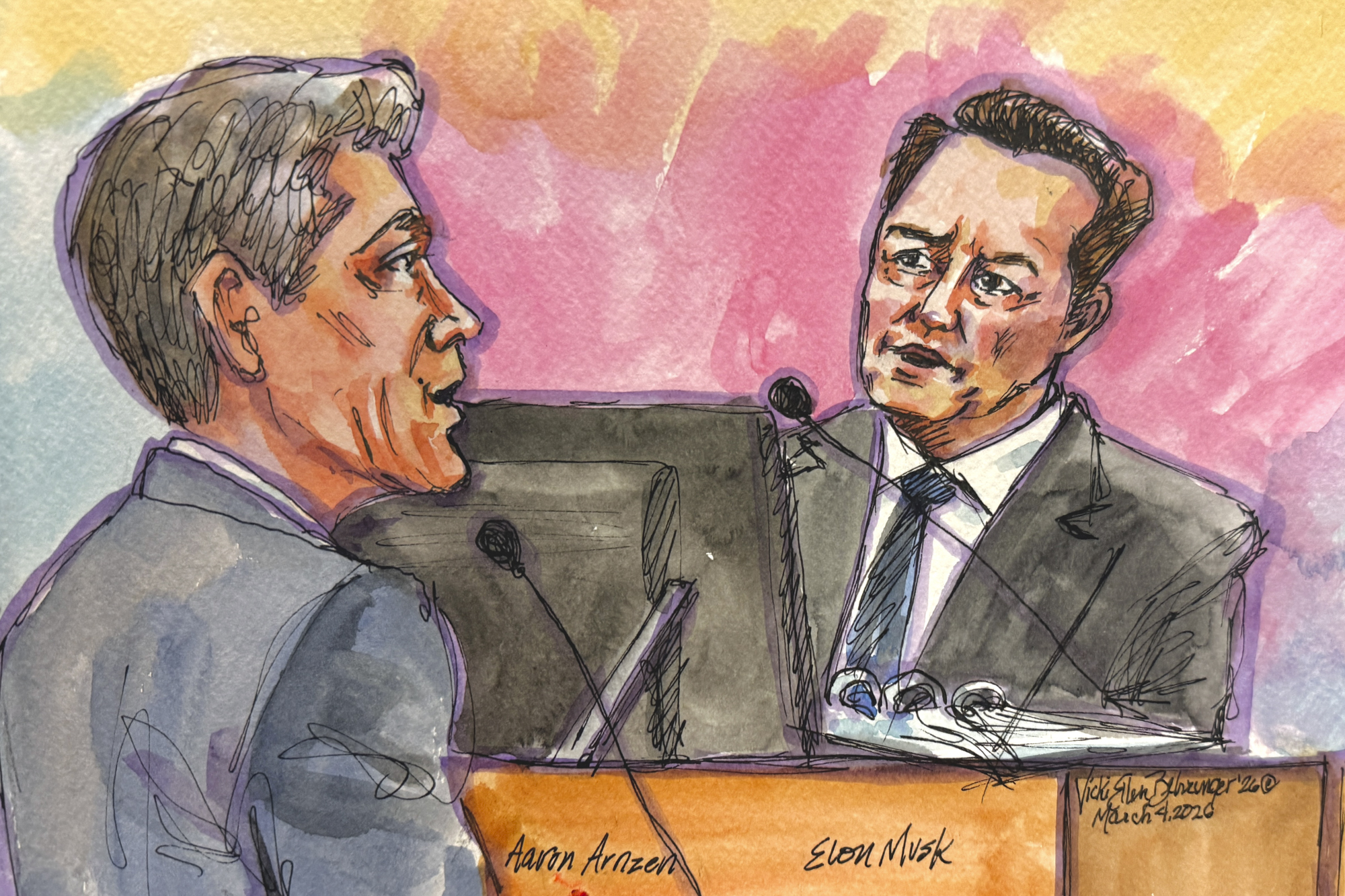
"caption": "A courtroom sketch depicts the defense questioning Elon Musk on Mar. 4, 2026. The civil trial in San Francisco will decide whether the world’s richest man engaged in deceptive practices before buying the social media platform, which he renamed X. \r\n",
"credit": "Vicki Behringer for KQED",
"altTag": null,
"description": null,
"imgSizes": {
"thumbnail": {
"file": "https://cdn.kqed.org/wp-content/uploads/sites/10/2026/03/260304-Elon-Musk-Trial-05-KQED-160x107.jpg",
"width": 160,
"height": 107,
"mimeType": "image/jpeg"
},
"1536x1536": {
"file": "https://cdn.kqed.org/wp-content/uploads/sites/10/2026/03/260304-Elon-Musk-Trial-05-KQED-1536x1024.jpg",
"width": 1536,
"height": 1024,
"mimeType": "image/jpeg"
},
"post-thumbnail": {
"file": "https://cdn.kqed.org/wp-content/uploads/sites/10/2026/03/260304-Elon-Musk-Trial-05-KQED-672x372.jpg",
"width": 672,
"height": 372,
"mimeType": "image/jpeg"
},
"twentyfourteen-full-width": {
"file": "https://cdn.kqed.org/wp-content/uploads/sites/10/2026/03/260304-Elon-Musk-Trial-05-KQED-1038x576.jpg",
"width": 1038,
"height": 576,
"mimeType": "image/jpeg"
},
"npr-cds-wide": {
"file": "https://cdn.kqed.org/wp-content/uploads/sites/10/2026/03/260304-Elon-Musk-Trial-05-KQED-1200x675.jpg",
"width": 1200,
"height": 675,
"mimeType": "image/jpeg"
},
"kqedFullSize": {
"file": "https://cdn.kqed.org/wp-content/uploads/sites/10/2026/03/260304-Elon-Musk-Trial-05-KQED.jpg",
"width": 2000,
"height": 1333
}
},
"isLoading": false,
"fetchFailed": false
},
"news_12076629": {
"type": "attachments",
"id": "news_12076629",
"meta": {
"index": "attachments_1716263798",
"site": "news",
"id": "12076629",
"found": true
},
"title": "Billboard-AI-Illustration_6",
"publishDate": 1773699455,
"status": "inherit",
"parent": 12076608,
"modified": 1773703712,
"caption": "The Bay Area's booming AI industry has taken over bus shelters, buildings and billboards, broadcasting an array of messages about the future of work for humans.",
"credit": "Darren Tu/KQED",
"altTag": null,
"description": null,
"imgSizes": {
"thumbnail": {
"file": "https://cdn.kqed.org/wp-content/uploads/sites/10/2026/03/Billboard-AI-Illustration_6-160x103.jpg",
"width": 160,
"height": 103,
"mimeType": "image/jpeg"
},
"1536x1536": {
"file": "https://cdn.kqed.org/wp-content/uploads/sites/10/2026/03/Billboard-AI-Illustration_6-1536x992.jpg",
"width": 1536,
"height": 992,
"mimeType": "image/jpeg"
},
"post-thumbnail": {
"file": "https://cdn.kqed.org/wp-content/uploads/sites/10/2026/03/Billboard-AI-Illustration_6-672x372.jpg",
"width": 672,
"height": 372,
"mimeType": "image/jpeg"
},
"twentyfourteen-full-width": {
"file": "https://cdn.kqed.org/wp-content/uploads/sites/10/2026/03/Billboard-AI-Illustration_6-1038x576.jpg",
"width": 1038,
"height": 576,
"mimeType": "image/jpeg"
},
"npr-cds-wide": {
"file": "https://cdn.kqed.org/wp-content/uploads/sites/10/2026/03/Billboard-AI-Illustration_6-1200x675.jpg",
"width": 1200,
"height": 675,
"mimeType": "image/jpeg"
},
"kqedFullSize": {
"file": "https://cdn.kqed.org/wp-content/uploads/sites/10/2026/03/Billboard-AI-Illustration_6.jpg",
"width": 1920,
"height": 1240
}
},
"isLoading": false,
"fetchFailed": false
},
"news_12076011": {
"type": "attachments",
"id": "news_12076011",
"meta": {
"index": "attachments_1716263798",
"site": "news",
"id": "12076011",
"found": true
},
"title": "CAT_Twitteronavape.img",
"publishDate": 1773184216,
"status": "inherit",
"parent": 12075951,
"modified": 1773193545,
"caption": "Tech reporter Samantha Cole holds a SWYPE touchscreen disposable vape in July 2024. She ordered the device after viral posts that summer showed digital vapes with built-in social media apps.",
"credit": "Photo by Sam Cole/404 Media",
"altTag": "A pink SWYPE brand disposable vape is held in a white person's left hand. The vape has a glossy touchscreen displaying icons for WhatsApp, Facebook, X (formerly Twitter), and WeChat. The background shows a reddish-brown wood floor and white door frames, slightly out of focus. In the lower right corner of the image, the phrase “CLOSE ALL TABS” appears in pixelated white font.",
"description": null,
"imgSizes": {
"thumbnail": {
"file": "https://cdn.kqed.org/wp-content/uploads/sites/10/2026/03/CAT_Twitteronavape.img_-160x90.png",
"width": 160,
"height": 90,
"mimeType": "image/png"
},
"1536x1536": {
"file": "https://cdn.kqed.org/wp-content/uploads/sites/10/2026/03/CAT_Twitteronavape.img_-1536x864.png",
"width": 1536,
"height": 864,
"mimeType": "image/png"
},
"post-thumbnail": {
"file": "https://cdn.kqed.org/wp-content/uploads/sites/10/2026/03/CAT_Twitteronavape.img_-672x372.png",
"width": 672,
"height": 372,
"mimeType": "image/png"
},
"twentyfourteen-full-width": {
"file": "https://cdn.kqed.org/wp-content/uploads/sites/10/2026/03/CAT_Twitteronavape.img_-1038x576.png",
"width": 1038,
"height": 576,
"mimeType": "image/png"
},
"npr-cds-wide": {
"file": "https://cdn.kqed.org/wp-content/uploads/sites/10/2026/03/CAT_Twitteronavape.img_-1200x675.png",
"width": 1200,
"height": 675,
"mimeType": "image/png"
},
"kqedFullSize": {
"file": "https://cdn.kqed.org/wp-content/uploads/sites/10/2026/03/CAT_Twitteronavape.img_.png",
"width": 1920,
"height": 1080
}
},
"isLoading": false,
"fetchFailed": false
},
"news_12075382": {
"type": "attachments",
"id": "news_12075382",
"meta": {
"index": "attachments_1716263798",
"site": "news",
"id": "12075382",
"found": true
},
"title": "260304-Elon Musk Trial-01-KQED",
"publishDate": 1772650201,
"status": "inherit",
"parent": 12083612,
"modified": 1778805009,
"caption": "A courtroom sketch of Elon Musk on the stand as he's questioned by the plaintiff's attorney, Aaron P. Arnzen, on March 4, 2026. Musk is accused of making false and misleading statements that drove down Twitter's stock price before he bought the social media platform for $44 billion in 2022.",
"credit": "Vicki Behringer for KQED",
"altTag": null,
"description": null,
"imgSizes": {
"thumbnail": {
"file": "https://cdn.kqed.org/wp-content/uploads/sites/10/2026/03/260304-Elon-Musk-Trial-01-KQED-160x107.jpg",
"width": 160,
"height": 107,
"mimeType": "image/jpeg"
},
"1536x1536": {
"file": "https://cdn.kqed.org/wp-content/uploads/sites/10/2026/03/260304-Elon-Musk-Trial-01-KQED-1536x1024.jpg",
"width": 1536,
"height": 1024,
"mimeType": "image/jpeg"
},
"post-thumbnail": {
"file": "https://cdn.kqed.org/wp-content/uploads/sites/10/2026/03/260304-Elon-Musk-Trial-01-KQED-672x372.jpg",
"width": 672,
"height": 372,
"mimeType": "image/jpeg"
},
"twentyfourteen-full-width": {
"file": "https://cdn.kqed.org/wp-content/uploads/sites/10/2026/03/260304-Elon-Musk-Trial-01-KQED-1038x576.jpg",
"width": 1038,
"height": 576,
"mimeType": "image/jpeg"
},
"npr-cds-wide": {
"file": "https://cdn.kqed.org/wp-content/uploads/sites/10/2026/03/260304-Elon-Musk-Trial-01-KQED-1200x675.jpg",
"width": 1200,
"height": 675,
"mimeType": "image/jpeg"
},
"kqedFullSize": {
"file": "https://cdn.kqed.org/wp-content/uploads/sites/10/2026/03/260304-Elon-Musk-Trial-01-KQED.jpg",
"width": 2000,
"height": 1333
}
},
"isLoading": false,
"fetchFailed": false
},
"news_12074528": {
"type": "attachments",
"id": "news_12074528",
"meta": {
"index": "attachments_1716263798",
"site": "news",
"id": "12074528",
"found": true
},
"title": "CAT_RobloxAgeVerification_img",
"publishDate": 1771996229,
"status": "inherit",
"parent": 12074525,
"modified": 1771998687,
"caption": "A composite image of Roblox avatars with facial tracking markers overlaid across their faces.",
"credit": "Composite image by Morgan Sung / KQED",
"altTag": "A composite image of animated Roblox characters with facial tracking squares overlaid across their faces. They include human, animal, and Lego characters. The background features a transparent overlay of patterns that resemble a galaxy. The words “CLOSE ALL TABS” appear in pixelated text in the top right hand corner.",
"description": null,
"imgSizes": {
"thumbnail": {
"file": "https://cdn.kqed.org/wp-content/uploads/sites/10/2026/02/CAT_RobloxAgeVerification_img-160x90.png",
"width": 160,
"height": 90,
"mimeType": "image/png"
},
"1536x1536": {
"file": "https://cdn.kqed.org/wp-content/uploads/sites/10/2026/02/CAT_RobloxAgeVerification_img-1536x864.png",
"width": 1536,
"height": 864,
"mimeType": "image/png"
},
"post-thumbnail": {
"file": "https://cdn.kqed.org/wp-content/uploads/sites/10/2026/02/CAT_RobloxAgeVerification_img-672x372.png",
"width": 672,
"height": 372,
"mimeType": "image/png"
},
"twentyfourteen-full-width": {
"file": "https://cdn.kqed.org/wp-content/uploads/sites/10/2026/02/CAT_RobloxAgeVerification_img-1038x576.png",
"width": 1038,
"height": 576,
"mimeType": "image/png"
},
"npr-cds-wide": {
"file": "https://cdn.kqed.org/wp-content/uploads/sites/10/2026/02/CAT_RobloxAgeVerification_img-1200x675.png",
"width": 1200,
"height": 675,
"mimeType": "image/png"
},
"kqedFullSize": {
"file": "https://cdn.kqed.org/wp-content/uploads/sites/10/2026/02/CAT_RobloxAgeVerification_img.png",
"width": 1920,
"height": 1080
}
},
"isLoading": false,
"fetchFailed": false
},
"news_12073646": {
"type": "attachments",
"id": "news_12073646",
"meta": {
"index": "attachments_1716263798",
"site": "news",
"id": "12073646",
"found": true
},
"title": "CFGW_thumbnail",
"publishDate": 1771375776,
"status": "inherit",
"parent": 12073645,
"modified": 1771375842,
"caption": "The Great Wall of China with distant mountains, overlaid with binary code and semiconductor patterns.",
"credit": "Photos by Cute Kitten Images, Yuichiro Chino, Eugene Mymrin and fotograzia / Getty Images; composite image by Gabriela Glueck / KQED",
"altTag": "The Great Wall of China winds through lush green mountains with distant peaks in the background. The background features a transparent overlay of patterns made from semiconductors and binary code.",
"description": null,
"imgSizes": {
"medium": {
"file": "https://cdn.kqed.org/wp-content/uploads/sites/10/2026/02/CFGW_thumbnail-2000x1125.png",
"width": 2000,
"height": 1125,
"mimeType": "image/png"
},
"large": {
"file": "https://cdn.kqed.org/wp-content/uploads/sites/10/2026/02/CFGW_thumbnail-2000x1125.png",
"width": 2000,
"height": 1125,
"mimeType": "image/png"
},
"thumbnail": {
"file": "https://cdn.kqed.org/wp-content/uploads/sites/10/2026/02/CFGW_thumbnail-160x90.png",
"width": 160,
"height": 90,
"mimeType": "image/png"
},
"1536x1536": {
"file": "https://cdn.kqed.org/wp-content/uploads/sites/10/2026/02/CFGW_thumbnail-1536x864.png",
"width": 1536,
"height": 864,
"mimeType": "image/png"
},
"2048x2048": {
"file": "https://cdn.kqed.org/wp-content/uploads/sites/10/2026/02/CFGW_thumbnail-2048x1152.png",
"width": 2048,
"height": 1152,
"mimeType": "image/png"
},
"post-thumbnail": {
"file": "https://cdn.kqed.org/wp-content/uploads/sites/10/2026/02/CFGW_thumbnail-672x372.png",
"width": 672,
"height": 372,
"mimeType": "image/png"
},
"twentyfourteen-full-width": {
"file": "https://cdn.kqed.org/wp-content/uploads/sites/10/2026/02/CFGW_thumbnail-1038x576.png",
"width": 1038,
"height": 576,
"mimeType": "image/png"
},
"full-width": {
"file": "https://cdn.kqed.org/wp-content/uploads/sites/10/2026/02/CFGW_thumbnail-2000x1125.png",
"width": 2000,
"height": 1125,
"mimeType": "image/png"
},
"npr-cds-wide": {
"file": "https://cdn.kqed.org/wp-content/uploads/sites/10/2026/02/CFGW_thumbnail-1200x675.png",
"width": 1200,
"height": 675,
"mimeType": "image/png"
},
"kqedFullSize": {
"file": "https://cdn.kqed.org/wp-content/uploads/sites/10/2026/02/CFGW_thumbnail.png",
"width": 6000,
"height": 3375
}
},
"isLoading": false,
"fetchFailed": false
},
"news_12073490": {
"type": "attachments",
"id": "news_12073490",
"meta": {
"index": "attachments_1716263798",
"site": "news",
"id": "12073490",
"found": true
},
"title": "President Trump Holds Dinner For Tech And Business Leaders At The White House",
"publishDate": 1771010520,
"status": "inherit",
"parent": 12073487,
"modified": 1771010520,
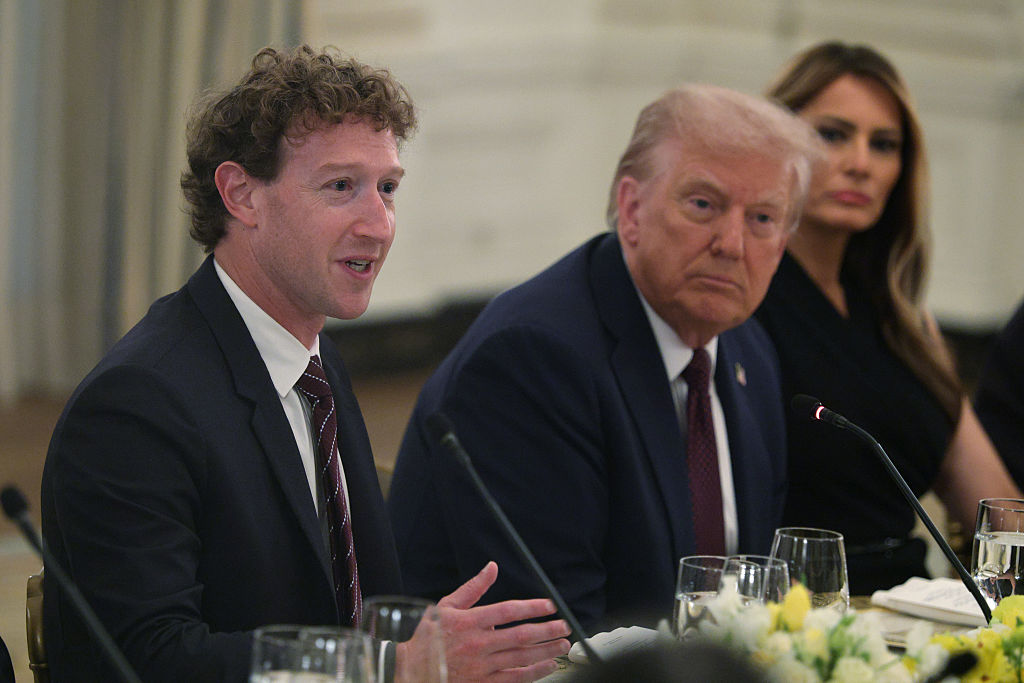
"caption": "WASHINGTON, DC - SEPTEMBER 04: (L-R) Meta CEO Mark Zuckerberg speaks as U.S. President Donald Trump and first lady Melania Trump listen during a dinner at the State Dining Room of the White House on September 4, 2025 in Washington, DC. President Trump hosted tech and business leaders for dinner after they joined the first lady’s meeting of the Artificial Intelligence (AI) Education Task Force at the White House this afternoon. (Photo by Alex Wong/Getty Images)",
"credit": null,
"altTag": null,
"description": null,
"imgSizes": {
"thumbnail": {
"file": "https://cdn.kqed.org/wp-content/uploads/sites/10/2026/02/GettyImages-2233757915-160x107.jpg",
"width": 160,
"height": 107,
"mimeType": "image/jpeg"
},
"post-thumbnail": {
"file": "https://cdn.kqed.org/wp-content/uploads/sites/10/2026/02/GettyImages-2233757915-672x372.jpg",
"width": 672,
"height": 372,
"mimeType": "image/jpeg"
},
"twentyfourteen-full-width": {
"file": "https://cdn.kqed.org/wp-content/uploads/sites/10/2026/02/GettyImages-2233757915-1024x576.jpg",
"width": 1024,
"height": 576,
"mimeType": "image/jpeg"
},
"npr-cds-wide": {
"file": "https://cdn.kqed.org/wp-content/uploads/sites/10/2026/02/GettyImages-2233757915-1024x675.jpg",
"width": 1024,
"height": 675,
"mimeType": "image/jpeg"
},
"kqedFullSize": {
"file": "https://cdn.kqed.org/wp-content/uploads/sites/10/2026/02/GettyImages-2233757915.jpg",
"width": 1024,
"height": 683
}
},
"isLoading": false,
"fetchFailed": false
},
"news_12073113": {
"type": "attachments",
"id": "news_12073113",
"meta": {
"index": "attachments_1716263798",
"site": "news",
"id": "12073113",
"found": true
},
"title": "CAT_Val_2_9",
"publishDate": 1770768181,
"status": "inherit",
"parent": 12073100,
"modified": 1770768241,
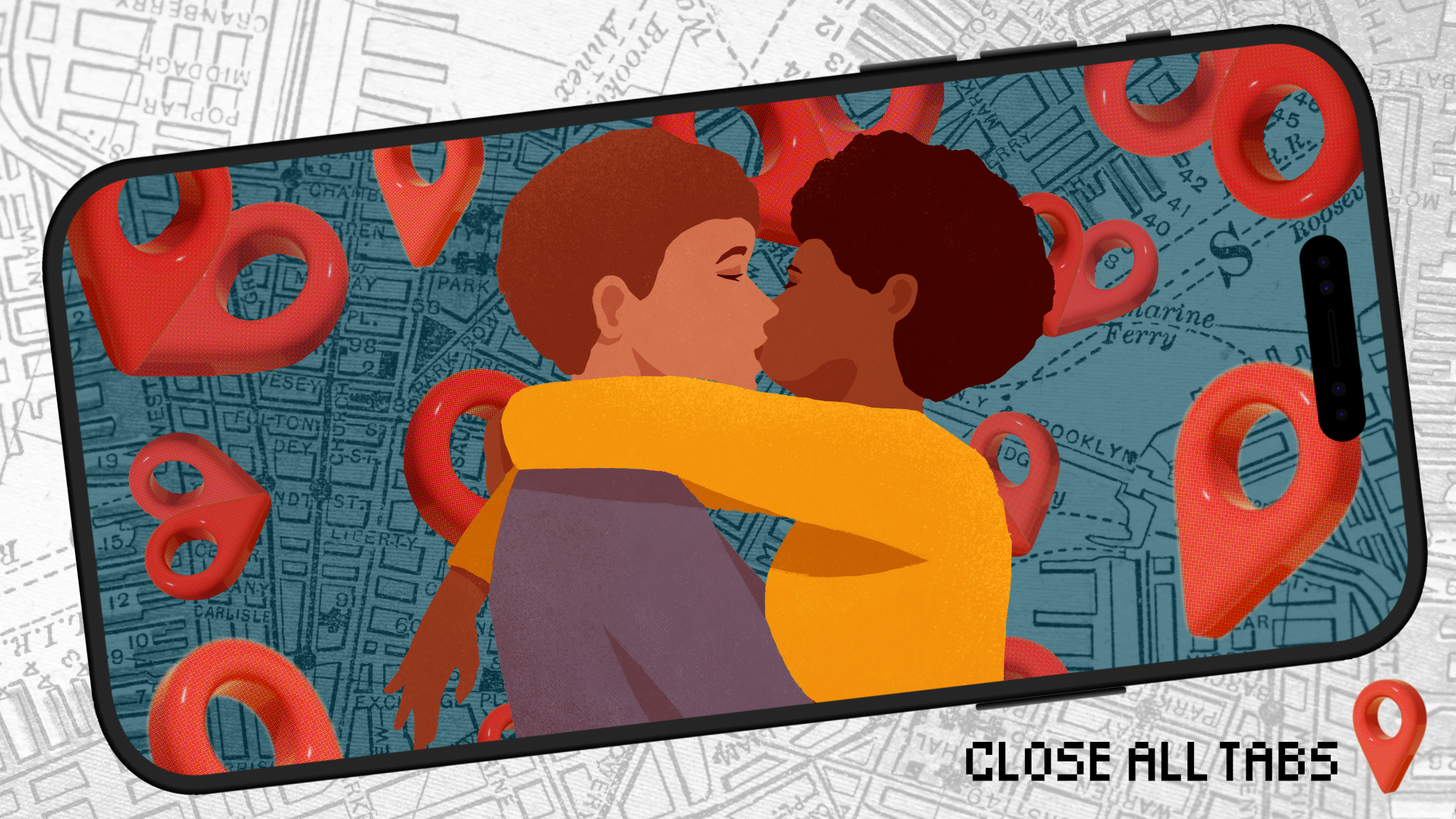
"caption": "On a phone screen, a couple can be seen kissing, with a map behind them and hearts made from location pins.",
"credit": "Photos by J Studios, Malte Mueller and ilbusca / Getty Images; composite image by Gabriela Glueck / KQED",
"altTag": "This collage features a phone screen over a black-and-white map background. On the phone screen, a couple appears to be hugging and kissing. Behind them on the screen is a blue-toned map with hearts formed by two connected location pins. The words “CLOSE ALL TABS” appear in pixelated text in the bottom right hand corner, with a location pin to the right.",
"description": null,
"imgSizes": {
"medium": {
"file": "https://cdn.kqed.org/wp-content/uploads/sites/10/2026/02/CAT_Val_2_9-2000x1125.png",
"width": 2000,
"height": 1125,
"mimeType": "image/png"
},
"large": {
"file": "https://cdn.kqed.org/wp-content/uploads/sites/10/2026/02/CAT_Val_2_9-2000x1125.png",
"width": 2000,
"height": 1125,
"mimeType": "image/png"
},
"thumbnail": {
"file": "https://cdn.kqed.org/wp-content/uploads/sites/10/2026/02/CAT_Val_2_9-160x90.png",
"width": 160,
"height": 90,
"mimeType": "image/png"
},
"1536x1536": {
"file": "https://cdn.kqed.org/wp-content/uploads/sites/10/2026/02/CAT_Val_2_9-1536x864.png",
"width": 1536,
"height": 864,
"mimeType": "image/png"
},
"2048x2048": {
"file": "https://cdn.kqed.org/wp-content/uploads/sites/10/2026/02/CAT_Val_2_9-2048x1152.png",
"width": 2048,
"height": 1152,
"mimeType": "image/png"
},
"post-thumbnail": {
"file": "https://cdn.kqed.org/wp-content/uploads/sites/10/2026/02/CAT_Val_2_9-672x372.png",
"width": 672,
"height": 372,
"mimeType": "image/png"
},
"twentyfourteen-full-width": {
"file": "https://cdn.kqed.org/wp-content/uploads/sites/10/2026/02/CAT_Val_2_9-1038x576.png",
"width": 1038,
"height": 576,
"mimeType": "image/png"
},
"full-width": {
"file": "https://cdn.kqed.org/wp-content/uploads/sites/10/2026/02/CAT_Val_2_9-2000x1125.png",
"width": 2000,
"height": 1125,
"mimeType": "image/png"
},
"npr-cds-wide": {
"file": "https://cdn.kqed.org/wp-content/uploads/sites/10/2026/02/CAT_Val_2_9-1200x675.png",
"width": 1200,
"height": 675,
"mimeType": "image/png"
},
"kqedFullSize": {
"file": "https://cdn.kqed.org/wp-content/uploads/sites/10/2026/02/CAT_Val_2_9.png",
"width": 6000,
"height": 3375
}
},
"isLoading": false,
"fetchFailed": false
},
"news_11985952": {
"type": "attachments",
"id": "news_11985952",
"meta": {
"index": "attachments_1716263798",
"site": "news",
"id": "11985952",
"found": true
},
"title": "Open AI ChatGPT Update",
"publishDate": 1715640590,
"status": "inherit",
"parent": 11985949,
"modified": 1783528918,
"caption": "The OpenAI logo is seen on a mobile phone in front of a computer screen displaying output from ChatGPT, March 21, 2023, in Boston, Massachusetts. ",
"credit": "Michael Dwyer/Associated Press",
"altTag": null,
"description": null,
"imgSizes": {
"medium": {
"file": "https://cdn.kqed.org/wp-content/uploads/sites/10/2024/05/AP24134775174210-800x533.jpg",
"width": 800,
"height": 533,
"mimeType": "image/jpeg"
},
"large": {
"file": "https://cdn.kqed.org/wp-content/uploads/sites/10/2024/05/AP24134775174210-1020x680.jpg",
"width": 1020,
"height": 680,
"mimeType": "image/jpeg"
},
"thumbnail": {
"file": "https://cdn.kqed.org/wp-content/uploads/sites/10/2024/05/AP24134775174210-160x107.jpg",
"width": 160,
"height": 107,
"mimeType": "image/jpeg"
},
"1536x1536": {
"file": "https://cdn.kqed.org/wp-content/uploads/sites/10/2024/05/AP24134775174210-1536x1024.jpg",
"width": 1536,
"height": 1024,
"mimeType": "image/jpeg"
},
"2048x2048": {
"file": "https://cdn.kqed.org/wp-content/uploads/sites/10/2024/05/AP24134775174210-2048x1365.jpg",
"width": 2048,
"height": 1365,
"mimeType": "image/jpeg"
},
"post-thumbnail": {
"file": "https://cdn.kqed.org/wp-content/uploads/sites/10/2024/05/AP24134775174210-672x372.jpg",
"width": 672,
"height": 372,
"mimeType": "image/jpeg"
},
"twentyfourteen-full-width": {
"file": "https://cdn.kqed.org/wp-content/uploads/sites/10/2024/05/AP24134775174210-1038x576.jpg",
"width": 1038,
"height": 576,
"mimeType": "image/jpeg"
},
"full-width": {
"file": "https://cdn.kqed.org/wp-content/uploads/sites/10/2024/05/AP24134775174210-1920x1280.jpg",
"width": 1920,
"height": 1280,
"mimeType": "image/jpeg"
},
"kqedFullSize": {
"file": "https://cdn.kqed.org/wp-content/uploads/sites/10/2024/05/AP24134775174210-scaled-e1770337042768.jpg",
"width": 2000,
"height": 1334
}
},
"isLoading": false,
"fetchFailed": false
},
"news_12072128": {
"type": "attachments",
"id": "news_12072128",
"meta": {
"index": "attachments_1716263798",
"site": "news",
"id": "12072128",
"found": true
},
"title": "CAT — DataCenters2",
"publishDate": 1770160949,
"status": "inherit",
"parent": 12072118,
"modified": 1770186681,
"caption": "An aerial view of a large data center is featured in this collage with an image of the King Memorial railroad station in Atlanta, GA.",
"credit": "Photos by Alex Potemkin and Richard Newstead / Getty Images; composite image by Gabriela Glueck / KQED",
"altTag": "An aerial view shows high voltage power lines running through a sub-station along the electrical power grid. Green trees and the Miami skyline appear in the background. The words “CLOSE ALL TABS” appear in pixelated text in the lower right with a black background.",
"description": null,
"imgSizes": {
"medium": {
"file": "https://cdn.kqed.org/wp-content/uploads/sites/10/2026/02/CAT-—-DataCenters2-2000x1125.png",
"width": 2000,
"height": 1125,
"mimeType": "image/png"
},
"large": {
"file": "https://cdn.kqed.org/wp-content/uploads/sites/10/2026/02/CAT-—-DataCenters2-2000x1125.png",
"width": 2000,
"height": 1125,
"mimeType": "image/png"
},
"thumbnail": {
"file": "https://cdn.kqed.org/wp-content/uploads/sites/10/2026/02/CAT-—-DataCenters2-160x90.png",
"width": 160,
"height": 90,
"mimeType": "image/png"
},
"1536x1536": {
"file": "https://cdn.kqed.org/wp-content/uploads/sites/10/2026/02/CAT-—-DataCenters2-1536x864.png",
"width": 1536,
"height": 864,
"mimeType": "image/png"
},
"2048x2048": {
"file": "https://cdn.kqed.org/wp-content/uploads/sites/10/2026/02/CAT-—-DataCenters2-2048x1152.png",
"width": 2048,
"height": 1152,
"mimeType": "image/png"
},
"post-thumbnail": {
"file": "https://cdn.kqed.org/wp-content/uploads/sites/10/2026/02/CAT-—-DataCenters2-672x372.png",
"width": 672,
"height": 372,
"mimeType": "image/png"
},
"twentyfourteen-full-width": {
"file": "https://cdn.kqed.org/wp-content/uploads/sites/10/2026/02/CAT-—-DataCenters2-1038x576.png",
"width": 1038,
"height": 576,
"mimeType": "image/png"
},
"full-width": {
"file": "https://cdn.kqed.org/wp-content/uploads/sites/10/2026/02/CAT-—-DataCenters2-2000x1125.png",
"width": 2000,
"height": 1125,
"mimeType": "image/png"
},
"npr-cds-wide": {
"file": "https://cdn.kqed.org/wp-content/uploads/sites/10/2026/02/CAT-—-DataCenters2-1200x675.png",
"width": 1200,
"height": 675,
"mimeType": "image/png"
},
"kqedFullSize": {
"file": "https://cdn.kqed.org/wp-content/uploads/sites/10/2026/02/CAT-—-DataCenters2.png",
"width": 6000,
"height": 3375
}
},
"isLoading": false,
"fetchFailed": false
},
"news_12071620": {
"type": "attachments",
"id": "news_12071620",
"meta": {
"index": "attachments_1716263798",
"site": "news",
"id": "12071620",
"found": true
},
"title": "2026 Brussels Motor Show",
"publishDate": 1769729156,
"status": "inherit",
"parent": 12071615,
"modified": 1769735893,
"caption": "Tesla Optimus, also known as Tesla Bot, a general-purpose robotic humanoid on display at the AutoSalon press preview on Jan. 9, 2026, in Brussels, Belgium. The 102nd Brussels Motor Show has firmly established itself on the international calendar, featuring over 60 car brands and more than 20 motorcycle brands, and visited by over 270,000 people. ",
"credit": "Sjoerd van der Wal/Getty Images",
"altTag": null,
"description": null,
"imgSizes": {
"thumbnail": {
"file": "https://cdn.kqed.org/wp-content/uploads/sites/10/2026/01/Tesla-Optimus-Getty-160x107.jpg",
"width": 160,
"height": 107,
"mimeType": "image/jpeg"
},
"1536x1536": {
"file": "https://cdn.kqed.org/wp-content/uploads/sites/10/2026/01/Tesla-Optimus-Getty-1536x1024.jpg",
"width": 1536,
"height": 1024,
"mimeType": "image/jpeg"
},
"post-thumbnail": {
"file": "https://cdn.kqed.org/wp-content/uploads/sites/10/2026/01/Tesla-Optimus-Getty-672x372.jpg",
"width": 672,
"height": 372,
"mimeType": "image/jpeg"
},
"twentyfourteen-full-width": {
"file": "https://cdn.kqed.org/wp-content/uploads/sites/10/2026/01/Tesla-Optimus-Getty-1038x576.jpg",
"width": 1038,
"height": 576,
"mimeType": "image/jpeg"
},
"npr-cds-wide": {
"file": "https://cdn.kqed.org/wp-content/uploads/sites/10/2026/01/Tesla-Optimus-Getty-1200x675.jpg",
"width": 1200,
"height": 675,
"mimeType": "image/jpeg"
},
"kqedFullSize": {
"file": "https://cdn.kqed.org/wp-content/uploads/sites/10/2026/01/Tesla-Optimus-Getty.jpg",
"width": 2000,
"height": 1333
}
},
"isLoading": false,
"fetchFailed": false
},
"news_12071574": {
"type": "attachments",
"id": "news_12071574",
"meta": {
"index": "attachments_1716263798",
"site": "news",
"id": "12071574",
"found": true
},
"title": "The Inauguration Of Donald J. Trump As The 47th President",
"publishDate": 1769720316,
"status": "inherit",
"parent": 12071559,
"modified": 1781212491,
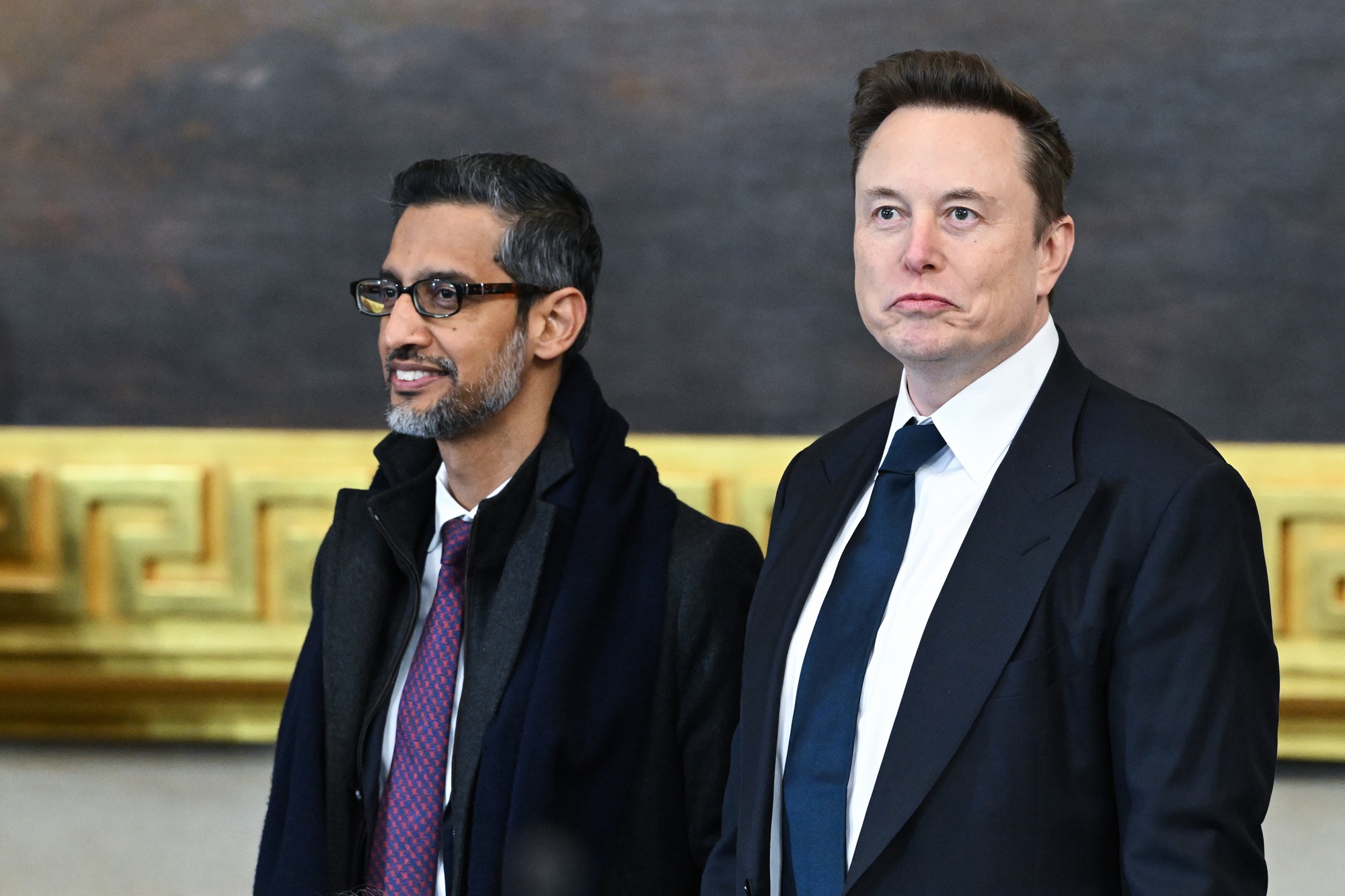
"caption": "Google CEO Sundar Pichai (left) and Tesla and SpaceX CEO Elon Musk attend the inauguration of Donald Trump in the U.S. Capitol Rotunda on Jan. 20, 2025, in Washington, D.C. ",
"credit": "Saul Loeb-Pool/Getty Images",
"altTag": null,
"description": null,
"imgSizes": {
"thumbnail": {
"file": "https://cdn.kqed.org/wp-content/uploads/sites/10/2026/01/ElonMuskInaugurationTechGetty-160x107.jpg",
"width": 160,
"height": 107,
"mimeType": "image/jpeg"
},
"1536x1536": {
"file": "https://cdn.kqed.org/wp-content/uploads/sites/10/2026/01/ElonMuskInaugurationTechGetty-1536x1024.jpg",
"width": 1536,
"height": 1024,
"mimeType": "image/jpeg"
},
"post-thumbnail": {
"file": "https://cdn.kqed.org/wp-content/uploads/sites/10/2026/01/ElonMuskInaugurationTechGetty-672x372.jpg",
"width": 672,
"height": 372,
"mimeType": "image/jpeg"
},
"twentyfourteen-full-width": {
"file": "https://cdn.kqed.org/wp-content/uploads/sites/10/2026/01/ElonMuskInaugurationTechGetty-1038x576.jpg",
"width": 1038,
"height": 576,
"mimeType": "image/jpeg"
},
"npr-cds-wide": {
"file": "https://cdn.kqed.org/wp-content/uploads/sites/10/2026/01/ElonMuskInaugurationTechGetty-1200x675.jpg",
"width": 1200,
"height": 675,
"mimeType": "image/jpeg"
},
"kqedFullSize": {
"file": "https://cdn.kqed.org/wp-content/uploads/sites/10/2026/01/ElonMuskInaugurationTechGetty.jpg",
"width": 2000,
"height": 1333
}
},
"isLoading": false,
"fetchFailed": false
}
},
"audioPlayerReducer": {
"postId": "stream_live",
"isPaused": true,
"isPlaying": false,
"pfsActive": false,
"pledgeModalIsOpen": true,
"playerDrawerIsOpen": false,
"liveAudioPlayStartedAt": 0,
"liveAudioPlayContext": ""
},
"authorsReducer": {
"rachael-myrow": {
"type": "authors",
"id": "251",
"meta": {
"index": "authors_1716337520",
"id": "251",
"found": true
},
"name": "Rachael Myrow",
"firstName": "Rachael",
"lastName": "Myrow",
"slug": "rachael-myrow",
"email": "rmyrow@kqed.org",
"display_author_email": true,
"staff_mastheads": [
"news"
],
"title": "Senior Editor of KQED's Silicon Valley News Desk",
"bio": "• I write and edit stories about how Silicon Valley power and policies shape everyday life in California. I’m also passionate about making Bay Area history and culture more accessible to a broad public. • I’ve been a journalist for most of my life, starting in high school with The Franklin Press in Los Angeles, where I grew up. While earning my first degree in English at UC Berkeley, I got my start in public radio at KALX-FM. After completing a second degree in journalism at Cal, I landed my first professional job at Marketplace, then moved on to KPCC (now LAist), and then KQED, where I hosted The California Report for more than seven years. • My reporting has appeared on NPR, The World, WBUR’s \u003ci>Here & Now\u003c/i>, and the BBC. I also guest host for KQED’s \u003ci>Forum\u003c/i>, as well as the Commonwealth Club in San Francisco. • I speak periodically on media, democracy and technology issues, and do voiceover work for documentaries and educational video projects. • Outside of the studio, you'll find me hiking Bay Area trails and whipping up Insta-ready meals in my kitchen. • I do not accept gifts, money, or favors from anyone connected to my reporting, I don't pay people for information, and I do not support or donate to political causes. • I strive to treat the people I report on with fairness, honesty, and respect. I also recognize there are often multiple sides to a story and work to verify information through multiple sources and documentation. If I get something wrong, I correct it.",
"avatar": "https://secure.gravatar.com/avatar/3ed8a3c5f26025e4a805ba634cda8cd764906b97438a6d9ce216b044e340da4e?s=600&d=blank&r=g",
"twitter": "rachaelmyrow",
"bluesky": null,
"facebook": null,
"instagram": null,
"linkedin": "https://www.linkedin.com/in/rachaelmyrow/",
"sites": [
{
"site": "arts",
"roles": [
"administrator"
]
},
{
"site": "news",
"roles": [
"edit_others_posts",
"editor"
]
},
{
"site": "futureofyou",
"roles": [
"editor"
]
},
{
"site": "bayareabites",
"roles": [
"editor"
]
},
{
"site": "stateofhealth",
"roles": [
"editor"
]
},
{
"site": "science",
"roles": [
"editor"
]
},
{
"site": "food",
"roles": [
"editor"
]
},
{
"site": "forum",
"roles": [
"editor"
]
},
{
"site": "liveblog",
"roles": [
"author"
]
}
],
"headData": {
"title": "Rachael Myrow | KQED",
"description": "Senior Editor of KQED's Silicon Valley News Desk",
"ogImgSrc": "https://secure.gravatar.com/avatar/3ed8a3c5f26025e4a805ba634cda8cd764906b97438a6d9ce216b044e340da4e?s=600&d=blank&r=g",
"twImgSrc": "https://secure.gravatar.com/avatar/3ed8a3c5f26025e4a805ba634cda8cd764906b97438a6d9ce216b044e340da4e?s=600&d=blank&r=g"
},
"isLoading": false,
"link": "/author/rachael-myrow"
},
"ecruzguevarra": {
"type": "authors",
"id": "8654",
"meta": {
"index": "authors_1716337520",
"id": "8654",
"found": true
},
"name": "Ericka Cruz Guevarra",
"firstName": "Ericka",
"lastName": "Cruz Guevarra",
"slug": "ecruzguevarra",
"email": "ecruzguevarra@kqed.org",
"display_author_email": true,
"staff_mastheads": [
"news"
],
"title": "Producer, The Bay Podcast",
"bio": "Ericka Cruz Guevarra is host of \u003ca href=\"https://www.kqed.org/podcasts/thebay\">\u003cem>The Bay\u003c/em>\u003c/a> podcast at KQED. Before host, she was the show’s producer. Her work in that capacity includes a three-part reported series on policing in Vallejo, which won a 2020 excellence in journalism award from the Society of Professional Journalists. Ericka has worked as a breaking news reporter at Oregon Public Broadcasting, helped produce the Code Switch podcast, and was KQED’s inaugural Raul Ramirez Diversity Fund intern. She’s also an alumna of NPR’s Next Generation Radio program. Send her an email if you have strong feelings about whether Fairfield and Suisun City are the Bay. Ericka is represented by SAG-AFTRA.",
"avatar": "https://secure.gravatar.com/avatar/accefc1de4bafc7e234b69bcb9b6f6536c130fd84709bc3069ef11a78787e1bb?s=600&d=blank&r=g",
"twitter": "NotoriousECG",
"bluesky": null,
"facebook": null,
"instagram": null,
"linkedin": null,
"sites": [
{
"site": "arts",
"roles": [
"subscriber"
]
},
{
"site": "news",
"roles": [
"editor",
"manage_categories"
]
},
{
"site": "futureofyou",
"roles": [
"subscriber"
]
},
{
"site": "stateofhealth",
"roles": [
"subscriber"
]
},
{
"site": "science",
"roles": [
"editor"
]
},
{
"site": "forum",
"roles": [
"subscriber"
]
}
],
"headData": {
"title": "Ericka Cruz Guevarra | KQED",
"description": "Producer, The Bay Podcast",
"ogImgSrc": "https://secure.gravatar.com/avatar/accefc1de4bafc7e234b69bcb9b6f6536c130fd84709bc3069ef11a78787e1bb?s=600&d=blank&r=g",
"twImgSrc": "https://secure.gravatar.com/avatar/accefc1de4bafc7e234b69bcb9b6f6536c130fd84709bc3069ef11a78787e1bb?s=600&d=blank&r=g"
},
"isLoading": false,
"link": "/author/ecruzguevarra"
},
"amontecillo": {
"type": "authors",
"id": "11649",
"meta": {
"index": "authors_1716337520",
"id": "11649",
"found": true
},
"name": "Alan Montecillo",
"firstName": "Alan",
"lastName": "Montecillo",
"slug": "amontecillo",
"email": "amontecillo@kqed.org",
"display_author_email": false,
"staff_mastheads": [
"news"
],
"title": "KQED Contributor",
"bio": "Alan Montecillo is the senior editor of \u003cem>\u003ca href=\"http://kqed.org/thebay\">The Bay\u003c/a>, \u003c/em> KQED's local news podcast. Before moving to the Bay Area, he worked as a senior talk show producer for WILL in Champaign-Urbana, Illinois and at Oregon Public Broadcasting in Portland, Oregon. He has won journalism awards from the Society of Professional Journalists Northern California, the Public Media Journalists Association, The Signal Awards, and has also received a regional Edward R. Murrow award. Alan is a Filipino American from Hong Kong and a graduate of Reed College.",
"avatar": "https://secure.gravatar.com/avatar/268f53a2066899ea9efdd8a5900218b17c822d9862cbc9326cccec53ef41d349?s=600&d=blank&r=g",
"twitter": "alanmontecillo",
"bluesky": null,
"facebook": null,
"instagram": null,
"linkedin": null,
"sites": [
{
"site": "",
"roles": [
"editor"
]
},
{
"site": "news",
"roles": [
"editor",
"manage_categories"
]
}
],
"headData": {
"title": "Alan Montecillo | KQED",
"description": "KQED Contributor",
"ogImgSrc": "https://secure.gravatar.com/avatar/268f53a2066899ea9efdd8a5900218b17c822d9862cbc9326cccec53ef41d349?s=600&d=blank&r=g",
"twImgSrc": "https://secure.gravatar.com/avatar/268f53a2066899ea9efdd8a5900218b17c822d9862cbc9326cccec53ef41d349?s=600&d=blank&r=g"
},
"isLoading": false,
"link": "/author/amontecillo"
},
"ccabreralomeli": {
"type": "authors",
"id": "11708",
"meta": {
"index": "authors_1716337520",
"id": "11708",
"found": true
},
"name": "Carlos Cabrera-Lomelí",
"firstName": "Carlos",
"lastName": "Cabrera-Lomelí",
"slug": "ccabreralomeli",
"email": "ccabreralomeli@KQED.org",
"display_author_email": true,
"staff_mastheads": [
"news"
],
"title": "Community Reporter",
"bio": "Carlos Cabrera-Lomelí is a community reporter with KQED's digital engagement team. He also reports and co-produces for KQED's bilingual news hub KQED en Español. He grew up in San Francisco's Mission District and has previously worked with Univision, 48 Hills and REFORMA in Mexico City.",
"avatar": "https://secure.gravatar.com/avatar/c309be9665e484f887b818c89e273ecc673004f426f36b24d00a4d813a2e0518?s=600&d=blank&r=g",
"twitter": "@LomeliCabrera",
"bluesky": null,
"facebook": null,
"instagram": null,
"linkedin": null,
"sites": [
{
"site": "arts",
"roles": [
"editor"
]
},
{
"site": "news",
"roles": [
"editor"
]
},
{
"site": "about",
"roles": [
"editor"
]
},
{
"site": "science",
"roles": [
"editor"
]
},
{
"site": "perspectives",
"roles": [
"editor"
]
},
{
"site": "elections",
"roles": [
"editor"
]
},
{
"site": "liveblog",
"roles": [
"contributor"
]
}
],
"headData": {
"title": "Carlos Cabrera-Lomelí | KQED",
"description": "Community Reporter",
"ogImgSrc": "https://secure.gravatar.com/avatar/c309be9665e484f887b818c89e273ecc673004f426f36b24d00a4d813a2e0518?s=600&d=blank&r=g",
"twImgSrc": "https://secure.gravatar.com/avatar/c309be9665e484f887b818c89e273ecc673004f426f36b24d00a4d813a2e0518?s=600&d=blank&r=g"
},
"isLoading": false,
"link": "/author/ccabreralomeli"
},
"jchien": {
"type": "authors",
"id": "11809",
"meta": {
"index": "authors_1716337520",
"id": "11809",
"found": true
},
"name": "Jen Chien",
"firstName": "Jen",
"lastName": "Chien",
"slug": "jchien",
"email": "jchien@kqed.org",
"display_author_email": false,
"staff_mastheads": [],
"title": "KQED Contributor",
"bio": null,
"avatar": "https://secure.gravatar.com/avatar/3f633d016b089d1bd5f46a1b2ab7f7732ff5d0c568d2302e032bf50cca4a14af?s=600&d=blank&r=g",
"twitter": null,
"bluesky": null,
"facebook": null,
"instagram": null,
"linkedin": null,
"sites": [
{
"site": "",
"roles": [
"editor"
]
},
{
"site": "arts",
"roles": [
"editor"
]
},
{
"site": "news",
"roles": [
"editor"
]
}
],
"headData": {
"title": "Jen Chien | KQED",
"description": "KQED Contributor",
"ogImgSrc": "https://secure.gravatar.com/avatar/3f633d016b089d1bd5f46a1b2ab7f7732ff5d0c568d2302e032bf50cca4a14af?s=600&d=blank&r=g",
"twImgSrc": "https://secure.gravatar.com/avatar/3f633d016b089d1bd5f46a1b2ab7f7732ff5d0c568d2302e032bf50cca4a14af?s=600&d=blank&r=g"
},
"isLoading": false,
"link": "/author/jchien"
},
"chambrick": {
"type": "authors",
"id": "11832",
"meta": {
"index": "authors_1716337520",
"id": "11832",
"found": true
},
"name": "Chris Hambrick",
"firstName": "Chris",
"lastName": "Hambrick",
"slug": "chambrick",
"email": "chambrick@kqed.org",
"display_author_email": false,
"staff_mastheads": [],
"title": "KQED Contributor",
"bio": null,
"avatar": "https://secure.gravatar.com/avatar/23cb83888bc440645af5d36d0d1909e8ecb6cef21f2fdb96abf9a55495bb19d8?s=600&d=blank&r=g",
"twitter": null,
"bluesky": null,
"facebook": null,
"instagram": null,
"linkedin": null,
"sites": [
{
"site": "",
"roles": [
"editor"
]
},
{
"site": "arts",
"roles": [
"editor"
]
},
{
"site": "news",
"roles": [
"editor"
]
},
{
"site": "podcasts",
"roles": [
"editor"
]
}
],
"headData": {
"title": "Chris Hambrick | KQED",
"description": "KQED Contributor",
"ogImgSrc": "https://secure.gravatar.com/avatar/23cb83888bc440645af5d36d0d1909e8ecb6cef21f2fdb96abf9a55495bb19d8?s=600&d=blank&r=g",
"twImgSrc": "https://secure.gravatar.com/avatar/23cb83888bc440645af5d36d0d1909e8ecb6cef21f2fdb96abf9a55495bb19d8?s=600&d=blank&r=g"
},
"isLoading": false,
"link": "/author/chambrick"
},
"cegusa": {
"type": "authors",
"id": "11869",
"meta": {
"index": "authors_1716337520",
"id": "11869",
"found": true
},
"name": "Chris Egusa",
"firstName": "Chris",
"lastName": "Egusa",
"slug": "cegusa",
"email": "cegusa@kqed.org",
"display_author_email": false,
"staff_mastheads": [],
"title": "KQED Contributor",
"bio": null,
"avatar": "https://secure.gravatar.com/avatar/3562ed52747313a4c94017da88ea89f9e85cd901f63ebc056a7d5e0adf4a03da?s=600&d=blank&r=g",
"twitter": null,
"bluesky": null,
"facebook": null,
"instagram": null,
"linkedin": null,
"sites": [
{
"site": "arts",
"roles": [
"editor"
]
},
{
"site": "news",
"roles": [
"editor"
]
}
],
"headData": {
"title": "Chris Egusa | KQED",
"description": "KQED Contributor",
"ogImgSrc": "https://secure.gravatar.com/avatar/3562ed52747313a4c94017da88ea89f9e85cd901f63ebc056a7d5e0adf4a03da?s=600&d=blank&r=g",
"twImgSrc": "https://secure.gravatar.com/avatar/3562ed52747313a4c94017da88ea89f9e85cd901f63ebc056a7d5e0adf4a03da?s=600&d=blank&r=g"
},
"isLoading": false,
"link": "/author/cegusa"
},
"kdebenedetti": {
"type": "authors",
"id": "11913",
"meta": {
"index": "authors_1716337520",
"id": "11913",
"found": true
},
"name": "Katie DeBenedetti",
"firstName": "Katie",
"lastName": "DeBenedetti",
"slug": "kdebenedetti",
"email": "kdebenedetti@kqed.org",
"display_author_email": false,
"staff_mastheads": [
"news",
"science"
],
"title": "KQED Contributor",
"bio": "Katie DeBenedetti is a digital reporter covering daily news for the Express Desk. Prior to joining KQED as a culture reporting intern in January 2024, she covered education and city government for the Napa Valley Register.",
"avatar": "https://secure.gravatar.com/avatar/6e31073cb8f7e4214ab03f42771d0f45?s=600&d=blank&r=g",
"twitter": null,
"facebook": null,
"instagram": null,
"linkedin": null,
"sites": [
{
"site": "news",
"roles": [
"author"
]
},
{
"site": "science",
"roles": [
"author"
]
},
{
"site": "liveblog",
"roles": [
"author"
]
}
],
"headData": {
"title": "Katie DeBenedetti | KQED",
"description": "KQED Contributor",
"ogImgSrc": "https://secure.gravatar.com/avatar/6e31073cb8f7e4214ab03f42771d0f45?s=600&d=blank&r=g",
"twImgSrc": "https://secure.gravatar.com/avatar/6e31073cb8f7e4214ab03f42771d0f45?s=600&d=blank&r=g"
},
"isLoading": false,
"link": "/author/kdebenedetti"
},
"mcueva": {
"type": "authors",
"id": "11943",
"meta": {
"index": "authors_1716337520",
"id": "11943",
"found": true
},
"name": "Maya Cueva",
"firstName": "Maya",
"lastName": "Cueva",
"slug": "mcueva",
"email": "mcueva@kqed.org",
"display_author_email": false,
"staff_mastheads": [],
"title": "KQED Contributor",
"bio": null,
"avatar": "https://secure.gravatar.com/avatar/238c7aba67c4b6b7b891965ba8cc9e9a4928b5dbdeaf4bde6a81c13e87f49b49?s=600&d=blank&r=g",
"twitter": null,
"bluesky": null,
"facebook": null,
"instagram": null,
"linkedin": null,
"sites": [
{
"site": "news",
"roles": [
"editor"
]
}
],
"headData": {
"title": "Maya Cueva | KQED",
"description": "KQED Contributor",
"ogImgSrc": "https://secure.gravatar.com/avatar/238c7aba67c4b6b7b891965ba8cc9e9a4928b5dbdeaf4bde6a81c13e87f49b49?s=600&d=blank&r=g",
"twImgSrc": "https://secure.gravatar.com/avatar/238c7aba67c4b6b7b891965ba8cc9e9a4928b5dbdeaf4bde6a81c13e87f49b49?s=600&d=blank&r=g"
},
"isLoading": false,
"link": "/author/mcueva"
},
"msung": {
"type": "authors",
"id": "11944",
"meta": {
"index": "authors_1716337520",
"id": "11944",
"found": true
},
"name": "Morgan Sung",
"firstName": "Morgan",
"lastName": "Sung",
"slug": "msung",
"email": "msung@kqed.org",
"display_author_email": false,
"staff_mastheads": [],
"title": "Close All Tabs Host",
"bio": null,
"avatar": "https://secure.gravatar.com/avatar/34033b8d232ee6c987ca6f0a1a28f0e5?s=600&d=blank&r=g",
"twitter": null,
"facebook": null,
"instagram": null,
"linkedin": null,
"sites": [
{
"site": "news",
"roles": [
"editor"
]
}
],
"headData": {
"title": "Morgan Sung | KQED",
"description": "Close All Tabs Host",
"ogImgSrc": "https://secure.gravatar.com/avatar/34033b8d232ee6c987ca6f0a1a28f0e5?s=600&d=blank&r=g",
"twImgSrc": "https://secure.gravatar.com/avatar/34033b8d232ee6c987ca6f0a1a28f0e5?s=600&d=blank&r=g"
},
"isLoading": false,
"link": "/author/msung"
},
"gglueck": {
"type": "authors",
"id": "11946",
"meta": {
"index": "authors_1716337520",
"id": "11946",
"found": true
},
"name": "Gabriela Glueck",
"firstName": "Gabriela",
"lastName": "Glueck",
"slug": "gglueck",
"email": "gglueck@kqed.org",
"display_author_email": false,
"staff_mastheads": [
"news"
],
"title": "KQED Contributor",
"bio": null,
"avatar": "https://secure.gravatar.com/avatar/ec62b7e3f7727ce1070cc7046dde80271d1e63cf2178d6194f68bb8d1440f841?s=600&d=blank&r=g",
"twitter": null,
"bluesky": null,
"facebook": null,
"instagram": null,
"linkedin": null,
"sites": [
{
"site": "news",
"roles": [
"editor"
]
}
],
"headData": {
"title": "Gabriela Glueck | KQED",
"description": "KQED Contributor",
"ogImgSrc": "https://secure.gravatar.com/avatar/ec62b7e3f7727ce1070cc7046dde80271d1e63cf2178d6194f68bb8d1440f841?s=600&d=blank&r=g",
"twImgSrc": "https://secure.gravatar.com/avatar/ec62b7e3f7727ce1070cc7046dde80271d1e63cf2178d6194f68bb8d1440f841?s=600&d=blank&r=g"
},
"isLoading": false,
"link": "/author/gglueck"
}
},
"pagesReducer": {
"news_tag_technology": {
"type": "terms",
"id": "news_1631",
"meta": {
"index": "terms_1716263798",
"site": "news",
"id": "1631",
"score": 6.9278607
},
"name": "Technology",
"slug": "technology",
"taxonomy": "tag",
"description": null,
"featImg": null,
"headData": {
"title": "Technology | KQED News",
"description": null,
"ogTitle": null,
"ogDescription": null,
"ogImgId": null,
"twTitle": null,
"twDescription": null,
"twImgId": null
},
"ttid": 1643,
"isLoading": false,
"title": "Technology",
"pageMeta": {
"site": "news",
"WpPageTemplate": "page-topic-editorial",
"currentPage": 11
},
"blocks": [
{
"blockName": "kqed/post-list",
"attrs": {
"layout": "cardArticle2",
"query": "posts/news?tag=technology",
"seeMore": false,
"paginated": true,
"page": 11
}
},
{
"blockName": "kqed/ad"
}
]
}
},
"pfsSessionReducer": {},
"postsReducer": {
"stream_live": {
"type": "live",
"id": "stream_live",
"audioUrl": "https://streams.kqed.org/kqedradio",
"title": "Live Stream",
"excerpt": "Live Stream information currently unavailable.",
"link": "/radio",
"featImg": "",
"label": {
"name": "KQED Live",
"link": "/"
}
},
"stream_kqedNewscast": {
"type": "posts",
"id": "stream_kqedNewscast",
"audioUrl": "https://www.kqed.org/.stream/anon/radio/RDnews/newscast.mp3?_=1",
"title": "KQED Newscast",
"featImg": "",
"label": {
"name": "88.5 FM",
"link": "/"
}
},
"news_12076663": {
"type": "posts",
"id": "news_12076663",
"meta": {
"index": "posts_1716263798",
"site": "news",
"id": "12076663",
"score": null,
"sort": [
1773789004000
]
},
"guestAuthors": [],
"slug": "lawsuit-accusing-elon-musk-of-tanking-twitter-share-price-goes-to-jury",
"title": "Lawsuit Accusing Elon Musk of Tanking Twitter Share Price Goes to Jury",
"publishDate": 1773789004,
"format": "standard",
"headTitle": "Lawsuit Accusing Elon Musk of Tanking Twitter Share Price Goes to Jury | KQED",
"labelTerm": {
"site": "news"
},
"content": "\u003cp>Whether Elon Musk will be forced to pay back \u003ca href=\"https://www.kqed.org/news/12075332/elon-musk-defends-himself-in-court-over-posts-before-twitter-takeover\">investors who sold Twitter stock\u003c/a> amid his 2022 takeover is now in the hands of a San Francisco jury, after attorneys wrapped up their closing arguments in the securities fraud case Tuesday.\u003c/p>\n\u003cp>The federal class action lawsuit, brought by former shareholders in the social media company, alleges that in the months before the $44 million buyout, the billionaire made misleading statements to hurt Twitter’s stock price with intent to renegotiate a cheaper deal.\u003c/p>\n\u003cp>“Mr. Musk decided … that he didn’t want to pay investors what he promised to pay. The deal in his mind had gotten too expensive,” said Mark Molumphy, an attorney for the plaintiffs. “So, he did here what he did on the stand: he trashed the company, he trashed the executives and he tanked the stock.”\u003c/p>\n\u003cp>[ad fullwidth]\u003c/p>\n\u003cp>The weekslong civil trial has focused primarily on statements Musk made in May 2022, speculating that the number of bots on Twitter was much higher than the company publicly reported, and suggesting that the deal could be put on pause as a result.\u003c/p>\n\u003cp>The previous month, he’d signed a binding agreement to purchase the company at $54.20 a share.\u003c/p>\n\u003cp>During his testimony earlier this month, Musk said that in a May meeting with then-CEO Parag Agrawal and CFO Ned Segal, he asked the executives how the company determined the number of spam accounts that use the site daily, and said he was “flabbergasted” when they did not know.\u003c/p>\n\u003cfigure id=\"attachment_12075459\" class=\"wp-caption aligncenter\" style=\"max-width: 2000px\">\u003cimg loading=\"lazy\" decoding=\"async\" class=\"wp-image-12075459 size-full\" src=\"https://cdn.kqed.org/wp-content/uploads/sites/10/2026/03/260304-Elon-Musk-Trial-04-KQED.jpg\" alt=\"\" width=\"2000\" height=\"1125\" srcset=\"https://cdn.kqed.org/wp-content/uploads/sites/10/2026/03/260304-Elon-Musk-Trial-04-KQED.jpg 2000w, https://cdn.kqed.org/wp-content/uploads/sites/10/2026/03/260304-Elon-Musk-Trial-04-KQED-160x90.jpg 160w, https://cdn.kqed.org/wp-content/uploads/sites/10/2026/03/260304-Elon-Musk-Trial-04-KQED-1536x864.jpg 1536w, https://cdn.kqed.org/wp-content/uploads/sites/10/2026/03/260304-Elon-Musk-Trial-04-KQED-1200x675.jpg 1200w\" sizes=\"auto, (max-width: 2000px) 100vw, 2000px\">\u003cfigcaption class=\"wp-caption-text\">A courtroom sketch depicts Elon Musk (left) with his defense team on Mar. 4, 2026. \u003ccite>(Vicki Behringer for KQED)\u003c/cite>\u003c/figcaption>\u003c/figure>\n\u003cp>Days later, Musk tweeted that the deal was “temporarily on hold,” pending evidence of how the company calculated that percentage. Hours later, he posted that he was “still committed to the acquisition,” but the following Monday, he tweeted again, suggesting that up to 20% of Twitter users could be bots. In the time between those posts, the company’s stock dropped nearly 18%.\u003c/p>\n\u003cp>Molumphy said in total, Twitter stock dropped $8 million amid Musk’s public waffling, and many people sold their shares at deflated prices, believing the deal might fall through.[aside postID=forum_2010101912956 hero='https://cdn.kqed.org/wp-content/uploads/sites/43/2025/04/GettyImages-2203694533-1-1020x574.jpg']“There can be no dispute that Mr. Musk’s tweets caused this loss, caused this drop,” he said.\u003c/p>\n\u003cp>Musk’s defense argued his tweets were just him speaking his mind, and not intended to manipulate the market. Defense Attorney Michael Lifrak said Tuesday that Musk’s concerns about spam on the site were real, and said that when he asked for information about how Twitter calculated its bot numbers at the May executive meeting, the company “clammed up.”\u003c/p>\n\u003cp>Musk never asked directly for a discount on the purchase, Lifrak added.\u003c/p>\n\u003cp>The deal closed at the original price point in October 2022, after \u003ca href=\"https://www.npr.org/2022/07/12/1111032233/elon-musk-twitter-lawsuit-deal\">Twitter sued Musk\u003c/a> over his alleged plan to back out.\u003c/p>\n\u003cp>Lifrak urged the jury to consider the facts of the case, regardless of their feelings toward Musk.\u003c/p>\n\u003cp>“This is about what happened in 2022, whether Mr. Musk engaged in the scheme to defraud, whether he purposely was tanking Twitter’s stock price, whether he lied,” Lifrak said. “He didn’t. They didn’t prove it.”\u003c/p>\n\u003cp>If he’s found guilty, Musk could be forced to repay more than $2 billion in damages to investors, according to Molumphy.\u003c/p>\n\u003cp>\u003c/p>\n",
"blocks": [],
"excerpt": "The civil trial in San Francisco will decide whether the world’s richest man engaged in deceptive practices before buying the social media platform, which he renamed X. ",
"status": "publish",
"parent": 0,
"modified": 1773793222,
"stats": {
"hasAudio": false,
"hasVideo": false,
"hasChartOrMap": false,
"iframeSrcs": [],
"hasGoogleForm": false,
"hasGallery": false,
"hasHearkenModule": false,
"hasPolis": false,
"paragraphCount": 16,
"wordCount": 603
},
"headData": {
"title": "Lawsuit Accusing Elon Musk of Tanking Twitter Share Price Goes to Jury | KQED",
"description": "The civil trial in San Francisco will decide whether the world’s richest man engaged in deceptive practices before buying the social media platform, which he renamed X. ",
"ogTitle": "",
"ogDescription": "",
"ogImgId": "",
"twTitle": "",
"twDescription": "",
"twImgId": "",
"schema": {
"@context": "https://schema.org",
"@type": "NewsArticle",
"headline": "Lawsuit Accusing Elon Musk of Tanking Twitter Share Price Goes to Jury",
"datePublished": "2026-03-17T16:10:04-07:00",
"dateModified": "2026-03-17T17:20:22-07:00",
"image": "https://cdn.kqed.org/wp-content/uploads/2020/02/KQED-OG-Image@1x.png",
"isAccessibleForFree": "True",
"publisher": {
"@type": "NewsMediaOrganization",
"@id": "https://www.kqed.org/#organization",
"name": "KQED",
"logo": "https://cdn.kqed.org/wp-content/uploads/2020/02/KQED-OG-Image@1x.png",
"url": "https://www.kqed.org",
"sameAs": [
"https://www.facebook.com/KQED",
"https://twitter.com/KQED",
"https://www.instagram.com/kqed/",
"https://www.tiktok.com/@kqedofficial",
"https://www.linkedin.com/company/kqed",
"https://www.youtube.com/channel/UCeC0IOo7i1P_61zVUWbJ4nw"
]
}
}
},
"primaryCategory": {
"termId": 34167,
"slug": "criminal-justice",
"name": "Criminal Justice"
},
"sticky": false,
"nprStoryId": "kqed-12076663",
"templateType": "standard",
"featuredImageType": "standard",
"excludeFromSiteSearch": "Include",
"articleAge": "0",
"path": "/news/12076663/lawsuit-accusing-elon-musk-of-tanking-twitter-share-price-goes-to-jury",
"audioTrackLength": null,
"parsedContent": [
{
"type": "contentString",
"content": "\u003cdiv class=\"post-body\">\u003cp>\u003cp>Whether Elon Musk will be forced to pay back \u003ca href=\"https://www.kqed.org/news/12075332/elon-musk-defends-himself-in-court-over-posts-before-twitter-takeover\">investors who sold Twitter stock\u003c/a> amid his 2022 takeover is now in the hands of a San Francisco jury, after attorneys wrapped up their closing arguments in the securities fraud case Tuesday.\u003c/p>\n\u003cp>The federal class action lawsuit, brought by former shareholders in the social media company, alleges that in the months before the $44 million buyout, the billionaire made misleading statements to hurt Twitter’s stock price with intent to renegotiate a cheaper deal.\u003c/p>\n\u003cp>“Mr. Musk decided … that he didn’t want to pay investors what he promised to pay. The deal in his mind had gotten too expensive,” said Mark Molumphy, an attorney for the plaintiffs. “So, he did here what he did on the stand: he trashed the company, he trashed the executives and he tanked the stock.”\u003c/p>\n\u003cp>\u003c/p>\u003c/div>",
"attributes": {
"named": {},
"numeric": []
}
},
{
"type": "component",
"content": "",
"name": "ad",
"attributes": {
"named": {
"label": "fullwidth"
},
"numeric": [
"fullwidth"
]
}
},
{
"type": "contentString",
"content": "\u003cdiv class=\"post-body\">\u003cp>\u003c/p>\n\u003cp>The weekslong civil trial has focused primarily on statements Musk made in May 2022, speculating that the number of bots on Twitter was much higher than the company publicly reported, and suggesting that the deal could be put on pause as a result.\u003c/p>\n\u003cp>The previous month, he’d signed a binding agreement to purchase the company at $54.20 a share.\u003c/p>\n\u003cp>During his testimony earlier this month, Musk said that in a May meeting with then-CEO Parag Agrawal and CFO Ned Segal, he asked the executives how the company determined the number of spam accounts that use the site daily, and said he was “flabbergasted” when they did not know.\u003c/p>\n\u003cfigure id=\"attachment_12075459\" class=\"wp-caption aligncenter\" style=\"max-width: 2000px\">\u003cimg loading=\"lazy\" decoding=\"async\" class=\"wp-image-12075459 size-full\" src=\"https://cdn.kqed.org/wp-content/uploads/sites/10/2026/03/260304-Elon-Musk-Trial-04-KQED.jpg\" alt=\"\" width=\"2000\" height=\"1125\" srcset=\"https://cdn.kqed.org/wp-content/uploads/sites/10/2026/03/260304-Elon-Musk-Trial-04-KQED.jpg 2000w, https://cdn.kqed.org/wp-content/uploads/sites/10/2026/03/260304-Elon-Musk-Trial-04-KQED-160x90.jpg 160w, https://cdn.kqed.org/wp-content/uploads/sites/10/2026/03/260304-Elon-Musk-Trial-04-KQED-1536x864.jpg 1536w, https://cdn.kqed.org/wp-content/uploads/sites/10/2026/03/260304-Elon-Musk-Trial-04-KQED-1200x675.jpg 1200w\" sizes=\"auto, (max-width: 2000px) 100vw, 2000px\">\u003cfigcaption class=\"wp-caption-text\">A courtroom sketch depicts Elon Musk (left) with his defense team on Mar. 4, 2026. \u003ccite>(Vicki Behringer for KQED)\u003c/cite>\u003c/figcaption>\u003c/figure>\n\u003cp>Days later, Musk tweeted that the deal was “temporarily on hold,” pending evidence of how the company calculated that percentage. Hours later, he posted that he was “still committed to the acquisition,” but the following Monday, he tweeted again, suggesting that up to 20% of Twitter users could be bots. In the time between those posts, the company’s stock dropped nearly 18%.\u003c/p>\n\u003cp>Molumphy said in total, Twitter stock dropped $8 million amid Musk’s public waffling, and many people sold their shares at deflated prices, believing the deal might fall through.\u003c/p>\u003c/div>",
"attributes": {
"named": {},
"numeric": []
}
},
{
"type": "component",
"content": "",
"name": "aside",
"attributes": {
"named": {
"postid": "forum_2010101912956",
"hero": "https://cdn.kqed.org/wp-content/uploads/sites/43/2025/04/GettyImages-2203694533-1-1020x574.jpg",
"label": ""
},
"numeric": []
}
},
{
"type": "contentString",
"content": "\u003cdiv class=\"post-body\">\u003cp>“There can be no dispute that Mr. Musk’s tweets caused this loss, caused this drop,” he said.\u003c/p>\n\u003cp>Musk’s defense argued his tweets were just him speaking his mind, and not intended to manipulate the market. Defense Attorney Michael Lifrak said Tuesday that Musk’s concerns about spam on the site were real, and said that when he asked for information about how Twitter calculated its bot numbers at the May executive meeting, the company “clammed up.”\u003c/p>\n\u003cp>Musk never asked directly for a discount on the purchase, Lifrak added.\u003c/p>\n\u003cp>The deal closed at the original price point in October 2022, after \u003ca href=\"https://www.npr.org/2022/07/12/1111032233/elon-musk-twitter-lawsuit-deal\">Twitter sued Musk\u003c/a> over his alleged plan to back out.\u003c/p>\n\u003cp>Lifrak urged the jury to consider the facts of the case, regardless of their feelings toward Musk.\u003c/p>\n\u003cp>“This is about what happened in 2022, whether Mr. Musk engaged in the scheme to defraud, whether he purposely was tanking Twitter’s stock price, whether he lied,” Lifrak said. “He didn’t. They didn’t prove it.”\u003c/p>\n\u003cp>If he’s found guilty, Musk could be forced to repay more than $2 billion in damages to investors, according to Molumphy.\u003c/p>\n\u003cp>\u003c/p>\n\u003c/div>\u003c/p>",
"attributes": {
"named": {},
"numeric": []
}
}
],
"link": "/news/12076663/lawsuit-accusing-elon-musk-of-tanking-twitter-share-price-goes-to-jury",
"authors": [
"11913"
],
"categories": [
"news_34167",
"news_6188",
"news_8",
"news_248"
],
"tags": [
"news_1386",
"news_18538",
"news_17725",
"news_3897",
"news_27626",
"news_23052",
"news_21891",
"news_38",
"news_34586",
"news_1089",
"news_1631",
"news_346"
],
"featImg": "news_12075461",
"label": "news"
},
"news_12076608": {
"type": "posts",
"id": "news_12076608",
"meta": {
"index": "posts_1716263798",
"site": "news",
"id": "12076608",
"score": null,
"sort": [
1773776093000
]
},
"guestAuthors": [],
"slug": "what-do-san-franciscos-ai-vs-humans-billboards-say-about-our-working-futures",
"title": "What Do San Francisco’s ‘AI vs. Humans’ Billboards Say About Our Working Futures?",
"publishDate": 1773776093,
"format": "standard",
"headTitle": "What Do San Francisco’s ‘AI vs. Humans’ Billboards Say About Our Working Futures? | KQED",
"labelTerm": {
"site": "news"
},
"content": "\u003cp>It’s no secret that \u003ca href=\"https://www.kqed.org/news/tag/ai\">artificial intelligence\u003c/a> has taken over the Bay Area’s advertising space. \u003ca href=\"https://www.sidewalktattoos.com/blogs/transforming-san-francisco-streets-wheatpaste-postings-for-ai-companies\">Buildings\u003c/a>, bus shelters and billboards lining Highway \u003ca href=\"https://clearchanneloutdoor.com/blog/decoded-the-psychology-behind-san-franciscos-cryptic-tech-billboards/\">101\u003c/a> have become unofficial chroniclers of the region’s AI boom.\u003c/p>\n\u003cp>The ads are peppered with Silicon Valley speak— SaaS! SOC 2! Vibe coding! — to woo a select few potential employees, clients or investors. But for everyone who \u003cem>isn’t\u003c/em> working in tech, the billboards are an opaque window into an industry that isn’t speaking to them at all.\u003c/p>\n\u003cp>“So much of AI right here in the Bay, but it feels like a whole separate world,” said Angélica Castro, a community health worker living in San Francisco, on her way to a class at City College of San Francisco. “When you do see AI, it’s on billboards. And they make you feel like you’re some sort of problem for being a human.”\u003c/p>\n\u003cp>[ad fullwidth]\u003c/p>\n\u003cp>The anti-human sentiment dates back to a 2024 campaign by San Francisco-based Artisan AI \u003ca href=\"https://www.sfgate.com/tech/article/sf-artisan-billboards-stop-hiring-humans-19969672.php\">featuring the message\u003c/a>, “Stop hiring humans.”\u003c/p>\n\u003cp>Company leadership did not respond to an interview request from KQED, but CEO Jaspar Carmichael-Jack said in \u003ca href=\"https://sfstandard.com/2025/04/07/the-real-person-behind-san-franciscos-hated-anti-human-ad-campaign/\">a 2025 interview\u003c/a> with the San Francisco Standard that the billboards were, in fact, deliberate ragebait, designed to spark outrage and \u003ca href=\"https://www.reddit.com/r/Futurology/comments/1he5ojx/ai_firms_stop_hiring_humans_billboard_campaign/\">angry online chatter\u003c/a> to boost the company’s visibility.\u003c/p>\n\u003cfigure id=\"attachment_12076632\" class=\"wp-caption aligncenter\" style=\"max-width: 2000px\">\u003cimg loading=\"lazy\" decoding=\"async\" class=\"size-full wp-image-12076632\" src=\"https://cdn.kqed.org/wp-content/uploads/sites/10/2026/03/020226AI-Billboards-_GH_007_qed.jpg\" alt=\"\" width=\"2000\" height=\"1333\" srcset=\"https://cdn.kqed.org/wp-content/uploads/sites/10/2026/03/020226AI-Billboards-_GH_007_qed.jpg 2000w, https://cdn.kqed.org/wp-content/uploads/sites/10/2026/03/020226AI-Billboards-_GH_007_qed-160x107.jpg 160w, https://cdn.kqed.org/wp-content/uploads/sites/10/2026/03/020226AI-Billboards-_GH_007_qed-1536x1024.jpg 1536w\" sizes=\"auto, (max-width: 2000px) 100vw, 2000px\">\u003cfigcaption class=\"wp-caption-text\">Cars idle at a light beneath a tech billboard at Brannan and Fourth streets on Feb. 2, 2026, in San Francisco. \u003ccite>(Gustavo Hernandez/KQED)\u003c/cite>\u003c/figcaption>\u003c/figure>\n\u003cp>Artisan’s ads are now mostly gone, but the fear and anxiety they provoked have taken hold. According to a 2025 \u003ca href=\"https://www.reuters.com/world/us/americans-fear-ai-permanently-displacing-workers-reutersipsos-poll-finds-2025-08-19/\">Reuters/Ipsos poll\u003c/a>, more than 70% of adults surveyed fear that AI will be “putting too many people out of work permanently.” Recent news that Bay Area companies like \u003ca href=\"https://apnews.com/article/pinterest-layoffs-ai-cf278cf06929db07d5b1310ab7f91861\">Pinterest\u003c/a> and \u003ca href=\"https://x.com/jack/status/2027129697092731343\">Block\u003c/a> are conducting massive layoffs as they automate work with AI continues to stoke these anxieties.\u003c/p>\n\u003cp>Many billboards now feature ad campaigns that argue AI will empower rather than replace humans. The backlash against “Stop hiring humans” has brought us “Stop firing humans.” But shifting public perception about AI’s human impact will require more than a change in advertising, as skeptics call for worker protections and regulations to prevent large-scale displacement.\u003c/p>\n\u003ch2>Zig and zag\u003c/h2>\n\u003cp>When the billboards for Artisan AI first went up, David McGrane, advertising professor at the University of San Francisco, remembers how his students reacted. “They were enraged,” he said, adding that many of them felt frustrated seeing this message displayed so publicly when they themselves were starting to look for jobs.\u003c/p>\n\u003cp>“Trying to attract attention by being obnoxious — that’s been done in advertising for a century. That’s nothing new,” he said.\u003c/p>\n\u003cp>But the approach opened an opportunity for other companies, he said. “They saw the ragebait,” he said. “They saw they could explain that their AI works well when it works with humans. ‘If they’re zigging, we will zag.’”\u003c/p>\n\u003cfigure id=\"attachment_12076633\" class=\"wp-caption aligncenter\" style=\"max-width: 1999px\">\u003cimg loading=\"lazy\" decoding=\"async\" class=\"size-full wp-image-12076633\" src=\"https://cdn.kqed.org/wp-content/uploads/sites/10/2026/03/020326AI-Billboards-_GH_010_qed.jpg\" alt=\"\" width=\"1999\" height=\"1333\" srcset=\"https://cdn.kqed.org/wp-content/uploads/sites/10/2026/03/020326AI-Billboards-_GH_010_qed.jpg 1999w, https://cdn.kqed.org/wp-content/uploads/sites/10/2026/03/020326AI-Billboards-_GH_010_qed-160x107.jpg 160w, https://cdn.kqed.org/wp-content/uploads/sites/10/2026/03/020326AI-Billboards-_GH_010_qed-1536x1024.jpg 1536w\" sizes=\"auto, (max-width: 1999px) 100vw, 1999px\">\u003cfigcaption class=\"wp-caption-text\">Tech billboards line Interstate 80 South on Feb. 3, 2026, in San Francisco. \u003ccite>(Gustavo Hernandez/KQED)\u003c/cite>\u003c/figcaption>\u003c/figure>\n\u003cp>That’s exactly what Abby Connect did. The Las Vegas-based virtual receptionist service unveiled an AI-powered offering last year that takes over some administrative tasks that its human receptionists usually do. After a visit to San Francisco, CEO Nathan Strum wanted to promote it on Silicon Valley’s own turf.\u003c/p>\n\u003cp>“We couldn’t come in with your typical message, ‘Hi, we’re an answering service, call us and set up an appointment to learn more,’” Strum said. He wanted to respond directly to the Artisan campaign, he said. “Something triggered me when I saw that — something deep down.”\u003c/p>\n\u003cp>Soon, Abby ads that read, “Humanity: Stop firing humans,” appeared on Muni bus shelters all over the city. While Abby’s AI schedules appointments, it’s a human that still handles the more complicated calls — like someone calling their dentist about a toothache.\u003c/p>\n\u003cp>“I love human service, and I love AI. I don’t have to be one or the other,” Strum said.\u003c/p>\n\u003cp>Abby’s not the only one with a campaign that pushes back against automation fears. San Francisco-based firm Nooks pitched its message with a pair of billboards along 101 that read “AI won’t take your job …” and “But someone using Nooks will!”[aside postID=news_12071615 hero='https://cdn.kqed.org/wp-content/uploads/sites/10/2026/01/Tesla-Optimus-Getty.jpg']“We are playing into the topical, ‘How does AI change hiring and jobs?” said CEO Daniel Lee, who started Nooks with fellow Stanford University students during the pandemic. The company sells software that automates parts of a salesperson’s job — like researching clients or following up on emails.\u003c/p>\n\u003cp>“Sales is human, and sales reps will continue selling in the future,” Lee said, and compared sales to a game of chess. “We’re playing the game alongside you, helping you think a lot less about manually making the moves and a lot more about the strategy and solving customer problems.”\u003c/p>\n\u003cp>Linear, a San Francisco-based company, took one of the most recognizable images in Western civilization — Michelangelo’s \u003cem>The Creation of Adam\u003c/em> — and instead of God reaching towards Adam, God’s hand now approaches a cluster of tiny cursor hands. Below, a message reads, “Agents. At your command.”\u003c/p>\n\u003cp>The company wanted to stay away from any message that suggested AI is replacing humans, COO Cristina Cordova said. Linear produces software for engineers and designers to work together on projects, and includes “agents” — virtual workers that do a lot of the coding themselves.\u003c/p>\n\u003cp>The billboards — like Linear’s product — are not meant for everyone, Cordova said. But she’s optimistic about a future where more people can build their own software when AI can deal with complex code.\u003c/p>\n\u003cp>“We want to position human beings as the source of intent, the decision makers, the ones who have taste and judgment,” Cordova said. Echoing her company’s Sistine Chapel-coded billboards, she said. “The human role is almost divine.”\u003c/p>\n\u003ch2>Who regulates AI workers?\u003c/h2>\n\u003cp>At a recent industry conference in New Delhi, OpenAI and ChatGPT chief Sam Altman \u003ca href=\"https://www.youtube.com/live/qH7thwrCluM\">told the press\u003c/a> that automation has eliminated jobs multiple times in history. But it’s also created entirely new industries, he said. “We always find new things to do, and I have no doubt we will find lots of better ones this time.”\u003c/p>\n\u003cp>But there’s no guarantee that humans whose jobs are automated will actually find a new livelihood, said UC Los Angeles professor Ramesh Srinivasan, who studies the connections between technology and democracy.\u003c/p>\n\u003cfigure id=\"attachment_12076634\" class=\"wp-caption aligncenter\" style=\"max-width: 2000px\">\u003cimg loading=\"lazy\" decoding=\"async\" class=\"size-full wp-image-12076634\" src=\"https://cdn.kqed.org/wp-content/uploads/sites/10/2026/03/020226AI-Billboards-_GH_006_qed.jpg\" alt=\"\" width=\"2000\" height=\"1333\" srcset=\"https://cdn.kqed.org/wp-content/uploads/sites/10/2026/03/020226AI-Billboards-_GH_006_qed.jpg 2000w, https://cdn.kqed.org/wp-content/uploads/sites/10/2026/03/020226AI-Billboards-_GH_006_qed-160x107.jpg 160w, https://cdn.kqed.org/wp-content/uploads/sites/10/2026/03/020226AI-Billboards-_GH_006_qed-1536x1024.jpg 1536w\" sizes=\"auto, (max-width: 2000px) 100vw, 2000px\">\u003cfigcaption class=\"wp-caption-text\">A cyclist rides along Fifth Street beneath a tech billboard on Feb. 2, 2026, in San Francisco. \u003ccite>(Gustavo Hernandez/KQED)\u003c/cite>\u003c/figcaption>\u003c/figure>\n\u003cp>“Where are the jobs and what are they going to look like?” he said. Without a clear picture of how humans will add value to the work AI takes up, he said. “What’s on the chopping block is the social contract where people are compensated for their labor.”\u003c/p>\n\u003cp>Srinivasan said the gig economy — rideshare apps like Uber and Lyft, for example — show how, without enough government oversight, tech innovations that promised to give workers more freedom actually create more precarious conditions.\u003c/p>\n\u003cp>During California’s 2020 election, Uber and other gig companies spent \u003ca href=\"https://www.kqed.org/news/11843123/prop-22-explained-why-gig-companies-are-spending-huge-money-on-an-unprecedented-measure\">more than $200 million\u003c/a> backing Proposition 22, a ballot measure allowing them to classify drivers as independent contractors rather than employees — exempting them from state labor protections such as minimum wage, overtime pay, and workers’ compensation. While backers of Proposition 22 promised the initiative would guarantee minimum earnings, many ride-hail drivers say their\u003ca href=\"https://www.kqed.org/news/12057798/california-gives-uber-lyft-drivers-collective-bargaining-rights\"> real wages have slipped\u003c/a>.[aside postID=news_12072425 hero='https://cdn.kqed.org/wp-content/uploads/sites/10/2024/05/AP24134775174210-1020x680.jpg']“The direction tech has taken has become an amplifier of inequality, but it certainly doesn’t need to be that way,” Srinivasan said. He’s skeptical that President Donald Trump and his administration will set up guardrails to prevent widespread AI automation and points to \u003ca href=\"https://www.wired.com/story/tech-ceos-donald-trump-white-house/\">the close relationship\u003c/a> OpenAI and other tech giants have developed with the White House.\u003c/p>\n\u003cp>“If regulators have been captured by the technology industry, then you don’t have much recourse,” he said. “The point of regulation isn’t to stop technology innovation, but to direct it in a way that supports multiple stakeholders rather than just a few investors.”\u003c/p>\n\u003cp>California lawmakers and labor groups are pushing forward legislation in response to AI automation. Last month, state Sen. Eloise Gómez Reyes, D-San Bernardino, introduced \u003ca href=\"https://calmatters.digitaldemocracy.org/bills/ca_202520260sb951\">SB 951\u003c/a>, which would require employers to notify workers and state officials at least 90 days in advance before any “technological displacement” — layoffs caused “by the introduction of an AI system or other automated technology.”\u003c/p>\n\u003cp>The California Labor Federation — which represents over 2.3 million workers — supports the bill. “We need data on which jobs and industries are impacted by AI layoffs and hiring freezes and what tools are being used to replace workers,” said Lorena Gonzalez, president of the California Labor Federation.\u003c/p>\n\u003cp>Whether the AI industry can keep that promised balance between human and machine in the workforce may not matter much for Bay Area residents already struggling in the existing job market.\u003c/p>\n\u003cfigure id=\"attachment_12076637\" class=\"wp-caption aligncenter\" style=\"max-width: 2000px\">\u003cimg loading=\"lazy\" decoding=\"async\" class=\"size-full wp-image-12076637\" src=\"https://cdn.kqed.org/wp-content/uploads/sites/10/2026/03/020226AI-Billboards-_GH_005_qed.jpg\" alt=\"\" width=\"2000\" height=\"1333\" srcset=\"https://cdn.kqed.org/wp-content/uploads/sites/10/2026/03/020226AI-Billboards-_GH_005_qed.jpg 2000w, https://cdn.kqed.org/wp-content/uploads/sites/10/2026/03/020226AI-Billboards-_GH_005_qed-160x107.jpg 160w, https://cdn.kqed.org/wp-content/uploads/sites/10/2026/03/020226AI-Billboards-_GH_005_qed-1536x1024.jpg 1536w\" sizes=\"auto, (max-width: 2000px) 100vw, 2000px\">\u003cfigcaption class=\"wp-caption-text\">A woman walks past a bus shelter ad reading “Humanity. Stop firing humans.” in front of a boarded storefront at Fifth and Harrison streets on Feb. 2, 2026, in San Francisco. \u003ccite>(Gustavo Hernandez/KQED)\u003c/cite>\u003c/figcaption>\u003c/figure>\n\u003cp>Ian Molloy, a paraeducator at a San Francisco public school, said he sees the billboard advertisements for AI every single day. “You see them and feel this existential dread about this whole block of AI,” he said.\u003c/p>\n\u003cp>Molloy participated in February’s four-day \u003ca href=\"https://www.kqed.org/news/12073306/sfusd-teachers-strike-no-end-in-sight-health-care-battle\">teacher strike\u003c/a> that included demands for family health care and wage increases. He said the topic of billboards in the city came up on the picket line.\u003c/p>\n\u003cp>“A lot of San Francisco is marketed towards a very small portion of San Francisco,” he said, adding that the future these billboards promise impacts everyone in the city — regardless of whether they are the target audience or not.\u003c/p>\n\u003cp>“I wish we lived in a world where if AI took your job, you would not starve, not be homeless,” he said.\u003c/p>\n\u003cp>“But the reality is we don’t have a good enough social safety net.”\u003c/p>\n\u003cp>[ad floatright]\u003c/p>\n",
"blocks": [],
"excerpt": "AI company billboards have evolved from “Stop Hiring Humans” to “Stop Firing Humans” as the technology raises fears of massive layoffs.",
"status": "publish",
"parent": 0,
"modified": 1773779318,
"stats": {
"hasAudio": false,
"hasVideo": false,
"hasChartOrMap": false,
"iframeSrcs": [],
"hasGoogleForm": false,
"hasGallery": false,
"hasHearkenModule": false,
"hasPolis": false,
"paragraphCount": 36,
"wordCount": 1840
},
"headData": {
"title": "What Do San Francisco’s ‘AI vs. Humans’ Billboards Say About Our Working Futures? | KQED",
"description": "AI company billboards have evolved from “Stop Hiring Humans” to “Stop Firing Humans” as the technology raises fears of massive layoffs.",
"ogTitle": "",
"ogDescription": "",
"ogImgId": "",
"twTitle": "",
"twDescription": "",
"twImgId": "",
"schema": {
"@context": "https://schema.org",
"@type": "NewsArticle",
"headline": "What Do San Francisco’s ‘AI vs. Humans’ Billboards Say About Our Working Futures?",
"datePublished": "2026-03-17T12:34:53-07:00",
"dateModified": "2026-03-17T13:28:38-07:00",
"image": "https://cdn.kqed.org/wp-content/uploads/2020/02/KQED-OG-Image@1x.png",
"isAccessibleForFree": "True",
"publisher": {
"@type": "NewsMediaOrganization",
"@id": "https://www.kqed.org/#organization",
"name": "KQED",
"logo": "https://cdn.kqed.org/wp-content/uploads/2020/02/KQED-OG-Image@1x.png",
"url": "https://www.kqed.org",
"sameAs": [
"https://www.facebook.com/KQED",
"https://twitter.com/KQED",
"https://www.instagram.com/kqed/",
"https://www.tiktok.com/@kqedofficial",
"https://www.linkedin.com/company/kqed",
"https://www.youtube.com/channel/UCeC0IOo7i1P_61zVUWbJ4nw"
]
}
}
},
"primaryCategory": {
"termId": 248,
"slug": "technology",
"name": "Technology"
},
"sticky": false,
"nprStoryId": "kqed-12076608",
"templateType": "standard",
"featuredImageType": "standard",
"excludeFromSiteSearch": "Include",
"articleAge": "0",
"path": "/news/12076608/what-do-san-franciscos-ai-vs-humans-billboards-say-about-our-working-futures",
"audioTrackLength": null,
"parsedContent": [
{
"type": "contentString",
"content": "\u003cdiv class=\"post-body\">\u003cp>\u003cp>It’s no secret that \u003ca href=\"https://www.kqed.org/news/tag/ai\">artificial intelligence\u003c/a> has taken over the Bay Area’s advertising space. \u003ca href=\"https://www.sidewalktattoos.com/blogs/transforming-san-francisco-streets-wheatpaste-postings-for-ai-companies\">Buildings\u003c/a>, bus shelters and billboards lining Highway \u003ca href=\"https://clearchanneloutdoor.com/blog/decoded-the-psychology-behind-san-franciscos-cryptic-tech-billboards/\">101\u003c/a> have become unofficial chroniclers of the region’s AI boom.\u003c/p>\n\u003cp>The ads are peppered with Silicon Valley speak— SaaS! SOC 2! Vibe coding! — to woo a select few potential employees, clients or investors. But for everyone who \u003cem>isn’t\u003c/em> working in tech, the billboards are an opaque window into an industry that isn’t speaking to them at all.\u003c/p>\n\u003cp>“So much of AI right here in the Bay, but it feels like a whole separate world,” said Angélica Castro, a community health worker living in San Francisco, on her way to a class at City College of San Francisco. “When you do see AI, it’s on billboards. And they make you feel like you’re some sort of problem for being a human.”\u003c/p>\n\u003cp>\u003c/p>\u003c/div>",
"attributes": {
"named": {},
"numeric": []
}
},
{
"type": "component",
"content": "",
"name": "ad",
"attributes": {
"named": {
"label": "fullwidth"
},
"numeric": [
"fullwidth"
]
}
},
{
"type": "contentString",
"content": "\u003cdiv class=\"post-body\">\u003cp>\u003c/p>\n\u003cp>The anti-human sentiment dates back to a 2024 campaign by San Francisco-based Artisan AI \u003ca href=\"https://www.sfgate.com/tech/article/sf-artisan-billboards-stop-hiring-humans-19969672.php\">featuring the message\u003c/a>, “Stop hiring humans.”\u003c/p>\n\u003cp>Company leadership did not respond to an interview request from KQED, but CEO Jaspar Carmichael-Jack said in \u003ca href=\"https://sfstandard.com/2025/04/07/the-real-person-behind-san-franciscos-hated-anti-human-ad-campaign/\">a 2025 interview\u003c/a> with the San Francisco Standard that the billboards were, in fact, deliberate ragebait, designed to spark outrage and \u003ca href=\"https://www.reddit.com/r/Futurology/comments/1he5ojx/ai_firms_stop_hiring_humans_billboard_campaign/\">angry online chatter\u003c/a> to boost the company’s visibility.\u003c/p>\n\u003cfigure id=\"attachment_12076632\" class=\"wp-caption aligncenter\" style=\"max-width: 2000px\">\u003cimg loading=\"lazy\" decoding=\"async\" class=\"size-full wp-image-12076632\" src=\"https://cdn.kqed.org/wp-content/uploads/sites/10/2026/03/020226AI-Billboards-_GH_007_qed.jpg\" alt=\"\" width=\"2000\" height=\"1333\" srcset=\"https://cdn.kqed.org/wp-content/uploads/sites/10/2026/03/020226AI-Billboards-_GH_007_qed.jpg 2000w, https://cdn.kqed.org/wp-content/uploads/sites/10/2026/03/020226AI-Billboards-_GH_007_qed-160x107.jpg 160w, https://cdn.kqed.org/wp-content/uploads/sites/10/2026/03/020226AI-Billboards-_GH_007_qed-1536x1024.jpg 1536w\" sizes=\"auto, (max-width: 2000px) 100vw, 2000px\">\u003cfigcaption class=\"wp-caption-text\">Cars idle at a light beneath a tech billboard at Brannan and Fourth streets on Feb. 2, 2026, in San Francisco. \u003ccite>(Gustavo Hernandez/KQED)\u003c/cite>\u003c/figcaption>\u003c/figure>\n\u003cp>Artisan’s ads are now mostly gone, but the fear and anxiety they provoked have taken hold. According to a 2025 \u003ca href=\"https://www.reuters.com/world/us/americans-fear-ai-permanently-displacing-workers-reutersipsos-poll-finds-2025-08-19/\">Reuters/Ipsos poll\u003c/a>, more than 70% of adults surveyed fear that AI will be “putting too many people out of work permanently.” Recent news that Bay Area companies like \u003ca href=\"https://apnews.com/article/pinterest-layoffs-ai-cf278cf06929db07d5b1310ab7f91861\">Pinterest\u003c/a> and \u003ca href=\"https://x.com/jack/status/2027129697092731343\">Block\u003c/a> are conducting massive layoffs as they automate work with AI continues to stoke these anxieties.\u003c/p>\n\u003cp>Many billboards now feature ad campaigns that argue AI will empower rather than replace humans. The backlash against “Stop hiring humans” has brought us “Stop firing humans.” But shifting public perception about AI’s human impact will require more than a change in advertising, as skeptics call for worker protections and regulations to prevent large-scale displacement.\u003c/p>\n\u003ch2>Zig and zag\u003c/h2>\n\u003cp>When the billboards for Artisan AI first went up, David McGrane, advertising professor at the University of San Francisco, remembers how his students reacted. “They were enraged,” he said, adding that many of them felt frustrated seeing this message displayed so publicly when they themselves were starting to look for jobs.\u003c/p>\n\u003cp>“Trying to attract attention by being obnoxious — that’s been done in advertising for a century. That’s nothing new,” he said.\u003c/p>\n\u003cp>But the approach opened an opportunity for other companies, he said. “They saw the ragebait,” he said. “They saw they could explain that their AI works well when it works with humans. ‘If they’re zigging, we will zag.’”\u003c/p>\n\u003cfigure id=\"attachment_12076633\" class=\"wp-caption aligncenter\" style=\"max-width: 1999px\">\u003cimg loading=\"lazy\" decoding=\"async\" class=\"size-full wp-image-12076633\" src=\"https://cdn.kqed.org/wp-content/uploads/sites/10/2026/03/020326AI-Billboards-_GH_010_qed.jpg\" alt=\"\" width=\"1999\" height=\"1333\" srcset=\"https://cdn.kqed.org/wp-content/uploads/sites/10/2026/03/020326AI-Billboards-_GH_010_qed.jpg 1999w, https://cdn.kqed.org/wp-content/uploads/sites/10/2026/03/020326AI-Billboards-_GH_010_qed-160x107.jpg 160w, https://cdn.kqed.org/wp-content/uploads/sites/10/2026/03/020326AI-Billboards-_GH_010_qed-1536x1024.jpg 1536w\" sizes=\"auto, (max-width: 1999px) 100vw, 1999px\">\u003cfigcaption class=\"wp-caption-text\">Tech billboards line Interstate 80 South on Feb. 3, 2026, in San Francisco. \u003ccite>(Gustavo Hernandez/KQED)\u003c/cite>\u003c/figcaption>\u003c/figure>\n\u003cp>That’s exactly what Abby Connect did. The Las Vegas-based virtual receptionist service unveiled an AI-powered offering last year that takes over some administrative tasks that its human receptionists usually do. After a visit to San Francisco, CEO Nathan Strum wanted to promote it on Silicon Valley’s own turf.\u003c/p>\n\u003cp>“We couldn’t come in with your typical message, ‘Hi, we’re an answering service, call us and set up an appointment to learn more,’” Strum said. He wanted to respond directly to the Artisan campaign, he said. “Something triggered me when I saw that — something deep down.”\u003c/p>\n\u003cp>Soon, Abby ads that read, “Humanity: Stop firing humans,” appeared on Muni bus shelters all over the city. While Abby’s AI schedules appointments, it’s a human that still handles the more complicated calls — like someone calling their dentist about a toothache.\u003c/p>\n\u003cp>“I love human service, and I love AI. I don’t have to be one or the other,” Strum said.\u003c/p>\n\u003cp>Abby’s not the only one with a campaign that pushes back against automation fears. San Francisco-based firm Nooks pitched its message with a pair of billboards along 101 that read “AI won’t take your job …” and “But someone using Nooks will!”\u003c/p>\u003c/div>",
"attributes": {
"named": {},
"numeric": []
}
},
{
"type": "component",
"content": "",
"name": "aside",
"attributes": {
"named": {
"postid": "news_12071615",
"hero": "https://cdn.kqed.org/wp-content/uploads/sites/10/2026/01/Tesla-Optimus-Getty.jpg",
"label": ""
},
"numeric": []
}
},
{
"type": "contentString",
"content": "\u003cdiv class=\"post-body\">\u003cp>“We are playing into the topical, ‘How does AI change hiring and jobs?” said CEO Daniel Lee, who started Nooks with fellow Stanford University students during the pandemic. The company sells software that automates parts of a salesperson’s job — like researching clients or following up on emails.\u003c/p>\n\u003cp>“Sales is human, and sales reps will continue selling in the future,” Lee said, and compared sales to a game of chess. “We’re playing the game alongside you, helping you think a lot less about manually making the moves and a lot more about the strategy and solving customer problems.”\u003c/p>\n\u003cp>Linear, a San Francisco-based company, took one of the most recognizable images in Western civilization — Michelangelo’s \u003cem>The Creation of Adam\u003c/em> — and instead of God reaching towards Adam, God’s hand now approaches a cluster of tiny cursor hands. Below, a message reads, “Agents. At your command.”\u003c/p>\n\u003cp>The company wanted to stay away from any message that suggested AI is replacing humans, COO Cristina Cordova said. Linear produces software for engineers and designers to work together on projects, and includes “agents” — virtual workers that do a lot of the coding themselves.\u003c/p>\n\u003cp>The billboards — like Linear’s product — are not meant for everyone, Cordova said. But she’s optimistic about a future where more people can build their own software when AI can deal with complex code.\u003c/p>\n\u003cp>“We want to position human beings as the source of intent, the decision makers, the ones who have taste and judgment,” Cordova said. Echoing her company’s Sistine Chapel-coded billboards, she said. “The human role is almost divine.”\u003c/p>\n\u003ch2>Who regulates AI workers?\u003c/h2>\n\u003cp>At a recent industry conference in New Delhi, OpenAI and ChatGPT chief Sam Altman \u003ca href=\"https://www.youtube.com/live/qH7thwrCluM\">told the press\u003c/a> that automation has eliminated jobs multiple times in history. But it’s also created entirely new industries, he said. “We always find new things to do, and I have no doubt we will find lots of better ones this time.”\u003c/p>\n\u003cp>But there’s no guarantee that humans whose jobs are automated will actually find a new livelihood, said UC Los Angeles professor Ramesh Srinivasan, who studies the connections between technology and democracy.\u003c/p>\n\u003cfigure id=\"attachment_12076634\" class=\"wp-caption aligncenter\" style=\"max-width: 2000px\">\u003cimg loading=\"lazy\" decoding=\"async\" class=\"size-full wp-image-12076634\" src=\"https://cdn.kqed.org/wp-content/uploads/sites/10/2026/03/020226AI-Billboards-_GH_006_qed.jpg\" alt=\"\" width=\"2000\" height=\"1333\" srcset=\"https://cdn.kqed.org/wp-content/uploads/sites/10/2026/03/020226AI-Billboards-_GH_006_qed.jpg 2000w, https://cdn.kqed.org/wp-content/uploads/sites/10/2026/03/020226AI-Billboards-_GH_006_qed-160x107.jpg 160w, https://cdn.kqed.org/wp-content/uploads/sites/10/2026/03/020226AI-Billboards-_GH_006_qed-1536x1024.jpg 1536w\" sizes=\"auto, (max-width: 2000px) 100vw, 2000px\">\u003cfigcaption class=\"wp-caption-text\">A cyclist rides along Fifth Street beneath a tech billboard on Feb. 2, 2026, in San Francisco. \u003ccite>(Gustavo Hernandez/KQED)\u003c/cite>\u003c/figcaption>\u003c/figure>\n\u003cp>“Where are the jobs and what are they going to look like?” he said. Without a clear picture of how humans will add value to the work AI takes up, he said. “What’s on the chopping block is the social contract where people are compensated for their labor.”\u003c/p>\n\u003cp>Srinivasan said the gig economy — rideshare apps like Uber and Lyft, for example — show how, without enough government oversight, tech innovations that promised to give workers more freedom actually create more precarious conditions.\u003c/p>\n\u003cp>During California’s 2020 election, Uber and other gig companies spent \u003ca href=\"https://www.kqed.org/news/11843123/prop-22-explained-why-gig-companies-are-spending-huge-money-on-an-unprecedented-measure\">more than $200 million\u003c/a> backing Proposition 22, a ballot measure allowing them to classify drivers as independent contractors rather than employees — exempting them from state labor protections such as minimum wage, overtime pay, and workers’ compensation. While backers of Proposition 22 promised the initiative would guarantee minimum earnings, many ride-hail drivers say their\u003ca href=\"https://www.kqed.org/news/12057798/california-gives-uber-lyft-drivers-collective-bargaining-rights\"> real wages have slipped\u003c/a>.\u003c/p>\u003c/div>",
"attributes": {
"named": {},
"numeric": []
}
},
{
"type": "component",
"content": "",
"name": "aside",
"attributes": {
"named": {
"postid": "news_12072425",
"hero": "https://cdn.kqed.org/wp-content/uploads/sites/10/2024/05/AP24134775174210-1020x680.jpg",
"label": ""
},
"numeric": []
}
},
{
"type": "contentString",
"content": "\u003cdiv class=\"post-body\">\u003cp>“The direction tech has taken has become an amplifier of inequality, but it certainly doesn’t need to be that way,” Srinivasan said. He’s skeptical that President Donald Trump and his administration will set up guardrails to prevent widespread AI automation and points to \u003ca href=\"https://www.wired.com/story/tech-ceos-donald-trump-white-house/\">the close relationship\u003c/a> OpenAI and other tech giants have developed with the White House.\u003c/p>\n\u003cp>“If regulators have been captured by the technology industry, then you don’t have much recourse,” he said. “The point of regulation isn’t to stop technology innovation, but to direct it in a way that supports multiple stakeholders rather than just a few investors.”\u003c/p>\n\u003cp>California lawmakers and labor groups are pushing forward legislation in response to AI automation. Last month, state Sen. Eloise Gómez Reyes, D-San Bernardino, introduced \u003ca href=\"https://calmatters.digitaldemocracy.org/bills/ca_202520260sb951\">SB 951\u003c/a>, which would require employers to notify workers and state officials at least 90 days in advance before any “technological displacement” — layoffs caused “by the introduction of an AI system or other automated technology.”\u003c/p>\n\u003cp>The California Labor Federation — which represents over 2.3 million workers — supports the bill. “We need data on which jobs and industries are impacted by AI layoffs and hiring freezes and what tools are being used to replace workers,” said Lorena Gonzalez, president of the California Labor Federation.\u003c/p>\n\u003cp>Whether the AI industry can keep that promised balance between human and machine in the workforce may not matter much for Bay Area residents already struggling in the existing job market.\u003c/p>\n\u003cfigure id=\"attachment_12076637\" class=\"wp-caption aligncenter\" style=\"max-width: 2000px\">\u003cimg loading=\"lazy\" decoding=\"async\" class=\"size-full wp-image-12076637\" src=\"https://cdn.kqed.org/wp-content/uploads/sites/10/2026/03/020226AI-Billboards-_GH_005_qed.jpg\" alt=\"\" width=\"2000\" height=\"1333\" srcset=\"https://cdn.kqed.org/wp-content/uploads/sites/10/2026/03/020226AI-Billboards-_GH_005_qed.jpg 2000w, https://cdn.kqed.org/wp-content/uploads/sites/10/2026/03/020226AI-Billboards-_GH_005_qed-160x107.jpg 160w, https://cdn.kqed.org/wp-content/uploads/sites/10/2026/03/020226AI-Billboards-_GH_005_qed-1536x1024.jpg 1536w\" sizes=\"auto, (max-width: 2000px) 100vw, 2000px\">\u003cfigcaption class=\"wp-caption-text\">A woman walks past a bus shelter ad reading “Humanity. Stop firing humans.” in front of a boarded storefront at Fifth and Harrison streets on Feb. 2, 2026, in San Francisco. \u003ccite>(Gustavo Hernandez/KQED)\u003c/cite>\u003c/figcaption>\u003c/figure>\n\u003cp>Ian Molloy, a paraeducator at a San Francisco public school, said he sees the billboard advertisements for AI every single day. “You see them and feel this existential dread about this whole block of AI,” he said.\u003c/p>\n\u003cp>Molloy participated in February’s four-day \u003ca href=\"https://www.kqed.org/news/12073306/sfusd-teachers-strike-no-end-in-sight-health-care-battle\">teacher strike\u003c/a> that included demands for family health care and wage increases. He said the topic of billboards in the city came up on the picket line.\u003c/p>\n\u003cp>“A lot of San Francisco is marketed towards a very small portion of San Francisco,” he said, adding that the future these billboards promise impacts everyone in the city — regardless of whether they are the target audience or not.\u003c/p>\n\u003cp>“I wish we lived in a world where if AI took your job, you would not starve, not be homeless,” he said.\u003c/p>\n\u003cp>“But the reality is we don’t have a good enough social safety net.”\u003c/p>\n\u003cp>\u003c/p>\u003c/div>",
"attributes": {
"named": {},
"numeric": []
}
},
{
"type": "component",
"content": "",
"name": "ad",
"attributes": {
"named": {
"label": "floatright"
},
"numeric": [
"floatright"
]
}
},
{
"type": "contentString",
"content": "\u003cdiv class=\"post-body\">\u003cp>\u003c/p>\n\u003c/div>\u003c/p>",
"attributes": {
"named": {},
"numeric": []
}
}
],
"link": "/news/12076608/what-do-san-franciscos-ai-vs-humans-billboards-say-about-our-working-futures",
"authors": [
"11708"
],
"categories": [
"news_34551",
"news_28250",
"news_248"
],
"tags": [
"news_25184",
"news_34755",
"news_32707",
"news_1386",
"news_27626",
"news_1760",
"news_19904",
"news_352",
"news_38",
"news_34586",
"news_1631"
],
"featImg": "news_12076629",
"label": "news"
},
"news_12075951": {
"type": "posts",
"id": "news_12075951",
"meta": {
"index": "posts_1716263798",
"site": "news",
"id": "12075951",
"score": null,
"sort": [
1773223242000
]
},
"guestAuthors": [],
"slug": "twitter-on-a-vape-puff-post-pollute-2",
"title": "'Twitter on a Vape' and The Great E-Waste Crisis",
"publishDate": 1773223242,
"format": "audio",
"headTitle": "‘Twitter on a Vape’ and The Great E-Waste Crisis | KQED",
"labelTerm": {},
"content": "\u003cp>\u003ca href=\"#episode-transcript\">\u003ci>View the full episode transcript.\u003c/i>\u003c/a>\u003c/p>\n\u003cp>\u003cspan style=\"font-weight: 400\">A legal loophole has led to a surge in single-use vapes packed with a surprising amount of electronic components. It’s a glimpse into how our disposable tech habits are fueling a growing e-waste problem. In this episode, tech reporter Samatha Cole shares what happened when she tried to “vape the internet” after seeing a viral post about a disposable touchscreen vape with built-in social media. We also hear from environmental philosopher and public health researcher Yogi Hale Hendlin, who explains how flavored vape bans have led to the flood of high-tech disposables — and how tackling the e-waste crisis will take a radical rethink of our relationship with the products we consume.\u003c/span>\u003c/p>\n\u003cp>\u003ci>\u003cspan style=\"font-weight: 400\">This episode first aired on \u003ca href=\"https://www.kqed.org/news/12036123/twitter-on-a-vape-puff-post-pollute\">April 16th, 2025\u003c/a> \u003c/span>\u003c/i>\u003c/p>\n\u003cp>\u003c!-- iframe plugin v.4.3 wordpress.org/plugins/iframe/ -->\u003cbr>\n\u003ciframe loading=\"lazy\" frameborder=\"0\" height=\"200\" scrolling=\"no\" src=\"https://playlist.megaphone.fm?e=KQINC7649358517\" width=\"100%\" class=\"iframe-class\">\u003c/iframe>\u003c/p>\n\u003cp>\u003cstrong>Guests:\u003c/strong>\u003c/p>\n\u003cul>\n\u003cli>\u003ca href=\"https://www.404media.co/author/samantha-cole/\">\u003cspan style=\"font-weight: 400\">Samantha Cole\u003c/span>\u003c/a>\u003cspan style=\"font-weight: 400\">, reporter and co-founder of \u003c/span>\u003ci>\u003cspan style=\"font-weight: 400\">404 Media\u003c/span>\u003c/i>\u003ci>\u003c/i>\u003c/li>\n\u003cli>\u003ca href=\"https://www.eur.nl/en/people/yogi-hendlin\">\u003cspan style=\"font-weight: 400\">Yogi Hale Hendlin\u003c/span>\u003c/a>\u003cspan style=\"font-weight: 400\">, environmental philosopher and assistant professor at Erasmus University\u003c/span>\u003c/li>\n\u003c/ul>\n\u003cp>\u003cstrong>Further Reading:\u003c/strong>\u003c/p>\n\u003cul>\n\u003cli>\u003ca href=\"https://www.404media.co/twitter-internet-vape-touchscreen-swype/\">\u003cspan style=\"font-weight: 400\">I Tried to Vape the Internet\u003c/span>\u003c/a>\u003cspan style=\"font-weight: 400\"> – Samantha Cole, \u003c/span>\u003ci>\u003cspan style=\"font-weight: 400\">404 Media\u003c/span>\u003c/i>\u003c/li>\n\u003cli>\u003cspan style=\"font-weight: 400\">\u003ca href=\"https://apnews.com/article/vaping-ecigarettes-waste-environment-disposable-pollution-3d19dce9693ce78dd244729f524df02a\">Communities can’t recycle or trash disposable e-cigarettes. So what happens to them? \u003c/a>– Matthew Perrone, \u003ci>Associated Press\u003c/i>\u003c/span>\u003c/li>\n\u003cli>\u003cspan style=\"font-weight: 400\">\u003ca href=\"https://www.politico.com/news/magazine/2025/01/26/vapes-flavors-china-teens-00194082\">How ‘Sour Raspberry Gummy Bear’ — and Other Chinese Vapes — Made Fools of American Lawmakers \u003c/a>\u003ci>– \u003c/i>Marc Novicoff, \u003ci>\u003ci>Politico \u003c/i>\u003c/i>\u003c/span>\u003c/li>\n\u003cli>\u003cspan style=\"font-weight: 400\">\u003ca href=\"https://grist.org/regulation/the-right-to-repair-is-now-law-in-3-states-is-big-tech-complying/\">The right to repair electronics is now law in 3 states. Is Big Tech complying? \u003c/a>– Maddie Stone, \u003ci>\u003ci>\u003ci>Grist\u003c/i>\u003c/i>\u003c/i>\u003c/span>\u003c/li>\n\u003cli>\u003ca href=\"https://www.materialfocus.org.uk/?press-releases=disposable-single-use-vapes-thrown-away-have-quadrupled-to-5-million-per-week\">Disposable vapes thrown away quadruples to 5 M per week\u003c/a> – \u003ci>Material Focus\u003c/i>\u003c/li>\n\u003c/ul>\n\u003cp>Want to give us feedback on the show? Shoot us an email at \u003ca href=\"mailto:CloseAllTabs@KQED.org\">CloseAllTabs@KQED.org\u003c/a>\u003c/p>\n\u003cp>\u003cspan style=\"font-weight: 400\">Follow us on\u003c/span>\u003ca href=\"https://www.instagram.com/closealltabspod/\"> \u003cspan style=\"font-weight: 400\">Instagram\u003c/span>\u003c/a>\u003cspan style=\"font-weight: 400\"> and\u003c/span>\u003ca href=\"https://www.tiktok.com/@closealltabs\"> \u003cspan style=\"font-weight: 400\">TikTok\u003c/span>\u003c/a>\u003c/p>\n\u003cp>[ad fullwidth]\u003c/p>\n\u003ch2 id=\"episode-transcript\">Episode Transcript\u003c/h2>\n\u003cp>\u003ci data-stringify-type=\"italic\">This is a computer-generated transcript. While our team has reviewed it, there may be errors.\u003c/i>\u003c/p>\n\u003cp>\u003cstrong>Morgan Sung: \u003c/strong>Hi! You’re listening to Close All Tabs, I’m Morgan Sung. About a year ago, we aired an episode about the great vape e-waste crisis. You know those disposable little bricks that let you puff nicotine clouds that taste like icy candy? Well, so-called “disposable” vapes have gotten pretty advanced, and are increasingly actually complex electronic devices. Some even have LED screens. Yeah, you can play games on your vape now!\u003c/p>\n\u003cp>And while they could be recycled, more often than not, they’re tossed in the trash. California actually proposed a ban on the sale and distribution of disposable nicotine vapes by 2028 — the bill passed the assembly and is now in the state senate.\u003c/p>\n\u003cp>Since releasing that episode, we’ve been thinking about our relationship with disposable culture and how it’s changing. Specifically, we’ve been keeping tabs on the right to repair movement — this idea that if you buy something, you should be allowed to maintain it, repair it, and even modify it, instead of just replacing it.\u003c/p>\n\u003cp>We’re digging into this movement in the next two episodes. But first, here’s a refresher on the story that sparked our interest in the right to repair in the first place. Today, we’re re-airing Twitter On A Vape.\u003c/p>\n\u003cp>\u003cb>Samantha Cole: \u003c/b>\u003cspan style=\"font-weight: 400\">I have never been a smoker, period. I have never smoked nicotine of any kind. Such a loser. \u003c/span>\u003c/p>\n\u003cp>\u003cb>Morgan Sung: \u003cspan style=\"font-weight: 400\">Sam Cole is a tech journalist and co-founder of 404 Media, and in the summer of 2024, she tried to vape the internet. \u003c/span>\u003c/b>\u003c/p>\n\u003cp>\u003cb>Samantha Cole: \u003c/b>\u003cspan style=\"font-weight: 400\">There was this tweet going super viral back in July. It was a guy that was like, “no way we got Twitter on my vape.” And it was a photo of him holding a vape with Twitter on it, reading tweets on it. \u003c/span>\u003c/p>\n\u003cp>\u003cb>Morgan Sung: \u003c/b>\u003cspan style=\"font-weight: 400\">It was exactly what it sounds like, a little flip phone-sized disposable vape, with a digital screen. \u003c/span>\u003c/p>\n\u003cp>\u003cb>Samantha Cole: \u003c/b>\u003cspan style=\"font-weight: 400\">And everyone was freaking out about it. It became a meme format. Like, there was one where someone was putting Zillow on a vape. \u003c/span>\u003c/p>\n\u003cp>\u003cb>Morgan Sung: \u003c/b>\u003cspan style=\"font-weight: 400\">In other posts, people were getting breaking news alerts on their vapes or playing games like Tetris and 2048. And Sam, being an intrepid journalist, was determined to figure out if it was real. \u003c/span>\u003c/p>\n\u003cp>\u003cb>Samantha Cole: \u003c/b>\u003cspan style=\"font-weight: 400\">I’m always looking for new ways to ingest the internet. So I was like, let me look in the comments or in the replies and see if anybody actually has it. And it turned out someone did have a link. God bless the internet. A lot of them were sold out. The other flavors were Fucking Fab — I wish I knew what Fucking Fab tasted like — Juicy Peach, obviously you can imagine. Violent Rainbow was also sold out, I’m sure it was disgusting, but Watermelon Ice was like the only one left. \u003c/span>\u003c/p>\n\u003cp>\u003cb>Morgan Sung: \u003c/b>\u003cspan style=\"font-weight: 400\">Sam lives in New York, but was staying in California for a few weeks. So she bought the Watermelon Ice smart vape and shipped it to her friend’s house in Los Angeles. This is relevant. \u003c/span>\u003c/p>\n\u003cp>\u003cb>Samantha Cole: \u003c/b>\u003cspan style=\"font-weight: 400\">I was like, first of all, I can’t believe this goes through the mail. This definitely seems like something that shouldn’t between the battery and the vape juice and everything else and the electronics involved. I was like house sitting. I was, like, “I hope this doesn’t catch fire while I’m not at home.” It looks like a phone. It was, a pink, like a light pink square, kind of like a deck of cards almost. It had a touch screen that wasn’t, like, as janky as I expected a vape touch screen to be. \u003c/span>\u003c/p>\n\u003cp>\u003cb>Morgan Sung: \u003c/b>\u003cspan style=\"font-weight: 400\">Okay, so the vape looked like a phone, but it didn’t really function as one. It couldn’t connect to the internet by itself. Sam actually had to download a separate app and connect it to the vape via Bluetooth, and then authorize different apps to send notifications to the vape. \u003c/span>\u003c/p>\n\u003cp>\u003cb>Samantha Cole: \u003c/b>\u003cspan style=\"font-weight: 400\">Once you connected it to your phone, it would start getting push notifications from whatever apps that you set up to connect to the vape. So that’s where the Twitter on the vape came from. \u003c/span>\u003c/p>\n\u003cp>\u003cb>Morgan Sung: \u003c/b>\u003cspan style=\"font-weight: 400\">There was a calculator in case you need to do math while you’re vaping, and it also had a step tracker and a weather app and a few games, but a lot of the apps didn’t really work unless Sam’s phone was nearby. She said she couldn’t actually browse the internet on her vape, but because she was getting notifications on it, it created this cycle of getting pinged while puffing some watermelon ice and then checking her phone and then puffing again. \u003c/span>\u003c/p>\n\u003cp>\u003cb>Samantha Cole: \u003c/b>\u003cspan style=\"font-weight: 400\">I mean, I was very quickly like literally addicted to this thing, cause it was nicotine. I was bringing it everywhere. I was like, it was like a fun thing to show people ’cause obviously it’s like weird and kooky. I had it out like drinking and then I was vaping. I was, like, “man, this is, I need to put this away. I need you to put it in a drawer and not think about it.” And then it was just like calling me like the Green Goblin mask. \u003c/span>\u003c/p>\n\u003cp>\u003cb>Green Goblin Mask: \u003c/b>\u003cspan style=\"font-weight: 400\">COWARD! We have a new world to conquer. Hahaha!\u003c/span>\u003c/p>\n\u003cp>\u003cb>Samantha Cole: \u003c/b>\u003cspan style=\"font-weight: 400\">It was like, “I need a little, I need Watermelon Ice.”\u003c/span>\u003c/p>\n\u003cp>\u003cb>Morgan Sung: \u003c/b>\u003cspan style=\"font-weight: 400\">So Sam wrote up this tongue-in-cheek blog post for 404 Media about trying to “vape the internet,” but after publishing it, she still found herself reaching for the vape. \u003c/span>\u003c/p>\n\u003cp>\u003cb>Samantha Cole: \u003c/b>\u003cspan style=\"font-weight: 400\">So I was just like, this is like the dumbest blog I’ve ever written. It’s up there on like “the dumbest ways to get addicted to vaping” is this stunt where I’m trying to read Twitter on a vape. \u003c/span>\u003c/p>\n\u003cp>\u003cb>Morgan Sung: \u003c/b>\u003cspan style=\"font-weight: 400\">Yeah, it’s like you’re addicted to the nicotine and you’re addicted to your feed. \u003c/span>\u003c/p>\n\u003cp>\u003cb>Samantha Cole: \u003c/b>\u003cspan style=\"font-weight: 400\">Right, yeah, I was addicted to all of it at the same time, which is just so dark. Connecting like this very like neurochemical process of like being addicted to nicotine and then getting like dms on the vape and being like, “ooh who’s DMing me on twitter.” This is like such a dark path uh to go to down.\u003c/span>\u003c/p>\n\u003cp>\u003cb>Morgan Sung: \u003c/b>\u003cspan style=\"font-weight: 400\">Sam ended up kicking the habit when she left the vape at her friend’s house in LA. She said she was scared to take it through airport security. And when she got back to New York, she resisted the temptation to buy another one. Since then, she’s managed to keep her nicotine consumption limited to the very occasional analog cigarette shared among friends. \u003c/span>\u003c/p>\n\u003cp>\u003cspan style=\"font-weight: 400\">But Sam said that her vape experience was an eye-opener in more ways than one. There was her brush with this combined nicotine and internet addiction, sure, but she’s also been thinking about another issue: just how wasteful these vapes are. Remember, they’re disposable. There’s no vape pod to swap out if you want to change flavors. You can’t refill it once it’s empty. And a lot of them aren’t even rechargeable. You can easily go through one in a few weeks or a few days if you’re really puffing. Which means that you’re constantly replacing them. \u003c/span>\u003c/p>\n\u003cp>\u003cb>Samantha Cole: \u003c/b>\u003cspan style=\"font-weight: 400\">There was a time in like New York / Bushwick, surely you recall this, but just the ground was just covered in used Juul pods. It was just everywhere. At the time, I was like, “this is an ecological disaster.” And now I think- \u003c/span>\u003c/p>\n\u003cp>\u003cb>Morgan Sung: \u003c/b>\u003cspan style=\"font-weight: 400\">It was like plastic everywhere. \u003c/span>\u003c/p>\n\u003cp>\u003cb>Samantha Cole: \u003c/b>\u003cspan style=\"font-weight: 400\">Yeah, and it’s disgusting. And like, and you know, it’s like, I guess they put them in like cigarette butts, except they don’t degrade or anything. But then this I was like, “okay, when I finish this vape, I can’t refill it?” Even though it has all this stuff in it. Like it has like the touch screen, like it has chips inside of it, it has a battery inside of obviously, lots of plastic. So I was like, “damn, there’s a lot of like engineering that goes into this thing and then it becomes disposable within like a couple of weeks?” \u003c/span>\u003c/p>\n\u003cp>\u003cb>Morgan Sung: \u003c/b>\u003cspan style=\"font-weight: 400\">Okay, so what exactly makes vapes an “ecological disaster,” like Sam said? Are you supposed to recycle them? And how big of a problem is this really? That’s what we’re getting into today. \u003c/span>\u003c/p>\n\u003cp>\u003cspan style=\"font-weight: 400\">This is Close All Tabs. I’m Morgan Sung:, tech journalist, and your chronically online friend, here to open as many browser tabs as it takes to help you understand how the digital world affects our real lives. Let’s get into it. \u003c/span>\u003c/p>\n\u003cp>\u003cspan style=\"font-weight: 400\">E-waste, or electronic waste, includes any electronic device that’s thrown away instead of recycled. It’s copper wires, semiconductors, circuit boards, LED screens, heavy metals, batteries, and more. It’s the stuff in our refrigerators and our old iPhones, and in our vapes. When these materials are dumped in landfills, they don’t really break down. And the sheer rate at which people are now buying, puffing, and then tossing disposable vapes, is rapidly adding to the e-waste crisis. \u003c/span>\u003c/p>\n\u003cp>\u003cspan style=\"font-weight: 400\">Let’s make that our first tab. Disposable vapes and e-waste. \u003c/span>\u003c/p>\n\u003cp>\u003cspan style=\"font-weight: 400\">To explain how disposable vapes became so popular, let me take you back in time to the year 2019. This was the first ever “hot girl summer” as coined by Megan Thee Stallion and mango Juul pods were everywhere. \u003c/span>\u003c/p>\n\u003cp>\u003cb>Ty Dolla $ign: \u003c/b>\u003cspan style=\"font-weight: 400\">Does she got it? \u003c/span>\u003c/p>\n\u003cp>\u003cb>Morgan Sung: \u003c/b>\u003cspan style=\"font-weight: 400\">It was a simpler time. And then, fear of popcorn lung swept the nation. Popcorn lung is the informal name for a lung condition in which the small airways in your lungs become so inflamed and scarred that breathing becomes extremely difficult. It’s from inhaling a chemical called diacetyl, which is used as a buttery flavoring in products like popcorn. It’s safe to eat, but when inhaled, it can cause permanent damage. That year, a ton of people especially teenagers, started to get really sick with mysterious lung issues. \u003c/span>\u003c/p>\n\u003cp>\u003cb>News Anchor 1: \u003c/b>\u003cspan style=\"font-weight: 400\">A seemingly healthy Texas teenager suddenly unable to breathe and hospitalized with lung failure. His doctors suspect vaping was the cause. \u003c/span>\u003c/p>\n\u003cp>\u003cb>News Anchor 2: \u003c/b>\u003cspan style=\"font-weight: 400\">The CDC released some new numbers today. The new numbers show more than 2,000 people now have been diagnosed with a vaping illness. \u003c/span>\u003c/p>\n\u003cp>\u003cb>Morgan Sung: \u003c/b>\u003cspan style=\"font-weight: 400\">In the United States, there were over 2,700 confirmed cases related to this mysterious vape illness and 68 deaths. One teenager in Canada had symptoms that aligned with popcorn lung, but all of the cases in the US involved pneumonia and other symptoms that aren’t present in popcorn lung. That pointed to another culprit. The CDC actually identified a different chemical as the probable cause of these vape-related cases: Vitamin E acetate. It was used in a lot of black market weed vape cartridges to dilute cannabis oil and essentially make a cheaper product. The CDC never confirmed whether diacetyl, the flavoring chemical, was related. \u003c/span>\u003c/p>\n\u003cp>\u003cspan style=\"font-weight: 400\">Still, the fear of popcorn lung and the amount of teenagers getting sick contributed to a nationwide crackdown on flavored vapes, whether or not they contained diacetyl. At the time, Juul was the biggest e-cigarette company. They sold different flavor pods, like mango, crème brûlée, and berry, which were all interchangeable and worked with a rechargeable battery. In 2020, the FDA banned most flavored cartridges, like Juul pods. \u003c/span>\u003c/p>\n\u003cp>\u003cb>News Anchor 3: \u003c/b>\u003cspan style=\"font-weight: 400\">A targeted ban on the fruit-flavored e-cigarette cartridges, including mint, most popular with teens. \u003c/span>\u003c/p>\n\u003cp>\u003cb>Morgan Sung: \u003c/b>\u003cspan style=\"font-weight: 400\">And a recent Supreme Court decision sided with the FDA over its flavored vape ban. \u003c/span>\u003c/p>\n\u003cp>\u003cb>News Anchor 4: \u003c/b>\u003cspan style=\"font-weight: 400\">In a unanimous ruling, the Supreme Court has given the FDA victory in its ability to regulate e-cigarettes. \u003c/span>\u003c/p>\n\u003cp>\u003cb>Morgan Sung: \u003c/b>\u003cspan style=\"font-weight: 400\">I confess that I was once a Juul kid. Frankly, the flavor ban made getting ahold of my beloved mango flavored nicotine so inconvenient that I stopped vaping entirely. But that flavor ban did not apply to disposable vapes. And in the years since, an entire unregulated gray market opened up, offering more dessert flavors than Juul ever carried. \u003c/span>\u003c/p>\n\u003cp>\u003cspan style=\"font-weight: 400\">So to break this down, we’re going to hear from someone with expertise in both public health and the environment. Dr. Yogi Hale Hendlin. He’s an environmental philosopher who currently teaches at Erasmus University, Rotterdam. But when he was a researcher at UC San Francisco during the height of the vape illness crisis, he very closely studied vaping and nicotine habits. And that included keeping tabs on how people were getting rid of their vapes. \u003c/span>\u003c/p>\n\u003cp>\u003cb>Yogi Hale Hendlin: \u003c/b>\u003cspan style=\"font-weight: 400\">The FDA banned flavors for refillable, reusable vapes, but not for disposable ones. Because at the time they weren’t a thing really. Juul was the thing. They were 70% of the market for a while. You can hold them accountable at least. But when you get this disposable vape market taking this loophole and exploiting it as much as they can for the thousands and thousands of flavors. Guess which market is most interested in flavors, it’s not 80-year-old smokers looking to quit. It’s kids and young adults, and the industry knows this. The FDA has had years to close this loophole, to do something about it, because it’s really all about flavors. So flavors is driving the disposable vapes. \u003c/span>\u003c/p>\n\u003cp>\u003cb>Morgan Sung: \u003c/b>\u003cspan style=\"font-weight: 400\">For a while, it seemed like smoking was really falling out of popularity. I mean, cigarettes were really out, at least in the United States. But now it seems like vaping is more popular. What impact is this having on the environment? \u003c/span>\u003c/p>\n\u003cp>\u003cb>Yogi Hale Hendlin: \u003c/b>\u003cspan style=\"font-weight: 400\">If we look at these devices, they’re not being recycled, they’re not being built for long time use, but to last as long as necessary for a disposable vape and then thrown out. And that’s accumulating in our dumps, in our incinerators. \u003c/span>\u003c/p>\n\u003cp>\u003cb>Morgan Sung: \u003c/b>\u003cspan style=\"font-weight: 400\">A 2023 report commissioned by the United Nations found that 844 million vapes are thrown away every year. That is enough lithium to make batteries for 5,000 electric cars. Lithium is already a finite resource and mining it involves significant water consumption and deforestation. Even though lithium itself isn’t renewable, batteries that contain it can be rechargeable or can be repurposed. But single-use vapes aren’t always meant to be taken apart or recycled, so these lithium batteries are usually just discarded. \u003c/span>\u003c/p>\n\u003cp>\u003cb>Yogi Hale Hendlin: \u003c/b>\u003cspan style=\"font-weight: 400\">So this is really quite alarming that we’re allocating our resources towards continued addiction by other means, and at the same time, junking the planet. \u003c/span>\u003c/p>\n\u003cp>\u003cb>Morgan Sung: \u003c/b>\u003cspan style=\"font-weight: 400\">Right. Can you talk about why disposables are so popular, whether for e-cigarettes or even for weed vapes? Which, weed vape cartridges aren’t banned the same way that a mango Juul pod is, but people do gravitate toward disposables anyway. \u003c/span>\u003c/p>\n\u003cp>\u003cb>Yogi Hale Hendlin: \u003c/b>\u003cspan style=\"font-weight: 400\">Right now, they’re making them so cheap. We’re not reflecting the true cost of these items in our economy. We are basically subsidizing the waste at the end of life. There’s no extended producer responsibility where the manufacturer has to be responsible for it. There is no brand loyalty where you have to make sure that your device works properly for a certain amount of time. Right now, it is really a race to the bottom in terms of how much can you pack into this single thing, then you throw away. It makes it much easier for students who they can flush it down the toilet if it’s about to get confiscated, which unfortunately happens way too much. And it’s something that they can pass around. \u003c/span>\u003c/p>\n\u003cp>\u003cb>Morgan Sung: \u003c/b>\u003cspan style=\"font-weight: 400\">Are you familiar with those very advanced, like vapes with screens on them that can connect to your smartphone? They have games, some of them have step trackers. Have you seen these? \u003c/span>\u003c/p>\n\u003cp>\u003cb>Yogi Hale Hendlin: \u003c/b>\u003cspan style=\"font-weight: 400\">Absolutely. They are the logical progression of tracking multiple addictions all on one device. \u003c/span>\u003c/p>\n\u003cp>\u003cb>Morgan Sung: \u003c/b>\u003cspan style=\"font-weight: 400\">Right. And what is astonishing to me is that, yeah, these aren’t refillable. You’re not going to buy like, you know, nicotine juice at a vape shop and refill it. You are just going to use it and then get rid of it. \u003c/span>\u003c/p>\n\u003cp>\u003cb>Yogi Hale Hendlin: \u003c/b>\u003cspan style=\"font-weight: 400\">Yeah, there’s no way to even refill it if you’d want to. You know, you’d probably like break the thing. But these things have LED screens. They have like, you know, they’re like basically old school game boys. \u003c/span>\u003c/p>\n\u003cp>\u003cb>Morgan Sung: \u003c/b>\u003cspan style=\"font-weight: 400\">I mean, can you speak about like how this trend of super advanced gamified vapes exacerbates the waste issue? \u003c/span>\u003c/p>\n\u003cp>\u003cb>Yogi Hale Hendlin: \u003c/b>\u003cspan style=\"font-weight: 400\">I’m just gonna take a step back to the problem of disposables, right? So, before you would finish your juice and you’d get a refill and you do that with the same device for a year or two or three. But now you have like this whole unit, this thing that has the battery, that has now these screens, but all this circuitry too, the heating component, and you’re throwing that all away as soon as the juice is gone. Sometimes they integrate with your smartphone, but they also have like GPS tracking, social media notifications, like you said, fitness tracking and built-in games. So it’s like increasing the association of entertainment and sort of the practicality and weaves in like seamlessly with the rest of your life. And I think that this sort of integration is the dream of any product manufacturer. But when you do it with something that’s so addictive and isn’t good for you, that this raises a host of moral problems and societal ones. \u003c/span>\u003c/p>\n\u003cp>\u003cb>Morgan Sung: \u003c/b>\u003cspan style=\"font-weight: 400\">I also wanted to clarify the difference between what goes into a disposable vape and what goes in to a rechargeable vape battery. \u003c/span>\u003c/p>\n\u003cp>\u003cb>Yogi Hale Hendlin: \u003c/b>\u003cspan style=\"font-weight: 400\">Obviously with a 10,000-hit, non-rechargeable, disposable vape, you need a bigger battery to compensate for all of those hits, right, to get the heating coil to work. So you’re actually using a bigger in a disposable than you would in your standard rechargeable like a Juul, but you’re only using the battery once. Rather than renewing it, like, you know, 100 or 1,000 times, you’re using that battery once. None of these are really being made in the US anyhow, so there’s also questions about safety for health, safety for the environment, and yeah, it’s a Wild West right now. \u003c/span>\u003c/p>\n\u003cp>\u003cb>Morgan Sung: \u003c/b>\u003cspan style=\"font-weight: 400\">What happens when a vape is, you know, dropped in the environment? Like what happens to the environment, how does it break down? \u003c/span>\u003c/p>\n\u003cp>\u003cb>Yogi Hale Hendlin: \u003c/b>\u003cspan style=\"font-weight: 400\">I mean, the lithium batteries, oftentimes in dumpsters, you get dumpster fires if the thing gets impacted. Chemical fire is not so easy to put out either. Sometimes you just have to let it burn out. What happens when it’s on the curb, ultimately, it probably goes into our storm drains and probably leaches a lot of particulate matter, heavy metals into our water stream that goes out to the ocean ultimately. \u003c/span>\u003c/p>\n\u003cp>\u003cb>Morgan Sung: \u003c/b>\u003cspan style=\"font-weight: 400\">Oh great, so we’re turning the ocean into a giant like vape juice container. \u003c/span>\u003c/p>\n\u003cp>\u003cb>Yogi Hale Hendlin: \u003c/b>\u003cspan style=\"font-weight: 400\">Totally with the lithium ion batteries and all the like soldering components that are usually made with mercury it’s no bueno \u003c/span>\u003c/p>\n\u003cp>\u003cb>Morgan Sung: \u003c/b>\u003cspan style=\"font-weight: 400\">According to CDC data released last year, Americans threw away 5.7 disposable vapes \u003c/span>\u003ci>\u003cspan style=\"font-weight: 400\">per second\u003c/span>\u003c/i>\u003cspan style=\"font-weight: 400\"> in 2023 — roughly five hundred \u003c/span>\u003ci>\u003cspan style=\"font-weight: 400\">thousand\u003c/span>\u003c/i>\u003cspan style=\"font-weight: 400\">, every day, in the US alone.\u003c/span>\u003cspan style=\"font-weight: 400\"> \u003c/span>\u003c/p>\n\u003cp>\u003cspan style=\"font-weight: 400\">Trying to regulate the disposable vape market is like playing a game of whack a mole. Nearly all of them are manufactured in China, which ironically also bans flavored e-cigarettes.\u003c/span>\u003cspan style=\"font-weight: 400\"> But it doesn’t ban the export of vapes — which is how the US became flooded with cotton candy flavored disposables after 2020. There’s really nothing stopping retailers from selling them, despite attempts from local lawmakers.\u003c/span>\u003cspan style=\"font-weight: 400\"> \u003c/span>\u003c/p>\n\u003cp>\u003cspan style=\"font-weight: 400\">The FDA keeps trying to crack down on them, and has seized tens of millions of dollars worth of illegal vape shipments.\u003c/span>\u003cspan style=\"font-weight: 400\"> But, new companies pop up and find more loopholes, or just sell them on the black market. And although the Trump administration’s tariffs \u003c/span>\u003ci>\u003cspan style=\"font-weight: 400\">have\u003c/span>\u003c/i>\u003cspan style=\"font-weight: 400\"> put a dent in the disposable vape supply,\u003c/span>\u003cspan style=\"font-weight: 400\"> there’s no national standard for actually recycling these things. That also means that trash is piling up. \u003c/span>\u003c/p>\n\u003cp>\u003cspan style=\"font-weight: 400\">So if it isn’t the FDA, is anyone regulating the disposal of these things? \u003c/span>\u003c/p>\n\u003cp>\u003cspan style=\"font-weight: 400\">We’ll talk about that after the break.\u003c/span>\u003c/p>\n\u003cp>\u003cspan style=\"font-weight: 400\">California has some of the strictest e-waste laws in the country, but when it comes to nicotine vapes, disposal guidelines are fuzzy. \u003c/span>\u003c/p>\n\u003cp>\u003cspan style=\"font-weight: 400\">New tab, California vape laws. \u003c/span>\u003c/p>\n\u003cp>\u003cspan style=\"font-weight: 400\">So in California, it’s actually illegal to throw away a lot of electronics, from old computers to TVs to even weed pens. They have to be disposed of at special facilities. As of 2024, cannabis companies aren’t allowed to market their vapes as disposable, and a lot of dispensaries have started taking back used vapes to safely get rid of them. \u003c/span>\u003c/p>\n\u003cp>\u003cspan style=\"font-weight: 400\">In fact, there is a whole cottage industry of cannabis waste companies that collect used vapes from dispensaries. Then, they separate the batteries and cartridges to recycle them.\u003c/span>\u003cspan style=\"font-weight: 400\"> Not all of it is recyclable, and it’s not a perfect system, but it’s a start.\u003c/span>\u003c/p>\n\u003cp>\u003cspan style=\"font-weight: 400\">It helps that THC products in California are pretty vigorously regulated, so weed vapes have to be made to a certain standard. This same system doesn’t really exist for those disposable, flavored nicotine vapes. And local recycling programs often refuse to take them.\u003c/span>\u003c/p>\n\u003cp>\u003cb>Yogi Hale Hendlin: \u003c/b>\u003cspan style=\"font-weight: 400\">One of the major conundrums that keeps these things from being more recyclable than they are currently is that vapes are currently treated as both hazardous waste because of the nicotine and electronic waste, right? So you basically have this thing that you can’t just put in electronic waste and deal with it because it has nicotine. And so you can really have a circular economy with the way that the laws are currently set up. Circular economy is an economy where the products that you’re using are made to be disassembled, refurbished, reassembled and re-appropriated into new products with minimum energy use, minimum waste. In California, I believe that our laws are still preventing us from fully being able to recycle these things. Currently they’re not made to spec so that we can all say, okay, so this is how you take it apart and easily get the valuable metals, take the battery out. They’re not modular. \u003c/span>\u003c/p>\n\u003cp>\u003cb>Morgan Sung: \u003c/b>\u003cspan style=\"font-weight: 400\">Yeah. I mean, I didn’t know about the vape disposal law until I started reporting on this story, and a lot of people I’ve talked to also just did not know about this law. As a public health expert, is there anything California should be doing to get the message out about vape recycling? \u003c/span>\u003c/p>\n\u003cp>\u003cb>Yogi Hale Hendlin: \u003c/b>\u003cspan style=\"font-weight: 400\">We need to make it easy as pie. And this is how we do it. You put the deposit on the vape. You say, hey, you wanna buy a vape? Great, here is $5 deposit that you pay when you buy it. When you deposit your vape to be recycled, you get your five bucks back. And everybody, especially those who are in need of money, especially those were young, are going to properly deal with their vape. It’s called the deposit return system. It’s been used for milk bottles for over a century. It’s also in California on our computers. \u003c/span>\u003c/p>\n\u003cp>\u003cb>Morgan Sung: \u003c/b>\u003cspan style=\"font-weight: 400\">So California lawmakers also introduced a bill that wants to ban disposable vapes entirely. Some are concerned that banning disposable vaping entirely will push people to buy it from the black market instead. What do you think of this? Is this just fear-mongering from the big vaping industry? \u003c/span>\u003c/p>\n\u003cp>\u003cb>Yogi Hale Hendlin: \u003c/b>\u003cspan style=\"font-weight: 400\">Yes, it is. I mean, we’ve heard for a long time from the tobacco industry that, you know, if you tax cigarettes, the black market will be the place where people get their cigarettes. Most kids are not getting their things from the black market. So it’s an idea of proportionality. It’s not that those arguments are absolutely incorrect, it’s just that they overplay their hand. If we want to protect kids and young adults from these devices, if we want to get rid of the environmental harms, which are so considerable, of single-use vapes, then all you have to do is ban single- use vapes and then they’re not going to become the cool thing anymore. That’s not what people will be using. And the overton window will shift and consumer preferences will change. And so the black market issue for me is sort of a non-starter if you think it logically all the way through. \u003c/span>\u003c/p>\n\u003cp>\u003cb>Morgan Sung: \u003c/b>\u003cspan style=\"font-weight: 400\">Right. I mean, again, going back to my 21 year old little Juul addicted brain, I stopped dueling because it became inconvenient to buy Juuls. Like, is it that simple, really? \u003c/span>\u003c/p>\n\u003cp>\u003cb>Yogi Hale Hendlin: \u003c/b>\u003cspan style=\"font-weight: 400\">It really is that simple. If we make access a little bit more difficult, and a deposit is a great way to do that for an addictive drug that harms the environment, you can easily put a deposit on it and it makes it a little less accessible for kids. And it also makes sure that people who do use these devices, that they return them where they’re supposed to go. \u003c/span>\u003c/p>\n\u003cp>\u003cspan style=\"font-weight: 400\">There was a recent study showing that somewhere between 70 and 80 percent all vapes are improperly disposed of. Where are they going? They’re going in our waterways. I have a whole collection that I found on the streets of San Francisco. Not that people are always just discarding them, but people also lose them. They fall out of backpacks. So there’s a lot of carelessness because they’re so cheap and disposable and because there’s no accountability. \u003c/span>\u003c/p>\n\u003cp>\u003cb>Morgan Sung: \u003c/b>\u003cspan style=\"font-weight: 400\">If this ban passes, will moving to rechargeable vapes actually do anything for the environment, or will people just keep treating their rechargeable vape like they’re disposable and keep losing them and keep easily tossing them without actually recycling them, just paying more for it? \u003c/span>\u003c/p>\n\u003cp>\u003cb>Yogi Hale Hendlin: \u003c/b>\u003cspan style=\"font-weight: 400\">Obviously, just moving to reusable versus disposable is not going to solve the whole issue. I think we still need to deposit because there’s still going to be an end of life issue. If we want to make sure that we get those in the proper place, we also need accessibility. We need it to make it easy for people like you go to your supermarket and there’s a bin and you go the grocer and you give your device, you get your five bucks back and it’s over. So we need to integrate it into our recycling infrastructure. Yeah, there’s going to be a lag time. Just as every generation has to learn new technologies, people are going to have to get used to moving from disposable to non-disposable, just as they also did move from reusable to disposable. That was also a learning curve. \u003c/span>\u003c/p>\n\u003cp>\u003cb>Morgan Sung: \u003c/b>\u003cspan style=\"font-weight: 400\">With the current administration, the likelihood of further federal regulation on disposable vapes is unclear. Despite spearheading the flavored vape ban in 2019, Trump has backtracked. He’s since promised to, quote “save vaping. He made it one of the hallmarks of his 2024 campaign, with Business Insider reporting that some conservative circles have embraced nicotine consumption as masculine and contrarian.\u003c/span>\u003cspan style=\"font-weight: 400\"> Just this week, the FDA released a document that said it would consider allowing \u003c/span>\u003ci>\u003cspan style=\"font-weight: 400\">some\u003c/span>\u003c/i>\u003cspan style=\"font-weight: 400\"> flavored vape options, like coffee or tea or mint — while continuing to ban fruity, sweet flavors that appeal to teenagers.\u003c/span>\u003cspan style=\"font-weight: 400\"> But the FDA didn’t say anything about disposables specifically. \u003c/span>\u003c/p>\n\u003cp>\u003cb>\u003cspan style=\"font-weight: 400\">Look, we can regulate vapes until we’re blue in the face, but to meaningfully reduce vape waste, we need a culture-wide shift in how we consume tech products. The current state of vape prohibition hasn’t stopped people from buying flavored vapes, or curbed e-waste. That’s why some DIY enthusiasts are actually taking it upon themselves to prove that disposable vapes \u003c/span>\u003ci>\u003cspan style=\"font-weight: 400\">can\u003c/span>\u003c/i>\u003cspan style=\"font-weight: 400\"> be recycled. \u003c/span>\u003c/b>\u003c/p>\n\u003cp>\u003cspan style=\"font-weight: 400\">Let’s do one more tab, the circular economy and the right to repair. \u003c/span>\u003c/p>\n\u003cp>\u003cspan style=\"font-weight: 400\">Last month, this YouTuber who goes by NekoMichi went super viral after someone dumped a single-use vape on their doorstep. Instead of tossing it, NekoMichi broke open the plastic casing, pried the lithium battery out, and wired it to an old iPod Touch. They actually managed to power the iPod using the vape battery. NekoMichi is one of many DIYers who salvage batteries and other parts from so-called disposable vapes and repurpose them for power banks, gaming controllers, and other small devices. One person on the DIY electronics subreddit even built an e-bike battery out of 130 disposable vapes. \u003c/span>\u003c/p>\n\u003cp>\u003cb>Yogi Hale Hendlin: \u003c/b>\u003cspan style=\"font-weight: 400\">That is a great reuse of these batteries that otherwise would just end up in our landfills or incinerated. At the same time, you can’t expect your average vaper to know how to use Arduino chips and be able to do this. I think it’s a great proof of concept, right? It shows these things are totally reusable. Like it’s insane that we’re just throwing them out after, you know, a single run. We also have to be aware however, that because the batteries are not made to last, that there are lots of possible hazards that could come from that. \u003c/span>\u003c/p>\n\u003cp>\u003cb>Morgan Sung: \u003c/b>\u003cspan style=\"font-weight: 400\">Like Yogi pointed out, DIY recycling is not exactly going to solve a massive systemic issue. Taking apart, and then repurposing, vape components is extremely labor intensive, requires highly technical skills, and may cause a fire that’s nearly impossible to put out. \u003c/span>\u003c/p>\n\u003cp>\u003cspan style=\"font-weight: 400\">But what \u003c/span>\u003ci>\u003cspan style=\"font-weight: 400\">is\u003c/span>\u003c/i>\u003cspan style=\"font-weight: 400\"> inching us closer to building the circular economy that Yogi was talking about earlier is the right to repair movement. \u003c/span>\u003c/p>\n\u003cp>\u003cb>\u003cspan style=\"font-weight: 400\">Under right to repair laws – now in place in at least seven states\u003c/span>\u003cspan style=\"font-weight: 400\"> — if you buy a new electronic device, the company that sold you that device has to sell the repair manuals and spare parts to fix it if it breaks — instead of forcing you to buy a whole new one.\u003c/span>\u003cspan style=\"font-weight: 400\"> In addition to taking back used cartridges and batteries for recycling, some cannabis vape companies also sell replacement parts and offer repair services.\u003c/span>\u003cspan style=\"font-weight: 400\"> This might be a way forward for more sustainable e-cigarettes, too. \u003c/span>\u003c/b>\u003c/p>\n\u003cp>\u003cb>Yogi Hale Hendlin: \u003c/b>\u003cspan style=\"font-weight: 400\">I don’t want to be in disposable relationships. I like having my old cell phone that works exactly the way I like it to, and I don t have to use a month of my time figuring out the new configurations on a new one and getting them exactly how I like. I like stuff that lasts a while so that I can get cozy with it, that I get to know it. \u003c/span>\u003c/p>\n\u003cp>\u003cb>Morgan Sung: \u003c/b>\u003cspan style=\"font-weight: 400\">I mean, people will always be determined to get their nicotine fix. So when addressing this e-waste issue and having that in mind, is there any sustainable way forward? Do you think? Like, is the answer just to go back to cigarettes? \u003c/span>\u003c/p>\n\u003cp>\u003cb>Yogi Hale Hendlin: \u003c/b>\u003cspan style=\"font-weight: 400\">No, I don’t think so. But, you know, at the birth of the e-cigarette movement, there were a lot of these mods, they called them, right? So it was sort of-. \u003c/span>\u003c/p>\n\u003cp>\u003cb>Morgan Sung: \u003c/b>\u003cspan style=\"font-weight: 400\">I remember the Vapelords. \u003c/span>\u003c/p>\n\u003cp>\u003cb>Yogi Hale Hendlin: \u003c/b>\u003cspan style=\"font-weight: 400\">Yeah, exactly, right. So build your own e-cigarette. And it really did have a lot of that maker’s sort of ethos behind it, where you could optimize, you know, the liquid, the juice, and the battery, and the heating coil, look at the right ohms, so that everything’s perfect and you can blow these amazing clouds, right? \u003c/span>\u003c/p>\n\u003cp>\u003cspan style=\"font-weight: 400\">So I do think that we can help raise awareness of making things more sustainable in terms of reusable, number one, by taking off the market the option just to be totally mindless about it. And hopefully all of this is in tandem with raising awareness of the long-term effects of vaping as well because if people need their nicotine fix, they’re going to get it. But there are so many better ways to do so than with disposables. \u003c/span>\u003c/p>\n\u003cp>\u003cb>Morgan Sung: \u003c/b>\u003cspan style=\"font-weight: 400\">Okay, so here’s what you’re supposed to do when you’re ready to throw away a vape. Don’t toss them in your regular trash or rinse them out. We don’t want those chemicals hitting municipal water systems. Treat it like getting rid of batteries. Put it aside in a cool, dry place until you can drop it off at a household hazardous waste disposal spot. You can look up your local site online, contact your waste management company, or ask at the place where you bought the vape, and maybe… Consider leaving disposable vapes behind. \u003c/span>\u003c/p>\n\u003cp>\u003cb>Yogi Hale Hendlin: \u003c/b>\u003cspan style=\"font-weight: 400\">I really understand that we are social animals. We are mammals that mimic each other. And so when we are in situations where it’s just easy, out of sight, out-of-mind, hey, that’s really convenient for us. But when we’re forced to understand, okay, so maybe you had to blow up a mountain to get the lithium to make that vape, maybe you have to deforest lots of land in Malawi and have people who got green leaf sickness from harvesting the tobacco leaves. And then you had to flu cure them and extract the nicotine and make that juice. And that’s how I got my thing. Like you become a lot more aware and you treat it in a more sacred way because I’m not saying that people shouldn’t do X or Y, but when we’re aware of the full ramifications of what we’re doing, the whole commodity chain, the global commodity chains that make it super simple just to press a few buttons on the internet, have this thing delivered to me, I suck on it, I throw it in the garbage can, it goes away and that’s it, that’s my entire relationship to it. That makes it all too easy for me to totally bypass the actual impacts that it’s having on people and the environment. \u003c/span>\u003c/p>\n\u003cp>\u003cb>Morgan Sung: \u003c/b>Close All Tabs is a production of KQED Studios, and is reported and hosted by me, Morgan Sung. Our producer is Maya Cueva. Chris Hambrick is our editor. Chris Egusa is our Senior Editor and wrote our theme song and credits music. Additional music by APM. Brendan Willard is our audio engineer.\u003c/p>\n\u003cp>Audience engagement support from Maha Sanad. Katie Sprenger is our Director of Content Operations.Jen Chien is our director of podcasts and Ethan Toven-Lindsay is our Editor in Chief.\u003c/p>\n\u003cp>Some members of the KQED podcast team are represented by The Screen Actors Guild, American Federation of Television and Radio Artists. San Francisco Northern California Local.\u003c/p>\n\u003cp>Keyboard sounds were recorded on my purple and pink Dustsilver K-84 wired mechanical keyboard with Gateron Red switches.\u003c/p>\n\u003cp>If you have feedback, or a topic you think we should cover, hit us up at CloseAllTabs@kqed.org. Follow us on instagram at “close all tabs pod.” Or drop it on Discord — we’re in the Close All Tabs channel at discord.gg/KQED. And if you’re enjoying the show, give us a rating on Apple podcasts or whatever platform you use.\u003c/p>\n\u003cp>Thanks for listening!\u003c/p>\n\u003cp>\u003cb>Samantha Cole: \u003c/b>\u003cspan style=\"font-weight: 400\">I wish this thing had like a little Tamagotchi on it so then I could like. \u003c/span>\u003c/p>\n\u003cp>\u003cb>Morgan Sung: \u003c/b>\u003cspan style=\"font-weight: 400\">Oh my god, yeah. \u003c/span>\u003c/p>\n\u003cp>\u003cb>Samantha Cole: \u003c/b>\u003cspan style=\"font-weight: 400\">Care, care for my little pet and then also be vaping. \u003c/span>\u003c/p>\n\u003cp>\u003cb>Morgan Sung: \u003c/b>\u003cspan style=\"font-weight: 400\">Don’t give them ideas.\u003c/span>\u003c/p>\n\u003cp>\u003cb>Samantha Cole: \u003c/b>\u003cspan style=\"font-weight: 400\">I bet that exists.\u003c/span>\u003c/p>\n\u003cp>[ad floatright]\u003c/p>\n",
"blocks": [],
"excerpt": "Morgan Sung explores how high-tech disposable vapes are fueling the e-waste crisis.",
"status": "publish",
"parent": 0,
"modified": 1773207590,
"stats": {
"hasAudio": true,
"hasVideo": false,
"hasChartOrMap": false,
"iframeSrcs": [],
"hasGoogleForm": false,
"hasGallery": false,
"hasHearkenModule": false,
"hasPolis": false,
"paragraphCount": 121,
"wordCount": 6645
},
"headData": {
"title": "'Twitter on a Vape' and The Great E-Waste Crisis | KQED",
"description": "A legal loophole has led to a surge in single-use vapes packed with a surprising amount of electronic components. It’s also a glimpse into how our disposable tech habits are fueling a growing e-waste problem. In this episode, tech reporter Samatha Cole shares what happened when she tried to “vape the internet” after seeing a viral post about a disposable touchscreen vape with built-in social media. We also hear from environmental philosopher and public health researcher Yogi Hale Hendlin, who explains how flavored vape bans have led to the flood of high-tech disposables — and how tackling the e-waste crisis will take a radical rethink of our relationship with the products we consume.",
"ogTitle": "",
"ogDescription": "",
"ogImgId": "",
"twTitle": "",
"twDescription": "",
"twImgId": "",
"socialDescription": "A legal loophole has led to a surge in single-use vapes packed with a surprising amount of electronic components. It’s also a glimpse into how our disposable tech habits are fueling a growing e-waste problem. In this episode, tech reporter Samatha Cole shares what happened when she tried to “vape the internet” after seeing a viral post about a disposable touchscreen vape with built-in social media. We also hear from environmental philosopher and public health researcher Yogi Hale Hendlin, who explains how flavored vape bans have led to the flood of high-tech disposables — and how tackling the e-waste crisis will take a radical rethink of our relationship with the products we consume.",
"schema": {
"@context": "https://schema.org",
"@type": "NewsArticle",
"headline": "'Twitter on a Vape' and The Great E-Waste Crisis",
"datePublished": "2026-03-11T03:00:42-07:00",
"dateModified": "2026-03-10T22:39:50-07:00",
"image": "https://cdn.kqed.org/wp-content/uploads/2020/02/KQED-OG-Image@1x.png",
"isAccessibleForFree": "True",
"publisher": {
"@type": "NewsMediaOrganization",
"@id": "https://www.kqed.org/#organization",
"name": "KQED",
"logo": "https://cdn.kqed.org/wp-content/uploads/2020/02/KQED-OG-Image@1x.png",
"url": "https://www.kqed.org",
"sameAs": [
"https://www.facebook.com/KQED",
"https://twitter.com/KQED",
"https://www.instagram.com/kqed/",
"https://www.tiktok.com/@kqedofficial",
"https://www.linkedin.com/company/kqed",
"https://www.youtube.com/channel/UCeC0IOo7i1P_61zVUWbJ4nw"
]
}
}
},
"primaryCategory": {
"termId": 33520,
"slug": "podcast",
"name": "Podcast"
},
"source": "Close All Tabs",
"sourceUrl": "https://www.kqed.org/podcasts/closealltabs",
"audioUrl": "https://traffic.megaphone.fm/KQINC7649358517.mp3",
"sticky": false,
"templateType": "standard",
"featuredImageType": "standard",
"excludeFromSiteSearch": "Include",
"articleAge": "0",
"path": "/news/12075951/twitter-on-a-vape-puff-post-pollute-2",
"audioTrackLength": null,
"parsedContent": [
{
"type": "contentString",
"content": "\u003cdiv class=\"post-body\">\u003cp>\u003cp>\u003ca href=\"#episode-transcript\">\u003ci>View the full episode transcript.\u003c/i>\u003c/a>\u003c/p>\n\u003cp>\u003cspan style=\"font-weight: 400\">A legal loophole has led to a surge in single-use vapes packed with a surprising amount of electronic components. It’s a glimpse into how our disposable tech habits are fueling a growing e-waste problem. In this episode, tech reporter Samatha Cole shares what happened when she tried to “vape the internet” after seeing a viral post about a disposable touchscreen vape with built-in social media. We also hear from environmental philosopher and public health researcher Yogi Hale Hendlin, who explains how flavored vape bans have led to the flood of high-tech disposables — and how tackling the e-waste crisis will take a radical rethink of our relationship with the products we consume.\u003c/span>\u003c/p>\n\u003cp>\u003ci>\u003cspan style=\"font-weight: 400\">This episode first aired on \u003ca href=\"https://www.kqed.org/news/12036123/twitter-on-a-vape-puff-post-pollute\">April 16th, 2025\u003c/a> \u003c/span>\u003c/i>\u003c/p>\n\u003cp>\u003c!-- iframe plugin v.4.3 wordpress.org/plugins/iframe/ -->\u003cbr>\n\u003ciframe loading=\"lazy\" frameborder=\"0\" height=\"200\" scrolling=\"no\" src=\"https://playlist.megaphone.fm?e=KQINC7649358517\" width=\"100%\" class=\"iframe-class\">\u003c/iframe>\u003c/p>\n\u003cp>\u003cstrong>Guests:\u003c/strong>\u003c/p>\n\u003cul>\n\u003cli>\u003ca href=\"https://www.404media.co/author/samantha-cole/\">\u003cspan style=\"font-weight: 400\">Samantha Cole\u003c/span>\u003c/a>\u003cspan style=\"font-weight: 400\">, reporter and co-founder of \u003c/span>\u003ci>\u003cspan style=\"font-weight: 400\">404 Media\u003c/span>\u003c/i>\u003ci>\u003c/i>\u003c/li>\n\u003cli>\u003ca href=\"https://www.eur.nl/en/people/yogi-hendlin\">\u003cspan style=\"font-weight: 400\">Yogi Hale Hendlin\u003c/span>\u003c/a>\u003cspan style=\"font-weight: 400\">, environmental philosopher and assistant professor at Erasmus University\u003c/span>\u003c/li>\n\u003c/ul>\n\u003cp>\u003cstrong>Further Reading:\u003c/strong>\u003c/p>\n\u003cul>\n\u003cli>\u003ca href=\"https://www.404media.co/twitter-internet-vape-touchscreen-swype/\">\u003cspan style=\"font-weight: 400\">I Tried to Vape the Internet\u003c/span>\u003c/a>\u003cspan style=\"font-weight: 400\"> – Samantha Cole, \u003c/span>\u003ci>\u003cspan style=\"font-weight: 400\">404 Media\u003c/span>\u003c/i>\u003c/li>\n\u003cli>\u003cspan style=\"font-weight: 400\">\u003ca href=\"https://apnews.com/article/vaping-ecigarettes-waste-environment-disposable-pollution-3d19dce9693ce78dd244729f524df02a\">Communities can’t recycle or trash disposable e-cigarettes. So what happens to them? \u003c/a>– Matthew Perrone, \u003ci>Associated Press\u003c/i>\u003c/span>\u003c/li>\n\u003cli>\u003cspan style=\"font-weight: 400\">\u003ca href=\"https://www.politico.com/news/magazine/2025/01/26/vapes-flavors-china-teens-00194082\">How ‘Sour Raspberry Gummy Bear’ — and Other Chinese Vapes — Made Fools of American Lawmakers \u003c/a>\u003ci>– \u003c/i>Marc Novicoff, \u003ci>\u003ci>Politico \u003c/i>\u003c/i>\u003c/span>\u003c/li>\n\u003cli>\u003cspan style=\"font-weight: 400\">\u003ca href=\"https://grist.org/regulation/the-right-to-repair-is-now-law-in-3-states-is-big-tech-complying/\">The right to repair electronics is now law in 3 states. Is Big Tech complying? \u003c/a>– Maddie Stone, \u003ci>\u003ci>\u003ci>Grist\u003c/i>\u003c/i>\u003c/i>\u003c/span>\u003c/li>\n\u003cli>\u003ca href=\"https://www.materialfocus.org.uk/?press-releases=disposable-single-use-vapes-thrown-away-have-quadrupled-to-5-million-per-week\">Disposable vapes thrown away quadruples to 5 M per week\u003c/a> – \u003ci>Material Focus\u003c/i>\u003c/li>\n\u003c/ul>\n\u003cp>Want to give us feedback on the show? Shoot us an email at \u003ca href=\"mailto:CloseAllTabs@KQED.org\">CloseAllTabs@KQED.org\u003c/a>\u003c/p>\n\u003cp>\u003cspan style=\"font-weight: 400\">Follow us on\u003c/span>\u003ca href=\"https://www.instagram.com/closealltabspod/\"> \u003cspan style=\"font-weight: 400\">Instagram\u003c/span>\u003c/a>\u003cspan style=\"font-weight: 400\"> and\u003c/span>\u003ca href=\"https://www.tiktok.com/@closealltabs\"> \u003cspan style=\"font-weight: 400\">TikTok\u003c/span>\u003c/a>\u003c/p>\n\u003cp>\u003c/p>\u003c/div>",
"attributes": {
"named": {},
"numeric": []
}
},
{
"type": "component",
"content": "",
"name": "ad",
"attributes": {
"named": {
"label": "fullwidth"
},
"numeric": [
"fullwidth"
]
}
},
{
"type": "contentString",
"content": "\u003cdiv class=\"post-body\">\u003c/div>",
"attributes": {
"named": {},
"numeric": []
}
},
{
"type": "contentString",
"content": "\u003cdiv class=\"post-content post-body\">\u003ch2 id=\"episode-transcript\">Episode Transcript\u003c/h2>\n\u003cp>\u003ci data-stringify-type=\"italic\">This is a computer-generated transcript. While our team has reviewed it, there may be errors.\u003c/i>\u003c/p>\n\u003cp>\u003cstrong>Morgan Sung: \u003c/strong>Hi! You’re listening to Close All Tabs, I’m Morgan Sung. About a year ago, we aired an episode about the great vape e-waste crisis. You know those disposable little bricks that let you puff nicotine clouds that taste like icy candy? Well, so-called “disposable” vapes have gotten pretty advanced, and are increasingly actually complex electronic devices. Some even have LED screens. Yeah, you can play games on your vape now!\u003c/p>\n\u003cp>And while they could be recycled, more often than not, they’re tossed in the trash. California actually proposed a ban on the sale and distribution of disposable nicotine vapes by 2028 — the bill passed the assembly and is now in the state senate.\u003c/p>\n\u003cp>Since releasing that episode, we’ve been thinking about our relationship with disposable culture and how it’s changing. Specifically, we’ve been keeping tabs on the right to repair movement — this idea that if you buy something, you should be allowed to maintain it, repair it, and even modify it, instead of just replacing it.\u003c/p>\n\u003cp>We’re digging into this movement in the next two episodes. But first, here’s a refresher on the story that sparked our interest in the right to repair in the first place. Today, we’re re-airing Twitter On A Vape.\u003c/p>\n\u003cp>\u003cb>Samantha Cole: \u003c/b>\u003cspan style=\"font-weight: 400\">I have never been a smoker, period. I have never smoked nicotine of any kind. Such a loser. \u003c/span>\u003c/p>\n\u003cp>\u003cb>Morgan Sung: \u003cspan style=\"font-weight: 400\">Sam Cole is a tech journalist and co-founder of 404 Media, and in the summer of 2024, she tried to vape the internet. \u003c/span>\u003c/b>\u003c/p>\n\u003cp>\u003cb>Samantha Cole: \u003c/b>\u003cspan style=\"font-weight: 400\">There was this tweet going super viral back in July. It was a guy that was like, “no way we got Twitter on my vape.” And it was a photo of him holding a vape with Twitter on it, reading tweets on it. \u003c/span>\u003c/p>\n\u003cp>\u003cb>Morgan Sung: \u003c/b>\u003cspan style=\"font-weight: 400\">It was exactly what it sounds like, a little flip phone-sized disposable vape, with a digital screen. \u003c/span>\u003c/p>\n\u003cp>\u003cb>Samantha Cole: \u003c/b>\u003cspan style=\"font-weight: 400\">And everyone was freaking out about it. It became a meme format. Like, there was one where someone was putting Zillow on a vape. \u003c/span>\u003c/p>\n\u003cp>\u003cb>Morgan Sung: \u003c/b>\u003cspan style=\"font-weight: 400\">In other posts, people were getting breaking news alerts on their vapes or playing games like Tetris and 2048. And Sam, being an intrepid journalist, was determined to figure out if it was real. \u003c/span>\u003c/p>\n\u003cp>\u003cb>Samantha Cole: \u003c/b>\u003cspan style=\"font-weight: 400\">I’m always looking for new ways to ingest the internet. So I was like, let me look in the comments or in the replies and see if anybody actually has it. And it turned out someone did have a link. God bless the internet. A lot of them were sold out. The other flavors were Fucking Fab — I wish I knew what Fucking Fab tasted like — Juicy Peach, obviously you can imagine. Violent Rainbow was also sold out, I’m sure it was disgusting, but Watermelon Ice was like the only one left. \u003c/span>\u003c/p>\n\u003cp>\u003cb>Morgan Sung: \u003c/b>\u003cspan style=\"font-weight: 400\">Sam lives in New York, but was staying in California for a few weeks. So she bought the Watermelon Ice smart vape and shipped it to her friend’s house in Los Angeles. This is relevant. \u003c/span>\u003c/p>\n\u003cp>\u003cb>Samantha Cole: \u003c/b>\u003cspan style=\"font-weight: 400\">I was like, first of all, I can’t believe this goes through the mail. This definitely seems like something that shouldn’t between the battery and the vape juice and everything else and the electronics involved. I was like house sitting. I was, like, “I hope this doesn’t catch fire while I’m not at home.” It looks like a phone. It was, a pink, like a light pink square, kind of like a deck of cards almost. It had a touch screen that wasn’t, like, as janky as I expected a vape touch screen to be. \u003c/span>\u003c/p>\n\u003cp>\u003cb>Morgan Sung: \u003c/b>\u003cspan style=\"font-weight: 400\">Okay, so the vape looked like a phone, but it didn’t really function as one. It couldn’t connect to the internet by itself. Sam actually had to download a separate app and connect it to the vape via Bluetooth, and then authorize different apps to send notifications to the vape. \u003c/span>\u003c/p>\n\u003cp>\u003cb>Samantha Cole: \u003c/b>\u003cspan style=\"font-weight: 400\">Once you connected it to your phone, it would start getting push notifications from whatever apps that you set up to connect to the vape. So that’s where the Twitter on the vape came from. \u003c/span>\u003c/p>\n\u003cp>\u003cb>Morgan Sung: \u003c/b>\u003cspan style=\"font-weight: 400\">There was a calculator in case you need to do math while you’re vaping, and it also had a step tracker and a weather app and a few games, but a lot of the apps didn’t really work unless Sam’s phone was nearby. She said she couldn’t actually browse the internet on her vape, but because she was getting notifications on it, it created this cycle of getting pinged while puffing some watermelon ice and then checking her phone and then puffing again. \u003c/span>\u003c/p>\n\u003cp>\u003cb>Samantha Cole: \u003c/b>\u003cspan style=\"font-weight: 400\">I mean, I was very quickly like literally addicted to this thing, cause it was nicotine. I was bringing it everywhere. I was like, it was like a fun thing to show people ’cause obviously it’s like weird and kooky. I had it out like drinking and then I was vaping. I was, like, “man, this is, I need to put this away. I need you to put it in a drawer and not think about it.” And then it was just like calling me like the Green Goblin mask. \u003c/span>\u003c/p>\n\u003cp>\u003cb>Green Goblin Mask: \u003c/b>\u003cspan style=\"font-weight: 400\">COWARD! We have a new world to conquer. Hahaha!\u003c/span>\u003c/p>\n\u003cp>\u003cb>Samantha Cole: \u003c/b>\u003cspan style=\"font-weight: 400\">It was like, “I need a little, I need Watermelon Ice.”\u003c/span>\u003c/p>\n\u003cp>\u003cb>Morgan Sung: \u003c/b>\u003cspan style=\"font-weight: 400\">So Sam wrote up this tongue-in-cheek blog post for 404 Media about trying to “vape the internet,” but after publishing it, she still found herself reaching for the vape. \u003c/span>\u003c/p>\n\u003cp>\u003cb>Samantha Cole: \u003c/b>\u003cspan style=\"font-weight: 400\">So I was just like, this is like the dumbest blog I’ve ever written. It’s up there on like “the dumbest ways to get addicted to vaping” is this stunt where I’m trying to read Twitter on a vape. \u003c/span>\u003c/p>\n\u003cp>\u003cb>Morgan Sung: \u003c/b>\u003cspan style=\"font-weight: 400\">Yeah, it’s like you’re addicted to the nicotine and you’re addicted to your feed. \u003c/span>\u003c/p>\n\u003cp>\u003cb>Samantha Cole: \u003c/b>\u003cspan style=\"font-weight: 400\">Right, yeah, I was addicted to all of it at the same time, which is just so dark. Connecting like this very like neurochemical process of like being addicted to nicotine and then getting like dms on the vape and being like, “ooh who’s DMing me on twitter.” This is like such a dark path uh to go to down.\u003c/span>\u003c/p>\n\u003cp>\u003cb>Morgan Sung: \u003c/b>\u003cspan style=\"font-weight: 400\">Sam ended up kicking the habit when she left the vape at her friend’s house in LA. She said she was scared to take it through airport security. And when she got back to New York, she resisted the temptation to buy another one. Since then, she’s managed to keep her nicotine consumption limited to the very occasional analog cigarette shared among friends. \u003c/span>\u003c/p>\n\u003cp>\u003cspan style=\"font-weight: 400\">But Sam said that her vape experience was an eye-opener in more ways than one. There was her brush with this combined nicotine and internet addiction, sure, but she’s also been thinking about another issue: just how wasteful these vapes are. Remember, they’re disposable. There’s no vape pod to swap out if you want to change flavors. You can’t refill it once it’s empty. And a lot of them aren’t even rechargeable. You can easily go through one in a few weeks or a few days if you’re really puffing. Which means that you’re constantly replacing them. \u003c/span>\u003c/p>\n\u003cp>\u003cb>Samantha Cole: \u003c/b>\u003cspan style=\"font-weight: 400\">There was a time in like New York / Bushwick, surely you recall this, but just the ground was just covered in used Juul pods. It was just everywhere. At the time, I was like, “this is an ecological disaster.” And now I think- \u003c/span>\u003c/p>\n\u003cp>\u003cb>Morgan Sung: \u003c/b>\u003cspan style=\"font-weight: 400\">It was like plastic everywhere. \u003c/span>\u003c/p>\n\u003cp>\u003cb>Samantha Cole: \u003c/b>\u003cspan style=\"font-weight: 400\">Yeah, and it’s disgusting. And like, and you know, it’s like, I guess they put them in like cigarette butts, except they don’t degrade or anything. But then this I was like, “okay, when I finish this vape, I can’t refill it?” Even though it has all this stuff in it. Like it has like the touch screen, like it has chips inside of it, it has a battery inside of obviously, lots of plastic. So I was like, “damn, there’s a lot of like engineering that goes into this thing and then it becomes disposable within like a couple of weeks?” \u003c/span>\u003c/p>\n\u003cp>\u003cb>Morgan Sung: \u003c/b>\u003cspan style=\"font-weight: 400\">Okay, so what exactly makes vapes an “ecological disaster,” like Sam said? Are you supposed to recycle them? And how big of a problem is this really? That’s what we’re getting into today. \u003c/span>\u003c/p>\n\u003cp>\u003cspan style=\"font-weight: 400\">This is Close All Tabs. I’m Morgan Sung:, tech journalist, and your chronically online friend, here to open as many browser tabs as it takes to help you understand how the digital world affects our real lives. Let’s get into it. \u003c/span>\u003c/p>\n\u003cp>\u003cspan style=\"font-weight: 400\">E-waste, or electronic waste, includes any electronic device that’s thrown away instead of recycled. It’s copper wires, semiconductors, circuit boards, LED screens, heavy metals, batteries, and more. It’s the stuff in our refrigerators and our old iPhones, and in our vapes. When these materials are dumped in landfills, they don’t really break down. And the sheer rate at which people are now buying, puffing, and then tossing disposable vapes, is rapidly adding to the e-waste crisis. \u003c/span>\u003c/p>\n\u003cp>\u003cspan style=\"font-weight: 400\">Let’s make that our first tab. Disposable vapes and e-waste. \u003c/span>\u003c/p>\n\u003cp>\u003cspan style=\"font-weight: 400\">To explain how disposable vapes became so popular, let me take you back in time to the year 2019. This was the first ever “hot girl summer” as coined by Megan Thee Stallion and mango Juul pods were everywhere. \u003c/span>\u003c/p>\n\u003cp>\u003cb>Ty Dolla $ign: \u003c/b>\u003cspan style=\"font-weight: 400\">Does she got it? \u003c/span>\u003c/p>\n\u003cp>\u003cb>Morgan Sung: \u003c/b>\u003cspan style=\"font-weight: 400\">It was a simpler time. And then, fear of popcorn lung swept the nation. Popcorn lung is the informal name for a lung condition in which the small airways in your lungs become so inflamed and scarred that breathing becomes extremely difficult. It’s from inhaling a chemical called diacetyl, which is used as a buttery flavoring in products like popcorn. It’s safe to eat, but when inhaled, it can cause permanent damage. That year, a ton of people especially teenagers, started to get really sick with mysterious lung issues. \u003c/span>\u003c/p>\n\u003cp>\u003cb>News Anchor 1: \u003c/b>\u003cspan style=\"font-weight: 400\">A seemingly healthy Texas teenager suddenly unable to breathe and hospitalized with lung failure. His doctors suspect vaping was the cause. \u003c/span>\u003c/p>\n\u003cp>\u003cb>News Anchor 2: \u003c/b>\u003cspan style=\"font-weight: 400\">The CDC released some new numbers today. The new numbers show more than 2,000 people now have been diagnosed with a vaping illness. \u003c/span>\u003c/p>\n\u003cp>\u003cb>Morgan Sung: \u003c/b>\u003cspan style=\"font-weight: 400\">In the United States, there were over 2,700 confirmed cases related to this mysterious vape illness and 68 deaths. One teenager in Canada had symptoms that aligned with popcorn lung, but all of the cases in the US involved pneumonia and other symptoms that aren’t present in popcorn lung. That pointed to another culprit. The CDC actually identified a different chemical as the probable cause of these vape-related cases: Vitamin E acetate. It was used in a lot of black market weed vape cartridges to dilute cannabis oil and essentially make a cheaper product. The CDC never confirmed whether diacetyl, the flavoring chemical, was related. \u003c/span>\u003c/p>\n\u003cp>\u003cspan style=\"font-weight: 400\">Still, the fear of popcorn lung and the amount of teenagers getting sick contributed to a nationwide crackdown on flavored vapes, whether or not they contained diacetyl. At the time, Juul was the biggest e-cigarette company. They sold different flavor pods, like mango, crème brûlée, and berry, which were all interchangeable and worked with a rechargeable battery. In 2020, the FDA banned most flavored cartridges, like Juul pods. \u003c/span>\u003c/p>\n\u003cp>\u003cb>News Anchor 3: \u003c/b>\u003cspan style=\"font-weight: 400\">A targeted ban on the fruit-flavored e-cigarette cartridges, including mint, most popular with teens. \u003c/span>\u003c/p>\n\u003cp>\u003cb>Morgan Sung: \u003c/b>\u003cspan style=\"font-weight: 400\">And a recent Supreme Court decision sided with the FDA over its flavored vape ban. \u003c/span>\u003c/p>\n\u003cp>\u003cb>News Anchor 4: \u003c/b>\u003cspan style=\"font-weight: 400\">In a unanimous ruling, the Supreme Court has given the FDA victory in its ability to regulate e-cigarettes. \u003c/span>\u003c/p>\n\u003cp>\u003cb>Morgan Sung: \u003c/b>\u003cspan style=\"font-weight: 400\">I confess that I was once a Juul kid. Frankly, the flavor ban made getting ahold of my beloved mango flavored nicotine so inconvenient that I stopped vaping entirely. But that flavor ban did not apply to disposable vapes. And in the years since, an entire unregulated gray market opened up, offering more dessert flavors than Juul ever carried. \u003c/span>\u003c/p>\n\u003cp>\u003cspan style=\"font-weight: 400\">So to break this down, we’re going to hear from someone with expertise in both public health and the environment. Dr. Yogi Hale Hendlin. He’s an environmental philosopher who currently teaches at Erasmus University, Rotterdam. But when he was a researcher at UC San Francisco during the height of the vape illness crisis, he very closely studied vaping and nicotine habits. And that included keeping tabs on how people were getting rid of their vapes. \u003c/span>\u003c/p>\n\u003cp>\u003cb>Yogi Hale Hendlin: \u003c/b>\u003cspan style=\"font-weight: 400\">The FDA banned flavors for refillable, reusable vapes, but not for disposable ones. Because at the time they weren’t a thing really. Juul was the thing. They were 70% of the market for a while. You can hold them accountable at least. But when you get this disposable vape market taking this loophole and exploiting it as much as they can for the thousands and thousands of flavors. Guess which market is most interested in flavors, it’s not 80-year-old smokers looking to quit. It’s kids and young adults, and the industry knows this. The FDA has had years to close this loophole, to do something about it, because it’s really all about flavors. So flavors is driving the disposable vapes. \u003c/span>\u003c/p>\n\u003cp>\u003cb>Morgan Sung: \u003c/b>\u003cspan style=\"font-weight: 400\">For a while, it seemed like smoking was really falling out of popularity. I mean, cigarettes were really out, at least in the United States. But now it seems like vaping is more popular. What impact is this having on the environment? \u003c/span>\u003c/p>\n\u003cp>\u003cb>Yogi Hale Hendlin: \u003c/b>\u003cspan style=\"font-weight: 400\">If we look at these devices, they’re not being recycled, they’re not being built for long time use, but to last as long as necessary for a disposable vape and then thrown out. And that’s accumulating in our dumps, in our incinerators. \u003c/span>\u003c/p>\n\u003cp>\u003cb>Morgan Sung: \u003c/b>\u003cspan style=\"font-weight: 400\">A 2023 report commissioned by the United Nations found that 844 million vapes are thrown away every year. That is enough lithium to make batteries for 5,000 electric cars. Lithium is already a finite resource and mining it involves significant water consumption and deforestation. Even though lithium itself isn’t renewable, batteries that contain it can be rechargeable or can be repurposed. But single-use vapes aren’t always meant to be taken apart or recycled, so these lithium batteries are usually just discarded. \u003c/span>\u003c/p>\n\u003cp>\u003cb>Yogi Hale Hendlin: \u003c/b>\u003cspan style=\"font-weight: 400\">So this is really quite alarming that we’re allocating our resources towards continued addiction by other means, and at the same time, junking the planet. \u003c/span>\u003c/p>\n\u003cp>\u003cb>Morgan Sung: \u003c/b>\u003cspan style=\"font-weight: 400\">Right. Can you talk about why disposables are so popular, whether for e-cigarettes or even for weed vapes? Which, weed vape cartridges aren’t banned the same way that a mango Juul pod is, but people do gravitate toward disposables anyway. \u003c/span>\u003c/p>\n\u003cp>\u003cb>Yogi Hale Hendlin: \u003c/b>\u003cspan style=\"font-weight: 400\">Right now, they’re making them so cheap. We’re not reflecting the true cost of these items in our economy. We are basically subsidizing the waste at the end of life. There’s no extended producer responsibility where the manufacturer has to be responsible for it. There is no brand loyalty where you have to make sure that your device works properly for a certain amount of time. Right now, it is really a race to the bottom in terms of how much can you pack into this single thing, then you throw away. It makes it much easier for students who they can flush it down the toilet if it’s about to get confiscated, which unfortunately happens way too much. And it’s something that they can pass around. \u003c/span>\u003c/p>\n\u003cp>\u003cb>Morgan Sung: \u003c/b>\u003cspan style=\"font-weight: 400\">Are you familiar with those very advanced, like vapes with screens on them that can connect to your smartphone? They have games, some of them have step trackers. Have you seen these? \u003c/span>\u003c/p>\n\u003cp>\u003cb>Yogi Hale Hendlin: \u003c/b>\u003cspan style=\"font-weight: 400\">Absolutely. They are the logical progression of tracking multiple addictions all on one device. \u003c/span>\u003c/p>\n\u003cp>\u003cb>Morgan Sung: \u003c/b>\u003cspan style=\"font-weight: 400\">Right. And what is astonishing to me is that, yeah, these aren’t refillable. You’re not going to buy like, you know, nicotine juice at a vape shop and refill it. You are just going to use it and then get rid of it. \u003c/span>\u003c/p>\n\u003cp>\u003cb>Yogi Hale Hendlin: \u003c/b>\u003cspan style=\"font-weight: 400\">Yeah, there’s no way to even refill it if you’d want to. You know, you’d probably like break the thing. But these things have LED screens. They have like, you know, they’re like basically old school game boys. \u003c/span>\u003c/p>\n\u003cp>\u003cb>Morgan Sung: \u003c/b>\u003cspan style=\"font-weight: 400\">I mean, can you speak about like how this trend of super advanced gamified vapes exacerbates the waste issue? \u003c/span>\u003c/p>\n\u003cp>\u003cb>Yogi Hale Hendlin: \u003c/b>\u003cspan style=\"font-weight: 400\">I’m just gonna take a step back to the problem of disposables, right? So, before you would finish your juice and you’d get a refill and you do that with the same device for a year or two or three. But now you have like this whole unit, this thing that has the battery, that has now these screens, but all this circuitry too, the heating component, and you’re throwing that all away as soon as the juice is gone. Sometimes they integrate with your smartphone, but they also have like GPS tracking, social media notifications, like you said, fitness tracking and built-in games. So it’s like increasing the association of entertainment and sort of the practicality and weaves in like seamlessly with the rest of your life. And I think that this sort of integration is the dream of any product manufacturer. But when you do it with something that’s so addictive and isn’t good for you, that this raises a host of moral problems and societal ones. \u003c/span>\u003c/p>\n\u003cp>\u003cb>Morgan Sung: \u003c/b>\u003cspan style=\"font-weight: 400\">I also wanted to clarify the difference between what goes into a disposable vape and what goes in to a rechargeable vape battery. \u003c/span>\u003c/p>\n\u003cp>\u003cb>Yogi Hale Hendlin: \u003c/b>\u003cspan style=\"font-weight: 400\">Obviously with a 10,000-hit, non-rechargeable, disposable vape, you need a bigger battery to compensate for all of those hits, right, to get the heating coil to work. So you’re actually using a bigger in a disposable than you would in your standard rechargeable like a Juul, but you’re only using the battery once. Rather than renewing it, like, you know, 100 or 1,000 times, you’re using that battery once. None of these are really being made in the US anyhow, so there’s also questions about safety for health, safety for the environment, and yeah, it’s a Wild West right now. \u003c/span>\u003c/p>\n\u003cp>\u003cb>Morgan Sung: \u003c/b>\u003cspan style=\"font-weight: 400\">What happens when a vape is, you know, dropped in the environment? Like what happens to the environment, how does it break down? \u003c/span>\u003c/p>\n\u003cp>\u003cb>Yogi Hale Hendlin: \u003c/b>\u003cspan style=\"font-weight: 400\">I mean, the lithium batteries, oftentimes in dumpsters, you get dumpster fires if the thing gets impacted. Chemical fire is not so easy to put out either. Sometimes you just have to let it burn out. What happens when it’s on the curb, ultimately, it probably goes into our storm drains and probably leaches a lot of particulate matter, heavy metals into our water stream that goes out to the ocean ultimately. \u003c/span>\u003c/p>\n\u003cp>\u003cb>Morgan Sung: \u003c/b>\u003cspan style=\"font-weight: 400\">Oh great, so we’re turning the ocean into a giant like vape juice container. \u003c/span>\u003c/p>\n\u003cp>\u003cb>Yogi Hale Hendlin: \u003c/b>\u003cspan style=\"font-weight: 400\">Totally with the lithium ion batteries and all the like soldering components that are usually made with mercury it’s no bueno \u003c/span>\u003c/p>\n\u003cp>\u003cb>Morgan Sung: \u003c/b>\u003cspan style=\"font-weight: 400\">According to CDC data released last year, Americans threw away 5.7 disposable vapes \u003c/span>\u003ci>\u003cspan style=\"font-weight: 400\">per second\u003c/span>\u003c/i>\u003cspan style=\"font-weight: 400\"> in 2023 — roughly five hundred \u003c/span>\u003ci>\u003cspan style=\"font-weight: 400\">thousand\u003c/span>\u003c/i>\u003cspan style=\"font-weight: 400\">, every day, in the US alone.\u003c/span>\u003cspan style=\"font-weight: 400\"> \u003c/span>\u003c/p>\n\u003cp>\u003cspan style=\"font-weight: 400\">Trying to regulate the disposable vape market is like playing a game of whack a mole. Nearly all of them are manufactured in China, which ironically also bans flavored e-cigarettes.\u003c/span>\u003cspan style=\"font-weight: 400\"> But it doesn’t ban the export of vapes — which is how the US became flooded with cotton candy flavored disposables after 2020. There’s really nothing stopping retailers from selling them, despite attempts from local lawmakers.\u003c/span>\u003cspan style=\"font-weight: 400\"> \u003c/span>\u003c/p>\n\u003cp>\u003cspan style=\"font-weight: 400\">The FDA keeps trying to crack down on them, and has seized tens of millions of dollars worth of illegal vape shipments.\u003c/span>\u003cspan style=\"font-weight: 400\"> But, new companies pop up and find more loopholes, or just sell them on the black market. And although the Trump administration’s tariffs \u003c/span>\u003ci>\u003cspan style=\"font-weight: 400\">have\u003c/span>\u003c/i>\u003cspan style=\"font-weight: 400\"> put a dent in the disposable vape supply,\u003c/span>\u003cspan style=\"font-weight: 400\"> there’s no national standard for actually recycling these things. That also means that trash is piling up. \u003c/span>\u003c/p>\n\u003cp>\u003cspan style=\"font-weight: 400\">So if it isn’t the FDA, is anyone regulating the disposal of these things? \u003c/span>\u003c/p>\n\u003cp>\u003cspan style=\"font-weight: 400\">We’ll talk about that after the break.\u003c/span>\u003c/p>\n\u003cp>\u003cspan style=\"font-weight: 400\">California has some of the strictest e-waste laws in the country, but when it comes to nicotine vapes, disposal guidelines are fuzzy. \u003c/span>\u003c/p>\n\u003cp>\u003cspan style=\"font-weight: 400\">New tab, California vape laws. \u003c/span>\u003c/p>\n\u003cp>\u003cspan style=\"font-weight: 400\">So in California, it’s actually illegal to throw away a lot of electronics, from old computers to TVs to even weed pens. They have to be disposed of at special facilities. As of 2024, cannabis companies aren’t allowed to market their vapes as disposable, and a lot of dispensaries have started taking back used vapes to safely get rid of them. \u003c/span>\u003c/p>\n\u003cp>\u003cspan style=\"font-weight: 400\">In fact, there is a whole cottage industry of cannabis waste companies that collect used vapes from dispensaries. Then, they separate the batteries and cartridges to recycle them.\u003c/span>\u003cspan style=\"font-weight: 400\"> Not all of it is recyclable, and it’s not a perfect system, but it’s a start.\u003c/span>\u003c/p>\n\u003cp>\u003cspan style=\"font-weight: 400\">It helps that THC products in California are pretty vigorously regulated, so weed vapes have to be made to a certain standard. This same system doesn’t really exist for those disposable, flavored nicotine vapes. And local recycling programs often refuse to take them.\u003c/span>\u003c/p>\n\u003cp>\u003cb>Yogi Hale Hendlin: \u003c/b>\u003cspan style=\"font-weight: 400\">One of the major conundrums that keeps these things from being more recyclable than they are currently is that vapes are currently treated as both hazardous waste because of the nicotine and electronic waste, right? So you basically have this thing that you can’t just put in electronic waste and deal with it because it has nicotine. And so you can really have a circular economy with the way that the laws are currently set up. Circular economy is an economy where the products that you’re using are made to be disassembled, refurbished, reassembled and re-appropriated into new products with minimum energy use, minimum waste. In California, I believe that our laws are still preventing us from fully being able to recycle these things. Currently they’re not made to spec so that we can all say, okay, so this is how you take it apart and easily get the valuable metals, take the battery out. They’re not modular. \u003c/span>\u003c/p>\n\u003cp>\u003cb>Morgan Sung: \u003c/b>\u003cspan style=\"font-weight: 400\">Yeah. I mean, I didn’t know about the vape disposal law until I started reporting on this story, and a lot of people I’ve talked to also just did not know about this law. As a public health expert, is there anything California should be doing to get the message out about vape recycling? \u003c/span>\u003c/p>\n\u003cp>\u003cb>Yogi Hale Hendlin: \u003c/b>\u003cspan style=\"font-weight: 400\">We need to make it easy as pie. And this is how we do it. You put the deposit on the vape. You say, hey, you wanna buy a vape? Great, here is $5 deposit that you pay when you buy it. When you deposit your vape to be recycled, you get your five bucks back. And everybody, especially those who are in need of money, especially those were young, are going to properly deal with their vape. It’s called the deposit return system. It’s been used for milk bottles for over a century. It’s also in California on our computers. \u003c/span>\u003c/p>\n\u003cp>\u003cb>Morgan Sung: \u003c/b>\u003cspan style=\"font-weight: 400\">So California lawmakers also introduced a bill that wants to ban disposable vapes entirely. Some are concerned that banning disposable vaping entirely will push people to buy it from the black market instead. What do you think of this? Is this just fear-mongering from the big vaping industry? \u003c/span>\u003c/p>\n\u003cp>\u003cb>Yogi Hale Hendlin: \u003c/b>\u003cspan style=\"font-weight: 400\">Yes, it is. I mean, we’ve heard for a long time from the tobacco industry that, you know, if you tax cigarettes, the black market will be the place where people get their cigarettes. Most kids are not getting their things from the black market. So it’s an idea of proportionality. It’s not that those arguments are absolutely incorrect, it’s just that they overplay their hand. If we want to protect kids and young adults from these devices, if we want to get rid of the environmental harms, which are so considerable, of single-use vapes, then all you have to do is ban single- use vapes and then they’re not going to become the cool thing anymore. That’s not what people will be using. And the overton window will shift and consumer preferences will change. And so the black market issue for me is sort of a non-starter if you think it logically all the way through. \u003c/span>\u003c/p>\n\u003cp>\u003cb>Morgan Sung: \u003c/b>\u003cspan style=\"font-weight: 400\">Right. I mean, again, going back to my 21 year old little Juul addicted brain, I stopped dueling because it became inconvenient to buy Juuls. Like, is it that simple, really? \u003c/span>\u003c/p>\n\u003cp>\u003cb>Yogi Hale Hendlin: \u003c/b>\u003cspan style=\"font-weight: 400\">It really is that simple. If we make access a little bit more difficult, and a deposit is a great way to do that for an addictive drug that harms the environment, you can easily put a deposit on it and it makes it a little less accessible for kids. And it also makes sure that people who do use these devices, that they return them where they’re supposed to go. \u003c/span>\u003c/p>\n\u003cp>\u003cspan style=\"font-weight: 400\">There was a recent study showing that somewhere between 70 and 80 percent all vapes are improperly disposed of. Where are they going? They’re going in our waterways. I have a whole collection that I found on the streets of San Francisco. Not that people are always just discarding them, but people also lose them. They fall out of backpacks. So there’s a lot of carelessness because they’re so cheap and disposable and because there’s no accountability. \u003c/span>\u003c/p>\n\u003cp>\u003cb>Morgan Sung: \u003c/b>\u003cspan style=\"font-weight: 400\">If this ban passes, will moving to rechargeable vapes actually do anything for the environment, or will people just keep treating their rechargeable vape like they’re disposable and keep losing them and keep easily tossing them without actually recycling them, just paying more for it? \u003c/span>\u003c/p>\n\u003cp>\u003cb>Yogi Hale Hendlin: \u003c/b>\u003cspan style=\"font-weight: 400\">Obviously, just moving to reusable versus disposable is not going to solve the whole issue. I think we still need to deposit because there’s still going to be an end of life issue. If we want to make sure that we get those in the proper place, we also need accessibility. We need it to make it easy for people like you go to your supermarket and there’s a bin and you go the grocer and you give your device, you get your five bucks back and it’s over. So we need to integrate it into our recycling infrastructure. Yeah, there’s going to be a lag time. Just as every generation has to learn new technologies, people are going to have to get used to moving from disposable to non-disposable, just as they also did move from reusable to disposable. That was also a learning curve. \u003c/span>\u003c/p>\n\u003cp>\u003cb>Morgan Sung: \u003c/b>\u003cspan style=\"font-weight: 400\">With the current administration, the likelihood of further federal regulation on disposable vapes is unclear. Despite spearheading the flavored vape ban in 2019, Trump has backtracked. He’s since promised to, quote “save vaping. He made it one of the hallmarks of his 2024 campaign, with Business Insider reporting that some conservative circles have embraced nicotine consumption as masculine and contrarian.\u003c/span>\u003cspan style=\"font-weight: 400\"> Just this week, the FDA released a document that said it would consider allowing \u003c/span>\u003ci>\u003cspan style=\"font-weight: 400\">some\u003c/span>\u003c/i>\u003cspan style=\"font-weight: 400\"> flavored vape options, like coffee or tea or mint — while continuing to ban fruity, sweet flavors that appeal to teenagers.\u003c/span>\u003cspan style=\"font-weight: 400\"> But the FDA didn’t say anything about disposables specifically. \u003c/span>\u003c/p>\n\u003cp>\u003cb>\u003cspan style=\"font-weight: 400\">Look, we can regulate vapes until we’re blue in the face, but to meaningfully reduce vape waste, we need a culture-wide shift in how we consume tech products. The current state of vape prohibition hasn’t stopped people from buying flavored vapes, or curbed e-waste. That’s why some DIY enthusiasts are actually taking it upon themselves to prove that disposable vapes \u003c/span>\u003ci>\u003cspan style=\"font-weight: 400\">can\u003c/span>\u003c/i>\u003cspan style=\"font-weight: 400\"> be recycled. \u003c/span>\u003c/b>\u003c/p>\n\u003cp>\u003cspan style=\"font-weight: 400\">Let’s do one more tab, the circular economy and the right to repair. \u003c/span>\u003c/p>\n\u003cp>\u003cspan style=\"font-weight: 400\">Last month, this YouTuber who goes by NekoMichi went super viral after someone dumped a single-use vape on their doorstep. Instead of tossing it, NekoMichi broke open the plastic casing, pried the lithium battery out, and wired it to an old iPod Touch. They actually managed to power the iPod using the vape battery. NekoMichi is one of many DIYers who salvage batteries and other parts from so-called disposable vapes and repurpose them for power banks, gaming controllers, and other small devices. One person on the DIY electronics subreddit even built an e-bike battery out of 130 disposable vapes. \u003c/span>\u003c/p>\n\u003cp>\u003cb>Yogi Hale Hendlin: \u003c/b>\u003cspan style=\"font-weight: 400\">That is a great reuse of these batteries that otherwise would just end up in our landfills or incinerated. At the same time, you can’t expect your average vaper to know how to use Arduino chips and be able to do this. I think it’s a great proof of concept, right? It shows these things are totally reusable. Like it’s insane that we’re just throwing them out after, you know, a single run. We also have to be aware however, that because the batteries are not made to last, that there are lots of possible hazards that could come from that. \u003c/span>\u003c/p>\n\u003cp>\u003cb>Morgan Sung: \u003c/b>\u003cspan style=\"font-weight: 400\">Like Yogi pointed out, DIY recycling is not exactly going to solve a massive systemic issue. Taking apart, and then repurposing, vape components is extremely labor intensive, requires highly technical skills, and may cause a fire that’s nearly impossible to put out. \u003c/span>\u003c/p>\n\u003cp>\u003cspan style=\"font-weight: 400\">But what \u003c/span>\u003ci>\u003cspan style=\"font-weight: 400\">is\u003c/span>\u003c/i>\u003cspan style=\"font-weight: 400\"> inching us closer to building the circular economy that Yogi was talking about earlier is the right to repair movement. \u003c/span>\u003c/p>\n\u003cp>\u003cb>\u003cspan style=\"font-weight: 400\">Under right to repair laws – now in place in at least seven states\u003c/span>\u003cspan style=\"font-weight: 400\"> — if you buy a new electronic device, the company that sold you that device has to sell the repair manuals and spare parts to fix it if it breaks — instead of forcing you to buy a whole new one.\u003c/span>\u003cspan style=\"font-weight: 400\"> In addition to taking back used cartridges and batteries for recycling, some cannabis vape companies also sell replacement parts and offer repair services.\u003c/span>\u003cspan style=\"font-weight: 400\"> This might be a way forward for more sustainable e-cigarettes, too. \u003c/span>\u003c/b>\u003c/p>\n\u003cp>\u003cb>Yogi Hale Hendlin: \u003c/b>\u003cspan style=\"font-weight: 400\">I don’t want to be in disposable relationships. I like having my old cell phone that works exactly the way I like it to, and I don t have to use a month of my time figuring out the new configurations on a new one and getting them exactly how I like. I like stuff that lasts a while so that I can get cozy with it, that I get to know it. \u003c/span>\u003c/p>\n\u003cp>\u003cb>Morgan Sung: \u003c/b>\u003cspan style=\"font-weight: 400\">I mean, people will always be determined to get their nicotine fix. So when addressing this e-waste issue and having that in mind, is there any sustainable way forward? Do you think? Like, is the answer just to go back to cigarettes? \u003c/span>\u003c/p>\n\u003cp>\u003cb>Yogi Hale Hendlin: \u003c/b>\u003cspan style=\"font-weight: 400\">No, I don’t think so. But, you know, at the birth of the e-cigarette movement, there were a lot of these mods, they called them, right? So it was sort of-. \u003c/span>\u003c/p>\n\u003cp>\u003cb>Morgan Sung: \u003c/b>\u003cspan style=\"font-weight: 400\">I remember the Vapelords. \u003c/span>\u003c/p>\n\u003cp>\u003cb>Yogi Hale Hendlin: \u003c/b>\u003cspan style=\"font-weight: 400\">Yeah, exactly, right. So build your own e-cigarette. And it really did have a lot of that maker’s sort of ethos behind it, where you could optimize, you know, the liquid, the juice, and the battery, and the heating coil, look at the right ohms, so that everything’s perfect and you can blow these amazing clouds, right? \u003c/span>\u003c/p>\n\u003cp>\u003cspan style=\"font-weight: 400\">So I do think that we can help raise awareness of making things more sustainable in terms of reusable, number one, by taking off the market the option just to be totally mindless about it. And hopefully all of this is in tandem with raising awareness of the long-term effects of vaping as well because if people need their nicotine fix, they’re going to get it. But there are so many better ways to do so than with disposables. \u003c/span>\u003c/p>\n\u003cp>\u003cb>Morgan Sung: \u003c/b>\u003cspan style=\"font-weight: 400\">Okay, so here’s what you’re supposed to do when you’re ready to throw away a vape. Don’t toss them in your regular trash or rinse them out. We don’t want those chemicals hitting municipal water systems. Treat it like getting rid of batteries. Put it aside in a cool, dry place until you can drop it off at a household hazardous waste disposal spot. You can look up your local site online, contact your waste management company, or ask at the place where you bought the vape, and maybe… Consider leaving disposable vapes behind. \u003c/span>\u003c/p>\n\u003cp>\u003cb>Yogi Hale Hendlin: \u003c/b>\u003cspan style=\"font-weight: 400\">I really understand that we are social animals. We are mammals that mimic each other. And so when we are in situations where it’s just easy, out of sight, out-of-mind, hey, that’s really convenient for us. But when we’re forced to understand, okay, so maybe you had to blow up a mountain to get the lithium to make that vape, maybe you have to deforest lots of land in Malawi and have people who got green leaf sickness from harvesting the tobacco leaves. And then you had to flu cure them and extract the nicotine and make that juice. And that’s how I got my thing. Like you become a lot more aware and you treat it in a more sacred way because I’m not saying that people shouldn’t do X or Y, but when we’re aware of the full ramifications of what we’re doing, the whole commodity chain, the global commodity chains that make it super simple just to press a few buttons on the internet, have this thing delivered to me, I suck on it, I throw it in the garbage can, it goes away and that’s it, that’s my entire relationship to it. That makes it all too easy for me to totally bypass the actual impacts that it’s having on people and the environment. \u003c/span>\u003c/p>\n\u003cp>\u003cb>Morgan Sung: \u003c/b>Close All Tabs is a production of KQED Studios, and is reported and hosted by me, Morgan Sung. Our producer is Maya Cueva. Chris Hambrick is our editor. Chris Egusa is our Senior Editor and wrote our theme song and credits music. Additional music by APM. Brendan Willard is our audio engineer.\u003c/p>\n\u003cp>Audience engagement support from Maha Sanad. Katie Sprenger is our Director of Content Operations.Jen Chien is our director of podcasts and Ethan Toven-Lindsay is our Editor in Chief.\u003c/p>\n\u003cp>Some members of the KQED podcast team are represented by The Screen Actors Guild, American Federation of Television and Radio Artists. San Francisco Northern California Local.\u003c/p>\n\u003cp>Keyboard sounds were recorded on my purple and pink Dustsilver K-84 wired mechanical keyboard with Gateron Red switches.\u003c/p>\n\u003cp>If you have feedback, or a topic you think we should cover, hit us up at CloseAllTabs@kqed.org. Follow us on instagram at “close all tabs pod.” Or drop it on Discord — we’re in the Close All Tabs channel at discord.gg/KQED. And if you’re enjoying the show, give us a rating on Apple podcasts or whatever platform you use.\u003c/p>\n\u003cp>Thanks for listening!\u003c/p>\n\u003cp>\u003cb>Samantha Cole: \u003c/b>\u003cspan style=\"font-weight: 400\">I wish this thing had like a little Tamagotchi on it so then I could like. \u003c/span>\u003c/p>\n\u003cp>\u003cb>Morgan Sung: \u003c/b>\u003cspan style=\"font-weight: 400\">Oh my god, yeah. \u003c/span>\u003c/p>\n\u003cp>\u003cb>Samantha Cole: \u003c/b>\u003cspan style=\"font-weight: 400\">Care, care for my little pet and then also be vaping. \u003c/span>\u003c/p>\n\u003cp>\u003cb>Morgan Sung: \u003c/b>\u003cspan style=\"font-weight: 400\">Don’t give them ideas.\u003c/span>\u003c/p>\n\u003cp>\u003cb>Samantha Cole: \u003c/b>\u003cspan style=\"font-weight: 400\">I bet that exists.\u003c/span>\u003c/p>\n\u003cp>\u003c/p>\n\u003c/div>"
}
],
"link": "/news/12075951/twitter-on-a-vape-puff-post-pollute-2",
"authors": [
"11944",
"11943",
"11869",
"11832"
],
"programs": [
"news_35082"
],
"categories": [
"news_33520"
],
"tags": [
"news_22973",
"news_20023",
"news_31830",
"news_3137",
"news_34646",
"news_458",
"news_1089",
"news_1631",
"news_25879"
],
"featImg": "news_12076011",
"label": "source_news_12075951"
},
"news_12075332": {
"type": "posts",
"id": "news_12075332",
"meta": {
"index": "posts_1716263798",
"site": "news",
"id": "12075332",
"score": null,
"sort": [
1772676390000
]
},
"guestAuthors": [],
"slug": "elon-musk-defends-himself-in-court-over-posts-before-twitter-takeover",
"title": "Elon Musk Defends Himself in Court Over Posts Before Twitter Takeover",
"publishDate": 1772676390,
"format": "standard",
"headTitle": "Elon Musk Defends Himself in Court Over Posts Before Twitter Takeover | KQED",
"labelTerm": {
"site": "news"
},
"content": "\u003cp>\u003ca href=\"https://www.kqed.org/news/tag/elon-musk\">Elon Musk\u003c/a> on Wednesday defended statements he made in the months leading up to the 2022 purchase of Twitter, saying he did not intend to intentionally manipulate stock prices before the deal.\u003c/p>\n\u003cp>In a San Francisco federal court, Musk testified in a trial brought by former Twitter shareholders who alleged the world’s richest man committed securities fraud, attempting to bring down the value of the social media platform before he purchased and renamed it X.\u003c/p>\n\u003cp>On behalf of the investors, attorney Aaron Arnzen peppered Musk with questions regarding high-profile tweets he posted, casting doubt on the deal and questioning the number of spam accounts on the platform in the months preceding his purchase. Arnzen also asked if Musk believed he could renegotiate a lower price for the acquisition at the time.\u003c/p>\n\u003cp>[ad fullwidth]\u003c/p>\n\u003cp>Musk deflected many of the inquiries, maintaining that his tweets were simply “speaking his mind,” and that changes in stock prices are “up to the market.” He repeatedly accused Twitter and its former executives of lying on U.S. Securities and Exchange Commission filings about the percentage of bot accounts on its site.\u003c/p>\n\u003cp>“They had misrepresented the number of bots … they had lied,” Musk repeatedly said throughout his hourslong testimony.\u003c/p>\n\u003cp>During the first three days of Musk’s civil trial, much of the testimony had focused on statements he made in May 2022, which alleged that he was misled about the number of spam and bot accounts on the platform.\u003c/p>\n\u003cfigure id=\"attachment_12075459\" class=\"wp-caption aligncenter\" style=\"max-width: 2000px\">\u003cimg loading=\"lazy\" decoding=\"async\" class=\"wp-image-12075459 size-full\" src=\"https://cdn.kqed.org/wp-content/uploads/sites/10/2026/03/260304-Elon-Musk-Trial-04-KQED.jpg\" alt=\"\" width=\"2000\" height=\"1125\" srcset=\"https://cdn.kqed.org/wp-content/uploads/sites/10/2026/03/260304-Elon-Musk-Trial-04-KQED.jpg 2000w, https://cdn.kqed.org/wp-content/uploads/sites/10/2026/03/260304-Elon-Musk-Trial-04-KQED-160x90.jpg 160w, https://cdn.kqed.org/wp-content/uploads/sites/10/2026/03/260304-Elon-Musk-Trial-04-KQED-1536x864.jpg 1536w, https://cdn.kqed.org/wp-content/uploads/sites/10/2026/03/260304-Elon-Musk-Trial-04-KQED-1200x675.jpg 1200w\" sizes=\"auto, (max-width: 2000px) 100vw, 2000px\">\u003cfigcaption class=\"wp-caption-text\">A courtroom sketch depicts Elon Musk (left) with his defense team on Mar. 4, 2026. Musk is expected to return to court on Thursday to continue his testimony. \u003ccite>(Vicki Behringer for KQED)\u003c/cite>\u003c/figcaption>\u003c/figure>\n\u003cp>While Musk had signed a binding agreement to purchase the site for $54.20 a share in April, in the following months, Arnzen suggested, the billionaire seemed to believe he might be able to back out or renegotiate the terms of the deal based on the bot statistics.\u003c/p>\n\u003cp>In social media posts dating back years, Musk has accused Twitter of being overrun by bot accounts. On the stand on Wednesday, he argued repeatedly that more than 50% of comments and responses to his posts were filled with spam accounts.\u003c/p>\n\u003cp>“Anyone who used Twitter would realize there were a lot of bots and a lot of spam,” he said. “I definitely was complaining about bots for years; it was driving me crazy.”\u003c/p>\n\u003cp>According to Musk, he met with Twitter executives in early May — one month after they agreed to sell to him — and raised concerns about the company’s claims that less than 5% of the company’s \u003ca href=\"https://www.bbc.com/news/technology-62571733\">then-240 million\u003c/a> daily Twitter users were spam accounts.[aside postID=news_12071615 hero='https://cdn.kqed.org/wp-content/uploads/sites/10/2026/01/Tesla-Optimus-Getty.jpg']He told the jury that he was “flabbergasted” when CEO Parag Agrawal and CFO Ned Segal said they did not know how the company determined the 5% figure.\u003c/p>\n\u003cp>Days later, Musk posted on Twitter that the deal was “temporarily on hold” pending evidence supporting how Twitter calculated that percentage. Hours later, he posted that he was “still committed to acquisition.”\u003c/p>\n\u003cp>After the initial post, Twitter stock took “the elevator to the basement,” dropping 18% over the following 48 hours, Arnzen told the jury.\u003c/p>\n\u003cp>Arnzen also asked Musk if, after the early May meeting, he “thought [he] could pay way less for Twitter — half the price?” He also asked the X-owner whether he was “looking at an opportunity to revisit price.”\u003c/p>\n\u003cp>Musk said he believed there should have been an opportunity to renegotiate if there had been “material fraud” in calculating the numbers in Twitter’s SEC filings. Musk maintained, though, that he did not make any comments to intentionally depress stock prices or get a better deal on the purchase.\u003c/p>\n\u003cp>The tweets were intended to inform the public, he said, not sway stock prices.\u003c/p>\n\u003cp>“I’ve seen much bigger changes with no news,” Musk said on the stand. He did acknowledge that he knew the general public was closely attuned to his comments on social media.\u003c/p>\n\u003cfigure id=\"attachment_12075461\" class=\"wp-caption aligncenter\" style=\"max-width: 2000px\">\u003cimg loading=\"lazy\" decoding=\"async\" class=\"wp-image-12075461 size-full\" src=\"https://cdn.kqed.org/wp-content/uploads/sites/10/2026/03/260304-Elon-Musk-Trial-05-KQED.jpg\" alt=\"\" width=\"2000\" height=\"1333\" srcset=\"https://cdn.kqed.org/wp-content/uploads/sites/10/2026/03/260304-Elon-Musk-Trial-05-KQED.jpg 2000w, https://cdn.kqed.org/wp-content/uploads/sites/10/2026/03/260304-Elon-Musk-Trial-05-KQED-160x107.jpg 160w, https://cdn.kqed.org/wp-content/uploads/sites/10/2026/03/260304-Elon-Musk-Trial-05-KQED-1536x1024.jpg 1536w\" sizes=\"auto, (max-width: 2000px) 100vw, 2000px\">\u003cfigcaption class=\"wp-caption-text\">A courtroom sketch depicts the defense questioning Elon Musk on Mar. 4, 2026. The tech billionaire testified Wednesday, accused of defrauding former shareholders in a lawsuit. \u003ccite>(Vicki Behringer for KQED)\u003c/cite>\u003c/figcaption>\u003c/figure>\n\u003cp>This was in contrast with testimony from former stakeholders, who told the court they sold shares at deflated prices amid Musk’s public waffling. If he’s found guilty, he could be forced to repay them for the money they lost.\u003c/p>\n\u003cp>Separately, Musk also faces charges related to the Twitter acquisition brought by the SEC, which \u003ca href=\"https://www.sec.gov/enforcement-litigation/litigation-releases/lr-26219\">alleged\u003c/a> he violated the law by not disclosing his stake in Twitter while the deal was being worked out.\u003c/p>\n\u003cp>When asked directly whether he thought of shareholders who might have sold their stock based on his comments at a deflated price, he said he didn’t have control over whether people chose to sell, adding that in the end, he bought Twitter at his originally proposed price, which was a “premium.”\u003c/p>\n\u003cp>“Share prices go up and down, but if somebody had simply held on to their position … the vast number of people benefited greatly from the acquisition,” he told the courtroom.\u003c/p>\n\u003cp>\u003c/p>\n",
"blocks": [],
"excerpt": "The tech billionaire testified in a San Francisco court on Wednesday, accused of defrauding former shareholders in a lawsuit. ",
"status": "publish",
"parent": 0,
"modified": 1772735777,
"stats": {
"hasAudio": false,
"hasVideo": false,
"hasChartOrMap": false,
"iframeSrcs": [],
"hasGoogleForm": false,
"hasGallery": false,
"hasHearkenModule": false,
"hasPolis": false,
"paragraphCount": 22,
"wordCount": 910
},
"headData": {
"title": "Elon Musk Defends Himself in Court Over Posts Before Twitter Takeover | KQED",
"description": "The tech billionaire testified in a San Francisco court on Wednesday, accused of defrauding former shareholders in a lawsuit. ",
"ogTitle": "",
"ogDescription": "",
"ogImgId": "",
"twTitle": "",
"twDescription": "",
"twImgId": "",
"schema": {
"@context": "https://schema.org",
"@type": "NewsArticle",
"headline": "Elon Musk Defends Himself in Court Over Posts Before Twitter Takeover",
"datePublished": "2026-03-04T18:06:30-08:00",
"dateModified": "2026-03-05T10:36:17-08:00",
"image": "https://cdn.kqed.org/wp-content/uploads/2020/02/KQED-OG-Image@1x.png",
"isAccessibleForFree": "True",
"publisher": {
"@type": "NewsMediaOrganization",
"@id": "https://www.kqed.org/#organization",
"name": "KQED",
"logo": "https://cdn.kqed.org/wp-content/uploads/2020/02/KQED-OG-Image@1x.png",
"url": "https://www.kqed.org",
"sameAs": [
"https://www.facebook.com/KQED",
"https://twitter.com/KQED",
"https://www.instagram.com/kqed/",
"https://www.tiktok.com/@kqedofficial",
"https://www.linkedin.com/company/kqed",
"https://www.youtube.com/channel/UCeC0IOo7i1P_61zVUWbJ4nw"
]
}
}
},
"primaryCategory": {
"termId": 34167,
"slug": "criminal-justice",
"name": "Criminal Justice"
},
"sticky": false,
"nprStoryId": "kqed-12075332",
"templateType": "standard",
"featuredImageType": "standard",
"excludeFromSiteSearch": "Include",
"articleAge": "0",
"path": "/news/12075332/elon-musk-defends-himself-in-court-over-posts-before-twitter-takeover",
"audioTrackLength": null,
"parsedContent": [
{
"type": "contentString",
"content": "\u003cdiv class=\"post-body\">\u003cp>\u003cp>\u003ca href=\"https://www.kqed.org/news/tag/elon-musk\">Elon Musk\u003c/a> on Wednesday defended statements he made in the months leading up to the 2022 purchase of Twitter, saying he did not intend to intentionally manipulate stock prices before the deal.\u003c/p>\n\u003cp>In a San Francisco federal court, Musk testified in a trial brought by former Twitter shareholders who alleged the world’s richest man committed securities fraud, attempting to bring down the value of the social media platform before he purchased and renamed it X.\u003c/p>\n\u003cp>On behalf of the investors, attorney Aaron Arnzen peppered Musk with questions regarding high-profile tweets he posted, casting doubt on the deal and questioning the number of spam accounts on the platform in the months preceding his purchase. Arnzen also asked if Musk believed he could renegotiate a lower price for the acquisition at the time.\u003c/p>\n\u003cp>\u003c/p>\u003c/div>",
"attributes": {
"named": {},
"numeric": []
}
},
{
"type": "component",
"content": "",
"name": "ad",
"attributes": {
"named": {
"label": "fullwidth"
},
"numeric": [
"fullwidth"
]
}
},
{
"type": "contentString",
"content": "\u003cdiv class=\"post-body\">\u003cp>\u003c/p>\n\u003cp>Musk deflected many of the inquiries, maintaining that his tweets were simply “speaking his mind,” and that changes in stock prices are “up to the market.” He repeatedly accused Twitter and its former executives of lying on U.S. Securities and Exchange Commission filings about the percentage of bot accounts on its site.\u003c/p>\n\u003cp>“They had misrepresented the number of bots … they had lied,” Musk repeatedly said throughout his hourslong testimony.\u003c/p>\n\u003cp>During the first three days of Musk’s civil trial, much of the testimony had focused on statements he made in May 2022, which alleged that he was misled about the number of spam and bot accounts on the platform.\u003c/p>\n\u003cfigure id=\"attachment_12075459\" class=\"wp-caption aligncenter\" style=\"max-width: 2000px\">\u003cimg loading=\"lazy\" decoding=\"async\" class=\"wp-image-12075459 size-full\" src=\"https://cdn.kqed.org/wp-content/uploads/sites/10/2026/03/260304-Elon-Musk-Trial-04-KQED.jpg\" alt=\"\" width=\"2000\" height=\"1125\" srcset=\"https://cdn.kqed.org/wp-content/uploads/sites/10/2026/03/260304-Elon-Musk-Trial-04-KQED.jpg 2000w, https://cdn.kqed.org/wp-content/uploads/sites/10/2026/03/260304-Elon-Musk-Trial-04-KQED-160x90.jpg 160w, https://cdn.kqed.org/wp-content/uploads/sites/10/2026/03/260304-Elon-Musk-Trial-04-KQED-1536x864.jpg 1536w, https://cdn.kqed.org/wp-content/uploads/sites/10/2026/03/260304-Elon-Musk-Trial-04-KQED-1200x675.jpg 1200w\" sizes=\"auto, (max-width: 2000px) 100vw, 2000px\">\u003cfigcaption class=\"wp-caption-text\">A courtroom sketch depicts Elon Musk (left) with his defense team on Mar. 4, 2026. Musk is expected to return to court on Thursday to continue his testimony. \u003ccite>(Vicki Behringer for KQED)\u003c/cite>\u003c/figcaption>\u003c/figure>\n\u003cp>While Musk had signed a binding agreement to purchase the site for $54.20 a share in April, in the following months, Arnzen suggested, the billionaire seemed to believe he might be able to back out or renegotiate the terms of the deal based on the bot statistics.\u003c/p>\n\u003cp>In social media posts dating back years, Musk has accused Twitter of being overrun by bot accounts. On the stand on Wednesday, he argued repeatedly that more than 50% of comments and responses to his posts were filled with spam accounts.\u003c/p>\n\u003cp>“Anyone who used Twitter would realize there were a lot of bots and a lot of spam,” he said. “I definitely was complaining about bots for years; it was driving me crazy.”\u003c/p>\n\u003cp>According to Musk, he met with Twitter executives in early May — one month after they agreed to sell to him — and raised concerns about the company’s claims that less than 5% of the company’s \u003ca href=\"https://www.bbc.com/news/technology-62571733\">then-240 million\u003c/a> daily Twitter users were spam accounts.\u003c/p>\u003c/div>",
"attributes": {
"named": {},
"numeric": []
}
},
{
"type": "component",
"content": "",
"name": "aside",
"attributes": {
"named": {
"postid": "news_12071615",
"hero": "https://cdn.kqed.org/wp-content/uploads/sites/10/2026/01/Tesla-Optimus-Getty.jpg",
"label": ""
},
"numeric": []
}
},
{
"type": "contentString",
"content": "\u003cdiv class=\"post-body\">\u003cp>He told the jury that he was “flabbergasted” when CEO Parag Agrawal and CFO Ned Segal said they did not know how the company determined the 5% figure.\u003c/p>\n\u003cp>Days later, Musk posted on Twitter that the deal was “temporarily on hold” pending evidence supporting how Twitter calculated that percentage. Hours later, he posted that he was “still committed to acquisition.”\u003c/p>\n\u003cp>After the initial post, Twitter stock took “the elevator to the basement,” dropping 18% over the following 48 hours, Arnzen told the jury.\u003c/p>\n\u003cp>Arnzen also asked Musk if, after the early May meeting, he “thought [he] could pay way less for Twitter — half the price?” He also asked the X-owner whether he was “looking at an opportunity to revisit price.”\u003c/p>\n\u003cp>Musk said he believed there should have been an opportunity to renegotiate if there had been “material fraud” in calculating the numbers in Twitter’s SEC filings. Musk maintained, though, that he did not make any comments to intentionally depress stock prices or get a better deal on the purchase.\u003c/p>\n\u003cp>The tweets were intended to inform the public, he said, not sway stock prices.\u003c/p>\n\u003cp>“I’ve seen much bigger changes with no news,” Musk said on the stand. He did acknowledge that he knew the general public was closely attuned to his comments on social media.\u003c/p>\n\u003cfigure id=\"attachment_12075461\" class=\"wp-caption aligncenter\" style=\"max-width: 2000px\">\u003cimg loading=\"lazy\" decoding=\"async\" class=\"wp-image-12075461 size-full\" src=\"https://cdn.kqed.org/wp-content/uploads/sites/10/2026/03/260304-Elon-Musk-Trial-05-KQED.jpg\" alt=\"\" width=\"2000\" height=\"1333\" srcset=\"https://cdn.kqed.org/wp-content/uploads/sites/10/2026/03/260304-Elon-Musk-Trial-05-KQED.jpg 2000w, https://cdn.kqed.org/wp-content/uploads/sites/10/2026/03/260304-Elon-Musk-Trial-05-KQED-160x107.jpg 160w, https://cdn.kqed.org/wp-content/uploads/sites/10/2026/03/260304-Elon-Musk-Trial-05-KQED-1536x1024.jpg 1536w\" sizes=\"auto, (max-width: 2000px) 100vw, 2000px\">\u003cfigcaption class=\"wp-caption-text\">A courtroom sketch depicts the defense questioning Elon Musk on Mar. 4, 2026. The tech billionaire testified Wednesday, accused of defrauding former shareholders in a lawsuit. \u003ccite>(Vicki Behringer for KQED)\u003c/cite>\u003c/figcaption>\u003c/figure>\n\u003cp>This was in contrast with testimony from former stakeholders, who told the court they sold shares at deflated prices amid Musk’s public waffling. If he’s found guilty, he could be forced to repay them for the money they lost.\u003c/p>\n\u003cp>Separately, Musk also faces charges related to the Twitter acquisition brought by the SEC, which \u003ca href=\"https://www.sec.gov/enforcement-litigation/litigation-releases/lr-26219\">alleged\u003c/a> he violated the law by not disclosing his stake in Twitter while the deal was being worked out.\u003c/p>\n\u003cp>When asked directly whether he thought of shareholders who might have sold their stock based on his comments at a deflated price, he said he didn’t have control over whether people chose to sell, adding that in the end, he bought Twitter at his originally proposed price, which was a “premium.”\u003c/p>\n\u003cp>“Share prices go up and down, but if somebody had simply held on to their position … the vast number of people benefited greatly from the acquisition,” he told the courtroom.\u003c/p>\n\u003cp>\u003c/p>\n\u003c/div>\u003c/p>",
"attributes": {
"named": {},
"numeric": []
}
}
],
"link": "/news/12075332/elon-musk-defends-himself-in-court-over-posts-before-twitter-takeover",
"authors": [
"11913"
],
"categories": [
"news_34167",
"news_8",
"news_248"
],
"tags": [
"news_1386",
"news_18538",
"news_17725",
"news_3897",
"news_27626",
"news_23052",
"news_21891",
"news_38",
"news_34586",
"news_1089",
"news_1631",
"news_346"
],
"featImg": "news_12075382",
"label": "news"
},
"news_12074525": {
"type": "posts",
"id": "news_12074525",
"meta": {
"index": "posts_1716263798",
"site": "news",
"id": "12074525",
"score": null,
"sort": [
1772017226000
]
},
"guestAuthors": [],
"slug": "send-pics-roblox-wants-to-know-your-age",
"title": "Send Pics? Roblox Wants to Know Your Age",
"publishDate": 1772017226,
"format": "audio",
"headTitle": "Send Pics? Roblox Wants to Know Your Age | KQED",
"labelTerm": {},
"content": "\u003cp>\u003ca href=\"#episode-transcript\">\u003ci>View the full episode transcript.\u003c/i>\u003c/a>\u003c/p>\n\u003cp>\u003cspan style=\"font-weight: 400\">Roblox is one of the most popular gaming platforms for kids, with millions of young gamers playing user-created games. It’s also been heavily criticized for its track record on child safety, and is now facing more than 80 lawsuits alleging child abuse and grooming. In response, the company recently rolled out a new safety measure: AI-powered facial age verification that restricts who players can talk with. The reception from players has been anything but warm.\u003c/span>\u003c/p>\n\u003cp>\u003cspan style=\"font-weight: 400\">In this episode, host Morgan Sung is joined by youth mental health reporter Rachel Hale, who explains how predators operate on the platform, why everyone seems to hate Roblox’s new AI age verification feature, and the incredible lengths some users are willing to go to get around it. And while Roblox says age verification is about improving safety, questions have emerged about its accuracy, digital privacy and how this move impacts the broader push for age verification across the internet.\u003c/span>\u003c/p>\n\u003cp>\u003c!-- iframe plugin v.4.3 wordpress.org/plugins/iframe/ -->\u003cbr>\n\u003ciframe loading=\"lazy\" frameborder=\"0\" height=\"200\" scrolling=\"no\" src=\"https://playlist.megaphone.fm?e=KQINC8728402132\" width=\"100%\" class=\"iframe-class\">\u003c/iframe>\u003c/p>\n\u003cp>\u003cstrong>Guest:\u003c/strong>\u003c/p>\n\u003cul>\n\u003cli>\u003cspan style=\"font-weight: 400\">Rachel Hale, youth mental health reporter at \u003cem>USA Today\u003c/em>\u003c/span>\u003c/li>\n\u003c/ul>\n\u003cp>\u003cstrong>Further Reading/Listening:\u003c/strong>\u003c/p>\n\u003cul>\n\u003cli>\u003ca href=\"https://www.usatoday.com/story/tech/2026/01/05/roblox-face-scan-child-safety-features/87970290007/\">\u003cspan style=\"font-weight: 400\">I got an up-close look at Roblox’s new safety feature. Here’s what I found.\u003c/span>\u003c/a>\u003cspan style=\"font-weight: 400\"> — Rachel Hale, \u003c/span>\u003ci>\u003cspan style=\"font-weight: 400\">USA Today \u003c/span>\u003c/i>\u003ci>\u003c/i>\u003c/li>\n\u003cli>\u003cspan style=\"font-weight: 400\">\u003ca href=\"https://www.usatoday.com/story/life/health-wellness/2025/12/18/roblox-lawsuits-sexual-abuse/87780803007/\">She just wanted to play Roblox with friends. Then the messages from a predator began.\u003c/a>\u003c/span>\u003cspan style=\"font-weight: 400\"> — Rachel Hale\u003c/span>\u003ci>\u003cspan style=\"font-weight: 400\">, \u003ci>USA Today\u003c/i>\u003c/span>\u003c/i>\u003c/li>\n\u003cli>\u003cspan style=\"font-weight: 400\">\u003ca href=\"https://restofworld.org/2026/social-media-age-verification-tools/\">Can social media age verification really protect kids?\u003c/a>\u003c/span>\u003cspan style=\"font-weight: 400\"> — Rina Chandran\u003c/span>\u003ci>\u003cspan style=\"font-weight: 400\">, \u003ci>Rest Of World\u003c/i>\u003c/span>\u003c/i>\u003c/li>\n\u003cli>\u003ci>\u003ci>\u003c/i>\u003c/i>\u003ca href=\"https://www.engadget.com/gaming/robloxs-age-verification-system-is-reportedly-a-trainwreck-220320016.html\">\u003cspan style=\"font-weight: 400\">Roblox’s age verification system is reportedly a trainwreck\u003c/span>\u003c/a>\u003cspan style=\"font-weight: 400\"> — Will Shanklin, \u003c/span>\u003ci>\u003cspan style=\"font-weight: 400\">Engadget \u003c/span>\u003c/i>\u003cspan style=\"font-weight: 400\"> \u003c/span>\u003c/li>\n\u003c/ul>\n\u003cp>Want to give us feedback on the show? Shoot us an email at \u003ca href=\"mailto:CloseAllTabs@KQED.org\">CloseAllTabs@KQED.org\u003c/a>\u003c/p>\n\u003cp>\u003cspan style=\"font-weight: 400\">Follow us on\u003c/span>\u003ca href=\"https://www.instagram.com/closealltabspod/\"> \u003cspan style=\"font-weight: 400\">Instagram\u003c/span>\u003c/a>\u003cspan style=\"font-weight: 400\"> and\u003c/span>\u003ca href=\"https://www.tiktok.com/@closealltabs\"> \u003cspan style=\"font-weight: 400\">TikTok\u003c/span>\u003c/a>\u003c/p>\n\u003cp>[ad fullwidth]\u003c/p>\n\u003ch2 id=\"episode-transcript\">Episode Transcript\u003c/h2>\n\u003cp>\u003ci>\u003cspan style=\"font-weight: 400\">This is a computer-generated transcript. While our team has reviewed it, there may be errors.\u003c/span>\u003c/i>\u003c/p>\n\u003cp> \u003c/p>\n\u003cp>\u003cb>Morgan Sung, Host: \u003c/b>\u003cspan style=\"font-weight: 400\">Hey, a quick heads up: this episode discusses abuse and grooming, which may be triggering for some people, so listen with care. \u003c/span>\u003c/p>\n\u003cp>\u003ci>\u003cspan style=\"font-weight: 400\">[Audio clip from Youtube User \u003c/span>\u003c/i>\u003ci>\u003cspan style=\"font-weight: 400\">Foxboy12\u003c/span>\u003c/i>\u003ci>\u003cspan style=\"font-weight: 400\">]\u003cbr>\n\u003c/span>\u003c/i>\u003ci>\u003cspan style=\"font-weight: 400\">Now, as a content creator, you can see why all this is really bad because how am I supposed to communicate with my fans if Roblox just doesn’t let me hear what they have to say?\u003c/span>\u003c/i>\u003c/p>\n\u003cp>\u003cb>Morgan Sung: \u003c/b>\u003cspan style=\"font-weight: 400\">Ok, let me explain what’s going on here. This is a Roblox creator who’s complaining about the new Roblox age verification system. It limits interactions between players depending on their age. This creator, and many others, are pretty frustrated about it. \u003c/span>\u003c/p>\n\u003cp>\u003ci>\u003cspan style=\"font-weight: 400\">[Audio clip from Youtube User \u003c/span>\u003c/i>\u003ci>\u003cspan style=\"font-weight: 400\">Foxboy12\u003c/span>\u003c/i>\u003ci>\u003cspan style=\"font-weight: 400\">]\u003cbr>\n\u003c/span>\u003c/i>\u003ci>\u003cspan style=\"font-weight: 400\">I won’t be able to chat to them! Because they’ll have no idea what I’m saying because Roblox just filters everything out. \u003c/span>\u003c/i>\u003c/p>\n\u003cp>\u003cb>Morgan Sung: \u003c/b>\u003cspan style=\"font-weight: 400\">If you have kids, or nieces or nephews or little neighbors you’ve probably heard of Roblox. If not, let me try to explain just how popular this game is among children. It has 83 million daily users\u003c/span>\u003cspan style=\"font-weight: 400\">, and 42% of them are under the age of 13.\u003c/span>\u003cspan style=\"font-weight: 400\"> And it’s not actually a single game, but really a platform with lots of different games, all created with the Roblox’s game engine, Roblox Studio. And it has millions of user-created games, called experiences.\u003c/span>\u003c/p>\n\u003cp>\u003cspan style=\"font-weight: 400\">There’s Dress To Impress, where you get six minutes to put together an outfit based on a theme, and then strut down a runway with other players who vote on the best look.\u003c/span>\u003c/p>\n\u003cp class=\"p1\">\u003cspan class=\"s1\">[\u003cem>Audio clip from Youtube User CakeMiix\u003c/em>]\u003cbr>\n\u003cem>She said she hated my videos and needed to learn how to dress. I decided to copy my hater’s outfits every round, but make them better.\u003c/em>\u003c/span>\u003c/p>\n\u003cp class=\"p1\">\u003cspan class=\"s1\">\u003cstrong>Morgan Sung:\u003c/strong> Or there’s Siberian Coal Mining Simulator, where the only objective is to work the mines, collaborating or competing with other players. And if you don’t meet your quota, the debt collectors might come for you.\u003c/span>\u003c/p>\n\u003cp class=\"p1\">\u003cspan class=\"s1\">And then there’s the very popular Steal a Brainrot, which is kind of like capture the flag, but you’re stealing creatures called brainrots. The more rare the brainrot, the more valuable it is. And you can build fortresses to protect your brainrot collection. \u003c/span>\u003c/p>\n\u003cp class=\"p1\">\u003cspan class=\"s1\">Almost all of these games are multiplayer experiences, and revolve around interaction with other players. Here’s the snag: Roblox introduced the new age verification system in select countries late last year, and in January, made it a worldwide requirement. It limits players’ ability to chat with others, based on their Roblox-determined age group. \u003c/span>\u003c/p>\n\u003cp class=\"p1\">\u003cspan class=\"s1\">Here’s another creator pointing out how much quieter Roblox is now.\u003c/span>\u003c/p>\n\u003cp class=\"p1\">\u003cspan class=\"s1\">[\u003cem>Audio clip from Youtube User Flamingo\u003c/em>]\u003cbr>\n\u003c/span>\u003cem>\u003cspan class=\"s1\">We have officially entered the new era of Roblox. We are in the silent era of Roblox. We are in the “shh” era.\u003c/span>\u003c/em>\u003c/p>\n\u003cp>\u003cb>Morgan Sung: \u003c/b>\u003cspan style=\"font-weight: 400\">Roblox rolled out age checks because the platform does have a real child safety issue on its hands. The company is facing over 80 lawsuits\u003c/span>\u003cspan style=\"font-weight: 400\"> over allegations of child abuse and grooming. The lawsuits allege that Roblox not only markets its games to children, but also enables predators to contact underage users. \u003c/span>\u003c/p>\n\u003cp>\u003cspan style=\"font-weight: 400\">But a lot of players aren’t happy with the new system — and it’s not just because they’re siloed by age group. The way Roblox is determining players’ ages raises red flags when it comes to privacy. Many parents aren’t thrilled about the new system, either. \u003c/span>\u003c/p>\n\u003cp>\u003cspan style=\"font-weight: 400\">Today, we’re diving into the world of Roblox — and why age checks aren’t the perfect solution to child safety issues.\u003c/span>\u003cspan style=\"font-weight: 400\">\u003cbr>\n\u003c/span>\u003cb>\u003ci>\u003cbr>\n\u003c/i>\u003c/b>\u003cspan style=\"font-weight: 400\">This is Close All Tabs. I’m Morgan Sung, tech journalist and your chronically online friend, here to open as many browser tabs as it takes to help you understand how the digital world affects our real lives. Let’s get into it.\u003c/span>\u003cb>\u003ci>\u003cbr>\n\u003c/i>\u003c/b>\u003cb>\u003ci>\u003cbr>\n\u003c/i>\u003c/b>\u003cb>Morgan Sung: \u003c/b>\u003cspan style=\"font-weight: 400\">Before we get into the privacy questions, we need to understand the Roblox landscape. Let’s open a new tab: The Roblox predator problem.\u003c/span>\u003c/p>\n\u003cp>\u003cb>Morgan Sung: \u003c/b>\u003cspan style=\"font-weight: 400\">Rachel Hale is a USA Today reporter who covers youth mental health. She’s been reporting on child safety across digital platforms, and has been following the Roblox lawsuits. \u003c/span>\u003c/p>\n\u003cp>\u003cspan style=\"font-weight: 400\">She’s spoken to several parents who allege that their children were groomed by predators they met on the platform. Here’s Rachel, telling the story of Amie and her 13-year-old daughter. \u003c/span>\u003c/p>\n\u003cp>\u003cb>Rachel Hale, Guest:\u003c/b>\u003cspan style=\"font-weight: 400\"> In Amie’s case as well as in many others, the Predator initially reached out on Roblox and then moved the interactions and messaging to another platform. In Amie’s specific case, you know, you had someone who asked. Something that is irresistible to, to kids all around the world, “Do you wanna make Robux?”\u003c/span>\u003cspan style=\"font-weight: 400\">\u003cbr>\n\u003c/span>\u003cspan style=\"font-weight: 400\">\u003cbr>\n\u003c/span>\u003cb>Morgan Sung: \u003c/b>\u003cspan style=\"font-weight: 400\">Robux is the in-game currency that costs real money. Like a lot of freemium games, Roblox runs on micro-transactions; you get the base experience, but with Robux, you can buy cool outfits, use unique weapons, and get game passes that grant perks like accessing special areas. \u003c/span>\u003c/p>\n\u003cp>\u003cspan style=\"font-weight: 400\">After the predator reached out to Amie’s daughter through Roblox’s in-game chat feature, and told her that she could make Robux by playing a game. They told her that in order to play, they had to move to Discord. \u003c/span>\u003c/p>\n\u003cp>\u003cb>Rachel Hale:\u003c/b>\u003cspan style=\"font-weight: 400\"> They first asked Amie’s daughter to hold up two fingers to verify before they started the game, and then asked Amie’s daughter to send sexually explicit videos and images. But it didn’t stop there. It turned into, you know, what many people would classify as grooming. If Amie’s daughter went more than a few hours without contacting the predator, they would message, I’ve missed you.\u003c/span>\u003c/p>\n\u003cp>\u003cspan style=\"font-weight: 400\">He would shower her with affection saying, “I love you so much,” or sending her sexually explicit content of himself. “I would never leave you,” messages like that. It was relentless. And when Amie discovered what was happening to her daughter, she discontinued her daughter’s use of both Roblox and Discord and reported the username to the FBI. And this is a situation that has happened countless times and that I spoke with numerous parents about, um, with stories that sound really similar to Amie’s.\u003c/span>\u003cspan style=\"font-weight: 400\">\u003cbr>\n\u003c/span>\u003cspan style=\"font-weight: 400\">\u003cbr>\n\u003c/span>\u003cb>Morgan Sung: \u003c/b>\u003cspan style=\"font-weight: 400\">This is such a common problem that some creators have taken it upon themselves to confront predators. Like this one YouTuber, who goes by Schlep. He’s conducted Roblox sting operations, where he and other creators pretend to be minors, collect incriminating explicit messages from predators, lure them into in-person meetings and then alert police about it. To date, he’s documented six arrests in his YouTube videos.\u003c/span>\u003ci>\u003cspan style=\"font-weight: 400\">\u003cbr>\n\u003c/span>\u003c/i>\u003ci>\u003cspan style=\"font-weight: 400\">\u003cbr>\n\u003c/span>\u003c/i>\u003cspan style=\"font-weight: 400\">[\u003c/span>\u003ci>\u003cspan style=\"font-weight: 400\">Audio from the account of Youtube user Schlep\u003c/span>\u003c/i>\u003cspan style=\"font-weight: 400\">] \u003c/span>\u003cspan style=\"font-weight: 400\">\u003cbr>\n\u003c/span>\u003ci>\u003cspan style=\"font-weight: 400\">He was arrested and charged with three felony counts related to illicit material . . . I’m so proud to see our efforts at stopping predators finally make an impact beyond the screen… I don’t hate Roblox. I love it. And that’s why I care so much about this problem. \u003c/span>\u003c/i>\u003c/p>\n\u003cp>\u003cb>Morgan Sung: \u003c/b>\u003cspan style=\"font-weight: 400\">Schlep is kind of like a modern day version of Chris Hansen and \u003c/span>\u003ci>\u003cspan style=\"font-weight: 400\">To Catch A Predator.\u003c/span>\u003c/i>\u003cspan style=\"font-weight: 400\"> Schlep was even referenced in one of the child safety lawsuits against Roblox. \u003c/span>\u003c/p>\n\u003cp>\u003cspan style=\"font-weight: 400\">Bad actors exist on all online platforms, but child predation is especially prevalent on Roblox. Part of it is sheer volume because it’s so popular with kids — again, more than 40% of users are under 13.\u003c/span>\u003cspan style=\"font-weight: 400\"> But other games are also popular with minors, like Fortnite or Minecraft. What makes Roblox different? Here’s Rachel again.\u003c/span>\u003c/p>\n\u003cp>\u003cb>Rachel Hale:\u003c/b>\u003cspan style=\"font-weight: 400\"> It’s a combination of the business model and the steps a company is willing to take towards safety, even if that could potentially harm their usage patterns and profits.\u003c/span>\u003c/p>\n\u003cp>\u003cspan style=\"font-weight: 400\">So Roblox uses a free model, some people might call it a freemium model. The game is free to download and play, and the company makes their money from players spending Robux. So from their in-game interactions. And the more time a user spends on the platform, the more likely they are to spend Robux and generate, um, money for the platform.\u003c/span>\u003c/p>\n\u003cp>\u003cspan style=\"font-weight: 400\">Minecraft, on the other hand, is a paid model and you buy it upfront, so there’s less incentive to push user interaction with each other. Take another example, like Fortnite. It’s got a similar freemium model to Roblox, but some safety advocates that I spoke with have credited Fortnite for choosing to implement it.\u003c/span>\u003c/p>\n\u003cp>\u003cspan style=\"font-weight: 400\">Kid protective features, like more options for private or controlled play zones. Roblox does have some of those same features, including parent controls, but in Fortnite, kids are usually playing with a smaller group, sometimes with their preexisting friends as opposed to roaming in these social spaces.\u003c/span>\u003c/p>\n\u003cp>\u003cspan style=\"font-weight: 400\">So Roblox is really set up based on having people, um, move through these different experiences and interacting with strangers in the public.\u003c/span>\u003c/p>\n\u003cp>\u003cb>Morgan Sung:\u003c/b>\u003cspan style=\"font-weight: 400\"> How has Roblox responded to this issue? How are people criticizing the way that they’ve responded?\u003c/span>\u003c/p>\n\u003cp>\u003cb>Rachel Hale:\u003c/b>\u003cspan style=\"font-weight: 400\"> I visited Roblox’s headquarters in San Mateo, California in December, to ask them about the steps that they’ve taken following these lawsuits and the criticism that they’ve received, and they emphasized that they take their child safety very seriously.\u003c/span>\u003c/p>\n\u003cp>\u003cspan style=\"font-weight: 400\">The biggest step that they’ve taken, uh, in this area is implementing a new facial age verification feature. It started rolling out in November in select markets and became mandatory on January 7th for anyone looking to use the chat bar feature. \u003c/span>\u003cspan style=\"font-weight: 400\">\u003cbr>\n\u003c/span>\u003cspan style=\"font-weight: 400\">\u003cbr>\n\u003c/span>\u003cb>Rachel Hale:\u003c/b>\u003cspan style=\"font-weight: 400\"> So the way that it works is that once you open the app, if you wanna go to the chat bar, Roblox will now prompt any users past, present, anyone who’s on the platform to decide if they would like to go through facial age estimation or if they would like to not use the chat bar feature.\u003c/span>\u003c/p>\n\u003cp>\u003cspan style=\"font-weight: 400\">And if you choose to continue, it uses AI to take a scan of your face and estimates your age. Roblox, as executives told me that their data shows that it can estimate an age within two years of accuracy. And after that, users are placed into one of six different age groups. \u003c/span>\u003cspan style=\"font-weight: 400\">\u003cbr>\n\u003c/span>\u003cspan style=\"font-weight: 400\">\u003cbr>\n\u003c/span>\u003cspan style=\"font-weight: 400\">They said that they were working on this feature and they wouldn’t necessarily portray it as like directly a response to these lawsuits, but of course it is in response to, um, the child safety issues that they’ve had. And they’ve really tried to emphasize that they’re the one of the largest platforms that has implemented this type of age verification. So that’s really the biggest step that they’ve taken in conjunction with their parental controls, which they say can make a big difference in how users, um, are, are engaging on the platform.\u003c/span>\u003c/p>\n\u003cp>\u003cb>Morgan Sung: \u003c/b>\u003cspan style=\"font-weight: 400\">Because of Roblos’s new features, the age checks to chat now look like this and, bear with me here, you’re about to hear a lot of numbers. So if your child is under 9 years old, they can’t talk to anyone 13 or older. Kids between 10 and 13 can’t message anyone over 16. Users in the 13 to 15 group can’t chat with anyone over 17. But users who are 16 to 17 can’t chat with anyone under 13, or over 21. If you’re 18-20, you can chat with anyone over the age of 16, but not under. And if you’re over 21, you can only chat with users who are over 18. \u003c/span>\u003c/p>\n\u003cp>\u003cspan style=\"font-weight: 400\">If you’re overwhelmed right now, I don’t blame you. Roblox’s age-gating is pretty granular. It’s supposed to imitate the clusters of age groups that would interact in real life. Like, it’s appropriate for a 14 year old and 16 year old to hang out and be friends, but it would raise red flags if it was a 12 year old and a 19 year old. \u003c/span>\u003c/p>\n\u003cp>\u003cb>Rachel Hale:\u003c/b>\u003cspan style=\"font-weight: 400\"> I think that it is confusing for players. The way that Roblox has described it is that these groups are supposed to kind of mimic real life groups that you would see at like, a lunch table or you know, on sporting teams. So the idea is that users would be playing alongside other users who are of similar ages.\u003c/span>\u003c/p>\n\u003cp>\u003cb>Morgan Sung: \u003c/b>\u003cspan style=\"font-weight: 400\">The AI estimation works by analyzing the user’s face for physiological markers that correlate with a specific age. A person’s face changes the most when they’re young, so it’s easier for the system to estimate someone’s age when they’re, say, between 6 and 10 years old as opposed to 40 or 45. \u003c/span>\u003c/p>\n\u003cp>\u003cb>Rachel Hale:\u003c/b>\u003cspan style=\"font-weight: 400\"> Once you go through the facial age estimation, you’re able to upload a photo of an ID if you, if it was incorrect, um, in estimating your age. But you know, as they’ve started to roll it out, there’s been a lot of talk about it online, especially in online communities like the r/roblox subreddit. So we’ve been able to already start to see some of the feedback there from current users of Roblox and I think that what users are concerned about is those cases where the facial age estimation feature is inaccurate.\u003c/span>\u003c/p>\n\u003cp>\u003cspan style=\"font-weight: 400\">And then you might have a user who’s 12, who is able to talk with 17 year olds or 18 year olds if their age is inaccurately estimated as 16. So these of course, are more the outlier cases, but there are enough of them that people have criticized it pretty heavily online.\u003c/span>\u003c/p>\n\u003cp>\u003cb>Morgan Sung: \u003c/b>\u003cspan style=\"font-weight: 400\">We’re going to get into the community backlash against Roblox’s age checks in a new tab … after this break. \u003c/span>\u003c/p>\n\u003cp>\u003cb>Morgan Sung: \u003c/b>\u003cspan style=\"font-weight: 400\">Welcome back! Roblox rolled out a new age verification system, but it can be inaccurate and now, Roblox players and their parents are raising concerns over it. \u003c/span>\u003c/p>\n\u003cp>\u003cspan style=\"font-weight: 400\">Let’s open a new tab: Did Roblox Age Verification flop?\u003c/span>\u003c/p>\n\u003cp>\u003cb>Morgan Sung: \u003c/b>\u003cspan style=\"font-weight: 400\">Back in December, USA Today reporter Rachel Hale flew out from New York to visit the Roblox headquarters in San Mateo, California. \u003c/span>\u003c/p>\n\u003cp>\u003cb>Rachel Hale: \u003c/b>\u003cspan style=\"font-weight: 400\">And when I was there, I was able to meet with multiple Roblox executives, including Matt Kaufman, who is the chief Safety Officer there, then Elizabeth Milo, Roblox Global Head of Parental Advocacy, and both of those people walked me through how they think about, uh, safety on the app. After we did our standard interviews, we did a demo of the facial age estimation feature and of the parental control features with two of the safety leads who had helped put together these features. So I was able to kind of pick their brains about how the AI was going to work in the facial age estimation feature. \u003c/span>\u003cspan style=\"font-weight: 400\">\u003cbr>\n\u003c/span>\u003cspan style=\"font-weight: 400\">\u003cbr>\n\u003c/span>\u003cspan style=\"font-weight: 400\">So we walked through it with a phone and an iPad so that I could see what it would be like for a parent who had kids of two different ages, and I could see how that would change users experiences playing on the app.\u003c/span>\u003c/p>\n\u003cp>\u003cb>Morgan Sung:\u003c/b>\u003cspan style=\"font-weight: 400\"> So what did you expect going in? I know you tried the feature ahead of time and it wasn’t quite right.\u003c/span>\u003c/p>\n\u003cp>\u003cb>Rachel Hale:\u003c/b>\u003cspan style=\"font-weight: 400\"> I will say I was disappointed with the features accuracy, because Roblox had emphasized in prior press conferences that it would be within two years of accuracy. And because I’m under 25, so I’m still in that younger range that they said the accuracy is usually within those two years. I was hoping that it would get my age within one to two years. But when I did the demo, I tried it the night before in my hotel room, not wearing any makeup, you know, with kind of different lighting behind me. And then I did it again the next day at their office wearing a full face of makeup with much brighter, better lighting on me. I’m 24, and both times it estimated my age as 18 to 20.\u003c/span>\u003c/p>\n\u003cp>\u003cspan style=\"font-weight: 400\">So I found that that didn’t make a difference. I have seen users online talk about things like, how facial hair, things like that, how that might impact what age you’re estimated as. \u003c/span>\u003c/p>\n\u003cp>\u003cb>Morgan Sung: \u003c/b>\u003cspan style=\"font-weight: 400\">Some players have complained that they were incorrectly placed in older age groups because they went through puberty earlier than their peers. And others have complained that they were incorrectly placed in younger age groups because they just look younger. \u003c/span>\u003c/p>\n\u003cp>\u003cspan style=\"font-weight: 400\">Another thing that I’ve seen anecdotally online in some of these same online forums, um, or in direct messages to me, are concerns about kids who might have different developmental markers.\u003c/span>\u003c/p>\n\u003cp>\u003cspan style=\"font-weight: 400\">So maybe someone who’s, you know, has developmental disability that might change the way that they look and that’s a valid concern. I think that that exists across platforms with age verification. So that’s not specific to roblox. \u003c/span>\u003c/p>\n\u003cp>\u003cb>Rachel Hale:\u003c/b>\u003cspan style=\"font-weight: 400\"> If you spend some time, like you said, in Roblox Communities online, a lot of users are really unhappy with this change. Their concern is that it hasn’t actually worked to solve child safety because of issues with accuracy.\u003c/span>\u003cspan style=\"font-weight: 400\">\u003cbr>\n\u003c/span>\u003cspan style=\"font-weight: 400\">\u003cbr>\n\u003c/span>\u003cspan style=\"font-weight: 400\">I’ve seen parents who are concerned because their kids who are maybe 12 years old have used the feature and it’s estimated them as 15 and now they’re able to be on the platform without the parental controls. And it’s very hard for the parent to kind of roll that back, um, unless the kid is willing to cooperate with them.\u003c/span>\u003c/p>\n\u003cp>\u003cb>Morgan Sung: \u003c/b>\u003cspan style=\"font-weight: 400\">And now, YouTube and TikTok are brimming with tutorials for bypassing the age check system. \u003c/span>\u003c/p>\n\u003cp>\u003cspan style=\"font-weight: 400\">[\u003c/span>\u003ci>\u003cspan style=\"font-weight: 400\">Snippet from How to unlock chat in Roblox video\u003c/span>\u003c/i>\u003cspan style=\"font-weight: 400\">] \u003c/span>\u003ci>\u003cspan style=\"font-weight: 400\">\u003cbr>\n\u003c/span>\u003c/i>\u003ci>\u003cspan style=\"font-weight: 400\">In this video, I’m going to be showing you exactly how you can verify your age on Roblox and unlock any Roblox feature you want, including the chat. And this works for all ages.\u003c/span>\u003c/i>\u003c/p>\n\u003cp>\u003cb>Morgan Sung:\u003c/b>\u003cspan style=\"font-weight: 400\"> The facial recognition system isn’t that difficult to trick, either. Users have managed to pass as adults by drawing fake mustaches on themselves, or by caking on really heavy, Jersey Shore-type makeup. They’ve also gotten around it by scanning videos of other people’s faces. On YouTube, there’s this video from 12 years ago, of a woman slowly turning her face left and right, for artists to use as a figure drawing reference.\u003c/span>\u003cspan style=\"font-weight: 400\"> Today, that video has more than half a million views … and nearly all of the 800 comments are from Roblox users who’ve used her face to pass the age check. \u003c/span>\u003c/p>\n\u003cp>\u003cspan style=\"font-weight: 400\">Rachel isn’t surprised at how far users are going to pass as adults. \u003c/span>\u003c/p>\n\u003cp>\u003cb>Rachel Hale:\u003c/b>\u003cspan style=\"font-weight: 400\"> I wish I could say that I was, but I think when you have a platform this big, you know, there are going to be people who will go to any links, uh, especially just at scale with how many users there are. So taken in isolation it does feel, um, pretty alarming, but put into context, it makes sense with what we know about Roblox.\u003c/span>\u003c/p>\n\u003cp>\u003cspan style=\"font-weight: 400\">We’ve also seen people start to try to work around the chat feature as a whole by making custom avatars that might say their discord username or username for another platform, which then circumvents the, the whole purpose of the safety in the feature and the idea of getting people to keep the chat in game.\u003c/span>\u003c/p>\n\u003cp>\u003cspan style=\"font-weight: 400\">I’ve also even seen things as extreme as people talking about someone selling an underage account on eBay (this was later taken down.) So we’ve definitely seen Roblox users start to try to either circumvent the system, uh, and who have been extreme in their criticisms that it hasn’t really been accurate in solving the safety issue.\u003c/span>\u003c/p>\n\u003cp>\u003cb>Morgan Sung:\u003c/b>\u003cspan style=\"font-weight: 400\"> The AI facial age estimator seems pretty concerning to a lot of people, especially parents. Can you explain why this technology is so controversial?\u003c/span>\u003c/p>\n\u003cp>\u003cb>Rachel Hale:\u003c/b>\u003cspan style=\"font-weight: 400\"> So part of the reason that the artificial intelligence is controversial is because people have data privacy concerns. The artificial intelligence here is used to estimate the user’s age after the face scan and the picture is deleted afterwards. Roblox outsources this to a company called Persona and says that users can trust that their picture is deleted afterwards.\u003c/span>\u003c/p>\n\u003cp>\u003cspan style=\"font-weight: 400\">But some families that I spoke with, and you can also find this on Reddit and online communities, people have concerns because of issues with similar features on other platforms. For example, in October of last year, the messaging platform Discord had hackers who compromised five CA, their third party vendor that they used for age verification, and stole nearly 70,000 images of government issued IDs in Australia and the UK.\u003c/span>\u003c/p>\n\u003cp>\u003cspan style=\"font-weight: 400\">So even though Roblox says that you can trust that artificial intelligence, um, I think that people have some concerns because of what’s happened on other platforms with similar features.\u003c/span>\u003c/p>\n\u003cp>\u003cb>Rachel Hale:\u003c/b>\u003cspan style=\"font-weight: 400\"> I think that parents who are tuned in enough to what’s happening on Roblox are already having conversations with their children about digital safety. Um, I think that the real issue is kids whose parents aren’t tuned in, and so they’re probably making decisions about whether or not to use the feature without parental input.\u003c/span>\u003cspan style=\"font-weight: 400\">\u003cbr>\n\u003c/span>\u003cspan style=\"font-weight: 400\">\u003cbr>\n\u003c/span>\u003cspan style=\"font-weight: 400\">But I do think that a lot of parents who are already tuned into Roblox and are closely following their children’s gameplay, some of those parents have made the decision to not use the feature and to instead decide that their child won’t use the chat bar feature.\u003c/span>\u003c/p>\n\u003cp>\u003cb>Morgan Sung: \u003c/b>\u003cspan style=\"font-weight: 400\">Roblox’s age checks are an attempt to prevent predators from interacting with children, but that’s not the only reason the platform rolled it out. It’s also to comply with the United Kingdom’s Online Safety Act, which went into effect last year.\u003c/span>\u003cspan style=\"font-weight: 400\"> This law requires all internet users to be at least 18 to access quote, “harmful content.” \u003c/span>\u003c/p>\n\u003cp>\u003cspan style=\"font-weight: 400\">Certain Roblox experiences that are more graphic or have more mature themes are rated as “Restricted.” They’re for players who are at least 18. Now, only players who have verified their age with Roblox can access this content.\u003c/span>\u003c/p>\n\u003cp>\u003cspan style=\"font-weight: 400\">“Harmful content” is a very broad umbrella — and now, many websites and social platforms are enforcing age checks like Roblox. Efforts to age-gate the internet are sweeping Europe, Australia, and here, in the US, too. \u003c/span>\u003c/p>\n\u003cp>\u003cspan style=\"font-weight: 400\">But like we’ve explored in this deep dive, it’s not going great for Roblox. Surely there are other ways to protect children.\u003c/span>\u003c/p>\n\u003cp>\u003cspan style=\"font-weight: 400\">We have time to open one more tab. Right?: Is Roblox’s method the future of age verification?\u003c/span>\u003c/p>\n\u003cp>\u003cb>Morgan Sung: \u003c/b>\u003cspan style=\"font-weight: 400\">Roblox CEO Dave Baszucki isn’t exactly helping the situation, either. Late last year, he went on the New York Times tech podcast Hard Fork to talk about the age-gating policy. Here’s how he responded to a question about Roblox’s predator problem: \u003c/span>\u003cspan style=\"font-weight: 400\">\u003cbr>\n\u003c/span>\u003cspan style=\"font-weight: 400\">\u003cbr>\n\u003c/span>\u003cspan style=\"font-weight: 400\">[\u003c/span>\u003ci>\u003cspan style=\"font-weight: 400\">Hard Fork Podcast clip\u003c/span>\u003c/i>\u003cspan style=\"font-weight: 400\">]\u003c/span>\u003cspan style=\"font-weight: 400\">\u003cbr>\n\u003c/span>\u003ci>\u003cspan style=\"font-weight: 400\">David Baszucki: We think of it not necessarily just as a problem but an opportunity as well. How do we allow young people to build, communicate and hang out together? How do we build the future of communication at the same time? So we, you know, we’ve been, I think, in a good way working on this ever since we started.\u003c/span>\u003c/i>\u003ci>\u003cspan style=\"font-weight: 400\">\u003cbr>\n\u003c/span>\u003c/i>\u003ci>\u003cspan style=\"font-weight: 400\">\u003cbr>\n\u003c/span>\u003c/i>\u003cb>Morgan Sung:\u003c/b>\u003cspan style=\"font-weight: 400\"> Here’s Rachel again.\u003c/span>\u003c/p>\n\u003cp>\u003cb>Rachel Hale:\u003c/b>\u003cspan style=\"font-weight: 400\"> I mean, there’s been a lot of criticism toward Roblox. And as you’ll see in that New York Times interview, you know, uh, a lot of head employees at the company, it’s really tense when they’re asked about it because they know that they’re pushed between a rock and a hard place.\u003c/span>\u003c/p>\n\u003cp>\u003cspan style=\"font-weight: 400\">And so, uh, Dave and other top employees there who are in charge of safety, like Matt Kaufman, have faced a lot of personal and direct criticism over the ways that they’ve led child safety on the app. And I think it’s an issue that Roblox will continue to have to deal with.\u003c/span>\u003c/p>\n\u003cp>\u003cb>Morgan Sung:\u003c/b>\u003cspan style=\"font-weight: 400\"> In some ways Roblox seems to be in a real lose-lose situation. Um, I mean, they had to respond to the predator issue and the lawsuits, and yet the solution that they’ve come up with has been received incredibly poorly. How do you think the company views the situation that they’re currently in?\u003c/span>\u003c/p>\n\u003cp>\u003cb>Rachel Hale:\u003c/b>\u003cspan style=\"font-weight: 400\"> I think that question is what they’re going to have to think about this year. And ultimately if more of these lawsuits continue to come out. I think that they will have to consider more heavily if they want to continue to prioritize profits or if they would move to implement safety features that would maybe take a hit toward the number of users on the platform.\u003c/span> \u003cspan style=\"font-weight: 400\">So I think that they’re going to have to think about that decision much more heavily this year than they have in the past as these lawsuits have continued to gain a lot more publicity and traction. \u003c/span>\u003cspan style=\"font-weight: 400\">\u003cbr>\n\u003c/span>\u003cspan style=\"font-weight: 400\">\u003cbr>\n\u003c/span>\u003cspan style=\"font-weight: 400\">The other two things that the company has faced a lot of scrutiny over that I think they’ll need to consider in line with this, um, is their removal of so-called vigilantes from the platform who, you know, call themselves predator hunters. Roblox faced a lot of scrutiny over their removal of these vigilantes, uh, without more efforts put toward the actual child safety issues on the platform.\u003c/span>\u003c/p>\n\u003cp>\u003cspan style=\"font-weight: 400\">And then there’s also been a push for some legal cases to be resolved via arbitration instead of in public court. And Roblox has faced a lot of criticism over not having these cases play out more publicly, uh, because a lot of safety advocates and families feel that that’s what would be in the best interest for, for the public in terms of transparency and accountability. So I think that Roblox is going to have to really think about those different things in line with the child safety this year.\u003c/span>\u003c/p>\n\u003cp>\u003cb>Morgan Sung:\u003c/b>\u003cspan style=\"font-weight: 400\"> Are there any other solutions that have been suggested?\u003c/span>\u003c/p>\n\u003cp>\u003cb>Rachel Hale:\u003c/b>\u003cspan style=\"font-weight: 400\"> A lot of people have suggested that Roblox remove the chat feature altogether for in-game. How plausible this is? I’m not sure. Um, I think that that would change the entire nature of the game. Other people have brought up that Roblox could implement more options for private play among friends that you already know.\u003c/span>\u003c/p>\n\u003cp>\u003cspan style=\"font-weight: 400\">The way that that works right now is through something called trusted users. So you could play with someone who’s not your exact age, but who through parental controls has been listed as a trusted user, like an older cousin or an aunt or uncle, that type of thing. Um, but some safety advocates have brought up that it would be beneficial for Roblox to put more efforts into those private play places, uh, or groups as opposed to putting so much emphasis on the public gameplay, uh, between each other.\u003c/span>\u003cspan style=\"font-weight: 400\">\u003cbr>\n\u003c/span>\u003cspan style=\"font-weight: 400\">\u003cbr>\n\u003c/span>\u003cspan style=\"font-weight: 400\">The issue there, again, is it comes back to profits and the way that the platform is set up and because the profits are based off of users, um, generating new games or experiences and using those in-game robux. The incentive is definitely to keep people playing with each other in a public space and moving through as many new games as possible.\u003c/span>\u003c/p>\n\u003cp>\u003cspan style=\"font-weight: 400\">So I think that Roblox will have to make some decisions about their priorities in terms of, um, profits compared to child safety.\u003c/span>\u003c/p>\n\u003cp>\u003cb>Morgan Sung:\u003c/b>\u003cspan style=\"font-weight: 400\"> As you mentioned like, earlier in our interview, Roblox really sees themselves as pioneering this technology. Do you see other companies like Fortnite, like Minecraft, um, I guess Club Penguin, if it was still around by like, also adopting a kind of facial recognition, age verification?\u003c/span>\u003c/p>\n\u003cp>\u003cb>Rachel Hale:\u003c/b>\u003cspan style=\"font-weight: 400\"> I think that based on how Roblox’s rollout has gone, places who may have been looking into this will probably take a longer pause to think about the best way to implement it. I do think a lot of the concerns come down to AI and how accurate it is, and even though Roblox has emphasized that they’ve been the first to do this and that they’ve been leading the way. \u003c/span>\u003cspan style=\"font-weight: 400\">\u003cbr>\n\u003c/span>\u003cspan style=\"font-weight: 400\">\u003cbr>\n\u003c/span>\u003cspan style=\"font-weight: 400\">Roblox also has a much larger issue with child predators than Minecraft or Fortnite does. So I don’t necessarily see other platforms moving to implement this right away as a result of Roblox. If anything, I think people are probably looking at how Roblox’s user database has responded and thinking about that and how they’re shaping their responses to safety on their own platforms.\u003c/span>\u003c/p>\n\u003cp>\u003cb>Morgan Sung:\u003c/b>\u003cspan style=\"font-weight: 400\"> This situation with Roblox especially, it comes at a time when age verification is being pushed all over the internet, um, often through legislation in Australia and the UK, soon enough probably here in the U.S. How does that impact the larger conversation around this issue and the way that other gaming platforms will probably also have to, in some way, age-gate their content?\u003c/span>\u003c/p>\n\u003cp>\u003cb>Rachel Hale:\u003c/b>\u003cspan style=\"font-weight: 400\"> I think that it continues to make it so that it’s a norm of these platforms. You know, um, five years ago, hardly any platform had an age verification feature. We’re seeing the same thing with Beyond Games, things like sports betting platforms, you know. We’re seeing it go from a user-oriented age verification, where it’s just you’re putting in an email and checking and it’s very easy to just check the box they’re over 13, to an actual form of verification. What that verification looks like likely will differ between platforms, but I do think that Roblox implementing this feature has contributed to that wider norm of age verification being a more common practice on online platforms.\u003c/span>\u003cspan style=\"font-weight: 400\">\u003cbr>\n\u003c/span>\u003cspan style=\"font-weight: 400\">\u003cbr>\n\u003c/span>\u003cb>Morgan Sung:\u003c/b>\u003cspan style=\"font-weight: 400\"> As a youth mental health reporter, what are you keeping your eye on when it comes to this situation?\u003c/span>\u003cspan style=\"font-weight: 400\">\u003cbr>\n\u003c/span>\u003cspan style=\"font-weight: 400\">\u003cbr>\n\u003c/span>\u003cb>Rachel Hale:\u003c/b>\u003cspan style=\"font-weight: 400\"> I think that right now I am really looking at how not just the general community is responding, but how parents are responding. One thing that we did is we did an AMA, like, an ask-me-anything in the r/roblox subreddit and it was really interesting to see the questions that different families had about Roblox and about this new feature.\u003c/span>\u003cspan style=\"font-weight: 400\">\u003cbr>\n\u003c/span>\u003cspan style=\"font-weight: 400\">\u003cbr>\n\u003c/span>\u003cspan style=\"font-weight: 400\">So I think I’m keeping my eye on how that community continues to respond and then also on how these lawsuits are going to play out. and if we’re going to see more. The other thing that I’m looking at in conjunction with Roblox is Discord and other platforms. Because even if the initial messaging with a predator happens on Roblox, it is then usually turning to other platforms that, you know, have turned into situations where a child is really unsafe. So I think that that goes hand in hand with the issues on Roblox, and it’s something that I’m continuing to look into.\u003c/span>\u003cspan style=\"font-weight: 400\">\u003cbr>\n\u003c/span>\u003cspan style=\"font-weight: 400\">\u003cbr>\n\u003c/span>\u003cb>Morgan Sung: \u003c/b>\u003cspan style=\"font-weight: 400\">Roblox’s age verification system is unique, because the platform is trying to tackle a very real problem with predators. But age gating is becoming the norm online, as platforms face increasing pressure to keep kids from seeing potentially harmful content, namely, porn. But restricting access to sexual content opens the door for broader censorship, beyond just porn.\u003c/span>\u003cspan style=\"font-weight: 400\">\u003cbr>\n\u003c/span>\u003cspan style=\"font-weight: 400\">\u003cbr>\n\u003c/span>\u003cspan style=\"font-weight: 400\">So what does this have to do with free speech? A lot more than you’d think. For years, sex workers have been ringing the alarm bell when it comes to online surveillance and censorship. If age verification does become the norm, the internet will change for everyone and cracking down on porn is the first step. \u003c/span>\u003cb>\u003cbr>\n\u003c/b>\u003cb>\u003cbr>\n\u003c/b>\u003cspan style=\"font-weight: 400\">We’re diving into that next week. But for Roblox, let’s close all these tabs.\u003c/span>\u003cspan style=\"font-weight: 400\">\u003cbr>\n\u003c/span>\u003cspan style=\"font-weight: 400\">\u003cbr>\n\u003c/span>\u003cspan style=\"font-weight: 400\">Close All Tabs is a production of KQED Studios, and is reported and hosted by me, Morgan Sung.\u003c/span>\u003c/p>\n\u003cp>\u003cspan style=\"font-weight: 400\">This episode was produced by Maya Cueva, with support from Gabriela Glueck. It was edited by Chris Hambrick.\u003c/span>\u003c/p>\n\u003cp>\u003cspan style=\"font-weight: 400\">Our team includes our senior editor Chris Egusa, who also composed our theme song and credits music and Jen Chien, who is the Director of Podcasts. Additional music by APM. Brendan Willard is our audio engineer.\u003c/span>\u003c/p>\n\u003cp>\u003cspan style=\"font-weight: 400\">Audience engagement support from Maha Sanad. Ethan Toven-Lindsey is our Editor in Chief.\u003c/span>\u003c/p>\n\u003cp>\u003cspan style=\"font-weight: 400\">Some members of the KQED podcast team are represented by The Screen Actors Guild, American Federation of Television and Radio Artists. San Francisco Northern California Local.\u003c/span>\u003c/p>\n\u003cp>\u003cspan style=\"font-weight: 400\">This episode’s keyboard sounds were submitted by my dad, Casey Sung, and recorded on his white and blue Epomaker Aula F99 keyboard with Graywood v3 switches, and Cherry profile PBT keycaps. \u003c/span>\u003c/p>\n\u003cp>\u003cspan style=\"font-weight: 400\">Do you like these deep dives? Are you closing your tabs? Then don’t forget to rate and review us on Spotify, Apple podcasts, or wherever you listen to the show! Maybe drop a comment too! And if you really like Close All Tabs and want to support public media, go to donate dot KQED.org/podcasts\u003c/span>\u003c/p>\n\u003cp>\u003cspan style=\"font-weight: 400\">Thanks for listening! \u003c/span>\u003c/p>\n\u003cp>\u003ci>\u003cspan style=\"font-weight: 400\"> \u003c/span>\u003c/i>\u003c/p>\n\u003cp>[ad floatright]\u003c/p>\n",
"blocks": [],
"excerpt": "Roblox says their new age verification is about improving safety, but will it compromise digital privacy?",
"status": "publish",
"parent": 0,
"modified": 1773259766,
"stats": {
"hasAudio": true,
"hasVideo": false,
"hasChartOrMap": false,
"iframeSrcs": [],
"hasGoogleForm": false,
"hasGallery": false,
"hasHearkenModule": false,
"hasPolis": false,
"paragraphCount": 93,
"wordCount": 6052
},
"headData": {
"title": "Send Pics? Roblox Wants to Know Your Age | KQED",
"description": "Roblox is one of the most popular gaming platforms for kids, with millions of young gamers playing user-created games. It’s also been heavily criticized for its track record on child safety, and is now facing more than 80 lawsuits alleging child abuse and grooming. In response, the company recently rolled out a new safety measure: AI-powered facial age verification that restricts who players can talk with. The reception from players has been anything but warm.In this episode, host Morgan Sung is joined by youth mental health reporter Rachel Hale, who explains how predators operate on the platform, why everyone seems to hate Roblox’s new AI age verification feature, and the incredible lengths some users are willing to go to get around it. And while Roblox says age verification is about improving safety, questions have emerged about its accuracy, digital privacy and how this move impacts the broader push for age verification across the internet.",
"ogTitle": "",
"ogDescription": "",
"ogImgId": "",
"twTitle": "",
"twDescription": "",
"twImgId": "",
"socialDescription": "Roblox is one of the most popular gaming platforms for kids, with millions of young gamers playing user-created games. It’s also been heavily criticized for its track record on child safety, and is now facing more than 80 lawsuits alleging child abuse and grooming. In response, the company recently rolled out a new safety measure: AI-powered facial age verification that restricts who players can talk with. The reception from players has been anything but warm.In this episode, host Morgan Sung is joined by youth mental health reporter Rachel Hale, who explains how predators operate on the platform, why everyone seems to hate Roblox’s new AI age verification feature, and the incredible lengths some users are willing to go to get around it. And while Roblox says age verification is about improving safety, questions have emerged about its accuracy, digital privacy and how this move impacts the broader push for age verification across the internet.",
"schema": {
"@context": "https://schema.org",
"@type": "NewsArticle",
"headline": "Send Pics? Roblox Wants to Know Your Age",
"datePublished": "2026-02-25T03:00:26-08:00",
"dateModified": "2026-03-11T13:09:26-07:00",
"image": "https://cdn.kqed.org/wp-content/uploads/2020/02/KQED-OG-Image@1x.png",
"isAccessibleForFree": "True",
"publisher": {
"@type": "NewsMediaOrganization",
"@id": "https://www.kqed.org/#organization",
"name": "KQED",
"logo": "https://cdn.kqed.org/wp-content/uploads/2020/02/KQED-OG-Image@1x.png",
"url": "https://www.kqed.org",
"sameAs": [
"https://www.facebook.com/KQED",
"https://twitter.com/KQED",
"https://www.instagram.com/kqed/",
"https://www.tiktok.com/@kqedofficial",
"https://www.linkedin.com/company/kqed",
"https://www.youtube.com/channel/UCeC0IOo7i1P_61zVUWbJ4nw"
]
}
}
},
"primaryCategory": {
"termId": 33520,
"slug": "podcast",
"name": "Podcast"
},
"source": "Close All Tabs",
"sourceUrl": "https://www.kqed.org/podcasts/closealltabs",
"audioUrl": "https://traffic.megaphone.fm/KQINC8728402132.mp3?updated=1771995978",
"sticky": false,
"nprStoryId": "kqed-12074525",
"templateType": "standard",
"featuredImageType": "standard",
"excludeFromSiteSearch": "Include",
"articleAge": "0",
"path": "/news/12074525/send-pics-roblox-wants-to-know-your-age",
"audioTrackLength": null,
"parsedContent": [
{
"type": "contentString",
"content": "\u003cdiv class=\"post-body\">\u003cp>\u003cp>\u003ca href=\"#episode-transcript\">\u003ci>View the full episode transcript.\u003c/i>\u003c/a>\u003c/p>\n\u003cp>\u003cspan style=\"font-weight: 400\">Roblox is one of the most popular gaming platforms for kids, with millions of young gamers playing user-created games. It’s also been heavily criticized for its track record on child safety, and is now facing more than 80 lawsuits alleging child abuse and grooming. In response, the company recently rolled out a new safety measure: AI-powered facial age verification that restricts who players can talk with. The reception from players has been anything but warm.\u003c/span>\u003c/p>\n\u003cp>\u003cspan style=\"font-weight: 400\">In this episode, host Morgan Sung is joined by youth mental health reporter Rachel Hale, who explains how predators operate on the platform, why everyone seems to hate Roblox’s new AI age verification feature, and the incredible lengths some users are willing to go to get around it. And while Roblox says age verification is about improving safety, questions have emerged about its accuracy, digital privacy and how this move impacts the broader push for age verification across the internet.\u003c/span>\u003c/p>\n\u003cp>\u003c!-- iframe plugin v.4.3 wordpress.org/plugins/iframe/ -->\u003cbr>\n\u003ciframe loading=\"lazy\" frameborder=\"0\" height=\"200\" scrolling=\"no\" src=\"https://playlist.megaphone.fm?e=KQINC8728402132\" width=\"100%\" class=\"iframe-class\">\u003c/iframe>\u003c/p>\n\u003cp>\u003cstrong>Guest:\u003c/strong>\u003c/p>\n\u003cul>\n\u003cli>\u003cspan style=\"font-weight: 400\">Rachel Hale, youth mental health reporter at \u003cem>USA Today\u003c/em>\u003c/span>\u003c/li>\n\u003c/ul>\n\u003cp>\u003cstrong>Further Reading/Listening:\u003c/strong>\u003c/p>\n\u003cul>\n\u003cli>\u003ca href=\"https://www.usatoday.com/story/tech/2026/01/05/roblox-face-scan-child-safety-features/87970290007/\">\u003cspan style=\"font-weight: 400\">I got an up-close look at Roblox’s new safety feature. Here’s what I found.\u003c/span>\u003c/a>\u003cspan style=\"font-weight: 400\"> — Rachel Hale, \u003c/span>\u003ci>\u003cspan style=\"font-weight: 400\">USA Today \u003c/span>\u003c/i>\u003ci>\u003c/i>\u003c/li>\n\u003cli>\u003cspan style=\"font-weight: 400\">\u003ca href=\"https://www.usatoday.com/story/life/health-wellness/2025/12/18/roblox-lawsuits-sexual-abuse/87780803007/\">She just wanted to play Roblox with friends. Then the messages from a predator began.\u003c/a>\u003c/span>\u003cspan style=\"font-weight: 400\"> — Rachel Hale\u003c/span>\u003ci>\u003cspan style=\"font-weight: 400\">, \u003ci>USA Today\u003c/i>\u003c/span>\u003c/i>\u003c/li>\n\u003cli>\u003cspan style=\"font-weight: 400\">\u003ca href=\"https://restofworld.org/2026/social-media-age-verification-tools/\">Can social media age verification really protect kids?\u003c/a>\u003c/span>\u003cspan style=\"font-weight: 400\"> — Rina Chandran\u003c/span>\u003ci>\u003cspan style=\"font-weight: 400\">, \u003ci>Rest Of World\u003c/i>\u003c/span>\u003c/i>\u003c/li>\n\u003cli>\u003ci>\u003ci>\u003c/i>\u003c/i>\u003ca href=\"https://www.engadget.com/gaming/robloxs-age-verification-system-is-reportedly-a-trainwreck-220320016.html\">\u003cspan style=\"font-weight: 400\">Roblox’s age verification system is reportedly a trainwreck\u003c/span>\u003c/a>\u003cspan style=\"font-weight: 400\"> — Will Shanklin, \u003c/span>\u003ci>\u003cspan style=\"font-weight: 400\">Engadget \u003c/span>\u003c/i>\u003cspan style=\"font-weight: 400\"> \u003c/span>\u003c/li>\n\u003c/ul>\n\u003cp>Want to give us feedback on the show? Shoot us an email at \u003ca href=\"mailto:CloseAllTabs@KQED.org\">CloseAllTabs@KQED.org\u003c/a>\u003c/p>\n\u003cp>\u003cspan style=\"font-weight: 400\">Follow us on\u003c/span>\u003ca href=\"https://www.instagram.com/closealltabspod/\"> \u003cspan style=\"font-weight: 400\">Instagram\u003c/span>\u003c/a>\u003cspan style=\"font-weight: 400\"> and\u003c/span>\u003ca href=\"https://www.tiktok.com/@closealltabs\"> \u003cspan style=\"font-weight: 400\">TikTok\u003c/span>\u003c/a>\u003c/p>\n\u003cp>\u003c/p>\u003c/div>",
"attributes": {
"named": {},
"numeric": []
}
},
{
"type": "component",
"content": "",
"name": "ad",
"attributes": {
"named": {
"label": "fullwidth"
},
"numeric": [
"fullwidth"
]
}
},
{
"type": "contentString",
"content": "\u003cdiv class=\"post-body\">\u003c/div>",
"attributes": {
"named": {},
"numeric": []
}
},
{
"type": "contentString",
"content": "\u003cdiv class=\"post-content post-body\">\u003ch2 id=\"episode-transcript\">Episode Transcript\u003c/h2>\n\u003cp>\u003ci>\u003cspan style=\"font-weight: 400\">This is a computer-generated transcript. While our team has reviewed it, there may be errors.\u003c/span>\u003c/i>\u003c/p>\n\u003cp> \u003c/p>\n\u003cp>\u003cb>Morgan Sung, Host: \u003c/b>\u003cspan style=\"font-weight: 400\">Hey, a quick heads up: this episode discusses abuse and grooming, which may be triggering for some people, so listen with care. \u003c/span>\u003c/p>\n\u003cp>\u003ci>\u003cspan style=\"font-weight: 400\">[Audio clip from Youtube User \u003c/span>\u003c/i>\u003ci>\u003cspan style=\"font-weight: 400\">Foxboy12\u003c/span>\u003c/i>\u003ci>\u003cspan style=\"font-weight: 400\">]\u003cbr>\n\u003c/span>\u003c/i>\u003ci>\u003cspan style=\"font-weight: 400\">Now, as a content creator, you can see why all this is really bad because how am I supposed to communicate with my fans if Roblox just doesn’t let me hear what they have to say?\u003c/span>\u003c/i>\u003c/p>\n\u003cp>\u003cb>Morgan Sung: \u003c/b>\u003cspan style=\"font-weight: 400\">Ok, let me explain what’s going on here. This is a Roblox creator who’s complaining about the new Roblox age verification system. It limits interactions between players depending on their age. This creator, and many others, are pretty frustrated about it. \u003c/span>\u003c/p>\n\u003cp>\u003ci>\u003cspan style=\"font-weight: 400\">[Audio clip from Youtube User \u003c/span>\u003c/i>\u003ci>\u003cspan style=\"font-weight: 400\">Foxboy12\u003c/span>\u003c/i>\u003ci>\u003cspan style=\"font-weight: 400\">]\u003cbr>\n\u003c/span>\u003c/i>\u003ci>\u003cspan style=\"font-weight: 400\">I won’t be able to chat to them! Because they’ll have no idea what I’m saying because Roblox just filters everything out. \u003c/span>\u003c/i>\u003c/p>\n\u003cp>\u003cb>Morgan Sung: \u003c/b>\u003cspan style=\"font-weight: 400\">If you have kids, or nieces or nephews or little neighbors you’ve probably heard of Roblox. If not, let me try to explain just how popular this game is among children. It has 83 million daily users\u003c/span>\u003cspan style=\"font-weight: 400\">, and 42% of them are under the age of 13.\u003c/span>\u003cspan style=\"font-weight: 400\"> And it’s not actually a single game, but really a platform with lots of different games, all created with the Roblox’s game engine, Roblox Studio. And it has millions of user-created games, called experiences.\u003c/span>\u003c/p>\n\u003cp>\u003cspan style=\"font-weight: 400\">There’s Dress To Impress, where you get six minutes to put together an outfit based on a theme, and then strut down a runway with other players who vote on the best look.\u003c/span>\u003c/p>\n\u003cp class=\"p1\">\u003cspan class=\"s1\">[\u003cem>Audio clip from Youtube User CakeMiix\u003c/em>]\u003cbr>\n\u003cem>She said she hated my videos and needed to learn how to dress. I decided to copy my hater’s outfits every round, but make them better.\u003c/em>\u003c/span>\u003c/p>\n\u003cp class=\"p1\">\u003cspan class=\"s1\">\u003cstrong>Morgan Sung:\u003c/strong> Or there’s Siberian Coal Mining Simulator, where the only objective is to work the mines, collaborating or competing with other players. And if you don’t meet your quota, the debt collectors might come for you.\u003c/span>\u003c/p>\n\u003cp class=\"p1\">\u003cspan class=\"s1\">And then there’s the very popular Steal a Brainrot, which is kind of like capture the flag, but you’re stealing creatures called brainrots. The more rare the brainrot, the more valuable it is. And you can build fortresses to protect your brainrot collection. \u003c/span>\u003c/p>\n\u003cp class=\"p1\">\u003cspan class=\"s1\">Almost all of these games are multiplayer experiences, and revolve around interaction with other players. Here’s the snag: Roblox introduced the new age verification system in select countries late last year, and in January, made it a worldwide requirement. It limits players’ ability to chat with others, based on their Roblox-determined age group. \u003c/span>\u003c/p>\n\u003cp class=\"p1\">\u003cspan class=\"s1\">Here’s another creator pointing out how much quieter Roblox is now.\u003c/span>\u003c/p>\n\u003cp class=\"p1\">\u003cspan class=\"s1\">[\u003cem>Audio clip from Youtube User Flamingo\u003c/em>]\u003cbr>\n\u003c/span>\u003cem>\u003cspan class=\"s1\">We have officially entered the new era of Roblox. We are in the silent era of Roblox. We are in the “shh” era.\u003c/span>\u003c/em>\u003c/p>\n\u003cp>\u003cb>Morgan Sung: \u003c/b>\u003cspan style=\"font-weight: 400\">Roblox rolled out age checks because the platform does have a real child safety issue on its hands. The company is facing over 80 lawsuits\u003c/span>\u003cspan style=\"font-weight: 400\"> over allegations of child abuse and grooming. The lawsuits allege that Roblox not only markets its games to children, but also enables predators to contact underage users. \u003c/span>\u003c/p>\n\u003cp>\u003cspan style=\"font-weight: 400\">But a lot of players aren’t happy with the new system — and it’s not just because they’re siloed by age group. The way Roblox is determining players’ ages raises red flags when it comes to privacy. Many parents aren’t thrilled about the new system, either. \u003c/span>\u003c/p>\n\u003cp>\u003cspan style=\"font-weight: 400\">Today, we’re diving into the world of Roblox — and why age checks aren’t the perfect solution to child safety issues.\u003c/span>\u003cspan style=\"font-weight: 400\">\u003cbr>\n\u003c/span>\u003cb>\u003ci>\u003cbr>\n\u003c/i>\u003c/b>\u003cspan style=\"font-weight: 400\">This is Close All Tabs. I’m Morgan Sung, tech journalist and your chronically online friend, here to open as many browser tabs as it takes to help you understand how the digital world affects our real lives. Let’s get into it.\u003c/span>\u003cb>\u003ci>\u003cbr>\n\u003c/i>\u003c/b>\u003cb>\u003ci>\u003cbr>\n\u003c/i>\u003c/b>\u003cb>Morgan Sung: \u003c/b>\u003cspan style=\"font-weight: 400\">Before we get into the privacy questions, we need to understand the Roblox landscape. Let’s open a new tab: The Roblox predator problem.\u003c/span>\u003c/p>\n\u003cp>\u003cb>Morgan Sung: \u003c/b>\u003cspan style=\"font-weight: 400\">Rachel Hale is a USA Today reporter who covers youth mental health. She’s been reporting on child safety across digital platforms, and has been following the Roblox lawsuits. \u003c/span>\u003c/p>\n\u003cp>\u003cspan style=\"font-weight: 400\">She’s spoken to several parents who allege that their children were groomed by predators they met on the platform. Here’s Rachel, telling the story of Amie and her 13-year-old daughter. \u003c/span>\u003c/p>\n\u003cp>\u003cb>Rachel Hale, Guest:\u003c/b>\u003cspan style=\"font-weight: 400\"> In Amie’s case as well as in many others, the Predator initially reached out on Roblox and then moved the interactions and messaging to another platform. In Amie’s specific case, you know, you had someone who asked. Something that is irresistible to, to kids all around the world, “Do you wanna make Robux?”\u003c/span>\u003cspan style=\"font-weight: 400\">\u003cbr>\n\u003c/span>\u003cspan style=\"font-weight: 400\">\u003cbr>\n\u003c/span>\u003cb>Morgan Sung: \u003c/b>\u003cspan style=\"font-weight: 400\">Robux is the in-game currency that costs real money. Like a lot of freemium games, Roblox runs on micro-transactions; you get the base experience, but with Robux, you can buy cool outfits, use unique weapons, and get game passes that grant perks like accessing special areas. \u003c/span>\u003c/p>\n\u003cp>\u003cspan style=\"font-weight: 400\">After the predator reached out to Amie’s daughter through Roblox’s in-game chat feature, and told her that she could make Robux by playing a game. They told her that in order to play, they had to move to Discord. \u003c/span>\u003c/p>\n\u003cp>\u003cb>Rachel Hale:\u003c/b>\u003cspan style=\"font-weight: 400\"> They first asked Amie’s daughter to hold up two fingers to verify before they started the game, and then asked Amie’s daughter to send sexually explicit videos and images. But it didn’t stop there. It turned into, you know, what many people would classify as grooming. If Amie’s daughter went more than a few hours without contacting the predator, they would message, I’ve missed you.\u003c/span>\u003c/p>\n\u003cp>\u003cspan style=\"font-weight: 400\">He would shower her with affection saying, “I love you so much,” or sending her sexually explicit content of himself. “I would never leave you,” messages like that. It was relentless. And when Amie discovered what was happening to her daughter, she discontinued her daughter’s use of both Roblox and Discord and reported the username to the FBI. And this is a situation that has happened countless times and that I spoke with numerous parents about, um, with stories that sound really similar to Amie’s.\u003c/span>\u003cspan style=\"font-weight: 400\">\u003cbr>\n\u003c/span>\u003cspan style=\"font-weight: 400\">\u003cbr>\n\u003c/span>\u003cb>Morgan Sung: \u003c/b>\u003cspan style=\"font-weight: 400\">This is such a common problem that some creators have taken it upon themselves to confront predators. Like this one YouTuber, who goes by Schlep. He’s conducted Roblox sting operations, where he and other creators pretend to be minors, collect incriminating explicit messages from predators, lure them into in-person meetings and then alert police about it. To date, he’s documented six arrests in his YouTube videos.\u003c/span>\u003ci>\u003cspan style=\"font-weight: 400\">\u003cbr>\n\u003c/span>\u003c/i>\u003ci>\u003cspan style=\"font-weight: 400\">\u003cbr>\n\u003c/span>\u003c/i>\u003cspan style=\"font-weight: 400\">[\u003c/span>\u003ci>\u003cspan style=\"font-weight: 400\">Audio from the account of Youtube user Schlep\u003c/span>\u003c/i>\u003cspan style=\"font-weight: 400\">] \u003c/span>\u003cspan style=\"font-weight: 400\">\u003cbr>\n\u003c/span>\u003ci>\u003cspan style=\"font-weight: 400\">He was arrested and charged with three felony counts related to illicit material . . . I’m so proud to see our efforts at stopping predators finally make an impact beyond the screen… I don’t hate Roblox. I love it. And that’s why I care so much about this problem. \u003c/span>\u003c/i>\u003c/p>\n\u003cp>\u003cb>Morgan Sung: \u003c/b>\u003cspan style=\"font-weight: 400\">Schlep is kind of like a modern day version of Chris Hansen and \u003c/span>\u003ci>\u003cspan style=\"font-weight: 400\">To Catch A Predator.\u003c/span>\u003c/i>\u003cspan style=\"font-weight: 400\"> Schlep was even referenced in one of the child safety lawsuits against Roblox. \u003c/span>\u003c/p>\n\u003cp>\u003cspan style=\"font-weight: 400\">Bad actors exist on all online platforms, but child predation is especially prevalent on Roblox. Part of it is sheer volume because it’s so popular with kids — again, more than 40% of users are under 13.\u003c/span>\u003cspan style=\"font-weight: 400\"> But other games are also popular with minors, like Fortnite or Minecraft. What makes Roblox different? Here’s Rachel again.\u003c/span>\u003c/p>\n\u003cp>\u003cb>Rachel Hale:\u003c/b>\u003cspan style=\"font-weight: 400\"> It’s a combination of the business model and the steps a company is willing to take towards safety, even if that could potentially harm their usage patterns and profits.\u003c/span>\u003c/p>\n\u003cp>\u003cspan style=\"font-weight: 400\">So Roblox uses a free model, some people might call it a freemium model. The game is free to download and play, and the company makes their money from players spending Robux. So from their in-game interactions. And the more time a user spends on the platform, the more likely they are to spend Robux and generate, um, money for the platform.\u003c/span>\u003c/p>\n\u003cp>\u003cspan style=\"font-weight: 400\">Minecraft, on the other hand, is a paid model and you buy it upfront, so there’s less incentive to push user interaction with each other. Take another example, like Fortnite. It’s got a similar freemium model to Roblox, but some safety advocates that I spoke with have credited Fortnite for choosing to implement it.\u003c/span>\u003c/p>\n\u003cp>\u003cspan style=\"font-weight: 400\">Kid protective features, like more options for private or controlled play zones. Roblox does have some of those same features, including parent controls, but in Fortnite, kids are usually playing with a smaller group, sometimes with their preexisting friends as opposed to roaming in these social spaces.\u003c/span>\u003c/p>\n\u003cp>\u003cspan style=\"font-weight: 400\">So Roblox is really set up based on having people, um, move through these different experiences and interacting with strangers in the public.\u003c/span>\u003c/p>\n\u003cp>\u003cb>Morgan Sung:\u003c/b>\u003cspan style=\"font-weight: 400\"> How has Roblox responded to this issue? How are people criticizing the way that they’ve responded?\u003c/span>\u003c/p>\n\u003cp>\u003cb>Rachel Hale:\u003c/b>\u003cspan style=\"font-weight: 400\"> I visited Roblox’s headquarters in San Mateo, California in December, to ask them about the steps that they’ve taken following these lawsuits and the criticism that they’ve received, and they emphasized that they take their child safety very seriously.\u003c/span>\u003c/p>\n\u003cp>\u003cspan style=\"font-weight: 400\">The biggest step that they’ve taken, uh, in this area is implementing a new facial age verification feature. It started rolling out in November in select markets and became mandatory on January 7th for anyone looking to use the chat bar feature. \u003c/span>\u003cspan style=\"font-weight: 400\">\u003cbr>\n\u003c/span>\u003cspan style=\"font-weight: 400\">\u003cbr>\n\u003c/span>\u003cb>Rachel Hale:\u003c/b>\u003cspan style=\"font-weight: 400\"> So the way that it works is that once you open the app, if you wanna go to the chat bar, Roblox will now prompt any users past, present, anyone who’s on the platform to decide if they would like to go through facial age estimation or if they would like to not use the chat bar feature.\u003c/span>\u003c/p>\n\u003cp>\u003cspan style=\"font-weight: 400\">And if you choose to continue, it uses AI to take a scan of your face and estimates your age. Roblox, as executives told me that their data shows that it can estimate an age within two years of accuracy. And after that, users are placed into one of six different age groups. \u003c/span>\u003cspan style=\"font-weight: 400\">\u003cbr>\n\u003c/span>\u003cspan style=\"font-weight: 400\">\u003cbr>\n\u003c/span>\u003cspan style=\"font-weight: 400\">They said that they were working on this feature and they wouldn’t necessarily portray it as like directly a response to these lawsuits, but of course it is in response to, um, the child safety issues that they’ve had. And they’ve really tried to emphasize that they’re the one of the largest platforms that has implemented this type of age verification. So that’s really the biggest step that they’ve taken in conjunction with their parental controls, which they say can make a big difference in how users, um, are, are engaging on the platform.\u003c/span>\u003c/p>\n\u003cp>\u003cb>Morgan Sung: \u003c/b>\u003cspan style=\"font-weight: 400\">Because of Roblos’s new features, the age checks to chat now look like this and, bear with me here, you’re about to hear a lot of numbers. So if your child is under 9 years old, they can’t talk to anyone 13 or older. Kids between 10 and 13 can’t message anyone over 16. Users in the 13 to 15 group can’t chat with anyone over 17. But users who are 16 to 17 can’t chat with anyone under 13, or over 21. If you’re 18-20, you can chat with anyone over the age of 16, but not under. And if you’re over 21, you can only chat with users who are over 18. \u003c/span>\u003c/p>\n\u003cp>\u003cspan style=\"font-weight: 400\">If you’re overwhelmed right now, I don’t blame you. Roblox’s age-gating is pretty granular. It’s supposed to imitate the clusters of age groups that would interact in real life. Like, it’s appropriate for a 14 year old and 16 year old to hang out and be friends, but it would raise red flags if it was a 12 year old and a 19 year old. \u003c/span>\u003c/p>\n\u003cp>\u003cb>Rachel Hale:\u003c/b>\u003cspan style=\"font-weight: 400\"> I think that it is confusing for players. The way that Roblox has described it is that these groups are supposed to kind of mimic real life groups that you would see at like, a lunch table or you know, on sporting teams. So the idea is that users would be playing alongside other users who are of similar ages.\u003c/span>\u003c/p>\n\u003cp>\u003cb>Morgan Sung: \u003c/b>\u003cspan style=\"font-weight: 400\">The AI estimation works by analyzing the user’s face for physiological markers that correlate with a specific age. A person’s face changes the most when they’re young, so it’s easier for the system to estimate someone’s age when they’re, say, between 6 and 10 years old as opposed to 40 or 45. \u003c/span>\u003c/p>\n\u003cp>\u003cb>Rachel Hale:\u003c/b>\u003cspan style=\"font-weight: 400\"> Once you go through the facial age estimation, you’re able to upload a photo of an ID if you, if it was incorrect, um, in estimating your age. But you know, as they’ve started to roll it out, there’s been a lot of talk about it online, especially in online communities like the r/roblox subreddit. So we’ve been able to already start to see some of the feedback there from current users of Roblox and I think that what users are concerned about is those cases where the facial age estimation feature is inaccurate.\u003c/span>\u003c/p>\n\u003cp>\u003cspan style=\"font-weight: 400\">And then you might have a user who’s 12, who is able to talk with 17 year olds or 18 year olds if their age is inaccurately estimated as 16. So these of course, are more the outlier cases, but there are enough of them that people have criticized it pretty heavily online.\u003c/span>\u003c/p>\n\u003cp>\u003cb>Morgan Sung: \u003c/b>\u003cspan style=\"font-weight: 400\">We’re going to get into the community backlash against Roblox’s age checks in a new tab … after this break. \u003c/span>\u003c/p>\n\u003cp>\u003cb>Morgan Sung: \u003c/b>\u003cspan style=\"font-weight: 400\">Welcome back! Roblox rolled out a new age verification system, but it can be inaccurate and now, Roblox players and their parents are raising concerns over it. \u003c/span>\u003c/p>\n\u003cp>\u003cspan style=\"font-weight: 400\">Let’s open a new tab: Did Roblox Age Verification flop?\u003c/span>\u003c/p>\n\u003cp>\u003cb>Morgan Sung: \u003c/b>\u003cspan style=\"font-weight: 400\">Back in December, USA Today reporter Rachel Hale flew out from New York to visit the Roblox headquarters in San Mateo, California. \u003c/span>\u003c/p>\n\u003cp>\u003cb>Rachel Hale: \u003c/b>\u003cspan style=\"font-weight: 400\">And when I was there, I was able to meet with multiple Roblox executives, including Matt Kaufman, who is the chief Safety Officer there, then Elizabeth Milo, Roblox Global Head of Parental Advocacy, and both of those people walked me through how they think about, uh, safety on the app. After we did our standard interviews, we did a demo of the facial age estimation feature and of the parental control features with two of the safety leads who had helped put together these features. So I was able to kind of pick their brains about how the AI was going to work in the facial age estimation feature. \u003c/span>\u003cspan style=\"font-weight: 400\">\u003cbr>\n\u003c/span>\u003cspan style=\"font-weight: 400\">\u003cbr>\n\u003c/span>\u003cspan style=\"font-weight: 400\">So we walked through it with a phone and an iPad so that I could see what it would be like for a parent who had kids of two different ages, and I could see how that would change users experiences playing on the app.\u003c/span>\u003c/p>\n\u003cp>\u003cb>Morgan Sung:\u003c/b>\u003cspan style=\"font-weight: 400\"> So what did you expect going in? I know you tried the feature ahead of time and it wasn’t quite right.\u003c/span>\u003c/p>\n\u003cp>\u003cb>Rachel Hale:\u003c/b>\u003cspan style=\"font-weight: 400\"> I will say I was disappointed with the features accuracy, because Roblox had emphasized in prior press conferences that it would be within two years of accuracy. And because I’m under 25, so I’m still in that younger range that they said the accuracy is usually within those two years. I was hoping that it would get my age within one to two years. But when I did the demo, I tried it the night before in my hotel room, not wearing any makeup, you know, with kind of different lighting behind me. And then I did it again the next day at their office wearing a full face of makeup with much brighter, better lighting on me. I’m 24, and both times it estimated my age as 18 to 20.\u003c/span>\u003c/p>\n\u003cp>\u003cspan style=\"font-weight: 400\">So I found that that didn’t make a difference. I have seen users online talk about things like, how facial hair, things like that, how that might impact what age you’re estimated as. \u003c/span>\u003c/p>\n\u003cp>\u003cb>Morgan Sung: \u003c/b>\u003cspan style=\"font-weight: 400\">Some players have complained that they were incorrectly placed in older age groups because they went through puberty earlier than their peers. And others have complained that they were incorrectly placed in younger age groups because they just look younger. \u003c/span>\u003c/p>\n\u003cp>\u003cspan style=\"font-weight: 400\">Another thing that I’ve seen anecdotally online in some of these same online forums, um, or in direct messages to me, are concerns about kids who might have different developmental markers.\u003c/span>\u003c/p>\n\u003cp>\u003cspan style=\"font-weight: 400\">So maybe someone who’s, you know, has developmental disability that might change the way that they look and that’s a valid concern. I think that that exists across platforms with age verification. So that’s not specific to roblox. \u003c/span>\u003c/p>\n\u003cp>\u003cb>Rachel Hale:\u003c/b>\u003cspan style=\"font-weight: 400\"> If you spend some time, like you said, in Roblox Communities online, a lot of users are really unhappy with this change. Their concern is that it hasn’t actually worked to solve child safety because of issues with accuracy.\u003c/span>\u003cspan style=\"font-weight: 400\">\u003cbr>\n\u003c/span>\u003cspan style=\"font-weight: 400\">\u003cbr>\n\u003c/span>\u003cspan style=\"font-weight: 400\">I’ve seen parents who are concerned because their kids who are maybe 12 years old have used the feature and it’s estimated them as 15 and now they’re able to be on the platform without the parental controls. And it’s very hard for the parent to kind of roll that back, um, unless the kid is willing to cooperate with them.\u003c/span>\u003c/p>\n\u003cp>\u003cb>Morgan Sung: \u003c/b>\u003cspan style=\"font-weight: 400\">And now, YouTube and TikTok are brimming with tutorials for bypassing the age check system. \u003c/span>\u003c/p>\n\u003cp>\u003cspan style=\"font-weight: 400\">[\u003c/span>\u003ci>\u003cspan style=\"font-weight: 400\">Snippet from How to unlock chat in Roblox video\u003c/span>\u003c/i>\u003cspan style=\"font-weight: 400\">] \u003c/span>\u003ci>\u003cspan style=\"font-weight: 400\">\u003cbr>\n\u003c/span>\u003c/i>\u003ci>\u003cspan style=\"font-weight: 400\">In this video, I’m going to be showing you exactly how you can verify your age on Roblox and unlock any Roblox feature you want, including the chat. And this works for all ages.\u003c/span>\u003c/i>\u003c/p>\n\u003cp>\u003cb>Morgan Sung:\u003c/b>\u003cspan style=\"font-weight: 400\"> The facial recognition system isn’t that difficult to trick, either. Users have managed to pass as adults by drawing fake mustaches on themselves, or by caking on really heavy, Jersey Shore-type makeup. They’ve also gotten around it by scanning videos of other people’s faces. On YouTube, there’s this video from 12 years ago, of a woman slowly turning her face left and right, for artists to use as a figure drawing reference.\u003c/span>\u003cspan style=\"font-weight: 400\"> Today, that video has more than half a million views … and nearly all of the 800 comments are from Roblox users who’ve used her face to pass the age check. \u003c/span>\u003c/p>\n\u003cp>\u003cspan style=\"font-weight: 400\">Rachel isn’t surprised at how far users are going to pass as adults. \u003c/span>\u003c/p>\n\u003cp>\u003cb>Rachel Hale:\u003c/b>\u003cspan style=\"font-weight: 400\"> I wish I could say that I was, but I think when you have a platform this big, you know, there are going to be people who will go to any links, uh, especially just at scale with how many users there are. So taken in isolation it does feel, um, pretty alarming, but put into context, it makes sense with what we know about Roblox.\u003c/span>\u003c/p>\n\u003cp>\u003cspan style=\"font-weight: 400\">We’ve also seen people start to try to work around the chat feature as a whole by making custom avatars that might say their discord username or username for another platform, which then circumvents the, the whole purpose of the safety in the feature and the idea of getting people to keep the chat in game.\u003c/span>\u003c/p>\n\u003cp>\u003cspan style=\"font-weight: 400\">I’ve also even seen things as extreme as people talking about someone selling an underage account on eBay (this was later taken down.) So we’ve definitely seen Roblox users start to try to either circumvent the system, uh, and who have been extreme in their criticisms that it hasn’t really been accurate in solving the safety issue.\u003c/span>\u003c/p>\n\u003cp>\u003cb>Morgan Sung:\u003c/b>\u003cspan style=\"font-weight: 400\"> The AI facial age estimator seems pretty concerning to a lot of people, especially parents. Can you explain why this technology is so controversial?\u003c/span>\u003c/p>\n\u003cp>\u003cb>Rachel Hale:\u003c/b>\u003cspan style=\"font-weight: 400\"> So part of the reason that the artificial intelligence is controversial is because people have data privacy concerns. The artificial intelligence here is used to estimate the user’s age after the face scan and the picture is deleted afterwards. Roblox outsources this to a company called Persona and says that users can trust that their picture is deleted afterwards.\u003c/span>\u003c/p>\n\u003cp>\u003cspan style=\"font-weight: 400\">But some families that I spoke with, and you can also find this on Reddit and online communities, people have concerns because of issues with similar features on other platforms. For example, in October of last year, the messaging platform Discord had hackers who compromised five CA, their third party vendor that they used for age verification, and stole nearly 70,000 images of government issued IDs in Australia and the UK.\u003c/span>\u003c/p>\n\u003cp>\u003cspan style=\"font-weight: 400\">So even though Roblox says that you can trust that artificial intelligence, um, I think that people have some concerns because of what’s happened on other platforms with similar features.\u003c/span>\u003c/p>\n\u003cp>\u003cb>Rachel Hale:\u003c/b>\u003cspan style=\"font-weight: 400\"> I think that parents who are tuned in enough to what’s happening on Roblox are already having conversations with their children about digital safety. Um, I think that the real issue is kids whose parents aren’t tuned in, and so they’re probably making decisions about whether or not to use the feature without parental input.\u003c/span>\u003cspan style=\"font-weight: 400\">\u003cbr>\n\u003c/span>\u003cspan style=\"font-weight: 400\">\u003cbr>\n\u003c/span>\u003cspan style=\"font-weight: 400\">But I do think that a lot of parents who are already tuned into Roblox and are closely following their children’s gameplay, some of those parents have made the decision to not use the feature and to instead decide that their child won’t use the chat bar feature.\u003c/span>\u003c/p>\n\u003cp>\u003cb>Morgan Sung: \u003c/b>\u003cspan style=\"font-weight: 400\">Roblox’s age checks are an attempt to prevent predators from interacting with children, but that’s not the only reason the platform rolled it out. It’s also to comply with the United Kingdom’s Online Safety Act, which went into effect last year.\u003c/span>\u003cspan style=\"font-weight: 400\"> This law requires all internet users to be at least 18 to access quote, “harmful content.” \u003c/span>\u003c/p>\n\u003cp>\u003cspan style=\"font-weight: 400\">Certain Roblox experiences that are more graphic or have more mature themes are rated as “Restricted.” They’re for players who are at least 18. Now, only players who have verified their age with Roblox can access this content.\u003c/span>\u003c/p>\n\u003cp>\u003cspan style=\"font-weight: 400\">“Harmful content” is a very broad umbrella — and now, many websites and social platforms are enforcing age checks like Roblox. Efforts to age-gate the internet are sweeping Europe, Australia, and here, in the US, too. \u003c/span>\u003c/p>\n\u003cp>\u003cspan style=\"font-weight: 400\">But like we’ve explored in this deep dive, it’s not going great for Roblox. Surely there are other ways to protect children.\u003c/span>\u003c/p>\n\u003cp>\u003cspan style=\"font-weight: 400\">We have time to open one more tab. Right?: Is Roblox’s method the future of age verification?\u003c/span>\u003c/p>\n\u003cp>\u003cb>Morgan Sung: \u003c/b>\u003cspan style=\"font-weight: 400\">Roblox CEO Dave Baszucki isn’t exactly helping the situation, either. Late last year, he went on the New York Times tech podcast Hard Fork to talk about the age-gating policy. Here’s how he responded to a question about Roblox’s predator problem: \u003c/span>\u003cspan style=\"font-weight: 400\">\u003cbr>\n\u003c/span>\u003cspan style=\"font-weight: 400\">\u003cbr>\n\u003c/span>\u003cspan style=\"font-weight: 400\">[\u003c/span>\u003ci>\u003cspan style=\"font-weight: 400\">Hard Fork Podcast clip\u003c/span>\u003c/i>\u003cspan style=\"font-weight: 400\">]\u003c/span>\u003cspan style=\"font-weight: 400\">\u003cbr>\n\u003c/span>\u003ci>\u003cspan style=\"font-weight: 400\">David Baszucki: We think of it not necessarily just as a problem but an opportunity as well. How do we allow young people to build, communicate and hang out together? How do we build the future of communication at the same time? So we, you know, we’ve been, I think, in a good way working on this ever since we started.\u003c/span>\u003c/i>\u003ci>\u003cspan style=\"font-weight: 400\">\u003cbr>\n\u003c/span>\u003c/i>\u003ci>\u003cspan style=\"font-weight: 400\">\u003cbr>\n\u003c/span>\u003c/i>\u003cb>Morgan Sung:\u003c/b>\u003cspan style=\"font-weight: 400\"> Here’s Rachel again.\u003c/span>\u003c/p>\n\u003cp>\u003cb>Rachel Hale:\u003c/b>\u003cspan style=\"font-weight: 400\"> I mean, there’s been a lot of criticism toward Roblox. And as you’ll see in that New York Times interview, you know, uh, a lot of head employees at the company, it’s really tense when they’re asked about it because they know that they’re pushed between a rock and a hard place.\u003c/span>\u003c/p>\n\u003cp>\u003cspan style=\"font-weight: 400\">And so, uh, Dave and other top employees there who are in charge of safety, like Matt Kaufman, have faced a lot of personal and direct criticism over the ways that they’ve led child safety on the app. And I think it’s an issue that Roblox will continue to have to deal with.\u003c/span>\u003c/p>\n\u003cp>\u003cb>Morgan Sung:\u003c/b>\u003cspan style=\"font-weight: 400\"> In some ways Roblox seems to be in a real lose-lose situation. Um, I mean, they had to respond to the predator issue and the lawsuits, and yet the solution that they’ve come up with has been received incredibly poorly. How do you think the company views the situation that they’re currently in?\u003c/span>\u003c/p>\n\u003cp>\u003cb>Rachel Hale:\u003c/b>\u003cspan style=\"font-weight: 400\"> I think that question is what they’re going to have to think about this year. And ultimately if more of these lawsuits continue to come out. I think that they will have to consider more heavily if they want to continue to prioritize profits or if they would move to implement safety features that would maybe take a hit toward the number of users on the platform.\u003c/span> \u003cspan style=\"font-weight: 400\">So I think that they’re going to have to think about that decision much more heavily this year than they have in the past as these lawsuits have continued to gain a lot more publicity and traction. \u003c/span>\u003cspan style=\"font-weight: 400\">\u003cbr>\n\u003c/span>\u003cspan style=\"font-weight: 400\">\u003cbr>\n\u003c/span>\u003cspan style=\"font-weight: 400\">The other two things that the company has faced a lot of scrutiny over that I think they’ll need to consider in line with this, um, is their removal of so-called vigilantes from the platform who, you know, call themselves predator hunters. Roblox faced a lot of scrutiny over their removal of these vigilantes, uh, without more efforts put toward the actual child safety issues on the platform.\u003c/span>\u003c/p>\n\u003cp>\u003cspan style=\"font-weight: 400\">And then there’s also been a push for some legal cases to be resolved via arbitration instead of in public court. And Roblox has faced a lot of criticism over not having these cases play out more publicly, uh, because a lot of safety advocates and families feel that that’s what would be in the best interest for, for the public in terms of transparency and accountability. So I think that Roblox is going to have to really think about those different things in line with the child safety this year.\u003c/span>\u003c/p>\n\u003cp>\u003cb>Morgan Sung:\u003c/b>\u003cspan style=\"font-weight: 400\"> Are there any other solutions that have been suggested?\u003c/span>\u003c/p>\n\u003cp>\u003cb>Rachel Hale:\u003c/b>\u003cspan style=\"font-weight: 400\"> A lot of people have suggested that Roblox remove the chat feature altogether for in-game. How plausible this is? I’m not sure. Um, I think that that would change the entire nature of the game. Other people have brought up that Roblox could implement more options for private play among friends that you already know.\u003c/span>\u003c/p>\n\u003cp>\u003cspan style=\"font-weight: 400\">The way that that works right now is through something called trusted users. So you could play with someone who’s not your exact age, but who through parental controls has been listed as a trusted user, like an older cousin or an aunt or uncle, that type of thing. Um, but some safety advocates have brought up that it would be beneficial for Roblox to put more efforts into those private play places, uh, or groups as opposed to putting so much emphasis on the public gameplay, uh, between each other.\u003c/span>\u003cspan style=\"font-weight: 400\">\u003cbr>\n\u003c/span>\u003cspan style=\"font-weight: 400\">\u003cbr>\n\u003c/span>\u003cspan style=\"font-weight: 400\">The issue there, again, is it comes back to profits and the way that the platform is set up and because the profits are based off of users, um, generating new games or experiences and using those in-game robux. The incentive is definitely to keep people playing with each other in a public space and moving through as many new games as possible.\u003c/span>\u003c/p>\n\u003cp>\u003cspan style=\"font-weight: 400\">So I think that Roblox will have to make some decisions about their priorities in terms of, um, profits compared to child safety.\u003c/span>\u003c/p>\n\u003cp>\u003cb>Morgan Sung:\u003c/b>\u003cspan style=\"font-weight: 400\"> As you mentioned like, earlier in our interview, Roblox really sees themselves as pioneering this technology. Do you see other companies like Fortnite, like Minecraft, um, I guess Club Penguin, if it was still around by like, also adopting a kind of facial recognition, age verification?\u003c/span>\u003c/p>\n\u003cp>\u003cb>Rachel Hale:\u003c/b>\u003cspan style=\"font-weight: 400\"> I think that based on how Roblox’s rollout has gone, places who may have been looking into this will probably take a longer pause to think about the best way to implement it. I do think a lot of the concerns come down to AI and how accurate it is, and even though Roblox has emphasized that they’ve been the first to do this and that they’ve been leading the way. \u003c/span>\u003cspan style=\"font-weight: 400\">\u003cbr>\n\u003c/span>\u003cspan style=\"font-weight: 400\">\u003cbr>\n\u003c/span>\u003cspan style=\"font-weight: 400\">Roblox also has a much larger issue with child predators than Minecraft or Fortnite does. So I don’t necessarily see other platforms moving to implement this right away as a result of Roblox. If anything, I think people are probably looking at how Roblox’s user database has responded and thinking about that and how they’re shaping their responses to safety on their own platforms.\u003c/span>\u003c/p>\n\u003cp>\u003cb>Morgan Sung:\u003c/b>\u003cspan style=\"font-weight: 400\"> This situation with Roblox especially, it comes at a time when age verification is being pushed all over the internet, um, often through legislation in Australia and the UK, soon enough probably here in the U.S. How does that impact the larger conversation around this issue and the way that other gaming platforms will probably also have to, in some way, age-gate their content?\u003c/span>\u003c/p>\n\u003cp>\u003cb>Rachel Hale:\u003c/b>\u003cspan style=\"font-weight: 400\"> I think that it continues to make it so that it’s a norm of these platforms. You know, um, five years ago, hardly any platform had an age verification feature. We’re seeing the same thing with Beyond Games, things like sports betting platforms, you know. We’re seeing it go from a user-oriented age verification, where it’s just you’re putting in an email and checking and it’s very easy to just check the box they’re over 13, to an actual form of verification. What that verification looks like likely will differ between platforms, but I do think that Roblox implementing this feature has contributed to that wider norm of age verification being a more common practice on online platforms.\u003c/span>\u003cspan style=\"font-weight: 400\">\u003cbr>\n\u003c/span>\u003cspan style=\"font-weight: 400\">\u003cbr>\n\u003c/span>\u003cb>Morgan Sung:\u003c/b>\u003cspan style=\"font-weight: 400\"> As a youth mental health reporter, what are you keeping your eye on when it comes to this situation?\u003c/span>\u003cspan style=\"font-weight: 400\">\u003cbr>\n\u003c/span>\u003cspan style=\"font-weight: 400\">\u003cbr>\n\u003c/span>\u003cb>Rachel Hale:\u003c/b>\u003cspan style=\"font-weight: 400\"> I think that right now I am really looking at how not just the general community is responding, but how parents are responding. One thing that we did is we did an AMA, like, an ask-me-anything in the r/roblox subreddit and it was really interesting to see the questions that different families had about Roblox and about this new feature.\u003c/span>\u003cspan style=\"font-weight: 400\">\u003cbr>\n\u003c/span>\u003cspan style=\"font-weight: 400\">\u003cbr>\n\u003c/span>\u003cspan style=\"font-weight: 400\">So I think I’m keeping my eye on how that community continues to respond and then also on how these lawsuits are going to play out. and if we’re going to see more. The other thing that I’m looking at in conjunction with Roblox is Discord and other platforms. Because even if the initial messaging with a predator happens on Roblox, it is then usually turning to other platforms that, you know, have turned into situations where a child is really unsafe. So I think that that goes hand in hand with the issues on Roblox, and it’s something that I’m continuing to look into.\u003c/span>\u003cspan style=\"font-weight: 400\">\u003cbr>\n\u003c/span>\u003cspan style=\"font-weight: 400\">\u003cbr>\n\u003c/span>\u003cb>Morgan Sung: \u003c/b>\u003cspan style=\"font-weight: 400\">Roblox’s age verification system is unique, because the platform is trying to tackle a very real problem with predators. But age gating is becoming the norm online, as platforms face increasing pressure to keep kids from seeing potentially harmful content, namely, porn. But restricting access to sexual content opens the door for broader censorship, beyond just porn.\u003c/span>\u003cspan style=\"font-weight: 400\">\u003cbr>\n\u003c/span>\u003cspan style=\"font-weight: 400\">\u003cbr>\n\u003c/span>\u003cspan style=\"font-weight: 400\">So what does this have to do with free speech? A lot more than you’d think. For years, sex workers have been ringing the alarm bell when it comes to online surveillance and censorship. If age verification does become the norm, the internet will change for everyone and cracking down on porn is the first step. \u003c/span>\u003cb>\u003cbr>\n\u003c/b>\u003cb>\u003cbr>\n\u003c/b>\u003cspan style=\"font-weight: 400\">We’re diving into that next week. But for Roblox, let’s close all these tabs.\u003c/span>\u003cspan style=\"font-weight: 400\">\u003cbr>\n\u003c/span>\u003cspan style=\"font-weight: 400\">\u003cbr>\n\u003c/span>\u003cspan style=\"font-weight: 400\">Close All Tabs is a production of KQED Studios, and is reported and hosted by me, Morgan Sung.\u003c/span>\u003c/p>\n\u003cp>\u003cspan style=\"font-weight: 400\">This episode was produced by Maya Cueva, with support from Gabriela Glueck. It was edited by Chris Hambrick.\u003c/span>\u003c/p>\n\u003cp>\u003cspan style=\"font-weight: 400\">Our team includes our senior editor Chris Egusa, who also composed our theme song and credits music and Jen Chien, who is the Director of Podcasts. Additional music by APM. Brendan Willard is our audio engineer.\u003c/span>\u003c/p>\n\u003cp>\u003cspan style=\"font-weight: 400\">Audience engagement support from Maha Sanad. Ethan Toven-Lindsey is our Editor in Chief.\u003c/span>\u003c/p>\n\u003cp>\u003cspan style=\"font-weight: 400\">Some members of the KQED podcast team are represented by The Screen Actors Guild, American Federation of Television and Radio Artists. San Francisco Northern California Local.\u003c/span>\u003c/p>\n\u003cp>\u003cspan style=\"font-weight: 400\">This episode’s keyboard sounds were submitted by my dad, Casey Sung, and recorded on his white and blue Epomaker Aula F99 keyboard with Graywood v3 switches, and Cherry profile PBT keycaps. \u003c/span>\u003c/p>\n\u003cp>\u003cspan style=\"font-weight: 400\">Do you like these deep dives? Are you closing your tabs? Then don’t forget to rate and review us on Spotify, Apple podcasts, or wherever you listen to the show! Maybe drop a comment too! And if you really like Close All Tabs and want to support public media, go to donate dot KQED.org/podcasts\u003c/span>\u003c/p>\n\u003cp>\u003cspan style=\"font-weight: 400\">Thanks for listening! \u003c/span>\u003c/p>\n\u003cp>\u003ci>\u003cspan style=\"font-weight: 400\"> \u003c/span>\u003c/i>\u003c/p>\n\u003cp>\u003c/p>\n\u003c/div>"
}
],
"link": "/news/12074525/send-pics-roblox-wants-to-know-your-age",
"authors": [
"11944",
"11943",
"11946",
"11869",
"11832"
],
"programs": [
"news_35082"
],
"categories": [
"news_33520"
],
"tags": [
"news_25184",
"news_35092",
"news_23800",
"news_3137",
"news_31079",
"news_34646",
"news_2125",
"news_1631"
],
"featImg": "news_12074528",
"label": "source_news_12074525"
},
"news_12073645": {
"type": "posts",
"id": "news_12073645",
"meta": {
"index": "posts_1716263798",
"site": "news",
"id": "12073645",
"score": null,
"sort": [
1771412446000
]
},
"guestAuthors": [],
"slug": "lessons-for-u-s-netizens-from-behind-chinas-great-firewall",
"title": "Lessons for U.S. Netizens from Behind China’s Great Firewall",
"publishDate": 1771412446,
"format": "audio",
"headTitle": "Lessons for U.S. Netizens from Behind China’s Great Firewall | KQED",
"labelTerm": {},
"content": "\u003cp>\u003ca href=\"#episode-transcript\">\u003ci>View the full episode transcript.\u003c/i>\u003c/a>\u003c/p>\n\u003cp>\u003cspan style=\"font-weight: 400\">Are you going through “a very Chinese time in your life”? If so, maybe you’re one of the many American social media users who’ve jumped on the Chinamaxxing trend (or…you’re Chinese). But it’s more than just slippers in the house and hot water at breakfast — as Western netizens experience increased surveillance and censorship across internet platforms, they are ironically turning to one of the most repressive regimes in the world for respite. On today’s episode, Morgan talks to Yi-Ling Liu, author of \u003c/span>\u003ca href=\"https://www.penguinrandomhouse.com/books/708614/the-wall-dancers-by-yi-ling-liu/\">\u003cspan style=\"font-weight: 400\">The Wall Dancers: Searching for Freedom and Connection on the Chinese Internet\u003c/span>\u003c/a>\u003cspan style=\"font-weight: 400\">, about the Chinese government’s history of internet censorship, how online creativity has still flourished inside China’s “walled garden,” and what Americans have to learn from our neighbors in the East. \u003c/span>\u003c/p>\n\u003cp>\u003c!-- iframe plugin v.4.3 wordpress.org/plugins/iframe/ -->\u003cbr>\n\u003ciframe loading=\"lazy\" frameborder=\"0\" height=\"200\" scrolling=\"no\" src=\"https://playlist.megaphone.fm?e=KQINC5900146793\" width=\"100%\" class=\"iframe-class\">\u003c/iframe>\u003c/p>\n\u003cp>\u003cstrong>Guest:\u003c/strong>\u003c/p>\n\u003cul>\n\u003cli>\u003ca href=\"https://www.yi-lingliu.com/\">\u003cspan style=\"font-weight: 400\">Yi-Ling Liu\u003c/span>\u003c/a>\u003cspan style=\"font-weight: 400\">, writer and editor\u003c/span>\u003c/li>\n\u003c/ul>\n\u003cp>\u003cstrong>Further Reading/Listening:\u003c/strong>\u003c/p>\n\u003cul>\n\u003cli>\u003ca href=\"https://www.penguinrandomhouse.com/books/708614/the-wall-dancers-by-yi-ling-liu/\">\u003cspan style=\"font-weight: 400\">The Wall Dancers Searching for Freedom and Connection on the Chinese Internet\u003c/span>\u003c/a>\u003cspan style=\"font-weight: 400\"> — Yi-Ling Liu\u003c/span>\u003c/li>\n\u003cli>\u003cspan style=\"font-weight: 400\">\u003ca href=\"https://www.nytimes.com/2020/03/05/magazine/blued-china-gay-dating-app.html\">How a Dating App Helped a Generation of Chinese Come Out of the Closet\u003c/a> — Yi-Ling Liu, \u003ci>The New York Times Magazine\u003c/i>\u003c/span>\u003c/li>\n\u003cli>\u003cspan style=\"font-weight: 400\">\u003ca href=\"https://www.wired.com/story/made-in-china-chinese-time-of-my-life/\">Why Everyone Is Suddenly in a ‘Very Chinese Time’ in Their Lives\u003c/a>\u003ci> —\u003c/i> Zeyi Yang and Louise Matsakis\u003ci>, \u003ci>Wired \u003c/i>\u003c/i>\u003c/span>\u003c/li>\n\u003cli>\u003cspan style=\"font-weight: 400\">\u003ca href=\"https://www.nbcnews.com/tech/internet/tiktok-fixed-power-outage-not-censorship-work-views-down-rcna255964\">TikTok censorship claims spark California probe of app’s handling of anti-Trump content\u003c/a> — Kevin Collier and Bruna Horvath, \u003ci>\u003ci>\u003ci>NBC News\u003c/i>\u003c/i>\u003c/i>\u003c/span>\u003c/li>\n\u003cli>\u003cspan style=\"font-weight: 400\">\u003ca href=\"https://www.theguardian.com/technology/2026/feb/01/tiktok-first-week\">Why TikTok’s first week of American ownership was a disaster\u003c/a> — Blake Montgomery\u003ci>\u003ci>\u003ci>, \u003ci>The Guardian\u003c/i>\u003c/i>\u003c/i>\u003c/i>\u003c/span>\u003c/li>\n\u003cli>\u003cspan style=\"font-weight: 400\">\u003ca href=\"https://restofworld.org/2023/china-grindr-blued-gay-dating-app/\">China’s biggest gay dating app wants to beat Grindr\u003c/a> — Viola Zhou and Andrew Deck, \u003ci>\u003ci>\u003ci>\u003ci>\u003ci>Rest of World\u003c/i>\u003c/i>\u003c/i>\u003c/i>\u003c/i>\u003c/span>\u003c/li>\n\u003cli>\u003cspan style=\"font-weight: 400\">\u003ca href=\"https://edition.cnn.com/2025/11/11/china/china-gay-dating-apps-removed-intl-hnk\">Two of China’s most popular gay dating apps have disappeared from app stores \u003c/a>\u003ci>\u003ci>\u003ci>\u003ci>\u003ci>— \u003c/i>\u003c/i>\u003c/i>\u003c/i>\u003c/i>Chris Lau and Steven Jiang\u003ci>\u003ci>\u003ci>\u003ci>\u003ci>, \u003ci>CNN \u003c/i>\u003cbr>\n\u003c/i>\u003c/i>\u003c/i>\u003c/i>\u003c/i>\u003c/span>\u003c/li>\n\u003c/ul>\n\u003cp>Want to give us feedback on the show? Shoot us an email at \u003ca href=\"mailto:CloseAllTabs@KQED.org\">CloseAllTabs@KQED.org\u003c/a>\u003c/p>\n\u003cp>\u003cspan style=\"font-weight: 400\">Follow us on\u003c/span>\u003ca href=\"https://www.instagram.com/closealltabspod/\"> \u003cspan style=\"font-weight: 400\">Instagram\u003c/span>\u003c/a>\u003cspan style=\"font-weight: 400\"> and\u003c/span>\u003ca href=\"https://www.tiktok.com/@closealltabs\"> \u003cspan style=\"font-weight: 400\">TikTok\u003c/span>\u003c/a>\u003c/p>\n\u003cp>[ad fullwidth]\u003c/p>\n\u003ch2 id=\"episode-transcript\">Episode Transcript\u003c/h2>\n\u003cp>\u003ci>\u003cspan style=\"font-weight: 400\">This is a computer-generated transcript. While our team has reviewed it, there may be errors.\u003c/span>\u003c/i>\u003c/p>\n\u003cp>\u003cb>Morgan Sung, Host: \u003c/b>\u003cspan style=\"font-weight: 400\">Yesterday was the first day of the lunar new year. I grew up celebrating it as Chinese New Year, and this year is kind of funny. I don’t know if you’ve heard, but being Chinese is like, really in right now. \u003c/span>\u003c/p>\n\u003cp>\u003cspan style=\"font-weight: 400\">[\u003c/span>\u003ci>\u003cspan style=\"font-weight: 400\">Audio clip from the TikTok account @kaynicole.m]\u003c/span>\u003c/i>\u003ci>\u003cspan style=\"font-weight: 400\">\u003cbr>\n\u003c/span>\u003c/i>\u003ci>\u003cspan style=\"font-weight: 400\">Ok, I’ve been Chinese for about 90 minutes now, and so far these are the things that I’ve learned.\u003c/span>\u003c/i>\u003c/p>\n\u003cp>\u003cspan style=\"font-weight: 400\">[\u003c/span>\u003ci>\u003cspan style=\"font-weight: 400\">Audio clip from Youtube user \u003c/span>\u003c/i>\u003ci>\u003cspan style=\"font-weight: 400\">@WillNeff\u003c/span>\u003c/i>\u003cspan style=\"font-weight: 400\">]\u003cbr>\n\u003c/span>\u003ci>\u003cspan style=\"font-weight: 400\">We’ve been Chinamaxxing all day, feeling like a shu shu, you know what I mean? \u003c/span>\u003c/i>\u003c/p>\n\u003cp>\u003cspan style=\"font-weight: 400\">[\u003c/span>\u003ci>\u003cspan style=\"font-weight: 400\">Audio clip from the TikTok account @seanghedi\u003c/span>\u003c/i>\u003cspan style=\"font-weight: 400\">]\u003cbr>\n\u003c/span>\u003ci>\u003cspan style=\"font-weight: 400\">Send this video to a friend that you met during a very Chinese time in your life\u003c/span>\u003c/i>\u003c/p>\n\u003cp>\u003cspan style=\"font-weight: 400\">[\u003c/span>\u003ci>\u003cspan style=\"font-weight: 400\">Audio clip from the TikTok account @nurseblake/video\u003c/span>\u003c/i>\u003cspan style=\"font-weight: 400\">]\u003c/span>\u003ci>\u003cspan style=\"font-weight: 400\">\u003cbr>\n\u003c/span>\u003c/i>\u003ci>\u003cspan style=\"font-weight: 400\">To all the Chinese baddies who told us all to drink a cup of hot water in the morning, thank you! \u003c/span>\u003c/i>\u003c/p>\n\u003cp>\u003cb>Morgan Sung: \u003c/b>\u003cspan style=\"font-weight: 400\">“You’ve met me at a very Chinese time in my life.” Speaking from a Chinese American perspective, this trend is pretty loaded. Being Chinese, for a Chinese person, isn’t something you can really opt in and out of. \u003c/span>\u003c/p>\n\u003cp>\u003cspan style=\"font-weight: 400\">We’re going to unpack these memes today, but first, let’s talk about when this obsession with China started. It goes back to just over a year ago, when TikTok went down in the United States. And we actually covered this in our very first episode of Close All Tabs. Some of you might remember when Americans fled to RedNote and called themselves TikTok refugees?\u003c/span>\u003c/p>\n\u003cp>\u003cspan style=\"font-weight: 400\">[\u003c/span>\u003ci>\u003cspan style=\"font-weight: 400\">Audio clip from the Close All Tabs episode “TikTok’s Vibe Shift”]\u003cbr>\n\u003c/span>\u003c/i>\u003ci>\u003cspan style=\"font-weight: 400\">Dajia hao, Hi everybody! My name is Jeffrey, I’m a TikTok refugee. I’ve been practicing my Mandarin for a year now…\u003c/span>\u003c/i>\u003c/p>\n\u003cp>\u003cb>Morgan Sung: \u003c/b>\u003cspan style=\"font-weight: 400\">RedNote is also known by its Chinese name, \u003c/span>\u003ci>\u003cspan style=\"font-weight: 400\">Xiǎohóngshū\u003c/span>\u003c/i>\u003cspan style=\"font-weight: 400\">. In January last year, the Supreme Court decided to uphold the law banning TikTok, unless its Chinese parent company ByteDance sold its U.S. assets and operations to an American company. So this mass migration of users from TikTok to another Chinese-owned app was like a collective middle finger to the U.S. government. \u003c/span>\u003c/p>\n\u003cp>\u003cspan style=\"font-weight: 400\">[\u003c/span>\u003ci>\u003cspan style=\"font-weight: 400\">Audio clip from the TikTok account@bsant102]\u003c/span>\u003c/i>\u003ci>\u003cspan style=\"font-weight: 400\">\u003cbr>\n\u003c/span>\u003c/i>\u003ci>\u003cspan style=\"font-weight: 400\">Ni hao, fine shyt \u003c/span>\u003c/i>\u003c/p>\n\u003cp>\u003cb>Morgan Sung: \u003c/b>\u003cspan style=\"font-weight: 400\">TikTok’s 14-hour shutdown actually led to some very sweet cultural exchange. \u003c/span>\u003c/p>\n\u003cp>\u003cb>Yi-Ling Liu, Guest:\u003c/b>\u003cspan style=\"font-weight: 400\"> It was delightful in a very earnest way, because this was the first time that I was seeing Chinese internet users. And, uh, American internet users actually engage with each other in this very direct way. \u003c/span>\u003c/p>\n\u003cp>\u003cb>Morgan Sung: \u003c/b>\u003cspan style=\"font-weight: 400\">Yi-Ling Liu is a writer and journalist covering technology and censorship in China. She’s also the author of a new book: The Wall Dancers: Searching for Freedom and Connection on the Chinese Internet. Her book opens with this moment when TikTok went down and Americans went to RedNote. \u003c/span>\u003c/p>\n\u003cp>\u003cb>Yi-Ling Liu:\u003c/b>\u003cspan style=\"font-weight: 400\"> and they were like, genuinely curious about each other’s lives. Right? American users were volunteering English tutoring and Chinese users were like, demanding that they get paid a cat tax in return, which is like, essentially like, send me a cute photo of your, your cat. Um, and they were like flirting and like sharing jokes, So I, I just found it a to be a very beautiful moment of exchange \u003c/span>\u003c/p>\n\u003cp>\u003cb>Morgan Sung: \u003c/b>\u003cspan style=\"font-weight: 400\">TikTok came back online in the United States the next morning, and returned with an ominous message crediting President Trump with “saving” the app. \u003c/span>\u003cspan style=\"font-weight: 400\">\u003cbr>\n\u003c/span>\u003cspan style=\"font-weight: 400\">A lot of users noticed a kind vibe shift when TikTok returned — this sense that political content was being suppressed. \u003c/span>\u003cspan style=\"font-weight: 400\">\u003cbr>\n\u003c/span>\u003cspan style=\"font-weight: 400\">\u003cbr>\n\u003c/span>\u003cspan style=\"font-weight: 400\">Last month, ByteDance finalized a deal to sell its U.S. operations of TikTok to a group of American investors which included some Trump allies. And now, users are noticing that their For You Pages seem different. Content about immigration protests, ICE raids, and anything critical of Trump seems to be censored. And many TikTok creators have raised concerns over the app’s new data collection policies.\u003c/span>\u003cspan style=\"font-weight: 400\">\u003cbr>\n\u003c/span>\u003cspan style=\"font-weight: 400\">\u003cbr>\n\u003c/span>\u003cspan style=\"font-weight: 400\">This system of surveillance and censorship online is what Yi-Ling calls a “walled garden.” Chinese social media users have been living in one for decades. \u003c/span>\u003c/p>\n\u003cp>\u003cb>Yi-Ling Liu:\u003c/b>\u003cspan style=\"font-weight: 400\"> People kind of assume that, um, it’s this like, complete barren landscape because of censorship, when in reality it’s this garden that’s just flowering with fauna and plants that are unique to its own cultural system and its own ecosystem.\u003c/span>\u003c/p>\n\u003cp>\u003cspan style=\"font-weight: 400\">On the flip side, people just assume that the American internet is this like, free and vast frontier, like, this open space where anyone can do whatever what they want. But increasingly we’re realizing it is also a walled garden in itself.\u003c/span>\u003c/p>\n\u003cp>\u003cb>Morgan Sung: \u003c/b>\u003cspan style=\"font-weight: 400\">Today, we’re talking about how China’s walled garden was built, and we’ll dive into the story of one particular bloom inside those walls. Also, we’re talking about what Americans can learn from Chinese netizens especially now.\u003c/span>\u003c/p>\n\u003cp>\u003cspan style=\"font-weight: 400\">This is Close All Tabs, I’m Morgan Sung, tech journalist and your chronically online friend, here to open as many browser tabs as it takes to help you understand how the digital world affects our real lives. Let’s get into it. \u003c/span>\u003cspan style=\"font-weight: 400\">\u003cbr>\n\u003c/span>\u003cspan style=\"font-weight: 400\">\u003cbr>\nOk, let’s open a new tab: What is China’s great firewall? \u003c/span>\u003c/p>\n\u003cp>\u003cb>Morgan Sung: \u003c/b>\u003cspan style=\"font-weight: 400\">Yi-Ling was born in 1995, two years before the British handover of Hong Kong back to China. And growing up in Hong Kong at that time, she had a very different understanding of censorship than someone growing up in mainland China. \u003c/span>\u003c/p>\n\u003cp>\u003cb>Yi-Ling Liu:\u003c/b>\u003cspan style=\"font-weight: 400\"> And Hong Kong in many ways is this faultline between two systems, both politically, culturally, but also online. And so, you know, moving back and forth between Hong Kong and the mainland and the U.S. where I ended up going to college, allowed me to straddle between these different divides and experience the internet ecosystems, both in mainland China and outside mainland China. And that has really shaped my worldview, being able to kind of be both an insider and outsider, \u003c/span>\u003c/p>\n\u003cp>\u003cb>Morgan Sung: \u003c/b>\u003cspan style=\"font-weight: 400\">Yi-Ling didn’t understand the reality of China’s censorship until she was 15. She was interning at a state media newspaper in Beijing, and had written an article about Hong Kong’s literary magazine scene. One of the subjects of her article had mentioned the Tiananmen Square protests. \u003c/span>\u003c/p>\n\u003cp>\u003cb>Yi-Ling Liu:\u003c/b>\u003cspan style=\"font-weight: 400\"> And when I brought this to my editor, she was like, oh, this absolutely cannot be included in your article.\u003c/span>\u003c/p>\n\u003cp>\u003cb>Morgan Sung: \u003c/b>\u003cspan style=\"font-weight: 400\">It’s not like her internship orientation included a list of explicitly forbidden topics. And growing up in Hong Kong, this had never been an issue for Yi-Ling. But those who grew up on the mainland had developed this sense for what was and wasn’t permitted to publish. \u003c/span>\u003c/p>\n\u003cp>\u003cb>Yi-Ling Liu:\u003c/b>\u003cspan style=\"font-weight: 400\"> One of the things that makes this censorship in China so tricky to live under, is that it’s very vague and vagueness is very powerful because it means that there’s no guidebook. And so it’s almost like following a kind of intuitive gut instinct, of, oh, maybe I shouldn’t go there. Most people will censor themselves before they’re even censored. I think this was the first time that I felt the hand of the censor and that really galvanized me and sparked a question, which is what does it mean to actually write truthfully and with integrity from within the bounds of the firewall?\u003c/span>\u003c/p>\n\u003cp>\u003cb>Morgan Sung:\u003c/b>\u003cspan style=\"font-weight: 400\"> Ok, let’s talk about this firewall. China got its first internet service provider in 1995. \u003c/span>\u003c/p>\n\u003cp>\u003cb>Yi-Ling Liu:\u003c/b>\u003cspan style=\"font-weight: 400\"> It was really exciting. Like, it was chaotic. It was overwhelming. It was, one of my friends described as, steamy, you know. Like it, it was this sense of wow, the entire world is opening up before me. Like, I can access things that I never could have accessed before. And you know, we see this in, in the lives of the subjects that I write about. So there’s this like overwhelming rush of information, I would say, just an incredible, incredible moment to be part of.\u003c/span>\u003c/p>\n\u003cp>\u003cb>Morgan Sung: \u003c/b>\u003cspan style=\"font-weight: 400\">But this rush of information also had the potential to destabilize the authority of the Chinese Communist Party. The Party controls all aspects of the government, and political opposition is not allowed. At the time, the state maintained a tight grip on all media in the country — newspapers, TV shows, radio and then, state officials cracked down on the internet. \u003c/span>\u003c/p>\n\u003cp>\u003cb>Yi-Ling Liu:\u003c/b>\u003cspan style=\"font-weight: 400\"> So, you know, the Golden Shield project was created in 1997, and in some sense, the Chinese government was confronted with a dilemma. Right? The internet in their minds was this double edge sword. On one hand, it was gonna let in all this information that was gonna be a source of huge innovation. On the other hand, it was gonna be a huge source of instability. \u003c/span>\u003c/p>\n\u003cp>\u003cb>Morgan Sung: \u003c/b>\u003cspan style=\"font-weight: 400\">The Golden Shield Project took two approaches to censorship. First, it blocked forbidden websites and certain IP addresses from outside the country. It also included a complex system of surveillance to flag and track anyone who posted politically sensitive content. In 1997, Wired magazine dubbed the censorship system, “The Great Firewall of China” — a play on the nearly 3,000 year old Great Wall of China. And over the last 30 years, the censorship system has become even more robust as technology advances. \u003c/span>\u003c/p>\n\u003cp>\u003cb>Yi-Ling Liu:\u003c/b>\u003cspan style=\"font-weight: 400\"> I think it’s effective for its purposes. Right? The point of it was to prevent, \u003c/span>\u003cspan style=\"font-weight: 400\">um\u003c/span>\u003cspan style=\"font-weight: 400\">, I would say at core collective action. And so if we were to follow that logic, it doesn’t really need to get rid of all information it doesn’t like. Like, if some information that’s even critical of government officials come in that’s okay. I think the thing that they’re really worried about is people gathering and mobilizing and in that sense it has been very successful, um, at stopping that from happening. \u003c/span>\u003cspan style=\"font-weight: 400\">\u003cbr>\n\u003c/span>\u003cspan style=\"font-weight: 400\">\u003cbr>\n\u003c/span>\u003cspan style=\"font-weight: 400\">So if success is measured in that way, yes. But if success is measured in terms of stifling vibrant, creative expression, um, turning China into kind of a barren landscape where everyone believes what the government believes, then no, I still think there’s like huge amounts of vibrant discourse, um, and creative expression even taking place within the bounds of the firewall.\u003c/span>\u003c/p>\n\u003cp>\u003cb>Morgan Sung: \u003c/b>\u003cspan style=\"font-weight: 400\">Yi-Ling refers to them as “the wall dancers” — the people who push the boundaries of creative expression even in this system of censorship. It comes from the phrase “dancing in shackles,” which Chinese journalists used in the early 2000s to describe what it’s like to report under state constraints. It’s not just journalists in this position, though. Musicians, writers, artists, entrepreneurs even have all pushed the limits of state censorship. \u003c/span>\u003c/p>\n\u003cp>\u003cb>Yi-Ling Liu:\u003c/b>\u003cspan style=\"font-weight: 400\"> To live in Chinese society is this vacillation between freedom and control. It is very contradictory. It’s very dynamic, this push and pull between state and society. And so I found myself really gravitating towards people, individuals who were very adept at navigating this terrain. \u003c/span>\u003cspan style=\"font-weight: 400\">\u003cbr>\n\u003c/span>\u003cspan style=\"font-weight: 400\">\u003cbr>\n\u003c/span>\u003cb>Morgan Sung: \u003c/b>\u003cspan style=\"font-weight: 400\">We’re going to go deep into the story of one of these dancers: Ma Baoli. He created one of the most popular gay dating apps not just in China, but in the world. And it all started with a blog in the 90s, when being gay was still a crime. \u003c/span>\u003cspan style=\"font-weight: 400\">\u003cbr>\n\u003c/span>\u003cspan style=\"font-weight: 400\">\u003cbr>\n\u003c/span>\u003cspan style=\"font-weight: 400\">That’s a new tab … but first, a quick break. \u003c/span>\u003cspan style=\"font-weight: 400\">\u003cbr>\n\u003c/span>\u003cspan style=\"font-weight: 400\">\u003cbr>\n\u003c/span>\u003cb>Morgan Sung: \u003c/b>\u003cspan style=\"font-weight: 400\">We’re back! Let’s get into the story of one particular wall dancer. His story will show us how people can learn to work the system — to survive and thrive under repression. And for that? We’re opening a new tab: \u003c/span>\u003cspan style=\"font-weight: 400\">Ma Baoli, and the rise and fall of China’s gay dating app. We’re going back to the 90s. This story starts with a teenager. Here’s Yi-Ling Liu again. \u003c/span>\u003c/p>\n\u003cp>\u003cb>Yi-Ling Liu:\u003c/b>\u003cspan style=\"font-weight: 400\"> His name is Ma Baoli and he grew up in Qinhuangdao, which is a small town up in northern China by the sea. And he attended a police academy as a young student before joining the police bureau. He kind of started having crushes on boys. From his school textbooks, he realized that he was “homosexual” and, according to his textbook, this was a crime and an illness. So he kept his secret to himself, hoping that one day he would be cured. \u003c/span>\u003c/p>\n\u003cp>\u003cb>Morgan Sung: \u003c/b>\u003cspan style=\"font-weight: 400\">Historically, Chinese culture didn’t condemn homosexuality. They weren’t celebrating being gay, but they also weren’t persecuting people for same-sex relationships. There are references to queer life throughout Chinese literature. One of the most famous ones, of the Emperor and his cut sleeve, is nearly 2,000 years old. \u003c/span>\u003c/p>\n\u003cp>\u003cb>Yi-Ling Liu:\u003c/b>\u003cspan style=\"font-weight: 400\"> Really kind of strong, explicit repression only took place in the modern era after the 1900s through a combination of both, you know, Western influence as well as, the communist revolution, in the mid 1950s. Being gay was included under this broad umbrella of hooliganism, um, and considered a crime, uh, up until 1997. So it was only decriminalized in 1997, and it was only declassified as a mental illness until 2001. \u003c/span>\u003c/p>\n\u003cp>\u003cb>Morgan Sung: So \u003c/b>\u003cspan style=\"font-weight: 400\">Up until the mid 90’s, when Ma Baoli was growing up, gay men and women were arrested, forced into conversion therapy, and even sent to labor camps.\u003c/span>\u003cspan style=\"font-weight: 400\">\u003cbr>\n\u003c/span>\u003cspan style=\"font-weight: 400\">\u003cbr>\n\u003c/span>\u003cspan style=\"font-weight: 400\">Eventually, Ma became a police officer. In 1998, a new internet cafe opened in his town, right next to the police bureau. He wandered in, and by chance, stumbled across a story posted by an anonymous writer. It was a romance, about two young men who fall in love and start an affair. \u003c/span>\u003c/p>\n\u003cp>\u003cb>Yi-Ling Liu:\u003c/b>\u003cspan style=\"font-weight: 400\"> And it was this hugely cathartic experience for him because he realized like, oh my gosh, I’m not alone; In this world there are other people who love like me. And it just opens up this portal into a whole array of other websites where he connects and, you know, reads about the experiences of gay men.\u003c/span>\u003cspan style=\"font-weight: 400\">\u003cbr>\n\u003c/span>\u003cspan style=\"font-weight: 400\">\u003cbr>\n\u003c/span>\u003cb>Morgan Sung: \u003c/b>\u003cspan style=\"font-weight: 400\">The internet was life changing for him. A few years later, he taught himself how to code and built his own website. He named it Dànlán, or Light Blue, after the sea in his hometown. \u003c/span>\u003c/p>\n\u003cp>\u003cb>Yi-Ling Liu:\u003c/b>\u003cspan style=\"font-weight: 400\"> It was a very kind of like bare bones, HTML, lots of ads, kind of blurry photos and at some point there was also like a chat function where people could message each other across, uh, different provinces and cities. I don’t know what their exact user base looked like, I would say maybe in the thousands at first, but it grew pretty quickly. Within like, five years, Ma had recruited five other young men who he found through the website to join the team.\u003c/span>\u003c/p>\n\u003cp>\u003cb>Morgan Sung: \u003c/b>\u003cspan style=\"font-weight: 400\">By the early 2000s, same-sex relationships were decriminalized, but depictions of homosexuality were still prohibited. The site was repeatedly shut down for “violating public morality.”\u003c/span>\u003c/p>\n\u003cp>\u003cb>Yi-Ling Liu:\u003c/b>\u003cspan style=\"font-weight: 400\"> And when they got shut down, they would have to, uh, get a new server, literally like buy a new server, shuttle a new server to a different location, which is something that’s very hard for us to like wrap our head around now, like literally moving a physical server. I had to like, get them to explain this to me many times. But say your server gets shut down in Qinhuangdao, you then like, apply for a server in Shanghai and you go and move that server to Shanghai and like, reapply for one there. You know, there’s this whole process of kind of like dodging different local and competing internet service providers and internet, um, bureau officials to try to, uh, what Ma called, you know, engage in guerilla warfare in some ways to keep the site alive. \u003c/span>\u003cspan style=\"font-weight: 400\">\u003cbr>\n\u003c/span>\u003cspan style=\"font-weight: 400\">\u003cbr>\n\u003c/span>\u003cspan style=\"font-weight: 400\">So those early days were really hard, but after 2008, is a big turning point for China, most crucially because of the Beijing Summer Olympics.They wanted the world to see it step onto the global stage as this modern, um, cosmopolitan country, this modern nation. And a lot of people at the time actually referred to this moment as China’s coming out party. which is funny because China’s coming out party just also happened to coincide with Ma Baoli decision to come out, or at least to, to come out to Beijing. And so I think this was a moment of liberalization for China, and this also translated into a moment of liberalization for China’s queer community.\u003c/span>\u003c/p>\n\u003cp>\u003cb>Morgan Sung: \u003c/b>\u003cspan style=\"font-weight: 400\">That summer, ahead of the Olympics, the newspaper People’s Daily published an article on Beijing’s burgeoning gay scene, and featured the hottest gay club in the city. People’s Daily was the biggest newspaper in China, and\u003c/span> \u003cspan style=\"font-weight: 400\">the official newspaper of the Chinese Communist Party. This was essentially the government’s mouthpiece, extolling Beijing’s queer community. And to top it off, the article even mentioned Ma’s website really positively. \u003c/span>\u003c/p>\n\u003cp>\u003cb>Yi-Ling Liu:\u003c/b>\u003cspan style=\"font-weight: 400\"> And he was thrilled. He was really delighted and he thought, well, this is the time A, to move to Beijing, kind of like moving from a small town and to see what, uh, queer life is like there, to build up his team, to hire more and to see if he can kind of gain legitimacy, uh, in the eyes of authority. And his way of doing this was through orchestrating collaborations with the government.\u003c/span>\u003c/p>\n\u003cp>\u003cb>Morgan Sung: \u003c/b>\u003cspan style=\"font-weight: 400\">Ma’s gay friends were very concerned about safe sex and had reached out to him with questions about HIV. This was 2010 — sex education wasn’t mandatory yet, and many of Ma’s gay friends didn’t know that condoms prevented more than just pregnancy. \u003c/span>\u003cspan style=\"font-weight: 400\">\u003cbr>\n\u003c/span>\u003cspan style=\"font-weight: 400\">\u003cbr>\n\u003c/span>\u003cspan style=\"font-weight: 400\">The Chinese government was very concerned about transmission, but their efforts weren’t reaching gay people. Ma saw a way in. After all, he was the founder of China’s largest gay website.\u003c/span>\u003c/p>\n\u003cp>\u003cb>Yi-Ling Liu:\u003c/b>\u003cspan style=\"font-weight: 400\"> And so he literally just like, picked up the phone and called someone at the Center for Disease Control and was like, can you support me? And they agreed and that collaboration changed everything.\u003c/span>\u003c/p>\n\u003cp>\u003cb>Morgan Sung: \u003c/b>\u003cspan style=\"font-weight: 400\">It started with an HIV testing site on the first floor of a Beijing gay club. China’s CDC gave him a small grant to run HIV screenings and distribute educational resources. That led to Danlan’s national partnership with the Ministry of Health. They opened testing centers across the country. Ma’s website became the go-to source for HIV education. \u003c/span>\u003cspan style=\"font-weight: 400\">\u003cbr>\n\u003c/span>\u003cspan style=\"font-weight: 400\">\u003cbr>\n\u003c/span>\u003cspan style=\"font-weight: 400\">And then in 2012, he was invited to a health conference with several high-ranking government officials.\u003c/span>\u003c/p>\n\u003cp>\u003cb>Yi-Ling Liu:\u003c/b>\u003cspan style=\"font-weight: 400\"> Including the premier at the time, Li Keqiang. And when he was invited to this conference, he shook the premier’s hand, which was captured in a photograph. And this was a huge turning point for him. It’s definitely not a fair equivalent, but if like, RuPaul shook hands with Ronald Reagan. I think that’s definitely not a fair equivalent, but, you know, that was what it was what it looked like. \u003c/span>\u003c/p>\n\u003cp>\u003cb>Morgan Sung: \u003c/b>\u003cspan style=\"font-weight: 400\">Ma had been estranged from his parents since coming out, but that photograph convinced his mother that her son’s work wasn’t shameful at all. \u003c/span>\u003c/p>\n\u003cp>\u003cb>Yi-Ling Liu:\u003c/b>\u003cspan style=\"font-weight: 400\"> That photograph is still in the office. That photograph is given to investors because it essentially was proof to anyone who sees this photo, like, I am legitimate, my company is legitimate, my cause is legitimate from one of the most powerful men in the party. \u003c/span>\u003c/p>\n\u003cp>\u003cb>Morgan Sung:\u003c/b>\u003cspan style=\"font-weight: 400\">This stamp of approval was invaluable as Ma’s business grew. \u003c/span>\u003c/p>\n\u003cp>\u003cspan style=\"font-weight: 400\">As a website Danlan had been very successful, but the world was moving toward apps. This American gay dating app called Jack’d was sweeping China’s queer scene. Like Grindr, Jack’d was location-based. Users in China called it the “Hookup King.”\u003c/span>\u003c/p>\n\u003cp>\u003cspan style=\"font-weight: 400\">Ma jumped at the opportunity to make a Chinese version. And that handshake with the premier? It turned out to be really helpful for attracting investors to fund the app. \u003c/span>\u003c/p>\n\u003cp>\u003cspan style=\"font-weight: 400\">So, he and a team of Danlan’s software engineers launched “Blued.” \u003c/span>\u003c/p>\n\u003cp>\u003cb>Yi-Ling Liu:\u003c/b>\u003cspan style=\"font-weight: 400\"> It was essentially like a straight up copy of Jack’d. Um, and this was how a lot of Chinese apps were formed, you know, in the early 2010s. People like copycat apps essentially. \u003c/span>\u003c/p>\n\u003cp>\u003cb>Morgan Sung: \u003c/b>\u003cspan style=\"font-weight: 400\">Blued was a hit. It was so successful that Ma even considered buying Grindr, the preeminent queer hookup app. Blued expanded to other countries, and kept adding more features. It eventually became a whole queer social network, with a newsfeed, a livestreaming function, resources for HIV testing and education, Snapchat-like disappearing photo messaging, and chatrooms. At one point, Blued even ran a service to match aspiring gay fathers with potential surrogates.\u003c/span>\u003c/p>\n\u003cp>\u003cspan style=\"font-weight: 400\">At the same time, other Chinese tech companies were trying to market specifically to gay people – trying to get in on what’s called the “pink economy.” Queer acceptance was growing – and it was profitable. \u003c/span>\u003c/p>\n\u003cp>\u003cspan style=\"font-weight: 400\">But under the surface, the reality of gay rights was very different. Gay marriage wasn’t legal, and neither was adoption by same-sex couples. There were no openly gay government figures, and there was no protection against discrimination in the workplace. And attempts to establish institutional rights for gay people were heavily suppressed. \u003c/span>\u003c/p>\n\u003cp>\u003cb>Yi-Ling Liu: \u003c/b>\u003cspan style=\"font-weight: 400\">I would say at its peak, you know, we were seeing a lot of gay content online. There was a really popular gay television show, as you were saying, all these companies were jumping on, uh, the pink economy bandwagon. The reality was, and I think this was what drove a lot of Ma Baoli’s logic when he was thinking about Blued, was that he was going to “build community without activism.”\u003c/span>\u003c/p>\n\u003cp>\u003cspan style=\"font-weight: 400\">That he was going to, uh, create greater visibility for gay people in China, but specifically through the marketplace, like specifically through business. And this meant not veering into politics, not veering into protest, not veering into civil society activism. And this really reflected what the state of gay rights was like in China at the time, which is you can be gay. You can live however you choose to live as a queer person, as long as you don’t organize, like, as long as you don’t try to create community that agitates for rights or that pushes for activism. \u003c/span>\u003c/p>\n\u003cp>\u003cb>Morgan Sung: \u003c/b>\u003cspan style=\"font-weight: 400\">But around 2018, the tide had turned and this time, against China’s queer community. \u003c/span>\u003c/p>\n\u003cp>\u003cb>Yi-Ling Liu:\u003c/b>\u003cspan style=\"font-weight: 400\"> First I would say there was a much stronger crackdown on civil society. So a lot of LGBT groups were being shut down. A lot of, uh, LGBT activists were being told to stop doing their work or interrogated. Queer content was being scrubbed off the media. It was this clear shift towards a more patriarchal attitude towards gender and sexuality. And, um, there is like a promotion of like traditional marital norms, also part of an effort to get people to have more babies. So another part of it is like a fear of demographic decline, which was an issue in China. \u003c/span>\u003cb>\u003cbr>\n\u003c/b>\u003cb>\u003cbr>\n\u003c/b>\u003cb>Morgan Sung: \u003c/b>\u003cspan style=\"font-weight: 400\">So Blued was already facing increased scrutiny from the government, even as the company skirted actual political advocacy for gay people. In 2020, Blued went public on the New York Stock Exchange. This was a huge deal, for a gay company to be recognized as legitimate not just in China, but also in the global marketplace. \u003c/span>\u003c/p>\n\u003cp>\u003cspan style=\"font-weight: 400\">Unfortunately, this was the peak of the COVID pandemic, and U.S.-China relations were souring. This coincided with the Party’s larger crackdown on tech companies, too. \u003c/span>\u003c/p>\n\u003cp>\u003cb>Yi-Ling Liu:\u003c/b>\u003cspan style=\"font-weight: 400\"> Throughout the book I have mentioned these kind of waves of freedom and control or opening and tightening that’s actually taken place throughout the course of Chinese history. And I call this fang and shou. Fang being opening and shou being tightening. I think there was this sense that this like, freewheeling period of the mid 2000 and 2010’s where entrepreneurs were really emboldened to do whatever they want to, you know, start companies to raise funding to be innovative and bold was getting to kind of a fever pitch. So I think part of it was a sense of these tech moguls are getting out of hand. Like they need to remember, they need to fall in line and remember who the boss is. \u003c/span>\u003c/p>\n\u003cp>\u003cb>Morgan Sung: \u003c/b>\u003cspan style=\"font-weight: 400\">Blued couldn’t turn a profit after going public — venture capital money wasn’t coming in like it used to, the stock price was plummeting, and the company struggled to monetize the app. So in 2022, Ma Baoli took the company private and delisted it from the New York Stock Exchange. To cover his losses, he sold a majority of Blued’s shares to another social media company, which asked him to resign as CEO. Then late last year, Blued was removed from the app store in China at the request of state regulators. \u003c/span>\u003c/p>\n\u003cp>\u003cb>Yi-Ling Liu: \u003c/b>\u003cspan style=\"font-weight: 400\">It’s hard to say for sure exactly why it got taken down But I would say at the end of the day, it’s all linked to what I’ve been talking about. It’s all linked to this broader turn against, queer content and the shutting down and the silencing of queer voices in general in the public sphere.\u003c/span>\u003cspan style=\"font-weight: 400\">\u003cbr>\n\u003c/span>\u003cb>\u003cbr>\n\u003c/b>\u003cb>Morgan Sung: \u003c/b>\u003cspan style=\"font-weight: 400\">Ma ended up moving back to his hometown by the sea, where it all started. For a while, he was depressed. But by the time Yi-Ling followed up with him for her book, he had already found a new purpose in his family, with his partner, their son, and Ma’s father all under the same roof for the first time. Despite the government’s mounting suppression of LGBTQ advocacy, Chinese society had changed — becoming more accepting of queer families than ever before. \u003c/span>\u003c/p>\n\u003cp>\u003cspan style=\"font-weight: 400\">What’s happening now with TikTok isn’t really a one to one equivalent of the censorship and surveillance in China. But this walled garden of the American internet is becoming increasingly restrictive. So what can we learn from Chinese netizens? And what does this have to do with the internet’s new obsession with China? \u003c/span>\u003c/p>\n\u003cp>\u003cspan style=\"font-weight: 400\">Let’s open one more tab: You’ve met me at a very Chinese time in my life. \u003c/span>\u003c/p>\n\u003cp>\u003cspan style=\"font-weight: 400\">This phrase became a meme late last year. It’s a twist on this line in the final scene of \u003c/span>\u003ci>\u003cspan style=\"font-weight: 400\">Fight Club. \u003c/span>\u003c/i>\u003c/p>\n\u003cp>\u003cspan style=\"font-weight: 400\">[\u003c/span>\u003ci>\u003cspan style=\"font-weight: 400\">Audio clip from the film Fight Club\u003c/span>\u003c/i>\u003cspan style=\"font-weight: 400\">]\u003c/span>\u003ci>\u003cspan style=\"font-weight: 400\">\u003cbr>\n\u003c/span>\u003c/i>\u003ci>\u003cspan style=\"font-weight: 400\">You’ve met me at a very strange time in my life. \u003c/span>\u003c/i>\u003c/p>\n\u003cp>\u003cb>Morgan Sung: \u003c/b>\u003cspan style=\"font-weight: 400\">It blew up as this absurdist meme phrase online, kind of riding on the coattails of this other viral TikTok from a few years ago. It’s captioned, “When you get to heaven, but it’s Chinese.” \u003c/span>\u003c/p>\n\u003cp>\u003cspan style=\"font-weight: 400\">[\u003c/span>\u003ci>\u003cspan style=\"font-weight: 400\">Audio clip from TikTok user@\u003c/span>\u003c/i>\u003ci>\u003cspan style=\"font-weight: 400\">papist_dalton\u003c/span>\u003c/i>\u003cspan style=\"font-weight: 400\">]\u003c/span>\u003ci>\u003cspan style=\"font-weight: 400\">\u003cbr>\n\u003c/span>\u003c/i>\u003ci>\u003cspan style=\"font-weight: 400\">No it’s fine, I just didn’t expect it to be Chinese. \u003c/span>\u003c/i>\u003ci>\u003cspan style=\"font-weight: 400\">\u003cbr>\n\u003c/span>\u003c/i>\u003ci>\u003cspan style=\"font-weight: 400\">\u003cbr>\n\u003c/span>\u003c/i>\u003cb>Morgan Sung: \u003c/b>\u003cspan style=\"font-weight: 400\">So to become Chinese has kind of, become a joke online. Speaking as a Chinese-American, I think a lot of the surface-level jokes are just orientalism repackaged into a meme format. No, drinking hot water and wearing slippers in the house does not make you Chinese. But then there’s this deeper side to this trend, where people are genuinely becoming interested in Chinese food, Chinese herbalism, Chinese city infrastructure, Chinese tech, Chinese languages, Chinese internet culture and memes, and most of all, Chinese high speed rail. Welcome to Chinamaxxing.\u003c/span>\u003c/p>\n\u003cp>\u003cspan style=\"font-weight: 400\">Absolutely not.\u003cbr>\n\u003c/span>\u003cspan style=\"font-weight: 400\">Let’s go back to last year, to when American TikTok refugees fled to RedNote. \u003c/span>\u003c/p>\n\u003cp>\u003cb>Yi-Ling Liu:\u003c/b>\u003cspan style=\"font-weight: 400\"> There was just this like lovely irony to the whole situation, you know, for so many years the reverse was taking place like this desire to get out of the firewall and step into U.S. platforms and step into platforms outside of China. And now it was happening the other way around, like the American internet sphere had become, um, so boxed in and siloed that people we’re going into like literally the most, one of the more repressive internet spheres in the world to look for what they believe to be a, a freer, you know, a freer internet ecosystem. So the irony was hilarious.\u003c/span>\u003c/p>\n\u003cp>\u003cb>Morgan Sung:\u003c/b>\u003cspan style=\"font-weight: 400\"> Americans are treating Red Note as like a lifeboat outta the censorship that they were experiencing. What do you think about that?\u003c/span>\u003c/p>\n\u003cp>\u003cb>Yi-Ling Liu:\u003c/b>\u003cspan style=\"font-weight: 400\"> To me it’s just a sign that the American internet is paradoxically starting to look a lot more like the Chinese one. That, you know, I think for a long time Americans kind of took for granted that their internet would remain free and open and unsiloed, but in fact, it’s not. Like, in fact, like a lot of decisions and the way people engage on platforms are dictated by a handful of tech moguls in Silicon Valley.\u003c/span>\u003c/p>\n\u003cp>\u003cspan style=\"font-weight: 400\">You know, x, which used to be this like, uh, place that I think one journalist called it, like “throbbing networked intelligence,” where anyone who could say anything they want. This like, beautiful platform of democratic discourse is now like what some people call a hell site. Right? Where it’s just, at least when I open my x feed, it’s just like Andrew Tate YouTube videos, you know? And I didn’t even sign up for that. \u003c/span>\u003cspan style=\"font-weight: 400\">\u003cbr>\n\u003c/span>\u003cspan style=\"font-weight: 400\">\u003cbr>\n\u003c/span>\u003cspan style=\"font-weight: 400\">And a lot of, we don’t know how its algorithms or being decided, it could very well be, you know, shaped by the whims of Elon Musk, who also happens to be, even though he’s not a political leader, like one of the most powerful men in the world. So I think there’s this sense of Americans realizing that their internet actually kind of sucks. Um, and like the, the, the irony of it is they’re turning to an internet that also kind of sucks.\u003c/span>\u003c/p>\n\u003cp>\u003cb>Morgan Sung:\u003c/b>\u003cspan style=\"font-weight: 400\"> We eventually got TikTok back, um, even though who knows if it’ll stay in, you know, in the capacity that we have it in but that cultural exchange that we had that night did really plant a seed. And now everyone on the Western internet is obsessed with China. We’re all Chinamaxing. I mean, as part of the Chinese diaspora myself, I have very mixed feelings about this meme. But then again, why do you think that everyone is in such a “Chinese time” in their lives? \u003c/span>\u003cspan style=\"font-weight: 400\">\u003cbr>\n\u003c/span>\u003cspan style=\"font-weight: 400\">\u003cbr>\n\u003c/span>\u003cb>Yi-Ling Liu:\u003c/b>\u003cspan style=\"font-weight: 400\"> So I’ve been thinking about this a lot and kind of can unpack it. I think it’s part of a broader vibe shift that started with the TikTok refugees moving to Red Note and part of the vibe shift that started when DeepSeek was released in January of last year where a lot of Americans were kind of shocked by the power and the vibrancy of Chinese technology and freaking out. \u003c/span>\u003cspan style=\"font-weight: 400\">\u003cbr>\n\u003c/span>\u003cspan style=\"font-weight: 400\">\u003cbr>\n\u003c/span>\u003cspan style=\"font-weight: 400\">I think it started with maybe like the chattering class. So a lot of like policy wonks, um, and Silicon Valley tech bros. And a lot of these guys were making like two week trips to China. You have like everyone from like Tom Friedman for the New York Times, Sador, Kash Patel, Silicon Valley podcasters, flocking to China and being like, oh my gosh, like, there are dancing humanoids and like, oh my gosh, high speed rail is so fast here. Or like, I, I have a TV screen in my Huawei car. And I think to me what I wanna point out is, is this discourse does really not reveal anything about China. Um, and it reveals a lot about America. Like it, when I speak to my friends in China, um, they don’t think their lives have really drastically changed over the past year, have become shinier or more incredible.\u003c/span>\u003c/p>\n\u003cp>\u003cspan style=\"font-weight: 400\">Like what has shifted is the American perspective. And it’s like, you know, Wired recently wrote a really great article, I think it was like Louise Matsakis and Zeyi Yang, um, where they said it, it isn’t really about China or or Chinese people. It’s a symbol of what Americans believe their country has lost.\u003c/span>\u003c/p>\n\u003cp>\u003cspan style=\"font-weight: 400\">So there’s this sense of like, it being really, I think a projection like it being China becoming this mirror onto which American fears and dreams and desires are being projected on. And I think the U.S. is suddenly obsessed with China’s ability to build bridges, you know, and on TikTok you’re seeing all this kind of infrastructure porn, because they’re increasingly aware of their own dysfunction and America’s own ability, inability to build and the erosion of its political system.\u003c/span>\u003c/p>\n\u003cp>\u003cb>Yi-Ling Liu:\u003c/b>\u003cspan style=\"font-weight: 400\"> And suddenly China becomes just like more appealing as a result of that. Americans are looking at this like alien empire in some ways and realizing like, oh actually they’re kind of like us. Like we’re the same in many ways except their OS is at least functioning. Like at least they have functioning infrastructure, you know?\u003c/span>\u003c/p>\n\u003cp>\u003cb>Morgan Sung:\u003c/b>\u003cspan style=\"font-weight: 400\"> At least they have high speed rail.\u003c/span>\u003c/p>\n\u003cp>\u003cb>Yi-Ling Liu:\u003c/b>\u003cspan style=\"font-weight: 400\"> Exactly. Exactly.\u003c/span>\u003c/p>\n\u003cp>\u003cb>Morgan Sung:\u003c/b>\u003cspan style=\"font-weight: 400\"> The U.S. has several pieces of legislation in the works that do restrict speech online from age verification laws, potential repeal of section 230, de-platforming adult content, but framing it as child safety, uh, vetting social media profiles before letting people into the country. And I’ve seen a lot of people being like, oh, this is just like China. This is what China does. They’re really trying to make comparisons to Chinese state censorship. Are those comparisons misguided? Like what similarities are there here?\u003c/span>\u003c/p>\n\u003cp>\u003cb>Yi-Ling Liu:\u003c/b>\u003cspan style=\"font-weight: 400\"> The U.S. state is using a lot of tactics of control and surveillance and censorship that are starting to look very similar to what I see in China. I think for example, like a border control and going through, um, phones and social media accounts before allowing people to enter the country. That’s something that has taken place in China pretty frequently. And the fact that it’s taking place in the U.S. now is actually quite eerie and they are quite similar.\u003c/span>\u003c/p>\n\u003cp>\u003cspan style=\"font-weight: 400\">I think that another similarity that I find quite startling is how big tech and the government are now working actually quite closely together to centralize power into their own hands. Like, that used to be something that I associated more with China, the fact that big tech companies would like, kowtow essentially to the party and do its bidding. When Trump was inaugurated last year, it was shocking to me to see, you know, the leaders of Meta and Apple and OpenAI essentially do the same thing and start speaking in the rhetoric of the administration.\u003c/span>\u003cspan style=\"font-weight: 400\">\u003cbr>\n\u003c/span>\u003cspan style=\"font-weight: 400\">\u003cbr>\n\u003c/span>\u003cspan style=\"font-weight: 400\">So for all its differences, I do think that both of the internets or and both of those societies are becoming increasingly illiberal and increasingly putting the hands of technological control in the hands of a small elite.\u003c/span>\u003cspan style=\"font-weight: 400\">\u003cbr>\n\u003c/span>\u003cspan style=\"font-weight: 400\">\u003cbr>\n\u003c/span>\u003cb>Morgan Sung:\u003c/b>\u003cspan style=\"font-weight: 400\"> Despite the amount of surveillance and censorship that Chinese netizens have existed under online, Chinese internet culture is still fun. It’s still vibrant. There’s still so much happening and still ways that people do try to get around these, these firewalls. Given the state of, of the U.S. right now, what can American internet users learn from Chinese netizens?\u003c/span>\u003c/p>\n\u003cp>\u003cb>Yi-Ling Liu:\u003c/b>\u003cspan style=\"font-weight: 400\"> I think maybe U.S. netizens already know this,\u003c/span> \u003cspan style=\"font-weight: 400\">don’t assume that your internet is freewheeling and not subject to censorship. Like always assume to a certain extent that the information you’re getting may be filtered in some shape or form and it might not be through the government, but it may be through specific digital and algorithmic ecosystems that you’re already living in. That’s something that I think American internet users are starting to become more aware of in the way that it’s always been the sixth sense in China.\u003c/span>\u003c/p>\n\u003cp>\u003cspan style=\"font-weight: 400\">The other thing that I would say is like, try to understand what other internet ecosystems look like outside of your own bubble. Because this also allows people to like, communicate and build solidarity across, um, different ecosystems and different platforms. And then lastly, it’s just like, be creative, and this is actually something that I do think American netizens have already, but like memes, viral slang, pushing it back against authority through jokes. Like, it’s both fun and extremely powerful. Like people really love a good joke and it brings people together and it creates solidarity and it creates like, a rallying cry around causes that you care about and I think Chinese people have always, um, turned to this during moments that they can’t come together because of various restraints. \u003c/span>\u003c/p>\n\u003cp>\u003cb>Morgan Sung:\u003c/b>\u003cspan style=\"font-weight: 400\"> Those are all my questions. \u003c/span>\u003c/p>\n\u003cp>\u003cb>Yi-Ling Liu:\u003c/b>\u003cspan style=\"font-weight: 400\"> Thank you Morgan.\u003c/span>\u003cspan style=\"font-weight: 400\">\u003cbr>\n\u003c/span>\u003cspan style=\"font-weight: 400\">\u003cbr>\n\u003c/span>\u003cb>Morgan Sung:\u003c/b>\u003cspan style=\"font-weight: 400\"> Yeah. Thank you for joining us.\u003c/span>\u003c/p>\n\u003cp>\u003cb>Yi-Ling Liu:\u003c/b>\u003cspan style=\"font-weight: 400\"> Of course.\u003c/span>\u003c/p>\n\u003cp>\u003cb>Morgan Sung:\u003c/b>\u003cspan style=\"font-weight: 400\">To all my fellow Chinamaxxers: Happy New Year! Let’s close all these tabs. \u003c/span>\u003c/p>\n\u003cp>\u003cspan style=\"font-weight: 400\">Close All Tabs is a production of KQED Studios, and is reported and hosted by me, Morgan Sung.\u003c/span>\u003c/p>\n\u003cp>\u003cspan style=\"font-weight: 400\">This episode was produced by Gabriela Glick with support from our show’s producer, Maya Cueva. It was edited by Jen Chien, who is KQED’s director of podcasts. \u003c/span>\u003c/p>\n\u003cp>\u003cspan style=\"font-weight: 400\">Our team includes our editor Chris Hambrick and senior editor is Chris Egusa, who also composed our theme song and credits music. \u003c/span>\u003cspan style=\"font-weight: 400\">Additional music by APM. \u003c/span>\u003cspan style=\"font-weight: 400\">Brendan Willard is our audio engineer. \u003c/span>\u003cspan style=\"font-weight: 400\">Audience engagement support from Maha Sanad. and\u003c/span> \u003cspan style=\"font-weight: 400\">Ethan Toven-Lindsey is our Editor in Chief.\u003c/span>\u003c/p>\n\u003cp>\u003cspan style=\"font-weight: 400\">Some members of the KQED podcast team are represented by The Screen Actors Guild, American Federation of Television and Radio Artists. San Francisco Northern California Local.\u003c/span>\u003c/p>\n\u003cp>\u003cspan style=\"font-weight: 400\">This episode’s keyboard sounds were submitted by my dad, Casey Sung, and recorded on his white and blue Epomaker Aula F99 keyboard with Graywood v3 switches, and Cherry profile PBT keycaps. \u003c/span>\u003c/p>\n\u003cp>\u003cspan style=\"font-weight: 400\">Ok, and I know it’s podcast cliche, but if you like these deep dives, and want us to keep making more, it would really help us out if you could rate and review us on Spotify, Apple podcasts, or wherever you listen to the show. Don’t forget to drop a comment and tell your friends, too. Or even your enemies! Or… frenemies? And if you \u003c/span>\u003ci>\u003cspan style=\"font-weight: 400\">really\u003c/span>\u003c/i>\u003cspan style=\"font-weight: 400\"> like Close All Tabs and want to support public media, go to \u003c/span>\u003cspan style=\"font-weight: 400\">donate.KQED.org/podcasts\u003c/span>\u003cspan style=\"font-weight: 400\">. \u003c/span>\u003cspan style=\"font-weight: 400\">\u003cbr>\n\u003c/span>\u003cspan style=\"font-weight: 400\">Thanks for listening! \u003c/span>\u003c/p>\n\u003cp> \u003c/p>\n\u003cp>[ad floatright]\u003c/p>\n",
"blocks": [],
"excerpt": "Author Yi-Ling Liu breaks down China's history of internet censorship and lessons U.S. netizens can take.",
"status": "publish",
"parent": 0,
"modified": 1772137127,
"stats": {
"hasAudio": true,
"hasVideo": false,
"hasChartOrMap": false,
"iframeSrcs": [],
"hasGoogleForm": false,
"hasGallery": false,
"hasHearkenModule": false,
"hasPolis": false,
"paragraphCount": 107,
"wordCount": 7106
},
"headData": {
"title": "Lessons for U.S. Netizens from Behind China’s Great Firewall | KQED",
"description": "Are you going through “a very Chinese time in your life”? If so, maybe you’re one of the many American social media users who’ve jumped on the Chinamaxxing trend (or…you’re Chinese). But it’s more than just slippers in the house and hot water at breakfast — as Western netizens experience increased surveillance and censorship across internet platforms, they are ironically turning to one of the most repressive regimes in the world for respite. On today’s episode, Morgan talks to Yi-Ling Liu, author of The Wall Dancers: Searching for Freedom and Connection on the Chinese Internet, about the Chinese government’s history of internet censorship, how online creativity has still flourished inside China’s “walled garden,” and what Americans have to learn from our neighbors in the East. ",
"ogTitle": "",
"ogDescription": "",
"ogImgId": "",
"twTitle": "",
"twDescription": "",
"twImgId": "",
"socialDescription": "Are you going through “a very Chinese time in your life”? If so, maybe you’re one of the many American social media users who’ve jumped on the Chinamaxxing trend (or…you’re Chinese). But it’s more than just slippers in the house and hot water at breakfast — as Western netizens experience increased surveillance and censorship across internet platforms, they are ironically turning to one of the most repressive regimes in the world for respite. On today’s episode, Morgan talks to Yi-Ling Liu, author of The Wall Dancers: Searching for Freedom and Connection on the Chinese Internet, about the Chinese government’s history of internet censorship, how online creativity has still flourished inside China’s “walled garden,” and what Americans have to learn from our neighbors in the East. ",
"schema": {
"@context": "https://schema.org",
"@type": "NewsArticle",
"headline": "Lessons for U.S. Netizens from Behind China’s Great Firewall",
"datePublished": "2026-02-18T03:00:46-08:00",
"dateModified": "2026-02-26T12:18:47-08:00",
"image": "https://cdn.kqed.org/wp-content/uploads/2020/02/KQED-OG-Image@1x.png",
"isAccessibleForFree": "True",
"publisher": {
"@type": "NewsMediaOrganization",
"@id": "https://www.kqed.org/#organization",
"name": "KQED",
"logo": "https://cdn.kqed.org/wp-content/uploads/2020/02/KQED-OG-Image@1x.png",
"url": "https://www.kqed.org",
"sameAs": [
"https://www.facebook.com/KQED",
"https://twitter.com/KQED",
"https://www.instagram.com/kqed/",
"https://www.tiktok.com/@kqedofficial",
"https://www.linkedin.com/company/kqed",
"https://www.youtube.com/channel/UCeC0IOo7i1P_61zVUWbJ4nw"
]
}
}
},
"primaryCategory": {
"termId": 33520,
"slug": "podcast",
"name": "Podcast"
},
"source": "Close All Tabs",
"sourceUrl": "https://www.kqed.org/podcasts/closealltabs",
"audioUrl": "https://traffic.megaphone.fm/KQINC5900146793.mp3?updated=1771376014",
"sticky": false,
"nprStoryId": "kqed-12073645",
"templateType": "standard",
"featuredImageType": "standard",
"excludeFromSiteSearch": "Include",
"articleAge": "0",
"path": "/news/12073645/lessons-for-u-s-netizens-from-behind-chinas-great-firewall",
"audioTrackLength": null,
"parsedContent": [
{
"type": "contentString",
"content": "\u003cdiv class=\"post-body\">\u003cp>\u003cp>\u003ca href=\"#episode-transcript\">\u003ci>View the full episode transcript.\u003c/i>\u003c/a>\u003c/p>\n\u003cp>\u003cspan style=\"font-weight: 400\">Are you going through “a very Chinese time in your life”? If so, maybe you’re one of the many American social media users who’ve jumped on the Chinamaxxing trend (or…you’re Chinese). But it’s more than just slippers in the house and hot water at breakfast — as Western netizens experience increased surveillance and censorship across internet platforms, they are ironically turning to one of the most repressive regimes in the world for respite. On today’s episode, Morgan talks to Yi-Ling Liu, author of \u003c/span>\u003ca href=\"https://www.penguinrandomhouse.com/books/708614/the-wall-dancers-by-yi-ling-liu/\">\u003cspan style=\"font-weight: 400\">The Wall Dancers: Searching for Freedom and Connection on the Chinese Internet\u003c/span>\u003c/a>\u003cspan style=\"font-weight: 400\">, about the Chinese government’s history of internet censorship, how online creativity has still flourished inside China’s “walled garden,” and what Americans have to learn from our neighbors in the East. \u003c/span>\u003c/p>\n\u003cp>\u003c!-- iframe plugin v.4.3 wordpress.org/plugins/iframe/ -->\u003cbr>\n\u003ciframe loading=\"lazy\" frameborder=\"0\" height=\"200\" scrolling=\"no\" src=\"https://playlist.megaphone.fm?e=KQINC5900146793\" width=\"100%\" class=\"iframe-class\">\u003c/iframe>\u003c/p>\n\u003cp>\u003cstrong>Guest:\u003c/strong>\u003c/p>\n\u003cul>\n\u003cli>\u003ca href=\"https://www.yi-lingliu.com/\">\u003cspan style=\"font-weight: 400\">Yi-Ling Liu\u003c/span>\u003c/a>\u003cspan style=\"font-weight: 400\">, writer and editor\u003c/span>\u003c/li>\n\u003c/ul>\n\u003cp>\u003cstrong>Further Reading/Listening:\u003c/strong>\u003c/p>\n\u003cul>\n\u003cli>\u003ca href=\"https://www.penguinrandomhouse.com/books/708614/the-wall-dancers-by-yi-ling-liu/\">\u003cspan style=\"font-weight: 400\">The Wall Dancers Searching for Freedom and Connection on the Chinese Internet\u003c/span>\u003c/a>\u003cspan style=\"font-weight: 400\"> — Yi-Ling Liu\u003c/span>\u003c/li>\n\u003cli>\u003cspan style=\"font-weight: 400\">\u003ca href=\"https://www.nytimes.com/2020/03/05/magazine/blued-china-gay-dating-app.html\">How a Dating App Helped a Generation of Chinese Come Out of the Closet\u003c/a> — Yi-Ling Liu, \u003ci>The New York Times Magazine\u003c/i>\u003c/span>\u003c/li>\n\u003cli>\u003cspan style=\"font-weight: 400\">\u003ca href=\"https://www.wired.com/story/made-in-china-chinese-time-of-my-life/\">Why Everyone Is Suddenly in a ‘Very Chinese Time’ in Their Lives\u003c/a>\u003ci> —\u003c/i> Zeyi Yang and Louise Matsakis\u003ci>, \u003ci>Wired \u003c/i>\u003c/i>\u003c/span>\u003c/li>\n\u003cli>\u003cspan style=\"font-weight: 400\">\u003ca href=\"https://www.nbcnews.com/tech/internet/tiktok-fixed-power-outage-not-censorship-work-views-down-rcna255964\">TikTok censorship claims spark California probe of app’s handling of anti-Trump content\u003c/a> — Kevin Collier and Bruna Horvath, \u003ci>\u003ci>\u003ci>NBC News\u003c/i>\u003c/i>\u003c/i>\u003c/span>\u003c/li>\n\u003cli>\u003cspan style=\"font-weight: 400\">\u003ca href=\"https://www.theguardian.com/technology/2026/feb/01/tiktok-first-week\">Why TikTok’s first week of American ownership was a disaster\u003c/a> — Blake Montgomery\u003ci>\u003ci>\u003ci>, \u003ci>The Guardian\u003c/i>\u003c/i>\u003c/i>\u003c/i>\u003c/span>\u003c/li>\n\u003cli>\u003cspan style=\"font-weight: 400\">\u003ca href=\"https://restofworld.org/2023/china-grindr-blued-gay-dating-app/\">China’s biggest gay dating app wants to beat Grindr\u003c/a> — Viola Zhou and Andrew Deck, \u003ci>\u003ci>\u003ci>\u003ci>\u003ci>Rest of World\u003c/i>\u003c/i>\u003c/i>\u003c/i>\u003c/i>\u003c/span>\u003c/li>\n\u003cli>\u003cspan style=\"font-weight: 400\">\u003ca href=\"https://edition.cnn.com/2025/11/11/china/china-gay-dating-apps-removed-intl-hnk\">Two of China’s most popular gay dating apps have disappeared from app stores \u003c/a>\u003ci>\u003ci>\u003ci>\u003ci>\u003ci>— \u003c/i>\u003c/i>\u003c/i>\u003c/i>\u003c/i>Chris Lau and Steven Jiang\u003ci>\u003ci>\u003ci>\u003ci>\u003ci>, \u003ci>CNN \u003c/i>\u003cbr>\n\u003c/i>\u003c/i>\u003c/i>\u003c/i>\u003c/i>\u003c/span>\u003c/li>\n\u003c/ul>\n\u003cp>Want to give us feedback on the show? Shoot us an email at \u003ca href=\"mailto:CloseAllTabs@KQED.org\">CloseAllTabs@KQED.org\u003c/a>\u003c/p>\n\u003cp>\u003cspan style=\"font-weight: 400\">Follow us on\u003c/span>\u003ca href=\"https://www.instagram.com/closealltabspod/\"> \u003cspan style=\"font-weight: 400\">Instagram\u003c/span>\u003c/a>\u003cspan style=\"font-weight: 400\"> and\u003c/span>\u003ca href=\"https://www.tiktok.com/@closealltabs\"> \u003cspan style=\"font-weight: 400\">TikTok\u003c/span>\u003c/a>\u003c/p>\n\u003cp>\u003c/p>\u003c/div>",
"attributes": {
"named": {},
"numeric": []
}
},
{
"type": "component",
"content": "",
"name": "ad",
"attributes": {
"named": {
"label": "fullwidth"
},
"numeric": [
"fullwidth"
]
}
},
{
"type": "contentString",
"content": "\u003cdiv class=\"post-body\">\u003c/div>",
"attributes": {
"named": {},
"numeric": []
}
},
{
"type": "contentString",
"content": "\u003cdiv class=\"post-content post-body\">\u003ch2 id=\"episode-transcript\">Episode Transcript\u003c/h2>\n\u003cp>\u003ci>\u003cspan style=\"font-weight: 400\">This is a computer-generated transcript. While our team has reviewed it, there may be errors.\u003c/span>\u003c/i>\u003c/p>\n\u003cp>\u003cb>Morgan Sung, Host: \u003c/b>\u003cspan style=\"font-weight: 400\">Yesterday was the first day of the lunar new year. I grew up celebrating it as Chinese New Year, and this year is kind of funny. I don’t know if you’ve heard, but being Chinese is like, really in right now. \u003c/span>\u003c/p>\n\u003cp>\u003cspan style=\"font-weight: 400\">[\u003c/span>\u003ci>\u003cspan style=\"font-weight: 400\">Audio clip from the TikTok account @kaynicole.m]\u003c/span>\u003c/i>\u003ci>\u003cspan style=\"font-weight: 400\">\u003cbr>\n\u003c/span>\u003c/i>\u003ci>\u003cspan style=\"font-weight: 400\">Ok, I’ve been Chinese for about 90 minutes now, and so far these are the things that I’ve learned.\u003c/span>\u003c/i>\u003c/p>\n\u003cp>\u003cspan style=\"font-weight: 400\">[\u003c/span>\u003ci>\u003cspan style=\"font-weight: 400\">Audio clip from Youtube user \u003c/span>\u003c/i>\u003ci>\u003cspan style=\"font-weight: 400\">@WillNeff\u003c/span>\u003c/i>\u003cspan style=\"font-weight: 400\">]\u003cbr>\n\u003c/span>\u003ci>\u003cspan style=\"font-weight: 400\">We’ve been Chinamaxxing all day, feeling like a shu shu, you know what I mean? \u003c/span>\u003c/i>\u003c/p>\n\u003cp>\u003cspan style=\"font-weight: 400\">[\u003c/span>\u003ci>\u003cspan style=\"font-weight: 400\">Audio clip from the TikTok account @seanghedi\u003c/span>\u003c/i>\u003cspan style=\"font-weight: 400\">]\u003cbr>\n\u003c/span>\u003ci>\u003cspan style=\"font-weight: 400\">Send this video to a friend that you met during a very Chinese time in your life\u003c/span>\u003c/i>\u003c/p>\n\u003cp>\u003cspan style=\"font-weight: 400\">[\u003c/span>\u003ci>\u003cspan style=\"font-weight: 400\">Audio clip from the TikTok account @nurseblake/video\u003c/span>\u003c/i>\u003cspan style=\"font-weight: 400\">]\u003c/span>\u003ci>\u003cspan style=\"font-weight: 400\">\u003cbr>\n\u003c/span>\u003c/i>\u003ci>\u003cspan style=\"font-weight: 400\">To all the Chinese baddies who told us all to drink a cup of hot water in the morning, thank you! \u003c/span>\u003c/i>\u003c/p>\n\u003cp>\u003cb>Morgan Sung: \u003c/b>\u003cspan style=\"font-weight: 400\">“You’ve met me at a very Chinese time in my life.” Speaking from a Chinese American perspective, this trend is pretty loaded. Being Chinese, for a Chinese person, isn’t something you can really opt in and out of. \u003c/span>\u003c/p>\n\u003cp>\u003cspan style=\"font-weight: 400\">We’re going to unpack these memes today, but first, let’s talk about when this obsession with China started. It goes back to just over a year ago, when TikTok went down in the United States. And we actually covered this in our very first episode of Close All Tabs. Some of you might remember when Americans fled to RedNote and called themselves TikTok refugees?\u003c/span>\u003c/p>\n\u003cp>\u003cspan style=\"font-weight: 400\">[\u003c/span>\u003ci>\u003cspan style=\"font-weight: 400\">Audio clip from the Close All Tabs episode “TikTok’s Vibe Shift”]\u003cbr>\n\u003c/span>\u003c/i>\u003ci>\u003cspan style=\"font-weight: 400\">Dajia hao, Hi everybody! My name is Jeffrey, I’m a TikTok refugee. I’ve been practicing my Mandarin for a year now…\u003c/span>\u003c/i>\u003c/p>\n\u003cp>\u003cb>Morgan Sung: \u003c/b>\u003cspan style=\"font-weight: 400\">RedNote is also known by its Chinese name, \u003c/span>\u003ci>\u003cspan style=\"font-weight: 400\">Xiǎohóngshū\u003c/span>\u003c/i>\u003cspan style=\"font-weight: 400\">. In January last year, the Supreme Court decided to uphold the law banning TikTok, unless its Chinese parent company ByteDance sold its U.S. assets and operations to an American company. So this mass migration of users from TikTok to another Chinese-owned app was like a collective middle finger to the U.S. government. \u003c/span>\u003c/p>\n\u003cp>\u003cspan style=\"font-weight: 400\">[\u003c/span>\u003ci>\u003cspan style=\"font-weight: 400\">Audio clip from the TikTok account@bsant102]\u003c/span>\u003c/i>\u003ci>\u003cspan style=\"font-weight: 400\">\u003cbr>\n\u003c/span>\u003c/i>\u003ci>\u003cspan style=\"font-weight: 400\">Ni hao, fine shyt \u003c/span>\u003c/i>\u003c/p>\n\u003cp>\u003cb>Morgan Sung: \u003c/b>\u003cspan style=\"font-weight: 400\">TikTok’s 14-hour shutdown actually led to some very sweet cultural exchange. \u003c/span>\u003c/p>\n\u003cp>\u003cb>Yi-Ling Liu, Guest:\u003c/b>\u003cspan style=\"font-weight: 400\"> It was delightful in a very earnest way, because this was the first time that I was seeing Chinese internet users. And, uh, American internet users actually engage with each other in this very direct way. \u003c/span>\u003c/p>\n\u003cp>\u003cb>Morgan Sung: \u003c/b>\u003cspan style=\"font-weight: 400\">Yi-Ling Liu is a writer and journalist covering technology and censorship in China. She’s also the author of a new book: The Wall Dancers: Searching for Freedom and Connection on the Chinese Internet. Her book opens with this moment when TikTok went down and Americans went to RedNote. \u003c/span>\u003c/p>\n\u003cp>\u003cb>Yi-Ling Liu:\u003c/b>\u003cspan style=\"font-weight: 400\"> and they were like, genuinely curious about each other’s lives. Right? American users were volunteering English tutoring and Chinese users were like, demanding that they get paid a cat tax in return, which is like, essentially like, send me a cute photo of your, your cat. Um, and they were like flirting and like sharing jokes, So I, I just found it a to be a very beautiful moment of exchange \u003c/span>\u003c/p>\n\u003cp>\u003cb>Morgan Sung: \u003c/b>\u003cspan style=\"font-weight: 400\">TikTok came back online in the United States the next morning, and returned with an ominous message crediting President Trump with “saving” the app. \u003c/span>\u003cspan style=\"font-weight: 400\">\u003cbr>\n\u003c/span>\u003cspan style=\"font-weight: 400\">A lot of users noticed a kind vibe shift when TikTok returned — this sense that political content was being suppressed. \u003c/span>\u003cspan style=\"font-weight: 400\">\u003cbr>\n\u003c/span>\u003cspan style=\"font-weight: 400\">\u003cbr>\n\u003c/span>\u003cspan style=\"font-weight: 400\">Last month, ByteDance finalized a deal to sell its U.S. operations of TikTok to a group of American investors which included some Trump allies. And now, users are noticing that their For You Pages seem different. Content about immigration protests, ICE raids, and anything critical of Trump seems to be censored. And many TikTok creators have raised concerns over the app’s new data collection policies.\u003c/span>\u003cspan style=\"font-weight: 400\">\u003cbr>\n\u003c/span>\u003cspan style=\"font-weight: 400\">\u003cbr>\n\u003c/span>\u003cspan style=\"font-weight: 400\">This system of surveillance and censorship online is what Yi-Ling calls a “walled garden.” Chinese social media users have been living in one for decades. \u003c/span>\u003c/p>\n\u003cp>\u003cb>Yi-Ling Liu:\u003c/b>\u003cspan style=\"font-weight: 400\"> People kind of assume that, um, it’s this like, complete barren landscape because of censorship, when in reality it’s this garden that’s just flowering with fauna and plants that are unique to its own cultural system and its own ecosystem.\u003c/span>\u003c/p>\n\u003cp>\u003cspan style=\"font-weight: 400\">On the flip side, people just assume that the American internet is this like, free and vast frontier, like, this open space where anyone can do whatever what they want. But increasingly we’re realizing it is also a walled garden in itself.\u003c/span>\u003c/p>\n\u003cp>\u003cb>Morgan Sung: \u003c/b>\u003cspan style=\"font-weight: 400\">Today, we’re talking about how China’s walled garden was built, and we’ll dive into the story of one particular bloom inside those walls. Also, we’re talking about what Americans can learn from Chinese netizens especially now.\u003c/span>\u003c/p>\n\u003cp>\u003cspan style=\"font-weight: 400\">This is Close All Tabs, I’m Morgan Sung, tech journalist and your chronically online friend, here to open as many browser tabs as it takes to help you understand how the digital world affects our real lives. Let’s get into it. \u003c/span>\u003cspan style=\"font-weight: 400\">\u003cbr>\n\u003c/span>\u003cspan style=\"font-weight: 400\">\u003cbr>\nOk, let’s open a new tab: What is China’s great firewall? \u003c/span>\u003c/p>\n\u003cp>\u003cb>Morgan Sung: \u003c/b>\u003cspan style=\"font-weight: 400\">Yi-Ling was born in 1995, two years before the British handover of Hong Kong back to China. And growing up in Hong Kong at that time, she had a very different understanding of censorship than someone growing up in mainland China. \u003c/span>\u003c/p>\n\u003cp>\u003cb>Yi-Ling Liu:\u003c/b>\u003cspan style=\"font-weight: 400\"> And Hong Kong in many ways is this faultline between two systems, both politically, culturally, but also online. And so, you know, moving back and forth between Hong Kong and the mainland and the U.S. where I ended up going to college, allowed me to straddle between these different divides and experience the internet ecosystems, both in mainland China and outside mainland China. And that has really shaped my worldview, being able to kind of be both an insider and outsider, \u003c/span>\u003c/p>\n\u003cp>\u003cb>Morgan Sung: \u003c/b>\u003cspan style=\"font-weight: 400\">Yi-Ling didn’t understand the reality of China’s censorship until she was 15. She was interning at a state media newspaper in Beijing, and had written an article about Hong Kong’s literary magazine scene. One of the subjects of her article had mentioned the Tiananmen Square protests. \u003c/span>\u003c/p>\n\u003cp>\u003cb>Yi-Ling Liu:\u003c/b>\u003cspan style=\"font-weight: 400\"> And when I brought this to my editor, she was like, oh, this absolutely cannot be included in your article.\u003c/span>\u003c/p>\n\u003cp>\u003cb>Morgan Sung: \u003c/b>\u003cspan style=\"font-weight: 400\">It’s not like her internship orientation included a list of explicitly forbidden topics. And growing up in Hong Kong, this had never been an issue for Yi-Ling. But those who grew up on the mainland had developed this sense for what was and wasn’t permitted to publish. \u003c/span>\u003c/p>\n\u003cp>\u003cb>Yi-Ling Liu:\u003c/b>\u003cspan style=\"font-weight: 400\"> One of the things that makes this censorship in China so tricky to live under, is that it’s very vague and vagueness is very powerful because it means that there’s no guidebook. And so it’s almost like following a kind of intuitive gut instinct, of, oh, maybe I shouldn’t go there. Most people will censor themselves before they’re even censored. I think this was the first time that I felt the hand of the censor and that really galvanized me and sparked a question, which is what does it mean to actually write truthfully and with integrity from within the bounds of the firewall?\u003c/span>\u003c/p>\n\u003cp>\u003cb>Morgan Sung:\u003c/b>\u003cspan style=\"font-weight: 400\"> Ok, let’s talk about this firewall. China got its first internet service provider in 1995. \u003c/span>\u003c/p>\n\u003cp>\u003cb>Yi-Ling Liu:\u003c/b>\u003cspan style=\"font-weight: 400\"> It was really exciting. Like, it was chaotic. It was overwhelming. It was, one of my friends described as, steamy, you know. Like it, it was this sense of wow, the entire world is opening up before me. Like, I can access things that I never could have accessed before. And you know, we see this in, in the lives of the subjects that I write about. So there’s this like overwhelming rush of information, I would say, just an incredible, incredible moment to be part of.\u003c/span>\u003c/p>\n\u003cp>\u003cb>Morgan Sung: \u003c/b>\u003cspan style=\"font-weight: 400\">But this rush of information also had the potential to destabilize the authority of the Chinese Communist Party. The Party controls all aspects of the government, and political opposition is not allowed. At the time, the state maintained a tight grip on all media in the country — newspapers, TV shows, radio and then, state officials cracked down on the internet. \u003c/span>\u003c/p>\n\u003cp>\u003cb>Yi-Ling Liu:\u003c/b>\u003cspan style=\"font-weight: 400\"> So, you know, the Golden Shield project was created in 1997, and in some sense, the Chinese government was confronted with a dilemma. Right? The internet in their minds was this double edge sword. On one hand, it was gonna let in all this information that was gonna be a source of huge innovation. On the other hand, it was gonna be a huge source of instability. \u003c/span>\u003c/p>\n\u003cp>\u003cb>Morgan Sung: \u003c/b>\u003cspan style=\"font-weight: 400\">The Golden Shield Project took two approaches to censorship. First, it blocked forbidden websites and certain IP addresses from outside the country. It also included a complex system of surveillance to flag and track anyone who posted politically sensitive content. In 1997, Wired magazine dubbed the censorship system, “The Great Firewall of China” — a play on the nearly 3,000 year old Great Wall of China. And over the last 30 years, the censorship system has become even more robust as technology advances. \u003c/span>\u003c/p>\n\u003cp>\u003cb>Yi-Ling Liu:\u003c/b>\u003cspan style=\"font-weight: 400\"> I think it’s effective for its purposes. Right? The point of it was to prevent, \u003c/span>\u003cspan style=\"font-weight: 400\">um\u003c/span>\u003cspan style=\"font-weight: 400\">, I would say at core collective action. And so if we were to follow that logic, it doesn’t really need to get rid of all information it doesn’t like. Like, if some information that’s even critical of government officials come in that’s okay. I think the thing that they’re really worried about is people gathering and mobilizing and in that sense it has been very successful, um, at stopping that from happening. \u003c/span>\u003cspan style=\"font-weight: 400\">\u003cbr>\n\u003c/span>\u003cspan style=\"font-weight: 400\">\u003cbr>\n\u003c/span>\u003cspan style=\"font-weight: 400\">So if success is measured in that way, yes. But if success is measured in terms of stifling vibrant, creative expression, um, turning China into kind of a barren landscape where everyone believes what the government believes, then no, I still think there’s like huge amounts of vibrant discourse, um, and creative expression even taking place within the bounds of the firewall.\u003c/span>\u003c/p>\n\u003cp>\u003cb>Morgan Sung: \u003c/b>\u003cspan style=\"font-weight: 400\">Yi-Ling refers to them as “the wall dancers” — the people who push the boundaries of creative expression even in this system of censorship. It comes from the phrase “dancing in shackles,” which Chinese journalists used in the early 2000s to describe what it’s like to report under state constraints. It’s not just journalists in this position, though. Musicians, writers, artists, entrepreneurs even have all pushed the limits of state censorship. \u003c/span>\u003c/p>\n\u003cp>\u003cb>Yi-Ling Liu:\u003c/b>\u003cspan style=\"font-weight: 400\"> To live in Chinese society is this vacillation between freedom and control. It is very contradictory. It’s very dynamic, this push and pull between state and society. And so I found myself really gravitating towards people, individuals who were very adept at navigating this terrain. \u003c/span>\u003cspan style=\"font-weight: 400\">\u003cbr>\n\u003c/span>\u003cspan style=\"font-weight: 400\">\u003cbr>\n\u003c/span>\u003cb>Morgan Sung: \u003c/b>\u003cspan style=\"font-weight: 400\">We’re going to go deep into the story of one of these dancers: Ma Baoli. He created one of the most popular gay dating apps not just in China, but in the world. And it all started with a blog in the 90s, when being gay was still a crime. \u003c/span>\u003cspan style=\"font-weight: 400\">\u003cbr>\n\u003c/span>\u003cspan style=\"font-weight: 400\">\u003cbr>\n\u003c/span>\u003cspan style=\"font-weight: 400\">That’s a new tab … but first, a quick break. \u003c/span>\u003cspan style=\"font-weight: 400\">\u003cbr>\n\u003c/span>\u003cspan style=\"font-weight: 400\">\u003cbr>\n\u003c/span>\u003cb>Morgan Sung: \u003c/b>\u003cspan style=\"font-weight: 400\">We’re back! Let’s get into the story of one particular wall dancer. His story will show us how people can learn to work the system — to survive and thrive under repression. And for that? We’re opening a new tab: \u003c/span>\u003cspan style=\"font-weight: 400\">Ma Baoli, and the rise and fall of China’s gay dating app. We’re going back to the 90s. This story starts with a teenager. Here’s Yi-Ling Liu again. \u003c/span>\u003c/p>\n\u003cp>\u003cb>Yi-Ling Liu:\u003c/b>\u003cspan style=\"font-weight: 400\"> His name is Ma Baoli and he grew up in Qinhuangdao, which is a small town up in northern China by the sea. And he attended a police academy as a young student before joining the police bureau. He kind of started having crushes on boys. From his school textbooks, he realized that he was “homosexual” and, according to his textbook, this was a crime and an illness. So he kept his secret to himself, hoping that one day he would be cured. \u003c/span>\u003c/p>\n\u003cp>\u003cb>Morgan Sung: \u003c/b>\u003cspan style=\"font-weight: 400\">Historically, Chinese culture didn’t condemn homosexuality. They weren’t celebrating being gay, but they also weren’t persecuting people for same-sex relationships. There are references to queer life throughout Chinese literature. One of the most famous ones, of the Emperor and his cut sleeve, is nearly 2,000 years old. \u003c/span>\u003c/p>\n\u003cp>\u003cb>Yi-Ling Liu:\u003c/b>\u003cspan style=\"font-weight: 400\"> Really kind of strong, explicit repression only took place in the modern era after the 1900s through a combination of both, you know, Western influence as well as, the communist revolution, in the mid 1950s. Being gay was included under this broad umbrella of hooliganism, um, and considered a crime, uh, up until 1997. So it was only decriminalized in 1997, and it was only declassified as a mental illness until 2001. \u003c/span>\u003c/p>\n\u003cp>\u003cb>Morgan Sung: So \u003c/b>\u003cspan style=\"font-weight: 400\">Up until the mid 90’s, when Ma Baoli was growing up, gay men and women were arrested, forced into conversion therapy, and even sent to labor camps.\u003c/span>\u003cspan style=\"font-weight: 400\">\u003cbr>\n\u003c/span>\u003cspan style=\"font-weight: 400\">\u003cbr>\n\u003c/span>\u003cspan style=\"font-weight: 400\">Eventually, Ma became a police officer. In 1998, a new internet cafe opened in his town, right next to the police bureau. He wandered in, and by chance, stumbled across a story posted by an anonymous writer. It was a romance, about two young men who fall in love and start an affair. \u003c/span>\u003c/p>\n\u003cp>\u003cb>Yi-Ling Liu:\u003c/b>\u003cspan style=\"font-weight: 400\"> And it was this hugely cathartic experience for him because he realized like, oh my gosh, I’m not alone; In this world there are other people who love like me. And it just opens up this portal into a whole array of other websites where he connects and, you know, reads about the experiences of gay men.\u003c/span>\u003cspan style=\"font-weight: 400\">\u003cbr>\n\u003c/span>\u003cspan style=\"font-weight: 400\">\u003cbr>\n\u003c/span>\u003cb>Morgan Sung: \u003c/b>\u003cspan style=\"font-weight: 400\">The internet was life changing for him. A few years later, he taught himself how to code and built his own website. He named it Dànlán, or Light Blue, after the sea in his hometown. \u003c/span>\u003c/p>\n\u003cp>\u003cb>Yi-Ling Liu:\u003c/b>\u003cspan style=\"font-weight: 400\"> It was a very kind of like bare bones, HTML, lots of ads, kind of blurry photos and at some point there was also like a chat function where people could message each other across, uh, different provinces and cities. I don’t know what their exact user base looked like, I would say maybe in the thousands at first, but it grew pretty quickly. Within like, five years, Ma had recruited five other young men who he found through the website to join the team.\u003c/span>\u003c/p>\n\u003cp>\u003cb>Morgan Sung: \u003c/b>\u003cspan style=\"font-weight: 400\">By the early 2000s, same-sex relationships were decriminalized, but depictions of homosexuality were still prohibited. The site was repeatedly shut down for “violating public morality.”\u003c/span>\u003c/p>\n\u003cp>\u003cb>Yi-Ling Liu:\u003c/b>\u003cspan style=\"font-weight: 400\"> And when they got shut down, they would have to, uh, get a new server, literally like buy a new server, shuttle a new server to a different location, which is something that’s very hard for us to like wrap our head around now, like literally moving a physical server. I had to like, get them to explain this to me many times. But say your server gets shut down in Qinhuangdao, you then like, apply for a server in Shanghai and you go and move that server to Shanghai and like, reapply for one there. You know, there’s this whole process of kind of like dodging different local and competing internet service providers and internet, um, bureau officials to try to, uh, what Ma called, you know, engage in guerilla warfare in some ways to keep the site alive. \u003c/span>\u003cspan style=\"font-weight: 400\">\u003cbr>\n\u003c/span>\u003cspan style=\"font-weight: 400\">\u003cbr>\n\u003c/span>\u003cspan style=\"font-weight: 400\">So those early days were really hard, but after 2008, is a big turning point for China, most crucially because of the Beijing Summer Olympics.They wanted the world to see it step onto the global stage as this modern, um, cosmopolitan country, this modern nation. And a lot of people at the time actually referred to this moment as China’s coming out party. which is funny because China’s coming out party just also happened to coincide with Ma Baoli decision to come out, or at least to, to come out to Beijing. And so I think this was a moment of liberalization for China, and this also translated into a moment of liberalization for China’s queer community.\u003c/span>\u003c/p>\n\u003cp>\u003cb>Morgan Sung: \u003c/b>\u003cspan style=\"font-weight: 400\">That summer, ahead of the Olympics, the newspaper People’s Daily published an article on Beijing’s burgeoning gay scene, and featured the hottest gay club in the city. People’s Daily was the biggest newspaper in China, and\u003c/span> \u003cspan style=\"font-weight: 400\">the official newspaper of the Chinese Communist Party. This was essentially the government’s mouthpiece, extolling Beijing’s queer community. And to top it off, the article even mentioned Ma’s website really positively. \u003c/span>\u003c/p>\n\u003cp>\u003cb>Yi-Ling Liu:\u003c/b>\u003cspan style=\"font-weight: 400\"> And he was thrilled. He was really delighted and he thought, well, this is the time A, to move to Beijing, kind of like moving from a small town and to see what, uh, queer life is like there, to build up his team, to hire more and to see if he can kind of gain legitimacy, uh, in the eyes of authority. And his way of doing this was through orchestrating collaborations with the government.\u003c/span>\u003c/p>\n\u003cp>\u003cb>Morgan Sung: \u003c/b>\u003cspan style=\"font-weight: 400\">Ma’s gay friends were very concerned about safe sex and had reached out to him with questions about HIV. This was 2010 — sex education wasn’t mandatory yet, and many of Ma’s gay friends didn’t know that condoms prevented more than just pregnancy. \u003c/span>\u003cspan style=\"font-weight: 400\">\u003cbr>\n\u003c/span>\u003cspan style=\"font-weight: 400\">\u003cbr>\n\u003c/span>\u003cspan style=\"font-weight: 400\">The Chinese government was very concerned about transmission, but their efforts weren’t reaching gay people. Ma saw a way in. After all, he was the founder of China’s largest gay website.\u003c/span>\u003c/p>\n\u003cp>\u003cb>Yi-Ling Liu:\u003c/b>\u003cspan style=\"font-weight: 400\"> And so he literally just like, picked up the phone and called someone at the Center for Disease Control and was like, can you support me? And they agreed and that collaboration changed everything.\u003c/span>\u003c/p>\n\u003cp>\u003cb>Morgan Sung: \u003c/b>\u003cspan style=\"font-weight: 400\">It started with an HIV testing site on the first floor of a Beijing gay club. China’s CDC gave him a small grant to run HIV screenings and distribute educational resources. That led to Danlan’s national partnership with the Ministry of Health. They opened testing centers across the country. Ma’s website became the go-to source for HIV education. \u003c/span>\u003cspan style=\"font-weight: 400\">\u003cbr>\n\u003c/span>\u003cspan style=\"font-weight: 400\">\u003cbr>\n\u003c/span>\u003cspan style=\"font-weight: 400\">And then in 2012, he was invited to a health conference with several high-ranking government officials.\u003c/span>\u003c/p>\n\u003cp>\u003cb>Yi-Ling Liu:\u003c/b>\u003cspan style=\"font-weight: 400\"> Including the premier at the time, Li Keqiang. And when he was invited to this conference, he shook the premier’s hand, which was captured in a photograph. And this was a huge turning point for him. It’s definitely not a fair equivalent, but if like, RuPaul shook hands with Ronald Reagan. I think that’s definitely not a fair equivalent, but, you know, that was what it was what it looked like. \u003c/span>\u003c/p>\n\u003cp>\u003cb>Morgan Sung: \u003c/b>\u003cspan style=\"font-weight: 400\">Ma had been estranged from his parents since coming out, but that photograph convinced his mother that her son’s work wasn’t shameful at all. \u003c/span>\u003c/p>\n\u003cp>\u003cb>Yi-Ling Liu:\u003c/b>\u003cspan style=\"font-weight: 400\"> That photograph is still in the office. That photograph is given to investors because it essentially was proof to anyone who sees this photo, like, I am legitimate, my company is legitimate, my cause is legitimate from one of the most powerful men in the party. \u003c/span>\u003c/p>\n\u003cp>\u003cb>Morgan Sung:\u003c/b>\u003cspan style=\"font-weight: 400\">This stamp of approval was invaluable as Ma’s business grew. \u003c/span>\u003c/p>\n\u003cp>\u003cspan style=\"font-weight: 400\">As a website Danlan had been very successful, but the world was moving toward apps. This American gay dating app called Jack’d was sweeping China’s queer scene. Like Grindr, Jack’d was location-based. Users in China called it the “Hookup King.”\u003c/span>\u003c/p>\n\u003cp>\u003cspan style=\"font-weight: 400\">Ma jumped at the opportunity to make a Chinese version. And that handshake with the premier? It turned out to be really helpful for attracting investors to fund the app. \u003c/span>\u003c/p>\n\u003cp>\u003cspan style=\"font-weight: 400\">So, he and a team of Danlan’s software engineers launched “Blued.” \u003c/span>\u003c/p>\n\u003cp>\u003cb>Yi-Ling Liu:\u003c/b>\u003cspan style=\"font-weight: 400\"> It was essentially like a straight up copy of Jack’d. Um, and this was how a lot of Chinese apps were formed, you know, in the early 2010s. People like copycat apps essentially. \u003c/span>\u003c/p>\n\u003cp>\u003cb>Morgan Sung: \u003c/b>\u003cspan style=\"font-weight: 400\">Blued was a hit. It was so successful that Ma even considered buying Grindr, the preeminent queer hookup app. Blued expanded to other countries, and kept adding more features. It eventually became a whole queer social network, with a newsfeed, a livestreaming function, resources for HIV testing and education, Snapchat-like disappearing photo messaging, and chatrooms. At one point, Blued even ran a service to match aspiring gay fathers with potential surrogates.\u003c/span>\u003c/p>\n\u003cp>\u003cspan style=\"font-weight: 400\">At the same time, other Chinese tech companies were trying to market specifically to gay people – trying to get in on what’s called the “pink economy.” Queer acceptance was growing – and it was profitable. \u003c/span>\u003c/p>\n\u003cp>\u003cspan style=\"font-weight: 400\">But under the surface, the reality of gay rights was very different. Gay marriage wasn’t legal, and neither was adoption by same-sex couples. There were no openly gay government figures, and there was no protection against discrimination in the workplace. And attempts to establish institutional rights for gay people were heavily suppressed. \u003c/span>\u003c/p>\n\u003cp>\u003cb>Yi-Ling Liu: \u003c/b>\u003cspan style=\"font-weight: 400\">I would say at its peak, you know, we were seeing a lot of gay content online. There was a really popular gay television show, as you were saying, all these companies were jumping on, uh, the pink economy bandwagon. The reality was, and I think this was what drove a lot of Ma Baoli’s logic when he was thinking about Blued, was that he was going to “build community without activism.”\u003c/span>\u003c/p>\n\u003cp>\u003cspan style=\"font-weight: 400\">That he was going to, uh, create greater visibility for gay people in China, but specifically through the marketplace, like specifically through business. And this meant not veering into politics, not veering into protest, not veering into civil society activism. And this really reflected what the state of gay rights was like in China at the time, which is you can be gay. You can live however you choose to live as a queer person, as long as you don’t organize, like, as long as you don’t try to create community that agitates for rights or that pushes for activism. \u003c/span>\u003c/p>\n\u003cp>\u003cb>Morgan Sung: \u003c/b>\u003cspan style=\"font-weight: 400\">But around 2018, the tide had turned and this time, against China’s queer community. \u003c/span>\u003c/p>\n\u003cp>\u003cb>Yi-Ling Liu:\u003c/b>\u003cspan style=\"font-weight: 400\"> First I would say there was a much stronger crackdown on civil society. So a lot of LGBT groups were being shut down. A lot of, uh, LGBT activists were being told to stop doing their work or interrogated. Queer content was being scrubbed off the media. It was this clear shift towards a more patriarchal attitude towards gender and sexuality. And, um, there is like a promotion of like traditional marital norms, also part of an effort to get people to have more babies. So another part of it is like a fear of demographic decline, which was an issue in China. \u003c/span>\u003cb>\u003cbr>\n\u003c/b>\u003cb>\u003cbr>\n\u003c/b>\u003cb>Morgan Sung: \u003c/b>\u003cspan style=\"font-weight: 400\">So Blued was already facing increased scrutiny from the government, even as the company skirted actual political advocacy for gay people. In 2020, Blued went public on the New York Stock Exchange. This was a huge deal, for a gay company to be recognized as legitimate not just in China, but also in the global marketplace. \u003c/span>\u003c/p>\n\u003cp>\u003cspan style=\"font-weight: 400\">Unfortunately, this was the peak of the COVID pandemic, and U.S.-China relations were souring. This coincided with the Party’s larger crackdown on tech companies, too. \u003c/span>\u003c/p>\n\u003cp>\u003cb>Yi-Ling Liu:\u003c/b>\u003cspan style=\"font-weight: 400\"> Throughout the book I have mentioned these kind of waves of freedom and control or opening and tightening that’s actually taken place throughout the course of Chinese history. And I call this fang and shou. Fang being opening and shou being tightening. I think there was this sense that this like, freewheeling period of the mid 2000 and 2010’s where entrepreneurs were really emboldened to do whatever they want to, you know, start companies to raise funding to be innovative and bold was getting to kind of a fever pitch. So I think part of it was a sense of these tech moguls are getting out of hand. Like they need to remember, they need to fall in line and remember who the boss is. \u003c/span>\u003c/p>\n\u003cp>\u003cb>Morgan Sung: \u003c/b>\u003cspan style=\"font-weight: 400\">Blued couldn’t turn a profit after going public — venture capital money wasn’t coming in like it used to, the stock price was plummeting, and the company struggled to monetize the app. So in 2022, Ma Baoli took the company private and delisted it from the New York Stock Exchange. To cover his losses, he sold a majority of Blued’s shares to another social media company, which asked him to resign as CEO. Then late last year, Blued was removed from the app store in China at the request of state regulators. \u003c/span>\u003c/p>\n\u003cp>\u003cb>Yi-Ling Liu: \u003c/b>\u003cspan style=\"font-weight: 400\">It’s hard to say for sure exactly why it got taken down But I would say at the end of the day, it’s all linked to what I’ve been talking about. It’s all linked to this broader turn against, queer content and the shutting down and the silencing of queer voices in general in the public sphere.\u003c/span>\u003cspan style=\"font-weight: 400\">\u003cbr>\n\u003c/span>\u003cb>\u003cbr>\n\u003c/b>\u003cb>Morgan Sung: \u003c/b>\u003cspan style=\"font-weight: 400\">Ma ended up moving back to his hometown by the sea, where it all started. For a while, he was depressed. But by the time Yi-Ling followed up with him for her book, he had already found a new purpose in his family, with his partner, their son, and Ma’s father all under the same roof for the first time. Despite the government’s mounting suppression of LGBTQ advocacy, Chinese society had changed — becoming more accepting of queer families than ever before. \u003c/span>\u003c/p>\n\u003cp>\u003cspan style=\"font-weight: 400\">What’s happening now with TikTok isn’t really a one to one equivalent of the censorship and surveillance in China. But this walled garden of the American internet is becoming increasingly restrictive. So what can we learn from Chinese netizens? And what does this have to do with the internet’s new obsession with China? \u003c/span>\u003c/p>\n\u003cp>\u003cspan style=\"font-weight: 400\">Let’s open one more tab: You’ve met me at a very Chinese time in my life. \u003c/span>\u003c/p>\n\u003cp>\u003cspan style=\"font-weight: 400\">This phrase became a meme late last year. It’s a twist on this line in the final scene of \u003c/span>\u003ci>\u003cspan style=\"font-weight: 400\">Fight Club. \u003c/span>\u003c/i>\u003c/p>\n\u003cp>\u003cspan style=\"font-weight: 400\">[\u003c/span>\u003ci>\u003cspan style=\"font-weight: 400\">Audio clip from the film Fight Club\u003c/span>\u003c/i>\u003cspan style=\"font-weight: 400\">]\u003c/span>\u003ci>\u003cspan style=\"font-weight: 400\">\u003cbr>\n\u003c/span>\u003c/i>\u003ci>\u003cspan style=\"font-weight: 400\">You’ve met me at a very strange time in my life. \u003c/span>\u003c/i>\u003c/p>\n\u003cp>\u003cb>Morgan Sung: \u003c/b>\u003cspan style=\"font-weight: 400\">It blew up as this absurdist meme phrase online, kind of riding on the coattails of this other viral TikTok from a few years ago. It’s captioned, “When you get to heaven, but it’s Chinese.” \u003c/span>\u003c/p>\n\u003cp>\u003cspan style=\"font-weight: 400\">[\u003c/span>\u003ci>\u003cspan style=\"font-weight: 400\">Audio clip from TikTok user@\u003c/span>\u003c/i>\u003ci>\u003cspan style=\"font-weight: 400\">papist_dalton\u003c/span>\u003c/i>\u003cspan style=\"font-weight: 400\">]\u003c/span>\u003ci>\u003cspan style=\"font-weight: 400\">\u003cbr>\n\u003c/span>\u003c/i>\u003ci>\u003cspan style=\"font-weight: 400\">No it’s fine, I just didn’t expect it to be Chinese. \u003c/span>\u003c/i>\u003ci>\u003cspan style=\"font-weight: 400\">\u003cbr>\n\u003c/span>\u003c/i>\u003ci>\u003cspan style=\"font-weight: 400\">\u003cbr>\n\u003c/span>\u003c/i>\u003cb>Morgan Sung: \u003c/b>\u003cspan style=\"font-weight: 400\">So to become Chinese has kind of, become a joke online. Speaking as a Chinese-American, I think a lot of the surface-level jokes are just orientalism repackaged into a meme format. No, drinking hot water and wearing slippers in the house does not make you Chinese. But then there’s this deeper side to this trend, where people are genuinely becoming interested in Chinese food, Chinese herbalism, Chinese city infrastructure, Chinese tech, Chinese languages, Chinese internet culture and memes, and most of all, Chinese high speed rail. Welcome to Chinamaxxing.\u003c/span>\u003c/p>\n\u003cp>\u003cspan style=\"font-weight: 400\">Absolutely not.\u003cbr>\n\u003c/span>\u003cspan style=\"font-weight: 400\">Let’s go back to last year, to when American TikTok refugees fled to RedNote. \u003c/span>\u003c/p>\n\u003cp>\u003cb>Yi-Ling Liu:\u003c/b>\u003cspan style=\"font-weight: 400\"> There was just this like lovely irony to the whole situation, you know, for so many years the reverse was taking place like this desire to get out of the firewall and step into U.S. platforms and step into platforms outside of China. And now it was happening the other way around, like the American internet sphere had become, um, so boxed in and siloed that people we’re going into like literally the most, one of the more repressive internet spheres in the world to look for what they believe to be a, a freer, you know, a freer internet ecosystem. So the irony was hilarious.\u003c/span>\u003c/p>\n\u003cp>\u003cb>Morgan Sung:\u003c/b>\u003cspan style=\"font-weight: 400\"> Americans are treating Red Note as like a lifeboat outta the censorship that they were experiencing. What do you think about that?\u003c/span>\u003c/p>\n\u003cp>\u003cb>Yi-Ling Liu:\u003c/b>\u003cspan style=\"font-weight: 400\"> To me it’s just a sign that the American internet is paradoxically starting to look a lot more like the Chinese one. That, you know, I think for a long time Americans kind of took for granted that their internet would remain free and open and unsiloed, but in fact, it’s not. Like, in fact, like a lot of decisions and the way people engage on platforms are dictated by a handful of tech moguls in Silicon Valley.\u003c/span>\u003c/p>\n\u003cp>\u003cspan style=\"font-weight: 400\">You know, x, which used to be this like, uh, place that I think one journalist called it, like “throbbing networked intelligence,” where anyone who could say anything they want. This like, beautiful platform of democratic discourse is now like what some people call a hell site. Right? Where it’s just, at least when I open my x feed, it’s just like Andrew Tate YouTube videos, you know? And I didn’t even sign up for that. \u003c/span>\u003cspan style=\"font-weight: 400\">\u003cbr>\n\u003c/span>\u003cspan style=\"font-weight: 400\">\u003cbr>\n\u003c/span>\u003cspan style=\"font-weight: 400\">And a lot of, we don’t know how its algorithms or being decided, it could very well be, you know, shaped by the whims of Elon Musk, who also happens to be, even though he’s not a political leader, like one of the most powerful men in the world. So I think there’s this sense of Americans realizing that their internet actually kind of sucks. Um, and like the, the, the irony of it is they’re turning to an internet that also kind of sucks.\u003c/span>\u003c/p>\n\u003cp>\u003cb>Morgan Sung:\u003c/b>\u003cspan style=\"font-weight: 400\"> We eventually got TikTok back, um, even though who knows if it’ll stay in, you know, in the capacity that we have it in but that cultural exchange that we had that night did really plant a seed. And now everyone on the Western internet is obsessed with China. We’re all Chinamaxing. I mean, as part of the Chinese diaspora myself, I have very mixed feelings about this meme. But then again, why do you think that everyone is in such a “Chinese time” in their lives? \u003c/span>\u003cspan style=\"font-weight: 400\">\u003cbr>\n\u003c/span>\u003cspan style=\"font-weight: 400\">\u003cbr>\n\u003c/span>\u003cb>Yi-Ling Liu:\u003c/b>\u003cspan style=\"font-weight: 400\"> So I’ve been thinking about this a lot and kind of can unpack it. I think it’s part of a broader vibe shift that started with the TikTok refugees moving to Red Note and part of the vibe shift that started when DeepSeek was released in January of last year where a lot of Americans were kind of shocked by the power and the vibrancy of Chinese technology and freaking out. \u003c/span>\u003cspan style=\"font-weight: 400\">\u003cbr>\n\u003c/span>\u003cspan style=\"font-weight: 400\">\u003cbr>\n\u003c/span>\u003cspan style=\"font-weight: 400\">I think it started with maybe like the chattering class. So a lot of like policy wonks, um, and Silicon Valley tech bros. And a lot of these guys were making like two week trips to China. You have like everyone from like Tom Friedman for the New York Times, Sador, Kash Patel, Silicon Valley podcasters, flocking to China and being like, oh my gosh, like, there are dancing humanoids and like, oh my gosh, high speed rail is so fast here. Or like, I, I have a TV screen in my Huawei car. And I think to me what I wanna point out is, is this discourse does really not reveal anything about China. Um, and it reveals a lot about America. Like it, when I speak to my friends in China, um, they don’t think their lives have really drastically changed over the past year, have become shinier or more incredible.\u003c/span>\u003c/p>\n\u003cp>\u003cspan style=\"font-weight: 400\">Like what has shifted is the American perspective. And it’s like, you know, Wired recently wrote a really great article, I think it was like Louise Matsakis and Zeyi Yang, um, where they said it, it isn’t really about China or or Chinese people. It’s a symbol of what Americans believe their country has lost.\u003c/span>\u003c/p>\n\u003cp>\u003cspan style=\"font-weight: 400\">So there’s this sense of like, it being really, I think a projection like it being China becoming this mirror onto which American fears and dreams and desires are being projected on. And I think the U.S. is suddenly obsessed with China’s ability to build bridges, you know, and on TikTok you’re seeing all this kind of infrastructure porn, because they’re increasingly aware of their own dysfunction and America’s own ability, inability to build and the erosion of its political system.\u003c/span>\u003c/p>\n\u003cp>\u003cb>Yi-Ling Liu:\u003c/b>\u003cspan style=\"font-weight: 400\"> And suddenly China becomes just like more appealing as a result of that. Americans are looking at this like alien empire in some ways and realizing like, oh actually they’re kind of like us. Like we’re the same in many ways except their OS is at least functioning. Like at least they have functioning infrastructure, you know?\u003c/span>\u003c/p>\n\u003cp>\u003cb>Morgan Sung:\u003c/b>\u003cspan style=\"font-weight: 400\"> At least they have high speed rail.\u003c/span>\u003c/p>\n\u003cp>\u003cb>Yi-Ling Liu:\u003c/b>\u003cspan style=\"font-weight: 400\"> Exactly. Exactly.\u003c/span>\u003c/p>\n\u003cp>\u003cb>Morgan Sung:\u003c/b>\u003cspan style=\"font-weight: 400\"> The U.S. has several pieces of legislation in the works that do restrict speech online from age verification laws, potential repeal of section 230, de-platforming adult content, but framing it as child safety, uh, vetting social media profiles before letting people into the country. And I’ve seen a lot of people being like, oh, this is just like China. This is what China does. They’re really trying to make comparisons to Chinese state censorship. Are those comparisons misguided? Like what similarities are there here?\u003c/span>\u003c/p>\n\u003cp>\u003cb>Yi-Ling Liu:\u003c/b>\u003cspan style=\"font-weight: 400\"> The U.S. state is using a lot of tactics of control and surveillance and censorship that are starting to look very similar to what I see in China. I think for example, like a border control and going through, um, phones and social media accounts before allowing people to enter the country. That’s something that has taken place in China pretty frequently. And the fact that it’s taking place in the U.S. now is actually quite eerie and they are quite similar.\u003c/span>\u003c/p>\n\u003cp>\u003cspan style=\"font-weight: 400\">I think that another similarity that I find quite startling is how big tech and the government are now working actually quite closely together to centralize power into their own hands. Like, that used to be something that I associated more with China, the fact that big tech companies would like, kowtow essentially to the party and do its bidding. When Trump was inaugurated last year, it was shocking to me to see, you know, the leaders of Meta and Apple and OpenAI essentially do the same thing and start speaking in the rhetoric of the administration.\u003c/span>\u003cspan style=\"font-weight: 400\">\u003cbr>\n\u003c/span>\u003cspan style=\"font-weight: 400\">\u003cbr>\n\u003c/span>\u003cspan style=\"font-weight: 400\">So for all its differences, I do think that both of the internets or and both of those societies are becoming increasingly illiberal and increasingly putting the hands of technological control in the hands of a small elite.\u003c/span>\u003cspan style=\"font-weight: 400\">\u003cbr>\n\u003c/span>\u003cspan style=\"font-weight: 400\">\u003cbr>\n\u003c/span>\u003cb>Morgan Sung:\u003c/b>\u003cspan style=\"font-weight: 400\"> Despite the amount of surveillance and censorship that Chinese netizens have existed under online, Chinese internet culture is still fun. It’s still vibrant. There’s still so much happening and still ways that people do try to get around these, these firewalls. Given the state of, of the U.S. right now, what can American internet users learn from Chinese netizens?\u003c/span>\u003c/p>\n\u003cp>\u003cb>Yi-Ling Liu:\u003c/b>\u003cspan style=\"font-weight: 400\"> I think maybe U.S. netizens already know this,\u003c/span> \u003cspan style=\"font-weight: 400\">don’t assume that your internet is freewheeling and not subject to censorship. Like always assume to a certain extent that the information you’re getting may be filtered in some shape or form and it might not be through the government, but it may be through specific digital and algorithmic ecosystems that you’re already living in. That’s something that I think American internet users are starting to become more aware of in the way that it’s always been the sixth sense in China.\u003c/span>\u003c/p>\n\u003cp>\u003cspan style=\"font-weight: 400\">The other thing that I would say is like, try to understand what other internet ecosystems look like outside of your own bubble. Because this also allows people to like, communicate and build solidarity across, um, different ecosystems and different platforms. And then lastly, it’s just like, be creative, and this is actually something that I do think American netizens have already, but like memes, viral slang, pushing it back against authority through jokes. Like, it’s both fun and extremely powerful. Like people really love a good joke and it brings people together and it creates solidarity and it creates like, a rallying cry around causes that you care about and I think Chinese people have always, um, turned to this during moments that they can’t come together because of various restraints. \u003c/span>\u003c/p>\n\u003cp>\u003cb>Morgan Sung:\u003c/b>\u003cspan style=\"font-weight: 400\"> Those are all my questions. \u003c/span>\u003c/p>\n\u003cp>\u003cb>Yi-Ling Liu:\u003c/b>\u003cspan style=\"font-weight: 400\"> Thank you Morgan.\u003c/span>\u003cspan style=\"font-weight: 400\">\u003cbr>\n\u003c/span>\u003cspan style=\"font-weight: 400\">\u003cbr>\n\u003c/span>\u003cb>Morgan Sung:\u003c/b>\u003cspan style=\"font-weight: 400\"> Yeah. Thank you for joining us.\u003c/span>\u003c/p>\n\u003cp>\u003cb>Yi-Ling Liu:\u003c/b>\u003cspan style=\"font-weight: 400\"> Of course.\u003c/span>\u003c/p>\n\u003cp>\u003cb>Morgan Sung:\u003c/b>\u003cspan style=\"font-weight: 400\">To all my fellow Chinamaxxers: Happy New Year! Let’s close all these tabs. \u003c/span>\u003c/p>\n\u003cp>\u003cspan style=\"font-weight: 400\">Close All Tabs is a production of KQED Studios, and is reported and hosted by me, Morgan Sung.\u003c/span>\u003c/p>\n\u003cp>\u003cspan style=\"font-weight: 400\">This episode was produced by Gabriela Glick with support from our show’s producer, Maya Cueva. It was edited by Jen Chien, who is KQED’s director of podcasts. \u003c/span>\u003c/p>\n\u003cp>\u003cspan style=\"font-weight: 400\">Our team includes our editor Chris Hambrick and senior editor is Chris Egusa, who also composed our theme song and credits music. \u003c/span>\u003cspan style=\"font-weight: 400\">Additional music by APM. \u003c/span>\u003cspan style=\"font-weight: 400\">Brendan Willard is our audio engineer. \u003c/span>\u003cspan style=\"font-weight: 400\">Audience engagement support from Maha Sanad. and\u003c/span> \u003cspan style=\"font-weight: 400\">Ethan Toven-Lindsey is our Editor in Chief.\u003c/span>\u003c/p>\n\u003cp>\u003cspan style=\"font-weight: 400\">Some members of the KQED podcast team are represented by The Screen Actors Guild, American Federation of Television and Radio Artists. San Francisco Northern California Local.\u003c/span>\u003c/p>\n\u003cp>\u003cspan style=\"font-weight: 400\">This episode’s keyboard sounds were submitted by my dad, Casey Sung, and recorded on his white and blue Epomaker Aula F99 keyboard with Graywood v3 switches, and Cherry profile PBT keycaps. \u003c/span>\u003c/p>\n\u003cp>\u003cspan style=\"font-weight: 400\">Ok, and I know it’s podcast cliche, but if you like these deep dives, and want us to keep making more, it would really help us out if you could rate and review us on Spotify, Apple podcasts, or wherever you listen to the show. Don’t forget to drop a comment and tell your friends, too. Or even your enemies! Or… frenemies? And if you \u003c/span>\u003ci>\u003cspan style=\"font-weight: 400\">really\u003c/span>\u003c/i>\u003cspan style=\"font-weight: 400\"> like Close All Tabs and want to support public media, go to \u003c/span>\u003cspan style=\"font-weight: 400\">donate.KQED.org/podcasts\u003c/span>\u003cspan style=\"font-weight: 400\">. \u003c/span>\u003cspan style=\"font-weight: 400\">\u003cbr>\n\u003c/span>\u003cspan style=\"font-weight: 400\">Thanks for listening! \u003c/span>\u003c/p>\n\u003cp> \u003c/p>\n\u003cp>\u003c/p>\n\u003c/div>"
}
],
"link": "/news/12073645/lessons-for-u-s-netizens-from-behind-chinas-great-firewall",
"authors": [
"11944",
"11946",
"11943",
"11809",
"11832",
"11869"
],
"programs": [
"news_35082"
],
"categories": [
"news_33520"
],
"tags": [
"news_20759",
"news_18378",
"news_35092",
"news_3137",
"news_31079",
"news_34646",
"news_1631"
],
"featImg": "news_12073646",
"label": "source_news_12073645"
},
"news_12073487": {
"type": "posts",
"id": "news_12073487",
"meta": {
"index": "posts_1716263798",
"site": "news",
"id": "12073487",
"score": null,
"sort": [
1771239618000
]
},
"guestAuthors": [],
"slug": "why-silicon-valley-got-cozy-with-the-military",
"title": "Why Silicon Valley Got Cozy With the Military",
"publishDate": 1771239618,
"format": "audio",
"headTitle": "Why Silicon Valley Got Cozy With the Military | KQED",
"labelTerm": {},
"content": "\u003cp>Silicon Valley once resisted cooperating with the U.S. military. Google, Meta and OpenAI even had policies banning the use of AI in weapons.\u003c/p>\n\u003cp>Those days now feel like a bygone era, as Big Tech has now embraced working closely with the federal government during President Donald Trump’s second term, in large part due to lucrative contracts for military and surveillance technology.\u003c/p>\n\u003cp>\u003ci>This episode first aired on \u003c/i>\u003ca href=\"https://www.kqed.org/news/12054417/we-have-to-and-are-proud-to-big-tech-embraces-the-u-s-military\">\u003ci>Sept. 3, 2025\u003c/i>\u003c/a>\u003ci>.\u003c/i>\u003c/p>\n\u003cp>\u003cstrong>Links:\u003c/strong>\u003c/p>\n\u003cul>\n\u003cli>\u003ca href=\"https://www.nytimes.com/2025/08/04/technology/google-meta-openai-military-war.html\">The Militarization of Silicon Valley\u003c/a>\u003c/li>\n\u003c/ul>\n\u003cp>\u003c!-- iframe plugin v.4.3 wordpress.org/plugins/iframe/ -->\u003cbr>\n\u003ciframe loading=\"lazy\" frameborder=\"0\" height=\"200\" scrolling=\"no\" src=\"https://playlist.megaphone.fm?e=KQINC8870827116\" width=\"100%\" class=\"iframe-class\">\u003c/iframe>\u003c/p>\n\u003cp>[ad fullwidth]\u003c/p>\n\u003cp>\u003c/p>\n\u003cp>\u003ci>Some members of the KQED podcast team are represented by The Screen Actors Guild, American Federation of Television and Radio Artists, San Francisco-Northern California Local.\u003c/i>\u003c/p>\n\n",
"blocks": [],
"excerpt": "Big Tech has now embraced working closely with the federal government, in large part due to lucrative contracts for military and surveillance technology. ",
"status": "publish",
"parent": 0,
"modified": 1771017310,
"stats": {
"hasAudio": true,
"hasVideo": false,
"hasChartOrMap": false,
"iframeSrcs": [],
"hasGoogleForm": false,
"hasGallery": false,
"hasHearkenModule": false,
"hasPolis": false,
"paragraphCount": 8,
"wordCount": 106
},
"headData": {
"title": "Why Silicon Valley Got Cozy With the Military | KQED",
"description": "Big Tech has now embraced working closely with the federal government, in large part due to lucrative contracts for military and surveillance technology. ",
"ogTitle": "",
"ogDescription": "",
"ogImgId": "",
"twTitle": "",
"twDescription": "",
"twImgId": "",
"schema": {
"@context": "https://schema.org",
"@type": "NewsArticle",
"headline": "Why Silicon Valley Got Cozy With the Military",
"datePublished": "2026-02-16T03:00:18-08:00",
"dateModified": "2026-02-13T13:15:10-08:00",
"image": "https://cdn.kqed.org/wp-content/uploads/2020/02/KQED-OG-Image@1x.png",
"isAccessibleForFree": "True",
"publisher": {
"@type": "NewsMediaOrganization",
"@id": "https://www.kqed.org/#organization",
"name": "KQED",
"logo": "https://cdn.kqed.org/wp-content/uploads/2020/02/KQED-OG-Image@1x.png",
"url": "https://www.kqed.org",
"sameAs": [
"https://www.facebook.com/KQED",
"https://twitter.com/KQED",
"https://www.instagram.com/kqed/",
"https://www.tiktok.com/@kqedofficial",
"https://www.linkedin.com/company/kqed",
"https://www.youtube.com/channel/UCeC0IOo7i1P_61zVUWbJ4nw"
]
}
}
},
"primaryCategory": {
"termId": 8,
"slug": "news",
"name": "News"
},
"source": "The Bay",
"sourceUrl": "https://www.kqed.org/podcasts/thebay",
"audioUrl": "https://www.podtrac.com/pts/redirect.mp3/traffic.megaphone.fm/KQINC8870827116.mp3",
"sticky": false,
"templateType": "standard",
"featuredImageType": "standard",
"excludeFromSiteSearch": "Include",
"articleAge": "0",
"path": "/news/12073487/why-silicon-valley-got-cozy-with-the-military",
"audioTrackLength": null,
"parsedContent": [
{
"type": "contentString",
"content": "\u003cdiv class=\"post-body\">\u003cp>\u003cp>Silicon Valley once resisted cooperating with the U.S. military. Google, Meta and OpenAI even had policies banning the use of AI in weapons.\u003c/p>\n\u003cp>Those days now feel like a bygone era, as Big Tech has now embraced working closely with the federal government during President Donald Trump’s second term, in large part due to lucrative contracts for military and surveillance technology.\u003c/p>\n\u003cp>\u003ci>This episode first aired on \u003c/i>\u003ca href=\"https://www.kqed.org/news/12054417/we-have-to-and-are-proud-to-big-tech-embraces-the-u-s-military\">\u003ci>Sept. 3, 2025\u003c/i>\u003c/a>\u003ci>.\u003c/i>\u003c/p>\n\u003cp>\u003cstrong>Links:\u003c/strong>\u003c/p>\n\u003cul>\n\u003cli>\u003ca href=\"https://www.nytimes.com/2025/08/04/technology/google-meta-openai-military-war.html\">The Militarization of Silicon Valley\u003c/a>\u003c/li>\n\u003c/ul>\n\u003cp>\u003c!-- iframe plugin v.4.3 wordpress.org/plugins/iframe/ -->\u003cbr>\n\u003ciframe loading=\"lazy\" frameborder=\"0\" height=\"200\" scrolling=\"no\" src=\"https://playlist.megaphone.fm?e=KQINC8870827116\" width=\"100%\" class=\"iframe-class\">\u003c/iframe>\u003c/p>\n\u003cp>\u003c/p>\u003c/div>",
"attributes": {
"named": {},
"numeric": []
}
},
{
"type": "component",
"content": "",
"name": "ad",
"attributes": {
"named": {
"label": "fullwidth"
},
"numeric": [
"fullwidth"
]
}
},
{
"type": "contentString",
"content": "\u003cdiv class=\"post-body\">\u003cp>\u003c/p>\n\u003cp>\u003c/p>\n\u003cp>\u003ci>Some members of the KQED podcast team are represented by The Screen Actors Guild, American Federation of Television and Radio Artists, San Francisco-Northern California Local.\u003c/i>\u003c/p>\n\n\u003c/div>\u003c/p>",
"attributes": {
"named": {},
"numeric": []
}
}
],
"link": "/news/12073487/why-silicon-valley-got-cozy-with-the-military",
"authors": [
"8654",
"11649"
],
"categories": [
"news_8"
],
"tags": [
"news_93",
"news_33812",
"news_30214",
"news_80",
"news_33543",
"news_34586",
"news_1631",
"news_22598"
],
"featImg": "news_12073490",
"label": "source_news_12073487"
},
"news_12073100": {
"type": "posts",
"id": "news_12073100",
"meta": {
"index": "posts_1716263798",
"site": "news",
"id": "12073100",
"score": null,
"sort": [
1770832830000
]
},
"guestAuthors": [],
"slug": "love-in-the-time-of-doom-scrolling",
"title": "Love In The Time Of Doom Scrolling",
"publishDate": 1770832830,
"format": "audio",
"headTitle": "Love In The Time Of Doom Scrolling | KQED",
"labelTerm": {},
"content": "\u003cp>\u003ca href=\"#episode-transcript\">\u003ci>View the full episode transcript.\u003c/i>\u003c/a>\u003c/p>\n\u003cp>\u003cspan style=\"font-weight: 400\">In honor of Valentine’s Day, we’re bringing you an episode about love. We start with TikTok creator Jojo Manzo, who turned his late-night doomscrolling into a matchmaking experiment when he invited thousands of strangers to flirt in his comment section. Then we talk to Maria Avgitidis, a third-generation matchmaker, about why friction, community, and a little discomfort might actually be the point of dating. And finally, we get to the physical … or, at least, geographical. When you find someone you care about, do you share your location with them? Is it intimacy, convenience, surveillance or all three? We explore what it looks like to find human connection in a deeply digital world.\u003c/span>\u003c/p>\n\u003cp>\u003c!-- iframe plugin v.4.3 wordpress.org/plugins/iframe/ -->\u003cbr>\n\u003ciframe loading=\"lazy\" frameborder=\"0\" height=\"200\" scrolling=\"no\" src=\"https://playlist.megaphone.fm?e=KQINC8381904068\" width=\"100%\" class=\"iframe-class\">\u003c/iframe>\u003c/p>\n\u003cp>\u003cstrong>Guests:\u003c/strong>\u003c/p>\n\u003cul>\n\u003cli>\u003ca href=\"https://www.matchmakermaria.com/\">\u003cspan style=\"font-weight: 400\">Maria Avgitidis Pyrgiotakis\u003c/span>\u003c/a>\u003cspan style=\"font-weight: 400\">, Matchmaker and CEO of Agapematch\u003c/span>\u003c/li>\n\u003cli>\u003ca href=\"https://www.tiktok.com/@thisshouldbeatrend\">\u003cspan style=\"font-weight: 400\">Jojo Manzo\u003c/span>\u003c/a>\u003cspan style=\"font-weight: 400\">, Musician and content creator\u003c/span>\u003c/li>\n\u003cli>\u003cspan style=\"font-weight: 400\">Friends of Close All Tabs: Mandy Seiner and Jackson Maxwell, Anna Iovine, Tanya Chen, Amanda Silberling, Harriet Weber, and Taj Weaver\u003c/span>\u003c/li>\n\u003c/ul>\n\u003cp>\u003cstrong>Further Reading/Listening:\u003c/strong>\u003c/p>\n\u003cul>\n\u003cli>\u003ca href=\"https://www.nytimes.com/2025/11/03/technology/ai-dating-apps.html\">\u003cspan style=\"font-weight: 400\">You Don’t Need to Swipe Right. A.I. Is Transforming Dating Apps\u003c/span>\u003c/a>\u003cspan style=\"font-weight: 400\"> — Eli Tan, \u003c/span>\u003ci>\u003cspan style=\"font-weight: 400\">The New York Times\u003c/span>\u003c/i>\u003c/li>\n\u003cli>\u003ca href=\"https://www.nytimes.com/2025/06/25/podcasts/location-sharing-relationships.html\">To Share or Not to Share? How Location Sharing Is Changing Our Relationships\u003c/a> — \u003ci>Modern Love Podcast\u003c/i>\u003c/li>\n\u003cli>\u003ca href=\"https://www.reuters.com/lifestyle/perfection-without-connection-how-ai-is-becoming-digital-wingman-2025-10-04/\">‘Perfection without the connection’: How AI is becoming a digital wingman\u003c/a> — Hani Richter, \u003ci>Reuters\u003c/i>\u003c/li>\n\u003cli>\u003ca href=\"https://www.theatlantic.com/family/2025/09/ai-matchmaking-online-dating/684386/\">The Doomed Dream of an AI Matchmaker\u003c/a> — Faith Hill, \u003ci>The Atlantic\u003c/i>\u003c/li>\n\u003cli>\u003ca href=\"https://www.matchmakermaria.com/book\">Ask A Matchmaker: Matchmaker Maria’s No Nonsense Guide to Finding Love\u003c/a> — Maria Avgitidis, \u003ci>Matchmaker Maria\u003c/i>\u003c/li>\n\u003cli>\u003ca href=\"https://www.bustle.com/articles/157064-is-u-hauling-real-heres-whats-behind-the-lesbian-stereotype\">Is U-Hauling Real? Here’s What’s Behind The Lesbian Stereotype \u003c/a>— Lea Rose Emery, \u003ci>Bustle\u003c/i>\u003c/li>\n\u003cli>\u003ca href=\"https://www.pagingdrlesbian.com/p/whats-the-deal-with-u-haul-lesbians\">What’s The Deal With U-Haul Lesbians?\u003c/a> — Kira Deshler,\u003ci> Paging Dr. Lesbian\u003c/i>\u003c/li>\n\u003c/ul>\n\u003cp>Want to give us feedback on the show? Shoot us an email at \u003ca href=\"mailto:CloseAllTabs@KQED.org\">CloseAllTabs@KQED.org\u003c/a>\u003c/p>\n\u003cp>\u003cspan style=\"font-weight: 400\">Follow us on\u003c/span>\u003ca href=\"https://www.instagram.com/closealltabspod/\"> \u003cspan style=\"font-weight: 400\">Instagram\u003c/span>\u003c/a>\u003cspan style=\"font-weight: 400\"> and\u003c/span>\u003ca href=\"https://www.tiktok.com/@closealltabs\"> \u003cspan style=\"font-weight: 400\">TikTok\u003c/span>\u003c/a>\u003c/p>\n\u003cp>[ad fullwidth]\u003c/p>\n\u003ch2 id=\"episode-transcript\">Episode Transcript\u003c/h2>\n\u003cp>\u003ci>\u003cspan style=\"font-weight: 400\">This is a computer-generated transcript. While our team has reviewed it, there may be errors.\u003c/span>\u003c/i>\u003c/p>\n\u003cp>\u003ci>\u003cspan style=\"font-weight: 400\">\u003cbr>\n\u003c/span>\u003c/i>\u003cb>Morgan Sung, Host: \u003c/b>\u003cspan style=\"font-weight: 400\">Look, covering what we cover on this show, things right now can feel pretty bleak — surveillance culture, environmental injustice, the erosion of constitutional rights, the way algorithms silo and divide us.\u003c/span>\u003c/p>\n\u003cp>\u003cspan style=\"font-weight: 400\">At a time when it feels like the machines are taking over, we thought we could spend an episode reminding all of you of what makes us most human: Love. And what better time to do that than a commercialized holiday designed to sell mass-produced chocolate? \u003c/span>\u003c/p>\n\u003cp>\u003cspan style=\"font-weight: 400\">Welcome to our Valentine’s Day episode! Today, we have a little heart shaped box of chocolates for you: three stories about how we connect as humans … even in this modern digital hellscape.\u003c/span>\u003c/p>\n\u003cp>\u003cspan style=\"font-weight: 400\">Whether it’s through a human matchmaker, in a sea of AI-powered dating apps, or stumbling across a comment thread of hot singles in your area. \u003c/span>\u003c/p>\n\u003cp>\u003cspan style=\"font-weight: 400\">Or, literally finding the one and that involves unpacking a very thorny relationship debate: Do you share your location with your partner? \u003c/span>\u003cspan style=\"font-weight: 400\">\u003cbr>\n\u003c/span>\u003cspan style=\"font-weight: 400\">\u003cbr>\n\u003c/span>\u003cb>Morgan Sung: \u003c/b>\u003cspan style=\"font-weight: 400\">Let’s get into our first story today. Love ‘em or hate ‘em, dating apps have been part of the romance ecosystem for over a decade. And they can be exhausting. But, we live so much of our lives online these days, and it’s not easy to meet someone in real life either. So some people have taken it upon themselves to play digital matchmaker. \u003c/span>\u003c/p>\n\u003cp>\u003cspan style=\"font-weight: 400\">Let’s open up a new tab: Doom scroll speed date. \u003c/span>\u003c/p>\n\u003cp>\u003cspan style=\"font-weight: 400\">So picture this: It’s late at night, you’re doomscrolling. Just consuming content until your brain shuts down and you can finally fall asleep. And then you come across a guy who also appears to be laying in bed, in the dark, in the same situation as you. And he starts talking directly to you, through the screen. \u003c/span>\u003c/p>\n\u003cp>\u003cspan style=\"font-weight: 400\">[\u003c/span>\u003ci>\u003cspan style=\"font-weight: 400\">Audio clip from the TikTok account @thisshouldbeatrend\u003c/span>\u003c/i>\u003cspan style=\"font-weight: 400\">]\u003c/span>\u003ci>\u003cspan style=\"font-weight: 400\">\u003cbr>\n\u003c/span>\u003c/i>\u003ci>\u003cspan style=\"font-weight: 400\"> Oh, hi. It appears as though we’re both doom scrolling at the same time right now. Uh, how, how’s it going? What the hell’s going on on your feed right now?\u003c/span>\u003c/i>\u003c/p>\n\u003cp>\u003cb>Morgan Sung: \u003c/b>\u003cspan style=\"font-weight: 400\">These are doomscroll dates. It’s like a meet-cute, in the middle of the night when neither person should be awake. \u003c/span>\u003c/p>\n\u003cp>\u003cspan style=\"font-weight: 400\">[\u003c/span>\u003ci>\u003cspan style=\"font-weight: 400\">Audio clip from the TikTok account @thisshouldbeatrend\u003c/span>\u003c/i>\u003cspan style=\"font-weight: 400\">]\u003c/span>\u003cspan style=\"font-weight: 400\">\u003cbr>\n\u003c/span>\u003ci>\u003cspan style=\"font-weight: 400\"> Actually, you know what? Don’t answer that. Um, it’s getting late. You should probably go to bed and I should probably go to bed, so it was cool bumping into you. \u003c/span>\u003c/i>\u003c/p>\n\u003cp>\u003cb>Morgan Sung: \u003c/b>\u003cspan style=\"font-weight: 400\">Joseph Manzo, also known as Jojo Manzo, also known by his TikTok handle, ThisShouldBeATrend, started his TikTok account as marketing research for his job. Then last year, on a whim, Jojo started a series where he pretended to take viewers on dates in the middle of a doom scrolling session.\u003c/span>\u003c/p>\n\u003cp>\u003cspan style=\"font-weight: 400\">People started really responding to his series. And Jojo realized that he could use his platform to play matchmaker. So he put together what he calls the doomscroll speed date. I’ll let Jojo tell the story. \u003c/span>\u003c/p>\n\u003cp>\u003cb>Jojo Manzo, Guest:\u003c/b>\u003cspan style=\"font-weight: 400\"> So I noticed how many people in the comment sections of the doom scroll date videos that I was putting out. I, I feel like everyone’s just like craving connection, you know? Speaking for myself, I love being the matchmaker. Like I, I really want to put a bunch of people in a room just to see what happens and hope that some of them fall in love or some of them like connect in some way, shape, or form.\u003c/span>\u003c/p>\n\u003cp>\u003cb>Morgan Sung:\u003c/b>\u003cspan style=\"font-weight: 400\"> So Jojo posted a video asking his audience to respond with comments, and laid out some instructions.\u003c/span>\u003c/p>\n\u003cp>\u003cb>Jojo Manzo:\u003c/b>\u003cspan style=\"font-weight: 400\"> So, basically the ground rules of this, uh, doom scroll, speed date, is what I called it, is basically post a photo of yourself or a meme that you really like, and then your age and where you’re from. \u003c/span>\u003c/p>\n\u003cp>\u003cspan style=\"font-weight: 400\">Once people did that. Other users were encouraged to leave a reply underneath with a photo of themselves or another meme that might match the energy, and whoever left the original comment, was the only person that is allowed to reach out to someone who replied to them. So that way it kind of respected boundaries on everyone’s parts.\u003c/span>\u003c/p>\n\u003cp>\u003cb>Morgan Sung: \u003c/b>\u003cspan style=\"font-weight: 400\">The comments poured in, gym selfies, polished headshots, goofy unposed photos that you probably wouldn’t find on a typical dating app profile and lots of memes. \u003c/span>\u003c/p>\n\u003cp>\u003cb>Jojo Manzo:\u003c/b>\u003cspan style=\"font-weight: 400\"> This user said Dallas, Texas with a meme of a very nefarious cartoon just kind of sticking out their tongue, all like, and then someone said, ain’t too far drive for me with the eye emojis. But as this user, so absolutely put, “I don’t have a meme, but I did see this cool apple in the store the other day. This is flirting, right? Why does this feel like a better dating opportunity than hinge? “\u003c/span>\u003c/p>\n\u003cp>\u003cspan style=\"font-weight: 400\">Someone decided to post a photo of them on Halloween, dressed as Benjamin Franklin, and yes, this is a woman dressed as Benjamin Franklin, uh, with a 0.5 camera selfie, and also put some of their music taste \u003c/span>\u003c/p>\n\u003cp>\u003cb>Morgan Sung: \u003c/b>\u003cspan style=\"font-weight: 400\">Jojo’s doom scroll speed date video got thousands of comments overnight. \u003c/span>\u003c/p>\n\u003cp>\u003cb>Jojo Manzo:\u003c/b>\u003cspan style=\"font-weight: 400\"> I think that post resonated with people so well is because I was almost selling them on a pitch to be like. H Hinge and Bumble aren’t working, but TikTok might work Dating app algorithms are very much like Instagram, like everyone really curates their profiles, whereas I feel like people on TikTok are. A lot more comfortable in being careless. \u003c/span>\u003c/p>\n\u003cp>\u003cspan style=\"font-weight: 400\">That kind of just develops this opportunity for people to not feel like there’s so much pressure. like it is a casual interaction. You either connect or you don’t \u003c/span>\u003c/p>\n\u003cp>\u003cb>Morgan Sung\u003c/b>\u003cspan style=\"font-weight: 400\">: While a lot of people \u003c/span>\u003ci>\u003cspan style=\"font-weight: 400\">did\u003c/span>\u003c/i>\u003cspan style=\"font-weight: 400\"> put themselves out there in the comments, they weren’t getting many replies … \u003c/span>\u003c/p>\n\u003cp>\u003cb>Jojo Manzo:\u003c/b>\u003cspan style=\"font-weight: 400\"> All the comments that were coming in were largely women:, \u003c/span>\u003cb>“\u003c/b>\u003cspan style=\"font-weight: 400\">The comments are full of baddies, but I’m not seeing a male in New York City.” The straight men were not making moves. I actually left a reply to somebody who had asked, “Where are all the men at?” And I think one of my comments verbatim was, “Yo! Respectfully, y’all aren’t flirting enough.” And that comment got lit up with likes and then a lot of replies started coming in for the people who already posted.\u003c/span>\u003c/p>\n\u003cp>\u003cb>Jojo Manzo:\u003c/b>\u003cspan style=\"font-weight: 400\"> “38-year-old anime nerd in Columbus, Ohio. Forgive the gym photo, don’t have a lot of full body pictures.” And it’s, it’s a dude in the gym, \u003c/span>\u003c/p>\n\u003cp>\u003cspan style=\"font-weight: 400\">Uh, that this person sent high with five eyes and a classic smiley face really, really cheesing. Aw, she’s so cute. With a little cardigan on and the glasses. Aw, I hope they work out. I hope they get to meet up.\u003c/span>\u003c/p>\n\u003cp>\u003cspan style=\"font-weight: 400\">I did not follow up with anyone. Quite frankly, there are thousands of comments on that post that I would have to, I would have to doom scroll the comment section that that’s how many there are and that’s how much time it would take. \u003c/span>\u003c/p>\n\u003cp>\u003cspan style=\"font-weight: 400\">But I think some of the, these ones, like I just mentioned, might have a little bit of merit and I’ll need to reach out to them on the side. Just be like, so, uh, you guys meet up yet? and then there were a lot of, there was actually a lot of requests for me to do this again, but to do it by city, which I haven’t done yet.\u003c/span>\u003c/p>\n\u003cp>\u003cspan style=\"font-weight: 400\">I really do think this experiment was a success. I mean, my head canon is that there’s at least one potential couple now, you know, I, I really do feel like. This was a good exercise for people to put themselves out there and, um, for either starting the conversation or to drive the conversation. Um, and man, I really, really hope that I can be invited to somebody’s wedding someday\u003c/span>\u003c/p>\n\u003cp>\u003cb>Morgan Sung: \u003c/b>\u003cspan style=\"font-weight: 400\">Jojo Manzo tapped into people’s frustration with dating apps and swipe fatigue and tried to DIY a solution. Like he said, he likes playing matchmaker. Tech companies also say they have a solution, with the hottest feature in dating apps right now: AI matchmakers. \u003c/span>\u003c/p>\n\u003cp>\u003cspan style=\"font-weight: 400\">But will they actually help? Well, let’s open a new tab. What are AI matchmakers missing?\u003c/span>\u003c/p>\n\u003cp>\u003cspan style=\"font-weight: 400\">To be clear, these aren’t AI companions that would replace human dates. These are AI-powered features to help users connect with dates. Like one called Amata, that talks to users, and then describes them to potential matches. Or Rizz, the digital wingman that analyzes screenshots of messages, and generates a quippy, conversation-sparking response. Sliding into DMs? You can outsource your flirting! There are now dozens of apps that offer AI-powered relationship advice. A dating coach in your pocket, available 24/7. \u003c/span>\u003c/p>\n\u003cp>\u003cspan style=\"font-weight: 400\">All of these features are designed to alleviate swipe fatigue: the mental, emotional, and physical burnout of modern dating. \u003c/span>\u003c/p>\n\u003cp>\u003cspan style=\"font-weight: 400\">But I wanted to hear from a human matchmaker about why she’s so suspicious of integrating AI features into dating apps, and what it really takes to find a match. What’s the secret sauce to meeting new people?\u003c/span>\u003c/p>\n\u003cp>\u003cspan style=\"font-weight: 400\">This is Matchmaker Maria.\u003c/span>\u003c/p>\n\u003cp>\u003cb>Maria Avgitidis, Guest:\u003c/b>\u003cspan style=\"font-weight: 400\"> I am Maria Avgitidis better known as Matchmaker Maria, and I am the founder of Agape Match, which is a matchmaking service based out of New York City. \u003c/span>\u003c/p>\n\u003cp>\u003cb>Morgan Sung: \u003c/b>\u003cspan style=\"font-weight: 400\">She’s also an author, and the host of the podcast Ask A Matchmaker. Maria comes from a long line of matchmakers. Before her, her grandmother, her great grandmother, and her great great grandmother were matchmakers in Greece. These previous generations lived through times of famine and political unrest. So back then, matchmaking was really more about building alliances between families. \u003c/span>\u003c/p>\n\u003cp>\u003cb>\u003cbr>\n\u003c/b>\u003cb>Maria Avgitidis:\u003c/b>\u003cspan style=\"font-weight: 400\"> And so when I say alliance, you have to think about bartering and trade. And you know, if my family makes milk and your family makes glass bottles, that’s a pretty good match. So these are the things that they were thinking about.They weren’t thinking about are these two people in love? They were thinking about are these families gonna get on. \u003c/span>\u003cspan style=\"font-weight: 400\">\u003cbr>\n\u003c/span>\u003cspan style=\"font-weight: 400\">\u003cbr>\n\u003c/span>\u003cspan style=\"font-weight: 400\">You know, when my grandmother was matchmaking, first of all, there’s no computers, let alone the internet, let alone mobile phones where we would swipe on potential soulmates while sitting on the couch. And a lot of my clientele now in 2026 and didn’t just start now, it started, I wanna say 11 years ago. In 2015 we started getting the new audience of people who just felt a lot of dating fatigue.\u003c/span>\u003c/p>\n\u003cp>\u003cspan style=\"font-weight: 400\">So it, they didn’t have problem going on dates, you know, they could open up an app, but if it takes too long to go from online to offline, you can feel a bit of dating fatigue. But in 2026 what I see the biggest difference in singles is how the algorithm and also how an AI can reaffirm things that might not necessarily be the right thing for us. And I think about that a lot because, there is a rise in AI in dating.\u003c/span>\u003c/p>\n\u003cp>\u003cb>Morgan Sung:\u003c/b>\u003cspan style=\"font-weight: 400\"> Yeah. I’m so glad you brought up AI because that’s what we’re here to talk about today. the biggest trend in, in dating app tech right now is so-called AI matchmaking. Everyone’s trying to get their LLMs to be the next cupid. Um, a lot of them use AI chatbots to basically ask users questions and then match them with other users based on their answers so that they don’t have to build a profile, they don’t have to swipe, removing a lot of that friction, you know, what do you make of this trend?\u003c/span>\u003c/p>\n\u003cp>\u003cb>Maria Avgitidis:\u003c/b>\u003cspan style=\"font-weight: 400\"> Um, first of all, I resent the fact that it’s called matchmaker. just because I’m maybe a generational matchmaker. I know what it takes to be a professional matchmaker. It’s so much about community building. At the end of the day, you know, matchmaking is considered one of the oldest professions.\u003c/span>\u003c/p>\n\u003cp>\u003cspan style=\"font-weight: 400\">It ranks up there with a midwife and uh, and sex work and, The reason why matchmaking has always existed is because dating is a communal activity. You know, don’t look at yourself right now if you are single, laying on the couch, swiping while an episode of Friends or Big Bang Theory playing in the background.\u003c/span>\u003c/p>\n\u003cp>\u003cspan style=\"font-weight: 400\">That’s not what dating, that’s not what courtship is supposed to be like. It’s supposed to be your parents meddling. It’s supposed to be your cousin setting up with their friends. It’s your friends setting you up with their friends and you meeting their coworkers at a barbecue. Like dating is a communal effort, ’cause we were not meant to date alone. Humans have this instinct to connect. So that’s the first part, but now what is it exactly doing? And it goes back to my suspicions of, you know, what algorithms and AI can do. I’m not saying that they’re not helpful in certain elements of our jobs, \u003c/span>\u003c/p>\n\u003cp>\u003cspan style=\"font-weight: 400\">You know, I just actually put the privacy policy of a social media site on my ChatGPT to be like, what am I, what’s wrong with it? You know, and like, let me know so I don’t have to read the whole privacy policy. So I’m not saying that there’s not some really great benefits with having ai, um, help us, but I do feel like people have a very poor perception of who they actually are.\u003c/span>\u003c/p>\n\u003cp>\u003cspan style=\"font-weight: 400\">I think when you talk to an AI, you wanna say really good things about yourself. You’re not necessarily being tasked to look at yourself critically and. Because the AI is built to reaffirm you, even if you’re making a very bad decision. So now take it to dating, what questions are these apps asking to really get to know you, to really understand what kind of partner you will be? \u003c/span>\u003cspan style=\"font-weight: 400\">\u003cbr>\n\u003c/span>\u003cspan style=\"font-weight: 400\">\u003cbr>\n\u003c/span>\u003cspan style=\"font-weight: 400\">I think a chat bot can do a really great job at making some assumptions on your horoscope or numerology or your Enneagram because a lot of content in on the internet already exists, where it pulls from. I wonder what kind of content it would pull from to help someone who is experiencing extreme loneliness. And then it goes back to the end of who is this for? \u003c/span>\u003c/p>\n\u003cp>\u003cspan style=\"font-weight: 400\">No one’s building an AI matchmaking company from the goodness of their heart. There’s probably gonna be investors, there’s probably gonna be shareholders. There’s probably a company that wants to buy it and someone’s gonna profit. And I’m not saying that a dating company or a dating service provider should not get paid for the work that they do. They should absolutely get paid. I’ll be the first to say it. Hello!\u003c/span>\u003cspan style=\"font-weight: 400\">\u003cbr>\n\u003c/span>\u003cspan style=\"font-weight: 400\">\u003cbr>\n\u003c/span>\u003cspan style=\"font-weight: 400\">But I, as a human matchmaker, have a motivation to get my client into a relationship as quickly as possible, because as a human being, I don’t wanna talk to my clients longer than I have to. Right? Like, I really want them in relationships because I want them to leave me alone. That’s not, that’s an optimistic way of looking at it. Right? I wanna be good at my job. I wanna be a good matchmaker. Right? But dating companies, they don’t have that, they can tell us, oh, you know, it’s not just about shareholders.\u003c/span>\u003c/p>\n\u003cp>\u003cspan style=\"font-weight: 400\">Like, we wanna help people fall in love. Okay. But you, you, you’re not creating apps that are providing that safe environment. Women are looking for. And you are showing men, women that don’t wanna date them, so they’re having a terrible dating experience and all this because they get to pay every month their subscription to make the shareholders happy.\u003c/span>\u003c/p>\n\u003cp>\u003cb>Morgan Sung:\u003c/b>\u003cspan style=\"font-weight: 400\"> a lot of these dating apps or a lot of these, I, I know you hate the term, but that’s what they’re calling themselves, AI matchmakers, um, report to. Yeah. Just take that kind of friction out of, swiping,out of like having to sift through all these new people and all these new profiles. I mean, Facebook’s dating assistant for example, it works by basically telling the chat bot, uh, a bunch of unique traits that you’re looking for in a partner and they will present you with matches. And the example that meta itself used was find me a Brooklyn girl in tech and.\u003c/span>\u003c/p>\n\u003cp>\u003cspan style=\"font-weight: 400\">The chatbot will present profiles of Brooklyn Girls in Tech. I, it’s not dissimilar to what you do, but also, you know, it’s, it seems to be the final evolution of everything that people have been complaining about when it comes to dating apps.\u003c/span>\u003c/p>\n\u003cp>\u003cb>Maria Avgitidis:\u003c/b>\u003cspan style=\"font-weight: 400\"> We are all living pretty frictionless lives in 2026 in the United States. What I mean by that is you do most things that you need to do on technology on your phone. You can order food through Uber Eats. You can order a car through Lyft you can go to the Starbucks checkout line and actually use the app, not have to interact with a barista at all. \u003c/span>\u003c/p>\n\u003cp>\u003cspan style=\"font-weight: 400\">And so when you look at dating, I just said before that, you know, dating was never meant to be done, like solo. It’s supposed to be a communal thing because at the end of the day, should you two work out, the alliance of family is still there. And it, that is important because family is what determines our long-term values, even the ones we don’t agree with. that is where our attachment comes from.That is where our initial beliefs, our initial philosophies in life come from. \u003c/span>\u003cspan style=\"font-weight: 400\">\u003cbr>\n\u003c/span>\u003cspan style=\"font-weight: 400\">\u003cbr>\n\u003c/span>\u003cspan style=\"font-weight: 400\">Like it’s all developed from these families that we are a part of and what we might create, so for dating apps or AI matchmakers, which I hate that I’m even using that word, but whatever, um, what I find really shocking is that it’s because the environment is so frictionless that people are experiencing dating fatigue. Why would you make it even more frictionless? Like, I don’t know how that helps people. and by the way, I’m not anti dating app, but we, we, you don’t have to participate in it.\u003c/span>\u003c/p>\n\u003cp>\u003cspan style=\"font-weight: 400\">There is a world out there where you could use. An an online tool to get offline. And those tools are called Eventbrite. There’s also social clubs in New York. The fastest growing social club is New York City Backgammon Club. Uh, people, hundreds of people show up to play an ancient game.\u003c/span>\u003c/p>\n\u003cp>\u003cb>Maria Avgitidis:\u003c/b>\u003cspan style=\"font-weight: 400\"> They put their phones away. And I know that sounds for some people it’s like, ‘oh my God, you want me to go out?’ But you wouldn’t be thinking, this is weird. If it was 2016 or if it was 2006. But now that we have worked from home, now that we have these hybrid work schedules, which again, I’m not against, I think these are fantastic opportunities, but if you’re gonna work from home,\u003c/span> \u003cspan style=\"font-weight: 400\">that means you have to put in even more effort to actually be involved in social events.\u003c/span>\u003c/p>\n\u003cp>\u003cb>Morgan Sung:\u003c/b>\u003cspan style=\"font-weight: 400\"> Yeah. You’ve really talked about how friction is necessary for. Community. You need to be a little uncomfortable to meet people, and that community is the secret to relationships. Can you expand on that?\u003c/span>\u003c/p>\n\u003cp>\u003cb>Maria Avgitidis:\u003c/b>\u003cspan style=\"font-weight: 400\"> The reason why I say that you have to fill up a social calendar is because it’s not just romantic relationships, but friendships. We have this idea that friendship is supposed to be organic, but romantic relationships are supposed to be intentional. And it’s actually the reverse. Your friendships have always been intentional, right? The friendships you made in high school or in elementary school, it wasn’t your intention, but your parents intended to live in that neighborhood.\u003c/span>\u003c/p>\n\u003cp>\u003cspan style=\"font-weight: 400\">You and your group of friends went to the same school and you met, and through proximity, you became friends. You see this with your college friends, you see this with your work friends. You see this with most adult friendships, that these were intentional choices that had you meet this person.\u003c/span>\u003c/p>\n\u003cp>\u003cspan style=\"font-weight: 400\">So to think that friendship is now organic, it really collapses like how we make friends, because you typically don’t make friends just walking in the supermarket. more than half of you’re wearing AirPods when you go in there. So you know, no one’s really talking to you either. So. The way to create any sort of relationship is we have to have the baseline foundation of friendship.\u003c/span>\u003c/p>\n\u003cp>\u003cb>Maria Avgitidis:\u003c/b>\u003cspan style=\"font-weight: 400\"> Well, friendship can only happen with two things in this formula, proximity and familiarity. If your algorithm is only showing you one single race, one single body type, one single lifestyle, then that is what you’re familiar with. And I can understand when people say to me, I’m just not attracted to this, or I’m not attracted to that. I, I get it. Your, your own upbringing is going to influence what you are familiar with. Right? But then there’s that proximity and that re, you know, proximity is also about repetition. You have to have that time invested in that person. \u003c/span>\u003c/p>\n\u003cp>\u003cspan style=\"font-weight: 400\">So if you were to develop friendships, if you really put that as your goal in 2026, the odds of you getting a relationship through this friendship circle, through this brand new social circle would exponentially grow. Because the people that are going to have the most influence over what your future looks like at this point is whoever is new to that social circle that you’re developing, \u003c/span>\u003c/p>\n\u003cp>\u003cb>Maria Avgitidis:\u003c/b>\u003cspan style=\"font-weight: 400\"> I remember when I met my spouse, my husband, the people that introduced us, who I intentionally met, I actively did things to meet these people. I had only met them three months before and they completely changed my life and I will forever be grateful for them. But that’s it though, is why did that friendship flourish? Familiarity, proximity. I was constantly seeing them, so that way when I met the rest of their friendship circle. I was familiar with the values that both my spouse and our mutual friend shared.\u003c/span>\u003c/p>\n\u003cp>\u003cspan style=\"font-weight: 400\">What my grandmother, her mother, and her grandmother did really well was build community and they also understood that marriage was a long term commitment, not necessarily by just two people, but by two families because you know, they had a village and that village has to be there for each other.\u003c/span>\u003c/p>\n\u003cp>\u003cb>Morgan Sung:\u003c/b>\u003cspan style=\"font-weight: 400\"> Thank you so much for joining us.\u003c/span>\u003c/p>\n\u003cp>\u003cb>Maria Avgitidis:\u003c/b>\u003cspan style=\"font-weight: 400\"> Thank you for having me.\u003c/span>\u003cspan style=\"font-weight: 400\">\u003cbr>\n\u003c/span>\u003cb>\u003cbr>\n\u003c/b>\u003cb>Morgan Sung: \u003c/b>\u003cspan style=\"font-weight: 400\">That was Matchmaker Maria, the host of the podcast Ask a Matchmaker and author of the book, Matchmaker Maria’s No Nonsense Guide to Finding Love.\u003c/span>\u003c/p>\n\u003cp>\u003cspan style=\"font-weight: 400\">So we’ve been talking about how to find someone online and in real life — and hate to break it to you, but sometimes that does involve going outside. \u003c/span>\u003c/p>\n\u003cp>\u003cspan style=\"font-weight: 400\">But once you’ve found the one do you keep tabs on them? That’s after this break.\u003c/span>\u003c/p>\n\u003cp>\u003cb>Morgan Sung: \u003c/b>\u003cspan style=\"font-weight: 400\">So this episode is all about finding love in this very online landscape. And so far, we’ve heard about how people are finding connection — whether it’s through a matchmaker, an AI-powered dating app, or a doom scroll speed date. Now, for the last chocolate in our Valentine’s Day assortment, it’s time for a story about literally finding your love … Or at least, finding your love’s location. And this one’s personal for me. \u003c/span>\u003c/p>\n\u003cp>\u003cspan style=\"font-weight: 400\">Ready? How about opening one last tab?: Did I digitally u-haul?\u003c/span>\u003c/p>\n\u003cp>\u003cspan style=\"font-weight: 400\">In Chinese folklore, there is the Red Thread of Fate. It’s a magical red cord that connects lovers who are destined to be together, no matter what happens. The lore says that the old god of matchmaking binds the couple together by tying the cord around their ankles or their pinkies, depending on who you ask. \u003c/span>\u003c/p>\n\u003cp>\u003cspan style=\"font-weight: 400\">Although the cord might twist and tangle, it’ll never break. They’ll always find their way back to each other in the end. Today, we just have Find My Friends. With this nifty little app, you can see all your loved ones as little dots on a map, whenever you want! \u003c/span>\u003c/p>\n\u003cp>\u003cspan style=\"font-weight: 400\">I share my location with over a dozen people — family members, close friends, and my partner. Over the holidays, a relative who isn’t much older than me was shocked that I’m so cavalier about sharing my location with others. Especially because we just put out an episode on digital hygiene and personal security. And their reaction made me reevaluate some of my online habits: Am I a digital u-hauler? \u003c/span>\u003cspan style=\"font-weight: 400\">\u003cbr>\n\u003c/span>\u003cspan style=\"font-weight: 400\">\u003cbr>\n\u003c/span>\u003cspan style=\"font-weight: 400\">If you aren’t familiar with this, u-hauling is a lesbian stereotype. Many queer women are inclined to develop intense emotional bonds and commit to new relationships, very quickly. So quickly, they move in together. \u003c/span>\u003c/p>\n\u003cp>\u003cspan style=\"font-weight: 400\">[Audio clip from TikTok account @Madeitoutpodcast]\u003c/span>\u003ci>\u003cspan style=\"font-weight: 400\">\u003cbr>\n\u003c/span>\u003c/i>\u003ci>\u003cspan style=\"font-weight: 400\">What does a lesbian bring on a second date? A u-haul! \u003c/span>\u003c/i>\u003c/p>\n\u003cp>\u003cb>Morgan Sung: \u003c/b>\u003cspan style=\"font-weight: 400\">That was comedian Lea DeLaria recently retelling her 30-year old joke. She first told it during her comedy special in the 90s, and the u-haul lesbian has been a community-defining punchline ever since. \u003c/span>\u003c/p>\n\u003cp>\u003cspan style=\"font-weight: 400\">And now, the so-called “urge to merge” is influencing digital habits, too. \u003c/span>\u003c/p>\n\u003cp>\u003cspan style=\"font-weight: 400\">I have managed to avoid the stereotype of actually u-hauling. It took me well over a year of dating, and before that, eight years of friendship, to move in with my partner. And in previous relationships, I’d always been adamant that we really know each other before sharing a home. In fact, I didn’t even want to share an Instagram grid. Up until my partner and I got together, I had never hard launched a girlfriend. I always had very firm boundaries in relationships. But when it comes to sharing my location? Maybe it’s a different story. \u003c/span>\u003c/p>\n\u003cp>\u003cspan style=\"font-weight: 400\">And I’m definitely not the first queer person to hop into the proverbial digital u-haul. For this story, our team asked people to send voice notes about their experiences with location sharing and romance. Our producer Maya Cueva got this voice note from her friend, Taj. \u003c/span>\u003cspan style=\"font-weight: 400\">\u003cbr>\n\u003c/span>\u003cspan style=\"font-weight: 400\">\u003cbr>\n\u003c/span>\u003cb>Taj:\u003c/b>\u003cspan style=\"font-weight: 400\"> I sent this person, who I was dating, my location and I thought that was fine. They shared their location with me uh, really early on, like probably in the first, like month or two. And at the time I shared locations with all my friends, like 15 people at this time, like, I didn’t think anything of it. Did it early on. Had no idea it was called digital U-Hauling.\u003c/span>\u003c/p>\n\u003cp>\u003cb>Morgan Sung\u003c/b>\u003cspan style=\"font-weight: 400\">: Ok, it’s not really a thing. I made it up, because I’ve done it so often. \u003cb> \u003c/b>I may not be a serial u-hauler, but I am definitely guilty of \u003ci>digital\u003c/i> u-hauling. \u003c/span>\u003c/p>\n\u003cp>\u003cspan style=\"font-weight: 400\">And it may be a surprise that I myself am guilty of this, because, as a tech journalist you’d think that I’d be more guarded about this. Right? \u003c/span>\u003c/p>\n\u003cp>\u003cspan style=\"font-weight: 400\">But sharing my location like that felt like wearing my heart on my sleeve. Here! I’m giving you access to my whereabouts all the time! I’m trusting you to find me, but only when it’s socially appropriate! And I would never expect the object of my very trackable affections to send me \u003c/span>\u003ci>\u003cspan style=\"font-weight: 400\">their \u003c/span>\u003c/i>\u003cspan style=\"font-weight: 400\">location — although, whenever they did reciprocate, it was always like, a nice affirmation that we were on the same page. And more importantly, it was convenient. \u003c/span>\u003c/p>\n\u003cp>\u003cspan style=\"font-weight: 400\">My friend Tanya, though, has a completely different approach to this than I do. Tanya is a tech journalist too, and she takes privacy pretty seriously. She sent me this voice note: \u003c/span>\u003c/p>\n\u003cp>\u003cb>Tanya Chen:\u003c/b>\u003cspan style=\"font-weight: 400\"> it’s not that I refuse to share my location, especially with, close, uh, trusted friends and family and I have, it’s just something I really prioritize just to be unsearchable and unknowable, just to kind of like be able to exist freely without people knowing where I am. Or bothering me. \u003c/span>\u003c/p>\n\u003cp>\u003cspan style=\"font-weight: 400\">I do not like knowing, you know, where I am. I do like knowing where you are though, but you can’t have a one way situation, uh, relationship as it turns out like that. so if I were to offer my own thoughts on this yeah.\u003c/span>\u003c/p>\n\u003cp>\u003cspan style=\"font-weight: 400\">Just to be really precious about like who you share it with, I mean, for the obvious reason, like precarious stalking stuff. Right? it’s an absolute right. And even, um, now something that’s kind of rare to just like, not have anyone find you. Um, love you. Bye. \u003c/span>\u003c/p>\n\u003cp>\u003cb>Morgan Sung:\u003c/b>\u003cspan style=\"font-weight: 400\"> U-hauling may be a lesbian stereotype, but the practice of sharing locations is of course, not exclusive to sapphic relationships. And It’s not always a philosophical debate about privacy and personal freedom. \u003c/span>\u003c/p>\n\u003cp>\u003cspan style=\"font-weight: 400\">A lot of times, it’s just a matter of practicality. Like, I have these friends, Mandy and Jackson. They’re engaged now, been together for six and a half years, and they’ve been sharing their location for most of their relationship. \u003c/span>\u003c/p>\n\u003cp>\u003cb>Mandy Seiner:\u003c/b>\u003cspan style=\"font-weight: 400\"> Jackson only shares his location with me, but I actually share my location with 14 people, including my mom. I just, I like to look at my little sims and see where my friends are. When do you check my location? \u003c/span>\u003c/p>\n\u003cp>\u003cb>Jackson Maxwell:\u003c/b>\u003cspan style=\"font-weight: 400\"> it’s pretty rare that I do, uh, Mandy recently had a foot surgery a few months ago, and, uh, getting around, uh, with limited mobility on the New York City subway system, really not easy. Uh, getting around on the streets also not easy, so I would just double check \u003c/span>\u003c/p>\n\u003cp>\u003cb>Mandy Seiner:\u003c/b>\u003cspan style=\"font-weight: 400\"> and similar, I mean, Jackson making sure I’m okay. but Jackson used to have. seizures. and so if he was out like taking a walk or running errands and I hadn’t heard from him for a while, it gave me a lot of peace of mind to be able to see where he was and know that if something happened and he was stuck somewhere, that I would be able to come find him.\u003c/span>\u003c/p>\n\u003cp>\u003cspan style=\"font-weight: 400\"> I think of our long-term partnership or any long-term partnership as being like the buddy system in school. Like you always have to know, be with your buddy and know where your buddy is. And that’s what, that’s what having a fiance is, is the buddy system. so I just gotta be able to check on my buddy. \u003c/span>\u003c/p>\n\u003cp>\u003cb>Morgan Sung: \u003c/b>\u003cspan style=\"font-weight: 400\">Location sharing in relationships has been a decade long debate at this point. It’s super polarizing. Some see it as another form of surveillance, while others can’t trust their partners without location sharing. Like, for my friend Amanda, location sharing is a sticking point. Not between Amanda and her boyfriend, but between the couple and everyone else they know. \u003c/span>\u003c/p>\n\u003cp>\u003cb>Amanda Silberling:\u003c/b>\u003cspan style=\"font-weight: 400\"> I am very online. I am an internet culture reporter. I am professionally, very online. I share my location with a bunch of people, but I don’t have my boyfriend’s location.\u003c/span>\u003c/p>\n\u003cp>\u003cspan style=\"font-weight: 400\">It is interesting to me how some friends, when I’ve told them I don’t have his location, they’re like, what are you doing? That’s a red flag. Like, is that okay? And I’m like, I don’t think he’s hiding anything. and I don’t think that we should assume that not sharing your location means you’re hiding something. Because like. Like, I think it’s very reasonable to not want someone to know where you are at all times of the day, like as long as he texts me when he gets home, if he’s out late, I don’t really care that I don’t have his location. But then it’s funny because some of our other friends have been like, I would be worried if you did have your, that their location, like that’s a sign of distrust. \u003c/span>\u003cspan style=\"font-weight: 400\">\u003cbr>\n\u003c/span>\u003cspan style=\"font-weight: 400\">\u003cbr>\n\u003c/span>\u003cspan style=\"font-weight: 400\">It’s almost like a micro generational gap where people born in like 1998 think it’s weird that I don’t have my boyfriend’s location and people born in like 1994 are like, it would be really weird if you had it.\u003c/span>\u003c/p>\n\u003cp>\u003cb>Morgan Sung: \u003c/b>\u003cspan style=\"font-weight: 400\">There are legitimate reasons to hide or obscure your location, and it’s not always to hide cheating or anything nefarious. On this show, we’re always talking about the surveillance state, and how our right to privacy is getting chipped away every day. Big tech companies are collecting all of our data and selling it off to the highest bidder, all the time. And at the individual level, people do abuse these apps to stalk and monitor and control others. My friend Anna is a journalist who’s covered sex and relationships for years, so I consider her an expert in the realm of love and the internet. \u003c/span>\u003c/p>\n\u003cp>\u003cb>Anna lovine:\u003c/b>\u003cspan style=\"font-weight: 400\"> So I’m pretty ambivalent about location sharing because it’s absolutely a tool to surveil people and I ultimately think that breeds more paranoia and, honestly hiding things that don’t need to be hidden. I generally think that more surveillance doesn’t work and just like encourages people to find loopholes.\u003c/span>\u003cspan style=\"font-weight: 400\"> \u003c/span>\u003c/p>\n\u003cp>\u003cb>Morgan Sung: \u003c/b>\u003cspan style=\"font-weight: 400\">That being said, Anna and her fiancee, Kat, do share their locations with each other. \u003c/span>\u003c/p>\n\u003cp>\u003cb>Anna lovine:\u003c/b>\u003cspan style=\"font-weight: 400\"> and I prefer it that way. I think it’s a great utility. And I ultimately think if someone, if you share your location and someone’s doing something nefarious, they will figure out a way to, um, not be seen. And even in like other ways where you don’t really want someone to know what you’re doing. Like last year when I was. Planning on proposing, um, a week before Kat had plans. So I went to the location and I swapped the location of my device to my iPad. So if Kat did check my location, in that instance I was like, oh, I need her to see that I’m home. So I changed my location. Bu that was like, so galaxy-brained. I was like, what am I doing? But hey, she didn’t find out.\u003cbr>\n\u003c/span>\u003cspan style=\"font-weight: 400\">\u003cbr>\n\u003c/span>\u003cb>Morgan Sung: \u003c/b>\u003cspan style=\"font-weight: 400\">There \u003c/span>\u003ci>\u003cspan style=\"font-weight: 400\">is\u003c/span>\u003c/i>\u003cspan style=\"font-weight: 400\"> a degree of vulnerability involved in sharing locations, especially in a new relationship. In a way, it’s like giving a piece of yourself to another person. Screw the predestined red thread of fate! With a couple of taps, you can give someone\u003c/span> \u003cspan style=\"font-weight: 400\">the other end of a digital tether to yourself. No old god of matchmaking needed! \u003c/span>\u003c/p>\n\u003cp>\u003cspan style=\"font-weight: 400\">But not everyone is comfortable with that. My friend Harriet has the complete opposite approach to new relationships than I did. \u003c/span>\u003c/p>\n\u003cp>\u003cb>Harriet Weber:\u003c/b>\u003cspan style=\"font-weight: 400\"> I would need to build a lot of trust with someone before wanting to do that. It, it was even a big deal to me to share my location with friends. Um, and I only started doing that because I’ve been going on dates, uh, with total strangers. So if you’re my friend and I’ve shared my location with you, that is a big deal. \u003c/span>\u003c/p>\n\u003cp>\u003cb>Morgan Sung: \u003c/b>\u003cspan style=\"font-weight: 400\">I’m honored to be one of the select few that Harriet does share her location with. We swapped locations when she got back on the apps, and wanted to make sure that her friends knew that she got home safe. And since then, it has been really convenient. Like, having each others’ locations came in handy when we were trying to find each other in a crowded park during Pride. \u003c/span>\u003c/p>\n\u003cp>\u003cspan style=\"font-weight: 400\">Like many other people in this story, Harriet is also a tech journalist. Hey, a lot of my friends are, ok? And I, as well as a lot of my friends, are hyperaware of the fact that convenience often comes at the cost of personal privacy. \u003c/span>\u003c/p>\n\u003cp>\u003cb>Harriet Weber:\u003c/b>\u003cspan style=\"font-weight: 400\"> Something I have feelings on myself is, um, the feeling of being surveilled. It’s so abstracted that it’s not really in my face, like a camera would be in my face. For example. If, if a camera’s in your face, you’re gonna act a little different, um, regardless of what you’re doing. There’s just something about it that reminds me a little bit too much of like, spyware.I guess it just makes me a little bit uncomfortable.\u003c/span>\u003c/p>\n\u003cp>\u003cb>Morgan Sung: \u003c/b>\u003cspan style=\"font-weight: 400\">This is something I had grappled with, amid all of my digital u-hauling antics. You’re giving the other person the \u003c/span>\u003ci>\u003cspan style=\"font-weight: 400\">option\u003c/span>\u003c/i>\u003cspan style=\"font-weight: 400\"> to surveil you, sure, but you’re also trusting that they won’t. The social contract dictates that location sharing is a sacred bond. When you opt in, you’re agreeing that you’ll only use that connection when it’s appropriate. To me, the inherent vulnerability in location sharing is what makes it feel like such a romantic gesture. I mean, it’s commitment, right?\u003c/span>\u003c/p>\n\u003cp>\u003cb>Taj:\u003c/b>\u003cspan style=\"font-weight: 400\"> I don’t recommend it. Clearly, I think it is a little too much.\u003c/span>\u003c/p>\n\u003cp>\u003cb>Morgan Sung: \u003c/b>\u003cspan style=\"font-weight: 400\">This is Taj again. They had shared their location after just a month of dating their new girlfriend. Long story short, they aren’t together anymore.\u003c/span>\u003c/p>\n\u003cp>\u003cb>Taj:\u003c/b>\u003cspan style=\"font-weight: 400\"> I think it put a lot of stress in like, I don’t know, a weird surveillance on the relationship and there was a few times where it was like, okay, she could see my location. And she’s like, oh, like, ‘what’s up? You haven’t hit me,’ versus like, oh, maybe you’re just at home focusing on yourself. \u003c/span>\u003c/p>\n\u003cp>\u003cb>Morgan Sung: \u003c/b>\u003cspan style=\"font-weight: 400\">It only takes one weird experience to drain the romance out of location sharing. Years ago, amid a breakup, I felt that exact sense of surveillance that Taj was talking about. The whole thing made me a lot more parsimonious about sharing my location especially when there are romantic stakes involved. When it came to finding my dates in crowded places, I had become a big fan of the “share for one hour” option. The other person can see where you are, but that link expires. You get all the convenience, without any of the commitment or vulnerability. \u003c/span>\u003c/p>\n\u003cp>\u003cspan style=\"font-weight: 400\">But then when \u003c/span>\u003cspan style=\"font-weight: 400\">is\u003c/span>\u003cspan style=\"font-weight: 400\"> the right time to \u003c/span>\u003cspan style=\"font-weight: 400\">permanently\u003c/span>\u003cspan style=\"font-weight: 400\"> share locations? When do you take that leap of faith? My friend Anna weighed in on this again. \u003c/span>\u003c/p>\n\u003cp>\u003cb>Anna lovine:\u003c/b>\u003cspan style=\"font-weight: 400\"> I don’t remember having a discussion like, oh, are we gonna share locations now? Or, oh, can I have your location? I’m sure it was an instance where, like, oh, the subway’s down and I’m gonna be late, so why don’t, I’m gonna give you my location so you can see where I am. It definitely felt good. It didn’t feel like as significant as, say, becoming girlfriends or obviously like moving in together or something like that. But it felt nice. It’s like an even deeper level of trust.\u003cbr>\n\u003c/span>\u003cspan style=\"font-weight: 400\">\u003cbr>\n\u003c/span>\u003cb>Morgan Sung: \u003c/b>\u003cspan style=\"font-weight: 400\">My days of digital u-hauling, of sharing and then un-sharing with new people, came to an end three years ago, when my partner and I got together. We were best friends for nearly a decade at that point, and had each others’ locations the entire time. \u003c/span>\u003c/p>\n\u003cp>\u003cspan style=\"font-weight: 400\">By the time we finally started dating, we had already established a routine of following the other person’s little blue dot to find each other — at concerts, at the farmer’s market, and yes, even as friends at the giant IKEA in Burbank, California. In fact, I didn’t know her address for a good year, because I would just drive to her location on Find My Friends. Although we didn’t \u003c/span>\u003cspan style=\"font-weight: 400\">literally\u003c/span>\u003cspan style=\"font-weight: 400\"> u-haul, we were already sharing this hugely vulnerable connection. I don’t remember when we actually \u003c/span>\u003cspan style=\"font-weight: 400\">started\u003c/span>\u003cspan style=\"font-weight: 400\"> sharing our locations with each other. But I like to think that the red thread of fate bound us together long before an app ever did. \u003c/span>\u003c/p>\n\u003cp>\u003cspan style=\"font-weight: 400\">In all of my digital u-hauling, things would end, and I would inevitably cut that tether — digital and emotional. But this time, I know it won’t break. \u003c/span>\u003cb>\u003c/b>\u003c/p>\n\u003cp> \u003c/p>\n\u003cp>\u003cb>Morgan Sung: \u003c/b>\u003cspan style=\"font-weight: 400\">Special thanks to our friends for sending us their location sharing stories: Taj Weaver, Tanya Chen, Mandy Seiner and Jackson Maxwell, Amanda Silberling, Anna lovine, and Harriet Weber. If there’s anything I love more than love stories, it’s a juicy voice note. \u003c/span>\u003c/p>\n\u003cp>\u003cspan style=\"font-weight: 400\">Ok, happy Valentine’s day, lovers. Let’s close all these tabs. \u003c/span>\u003c/p>\n\u003cp>\u003cspan style=\"font-weight: 400\">Close All Tabs is a production of KQED Studios, and is reported and hosted by me, Morgan Sung.\u003c/span>\u003c/p>\n\u003cp>\u003cspan style=\"font-weight: 400\">This episode was produced by Maya Cueva, with support from Gabriela Glueck. It was edited by Jen Chien, who is KQED’s Director of Podcasts.\u003cbr>\n\u003c/span>\u003cspan style=\"font-weight: 400\">\u003cbr>\nOur team includes editor Chris Hambrick and senior editor Chris Egusa, who also composed our theme song and credits music. Additional music by APM. Brendan Willard is our audio engineer.\u003c/span>\u003c/p>\n\u003cp>\u003cspan style=\"font-weight: 400\">Audience engagement support from Maha Sanad. Katie Sprenger is our Podcast Operations Manager, and Ethan Toven-Lindsey is our Editor in Chief.\u003c/span>\u003c/p>\n\u003cp>\u003cspan style=\"font-weight: 400\">Some members of the KQED podcast team are represented by The Screen Actors Guild, American Federation of Television and Radio Artists. San Francisco Northern California Local.\u003c/span>\u003c/p>\n\u003cp>\u003cspan style=\"font-weight: 400\">This episode’s keyboard sounds were submitted by my dad, Casey Sung, and recorded on his white and blue Epomaker Aula F99 keyboard with Graywood v3 switches, and Cherry profile PBT keycaps. \u003c/span>\u003c/p>\n\u003cp>\u003cspan style=\"font-weight: 400\">Ok, and I know it’s podcast cliche, but if you like these deep dives, and want us to keep making more, it would \u003c/span>\u003ci>\u003cspan style=\"font-weight: 400\">really \u003c/span>\u003c/i>\u003cspan style=\"font-weight: 400\">help us out if you could rate and review us on Spotify, Apple podcasts, or wherever you listen to the show. Don’t forget to drop a comment and tell your friends, too. Or even your enemies! Or… frenemies? And if you \u003c/span>\u003ci>\u003cspan style=\"font-weight: 400\">really\u003c/span>\u003c/i>\u003cspan style=\"font-weight: 400\"> like Close All Tabs and want to support public media, go to donate.KQED.org/podcasts.\u003c/span>\u003c/p>\n\u003cp>\u003cspan style=\"font-weight: 400\">Thanks for listening! \u003c/span>\u003c/p>\n\u003cp> \u003c/p>\n\u003cp> \u003c/p>\n\u003cp>[ad floatright]\u003c/p>\n",
"blocks": [],
"excerpt": "A tale of AI matchmaking, digital u-hauling, and doomscroll speed dating ... all in the name of love.",
"status": "publish",
"parent": 0,
"modified": 1770842220,
"stats": {
"hasAudio": true,
"hasVideo": false,
"hasChartOrMap": false,
"iframeSrcs": [],
"hasGoogleForm": false,
"hasGallery": false,
"hasHearkenModule": false,
"hasPolis": false,
"paragraphCount": 127,
"wordCount": 7749
},
"headData": {
"title": "Love In The Time Of Doom Scrolling | KQED",
"description": "In honor of Valentine’s Day, we’re bringing you an episode about love. We start with TikTok creator Jojo Manzo, who turned his late-night doomscrolling into a matchmaking experiment when he invited thousands of strangers to flirt in his comment section. Then we talk to Maria Avgitidis, a third-generation matchmaker, about why friction, community, and a little discomfort might actually be the point of dating. And finally, we get to the physical … or, at least, geographical. When you find someone you care about, do you share your location with them? Is it intimacy, convenience, surveillance or all three? We explore what it looks like to find human connection in a deeply digital world.",
"ogTitle": "",
"ogDescription": "",
"ogImgId": "",
"twTitle": "",
"twDescription": "",
"twImgId": "",
"socialDescription": "In honor of Valentine’s Day, we’re bringing you an episode about love. We start with TikTok creator Jojo Manzo, who turned his late-night doomscrolling into a matchmaking experiment when he invited thousands of strangers to flirt in his comment section. Then we talk to Maria Avgitidis, a third-generation matchmaker, about why friction, community, and a little discomfort might actually be the point of dating. And finally, we get to the physical … or, at least, geographical. When you find someone you care about, do you share your location with them? Is it intimacy, convenience, surveillance or all three? We explore what it looks like to find human connection in a deeply digital world.",
"schema": {
"@context": "https://schema.org",
"@type": "NewsArticle",
"headline": "Love In The Time Of Doom Scrolling",
"datePublished": "2026-02-11T10:00:30-08:00",
"dateModified": "2026-02-11T12:37:00-08:00",
"image": "https://cdn.kqed.org/wp-content/uploads/2020/02/KQED-OG-Image@1x.png",
"isAccessibleForFree": "True",
"publisher": {
"@type": "NewsMediaOrganization",
"@id": "https://www.kqed.org/#organization",
"name": "KQED",
"logo": "https://cdn.kqed.org/wp-content/uploads/2020/02/KQED-OG-Image@1x.png",
"url": "https://www.kqed.org",
"sameAs": [
"https://www.facebook.com/KQED",
"https://twitter.com/KQED",
"https://www.instagram.com/kqed/",
"https://www.tiktok.com/@kqedofficial",
"https://www.linkedin.com/company/kqed",
"https://www.youtube.com/channel/UCeC0IOo7i1P_61zVUWbJ4nw"
]
}
}
},
"primaryCategory": {
"termId": 33520,
"slug": "podcast",
"name": "Podcast"
},
"source": "Close All Tabs",
"sourceUrl": "https://www.kqed.org/podcasts/closealltabs",
"audioUrl": "https://traffic.megaphone.fm/KQINC8381904068.mp3?updated=1770830460",
"sticky": false,
"nprStoryId": "kqed-12073100",
"templateType": "standard",
"featuredImageType": "standard",
"excludeFromSiteSearch": "Include",
"articleAge": "0",
"path": "/news/12073100/love-in-the-time-of-doom-scrolling",
"audioTrackLength": null,
"parsedContent": [
{
"type": "contentString",
"content": "\u003cdiv class=\"post-body\">\u003cp>\u003cp>\u003ca href=\"#episode-transcript\">\u003ci>View the full episode transcript.\u003c/i>\u003c/a>\u003c/p>\n\u003cp>\u003cspan style=\"font-weight: 400\">In honor of Valentine’s Day, we’re bringing you an episode about love. We start with TikTok creator Jojo Manzo, who turned his late-night doomscrolling into a matchmaking experiment when he invited thousands of strangers to flirt in his comment section. Then we talk to Maria Avgitidis, a third-generation matchmaker, about why friction, community, and a little discomfort might actually be the point of dating. And finally, we get to the physical … or, at least, geographical. When you find someone you care about, do you share your location with them? Is it intimacy, convenience, surveillance or all three? We explore what it looks like to find human connection in a deeply digital world.\u003c/span>\u003c/p>\n\u003cp>\u003c!-- iframe plugin v.4.3 wordpress.org/plugins/iframe/ -->\u003cbr>\n\u003ciframe loading=\"lazy\" frameborder=\"0\" height=\"200\" scrolling=\"no\" src=\"https://playlist.megaphone.fm?e=KQINC8381904068\" width=\"100%\" class=\"iframe-class\">\u003c/iframe>\u003c/p>\n\u003cp>\u003cstrong>Guests:\u003c/strong>\u003c/p>\n\u003cul>\n\u003cli>\u003ca href=\"https://www.matchmakermaria.com/\">\u003cspan style=\"font-weight: 400\">Maria Avgitidis Pyrgiotakis\u003c/span>\u003c/a>\u003cspan style=\"font-weight: 400\">, Matchmaker and CEO of Agapematch\u003c/span>\u003c/li>\n\u003cli>\u003ca href=\"https://www.tiktok.com/@thisshouldbeatrend\">\u003cspan style=\"font-weight: 400\">Jojo Manzo\u003c/span>\u003c/a>\u003cspan style=\"font-weight: 400\">, Musician and content creator\u003c/span>\u003c/li>\n\u003cli>\u003cspan style=\"font-weight: 400\">Friends of Close All Tabs: Mandy Seiner and Jackson Maxwell, Anna Iovine, Tanya Chen, Amanda Silberling, Harriet Weber, and Taj Weaver\u003c/span>\u003c/li>\n\u003c/ul>\n\u003cp>\u003cstrong>Further Reading/Listening:\u003c/strong>\u003c/p>\n\u003cul>\n\u003cli>\u003ca href=\"https://www.nytimes.com/2025/11/03/technology/ai-dating-apps.html\">\u003cspan style=\"font-weight: 400\">You Don’t Need to Swipe Right. A.I. Is Transforming Dating Apps\u003c/span>\u003c/a>\u003cspan style=\"font-weight: 400\"> — Eli Tan, \u003c/span>\u003ci>\u003cspan style=\"font-weight: 400\">The New York Times\u003c/span>\u003c/i>\u003c/li>\n\u003cli>\u003ca href=\"https://www.nytimes.com/2025/06/25/podcasts/location-sharing-relationships.html\">To Share or Not to Share? How Location Sharing Is Changing Our Relationships\u003c/a> — \u003ci>Modern Love Podcast\u003c/i>\u003c/li>\n\u003cli>\u003ca href=\"https://www.reuters.com/lifestyle/perfection-without-connection-how-ai-is-becoming-digital-wingman-2025-10-04/\">‘Perfection without the connection’: How AI is becoming a digital wingman\u003c/a> — Hani Richter, \u003ci>Reuters\u003c/i>\u003c/li>\n\u003cli>\u003ca href=\"https://www.theatlantic.com/family/2025/09/ai-matchmaking-online-dating/684386/\">The Doomed Dream of an AI Matchmaker\u003c/a> — Faith Hill, \u003ci>The Atlantic\u003c/i>\u003c/li>\n\u003cli>\u003ca href=\"https://www.matchmakermaria.com/book\">Ask A Matchmaker: Matchmaker Maria’s No Nonsense Guide to Finding Love\u003c/a> — Maria Avgitidis, \u003ci>Matchmaker Maria\u003c/i>\u003c/li>\n\u003cli>\u003ca href=\"https://www.bustle.com/articles/157064-is-u-hauling-real-heres-whats-behind-the-lesbian-stereotype\">Is U-Hauling Real? Here’s What’s Behind The Lesbian Stereotype \u003c/a>— Lea Rose Emery, \u003ci>Bustle\u003c/i>\u003c/li>\n\u003cli>\u003ca href=\"https://www.pagingdrlesbian.com/p/whats-the-deal-with-u-haul-lesbians\">What’s The Deal With U-Haul Lesbians?\u003c/a> — Kira Deshler,\u003ci> Paging Dr. Lesbian\u003c/i>\u003c/li>\n\u003c/ul>\n\u003cp>Want to give us feedback on the show? Shoot us an email at \u003ca href=\"mailto:CloseAllTabs@KQED.org\">CloseAllTabs@KQED.org\u003c/a>\u003c/p>\n\u003cp>\u003cspan style=\"font-weight: 400\">Follow us on\u003c/span>\u003ca href=\"https://www.instagram.com/closealltabspod/\"> \u003cspan style=\"font-weight: 400\">Instagram\u003c/span>\u003c/a>\u003cspan style=\"font-weight: 400\"> and\u003c/span>\u003ca href=\"https://www.tiktok.com/@closealltabs\"> \u003cspan style=\"font-weight: 400\">TikTok\u003c/span>\u003c/a>\u003c/p>\n\u003cp>\u003c/p>\u003c/div>",
"attributes": {
"named": {},
"numeric": []
}
},
{
"type": "component",
"content": "",
"name": "ad",
"attributes": {
"named": {
"label": "fullwidth"
},
"numeric": [
"fullwidth"
]
}
},
{
"type": "contentString",
"content": "\u003cdiv class=\"post-body\">\u003c/div>",
"attributes": {
"named": {},
"numeric": []
}
},
{
"type": "contentString",
"content": "\u003cdiv class=\"post-content post-body\">\u003ch2 id=\"episode-transcript\">Episode Transcript\u003c/h2>\n\u003cp>\u003ci>\u003cspan style=\"font-weight: 400\">This is a computer-generated transcript. While our team has reviewed it, there may be errors.\u003c/span>\u003c/i>\u003c/p>\n\u003cp>\u003ci>\u003cspan style=\"font-weight: 400\">\u003cbr>\n\u003c/span>\u003c/i>\u003cb>Morgan Sung, Host: \u003c/b>\u003cspan style=\"font-weight: 400\">Look, covering what we cover on this show, things right now can feel pretty bleak — surveillance culture, environmental injustice, the erosion of constitutional rights, the way algorithms silo and divide us.\u003c/span>\u003c/p>\n\u003cp>\u003cspan style=\"font-weight: 400\">At a time when it feels like the machines are taking over, we thought we could spend an episode reminding all of you of what makes us most human: Love. And what better time to do that than a commercialized holiday designed to sell mass-produced chocolate? \u003c/span>\u003c/p>\n\u003cp>\u003cspan style=\"font-weight: 400\">Welcome to our Valentine’s Day episode! Today, we have a little heart shaped box of chocolates for you: three stories about how we connect as humans … even in this modern digital hellscape.\u003c/span>\u003c/p>\n\u003cp>\u003cspan style=\"font-weight: 400\">Whether it’s through a human matchmaker, in a sea of AI-powered dating apps, or stumbling across a comment thread of hot singles in your area. \u003c/span>\u003c/p>\n\u003cp>\u003cspan style=\"font-weight: 400\">Or, literally finding the one and that involves unpacking a very thorny relationship debate: Do you share your location with your partner? \u003c/span>\u003cspan style=\"font-weight: 400\">\u003cbr>\n\u003c/span>\u003cspan style=\"font-weight: 400\">\u003cbr>\n\u003c/span>\u003cb>Morgan Sung: \u003c/b>\u003cspan style=\"font-weight: 400\">Let’s get into our first story today. Love ‘em or hate ‘em, dating apps have been part of the romance ecosystem for over a decade. And they can be exhausting. But, we live so much of our lives online these days, and it’s not easy to meet someone in real life either. So some people have taken it upon themselves to play digital matchmaker. \u003c/span>\u003c/p>\n\u003cp>\u003cspan style=\"font-weight: 400\">Let’s open up a new tab: Doom scroll speed date. \u003c/span>\u003c/p>\n\u003cp>\u003cspan style=\"font-weight: 400\">So picture this: It’s late at night, you’re doomscrolling. Just consuming content until your brain shuts down and you can finally fall asleep. And then you come across a guy who also appears to be laying in bed, in the dark, in the same situation as you. And he starts talking directly to you, through the screen. \u003c/span>\u003c/p>\n\u003cp>\u003cspan style=\"font-weight: 400\">[\u003c/span>\u003ci>\u003cspan style=\"font-weight: 400\">Audio clip from the TikTok account @thisshouldbeatrend\u003c/span>\u003c/i>\u003cspan style=\"font-weight: 400\">]\u003c/span>\u003ci>\u003cspan style=\"font-weight: 400\">\u003cbr>\n\u003c/span>\u003c/i>\u003ci>\u003cspan style=\"font-weight: 400\"> Oh, hi. It appears as though we’re both doom scrolling at the same time right now. Uh, how, how’s it going? What the hell’s going on on your feed right now?\u003c/span>\u003c/i>\u003c/p>\n\u003cp>\u003cb>Morgan Sung: \u003c/b>\u003cspan style=\"font-weight: 400\">These are doomscroll dates. It’s like a meet-cute, in the middle of the night when neither person should be awake. \u003c/span>\u003c/p>\n\u003cp>\u003cspan style=\"font-weight: 400\">[\u003c/span>\u003ci>\u003cspan style=\"font-weight: 400\">Audio clip from the TikTok account @thisshouldbeatrend\u003c/span>\u003c/i>\u003cspan style=\"font-weight: 400\">]\u003c/span>\u003cspan style=\"font-weight: 400\">\u003cbr>\n\u003c/span>\u003ci>\u003cspan style=\"font-weight: 400\"> Actually, you know what? Don’t answer that. Um, it’s getting late. You should probably go to bed and I should probably go to bed, so it was cool bumping into you. \u003c/span>\u003c/i>\u003c/p>\n\u003cp>\u003cb>Morgan Sung: \u003c/b>\u003cspan style=\"font-weight: 400\">Joseph Manzo, also known as Jojo Manzo, also known by his TikTok handle, ThisShouldBeATrend, started his TikTok account as marketing research for his job. Then last year, on a whim, Jojo started a series where he pretended to take viewers on dates in the middle of a doom scrolling session.\u003c/span>\u003c/p>\n\u003cp>\u003cspan style=\"font-weight: 400\">People started really responding to his series. And Jojo realized that he could use his platform to play matchmaker. So he put together what he calls the doomscroll speed date. I’ll let Jojo tell the story. \u003c/span>\u003c/p>\n\u003cp>\u003cb>Jojo Manzo, Guest:\u003c/b>\u003cspan style=\"font-weight: 400\"> So I noticed how many people in the comment sections of the doom scroll date videos that I was putting out. I, I feel like everyone’s just like craving connection, you know? Speaking for myself, I love being the matchmaker. Like I, I really want to put a bunch of people in a room just to see what happens and hope that some of them fall in love or some of them like connect in some way, shape, or form.\u003c/span>\u003c/p>\n\u003cp>\u003cb>Morgan Sung:\u003c/b>\u003cspan style=\"font-weight: 400\"> So Jojo posted a video asking his audience to respond with comments, and laid out some instructions.\u003c/span>\u003c/p>\n\u003cp>\u003cb>Jojo Manzo:\u003c/b>\u003cspan style=\"font-weight: 400\"> So, basically the ground rules of this, uh, doom scroll, speed date, is what I called it, is basically post a photo of yourself or a meme that you really like, and then your age and where you’re from. \u003c/span>\u003c/p>\n\u003cp>\u003cspan style=\"font-weight: 400\">Once people did that. Other users were encouraged to leave a reply underneath with a photo of themselves or another meme that might match the energy, and whoever left the original comment, was the only person that is allowed to reach out to someone who replied to them. So that way it kind of respected boundaries on everyone’s parts.\u003c/span>\u003c/p>\n\u003cp>\u003cb>Morgan Sung: \u003c/b>\u003cspan style=\"font-weight: 400\">The comments poured in, gym selfies, polished headshots, goofy unposed photos that you probably wouldn’t find on a typical dating app profile and lots of memes. \u003c/span>\u003c/p>\n\u003cp>\u003cb>Jojo Manzo:\u003c/b>\u003cspan style=\"font-weight: 400\"> This user said Dallas, Texas with a meme of a very nefarious cartoon just kind of sticking out their tongue, all like, and then someone said, ain’t too far drive for me with the eye emojis. But as this user, so absolutely put, “I don’t have a meme, but I did see this cool apple in the store the other day. This is flirting, right? Why does this feel like a better dating opportunity than hinge? “\u003c/span>\u003c/p>\n\u003cp>\u003cspan style=\"font-weight: 400\">Someone decided to post a photo of them on Halloween, dressed as Benjamin Franklin, and yes, this is a woman dressed as Benjamin Franklin, uh, with a 0.5 camera selfie, and also put some of their music taste \u003c/span>\u003c/p>\n\u003cp>\u003cb>Morgan Sung: \u003c/b>\u003cspan style=\"font-weight: 400\">Jojo’s doom scroll speed date video got thousands of comments overnight. \u003c/span>\u003c/p>\n\u003cp>\u003cb>Jojo Manzo:\u003c/b>\u003cspan style=\"font-weight: 400\"> I think that post resonated with people so well is because I was almost selling them on a pitch to be like. H Hinge and Bumble aren’t working, but TikTok might work Dating app algorithms are very much like Instagram, like everyone really curates their profiles, whereas I feel like people on TikTok are. A lot more comfortable in being careless. \u003c/span>\u003c/p>\n\u003cp>\u003cspan style=\"font-weight: 400\">That kind of just develops this opportunity for people to not feel like there’s so much pressure. like it is a casual interaction. You either connect or you don’t \u003c/span>\u003c/p>\n\u003cp>\u003cb>Morgan Sung\u003c/b>\u003cspan style=\"font-weight: 400\">: While a lot of people \u003c/span>\u003ci>\u003cspan style=\"font-weight: 400\">did\u003c/span>\u003c/i>\u003cspan style=\"font-weight: 400\"> put themselves out there in the comments, they weren’t getting many replies … \u003c/span>\u003c/p>\n\u003cp>\u003cb>Jojo Manzo:\u003c/b>\u003cspan style=\"font-weight: 400\"> All the comments that were coming in were largely women:, \u003c/span>\u003cb>“\u003c/b>\u003cspan style=\"font-weight: 400\">The comments are full of baddies, but I’m not seeing a male in New York City.” The straight men were not making moves. I actually left a reply to somebody who had asked, “Where are all the men at?” And I think one of my comments verbatim was, “Yo! Respectfully, y’all aren’t flirting enough.” And that comment got lit up with likes and then a lot of replies started coming in for the people who already posted.\u003c/span>\u003c/p>\n\u003cp>\u003cb>Jojo Manzo:\u003c/b>\u003cspan style=\"font-weight: 400\"> “38-year-old anime nerd in Columbus, Ohio. Forgive the gym photo, don’t have a lot of full body pictures.” And it’s, it’s a dude in the gym, \u003c/span>\u003c/p>\n\u003cp>\u003cspan style=\"font-weight: 400\">Uh, that this person sent high with five eyes and a classic smiley face really, really cheesing. Aw, she’s so cute. With a little cardigan on and the glasses. Aw, I hope they work out. I hope they get to meet up.\u003c/span>\u003c/p>\n\u003cp>\u003cspan style=\"font-weight: 400\">I did not follow up with anyone. Quite frankly, there are thousands of comments on that post that I would have to, I would have to doom scroll the comment section that that’s how many there are and that’s how much time it would take. \u003c/span>\u003c/p>\n\u003cp>\u003cspan style=\"font-weight: 400\">But I think some of the, these ones, like I just mentioned, might have a little bit of merit and I’ll need to reach out to them on the side. Just be like, so, uh, you guys meet up yet? and then there were a lot of, there was actually a lot of requests for me to do this again, but to do it by city, which I haven’t done yet.\u003c/span>\u003c/p>\n\u003cp>\u003cspan style=\"font-weight: 400\">I really do think this experiment was a success. I mean, my head canon is that there’s at least one potential couple now, you know, I, I really do feel like. This was a good exercise for people to put themselves out there and, um, for either starting the conversation or to drive the conversation. Um, and man, I really, really hope that I can be invited to somebody’s wedding someday\u003c/span>\u003c/p>\n\u003cp>\u003cb>Morgan Sung: \u003c/b>\u003cspan style=\"font-weight: 400\">Jojo Manzo tapped into people’s frustration with dating apps and swipe fatigue and tried to DIY a solution. Like he said, he likes playing matchmaker. Tech companies also say they have a solution, with the hottest feature in dating apps right now: AI matchmakers. \u003c/span>\u003c/p>\n\u003cp>\u003cspan style=\"font-weight: 400\">But will they actually help? Well, let’s open a new tab. What are AI matchmakers missing?\u003c/span>\u003c/p>\n\u003cp>\u003cspan style=\"font-weight: 400\">To be clear, these aren’t AI companions that would replace human dates. These are AI-powered features to help users connect with dates. Like one called Amata, that talks to users, and then describes them to potential matches. Or Rizz, the digital wingman that analyzes screenshots of messages, and generates a quippy, conversation-sparking response. Sliding into DMs? You can outsource your flirting! There are now dozens of apps that offer AI-powered relationship advice. A dating coach in your pocket, available 24/7. \u003c/span>\u003c/p>\n\u003cp>\u003cspan style=\"font-weight: 400\">All of these features are designed to alleviate swipe fatigue: the mental, emotional, and physical burnout of modern dating. \u003c/span>\u003c/p>\n\u003cp>\u003cspan style=\"font-weight: 400\">But I wanted to hear from a human matchmaker about why she’s so suspicious of integrating AI features into dating apps, and what it really takes to find a match. What’s the secret sauce to meeting new people?\u003c/span>\u003c/p>\n\u003cp>\u003cspan style=\"font-weight: 400\">This is Matchmaker Maria.\u003c/span>\u003c/p>\n\u003cp>\u003cb>Maria Avgitidis, Guest:\u003c/b>\u003cspan style=\"font-weight: 400\"> I am Maria Avgitidis better known as Matchmaker Maria, and I am the founder of Agape Match, which is a matchmaking service based out of New York City. \u003c/span>\u003c/p>\n\u003cp>\u003cb>Morgan Sung: \u003c/b>\u003cspan style=\"font-weight: 400\">She’s also an author, and the host of the podcast Ask A Matchmaker. Maria comes from a long line of matchmakers. Before her, her grandmother, her great grandmother, and her great great grandmother were matchmakers in Greece. These previous generations lived through times of famine and political unrest. So back then, matchmaking was really more about building alliances between families. \u003c/span>\u003c/p>\n\u003cp>\u003cb>\u003cbr>\n\u003c/b>\u003cb>Maria Avgitidis:\u003c/b>\u003cspan style=\"font-weight: 400\"> And so when I say alliance, you have to think about bartering and trade. And you know, if my family makes milk and your family makes glass bottles, that’s a pretty good match. So these are the things that they were thinking about.They weren’t thinking about are these two people in love? They were thinking about are these families gonna get on. \u003c/span>\u003cspan style=\"font-weight: 400\">\u003cbr>\n\u003c/span>\u003cspan style=\"font-weight: 400\">\u003cbr>\n\u003c/span>\u003cspan style=\"font-weight: 400\">You know, when my grandmother was matchmaking, first of all, there’s no computers, let alone the internet, let alone mobile phones where we would swipe on potential soulmates while sitting on the couch. And a lot of my clientele now in 2026 and didn’t just start now, it started, I wanna say 11 years ago. In 2015 we started getting the new audience of people who just felt a lot of dating fatigue.\u003c/span>\u003c/p>\n\u003cp>\u003cspan style=\"font-weight: 400\">So it, they didn’t have problem going on dates, you know, they could open up an app, but if it takes too long to go from online to offline, you can feel a bit of dating fatigue. But in 2026 what I see the biggest difference in singles is how the algorithm and also how an AI can reaffirm things that might not necessarily be the right thing for us. And I think about that a lot because, there is a rise in AI in dating.\u003c/span>\u003c/p>\n\u003cp>\u003cb>Morgan Sung:\u003c/b>\u003cspan style=\"font-weight: 400\"> Yeah. I’m so glad you brought up AI because that’s what we’re here to talk about today. the biggest trend in, in dating app tech right now is so-called AI matchmaking. Everyone’s trying to get their LLMs to be the next cupid. Um, a lot of them use AI chatbots to basically ask users questions and then match them with other users based on their answers so that they don’t have to build a profile, they don’t have to swipe, removing a lot of that friction, you know, what do you make of this trend?\u003c/span>\u003c/p>\n\u003cp>\u003cb>Maria Avgitidis:\u003c/b>\u003cspan style=\"font-weight: 400\"> Um, first of all, I resent the fact that it’s called matchmaker. just because I’m maybe a generational matchmaker. I know what it takes to be a professional matchmaker. It’s so much about community building. At the end of the day, you know, matchmaking is considered one of the oldest professions.\u003c/span>\u003c/p>\n\u003cp>\u003cspan style=\"font-weight: 400\">It ranks up there with a midwife and uh, and sex work and, The reason why matchmaking has always existed is because dating is a communal activity. You know, don’t look at yourself right now if you are single, laying on the couch, swiping while an episode of Friends or Big Bang Theory playing in the background.\u003c/span>\u003c/p>\n\u003cp>\u003cspan style=\"font-weight: 400\">That’s not what dating, that’s not what courtship is supposed to be like. It’s supposed to be your parents meddling. It’s supposed to be your cousin setting up with their friends. It’s your friends setting you up with their friends and you meeting their coworkers at a barbecue. Like dating is a communal effort, ’cause we were not meant to date alone. Humans have this instinct to connect. So that’s the first part, but now what is it exactly doing? And it goes back to my suspicions of, you know, what algorithms and AI can do. I’m not saying that they’re not helpful in certain elements of our jobs, \u003c/span>\u003c/p>\n\u003cp>\u003cspan style=\"font-weight: 400\">You know, I just actually put the privacy policy of a social media site on my ChatGPT to be like, what am I, what’s wrong with it? You know, and like, let me know so I don’t have to read the whole privacy policy. So I’m not saying that there’s not some really great benefits with having ai, um, help us, but I do feel like people have a very poor perception of who they actually are.\u003c/span>\u003c/p>\n\u003cp>\u003cspan style=\"font-weight: 400\">I think when you talk to an AI, you wanna say really good things about yourself. You’re not necessarily being tasked to look at yourself critically and. Because the AI is built to reaffirm you, even if you’re making a very bad decision. So now take it to dating, what questions are these apps asking to really get to know you, to really understand what kind of partner you will be? \u003c/span>\u003cspan style=\"font-weight: 400\">\u003cbr>\n\u003c/span>\u003cspan style=\"font-weight: 400\">\u003cbr>\n\u003c/span>\u003cspan style=\"font-weight: 400\">I think a chat bot can do a really great job at making some assumptions on your horoscope or numerology or your Enneagram because a lot of content in on the internet already exists, where it pulls from. I wonder what kind of content it would pull from to help someone who is experiencing extreme loneliness. And then it goes back to the end of who is this for? \u003c/span>\u003c/p>\n\u003cp>\u003cspan style=\"font-weight: 400\">No one’s building an AI matchmaking company from the goodness of their heart. There’s probably gonna be investors, there’s probably gonna be shareholders. There’s probably a company that wants to buy it and someone’s gonna profit. And I’m not saying that a dating company or a dating service provider should not get paid for the work that they do. They should absolutely get paid. I’ll be the first to say it. Hello!\u003c/span>\u003cspan style=\"font-weight: 400\">\u003cbr>\n\u003c/span>\u003cspan style=\"font-weight: 400\">\u003cbr>\n\u003c/span>\u003cspan style=\"font-weight: 400\">But I, as a human matchmaker, have a motivation to get my client into a relationship as quickly as possible, because as a human being, I don’t wanna talk to my clients longer than I have to. Right? Like, I really want them in relationships because I want them to leave me alone. That’s not, that’s an optimistic way of looking at it. Right? I wanna be good at my job. I wanna be a good matchmaker. Right? But dating companies, they don’t have that, they can tell us, oh, you know, it’s not just about shareholders.\u003c/span>\u003c/p>\n\u003cp>\u003cspan style=\"font-weight: 400\">Like, we wanna help people fall in love. Okay. But you, you, you’re not creating apps that are providing that safe environment. Women are looking for. And you are showing men, women that don’t wanna date them, so they’re having a terrible dating experience and all this because they get to pay every month their subscription to make the shareholders happy.\u003c/span>\u003c/p>\n\u003cp>\u003cb>Morgan Sung:\u003c/b>\u003cspan style=\"font-weight: 400\"> a lot of these dating apps or a lot of these, I, I know you hate the term, but that’s what they’re calling themselves, AI matchmakers, um, report to. Yeah. Just take that kind of friction out of, swiping,out of like having to sift through all these new people and all these new profiles. I mean, Facebook’s dating assistant for example, it works by basically telling the chat bot, uh, a bunch of unique traits that you’re looking for in a partner and they will present you with matches. And the example that meta itself used was find me a Brooklyn girl in tech and.\u003c/span>\u003c/p>\n\u003cp>\u003cspan style=\"font-weight: 400\">The chatbot will present profiles of Brooklyn Girls in Tech. I, it’s not dissimilar to what you do, but also, you know, it’s, it seems to be the final evolution of everything that people have been complaining about when it comes to dating apps.\u003c/span>\u003c/p>\n\u003cp>\u003cb>Maria Avgitidis:\u003c/b>\u003cspan style=\"font-weight: 400\"> We are all living pretty frictionless lives in 2026 in the United States. What I mean by that is you do most things that you need to do on technology on your phone. You can order food through Uber Eats. You can order a car through Lyft you can go to the Starbucks checkout line and actually use the app, not have to interact with a barista at all. \u003c/span>\u003c/p>\n\u003cp>\u003cspan style=\"font-weight: 400\">And so when you look at dating, I just said before that, you know, dating was never meant to be done, like solo. It’s supposed to be a communal thing because at the end of the day, should you two work out, the alliance of family is still there. And it, that is important because family is what determines our long-term values, even the ones we don’t agree with. that is where our attachment comes from.That is where our initial beliefs, our initial philosophies in life come from. \u003c/span>\u003cspan style=\"font-weight: 400\">\u003cbr>\n\u003c/span>\u003cspan style=\"font-weight: 400\">\u003cbr>\n\u003c/span>\u003cspan style=\"font-weight: 400\">Like it’s all developed from these families that we are a part of and what we might create, so for dating apps or AI matchmakers, which I hate that I’m even using that word, but whatever, um, what I find really shocking is that it’s because the environment is so frictionless that people are experiencing dating fatigue. Why would you make it even more frictionless? Like, I don’t know how that helps people. and by the way, I’m not anti dating app, but we, we, you don’t have to participate in it.\u003c/span>\u003c/p>\n\u003cp>\u003cspan style=\"font-weight: 400\">There is a world out there where you could use. An an online tool to get offline. And those tools are called Eventbrite. There’s also social clubs in New York. The fastest growing social club is New York City Backgammon Club. Uh, people, hundreds of people show up to play an ancient game.\u003c/span>\u003c/p>\n\u003cp>\u003cb>Maria Avgitidis:\u003c/b>\u003cspan style=\"font-weight: 400\"> They put their phones away. And I know that sounds for some people it’s like, ‘oh my God, you want me to go out?’ But you wouldn’t be thinking, this is weird. If it was 2016 or if it was 2006. But now that we have worked from home, now that we have these hybrid work schedules, which again, I’m not against, I think these are fantastic opportunities, but if you’re gonna work from home,\u003c/span> \u003cspan style=\"font-weight: 400\">that means you have to put in even more effort to actually be involved in social events.\u003c/span>\u003c/p>\n\u003cp>\u003cb>Morgan Sung:\u003c/b>\u003cspan style=\"font-weight: 400\"> Yeah. You’ve really talked about how friction is necessary for. Community. You need to be a little uncomfortable to meet people, and that community is the secret to relationships. Can you expand on that?\u003c/span>\u003c/p>\n\u003cp>\u003cb>Maria Avgitidis:\u003c/b>\u003cspan style=\"font-weight: 400\"> The reason why I say that you have to fill up a social calendar is because it’s not just romantic relationships, but friendships. We have this idea that friendship is supposed to be organic, but romantic relationships are supposed to be intentional. And it’s actually the reverse. Your friendships have always been intentional, right? The friendships you made in high school or in elementary school, it wasn’t your intention, but your parents intended to live in that neighborhood.\u003c/span>\u003c/p>\n\u003cp>\u003cspan style=\"font-weight: 400\">You and your group of friends went to the same school and you met, and through proximity, you became friends. You see this with your college friends, you see this with your work friends. You see this with most adult friendships, that these were intentional choices that had you meet this person.\u003c/span>\u003c/p>\n\u003cp>\u003cspan style=\"font-weight: 400\">So to think that friendship is now organic, it really collapses like how we make friends, because you typically don’t make friends just walking in the supermarket. more than half of you’re wearing AirPods when you go in there. So you know, no one’s really talking to you either. So. The way to create any sort of relationship is we have to have the baseline foundation of friendship.\u003c/span>\u003c/p>\n\u003cp>\u003cb>Maria Avgitidis:\u003c/b>\u003cspan style=\"font-weight: 400\"> Well, friendship can only happen with two things in this formula, proximity and familiarity. If your algorithm is only showing you one single race, one single body type, one single lifestyle, then that is what you’re familiar with. And I can understand when people say to me, I’m just not attracted to this, or I’m not attracted to that. I, I get it. Your, your own upbringing is going to influence what you are familiar with. Right? But then there’s that proximity and that re, you know, proximity is also about repetition. You have to have that time invested in that person. \u003c/span>\u003c/p>\n\u003cp>\u003cspan style=\"font-weight: 400\">So if you were to develop friendships, if you really put that as your goal in 2026, the odds of you getting a relationship through this friendship circle, through this brand new social circle would exponentially grow. Because the people that are going to have the most influence over what your future looks like at this point is whoever is new to that social circle that you’re developing, \u003c/span>\u003c/p>\n\u003cp>\u003cb>Maria Avgitidis:\u003c/b>\u003cspan style=\"font-weight: 400\"> I remember when I met my spouse, my husband, the people that introduced us, who I intentionally met, I actively did things to meet these people. I had only met them three months before and they completely changed my life and I will forever be grateful for them. But that’s it though, is why did that friendship flourish? Familiarity, proximity. I was constantly seeing them, so that way when I met the rest of their friendship circle. I was familiar with the values that both my spouse and our mutual friend shared.\u003c/span>\u003c/p>\n\u003cp>\u003cspan style=\"font-weight: 400\">What my grandmother, her mother, and her grandmother did really well was build community and they also understood that marriage was a long term commitment, not necessarily by just two people, but by two families because you know, they had a village and that village has to be there for each other.\u003c/span>\u003c/p>\n\u003cp>\u003cb>Morgan Sung:\u003c/b>\u003cspan style=\"font-weight: 400\"> Thank you so much for joining us.\u003c/span>\u003c/p>\n\u003cp>\u003cb>Maria Avgitidis:\u003c/b>\u003cspan style=\"font-weight: 400\"> Thank you for having me.\u003c/span>\u003cspan style=\"font-weight: 400\">\u003cbr>\n\u003c/span>\u003cb>\u003cbr>\n\u003c/b>\u003cb>Morgan Sung: \u003c/b>\u003cspan style=\"font-weight: 400\">That was Matchmaker Maria, the host of the podcast Ask a Matchmaker and author of the book, Matchmaker Maria’s No Nonsense Guide to Finding Love.\u003c/span>\u003c/p>\n\u003cp>\u003cspan style=\"font-weight: 400\">So we’ve been talking about how to find someone online and in real life — and hate to break it to you, but sometimes that does involve going outside. \u003c/span>\u003c/p>\n\u003cp>\u003cspan style=\"font-weight: 400\">But once you’ve found the one do you keep tabs on them? That’s after this break.\u003c/span>\u003c/p>\n\u003cp>\u003cb>Morgan Sung: \u003c/b>\u003cspan style=\"font-weight: 400\">So this episode is all about finding love in this very online landscape. And so far, we’ve heard about how people are finding connection — whether it’s through a matchmaker, an AI-powered dating app, or a doom scroll speed date. Now, for the last chocolate in our Valentine’s Day assortment, it’s time for a story about literally finding your love … Or at least, finding your love’s location. And this one’s personal for me. \u003c/span>\u003c/p>\n\u003cp>\u003cspan style=\"font-weight: 400\">Ready? How about opening one last tab?: Did I digitally u-haul?\u003c/span>\u003c/p>\n\u003cp>\u003cspan style=\"font-weight: 400\">In Chinese folklore, there is the Red Thread of Fate. It’s a magical red cord that connects lovers who are destined to be together, no matter what happens. The lore says that the old god of matchmaking binds the couple together by tying the cord around their ankles or their pinkies, depending on who you ask. \u003c/span>\u003c/p>\n\u003cp>\u003cspan style=\"font-weight: 400\">Although the cord might twist and tangle, it’ll never break. They’ll always find their way back to each other in the end. Today, we just have Find My Friends. With this nifty little app, you can see all your loved ones as little dots on a map, whenever you want! \u003c/span>\u003c/p>\n\u003cp>\u003cspan style=\"font-weight: 400\">I share my location with over a dozen people — family members, close friends, and my partner. Over the holidays, a relative who isn’t much older than me was shocked that I’m so cavalier about sharing my location with others. Especially because we just put out an episode on digital hygiene and personal security. And their reaction made me reevaluate some of my online habits: Am I a digital u-hauler? \u003c/span>\u003cspan style=\"font-weight: 400\">\u003cbr>\n\u003c/span>\u003cspan style=\"font-weight: 400\">\u003cbr>\n\u003c/span>\u003cspan style=\"font-weight: 400\">If you aren’t familiar with this, u-hauling is a lesbian stereotype. Many queer women are inclined to develop intense emotional bonds and commit to new relationships, very quickly. So quickly, they move in together. \u003c/span>\u003c/p>\n\u003cp>\u003cspan style=\"font-weight: 400\">[Audio clip from TikTok account @Madeitoutpodcast]\u003c/span>\u003ci>\u003cspan style=\"font-weight: 400\">\u003cbr>\n\u003c/span>\u003c/i>\u003ci>\u003cspan style=\"font-weight: 400\">What does a lesbian bring on a second date? A u-haul! \u003c/span>\u003c/i>\u003c/p>\n\u003cp>\u003cb>Morgan Sung: \u003c/b>\u003cspan style=\"font-weight: 400\">That was comedian Lea DeLaria recently retelling her 30-year old joke. She first told it during her comedy special in the 90s, and the u-haul lesbian has been a community-defining punchline ever since. \u003c/span>\u003c/p>\n\u003cp>\u003cspan style=\"font-weight: 400\">And now, the so-called “urge to merge” is influencing digital habits, too. \u003c/span>\u003c/p>\n\u003cp>\u003cspan style=\"font-weight: 400\">I have managed to avoid the stereotype of actually u-hauling. It took me well over a year of dating, and before that, eight years of friendship, to move in with my partner. And in previous relationships, I’d always been adamant that we really know each other before sharing a home. In fact, I didn’t even want to share an Instagram grid. Up until my partner and I got together, I had never hard launched a girlfriend. I always had very firm boundaries in relationships. But when it comes to sharing my location? Maybe it’s a different story. \u003c/span>\u003c/p>\n\u003cp>\u003cspan style=\"font-weight: 400\">And I’m definitely not the first queer person to hop into the proverbial digital u-haul. For this story, our team asked people to send voice notes about their experiences with location sharing and romance. Our producer Maya Cueva got this voice note from her friend, Taj. \u003c/span>\u003cspan style=\"font-weight: 400\">\u003cbr>\n\u003c/span>\u003cspan style=\"font-weight: 400\">\u003cbr>\n\u003c/span>\u003cb>Taj:\u003c/b>\u003cspan style=\"font-weight: 400\"> I sent this person, who I was dating, my location and I thought that was fine. They shared their location with me uh, really early on, like probably in the first, like month or two. And at the time I shared locations with all my friends, like 15 people at this time, like, I didn’t think anything of it. Did it early on. Had no idea it was called digital U-Hauling.\u003c/span>\u003c/p>\n\u003cp>\u003cb>Morgan Sung\u003c/b>\u003cspan style=\"font-weight: 400\">: Ok, it’s not really a thing. I made it up, because I’ve done it so often. \u003cb> \u003c/b>I may not be a serial u-hauler, but I am definitely guilty of \u003ci>digital\u003c/i> u-hauling. \u003c/span>\u003c/p>\n\u003cp>\u003cspan style=\"font-weight: 400\">And it may be a surprise that I myself am guilty of this, because, as a tech journalist you’d think that I’d be more guarded about this. Right? \u003c/span>\u003c/p>\n\u003cp>\u003cspan style=\"font-weight: 400\">But sharing my location like that felt like wearing my heart on my sleeve. Here! I’m giving you access to my whereabouts all the time! I’m trusting you to find me, but only when it’s socially appropriate! And I would never expect the object of my very trackable affections to send me \u003c/span>\u003ci>\u003cspan style=\"font-weight: 400\">their \u003c/span>\u003c/i>\u003cspan style=\"font-weight: 400\">location — although, whenever they did reciprocate, it was always like, a nice affirmation that we were on the same page. And more importantly, it was convenient. \u003c/span>\u003c/p>\n\u003cp>\u003cspan style=\"font-weight: 400\">My friend Tanya, though, has a completely different approach to this than I do. Tanya is a tech journalist too, and she takes privacy pretty seriously. She sent me this voice note: \u003c/span>\u003c/p>\n\u003cp>\u003cb>Tanya Chen:\u003c/b>\u003cspan style=\"font-weight: 400\"> it’s not that I refuse to share my location, especially with, close, uh, trusted friends and family and I have, it’s just something I really prioritize just to be unsearchable and unknowable, just to kind of like be able to exist freely without people knowing where I am. Or bothering me. \u003c/span>\u003c/p>\n\u003cp>\u003cspan style=\"font-weight: 400\">I do not like knowing, you know, where I am. I do like knowing where you are though, but you can’t have a one way situation, uh, relationship as it turns out like that. so if I were to offer my own thoughts on this yeah.\u003c/span>\u003c/p>\n\u003cp>\u003cspan style=\"font-weight: 400\">Just to be really precious about like who you share it with, I mean, for the obvious reason, like precarious stalking stuff. Right? it’s an absolute right. And even, um, now something that’s kind of rare to just like, not have anyone find you. Um, love you. Bye. \u003c/span>\u003c/p>\n\u003cp>\u003cb>Morgan Sung:\u003c/b>\u003cspan style=\"font-weight: 400\"> U-hauling may be a lesbian stereotype, but the practice of sharing locations is of course, not exclusive to sapphic relationships. And It’s not always a philosophical debate about privacy and personal freedom. \u003c/span>\u003c/p>\n\u003cp>\u003cspan style=\"font-weight: 400\">A lot of times, it’s just a matter of practicality. Like, I have these friends, Mandy and Jackson. They’re engaged now, been together for six and a half years, and they’ve been sharing their location for most of their relationship. \u003c/span>\u003c/p>\n\u003cp>\u003cb>Mandy Seiner:\u003c/b>\u003cspan style=\"font-weight: 400\"> Jackson only shares his location with me, but I actually share my location with 14 people, including my mom. I just, I like to look at my little sims and see where my friends are. When do you check my location? \u003c/span>\u003c/p>\n\u003cp>\u003cb>Jackson Maxwell:\u003c/b>\u003cspan style=\"font-weight: 400\"> it’s pretty rare that I do, uh, Mandy recently had a foot surgery a few months ago, and, uh, getting around, uh, with limited mobility on the New York City subway system, really not easy. Uh, getting around on the streets also not easy, so I would just double check \u003c/span>\u003c/p>\n\u003cp>\u003cb>Mandy Seiner:\u003c/b>\u003cspan style=\"font-weight: 400\"> and similar, I mean, Jackson making sure I’m okay. but Jackson used to have. seizures. and so if he was out like taking a walk or running errands and I hadn’t heard from him for a while, it gave me a lot of peace of mind to be able to see where he was and know that if something happened and he was stuck somewhere, that I would be able to come find him.\u003c/span>\u003c/p>\n\u003cp>\u003cspan style=\"font-weight: 400\"> I think of our long-term partnership or any long-term partnership as being like the buddy system in school. Like you always have to know, be with your buddy and know where your buddy is. And that’s what, that’s what having a fiance is, is the buddy system. so I just gotta be able to check on my buddy. \u003c/span>\u003c/p>\n\u003cp>\u003cb>Morgan Sung: \u003c/b>\u003cspan style=\"font-weight: 400\">Location sharing in relationships has been a decade long debate at this point. It’s super polarizing. Some see it as another form of surveillance, while others can’t trust their partners without location sharing. Like, for my friend Amanda, location sharing is a sticking point. Not between Amanda and her boyfriend, but between the couple and everyone else they know. \u003c/span>\u003c/p>\n\u003cp>\u003cb>Amanda Silberling:\u003c/b>\u003cspan style=\"font-weight: 400\"> I am very online. I am an internet culture reporter. I am professionally, very online. I share my location with a bunch of people, but I don’t have my boyfriend’s location.\u003c/span>\u003c/p>\n\u003cp>\u003cspan style=\"font-weight: 400\">It is interesting to me how some friends, when I’ve told them I don’t have his location, they’re like, what are you doing? That’s a red flag. Like, is that okay? And I’m like, I don’t think he’s hiding anything. and I don’t think that we should assume that not sharing your location means you’re hiding something. Because like. Like, I think it’s very reasonable to not want someone to know where you are at all times of the day, like as long as he texts me when he gets home, if he’s out late, I don’t really care that I don’t have his location. But then it’s funny because some of our other friends have been like, I would be worried if you did have your, that their location, like that’s a sign of distrust. \u003c/span>\u003cspan style=\"font-weight: 400\">\u003cbr>\n\u003c/span>\u003cspan style=\"font-weight: 400\">\u003cbr>\n\u003c/span>\u003cspan style=\"font-weight: 400\">It’s almost like a micro generational gap where people born in like 1998 think it’s weird that I don’t have my boyfriend’s location and people born in like 1994 are like, it would be really weird if you had it.\u003c/span>\u003c/p>\n\u003cp>\u003cb>Morgan Sung: \u003c/b>\u003cspan style=\"font-weight: 400\">There are legitimate reasons to hide or obscure your location, and it’s not always to hide cheating or anything nefarious. On this show, we’re always talking about the surveillance state, and how our right to privacy is getting chipped away every day. Big tech companies are collecting all of our data and selling it off to the highest bidder, all the time. And at the individual level, people do abuse these apps to stalk and monitor and control others. My friend Anna is a journalist who’s covered sex and relationships for years, so I consider her an expert in the realm of love and the internet. \u003c/span>\u003c/p>\n\u003cp>\u003cb>Anna lovine:\u003c/b>\u003cspan style=\"font-weight: 400\"> So I’m pretty ambivalent about location sharing because it’s absolutely a tool to surveil people and I ultimately think that breeds more paranoia and, honestly hiding things that don’t need to be hidden. I generally think that more surveillance doesn’t work and just like encourages people to find loopholes.\u003c/span>\u003cspan style=\"font-weight: 400\"> \u003c/span>\u003c/p>\n\u003cp>\u003cb>Morgan Sung: \u003c/b>\u003cspan style=\"font-weight: 400\">That being said, Anna and her fiancee, Kat, do share their locations with each other. \u003c/span>\u003c/p>\n\u003cp>\u003cb>Anna lovine:\u003c/b>\u003cspan style=\"font-weight: 400\"> and I prefer it that way. I think it’s a great utility. And I ultimately think if someone, if you share your location and someone’s doing something nefarious, they will figure out a way to, um, not be seen. And even in like other ways where you don’t really want someone to know what you’re doing. Like last year when I was. Planning on proposing, um, a week before Kat had plans. So I went to the location and I swapped the location of my device to my iPad. So if Kat did check my location, in that instance I was like, oh, I need her to see that I’m home. So I changed my location. Bu that was like, so galaxy-brained. I was like, what am I doing? But hey, she didn’t find out.\u003cbr>\n\u003c/span>\u003cspan style=\"font-weight: 400\">\u003cbr>\n\u003c/span>\u003cb>Morgan Sung: \u003c/b>\u003cspan style=\"font-weight: 400\">There \u003c/span>\u003ci>\u003cspan style=\"font-weight: 400\">is\u003c/span>\u003c/i>\u003cspan style=\"font-weight: 400\"> a degree of vulnerability involved in sharing locations, especially in a new relationship. In a way, it’s like giving a piece of yourself to another person. Screw the predestined red thread of fate! With a couple of taps, you can give someone\u003c/span> \u003cspan style=\"font-weight: 400\">the other end of a digital tether to yourself. No old god of matchmaking needed! \u003c/span>\u003c/p>\n\u003cp>\u003cspan style=\"font-weight: 400\">But not everyone is comfortable with that. My friend Harriet has the complete opposite approach to new relationships than I did. \u003c/span>\u003c/p>\n\u003cp>\u003cb>Harriet Weber:\u003c/b>\u003cspan style=\"font-weight: 400\"> I would need to build a lot of trust with someone before wanting to do that. It, it was even a big deal to me to share my location with friends. Um, and I only started doing that because I’ve been going on dates, uh, with total strangers. So if you’re my friend and I’ve shared my location with you, that is a big deal. \u003c/span>\u003c/p>\n\u003cp>\u003cb>Morgan Sung: \u003c/b>\u003cspan style=\"font-weight: 400\">I’m honored to be one of the select few that Harriet does share her location with. We swapped locations when she got back on the apps, and wanted to make sure that her friends knew that she got home safe. And since then, it has been really convenient. Like, having each others’ locations came in handy when we were trying to find each other in a crowded park during Pride. \u003c/span>\u003c/p>\n\u003cp>\u003cspan style=\"font-weight: 400\">Like many other people in this story, Harriet is also a tech journalist. Hey, a lot of my friends are, ok? And I, as well as a lot of my friends, are hyperaware of the fact that convenience often comes at the cost of personal privacy. \u003c/span>\u003c/p>\n\u003cp>\u003cb>Harriet Weber:\u003c/b>\u003cspan style=\"font-weight: 400\"> Something I have feelings on myself is, um, the feeling of being surveilled. It’s so abstracted that it’s not really in my face, like a camera would be in my face. For example. If, if a camera’s in your face, you’re gonna act a little different, um, regardless of what you’re doing. There’s just something about it that reminds me a little bit too much of like, spyware.I guess it just makes me a little bit uncomfortable.\u003c/span>\u003c/p>\n\u003cp>\u003cb>Morgan Sung: \u003c/b>\u003cspan style=\"font-weight: 400\">This is something I had grappled with, amid all of my digital u-hauling antics. You’re giving the other person the \u003c/span>\u003ci>\u003cspan style=\"font-weight: 400\">option\u003c/span>\u003c/i>\u003cspan style=\"font-weight: 400\"> to surveil you, sure, but you’re also trusting that they won’t. The social contract dictates that location sharing is a sacred bond. When you opt in, you’re agreeing that you’ll only use that connection when it’s appropriate. To me, the inherent vulnerability in location sharing is what makes it feel like such a romantic gesture. I mean, it’s commitment, right?\u003c/span>\u003c/p>\n\u003cp>\u003cb>Taj:\u003c/b>\u003cspan style=\"font-weight: 400\"> I don’t recommend it. Clearly, I think it is a little too much.\u003c/span>\u003c/p>\n\u003cp>\u003cb>Morgan Sung: \u003c/b>\u003cspan style=\"font-weight: 400\">This is Taj again. They had shared their location after just a month of dating their new girlfriend. Long story short, they aren’t together anymore.\u003c/span>\u003c/p>\n\u003cp>\u003cb>Taj:\u003c/b>\u003cspan style=\"font-weight: 400\"> I think it put a lot of stress in like, I don’t know, a weird surveillance on the relationship and there was a few times where it was like, okay, she could see my location. And she’s like, oh, like, ‘what’s up? You haven’t hit me,’ versus like, oh, maybe you’re just at home focusing on yourself. \u003c/span>\u003c/p>\n\u003cp>\u003cb>Morgan Sung: \u003c/b>\u003cspan style=\"font-weight: 400\">It only takes one weird experience to drain the romance out of location sharing. Years ago, amid a breakup, I felt that exact sense of surveillance that Taj was talking about. The whole thing made me a lot more parsimonious about sharing my location especially when there are romantic stakes involved. When it came to finding my dates in crowded places, I had become a big fan of the “share for one hour” option. The other person can see where you are, but that link expires. You get all the convenience, without any of the commitment or vulnerability. \u003c/span>\u003c/p>\n\u003cp>\u003cspan style=\"font-weight: 400\">But then when \u003c/span>\u003cspan style=\"font-weight: 400\">is\u003c/span>\u003cspan style=\"font-weight: 400\"> the right time to \u003c/span>\u003cspan style=\"font-weight: 400\">permanently\u003c/span>\u003cspan style=\"font-weight: 400\"> share locations? When do you take that leap of faith? My friend Anna weighed in on this again. \u003c/span>\u003c/p>\n\u003cp>\u003cb>Anna lovine:\u003c/b>\u003cspan style=\"font-weight: 400\"> I don’t remember having a discussion like, oh, are we gonna share locations now? Or, oh, can I have your location? I’m sure it was an instance where, like, oh, the subway’s down and I’m gonna be late, so why don’t, I’m gonna give you my location so you can see where I am. It definitely felt good. It didn’t feel like as significant as, say, becoming girlfriends or obviously like moving in together or something like that. But it felt nice. It’s like an even deeper level of trust.\u003cbr>\n\u003c/span>\u003cspan style=\"font-weight: 400\">\u003cbr>\n\u003c/span>\u003cb>Morgan Sung: \u003c/b>\u003cspan style=\"font-weight: 400\">My days of digital u-hauling, of sharing and then un-sharing with new people, came to an end three years ago, when my partner and I got together. We were best friends for nearly a decade at that point, and had each others’ locations the entire time. \u003c/span>\u003c/p>\n\u003cp>\u003cspan style=\"font-weight: 400\">By the time we finally started dating, we had already established a routine of following the other person’s little blue dot to find each other — at concerts, at the farmer’s market, and yes, even as friends at the giant IKEA in Burbank, California. In fact, I didn’t know her address for a good year, because I would just drive to her location on Find My Friends. Although we didn’t \u003c/span>\u003cspan style=\"font-weight: 400\">literally\u003c/span>\u003cspan style=\"font-weight: 400\"> u-haul, we were already sharing this hugely vulnerable connection. I don’t remember when we actually \u003c/span>\u003cspan style=\"font-weight: 400\">started\u003c/span>\u003cspan style=\"font-weight: 400\"> sharing our locations with each other. But I like to think that the red thread of fate bound us together long before an app ever did. \u003c/span>\u003c/p>\n\u003cp>\u003cspan style=\"font-weight: 400\">In all of my digital u-hauling, things would end, and I would inevitably cut that tether — digital and emotional. But this time, I know it won’t break. \u003c/span>\u003cb>\u003c/b>\u003c/p>\n\u003cp> \u003c/p>\n\u003cp>\u003cb>Morgan Sung: \u003c/b>\u003cspan style=\"font-weight: 400\">Special thanks to our friends for sending us their location sharing stories: Taj Weaver, Tanya Chen, Mandy Seiner and Jackson Maxwell, Amanda Silberling, Anna lovine, and Harriet Weber. If there’s anything I love more than love stories, it’s a juicy voice note. \u003c/span>\u003c/p>\n\u003cp>\u003cspan style=\"font-weight: 400\">Ok, happy Valentine’s day, lovers. Let’s close all these tabs. \u003c/span>\u003c/p>\n\u003cp>\u003cspan style=\"font-weight: 400\">Close All Tabs is a production of KQED Studios, and is reported and hosted by me, Morgan Sung.\u003c/span>\u003c/p>\n\u003cp>\u003cspan style=\"font-weight: 400\">This episode was produced by Maya Cueva, with support from Gabriela Glueck. It was edited by Jen Chien, who is KQED’s Director of Podcasts.\u003cbr>\n\u003c/span>\u003cspan style=\"font-weight: 400\">\u003cbr>\nOur team includes editor Chris Hambrick and senior editor Chris Egusa, who also composed our theme song and credits music. Additional music by APM. Brendan Willard is our audio engineer.\u003c/span>\u003c/p>\n\u003cp>\u003cspan style=\"font-weight: 400\">Audience engagement support from Maha Sanad. Katie Sprenger is our Podcast Operations Manager, and Ethan Toven-Lindsey is our Editor in Chief.\u003c/span>\u003c/p>\n\u003cp>\u003cspan style=\"font-weight: 400\">Some members of the KQED podcast team are represented by The Screen Actors Guild, American Federation of Television and Radio Artists. San Francisco Northern California Local.\u003c/span>\u003c/p>\n\u003cp>\u003cspan style=\"font-weight: 400\">This episode’s keyboard sounds were submitted by my dad, Casey Sung, and recorded on his white and blue Epomaker Aula F99 keyboard with Graywood v3 switches, and Cherry profile PBT keycaps. \u003c/span>\u003c/p>\n\u003cp>\u003cspan style=\"font-weight: 400\">Ok, and I know it’s podcast cliche, but if you like these deep dives, and want us to keep making more, it would \u003c/span>\u003ci>\u003cspan style=\"font-weight: 400\">really \u003c/span>\u003c/i>\u003cspan style=\"font-weight: 400\">help us out if you could rate and review us on Spotify, Apple podcasts, or wherever you listen to the show. Don’t forget to drop a comment and tell your friends, too. Or even your enemies! Or… frenemies? And if you \u003c/span>\u003ci>\u003cspan style=\"font-weight: 400\">really\u003c/span>\u003c/i>\u003cspan style=\"font-weight: 400\"> like Close All Tabs and want to support public media, go to donate.KQED.org/podcasts.\u003c/span>\u003c/p>\n\u003cp>\u003cspan style=\"font-weight: 400\">Thanks for listening! \u003c/span>\u003c/p>\n\u003cp> \u003c/p>\n\u003cp> \u003c/p>\n\u003cp>\u003c/p>\n\u003c/div>"
}
],
"link": "/news/12073100/love-in-the-time-of-doom-scrolling",
"authors": [
"11944",
"11943",
"11869",
"11832",
"11946"
],
"programs": [
"news_35082"
],
"categories": [
"news_33520"
],
"tags": [
"news_25184",
"news_34755",
"news_35092",
"news_22973",
"news_21593",
"news_28161",
"news_3137",
"news_34646",
"news_20856",
"news_25020",
"news_1631",
"news_5750",
"news_2301"
],
"featImg": "news_12073113",
"label": "source_news_12073100"
},
"news_12072425": {
"type": "posts",
"id": "news_12072425",
"meta": {
"index": "posts_1716263798",
"site": "news",
"id": "12072425",
"score": null,
"sort": [
1770337246000
]
},
"guestAuthors": [],
"slug": "openai-backed-ballot-measure-draws-scrutiny-from-child-safety-advocates",
"title": "OpenAI-Backed Ballot Measure Draws Scrutiny From Child Safety Advocates",
"publishDate": 1770337246,
"format": "standard",
"headTitle": "OpenAI-Backed Ballot Measure Draws Scrutiny From Child Safety Advocates | KQED",
"labelTerm": {
"site": "news"
},
"content": "\u003cp>Online safety groups have criticized OpenAI and child advocacy group Common Sense Media’s jointly proposed ballot measure \u003ca href=\"https://www.kqed.org/news/12069286/openai-and-common-sense-media-partner-on-new-kids-ai-safety-ballot-measure\">creating chatbot guardrails for kids\u003c/a>, saying it would shield tech companies from accountability.\u003c/p>\n\u003cp>The California Initiative for Technology and Democracy, or CITED, and Tech Oversight California — two groups that have sponsored anti-deepfake and AI laws — circulated a \u003ca href=\"https://drive.google.com/file/d/1pievI8udZQE6BqLxCPWhd-abQEQjnrj1/view\">letter\u003c/a> shared with lawmakers on Wednesday addressing the Parents and Kids Safe AI Act, announced by co-sponsors OpenAI and Common Sense Media in January.\u003c/p>\n\u003cp>“Though seemingly well-intended, the measure would exempt AI companies from the robust framework of laws already established in California to give consumers meaningful protections,” the letter states.\u003c/p>\n\u003cp>[ad fullwidth]\u003c/p>\n\u003cp>The letter warned that the proposed measure could undermine age and privacy protections, in part by narrowly defining child protections to “severe harms,” effectively shielding AI companies from liability related to children’s mental health.\u003c/p>\n\u003cp>“This definition fails to account for mental or emotional distress caused by companion chatbots or exposure to age-inappropriate content that may contribute to psychological harm,” the letter reads.\u003c/p>\n\u003cp>John Bennett, initiative director of CITED, told KQED that the definitions “raised a lot of alarm bells in our heads, because we didn’t think it was sufficiently protective of children.”\u003c/p>\n\u003cfigure id=\"attachment_12038161\" class=\"wp-caption aligncenter\" style=\"max-width: 2000px\">\u003cimg loading=\"lazy\" decoding=\"async\" class=\"size-full wp-image-12038161\" src=\"https://cdn.kqed.org/wp-content/uploads/sites/10/2025/04/StanfordStudyAIChatbotsKidsGetty.jpg\" alt=\"\" width=\"2000\" height=\"1333\" srcset=\"https://cdn.kqed.org/wp-content/uploads/sites/10/2025/04/StanfordStudyAIChatbotsKidsGetty.jpg 2000w, https://cdn.kqed.org/wp-content/uploads/sites/10/2025/04/StanfordStudyAIChatbotsKidsGetty-800x533.jpg 800w, https://cdn.kqed.org/wp-content/uploads/sites/10/2025/04/StanfordStudyAIChatbotsKidsGetty-1020x680.jpg 1020w, https://cdn.kqed.org/wp-content/uploads/sites/10/2025/04/StanfordStudyAIChatbotsKidsGetty-160x107.jpg 160w, https://cdn.kqed.org/wp-content/uploads/sites/10/2025/04/StanfordStudyAIChatbotsKidsGetty-1536x1024.jpg 1536w, https://cdn.kqed.org/wp-content/uploads/sites/10/2025/04/StanfordStudyAIChatbotsKidsGetty-1920x1280.jpg 1920w\" sizes=\"auto, (max-width: 2000px) 100vw, 2000px\">\u003cfigcaption class=\"wp-caption-text\">Unlike digital assistants, companion chatbots are much more likely to veer into socially controversial and even illegal territory. A new report out from Stanford University researchers and Common Sense Media argues that children and teens should not use these chatbots. \u003ccite>(Jade Gao/AFP via Getty Images)\u003c/cite>\u003c/figcaption>\u003c/figure>\n\u003cp>The first alarm bell, Bennett said, was the fact that Common Sense and its CEO, Jim Steyer, negotiated alone with OpenAI, leaving out the fold of child and consumer advocates that had previously been working together to lobby for strong laws with lawmakers like Assemblymember Rebecca Bauer-Kahan (D-Orinda), chair of the Assembly Privacy and Consumer Protection Committee and author of a closely-watched AI child safety bill ultimately \u003ca href=\"https://www.kqed.org/news/12059714/newsom-vetoes-most-watched-childrens-ai-bill-signs-16-others-targeting-tech\">vetoed by Gov. Gavin Newsom\u003c/a> last legislative session.\u003c/p>\n\u003cp>In a statement sent to KQED on Thursday, Common Sense Media did not directly address the concerns outlined in the letter, but wrote the measure “will be the strongest, most comprehensive youth AI safety law in the country, whether it’s passed by the voters or the legislature.”\u003c/p>\n\u003cp>That said, in his remarks introducing the joint effort on Jan. 9, 2026, Steyer presented his approach as primarily strategic, saying he would use any political tool available to get most of what he wants on behalf of children and their parents.[aside postID=news_12071615 hero='https://cdn.kqed.org/wp-content/uploads/sites/10/2026/01/Tesla-Optimus-Getty.jpg']“I cannot begin to know where Mr. Steyer’s mind actually is at,” Bennett said, adding that he was perplexed by this initiative nonetheless. “Usually, you try and introduce something that’s extremely strong — some might think overly strong. Then you use that as a negotiating arm within the legislature.”\u003c/p>\n\u003cp>In the absence of comprehensive, effective child protection legislation from Washington, California has helped lead the way on kids’ and teens’ tech privacy laws, as well as general consumer-focused tech safety laws. As a result, child advocates pay a lot of attention, early and often, to the rough and tumble of California AI-focused politics.\u003c/p>\n\u003cp>Outside the U.S., Australia and Spain have rolled out aggressive restrictions on youth smartphone use, including banning social media use for children under 16. Some advocates speculate the fear of a similar ban in California prompted OpenAI, which did not respond with a comment in time for this story, to reach out to Common Sense Media and negotiate a compromise.\u003c/p>\n\u003cp>Bennett has another theory. As with other ballot measures, if voters approve it, any changes will require a two-thirds vote of the legislature, making stronger, more effective regulation later difficult, if not impossible. “We can’t just come back and change this in a year or two if we see that there are new dangers and new harms that are coming about because technology’s evolving so quickly,” he said.\u003c/p>\n\u003cp>The Parents & Kids Safe AI Act is still in the signature-gathering phase and has not yet qualified for the November 2026 ballot. Supporters have said they expect to start collecting the requisite 546,651 valid signatures from registered California voters this month.\u003c/p>\n\u003cp>\u003c/p>\n",
"blocks": [],
"excerpt": "A group of kids' safety advocates says the proposed Parents & Kids Safe AI Act provides insufficient protection.",
"status": "publish",
"parent": 0,
"modified": 1770338482,
"stats": {
"hasAudio": false,
"hasVideo": false,
"hasChartOrMap": false,
"iframeSrcs": [],
"hasGoogleForm": false,
"hasGallery": false,
"hasHearkenModule": false,
"hasPolis": false,
"paragraphCount": 15,
"wordCount": 750
},
"headData": {
"title": "OpenAI-Backed Ballot Measure Draws Scrutiny From Child Safety Advocates | KQED",
"description": "A group of kids' safety advocates says the proposed Parents & Kids Safe AI Act provides insufficient protection.",
"ogTitle": "",
"ogDescription": "",
"ogImgId": "",
"twTitle": "",
"twDescription": "",
"twImgId": "",
"schema": {
"@context": "https://schema.org",
"@type": "NewsArticle",
"headline": "OpenAI-Backed Ballot Measure Draws Scrutiny From Child Safety Advocates",
"datePublished": "2026-02-05T16:20:46-08:00",
"dateModified": "2026-02-05T16:41:22-08:00",
"image": "https://cdn.kqed.org/wp-content/uploads/2020/02/KQED-OG-Image@1x.png",
"isAccessibleForFree": "True",
"publisher": {
"@type": "NewsMediaOrganization",
"@id": "https://www.kqed.org/#organization",
"name": "KQED",
"logo": "https://cdn.kqed.org/wp-content/uploads/2020/02/KQED-OG-Image@1x.png",
"url": "https://www.kqed.org",
"sameAs": [
"https://www.facebook.com/KQED",
"https://twitter.com/KQED",
"https://www.instagram.com/kqed/",
"https://www.tiktok.com/@kqedofficial",
"https://www.linkedin.com/company/kqed",
"https://www.youtube.com/channel/UCeC0IOo7i1P_61zVUWbJ4nw"
]
}
}
},
"primaryCategory": {
"termId": 248,
"slug": "technology",
"name": "Technology"
},
"sticky": false,
"nprStoryId": "kqed-12072425",
"templateType": "standard",
"featuredImageType": "standard",
"excludeFromSiteSearch": "Include",
"articleAge": "0",
"path": "/news/12072425/openai-backed-ballot-measure-draws-scrutiny-from-child-safety-advocates",
"audioTrackLength": null,
"parsedContent": [
{
"type": "contentString",
"content": "\u003cdiv class=\"post-body\">\u003cp>\u003cp>Online safety groups have criticized OpenAI and child advocacy group Common Sense Media’s jointly proposed ballot measure \u003ca href=\"https://www.kqed.org/news/12069286/openai-and-common-sense-media-partner-on-new-kids-ai-safety-ballot-measure\">creating chatbot guardrails for kids\u003c/a>, saying it would shield tech companies from accountability.\u003c/p>\n\u003cp>The California Initiative for Technology and Democracy, or CITED, and Tech Oversight California — two groups that have sponsored anti-deepfake and AI laws — circulated a \u003ca href=\"https://drive.google.com/file/d/1pievI8udZQE6BqLxCPWhd-abQEQjnrj1/view\">letter\u003c/a> shared with lawmakers on Wednesday addressing the Parents and Kids Safe AI Act, announced by co-sponsors OpenAI and Common Sense Media in January.\u003c/p>\n\u003cp>“Though seemingly well-intended, the measure would exempt AI companies from the robust framework of laws already established in California to give consumers meaningful protections,” the letter states.\u003c/p>\n\u003cp>\u003c/p>\u003c/div>",
"attributes": {
"named": {},
"numeric": []
}
},
{
"type": "component",
"content": "",
"name": "ad",
"attributes": {
"named": {
"label": "fullwidth"
},
"numeric": [
"fullwidth"
]
}
},
{
"type": "contentString",
"content": "\u003cdiv class=\"post-body\">\u003cp>\u003c/p>\n\u003cp>The letter warned that the proposed measure could undermine age and privacy protections, in part by narrowly defining child protections to “severe harms,” effectively shielding AI companies from liability related to children’s mental health.\u003c/p>\n\u003cp>“This definition fails to account for mental or emotional distress caused by companion chatbots or exposure to age-inappropriate content that may contribute to psychological harm,” the letter reads.\u003c/p>\n\u003cp>John Bennett, initiative director of CITED, told KQED that the definitions “raised a lot of alarm bells in our heads, because we didn’t think it was sufficiently protective of children.”\u003c/p>\n\u003cfigure id=\"attachment_12038161\" class=\"wp-caption aligncenter\" style=\"max-width: 2000px\">\u003cimg loading=\"lazy\" decoding=\"async\" class=\"size-full wp-image-12038161\" src=\"https://cdn.kqed.org/wp-content/uploads/sites/10/2025/04/StanfordStudyAIChatbotsKidsGetty.jpg\" alt=\"\" width=\"2000\" height=\"1333\" srcset=\"https://cdn.kqed.org/wp-content/uploads/sites/10/2025/04/StanfordStudyAIChatbotsKidsGetty.jpg 2000w, https://cdn.kqed.org/wp-content/uploads/sites/10/2025/04/StanfordStudyAIChatbotsKidsGetty-800x533.jpg 800w, https://cdn.kqed.org/wp-content/uploads/sites/10/2025/04/StanfordStudyAIChatbotsKidsGetty-1020x680.jpg 1020w, https://cdn.kqed.org/wp-content/uploads/sites/10/2025/04/StanfordStudyAIChatbotsKidsGetty-160x107.jpg 160w, https://cdn.kqed.org/wp-content/uploads/sites/10/2025/04/StanfordStudyAIChatbotsKidsGetty-1536x1024.jpg 1536w, https://cdn.kqed.org/wp-content/uploads/sites/10/2025/04/StanfordStudyAIChatbotsKidsGetty-1920x1280.jpg 1920w\" sizes=\"auto, (max-width: 2000px) 100vw, 2000px\">\u003cfigcaption class=\"wp-caption-text\">Unlike digital assistants, companion chatbots are much more likely to veer into socially controversial and even illegal territory. A new report out from Stanford University researchers and Common Sense Media argues that children and teens should not use these chatbots. \u003ccite>(Jade Gao/AFP via Getty Images)\u003c/cite>\u003c/figcaption>\u003c/figure>\n\u003cp>The first alarm bell, Bennett said, was the fact that Common Sense and its CEO, Jim Steyer, negotiated alone with OpenAI, leaving out the fold of child and consumer advocates that had previously been working together to lobby for strong laws with lawmakers like Assemblymember Rebecca Bauer-Kahan (D-Orinda), chair of the Assembly Privacy and Consumer Protection Committee and author of a closely-watched AI child safety bill ultimately \u003ca href=\"https://www.kqed.org/news/12059714/newsom-vetoes-most-watched-childrens-ai-bill-signs-16-others-targeting-tech\">vetoed by Gov. Gavin Newsom\u003c/a> last legislative session.\u003c/p>\n\u003cp>In a statement sent to KQED on Thursday, Common Sense Media did not directly address the concerns outlined in the letter, but wrote the measure “will be the strongest, most comprehensive youth AI safety law in the country, whether it’s passed by the voters or the legislature.”\u003c/p>\n\u003cp>That said, in his remarks introducing the joint effort on Jan. 9, 2026, Steyer presented his approach as primarily strategic, saying he would use any political tool available to get most of what he wants on behalf of children and their parents.\u003c/p>\u003c/div>",
"attributes": {
"named": {},
"numeric": []
}
},
{
"type": "component",
"content": "",
"name": "aside",
"attributes": {
"named": {
"postid": "news_12071615",
"hero": "https://cdn.kqed.org/wp-content/uploads/sites/10/2026/01/Tesla-Optimus-Getty.jpg",
"label": ""
},
"numeric": []
}
},
{
"type": "contentString",
"content": "\u003cdiv class=\"post-body\">\u003cp>“I cannot begin to know where Mr. Steyer’s mind actually is at,” Bennett said, adding that he was perplexed by this initiative nonetheless. “Usually, you try and introduce something that’s extremely strong — some might think overly strong. Then you use that as a negotiating arm within the legislature.”\u003c/p>\n\u003cp>In the absence of comprehensive, effective child protection legislation from Washington, California has helped lead the way on kids’ and teens’ tech privacy laws, as well as general consumer-focused tech safety laws. As a result, child advocates pay a lot of attention, early and often, to the rough and tumble of California AI-focused politics.\u003c/p>\n\u003cp>Outside the U.S., Australia and Spain have rolled out aggressive restrictions on youth smartphone use, including banning social media use for children under 16. Some advocates speculate the fear of a similar ban in California prompted OpenAI, which did not respond with a comment in time for this story, to reach out to Common Sense Media and negotiate a compromise.\u003c/p>\n\u003cp>Bennett has another theory. As with other ballot measures, if voters approve it, any changes will require a two-thirds vote of the legislature, making stronger, more effective regulation later difficult, if not impossible. “We can’t just come back and change this in a year or two if we see that there are new dangers and new harms that are coming about because technology’s evolving so quickly,” he said.\u003c/p>\n\u003cp>The Parents & Kids Safe AI Act is still in the signature-gathering phase and has not yet qualified for the November 2026 ballot. Supporters have said they expect to start collecting the requisite 546,651 valid signatures from registered California voters this month.\u003c/p>\n\u003cp>\u003c/p>\n\u003c/div>\u003c/p>",
"attributes": {
"named": {},
"numeric": []
}
}
],
"link": "/news/12072425/openai-backed-ballot-measure-draws-scrutiny-from-child-safety-advocates",
"authors": [
"251"
],
"categories": [
"news_8",
"news_248"
],
"tags": [
"news_32664",
"news_22844",
"news_2125",
"news_34586",
"news_1631"
],
"featImg": "news_11985952",
"label": "news"
},
"news_12072118": {
"type": "posts",
"id": "news_12072118",
"meta": {
"index": "posts_1716263798",
"site": "news",
"id": "12072118",
"score": null,
"sort": [
1770202823000
]
},
"guestAuthors": [],
"slug": "how-the-ai-data-center-boom-impacts-black-communities",
"title": "How the AI Data Center Boom Impacts Black Communities",
"publishDate": 1770202823,
"format": "audio",
"headTitle": "How the AI Data Center Boom Impacts Black Communities | KQED",
"labelTerm": {},
"content": "\u003cp>\u003ca href=\"#episode-transcript\">\u003ci>View the full episode transcript.\u003c/i>\u003c/a>\u003c/p>\n\u003cp>\u003cspan style=\"font-weight: 400\">Picture this… You move to a cozy home in an idyllic neighborhood: fresh air and birdsong in the morning and gorgeous sunsets at night. \u003c/span>\u003cspan style=\"font-weight: 400\">One day, you wake up to find an AI data center is being built right across the street. Your view of trees turns into piles of dirt, the songbird’s trill replaced by the hum of machinery. That’s the reality for many Atlanta metro area residents right now, facing an explosion of AI data center construction. \u003c/span>\u003c/p>\n\u003cp>\u003cspan style=\"font-weight: 400\">In this episode, Morgan is joined by \u003c/span>\u003cspan style=\"font-weight: 400\">reporters DorMiya Vance and Marlon Hyde from WABE in Atlanta\u003c/span>\u003cspan style=\"font-weight: 400\">. Vance and Hyde recently looked into why so many companies are targeting the Atlanta suburbs for their builds. They’ll break down what this means for the infrastructure of local energy companies, how to contextualize this trend within the historical strain placed on predominately Black communities, and what can be done to prepare for “stranded assets” if the bubble bursts.\u003c/span>\u003c/p>\n\u003cp>\u003c!-- iframe plugin v.4.3 wordpress.org/plugins/iframe/ -->\u003cbr>\n\u003ciframe loading=\"lazy\" frameborder=\"0\" height=\"200\" scrolling=\"no\" src=\"https://playlist.megaphone.fm?e=KQINC1658905284\" width=\"100%\" class=\"iframe-class\">\u003c/iframe>\u003c/p>\n\u003cp>\u003cstrong>Guests:\u003c/strong>\u003c/p>\n\u003cul>\n\u003cli>\u003ca href=\"https://www.wabe.org/people/dormiya-vance/\">\u003cspan style=\"font-weight: 400\">DorMiya Vance\u003c/span>\u003c/a>\u003cspan style=\"font-weight: 400\">, Southside reporter at \u003c/span>\u003ci>\u003cspan style=\"font-weight: 400\">WABE\u003c/span>\u003c/i>\u003c/li>\n\u003cli>\u003ca href=\"https://www.wabe.org/people/marlon-hyde/\">\u003cspan style=\"font-weight: 400\">Marlon Hyde\u003c/span>\u003c/a>\u003cspan style=\"font-weight: 400\">, business reporter at \u003c/span>\u003ci>\u003cspan style=\"font-weight: 400\">WABE\u003c/span>\u003c/i>\u003c/li>\n\u003c/ul>\n\u003cp>\u003cstrong>Further Reading/Listening:\u003c/strong>\u003c/p>\n\u003cul>\n\u003cli>\u003ca href=\"https://www.wabe.org/data-centers-are-growing-faster-in-atlanta-than-anywhere-else-in-the-us/\">\u003cspan style=\"font-weight: 400\">Data centers power our online lives. The business is growing faster in metro Atlanta than anywhere else in the US\u003c/span>\u003c/a>\u003cspan style=\"font-weight: 400\"> — Marlon Hyde, \u003c/span>\u003ci>\u003cspan style=\"font-weight: 400\">WABE\u003c/span>\u003c/i>\u003c/li>\n\u003cli>\u003ca href=\"https://www.wabe.org/south-atlanta-residents-brace-for-major-data-center-development/\">\u003cspan style=\"font-weight: 400\">South Atlanta residents brace for major data center development \u003c/span>\u003c/a>\u003cspan style=\"font-weight: 400\">— DorMiya Vance, \u003c/span>\u003ci>\u003cspan style=\"font-weight: 400\">WABE\u003c/span>\u003c/i>\u003c/li>\n\u003cli>\u003ca href=\"https://arstechnica.com/ai/2026/01/microsoft-vows-to-cover-full-power-costs-for-energy-hungry-ai-data-centers/\">\u003cspan style=\"font-weight: 400\">Microsoft vows to cover full power costs for energy-hungry AI data centers\u003c/span>\u003c/a>\u003cspan style=\"font-weight: 400\"> — Benj Edwards, \u003c/span>\u003ci>\u003cspan style=\"font-weight: 400\">Ars Technica\u003c/span>\u003c/i>\u003c/li>\n\u003cli>\u003ca href=\"https://capitalbnews.org/data-center-south-carolina-black-community/\">\u003cspan style=\"font-weight: 400\">After a White Town Rejected a Data Center, Developers Targeted a Black Area\u003c/span>\u003c/a>\u003cspan style=\"font-weight: 400\"> — Adam Mahoney, \u003c/span>\u003ci>\u003cspan style=\"font-weight: 400\">Capital B\u003c/span>\u003c/i>\u003c/li>\n\u003cli>\u003ca href=\"https://capitalbnews.org/musk-xai-memphis-black-neighborhood-pollution/\">\u003cspan style=\"font-weight: 400\">A Historic Black Community Takes On the World’s Richest Man Over Environmental Racism\u003c/span>\u003c/a>\u003cspan style=\"font-weight: 400\"> — Adam Mahoney, \u003c/span>\u003ci>\u003cspan style=\"font-weight: 400\">Capital B\u003c/span>\u003c/i>\u003c/li>\n\u003cli>\u003ca href=\"https://mediajustice.org/wp-content/uploads/2025/09/MediaJustice-Data-Centers-Report.pdf\">\u003cspan style=\"font-weight: 400\">The People Say No: Resisting Data Centers in the South\u003c/span>\u003c/a>\u003cspan style=\"font-weight: 400\"> — \u003c/span>\u003ci>\u003cspan style=\"font-weight: 400\">Media Justice\u003c/span>\u003c/i>\u003c/li>\n\u003cli>\u003ca href=\"https://www.washingtonpost.com/dc-md-va/2026/01/01/data-centers-prince-georges-county/\">\u003cspan style=\"font-weight: 400\">Data centers spark a ‘fight for the soul’ of this mostly Black Maryland county\u003c/span>\u003c/a>\u003cspan style=\"font-weight: 400\"> — Lateshia Beachum, \u003c/span>\u003ci>\u003cspan style=\"font-weight: 400\">The Washington Post\u003c/span>\u003c/i>\u003c/li>\n\u003cli>\u003ca href=\"https://www.theguardian.com/technology/2026/jan/26/georgia-datacenters-ai-ban\">\u003cspan style=\"font-weight: 400\">Georgia leads push to ban datacenters used to power America’s AI boom\u003c/span>\u003c/a>\u003cspan style=\"font-weight: 400\"> — Timothy Pratt, \u003c/span>\u003ci>\u003cspan style=\"font-weight: 400\">The Guardian\u003c/span>\u003c/i>\u003c/li>\n\u003c/ul>\n\u003cp>Want to give us feedback on the show? Shoot us an email at \u003ca href=\"mailto:CloseAllTabs@KQED.org\">CloseAllTabs@KQED.org\u003c/a>\u003c/p>\n\u003cp>\u003cspan style=\"font-weight: 400\">Follow us on\u003c/span>\u003ca href=\"https://www.instagram.com/closealltabspod/\"> \u003cspan style=\"font-weight: 400\">Instagram\u003c/span>\u003c/a>\u003cspan style=\"font-weight: 400\"> and\u003c/span>\u003ca href=\"https://www.tiktok.com/@closealltabs\"> \u003cspan style=\"font-weight: 400\">TikTok\u003c/span>\u003c/a>\u003c/p>\n\u003cp>[ad fullwidth]\u003c/p>\n\u003ch2 id=\"episode-transcript\">Episode Transcript\u003c/h2>\n\u003cp>\u003ci>This is a computer-generated transcript. While our team has reviewed it, there may be errors.\u003c/i>\u003c/p>\n\u003cp>\u003cb>Morgan Sung: \u003c/b>\u003cspan style=\"font-weight: 400\">Up until recently, the neighborhood of Planters Ridge in Fayetteville, Georgia was just another cozy suburb outside of Atlanta.\u003c/span>\u003c/p>\n\u003cp>\u003cb>DorMiya Vance: \u003c/b>\u003cspan style=\"font-weight: 400\">And it was like real chill, real quiet, like one of those sort of like sleepy neighborhoods.\u003c/span>\u003c/p>\n\u003cp>\u003cb>Morgan Sung: \u003c/b>\u003cspan style=\"font-weight: 400\">This is DorMiya Vance. She’s a reporter at WABE in Atlanta, and she covers the city’s Southside and the suburbs around it, where Planters Ridge is.\u003c/span>\u003c/p>\n\u003cp>\u003cb>DorMiya Vance: \u003c/b>\u003cspan style=\"font-weight: 400\">Nothing too crazy, just nice woodland area, kind of cul-de-sac. But like, as soon as sort of the trees started coming down, the construction started, it just looked, it looked crazy. And like the way her house is set up, she can see all of it through her front window.\u003c/span>\u003c/p>\n\u003cp>\u003cb>Morgan Sung: \u003c/b>\u003cspan style=\"font-weight: 400\">After reporting, DorMiya talked to this resident, Kecia Scott. Kecia had bought her house in 2024. She moved into what she thought was a sleepy neighborhood, not too far from the city, but just suburban enough for some peace and quiet. And Kecia spent a lot of time and money renovating her new home—a crisp, modern house with a floor-to-ceiling front window and views of the cozy cul-de-sac surrounded by woodlands. And then, less than a year after she moved in, the construction started.\u003c/span>\u003c/p>\n\u003cp>\u003cb>DorMiya Vance: \u003c/b>\u003cspan style=\"font-weight: 400\">So it was like, torn down trees, like no more green land, just woods and tractors and machines. And then like her neighbors in front of her, they either moved or sold their house because of the construction. However, Miss Kecia, she didn’t. Like, she had just built her house. She wasn’t trying to leave despite, you know, everything that happened and despite her neighborhood being somewhat just infiltrated a little bit. It was just a lot, it was a lot. Last time I was up there, it was not great. She had like a more modern house, so like the whole front window was like just straight, you know, window floor to ceiling. So like she could just walk by and just see everything. She didn’t have any curtains either. It was tough, it tough to see.\u003c/span>\u003c/p>\n\u003cp>\u003cb>Morgan Sung: \u003c/b>\u003cspan style=\"font-weight: 400\">Kecia had unknowingly built her house just across the street from a QTS development site. QTS, for Quality Technology Services, a data center company that’s built more than 75 campuses across the country. The campus going up across the streets from Kecia’s house will consist of 16 buildings, spanning over 600 acres. That’s about 450 football fields.\u003c/span>\u003c/p>\n\u003cp>\u003cb>DorMiya Vance: \u003c/b>\u003cspan style=\"font-weight: 400\"> These areas where some of these data centers are being built on the Southside where there is more land are sort of these more suburban residential areas and so obviously if I’m living in a nice neighborhood I don’t want to see construction for a data center right in front of it.\u003c/span>\u003c/p>\n\u003cp>\u003cb>Morgan Sung: \u003c/b>\u003cspan style=\"font-weight: 400\">Data centers like these have been the backbone of the digital world for the last 60 years. Streaming a Netflix show, gossiping on a Discord call, or uploading a photo dump on Instagram, all of that processing takes place in data centers—massive, windowless buildings on sprawling campuses filled with racks of networking equipment and storage systems and humming servers. They need a lot of electricity to run and a lot clean water to keep cool. Data centers aren’t actually new, but then the AI industry exploded. \u003c/span>\u003cspan style=\"font-weight: 400\">\u003cbr>\n\u003c/span>\u003cspan style=\"font-weight: 400\">\u003cbr>\n\u003c/span>\u003cspan style=\"font-weight: 400\">You might remember this stat from last week’s episode: generating one 5-second AI video is like running a microwave for an hour. It adds up fast, which is why AI companies are scrambling to build more and more data centers to feed this insatiable demand for computing power. As big tech companies prioritize AI, They’re building data centers all over the country, especially in the South. And as we heard from DorMiya, it’s not like these centers are all being built in the middle of nowhere. \u003c/span>\u003cspan style=\"font-weight: 400\">\u003cbr>\n\u003c/span>\u003cspan style=\"font-weight: 400\">\u003cbr>\n\u003c/span>\u003cspan style=\"font-weight: 400\">Take the Atlanta metro area. It’s known for being a foundational hub of the civil rights movement, for its booming music and film industry, and for its excellent food scene. Now, Atlanta is one of the fastest growing hubs for data center construction. Here, and in other cities throughout the South, developers are eyeing predominantly black suburbs for their new facilities, like in Planters Ridge, where Kecia built her house. \u003c/span>\u003cspan style=\"font-weight: 400\">\u003cbr>\n\u003c/span>\u003cspan style=\"font-weight: 400\">\u003cbr>\n\u003c/span>\u003cspan style=\"font-weight: 400\">Today, we’re heading to Atlanta to understand why the data center boom is happening here, what it means for the communities living alongside these facilities, and how residents are pushing back. \u003c/span>\u003cspan style=\"font-weight: 400\">\u003cbr>\n\u003c/span>\u003cspan style=\"font-weight: 400\">This is Close All Tabs. I’m Morgan Sung, tech journalist, and your chronically online friend, here to open as many browser tabs as it takes to help you understand how the digital world affects our real lives. \u003c/span>\u003cspan style=\"font-weight: 400\">\u003cbr>\n\u003c/span>\u003cspan style=\"font-weight: 400\">Let’s get into it. You know how this goes, we’re opening a new tab: What’s happening with data centers in Atlanta? \u003c/span>\u003cspan style=\"font-weight: 400\">\u003cbr>\n\u003c/span>\u003cspan style=\"font-weight: 400\">\u003cbr>\n\u003c/span>\u003cspan style=\"font-weight: 400\">For this deep dive, we teamed up with DorMiya Vance and her colleague Marlon Hyde. They’re two reporters from WABE in Atlanta, and they’ve been working on an ongoing series about the explosion of data centers around the city.\u003c/span>\u003c/p>\n\u003cp>\u003cb>DorMiya Vance: \u003c/b>\u003cspan style=\"font-weight: 400\">There’s a lot of money involved, a lot of opportunity, however, my coverage kind of comes into play when it comes to, okay, cool, what are we going to do about the people that live here?\u003c/span>\u003c/p>\n\u003cp>\u003cb>Morgan Sung: \u003c/b>\u003cspan style=\"font-weight: 400\">DorMiya has been covering the ways that these centers are affecting the Southside communities that live around them. And she says the impacts start well before the facilities ever come online.\u003c/span>\u003c/p>\n\u003cp>\u003cb>DorMiya Vance: \u003c/b>\u003cspan style=\"font-weight: 400\">The concerns around like noise and just like appearance, like, you know, the lights, construction, and having to build these large campuses for months on end.\u003c/span>\u003c/p>\n\u003cp>\u003cb>Morgan Sung: \u003c/b>\u003cspan style=\"font-weight: 400\">Construction is more than just an eyesore. It’s loud, disruptive, and in some parts of the state, so close to homes that it’s actually affecting residents’ water supply. About an hour from Atlanta is a massive data center owned by Meta. Residents there have complained about construction sediment and light pollution making their homes nearly unlivable. In a video shared with a news outlet, More Perfect Union, one resident talked about some of the effects she’s seen.\u003c/span>\u003c/p>\n\u003cp>\u003ci>\u003cspan style=\"font-weight: 400\">[More Perfect Union Video Clip]\u003c/span>\u003c/i>\u003ci>\u003cspan style=\"font-weight: 400\">\u003cbr>\n\u003c/span>\u003c/i>\u003ci>\u003cspan style=\"font-weight: 400\">Reporter Dan Lieberman: So you can see the sediment from the data center. Wow, and that’s just from the water coming out of your faucet.\u003c/span>\u003c/i>\u003c/p>\n\u003cp>\u003ci>\u003cspan style=\"font-weight: 400\">Mansfield Resident Beverly Morris: Yeah, and this is what’s in our pipes. I think eventually that affected our well water.\u003c/span>\u003c/i>\u003c/p>\n\u003cp>\u003cb>Morgan Sung: \u003c/b>\u003cspan style=\"font-weight: 400\"> She told More Perfect Union that she’s had to replace a hot water heater, two washing machines, and a dishwasher because of the construction sediment. Her tap water is undrinkable. And then, once these data centers are built and running, residents face other issues too. A major one, noise. A few years ago, the TV station WUSA measured noise levels around an Amazon data center in Virginia. Here’s what a neighborhood without a data center sounded like [birds and wind sounds] and the neighborhood of Great Oak near a data center [machinery hum sound]. It’s that low-frequency hum that’s just enough so that you can’t quite tune it out, going on 24-7. \u003c/span>\u003cspan style=\"font-weight: 400\">\u003cbr>\n\u003c/span>\u003cspan style=\"font-weight: 400\">\u003cbr>\n\u003c/span>\u003cspan style=\"font-weight: 400\">The Prince William Times is a newspaper that covers a neighborhood of Great Oak, where that data center you just heard is located. They recently spoke to a resident who’s lived next to that noise for the last few years. Here’s what it sounds like in his backyard.\u003c/span>\u003c/p>\n\u003cp>\u003cspan style=\"font-weight: 400\"> \u003c/span>\u003ci>\u003cspan style=\"font-weight: 400\">[Great Oak resident Rob Pixley]\u003c/span>\u003c/i>\u003cb> \u003c/b>\u003cb>\u003cbr>\n\u003c/b>\u003ci>\u003cspan style=\"font-weight: 400\">If it were like a highway that never stops. This is continual. It is just inordinately loud. Some people have claimed, well, but ‘it’s just like a conversation’ that never stops, is in your bedroom and you can never turn off. So it’s not, you know, 80 decibels, but it’s constant.\u003c/span>\u003c/i>\u003c/p>\n\u003cp>\u003cb>Morgan Sung: \u003c/b>\u003cspan style=\"font-weight: 400\">And then there are the concerns about air quality. Around Elon Musk’s xAI data center in Memphis, residents have complained about respiratory issues and a rotten, sulfurous cabbage smell pervading the neighborhood. Here’s what a few residents told Time Magazine.\u003c/span>\u003c/p>\n\u003cp>\u003ci>\u003cspan style=\"font-weight: 400\">[Boxtown Resident Alexis Humphries]\u003c/span>\u003c/i>\u003ci>\u003cspan style=\"font-weight: 400\">\u003cbr>\n\u003c/span>\u003c/i>\u003ci>\u003cspan style=\"font-weight: 400\">It smell like gas now, and it didn’t smell like as before Elon came.\u003c/span>\u003c/i>\u003cspan style=\"font-weight: 400\"> \u003c/span>\u003c/p>\n\u003cp>\u003ci>\u003cspan style=\"font-weight: 400\">[Memphis Community Against Pollution President KeShaun Pearson]\u003cbr>\n\u003c/span>\u003c/i>\u003ci>\u003cspan style=\"font-weight: 400\">I literally can taste it, I can taste the difference now.\u003c/span>\u003c/i>\u003c/p>\n\u003cp>\u003cb>Morgan Sung: \u003c/b>\u003cspan style=\"font-weight: 400\">To be clear, the reason the xAI data center is causing so many air quality issues is because it’s running its own methane gas turbines. Musk brought them in because the Memphis power grid could only provide a third of xAI’s electricity needs. Now, the Environmental Protection Agency just ruled that Musk may have acted illegally by essentially building an unsanctioned in-house power plant. It’s not the industry standard to circumvent power grid limitations like that. That’s just an Elon Musk thing. \u003c/span>\u003cspan style=\"font-weight: 400\">\u003cbr>\n\u003c/span>\u003cspan style=\"font-weight: 400\">\u003cbr>\n\u003c/span>\u003cspan style=\"font-weight: 400\">But like we talked about in our last episode, data centers need a lot of energy to function, and the xAI situation shows just how far some companies are willing to go to secure it. In Atlanta, the city’s power grid isn’t equipped to handle the scale of data center development planned in the area. Not yet, at least.\u003c/span>\u003c/p>\n\u003cp>\u003cb>Marlon Hyde: \u003c/b>\u003cspan style=\"font-weight: 400\">According to Science for Georgia, a nonprofit, they estimate that there are about 100 data centers in use and about 42 planned.\u003c/span>\u003c/p>\n\u003cp>\u003cb>Morgan Sung: \u003c/b>\u003cspan style=\"font-weight: 400\">That’s business reporter Marlon Hyde, who works with DorMiya at WABE.\u003cbr>\n\u003c/span>\u003cb>\u003c/b>\u003c/p>\n\u003cp>\u003cb>Marlon Hyde: \u003c/b>\u003cspan style=\"font-weight: 400\">In use and planned data centers are expected to draw about 14,000 megawatts of power from our grid. That’s enough to power about 6.3 million homes, according to the nonprofit, and Georgia has about 4.6 million housing units. So these data centers that are drawing more power than all of us combined in the state can use.\u003c/span>\u003c/p>\n\u003cp>\u003cb>Marlon Hyde: \u003c/b>\u003cspan style=\"font-weight: 400\">The Georgia Public Service Commission before the year ended approved Georgia Power’s new plan, which is about a $16 billion plan to add about another 10,000 megawatts of new power generation to the grid to meet the rising demand for data centers. And especially for the data centers, the power has to be built now. They need new transmitters, they need new substations. So to do all of that, Georgia Power has to go to work right now. They have to start building out the grid right now so that those data centers can come in and it can support more data centers that are in the pipeline.\u003c/span>\u003c/p>\n\u003cp>\u003cb>Morgan Sung: \u003c/b>\u003cspan style=\"font-weight: 400\">That brings us to another criticism of data centers, higher electricity bills for residents. All that power infrastructure Marlon mentioned, someone has to pay for it and critics worry that the costs could be passed on to residents of those areas. And as new data centers come online, all the extra energy demand is likely to raise rates. One study from Carnegie Mellon University found that by 2030, the average electricity bill in the highest demand markets could go up by 25%.\u003c/span>\u003c/p>\n\u003cp>\u003cb>Marlon Hyde: \u003c/b>\u003cspan style=\"font-weight: 400\">Very recently, people are paying more and more on their bills. We’re seeing higher bills, especially, I’m a resident as well. So if you’re already seeing bills increase and we’re not talking about data centers, now we’re talking about a huge entity that’s gonna continue to draw electricity 24 seven. And I’m expected to pay for it? That’s how a lot of residents feel. And that’s where state legislators are looking in the direction of. How do you hold these data centers accountable, these data center companies accountable for what they’re causing in the community, for what they’re building and how much they are paying? There was a proposal to make data centers pay their fair share on energy costs and it didn’t end up reaching the Senate floor for a vote.\u003c/span>\u003c/p>\n\u003cp>\u003cb>Morgan Sung: \u003c/b>\u003cspan style=\"font-weight: 400\">We have seen some recent evidence that big tech companies are responding to the pushback. In January, Microsoft actually vowed to foot the electricity costs for its data centers, including the cost of expanding the power grid. They’re calling it the community-first AI infrastructure plan. As part of the plan, the company will turn down any local property tax reductions and invest in AI training for local schools and libraries. Whether Microsoft follows through with the plan is yet to be seen. But the company has already developed new designs to reduce its environmental footprint in Georgia. \u003c/span>\u003cspan style=\"font-weight: 400\">\u003cbr>\n\u003c/span>\u003cspan style=\"font-weight: 400\">\u003cbr>\n\u003c/span>\u003cspan style=\"font-weight: 400\">Last year, Microsoft unveiled its second Fairwater AI Superfactory. This one’s in Atlanta. The facility uses a closed-loop system that doesn’t rely on drinking water for cooling. Microsoft says the system uses almost zero water, reducing the strain on local water supplies. But the Fairwater site is just one of hundreds of data center campuses in the area. Is it enough to make a difference? \u003c/span>\u003cspan style=\"font-weight: 400\">\u003cbr>\n\u003c/span>\u003cspan style=\"font-weight: 400\">\u003cbr>\n\u003c/span>\u003cspan style=\"font-weight: 400\">Virginia and Texas are leading the data center boom. There’s no comprehensive database of data centers in Georgia. So it’s hard to assess the full scope of this industry. Science for Georgia estimates around a hundred operational data centers. The data center research company Baxtel estimates that there could be almost 200. But what we do know is that Georgia is one of the fastest growing states for data center development. Media company Axios reported that as of the end of last year, the state had plans for 285 more. So what’s driving Georgia’s data center boom? Where these facilities are being built isn’t accidental. It’s shaped by policies, incentives, and longstanding inequalities. We’re opening a whole new tab on that after this break.\u003c/span>\u003c/p>\n\u003cp>\u003cb>Morgan Sung: \u003c/b>\u003cspan style=\"font-weight: 400\">Let’s open a new tab: Why are there so many data centers in Georgia? The tech companies that are building these massive complexes around Atlanta aren’t actually based there. We’re getting into this with DorMiya and Marlon again.\u003c/span>\u003c/p>\n\u003cp>\u003cb>Marlon Hyde: \u003c/b>\u003cspan style=\"font-weight: 400\">The data center boom here in Georgia has been largely supported by investments from major tech companies like Amazon Web Services, Meta, Microsoft, and Google. Google actually announced that they were investing $300 million to expand the data center campus and their footprint in Georgia. So we’ve also seen Amazon pledge billions into expanding its data center infrastructure here in George. So there’s a lot of money coming down south.\u003c/span>\u003c/p>\n\u003cp>\u003cb>Morgan Sung: \u003c/b>\u003cspan style=\"font-weight: 400\">Okay, so here’s why so many tech companies are flocking to the Atlanta metro area.\u003c/span>\u003c/p>\n\u003cp>\u003cb>Marlon Hyde: \u003c/b>\u003cspan style=\"font-weight: 400\">Georgia has land, it has power, and it has connectivity to the internet. On top of that, the state offers incentives. So looking at the liberal leaning economic advocacy group, Good Jobs First, Georgia is estimated to wave close to $300 million in sales and use taxes on data center equipment purchases in 2025. So it’s like, imagine you’re thinking of moving to another state, or, you know, even for example—we both have New York roots—imagine somebody said, ‘hey, if you’re willing to move back to New York, I’m gonna waive your first year of rent.’ You’re gonna move there pretty quickly.\u003c/span>\u003c/p>\n\u003cp>\u003cb>Morgan Sung: \u003c/b>\u003cspan style=\"font-weight: 400\">Yeah, I mean, let’s talk about some of these economic incentives at work here. Marlon, you’ve reported on this a lot. What else is at play?\u003c/span>\u003c/p>\n\u003cp>\u003cb>Marlon Hyde: \u003c/b>\u003cspan style=\"font-weight: 400\">Business speaks volumes. Economic development, they’re willing to give away incentives. You know, one of the first instances of reporting on data centers was Twitter known as X now, Elon Musk’s company, was applying for a $10 million tax abatement in Fulton County, a tax abate not having to pay taxes on sales and use taxes for the equipment that is being bought, mind you they’re buying millions of dollars worth of equipment. Everything we do, even right now as we’re talking, is passing through a data center, and you have to have up-to-date equipment to handle all of this processing power. So, for example, if Twitter wanted to get $200 million worth of the equipment, they would probably ask Fulton County, where their data center is, for some type of tax relief so that they don’t have to pay that money and that they could either save it and pocket it or push it forward in other ways to invest and grow their data center infrastructure. The money is here, the money is flowing and I do not see any of this investment slowing down anytime soon.\u003c/span>\u003c/p>\n\u003cp>\u003cb>Morgan Sung: \u003c/b>\u003cspan style=\"font-weight: 400\">Data centers bring promises of jobs and economic growth, but Marlon, based on your reporting, are those jobs permanent?\u003c/span>\u003c/p>\n\u003cp>\u003cb>Marlon Hyde: \u003c/b>\u003cspan style=\"font-weight: 400\">A majority of those jobs are not permanent. When I went to the data center that’s run by Georgia Tech, CODA in Tech Square, they had security. They had people throughout the building. But when you’re looking around, you’re not seeing 200-300 people ready and working on it. There were about 200 to 300 people involved in the actual building of it. But when it comes to the operations, you’re bringing only 20 to 30 jobs in and those are highly skilled jobs majority of the time. So, these companies are not employing hundreds of Georgians just for these data centers. It’s just, that’s not the reality.\u003c/span>\u003c/p>\n\u003cp>\u003cb>Morgan Sung: \u003c/b>\u003cspan style=\"font-weight: 400\">We also need to talk about where in Georgia these data centers are being built. As DorMiya has reported, the neighborhoods closest to these new developments are predominantly Black suburbs.\u003c/span>\u003c/p>\n\u003cp>\u003cb>DorMiya Vance: \u003c/b>\u003cspan style=\"font-weight: 400\">If we’re thinking about like Atlanta or Georgia and the areas that I reported on, you have to think about history. There’s certain areas that have been either redlined or certain barriers that may have been placed that were historically, systemically racist. And so there’s more Black people on the Southside that may have been pushed out. And there’s also more land, which, that land is cheaper. It’s unfortunate that that’s where the cheaper land is and that’s where the population is heavily dense, you know, people of color. From my reporting, like if I just think about the city of South Fulton, where it’s basically, you know almost 100% Black residents, and that is where data centers are coming. It goes back to sort of like, historical route and just land, like where is it located? If you’re heading north, it’s more dense. So yeah, those north Atlanta more white or more wealthy or whatever you want to name it. There’s no space.\u003c/span>\u003c/p>\n\u003cp>\u003cb>Morgan Sung: \u003c/b>\u003cspan style=\"font-weight: 400\">We’re seeing a similar trend around other data centers built in other states too. Developers are flocking to areas where land is cheap and there’s a lot of it. But as environmental justice advocates have pointed out, those areas tend to be Black and Latino communities. The smelly xAI data center in Memphis that residents say is ruining the air quality, that’s in Boxtown, which was founded by formerly enslaved people after the signing of the Emancipation Proclamation. To this day, Boxtown is still a predominantly Black neighborhood. \u003c/span>\u003cspan style=\"font-weight: 400\">\u003cbr>\n\u003c/span>\u003cspan style=\"font-weight: 400\">\u003cbr>\n\u003c/span>\u003cspan style=\"font-weight: 400\">Last year, residents of Jones County, Georgia, a majority white community, rejected the construction of a new data center complex. As Capital B News reported in January, the developers of that project are now trying to build it in a rural Black community in South Carolina. The community there has already been grappling with industrial pollution for generations. And in Prince George’s County in Maryland, another predominantly Black area, residents are pushing back against the development of another new data center. During a community meeting, residents confronted county officials over the history of pollution in the area.\u003c/span>\u003c/p>\n\u003cp>\u003ci>\u003cspan style=\"font-weight: 400\">[Speaker at Community Meeting] \u003c/span>\u003c/i>\u003ci>\u003cspan style=\"font-weight: 400\">\u003cbr>\n\u003c/span>\u003c/i>\u003ci>\u003cspan style=\"font-weight: 400\">I’m a three-year cancer survivor. I have been exposed to extreme environmental toxins in the PG County. PG County is the toilet of the state. Stop treating PG County as the toilet of the state. We deserve more. We deserve more.\u003c/span>\u003c/i>\u003c/p>\n\u003cp>\u003cb>Morgan Sung: \u003c/b>\u003cspan style=\"font-weight: 400\">The data center location trend is part of a larger history of environmental injustice, especially in Georgia. \u003c/span>\u003cspan style=\"font-weight: 400\">\u003cbr>\n\u003c/span>\u003cspan style=\"font-weight: 400\">\u003cbr>\n\u003c/span>\u003ci>\u003cspan style=\"font-weight: 400\">[Audio clip from short film, Pine Packs a Punch] \u003c/span>\u003c/i>\u003ci>\u003cspan style=\"font-weight: 400\">\u003cbr>\n\u003c/span>\u003c/i>\u003ci>\u003cspan style=\"font-weight: 400\">The land has always been an important commodity in Georgia. In the 19th century, stately plantation homes spelled a way of life unique in a changing world.\u003c/span>\u003c/i>\u003c/p>\n\u003cp>\u003cb>Morgan Sung: \u003c/b>\u003cspan style=\"font-weight: 400\">The Atlanta Journal-Constitution, another news outlet, analyzed years of EPA and census data. They found that communities near toxic waste sites in Georgia had a larger percentage of Black residents and lower property values. And in the city of South Fulton, where many neighborhoods are near industrial facilities, residents have been complaining about chemical odors, soil contamination, and air quality issues. And residents have left out of the loop when it comes to new industrial developments. From the 1950s to the present day. Data centers are adding to the environmental burden there.\u003c/span>\u003c/p>\n\u003cp>\u003cb>DorMiya Vance: \u003c/b>\u003cspan style=\"font-weight: 400\">Really just boils down to like, you know, systemic racism and segregation, like it’s a little bit of a history lesson.\u003c/span>\u003c/p>\n\u003cp>\u003cb>Morgan Sung: \u003c/b>\u003cspan style=\"font-weight: 400\">So developers are flocking to these areas that have a lot of land, for cheap, and promising that data center complexes will bring economic benefits to the marginalized communities that already live there. As Marlon has pointed out, there is so much money flowing into the construction of these facilities, all driven by the expectation that the AI industry will continue its exponential growth. But what happens if that investment dries up? Let’s open one last tab. What happens to data centers if the AI bubble pops?\u003c/span>\u003c/p>\n\u003cp>\u003cb>Marlon Hyde: \u003c/b>\u003cspan style=\"font-weight: 400\">That’s a question that researchers, professors, and data center developers are all asking themselves right now as well. There’s no answer right now. You could be potentially left with a stranded asset.\u003c/span>\u003c/p>\n\u003cp>\u003cb>Morgan Sung: \u003c/b>\u003cspan style=\"font-weight: 400\">Stranded assets are resources or infrastructure that are no longer valuable. They were built with a purpose, but can no longer be used and are now a financial liability. Think nuclear power plants that have been shut down or coal reserves that can’t be burned. There’s no economic value, but all of that stuff, that investment, it’s just sitting there.\u003c/span>\u003c/p>\n\u003cp>\u003cb>Marlon Hyde: \u003c/b>\u003cspan style=\"font-weight: 400\">Regardless, that’s still gonna be a warehouse full of technology. You can do something with it, potentially, but it’s really up to who owns it, who’s developing it, and what are the plans for the future. There’s no real answer for what if this AI bubble pops and we’re left with, at this point, about 100 data centers that are no longer operable.\u003c/span>\u003c/p>\n\u003cp>\u003cb>Morgan Sung: \u003c/b>\u003cspan style=\"font-weight: 400\">This is a nationwide question, but our eyes are on Georgia, where it’s hitting right now. Marlin told me about this one project that’s supposed to be built out by 2037.\u003c/span>\u003c/p>\n\u003cp>\u003cb>Marlon Hyde: \u003c/b>\u003cspan style=\"font-weight: 400\">The Forsyth Technology Campus, it is a $21 billion, let me say that one more time, $21 Billion, over 1,600 acre data center development in Monroe County. And it has the potential to become the single largest economic project in Middle Georgia. There is a desperate need for people that can build data centers because it’s already on the books. It’s planned, it’s ready to go. They need the people to build it. Now, back to your point, there’s not gonna be many permanent jobs that comes out of it afterwards. So we’re gonna have to continue to look at are data centers worth it? Is it worth it to continue building these structures? And for cities, municipalities, is it worth to attract these data centers here? Are we gonna be left with a stranded asset where it’s a warehouse full of servers and cables, but there’s no use for it anymore? What do you do there?\u003c/span>\u003c/p>\n\u003cp>\u003cb>DorMiya Vance: \u003c/b>\u003cspan style=\"font-weight: 400\">I think that’s why we’re seeing so many more like moratoriums and pauses because like these counties and cities, they want to genuinely try to understand what is it, like, what are you doing here? Are we going to have to worry about this later? What regulations do we need to put in place so our residents aren’t fearful of what you’re doing? I’m just thinking about residents of South Fulton who kind of have this issue already kinda. You know, where they have abandoned warehouses and different things that have been basically stranded there. And they’re still trying to figure out what do we even do with this from years ago.\u003c/span>\u003c/p>\n\u003cp>\u003cb>Morgan Sung: \u003c/b>\u003cspan style=\"font-weight: 400\">So whose responsibility is it to deal with these data centers if they’re no longer functional?\u003c/span>\u003c/p>\n\u003cp>\u003cb>Marlon Hyde: \u003c/b>\u003cspan style=\"font-weight: 400\">At the end of the day, it’s an investment from these companies and the state that are creating these data centers. So it’s also their responsibility whether or not these data centers continue to operate into the future. And if they’re just gonna be sucking up resources and not giving back anything in terms of economic development, they’re actually worsening our environment. If that all continues to be true, then it goes back on those municipalities and those data center companies to figure out what to do next.\u003c/span>\u003c/p>\n\u003cp>\u003cb>Morgan Sung: \u003c/b>\u003cspan style=\"font-weight: 400\">How are local communities responding to all of this construction? Like, are people getting more involved in local government?\u003c/span>\u003c/p>\n\u003cp>\u003cb>DorMiya Vance: \u003c/b>\u003cspan style=\"font-weight: 400\">100%. There was recently, and this is around like Marlon’s reporting on DeKalb County and their moratorium, but they had a town hall and it was basically packed. It was overflowing with residents speaking out, basically like, we don’t want this.\u003c/span>\u003c/p>\n\u003cp>\u003cb>Marlon Hyde: \u003c/b>\u003cspan style=\"font-weight: 400\">Residents are going to remain vocal. We are in Georgia, Atlanta, one of the hearts of the civil rights movement. People here feel connected to their local government. People here feel connected to the story and the history of Atlanta as we are a part of it at this current point in time. \u003c/span>\u003cspan style=\"font-weight: 400\">\u003cbr>\n\u003c/span>\u003cspan style=\"font-weight: 400\">\u003cbr>\n\u003c/span>\u003cspan style=\"font-weight: 400\">DeKalb County voted to extend a moratorium, a pause on data centers being built, constructed to the summer, 2026, June of 2026. And that’s because their phones have been ringing off the hook, according to the County Commissioner. There’ve been non-stop calls, texts, emails about residents not wanting these data centers here. People showing up to community meetings, town halls, any type of forum where they can have their voice heard. People are showing up to let commissioners and the economic leaders know that they don’t want these data centers here. \u003c/span>\u003cspan style=\"font-weight: 400\">\u003cbr>\n\u003c/span>\u003cspan style=\"font-weight: 400\">\u003cbr>\n\u003c/span>\u003cspan style=\"font-weight: 400\">And we understand that there is a need for data centers and for this infrastructure. But if you’re telling me that we need it, but it has to be built right next door to me and I have to hear it, I have be on the same power grid as it, I don’t want this around me. Go find somewhere else for it.\u003c/span>\u003c/p>\n\u003cp>\u003cb>Morgan Sung: \u003c/b>\u003cspan style=\"font-weight: 400\">Is there anything that these data center operators or regulators can do to mitigate these risks if the construction of the centers is inevitable?\u003c/span>\u003c/p>\n\u003cp>\u003cb>DorMiya Vance: \u003c/b>\u003cspan style=\"font-weight: 400\">Yeah, they need to have meetings. They need to talk to city officials. The mayor of Palmetto, she had a meeting and like had work sessions with Microsoft because there’s a Microsoft data center in Palmetto, Georgia. She told me that she had sort of hands-on meetings with the folks from Microsoft so they can interact with residents saying like, hey, this is what we’re building, you know, showing them exactly what they’re going to get. And I think that there needs to be more of that, however, the missing piece is the developer. \u003c/span>\u003cspan style=\"font-weight: 400\">\u003cbr>\n\u003c/span>\u003cspan style=\"font-weight: 400\">\u003cbr>\n\u003c/span>\u003cspan style=\"font-weight: 400\">You probably won’t see the developer until like the county commission meeting where they’re trying to approve or rezone, you know, where that’s when they pop up but they need to be in the more like regular meetings, town halls. I think that that’s where they need to sort of meet the people because if you’re just going to come into our neighborhood and not even announce yourself, of course we’re going to feel away about it. Like you just want to come in here and not even introduce yourself like, hmm. So I think they just need to meet the people where they are and being that, hey, you know, AI is rising, the internet is here, we have to have these things. How can we work together so that we are getting both ends of the deal met basically.\u003c/span>\u003c/p>\n\u003cp>\u003cb>Morgan Sung: \u003c/b>\u003cspan style=\"font-weight: 400\">What do you want people to know about the way that big tech is changing Atlanta?\u003c/span>\u003c/p>\n\u003cp>\u003cb>Marlon Hyde: \u003c/b>\u003cspan style=\"font-weight: 400\">Lynn McKee, a professor at Georgia State University, he mentions that for places like Butts County that it’s fighting for more economic development, more tax revenue, data centers could be beneficial. Now the question becomes, what is the overall value? You know, we could see in the short-term, yes, while this warehouse is running, it’s going to be paying whatever share was determined through, you know, whatever deals and arrangements they’re making. But outside of that, what is the city giving up? You know, are we giving up land that could be used for, you know schools, hospitals, homes? Are residents getting burdened with higher energy bills with more instances of environmental pollution, sound noise pollution, things of that nature? Is it gonna be worth it in the long term to put our residents through that? If artificial intelligence is growing in importance, growing in use, you can only expect data centers to grow and for the infrastructure to continue to expand, to support it.\u003c/span>\u003c/p>\n\u003cp>\u003cb>Morgan Sung: \u003c/b>\u003cspan style=\"font-weight: 400\">Georgia could actually be the first to issue a statewide pause on data center construction. Just last week, at the end of January, Georgia state lawmakers introduced a bill proposing a statewide moratorium on all data center projects until March of 2027. This legislation isn’t a ban on data centers. It’s just buying time. Putting all of these new developments on hold will give local governments and municipalities time to figure out how to regulate data centers. And at the very least, it would give residents a break from all the construction. Okay, now let’s close all these tabs. \u003c/span>\u003cspan style=\"font-weight: 400\">\u003cbr>\n\u003c/span>\u003cspan style=\"font-weight: 400\">\u003cbr>\n\u003c/span>\u003cspan style=\"font-weight: 400\">Close All Tabs is a production of KQED Studios and is reported and hosted by me, Morgan Sung. This episode was produced by Maya Cueva and edited by Chris Hambrick and Chris Egusa, who also composed our theme song and credits music. Additional music by APM. Brendan Willard is our audio engineer. Audience engagement support from Maha Sanad. Jen Chien is KQED’s director of podcasts. Katie Sprenger is our podcast operations manager and Ethan Toven-Lindsey is our editor-in-chief. \u003c/span>\u003cspan style=\"font-weight: 400\">\u003cbr>\n\u003c/span>\u003cspan style=\"font-weight: 400\">\u003cbr>\n\u003c/span>\u003cspan style=\"font-weight: 400\">Some members of the KQED podcast team are represented by the Screen Actors Guild, American Federation of Television and Radio Artists, San Francisco Northern California Local. \u003c/span>\u003cspan style=\"font-weight: 400\">\u003cbr>\n\u003c/span>\u003cspan style=\"font-weight: 400\">\u003cbr>\n\u003c/span>\u003cspan style=\"font-weight: 400\">This episode’s keyboard sounds were submitted by my dad, Casey Sung, and recorded on his white and blue Apple Maker Ala F99 keyboard with Greywood V3 switches and Cherry Profile PBT keycaps. \u003c/span>\u003cspan style=\"font-weight: 400\">\u003cbr>\n\u003c/span>\u003cspan style=\"font-weight: 400\">\u003cbr>\n\u003c/span>\u003cspan style=\"font-weight: 400\">Okay, and I know it’s a podcast cliche, but if you like these deep dives and want us to keep making more, It would really help us out if you could rate and review us on Spotify, Apple podcasts, or wherever you listen to the show. \u003c/span>\u003cspan style=\"font-weight: 400\">\u003cbr>\n\u003c/span>\u003cspan style=\"font-weight: 400\">\u003cbr>\n\u003c/span>\u003cspan style=\"font-weight: 400\">Don’t forget to drop a comment and tell your friends too, or even your enemies, or frenemies. And if you really like Close All Tabs and want to support public media, go to donate.kqed.org/podcasts. Thanks for listening.\u003c/span>\u003c/p>\n\u003cp>[ad floatright]\u003c/p>\n",
"blocks": [],
"excerpt": "As AI data centers move into Atlanta's suburbs, Black communities pay the price.",
"status": "publish",
"parent": 0,
"modified": 1773169065,
"stats": {
"hasAudio": true,
"hasVideo": false,
"hasChartOrMap": false,
"iframeSrcs": [],
"hasGoogleForm": false,
"hasGallery": false,
"hasHearkenModule": false,
"hasPolis": false,
"paragraphCount": 70,
"wordCount": 5870
},
"headData": {
"title": "How the AI Data Center Boom Impacts Black Communities | KQED",
"description": "Picture this… You move to a cozy home in an idyllic neighborhood: fresh air and birdsong in the morning and gorgeous sunsets at night. One day, you wake up to find an AI data center is being built right across the street. Your view of trees turns into piles of dirt, the songbird’s trill replaced by the hum of machinery. That’s the reality for many Atlanta metro area residents right now, facing an explosion of AI data center construction. In this episode, Morgan is joined by reporters DorMiya Vance and Marlon Hyde from WABE in Atlanta. Vance and Hyde recently looked into why so many companies are targeting the Atlanta suburbs for their builds. They’ll break down what this means for the infrastructure of local energy companies, how to contextualize this trend within the historical strain placed on predominately Black communities, and what can be done to prepare for “stranded assets” if the bubble bursts.",
"ogTitle": "",
"ogDescription": "",
"ogImgId": "",
"twTitle": "",
"twDescription": "",
"twImgId": "",
"socialDescription": "Picture this… You move to a cozy home in an idyllic neighborhood: fresh air and birdsong in the morning and gorgeous sunsets at night. One day, you wake up to find an AI data center is being built right across the street. Your view of trees turns into piles of dirt, the songbird’s trill replaced by the hum of machinery. That’s the reality for many Atlanta metro area residents right now, facing an explosion of AI data center construction. In this episode, Morgan is joined by reporters DorMiya Vance and Marlon Hyde from WABE in Atlanta. Vance and Hyde recently looked into why so many companies are targeting the Atlanta suburbs for their builds. They’ll break down what this means for the infrastructure of local energy companies, how to contextualize this trend within the historical strain placed on predominately Black communities, and what can be done to prepare for “stranded assets” if the bubble bursts.",
"schema": {
"@context": "https://schema.org",
"@type": "NewsArticle",
"headline": "How the AI Data Center Boom Impacts Black Communities",
"datePublished": "2026-02-04T03:00:23-08:00",
"dateModified": "2026-03-10T11:57:45-07:00",
"image": "https://cdn.kqed.org/wp-content/uploads/2020/02/KQED-OG-Image@1x.png",
"isAccessibleForFree": "True",
"publisher": {
"@type": "NewsMediaOrganization",
"@id": "https://www.kqed.org/#organization",
"name": "KQED",
"logo": "https://cdn.kqed.org/wp-content/uploads/2020/02/KQED-OG-Image@1x.png",
"url": "https://www.kqed.org",
"sameAs": [
"https://www.facebook.com/KQED",
"https://twitter.com/KQED",
"https://www.instagram.com/kqed/",
"https://www.tiktok.com/@kqedofficial",
"https://www.linkedin.com/company/kqed",
"https://www.youtube.com/channel/UCeC0IOo7i1P_61zVUWbJ4nw"
]
}
}
},
"primaryCategory": {
"termId": 33520,
"slug": "podcast",
"name": "Podcast"
},
"source": "Close All Tabs",
"sourceUrl": "https://www.kqed.org/podcasts/closealltabs",
"audioUrl": "https://traffic.megaphone.fm/KQINC1658905284.mp3?updated=1770180818",
"sticky": false,
"nprStoryId": "kqed-12072118",
"templateType": "standard",
"featuredImageType": "standard",
"excludeFromSiteSearch": "Include",
"articleAge": "0",
"path": "/news/12072118/how-the-ai-data-center-boom-impacts-black-communities",
"audioTrackLength": null,
"parsedContent": [
{
"type": "contentString",
"content": "\u003cdiv class=\"post-body\">\u003cp>\u003cp>\u003ca href=\"#episode-transcript\">\u003ci>View the full episode transcript.\u003c/i>\u003c/a>\u003c/p>\n\u003cp>\u003cspan style=\"font-weight: 400\">Picture this… You move to a cozy home in an idyllic neighborhood: fresh air and birdsong in the morning and gorgeous sunsets at night. \u003c/span>\u003cspan style=\"font-weight: 400\">One day, you wake up to find an AI data center is being built right across the street. Your view of trees turns into piles of dirt, the songbird’s trill replaced by the hum of machinery. That’s the reality for many Atlanta metro area residents right now, facing an explosion of AI data center construction. \u003c/span>\u003c/p>\n\u003cp>\u003cspan style=\"font-weight: 400\">In this episode, Morgan is joined by \u003c/span>\u003cspan style=\"font-weight: 400\">reporters DorMiya Vance and Marlon Hyde from WABE in Atlanta\u003c/span>\u003cspan style=\"font-weight: 400\">. Vance and Hyde recently looked into why so many companies are targeting the Atlanta suburbs for their builds. They’ll break down what this means for the infrastructure of local energy companies, how to contextualize this trend within the historical strain placed on predominately Black communities, and what can be done to prepare for “stranded assets” if the bubble bursts.\u003c/span>\u003c/p>\n\u003cp>\u003c!-- iframe plugin v.4.3 wordpress.org/plugins/iframe/ -->\u003cbr>\n\u003ciframe loading=\"lazy\" frameborder=\"0\" height=\"200\" scrolling=\"no\" src=\"https://playlist.megaphone.fm?e=KQINC1658905284\" width=\"100%\" class=\"iframe-class\">\u003c/iframe>\u003c/p>\n\u003cp>\u003cstrong>Guests:\u003c/strong>\u003c/p>\n\u003cul>\n\u003cli>\u003ca href=\"https://www.wabe.org/people/dormiya-vance/\">\u003cspan style=\"font-weight: 400\">DorMiya Vance\u003c/span>\u003c/a>\u003cspan style=\"font-weight: 400\">, Southside reporter at \u003c/span>\u003ci>\u003cspan style=\"font-weight: 400\">WABE\u003c/span>\u003c/i>\u003c/li>\n\u003cli>\u003ca href=\"https://www.wabe.org/people/marlon-hyde/\">\u003cspan style=\"font-weight: 400\">Marlon Hyde\u003c/span>\u003c/a>\u003cspan style=\"font-weight: 400\">, business reporter at \u003c/span>\u003ci>\u003cspan style=\"font-weight: 400\">WABE\u003c/span>\u003c/i>\u003c/li>\n\u003c/ul>\n\u003cp>\u003cstrong>Further Reading/Listening:\u003c/strong>\u003c/p>\n\u003cul>\n\u003cli>\u003ca href=\"https://www.wabe.org/data-centers-are-growing-faster-in-atlanta-than-anywhere-else-in-the-us/\">\u003cspan style=\"font-weight: 400\">Data centers power our online lives. The business is growing faster in metro Atlanta than anywhere else in the US\u003c/span>\u003c/a>\u003cspan style=\"font-weight: 400\"> — Marlon Hyde, \u003c/span>\u003ci>\u003cspan style=\"font-weight: 400\">WABE\u003c/span>\u003c/i>\u003c/li>\n\u003cli>\u003ca href=\"https://www.wabe.org/south-atlanta-residents-brace-for-major-data-center-development/\">\u003cspan style=\"font-weight: 400\">South Atlanta residents brace for major data center development \u003c/span>\u003c/a>\u003cspan style=\"font-weight: 400\">— DorMiya Vance, \u003c/span>\u003ci>\u003cspan style=\"font-weight: 400\">WABE\u003c/span>\u003c/i>\u003c/li>\n\u003cli>\u003ca href=\"https://arstechnica.com/ai/2026/01/microsoft-vows-to-cover-full-power-costs-for-energy-hungry-ai-data-centers/\">\u003cspan style=\"font-weight: 400\">Microsoft vows to cover full power costs for energy-hungry AI data centers\u003c/span>\u003c/a>\u003cspan style=\"font-weight: 400\"> — Benj Edwards, \u003c/span>\u003ci>\u003cspan style=\"font-weight: 400\">Ars Technica\u003c/span>\u003c/i>\u003c/li>\n\u003cli>\u003ca href=\"https://capitalbnews.org/data-center-south-carolina-black-community/\">\u003cspan style=\"font-weight: 400\">After a White Town Rejected a Data Center, Developers Targeted a Black Area\u003c/span>\u003c/a>\u003cspan style=\"font-weight: 400\"> — Adam Mahoney, \u003c/span>\u003ci>\u003cspan style=\"font-weight: 400\">Capital B\u003c/span>\u003c/i>\u003c/li>\n\u003cli>\u003ca href=\"https://capitalbnews.org/musk-xai-memphis-black-neighborhood-pollution/\">\u003cspan style=\"font-weight: 400\">A Historic Black Community Takes On the World’s Richest Man Over Environmental Racism\u003c/span>\u003c/a>\u003cspan style=\"font-weight: 400\"> — Adam Mahoney, \u003c/span>\u003ci>\u003cspan style=\"font-weight: 400\">Capital B\u003c/span>\u003c/i>\u003c/li>\n\u003cli>\u003ca href=\"https://mediajustice.org/wp-content/uploads/2025/09/MediaJustice-Data-Centers-Report.pdf\">\u003cspan style=\"font-weight: 400\">The People Say No: Resisting Data Centers in the South\u003c/span>\u003c/a>\u003cspan style=\"font-weight: 400\"> — \u003c/span>\u003ci>\u003cspan style=\"font-weight: 400\">Media Justice\u003c/span>\u003c/i>\u003c/li>\n\u003cli>\u003ca href=\"https://www.washingtonpost.com/dc-md-va/2026/01/01/data-centers-prince-georges-county/\">\u003cspan style=\"font-weight: 400\">Data centers spark a ‘fight for the soul’ of this mostly Black Maryland county\u003c/span>\u003c/a>\u003cspan style=\"font-weight: 400\"> — Lateshia Beachum, \u003c/span>\u003ci>\u003cspan style=\"font-weight: 400\">The Washington Post\u003c/span>\u003c/i>\u003c/li>\n\u003cli>\u003ca href=\"https://www.theguardian.com/technology/2026/jan/26/georgia-datacenters-ai-ban\">\u003cspan style=\"font-weight: 400\">Georgia leads push to ban datacenters used to power America’s AI boom\u003c/span>\u003c/a>\u003cspan style=\"font-weight: 400\"> — Timothy Pratt, \u003c/span>\u003ci>\u003cspan style=\"font-weight: 400\">The Guardian\u003c/span>\u003c/i>\u003c/li>\n\u003c/ul>\n\u003cp>Want to give us feedback on the show? Shoot us an email at \u003ca href=\"mailto:CloseAllTabs@KQED.org\">CloseAllTabs@KQED.org\u003c/a>\u003c/p>\n\u003cp>\u003cspan style=\"font-weight: 400\">Follow us on\u003c/span>\u003ca href=\"https://www.instagram.com/closealltabspod/\"> \u003cspan style=\"font-weight: 400\">Instagram\u003c/span>\u003c/a>\u003cspan style=\"font-weight: 400\"> and\u003c/span>\u003ca href=\"https://www.tiktok.com/@closealltabs\"> \u003cspan style=\"font-weight: 400\">TikTok\u003c/span>\u003c/a>\u003c/p>\n\u003cp>\u003c/p>\u003c/div>",
"attributes": {
"named": {},
"numeric": []
}
},
{
"type": "component",
"content": "",
"name": "ad",
"attributes": {
"named": {
"label": "fullwidth"
},
"numeric": [
"fullwidth"
]
}
},
{
"type": "contentString",
"content": "\u003cdiv class=\"post-body\">\u003c/div>",
"attributes": {
"named": {},
"numeric": []
}
},
{
"type": "contentString",
"content": "\u003cdiv class=\"post-content post-body\">\u003ch2 id=\"episode-transcript\">Episode Transcript\u003c/h2>\n\u003cp>\u003ci>This is a computer-generated transcript. While our team has reviewed it, there may be errors.\u003c/i>\u003c/p>\n\u003cp>\u003cb>Morgan Sung: \u003c/b>\u003cspan style=\"font-weight: 400\">Up until recently, the neighborhood of Planters Ridge in Fayetteville, Georgia was just another cozy suburb outside of Atlanta.\u003c/span>\u003c/p>\n\u003cp>\u003cb>DorMiya Vance: \u003c/b>\u003cspan style=\"font-weight: 400\">And it was like real chill, real quiet, like one of those sort of like sleepy neighborhoods.\u003c/span>\u003c/p>\n\u003cp>\u003cb>Morgan Sung: \u003c/b>\u003cspan style=\"font-weight: 400\">This is DorMiya Vance. She’s a reporter at WABE in Atlanta, and she covers the city’s Southside and the suburbs around it, where Planters Ridge is.\u003c/span>\u003c/p>\n\u003cp>\u003cb>DorMiya Vance: \u003c/b>\u003cspan style=\"font-weight: 400\">Nothing too crazy, just nice woodland area, kind of cul-de-sac. But like, as soon as sort of the trees started coming down, the construction started, it just looked, it looked crazy. And like the way her house is set up, she can see all of it through her front window.\u003c/span>\u003c/p>\n\u003cp>\u003cb>Morgan Sung: \u003c/b>\u003cspan style=\"font-weight: 400\">After reporting, DorMiya talked to this resident, Kecia Scott. Kecia had bought her house in 2024. She moved into what she thought was a sleepy neighborhood, not too far from the city, but just suburban enough for some peace and quiet. And Kecia spent a lot of time and money renovating her new home—a crisp, modern house with a floor-to-ceiling front window and views of the cozy cul-de-sac surrounded by woodlands. And then, less than a year after she moved in, the construction started.\u003c/span>\u003c/p>\n\u003cp>\u003cb>DorMiya Vance: \u003c/b>\u003cspan style=\"font-weight: 400\">So it was like, torn down trees, like no more green land, just woods and tractors and machines. And then like her neighbors in front of her, they either moved or sold their house because of the construction. However, Miss Kecia, she didn’t. Like, she had just built her house. She wasn’t trying to leave despite, you know, everything that happened and despite her neighborhood being somewhat just infiltrated a little bit. It was just a lot, it was a lot. Last time I was up there, it was not great. She had like a more modern house, so like the whole front window was like just straight, you know, window floor to ceiling. So like she could just walk by and just see everything. She didn’t have any curtains either. It was tough, it tough to see.\u003c/span>\u003c/p>\n\u003cp>\u003cb>Morgan Sung: \u003c/b>\u003cspan style=\"font-weight: 400\">Kecia had unknowingly built her house just across the street from a QTS development site. QTS, for Quality Technology Services, a data center company that’s built more than 75 campuses across the country. The campus going up across the streets from Kecia’s house will consist of 16 buildings, spanning over 600 acres. That’s about 450 football fields.\u003c/span>\u003c/p>\n\u003cp>\u003cb>DorMiya Vance: \u003c/b>\u003cspan style=\"font-weight: 400\"> These areas where some of these data centers are being built on the Southside where there is more land are sort of these more suburban residential areas and so obviously if I’m living in a nice neighborhood I don’t want to see construction for a data center right in front of it.\u003c/span>\u003c/p>\n\u003cp>\u003cb>Morgan Sung: \u003c/b>\u003cspan style=\"font-weight: 400\">Data centers like these have been the backbone of the digital world for the last 60 years. Streaming a Netflix show, gossiping on a Discord call, or uploading a photo dump on Instagram, all of that processing takes place in data centers—massive, windowless buildings on sprawling campuses filled with racks of networking equipment and storage systems and humming servers. They need a lot of electricity to run and a lot clean water to keep cool. Data centers aren’t actually new, but then the AI industry exploded. \u003c/span>\u003cspan style=\"font-weight: 400\">\u003cbr>\n\u003c/span>\u003cspan style=\"font-weight: 400\">\u003cbr>\n\u003c/span>\u003cspan style=\"font-weight: 400\">You might remember this stat from last week’s episode: generating one 5-second AI video is like running a microwave for an hour. It adds up fast, which is why AI companies are scrambling to build more and more data centers to feed this insatiable demand for computing power. As big tech companies prioritize AI, They’re building data centers all over the country, especially in the South. And as we heard from DorMiya, it’s not like these centers are all being built in the middle of nowhere. \u003c/span>\u003cspan style=\"font-weight: 400\">\u003cbr>\n\u003c/span>\u003cspan style=\"font-weight: 400\">\u003cbr>\n\u003c/span>\u003cspan style=\"font-weight: 400\">Take the Atlanta metro area. It’s known for being a foundational hub of the civil rights movement, for its booming music and film industry, and for its excellent food scene. Now, Atlanta is one of the fastest growing hubs for data center construction. Here, and in other cities throughout the South, developers are eyeing predominantly black suburbs for their new facilities, like in Planters Ridge, where Kecia built her house. \u003c/span>\u003cspan style=\"font-weight: 400\">\u003cbr>\n\u003c/span>\u003cspan style=\"font-weight: 400\">\u003cbr>\n\u003c/span>\u003cspan style=\"font-weight: 400\">Today, we’re heading to Atlanta to understand why the data center boom is happening here, what it means for the communities living alongside these facilities, and how residents are pushing back. \u003c/span>\u003cspan style=\"font-weight: 400\">\u003cbr>\n\u003c/span>\u003cspan style=\"font-weight: 400\">This is Close All Tabs. I’m Morgan Sung, tech journalist, and your chronically online friend, here to open as many browser tabs as it takes to help you understand how the digital world affects our real lives. \u003c/span>\u003cspan style=\"font-weight: 400\">\u003cbr>\n\u003c/span>\u003cspan style=\"font-weight: 400\">Let’s get into it. You know how this goes, we’re opening a new tab: What’s happening with data centers in Atlanta? \u003c/span>\u003cspan style=\"font-weight: 400\">\u003cbr>\n\u003c/span>\u003cspan style=\"font-weight: 400\">\u003cbr>\n\u003c/span>\u003cspan style=\"font-weight: 400\">For this deep dive, we teamed up with DorMiya Vance and her colleague Marlon Hyde. They’re two reporters from WABE in Atlanta, and they’ve been working on an ongoing series about the explosion of data centers around the city.\u003c/span>\u003c/p>\n\u003cp>\u003cb>DorMiya Vance: \u003c/b>\u003cspan style=\"font-weight: 400\">There’s a lot of money involved, a lot of opportunity, however, my coverage kind of comes into play when it comes to, okay, cool, what are we going to do about the people that live here?\u003c/span>\u003c/p>\n\u003cp>\u003cb>Morgan Sung: \u003c/b>\u003cspan style=\"font-weight: 400\">DorMiya has been covering the ways that these centers are affecting the Southside communities that live around them. And she says the impacts start well before the facilities ever come online.\u003c/span>\u003c/p>\n\u003cp>\u003cb>DorMiya Vance: \u003c/b>\u003cspan style=\"font-weight: 400\">The concerns around like noise and just like appearance, like, you know, the lights, construction, and having to build these large campuses for months on end.\u003c/span>\u003c/p>\n\u003cp>\u003cb>Morgan Sung: \u003c/b>\u003cspan style=\"font-weight: 400\">Construction is more than just an eyesore. It’s loud, disruptive, and in some parts of the state, so close to homes that it’s actually affecting residents’ water supply. About an hour from Atlanta is a massive data center owned by Meta. Residents there have complained about construction sediment and light pollution making their homes nearly unlivable. In a video shared with a news outlet, More Perfect Union, one resident talked about some of the effects she’s seen.\u003c/span>\u003c/p>\n\u003cp>\u003ci>\u003cspan style=\"font-weight: 400\">[More Perfect Union Video Clip]\u003c/span>\u003c/i>\u003ci>\u003cspan style=\"font-weight: 400\">\u003cbr>\n\u003c/span>\u003c/i>\u003ci>\u003cspan style=\"font-weight: 400\">Reporter Dan Lieberman: So you can see the sediment from the data center. Wow, and that’s just from the water coming out of your faucet.\u003c/span>\u003c/i>\u003c/p>\n\u003cp>\u003ci>\u003cspan style=\"font-weight: 400\">Mansfield Resident Beverly Morris: Yeah, and this is what’s in our pipes. I think eventually that affected our well water.\u003c/span>\u003c/i>\u003c/p>\n\u003cp>\u003cb>Morgan Sung: \u003c/b>\u003cspan style=\"font-weight: 400\"> She told More Perfect Union that she’s had to replace a hot water heater, two washing machines, and a dishwasher because of the construction sediment. Her tap water is undrinkable. And then, once these data centers are built and running, residents face other issues too. A major one, noise. A few years ago, the TV station WUSA measured noise levels around an Amazon data center in Virginia. Here’s what a neighborhood without a data center sounded like [birds and wind sounds] and the neighborhood of Great Oak near a data center [machinery hum sound]. It’s that low-frequency hum that’s just enough so that you can’t quite tune it out, going on 24-7. \u003c/span>\u003cspan style=\"font-weight: 400\">\u003cbr>\n\u003c/span>\u003cspan style=\"font-weight: 400\">\u003cbr>\n\u003c/span>\u003cspan style=\"font-weight: 400\">The Prince William Times is a newspaper that covers a neighborhood of Great Oak, where that data center you just heard is located. They recently spoke to a resident who’s lived next to that noise for the last few years. Here’s what it sounds like in his backyard.\u003c/span>\u003c/p>\n\u003cp>\u003cspan style=\"font-weight: 400\"> \u003c/span>\u003ci>\u003cspan style=\"font-weight: 400\">[Great Oak resident Rob Pixley]\u003c/span>\u003c/i>\u003cb> \u003c/b>\u003cb>\u003cbr>\n\u003c/b>\u003ci>\u003cspan style=\"font-weight: 400\">If it were like a highway that never stops. This is continual. It is just inordinately loud. Some people have claimed, well, but ‘it’s just like a conversation’ that never stops, is in your bedroom and you can never turn off. So it’s not, you know, 80 decibels, but it’s constant.\u003c/span>\u003c/i>\u003c/p>\n\u003cp>\u003cb>Morgan Sung: \u003c/b>\u003cspan style=\"font-weight: 400\">And then there are the concerns about air quality. Around Elon Musk’s xAI data center in Memphis, residents have complained about respiratory issues and a rotten, sulfurous cabbage smell pervading the neighborhood. Here’s what a few residents told Time Magazine.\u003c/span>\u003c/p>\n\u003cp>\u003ci>\u003cspan style=\"font-weight: 400\">[Boxtown Resident Alexis Humphries]\u003c/span>\u003c/i>\u003ci>\u003cspan style=\"font-weight: 400\">\u003cbr>\n\u003c/span>\u003c/i>\u003ci>\u003cspan style=\"font-weight: 400\">It smell like gas now, and it didn’t smell like as before Elon came.\u003c/span>\u003c/i>\u003cspan style=\"font-weight: 400\"> \u003c/span>\u003c/p>\n\u003cp>\u003ci>\u003cspan style=\"font-weight: 400\">[Memphis Community Against Pollution President KeShaun Pearson]\u003cbr>\n\u003c/span>\u003c/i>\u003ci>\u003cspan style=\"font-weight: 400\">I literally can taste it, I can taste the difference now.\u003c/span>\u003c/i>\u003c/p>\n\u003cp>\u003cb>Morgan Sung: \u003c/b>\u003cspan style=\"font-weight: 400\">To be clear, the reason the xAI data center is causing so many air quality issues is because it’s running its own methane gas turbines. Musk brought them in because the Memphis power grid could only provide a third of xAI’s electricity needs. Now, the Environmental Protection Agency just ruled that Musk may have acted illegally by essentially building an unsanctioned in-house power plant. It’s not the industry standard to circumvent power grid limitations like that. That’s just an Elon Musk thing. \u003c/span>\u003cspan style=\"font-weight: 400\">\u003cbr>\n\u003c/span>\u003cspan style=\"font-weight: 400\">\u003cbr>\n\u003c/span>\u003cspan style=\"font-weight: 400\">But like we talked about in our last episode, data centers need a lot of energy to function, and the xAI situation shows just how far some companies are willing to go to secure it. In Atlanta, the city’s power grid isn’t equipped to handle the scale of data center development planned in the area. Not yet, at least.\u003c/span>\u003c/p>\n\u003cp>\u003cb>Marlon Hyde: \u003c/b>\u003cspan style=\"font-weight: 400\">According to Science for Georgia, a nonprofit, they estimate that there are about 100 data centers in use and about 42 planned.\u003c/span>\u003c/p>\n\u003cp>\u003cb>Morgan Sung: \u003c/b>\u003cspan style=\"font-weight: 400\">That’s business reporter Marlon Hyde, who works with DorMiya at WABE.\u003cbr>\n\u003c/span>\u003cb>\u003c/b>\u003c/p>\n\u003cp>\u003cb>Marlon Hyde: \u003c/b>\u003cspan style=\"font-weight: 400\">In use and planned data centers are expected to draw about 14,000 megawatts of power from our grid. That’s enough to power about 6.3 million homes, according to the nonprofit, and Georgia has about 4.6 million housing units. So these data centers that are drawing more power than all of us combined in the state can use.\u003c/span>\u003c/p>\n\u003cp>\u003cb>Marlon Hyde: \u003c/b>\u003cspan style=\"font-weight: 400\">The Georgia Public Service Commission before the year ended approved Georgia Power’s new plan, which is about a $16 billion plan to add about another 10,000 megawatts of new power generation to the grid to meet the rising demand for data centers. And especially for the data centers, the power has to be built now. They need new transmitters, they need new substations. So to do all of that, Georgia Power has to go to work right now. They have to start building out the grid right now so that those data centers can come in and it can support more data centers that are in the pipeline.\u003c/span>\u003c/p>\n\u003cp>\u003cb>Morgan Sung: \u003c/b>\u003cspan style=\"font-weight: 400\">That brings us to another criticism of data centers, higher electricity bills for residents. All that power infrastructure Marlon mentioned, someone has to pay for it and critics worry that the costs could be passed on to residents of those areas. And as new data centers come online, all the extra energy demand is likely to raise rates. One study from Carnegie Mellon University found that by 2030, the average electricity bill in the highest demand markets could go up by 25%.\u003c/span>\u003c/p>\n\u003cp>\u003cb>Marlon Hyde: \u003c/b>\u003cspan style=\"font-weight: 400\">Very recently, people are paying more and more on their bills. We’re seeing higher bills, especially, I’m a resident as well. So if you’re already seeing bills increase and we’re not talking about data centers, now we’re talking about a huge entity that’s gonna continue to draw electricity 24 seven. And I’m expected to pay for it? That’s how a lot of residents feel. And that’s where state legislators are looking in the direction of. How do you hold these data centers accountable, these data center companies accountable for what they’re causing in the community, for what they’re building and how much they are paying? There was a proposal to make data centers pay their fair share on energy costs and it didn’t end up reaching the Senate floor for a vote.\u003c/span>\u003c/p>\n\u003cp>\u003cb>Morgan Sung: \u003c/b>\u003cspan style=\"font-weight: 400\">We have seen some recent evidence that big tech companies are responding to the pushback. In January, Microsoft actually vowed to foot the electricity costs for its data centers, including the cost of expanding the power grid. They’re calling it the community-first AI infrastructure plan. As part of the plan, the company will turn down any local property tax reductions and invest in AI training for local schools and libraries. Whether Microsoft follows through with the plan is yet to be seen. But the company has already developed new designs to reduce its environmental footprint in Georgia. \u003c/span>\u003cspan style=\"font-weight: 400\">\u003cbr>\n\u003c/span>\u003cspan style=\"font-weight: 400\">\u003cbr>\n\u003c/span>\u003cspan style=\"font-weight: 400\">Last year, Microsoft unveiled its second Fairwater AI Superfactory. This one’s in Atlanta. The facility uses a closed-loop system that doesn’t rely on drinking water for cooling. Microsoft says the system uses almost zero water, reducing the strain on local water supplies. But the Fairwater site is just one of hundreds of data center campuses in the area. Is it enough to make a difference? \u003c/span>\u003cspan style=\"font-weight: 400\">\u003cbr>\n\u003c/span>\u003cspan style=\"font-weight: 400\">\u003cbr>\n\u003c/span>\u003cspan style=\"font-weight: 400\">Virginia and Texas are leading the data center boom. There’s no comprehensive database of data centers in Georgia. So it’s hard to assess the full scope of this industry. Science for Georgia estimates around a hundred operational data centers. The data center research company Baxtel estimates that there could be almost 200. But what we do know is that Georgia is one of the fastest growing states for data center development. Media company Axios reported that as of the end of last year, the state had plans for 285 more. So what’s driving Georgia’s data center boom? Where these facilities are being built isn’t accidental. It’s shaped by policies, incentives, and longstanding inequalities. We’re opening a whole new tab on that after this break.\u003c/span>\u003c/p>\n\u003cp>\u003cb>Morgan Sung: \u003c/b>\u003cspan style=\"font-weight: 400\">Let’s open a new tab: Why are there so many data centers in Georgia? The tech companies that are building these massive complexes around Atlanta aren’t actually based there. We’re getting into this with DorMiya and Marlon again.\u003c/span>\u003c/p>\n\u003cp>\u003cb>Marlon Hyde: \u003c/b>\u003cspan style=\"font-weight: 400\">The data center boom here in Georgia has been largely supported by investments from major tech companies like Amazon Web Services, Meta, Microsoft, and Google. Google actually announced that they were investing $300 million to expand the data center campus and their footprint in Georgia. So we’ve also seen Amazon pledge billions into expanding its data center infrastructure here in George. So there’s a lot of money coming down south.\u003c/span>\u003c/p>\n\u003cp>\u003cb>Morgan Sung: \u003c/b>\u003cspan style=\"font-weight: 400\">Okay, so here’s why so many tech companies are flocking to the Atlanta metro area.\u003c/span>\u003c/p>\n\u003cp>\u003cb>Marlon Hyde: \u003c/b>\u003cspan style=\"font-weight: 400\">Georgia has land, it has power, and it has connectivity to the internet. On top of that, the state offers incentives. So looking at the liberal leaning economic advocacy group, Good Jobs First, Georgia is estimated to wave close to $300 million in sales and use taxes on data center equipment purchases in 2025. So it’s like, imagine you’re thinking of moving to another state, or, you know, even for example—we both have New York roots—imagine somebody said, ‘hey, if you’re willing to move back to New York, I’m gonna waive your first year of rent.’ You’re gonna move there pretty quickly.\u003c/span>\u003c/p>\n\u003cp>\u003cb>Morgan Sung: \u003c/b>\u003cspan style=\"font-weight: 400\">Yeah, I mean, let’s talk about some of these economic incentives at work here. Marlon, you’ve reported on this a lot. What else is at play?\u003c/span>\u003c/p>\n\u003cp>\u003cb>Marlon Hyde: \u003c/b>\u003cspan style=\"font-weight: 400\">Business speaks volumes. Economic development, they’re willing to give away incentives. You know, one of the first instances of reporting on data centers was Twitter known as X now, Elon Musk’s company, was applying for a $10 million tax abatement in Fulton County, a tax abate not having to pay taxes on sales and use taxes for the equipment that is being bought, mind you they’re buying millions of dollars worth of equipment. Everything we do, even right now as we’re talking, is passing through a data center, and you have to have up-to-date equipment to handle all of this processing power. So, for example, if Twitter wanted to get $200 million worth of the equipment, they would probably ask Fulton County, where their data center is, for some type of tax relief so that they don’t have to pay that money and that they could either save it and pocket it or push it forward in other ways to invest and grow their data center infrastructure. The money is here, the money is flowing and I do not see any of this investment slowing down anytime soon.\u003c/span>\u003c/p>\n\u003cp>\u003cb>Morgan Sung: \u003c/b>\u003cspan style=\"font-weight: 400\">Data centers bring promises of jobs and economic growth, but Marlon, based on your reporting, are those jobs permanent?\u003c/span>\u003c/p>\n\u003cp>\u003cb>Marlon Hyde: \u003c/b>\u003cspan style=\"font-weight: 400\">A majority of those jobs are not permanent. When I went to the data center that’s run by Georgia Tech, CODA in Tech Square, they had security. They had people throughout the building. But when you’re looking around, you’re not seeing 200-300 people ready and working on it. There were about 200 to 300 people involved in the actual building of it. But when it comes to the operations, you’re bringing only 20 to 30 jobs in and those are highly skilled jobs majority of the time. So, these companies are not employing hundreds of Georgians just for these data centers. It’s just, that’s not the reality.\u003c/span>\u003c/p>\n\u003cp>\u003cb>Morgan Sung: \u003c/b>\u003cspan style=\"font-weight: 400\">We also need to talk about where in Georgia these data centers are being built. As DorMiya has reported, the neighborhoods closest to these new developments are predominantly Black suburbs.\u003c/span>\u003c/p>\n\u003cp>\u003cb>DorMiya Vance: \u003c/b>\u003cspan style=\"font-weight: 400\">If we’re thinking about like Atlanta or Georgia and the areas that I reported on, you have to think about history. There’s certain areas that have been either redlined or certain barriers that may have been placed that were historically, systemically racist. And so there’s more Black people on the Southside that may have been pushed out. And there’s also more land, which, that land is cheaper. It’s unfortunate that that’s where the cheaper land is and that’s where the population is heavily dense, you know, people of color. From my reporting, like if I just think about the city of South Fulton, where it’s basically, you know almost 100% Black residents, and that is where data centers are coming. It goes back to sort of like, historical route and just land, like where is it located? If you’re heading north, it’s more dense. So yeah, those north Atlanta more white or more wealthy or whatever you want to name it. There’s no space.\u003c/span>\u003c/p>\n\u003cp>\u003cb>Morgan Sung: \u003c/b>\u003cspan style=\"font-weight: 400\">We’re seeing a similar trend around other data centers built in other states too. Developers are flocking to areas where land is cheap and there’s a lot of it. But as environmental justice advocates have pointed out, those areas tend to be Black and Latino communities. The smelly xAI data center in Memphis that residents say is ruining the air quality, that’s in Boxtown, which was founded by formerly enslaved people after the signing of the Emancipation Proclamation. To this day, Boxtown is still a predominantly Black neighborhood. \u003c/span>\u003cspan style=\"font-weight: 400\">\u003cbr>\n\u003c/span>\u003cspan style=\"font-weight: 400\">\u003cbr>\n\u003c/span>\u003cspan style=\"font-weight: 400\">Last year, residents of Jones County, Georgia, a majority white community, rejected the construction of a new data center complex. As Capital B News reported in January, the developers of that project are now trying to build it in a rural Black community in South Carolina. The community there has already been grappling with industrial pollution for generations. And in Prince George’s County in Maryland, another predominantly Black area, residents are pushing back against the development of another new data center. During a community meeting, residents confronted county officials over the history of pollution in the area.\u003c/span>\u003c/p>\n\u003cp>\u003ci>\u003cspan style=\"font-weight: 400\">[Speaker at Community Meeting] \u003c/span>\u003c/i>\u003ci>\u003cspan style=\"font-weight: 400\">\u003cbr>\n\u003c/span>\u003c/i>\u003ci>\u003cspan style=\"font-weight: 400\">I’m a three-year cancer survivor. I have been exposed to extreme environmental toxins in the PG County. PG County is the toilet of the state. Stop treating PG County as the toilet of the state. We deserve more. We deserve more.\u003c/span>\u003c/i>\u003c/p>\n\u003cp>\u003cb>Morgan Sung: \u003c/b>\u003cspan style=\"font-weight: 400\">The data center location trend is part of a larger history of environmental injustice, especially in Georgia. \u003c/span>\u003cspan style=\"font-weight: 400\">\u003cbr>\n\u003c/span>\u003cspan style=\"font-weight: 400\">\u003cbr>\n\u003c/span>\u003ci>\u003cspan style=\"font-weight: 400\">[Audio clip from short film, Pine Packs a Punch] \u003c/span>\u003c/i>\u003ci>\u003cspan style=\"font-weight: 400\">\u003cbr>\n\u003c/span>\u003c/i>\u003ci>\u003cspan style=\"font-weight: 400\">The land has always been an important commodity in Georgia. In the 19th century, stately plantation homes spelled a way of life unique in a changing world.\u003c/span>\u003c/i>\u003c/p>\n\u003cp>\u003cb>Morgan Sung: \u003c/b>\u003cspan style=\"font-weight: 400\">The Atlanta Journal-Constitution, another news outlet, analyzed years of EPA and census data. They found that communities near toxic waste sites in Georgia had a larger percentage of Black residents and lower property values. And in the city of South Fulton, where many neighborhoods are near industrial facilities, residents have been complaining about chemical odors, soil contamination, and air quality issues. And residents have left out of the loop when it comes to new industrial developments. From the 1950s to the present day. Data centers are adding to the environmental burden there.\u003c/span>\u003c/p>\n\u003cp>\u003cb>DorMiya Vance: \u003c/b>\u003cspan style=\"font-weight: 400\">Really just boils down to like, you know, systemic racism and segregation, like it’s a little bit of a history lesson.\u003c/span>\u003c/p>\n\u003cp>\u003cb>Morgan Sung: \u003c/b>\u003cspan style=\"font-weight: 400\">So developers are flocking to these areas that have a lot of land, for cheap, and promising that data center complexes will bring economic benefits to the marginalized communities that already live there. As Marlon has pointed out, there is so much money flowing into the construction of these facilities, all driven by the expectation that the AI industry will continue its exponential growth. But what happens if that investment dries up? Let’s open one last tab. What happens to data centers if the AI bubble pops?\u003c/span>\u003c/p>\n\u003cp>\u003cb>Marlon Hyde: \u003c/b>\u003cspan style=\"font-weight: 400\">That’s a question that researchers, professors, and data center developers are all asking themselves right now as well. There’s no answer right now. You could be potentially left with a stranded asset.\u003c/span>\u003c/p>\n\u003cp>\u003cb>Morgan Sung: \u003c/b>\u003cspan style=\"font-weight: 400\">Stranded assets are resources or infrastructure that are no longer valuable. They were built with a purpose, but can no longer be used and are now a financial liability. Think nuclear power plants that have been shut down or coal reserves that can’t be burned. There’s no economic value, but all of that stuff, that investment, it’s just sitting there.\u003c/span>\u003c/p>\n\u003cp>\u003cb>Marlon Hyde: \u003c/b>\u003cspan style=\"font-weight: 400\">Regardless, that’s still gonna be a warehouse full of technology. You can do something with it, potentially, but it’s really up to who owns it, who’s developing it, and what are the plans for the future. There’s no real answer for what if this AI bubble pops and we’re left with, at this point, about 100 data centers that are no longer operable.\u003c/span>\u003c/p>\n\u003cp>\u003cb>Morgan Sung: \u003c/b>\u003cspan style=\"font-weight: 400\">This is a nationwide question, but our eyes are on Georgia, where it’s hitting right now. Marlin told me about this one project that’s supposed to be built out by 2037.\u003c/span>\u003c/p>\n\u003cp>\u003cb>Marlon Hyde: \u003c/b>\u003cspan style=\"font-weight: 400\">The Forsyth Technology Campus, it is a $21 billion, let me say that one more time, $21 Billion, over 1,600 acre data center development in Monroe County. And it has the potential to become the single largest economic project in Middle Georgia. There is a desperate need for people that can build data centers because it’s already on the books. It’s planned, it’s ready to go. They need the people to build it. Now, back to your point, there’s not gonna be many permanent jobs that comes out of it afterwards. So we’re gonna have to continue to look at are data centers worth it? Is it worth it to continue building these structures? And for cities, municipalities, is it worth to attract these data centers here? Are we gonna be left with a stranded asset where it’s a warehouse full of servers and cables, but there’s no use for it anymore? What do you do there?\u003c/span>\u003c/p>\n\u003cp>\u003cb>DorMiya Vance: \u003c/b>\u003cspan style=\"font-weight: 400\">I think that’s why we’re seeing so many more like moratoriums and pauses because like these counties and cities, they want to genuinely try to understand what is it, like, what are you doing here? Are we going to have to worry about this later? What regulations do we need to put in place so our residents aren’t fearful of what you’re doing? I’m just thinking about residents of South Fulton who kind of have this issue already kinda. You know, where they have abandoned warehouses and different things that have been basically stranded there. And they’re still trying to figure out what do we even do with this from years ago.\u003c/span>\u003c/p>\n\u003cp>\u003cb>Morgan Sung: \u003c/b>\u003cspan style=\"font-weight: 400\">So whose responsibility is it to deal with these data centers if they’re no longer functional?\u003c/span>\u003c/p>\n\u003cp>\u003cb>Marlon Hyde: \u003c/b>\u003cspan style=\"font-weight: 400\">At the end of the day, it’s an investment from these companies and the state that are creating these data centers. So it’s also their responsibility whether or not these data centers continue to operate into the future. And if they’re just gonna be sucking up resources and not giving back anything in terms of economic development, they’re actually worsening our environment. If that all continues to be true, then it goes back on those municipalities and those data center companies to figure out what to do next.\u003c/span>\u003c/p>\n\u003cp>\u003cb>Morgan Sung: \u003c/b>\u003cspan style=\"font-weight: 400\">How are local communities responding to all of this construction? Like, are people getting more involved in local government?\u003c/span>\u003c/p>\n\u003cp>\u003cb>DorMiya Vance: \u003c/b>\u003cspan style=\"font-weight: 400\">100%. There was recently, and this is around like Marlon’s reporting on DeKalb County and their moratorium, but they had a town hall and it was basically packed. It was overflowing with residents speaking out, basically like, we don’t want this.\u003c/span>\u003c/p>\n\u003cp>\u003cb>Marlon Hyde: \u003c/b>\u003cspan style=\"font-weight: 400\">Residents are going to remain vocal. We are in Georgia, Atlanta, one of the hearts of the civil rights movement. People here feel connected to their local government. People here feel connected to the story and the history of Atlanta as we are a part of it at this current point in time. \u003c/span>\u003cspan style=\"font-weight: 400\">\u003cbr>\n\u003c/span>\u003cspan style=\"font-weight: 400\">\u003cbr>\n\u003c/span>\u003cspan style=\"font-weight: 400\">DeKalb County voted to extend a moratorium, a pause on data centers being built, constructed to the summer, 2026, June of 2026. And that’s because their phones have been ringing off the hook, according to the County Commissioner. There’ve been non-stop calls, texts, emails about residents not wanting these data centers here. People showing up to community meetings, town halls, any type of forum where they can have their voice heard. People are showing up to let commissioners and the economic leaders know that they don’t want these data centers here. \u003c/span>\u003cspan style=\"font-weight: 400\">\u003cbr>\n\u003c/span>\u003cspan style=\"font-weight: 400\">\u003cbr>\n\u003c/span>\u003cspan style=\"font-weight: 400\">And we understand that there is a need for data centers and for this infrastructure. But if you’re telling me that we need it, but it has to be built right next door to me and I have to hear it, I have be on the same power grid as it, I don’t want this around me. Go find somewhere else for it.\u003c/span>\u003c/p>\n\u003cp>\u003cb>Morgan Sung: \u003c/b>\u003cspan style=\"font-weight: 400\">Is there anything that these data center operators or regulators can do to mitigate these risks if the construction of the centers is inevitable?\u003c/span>\u003c/p>\n\u003cp>\u003cb>DorMiya Vance: \u003c/b>\u003cspan style=\"font-weight: 400\">Yeah, they need to have meetings. They need to talk to city officials. The mayor of Palmetto, she had a meeting and like had work sessions with Microsoft because there’s a Microsoft data center in Palmetto, Georgia. She told me that she had sort of hands-on meetings with the folks from Microsoft so they can interact with residents saying like, hey, this is what we’re building, you know, showing them exactly what they’re going to get. And I think that there needs to be more of that, however, the missing piece is the developer. \u003c/span>\u003cspan style=\"font-weight: 400\">\u003cbr>\n\u003c/span>\u003cspan style=\"font-weight: 400\">\u003cbr>\n\u003c/span>\u003cspan style=\"font-weight: 400\">You probably won’t see the developer until like the county commission meeting where they’re trying to approve or rezone, you know, where that’s when they pop up but they need to be in the more like regular meetings, town halls. I think that that’s where they need to sort of meet the people because if you’re just going to come into our neighborhood and not even announce yourself, of course we’re going to feel away about it. Like you just want to come in here and not even introduce yourself like, hmm. So I think they just need to meet the people where they are and being that, hey, you know, AI is rising, the internet is here, we have to have these things. How can we work together so that we are getting both ends of the deal met basically.\u003c/span>\u003c/p>\n\u003cp>\u003cb>Morgan Sung: \u003c/b>\u003cspan style=\"font-weight: 400\">What do you want people to know about the way that big tech is changing Atlanta?\u003c/span>\u003c/p>\n\u003cp>\u003cb>Marlon Hyde: \u003c/b>\u003cspan style=\"font-weight: 400\">Lynn McKee, a professor at Georgia State University, he mentions that for places like Butts County that it’s fighting for more economic development, more tax revenue, data centers could be beneficial. Now the question becomes, what is the overall value? You know, we could see in the short-term, yes, while this warehouse is running, it’s going to be paying whatever share was determined through, you know, whatever deals and arrangements they’re making. But outside of that, what is the city giving up? You know, are we giving up land that could be used for, you know schools, hospitals, homes? Are residents getting burdened with higher energy bills with more instances of environmental pollution, sound noise pollution, things of that nature? Is it gonna be worth it in the long term to put our residents through that? If artificial intelligence is growing in importance, growing in use, you can only expect data centers to grow and for the infrastructure to continue to expand, to support it.\u003c/span>\u003c/p>\n\u003cp>\u003cb>Morgan Sung: \u003c/b>\u003cspan style=\"font-weight: 400\">Georgia could actually be the first to issue a statewide pause on data center construction. Just last week, at the end of January, Georgia state lawmakers introduced a bill proposing a statewide moratorium on all data center projects until March of 2027. This legislation isn’t a ban on data centers. It’s just buying time. Putting all of these new developments on hold will give local governments and municipalities time to figure out how to regulate data centers. And at the very least, it would give residents a break from all the construction. Okay, now let’s close all these tabs. \u003c/span>\u003cspan style=\"font-weight: 400\">\u003cbr>\n\u003c/span>\u003cspan style=\"font-weight: 400\">\u003cbr>\n\u003c/span>\u003cspan style=\"font-weight: 400\">Close All Tabs is a production of KQED Studios and is reported and hosted by me, Morgan Sung. This episode was produced by Maya Cueva and edited by Chris Hambrick and Chris Egusa, who also composed our theme song and credits music. Additional music by APM. Brendan Willard is our audio engineer. Audience engagement support from Maha Sanad. Jen Chien is KQED’s director of podcasts. Katie Sprenger is our podcast operations manager and Ethan Toven-Lindsey is our editor-in-chief. \u003c/span>\u003cspan style=\"font-weight: 400\">\u003cbr>\n\u003c/span>\u003cspan style=\"font-weight: 400\">\u003cbr>\n\u003c/span>\u003cspan style=\"font-weight: 400\">Some members of the KQED podcast team are represented by the Screen Actors Guild, American Federation of Television and Radio Artists, San Francisco Northern California Local. \u003c/span>\u003cspan style=\"font-weight: 400\">\u003cbr>\n\u003c/span>\u003cspan style=\"font-weight: 400\">\u003cbr>\n\u003c/span>\u003cspan style=\"font-weight: 400\">This episode’s keyboard sounds were submitted by my dad, Casey Sung, and recorded on his white and blue Apple Maker Ala F99 keyboard with Greywood V3 switches and Cherry Profile PBT keycaps. \u003c/span>\u003cspan style=\"font-weight: 400\">\u003cbr>\n\u003c/span>\u003cspan style=\"font-weight: 400\">\u003cbr>\n\u003c/span>\u003cspan style=\"font-weight: 400\">Okay, and I know it’s a podcast cliche, but if you like these deep dives and want us to keep making more, It would really help us out if you could rate and review us on Spotify, Apple podcasts, or wherever you listen to the show. \u003c/span>\u003cspan style=\"font-weight: 400\">\u003cbr>\n\u003c/span>\u003cspan style=\"font-weight: 400\">\u003cbr>\n\u003c/span>\u003cspan style=\"font-weight: 400\">Don’t forget to drop a comment and tell your friends too, or even your enemies, or frenemies. And if you really like Close All Tabs and want to support public media, go to donate.kqed.org/podcasts. Thanks for listening.\u003c/span>\u003c/p>\n\u003cp>\u003c/p>\n\u003c/div>"
}
],
"link": "/news/12072118/how-the-ai-data-center-boom-impacts-black-communities",
"authors": [
"11944",
"11943",
"11869",
"11832"
],
"programs": [
"news_35082"
],
"categories": [
"news_33520"
],
"tags": [
"news_21126",
"news_25184",
"news_34755",
"news_35092",
"news_22973",
"news_21593",
"news_36087",
"news_21973",
"news_20023",
"news_3137",
"news_34646",
"news_36088",
"news_21028",
"news_28497",
"news_1631",
"news_483"
],
"featImg": "news_12072128",
"label": "source_news_12072118"
},
"news_12071615": {
"type": "posts",
"id": "news_12071615",
"meta": {
"index": "posts_1716263798",
"site": "news",
"id": "12071615",
"score": null,
"sort": [
1769735199000
]
},
"guestAuthors": [],
"slug": "fremont-ready-to-wave-goodbye-to-tesla-models-s-and-x-welcome-its-new-robot-overlords",
"title": "Fremont Ready to Wave Goodbye to Tesla Models S and X, Welcome Its New Robot Overlords",
"publishDate": 1769735199,
"format": "audio",
"headTitle": "Fremont Ready to Wave Goodbye to Tesla Models S and X, Welcome Its New Robot Overlords | KQED",
"labelTerm": {
"site": "news"
},
"content": "\u003cp>Fifteen years ago, Tesla began production of its Model S sedan in a \u003ca href=\"https://www.kqed.org/forum/201005210900/tesla-and-toyota-at-nummi\">shuttered auto plant\u003c/a> in Fremont.\u003c/p>\n\u003cp>At the time, the company was a fragile startup on the verge of collapse. Most major automakers didn’t even consider EVs as serious competitors in the mainstream market.\u003c/p>\n\u003cp>Now, the trillion-dollar company is poised to churn out a different edge case product on the plant’s assembly lines: its humanoid robot known as Optimus.\u003c/p>\n\u003cp>“They took a factory that was one of the oldest operating auto factories in the country and turned it into the most productive auto plant in North America,” said Donovan Lazaro, Fremont’s economic development director. “I would imagine they’ll have that same fiery tenacity when it comes to rolling out Optimus.”\u003c/p>\n\u003cp>[ad fullwidth]\u003c/p>\n\u003cp>CEO Elon Musk said Wednesday that the automaker is ending production of its Model S and X vehicles at the factory to free that part of the space to build Optimus, but overall auto production is not ending in Fremont.\u003c/p>\n\u003cp>“It’s time to basically bring the Model S and X programs to an end with an honorable discharge,” Musk said on the company’s fourth-quarter earnings call, “with the long-term goal of having 1 million units [a] year line of Optimus in the SX space in Fremont.”\u003c/p>\n\u003cp>Today, the Fremont factory \u003ca href=\"https://www.bizjournals.com/sanjose/news/2024/01/12/tesla-ups-fremont-workers-salaries.html\">employs 30,000 people\u003c/a> to build four Tesla vehicles: the S and X for now, but also the newer Models 3 and Y. The\u003ca href=\"https://www.npr.org/sections/alltechconsidered/2012/06/22/155525142/teslas-new-electric-sedan-five-passengers-89-mpg-and-no-engine\"> Model S\u003c/a> was the first vehicle built at Tesla’s Fremont factory, but the S and X lines accounted for \u003ca href=\"https://www.wardsauto.com/news/tesla-ending-production-models-modelx-elon-musk/810837/#:~:text=Dive%20Insight:,Tesla's%20year%2Dend%20sales%20summary.\">only 3%\u003c/a> of Tesla’s global production in 2025.\u003c/p>\n\u003cfigure id=\"attachment_12064376\" class=\"wp-caption aligncenter\" style=\"max-width: 2000px\">\u003cimg loading=\"lazy\" decoding=\"async\" class=\"size-full wp-image-12064376\" src=\"https://cdn.kqed.org/wp-content/uploads/sites/10/2025/11/TeslaFremontGetty.jpg\" alt=\"\" width=\"2000\" height=\"1190\" srcset=\"https://cdn.kqed.org/wp-content/uploads/sites/10/2025/11/TeslaFremontGetty.jpg 2000w, https://cdn.kqed.org/wp-content/uploads/sites/10/2025/11/TeslaFremontGetty-160x95.jpg 160w, https://cdn.kqed.org/wp-content/uploads/sites/10/2025/11/TeslaFremontGetty-1536x914.jpg 1536w\" sizes=\"auto, (max-width: 2000px) 100vw, 2000px\">\u003cfigcaption class=\"wp-caption-text\">The Tesla manufacturing facility on Sept. 18, 2023, in Fremont, California. \u003ccite>(Justin Sullivan/Getty Images)\u003c/cite>\u003c/figcaption>\u003c/figure>\n\u003cp>To see them sunset is a symbolic loss, but it is not expected to be much of an economic loss for the company or the region.\u003c/p>\n\u003cp>“We’re making big investments for an epic future,” Musk said of the switch.\u003c/p>\n\u003cp>Musk said Tesla expects to increase headcount at the Fremont facility as it builds out robot production and “to significantly increase output.”\u003c/p>\n\u003cp>Tesla is\u003ca href=\"https://www.tesla.com/en_EU/careers/search/?query=Optimus&site=US\"> already hiring\u003c/a> for the Optimus work, and Lazaro said he believes most of the people trained in the Tesla way will stay put through the retooling.\u003c/p>\n\u003cp>“While I can’t speak with granularity to Tesla’s plans, I will just say in general we have a shortage of skilled labor in this country, especially for manufacturing and advanced manufacturing jobs,” he said. “And so I would absolutely imagine that there will be roles found in other parts of the facility for any affected workers.”[aside postID=forum_2010101883541 hero='https://ww2.kqed.org/app/uploads/sites/43/2021/05/GettyImages-1229894905-1020x697.jpeg']Lazaro added that a new product line will require a new supply chain, which could attract all sorts of new suppliers to the region. Tesla is also \u003ca href=\"https://www.bizjournals.com/sanfrancisco/news/2026/01/26/tesla-fremont-factory-expansion.html\">leasing additional space\u003c/a> near its existing factory to support the company’s work in AI, engineering, and, of course, robotics.\u003c/p>\n\u003cp>Fremont Mayor Raj Salwan said city officials are “delighted” by Musk’s announcement.\u003c/p>\n\u003cp>“Tesla’s Fremont facility evolving into robotics manufacturing is a vote of confidence in our workforce, supplier ecosystem, and advanced manufacturing base,” Salwan wrote to KQED.\u003c/p>\n\u003cp>Tesla said it plans to unveil the third generation of Optimus later this quarter, calling it the company’s first design intended for mass production, intended to be used for factory work, household tasks and caregiving. Musk said on the conference call with investors and analysts that he expects artificial intelligence to usher in an era of “sustainable abundance” in which robots do all the work and “everyone can have whatever they want.”\u003c/p>\n\u003cp>He’s also said he imagines one for\u003ca href=\"https://www.businessinsider.com/elon-musk-personal-robots-warns-terminator-style-risks-saudi-robotaxi-2025-5\"> every person on Earth\u003c/a>, all of them running Tesla software. But that may have more to do with his desire to justify his\u003ca href=\"https://www.npr.org/2025/11/06/nx-s1-5596440/tesla-musk-2025-trillion-dollar-compensation-vote\"> outsize Tesla pay package\u003c/a>, involving up to $1 trillion worth of Tesla stock, than his penchant for predicting the future.\u003c/p>\n\u003cp>Musk’s personal move to Texas in 2020, his decision to move \u003ca href=\"https://www.kqed.org/news/11995900/elon-musk-says-hes-moving-spacex-x-headquarters-from-california-to-texas\">SpaceX and Tesla headquarters \u003c/a>to Austin in 2021, his \u003ca href=\"https://www.kqed.org/forum/2010101904725/the-extremely-hardcore-story-of-elon-musks-twitter-takeover\">takeover of Twitter\u003c/a> in 2022, his \u003ca href=\"https://www.kqed.org/news/12071559/growing-wave-of-silicon-valley-workers-condemns-ice-as-c-suites-split-over-fear-of-trump\">support for the Trump administration\u003c/a> and \u003ca href=\"https://www.kqed.org/news/12029281/musks-costly-cuts-x-will-doge-trump-face-similar-fallout\">leadership of DOGE\u003c/a> in 2025 have alienated many Californians. His promotion of Tesla’s controversial “\u003ca href=\"https://www.kqed.org/news/12010070/feds-investigate-tesla-after-deadly-full-self-driving-crash\">self-driving\u003c/a>” technology, despite documented accidents and safety concerns, has led to criticism and lawsuits.” The same is true for his cavalier approach to \u003ca href=\"https://www.kqed.org/news/12069808/california-investigates-elon-musks-ai-company-after-avalanche-of-complaints-about-sexual-content\">complaints about xAI\u003c/a>.\u003c/p>\n\u003cp>Additionally, it’s not clear how many people on Earth will feel a driving need to purchase a robot.\u003c/p>\n\u003cp>It’s no matter to Stephen Baiter, executive director of the East Bay Economic Development Alliance.\u003c/p>\n\u003cp>“They really are leveraging all the plentiful assets, resources, the talent and everything else that makes the Bay Area such a unique and global powerhouse,” he said. “I think their capacity to fulfill their bigger ambitions over time is realistic. What time horizon, I guess, remains to be seen.”\u003c/p>\n\u003cp>\u003c/p>\n",
"blocks": [],
"excerpt": "East Bay officials are reacting to the news that Tesla will stop producing its Model S and X vehicles at its Fremont factory and switch to building Optimus humanoid robots by year’s end.",
"status": "publish",
"parent": 0,
"modified": 1769797916,
"stats": {
"hasAudio": false,
"hasVideo": false,
"hasChartOrMap": false,
"iframeSrcs": [],
"hasGoogleForm": false,
"hasGallery": false,
"hasHearkenModule": false,
"hasPolis": false,
"paragraphCount": 22,
"wordCount": 877
},
"headData": {
"title": "Fremont Ready to Wave Goodbye to Tesla Models S and X, Welcome Its New Robot Overlords | KQED",
"description": "East Bay officials are reacting to the news that Tesla will stop producing its Model S and X vehicles at its Fremont factory and switch to building Optimus humanoid robots by year’s end.",
"ogTitle": "",
"ogDescription": "",
"ogImgId": "",
"twTitle": "",
"twDescription": "",
"twImgId": "",
"schema": {
"@context": "https://schema.org",
"@type": "NewsArticle",
"headline": "Fremont Ready to Wave Goodbye to Tesla Models S and X, Welcome Its New Robot Overlords",
"datePublished": "2026-01-29T17:06:39-08:00",
"dateModified": "2026-01-30T10:31:56-08:00",
"image": "https://cdn.kqed.org/wp-content/uploads/2020/02/KQED-OG-Image@1x.png",
"isAccessibleForFree": "True",
"publisher": {
"@type": "NewsMediaOrganization",
"@id": "https://www.kqed.org/#organization",
"name": "KQED",
"logo": "https://cdn.kqed.org/wp-content/uploads/2020/02/KQED-OG-Image@1x.png",
"url": "https://www.kqed.org",
"sameAs": [
"https://www.facebook.com/KQED",
"https://twitter.com/KQED",
"https://www.instagram.com/kqed/",
"https://www.tiktok.com/@kqedofficial",
"https://www.linkedin.com/company/kqed",
"https://www.youtube.com/channel/UCeC0IOo7i1P_61zVUWbJ4nw"
]
}
}
},
"primaryCategory": {
"termId": 248,
"slug": "technology",
"name": "Technology"
},
"audioUrl": "https://traffic.omny.fm/d/clips/0af137ef-751e-4b19-a055-aaef00d2d578/ffca7e9f-6831-4[…]f-aaef00f5a073/1872d188-aee4-4da1-a9fa-b3e2001bb553/audio.mp3",
"sticky": false,
"nprStoryId": "kqed-12071615",
"templateType": "standard",
"featuredImageType": "standard",
"excludeFromSiteSearch": "Include",
"articleAge": "0",
"path": "/news/12071615/fremont-ready-to-wave-goodbye-to-tesla-models-s-and-x-welcome-its-new-robot-overlords",
"audioTrackLength": null,
"parsedContent": [
{
"type": "contentString",
"content": "\u003cdiv class=\"post-body\">\u003cp>\u003cp>Fifteen years ago, Tesla began production of its Model S sedan in a \u003ca href=\"https://www.kqed.org/forum/201005210900/tesla-and-toyota-at-nummi\">shuttered auto plant\u003c/a> in Fremont.\u003c/p>\n\u003cp>At the time, the company was a fragile startup on the verge of collapse. Most major automakers didn’t even consider EVs as serious competitors in the mainstream market.\u003c/p>\n\u003cp>Now, the trillion-dollar company is poised to churn out a different edge case product on the plant’s assembly lines: its humanoid robot known as Optimus.\u003c/p>\n\u003cp>“They took a factory that was one of the oldest operating auto factories in the country and turned it into the most productive auto plant in North America,” said Donovan Lazaro, Fremont’s economic development director. “I would imagine they’ll have that same fiery tenacity when it comes to rolling out Optimus.”\u003c/p>\n\u003cp>\u003c/p>\u003c/div>",
"attributes": {
"named": {},
"numeric": []
}
},
{
"type": "component",
"content": "",
"name": "ad",
"attributes": {
"named": {
"label": "fullwidth"
},
"numeric": [
"fullwidth"
]
}
},
{
"type": "contentString",
"content": "\u003cdiv class=\"post-body\">\u003cp>\u003c/p>\n\u003cp>CEO Elon Musk said Wednesday that the automaker is ending production of its Model S and X vehicles at the factory to free that part of the space to build Optimus, but overall auto production is not ending in Fremont.\u003c/p>\n\u003cp>“It’s time to basically bring the Model S and X programs to an end with an honorable discharge,” Musk said on the company’s fourth-quarter earnings call, “with the long-term goal of having 1 million units [a] year line of Optimus in the SX space in Fremont.”\u003c/p>\n\u003cp>Today, the Fremont factory \u003ca href=\"https://www.bizjournals.com/sanjose/news/2024/01/12/tesla-ups-fremont-workers-salaries.html\">employs 30,000 people\u003c/a> to build four Tesla vehicles: the S and X for now, but also the newer Models 3 and Y. The\u003ca href=\"https://www.npr.org/sections/alltechconsidered/2012/06/22/155525142/teslas-new-electric-sedan-five-passengers-89-mpg-and-no-engine\"> Model S\u003c/a> was the first vehicle built at Tesla’s Fremont factory, but the S and X lines accounted for \u003ca href=\"https://www.wardsauto.com/news/tesla-ending-production-models-modelx-elon-musk/810837/#:~:text=Dive%20Insight:,Tesla's%20year%2Dend%20sales%20summary.\">only 3%\u003c/a> of Tesla’s global production in 2025.\u003c/p>\n\u003cfigure id=\"attachment_12064376\" class=\"wp-caption aligncenter\" style=\"max-width: 2000px\">\u003cimg loading=\"lazy\" decoding=\"async\" class=\"size-full wp-image-12064376\" src=\"https://cdn.kqed.org/wp-content/uploads/sites/10/2025/11/TeslaFremontGetty.jpg\" alt=\"\" width=\"2000\" height=\"1190\" srcset=\"https://cdn.kqed.org/wp-content/uploads/sites/10/2025/11/TeslaFremontGetty.jpg 2000w, https://cdn.kqed.org/wp-content/uploads/sites/10/2025/11/TeslaFremontGetty-160x95.jpg 160w, https://cdn.kqed.org/wp-content/uploads/sites/10/2025/11/TeslaFremontGetty-1536x914.jpg 1536w\" sizes=\"auto, (max-width: 2000px) 100vw, 2000px\">\u003cfigcaption class=\"wp-caption-text\">The Tesla manufacturing facility on Sept. 18, 2023, in Fremont, California. \u003ccite>(Justin Sullivan/Getty Images)\u003c/cite>\u003c/figcaption>\u003c/figure>\n\u003cp>To see them sunset is a symbolic loss, but it is not expected to be much of an economic loss for the company or the region.\u003c/p>\n\u003cp>“We’re making big investments for an epic future,” Musk said of the switch.\u003c/p>\n\u003cp>Musk said Tesla expects to increase headcount at the Fremont facility as it builds out robot production and “to significantly increase output.”\u003c/p>\n\u003cp>Tesla is\u003ca href=\"https://www.tesla.com/en_EU/careers/search/?query=Optimus&site=US\"> already hiring\u003c/a> for the Optimus work, and Lazaro said he believes most of the people trained in the Tesla way will stay put through the retooling.\u003c/p>\n\u003cp>“While I can’t speak with granularity to Tesla’s plans, I will just say in general we have a shortage of skilled labor in this country, especially for manufacturing and advanced manufacturing jobs,” he said. “And so I would absolutely imagine that there will be roles found in other parts of the facility for any affected workers.”\u003c/p>\u003c/div>",
"attributes": {
"named": {},
"numeric": []
}
},
{
"type": "component",
"content": "",
"name": "aside",
"attributes": {
"named": {
"postid": "forum_2010101883541",
"hero": "https://ww2.kqed.org/app/uploads/sites/43/2021/05/GettyImages-1229894905-1020x697.jpeg",
"label": ""
},
"numeric": []
}
},
{
"type": "contentString",
"content": "\u003cdiv class=\"post-body\">\u003cp>Lazaro added that a new product line will require a new supply chain, which could attract all sorts of new suppliers to the region. Tesla is also \u003ca href=\"https://www.bizjournals.com/sanfrancisco/news/2026/01/26/tesla-fremont-factory-expansion.html\">leasing additional space\u003c/a> near its existing factory to support the company’s work in AI, engineering, and, of course, robotics.\u003c/p>\n\u003cp>Fremont Mayor Raj Salwan said city officials are “delighted” by Musk’s announcement.\u003c/p>\n\u003cp>“Tesla’s Fremont facility evolving into robotics manufacturing is a vote of confidence in our workforce, supplier ecosystem, and advanced manufacturing base,” Salwan wrote to KQED.\u003c/p>\n\u003cp>Tesla said it plans to unveil the third generation of Optimus later this quarter, calling it the company’s first design intended for mass production, intended to be used for factory work, household tasks and caregiving. Musk said on the conference call with investors and analysts that he expects artificial intelligence to usher in an era of “sustainable abundance” in which robots do all the work and “everyone can have whatever they want.”\u003c/p>\n\u003cp>He’s also said he imagines one for\u003ca href=\"https://www.businessinsider.com/elon-musk-personal-robots-warns-terminator-style-risks-saudi-robotaxi-2025-5\"> every person on Earth\u003c/a>, all of them running Tesla software. But that may have more to do with his desire to justify his\u003ca href=\"https://www.npr.org/2025/11/06/nx-s1-5596440/tesla-musk-2025-trillion-dollar-compensation-vote\"> outsize Tesla pay package\u003c/a>, involving up to $1 trillion worth of Tesla stock, than his penchant for predicting the future.\u003c/p>\n\u003cp>Musk’s personal move to Texas in 2020, his decision to move \u003ca href=\"https://www.kqed.org/news/11995900/elon-musk-says-hes-moving-spacex-x-headquarters-from-california-to-texas\">SpaceX and Tesla headquarters \u003c/a>to Austin in 2021, his \u003ca href=\"https://www.kqed.org/forum/2010101904725/the-extremely-hardcore-story-of-elon-musks-twitter-takeover\">takeover of Twitter\u003c/a> in 2022, his \u003ca href=\"https://www.kqed.org/news/12071559/growing-wave-of-silicon-valley-workers-condemns-ice-as-c-suites-split-over-fear-of-trump\">support for the Trump administration\u003c/a> and \u003ca href=\"https://www.kqed.org/news/12029281/musks-costly-cuts-x-will-doge-trump-face-similar-fallout\">leadership of DOGE\u003c/a> in 2025 have alienated many Californians. His promotion of Tesla’s controversial “\u003ca href=\"https://www.kqed.org/news/12010070/feds-investigate-tesla-after-deadly-full-self-driving-crash\">self-driving\u003c/a>” technology, despite documented accidents and safety concerns, has led to criticism and lawsuits.” The same is true for his cavalier approach to \u003ca href=\"https://www.kqed.org/news/12069808/california-investigates-elon-musks-ai-company-after-avalanche-of-complaints-about-sexual-content\">complaints about xAI\u003c/a>.\u003c/p>\n\u003cp>Additionally, it’s not clear how many people on Earth will feel a driving need to purchase a robot.\u003c/p>\n\u003cp>It’s no matter to Stephen Baiter, executive director of the East Bay Economic Development Alliance.\u003c/p>\n\u003cp>“They really are leveraging all the plentiful assets, resources, the talent and everything else that makes the Bay Area such a unique and global powerhouse,” he said. “I think their capacity to fulfill their bigger ambitions over time is realistic. What time horizon, I guess, remains to be seen.”\u003c/p>\n\u003cp>\u003c/p>\n\u003c/div>\u003c/p>",
"attributes": {
"named": {},
"numeric": []
}
}
],
"link": "/news/12071615/fremont-ready-to-wave-goodbye-to-tesla-models-s-and-x-welcome-its-new-robot-overlords",
"authors": [
"251"
],
"categories": [
"news_8",
"news_248"
],
"tags": [
"news_18352",
"news_3897",
"news_66",
"news_21278",
"news_34586",
"news_1631",
"news_57"
],
"featImg": "news_12071620",
"label": "news"
},
"news_12071559": {
"type": "posts",
"id": "news_12071559",
"meta": {
"index": "posts_1716263798",
"site": "news",
"id": "12071559",
"score": null,
"sort": [
1769721315000
]
},
"guestAuthors": [],
"slug": "growing-wave-of-silicon-valley-workers-condemns-ice-as-c-suites-split-over-fear-of-trump",
"title": "Growing Wave of Silicon Valley Workers Condemns ICE as C-Suites Split Over Fear of Trump",
"publishDate": 1769721315,
"format": "audio",
"headTitle": "Growing Wave of Silicon Valley Workers Condemns ICE as C-Suites Split Over Fear of Trump | KQED",
"labelTerm": {
"site": "news"
},
"content": "\u003cp>After \u003ca href=\"https://www.kqed.org/news/12071074/heres-what-california-leaders-said-about-latest-minneapolis-killing\">two killings in Minneapolis\u003c/a>, a group of employees at Google’s parent company added their voices this week to a growing wave of tech workers speaking out and demanding their industry condemn \u003ca href=\"https://www.kqed.org/forum/2010101912777/whats-the-endgame-in-dhs-brutality\">violence by federal immigration officers\u003c/a>, even as many executives who spent the past year cozying up to President Donald Trump remain silent.\u003c/p>\n\u003cp>The Alphabet Workers Union, which represents roughly 1,400 North American employees, said in a statement on Wednesday that it stands in solidarity with immigrant communities and working people “\u003ca href=\"https://www.alphabetworkersunion.org/press/alphabet-workers-union-statement-condemning-ice\">standing up to ICE terror across the country\u003c/a>.”\u003c/p>\n\u003cp>“While President Donald Trump and parts of his administration have attempted to smear [Renee] Good and [Alex] Pretti as ‘terrorists,’ we all have seen the footage and know the truth: these citizens were executed in broad daylight while protesting mass deportation, an activity protected under the First Amendment,” the statement said.\u003c/p>\n\u003cp>[ad fullwidth]\u003c/p>\n\u003cp>For much of the second Trump administration, however, such political speech among more progressive rank-and-file tech workers has been chilled as many Silicon Valley leaders have publicly drawn closer to the White House — and as their companies sign lucrative contracts with agencies like Immigration and Customs Enforcement.\u003c/p>\n\u003cp>“Even though I don’t directly work on the things that power things like ICE, I feel like I have to stand up and represent and be a force of good where I can,” Alphabet software engineer and AWU member Daniel Freedman said.\u003c/p>\n\u003cp>He added that many of his colleagues fear Google might fire them for speaking out publicly as the union has. Some employees who protested Google’s \u003ca href=\"https://www.kqed.org/news/11969898/protesters-outside-google-in-san-francisco-call-for-immediate-end-to-project-nimbus\">$1.2 billion contract\u003c/a> with the Israeli government and military have since been let go.\u003c/p>\n\u003cfigure id=\"attachment_12055857\" class=\"wp-caption aligncenter\" style=\"max-width: 2000px\">\u003cimg loading=\"lazy\" decoding=\"async\" class=\"wp-image-12055857 size-full\" src=\"https://cdn.kqed.org/wp-content/uploads/sites/10/2025/09/111215_Google-Campus_AP_CM_01.jpg\" alt=\"\" width=\"2000\" height=\"1333\" srcset=\"https://cdn.kqed.org/wp-content/uploads/sites/10/2025/09/111215_Google-Campus_AP_CM_01.jpg 2000w, https://cdn.kqed.org/wp-content/uploads/sites/10/2025/09/111215_Google-Campus_AP_CM_01-160x107.jpg 160w, https://cdn.kqed.org/wp-content/uploads/sites/10/2025/09/111215_Google-Campus_AP_CM_01-1536x1024.jpg 1536w\" sizes=\"auto, (max-width: 2000px) 100vw, 2000px\">\u003cfigcaption class=\"wp-caption-text\">Many more progressive rank-and-file tech workers stopped speaking out after the 2024 election as executives cozied up to Trump. For some, the recent killings in Minneapolis by federal agents mark a turning point. \u003ccite>(Jeff Chiu/AP Photo)\u003c/cite>\u003c/figcaption>\u003c/figure>\n\u003cp>Google did not respond to KQED’s request for comment about the AWU statement. According to Freedman and reporting from Wired, Chief Executive Officer Sundar Pichai and other senior leaders have remained silent, even internally, about the killings in Minneapolis.\u003c/p>\n\u003cp>That’s not true for every Silicon Valley c-suiter. In contrast to Pichai, for instance, Apple CEO Tim Cook wrote a \u003ca href=\"https://www.bloomberg.com/news/articles/2026-01-28/apple-s-cook-calls-for-deescalation-after-latest-ice-shooting\">memo\u003c/a> to employees saying he’s “heartbroken” by the events in Minneapolis, but then said he “had a good conversation with the president” and spoke about a need for “deescalation,” mirroring language used by Trump.\u003c/p>\n\u003cp>Other leaders were never friendly with Trump and don’t appear likely to start being so. Vinod Khosla, one of Silicon Valley’s most prominent venture capitalists, \u003ca href=\"https://x.com/vkhosla/status/2015647215642186008\">wrote on the social media platform X\u003c/a>, “The video was sickening to watch and the storytelling without facts or with invented fictitious facts by authorities almost unimaginable in a civilized society.”[aside postID=news_12070405 hero='https://cdn.kqed.org/wp-content/uploads/sites/10/2026/01/CloseAllTabsDataPrivacy.jpg']Former Block executive Mike Brock, who now writes the Substack \u003ca href=\"https://www.notesfromthecircus.com/?utm_source=beehiiv&utm_medium=email&utm_campaign=newsletter-in-the-loop\">Notes from the Circus\u003c/a>, wrote that many tech workers stopped speaking out after the 2024 presidential election because “they understand they’ll lose their job.”\u003c/p>\n\u003cp>In the wake of the killings in Minnesota, that wary discretion is evaporating in favor of open rage and upset.\u003c/p>\n\u003cp>Last week, more than 200 Silicon Valley staffers \u003ca href=\"https://iceout.tech\">published an open letter\u003c/a> urging tech leaders to use their platforms to call for ICE’s removal from U.S. cities. As of this story’s publication, the letter has roughly 1,000 signatories, including employees from Google, Amazon and TikTok — although many declined to list more than their job titles.\u003c/p>\n\u003cp>“The killings of Renee Good and Alex Pretti were a breaking point,” wrote tech executive Lisa Conn, a signatory of the \u003ca href=\"https://url.us.m.mimecastprotect.com/s/rdbGCmZEBgFk1OMyCGfwHRw-kk?domain=iceout.tech\" target=\"_blank\" rel=\"noopener noreferrer\">ICEout.tech\u003c/a> letter. “And, this isn’t one corner of the industry. Signers include engineers, VPs, startup founders, and people at AI labs — many who’ve never been politically active before.”\u003c/p>\n\u003cp>Industry watchers say there are two key factors reflected in this new agitation among Silicon Valley workers.\u003c/p>\n\u003cp>“Workers know that many of them and their coworkers could be targets and/or be affected by dramatic changes to the immigration system — including the implementation of new fees and restrictions \u003ca href=\"https://www.kqed.org/news/12058586/silicon-valley-dreams-at-risk-current-h-1bs-sidestep-trumps-100k-fee-for-now\">associated with H1B visas\u003c/a>,” UC Irvine law professor Veena Dubal wrote to KQED.\u003c/p>\n\u003cfigure id=\"attachment_11932363\" class=\"wp-caption aligncenter\" style=\"max-width: 2000px\">\u003cimg loading=\"lazy\" decoding=\"async\" class=\"wp-image-11932363 size-full\" src=\"https://cdn.kqed.org/wp-content/uploads/sites/10/2022/11/ap22234766150296-38718ea7ac763e322f50108cf25682a33d4e9fcd-scaled-e1769721170277.jpg\" alt=\"the outside of an Amazon building\" width=\"2000\" height=\"1500\">\u003cfigcaption class=\"wp-caption-text\">Last week, more than 200 Silicon Valley workers published an open letter urging tech leaders to use their platforms to call for ICE’s removal from U.S. cities. By publication, the letter had drawn roughly 1,000 signatures, including from employees at Google, Amazon and TikTok, though many signatories listed only their job titles. \u003ccite>(Michel Spingler/AP)\u003c/cite>\u003c/figcaption>\u003c/figure>\n\u003cp>“Perhaps more importantly, it is a collective moral recognition about how their own labor may be contributing to the horrors of family separation, detention, deportation, and recent assaults on protestors,” Dubal said. “The reality is that ICE could not engage in their operations without technologies supplied to them through contracts with Palantir, Amazon, and Microsoft.”\u003c/p>\n\u003cp>For all the energizing impact of organizing among rank-and-file employees, ICEOut.Tech and the Alphabet Workers Union both call for Silicon Valley leaders to use their political leverage, too.\u003c/p>\n\u003cp>“When CEOs called the White House in October over the National Guard threat to SF, Trump backed down,” Conn wrote. “We’re asking them to use that access to do the right thing now.”\u003c/p>\n\u003cp>And it’s not just the groups making those calls.\u003c/p>\n\u003cp>James Dyett, an executive at OpenAI, chided his peers on X over the weekend. “There is far more outrage from tech leaders over a wealth tax than masked ICE agents terrorizing communities and executing civilians in the streets,” he\u003ca href=\"https://x.com/dyett/status/2015193525273743447\"> wrote\u003c/a>, referring to California’s \u003ca href=\"https://www.kqed.org/news/12070052/proposal-to-tax-billionaires-ignites-a-political-fight-in-california\">proposed tax on billionaires\u003c/a> that’s prompted some Silicon Valley tech moguls to publicly warn they’d rather leave the state than pay the tax. “Tells you what you need to know about the values of our industry.”\u003c/p>\n\u003cp>\u003c/p>\n",
"blocks": [],
"excerpt": "Many more progressive rank-and-file tech workers stopped speaking out after the 2024 election as executives cozied up to Trump. For some, the recent killings in Minneapolis by federal agents mark a turning point.",
"status": "publish",
"parent": 0,
"modified": 1769796125,
"stats": {
"hasAudio": false,
"hasVideo": false,
"hasChartOrMap": false,
"iframeSrcs": [],
"hasGoogleForm": false,
"hasGallery": false,
"hasHearkenModule": false,
"hasPolis": false,
"paragraphCount": 21,
"wordCount": 1045
},
"headData": {
"title": "Growing Wave of Silicon Valley Workers Condemns ICE as C-Suites Split Over Fear of Trump | KQED",
"description": "Many more progressive rank-and-file tech workers stopped speaking out after the 2024 election as executives cozied up to Trump. For some, the recent killings in Minneapolis by federal agents mark a turning point.",
"ogTitle": "",
"ogDescription": "",
"ogImgId": "",
"twTitle": "",
"twDescription": "",
"twImgId": "",
"schema": {
"@context": "https://schema.org",
"@type": "NewsArticle",
"headline": "Growing Wave of Silicon Valley Workers Condemns ICE as C-Suites Split Over Fear of Trump",
"datePublished": "2026-01-29T13:15:15-08:00",
"dateModified": "2026-01-30T10:02:05-08:00",
"image": "https://cdn.kqed.org/wp-content/uploads/2020/02/KQED-OG-Image@1x.png",
"isAccessibleForFree": "True",
"publisher": {
"@type": "NewsMediaOrganization",
"@id": "https://www.kqed.org/#organization",
"name": "KQED",
"logo": "https://cdn.kqed.org/wp-content/uploads/2020/02/KQED-OG-Image@1x.png",
"url": "https://www.kqed.org",
"sameAs": [
"https://www.facebook.com/KQED",
"https://twitter.com/KQED",
"https://www.instagram.com/kqed/",
"https://www.tiktok.com/@kqedofficial",
"https://www.linkedin.com/company/kqed",
"https://www.youtube.com/channel/UCeC0IOo7i1P_61zVUWbJ4nw"
]
}
}
},
"primaryCategory": {
"termId": 1169,
"slug": "immigration",
"name": "Immigration"
},
"audioUrl": "https://traffic.omny.fm/d/clips/0af137ef-751e-4b19-a055-aaef00d2d578/ffca7e9f-6831-4[…]f-aaef00f5a073/6b832052-e10e-49f2-a9e5-b3e2011ed4fa/audio.mp3",
"sticky": false,
"nprStoryId": "kqed-12071559",
"templateType": "standard",
"featuredImageType": "standard",
"excludeFromSiteSearch": "Include",
"articleAge": "0",
"path": "/news/12071559/growing-wave-of-silicon-valley-workers-condemns-ice-as-c-suites-split-over-fear-of-trump",
"audioTrackLength": null,
"parsedContent": [
{
"type": "contentString",
"content": "\u003cdiv class=\"post-body\">\u003cp>\u003cp>After \u003ca href=\"https://www.kqed.org/news/12071074/heres-what-california-leaders-said-about-latest-minneapolis-killing\">two killings in Minneapolis\u003c/a>, a group of employees at Google’s parent company added their voices this week to a growing wave of tech workers speaking out and demanding their industry condemn \u003ca href=\"https://www.kqed.org/forum/2010101912777/whats-the-endgame-in-dhs-brutality\">violence by federal immigration officers\u003c/a>, even as many executives who spent the past year cozying up to President Donald Trump remain silent.\u003c/p>\n\u003cp>The Alphabet Workers Union, which represents roughly 1,400 North American employees, said in a statement on Wednesday that it stands in solidarity with immigrant communities and working people “\u003ca href=\"https://www.alphabetworkersunion.org/press/alphabet-workers-union-statement-condemning-ice\">standing up to ICE terror across the country\u003c/a>.”\u003c/p>\n\u003cp>“While President Donald Trump and parts of his administration have attempted to smear [Renee] Good and [Alex] Pretti as ‘terrorists,’ we all have seen the footage and know the truth: these citizens were executed in broad daylight while protesting mass deportation, an activity protected under the First Amendment,” the statement said.\u003c/p>\n\u003cp>\u003c/p>\u003c/div>",
"attributes": {
"named": {},
"numeric": []
}
},
{
"type": "component",
"content": "",
"name": "ad",
"attributes": {
"named": {
"label": "fullwidth"
},
"numeric": [
"fullwidth"
]
}
},
{
"type": "contentString",
"content": "\u003cdiv class=\"post-body\">\u003cp>\u003c/p>\n\u003cp>For much of the second Trump administration, however, such political speech among more progressive rank-and-file tech workers has been chilled as many Silicon Valley leaders have publicly drawn closer to the White House — and as their companies sign lucrative contracts with agencies like Immigration and Customs Enforcement.\u003c/p>\n\u003cp>“Even though I don’t directly work on the things that power things like ICE, I feel like I have to stand up and represent and be a force of good where I can,” Alphabet software engineer and AWU member Daniel Freedman said.\u003c/p>\n\u003cp>He added that many of his colleagues fear Google might fire them for speaking out publicly as the union has. Some employees who protested Google’s \u003ca href=\"https://www.kqed.org/news/11969898/protesters-outside-google-in-san-francisco-call-for-immediate-end-to-project-nimbus\">$1.2 billion contract\u003c/a> with the Israeli government and military have since been let go.\u003c/p>\n\u003cfigure id=\"attachment_12055857\" class=\"wp-caption aligncenter\" style=\"max-width: 2000px\">\u003cimg loading=\"lazy\" decoding=\"async\" class=\"wp-image-12055857 size-full\" src=\"https://cdn.kqed.org/wp-content/uploads/sites/10/2025/09/111215_Google-Campus_AP_CM_01.jpg\" alt=\"\" width=\"2000\" height=\"1333\" srcset=\"https://cdn.kqed.org/wp-content/uploads/sites/10/2025/09/111215_Google-Campus_AP_CM_01.jpg 2000w, https://cdn.kqed.org/wp-content/uploads/sites/10/2025/09/111215_Google-Campus_AP_CM_01-160x107.jpg 160w, https://cdn.kqed.org/wp-content/uploads/sites/10/2025/09/111215_Google-Campus_AP_CM_01-1536x1024.jpg 1536w\" sizes=\"auto, (max-width: 2000px) 100vw, 2000px\">\u003cfigcaption class=\"wp-caption-text\">Many more progressive rank-and-file tech workers stopped speaking out after the 2024 election as executives cozied up to Trump. For some, the recent killings in Minneapolis by federal agents mark a turning point. \u003ccite>(Jeff Chiu/AP Photo)\u003c/cite>\u003c/figcaption>\u003c/figure>\n\u003cp>Google did not respond to KQED’s request for comment about the AWU statement. According to Freedman and reporting from Wired, Chief Executive Officer Sundar Pichai and other senior leaders have remained silent, even internally, about the killings in Minneapolis.\u003c/p>\n\u003cp>That’s not true for every Silicon Valley c-suiter. In contrast to Pichai, for instance, Apple CEO Tim Cook wrote a \u003ca href=\"https://www.bloomberg.com/news/articles/2026-01-28/apple-s-cook-calls-for-deescalation-after-latest-ice-shooting\">memo\u003c/a> to employees saying he’s “heartbroken” by the events in Minneapolis, but then said he “had a good conversation with the president” and spoke about a need for “deescalation,” mirroring language used by Trump.\u003c/p>\n\u003cp>Other leaders were never friendly with Trump and don’t appear likely to start being so. Vinod Khosla, one of Silicon Valley’s most prominent venture capitalists, \u003ca href=\"https://x.com/vkhosla/status/2015647215642186008\">wrote on the social media platform X\u003c/a>, “The video was sickening to watch and the storytelling without facts or with invented fictitious facts by authorities almost unimaginable in a civilized society.”\u003c/p>\u003c/div>",
"attributes": {
"named": {},
"numeric": []
}
},
{
"type": "component",
"content": "",
"name": "aside",
"attributes": {
"named": {
"postid": "news_12070405",
"hero": "https://cdn.kqed.org/wp-content/uploads/sites/10/2026/01/CloseAllTabsDataPrivacy.jpg",
"label": ""
},
"numeric": []
}
},
{
"type": "contentString",
"content": "\u003cdiv class=\"post-body\">\u003cp>Former Block executive Mike Brock, who now writes the Substack \u003ca href=\"https://www.notesfromthecircus.com/?utm_source=beehiiv&utm_medium=email&utm_campaign=newsletter-in-the-loop\">Notes from the Circus\u003c/a>, wrote that many tech workers stopped speaking out after the 2024 presidential election because “they understand they’ll lose their job.”\u003c/p>\n\u003cp>In the wake of the killings in Minnesota, that wary discretion is evaporating in favor of open rage and upset.\u003c/p>\n\u003cp>Last week, more than 200 Silicon Valley staffers \u003ca href=\"https://iceout.tech\">published an open letter\u003c/a> urging tech leaders to use their platforms to call for ICE’s removal from U.S. cities. As of this story’s publication, the letter has roughly 1,000 signatories, including employees from Google, Amazon and TikTok — although many declined to list more than their job titles.\u003c/p>\n\u003cp>“The killings of Renee Good and Alex Pretti were a breaking point,” wrote tech executive Lisa Conn, a signatory of the \u003ca href=\"https://url.us.m.mimecastprotect.com/s/rdbGCmZEBgFk1OMyCGfwHRw-kk?domain=iceout.tech\" target=\"_blank\" rel=\"noopener noreferrer\">ICEout.tech\u003c/a> letter. “And, this isn’t one corner of the industry. Signers include engineers, VPs, startup founders, and people at AI labs — many who’ve never been politically active before.”\u003c/p>\n\u003cp>Industry watchers say there are two key factors reflected in this new agitation among Silicon Valley workers.\u003c/p>\n\u003cp>“Workers know that many of them and their coworkers could be targets and/or be affected by dramatic changes to the immigration system — including the implementation of new fees and restrictions \u003ca href=\"https://www.kqed.org/news/12058586/silicon-valley-dreams-at-risk-current-h-1bs-sidestep-trumps-100k-fee-for-now\">associated with H1B visas\u003c/a>,” UC Irvine law professor Veena Dubal wrote to KQED.\u003c/p>\n\u003cfigure id=\"attachment_11932363\" class=\"wp-caption aligncenter\" style=\"max-width: 2000px\">\u003cimg loading=\"lazy\" decoding=\"async\" class=\"wp-image-11932363 size-full\" src=\"https://cdn.kqed.org/wp-content/uploads/sites/10/2022/11/ap22234766150296-38718ea7ac763e322f50108cf25682a33d4e9fcd-scaled-e1769721170277.jpg\" alt=\"the outside of an Amazon building\" width=\"2000\" height=\"1500\">\u003cfigcaption class=\"wp-caption-text\">Last week, more than 200 Silicon Valley workers published an open letter urging tech leaders to use their platforms to call for ICE’s removal from U.S. cities. By publication, the letter had drawn roughly 1,000 signatures, including from employees at Google, Amazon and TikTok, though many signatories listed only their job titles. \u003ccite>(Michel Spingler/AP)\u003c/cite>\u003c/figcaption>\u003c/figure>\n\u003cp>“Perhaps more importantly, it is a collective moral recognition about how their own labor may be contributing to the horrors of family separation, detention, deportation, and recent assaults on protestors,” Dubal said. “The reality is that ICE could not engage in their operations without technologies supplied to them through contracts with Palantir, Amazon, and Microsoft.”\u003c/p>\n\u003cp>For all the energizing impact of organizing among rank-and-file employees, ICEOut.Tech and the Alphabet Workers Union both call for Silicon Valley leaders to use their political leverage, too.\u003c/p>\n\u003cp>“When CEOs called the White House in October over the National Guard threat to SF, Trump backed down,” Conn wrote. “We’re asking them to use that access to do the right thing now.”\u003c/p>\n\u003cp>And it’s not just the groups making those calls.\u003c/p>\n\u003cp>James Dyett, an executive at OpenAI, chided his peers on X over the weekend. “There is far more outrage from tech leaders over a wealth tax than masked ICE agents terrorizing communities and executing civilians in the streets,” he\u003ca href=\"https://x.com/dyett/status/2015193525273743447\"> wrote\u003c/a>, referring to California’s \u003ca href=\"https://www.kqed.org/news/12070052/proposal-to-tax-billionaires-ignites-a-political-fight-in-california\">proposed tax on billionaires\u003c/a> that’s prompted some Silicon Valley tech moguls to publicly warn they’d rather leave the state than pay the tax. “Tells you what you need to know about the values of our industry.”\u003c/p>\n\u003cp>\u003c/p>\n\u003c/div>\u003c/p>",
"attributes": {
"named": {},
"numeric": []
}
}
],
"link": "/news/12071559/growing-wave-of-silicon-valley-workers-condemns-ice-as-c-suites-split-over-fear-of-trump",
"authors": [
"251"
],
"categories": [
"news_1169",
"news_8",
"news_248"
],
"tags": [
"news_93",
"news_36298",
"news_20202",
"news_34586",
"news_21285",
"news_1631"
],
"featImg": "news_12071574",
"label": "news"
}
},
"podcastsReducer": {
"isFetching": false,
"fetchFailed": false,
"hasFetched": false,
"podcasts": {}
},
"radioProgramsReducer": {
"isFetching": false,
"fetchFailed": false,
"hasFetched": false,
"radioPrograms": {}
},
"radioSearchSegmentsReducer": {},
"programsReducer": {
"all-things-considered": {
"id": "all-things-considered",
"title": "All Things Considered",
"info": "Every weekday, \u003cem>All Things Considered\u003c/em> hosts Robert Siegel, Audie Cornish, Ari Shapiro, and Kelly McEvers present the program's trademark mix of news, interviews, commentaries, reviews, and offbeat features. Michel Martin hosts on the weekends.",
"airtime": "MON-FRI 1pm-2pm, 4:30pm-6:30pm\u003cbr />SAT-SUN 5pm-6pm",
"imageSrc": "https://cdn.kqed.org/wp-content/uploads/2024/04/All-Things-Considered-Podcast-Tile-360x360-1.jpg",
"officialWebsiteLink": "https://www.npr.org/programs/all-things-considered/",
"meta": {
"site": "news",
"source": "npr"
},
"link": "/radio/program/all-things-considered"
},
"american-suburb-podcast": {
"id": "american-suburb-podcast",
"title": "American Suburb: The Podcast",
"tagline": "The flip side of gentrification, told through one town",
"info": "Gentrification is changing cities across America, forcing people from neighborhoods they have long called home. Call them the displaced. Now those priced out of the Bay Area are looking for a better life in an unlikely place. American Suburb follows this migration to one California town along the Delta, 45 miles from San Francisco. But is this once sleepy suburb ready for them?",
"imageSrc": "https://cdn.kqed.org/wp-content/uploads/2024/04/American-Suburb-Podcast-Tile-703x703-1.jpg",
"officialWebsiteLink": "/news/series/american-suburb-podcast",
"meta": {
"site": "news",
"source": "kqed",
"order": 19
},
"link": "/news/series/american-suburb-podcast/",
"subscribe": {
"npr": "https://rpb3r.app.goo.gl/RBrW",
"apple": "https://itunes.apple.com/WebObjects/MZStore.woa/wa/viewPodcast?mt=2&id=1287748328",
"tuneIn": "https://tunein.com/radio/American-Suburb-p1086805/",
"rss": "https://ww2.kqed.org/news/series/american-suburb-podcast/feed/podcast",
"google": "https://podcasts.google.com/feed/aHR0cHM6Ly9mZWVkcy5tZWdhcGhvbmUuZm0vS1FJTkMzMDExODgxNjA5"
}
},
"baycurious": {
"id": "baycurious",
"title": "Bay Curious",
"tagline": "Exploring the Bay Area, one question at a time",
"info": "KQED’s new podcast, Bay Curious, gets to the bottom of the mysteries — both profound and peculiar — that give the Bay Area its unique identity. And we’ll do it with your help! You ask the questions. You decide what Bay Curious investigates. And you join us on the journey to find the answers.",
"imageSrc": "https://cdn.kqed.org/wp-content/uploads/2024/04/Bay-Curious-Podcast-Tile-703x703-1.jpg",
"imageAlt": "KQED Bay Curious",
"officialWebsiteLink": "/news/series/baycurious",
"meta": {
"site": "news",
"source": "kqed",
"order": 3
},
"link": "/podcasts/baycurious",
"subscribe": {
"apple": "https://podcasts.apple.com/us/podcast/bay-curious/id1172473406",
"npr": "https://www.npr.org/podcasts/500557090/bay-curious",
"rss": "https://ww2.kqed.org/news/category/bay-curious-podcast/feed/podcast",
"amazon": "https://music.amazon.com/podcasts/9a90d476-aa04-455d-9a4c-0871ed6216d4/bay-curious",
"stitcher": "https://www.stitcher.com/podcast/kqed/bay-curious",
"spotify": "https://open.spotify.com/show/6O76IdmhixfijmhTZLIJ8k"
}
},
"bbc-world-service": {
"id": "bbc-world-service",
"title": "BBC World Service",
"info": "The day's top stories from BBC News compiled twice daily in the week, once at weekends.",
"airtime": "MON-FRI 9pm-10pm, TUE-FRI 1am-2am",
"imageSrc": "https://cdn.kqed.org/wp-content/uploads/2024/04/BBC-World-Service-Podcast-Tile-360x360-1.jpg",
"officialWebsiteLink": "https://www.bbc.co.uk/sounds/play/live:bbc_world_service",
"meta": {
"site": "news",
"source": "BBC World Service"
},
"link": "/radio/program/bbc-world-service",
"subscribe": {
"apple": "https://itunes.apple.com/us/podcast/global-news-podcast/id135067274?mt=2",
"tuneIn": "https://tunein.com/radio/BBC-World-Service-p455581/",
"rss": "https://podcasts.files.bbci.co.uk/p02nq0gn.rss"
}
},
"californiareport": {
"id": "californiareport",
"title": "The California Report",
"tagline": "California, day by day",
"info": "KQED’s statewide radio news program providing daily coverage of issues, trends and public policy decisions.",
"imageSrc": "https://cdn.kqed.org/wp-content/uploads/2024/04/The-California-Report-Podcast-Tile-703x703-1.jpg",
"imageAlt": "KQED The California Report",
"officialWebsiteLink": "/californiareport",
"meta": {
"site": "news",
"source": "kqed",
"order": 8
},
"link": "/californiareport",
"subscribe": {
"apple": "https://podcasts.apple.com/us/podcast/kqeds-the-california-report/id79681292",
"amazon": "https://music.amazon.com/podcasts/26099305-72af-4542-9dde-ac1807fe36d5/kqed-s-the-california-report",
"npr": "https://www.npr.org/podcasts/432285393/the-california-report",
"stitcher": "https://www.stitcher.com/podcast/kqedfm-kqeds-the-california-report-podcast-8838",
"rss": "https://ww2.kqed.org/news/tag/tcram/feed/podcast"
}
},
"californiareportmagazine": {
"id": "californiareportmagazine",
"title": "The California Report Magazine",
"tagline": "Your state, your stories",
"info": "Every week, The California Report Magazine takes you on a road trip for the ears: to visit the places and meet the people who make California unique. The in-depth storytelling podcast from the California Report.",
"airtime": "FRI 4:30pm-5pm, 6:30pm-7pm, 11pm-11:30pm",
"imageSrc": "https://cdn.kqed.org/wp-content/uploads/2024/04/The-California-Report-Magazine-Podcast-Tile-703x703-1.jpg",
"imageAlt": "KQED The California Report Magazine",
"officialWebsiteLink": "/californiareportmagazine",
"meta": {
"site": "news",
"source": "kqed",
"order": 10
},
"link": "/californiareportmagazine",
"subscribe": {
"apple": "https://podcasts.apple.com/us/podcast/the-california-report-magazine/id1314750545",
"google": "https://podcasts.google.com/feed/aHR0cHM6Ly9mZWVkcy5tZWdhcGhvbmUuZm0vS1FJTkM3NjkwNjk1OTAz",
"npr": "https://www.npr.org/podcasts/564733126/the-california-report-magazine",
"stitcher": "https://www.stitcher.com/podcast/kqed/the-california-report-magazine",
"rss": "https://ww2.kqed.org/news/tag/tcrmag/feed/podcast"
}
},
"city-arts": {
"id": "city-arts",
"title": "City Arts & Lectures",
"info": "A one-hour radio program to hear celebrated writers, artists and thinkers address contemporary ideas and values, often discussing the creative process. Please note: tapes or transcripts are not available",
"imageSrc": "https://ww2.kqed.org/radio/wp-content/uploads/sites/50/2018/05/cityartsandlecture-300x300.jpg",
"officialWebsiteLink": "https://www.cityarts.net/",
"airtime": "SUN 1pm-2pm, TUE 10pm, WED 1am",
"meta": {
"site": "news",
"source": "City Arts & Lectures"
},
"link": "https://www.cityarts.net",
"subscribe": {
"tuneIn": "https://tunein.com/radio/City-Arts-and-Lectures-p692/",
"rss": "https://www.cityarts.net/feed/"
}
},
"closealltabs": {
"id": "closealltabs",
"title": "Close All Tabs",
"tagline": "Your irreverent guide to the trends redefining our world",
"info": "Close All Tabs breaks down how digital culture shapes our world through thoughtful insights and irreverent humor.",
"imageSrc": "https://cdn.kqed.org/wp-content/uploads/2025/02/CAT_2_Tile-scaled.jpg",
"imageAlt": "KQED Close All Tabs",
"officialWebsiteLink": "/podcasts/closealltabs",
"meta": {
"site": "news",
"source": "kqed",
"order": 1
},
"link": "/podcasts/closealltabs",
"subscribe": {
"apple": "https://podcasts.apple.com/us/podcast/close-all-tabs/id214663465",
"rss": "https://feeds.megaphone.fm/KQINC6993880386",
"amazon": "https://music.amazon.com/podcasts/92d9d4ac-67a3-4eed-b10a-fb45d45b1ef2/close-all-tabs",
"spotify": "https://open.spotify.com/show/6LAJFHnGK1pYXYzv6SIol6?si=deb0cae19813417c"
}
},
"code-switch-life-kit": {
"id": "code-switch-life-kit",
"title": "Code Switch / Life Kit",
"info": "\u003cem>Code Switch\u003c/em>, which listeners will hear in the first part of the hour, has fearless and much-needed conversations about race. Hosted by journalists of color, the show tackles the subject of race head-on, exploring how it impacts every part of society — from politics and pop culture to history, sports and more.\u003cbr />\u003cbr />\u003cem>Life Kit\u003c/em>, which will be in the second part of the hour, guides you through spaces and feelings no one prepares you for — from finances to mental health, from workplace microaggressions to imposter syndrome, from relationships to parenting. The show features experts with real world experience and shares their knowledge. Because everyone needs a little help being human.\u003cbr />\u003cbr />\u003ca href=\"https://www.npr.org/podcasts/510312/codeswitch\">\u003cem>Code Switch\u003c/em> offical site and podcast\u003c/a>\u003cbr />\u003ca href=\"https://www.npr.org/lifekit\">\u003cem>Life Kit\u003c/em> offical site and podcast\u003c/a>\u003cbr />",
"airtime": "SUN 9pm-10pm",
"imageSrc": "https://cdn.kqed.org/wp-content/uploads/2024/04/Code-Switch-Life-Kit-Podcast-Tile-360x360-1.jpg",
"meta": {
"site": "radio",
"source": "npr"
},
"link": "/radio/program/code-switch-life-kit",
"subscribe": {
"apple": "https://podcasts.apple.com/podcast/1112190608?mt=2&at=11l79Y&ct=nprdirectory",
"google": "https://podcasts.google.com/feed/aHR0cHM6Ly93d3cubnByLm9yZy9yc3MvcG9kY2FzdC5waHA_aWQ9NTEwMzEy",
"spotify": "https://open.spotify.com/show/3bExJ9JQpkwNhoHvaIIuyV",
"rss": "https://feeds.npr.org/510312/podcast.xml"
}
},
"commonwealth-club": {
"id": "commonwealth-club",
"title": "Commonwealth Club of California Podcast",
"info": "The Commonwealth Club of California is the nation's oldest and largest public affairs forum. As a non-partisan forum, The Club brings to the public airwaves diverse viewpoints on important topics. The Club's weekly radio broadcast - the oldest in the U.S., dating back to 1924 - is carried across the nation on public radio stations and is now podcasting. Our website archive features audio of our recent programs, as well as selected speeches from our long and distinguished history. This podcast feed is usually updated twice a week and is always un-edited.",
"airtime": "THU 10pm, FRI 1am",
"imageSrc": "https://cdn.kqed.org/wp-content/uploads/2024/04/Commonwealth-Club-Podcast-Tile-360x360-1.jpg",
"officialWebsiteLink": "https://www.commonwealthclub.org/podcasts",
"meta": {
"site": "news",
"source": "Commonwealth Club of California"
},
"link": "/radio/program/commonwealth-club",
"subscribe": {
"apple": "https://itunes.apple.com/us/podcast/commonwealth-club-of-california-podcast/id976334034?mt=2",
"google": "https://podcasts.google.com/feed/aHR0cDovL3d3dy5jb21tb253ZWFsdGhjbHViLm9yZy9hdWRpby9wb2RjYXN0L3dlZWtseS54bWw",
"tuneIn": "https://tunein.com/radio/Commonwealth-Club-of-California-p1060/"
}
},
"forum": {
"id": "forum",
"title": "Forum",
"tagline": "The conversation starts here",
"info": "KQED’s live call-in program discussing local, state, national and international issues, as well as in-depth interviews.",
"airtime": "MON-FRI 9am-11am, 10pm-11pm",
"imageSrc": "https://cdn.kqed.org/wp-content/uploads/2024/04/Forum-Podcast-Tile-703x703-1.jpg",
"imageAlt": "KQED Forum with Mina Kim and Alexis Madrigal",
"officialWebsiteLink": "/forum",
"meta": {
"site": "news",
"source": "kqed",
"order": 9
},
"link": "/forum",
"subscribe": {
"apple": "https://podcasts.apple.com/us/podcast/kqeds-forum/id73329719",
"google": "https://podcasts.google.com/feed/aHR0cHM6Ly9mZWVkcy5tZWdhcGhvbmUuZm0vS1FJTkM5NTU3MzgxNjMz",
"npr": "https://www.npr.org/podcasts/432307980/forum",
"stitcher": "https://www.stitcher.com/podcast/kqedfm-kqeds-forum-podcast",
"rss": "https://feeds.megaphone.fm/KQINC9557381633"
}
},
"freakonomics-radio": {
"id": "freakonomics-radio",
"title": "Freakonomics Radio",
"info": "Freakonomics Radio is a one-hour award-winning podcast and public-radio project hosted by Stephen Dubner, with co-author Steve Levitt as a regular guest. It is produced in partnership with WNYC.",
"imageSrc": "https://ww2.kqed.org/news/wp-content/uploads/sites/10/2018/05/freakonomicsRadio.png",
"officialWebsiteLink": "http://freakonomics.com/",
"airtime": "SUN 1am-2am, SAT 3pm-4pm",
"meta": {
"site": "radio",
"source": "WNYC"
},
"link": "/radio/program/freakonomics-radio",
"subscribe": {
"npr": "https://rpb3r.app.goo.gl/4s8b",
"apple": "https://itunes.apple.com/us/podcast/freakonomics-radio/id354668519",
"tuneIn": "https://tunein.com/podcasts/WNYC-Podcasts/Freakonomics-Radio-p272293/",
"rss": "https://feeds.feedburner.com/freakonomicsradio"
}
},
"fresh-air": {
"id": "fresh-air",
"title": "Fresh Air",
"info": "Hosted by Terry Gross, \u003cem>Fresh Air from WHYY\u003c/em> is the Peabody Award-winning weekday magazine of contemporary arts and issues. One of public radio's most popular programs, Fresh Air features intimate conversations with today's biggest luminaries.",
"airtime": "MON-FRI 7pm-8pm",
"imageSrc": "https://cdn.kqed.org/wp-content/uploads/2024/04/Fresh-Air-Podcast-Tile-360x360-1.jpg",
"officialWebsiteLink": "https://www.npr.org/programs/fresh-air/",
"meta": {
"site": "radio",
"source": "npr"
},
"link": "/radio/program/fresh-air",
"subscribe": {
"npr": "https://rpb3r.app.goo.gl/4s8b",
"apple": "https://itunes.apple.com/WebObjects/MZStore.woa/wa/viewPodcast?s=143441&mt=2&id=214089682&at=11l79Y&ct=nprdirectory",
"tuneIn": "https://tunein.com/radio/Fresh-Air-p17/",
"rss": "https://feeds.npr.org/381444908/podcast.xml"
}
},
"here-and-now": {
"id": "here-and-now",
"title": "Here & Now",
"info": "A live production of NPR and WBUR Boston, in collaboration with stations across the country, Here & Now reflects the fluid world of news as it's happening in the middle of the day, with timely, in-depth news, interviews and conversation. Hosted by Robin Young, Jeremy Hobson and Tonya Mosley.",
"airtime": "MON-THU 11am-12pm",
"imageSrc": "https://cdn.kqed.org/wp-content/uploads/2024/04/Here-And-Now-Podcast-Tile-360x360-1.jpg",
"officialWebsiteLink": "http://www.wbur.org/hereandnow",
"meta": {
"site": "news",
"source": "npr"
},
"link": "/radio/program/here-and-now",
"subsdcribe": {
"apple": "https://itunes.apple.com/WebObjects/MZStore.woa/wa/viewPodcast?mt=2&id=426698661",
"tuneIn": "https://tunein.com/radio/Here--Now-p211/",
"rss": "https://feeds.npr.org/510051/podcast.xml"
}
},
"hidden-brain": {
"id": "hidden-brain",
"title": "Hidden Brain",
"info": "Shankar Vedantam uses science and storytelling to reveal the unconscious patterns that drive human behavior, shape our choices and direct our relationships.",
"imageSrc": "https://ww2.kqed.org/radio/wp-content/uploads/sites/50/2018/05/hiddenbrain.jpg",
"officialWebsiteLink": "https://www.npr.org/series/423302056/hidden-brain",
"airtime": "SUN 7pm-8pm",
"meta": {
"site": "news",
"source": "NPR"
},
"link": "/radio/program/hidden-brain",
"subscribe": {
"apple": "https://itunes.apple.com/us/podcast/hidden-brain/id1028908750?mt=2",
"tuneIn": "https://tunein.com/podcasts/Science-Podcasts/Hidden-Brain-p787503/",
"rss": "https://feeds.npr.org/510308/podcast.xml"
}
},
"how-i-built-this": {
"id": "how-i-built-this",
"title": "How I Built This with Guy Raz",
"info": "Guy Raz dives into the stories behind some of the world's best known companies. How I Built This weaves a narrative journey about innovators, entrepreneurs and idealists—and the movements they built.",
"imageSrc": "https://ww2.kqed.org/news/wp-content/uploads/sites/10/2018/05/howIBuiltThis.png",
"officialWebsiteLink": "https://www.npr.org/podcasts/510313/how-i-built-this",
"airtime": "SUN 7:30pm-8pm",
"meta": {
"site": "news",
"source": "npr"
},
"link": "/radio/program/how-i-built-this",
"subscribe": {
"npr": "https://rpb3r.app.goo.gl/3zxy",
"apple": "https://itunes.apple.com/us/podcast/how-i-built-this-with-guy-raz/id1150510297?mt=2",
"tuneIn": "https://tunein.com/podcasts/Arts--Culture-Podcasts/How-I-Built-This-p910896/",
"rss": "https://feeds.npr.org/510313/podcast.xml"
}
},
"hyphenacion": {
"id": "hyphenacion",
"title": "Hyphenación",
"tagline": "Where conversation and cultura meet",
"info": "What kind of no sabo word is Hyphenación? For us, it’s about living within a hyphenation. Like being a third-gen Mexican-American from the Texas border now living that Bay Area Chicano life. Like Xorje! Each week we bring together a couple of hyphenated Latinos to talk all about personal life choices: family, careers, relationships, belonging … everything is on the table. ",
"imageSrc": "https://cdn.kqed.org/wp-content/uploads/2025/03/Hyphenacion_FinalAssets_PodcastTile.png",
"imageAlt": "KQED Hyphenación",
"officialWebsiteLink": "/podcasts/hyphenacion",
"meta": {
"site": "news",
"source": "kqed",
"order": 15
},
"link": "/podcasts/hyphenacion",
"subscribe": {
"apple": "https://podcasts.apple.com/us/podcast/hyphenaci%C3%B3n/id1191591838",
"spotify": "https://open.spotify.com/show/2p3Fifq96nw9BPcmFdIq0o?si=39209f7b25774f38",
"youtube": "https://www.youtube.com/c/kqedarts",
"amazon": "https://music.amazon.com/podcasts/6c3dd23c-93fb-4aab-97ba-1725fa6315f1/hyphenaci%C3%B3n",
"rss": "https://feeds.megaphone.fm/KQINC2275451163"
}
},
"jerrybrown": {
"id": "jerrybrown",
"title": "The Political Mind of Jerry Brown",
"tagline": "Lessons from a lifetime in politics",
"info": "The Political Mind of Jerry Brown brings listeners the wisdom of the former Governor, Mayor, and presidential candidate. Scott Shafer interviewed Brown for more than 40 hours, covering the former governor's life and half-century in the political game – and Brown has some lessons he'd like to share. ",
"imageSrc": "https://cdn.kqed.org/wp-content/uploads/2024/04/The-Political-Mind-of-Jerry-Brown-Podcast-Tile-703x703-1.jpg",
"imageAlt": "KQED The Political Mind of Jerry Brown",
"officialWebsiteLink": "/podcasts/jerrybrown",
"meta": {
"site": "news",
"source": "kqed",
"order": 18
},
"link": "/podcasts/jerrybrown",
"subscribe": {
"npr": "https://www.npr.org/podcasts/790253322/the-political-mind-of-jerry-brown",
"apple": "https://itunes.apple.com/us/podcast/id1492194549",
"rss": "https://ww2.kqed.org/news/series/jerrybrown/feed/podcast/",
"tuneIn": "http://tun.in/pjGcK",
"stitcher": "https://www.stitcher.com/podcast/kqed/the-political-mind-of-jerry-brown",
"spotify": "https://open.spotify.com/show/54C1dmuyFyKMFttY6X2j6r?si=K8SgRCoISNK6ZbjpXrX5-w",
"amazon": "https://music.amazon.com/podcasts/44420f75-3b0e-4301-ab3b-16da6b09e543/the-political-mind-of-jerry-brown"
}
},
"latino-usa": {
"id": "latino-usa",
"title": "Latino USA",
"airtime": "MON 1am-2am, SUN 6pm-7pm",
"info": "Latino USA, the radio journal of news and culture, is the only national, English-language radio program produced from a Latino perspective.",
"imageSrc": "https://ww2.kqed.org/radio/wp-content/uploads/sites/50/2018/04/latinoUsa.jpg",
"officialWebsiteLink": "http://latinousa.org/",
"meta": {
"site": "news",
"source": "npr"
},
"link": "/radio/program/latino-usa",
"subscribe": {
"npr": "https://rpb3r.app.goo.gl/xtTd",
"apple": "https://itunes.apple.com/WebObjects/MZStore.woa/wa/viewPodcast?s=143441&mt=2&id=79681317&at=11l79Y&ct=nprdirectory",
"tuneIn": "https://tunein.com/radio/Latino-USA-p621/",
"rss": "https://feeds.npr.org/510016/podcast.xml"
}
},
"marketplace": {
"id": "marketplace",
"title": "Marketplace",
"info": "Our flagship program, helmed by Kai Ryssdal, examines what the day in money delivered, through stories, conversations, newsworthy numbers and more. Updated Monday through Friday at about 3:30 p.m. PT.",
"airtime": "MON-FRI 4pm-4:30pm, MON-WED 6:30pm-7pm",
"imageSrc": "https://cdn.kqed.org/wp-content/uploads/2024/04/Marketplace-Podcast-Tile-360x360-1.jpg",
"officialWebsiteLink": "https://www.marketplace.org/",
"meta": {
"site": "news",
"source": "American Public Media"
},
"link": "/radio/program/marketplace",
"subscribe": {
"apple": "https://itunes.apple.com/WebObjects/MZStore.woa/wa/viewPodcast?s=143441&mt=2&id=201853034&at=11l79Y&ct=nprdirectory",
"tuneIn": "https://tunein.com/radio/APM-Marketplace-p88/",
"rss": "https://feeds.publicradio.org/public_feeds/marketplace-pm/rss/rss"
}
},
"masters-of-scale": {
"id": "masters-of-scale",
"title": "Masters of Scale",
"info": "Masters of Scale is an original podcast in which LinkedIn co-founder and Greylock Partner Reid Hoffman sets out to describe and prove theories that explain how great entrepreneurs take their companies from zero to a gazillion in ingenious fashion.",
"airtime": "Every other Wednesday June 12 through October 16 at 8pm (repeats Thursdays at 2am)",
"imageSrc": "https://cdn.kqed.org/wp-content/uploads/2024/04/Masters-of-Scale-Podcast-Tile-360x360-1.jpg",
"officialWebsiteLink": "https://mastersofscale.com/",
"meta": {
"site": "radio",
"source": "WaitWhat"
},
"link": "/radio/program/masters-of-scale",
"subscribe": {
"apple": "http://mastersofscale.app.link/",
"rss": "https://rss.art19.com/masters-of-scale"
}
},
"mindshift": {
"id": "mindshift",
"title": "MindShift",
"tagline": "A podcast about the future of learning and how we raise our kids",
"info": "The MindShift podcast explores the innovations in education that are shaping how kids learn. Hosts Ki Sung and Katrina Schwartz introduce listeners to educators, researchers, parents and students who are developing effective ways to improve how kids learn. We cover topics like how fed-up administrators are developing surprising tactics to deal with classroom disruptions; how listening to podcasts are helping kids develop reading skills; the consequences of overparenting; and why interdisciplinary learning can engage students on all ends of the traditional achievement spectrum. This podcast is part of the MindShift education site, a division of KQED News. KQED is an NPR/PBS member station based in San Francisco. You can also visit the MindShift website for episodes and supplemental blog posts or tweet us \u003ca href=\"https://twitter.com/MindShiftKQED\">@MindShiftKQED\u003c/a> or visit us at \u003ca href=\"/mindshift\">MindShift.KQED.org\u003c/a>",
"imageSrc": "https://cdn.kqed.org/wp-content/uploads/2024/04/Mindshift-Podcast-Tile-703x703-1.jpg",
"imageAlt": "KQED MindShift: How We Will Learn",
"officialWebsiteLink": "/mindshift/",
"meta": {
"site": "news",
"source": "kqed",
"order": 12
},
"link": "/podcasts/mindshift",
"subscribe": {
"apple": "https://podcasts.apple.com/us/podcast/mindshift-podcast/id1078765985",
"google": "https://podcasts.google.com/feed/aHR0cHM6Ly9mZWVkcy5tZWdhcGhvbmUuZm0vS1FJTkM1NzY0NjAwNDI5",
"npr": "https://www.npr.org/podcasts/464615685/mind-shift-podcast",
"stitcher": "https://www.stitcher.com/podcast/kqed/stories-teachers-share",
"spotify": "https://open.spotify.com/show/0MxSpNYZKNprFLCl7eEtyx"
}
},
"morning-edition": {
"id": "morning-edition",
"title": "Morning Edition",
"info": "\u003cem>Morning Edition\u003c/em> takes listeners around the country and the world with multi-faceted stories and commentaries every weekday. Hosts Steve Inskeep, David Greene and Rachel Martin bring you the latest breaking news and features to prepare you for the day.",
"airtime": "MON-FRI 3am-9am",
"imageSrc": "https://cdn.kqed.org/wp-content/uploads/2024/04/Morning-Edition-Podcast-Tile-360x360-1.jpg",
"officialWebsiteLink": "https://www.npr.org/programs/morning-edition/",
"meta": {
"site": "news",
"source": "npr"
},
"link": "/radio/program/morning-edition"
},
"onourwatch": {
"id": "onourwatch",
"title": "On Our Watch",
"tagline": "Deeply-reported investigative journalism",
"info": "For decades, the process for how police police themselves has been inconsistent – if not opaque. In some states, like California, these proceedings were completely hidden. After a new police transparency law unsealed scores of internal affairs files, our reporters set out to examine these cases and the shadow world of police discipline. On Our Watch brings listeners into the rooms where officers are questioned and witnesses are interrogated to find out who this system is really protecting. Is it the officers, or the public they've sworn to serve?",
"imageSrc": "https://cdn.kqed.org/wp-content/uploads/2024/04/On-Our-Watch-Podcast-Tile-703x703-1.jpg",
"imageAlt": "On Our Watch from NPR and KQED",
"officialWebsiteLink": "/podcasts/onourwatch",
"meta": {
"site": "news",
"source": "kqed",
"order": 11
},
"link": "/podcasts/onourwatch",
"subscribe": {
"apple": "https://podcasts.apple.com/podcast/id1567098962",
"google": "https://podcasts.google.com/feed/aHR0cHM6Ly9mZWVkcy5ucHIub3JnLzUxMDM2MC9wb2RjYXN0LnhtbD9zYz1nb29nbGVwb2RjYXN0cw",
"npr": "https://rpb3r.app.goo.gl/onourwatch",
"spotify": "https://open.spotify.com/show/0OLWoyizopu6tY1XiuX70x",
"tuneIn": "https://tunein.com/radio/On-Our-Watch-p1436229/",
"stitcher": "https://www.stitcher.com/show/on-our-watch",
"rss": "https://feeds.npr.org/510360/podcast.xml"
}
},
"on-the-media": {
"id": "on-the-media",
"title": "On The Media",
"info": "Our weekly podcast explores how the media 'sausage' is made, casts an incisive eye on fluctuations in the marketplace of ideas, and examines threats to the freedom of information and expression in America and abroad. For one hour a week, the show tries to lift the veil from the process of \"making media,\" especially news media, because it's through that lens that we see the world and the world sees us",
"airtime": "SUN 2pm-3pm, MON 12am-1am",
"imageSrc": "https://ww2.kqed.org/radio/wp-content/uploads/sites/50/2018/04/onTheMedia.png",
"officialWebsiteLink": "https://www.wnycstudios.org/shows/otm",
"meta": {
"site": "news",
"source": "wnyc"
},
"link": "/radio/program/on-the-media",
"subscribe": {
"apple": "https://itunes.apple.com/us/podcast/on-the-media/id73330715?mt=2",
"tuneIn": "https://tunein.com/radio/On-the-Media-p69/",
"rss": "http://feeds.wnyc.org/onthemedia"
}
},
"pbs-newshour": {
"id": "pbs-newshour",
"title": "PBS NewsHour",
"info": "Analysis, background reports and updates from the PBS NewsHour putting today's news in context.",
"airtime": "MON-FRI 3pm-4pm",
"imageSrc": "https://cdn.kqed.org/wp-content/uploads/2024/04/PBS-News-Hour-Podcast-Tile-360x360-1.jpg",
"officialWebsiteLink": "https://www.pbs.org/newshour/",
"meta": {
"site": "news",
"source": "pbs"
},
"link": "/radio/program/pbs-newshour",
"subscribe": {
"apple": "https://itunes.apple.com/us/podcast/pbs-newshour-full-show/id394432287?mt=2",
"tuneIn": "https://tunein.com/radio/PBS-NewsHour---Full-Show-p425698/",
"rss": "https://www.pbs.org/newshour/feeds/rss/podcasts/show"
}
},
"perspectives": {
"id": "perspectives",
"title": "Perspectives",
"tagline": "KQED's series of daily listener commentaries since 1991",
"info": "KQED's series of daily listener commentaries since 1991.",
"imageSrc": "https://cdn.kqed.org/wp-content/uploads/2025/01/Perspectives_Tile_Final.jpg",
"imageAlt": "KQED Perspectives",
"officialWebsiteLink": "/perspectives/",
"meta": {
"site": "radio",
"source": "kqed",
"order": 14
},
"link": "/perspectives",
"subscribe": {
"apple": "https://podcasts.apple.com/us/podcast/id73801135",
"npr": "https://www.npr.org/podcasts/432309616/perspectives",
"rss": "https://ww2.kqed.org/perspectives/category/perspectives/feed/",
"google": "https://podcasts.google.com/feed/aHR0cHM6Ly93dzIua3FlZC5vcmcvcGVyc3BlY3RpdmVzL2NhdGVnb3J5L3BlcnNwZWN0aXZlcy9mZWVkLw"
}
},
"planet-money": {
"id": "planet-money",
"title": "Planet Money",
"info": "The economy explained. Imagine you could call up a friend and say, Meet me at the bar and tell me what's going on with the economy. Now imagine that's actually a fun evening.",
"airtime": "SUN 3pm-4pm",
"imageSrc": "https://ww2.kqed.org/radio/wp-content/uploads/sites/50/2018/04/planetmoney.jpg",
"officialWebsiteLink": "https://www.npr.org/sections/money/",
"meta": {
"site": "news",
"source": "npr"
},
"link": "/radio/program/planet-money",
"subscribe": {
"npr": "https://rpb3r.app.goo.gl/M4f5",
"apple": "https://itunes.apple.com/us/podcast/planet-money/id290783428?mt=2",
"tuneIn": "https://tunein.com/podcasts/Business--Economics-Podcasts/Planet-Money-p164680/",
"rss": "https://feeds.npr.org/510289/podcast.xml"
}
},
"politicalbreakdown": {
"id": "politicalbreakdown",
"title": "Political Breakdown",
"tagline": "Politics from a personal perspective",
"info": "Political Breakdown is a new series that explores the political intersection of California and the nation. Each week hosts Scott Shafer and Marisa Lagos are joined with a new special guest to unpack politics -- with personality — and offer an insider’s glimpse at how politics happens.",
"airtime": "THU 6:30pm-7pm",
"imageSrc": "https://cdn.kqed.org/wp-content/uploads/2024/04/Political-Breakdown-2024-Podcast-Tile-703x703-1.jpg",
"imageAlt": "KQED Political Breakdown",
"officialWebsiteLink": "/podcasts/politicalbreakdown",
"meta": {
"site": "radio",
"source": "kqed",
"order": 5
},
"link": "/podcasts/politicalbreakdown",
"subscribe": {
"apple": "https://podcasts.apple.com/us/podcast/political-breakdown/id1327641087",
"amazon": "https://music.amazon.com/podcasts/e0c2d153-ad36-4c8d-901d-f1da6a724824/political-breakdown",
"npr": "https://www.npr.org/podcasts/572155894/political-breakdown",
"stitcher": "https://www.stitcher.com/podcast/kqed/political-breakdown",
"spotify": "https://open.spotify.com/show/07RVyIjIdk2WDuVehvBMoN",
"rss": "https://ww2.kqed.org/news/tag/political-breakdown/feed/podcast"
}
},
"possible": {
"id": "possible",
"title": "Possible",
"info": "Possible is hosted by entrepreneur Reid Hoffman and writer Aria Finger. Together in Possible, Hoffman and Finger lead enlightening discussions about building a brighter collective future. The show features interviews with visionary guests like Trevor Noah, Sam Altman and Janette Sadik-Khan. Possible paints an optimistic portrait of the world we can create through science, policy, business, art and our shared humanity. It asks: What if everything goes right for once? How can we get there? Each episode also includes a short fiction story generated by advanced AI GPT-4, serving as a thought-provoking springboard to speculate how humanity could leverage technology for good.",
"airtime": "SUN 2pm",
"imageSrc": "https://cdn.kqed.org/wp-content/uploads/2024/04/Possible-Podcast-Tile-360x360-1.jpg",
"officialWebsiteLink": "https://www.possible.fm/",
"meta": {
"site": "news",
"source": "Possible"
},
"link": "/radio/program/possible",
"subscribe": {
"apple": "https://podcasts.apple.com/us/podcast/possible/id1677184070",
"spotify": "https://open.spotify.com/show/730YpdUSNlMyPQwNnyjp4k"
}
},
"pri-the-world": {
"id": "pri-the-world",
"title": "PRI's The World: Latest Edition",
"info": "Each weekday, host Marco Werman and his team of producers bring you the world's most interesting stories in an hour of radio that reminds us just how small our planet really is.",
"airtime": "MON-FRI 2pm-3pm",
"imageSrc": "https://cdn.kqed.org/wp-content/uploads/2024/04/The-World-Podcast-Tile-360x360-1.jpg",
"officialWebsiteLink": "https://www.pri.org/programs/the-world",
"meta": {
"site": "news",
"source": "PRI"
},
"link": "/radio/program/pri-the-world",
"subscribe": {
"apple": "https://itunes.apple.com/us/podcast/pris-the-world-latest-edition/id278196007?mt=2",
"tuneIn": "https://tunein.com/podcasts/News--Politics-Podcasts/PRIs-The-World-p24/",
"rss": "http://feeds.feedburner.com/pri/theworld"
}
},
"radiolab": {
"id": "radiolab",
"title": "Radiolab",
"info": "A two-time Peabody Award-winner, Radiolab is an investigation told through sounds and stories, and centered around one big idea. In the Radiolab world, information sounds like music and science and culture collide. Hosted by Jad Abumrad and Robert Krulwich, the show is designed for listeners who demand skepticism, but appreciate wonder. WNYC Studios is the producer of other leading podcasts including Freakonomics Radio, Death, Sex & Money, On the Media and many more.",
"airtime": "SUN 12am-1am, SAT 2pm-3pm",
"imageSrc": "https://ww2.kqed.org/radio/wp-content/uploads/sites/50/2018/04/radiolab1400.png",
"officialWebsiteLink": "https://www.wnycstudios.org/shows/radiolab/",
"meta": {
"site": "science",
"source": "WNYC"
},
"link": "/radio/program/radiolab",
"subscribe": {
"apple": "https://itunes.apple.com/us/podcast/radiolab/id152249110?mt=2",
"tuneIn": "https://tunein.com/radio/RadioLab-p68032/",
"rss": "https://feeds.wnyc.org/radiolab"
}
},
"reveal": {
"id": "reveal",
"title": "Reveal",
"info": "Created by The Center for Investigative Reporting and PRX, Reveal is public radios first one-hour weekly radio show and podcast dedicated to investigative reporting. Credible, fact based and without a partisan agenda, Reveal combines the power and artistry of driveway moment storytelling with data-rich reporting on critically important issues. The result is stories that inform and inspire, arming our listeners with information to right injustices, hold the powerful accountable and improve lives.Reveal is hosted by Al Letson and showcases the award-winning work of CIR and newsrooms large and small across the nation. In a radio and podcast market crowded with choices, Reveal focuses on important and often surprising stories that illuminate the world for our listeners.",
"airtime": "SAT 4pm-5pm",
"imageSrc": "https://ww2.kqed.org/radio/wp-content/uploads/sites/50/2018/04/reveal300px.png",
"officialWebsiteLink": "https://www.revealnews.org/episodes/",
"meta": {
"site": "news",
"source": "npr"
},
"link": "/radio/program/reveal",
"subscribe": {
"apple": "https://itunes.apple.com/us/podcast/reveal/id886009669",
"tuneIn": "https://tunein.com/radio/Reveal-p679597/",
"rss": "http://feeds.revealradio.org/revealpodcast"
}
},
"rightnowish": {
"id": "rightnowish",
"title": "Rightnowish",
"tagline": "Art is where you find it",
"info": "Rightnowish digs into life in the Bay Area right now… ish. Journalist Pendarvis Harshaw takes us to galleries painted on the sides of liquor stores in West Oakland. We'll dance in warehouses in the Bayview, make smoothies with kids in South Berkeley, and listen to classical music in a 1984 Cutlass Supreme in Richmond. Every week, Pen talks to movers and shakers about how the Bay Area shapes what they create, and how they shape the place we call home.",
"imageSrc": "https://cdn.kqed.org/wp-content/uploads/2024/04/Rightnowish-Podcast-Tile-500x500-1.jpg",
"imageAlt": "KQED Rightnowish with Pendarvis Harshaw",
"officialWebsiteLink": "/podcasts/rightnowish",
"meta": {
"site": "arts",
"source": "kqed",
"order": 16
},
"link": "/podcasts/rightnowish",
"subscribe": {
"npr": "https://www.npr.org/podcasts/721590300/rightnowish",
"rss": "https://ww2.kqed.org/arts/programs/rightnowish/feed/podcast",
"apple": "https://podcasts.apple.com/us/podcast/rightnowish/id1482187648",
"stitcher": "https://www.stitcher.com/podcast/kqed/rightnowish",
"google": "https://podcasts.google.com/feed/aHR0cHM6Ly9mZWVkcy5tZWdhcGhvbmUuZm0vS1FJTkMxMjU5MTY3NDc4",
"spotify": "https://open.spotify.com/show/7kEJuafTzTVan7B78ttz1I"
}
},
"science-friday": {
"id": "science-friday",
"title": "Science Friday",
"info": "Science Friday is a weekly science talk show, broadcast live over public radio stations nationwide. Each week, the show focuses on science topics that are in the news and tries to bring an educated, balanced discussion to bear on the scientific issues at hand. Panels of expert guests join host Ira Flatow, a veteran science journalist, to discuss science and to take questions from listeners during the call-in portion of the program.",
"airtime": "FRI 11am-1pm",
"imageSrc": "https://cdn.kqed.org/wp-content/uploads/2024/04/Science-Friday-Podcast-Tile-360x360-1.jpg",
"officialWebsiteLink": "https://www.wnycstudios.org/shows/science-friday",
"meta": {
"site": "news",
"source": "npr"
},
"link": "/radio/program/science-friday",
"subscribe": {
"apple": "https://itunes.apple.com/WebObjects/MZStore.woa/wa/viewPodcast?s=143441&mt=2&id=73329284&at=11l79Y&ct=nprdirectory",
"tuneIn": "https://tunein.com/radio/Science-Friday-p394/",
"rss": "http://feeds.wnyc.org/science-friday"
}
},
"snap-judgment": {
"id": "snap-judgment",
"title": "Snap Judgment",
"tagline": "Real stories with killer beats",
"info": "The Snap Judgment radio show and podcast mixes real stories with killer beats to produce cinematic, dramatic radio. Snap's musical brand of storytelling dares listeners to see the world through the eyes of another. This is storytelling... with a BEAT!! Snap first aired on public radio stations nationwide in July 2010. Today, Snap Judgment airs on over 450 public radio stations and is brought to the airwaves by KQED & PRX.",
"airtime": "SAT 1pm-2pm, 9pm-10pm",
"imageSrc": "https://cdn.kqed.org/wp-content/uploads/2024/05/Snap-Judgment-Podcast-Tile-703x703-1.jpg",
"imageAlt": "KQED Snap Judgment",
"officialWebsiteLink": "https://snapjudgment.org",
"meta": {
"site": "arts",
"source": "kqed",
"order": 4
},
"link": "https://snapjudgment.org",
"subscribe": {
"apple": "https://podcasts.apple.com/us/podcast/snap-judgment/id283657561",
"npr": "https://www.npr.org/podcasts/449018144/snap-judgment",
"stitcher": "https://www.pandora.com/podcast/snap-judgment/PC:241?source=stitcher-sunset",
"spotify": "https://open.spotify.com/show/3Cct7ZWmxHNAtLgBTqjC5v",
"rss": "https://snap.feed.snapjudgment.org/"
}
},
"soldout": {
"id": "soldout",
"title": "SOLD OUT: Rethinking Housing in America",
"tagline": "A new future for housing",
"info": "Sold Out: Rethinking Housing in America",
"imageSrc": "https://cdn.kqed.org/wp-content/uploads/2024/04/Sold-Out-Podcast-Tile-703x703-1.jpg",
"imageAlt": "KQED Sold Out: Rethinking Housing in America",
"officialWebsiteLink": "/podcasts/soldout",
"meta": {
"site": "news",
"source": "kqed",
"order": 13
},
"link": "/podcasts/soldout",
"subscribe": {
"npr": "https://www.npr.org/podcasts/911586047/s-o-l-d-o-u-t-a-new-future-for-housing",
"apple": "https://podcasts.apple.com/us/podcast/introducing-sold-out-rethinking-housing-in-america/id1531354937",
"rss": "https://feeds.megaphone.fm/soldout",
"spotify": "https://open.spotify.com/show/38dTBSk2ISFoPiyYNoKn1X",
"stitcher": "https://www.stitcher.com/podcast/kqed/sold-out-rethinking-housing-in-america",
"tunein": "https://tunein.com/radio/SOLD-OUT-Rethinking-Housing-in-America-p1365871/"
}
},
"spooked": {
"id": "spooked",
"title": "Spooked",
"tagline": "True-life supernatural stories",
"info": "",
"imageSrc": "https://cdn.kqed.org/wp-content/uploads/2024/10/Spooked-Podcast-Tile-703x703-1.jpg",
"imageAlt": "KQED Spooked",
"officialWebsiteLink": "https://spookedpodcast.org/",
"meta": {
"site": "news",
"source": "kqed",
"order": 7
},
"link": "https://spookedpodcast.org/",
"subscribe": {
"apple": "https://podcasts.apple.com/us/podcast/spooked/id1279361017",
"npr": "https://www.npr.org/podcasts/549547848/snap-judgment-presents-spooked",
"spotify": "https://open.spotify.com/show/76571Rfl3m7PLJQZKQIGCT",
"rss": "https://feeds.simplecast.com/TBotaapn"
}
},
"tech-nation": {
"id": "tech-nation",
"title": "Tech Nation Radio Podcast",
"info": "Tech Nation is a weekly public radio program, hosted by Dr. Moira Gunn. Founded in 1993, it has grown from a simple interview show to a multi-faceted production, featuring conversations with noted technology and science leaders, and a weekly science and technology-related commentary.",
"airtime": "FRI 10pm",
"imageSrc": "https://cdn.kqed.org/wp-content/uploads/2024/04/Tech-Nation-Radio-Podcast-Tile-360x360-1.jpg",
"officialWebsiteLink": "http://technation.podomatic.com/",
"meta": {
"site": "science",
"source": "Tech Nation Media"
},
"link": "/radio/program/tech-nation",
"subscribe": {
"rss": "https://technation.podomatic.com/rss2.xml"
}
},
"ted-radio-hour": {
"id": "ted-radio-hour",
"title": "TED Radio Hour",
"info": "The TED Radio Hour is a journey through fascinating ideas, astonishing inventions, fresh approaches to old problems, and new ways to think and create.",
"airtime": "SUN 3pm-4pm, SAT 10pm-11pm",
"imageSrc": "https://ww2.kqed.org/radio/wp-content/uploads/sites/50/2018/04/tedRadioHour.jpg",
"officialWebsiteLink": "https://www.npr.org/programs/ted-radio-hour/?showDate=2018-06-22",
"meta": {
"site": "news",
"source": "npr"
},
"link": "/radio/program/ted-radio-hour",
"subscribe": {
"npr": "https://rpb3r.app.goo.gl/8vsS",
"apple": "https://itunes.apple.com/WebObjects/MZStore.woa/wa/viewPodcast?s=143441&mt=2&id=523121474&at=11l79Y&ct=nprdirectory",
"tuneIn": "https://tunein.com/radio/TED-Radio-Hour-p418021/",
"rss": "https://feeds.npr.org/510298/podcast.xml"
}
},
"thebay": {
"id": "thebay",
"title": "The Bay",
"tagline": "Local news to keep you rooted",
"info": "Host Devin Katayama walks you through the biggest story of the day with reporters and newsmakers.",
"imageSrc": "https://cdn.kqed.org/wp-content/uploads/2024/04/The-Bay-Podcast-Tile-703x703-1.jpg",
"imageAlt": "KQED The Bay",
"officialWebsiteLink": "/podcasts/thebay",
"meta": {
"site": "radio",
"source": "kqed",
"order": 2
},
"link": "/podcasts/thebay",
"subscribe": {
"apple": "https://podcasts.apple.com/us/podcast/the-bay/id1350043452",
"amazon": "https://music.amazon.com/podcasts/d800ea4c-7a2c-42f2-b861-edaf78a5db0b/the-bay",
"npr": "https://www.npr.org/podcasts/586725995/the-bay",
"stitcher": "https://www.stitcher.com/podcast/kqed/the-bay",
"spotify": "https://open.spotify.com/show/4BIKBKIujizLHlIlBNaAqQ",
"rss": "https://feeds.megaphone.fm/KQINC8259786327"
}
},
"thelatest": {
"id": "thelatest",
"title": "The Latest",
"tagline": "Trusted local news in real time",
"info": "",
"imageSrc": "https://cdn.kqed.org/wp-content/uploads/2025/05/The-Latest-2025-Podcast-Tile-703x703-1.jpg",
"imageAlt": "KQED The Latest",
"officialWebsiteLink": "/thelatest",
"meta": {
"site": "news",
"source": "kqed",
"order": 6
},
"link": "/thelatest",
"subscribe": {
"apple": "https://podcasts.apple.com/us/podcast/the-latest-from-kqed/id1197721799",
"npr": "https://www.npr.org/podcasts/1257949365/the-latest-from-k-q-e-d",
"spotify": "https://open.spotify.com/show/5KIIXMgM9GTi5AepwOYvIZ?si=bd3053fec7244dba",
"rss": "https://feeds.megaphone.fm/KQINC9137121918"
}
},
"theleap": {
"id": "theleap",
"title": "The Leap",
"tagline": "What if you closed your eyes, and jumped?",
"info": "Stories about people making dramatic, risky changes, told by award-winning public radio reporter Judy Campbell.",
"imageSrc": "https://cdn.kqed.org/wp-content/uploads/2024/04/The-Leap-Podcast-Tile-703x703-1.jpg",
"imageAlt": "KQED The Leap",
"officialWebsiteLink": "/podcasts/theleap",
"meta": {
"site": "news",
"source": "kqed",
"order": 17
},
"link": "/podcasts/theleap",
"subscribe": {
"apple": "https://podcasts.apple.com/us/podcast/the-leap/id1046668171",
"npr": "https://www.npr.org/podcasts/447248267/the-leap",
"stitcher": "https://www.stitcher.com/podcast/kqed/the-leap",
"spotify": "https://open.spotify.com/show/3sSlVHHzU0ytLwuGs1SD1U",
"rss": "https://ww2.kqed.org/news/programs/the-leap/feed/podcast"
}
},
"the-moth-radio-hour": {
"id": "the-moth-radio-hour",
"title": "The Moth Radio Hour",
"info": "Since its launch in 1997, The Moth has presented thousands of true stories, told live and without notes, to standing-room-only crowds worldwide. Moth storytellers stand alone, under a spotlight, with only a microphone and a roomful of strangers. The storyteller and the audience embark on a high-wire act of shared experience which is both terrifying and exhilarating. Since 2008, The Moth podcast has featured many of our favorite stories told live on Moth stages around the country. For information on all of our programs and live events, visit themoth.org.",
"airtime": "SAT 8pm-9pm and SUN 11am-12pm",
"imageSrc": "https://ww2.kqed.org/radio/wp-content/uploads/sites/50/2018/04/theMoth.jpg",
"officialWebsiteLink": "https://themoth.org/",
"meta": {
"site": "arts",
"source": "prx"
},
"link": "/radio/program/the-moth-radio-hour",
"subscribe": {
"apple": "https://itunes.apple.com/us/podcast/the-moth-podcast/id275699983?mt=2",
"tuneIn": "https://tunein.com/radio/The-Moth-p273888/",
"rss": "http://feeds.themoth.org/themothpodcast"
}
},
"the-new-yorker-radio-hour": {
"id": "the-new-yorker-radio-hour",
"title": "The New Yorker Radio Hour",
"info": "The New Yorker Radio Hour is a weekly program presented by the magazine's editor, David Remnick, and produced by WNYC Studios and The New Yorker. Each episode features a diverse mix of interviews, profiles, storytelling, and an occasional burst of humor inspired by the magazine, and shaped by its writers, artists, and editors. This isn't a radio version of a magazine, but something all its own, reflecting the rich possibilities of audio storytelling and conversation. Theme music for the show was composed and performed by Merrill Garbus of tUnE-YArDs.",
"airtime": "SAT 10am-11am",
"imageSrc": "https://cdn.kqed.org/wp-content/uploads/2024/04/The-New-Yorker-Podcast-Tile-360x360-1.jpg",
"officialWebsiteLink": "https://www.wnycstudios.org/shows/tnyradiohour",
"meta": {
"site": "arts",
"source": "WNYC"
},
"link": "/radio/program/the-new-yorker-radio-hour",
"subscribe": {
"apple": "https://itunes.apple.com/us/podcast/id1050430296",
"tuneIn": "https://tunein.com/podcasts/WNYC-Podcasts/New-Yorker-Radio-Hour-p803804/",
"rss": "https://feeds.feedburner.com/newyorkerradiohour"
}
},
"the-sam-sanders-show": {
"id": "the-sam-sanders-show",
"title": "The Sam Sanders Show",
"info": "One of public radio's most dynamic voices, Sam Sanders helped launch The NPR Politics Podcast and hosted NPR's hit show It's Been A Minute. Now, the award-winning host returns with something brand new, The Sam Sanders Show. Every week, Sam Sanders and friends dig into the culture that shapes our lives: what's driving the biggest trends, how artists really think, and even the memes you can't stop scrolling past. Sam is beloved for his way of unpacking the world and bringing you up close to fresh currents and engaging conversations. The Sam Sanders Show is smart, funny and always a good time.",
"airtime": "FRI 12-1pm AND SAT 11am-12pm",
"imageSrc": "https://cdn.kqed.org/wp-content/uploads/2025/11/The-Sam-Sanders-Show-Podcast-Tile-400x400-1.jpg",
"officialWebsiteLink": "https://www.kcrw.com/shows/the-sam-sanders-show/latest",
"meta": {
"site": "arts",
"source": "KCRW"
},
"link": "https://www.kcrw.com/shows/the-sam-sanders-show/latest",
"subscribe": {
"rss": "https://feed.cdnstream1.com/zjb/feed/download/ac/28/59/ac28594c-e1d0-4231-8728-61865cdc80e8.xml"
}
},
"the-splendid-table": {
"id": "the-splendid-table",
"title": "The Splendid Table",
"info": "\u003cem>The Splendid Table\u003c/em> hosts our nation's conversations about cooking, sustainability and food culture.",
"imageSrc": "https://cdn.kqed.org/wp-content/uploads/2024/04/The-Splendid-Table-Podcast-Tile-360x360-1.jpg",
"officialWebsiteLink": "https://www.splendidtable.org/",
"airtime": "SUN 10-11 pm",
"meta": {
"site": "radio",
"source": "npr"
},
"link": "/radio/program/the-splendid-table"
},
"this-american-life": {
"id": "this-american-life",
"title": "This American Life",
"info": "This American Life is a weekly public radio show, heard by 2.2 million people on more than 500 stations. Another 2.5 million people download the weekly podcast. It is hosted by Ira Glass, produced in collaboration with Chicago Public Media, delivered to stations by PRX The Public Radio Exchange, and has won all of the major broadcasting awards.",
"airtime": "SAT 12pm-1pm, 7pm-8pm",
"imageSrc": "https://ww2.kqed.org/radio/wp-content/uploads/sites/50/2018/04/thisAmericanLife.png",
"officialWebsiteLink": "https://www.thisamericanlife.org/",
"meta": {
"site": "news",
"source": "wbez"
},
"link": "/radio/program/this-american-life",
"subscribe": {
"apple": "https://itunes.apple.com/WebObjects/MZStore.woa/wa/viewPodcast?s=143441&mt=2&id=201671138&at=11l79Y&ct=nprdirectory",
"rss": "https://www.thisamericanlife.org/podcast/rss.xml"
}
},
"tinydeskradio": {
"id": "tinydeskradio",
"title": "Tiny Desk Radio",
"info": "We're bringing the best of Tiny Desk to the airwaves, only on public radio.",
"airtime": "SUN 8pm and SAT 9pm",
"imageSrc": "https://cdn.kqed.org/wp-content/uploads/2025/04/300x300-For-Member-Station-Logo-Tiny-Desk-Radio-@2x.png",
"officialWebsiteLink": "https://www.npr.org/series/g-s1-52030/tiny-desk-radio",
"meta": {
"site": "news",
"source": "npr"
},
"link": "/radio/program/tinydeskradio",
"subscribe": {
"rss": "https://feeds.npr.org/g-s1-52030/rss.xml"
}
},
"wait-wait-dont-tell-me": {
"id": "wait-wait-dont-tell-me",
"title": "Wait Wait... Don't Tell Me!",
"info": "Peter Sagal and Bill Kurtis host the weekly NPR News quiz show alongside some of the best and brightest news and entertainment personalities.",
"airtime": "SUN 10am-11am, SAT 11am-12pm, SAT 6pm-7pm",
"imageSrc": "https://cdn.kqed.org/wp-content/uploads/2024/04/Wait-Wait-Podcast-Tile-300x300-1.jpg",
"officialWebsiteLink": "https://www.npr.org/programs/wait-wait-dont-tell-me/",
"meta": {
"site": "news",
"source": "npr"
},
"link": "/radio/program/wait-wait-dont-tell-me",
"subscribe": {
"npr": "https://rpb3r.app.goo.gl/Xogv",
"apple": "https://itunes.apple.com/WebObjects/MZStore.woa/wa/viewPodcast?s=143441&mt=2&id=121493804&at=11l79Y&ct=nprdirectory",
"tuneIn": "https://tunein.com/radio/Wait-Wait-Dont-Tell-Me-p46/",
"rss": "https://feeds.npr.org/344098539/podcast.xml"
}
},
"weekend-edition-saturday": {
"id": "weekend-edition-saturday",
"title": "Weekend Edition Saturday",
"info": "Weekend Edition Saturday wraps up the week's news and offers a mix of analysis and features on a wide range of topics, including arts, sports, entertainment, and human interest stories. The two-hour program is hosted by NPR's Peabody Award-winning Scott Simon.",
"airtime": "SAT 5am-10am",
"imageSrc": "https://cdn.kqed.org/wp-content/uploads/2024/04/Weekend-Edition-Podcast-Tile-360x360-1.jpg",
"officialWebsiteLink": "https://www.npr.org/programs/weekend-edition-saturday/",
"meta": {
"site": "news",
"source": "npr"
},
"link": "/radio/program/weekend-edition-saturday"
},
"weekend-edition-sunday": {
"id": "weekend-edition-sunday",
"title": "Weekend Edition Sunday",
"info": "Weekend Edition Sunday features interviews with newsmakers, artists, scientists, politicians, musicians, writers, theologians and historians. The program has covered news events from Nelson Mandela's 1990 release from a South African prison to the capture of Saddam Hussein.",
"airtime": "SUN 5am-10am",
"imageSrc": "https://cdn.kqed.org/wp-content/uploads/2024/04/Weekend-Edition-Podcast-Tile-360x360-1.jpg",
"officialWebsiteLink": "https://www.npr.org/programs/weekend-edition-sunday/",
"meta": {
"site": "news",
"source": "npr"
},
"link": "/radio/program/weekend-edition-sunday"
}
},
"racesReducer": {},
"racesGenElectionReducer": {},
"racesGenElection2026Reducer": {},
"radioSchedulesReducer": {},
"listsReducer": {
"posts/news?tag=technology": {
"isFetching": false,
"latestQuery": {
"from": 120,
"size": 12
},
"vitalsOnly": false,
"totalRequested": 12,
"isLoading": false,
"isLoadingMore": true,
"total": {
"value": 311,
"relation": "eq"
},
"items": [
"news_12076663",
"news_12076608",
"news_12075951",
"news_12075332",
"news_12074525",
"news_12073645",
"news_12073487",
"news_12073100",
"news_12072425",
"news_12072118",
"news_12071615",
"news_12071559"
],
"complete": true
}
},
"recallGuideReducer": {
"intros": {},
"policy": {},
"candidates": {}
},
"savedArticleReducer": {
"articles": [],
"status": {}
},
"newslettersReducer": {
"isFetching": false,
"fetchFailed": false,
"hasFetched": false,
"newsletters": {},
"isSubscribing": false,
"isUnsubscribing": false,
"subscribedNewsletters": {}
},
"termsReducer": {
"about": {
"name": "About",
"type": "terms",
"id": "about",
"slug": "about",
"link": "/about",
"taxonomy": "site"
},
"arts": {
"name": "Arts & Culture",
"grouping": [
"arts",
"pop",
"trulyca"
],
"description": "KQED Arts provides daily in-depth coverage of the Bay Area's music, art, film, performing arts, literature and arts news, as well as cultural commentary and criticism.",
"type": "terms",
"id": "arts",
"slug": "arts",
"link": "/arts",
"taxonomy": "site"
},
"artschool": {
"name": "Art School",
"parent": "arts",
"type": "terms",
"id": "artschool",
"slug": "artschool",
"link": "/artschool",
"taxonomy": "site"
},
"bayareabites": {
"name": "KQED food",
"grouping": [
"food",
"bayareabites",
"checkplease"
],
"parent": "food",
"type": "terms",
"id": "bayareabites",
"slug": "bayareabites",
"link": "/food",
"taxonomy": "site"
},
"bayareahiphop": {
"name": "Bay Area Hiphop",
"type": "terms",
"id": "bayareahiphop",
"slug": "bayareahiphop",
"link": "/bayareahiphop",
"taxonomy": "site"
},
"campaign21": {
"name": "Campaign 21",
"type": "terms",
"id": "campaign21",
"slug": "campaign21",
"link": "/campaign21",
"taxonomy": "site"
},
"careers": {
"name": "Careers",
"type": "terms",
"id": "careers",
"slug": "careers",
"link": "/careers",
"taxonomy": "site"
},
"checkplease": {
"name": "KQED food",
"grouping": [
"food",
"bayareabites",
"checkplease"
],
"parent": "food",
"type": "terms",
"id": "checkplease",
"slug": "checkplease",
"link": "/food",
"taxonomy": "site"
},
"education": {
"name": "Education",
"grouping": [
"education"
],
"type": "terms",
"id": "education",
"slug": "education",
"link": "/education",
"taxonomy": "site"
},
"elections": {
"name": "Elections",
"type": "terms",
"id": "elections",
"slug": "elections",
"link": "/elections",
"taxonomy": "site"
},
"events": {
"name": "Events",
"type": "terms",
"id": "events",
"slug": "events",
"link": "/events",
"taxonomy": "site"
},
"event": {
"name": "Event",
"alias": "events",
"type": "terms",
"id": "event",
"slug": "event",
"link": "/event",
"taxonomy": "site"
},
"filmschoolshorts": {
"name": "Film School Shorts",
"type": "terms",
"id": "filmschoolshorts",
"slug": "filmschoolshorts",
"link": "/filmschoolshorts",
"taxonomy": "site"
},
"food": {
"name": "KQED food",
"grouping": [
"food",
"bayareabites",
"checkplease"
],
"type": "terms",
"id": "food",
"slug": "food",
"link": "/food",
"taxonomy": "site"
},
"forum": {
"name": "Forum",
"relatedContentQuery": "posts/forum?",
"parent": "news",
"type": "terms",
"id": "forum",
"slug": "forum",
"link": "/forum",
"taxonomy": "site"
},
"futureofyou": {
"name": "Future of You",
"grouping": [
"science",
"futureofyou"
],
"parent": "science",
"type": "terms",
"id": "futureofyou",
"slug": "futureofyou",
"link": "/futureofyou",
"taxonomy": "site"
},
"jpepinheart": {
"name": "KQED food",
"relatedContentQuery": "posts/food,bayareabites,checkplease",
"parent": "food",
"type": "terms",
"id": "jpepinheart",
"slug": "jpepinheart",
"link": "/food",
"taxonomy": "site"
},
"liveblog": {
"name": "Live Blog",
"type": "terms",
"id": "liveblog",
"slug": "liveblog",
"link": "/liveblog",
"taxonomy": "site"
},
"livetv": {
"name": "Live TV",
"parent": "tv",
"type": "terms",
"id": "livetv",
"slug": "livetv",
"link": "/livetv",
"taxonomy": "site"
},
"lowdown": {
"name": "The Lowdown",
"relatedContentQuery": "posts/lowdown?",
"parent": "news",
"type": "terms",
"id": "lowdown",
"slug": "lowdown",
"link": "/lowdown",
"taxonomy": "site"
},
"mindshift": {
"name": "Mindshift",
"parent": "news",
"description": "MindShift explores the future of education by highlighting the innovative – and sometimes counterintuitive – ways educators and parents are helping all children succeed.",
"type": "terms",
"id": "mindshift",
"slug": "mindshift",
"link": "/mindshift",
"taxonomy": "site"
},
"news": {
"name": "News",
"grouping": [
"news",
"forum"
],
"type": "terms",
"id": "news",
"slug": "news",
"link": "/news",
"taxonomy": "site"
},
"newsletters": {
"name": "newsletters",
"type": "terms",
"id": "newsletters",
"slug": "newsletters",
"link": "/newsletters",
"taxonomy": "site"
},
"perspectives": {
"name": "Perspectives",
"parent": "radio",
"type": "terms",
"id": "perspectives",
"slug": "perspectives",
"link": "/perspectives",
"taxonomy": "site"
},
"podcasts": {
"name": "Podcasts",
"type": "terms",
"id": "podcasts",
"slug": "podcasts",
"link": "/podcasts",
"taxonomy": "site"
},
"pop": {
"name": "Pop",
"parent": "arts",
"type": "terms",
"id": "pop",
"slug": "pop",
"link": "/pop",
"taxonomy": "site"
},
"pressroom": {
"name": "Pressroom",
"type": "terms",
"id": "pressroom",
"slug": "pressroom",
"link": "/pressroom",
"taxonomy": "site"
},
"quest": {
"name": "Quest",
"parent": "science",
"type": "terms",
"id": "quest",
"slug": "quest",
"link": "/quest",
"taxonomy": "site"
},
"radio": {
"name": "Radio",
"grouping": [
"forum",
"perspectives"
],
"description": "Listen to KQED Public Radio – home of Forum and The California Report – on 88.5 FM in San Francisco, 89.3 FM in Sacramento, 88.3 FM in Santa Rosa and 88.1 FM in Martinez.",
"type": "terms",
"id": "radio",
"slug": "radio",
"link": "/radio",
"taxonomy": "site"
},
"root": {
"name": "KQED",
"image": "https://ww2.kqed.org/app/uploads/2020/02/KQED-OG-Image@1x.png",
"imageWidth": 1200,
"imageHeight": 630,
"headData": {
"title": "KQED | News, Radio, Podcasts, TV | Public Media for Northern California",
"description": "KQED provides public radio, television, and independent reporting on issues that matter to the Bay Area. We’re the NPR and PBS member station for Northern California."
},
"type": "terms",
"id": "root",
"slug": "root",
"link": "/root",
"taxonomy": "site"
},
"science": {
"name": "Science",
"grouping": [
"science",
"futureofyou"
],
"description": "KQED Science brings you award-winning science and environment coverage from the Bay Area and beyond.",
"type": "terms",
"id": "science",
"slug": "science",
"link": "/science",
"taxonomy": "site"
},
"stateofhealth": {
"name": "State of Health",
"parent": "science",
"type": "terms",
"id": "stateofhealth",
"slug": "stateofhealth",
"link": "/stateofhealth",
"taxonomy": "site"
},
"support": {
"name": "Support",
"type": "terms",
"id": "support",
"slug": "support",
"link": "/support",
"taxonomy": "site"
},
"thedolist": {
"name": "The Do List",
"parent": "arts",
"type": "terms",
"id": "thedolist",
"slug": "thedolist",
"link": "/thedolist",
"taxonomy": "site"
},
"trulyca": {
"name": "Truly CA",
"grouping": [
"arts",
"pop",
"trulyca"
],
"parent": "arts",
"type": "terms",
"id": "trulyca",
"slug": "trulyca",
"link": "/trulyca",
"taxonomy": "site"
},
"tv": {
"name": "TV",
"type": "terms",
"id": "tv",
"slug": "tv",
"link": "/tv",
"taxonomy": "site"
},
"voterguide": {
"name": "Voter Guide",
"parent": "elections",
"alias": "elections",
"type": "terms",
"id": "voterguide",
"slug": "voterguide",
"link": "/voterguide",
"taxonomy": "site"
},
"guiaelectoral": {
"name": "Guia Electoral",
"parent": "elections",
"alias": "elections",
"type": "terms",
"id": "guiaelectoral",
"slug": "guiaelectoral",
"link": "/guiaelectoral",
"taxonomy": "site"
},
"news_tag_technology": {
"isLoading": true
},
"news_1631": {
"type": "terms",
"id": "news_1631",
"meta": {
"index": "terms_1716263798",
"site": "news",
"id": "1631",
"found": true
},
"relationships": {},
"name": "Technology",
"slug": "technology",
"taxonomy": "tag",
"description": null,
"featImg": null,
"headData": {
"title": "Technology | KQED News",
"description": null,
"ogTitle": null,
"ogDescription": null,
"ogImgId": null,
"twTitle": null,
"twDescription": null,
"twImgId": null
},
"ttid": 1643,
"isLoading": false,
"link": "/news/tag/technology"
},
"source_news_12075951": {
"type": "terms",
"id": "source_news_12075951",
"meta": {
"override": true
},
"name": "Close All Tabs",
"link": "https://www.kqed.org/podcasts/closealltabs",
"isLoading": false
},
"source_news_12074525": {
"type": "terms",
"id": "source_news_12074525",
"meta": {
"override": true
},
"name": "Close All Tabs",
"link": "https://www.kqed.org/podcasts/closealltabs",
"isLoading": false
},
"source_news_12073645": {
"type": "terms",
"id": "source_news_12073645",
"meta": {
"override": true
},
"name": "Close All Tabs",
"link": "https://www.kqed.org/podcasts/closealltabs",
"isLoading": false
},
"source_news_12073487": {
"type": "terms",
"id": "source_news_12073487",
"meta": {
"override": true
},
"name": "The Bay",
"link": "https://www.kqed.org/podcasts/thebay",
"isLoading": false
},
"source_news_12073100": {
"type": "terms",
"id": "source_news_12073100",
"meta": {
"override": true
},
"name": "Close All Tabs",
"link": "https://www.kqed.org/podcasts/closealltabs",
"isLoading": false
},
"source_news_12072118": {
"type": "terms",
"id": "source_news_12072118",
"meta": {
"override": true
},
"name": "Close All Tabs",
"link": "https://www.kqed.org/podcasts/closealltabs",
"isLoading": false
},
"news_34167": {
"type": "terms",
"id": "news_34167",
"meta": {
"index": "terms_1716263798",
"site": "news",
"id": "34167",
"found": true
},
"relationships": {},
"name": "Criminal Justice",
"slug": "criminal-justice",
"taxonomy": "category",
"description": null,
"featImg": null,
"headData": {
"title": "Criminal Justice Archives | KQED News",
"description": null,
"ogTitle": null,
"ogDescription": null,
"ogImgId": null,
"twTitle": null,
"twDescription": null,
"twImgId": null
},
"ttid": 34184,
"isLoading": false,
"link": "/news/category/criminal-justice"
},
"news_6188": {
"type": "terms",
"id": "news_6188",
"meta": {
"index": "terms_1716263798",
"site": "news",
"id": "6188",
"found": true
},
"relationships": {},
"featImg": null,
"name": "Law and Justice",
"description": null,
"taxonomy": "category",
"headData": {
"twImgId": null,
"twTitle": null,
"ogTitle": null,
"ogImgId": null,
"twDescription": null,
"description": null,
"title": "Law and Justice Archives | KQED News",
"ogDescription": null
},
"ttid": 6212,
"slug": "law-and-justice",
"isLoading": false,
"link": "/news/category/law-and-justice"
},
"news_8": {
"type": "terms",
"id": "news_8",
"meta": {
"index": "terms_1716263798",
"site": "news",
"id": "8",
"found": true
},
"relationships": {},
"featImg": null,
"name": "News",
"description": null,
"taxonomy": "category",
"headData": {
"twImgId": null,
"twTitle": null,
"ogTitle": null,
"ogImgId": null,
"twDescription": null,
"description": null,
"title": "News Archives | KQED News",
"ogDescription": null
},
"ttid": 8,
"slug": "news",
"isLoading": false,
"link": "/news/category/news"
},
"news_248": {
"type": "terms",
"id": "news_248",
"meta": {
"index": "terms_1716263798",
"site": "news",
"id": "248",
"found": true
},
"relationships": {},
"featImg": null,
"name": "Technology",
"description": null,
"taxonomy": "category",
"headData": {
"twImgId": null,
"twTitle": null,
"ogTitle": null,
"ogImgId": null,
"twDescription": null,
"description": null,
"title": "Technology Archives | KQED News",
"ogDescription": null
},
"ttid": 256,
"slug": "technology",
"isLoading": false,
"link": "/news/category/technology"
},
"news_1386": {
"type": "terms",
"id": "news_1386",
"meta": {
"index": "terms_1716263798",
"site": "news",
"id": "1386",
"found": true
},
"relationships": {},
"featImg": null,
"name": "Bay Area",
"description": null,
"taxonomy": "tag",
"headData": {
"twImgId": null,
"twTitle": null,
"ogTitle": null,
"ogImgId": null,
"twDescription": null,
"description": null,
"title": "Bay Area Archives | KQED News",
"ogDescription": null
},
"ttid": 1398,
"slug": "bay-area",
"isLoading": false,
"link": "/news/tag/bay-area"
},
"news_18538": {
"type": "terms",
"id": "news_18538",
"meta": {
"index": "terms_1716263798",
"site": "news",
"id": "18538",
"found": true
},
"relationships": {},
"featImg": null,
"name": "California",
"description": null,
"taxonomy": "tag",
"headData": {
"twImgId": null,
"twTitle": null,
"ogTitle": null,
"ogImgId": null,
"twDescription": null,
"description": null,
"title": "California Archives | KQED News",
"ogDescription": null
},
"ttid": 31,
"slug": "california",
"isLoading": false,
"link": "/news/tag/california"
},
"news_17725": {
"type": "terms",
"id": "news_17725",
"meta": {
"index": "terms_1716263798",
"site": "news",
"id": "17725",
"found": true
},
"relationships": {},
"featImg": null,
"name": "criminal justice",
"description": null,
"taxonomy": "tag",
"headData": {
"twImgId": null,
"twTitle": null,
"ogTitle": null,
"ogImgId": null,
"twDescription": null,
"description": null,
"title": "criminal justice Archives | KQED News",
"ogDescription": null
},
"ttid": 17759,
"slug": "criminal-justice",
"isLoading": false,
"link": "/news/tag/criminal-justice"
},
"news_3897": {
"type": "terms",
"id": "news_3897",
"meta": {
"index": "terms_1716263798",
"site": "news",
"id": "3897",
"found": true
},
"relationships": {},
"featImg": null,
"name": "Elon Musk",
"description": null,
"taxonomy": "tag",
"headData": {
"twImgId": null,
"twTitle": null,
"ogTitle": null,
"ogImgId": null,
"twDescription": null,
"description": null,
"title": "Elon Musk Archives | KQED News",
"ogDescription": null
},
"ttid": 3916,
"slug": "elon-musk",
"isLoading": false,
"link": "/news/tag/elon-musk"
},
"news_27626": {
"type": "terms",
"id": "news_27626",
"meta": {
"index": "terms_1716263798",
"site": "news",
"id": "27626",
"found": true
},
"relationships": {},
"featImg": null,
"name": "featured-news",
"description": null,
"taxonomy": "tag",
"headData": {
"twImgId": null,
"twTitle": null,
"ogTitle": null,
"ogImgId": null,
"twDescription": null,
"description": null,
"title": "featured-news Archives | KQED News",
"ogDescription": null
},
"ttid": 27643,
"slug": "featured-news",
"isLoading": false,
"link": "/news/tag/featured-news"
},
"news_23052": {
"type": "terms",
"id": "news_23052",
"meta": {
"index": "terms_1716263798",
"site": "news",
"id": "23052",
"found": true
},
"relationships": {},
"featImg": null,
"name": "fraud",
"description": null,
"taxonomy": "tag",
"headData": {
"twImgId": null,
"twTitle": null,
"ogTitle": null,
"ogImgId": null,
"twDescription": null,
"description": null,
"title": "fraud Archives | KQED News",
"ogDescription": null
},
"ttid": 23069,
"slug": "fraud",
"isLoading": false,
"link": "/news/tag/fraud"
},
"news_21891": {
"type": "terms",
"id": "news_21891",
"meta": {
"index": "terms_1716263798",
"site": "news",
"id": "21891",
"found": true
},
"relationships": {},
"featImg": null,
"name": "lawsuits",
"description": null,
"taxonomy": "tag",
"headData": {
"twImgId": null,
"twTitle": null,
"ogTitle": null,
"ogImgId": null,
"twDescription": null,
"description": null,
"title": "lawsuits Archives | KQED News",
"ogDescription": null
},
"ttid": 21908,
"slug": "lawsuits",
"isLoading": false,
"link": "/news/tag/lawsuits"
},
"news_38": {
"type": "terms",
"id": "news_38",
"meta": {
"index": "terms_1716263798",
"site": "news",
"id": "38",
"found": true
},
"relationships": {},
"featImg": null,
"name": "San Francisco",
"description": null,
"taxonomy": "tag",
"headData": {
"twImgId": null,
"twTitle": null,
"ogTitle": null,
"ogImgId": null,
"twDescription": null,
"description": null,
"title": "San Francisco Archives | KQED News",
"ogDescription": null
},
"ttid": 58,
"slug": "san-francisco",
"isLoading": false,
"link": "/news/tag/san-francisco"
},
"news_34586": {
"type": "terms",
"id": "news_34586",
"meta": {
"index": "terms_1716263798",
"site": "news",
"id": "34586",
"found": true
},
"relationships": {},
"name": "Silicon Valley",
"slug": "silicon-valley",
"taxonomy": "tag",
"description": null,
"featImg": null,
"headData": {
"title": "Silicon Valley | KQED News",
"description": null,
"ogTitle": null,
"ogDescription": null,
"ogImgId": null,
"twTitle": null,
"twDescription": null,
"twImgId": null
},
"ttid": 34603,
"isLoading": false,
"link": "/news/tag/silicon-valley"
},
"news_1089": {
"type": "terms",
"id": "news_1089",
"meta": {
"index": "terms_1716263798",
"site": "news",
"id": "1089",
"found": true
},
"relationships": {},
"featImg": null,
"name": "social media",
"description": null,
"taxonomy": "tag",
"headData": {
"twImgId": null,
"twTitle": null,
"ogTitle": null,
"ogImgId": null,
"twDescription": null,
"description": null,
"title": "social media Archives | KQED News",
"ogDescription": null
},
"ttid": 1100,
"slug": "social-media",
"isLoading": false,
"link": "/news/tag/social-media"
},
"news_346": {
"type": "terms",
"id": "news_346",
"meta": {
"index": "terms_1716263798",
"site": "news",
"id": "346",
"found": true
},
"relationships": {},
"featImg": null,
"name": "Twitter",
"description": null,
"taxonomy": "tag",
"headData": {
"twImgId": null,
"twTitle": null,
"ogTitle": null,
"ogImgId": null,
"twDescription": null,
"description": null,
"title": "Twitter Archives | KQED News",
"ogDescription": null
},
"ttid": 354,
"slug": "twitter",
"isLoading": false,
"link": "/news/tag/twitter"
},
"news_33738": {
"type": "terms",
"id": "news_33738",
"meta": {
"index": "terms_1716263798",
"site": "news",
"id": "33738",
"found": true
},
"relationships": {},
"featImg": null,
"name": "California",
"description": null,
"taxonomy": "interest",
"headData": {
"twImgId": null,
"twTitle": null,
"ogTitle": null,
"ogImgId": null,
"twDescription": null,
"description": null,
"title": "California Archives | KQED News",
"ogDescription": null
},
"ttid": 33755,
"slug": "california",
"isLoading": false,
"link": "/news/interest/california"
},
"news_33729": {
"type": "terms",
"id": "news_33729",
"meta": {
"index": "terms_1716263798",
"site": "news",
"id": "33729",
"found": true
},
"relationships": {},
"featImg": null,
"name": "San Francisco",
"description": null,
"taxonomy": "interest",
"headData": {
"twImgId": null,
"twTitle": null,
"ogTitle": null,
"ogImgId": null,
"twDescription": null,
"description": null,
"title": "San Francisco Archives | KQED News",
"ogDescription": null
},
"ttid": 33746,
"slug": "san-francisco",
"isLoading": false,
"link": "/news/interest/san-francisco"
},
"news_33732": {
"type": "terms",
"id": "news_33732",
"meta": {
"index": "terms_1716263798",
"site": "news",
"id": "33732",
"found": true
},
"relationships": {},
"featImg": null,
"name": "Technology",
"description": null,
"taxonomy": "interest",
"headData": {
"twImgId": null,
"twTitle": null,
"ogTitle": null,
"ogImgId": null,
"twDescription": null,
"description": null,
"title": "Technology Archives | KQED News",
"ogDescription": null
},
"ttid": 33749,
"slug": "technology",
"isLoading": false,
"link": "/news/interest/technology"
},
"news_34551": {
"type": "terms",
"id": "news_34551",
"meta": {
"index": "terms_1716263798",
"site": "news",
"id": "34551",
"found": true
},
"relationships": {},
"name": "Labor",
"slug": "labor",
"taxonomy": "category",
"description": "We examine worker safety, workplace regulation, employment trends and union organizing.",
"featImg": null,
"headData": {
"title": "Labor | KQED News",
"description": "We examine worker safety, workplace regulation, employment trends and union organizing.",
"ogTitle": null,
"ogDescription": null,
"ogImgId": null,
"twTitle": null,
"twDescription": null,
"twImgId": null
},
"ttid": 34568,
"isLoading": false,
"link": "/news/category/labor"
},
"news_28250": {
"type": "terms",
"id": "news_28250",
"meta": {
"index": "terms_1716263798",
"site": "news",
"id": "28250",
"found": true
},
"relationships": {},
"featImg": null,
"name": "Local",
"description": null,
"taxonomy": "category",
"headData": {
"twImgId": null,
"twTitle": null,
"ogTitle": null,
"ogImgId": null,
"twDescription": null,
"description": null,
"title": "Local Archives | KQED News",
"ogDescription": null
},
"ttid": 28267,
"slug": "local",
"isLoading": false,
"link": "/news/category/local"
},
"news_25184": {
"type": "terms",
"id": "news_25184",
"meta": {
"index": "terms_1716263798",
"site": "news",
"id": "25184",
"found": true
},
"relationships": {},
"featImg": null,
"name": "AI",
"description": null,
"taxonomy": "tag",
"headData": {
"twImgId": null,
"twTitle": null,
"ogTitle": null,
"ogImgId": null,
"twDescription": null,
"description": null,
"title": "AI Archives | KQED News",
"ogDescription": null
},
"ttid": 25201,
"slug": "ai",
"isLoading": false,
"link": "/news/tag/ai"
},
"news_34755": {
"type": "terms",
"id": "news_34755",
"meta": {
"index": "terms_1716263798",
"site": "news",
"id": "34755",
"found": true
},
"relationships": {},
"name": "artificial intelligence",
"slug": "artificial-intelligence",
"taxonomy": "tag",
"description": null,
"featImg": null,
"headData": {
"title": "artificial intelligence | KQED News",
"description": null,
"ogTitle": null,
"ogDescription": null,
"ogImgId": null,
"twTitle": null,
"twDescription": null,
"twImgId": null
},
"ttid": 34772,
"isLoading": false,
"link": "/news/tag/artificial-intelligence"
},
"news_32707": {
"type": "terms",
"id": "news_32707",
"meta": {
"index": "terms_1716263798",
"site": "news",
"id": "32707",
"found": true
},
"relationships": {},
"featImg": null,
"name": "audience-news",
"description": null,
"taxonomy": "tag",
"headData": {
"twImgId": null,
"twTitle": null,
"ogTitle": null,
"ogImgId": null,
"twDescription": null,
"description": null,
"title": "audience-news Archives | KQED News",
"ogDescription": null
},
"ttid": 32724,
"slug": "audience-news",
"isLoading": false,
"link": "/news/tag/audience-news"
},
"news_1760": {
"type": "terms",
"id": "news_1760",
"meta": {
"index": "terms_1716263798",
"site": "news",
"id": "1760",
"found": true
},
"relationships": {},
"featImg": null,
"name": "Jobs",
"description": null,
"taxonomy": "tag",
"headData": {
"twImgId": null,
"twTitle": null,
"ogTitle": null,
"ogImgId": null,
"twDescription": null,
"description": null,
"title": "Jobs Archives | KQED News",
"ogDescription": null
},
"ttid": 1773,
"slug": "jobs",
"isLoading": false,
"link": "/news/tag/jobs"
},
"news_19904": {
"type": "terms",
"id": "news_19904",
"meta": {
"index": "terms_1716263798",
"site": "news",
"id": "19904",
"found": true
},
"relationships": {},
"name": "Labor",
"slug": "labor",
"taxonomy": "tag",
"description": null,
"featImg": null,
"headData": {
"title": "Labor | KQED News",
"description": null,
"ogTitle": null,
"ogDescription": null,
"ogImgId": null,
"twTitle": null,
"twDescription": null,
"twImgId": null
},
"ttid": 19921,
"isLoading": false,
"link": "/news/tag/labor"
},
"news_352": {
"type": "terms",
"id": "news_352",
"meta": {
"index": "terms_1716263798",
"site": "news",
"id": "352",
"found": true
},
"relationships": {},
"featImg": null,
"name": "layoffs",
"description": null,
"taxonomy": "tag",
"headData": {
"twImgId": null,
"twTitle": null,
"ogTitle": null,
"ogImgId": null,
"twDescription": null,
"description": null,
"title": "layoffs Archives | KQED News",
"ogDescription": null
},
"ttid": 360,
"slug": "layoffs",
"isLoading": false,
"link": "/news/tag/layoffs"
},
"news_33733": {
"type": "terms",
"id": "news_33733",
"meta": {
"index": "terms_1716263798",
"site": "news",
"id": "33733",
"found": true
},
"relationships": {},
"featImg": null,
"name": "News",
"description": null,
"taxonomy": "interest",
"headData": {
"twImgId": null,
"twTitle": null,
"ogTitle": null,
"ogImgId": null,
"twDescription": null,
"description": null,
"title": "News Archives | KQED News",
"ogDescription": null
},
"ttid": 33750,
"slug": "news",
"isLoading": false,
"link": "/news/interest/news"
},
"news_35082": {
"type": "terms",
"id": "news_35082",
"meta": {
"index": "terms_1716263798",
"site": "news",
"id": "35082",
"found": true
},
"relationships": {},
"name": "Close All Tabs",
"slug": "close-all-tabs",
"taxonomy": "program",
"description": null,
"featImg": null,
"headData": {
"title": "Close All Tabs | KQED News",
"description": null,
"ogTitle": null,
"ogDescription": null,
"ogImgId": null,
"twTitle": null,
"twDescription": null,
"twImgId": null
},
"ttid": 35099,
"isLoading": false,
"link": "/news/program/close-all-tabs"
},
"news_33520": {
"type": "terms",
"id": "news_33520",
"meta": {
"index": "terms_1716263798",
"site": "news",
"id": "33520",
"found": true
},
"relationships": {},
"featImg": null,
"name": "Podcast",
"description": null,
"taxonomy": "category",
"headData": {
"twImgId": null,
"twTitle": null,
"ogTitle": null,
"ogImgId": null,
"twDescription": null,
"description": null,
"title": "Podcast Archives | KQED News",
"ogDescription": null
},
"ttid": 33537,
"slug": "podcast",
"isLoading": false,
"link": "/news/category/podcast"
},
"news_22973": {
"type": "terms",
"id": "news_22973",
"meta": {
"index": "terms_1716263798",
"site": "news",
"id": "22973",
"found": true
},
"relationships": {},
"featImg": null,
"name": "culture",
"description": null,
"taxonomy": "tag",
"headData": {
"twImgId": null,
"twTitle": null,
"ogTitle": null,
"ogImgId": null,
"twDescription": null,
"description": null,
"title": "culture Archives | KQED News",
"ogDescription": null
},
"ttid": 22990,
"slug": "culture",
"isLoading": false,
"link": "/news/tag/culture"
},
"news_20023": {
"type": "terms",
"id": "news_20023",
"meta": {
"index": "terms_1716263798",
"site": "news",
"id": "20023",
"found": true
},
"relationships": {},
"featImg": null,
"name": "environment",
"description": null,
"taxonomy": "tag",
"headData": {
"twImgId": null,
"twTitle": null,
"ogTitle": null,
"ogImgId": null,
"twDescription": null,
"description": null,
"title": "environment Archives | KQED News",
"ogDescription": null
},
"ttid": 20040,
"slug": "environment",
"isLoading": false,
"link": "/news/tag/environment"
},
"news_31830": {
"type": "terms",
"id": "news_31830",
"meta": {
"index": "terms_1716263798",
"site": "news",
"id": "31830",
"found": true
},
"relationships": {},
"featImg": null,
"name": "environmental pollution",
"description": null,
"taxonomy": "tag",
"headData": {
"twImgId": null,
"twTitle": null,
"ogTitle": null,
"ogImgId": null,
"twDescription": null,
"description": null,
"title": "environmental pollution Archives | KQED News",
"ogDescription": null
},
"ttid": 31847,
"slug": "environmental-pollution",
"isLoading": false,
"link": "/news/tag/environmental-pollution"
},
"news_3137": {
"type": "terms",
"id": "news_3137",
"meta": {
"index": "terms_1716263798",
"site": "news",
"id": "3137",
"found": true
},
"relationships": {},
"featImg": null,
"name": "internet",
"description": null,
"taxonomy": "tag",
"headData": {
"twImgId": null,
"twTitle": null,
"ogTitle": null,
"ogImgId": null,
"twDescription": null,
"description": null,
"title": "internet Archives | KQED News",
"ogDescription": null
},
"ttid": 3155,
"slug": "internet",
"isLoading": false,
"link": "/news/tag/internet"
},
"news_34646": {
"type": "terms",
"id": "news_34646",
"meta": {
"index": "terms_1716263798",
"site": "news",
"id": "34646",
"found": true
},
"relationships": {},
"name": "internet culture",
"slug": "internet-culture",
"taxonomy": "tag",
"description": null,
"featImg": null,
"headData": {
"title": "internet culture | KQED News",
"description": null,
"ogTitle": null,
"ogDescription": null,
"ogImgId": null,
"twTitle": null,
"twDescription": null,
"twImgId": null
},
"ttid": 34663,
"isLoading": false,
"link": "/news/tag/internet-culture"
},
"news_458": {
"type": "terms",
"id": "news_458",
"meta": {
"index": "terms_1716263798",
"site": "news",
"id": "458",
"found": true
},
"relationships": {},
"featImg": null,
"name": "smoking",
"description": null,
"taxonomy": "tag",
"headData": {
"twImgId": null,
"twTitle": null,
"ogTitle": null,
"ogImgId": null,
"twDescription": null,
"description": null,
"title": "smoking Archives | KQED News",
"ogDescription": null
},
"ttid": 467,
"slug": "smoking",
"isLoading": false,
"link": "/news/tag/smoking"
},
"news_25879": {
"type": "terms",
"id": "news_25879",
"meta": {
"index": "terms_1716263798",
"site": "news",
"id": "25879",
"found": true
},
"relationships": {},
"featImg": null,
"name": "vape",
"description": null,
"taxonomy": "tag",
"headData": {
"twImgId": null,
"twTitle": null,
"ogTitle": null,
"ogImgId": null,
"twDescription": null,
"description": null,
"title": "vape Archives | KQED News",
"ogDescription": null
},
"ttid": 25896,
"slug": "vape",
"isLoading": false,
"link": "/news/tag/vape"
},
"news_33745": {
"type": "terms",
"id": "news_33745",
"meta": {
"index": "terms_1716263798",
"site": "news",
"id": "33745",
"found": true
},
"relationships": {},
"featImg": null,
"name": "Criminal Justice",
"description": null,
"taxonomy": "interest",
"headData": {
"twImgId": null,
"twTitle": null,
"ogTitle": null,
"ogImgId": null,
"twDescription": null,
"description": null,
"title": "Criminal Justice Archives | KQED News",
"ogDescription": null
},
"ttid": 33762,
"slug": "criminal-justice",
"isLoading": false,
"link": "/news/interest/criminal-justice"
},
"news_35092": {
"type": "terms",
"id": "news_35092",
"meta": {
"index": "terms_1716263798",
"site": "news",
"id": "35092",
"found": true
},
"relationships": {},
"name": "closealltabs",
"slug": "closealltabs",
"taxonomy": "tag",
"description": null,
"featImg": null,
"headData": {
"title": "closealltabs | KQED News",
"description": null,
"ogTitle": null,
"ogDescription": null,
"ogImgId": null,
"twTitle": null,
"twDescription": null,
"twImgId": null
},
"ttid": 35109,
"isLoading": false,
"link": "/news/tag/closealltabs"
},
"news_23800": {
"type": "terms",
"id": "news_23800",
"meta": {
"index": "terms_1716263798",
"site": "news",
"id": "23800",
"found": true
},
"relationships": {},
"featImg": null,
"name": "facial recognition",
"description": null,
"taxonomy": "tag",
"headData": {
"twImgId": null,
"twTitle": null,
"ogTitle": null,
"ogImgId": null,
"twDescription": null,
"description": null,
"title": "facial recognition Archives | KQED News",
"ogDescription": null
},
"ttid": 23817,
"slug": "facial-recognition",
"isLoading": false,
"link": "/news/tag/facial-recognition"
},
"news_31079": {
"type": "terms",
"id": "news_31079",
"meta": {
"index": "terms_1716263798",
"site": "news",
"id": "31079",
"found": true
},
"relationships": {},
"featImg": null,
"name": "internet access",
"description": null,
"taxonomy": "tag",
"headData": {
"twImgId": null,
"twTitle": null,
"ogTitle": null,
"ogImgId": null,
"twDescription": null,
"description": null,
"title": "internet access Archives | KQED News",
"ogDescription": null
},
"ttid": 31096,
"slug": "internet-access",
"isLoading": false,
"link": "/news/tag/internet-access"
},
"news_2125": {
"type": "terms",
"id": "news_2125",
"meta": {
"index": "terms_1716263798",
"site": "news",
"id": "2125",
"found": true
},
"relationships": {},
"featImg": null,
"name": "online privacy",
"description": null,
"taxonomy": "tag",
"headData": {
"twImgId": null,
"twTitle": null,
"ogTitle": null,
"ogImgId": null,
"twDescription": null,
"description": null,
"title": "online privacy Archives | KQED News",
"ogDescription": null
},
"ttid": 2140,
"slug": "online-privacy",
"isLoading": false,
"link": "/news/tag/online-privacy"
},
"news_20759": {
"type": "terms",
"id": "news_20759",
"meta": {
"index": "terms_1716263798",
"site": "news",
"id": "20759",
"found": true
},
"relationships": {},
"featImg": null,
"name": "censorship",
"description": null,
"taxonomy": "tag",
"headData": {
"twImgId": null,
"twTitle": null,
"ogTitle": null,
"ogImgId": null,
"twDescription": null,
"description": null,
"title": "censorship Archives | KQED News",
"ogDescription": null
},
"ttid": 20776,
"slug": "censorship",
"isLoading": false,
"link": "/news/tag/censorship"
},
"news_18378": {
"type": "terms",
"id": "news_18378",
"meta": {
"index": "terms_1716263798",
"site": "news",
"id": "18378",
"found": true
},
"relationships": {},
"featImg": null,
"name": "China",
"description": null,
"taxonomy": "tag",
"headData": {
"twImgId": null,
"twTitle": null,
"ogTitle": null,
"ogImgId": null,
"twDescription": null,
"description": null,
"title": "China Archives | KQED News",
"ogDescription": null
},
"ttid": 18412,
"slug": "china",
"isLoading": false,
"link": "/news/tag/china"
},
"news_93": {
"type": "terms",
"id": "news_93",
"meta": {
"index": "terms_1716263798",
"site": "news",
"id": "93",
"found": true
},
"relationships": {},
"featImg": null,
"name": "Google",
"description": null,
"taxonomy": "tag",
"headData": {
"twImgId": null,
"twTitle": null,
"ogTitle": null,
"ogImgId": null,
"twDescription": null,
"description": null,
"title": "Google Archives | KQED News",
"ogDescription": null
},
"ttid": 96,
"slug": "google",
"isLoading": false,
"link": "/news/tag/google"
},
"news_33812": {
"type": "terms",
"id": "news_33812",
"meta": {
"index": "terms_1716263798",
"site": "news",
"id": "33812",
"found": true
},
"relationships": {},
"featImg": null,
"name": "Interests",
"description": null,
"taxonomy": "tag",
"headData": {
"twImgId": null,
"twTitle": null,
"ogTitle": null,
"ogImgId": null,
"twDescription": null,
"description": null,
"title": "Interests Archives | KQED News",
"ogDescription": null
},
"ttid": 33829,
"slug": "interests",
"isLoading": false,
"link": "/news/tag/interests"
},
"news_30214": {
"type": "terms",
"id": "news_30214",
"meta": {
"index": "terms_1716263798",
"site": "news",
"id": "30214",
"found": true
},
"relationships": {},
"featImg": null,
"name": "Meta",
"description": null,
"taxonomy": "tag",
"headData": {
"twImgId": null,
"twTitle": null,
"ogTitle": null,
"ogImgId": null,
"twDescription": null,
"description": null,
"title": "Meta Archives | KQED News",
"ogDescription": null
},
"ttid": 30231,
"slug": "meta",
"isLoading": false,
"link": "/news/tag/meta"
},
"news_80": {
"type": "terms",
"id": "news_80",
"meta": {
"index": "terms_1716263798",
"site": "news",
"id": "80",
"found": true
},
"relationships": {},
"featImg": null,
"name": "Military",
"description": null,
"taxonomy": "tag",
"headData": {
"twImgId": null,
"twTitle": null,
"ogTitle": null,
"ogImgId": null,
"twDescription": null,
"description": null,
"title": "Military Archives | KQED News",
"ogDescription": null
},
"ttid": 81,
"slug": "military",
"isLoading": false,
"link": "/news/tag/military"
},
"news_33543": {
"type": "terms",
"id": "news_33543",
"meta": {
"index": "terms_1716263798",
"site": "news",
"id": "33543",
"found": true
},
"relationships": {},
"name": "Sam Altman",
"slug": "sam-altman",
"taxonomy": "tag",
"description": null,
"featImg": null,
"headData": {
"title": "Sam Altman | KQED News",
"description": null,
"ogTitle": null,
"ogDescription": null,
"ogImgId": null,
"twTitle": null,
"twDescription": null,
"twImgId": null,
"metaRobotsNoIndex": "noindex"
},
"ttid": 33560,
"isLoading": false,
"link": "/news/tag/sam-altman"
},
"news_22598": {
"type": "terms",
"id": "news_22598",
"meta": {
"index": "terms_1716263798",
"site": "news",
"id": "22598",
"found": true
},
"relationships": {},
"featImg": null,
"name": "The Bay",
"description": "\u003cimg class=\"alignnone size-medium wp-image-11638190\" src=\"https://ww2.kqed.org/news/wp-content/uploads/sites/10/2018/02/TheBay_1200x6301.png\" alt=\"\" />\r\n\u003cbr/>\r\n\r\nEvery good story starts local. So that’s where we start. \u003ci>The Bay\u003c/i> is storytelling for daily news. KQED host Devin Katayama talks with reporters to help us make sense of what’s happening in the Bay Area. One story. One conversation. One idea.\r\n\r\n\u003cstrong>Subscribe to The Bay:\u003c/strong>\r\n\r\n\u003ca href=\"https://itunes.apple.com/us/podcast/the-bay/id1350043452?mt=2\">\u003cimg src=\"https://ww2.kqed.org/news/wp-content/uploads/sites/10/2018/01/Listen_on_Apple_Podcasts_sRGB_US-e1515635079510.png\" />\u003c/a>",
"taxonomy": "tag",
"headData": {
"twImgId": null,
"twTitle": null,
"ogTitle": null,
"ogImgId": null,
"twDescription": null,
"description": "Every good story starts local. So that’s where we start. The Bay is storytelling for daily news. KQED host Devin Katayama talks with reporters to help us make sense of what’s happening in the Bay Area. One story. One conversation. One idea. Subscribe to The Bay:",
"title": "The Bay Archives | KQED News",
"ogDescription": null
},
"ttid": 22615,
"slug": "the-bay",
"isLoading": false,
"link": "/news/tag/the-bay"
},
"news_21593": {
"type": "terms",
"id": "news_21593",
"meta": {
"index": "terms_1716263798",
"site": "news",
"id": "21593",
"found": true
},
"relationships": {},
"featImg": null,
"name": "data",
"description": null,
"taxonomy": "tag",
"headData": {
"twImgId": null,
"twTitle": null,
"ogTitle": null,
"ogImgId": null,
"twDescription": null,
"description": null,
"title": "data Archives | KQED News",
"ogDescription": null
},
"ttid": 21610,
"slug": "data",
"isLoading": false,
"link": "/news/tag/data"
},
"news_28161": {
"type": "terms",
"id": "news_28161",
"meta": {
"index": "terms_1716263798",
"site": "news",
"id": "28161",
"found": true
},
"relationships": {},
"featImg": null,
"name": "dating",
"description": null,
"taxonomy": "tag",
"headData": {
"twImgId": null,
"twTitle": null,
"ogTitle": null,
"ogImgId": null,
"twDescription": null,
"description": null,
"title": "dating Archives | KQED News",
"ogDescription": null
},
"ttid": 28178,
"slug": "dating",
"isLoading": false,
"link": "/news/tag/dating"
},
"news_20856": {
"type": "terms",
"id": "news_20856",
"meta": {
"index": "terms_1716263798",
"site": "news",
"id": "20856",
"found": true
},
"relationships": {},
"featImg": null,
"name": "Love",
"description": null,
"taxonomy": "tag",
"headData": {
"twImgId": null,
"twTitle": null,
"ogTitle": null,
"ogImgId": null,
"twDescription": null,
"description": null,
"title": "Love Archives | KQED News",
"ogDescription": null
},
"ttid": 20873,
"slug": "love",
"isLoading": false,
"link": "/news/tag/love"
},
"news_25020": {
"type": "terms",
"id": "news_25020",
"meta": {
"index": "terms_1716263798",
"site": "news",
"id": "25020",
"found": true
},
"relationships": {},
"featImg": null,
"name": "relationships",
"description": null,
"taxonomy": "tag",
"headData": {
"twImgId": null,
"twTitle": null,
"ogTitle": null,
"ogImgId": null,
"twDescription": null,
"description": null,
"title": "relationships Archives | KQED News",
"ogDescription": null
},
"ttid": 25037,
"slug": "relationships",
"isLoading": false,
"link": "/news/tag/relationships"
},
"news_5750": {
"type": "terms",
"id": "news_5750",
"meta": {
"index": "terms_1716263798",
"site": "news",
"id": "5750",
"found": true
},
"relationships": {},
"featImg": null,
"name": "Valentine's",
"description": null,
"taxonomy": "tag",
"headData": {
"twImgId": null,
"twTitle": null,
"ogTitle": null,
"ogImgId": null,
"twDescription": null,
"description": null,
"title": "Valentine's Archives | KQED News",
"ogDescription": null
},
"ttid": 5774,
"slug": "valentines",
"isLoading": false,
"link": "/news/tag/valentines"
},
"news_2301": {
"type": "terms",
"id": "news_2301",
"meta": {
"index": "terms_1716263798",
"site": "news",
"id": "2301",
"found": true
},
"relationships": {},
"featImg": null,
"name": "Valentine's Day",
"description": null,
"taxonomy": "tag",
"headData": {
"twImgId": null,
"twTitle": null,
"ogTitle": null,
"ogImgId": null,
"twDescription": null,
"description": null,
"title": "Valentine's Day Archives | KQED News",
"ogDescription": null
},
"ttid": 2316,
"slug": "valentines-day",
"isLoading": false,
"link": "/news/tag/valentines-day"
},
"news_32664": {
"type": "terms",
"id": "news_32664",
"meta": {
"index": "terms_1716263798",
"site": "news",
"id": "32664",
"found": true
},
"relationships": {},
"name": "AI software",
"slug": "ai-software",
"taxonomy": "tag",
"description": null,
"featImg": null,
"headData": {
"title": "AI software | KQED News",
"description": null,
"ogTitle": null,
"ogDescription": null,
"ogImgId": null,
"twTitle": null,
"twDescription": null,
"twImgId": null
},
"ttid": 32681,
"isLoading": false,
"link": "/news/tag/ai-software"
},
"news_22844": {
"type": "terms",
"id": "news_22844",
"meta": {
"index": "terms_1716263798",
"site": "news",
"id": "22844",
"found": true
},
"relationships": {},
"featImg": null,
"name": "Data Privacy",
"description": null,
"taxonomy": "tag",
"headData": {
"twImgId": null,
"twTitle": null,
"ogTitle": null,
"ogImgId": null,
"twDescription": null,
"description": null,
"title": "Data Privacy Archives | KQED News",
"ogDescription": null
},
"ttid": 22861,
"slug": "data-privacy",
"isLoading": false,
"link": "/news/tag/data-privacy"
},
"news_33731": {
"type": "terms",
"id": "news_33731",
"meta": {
"index": "terms_1716263798",
"site": "news",
"id": "33731",
"found": true
},
"relationships": {},
"featImg": null,
"name": "South Bay",
"description": null,
"taxonomy": "interest",
"headData": {
"twImgId": null,
"twTitle": null,
"ogTitle": null,
"ogImgId": null,
"twDescription": null,
"description": null,
"title": "South Bay Archives | KQED News",
"ogDescription": null
},
"ttid": 33748,
"slug": "south-bay",
"isLoading": false,
"link": "/news/interest/south-bay"
},
"news_21126": {
"type": "terms",
"id": "news_21126",
"meta": {
"index": "terms_1716263798",
"site": "news",
"id": "21126",
"found": true
},
"relationships": {},
"featImg": null,
"name": "African American",
"description": null,
"taxonomy": "tag",
"headData": {
"twImgId": null,
"twTitle": null,
"ogTitle": null,
"ogImgId": null,
"twDescription": null,
"description": null,
"title": "African American Archives | KQED News",
"ogDescription": null
},
"ttid": 21143,
"slug": "african-american",
"isLoading": false,
"link": "/news/tag/african-american"
},
"news_36087": {
"type": "terms",
"id": "news_36087",
"meta": {
"index": "terms_1716263798",
"site": "news",
"id": "36087",
"found": true
},
"relationships": {},
"name": "data centers",
"slug": "data-centers",
"taxonomy": "tag",
"description": null,
"featImg": null,
"headData": {
"title": "data centers | KQED News",
"description": null,
"ogTitle": null,
"ogDescription": null,
"ogImgId": null,
"twTitle": null,
"twDescription": null,
"twImgId": null
},
"ttid": 36104,
"isLoading": false,
"link": "/news/tag/data-centers"
},
"news_21973": {
"type": "terms",
"id": "news_21973",
"meta": {
"index": "terms_1716263798",
"site": "news",
"id": "21973",
"found": true
},
"relationships": {},
"featImg": null,
"name": "energy",
"description": null,
"taxonomy": "tag",
"headData": {
"twImgId": null,
"twTitle": null,
"ogTitle": null,
"ogImgId": null,
"twDescription": null,
"description": null,
"title": "energy Archives | KQED News",
"ogDescription": null
},
"ttid": 21990,
"slug": "energy",
"isLoading": false,
"link": "/news/tag/energy"
},
"news_36088": {
"type": "terms",
"id": "news_36088",
"meta": {
"index": "terms_1716263798",
"site": "news",
"id": "36088",
"found": true
},
"relationships": {},
"name": "natural resources",
"slug": "natural-resources",
"taxonomy": "tag",
"description": null,
"featImg": null,
"headData": {
"title": "natural resources | KQED News",
"description": null,
"ogTitle": null,
"ogDescription": null,
"ogImgId": null,
"twTitle": null,
"twDescription": null,
"twImgId": null
},
"ttid": 36105,
"isLoading": false,
"link": "/news/tag/natural-resources"
},
"news_21028": {
"type": "terms",
"id": "news_21028",
"meta": {
"index": "terms_1716263798",
"site": "news",
"id": "21028",
"found": true
},
"relationships": {},
"featImg": null,
"name": "redlining",
"description": null,
"taxonomy": "tag",
"headData": {
"twImgId": null,
"twTitle": null,
"ogTitle": null,
"ogImgId": null,
"twDescription": null,
"description": null,
"title": "redlining Archives | KQED News",
"ogDescription": null
},
"ttid": 21045,
"slug": "redlining",
"isLoading": false,
"link": "/news/tag/redlining"
},
"news_28497": {
"type": "terms",
"id": "news_28497",
"meta": {
"index": "terms_1716263798",
"site": "news",
"id": "28497",
"found": true
},
"relationships": {},
"featImg": null,
"name": "systemic racism",
"description": null,
"taxonomy": "tag",
"headData": {
"twImgId": null,
"twTitle": null,
"ogTitle": null,
"ogImgId": null,
"twDescription": null,
"description": null,
"title": "systemic racism Archives | KQED News",
"ogDescription": null
},
"ttid": 28514,
"slug": "systemic-racism",
"isLoading": false,
"link": "/news/tag/systemic-racism"
},
"news_483": {
"type": "terms",
"id": "news_483",
"meta": {
"index": "terms_1716263798",
"site": "news",
"id": "483",
"found": true
},
"relationships": {},
"featImg": null,
"name": "water",
"description": null,
"taxonomy": "tag",
"headData": {
"twImgId": null,
"twTitle": null,
"ogTitle": null,
"ogImgId": null,
"twDescription": null,
"description": null,
"title": "water Archives | KQED News",
"ogDescription": null
},
"ttid": 492,
"slug": "water-2",
"isLoading": false,
"link": "/news/tag/water-2"
},
"news_18352": {
"type": "terms",
"id": "news_18352",
"meta": {
"index": "terms_1716263798",
"site": "news",
"id": "18352",
"found": true
},
"relationships": {},
"featImg": null,
"name": "East Bay",
"description": null,
"taxonomy": "tag",
"headData": {
"twImgId": null,
"twTitle": null,
"ogTitle": null,
"ogImgId": null,
"twDescription": null,
"description": null,
"title": "East Bay Archives | KQED News",
"ogDescription": null
},
"ttid": 18386,
"slug": "east-bay",
"isLoading": false,
"link": "/news/tag/east-bay"
},
"news_66": {
"type": "terms",
"id": "news_66",
"meta": {
"index": "terms_1716263798",
"site": "news",
"id": "66",
"found": true
},
"relationships": {},
"featImg": null,
"name": "Fremont",
"description": null,
"taxonomy": "tag",
"headData": {
"twImgId": null,
"twTitle": null,
"ogTitle": null,
"ogImgId": null,
"twDescription": null,
"description": null,
"title": "Fremont Archives | KQED News",
"ogDescription": null
},
"ttid": 67,
"slug": "fremont",
"isLoading": false,
"link": "/news/tag/fremont"
},
"news_21278": {
"type": "terms",
"id": "news_21278",
"meta": {
"index": "terms_1716263798",
"site": "news",
"id": "21278",
"found": true
},
"relationships": {},
"featImg": null,
"name": "Robots",
"description": null,
"taxonomy": "tag",
"headData": {
"twImgId": null,
"twTitle": null,
"ogTitle": null,
"ogImgId": null,
"twDescription": null,
"description": null,
"title": "Robots Archives | KQED News",
"ogDescription": null
},
"ttid": 21295,
"slug": "robots",
"isLoading": false,
"link": "/news/tag/robots"
},
"news_57": {
"type": "terms",
"id": "news_57",
"meta": {
"index": "terms_1716263798",
"site": "news",
"id": "57",
"found": true
},
"relationships": {},
"featImg": null,
"name": "Tesla",
"description": null,
"taxonomy": "tag",
"headData": {
"twImgId": null,
"twTitle": null,
"ogTitle": null,
"ogImgId": null,
"twDescription": null,
"description": null,
"title": "Tesla Archives | KQED News",
"ogDescription": null
},
"ttid": 57,
"slug": "tesla",
"isLoading": false,
"link": "/news/tag/tesla"
},
"news_33741": {
"type": "terms",
"id": "news_33741",
"meta": {
"index": "terms_1716263798",
"site": "news",
"id": "33741",
"found": true
},
"relationships": {},
"featImg": null,
"name": "East Bay",
"description": null,
"taxonomy": "interest",
"headData": {
"twImgId": null,
"twTitle": null,
"ogTitle": null,
"ogImgId": null,
"twDescription": null,
"description": null,
"title": "East Bay Archives | KQED News",
"ogDescription": null
},
"ttid": 33758,
"slug": "east-bay",
"isLoading": false,
"link": "/news/interest/east-bay"
},
"news_1169": {
"type": "terms",
"id": "news_1169",
"meta": {
"index": "terms_1716263798",
"site": "news",
"id": "1169",
"found": true
},
"relationships": {},
"featImg": null,
"name": "Immigration",
"description": null,
"taxonomy": "category",
"headData": {
"twImgId": null,
"twTitle": null,
"ogTitle": null,
"ogImgId": null,
"twDescription": null,
"description": null,
"title": "Immigration Archives | KQED News",
"ogDescription": null
},
"ttid": 1180,
"slug": "immigration",
"isLoading": false,
"link": "/news/category/immigration"
},
"news_36298": {
"type": "terms",
"id": "news_36298",
"meta": {
"index": "terms_1716263798",
"site": "news",
"id": "36298",
"found": true
},
"relationships": {},
"name": "ICE arrests",
"slug": "ice-arrests",
"taxonomy": "tag",
"description": null,
"featImg": null,
"headData": {
"title": "ICE arrests | KQED News",
"description": null,
"ogTitle": null,
"ogDescription": null,
"ogImgId": null,
"twTitle": null,
"twDescription": null,
"twImgId": null
},
"ttid": 36315,
"isLoading": false,
"link": "/news/tag/ice-arrests"
},
"news_20202": {
"type": "terms",
"id": "news_20202",
"meta": {
"index": "terms_1716263798",
"site": "news",
"id": "20202",
"found": true
},
"relationships": {},
"featImg": null,
"name": "immigration",
"description": null,
"taxonomy": "tag",
"headData": {
"twImgId": null,
"twTitle": null,
"ogTitle": null,
"ogImgId": null,
"twDescription": null,
"description": null,
"title": "immigration Archives | KQED News",
"ogDescription": null
},
"ttid": 20219,
"slug": "immigration",
"isLoading": false,
"link": "/news/tag/immigration"
},
"news_21285": {
"type": "terms",
"id": "news_21285",
"meta": {
"index": "terms_1716263798",
"site": "news",
"id": "21285",
"found": true
},
"relationships": {},
"featImg": null,
"name": "South Bay",
"description": null,
"taxonomy": "tag",
"headData": {
"twImgId": null,
"twTitle": null,
"ogTitle": null,
"ogImgId": null,
"twDescription": null,
"description": null,
"title": "South Bay Archives | KQED News",
"ogDescription": null
},
"ttid": 21302,
"slug": "south-bay",
"isLoading": false,
"link": "/news/tag/south-bay"
},
"news_33748": {
"type": "terms",
"id": "news_33748",
"meta": {
"index": "terms_1716263798",
"site": "news",
"id": "33748",
"found": true
},
"relationships": {},
"featImg": null,
"name": "Immigration",
"description": null,
"taxonomy": "interest",
"headData": {
"twImgId": null,
"twTitle": null,
"ogTitle": null,
"ogImgId": null,
"twDescription": null,
"description": null,
"title": "Immigration Archives | KQED News",
"ogDescription": null
},
"ttid": 33765,
"slug": "immigration",
"isLoading": false,
"link": "/news/interest/immigration"
}
},
"userPermissionsReducer": {
"wpLoggedIn": false
},
"eventsReducer": {},
"fssReducer": {},
"tvDailyScheduleReducer": {},
"tvWeeklyScheduleReducer": {},
"tvPrimetimeScheduleReducer": {},
"tvMonthlyScheduleReducer": {},
"userAccountReducer": {
"user": {
"email": null,
"emailStatus": "EMAIL_UNVALIDATED",
"loggedStatus": "LOGGED_OUT",
"loggingChecked": false,
"articles": [],
"firstName": null,
"lastName": null,
"phoneNumber": null,
"fetchingMembership": false,
"membershipError": false,
"memberships": [
{
"id": null,
"startDate": null,
"firstName": null,
"lastName": null,
"familyNumber": null,
"memberNumber": null,
"memberSince": null,
"expirationDate": null,
"pfsEligible": false,
"isSustaining": false,
"membershipLevel": "Prospect",
"membershipStatus": "Non Member",
"lastGiftDate": null,
"renewalDate": null,
"lastDonationAmount": null
}
]
},
"authModal": {
"isOpen": false,
"view": "LANDING_VIEW"
},
"error": null
},
"youthMediaReducer": {},
"checkPleaseReducer": {
"filterData": {
"region": {
"key": "Restaurant Region",
"filters": [
"Any Region"
]
},
"cuisine": {
"key": "Restaurant Cuisine",
"filters": [
"Any Cuisine"
]
}
},
"restaurantDataById": {},
"restaurantIdsSorted": [],
"error": null
},
"userAgentReducer": {
"userAgent": "Mozilla/5.0 AppleWebKit/537.36 (KHTML, like Gecko; compatible; ClaudeBot/1.0; +claudebot@anthropic.com)",
"isBot": true
},
"requestOutcomesReducer": {
"notFound": []
}
}