window.__IS_SSR__=true
window.__INITIAL_STATE__={
"attachmentsReducer": {
"audio_0": {
"type": "attachments",
"id": "audio_0",
"imgSizes": {
"kqedFullSize": {
"file": "https://ww2.kqed.org/news/wp-content/themes/KQED-unified/img/audio_bgs/background0.jpg"
}
}
},
"audio_1": {
"type": "attachments",
"id": "audio_1",
"imgSizes": {
"kqedFullSize": {
"file": "https://ww2.kqed.org/news/wp-content/themes/KQED-unified/img/audio_bgs/background1.jpg"
}
}
},
"audio_2": {
"type": "attachments",
"id": "audio_2",
"imgSizes": {
"kqedFullSize": {
"file": "https://ww2.kqed.org/news/wp-content/themes/KQED-unified/img/audio_bgs/background2.jpg"
}
}
},
"audio_3": {
"type": "attachments",
"id": "audio_3",
"imgSizes": {
"kqedFullSize": {
"file": "https://ww2.kqed.org/news/wp-content/themes/KQED-unified/img/audio_bgs/background3.jpg"
}
}
},
"audio_4": {
"type": "attachments",
"id": "audio_4",
"imgSizes": {
"kqedFullSize": {
"file": "https://ww2.kqed.org/news/wp-content/themes/KQED-unified/img/audio_bgs/background4.jpg"
}
}
},
"placeholder": {
"type": "attachments",
"id": "placeholder",
"imgSizes": {
"thumbnail": {
"file": "https://cdn.kqed.org/wp-content/uploads/2024/12/KQED-Default-Image-816638274-2000x1333-1-160x107.jpg",
"width": 160,
"height": 107,
"mimeType": "image/jpeg"
},
"medium": {
"file": "https://cdn.kqed.org/wp-content/uploads/2024/12/KQED-Default-Image-816638274-2000x1333-1-800x533.jpg",
"width": 800,
"height": 533,
"mimeType": "image/jpeg"
},
"medium_large": {
"file": "https://cdn.kqed.org/wp-content/uploads/2024/12/KQED-Default-Image-816638274-2000x1333-1-768x512.jpg",
"width": 768,
"height": 512,
"mimeType": "image/jpeg"
},
"large": {
"file": "https://cdn.kqed.org/wp-content/uploads/2024/12/KQED-Default-Image-816638274-2000x1333-1-1020x680.jpg",
"width": 1020,
"height": 680,
"mimeType": "image/jpeg"
},
"1536x1536": {
"file": "https://cdn.kqed.org/wp-content/uploads/2024/12/KQED-Default-Image-816638274-2000x1333-1-1536x1024.jpg",
"width": 1536,
"height": 1024,
"mimeType": "image/jpeg"
},
"fd-lrg": {
"file": "https://cdn.kqed.org/wp-content/uploads/2024/12/KQED-Default-Image-816638274-2000x1333-1-1536x1024.jpg",
"width": 1536,
"height": 1024,
"mimeType": "image/jpeg"
},
"fd-med": {
"file": "https://cdn.kqed.org/wp-content/uploads/2024/12/KQED-Default-Image-816638274-2000x1333-1-1020x680.jpg",
"width": 1020,
"height": 680,
"mimeType": "image/jpeg"
},
"fd-sm": {
"file": "https://cdn.kqed.org/wp-content/uploads/2024/12/KQED-Default-Image-816638274-2000x1333-1-800x533.jpg",
"width": 800,
"height": 533,
"mimeType": "image/jpeg"
},
"post-thumbnail": {
"file": "https://cdn.kqed.org/wp-content/uploads/2024/12/KQED-Default-Image-816638274-2000x1333-1-672x372.jpg",
"width": 672,
"height": 372,
"mimeType": "image/jpeg"
},
"twentyfourteen-full-width": {
"file": "https://cdn.kqed.org/wp-content/uploads/2024/12/KQED-Default-Image-816638274-2000x1333-1-1038x576.jpg",
"width": 1038,
"height": 576,
"mimeType": "image/jpeg"
},
"xxsmall": {
"file": "https://cdn.kqed.org/wp-content/uploads/2024/12/KQED-Default-Image-816638274-2000x1333-1-160x107.jpg",
"width": 160,
"height": 107,
"mimeType": "image/jpeg"
},
"xsmall": {
"file": "https://cdn.kqed.org/wp-content/uploads/2024/12/KQED-Default-Image-816638274-2000x1333-1-672x372.jpg",
"width": 672,
"height": 372,
"mimeType": "image/jpeg"
},
"small": {
"file": "https://cdn.kqed.org/wp-content/uploads/2024/12/KQED-Default-Image-816638274-2000x1333-1-672x372.jpg",
"width": 672,
"height": 372,
"mimeType": "image/jpeg"
},
"xlarge": {
"file": "https://cdn.kqed.org/wp-content/uploads/2024/12/KQED-Default-Image-816638274-2000x1333-1-1020x680.jpg",
"width": 1020,
"height": 680,
"mimeType": "image/jpeg"
},
"full-width": {
"file": "https://cdn.kqed.org/wp-content/uploads/2024/12/KQED-Default-Image-816638274-2000x1333-1-1920x1280.jpg",
"width": 1920,
"height": 1280,
"mimeType": "image/jpeg"
},
"guest-author-32": {
"file": "https://cdn.kqed.org/wp-content/uploads/2025/01/KQED-Default-Image-816638274-1333x1333-1-160x160.jpg",
"width": 32,
"height": 32,
"mimeType": "image/jpeg"
},
"guest-author-50": {
"file": "https://cdn.kqed.org/wp-content/uploads/2025/01/KQED-Default-Image-816638274-1333x1333-1-160x160.jpg",
"width": 50,
"height": 50,
"mimeType": "image/jpeg"
},
"guest-author-64": {
"file": "https://cdn.kqed.org/wp-content/uploads/2025/01/KQED-Default-Image-816638274-1333x1333-1-160x160.jpg",
"width": 64,
"height": 64,
"mimeType": "image/jpeg"
},
"guest-author-96": {
"file": "https://cdn.kqed.org/wp-content/uploads/2025/01/KQED-Default-Image-816638274-1333x1333-1-160x160.jpg",
"width": 96,
"height": 96,
"mimeType": "image/jpeg"
},
"guest-author-128": {
"file": "https://cdn.kqed.org/wp-content/uploads/2025/01/KQED-Default-Image-816638274-1333x1333-1-160x160.jpg",
"width": 128,
"height": 128,
"mimeType": "image/jpeg"
},
"detail": {
"file": "https://cdn.kqed.org/wp-content/uploads/2025/01/KQED-Default-Image-816638274-1333x1333-1-160x160.jpg",
"width": 160,
"height": 160,
"mimeType": "image/jpeg"
},
"kqedFullSize": {
"file": "https://cdn.kqed.org/wp-content/uploads/2024/12/KQED-Default-Image-816638274-2000x1333-1.jpg",
"width": 2000,
"height": 1333
}
}
},
"news_12079281": {
"type": "attachments",
"id": "news_12079281",
"meta": {
"index": "attachments_1716263798",
"site": "news",
"id": "12079281",
"found": true
},
"title": "Hegseth Side by Side - c",
"publishDate": 1775761682,
"status": "inherit",
"parent": 12079267,
"modified": 1775770242,
"caption": "Left: Anthropic co-founder and CEO Dario Amodei speaks at INBOUND 2025 on Sept. 4, 2025, in San Francisco, California. Right: Defense Secretary Pete Hegseth listens during a Pentagon briefing on April 8, 2026, in Arlington, Virginia. The artificial intelligence company is fighting the Pentagon over the use of its technology during warfare, as the U.S. government reportedly continues to deploy its Claude model in Iran.",
"credit": "Chance Yeh/Getty Images for HubSpot; Andrew Harnik/Getty Images",
"altTag": null,
"description": null,
"imgSizes": {
"thumbnail": {
"file": "https://cdn.kqed.org/wp-content/uploads/sites/10/2026/04/Hegseth-Side-by-Side-c-160x118.jpg",
"width": 160,
"height": 118,
"mimeType": "image/jpeg"
},
"1536x1536": {
"file": "https://cdn.kqed.org/wp-content/uploads/sites/10/2026/04/Hegseth-Side-by-Side-c-1536x1133.jpg",
"width": 1536,
"height": 1133,
"mimeType": "image/jpeg"
},
"post-thumbnail": {
"file": "https://cdn.kqed.org/wp-content/uploads/sites/10/2026/04/Hegseth-Side-by-Side-c-672x372.jpg",
"width": 672,
"height": 372,
"mimeType": "image/jpeg"
},
"twentyfourteen-full-width": {
"file": "https://cdn.kqed.org/wp-content/uploads/sites/10/2026/04/Hegseth-Side-by-Side-c-1038x576.jpg",
"width": 1038,
"height": 576,
"mimeType": "image/jpeg"
},
"npr-cds-wide": {
"file": "https://cdn.kqed.org/wp-content/uploads/sites/10/2026/04/Hegseth-Side-by-Side-c-1200x675.jpg",
"width": 1200,
"height": 675,
"mimeType": "image/jpeg"
},
"npr-cds-square": {
"file": "https://cdn.kqed.org/wp-content/uploads/sites/10/2026/04/Hegseth-Side-by-Side-c-600x600.jpg",
"width": 600,
"height": 600,
"mimeType": "image/jpeg"
},
"kqedFullSize": {
"file": "https://cdn.kqed.org/wp-content/uploads/sites/10/2026/04/Hegseth-Side-by-Side-c.jpg",
"width": 1980,
"height": 1460
}
},
"isLoading": false,
"fetchFailed": false
},
"news_12079071": {
"type": "attachments",
"id": "news_12079071",
"meta": {
"index": "attachments_1716263798",
"site": "news",
"id": "12079071",
"found": true
},
"title": "CAT Secret Lives of Mormon Momfluencers_img",
"publishDate": 1775617451,
"status": "inherit",
"parent": 12079067,
"modified": 1775617526,
"caption": "The cast of the \"The Secret Lives of Mormon Wives\" Season 2 at their Los Angeles premiere at the Paramount Theatre on May 09, 2025, composited over an image of an LDS temple. ",
"credit": "Composite by Morgan Sung; original photo by JC Olivera/Variety via Getty Images",
"altTag": "An image of nine women wearing various shades of blue dresses who are all part of the cast of \"The Secret Lives of Mormon Wives\" reality tv show. The image of the women is overlaid on top of an image of an LDS temple, with images of hearts floating around the women. The Close All Tabs logo appears in the bottom right with a purple overlay.",
"description": null,
"imgSizes": {
"thumbnail": {
"file": "https://cdn.kqed.org/wp-content/uploads/sites/10/2026/04/CAT-Secret-Lives-of-Mormon-Momfluencers_img-160x90.png",
"width": 160,
"height": 90,
"mimeType": "image/png"
},
"1536x1536": {
"file": "https://cdn.kqed.org/wp-content/uploads/sites/10/2026/04/CAT-Secret-Lives-of-Mormon-Momfluencers_img-1536x864.png",
"width": 1536,
"height": 864,
"mimeType": "image/png"
},
"post-thumbnail": {
"file": "https://cdn.kqed.org/wp-content/uploads/sites/10/2026/04/CAT-Secret-Lives-of-Mormon-Momfluencers_img-672x372.png",
"width": 672,
"height": 372,
"mimeType": "image/png"
},
"twentyfourteen-full-width": {
"file": "https://cdn.kqed.org/wp-content/uploads/sites/10/2026/04/CAT-Secret-Lives-of-Mormon-Momfluencers_img-1038x576.png",
"width": 1038,
"height": 576,
"mimeType": "image/png"
},
"npr-cds-wide": {
"file": "https://cdn.kqed.org/wp-content/uploads/sites/10/2026/04/CAT-Secret-Lives-of-Mormon-Momfluencers_img-1200x675.png",
"width": 1200,
"height": 675,
"mimeType": "image/png"
},
"npr-cds-square": {
"file": "https://cdn.kqed.org/wp-content/uploads/sites/10/2026/04/CAT-Secret-Lives-of-Mormon-Momfluencers_img-600x600.png",
"width": 600,
"height": 600,
"mimeType": "image/png"
},
"kqedFullSize": {
"file": "https://cdn.kqed.org/wp-content/uploads/sites/10/2026/04/CAT-Secret-Lives-of-Mormon-Momfluencers_img.png",
"width": 1920,
"height": 1080
}
},
"isLoading": false,
"fetchFailed": false
},
"news_12079042": {
"type": "attachments",
"id": "news_12079042",
"meta": {
"index": "attachments_1716263798",
"site": "news",
"id": "12079042",
"found": true
},
"title": "Mobile World Congress 2026",
"publishDate": 1775603208,
"status": "inherit",
"parent": 12078982,
"modified": 1775608280,
"caption": "A logo is seen at the Gemini booth in Mobile World Congress 2026 on March 2, 2026, in Barcelona, Spain. ",
"credit": "Xavi Torrent/Getty Images",
"altTag": null,
"description": null,
"imgSizes": {
"thumbnail": {
"file": "https://cdn.kqed.org/wp-content/uploads/sites/10/2026/04/GettyImages-2264783645-160x107.jpg",
"width": 160,
"height": 107,
"mimeType": "image/jpeg"
},
"1536x1536": {
"file": "https://cdn.kqed.org/wp-content/uploads/sites/10/2026/04/GettyImages-2264783645-1536x1024.jpg",
"width": 1536,
"height": 1024,
"mimeType": "image/jpeg"
},
"post-thumbnail": {
"file": "https://cdn.kqed.org/wp-content/uploads/sites/10/2026/04/GettyImages-2264783645-672x372.jpg",
"width": 672,
"height": 372,
"mimeType": "image/jpeg"
},
"twentyfourteen-full-width": {
"file": "https://cdn.kqed.org/wp-content/uploads/sites/10/2026/04/GettyImages-2264783645-1038x576.jpg",
"width": 1038,
"height": 576,
"mimeType": "image/jpeg"
},
"npr-cds-wide": {
"file": "https://cdn.kqed.org/wp-content/uploads/sites/10/2026/04/GettyImages-2264783645-1200x675.jpg",
"width": 1200,
"height": 675,
"mimeType": "image/jpeg"
},
"npr-cds-square": {
"file": "https://cdn.kqed.org/wp-content/uploads/sites/10/2026/04/GettyImages-2264783645-600x600.jpg",
"width": 600,
"height": 600,
"mimeType": "image/jpeg"
},
"kqedFullSize": {
"file": "https://cdn.kqed.org/wp-content/uploads/sites/10/2026/04/GettyImages-2264783645.jpg",
"width": 1980,
"height": 1320
}
},
"isLoading": false,
"fetchFailed": false
},
"news_12051374": {
"type": "attachments",
"id": "news_12051374",
"meta": {
"index": "attachments_1716263798",
"site": "news",
"id": "12051374",
"found": true
},
"title": "20241204-BART-JY-002_qed",
"publishDate": 1754609699,
"status": "inherit",
"parent": 12051362,
"modified": 1757189961,
"caption": "A BART car approaches the platform at Daly City Station in Daly City, on Dec. 4, 2024.",
"credit": "Juliana Yamada/KQED",
"altTag": null,
"description": null,
"imgSizes": {
"thumbnail": {
"file": "https://cdn.kqed.org/wp-content/uploads/sites/10/2025/08/20241204-BART-JY-002_qed-160x107.jpg",
"width": 160,
"height": 107,
"mimeType": "image/jpeg"
},
"1536x1536": {
"file": "https://cdn.kqed.org/wp-content/uploads/sites/10/2025/08/20241204-BART-JY-002_qed-1536x1024.jpg",
"width": 1536,
"height": 1024,
"mimeType": "image/jpeg"
},
"post-thumbnail": {
"file": "https://cdn.kqed.org/wp-content/uploads/sites/10/2025/08/20241204-BART-JY-002_qed-672x372.jpg",
"width": 672,
"height": 372,
"mimeType": "image/jpeg"
},
"twentyfourteen-full-width": {
"file": "https://cdn.kqed.org/wp-content/uploads/sites/10/2025/08/20241204-BART-JY-002_qed-1038x576.jpg",
"width": 1038,
"height": 576,
"mimeType": "image/jpeg"
},
"kqedFullSize": {
"file": "https://cdn.kqed.org/wp-content/uploads/sites/10/2025/08/20241204-BART-JY-002_qed.jpg",
"width": 2000,
"height": 1333
}
},
"isLoading": false,
"fetchFailed": false
},
"news_12078315": {
"type": "attachments",
"id": "news_12078315",
"meta": {
"index": "attachments_1716263798",
"site": "news",
"id": "12078315",
"found": true
},
"title": "Bait and Switch_web img",
"publishDate": 1775009984,
"status": "inherit",
"parent": 12078303,
"modified": 1775010021,
"caption": "Jerry Seinfeld in a bee costume at a 2007 Bee Movie photocall in Cannes, France. The film’s script became one of the internet’s most enduring bait-and-switch memes.",
"credit": "Composite by Morgan Sung; original photo by George Pimentel/WireImage",
"altTag": "A composite image shows Jerry Seinfeld smiling in a large yellow-and-black bee costume at a 2007 Cannes Film Festival photocall. Behind him is a purple background filled with faint text from the Bee Movie script, referencing the film’s later life as an internet meme. The Close All Tabs logo appears in the bottom left.",
"description": null,
"imgSizes": {
"thumbnail": {
"file": "https://cdn.kqed.org/wp-content/uploads/sites/10/2026/04/Bait-and-Switch_web-img-160x90.png",
"width": 160,
"height": 90,
"mimeType": "image/png"
},
"1536x1536": {
"file": "https://cdn.kqed.org/wp-content/uploads/sites/10/2026/04/Bait-and-Switch_web-img-1536x864.png",
"width": 1536,
"height": 864,
"mimeType": "image/png"
},
"post-thumbnail": {
"file": "https://cdn.kqed.org/wp-content/uploads/sites/10/2026/04/Bait-and-Switch_web-img-672x372.png",
"width": 672,
"height": 372,
"mimeType": "image/png"
},
"twentyfourteen-full-width": {
"file": "https://cdn.kqed.org/wp-content/uploads/sites/10/2026/04/Bait-and-Switch_web-img-1038x576.png",
"width": 1038,
"height": 576,
"mimeType": "image/png"
},
"npr-cds-wide": {
"file": "https://cdn.kqed.org/wp-content/uploads/sites/10/2026/04/Bait-and-Switch_web-img-1200x675.png",
"width": 1200,
"height": 675,
"mimeType": "image/png"
},
"npr-cds-square": {
"file": "https://cdn.kqed.org/wp-content/uploads/sites/10/2026/04/Bait-and-Switch_web-img-600x600.png",
"width": 600,
"height": 600,
"mimeType": "image/png"
},
"kqedFullSize": {
"file": "https://cdn.kqed.org/wp-content/uploads/sites/10/2026/04/Bait-and-Switch_web-img.png",
"width": 1920,
"height": 1080
}
},
"isLoading": false,
"fetchFailed": false
},
"news_12077469": {
"type": "attachments",
"id": "news_12077469",
"meta": {
"index": "attachments_1716263798",
"site": "news",
"id": "12077469",
"found": true
},
"title": "CAT — Hacking Farmers.img",
"publishDate": 1774403009,
"status": "inherit",
"parent": 12077465,
"modified": 1774403096,
"caption": "A John Deere tractor plows a barren field for future crops. The company is the target of a Federal Trade Commission lawsuit alleging violations of antitrust and right-to-repair laws. ",
"credit": "Composite by Morgan Sung; original image by SDI Productions/Getty Images",
"altTag": "A John Deere tractor is plowing a barren field for future crops. Rows of plowed dirt can be seen over a brown landscape. The Photo is shot from high angle viewpoint and features a transparent overlay of patterns made from binary code. In the lower right corner of the image, the phrase “CLOSE ALL TABS” appears in pixelated white font.",
"description": null,
"imgSizes": {
"thumbnail": {
"file": "https://cdn.kqed.org/wp-content/uploads/sites/10/2026/03/CAT-—-Hacking-Farmers.img_-160x90.png",
"width": 160,
"height": 90,
"mimeType": "image/png"
},
"1536x1536": {
"file": "https://cdn.kqed.org/wp-content/uploads/sites/10/2026/03/CAT-—-Hacking-Farmers.img_-1536x864.png",
"width": 1536,
"height": 864,
"mimeType": "image/png"
},
"post-thumbnail": {
"file": "https://cdn.kqed.org/wp-content/uploads/sites/10/2026/03/CAT-—-Hacking-Farmers.img_-672x372.png",
"width": 672,
"height": 372,
"mimeType": "image/png"
},
"twentyfourteen-full-width": {
"file": "https://cdn.kqed.org/wp-content/uploads/sites/10/2026/03/CAT-—-Hacking-Farmers.img_-1038x576.png",
"width": 1038,
"height": 576,
"mimeType": "image/png"
},
"npr-cds-wide": {
"file": "https://cdn.kqed.org/wp-content/uploads/sites/10/2026/03/CAT-—-Hacking-Farmers.img_-1200x675.png",
"width": 1200,
"height": 675,
"mimeType": "image/png"
},
"npr-cds-square": {
"file": "https://cdn.kqed.org/wp-content/uploads/sites/10/2026/03/CAT-—-Hacking-Farmers.img_-600x600.png",
"width": 600,
"height": 600,
"mimeType": "image/png"
},
"kqedFullSize": {
"file": "https://cdn.kqed.org/wp-content/uploads/sites/10/2026/03/CAT-—-Hacking-Farmers.img_.png",
"width": 1920,
"height": 1080
}
},
"isLoading": false,
"fetchFailed": false
},
"news_12077178": {
"type": "attachments",
"id": "news_12077178",
"meta": {
"index": "attachments_1716263798",
"site": "news",
"id": "12077178",
"found": true
},
"title": "260317-BEAUTIFULBUILDINGS-07-BL_QED-KQED",
"publishDate": 1774032710,
"status": "inherit",
"parent": 0,
"modified": 1774032785,
"caption": "A house on Broderick Street in the Lower Pacific Heights neighborhood of San Francisco on March 17, 2026. The home, used for exterior shots for the television show Full House, is now ranked on Facademash, a crowdsourced online project that invites residents to vote on the city’s “most beautiful” buildings.",
"credit": "Beth LaBerge/KQED",
"altTag": null,
"description": null,
"imgSizes": {
"thumbnail": {
"file": "https://cdn.kqed.org/wp-content/uploads/sites/10/2026/03/260317-BEAUTIFULBUILDINGS-07-BL_QED-KQED-160x107.jpg",
"width": 160,
"height": 107,
"mimeType": "image/jpeg"
},
"1536x1536": {
"file": "https://cdn.kqed.org/wp-content/uploads/sites/10/2026/03/260317-BEAUTIFULBUILDINGS-07-BL_QED-KQED-1536x1024.jpg",
"width": 1536,
"height": 1024,
"mimeType": "image/jpeg"
},
"post-thumbnail": {
"file": "https://cdn.kqed.org/wp-content/uploads/sites/10/2026/03/260317-BEAUTIFULBUILDINGS-07-BL_QED-KQED-672x372.jpg",
"width": 672,
"height": 372,
"mimeType": "image/jpeg"
},
"twentyfourteen-full-width": {
"file": "https://cdn.kqed.org/wp-content/uploads/sites/10/2026/03/260317-BEAUTIFULBUILDINGS-07-BL_QED-KQED-1038x576.jpg",
"width": 1038,
"height": 576,
"mimeType": "image/jpeg"
},
"npr-cds-wide": {
"file": "https://cdn.kqed.org/wp-content/uploads/sites/10/2026/03/260317-BEAUTIFULBUILDINGS-07-BL_QED-KQED-1200x675.jpg",
"width": 1200,
"height": 675,
"mimeType": "image/jpeg"
},
"kqedFullSize": {
"file": "https://cdn.kqed.org/wp-content/uploads/sites/10/2026/03/260317-BEAUTIFULBUILDINGS-07-BL_QED-KQED.jpg",
"width": 2000,
"height": 1333
}
},
"isLoading": false,
"fetchFailed": false
},
"news_12075430": {
"type": "attachments",
"id": "news_12075430",
"meta": {
"index": "attachments_1716263798",
"site": "news",
"id": "12075430",
"found": true
},
"title": "260304-Elon-Musk-Trial-03-KQED",
"publishDate": 1772664124,
"status": "inherit",
"parent": 12081290,
"modified": 1777070671,
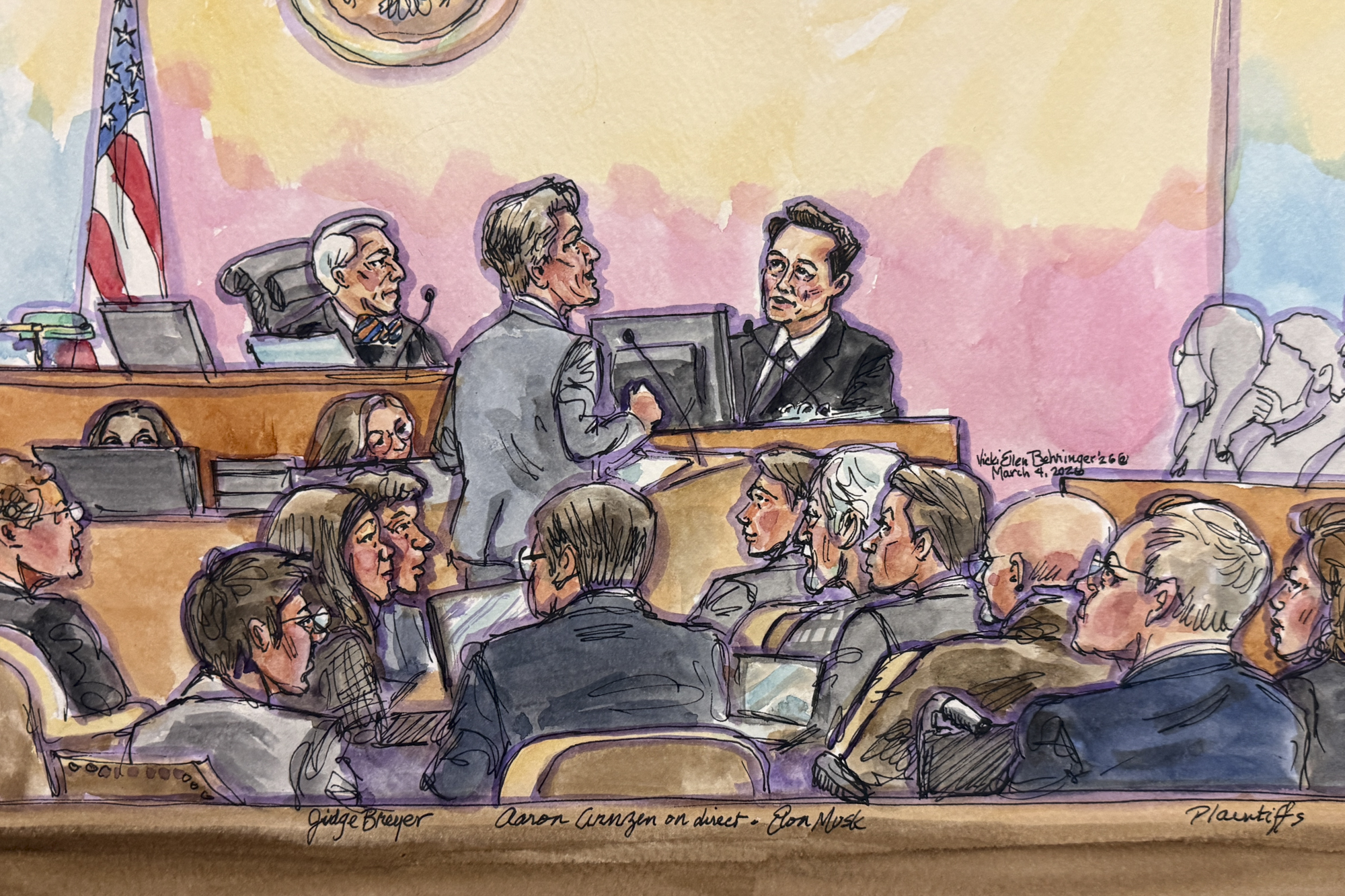
"caption": "A courtroom sketch depicts Elon Musk on the stand on March 4, 2026.",
"credit": "Vicki Behringer for KQED",
"altTag": null,
"description": null,
"imgSizes": {
"thumbnail": {
"file": "https://cdn.kqed.org/wp-content/uploads/sites/10/2026/03/260304-Elon-Musk-Trial-03-KQED-160x107.jpg",
"width": 160,
"height": 107,
"mimeType": "image/jpeg"
},
"1536x1536": {
"file": "https://cdn.kqed.org/wp-content/uploads/sites/10/2026/03/260304-Elon-Musk-Trial-03-KQED-1536x1024.jpg",
"width": 1536,
"height": 1024,
"mimeType": "image/jpeg"
},
"post-thumbnail": {
"file": "https://cdn.kqed.org/wp-content/uploads/sites/10/2026/03/260304-Elon-Musk-Trial-03-KQED-672x372.jpg",
"width": 672,
"height": 372,
"mimeType": "image/jpeg"
},
"twentyfourteen-full-width": {
"file": "https://cdn.kqed.org/wp-content/uploads/sites/10/2026/03/260304-Elon-Musk-Trial-03-KQED-1038x576.jpg",
"width": 1038,
"height": 576,
"mimeType": "image/jpeg"
},
"npr-cds-wide": {
"file": "https://cdn.kqed.org/wp-content/uploads/sites/10/2026/03/260304-Elon-Musk-Trial-03-KQED-1200x675.jpg",
"width": 1200,
"height": 675,
"mimeType": "image/jpeg"
},
"kqedFullSize": {
"file": "https://cdn.kqed.org/wp-content/uploads/sites/10/2026/03/260304-Elon-Musk-Trial-03-KQED.jpg",
"width": 2000,
"height": 1333
}
},
"isLoading": false,
"fetchFailed": false
},
"news_12076961": {
"type": "attachments",
"id": "news_12076961",
"meta": {
"index": "attachments_1716263798",
"site": "news",
"id": "12076961",
"found": true
},
"title": "031826-Wiener-Tan-KQED",
"publishDate": 1773871110,
"status": "inherit",
"parent": 0,
"modified": 1773871293,
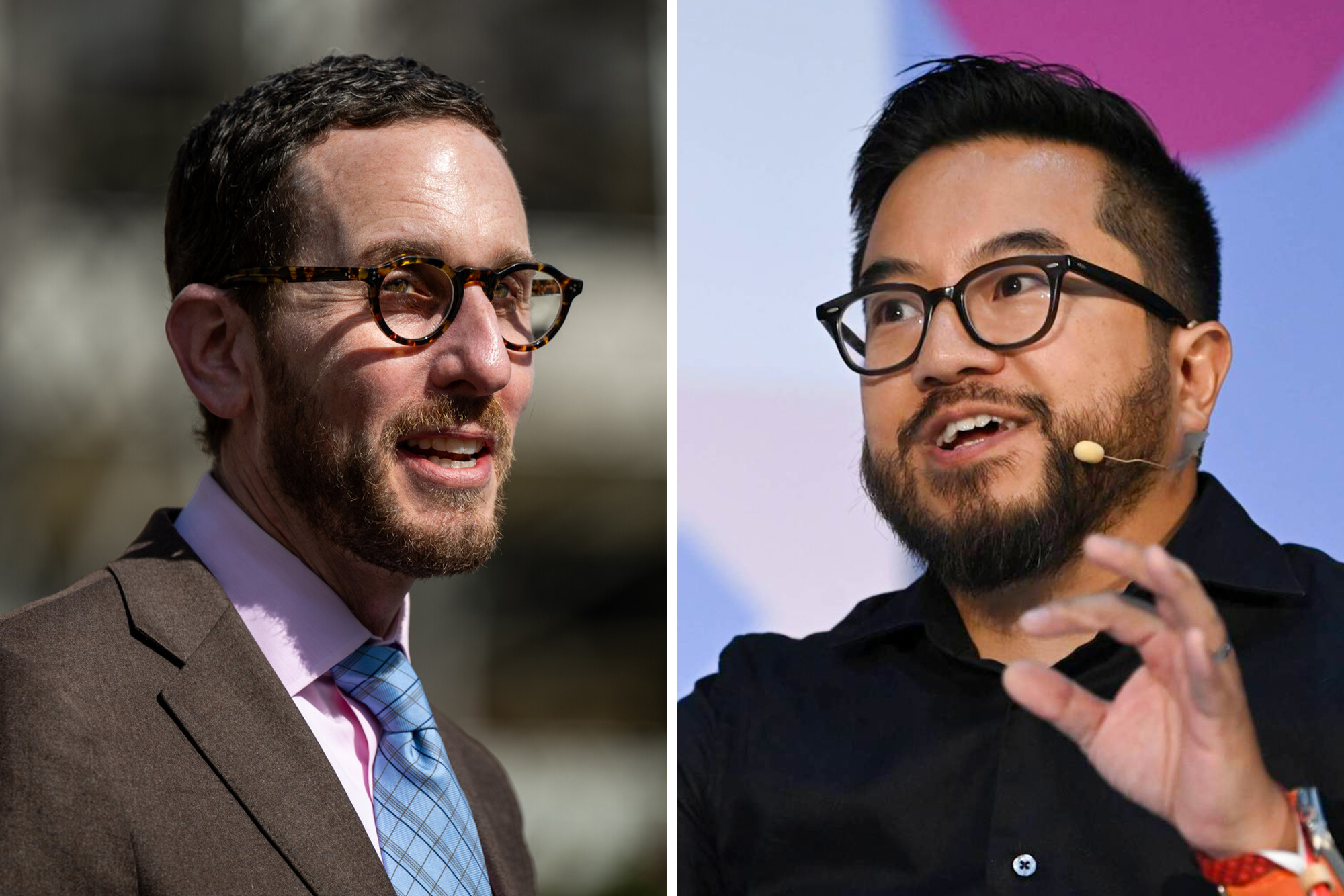
"caption": "Left: Sen. Scott Wiener; Right: Garry Tan.",
"credit": "Beth LaBerge/KQED; Harry Murphy/Sportsfile for Web Summit via Getty Images",
"altTag": null,
"description": null,
"imgSizes": {
"thumbnail": {
"file": "https://cdn.kqed.org/wp-content/uploads/sites/10/2026/03/031826-Wiener-Tan-KQED-160x107.jpg",
"width": 160,
"height": 107,
"mimeType": "image/jpeg"
},
"1536x1536": {
"file": "https://cdn.kqed.org/wp-content/uploads/sites/10/2026/03/031826-Wiener-Tan-KQED-1536x1025.jpg",
"width": 1536,
"height": 1025,
"mimeType": "image/jpeg"
},
"post-thumbnail": {
"file": "https://cdn.kqed.org/wp-content/uploads/sites/10/2026/03/031826-Wiener-Tan-KQED-672x372.jpg",
"width": 672,
"height": 372,
"mimeType": "image/jpeg"
},
"twentyfourteen-full-width": {
"file": "https://cdn.kqed.org/wp-content/uploads/sites/10/2026/03/031826-Wiener-Tan-KQED-1038x576.jpg",
"width": 1038,
"height": 576,
"mimeType": "image/jpeg"
},
"npr-cds-wide": {
"file": "https://cdn.kqed.org/wp-content/uploads/sites/10/2026/03/031826-Wiener-Tan-KQED-1200x675.jpg",
"width": 1200,
"height": 675,
"mimeType": "image/jpeg"
},
"kqedFullSize": {
"file": "https://cdn.kqed.org/wp-content/uploads/sites/10/2026/03/031826-Wiener-Tan-KQED.jpg",
"width": 2000,
"height": 1334
}
},
"isLoading": false,
"fetchFailed": false
},
"news_12076564": {
"type": "attachments",
"id": "news_12076564",
"meta": {
"index": "attachments_1716263798",
"site": "news",
"id": "12076564",
"found": true
},
"title": "20260312_H1BVIDEOGAME_GC-12-KQED",
"publishDate": 1773678342,
"status": "inherit",
"parent": 0,
"modified": 1773678383,
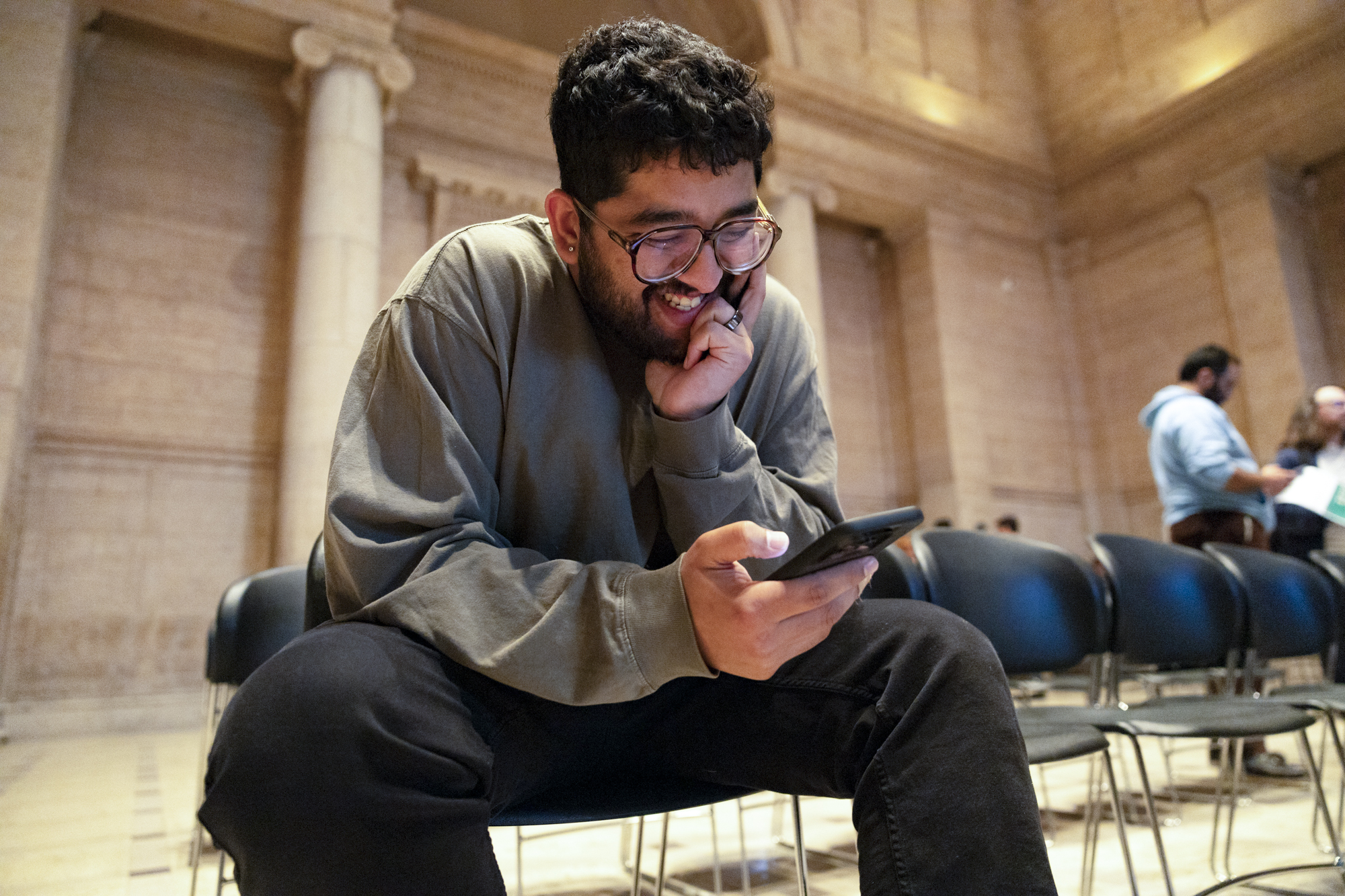
"caption": "Krish Chowdhary plays the H1B.Life game at the Asian Art Museum on March 12, 2026. H1B.Life is a game representing a live simulation of the U.S H-1B visa system with players “living” the lives of international students and workers trapped in the H-1B system, whose experiences were directly written into the game.",
"credit": "Gina Castro for KQED",
"altTag": null,
"description": null,
"imgSizes": {
"thumbnail": {
"file": "https://cdn.kqed.org/wp-content/uploads/sites/10/2026/03/20260312_H1BVIDEOGAME_GC-12-KQED-160x107.jpg",
"width": 160,
"height": 107,
"mimeType": "image/jpeg"
},
"1536x1536": {
"file": "https://cdn.kqed.org/wp-content/uploads/sites/10/2026/03/20260312_H1BVIDEOGAME_GC-12-KQED-1536x1024.jpg",
"width": 1536,
"height": 1024,
"mimeType": "image/jpeg"
},
"post-thumbnail": {
"file": "https://cdn.kqed.org/wp-content/uploads/sites/10/2026/03/20260312_H1BVIDEOGAME_GC-12-KQED-672x372.jpg",
"width": 672,
"height": 372,
"mimeType": "image/jpeg"
},
"twentyfourteen-full-width": {
"file": "https://cdn.kqed.org/wp-content/uploads/sites/10/2026/03/20260312_H1BVIDEOGAME_GC-12-KQED-1038x576.jpg",
"width": 1038,
"height": 576,
"mimeType": "image/jpeg"
},
"npr-cds-wide": {
"file": "https://cdn.kqed.org/wp-content/uploads/sites/10/2026/03/20260312_H1BVIDEOGAME_GC-12-KQED-1200x675.jpg",
"width": 1200,
"height": 675,
"mimeType": "image/jpeg"
},
"kqedFullSize": {
"file": "https://cdn.kqed.org/wp-content/uploads/sites/10/2026/03/20260312_H1BVIDEOGAME_GC-12-KQED.jpg",
"width": 2000,
"height": 1333
}
},
"isLoading": false,
"fetchFailed": false
},
"news_12076946": {
"type": "attachments",
"id": "news_12076946",
"meta": {
"index": "attachments_1716263798",
"site": "news",
"id": "12076946",
"found": true
},
"title": "Sun sets behind the Pigeon Point Lighthouse in California",
"publishDate": 1773868985,
"status": "inherit",
"parent": 12076857,
"modified": 1773869032,
"caption": "The sun sets behind Pigeon Point Lighthouse during a heat wave in Pescadero, California, on March 17, 2026.",
"credit": "Tayfun Coskun/Anadolu via Getty Images",
"altTag": null,
"description": null,
"imgSizes": {
"thumbnail": {
"file": "https://cdn.kqed.org/wp-content/uploads/sites/10/2026/03/HeatWaveGetty1-160x109.jpg",
"width": 160,
"height": 109,
"mimeType": "image/jpeg"
},
"1536x1536": {
"file": "https://cdn.kqed.org/wp-content/uploads/sites/10/2026/03/HeatWaveGetty1-1536x1046.jpg",
"width": 1536,
"height": 1046,
"mimeType": "image/jpeg"
},
"post-thumbnail": {
"file": "https://cdn.kqed.org/wp-content/uploads/sites/10/2026/03/HeatWaveGetty1-672x372.jpg",
"width": 672,
"height": 372,
"mimeType": "image/jpeg"
},
"twentyfourteen-full-width": {
"file": "https://cdn.kqed.org/wp-content/uploads/sites/10/2026/03/HeatWaveGetty1-1038x576.jpg",
"width": 1038,
"height": 576,
"mimeType": "image/jpeg"
},
"npr-cds-wide": {
"file": "https://cdn.kqed.org/wp-content/uploads/sites/10/2026/03/HeatWaveGetty1-1200x675.jpg",
"width": 1200,
"height": 675,
"mimeType": "image/jpeg"
},
"kqedFullSize": {
"file": "https://cdn.kqed.org/wp-content/uploads/sites/10/2026/03/HeatWaveGetty1.jpg",
"width": 2000,
"height": 1362
}
},
"isLoading": false,
"fetchFailed": false
},
"news_12076821": {
"type": "attachments",
"id": "news_12076821",
"meta": {
"index": "attachments_1716263798",
"site": "news",
"id": "12076821",
"found": true
},
"title": "Right to Repair_web img",
"publishDate": 1773792724,
"status": "inherit",
"parent": 12076820,
"modified": 1773792763,
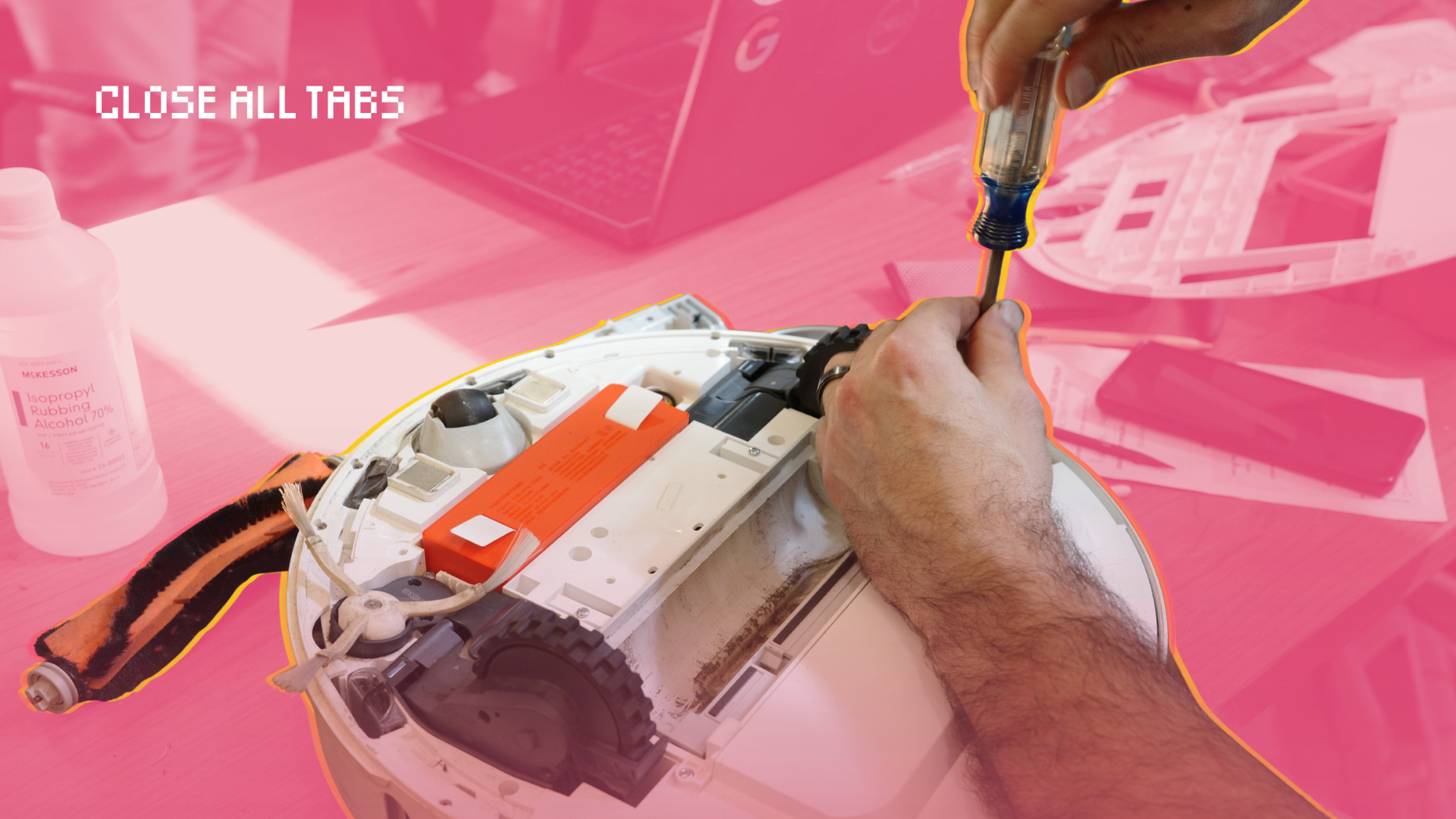
"caption": "Volunteer repair technician Jesse Kornblum works on a broken robot vacuum at Repair Cafe Silicon Valley in Milpitas, California, on Feb. 28, 2026.",
"credit": "Chris Egusa/KQED",
"altTag": "Close-up of a volunteer using a screwdriver to repair the underside of a robot vacuum, its internal components exposed on a worktable, with tools and parts scattered nearby. The image has a pink overlay with “Close All Tabs” in the top left.",
"description": null,
"imgSizes": {
"thumbnail": {
"file": "https://cdn.kqed.org/wp-content/uploads/sites/10/2026/03/Right-to-Repair_web-img-160x90.png",
"width": 160,
"height": 90,
"mimeType": "image/png"
},
"1536x1536": {
"file": "https://cdn.kqed.org/wp-content/uploads/sites/10/2026/03/Right-to-Repair_web-img-1536x864.png",
"width": 1536,
"height": 864,
"mimeType": "image/png"
},
"post-thumbnail": {
"file": "https://cdn.kqed.org/wp-content/uploads/sites/10/2026/03/Right-to-Repair_web-img-672x372.png",
"width": 672,
"height": 372,
"mimeType": "image/png"
},
"twentyfourteen-full-width": {
"file": "https://cdn.kqed.org/wp-content/uploads/sites/10/2026/03/Right-to-Repair_web-img-1038x576.png",
"width": 1038,
"height": 576,
"mimeType": "image/png"
},
"npr-cds-wide": {
"file": "https://cdn.kqed.org/wp-content/uploads/sites/10/2026/03/Right-to-Repair_web-img-1200x675.png",
"width": 1200,
"height": 675,
"mimeType": "image/png"
},
"kqedFullSize": {
"file": "https://cdn.kqed.org/wp-content/uploads/sites/10/2026/03/Right-to-Repair_web-img.png",
"width": 1920,
"height": 1080
}
},
"isLoading": false,
"fetchFailed": false
}
},
"audioPlayerReducer": {
"postId": "stream_live",
"isPaused": true,
"isPlaying": false,
"pfsActive": false,
"pledgeModalIsOpen": true,
"playerDrawerIsOpen": false,
"liveAudioPlayStartedAt": 0,
"liveAudioPlayContext": ""
},
"authorsReducer": {
"rachael-myrow": {
"type": "authors",
"id": "251",
"meta": {
"index": "authors_1716337520",
"id": "251",
"found": true
},
"name": "Rachael Myrow",
"firstName": "Rachael",
"lastName": "Myrow",
"slug": "rachael-myrow",
"email": "rmyrow@kqed.org",
"display_author_email": true,
"staff_mastheads": [
"news"
],
"title": "Senior Editor of KQED's Silicon Valley News Desk",
"bio": "• I write and edit stories about how Silicon Valley power and policies shape everyday life in California. I’m also passionate about making Bay Area history and culture more accessible to a broad public. • I’ve been a journalist for most of my life, starting in high school with The Franklin Press in Los Angeles, where I grew up. While earning my first degree in English at UC Berkeley, I got my start in public radio at KALX-FM. After completing a second degree in journalism at Cal, I landed my first professional job at Marketplace, then moved on to KPCC (now LAist), and then KQED, where I hosted The California Report for more than seven years. • My reporting has appeared on NPR, The World, WBUR’s \u003ci>Here & Now\u003c/i>, and the BBC. I also guest host for KQED’s \u003ci>Forum\u003c/i>, as well as the Commonwealth Club in San Francisco. • I speak periodically on media, democracy and technology issues, and do voiceover work for documentaries and educational video projects. • Outside of the studio, you'll find me hiking Bay Area trails and whipping up Insta-ready meals in my kitchen. • I do not accept gifts, money, or favors from anyone connected to my reporting, I don't pay people for information, and I do not support or donate to political causes. • I strive to treat the people I report on with fairness, honesty, and respect. I also recognize there are often multiple sides to a story and work to verify information through multiple sources and documentation. If I get something wrong, I correct it.",
"avatar": "https://secure.gravatar.com/avatar/3ed8a3c5f26025e4a805ba634cda8cd764906b97438a6d9ce216b044e340da4e?s=600&d=blank&r=g",
"twitter": "rachaelmyrow",
"bluesky": null,
"facebook": null,
"instagram": null,
"linkedin": "https://www.linkedin.com/in/rachaelmyrow/",
"sites": [
{
"site": "arts",
"roles": [
"administrator"
]
},
{
"site": "news",
"roles": [
"edit_others_posts",
"editor"
]
},
{
"site": "futureofyou",
"roles": [
"editor"
]
},
{
"site": "bayareabites",
"roles": [
"editor"
]
},
{
"site": "stateofhealth",
"roles": [
"editor"
]
},
{
"site": "science",
"roles": [
"editor"
]
},
{
"site": "food",
"roles": [
"editor"
]
},
{
"site": "forum",
"roles": [
"editor"
]
},
{
"site": "liveblog",
"roles": [
"author"
]
}
],
"headData": {
"title": "Rachael Myrow | KQED",
"description": "Senior Editor of KQED's Silicon Valley News Desk",
"ogImgSrc": "https://secure.gravatar.com/avatar/3ed8a3c5f26025e4a805ba634cda8cd764906b97438a6d9ce216b044e340da4e?s=600&d=blank&r=g",
"twImgSrc": "https://secure.gravatar.com/avatar/3ed8a3c5f26025e4a805ba634cda8cd764906b97438a6d9ce216b044e340da4e?s=600&d=blank&r=g"
},
"isLoading": false,
"link": "/author/rachael-myrow"
},
"adahlstromeckman": {
"type": "authors",
"id": "11785",
"meta": {
"index": "authors_1716337520",
"id": "11785",
"found": true
},
"name": "Azul Dahlstrom-Eckman",
"firstName": "Azul",
"lastName": "Dahlstrom-Eckman",
"slug": "adahlstromeckman",
"email": "adahlstrom-eckman@kqed.org",
"display_author_email": true,
"staff_mastheads": [],
"title": "Reporter",
"bio": "Azul is a reporter for KQED focusing on transportation and features. He joined KQED in 2021 as an alumna of KALW's Audio Academy radio journalism training program.",
"avatar": "https://secure.gravatar.com/avatar/9cb750298435add7815a777f55bf1f46845c1386bb8452555c60a7b820b5aba3?s=600&d=blank&r=g",
"twitter": "@zuliemann",
"bluesky": "@azul415.bsky.social",
"facebook": null,
"instagram": null,
"linkedin": null,
"sites": [
{
"site": "arts",
"roles": [
"editor"
]
},
{
"site": "news",
"roles": [
"editor"
]
},
{
"site": "science",
"roles": [
"editor"
]
},
{
"site": "liveblog",
"roles": [
"author"
]
}
],
"headData": {
"title": "Azul Dahlstrom-Eckman | KQED",
"description": "Reporter",
"ogImgSrc": "https://secure.gravatar.com/avatar/9cb750298435add7815a777f55bf1f46845c1386bb8452555c60a7b820b5aba3?s=600&d=blank&r=g",
"twImgSrc": "https://secure.gravatar.com/avatar/9cb750298435add7815a777f55bf1f46845c1386bb8452555c60a7b820b5aba3?s=600&d=blank&r=g"
},
"isLoading": false,
"link": "/author/adahlstromeckman"
},
"chambrick": {
"type": "authors",
"id": "11832",
"meta": {
"index": "authors_1716337520",
"id": "11832",
"found": true
},
"name": "Chris Hambrick",
"firstName": "Chris",
"lastName": "Hambrick",
"slug": "chambrick",
"email": "chambrick@kqed.org",
"display_author_email": false,
"staff_mastheads": [],
"title": "KQED Contributor",
"bio": null,
"avatar": "https://secure.gravatar.com/avatar/23cb83888bc440645af5d36d0d1909e8ecb6cef21f2fdb96abf9a55495bb19d8?s=600&d=blank&r=g",
"twitter": null,
"bluesky": null,
"facebook": null,
"instagram": null,
"linkedin": null,
"sites": [
{
"site": "",
"roles": [
"editor"
]
},
{
"site": "arts",
"roles": [
"editor"
]
},
{
"site": "news",
"roles": [
"editor"
]
},
{
"site": "podcasts",
"roles": [
"editor"
]
}
],
"headData": {
"title": "Chris Hambrick | KQED",
"description": "KQED Contributor",
"ogImgSrc": "https://secure.gravatar.com/avatar/23cb83888bc440645af5d36d0d1909e8ecb6cef21f2fdb96abf9a55495bb19d8?s=600&d=blank&r=g",
"twImgSrc": "https://secure.gravatar.com/avatar/23cb83888bc440645af5d36d0d1909e8ecb6cef21f2fdb96abf9a55495bb19d8?s=600&d=blank&r=g"
},
"isLoading": false,
"link": "/author/chambrick"
},
"cegusa": {
"type": "authors",
"id": "11869",
"meta": {
"index": "authors_1716337520",
"id": "11869",
"found": true
},
"name": "Chris Egusa",
"firstName": "Chris",
"lastName": "Egusa",
"slug": "cegusa",
"email": "cegusa@kqed.org",
"display_author_email": false,
"staff_mastheads": [],
"title": "KQED Contributor",
"bio": null,
"avatar": "https://secure.gravatar.com/avatar/3562ed52747313a4c94017da88ea89f9e85cd901f63ebc056a7d5e0adf4a03da?s=600&d=blank&r=g",
"twitter": null,
"bluesky": null,
"facebook": null,
"instagram": null,
"linkedin": null,
"sites": [
{
"site": "arts",
"roles": [
"editor"
]
},
{
"site": "news",
"roles": [
"editor"
]
}
],
"headData": {
"title": "Chris Egusa | KQED",
"description": "KQED Contributor",
"ogImgSrc": "https://secure.gravatar.com/avatar/3562ed52747313a4c94017da88ea89f9e85cd901f63ebc056a7d5e0adf4a03da?s=600&d=blank&r=g",
"twImgSrc": "https://secure.gravatar.com/avatar/3562ed52747313a4c94017da88ea89f9e85cd901f63ebc056a7d5e0adf4a03da?s=600&d=blank&r=g"
},
"isLoading": false,
"link": "/author/cegusa"
},
"kdebenedetti": {
"type": "authors",
"id": "11913",
"meta": {
"index": "authors_1716337520",
"id": "11913",
"found": true
},
"name": "Katie DeBenedetti",
"firstName": "Katie",
"lastName": "DeBenedetti",
"slug": "kdebenedetti",
"email": "kdebenedetti@kqed.org",
"display_author_email": false,
"staff_mastheads": [
"news",
"science"
],
"title": "KQED Contributor",
"bio": "Katie DeBenedetti is a digital reporter covering daily news for the Express Desk. Prior to joining KQED as a culture reporting intern in January 2024, she covered education and city government for the Napa Valley Register.",
"avatar": "https://secure.gravatar.com/avatar/6e31073cb8f7e4214ab03f42771d0f45?s=600&d=blank&r=g",
"twitter": null,
"facebook": null,
"instagram": null,
"linkedin": null,
"sites": [
{
"site": "news",
"roles": [
"author"
]
},
{
"site": "science",
"roles": [
"author"
]
},
{
"site": "liveblog",
"roles": [
"author"
]
}
],
"headData": {
"title": "Katie DeBenedetti | KQED",
"description": "KQED Contributor",
"ogImgSrc": "https://secure.gravatar.com/avatar/6e31073cb8f7e4214ab03f42771d0f45?s=600&d=blank&r=g",
"twImgSrc": "https://secure.gravatar.com/avatar/6e31073cb8f7e4214ab03f42771d0f45?s=600&d=blank&r=g"
},
"isLoading": false,
"link": "/author/kdebenedetti"
},
"mcueva": {
"type": "authors",
"id": "11943",
"meta": {
"index": "authors_1716337520",
"id": "11943",
"found": true
},
"name": "Maya Cueva",
"firstName": "Maya",
"lastName": "Cueva",
"slug": "mcueva",
"email": "mcueva@kqed.org",
"display_author_email": false,
"staff_mastheads": [],
"title": "KQED Contributor",
"bio": null,
"avatar": "https://secure.gravatar.com/avatar/238c7aba67c4b6b7b891965ba8cc9e9a4928b5dbdeaf4bde6a81c13e87f49b49?s=600&d=blank&r=g",
"twitter": null,
"bluesky": null,
"facebook": null,
"instagram": null,
"linkedin": null,
"sites": [
{
"site": "news",
"roles": [
"editor"
]
}
],
"headData": {
"title": "Maya Cueva | KQED",
"description": "KQED Contributor",
"ogImgSrc": "https://secure.gravatar.com/avatar/238c7aba67c4b6b7b891965ba8cc9e9a4928b5dbdeaf4bde6a81c13e87f49b49?s=600&d=blank&r=g",
"twImgSrc": "https://secure.gravatar.com/avatar/238c7aba67c4b6b7b891965ba8cc9e9a4928b5dbdeaf4bde6a81c13e87f49b49?s=600&d=blank&r=g"
},
"isLoading": false,
"link": "/author/mcueva"
},
"msung": {
"type": "authors",
"id": "11944",
"meta": {
"index": "authors_1716337520",
"id": "11944",
"found": true
},
"name": "Morgan Sung",
"firstName": "Morgan",
"lastName": "Sung",
"slug": "msung",
"email": "msung@kqed.org",
"display_author_email": false,
"staff_mastheads": [],
"title": "Close All Tabs Host",
"bio": null,
"avatar": "https://secure.gravatar.com/avatar/34033b8d232ee6c987ca6f0a1a28f0e5?s=600&d=blank&r=g",
"twitter": null,
"facebook": null,
"instagram": null,
"linkedin": null,
"sites": [
{
"site": "news",
"roles": [
"editor"
]
}
],
"headData": {
"title": "Morgan Sung | KQED",
"description": "Close All Tabs Host",
"ogImgSrc": "https://secure.gravatar.com/avatar/34033b8d232ee6c987ca6f0a1a28f0e5?s=600&d=blank&r=g",
"twImgSrc": "https://secure.gravatar.com/avatar/34033b8d232ee6c987ca6f0a1a28f0e5?s=600&d=blank&r=g"
},
"isLoading": false,
"link": "/author/msung"
},
"aamaral": {
"type": "authors",
"id": "11947",
"meta": {
"index": "authors_1716337520",
"id": "11947",
"found": true
},
"name": "Ana De Almeida Amaral",
"firstName": "Ana",
"lastName": "De Almeida Amaral",
"slug": "aamaral",
"email": "aamaral@kqed.org",
"display_author_email": false,
"staff_mastheads": [],
"title": "KQED Contributor",
"bio": null,
"avatar": "https://secure.gravatar.com/avatar/eb08e0e3effedf89fc5153d5f7416228a3359f82750571d5de728615b88e8c32?s=600&d=blank&r=g",
"twitter": null,
"bluesky": null,
"facebook": null,
"instagram": null,
"linkedin": null,
"sites": [
{
"site": "arts",
"roles": [
"editor"
]
},
{
"site": "news",
"roles": [
"editor"
]
},
{
"site": "forum",
"roles": [
"editor"
]
}
],
"headData": {
"title": "Ana De Almeida Amaral | KQED",
"description": "KQED Contributor",
"ogImgSrc": "https://secure.gravatar.com/avatar/eb08e0e3effedf89fc5153d5f7416228a3359f82750571d5de728615b88e8c32?s=600&d=blank&r=g",
"twImgSrc": "https://secure.gravatar.com/avatar/eb08e0e3effedf89fc5153d5f7416228a3359f82750571d5de728615b88e8c32?s=600&d=blank&r=g"
},
"isLoading": false,
"link": "/author/aamaral"
},
"sarahwright": {
"type": "authors",
"id": "11956",
"meta": {
"index": "authors_1716337520",
"id": "11956",
"found": true
},
"name": "Sarah Wright",
"firstName": "Sarah",
"lastName": "Wright",
"slug": "sarahwright",
"email": "swright@kqed.org",
"display_author_email": true,
"staff_mastheads": [],
"title": "Outdoors Engagement Reporter",
"bio": "Sarah Wright is KQED's Outdoors Engagement Reporter. Originally from Lake Tahoe, she completed a thru-hike of the Pacific Crest Trail in 2019 and was a U.S. Fulbright Program grantee to Argentina in 2023. Her journalism has appeared in The Guardian, The San Francisco Standard, The Palo Alto Weekly and the Half Moon Bay Review.",
"avatar": "https://secure.gravatar.com/avatar/c161a3d6441865cba25e6db4fa561099ad665799e9432e34da2b84d7e371524c?s=600&d=blank&r=g",
"twitter": null,
"bluesky": null,
"facebook": null,
"instagram": null,
"linkedin": null,
"sites": [
{
"site": "arts",
"roles": [
"editor"
]
},
{
"site": "news",
"roles": [
"editor"
]
},
{
"site": "science",
"roles": [
"contributor",
"author"
]
},
{
"site": "forum",
"roles": [
"editor"
]
}
],
"headData": {
"title": "Sarah Wright | KQED",
"description": "Outdoors Engagement Reporter",
"ogImgSrc": "https://secure.gravatar.com/avatar/c161a3d6441865cba25e6db4fa561099ad665799e9432e34da2b84d7e371524c?s=600&d=blank&r=g",
"twImgSrc": "https://secure.gravatar.com/avatar/c161a3d6441865cba25e6db4fa561099ad665799e9432e34da2b84d7e371524c?s=600&d=blank&r=g"
},
"isLoading": false,
"link": "/author/sarahwright"
}
},
"pagesReducer": {
"news_tag_technology": {
"type": "terms",
"id": "news_1631",
"meta": {
"index": "terms_1716263798",
"site": "news",
"id": "1631",
"score": 6.9278607
},
"name": "Technology",
"slug": "technology",
"taxonomy": "tag",
"description": null,
"featImg": null,
"headData": {
"title": "Technology | KQED News",
"description": null,
"ogTitle": null,
"ogDescription": null,
"ogImgId": null,
"twTitle": null,
"twDescription": null,
"twImgId": null
},
"ttid": 1643,
"isLoading": false,
"title": "Technology",
"pageMeta": {
"site": "news",
"WpPageTemplate": "page-topic-editorial",
"currentPage": 10
},
"blocks": [
{
"blockName": "kqed/post-list",
"attrs": {
"layout": "cardArticle2",
"query": "posts/news?tag=technology",
"seeMore": false,
"paginated": true,
"page": 10
}
},
{
"blockName": "kqed/ad"
}
]
}
},
"pfsSessionReducer": {},
"postsReducer": {
"stream_live": {
"type": "live",
"id": "stream_live",
"audioUrl": "https://streams.kqed.org/kqedradio",
"title": "Live Stream",
"excerpt": "Live Stream information currently unavailable.",
"link": "/radio",
"featImg": "",
"label": {
"name": "KQED Live",
"link": "/"
}
},
"stream_kqedNewscast": {
"type": "posts",
"id": "stream_kqedNewscast",
"audioUrl": "https://www.kqed.org/.stream/anon/radio/RDnews/newscast.mp3?_=1",
"title": "KQED Newscast",
"featImg": "",
"label": {
"name": "88.5 FM",
"link": "/"
}
},
"news_12079267": {
"type": "posts",
"id": "news_12079267",
"meta": {
"index": "posts_1716263798",
"site": "news",
"id": "12079267",
"score": null,
"sort": [
1775771786000
]
},
"guestAuthors": [],
"slug": "anthropics-bid-to-lift-supply-chain-risk-label-suffers-setback-in-u-s-appeals-court",
"title": "Anthropic’s Bid to Lift ‘Supply Chain Risk’ Label Suffers Setback in US Appeals Court",
"publishDate": 1775771786,
"format": "standard",
"headTitle": "Anthropic’s Bid to Lift ‘Supply Chain Risk’ Label Suffers Setback in US Appeals Court | KQED",
"labelTerm": {
"site": "news"
},
"content": "\u003cp>A federal appeals court in Washington on Wednesday\u003ca href=\"http://www.apple.com\"> denied\u003c/a> Anthropic’s\u003ca href=\"https://www.courtlistener.com/docket/72380208/01208838678/anthropic-pbc-v-united-states-department-of-war/\"> request for relief\u003c/a> from the Defense Department’s declaration that the company is a supply-chain risk.\u003c/p>\n\u003cp>The ruling is the latest battle in the multi-front war the U.S. government and one of the country’s leading AI companies are waging with each other — even as they’re also reportedly working with each other in the war with Iran.\u003c/p>\n\u003cp>A\u003ca href=\"https://storage.courtlistener.com/recap/gov.uscourts.cand.465515/gov.uscourts.cand.465515.113.0_1.pdf\"> separate court\u003c/a> in San Francisco\u003ca href=\"https://www.npr.org/2026/03/26/nx-s1-5762971/judge-temporarily-blocks-anthropic-ban\"> recently\u003c/a> blocked President Donald Trump’s broader ban on government use of Anthropic’s model, Claude.\u003c/p>\n\u003cp>[ad fullwidth]\u003c/p>\n\u003cp>U.S. District Judge Rita F. Lin said the ban “looked like an attempt to \u003ca href=\"https://www.npr.org/2026/03/24/nx-s1-5759276/anthropic-pentagon-claude-preliminary-injunction-hearing\">cripple\u003c/a> Anthropic,” after the company went public about its dispute over the use of Claude by the military.\u003c/p>\n\u003cp>“Nothing … supports the Orwellian notion that an American company may be branded a potential adversary and saboteur of the U.S. for expressing disagreement with the government,” Lin wrote.\u003c/p>\n\u003cp>But the three-judge panel in Washington wrote that “the equitable balance here cuts in favor of the government,” though it acknowledged Anthropic will continue to be excluded from new contracts and Pentagon systems.\u003c/p>\n\u003cfigure id=\"attachment_12079282\" class=\"wp-caption aligncenter\" style=\"max-width: 1980px\">\u003cimg loading=\"lazy\" decoding=\"async\" class=\"size-full wp-image-12079282\" src=\"https://cdn.kqed.org/wp-content/uploads/sites/10/2026/04/GettyImages-2233287472.jpg\" alt=\"\" width=\"1980\" height=\"1320\" srcset=\"https://cdn.kqed.org/wp-content/uploads/sites/10/2026/04/GettyImages-2233287472.jpg 1980w, https://cdn.kqed.org/wp-content/uploads/sites/10/2026/04/GettyImages-2233287472-160x107.jpg 160w, https://cdn.kqed.org/wp-content/uploads/sites/10/2026/04/GettyImages-2233287472-1536x1024.jpg 1536w\" sizes=\"auto, (max-width: 1980px) 100vw, 1980px\">\u003cfigcaption class=\"wp-caption-text\">The Salesforce Tower is seen reflected in windows of 500 Howard Street, where AI firm Anthropic subleased Slack’s office, in downtown San Francisco, California on Oct. 19, 2023. \u003ccite>(Loren Elliott for The Washington Post via Getty Images)\u003c/cite>\u003c/figcaption>\u003c/figure>\n\u003cp>The appeals court said that granting a stay would “force the United States military to prolong its dealings with an unwanted vendor of critical AI services in the middle of a significant ongoing military conflict.”\u003c/p>\n\u003cp>The court set oral arguments in the case for May 19.\u003c/p>\n\u003cp>The feud between Anthropic and the Trump administration publicly escalated in February. Following tense behind-the-scenes negotiations and an announcement from CEO Dario Amodei that he would not allow Claude to be used for autonomous weapons or to surveil American citizens, Defense Department officials responded with a series of punishments.[aside postID=news_12078982 hero='https://cdn.kqed.org/wp-content/uploads/sites/10/2026/04/GettyImages-2264783645.jpg']Anthropic’s complaints lean heavily on statements by Pentagon officials on social media, including posts by \u003ca href=\"https://truthsocial.com/@realDonaldTrump/116144552969293195/\">Trump\u003c/a>, Defense Secretary \u003ca href=\"https://twitter.com/SecWar/status/2027507717469049070\">Pete Hegseth\u003c/a> and others, as “evidence of ideological motivation,” as well as “arbitrary, capricious and an abuse of discretion.”\u003c/p>\n\u003cp>Trump \u003ca href=\"https://storage.courtlistener.com/recap/gov.uscourts.cand.465515/gov.uscourts.cand.465515.1.1_4.pdf\">called\u003c/a> Anthropic “a radical left, woke company” populated by “leftwing nut jobs,” and Hegseth attacked the company as arrogant and duplicitous. Anthropic’s lawyers argued these posts expose the ideological, rather than national security, motivation behind the government’s actions.\u003c/p>\n\u003cp>That said, the \u003ca href=\"https://www.wsj.com/livecoverage/iran-strikes-2026/card/u-s-strikes-in-middle-east-use-anthropic-hours-after-trump-ban-ozNO0iClZpfpL7K7ElJ2?mod=article_inline\">\u003cem>Wall Street Journal\u003c/em>\u003c/a> reported that the Defense Department continues to use Claude in the war in Iran.\u003c/p>\n\u003cp>“We’re grateful the court recognized these issues need to be resolved quickly and remain confident the courts will ultimately agree that these supply chain designations were unlawful,” an Anthropic spokesperson wrote KQED following the appeals court decision in Washington on Wednesday. “While this case was necessary to protect Anthropic, our customers, and our partners, our focus remains on working productively with the government to ensure all Americans benefit from safe, reliable AI.”\u003c/p>\n\u003cp>Noted AI scientist and skeptic Gary Marcus said he favored Anthropic’s chances, and that the government’s supply chain risk designation “made no sense.”\u003c/p>\n\u003cfigure id=\"attachment_12079283\" class=\"wp-caption aligncenter\" style=\"max-width: 1980px\">\u003cimg loading=\"lazy\" decoding=\"async\" class=\"size-full wp-image-12079283\" src=\"https://cdn.kqed.org/wp-content/uploads/sites/10/2026/04/GettyImages-2268688942.jpg\" alt=\"\" width=\"1980\" height=\"1320\" srcset=\"https://cdn.kqed.org/wp-content/uploads/sites/10/2026/04/GettyImages-2268688942.jpg 1980w, https://cdn.kqed.org/wp-content/uploads/sites/10/2026/04/GettyImages-2268688942-160x107.jpg 160w, https://cdn.kqed.org/wp-content/uploads/sites/10/2026/04/GettyImages-2268688942-1536x1024.jpg 1536w\" sizes=\"auto, (max-width: 1980px) 100vw, 1980px\">\u003cfigcaption class=\"wp-caption-text\">The Anthropic logo is displayed on a smartphone screen on March 31, 2026. \u003ccite>(Jonathan Raa/NurPhoto)\u003c/cite>\u003c/figcaption>\u003c/figure>\n\u003cp>“At the moment Anthropic seems to have something of a technical lead, and it would just be cutting off DoD’s nose to spite their face to exclude them. Especially in wartime, that’s just ridiculous,” he told KQED by email.\u003c/p>\n\u003cp>In recent weeks, \u003ca href=\"https://www.cnbc.com/2025/06/16/openai-wins-200-million-us-defense-contract.html\">OpenAI\u003c/a> swooped in to claim the $200 million contract Anthropic was negotiating for with the Defense Department. But the deal likely cost Anthropic’s rival more than that in subscriber defections alone. A \u003ca href=\"https://quitgpt.org/\">website \u003c/a>where people pledged to cancel their subscriptions claims OpenAI lost 1.5 million paying users, as the company faces an estimated $14 billion loss in operational costs.\u003c/p>\n\u003cp>“The DoD contract is small potatoes in itself,” UC Berkeley AI pioneer Stuart Russell wrote. The real play, he argued, is indispensability. “I think the intent was to make OpenAI indispensable to the government, raising the likelihood of a bailout (a possibility suggested by OpenAI last year).”\u003c/p>\n\u003cp>The “supply chain risk” designation for Anthropic? “I assume it will eventually be rescinded,” Russell said.\u003c/p>\n\u003cp>\u003c/p>\n",
"blocks": [],
"excerpt": "The artificial intelligence company is fighting the Pentagon over the use of its technology during warfare, as the U.S. government reportedly continues to deploy its Claude model in Iran.",
"status": "publish",
"parent": 0,
"modified": 1775778278,
"stats": {
"hasAudio": false,
"hasVideo": false,
"hasChartOrMap": false,
"iframeSrcs": [],
"hasGoogleForm": false,
"hasGallery": false,
"hasHearkenModule": false,
"hasPolis": false,
"paragraphCount": 19,
"wordCount": 776
},
"headData": {
"title": "Anthropic’s Bid to Lift ‘Supply Chain Risk’ Label Suffers Setback in US Appeals Court | KQED",
"description": "The artificial intelligence company is fighting the Pentagon over the use of its technology during warfare, as the U.S. government reportedly continues to deploy its Claude model in Iran.",
"ogTitle": "",
"ogDescription": "",
"ogImgId": "",
"twTitle": "",
"twDescription": "",
"twImgId": "",
"schema": {
"@context": "https://schema.org",
"@type": "NewsArticle",
"headline": "Anthropic’s Bid to Lift ‘Supply Chain Risk’ Label Suffers Setback in US Appeals Court",
"datePublished": "2026-04-09T14:56:26-07:00",
"dateModified": "2026-04-09T16:44:38-07:00",
"image": "https://cdn.kqed.org/wp-content/uploads/2020/02/KQED-OG-Image@1x.png",
"isAccessibleForFree": "True",
"publisher": {
"@type": "NewsMediaOrganization",
"@id": "https://www.kqed.org/#organization",
"name": "KQED",
"logo": "https://cdn.kqed.org/wp-content/uploads/2020/02/KQED-OG-Image@1x.png",
"url": "https://www.kqed.org",
"sameAs": [
"https://www.facebook.com/KQED",
"https://twitter.com/KQED",
"https://www.instagram.com/kqed/",
"https://www.tiktok.com/@kqedofficial",
"https://www.linkedin.com/company/kqed",
"https://www.youtube.com/channel/UCeC0IOo7i1P_61zVUWbJ4nw"
]
}
}
},
"primaryCategory": {
"termId": 248,
"slug": "technology",
"name": "Technology"
},
"sticky": false,
"nprStoryId": "kqed-12079267",
"templateType": "standard",
"featuredImageType": "standard",
"excludeFromSiteSearch": "Include",
"articleAge": "0",
"path": "/news/12079267/anthropics-bid-to-lift-supply-chain-risk-label-suffers-setback-in-u-s-appeals-court",
"audioTrackLength": null,
"parsedContent": [
{
"type": "contentString",
"content": "\u003cdiv class=\"post-body\">\u003cp>\u003cp>A federal appeals court in Washington on Wednesday\u003ca href=\"http://www.apple.com\"> denied\u003c/a> Anthropic’s\u003ca href=\"https://www.courtlistener.com/docket/72380208/01208838678/anthropic-pbc-v-united-states-department-of-war/\"> request for relief\u003c/a> from the Defense Department’s declaration that the company is a supply-chain risk.\u003c/p>\n\u003cp>The ruling is the latest battle in the multi-front war the U.S. government and one of the country’s leading AI companies are waging with each other — even as they’re also reportedly working with each other in the war with Iran.\u003c/p>\n\u003cp>A\u003ca href=\"https://storage.courtlistener.com/recap/gov.uscourts.cand.465515/gov.uscourts.cand.465515.113.0_1.pdf\"> separate court\u003c/a> in San Francisco\u003ca href=\"https://www.npr.org/2026/03/26/nx-s1-5762971/judge-temporarily-blocks-anthropic-ban\"> recently\u003c/a> blocked President Donald Trump’s broader ban on government use of Anthropic’s model, Claude.\u003c/p>\n\u003cp>\u003c/p>\u003c/div>",
"attributes": {
"named": {},
"numeric": []
}
},
{
"type": "component",
"content": "",
"name": "ad",
"attributes": {
"named": {
"label": "fullwidth"
},
"numeric": [
"fullwidth"
]
}
},
{
"type": "contentString",
"content": "\u003cdiv class=\"post-body\">\u003cp>\u003c/p>\n\u003cp>U.S. District Judge Rita F. Lin said the ban “looked like an attempt to \u003ca href=\"https://www.npr.org/2026/03/24/nx-s1-5759276/anthropic-pentagon-claude-preliminary-injunction-hearing\">cripple\u003c/a> Anthropic,” after the company went public about its dispute over the use of Claude by the military.\u003c/p>\n\u003cp>“Nothing … supports the Orwellian notion that an American company may be branded a potential adversary and saboteur of the U.S. for expressing disagreement with the government,” Lin wrote.\u003c/p>\n\u003cp>But the three-judge panel in Washington wrote that “the equitable balance here cuts in favor of the government,” though it acknowledged Anthropic will continue to be excluded from new contracts and Pentagon systems.\u003c/p>\n\u003cfigure id=\"attachment_12079282\" class=\"wp-caption aligncenter\" style=\"max-width: 1980px\">\u003cimg loading=\"lazy\" decoding=\"async\" class=\"size-full wp-image-12079282\" src=\"https://cdn.kqed.org/wp-content/uploads/sites/10/2026/04/GettyImages-2233287472.jpg\" alt=\"\" width=\"1980\" height=\"1320\" srcset=\"https://cdn.kqed.org/wp-content/uploads/sites/10/2026/04/GettyImages-2233287472.jpg 1980w, https://cdn.kqed.org/wp-content/uploads/sites/10/2026/04/GettyImages-2233287472-160x107.jpg 160w, https://cdn.kqed.org/wp-content/uploads/sites/10/2026/04/GettyImages-2233287472-1536x1024.jpg 1536w\" sizes=\"auto, (max-width: 1980px) 100vw, 1980px\">\u003cfigcaption class=\"wp-caption-text\">The Salesforce Tower is seen reflected in windows of 500 Howard Street, where AI firm Anthropic subleased Slack’s office, in downtown San Francisco, California on Oct. 19, 2023. \u003ccite>(Loren Elliott for The Washington Post via Getty Images)\u003c/cite>\u003c/figcaption>\u003c/figure>\n\u003cp>The appeals court said that granting a stay would “force the United States military to prolong its dealings with an unwanted vendor of critical AI services in the middle of a significant ongoing military conflict.”\u003c/p>\n\u003cp>The court set oral arguments in the case for May 19.\u003c/p>\n\u003cp>The feud between Anthropic and the Trump administration publicly escalated in February. Following tense behind-the-scenes negotiations and an announcement from CEO Dario Amodei that he would not allow Claude to be used for autonomous weapons or to surveil American citizens, Defense Department officials responded with a series of punishments.\u003c/p>\u003c/div>",
"attributes": {
"named": {},
"numeric": []
}
},
{
"type": "component",
"content": "",
"name": "aside",
"attributes": {
"named": {
"postid": "news_12078982",
"hero": "https://cdn.kqed.org/wp-content/uploads/sites/10/2026/04/GettyImages-2264783645.jpg",
"label": ""
},
"numeric": []
}
},
{
"type": "contentString",
"content": "\u003cdiv class=\"post-body\">\u003cp>Anthropic’s complaints lean heavily on statements by Pentagon officials on social media, including posts by \u003ca href=\"https://truthsocial.com/@realDonaldTrump/116144552969293195/\">Trump\u003c/a>, Defense Secretary \u003ca href=\"https://twitter.com/SecWar/status/2027507717469049070\">Pete Hegseth\u003c/a> and others, as “evidence of ideological motivation,” as well as “arbitrary, capricious and an abuse of discretion.”\u003c/p>\n\u003cp>Trump \u003ca href=\"https://storage.courtlistener.com/recap/gov.uscourts.cand.465515/gov.uscourts.cand.465515.1.1_4.pdf\">called\u003c/a> Anthropic “a radical left, woke company” populated by “leftwing nut jobs,” and Hegseth attacked the company as arrogant and duplicitous. Anthropic’s lawyers argued these posts expose the ideological, rather than national security, motivation behind the government’s actions.\u003c/p>\n\u003cp>That said, the \u003ca href=\"https://www.wsj.com/livecoverage/iran-strikes-2026/card/u-s-strikes-in-middle-east-use-anthropic-hours-after-trump-ban-ozNO0iClZpfpL7K7ElJ2?mod=article_inline\">\u003cem>Wall Street Journal\u003c/em>\u003c/a> reported that the Defense Department continues to use Claude in the war in Iran.\u003c/p>\n\u003cp>“We’re grateful the court recognized these issues need to be resolved quickly and remain confident the courts will ultimately agree that these supply chain designations were unlawful,” an Anthropic spokesperson wrote KQED following the appeals court decision in Washington on Wednesday. “While this case was necessary to protect Anthropic, our customers, and our partners, our focus remains on working productively with the government to ensure all Americans benefit from safe, reliable AI.”\u003c/p>\n\u003cp>Noted AI scientist and skeptic Gary Marcus said he favored Anthropic’s chances, and that the government’s supply chain risk designation “made no sense.”\u003c/p>\n\u003cfigure id=\"attachment_12079283\" class=\"wp-caption aligncenter\" style=\"max-width: 1980px\">\u003cimg loading=\"lazy\" decoding=\"async\" class=\"size-full wp-image-12079283\" src=\"https://cdn.kqed.org/wp-content/uploads/sites/10/2026/04/GettyImages-2268688942.jpg\" alt=\"\" width=\"1980\" height=\"1320\" srcset=\"https://cdn.kqed.org/wp-content/uploads/sites/10/2026/04/GettyImages-2268688942.jpg 1980w, https://cdn.kqed.org/wp-content/uploads/sites/10/2026/04/GettyImages-2268688942-160x107.jpg 160w, https://cdn.kqed.org/wp-content/uploads/sites/10/2026/04/GettyImages-2268688942-1536x1024.jpg 1536w\" sizes=\"auto, (max-width: 1980px) 100vw, 1980px\">\u003cfigcaption class=\"wp-caption-text\">The Anthropic logo is displayed on a smartphone screen on March 31, 2026. \u003ccite>(Jonathan Raa/NurPhoto)\u003c/cite>\u003c/figcaption>\u003c/figure>\n\u003cp>“At the moment Anthropic seems to have something of a technical lead, and it would just be cutting off DoD’s nose to spite their face to exclude them. Especially in wartime, that’s just ridiculous,” he told KQED by email.\u003c/p>\n\u003cp>In recent weeks, \u003ca href=\"https://www.cnbc.com/2025/06/16/openai-wins-200-million-us-defense-contract.html\">OpenAI\u003c/a> swooped in to claim the $200 million contract Anthropic was negotiating for with the Defense Department. But the deal likely cost Anthropic’s rival more than that in subscriber defections alone. A \u003ca href=\"https://quitgpt.org/\">website \u003c/a>where people pledged to cancel their subscriptions claims OpenAI lost 1.5 million paying users, as the company faces an estimated $14 billion loss in operational costs.\u003c/p>\n\u003cp>“The DoD contract is small potatoes in itself,” UC Berkeley AI pioneer Stuart Russell wrote. The real play, he argued, is indispensability. “I think the intent was to make OpenAI indispensable to the government, raising the likelihood of a bailout (a possibility suggested by OpenAI last year).”\u003c/p>\n\u003cp>The “supply chain risk” designation for Anthropic? “I assume it will eventually be rescinded,” Russell said.\u003c/p>\n\u003cp>\u003c/p>\n\u003c/div>\u003c/p>",
"attributes": {
"named": {},
"numeric": []
}
}
],
"link": "/news/12079267/anthropics-bid-to-lift-supply-chain-risk-label-suffers-setback-in-u-s-appeals-court",
"authors": [
"251"
],
"categories": [
"news_6188",
"news_8",
"news_248"
],
"tags": [
"news_1323",
"news_20199",
"news_34586",
"news_1631"
],
"featImg": "news_12079281",
"label": "news"
},
"news_12079067": {
"type": "posts",
"id": "news_12079067",
"meta": {
"index": "posts_1716263798",
"site": "news",
"id": "12079067",
"score": null,
"sort": [
1775642456000
]
},
"guestAuthors": [],
"slug": "the-secret-lives-of-mormon-momfluencers",
"title": "The Secret Lives of Mormon Momfluencers",
"publishDate": 1775642456,
"format": "audio",
"headTitle": "The Secret Lives of Mormon Momfluencers | KQED",
"labelTerm": {},
"content": "\u003cp>\u003ca href=\"#episode-transcript\">\u003ci>View the full episode transcript.\u003c/i>\u003c/a>\u003c/p>\n\u003cp>\u003cspan style=\"font-weight: 400\">Only 2% of Americans identify as members of the Church of Latter-day Saints — and yet a striking number of American social media influencers are Mormon. Why? The answer lies in a mix of religious doctrine, early internet adoption, and some surprising financial incentives.\u003c/span>\u003c/p>\n\u003cp>\u003cspan style=\"font-weight: 400\">In this episode, author and journalist Fortesa Latifi returns to the show to unpack her research for her new book, \u003c/span>\u003ci>\u003cspan style=\"font-weight: 400\">Like, Follow, Subscribe: Influencer Kids and the Cost of a Childhood Online\u003c/span>\u003c/i>\u003cspan style=\"font-weight: 400\">. She breaks down the hidden industry behind Mormon “momfluencers,” how these creators both uphold and push against a patriarchal system, and why the trad wife fantasy can be damaging far beyond their audience. Plus, she and Morgan tackle the question hanging over reality TV fans everywhere: “Will MomTok survive this?”\u003c/span>\u003c/p>\n\u003cp>\u003c!-- iframe plugin v.4.3 wordpress.org/plugins/iframe/ -->\u003cbr>\n\u003ciframe loading=\"lazy\" frameborder=\"0\" height=\"200\" scrolling=\"no\" src=\"https://playlist.megaphone.fm?e=KQINC4522289126\" width=\"100%\" class=\"iframe-class\">\u003c/iframe>\u003c/p>\n\u003cp>\u003cstrong>Guest:\u003c/strong>\u003c/p>\n\u003cul>\n\u003cli>\u003ca href=\"https://www.fortesalatifi.com/\">\u003cspan style=\"font-weight: 400\">Fortesa Latifi\u003c/span>\u003c/a>\u003cspan style=\"font-weight: 400\">, journalist and author of \u003c/span>\u003ci>\u003cspan style=\"font-weight: 400\">Like, Follow, Subscribe: Influencer Kids and the Cost of a Childhood Online.\u003c/span>\u003c/i>\u003c/li>\n\u003c/ul>\n\u003cp>\u003cb>Further Reading/Listening:\u003c/b>\u003c/p>\n\u003cul>\n\u003cli>\u003ca href=\"https://www.simonandschuster.com/books/Like-Follow-Subscribe/Fortesa-Latifi/9781668080504\">\u003cspan style=\"font-weight: 400\">Like, Follow, Subscribe: Influencer Kids and the Cost of a Childhood Online\u003c/span>\u003c/a>\u003cspan style=\"font-weight: 400\"> — Fortesa Latifi, \u003c/span>\u003ci>\u003cspan style=\"font-weight: 400\">Simon & Schuster \u003c/span>\u003c/i>\u003c/li>\n\u003cli>\u003cspan style=\"font-weight: 400\">\u003ca href=\"https://whatsthevibe.substack.com/p/the-mormon-church-pays-its-influencers\">the Mormon Church pays its influencers\u003c/a>\u003c/span>\u003cspan style=\"font-weight: 400\"> — Fortesa Latifi, \u003c/span>\u003ci>\u003cspan style=\"font-weight: 400\">\u003ci>What’s The Vibe\u003c/i>\u003c/span>\u003c/i>\u003c/li>\n\u003cli>\u003cspan style=\"font-weight: 400\">\u003ca href=\"https://www.thecut.com/article/mormon-momtok-swingers-drama-explained.html\">A Refresher on the Mormon MomTok Drama\u003c/a> — Danielle Cohen, Olivia Truffaut-Wong, and Julia Reinstein,\u003c/span> \u003ci>\u003cspan style=\"font-weight: 400\">\u003ci>\u003ci>The Cut \u003c/i>\u003c/i>\u003c/span>\u003c/i>\u003c/li>\n\u003cli>\u003cspan style=\"font-weight: 400\">\u003ca href=\"https://www.refinery29.com/en-us/taylor-frankie-paul-bachelorette-canceled-controversy\">‘The Bachelorette’ Cast Taylor Frankie Paul For The Mess. They Got It. So, Who’s To Blame?\u003c/a>\u003c/span>\u003cspan style=\"font-weight: 400\"> — Katherine Singh, \u003c/span>\u003ci>\u003cspan style=\"font-weight: 400\">\u003ci>\u003ci>\u003ci>Refinery 29 \u003c/i>\u003c/i>\u003c/i>\u003c/span>\u003c/i>\u003c/li>\n\u003cli>\u003cspan style=\"font-weight: 400\">\u003ca href=\"https://www.marieclaire.com/culture/tv-shows/the-secret-lives-of-mormon-wives-season-2-review/\">‘The Secret Lives of Mormon Wives’ Shows the Trad Wife Reality \u003c/a> — Quinci LeGardye\u003c/span>\u003cspan style=\"font-weight: 400\">, \u003c/span>\u003ci>\u003cspan style=\"font-weight: 400\">\u003ci>\u003ci>\u003ci>\u003ci>Marie Claire \u003c/i>\u003c/i>\u003c/i>\u003c/i>\u003c/span>\u003c/i>\u003c/li>\n\u003cli>\u003cspan style=\"font-weight: 400\">\u003ca href=\"https://www.sltrib.com/religion/2025/08/02/how-lds-church-works-with-pays/\">Does the LDS Church pay influencers? Well, actually, yes.\u003c/a>\u003c/span>\u003cspan style=\"font-weight: 400\"> — Dylan Eubank, \u003c/span>\u003ci>\u003cspan style=\"font-weight: 400\">\u003ci>\u003ci>\u003ci>\u003ci>\u003ci>The Salt Lake Tribune\u003c/i>\u003c/i>\u003c/i>\u003c/i>\u003c/i>\u003c/span>\u003c/i>\u003c/li>\n\u003cli>\u003cspan style=\"font-weight: 400\">\u003ca href=\"https://www.thetimes.com/magazines/the-sunday-times-magazine/article/meet-the-queen-of-the-trad-wives-and-her-eight-children-plfr50cgk\">Meet the queen of the ‘trad wives’ (and her eight children)\u003c/a>\u003c/span>\u003cspan style=\"font-weight: 400\"> — Megan Agnew, \u003c/span>\u003ci>\u003cspan style=\"font-weight: 400\">\u003ci>\u003ci>\u003ci>\u003ci>\u003ci>\u003ci>The Times \u003c/i>\u003c/i>\u003c/i>\u003c/i>\u003c/i>\u003c/i>\u003c/span>\u003c/i>\u003c/li>\n\u003cli>\u003ca href=\"https://www.npr.org/2024/12/17/nx-s1-5206673/tradwives-have-taken-over-tiktok-now-ex-tradwives-want-their-moment\">Tradwife life isn’t as good as it looks on TikTok — just ask former tradwives\u003c/a> — Isabella Gomez Sarmiento, \u003ci>NPR\u003c/i>\u003c/li>\n\u003c/ul>\n\u003cp>Want to give us feedback on the show? Shoot us an email at \u003ca href=\"mailto:CloseAllTabs@KQED.org\">CloseAllTabs@KQED.org\u003c/a>\u003c/p>\n\u003cp>\u003cspan style=\"font-weight: 400\">Follow us on\u003c/span>\u003ca href=\"https://www.instagram.com/closealltabspod/\"> \u003cspan style=\"font-weight: 400\">Instagram\u003c/span>\u003c/a>\u003cspan style=\"font-weight: 400\"> and\u003c/span>\u003ca href=\"https://www.tiktok.com/@closealltabs\"> \u003cspan style=\"font-weight: 400\">TikTok\u003c/span>\u003c/a>\u003c/p>\n\u003cp>[ad fullwidth]\u003c/p>\n\u003ch2 id=\"episode-transcript\">Episode Transcript\u003c/h2>\n\u003cp>\u003ci>This is a computer-generated transcript. While our team has reviewed it, there may be errors.\u003c/i>\u003c/p>\n\u003cp>\u003cb>Morgan Sung: \u003c/b>\u003cspan style=\"font-weight: 400\">Hey it’s Morgan. We just celebrated the show’s first birthday. That’s right Close All Tabs is a pisces. Wanna celebrate with us? It would be so, so helpful if you could rate and review us on Spotify, Apple or wherever you listen to the show. And tell your friends about us, too! Ok, let’s get to the episode. \u003c/span>\u003cspan style=\"font-weight: 400\">\u003c/span>\u003c/p>\n\u003cp>\u003cb>Morgan Sung: \u003c/b>\u003cspan style=\"font-weight: 400\">Have you been keeping up with the Secret Lives of Mormon Wives? \u003c/span>\u003cspan style=\"font-weight: 400\">\u003c/span>\u003c/p>\n\u003cp>\u003cb>Fortesa Latifi : \u003c/b>\u003cspan style=\"font-weight: 400\">Oh, have I, yes.\u003cbr>\n\u003c/span>\u003cspan style=\"font-weight: 400\">\u003cbr>\n\u003c/span>\u003cb>Morgan Sung: \u003c/b>\u003cspan style=\"font-weight: 400\">Fortesa Latifi is a journalist who covers the thorny world of child influencers, family vlogs, and parenting content. \u003c/span>\u003c/p>\n\u003cp>\u003cb>Fortesa Latifi : \u003c/b>\u003cspan style=\"font-weight: 400\">You’ve seen my bylines in Rolling Stone, The New York Times, Teen Vogue, and many more. \u003c/span>\u003c/p>\n\u003cp>\u003cb>Morgan Sung: \u003c/b>\u003cspan style=\"font-weight: 400\">Fortesa was on Close All Tabs last year in our episode, Children of the Vlog. She just published a book called Like, Follow, Subscribe: Influencer Kids, and the Cost of a Childhood Online. And like me, Fortesa also loves watching the Secret Lives of Mormon Wives. \u003c/span>\u003c/p>\n\u003cp>\u003ci>\u003cspan style=\"font-weight: 400\">[Audio Promo for Secret Lives of Mormon Wives]\u003c/span>\u003c/i>\u003ci>\u003cspan style=\"font-weight: 400\">\u003cbr>\n\u003c/span>\u003c/i>\u003ci>\u003cspan style=\"font-weight: 400\">Come ye saints and come ye sinners! Ahhh…\u003c/span>\u003c/i>\u003c/p>\n\u003cp>\u003cb>Fortesa Latifi : \u003c/b>\u003cspan style=\"font-weight: 400\">My mom is visiting right now and she’s just like, are you seriously watching this? And I’m like, mom, shh. It’s like what my sister calls TV Xanax, like it just is like, just quiets the mind. \u003c/span>\u003c/p>\n\u003cp>\u003cb>Morgan Sung: \u003c/b>\u003cspan style=\"font-weight: 400\">I know, I’m like, this is my temporary lobotomy for the night. \u003c/span>\u003c/p>\n\u003cp>\u003cb>Fortesa Latifi : \u003c/b>\u003cspan style=\"font-weight: 400\">100 percent. \u003c/span>\u003c/p>\n\u003cp>\u003cb>Morgan Sung: \u003c/b>\u003cspan style=\"font-weight: 400\">I put it on and I don’t think for like 40 minutes. It’s beautiful. \u003c/span>\u003c/p>\n\u003cp>\u003cb>Fortesa Latifi : \u003c/b>\u003cspan style=\"font-weight: 400\">It’s a blessed experience. \u003c/span>\u003c/p>\n\u003cp>\u003cb>Morgan Sung: \u003c/b>\u003cspan style=\"font-weight: 400\">Okay, so for the uninitiated, The Secret Lives Of Mormon Wives is a reality TV show on Hulu, which follows a group of Utah-based mom influencers known as “MomTok.” They’re infamous for the so-called Mormon swinging scandal. \u003c/span>\u003c/p>\n\u003cp>\u003ci>\u003cspan style=\"font-weight: 400\">[Audio from Youtube User Spill Sesh] \u003c/span>\u003c/i>\u003ci>\u003cspan style=\"font-weight: 400\">\u003cbr>\n\u003c/span>\u003c/i>\u003ci>\u003cspan style=\"font-weight: 400\">You guys buckle up because we are talking about “Mom Tok.”. \u003c/span>\u003c/i>\u003c/p>\n\u003cp>\u003ci>\u003cspan style=\"font-weight: 400\">[Audio from TikTok] \u003c/span>\u003c/i>\u003ci>\u003cspan style=\"font-weight: 400\">\u003cbr>\n\u003c/span>\u003c/i>\u003ci>\u003cspan style=\"font-weight: 400\">Now in both her confessionals and conversations with the other wives, Miranda denied doing anything other than kissing at these swinging parties. \u003c/span>\u003c/i>\u003ci>\u003cspan style=\"font-weight: 400\">\u003c/span>\u003c/i>\u003c/p>\n\u003cp>\u003ci>\u003cspan style=\"font-weight: 400\">[Audio from Youtube User Spill Sesh] \u003c/span>\u003c/i>\u003ci>\u003cspan style=\"font-weight: 400\">\u003cbr>\n\u003c/span>\u003c/i>\u003ci>\u003cspan style=\"font-weight: 400\">The drama is insane. It played out all online and now they’ve landed themselves a reality show for just how dramatic they have been and of course there’s more drama now. \u003c/span>\u003c/i>\u003c/p>\n\u003cp>\u003cb>Morgan Sung: \u003c/b>\u003cspan style=\"font-weight: 400\">To be clear, when we say “momfluencers”, we’re talking about this category of creators whose content revolves around motherhood and family. Like the ones who post the elaborate meals that they pack their kids for lunch, or post about the baby supplies that you, a new mom, actually need, which may or may not be sponsored. The name “MomTok” refers to a group of momfluencers from the show, The Secret Lives of Mormon Wives. Think of it as a friend group, well really, frenemy group. Many of them had started out on TikTok, making videos about their lives as stay-at-home mothers. Since then, they’ve built massive followings online and leverage that to launch their own businesses. \u003c/span>\u003c/p>\n\u003cp>\u003ci>\u003cspan style=\"font-weight: 400\">[Audio Clip from Secret Lives of Mormon Wives] J\u003c/span>\u003c/i>\u003ci>\u003cspan style=\"font-weight: 400\">\u003cbr>\n\u003c/span>\u003c/i>\u003ci>\u003cspan style=\"font-weight: 400\">en: I’m currently the breadwinner in my relationship. I’m providing for my kids, my husband. \u003c/span>\u003c/i>\u003c/p>\n\u003cp>\u003ci>\u003cspan style=\"font-weight: 400\">[Audio Clip from Secret Lives of Mormon Wives] \u003c/span>\u003c/i>\u003ci>\u003cspan style=\"font-weight: 400\">\u003cbr>\n\u003c/span>\u003c/i>\u003ci>\u003cspan style=\"font-weight: 400\">Jessi: Being known as a successful businesswoman means everything to me. \u003c/span>\u003c/i>\u003c/p>\n\u003cp>\u003ci>\u003cspan style=\"font-weight: 400\">[Audio Clip from Secret Lives of Mormon Wives] \u003c/span>\u003c/i>\u003ci>\u003cspan style=\"font-weight: 400\">\u003cbr>\n\u003c/span>\u003c/i>\u003ci>\u003cspan style=\"font-weight: 400\">Mayci: We’re just powerful women trying to change the stigma of gender roles in the Mormon culture. And I’m a bad b*tch. \u003c/span>\u003c/i>\u003c/p>\n\u003cp>\u003cb>Morgan Sung: \u003c/b>\u003cspan style=\"font-weight: 400\">I’m talking a prenatal supplement brand, a hair extension salon empire, a Broadway debut, brand deals worth hundreds of thousands of dollars, and one of them was supposed to be the next Bachelorette, and that’s been a whole thing. What I’m getting to is that these women are girl bosses, ambitious, entrepreneurial hustlers. \u003c/span>\u003c/p>\n\u003cp>\u003ci>\u003cspan style=\"font-weight: 400\">[Audio Clip from Secret Lives of Mormon Wives] \u003c/span>\u003c/i>\u003ci>\u003cspan style=\"font-weight: 400\">\u003cbr>\n\u003c/span>\u003c/i>\u003ci>\u003cspan style=\"font-weight: 400\">Jen: My goal was really just to be able to provide for my family. \u003c/span>\u003c/i>\u003c/p>\n\u003cp>\u003ci>\u003cspan style=\"font-weight: 400\">[Audio Clip from Secret Lives of Mormon Wives] \u003c/span>\u003c/i>\u003ci>\u003cspan style=\"font-weight: 400\">\u003cbr>\n\u003c/span>\u003c/i>\u003ci>\u003cspan style=\"font-weight: 400\">Mayci, I need you to twerk your ass off! \u003c/span>\u003c/i>\u003c/p>\n\u003cp>\u003cb>Morgan Sung: \u003c/b>\u003cspan style=\"font-weight: 400\">On the show, they joke about being tradwives, the archetype of a homemaker who embraces traditional gender roles and doesn’t bother herself with affairs outside of her domestic sphere. But they’re upfront about the fact that they aren’t really tradwives. However, there is a faction of influencers who portray themselves as ideal, conservative, religious homemakers, while also running massive businesses. This is the tradwife girlboss. \u003c/span>\u003c/p>\n\u003cp>\u003cb>Fortesa Latifi : \u003c/b>\u003cspan style=\"font-weight: 400\">Well, it’s so fascinating because the entire idea of a tradwife is predicated upon a woman staying at home, taking care of her babies, taking care of our house and her husband, and not working outside the house. But it’s a complete contradiction because the tradwives that we know about are all girl bosses. Like you said, I mean, some of them have multimillion dollar empires. So if I think about like a true tradwife, we would never hear about because she’s doing her work quietly and on her own. \u003c/span>\u003c/p>\n\u003cp>\u003cb>Morgan Sung: \u003c/b>\u003cspan style=\"font-weight: 400\">We are not getting that deep into the current drama with mom talk and the secret lives of Mormon wives. Honestly, we need like another 15 episodes just to cover all of that. Today we’re digging into the industry of momfluencers, the women whose content revolves around parenting and family and their children. Not all creators who make this kind of content are religious, and not all of them identify as tradwives. But here’s something interesting. A lot of mom flensers are Mormon. We’re going to get into why that is and unpack how the Mormon church played a role in carving out an entire genre of content. \u003c/span>\u003c/p>\n\u003cp>\u003cb>Morgan Sung: \u003c/b>\u003cspan style=\"font-weight: 400\">Ready? This is Close All Tabs. I’m Morgan Sung, tech journalist, and your chronically online friend, here to open as many browser tabs as it takes to help you understand how the digital world affects our real lives. Let’s get into it. \u003c/span>\u003c/p>\n\u003cp>\u003cb>Morgan Sung: \u003c/b>\u003cspan style=\"font-weight: 400\">Let’s open our first tab. Why are so many momfluencers Mormon? \u003c/span>\u003c/p>\n\u003cp>\u003cb>Fortesa Latifi : \u003c/b>\u003cspan style=\"font-weight: 400\">Only 2% of Americans identify as from the Church of Latter-day Saints, which is colloquially called Mormons, but they are so overrepresented in influencer culture. Like almost all of the top mom influencers and family vloggers are Mormon or Mormon adjacent. And it’s just like, how did this happen? \u003c/span>\u003c/p>\n\u003cp>\u003cb>Morgan Sung: \u003c/b>\u003cspan style=\"font-weight: 400\">To answer that question, we need to go back to 2007. \u003c/span>\u003c/p>\n\u003cp>\u003cb>Fortesa Latifi : \u003c/b>\u003cspan style=\"font-weight: 400\">There was the commencement speech given at Brigham Young University, Hawaii, in which an elder of the church told the Mormons who were listening, please use the internet to your advantage basically. Like, use it to blog, use it share your beautiful life, use it to share positive things about the church. \u003c/span>\u003c/p>\n\u003cp>\u003cb>[Elder Ballard in commencement speech] \u003c/b>\u003cspan style=\"font-weight: 400\">And as you graduate from this wonderful university, may I ask you to join the conversation by participating on the internet, particularly the new media, to share the gospel and explain in simple, clear terms the message of the restoration. \u003c/span>\u003c/p>\n\u003cp>\u003cb>Morgan Sung: \u003c/b>\u003cspan style=\"font-weight: 400\">That’s Elder M. Russell Ballard speaking to graduates at Brigham Young University almost 20 years ago. Let’s lay out some historical context for this. So, back in the 1800s, this guy, Joseph Smith, had a revelation and said that an angel told him to dig up a set of golden plates. These plates, according to Joseph Smith were engraved with a kind of companion text to the existing Christian Bible and contained guidance for establishing a new church. In 1830, Joseph Smith published what he said was a translation of the Golden Plates and called it the Book of Mormon, basically establishing the Mormon religion. He gained a following and started converting people. Local communities were not thrilled. The Mormon theology was considered blasphemous and they also practiced polygamy, a big no-no. They were seen as un-American and chased west to what is now Utah. The Mormon Church eventually denounced polygamy, but still faced a generational PR crisis. \u003c/span>\u003c/p>\n\u003cp>\u003cb>Fortesa Latifi : \u003c/b>\u003cspan style=\"font-weight: 400\">They were so maligned for so many years by Americans and they were considered not even to be Christian and barely to be American. And so perfection became a doctrine of the Mormon church because once they did away with polygamy, they basically swung kind of in the other direction where they were like, we have to have the most perfect families on earth so that people can’t malign us anymore as un-American and not Christian. \u003c/span>\u003c/p>\n\u003cp>\u003cb>Morgan Sung: \u003c/b>\u003cspan style=\"font-weight: 400\">The church encouraged Mormons to become the perfect, all-American, heterosexual, monogamous nuclear family unit, and not just live it, but also be seen living it, and share their faith while they’re at it. A century and a half later, the internet turned out to be the perfect medium for broadcasting both family and faith. Fortesa, said the church quickly realized how effective the internet could be for proselytizing. I mean, Elder Ballard speaking to new grads? That was in 2007. YouTube was brand new. \u003c/span>\u003c/p>\n\u003cp>\u003ci>\u003cspan style=\"font-weight: 400\">[Elder Ballard in commencement speech] \u003c/span>\u003c/i>\u003ci>\u003cspan style=\"font-weight: 400\">\u003cbr>\n\u003c/span>\u003c/i>\u003ci>\u003cspan style=\"font-weight: 400\">You can start a blog in minutes and begin sharing what you know to be true.\u003c/span>\u003c/i>\u003cspan style=\"font-weight: 400\"> \u003c/span>\u003c/p>\n\u003cp>\u003cb>Fortesa Latifi : \u003c/b>\u003cspan style=\"font-weight: 400\">And it seems like Mormons above any other religion in the U.S., or really any other subculture in the US, really took to heart the idea of the early internet as a connector. And so many early mom bloggers were Mormon. I mean, when you think about early mom bloggers, you think of about Natalie Jean Lovin and people like that, and they were Mormon, or you think about Amber Fillerup Clark, also Mormon. \u003c/span>\u003c/p>\n\u003cp>\u003cb>Morgan Sung: \u003c/b>\u003cspan style=\"font-weight: 400\">Why were Mormon women so effective as like the early proto-influencer? \u003c/span>\u003c/p>\n\u003cp>\u003cb>Fortesa Latifi : \u003c/b>\u003cspan style=\"font-weight: 400\">So there are several reasons. One is that in Mormon culture, you usually get married young and you have a lot of babies, both of which are really good for the algorithm. The algorithm loves young mothers and it loves tons of babies. Another thing is that Mormons from a very young age, especially Mormon women, are taught to keep a record. So it’s actually part of their scripture is to keep a record of their lives and to do this kind of intense journaling practice. Like scrapbooking came from Mormons, which is wild. \u003c/span>\u003c/p>\n\u003cp>\u003cb>Morgan Sung: \u003c/b>\u003cspan style=\"font-weight: 400\">What? \u003c/span>\u003c/p>\n\u003cp>\u003cb>Fortesa Latifi : \u003c/b>\u003cspan style=\"font-weight: 400\">Yeah, I know. It’s crazy. When I looked into it, I was like, wait, this makes so much sense. But they’re taught to keep these intricate records and to do beautiful scrapbooks and like what is influencing if not a journal and a scrapbook. \u003c/span>\u003cspan style=\"font-weight: 400\">\u003cbr>\n\u003c/span>\u003cspan style=\"font-weight: 400\">Another reason is that beauty is highly prized in Mormon culture. So making yourself beautiful, being perceived as beautiful is considered to be godly. And so it’s really interesting because in other religions, vanity is a sin. Right? And I don’t think that the Mormons would say that they’re vain, but they do consider beauty to be godly. On top of beauty being considered godly, prosperity is considered godly, and so they have this thing called the prosperity doctrine, Which is basically the more godly and the more devoted you are to your faith, the more money you’re going to make. And so making money in that way is considered almost holy. And so when you take all these factors together, it’s like, duh. \u003c/span>\u003c/p>\n\u003cp>\u003cb>Morgan Sung: \u003c/b>\u003cspan style=\"font-weight: 400\">Yeah, it’s like the formula for the perfect influencer. So, Mormon influencers have used content creation as a means of proselytizing. Like that elder told BYU grads, use the new media to share the gospel. Was it effective? \u003c/span>\u003c/p>\n\u003cp>\u003cb>Fortesa Latifi : \u003c/b>\u003cspan style=\"font-weight: 400\">I think so, I mean, I think it’s interesting because many Mormons in their proselytizing online, it’s not explicit, right? Like they’re not getting on and saying, go read the Book of Mormon or go join the church. But what they are doing is they’re showing their perfect, beautiful families, their perfect beautiful lives, and then you know they’re Mormon and so you’re like, oh, well, there’s a connection between the Mormonism and the perfection. Right? \u003c/span>\u003c/p>\n\u003cp>\u003cb>Morgan Sung: \u003c/b>\u003cspan style=\"font-weight: 400\">Fortessa interviewed one former child influencer who grew up in a Mormon vlogging family. And they told her that during their family’s run as popular YouTubers, at least 50 families joined the church and cited their family as the reason why. This strategy was clearly effective and the Mormon church was invested, literally. More on that after the break. \u003c/span>\u003c/p>\n\u003cp>\u003cb>Morgan Sung: \u003c/b>\u003cspan style=\"font-weight: 400\">Welcome back. So as Mormon family influencers spread across the internet, what role did the church play in all of this? Time to open a new tab. The Mormon Influencer Industrial Complex. While working on her book, Fortesla went deep into researching the Church of Latter-day Saints and its outreach strategy. And she uncovered a major detail: The church was paying influencers. \u003c/span>\u003c/p>\n\u003cp>\u003cb>Fortesa Latifi : \u003c/b>\u003cspan style=\"font-weight: 400\">I had for a long time wondered why so many Mormons are influencers. And it’s like the church, which is the richest church on earth (it’s worth hundreds of billions of dollars, the Mormon church) they actually, specifically, give resources and brand deals and help with sponsorships with their influencers. And there’s like this thing where if you’re a big enough Mormon influencer, you’re invited to this like special influencer dinner and they all kind of network and figure things out together. It’s hard to say exactly when it started, but I would say once they saw the power of those early mom bloggers, it was clear that they could have a hand in it, and it worked. I mean, look, like you think of Nara Smith. I don’t know if she still considers herself Mormon, but her husband was raised Mormon. \u003c/span>\u003c/p>\n\u003cp>\u003cspan style=\"font-weight: 400\">Yeah, it is so wild. Can you walk us through the process of getting sponsored by the church? Like how do they pick the influencers to sponsor? How much do they pay? \u003c/span>\u003c/p>\n\u003cp>\u003cb>Fortesa Latifi : \u003c/b>\u003cspan style=\"font-weight: 400\">Yeah, so it’s really interesting because one of the influencers who confirmed this to me, her name is Shannon Bird and she was one of the original mom bloggers and now she’s on Instagram, but she really had her heyday in mom blogging. And she said that the church just reached out to her and they said, we love your work. We want to have a hand in it. And they said how much is your rate for a post? And in my book, she tells me, “You know, I felt weird like charging my church a rate,” you know? So her normal rate for a post was like eight to ten thousand dollars for like a static post. But she was like, this is my church, like, that feels really weird and so she, I think she charged them like a thousand dollars.\u003c/span>\u003c/p>\n\u003cp>But then at one point, the church accidentally copied her on an email that listed what other influencers were being paid. I know, I know. And she saw that those influencers were charging their market rate. They were charging tens of thousands of dollars for a post. And it was really interesting because the posts weren’t like, come to church with us on Sunday, hashtag Mormon, hashtag LDS or whatever.\u003c/p>\n\u003cp>Like, it was like a little bit more subtle than that, where one of the sponsored posts that Shannon told me about was she was given rotisserie chickens and she was giving them out to unhoused people. And her blonde, perfect, beautiful children were like around her and it was basically like a photo of her with the supplies going out. And it was like, you know, give back this season or whatever but there was no explicit mention of Mormonism or the LDS church.\u003c/p>\n\u003cp>And so I asked Shannon, like, what do you think was in it for the church? And she’s like, okay, so this is what I think and then this is she said, so what I think is people saw her post and they’re like this beautiful blonde mother with all her beautiful blonde children going out and like, giving back and then they know she’s Mormon and so there’s that connection there.\u003c/p>\n\u003cp>And Shannon told me, well, “One influencer can do a lot more when it comes to proselytizing than, you know, one missionary.” She’s like, “at my height, I had a million viewers of my blog a month. And so what makes more sense putting out missionaries and people don’t even open their door, or getting the beautiful blonde mother to give rotisserie chickens to unhoused people and people make the connection that she’s Mormon.” \u003c/p>\n\u003cp>\u003cb>Morgan Sung: \u003c/b>\u003cspan style=\"font-weight: 400\">That is so wild. \u003c/span>\u003c/p>\n\u003cp>\u003cb>Fortesa Latifi : \u003c/b>\u003cspan style=\"font-weight: 400\">And Shannon made such a good point. Like, she has a million viewers a month. What missionary can talk to a million people a month? Like, nobody. \u003c/span>\u003c/p>\n\u003cp>\u003cb>Morgan Sung: \u003c/b>\u003cspan style=\"font-weight: 400\">So legally, influencers do have to disclose when they’re posts are sponsored, according to the FTC. \u003c/span>\u003c/p>\n\u003cp>\u003cb>Fortesa Latifi : \u003c/b>\u003cspan style=\"font-weight: 400\">Yeah. \u003c/span>\u003c/p>\n\u003cp>\u003cb>Morgan Sung: \u003c/b>\u003cspan style=\"font-weight: 400\">Aren’t the Mormon influencers doing that? Do they have to? Does it still apply? \u003c/span>\u003c/p>\n\u003cp>\u003cb>Fortesa Latifi : \u003c/b>\u003cspan style=\"font-weight: 400\">I would think it would still apply. I don’t think they’re doing it because otherwise it would have been much clearer to people beforehand that the Mormon church was paying its influencers because no one has written about this before I had. So I don’t think that they’re following it to the letter of the law. \u003c/span>\u003c/p>\n\u003cp>\u003cb>Morgan Sung: \u003c/b>\u003cspan style=\"font-weight: 400\">Regardless of the legal implications of these undisclosed church sponsorships, there’s a broader social shift going on here. Many of these women were raised to be wives and mothers. Momfluencing has opened doors that didn’t even exist for many women. Like we talked about earlier, they’re girl bossing. That’s huge, right? But is this a conscious act of reclaiming power? Time to open a new tab. Is mom-fluencing actually feminist? You made a really good point in your book about how, for a lot of these women, influencing and content creation is very lucrative, but it’s also one of the only ways that they’re allowed to exercise any kind of ambition or agency without threatening the patriarchy they live in. \u003c/span>\u003c/p>\n\u003cp>\u003cb>Fortesa Latifi : \u003c/b>\u003cspan style=\"font-weight: 400\">Within the Mormon culture, which is heavily patriarchal, women are not supposed to work outside the home. And I think that’s slowly changing, but generally they’re not really supposed to have ambitions beyond being a perfect wife and a perfect mother and having nine children, but looking like they haven’t even had one child. And so, I consider influencing to be like this genius kind of loophole because it’s a way for them to exercise their ambition within the confines of the patriarchy because their job is predicated upon being a perfect mother and a perfect wife. And so it’s like, well, I’m still doing everything perfectly. I’m just showing other people about it and making a ton of money. So it’s, like, who can really have a problem with that? And influencing is largely done within the home. And so it’s kind of the perfect career for women who are in this patriarchal society that says, ‘no, you don’t go out and make the money, I go out to make the the money.’ \u003c/span>\u003c/p>\n\u003cp>\u003cb>Morgan Sung: \u003c/b>\u003cspan style=\"font-weight: 400\">Fortessa pointed out this one scene in one of the earlier seasons of The Secret Lives of Mormon Wives. They’re gathered in someone’s kitchen, complaining about their husbands. \u003c/span>\u003c/p>\n\u003cp>\u003ci>\u003cspan style=\"font-weight: 400\">[Audio Clip from Secret Lives of Mormon Wives] \u003c/span>\u003c/i>\u003ci>\u003cspan style=\"font-weight: 400\">\u003cbr>\n\u003c/span>\u003c/i>\u003ci>\u003cspan style=\"font-weight: 400\">I know you don’t want to make a TikTok, but we’ve got to pay the bills. I mean, who else is going to pay the bills, right? \u003c/span>\u003c/i>\u003c/p>\n\u003cp>\u003ci>\u003cspan style=\"font-weight: 400\">[Audio Clip from Secret Lives of Mormon Wives] \u003c/span>\u003c/i>\u003ci>\u003cspan style=\"font-weight: 400\">\u003cbr>\n\u003c/span>\u003c/i>\u003ci>\u003cspan style=\"font-weight: 400\">Who is currently like the breadwinner at home? I think all of us. Really? Yeah. We all are. Look at us. \u003c/span>\u003c/i>\u003c/p>\n\u003cp>\u003cb>Fortesa Latifi : \u003c/b>\u003cspan style=\"font-weight: 400\">It’s kind of genius, like I really, as a concept, I think it’s really fascinating and I think its really cool that they found a way to exercise their ambition and agency within the confines of a patriarchal society. \u003c/span>\u003c/p>\n\u003cp>\u003cb>Morgan Sung: \u003c/b>\u003cspan style=\"font-weight: 400\">Yes, I mean the new season is all about how Dad Tok, the like, husbands and boyfriends of Mormon wives are all like upset. \u003c/span>\u003c/p>\n\u003cp>\u003cb>Fortesa Latifi : \u003c/b>\u003cspan style=\"font-weight: 400\">Boo, Dad Tok ! \u003c/span>\u003c/p>\n\u003cp>\u003cb>Fortesa Latifi : \u003c/b>\u003cspan style=\"font-weight: 400\">I’m such a dad talk hater, but they’re all like, upset and they’re trying to find themselves because they’re like, they only know us as our wives’ husbands and not as our own people. \u003c/span>\u003c/p>\n\u003cp>\u003ci>\u003cspan style=\"font-weight: 400\">[Audio Clip from Secret Lives of Mormon Wives] \u003c/span>\u003c/i>\u003ci>\u003cspan style=\"font-weight: 400\">\u003cbr>\n\u003c/span>\u003c/i>\u003ci>\u003cspan style=\"font-weight: 400\">Dad Tok’s a lot funnier than Mom Tok, and we have our own place on social media. I think this is gonna be a great opportunity for Dad Tok. I think it shows that our wives don’t have a monopoly on social media. \u003c/span>\u003c/i>\u003c/p>\n\u003cp>\u003cb>Morgan Sung: \u003c/b>\u003cspan style=\"font-weight: 400\">And it’s fascinating to see that they are in the position that Mormon women have been in for generations. \u003c/span>\u003c/p>\n\u003cp>\u003cb>Fortesa Latifi : \u003c/b>\u003cspan style=\"font-weight: 400\">But they’re not realizing that. Like, they’re not thinking like, oh, for the last five or seven years before Mom Tok, this is how my wife felt while I went out and made money and had a life outside of the home and she was home with our several young children. It’s fascinating to me, especially as a mom myself, to see men have a taste of what it’s like to be a mom and they’re like, ‘Oh, this sh*t sucks.’ Like, okay, let me be clear, being a mother is incredible. Being a mother and having the mental load and being in charge of everything is very difficult. And being the one who’s at home is very difficult. \u003c/span>\u003c/p>\n\u003cp>\u003cb>Morgan Sung: \u003c/b>\u003cspan style=\"font-weight: 400\">So, Mom Tok and Dad Tok drama aside, forging careers through social media has been so empowering for many women who grew up in conservative, religious communities. The Secret Lives of Mormon Wives is so interesting to me, because over the course of a few seasons, the women start to understand their own agency. They joke that the group is split between the saints and the sinners. The sinners are the ones who are no longer religious. While the saints still adhere to Mormon values and, more or less, the lifestyle. No drinking, no caffeine, and no divorce.\u003c/span>\u003c/p>\n\u003cp>But throughout the show, even for the saints, you’re watching them deconstruct their upbringings in real time and actually get to exercise their own ambition. These are women who married and got pregnant as teenagers. If they did get to go to college, they were married and get pregnant right after graduation. They didn’t get to experience much of adulthood before they became mothers.\u003c/p>\n\u003cp>And now, through the armies of followers they’ve built online, they’ve girlbossed their way into very successful careers. So they are making so much money. They are like the breadwinners of their family, which is so counter to the values that they preach. Which brings me to my next question. Is mommy blogging actually feminist? \u003c/p>\n\u003cp>\u003cb>Fortesa Latifi : \u003c/b>\u003cspan style=\"font-weight: 400\">I really grapple with this, because on one hand, taking the unseen and unpaid labor of motherhood and making it seen and paid, I do think is a feminist act. But then again, you’re making it paid on the backs of selling this false vision to other women, which I don’t think can be considered feminist. So it’s like that tweet that’s like, is MasterCard an ally? \u003c/span>\u003c/p>\n\u003cp>\u003cb>Morgan Sung: \u003c/b>\u003cspan style=\"font-weight: 400\">[\u003c/span>\u003ci>\u003cspan style=\"font-weight: 400\">Laughter\u003c/span>\u003c/i>\u003cspan style=\"font-weight: 400\">] yeah. \u003c/span>\u003c/p>\n\u003cp>\u003cb>Fortesa Latifi : \u003c/b>\u003cspan style=\"font-weight: 400\">Is this pop singer your friend? Like, it’s like… I don’t know, I don’t think that selling this vision of perfect motherhood to other mothers can be considered feminist, I just don’t think it can. \u003c/span>\u003c/p>\n\u003cp>\u003cb>Morgan Sung: \u003c/b>\u003cspan style=\"font-weight: 400\">For the last two decades, mom-fluencing has revolved around performing domestic labor. But let’s talk about what it means to portray the fantasy of motherhood. What’s going on behind the scenes? What don’t viewers see? Let’s open one last tab: the trad wife illusion. Time for a case study. We’re going to talk about Ballerina Farm. \u003c/span>\u003c/p>\n\u003cp>\u003cb>Fortesa Latifi : \u003c/b>\u003cspan style=\"font-weight: 400\">Oh my gosh, Ballerina Farm. I could write a thesis on her. \u003c/span>\u003c/p>\n\u003cp>\u003cb>Morgan Sung: \u003c/b>\u003cspan style=\"font-weight: 400\">You may have seen one of her videos on your feed before. She’s this beautiful blonde woman, usually wearing a linen apron over a gauzy, puff-sleeved dress. She posts these videos of her preparing a meal from scratch, usually no narration, just the sounds of her sprinkling salt on freshly churned butter while her kids run around off camera. Sometimes, a cow in the distance. \u003c/span>\u003c/p>\n\u003cp>\u003ci>\u003cspan style=\"font-weight: 400\">[Audio Clip from Hannah Neeleman Instagram Account]\u003c/span>\u003c/i> \u003cb>\u003cbr>\n\u003c/b>\u003ci>\u003cspan style=\"font-weight: 400\">When we started to farm, I was swept up in the beauty of learning to make food from scratch. It makes sense why I soon fell in love with the idea of a family milk cow. \u003c/span>\u003c/i>\u003c/p>\n\u003cp>\u003cb>Fortesa Latifi : \u003c/b>\u003cspan style=\"font-weight: 400\">So her name is Hannah Neeleman. She is the foremost mom influencer, trad wife, blogger in the world. She lives in Utah. She’s Mormon. She’s married to a Mormon man who actually is the heir to the JetBlue fortune…\u003c/span>\u003c/p>\n\u003cp>\u003cb>Morgan Sung: \u003c/b>\u003cspan style=\"font-weight: 400\">Wild. \u003c/span>\u003c/p>\n\u003cp>\u003cb>Fortesa Latifi : \u003c/b>\u003cspan style=\"font-weight: 400\">…which they don’t ever talk about, which is interesting because it’s very like, we pulled ourselves up by our bootstraps and started this farm. And it’s like, your father-in-law is a billionaire. So that’s really interesting.\u003c/span>\u003c/p>\n\u003cp>\u003cb>Morgan Sung: \u003c/b>\u003cspan style=\"font-weight: 400\">What’s especially tragic about her story is that she was a Mormon woman who did have a really promising career as a ballet dancer. Like, she was in Juilliard… \u003c/span>\u003c/p>\n\u003cp>\u003cb>Fortesa Latifi : \u003c/b>\u003cspan style=\"font-weight: 400\">at Juilliard. \u003c/span>\u003c/p>\n\u003cp>\u003cb>Morgan Sung: \u003c/b>\u003cspan style=\"font-weight: 400\">Which is wild. \u003c/span>\u003c/p>\n\u003cp>\u003cb>Fortesa Latifi : \u003c/b>\u003cspan style=\"font-weight: 400\">There was a profile of her where they talk about how it’s called Ballerina Farm, but on the entire farm, there’s no dance studio. But I mean, that that Times profile was really wild because she’s like in her senior year at Julliard and her soon to be husband, like, meets her and decides like we’re going to get married. And then like, she’s flying back from New York to Utah and she’s flying JetBlue, which his dad owns. And so he pulls some strings, and gets the seat next to her on the flight. And basically, the way that I read it in the story was, like, she wanted to take her time and like, finish school, whatever, and then it turned out she was married and pregnant by graduation.\u003c/span>\u003c/p>\n\u003cp>But she just had her ninth child. She looks like she hasn’t had any children. She is very beautiful in like, a very toned down way. She looks she has that no makeup makeup look, and like, she’s always wearing, like, flowy dresses and like, making sourdough from scratch and making like, butter for sandwiches. She makes everything herself. But now it’s turned into this entire empire. Like there’s the Ballerina Farm store, there’s the Ballerina Farm brand. I mean, they make protein powder and hydration powder and sourdough starter and it’s a huge thing. \u003c/p>\n\u003cp>\u003cb>Morgan Sung: \u003c/b>\u003cspan style=\"font-weight: 400\">What is the appeal of this kind of this genre of content right now? \u003c/span>\u003c/p>\n\u003cp>\u003cb>Fortesa Latifi : \u003c/b>\u003cspan style=\"font-weight: 400\">I think it makes a lot of sense that as so much of the country is in such a fragile financial situation. I mean, the promise of a one income household broke decades ago, but we used to, you know, when we grew up, it was like, yeah, one person could have a job and support an entire family and like, that’s gone. The middle class is shrinking, like upward mobility is basically non-existent unless you like hit the viral lottery. And so it makes sense that people are like, we want to slow down and like go back to basics. And whether or not this is actually true, they’re looking at a trad wife life as going back to basics. But I also think it can’t be disentangled from the way that culture generally is just shifting rightward. Like the zeitgeist is just becoming so much more conservative. And it’s like, of course, tradwives are surging at this time. \u003c/span>\u003c/p>\n\u003cp>\u003cspan style=\"font-weight: 400\">Yeah, this trad wife content just depicts this really beautiful, idyllic life. What was it like for you to watch this content as a journalist before you became a mother and then after you became mother? \u003c/span>\u003c/p>\n\u003cp>\u003cb>Fortesa Latifi : \u003c/b>\u003cspan style=\"font-weight: 400\">Before I became a mother, I was like, oh, I can kind of see the appeal. It does seem like kind of beautiful to just be like in charge of the home and just having to make bread and take care of your babies and like look beautiful. And I could kind of understand it. And then after I became mother, I was, like, this is not real life at all.\u003c/span>\u003c/p>\n\u003cp>I have one child, I’m pregnant with my second and like, I have never made sourdough in my life. I don’t make my kids baby food from scratch. Like, my hair is usually not done. I’m never in a dress. It’s just the actual blood and guts and effort of motherhood are so disparate from this tradwife life that is shown online.\u003c/p>\n\u003cp>And I think, you know, tradwives never talk about the loneliness of mother hood. And that’s something that really hit me when I became a mother myself, because I have lots of family around. My husband is great. We have a part-time nanny. Like I have help, but it’s still like so lonely, especially in those first few months. And, like, if you watch these women, you would never think that anything was difficult ever. Like, all you have to do, mama, is cuddle your baby and co-sleep with them and breastfeed them on demand and make all their food from scratch and, like it just, it really shattered the illusion for me once I became a mother myself. \u003c/p>\n\u003cp>\u003cb>Morgan Sung: \u003c/b>\u003cspan style=\"font-weight: 400\">Yeah, you aren’t out there hand-picking berries to, like feed your kids. \u003c/span>\u003c/p>\n\u003cp>\u003cb>Fortesa Latifi : \u003c/b>\u003cspan style=\"font-weight: 400\">No, dude, no. Like, maybe I should once in a while, but no, there’s no time. It just doesn’t make sense. It’s a fantasy, and that’s what made me realize these women aren’t being paid for the labor of motherhood, they’re getting paid for the performance of the laborer of mother hood. Because the labor motherhood is by definition unpaid and it’s often unseen. \u003c/span>\u003c/p>\n\u003cp>\u003cb>Morgan Sung: \u003c/b>\u003cspan style=\"font-weight: 400\">What’s going on behind the scenes of this trad wife content that viewers don’t see? \u003c/span>\u003c/p>\n\u003cp>\u003cb>Fortesa Latifi : \u003c/b>\u003cspan style=\"font-weight: 400\">I found out that many of your favorite mom influencers and family vloggers have full-time nannies, they have around the clock help, they have housekeepers, they have house managers, they have videographers, they have editors. I mean, this is an empire. This is a business. And I’ve said this before, there’s nothing wrong with having help. We have a once-monthly house cleaner. We have a part-time nanny. And I would be less sane than I already am without those people helping us. But I think what is troubling to me is selling this idea of self-reliance and saying, ‘I do it all myself.’ And by the way, if you buy this commissioned protein powder, you can be strong enough to do it yourself too, when secretly they have so much help behind the scenes. \u003c/span>\u003c/p>\n\u003cp>\u003cb>Morgan Sung: \u003c/b>\u003cspan style=\"font-weight: 400\">Beyond the impact that momfluencers have on their audiences, the biggest consequences may fall on the people at the center of it all, their kids. The last time Fortesa was on Close All Tabs, we talked about how children are affected when they’re forced to be part of their parents’ content. Now, the internet is starting to reckon with a reality of sharenting, a portmanteau of share and parenting. Momfluencers have gotten some heat lately over exploiting their children and their content. There’s a vibe shift afoot. And while there will probably always be a demand for this type of parenting content, a growing faction of brands and creators are moving away from showing kids in videos. In an industry that has opened doors for so many women, is there still space for momfluencers who don’t engage in sharenting? A refreshing part of the secret lives of Mormon wives is that their children rarely appear in the show. There’s the occasional shot of someone holding a newborn baby. But the children who can walk and talk are barely in the show at all. In fact, some members of MomTalk have stopped showing their kids in their online content too. \u003c/span>\u003c/p>\n\u003cp>\u003cb>Fortesa Latifi : \u003c/b>\u003cspan style=\"font-weight: 400\">I think they’ve kind of shifted from showing their kids to showing their experience as mothers and especially as working mothers. Well, that’s the thing is I don’t think there is a right way to be a mother on the internet because if you show your kids, people are like, you’re exploiting them. And if you take them off, then it’s like, oh, you just showboating and trying to act like you’re, like, so above this. And also if you’re gonna take them off, why did you ever put them on in the first place? There’s no way to win. People will hate you no matter what you do. \u003c/span>\u003c/p>\n\u003cp>\u003cb>Morgan Sung: \u003c/b>\u003cspan style=\"font-weight: 400\">In many cases, these women are walking a tightrope, balancing audience expectations, traditional gender norms, and the realities of raising children. Fortesa tries to avoid thinking about momfluencers in simple black and white terms. \u003c/span>\u003c/p>\n\u003cp>\u003cb>Morgan Sung: \u003c/b>\u003cspan style=\"font-weight: 400\">For someone who’s reported on the horrors and exploitation involved in family vlogging, you did take a very compassionate approach to writing about the Mormon mommy vloggers and, like, this world of influencers. How do you balance what you know about the momfluencing industry with maintaining empathy for the women involved? \u003c/span>\u003c/p>\n\u003cp>\u003cb>Fortesa Latifi : \u003c/b>\u003cspan style=\"font-weight: 400\"> I mean I really do genuinely feel a lot of empathy for these women and I think especially becoming a mother myself has shown me you know to what lengths I would go to give my daughter a great life. A lot of times these women started mommy blogging in a vulnerable situation. They didn’t go to college or they started having kids really young or they were in some kind of financial instability. And so when I look around at my life and the stability that I have, and then I look at other women and the limited choices they have, I think it’s just dishonest to say that I would never make that decision. Like, I wouldn’t make that decision as myself in my experience, but I could see how you could make it in a different situation. And I’m not one of those people who thinks family vlogging and mom influencing is evil and immoral and bad across the board. I just don’t think that. I think it’s much more nuanced than that. \u003c/span>\u003c/p>\n\u003cp>\u003cb>Morgan Sung: \u003c/b>\u003cspan style=\"font-weight: 400\">Mom Tok is on the verge of collapse, all the time. These women have some very fraught friendships. Will Mom Tok survive this? Has kind of become a mantra on the show. The cultural appetite for family vlogs may fade, especially as the debate over child influencers continues and more viewers become disillusioned with the fantasy of trad wives. But the recent seasons of The Secret Lives of Mormon Wives have proven that people don’t necessarily watch these creators for the content about their kids and not really for the husbands either. Dad Tok is just not it. People watch because they’re interested in the lives of these women, even the messy uncurated versions. \u003c/span>\u003c/p>\n\u003cp>\u003cspan style=\"font-weight: 400\">The performance of the perfect mother who feeds her kids freshly baked sourdough topped off with hand-churned butter is not always as compelling as the working mother who’s open about the struggles of juggling a career and her kids. As much as there’s still an audience for the tradwife, there’s also growing demand for creators who are honest with their viewers, both about who’s sponsoring their content and about the reality of motherhood. So as mindful sharenting takes more of a hold on internet culture, will mom-fluencing survive this? Probably. But it may have to change. Let’s close all these tabs. \u003c/span>\u003c/p>\n\u003cp>\u003cspan style=\"font-weight: 400\">Close All Tabs is a production of KQED studios and is reported and hosted by me, Morgan Sung. This episode was produced by Maya Cueva and edited by Chris Egusa, who also composed our theme song and credits music. The Close All Tabs team also includes editor, Chris Hambrick, and audio engineer, Brendan Willard. Additional music from APM, audience engagement support from Maha Sanad. Jen Chien is our director of podcasts and Ethan Toven-Lindsey is our editor in chief. Some members of the KQED podcast team are represented by the Screen Actors Guild, American Federation of Television and Radio Artists, San Francisco, Northern California, Local. This episode’s keyboard sounds were submitted by Alex Tran and recorded on his white Epomaker Hi75 keyboard with Fogruaden red samurai keycaps and Gateron milky yellow pro v2 switches. Thanks for listening. \u003c/span>\u003c/p>\n\u003cp>[ad floatright]\u003c/p>\n",
"blocks": [],
"excerpt": "Author and journalist Fortesa Latifi breaks down the hidden industry behind Mormon “momfluencers.” ",
"status": "publish",
"parent": 0,
"modified": 1776120228,
"stats": {
"hasAudio": true,
"hasVideo": false,
"hasChartOrMap": false,
"iframeSrcs": [],
"hasGoogleForm": false,
"hasGallery": false,
"hasHearkenModule": false,
"hasPolis": false,
"paragraphCount": 116,
"wordCount": 6956
},
"headData": {
"title": "The Secret Lives of Mormon Momfluencers | KQED",
"description": "Only 2% of Americans identify as members of the Church of Latter-day Saints — and yet a striking number of American social media influencers are Mormon. Why? The answer lies in a mix of religious doctrine, early internet adoption, and some surprising financial incentives. In this episode, author and journalist Fortesa Latifi returns to the show to unpack her research for her new book, Like, Follow, Subscribe: Influencer Kids and the Cost of a Childhood Online. She breaks down the hidden industry behind Mormon “momfluencers,” how these creators both uphold and push against a patriarchal system, and why the trad wife fantasy can be damaging far beyond their audience. Plus, she and Morgan tackle the question hanging over reality TV fans everywhere: “Will MomTok survive this?”",
"ogTitle": "",
"ogDescription": "",
"ogImgId": "",
"twTitle": "",
"twDescription": "",
"twImgId": "",
"socialDescription": "Only 2% of Americans identify as members of the Church of Latter-day Saints — and yet a striking number of American social media influencers are Mormon. Why? The answer lies in a mix of religious doctrine, early internet adoption, and some surprising financial incentives. In this episode, author and journalist Fortesa Latifi returns to the show to unpack her research for her new book, Like, Follow, Subscribe: Influencer Kids and the Cost of a Childhood Online. She breaks down the hidden industry behind Mormon “momfluencers,” how these creators both uphold and push against a patriarchal system, and why the trad wife fantasy can be damaging far beyond their audience. Plus, she and Morgan tackle the question hanging over reality TV fans everywhere: “Will MomTok survive this?”",
"schema": {
"@context": "https://schema.org",
"@type": "NewsArticle",
"headline": "The Secret Lives of Mormon Momfluencers",
"datePublished": "2026-04-08T03:00:56-07:00",
"dateModified": "2026-04-13T15:43:48-07:00",
"image": "https://cdn.kqed.org/wp-content/uploads/2020/02/KQED-OG-Image@1x.png",
"isAccessibleForFree": "True",
"publisher": {
"@type": "NewsMediaOrganization",
"@id": "https://www.kqed.org/#organization",
"name": "KQED",
"logo": "https://cdn.kqed.org/wp-content/uploads/2020/02/KQED-OG-Image@1x.png",
"url": "https://www.kqed.org",
"sameAs": [
"https://www.facebook.com/KQED",
"https://twitter.com/KQED",
"https://www.instagram.com/kqed/",
"https://www.tiktok.com/@kqedofficial",
"https://www.linkedin.com/company/kqed",
"https://www.youtube.com/channel/UCeC0IOo7i1P_61zVUWbJ4nw"
]
}
}
},
"primaryCategory": {
"termId": 33520,
"slug": "podcast",
"name": "Podcast"
},
"source": "Close All Tabs",
"sourceUrl": "https://www.kqed.org/podcasts/closealltabs",
"audioUrl": "https://traffic.megaphone.fm/KQINC4522289126.mp3?updated=1775617449",
"sticky": false,
"nprStoryId": "kqed-12079067",
"templateType": "standard",
"featuredImageType": "standard",
"excludeFromSiteSearch": "Include",
"articleAge": "0",
"path": "/news/12079067/the-secret-lives-of-mormon-momfluencers",
"audioTrackLength": null,
"parsedContent": [
{
"type": "contentString",
"content": "\u003cdiv class=\"post-body\">\u003cp>\u003cp>\u003ca href=\"#episode-transcript\">\u003ci>View the full episode transcript.\u003c/i>\u003c/a>\u003c/p>\n\u003cp>\u003cspan style=\"font-weight: 400\">Only 2% of Americans identify as members of the Church of Latter-day Saints — and yet a striking number of American social media influencers are Mormon. Why? The answer lies in a mix of religious doctrine, early internet adoption, and some surprising financial incentives.\u003c/span>\u003c/p>\n\u003cp>\u003cspan style=\"font-weight: 400\">In this episode, author and journalist Fortesa Latifi returns to the show to unpack her research for her new book, \u003c/span>\u003ci>\u003cspan style=\"font-weight: 400\">Like, Follow, Subscribe: Influencer Kids and the Cost of a Childhood Online\u003c/span>\u003c/i>\u003cspan style=\"font-weight: 400\">. She breaks down the hidden industry behind Mormon “momfluencers,” how these creators both uphold and push against a patriarchal system, and why the trad wife fantasy can be damaging far beyond their audience. Plus, she and Morgan tackle the question hanging over reality TV fans everywhere: “Will MomTok survive this?”\u003c/span>\u003c/p>\n\u003cp>\u003c!-- iframe plugin v.4.3 wordpress.org/plugins/iframe/ -->\u003cbr>\n\u003ciframe loading=\"lazy\" frameborder=\"0\" height=\"200\" scrolling=\"no\" src=\"https://playlist.megaphone.fm?e=KQINC4522289126\" width=\"100%\" class=\"iframe-class\">\u003c/iframe>\u003c/p>\n\u003cp>\u003cstrong>Guest:\u003c/strong>\u003c/p>\n\u003cul>\n\u003cli>\u003ca href=\"https://www.fortesalatifi.com/\">\u003cspan style=\"font-weight: 400\">Fortesa Latifi\u003c/span>\u003c/a>\u003cspan style=\"font-weight: 400\">, journalist and author of \u003c/span>\u003ci>\u003cspan style=\"font-weight: 400\">Like, Follow, Subscribe: Influencer Kids and the Cost of a Childhood Online.\u003c/span>\u003c/i>\u003c/li>\n\u003c/ul>\n\u003cp>\u003cb>Further Reading/Listening:\u003c/b>\u003c/p>\n\u003cul>\n\u003cli>\u003ca href=\"https://www.simonandschuster.com/books/Like-Follow-Subscribe/Fortesa-Latifi/9781668080504\">\u003cspan style=\"font-weight: 400\">Like, Follow, Subscribe: Influencer Kids and the Cost of a Childhood Online\u003c/span>\u003c/a>\u003cspan style=\"font-weight: 400\"> — Fortesa Latifi, \u003c/span>\u003ci>\u003cspan style=\"font-weight: 400\">Simon & Schuster \u003c/span>\u003c/i>\u003c/li>\n\u003cli>\u003cspan style=\"font-weight: 400\">\u003ca href=\"https://whatsthevibe.substack.com/p/the-mormon-church-pays-its-influencers\">the Mormon Church pays its influencers\u003c/a>\u003c/span>\u003cspan style=\"font-weight: 400\"> — Fortesa Latifi, \u003c/span>\u003ci>\u003cspan style=\"font-weight: 400\">\u003ci>What’s The Vibe\u003c/i>\u003c/span>\u003c/i>\u003c/li>\n\u003cli>\u003cspan style=\"font-weight: 400\">\u003ca href=\"https://www.thecut.com/article/mormon-momtok-swingers-drama-explained.html\">A Refresher on the Mormon MomTok Drama\u003c/a> — Danielle Cohen, Olivia Truffaut-Wong, and Julia Reinstein,\u003c/span> \u003ci>\u003cspan style=\"font-weight: 400\">\u003ci>\u003ci>The Cut \u003c/i>\u003c/i>\u003c/span>\u003c/i>\u003c/li>\n\u003cli>\u003cspan style=\"font-weight: 400\">\u003ca href=\"https://www.refinery29.com/en-us/taylor-frankie-paul-bachelorette-canceled-controversy\">‘The Bachelorette’ Cast Taylor Frankie Paul For The Mess. They Got It. So, Who’s To Blame?\u003c/a>\u003c/span>\u003cspan style=\"font-weight: 400\"> — Katherine Singh, \u003c/span>\u003ci>\u003cspan style=\"font-weight: 400\">\u003ci>\u003ci>\u003ci>Refinery 29 \u003c/i>\u003c/i>\u003c/i>\u003c/span>\u003c/i>\u003c/li>\n\u003cli>\u003cspan style=\"font-weight: 400\">\u003ca href=\"https://www.marieclaire.com/culture/tv-shows/the-secret-lives-of-mormon-wives-season-2-review/\">‘The Secret Lives of Mormon Wives’ Shows the Trad Wife Reality \u003c/a> — Quinci LeGardye\u003c/span>\u003cspan style=\"font-weight: 400\">, \u003c/span>\u003ci>\u003cspan style=\"font-weight: 400\">\u003ci>\u003ci>\u003ci>\u003ci>Marie Claire \u003c/i>\u003c/i>\u003c/i>\u003c/i>\u003c/span>\u003c/i>\u003c/li>\n\u003cli>\u003cspan style=\"font-weight: 400\">\u003ca href=\"https://www.sltrib.com/religion/2025/08/02/how-lds-church-works-with-pays/\">Does the LDS Church pay influencers? Well, actually, yes.\u003c/a>\u003c/span>\u003cspan style=\"font-weight: 400\"> — Dylan Eubank, \u003c/span>\u003ci>\u003cspan style=\"font-weight: 400\">\u003ci>\u003ci>\u003ci>\u003ci>\u003ci>The Salt Lake Tribune\u003c/i>\u003c/i>\u003c/i>\u003c/i>\u003c/i>\u003c/span>\u003c/i>\u003c/li>\n\u003cli>\u003cspan style=\"font-weight: 400\">\u003ca href=\"https://www.thetimes.com/magazines/the-sunday-times-magazine/article/meet-the-queen-of-the-trad-wives-and-her-eight-children-plfr50cgk\">Meet the queen of the ‘trad wives’ (and her eight children)\u003c/a>\u003c/span>\u003cspan style=\"font-weight: 400\"> — Megan Agnew, \u003c/span>\u003ci>\u003cspan style=\"font-weight: 400\">\u003ci>\u003ci>\u003ci>\u003ci>\u003ci>\u003ci>The Times \u003c/i>\u003c/i>\u003c/i>\u003c/i>\u003c/i>\u003c/i>\u003c/span>\u003c/i>\u003c/li>\n\u003cli>\u003ca href=\"https://www.npr.org/2024/12/17/nx-s1-5206673/tradwives-have-taken-over-tiktok-now-ex-tradwives-want-their-moment\">Tradwife life isn’t as good as it looks on TikTok — just ask former tradwives\u003c/a> — Isabella Gomez Sarmiento, \u003ci>NPR\u003c/i>\u003c/li>\n\u003c/ul>\n\u003cp>Want to give us feedback on the show? Shoot us an email at \u003ca href=\"mailto:CloseAllTabs@KQED.org\">CloseAllTabs@KQED.org\u003c/a>\u003c/p>\n\u003cp>\u003cspan style=\"font-weight: 400\">Follow us on\u003c/span>\u003ca href=\"https://www.instagram.com/closealltabspod/\"> \u003cspan style=\"font-weight: 400\">Instagram\u003c/span>\u003c/a>\u003cspan style=\"font-weight: 400\"> and\u003c/span>\u003ca href=\"https://www.tiktok.com/@closealltabs\"> \u003cspan style=\"font-weight: 400\">TikTok\u003c/span>\u003c/a>\u003c/p>\n\u003cp>\u003c/p>\u003c/div>",
"attributes": {
"named": {},
"numeric": []
}
},
{
"type": "component",
"content": "",
"name": "ad",
"attributes": {
"named": {
"label": "fullwidth"
},
"numeric": [
"fullwidth"
]
}
},
{
"type": "contentString",
"content": "\u003cdiv class=\"post-body\">\u003c/div>",
"attributes": {
"named": {},
"numeric": []
}
},
{
"type": "contentString",
"content": "\u003cdiv class=\"post-content post-body\">\u003ch2 id=\"episode-transcript\">Episode Transcript\u003c/h2>\n\u003cp>\u003ci>This is a computer-generated transcript. While our team has reviewed it, there may be errors.\u003c/i>\u003c/p>\n\u003cp>\u003cb>Morgan Sung: \u003c/b>\u003cspan style=\"font-weight: 400\">Hey it’s Morgan. We just celebrated the show’s first birthday. That’s right Close All Tabs is a pisces. Wanna celebrate with us? It would be so, so helpful if you could rate and review us on Spotify, Apple or wherever you listen to the show. And tell your friends about us, too! Ok, let’s get to the episode. \u003c/span>\u003cspan style=\"font-weight: 400\">\u003c/span>\u003c/p>\n\u003cp>\u003cb>Morgan Sung: \u003c/b>\u003cspan style=\"font-weight: 400\">Have you been keeping up with the Secret Lives of Mormon Wives? \u003c/span>\u003cspan style=\"font-weight: 400\">\u003c/span>\u003c/p>\n\u003cp>\u003cb>Fortesa Latifi : \u003c/b>\u003cspan style=\"font-weight: 400\">Oh, have I, yes.\u003cbr>\n\u003c/span>\u003cspan style=\"font-weight: 400\">\u003cbr>\n\u003c/span>\u003cb>Morgan Sung: \u003c/b>\u003cspan style=\"font-weight: 400\">Fortesa Latifi is a journalist who covers the thorny world of child influencers, family vlogs, and parenting content. \u003c/span>\u003c/p>\n\u003cp>\u003cb>Fortesa Latifi : \u003c/b>\u003cspan style=\"font-weight: 400\">You’ve seen my bylines in Rolling Stone, The New York Times, Teen Vogue, and many more. \u003c/span>\u003c/p>\n\u003cp>\u003cb>Morgan Sung: \u003c/b>\u003cspan style=\"font-weight: 400\">Fortesa was on Close All Tabs last year in our episode, Children of the Vlog. She just published a book called Like, Follow, Subscribe: Influencer Kids, and the Cost of a Childhood Online. And like me, Fortesa also loves watching the Secret Lives of Mormon Wives. \u003c/span>\u003c/p>\n\u003cp>\u003ci>\u003cspan style=\"font-weight: 400\">[Audio Promo for Secret Lives of Mormon Wives]\u003c/span>\u003c/i>\u003ci>\u003cspan style=\"font-weight: 400\">\u003cbr>\n\u003c/span>\u003c/i>\u003ci>\u003cspan style=\"font-weight: 400\">Come ye saints and come ye sinners! Ahhh…\u003c/span>\u003c/i>\u003c/p>\n\u003cp>\u003cb>Fortesa Latifi : \u003c/b>\u003cspan style=\"font-weight: 400\">My mom is visiting right now and she’s just like, are you seriously watching this? And I’m like, mom, shh. It’s like what my sister calls TV Xanax, like it just is like, just quiets the mind. \u003c/span>\u003c/p>\n\u003cp>\u003cb>Morgan Sung: \u003c/b>\u003cspan style=\"font-weight: 400\">I know, I’m like, this is my temporary lobotomy for the night. \u003c/span>\u003c/p>\n\u003cp>\u003cb>Fortesa Latifi : \u003c/b>\u003cspan style=\"font-weight: 400\">100 percent. \u003c/span>\u003c/p>\n\u003cp>\u003cb>Morgan Sung: \u003c/b>\u003cspan style=\"font-weight: 400\">I put it on and I don’t think for like 40 minutes. It’s beautiful. \u003c/span>\u003c/p>\n\u003cp>\u003cb>Fortesa Latifi : \u003c/b>\u003cspan style=\"font-weight: 400\">It’s a blessed experience. \u003c/span>\u003c/p>\n\u003cp>\u003cb>Morgan Sung: \u003c/b>\u003cspan style=\"font-weight: 400\">Okay, so for the uninitiated, The Secret Lives Of Mormon Wives is a reality TV show on Hulu, which follows a group of Utah-based mom influencers known as “MomTok.” They’re infamous for the so-called Mormon swinging scandal. \u003c/span>\u003c/p>\n\u003cp>\u003ci>\u003cspan style=\"font-weight: 400\">[Audio from Youtube User Spill Sesh] \u003c/span>\u003c/i>\u003ci>\u003cspan style=\"font-weight: 400\">\u003cbr>\n\u003c/span>\u003c/i>\u003ci>\u003cspan style=\"font-weight: 400\">You guys buckle up because we are talking about “Mom Tok.”. \u003c/span>\u003c/i>\u003c/p>\n\u003cp>\u003ci>\u003cspan style=\"font-weight: 400\">[Audio from TikTok] \u003c/span>\u003c/i>\u003ci>\u003cspan style=\"font-weight: 400\">\u003cbr>\n\u003c/span>\u003c/i>\u003ci>\u003cspan style=\"font-weight: 400\">Now in both her confessionals and conversations with the other wives, Miranda denied doing anything other than kissing at these swinging parties. \u003c/span>\u003c/i>\u003ci>\u003cspan style=\"font-weight: 400\">\u003c/span>\u003c/i>\u003c/p>\n\u003cp>\u003ci>\u003cspan style=\"font-weight: 400\">[Audio from Youtube User Spill Sesh] \u003c/span>\u003c/i>\u003ci>\u003cspan style=\"font-weight: 400\">\u003cbr>\n\u003c/span>\u003c/i>\u003ci>\u003cspan style=\"font-weight: 400\">The drama is insane. It played out all online and now they’ve landed themselves a reality show for just how dramatic they have been and of course there’s more drama now. \u003c/span>\u003c/i>\u003c/p>\n\u003cp>\u003cb>Morgan Sung: \u003c/b>\u003cspan style=\"font-weight: 400\">To be clear, when we say “momfluencers”, we’re talking about this category of creators whose content revolves around motherhood and family. Like the ones who post the elaborate meals that they pack their kids for lunch, or post about the baby supplies that you, a new mom, actually need, which may or may not be sponsored. The name “MomTok” refers to a group of momfluencers from the show, The Secret Lives of Mormon Wives. Think of it as a friend group, well really, frenemy group. Many of them had started out on TikTok, making videos about their lives as stay-at-home mothers. Since then, they’ve built massive followings online and leverage that to launch their own businesses. \u003c/span>\u003c/p>\n\u003cp>\u003ci>\u003cspan style=\"font-weight: 400\">[Audio Clip from Secret Lives of Mormon Wives] J\u003c/span>\u003c/i>\u003ci>\u003cspan style=\"font-weight: 400\">\u003cbr>\n\u003c/span>\u003c/i>\u003ci>\u003cspan style=\"font-weight: 400\">en: I’m currently the breadwinner in my relationship. I’m providing for my kids, my husband. \u003c/span>\u003c/i>\u003c/p>\n\u003cp>\u003ci>\u003cspan style=\"font-weight: 400\">[Audio Clip from Secret Lives of Mormon Wives] \u003c/span>\u003c/i>\u003ci>\u003cspan style=\"font-weight: 400\">\u003cbr>\n\u003c/span>\u003c/i>\u003ci>\u003cspan style=\"font-weight: 400\">Jessi: Being known as a successful businesswoman means everything to me. \u003c/span>\u003c/i>\u003c/p>\n\u003cp>\u003ci>\u003cspan style=\"font-weight: 400\">[Audio Clip from Secret Lives of Mormon Wives] \u003c/span>\u003c/i>\u003ci>\u003cspan style=\"font-weight: 400\">\u003cbr>\n\u003c/span>\u003c/i>\u003ci>\u003cspan style=\"font-weight: 400\">Mayci: We’re just powerful women trying to change the stigma of gender roles in the Mormon culture. And I’m a bad b*tch. \u003c/span>\u003c/i>\u003c/p>\n\u003cp>\u003cb>Morgan Sung: \u003c/b>\u003cspan style=\"font-weight: 400\">I’m talking a prenatal supplement brand, a hair extension salon empire, a Broadway debut, brand deals worth hundreds of thousands of dollars, and one of them was supposed to be the next Bachelorette, and that’s been a whole thing. What I’m getting to is that these women are girl bosses, ambitious, entrepreneurial hustlers. \u003c/span>\u003c/p>\n\u003cp>\u003ci>\u003cspan style=\"font-weight: 400\">[Audio Clip from Secret Lives of Mormon Wives] \u003c/span>\u003c/i>\u003ci>\u003cspan style=\"font-weight: 400\">\u003cbr>\n\u003c/span>\u003c/i>\u003ci>\u003cspan style=\"font-weight: 400\">Jen: My goal was really just to be able to provide for my family. \u003c/span>\u003c/i>\u003c/p>\n\u003cp>\u003ci>\u003cspan style=\"font-weight: 400\">[Audio Clip from Secret Lives of Mormon Wives] \u003c/span>\u003c/i>\u003ci>\u003cspan style=\"font-weight: 400\">\u003cbr>\n\u003c/span>\u003c/i>\u003ci>\u003cspan style=\"font-weight: 400\">Mayci, I need you to twerk your ass off! \u003c/span>\u003c/i>\u003c/p>\n\u003cp>\u003cb>Morgan Sung: \u003c/b>\u003cspan style=\"font-weight: 400\">On the show, they joke about being tradwives, the archetype of a homemaker who embraces traditional gender roles and doesn’t bother herself with affairs outside of her domestic sphere. But they’re upfront about the fact that they aren’t really tradwives. However, there is a faction of influencers who portray themselves as ideal, conservative, religious homemakers, while also running massive businesses. This is the tradwife girlboss. \u003c/span>\u003c/p>\n\u003cp>\u003cb>Fortesa Latifi : \u003c/b>\u003cspan style=\"font-weight: 400\">Well, it’s so fascinating because the entire idea of a tradwife is predicated upon a woman staying at home, taking care of her babies, taking care of our house and her husband, and not working outside the house. But it’s a complete contradiction because the tradwives that we know about are all girl bosses. Like you said, I mean, some of them have multimillion dollar empires. So if I think about like a true tradwife, we would never hear about because she’s doing her work quietly and on her own. \u003c/span>\u003c/p>\n\u003cp>\u003cb>Morgan Sung: \u003c/b>\u003cspan style=\"font-weight: 400\">We are not getting that deep into the current drama with mom talk and the secret lives of Mormon wives. Honestly, we need like another 15 episodes just to cover all of that. Today we’re digging into the industry of momfluencers, the women whose content revolves around parenting and family and their children. Not all creators who make this kind of content are religious, and not all of them identify as tradwives. But here’s something interesting. A lot of mom flensers are Mormon. We’re going to get into why that is and unpack how the Mormon church played a role in carving out an entire genre of content. \u003c/span>\u003c/p>\n\u003cp>\u003cb>Morgan Sung: \u003c/b>\u003cspan style=\"font-weight: 400\">Ready? This is Close All Tabs. I’m Morgan Sung, tech journalist, and your chronically online friend, here to open as many browser tabs as it takes to help you understand how the digital world affects our real lives. Let’s get into it. \u003c/span>\u003c/p>\n\u003cp>\u003cb>Morgan Sung: \u003c/b>\u003cspan style=\"font-weight: 400\">Let’s open our first tab. Why are so many momfluencers Mormon? \u003c/span>\u003c/p>\n\u003cp>\u003cb>Fortesa Latifi : \u003c/b>\u003cspan style=\"font-weight: 400\">Only 2% of Americans identify as from the Church of Latter-day Saints, which is colloquially called Mormons, but they are so overrepresented in influencer culture. Like almost all of the top mom influencers and family vloggers are Mormon or Mormon adjacent. And it’s just like, how did this happen? \u003c/span>\u003c/p>\n\u003cp>\u003cb>Morgan Sung: \u003c/b>\u003cspan style=\"font-weight: 400\">To answer that question, we need to go back to 2007. \u003c/span>\u003c/p>\n\u003cp>\u003cb>Fortesa Latifi : \u003c/b>\u003cspan style=\"font-weight: 400\">There was the commencement speech given at Brigham Young University, Hawaii, in which an elder of the church told the Mormons who were listening, please use the internet to your advantage basically. Like, use it to blog, use it share your beautiful life, use it to share positive things about the church. \u003c/span>\u003c/p>\n\u003cp>\u003cb>[Elder Ballard in commencement speech] \u003c/b>\u003cspan style=\"font-weight: 400\">And as you graduate from this wonderful university, may I ask you to join the conversation by participating on the internet, particularly the new media, to share the gospel and explain in simple, clear terms the message of the restoration. \u003c/span>\u003c/p>\n\u003cp>\u003cb>Morgan Sung: \u003c/b>\u003cspan style=\"font-weight: 400\">That’s Elder M. Russell Ballard speaking to graduates at Brigham Young University almost 20 years ago. Let’s lay out some historical context for this. So, back in the 1800s, this guy, Joseph Smith, had a revelation and said that an angel told him to dig up a set of golden plates. These plates, according to Joseph Smith were engraved with a kind of companion text to the existing Christian Bible and contained guidance for establishing a new church. In 1830, Joseph Smith published what he said was a translation of the Golden Plates and called it the Book of Mormon, basically establishing the Mormon religion. He gained a following and started converting people. Local communities were not thrilled. The Mormon theology was considered blasphemous and they also practiced polygamy, a big no-no. They were seen as un-American and chased west to what is now Utah. The Mormon Church eventually denounced polygamy, but still faced a generational PR crisis. \u003c/span>\u003c/p>\n\u003cp>\u003cb>Fortesa Latifi : \u003c/b>\u003cspan style=\"font-weight: 400\">They were so maligned for so many years by Americans and they were considered not even to be Christian and barely to be American. And so perfection became a doctrine of the Mormon church because once they did away with polygamy, they basically swung kind of in the other direction where they were like, we have to have the most perfect families on earth so that people can’t malign us anymore as un-American and not Christian. \u003c/span>\u003c/p>\n\u003cp>\u003cb>Morgan Sung: \u003c/b>\u003cspan style=\"font-weight: 400\">The church encouraged Mormons to become the perfect, all-American, heterosexual, monogamous nuclear family unit, and not just live it, but also be seen living it, and share their faith while they’re at it. A century and a half later, the internet turned out to be the perfect medium for broadcasting both family and faith. Fortesa, said the church quickly realized how effective the internet could be for proselytizing. I mean, Elder Ballard speaking to new grads? That was in 2007. YouTube was brand new. \u003c/span>\u003c/p>\n\u003cp>\u003ci>\u003cspan style=\"font-weight: 400\">[Elder Ballard in commencement speech] \u003c/span>\u003c/i>\u003ci>\u003cspan style=\"font-weight: 400\">\u003cbr>\n\u003c/span>\u003c/i>\u003ci>\u003cspan style=\"font-weight: 400\">You can start a blog in minutes and begin sharing what you know to be true.\u003c/span>\u003c/i>\u003cspan style=\"font-weight: 400\"> \u003c/span>\u003c/p>\n\u003cp>\u003cb>Fortesa Latifi : \u003c/b>\u003cspan style=\"font-weight: 400\">And it seems like Mormons above any other religion in the U.S., or really any other subculture in the US, really took to heart the idea of the early internet as a connector. And so many early mom bloggers were Mormon. I mean, when you think about early mom bloggers, you think of about Natalie Jean Lovin and people like that, and they were Mormon, or you think about Amber Fillerup Clark, also Mormon. \u003c/span>\u003c/p>\n\u003cp>\u003cb>Morgan Sung: \u003c/b>\u003cspan style=\"font-weight: 400\">Why were Mormon women so effective as like the early proto-influencer? \u003c/span>\u003c/p>\n\u003cp>\u003cb>Fortesa Latifi : \u003c/b>\u003cspan style=\"font-weight: 400\">So there are several reasons. One is that in Mormon culture, you usually get married young and you have a lot of babies, both of which are really good for the algorithm. The algorithm loves young mothers and it loves tons of babies. Another thing is that Mormons from a very young age, especially Mormon women, are taught to keep a record. So it’s actually part of their scripture is to keep a record of their lives and to do this kind of intense journaling practice. Like scrapbooking came from Mormons, which is wild. \u003c/span>\u003c/p>\n\u003cp>\u003cb>Morgan Sung: \u003c/b>\u003cspan style=\"font-weight: 400\">What? \u003c/span>\u003c/p>\n\u003cp>\u003cb>Fortesa Latifi : \u003c/b>\u003cspan style=\"font-weight: 400\">Yeah, I know. It’s crazy. When I looked into it, I was like, wait, this makes so much sense. But they’re taught to keep these intricate records and to do beautiful scrapbooks and like what is influencing if not a journal and a scrapbook. \u003c/span>\u003cspan style=\"font-weight: 400\">\u003cbr>\n\u003c/span>\u003cspan style=\"font-weight: 400\">Another reason is that beauty is highly prized in Mormon culture. So making yourself beautiful, being perceived as beautiful is considered to be godly. And so it’s really interesting because in other religions, vanity is a sin. Right? And I don’t think that the Mormons would say that they’re vain, but they do consider beauty to be godly. On top of beauty being considered godly, prosperity is considered godly, and so they have this thing called the prosperity doctrine, Which is basically the more godly and the more devoted you are to your faith, the more money you’re going to make. And so making money in that way is considered almost holy. And so when you take all these factors together, it’s like, duh. \u003c/span>\u003c/p>\n\u003cp>\u003cb>Morgan Sung: \u003c/b>\u003cspan style=\"font-weight: 400\">Yeah, it’s like the formula for the perfect influencer. So, Mormon influencers have used content creation as a means of proselytizing. Like that elder told BYU grads, use the new media to share the gospel. Was it effective? \u003c/span>\u003c/p>\n\u003cp>\u003cb>Fortesa Latifi : \u003c/b>\u003cspan style=\"font-weight: 400\">I think so, I mean, I think it’s interesting because many Mormons in their proselytizing online, it’s not explicit, right? Like they’re not getting on and saying, go read the Book of Mormon or go join the church. But what they are doing is they’re showing their perfect, beautiful families, their perfect beautiful lives, and then you know they’re Mormon and so you’re like, oh, well, there’s a connection between the Mormonism and the perfection. Right? \u003c/span>\u003c/p>\n\u003cp>\u003cb>Morgan Sung: \u003c/b>\u003cspan style=\"font-weight: 400\">Fortessa interviewed one former child influencer who grew up in a Mormon vlogging family. And they told her that during their family’s run as popular YouTubers, at least 50 families joined the church and cited their family as the reason why. This strategy was clearly effective and the Mormon church was invested, literally. More on that after the break. \u003c/span>\u003c/p>\n\u003cp>\u003cb>Morgan Sung: \u003c/b>\u003cspan style=\"font-weight: 400\">Welcome back. So as Mormon family influencers spread across the internet, what role did the church play in all of this? Time to open a new tab. The Mormon Influencer Industrial Complex. While working on her book, Fortesla went deep into researching the Church of Latter-day Saints and its outreach strategy. And she uncovered a major detail: The church was paying influencers. \u003c/span>\u003c/p>\n\u003cp>\u003cb>Fortesa Latifi : \u003c/b>\u003cspan style=\"font-weight: 400\">I had for a long time wondered why so many Mormons are influencers. And it’s like the church, which is the richest church on earth (it’s worth hundreds of billions of dollars, the Mormon church) they actually, specifically, give resources and brand deals and help with sponsorships with their influencers. And there’s like this thing where if you’re a big enough Mormon influencer, you’re invited to this like special influencer dinner and they all kind of network and figure things out together. It’s hard to say exactly when it started, but I would say once they saw the power of those early mom bloggers, it was clear that they could have a hand in it, and it worked. I mean, look, like you think of Nara Smith. I don’t know if she still considers herself Mormon, but her husband was raised Mormon. \u003c/span>\u003c/p>\n\u003cp>\u003cspan style=\"font-weight: 400\">Yeah, it is so wild. Can you walk us through the process of getting sponsored by the church? Like how do they pick the influencers to sponsor? How much do they pay? \u003c/span>\u003c/p>\n\u003cp>\u003cb>Fortesa Latifi : \u003c/b>\u003cspan style=\"font-weight: 400\">Yeah, so it’s really interesting because one of the influencers who confirmed this to me, her name is Shannon Bird and she was one of the original mom bloggers and now she’s on Instagram, but she really had her heyday in mom blogging. And she said that the church just reached out to her and they said, we love your work. We want to have a hand in it. And they said how much is your rate for a post? And in my book, she tells me, “You know, I felt weird like charging my church a rate,” you know? So her normal rate for a post was like eight to ten thousand dollars for like a static post. But she was like, this is my church, like, that feels really weird and so she, I think she charged them like a thousand dollars.\u003c/span>\u003c/p>\n\u003cp>But then at one point, the church accidentally copied her on an email that listed what other influencers were being paid. I know, I know. And she saw that those influencers were charging their market rate. They were charging tens of thousands of dollars for a post. And it was really interesting because the posts weren’t like, come to church with us on Sunday, hashtag Mormon, hashtag LDS or whatever.\u003c/p>\n\u003cp>Like, it was like a little bit more subtle than that, where one of the sponsored posts that Shannon told me about was she was given rotisserie chickens and she was giving them out to unhoused people. And her blonde, perfect, beautiful children were like around her and it was basically like a photo of her with the supplies going out. And it was like, you know, give back this season or whatever but there was no explicit mention of Mormonism or the LDS church.\u003c/p>\n\u003cp>And so I asked Shannon, like, what do you think was in it for the church? And she’s like, okay, so this is what I think and then this is she said, so what I think is people saw her post and they’re like this beautiful blonde mother with all her beautiful blonde children going out and like, giving back and then they know she’s Mormon and so there’s that connection there.\u003c/p>\n\u003cp>And Shannon told me, well, “One influencer can do a lot more when it comes to proselytizing than, you know, one missionary.” She’s like, “at my height, I had a million viewers of my blog a month. And so what makes more sense putting out missionaries and people don’t even open their door, or getting the beautiful blonde mother to give rotisserie chickens to unhoused people and people make the connection that she’s Mormon.” \u003c/p>\n\u003cp>\u003cb>Morgan Sung: \u003c/b>\u003cspan style=\"font-weight: 400\">That is so wild. \u003c/span>\u003c/p>\n\u003cp>\u003cb>Fortesa Latifi : \u003c/b>\u003cspan style=\"font-weight: 400\">And Shannon made such a good point. Like, she has a million viewers a month. What missionary can talk to a million people a month? Like, nobody. \u003c/span>\u003c/p>\n\u003cp>\u003cb>Morgan Sung: \u003c/b>\u003cspan style=\"font-weight: 400\">So legally, influencers do have to disclose when they’re posts are sponsored, according to the FTC. \u003c/span>\u003c/p>\n\u003cp>\u003cb>Fortesa Latifi : \u003c/b>\u003cspan style=\"font-weight: 400\">Yeah. \u003c/span>\u003c/p>\n\u003cp>\u003cb>Morgan Sung: \u003c/b>\u003cspan style=\"font-weight: 400\">Aren’t the Mormon influencers doing that? Do they have to? Does it still apply? \u003c/span>\u003c/p>\n\u003cp>\u003cb>Fortesa Latifi : \u003c/b>\u003cspan style=\"font-weight: 400\">I would think it would still apply. I don’t think they’re doing it because otherwise it would have been much clearer to people beforehand that the Mormon church was paying its influencers because no one has written about this before I had. So I don’t think that they’re following it to the letter of the law. \u003c/span>\u003c/p>\n\u003cp>\u003cb>Morgan Sung: \u003c/b>\u003cspan style=\"font-weight: 400\">Regardless of the legal implications of these undisclosed church sponsorships, there’s a broader social shift going on here. Many of these women were raised to be wives and mothers. Momfluencing has opened doors that didn’t even exist for many women. Like we talked about earlier, they’re girl bossing. That’s huge, right? But is this a conscious act of reclaiming power? Time to open a new tab. Is mom-fluencing actually feminist? You made a really good point in your book about how, for a lot of these women, influencing and content creation is very lucrative, but it’s also one of the only ways that they’re allowed to exercise any kind of ambition or agency without threatening the patriarchy they live in. \u003c/span>\u003c/p>\n\u003cp>\u003cb>Fortesa Latifi : \u003c/b>\u003cspan style=\"font-weight: 400\">Within the Mormon culture, which is heavily patriarchal, women are not supposed to work outside the home. And I think that’s slowly changing, but generally they’re not really supposed to have ambitions beyond being a perfect wife and a perfect mother and having nine children, but looking like they haven’t even had one child. And so, I consider influencing to be like this genius kind of loophole because it’s a way for them to exercise their ambition within the confines of the patriarchy because their job is predicated upon being a perfect mother and a perfect wife. And so it’s like, well, I’m still doing everything perfectly. I’m just showing other people about it and making a ton of money. So it’s, like, who can really have a problem with that? And influencing is largely done within the home. And so it’s kind of the perfect career for women who are in this patriarchal society that says, ‘no, you don’t go out and make the money, I go out to make the the money.’ \u003c/span>\u003c/p>\n\u003cp>\u003cb>Morgan Sung: \u003c/b>\u003cspan style=\"font-weight: 400\">Fortessa pointed out this one scene in one of the earlier seasons of The Secret Lives of Mormon Wives. They’re gathered in someone’s kitchen, complaining about their husbands. \u003c/span>\u003c/p>\n\u003cp>\u003ci>\u003cspan style=\"font-weight: 400\">[Audio Clip from Secret Lives of Mormon Wives] \u003c/span>\u003c/i>\u003ci>\u003cspan style=\"font-weight: 400\">\u003cbr>\n\u003c/span>\u003c/i>\u003ci>\u003cspan style=\"font-weight: 400\">I know you don’t want to make a TikTok, but we’ve got to pay the bills. I mean, who else is going to pay the bills, right? \u003c/span>\u003c/i>\u003c/p>\n\u003cp>\u003ci>\u003cspan style=\"font-weight: 400\">[Audio Clip from Secret Lives of Mormon Wives] \u003c/span>\u003c/i>\u003ci>\u003cspan style=\"font-weight: 400\">\u003cbr>\n\u003c/span>\u003c/i>\u003ci>\u003cspan style=\"font-weight: 400\">Who is currently like the breadwinner at home? I think all of us. Really? Yeah. We all are. Look at us. \u003c/span>\u003c/i>\u003c/p>\n\u003cp>\u003cb>Fortesa Latifi : \u003c/b>\u003cspan style=\"font-weight: 400\">It’s kind of genius, like I really, as a concept, I think it’s really fascinating and I think its really cool that they found a way to exercise their ambition and agency within the confines of a patriarchal society. \u003c/span>\u003c/p>\n\u003cp>\u003cb>Morgan Sung: \u003c/b>\u003cspan style=\"font-weight: 400\">Yes, I mean the new season is all about how Dad Tok, the like, husbands and boyfriends of Mormon wives are all like upset. \u003c/span>\u003c/p>\n\u003cp>\u003cb>Fortesa Latifi : \u003c/b>\u003cspan style=\"font-weight: 400\">Boo, Dad Tok ! \u003c/span>\u003c/p>\n\u003cp>\u003cb>Fortesa Latifi : \u003c/b>\u003cspan style=\"font-weight: 400\">I’m such a dad talk hater, but they’re all like, upset and they’re trying to find themselves because they’re like, they only know us as our wives’ husbands and not as our own people. \u003c/span>\u003c/p>\n\u003cp>\u003ci>\u003cspan style=\"font-weight: 400\">[Audio Clip from Secret Lives of Mormon Wives] \u003c/span>\u003c/i>\u003ci>\u003cspan style=\"font-weight: 400\">\u003cbr>\n\u003c/span>\u003c/i>\u003ci>\u003cspan style=\"font-weight: 400\">Dad Tok’s a lot funnier than Mom Tok, and we have our own place on social media. I think this is gonna be a great opportunity for Dad Tok. I think it shows that our wives don’t have a monopoly on social media. \u003c/span>\u003c/i>\u003c/p>\n\u003cp>\u003cb>Morgan Sung: \u003c/b>\u003cspan style=\"font-weight: 400\">And it’s fascinating to see that they are in the position that Mormon women have been in for generations. \u003c/span>\u003c/p>\n\u003cp>\u003cb>Fortesa Latifi : \u003c/b>\u003cspan style=\"font-weight: 400\">But they’re not realizing that. Like, they’re not thinking like, oh, for the last five or seven years before Mom Tok, this is how my wife felt while I went out and made money and had a life outside of the home and she was home with our several young children. It’s fascinating to me, especially as a mom myself, to see men have a taste of what it’s like to be a mom and they’re like, ‘Oh, this sh*t sucks.’ Like, okay, let me be clear, being a mother is incredible. Being a mother and having the mental load and being in charge of everything is very difficult. And being the one who’s at home is very difficult. \u003c/span>\u003c/p>\n\u003cp>\u003cb>Morgan Sung: \u003c/b>\u003cspan style=\"font-weight: 400\">So, Mom Tok and Dad Tok drama aside, forging careers through social media has been so empowering for many women who grew up in conservative, religious communities. The Secret Lives of Mormon Wives is so interesting to me, because over the course of a few seasons, the women start to understand their own agency. They joke that the group is split between the saints and the sinners. The sinners are the ones who are no longer religious. While the saints still adhere to Mormon values and, more or less, the lifestyle. No drinking, no caffeine, and no divorce.\u003c/span>\u003c/p>\n\u003cp>But throughout the show, even for the saints, you’re watching them deconstruct their upbringings in real time and actually get to exercise their own ambition. These are women who married and got pregnant as teenagers. If they did get to go to college, they were married and get pregnant right after graduation. They didn’t get to experience much of adulthood before they became mothers.\u003c/p>\n\u003cp>And now, through the armies of followers they’ve built online, they’ve girlbossed their way into very successful careers. So they are making so much money. They are like the breadwinners of their family, which is so counter to the values that they preach. Which brings me to my next question. Is mommy blogging actually feminist? \u003c/p>\n\u003cp>\u003cb>Fortesa Latifi : \u003c/b>\u003cspan style=\"font-weight: 400\">I really grapple with this, because on one hand, taking the unseen and unpaid labor of motherhood and making it seen and paid, I do think is a feminist act. But then again, you’re making it paid on the backs of selling this false vision to other women, which I don’t think can be considered feminist. So it’s like that tweet that’s like, is MasterCard an ally? \u003c/span>\u003c/p>\n\u003cp>\u003cb>Morgan Sung: \u003c/b>\u003cspan style=\"font-weight: 400\">[\u003c/span>\u003ci>\u003cspan style=\"font-weight: 400\">Laughter\u003c/span>\u003c/i>\u003cspan style=\"font-weight: 400\">] yeah. \u003c/span>\u003c/p>\n\u003cp>\u003cb>Fortesa Latifi : \u003c/b>\u003cspan style=\"font-weight: 400\">Is this pop singer your friend? Like, it’s like… I don’t know, I don’t think that selling this vision of perfect motherhood to other mothers can be considered feminist, I just don’t think it can. \u003c/span>\u003c/p>\n\u003cp>\u003cb>Morgan Sung: \u003c/b>\u003cspan style=\"font-weight: 400\">For the last two decades, mom-fluencing has revolved around performing domestic labor. But let’s talk about what it means to portray the fantasy of motherhood. What’s going on behind the scenes? What don’t viewers see? Let’s open one last tab: the trad wife illusion. Time for a case study. We’re going to talk about Ballerina Farm. \u003c/span>\u003c/p>\n\u003cp>\u003cb>Fortesa Latifi : \u003c/b>\u003cspan style=\"font-weight: 400\">Oh my gosh, Ballerina Farm. I could write a thesis on her. \u003c/span>\u003c/p>\n\u003cp>\u003cb>Morgan Sung: \u003c/b>\u003cspan style=\"font-weight: 400\">You may have seen one of her videos on your feed before. She’s this beautiful blonde woman, usually wearing a linen apron over a gauzy, puff-sleeved dress. She posts these videos of her preparing a meal from scratch, usually no narration, just the sounds of her sprinkling salt on freshly churned butter while her kids run around off camera. Sometimes, a cow in the distance. \u003c/span>\u003c/p>\n\u003cp>\u003ci>\u003cspan style=\"font-weight: 400\">[Audio Clip from Hannah Neeleman Instagram Account]\u003c/span>\u003c/i> \u003cb>\u003cbr>\n\u003c/b>\u003ci>\u003cspan style=\"font-weight: 400\">When we started to farm, I was swept up in the beauty of learning to make food from scratch. It makes sense why I soon fell in love with the idea of a family milk cow. \u003c/span>\u003c/i>\u003c/p>\n\u003cp>\u003cb>Fortesa Latifi : \u003c/b>\u003cspan style=\"font-weight: 400\">So her name is Hannah Neeleman. She is the foremost mom influencer, trad wife, blogger in the world. She lives in Utah. She’s Mormon. She’s married to a Mormon man who actually is the heir to the JetBlue fortune…\u003c/span>\u003c/p>\n\u003cp>\u003cb>Morgan Sung: \u003c/b>\u003cspan style=\"font-weight: 400\">Wild. \u003c/span>\u003c/p>\n\u003cp>\u003cb>Fortesa Latifi : \u003c/b>\u003cspan style=\"font-weight: 400\">…which they don’t ever talk about, which is interesting because it’s very like, we pulled ourselves up by our bootstraps and started this farm. And it’s like, your father-in-law is a billionaire. So that’s really interesting.\u003c/span>\u003c/p>\n\u003cp>\u003cb>Morgan Sung: \u003c/b>\u003cspan style=\"font-weight: 400\">What’s especially tragic about her story is that she was a Mormon woman who did have a really promising career as a ballet dancer. Like, she was in Juilliard… \u003c/span>\u003c/p>\n\u003cp>\u003cb>Fortesa Latifi : \u003c/b>\u003cspan style=\"font-weight: 400\">at Juilliard. \u003c/span>\u003c/p>\n\u003cp>\u003cb>Morgan Sung: \u003c/b>\u003cspan style=\"font-weight: 400\">Which is wild. \u003c/span>\u003c/p>\n\u003cp>\u003cb>Fortesa Latifi : \u003c/b>\u003cspan style=\"font-weight: 400\">There was a profile of her where they talk about how it’s called Ballerina Farm, but on the entire farm, there’s no dance studio. But I mean, that that Times profile was really wild because she’s like in her senior year at Julliard and her soon to be husband, like, meets her and decides like we’re going to get married. And then like, she’s flying back from New York to Utah and she’s flying JetBlue, which his dad owns. And so he pulls some strings, and gets the seat next to her on the flight. And basically, the way that I read it in the story was, like, she wanted to take her time and like, finish school, whatever, and then it turned out she was married and pregnant by graduation.\u003c/span>\u003c/p>\n\u003cp>But she just had her ninth child. She looks like she hasn’t had any children. She is very beautiful in like, a very toned down way. She looks she has that no makeup makeup look, and like, she’s always wearing, like, flowy dresses and like, making sourdough from scratch and making like, butter for sandwiches. She makes everything herself. But now it’s turned into this entire empire. Like there’s the Ballerina Farm store, there’s the Ballerina Farm brand. I mean, they make protein powder and hydration powder and sourdough starter and it’s a huge thing. \u003c/p>\n\u003cp>\u003cb>Morgan Sung: \u003c/b>\u003cspan style=\"font-weight: 400\">What is the appeal of this kind of this genre of content right now? \u003c/span>\u003c/p>\n\u003cp>\u003cb>Fortesa Latifi : \u003c/b>\u003cspan style=\"font-weight: 400\">I think it makes a lot of sense that as so much of the country is in such a fragile financial situation. I mean, the promise of a one income household broke decades ago, but we used to, you know, when we grew up, it was like, yeah, one person could have a job and support an entire family and like, that’s gone. The middle class is shrinking, like upward mobility is basically non-existent unless you like hit the viral lottery. And so it makes sense that people are like, we want to slow down and like go back to basics. And whether or not this is actually true, they’re looking at a trad wife life as going back to basics. But I also think it can’t be disentangled from the way that culture generally is just shifting rightward. Like the zeitgeist is just becoming so much more conservative. And it’s like, of course, tradwives are surging at this time. \u003c/span>\u003c/p>\n\u003cp>\u003cspan style=\"font-weight: 400\">Yeah, this trad wife content just depicts this really beautiful, idyllic life. What was it like for you to watch this content as a journalist before you became a mother and then after you became mother? \u003c/span>\u003c/p>\n\u003cp>\u003cb>Fortesa Latifi : \u003c/b>\u003cspan style=\"font-weight: 400\">Before I became a mother, I was like, oh, I can kind of see the appeal. It does seem like kind of beautiful to just be like in charge of the home and just having to make bread and take care of your babies and like look beautiful. And I could kind of understand it. And then after I became mother, I was, like, this is not real life at all.\u003c/span>\u003c/p>\n\u003cp>I have one child, I’m pregnant with my second and like, I have never made sourdough in my life. I don’t make my kids baby food from scratch. Like, my hair is usually not done. I’m never in a dress. It’s just the actual blood and guts and effort of motherhood are so disparate from this tradwife life that is shown online.\u003c/p>\n\u003cp>And I think, you know, tradwives never talk about the loneliness of mother hood. And that’s something that really hit me when I became a mother myself, because I have lots of family around. My husband is great. We have a part-time nanny. Like I have help, but it’s still like so lonely, especially in those first few months. And, like, if you watch these women, you would never think that anything was difficult ever. Like, all you have to do, mama, is cuddle your baby and co-sleep with them and breastfeed them on demand and make all their food from scratch and, like it just, it really shattered the illusion for me once I became a mother myself. \u003c/p>\n\u003cp>\u003cb>Morgan Sung: \u003c/b>\u003cspan style=\"font-weight: 400\">Yeah, you aren’t out there hand-picking berries to, like feed your kids. \u003c/span>\u003c/p>\n\u003cp>\u003cb>Fortesa Latifi : \u003c/b>\u003cspan style=\"font-weight: 400\">No, dude, no. Like, maybe I should once in a while, but no, there’s no time. It just doesn’t make sense. It’s a fantasy, and that’s what made me realize these women aren’t being paid for the labor of motherhood, they’re getting paid for the performance of the laborer of mother hood. Because the labor motherhood is by definition unpaid and it’s often unseen. \u003c/span>\u003c/p>\n\u003cp>\u003cb>Morgan Sung: \u003c/b>\u003cspan style=\"font-weight: 400\">What’s going on behind the scenes of this trad wife content that viewers don’t see? \u003c/span>\u003c/p>\n\u003cp>\u003cb>Fortesa Latifi : \u003c/b>\u003cspan style=\"font-weight: 400\">I found out that many of your favorite mom influencers and family vloggers have full-time nannies, they have around the clock help, they have housekeepers, they have house managers, they have videographers, they have editors. I mean, this is an empire. This is a business. And I’ve said this before, there’s nothing wrong with having help. We have a once-monthly house cleaner. We have a part-time nanny. And I would be less sane than I already am without those people helping us. But I think what is troubling to me is selling this idea of self-reliance and saying, ‘I do it all myself.’ And by the way, if you buy this commissioned protein powder, you can be strong enough to do it yourself too, when secretly they have so much help behind the scenes. \u003c/span>\u003c/p>\n\u003cp>\u003cb>Morgan Sung: \u003c/b>\u003cspan style=\"font-weight: 400\">Beyond the impact that momfluencers have on their audiences, the biggest consequences may fall on the people at the center of it all, their kids. The last time Fortesa was on Close All Tabs, we talked about how children are affected when they’re forced to be part of their parents’ content. Now, the internet is starting to reckon with a reality of sharenting, a portmanteau of share and parenting. Momfluencers have gotten some heat lately over exploiting their children and their content. There’s a vibe shift afoot. And while there will probably always be a demand for this type of parenting content, a growing faction of brands and creators are moving away from showing kids in videos. In an industry that has opened doors for so many women, is there still space for momfluencers who don’t engage in sharenting? A refreshing part of the secret lives of Mormon wives is that their children rarely appear in the show. There’s the occasional shot of someone holding a newborn baby. But the children who can walk and talk are barely in the show at all. In fact, some members of MomTalk have stopped showing their kids in their online content too. \u003c/span>\u003c/p>\n\u003cp>\u003cb>Fortesa Latifi : \u003c/b>\u003cspan style=\"font-weight: 400\">I think they’ve kind of shifted from showing their kids to showing their experience as mothers and especially as working mothers. Well, that’s the thing is I don’t think there is a right way to be a mother on the internet because if you show your kids, people are like, you’re exploiting them. And if you take them off, then it’s like, oh, you just showboating and trying to act like you’re, like, so above this. And also if you’re gonna take them off, why did you ever put them on in the first place? There’s no way to win. People will hate you no matter what you do. \u003c/span>\u003c/p>\n\u003cp>\u003cb>Morgan Sung: \u003c/b>\u003cspan style=\"font-weight: 400\">In many cases, these women are walking a tightrope, balancing audience expectations, traditional gender norms, and the realities of raising children. Fortesa tries to avoid thinking about momfluencers in simple black and white terms. \u003c/span>\u003c/p>\n\u003cp>\u003cb>Morgan Sung: \u003c/b>\u003cspan style=\"font-weight: 400\">For someone who’s reported on the horrors and exploitation involved in family vlogging, you did take a very compassionate approach to writing about the Mormon mommy vloggers and, like, this world of influencers. How do you balance what you know about the momfluencing industry with maintaining empathy for the women involved? \u003c/span>\u003c/p>\n\u003cp>\u003cb>Fortesa Latifi : \u003c/b>\u003cspan style=\"font-weight: 400\"> I mean I really do genuinely feel a lot of empathy for these women and I think especially becoming a mother myself has shown me you know to what lengths I would go to give my daughter a great life. A lot of times these women started mommy blogging in a vulnerable situation. They didn’t go to college or they started having kids really young or they were in some kind of financial instability. And so when I look around at my life and the stability that I have, and then I look at other women and the limited choices they have, I think it’s just dishonest to say that I would never make that decision. Like, I wouldn’t make that decision as myself in my experience, but I could see how you could make it in a different situation. And I’m not one of those people who thinks family vlogging and mom influencing is evil and immoral and bad across the board. I just don’t think that. I think it’s much more nuanced than that. \u003c/span>\u003c/p>\n\u003cp>\u003cb>Morgan Sung: \u003c/b>\u003cspan style=\"font-weight: 400\">Mom Tok is on the verge of collapse, all the time. These women have some very fraught friendships. Will Mom Tok survive this? Has kind of become a mantra on the show. The cultural appetite for family vlogs may fade, especially as the debate over child influencers continues and more viewers become disillusioned with the fantasy of trad wives. But the recent seasons of The Secret Lives of Mormon Wives have proven that people don’t necessarily watch these creators for the content about their kids and not really for the husbands either. Dad Tok is just not it. People watch because they’re interested in the lives of these women, even the messy uncurated versions. \u003c/span>\u003c/p>\n\u003cp>\u003cspan style=\"font-weight: 400\">The performance of the perfect mother who feeds her kids freshly baked sourdough topped off with hand-churned butter is not always as compelling as the working mother who’s open about the struggles of juggling a career and her kids. As much as there’s still an audience for the tradwife, there’s also growing demand for creators who are honest with their viewers, both about who’s sponsoring their content and about the reality of motherhood. So as mindful sharenting takes more of a hold on internet culture, will mom-fluencing survive this? Probably. But it may have to change. Let’s close all these tabs. \u003c/span>\u003c/p>\n\u003cp>\u003cspan style=\"font-weight: 400\">Close All Tabs is a production of KQED studios and is reported and hosted by me, Morgan Sung. This episode was produced by Maya Cueva and edited by Chris Egusa, who also composed our theme song and credits music. The Close All Tabs team also includes editor, Chris Hambrick, and audio engineer, Brendan Willard. Additional music from APM, audience engagement support from Maha Sanad. Jen Chien is our director of podcasts and Ethan Toven-Lindsey is our editor in chief. Some members of the KQED podcast team are represented by the Screen Actors Guild, American Federation of Television and Radio Artists, San Francisco, Northern California, Local. This episode’s keyboard sounds were submitted by Alex Tran and recorded on his white Epomaker Hi75 keyboard with Fogruaden red samurai keycaps and Gateron milky yellow pro v2 switches. Thanks for listening. \u003c/span>\u003c/p>\n\u003cp>\u003c/p>\n\u003c/div>"
}
],
"link": "/news/12079067/the-secret-lives-of-mormon-momfluencers",
"authors": [
"11944",
"11943",
"11869",
"11832"
],
"programs": [
"news_35082"
],
"categories": [
"news_33520"
],
"tags": [
"news_34645",
"news_22973",
"news_35692",
"news_3137",
"news_34646",
"news_2637",
"news_1631"
],
"featImg": "news_12079071",
"label": "source_news_12079067"
},
"news_12078982": {
"type": "posts",
"id": "news_12078982",
"meta": {
"index": "posts_1716263798",
"site": "news",
"id": "12078982",
"score": null,
"sort": [
1775606786000
]
},
"guestAuthors": [],
"slug": "google-updates-suicide-self-harm-safeguards-in-gemini-as-ai-lawsuits-mount",
"title": "Google Updates Suicide, Self-Harm Safeguards in Gemini as AI Lawsuits Mount",
"publishDate": 1775606786,
"format": "standard",
"headTitle": "Google Updates Suicide, Self-Harm Safeguards in Gemini as AI Lawsuits Mount | KQED",
"labelTerm": {
"site": "news"
},
"content": "\u003cp>As a growing number of lawsuits allege AI chatbots are cultivating emotional dependency loops with humans, Alphabet’s \u003ca href=\"https://www.kqed.org/news/tag/google\">Google\u003c/a> announced it will direct Gemini chatbot users to a support hotline if the conversation indicates a “potential crisis related to suicide or self-harm.”\u003c/p>\n\u003cp>In a\u003ca href=\"https://blog.google/innovation-and-ai/technology/health/mental-health-updates/\"> blog post\u003c/a>, Google wrote that Gemini will introduce a redesigned “Help is available” feature, developed in collaboration with clinical experts. “Once the interface is activated, the option to reach out for professional help will remain clearly available throughout the remainder of the conversation,” the post stated.\u003c/p>\n\u003cp>Google wrote that it has trained Gemini “not to agree with or reinforce false beliefs, and instead gently distinguish subjective experience from objective fact.”\u003c/p>\n\u003cp>[ad fullwidth]\u003c/p>\n\u003cp>Psychologically vulnerable people turning to chatbots to \u003ca href=\"https://www.kqed.org/news/12049674\">go down rabbit holes\u003c/a> could have been predicted, according to Jennifer King, a privacy and data policy fellow at the Stanford Institute for Human-Centered Artificial Intelligence. “To some extent, you can anticipate some of the harms we see,” she told KQED. “We’ve seen people acting bad with technology across a variety of behaviors for a very long time.”\u003c/p>\n\u003cp>Although the blog post does not mention lawsuits, the family of a 36-year-old man who died in Florida\u003ca href=\"https://www.bloomberg.com/news/articles/2026-03-04/google-gemini-accused-of-coaching-user-to-suicide-in-new-suit\"> sued Google\u003c/a> in the U.S. District Court for the Northern District of California last month, claiming that his use of Gemini devolved into a “\u003ca href=\"https://news.bloomberglaw.com/artificial-intelligence/google-gemini-accused-of-coaching-user-to-suicide-in-new-suit\">four-day descent into violent missions and coached suicide\u003c/a>.” At the time, Google said the chatbot repeatedly referred the man to a crisis hotline, but the company also promised to improve Gemini’s safeguards.\u003c/p>\n\u003cp>https://www.youtube.com/embed/DR-vBOsyQPE\u003c/p>\n\u003cp>Google is \u003ca href=\"https://www.kqed.org/news/12063401/openai-faces-legal-storm-over-claims-its-ai-drove-users-to-suicide-delusions\">not the only AI developer\u003c/a> facing lawsuits over allegations that its chatbots encourage some users to form obsessive relationships with them, feed delusions and even contribute to plans for suicide or murder. Research also suggests users\u003ca href=\"https://www.kqed.org/news/12038154/kids-talking-ai-companion-chatbots-stanford-researchers-say-thats-bad-idea\"> form intense, quasi-romantic bonds\u003c/a> with chatbots.\u003c/p>\n\u003cp>The guardrails are obviously necessary, King said. “There have been many cases of users experiencing psychosis and other problems,” she added, noting the sycophancy or agreeability built into the chatbots’ design encourages unstable behavior, “as well as their propensity to get people to believe things that just aren’t true.”[aside postID=news_12069286 hero='https://cdn.kqed.org/wp-content/uploads/sites/10/2026/01/OpenAI.jpg']Guadalupe Hayes-Mota, director of the bioethics program at Santa Clara University, wants to see proof that AI chatbot developers are using clinically validated guidelines for interactions where mental health care is an issue. “Who’s actually making the decision when the crisis pops up for the individual, and how is that being done?” he asked.\u003c/p>\n\u003cp>“There’s an awful lot of people who study these things,” King said. “But they’re often not consulted. They’re not part of the process.”\u003c/p>\n\u003cp>In the past year and a half, OpenAI and Anthropic have also adjusted their mental-health guardrails, amid growing public scrutiny and lawsuits. Experts say that in the \u003ca href=\"https://www.kqed.org/news/12059714/newsom-vetoes-most-watched-childrens-ai-bill-signs-16-others-targeting-tech\">absence of federal regulation\u003c/a>, court rulings appear to be most effectively inspiring tech companies to take proactive measures like Google’s.\u003c/p>\n\u003cp>In March, a Los Angeles jury found Meta and YouTube negligent in a case centered around \u003ca href=\"https://www.kqed.org/news/12063401/openai-faces-legal-storm-over-claims-its-ai-drove-users-to-suicide-delusions\">social media addiction\u003c/a>, using arguments centered around product liability and negligence — sidestepping Section 230, a longstanding legal shield that protects platforms from liability for harmful content that users post.\u003c/p>\n\u003cp>\u003c/p>\n",
"blocks": [],
"excerpt": "The updated mental health support features arrive on the heels of lawsuits alleging that Alphabet’s Google, as well as rivals like OpenAI, design chatbots that lead users to self-harm.",
"status": "publish",
"parent": 0,
"modified": 1775613861,
"stats": {
"hasAudio": false,
"hasVideo": true,
"hasChartOrMap": false,
"iframeSrcs": [],
"hasGoogleForm": false,
"hasGallery": false,
"hasHearkenModule": false,
"hasPolis": false,
"paragraphCount": 12,
"wordCount": 593
},
"headData": {
"title": "Google Updates Suicide, Self-Harm Safeguards in Gemini as AI Lawsuits Mount | KQED",
"description": "The updated mental health support features arrive on the heels of lawsuits alleging that Alphabet’s Google, as well as rivals like OpenAI, design chatbots that lead users to self-harm.",
"ogTitle": "",
"ogDescription": "",
"ogImgId": "",
"twTitle": "",
"twDescription": "",
"twImgId": "",
"schema": {
"@context": "https://schema.org",
"@type": "NewsArticle",
"headline": "Google Updates Suicide, Self-Harm Safeguards in Gemini as AI Lawsuits Mount",
"datePublished": "2026-04-07T17:06:26-07:00",
"dateModified": "2026-04-07T19:04:21-07:00",
"image": "https://cdn.kqed.org/wp-content/uploads/2020/02/KQED-OG-Image@1x.png",
"isAccessibleForFree": "True",
"publisher": {
"@type": "NewsMediaOrganization",
"@id": "https://www.kqed.org/#organization",
"name": "KQED",
"logo": "https://cdn.kqed.org/wp-content/uploads/2020/02/KQED-OG-Image@1x.png",
"url": "https://www.kqed.org",
"sameAs": [
"https://www.facebook.com/KQED",
"https://twitter.com/KQED",
"https://www.instagram.com/kqed/",
"https://www.tiktok.com/@kqedofficial",
"https://www.linkedin.com/company/kqed",
"https://www.youtube.com/channel/UCeC0IOo7i1P_61zVUWbJ4nw"
]
}
}
},
"primaryCategory": {
"termId": 248,
"slug": "technology",
"name": "Technology"
},
"sticky": false,
"nprStoryId": "kqed-12078982",
"templateType": "standard",
"featuredImageType": "standard",
"excludeFromSiteSearch": "Include",
"articleAge": "0",
"path": "/news/12078982/google-updates-suicide-self-harm-safeguards-in-gemini-as-ai-lawsuits-mount",
"audioTrackLength": null,
"parsedContent": [
{
"type": "contentString",
"content": "\u003cdiv class=\"post-body\">\u003cp>\u003cp>As a growing number of lawsuits allege AI chatbots are cultivating emotional dependency loops with humans, Alphabet’s \u003ca href=\"https://www.kqed.org/news/tag/google\">Google\u003c/a> announced it will direct Gemini chatbot users to a support hotline if the conversation indicates a “potential crisis related to suicide or self-harm.”\u003c/p>\n\u003cp>In a\u003ca href=\"https://blog.google/innovation-and-ai/technology/health/mental-health-updates/\"> blog post\u003c/a>, Google wrote that Gemini will introduce a redesigned “Help is available” feature, developed in collaboration with clinical experts. “Once the interface is activated, the option to reach out for professional help will remain clearly available throughout the remainder of the conversation,” the post stated.\u003c/p>\n\u003cp>Google wrote that it has trained Gemini “not to agree with or reinforce false beliefs, and instead gently distinguish subjective experience from objective fact.”\u003c/p>\n\u003cp>\u003c/p>\u003c/div>",
"attributes": {
"named": {},
"numeric": []
}
},
{
"type": "component",
"content": "",
"name": "ad",
"attributes": {
"named": {
"label": "fullwidth"
},
"numeric": [
"fullwidth"
]
}
},
{
"type": "contentString",
"content": "\u003cdiv class=\"post-body\">\u003cp>\u003c/p>\n\u003cp>Psychologically vulnerable people turning to chatbots to \u003ca href=\"https://www.kqed.org/news/12049674\">go down rabbit holes\u003c/a> could have been predicted, according to Jennifer King, a privacy and data policy fellow at the Stanford Institute for Human-Centered Artificial Intelligence. “To some extent, you can anticipate some of the harms we see,” she told KQED. “We’ve seen people acting bad with technology across a variety of behaviors for a very long time.”\u003c/p>\n\u003cp>Although the blog post does not mention lawsuits, the family of a 36-year-old man who died in Florida\u003ca href=\"https://www.bloomberg.com/news/articles/2026-03-04/google-gemini-accused-of-coaching-user-to-suicide-in-new-suit\"> sued Google\u003c/a> in the U.S. District Court for the Northern District of California last month, claiming that his use of Gemini devolved into a “\u003ca href=\"https://news.bloomberglaw.com/artificial-intelligence/google-gemini-accused-of-coaching-user-to-suicide-in-new-suit\">four-day descent into violent missions and coached suicide\u003c/a>.” At the time, Google said the chatbot repeatedly referred the man to a crisis hotline, but the company also promised to improve Gemini’s safeguards.\u003c/p>\u003c/p>\u003cp>\u003cspan class='utils-parseShortcode-shortcodes-__youtubeShortcode__embedYoutube'>\n \u003cspan class='utils-parseShortcode-shortcodes-__youtubeShortcode__embedYoutubeInside'>\n \u003ciframe\n loading='lazy'\n class='utils-parseShortcode-shortcodes-__youtubeShortcode__youtubePlayer'\n type='text/html'\n src='//www.youtube.com/embed/DR-vBOsyQPE'\n title='//www.youtube.com/embed/DR-vBOsyQPE'\n allowfullscreen='true'\n style='border:0;'>\u003c/iframe>\n \u003c/span>\n \u003c/span>\u003c/p>\u003cp>\u003cp>Google is \u003ca href=\"https://www.kqed.org/news/12063401/openai-faces-legal-storm-over-claims-its-ai-drove-users-to-suicide-delusions\">not the only AI developer\u003c/a> facing lawsuits over allegations that its chatbots encourage some users to form obsessive relationships with them, feed delusions and even contribute to plans for suicide or murder. Research also suggests users\u003ca href=\"https://www.kqed.org/news/12038154/kids-talking-ai-companion-chatbots-stanford-researchers-say-thats-bad-idea\"> form intense, quasi-romantic bonds\u003c/a> with chatbots.\u003c/p>\n\u003cp>The guardrails are obviously necessary, King said. “There have been many cases of users experiencing psychosis and other problems,” she added, noting the sycophancy or agreeability built into the chatbots’ design encourages unstable behavior, “as well as their propensity to get people to believe things that just aren’t true.”\u003c/p>\u003c/div>",
"attributes": {
"named": {},
"numeric": []
}
},
{
"type": "component",
"content": "",
"name": "aside",
"attributes": {
"named": {
"postid": "news_12069286",
"hero": "https://cdn.kqed.org/wp-content/uploads/sites/10/2026/01/OpenAI.jpg",
"label": ""
},
"numeric": []
}
},
{
"type": "contentString",
"content": "\u003cdiv class=\"post-body\">\u003cp>Guadalupe Hayes-Mota, director of the bioethics program at Santa Clara University, wants to see proof that AI chatbot developers are using clinically validated guidelines for interactions where mental health care is an issue. “Who’s actually making the decision when the crisis pops up for the individual, and how is that being done?” he asked.\u003c/p>\n\u003cp>“There’s an awful lot of people who study these things,” King said. “But they’re often not consulted. They’re not part of the process.”\u003c/p>\n\u003cp>In the past year and a half, OpenAI and Anthropic have also adjusted their mental-health guardrails, amid growing public scrutiny and lawsuits. Experts say that in the \u003ca href=\"https://www.kqed.org/news/12059714/newsom-vetoes-most-watched-childrens-ai-bill-signs-16-others-targeting-tech\">absence of federal regulation\u003c/a>, court rulings appear to be most effectively inspiring tech companies to take proactive measures like Google’s.\u003c/p>\n\u003cp>In March, a Los Angeles jury found Meta and YouTube negligent in a case centered around \u003ca href=\"https://www.kqed.org/news/12063401/openai-faces-legal-storm-over-claims-its-ai-drove-users-to-suicide-delusions\">social media addiction\u003c/a>, using arguments centered around product liability and negligence — sidestepping Section 230, a longstanding legal shield that protects platforms from liability for harmful content that users post.\u003c/p>\n\u003cp>\u003c/p>\n\u003c/div>\u003c/p>",
"attributes": {
"named": {},
"numeric": []
}
}
],
"link": "/news/12078982/google-updates-suicide-self-harm-safeguards-in-gemini-as-ai-lawsuits-mount",
"authors": [
"251"
],
"categories": [
"news_457",
"news_8",
"news_248"
],
"tags": [
"news_25184",
"news_32664",
"news_34755",
"news_36279",
"news_93",
"news_18543",
"news_21891",
"news_2109",
"news_34586",
"news_1631"
],
"featImg": "news_12079042",
"label": "news"
},
"news_12078602": {
"type": "posts",
"id": "news_12078602",
"meta": {
"index": "posts_1716263798",
"site": "news",
"id": "12078602",
"score": null,
"sort": [
1775469655000
]
},
"guestAuthors": [],
"slug": "in-a-tech-hub-like-the-bay-area-why-do-bart-announcements-sound-so-ancient",
"title": "In a Tech Hub Like the Bay Area, Why Do BART Announcements Sound So Ancient?",
"publishDate": 1775469655,
"format": "audio",
"headTitle": "In a Tech Hub Like the Bay Area, Why Do BART Announcements Sound So Ancient? | KQED",
"labelTerm": {},
"content": "\u003cp>\u003cem>\u003ca href=\"#Viewthefullepisodetranscript\">View the full episode transcript.\u003c/a>\u003c/em>\u003c/p>\n\u003cp>\u003ca href=\"https://www.kqed.org/news/tag/bart\">Bay Area Rapid Transit\u003c/a> — or BART — was a brand new, cutting-edge transportation system when it opened in 1972. Since then, its reputation has become a bit less high-tech. And while riders hear a variety of voices making announcements throughout the BART system, there are two that sound different — robotic, synthesized voices, one male and one female, that sound like they are from yesteryear.\u003c/p>\n\u003cp>And at least one rider has taken particular note.\u003c/p>\n\u003cp>“I never understood what it was saying,” Bay Curious listener Jimmy Tobin said.\u003c/p>\n\u003cp>[ad fullwidth]\u003c/p>\n\u003cp>To Jimmy, the voices sound rudimentary, like the voice of 1990s Microsoft Sam.\u003c/p>\n\u003cp>“I’m baffled by this thing,” he said. “I just can’t justify why this is so hard to understand and so easy to update.”\u003c/p>\n\u003cfigure id=\"attachment_12078618\" class=\"wp-caption aligncenter\" style=\"max-width: 2000px\">\u003ca href=\"https://cdn.kqed.org/wp-content/uploads/sites/10/2026/04/250403-BART-VOICES-01-KQED.jpg\">\u003cimg loading=\"lazy\" decoding=\"async\" class=\"size-full wp-image-12078618\" src=\"https://cdn.kqed.org/wp-content/uploads/sites/10/2026/04/250403-BART-VOICES-01-KQED.jpg\" alt=\"\" width=\"2000\" height=\"1522\" srcset=\"https://cdn.kqed.org/wp-content/uploads/sites/10/2026/04/250403-BART-VOICES-01-KQED.jpg 2000w, https://cdn.kqed.org/wp-content/uploads/sites/10/2026/04/250403-BART-VOICES-01-KQED-160x122.jpg 160w, https://cdn.kqed.org/wp-content/uploads/sites/10/2026/04/250403-BART-VOICES-01-KQED-1536x1169.jpg 1536w\" sizes=\"auto, (max-width: 2000px) 100vw, 2000px\">\u003c/a>\u003cfigcaption class=\"wp-caption-text\">Sept. 11, 1972, BART opens to the public. On the first day alone, 15,000 people rode the new trains, despite the fact that they only ran between Fremont and MacArthur Stations in the East Bay. \u003ccite>(Courtesy Bay Area Rapid Transit))\u003c/cite>\u003c/figcaption>\u003c/figure>\n\u003cp>It seems like a blatant contradiction to him that trains running through communities at the heart of the AI boom sound like they’re from the first computers ever made. He wants to know why these robotic announcements have never been updated.\u003c/p>\n\u003ch2>\u003cstrong>Passengers used to just wait\u003c/strong>\u003c/h2>\n\u003cp>Before the late 1990s, BART had no live train information or announcements for passengers. There would occasionally be voiced announcements in the case of major disruptions, but on a regular day, riders would consult a paper schedule to see when a train was supposed to arrive. In the case of delays, riders would wait on the platform, without any information on when the train might actually come.\u003c/p>\n\u003cp>Then, in 2000, BART began using a new piece of technology.[aside postID=news_12077572 hero='https://cdn.kqed.org/wp-content/uploads/sites/10/2025/10/251027-ALMADENQUICKSILVER00034_TV-KQED.jpg'] The Advance Passenger Information System (APIS) is a data hub that allows BART to calculate and communicate live train locations. For the first time, BART had the ability to share real-time information with riders, like the estimated time of arrival of a train. They initially did this with digital signage on the train platforms.\u003c/p>\n\u003cp>The data would later be made publicly available, allowing for other platforms like navigation apps to utilize the live train information.\u003c/p>\n\u003cp>When this technology was rolling out in 2000, BART was also assessing the accessibility of its system for blind and visually impaired riders. BART’s policy became, “Anything that’s been written down, we need to also verbally say,” said Alicia Trost, chief communications officer at BART.\u003c/p>\n\u003cp>In order to translate the digital signs with real-time updates into verbal announcements, BART acquired a text-to-speech system from Lucent Technologies, a telecommunications company. And those synthesized voices that bug Tobin so much, they have names — George and Gracie. Listen closely, and you’ll hear that George announces trains in one direction and the Gracie announces trains in the opposite direction.\u003c/p>\n\u003cp>At the time, this was cutting-edge technology — the system could vocalize thousands of announcements per day with real-time information, all without any human involvement.\u003c/p>\n\u003cp>But in the past 26 years, George and Gracie have stayed mostly the same, and their limitations have become apparent. For an accessibility tool, they can be hard to understand, and compared to today’s voice synthesizing technology, they don’t sound very human.\u003c/p>\n\u003ch2>\u003cstrong>Why hasn’t BART updated George and Gracie?\u003c/strong>\u003c/h2>\n\u003cp>George and Gracie are proprietary to Lucent Technologies, which went out of business in the mid-2000s. The company is no longer around to provide updates, and BART doesn’t have access to the source code to make its own changes. The only thing that can be updated is the text that George and Gracie read.\u003c/p>\n\u003cp>“BART has really limited funding, and we have to think about the priority,” Trost said. “Things like replacing our trains are more important.\u003c/p>\n\u003cfigure id=\"attachment_12044953\" class=\"wp-caption aligncenter\" style=\"max-width: 2000px\">\u003ca href=\"https://cdn.kqed.org/wp-content/uploads/sites/10/2025/06/20241204-BART-JY-009_qed.jpg\">\u003cimg loading=\"lazy\" decoding=\"async\" class=\"size-full wp-image-12044953\" src=\"https://cdn.kqed.org/wp-content/uploads/sites/10/2025/06/20241204-BART-JY-009_qed.jpg\" alt=\"\" width=\"2000\" height=\"1333\" srcset=\"https://cdn.kqed.org/wp-content/uploads/sites/10/2025/06/20241204-BART-JY-009_qed.jpg 2000w, https://cdn.kqed.org/wp-content/uploads/sites/10/2025/06/20241204-BART-JY-009_qed-160x107.jpg 160w, https://cdn.kqed.org/wp-content/uploads/sites/10/2025/06/20241204-BART-JY-009_qed-1536x1024.jpg 1536w\" sizes=\"auto, (max-width: 2000px) 100vw, 2000px\">\u003c/a>\u003cfigcaption class=\"wp-caption-text\">Passengers wait to board BART at Daly City Station in Daly City, on Dec. 4, 2024. \u003ccite>(Juliana Yamada/KQED)\u003c/cite>\u003c/figcaption>\u003c/figure>\n\u003cp>George and Gracie may be a bit outdated, but the system works, so updating it isn’t a top priority, Trost said.\u003c/p>\n\u003cp>It’s also clear that some Bay Area residents love George and Gracie.\u003c/p>\n\u003cp>In the computer game Roblox, users have \u003ca href=\"https://www.youtube.com/watch?v=24yglNNGJZ4\">featured their voices\u003c/a> in recreations of the BART system. As players drive or board a virtual BART train, George and Gracie are there announcing: “Now boarding at Embarcadero.”\u003c/p>\n\u003cp>They have also been a topic of discussion on Reddit and YouTube. \u003ca href=\"https://www.reddit.com/r/Bart/comments/1g130wj/the_voices_of_bart/?solution=4a4ea784b52b90a34a4ea784b52b90a3&js_challenge=1&token=bbbe4bf1c9a2b5160829c4be34da586108bdd3256eb2920042534355492efd5e\">One Reddit user, ‘get-a-mac,’\u003c/a> wrote, “I never want those voices gone. They are the voice of BART!”\u003c/p>\n\u003cp>Another with the handle StreetyMcCarface wrote, “Keep George and Gracie, they are iconic.”\u003c/p>\n\u003cp>Still, Trost said BART \u003cem>is \u003c/em>looking to replace the announcement system at some point, which will force some tough decisions.\u003c/p>\n\u003cp>“Do we introduce new voices or do we actually replicate the old George and Gracie that sound so dated, because people love them?” Trost said.\u003c/p>\n\u003cp>BART is currently facing a $376 million deficit, raising big questions about its future. It’s forcing Bay Area residents to consider a world without BART and its role in the culture of the bay, big and small.\u003c/p>\n\u003cp>[baycuriousquestion]\u003c/p>\n\u003ch2>\u003ca id=\"Viewthefullepisodetranscript\">\u003c/a>Episode transcript\u003c/h2>\n\u003cp>\u003cb>Olivia Allen-Price:\u003c/b>\u003cspan style=\"font-weight: 400\"> Bay Area Rapid Transit. Our dear friend, BART. \u003c/span>\u003cspan style=\"font-weight: 400\">\u003cbr>\n\u003c/span>\u003cspan style=\"font-weight: 400\">\u003cbr>\n\u003c/span>\u003cspan style=\"font-weight: 400\">For regular riders, your whirs, squeaks and horns are part of the everyday soundtrack of life.\u003c/span>\u003c/p>\n\u003cp>\u003cspan style=\"font-weight: 400\">We \u003c/span>\u003ci>\u003cspan style=\"font-weight: 400\">always\u003c/span>\u003c/i>\u003cspan style=\"font-weight: 400\"> hear you coming. \u003c/span>\u003c/p>\n\u003cp>\u003ci>\u003cspan style=\"font-weight: 400\">Whir of a train pulling into the station\u003c/span>\u003c/i>\u003cspan style=\"font-weight: 400\">\u003cbr>\n\u003c/span>\u003cspan style=\"font-weight: 400\">\u003cbr>\n\u003c/span>\u003cb>Olivia Allen-Price: \u003c/b>\u003cspan style=\"font-weight: 400\">We appreciate those timely warnings… \u003c/span>\u003c/p>\n\u003cp>\u003ci>\u003cspan style=\"font-weight: 400\">The doors are closing please stand clear of the doors\u003c/span>\u003c/i>\u003c/p>\n\u003cp>\u003cb>Olivia Allen-Price: \u003c/b>\u003cspan style=\"font-weight: 400\">And how you help us not miss our stop. \u003c/span>\u003c/p>\n\u003cp>\u003ci>\u003cspan style=\"font-weight: 400\">Arriving at 16th street Mission\u003c/span>\u003c/i>\u003ci>\u003cspan style=\"font-weight: 400\">\u003cbr>\n\u003c/span>\u003c/i>\u003cspan style=\"font-weight: 400\">\u003cbr>\n\u003c/span>\u003cb>Olivia Allen-Price: \u003c/b>\u003cspan style=\"font-weight: 400\">Every now and then, someone \u003c/span>\u003ci>\u003cspan style=\"font-weight: 400\">real\u003c/span>\u003c/i>\u003cspan style=\"font-weight: 400\"> pops in\u003c/span>\u003c/p>\n\u003cp>\u003ci>\u003cspan style=\"font-weight: 400\">This is BART operation control…\u003c/span>\u003c/i>\u003c/p>\n\u003cp>\u003cb>Olivia Allen-Price: \u003c/b>\u003cspan style=\"font-weight: 400\">Jimmy Tobin, our question asker, has been fixated on one particular sound in the BART ecosystem. A set of announcements …\u003c/span>\u003c/p>\n\u003cp>\u003cb>Jimmy Tobin:\u003c/b>\u003cspan style=\"font-weight: 400\"> So sometimes it feels like there’s like a lower kind of male voice that’s like, feels like it’s from like war games, like WOPR kind of style. \u003c/span>\u003c/p>\n\u003cp>\u003cb>Wargames Clip:\u003c/b>\u003cspan style=\"font-weight: 400\"> This box interprets signals from the computer and turns it into sounds. “Shall we play a game?” \u003c/span>\u003c/p>\n\u003cp>\u003cb>Jimmy Tobin:\u003c/b>\u003cspan style=\"font-weight: 400\"> And there’s a higher female voice is kind of like 90s Microsoft Sam style.\u003c/span>\u003c/p>\n\u003cp>\u003cb>Microsoft Sam: \u003c/b>\u003cspan style=\"font-weight: 400\">Hello, I am Microsoft Sam. I am the most popular voice of Microsoft.\u003c/span>\u003c/p>\n\u003cp>\u003cb>Olivia Allen-Price: \u003c/b>\u003cspan style=\"font-weight: 400\">There are a variety of voices riders hear throughout BART, some of which are voiced by actual people. But it’s \u003c/span>\u003ci>\u003cspan style=\"font-weight: 400\">these\u003c/span>\u003c/i>\u003cspan style=\"font-weight: 400\"> robotic and synthesized voices that Jimmy can’t stop hearing … \u003c/span>\u003c/p>\n\u003cp>\u003ci>\u003cspan style=\"font-weight: 400\">Three car Fremont Train now boarding, platform 2.\u003c/span>\u003c/i>\u003c/p>\n\u003cp>\u003cb>Olivia Allen-Price: \u003c/b>\u003cspan style=\"font-weight: 400\">Jimmy is an audio engineer at Google who actually works on synthesized speech models, and these voices really \u003c/span>\u003ci>\u003cspan style=\"font-weight: 400\">bothered\u003c/span>\u003c/i>\u003cspan style=\"font-weight: 400\"> him. One day when he was waiting for a BART train and heard an announcement for a train heading toward the Oakland Airport.\u003c/span>\u003c/p>\n\u003cp>\u003ci>\u003cspan style=\"font-weight: 400\">6-car Blue line train for OAK Airport Dublin in 15 minutes. 6-car Green line train for OAK Airport Barryessa in 19 minutes\u003c/span>\u003c/i>\u003c/p>\n\u003cp>\u003cb>Jimmy Tobin:\u003c/b>\u003cspan style=\"font-weight: 400\"> I never understood what it was saying. I always thought it was, like, Oasis? And so I was just like, what is this word? And then I look at the board and it’s like, OAK, and I’m like, why didn’t it say Oakland? Like, and so I’m baffled by this thing.\u003c/span>\u003c/p>\n\u003cp>\u003cb>Olivia Allen-Price: \u003c/b>\u003cspan style=\"font-weight: 400\">It felt like such a contradiction to him that \u003c/span>\u003ci>\u003cspan style=\"font-weight: 400\">this \u003c/span>\u003c/i>\u003cspan style=\"font-weight: 400\">was a voice of the transit system going through the home to the AI Boom… where all the newest tech is being developed.\u003c/span>\u003c/p>\n\u003cp>\u003cb>Jimmy Tobin:\u003c/b>\u003cspan style=\"font-weight: 400\"> And I kept being like, it must be for, like, accessibility or maybe it’s like, it doesn’t have accents or something. And I was just like, I just can’t justify why this is so hard to understand and so easy to update. That’s why I came to you guys.\u003c/span>\u003c/p>\n\u003cp>\u003cb>Olivia Allen-Price: \u003c/b>\u003cspan style=\"font-weight: 400\">He wants to know the backstory behind these voices – and where they came from.\u003c/span>\u003c/p>\n\u003cp>\u003cb>Jimmy Tobin: \u003c/b>\u003cspan style=\"font-weight: 400\">What has been the decision-making to keep it?\u003c/span>\u003c/p>\n\u003cp>\u003cb>Olivia Allen-Price: \u003c/b>\u003cspan style=\"font-weight: 400\">I’m Olivia Allen-Price and you’re listening to Bay Curious. Today on the show we answer Jimmy’s questions. Stay with us. \u003c/span>\u003c/p>\n\u003cp>\u003ci>\u003cspan style=\"font-weight: 400\">Sponsor Break\u003c/span>\u003c/i>\u003c/p>\n\u003cp>\u003cb>Olivia Allen-Price: \u003c/b>\u003cspan style=\"font-weight: 400\">To tell us more about the voices behind BART, we pass it to KQED’s Ana De Almeida Amaral…\u003c/span>\u003c/p>\n\u003cp>\u003cb>Ana De Almeida Amaral: \u003c/b>\u003cspan style=\"font-weight: 400\">When BART first opened to the public on Sept. 11, 1972, the world looked different.\u003c/span>\u003c/p>\n\u003cp>\u003ci>\u003cspan style=\"font-weight: 400\">1970s music plays\u003c/span>\u003c/i>\u003c/p>\n\u003cp>\u003cb>Ana De Almeida Amaral: \u003c/b>\u003cspan style=\"font-weight: 400\">Richard Nixon was president of the United States. Elvis Presley’s “Burning Love” was charting. And Bay Area residents flocked to try out the new Bay Area Rapid Transit system.\u003c/span>\u003c/p>\n\u003cp>\u003cspan style=\"font-weight: 400\">At the time it only ran for 11 stops — from the McArthur Station in Oakland down to Fremont.\u003c/span>\u003c/p>\n\u003cp>\u003cb>BART Commercial:\u003c/b>\u003cspan style=\"font-weight: 400\"> The decade of the 1970s, is the decade of the decade of transportation alternatives…but the first large-scale breakthrough in moving great numbers of people rapidly and economically is the SF Bay Area Rapid Transit system, commonly called BART.\u003c/span>\u003c/p>\n\u003cp>\u003cb>Ana De Almeida Amaral: \u003c/b>\u003cspan style=\"font-weight: 400\">When BART first opened, there was no live train information for riders. \u003c/span>\u003c/p>\n\u003cp>\u003cspan style=\"font-weight: 400\">The only way riders knew when a train was coming was by reading a paper schedule. You might hear an announcement for major occurrences like if a train was completely out of service. But if your train was a little delayed, you’d sit and wait– without any information on when it would actually arrive.\u003c/span>\u003c/p>\n\u003cp>\u003cspan style=\"font-weight: 400\">But then in 2000, everything changed.\u003c/span>\u003c/p>\n\u003cp>\u003cspan style=\"font-weight: 400\">BART developed a piece of technology called the Advanced Passenger Information System. For the first time, BART knew the live locations of trains throughout the system. \u003c/span>\u003c/p>\n\u003cp>\u003cspan style=\"font-weight: 400\">Riders now got real time information about when their train would arrive..\u003c/span>\u003c/p>\n\u003cp>\u003cspan style=\"font-weight: 400\">Alicia Trost is the Chief Communications Officer at BART. She told me more about this era.\u003c/span>\u003c/p>\n\u003cp>\u003cb>Alicia Trost:\u003c/b>\u003cspan style=\"font-weight: 400\"> We had digital screens on the platform that gave you the, what we call ETAs, estimated time arrivals of the train. \u003c/span>\u003c/p>\n\u003cp>\u003cb>Ana De Almeida Amaral: \u003c/b>\u003cspan style=\"font-weight: 400\">And this was a pretty big deal… but at a time where new legislation mandated accessibility for disabled people— BART had to ask some important questions…\u003c/span>\u003c/p>\n\u003cp>\u003cb>Alicia Trost:\u003c/b>\u003cspan style=\"font-weight: 400\"> But what if you’re low vision and you can’t see or you’re blind? And so there was this big policy decision to say anything that’s been written down, we need to also verbally say.\u003c/span>\u003c/p>\n\u003cp>\u003cb>Ana De Almeida Amaral: \u003c/b>\u003cspan style=\"font-weight: 400\">BART chose a text-to-speech system to voice these announcements. It came from Lucent Technologies– a telecommunications company. \u003c/span>\u003c/p>\n\u003cp>\u003cspan style=\"font-weight: 400\">And so in 2000, this synthesized voice speaking for BART was born. \u003c/span>\u003c/p>\n\u003cp>\u003cb>Alicia Trost:\u003c/b>\u003cspan style=\"font-weight: 400\"> It’s a computer with zero emotion, and it’s… every… word… is… spaced… apart.\u003c/span>\u003c/p>\n\u003cp>\u003cb>Ana De Almeida Amaral: \u003c/b>\u003cspan style=\"font-weight: 400\">Voices were tested at different speeds and levels of breathiness. Riders gave input on the versions that were easiest to understand that led to the final version.\u003c/span>\u003c/p>\n\u003cp>\u003cspan style=\"font-weight: 400\">The feminine voice of this system was named Gracie.\u003c/span>\u003c/p>\n\u003cp>\u003cb>Gracie:\u003c/b>\u003cspan style=\"font-weight: 400\"> 6 car richmond train now approaching platform 1 \u003c/span>\u003c/p>\n\u003cp>\u003cb>Ana De Almeida Amaral: \u003c/b>\u003cspan style=\"font-weight: 400\">And the masculine voice was named George.\u003c/span>\u003c/p>\n\u003cp>\u003cb>George:\u003c/b>\u003cspan style=\"font-weight: 400\"> 10 car San Francisco-Milbrae train in 8 minutes\u003c/span>\u003c/p>\n\u003cp>\u003cb>Ana De Almeida Amaral: \u003c/b>\u003cspan style=\"font-weight: 400\">George and Gracie announce a train’s estimated time of arrival, when a train is actively arriving, and when it is boarding. \u003c/span>\u003c/p>\n\u003cp>\u003cspan style=\"font-weight: 400\">In 2000, this was cutting edge technology– announcements made automatically, without any human involvement.\u003c/span>\u003c/p>\n\u003cp>\u003cspan style=\"font-weight: 400\">Yes, there were and still also are \u003c/span>\u003ci>\u003cspan style=\"font-weight: 400\">human voiced\u003c/span>\u003c/i>\u003cspan style=\"font-weight: 400\"> announcements when there are big disruptions or delays… but even today, you’ll hear George and Gracie while waiting for a train. \u003c/span>\u003c/p>\n\u003cp>\u003cb>Alicia Trost: \u003c/b>\u003cspan style=\"font-weight: 400\">So next time you’re in a bart station, really pay attention. You’ll hear George’s voice for one direction only and Gracie’s voice for the opposite direction.\u003c/span>\u003c/p>\n\u003cp>\u003ci>\u003cspan style=\"font-weight: 400\">[Beat]\u003c/span>\u003c/i>\u003c/p>\n\u003cp>\u003cb>Ana De Almeida Amaral: \u003c/b>\u003cspan style=\"font-weight: 400\">Since 2000, George and Gracie have been the voices we hear on BART platforms. \u003c/span>\u003c/p>\n\u003cp>\u003cspan style=\"font-weight: 400\">And in the past 26 years, there has been very little change. That’s because the actual text-to-speech system is \u003c/span>\u003ci>\u003cspan style=\"font-weight: 400\">proprietary\u003c/span>\u003c/i> \u003ci>\u003cspan style=\"font-weight: 400\">to Lucent Technologies\u003c/span>\u003c/i>\u003cspan style=\"font-weight: 400\">. And after the demise of the company in the mid 2000s, they haven’t been around to provide any updates. And the kicker is BART doesn’t have access to the source code so they can’t change it. The only thing they can do is change the text that George and Gracie speak. \u003c/span>\u003c/p>\n\u003cp>\u003cspan style=\"font-weight: 400\">So, I asked Alicia Jimmy’s question: Why hasn’t this been replaced ?\u003c/span>\u003c/p>\n\u003cp>\u003cb>Alicia Trost: \u003c/b>\u003cspan style=\"font-weight: 400\">Because it works and BART has really limited funding and when we go for capital funds, that’s the type of money we use to replace this system we have to think about the priority and things like replacing our trains is more important.\u003c/span>\u003c/p>\n\u003cp>\u003cb>Ana De Almeida Amaral: \u003c/b>\u003cspan style=\"font-weight: 400\">But she says that BART \u003c/span>\u003cb>\u003ci>is\u003c/i>\u003c/b> \u003cspan style=\"font-weight: 400\">aware of the limitations of this technology– they’ve gotten that feedback and they want to replace it in the future. So, they are looking at piloting a new PA system.\u003c/span>\u003c/p>\n\u003cp>\u003cb>Alicia Trost:\u003c/b>\u003cspan style=\"font-weight: 400\"> And part of that is introducing what will be new voices. And it makes me nervous to even say that because this is going to cause great fear and debate among riders and the public… Do we introduce new voices or do we actually replicate the old George and Gracie that sounds so dated, but because people love them. \u003c/span>\u003c/p>\n\u003cp>\u003cb>Ana De Almeida Amaral: \u003c/b>\u003cspan style=\"font-weight: 400\">And, despite their flaws, it seems like lots of people love these voices.\u003c/span>\u003c/p>\n\u003cp>\u003cb>Alicia Trost:\u003c/b>\u003cspan style=\"font-weight: 400\"> We frequently get asked about George and Gracie, and people tell us they love it. And we also know that there’s a lot of young people who adore the sound and have actually built in Roblox full-on BART systems.\u003c/span>\u003c/p>\n\u003cp>\u003cb>Ana De Almeida Amaral: \u003c/b>\u003cspan style=\"font-weight: 400\">And they include recordings George and Gracie.\u003c/span>\u003c/p>\n\u003cp>\u003cspan style=\"font-weight: 400\">So as you’re driving or boarding a virtual BART train in the 3D world of roblox, you’ll hear their voices!\u003c/span>\u003c/p>\n\u003cp>\u003ci>\u003cspan style=\"font-weight: 400\">Sounds of Roblox game\u003c/span>\u003c/i>\u003c/p>\n\u003cp>\u003cb>Ana De Almeida Amaral: \u003c/b>\u003cspan style=\"font-weight: 400\">Aside from Roblox, George and Gracie have been a topic of discussion on Reddit and Youtube. And while there are the usual criticisms and suggestions to change it, it’s interesting to see what these voices represent for some people who love them: \u003c/span>\u003c/p>\n\u003cp>\u003cb>Ana De Almeida Amaral: \u003c/b>\u003cspan style=\"font-weight: 400\">One person on reddit with the username ‘Get-a-Mac’ says:\u003c/span>\u003c/p>\n\u003cp>\u003cb>Voice Over:\u003c/b>\u003cspan style=\"font-weight: 400\"> “I never want those voices gone. They are the voice of BART!\u003c/span>\u003c/p>\n\u003cp>\u003cb>Ana De Almeida Amaral: \u003c/b>\u003cspan style=\"font-weight: 400\">Another user, COD Gamer 19, says:\u003c/span>\u003c/p>\n\u003cp>\u003cb>Voice Over: \u003c/b>\u003cspan style=\"font-weight: 400\">Gracie and George are a part of BART’s history, it wouldn’t feel the same without them, they’re a part of the bay as a whole.\u003c/span>\u003c/p>\n\u003cp>\u003cb>Alicia Trost:\u003c/b>\u003cspan style=\"font-weight: 400\"> So I just know that it’s a popular topic because of how much I see it like in the culture of the Bay Area.\u003c/span>\u003c/p>\n\u003cp>\u003cb>Ana De Almeida Amaral: \u003c/b>\u003cspan style=\"font-weight: 400\">Today, there are questions about the future of BART, especially as \u003c/span>\u003cspan style=\"font-weight: 400\">“They face a 376 million dollar budget deficit.”\u003c/span>\u003cspan style=\"font-weight: 400\"> It’s forcing us to consider the ways BART impacts our lives and culture. And frankly, what it might be like to live without it.These questions go far beyond George and Gracie.\u003c/span>\u003c/p>\n\u003cp>\u003cspan style=\"font-weight: 400\">But still, this little piece of technology, stuck in time, reminds us of how quickly things have changed. And maybe, it brings you a little joy –or frustration –iin the monotony of your commute. \u003c/span>\u003c/p>\n\u003cp>\u003cb>Gracie:\u003c/b>\u003cspan style=\"font-weight: 400\"> George, it’s time to get back to work.\u003c/span>\u003c/p>\n\u003cp>\u003cb>George:\u003c/b>\u003cspan style=\"font-weight: 400\"> You are right as usual, Gracie. Goodbye and thanks for visiting.\u003c/span>\u003c/p>\n\u003cp>\u003cb>Olivia Allen-Price: \u003c/b>\u003cspan style=\"font-weight: 400\">That was KQED’s Ana De Almeida Amaral. Jimmy Tobin thank you for asking the question. There is no question too big or small for Bay Curious – if you’ve got one that’s been itching in your mind, send it our way over at \u003c/span>\u003ca href=\"http://baycurious.org\">\u003cspan style=\"font-weight: 400\">BayCurious.org\u003c/span>\u003c/a>\u003cspan style=\"font-weight: 400\"> or shoot us an email. We’re at \u003c/span>\u003ca href=\"mailto:baycurious@kqed.org\">\u003cspan style=\"font-weight: 400\">baycurious@kqed.org\u003c/span>\u003c/a>\u003cspan style=\"font-weight: 400\">.\u003c/span>\u003c/p>\n\u003cp>\u003cspan style=\"font-weight: 400\">Bay Curious is made by Katrina Schwartz, Christopher Beale and me Olivia Allen-Price.\u003c/span>\u003c/p>\n\u003cp>\u003cspan style=\"font-weight: 400\">Extra support from Maha Sanad, Katie Sprenger, Jen Chien, Ethan Toven-Lindsey and everyone on team KQED.\u003c/span>\u003c/p>\n\u003cp>\u003cspan style=\"font-weight: 400\">Some members of the KQED podcast team are represented by The Screen Actors Guild, American Federation of Television and Radio Artists, San Francisco Northern California Local.\u003c/span>\u003c/p>\n\u003cp>\u003cspan style=\"font-weight: 400\">I’m Olivia Allen-Price. Thanks for listening.\u003c/span>\u003c/p>\n\u003cp>[ad floatright]\u003c/p>\n",
"blocks": [],
"excerpt": "The oddly robotic voices announcing the Bay Area train's arrivals are beloved by some but baffle others.",
"status": "publish",
"parent": 0,
"modified": 1775236741,
"stats": {
"hasAudio": false,
"hasVideo": false,
"hasChartOrMap": false,
"iframeSrcs": [],
"hasGoogleForm": false,
"hasGallery": false,
"hasHearkenModule": true,
"hasPolis": false,
"paragraphCount": 104,
"wordCount": 2871
},
"headData": {
"title": "In a Tech Hub Like the Bay Area, Why Do BART Announcements Sound So Ancient? | KQED",
"description": "The oddly robotic voices announcing the Bay Area train's arrivals are beloved by some but baffle others.",
"ogTitle": "",
"ogDescription": "",
"ogImgId": "",
"twTitle": "",
"twDescription": "",
"twImgId": "",
"schema": {
"@context": "https://schema.org",
"@type": "NewsArticle",
"headline": "In a Tech Hub Like the Bay Area, Why Do BART Announcements Sound So Ancient?",
"datePublished": "2026-04-06T03:00:55-07:00",
"dateModified": "2026-04-03T10:19:01-07:00",
"image": "https://cdn.kqed.org/wp-content/uploads/2020/02/KQED-OG-Image@1x.png",
"isAccessibleForFree": "True",
"publisher": {
"@type": "NewsMediaOrganization",
"@id": "https://www.kqed.org/#organization",
"name": "KQED",
"logo": "https://cdn.kqed.org/wp-content/uploads/2020/02/KQED-OG-Image@1x.png",
"url": "https://www.kqed.org",
"sameAs": [
"https://www.facebook.com/KQED",
"https://twitter.com/KQED",
"https://www.instagram.com/kqed/",
"https://www.tiktok.com/@kqedofficial",
"https://www.linkedin.com/company/kqed",
"https://www.youtube.com/channel/UCeC0IOo7i1P_61zVUWbJ4nw"
]
}
}
},
"primaryCategory": {
"termId": 1397,
"slug": "transportation",
"name": "Transportation"
},
"source": "Bay Curious",
"sourceUrl": "https://www.kqed.org/podcasts/baycurious",
"audioUrl": "https://dcs-cached.megaphone.fm/KQINC2018847747.mp3?key=02260d93bc7a9195f1fdf72bd079ce7b&request_event_id=06549bd8-d0e6-494e-83cf-e27bf99fd816&session_id=06549bd8-d0e6-494e-83cf-e27bf99fd816&timetoken=1775179904_B9C87034E6E216857FA3725DA5CD43A0",
"sticky": false,
"templateType": "standard",
"featuredImageType": "standard",
"excludeFromSiteSearch": "Include",
"articleAge": "0",
"path": "/news/12078602/in-a-tech-hub-like-the-bay-area-why-do-bart-announcements-sound-so-ancient",
"audioTrackLength": null,
"parsedContent": [
{
"type": "contentString",
"content": "\u003cdiv class=\"post-body\">\u003cp>\u003cp>\u003cem>\u003ca href=\"#Viewthefullepisodetranscript\">View the full episode transcript.\u003c/a>\u003c/em>\u003c/p>\n\u003cp>\u003ca href=\"https://www.kqed.org/news/tag/bart\">Bay Area Rapid Transit\u003c/a> — or BART — was a brand new, cutting-edge transportation system when it opened in 1972. Since then, its reputation has become a bit less high-tech. And while riders hear a variety of voices making announcements throughout the BART system, there are two that sound different — robotic, synthesized voices, one male and one female, that sound like they are from yesteryear.\u003c/p>\n\u003cp>And at least one rider has taken particular note.\u003c/p>\n\u003cp>“I never understood what it was saying,” Bay Curious listener Jimmy Tobin said.\u003c/p>\n\u003cp>\u003c/p>\u003c/div>",
"attributes": {
"named": {},
"numeric": []
}
},
{
"type": "component",
"content": "",
"name": "ad",
"attributes": {
"named": {
"label": "fullwidth"
},
"numeric": [
"fullwidth"
]
}
},
{
"type": "contentString",
"content": "\u003cdiv class=\"post-body\">\u003cp>\u003c/p>\n\u003cp>To Jimmy, the voices sound rudimentary, like the voice of 1990s Microsoft Sam.\u003c/p>\n\u003cp>“I’m baffled by this thing,” he said. “I just can’t justify why this is so hard to understand and so easy to update.”\u003c/p>\n\u003cfigure id=\"attachment_12078618\" class=\"wp-caption aligncenter\" style=\"max-width: 2000px\">\u003ca href=\"https://cdn.kqed.org/wp-content/uploads/sites/10/2026/04/250403-BART-VOICES-01-KQED.jpg\">\u003cimg loading=\"lazy\" decoding=\"async\" class=\"size-full wp-image-12078618\" src=\"https://cdn.kqed.org/wp-content/uploads/sites/10/2026/04/250403-BART-VOICES-01-KQED.jpg\" alt=\"\" width=\"2000\" height=\"1522\" srcset=\"https://cdn.kqed.org/wp-content/uploads/sites/10/2026/04/250403-BART-VOICES-01-KQED.jpg 2000w, https://cdn.kqed.org/wp-content/uploads/sites/10/2026/04/250403-BART-VOICES-01-KQED-160x122.jpg 160w, https://cdn.kqed.org/wp-content/uploads/sites/10/2026/04/250403-BART-VOICES-01-KQED-1536x1169.jpg 1536w\" sizes=\"auto, (max-width: 2000px) 100vw, 2000px\">\u003c/a>\u003cfigcaption class=\"wp-caption-text\">Sept. 11, 1972, BART opens to the public. On the first day alone, 15,000 people rode the new trains, despite the fact that they only ran between Fremont and MacArthur Stations in the East Bay. \u003ccite>(Courtesy Bay Area Rapid Transit))\u003c/cite>\u003c/figcaption>\u003c/figure>\n\u003cp>It seems like a blatant contradiction to him that trains running through communities at the heart of the AI boom sound like they’re from the first computers ever made. He wants to know why these robotic announcements have never been updated.\u003c/p>\n\u003ch2>\u003cstrong>Passengers used to just wait\u003c/strong>\u003c/h2>\n\u003cp>Before the late 1990s, BART had no live train information or announcements for passengers. There would occasionally be voiced announcements in the case of major disruptions, but on a regular day, riders would consult a paper schedule to see when a train was supposed to arrive. In the case of delays, riders would wait on the platform, without any information on when the train might actually come.\u003c/p>\n\u003cp>Then, in 2000, BART began using a new piece of technology.\u003c/p>\u003c/div>",
"attributes": {
"named": {},
"numeric": []
}
},
{
"type": "component",
"content": "",
"name": "aside",
"attributes": {
"named": {
"postid": "news_12077572",
"hero": "https://cdn.kqed.org/wp-content/uploads/sites/10/2025/10/251027-ALMADENQUICKSILVER00034_TV-KQED.jpg",
"label": ""
},
"numeric": []
}
},
{
"type": "contentString",
"content": "\u003cdiv class=\"post-body\">\u003cp> The Advance Passenger Information System (APIS) is a data hub that allows BART to calculate and communicate live train locations. For the first time, BART had the ability to share real-time information with riders, like the estimated time of arrival of a train. They initially did this with digital signage on the train platforms.\u003c/p>\n\u003cp>The data would later be made publicly available, allowing for other platforms like navigation apps to utilize the live train information.\u003c/p>\n\u003cp>When this technology was rolling out in 2000, BART was also assessing the accessibility of its system for blind and visually impaired riders. BART’s policy became, “Anything that’s been written down, we need to also verbally say,” said Alicia Trost, chief communications officer at BART.\u003c/p>\n\u003cp>In order to translate the digital signs with real-time updates into verbal announcements, BART acquired a text-to-speech system from Lucent Technologies, a telecommunications company. And those synthesized voices that bug Tobin so much, they have names — George and Gracie. Listen closely, and you’ll hear that George announces trains in one direction and the Gracie announces trains in the opposite direction.\u003c/p>\n\u003cp>At the time, this was cutting-edge technology — the system could vocalize thousands of announcements per day with real-time information, all without any human involvement.\u003c/p>\n\u003cp>But in the past 26 years, George and Gracie have stayed mostly the same, and their limitations have become apparent. For an accessibility tool, they can be hard to understand, and compared to today’s voice synthesizing technology, they don’t sound very human.\u003c/p>\n\u003ch2>\u003cstrong>Why hasn’t BART updated George and Gracie?\u003c/strong>\u003c/h2>\n\u003cp>George and Gracie are proprietary to Lucent Technologies, which went out of business in the mid-2000s. The company is no longer around to provide updates, and BART doesn’t have access to the source code to make its own changes. The only thing that can be updated is the text that George and Gracie read.\u003c/p>\n\u003cp>“BART has really limited funding, and we have to think about the priority,” Trost said. “Things like replacing our trains are more important.\u003c/p>\n\u003cfigure id=\"attachment_12044953\" class=\"wp-caption aligncenter\" style=\"max-width: 2000px\">\u003ca href=\"https://cdn.kqed.org/wp-content/uploads/sites/10/2025/06/20241204-BART-JY-009_qed.jpg\">\u003cimg loading=\"lazy\" decoding=\"async\" class=\"size-full wp-image-12044953\" src=\"https://cdn.kqed.org/wp-content/uploads/sites/10/2025/06/20241204-BART-JY-009_qed.jpg\" alt=\"\" width=\"2000\" height=\"1333\" srcset=\"https://cdn.kqed.org/wp-content/uploads/sites/10/2025/06/20241204-BART-JY-009_qed.jpg 2000w, https://cdn.kqed.org/wp-content/uploads/sites/10/2025/06/20241204-BART-JY-009_qed-160x107.jpg 160w, https://cdn.kqed.org/wp-content/uploads/sites/10/2025/06/20241204-BART-JY-009_qed-1536x1024.jpg 1536w\" sizes=\"auto, (max-width: 2000px) 100vw, 2000px\">\u003c/a>\u003cfigcaption class=\"wp-caption-text\">Passengers wait to board BART at Daly City Station in Daly City, on Dec. 4, 2024. \u003ccite>(Juliana Yamada/KQED)\u003c/cite>\u003c/figcaption>\u003c/figure>\n\u003cp>George and Gracie may be a bit outdated, but the system works, so updating it isn’t a top priority, Trost said.\u003c/p>\n\u003cp>It’s also clear that some Bay Area residents love George and Gracie.\u003c/p>\n\u003cp>In the computer game Roblox, users have \u003ca href=\"https://www.youtube.com/watch?v=24yglNNGJZ4\">featured their voices\u003c/a> in recreations of the BART system. As players drive or board a virtual BART train, George and Gracie are there announcing: “Now boarding at Embarcadero.”\u003c/p>\n\u003cp>They have also been a topic of discussion on Reddit and YouTube. \u003ca href=\"https://www.reddit.com/r/Bart/comments/1g130wj/the_voices_of_bart/?solution=4a4ea784b52b90a34a4ea784b52b90a3&js_challenge=1&token=bbbe4bf1c9a2b5160829c4be34da586108bdd3256eb2920042534355492efd5e\">One Reddit user, ‘get-a-mac,’\u003c/a> wrote, “I never want those voices gone. They are the voice of BART!”\u003c/p>\n\u003cp>Another with the handle StreetyMcCarface wrote, “Keep George and Gracie, they are iconic.”\u003c/p>\n\u003cp>Still, Trost said BART \u003cem>is \u003c/em>looking to replace the announcement system at some point, which will force some tough decisions.\u003c/p>\n\u003cp>“Do we introduce new voices or do we actually replicate the old George and Gracie that sound so dated, because people love them?” Trost said.\u003c/p>\n\u003cp>BART is currently facing a $376 million deficit, raising big questions about its future. It’s forcing Bay Area residents to consider a world without BART and its role in the culture of the bay, big and small.\u003c/p>\n\u003cp>\u003c/p>\u003c/div>",
"attributes": {
"named": {},
"numeric": []
}
},
{
"type": "component",
"content": "",
"name": "baycuriousquestion",
"attributes": {
"named": {
"label": ""
},
"numeric": []
}
},
{
"type": "contentString",
"content": "\u003cdiv class=\"post-body\">\u003cp>\u003c/p>\n\u003ch2>\u003ca id=\"Viewthefullepisodetranscript\">\u003c/a>Episode transcript\u003c/h2>\n\u003cp>\u003cb>Olivia Allen-Price:\u003c/b>\u003cspan style=\"font-weight: 400\"> Bay Area Rapid Transit. Our dear friend, BART. \u003c/span>\u003cspan style=\"font-weight: 400\">\u003cbr>\n\u003c/span>\u003cspan style=\"font-weight: 400\">\u003cbr>\n\u003c/span>\u003cspan style=\"font-weight: 400\">For regular riders, your whirs, squeaks and horns are part of the everyday soundtrack of life.\u003c/span>\u003c/p>\n\u003cp>\u003cspan style=\"font-weight: 400\">We \u003c/span>\u003ci>\u003cspan style=\"font-weight: 400\">always\u003c/span>\u003c/i>\u003cspan style=\"font-weight: 400\"> hear you coming. \u003c/span>\u003c/p>\n\u003cp>\u003ci>\u003cspan style=\"font-weight: 400\">Whir of a train pulling into the station\u003c/span>\u003c/i>\u003cspan style=\"font-weight: 400\">\u003cbr>\n\u003c/span>\u003cspan style=\"font-weight: 400\">\u003cbr>\n\u003c/span>\u003cb>Olivia Allen-Price: \u003c/b>\u003cspan style=\"font-weight: 400\">We appreciate those timely warnings… \u003c/span>\u003c/p>\n\u003cp>\u003ci>\u003cspan style=\"font-weight: 400\">The doors are closing please stand clear of the doors\u003c/span>\u003c/i>\u003c/p>\n\u003cp>\u003cb>Olivia Allen-Price: \u003c/b>\u003cspan style=\"font-weight: 400\">And how you help us not miss our stop. \u003c/span>\u003c/p>\n\u003cp>\u003ci>\u003cspan style=\"font-weight: 400\">Arriving at 16th street Mission\u003c/span>\u003c/i>\u003ci>\u003cspan style=\"font-weight: 400\">\u003cbr>\n\u003c/span>\u003c/i>\u003cspan style=\"font-weight: 400\">\u003cbr>\n\u003c/span>\u003cb>Olivia Allen-Price: \u003c/b>\u003cspan style=\"font-weight: 400\">Every now and then, someone \u003c/span>\u003ci>\u003cspan style=\"font-weight: 400\">real\u003c/span>\u003c/i>\u003cspan style=\"font-weight: 400\"> pops in\u003c/span>\u003c/p>\n\u003cp>\u003ci>\u003cspan style=\"font-weight: 400\">This is BART operation control…\u003c/span>\u003c/i>\u003c/p>\n\u003cp>\u003cb>Olivia Allen-Price: \u003c/b>\u003cspan style=\"font-weight: 400\">Jimmy Tobin, our question asker, has been fixated on one particular sound in the BART ecosystem. A set of announcements …\u003c/span>\u003c/p>\n\u003cp>\u003cb>Jimmy Tobin:\u003c/b>\u003cspan style=\"font-weight: 400\"> So sometimes it feels like there’s like a lower kind of male voice that’s like, feels like it’s from like war games, like WOPR kind of style. \u003c/span>\u003c/p>\n\u003cp>\u003cb>Wargames Clip:\u003c/b>\u003cspan style=\"font-weight: 400\"> This box interprets signals from the computer and turns it into sounds. “Shall we play a game?” \u003c/span>\u003c/p>\n\u003cp>\u003cb>Jimmy Tobin:\u003c/b>\u003cspan style=\"font-weight: 400\"> And there’s a higher female voice is kind of like 90s Microsoft Sam style.\u003c/span>\u003c/p>\n\u003cp>\u003cb>Microsoft Sam: \u003c/b>\u003cspan style=\"font-weight: 400\">Hello, I am Microsoft Sam. I am the most popular voice of Microsoft.\u003c/span>\u003c/p>\n\u003cp>\u003cb>Olivia Allen-Price: \u003c/b>\u003cspan style=\"font-weight: 400\">There are a variety of voices riders hear throughout BART, some of which are voiced by actual people. But it’s \u003c/span>\u003ci>\u003cspan style=\"font-weight: 400\">these\u003c/span>\u003c/i>\u003cspan style=\"font-weight: 400\"> robotic and synthesized voices that Jimmy can’t stop hearing … \u003c/span>\u003c/p>\n\u003cp>\u003ci>\u003cspan style=\"font-weight: 400\">Three car Fremont Train now boarding, platform 2.\u003c/span>\u003c/i>\u003c/p>\n\u003cp>\u003cb>Olivia Allen-Price: \u003c/b>\u003cspan style=\"font-weight: 400\">Jimmy is an audio engineer at Google who actually works on synthesized speech models, and these voices really \u003c/span>\u003ci>\u003cspan style=\"font-weight: 400\">bothered\u003c/span>\u003c/i>\u003cspan style=\"font-weight: 400\"> him. One day when he was waiting for a BART train and heard an announcement for a train heading toward the Oakland Airport.\u003c/span>\u003c/p>\n\u003cp>\u003ci>\u003cspan style=\"font-weight: 400\">6-car Blue line train for OAK Airport Dublin in 15 minutes. 6-car Green line train for OAK Airport Barryessa in 19 minutes\u003c/span>\u003c/i>\u003c/p>\n\u003cp>\u003cb>Jimmy Tobin:\u003c/b>\u003cspan style=\"font-weight: 400\"> I never understood what it was saying. I always thought it was, like, Oasis? And so I was just like, what is this word? And then I look at the board and it’s like, OAK, and I’m like, why didn’t it say Oakland? Like, and so I’m baffled by this thing.\u003c/span>\u003c/p>\n\u003cp>\u003cb>Olivia Allen-Price: \u003c/b>\u003cspan style=\"font-weight: 400\">It felt like such a contradiction to him that \u003c/span>\u003ci>\u003cspan style=\"font-weight: 400\">this \u003c/span>\u003c/i>\u003cspan style=\"font-weight: 400\">was a voice of the transit system going through the home to the AI Boom… where all the newest tech is being developed.\u003c/span>\u003c/p>\n\u003cp>\u003cb>Jimmy Tobin:\u003c/b>\u003cspan style=\"font-weight: 400\"> And I kept being like, it must be for, like, accessibility or maybe it’s like, it doesn’t have accents or something. And I was just like, I just can’t justify why this is so hard to understand and so easy to update. That’s why I came to you guys.\u003c/span>\u003c/p>\n\u003cp>\u003cb>Olivia Allen-Price: \u003c/b>\u003cspan style=\"font-weight: 400\">He wants to know the backstory behind these voices – and where they came from.\u003c/span>\u003c/p>\n\u003cp>\u003cb>Jimmy Tobin: \u003c/b>\u003cspan style=\"font-weight: 400\">What has been the decision-making to keep it?\u003c/span>\u003c/p>\n\u003cp>\u003cb>Olivia Allen-Price: \u003c/b>\u003cspan style=\"font-weight: 400\">I’m Olivia Allen-Price and you’re listening to Bay Curious. Today on the show we answer Jimmy’s questions. Stay with us. \u003c/span>\u003c/p>\n\u003cp>\u003ci>\u003cspan style=\"font-weight: 400\">Sponsor Break\u003c/span>\u003c/i>\u003c/p>\n\u003cp>\u003cb>Olivia Allen-Price: \u003c/b>\u003cspan style=\"font-weight: 400\">To tell us more about the voices behind BART, we pass it to KQED’s Ana De Almeida Amaral…\u003c/span>\u003c/p>\n\u003cp>\u003cb>Ana De Almeida Amaral: \u003c/b>\u003cspan style=\"font-weight: 400\">When BART first opened to the public on Sept. 11, 1972, the world looked different.\u003c/span>\u003c/p>\n\u003cp>\u003ci>\u003cspan style=\"font-weight: 400\">1970s music plays\u003c/span>\u003c/i>\u003c/p>\n\u003cp>\u003cb>Ana De Almeida Amaral: \u003c/b>\u003cspan style=\"font-weight: 400\">Richard Nixon was president of the United States. Elvis Presley’s “Burning Love” was charting. And Bay Area residents flocked to try out the new Bay Area Rapid Transit system.\u003c/span>\u003c/p>\n\u003cp>\u003cspan style=\"font-weight: 400\">At the time it only ran for 11 stops — from the McArthur Station in Oakland down to Fremont.\u003c/span>\u003c/p>\n\u003cp>\u003cb>BART Commercial:\u003c/b>\u003cspan style=\"font-weight: 400\"> The decade of the 1970s, is the decade of the decade of transportation alternatives…but the first large-scale breakthrough in moving great numbers of people rapidly and economically is the SF Bay Area Rapid Transit system, commonly called BART.\u003c/span>\u003c/p>\n\u003cp>\u003cb>Ana De Almeida Amaral: \u003c/b>\u003cspan style=\"font-weight: 400\">When BART first opened, there was no live train information for riders. \u003c/span>\u003c/p>\n\u003cp>\u003cspan style=\"font-weight: 400\">The only way riders knew when a train was coming was by reading a paper schedule. You might hear an announcement for major occurrences like if a train was completely out of service. But if your train was a little delayed, you’d sit and wait– without any information on when it would actually arrive.\u003c/span>\u003c/p>\n\u003cp>\u003cspan style=\"font-weight: 400\">But then in 2000, everything changed.\u003c/span>\u003c/p>\n\u003cp>\u003cspan style=\"font-weight: 400\">BART developed a piece of technology called the Advanced Passenger Information System. For the first time, BART knew the live locations of trains throughout the system. \u003c/span>\u003c/p>\n\u003cp>\u003cspan style=\"font-weight: 400\">Riders now got real time information about when their train would arrive..\u003c/span>\u003c/p>\n\u003cp>\u003cspan style=\"font-weight: 400\">Alicia Trost is the Chief Communications Officer at BART. She told me more about this era.\u003c/span>\u003c/p>\n\u003cp>\u003cb>Alicia Trost:\u003c/b>\u003cspan style=\"font-weight: 400\"> We had digital screens on the platform that gave you the, what we call ETAs, estimated time arrivals of the train. \u003c/span>\u003c/p>\n\u003cp>\u003cb>Ana De Almeida Amaral: \u003c/b>\u003cspan style=\"font-weight: 400\">And this was a pretty big deal… but at a time where new legislation mandated accessibility for disabled people— BART had to ask some important questions…\u003c/span>\u003c/p>\n\u003cp>\u003cb>Alicia Trost:\u003c/b>\u003cspan style=\"font-weight: 400\"> But what if you’re low vision and you can’t see or you’re blind? And so there was this big policy decision to say anything that’s been written down, we need to also verbally say.\u003c/span>\u003c/p>\n\u003cp>\u003cb>Ana De Almeida Amaral: \u003c/b>\u003cspan style=\"font-weight: 400\">BART chose a text-to-speech system to voice these announcements. It came from Lucent Technologies– a telecommunications company. \u003c/span>\u003c/p>\n\u003cp>\u003cspan style=\"font-weight: 400\">And so in 2000, this synthesized voice speaking for BART was born. \u003c/span>\u003c/p>\n\u003cp>\u003cb>Alicia Trost:\u003c/b>\u003cspan style=\"font-weight: 400\"> It’s a computer with zero emotion, and it’s… every… word… is… spaced… apart.\u003c/span>\u003c/p>\n\u003cp>\u003cb>Ana De Almeida Amaral: \u003c/b>\u003cspan style=\"font-weight: 400\">Voices were tested at different speeds and levels of breathiness. Riders gave input on the versions that were easiest to understand that led to the final version.\u003c/span>\u003c/p>\n\u003cp>\u003cspan style=\"font-weight: 400\">The feminine voice of this system was named Gracie.\u003c/span>\u003c/p>\n\u003cp>\u003cb>Gracie:\u003c/b>\u003cspan style=\"font-weight: 400\"> 6 car richmond train now approaching platform 1 \u003c/span>\u003c/p>\n\u003cp>\u003cb>Ana De Almeida Amaral: \u003c/b>\u003cspan style=\"font-weight: 400\">And the masculine voice was named George.\u003c/span>\u003c/p>\n\u003cp>\u003cb>George:\u003c/b>\u003cspan style=\"font-weight: 400\"> 10 car San Francisco-Milbrae train in 8 minutes\u003c/span>\u003c/p>\n\u003cp>\u003cb>Ana De Almeida Amaral: \u003c/b>\u003cspan style=\"font-weight: 400\">George and Gracie announce a train’s estimated time of arrival, when a train is actively arriving, and when it is boarding. \u003c/span>\u003c/p>\n\u003cp>\u003cspan style=\"font-weight: 400\">In 2000, this was cutting edge technology– announcements made automatically, without any human involvement.\u003c/span>\u003c/p>\n\u003cp>\u003cspan style=\"font-weight: 400\">Yes, there were and still also are \u003c/span>\u003ci>\u003cspan style=\"font-weight: 400\">human voiced\u003c/span>\u003c/i>\u003cspan style=\"font-weight: 400\"> announcements when there are big disruptions or delays… but even today, you’ll hear George and Gracie while waiting for a train. \u003c/span>\u003c/p>\n\u003cp>\u003cb>Alicia Trost: \u003c/b>\u003cspan style=\"font-weight: 400\">So next time you’re in a bart station, really pay attention. You’ll hear George’s voice for one direction only and Gracie’s voice for the opposite direction.\u003c/span>\u003c/p>\n\u003cp>\u003ci>\u003cspan style=\"font-weight: 400\">[Beat]\u003c/span>\u003c/i>\u003c/p>\n\u003cp>\u003cb>Ana De Almeida Amaral: \u003c/b>\u003cspan style=\"font-weight: 400\">Since 2000, George and Gracie have been the voices we hear on BART platforms. \u003c/span>\u003c/p>\n\u003cp>\u003cspan style=\"font-weight: 400\">And in the past 26 years, there has been very little change. That’s because the actual text-to-speech system is \u003c/span>\u003ci>\u003cspan style=\"font-weight: 400\">proprietary\u003c/span>\u003c/i> \u003ci>\u003cspan style=\"font-weight: 400\">to Lucent Technologies\u003c/span>\u003c/i>\u003cspan style=\"font-weight: 400\">. And after the demise of the company in the mid 2000s, they haven’t been around to provide any updates. And the kicker is BART doesn’t have access to the source code so they can’t change it. The only thing they can do is change the text that George and Gracie speak. \u003c/span>\u003c/p>\n\u003cp>\u003cspan style=\"font-weight: 400\">So, I asked Alicia Jimmy’s question: Why hasn’t this been replaced ?\u003c/span>\u003c/p>\n\u003cp>\u003cb>Alicia Trost: \u003c/b>\u003cspan style=\"font-weight: 400\">Because it works and BART has really limited funding and when we go for capital funds, that’s the type of money we use to replace this system we have to think about the priority and things like replacing our trains is more important.\u003c/span>\u003c/p>\n\u003cp>\u003cb>Ana De Almeida Amaral: \u003c/b>\u003cspan style=\"font-weight: 400\">But she says that BART \u003c/span>\u003cb>\u003ci>is\u003c/i>\u003c/b> \u003cspan style=\"font-weight: 400\">aware of the limitations of this technology– they’ve gotten that feedback and they want to replace it in the future. So, they are looking at piloting a new PA system.\u003c/span>\u003c/p>\n\u003cp>\u003cb>Alicia Trost:\u003c/b>\u003cspan style=\"font-weight: 400\"> And part of that is introducing what will be new voices. And it makes me nervous to even say that because this is going to cause great fear and debate among riders and the public… Do we introduce new voices or do we actually replicate the old George and Gracie that sounds so dated, but because people love them. \u003c/span>\u003c/p>\n\u003cp>\u003cb>Ana De Almeida Amaral: \u003c/b>\u003cspan style=\"font-weight: 400\">And, despite their flaws, it seems like lots of people love these voices.\u003c/span>\u003c/p>\n\u003cp>\u003cb>Alicia Trost:\u003c/b>\u003cspan style=\"font-weight: 400\"> We frequently get asked about George and Gracie, and people tell us they love it. And we also know that there’s a lot of young people who adore the sound and have actually built in Roblox full-on BART systems.\u003c/span>\u003c/p>\n\u003cp>\u003cb>Ana De Almeida Amaral: \u003c/b>\u003cspan style=\"font-weight: 400\">And they include recordings George and Gracie.\u003c/span>\u003c/p>\n\u003cp>\u003cspan style=\"font-weight: 400\">So as you’re driving or boarding a virtual BART train in the 3D world of roblox, you’ll hear their voices!\u003c/span>\u003c/p>\n\u003cp>\u003ci>\u003cspan style=\"font-weight: 400\">Sounds of Roblox game\u003c/span>\u003c/i>\u003c/p>\n\u003cp>\u003cb>Ana De Almeida Amaral: \u003c/b>\u003cspan style=\"font-weight: 400\">Aside from Roblox, George and Gracie have been a topic of discussion on Reddit and Youtube. And while there are the usual criticisms and suggestions to change it, it’s interesting to see what these voices represent for some people who love them: \u003c/span>\u003c/p>\n\u003cp>\u003cb>Ana De Almeida Amaral: \u003c/b>\u003cspan style=\"font-weight: 400\">One person on reddit with the username ‘Get-a-Mac’ says:\u003c/span>\u003c/p>\n\u003cp>\u003cb>Voice Over:\u003c/b>\u003cspan style=\"font-weight: 400\"> “I never want those voices gone. They are the voice of BART!\u003c/span>\u003c/p>\n\u003cp>\u003cb>Ana De Almeida Amaral: \u003c/b>\u003cspan style=\"font-weight: 400\">Another user, COD Gamer 19, says:\u003c/span>\u003c/p>\n\u003cp>\u003cb>Voice Over: \u003c/b>\u003cspan style=\"font-weight: 400\">Gracie and George are a part of BART’s history, it wouldn’t feel the same without them, they’re a part of the bay as a whole.\u003c/span>\u003c/p>\n\u003cp>\u003cb>Alicia Trost:\u003c/b>\u003cspan style=\"font-weight: 400\"> So I just know that it’s a popular topic because of how much I see it like in the culture of the Bay Area.\u003c/span>\u003c/p>\n\u003cp>\u003cb>Ana De Almeida Amaral: \u003c/b>\u003cspan style=\"font-weight: 400\">Today, there are questions about the future of BART, especially as \u003c/span>\u003cspan style=\"font-weight: 400\">“They face a 376 million dollar budget deficit.”\u003c/span>\u003cspan style=\"font-weight: 400\"> It’s forcing us to consider the ways BART impacts our lives and culture. And frankly, what it might be like to live without it.These questions go far beyond George and Gracie.\u003c/span>\u003c/p>\n\u003cp>\u003cspan style=\"font-weight: 400\">But still, this little piece of technology, stuck in time, reminds us of how quickly things have changed. And maybe, it brings you a little joy –or frustration –iin the monotony of your commute. \u003c/span>\u003c/p>\n\u003cp>\u003cb>Gracie:\u003c/b>\u003cspan style=\"font-weight: 400\"> George, it’s time to get back to work.\u003c/span>\u003c/p>\n\u003cp>\u003cb>George:\u003c/b>\u003cspan style=\"font-weight: 400\"> You are right as usual, Gracie. Goodbye and thanks for visiting.\u003c/span>\u003c/p>\n\u003cp>\u003cb>Olivia Allen-Price: \u003c/b>\u003cspan style=\"font-weight: 400\">That was KQED’s Ana De Almeida Amaral. Jimmy Tobin thank you for asking the question. There is no question too big or small for Bay Curious – if you’ve got one that’s been itching in your mind, send it our way over at \u003c/span>\u003ca href=\"http://baycurious.org\">\u003cspan style=\"font-weight: 400\">BayCurious.org\u003c/span>\u003c/a>\u003cspan style=\"font-weight: 400\"> or shoot us an email. We’re at \u003c/span>\u003ca href=\"mailto:baycurious@kqed.org\">\u003cspan style=\"font-weight: 400\">baycurious@kqed.org\u003c/span>\u003c/a>\u003cspan style=\"font-weight: 400\">.\u003c/span>\u003c/p>\n\u003cp>\u003cspan style=\"font-weight: 400\">Bay Curious is made by Katrina Schwartz, Christopher Beale and me Olivia Allen-Price.\u003c/span>\u003c/p>\n\u003cp>\u003cspan style=\"font-weight: 400\">Extra support from Maha Sanad, Katie Sprenger, Jen Chien, Ethan Toven-Lindsey and everyone on team KQED.\u003c/span>\u003c/p>\n\u003cp>\u003cspan style=\"font-weight: 400\">Some members of the KQED podcast team are represented by The Screen Actors Guild, American Federation of Television and Radio Artists, San Francisco Northern California Local.\u003c/span>\u003c/p>\n\u003cp>\u003cspan style=\"font-weight: 400\">I’m Olivia Allen-Price. Thanks for listening.\u003c/span>\u003c/p>\n\u003cp>\u003c/p>\u003c/div>",
"attributes": {
"named": {},
"numeric": []
}
},
{
"type": "component",
"content": "",
"name": "ad",
"attributes": {
"named": {
"label": "floatright"
},
"numeric": [
"floatright"
]
}
},
{
"type": "contentString",
"content": "\u003cdiv class=\"post-body\">\u003cp>\u003c/p>\n\u003c/div>\u003c/p>",
"attributes": {
"named": {},
"numeric": []
}
}
],
"link": "/news/12078602/in-a-tech-hub-like-the-bay-area-why-do-bart-announcements-sound-so-ancient",
"authors": [
"11947"
],
"programs": [
"news_33523",
"news_34552",
"news_28779"
],
"series": [
"news_17986"
],
"categories": [
"news_8",
"news_33520",
"news_1397"
],
"tags": [
"news_269",
"news_1386",
"news_18426",
"news_18538",
"news_27626",
"news_28426",
"news_1764",
"news_1533",
"news_1631"
],
"featImg": "news_12051374",
"label": "source_news_12078602"
},
"news_12078303": {
"type": "posts",
"id": "news_12078303",
"meta": {
"index": "posts_1716263798",
"site": "news",
"id": "12078303",
"score": null,
"sort": [
1775037658000
]
},
"guestAuthors": [],
"slug": "bee-movie-we-are-charlie-kirk-and-the-enduring-bait-and-switch-meme",
"title": "Bee Movie, \"We Are Charlie Kirk,\" and the Enduring Bait-and-Switch Meme",
"publishDate": 1775037658,
"format": "audio",
"headTitle": "Bee Movie, “We Are Charlie Kirk,” and the Enduring Bait-and-Switch Meme | KQED",
"labelTerm": {},
"content": "\u003cp>\u003ca href=\"#episode-transcript\">\u003ci>View the full episode transcript.\u003c/i>\u003c/a>\u003c/p>\n\u003cp>\u003ci>\u003cspan style=\"font-weight: 400\">According to all known laws of aviation, there is no way a bee \u003c/span>\u003c/i>\u003ci>\u003cspan style=\"font-weight: 400\">should be able to fly. Its wings are too small to get its fat little body off the ground. \u003c/span>\u003c/i>\u003ci>\u003cspan style=\"font-weight: 400\">The bee, of course, flies anyway because bees don’t care what humans think is impossible.\u003c/span>\u003c/i>\u003cspan style=\"font-weight: 400\">\u003cbr>\n\u003c/span>\u003cspan style=\"font-weight: 400\">\u003cbr>\n\u003c/span>\u003cspan style=\"font-weight: 400\">In 2007, \u003c/span>\u003ci>\u003cspan style=\"font-weight: 400\">Bee Movie\u003c/span>\u003c/i>\u003cspan style=\"font-weight: 400\"> hit theaters with a strange plot and was considered a box office flop. Nearly two decades later, it’s somehow more relevant than ever, not because of the movie itself, but because of what happened next. The script became a meme, then a prank, then, eventually, a tool for protest.\u003c/span>\u003cspan style=\"font-weight: 400\">\u003cbr>\n\u003c/span>\u003cspan style=\"font-weight: 400\">\u003cbr>\n\u003c/span>\u003cspan style=\"font-weight: 400\">In this episode, host Morgan Sung traces the evolution of bait-and-switch memes, from early internet shock images to the rise of the “Never Gonna Give You Up” rickroll, all the way to TikTok-era pranks that burn out as quickly as they go viral. Along the way, she talks to \u003c/span>\u003ci>\u003cspan style=\"font-weight: 400\">Bee Movie \u003c/span>\u003c/i>\u003cspan style=\"font-weight: 400\">co-writer Spike Feresten about how the film\u003c/span>\u003cspan style=\"font-weight: 400\"> became an unlikely internet icon, and to digital rhetoric expert Bret Strauch about what makes a meme actually stick.\u003c/span>\u003c/p>\n\u003cp>\u003c!-- iframe plugin v.4.3 wordpress.org/plugins/iframe/ -->\u003cbr>\n\u003ciframe loading=\"lazy\" frameborder=\"0\" height=\"200\" scrolling=\"no\" src=\"https://playlist.megaphone.fm?e=KQINC1407643406\" width=\"100%\" class=\"iframe-class\">\u003c/iframe>\u003c/p>\n\u003cp>\u003cstrong>Guests:\u003c/strong>\u003c/p>\n\u003cul>\n\u003cli>\u003ca href=\"https://www.instagram.com/spikeferesten/\">\u003cspan style=\"font-weight: 400\">Spike Feresten\u003c/span>\u003c/a>\u003cspan style=\"font-weight: 400\">, screenwriter and comedian\u003c/span>\u003c/li>\n\u003cli>\u003ca href=\"https://www.colorado.edu/pwr/bret-strauch-phd\">Bret Strauch\u003c/a>, assistant professor of digital media, University of Colorado Boulder\u003c/li>\n\u003c/ul>\n\u003cp>\u003cb>Further Reading/Listening:\u003c/b>\u003c/p>\n\u003cul>\n\u003cli>\u003ca href=\"https://docs.google.com/document/d/1ZdGGIT3fu0Pad9itT8HZMGkIwtYFQBS1vH5j21rN2Ns/edit?usp=sharing\">\u003cspan style=\"font-weight: 400\">Behind the scenes content\u003c/span>\u003c/a>\u003cspan style=\"font-weight: 400\"> on the making of this episode!\u003c/span>\u003c/li>\n\u003cli>\u003ca href=\"https://www.wbur.org/endlessthread/2021/10/08/memes-never-gonna-give-you-up\">\u003cspan style=\"font-weight: 400\">MEMES, Part 3: Gotta make you understand\u003c/span>\u003c/a>\u003cspan style=\"font-weight: 400\"> — Endless Thread\u003c/span>\u003c/li>\n\u003cli>\u003ca href=\"https://nymag.com/intelligencer/2017/11/a-complete-history-of-bee-movies-many-many-memes.html\">\u003cspan style=\"font-weight: 400\">A Complete History of Bee Movie’s Many, Many Memes\u003c/span>\u003c/a>\u003cspan style=\"font-weight: 400\"> — Paris Martineau, \u003c/span>\u003ci>\u003cspan style=\"font-weight: 400\">Intelligencer\u003c/span>\u003c/i>\u003c/li>\n\u003cli>\u003ci>\u003c/i>\u003ca href=\"https://gamerant.com/bee-movie-meme/\">\u003cspan style=\"font-weight: 400\">Why Did Bee Movie Become A Meme?\u003c/span>\u003c/a>\u003cspan style=\"font-weight: 400\"> — Joshua Kristian McCoy, \u003c/span>\u003ci>\u003cspan style=\"font-weight: 400\">GameRant\u003c/span>\u003c/i>\u003c/li>\n\u003cli>\u003ci>\u003c/i>\u003ca href=\"https://www.polygon.com/23984032/josh-hutcherson-whistle-edit-meme-trend-explained/\">\u003cspan style=\"font-weight: 400\">The Josh Hutcherson ‘Whistle’ edit meme, explained\u003c/span>\u003c/a>\u003cspan style=\"font-weight: 400\"> — Ana Diaz, \u003c/span>\u003ci>\u003cspan style=\"font-weight: 400\">Polygon\u003c/span>\u003c/i>\u003c/li>\n\u003cli>\u003ci>\u003c/i>\u003ca href=\"https://www.themarysue.com/charlie-kirk-ai-song/\">‘His courage our own’: This Charlie Kirk tribute song is blowing up on Spotify. Was it made by a human—or AI?\u003c/a> — Braden Bjella, \u003ci>The Mary Sue\u003c/i>\u003c/li>\n\u003c/ul>\n\u003cp>Want to give us feedback on the show? Shoot us an email at \u003ca href=\"mailto:CloseAllTabs@KQED.org\">CloseAllTabs@KQED.org\u003c/a>\u003c/p>\n\u003cp>\u003cspan style=\"font-weight: 400\">Follow us on\u003c/span>\u003ca href=\"https://www.instagram.com/closealltabspod/\"> \u003cspan style=\"font-weight: 400\">Instagram\u003c/span>\u003c/a>\u003cspan style=\"font-weight: 400\"> and\u003c/span>\u003ca href=\"https://www.tiktok.com/@closealltabs\"> \u003cspan style=\"font-weight: 400\">TikTok\u003c/span>\u003c/a>\u003c/p>\n\u003cp>[ad fullwidth]\u003c/p>\n\u003ch2 id=\"episode-transcript\">Episode Transcript\u003c/h2>\n\u003cp>\u003ci>\u003cspan style=\"font-weight: 400\">This is a computer-generated transcript. While our team has reviewed it, there may be errors.\u003c/span>\u003c/i>\u003c/p>\n\u003cp>\u003cb>Spike Feresten: \u003c/b>\u003cspan style=\"font-weight: 400\">According to all known laws of aviation, there is no way a bee should be able to fly. Its wings are too small to get its fat little body off the ground. The bee, of course, flies anyway because bees don’t care what humans think is impossible.\u003c/span>\u003c/p>\n\u003cp>\u003cb>Morgan Sung: \u003c/b>\u003cspan style=\"font-weight: 400\">Those are the iconic opening lines of the 2007 film \u003c/span>\u003ci>\u003cspan style=\"font-weight: 400\">Bee Movie\u003c/span>\u003c/i>\u003cspan style=\"font-weight: 400\">. And the voice you heard reading those lines.\u003c/span>\u003c/p>\n\u003cp>\u003cb>Spike Feresten: \u003c/b>\u003cspan style=\"font-weight: 400\">My name is Spike Feresten. Is that really it? Is that what we wrote?\u003c/span>\u003c/p>\n\u003cp>\u003cb>Morgan Sung: \u003c/b>\u003cspan style=\"font-weight: 400\">Spike is a comedian and screenwriter who’s worked on Seinfeld, written for David Letterman, hosted his own show, and co-wrote the one and only \u003c/span>\u003ci>\u003cspan style=\"font-weight: 400\">Bee Movie\u003c/span>\u003c/i>\u003cspan style=\"font-weight: 400\">. You know, the one starring Jerry Seinfelt as a talking Bee.\u003c/span>\u003c/p>\n\u003cp>\u003ci>\u003cspan style=\"font-weight: 400\">[Audio clip from Bee Movie] \u003c/span>\u003c/i>\u003ci>\u003cspan style=\"font-weight: 400\">\u003cbr>\n\u003c/span>\u003c/i>\u003ci>\u003cspan style=\"font-weight: 400\">Barry: I’m going out. \u003c/span>\u003c/i>\u003ci>\u003cspan style=\"font-weight: 400\">\u003cbr>\n\u003c/span>\u003c/i>\u003ci>\u003cspan style=\"font-weight: 400\">Adam: Out? Out where? \u003c/span>\u003c/i>\u003ci>\u003cspan style=\"font-weight: 400\">\u003cbr>\n\u003c/span>\u003c/i>\u003ci>\u003cspan style=\"font-weight: 400\">Barry: Outside the hive. \u003c/span>\u003c/i>\u003ci>\u003cspan style=\"font-weight: 400\">\u003cbr>\n\u003c/span>\u003c/i>\u003ci>\u003cspan style=\"font-weight: 400\">Crowd: *Gasps*\u003c/span>\u003c/i>\u003c/p>\n\u003cp>\u003cb>Spike Feresten: \u003c/b>\u003cspan style=\"font-weight: 400\">What if the bees discovered the humans were taking their honey? That was one big idea that kind of unlocked a little bit of the plot, but the kind of larger idea was, what would happen if a bee didn’t want to just go into the honey business? Isn’t there, is there something more?\u003c/span>\u003c/p>\n\u003cp>\u003cspan style=\"font-weight: 400\"> \u003c/span>\u003cb>Morgan Sung: \u003c/b>\u003cspan style=\"font-weight: 400\">Hijinks ensue. \u003c/span>\u003ci>\u003cspan style=\"font-weight: 400\">Bee Movie \u003c/span>\u003c/i>\u003cspan style=\"font-weight: 400\">is a surprisingly deep story about exploitation, uncompensated labor, the vital environmental role that bees play as pollinators, and what it takes to break out of society’s mold. That is, if society is a honeybee hive in Manhattan. Oh, and the bee kind of falls in love with a human woman. It’s a whole thing. Spike said that Steven Spielberg asked Jerry Seinfeld if he wanted to do an animated movie. And Jerry Seinfeld said,\u003c/span>\u003c/p>\n\u003cp>\u003cb>Spike Feresten: \u003c/b>\u003cspan style=\"font-weight: 400\">“What about a movie about bees and we’ll call it Bee Movie.” And he went, “Sold!” It’s the shortest pitch in like film history. And then Jerry called us up the next day and said, I just sold a movie to Spielberg/Dreamworks Animation about bees. And we were like, what is it about? And he goes, that’s what we have to figure out. The very first thing we did was start reading about bees and we came across this fact. It was like, oh, this is kind of remarkable that these guys can’t fly in rain and that their bodies aren’t right and it’s hard for them to fly and everything in kind of fodder for, you know, the world of \u003c/span>\u003ci>\u003cspan style=\"font-weight: 400\">Bee Movie\u003c/span>\u003c/i>\u003cspan style=\"font-weight: 400\">.\u003c/span>\u003c/p>\n\u003cp>\u003cb>Morgan Sung: \u003c/b>\u003cspan style=\"font-weight: 400\">This was Jerry’s big comeback after Seinfeld, which had wrapped up about five years before development on \u003c/span>\u003ci>\u003cspan style=\"font-weight: 400\">Bee Movie\u003c/span>\u003c/i>\u003cspan style=\"font-weight: 400\"> started. And the movie did well at the box office, but among film critics, it was a flop. Kids loved it, but it didn’t compare to the Shrek franchise or Ratatouille, which dominated early 2000s animation. The plot was weird. The jokes skewed more adult, and the whole romantic vibe between a human woman and a honeybee, maybe a bit too out there for the general public. Jerry even joked about it a couple years ago. Here he is on the Tonight Show:\u003c/span>\u003c/p>\n\u003cp> \u003c/p>\n\u003cp>\u003ci>\u003cspan style=\"font-weight: 400\">[Clip of Jerry Seinfeld on the Tonight Show] \u003c/span>\u003c/i>\u003ci>\u003cspan style=\"font-weight: 400\">\u003cbr>\n\u003c/span>\u003c/i>\u003ci>\u003cspan style=\"font-weight: 400\">And I apologize for what seems to be a certain, uncomfortable, subtle, sexual aspect of the Bee Movie which really was not intentional. But after it came out, I realized, this is really not appropriate for children.\u003c/span>\u003c/i>\u003c/p>\n\u003cp>\u003cb>Morgan Sung: \u003c/b>\u003cspan style=\"font-weight: 400\">The world moved on. But today, almost 20 years later, Bee Movie is a cult classic. Because the \u003c/span>\u003ci>\u003cspan style=\"font-weight: 400\">Bee Movie\u003c/span>\u003c/i>\u003cspan style=\"font-weight: 400\"> script itself has become one of the quintessential internet pranks. Annoyed with someone? Dump the \u003c/span>\u003ci>\u003cspan style=\"font-weight: 400\">Bee Movie\u003c/span>\u003c/i>\u003cspan style=\"font-weight: 400\"> script in their comments. Protesting against the government’s anti-trans bathroom complaint forms? Spam the tip line with the \u003c/span>\u003ci>\u003cspan style=\"font-weight: 400\">Bee Movie\u003c/span>\u003c/i>\u003cspan style=\"font-weight: 400\"> script. Here’s Spike again.\u003c/span>\u003c/p>\n\u003cp>\u003cb>Spike Feresten: \u003c/b>\u003cspan style=\"font-weight: 400\">We couldn’t quite understand, are they making fun of us, which is fine, or are they really celebrating us, or is it are they just taking our weird thing and doing weird things with it? There’s simple ideas like weaponized absurdity, you know, so when some horrible right-winger has got some sort of hotline to expose the trans community or something, and people just load in the \u003c/span>\u003ci>\u003cspan style=\"font-weight: 400\">Bee Movie\u003c/span>\u003c/i>\u003cspan style=\"font-weight: 400\"> script. To us, like, that’s fantastic. We’re not even gonna engage you in conversation. We’re just gonna drop an absurdity bomb in there and just stop it.\u003c/span>\u003c/p>\n\u003cp>\u003cb>Morgan Sung: \u003c/b>\u003cspan style=\"font-weight: 400\">The \u003c/span>\u003ci>\u003cspan style=\"font-weight: 400\">Bee Movie\u003c/span>\u003c/i>\u003cspan style=\"font-weight: 400\"> script remains a top-tier internet prank. It’s up there with Rickrolling. This is a genre known as bait-and-switch memes. The internet has changed drastically since the days of pranking people with “Never Gonna Give You Up.” And memes have changed, too. Imagine trying to explain today’s trends to someone in 2007. But what hasn’t changed about internet culture is the love of a good prank. The art of the bait-and-switch meme endures. It’s April Fool’s Day, so today, we’re diving into the evolution of these memes. And what makes a meme prank actually stick around. Ready?\u003c/span>\u003c/p>\n\u003cp>\u003cb>Morgan Sung: \u003c/b>\u003cspan style=\"font-weight: 400\">This is Close All Tabs. I’m Morgan Sung, tech journalist, and your chronically online friend, here to open as many browser tabs as it takes to help you understand how the digital world affects our real lives. \u003c/span>\u003cspan style=\"font-weight: 400\">\u003cbr>\n\u003c/span>\u003cspan style=\"font-weight: 400\">\u003cbr>\n\u003c/span>\u003cspan style=\"font-weight: 400\">Let’s get into it. Before we talk about what makes a good bait-and-switch meme, let’s get into where they even came from. For today’s internet history lesson, we’re going back in time, before TikTok, before Vine, may she rest in peace, and before YouTube, to an era when the internet was simpler and darker. Let’s open a new tab: the internet forum wild west. Dr. Bret Strauch teaches at the University of Colorado in Boulder, where he studies digital genres and digital writing, also known as the rhetoric of memes. He’s gonna break down what a bait-and-switch meme is at its core.\u003c/span>\u003c/p>\n\u003cp>\u003cb>Bret Strauch: \u003c/b>\u003cspan style=\"font-weight: 400\">Bait-and-switch memes are fairly simple, like when you look at it from a genre perspective, usually you have some sort of setup that is directing your expectation towards one thing and then it flips and subverts that expectation, once we either scroll down or click on something or jump to a new video, something to that effect.\u003c/span>\u003c/p>\n\u003cp>\u003cb>Morgan Sung: \u003c/b>\u003cspan style=\"font-weight: 400\">What were the proto bait-and-switch memes like? Like before the Rickroll, where were they taking place? How did they work?\u003c/span>\u003c/p>\n\u003cp>\u003cb>Bret Strauch: \u003c/b>\u003cspan style=\"font-weight: 400\">In the analog era, before we get to our digital internet era, we have culture jammers and all they’re doing is taking a traditional sort of company advertisements and subverting them. So you would see something like, uh, Joe Camel, um, from the Camel cigarettes, but they would subvert the messaging, sort of pointing out some ideological problem or ethical problem. And so instead of Joe Camel they get an image using the camel likeness, but as Joe Chemo sort of pointing out the health effects of cigarettes.\u003c/span>\u003c/p>\n\u003cp>\u003cb>Morgan Sung: \u003c/b>\u003cspan style=\"font-weight: 400\">The first internet forums have been around since the 70s and 80s. This culture of posting and messaging didn’t become widespread until the 90s. The early forums and chat rooms didn’t have anything close to the moderation and rules that we have on social media today. That’s when we started to see the first bait-and-switch memes.\u003c/span>\u003c/p>\n\u003cp>\u003cspan style=\"font-weight: 400\"> \u003c/span>\u003c/p>\n\u003cp>\u003cb>Morgan Sung: \u003c/b>\u003cspan style=\"font-weight: 400\">I’ve seen people talk about the early internet forums of the late 90s, early 2000s as almost like. This unmoderated last frontier. We had an episode on political online history where we referred to that time period as “the bronze age of the internet.” Can you describe what this era of forums was like and what that meant for meme culture?\u003c/span>\u003c/p>\n\u003cp>\u003cb>Bret Strauch: \u003c/b>\u003cspan style=\"font-weight: 400\">I feel this early era so like we get like 4chan but there’s also other sites like somethingawful.com, rotten.com, (please don’t go to those sites) where a lot of this sort of proto-internet meme behavior is happening. And one of the things that we see in this early era is that it’s largely gate-kept in a way. We have a much smaller, more niche audience for these memes. And it’s usually driven through more, obviously, masculine sensibilities and sort of this gross-out culture. And there’s a little bit of a prank culture thing going on as well. We see a lot of shock sites. This is like earlier internet, like 2002, where people would send links to what essentially were just pornographic images as a form of hazing. And a lot people found this funny, but some people were also found it disturbing as well. \u003c/span>\u003c/p>\n\u003cp>\u003cb>Morgan Sung: \u003c/b>\u003cspan style=\"font-weight: 400\">One of these shock images, which we will not name here, involves…\u003c/span>\u003c/p>\n\u003cp>\u003cb>Bret Strauch: \u003c/b>\u003cspan style=\"font-weight: 400\">…a human orifice that is enlarged, so to speak, and usually we get sent like this file and people would click on it and then they would see this sort of grotesque image. Now, some people might laugh at that, but I think the people that found it funny were the people sending it, not necessarily the people receiving it in all cases. But also we see how like This fits this sort of frat boy gross out. Sort of community building, so to speak. I wouldn’t necessarily, it’s a community I’d want to be in, but it definitely has this sort of social function in those groups.\u003c/span>\u003c/p>\n\u003cp>\u003cb>Morgan Sung: \u003c/b>\u003cspan style=\"font-weight: 400\">So how do we go from that horrific image macro that Brett tactfully described to the family-friendly wholesome rickroll? Let’s open a new tab: pranks in the age of YouTube.\u003c/span>\u003c/p>\n\u003cp>\u003cb>Morgan Sung: \u003c/b>\u003cspan style=\"font-weight: 400\">Picture this, it’s 2007. You’re dressed in your most obscure band tee and skinniest skinny jeans, brand new Blackberry tucked in your back pocket. You’re on the family desktop, just made your first Facebook account. You’re scrolling through your feed, poking your friends, and you come across a post that says, “Grand Theft Auto 4 trailer just dropped, watch here.” You love GTA. You’ve been waiting for this. So you click it and…\u003c/span>\u003c/p>\n\u003cp>\u003ci>\u003cspan style=\"font-weight: 400\">[Clip of “Never Gonna Give You Up” song] \u003c/span>\u003c/i>\u003ci>\u003cspan style=\"font-weight: 400\">\u003cbr>\n\u003c/span>\u003c/i>\u003ci>\u003cspan style=\"font-weight: 400\">Never gonna give you up. \u003c/span>\u003c/i>\u003ci>\u003cspan style=\"font-weight: 400\">\u003cbr>\n\u003c/span>\u003c/i>\u003ci>\u003cspan style=\"font-weight: 400\">Never gonna let you down. \u003c/span>\u003c/i>\u003ci>\u003cspan style=\"font-weight: 400\">\u003cbr>\n\u003c/span>\u003c/i>\u003ci>\u003cspan style=\"font-weight: 400\">Never gonna run around and desert you.\u003c/span>\u003c/i>\u003c/p>\n\u003cp>\u003cb>Morgan Sung: \u003c/b>\u003cspan style=\"font-weight: 400\">You just got rickrolled. That’s exactly what happened to countless people that year. A teenager posted a link on 4chan claiming that it was a link to the highly anticipated trailer. When unsuspecting digital bystanders clicked it, they were surprised with a video of Rick Astley’s 1987 banger, “Never Gonna Give You Up.”\u003c/span>\u003c/p>\n\u003cp>\u003ci>\u003cspan style=\"font-weight: 400\">[Clip of “Never Gonna Give You Up” song]\u003c/span>\u003c/i>\u003ci>\u003cspan style=\"font-weight: 400\">\u003cbr>\n\u003c/span>\u003c/i>\u003ci>\u003cspan style=\"font-weight: 400\">Never gonna make you cry\u003c/span>\u003c/i>\u003cspan style=\"font-weight: 400\">…\u003c/span>\u003c/p>\n\u003cp>\u003cb>Morgan Sung: \u003c/b>\u003cspan style=\"font-weight: 400\">And so the rickroll was born.\u003c/span>\u003c/p>\n\u003cp>\u003cb>Bret Strauch: \u003c/b>\u003cspan style=\"font-weight: 400\">The change from sort of this gross out humor meme into something that’s more family friendly, I think comes along with the fact that internet platforms and social media platforms became much more accessible beyond sort of that initial niche computer nerd culture that we see. And so as part of ways in which the community functions, they wanna share. Like, if you receive it, it might be annoying, but I think at some point we find it funny. Where something that’s more gross out, that’s not going to have as much wide appeal.\u003c/span>\u003c/p>\n\u003cp>\u003cb>Morgan Sung: \u003c/b>\u003cspan style=\"font-weight: 400\">And rickrolling really took off. The hacktivist collective Anonymous protested against the Church of Scientology by blasting “Never Gonna Give You Up” on boomboxes outside of their headquarters. Radiohead announced their new album and posted the download link, only to rickroll everyone. For April Fool’s Day in 2008, YouTube made all of the links on the site’s page lead to “Never Gonna Give You Up,” rickrolling the world. And then for the annual Macy’s Thanksgiving Parade that year, Rick Astley himself appeared on a float and performed what was, at the time, possibly the most widely televised rickroll in the world. Rickrolling was a cultural phenomenon. It was also the last time everyone was on the same internet, before we were siloed by algorithms.\u003c/span>\u003c/p>\n\u003cp>\u003cb>Bret Strauch: \u003c/b>\u003cspan style=\"font-weight: 400\">We’re still at a moment in our media landscape where we’re still sharing media. We have TV shows we’re all watching. We have broadcast television. And even though people can create and share their own content, we don’t see as many content creators and so a lot of the shared cultural texts we have helps build toward this moment where, hey, we can share this meme because people know the reference. We’re not all listening to our own Spotify playlists, right? We’re all consuming the shows that we want on Netflix. We have the shared culture, which helps sort of propagate the fact that we have a meme that’s sort of ubiquitous, at least in the Western hemisphere.\u003c/span>\u003c/p>\n\u003cp>\u003cb>Morgan Sung: \u003c/b>\u003cspan style=\"font-weight: 400\">What was so appealing about the rickroll? Like, why did that work so well?\u003c/span>\u003c/p>\n\u003cp>\u003cb>Bret Strauch: \u003c/b>\u003cspan style=\"font-weight: 400\">Coming out of the 90s, there was a little bit of this 80s nostalgia, which we see building up in which now we see huge 80s nostalgia. There’s this sort of absurdity of the 80s era and its music that sort of plays into the absurdity of this internet prank, essentially.\u003c/span>\u003c/p>\n\u003cp>\u003cb>Morgan Sung: \u003c/b>\u003cspan style=\"font-weight: 400\">And no other bait-and-switch meme from that early YouTube era took off the same way. There was the Trololo guy.\u003c/span>\u003c/p>\n\u003cp>\u003ci>\u003cspan style=\"font-weight: 400\">[Singing]\u003c/span>\u003c/i>\u003c/p>\n\u003cp>\u003cb>Morgan Sung: \u003c/b>\u003cspan style=\"font-weight: 400\">It’s a clip of a Russian singer performing in the 70s. There was also You’ve Been Gnomed.\u003c/span>\u003c/p>\n\u003cp>\u003ci>\u003cspan style=\"font-weight: 400\">[Audio of animated gnome character]\u003c/span>\u003c/i>\u003ci>\u003cspan style=\"font-weight: 400\">\u003cbr>\n\u003c/span>\u003c/i>\u003ci>\u003cspan style=\"font-weight: 400\">I’m gnot a gnelf!\u003c/span>\u003c/i>\u003ci>\u003cspan style=\"font-weight: 400\">\u003cbr>\n\u003c/span>\u003c/i>\u003ci>\u003cspan style=\"font-weight: 400\">I’m gnot a gnoblin! \u003c/span>\u003c/i>\u003ci>\u003cspan style=\"font-weight: 400\">\u003cbr>\n\u003c/span>\u003c/i>\u003ci>\u003cspan style=\"font-weight: 400\">I’m a gnome!\u003c/span>\u003c/i>\u003c/p>\n\u003cp>\u003cb>Morgan Sung: \u003c/b>\u003cspan style=\"font-weight: 400\">Which was this video of an animated gnome laughing at the viewer while text flashes across the screen. It says, predictably…\u003c/span>\u003c/p>\n\u003cp>\u003ci>\u003cspan style=\"font-weight: 400\">[Audio of animated gnome character] \u003c/span>\u003c/i>\u003ci>\u003cspan style=\"font-weight: 400\">\u003cbr>\n\u003c/span>\u003c/i>\u003ci>\u003cspan style=\"font-weight: 400\">And you’ve been gnomed!\u003c/span>\u003c/i>\u003c/p>\n\u003cp>\u003cb>Morgan Sung: \u003c/b>\u003cspan style=\"font-weight: 400\">Both of these memes functioned like a rickroll. You click a link expecting one thing and, instead, you get another. But there was a historical framework for rickrolling. It was a huge 80s bop coming back around. The other memes lacked that, so they didn’t have the same cultural impact as rickrolling. By the early 2010s, a new challenger had arisen. This underlying media, as Bret put it, was ripe with meme material. Let’s talk about \u003c/span>\u003ci>\u003cspan style=\"font-weight: 400\">Bee Movie\u003c/span>\u003c/i>\u003cspan style=\"font-weight: 400\"> after this break.\u003c/span>\u003c/p>\n\u003cp>\u003cb>Morgan Sung: \u003c/b>\u003cspan style=\"font-weight: 400\">So what makes a good bait-and-switch meme? What makes that prank work so well? Obviously, we’re opening a new tab: \u003c/span>\u003ci>\u003cspan style=\"font-weight: 400\">Bee Movie\u003c/span>\u003c/i>\u003cspan style=\"font-weight: 400\"> and meme dada-ism. Memes were getting weirder, more absurd, and few memes defined the 2010s like \u003c/span>\u003ci>\u003cspan style=\"font-weight: 400\">Bee Movie.\u003c/span>\u003c/i>\u003c/p>\n\u003cp>\u003ci>\u003cspan style=\"font-weight: 400\">[Audio clip from Bee Movie] \u003c/span>\u003c/i>\u003ci>\u003cspan style=\"font-weight: 400\">\u003cbr>\n\u003c/span>\u003c/i>\u003ci>\u003cspan style=\"font-weight: 400\">Barry: How should I start it? You like jazz? No, that’s no good. Here she comes. Speak, you fool!\u003c/span>\u003c/i>\u003c/p>\n\u003cp>\u003ci>\u003cspan style=\"font-weight: 400\">[Clip of Jerry Seinfeld on the Tonight Show]\u003c/span>\u003c/i>\u003ci>\u003cspan style=\"font-weight: 400\">\u003cbr>\n\u003c/span>\u003c/i>\u003ci>\u003cspan style=\"font-weight: 400\">Jerry Seinfeld: The bee seemed to have a thing for the girl. \u003c/span>\u003c/i>\u003ci>\u003cspan style=\"font-weight: 400\">\u003cbr>\n\u003c/span>\u003c/i>\u003ci>\u003cspan style=\"font-weight: 400\">Jimmy Fallon: Yeah \u003c/span>\u003c/i>\u003ci>\u003cspan style=\"font-weight: 400\">\u003cbr>\n\u003c/span>\u003c/i>\u003ci>\u003cspan style=\"font-weight: 400\">Jerry Seinfeld: And we don’t really want to pursue that as an idea in children’s entertainment.\u003c/span>\u003c/i>\u003c/p>\n\u003cp>\u003cb>Morgan Sung: \u003c/b>\u003cspan style=\"font-weight: 400\">That was Jerry Seinfeld on The Tonight Show, acknowledging the taboo interspecies romantic undertones in \u003c/span>\u003ci>\u003cspan style=\"font-weight: 400\">Bee Movie\u003c/span>\u003c/i>\u003cspan style=\"font-weight: 400\">. Spike Feresten, the screenwriter who co-wrote the movie, got a kick out of writing the pairing.\u003c/span>\u003c/p>\n\u003cp>\u003cb>Spike Feresten: \u003c/b>\u003cspan style=\"font-weight: 400\">Here’s a funny anecdote from the room: so we were writing this in New York. You know, I was, I was doing a show in LA, but I would fly, you know, to New York every couple of weeks and we’d sit in this big room, Jerry’s office, and work on this. And to us, these characters were just two characters, it was just Barry and Vanessa. And then every once in a while we’d go, hey, that Barry’s a bee. He’s this big. So when you say they shake hands or they walk, you can’t, we can’t keep treating them like two characters who are friends, like Jerry and Elaine, which is kind of how we treated them. We were writing them like Jerry and Elaine forgetting about the size disparity and the species disparity. Yeah, and that’s kind of why it came out the way it came out.\u003c/span>\u003c/p>\n\u003cp>\u003cb>Morgan Sung: \u003c/b>\u003cspan style=\"font-weight: 400\">The romance is just one of many absurd plot lines in the movie. Like, we’ve got bees going to human court to sue humanity for the exploitation of their labor. But the movie was way too ahead of its time. Critics hated it. It was marketed as a kids’ movie. And instead, it was this story about freeing the bees and seizing the means of production of honey and also toeing the line of bee-stiality. But that’s why it was such good meme material. Here’s Bret Strauch again.\u003c/span>\u003c/p>\n\u003cp>\u003cb>Bret Strauch: \u003c/b>\u003cspan style=\"font-weight: 400\">People, when they originally went to see the \u003c/span>\u003ci>\u003cspan style=\"font-weight: 400\">Bee Movie\u003c/span>\u003c/i>\u003cspan style=\"font-weight: 400\">, were expecting a kid’s Bug’s Life or Ants movie, and they got something much more serious. And so in a way, like the \u003c/span>\u003ci>\u003cspan style=\"font-weight: 400\">Bee Movie\u003c/span>\u003c/i>\u003cspan style=\"font-weight: 400\"> is a bait and switch by itself. The trailers are selling it as sort of like a kid’s movie, but really there’s a lot more adult oriented content that people were not expecting. And so the fact that it sort of functioned as a bait-and-switch by itself made sense that people started using it as just a way to troll people.\u003c/span>\u003c/p>\n\u003cp>\u003cb>Morgan Sung: \u003c/b>\u003cspan style=\"font-weight: 400\">Tumblr latched onto the movie starting in 2011, fawning over the film’s poetic opening lines.\u003c/span>\u003c/p>\n\u003cp>\u003ci>\u003cspan style=\"font-weight: 400\">[Audio clip from Bee Movie] \u003c/span>\u003c/i>\u003ci>\u003cspan style=\"font-weight: 400\">\u003cbr>\n\u003c/span>\u003c/i>\u003ci>\u003cspan style=\"font-weight: 400\">Narrator: According to all known laws of aviation, there is no way that a bee should be able to fly. Its wings are too small to get its fat little body off the ground. The bee, of course, flies anyway, because bees don’t care what humans think is impossible.\u003c/span>\u003c/i>\u003c/p>\n\u003cp>\u003cb>Morgan Sung: \u003c/b>\u003cspan style=\"font-weight: 400\">Tumblr users were totally sincere about it, calling the lines inspirational. By 2013, the meme exploded. People were starting to realize how absurd the movie really was. Screenshots from the film became reaction memes. Edits of Seinfeld but with characters from \u003c/span>\u003ci>\u003cspan style=\"font-weight: 400\">Bee Movie\u003c/span>\u003c/i>\u003cspan style=\"font-weight: 400\"> went super viral. And then there’s the fan fiction, which is still going today. I told Spike about it.\u003c/span>\u003c/p>\n\u003cp>\u003cb>Morgan Sung: \u003c/b>\u003cspan style=\"font-weight: 400\">So, there is a real moment on Tumblr with people kind of sincerely appreciating the dialog in \u003c/span>\u003ci>\u003cspan style=\"font-weight: 400\">Bee Movie\u003c/span>\u003c/i>\u003cspan style=\"font-weight: 400\"> and the narration. Then people kind-of ironically started posting the memes, which I’m sure you’ve seen. It broke containment, moved to Twitter, and then it reached the peak of virality, which is sexy fan fiction.\u003c/span>\u003c/p>\n\u003cp>\u003cb>Spike Feresten: \u003c/b>\u003cspan style=\"font-weight: 400\">Oh, it did.\u003c/span>\u003c/p>\n\u003cp>\u003cb>Morgan Sung: \u003c/b>\u003cspan style=\"font-weight: 400\">Oh, I’m sorry I’m breaking this to you.\u003c/span>\u003c/p>\n\u003cp>\u003cb>Spike Feresten: \u003c/b>\u003cspan style=\"font-weight: 400\">I don’t know about that. This is good.\u003c/span>\u003c/p>\n\u003cp>\u003cb>Morgan Sung: \u003c/b>\u003cspan style=\"font-weight: 400\">Well, I am just going to read you a few tags from Archive of Our Own, from \u003c/span>\u003ci>\u003cspan style=\"font-weight: 400\">Bee Movie\u003c/span>\u003c/i>\u003cspan style=\"font-weight: 400\"> fanfics that were written this like this year.\u003c/span>\u003c/p>\n\u003cp>\u003cb>Spike Feresten: \u003c/b>\u003cspan style=\"font-weight: 400\">Okay.\u003c/span>\u003c/p>\n\u003cp>\u003cb>Morgan Sung: \u003c/b>\u003cspan style=\"font-weight: 400\">The tags include Vanessa X Barry, typical, Mega Mind X Barry Benson, Top Barry -Bottom Mega Mind, inter-species relationships, hive worship, and improper use of honey drizzler.\u003c/span>\u003c/p>\n\u003cp>\u003cb>Spike Feresten: \u003c/b>\u003cspan style=\"font-weight: 400\">[\u003c/span>\u003ci>\u003cspan style=\"font-weight: 400\">Laughter\u003c/span>\u003c/i>\u003cspan style=\"font-weight: 400\">]\u003c/span>\u003c/p>\n\u003cp>\u003cb>Morgan Sung: \u003c/b>\u003cspan style=\"font-weight: 400\">What do you make of the \u003c/span>\u003ci>\u003cspan style=\"font-weight: 400\">Bee Movie\u003c/span>\u003c/i>\u003cspan style=\"font-weight: 400\"> smut?\u003c/span>\u003c/p>\n\u003cp>\u003cb>Spike Feresten: \u003c/b>\u003cspan style=\"font-weight: 400\">Well, smut is a funny, funny word to use from the 50s: smut. Um, it, it kind of plays into what I would love to do. I mean, like, hypothetically, and this will never happen, but I want to do, uh, six sequels to \u003c/span>\u003ci>\u003cspan style=\"font-weight: 400\">Bee Movie\u003c/span>\u003c/i>\u003cspan style=\"font-weight: 400\"> all as a series on Netflix or wherever, 40 minutes apiece, Bee 2, Bee 3, Bee 4 , Bee 5, Bee 6, Bee 7. A lot of time has gone by and we’re going to do our six sequels now. What you just described is one of the areas I really want to dive into, which is that relationship, not the smut, but the fun you could have with a bee dating a woman. I think there’s a lot of comedy there and I think the world has changed and I think you could write that in a way that’s not smut but it also kind of celebrates what the world has done with this and, you know, I don’t think we would go as far as South Park, but kind of do our version of maybe a South Parkian take on \u003c/span>\u003ci>\u003cspan style=\"font-weight: 400\">Bee Movie\u003c/span>\u003c/i>\u003cspan style=\"font-weight: 400\">, because I love their relationship. I love that friendship. And I wonder what those conversations would be like should they explore the idea of dating.\u003c/span>\u003c/p>\n\u003cp>\u003cb>Morgan Sung: \u003c/b>\u003cspan style=\"font-weight: 400\">Yeah. I mean, look, if you ever need a writer’s room, there’s a bunch of people in Archive of Our Own who have already written some scenarios.\u003c/span>\u003c/p>\n\u003cp>\u003cb>Spike Feresten: \u003c/b>\u003cspan style=\"font-weight: 400\">I think that’s cool. No, that’s great. I mean, like any other stuff, you know, you put it out into the world and the world can do with it what it wants. That’s what’s nice about it.\u003c/span>\u003c/p>\n\u003cp>\u003cb>Morgan Sung: \u003c/b>\u003cspan style=\"font-weight: 400\">In 2013, a Facebook user posted the entire script on someone else’s Facebook wall. That was the start of the bait-and-switch\u003c/span>\u003ci>\u003cspan style=\"font-weight: 400\"> Bee Movie\u003c/span>\u003c/i>\u003cspan style=\"font-weight: 400\"> script. For the next few years, you might unwittingly open a link to a comment or post only for your phone to freeze and crash because it’s trying to load the entire \u003c/span>\u003ci>\u003cspan style=\"font-weight: 400\">Bee Movie\u003c/span>\u003c/i>\u003cspan style=\"font-weight: 400\"> script. It was like a more devious Rickroll. It wreaked havoc across the internet. \u003c/span>\u003cspan style=\"font-weight: 400\">\u003cbr>\n\u003c/span>\u003cspan style=\"font-weight: 400\">\u003cbr>\n\u003c/span>\u003cspan style=\"font-weight: 400\">Group chats were bombarded with the 9,000-word wall of text. Any email with an urgent subject line could just contain the \u003c/span>\u003ci>\u003cspan style=\"font-weight: 400\">Bee Movie\u003c/span>\u003c/i>\u003cspan style=\"font-weight: 400\"> script. It even moved offline. One college student pranked his classmates by spending 12 hours writing out the entire script on a chalkboard. The coolest kids in 2016 wore T-shirts printed with the entire strip. \u003c/span>\u003cspan style=\"font-weight: 400\">\u003cbr>\n\u003c/span>\u003cspan style=\"font-weight: 400\">\u003cbr>\n\u003c/span>\u003cspan style=\"font-weight: 400\">The meme did eventually slow down though. Phones got better and became capable of loading the whole script. Like rickrolling, surprising your friends with 131 pages of dialogue got old. But then the script was weaponized, again, as a form of protest. \u003c/span>\u003cspan style=\"font-weight: 400\">\u003cbr>\n\u003c/span>\u003cspan style=\"font-weight: 400\">\u003cbr>\n\u003c/span>\u003cspan style=\"font-weight: 400\">In 2021, Texas passed the Heartbeat Act, which effectively banned abortion after six weeks. The law allowed anyone to sue abortion providers and individuals who sought abortions after the six-week limit. The organization, Texas Right to Life, set up an anonymous tip site to report anyone who violated the Heart Beat Act. To protest TikTok users spammed the site with Shrek porn, lurid fan fiction, and the one and only \u003c/span>\u003ci>\u003cspan style=\"font-weight: 400\">Bee Movie\u003c/span>\u003c/i>\u003cspan style=\"font-weight: 400\"> script. Protesters did it again when Missouri opened an online forum to report clinics that provide gender-affirming care. And then, again, when Indiana’s attorney general launched a forum to support schools that teach gender ideology. And then again, when the Trump administration partnered with a far-right group to report schools that had DEI efforts. Any time the government or an organization working with it opens some kind of citizen surveillance tool, it’s a target for \u003c/span>\u003ci>\u003cspan style=\"font-weight: 400\">Bee Movie\u003c/span>\u003c/i>\u003cspan style=\"font-weight: 400\"> script dumps. Spike and other \u003c/span>\u003ci>\u003cspan style=\"font-weight: 400\">Bee Movie\u003c/span>\u003c/i>\u003cspan style=\"font-weight: 400\"> writers are big fans of this practice.\u003c/span>\u003c/p>\n\u003cp>\u003cb>Spike Feresten: \u003c/b>\u003cspan style=\"font-weight: 400\">Oh, we love it, absolutely love it. It gets passed around, you know, that it’s doing something good for the world, it always makes you feel good. And that we don’t have to be any part of it, that someone’s taking it and just disrupting, like I said, dropping an absurdity bomb on some bad cause. That just makes you feel good. Do it as much as you want. If I can help you, I will help in whatever way, but you’re doing a fine job by yourself.\u003c/span>\u003c/p>\n\u003cp>\u003cb>Morgan Sung: \u003c/b>\u003cspan style=\"font-weight: 400\">It’s funny because back in 2017, for the 10-year anniversary of \u003c/span>\u003ci>\u003cspan style=\"font-weight: 400\">Bee Movie\u003c/span>\u003c/i>\u003cspan style=\"font-weight: 400\">, New York Mag wrote this extensive history of the meme and traced the rise and fall of it. And back then, it was like, okay, there was a good year of no \u003c/span>\u003ci>\u003cspan style=\"font-weight: 400\">Bee Movie\u003c/span>\u003c/i>\u003cspan style=\"font-weight: 400\"> memes. And they questioned whether the meme was dead. That was almost 10 years ago. And the \u003c/span>\u003ci>\u003cspan style=\"font-weight: 400\">Bee Movie\u003c/span>\u003c/i>\u003cspan style=\"font-weight: 400\"> script keeps coming back. The meme has evolved so much, but the core of it is still the script, the dialogue. Why do you think it survives?\u003c/span>\u003c/p>\n\u003cp>\u003cb>Spike Feresten: \u003c/b>\u003cspan style=\"font-weight: 400\">I think it’s the writing. I think its the weirdness. You know, it’s funny. That movie was out of sync with culture in 2006 and I think still is out of synch with kind of cultural norms in a way.\u003c/span>\u003c/p>\n\u003cp>\u003cb>Morgan Sung: \u003c/b>\u003cspan style=\"font-weight: 400\">uh bee- human, you know…\u003c/span>\u003c/p>\n\u003cp>\u003cspan style=\"font-weight: 400\">Yeah, I know, but it’s still kind of hard to wrap your head around that. You know what I mean? I mean i don’t think anybody really thinks about dating a bee, so I don’t think there has been… and we like bees. To us, the bees are, you know, when you think about the planet, keeping the planet healthy, the bees are one of our canaries in the coal mine, if you will, like, how the bee is doing? I don’t know if you do this, but when you see a bee, kind of, dying on the sidewalk, don’t you get nervous. \u003c/span>\u003c/p>\n\u003cp>\u003cb>Morgan Sung: \u003c/b>\u003cspan style=\"font-weight: 400\">Oh yeah I’m like, let me help it, yeah.\u003c/span>\u003c/p>\n\u003cp>\u003cb>Spike Feresten: \u003c/b>\u003cspan style=\"font-weight: 400\">Well, is this global warming? What is doing this? So we have this special reverence for this insect that stings us occasionally, but still we like them a lot because they make this very sweet, gooey substance that we enjoy putting in our teas. But again, it’s not for me or us to say, it’s you’d have to ask the people who love this movie what they love about it. We’re just the people that put it out.\u003c/span>\u003c/p>\n\u003cp>\u003cb>Morgan Sung: \u003c/b>\u003cspan style=\"font-weight: 400\">The \u003c/span>\u003ci>\u003cspan style=\"font-weight: 400\">Bee Movie\u003c/span>\u003c/i>\u003cspan style=\"font-weight: 400\"> script is the gift that keeps on giving. But other bait-and-switch memes have also blown up. And unlike the trusty rickroll or the evergreen \u003c/span>\u003ci>\u003cspan style=\"font-weight: 400\">Bee Movie\u003c/span>\u003c/i>\u003cspan style=\"font-weight: 400\">, this new generation of internet pranks blow up fast and burn out quickly. They don’t last. Let’s get into that in one last tab: the short form vertical video revolution. Before the \u003c/span>\u003ci>\u003cspan style=\"font-weight: 400\">Bee Movie\u003c/span>\u003c/i>\u003cspan style=\"font-weight: 400\"> script was weaponized for protest the way that it is today, it had kind of peaked by 2016. And a slew of bait-and-switch memes cycled in and out of relevance. The primary force behind this rapid-fire meme lifespan? TikTok. In 2020, we had Get Stick Bugged. Watching a Minecraft compilation? Surprise, it cuts to a clip of a dancing stick bug.\u003c/span>\u003c/p>\n\u003cp>\u003cspan style=\"font-weight: 400\">[\u003c/span>\u003ci>\u003cspan style=\"font-weight: 400\">Funky music playing\u003c/span>\u003c/i>\u003cspan style=\"font-weight: 400\">]\u003c/span>\u003c/p>\n\u003cp>\u003cb>Morgan Sung: \u003c/b>\u003cspan style=\"font-weight: 400\">But that fizzled out by the end of the year. In 2022, TikTok users lured viewers in with videos about juicy celebrity gossip. And then…\u003c/span>\u003c/p>\n\u003cp>\u003ci>\u003cspan style=\"font-weight: 400\">[Audio from Moulin Rouge movie] \u003c/span>\u003c/i>\u003ci>\u003cspan style=\"font-weight: 400\">\u003cbr>\n\u003c/span>\u003c/i>\u003ci>\u003cspan style=\"font-weight: 400\">Gitchi Gitchi ya ya da da\u003c/span>\u003c/i>\u003c/p>\n\u003cp>\u003cb>Morgan Sung: \u003c/b>\u003cspan style=\"font-weight: 400\">…you got krissed! It’s a clip of Kris Jenner shimmying in this sequined shirt and bow tie set to a sped up version of “Lady Marmalade” from Moulin Rouge. The Cut said that “getting krissed” is the natural evolution of rickrolling. And then in 2023, we had the Josh Hutcherson whistle edits. Here’s one of my favorite ones. It’s video from inside a plane. The caption says, “Guys, the view is incredible!” The video pans to the closed window, and a hand reaches out to open the shade. And then…[music playing] The view through the window is just a closeup of Josh Hutcherson’s face from a 2014 fan edit set to a cover of Flo Rida’s “Whistle.” Polygon said that this trend was TikTok’s rickroll. And then at the end of last year, another rickroll successor blew up.\u003c/span>\u003c/p>\n\u003cp>\u003ci>\u003cspan style=\"font-weight: 400\">[Clip of “We Are Charlie Kirk Song”] \u003c/span>\u003c/i>\u003ci>\u003cspan style=\"font-weight: 400\">\u003cbr>\n\u003c/span>\u003c/i>\u003ci>\u003cspan style=\"font-weight: 400\">We are Charlie Kirk, we carry…\u003c/span>\u003c/i>\u003c/p>\n\u003cp>\u003cb>Morgan Sung: \u003c/b>\u003cspan style=\"font-weight: 400\">That is an AI-generated ballad about Charlie Kirk, which was first posted to YouTube and streaming platforms days after his death. It’s total AI slop, but unfortunately, very catchy. Like the \u003c/span>\u003ci>\u003cspan style=\"font-weight: 400\">Bee Movie\u003c/span>\u003c/i>\u003cspan style=\"font-weight: 400\"> script, it went viral at first out of sincerity. People listened to it as a tribute to Charlie Kirk. And then it became a meme. We’re talking remixes, Mongolian throat singing covers.\u003c/span>\u003c/p>\n\u003cp>\u003ci>\u003cspan style=\"font-weight: 400\">[Clip of “We Are Charlie Kirk Song”] \u003c/span>\u003c/i>\u003ci>\u003cspan style=\"font-weight: 400\">\u003cbr>\n\u003c/span>\u003c/i>\u003ci>\u003cspan style=\"font-weight: 400\">We are Charlie Kirk. We carry the flame. We fight for the…\u003c/span>\u003c/i>\u003c/p>\n\u003cp>\u003cb>Morgan Sung: \u003c/b>\u003cspan style=\"font-weight: 400\">And of course, pranks, like connecting to public bluetooth speakers and blasting cowbell dance remixes of “We Are Charlie Kirk.”\u003c/span>\u003c/p>\n\u003cp>\u003ci>\u003cspan style=\"font-weight: 400\">[Audio of “We Are Charlie Kirk” playing over loud speaker]\u003c/span>\u003c/i>\u003c/p>\n\u003cp>\u003cb>Morgan Sung: \u003c/b>\u003cspan style=\"font-weight: 400\">Here’s Bret’s take.\u003c/span>\u003c/p>\n\u003cp>\u003cb>Bret Strauch: \u003c/b>\u003cspan style=\"font-weight: 400\">All of them, it’s clear that there’s some sort of musical component people can latch onto and all the music itself is sort of absurd or ridiculous in a way. Whether it’s been altered and sped up like the we-are-krissed” or just sort of that funky beat that you’ve-been-stick-bugged has, especially like with the “We are Charlie Kirk.” There’s more levels of absurdity being that it was AI written. So this pathos is literally being manufactured. It’s not something that’s like, necessarily human-generated like emotion being generated, and so it just makes it rife for this type of inversion or subversion.\u003c/span>\u003c/p>\n\u003cp>\u003cb>Morgan Sung: \u003c/b>\u003cspan style=\"font-weight: 400\">Yeah. We just speed ran so many trends, and none of them really lasted more than six months. Maybe the Charlie Kirk one will last longer because of the current state of the world, but generally, why is the turnover rate for memes so high now?\u003c/span>\u003c/p>\n\u003cp>\u003cb>Bret Strauch: \u003c/b>\u003cspan style=\"font-weight: 400\">I think there’s a few reasons for this. The first is just the media context and media environment. We’re not sharing the same stuff that we did as a culture. It’s much more small niche cultures where these things are spreading. Another element to this that I believe is important is that it’s easier to create these than it was 15, 20 years ago. And so now more are being created. And so they’re essentially eating themselves out of existence. Um, so as soon as a new mean comes out, um, at least in the early mid 2000s, it stuck around because it took a little bit more technological know-how. You didn’t have the production software and access to it that you do now.\u003c/span>\u003c/p>\n\u003cp>\u003cb>Morgan Sung: \u003c/b>\u003cspan style=\"font-weight: 400\">I noticed that almost all bait-and-switch meme trends are on TikTok now, maybe Reels. But no one is pulling off a rickroll with YouTube anymore. I saw a video of someone rickrolling their friend by sending a TikTok link, which me makes me wonder, did YouTube ads ruin the rickroll? Kind of spoils the surprise.\u003c/span>\u003c/p>\n\u003cp>\u003cb>Bret Strauch: \u003c/b>\u003cspan style=\"font-weight: 400\">I mean, YouTube ads ruin everything. For humor to work, timing is critical, right? And so those ads really disrupt like the genre of humor that’s happening.\u003c/span>\u003c/p>\n\u003cp>\u003cb>Morgan Sung: \u003c/b>\u003cspan style=\"font-weight: 400\">Would the original rickroll work with modern content consumption habits? When we consume content, it’s a lot of times happening passively to us, algorithmically served, instead of us like actively seeking it out or actually clicking links.\u003c/span>\u003c/p>\n\u003cp>\u003cb>Bret Strauch: \u003c/b>\u003cspan style=\"font-weight: 400\">I don’t think so. We need that interaction, I think, for the rickroll to be successful. And it feels like at least it was another person presenting this to us. And now it’s sort of the algorithm is serving it up to a plate on us and we’re not finding these things. And so I think what makes a lot of media content special, whether it’s memes, movies, songs, is it’s stuff that we find, not that someone else or something else finds for us. And so… innately, there’s going to be less meaning for a lot of that.\u003c/span>\u003c/p>\n\u003cp>\u003cb>Morgan Sung: \u003c/b>\u003cspan style=\"font-weight: 400\">The meme turnover rate is so high that no internet prank really sticks around long enough to rival or recreate the magic of the rickroll. The very format of the rickroll is limiting, especially in today’s digital landscape. Even rickrolling itself is difficult to pull off today because internet habits have changed. But what has endured as a prank is the \u003c/span>\u003ci>\u003cspan style=\"font-weight: 400\">Bee Movie \u003c/span>\u003c/i>\u003cspan style=\"font-weight: 400\">script. \u003c/span>\u003cspan style=\"font-weight: 400\">\u003cbr>\n\u003c/span>\u003cspan style=\"font-weight: 400\">\u003cbr>\n\u003c/span>\u003cspan style=\"font-weight: 400\">I have this take and it’s that the \u003c/span>\u003ci>\u003cspan style=\"font-weight: 400\">Bee Movie\u003c/span>\u003c/i>\u003cspan style=\"font-weight: 400\"> script is the ultimate bait-and-switch because it’s purely text. There’s no image macro, there’s no video lead-in with ads or that you have to wait to load to ruin the prank. The joke itself is so malleable. It can be dumped in comment sections, in government tip lines or turned into an image macro and then deep fried, or just read by that TikTok AI voice in 2X speed, which makes it funnier. Do you have any thoughts on this, the flexibility of this meme?\u003c/span>\u003c/p>\n\u003cp>\u003cb>Bret Strauch: \u003c/b>\u003cspan style=\"font-weight: 400\">Well, that’s why I think we see certain memes that at least are being iterated and changed upon more, and some that don’t seem to change as much. And so with it being all text, it’s really easy to adapt all text to different formats. I think my favorite of the \u003c/span>\u003ci>\u003cspan style=\"font-weight: 400\">Bee Movie\u003c/span>\u003c/i>\u003cspan style=\"font-weight: 400\"> script ones is where they do the crawl from Star Wars, and we get the intro to the \u003c/span>\u003ci>\u003cspan style=\"font-weight: 400\">Bee Movie\u003c/span>\u003c/i>\u003cspan style=\"font-weight: 400\">. And so the easier that it is to manipulate that initial form of media, like, so text is super easy, makes it much easier to put it into different places, different platforms and distribute it.\u003c/span>\u003c/p>\n\u003cp>\u003cb>Morgan Sung: \u003c/b>\u003ci>\u003cspan style=\"font-weight: 400\">Bee Movie\u003c/span>\u003c/i>\u003cspan style=\"font-weight: 400\"> came out nearly 20 years ago. Script dumping started in 2013. Last year, 12 years after that Facebook user posted the entire script on someone else’s wall, the DOGE-led government HR email was pelted with \u003c/span>\u003ci>\u003cspan style=\"font-weight: 400\">Bee Movie\u003c/span>\u003c/i>\u003cspan style=\"font-weight: 400\"> scripts. At the request of Elon Musk, all federal employees were asked to email the Office of Personnel Management with five tasks they accomplished that week. On x, Musk posted, “Failure to respond will be taken as a resignation.” The email leaked online, and internet users responded on behalf of federal employees with pages and pages of \u003c/span>\u003ci>\u003cspan style=\"font-weight: 400\">Bee Movie\u003c/span>\u003c/i>\u003cspan style=\"font-weight: 400\"> dialog. Spike was thrilled.\u003c/span>\u003c/p>\n\u003cp>\u003cb>Spike Feresten: \u003c/b>\u003cspan style=\"font-weight: 400\">It’s pretty exciting that anybody’s even talking about it. Really! I mean, you have to look at it, we look at that way. I think that people are still talking about this movie from what 2006 that we made, you know, in that way and that it, that it has these second and third lives. You know, we get excited that people still watching that movie and enjoying it. Like, it’s flattering. That’s the only way to really put it that this movie hasn’t been forgotten. It hasn’t disappeared into a canyon of content and gone forever, that it comes up over and over again in generally a good way. And, you know, if people are making fun of it, that’s fine, too. That’s what we do. We make fun of things you can make fun of us. Go ahead.\u003c/span>\u003c/p>\n\u003cp>\u003cb>Morgan Sung: \u003c/b>\u003cspan style=\"font-weight: 400\">You heard Spike, go forth and prank. Let’s close all these tabs.\u003c/span>\u003c/p>\n\u003cp>\u003ci>\u003cspan style=\"font-weight: 400\">\u003cb>Morgan Sung: \u003c/b>Close All Tabs is a production of KQED Studios and is reported and hosted by me, Morgan Sung.\u003c/span>\u003c/i>\u003c/p>\n\u003cp>This episode was produced by our senior editor, Chris Egusa, who also composed our theme song and credits music. It was edited by Chris Hambrick. Our team includes producer Maya Cueva, additional music by APM. Brendan Willard is our audio engineer, audience engagement support from Maha Sanad. Jen Chien is KQED’s Director of Podcasts and Ethan Toven-Lindsey is our Editor-in-Chief.\u003c/p>\n\u003cp>Some members of the KQED podcast team are represented by the Screen Actors Guild, American Federation of Television and Radio Artists, San Francisco Northern California Local.\u003c/p>\n\u003cp>Keyboard sounds were recorded on my purple and pink dust silver K84 wired mechanical keyboard with Gateron red switches. Okay, and I know it’s a podcast cliche, but if you like these deep dives and want us to keep making more, it would really help us out if you could rate and review us on Spotify, Apple Podcasts, or wherever you listen to the show.\u003c/p>\n\u003cp>Email us at closealltabs@kqed.org. Follow us on Instagram @CloseAllTabsPod or TikTok @CloseallTabs. And join our Discord. We’re in the Close All tabs channel at discord.gg/kqed.\u003c/p>\n\u003cp>Thanks for listening.\u003c/p>\n\u003cp>[ad floatright]\u003c/p>\n",
"blocks": [],
"excerpt": "Morgan Sung traces the evolution of bait-and-switch memes, from the Rickroll to the Bee Movie script dump.",
"status": "publish",
"parent": 0,
"modified": 1775616372,
"stats": {
"hasAudio": true,
"hasVideo": false,
"hasChartOrMap": false,
"iframeSrcs": [],
"hasGoogleForm": false,
"hasGallery": false,
"hasHearkenModule": false,
"hasPolis": false,
"paragraphCount": 108,
"wordCount": 6687
},
"headData": {
"title": "Bee Movie, \"We Are Charlie Kirk,\" and the Enduring Bait-and-Switch Meme | KQED",
"description": "In 2007, Bee Movie hit theaters with a strange plot and was considered a box office flop. Nearly two decades later, it’s somehow more relevant than ever, not because of the movie itself, but because of what happened next. The script became a meme, then a prank, then, eventually, a tool for protest.In this episode, host Morgan Sung traces the evolution of bait-and-switch memes, from early internet shock images to the rise of the “Never Gonna Give You Up” rickroll, all the way to TikTok-era pranks that burn out as quickly as they go viral. Along the way, she talks to Bee Movie co-writer Spike Feresten about how the filmBee Movie became an unlikely internet icon, and to digital rhetoric expert Bret Strauch about what makes a meme actually stick.",
"ogTitle": "",
"ogDescription": "",
"ogImgId": "",
"twTitle": "",
"twDescription": "",
"twImgId": "",
"socialDescription": "In 2007, Bee Movie hit theaters with a strange plot and was considered a box office flop. Nearly two decades later, it’s somehow more relevant than ever, not because of the movie itself, but because of what happened next. The script became a meme, then a prank, then, eventually, a tool for protest.In this episode, host Morgan Sung traces the evolution of bait-and-switch memes, from early internet shock images to the rise of the “Never Gonna Give You Up” rickroll, all the way to TikTok-era pranks that burn out as quickly as they go viral. Along the way, she talks to Bee Movie co-writer Spike Feresten about how the filmBee Movie became an unlikely internet icon, and to digital rhetoric expert Bret Strauch about what makes a meme actually stick.",
"schema": {
"@context": "https://schema.org",
"@type": "NewsArticle",
"headline": "Bee Movie, \"We Are Charlie Kirk,\" and the Enduring Bait-and-Switch Meme",
"datePublished": "2026-04-01T03:00:58-07:00",
"dateModified": "2026-04-07T19:46:12-07:00",
"image": "https://cdn.kqed.org/wp-content/uploads/2020/02/KQED-OG-Image@1x.png",
"isAccessibleForFree": "True",
"publisher": {
"@type": "NewsMediaOrganization",
"@id": "https://www.kqed.org/#organization",
"name": "KQED",
"logo": "https://cdn.kqed.org/wp-content/uploads/2020/02/KQED-OG-Image@1x.png",
"url": "https://www.kqed.org",
"sameAs": [
"https://www.facebook.com/KQED",
"https://twitter.com/KQED",
"https://www.instagram.com/kqed/",
"https://www.tiktok.com/@kqedofficial",
"https://www.linkedin.com/company/kqed",
"https://www.youtube.com/channel/UCeC0IOo7i1P_61zVUWbJ4nw"
]
}
}
},
"primaryCategory": {
"termId": 33520,
"slug": "podcast",
"name": "Podcast"
},
"source": "Close All Tabs",
"sourceUrl": "https://www.kqed.org/podcasts/closealltabs",
"audioUrl": "https://traffic.megaphone.fm/KQINC1407643406.mp3",
"sticky": false,
"nprStoryId": "kqed-12078303",
"templateType": "standard",
"featuredImageType": "standard",
"excludeFromSiteSearch": "Include",
"articleAge": "0",
"path": "/news/12078303/bee-movie-we-are-charlie-kirk-and-the-enduring-bait-and-switch-meme",
"audioTrackLength": null,
"parsedContent": [
{
"type": "contentString",
"content": "\u003cdiv class=\"post-body\">\u003cp>\u003cp>\u003ca href=\"#episode-transcript\">\u003ci>View the full episode transcript.\u003c/i>\u003c/a>\u003c/p>\n\u003cp>\u003ci>\u003cspan style=\"font-weight: 400\">According to all known laws of aviation, there is no way a bee \u003c/span>\u003c/i>\u003ci>\u003cspan style=\"font-weight: 400\">should be able to fly. Its wings are too small to get its fat little body off the ground. \u003c/span>\u003c/i>\u003ci>\u003cspan style=\"font-weight: 400\">The bee, of course, flies anyway because bees don’t care what humans think is impossible.\u003c/span>\u003c/i>\u003cspan style=\"font-weight: 400\">\u003cbr>\n\u003c/span>\u003cspan style=\"font-weight: 400\">\u003cbr>\n\u003c/span>\u003cspan style=\"font-weight: 400\">In 2007, \u003c/span>\u003ci>\u003cspan style=\"font-weight: 400\">Bee Movie\u003c/span>\u003c/i>\u003cspan style=\"font-weight: 400\"> hit theaters with a strange plot and was considered a box office flop. Nearly two decades later, it’s somehow more relevant than ever, not because of the movie itself, but because of what happened next. The script became a meme, then a prank, then, eventually, a tool for protest.\u003c/span>\u003cspan style=\"font-weight: 400\">\u003cbr>\n\u003c/span>\u003cspan style=\"font-weight: 400\">\u003cbr>\n\u003c/span>\u003cspan style=\"font-weight: 400\">In this episode, host Morgan Sung traces the evolution of bait-and-switch memes, from early internet shock images to the rise of the “Never Gonna Give You Up” rickroll, all the way to TikTok-era pranks that burn out as quickly as they go viral. Along the way, she talks to \u003c/span>\u003ci>\u003cspan style=\"font-weight: 400\">Bee Movie \u003c/span>\u003c/i>\u003cspan style=\"font-weight: 400\">co-writer Spike Feresten about how the film\u003c/span>\u003cspan style=\"font-weight: 400\"> became an unlikely internet icon, and to digital rhetoric expert Bret Strauch about what makes a meme actually stick.\u003c/span>\u003c/p>\n\u003cp>\u003c!-- iframe plugin v.4.3 wordpress.org/plugins/iframe/ -->\u003cbr>\n\u003ciframe loading=\"lazy\" frameborder=\"0\" height=\"200\" scrolling=\"no\" src=\"https://playlist.megaphone.fm?e=KQINC1407643406\" width=\"100%\" class=\"iframe-class\">\u003c/iframe>\u003c/p>\n\u003cp>\u003cstrong>Guests:\u003c/strong>\u003c/p>\n\u003cul>\n\u003cli>\u003ca href=\"https://www.instagram.com/spikeferesten/\">\u003cspan style=\"font-weight: 400\">Spike Feresten\u003c/span>\u003c/a>\u003cspan style=\"font-weight: 400\">, screenwriter and comedian\u003c/span>\u003c/li>\n\u003cli>\u003ca href=\"https://www.colorado.edu/pwr/bret-strauch-phd\">Bret Strauch\u003c/a>, assistant professor of digital media, University of Colorado Boulder\u003c/li>\n\u003c/ul>\n\u003cp>\u003cb>Further Reading/Listening:\u003c/b>\u003c/p>\n\u003cul>\n\u003cli>\u003ca href=\"https://docs.google.com/document/d/1ZdGGIT3fu0Pad9itT8HZMGkIwtYFQBS1vH5j21rN2Ns/edit?usp=sharing\">\u003cspan style=\"font-weight: 400\">Behind the scenes content\u003c/span>\u003c/a>\u003cspan style=\"font-weight: 400\"> on the making of this episode!\u003c/span>\u003c/li>\n\u003cli>\u003ca href=\"https://www.wbur.org/endlessthread/2021/10/08/memes-never-gonna-give-you-up\">\u003cspan style=\"font-weight: 400\">MEMES, Part 3: Gotta make you understand\u003c/span>\u003c/a>\u003cspan style=\"font-weight: 400\"> — Endless Thread\u003c/span>\u003c/li>\n\u003cli>\u003ca href=\"https://nymag.com/intelligencer/2017/11/a-complete-history-of-bee-movies-many-many-memes.html\">\u003cspan style=\"font-weight: 400\">A Complete History of Bee Movie’s Many, Many Memes\u003c/span>\u003c/a>\u003cspan style=\"font-weight: 400\"> — Paris Martineau, \u003c/span>\u003ci>\u003cspan style=\"font-weight: 400\">Intelligencer\u003c/span>\u003c/i>\u003c/li>\n\u003cli>\u003ci>\u003c/i>\u003ca href=\"https://gamerant.com/bee-movie-meme/\">\u003cspan style=\"font-weight: 400\">Why Did Bee Movie Become A Meme?\u003c/span>\u003c/a>\u003cspan style=\"font-weight: 400\"> — Joshua Kristian McCoy, \u003c/span>\u003ci>\u003cspan style=\"font-weight: 400\">GameRant\u003c/span>\u003c/i>\u003c/li>\n\u003cli>\u003ci>\u003c/i>\u003ca href=\"https://www.polygon.com/23984032/josh-hutcherson-whistle-edit-meme-trend-explained/\">\u003cspan style=\"font-weight: 400\">The Josh Hutcherson ‘Whistle’ edit meme, explained\u003c/span>\u003c/a>\u003cspan style=\"font-weight: 400\"> — Ana Diaz, \u003c/span>\u003ci>\u003cspan style=\"font-weight: 400\">Polygon\u003c/span>\u003c/i>\u003c/li>\n\u003cli>\u003ci>\u003c/i>\u003ca href=\"https://www.themarysue.com/charlie-kirk-ai-song/\">‘His courage our own’: This Charlie Kirk tribute song is blowing up on Spotify. Was it made by a human—or AI?\u003c/a> — Braden Bjella, \u003ci>The Mary Sue\u003c/i>\u003c/li>\n\u003c/ul>\n\u003cp>Want to give us feedback on the show? Shoot us an email at \u003ca href=\"mailto:CloseAllTabs@KQED.org\">CloseAllTabs@KQED.org\u003c/a>\u003c/p>\n\u003cp>\u003cspan style=\"font-weight: 400\">Follow us on\u003c/span>\u003ca href=\"https://www.instagram.com/closealltabspod/\"> \u003cspan style=\"font-weight: 400\">Instagram\u003c/span>\u003c/a>\u003cspan style=\"font-weight: 400\"> and\u003c/span>\u003ca href=\"https://www.tiktok.com/@closealltabs\"> \u003cspan style=\"font-weight: 400\">TikTok\u003c/span>\u003c/a>\u003c/p>\n\u003cp>\u003c/p>\u003c/div>",
"attributes": {
"named": {},
"numeric": []
}
},
{
"type": "component",
"content": "",
"name": "ad",
"attributes": {
"named": {
"label": "fullwidth"
},
"numeric": [
"fullwidth"
]
}
},
{
"type": "contentString",
"content": "\u003cdiv class=\"post-body\">\u003c/div>",
"attributes": {
"named": {},
"numeric": []
}
},
{
"type": "contentString",
"content": "\u003cdiv class=\"post-content post-body\">\u003ch2 id=\"episode-transcript\">Episode Transcript\u003c/h2>\n\u003cp>\u003ci>\u003cspan style=\"font-weight: 400\">This is a computer-generated transcript. While our team has reviewed it, there may be errors.\u003c/span>\u003c/i>\u003c/p>\n\u003cp>\u003cb>Spike Feresten: \u003c/b>\u003cspan style=\"font-weight: 400\">According to all known laws of aviation, there is no way a bee should be able to fly. Its wings are too small to get its fat little body off the ground. The bee, of course, flies anyway because bees don’t care what humans think is impossible.\u003c/span>\u003c/p>\n\u003cp>\u003cb>Morgan Sung: \u003c/b>\u003cspan style=\"font-weight: 400\">Those are the iconic opening lines of the 2007 film \u003c/span>\u003ci>\u003cspan style=\"font-weight: 400\">Bee Movie\u003c/span>\u003c/i>\u003cspan style=\"font-weight: 400\">. And the voice you heard reading those lines.\u003c/span>\u003c/p>\n\u003cp>\u003cb>Spike Feresten: \u003c/b>\u003cspan style=\"font-weight: 400\">My name is Spike Feresten. Is that really it? Is that what we wrote?\u003c/span>\u003c/p>\n\u003cp>\u003cb>Morgan Sung: \u003c/b>\u003cspan style=\"font-weight: 400\">Spike is a comedian and screenwriter who’s worked on Seinfeld, written for David Letterman, hosted his own show, and co-wrote the one and only \u003c/span>\u003ci>\u003cspan style=\"font-weight: 400\">Bee Movie\u003c/span>\u003c/i>\u003cspan style=\"font-weight: 400\">. You know, the one starring Jerry Seinfelt as a talking Bee.\u003c/span>\u003c/p>\n\u003cp>\u003ci>\u003cspan style=\"font-weight: 400\">[Audio clip from Bee Movie] \u003c/span>\u003c/i>\u003ci>\u003cspan style=\"font-weight: 400\">\u003cbr>\n\u003c/span>\u003c/i>\u003ci>\u003cspan style=\"font-weight: 400\">Barry: I’m going out. \u003c/span>\u003c/i>\u003ci>\u003cspan style=\"font-weight: 400\">\u003cbr>\n\u003c/span>\u003c/i>\u003ci>\u003cspan style=\"font-weight: 400\">Adam: Out? Out where? \u003c/span>\u003c/i>\u003ci>\u003cspan style=\"font-weight: 400\">\u003cbr>\n\u003c/span>\u003c/i>\u003ci>\u003cspan style=\"font-weight: 400\">Barry: Outside the hive. \u003c/span>\u003c/i>\u003ci>\u003cspan style=\"font-weight: 400\">\u003cbr>\n\u003c/span>\u003c/i>\u003ci>\u003cspan style=\"font-weight: 400\">Crowd: *Gasps*\u003c/span>\u003c/i>\u003c/p>\n\u003cp>\u003cb>Spike Feresten: \u003c/b>\u003cspan style=\"font-weight: 400\">What if the bees discovered the humans were taking their honey? That was one big idea that kind of unlocked a little bit of the plot, but the kind of larger idea was, what would happen if a bee didn’t want to just go into the honey business? Isn’t there, is there something more?\u003c/span>\u003c/p>\n\u003cp>\u003cspan style=\"font-weight: 400\"> \u003c/span>\u003cb>Morgan Sung: \u003c/b>\u003cspan style=\"font-weight: 400\">Hijinks ensue. \u003c/span>\u003ci>\u003cspan style=\"font-weight: 400\">Bee Movie \u003c/span>\u003c/i>\u003cspan style=\"font-weight: 400\">is a surprisingly deep story about exploitation, uncompensated labor, the vital environmental role that bees play as pollinators, and what it takes to break out of society’s mold. That is, if society is a honeybee hive in Manhattan. Oh, and the bee kind of falls in love with a human woman. It’s a whole thing. Spike said that Steven Spielberg asked Jerry Seinfeld if he wanted to do an animated movie. And Jerry Seinfeld said,\u003c/span>\u003c/p>\n\u003cp>\u003cb>Spike Feresten: \u003c/b>\u003cspan style=\"font-weight: 400\">“What about a movie about bees and we’ll call it Bee Movie.” And he went, “Sold!” It’s the shortest pitch in like film history. And then Jerry called us up the next day and said, I just sold a movie to Spielberg/Dreamworks Animation about bees. And we were like, what is it about? And he goes, that’s what we have to figure out. The very first thing we did was start reading about bees and we came across this fact. It was like, oh, this is kind of remarkable that these guys can’t fly in rain and that their bodies aren’t right and it’s hard for them to fly and everything in kind of fodder for, you know, the world of \u003c/span>\u003ci>\u003cspan style=\"font-weight: 400\">Bee Movie\u003c/span>\u003c/i>\u003cspan style=\"font-weight: 400\">.\u003c/span>\u003c/p>\n\u003cp>\u003cb>Morgan Sung: \u003c/b>\u003cspan style=\"font-weight: 400\">This was Jerry’s big comeback after Seinfeld, which had wrapped up about five years before development on \u003c/span>\u003ci>\u003cspan style=\"font-weight: 400\">Bee Movie\u003c/span>\u003c/i>\u003cspan style=\"font-weight: 400\"> started. And the movie did well at the box office, but among film critics, it was a flop. Kids loved it, but it didn’t compare to the Shrek franchise or Ratatouille, which dominated early 2000s animation. The plot was weird. The jokes skewed more adult, and the whole romantic vibe between a human woman and a honeybee, maybe a bit too out there for the general public. Jerry even joked about it a couple years ago. Here he is on the Tonight Show:\u003c/span>\u003c/p>\n\u003cp> \u003c/p>\n\u003cp>\u003ci>\u003cspan style=\"font-weight: 400\">[Clip of Jerry Seinfeld on the Tonight Show] \u003c/span>\u003c/i>\u003ci>\u003cspan style=\"font-weight: 400\">\u003cbr>\n\u003c/span>\u003c/i>\u003ci>\u003cspan style=\"font-weight: 400\">And I apologize for what seems to be a certain, uncomfortable, subtle, sexual aspect of the Bee Movie which really was not intentional. But after it came out, I realized, this is really not appropriate for children.\u003c/span>\u003c/i>\u003c/p>\n\u003cp>\u003cb>Morgan Sung: \u003c/b>\u003cspan style=\"font-weight: 400\">The world moved on. But today, almost 20 years later, Bee Movie is a cult classic. Because the \u003c/span>\u003ci>\u003cspan style=\"font-weight: 400\">Bee Movie\u003c/span>\u003c/i>\u003cspan style=\"font-weight: 400\"> script itself has become one of the quintessential internet pranks. Annoyed with someone? Dump the \u003c/span>\u003ci>\u003cspan style=\"font-weight: 400\">Bee Movie\u003c/span>\u003c/i>\u003cspan style=\"font-weight: 400\"> script in their comments. Protesting against the government’s anti-trans bathroom complaint forms? Spam the tip line with the \u003c/span>\u003ci>\u003cspan style=\"font-weight: 400\">Bee Movie\u003c/span>\u003c/i>\u003cspan style=\"font-weight: 400\"> script. Here’s Spike again.\u003c/span>\u003c/p>\n\u003cp>\u003cb>Spike Feresten: \u003c/b>\u003cspan style=\"font-weight: 400\">We couldn’t quite understand, are they making fun of us, which is fine, or are they really celebrating us, or is it are they just taking our weird thing and doing weird things with it? There’s simple ideas like weaponized absurdity, you know, so when some horrible right-winger has got some sort of hotline to expose the trans community or something, and people just load in the \u003c/span>\u003ci>\u003cspan style=\"font-weight: 400\">Bee Movie\u003c/span>\u003c/i>\u003cspan style=\"font-weight: 400\"> script. To us, like, that’s fantastic. We’re not even gonna engage you in conversation. We’re just gonna drop an absurdity bomb in there and just stop it.\u003c/span>\u003c/p>\n\u003cp>\u003cb>Morgan Sung: \u003c/b>\u003cspan style=\"font-weight: 400\">The \u003c/span>\u003ci>\u003cspan style=\"font-weight: 400\">Bee Movie\u003c/span>\u003c/i>\u003cspan style=\"font-weight: 400\"> script remains a top-tier internet prank. It’s up there with Rickrolling. This is a genre known as bait-and-switch memes. The internet has changed drastically since the days of pranking people with “Never Gonna Give You Up.” And memes have changed, too. Imagine trying to explain today’s trends to someone in 2007. But what hasn’t changed about internet culture is the love of a good prank. The art of the bait-and-switch meme endures. It’s April Fool’s Day, so today, we’re diving into the evolution of these memes. And what makes a meme prank actually stick around. Ready?\u003c/span>\u003c/p>\n\u003cp>\u003cb>Morgan Sung: \u003c/b>\u003cspan style=\"font-weight: 400\">This is Close All Tabs. I’m Morgan Sung, tech journalist, and your chronically online friend, here to open as many browser tabs as it takes to help you understand how the digital world affects our real lives. \u003c/span>\u003cspan style=\"font-weight: 400\">\u003cbr>\n\u003c/span>\u003cspan style=\"font-weight: 400\">\u003cbr>\n\u003c/span>\u003cspan style=\"font-weight: 400\">Let’s get into it. Before we talk about what makes a good bait-and-switch meme, let’s get into where they even came from. For today’s internet history lesson, we’re going back in time, before TikTok, before Vine, may she rest in peace, and before YouTube, to an era when the internet was simpler and darker. Let’s open a new tab: the internet forum wild west. Dr. Bret Strauch teaches at the University of Colorado in Boulder, where he studies digital genres and digital writing, also known as the rhetoric of memes. He’s gonna break down what a bait-and-switch meme is at its core.\u003c/span>\u003c/p>\n\u003cp>\u003cb>Bret Strauch: \u003c/b>\u003cspan style=\"font-weight: 400\">Bait-and-switch memes are fairly simple, like when you look at it from a genre perspective, usually you have some sort of setup that is directing your expectation towards one thing and then it flips and subverts that expectation, once we either scroll down or click on something or jump to a new video, something to that effect.\u003c/span>\u003c/p>\n\u003cp>\u003cb>Morgan Sung: \u003c/b>\u003cspan style=\"font-weight: 400\">What were the proto bait-and-switch memes like? Like before the Rickroll, where were they taking place? How did they work?\u003c/span>\u003c/p>\n\u003cp>\u003cb>Bret Strauch: \u003c/b>\u003cspan style=\"font-weight: 400\">In the analog era, before we get to our digital internet era, we have culture jammers and all they’re doing is taking a traditional sort of company advertisements and subverting them. So you would see something like, uh, Joe Camel, um, from the Camel cigarettes, but they would subvert the messaging, sort of pointing out some ideological problem or ethical problem. And so instead of Joe Camel they get an image using the camel likeness, but as Joe Chemo sort of pointing out the health effects of cigarettes.\u003c/span>\u003c/p>\n\u003cp>\u003cb>Morgan Sung: \u003c/b>\u003cspan style=\"font-weight: 400\">The first internet forums have been around since the 70s and 80s. This culture of posting and messaging didn’t become widespread until the 90s. The early forums and chat rooms didn’t have anything close to the moderation and rules that we have on social media today. That’s when we started to see the first bait-and-switch memes.\u003c/span>\u003c/p>\n\u003cp>\u003cspan style=\"font-weight: 400\"> \u003c/span>\u003c/p>\n\u003cp>\u003cb>Morgan Sung: \u003c/b>\u003cspan style=\"font-weight: 400\">I’ve seen people talk about the early internet forums of the late 90s, early 2000s as almost like. This unmoderated last frontier. We had an episode on political online history where we referred to that time period as “the bronze age of the internet.” Can you describe what this era of forums was like and what that meant for meme culture?\u003c/span>\u003c/p>\n\u003cp>\u003cb>Bret Strauch: \u003c/b>\u003cspan style=\"font-weight: 400\">I feel this early era so like we get like 4chan but there’s also other sites like somethingawful.com, rotten.com, (please don’t go to those sites) where a lot of this sort of proto-internet meme behavior is happening. And one of the things that we see in this early era is that it’s largely gate-kept in a way. We have a much smaller, more niche audience for these memes. And it’s usually driven through more, obviously, masculine sensibilities and sort of this gross-out culture. And there’s a little bit of a prank culture thing going on as well. We see a lot of shock sites. This is like earlier internet, like 2002, where people would send links to what essentially were just pornographic images as a form of hazing. And a lot people found this funny, but some people were also found it disturbing as well. \u003c/span>\u003c/p>\n\u003cp>\u003cb>Morgan Sung: \u003c/b>\u003cspan style=\"font-weight: 400\">One of these shock images, which we will not name here, involves…\u003c/span>\u003c/p>\n\u003cp>\u003cb>Bret Strauch: \u003c/b>\u003cspan style=\"font-weight: 400\">…a human orifice that is enlarged, so to speak, and usually we get sent like this file and people would click on it and then they would see this sort of grotesque image. Now, some people might laugh at that, but I think the people that found it funny were the people sending it, not necessarily the people receiving it in all cases. But also we see how like This fits this sort of frat boy gross out. Sort of community building, so to speak. I wouldn’t necessarily, it’s a community I’d want to be in, but it definitely has this sort of social function in those groups.\u003c/span>\u003c/p>\n\u003cp>\u003cb>Morgan Sung: \u003c/b>\u003cspan style=\"font-weight: 400\">So how do we go from that horrific image macro that Brett tactfully described to the family-friendly wholesome rickroll? Let’s open a new tab: pranks in the age of YouTube.\u003c/span>\u003c/p>\n\u003cp>\u003cb>Morgan Sung: \u003c/b>\u003cspan style=\"font-weight: 400\">Picture this, it’s 2007. You’re dressed in your most obscure band tee and skinniest skinny jeans, brand new Blackberry tucked in your back pocket. You’re on the family desktop, just made your first Facebook account. You’re scrolling through your feed, poking your friends, and you come across a post that says, “Grand Theft Auto 4 trailer just dropped, watch here.” You love GTA. You’ve been waiting for this. So you click it and…\u003c/span>\u003c/p>\n\u003cp>\u003ci>\u003cspan style=\"font-weight: 400\">[Clip of “Never Gonna Give You Up” song] \u003c/span>\u003c/i>\u003ci>\u003cspan style=\"font-weight: 400\">\u003cbr>\n\u003c/span>\u003c/i>\u003ci>\u003cspan style=\"font-weight: 400\">Never gonna give you up. \u003c/span>\u003c/i>\u003ci>\u003cspan style=\"font-weight: 400\">\u003cbr>\n\u003c/span>\u003c/i>\u003ci>\u003cspan style=\"font-weight: 400\">Never gonna let you down. \u003c/span>\u003c/i>\u003ci>\u003cspan style=\"font-weight: 400\">\u003cbr>\n\u003c/span>\u003c/i>\u003ci>\u003cspan style=\"font-weight: 400\">Never gonna run around and desert you.\u003c/span>\u003c/i>\u003c/p>\n\u003cp>\u003cb>Morgan Sung: \u003c/b>\u003cspan style=\"font-weight: 400\">You just got rickrolled. That’s exactly what happened to countless people that year. A teenager posted a link on 4chan claiming that it was a link to the highly anticipated trailer. When unsuspecting digital bystanders clicked it, they were surprised with a video of Rick Astley’s 1987 banger, “Never Gonna Give You Up.”\u003c/span>\u003c/p>\n\u003cp>\u003ci>\u003cspan style=\"font-weight: 400\">[Clip of “Never Gonna Give You Up” song]\u003c/span>\u003c/i>\u003ci>\u003cspan style=\"font-weight: 400\">\u003cbr>\n\u003c/span>\u003c/i>\u003ci>\u003cspan style=\"font-weight: 400\">Never gonna make you cry\u003c/span>\u003c/i>\u003cspan style=\"font-weight: 400\">…\u003c/span>\u003c/p>\n\u003cp>\u003cb>Morgan Sung: \u003c/b>\u003cspan style=\"font-weight: 400\">And so the rickroll was born.\u003c/span>\u003c/p>\n\u003cp>\u003cb>Bret Strauch: \u003c/b>\u003cspan style=\"font-weight: 400\">The change from sort of this gross out humor meme into something that’s more family friendly, I think comes along with the fact that internet platforms and social media platforms became much more accessible beyond sort of that initial niche computer nerd culture that we see. And so as part of ways in which the community functions, they wanna share. Like, if you receive it, it might be annoying, but I think at some point we find it funny. Where something that’s more gross out, that’s not going to have as much wide appeal.\u003c/span>\u003c/p>\n\u003cp>\u003cb>Morgan Sung: \u003c/b>\u003cspan style=\"font-weight: 400\">And rickrolling really took off. The hacktivist collective Anonymous protested against the Church of Scientology by blasting “Never Gonna Give You Up” on boomboxes outside of their headquarters. Radiohead announced their new album and posted the download link, only to rickroll everyone. For April Fool’s Day in 2008, YouTube made all of the links on the site’s page lead to “Never Gonna Give You Up,” rickrolling the world. And then for the annual Macy’s Thanksgiving Parade that year, Rick Astley himself appeared on a float and performed what was, at the time, possibly the most widely televised rickroll in the world. Rickrolling was a cultural phenomenon. It was also the last time everyone was on the same internet, before we were siloed by algorithms.\u003c/span>\u003c/p>\n\u003cp>\u003cb>Bret Strauch: \u003c/b>\u003cspan style=\"font-weight: 400\">We’re still at a moment in our media landscape where we’re still sharing media. We have TV shows we’re all watching. We have broadcast television. And even though people can create and share their own content, we don’t see as many content creators and so a lot of the shared cultural texts we have helps build toward this moment where, hey, we can share this meme because people know the reference. We’re not all listening to our own Spotify playlists, right? We’re all consuming the shows that we want on Netflix. We have the shared culture, which helps sort of propagate the fact that we have a meme that’s sort of ubiquitous, at least in the Western hemisphere.\u003c/span>\u003c/p>\n\u003cp>\u003cb>Morgan Sung: \u003c/b>\u003cspan style=\"font-weight: 400\">What was so appealing about the rickroll? Like, why did that work so well?\u003c/span>\u003c/p>\n\u003cp>\u003cb>Bret Strauch: \u003c/b>\u003cspan style=\"font-weight: 400\">Coming out of the 90s, there was a little bit of this 80s nostalgia, which we see building up in which now we see huge 80s nostalgia. There’s this sort of absurdity of the 80s era and its music that sort of plays into the absurdity of this internet prank, essentially.\u003c/span>\u003c/p>\n\u003cp>\u003cb>Morgan Sung: \u003c/b>\u003cspan style=\"font-weight: 400\">And no other bait-and-switch meme from that early YouTube era took off the same way. There was the Trololo guy.\u003c/span>\u003c/p>\n\u003cp>\u003ci>\u003cspan style=\"font-weight: 400\">[Singing]\u003c/span>\u003c/i>\u003c/p>\n\u003cp>\u003cb>Morgan Sung: \u003c/b>\u003cspan style=\"font-weight: 400\">It’s a clip of a Russian singer performing in the 70s. There was also You’ve Been Gnomed.\u003c/span>\u003c/p>\n\u003cp>\u003ci>\u003cspan style=\"font-weight: 400\">[Audio of animated gnome character]\u003c/span>\u003c/i>\u003ci>\u003cspan style=\"font-weight: 400\">\u003cbr>\n\u003c/span>\u003c/i>\u003ci>\u003cspan style=\"font-weight: 400\">I’m gnot a gnelf!\u003c/span>\u003c/i>\u003ci>\u003cspan style=\"font-weight: 400\">\u003cbr>\n\u003c/span>\u003c/i>\u003ci>\u003cspan style=\"font-weight: 400\">I’m gnot a gnoblin! \u003c/span>\u003c/i>\u003ci>\u003cspan style=\"font-weight: 400\">\u003cbr>\n\u003c/span>\u003c/i>\u003ci>\u003cspan style=\"font-weight: 400\">I’m a gnome!\u003c/span>\u003c/i>\u003c/p>\n\u003cp>\u003cb>Morgan Sung: \u003c/b>\u003cspan style=\"font-weight: 400\">Which was this video of an animated gnome laughing at the viewer while text flashes across the screen. It says, predictably…\u003c/span>\u003c/p>\n\u003cp>\u003ci>\u003cspan style=\"font-weight: 400\">[Audio of animated gnome character] \u003c/span>\u003c/i>\u003ci>\u003cspan style=\"font-weight: 400\">\u003cbr>\n\u003c/span>\u003c/i>\u003ci>\u003cspan style=\"font-weight: 400\">And you’ve been gnomed!\u003c/span>\u003c/i>\u003c/p>\n\u003cp>\u003cb>Morgan Sung: \u003c/b>\u003cspan style=\"font-weight: 400\">Both of these memes functioned like a rickroll. You click a link expecting one thing and, instead, you get another. But there was a historical framework for rickrolling. It was a huge 80s bop coming back around. The other memes lacked that, so they didn’t have the same cultural impact as rickrolling. By the early 2010s, a new challenger had arisen. This underlying media, as Bret put it, was ripe with meme material. Let’s talk about \u003c/span>\u003ci>\u003cspan style=\"font-weight: 400\">Bee Movie\u003c/span>\u003c/i>\u003cspan style=\"font-weight: 400\"> after this break.\u003c/span>\u003c/p>\n\u003cp>\u003cb>Morgan Sung: \u003c/b>\u003cspan style=\"font-weight: 400\">So what makes a good bait-and-switch meme? What makes that prank work so well? Obviously, we’re opening a new tab: \u003c/span>\u003ci>\u003cspan style=\"font-weight: 400\">Bee Movie\u003c/span>\u003c/i>\u003cspan style=\"font-weight: 400\"> and meme dada-ism. Memes were getting weirder, more absurd, and few memes defined the 2010s like \u003c/span>\u003ci>\u003cspan style=\"font-weight: 400\">Bee Movie.\u003c/span>\u003c/i>\u003c/p>\n\u003cp>\u003ci>\u003cspan style=\"font-weight: 400\">[Audio clip from Bee Movie] \u003c/span>\u003c/i>\u003ci>\u003cspan style=\"font-weight: 400\">\u003cbr>\n\u003c/span>\u003c/i>\u003ci>\u003cspan style=\"font-weight: 400\">Barry: How should I start it? You like jazz? No, that’s no good. Here she comes. Speak, you fool!\u003c/span>\u003c/i>\u003c/p>\n\u003cp>\u003ci>\u003cspan style=\"font-weight: 400\">[Clip of Jerry Seinfeld on the Tonight Show]\u003c/span>\u003c/i>\u003ci>\u003cspan style=\"font-weight: 400\">\u003cbr>\n\u003c/span>\u003c/i>\u003ci>\u003cspan style=\"font-weight: 400\">Jerry Seinfeld: The bee seemed to have a thing for the girl. \u003c/span>\u003c/i>\u003ci>\u003cspan style=\"font-weight: 400\">\u003cbr>\n\u003c/span>\u003c/i>\u003ci>\u003cspan style=\"font-weight: 400\">Jimmy Fallon: Yeah \u003c/span>\u003c/i>\u003ci>\u003cspan style=\"font-weight: 400\">\u003cbr>\n\u003c/span>\u003c/i>\u003ci>\u003cspan style=\"font-weight: 400\">Jerry Seinfeld: And we don’t really want to pursue that as an idea in children’s entertainment.\u003c/span>\u003c/i>\u003c/p>\n\u003cp>\u003cb>Morgan Sung: \u003c/b>\u003cspan style=\"font-weight: 400\">That was Jerry Seinfeld on The Tonight Show, acknowledging the taboo interspecies romantic undertones in \u003c/span>\u003ci>\u003cspan style=\"font-weight: 400\">Bee Movie\u003c/span>\u003c/i>\u003cspan style=\"font-weight: 400\">. Spike Feresten, the screenwriter who co-wrote the movie, got a kick out of writing the pairing.\u003c/span>\u003c/p>\n\u003cp>\u003cb>Spike Feresten: \u003c/b>\u003cspan style=\"font-weight: 400\">Here’s a funny anecdote from the room: so we were writing this in New York. You know, I was, I was doing a show in LA, but I would fly, you know, to New York every couple of weeks and we’d sit in this big room, Jerry’s office, and work on this. And to us, these characters were just two characters, it was just Barry and Vanessa. And then every once in a while we’d go, hey, that Barry’s a bee. He’s this big. So when you say they shake hands or they walk, you can’t, we can’t keep treating them like two characters who are friends, like Jerry and Elaine, which is kind of how we treated them. We were writing them like Jerry and Elaine forgetting about the size disparity and the species disparity. Yeah, and that’s kind of why it came out the way it came out.\u003c/span>\u003c/p>\n\u003cp>\u003cb>Morgan Sung: \u003c/b>\u003cspan style=\"font-weight: 400\">The romance is just one of many absurd plot lines in the movie. Like, we’ve got bees going to human court to sue humanity for the exploitation of their labor. But the movie was way too ahead of its time. Critics hated it. It was marketed as a kids’ movie. And instead, it was this story about freeing the bees and seizing the means of production of honey and also toeing the line of bee-stiality. But that’s why it was such good meme material. Here’s Bret Strauch again.\u003c/span>\u003c/p>\n\u003cp>\u003cb>Bret Strauch: \u003c/b>\u003cspan style=\"font-weight: 400\">People, when they originally went to see the \u003c/span>\u003ci>\u003cspan style=\"font-weight: 400\">Bee Movie\u003c/span>\u003c/i>\u003cspan style=\"font-weight: 400\">, were expecting a kid’s Bug’s Life or Ants movie, and they got something much more serious. And so in a way, like the \u003c/span>\u003ci>\u003cspan style=\"font-weight: 400\">Bee Movie\u003c/span>\u003c/i>\u003cspan style=\"font-weight: 400\"> is a bait and switch by itself. The trailers are selling it as sort of like a kid’s movie, but really there’s a lot more adult oriented content that people were not expecting. And so the fact that it sort of functioned as a bait-and-switch by itself made sense that people started using it as just a way to troll people.\u003c/span>\u003c/p>\n\u003cp>\u003cb>Morgan Sung: \u003c/b>\u003cspan style=\"font-weight: 400\">Tumblr latched onto the movie starting in 2011, fawning over the film’s poetic opening lines.\u003c/span>\u003c/p>\n\u003cp>\u003ci>\u003cspan style=\"font-weight: 400\">[Audio clip from Bee Movie] \u003c/span>\u003c/i>\u003ci>\u003cspan style=\"font-weight: 400\">\u003cbr>\n\u003c/span>\u003c/i>\u003ci>\u003cspan style=\"font-weight: 400\">Narrator: According to all known laws of aviation, there is no way that a bee should be able to fly. Its wings are too small to get its fat little body off the ground. The bee, of course, flies anyway, because bees don’t care what humans think is impossible.\u003c/span>\u003c/i>\u003c/p>\n\u003cp>\u003cb>Morgan Sung: \u003c/b>\u003cspan style=\"font-weight: 400\">Tumblr users were totally sincere about it, calling the lines inspirational. By 2013, the meme exploded. People were starting to realize how absurd the movie really was. Screenshots from the film became reaction memes. Edits of Seinfeld but with characters from \u003c/span>\u003ci>\u003cspan style=\"font-weight: 400\">Bee Movie\u003c/span>\u003c/i>\u003cspan style=\"font-weight: 400\"> went super viral. And then there’s the fan fiction, which is still going today. I told Spike about it.\u003c/span>\u003c/p>\n\u003cp>\u003cb>Morgan Sung: \u003c/b>\u003cspan style=\"font-weight: 400\">So, there is a real moment on Tumblr with people kind of sincerely appreciating the dialog in \u003c/span>\u003ci>\u003cspan style=\"font-weight: 400\">Bee Movie\u003c/span>\u003c/i>\u003cspan style=\"font-weight: 400\"> and the narration. Then people kind-of ironically started posting the memes, which I’m sure you’ve seen. It broke containment, moved to Twitter, and then it reached the peak of virality, which is sexy fan fiction.\u003c/span>\u003c/p>\n\u003cp>\u003cb>Spike Feresten: \u003c/b>\u003cspan style=\"font-weight: 400\">Oh, it did.\u003c/span>\u003c/p>\n\u003cp>\u003cb>Morgan Sung: \u003c/b>\u003cspan style=\"font-weight: 400\">Oh, I’m sorry I’m breaking this to you.\u003c/span>\u003c/p>\n\u003cp>\u003cb>Spike Feresten: \u003c/b>\u003cspan style=\"font-weight: 400\">I don’t know about that. This is good.\u003c/span>\u003c/p>\n\u003cp>\u003cb>Morgan Sung: \u003c/b>\u003cspan style=\"font-weight: 400\">Well, I am just going to read you a few tags from Archive of Our Own, from \u003c/span>\u003ci>\u003cspan style=\"font-weight: 400\">Bee Movie\u003c/span>\u003c/i>\u003cspan style=\"font-weight: 400\"> fanfics that were written this like this year.\u003c/span>\u003c/p>\n\u003cp>\u003cb>Spike Feresten: \u003c/b>\u003cspan style=\"font-weight: 400\">Okay.\u003c/span>\u003c/p>\n\u003cp>\u003cb>Morgan Sung: \u003c/b>\u003cspan style=\"font-weight: 400\">The tags include Vanessa X Barry, typical, Mega Mind X Barry Benson, Top Barry -Bottom Mega Mind, inter-species relationships, hive worship, and improper use of honey drizzler.\u003c/span>\u003c/p>\n\u003cp>\u003cb>Spike Feresten: \u003c/b>\u003cspan style=\"font-weight: 400\">[\u003c/span>\u003ci>\u003cspan style=\"font-weight: 400\">Laughter\u003c/span>\u003c/i>\u003cspan style=\"font-weight: 400\">]\u003c/span>\u003c/p>\n\u003cp>\u003cb>Morgan Sung: \u003c/b>\u003cspan style=\"font-weight: 400\">What do you make of the \u003c/span>\u003ci>\u003cspan style=\"font-weight: 400\">Bee Movie\u003c/span>\u003c/i>\u003cspan style=\"font-weight: 400\"> smut?\u003c/span>\u003c/p>\n\u003cp>\u003cb>Spike Feresten: \u003c/b>\u003cspan style=\"font-weight: 400\">Well, smut is a funny, funny word to use from the 50s: smut. Um, it, it kind of plays into what I would love to do. I mean, like, hypothetically, and this will never happen, but I want to do, uh, six sequels to \u003c/span>\u003ci>\u003cspan style=\"font-weight: 400\">Bee Movie\u003c/span>\u003c/i>\u003cspan style=\"font-weight: 400\"> all as a series on Netflix or wherever, 40 minutes apiece, Bee 2, Bee 3, Bee 4 , Bee 5, Bee 6, Bee 7. A lot of time has gone by and we’re going to do our six sequels now. What you just described is one of the areas I really want to dive into, which is that relationship, not the smut, but the fun you could have with a bee dating a woman. I think there’s a lot of comedy there and I think the world has changed and I think you could write that in a way that’s not smut but it also kind of celebrates what the world has done with this and, you know, I don’t think we would go as far as South Park, but kind of do our version of maybe a South Parkian take on \u003c/span>\u003ci>\u003cspan style=\"font-weight: 400\">Bee Movie\u003c/span>\u003c/i>\u003cspan style=\"font-weight: 400\">, because I love their relationship. I love that friendship. And I wonder what those conversations would be like should they explore the idea of dating.\u003c/span>\u003c/p>\n\u003cp>\u003cb>Morgan Sung: \u003c/b>\u003cspan style=\"font-weight: 400\">Yeah. I mean, look, if you ever need a writer’s room, there’s a bunch of people in Archive of Our Own who have already written some scenarios.\u003c/span>\u003c/p>\n\u003cp>\u003cb>Spike Feresten: \u003c/b>\u003cspan style=\"font-weight: 400\">I think that’s cool. No, that’s great. I mean, like any other stuff, you know, you put it out into the world and the world can do with it what it wants. That’s what’s nice about it.\u003c/span>\u003c/p>\n\u003cp>\u003cb>Morgan Sung: \u003c/b>\u003cspan style=\"font-weight: 400\">In 2013, a Facebook user posted the entire script on someone else’s Facebook wall. That was the start of the bait-and-switch\u003c/span>\u003ci>\u003cspan style=\"font-weight: 400\"> Bee Movie\u003c/span>\u003c/i>\u003cspan style=\"font-weight: 400\"> script. For the next few years, you might unwittingly open a link to a comment or post only for your phone to freeze and crash because it’s trying to load the entire \u003c/span>\u003ci>\u003cspan style=\"font-weight: 400\">Bee Movie\u003c/span>\u003c/i>\u003cspan style=\"font-weight: 400\"> script. It was like a more devious Rickroll. It wreaked havoc across the internet. \u003c/span>\u003cspan style=\"font-weight: 400\">\u003cbr>\n\u003c/span>\u003cspan style=\"font-weight: 400\">\u003cbr>\n\u003c/span>\u003cspan style=\"font-weight: 400\">Group chats were bombarded with the 9,000-word wall of text. Any email with an urgent subject line could just contain the \u003c/span>\u003ci>\u003cspan style=\"font-weight: 400\">Bee Movie\u003c/span>\u003c/i>\u003cspan style=\"font-weight: 400\"> script. It even moved offline. One college student pranked his classmates by spending 12 hours writing out the entire script on a chalkboard. The coolest kids in 2016 wore T-shirts printed with the entire strip. \u003c/span>\u003cspan style=\"font-weight: 400\">\u003cbr>\n\u003c/span>\u003cspan style=\"font-weight: 400\">\u003cbr>\n\u003c/span>\u003cspan style=\"font-weight: 400\">The meme did eventually slow down though. Phones got better and became capable of loading the whole script. Like rickrolling, surprising your friends with 131 pages of dialogue got old. But then the script was weaponized, again, as a form of protest. \u003c/span>\u003cspan style=\"font-weight: 400\">\u003cbr>\n\u003c/span>\u003cspan style=\"font-weight: 400\">\u003cbr>\n\u003c/span>\u003cspan style=\"font-weight: 400\">In 2021, Texas passed the Heartbeat Act, which effectively banned abortion after six weeks. The law allowed anyone to sue abortion providers and individuals who sought abortions after the six-week limit. The organization, Texas Right to Life, set up an anonymous tip site to report anyone who violated the Heart Beat Act. To protest TikTok users spammed the site with Shrek porn, lurid fan fiction, and the one and only \u003c/span>\u003ci>\u003cspan style=\"font-weight: 400\">Bee Movie\u003c/span>\u003c/i>\u003cspan style=\"font-weight: 400\"> script. Protesters did it again when Missouri opened an online forum to report clinics that provide gender-affirming care. And then, again, when Indiana’s attorney general launched a forum to support schools that teach gender ideology. And then again, when the Trump administration partnered with a far-right group to report schools that had DEI efforts. Any time the government or an organization working with it opens some kind of citizen surveillance tool, it’s a target for \u003c/span>\u003ci>\u003cspan style=\"font-weight: 400\">Bee Movie\u003c/span>\u003c/i>\u003cspan style=\"font-weight: 400\"> script dumps. Spike and other \u003c/span>\u003ci>\u003cspan style=\"font-weight: 400\">Bee Movie\u003c/span>\u003c/i>\u003cspan style=\"font-weight: 400\"> writers are big fans of this practice.\u003c/span>\u003c/p>\n\u003cp>\u003cb>Spike Feresten: \u003c/b>\u003cspan style=\"font-weight: 400\">Oh, we love it, absolutely love it. It gets passed around, you know, that it’s doing something good for the world, it always makes you feel good. And that we don’t have to be any part of it, that someone’s taking it and just disrupting, like I said, dropping an absurdity bomb on some bad cause. That just makes you feel good. Do it as much as you want. If I can help you, I will help in whatever way, but you’re doing a fine job by yourself.\u003c/span>\u003c/p>\n\u003cp>\u003cb>Morgan Sung: \u003c/b>\u003cspan style=\"font-weight: 400\">It’s funny because back in 2017, for the 10-year anniversary of \u003c/span>\u003ci>\u003cspan style=\"font-weight: 400\">Bee Movie\u003c/span>\u003c/i>\u003cspan style=\"font-weight: 400\">, New York Mag wrote this extensive history of the meme and traced the rise and fall of it. And back then, it was like, okay, there was a good year of no \u003c/span>\u003ci>\u003cspan style=\"font-weight: 400\">Bee Movie\u003c/span>\u003c/i>\u003cspan style=\"font-weight: 400\"> memes. And they questioned whether the meme was dead. That was almost 10 years ago. And the \u003c/span>\u003ci>\u003cspan style=\"font-weight: 400\">Bee Movie\u003c/span>\u003c/i>\u003cspan style=\"font-weight: 400\"> script keeps coming back. The meme has evolved so much, but the core of it is still the script, the dialogue. Why do you think it survives?\u003c/span>\u003c/p>\n\u003cp>\u003cb>Spike Feresten: \u003c/b>\u003cspan style=\"font-weight: 400\">I think it’s the writing. I think its the weirdness. You know, it’s funny. That movie was out of sync with culture in 2006 and I think still is out of synch with kind of cultural norms in a way.\u003c/span>\u003c/p>\n\u003cp>\u003cb>Morgan Sung: \u003c/b>\u003cspan style=\"font-weight: 400\">uh bee- human, you know…\u003c/span>\u003c/p>\n\u003cp>\u003cspan style=\"font-weight: 400\">Yeah, I know, but it’s still kind of hard to wrap your head around that. You know what I mean? I mean i don’t think anybody really thinks about dating a bee, so I don’t think there has been… and we like bees. To us, the bees are, you know, when you think about the planet, keeping the planet healthy, the bees are one of our canaries in the coal mine, if you will, like, how the bee is doing? I don’t know if you do this, but when you see a bee, kind of, dying on the sidewalk, don’t you get nervous. \u003c/span>\u003c/p>\n\u003cp>\u003cb>Morgan Sung: \u003c/b>\u003cspan style=\"font-weight: 400\">Oh yeah I’m like, let me help it, yeah.\u003c/span>\u003c/p>\n\u003cp>\u003cb>Spike Feresten: \u003c/b>\u003cspan style=\"font-weight: 400\">Well, is this global warming? What is doing this? So we have this special reverence for this insect that stings us occasionally, but still we like them a lot because they make this very sweet, gooey substance that we enjoy putting in our teas. But again, it’s not for me or us to say, it’s you’d have to ask the people who love this movie what they love about it. We’re just the people that put it out.\u003c/span>\u003c/p>\n\u003cp>\u003cb>Morgan Sung: \u003c/b>\u003cspan style=\"font-weight: 400\">The \u003c/span>\u003ci>\u003cspan style=\"font-weight: 400\">Bee Movie\u003c/span>\u003c/i>\u003cspan style=\"font-weight: 400\"> script is the gift that keeps on giving. But other bait-and-switch memes have also blown up. And unlike the trusty rickroll or the evergreen \u003c/span>\u003ci>\u003cspan style=\"font-weight: 400\">Bee Movie\u003c/span>\u003c/i>\u003cspan style=\"font-weight: 400\">, this new generation of internet pranks blow up fast and burn out quickly. They don’t last. Let’s get into that in one last tab: the short form vertical video revolution. Before the \u003c/span>\u003ci>\u003cspan style=\"font-weight: 400\">Bee Movie\u003c/span>\u003c/i>\u003cspan style=\"font-weight: 400\"> script was weaponized for protest the way that it is today, it had kind of peaked by 2016. And a slew of bait-and-switch memes cycled in and out of relevance. The primary force behind this rapid-fire meme lifespan? TikTok. In 2020, we had Get Stick Bugged. Watching a Minecraft compilation? Surprise, it cuts to a clip of a dancing stick bug.\u003c/span>\u003c/p>\n\u003cp>\u003cspan style=\"font-weight: 400\">[\u003c/span>\u003ci>\u003cspan style=\"font-weight: 400\">Funky music playing\u003c/span>\u003c/i>\u003cspan style=\"font-weight: 400\">]\u003c/span>\u003c/p>\n\u003cp>\u003cb>Morgan Sung: \u003c/b>\u003cspan style=\"font-weight: 400\">But that fizzled out by the end of the year. In 2022, TikTok users lured viewers in with videos about juicy celebrity gossip. And then…\u003c/span>\u003c/p>\n\u003cp>\u003ci>\u003cspan style=\"font-weight: 400\">[Audio from Moulin Rouge movie] \u003c/span>\u003c/i>\u003ci>\u003cspan style=\"font-weight: 400\">\u003cbr>\n\u003c/span>\u003c/i>\u003ci>\u003cspan style=\"font-weight: 400\">Gitchi Gitchi ya ya da da\u003c/span>\u003c/i>\u003c/p>\n\u003cp>\u003cb>Morgan Sung: \u003c/b>\u003cspan style=\"font-weight: 400\">…you got krissed! It’s a clip of Kris Jenner shimmying in this sequined shirt and bow tie set to a sped up version of “Lady Marmalade” from Moulin Rouge. The Cut said that “getting krissed” is the natural evolution of rickrolling. And then in 2023, we had the Josh Hutcherson whistle edits. Here’s one of my favorite ones. It’s video from inside a plane. The caption says, “Guys, the view is incredible!” The video pans to the closed window, and a hand reaches out to open the shade. And then…[music playing] The view through the window is just a closeup of Josh Hutcherson’s face from a 2014 fan edit set to a cover of Flo Rida’s “Whistle.” Polygon said that this trend was TikTok’s rickroll. And then at the end of last year, another rickroll successor blew up.\u003c/span>\u003c/p>\n\u003cp>\u003ci>\u003cspan style=\"font-weight: 400\">[Clip of “We Are Charlie Kirk Song”] \u003c/span>\u003c/i>\u003ci>\u003cspan style=\"font-weight: 400\">\u003cbr>\n\u003c/span>\u003c/i>\u003ci>\u003cspan style=\"font-weight: 400\">We are Charlie Kirk, we carry…\u003c/span>\u003c/i>\u003c/p>\n\u003cp>\u003cb>Morgan Sung: \u003c/b>\u003cspan style=\"font-weight: 400\">That is an AI-generated ballad about Charlie Kirk, which was first posted to YouTube and streaming platforms days after his death. It’s total AI slop, but unfortunately, very catchy. Like the \u003c/span>\u003ci>\u003cspan style=\"font-weight: 400\">Bee Movie\u003c/span>\u003c/i>\u003cspan style=\"font-weight: 400\"> script, it went viral at first out of sincerity. People listened to it as a tribute to Charlie Kirk. And then it became a meme. We’re talking remixes, Mongolian throat singing covers.\u003c/span>\u003c/p>\n\u003cp>\u003ci>\u003cspan style=\"font-weight: 400\">[Clip of “We Are Charlie Kirk Song”] \u003c/span>\u003c/i>\u003ci>\u003cspan style=\"font-weight: 400\">\u003cbr>\n\u003c/span>\u003c/i>\u003ci>\u003cspan style=\"font-weight: 400\">We are Charlie Kirk. We carry the flame. We fight for the…\u003c/span>\u003c/i>\u003c/p>\n\u003cp>\u003cb>Morgan Sung: \u003c/b>\u003cspan style=\"font-weight: 400\">And of course, pranks, like connecting to public bluetooth speakers and blasting cowbell dance remixes of “We Are Charlie Kirk.”\u003c/span>\u003c/p>\n\u003cp>\u003ci>\u003cspan style=\"font-weight: 400\">[Audio of “We Are Charlie Kirk” playing over loud speaker]\u003c/span>\u003c/i>\u003c/p>\n\u003cp>\u003cb>Morgan Sung: \u003c/b>\u003cspan style=\"font-weight: 400\">Here’s Bret’s take.\u003c/span>\u003c/p>\n\u003cp>\u003cb>Bret Strauch: \u003c/b>\u003cspan style=\"font-weight: 400\">All of them, it’s clear that there’s some sort of musical component people can latch onto and all the music itself is sort of absurd or ridiculous in a way. Whether it’s been altered and sped up like the we-are-krissed” or just sort of that funky beat that you’ve-been-stick-bugged has, especially like with the “We are Charlie Kirk.” There’s more levels of absurdity being that it was AI written. So this pathos is literally being manufactured. It’s not something that’s like, necessarily human-generated like emotion being generated, and so it just makes it rife for this type of inversion or subversion.\u003c/span>\u003c/p>\n\u003cp>\u003cb>Morgan Sung: \u003c/b>\u003cspan style=\"font-weight: 400\">Yeah. We just speed ran so many trends, and none of them really lasted more than six months. Maybe the Charlie Kirk one will last longer because of the current state of the world, but generally, why is the turnover rate for memes so high now?\u003c/span>\u003c/p>\n\u003cp>\u003cb>Bret Strauch: \u003c/b>\u003cspan style=\"font-weight: 400\">I think there’s a few reasons for this. The first is just the media context and media environment. We’re not sharing the same stuff that we did as a culture. It’s much more small niche cultures where these things are spreading. Another element to this that I believe is important is that it’s easier to create these than it was 15, 20 years ago. And so now more are being created. And so they’re essentially eating themselves out of existence. Um, so as soon as a new mean comes out, um, at least in the early mid 2000s, it stuck around because it took a little bit more technological know-how. You didn’t have the production software and access to it that you do now.\u003c/span>\u003c/p>\n\u003cp>\u003cb>Morgan Sung: \u003c/b>\u003cspan style=\"font-weight: 400\">I noticed that almost all bait-and-switch meme trends are on TikTok now, maybe Reels. But no one is pulling off a rickroll with YouTube anymore. I saw a video of someone rickrolling their friend by sending a TikTok link, which me makes me wonder, did YouTube ads ruin the rickroll? Kind of spoils the surprise.\u003c/span>\u003c/p>\n\u003cp>\u003cb>Bret Strauch: \u003c/b>\u003cspan style=\"font-weight: 400\">I mean, YouTube ads ruin everything. For humor to work, timing is critical, right? And so those ads really disrupt like the genre of humor that’s happening.\u003c/span>\u003c/p>\n\u003cp>\u003cb>Morgan Sung: \u003c/b>\u003cspan style=\"font-weight: 400\">Would the original rickroll work with modern content consumption habits? When we consume content, it’s a lot of times happening passively to us, algorithmically served, instead of us like actively seeking it out or actually clicking links.\u003c/span>\u003c/p>\n\u003cp>\u003cb>Bret Strauch: \u003c/b>\u003cspan style=\"font-weight: 400\">I don’t think so. We need that interaction, I think, for the rickroll to be successful. And it feels like at least it was another person presenting this to us. And now it’s sort of the algorithm is serving it up to a plate on us and we’re not finding these things. And so I think what makes a lot of media content special, whether it’s memes, movies, songs, is it’s stuff that we find, not that someone else or something else finds for us. And so… innately, there’s going to be less meaning for a lot of that.\u003c/span>\u003c/p>\n\u003cp>\u003cb>Morgan Sung: \u003c/b>\u003cspan style=\"font-weight: 400\">The meme turnover rate is so high that no internet prank really sticks around long enough to rival or recreate the magic of the rickroll. The very format of the rickroll is limiting, especially in today’s digital landscape. Even rickrolling itself is difficult to pull off today because internet habits have changed. But what has endured as a prank is the \u003c/span>\u003ci>\u003cspan style=\"font-weight: 400\">Bee Movie \u003c/span>\u003c/i>\u003cspan style=\"font-weight: 400\">script. \u003c/span>\u003cspan style=\"font-weight: 400\">\u003cbr>\n\u003c/span>\u003cspan style=\"font-weight: 400\">\u003cbr>\n\u003c/span>\u003cspan style=\"font-weight: 400\">I have this take and it’s that the \u003c/span>\u003ci>\u003cspan style=\"font-weight: 400\">Bee Movie\u003c/span>\u003c/i>\u003cspan style=\"font-weight: 400\"> script is the ultimate bait-and-switch because it’s purely text. There’s no image macro, there’s no video lead-in with ads or that you have to wait to load to ruin the prank. The joke itself is so malleable. It can be dumped in comment sections, in government tip lines or turned into an image macro and then deep fried, or just read by that TikTok AI voice in 2X speed, which makes it funnier. Do you have any thoughts on this, the flexibility of this meme?\u003c/span>\u003c/p>\n\u003cp>\u003cb>Bret Strauch: \u003c/b>\u003cspan style=\"font-weight: 400\">Well, that’s why I think we see certain memes that at least are being iterated and changed upon more, and some that don’t seem to change as much. And so with it being all text, it’s really easy to adapt all text to different formats. I think my favorite of the \u003c/span>\u003ci>\u003cspan style=\"font-weight: 400\">Bee Movie\u003c/span>\u003c/i>\u003cspan style=\"font-weight: 400\"> script ones is where they do the crawl from Star Wars, and we get the intro to the \u003c/span>\u003ci>\u003cspan style=\"font-weight: 400\">Bee Movie\u003c/span>\u003c/i>\u003cspan style=\"font-weight: 400\">. And so the easier that it is to manipulate that initial form of media, like, so text is super easy, makes it much easier to put it into different places, different platforms and distribute it.\u003c/span>\u003c/p>\n\u003cp>\u003cb>Morgan Sung: \u003c/b>\u003ci>\u003cspan style=\"font-weight: 400\">Bee Movie\u003c/span>\u003c/i>\u003cspan style=\"font-weight: 400\"> came out nearly 20 years ago. Script dumping started in 2013. Last year, 12 years after that Facebook user posted the entire script on someone else’s wall, the DOGE-led government HR email was pelted with \u003c/span>\u003ci>\u003cspan style=\"font-weight: 400\">Bee Movie\u003c/span>\u003c/i>\u003cspan style=\"font-weight: 400\"> scripts. At the request of Elon Musk, all federal employees were asked to email the Office of Personnel Management with five tasks they accomplished that week. On x, Musk posted, “Failure to respond will be taken as a resignation.” The email leaked online, and internet users responded on behalf of federal employees with pages and pages of \u003c/span>\u003ci>\u003cspan style=\"font-weight: 400\">Bee Movie\u003c/span>\u003c/i>\u003cspan style=\"font-weight: 400\"> dialog. Spike was thrilled.\u003c/span>\u003c/p>\n\u003cp>\u003cb>Spike Feresten: \u003c/b>\u003cspan style=\"font-weight: 400\">It’s pretty exciting that anybody’s even talking about it. Really! I mean, you have to look at it, we look at that way. I think that people are still talking about this movie from what 2006 that we made, you know, in that way and that it, that it has these second and third lives. You know, we get excited that people still watching that movie and enjoying it. Like, it’s flattering. That’s the only way to really put it that this movie hasn’t been forgotten. It hasn’t disappeared into a canyon of content and gone forever, that it comes up over and over again in generally a good way. And, you know, if people are making fun of it, that’s fine, too. That’s what we do. We make fun of things you can make fun of us. Go ahead.\u003c/span>\u003c/p>\n\u003cp>\u003cb>Morgan Sung: \u003c/b>\u003cspan style=\"font-weight: 400\">You heard Spike, go forth and prank. Let’s close all these tabs.\u003c/span>\u003c/p>\n\u003cp>\u003ci>\u003cspan style=\"font-weight: 400\">\u003cb>Morgan Sung: \u003c/b>Close All Tabs is a production of KQED Studios and is reported and hosted by me, Morgan Sung.\u003c/span>\u003c/i>\u003c/p>\n\u003cp>This episode was produced by our senior editor, Chris Egusa, who also composed our theme song and credits music. It was edited by Chris Hambrick. Our team includes producer Maya Cueva, additional music by APM. Brendan Willard is our audio engineer, audience engagement support from Maha Sanad. Jen Chien is KQED’s Director of Podcasts and Ethan Toven-Lindsey is our Editor-in-Chief.\u003c/p>\n\u003cp>Some members of the KQED podcast team are represented by the Screen Actors Guild, American Federation of Television and Radio Artists, San Francisco Northern California Local.\u003c/p>\n\u003cp>Keyboard sounds were recorded on my purple and pink dust silver K84 wired mechanical keyboard with Gateron red switches. Okay, and I know it’s a podcast cliche, but if you like these deep dives and want us to keep making more, it would really help us out if you could rate and review us on Spotify, Apple Podcasts, or wherever you listen to the show.\u003c/p>\n\u003cp>Email us at closealltabs@kqed.org. Follow us on Instagram @CloseAllTabsPod or TikTok @CloseallTabs. And join our Discord. We’re in the Close All tabs channel at discord.gg/kqed.\u003c/p>\n\u003cp>Thanks for listening.\u003c/p>\n\u003cp>\u003c/p>\n\u003c/div>"
}
],
"link": "/news/12078303/bee-movie-we-are-charlie-kirk-and-the-enduring-bait-and-switch-meme",
"authors": [
"11944",
"11869",
"11832",
"11943"
],
"programs": [
"news_35082"
],
"categories": [
"news_33520"
],
"tags": [
"news_1149",
"news_22973",
"news_3137",
"news_34646",
"news_35111",
"news_3415",
"news_1631"
],
"featImg": "news_12078315",
"label": "source_news_12078303"
},
"news_12077465": {
"type": "posts",
"id": "news_12077465",
"meta": {
"index": "posts_1716263798",
"site": "news",
"id": "12077465",
"score": null,
"sort": [
1774432820000
]
},
"guestAuthors": [],
"slug": "to-hack-a-tractor-how-farmers-won-the-right-to-repair",
"title": "To Hack a Tractor: How Farmers Won the Right to Repair",
"publishDate": 1774432820,
"format": "audio",
"headTitle": "To Hack a Tractor: How Farmers Won the Right to Repair | KQED",
"labelTerm": {},
"content": "\u003cp>\u003ca href=\"#episode-transcript\">\u003ci>View the full episode transcript.\u003c/i>\u003c/a>\u003c/p>\n\u003cp>\u003cspan style=\"font-weight: 400\">What do pissed off farmers and broken McFlurry machines have to do with each other? More than you’d think. Both are part of the story behind the modern right-to-repair movement. In this episode, Jason Koebler, tech journalist and co-founder at 404 Media, explains how an unlikely alliance between Midwestern farmers and electronics repair technicians helped win right-to repair-protections across multiple states — and why the farmers’ fight to fix their own tractors is far from over. \u003c/span>\u003c/p>\n\u003cp>\u003c!-- iframe plugin v.4.3 wordpress.org/plugins/iframe/ -->\u003cbr>\n\u003ciframe loading=\"lazy\" frameborder=\"0\" height=\"200\" scrolling=\"no\" src=\"https://playlist.megaphone.fm?e=KQINC7702059355\" width=\"100%\" class=\"iframe-class\">\u003c/iframe>\u003c/p>\n\u003cp>\u003cstrong>Guest:\u003c/strong>\u003c/p>\n\u003cul>\n\u003cli>\u003ca href=\"https://www.404media.co/author/jason-koebler/\">\u003cspan style=\"font-weight: 400\">Jason Koebler\u003c/span>\u003c/a>\u003cspan style=\"font-weight: 400\">, tech journalist and co-founder of \u003c/span>\u003ci>\u003cspan style=\"font-weight: 400\">404 Media\u003c/span>\u003c/i>\u003c/li>\n\u003c/ul>\n\u003cp>\u003cb>Further Reading/Listening:\u003c/b>\u003c/p>\n\u003cul>\n\u003cli>\u003ca href=\"https://www.404media.co/it-is-now-legal-to-hack-mcflurry-machines-and-medical-devices-to-fix-them/\">\u003cspan style=\"font-weight: 400\">It Is Now Legal to Hack McFlurry Machines (and Medical Devices) to Fix Them\u003c/span>\u003c/a>\u003cspan style=\"font-weight: 400\"> — Jason Koebler, \u003c/span>\u003ci>\u003cspan style=\"font-weight: 400\">404 Media \u003c/span>\u003c/i>\u003c/li>\n\u003cli>\u003cspan style=\"font-weight: 400\">\u003ca href=\"https://www.404media.co/the-walls-are-closing-in-on-john-deeres-tractor-repair-monopoly/\">The Walls Are Closing in on John Deere’s Tractor Repair Monopoly\u003c/a> — Jason Koebler, \u003ci>404 Media\u003c/i>\u003c/span>\u003c/li>\n\u003cli>\u003cspan style=\"font-weight: 400\">\u003ca href=\"https://civileats.com/2026/02/05/epa-affirms-farmers-right-to-repair/\">EPA Affirms Farmers’ Right to Repair \u003c/a>\u003ci>—\u003c/i> Lisa Held\u003ci>, \u003ci>Civil Eats\u003c/i>\u003c/i>\u003c/span>\u003c/li>\n\u003cli>\u003cspan style=\"font-weight: 400\">\u003ca href=\"https://www.wired.com/story/latest-repair-battlefield-iowa-farmlands-again/\">The Latest Repair Battlefield Is the Iowa Farmlands—Again\u003c/a> — Boone Ashworth, \u003ci>\u003ci>\u003ci>Wired \u003c/i>\u003c/i>\u003c/i>\u003c/span>\u003c/li>\n\u003cli>\u003cspan style=\"font-weight: 400\">\u003ca href=\"https://reason.com/2024/01/08/how-john-deere-hijacked-copyright-law-to-keep-you-from-tinkering-with-your-tractor/\">How John Deere hijacked copyright law to keep you from tinkering with your tractor\u003c/a> — Luke Hogg, \u003ci>\u003ci>\u003ci>\u003ci>Reason Magazine\u003c/i>\u003c/i>\u003c/i>\u003c/i>\u003c/span>\u003c/li>\n\u003cli>\u003cspan style=\"font-weight: 400\">\u003ca href=\"https://www.vice.com/en/article/tractor-hacking-right-to-repair/\">Tractor-Hacking Farmers Are Leading a Revolt Against Big Tech’s Repair Monopolies\u003c/a> — Jason Koebler, \u003ci>\u003ci>\u003ci>\u003ci>\u003ci>Vice\u003c/i>\u003c/i>\u003c/i>\u003c/i>\u003c/i>\u003c/span>\u003c/li>\n\u003cli>\u003ca href=\"https://www.vice.com/en/article/why-american-farmers-are-hacking-their-tractors-with-ukrainian-firmware/\">\u003cspan style=\"font-weight: 400\">Why American Farmers Are Hacking Their Tractors With Ukrainian Firmware\u003c/span>\u003c/a>\u003cspan style=\"font-weight: 400\"> — Jason Koebler, \u003c/span>\u003ci>\u003cspan style=\"font-weight: 400\">Vice\u003c/span>\u003c/i>\u003c/li>\n\u003c/ul>\n\u003cp>Want to give us feedback on the show? Shoot us an email at \u003ca href=\"mailto:CloseAllTabs@KQED.org\">CloseAllTabs@KQED.org\u003c/a>\u003c/p>\n\u003cp>\u003cspan style=\"font-weight: 400\">Follow us on\u003c/span>\u003ca href=\"https://www.instagram.com/closealltabspod/\"> \u003cspan style=\"font-weight: 400\">Instagram\u003c/span>\u003c/a>\u003cspan style=\"font-weight: 400\"> and\u003c/span>\u003ca href=\"https://www.tiktok.com/@closealltabs\"> \u003cspan style=\"font-weight: 400\">TikTok\u003c/span>\u003c/a>\u003c/p>\n\u003cp>[ad fullwidth]\u003c/p>\n\u003ch2 id=\"episode-transcript\">Episode Transcript\u003c/h2>\n\u003cp>\u003ci>\u003cspan style=\"font-weight: 400\">This is a computer-generated transcript. While our team has reviewed it, there may be errors.\u003c/span>\u003c/i>\u003c/p>\n\u003cp>\u003cb>Morgan Sung: \u003c/b>\u003cspan style=\"font-weight: 400\">If you’ve ever tried to order a McFlurry at McDonald’s and couldn’t get one, you’re not alone.\u003c/span>\u003c/p>\n\u003cp>\u003cb>Jason Koebler:\u003c/b>\u003cspan style=\"font-weight: 400\">There’s this kind of meme where if you want a McFlurry, you have maybe like a 50% chance of trying to order it and the cashier saying that the machine is broken.\u003c/span>\u003c/p>\n\u003cp>\u003cb>Morgan Sung: \u003c/b>\u003cspan style=\"font-weight: 400\">Jason Kabler is a tech journalist and co-founder of 404Media. That’s the worker-owned independent tech publication.\u003c/span>\u003c/p>\n\u003cp>\u003cb>Jason Koebler: \u003c/b>\u003cspan style=\"font-weight: 400\">And so it became this kind of like nationwide phenomenon where people were trying to order McFlurries and basically half the time they couldn’t get them. There was this guy who created a McFlurry tracker that would track like the thousands of McDonald’s locations that didn’t have McFlurries at any given moment.\u003c/span>\u003cspan style=\"font-weight: 400\"> \u003c/span>\u003c/p>\n\u003cp>\u003cb>Morgan Sung: \u003c/b>\u003cspan style=\"font-weight: 400\">It’s called McBroken.com, and it shows up as an interactive map of McDonald’s locations all over the world. If a store has a working ice cream machine, it gets a green dot. If its machine is down, that’s a red dot. When the McFlurry tracker launched in 2020, the US was scattered with red dots.\u003c/span>\u003cspan style=\"font-weight: 400\"> \u003c/span>\u003c/p>\n\u003cp>\u003cb>Jason Koebler:\u003c/b>\u003cspan style=\"font-weight: 400\">And sort of like as this cult item, people got like really frustrated with this state of affairs.\u003c/span>\u003c/p>\n\u003cp>\u003cb>Morgan Sung: \u003c/b>\u003cspan style=\"font-weight: 400\">Conspiracy theories started spreading about why the McFlurry machines were always broken.\u003c/span>\u003c/p>\n\u003cp>\u003ci>\u003cspan style=\"font-weight: 400\">[Clip from TikTok user@filspixel] \u003c/span>\u003c/i>\u003ci>\u003cspan style=\"font-weight: 400\">\u003cbr>\n\u003c/span>\u003c/i>\u003ci>\u003cspan style=\"font-weight: 400\">You are not ready for how diabolical the McFlurry conspiracy rabbit hole really is.\u003c/span>\u003c/i>\u003c/p>\n\u003cp>\u003ci>\u003cspan style=\"font-weight: 400\">[Clip from TikTok user@iancarrollshow] \u003c/span>\u003c/i>\u003ci>\u003cspan style=\"font-weight: 400\">\u003cbr>\n\u003c/span>\u003c/i>\u003ci>\u003cspan style=\"font-weight: 400\">I am talking about the McDonald’s ice cream conspiracy, and oh boy is it bigger and more sinister than you might think.\u003c/span>\u003c/i>\u003c/p>\n\u003cp>\u003ci>\u003cspan style=\"font-weight: 400\">[Clip from TikTok user@mariannenafsu] \u003c/span>\u003c/i>\u003ci>\u003cspan style=\"font-weight: 400\">\u003cbr>\n\u003c/span>\u003c/i>\u003ci>\u003cspan style=\"font-weight: 400\">Rumor has it that the machine isn’t always broke. It just needs cleaning.\u003c/span>\u003c/i>\u003c/p>\n\u003cp>\u003cb>Morgan Sung: \u003c/b>\u003cspan style=\"font-weight: 400\"> That last one is actually the closest to the truth.\u003c/span>\u003c/p>\n\u003cp>\u003cb>Jason Koebler:\u003c/b>\u003cspan style=\"font-weight: 400\">The franchises that I spoke to, they were like, we know how to clean the machine. We just don’t know how to reset it so that it actually works again.\u003c/span>\u003c/p>\n\u003cp>\u003cb>Morgan Sung: \u003c/b>\u003cspan style=\"font-weight: 400\">You see, only an authorized repair tech from the company that made the machines could get them running again.\u003c/span>\u003c/p>\n\u003cp>\u003cb>Jason Koebler:\u003c/b>\u003cspan style=\"font-weight: 400\">Essentially what was happening was you just needed to reset the McFlurry machine. Like there was a series of buttons that you needed to hit, uh, like a code that you need to enter and it would go into this, like refresh mode. And it’s not that it was like so difficult to repair the McFlurry machines. It’s just that the franchises didn’t have this code.\u003c/span>\u003c/p>\n\u003cp>\u003cb>Morgan Sung: \u003c/b>\u003cspan style=\"font-weight: 400\">Only the authorized repair techs had the code, but there weren’t nearly enough of them to repair all of the machines. So the employees were stuck.\u003c/span>\u003c/p>\n\u003cp>\u003cb>Jason Koebler:\u003c/b>\u003cspan style=\"font-weight: 400\">They would have to wait a long time to actually get their machines repaired. And then you multiply that by all the McDonald’s in the United States and you get a situation where like McFlurry machines are broken all the time.\u003c/span>\u003c/p>\n\u003cp>\u003cb>Morgan Sung: \u003c/b>\u003cspan style=\"font-weight: 400\">Then something happened that was kind of surprising.\u003c/span>\u003c/p>\n\u003cp>\u003cb>Jason Koebler:\u003c/b>\u003cspan style=\"font-weight: 400\">So what happened was folks in the right to repair movement, they basically argued to the federal government that it should be legal to bypass this artificial password slash code that was preventing McDonald’s franchises from fixing and resetting their machines.\u003c/span>\u003c/p>\n\u003cp>\u003cb>Morgan Sung: \u003c/b>\u003cspan style=\"font-weight: 400\">The Right to Repair is a consumer rights movement that advocates for people’s ability to repair and maintain their own things.\u003c/span>\u003c/p>\n\u003cp>\u003cb>Jason Koebler:\u003c/b>\u003cspan style=\"font-weight: 400\">And they actually won, and now it’s legal to hack your McFlurry machine in order to repair it. I think they’re still broken more often than people would like, but for the most part, it’s like a better state of affairs.\u003c/span>\u003c/p>\n\u003cp>\u003cb>Morgan Sung: \u003c/b>\u003cspan style=\"font-weight: 400\">At the time of writing this narration, McBroken.com reports that roughly 9% of the world’s McFlurry machines are broken. Still a lot of red dots, but way down from before. Okay, but this episode isn’t just about McFlurries. McDonald’s employees getting the ability to maintain their own equipment is part of a much bigger story, the Right-to-Repair movement. We’ve been diving into this movement over the last few weeks. We’ve looked into DIY vape modders and the legal fights over electronic repairs, like fixing laptops. And here’s the interesting part. Jason says that a lot of the Right-to-Repair protection we have now exists because of farmers who’ve been fighting for this for more than a decade.\u003c/span>\u003c/p>\n\u003cp>\u003cb>Jason Koebler:\u003c/b>\u003cspan style=\"font-weight: 400\">It’s actually a pretty direct line, like basically the problem that McDonald’s franchises have had fixing McFlurry machines, farmers have had fixing their John Deere tractors, their combines, their harvesters, like all sorts of different farm equipment. And farmers got very pissed and they essentially joined the Right-to-Repair movement where they were basically saying like, it’s a political movement to essentially like, free the tractors from this tyranny.\u003c/span>\u003c/p>\n\u003cp>\u003cb>Morgan Sung: \u003c/b>\u003cspan style=\"font-weight: 400\">Today, we’re getting into a relatively unknown piece of Right-to-Repair history: the world of farmers, gray market tractor hacking, and an unlikely alliance with DIY repair nerds, a partnership responsible for many of the right to prepare protections we have today.\u003c/span>\u003c/p>\n\u003cp>\u003cspan style=\"font-weight: 400\">This is Close All Tabs. I’m Morgan Sung, tech journalist and your chronically online friend, here to open as many browser tabs as it takes to help you understand how the digital world affects our real lives. Let’s get into it.\u003c/span>\u003c/p>\n\u003cp>\u003cspan style=\"font-weight: 400\">As usual, we’re starting with a new tab, Farmers and the Right-to-Repair. Jason has been covering the right to repair for almost a decade. And like many who get interested in the movement, his story begins with a mishap.\u003c/span>\u003c/p>\n\u003cp>\u003cb>Jason Koebler:\u003c/b>\u003cspan style=\"font-weight: 400\">I had a MacBook and I got drunk one night. I was watching a comedy special or something and I fell asleep. And I woke up and I kicked the laptop off of my bed. It landed like face down on the screen and the LCD broke. Like actual glass didn’t break but the LCD behind it broke. And I was, I don’t know, like 21 years old. I didn’t have a lot of money. I had kind of just bought this MacBook and I needed to get it fixed. It had like, you know, a rainbow screen. I couldn’t see anything on it.\u003c/span>\u003c/p>\n\u003cp>\u003cb>Morgan Sung: \u003c/b>\u003cspan style=\"font-weight: 400\">So Jason took his broken MacBook to the Apple Store, and guess what they quoted him to fix this $1,000 laptop, $800!\u003c/span>\u003c/p>\n\u003cp>\u003cb>Jason Koebler:\u003c/b>\u003cspan style=\"font-weight: 400\">I didn’t have $800 at the time, so I just started Googling, like, how to fix MacBook. And I came across this website called iFixit, which is this community of people who create repair guides. And I saw that with a simple, like 65-step process or something, like a really long process that it was possible to fix the problem that I had, and I just needed to find the part. And so, I went on eBay. And I found the LCD screen for my MacBook and I’ve found one for $50.\u003c/span>\u003c/p>\n\u003cp>\u003cb>Morgan Sung: \u003c/b>\u003cspan style=\"font-weight: 400\">He ordered the part and a couple tools and spent a long night painstakingly replacing the screen.\u003c/span>\u003c/p>\n\u003cp>\u003cb>Jason Koebler: \u003c/b>\u003cspan style=\"font-weight: 400\">Disconnecting little tiny wires and like unscrewing tiny little screws and losing the screws and then finding them again By the end I had fully fixed my computer and I used that computer for like six more years and it worked, no problem. And the total cost to me was like, I don’t know 70 bucks with the parts in the, you know, the screen.\u003c/span>\u003c/p>\n\u003cp>\u003cb>Morgan Sung: \u003c/b>\u003cspan style=\"font-weight: 400\">and the sleepless night.\u003c/span>\u003c/p>\n\u003cp>\u003cb>Jason Koebler:\u003c/b>\u003cspan style=\"font-weight: 400\">The sleepless night for sure. It awakened something in me where I was like, huh, why did Apple want $800 to do this? Maybe because it was so hard for me to fix it, but I did fix it nonetheless. And so I started looking into this and started learning that this is actually like the business model of a lot of electronics companies where they’ll sell you the gadget, but then when it breaks, the repair cost is so high or so inaccessible that you’ll either just buy a new one or you’ll pay them to repair it.\u003c/span>\u003c/p>\n\u003cp>\u003cb>Morgan Sung: \u003c/b>\u003cspan style=\"font-weight: 400\">This is a common theme. A lot of people we spoke to described a moment when they started asking why things were so hard to repair. And once they noticed, they couldn’t unsee it. So Jason started reporting on the Right-to-Repair, mostly covering the obstacles in fixing consumer tech, iPhones, laptops, that kind of thing. He also went to repair conventions and profiled some of the leaders of the movement. He became the reporter on the Repair Beat at Vice, where he worked at the time. And then one day, a few years in, he got an email from a farmer.\u003c/span>\u003c/p>\n\u003cp>\u003cb>Jason Koebler:\u003c/b>\u003cspan style=\"font-weight: 400\">Saying, hey, like, you’re writing about this problem of fixing MacBooks, but we are facing the exact same problem in agriculture. And it’s pretty crazy because tractors cost upwards of $100,000, sometimes they cost like half a million dollars. Like we’re not talking about a $1,000 MacBook. We’re talking about something that is core to someone’s livelihood, is really time sensitive because if a tractor breaks while you’re trying to plant during these really tight planting windows, or if you’re tryin’ to harvest during these tight harvest windows, the crops will just over-ripen and die. And so they were like, this is really critical, but we’re facing the exact same thing. Like, John Deere is controlling all of the repairs. We can’t get the parts. It’s really expensive. We have to wait sometimes for days or weeks, depending on how busy the repair people are. You should come to Nebraska and see what we do.\u003c/span>\u003c/p>\n\u003cp>\u003cb>Morgan Sung: \u003c/b>\u003cspan style=\"font-weight: 400\">And so he did. And it was there that Jason learned about the underground community of farmers trading pirated software so they could hack their tractors. Not for any crazy mods, but just to get them to run. Next, we head to Nebraska after this break.\u003c/span>\u003c/p>\n\u003cp>\u003cb>Morgan Sung: \u003c/b>\u003cspan style=\"font-weight: 400\">Welcome back. Ready for a quick trip to the Corn Belt? Let’s open a new tab: The tractor hacking problem. So Jason Kepler was reporting for Vice at the time, covering the right to repair movement when a farmer reached out and invited him to Nebraska. He spent a few days there and met with multiple farmers who all had the same issue with their tractors.\u003c/span>\u003c/p>\n\u003cp>\u003cb>Jason Koebler:\u003c/b>\u003cspan style=\"font-weight: 400\">What has happened is for decades and decades and decades, farmers have considered themselves to be incredibly self-sufficient. When something breaks, like they know how to change the oil, they know to change different sensors, they know change different parts on their tractors. That hasn’t necessarily changed, but what changed is that John Deere, which is the most popular tractor manufacturer in the country, has started adding these technical protection measures to tractors So it’s not that there’s like, anything wrong with the replacement parts, or that it’s now that the farmers don’t know how to do these repairs. It’s that there is just like an artificial code that they need in order to make it talk to the tractor that they have.\u003c/span>\u003c/p>\n\u003cp>\u003cb>Morgan Sung: \u003c/b>\u003cspan style=\"font-weight: 400\">Sound familiar? It’s the McFlurry machine debacle all over again. These protection measures are like digital locks put in place by copyright holders. They’re used in digital games, or ebooks, or tractor software. Getting around them could be considered copyright infringement.\u003c/span>\u003c/p>\n\u003cp>\u003cb>Jason Koebler:\u003c/b>\u003cspan style=\"font-weight: 400\">And a lot of them are sort of legacy farmers where their dad was a farmer, their grandma was a farmer on that same land. And for decades, it was like, well, my dad fixed the tractor, like, why can’t I fix the tractor anymore? And I think that not being able to do that makes them feel disempowered and like they don’t own their farm anymore. Like, the success of their farm has been outsourced to John Deere or like a major ag tech company.\u003c/span>\u003c/p>\n\u003cp>\u003cb>Morgan Sung: \u003c/b>\u003cspan style=\"font-weight: 400\">Not getting a McFlurry because McDonald’s employees don’t have the digital key to reset the machines, annoying. But not having the key for farm equipment during the peak of harvesting season, financially devastating.\u003c/span>\u003c/p>\n\u003cp>\u003cb>Jason Koebler:\u003c/b>\u003cspan style=\"font-weight: 400\">They used to do this repair all the time before tractors were so computerized. It’s the same general process. They do it, it won’t turn on. They have to call a John Deere dealer or authorized repair person. They’re told to wait a day or two days or a week. And all that time, they’re losing money. And these farms run on such small margins already. So they’re mad and they’re like, my crops are dying, what can I do? And so they just start Googling around. And one farmer told me basically that he learned that because of some European Union law, the Ukrainian version of this software was available and also could work with the American version of a John Deere tractor. And so we pulled up to this farm and he met us with a laptop, like a really old like, ThinkPad and he had this…he had like a USB dongle that was like a USB dongle to like, a tractor port dongle…\u003c/span>\u003c/p>\n\u003cp>\u003cb>Morgan Sung: \u003c/b>\u003cspan style=\"font-weight: 400\">What?!\u003c/span>\u003c/p>\n\u003cp>\u003cb>Jason Koebler:\u003c/b>\u003cspan style=\"font-weight: 400\">…that basically is like connected to the computer of the tractor.\u003c/span>\u003c/p>\n\u003cp>\u003cb>Morgan Sung: \u003c/b>\u003cspan style=\"font-weight: 400\">Jason wanted to see it himself. The farmer told him that you could download the software from a torrent site, aptly named the Pirate Bay. Or you could try to join a web forum, which on its surface was about car repair and modification. Jason did the latter. He found one and after he requested entry, he got an email with a link to a third party website. On that website, he had to buy a $25 car diagnostic tool. But they didn’t ship him the tool he purchased. Instead, they sent him a password to join the forum.\u003c/span>\u003c/p>\n\u003cp>\u003cb>Jason Koebler:\u003c/b>\u003cspan style=\"font-weight: 400\">And then on there, there was like all of these threads about different versions of John Deere software that you could download and how to use it and like all these guides and things like that. And so it was just like a few farmers who were really fed up and they like learned that this was possible. They went into these modification forums, like, it’s really affiliated with people who like modify their cars to, you know, make them run faster or like overclock the engine, like that sort of thing. It’s like, that was some of the other stuff that was happening on this forum. And then there was like a whole separate section where it was like agricultural equipment. It was like how to like make your Mustang go faster or like how to replace an air intake sensor in your John Deere tractor.\u003c/span>\u003c/p>\n\u003cp>\u003cb>Morgan Sung: \u003c/b>\u003cspan style=\"font-weight: 400\">The forums had all this software that you could download and sold the cables, that dongle that Jason mentioned, to connect a tractor to a computer. The farmer showed Jason how it worked.\u003c/span>\u003c/p>\n\u003cp>\u003cb>Jason Koebler:\u003c/b>\u003cspan style=\"font-weight: 400\">He, like, opened his laptop, connected the laptop to his tractor, and he ran the program and then was able to like activate the part that he was showing me, which was some sort of like, emission sensor or something like that. And it was really crazy because I had actually just spent a day with another farmer who didn’t have this dongle and didn’t have this software and he was trying to fix the exact same thing. And he’s like, look, I can’t, like I’ve put the new part in, but I can activate it. It just, now my tractor won’t turn on, it doesn’t work. It was like, well, this guy has figured it out somehow.\u003c/span>\u003c/p>\n\u003cp>\u003cb>Morgan Sung: \u003c/b>\u003cspan style=\"font-weight: 400\">Tractor hacking was full of legal landmines. The software was technically pirated, which raised all these questions around copyright and licensing agreements. Farmers started speaking out and connecting with people from totally different industries facing similar issues. And so, an unlikely alliance was born between legacy farmers and tech repair DIYers.\u003c/span>\u003c/p>\n\u003cp>\u003cb>Morgan Sung: \u003c/b>\u003cspan style=\"font-weight: 400\">Time for a new tab: Big tractor versus farmers and tech nerds? So farmers had actually found a way to keep their equipment running, but it wasn’t exactly on the up and up. And there was always the chance that John Deere would implement a fix to foil these hacking attempts, and the farmers would be back at square one. To find a permanent solution, they needed help.\u003c/span>\u003c/p>\n\u003cp>\u003cb>Jason Koebler:\u003c/b>\u003cspan style=\"font-weight: 400\">They eventually got connected to groups like iFixit and some of these other electronics repair people who had already been talking about this problem in electronics and realizing that it was the same problem for farmers as well.\u003c/span>\u003c/p>\n\u003cp>\u003cb>Morgan Sung: \u003c/b>\u003cspan style=\"font-weight: 400\">One of the most outspoken advocates for farmers actually has roots in the tech world, Kyle Wiens, the co-founder and CEO of the repair community, iFixit. Kyle’s background is in computer programming, but then a friend asked him for help bypassing his tractor’s sensor issue. Both Kyle, a software engineer and repair expert, and his farmer friend, a pretty adept DIYer, were stumped. They started lurking in agriculture forums and realized that this was actually a very common issue in the tech world and in farming. Kyle wrote about this whole experience in Wired in 2015, advocating for a copyright exemption for farmers to fix their equipment. \u003c/span>\u003cspan style=\"font-weight: 400\">\u003cbr>\n\u003c/span>\u003cspan style=\"font-weight: 400\">\u003cbr>\n\u003c/span>\u003cspan style=\"font-weight: 400\">Okay, buckle up. We’re about to dive into copyright law. So, in 1998, the US passed a law called the Digital Millennium Copyright Act, or DMCA. It basically modernized copyright law for the digital age. There’s one part of the DMCA that matters for our story, section 1201. It governs technical access to all kinds of machines, like the McFlurry machine or tractors. The software lock on McFlurry machines is allowed to exist because of section 1201. But there are also exemptions to this law, rules that decide who gets to bypass these software locks and how. \u003c/span>\u003cspan style=\"font-weight: 400\">\u003cbr>\n\u003c/span>\u003cspan style=\"font-weight: 400\">\u003cbr>\n\u003c/span>\u003cspan style=\"font-weight: 400\">Every three years, the Librarian of Congress revisits these exemptions. And every three years, Right-to-Repair advocates have pushed to expand them. In 2015, iFixit and other digital rights groups successfully won an exemption for land vehicles. That exemption allows owners to modify their vehicles’ computer programs, as long as it’s for legal repair, this includes tractors. And though that sounds promising, the reality was still extremely thorny. For instance, was it legal to pirate software for repair? Unclear. Plus, third party hacking, AKA taking the tractor to a local repair shop, was still super illegal. \u003c/span>\u003cspan style=\"font-weight: 400\">\u003cbr>\n\u003c/span>\u003cspan style=\"font-weight: 400\">\u003cbr>\n\u003c/span>\u003cspan style=\"font-weight: 400\">Then there is this other sneaky part of it, licensing agreements. Around the time the copyright office approved the land vehicle exemption, John Deere started requiring farmers to sign contracts promising that they wouldn’t modify their tractor software. So hacking your own tractor, even to fix it, could get you sued for breach of contract. Hacking someone else’s, even as a repair tech, could get your arrested for copyright infringement.\u003c/span>\u003c/p>\n\u003cp>\u003cb>Jason Koebler: \u003c/b>\u003cspan style=\"font-weight: 400\">I’ve watched many hearings at state houses where a farmer will go up and they’ll talk about this problem and then a lobbyist for John Deere or for an industry group will say, okay, but if you give farmers access to this stuff, they might modify their tractors in a way that makes them unsafe. They might modify them in a way that causes them to fail emissions tests. And for the first few years, this argument was really persuasive to lawmakers who didn’t really understand the problem. \u003c/span>\u003cspan style=\"font-weight: 400\">\u003cbr>\n\u003c/span>\u003cspan style=\"font-weight: 400\">\u003cbr>\n\u003c/span>\u003cspan style=\"font-weight: 400\">But then there was just so much, kind of, momentum behind this problem. Like, it became worse and worse and worse over the years as older tractors started getting phased out and farmers started buying more computerized tractors and more people started having this problem. It became like a much stronger political movement and over the last few years there’s been quite a lot of gains for farmers, both through negotiated agreements with John Deere, but then also through state-level legislation that has passed that does enshrine some of these Right-to-Repair ideals.\u003c/span>\u003c/p>\n\u003cp>\u003cb>Morgan Sung: \u003c/b>\u003cspan style=\"font-weight: 400\">So each exemption cycle, the Right-to-Repair movement makes some progress and the impact snowballed. The 2018 exemptions allow third-party repair technicians to bypass the digital locks for land vehicles, like tractors, which means that repair techs are also allowed to hack tractors now, for repair, of course. In 2021, the land vehicle exemption was expanded to cover all consumer electronics, like smartphones and TVs. And then in 2024, it expanded again, this time for food preparation equipment. That’s right, I’m talking about the McFlurry machine.\u003c/span>\u003c/p>\n\u003cp>\u003cspan style=\"font-weight: 400\"> \u003c/span>\u003ci>\u003cspan style=\"font-weight: 400\">[News clip fron FOX4 Dallas-Fort Worth]\u003c/span>\u003c/i>\u003ci>\u003cspan style=\"font-weight: 400\">\u003cbr>\n\u003c/span>\u003c/i>\u003ci>\u003cspan style=\"font-weight: 400\"> For the first time ever McDonald’s store operators are now allowed to fix their own ice cream machines! Can you believe it?\u003c/span>\u003c/i>\u003c/p>\n\u003cp>\u003cb>Morgan Sung: \u003c/b>\u003cspan style=\"font-weight: 400\">But when it comes to tractors, it’s still very much illegal to make and distribute the software that breaks these digital locks. And it’s also still technically illegal to buy the tools that you need for tractor hacking.\u003c/span>\u003c/p>\n\u003cp>\u003cb>Jason Koebler:\u003c/b>\u003cspan style=\"font-weight: 400\">I mean, it’s like really complicated. It’s like the concept is so simple. It’s, like, the farmers just want to be able to fix their tractors. But then the actual details of it are incredibly complicated in terms of what they can fix, when they can fix it, how they can fix it which software they need, where they can get that software, which parts.\u003c/span>\u003c/p>\n\u003cp>\u003cb>Morgan Sung: \u003c/b>\u003cspan style=\"font-weight: 400\">John Deere hasn’t made it any easier either. Let’s get into that in one last tab: can farmers finally fix their tractors?\u003c/span>\u003c/p>\n\u003cp>\u003cb>Jason Koebler:\u003c/b>\u003cspan style=\"font-weight: 400\">The answer is that they can do more than they could do when I first started covering this. But what’s happened is John Deere has made some repairs accessible and some parts accessible, but some parts are still not. And as farming gets more high tech, it’s called precision agriculture. Like, a lot of tractors now essentially drive themselves. They’re guided by like GPS and cameras and all these sensors. There are increasingly things that are still not able to be fixed by the average farmer. But by and large, the situation is better now. It is legal to hack a tractor now. And when I say it’s legal to track a tractor, it is legal to hack your own tractor to fix your own tracker. It’s not legal to like, hack your tractor and make it drive a hundred miles an hour. \u003c/span>\u003cspan style=\"font-weight: 400\">\u003cbr>\n\u003c/span>\u003cspan style=\"font-weight: 400\">\u003cbr>\n\u003c/span>\u003cspan style=\"font-weight: 400\">Right now it’s a situation where, kind of like, the devil is in the details where farmers still want more. And I think they also want better protections because a lot of what’s happening right now is John Deere is, kind of, voluntarily saying, okay, you can fix these things and we can decide what you can fix. And the farmers want it enshrined in law saying, no, anything that your dealer can fix, we should also be able to fix essentially. \u003c/span>\u003cspan style=\"font-weight: 400\">\u003cbr>\n\u003c/span>\u003cspan style=\"font-weight: 400\">\u003cbr>\n\u003c/span>\u003cspan style=\"font-weight: 400\">A lot of farmers also, I’ve heard from, they’ll go to buy a part that they need to fix their tractor and it just won’t be in stock. And so the dealer that sells them will not say like, you can’t have this part. They’ll just say, oh, we don’t have it and it’s on backorder. And maybe it’s backorder for months. And so like functionally, they are not able to access the parts that they should be able to access just because there’s not anything in the legislation that says these companies have to sell you parts and they also have to have them in stock at all times. And so compliance is a really big problem. And then also just like what’s the enforcement gonna be because very often the penalties are like a slap on the wrist if that.\u003c/span>\u003c/p>\n\u003cp>\u003cb>Morgan Sung: \u003c/b>\u003cspan style=\"font-weight: 400\">So although seven states now have right to repair laws, only two of them have laws that cover farm equipment. So how does that complicate the issue for farmers who started this movement? What is the state of fixing their tractors like for them?\u003c/span>\u003c/p>\n\u003cp>\u003cb>Jason Koebler:\u003c/b>\u003cspan style=\"font-weight: 400\">The fact that only some states have passed this legislation actually complicates things for everyone, not just farmers. It complicates things for John Deere as well, because you’re a big company, like, companies generally don’t like regulations. But if there are gonna be regulations, they want the regulations to be the same everywhere so that they don’t have to comply with 50 different laws in 50 different states. And if you’re farmer, it’s like, well, you want the same rights that someone in another state might have. And so it has created a bit of a patchwork system. That said, the fact that there is right to repair legislation in some states has made things better for all farmers because it’s not like John Deere can sell a part in one state and prevent that part from traveling to another state. And it can’t like, release a repair guide in one state and not have that repair guide be shared over the internet. And so what’s happened is like the fact that some of these states have passed laws has made the situation a lot better for everyone.\u003c/span>\u003c/p>\n\u003cp>\u003cb>Morgan Sung: \u003c/b>\u003cspan style=\"font-weight: 400\">The right to repair is an issue internationally, but these roadblocks are especially prevalent in the U.S. Jason said that other countries either have stronger consumer protection laws, a more widespread culture of DIY repair, or they don’t enforce copyright laws as strictly. That’s why farmers depended on pirated Ukrainian software for tractor hacking. So the Right-to-Repair movement isn’t uniquely American. But what is unique about it, for Americans, is that it’s a political movement that both sides can agree on.\u003c/span>\u003c/p>\n\u003cp>\u003cb>Jason Koebler: \u003c/b>\u003cspan style=\"font-weight: 400\">Right-to-Repair is one of the few things that I’ve ever covered as a journalist where there is like very broad bipartisan support. Like this is not a Republican issue, it’s not a Democratic issue. It is like, everyone is pissed about this. It’s like, a lot of the farmers I spoke to are like, you know, pretty like, very conservative, not all, but a lot of them are very conservative. A lot of the electronics repair people are very liberal. They’re facing the exact same issue. And this is something that they’ve been able to find common ground on. And there’s only been like a few polls about Right-to Repair that I’ve seen, but it’s an issue where like 90% of Americans agree that this is an ideal worth fighting for.\u003c/span>\u003c/p>\n\u003cp>\u003cb>Morgan Sung: \u003c/b>\u003cspan style=\"font-weight: 400\">In the last few days of Joe Biden’s presidency, former FTC chair Lena Kahn filed an antitrust lawsuit against John Deere. When Trump took office, the second time, his administration dismantled a lot of Lena Kahan’s antitrust efforts. But they decided to keep pursuing the lawsuit against John Deere. That’s how bipartisan this is. This is an issue that affects everyone, legacy farmers and tech DIYers alike. \u003c/span>\u003cspan style=\"font-weight: 400\">\u003cbr>\n\u003c/span>\u003cspan style=\"font-weight: 400\">\u003cbr>\n\u003c/span>\u003cspan style=\"font-weight: 400\">I, for one, am beefing with the company that makes my fridge. The sensor on the ice dispenser is broken, but the company doesn’t sell that. They have to replace the entire fridge door. The door is backordered and hasn’t been in stock all year. And once it is in stock, I’ll probably have to wait for an authorized repair tech to come by and install it. So now I have this fridge that has all these cool app controlled features, but I’m still manually filling the ice tray. \u003c/span>\u003cspan style=\"font-weight: 400\">\u003cbr>\n\u003c/span>\u003cspan style=\"font-weight: 400\">\u003cbr>\n\u003c/span>\u003cspan style=\"font-weight: 400\">I didn’t even want a smart fridge in the first place, but I didn’t have a choice because my apartment building already had an exclusive contract with the company that makes it. According to Reddit and the many repair guides I found online, I could probably replace the sensor myself. However, doing that might violate my lease. So I’m back to using old-fashioned ice trays. \u003c/span>\u003cspan style=\"font-weight: 400\">\u003cbr>\n\u003c/span>\u003cspan style=\"font-weight: 400\">\u003cbr>\n\u003c/span>\u003cspan style=\"font-weight: 400\">The Right-to-Repair is a constant fight. Companies love malicious compliance. You know, doing things that are technically legal but still unproductive. Some advocates are pushing to repeal Section 1201 of the DMCA altogether, or at least reform it so that the exemption process for software locks is less cumbersome. At least things are starting to look up for farmers. John Deere had argued that the FTC lawsuit should be thrown out, but last year, a judge ruled that it can and should move forward. Equipment manufacturers, like John Deere, have long argued that they limit independent repair to comply with emissions regulations in the Clean Air Act. \u003c/span>\u003cspan style=\"font-weight: 400\">\u003cbr>\n\u003c/span>\u003cspan style=\"font-weight: 400\">\u003cbr>\n\u003c/span>\u003cspan style=\"font-weight: 400\">Last month, the EPA issued new guidance that said that, actually, they aren’t allowed to do that. The Clean Air Act can’t be used to stop farmers from fixing their own stuff. And then, also last month, lawmakers in Iowa voted to advance a bill that would allow farmers to repair their equipment, including tractors. The big tractor lobby isn’t as strong as it used to be. And every day, people gain a little more of the right to repair tractors and McFlurry machines and everything in between. Okay, now let’s close all these tabs.\u003c/span>\u003c/p>\n\u003cp>\u003cspan style=\"font-weight: 400\">Close All Tabs is a production of KQED Studios and is reported and hosted by me, Morgan Sung. This episode was produced by Maya Cueva and edited by Chris Egusa, who also composed our theme song and credits music. The Close All Tabs team also includes editor, Chris Hambrick and audio engineer, Brendan Willard. Additional music by APM. Audience engagement support from Maha Sanad. Jen Chien is our director of podcasts and Ethan Toven-Lindsey is our editor in chief. \u003c/span>\u003cspan style=\"font-weight: 400\">\u003cbr>\n\u003c/span>\u003cspan style=\"font-weight: 400\">\u003cbr>\n\u003c/span>\u003cspan style=\"font-weight: 400\">Some members of the KQED podcast team are represented by the Screen Actors Guild, American Federation of Television and Radio Artists, San Francisco Northern California Local. \u003c/span>\u003cspan style=\"font-weight: 400\">\u003cbr>\n\u003c/span>\u003cspan style=\"font-weight: 400\">\u003cbr>\n\u003c/span>\u003cspan style=\"font-weight: 400\">This episode’s keyboard sounds were submitted by Alex Tran and recorded on his white Epomaker Hi-75 keyboard with Fogruaden red samurai keycaps and gateron milky yellow pro v2 switches. \u003c/span>\u003cspan style=\"font-weight: 400\">\u003cbr>\n\u003c/span>\u003cspan style=\"font-weight: 400\">\u003cbr>\n\u003c/span>\u003cspan style=\"font-weight: 400\">Do you like these deep dives? Are you closing your tabs? Then don’t forget to rate and review us on Spotify, Apple podcasts, or wherever you listen to the show. Maybe drop a comment too. And if you really like Close All Tabs and want to support public media, go to donate.kqed.org slash podcasts. Thanks for listening.\u003c/span>\u003c/p>\n\u003cp> \u003c/p>\n\u003cp>[ad floatright]\u003c/p>\n",
"blocks": [],
"excerpt": "What do farmers and broken McFlurry machines have in common? Both are part of the \"right to repair\" movement.",
"status": "publish",
"parent": 0,
"modified": 1774653681,
"stats": {
"hasAudio": true,
"hasVideo": false,
"hasChartOrMap": false,
"iframeSrcs": [],
"hasGoogleForm": false,
"hasGallery": false,
"hasHearkenModule": false,
"hasPolis": false,
"paragraphCount": 73,
"wordCount": 5637
},
"headData": {
"title": "To Hack a Tractor: How Farmers Won the Right to Repair | KQED",
"description": "What do pissed off farmers and broken McFlurry machines have to do with each other? More than you’d think. Both are part of the story behind the modern right-to-repair movement. In this episode, Jason Koebler, tech journalist and co-founder at 404 Media, explains how an unlikely alliance between Midwestern farmers and electronics repair technicians helped win right-to repair-protections across multiple states — and why the farmers’ fight to fix their own tractors is far from over.",
"ogTitle": "",
"ogDescription": "",
"ogImgId": "",
"twTitle": "",
"twDescription": "",
"twImgId": "",
"socialDescription": "What do pissed off farmers and broken McFlurry machines have to do with each other? More than you’d think. Both are part of the story behind the modern right-to-repair movement. In this episode, Jason Koebler, tech journalist and co-founder at 404 Media, explains how an unlikely alliance between Midwestern farmers and electronics repair technicians helped win right-to repair-protections across multiple states — and why the farmers’ fight to fix their own tractors is far from over.",
"schema": {
"@context": "https://schema.org",
"@type": "NewsArticle",
"headline": "To Hack a Tractor: How Farmers Won the Right to Repair",
"datePublished": "2026-03-25T03:00:20-07:00",
"dateModified": "2026-03-27T16:21:21-07:00",
"image": "https://cdn.kqed.org/wp-content/uploads/2020/02/KQED-OG-Image@1x.png",
"isAccessibleForFree": "True",
"publisher": {
"@type": "NewsMediaOrganization",
"@id": "https://www.kqed.org/#organization",
"name": "KQED",
"logo": "https://cdn.kqed.org/wp-content/uploads/2020/02/KQED-OG-Image@1x.png",
"url": "https://www.kqed.org",
"sameAs": [
"https://www.facebook.com/KQED",
"https://twitter.com/KQED",
"https://www.instagram.com/kqed/",
"https://www.tiktok.com/@kqedofficial",
"https://www.linkedin.com/company/kqed",
"https://www.youtube.com/channel/UCeC0IOo7i1P_61zVUWbJ4nw"
]
}
}
},
"primaryCategory": {
"termId": 33520,
"slug": "podcast",
"name": "Podcast"
},
"source": "Close All Tabs",
"sourceUrl": "https://www.kqed.org/podcasts/closealltabs",
"audioUrl": "https://traffic.megaphone.fm/KQINC7702059355.mp3",
"sticky": false,
"nprStoryId": "kqed-12077465",
"templateType": "standard",
"featuredImageType": "standard",
"excludeFromSiteSearch": "Include",
"articleAge": "0",
"path": "/news/12077465/to-hack-a-tractor-how-farmers-won-the-right-to-repair",
"audioTrackLength": null,
"parsedContent": [
{
"type": "contentString",
"content": "\u003cdiv class=\"post-body\">\u003cp>\u003cp>\u003ca href=\"#episode-transcript\">\u003ci>View the full episode transcript.\u003c/i>\u003c/a>\u003c/p>\n\u003cp>\u003cspan style=\"font-weight: 400\">What do pissed off farmers and broken McFlurry machines have to do with each other? More than you’d think. Both are part of the story behind the modern right-to-repair movement. In this episode, Jason Koebler, tech journalist and co-founder at 404 Media, explains how an unlikely alliance between Midwestern farmers and electronics repair technicians helped win right-to repair-protections across multiple states — and why the farmers’ fight to fix their own tractors is far from over. \u003c/span>\u003c/p>\n\u003cp>\u003c!-- iframe plugin v.4.3 wordpress.org/plugins/iframe/ -->\u003cbr>\n\u003ciframe loading=\"lazy\" frameborder=\"0\" height=\"200\" scrolling=\"no\" src=\"https://playlist.megaphone.fm?e=KQINC7702059355\" width=\"100%\" class=\"iframe-class\">\u003c/iframe>\u003c/p>\n\u003cp>\u003cstrong>Guest:\u003c/strong>\u003c/p>\n\u003cul>\n\u003cli>\u003ca href=\"https://www.404media.co/author/jason-koebler/\">\u003cspan style=\"font-weight: 400\">Jason Koebler\u003c/span>\u003c/a>\u003cspan style=\"font-weight: 400\">, tech journalist and co-founder of \u003c/span>\u003ci>\u003cspan style=\"font-weight: 400\">404 Media\u003c/span>\u003c/i>\u003c/li>\n\u003c/ul>\n\u003cp>\u003cb>Further Reading/Listening:\u003c/b>\u003c/p>\n\u003cul>\n\u003cli>\u003ca href=\"https://www.404media.co/it-is-now-legal-to-hack-mcflurry-machines-and-medical-devices-to-fix-them/\">\u003cspan style=\"font-weight: 400\">It Is Now Legal to Hack McFlurry Machines (and Medical Devices) to Fix Them\u003c/span>\u003c/a>\u003cspan style=\"font-weight: 400\"> — Jason Koebler, \u003c/span>\u003ci>\u003cspan style=\"font-weight: 400\">404 Media \u003c/span>\u003c/i>\u003c/li>\n\u003cli>\u003cspan style=\"font-weight: 400\">\u003ca href=\"https://www.404media.co/the-walls-are-closing-in-on-john-deeres-tractor-repair-monopoly/\">The Walls Are Closing in on John Deere’s Tractor Repair Monopoly\u003c/a> — Jason Koebler, \u003ci>404 Media\u003c/i>\u003c/span>\u003c/li>\n\u003cli>\u003cspan style=\"font-weight: 400\">\u003ca href=\"https://civileats.com/2026/02/05/epa-affirms-farmers-right-to-repair/\">EPA Affirms Farmers’ Right to Repair \u003c/a>\u003ci>—\u003c/i> Lisa Held\u003ci>, \u003ci>Civil Eats\u003c/i>\u003c/i>\u003c/span>\u003c/li>\n\u003cli>\u003cspan style=\"font-weight: 400\">\u003ca href=\"https://www.wired.com/story/latest-repair-battlefield-iowa-farmlands-again/\">The Latest Repair Battlefield Is the Iowa Farmlands—Again\u003c/a> — Boone Ashworth, \u003ci>\u003ci>\u003ci>Wired \u003c/i>\u003c/i>\u003c/i>\u003c/span>\u003c/li>\n\u003cli>\u003cspan style=\"font-weight: 400\">\u003ca href=\"https://reason.com/2024/01/08/how-john-deere-hijacked-copyright-law-to-keep-you-from-tinkering-with-your-tractor/\">How John Deere hijacked copyright law to keep you from tinkering with your tractor\u003c/a> — Luke Hogg, \u003ci>\u003ci>\u003ci>\u003ci>Reason Magazine\u003c/i>\u003c/i>\u003c/i>\u003c/i>\u003c/span>\u003c/li>\n\u003cli>\u003cspan style=\"font-weight: 400\">\u003ca href=\"https://www.vice.com/en/article/tractor-hacking-right-to-repair/\">Tractor-Hacking Farmers Are Leading a Revolt Against Big Tech’s Repair Monopolies\u003c/a> — Jason Koebler, \u003ci>\u003ci>\u003ci>\u003ci>\u003ci>Vice\u003c/i>\u003c/i>\u003c/i>\u003c/i>\u003c/i>\u003c/span>\u003c/li>\n\u003cli>\u003ca href=\"https://www.vice.com/en/article/why-american-farmers-are-hacking-their-tractors-with-ukrainian-firmware/\">\u003cspan style=\"font-weight: 400\">Why American Farmers Are Hacking Their Tractors With Ukrainian Firmware\u003c/span>\u003c/a>\u003cspan style=\"font-weight: 400\"> — Jason Koebler, \u003c/span>\u003ci>\u003cspan style=\"font-weight: 400\">Vice\u003c/span>\u003c/i>\u003c/li>\n\u003c/ul>\n\u003cp>Want to give us feedback on the show? Shoot us an email at \u003ca href=\"mailto:CloseAllTabs@KQED.org\">CloseAllTabs@KQED.org\u003c/a>\u003c/p>\n\u003cp>\u003cspan style=\"font-weight: 400\">Follow us on\u003c/span>\u003ca href=\"https://www.instagram.com/closealltabspod/\"> \u003cspan style=\"font-weight: 400\">Instagram\u003c/span>\u003c/a>\u003cspan style=\"font-weight: 400\"> and\u003c/span>\u003ca href=\"https://www.tiktok.com/@closealltabs\"> \u003cspan style=\"font-weight: 400\">TikTok\u003c/span>\u003c/a>\u003c/p>\n\u003cp>\u003c/p>\u003c/div>",
"attributes": {
"named": {},
"numeric": []
}
},
{
"type": "component",
"content": "",
"name": "ad",
"attributes": {
"named": {
"label": "fullwidth"
},
"numeric": [
"fullwidth"
]
}
},
{
"type": "contentString",
"content": "\u003cdiv class=\"post-body\">\u003c/div>",
"attributes": {
"named": {},
"numeric": []
}
},
{
"type": "contentString",
"content": "\u003cdiv class=\"post-content post-body\">\u003ch2 id=\"episode-transcript\">Episode Transcript\u003c/h2>\n\u003cp>\u003ci>\u003cspan style=\"font-weight: 400\">This is a computer-generated transcript. While our team has reviewed it, there may be errors.\u003c/span>\u003c/i>\u003c/p>\n\u003cp>\u003cb>Morgan Sung: \u003c/b>\u003cspan style=\"font-weight: 400\">If you’ve ever tried to order a McFlurry at McDonald’s and couldn’t get one, you’re not alone.\u003c/span>\u003c/p>\n\u003cp>\u003cb>Jason Koebler:\u003c/b>\u003cspan style=\"font-weight: 400\">There’s this kind of meme where if you want a McFlurry, you have maybe like a 50% chance of trying to order it and the cashier saying that the machine is broken.\u003c/span>\u003c/p>\n\u003cp>\u003cb>Morgan Sung: \u003c/b>\u003cspan style=\"font-weight: 400\">Jason Kabler is a tech journalist and co-founder of 404Media. That’s the worker-owned independent tech publication.\u003c/span>\u003c/p>\n\u003cp>\u003cb>Jason Koebler: \u003c/b>\u003cspan style=\"font-weight: 400\">And so it became this kind of like nationwide phenomenon where people were trying to order McFlurries and basically half the time they couldn’t get them. There was this guy who created a McFlurry tracker that would track like the thousands of McDonald’s locations that didn’t have McFlurries at any given moment.\u003c/span>\u003cspan style=\"font-weight: 400\"> \u003c/span>\u003c/p>\n\u003cp>\u003cb>Morgan Sung: \u003c/b>\u003cspan style=\"font-weight: 400\">It’s called McBroken.com, and it shows up as an interactive map of McDonald’s locations all over the world. If a store has a working ice cream machine, it gets a green dot. If its machine is down, that’s a red dot. When the McFlurry tracker launched in 2020, the US was scattered with red dots.\u003c/span>\u003cspan style=\"font-weight: 400\"> \u003c/span>\u003c/p>\n\u003cp>\u003cb>Jason Koebler:\u003c/b>\u003cspan style=\"font-weight: 400\">And sort of like as this cult item, people got like really frustrated with this state of affairs.\u003c/span>\u003c/p>\n\u003cp>\u003cb>Morgan Sung: \u003c/b>\u003cspan style=\"font-weight: 400\">Conspiracy theories started spreading about why the McFlurry machines were always broken.\u003c/span>\u003c/p>\n\u003cp>\u003ci>\u003cspan style=\"font-weight: 400\">[Clip from TikTok user@filspixel] \u003c/span>\u003c/i>\u003ci>\u003cspan style=\"font-weight: 400\">\u003cbr>\n\u003c/span>\u003c/i>\u003ci>\u003cspan style=\"font-weight: 400\">You are not ready for how diabolical the McFlurry conspiracy rabbit hole really is.\u003c/span>\u003c/i>\u003c/p>\n\u003cp>\u003ci>\u003cspan style=\"font-weight: 400\">[Clip from TikTok user@iancarrollshow] \u003c/span>\u003c/i>\u003ci>\u003cspan style=\"font-weight: 400\">\u003cbr>\n\u003c/span>\u003c/i>\u003ci>\u003cspan style=\"font-weight: 400\">I am talking about the McDonald’s ice cream conspiracy, and oh boy is it bigger and more sinister than you might think.\u003c/span>\u003c/i>\u003c/p>\n\u003cp>\u003ci>\u003cspan style=\"font-weight: 400\">[Clip from TikTok user@mariannenafsu] \u003c/span>\u003c/i>\u003ci>\u003cspan style=\"font-weight: 400\">\u003cbr>\n\u003c/span>\u003c/i>\u003ci>\u003cspan style=\"font-weight: 400\">Rumor has it that the machine isn’t always broke. It just needs cleaning.\u003c/span>\u003c/i>\u003c/p>\n\u003cp>\u003cb>Morgan Sung: \u003c/b>\u003cspan style=\"font-weight: 400\"> That last one is actually the closest to the truth.\u003c/span>\u003c/p>\n\u003cp>\u003cb>Jason Koebler:\u003c/b>\u003cspan style=\"font-weight: 400\">The franchises that I spoke to, they were like, we know how to clean the machine. We just don’t know how to reset it so that it actually works again.\u003c/span>\u003c/p>\n\u003cp>\u003cb>Morgan Sung: \u003c/b>\u003cspan style=\"font-weight: 400\">You see, only an authorized repair tech from the company that made the machines could get them running again.\u003c/span>\u003c/p>\n\u003cp>\u003cb>Jason Koebler:\u003c/b>\u003cspan style=\"font-weight: 400\">Essentially what was happening was you just needed to reset the McFlurry machine. Like there was a series of buttons that you needed to hit, uh, like a code that you need to enter and it would go into this, like refresh mode. And it’s not that it was like so difficult to repair the McFlurry machines. It’s just that the franchises didn’t have this code.\u003c/span>\u003c/p>\n\u003cp>\u003cb>Morgan Sung: \u003c/b>\u003cspan style=\"font-weight: 400\">Only the authorized repair techs had the code, but there weren’t nearly enough of them to repair all of the machines. So the employees were stuck.\u003c/span>\u003c/p>\n\u003cp>\u003cb>Jason Koebler:\u003c/b>\u003cspan style=\"font-weight: 400\">They would have to wait a long time to actually get their machines repaired. And then you multiply that by all the McDonald’s in the United States and you get a situation where like McFlurry machines are broken all the time.\u003c/span>\u003c/p>\n\u003cp>\u003cb>Morgan Sung: \u003c/b>\u003cspan style=\"font-weight: 400\">Then something happened that was kind of surprising.\u003c/span>\u003c/p>\n\u003cp>\u003cb>Jason Koebler:\u003c/b>\u003cspan style=\"font-weight: 400\">So what happened was folks in the right to repair movement, they basically argued to the federal government that it should be legal to bypass this artificial password slash code that was preventing McDonald’s franchises from fixing and resetting their machines.\u003c/span>\u003c/p>\n\u003cp>\u003cb>Morgan Sung: \u003c/b>\u003cspan style=\"font-weight: 400\">The Right to Repair is a consumer rights movement that advocates for people’s ability to repair and maintain their own things.\u003c/span>\u003c/p>\n\u003cp>\u003cb>Jason Koebler:\u003c/b>\u003cspan style=\"font-weight: 400\">And they actually won, and now it’s legal to hack your McFlurry machine in order to repair it. I think they’re still broken more often than people would like, but for the most part, it’s like a better state of affairs.\u003c/span>\u003c/p>\n\u003cp>\u003cb>Morgan Sung: \u003c/b>\u003cspan style=\"font-weight: 400\">At the time of writing this narration, McBroken.com reports that roughly 9% of the world’s McFlurry machines are broken. Still a lot of red dots, but way down from before. Okay, but this episode isn’t just about McFlurries. McDonald’s employees getting the ability to maintain their own equipment is part of a much bigger story, the Right-to-Repair movement. We’ve been diving into this movement over the last few weeks. We’ve looked into DIY vape modders and the legal fights over electronic repairs, like fixing laptops. And here’s the interesting part. Jason says that a lot of the Right-to-Repair protection we have now exists because of farmers who’ve been fighting for this for more than a decade.\u003c/span>\u003c/p>\n\u003cp>\u003cb>Jason Koebler:\u003c/b>\u003cspan style=\"font-weight: 400\">It’s actually a pretty direct line, like basically the problem that McDonald’s franchises have had fixing McFlurry machines, farmers have had fixing their John Deere tractors, their combines, their harvesters, like all sorts of different farm equipment. And farmers got very pissed and they essentially joined the Right-to-Repair movement where they were basically saying like, it’s a political movement to essentially like, free the tractors from this tyranny.\u003c/span>\u003c/p>\n\u003cp>\u003cb>Morgan Sung: \u003c/b>\u003cspan style=\"font-weight: 400\">Today, we’re getting into a relatively unknown piece of Right-to-Repair history: the world of farmers, gray market tractor hacking, and an unlikely alliance with DIY repair nerds, a partnership responsible for many of the right to prepare protections we have today.\u003c/span>\u003c/p>\n\u003cp>\u003cspan style=\"font-weight: 400\">This is Close All Tabs. I’m Morgan Sung, tech journalist and your chronically online friend, here to open as many browser tabs as it takes to help you understand how the digital world affects our real lives. Let’s get into it.\u003c/span>\u003c/p>\n\u003cp>\u003cspan style=\"font-weight: 400\">As usual, we’re starting with a new tab, Farmers and the Right-to-Repair. Jason has been covering the right to repair for almost a decade. And like many who get interested in the movement, his story begins with a mishap.\u003c/span>\u003c/p>\n\u003cp>\u003cb>Jason Koebler:\u003c/b>\u003cspan style=\"font-weight: 400\">I had a MacBook and I got drunk one night. I was watching a comedy special or something and I fell asleep. And I woke up and I kicked the laptop off of my bed. It landed like face down on the screen and the LCD broke. Like actual glass didn’t break but the LCD behind it broke. And I was, I don’t know, like 21 years old. I didn’t have a lot of money. I had kind of just bought this MacBook and I needed to get it fixed. It had like, you know, a rainbow screen. I couldn’t see anything on it.\u003c/span>\u003c/p>\n\u003cp>\u003cb>Morgan Sung: \u003c/b>\u003cspan style=\"font-weight: 400\">So Jason took his broken MacBook to the Apple Store, and guess what they quoted him to fix this $1,000 laptop, $800!\u003c/span>\u003c/p>\n\u003cp>\u003cb>Jason Koebler:\u003c/b>\u003cspan style=\"font-weight: 400\">I didn’t have $800 at the time, so I just started Googling, like, how to fix MacBook. And I came across this website called iFixit, which is this community of people who create repair guides. And I saw that with a simple, like 65-step process or something, like a really long process that it was possible to fix the problem that I had, and I just needed to find the part. And so, I went on eBay. And I found the LCD screen for my MacBook and I’ve found one for $50.\u003c/span>\u003c/p>\n\u003cp>\u003cb>Morgan Sung: \u003c/b>\u003cspan style=\"font-weight: 400\">He ordered the part and a couple tools and spent a long night painstakingly replacing the screen.\u003c/span>\u003c/p>\n\u003cp>\u003cb>Jason Koebler: \u003c/b>\u003cspan style=\"font-weight: 400\">Disconnecting little tiny wires and like unscrewing tiny little screws and losing the screws and then finding them again By the end I had fully fixed my computer and I used that computer for like six more years and it worked, no problem. And the total cost to me was like, I don’t know 70 bucks with the parts in the, you know, the screen.\u003c/span>\u003c/p>\n\u003cp>\u003cb>Morgan Sung: \u003c/b>\u003cspan style=\"font-weight: 400\">and the sleepless night.\u003c/span>\u003c/p>\n\u003cp>\u003cb>Jason Koebler:\u003c/b>\u003cspan style=\"font-weight: 400\">The sleepless night for sure. It awakened something in me where I was like, huh, why did Apple want $800 to do this? Maybe because it was so hard for me to fix it, but I did fix it nonetheless. And so I started looking into this and started learning that this is actually like the business model of a lot of electronics companies where they’ll sell you the gadget, but then when it breaks, the repair cost is so high or so inaccessible that you’ll either just buy a new one or you’ll pay them to repair it.\u003c/span>\u003c/p>\n\u003cp>\u003cb>Morgan Sung: \u003c/b>\u003cspan style=\"font-weight: 400\">This is a common theme. A lot of people we spoke to described a moment when they started asking why things were so hard to repair. And once they noticed, they couldn’t unsee it. So Jason started reporting on the Right-to-Repair, mostly covering the obstacles in fixing consumer tech, iPhones, laptops, that kind of thing. He also went to repair conventions and profiled some of the leaders of the movement. He became the reporter on the Repair Beat at Vice, where he worked at the time. And then one day, a few years in, he got an email from a farmer.\u003c/span>\u003c/p>\n\u003cp>\u003cb>Jason Koebler:\u003c/b>\u003cspan style=\"font-weight: 400\">Saying, hey, like, you’re writing about this problem of fixing MacBooks, but we are facing the exact same problem in agriculture. And it’s pretty crazy because tractors cost upwards of $100,000, sometimes they cost like half a million dollars. Like we’re not talking about a $1,000 MacBook. We’re talking about something that is core to someone’s livelihood, is really time sensitive because if a tractor breaks while you’re trying to plant during these really tight planting windows, or if you’re tryin’ to harvest during these tight harvest windows, the crops will just over-ripen and die. And so they were like, this is really critical, but we’re facing the exact same thing. Like, John Deere is controlling all of the repairs. We can’t get the parts. It’s really expensive. We have to wait sometimes for days or weeks, depending on how busy the repair people are. You should come to Nebraska and see what we do.\u003c/span>\u003c/p>\n\u003cp>\u003cb>Morgan Sung: \u003c/b>\u003cspan style=\"font-weight: 400\">And so he did. And it was there that Jason learned about the underground community of farmers trading pirated software so they could hack their tractors. Not for any crazy mods, but just to get them to run. Next, we head to Nebraska after this break.\u003c/span>\u003c/p>\n\u003cp>\u003cb>Morgan Sung: \u003c/b>\u003cspan style=\"font-weight: 400\">Welcome back. Ready for a quick trip to the Corn Belt? Let’s open a new tab: The tractor hacking problem. So Jason Kepler was reporting for Vice at the time, covering the right to repair movement when a farmer reached out and invited him to Nebraska. He spent a few days there and met with multiple farmers who all had the same issue with their tractors.\u003c/span>\u003c/p>\n\u003cp>\u003cb>Jason Koebler:\u003c/b>\u003cspan style=\"font-weight: 400\">What has happened is for decades and decades and decades, farmers have considered themselves to be incredibly self-sufficient. When something breaks, like they know how to change the oil, they know to change different sensors, they know change different parts on their tractors. That hasn’t necessarily changed, but what changed is that John Deere, which is the most popular tractor manufacturer in the country, has started adding these technical protection measures to tractors So it’s not that there’s like, anything wrong with the replacement parts, or that it’s now that the farmers don’t know how to do these repairs. It’s that there is just like an artificial code that they need in order to make it talk to the tractor that they have.\u003c/span>\u003c/p>\n\u003cp>\u003cb>Morgan Sung: \u003c/b>\u003cspan style=\"font-weight: 400\">Sound familiar? It’s the McFlurry machine debacle all over again. These protection measures are like digital locks put in place by copyright holders. They’re used in digital games, or ebooks, or tractor software. Getting around them could be considered copyright infringement.\u003c/span>\u003c/p>\n\u003cp>\u003cb>Jason Koebler:\u003c/b>\u003cspan style=\"font-weight: 400\">And a lot of them are sort of legacy farmers where their dad was a farmer, their grandma was a farmer on that same land. And for decades, it was like, well, my dad fixed the tractor, like, why can’t I fix the tractor anymore? And I think that not being able to do that makes them feel disempowered and like they don’t own their farm anymore. Like, the success of their farm has been outsourced to John Deere or like a major ag tech company.\u003c/span>\u003c/p>\n\u003cp>\u003cb>Morgan Sung: \u003c/b>\u003cspan style=\"font-weight: 400\">Not getting a McFlurry because McDonald’s employees don’t have the digital key to reset the machines, annoying. But not having the key for farm equipment during the peak of harvesting season, financially devastating.\u003c/span>\u003c/p>\n\u003cp>\u003cb>Jason Koebler:\u003c/b>\u003cspan style=\"font-weight: 400\">They used to do this repair all the time before tractors were so computerized. It’s the same general process. They do it, it won’t turn on. They have to call a John Deere dealer or authorized repair person. They’re told to wait a day or two days or a week. And all that time, they’re losing money. And these farms run on such small margins already. So they’re mad and they’re like, my crops are dying, what can I do? And so they just start Googling around. And one farmer told me basically that he learned that because of some European Union law, the Ukrainian version of this software was available and also could work with the American version of a John Deere tractor. And so we pulled up to this farm and he met us with a laptop, like a really old like, ThinkPad and he had this…he had like a USB dongle that was like a USB dongle to like, a tractor port dongle…\u003c/span>\u003c/p>\n\u003cp>\u003cb>Morgan Sung: \u003c/b>\u003cspan style=\"font-weight: 400\">What?!\u003c/span>\u003c/p>\n\u003cp>\u003cb>Jason Koebler:\u003c/b>\u003cspan style=\"font-weight: 400\">…that basically is like connected to the computer of the tractor.\u003c/span>\u003c/p>\n\u003cp>\u003cb>Morgan Sung: \u003c/b>\u003cspan style=\"font-weight: 400\">Jason wanted to see it himself. The farmer told him that you could download the software from a torrent site, aptly named the Pirate Bay. Or you could try to join a web forum, which on its surface was about car repair and modification. Jason did the latter. He found one and after he requested entry, he got an email with a link to a third party website. On that website, he had to buy a $25 car diagnostic tool. But they didn’t ship him the tool he purchased. Instead, they sent him a password to join the forum.\u003c/span>\u003c/p>\n\u003cp>\u003cb>Jason Koebler:\u003c/b>\u003cspan style=\"font-weight: 400\">And then on there, there was like all of these threads about different versions of John Deere software that you could download and how to use it and like all these guides and things like that. And so it was just like a few farmers who were really fed up and they like learned that this was possible. They went into these modification forums, like, it’s really affiliated with people who like modify their cars to, you know, make them run faster or like overclock the engine, like that sort of thing. It’s like, that was some of the other stuff that was happening on this forum. And then there was like a whole separate section where it was like agricultural equipment. It was like how to like make your Mustang go faster or like how to replace an air intake sensor in your John Deere tractor.\u003c/span>\u003c/p>\n\u003cp>\u003cb>Morgan Sung: \u003c/b>\u003cspan style=\"font-weight: 400\">The forums had all this software that you could download and sold the cables, that dongle that Jason mentioned, to connect a tractor to a computer. The farmer showed Jason how it worked.\u003c/span>\u003c/p>\n\u003cp>\u003cb>Jason Koebler:\u003c/b>\u003cspan style=\"font-weight: 400\">He, like, opened his laptop, connected the laptop to his tractor, and he ran the program and then was able to like activate the part that he was showing me, which was some sort of like, emission sensor or something like that. And it was really crazy because I had actually just spent a day with another farmer who didn’t have this dongle and didn’t have this software and he was trying to fix the exact same thing. And he’s like, look, I can’t, like I’ve put the new part in, but I can activate it. It just, now my tractor won’t turn on, it doesn’t work. It was like, well, this guy has figured it out somehow.\u003c/span>\u003c/p>\n\u003cp>\u003cb>Morgan Sung: \u003c/b>\u003cspan style=\"font-weight: 400\">Tractor hacking was full of legal landmines. The software was technically pirated, which raised all these questions around copyright and licensing agreements. Farmers started speaking out and connecting with people from totally different industries facing similar issues. And so, an unlikely alliance was born between legacy farmers and tech repair DIYers.\u003c/span>\u003c/p>\n\u003cp>\u003cb>Morgan Sung: \u003c/b>\u003cspan style=\"font-weight: 400\">Time for a new tab: Big tractor versus farmers and tech nerds? So farmers had actually found a way to keep their equipment running, but it wasn’t exactly on the up and up. And there was always the chance that John Deere would implement a fix to foil these hacking attempts, and the farmers would be back at square one. To find a permanent solution, they needed help.\u003c/span>\u003c/p>\n\u003cp>\u003cb>Jason Koebler:\u003c/b>\u003cspan style=\"font-weight: 400\">They eventually got connected to groups like iFixit and some of these other electronics repair people who had already been talking about this problem in electronics and realizing that it was the same problem for farmers as well.\u003c/span>\u003c/p>\n\u003cp>\u003cb>Morgan Sung: \u003c/b>\u003cspan style=\"font-weight: 400\">One of the most outspoken advocates for farmers actually has roots in the tech world, Kyle Wiens, the co-founder and CEO of the repair community, iFixit. Kyle’s background is in computer programming, but then a friend asked him for help bypassing his tractor’s sensor issue. Both Kyle, a software engineer and repair expert, and his farmer friend, a pretty adept DIYer, were stumped. They started lurking in agriculture forums and realized that this was actually a very common issue in the tech world and in farming. Kyle wrote about this whole experience in Wired in 2015, advocating for a copyright exemption for farmers to fix their equipment. \u003c/span>\u003cspan style=\"font-weight: 400\">\u003cbr>\n\u003c/span>\u003cspan style=\"font-weight: 400\">\u003cbr>\n\u003c/span>\u003cspan style=\"font-weight: 400\">Okay, buckle up. We’re about to dive into copyright law. So, in 1998, the US passed a law called the Digital Millennium Copyright Act, or DMCA. It basically modernized copyright law for the digital age. There’s one part of the DMCA that matters for our story, section 1201. It governs technical access to all kinds of machines, like the McFlurry machine or tractors. The software lock on McFlurry machines is allowed to exist because of section 1201. But there are also exemptions to this law, rules that decide who gets to bypass these software locks and how. \u003c/span>\u003cspan style=\"font-weight: 400\">\u003cbr>\n\u003c/span>\u003cspan style=\"font-weight: 400\">\u003cbr>\n\u003c/span>\u003cspan style=\"font-weight: 400\">Every three years, the Librarian of Congress revisits these exemptions. And every three years, Right-to-Repair advocates have pushed to expand them. In 2015, iFixit and other digital rights groups successfully won an exemption for land vehicles. That exemption allows owners to modify their vehicles’ computer programs, as long as it’s for legal repair, this includes tractors. And though that sounds promising, the reality was still extremely thorny. For instance, was it legal to pirate software for repair? Unclear. Plus, third party hacking, AKA taking the tractor to a local repair shop, was still super illegal. \u003c/span>\u003cspan style=\"font-weight: 400\">\u003cbr>\n\u003c/span>\u003cspan style=\"font-weight: 400\">\u003cbr>\n\u003c/span>\u003cspan style=\"font-weight: 400\">Then there is this other sneaky part of it, licensing agreements. Around the time the copyright office approved the land vehicle exemption, John Deere started requiring farmers to sign contracts promising that they wouldn’t modify their tractor software. So hacking your own tractor, even to fix it, could get you sued for breach of contract. Hacking someone else’s, even as a repair tech, could get your arrested for copyright infringement.\u003c/span>\u003c/p>\n\u003cp>\u003cb>Jason Koebler: \u003c/b>\u003cspan style=\"font-weight: 400\">I’ve watched many hearings at state houses where a farmer will go up and they’ll talk about this problem and then a lobbyist for John Deere or for an industry group will say, okay, but if you give farmers access to this stuff, they might modify their tractors in a way that makes them unsafe. They might modify them in a way that causes them to fail emissions tests. And for the first few years, this argument was really persuasive to lawmakers who didn’t really understand the problem. \u003c/span>\u003cspan style=\"font-weight: 400\">\u003cbr>\n\u003c/span>\u003cspan style=\"font-weight: 400\">\u003cbr>\n\u003c/span>\u003cspan style=\"font-weight: 400\">But then there was just so much, kind of, momentum behind this problem. Like, it became worse and worse and worse over the years as older tractors started getting phased out and farmers started buying more computerized tractors and more people started having this problem. It became like a much stronger political movement and over the last few years there’s been quite a lot of gains for farmers, both through negotiated agreements with John Deere, but then also through state-level legislation that has passed that does enshrine some of these Right-to-Repair ideals.\u003c/span>\u003c/p>\n\u003cp>\u003cb>Morgan Sung: \u003c/b>\u003cspan style=\"font-weight: 400\">So each exemption cycle, the Right-to-Repair movement makes some progress and the impact snowballed. The 2018 exemptions allow third-party repair technicians to bypass the digital locks for land vehicles, like tractors, which means that repair techs are also allowed to hack tractors now, for repair, of course. In 2021, the land vehicle exemption was expanded to cover all consumer electronics, like smartphones and TVs. And then in 2024, it expanded again, this time for food preparation equipment. That’s right, I’m talking about the McFlurry machine.\u003c/span>\u003c/p>\n\u003cp>\u003cspan style=\"font-weight: 400\"> \u003c/span>\u003ci>\u003cspan style=\"font-weight: 400\">[News clip fron FOX4 Dallas-Fort Worth]\u003c/span>\u003c/i>\u003ci>\u003cspan style=\"font-weight: 400\">\u003cbr>\n\u003c/span>\u003c/i>\u003ci>\u003cspan style=\"font-weight: 400\"> For the first time ever McDonald’s store operators are now allowed to fix their own ice cream machines! Can you believe it?\u003c/span>\u003c/i>\u003c/p>\n\u003cp>\u003cb>Morgan Sung: \u003c/b>\u003cspan style=\"font-weight: 400\">But when it comes to tractors, it’s still very much illegal to make and distribute the software that breaks these digital locks. And it’s also still technically illegal to buy the tools that you need for tractor hacking.\u003c/span>\u003c/p>\n\u003cp>\u003cb>Jason Koebler:\u003c/b>\u003cspan style=\"font-weight: 400\">I mean, it’s like really complicated. It’s like the concept is so simple. It’s, like, the farmers just want to be able to fix their tractors. But then the actual details of it are incredibly complicated in terms of what they can fix, when they can fix it, how they can fix it which software they need, where they can get that software, which parts.\u003c/span>\u003c/p>\n\u003cp>\u003cb>Morgan Sung: \u003c/b>\u003cspan style=\"font-weight: 400\">John Deere hasn’t made it any easier either. Let’s get into that in one last tab: can farmers finally fix their tractors?\u003c/span>\u003c/p>\n\u003cp>\u003cb>Jason Koebler:\u003c/b>\u003cspan style=\"font-weight: 400\">The answer is that they can do more than they could do when I first started covering this. But what’s happened is John Deere has made some repairs accessible and some parts accessible, but some parts are still not. And as farming gets more high tech, it’s called precision agriculture. Like, a lot of tractors now essentially drive themselves. They’re guided by like GPS and cameras and all these sensors. There are increasingly things that are still not able to be fixed by the average farmer. But by and large, the situation is better now. It is legal to hack a tractor now. And when I say it’s legal to track a tractor, it is legal to hack your own tractor to fix your own tracker. It’s not legal to like, hack your tractor and make it drive a hundred miles an hour. \u003c/span>\u003cspan style=\"font-weight: 400\">\u003cbr>\n\u003c/span>\u003cspan style=\"font-weight: 400\">\u003cbr>\n\u003c/span>\u003cspan style=\"font-weight: 400\">Right now it’s a situation where, kind of like, the devil is in the details where farmers still want more. And I think they also want better protections because a lot of what’s happening right now is John Deere is, kind of, voluntarily saying, okay, you can fix these things and we can decide what you can fix. And the farmers want it enshrined in law saying, no, anything that your dealer can fix, we should also be able to fix essentially. \u003c/span>\u003cspan style=\"font-weight: 400\">\u003cbr>\n\u003c/span>\u003cspan style=\"font-weight: 400\">\u003cbr>\n\u003c/span>\u003cspan style=\"font-weight: 400\">A lot of farmers also, I’ve heard from, they’ll go to buy a part that they need to fix their tractor and it just won’t be in stock. And so the dealer that sells them will not say like, you can’t have this part. They’ll just say, oh, we don’t have it and it’s on backorder. And maybe it’s backorder for months. And so like functionally, they are not able to access the parts that they should be able to access just because there’s not anything in the legislation that says these companies have to sell you parts and they also have to have them in stock at all times. And so compliance is a really big problem. And then also just like what’s the enforcement gonna be because very often the penalties are like a slap on the wrist if that.\u003c/span>\u003c/p>\n\u003cp>\u003cb>Morgan Sung: \u003c/b>\u003cspan style=\"font-weight: 400\">So although seven states now have right to repair laws, only two of them have laws that cover farm equipment. So how does that complicate the issue for farmers who started this movement? What is the state of fixing their tractors like for them?\u003c/span>\u003c/p>\n\u003cp>\u003cb>Jason Koebler:\u003c/b>\u003cspan style=\"font-weight: 400\">The fact that only some states have passed this legislation actually complicates things for everyone, not just farmers. It complicates things for John Deere as well, because you’re a big company, like, companies generally don’t like regulations. But if there are gonna be regulations, they want the regulations to be the same everywhere so that they don’t have to comply with 50 different laws in 50 different states. And if you’re farmer, it’s like, well, you want the same rights that someone in another state might have. And so it has created a bit of a patchwork system. That said, the fact that there is right to repair legislation in some states has made things better for all farmers because it’s not like John Deere can sell a part in one state and prevent that part from traveling to another state. And it can’t like, release a repair guide in one state and not have that repair guide be shared over the internet. And so what’s happened is like the fact that some of these states have passed laws has made the situation a lot better for everyone.\u003c/span>\u003c/p>\n\u003cp>\u003cb>Morgan Sung: \u003c/b>\u003cspan style=\"font-weight: 400\">The right to repair is an issue internationally, but these roadblocks are especially prevalent in the U.S. Jason said that other countries either have stronger consumer protection laws, a more widespread culture of DIY repair, or they don’t enforce copyright laws as strictly. That’s why farmers depended on pirated Ukrainian software for tractor hacking. So the Right-to-Repair movement isn’t uniquely American. But what is unique about it, for Americans, is that it’s a political movement that both sides can agree on.\u003c/span>\u003c/p>\n\u003cp>\u003cb>Jason Koebler: \u003c/b>\u003cspan style=\"font-weight: 400\">Right-to-Repair is one of the few things that I’ve ever covered as a journalist where there is like very broad bipartisan support. Like this is not a Republican issue, it’s not a Democratic issue. It is like, everyone is pissed about this. It’s like, a lot of the farmers I spoke to are like, you know, pretty like, very conservative, not all, but a lot of them are very conservative. A lot of the electronics repair people are very liberal. They’re facing the exact same issue. And this is something that they’ve been able to find common ground on. And there’s only been like a few polls about Right-to Repair that I’ve seen, but it’s an issue where like 90% of Americans agree that this is an ideal worth fighting for.\u003c/span>\u003c/p>\n\u003cp>\u003cb>Morgan Sung: \u003c/b>\u003cspan style=\"font-weight: 400\">In the last few days of Joe Biden’s presidency, former FTC chair Lena Kahn filed an antitrust lawsuit against John Deere. When Trump took office, the second time, his administration dismantled a lot of Lena Kahan’s antitrust efforts. But they decided to keep pursuing the lawsuit against John Deere. That’s how bipartisan this is. This is an issue that affects everyone, legacy farmers and tech DIYers alike. \u003c/span>\u003cspan style=\"font-weight: 400\">\u003cbr>\n\u003c/span>\u003cspan style=\"font-weight: 400\">\u003cbr>\n\u003c/span>\u003cspan style=\"font-weight: 400\">I, for one, am beefing with the company that makes my fridge. The sensor on the ice dispenser is broken, but the company doesn’t sell that. They have to replace the entire fridge door. The door is backordered and hasn’t been in stock all year. And once it is in stock, I’ll probably have to wait for an authorized repair tech to come by and install it. So now I have this fridge that has all these cool app controlled features, but I’m still manually filling the ice tray. \u003c/span>\u003cspan style=\"font-weight: 400\">\u003cbr>\n\u003c/span>\u003cspan style=\"font-weight: 400\">\u003cbr>\n\u003c/span>\u003cspan style=\"font-weight: 400\">I didn’t even want a smart fridge in the first place, but I didn’t have a choice because my apartment building already had an exclusive contract with the company that makes it. According to Reddit and the many repair guides I found online, I could probably replace the sensor myself. However, doing that might violate my lease. So I’m back to using old-fashioned ice trays. \u003c/span>\u003cspan style=\"font-weight: 400\">\u003cbr>\n\u003c/span>\u003cspan style=\"font-weight: 400\">\u003cbr>\n\u003c/span>\u003cspan style=\"font-weight: 400\">The Right-to-Repair is a constant fight. Companies love malicious compliance. You know, doing things that are technically legal but still unproductive. Some advocates are pushing to repeal Section 1201 of the DMCA altogether, or at least reform it so that the exemption process for software locks is less cumbersome. At least things are starting to look up for farmers. John Deere had argued that the FTC lawsuit should be thrown out, but last year, a judge ruled that it can and should move forward. Equipment manufacturers, like John Deere, have long argued that they limit independent repair to comply with emissions regulations in the Clean Air Act. \u003c/span>\u003cspan style=\"font-weight: 400\">\u003cbr>\n\u003c/span>\u003cspan style=\"font-weight: 400\">\u003cbr>\n\u003c/span>\u003cspan style=\"font-weight: 400\">Last month, the EPA issued new guidance that said that, actually, they aren’t allowed to do that. The Clean Air Act can’t be used to stop farmers from fixing their own stuff. And then, also last month, lawmakers in Iowa voted to advance a bill that would allow farmers to repair their equipment, including tractors. The big tractor lobby isn’t as strong as it used to be. And every day, people gain a little more of the right to repair tractors and McFlurry machines and everything in between. Okay, now let’s close all these tabs.\u003c/span>\u003c/p>\n\u003cp>\u003cspan style=\"font-weight: 400\">Close All Tabs is a production of KQED Studios and is reported and hosted by me, Morgan Sung. This episode was produced by Maya Cueva and edited by Chris Egusa, who also composed our theme song and credits music. The Close All Tabs team also includes editor, Chris Hambrick and audio engineer, Brendan Willard. Additional music by APM. Audience engagement support from Maha Sanad. Jen Chien is our director of podcasts and Ethan Toven-Lindsey is our editor in chief. \u003c/span>\u003cspan style=\"font-weight: 400\">\u003cbr>\n\u003c/span>\u003cspan style=\"font-weight: 400\">\u003cbr>\n\u003c/span>\u003cspan style=\"font-weight: 400\">Some members of the KQED podcast team are represented by the Screen Actors Guild, American Federation of Television and Radio Artists, San Francisco Northern California Local. \u003c/span>\u003cspan style=\"font-weight: 400\">\u003cbr>\n\u003c/span>\u003cspan style=\"font-weight: 400\">\u003cbr>\n\u003c/span>\u003cspan style=\"font-weight: 400\">This episode’s keyboard sounds were submitted by Alex Tran and recorded on his white Epomaker Hi-75 keyboard with Fogruaden red samurai keycaps and gateron milky yellow pro v2 switches. \u003c/span>\u003cspan style=\"font-weight: 400\">\u003cbr>\n\u003c/span>\u003cspan style=\"font-weight: 400\">\u003cbr>\n\u003c/span>\u003cspan style=\"font-weight: 400\">Do you like these deep dives? Are you closing your tabs? Then don’t forget to rate and review us on Spotify, Apple podcasts, or wherever you listen to the show. Maybe drop a comment too. And if you really like Close All Tabs and want to support public media, go to donate.kqed.org slash podcasts. Thanks for listening.\u003c/span>\u003c/p>\n\u003cp> \u003c/p>\n\u003cp>\u003c/p>\n\u003c/div>"
}
],
"link": "/news/12077465/to-hack-a-tractor-how-farmers-won-the-right-to-repair",
"authors": [
"11944",
"11943",
"11869",
"11832"
],
"programs": [
"news_35082"
],
"categories": [
"news_33520"
],
"tags": [
"news_35092",
"news_22973",
"news_34188",
"news_18163",
"news_34646",
"news_34506",
"news_1631"
],
"featImg": "news_12077469",
"label": "source_news_12077465"
},
"news_12075609": {
"type": "posts",
"id": "news_12075609",
"meta": {
"index": "posts_1716263798",
"site": "news",
"id": "12075609",
"score": null,
"sort": [
1774101622000
]
},
"guestAuthors": [],
"slug": "which-san-francisco-building-is-the-hottest-this-website-wants-your-vote",
"title": "Which San Francisco Building Is the Hottest? This Website Wants Your Vote",
"publishDate": 1774101622,
"format": "standard",
"headTitle": "Which San Francisco Building Is the Hottest? This Website Wants Your Vote | KQED",
"labelTerm": {
"site": "news"
},
"content": "\u003cp>\u003ca href=\"https://www.kqed.org/news/tag/san-francisco\">San Francisco’s\u003c/a> landscape of ornate, often colorful, Victorian homes is famously beautiful.\u003c/p>\n\u003cp>But which \u003cem>one\u003c/em> is the most eye-catching?\u003c/p>\n\u003cp>That’s the question Gen Z tech founder Sarv Kulpati set out to answer on a recent weekend night by coding a website that crowdsources the city’s most attractive buildings, asking users to rank one over another.\u003c/p>\n\u003cp>[ad fullwidth]\u003c/p>\n\u003cp>“It’s quite literally ‘Hot or Not’ for S.F. buildings,” he said.\u003c/p>\n\u003cp>Kulpati is calling his website, which has garnered more than 16,000 votes since he \u003ca href=\"https://x.com/SarvasvKulpati/status/2029689032234651907\">posted it on the social media platform X\u003c/a> last week, “Facade Mash.”\u003c/p>\n\u003cfigure id=\"attachment_12077183\" class=\"wp-caption aligncenter\" style=\"max-width: 2000px\">\u003ca href=\"https://cdn.kqed.org/wp-content/uploads/sites/10/2026/03/260319-BEAUTIFULBUILDINGS-02-BL_QED-KQED.jpg\">\u003cimg loading=\"lazy\" decoding=\"async\" class=\"size-full wp-image-12077183\" src=\"https://cdn.kqed.org/wp-content/uploads/sites/10/2026/03/260319-BEAUTIFULBUILDINGS-02-BL_QED-KQED.jpg\" alt=\"\" width=\"2000\" height=\"1333\" srcset=\"https://cdn.kqed.org/wp-content/uploads/sites/10/2026/03/260319-BEAUTIFULBUILDINGS-02-BL_QED-KQED.jpg 2000w, https://cdn.kqed.org/wp-content/uploads/sites/10/2026/03/260319-BEAUTIFULBUILDINGS-02-BL_QED-KQED-160x107.jpg 160w, https://cdn.kqed.org/wp-content/uploads/sites/10/2026/03/260319-BEAUTIFULBUILDINGS-02-BL_QED-KQED-1536x1024.jpg 1536w\" sizes=\"auto, (max-width: 2000px) 100vw, 2000px\">\u003c/a>\u003cfigcaption class=\"wp-caption-text\">Sarv Kulpati, the founder of the site Facade Mash, sketches the facade of a house in San Francisco on March 19, 2026. The site is a crowdsourced online project that invites residents to compare and vote on the city’s “most beautiful” buildings. \u003ccite>(Beth LaBerge/KQED)\u003c/cite>\u003c/figcaption>\u003c/figure>\n\u003cp>The name is a play on “\u003ca href=\"https://www.thecrimson.com/article/2003/11/19/facemash-creator-survives-ad-board-the/\">Face Mash\u003c/a>,” a similar — though probably more controversial — project that Mark Zuckerberg designed, enabling his Harvard classmates to rank each other based on looks. The concept is somewhat comparable to a complex ploy Larry David might conjure up in \u003cem>Curb Your Enthusiasm\u003c/em>, Kulpati said.\u003c/p>\n\u003cp>“It was almost a tongue-in-cheek kind of thing with my friends,” he told KQED. After moving to San Francisco a year ago, the 24-year-old was inspired to sketch more of the beautiful architecture he passes while biking through his neighborhood near Haight Street.\u003c/p>\n\u003cp>He considered going for a walk or a ride for inspiration, but thought better of it.\u003c/p>\n\u003cp>“I don’t want to draw a seven out of 10 building. I want the best,” Kulpati said.\u003c/p>\n\u003cp>Instead, he scraped images of 10,000 buildings from Google Maps, used AI to ensure each was only displayed in a single front-facing image, and coded a website before blasting out a link on X — “which, arguably, is even more effort,” Kulpati said.\u003c/p>\n\u003cp>The site is one of the latest in a growing wave of tech experiments designed by young San Francisco programmers, many of whom are using AI to help create gratuitous online projects that can spread quickly across social media.\u003c/p>\n\u003cp>[aside postID=arts_13965882 hero='https://cdn.kqed.org/wp-content/uploads/sites/2/2024/10/carn-st-1020x678.png']\u003c/p>\n\u003cp>Last year, Kulpati was among a group of more than a dozen friends who designed a monthlong, citywide scavenger hunt called \u003ca href=\"https://www.kqed.org/arts/13978335/pursuit-new-scavenger-hunt-san-francisco-2025-phone-number\">PURSUIT\u003c/a>. Another one of that game’s creators, Riley Walz, has pulled off a number of other stunts, including an app that tracked San Francisco Municipal Transit Agency workers \u003ca href=\"https://x.com/rtwlz/status/1970536901733130741\">ticketing parked cars\u003c/a> in real time and another that \u003ca href=\"https://www.kqed.org/arts/13965882/bop-spotter-riley-walz-mission-district-music-tastes-tech\">chronicled the music\u003c/a> passersby listened to on an undisclosed street in the Mission District.\u003c/p>\n\u003cp>Kulpati said the growth of these projects reflects a trend in the tech industry.\u003c/p>\n\u003cp>“I’d say most programmers now spend most of their time prompting AI to help them write code,” he told KQED. “One way to look at that is, you can make your same old boring stuff faster. Another way to look at it is: ‘What is stuff you’ve never made before that now you can make?’”\u003c/p>\n\u003cp>Designing Facade Mash would have been a weeklong endeavor, at least, if Kulpati had to code it himself. Instead, he said, he built most of it in one night.\u003c/p>\n\u003cp>“There’s definitely this pocket of, I’d say, creative technologists who are using this stuff and applying it in interesting ways,” he said. “It’s very S.F.”\u003c/p>\n\u003cfigure id=\"attachment_12077184\" class=\"wp-caption aligncenter\" style=\"max-width: 2000px\">\u003ca href=\"https://cdn.kqed.org/wp-content/uploads/sites/10/2026/03/260319-BEAUTIFULBUILDINGS-08-BL_QED-KQED.jpg\">\u003cimg loading=\"lazy\" decoding=\"async\" class=\"size-full wp-image-12077184\" src=\"https://cdn.kqed.org/wp-content/uploads/sites/10/2026/03/260319-BEAUTIFULBUILDINGS-08-BL_QED-KQED.jpg\" alt=\"\" width=\"2000\" height=\"1333\" srcset=\"https://cdn.kqed.org/wp-content/uploads/sites/10/2026/03/260319-BEAUTIFULBUILDINGS-08-BL_QED-KQED.jpg 2000w, https://cdn.kqed.org/wp-content/uploads/sites/10/2026/03/260319-BEAUTIFULBUILDINGS-08-BL_QED-KQED-160x107.jpg 160w, https://cdn.kqed.org/wp-content/uploads/sites/10/2026/03/260319-BEAUTIFULBUILDINGS-08-BL_QED-KQED-1536x1024.jpg 1536w\" sizes=\"auto, (max-width: 2000px) 100vw, 2000px\">\u003c/a>\u003cfigcaption class=\"wp-caption-text\">Sarv Kulpati, the founder of the site Facade Mash, holds a sketch in progress next to the facade of a house in San Francisco on March 19, 2026. The site is a crowdsourced online project that invites residents to compare and vote on the city’s “most beautiful” buildings. \u003ccite>(Beth LaBerge/KQED)\u003c/cite>\u003c/figcaption>\u003c/figure>\n\u003cp>Kulpati described the process of ranking buildings as a kind of collaboration between humans and AI. He used the computer to do an initial order before inviting people to play “this or that,” so they wouldn’t be comparing an empty lot, per se, to a Sea Cliff waterfront home.\u003c/p>\n\u003cp>Still, it’s been evident that computer systems don’t have the same taste as the human eye.\u003c/p>\n\u003cp>“Civic Center was the best,” after the AI ranking round, he told KQED. “If you look at the leaderboard now, it’s more cozy.”\u003c/p>\n\u003cp>The website asks users a simple question: Which building looks better? Below the prompt are two photos of addresses somewhere in the city. Pick one, and two fresh facades appear.[aside postID=news_12059299 hero='https://cdn.kqed.org/wp-content/uploads/sites/10/2025/10/251002-DRCOLOR_00168_TV-KQED.jpg'] Right now, the public leaderboard is dominated by classic Victorian homes, many of which are located in Lower Pacific Heights, Western Addition and Alamo Square, according to the map of hot spots also available on the site. But there are some outliers: as of Friday, No. 17 is a boxy commercial building on Van Ness Avenue painted with an abstract mural, and a small one-story building tucked on a side street off of Patricia’s Green in Hayes Valley, covered with a collage of colorful knickknacks and art ranks 43rd.\u003c/p>\n\u003cp>Kulpati said the project has mostly succeeded, pulling out gorgeous homes that represent a fairly unified taste among voters. But he’s still on the hunt for more of the “really weird” hidden throughout the city.\u003c/p>\n\u003cp>He thinks that might emerge if he’s able to do a comprehensive sweep.\u003c/p>\n\u003cp>Right now, the project is capped at the maximum number of buildings Google Maps would let him scrape for free, but he said he’s thinking about expanding the scope.\u003c/p>\n\u003cp>“I’m too prone to side projecting,” Kulpati said. “This is almost like I shouldn’t, but maybe I will.”\u003c/p>\n\u003cp>\u003c/p>\n",
"blocks": [],
"excerpt": "A San Francisco tech founder created “Facade Mash,” a viral website where users rank the city’s most beautiful buildings — from Victorian homes to quirky architecture — drawing thousands of votes across the city.",
"status": "publish",
"parent": 0,
"modified": 1774044156,
"stats": {
"hasAudio": false,
"hasVideo": false,
"hasChartOrMap": false,
"iframeSrcs": [],
"hasGoogleForm": false,
"hasGallery": false,
"hasHearkenModule": false,
"hasPolis": false,
"paragraphCount": 27,
"wordCount": 1032
},
"headData": {
"title": "Which San Francisco Building Is the Hottest? This Website Wants Your Vote | KQED",
"description": "A San Francisco tech founder created “Facade Mash,” a viral website where users rank the city’s most beautiful buildings — from Victorian homes to quirky architecture — drawing thousands of votes across the city.",
"ogTitle": "",
"ogDescription": "",
"ogImgId": "",
"twTitle": "",
"twDescription": "",
"twImgId": "",
"schema": {
"@context": "https://schema.org",
"@type": "NewsArticle",
"headline": "Which San Francisco Building Is the Hottest? This Website Wants Your Vote",
"datePublished": "2026-03-21T07:00:22-07:00",
"dateModified": "2026-03-20T15:02:36-07:00",
"image": "https://cdn.kqed.org/wp-content/uploads/2020/02/KQED-OG-Image@1x.png",
"isAccessibleForFree": "True",
"publisher": {
"@type": "NewsMediaOrganization",
"@id": "https://www.kqed.org/#organization",
"name": "KQED",
"logo": "https://cdn.kqed.org/wp-content/uploads/2020/02/KQED-OG-Image@1x.png",
"url": "https://www.kqed.org",
"sameAs": [
"https://www.facebook.com/KQED",
"https://twitter.com/KQED",
"https://www.instagram.com/kqed/",
"https://www.tiktok.com/@kqedofficial",
"https://www.linkedin.com/company/kqed",
"https://www.youtube.com/channel/UCeC0IOo7i1P_61zVUWbJ4nw"
]
}
}
},
"primaryCategory": {
"termId": 28250,
"slug": "local",
"name": "Local"
},
"sticky": false,
"templateType": "standard",
"featuredImageType": "standard",
"excludeFromSiteSearch": "Include",
"articleAge": "0",
"path": "/news/12075609/which-san-francisco-building-is-the-hottest-this-website-wants-your-vote",
"audioTrackLength": null,
"parsedContent": [
{
"type": "contentString",
"content": "\u003cdiv class=\"post-body\">\u003cp>\u003cp>\u003ca href=\"https://www.kqed.org/news/tag/san-francisco\">San Francisco’s\u003c/a> landscape of ornate, often colorful, Victorian homes is famously beautiful.\u003c/p>\n\u003cp>But which \u003cem>one\u003c/em> is the most eye-catching?\u003c/p>\n\u003cp>That’s the question Gen Z tech founder Sarv Kulpati set out to answer on a recent weekend night by coding a website that crowdsources the city’s most attractive buildings, asking users to rank one over another.\u003c/p>\n\u003cp>\u003c/p>\u003c/div>",
"attributes": {
"named": {},
"numeric": []
}
},
{
"type": "component",
"content": "",
"name": "ad",
"attributes": {
"named": {
"label": "fullwidth"
},
"numeric": [
"fullwidth"
]
}
},
{
"type": "contentString",
"content": "\u003cdiv class=\"post-body\">\u003cp>\u003c/p>\n\u003cp>“It’s quite literally ‘Hot or Not’ for S.F. buildings,” he said.\u003c/p>\n\u003cp>Kulpati is calling his website, which has garnered more than 16,000 votes since he \u003ca href=\"https://x.com/SarvasvKulpati/status/2029689032234651907\">posted it on the social media platform X\u003c/a> last week, “Facade Mash.”\u003c/p>\n\u003cfigure id=\"attachment_12077183\" class=\"wp-caption aligncenter\" style=\"max-width: 2000px\">\u003ca href=\"https://cdn.kqed.org/wp-content/uploads/sites/10/2026/03/260319-BEAUTIFULBUILDINGS-02-BL_QED-KQED.jpg\">\u003cimg loading=\"lazy\" decoding=\"async\" class=\"size-full wp-image-12077183\" src=\"https://cdn.kqed.org/wp-content/uploads/sites/10/2026/03/260319-BEAUTIFULBUILDINGS-02-BL_QED-KQED.jpg\" alt=\"\" width=\"2000\" height=\"1333\" srcset=\"https://cdn.kqed.org/wp-content/uploads/sites/10/2026/03/260319-BEAUTIFULBUILDINGS-02-BL_QED-KQED.jpg 2000w, https://cdn.kqed.org/wp-content/uploads/sites/10/2026/03/260319-BEAUTIFULBUILDINGS-02-BL_QED-KQED-160x107.jpg 160w, https://cdn.kqed.org/wp-content/uploads/sites/10/2026/03/260319-BEAUTIFULBUILDINGS-02-BL_QED-KQED-1536x1024.jpg 1536w\" sizes=\"auto, (max-width: 2000px) 100vw, 2000px\">\u003c/a>\u003cfigcaption class=\"wp-caption-text\">Sarv Kulpati, the founder of the site Facade Mash, sketches the facade of a house in San Francisco on March 19, 2026. The site is a crowdsourced online project that invites residents to compare and vote on the city’s “most beautiful” buildings. \u003ccite>(Beth LaBerge/KQED)\u003c/cite>\u003c/figcaption>\u003c/figure>\n\u003cp>The name is a play on “\u003ca href=\"https://www.thecrimson.com/article/2003/11/19/facemash-creator-survives-ad-board-the/\">Face Mash\u003c/a>,” a similar — though probably more controversial — project that Mark Zuckerberg designed, enabling his Harvard classmates to rank each other based on looks. The concept is somewhat comparable to a complex ploy Larry David might conjure up in \u003cem>Curb Your Enthusiasm\u003c/em>, Kulpati said.\u003c/p>\n\u003cp>“It was almost a tongue-in-cheek kind of thing with my friends,” he told KQED. After moving to San Francisco a year ago, the 24-year-old was inspired to sketch more of the beautiful architecture he passes while biking through his neighborhood near Haight Street.\u003c/p>\n\u003cp>He considered going for a walk or a ride for inspiration, but thought better of it.\u003c/p>\n\u003cp>“I don’t want to draw a seven out of 10 building. I want the best,” Kulpati said.\u003c/p>\n\u003cp>Instead, he scraped images of 10,000 buildings from Google Maps, used AI to ensure each was only displayed in a single front-facing image, and coded a website before blasting out a link on X — “which, arguably, is even more effort,” Kulpati said.\u003c/p>\n\u003cp>The site is one of the latest in a growing wave of tech experiments designed by young San Francisco programmers, many of whom are using AI to help create gratuitous online projects that can spread quickly across social media.\u003c/p>\n\u003cp>\u003c/p>\u003c/div>",
"attributes": {
"named": {},
"numeric": []
}
},
{
"type": "component",
"content": "",
"name": "aside",
"attributes": {
"named": {
"postid": "arts_13965882",
"hero": "https://cdn.kqed.org/wp-content/uploads/sites/2/2024/10/carn-st-1020x678.png",
"label": ""
},
"numeric": []
}
},
{
"type": "contentString",
"content": "\u003cdiv class=\"post-body\">\u003cp>\u003c/p>\n\u003cp>Last year, Kulpati was among a group of more than a dozen friends who designed a monthlong, citywide scavenger hunt called \u003ca href=\"https://www.kqed.org/arts/13978335/pursuit-new-scavenger-hunt-san-francisco-2025-phone-number\">PURSUIT\u003c/a>. Another one of that game’s creators, Riley Walz, has pulled off a number of other stunts, including an app that tracked San Francisco Municipal Transit Agency workers \u003ca href=\"https://x.com/rtwlz/status/1970536901733130741\">ticketing parked cars\u003c/a> in real time and another that \u003ca href=\"https://www.kqed.org/arts/13965882/bop-spotter-riley-walz-mission-district-music-tastes-tech\">chronicled the music\u003c/a> passersby listened to on an undisclosed street in the Mission District.\u003c/p>\n\u003cp>Kulpati said the growth of these projects reflects a trend in the tech industry.\u003c/p>\n\u003cp>“I’d say most programmers now spend most of their time prompting AI to help them write code,” he told KQED. “One way to look at that is, you can make your same old boring stuff faster. Another way to look at it is: ‘What is stuff you’ve never made before that now you can make?’”\u003c/p>\n\u003cp>Designing Facade Mash would have been a weeklong endeavor, at least, if Kulpati had to code it himself. Instead, he said, he built most of it in one night.\u003c/p>\n\u003cp>“There’s definitely this pocket of, I’d say, creative technologists who are using this stuff and applying it in interesting ways,” he said. “It’s very S.F.”\u003c/p>\n\u003cfigure id=\"attachment_12077184\" class=\"wp-caption aligncenter\" style=\"max-width: 2000px\">\u003ca href=\"https://cdn.kqed.org/wp-content/uploads/sites/10/2026/03/260319-BEAUTIFULBUILDINGS-08-BL_QED-KQED.jpg\">\u003cimg loading=\"lazy\" decoding=\"async\" class=\"size-full wp-image-12077184\" src=\"https://cdn.kqed.org/wp-content/uploads/sites/10/2026/03/260319-BEAUTIFULBUILDINGS-08-BL_QED-KQED.jpg\" alt=\"\" width=\"2000\" height=\"1333\" srcset=\"https://cdn.kqed.org/wp-content/uploads/sites/10/2026/03/260319-BEAUTIFULBUILDINGS-08-BL_QED-KQED.jpg 2000w, https://cdn.kqed.org/wp-content/uploads/sites/10/2026/03/260319-BEAUTIFULBUILDINGS-08-BL_QED-KQED-160x107.jpg 160w, https://cdn.kqed.org/wp-content/uploads/sites/10/2026/03/260319-BEAUTIFULBUILDINGS-08-BL_QED-KQED-1536x1024.jpg 1536w\" sizes=\"auto, (max-width: 2000px) 100vw, 2000px\">\u003c/a>\u003cfigcaption class=\"wp-caption-text\">Sarv Kulpati, the founder of the site Facade Mash, holds a sketch in progress next to the facade of a house in San Francisco on March 19, 2026. The site is a crowdsourced online project that invites residents to compare and vote on the city’s “most beautiful” buildings. \u003ccite>(Beth LaBerge/KQED)\u003c/cite>\u003c/figcaption>\u003c/figure>\n\u003cp>Kulpati described the process of ranking buildings as a kind of collaboration between humans and AI. He used the computer to do an initial order before inviting people to play “this or that,” so they wouldn’t be comparing an empty lot, per se, to a Sea Cliff waterfront home.\u003c/p>\n\u003cp>Still, it’s been evident that computer systems don’t have the same taste as the human eye.\u003c/p>\n\u003cp>“Civic Center was the best,” after the AI ranking round, he told KQED. “If you look at the leaderboard now, it’s more cozy.”\u003c/p>\n\u003cp>The website asks users a simple question: Which building looks better? Below the prompt are two photos of addresses somewhere in the city. Pick one, and two fresh facades appear.\u003c/p>\u003c/div>",
"attributes": {
"named": {},
"numeric": []
}
},
{
"type": "component",
"content": "",
"name": "aside",
"attributes": {
"named": {
"postid": "news_12059299",
"hero": "https://cdn.kqed.org/wp-content/uploads/sites/10/2025/10/251002-DRCOLOR_00168_TV-KQED.jpg",
"label": ""
},
"numeric": []
}
},
{
"type": "contentString",
"content": "\u003cdiv class=\"post-body\">\u003cp> Right now, the public leaderboard is dominated by classic Victorian homes, many of which are located in Lower Pacific Heights, Western Addition and Alamo Square, according to the map of hot spots also available on the site. But there are some outliers: as of Friday, No. 17 is a boxy commercial building on Van Ness Avenue painted with an abstract mural, and a small one-story building tucked on a side street off of Patricia’s Green in Hayes Valley, covered with a collage of colorful knickknacks and art ranks 43rd.\u003c/p>\n\u003cp>Kulpati said the project has mostly succeeded, pulling out gorgeous homes that represent a fairly unified taste among voters. But he’s still on the hunt for more of the “really weird” hidden throughout the city.\u003c/p>\n\u003cp>He thinks that might emerge if he’s able to do a comprehensive sweep.\u003c/p>\n\u003cp>Right now, the project is capped at the maximum number of buildings Google Maps would let him scrape for free, but he said he’s thinking about expanding the scope.\u003c/p>\n\u003cp>“I’m too prone to side projecting,” Kulpati said. “This is almost like I shouldn’t, but maybe I will.”\u003c/p>\n\u003cp>\u003c/p>\n\u003c/div>\u003c/p>",
"attributes": {
"named": {},
"numeric": []
}
}
],
"link": "/news/12075609/which-san-francisco-building-is-the-hottest-this-website-wants-your-vote",
"authors": [
"11913"
],
"categories": [
"news_29992",
"news_28250",
"news_8"
],
"tags": [
"news_25184",
"news_17657",
"news_19133",
"news_27626",
"news_38",
"news_34586",
"news_35940",
"news_1631"
],
"featImg": "news_12077178",
"label": "news"
},
"news_12077222": {
"type": "posts",
"id": "news_12077222",
"meta": {
"index": "posts_1716263798",
"site": "news",
"id": "12077222",
"score": null,
"sort": [
1774045527000
]
},
"guestAuthors": [],
"slug": "elon-musk-to-owe-billions-after-jury-finds-he-misled-twitter-investors-before-takeover",
"title": "Elon Musk to Owe Billions After Jury Finds He Misled Twitter Investors Before Takeover",
"publishDate": 1774045527,
"format": "standard",
"headTitle": "Elon Musk to Owe Billions After Jury Finds He Misled Twitter Investors Before Takeover | KQED",
"labelTerm": {
"site": "news"
},
"content": "\u003cp>\u003ca href=\"https://www.kqed.org/news/tag/elon-musk\">Elon Musk\u003c/a> has been found liable for attempting to drive down Twitter’s stock price ahead of his $44 billion takeover of the company four years ago, a federal jury in San Francisco decided Friday.\u003c/p>\n\u003cp>Attorneys said the world’s wealthiest person will owe an estimated $2.1 billion in damages to former shareholders in the company, who say they lost out on earnings when they sold their stocks at deflated prices amid Musk’s public waffling over his 2022 acquisition deal.\u003c/p>\n\u003cp>“The jury’s verdict sends a strong message that just because you’re a rich and powerful person, you still have to obey the law and no man is above the law,” attorney Mark Molumphy, who represented the shareholders, said after the verdict was read Friday.\u003c/p>\n\u003cp>[ad fullwidth]\u003c/p>\n\u003cp>Attorneys for Musk declined to comment on the verdict.\u003c/p>\n\u003cp>The class action lawsuit accused Musk of \u003ca href=\"https://www.kqed.org/news/12076663/lawsuit-accusing-elon-musk-of-tanking-twitter-share-price-goes-to-jury\">making misleading statements\u003c/a> to hurt Twitter’s stock price with the intent to renegotiate a cheaper price in the months it took to close the deal.\u003c/p>\n\u003cp>The weekslong civil trial focused primarily on statements he made in May 2022, a month after signing the binding purchase agreement, speculating that the number of bots on Twitter was much higher than the company publicly reported and suggesting that the deal could be put on pause as a result.\u003c/p>\n\u003cfigure id=\"attachment_12029287\" class=\"wp-caption aligncenter\" style=\"max-width: 2000px\">\u003ca href=\"https://cdn.kqed.org/wp-content/uploads/sites/10/2025/02/ElonMuskGetty.jpg\">\u003cimg loading=\"lazy\" decoding=\"async\" class=\"size-full wp-image-12029287\" src=\"https://cdn.kqed.org/wp-content/uploads/sites/10/2025/02/ElonMuskGetty.jpg\" alt=\"\" width=\"2000\" height=\"1333\" srcset=\"https://cdn.kqed.org/wp-content/uploads/sites/10/2025/02/ElonMuskGetty.jpg 2000w, https://cdn.kqed.org/wp-content/uploads/sites/10/2025/02/ElonMuskGetty-800x533.jpg 800w, https://cdn.kqed.org/wp-content/uploads/sites/10/2025/02/ElonMuskGetty-1020x680.jpg 1020w, https://cdn.kqed.org/wp-content/uploads/sites/10/2025/02/ElonMuskGetty-160x107.jpg 160w, https://cdn.kqed.org/wp-content/uploads/sites/10/2025/02/ElonMuskGetty-1536x1024.jpg 1536w, https://cdn.kqed.org/wp-content/uploads/sites/10/2025/02/ElonMuskGetty-1920x1280.jpg 1920w\" sizes=\"auto, (max-width: 2000px) 100vw, 2000px\">\u003c/a>\u003cfigcaption class=\"wp-caption-text\">Elon Musk speaks at the Conservative Political Action Conference (CPAC) at the National Harbor in Oxon Hill, Maryland, on Feb. 20, 2025. \u003ccite>(Valerie Plesch/The Washington Post via Getty Images)\u003c/cite>\u003c/figcaption>\u003c/figure>\n\u003cp>In Securities and Exchange Commission filings at the time, Twitter reported that spam accounts made up about 5% of its daily users.\u003c/p>\n\u003cp>Testifying earlier this month, Musk said that in early May 2022, he asked then-CEO Parag Agrawal and CFO Ned Segal how the company determined that percentage, and did not get a clear answer.\u003c/p>\n\u003cp>Days later, he tweeted that the deal was “temporarily on hold” pending that information.\u003c/p>\n\u003cp>Hours after that, he posted that he was “still committed to the acquisition,” but the following Monday, he tweeted again, suggesting that up to 20% of Twitter users could be bots. In the time between those posts, the company’s stock dropped nearly 18%.\u003c/p>\n\u003cp>On the stand, Musk said he was only speaking his mind with his tweets and had not intended to manipulate the market. He also maintained his belief that the company had misrepresented the number of bots, saying at times he felt like up to 90% of comments on his posts were from spam accounts.\u003c/p>\n\u003cp>He deflected blame for investors’ lost earnings, saying that “if somebody had simply held on to their position … the vast number of people benefited greatly from the acquisition.”[aside postID=news_12076608 hero='https://cdn.kqed.org/wp-content/uploads/sites/10/2026/03/Billboard-AI-Illustration_6.jpg'] Ultimately, the deal closed at its original price point in October 2022, after Twitter sued Musk, accusing him of trying to back out of the deal.\u003c/p>\n\u003cp>Molumphy told reporters on Friday that the verdict was a victory not only for shareholders but also for Twitter as a company.\u003c/p>\n\u003cp>“He was basically saying the company was a sham,” he said. Before Musk’s takeover, he said, “Twitter was an important institution in San Francisco. It was not a sham; it was a real company, and the way he dragged it through the mud in order to basically get a better deal was atrocious.”\u003c/p>\n\u003cp>Attorneys believed the ruling was the first time a jury had held Musk liable for his statements on Twitter.\u003c/p>\n\u003cp>“Going forward, this will have a real chilling effect,” said Monte Mann, a Chicago-based business litigation partner. “Executives and dealmakers will need to think carefully about how public statements can be interpreted — not just as disclosure, but as part of the negotiation itself.”\u003c/p>\n\u003cp>The maximum cost to Musk could be closer to $2.6 billion, accounting for both shares and stock options, the plaintiffs’ lawyers estimated. They said that it will likely take about six months for class members to receive damages.\u003c/p>\n\u003cp>“But it’ll be well earned,” attorney Joseph Cotchett said.\u003cstrong> \u003c/strong>\u003c/p>\n\u003cp>\u003c/p>\n",
"blocks": [],
"excerpt": "A federal jury in San Francisco found Elon Musk liable for attempting to drive down Twitter’s stock price with misleading statements ahead of his 2022 acquisition of the company.",
"status": "publish",
"parent": 0,
"modified": 1774048980,
"stats": {
"hasAudio": false,
"hasVideo": false,
"hasChartOrMap": false,
"iframeSrcs": [],
"hasGoogleForm": false,
"hasGallery": false,
"hasHearkenModule": false,
"hasPolis": false,
"paragraphCount": 20,
"wordCount": 713
},
"headData": {
"title": "Elon Musk to Owe Billions After Jury Finds He Misled Twitter Investors Before Takeover | KQED",
"description": "A federal jury in San Francisco found Elon Musk liable for attempting to drive down Twitter’s stock price with misleading statements ahead of his 2022 acquisition of the company.",
"ogTitle": "",
"ogDescription": "",
"ogImgId": "",
"twTitle": "",
"twDescription": "",
"twImgId": "",
"schema": {
"@context": "https://schema.org",
"@type": "NewsArticle",
"headline": "Elon Musk to Owe Billions After Jury Finds He Misled Twitter Investors Before Takeover",
"datePublished": "2026-03-20T15:25:27-07:00",
"dateModified": "2026-03-20T16:23:00-07:00",
"image": "https://cdn.kqed.org/wp-content/uploads/2020/02/KQED-OG-Image@1x.png",
"isAccessibleForFree": "True",
"publisher": {
"@type": "NewsMediaOrganization",
"@id": "https://www.kqed.org/#organization",
"name": "KQED",
"logo": "https://cdn.kqed.org/wp-content/uploads/2020/02/KQED-OG-Image@1x.png",
"url": "https://www.kqed.org",
"sameAs": [
"https://www.facebook.com/KQED",
"https://twitter.com/KQED",
"https://www.instagram.com/kqed/",
"https://www.tiktok.com/@kqedofficial",
"https://www.linkedin.com/company/kqed",
"https://www.youtube.com/channel/UCeC0IOo7i1P_61zVUWbJ4nw"
]
}
}
},
"primaryCategory": {
"termId": 34167,
"slug": "criminal-justice",
"name": "Criminal Justice"
},
"sticky": false,
"nprStoryId": "kqed-12077222",
"templateType": "standard",
"featuredImageType": "standard",
"excludeFromSiteSearch": "Include",
"articleAge": "0",
"path": "/news/12077222/elon-musk-to-owe-billions-after-jury-finds-he-misled-twitter-investors-before-takeover",
"audioTrackLength": null,
"parsedContent": [
{
"type": "contentString",
"content": "\u003cdiv class=\"post-body\">\u003cp>\u003cp>\u003ca href=\"https://www.kqed.org/news/tag/elon-musk\">Elon Musk\u003c/a> has been found liable for attempting to drive down Twitter’s stock price ahead of his $44 billion takeover of the company four years ago, a federal jury in San Francisco decided Friday.\u003c/p>\n\u003cp>Attorneys said the world’s wealthiest person will owe an estimated $2.1 billion in damages to former shareholders in the company, who say they lost out on earnings when they sold their stocks at deflated prices amid Musk’s public waffling over his 2022 acquisition deal.\u003c/p>\n\u003cp>“The jury’s verdict sends a strong message that just because you’re a rich and powerful person, you still have to obey the law and no man is above the law,” attorney Mark Molumphy, who represented the shareholders, said after the verdict was read Friday.\u003c/p>\n\u003cp>\u003c/p>\u003c/div>",
"attributes": {
"named": {},
"numeric": []
}
},
{
"type": "component",
"content": "",
"name": "ad",
"attributes": {
"named": {
"label": "fullwidth"
},
"numeric": [
"fullwidth"
]
}
},
{
"type": "contentString",
"content": "\u003cdiv class=\"post-body\">\u003cp>\u003c/p>\n\u003cp>Attorneys for Musk declined to comment on the verdict.\u003c/p>\n\u003cp>The class action lawsuit accused Musk of \u003ca href=\"https://www.kqed.org/news/12076663/lawsuit-accusing-elon-musk-of-tanking-twitter-share-price-goes-to-jury\">making misleading statements\u003c/a> to hurt Twitter’s stock price with the intent to renegotiate a cheaper price in the months it took to close the deal.\u003c/p>\n\u003cp>The weekslong civil trial focused primarily on statements he made in May 2022, a month after signing the binding purchase agreement, speculating that the number of bots on Twitter was much higher than the company publicly reported and suggesting that the deal could be put on pause as a result.\u003c/p>\n\u003cfigure id=\"attachment_12029287\" class=\"wp-caption aligncenter\" style=\"max-width: 2000px\">\u003ca href=\"https://cdn.kqed.org/wp-content/uploads/sites/10/2025/02/ElonMuskGetty.jpg\">\u003cimg loading=\"lazy\" decoding=\"async\" class=\"size-full wp-image-12029287\" src=\"https://cdn.kqed.org/wp-content/uploads/sites/10/2025/02/ElonMuskGetty.jpg\" alt=\"\" width=\"2000\" height=\"1333\" srcset=\"https://cdn.kqed.org/wp-content/uploads/sites/10/2025/02/ElonMuskGetty.jpg 2000w, https://cdn.kqed.org/wp-content/uploads/sites/10/2025/02/ElonMuskGetty-800x533.jpg 800w, https://cdn.kqed.org/wp-content/uploads/sites/10/2025/02/ElonMuskGetty-1020x680.jpg 1020w, https://cdn.kqed.org/wp-content/uploads/sites/10/2025/02/ElonMuskGetty-160x107.jpg 160w, https://cdn.kqed.org/wp-content/uploads/sites/10/2025/02/ElonMuskGetty-1536x1024.jpg 1536w, https://cdn.kqed.org/wp-content/uploads/sites/10/2025/02/ElonMuskGetty-1920x1280.jpg 1920w\" sizes=\"auto, (max-width: 2000px) 100vw, 2000px\">\u003c/a>\u003cfigcaption class=\"wp-caption-text\">Elon Musk speaks at the Conservative Political Action Conference (CPAC) at the National Harbor in Oxon Hill, Maryland, on Feb. 20, 2025. \u003ccite>(Valerie Plesch/The Washington Post via Getty Images)\u003c/cite>\u003c/figcaption>\u003c/figure>\n\u003cp>In Securities and Exchange Commission filings at the time, Twitter reported that spam accounts made up about 5% of its daily users.\u003c/p>\n\u003cp>Testifying earlier this month, Musk said that in early May 2022, he asked then-CEO Parag Agrawal and CFO Ned Segal how the company determined that percentage, and did not get a clear answer.\u003c/p>\n\u003cp>Days later, he tweeted that the deal was “temporarily on hold” pending that information.\u003c/p>\n\u003cp>Hours after that, he posted that he was “still committed to the acquisition,” but the following Monday, he tweeted again, suggesting that up to 20% of Twitter users could be bots. In the time between those posts, the company’s stock dropped nearly 18%.\u003c/p>\n\u003cp>On the stand, Musk said he was only speaking his mind with his tweets and had not intended to manipulate the market. He also maintained his belief that the company had misrepresented the number of bots, saying at times he felt like up to 90% of comments on his posts were from spam accounts.\u003c/p>\n\u003cp>He deflected blame for investors’ lost earnings, saying that “if somebody had simply held on to their position … the vast number of people benefited greatly from the acquisition.”\u003c/p>\u003c/div>",
"attributes": {
"named": {},
"numeric": []
}
},
{
"type": "component",
"content": "",
"name": "aside",
"attributes": {
"named": {
"postid": "news_12076608",
"hero": "https://cdn.kqed.org/wp-content/uploads/sites/10/2026/03/Billboard-AI-Illustration_6.jpg",
"label": ""
},
"numeric": []
}
},
{
"type": "contentString",
"content": "\u003cdiv class=\"post-body\">\u003cp> Ultimately, the deal closed at its original price point in October 2022, after Twitter sued Musk, accusing him of trying to back out of the deal.\u003c/p>\n\u003cp>Molumphy told reporters on Friday that the verdict was a victory not only for shareholders but also for Twitter as a company.\u003c/p>\n\u003cp>“He was basically saying the company was a sham,” he said. Before Musk’s takeover, he said, “Twitter was an important institution in San Francisco. It was not a sham; it was a real company, and the way he dragged it through the mud in order to basically get a better deal was atrocious.”\u003c/p>\n\u003cp>Attorneys believed the ruling was the first time a jury had held Musk liable for his statements on Twitter.\u003c/p>\n\u003cp>“Going forward, this will have a real chilling effect,” said Monte Mann, a Chicago-based business litigation partner. “Executives and dealmakers will need to think carefully about how public statements can be interpreted — not just as disclosure, but as part of the negotiation itself.”\u003c/p>\n\u003cp>The maximum cost to Musk could be closer to $2.6 billion, accounting for both shares and stock options, the plaintiffs’ lawyers estimated. They said that it will likely take about six months for class members to receive damages.\u003c/p>\n\u003cp>“But it’ll be well earned,” attorney Joseph Cotchett said.\u003cstrong> \u003c/strong>\u003c/p>\n\u003cp>\u003c/p>\n\u003c/div>\u003c/p>",
"attributes": {
"named": {},
"numeric": []
}
}
],
"link": "/news/12077222/elon-musk-to-owe-billions-after-jury-finds-he-misled-twitter-investors-before-takeover",
"authors": [
"11913"
],
"categories": [
"news_34167",
"news_6188",
"news_8",
"news_248"
],
"tags": [
"news_1386",
"news_18538",
"news_17725",
"news_3897",
"news_27626",
"news_23052",
"news_21891",
"news_38",
"news_34586",
"news_1089",
"news_1631",
"news_346"
],
"featImg": "news_12075430",
"label": "news"
},
"news_12076862": {
"type": "posts",
"id": "news_12076862",
"meta": {
"index": "posts_1716263798",
"site": "news",
"id": "12076862",
"score": null,
"sort": [
1773932422000
]
},
"guestAuthors": [],
"slug": "scott-wiener-and-garry-tan-team-up-to-tackle-big-techs-anti-competitive-behavior",
"title": "Scott Wiener and Garry Tan Team Up to Tackle Big Tech’s Anti-Competitive Behavior",
"publishDate": 1773932422,
"format": "standard",
"headTitle": "Scott Wiener and Garry Tan Team Up to Tackle Big Tech’s Anti-Competitive Behavior | KQED",
"labelTerm": {
"site": "news"
},
"content": "\u003cp>An unlikely duo of moderate Democrats has teamed up once again to \u003ca href=\"https://sd11.senate.ca.gov/news/senator-wiener-announces-landmark-legislation-crack-down-big-techs-anticompetitive-behavior\">introduce a bill\u003c/a> banning anticompetitive behavior from Big Tech.\u003c/p>\n\u003cp>State Sen. Scott Wiener, who represents San Francisco, announced the new legislation on Wednesday at the San Francisco headquarters of Y Combinator. Immediately following Wiener, CEO and political lightning rod Garry Tan extolled the virtues of SB 1074, which would prohibit any company with a market capitalization greater than $1 trillion \u003cu>and\u003c/u> with 100 million or more monthly users in the U.S., from favoring their own products and services on their own platforms.\u003c/p>\n\u003cp>“At the end of the day, all of these behaviors come down to one thing: massive, dominant corporations favoring their own products and services over their competitors,” Wiener said. “Our economic system is premised on fair competition and open markets with over a century of federal law. But a few platforms have gotten so big that the old tools have proven inadequate.”\u003c/p>\n\u003cp>[ad fullwidth]\u003c/p>\n\u003cp>\u003ca href=\"https://www.kqed.org/news/11738727/while-american-politicians-dither-europe-gets-busy-crafting-artificial-intelligence-regulations\">European regulators\u003c/a> have already begun to pressure Big Tech companies that function as gatekeepers to play nice and stop self-preferencing their own products at the expense of smaller companies with competing products.\u003c/p>\n\u003cp>Wiener cited examples from four of the largest Big Tech companies: Apple’s App Store, which can charge up to a 30% commission fee on digital purchases, and also blocks some apps, claiming they are insecure or malicious. Some developers have successfully sued over false claims and had their apps reinstated onto the store.\u003c/p>\n\u003cp>Google has expanded the number of ads at the top of search engine results pages, often presenting several sponsored results before the first organic link. Paid ads are now integrated directly into AI-powered search overviews, appearing in high-volume, commercial searches rather than just top-of-funnel queries\u003c/p>\n\u003cfigure id=\"attachment_11951943\" class=\"wp-caption aligncenter\" style=\"max-width: 1920px\">\u003cimg loading=\"lazy\" decoding=\"async\" class=\"wp-image-11951943 size-full\" src=\"https://cdn.kqed.org/wp-content/uploads/sites/10/2023/06/060123-Meta-Facebook-Instagram-AP-JC-KQED.jpg\" alt=\"The Meta booth at the Game Developers Conference 2023 in San Francisco.\" width=\"1920\" height=\"1280\" srcset=\"https://cdn.kqed.org/wp-content/uploads/sites/10/2023/06/060123-Meta-Facebook-Instagram-AP-JC-KQED.jpg 1920w, https://cdn.kqed.org/wp-content/uploads/sites/10/2023/06/060123-Meta-Facebook-Instagram-AP-JC-KQED-800x533.jpg 800w, https://cdn.kqed.org/wp-content/uploads/sites/10/2023/06/060123-Meta-Facebook-Instagram-AP-JC-KQED-1020x680.jpg 1020w, https://cdn.kqed.org/wp-content/uploads/sites/10/2023/06/060123-Meta-Facebook-Instagram-AP-JC-KQED-160x107.jpg 160w, https://cdn.kqed.org/wp-content/uploads/sites/10/2023/06/060123-Meta-Facebook-Instagram-AP-JC-KQED-1536x1024.jpg 1536w\" sizes=\"auto, (max-width: 1920px) 100vw, 1920px\">\u003cfigcaption class=\"wp-caption-text\">Meta has been accused of disadvantaging rival apps, while Amazon faces ongoing scrutiny over copying competitors’ products and downranking third-party sellers. \u003ccite>(Jeff Chiu/AP Photo)\u003c/cite>\u003c/figcaption>\u003c/figure>\n\u003cp>Meta has been accused of restricting or disadvantaging competing apps on its platforms, and Amazon has faced repeated allegations and investigations over practices such as manufacturing its own versions of competitive products and burying third-party retailers in consumer search results.\u003c/p>\n\u003cp>“The open web — the thing that made the first generation of internet companies possible — is being quietly swallowed,” Tan said, sounding not unlike a politician himself. “We’re not here to punish companies for being good at what they do. And we’re not against Big Tech. But we are for Little Tech.”\u003c/p>\n\u003cp>Wiener noted that Big Tech’s behavior has been the subject of litigation as well. The 9th Circuit Court of Appeals and lower courts have largely \u003ca href=\"https://www.bloomberg.com/news/articles/2025-12-11/apple-loses-appeals-court-ruling-in-app-store-fight-with-epic\">upheld\u003c/a> rulings against Apple’s App Store “anti-steering” policies, forcing Apple to allow developers to link to external payment options.[aside postID=news_12076663 hero='https://cdn.kqed.org/wp-content/uploads/sites/10/2026/03/260304-Elon-Musk-Trial-05-KQED.jpg']In 2023, the Federal Trade Commission and 17 state attorneys general \u003ca href=\"https://www.ftc.gov/news-events/news/press-releases/2023/09/ftc-sues-amazon-illegally-maintaining-monopoly-power\">sued Amazon\u003c/a> for its anti-discounting policies. In 2024, a federal judge ruled \u003ca href=\"https://www.kqed.org/news/12036593/the-most-important-case-about-the-internet-since-the-internet-was-invented-enters-its-final-phase\">Google held monopoly power\u003c/a> in the markets for general search engine services and text advertising, and had unlawfully used that power to keep competitors out.\u003c/p>\n\u003cp>Tan has helped lead the effort \u003ca href=\"https://www.kqed.org/news/12017551/is-san-francisco-a-bellwether-for-cryptocurrency-influence-on-local-elections\">to shift San Francisco’s Democratic politics\u003c/a> away from progressivism, and he’s worked with Wiener since 2023. Along with the California Democratic Party, Tan endorsed Wiener for his bid to fill Rep. Nancy Pelosi’s seat when she retires this year.\u003c/p>\n\u003cp>Tan \u003ca href=\"https://www.kqed.org/news/11994184/it-really-hits-home-bay-area-leaders-reflect-on-political-violence-after-trump-shooting\">made headlines in 2024\u003c/a> when he drunkenly tweeted: “Die slow” at eight San Francisco supervisors to his more than 400,000 followers. Tan has since apologized and deleted the post.\u003c/p>\n\u003cp>Given Gov. Gavin Newsom’s cultivation of Silicon Valley donors as he eyes a potential bid for the White House, some question the prospects of SB 1074 in Sacramento, along with that of its companion bill in the state Assembly, AB 1776.\u003c/p>\n\u003cp>Wiener, whose initial, provocative attempt to regulate Big Tech and AI was \u003ca href=\"https://www.kqed.org/news/12007087/california-blinks-governor-newsom-vetoes-ai-bill-aimed-at-catastrophic-harms\">crushed by the governor\u003c/a> in 2024, acknowledged the challenge.\u003c/p>\n\u003cp>“We’re going up against some of the largest corporations in the history of Planet Earth. And it’s going to be a bruising fight, but we’re on the right side, and we’re going to have a big grassroots coalition, and we will make the case to Gov. Newsom,” Wiener said.\u003c/p>\n\u003cfigure id=\"attachment_12076865\" class=\"wp-caption aligncenter\" style=\"max-width: 2000px\">\u003cimg loading=\"lazy\" decoding=\"async\" class=\"size-full wp-image-12076865\" src=\"https://cdn.kqed.org/wp-content/uploads/sites/10/2026/03/260123-signaturekickoff00448_TV_qed.jpg\" alt=\"\" width=\"2000\" height=\"1333\" srcset=\"https://cdn.kqed.org/wp-content/uploads/sites/10/2026/03/260123-signaturekickoff00448_TV_qed.jpg 2000w, https://cdn.kqed.org/wp-content/uploads/sites/10/2026/03/260123-signaturekickoff00448_TV_qed-160x107.jpg 160w, https://cdn.kqed.org/wp-content/uploads/sites/10/2026/03/260123-signaturekickoff00448_TV_qed-1536x1024.jpg 1536w\" sizes=\"auto, (max-width: 2000px) 100vw, 2000px\">\u003cfigcaption class=\"wp-caption-text\">Sen. Scott Wiener speaks on his support for California Senate Bill 63 at a press conference at Embarcadero Plaza in San Francisco on Jan. 23, 2026. \u003ccite>(Tâm Vũ/KQED)\u003c/cite>\u003c/figcaption>\u003c/figure>\n\u003cp>Wiener also said his bill could help consumers see the full benefit from the AI boom playing out in San Francisco today and build public confidence. This presumably includes San Francisco voters and entrepreneurs who feel Big Tech has thwarted their interests in conversations over legislation and regulation in Sacramento and Washington. SB 1074’s name, the “BASED Act,” winks at internet slang while spelling out its full ambition: \u003cstrong>B\u003c/strong>locking \u003cstrong>A\u003c/strong>nti-Competitive \u003cstrong>S\u003c/strong>elf-Preferencing by \u003cstrong>E\u003c/strong>ntrenched \u003cstrong>D\u003c/strong>ominant Platforms.\u003c/p>\n\u003cp>AI also hands malicious actors the same speed and scale as would-be entrepreneurs, making it easier than ever to flood the web with fraudulent apps and convincing scams. It’s the kind of threat that might make less technologically sophisticated consumers grateful for Apple’s app review process or Google’s spam filters.\u003c/p>\n\u003cp>But Tan waved away the concern that the BASED Act might make average consumers more vulnerable as a classic Big Tech talking point. Instead, he argued, AI is so democratizing that “having a truly secure computing environment is now in the hands of the end user,” a claim that may land differently for San Francisco voters who aren’t techies.\u003c/p>\n\u003cp>\u003c/p>\n",
"blocks": [],
"excerpt": "The Y Combinator CEO has endorsed the state senator in his bid for Rep. Nancy Pelosi’s seat. Now, they’re joining forces to protect “fair competition” in tech.",
"status": "publish",
"parent": 0,
"modified": 1774289978,
"stats": {
"hasAudio": false,
"hasVideo": false,
"hasChartOrMap": false,
"iframeSrcs": [],
"hasGoogleForm": false,
"hasGallery": false,
"hasHearkenModule": false,
"hasPolis": false,
"paragraphCount": 19,
"wordCount": 991
},
"headData": {
"title": "Scott Wiener and Garry Tan Team Up to Tackle Big Tech’s Anti-Competitive Behavior | KQED",
"description": "The Y Combinator CEO has endorsed the state senator in his bid for Rep. Nancy Pelosi’s seat. Now, they’re joining forces to protect “fair competition” in tech.",
"ogTitle": "",
"ogDescription": "",
"ogImgId": "",
"twTitle": "",
"twDescription": "",
"twImgId": "",
"schema": {
"@context": "https://schema.org",
"@type": "NewsArticle",
"headline": "Scott Wiener and Garry Tan Team Up to Tackle Big Tech’s Anti-Competitive Behavior",
"datePublished": "2026-03-19T08:00:22-07:00",
"dateModified": "2026-03-23T11:19:38-07:00",
"image": "https://cdn.kqed.org/wp-content/uploads/2020/02/KQED-OG-Image@1x.png",
"isAccessibleForFree": "True",
"publisher": {
"@type": "NewsMediaOrganization",
"@id": "https://www.kqed.org/#organization",
"name": "KQED",
"logo": "https://cdn.kqed.org/wp-content/uploads/2020/02/KQED-OG-Image@1x.png",
"url": "https://www.kqed.org",
"sameAs": [
"https://www.facebook.com/KQED",
"https://twitter.com/KQED",
"https://www.instagram.com/kqed/",
"https://www.tiktok.com/@kqedofficial",
"https://www.linkedin.com/company/kqed",
"https://www.youtube.com/channel/UCeC0IOo7i1P_61zVUWbJ4nw"
]
}
}
},
"primaryCategory": {
"termId": 13,
"slug": "politics",
"name": "Politics"
},
"sticky": false,
"nprStoryId": "kqed-12076862",
"templateType": "standard",
"featuredImageType": "standard",
"excludeFromSiteSearch": "Include",
"articleAge": "0",
"path": "/news/12076862/scott-wiener-and-garry-tan-team-up-to-tackle-big-techs-anti-competitive-behavior",
"audioTrackLength": null,
"parsedContent": [
{
"type": "contentString",
"content": "\u003cdiv class=\"post-body\">\u003cp>\u003cp>An unlikely duo of moderate Democrats has teamed up once again to \u003ca href=\"https://sd11.senate.ca.gov/news/senator-wiener-announces-landmark-legislation-crack-down-big-techs-anticompetitive-behavior\">introduce a bill\u003c/a> banning anticompetitive behavior from Big Tech.\u003c/p>\n\u003cp>State Sen. Scott Wiener, who represents San Francisco, announced the new legislation on Wednesday at the San Francisco headquarters of Y Combinator. Immediately following Wiener, CEO and political lightning rod Garry Tan extolled the virtues of SB 1074, which would prohibit any company with a market capitalization greater than $1 trillion \u003cu>and\u003c/u> with 100 million or more monthly users in the U.S., from favoring their own products and services on their own platforms.\u003c/p>\n\u003cp>“At the end of the day, all of these behaviors come down to one thing: massive, dominant corporations favoring their own products and services over their competitors,” Wiener said. “Our economic system is premised on fair competition and open markets with over a century of federal law. But a few platforms have gotten so big that the old tools have proven inadequate.”\u003c/p>\n\u003cp>\u003c/p>\u003c/div>",
"attributes": {
"named": {},
"numeric": []
}
},
{
"type": "component",
"content": "",
"name": "ad",
"attributes": {
"named": {
"label": "fullwidth"
},
"numeric": [
"fullwidth"
]
}
},
{
"type": "contentString",
"content": "\u003cdiv class=\"post-body\">\u003cp>\u003c/p>\n\u003cp>\u003ca href=\"https://www.kqed.org/news/11738727/while-american-politicians-dither-europe-gets-busy-crafting-artificial-intelligence-regulations\">European regulators\u003c/a> have already begun to pressure Big Tech companies that function as gatekeepers to play nice and stop self-preferencing their own products at the expense of smaller companies with competing products.\u003c/p>\n\u003cp>Wiener cited examples from four of the largest Big Tech companies: Apple’s App Store, which can charge up to a 30% commission fee on digital purchases, and also blocks some apps, claiming they are insecure or malicious. Some developers have successfully sued over false claims and had their apps reinstated onto the store.\u003c/p>\n\u003cp>Google has expanded the number of ads at the top of search engine results pages, often presenting several sponsored results before the first organic link. Paid ads are now integrated directly into AI-powered search overviews, appearing in high-volume, commercial searches rather than just top-of-funnel queries\u003c/p>\n\u003cfigure id=\"attachment_11951943\" class=\"wp-caption aligncenter\" style=\"max-width: 1920px\">\u003cimg loading=\"lazy\" decoding=\"async\" class=\"wp-image-11951943 size-full\" src=\"https://cdn.kqed.org/wp-content/uploads/sites/10/2023/06/060123-Meta-Facebook-Instagram-AP-JC-KQED.jpg\" alt=\"The Meta booth at the Game Developers Conference 2023 in San Francisco.\" width=\"1920\" height=\"1280\" srcset=\"https://cdn.kqed.org/wp-content/uploads/sites/10/2023/06/060123-Meta-Facebook-Instagram-AP-JC-KQED.jpg 1920w, https://cdn.kqed.org/wp-content/uploads/sites/10/2023/06/060123-Meta-Facebook-Instagram-AP-JC-KQED-800x533.jpg 800w, https://cdn.kqed.org/wp-content/uploads/sites/10/2023/06/060123-Meta-Facebook-Instagram-AP-JC-KQED-1020x680.jpg 1020w, https://cdn.kqed.org/wp-content/uploads/sites/10/2023/06/060123-Meta-Facebook-Instagram-AP-JC-KQED-160x107.jpg 160w, https://cdn.kqed.org/wp-content/uploads/sites/10/2023/06/060123-Meta-Facebook-Instagram-AP-JC-KQED-1536x1024.jpg 1536w\" sizes=\"auto, (max-width: 1920px) 100vw, 1920px\">\u003cfigcaption class=\"wp-caption-text\">Meta has been accused of disadvantaging rival apps, while Amazon faces ongoing scrutiny over copying competitors’ products and downranking third-party sellers. \u003ccite>(Jeff Chiu/AP Photo)\u003c/cite>\u003c/figcaption>\u003c/figure>\n\u003cp>Meta has been accused of restricting or disadvantaging competing apps on its platforms, and Amazon has faced repeated allegations and investigations over practices such as manufacturing its own versions of competitive products and burying third-party retailers in consumer search results.\u003c/p>\n\u003cp>“The open web — the thing that made the first generation of internet companies possible — is being quietly swallowed,” Tan said, sounding not unlike a politician himself. “We’re not here to punish companies for being good at what they do. And we’re not against Big Tech. But we are for Little Tech.”\u003c/p>\n\u003cp>Wiener noted that Big Tech’s behavior has been the subject of litigation as well. The 9th Circuit Court of Appeals and lower courts have largely \u003ca href=\"https://www.bloomberg.com/news/articles/2025-12-11/apple-loses-appeals-court-ruling-in-app-store-fight-with-epic\">upheld\u003c/a> rulings against Apple’s App Store “anti-steering” policies, forcing Apple to allow developers to link to external payment options.\u003c/p>\u003c/div>",
"attributes": {
"named": {},
"numeric": []
}
},
{
"type": "component",
"content": "",
"name": "aside",
"attributes": {
"named": {
"postid": "news_12076663",
"hero": "https://cdn.kqed.org/wp-content/uploads/sites/10/2026/03/260304-Elon-Musk-Trial-05-KQED.jpg",
"label": ""
},
"numeric": []
}
},
{
"type": "contentString",
"content": "\u003cdiv class=\"post-body\">\u003cp>In 2023, the Federal Trade Commission and 17 state attorneys general \u003ca href=\"https://www.ftc.gov/news-events/news/press-releases/2023/09/ftc-sues-amazon-illegally-maintaining-monopoly-power\">sued Amazon\u003c/a> for its anti-discounting policies. In 2024, a federal judge ruled \u003ca href=\"https://www.kqed.org/news/12036593/the-most-important-case-about-the-internet-since-the-internet-was-invented-enters-its-final-phase\">Google held monopoly power\u003c/a> in the markets for general search engine services and text advertising, and had unlawfully used that power to keep competitors out.\u003c/p>\n\u003cp>Tan has helped lead the effort \u003ca href=\"https://www.kqed.org/news/12017551/is-san-francisco-a-bellwether-for-cryptocurrency-influence-on-local-elections\">to shift San Francisco’s Democratic politics\u003c/a> away from progressivism, and he’s worked with Wiener since 2023. Along with the California Democratic Party, Tan endorsed Wiener for his bid to fill Rep. Nancy Pelosi’s seat when she retires this year.\u003c/p>\n\u003cp>Tan \u003ca href=\"https://www.kqed.org/news/11994184/it-really-hits-home-bay-area-leaders-reflect-on-political-violence-after-trump-shooting\">made headlines in 2024\u003c/a> when he drunkenly tweeted: “Die slow” at eight San Francisco supervisors to his more than 400,000 followers. Tan has since apologized and deleted the post.\u003c/p>\n\u003cp>Given Gov. Gavin Newsom’s cultivation of Silicon Valley donors as he eyes a potential bid for the White House, some question the prospects of SB 1074 in Sacramento, along with that of its companion bill in the state Assembly, AB 1776.\u003c/p>\n\u003cp>Wiener, whose initial, provocative attempt to regulate Big Tech and AI was \u003ca href=\"https://www.kqed.org/news/12007087/california-blinks-governor-newsom-vetoes-ai-bill-aimed-at-catastrophic-harms\">crushed by the governor\u003c/a> in 2024, acknowledged the challenge.\u003c/p>\n\u003cp>“We’re going up against some of the largest corporations in the history of Planet Earth. And it’s going to be a bruising fight, but we’re on the right side, and we’re going to have a big grassroots coalition, and we will make the case to Gov. Newsom,” Wiener said.\u003c/p>\n\u003cfigure id=\"attachment_12076865\" class=\"wp-caption aligncenter\" style=\"max-width: 2000px\">\u003cimg loading=\"lazy\" decoding=\"async\" class=\"size-full wp-image-12076865\" src=\"https://cdn.kqed.org/wp-content/uploads/sites/10/2026/03/260123-signaturekickoff00448_TV_qed.jpg\" alt=\"\" width=\"2000\" height=\"1333\" srcset=\"https://cdn.kqed.org/wp-content/uploads/sites/10/2026/03/260123-signaturekickoff00448_TV_qed.jpg 2000w, https://cdn.kqed.org/wp-content/uploads/sites/10/2026/03/260123-signaturekickoff00448_TV_qed-160x107.jpg 160w, https://cdn.kqed.org/wp-content/uploads/sites/10/2026/03/260123-signaturekickoff00448_TV_qed-1536x1024.jpg 1536w\" sizes=\"auto, (max-width: 2000px) 100vw, 2000px\">\u003cfigcaption class=\"wp-caption-text\">Sen. Scott Wiener speaks on his support for California Senate Bill 63 at a press conference at Embarcadero Plaza in San Francisco on Jan. 23, 2026. \u003ccite>(Tâm Vũ/KQED)\u003c/cite>\u003c/figcaption>\u003c/figure>\n\u003cp>Wiener also said his bill could help consumers see the full benefit from the AI boom playing out in San Francisco today and build public confidence. This presumably includes San Francisco voters and entrepreneurs who feel Big Tech has thwarted their interests in conversations over legislation and regulation in Sacramento and Washington. SB 1074’s name, the “BASED Act,” winks at internet slang while spelling out its full ambition: \u003cstrong>B\u003c/strong>locking \u003cstrong>A\u003c/strong>nti-Competitive \u003cstrong>S\u003c/strong>elf-Preferencing by \u003cstrong>E\u003c/strong>ntrenched \u003cstrong>D\u003c/strong>ominant Platforms.\u003c/p>\n\u003cp>AI also hands malicious actors the same speed and scale as would-be entrepreneurs, making it easier than ever to flood the web with fraudulent apps and convincing scams. It’s the kind of threat that might make less technologically sophisticated consumers grateful for Apple’s app review process or Google’s spam filters.\u003c/p>\n\u003cp>But Tan waved away the concern that the BASED Act might make average consumers more vulnerable as a classic Big Tech talking point. Instead, he argued, AI is so democratizing that “having a truly secure computing environment is now in the hands of the end user,” a claim that may land differently for San Francisco voters who aren’t techies.\u003c/p>\n\u003cp>\u003c/p>\n\u003c/div>\u003c/p>",
"attributes": {
"named": {},
"numeric": []
}
}
],
"link": "/news/12076862/scott-wiener-and-garry-tan-team-up-to-tackle-big-techs-anti-competitive-behavior",
"authors": [
"251"
],
"categories": [
"news_31795",
"news_28250",
"news_13",
"news_248"
],
"tags": [
"news_18538",
"news_17968",
"news_38",
"news_1217",
"news_34586",
"news_1631"
],
"featImg": "news_12076961",
"label": "news"
},
"news_12076756": {
"type": "posts",
"id": "news_12076756",
"meta": {
"index": "posts_1716263798",
"site": "news",
"id": "12076756",
"score": null,
"sort": [
1773928815000
]
},
"guestAuthors": [],
"slug": "what-does-it-take-to-get-a-h-1b-visa-this-video-game-shows-just-how-complicated-it-is",
"title": "What Does It Take to Get a H-1B Visa? This Video Game Shows Just How Complicated It Is",
"publishDate": 1773928815,
"format": "standard",
"headTitle": "What Does It Take to Get a H-1B Visa? This Video Game Shows Just How Complicated It Is | KQED",
"labelTerm": {
"site": "news"
},
"content": "\u003cp>For Allison Yang, the founder of the video game studio \u003ca href=\"https://www.realityreload.com/\">Reality Reload\u003c/a>, the \u003ca href=\"https://www.kqed.org/news/tag/h1b-visas\">H-1B visa process\u003c/a> has all the basic elements of a game.\u003c/p>\n\u003cp>Time, skill, strategy and a lot of rules. Players have a certain degree of control, but other aspects are pure luck — similar to the roll of dice.\u003c/p>\n\u003cp>“ The player is usually the one who has the least power, but they are the one who has to play through. So, that tension is something we wanted to focus on,” Yang said.\u003c/p>\n\u003cp>[ad fullwidth]\u003c/p>\n\u003cp>These elements — along with a desire to highlight the United States’ shifting immigration policies and their impact — inspired Yang to release a prototype of \u003ca href=\"https://h1b.life/\">\u003cem>h1b.life\u003c/em>\u003c/a>, which aims to simulate the H-1B visa application process.\u003c/p>\n\u003cp>“ We wanted to build a life simulation of people who are going through this process,” said Yang, who recently showcased the game at a game developers conference in San Francisco.\u003c/p>\n\u003cfigure id=\"attachment_12076561\" class=\"wp-caption aligncenter\" style=\"max-width: 2000px\">\u003cimg loading=\"lazy\" decoding=\"async\" class=\"wp-image-12076561 size-full\" src=\"https://cdn.kqed.org/wp-content/uploads/sites/10/2026/03/20260312_H1BVIDEOGAME_GC-6-KQED.jpg\" alt=\"\" width=\"2000\" height=\"1333\" srcset=\"https://cdn.kqed.org/wp-content/uploads/sites/10/2026/03/20260312_H1BVIDEOGAME_GC-6-KQED.jpg 2000w, https://cdn.kqed.org/wp-content/uploads/sites/10/2026/03/20260312_H1BVIDEOGAME_GC-6-KQED-160x107.jpg 160w, https://cdn.kqed.org/wp-content/uploads/sites/10/2026/03/20260312_H1BVIDEOGAME_GC-6-KQED-1536x1024.jpg 1536w\" sizes=\"auto, (max-width: 2000px) 100vw, 2000px\">\u003cfigcaption class=\"wp-caption-text\">Allison Yang, founder of Reality Reload and creator of H1B.Life speaks during a presentation about the game at the Asian Art Museum on March 12, 2026. \u003ccite>(Gina Castro for KQED)\u003c/cite>\u003c/figcaption>\u003c/figure>\n\u003cp>The H-1B visa allows immigrants in a number of professional fields to legally work in the country. Tech companies in Silicon Valley have long used the program to recruit top talent from around the world. Every year, hundreds of thousands of people apply to the lottery, which is capped at 85,000.\u003c/p>\n\u003cp>In \u003cem>h-1b.life\u003c/em>, players take the role of an immigrant trying to get and maintain H-1B status. Playing on a smartphone, the top half of the screen has life scenarios, and the bottom half shows a series of choices.\u003c/p>\n\u003cp>“You are a 20-year-old exchange student from Shanghai, and this is your first time in the United States,” reads the opening lines of the prototype. “During high school, you spent hours and hours on your laptop, binging \u003cem>Gilmore Girls\u003c/em> on shady, unauthorized streaming websites. Everything in your drowsy new town reminds you of the show.”\u003c/p>\n\u003cfigure id=\"attachment_12076565\" class=\"wp-caption aligncenter\" style=\"max-width: 2000px\">\u003cimg loading=\"lazy\" decoding=\"async\" class=\"size-full wp-image-12076565\" src=\"https://cdn.kqed.org/wp-content/uploads/sites/10/2026/03/20260312_H1BVIDEOGAME_GC-15-KQED.jpg\" alt=\"\" width=\"2000\" height=\"1333\" srcset=\"https://cdn.kqed.org/wp-content/uploads/sites/10/2026/03/20260312_H1BVIDEOGAME_GC-15-KQED.jpg 2000w, https://cdn.kqed.org/wp-content/uploads/sites/10/2026/03/20260312_H1BVIDEOGAME_GC-15-KQED-160x107.jpg 160w, https://cdn.kqed.org/wp-content/uploads/sites/10/2026/03/20260312_H1BVIDEOGAME_GC-15-KQED-1536x1024.jpg 1536w\" sizes=\"auto, (max-width: 2000px) 100vw, 2000px\">\u003cfigcaption class=\"wp-caption-text\">The H1B.Life game at the Asian Art Museum on March 12, 2026. \u003ccite>(Gina Castro for KQED)\u003c/cite>\u003c/figcaption>\u003c/figure>\n\u003cp>These storylines are drawn from around 20 interviews with H-1B applicants, according to Yang.\u003c/p>\n\u003cp>She said \u003cem>h1b.life\u003c/em> aims to show the uncertainty of immigrants trying to keep their visa status. In the game, players succeed by maintaining four core attributes: intelligence, wealth, social support and burnout rate.\u003c/p>\n\u003cp>If any of these run out, it triggers a “roll the dice” feature where different gods decide players’ fates. One of these characters, known as “orange god,” bears a strong resemblance to President Donald Trump.[aside postID=news_12058586 hero='https://cdn.kqed.org/wp-content/uploads/sites/10/2025/10/IMG_1173-2000x1500.jpg']The Trump administration’s ongoing immigration crackdown has imposed \u003ca href=\"https://www.kqed.org/news/12058586/silicon-valley-dreams-at-risk-current-h-1bs-sidestep-trumps-100k-fee-for-now\">several new rules\u003c/a> on the H-1B visa lottery. Under the latest regulations, employers seeking to sponsor an H-1B applicant could be subject to a $100,000 fee, as well as more selection factors, such as salaries, and limitations on visa appointment locations.\u003c/p>\n\u003cp>“Getting selected is a feat that some individuals spend years hoping to achieve, and many are disappointed and they are not able to successfully make it through, and they have to leave even after putting down roots in this country,” said Sophie Alcorn, an immigration lawyer based in Palo Alto, whose clients primarily include H-1B applicants seeking to gain authorization to work in Silicon Valley.\u003c/p>\n\u003cp>Alcorn said a video game representation of the H-1B process makes sense.\u003c/p>\n\u003cp>“ There’s randomness, there’s luck, there’s skill, there’s strategy, there’s positioning yourself, there’s trying to go around and collect badges and items to upskill to be able to get to the next level, just like in a game,” she said.\u003c/p>\n\u003cp>At a recent showcase of the \u003cem>h1b.life\u003c/em> demo at San Francisco’s Asian Art Museum, Donduk Dovdon, a H-1B recipient from China who gained U.S. citizenship two years ago, tried the game. He said it was too accurate, even triggering.\u003c/p>\n\u003cp>“It’s a very long path, and you sacrifice so much personal time, especially with your family,” said Dovdon, adding that he didn’t go home to see his parents for ten years while he was pursuing citizenship.\u003c/p>\n\u003cfigure id=\"attachment_12076563\" class=\"wp-caption aligncenter\" style=\"max-width: 2000px\">\u003cimg loading=\"lazy\" decoding=\"async\" class=\"size-full wp-image-12076563\" src=\"https://cdn.kqed.org/wp-content/uploads/sites/10/2026/03/20260312_H1BVIDEOGAME_GC-9-KQED.jpg\" alt=\"\" width=\"2000\" height=\"1333\" srcset=\"https://cdn.kqed.org/wp-content/uploads/sites/10/2026/03/20260312_H1BVIDEOGAME_GC-9-KQED.jpg 2000w, https://cdn.kqed.org/wp-content/uploads/sites/10/2026/03/20260312_H1BVIDEOGAME_GC-9-KQED-160x107.jpg 160w, https://cdn.kqed.org/wp-content/uploads/sites/10/2026/03/20260312_H1BVIDEOGAME_GC-9-KQED-1536x1024.jpg 1536w\" sizes=\"auto, (max-width: 2000px) 100vw, 2000px\">\u003cfigcaption class=\"wp-caption-text\">From left, Eric Nevalsky, Sophie Ho and Nathan Chong play the H1B.Life game at the Asian Art Museum on March 12, 2026. H1B.Life is a game representing a live simulation of the U.S H-1B visa system with players “living” the lives of international students and workers trapped in the H-1B system, whose experiences were directly written into the game. \u003ccite>(Gina Castro for KQED)\u003c/cite>\u003c/figcaption>\u003c/figure>\n\u003cp>Dovdon said he thought the game was “too niche” to have widespread commercial success, but thought it could be useful in other applications, like corporate diversity training.\u003c/p>\n\u003cp>Software engineer Krish Chowdhary also played the game. He immigrated to San Francisco from Canada on a different work visa, and said what the game does get right is the way it depicts immigration status as a series of choices.\u003c/p>\n\u003cp>“When I meet other folks who are on a visa, it’s like one of the first things people talk about. Because it weighs on a lot of your other decisions,” he said.\u003c/p>\n\u003cp>\u003c/p>\n",
"blocks": [],
"excerpt": "H1B.Life puts players in the shoes of immigrants navigating the United States’ complex system. ",
"status": "publish",
"parent": 0,
"modified": 1773878227,
"stats": {
"hasAudio": false,
"hasVideo": false,
"hasChartOrMap": false,
"iframeSrcs": [],
"hasGoogleForm": false,
"hasGallery": false,
"hasHearkenModule": false,
"hasPolis": false,
"paragraphCount": 21,
"wordCount": 923
},
"headData": {
"title": "What Does It Take to Get a H-1B Visa? This Video Game Shows Just How Complicated It Is | KQED",
"description": "H1B.Life puts players in the shoes of immigrants navigating the United States’ complex system. ",
"ogTitle": "",
"ogDescription": "",
"ogImgId": "",
"twTitle": "",
"twDescription": "",
"twImgId": "",
"schema": {
"@context": "https://schema.org",
"@type": "NewsArticle",
"headline": "What Does It Take to Get a H-1B Visa? This Video Game Shows Just How Complicated It Is",
"datePublished": "2026-03-19T07:00:15-07:00",
"dateModified": "2026-03-18T16:57:07-07:00",
"image": "https://cdn.kqed.org/wp-content/uploads/2020/02/KQED-OG-Image@1x.png",
"isAccessibleForFree": "True",
"publisher": {
"@type": "NewsMediaOrganization",
"@id": "https://www.kqed.org/#organization",
"name": "KQED",
"logo": "https://cdn.kqed.org/wp-content/uploads/2020/02/KQED-OG-Image@1x.png",
"url": "https://www.kqed.org",
"sameAs": [
"https://www.facebook.com/KQED",
"https://twitter.com/KQED",
"https://www.instagram.com/kqed/",
"https://www.tiktok.com/@kqedofficial",
"https://www.linkedin.com/company/kqed",
"https://www.youtube.com/channel/UCeC0IOo7i1P_61zVUWbJ4nw"
]
}
}
},
"primaryCategory": {
"termId": 1169,
"slug": "immigration",
"name": "Immigration"
},
"audioUrl": "https://traffic.omny.fm/d/clips/0af137ef-751e-4b19-a055-aaef00d2d578/ffca7e9f-6831-41c5-bcaf-aaef00f5a073/0faf81c9-08b6-4975-9bde-b4110114fe5f/audio.mp3",
"sticky": false,
"templateType": "standard",
"featuredImageType": "standard",
"excludeFromSiteSearch": "Include",
"articleAge": "0",
"path": "/news/12076756/what-does-it-take-to-get-a-h-1b-visa-this-video-game-shows-just-how-complicated-it-is",
"audioTrackLength": null,
"parsedContent": [
{
"type": "contentString",
"content": "\u003cdiv class=\"post-body\">\u003cp>\u003cp>For Allison Yang, the founder of the video game studio \u003ca href=\"https://www.realityreload.com/\">Reality Reload\u003c/a>, the \u003ca href=\"https://www.kqed.org/news/tag/h1b-visas\">H-1B visa process\u003c/a> has all the basic elements of a game.\u003c/p>\n\u003cp>Time, skill, strategy and a lot of rules. Players have a certain degree of control, but other aspects are pure luck — similar to the roll of dice.\u003c/p>\n\u003cp>“ The player is usually the one who has the least power, but they are the one who has to play through. So, that tension is something we wanted to focus on,” Yang said.\u003c/p>\n\u003cp>\u003c/p>\u003c/div>",
"attributes": {
"named": {},
"numeric": []
}
},
{
"type": "component",
"content": "",
"name": "ad",
"attributes": {
"named": {
"label": "fullwidth"
},
"numeric": [
"fullwidth"
]
}
},
{
"type": "contentString",
"content": "\u003cdiv class=\"post-body\">\u003cp>\u003c/p>\n\u003cp>These elements — along with a desire to highlight the United States’ shifting immigration policies and their impact — inspired Yang to release a prototype of \u003ca href=\"https://h1b.life/\">\u003cem>h1b.life\u003c/em>\u003c/a>, which aims to simulate the H-1B visa application process.\u003c/p>\n\u003cp>“ We wanted to build a life simulation of people who are going through this process,” said Yang, who recently showcased the game at a game developers conference in San Francisco.\u003c/p>\n\u003cfigure id=\"attachment_12076561\" class=\"wp-caption aligncenter\" style=\"max-width: 2000px\">\u003cimg loading=\"lazy\" decoding=\"async\" class=\"wp-image-12076561 size-full\" src=\"https://cdn.kqed.org/wp-content/uploads/sites/10/2026/03/20260312_H1BVIDEOGAME_GC-6-KQED.jpg\" alt=\"\" width=\"2000\" height=\"1333\" srcset=\"https://cdn.kqed.org/wp-content/uploads/sites/10/2026/03/20260312_H1BVIDEOGAME_GC-6-KQED.jpg 2000w, https://cdn.kqed.org/wp-content/uploads/sites/10/2026/03/20260312_H1BVIDEOGAME_GC-6-KQED-160x107.jpg 160w, https://cdn.kqed.org/wp-content/uploads/sites/10/2026/03/20260312_H1BVIDEOGAME_GC-6-KQED-1536x1024.jpg 1536w\" sizes=\"auto, (max-width: 2000px) 100vw, 2000px\">\u003cfigcaption class=\"wp-caption-text\">Allison Yang, founder of Reality Reload and creator of H1B.Life speaks during a presentation about the game at the Asian Art Museum on March 12, 2026. \u003ccite>(Gina Castro for KQED)\u003c/cite>\u003c/figcaption>\u003c/figure>\n\u003cp>The H-1B visa allows immigrants in a number of professional fields to legally work in the country. Tech companies in Silicon Valley have long used the program to recruit top talent from around the world. Every year, hundreds of thousands of people apply to the lottery, which is capped at 85,000.\u003c/p>\n\u003cp>In \u003cem>h-1b.life\u003c/em>, players take the role of an immigrant trying to get and maintain H-1B status. Playing on a smartphone, the top half of the screen has life scenarios, and the bottom half shows a series of choices.\u003c/p>\n\u003cp>“You are a 20-year-old exchange student from Shanghai, and this is your first time in the United States,” reads the opening lines of the prototype. “During high school, you spent hours and hours on your laptop, binging \u003cem>Gilmore Girls\u003c/em> on shady, unauthorized streaming websites. Everything in your drowsy new town reminds you of the show.”\u003c/p>\n\u003cfigure id=\"attachment_12076565\" class=\"wp-caption aligncenter\" style=\"max-width: 2000px\">\u003cimg loading=\"lazy\" decoding=\"async\" class=\"size-full wp-image-12076565\" src=\"https://cdn.kqed.org/wp-content/uploads/sites/10/2026/03/20260312_H1BVIDEOGAME_GC-15-KQED.jpg\" alt=\"\" width=\"2000\" height=\"1333\" srcset=\"https://cdn.kqed.org/wp-content/uploads/sites/10/2026/03/20260312_H1BVIDEOGAME_GC-15-KQED.jpg 2000w, https://cdn.kqed.org/wp-content/uploads/sites/10/2026/03/20260312_H1BVIDEOGAME_GC-15-KQED-160x107.jpg 160w, https://cdn.kqed.org/wp-content/uploads/sites/10/2026/03/20260312_H1BVIDEOGAME_GC-15-KQED-1536x1024.jpg 1536w\" sizes=\"auto, (max-width: 2000px) 100vw, 2000px\">\u003cfigcaption class=\"wp-caption-text\">The H1B.Life game at the Asian Art Museum on March 12, 2026. \u003ccite>(Gina Castro for KQED)\u003c/cite>\u003c/figcaption>\u003c/figure>\n\u003cp>These storylines are drawn from around 20 interviews with H-1B applicants, according to Yang.\u003c/p>\n\u003cp>She said \u003cem>h1b.life\u003c/em> aims to show the uncertainty of immigrants trying to keep their visa status. In the game, players succeed by maintaining four core attributes: intelligence, wealth, social support and burnout rate.\u003c/p>\n\u003cp>If any of these run out, it triggers a “roll the dice” feature where different gods decide players’ fates. One of these characters, known as “orange god,” bears a strong resemblance to President Donald Trump.\u003c/p>\u003c/div>",
"attributes": {
"named": {},
"numeric": []
}
},
{
"type": "component",
"content": "",
"name": "aside",
"attributes": {
"named": {
"postid": "news_12058586",
"hero": "https://cdn.kqed.org/wp-content/uploads/sites/10/2025/10/IMG_1173-2000x1500.jpg",
"label": ""
},
"numeric": []
}
},
{
"type": "contentString",
"content": "\u003cdiv class=\"post-body\">\u003cp>The Trump administration’s ongoing immigration crackdown has imposed \u003ca href=\"https://www.kqed.org/news/12058586/silicon-valley-dreams-at-risk-current-h-1bs-sidestep-trumps-100k-fee-for-now\">several new rules\u003c/a> on the H-1B visa lottery. Under the latest regulations, employers seeking to sponsor an H-1B applicant could be subject to a $100,000 fee, as well as more selection factors, such as salaries, and limitations on visa appointment locations.\u003c/p>\n\u003cp>“Getting selected is a feat that some individuals spend years hoping to achieve, and many are disappointed and they are not able to successfully make it through, and they have to leave even after putting down roots in this country,” said Sophie Alcorn, an immigration lawyer based in Palo Alto, whose clients primarily include H-1B applicants seeking to gain authorization to work in Silicon Valley.\u003c/p>\n\u003cp>Alcorn said a video game representation of the H-1B process makes sense.\u003c/p>\n\u003cp>“ There’s randomness, there’s luck, there’s skill, there’s strategy, there’s positioning yourself, there’s trying to go around and collect badges and items to upskill to be able to get to the next level, just like in a game,” she said.\u003c/p>\n\u003cp>At a recent showcase of the \u003cem>h1b.life\u003c/em> demo at San Francisco’s Asian Art Museum, Donduk Dovdon, a H-1B recipient from China who gained U.S. citizenship two years ago, tried the game. He said it was too accurate, even triggering.\u003c/p>\n\u003cp>“It’s a very long path, and you sacrifice so much personal time, especially with your family,” said Dovdon, adding that he didn’t go home to see his parents for ten years while he was pursuing citizenship.\u003c/p>\n\u003cfigure id=\"attachment_12076563\" class=\"wp-caption aligncenter\" style=\"max-width: 2000px\">\u003cimg loading=\"lazy\" decoding=\"async\" class=\"size-full wp-image-12076563\" src=\"https://cdn.kqed.org/wp-content/uploads/sites/10/2026/03/20260312_H1BVIDEOGAME_GC-9-KQED.jpg\" alt=\"\" width=\"2000\" height=\"1333\" srcset=\"https://cdn.kqed.org/wp-content/uploads/sites/10/2026/03/20260312_H1BVIDEOGAME_GC-9-KQED.jpg 2000w, https://cdn.kqed.org/wp-content/uploads/sites/10/2026/03/20260312_H1BVIDEOGAME_GC-9-KQED-160x107.jpg 160w, https://cdn.kqed.org/wp-content/uploads/sites/10/2026/03/20260312_H1BVIDEOGAME_GC-9-KQED-1536x1024.jpg 1536w\" sizes=\"auto, (max-width: 2000px) 100vw, 2000px\">\u003cfigcaption class=\"wp-caption-text\">From left, Eric Nevalsky, Sophie Ho and Nathan Chong play the H1B.Life game at the Asian Art Museum on March 12, 2026. H1B.Life is a game representing a live simulation of the U.S H-1B visa system with players “living” the lives of international students and workers trapped in the H-1B system, whose experiences were directly written into the game. \u003ccite>(Gina Castro for KQED)\u003c/cite>\u003c/figcaption>\u003c/figure>\n\u003cp>Dovdon said he thought the game was “too niche” to have widespread commercial success, but thought it could be useful in other applications, like corporate diversity training.\u003c/p>\n\u003cp>Software engineer Krish Chowdhary also played the game. He immigrated to San Francisco from Canada on a different work visa, and said what the game does get right is the way it depicts immigration status as a series of choices.\u003c/p>\n\u003cp>“When I meet other folks who are on a visa, it’s like one of the first things people talk about. Because it weighs on a lot of your other decisions,” he said.\u003c/p>\n\u003cp>\u003c/p>\n\u003c/div>\u003c/p>",
"attributes": {
"named": {},
"numeric": []
}
}
],
"link": "/news/12076756/what-does-it-take-to-get-a-h-1b-visa-this-video-game-shows-just-how-complicated-it-is",
"authors": [
"11785"
],
"categories": [
"news_1169",
"news_8",
"news_248"
],
"tags": [
"news_27626",
"news_17708",
"news_20202",
"news_38",
"news_1631",
"news_5702"
],
"featImg": "news_12076564",
"label": "news"
},
"news_12076857": {
"type": "posts",
"id": "news_12076857",
"meta": {
"index": "posts_1716263798",
"site": "news",
"id": "12076857",
"score": null,
"sort": [
1773870397000
]
},
"guestAuthors": [],
"slug": "bay-area-weather-forecast-heatwave-phone-apps-national-weather-service",
"title": "Feel Like Your Phone’s Weather App Often Gets It Wrong? Experts Say You Aren't Imagining It",
"publishDate": 1773870397,
"format": "standard",
"headTitle": "Feel Like Your Phone’s Weather App Often Gets It Wrong? Experts Say You Aren’t Imagining It | KQED",
"labelTerm": {
"site": "news"
},
"content": "\u003cp>The Bay Area is in the grip of a \u003ca href=\"https://www.kqed.org/science/2000315/record-breaking-heat-wave-bakes-the-bay-area-through-friday\">heat wave right now.\u003c/a>\u003c/p>\n\u003cp>But if you’re feeling like it’s even hotter out there than your phone’s weather app says it is, there’s a good chance you’re not imagining it.\u003c/p>\n\u003cp>That’s because the phone apps we rely on to tell us how hot it is — or when rain is coming — aren’t actually super accurate in reality, said Daniel Swain, climate scientist with the California Institute for Water Resources at the University of California Agriculture and Natural Resources.\u003c/p>\n\u003cp>“Any self-respecting meteorologist doesn’t use those types of apps,” Swain said.\u003c/p>\n\u003cp>[ad fullwidth]\u003c/p>\n\u003cp>And make no mistake: It \u003cem>is \u003c/em>really hot out there. \u003ca href=\"https://www.kqed.org/science/2000315/record-breaking-heat-wave-bakes-the-bay-area-through-friday\">This week’s heat wave\u003c/a> is totally “unprecedented” for March, \u003ca href=\"https://www.kqed.org/forum/2010101913281/were-in-for-a-major-heat-wave\">Swain told KQED Forum on Monday\u003c/a>, and it’s not just affecting the Bay Area or Northern California.\u003c/p>\n\u003cp>This temperature spike is stretching all the way across the Great Plains to Kansas and Nebraska, south to Mexico, and all the way north to Canada, Swain said.\u003c/p>\n\u003cul>\n\u003cli>\u003cstrong>Jump straight to: \u003ca href=\"#HowcanIgetthemostaccurateweatherforecastonmyphone\">How can I get the most accurate weather forecast on my phone?\u003c/a>\u003c/strong>\u003c/li>\n\u003c/ul>\n\u003cp>“This looks like a legitimately summer-like heat wave in the middle of March,” he said. “And that is an incredible anomaly.”\u003c/p>\n\u003cp>“It’s going to be 80, even 90 degrees in some places that would, at this time of year, typically be seeing snow.”\u003c/p>\n\u003ch2>So why \u003cem>isn’t \u003c/em>my phone’s weather app super accurate?\u003c/h2>\n\u003cp>The weather apps that are automatically downloaded on a person’s phone — like the iPhone’s Weather app — undoubtedly offer their users a speedy and convenient way to get a general sense of the weather forecast in their city, without having to leave their phone. In addition, there is \u003ca href=\"https://www.apple.com/us/search/weather?src=globalnav\">a large range of weather apps \u003c/a>available that a person can choose to download.\u003c/p>\n\u003cp>And for many casual situations — like deciding whether to bring a sweater or not — these apps might well be enough for some people, Swain said.\u003c/p>\n\u003cfigure id=\"attachment_12076408\" class=\"wp-caption aligncenter\" style=\"max-width: 2000px\">\u003cimg loading=\"lazy\" decoding=\"async\" class=\"size-full wp-image-12076408\" src=\"https://cdn.kqed.org/wp-content/uploads/sites/10/2026/03/SFBeachesGetty.jpg\" alt=\"\" width=\"2000\" height=\"1333\" srcset=\"https://cdn.kqed.org/wp-content/uploads/sites/10/2026/03/SFBeachesGetty.jpg 2000w, https://cdn.kqed.org/wp-content/uploads/sites/10/2026/03/SFBeachesGetty-160x107.jpg 160w, https://cdn.kqed.org/wp-content/uploads/sites/10/2026/03/SFBeachesGetty-1536x1024.jpg 1536w\" sizes=\"auto, (max-width: 2000px) 100vw, 2000px\">\u003cfigcaption class=\"wp-caption-text\">Crowds gather to enjoy the warm weather and ocean waves at Stinson Beach in Stinson Beach, California, on Oct. 16, 2020. Temperatures across the Bay Area reached record highs this week, drawing inland residents to the coasts to beat the heat. \u003ccite>(Jessica Christian/The San Francisco Chronicle via Getty Images)\u003c/cite>\u003c/figcaption>\u003c/figure>\n\u003cp>But Swain said we can’t solely rely on our phones’ own weather apps, or nearly any weather app at all, to give us accurate information about this “record-shattering” heat wave — or to make predictions that will actually pan out. And so, if you’re in some kind of situation in which an accurate weather forecast is crucial, like any kind of outdoor adventure, “then you actually do need to dig a little bit deeper” than phone apps, Swain said.\u003c/p>\n\u003cp>“All of the weather apps out there — including the flagship ones for big tech companies who dominate the smartphone market and have a base weather app that shows up on your phone — they’re really not good,” he said. “They’re quite bad.”\u003c/p>\n\u003cp>But \u003cem>why \u003c/em>can the weather information on phone apps be unreliable? It’s because those apps are fully automated and use algorithms that aren’t “sufficiently dynamic,” Swain said — and in a nutshell, they’re lacking human expertise and customization behind the scenes.[aside postID=science_2000315 hero='https://cdn.kqed.org/wp-content/uploads/sites/35/2026/03/BayAreaHeatWaveGetty2.jpg']First off, the app may not even be telling you its readings of the weather where you are, Swain said, but rather feeding you a forecast of what it was \u003cem>supposed \u003c/em>to be like. Or they are pulling just one of the hundreds of models that run every few hours and “calling it a day,” he said.\u003c/p>\n\u003cp>And it turns out that these guesses “can cascade into major differences in a forecast that’s days out,” Swain said.\u003c/p>\n\u003cp>Apple, Google and Samsung did not respond to KQED’s requests for comment on criticism of their own weather apps’ accuracy. Apple’s \u003ca href=\"https://support.apple.com/en-us/105038\">website\u003c/a> said that Apple Weather provides the iPhone’s Weather app 10-day forecast, but that National Weather Service information informs its severe weather alerts.\u003c/p>\n\u003cp>Jan Null, a meteorologist who founded the Golden Gate Weather Service, echoed Swain’s concerns.\u003c/p>\n\u003cp>“The problem with most weather apps is that they’re using some sort of universal computer model to forecast what’s going to happen \u003cem>somewhere\u003c/em>,” Null said. “So it’s the same computer model that’s being used back in Pennsylvania that’s being used here. And all computer models are not equal.”\u003c/p>\n\u003cp>Additionally, weather apps are often ingesting data and spitting it right out without any filter, “even though that’s not how that data was meant to be used,” Swain said. “There’s no human making a weather forecast behind that weather app data.”\u003c/p>\n\u003cp>The reason why having a human to read that data and interpret it matters is because humans can make “manual adjustments” for places “where conditions are known to diverge from the models,” Swain said — just like they can in the Bay Area. Since those divergences can be somewhat systematic, “human forecasters have a good sense for when to throw the model data out,” he said.\u003c/p>\n\u003cfigure id=\"attachment_12047560\" class=\"wp-caption aligncenter\" style=\"max-width: 2000px\">\u003cimg loading=\"lazy\" decoding=\"async\" class=\"size-full wp-image-12047560\" src=\"https://cdn.kqed.org/wp-content/uploads/sites/10/2025/07/Heat-Wave-SF-Getty.jpg\" alt=\"\" width=\"2000\" height=\"1358\" srcset=\"https://cdn.kqed.org/wp-content/uploads/sites/10/2025/07/Heat-Wave-SF-Getty.jpg 2000w, https://cdn.kqed.org/wp-content/uploads/sites/10/2025/07/Heat-Wave-SF-Getty-160x109.jpg 160w, https://cdn.kqed.org/wp-content/uploads/sites/10/2025/07/Heat-Wave-SF-Getty-1536x1043.jpg 1536w\" sizes=\"auto, (max-width: 2000px) 100vw, 2000px\">\u003cfigcaption class=\"wp-caption-text\">People enjoying the sun at the Palace of Fine Arts as a heat wave rolls through San Francisco on July 11, 2024. \u003ccite>(Tayfun Coskun/Anadolu via Getty Images)\u003c/cite>\u003c/figcaption>\u003c/figure>\n\u003cp>Not only that, Null said, but some weather apps might just pull from the closest airport or weather station, without accounting for the many microclimates that naturally occur.\u003c/p>\n\u003cp>“If you want to see what the weather is in San Mateo, it’s probably going to give you San Francisco International Airport,” he said. “And there can be quite a difference.”\u003c/p>\n\u003cp>And in the city, “it’s classic in San Francisco when the computer models miss when the sea breeze comes in after a warm spell,” Null said. “I’ve seen it dozens and dozens of times in my career.”\u003c/p>\n\u003cp>All of this creates real confusion for users, Swain said.\u003c/p>\n\u003cp>“Sometimes, you look out the window, and it’s completely different than what the app shows,” Swain said — or “the forecast bounces around a lot from hour to hour, and day to day.”\u003c/p>\n\u003ch2>Weather apps vs. extreme weather\u003c/h2>\n\u003cp>A 2025 study led by University of Chicago researchers in collaboration with University of California, Santa Cruz and New York University \u003ca href=\"http://universityofcalifornia.edu/news/ai-good-weather-forecasting-can-it-predict-freak-weather-events\">reported\u003c/a> that while AI-powered weather models perform well for day-to-day weather, they often underestimate the scale of more extreme, unprecedented weather events.\u003c/p>\n\u003cp>While sometimes the differences in the data are negligible, other times these discrepancies “can result in real problems where people aren’t getting the right information,” Swain said. He particularly pointed to the sudden \u003ca href=\"https://www.kqed.org/news/12045531/lake-tahoe-boat-accidents-7th-victim-is-found-by-divers-1-person-still-missing\">summer storm\u003c/a> that hit Lake Tahoe last year, not forecasted on many people’s weather apps, that killed eight people.\u003c/p>\n\u003cp>“Ultimately, [a phone’s weather app] just doesn’t offer enough nuance,” Swain said.\u003c/p>\n\u003cfigure id=\"attachment_11992382\" class=\"wp-caption aligncenter\" style=\"max-width: 2000px\">\u003cimg loading=\"lazy\" decoding=\"async\" class=\"size-full wp-image-11992382\" src=\"https://cdn.kqed.org/wp-content/uploads/sites/10/2024/06/026_KQED_HeatWaveConcord_09082022_qed.jpg\" alt=\"\" width=\"2000\" height=\"1333\" srcset=\"https://cdn.kqed.org/wp-content/uploads/sites/10/2024/06/026_KQED_HeatWaveConcord_09082022_qed.jpg 2000w, https://cdn.kqed.org/wp-content/uploads/sites/10/2024/06/026_KQED_HeatWaveConcord_09082022_qed-800x533.jpg 800w, https://cdn.kqed.org/wp-content/uploads/sites/10/2024/06/026_KQED_HeatWaveConcord_09082022_qed-1020x680.jpg 1020w, https://cdn.kqed.org/wp-content/uploads/sites/10/2024/06/026_KQED_HeatWaveConcord_09082022_qed-160x107.jpg 160w, https://cdn.kqed.org/wp-content/uploads/sites/10/2024/06/026_KQED_HeatWaveConcord_09082022_qed-1536x1024.jpg 1536w, https://cdn.kqed.org/wp-content/uploads/sites/10/2024/06/026_KQED_HeatWaveConcord_09082022_qed-1920x1280.jpg 1920w\" sizes=\"auto, (max-width: 2000px) 100vw, 2000px\">\u003cfigcaption class=\"wp-caption-text\">Children play in sprinklers at Meadow Homes Park in Concord on Sept. 8, 2022, as the temperature soared to 108 degrees. \u003ccite>(Beth LaBerge/KQED)\u003c/cite>\u003c/figcaption>\u003c/figure>\n\u003cp>Several \u003ca href=\"https://apnews.com/article/winter-storm-apps-forecast-accuracy-snow-weather-9768afec5fc53b4faba19f3cfd06a86c\">meteorologists interviewed by \u003cem>The Associated Press \u003c/em>\u003c/a>earlier this year, as a series of strong winter storms swept the United States, echoed these sentiments. “For extreme weather events, it is especially important to know there are human forecasters interpreting the data and making the best localized forecasts for your area,” University of Oklahoma meteorology professor Jason Furtado told AP.\u003c/p>\n\u003cp>Like Swain and Null, Furtado warned of “the potential for significant errors” being introduced by the fact that “many of the weather forecast apps use AI methods to either make the forecast or ‘interpolate’ from larger grids to your hometown.”\u003c/p>\n\u003cp>What’s more, Swain argues, inaccurate app weather reports are even reducing public trust in professional meteorology — because of the gulf between what a person’s phone is telling them about today’s weather and what a meteorologist is reporting.\u003c/p>\n\u003cp>This gap means an increasing number of people “think that our ability to predict the weather is much worse than it actually is,” Swain said.\u003c/p>\n\u003ch2>\u003ca id=\"HowcanIgetthemostaccurateweatherforecastonmyphone\">\u003c/a>Where else can I get accurate weather information on my phone?\u003c/h2>\n\u003cp>Instead of relying on the icons in your phone apps, Swain advises you turn to your \u003ca href=\"https://www.weather.gov/mtr/\">local National Weather Service\u003c/a> office’s website. With reports driven by human meteorologists rather than algorithms, the analysis from these offices drives crucial alerts — like the current \u003ca href=\"https://forecast.weather.gov/showsigwx.php?warnzone=CAZ006&warncounty=CAC075&firewxzone=CAZ006&local_place1=San%20Francisco%20CA&product1=Heat+Advisory&lat=37.7596&lon=-122.4338\">heat advisory\u003c/a> in effect — during dangerous weather.\u003c/p>\n\u003cp>“There are meteorologists working for the weather service in the San Francisco Bay Area or in Los Angeles or any number of other locations who have been forecasting the weather for this particular corner of the world for 20, 30, even 40 years,” Swain said.\u003c/p>\n\u003cp>“They are world experts in the weather in your backyard.”\u003c/p>\n\u003cfigure id=\"attachment_12053297\" class=\"wp-caption aligncenter\" style=\"max-width: 2000px\">\u003cimg loading=\"lazy\" decoding=\"async\" class=\"size-full wp-image-12053297\" src=\"https://cdn.kqed.org/wp-content/uploads/sites/10/2025/08/250821-FRUITVALE-HEAT-MD-01-KQED.jpg\" alt=\"\" width=\"2000\" height=\"1333\" srcset=\"https://cdn.kqed.org/wp-content/uploads/sites/10/2025/08/250821-FRUITVALE-HEAT-MD-01-KQED.jpg 2000w, https://cdn.kqed.org/wp-content/uploads/sites/10/2025/08/250821-FRUITVALE-HEAT-MD-01-KQED-160x107.jpg 160w, https://cdn.kqed.org/wp-content/uploads/sites/10/2025/08/250821-FRUITVALE-HEAT-MD-01-KQED-1536x1024.jpg 1536w\" sizes=\"auto, (max-width: 2000px) 100vw, 2000px\">\u003cfigcaption class=\"wp-caption-text\">People walk along International Boulevard in Oakland during a heat wave on Aug. 21, 2025. \u003ccite>(Martin do Nascimento/KQED)\u003c/cite>\u003c/figcaption>\u003c/figure>\n\u003cp>And if you really want those forecasts on your mobile phone, there’s an app for that. Null suggests downloading \u003ca href=\"https://everythingwx.com/\">EverythingWeather,\u003c/a> a new app that, rather than aggregating nationwide info, pulls in local NWS reports — essentially a mobile-friendly version of the office reports.\u003c/p>\n\u003cp>While it’s not an official NWS app, it was \u003ca href=\"https://apnews.com/article/winter-storm-apps-forecast-accuracy-snow-weather-9768afec5fc53b4faba19f3cfd06a86c\">created by off-duty NWS employee \u003c/a>Cory Mottice, and it’s frequently maintained, Null said.\u003c/p>\n\u003cp>The NWS staff are nonetheless under threat due to federal \u003ca href=\"https://www.pbs.org/newshour/show/the-scientific-impact-of-trumps-cuts-to-noaa-and-the-national-weather-service\">defunding\u003c/a>, Swain warned, even as their experience becomes even more valuable during unprecedented events like this heat wave.\u003c/p>\n\u003cp>“There’s a lot of expert interpolation that goes into reading and interpreting the raw numerical data from a weather model,” he said. “That is the art and the skill of forecasting.”\u003c/p>\n\u003cp>NWS forecasters can’t predict individual weather events more than a week or two in advance, Swain said — so he recommends you don’t depend on \u003cem>any \u003c/em>forecast that’s not in the immediate future.\u003c/p>\n\u003cp>So what does that mean for the remainder of this unprecedented March heat wave and when it might let up?\u003c/p>\n\u003cp>“Statistically, it probably should rain again following this extreme heat,” he said. “There’s no immediate indication of significant storms, which is frustrating.”\u003c/p>\n\u003cp>\u003cem>KQED’s \u003c/em>\u003ca href=\"https://www.kqed.org/author/amadrigal\">\u003cem>Alexis Madrigal\u003c/em>\u003c/a>\u003cem> and Carly Severn contributed to this report.\u003c/em>\u003c/p>\n\u003cp>[ad floatright]\u003c/p>\n",
"blocks": [],
"excerpt": "If you’re surprised by current high temperatures — compared to what your phone’s weather app reports — these meteorologists say there’s a reason for that.",
"status": "publish",
"parent": 0,
"modified": 1773873252,
"stats": {
"hasAudio": false,
"hasVideo": false,
"hasChartOrMap": false,
"iframeSrcs": [],
"hasGoogleForm": false,
"hasGallery": false,
"hasHearkenModule": false,
"hasPolis": false,
"paragraphCount": 44,
"wordCount": 1851
},
"headData": {
"title": "Feel Like Your Phone’s Weather App Often Gets It Wrong? Experts Say You Aren't Imagining It | KQED",
"description": "If you’re surprised by current high temperatures — compared to what your phone’s weather app reports — these meteorologists say there’s a reason for that.",
"ogTitle": "",
"ogDescription": "",
"ogImgId": "",
"twTitle": "",
"twDescription": "",
"twImgId": "",
"schema": {
"@context": "https://schema.org",
"@type": "NewsArticle",
"headline": "Feel Like Your Phone’s Weather App Often Gets It Wrong? Experts Say You Aren't Imagining It",
"datePublished": "2026-03-18T14:46:37-07:00",
"dateModified": "2026-03-18T15:34:12-07:00",
"image": "https://cdn.kqed.org/wp-content/uploads/2020/02/KQED-OG-Image@1x.png",
"isAccessibleForFree": "True",
"publisher": {
"@type": "NewsMediaOrganization",
"@id": "https://www.kqed.org/#organization",
"name": "KQED",
"logo": "https://cdn.kqed.org/wp-content/uploads/2020/02/KQED-OG-Image@1x.png",
"url": "https://www.kqed.org",
"sameAs": [
"https://www.facebook.com/KQED",
"https://twitter.com/KQED",
"https://www.instagram.com/kqed/",
"https://www.tiktok.com/@kqedofficial",
"https://www.linkedin.com/company/kqed",
"https://www.youtube.com/channel/UCeC0IOo7i1P_61zVUWbJ4nw"
]
}
}
},
"primaryCategory": {
"termId": 34168,
"slug": "guides-and-explainers",
"name": "Guides and Explainers"
},
"sticky": false,
"nprStoryId": "kqed-12076857",
"templateType": "standard",
"featuredImageType": "standard",
"excludeFromSiteSearch": "Include",
"articleAge": "0",
"path": "/news/12076857/bay-area-weather-forecast-heatwave-phone-apps-national-weather-service",
"audioTrackLength": null,
"parsedContent": [
{
"type": "contentString",
"content": "\u003cdiv class=\"post-body\">\u003cp>\u003cp>The Bay Area is in the grip of a \u003ca href=\"https://www.kqed.org/science/2000315/record-breaking-heat-wave-bakes-the-bay-area-through-friday\">heat wave right now.\u003c/a>\u003c/p>\n\u003cp>But if you’re feeling like it’s even hotter out there than your phone’s weather app says it is, there’s a good chance you’re not imagining it.\u003c/p>\n\u003cp>That’s because the phone apps we rely on to tell us how hot it is — or when rain is coming — aren’t actually super accurate in reality, said Daniel Swain, climate scientist with the California Institute for Water Resources at the University of California Agriculture and Natural Resources.\u003c/p>\n\u003cp>“Any self-respecting meteorologist doesn’t use those types of apps,” Swain said.\u003c/p>\n\u003cp>\u003c/p>\u003c/div>",
"attributes": {
"named": {},
"numeric": []
}
},
{
"type": "component",
"content": "",
"name": "ad",
"attributes": {
"named": {
"label": "fullwidth"
},
"numeric": [
"fullwidth"
]
}
},
{
"type": "contentString",
"content": "\u003cdiv class=\"post-body\">\u003cp>\u003c/p>\n\u003cp>And make no mistake: It \u003cem>is \u003c/em>really hot out there. \u003ca href=\"https://www.kqed.org/science/2000315/record-breaking-heat-wave-bakes-the-bay-area-through-friday\">This week’s heat wave\u003c/a> is totally “unprecedented” for March, \u003ca href=\"https://www.kqed.org/forum/2010101913281/were-in-for-a-major-heat-wave\">Swain told KQED Forum on Monday\u003c/a>, and it’s not just affecting the Bay Area or Northern California.\u003c/p>\n\u003cp>This temperature spike is stretching all the way across the Great Plains to Kansas and Nebraska, south to Mexico, and all the way north to Canada, Swain said.\u003c/p>\n\u003cul>\n\u003cli>\u003cstrong>Jump straight to: \u003ca href=\"#HowcanIgetthemostaccurateweatherforecastonmyphone\">How can I get the most accurate weather forecast on my phone?\u003c/a>\u003c/strong>\u003c/li>\n\u003c/ul>\n\u003cp>“This looks like a legitimately summer-like heat wave in the middle of March,” he said. “And that is an incredible anomaly.”\u003c/p>\n\u003cp>“It’s going to be 80, even 90 degrees in some places that would, at this time of year, typically be seeing snow.”\u003c/p>\n\u003ch2>So why \u003cem>isn’t \u003c/em>my phone’s weather app super accurate?\u003c/h2>\n\u003cp>The weather apps that are automatically downloaded on a person’s phone — like the iPhone’s Weather app — undoubtedly offer their users a speedy and convenient way to get a general sense of the weather forecast in their city, without having to leave their phone. In addition, there is \u003ca href=\"https://www.apple.com/us/search/weather?src=globalnav\">a large range of weather apps \u003c/a>available that a person can choose to download.\u003c/p>\n\u003cp>And for many casual situations — like deciding whether to bring a sweater or not — these apps might well be enough for some people, Swain said.\u003c/p>\n\u003cfigure id=\"attachment_12076408\" class=\"wp-caption aligncenter\" style=\"max-width: 2000px\">\u003cimg loading=\"lazy\" decoding=\"async\" class=\"size-full wp-image-12076408\" src=\"https://cdn.kqed.org/wp-content/uploads/sites/10/2026/03/SFBeachesGetty.jpg\" alt=\"\" width=\"2000\" height=\"1333\" srcset=\"https://cdn.kqed.org/wp-content/uploads/sites/10/2026/03/SFBeachesGetty.jpg 2000w, https://cdn.kqed.org/wp-content/uploads/sites/10/2026/03/SFBeachesGetty-160x107.jpg 160w, https://cdn.kqed.org/wp-content/uploads/sites/10/2026/03/SFBeachesGetty-1536x1024.jpg 1536w\" sizes=\"auto, (max-width: 2000px) 100vw, 2000px\">\u003cfigcaption class=\"wp-caption-text\">Crowds gather to enjoy the warm weather and ocean waves at Stinson Beach in Stinson Beach, California, on Oct. 16, 2020. Temperatures across the Bay Area reached record highs this week, drawing inland residents to the coasts to beat the heat. \u003ccite>(Jessica Christian/The San Francisco Chronicle via Getty Images)\u003c/cite>\u003c/figcaption>\u003c/figure>\n\u003cp>But Swain said we can’t solely rely on our phones’ own weather apps, or nearly any weather app at all, to give us accurate information about this “record-shattering” heat wave — or to make predictions that will actually pan out. And so, if you’re in some kind of situation in which an accurate weather forecast is crucial, like any kind of outdoor adventure, “then you actually do need to dig a little bit deeper” than phone apps, Swain said.\u003c/p>\n\u003cp>“All of the weather apps out there — including the flagship ones for big tech companies who dominate the smartphone market and have a base weather app that shows up on your phone — they’re really not good,” he said. “They’re quite bad.”\u003c/p>\n\u003cp>But \u003cem>why \u003c/em>can the weather information on phone apps be unreliable? It’s because those apps are fully automated and use algorithms that aren’t “sufficiently dynamic,” Swain said — and in a nutshell, they’re lacking human expertise and customization behind the scenes.\u003c/p>\u003c/div>",
"attributes": {
"named": {},
"numeric": []
}
},
{
"type": "component",
"content": "",
"name": "aside",
"attributes": {
"named": {
"postid": "science_2000315",
"hero": "https://cdn.kqed.org/wp-content/uploads/sites/35/2026/03/BayAreaHeatWaveGetty2.jpg",
"label": ""
},
"numeric": []
}
},
{
"type": "contentString",
"content": "\u003cdiv class=\"post-body\">\u003cp>First off, the app may not even be telling you its readings of the weather where you are, Swain said, but rather feeding you a forecast of what it was \u003cem>supposed \u003c/em>to be like. Or they are pulling just one of the hundreds of models that run every few hours and “calling it a day,” he said.\u003c/p>\n\u003cp>And it turns out that these guesses “can cascade into major differences in a forecast that’s days out,” Swain said.\u003c/p>\n\u003cp>Apple, Google and Samsung did not respond to KQED’s requests for comment on criticism of their own weather apps’ accuracy. Apple’s \u003ca href=\"https://support.apple.com/en-us/105038\">website\u003c/a> said that Apple Weather provides the iPhone’s Weather app 10-day forecast, but that National Weather Service information informs its severe weather alerts.\u003c/p>\n\u003cp>Jan Null, a meteorologist who founded the Golden Gate Weather Service, echoed Swain’s concerns.\u003c/p>\n\u003cp>“The problem with most weather apps is that they’re using some sort of universal computer model to forecast what’s going to happen \u003cem>somewhere\u003c/em>,” Null said. “So it’s the same computer model that’s being used back in Pennsylvania that’s being used here. And all computer models are not equal.”\u003c/p>\n\u003cp>Additionally, weather apps are often ingesting data and spitting it right out without any filter, “even though that’s not how that data was meant to be used,” Swain said. “There’s no human making a weather forecast behind that weather app data.”\u003c/p>\n\u003cp>The reason why having a human to read that data and interpret it matters is because humans can make “manual adjustments” for places “where conditions are known to diverge from the models,” Swain said — just like they can in the Bay Area. Since those divergences can be somewhat systematic, “human forecasters have a good sense for when to throw the model data out,” he said.\u003c/p>\n\u003cfigure id=\"attachment_12047560\" class=\"wp-caption aligncenter\" style=\"max-width: 2000px\">\u003cimg loading=\"lazy\" decoding=\"async\" class=\"size-full wp-image-12047560\" src=\"https://cdn.kqed.org/wp-content/uploads/sites/10/2025/07/Heat-Wave-SF-Getty.jpg\" alt=\"\" width=\"2000\" height=\"1358\" srcset=\"https://cdn.kqed.org/wp-content/uploads/sites/10/2025/07/Heat-Wave-SF-Getty.jpg 2000w, https://cdn.kqed.org/wp-content/uploads/sites/10/2025/07/Heat-Wave-SF-Getty-160x109.jpg 160w, https://cdn.kqed.org/wp-content/uploads/sites/10/2025/07/Heat-Wave-SF-Getty-1536x1043.jpg 1536w\" sizes=\"auto, (max-width: 2000px) 100vw, 2000px\">\u003cfigcaption class=\"wp-caption-text\">People enjoying the sun at the Palace of Fine Arts as a heat wave rolls through San Francisco on July 11, 2024. \u003ccite>(Tayfun Coskun/Anadolu via Getty Images)\u003c/cite>\u003c/figcaption>\u003c/figure>\n\u003cp>Not only that, Null said, but some weather apps might just pull from the closest airport or weather station, without accounting for the many microclimates that naturally occur.\u003c/p>\n\u003cp>“If you want to see what the weather is in San Mateo, it’s probably going to give you San Francisco International Airport,” he said. “And there can be quite a difference.”\u003c/p>\n\u003cp>And in the city, “it’s classic in San Francisco when the computer models miss when the sea breeze comes in after a warm spell,” Null said. “I’ve seen it dozens and dozens of times in my career.”\u003c/p>\n\u003cp>All of this creates real confusion for users, Swain said.\u003c/p>\n\u003cp>“Sometimes, you look out the window, and it’s completely different than what the app shows,” Swain said — or “the forecast bounces around a lot from hour to hour, and day to day.”\u003c/p>\n\u003ch2>Weather apps vs. extreme weather\u003c/h2>\n\u003cp>A 2025 study led by University of Chicago researchers in collaboration with University of California, Santa Cruz and New York University \u003ca href=\"http://universityofcalifornia.edu/news/ai-good-weather-forecasting-can-it-predict-freak-weather-events\">reported\u003c/a> that while AI-powered weather models perform well for day-to-day weather, they often underestimate the scale of more extreme, unprecedented weather events.\u003c/p>\n\u003cp>While sometimes the differences in the data are negligible, other times these discrepancies “can result in real problems where people aren’t getting the right information,” Swain said. He particularly pointed to the sudden \u003ca href=\"https://www.kqed.org/news/12045531/lake-tahoe-boat-accidents-7th-victim-is-found-by-divers-1-person-still-missing\">summer storm\u003c/a> that hit Lake Tahoe last year, not forecasted on many people’s weather apps, that killed eight people.\u003c/p>\n\u003cp>“Ultimately, [a phone’s weather app] just doesn’t offer enough nuance,” Swain said.\u003c/p>\n\u003cfigure id=\"attachment_11992382\" class=\"wp-caption aligncenter\" style=\"max-width: 2000px\">\u003cimg loading=\"lazy\" decoding=\"async\" class=\"size-full wp-image-11992382\" src=\"https://cdn.kqed.org/wp-content/uploads/sites/10/2024/06/026_KQED_HeatWaveConcord_09082022_qed.jpg\" alt=\"\" width=\"2000\" height=\"1333\" srcset=\"https://cdn.kqed.org/wp-content/uploads/sites/10/2024/06/026_KQED_HeatWaveConcord_09082022_qed.jpg 2000w, https://cdn.kqed.org/wp-content/uploads/sites/10/2024/06/026_KQED_HeatWaveConcord_09082022_qed-800x533.jpg 800w, https://cdn.kqed.org/wp-content/uploads/sites/10/2024/06/026_KQED_HeatWaveConcord_09082022_qed-1020x680.jpg 1020w, https://cdn.kqed.org/wp-content/uploads/sites/10/2024/06/026_KQED_HeatWaveConcord_09082022_qed-160x107.jpg 160w, https://cdn.kqed.org/wp-content/uploads/sites/10/2024/06/026_KQED_HeatWaveConcord_09082022_qed-1536x1024.jpg 1536w, https://cdn.kqed.org/wp-content/uploads/sites/10/2024/06/026_KQED_HeatWaveConcord_09082022_qed-1920x1280.jpg 1920w\" sizes=\"auto, (max-width: 2000px) 100vw, 2000px\">\u003cfigcaption class=\"wp-caption-text\">Children play in sprinklers at Meadow Homes Park in Concord on Sept. 8, 2022, as the temperature soared to 108 degrees. \u003ccite>(Beth LaBerge/KQED)\u003c/cite>\u003c/figcaption>\u003c/figure>\n\u003cp>Several \u003ca href=\"https://apnews.com/article/winter-storm-apps-forecast-accuracy-snow-weather-9768afec5fc53b4faba19f3cfd06a86c\">meteorologists interviewed by \u003cem>The Associated Press \u003c/em>\u003c/a>earlier this year, as a series of strong winter storms swept the United States, echoed these sentiments. “For extreme weather events, it is especially important to know there are human forecasters interpreting the data and making the best localized forecasts for your area,” University of Oklahoma meteorology professor Jason Furtado told AP.\u003c/p>\n\u003cp>Like Swain and Null, Furtado warned of “the potential for significant errors” being introduced by the fact that “many of the weather forecast apps use AI methods to either make the forecast or ‘interpolate’ from larger grids to your hometown.”\u003c/p>\n\u003cp>What’s more, Swain argues, inaccurate app weather reports are even reducing public trust in professional meteorology — because of the gulf between what a person’s phone is telling them about today’s weather and what a meteorologist is reporting.\u003c/p>\n\u003cp>This gap means an increasing number of people “think that our ability to predict the weather is much worse than it actually is,” Swain said.\u003c/p>\n\u003ch2>\u003ca id=\"HowcanIgetthemostaccurateweatherforecastonmyphone\">\u003c/a>Where else can I get accurate weather information on my phone?\u003c/h2>\n\u003cp>Instead of relying on the icons in your phone apps, Swain advises you turn to your \u003ca href=\"https://www.weather.gov/mtr/\">local National Weather Service\u003c/a> office’s website. With reports driven by human meteorologists rather than algorithms, the analysis from these offices drives crucial alerts — like the current \u003ca href=\"https://forecast.weather.gov/showsigwx.php?warnzone=CAZ006&warncounty=CAC075&firewxzone=CAZ006&local_place1=San%20Francisco%20CA&product1=Heat+Advisory&lat=37.7596&lon=-122.4338\">heat advisory\u003c/a> in effect — during dangerous weather.\u003c/p>\n\u003cp>“There are meteorologists working for the weather service in the San Francisco Bay Area or in Los Angeles or any number of other locations who have been forecasting the weather for this particular corner of the world for 20, 30, even 40 years,” Swain said.\u003c/p>\n\u003cp>“They are world experts in the weather in your backyard.”\u003c/p>\n\u003cfigure id=\"attachment_12053297\" class=\"wp-caption aligncenter\" style=\"max-width: 2000px\">\u003cimg loading=\"lazy\" decoding=\"async\" class=\"size-full wp-image-12053297\" src=\"https://cdn.kqed.org/wp-content/uploads/sites/10/2025/08/250821-FRUITVALE-HEAT-MD-01-KQED.jpg\" alt=\"\" width=\"2000\" height=\"1333\" srcset=\"https://cdn.kqed.org/wp-content/uploads/sites/10/2025/08/250821-FRUITVALE-HEAT-MD-01-KQED.jpg 2000w, https://cdn.kqed.org/wp-content/uploads/sites/10/2025/08/250821-FRUITVALE-HEAT-MD-01-KQED-160x107.jpg 160w, https://cdn.kqed.org/wp-content/uploads/sites/10/2025/08/250821-FRUITVALE-HEAT-MD-01-KQED-1536x1024.jpg 1536w\" sizes=\"auto, (max-width: 2000px) 100vw, 2000px\">\u003cfigcaption class=\"wp-caption-text\">People walk along International Boulevard in Oakland during a heat wave on Aug. 21, 2025. \u003ccite>(Martin do Nascimento/KQED)\u003c/cite>\u003c/figcaption>\u003c/figure>\n\u003cp>And if you really want those forecasts on your mobile phone, there’s an app for that. Null suggests downloading \u003ca href=\"https://everythingwx.com/\">EverythingWeather,\u003c/a> a new app that, rather than aggregating nationwide info, pulls in local NWS reports — essentially a mobile-friendly version of the office reports.\u003c/p>\n\u003cp>While it’s not an official NWS app, it was \u003ca href=\"https://apnews.com/article/winter-storm-apps-forecast-accuracy-snow-weather-9768afec5fc53b4faba19f3cfd06a86c\">created by off-duty NWS employee \u003c/a>Cory Mottice, and it’s frequently maintained, Null said.\u003c/p>\n\u003cp>The NWS staff are nonetheless under threat due to federal \u003ca href=\"https://www.pbs.org/newshour/show/the-scientific-impact-of-trumps-cuts-to-noaa-and-the-national-weather-service\">defunding\u003c/a>, Swain warned, even as their experience becomes even more valuable during unprecedented events like this heat wave.\u003c/p>\n\u003cp>“There’s a lot of expert interpolation that goes into reading and interpreting the raw numerical data from a weather model,” he said. “That is the art and the skill of forecasting.”\u003c/p>\n\u003cp>NWS forecasters can’t predict individual weather events more than a week or two in advance, Swain said — so he recommends you don’t depend on \u003cem>any \u003c/em>forecast that’s not in the immediate future.\u003c/p>\n\u003cp>So what does that mean for the remainder of this unprecedented March heat wave and when it might let up?\u003c/p>\n\u003cp>“Statistically, it probably should rain again following this extreme heat,” he said. “There’s no immediate indication of significant storms, which is frustrating.”\u003c/p>\n\u003cp>\u003cem>KQED’s \u003c/em>\u003ca href=\"https://www.kqed.org/author/amadrigal\">\u003cem>Alexis Madrigal\u003c/em>\u003c/a>\u003cem> and Carly Severn contributed to this report.\u003c/em>\u003c/p>\n\u003cp>\u003c/p>\u003c/div>",
"attributes": {
"named": {},
"numeric": []
}
},
{
"type": "component",
"content": "",
"name": "ad",
"attributes": {
"named": {
"label": "floatright"
},
"numeric": [
"floatright"
]
}
},
{
"type": "contentString",
"content": "\u003cdiv class=\"post-body\">\u003cp>\u003c/p>\n\u003c/div>\u003c/p>",
"attributes": {
"named": {},
"numeric": []
}
}
],
"link": "/news/12076857/bay-area-weather-forecast-heatwave-phone-apps-national-weather-service",
"authors": [
"11956"
],
"categories": [
"news_34165",
"news_34168",
"news_28250"
],
"tags": [
"news_32707",
"news_34945",
"news_2958",
"news_19204",
"news_35888",
"news_18578",
"news_34507",
"news_4950",
"news_1631",
"news_1855",
"news_3"
],
"featImg": "news_12076946",
"label": "news"
},
"news_12076820": {
"type": "posts",
"id": "news_12076820",
"meta": {
"index": "posts_1716263798",
"site": "news",
"id": "12076820",
"score": null,
"sort": [
1773828043000
]
},
"guestAuthors": [],
"slug": "the-fight-for-your-right-to-repair",
"title": "The Fight for Your Right to Repair",
"publishDate": 1773828043,
"format": "audio",
"headTitle": "The Fight for Your Right to Repair | KQED",
"labelTerm": {},
"content": "\u003cp>\u003ca href=\"#episode-transcript\">\u003ci>View the full episode transcript.\u003c/i>\u003c/a>\u003c/p>\n\u003cp>\u003cspan style=\"font-weight: 400\">Today’s culture of overconsumption urges us to simply throw broken items away and buy new ones. But there’s a growing shift to treat non-working devices differently. In this episode, we dig into the “right to repair” movement with Louis Rossmann, a repair technician, YouTuber and consumer rights advocate. Rossmann has spent years pushing back against the companies that make our devices harder, or even impossible, to fix. From parts pairing to “authorized repair” loopholes, we unpack how tech companies maintain control over the products you’ve already paid for. As devices like phones and even cars move toward subscription-based use models, we examine the question ‘do you truly own something if you can’t repair it?’\u003c/span>\u003c/p>\n\u003cp>\u003c!-- iframe plugin v.4.3 wordpress.org/plugins/iframe/ -->\u003cbr>\n\u003ciframe loading=\"lazy\" frameborder=\"0\" height=\"200\" scrolling=\"no\" src=\"https://playlist.megaphone.fm?e=KQINC9606298932\" width=\"100%\" class=\"iframe-class\">\u003c/iframe>\u003c/p>\n\u003cp>\u003cstrong>Guest:\u003c/strong>\u003c/p>\n\u003cul>\n\u003cli>\u003ca href=\"https://www.youtube.com/@rossmanngroup\">\u003cspan style=\"font-weight: 400\">Louis Rossmann\u003c/span>\u003c/a>\u003cspan style=\"font-weight: 400\">, repair technician and advocate at Rossman Repair Group\u003c/span>\u003c/li>\n\u003c/ul>\n\u003cp>\u003cb>Further Reading/Listening:\u003c/b>\u003c/p>\n\u003cul>\n\u003cli>\u003ca href=\"https://www.wired.com/story/expired-tired-wired-right-to-repair/\">\u003cspan style=\"font-weight: 400\">The Gloves Are Off in the Fight for Your Right to Repair\u003c/span>\u003c/a>\u003cspan style=\"font-weight: 400\"> — Boone Ashworth, \u003c/span>\u003ci>\u003cspan style=\"font-weight: 400\">WIRED\u003c/span>\u003c/i>\u003c/li>\n\u003cli>\u003ci>\u003c/i>\u003ca href=\"https://www.bbc.com/news/technology-57763037\">\u003cspan style=\"font-weight: 400\">Apple founder Steve Wozniak backs right-to-repair movement\u003c/span>\u003c/a>\u003cspan style=\"font-weight: 400\"> — \u003c/span>\u003ci>\u003cspan style=\"font-weight: 400\">BBC\u003c/span>\u003c/i>\u003c/li>\n\u003cli>\u003ci>\u003c/i>\u003ca href=\"https://www.fastcompany.com/91387927/clippy-is-back-as-a-mascot-for-big-tech-protests\">\u003cspan style=\"font-weight: 400\">Clippy is back—this time as a mascot for Big Tech protests\u003c/span>\u003c/a>\u003cspan style=\"font-weight: 400\"> — Eve Upton-Clark, \u003c/span>\u003ci>\u003cspan style=\"font-weight: 400\">Fast Company\u003c/span>\u003c/i>\u003c/li>\n\u003cli>\u003ci>\u003c/i>\u003ca href=\"https://www.motherjones.com/politics/2025/08/power-wheelchair-duopoly-right-repair-law/\">\u003cspan style=\"font-weight: 400\">Wheelchair Users Are Finally Winning the Right to Repair\u003c/span>\u003c/a>\u003cspan style=\"font-weight: 400\"> — Julia Métraux, \u003c/span>\u003ci>\u003cspan style=\"font-weight: 400\">Mother Jones\u003c/span>\u003c/i>\u003c/li>\n\u003cli>\u003ci>\u003c/i>\u003ca href=\"https://www.kqed.org/news/11976969/a-growing-right-to-repair-culture-in-california\">A Growing ‘Right to Repair’ Culture in California\u003c/a> — Azul Dahlstrom-Eckman, \u003ci>KQED’s The Bay\u003c/i>\u003c/li>\n\u003c/ul>\n\u003cp>Want to give us feedback on the show? Shoot us an email at \u003ca href=\"mailto:CloseAllTabs@KQED.org\">CloseAllTabs@KQED.org\u003c/a>\u003c/p>\n\u003cp>\u003cspan style=\"font-weight: 400\">Follow us on\u003c/span>\u003ca href=\"https://www.instagram.com/closealltabspod/\"> \u003cspan style=\"font-weight: 400\">Instagram\u003c/span>\u003c/a>\u003cspan style=\"font-weight: 400\"> and\u003c/span>\u003ca href=\"https://www.tiktok.com/@closealltabs\"> \u003cspan style=\"font-weight: 400\">TikTok\u003c/span>\u003c/a>\u003c/p>\n\u003cp>[ad fullwidth]\u003c/p>\n\u003ch2 id=\"episode-transcript\">Episode Transcript\u003c/h2>\n\u003cp>\u003ci>\u003cspan style=\"font-weight: 400\">This is a computer-generated transcript. While our team has reviewed it, there may be errors\u003cbr>\n\u003c/span>\u003c/i>\u003c/p>\n\u003cp>\u003ci>\u003cspan style=\"font-weight: 400\">[Audio From Repair Cafe Silicon Valley] \u003c/span>\u003c/i>\u003ci>\u003cspan style=\"font-weight: 400\">\u003cbr>\n\u003c/span>\u003c/i>\u003ci>\u003cspan style=\"font-weight: 400\">A vacuum is it.. Oh, we need to ring the bell, let’s ring the bell. All right everybody, pay attention, uh, we’re going to ring the bell here.\u003c/span>\u003c/i>\u003c/p>\n\u003cp>\u003cb>Morgan Sung,Host: \u003c/b>\u003cspan style=\"font-weight: 400\"> We’re at a repair cafe. These days, it’s one of the hottest spots in town.\u003c/span>\u003c/p>\n\u003cp>\u003ci>\u003cspan style=\"font-weight: 400\">[Audio From Repair Cafe Silicon Valley] \u003c/span>\u003c/i>\u003ci>\u003cspan style=\"font-weight: 400\">\u003cbr>\n\u003c/span>\u003c/i>\u003ci>\u003cspan style=\"font-weight: 400\">We just repaired, what did we repair? A vacuum! Alright, ring the bell now, let’s go! Woohoo! We fixed the vacuum! Thank you! Thank you all the lovely repair people!\u003c/span>\u003c/i>\u003ci>\u003c/i>\u003c/p>\n\u003cp>\u003cb>Morgan Sung:\u003c/b>\u003cspan style=\"font-weight: 400\"> Repair cafes are community events, where people bring in their faulty espresso machines, vacuums on the fritz, and other broken items. Volunteers help with repairs, to the best of their abilities, like soldering wires or replacing errant bike chains. The whole point is to encourage people to repair and reuse their stuff, instead of tossing them into a landfill as soon as they stop functioning. Last month, Close All Tabs senior editor Chris Egusa popped into the library in Milpitas, California for Repair Cafe, Silicon Valley.\u003c/span>\u003c/p>\n\u003cp>\u003cb>Chris Egusa \u003c/b>\u003cspan style=\"font-weight: 400\">How many of these repair cafes do you think that you’ve done or the organization is running?\u003c/span>\u003c/p>\n\u003cp>\u003cb>Jesse Kornblum:\u003c/b>\u003cspan style=\"font-weight: 400\"> Oh, my God! We’ve certainly ramped up over the past few years. It used to be about one a month, now it’s two, sometimes three a month.\u003c/span>\u003c/p>\n\u003cp>\u003cb>Morgan Sung:\u003c/b>\u003cspan style=\"font-weight: 400\"> Jessie Kornblum is one of the organizers for this repair cafe.\u003c/span>\u003c/p>\n\u003cp>\u003cb>Jesse Kornblum:\u003c/b>\u003cspan style=\"font-weight: 400\"> The one thing I do know is between now and the end of May, we have 12 events planned.\u003c/span>\u003c/p>\n\u003cp>\u003cb>Morgan Sung:\u003c/b>\u003cspan style=\"font-weight: 400\"> Here’s how it works: members of the community bring in their broken stuff, fill out a form, and then get paired with a volunteer who might have the skills to fix that specific item.\u003c/span>\u003cspan style=\"font-weight: 400\"> \u003c/span>\u003c/p>\n\u003cp>\u003cb>Jesse Kornblum: \u003c/b>\u003cspan style=\"font-weight: 400\">We have volunteers who sign up ahead of time. They specialize in things like sewing or bikes, and we have a lot of general fixers who can work on electronic devices, some mechanical devices, and we’ve a few people with special skills for things like microwaves.\u003c/span>\u003c/p>\n\u003cp>\u003cb>Morgan Sung: \u003c/b>\u003cspan style=\"font-weight: 400\">At this repair cafe, a volunteer with a shock of red hair helps a woman with her tower fan. The fan only spun for a few seconds before shutting off.\u003c/span>\u003c/p>\n\u003cp>\u003cspan style=\"font-weight: 400\">Kay, Volunteer at Repair Cafe Silicon Valley Usually that means that there’s like a dead capacitor somewhere on the power supply. So operating on that assumption, we opened it up and we found a capacitor and we found a whole bunch of brown gunk around it, which means that the capacitor’s electrolyte has probably leaked out and the capacitor has gone dead.\u003c/span>\u003c/p>\n\u003cp>\u003cb>Morgan Sung:\u003c/b>\u003cspan style=\"font-weight: 400\"> Kay, the volunteer, takes a closer look inside the fan.\u003c/span>\u003c/p>\n\u003cp>\u003cb>Kay, Volunteer at Repair Cafe Silicon Valley:\u003c/b>\u003cspan style=\"font-weight: 400\"> So this capacitor is probably good. I think this capacitor is fine, which is upsetting because now we don’t know what’s wrong with it. [\u003cem>laughs\u003c/em>]\u003c/span>\u003c/p>\n\u003cp>\u003cb>Morgan Sung: \u003c/b>\u003cspan style=\"font-weight: 400\">At a nearby table, another volunteer, Sofia, hunches over a disassembled device, wielding a soldering iron with surgical precision. Tragedy had struck.\u003c/span>\u003c/p>\n\u003cp>\u003cb>Sofia, Volunteer at Repair Cafe Silicon Valley:\u003c/b>\u003cspan style=\"font-weight: 400\"> We have a Dyson hairdryer right now that has been chewed up by a German shepherd. And since there’s some warranty issues with it, they weren’t able to get it repaired by Dyson. So we are here doing some re-soldering on some wires that have been chewed up.\u003c/span>\u003c/p>\n\u003cp>\u003cb>Morgan Sung: \u003c/b>\u003cspan style=\"font-weight: 400\">Dyson hairdryers are pricey. They’re like top of the line. We’re talking hundreds of dollars. For the person who brought it in, this repair cafe is her last resort.\u003c/span>\u003c/p>\n\u003cp>\u003cb>Repair Cafe Silicon Valley Attendee :\u003c/b>\u003cspan style=\"font-weight: 400\"> I also checked the appliance repair shop. They say they don’t fix those small appliance. And my last hope is here, and it’s also my first time here. And I’m super happy to have this helped by somebody.\u003c/span>\u003c/p>\n\u003cp>\u003cb>Morgan Sung: \u003c/b>\u003cspan style=\"font-weight: 400\">This is part of the reason repair cafes are taking off. They’ll try to fix things that manufacturers like Dyson or authorized repair shops won’t touch. For many, the biggest draw is a shift in mindset, feeling empowered by fixing what they own, even if the companies that made them discourage repair. Shonu Sen first came to one of these events with a pair of jeans that needed mending. Yes, they fix clothing too. Inspired by the experience, she later joined as a volunteer to learn new skills and to give back.\u003c/span>\u003c/p>\n\u003cp>\u003cb>Shonu Sen, Attendee Repair Cafe Silicon Valley: \u003c/b>\u003cspan style=\"font-weight: 400\">It doesn’t matter if you want to save something, if you don’t have a way to learn how to maintain and repair your things, then there’s no one to teach you.\u003c/span>\u003c/p>\n\u003cp>\u003cb>Morgan Sung:\u003c/b>\u003cspan style=\"font-weight: 400\"> This repair cafe, and the many others popping up around the country, represent a bigger shift from consumers across industries, but especially in electronics. Do you really own what you bought if you can’t fix it? I mean, even the word consumer suggests a lack of ownership. Today, we’re talking about the Right to Repair movement, what it is, how big tech companies have responded, and why this movement is changing our relationship to our stuff.\u003c/span>\u003c/p>\n\u003cp>\u003cb>Morgan Sung: \u003c/b>\u003cspan style=\"font-weight: 400\">This is Close All Tabs. I’m Morgan Sung, tech journalist and your chronically online friend, here to open as many browser tabs as it takes to help you understand how the digital world affects our real lives. Let’s get into it.\u003c/span>\u003c/p>\n\u003cp>\u003cspan style=\"font-weight: 400\">Leading us through this deep dive is one of the key voices in the movement. He started out as a DIY guy, flipping broken laptops as a side hustle, and went on to build a massive YouTube following and push for actual legislation. Ready? Let’s open a new tab. What is the right to repair?\u003c/span>\u003c/p>\n\u003cp>\u003cb>Louis Rossmann:\u003c/b>\u003cspan style=\"font-weight: 400\"> Right to repair to me is the idea that you should have the ability to fix what you bought and paid for. It doesn’t mean that you have to fix everything that you own. It doesn’t mean that the manufacturer has to make it easy. It simply means not putting intentional barriers in place to you being able to repair what you bought and paid for.\u003c/span>\u003c/p>\n\u003cp>\u003cb>Morgan Sung:\u003c/b>\u003cspan style=\"font-weight: 400\"> This is Louis Rossman. He owns a data recovery and laptop repair company, and he’s been fighting for the right to repair across the United States. If his voice sounds familiar, it might be because he followed one of his repair tutorials on YouTube. Also, he’s a pretty fast talker, especially today. He isn’t a regular coffee drinker, but told me he had some caffeine before this interview. So try to keep up.\u003c/span>\u003c/p>\n\u003cp>\u003cb>Louis Rossmann:\u003c/b>\u003cspan style=\"font-weight: 400\"> If you are unable to fix what you own, do you really own it? Is it yours or are you just leasing it from the manufacturer? Who has control over your product, the manufacturer or you?\u003c/span>\u003c/p>\n\u003cp>\u003cb>Morgan Sung: \u003c/b>\u003cspan style=\"font-weight: 400\">Back in the 2000s, Louis started working at a recording studio in Manhattan. As an aspiring recording engineer, he needed a demo reel. To make that, he need a program called Logic, what some of you might know as a DAW, or Digital Audio Workstation. The thing with Logic is that it’s owned by Apple and will only run on Apple products. The problem, MacBooks were super expensive. Louis didn’t have that kind of money.\u003c/span>\u003c/p>\n\u003cp>\u003cb>Louis Rossmann:\u003c/b>\u003cspan style=\"font-weight: 400\"> So I’ve got a used one on eBay. It showed up broken. I got a partial refund for it. And when I finished the session, I sold it and I made $250. And I thought I’ve never made more than $400 to $600 a month in my life at that point. And here I just made $200 for what was about 15 to 20 minutes of work. Let me try that again. And it has kind of snowballed into the repair company that I have today.\u003c/span>\u003c/p>\n\u003cp>\u003cb>Morgan Sung:\u003c/b>\u003cspan style=\"font-weight: 400\"> This started as his side hustle. Louis doesn’t have any formal training in tech repair, but working at the recording studio, he started to think like a technician. He got into the mindset of troubleshooting, learning to problem solve the way other engineers did.\u003c/span>\u003c/p>\n\u003cp>\u003cb>Louis Rossmann: \u003c/b>\u003cspan style=\"font-weight: 400\">And as time went on, I started adding to the services I offered. So instead of just basic screen repairs, here, we’ll do component-level motherboard repairs. So if Apple says it’s $1,200 to fix, we will fix it for a few hundred dollars by just replacing the one thing that’s broken, rather than replacing everything. I started hiring more people, I got a real store, and I showed people how to do these repairs on YouTube because my customers would tell me, Apple has told me if somebody says they can fix the motherboard instead of replacing it, they’re probably scamming you. So I thought, oh, really? Okay, cool. You’re calling me a scammer? Let’s go.\u003c/span>\u003c/p>\n\u003cp>\u003cb>Morgan Sung:\u003c/b>\u003cspan style=\"font-weight: 400\"> Louis had started a second business that sold replacement parts, but was struggling to keep it afloat. He found it really therapeutic to talk about what he was dealing with on camera, on YouTube, like a video diary. Then he started making repair videos.\u003c/span>\u003c/p>\n\u003cp>\u003cb>Louis Rossmann: \u003c/b>\u003cspan style=\"font-weight: 400\">Originally it was just for my own customers to show like, I’m not scamming you and I didn’t expect the channel to explode into like millions of subscribers. Anybody that looks at my early content probably sees this and just thinks like why would anybody watch this? I had no idea why anybody would watch it, but it just kind of exploded and went from there.\u003c/span>\u003c/p>\n\u003cp>\u003cb>Morgan Sung:\u003c/b>\u003cspan style=\"font-weight: 400\"> Right, I was going to ask like how did you learn how to fix a laptop, right? If your background was in fixing like recording equipment.\u003c/span>\u003c/p>\n\u003cp>\u003cb>Louis Rossmann: \u003c/b>\u003cspan style=\"font-weight: 400\">You don’t learn how to fix it, you learn how not to break it by virtue of breaking it. So usually there’s two types of technicians, and I’ll fully admit to being the second type. There are technicians that can open something and follow instructions and go, oh, here’s exactly what I do to do a good job. I’m not that person. What I’m good at is messing with something like, how hard can I pull on this tab before it breaks? Oh, okay. So once you break it, you know how to not break it. I would go through all the excuses I had. Well, I would fix this, but I don’t know what chip is which. Okay, why don’t I know that? I don’t have a schematic. Okay, now I have the schematic, but I don’t know how to read this, so, uh, I don’t know what the components do. Okay, I know what components do, but I don’t what the circuit does. And now I would just go through all the excuses that I had in my head for why I didn’t know how something worked, and then use those to try and figure it out. And I would tell myself, well, I’m a tech. Not, I, I dunno what I’m doing, I’d say, I am a tech, and a tech would say, if they don’t now what this is, they’d probably ask for somebody’s opinion, and they’d read a book. And if the book didn’t make sense, they’d ask somebody else. If they asked somebody else and it didn’t makes sense, then they’d try to find a video on it. I just kept going through all the things that were excuses to me for five years and… I would have students when I was teaching a class on this that would feel really bad if they made a mistake three or four days in and then they corrected themselves and I would always have to remind them, you corrected yourself four days, I corrected myself like after two or three years of making that same mistake, so don’t feel bad.\u003c/span>\u003c/p>\n\u003cp>\u003cb>Morgan Sung:\u003c/b>\u003cspan style=\"font-weight: 400\"> As Louis honed his own skills, his client base grew. And that’s when he started to notice the barriers to actually repairing phones and laptops. A few years in, another repair shop owner told him about their spot getting raided by law enforcement. Because they weren’t authorized Apple repair providers, the police assumed that the shop’s replacement parts were stolen. It didn’t help that a lot of these parts, from iPhone screens to laptop motherboards, were recycled. Louis remembers being frustrated that even back then, it was nearly impossible to get individual parts from Apple. They only sold pre-assembled replacements.\u003c/span>\u003c/p>\n\u003cp>\u003cb>Louis Rossmann:\u003c/b>\u003cspan style=\"font-weight: 400\"> If I go to Apple, they’re gonna want me to pay almost $400 to buy this entire assembly when all I need is this $30 or $50 screen. I don’t need your hinges. I don’t need your camera. I don’t need the Wi-Fi antenna, the invertible, all this other extra stuff that’s showing up there.\u003c/span>\u003c/p>\n\u003cp>\u003cb>Morgan Sung:\u003c/b>\u003cspan style=\"font-weight: 400\"> That was just one of dozens of hurdles he faced as a repair tech. His suppliers would get shut down and Louis would have to scramble to find new parts. Apple, for one, would force authorized recyclers to shred old MacBooks and iPhones so that their parts couldn’t be reused. Companies would release new laptop models, but wouldn’t make the new schematics available to even authorized service providers. So fixing a faulty motherboard was a process of trial and error, which took a lot longer.\u003c/span>\u003c/p>\n\u003cp>\u003cb>Louis Rossmann:\u003c/b>\u003cspan style=\"font-weight: 400\"> So I’ve never really asked the question of, why is this entire business based on dumpster diving? Why is it based on Alibaba and eBay and random people, like random suppliers that go in business and go out of business? I never really ask that question. I never even had the consciousness to ask that question until around 2013 to 2015. And then when I heard about right to repair in the automotive field, where in 2012, I believe there was a law or a memorandum of understanding in Massachusetts where it was, yeah, the manufacturer should make available to the people fixing vehicles, the parts and diagnostics software, everything else needed to fix a vehicle. Why don’t we have that? Why do I need to buy a donor board and then pray that the chip on the donor board, that was in a garbage somewhere, is good? Why can’t I just go to any vendor and just buy the chip? It never really occurred to me. And then when I started asking that question, it was impossible to unring that bell. And once I started unraveling that and asking about it, it kind of took on a life of its own.\u003c/span>\u003c/p>\n\u003cp>\u003cb>Morgan Sung:\u003c/b>\u003cspan style=\"font-weight: 400\"> All he wanted to do was fix laptops. It didn’t have to be this hard. And that’s when he started speaking out about it on his YouTube channel and got involved in the Right to Repair movement. We’ll hear more of his story in a new tab after this break.\u003c/span>\u003c/p>\n\u003cp>\u003cb>Morgan Sung: \u003c/b>\u003cspan style=\"font-weight: 400\">We’re back with Louis Rossman, data recovery technician, right to repair activist and YouTuber. Let’s open a new tab: The Fight for the Right to Repair. Let’s talk about the history of the right to repair movement. Like you said, this affects almost every person, tech people, farmers, people who work in the medical field. Can you give us a little history of the Right to Repair movement? When did people start to push back?\u003c/span>\u003c/p>\n\u003cp>\u003cb>Louis Rossmann:\u003c/b>\u003cspan style=\"font-weight: 400\"> I think 2012 in Massachusetts with the Memorandum of Understanding for Motor Vehicle Repair. Most of the right to repair legislation that you see coming out around 2015 was a copy and paste of that and they just crossed out motor vehicles and put in consumer electronics.\u003c/span>\u003cspan style=\"font-weight: 400\"> \u003c/span>\u003c/p>\n\u003cp>\u003cb>Morgan Sung: \u003c/b>\u003cspan style=\"font-weight: 400\">As these legal efforts spread, more and more states held hearings to consider repair protections for consumers. Right to Repair advocates showed up to make their case, but so did tech industry lobbyists.\u003c/span>\u003c/p>\n\u003cp>\u003cb>Louis Rossmann: \u003c/b>\u003cspan style=\"font-weight: 400\">I started showing up to these hearings and I would bring my camera and the idea is if I win, I win and if I lose, I’m hoping that people will see this and just understand how frustrating it is for me. When I sit in front of a politician and I bring up my argument, and my opposition says something like, these people stand to make a lot of money being here today. And it’s just like, you’re getting paid $200,000 to $300,000 a year as a lobbyist to be here today. I paid $250 for my hotel and my plane ticket and I gave up on income to be here today. Yeah, who’s making money to be here, motherf*cker? I wanted people to hear this and like, instead of me making the argument as to why you should care about rights of repair because then I’m putting a thought in your head and it’s not my place to tell you what to think. I want you to listen to what I said and listen to they said and tell me what you think. And people would listen to this and go, my God, that is the biggest bunch of b*llshit I’ve ever heard in my life. And the thing is, a lot of these rooms that I was going into to record these hearings, they were set up for newscasters. They had a good position to put a camera. They had an XLR patch panel, so you’d have the microphones for all the different people testifying. It was all set up, but nobody was taking the time to do this. The news was covering something else because, again, when you look at even just the news right now, you’re talking about invading Greenland, the Epstein files, ICE. Regardless of where anybody watching this is on any of these issues, whether or not somebody can clear an error code in their tractor just kind of falls to the bottom of the list of priorities for CBS and Fox and MSNBC. They’re not showing up. To these local hearings to hear Louis talk about not being able to get a charging chip to somebody’s luxury Facebook machine. They just don’t care. It was simply having these people that have been lying and saying crazy, messed up sh*t for years. The one that was the biggest to me was in 2015, where this one politician, assemblyperson in New York said, “the opposition lobbyist for Apple said that when you work on a MacBook motherboard, you actually have converted it to a PC. You’re converting it to PC, but then you don’t tell your customer that you’ve converted it into a PC, and you misrepresent it to them as if it’s still a MacBook, which is fraud.” And I just had steam coming out of my ears.\u003c/span>\u003c/p>\n\u003cp>\u003cb>Morgan Sung:\u003c/b>\u003cspan style=\"font-weight: 400\"> What does that mean?\u003c/span>\u003c/p>\n\u003cp>\u003cb>Louis Rossmann:\u003c/b>\u003cspan style=\"font-weight: 400\"> It’s kind of like, well, if you have a Ford F-150 truck, and if you change the tires from Goodyear to Michelin, now it’s not an F- 150. You have to rip the Ford badge off of it. Like really? And I tried to explain this to him, and I brought the broken device with a wire on it that fixed it, and I purposely disconnected it. I showed him the schematic and I said, ‘here’s why this wire is important. See when I reattached the fan spins? This is what I do. I teach people how to do this. Explain to me how this is no longer a MacBook and explain to me how this analogy would work if we were talking about your truck changing from Goodyear to Michelin.’ And then he just starts writing and I’m like, ‘are you even listening to me? What are you doing? I spent all this time to show up here…’ He’s like, I’m co-sponsoring your bill, *sshole, and then he hands it back to me. He says…he shows me, and I realized it was that simple. And I wished I had a camera in the room. I was so mad to this day, 11 years later, that I did not have a camera in that room so that I could have on record that that’s what somebody who was Apple lobbyist said. It pisses me off. So I said, I’m gonna show up with a camera to every single one of these. Because the reason that all these people have been getting away with this is because there hasn’t been any sunlight. Nobody looks at it. Nobody listens and watches. And if they did watch it, they would realize. That they can’t make things up like this anymore. They’re getting away with these lies because they’re talking to legislators that don’t understand technology and there’s nobody calling them out on it.\u003c/span>\u003c/p>\n\u003cp>\u003cb>Morgan Sung:\u003c/b>\u003cspan style=\"font-weight: 400\"> From 2017 to 2020, Louis was posting right to repair updates on YouTube, traveling across the country to show up to state hearings, rallying his viewers to urge their representatives to sponsor consumer rights bills, all while still running his repair shop. In 2020, Louis got a phone call from an unknown number. He picked up. There was a mysterious voice on the other end…\u003c/span>\u003c/p>\n\u003cp>\u003cb>Louis Rossmann:\u003c/b>\u003cspan style=\"font-weight: 400\"> …who asked, what would I do if I had, let’s say, a million dollars to help push forward right to repair? I’m like, yeah, this is a scam. Never mind, what do I have to do? Let me guess, I have the wire you 5,000 first.\u003c/span>\u003c/p>\n\u003cp>\u003cspan style=\"font-weight: 400\">Morgan Sung: He thought it was “total b*llshit,” his words, and hung up. But then the number called again. As it turned out, that voice on the other end was calling on behalf of a billionaire, Eron Jokipii, the founder of Yahoo Games and one of the first investors in WhatsApp. He’s big into tech freedom and consumer ownership. Eron offered initial funding for Louis to start Repair Preservation Group, a nonprofit organization dedicated to repair education. The group launched RepairWiki, a massive online repository for repairing all kinds of consumer electronics, from printers to e-bikes. But as a 501c3 organization, Repair Preservation Group is limited in how much it can spend on lobbying efforts. So, Louis started a second nonprofit, Repair Preservation Group Action Fund, specifically for pushing for Right to Repair laws. With the help of his viewers, he crowdfunded nearly $800,000.\u003c/span>\u003c/p>\n\u003cp>\u003cspan style=\"font-weight: 400\">Louis Rossmann: Instead of just me showing up with my camera and giving my testimony, I was able to actually help work with grassroots organizations. I was about to hire lobbyists to do that job. And after that happened, you started seeing Right to Repair get talked about a lot more. It wasn’t just me anymore. It was a lot of people organizing at the local level to try to get things pushed forward.\u003c/span>\u003c/p>\n\u003cp>\u003cb>Morgan Sung:\u003c/b>\u003cspan style=\"font-weight: 400\"> Louis even got Steve Wozniak to respond to a cameo request about it. Yes, that Steve Wozniak, as in the co-founder of Apple.\u003c/span>\u003c/p>\n\u003cp>\u003cspan style=\"font-weight: 400\">[\u003c/span>\u003ci>\u003cspan style=\"font-weight: 400\">Audio clip from Steve Wosniak Cameo\u003c/span>\u003c/i>\u003cspan style=\"font-weight: 400\">] \u003c/span>\u003cspan style=\"font-weight: 400\">\u003cbr>\n\u003c/span>\u003ci>\u003cspan style=\"font-weight: 400\">Hi Louis, Steve Wozniak here. I’ve read a lot of articles about the right to repair issue. I’m always totally supportive and I totally think the people behind it are doing the right thing. We wouldn’t have had an Apple had I not grown up in a very open technology world, an open electronics world. Back then when you bought electronic things like TVs and radios, every bit of the circuits and designs were included on paper, total open source. Someone with skill could get in and modify things to fix broken radios or televisions or to improve them or to even replace destroyed parts. Very motivating for creative minds. Believe me, that’s how I grew up. Anyway, it’s time to recognize the right to repair more fully.\u003c/span>\u003c/i>\u003c/p>\n\u003cp>\u003cb>Morgan Sung:\u003c/b>\u003cspan style=\"font-weight: 400\"> So far, all 50 states have introduced right to repair legislation. Seven states have passed actual laws: California, Colorado, Minnesota, Maine, New York, Oregon, and Washington. It’s a huge win for the movement, but there’s a catch, several actually.\u003c/span>\u003c/p>\n\u003cp>\u003cb>Louis Rossmann:\u003c/b>\u003cspan style=\"font-weight: 400\"> Most of those laws have loopholes that make them not very worthwhile. So like culturally, there’s been a lot of progress. A lot of people know what Right to Repair is that didn’t before. They know how their rights are being violated. They know ownership is going away every single day, but the law has not really kept up or had any teeth to push back against it.\u003c/span>\u003c/p>\n\u003cp>\u003cb>Morgan Sung: \u003c/b>\u003cspan style=\"font-weight: 400\">Which means that the fight for the right to repair is far from over. Each state’s laws are different, and this patchwork of right to prepare requirements leaves many gaps in actual consumer protection. What does the right-to-repair landscape look like now? We’re getting into that in a new tab: Right to Repair loopholes. The existing right to repair laws vary state by state. California covers consumer electronics, wheelchairs, and appliances, but not farm equipment. Maine and Massachusetts only cover car data, like access to diagnostic information. New York only covers personal electronics. Minnesota doesn’t cover wheelchairs, but does cover business equipment. And so far, of all of the state right to prepare laws, only Colorado, Oregon, and Washington banned this tricky practice called “parts pairing.” That practice has become increasingly common among tech manufacturers, and it makes it much harder to actually repair products.\u003c/span>\u003c/p>\n\u003cp>\u003cb>Louis Rossmann:\u003c/b>\u003cspan style=\"font-weight: 400\"> Parts pairing is the idea that even if I take a new part from a new device and put it in my device, it will not work because that part has a serial number on it. And when the device senses that even if it’s an OEM part, it’s not my original OEM part, It won’t work properly.\u003c/span>\u003c/p>\n\u003cp>\u003cb>Morgan Sung:\u003c/b>\u003cspan style=\"font-weight: 400\"> OEM stands for Original Equipment Manufacturer.\u003c/span>\u003c/p>\n\u003cp>\u003cb>Louis Rossmann:\u003c/b>\u003cspan style=\"font-weight: 400\"> Versus some random other person making it. So there’s aftermarket parts, there’s knockoff parts, there’s used originals, and then there’s OEM, which is this part is what the original equipment manufacturer used and the same grade and quality. Starting maybe five to seven years ago, this started to become more popular where you would change a part and it wouldn’t work. And people would say, “well, you must have put a knockoff.” And you say, no, I took this out of a new device. And then they would buy a new device just to see if they were going insane, put the part in to their device and it would work. Because the device could sense that it wasn’t my original one. And that’s a problem because it makes the whole concept of recycling go away. If I have a device where everything is broken on it, it’s not economically viable to repair, but this thing still works, I want to be able to use this part to fix this thing. It destroys that in a very bad way.\u003c/span>\u003c/p>\n\u003cp>\u003cb>Morgan Sung:\u003c/b>\u003cspan style=\"font-weight: 400\"> But how else has Big Tech responded to the right to repair movement? Are companies behind it? Are they pushing against it? What’s your read?\u003c/span>\u003c/p>\n\u003cp>\u003cb>Louis Rossmann: \u003c/b>\u003cspan style=\"font-weight: 400\">Fake programs. They say, look, we released our right to repair program. Here’s our parts list on our website. And I don’t blame the press for this. The press covers thousands of different news items across thousands of things every day. So if I see, look, a repair program. I see pictures of parts, I see in stock, I see it’s not $10,000, I’ll think it’s okay. But when a repair person looks at this, they see you want $206 for a smartphone battery because you say that it is glued to the screen. A lot of these programs are put together in a way where it makes no economic sense whatsoever. Now, when I say no economic sense, I don’t mean that it’s just the repair person says, I wanna make 100,000 a year and I can only make 50,000 year. No, I mean that when I buy that part, if I were to charge my customer for the repair, just the cost of the part by itself, my customer would look at me and give me the middle finger and say, that’s a ripoff. And that’s the problem with a lot of these programs is they were made to appease legislators and the press, they weren’t actually made to be viable repair programs that repair technicians actually wanna use.\u003c/span>\u003c/p>\n\u003cp>\u003cb>Morgan Sung:\u003c/b>\u003cspan style=\"font-weight: 400\"> Yeah, I was also going to ask like, you know, what does the current landscape of Right to Repair laws look like in the United States right now? Do some states have better laws than others? What are these laws missing?\u003c/span>\u003c/p>\n\u003cp>\u003cb>Louis Rossmann:\u003c/b>\u003cspan style=\"font-weight: 400\"> Every law has something missing, like in New York, there’s an exemption for trade secrets and safety. Now, when you have people showing up to legislative hearings and saying that if independent technicians fix your microwave, a magtrometer will explode, that’s a safety issue. What is a magtrometer? A magtrometer doesn’t exist. So I don’t want there to be something in the bill that says, you know, we can have exemptions if the manufacturer says there’s a safety issue, because they’ve made up safety issues. They’ve made names of parts that don’t exist and testified in front of state legislatures numerous times to fear monger politicians into believing that everything’s gonna blow up if people can fix things. So I don’t like the idea of a safety exemption because they’re just gonna say anything. Like what if a replacement screen, man, you could get glass, you could get a paper cut. What if that person has like a blood clotting disorder? Maybe they’ll bleed out and die. I wouldn’t be surprised if a manufacturer tried to say something silly like that. A lithium-ion battery could explode. And true, a lithium- ion battery could explore. Your car could also not stop when going 80 miles down the highway and kill 30 people. We don’t say that you can’t replace your brakes. The other is that in Minnesota, there is Right to Repair that was pushed through a budget process, and that excludes game consoles. So I mean, game consoles are a really big field of consumer electronics. So when you have a bill that says it excludes this, it excluds that, there are so many exemptions in many of these laws and carve-outs for all these industries. Like you can’t repair medical equipment, you can’t repair farm equipment, you can’t prepare this, that, and the other. And even if you didn’t have those carve-out at all, when it says make available what you make available to your authorized service centers. The entire reason that people are coming to repair shops like mine to begin with is because the authorized repair center doesn’t fix anything. It’s easy to legislate, you must have a one year warranty on your product. When it comes to repair, you’re really trying to legislate, don’t be a dick. And that’s why the battle, as I see it, is the cultural one. I want people that have watched my channel or got into engineering and electronics who become designers and engineers of these businesses because they grew up watching me live streaming in 2016 at two in the morning, cursing as I’m trying to figure out where this trace goes without a schematic. When they get into this field and they’re asked to do something that’s anti-repair, when they’re asked to send that email, oh, by the way, make sure that this part is only available to our authorized people and nobody else can buy that charging chip. I want them to remember what got them into this and then say, ‘you know what, I’m not doing that. And if you want to make me do that, I quit.’ And I want to live in a society where everybody is open to doing that. So I realize that a lot of what I’m pushing for, very likely, I will be dead or long dead by the time we actually get it. All of these seeds that I’m planting are cultural seeds that will take a few generations to actually change. Hopefully there’s some success there.\u003c/span>\u003c/p>\n\u003cp>\u003cb>Morgan Sung:\u003c/b>\u003cspan style=\"font-weight: 400\"> But like you said, in the past, people did just fix their stuff, it was the norm to just fix your stuff. It seems like we can still go back to that, hopefully.\u003c/span>\u003c/p>\n\u003cp>\u003cspan style=\"font-weight: 400\"> \u003c/span>\u003cb>Louis Rossmann:\u003c/b>\u003cspan style=\"font-weight: 400\"> I would like to see things go back to that and I’d like to see more people across more industries become aware of this. And the biggest pushback that I’ve seen is not even what companies do, it’s what people accept. And I would to see people be more open to sticking together rather than saying, you deserve it. This happens in my comment section all the time and I always point it out. What kind of moron would buy a digital picture frame? You should buy something like this. But that person who made fun of that user for that may also have a fridge that they didn’t even realize has ads in it. Or that person may have a smart TV that they didn’t realize was spying on them. It’s like, well, what kind of moron buys a smart tv that has this? And they’re like, you should have bought what I bought. \u003c/span>\u003c/p>\n\u003cp>\u003cspan style=\"font-weight: 400\">And I really want to see people coalesce and come together and realize that simping for billion dollar companies that are ripping you off, stealing your data, robbing you blind and trying to take away the rights of ownership is not the thing to do. It’s to band together and say, you know what, I don’t accept this practice. And even if I would not buy the thing my neighbor bought, that may happen to me someday. Let’s work together rather than all sh*t on each other as we get robbed blind.\u003c/span>\u003c/p>\n\u003cp>\u003cb>Morgan Sung:\u003c/b>\u003cspan style=\"font-weight: 400\"> Some companies are featuring repairability as like a key selling point in their marketing. One example is the laptop manufacturer, Framework, which builds laptops that are easily disassembled, upgraded and repaired. What do you think about this trend? What does it signal for the Right to Repair movement?\u003c/span>\u003c/p>\n\u003cp>\u003cb>Louis Rossmann: \u003c/b>\u003cspan style=\"font-weight: 400\">The fact that they have not gone bankrupt several years in, in a very difficult and wavy economy, like, I think that their products just started to become popular right as interest rates were soaring and all this economic volatility I think it’s very cool. They actually do try to make things repairable and for any of the faults the company has had on like certain issues with certain products, I think their heart is in the right place and I like seeing that. And the fact that there’s actually a market for it is great now the problem is, they’re competing in a very low profit margin industry. Like, companies like Lenovo and Acer, and the companies that are making these products that a lot of people buy, their profit margins are in the single digit percentage, and that’s acting at economies of scale at tens of hundreds of billions of dollars.\u003c/span>\u003c/p>\n\u003cp>So for a new player to come in and do anything here, they’re either gonna have less choices available, which means less people buy the product, or they’re gonna have a higher price. So I love seeing it, I’d love to see more of it. The fact that they exist at all is very validating for the fact that people are actually willing to spend more money just for a company that respects them, and I think that’s a big part of it. It’s not always about the money, it’s about the respect.\u003c/p>\n\u003cp>\u003cb>Morgan Sung: \u003c/b>\u003cspan style=\"font-weight: 400\">So what do you want people to take away from the Right to Repair movement? Like, why should, why should they care?\u003c/span>\u003c/p>\n\u003cp>\u003cb>Louis Rossmann:\u003c/b>\u003cspan style=\"font-weight: 400\"> It’s about ownership in general. And right to repair is a very small portion under the ownership umbrella, and that’s where I’ve been focusing more of my work on in the past few years. Everything is moving to the subscription model. So look around at all these different products and take note of the fact that you don’t really own them. The fact that hundreds of thousands of Nest thermostats across the world stopped functioning with the functionality that they were advertised with simply because Google decided we don’t want to support it anymore. If Google can flip a switch and your device has stopped working, if your car manufacturer could flip a switch and your heated seats are no longer activated, do you actually own any of the things that you bought and paid for?\u003c/span>\u003c/p>\n\u003cp>\u003cb>Morgan Sung:\u003c/b>\u003cspan style=\"font-weight: 400\"> It seems like that’s the kind of mentality of a lot of Right to Repair is just like trial and error instead of just giving up and accepting that you have to buy something new.\u003c/span>\u003c/p>\n\u003cp>\u003cb>Louis Rossmann:\u003c/b>\u003cspan style=\"font-weight: 400\"> Yeah, and the thing is the people that are authorized or say you’re not authorized and you don’t know what you’re doing, the way you figure out how to work on it to begin with very often is by tinkering and messing around when you don’t know what you’re, doing. And I hope that people who don’t know what they’re doing feel confident in, in trying to open things. At the very…again, if it doesn’t belong to somebody else. If it belongs to you and you’re not sacrificing, you know, your significant other’s data or something, mess with something that you’re clueless about and constantly learn something. And even if you’ve taken a chip off and you just put the chip back on it still works, celebrate that. Celebrate every time you’ve done something without making the device work. Trying to figure things out as you go is one of the best ways to learn and I hope that more people feel confident in telling themselves, I’m completely clueless and that’s okay, I’m just going to try it anyway.\u003c/span>\u003c/p>\n\u003cp>\u003cb>Morgan Sung: \u003c/b>\u003cspan style=\"font-weight: 400\">That mentality is exactly what community repair cafes are all about. Back in the Milpitas Library, at the Silicon Valley Repair Cafe, volunteers dissected faulty appliances, rearranging and re-soldering guts of wires in hopes of sparking some life back into them. One of the volunteers, named Tara, recalled the repair cafe’s early days.\u003c/span>\u003c/p>\n\u003cp>\u003cb>Tara, Volunteer at Repair Cafe Silicon Valley: \u003c/b>\u003cspan style=\"font-weight: 400\">So, yeah, last year, a woman came walking up cradling this beautiful cherry apple red toaster. It looked gorgeous. And so I looked at it and said, I know what it is. It’s a spring, and it can be fixed. And I said, what’s the story with your toaster? And she just beamed, her face lit up, and she’s like, this was the toaster I won on “Price is Right.” This is the only thing I have left over from college. And she said she and a whole bunch of her friends went to the “Price is Right” one morning and she was the first person. Kareen, come on down and she won $25,000.\u003c/span>\u003c/p>\n\u003cp>I said, “Did you get to spin the wheel?” She’s like, “Oh, yes I did,” and she’s like “Well, the only thing left is this toaster and it’s my college toaster.” And so we were able to fix it and she walked away beaming and that was just a great example of the kinds of things that we see here on a regular basis. It’s just a toaster, but it was her college toaster that she won at “Price is Right! ”\u003c/p>\n\u003cp>\u003cb>Chris Egusa:\u003c/b>\u003cspan style=\"font-weight: 400\"> Irreplaceable.\u003c/span>\u003c/p>\n\u003cp>\u003cb>Tara, Volunteer at Repair Cafe Silicon Valley:\u003c/b>\u003cspan style=\"font-weight: 400\"> Irreplaceable.\u003c/span>\u003c/p>\n\u003cp>\u003cb>Morgan Sung:\u003c/b>\u003cspan style=\"font-weight: 400\"> We’ve heard about the consumer electronic side of the right to repair movement, laptop repair technicians like Louis, who just want to replace hard drives without the headache of everything we drove into today. But did you know that a lot of today’s repairs are only legal because of farmers who were sick of hacking their tractors? That’s next week. For now, let’s close all these tabs.\u003c/span>\u003c/p>\n\u003cp>\u003cb>Morgan Sung\u003c/b>\u003cspan style=\"font-weight: 400\">: Close All Tabs is a production of KQED Studios, and it’s reported and hosted by me, Morgan Sung. This episode was produced by our senior editor, Chris Egusa, who also composed our theme song and credits music. It was edited by Chris Hambrick, additional production help from Gabriela Glueck. Our team includes producer Maya Cueva. Additional music by APM. Brendan Willard is our audio engineer. Jen Chien is our director of podcasts. Ethan Toven-Lindsey is our editor in chief.\u003c/span>\u003c/p>\n\u003cp>Some members of the KQED podcast team are represented by the Screen Actors Guild, American Federation of Television and Radio Artists, San Francisco, Northern California Local.\u003c/p>\n\u003cp>This episode’s keyboard sounds were submitted by Alex Tran and recorded on his white Epomaker Hi75 keyboard with Fogruaden red samurai keycaps and gateron milky yellow pro v2 switches.\u003c/p>\n\u003cp>Do you like these deep dives? Are you closing your tabs? Then don’t forget to rate and review us on Spotify, Apple podcasts, or wherever you listen to the show. Maybe drop a comment too. And if you really like Close All Tabs and want to support public media, go to donate.kqed.org/podcasts. Thanks for listening.\u003c/p>\n\u003cp>\u003cspan style=\"font-weight: 400\"> \u003c/span>\u003c/p>\n\u003cp> \u003c/p>\n\u003cp> \u003c/p>\n\u003cp>[ad floatright]\u003c/p>\n",
"blocks": [],
"excerpt": "Right to repair advocate Louis Rossmann examines the question, ‘do you truly own something if you can’t repair it?’",
"status": "publish",
"parent": 0,
"modified": 1773813368,
"stats": {
"hasAudio": true,
"hasVideo": false,
"hasChartOrMap": false,
"iframeSrcs": [],
"hasGoogleForm": false,
"hasGallery": false,
"hasHearkenModule": false,
"hasPolis": false,
"paragraphCount": 90,
"wordCount": 7650
},
"headData": {
"title": "The Fight for Your Right to Repair | KQED",
"description": "Today’s culture of overconsumption urges us to simply throw broken items away and buy new ones. But there’s a growing shift to treat non-working devices differently. In this episode, we dig into the “right to repair” movement with Louis Rossmann, a repair technician, YouTuber and consumer rights advocate. Rossmann has spent years pushing back against the companies that make our devices harder, or even impossible, to fix. From parts pairing to “authorized repair” loopholes, we unpack how tech companies maintain control over the products you’ve already paid for. As devices like phones and even cars move toward subscription-based use models, we examine the question ‘do you truly own something if you can’t repair it?’",
"ogTitle": "",
"ogDescription": "",
"ogImgId": "",
"twTitle": "",
"twDescription": "",
"twImgId": "",
"socialDescription": "Today’s culture of overconsumption urges us to simply throw broken items away and buy new ones. But there’s a growing shift to treat non-working devices differently. In this episode, we dig into the “right to repair” movement with Louis Rossmann, a repair technician, YouTuber and consumer rights advocate. Rossmann has spent years pushing back against the companies that make our devices harder, or even impossible, to fix. From parts pairing to “authorized repair” loopholes, we unpack how tech companies maintain control over the products you’ve already paid for. As devices like phones and even cars move toward subscription-based use models, we examine the question ‘do you truly own something if you can’t repair it?’",
"schema": {
"@context": "https://schema.org",
"@type": "NewsArticle",
"headline": "The Fight for Your Right to Repair",
"datePublished": "2026-03-18T03:00:43-07:00",
"dateModified": "2026-03-17T22:56:08-07:00",
"image": "https://cdn.kqed.org/wp-content/uploads/2020/02/KQED-OG-Image@1x.png",
"isAccessibleForFree": "True",
"publisher": {
"@type": "NewsMediaOrganization",
"@id": "https://www.kqed.org/#organization",
"name": "KQED",
"logo": "https://cdn.kqed.org/wp-content/uploads/2020/02/KQED-OG-Image@1x.png",
"url": "https://www.kqed.org",
"sameAs": [
"https://www.facebook.com/KQED",
"https://twitter.com/KQED",
"https://www.instagram.com/kqed/",
"https://www.tiktok.com/@kqedofficial",
"https://www.linkedin.com/company/kqed",
"https://www.youtube.com/channel/UCeC0IOo7i1P_61zVUWbJ4nw"
]
}
}
},
"primaryCategory": {
"termId": 33520,
"slug": "podcast",
"name": "Podcast"
},
"source": "Close All Tabs",
"sourceUrl": "https://www.kqed.org/podcasts/closealltabs",
"audioUrl": "https://traffic.megaphone.fm/KQINC9606298932.mp3",
"sticky": false,
"templateType": "standard",
"featuredImageType": "standard",
"excludeFromSiteSearch": "Include",
"articleAge": "0",
"path": "/news/12076820/the-fight-for-your-right-to-repair",
"audioTrackLength": null,
"parsedContent": [
{
"type": "contentString",
"content": "\u003cdiv class=\"post-body\">\u003cp>\u003cp>\u003ca href=\"#episode-transcript\">\u003ci>View the full episode transcript.\u003c/i>\u003c/a>\u003c/p>\n\u003cp>\u003cspan style=\"font-weight: 400\">Today’s culture of overconsumption urges us to simply throw broken items away and buy new ones. But there’s a growing shift to treat non-working devices differently. In this episode, we dig into the “right to repair” movement with Louis Rossmann, a repair technician, YouTuber and consumer rights advocate. Rossmann has spent years pushing back against the companies that make our devices harder, or even impossible, to fix. From parts pairing to “authorized repair” loopholes, we unpack how tech companies maintain control over the products you’ve already paid for. As devices like phones and even cars move toward subscription-based use models, we examine the question ‘do you truly own something if you can’t repair it?’\u003c/span>\u003c/p>\n\u003cp>\u003c!-- iframe plugin v.4.3 wordpress.org/plugins/iframe/ -->\u003cbr>\n\u003ciframe loading=\"lazy\" frameborder=\"0\" height=\"200\" scrolling=\"no\" src=\"https://playlist.megaphone.fm?e=KQINC9606298932\" width=\"100%\" class=\"iframe-class\">\u003c/iframe>\u003c/p>\n\u003cp>\u003cstrong>Guest:\u003c/strong>\u003c/p>\n\u003cul>\n\u003cli>\u003ca href=\"https://www.youtube.com/@rossmanngroup\">\u003cspan style=\"font-weight: 400\">Louis Rossmann\u003c/span>\u003c/a>\u003cspan style=\"font-weight: 400\">, repair technician and advocate at Rossman Repair Group\u003c/span>\u003c/li>\n\u003c/ul>\n\u003cp>\u003cb>Further Reading/Listening:\u003c/b>\u003c/p>\n\u003cul>\n\u003cli>\u003ca href=\"https://www.wired.com/story/expired-tired-wired-right-to-repair/\">\u003cspan style=\"font-weight: 400\">The Gloves Are Off in the Fight for Your Right to Repair\u003c/span>\u003c/a>\u003cspan style=\"font-weight: 400\"> — Boone Ashworth, \u003c/span>\u003ci>\u003cspan style=\"font-weight: 400\">WIRED\u003c/span>\u003c/i>\u003c/li>\n\u003cli>\u003ci>\u003c/i>\u003ca href=\"https://www.bbc.com/news/technology-57763037\">\u003cspan style=\"font-weight: 400\">Apple founder Steve Wozniak backs right-to-repair movement\u003c/span>\u003c/a>\u003cspan style=\"font-weight: 400\"> — \u003c/span>\u003ci>\u003cspan style=\"font-weight: 400\">BBC\u003c/span>\u003c/i>\u003c/li>\n\u003cli>\u003ci>\u003c/i>\u003ca href=\"https://www.fastcompany.com/91387927/clippy-is-back-as-a-mascot-for-big-tech-protests\">\u003cspan style=\"font-weight: 400\">Clippy is back—this time as a mascot for Big Tech protests\u003c/span>\u003c/a>\u003cspan style=\"font-weight: 400\"> — Eve Upton-Clark, \u003c/span>\u003ci>\u003cspan style=\"font-weight: 400\">Fast Company\u003c/span>\u003c/i>\u003c/li>\n\u003cli>\u003ci>\u003c/i>\u003ca href=\"https://www.motherjones.com/politics/2025/08/power-wheelchair-duopoly-right-repair-law/\">\u003cspan style=\"font-weight: 400\">Wheelchair Users Are Finally Winning the Right to Repair\u003c/span>\u003c/a>\u003cspan style=\"font-weight: 400\"> — Julia Métraux, \u003c/span>\u003ci>\u003cspan style=\"font-weight: 400\">Mother Jones\u003c/span>\u003c/i>\u003c/li>\n\u003cli>\u003ci>\u003c/i>\u003ca href=\"https://www.kqed.org/news/11976969/a-growing-right-to-repair-culture-in-california\">A Growing ‘Right to Repair’ Culture in California\u003c/a> — Azul Dahlstrom-Eckman, \u003ci>KQED’s The Bay\u003c/i>\u003c/li>\n\u003c/ul>\n\u003cp>Want to give us feedback on the show? Shoot us an email at \u003ca href=\"mailto:CloseAllTabs@KQED.org\">CloseAllTabs@KQED.org\u003c/a>\u003c/p>\n\u003cp>\u003cspan style=\"font-weight: 400\">Follow us on\u003c/span>\u003ca href=\"https://www.instagram.com/closealltabspod/\"> \u003cspan style=\"font-weight: 400\">Instagram\u003c/span>\u003c/a>\u003cspan style=\"font-weight: 400\"> and\u003c/span>\u003ca href=\"https://www.tiktok.com/@closealltabs\"> \u003cspan style=\"font-weight: 400\">TikTok\u003c/span>\u003c/a>\u003c/p>\n\u003cp>\u003c/p>\u003c/div>",
"attributes": {
"named": {},
"numeric": []
}
},
{
"type": "component",
"content": "",
"name": "ad",
"attributes": {
"named": {
"label": "fullwidth"
},
"numeric": [
"fullwidth"
]
}
},
{
"type": "contentString",
"content": "\u003cdiv class=\"post-body\">\u003c/div>",
"attributes": {
"named": {},
"numeric": []
}
},
{
"type": "contentString",
"content": "\u003cdiv class=\"post-content post-body\">\u003ch2 id=\"episode-transcript\">Episode Transcript\u003c/h2>\n\u003cp>\u003ci>\u003cspan style=\"font-weight: 400\">This is a computer-generated transcript. While our team has reviewed it, there may be errors\u003cbr>\n\u003c/span>\u003c/i>\u003c/p>\n\u003cp>\u003ci>\u003cspan style=\"font-weight: 400\">[Audio From Repair Cafe Silicon Valley] \u003c/span>\u003c/i>\u003ci>\u003cspan style=\"font-weight: 400\">\u003cbr>\n\u003c/span>\u003c/i>\u003ci>\u003cspan style=\"font-weight: 400\">A vacuum is it.. Oh, we need to ring the bell, let’s ring the bell. All right everybody, pay attention, uh, we’re going to ring the bell here.\u003c/span>\u003c/i>\u003c/p>\n\u003cp>\u003cb>Morgan Sung,Host: \u003c/b>\u003cspan style=\"font-weight: 400\"> We’re at a repair cafe. These days, it’s one of the hottest spots in town.\u003c/span>\u003c/p>\n\u003cp>\u003ci>\u003cspan style=\"font-weight: 400\">[Audio From Repair Cafe Silicon Valley] \u003c/span>\u003c/i>\u003ci>\u003cspan style=\"font-weight: 400\">\u003cbr>\n\u003c/span>\u003c/i>\u003ci>\u003cspan style=\"font-weight: 400\">We just repaired, what did we repair? A vacuum! Alright, ring the bell now, let’s go! Woohoo! We fixed the vacuum! Thank you! Thank you all the lovely repair people!\u003c/span>\u003c/i>\u003ci>\u003c/i>\u003c/p>\n\u003cp>\u003cb>Morgan Sung:\u003c/b>\u003cspan style=\"font-weight: 400\"> Repair cafes are community events, where people bring in their faulty espresso machines, vacuums on the fritz, and other broken items. Volunteers help with repairs, to the best of their abilities, like soldering wires or replacing errant bike chains. The whole point is to encourage people to repair and reuse their stuff, instead of tossing them into a landfill as soon as they stop functioning. Last month, Close All Tabs senior editor Chris Egusa popped into the library in Milpitas, California for Repair Cafe, Silicon Valley.\u003c/span>\u003c/p>\n\u003cp>\u003cb>Chris Egusa \u003c/b>\u003cspan style=\"font-weight: 400\">How many of these repair cafes do you think that you’ve done or the organization is running?\u003c/span>\u003c/p>\n\u003cp>\u003cb>Jesse Kornblum:\u003c/b>\u003cspan style=\"font-weight: 400\"> Oh, my God! We’ve certainly ramped up over the past few years. It used to be about one a month, now it’s two, sometimes three a month.\u003c/span>\u003c/p>\n\u003cp>\u003cb>Morgan Sung:\u003c/b>\u003cspan style=\"font-weight: 400\"> Jessie Kornblum is one of the organizers for this repair cafe.\u003c/span>\u003c/p>\n\u003cp>\u003cb>Jesse Kornblum:\u003c/b>\u003cspan style=\"font-weight: 400\"> The one thing I do know is between now and the end of May, we have 12 events planned.\u003c/span>\u003c/p>\n\u003cp>\u003cb>Morgan Sung:\u003c/b>\u003cspan style=\"font-weight: 400\"> Here’s how it works: members of the community bring in their broken stuff, fill out a form, and then get paired with a volunteer who might have the skills to fix that specific item.\u003c/span>\u003cspan style=\"font-weight: 400\"> \u003c/span>\u003c/p>\n\u003cp>\u003cb>Jesse Kornblum: \u003c/b>\u003cspan style=\"font-weight: 400\">We have volunteers who sign up ahead of time. They specialize in things like sewing or bikes, and we have a lot of general fixers who can work on electronic devices, some mechanical devices, and we’ve a few people with special skills for things like microwaves.\u003c/span>\u003c/p>\n\u003cp>\u003cb>Morgan Sung: \u003c/b>\u003cspan style=\"font-weight: 400\">At this repair cafe, a volunteer with a shock of red hair helps a woman with her tower fan. The fan only spun for a few seconds before shutting off.\u003c/span>\u003c/p>\n\u003cp>\u003cspan style=\"font-weight: 400\">Kay, Volunteer at Repair Cafe Silicon Valley Usually that means that there’s like a dead capacitor somewhere on the power supply. So operating on that assumption, we opened it up and we found a capacitor and we found a whole bunch of brown gunk around it, which means that the capacitor’s electrolyte has probably leaked out and the capacitor has gone dead.\u003c/span>\u003c/p>\n\u003cp>\u003cb>Morgan Sung:\u003c/b>\u003cspan style=\"font-weight: 400\"> Kay, the volunteer, takes a closer look inside the fan.\u003c/span>\u003c/p>\n\u003cp>\u003cb>Kay, Volunteer at Repair Cafe Silicon Valley:\u003c/b>\u003cspan style=\"font-weight: 400\"> So this capacitor is probably good. I think this capacitor is fine, which is upsetting because now we don’t know what’s wrong with it. [\u003cem>laughs\u003c/em>]\u003c/span>\u003c/p>\n\u003cp>\u003cb>Morgan Sung: \u003c/b>\u003cspan style=\"font-weight: 400\">At a nearby table, another volunteer, Sofia, hunches over a disassembled device, wielding a soldering iron with surgical precision. Tragedy had struck.\u003c/span>\u003c/p>\n\u003cp>\u003cb>Sofia, Volunteer at Repair Cafe Silicon Valley:\u003c/b>\u003cspan style=\"font-weight: 400\"> We have a Dyson hairdryer right now that has been chewed up by a German shepherd. And since there’s some warranty issues with it, they weren’t able to get it repaired by Dyson. So we are here doing some re-soldering on some wires that have been chewed up.\u003c/span>\u003c/p>\n\u003cp>\u003cb>Morgan Sung: \u003c/b>\u003cspan style=\"font-weight: 400\">Dyson hairdryers are pricey. They’re like top of the line. We’re talking hundreds of dollars. For the person who brought it in, this repair cafe is her last resort.\u003c/span>\u003c/p>\n\u003cp>\u003cb>Repair Cafe Silicon Valley Attendee :\u003c/b>\u003cspan style=\"font-weight: 400\"> I also checked the appliance repair shop. They say they don’t fix those small appliance. And my last hope is here, and it’s also my first time here. And I’m super happy to have this helped by somebody.\u003c/span>\u003c/p>\n\u003cp>\u003cb>Morgan Sung: \u003c/b>\u003cspan style=\"font-weight: 400\">This is part of the reason repair cafes are taking off. They’ll try to fix things that manufacturers like Dyson or authorized repair shops won’t touch. For many, the biggest draw is a shift in mindset, feeling empowered by fixing what they own, even if the companies that made them discourage repair. Shonu Sen first came to one of these events with a pair of jeans that needed mending. Yes, they fix clothing too. Inspired by the experience, she later joined as a volunteer to learn new skills and to give back.\u003c/span>\u003c/p>\n\u003cp>\u003cb>Shonu Sen, Attendee Repair Cafe Silicon Valley: \u003c/b>\u003cspan style=\"font-weight: 400\">It doesn’t matter if you want to save something, if you don’t have a way to learn how to maintain and repair your things, then there’s no one to teach you.\u003c/span>\u003c/p>\n\u003cp>\u003cb>Morgan Sung:\u003c/b>\u003cspan style=\"font-weight: 400\"> This repair cafe, and the many others popping up around the country, represent a bigger shift from consumers across industries, but especially in electronics. Do you really own what you bought if you can’t fix it? I mean, even the word consumer suggests a lack of ownership. Today, we’re talking about the Right to Repair movement, what it is, how big tech companies have responded, and why this movement is changing our relationship to our stuff.\u003c/span>\u003c/p>\n\u003cp>\u003cb>Morgan Sung: \u003c/b>\u003cspan style=\"font-weight: 400\">This is Close All Tabs. I’m Morgan Sung, tech journalist and your chronically online friend, here to open as many browser tabs as it takes to help you understand how the digital world affects our real lives. Let’s get into it.\u003c/span>\u003c/p>\n\u003cp>\u003cspan style=\"font-weight: 400\">Leading us through this deep dive is one of the key voices in the movement. He started out as a DIY guy, flipping broken laptops as a side hustle, and went on to build a massive YouTube following and push for actual legislation. Ready? Let’s open a new tab. What is the right to repair?\u003c/span>\u003c/p>\n\u003cp>\u003cb>Louis Rossmann:\u003c/b>\u003cspan style=\"font-weight: 400\"> Right to repair to me is the idea that you should have the ability to fix what you bought and paid for. It doesn’t mean that you have to fix everything that you own. It doesn’t mean that the manufacturer has to make it easy. It simply means not putting intentional barriers in place to you being able to repair what you bought and paid for.\u003c/span>\u003c/p>\n\u003cp>\u003cb>Morgan Sung:\u003c/b>\u003cspan style=\"font-weight: 400\"> This is Louis Rossman. He owns a data recovery and laptop repair company, and he’s been fighting for the right to repair across the United States. If his voice sounds familiar, it might be because he followed one of his repair tutorials on YouTube. Also, he’s a pretty fast talker, especially today. He isn’t a regular coffee drinker, but told me he had some caffeine before this interview. So try to keep up.\u003c/span>\u003c/p>\n\u003cp>\u003cb>Louis Rossmann:\u003c/b>\u003cspan style=\"font-weight: 400\"> If you are unable to fix what you own, do you really own it? Is it yours or are you just leasing it from the manufacturer? Who has control over your product, the manufacturer or you?\u003c/span>\u003c/p>\n\u003cp>\u003cb>Morgan Sung: \u003c/b>\u003cspan style=\"font-weight: 400\">Back in the 2000s, Louis started working at a recording studio in Manhattan. As an aspiring recording engineer, he needed a demo reel. To make that, he need a program called Logic, what some of you might know as a DAW, or Digital Audio Workstation. The thing with Logic is that it’s owned by Apple and will only run on Apple products. The problem, MacBooks were super expensive. Louis didn’t have that kind of money.\u003c/span>\u003c/p>\n\u003cp>\u003cb>Louis Rossmann:\u003c/b>\u003cspan style=\"font-weight: 400\"> So I’ve got a used one on eBay. It showed up broken. I got a partial refund for it. And when I finished the session, I sold it and I made $250. And I thought I’ve never made more than $400 to $600 a month in my life at that point. And here I just made $200 for what was about 15 to 20 minutes of work. Let me try that again. And it has kind of snowballed into the repair company that I have today.\u003c/span>\u003c/p>\n\u003cp>\u003cb>Morgan Sung:\u003c/b>\u003cspan style=\"font-weight: 400\"> This started as his side hustle. Louis doesn’t have any formal training in tech repair, but working at the recording studio, he started to think like a technician. He got into the mindset of troubleshooting, learning to problem solve the way other engineers did.\u003c/span>\u003c/p>\n\u003cp>\u003cb>Louis Rossmann: \u003c/b>\u003cspan style=\"font-weight: 400\">And as time went on, I started adding to the services I offered. So instead of just basic screen repairs, here, we’ll do component-level motherboard repairs. So if Apple says it’s $1,200 to fix, we will fix it for a few hundred dollars by just replacing the one thing that’s broken, rather than replacing everything. I started hiring more people, I got a real store, and I showed people how to do these repairs on YouTube because my customers would tell me, Apple has told me if somebody says they can fix the motherboard instead of replacing it, they’re probably scamming you. So I thought, oh, really? Okay, cool. You’re calling me a scammer? Let’s go.\u003c/span>\u003c/p>\n\u003cp>\u003cb>Morgan Sung:\u003c/b>\u003cspan style=\"font-weight: 400\"> Louis had started a second business that sold replacement parts, but was struggling to keep it afloat. He found it really therapeutic to talk about what he was dealing with on camera, on YouTube, like a video diary. Then he started making repair videos.\u003c/span>\u003c/p>\n\u003cp>\u003cb>Louis Rossmann: \u003c/b>\u003cspan style=\"font-weight: 400\">Originally it was just for my own customers to show like, I’m not scamming you and I didn’t expect the channel to explode into like millions of subscribers. Anybody that looks at my early content probably sees this and just thinks like why would anybody watch this? I had no idea why anybody would watch it, but it just kind of exploded and went from there.\u003c/span>\u003c/p>\n\u003cp>\u003cb>Morgan Sung:\u003c/b>\u003cspan style=\"font-weight: 400\"> Right, I was going to ask like how did you learn how to fix a laptop, right? If your background was in fixing like recording equipment.\u003c/span>\u003c/p>\n\u003cp>\u003cb>Louis Rossmann: \u003c/b>\u003cspan style=\"font-weight: 400\">You don’t learn how to fix it, you learn how not to break it by virtue of breaking it. So usually there’s two types of technicians, and I’ll fully admit to being the second type. There are technicians that can open something and follow instructions and go, oh, here’s exactly what I do to do a good job. I’m not that person. What I’m good at is messing with something like, how hard can I pull on this tab before it breaks? Oh, okay. So once you break it, you know how to not break it. I would go through all the excuses I had. Well, I would fix this, but I don’t know what chip is which. Okay, why don’t I know that? I don’t have a schematic. Okay, now I have the schematic, but I don’t know how to read this, so, uh, I don’t know what the components do. Okay, I know what components do, but I don’t what the circuit does. And now I would just go through all the excuses that I had in my head for why I didn’t know how something worked, and then use those to try and figure it out. And I would tell myself, well, I’m a tech. Not, I, I dunno what I’m doing, I’d say, I am a tech, and a tech would say, if they don’t now what this is, they’d probably ask for somebody’s opinion, and they’d read a book. And if the book didn’t make sense, they’d ask somebody else. If they asked somebody else and it didn’t makes sense, then they’d try to find a video on it. I just kept going through all the things that were excuses to me for five years and… I would have students when I was teaching a class on this that would feel really bad if they made a mistake three or four days in and then they corrected themselves and I would always have to remind them, you corrected yourself four days, I corrected myself like after two or three years of making that same mistake, so don’t feel bad.\u003c/span>\u003c/p>\n\u003cp>\u003cb>Morgan Sung:\u003c/b>\u003cspan style=\"font-weight: 400\"> As Louis honed his own skills, his client base grew. And that’s when he started to notice the barriers to actually repairing phones and laptops. A few years in, another repair shop owner told him about their spot getting raided by law enforcement. Because they weren’t authorized Apple repair providers, the police assumed that the shop’s replacement parts were stolen. It didn’t help that a lot of these parts, from iPhone screens to laptop motherboards, were recycled. Louis remembers being frustrated that even back then, it was nearly impossible to get individual parts from Apple. They only sold pre-assembled replacements.\u003c/span>\u003c/p>\n\u003cp>\u003cb>Louis Rossmann:\u003c/b>\u003cspan style=\"font-weight: 400\"> If I go to Apple, they’re gonna want me to pay almost $400 to buy this entire assembly when all I need is this $30 or $50 screen. I don’t need your hinges. I don’t need your camera. I don’t need the Wi-Fi antenna, the invertible, all this other extra stuff that’s showing up there.\u003c/span>\u003c/p>\n\u003cp>\u003cb>Morgan Sung:\u003c/b>\u003cspan style=\"font-weight: 400\"> That was just one of dozens of hurdles he faced as a repair tech. His suppliers would get shut down and Louis would have to scramble to find new parts. Apple, for one, would force authorized recyclers to shred old MacBooks and iPhones so that their parts couldn’t be reused. Companies would release new laptop models, but wouldn’t make the new schematics available to even authorized service providers. So fixing a faulty motherboard was a process of trial and error, which took a lot longer.\u003c/span>\u003c/p>\n\u003cp>\u003cb>Louis Rossmann:\u003c/b>\u003cspan style=\"font-weight: 400\"> So I’ve never really asked the question of, why is this entire business based on dumpster diving? Why is it based on Alibaba and eBay and random people, like random suppliers that go in business and go out of business? I never really ask that question. I never even had the consciousness to ask that question until around 2013 to 2015. And then when I heard about right to repair in the automotive field, where in 2012, I believe there was a law or a memorandum of understanding in Massachusetts where it was, yeah, the manufacturer should make available to the people fixing vehicles, the parts and diagnostics software, everything else needed to fix a vehicle. Why don’t we have that? Why do I need to buy a donor board and then pray that the chip on the donor board, that was in a garbage somewhere, is good? Why can’t I just go to any vendor and just buy the chip? It never really occurred to me. And then when I started asking that question, it was impossible to unring that bell. And once I started unraveling that and asking about it, it kind of took on a life of its own.\u003c/span>\u003c/p>\n\u003cp>\u003cb>Morgan Sung:\u003c/b>\u003cspan style=\"font-weight: 400\"> All he wanted to do was fix laptops. It didn’t have to be this hard. And that’s when he started speaking out about it on his YouTube channel and got involved in the Right to Repair movement. We’ll hear more of his story in a new tab after this break.\u003c/span>\u003c/p>\n\u003cp>\u003cb>Morgan Sung: \u003c/b>\u003cspan style=\"font-weight: 400\">We’re back with Louis Rossman, data recovery technician, right to repair activist and YouTuber. Let’s open a new tab: The Fight for the Right to Repair. Let’s talk about the history of the right to repair movement. Like you said, this affects almost every person, tech people, farmers, people who work in the medical field. Can you give us a little history of the Right to Repair movement? When did people start to push back?\u003c/span>\u003c/p>\n\u003cp>\u003cb>Louis Rossmann:\u003c/b>\u003cspan style=\"font-weight: 400\"> I think 2012 in Massachusetts with the Memorandum of Understanding for Motor Vehicle Repair. Most of the right to repair legislation that you see coming out around 2015 was a copy and paste of that and they just crossed out motor vehicles and put in consumer electronics.\u003c/span>\u003cspan style=\"font-weight: 400\"> \u003c/span>\u003c/p>\n\u003cp>\u003cb>Morgan Sung: \u003c/b>\u003cspan style=\"font-weight: 400\">As these legal efforts spread, more and more states held hearings to consider repair protections for consumers. Right to Repair advocates showed up to make their case, but so did tech industry lobbyists.\u003c/span>\u003c/p>\n\u003cp>\u003cb>Louis Rossmann: \u003c/b>\u003cspan style=\"font-weight: 400\">I started showing up to these hearings and I would bring my camera and the idea is if I win, I win and if I lose, I’m hoping that people will see this and just understand how frustrating it is for me. When I sit in front of a politician and I bring up my argument, and my opposition says something like, these people stand to make a lot of money being here today. And it’s just like, you’re getting paid $200,000 to $300,000 a year as a lobbyist to be here today. I paid $250 for my hotel and my plane ticket and I gave up on income to be here today. Yeah, who’s making money to be here, motherf*cker? I wanted people to hear this and like, instead of me making the argument as to why you should care about rights of repair because then I’m putting a thought in your head and it’s not my place to tell you what to think. I want you to listen to what I said and listen to they said and tell me what you think. And people would listen to this and go, my God, that is the biggest bunch of b*llshit I’ve ever heard in my life. And the thing is, a lot of these rooms that I was going into to record these hearings, they were set up for newscasters. They had a good position to put a camera. They had an XLR patch panel, so you’d have the microphones for all the different people testifying. It was all set up, but nobody was taking the time to do this. The news was covering something else because, again, when you look at even just the news right now, you’re talking about invading Greenland, the Epstein files, ICE. Regardless of where anybody watching this is on any of these issues, whether or not somebody can clear an error code in their tractor just kind of falls to the bottom of the list of priorities for CBS and Fox and MSNBC. They’re not showing up. To these local hearings to hear Louis talk about not being able to get a charging chip to somebody’s luxury Facebook machine. They just don’t care. It was simply having these people that have been lying and saying crazy, messed up sh*t for years. The one that was the biggest to me was in 2015, where this one politician, assemblyperson in New York said, “the opposition lobbyist for Apple said that when you work on a MacBook motherboard, you actually have converted it to a PC. You’re converting it to PC, but then you don’t tell your customer that you’ve converted it into a PC, and you misrepresent it to them as if it’s still a MacBook, which is fraud.” And I just had steam coming out of my ears.\u003c/span>\u003c/p>\n\u003cp>\u003cb>Morgan Sung:\u003c/b>\u003cspan style=\"font-weight: 400\"> What does that mean?\u003c/span>\u003c/p>\n\u003cp>\u003cb>Louis Rossmann:\u003c/b>\u003cspan style=\"font-weight: 400\"> It’s kind of like, well, if you have a Ford F-150 truck, and if you change the tires from Goodyear to Michelin, now it’s not an F- 150. You have to rip the Ford badge off of it. Like really? And I tried to explain this to him, and I brought the broken device with a wire on it that fixed it, and I purposely disconnected it. I showed him the schematic and I said, ‘here’s why this wire is important. See when I reattached the fan spins? This is what I do. I teach people how to do this. Explain to me how this is no longer a MacBook and explain to me how this analogy would work if we were talking about your truck changing from Goodyear to Michelin.’ And then he just starts writing and I’m like, ‘are you even listening to me? What are you doing? I spent all this time to show up here…’ He’s like, I’m co-sponsoring your bill, *sshole, and then he hands it back to me. He says…he shows me, and I realized it was that simple. And I wished I had a camera in the room. I was so mad to this day, 11 years later, that I did not have a camera in that room so that I could have on record that that’s what somebody who was Apple lobbyist said. It pisses me off. So I said, I’m gonna show up with a camera to every single one of these. Because the reason that all these people have been getting away with this is because there hasn’t been any sunlight. Nobody looks at it. Nobody listens and watches. And if they did watch it, they would realize. That they can’t make things up like this anymore. They’re getting away with these lies because they’re talking to legislators that don’t understand technology and there’s nobody calling them out on it.\u003c/span>\u003c/p>\n\u003cp>\u003cb>Morgan Sung:\u003c/b>\u003cspan style=\"font-weight: 400\"> From 2017 to 2020, Louis was posting right to repair updates on YouTube, traveling across the country to show up to state hearings, rallying his viewers to urge their representatives to sponsor consumer rights bills, all while still running his repair shop. In 2020, Louis got a phone call from an unknown number. He picked up. There was a mysterious voice on the other end…\u003c/span>\u003c/p>\n\u003cp>\u003cb>Louis Rossmann:\u003c/b>\u003cspan style=\"font-weight: 400\"> …who asked, what would I do if I had, let’s say, a million dollars to help push forward right to repair? I’m like, yeah, this is a scam. Never mind, what do I have to do? Let me guess, I have the wire you 5,000 first.\u003c/span>\u003c/p>\n\u003cp>\u003cspan style=\"font-weight: 400\">Morgan Sung: He thought it was “total b*llshit,” his words, and hung up. But then the number called again. As it turned out, that voice on the other end was calling on behalf of a billionaire, Eron Jokipii, the founder of Yahoo Games and one of the first investors in WhatsApp. He’s big into tech freedom and consumer ownership. Eron offered initial funding for Louis to start Repair Preservation Group, a nonprofit organization dedicated to repair education. The group launched RepairWiki, a massive online repository for repairing all kinds of consumer electronics, from printers to e-bikes. But as a 501c3 organization, Repair Preservation Group is limited in how much it can spend on lobbying efforts. So, Louis started a second nonprofit, Repair Preservation Group Action Fund, specifically for pushing for Right to Repair laws. With the help of his viewers, he crowdfunded nearly $800,000.\u003c/span>\u003c/p>\n\u003cp>\u003cspan style=\"font-weight: 400\">Louis Rossmann: Instead of just me showing up with my camera and giving my testimony, I was able to actually help work with grassroots organizations. I was about to hire lobbyists to do that job. And after that happened, you started seeing Right to Repair get talked about a lot more. It wasn’t just me anymore. It was a lot of people organizing at the local level to try to get things pushed forward.\u003c/span>\u003c/p>\n\u003cp>\u003cb>Morgan Sung:\u003c/b>\u003cspan style=\"font-weight: 400\"> Louis even got Steve Wozniak to respond to a cameo request about it. Yes, that Steve Wozniak, as in the co-founder of Apple.\u003c/span>\u003c/p>\n\u003cp>\u003cspan style=\"font-weight: 400\">[\u003c/span>\u003ci>\u003cspan style=\"font-weight: 400\">Audio clip from Steve Wosniak Cameo\u003c/span>\u003c/i>\u003cspan style=\"font-weight: 400\">] \u003c/span>\u003cspan style=\"font-weight: 400\">\u003cbr>\n\u003c/span>\u003ci>\u003cspan style=\"font-weight: 400\">Hi Louis, Steve Wozniak here. I’ve read a lot of articles about the right to repair issue. I’m always totally supportive and I totally think the people behind it are doing the right thing. We wouldn’t have had an Apple had I not grown up in a very open technology world, an open electronics world. Back then when you bought electronic things like TVs and radios, every bit of the circuits and designs were included on paper, total open source. Someone with skill could get in and modify things to fix broken radios or televisions or to improve them or to even replace destroyed parts. Very motivating for creative minds. Believe me, that’s how I grew up. Anyway, it’s time to recognize the right to repair more fully.\u003c/span>\u003c/i>\u003c/p>\n\u003cp>\u003cb>Morgan Sung:\u003c/b>\u003cspan style=\"font-weight: 400\"> So far, all 50 states have introduced right to repair legislation. Seven states have passed actual laws: California, Colorado, Minnesota, Maine, New York, Oregon, and Washington. It’s a huge win for the movement, but there’s a catch, several actually.\u003c/span>\u003c/p>\n\u003cp>\u003cb>Louis Rossmann:\u003c/b>\u003cspan style=\"font-weight: 400\"> Most of those laws have loopholes that make them not very worthwhile. So like culturally, there’s been a lot of progress. A lot of people know what Right to Repair is that didn’t before. They know how their rights are being violated. They know ownership is going away every single day, but the law has not really kept up or had any teeth to push back against it.\u003c/span>\u003c/p>\n\u003cp>\u003cb>Morgan Sung: \u003c/b>\u003cspan style=\"font-weight: 400\">Which means that the fight for the right to repair is far from over. Each state’s laws are different, and this patchwork of right to prepare requirements leaves many gaps in actual consumer protection. What does the right-to-repair landscape look like now? We’re getting into that in a new tab: Right to Repair loopholes. The existing right to repair laws vary state by state. California covers consumer electronics, wheelchairs, and appliances, but not farm equipment. Maine and Massachusetts only cover car data, like access to diagnostic information. New York only covers personal electronics. Minnesota doesn’t cover wheelchairs, but does cover business equipment. And so far, of all of the state right to prepare laws, only Colorado, Oregon, and Washington banned this tricky practice called “parts pairing.” That practice has become increasingly common among tech manufacturers, and it makes it much harder to actually repair products.\u003c/span>\u003c/p>\n\u003cp>\u003cb>Louis Rossmann:\u003c/b>\u003cspan style=\"font-weight: 400\"> Parts pairing is the idea that even if I take a new part from a new device and put it in my device, it will not work because that part has a serial number on it. And when the device senses that even if it’s an OEM part, it’s not my original OEM part, It won’t work properly.\u003c/span>\u003c/p>\n\u003cp>\u003cb>Morgan Sung:\u003c/b>\u003cspan style=\"font-weight: 400\"> OEM stands for Original Equipment Manufacturer.\u003c/span>\u003c/p>\n\u003cp>\u003cb>Louis Rossmann:\u003c/b>\u003cspan style=\"font-weight: 400\"> Versus some random other person making it. So there’s aftermarket parts, there’s knockoff parts, there’s used originals, and then there’s OEM, which is this part is what the original equipment manufacturer used and the same grade and quality. Starting maybe five to seven years ago, this started to become more popular where you would change a part and it wouldn’t work. And people would say, “well, you must have put a knockoff.” And you say, no, I took this out of a new device. And then they would buy a new device just to see if they were going insane, put the part in to their device and it would work. Because the device could sense that it wasn’t my original one. And that’s a problem because it makes the whole concept of recycling go away. If I have a device where everything is broken on it, it’s not economically viable to repair, but this thing still works, I want to be able to use this part to fix this thing. It destroys that in a very bad way.\u003c/span>\u003c/p>\n\u003cp>\u003cb>Morgan Sung:\u003c/b>\u003cspan style=\"font-weight: 400\"> But how else has Big Tech responded to the right to repair movement? Are companies behind it? Are they pushing against it? What’s your read?\u003c/span>\u003c/p>\n\u003cp>\u003cb>Louis Rossmann: \u003c/b>\u003cspan style=\"font-weight: 400\">Fake programs. They say, look, we released our right to repair program. Here’s our parts list on our website. And I don’t blame the press for this. The press covers thousands of different news items across thousands of things every day. So if I see, look, a repair program. I see pictures of parts, I see in stock, I see it’s not $10,000, I’ll think it’s okay. But when a repair person looks at this, they see you want $206 for a smartphone battery because you say that it is glued to the screen. A lot of these programs are put together in a way where it makes no economic sense whatsoever. Now, when I say no economic sense, I don’t mean that it’s just the repair person says, I wanna make 100,000 a year and I can only make 50,000 year. No, I mean that when I buy that part, if I were to charge my customer for the repair, just the cost of the part by itself, my customer would look at me and give me the middle finger and say, that’s a ripoff. And that’s the problem with a lot of these programs is they were made to appease legislators and the press, they weren’t actually made to be viable repair programs that repair technicians actually wanna use.\u003c/span>\u003c/p>\n\u003cp>\u003cb>Morgan Sung:\u003c/b>\u003cspan style=\"font-weight: 400\"> Yeah, I was also going to ask like, you know, what does the current landscape of Right to Repair laws look like in the United States right now? Do some states have better laws than others? What are these laws missing?\u003c/span>\u003c/p>\n\u003cp>\u003cb>Louis Rossmann:\u003c/b>\u003cspan style=\"font-weight: 400\"> Every law has something missing, like in New York, there’s an exemption for trade secrets and safety. Now, when you have people showing up to legislative hearings and saying that if independent technicians fix your microwave, a magtrometer will explode, that’s a safety issue. What is a magtrometer? A magtrometer doesn’t exist. So I don’t want there to be something in the bill that says, you know, we can have exemptions if the manufacturer says there’s a safety issue, because they’ve made up safety issues. They’ve made names of parts that don’t exist and testified in front of state legislatures numerous times to fear monger politicians into believing that everything’s gonna blow up if people can fix things. So I don’t like the idea of a safety exemption because they’re just gonna say anything. Like what if a replacement screen, man, you could get glass, you could get a paper cut. What if that person has like a blood clotting disorder? Maybe they’ll bleed out and die. I wouldn’t be surprised if a manufacturer tried to say something silly like that. A lithium-ion battery could explode. And true, a lithium- ion battery could explore. Your car could also not stop when going 80 miles down the highway and kill 30 people. We don’t say that you can’t replace your brakes. The other is that in Minnesota, there is Right to Repair that was pushed through a budget process, and that excludes game consoles. So I mean, game consoles are a really big field of consumer electronics. So when you have a bill that says it excludes this, it excluds that, there are so many exemptions in many of these laws and carve-outs for all these industries. Like you can’t repair medical equipment, you can’t repair farm equipment, you can’t prepare this, that, and the other. And even if you didn’t have those carve-out at all, when it says make available what you make available to your authorized service centers. The entire reason that people are coming to repair shops like mine to begin with is because the authorized repair center doesn’t fix anything. It’s easy to legislate, you must have a one year warranty on your product. When it comes to repair, you’re really trying to legislate, don’t be a dick. And that’s why the battle, as I see it, is the cultural one. I want people that have watched my channel or got into engineering and electronics who become designers and engineers of these businesses because they grew up watching me live streaming in 2016 at two in the morning, cursing as I’m trying to figure out where this trace goes without a schematic. When they get into this field and they’re asked to do something that’s anti-repair, when they’re asked to send that email, oh, by the way, make sure that this part is only available to our authorized people and nobody else can buy that charging chip. I want them to remember what got them into this and then say, ‘you know what, I’m not doing that. And if you want to make me do that, I quit.’ And I want to live in a society where everybody is open to doing that. So I realize that a lot of what I’m pushing for, very likely, I will be dead or long dead by the time we actually get it. All of these seeds that I’m planting are cultural seeds that will take a few generations to actually change. Hopefully there’s some success there.\u003c/span>\u003c/p>\n\u003cp>\u003cb>Morgan Sung:\u003c/b>\u003cspan style=\"font-weight: 400\"> But like you said, in the past, people did just fix their stuff, it was the norm to just fix your stuff. It seems like we can still go back to that, hopefully.\u003c/span>\u003c/p>\n\u003cp>\u003cspan style=\"font-weight: 400\"> \u003c/span>\u003cb>Louis Rossmann:\u003c/b>\u003cspan style=\"font-weight: 400\"> I would like to see things go back to that and I’d like to see more people across more industries become aware of this. And the biggest pushback that I’ve seen is not even what companies do, it’s what people accept. And I would to see people be more open to sticking together rather than saying, you deserve it. This happens in my comment section all the time and I always point it out. What kind of moron would buy a digital picture frame? You should buy something like this. But that person who made fun of that user for that may also have a fridge that they didn’t even realize has ads in it. Or that person may have a smart TV that they didn’t realize was spying on them. It’s like, well, what kind of moron buys a smart tv that has this? And they’re like, you should have bought what I bought. \u003c/span>\u003c/p>\n\u003cp>\u003cspan style=\"font-weight: 400\">And I really want to see people coalesce and come together and realize that simping for billion dollar companies that are ripping you off, stealing your data, robbing you blind and trying to take away the rights of ownership is not the thing to do. It’s to band together and say, you know what, I don’t accept this practice. And even if I would not buy the thing my neighbor bought, that may happen to me someday. Let’s work together rather than all sh*t on each other as we get robbed blind.\u003c/span>\u003c/p>\n\u003cp>\u003cb>Morgan Sung:\u003c/b>\u003cspan style=\"font-weight: 400\"> Some companies are featuring repairability as like a key selling point in their marketing. One example is the laptop manufacturer, Framework, which builds laptops that are easily disassembled, upgraded and repaired. What do you think about this trend? What does it signal for the Right to Repair movement?\u003c/span>\u003c/p>\n\u003cp>\u003cb>Louis Rossmann: \u003c/b>\u003cspan style=\"font-weight: 400\">The fact that they have not gone bankrupt several years in, in a very difficult and wavy economy, like, I think that their products just started to become popular right as interest rates were soaring and all this economic volatility I think it’s very cool. They actually do try to make things repairable and for any of the faults the company has had on like certain issues with certain products, I think their heart is in the right place and I like seeing that. And the fact that there’s actually a market for it is great now the problem is, they’re competing in a very low profit margin industry. Like, companies like Lenovo and Acer, and the companies that are making these products that a lot of people buy, their profit margins are in the single digit percentage, and that’s acting at economies of scale at tens of hundreds of billions of dollars.\u003c/span>\u003c/p>\n\u003cp>So for a new player to come in and do anything here, they’re either gonna have less choices available, which means less people buy the product, or they’re gonna have a higher price. So I love seeing it, I’d love to see more of it. The fact that they exist at all is very validating for the fact that people are actually willing to spend more money just for a company that respects them, and I think that’s a big part of it. It’s not always about the money, it’s about the respect.\u003c/p>\n\u003cp>\u003cb>Morgan Sung: \u003c/b>\u003cspan style=\"font-weight: 400\">So what do you want people to take away from the Right to Repair movement? Like, why should, why should they care?\u003c/span>\u003c/p>\n\u003cp>\u003cb>Louis Rossmann:\u003c/b>\u003cspan style=\"font-weight: 400\"> It’s about ownership in general. And right to repair is a very small portion under the ownership umbrella, and that’s where I’ve been focusing more of my work on in the past few years. Everything is moving to the subscription model. So look around at all these different products and take note of the fact that you don’t really own them. The fact that hundreds of thousands of Nest thermostats across the world stopped functioning with the functionality that they were advertised with simply because Google decided we don’t want to support it anymore. If Google can flip a switch and your device has stopped working, if your car manufacturer could flip a switch and your heated seats are no longer activated, do you actually own any of the things that you bought and paid for?\u003c/span>\u003c/p>\n\u003cp>\u003cb>Morgan Sung:\u003c/b>\u003cspan style=\"font-weight: 400\"> It seems like that’s the kind of mentality of a lot of Right to Repair is just like trial and error instead of just giving up and accepting that you have to buy something new.\u003c/span>\u003c/p>\n\u003cp>\u003cb>Louis Rossmann:\u003c/b>\u003cspan style=\"font-weight: 400\"> Yeah, and the thing is the people that are authorized or say you’re not authorized and you don’t know what you’re doing, the way you figure out how to work on it to begin with very often is by tinkering and messing around when you don’t know what you’re, doing. And I hope that people who don’t know what they’re doing feel confident in, in trying to open things. At the very…again, if it doesn’t belong to somebody else. If it belongs to you and you’re not sacrificing, you know, your significant other’s data or something, mess with something that you’re clueless about and constantly learn something. And even if you’ve taken a chip off and you just put the chip back on it still works, celebrate that. Celebrate every time you’ve done something without making the device work. Trying to figure things out as you go is one of the best ways to learn and I hope that more people feel confident in telling themselves, I’m completely clueless and that’s okay, I’m just going to try it anyway.\u003c/span>\u003c/p>\n\u003cp>\u003cb>Morgan Sung: \u003c/b>\u003cspan style=\"font-weight: 400\">That mentality is exactly what community repair cafes are all about. Back in the Milpitas Library, at the Silicon Valley Repair Cafe, volunteers dissected faulty appliances, rearranging and re-soldering guts of wires in hopes of sparking some life back into them. One of the volunteers, named Tara, recalled the repair cafe’s early days.\u003c/span>\u003c/p>\n\u003cp>\u003cb>Tara, Volunteer at Repair Cafe Silicon Valley: \u003c/b>\u003cspan style=\"font-weight: 400\">So, yeah, last year, a woman came walking up cradling this beautiful cherry apple red toaster. It looked gorgeous. And so I looked at it and said, I know what it is. It’s a spring, and it can be fixed. And I said, what’s the story with your toaster? And she just beamed, her face lit up, and she’s like, this was the toaster I won on “Price is Right.” This is the only thing I have left over from college. And she said she and a whole bunch of her friends went to the “Price is Right” one morning and she was the first person. Kareen, come on down and she won $25,000.\u003c/span>\u003c/p>\n\u003cp>I said, “Did you get to spin the wheel?” She’s like, “Oh, yes I did,” and she’s like “Well, the only thing left is this toaster and it’s my college toaster.” And so we were able to fix it and she walked away beaming and that was just a great example of the kinds of things that we see here on a regular basis. It’s just a toaster, but it was her college toaster that she won at “Price is Right! ”\u003c/p>\n\u003cp>\u003cb>Chris Egusa:\u003c/b>\u003cspan style=\"font-weight: 400\"> Irreplaceable.\u003c/span>\u003c/p>\n\u003cp>\u003cb>Tara, Volunteer at Repair Cafe Silicon Valley:\u003c/b>\u003cspan style=\"font-weight: 400\"> Irreplaceable.\u003c/span>\u003c/p>\n\u003cp>\u003cb>Morgan Sung:\u003c/b>\u003cspan style=\"font-weight: 400\"> We’ve heard about the consumer electronic side of the right to repair movement, laptop repair technicians like Louis, who just want to replace hard drives without the headache of everything we drove into today. But did you know that a lot of today’s repairs are only legal because of farmers who were sick of hacking their tractors? That’s next week. For now, let’s close all these tabs.\u003c/span>\u003c/p>\n\u003cp>\u003cb>Morgan Sung\u003c/b>\u003cspan style=\"font-weight: 400\">: Close All Tabs is a production of KQED Studios, and it’s reported and hosted by me, Morgan Sung. This episode was produced by our senior editor, Chris Egusa, who also composed our theme song and credits music. It was edited by Chris Hambrick, additional production help from Gabriela Glueck. Our team includes producer Maya Cueva. Additional music by APM. Brendan Willard is our audio engineer. Jen Chien is our director of podcasts. Ethan Toven-Lindsey is our editor in chief.\u003c/span>\u003c/p>\n\u003cp>Some members of the KQED podcast team are represented by the Screen Actors Guild, American Federation of Television and Radio Artists, San Francisco, Northern California Local.\u003c/p>\n\u003cp>This episode’s keyboard sounds were submitted by Alex Tran and recorded on his white Epomaker Hi75 keyboard with Fogruaden red samurai keycaps and gateron milky yellow pro v2 switches.\u003c/p>\n\u003cp>Do you like these deep dives? Are you closing your tabs? Then don’t forget to rate and review us on Spotify, Apple podcasts, or wherever you listen to the show. Maybe drop a comment too. And if you really like Close All Tabs and want to support public media, go to donate.kqed.org/podcasts. Thanks for listening.\u003c/p>\n\u003cp>\u003cspan style=\"font-weight: 400\"> \u003c/span>\u003c/p>\n\u003cp> \u003c/p>\n\u003cp> \u003c/p>\n\u003cp>\u003c/p>\n\u003c/div>"
}
],
"link": "/news/12076820/the-fight-for-your-right-to-repair",
"authors": [
"11944",
"11869",
"11832",
"11943"
],
"programs": [
"news_35082"
],
"categories": [
"news_33520"
],
"tags": [
"news_22973",
"news_3137",
"news_34646",
"news_30035",
"news_34506",
"news_1631"
],
"featImg": "news_12076821",
"label": "source_news_12076820"
}
},
"podcastsReducer": {
"isFetching": false,
"fetchFailed": false,
"hasFetched": false,
"podcasts": {}
},
"radioProgramsReducer": {
"isFetching": false,
"fetchFailed": false,
"hasFetched": false,
"radioPrograms": {}
},
"radioSearchSegmentsReducer": {},
"programsReducer": {
"all-things-considered": {
"id": "all-things-considered",
"title": "All Things Considered",
"info": "Every weekday, \u003cem>All Things Considered\u003c/em> hosts Robert Siegel, Audie Cornish, Ari Shapiro, and Kelly McEvers present the program's trademark mix of news, interviews, commentaries, reviews, and offbeat features. Michel Martin hosts on the weekends.",
"airtime": "MON-FRI 1pm-2pm, 4:30pm-6:30pm\u003cbr />SAT-SUN 5pm-6pm",
"imageSrc": "https://cdn.kqed.org/wp-content/uploads/2024/04/All-Things-Considered-Podcast-Tile-360x360-1.jpg",
"officialWebsiteLink": "https://www.npr.org/programs/all-things-considered/",
"meta": {
"site": "news",
"source": "npr"
},
"link": "/radio/program/all-things-considered"
},
"american-suburb-podcast": {
"id": "american-suburb-podcast",
"title": "American Suburb: The Podcast",
"tagline": "The flip side of gentrification, told through one town",
"info": "Gentrification is changing cities across America, forcing people from neighborhoods they have long called home. Call them the displaced. Now those priced out of the Bay Area are looking for a better life in an unlikely place. American Suburb follows this migration to one California town along the Delta, 45 miles from San Francisco. But is this once sleepy suburb ready for them?",
"imageSrc": "https://cdn.kqed.org/wp-content/uploads/2024/04/American-Suburb-Podcast-Tile-703x703-1.jpg",
"officialWebsiteLink": "/news/series/american-suburb-podcast",
"meta": {
"site": "news",
"source": "kqed",
"order": 19
},
"link": "/news/series/american-suburb-podcast/",
"subscribe": {
"npr": "https://rpb3r.app.goo.gl/RBrW",
"apple": "https://itunes.apple.com/WebObjects/MZStore.woa/wa/viewPodcast?mt=2&id=1287748328",
"tuneIn": "https://tunein.com/radio/American-Suburb-p1086805/",
"rss": "https://ww2.kqed.org/news/series/american-suburb-podcast/feed/podcast",
"google": "https://podcasts.google.com/feed/aHR0cHM6Ly9mZWVkcy5tZWdhcGhvbmUuZm0vS1FJTkMzMDExODgxNjA5"
}
},
"baycurious": {
"id": "baycurious",
"title": "Bay Curious",
"tagline": "Exploring the Bay Area, one question at a time",
"info": "KQED’s new podcast, Bay Curious, gets to the bottom of the mysteries — both profound and peculiar — that give the Bay Area its unique identity. And we’ll do it with your help! You ask the questions. You decide what Bay Curious investigates. And you join us on the journey to find the answers.",
"imageSrc": "https://cdn.kqed.org/wp-content/uploads/2024/04/Bay-Curious-Podcast-Tile-703x703-1.jpg",
"imageAlt": "KQED Bay Curious",
"officialWebsiteLink": "/news/series/baycurious",
"meta": {
"site": "news",
"source": "kqed",
"order": 3
},
"link": "/podcasts/baycurious",
"subscribe": {
"apple": "https://podcasts.apple.com/us/podcast/bay-curious/id1172473406",
"npr": "https://www.npr.org/podcasts/500557090/bay-curious",
"rss": "https://ww2.kqed.org/news/category/bay-curious-podcast/feed/podcast",
"amazon": "https://music.amazon.com/podcasts/9a90d476-aa04-455d-9a4c-0871ed6216d4/bay-curious",
"stitcher": "https://www.stitcher.com/podcast/kqed/bay-curious",
"spotify": "https://open.spotify.com/show/6O76IdmhixfijmhTZLIJ8k"
}
},
"bbc-world-service": {
"id": "bbc-world-service",
"title": "BBC World Service",
"info": "The day's top stories from BBC News compiled twice daily in the week, once at weekends.",
"airtime": "MON-FRI 9pm-10pm, TUE-FRI 1am-2am",
"imageSrc": "https://cdn.kqed.org/wp-content/uploads/2024/04/BBC-World-Service-Podcast-Tile-360x360-1.jpg",
"officialWebsiteLink": "https://www.bbc.co.uk/sounds/play/live:bbc_world_service",
"meta": {
"site": "news",
"source": "BBC World Service"
},
"link": "/radio/program/bbc-world-service",
"subscribe": {
"apple": "https://itunes.apple.com/us/podcast/global-news-podcast/id135067274?mt=2",
"tuneIn": "https://tunein.com/radio/BBC-World-Service-p455581/",
"rss": "https://podcasts.files.bbci.co.uk/p02nq0gn.rss"
}
},
"californiareport": {
"id": "californiareport",
"title": "The California Report",
"tagline": "California, day by day",
"info": "KQED’s statewide radio news program providing daily coverage of issues, trends and public policy decisions.",
"imageSrc": "https://cdn.kqed.org/wp-content/uploads/2024/04/The-California-Report-Podcast-Tile-703x703-1.jpg",
"imageAlt": "KQED The California Report",
"officialWebsiteLink": "/californiareport",
"meta": {
"site": "news",
"source": "kqed",
"order": 8
},
"link": "/californiareport",
"subscribe": {
"apple": "https://podcasts.apple.com/us/podcast/kqeds-the-california-report/id79681292",
"amazon": "https://music.amazon.com/podcasts/26099305-72af-4542-9dde-ac1807fe36d5/kqed-s-the-california-report",
"npr": "https://www.npr.org/podcasts/432285393/the-california-report",
"stitcher": "https://www.stitcher.com/podcast/kqedfm-kqeds-the-california-report-podcast-8838",
"rss": "https://ww2.kqed.org/news/tag/tcram/feed/podcast"
}
},
"californiareportmagazine": {
"id": "californiareportmagazine",
"title": "The California Report Magazine",
"tagline": "Your state, your stories",
"info": "Every week, The California Report Magazine takes you on a road trip for the ears: to visit the places and meet the people who make California unique. The in-depth storytelling podcast from the California Report.",
"airtime": "FRI 4:30pm-5pm, 6:30pm-7pm, 11pm-11:30pm",
"imageSrc": "https://cdn.kqed.org/wp-content/uploads/2024/04/The-California-Report-Magazine-Podcast-Tile-703x703-1.jpg",
"imageAlt": "KQED The California Report Magazine",
"officialWebsiteLink": "/californiareportmagazine",
"meta": {
"site": "news",
"source": "kqed",
"order": 10
},
"link": "/californiareportmagazine",
"subscribe": {
"apple": "https://podcasts.apple.com/us/podcast/the-california-report-magazine/id1314750545",
"google": "https://podcasts.google.com/feed/aHR0cHM6Ly9mZWVkcy5tZWdhcGhvbmUuZm0vS1FJTkM3NjkwNjk1OTAz",
"npr": "https://www.npr.org/podcasts/564733126/the-california-report-magazine",
"stitcher": "https://www.stitcher.com/podcast/kqed/the-california-report-magazine",
"rss": "https://ww2.kqed.org/news/tag/tcrmag/feed/podcast"
}
},
"city-arts": {
"id": "city-arts",
"title": "City Arts & Lectures",
"info": "A one-hour radio program to hear celebrated writers, artists and thinkers address contemporary ideas and values, often discussing the creative process. Please note: tapes or transcripts are not available",
"imageSrc": "https://ww2.kqed.org/radio/wp-content/uploads/sites/50/2018/05/cityartsandlecture-300x300.jpg",
"officialWebsiteLink": "https://www.cityarts.net/",
"airtime": "SUN 1pm-2pm, TUE 10pm, WED 1am",
"meta": {
"site": "news",
"source": "City Arts & Lectures"
},
"link": "https://www.cityarts.net",
"subscribe": {
"tuneIn": "https://tunein.com/radio/City-Arts-and-Lectures-p692/",
"rss": "https://www.cityarts.net/feed/"
}
},
"closealltabs": {
"id": "closealltabs",
"title": "Close All Tabs",
"tagline": "Your irreverent guide to the trends redefining our world",
"info": "Close All Tabs breaks down how digital culture shapes our world through thoughtful insights and irreverent humor.",
"imageSrc": "https://cdn.kqed.org/wp-content/uploads/2025/02/CAT_2_Tile-scaled.jpg",
"imageAlt": "KQED Close All Tabs",
"officialWebsiteLink": "/podcasts/closealltabs",
"meta": {
"site": "news",
"source": "kqed",
"order": 1
},
"link": "/podcasts/closealltabs",
"subscribe": {
"apple": "https://podcasts.apple.com/us/podcast/close-all-tabs/id214663465",
"rss": "https://feeds.megaphone.fm/KQINC6993880386",
"amazon": "https://music.amazon.com/podcasts/92d9d4ac-67a3-4eed-b10a-fb45d45b1ef2/close-all-tabs",
"spotify": "https://open.spotify.com/show/6LAJFHnGK1pYXYzv6SIol6?si=deb0cae19813417c"
}
},
"code-switch-life-kit": {
"id": "code-switch-life-kit",
"title": "Code Switch / Life Kit",
"info": "\u003cem>Code Switch\u003c/em>, which listeners will hear in the first part of the hour, has fearless and much-needed conversations about race. Hosted by journalists of color, the show tackles the subject of race head-on, exploring how it impacts every part of society — from politics and pop culture to history, sports and more.\u003cbr />\u003cbr />\u003cem>Life Kit\u003c/em>, which will be in the second part of the hour, guides you through spaces and feelings no one prepares you for — from finances to mental health, from workplace microaggressions to imposter syndrome, from relationships to parenting. The show features experts with real world experience and shares their knowledge. Because everyone needs a little help being human.\u003cbr />\u003cbr />\u003ca href=\"https://www.npr.org/podcasts/510312/codeswitch\">\u003cem>Code Switch\u003c/em> offical site and podcast\u003c/a>\u003cbr />\u003ca href=\"https://www.npr.org/lifekit\">\u003cem>Life Kit\u003c/em> offical site and podcast\u003c/a>\u003cbr />",
"airtime": "SUN 9pm-10pm",
"imageSrc": "https://cdn.kqed.org/wp-content/uploads/2024/04/Code-Switch-Life-Kit-Podcast-Tile-360x360-1.jpg",
"meta": {
"site": "radio",
"source": "npr"
},
"link": "/radio/program/code-switch-life-kit",
"subscribe": {
"apple": "https://podcasts.apple.com/podcast/1112190608?mt=2&at=11l79Y&ct=nprdirectory",
"google": "https://podcasts.google.com/feed/aHR0cHM6Ly93d3cubnByLm9yZy9yc3MvcG9kY2FzdC5waHA_aWQ9NTEwMzEy",
"spotify": "https://open.spotify.com/show/3bExJ9JQpkwNhoHvaIIuyV",
"rss": "https://feeds.npr.org/510312/podcast.xml"
}
},
"commonwealth-club": {
"id": "commonwealth-club",
"title": "Commonwealth Club of California Podcast",
"info": "The Commonwealth Club of California is the nation's oldest and largest public affairs forum. As a non-partisan forum, The Club brings to the public airwaves diverse viewpoints on important topics. The Club's weekly radio broadcast - the oldest in the U.S., dating back to 1924 - is carried across the nation on public radio stations and is now podcasting. Our website archive features audio of our recent programs, as well as selected speeches from our long and distinguished history. This podcast feed is usually updated twice a week and is always un-edited.",
"airtime": "THU 10pm, FRI 1am",
"imageSrc": "https://cdn.kqed.org/wp-content/uploads/2024/04/Commonwealth-Club-Podcast-Tile-360x360-1.jpg",
"officialWebsiteLink": "https://www.commonwealthclub.org/podcasts",
"meta": {
"site": "news",
"source": "Commonwealth Club of California"
},
"link": "/radio/program/commonwealth-club",
"subscribe": {
"apple": "https://itunes.apple.com/us/podcast/commonwealth-club-of-california-podcast/id976334034?mt=2",
"google": "https://podcasts.google.com/feed/aHR0cDovL3d3dy5jb21tb253ZWFsdGhjbHViLm9yZy9hdWRpby9wb2RjYXN0L3dlZWtseS54bWw",
"tuneIn": "https://tunein.com/radio/Commonwealth-Club-of-California-p1060/"
}
},
"forum": {
"id": "forum",
"title": "Forum",
"tagline": "The conversation starts here",
"info": "KQED’s live call-in program discussing local, state, national and international issues, as well as in-depth interviews.",
"airtime": "MON-FRI 9am-11am, 10pm-11pm",
"imageSrc": "https://cdn.kqed.org/wp-content/uploads/2024/04/Forum-Podcast-Tile-703x703-1.jpg",
"imageAlt": "KQED Forum with Mina Kim and Alexis Madrigal",
"officialWebsiteLink": "/forum",
"meta": {
"site": "news",
"source": "kqed",
"order": 9
},
"link": "/forum",
"subscribe": {
"apple": "https://podcasts.apple.com/us/podcast/kqeds-forum/id73329719",
"google": "https://podcasts.google.com/feed/aHR0cHM6Ly9mZWVkcy5tZWdhcGhvbmUuZm0vS1FJTkM5NTU3MzgxNjMz",
"npr": "https://www.npr.org/podcasts/432307980/forum",
"stitcher": "https://www.stitcher.com/podcast/kqedfm-kqeds-forum-podcast",
"rss": "https://feeds.megaphone.fm/KQINC9557381633"
}
},
"freakonomics-radio": {
"id": "freakonomics-radio",
"title": "Freakonomics Radio",
"info": "Freakonomics Radio is a one-hour award-winning podcast and public-radio project hosted by Stephen Dubner, with co-author Steve Levitt as a regular guest. It is produced in partnership with WNYC.",
"imageSrc": "https://ww2.kqed.org/news/wp-content/uploads/sites/10/2018/05/freakonomicsRadio.png",
"officialWebsiteLink": "http://freakonomics.com/",
"airtime": "SUN 1am-2am, SAT 3pm-4pm",
"meta": {
"site": "radio",
"source": "WNYC"
},
"link": "/radio/program/freakonomics-radio",
"subscribe": {
"npr": "https://rpb3r.app.goo.gl/4s8b",
"apple": "https://itunes.apple.com/us/podcast/freakonomics-radio/id354668519",
"tuneIn": "https://tunein.com/podcasts/WNYC-Podcasts/Freakonomics-Radio-p272293/",
"rss": "https://feeds.feedburner.com/freakonomicsradio"
}
},
"fresh-air": {
"id": "fresh-air",
"title": "Fresh Air",
"info": "Hosted by Terry Gross, \u003cem>Fresh Air from WHYY\u003c/em> is the Peabody Award-winning weekday magazine of contemporary arts and issues. One of public radio's most popular programs, Fresh Air features intimate conversations with today's biggest luminaries.",
"airtime": "MON-FRI 7pm-8pm",
"imageSrc": "https://cdn.kqed.org/wp-content/uploads/2024/04/Fresh-Air-Podcast-Tile-360x360-1.jpg",
"officialWebsiteLink": "https://www.npr.org/programs/fresh-air/",
"meta": {
"site": "radio",
"source": "npr"
},
"link": "/radio/program/fresh-air",
"subscribe": {
"npr": "https://rpb3r.app.goo.gl/4s8b",
"apple": "https://itunes.apple.com/WebObjects/MZStore.woa/wa/viewPodcast?s=143441&mt=2&id=214089682&at=11l79Y&ct=nprdirectory",
"tuneIn": "https://tunein.com/radio/Fresh-Air-p17/",
"rss": "https://feeds.npr.org/381444908/podcast.xml"
}
},
"here-and-now": {
"id": "here-and-now",
"title": "Here & Now",
"info": "A live production of NPR and WBUR Boston, in collaboration with stations across the country, Here & Now reflects the fluid world of news as it's happening in the middle of the day, with timely, in-depth news, interviews and conversation. Hosted by Robin Young, Jeremy Hobson and Tonya Mosley.",
"airtime": "MON-THU 11am-12pm",
"imageSrc": "https://cdn.kqed.org/wp-content/uploads/2024/04/Here-And-Now-Podcast-Tile-360x360-1.jpg",
"officialWebsiteLink": "http://www.wbur.org/hereandnow",
"meta": {
"site": "news",
"source": "npr"
},
"link": "/radio/program/here-and-now",
"subsdcribe": {
"apple": "https://itunes.apple.com/WebObjects/MZStore.woa/wa/viewPodcast?mt=2&id=426698661",
"tuneIn": "https://tunein.com/radio/Here--Now-p211/",
"rss": "https://feeds.npr.org/510051/podcast.xml"
}
},
"hidden-brain": {
"id": "hidden-brain",
"title": "Hidden Brain",
"info": "Shankar Vedantam uses science and storytelling to reveal the unconscious patterns that drive human behavior, shape our choices and direct our relationships.",
"imageSrc": "https://ww2.kqed.org/radio/wp-content/uploads/sites/50/2018/05/hiddenbrain.jpg",
"officialWebsiteLink": "https://www.npr.org/series/423302056/hidden-brain",
"airtime": "SUN 7pm-8pm",
"meta": {
"site": "news",
"source": "NPR"
},
"link": "/radio/program/hidden-brain",
"subscribe": {
"apple": "https://itunes.apple.com/us/podcast/hidden-brain/id1028908750?mt=2",
"tuneIn": "https://tunein.com/podcasts/Science-Podcasts/Hidden-Brain-p787503/",
"rss": "https://feeds.npr.org/510308/podcast.xml"
}
},
"how-i-built-this": {
"id": "how-i-built-this",
"title": "How I Built This with Guy Raz",
"info": "Guy Raz dives into the stories behind some of the world's best known companies. How I Built This weaves a narrative journey about innovators, entrepreneurs and idealists—and the movements they built.",
"imageSrc": "https://ww2.kqed.org/news/wp-content/uploads/sites/10/2018/05/howIBuiltThis.png",
"officialWebsiteLink": "https://www.npr.org/podcasts/510313/how-i-built-this",
"airtime": "SUN 7:30pm-8pm",
"meta": {
"site": "news",
"source": "npr"
},
"link": "/radio/program/how-i-built-this",
"subscribe": {
"npr": "https://rpb3r.app.goo.gl/3zxy",
"apple": "https://itunes.apple.com/us/podcast/how-i-built-this-with-guy-raz/id1150510297?mt=2",
"tuneIn": "https://tunein.com/podcasts/Arts--Culture-Podcasts/How-I-Built-This-p910896/",
"rss": "https://feeds.npr.org/510313/podcast.xml"
}
},
"hyphenacion": {
"id": "hyphenacion",
"title": "Hyphenación",
"tagline": "Where conversation and cultura meet",
"info": "What kind of no sabo word is Hyphenación? For us, it’s about living within a hyphenation. Like being a third-gen Mexican-American from the Texas border now living that Bay Area Chicano life. Like Xorje! Each week we bring together a couple of hyphenated Latinos to talk all about personal life choices: family, careers, relationships, belonging … everything is on the table. ",
"imageSrc": "https://cdn.kqed.org/wp-content/uploads/2025/03/Hyphenacion_FinalAssets_PodcastTile.png",
"imageAlt": "KQED Hyphenación",
"officialWebsiteLink": "/podcasts/hyphenacion",
"meta": {
"site": "news",
"source": "kqed",
"order": 15
},
"link": "/podcasts/hyphenacion",
"subscribe": {
"apple": "https://podcasts.apple.com/us/podcast/hyphenaci%C3%B3n/id1191591838",
"spotify": "https://open.spotify.com/show/2p3Fifq96nw9BPcmFdIq0o?si=39209f7b25774f38",
"youtube": "https://www.youtube.com/c/kqedarts",
"amazon": "https://music.amazon.com/podcasts/6c3dd23c-93fb-4aab-97ba-1725fa6315f1/hyphenaci%C3%B3n",
"rss": "https://feeds.megaphone.fm/KQINC2275451163"
}
},
"jerrybrown": {
"id": "jerrybrown",
"title": "The Political Mind of Jerry Brown",
"tagline": "Lessons from a lifetime in politics",
"info": "The Political Mind of Jerry Brown brings listeners the wisdom of the former Governor, Mayor, and presidential candidate. Scott Shafer interviewed Brown for more than 40 hours, covering the former governor's life and half-century in the political game – and Brown has some lessons he'd like to share. ",
"imageSrc": "https://cdn.kqed.org/wp-content/uploads/2024/04/The-Political-Mind-of-Jerry-Brown-Podcast-Tile-703x703-1.jpg",
"imageAlt": "KQED The Political Mind of Jerry Brown",
"officialWebsiteLink": "/podcasts/jerrybrown",
"meta": {
"site": "news",
"source": "kqed",
"order": 18
},
"link": "/podcasts/jerrybrown",
"subscribe": {
"npr": "https://www.npr.org/podcasts/790253322/the-political-mind-of-jerry-brown",
"apple": "https://itunes.apple.com/us/podcast/id1492194549",
"rss": "https://ww2.kqed.org/news/series/jerrybrown/feed/podcast/",
"tuneIn": "http://tun.in/pjGcK",
"stitcher": "https://www.stitcher.com/podcast/kqed/the-political-mind-of-jerry-brown",
"spotify": "https://open.spotify.com/show/54C1dmuyFyKMFttY6X2j6r?si=K8SgRCoISNK6ZbjpXrX5-w",
"amazon": "https://music.amazon.com/podcasts/44420f75-3b0e-4301-ab3b-16da6b09e543/the-political-mind-of-jerry-brown"
}
},
"latino-usa": {
"id": "latino-usa",
"title": "Latino USA",
"airtime": "MON 1am-2am, SUN 6pm-7pm",
"info": "Latino USA, the radio journal of news and culture, is the only national, English-language radio program produced from a Latino perspective.",
"imageSrc": "https://ww2.kqed.org/radio/wp-content/uploads/sites/50/2018/04/latinoUsa.jpg",
"officialWebsiteLink": "http://latinousa.org/",
"meta": {
"site": "news",
"source": "npr"
},
"link": "/radio/program/latino-usa",
"subscribe": {
"npr": "https://rpb3r.app.goo.gl/xtTd",
"apple": "https://itunes.apple.com/WebObjects/MZStore.woa/wa/viewPodcast?s=143441&mt=2&id=79681317&at=11l79Y&ct=nprdirectory",
"tuneIn": "https://tunein.com/radio/Latino-USA-p621/",
"rss": "https://feeds.npr.org/510016/podcast.xml"
}
},
"marketplace": {
"id": "marketplace",
"title": "Marketplace",
"info": "Our flagship program, helmed by Kai Ryssdal, examines what the day in money delivered, through stories, conversations, newsworthy numbers and more. Updated Monday through Friday at about 3:30 p.m. PT.",
"airtime": "MON-FRI 4pm-4:30pm, MON-WED 6:30pm-7pm",
"imageSrc": "https://cdn.kqed.org/wp-content/uploads/2024/04/Marketplace-Podcast-Tile-360x360-1.jpg",
"officialWebsiteLink": "https://www.marketplace.org/",
"meta": {
"site": "news",
"source": "American Public Media"
},
"link": "/radio/program/marketplace",
"subscribe": {
"apple": "https://itunes.apple.com/WebObjects/MZStore.woa/wa/viewPodcast?s=143441&mt=2&id=201853034&at=11l79Y&ct=nprdirectory",
"tuneIn": "https://tunein.com/radio/APM-Marketplace-p88/",
"rss": "https://feeds.publicradio.org/public_feeds/marketplace-pm/rss/rss"
}
},
"masters-of-scale": {
"id": "masters-of-scale",
"title": "Masters of Scale",
"info": "Masters of Scale is an original podcast in which LinkedIn co-founder and Greylock Partner Reid Hoffman sets out to describe and prove theories that explain how great entrepreneurs take their companies from zero to a gazillion in ingenious fashion.",
"airtime": "Every other Wednesday June 12 through October 16 at 8pm (repeats Thursdays at 2am)",
"imageSrc": "https://cdn.kqed.org/wp-content/uploads/2024/04/Masters-of-Scale-Podcast-Tile-360x360-1.jpg",
"officialWebsiteLink": "https://mastersofscale.com/",
"meta": {
"site": "radio",
"source": "WaitWhat"
},
"link": "/radio/program/masters-of-scale",
"subscribe": {
"apple": "http://mastersofscale.app.link/",
"rss": "https://rss.art19.com/masters-of-scale"
}
},
"mindshift": {
"id": "mindshift",
"title": "MindShift",
"tagline": "A podcast about the future of learning and how we raise our kids",
"info": "The MindShift podcast explores the innovations in education that are shaping how kids learn. Hosts Ki Sung and Katrina Schwartz introduce listeners to educators, researchers, parents and students who are developing effective ways to improve how kids learn. We cover topics like how fed-up administrators are developing surprising tactics to deal with classroom disruptions; how listening to podcasts are helping kids develop reading skills; the consequences of overparenting; and why interdisciplinary learning can engage students on all ends of the traditional achievement spectrum. This podcast is part of the MindShift education site, a division of KQED News. KQED is an NPR/PBS member station based in San Francisco. You can also visit the MindShift website for episodes and supplemental blog posts or tweet us \u003ca href=\"https://twitter.com/MindShiftKQED\">@MindShiftKQED\u003c/a> or visit us at \u003ca href=\"/mindshift\">MindShift.KQED.org\u003c/a>",
"imageSrc": "https://cdn.kqed.org/wp-content/uploads/2024/04/Mindshift-Podcast-Tile-703x703-1.jpg",
"imageAlt": "KQED MindShift: How We Will Learn",
"officialWebsiteLink": "/mindshift/",
"meta": {
"site": "news",
"source": "kqed",
"order": 12
},
"link": "/podcasts/mindshift",
"subscribe": {
"apple": "https://podcasts.apple.com/us/podcast/mindshift-podcast/id1078765985",
"google": "https://podcasts.google.com/feed/aHR0cHM6Ly9mZWVkcy5tZWdhcGhvbmUuZm0vS1FJTkM1NzY0NjAwNDI5",
"npr": "https://www.npr.org/podcasts/464615685/mind-shift-podcast",
"stitcher": "https://www.stitcher.com/podcast/kqed/stories-teachers-share",
"spotify": "https://open.spotify.com/show/0MxSpNYZKNprFLCl7eEtyx"
}
},
"morning-edition": {
"id": "morning-edition",
"title": "Morning Edition",
"info": "\u003cem>Morning Edition\u003c/em> takes listeners around the country and the world with multi-faceted stories and commentaries every weekday. Hosts Steve Inskeep, David Greene and Rachel Martin bring you the latest breaking news and features to prepare you for the day.",
"airtime": "MON-FRI 3am-9am",
"imageSrc": "https://cdn.kqed.org/wp-content/uploads/2024/04/Morning-Edition-Podcast-Tile-360x360-1.jpg",
"officialWebsiteLink": "https://www.npr.org/programs/morning-edition/",
"meta": {
"site": "news",
"source": "npr"
},
"link": "/radio/program/morning-edition"
},
"onourwatch": {
"id": "onourwatch",
"title": "On Our Watch",
"tagline": "Deeply-reported investigative journalism",
"info": "For decades, the process for how police police themselves has been inconsistent – if not opaque. In some states, like California, these proceedings were completely hidden. After a new police transparency law unsealed scores of internal affairs files, our reporters set out to examine these cases and the shadow world of police discipline. On Our Watch brings listeners into the rooms where officers are questioned and witnesses are interrogated to find out who this system is really protecting. Is it the officers, or the public they've sworn to serve?",
"imageSrc": "https://cdn.kqed.org/wp-content/uploads/2024/04/On-Our-Watch-Podcast-Tile-703x703-1.jpg",
"imageAlt": "On Our Watch from NPR and KQED",
"officialWebsiteLink": "/podcasts/onourwatch",
"meta": {
"site": "news",
"source": "kqed",
"order": 11
},
"link": "/podcasts/onourwatch",
"subscribe": {
"apple": "https://podcasts.apple.com/podcast/id1567098962",
"google": "https://podcasts.google.com/feed/aHR0cHM6Ly9mZWVkcy5ucHIub3JnLzUxMDM2MC9wb2RjYXN0LnhtbD9zYz1nb29nbGVwb2RjYXN0cw",
"npr": "https://rpb3r.app.goo.gl/onourwatch",
"spotify": "https://open.spotify.com/show/0OLWoyizopu6tY1XiuX70x",
"tuneIn": "https://tunein.com/radio/On-Our-Watch-p1436229/",
"stitcher": "https://www.stitcher.com/show/on-our-watch",
"rss": "https://feeds.npr.org/510360/podcast.xml"
}
},
"on-the-media": {
"id": "on-the-media",
"title": "On The Media",
"info": "Our weekly podcast explores how the media 'sausage' is made, casts an incisive eye on fluctuations in the marketplace of ideas, and examines threats to the freedom of information and expression in America and abroad. For one hour a week, the show tries to lift the veil from the process of \"making media,\" especially news media, because it's through that lens that we see the world and the world sees us",
"airtime": "SUN 2pm-3pm, MON 12am-1am",
"imageSrc": "https://ww2.kqed.org/radio/wp-content/uploads/sites/50/2018/04/onTheMedia.png",
"officialWebsiteLink": "https://www.wnycstudios.org/shows/otm",
"meta": {
"site": "news",
"source": "wnyc"
},
"link": "/radio/program/on-the-media",
"subscribe": {
"apple": "https://itunes.apple.com/us/podcast/on-the-media/id73330715?mt=2",
"tuneIn": "https://tunein.com/radio/On-the-Media-p69/",
"rss": "http://feeds.wnyc.org/onthemedia"
}
},
"pbs-newshour": {
"id": "pbs-newshour",
"title": "PBS NewsHour",
"info": "Analysis, background reports and updates from the PBS NewsHour putting today's news in context.",
"airtime": "MON-FRI 3pm-4pm",
"imageSrc": "https://cdn.kqed.org/wp-content/uploads/2024/04/PBS-News-Hour-Podcast-Tile-360x360-1.jpg",
"officialWebsiteLink": "https://www.pbs.org/newshour/",
"meta": {
"site": "news",
"source": "pbs"
},
"link": "/radio/program/pbs-newshour",
"subscribe": {
"apple": "https://itunes.apple.com/us/podcast/pbs-newshour-full-show/id394432287?mt=2",
"tuneIn": "https://tunein.com/radio/PBS-NewsHour---Full-Show-p425698/",
"rss": "https://www.pbs.org/newshour/feeds/rss/podcasts/show"
}
},
"perspectives": {
"id": "perspectives",
"title": "Perspectives",
"tagline": "KQED's series of daily listener commentaries since 1991",
"info": "KQED's series of daily listener commentaries since 1991.",
"imageSrc": "https://cdn.kqed.org/wp-content/uploads/2025/01/Perspectives_Tile_Final.jpg",
"imageAlt": "KQED Perspectives",
"officialWebsiteLink": "/perspectives/",
"meta": {
"site": "radio",
"source": "kqed",
"order": 14
},
"link": "/perspectives",
"subscribe": {
"apple": "https://podcasts.apple.com/us/podcast/id73801135",
"npr": "https://www.npr.org/podcasts/432309616/perspectives",
"rss": "https://ww2.kqed.org/perspectives/category/perspectives/feed/",
"google": "https://podcasts.google.com/feed/aHR0cHM6Ly93dzIua3FlZC5vcmcvcGVyc3BlY3RpdmVzL2NhdGVnb3J5L3BlcnNwZWN0aXZlcy9mZWVkLw"
}
},
"planet-money": {
"id": "planet-money",
"title": "Planet Money",
"info": "The economy explained. Imagine you could call up a friend and say, Meet me at the bar and tell me what's going on with the economy. Now imagine that's actually a fun evening.",
"airtime": "SUN 3pm-4pm",
"imageSrc": "https://ww2.kqed.org/radio/wp-content/uploads/sites/50/2018/04/planetmoney.jpg",
"officialWebsiteLink": "https://www.npr.org/sections/money/",
"meta": {
"site": "news",
"source": "npr"
},
"link": "/radio/program/planet-money",
"subscribe": {
"npr": "https://rpb3r.app.goo.gl/M4f5",
"apple": "https://itunes.apple.com/us/podcast/planet-money/id290783428?mt=2",
"tuneIn": "https://tunein.com/podcasts/Business--Economics-Podcasts/Planet-Money-p164680/",
"rss": "https://feeds.npr.org/510289/podcast.xml"
}
},
"politicalbreakdown": {
"id": "politicalbreakdown",
"title": "Political Breakdown",
"tagline": "Politics from a personal perspective",
"info": "Political Breakdown is a new series that explores the political intersection of California and the nation. Each week hosts Scott Shafer and Marisa Lagos are joined with a new special guest to unpack politics -- with personality — and offer an insider’s glimpse at how politics happens.",
"airtime": "THU 6:30pm-7pm",
"imageSrc": "https://cdn.kqed.org/wp-content/uploads/2024/04/Political-Breakdown-2024-Podcast-Tile-703x703-1.jpg",
"imageAlt": "KQED Political Breakdown",
"officialWebsiteLink": "/podcasts/politicalbreakdown",
"meta": {
"site": "radio",
"source": "kqed",
"order": 5
},
"link": "/podcasts/politicalbreakdown",
"subscribe": {
"apple": "https://podcasts.apple.com/us/podcast/political-breakdown/id1327641087",
"amazon": "https://music.amazon.com/podcasts/e0c2d153-ad36-4c8d-901d-f1da6a724824/political-breakdown",
"npr": "https://www.npr.org/podcasts/572155894/political-breakdown",
"stitcher": "https://www.stitcher.com/podcast/kqed/political-breakdown",
"spotify": "https://open.spotify.com/show/07RVyIjIdk2WDuVehvBMoN",
"rss": "https://ww2.kqed.org/news/tag/political-breakdown/feed/podcast"
}
},
"possible": {
"id": "possible",
"title": "Possible",
"info": "Possible is hosted by entrepreneur Reid Hoffman and writer Aria Finger. Together in Possible, Hoffman and Finger lead enlightening discussions about building a brighter collective future. The show features interviews with visionary guests like Trevor Noah, Sam Altman and Janette Sadik-Khan. Possible paints an optimistic portrait of the world we can create through science, policy, business, art and our shared humanity. It asks: What if everything goes right for once? How can we get there? Each episode also includes a short fiction story generated by advanced AI GPT-4, serving as a thought-provoking springboard to speculate how humanity could leverage technology for good.",
"airtime": "SUN 2pm",
"imageSrc": "https://cdn.kqed.org/wp-content/uploads/2024/04/Possible-Podcast-Tile-360x360-1.jpg",
"officialWebsiteLink": "https://www.possible.fm/",
"meta": {
"site": "news",
"source": "Possible"
},
"link": "/radio/program/possible",
"subscribe": {
"apple": "https://podcasts.apple.com/us/podcast/possible/id1677184070",
"spotify": "https://open.spotify.com/show/730YpdUSNlMyPQwNnyjp4k"
}
},
"pri-the-world": {
"id": "pri-the-world",
"title": "PRI's The World: Latest Edition",
"info": "Each weekday, host Marco Werman and his team of producers bring you the world's most interesting stories in an hour of radio that reminds us just how small our planet really is.",
"airtime": "MON-FRI 2pm-3pm",
"imageSrc": "https://cdn.kqed.org/wp-content/uploads/2024/04/The-World-Podcast-Tile-360x360-1.jpg",
"officialWebsiteLink": "https://www.pri.org/programs/the-world",
"meta": {
"site": "news",
"source": "PRI"
},
"link": "/radio/program/pri-the-world",
"subscribe": {
"apple": "https://itunes.apple.com/us/podcast/pris-the-world-latest-edition/id278196007?mt=2",
"tuneIn": "https://tunein.com/podcasts/News--Politics-Podcasts/PRIs-The-World-p24/",
"rss": "http://feeds.feedburner.com/pri/theworld"
}
},
"radiolab": {
"id": "radiolab",
"title": "Radiolab",
"info": "A two-time Peabody Award-winner, Radiolab is an investigation told through sounds and stories, and centered around one big idea. In the Radiolab world, information sounds like music and science and culture collide. Hosted by Jad Abumrad and Robert Krulwich, the show is designed for listeners who demand skepticism, but appreciate wonder. WNYC Studios is the producer of other leading podcasts including Freakonomics Radio, Death, Sex & Money, On the Media and many more.",
"airtime": "SUN 12am-1am, SAT 2pm-3pm",
"imageSrc": "https://ww2.kqed.org/radio/wp-content/uploads/sites/50/2018/04/radiolab1400.png",
"officialWebsiteLink": "https://www.wnycstudios.org/shows/radiolab/",
"meta": {
"site": "science",
"source": "WNYC"
},
"link": "/radio/program/radiolab",
"subscribe": {
"apple": "https://itunes.apple.com/us/podcast/radiolab/id152249110?mt=2",
"tuneIn": "https://tunein.com/radio/RadioLab-p68032/",
"rss": "https://feeds.wnyc.org/radiolab"
}
},
"reveal": {
"id": "reveal",
"title": "Reveal",
"info": "Created by The Center for Investigative Reporting and PRX, Reveal is public radios first one-hour weekly radio show and podcast dedicated to investigative reporting. Credible, fact based and without a partisan agenda, Reveal combines the power and artistry of driveway moment storytelling with data-rich reporting on critically important issues. The result is stories that inform and inspire, arming our listeners with information to right injustices, hold the powerful accountable and improve lives.Reveal is hosted by Al Letson and showcases the award-winning work of CIR and newsrooms large and small across the nation. In a radio and podcast market crowded with choices, Reveal focuses on important and often surprising stories that illuminate the world for our listeners.",
"airtime": "SAT 4pm-5pm",
"imageSrc": "https://ww2.kqed.org/radio/wp-content/uploads/sites/50/2018/04/reveal300px.png",
"officialWebsiteLink": "https://www.revealnews.org/episodes/",
"meta": {
"site": "news",
"source": "npr"
},
"link": "/radio/program/reveal",
"subscribe": {
"apple": "https://itunes.apple.com/us/podcast/reveal/id886009669",
"tuneIn": "https://tunein.com/radio/Reveal-p679597/",
"rss": "http://feeds.revealradio.org/revealpodcast"
}
},
"rightnowish": {
"id": "rightnowish",
"title": "Rightnowish",
"tagline": "Art is where you find it",
"info": "Rightnowish digs into life in the Bay Area right now… ish. Journalist Pendarvis Harshaw takes us to galleries painted on the sides of liquor stores in West Oakland. We'll dance in warehouses in the Bayview, make smoothies with kids in South Berkeley, and listen to classical music in a 1984 Cutlass Supreme in Richmond. Every week, Pen talks to movers and shakers about how the Bay Area shapes what they create, and how they shape the place we call home.",
"imageSrc": "https://cdn.kqed.org/wp-content/uploads/2024/04/Rightnowish-Podcast-Tile-500x500-1.jpg",
"imageAlt": "KQED Rightnowish with Pendarvis Harshaw",
"officialWebsiteLink": "/podcasts/rightnowish",
"meta": {
"site": "arts",
"source": "kqed",
"order": 16
},
"link": "/podcasts/rightnowish",
"subscribe": {
"npr": "https://www.npr.org/podcasts/721590300/rightnowish",
"rss": "https://ww2.kqed.org/arts/programs/rightnowish/feed/podcast",
"apple": "https://podcasts.apple.com/us/podcast/rightnowish/id1482187648",
"stitcher": "https://www.stitcher.com/podcast/kqed/rightnowish",
"google": "https://podcasts.google.com/feed/aHR0cHM6Ly9mZWVkcy5tZWdhcGhvbmUuZm0vS1FJTkMxMjU5MTY3NDc4",
"spotify": "https://open.spotify.com/show/7kEJuafTzTVan7B78ttz1I"
}
},
"science-friday": {
"id": "science-friday",
"title": "Science Friday",
"info": "Science Friday is a weekly science talk show, broadcast live over public radio stations nationwide. Each week, the show focuses on science topics that are in the news and tries to bring an educated, balanced discussion to bear on the scientific issues at hand. Panels of expert guests join host Ira Flatow, a veteran science journalist, to discuss science and to take questions from listeners during the call-in portion of the program.",
"airtime": "FRI 11am-1pm",
"imageSrc": "https://cdn.kqed.org/wp-content/uploads/2024/04/Science-Friday-Podcast-Tile-360x360-1.jpg",
"officialWebsiteLink": "https://www.wnycstudios.org/shows/science-friday",
"meta": {
"site": "news",
"source": "npr"
},
"link": "/radio/program/science-friday",
"subscribe": {
"apple": "https://itunes.apple.com/WebObjects/MZStore.woa/wa/viewPodcast?s=143441&mt=2&id=73329284&at=11l79Y&ct=nprdirectory",
"tuneIn": "https://tunein.com/radio/Science-Friday-p394/",
"rss": "http://feeds.wnyc.org/science-friday"
}
},
"snap-judgment": {
"id": "snap-judgment",
"title": "Snap Judgment",
"tagline": "Real stories with killer beats",
"info": "The Snap Judgment radio show and podcast mixes real stories with killer beats to produce cinematic, dramatic radio. Snap's musical brand of storytelling dares listeners to see the world through the eyes of another. This is storytelling... with a BEAT!! Snap first aired on public radio stations nationwide in July 2010. Today, Snap Judgment airs on over 450 public radio stations and is brought to the airwaves by KQED & PRX.",
"airtime": "SAT 1pm-2pm, 9pm-10pm",
"imageSrc": "https://cdn.kqed.org/wp-content/uploads/2024/05/Snap-Judgment-Podcast-Tile-703x703-1.jpg",
"imageAlt": "KQED Snap Judgment",
"officialWebsiteLink": "https://snapjudgment.org",
"meta": {
"site": "arts",
"source": "kqed",
"order": 4
},
"link": "https://snapjudgment.org",
"subscribe": {
"apple": "https://podcasts.apple.com/us/podcast/snap-judgment/id283657561",
"npr": "https://www.npr.org/podcasts/449018144/snap-judgment",
"stitcher": "https://www.pandora.com/podcast/snap-judgment/PC:241?source=stitcher-sunset",
"spotify": "https://open.spotify.com/show/3Cct7ZWmxHNAtLgBTqjC5v",
"rss": "https://snap.feed.snapjudgment.org/"
}
},
"soldout": {
"id": "soldout",
"title": "SOLD OUT: Rethinking Housing in America",
"tagline": "A new future for housing",
"info": "Sold Out: Rethinking Housing in America",
"imageSrc": "https://cdn.kqed.org/wp-content/uploads/2024/04/Sold-Out-Podcast-Tile-703x703-1.jpg",
"imageAlt": "KQED Sold Out: Rethinking Housing in America",
"officialWebsiteLink": "/podcasts/soldout",
"meta": {
"site": "news",
"source": "kqed",
"order": 13
},
"link": "/podcasts/soldout",
"subscribe": {
"npr": "https://www.npr.org/podcasts/911586047/s-o-l-d-o-u-t-a-new-future-for-housing",
"apple": "https://podcasts.apple.com/us/podcast/introducing-sold-out-rethinking-housing-in-america/id1531354937",
"rss": "https://feeds.megaphone.fm/soldout",
"spotify": "https://open.spotify.com/show/38dTBSk2ISFoPiyYNoKn1X",
"stitcher": "https://www.stitcher.com/podcast/kqed/sold-out-rethinking-housing-in-america",
"tunein": "https://tunein.com/radio/SOLD-OUT-Rethinking-Housing-in-America-p1365871/"
}
},
"spooked": {
"id": "spooked",
"title": "Spooked",
"tagline": "True-life supernatural stories",
"info": "",
"imageSrc": "https://cdn.kqed.org/wp-content/uploads/2024/10/Spooked-Podcast-Tile-703x703-1.jpg",
"imageAlt": "KQED Spooked",
"officialWebsiteLink": "https://spookedpodcast.org/",
"meta": {
"site": "news",
"source": "kqed",
"order": 7
},
"link": "https://spookedpodcast.org/",
"subscribe": {
"apple": "https://podcasts.apple.com/us/podcast/spooked/id1279361017",
"npr": "https://www.npr.org/podcasts/549547848/snap-judgment-presents-spooked",
"spotify": "https://open.spotify.com/show/76571Rfl3m7PLJQZKQIGCT",
"rss": "https://feeds.simplecast.com/TBotaapn"
}
},
"tech-nation": {
"id": "tech-nation",
"title": "Tech Nation Radio Podcast",
"info": "Tech Nation is a weekly public radio program, hosted by Dr. Moira Gunn. Founded in 1993, it has grown from a simple interview show to a multi-faceted production, featuring conversations with noted technology and science leaders, and a weekly science and technology-related commentary.",
"airtime": "FRI 10pm",
"imageSrc": "https://cdn.kqed.org/wp-content/uploads/2024/04/Tech-Nation-Radio-Podcast-Tile-360x360-1.jpg",
"officialWebsiteLink": "http://technation.podomatic.com/",
"meta": {
"site": "science",
"source": "Tech Nation Media"
},
"link": "/radio/program/tech-nation",
"subscribe": {
"rss": "https://technation.podomatic.com/rss2.xml"
}
},
"ted-radio-hour": {
"id": "ted-radio-hour",
"title": "TED Radio Hour",
"info": "The TED Radio Hour is a journey through fascinating ideas, astonishing inventions, fresh approaches to old problems, and new ways to think and create.",
"airtime": "SUN 3pm-4pm, SAT 10pm-11pm",
"imageSrc": "https://ww2.kqed.org/radio/wp-content/uploads/sites/50/2018/04/tedRadioHour.jpg",
"officialWebsiteLink": "https://www.npr.org/programs/ted-radio-hour/?showDate=2018-06-22",
"meta": {
"site": "news",
"source": "npr"
},
"link": "/radio/program/ted-radio-hour",
"subscribe": {
"npr": "https://rpb3r.app.goo.gl/8vsS",
"apple": "https://itunes.apple.com/WebObjects/MZStore.woa/wa/viewPodcast?s=143441&mt=2&id=523121474&at=11l79Y&ct=nprdirectory",
"tuneIn": "https://tunein.com/radio/TED-Radio-Hour-p418021/",
"rss": "https://feeds.npr.org/510298/podcast.xml"
}
},
"thebay": {
"id": "thebay",
"title": "The Bay",
"tagline": "Local news to keep you rooted",
"info": "Host Devin Katayama walks you through the biggest story of the day with reporters and newsmakers.",
"imageSrc": "https://cdn.kqed.org/wp-content/uploads/2024/04/The-Bay-Podcast-Tile-703x703-1.jpg",
"imageAlt": "KQED The Bay",
"officialWebsiteLink": "/podcasts/thebay",
"meta": {
"site": "radio",
"source": "kqed",
"order": 2
},
"link": "/podcasts/thebay",
"subscribe": {
"apple": "https://podcasts.apple.com/us/podcast/the-bay/id1350043452",
"amazon": "https://music.amazon.com/podcasts/d800ea4c-7a2c-42f2-b861-edaf78a5db0b/the-bay",
"npr": "https://www.npr.org/podcasts/586725995/the-bay",
"stitcher": "https://www.stitcher.com/podcast/kqed/the-bay",
"spotify": "https://open.spotify.com/show/4BIKBKIujizLHlIlBNaAqQ",
"rss": "https://feeds.megaphone.fm/KQINC8259786327"
}
},
"thelatest": {
"id": "thelatest",
"title": "The Latest",
"tagline": "Trusted local news in real time",
"info": "",
"imageSrc": "https://cdn.kqed.org/wp-content/uploads/2025/05/The-Latest-2025-Podcast-Tile-703x703-1.jpg",
"imageAlt": "KQED The Latest",
"officialWebsiteLink": "/thelatest",
"meta": {
"site": "news",
"source": "kqed",
"order": 6
},
"link": "/thelatest",
"subscribe": {
"apple": "https://podcasts.apple.com/us/podcast/the-latest-from-kqed/id1197721799",
"npr": "https://www.npr.org/podcasts/1257949365/the-latest-from-k-q-e-d",
"spotify": "https://open.spotify.com/show/5KIIXMgM9GTi5AepwOYvIZ?si=bd3053fec7244dba",
"rss": "https://feeds.megaphone.fm/KQINC9137121918"
}
},
"theleap": {
"id": "theleap",
"title": "The Leap",
"tagline": "What if you closed your eyes, and jumped?",
"info": "Stories about people making dramatic, risky changes, told by award-winning public radio reporter Judy Campbell.",
"imageSrc": "https://cdn.kqed.org/wp-content/uploads/2024/04/The-Leap-Podcast-Tile-703x703-1.jpg",
"imageAlt": "KQED The Leap",
"officialWebsiteLink": "/podcasts/theleap",
"meta": {
"site": "news",
"source": "kqed",
"order": 17
},
"link": "/podcasts/theleap",
"subscribe": {
"apple": "https://podcasts.apple.com/us/podcast/the-leap/id1046668171",
"npr": "https://www.npr.org/podcasts/447248267/the-leap",
"stitcher": "https://www.stitcher.com/podcast/kqed/the-leap",
"spotify": "https://open.spotify.com/show/3sSlVHHzU0ytLwuGs1SD1U",
"rss": "https://ww2.kqed.org/news/programs/the-leap/feed/podcast"
}
},
"the-moth-radio-hour": {
"id": "the-moth-radio-hour",
"title": "The Moth Radio Hour",
"info": "Since its launch in 1997, The Moth has presented thousands of true stories, told live and without notes, to standing-room-only crowds worldwide. Moth storytellers stand alone, under a spotlight, with only a microphone and a roomful of strangers. The storyteller and the audience embark on a high-wire act of shared experience which is both terrifying and exhilarating. Since 2008, The Moth podcast has featured many of our favorite stories told live on Moth stages around the country. For information on all of our programs and live events, visit themoth.org.",
"airtime": "SAT 8pm-9pm and SUN 11am-12pm",
"imageSrc": "https://ww2.kqed.org/radio/wp-content/uploads/sites/50/2018/04/theMoth.jpg",
"officialWebsiteLink": "https://themoth.org/",
"meta": {
"site": "arts",
"source": "prx"
},
"link": "/radio/program/the-moth-radio-hour",
"subscribe": {
"apple": "https://itunes.apple.com/us/podcast/the-moth-podcast/id275699983?mt=2",
"tuneIn": "https://tunein.com/radio/The-Moth-p273888/",
"rss": "http://feeds.themoth.org/themothpodcast"
}
},
"the-new-yorker-radio-hour": {
"id": "the-new-yorker-radio-hour",
"title": "The New Yorker Radio Hour",
"info": "The New Yorker Radio Hour is a weekly program presented by the magazine's editor, David Remnick, and produced by WNYC Studios and The New Yorker. Each episode features a diverse mix of interviews, profiles, storytelling, and an occasional burst of humor inspired by the magazine, and shaped by its writers, artists, and editors. This isn't a radio version of a magazine, but something all its own, reflecting the rich possibilities of audio storytelling and conversation. Theme music for the show was composed and performed by Merrill Garbus of tUnE-YArDs.",
"airtime": "SAT 10am-11am",
"imageSrc": "https://cdn.kqed.org/wp-content/uploads/2024/04/The-New-Yorker-Podcast-Tile-360x360-1.jpg",
"officialWebsiteLink": "https://www.wnycstudios.org/shows/tnyradiohour",
"meta": {
"site": "arts",
"source": "WNYC"
},
"link": "/radio/program/the-new-yorker-radio-hour",
"subscribe": {
"apple": "https://itunes.apple.com/us/podcast/id1050430296",
"tuneIn": "https://tunein.com/podcasts/WNYC-Podcasts/New-Yorker-Radio-Hour-p803804/",
"rss": "https://feeds.feedburner.com/newyorkerradiohour"
}
},
"the-sam-sanders-show": {
"id": "the-sam-sanders-show",
"title": "The Sam Sanders Show",
"info": "One of public radio's most dynamic voices, Sam Sanders helped launch The NPR Politics Podcast and hosted NPR's hit show It's Been A Minute. Now, the award-winning host returns with something brand new, The Sam Sanders Show. Every week, Sam Sanders and friends dig into the culture that shapes our lives: what's driving the biggest trends, how artists really think, and even the memes you can't stop scrolling past. Sam is beloved for his way of unpacking the world and bringing you up close to fresh currents and engaging conversations. The Sam Sanders Show is smart, funny and always a good time.",
"airtime": "FRI 12-1pm AND SAT 11am-12pm",
"imageSrc": "https://cdn.kqed.org/wp-content/uploads/2025/11/The-Sam-Sanders-Show-Podcast-Tile-400x400-1.jpg",
"officialWebsiteLink": "https://www.kcrw.com/shows/the-sam-sanders-show/latest",
"meta": {
"site": "arts",
"source": "KCRW"
},
"link": "https://www.kcrw.com/shows/the-sam-sanders-show/latest",
"subscribe": {
"rss": "https://feed.cdnstream1.com/zjb/feed/download/ac/28/59/ac28594c-e1d0-4231-8728-61865cdc80e8.xml"
}
},
"the-splendid-table": {
"id": "the-splendid-table",
"title": "The Splendid Table",
"info": "\u003cem>The Splendid Table\u003c/em> hosts our nation's conversations about cooking, sustainability and food culture.",
"imageSrc": "https://cdn.kqed.org/wp-content/uploads/2024/04/The-Splendid-Table-Podcast-Tile-360x360-1.jpg",
"officialWebsiteLink": "https://www.splendidtable.org/",
"airtime": "SUN 10-11 pm",
"meta": {
"site": "radio",
"source": "npr"
},
"link": "/radio/program/the-splendid-table"
},
"this-american-life": {
"id": "this-american-life",
"title": "This American Life",
"info": "This American Life is a weekly public radio show, heard by 2.2 million people on more than 500 stations. Another 2.5 million people download the weekly podcast. It is hosted by Ira Glass, produced in collaboration with Chicago Public Media, delivered to stations by PRX The Public Radio Exchange, and has won all of the major broadcasting awards.",
"airtime": "SAT 12pm-1pm, 7pm-8pm",
"imageSrc": "https://ww2.kqed.org/radio/wp-content/uploads/sites/50/2018/04/thisAmericanLife.png",
"officialWebsiteLink": "https://www.thisamericanlife.org/",
"meta": {
"site": "news",
"source": "wbez"
},
"link": "/radio/program/this-american-life",
"subscribe": {
"apple": "https://itunes.apple.com/WebObjects/MZStore.woa/wa/viewPodcast?s=143441&mt=2&id=201671138&at=11l79Y&ct=nprdirectory",
"rss": "https://www.thisamericanlife.org/podcast/rss.xml"
}
},
"tinydeskradio": {
"id": "tinydeskradio",
"title": "Tiny Desk Radio",
"info": "We're bringing the best of Tiny Desk to the airwaves, only on public radio.",
"airtime": "SUN 8pm and SAT 9pm",
"imageSrc": "https://cdn.kqed.org/wp-content/uploads/2025/04/300x300-For-Member-Station-Logo-Tiny-Desk-Radio-@2x.png",
"officialWebsiteLink": "https://www.npr.org/series/g-s1-52030/tiny-desk-radio",
"meta": {
"site": "news",
"source": "npr"
},
"link": "/radio/program/tinydeskradio",
"subscribe": {
"rss": "https://feeds.npr.org/g-s1-52030/rss.xml"
}
},
"wait-wait-dont-tell-me": {
"id": "wait-wait-dont-tell-me",
"title": "Wait Wait... Don't Tell Me!",
"info": "Peter Sagal and Bill Kurtis host the weekly NPR News quiz show alongside some of the best and brightest news and entertainment personalities.",
"airtime": "SUN 10am-11am, SAT 11am-12pm, SAT 6pm-7pm",
"imageSrc": "https://cdn.kqed.org/wp-content/uploads/2024/04/Wait-Wait-Podcast-Tile-300x300-1.jpg",
"officialWebsiteLink": "https://www.npr.org/programs/wait-wait-dont-tell-me/",
"meta": {
"site": "news",
"source": "npr"
},
"link": "/radio/program/wait-wait-dont-tell-me",
"subscribe": {
"npr": "https://rpb3r.app.goo.gl/Xogv",
"apple": "https://itunes.apple.com/WebObjects/MZStore.woa/wa/viewPodcast?s=143441&mt=2&id=121493804&at=11l79Y&ct=nprdirectory",
"tuneIn": "https://tunein.com/radio/Wait-Wait-Dont-Tell-Me-p46/",
"rss": "https://feeds.npr.org/344098539/podcast.xml"
}
},
"weekend-edition-saturday": {
"id": "weekend-edition-saturday",
"title": "Weekend Edition Saturday",
"info": "Weekend Edition Saturday wraps up the week's news and offers a mix of analysis and features on a wide range of topics, including arts, sports, entertainment, and human interest stories. The two-hour program is hosted by NPR's Peabody Award-winning Scott Simon.",
"airtime": "SAT 5am-10am",
"imageSrc": "https://cdn.kqed.org/wp-content/uploads/2024/04/Weekend-Edition-Podcast-Tile-360x360-1.jpg",
"officialWebsiteLink": "https://www.npr.org/programs/weekend-edition-saturday/",
"meta": {
"site": "news",
"source": "npr"
},
"link": "/radio/program/weekend-edition-saturday"
},
"weekend-edition-sunday": {
"id": "weekend-edition-sunday",
"title": "Weekend Edition Sunday",
"info": "Weekend Edition Sunday features interviews with newsmakers, artists, scientists, politicians, musicians, writers, theologians and historians. The program has covered news events from Nelson Mandela's 1990 release from a South African prison to the capture of Saddam Hussein.",
"airtime": "SUN 5am-10am",
"imageSrc": "https://cdn.kqed.org/wp-content/uploads/2024/04/Weekend-Edition-Podcast-Tile-360x360-1.jpg",
"officialWebsiteLink": "https://www.npr.org/programs/weekend-edition-sunday/",
"meta": {
"site": "news",
"source": "npr"
},
"link": "/radio/program/weekend-edition-sunday"
}
},
"racesReducer": {},
"racesGenElectionReducer": {},
"racesGenElection2026Reducer": {},
"radioSchedulesReducer": {},
"listsReducer": {
"posts/news?tag=technology": {
"isFetching": false,
"latestQuery": {
"from": 108,
"size": 12
},
"vitalsOnly": false,
"totalRequested": 12,
"isLoading": false,
"isLoadingMore": true,
"total": {
"value": 311,
"relation": "eq"
},
"items": [
"news_12079267",
"news_12079067",
"news_12078982",
"news_12078602",
"news_12078303",
"news_12077465",
"news_12075609",
"news_12077222",
"news_12076862",
"news_12076756",
"news_12076857",
"news_12076820"
],
"complete": true
}
},
"recallGuideReducer": {
"intros": {},
"policy": {},
"candidates": {}
},
"savedArticleReducer": {
"articles": [],
"status": {}
},
"newslettersReducer": {
"isFetching": false,
"fetchFailed": false,
"hasFetched": false,
"newsletters": {},
"isSubscribing": false,
"isUnsubscribing": false,
"subscribedNewsletters": {}
},
"termsReducer": {
"about": {
"name": "About",
"type": "terms",
"id": "about",
"slug": "about",
"link": "/about",
"taxonomy": "site"
},
"arts": {
"name": "Arts & Culture",
"grouping": [
"arts",
"pop",
"trulyca"
],
"description": "KQED Arts provides daily in-depth coverage of the Bay Area's music, art, film, performing arts, literature and arts news, as well as cultural commentary and criticism.",
"type": "terms",
"id": "arts",
"slug": "arts",
"link": "/arts",
"taxonomy": "site"
},
"artschool": {
"name": "Art School",
"parent": "arts",
"type": "terms",
"id": "artschool",
"slug": "artschool",
"link": "/artschool",
"taxonomy": "site"
},
"bayareabites": {
"name": "KQED food",
"grouping": [
"food",
"bayareabites",
"checkplease"
],
"parent": "food",
"type": "terms",
"id": "bayareabites",
"slug": "bayareabites",
"link": "/food",
"taxonomy": "site"
},
"bayareahiphop": {
"name": "Bay Area Hiphop",
"type": "terms",
"id": "bayareahiphop",
"slug": "bayareahiphop",
"link": "/bayareahiphop",
"taxonomy": "site"
},
"campaign21": {
"name": "Campaign 21",
"type": "terms",
"id": "campaign21",
"slug": "campaign21",
"link": "/campaign21",
"taxonomy": "site"
},
"careers": {
"name": "Careers",
"type": "terms",
"id": "careers",
"slug": "careers",
"link": "/careers",
"taxonomy": "site"
},
"checkplease": {
"name": "KQED food",
"grouping": [
"food",
"bayareabites",
"checkplease"
],
"parent": "food",
"type": "terms",
"id": "checkplease",
"slug": "checkplease",
"link": "/food",
"taxonomy": "site"
},
"education": {
"name": "Education",
"grouping": [
"education"
],
"type": "terms",
"id": "education",
"slug": "education",
"link": "/education",
"taxonomy": "site"
},
"elections": {
"name": "Elections",
"type": "terms",
"id": "elections",
"slug": "elections",
"link": "/elections",
"taxonomy": "site"
},
"events": {
"name": "Events",
"type": "terms",
"id": "events",
"slug": "events",
"link": "/events",
"taxonomy": "site"
},
"event": {
"name": "Event",
"alias": "events",
"type": "terms",
"id": "event",
"slug": "event",
"link": "/event",
"taxonomy": "site"
},
"filmschoolshorts": {
"name": "Film School Shorts",
"type": "terms",
"id": "filmschoolshorts",
"slug": "filmschoolshorts",
"link": "/filmschoolshorts",
"taxonomy": "site"
},
"food": {
"name": "KQED food",
"grouping": [
"food",
"bayareabites",
"checkplease"
],
"type": "terms",
"id": "food",
"slug": "food",
"link": "/food",
"taxonomy": "site"
},
"forum": {
"name": "Forum",
"relatedContentQuery": "posts/forum?",
"parent": "news",
"type": "terms",
"id": "forum",
"slug": "forum",
"link": "/forum",
"taxonomy": "site"
},
"futureofyou": {
"name": "Future of You",
"grouping": [
"science",
"futureofyou"
],
"parent": "science",
"type": "terms",
"id": "futureofyou",
"slug": "futureofyou",
"link": "/futureofyou",
"taxonomy": "site"
},
"jpepinheart": {
"name": "KQED food",
"relatedContentQuery": "posts/food,bayareabites,checkplease",
"parent": "food",
"type": "terms",
"id": "jpepinheart",
"slug": "jpepinheart",
"link": "/food",
"taxonomy": "site"
},
"liveblog": {
"name": "Live Blog",
"type": "terms",
"id": "liveblog",
"slug": "liveblog",
"link": "/liveblog",
"taxonomy": "site"
},
"livetv": {
"name": "Live TV",
"parent": "tv",
"type": "terms",
"id": "livetv",
"slug": "livetv",
"link": "/livetv",
"taxonomy": "site"
},
"lowdown": {
"name": "The Lowdown",
"relatedContentQuery": "posts/lowdown?",
"parent": "news",
"type": "terms",
"id": "lowdown",
"slug": "lowdown",
"link": "/lowdown",
"taxonomy": "site"
},
"mindshift": {
"name": "Mindshift",
"parent": "news",
"description": "MindShift explores the future of education by highlighting the innovative – and sometimes counterintuitive – ways educators and parents are helping all children succeed.",
"type": "terms",
"id": "mindshift",
"slug": "mindshift",
"link": "/mindshift",
"taxonomy": "site"
},
"news": {
"name": "News",
"grouping": [
"news",
"forum"
],
"type": "terms",
"id": "news",
"slug": "news",
"link": "/news",
"taxonomy": "site"
},
"newsletters": {
"name": "newsletters",
"type": "terms",
"id": "newsletters",
"slug": "newsletters",
"link": "/newsletters",
"taxonomy": "site"
},
"perspectives": {
"name": "Perspectives",
"parent": "radio",
"type": "terms",
"id": "perspectives",
"slug": "perspectives",
"link": "/perspectives",
"taxonomy": "site"
},
"podcasts": {
"name": "Podcasts",
"type": "terms",
"id": "podcasts",
"slug": "podcasts",
"link": "/podcasts",
"taxonomy": "site"
},
"pop": {
"name": "Pop",
"parent": "arts",
"type": "terms",
"id": "pop",
"slug": "pop",
"link": "/pop",
"taxonomy": "site"
},
"pressroom": {
"name": "Pressroom",
"type": "terms",
"id": "pressroom",
"slug": "pressroom",
"link": "/pressroom",
"taxonomy": "site"
},
"quest": {
"name": "Quest",
"parent": "science",
"type": "terms",
"id": "quest",
"slug": "quest",
"link": "/quest",
"taxonomy": "site"
},
"radio": {
"name": "Radio",
"grouping": [
"forum",
"perspectives"
],
"description": "Listen to KQED Public Radio – home of Forum and The California Report – on 88.5 FM in San Francisco, 89.3 FM in Sacramento, 88.3 FM in Santa Rosa and 88.1 FM in Martinez.",
"type": "terms",
"id": "radio",
"slug": "radio",
"link": "/radio",
"taxonomy": "site"
},
"root": {
"name": "KQED",
"image": "https://ww2.kqed.org/app/uploads/2020/02/KQED-OG-Image@1x.png",
"imageWidth": 1200,
"imageHeight": 630,
"headData": {
"title": "KQED | News, Radio, Podcasts, TV | Public Media for Northern California",
"description": "KQED provides public radio, television, and independent reporting on issues that matter to the Bay Area. We’re the NPR and PBS member station for Northern California."
},
"type": "terms",
"id": "root",
"slug": "root",
"link": "/root",
"taxonomy": "site"
},
"science": {
"name": "Science",
"grouping": [
"science",
"futureofyou"
],
"description": "KQED Science brings you award-winning science and environment coverage from the Bay Area and beyond.",
"type": "terms",
"id": "science",
"slug": "science",
"link": "/science",
"taxonomy": "site"
},
"stateofhealth": {
"name": "State of Health",
"parent": "science",
"type": "terms",
"id": "stateofhealth",
"slug": "stateofhealth",
"link": "/stateofhealth",
"taxonomy": "site"
},
"support": {
"name": "Support",
"type": "terms",
"id": "support",
"slug": "support",
"link": "/support",
"taxonomy": "site"
},
"thedolist": {
"name": "The Do List",
"parent": "arts",
"type": "terms",
"id": "thedolist",
"slug": "thedolist",
"link": "/thedolist",
"taxonomy": "site"
},
"trulyca": {
"name": "Truly CA",
"grouping": [
"arts",
"pop",
"trulyca"
],
"parent": "arts",
"type": "terms",
"id": "trulyca",
"slug": "trulyca",
"link": "/trulyca",
"taxonomy": "site"
},
"tv": {
"name": "TV",
"type": "terms",
"id": "tv",
"slug": "tv",
"link": "/tv",
"taxonomy": "site"
},
"voterguide": {
"name": "Voter Guide",
"parent": "elections",
"alias": "elections",
"type": "terms",
"id": "voterguide",
"slug": "voterguide",
"link": "/voterguide",
"taxonomy": "site"
},
"guiaelectoral": {
"name": "Guia Electoral",
"parent": "elections",
"alias": "elections",
"type": "terms",
"id": "guiaelectoral",
"slug": "guiaelectoral",
"link": "/guiaelectoral",
"taxonomy": "site"
},
"news_tag_technology": {
"isLoading": true
},
"news_1631": {
"type": "terms",
"id": "news_1631",
"meta": {
"index": "terms_1716263798",
"site": "news",
"id": "1631",
"found": true
},
"relationships": {},
"name": "Technology",
"slug": "technology",
"taxonomy": "tag",
"description": null,
"featImg": null,
"headData": {
"title": "Technology | KQED News",
"description": null,
"ogTitle": null,
"ogDescription": null,
"ogImgId": null,
"twTitle": null,
"twDescription": null,
"twImgId": null
},
"ttid": 1643,
"isLoading": false,
"link": "/news/tag/technology"
},
"source_news_12079067": {
"type": "terms",
"id": "source_news_12079067",
"meta": {
"override": true
},
"name": "Close All Tabs",
"link": "https://www.kqed.org/podcasts/closealltabs",
"isLoading": false
},
"source_news_12078602": {
"type": "terms",
"id": "source_news_12078602",
"meta": {
"override": true
},
"name": "Bay Curious",
"link": "https://www.kqed.org/podcasts/baycurious",
"isLoading": false
},
"source_news_12078303": {
"type": "terms",
"id": "source_news_12078303",
"meta": {
"override": true
},
"name": "Close All Tabs",
"link": "https://www.kqed.org/podcasts/closealltabs",
"isLoading": false
},
"source_news_12077465": {
"type": "terms",
"id": "source_news_12077465",
"meta": {
"override": true
},
"name": "Close All Tabs",
"link": "https://www.kqed.org/podcasts/closealltabs",
"isLoading": false
},
"source_news_12076820": {
"type": "terms",
"id": "source_news_12076820",
"meta": {
"override": true
},
"name": "Close All Tabs",
"link": "https://www.kqed.org/podcasts/closealltabs",
"isLoading": false
},
"news_6188": {
"type": "terms",
"id": "news_6188",
"meta": {
"index": "terms_1716263798",
"site": "news",
"id": "6188",
"found": true
},
"relationships": {},
"featImg": null,
"name": "Law and Justice",
"description": null,
"taxonomy": "category",
"headData": {
"twImgId": null,
"twTitle": null,
"ogTitle": null,
"ogImgId": null,
"twDescription": null,
"description": null,
"title": "Law and Justice Archives | KQED News",
"ogDescription": null
},
"ttid": 6212,
"slug": "law-and-justice",
"isLoading": false,
"link": "/news/category/law-and-justice"
},
"news_8": {
"type": "terms",
"id": "news_8",
"meta": {
"index": "terms_1716263798",
"site": "news",
"id": "8",
"found": true
},
"relationships": {},
"featImg": null,
"name": "News",
"description": null,
"taxonomy": "category",
"headData": {
"twImgId": null,
"twTitle": null,
"ogTitle": null,
"ogImgId": null,
"twDescription": null,
"description": null,
"title": "News Archives | KQED News",
"ogDescription": null
},
"ttid": 8,
"slug": "news",
"isLoading": false,
"link": "/news/category/news"
},
"news_248": {
"type": "terms",
"id": "news_248",
"meta": {
"index": "terms_1716263798",
"site": "news",
"id": "248",
"found": true
},
"relationships": {},
"featImg": null,
"name": "Technology",
"description": null,
"taxonomy": "category",
"headData": {
"twImgId": null,
"twTitle": null,
"ogTitle": null,
"ogImgId": null,
"twDescription": null,
"description": null,
"title": "Technology Archives | KQED News",
"ogDescription": null
},
"ttid": 256,
"slug": "technology",
"isLoading": false,
"link": "/news/category/technology"
},
"news_1323": {
"type": "terms",
"id": "news_1323",
"meta": {
"index": "terms_1716263798",
"site": "news",
"id": "1323",
"found": true
},
"relationships": {},
"featImg": null,
"name": "Donald Trump",
"description": null,
"taxonomy": "tag",
"headData": {
"twImgId": null,
"twTitle": null,
"ogTitle": null,
"ogImgId": null,
"twDescription": null,
"description": null,
"title": "Donald Trump Archives | KQED News",
"ogDescription": null
},
"ttid": 1335,
"slug": "donald-trump",
"isLoading": false,
"link": "/news/tag/donald-trump"
},
"news_20199": {
"type": "terms",
"id": "news_20199",
"meta": {
"index": "terms_1716263798",
"site": "news",
"id": "20199",
"found": true
},
"relationships": {},
"featImg": null,
"name": "lawsuit",
"description": null,
"taxonomy": "tag",
"headData": {
"twImgId": null,
"twTitle": null,
"ogTitle": null,
"ogImgId": null,
"twDescription": null,
"description": null,
"title": "lawsuit Archives | KQED News",
"ogDescription": null
},
"ttid": 20216,
"slug": "lawsuit",
"isLoading": false,
"link": "/news/tag/lawsuit"
},
"news_34586": {
"type": "terms",
"id": "news_34586",
"meta": {
"index": "terms_1716263798",
"site": "news",
"id": "34586",
"found": true
},
"relationships": {},
"name": "Silicon Valley",
"slug": "silicon-valley",
"taxonomy": "tag",
"description": null,
"featImg": null,
"headData": {
"title": "Silicon Valley | KQED News",
"description": null,
"ogTitle": null,
"ogDescription": null,
"ogImgId": null,
"twTitle": null,
"twDescription": null,
"twImgId": null
},
"ttid": 34603,
"isLoading": false,
"link": "/news/tag/silicon-valley"
},
"news_33738": {
"type": "terms",
"id": "news_33738",
"meta": {
"index": "terms_1716263798",
"site": "news",
"id": "33738",
"found": true
},
"relationships": {},
"featImg": null,
"name": "California",
"description": null,
"taxonomy": "interest",
"headData": {
"twImgId": null,
"twTitle": null,
"ogTitle": null,
"ogImgId": null,
"twDescription": null,
"description": null,
"title": "California Archives | KQED News",
"ogDescription": null
},
"ttid": 33755,
"slug": "california",
"isLoading": false,
"link": "/news/interest/california"
},
"news_33732": {
"type": "terms",
"id": "news_33732",
"meta": {
"index": "terms_1716263798",
"site": "news",
"id": "33732",
"found": true
},
"relationships": {},
"featImg": null,
"name": "Technology",
"description": null,
"taxonomy": "interest",
"headData": {
"twImgId": null,
"twTitle": null,
"ogTitle": null,
"ogImgId": null,
"twDescription": null,
"description": null,
"title": "Technology Archives | KQED News",
"ogDescription": null
},
"ttid": 33749,
"slug": "technology",
"isLoading": false,
"link": "/news/interest/technology"
},
"news_35082": {
"type": "terms",
"id": "news_35082",
"meta": {
"index": "terms_1716263798",
"site": "news",
"id": "35082",
"found": true
},
"relationships": {},
"name": "Close All Tabs",
"slug": "close-all-tabs",
"taxonomy": "program",
"description": null,
"featImg": null,
"headData": {
"title": "Close All Tabs | KQED News",
"description": null,
"ogTitle": null,
"ogDescription": null,
"ogImgId": null,
"twTitle": null,
"twDescription": null,
"twImgId": null
},
"ttid": 35099,
"isLoading": false,
"link": "/news/program/close-all-tabs"
},
"news_33520": {
"type": "terms",
"id": "news_33520",
"meta": {
"index": "terms_1716263798",
"site": "news",
"id": "33520",
"found": true
},
"relationships": {},
"featImg": null,
"name": "Podcast",
"description": null,
"taxonomy": "category",
"headData": {
"twImgId": null,
"twTitle": null,
"ogTitle": null,
"ogImgId": null,
"twDescription": null,
"description": null,
"title": "Podcast Archives | KQED News",
"ogDescription": null
},
"ttid": 33537,
"slug": "podcast",
"isLoading": false,
"link": "/news/category/podcast"
},
"news_34645": {
"type": "terms",
"id": "news_34645",
"meta": {
"index": "terms_1716263798",
"site": "news",
"id": "34645",
"found": true
},
"relationships": {},
"name": "close all tabs",
"slug": "close-all-tabs",
"taxonomy": "tag",
"description": null,
"featImg": null,
"headData": {
"title": "close all tabs | KQED News",
"description": null,
"ogTitle": null,
"ogDescription": null,
"ogImgId": null,
"twTitle": null,
"twDescription": null,
"twImgId": null,
"metaRobotsNoIndex": "noindex"
},
"ttid": 34662,
"isLoading": false,
"link": "/news/tag/close-all-tabs"
},
"news_22973": {
"type": "terms",
"id": "news_22973",
"meta": {
"index": "terms_1716263798",
"site": "news",
"id": "22973",
"found": true
},
"relationships": {},
"featImg": null,
"name": "culture",
"description": null,
"taxonomy": "tag",
"headData": {
"twImgId": null,
"twTitle": null,
"ogTitle": null,
"ogImgId": null,
"twDescription": null,
"description": null,
"title": "culture Archives | KQED News",
"ogDescription": null
},
"ttid": 22990,
"slug": "culture",
"isLoading": false,
"link": "/news/tag/culture"
},
"news_35692": {
"type": "terms",
"id": "news_35692",
"meta": {
"index": "terms_1716263798",
"site": "news",
"id": "35692",
"found": true
},
"relationships": {},
"name": "influencers",
"slug": "influencers",
"taxonomy": "tag",
"description": null,
"featImg": null,
"headData": {
"title": "influencers | KQED News",
"description": null,
"ogTitle": null,
"ogDescription": null,
"ogImgId": null,
"twTitle": null,
"twDescription": null,
"twImgId": null
},
"ttid": 35709,
"isLoading": false,
"link": "/news/tag/influencers"
},
"news_3137": {
"type": "terms",
"id": "news_3137",
"meta": {
"index": "terms_1716263798",
"site": "news",
"id": "3137",
"found": true
},
"relationships": {},
"featImg": null,
"name": "internet",
"description": null,
"taxonomy": "tag",
"headData": {
"twImgId": null,
"twTitle": null,
"ogTitle": null,
"ogImgId": null,
"twDescription": null,
"description": null,
"title": "internet Archives | KQED News",
"ogDescription": null
},
"ttid": 3155,
"slug": "internet",
"isLoading": false,
"link": "/news/tag/internet"
},
"news_34646": {
"type": "terms",
"id": "news_34646",
"meta": {
"index": "terms_1716263798",
"site": "news",
"id": "34646",
"found": true
},
"relationships": {},
"name": "internet culture",
"slug": "internet-culture",
"taxonomy": "tag",
"description": null,
"featImg": null,
"headData": {
"title": "internet culture | KQED News",
"description": null,
"ogTitle": null,
"ogDescription": null,
"ogImgId": null,
"twTitle": null,
"twDescription": null,
"twImgId": null
},
"ttid": 34663,
"isLoading": false,
"link": "/news/tag/internet-culture"
},
"news_2637": {
"type": "terms",
"id": "news_2637",
"meta": {
"index": "terms_1716263798",
"site": "news",
"id": "2637",
"found": true
},
"relationships": {},
"name": "mormon",
"slug": "mormon",
"taxonomy": "tag",
"description": null,
"featImg": null,
"headData": {
"title": "mormon | KQED News",
"description": null,
"ogTitle": null,
"ogDescription": null,
"ogImgId": null,
"twTitle": null,
"twDescription": null,
"twImgId": null,
"metaRobotsNoIndex": "noindex"
},
"ttid": 2654,
"isLoading": false,
"link": "/news/tag/mormon"
},
"news_457": {
"type": "terms",
"id": "news_457",
"meta": {
"index": "terms_1716263798",
"site": "news",
"id": "457",
"found": true
},
"relationships": {},
"featImg": null,
"name": "Health",
"description": null,
"taxonomy": "category",
"headData": {
"twImgId": null,
"twTitle": null,
"ogTitle": null,
"ogImgId": null,
"twDescription": null,
"description": null,
"title": "Health Archives | KQED News",
"ogDescription": null
},
"ttid": 16998,
"slug": "health",
"isLoading": false,
"link": "/news/category/health"
},
"news_25184": {
"type": "terms",
"id": "news_25184",
"meta": {
"index": "terms_1716263798",
"site": "news",
"id": "25184",
"found": true
},
"relationships": {},
"featImg": null,
"name": "AI",
"description": null,
"taxonomy": "tag",
"headData": {
"twImgId": null,
"twTitle": null,
"ogTitle": null,
"ogImgId": null,
"twDescription": null,
"description": null,
"title": "AI Archives | KQED News",
"ogDescription": null
},
"ttid": 25201,
"slug": "ai",
"isLoading": false,
"link": "/news/tag/ai"
},
"news_32664": {
"type": "terms",
"id": "news_32664",
"meta": {
"index": "terms_1716263798",
"site": "news",
"id": "32664",
"found": true
},
"relationships": {},
"name": "AI software",
"slug": "ai-software",
"taxonomy": "tag",
"description": null,
"featImg": null,
"headData": {
"title": "AI software | KQED News",
"description": null,
"ogTitle": null,
"ogDescription": null,
"ogImgId": null,
"twTitle": null,
"twDescription": null,
"twImgId": null
},
"ttid": 32681,
"isLoading": false,
"link": "/news/tag/ai-software"
},
"news_34755": {
"type": "terms",
"id": "news_34755",
"meta": {
"index": "terms_1716263798",
"site": "news",
"id": "34755",
"found": true
},
"relationships": {},
"name": "artificial intelligence",
"slug": "artificial-intelligence",
"taxonomy": "tag",
"description": null,
"featImg": null,
"headData": {
"title": "artificial intelligence | KQED News",
"description": null,
"ogTitle": null,
"ogDescription": null,
"ogImgId": null,
"twTitle": null,
"twDescription": null,
"twImgId": null
},
"ttid": 34772,
"isLoading": false,
"link": "/news/tag/artificial-intelligence"
},
"news_36279": {
"type": "terms",
"id": "news_36279",
"meta": {
"index": "terms_1716263798",
"site": "news",
"id": "36279",
"found": true
},
"relationships": {},
"name": "chatbot",
"slug": "chatbot",
"taxonomy": "tag",
"description": null,
"featImg": null,
"headData": {
"title": "chatbot | KQED News",
"description": null,
"ogTitle": null,
"ogDescription": null,
"ogImgId": null,
"twTitle": null,
"twDescription": null,
"twImgId": null
},
"ttid": 36296,
"isLoading": false,
"link": "/news/tag/chatbot"
},
"news_93": {
"type": "terms",
"id": "news_93",
"meta": {
"index": "terms_1716263798",
"site": "news",
"id": "93",
"found": true
},
"relationships": {},
"featImg": null,
"name": "Google",
"description": null,
"taxonomy": "tag",
"headData": {
"twImgId": null,
"twTitle": null,
"ogTitle": null,
"ogImgId": null,
"twDescription": null,
"description": null,
"title": "Google Archives | KQED News",
"ogDescription": null
},
"ttid": 96,
"slug": "google",
"isLoading": false,
"link": "/news/tag/google"
},
"news_18543": {
"type": "terms",
"id": "news_18543",
"meta": {
"index": "terms_1716263798",
"site": "news",
"id": "18543",
"found": true
},
"relationships": {},
"featImg": null,
"name": "Health",
"description": null,
"taxonomy": "tag",
"headData": {
"twImgId": null,
"twTitle": null,
"ogTitle": null,
"ogImgId": null,
"twDescription": null,
"description": null,
"title": "Health Archives | KQED News",
"ogDescription": null
},
"ttid": 466,
"slug": "health",
"isLoading": false,
"link": "/news/tag/health"
},
"news_21891": {
"type": "terms",
"id": "news_21891",
"meta": {
"index": "terms_1716263798",
"site": "news",
"id": "21891",
"found": true
},
"relationships": {},
"featImg": null,
"name": "lawsuits",
"description": null,
"taxonomy": "tag",
"headData": {
"twImgId": null,
"twTitle": null,
"ogTitle": null,
"ogImgId": null,
"twDescription": null,
"description": null,
"title": "lawsuits Archives | KQED News",
"ogDescription": null
},
"ttid": 21908,
"slug": "lawsuits",
"isLoading": false,
"link": "/news/tag/lawsuits"
},
"news_2109": {
"type": "terms",
"id": "news_2109",
"meta": {
"index": "terms_1716263798",
"site": "news",
"id": "2109",
"found": true
},
"relationships": {},
"featImg": null,
"name": "mental health",
"description": null,
"taxonomy": "tag",
"headData": {
"twImgId": null,
"twTitle": null,
"ogTitle": null,
"ogImgId": null,
"twDescription": null,
"description": null,
"title": "mental health Archives | KQED News",
"ogDescription": null
},
"ttid": 2124,
"slug": "mental-health",
"isLoading": false,
"link": "/news/tag/mental-health"
},
"news_33747": {
"type": "terms",
"id": "news_33747",
"meta": {
"index": "terms_1716263798",
"site": "news",
"id": "33747",
"found": true
},
"relationships": {},
"featImg": null,
"name": "Health",
"description": null,
"taxonomy": "interest",
"headData": {
"twImgId": null,
"twTitle": null,
"ogTitle": null,
"ogImgId": null,
"twDescription": null,
"description": null,
"title": "Health Archives | KQED News",
"ogDescription": null
},
"ttid": 33764,
"slug": "health",
"isLoading": false,
"link": "/news/interest/health"
},
"news_33733": {
"type": "terms",
"id": "news_33733",
"meta": {
"index": "terms_1716263798",
"site": "news",
"id": "33733",
"found": true
},
"relationships": {},
"featImg": null,
"name": "News",
"description": null,
"taxonomy": "interest",
"headData": {
"twImgId": null,
"twTitle": null,
"ogTitle": null,
"ogImgId": null,
"twDescription": null,
"description": null,
"title": "News Archives | KQED News",
"ogDescription": null
},
"ttid": 33750,
"slug": "news",
"isLoading": false,
"link": "/news/interest/news"
},
"news_33523": {
"type": "terms",
"id": "news_33523",
"meta": {
"index": "terms_1716263798",
"site": "news",
"id": "33523",
"found": true
},
"relationships": {},
"featImg": null,
"name": "Bay Curious",
"description": null,
"taxonomy": "program",
"headData": {
"twImgId": null,
"twTitle": null,
"ogTitle": null,
"ogImgId": null,
"twDescription": null,
"description": null,
"title": "Bay Curious Archives | KQED News",
"ogDescription": null
},
"ttid": 33540,
"slug": "bay-curious",
"isLoading": false,
"link": "/news/program/bay-curious"
},
"news_34552": {
"type": "terms",
"id": "news_34552",
"meta": {
"index": "terms_1716263798",
"site": "news",
"id": "34552",
"found": true
},
"relationships": {},
"name": "baycurious",
"slug": "baycurious",
"taxonomy": "program",
"description": null,
"featImg": null,
"headData": {
"title": "baycurious | KQED News",
"description": null,
"ogTitle": null,
"ogDescription": null,
"ogImgId": null,
"twTitle": null,
"twDescription": null,
"twImgId": null
},
"ttid": 34569,
"isLoading": false,
"link": "/news/program/baycurious"
},
"news_28779": {
"type": "terms",
"id": "news_28779",
"meta": {
"index": "terms_1716263798",
"site": "news",
"id": "28779",
"found": true
},
"relationships": {},
"featImg": null,
"name": "The Bay",
"description": null,
"taxonomy": "program",
"headData": {
"twImgId": null,
"twTitle": null,
"ogTitle": null,
"ogImgId": null,
"twDescription": null,
"description": "The Bay is a daily news and culture program from KQED that covers the latest headlines, trends, and stories that matter to the Bay Area.",
"title": "The Bay Area Archives | KQED",
"ogDescription": null
},
"ttid": 28796,
"slug": "the-bay",
"isLoading": false,
"link": "/news/program/the-bay"
},
"news_17986": {
"type": "terms",
"id": "news_17986",
"meta": {
"index": "terms_1716263798",
"site": "news",
"id": "17986",
"found": true
},
"relationships": {},
"featImg": "https://ww2.kqed.org/app/uploads/sites/10/2016/11/BayCuriousLogoFinal01-e1493662037229.png",
"name": "Bay Curious",
"description": "\u003ch2>A podcast exploring the Bay Area one question at a time\u003c/h2>\r\n\r\n\u003caside>\r\n\u003cdiv style=\"width: 100%; padding-right: 20px;\">\r\n\r\nKQED’s \u003cstrong>Bay Curious\u003c/strong> gets to the bottom of the mysteries — both profound and peculiar — that give the Bay Area its unique identity. And we’ll do it with your help! You ask the questions. You decide what Bay Curious investigates. And you join us on the journey to find the answers.\r\n\u003cbr />\r\n\u003cspan class=\"alignleft\">\u003ca href=\"https://itunes.apple.com/us/podcast/id1172473406\">\u003cimg width=\"75px\" src=\"https://ww2.kqed.org/news/wp-content/uploads/sites/10/2016/11/DownloadOniTunes_100x100.png\">\u003c/a> \u003ca href=\"https://goo.gl/app/playmusic?ibi=com.google.PlayMusic&isi=691797987&ius=googleplaymusic&link=https://play.google.com/music/m/Ipi2mc5aqfen4nr2daayiziiyuy?t%3DBay_Curious\">\u003cimg width=\"75px\" src=\"https://ww2.kqed.org/news/wp-content/uploads/sites/10/2016/11/Google_Play_100x100.png\">\u003c/a>\u003c/span>\u003c/div>\r\n\u003c/aside> \r\n\u003ch2>What's your question?\u003c/h2>\r\n\u003cdiv id=\"huxq6\" class=\"curiosity-module\" data-pym-src=\"//modules.wearehearken.com/kqed/curiosity_modules/133\">\u003c/div>\r\n\u003cscript src=\"//assets.wearehearken.com/production/thirdparty/p.m.js\">\u003c/script>\r\n\u003ch2>Bay Curious monthly newsletter\u003c/h2>\r\nWe're launching it soon! \u003ca href=\"https://docs.google.com/forms/d/e/1FAIpQLSdEtzbyNbSQkRHCCAkKhoGiAl3Bd0zWxhk0ZseJ1KH_o_ZDjQ/viewform\" target=\"_blank\">Sign up\u003c/a> so you don't miss it when it drops.\r\n",
"taxonomy": "series",
"headData": {
"twImgId": null,
"twTitle": null,
"ogTitle": null,
"ogImgId": null,
"twDescription": null,
"description": "A podcast exploring the Bay Area one question at a time KQED’s Bay Curious gets to the bottom of the mysteries — both profound and peculiar — that give the Bay Area its unique identity. And we’ll do it with your help! You ask the questions. You decide what Bay Curious investigates. And you join us on the journey to find the answers. What's your question? Bay Curious monthly newsletter We're launching it soon! Sign up so you don't miss it when it drops.",
"title": "Bay Curious Archives | KQED News",
"ogDescription": null
},
"ttid": 18020,
"slug": "baycurious",
"isLoading": false,
"link": "/news/series/baycurious"
},
"news_1397": {
"type": "terms",
"id": "news_1397",
"meta": {
"index": "terms_1716263798",
"site": "news",
"id": "1397",
"found": true
},
"relationships": {},
"featImg": null,
"name": "Transportation",
"description": null,
"taxonomy": "category",
"headData": {
"twImgId": null,
"twTitle": null,
"ogTitle": null,
"ogImgId": null,
"twDescription": null,
"description": null,
"title": "Transportation Archives | KQED News",
"ogDescription": null
},
"ttid": 1409,
"slug": "transportation",
"isLoading": false,
"link": "/news/category/transportation"
},
"news_269": {
"type": "terms",
"id": "news_269",
"meta": {
"index": "terms_1716263798",
"site": "news",
"id": "269",
"found": true
},
"relationships": {},
"featImg": null,
"name": "BART",
"description": null,
"taxonomy": "tag",
"headData": {
"twImgId": null,
"twTitle": null,
"ogTitle": null,
"ogImgId": null,
"twDescription": null,
"description": null,
"title": "BART Archives | KQED News",
"ogDescription": null
},
"ttid": 277,
"slug": "bart",
"isLoading": false,
"link": "/news/tag/bart"
},
"news_1386": {
"type": "terms",
"id": "news_1386",
"meta": {
"index": "terms_1716263798",
"site": "news",
"id": "1386",
"found": true
},
"relationships": {},
"featImg": null,
"name": "Bay Area",
"description": null,
"taxonomy": "tag",
"headData": {
"twImgId": null,
"twTitle": null,
"ogTitle": null,
"ogImgId": null,
"twDescription": null,
"description": null,
"title": "Bay Area Archives | KQED News",
"ogDescription": null
},
"ttid": 1398,
"slug": "bay-area",
"isLoading": false,
"link": "/news/tag/bay-area"
},
"news_18426": {
"type": "terms",
"id": "news_18426",
"meta": {
"index": "terms_1716263798",
"site": "news",
"id": "18426",
"found": true
},
"relationships": {},
"featImg": null,
"name": "Bay Curious",
"description": null,
"taxonomy": "tag",
"headData": {
"twImgId": null,
"twTitle": null,
"ogTitle": null,
"ogImgId": null,
"twDescription": null,
"description": null,
"title": "Bay Curious Archives | KQED News",
"ogDescription": null
},
"ttid": 18460,
"slug": "bay-curious",
"isLoading": false,
"link": "/news/tag/bay-curious"
},
"news_18538": {
"type": "terms",
"id": "news_18538",
"meta": {
"index": "terms_1716263798",
"site": "news",
"id": "18538",
"found": true
},
"relationships": {},
"featImg": null,
"name": "California",
"description": null,
"taxonomy": "tag",
"headData": {
"twImgId": null,
"twTitle": null,
"ogTitle": null,
"ogImgId": null,
"twDescription": null,
"description": null,
"title": "California Archives | KQED News",
"ogDescription": null
},
"ttid": 31,
"slug": "california",
"isLoading": false,
"link": "/news/tag/california"
},
"news_27626": {
"type": "terms",
"id": "news_27626",
"meta": {
"index": "terms_1716263798",
"site": "news",
"id": "27626",
"found": true
},
"relationships": {},
"featImg": null,
"name": "featured-news",
"description": null,
"taxonomy": "tag",
"headData": {
"twImgId": null,
"twTitle": null,
"ogTitle": null,
"ogImgId": null,
"twDescription": null,
"description": null,
"title": "featured-news Archives | KQED News",
"ogDescription": null
},
"ttid": 27643,
"slug": "featured-news",
"isLoading": false,
"link": "/news/tag/featured-news"
},
"news_28426": {
"type": "terms",
"id": "news_28426",
"meta": {
"index": "terms_1716263798",
"site": "news",
"id": "28426",
"found": true
},
"relationships": {},
"featImg": null,
"name": "podcast",
"description": null,
"taxonomy": "tag",
"headData": {
"twImgId": null,
"twTitle": null,
"ogTitle": null,
"ogImgId": null,
"twDescription": null,
"description": null,
"title": "podcast Archives | KQED News",
"ogDescription": null
},
"ttid": 28443,
"slug": "podcast",
"isLoading": false,
"link": "/news/tag/podcast"
},
"news_1764": {
"type": "terms",
"id": "news_1764",
"meta": {
"index": "terms_1716263798",
"site": "news",
"id": "1764",
"found": true
},
"relationships": {},
"featImg": null,
"name": "public transit",
"description": null,
"taxonomy": "tag",
"headData": {
"twImgId": null,
"twTitle": null,
"ogTitle": null,
"ogImgId": null,
"twDescription": null,
"description": null,
"title": "public transit Archives | KQED News",
"ogDescription": null
},
"ttid": 1777,
"slug": "public-transit",
"isLoading": false,
"link": "/news/tag/public-transit"
},
"news_1533": {
"type": "terms",
"id": "news_1533",
"meta": {
"index": "terms_1716263798",
"site": "news",
"id": "1533",
"found": true
},
"relationships": {},
"featImg": null,
"name": "public transportation",
"description": null,
"taxonomy": "tag",
"headData": {
"twImgId": null,
"twTitle": null,
"ogTitle": null,
"ogImgId": null,
"twDescription": null,
"description": null,
"title": "public transportation Archives | KQED News",
"ogDescription": null
},
"ttid": 1545,
"slug": "public-transportation",
"isLoading": false,
"link": "/news/tag/public-transportation"
},
"news_1149": {
"type": "terms",
"id": "news_1149",
"meta": {
"index": "terms_1716263798",
"site": "news",
"id": "1149",
"found": true
},
"relationships": {},
"name": "April Fool's",
"slug": "april-fools",
"taxonomy": "tag",
"description": null,
"featImg": null,
"headData": {
"title": "April Fool's | KQED News",
"description": null,
"ogTitle": null,
"ogDescription": null,
"ogImgId": null,
"twTitle": null,
"twDescription": null,
"twImgId": null,
"metaRobotsNoIndex": "noindex"
},
"ttid": 1160,
"isLoading": false,
"link": "/news/tag/april-fools"
},
"news_35111": {
"type": "terms",
"id": "news_35111",
"meta": {
"index": "terms_1716263798",
"site": "news",
"id": "35111",
"found": true
},
"relationships": {},
"name": "meme",
"slug": "meme",
"taxonomy": "tag",
"description": null,
"featImg": null,
"headData": {
"title": "meme | KQED News",
"description": null,
"ogTitle": null,
"ogDescription": null,
"ogImgId": null,
"twTitle": null,
"twDescription": null,
"twImgId": null
},
"ttid": 35128,
"isLoading": false,
"link": "/news/tag/meme"
},
"news_3415": {
"type": "terms",
"id": "news_3415",
"meta": {
"index": "terms_1716263798",
"site": "news",
"id": "3415",
"found": true
},
"relationships": {},
"name": "online",
"slug": "online",
"taxonomy": "tag",
"description": null,
"featImg": null,
"headData": {
"title": "online | KQED News",
"description": null,
"ogTitle": null,
"ogDescription": null,
"ogImgId": null,
"twTitle": null,
"twDescription": null,
"twImgId": null,
"metaRobotsNoIndex": "noindex"
},
"ttid": 3433,
"isLoading": false,
"link": "/news/tag/online"
},
"news_35092": {
"type": "terms",
"id": "news_35092",
"meta": {
"index": "terms_1716263798",
"site": "news",
"id": "35092",
"found": true
},
"relationships": {},
"name": "closealltabs",
"slug": "closealltabs",
"taxonomy": "tag",
"description": null,
"featImg": null,
"headData": {
"title": "closealltabs | KQED News",
"description": null,
"ogTitle": null,
"ogDescription": null,
"ogImgId": null,
"twTitle": null,
"twDescription": null,
"twImgId": null
},
"ttid": 35109,
"isLoading": false,
"link": "/news/tag/closealltabs"
},
"news_34188": {
"type": "terms",
"id": "news_34188",
"meta": {
"index": "terms_1716263798",
"site": "news",
"id": "34188",
"found": true
},
"relationships": {},
"name": "Equipment",
"slug": "equipment",
"taxonomy": "tag",
"description": null,
"featImg": null,
"headData": {
"title": "Equipment | KQED News",
"description": null,
"ogTitle": null,
"ogDescription": null,
"ogImgId": null,
"twTitle": null,
"twDescription": null,
"twImgId": null,
"metaRobotsNoIndex": "noindex"
},
"ttid": 34205,
"isLoading": false,
"link": "/news/tag/equipment"
},
"news_18163": {
"type": "terms",
"id": "news_18163",
"meta": {
"index": "terms_1716263798",
"site": "news",
"id": "18163",
"found": true
},
"relationships": {},
"featImg": null,
"name": "Farmers",
"description": null,
"taxonomy": "tag",
"headData": {
"twImgId": null,
"twTitle": null,
"ogTitle": null,
"ogImgId": null,
"twDescription": null,
"description": null,
"title": "Farmers Archives | KQED News",
"ogDescription": null
},
"ttid": 18197,
"slug": "farmers",
"isLoading": false,
"link": "/news/tag/farmers"
},
"news_34506": {
"type": "terms",
"id": "news_34506",
"meta": {
"index": "terms_1716263798",
"site": "news",
"id": "34506",
"found": true
},
"relationships": {},
"name": "right to repair",
"slug": "right-to-repair",
"taxonomy": "tag",
"description": null,
"featImg": null,
"headData": {
"title": "right to repair | KQED News",
"description": null,
"ogTitle": null,
"ogDescription": null,
"ogImgId": null,
"twTitle": null,
"twDescription": null,
"twImgId": null,
"metaRobotsNoIndex": "noindex"
},
"ttid": 34523,
"isLoading": false,
"link": "/news/tag/right-to-repair"
},
"news_29992": {
"type": "terms",
"id": "news_29992",
"meta": {
"index": "terms_1716263798",
"site": "news",
"id": "29992",
"found": true
},
"relationships": {},
"featImg": null,
"name": "Arts",
"description": null,
"taxonomy": "category",
"headData": {
"twImgId": null,
"twTitle": null,
"ogTitle": null,
"ogImgId": null,
"twDescription": null,
"description": null,
"title": "Arts Archives | KQED News",
"ogDescription": null
},
"ttid": 30009,
"slug": "arts",
"isLoading": false,
"link": "/news/category/arts"
},
"news_28250": {
"type": "terms",
"id": "news_28250",
"meta": {
"index": "terms_1716263798",
"site": "news",
"id": "28250",
"found": true
},
"relationships": {},
"featImg": null,
"name": "Local",
"description": null,
"taxonomy": "category",
"headData": {
"twImgId": null,
"twTitle": null,
"ogTitle": null,
"ogImgId": null,
"twDescription": null,
"description": null,
"title": "Local Archives | KQED News",
"ogDescription": null
},
"ttid": 28267,
"slug": "local",
"isLoading": false,
"link": "/news/category/local"
},
"news_17657": {
"type": "terms",
"id": "news_17657",
"meta": {
"index": "terms_1716263798",
"site": "news",
"id": "17657",
"found": true
},
"relationships": {},
"featImg": null,
"name": "architecture",
"description": null,
"taxonomy": "tag",
"headData": {
"twImgId": null,
"twTitle": null,
"ogTitle": null,
"ogImgId": null,
"twDescription": null,
"description": null,
"title": "architecture Archives | KQED News",
"ogDescription": null
},
"ttid": 17691,
"slug": "architecture",
"isLoading": false,
"link": "/news/tag/architecture"
},
"news_19133": {
"type": "terms",
"id": "news_19133",
"meta": {
"index": "terms_1716263798",
"site": "news",
"id": "19133",
"found": true
},
"relationships": {},
"featImg": null,
"name": "Arts",
"description": null,
"taxonomy": "tag",
"headData": {
"twImgId": null,
"twTitle": null,
"ogTitle": null,
"ogImgId": null,
"twDescription": null,
"description": null,
"title": "Arts Archives | KQED News",
"ogDescription": null
},
"ttid": 19150,
"slug": "arts",
"isLoading": false,
"link": "/news/tag/arts"
},
"news_38": {
"type": "terms",
"id": "news_38",
"meta": {
"index": "terms_1716263798",
"site": "news",
"id": "38",
"found": true
},
"relationships": {},
"featImg": null,
"name": "San Francisco",
"description": null,
"taxonomy": "tag",
"headData": {
"twImgId": null,
"twTitle": null,
"ogTitle": null,
"ogImgId": null,
"twDescription": null,
"description": null,
"title": "San Francisco Archives | KQED News",
"ogDescription": null
},
"ttid": 58,
"slug": "san-francisco",
"isLoading": false,
"link": "/news/tag/san-francisco"
},
"news_35940": {
"type": "terms",
"id": "news_35940",
"meta": {
"index": "terms_1716263798",
"site": "news",
"id": "35940",
"found": true
},
"relationships": {},
"name": "tech industry",
"slug": "tech-industry",
"taxonomy": "tag",
"description": null,
"featImg": null,
"headData": {
"title": "tech industry | KQED News",
"description": null,
"ogTitle": null,
"ogDescription": null,
"ogImgId": null,
"twTitle": null,
"twDescription": null,
"twImgId": null
},
"ttid": 35957,
"isLoading": false,
"link": "/news/tag/tech-industry"
},
"news_33736": {
"type": "terms",
"id": "news_33736",
"meta": {
"index": "terms_1716263798",
"site": "news",
"id": "33736",
"found": true
},
"relationships": {},
"featImg": null,
"name": "Arts and Culture",
"description": null,
"taxonomy": "interest",
"headData": {
"twImgId": null,
"twTitle": null,
"ogTitle": null,
"ogImgId": null,
"twDescription": null,
"description": null,
"title": "Arts and Culture Archives | KQED News",
"ogDescription": null
},
"ttid": 33753,
"slug": "arts-and-culture",
"isLoading": false,
"link": "/news/interest/arts-and-culture"
},
"news_33729": {
"type": "terms",
"id": "news_33729",
"meta": {
"index": "terms_1716263798",
"site": "news",
"id": "33729",
"found": true
},
"relationships": {},
"featImg": null,
"name": "San Francisco",
"description": null,
"taxonomy": "interest",
"headData": {
"twImgId": null,
"twTitle": null,
"ogTitle": null,
"ogImgId": null,
"twDescription": null,
"description": null,
"title": "San Francisco Archives | KQED News",
"ogDescription": null
},
"ttid": 33746,
"slug": "san-francisco",
"isLoading": false,
"link": "/news/interest/san-francisco"
},
"news_34167": {
"type": "terms",
"id": "news_34167",
"meta": {
"index": "terms_1716263798",
"site": "news",
"id": "34167",
"found": true
},
"relationships": {},
"name": "Criminal Justice",
"slug": "criminal-justice",
"taxonomy": "category",
"description": null,
"featImg": null,
"headData": {
"title": "Criminal Justice Archives | KQED News",
"description": null,
"ogTitle": null,
"ogDescription": null,
"ogImgId": null,
"twTitle": null,
"twDescription": null,
"twImgId": null
},
"ttid": 34184,
"isLoading": false,
"link": "/news/category/criminal-justice"
},
"news_17725": {
"type": "terms",
"id": "news_17725",
"meta": {
"index": "terms_1716263798",
"site": "news",
"id": "17725",
"found": true
},
"relationships": {},
"featImg": null,
"name": "criminal justice",
"description": null,
"taxonomy": "tag",
"headData": {
"twImgId": null,
"twTitle": null,
"ogTitle": null,
"ogImgId": null,
"twDescription": null,
"description": null,
"title": "criminal justice Archives | KQED News",
"ogDescription": null
},
"ttid": 17759,
"slug": "criminal-justice",
"isLoading": false,
"link": "/news/tag/criminal-justice"
},
"news_3897": {
"type": "terms",
"id": "news_3897",
"meta": {
"index": "terms_1716263798",
"site": "news",
"id": "3897",
"found": true
},
"relationships": {},
"featImg": null,
"name": "Elon Musk",
"description": null,
"taxonomy": "tag",
"headData": {
"twImgId": null,
"twTitle": null,
"ogTitle": null,
"ogImgId": null,
"twDescription": null,
"description": null,
"title": "Elon Musk Archives | KQED News",
"ogDescription": null
},
"ttid": 3916,
"slug": "elon-musk",
"isLoading": false,
"link": "/news/tag/elon-musk"
},
"news_23052": {
"type": "terms",
"id": "news_23052",
"meta": {
"index": "terms_1716263798",
"site": "news",
"id": "23052",
"found": true
},
"relationships": {},
"featImg": null,
"name": "fraud",
"description": null,
"taxonomy": "tag",
"headData": {
"twImgId": null,
"twTitle": null,
"ogTitle": null,
"ogImgId": null,
"twDescription": null,
"description": null,
"title": "fraud Archives | KQED News",
"ogDescription": null
},
"ttid": 23069,
"slug": "fraud",
"isLoading": false,
"link": "/news/tag/fraud"
},
"news_1089": {
"type": "terms",
"id": "news_1089",
"meta": {
"index": "terms_1716263798",
"site": "news",
"id": "1089",
"found": true
},
"relationships": {},
"featImg": null,
"name": "social media",
"description": null,
"taxonomy": "tag",
"headData": {
"twImgId": null,
"twTitle": null,
"ogTitle": null,
"ogImgId": null,
"twDescription": null,
"description": null,
"title": "social media Archives | KQED News",
"ogDescription": null
},
"ttid": 1100,
"slug": "social-media",
"isLoading": false,
"link": "/news/tag/social-media"
},
"news_346": {
"type": "terms",
"id": "news_346",
"meta": {
"index": "terms_1716263798",
"site": "news",
"id": "346",
"found": true
},
"relationships": {},
"featImg": null,
"name": "Twitter",
"description": null,
"taxonomy": "tag",
"headData": {
"twImgId": null,
"twTitle": null,
"ogTitle": null,
"ogImgId": null,
"twDescription": null,
"description": null,
"title": "Twitter Archives | KQED News",
"ogDescription": null
},
"ttid": 354,
"slug": "twitter",
"isLoading": false,
"link": "/news/tag/twitter"
},
"news_31795": {
"type": "terms",
"id": "news_31795",
"meta": {
"index": "terms_1716263798",
"site": "news",
"id": "31795",
"found": true
},
"relationships": {},
"featImg": null,
"name": "California",
"description": null,
"taxonomy": "category",
"headData": {
"twImgId": null,
"twTitle": null,
"ogTitle": null,
"ogImgId": null,
"twDescription": null,
"description": null,
"title": "California Archives | KQED News",
"ogDescription": null
},
"ttid": 31812,
"slug": "california",
"isLoading": false,
"link": "/news/category/california"
},
"news_13": {
"type": "terms",
"id": "news_13",
"meta": {
"index": "terms_1716263798",
"site": "news",
"id": "13",
"found": true
},
"relationships": {},
"name": "Politics",
"slug": "politics",
"taxonomy": "category",
"description": null,
"featImg": null,
"headData": {
"title": "Politics | KQED News",
"description": null,
"ogTitle": null,
"ogDescription": null,
"ogImgId": null,
"twTitle": null,
"twDescription": null,
"twImgId": null
},
"ttid": 13,
"isLoading": false,
"link": "/news/category/politics"
},
"news_17968": {
"type": "terms",
"id": "news_17968",
"meta": {
"index": "terms_1716263798",
"site": "news",
"id": "17968",
"found": true
},
"relationships": {},
"name": "Politics",
"slug": "politics",
"taxonomy": "tag",
"description": null,
"featImg": null,
"headData": {
"title": "Politics | KQED News",
"description": null,
"ogTitle": null,
"ogDescription": null,
"ogImgId": null,
"twTitle": null,
"twDescription": null,
"twImgId": null
},
"ttid": 18002,
"isLoading": false,
"link": "/news/tag/politics"
},
"news_1217": {
"type": "terms",
"id": "news_1217",
"meta": {
"index": "terms_1716263798",
"site": "news",
"id": "1217",
"found": true
},
"relationships": {},
"featImg": null,
"name": "Scott Wiener",
"description": null,
"taxonomy": "tag",
"headData": {
"twImgId": null,
"twTitle": null,
"ogTitle": null,
"ogImgId": null,
"twDescription": null,
"description": null,
"title": "Scott Wiener Archives | KQED News",
"ogDescription": null
},
"ttid": 1229,
"slug": "scott-wiener",
"isLoading": false,
"link": "/news/tag/scott-wiener"
},
"news_33734": {
"type": "terms",
"id": "news_33734",
"meta": {
"index": "terms_1716263798",
"site": "news",
"id": "33734",
"found": true
},
"relationships": {},
"featImg": null,
"name": "Local Politics",
"description": null,
"taxonomy": "interest",
"headData": {
"twImgId": null,
"twTitle": null,
"ogTitle": null,
"ogImgId": null,
"twDescription": null,
"description": null,
"title": "Local Politics Archives | KQED News",
"ogDescription": null
},
"ttid": 33751,
"slug": "local-politics",
"isLoading": false,
"link": "/news/interest/local-politics"
},
"news_1169": {
"type": "terms",
"id": "news_1169",
"meta": {
"index": "terms_1716263798",
"site": "news",
"id": "1169",
"found": true
},
"relationships": {},
"featImg": null,
"name": "Immigration",
"description": null,
"taxonomy": "category",
"headData": {
"twImgId": null,
"twTitle": null,
"ogTitle": null,
"ogImgId": null,
"twDescription": null,
"description": null,
"title": "Immigration Archives | KQED News",
"ogDescription": null
},
"ttid": 1180,
"slug": "immigration",
"isLoading": false,
"link": "/news/category/immigration"
},
"news_17708": {
"type": "terms",
"id": "news_17708",
"meta": {
"index": "terms_1716263798",
"site": "news",
"id": "17708",
"found": true
},
"relationships": {},
"featImg": null,
"name": "immigrants",
"description": null,
"taxonomy": "tag",
"headData": {
"twImgId": null,
"twTitle": null,
"ogTitle": null,
"ogImgId": null,
"twDescription": null,
"description": null,
"title": "immigrants Archives | KQED News",
"ogDescription": null
},
"ttid": 17742,
"slug": "immigrants",
"isLoading": false,
"link": "/news/tag/immigrants"
},
"news_20202": {
"type": "terms",
"id": "news_20202",
"meta": {
"index": "terms_1716263798",
"site": "news",
"id": "20202",
"found": true
},
"relationships": {},
"featImg": null,
"name": "immigration",
"description": null,
"taxonomy": "tag",
"headData": {
"twImgId": null,
"twTitle": null,
"ogTitle": null,
"ogImgId": null,
"twDescription": null,
"description": null,
"title": "immigration Archives | KQED News",
"ogDescription": null
},
"ttid": 20219,
"slug": "immigration",
"isLoading": false,
"link": "/news/tag/immigration"
},
"news_5702": {
"type": "terms",
"id": "news_5702",
"meta": {
"index": "terms_1716263798",
"site": "news",
"id": "5702",
"found": true
},
"relationships": {},
"featImg": null,
"name": "video games",
"description": null,
"taxonomy": "tag",
"headData": {
"twImgId": null,
"twTitle": null,
"ogTitle": null,
"ogImgId": null,
"twDescription": null,
"description": null,
"title": "video games Archives | KQED News",
"ogDescription": null
},
"ttid": 5726,
"slug": "video-games",
"isLoading": false,
"link": "/news/tag/video-games"
},
"news_33748": {
"type": "terms",
"id": "news_33748",
"meta": {
"index": "terms_1716263798",
"site": "news",
"id": "33748",
"found": true
},
"relationships": {},
"featImg": null,
"name": "Immigration",
"description": null,
"taxonomy": "interest",
"headData": {
"twImgId": null,
"twTitle": null,
"ogTitle": null,
"ogImgId": null,
"twDescription": null,
"description": null,
"title": "Immigration Archives | KQED News",
"ogDescription": null
},
"ttid": 33765,
"slug": "immigration",
"isLoading": false,
"link": "/news/interest/immigration"
},
"news_34165": {
"type": "terms",
"id": "news_34165",
"meta": {
"index": "terms_1716263798",
"site": "news",
"id": "34165",
"found": true
},
"relationships": {},
"name": "Climate",
"slug": "climate",
"taxonomy": "category",
"description": null,
"featImg": null,
"headData": {
"title": "Climate Archives | KQED News",
"description": null,
"ogTitle": null,
"ogDescription": null,
"ogImgId": null,
"twTitle": null,
"twDescription": null,
"twImgId": null
},
"ttid": 34182,
"isLoading": false,
"link": "/news/category/climate"
},
"news_34168": {
"type": "terms",
"id": "news_34168",
"meta": {
"index": "terms_1716263798",
"site": "news",
"id": "34168",
"found": true
},
"relationships": {},
"name": "Guides and Explainers",
"slug": "guides-and-explainers",
"taxonomy": "category",
"description": null,
"featImg": null,
"headData": {
"title": "Guides and Explainers Archives | KQED News",
"description": null,
"ogTitle": null,
"ogDescription": null,
"ogImgId": null,
"twTitle": null,
"twDescription": null,
"twImgId": null
},
"ttid": 34185,
"isLoading": false,
"link": "/news/category/guides-and-explainers"
},
"news_32707": {
"type": "terms",
"id": "news_32707",
"meta": {
"index": "terms_1716263798",
"site": "news",
"id": "32707",
"found": true
},
"relationships": {},
"featImg": null,
"name": "audience-news",
"description": null,
"taxonomy": "tag",
"headData": {
"twImgId": null,
"twTitle": null,
"ogTitle": null,
"ogImgId": null,
"twDescription": null,
"description": null,
"title": "audience-news Archives | KQED News",
"ogDescription": null
},
"ttid": 32724,
"slug": "audience-news",
"isLoading": false,
"link": "/news/tag/audience-news"
},
"news_34945": {
"type": "terms",
"id": "news_34945",
"meta": {
"index": "terms_1716263798",
"site": "news",
"id": "34945",
"found": true
},
"relationships": {},
"name": "bay area weather",
"slug": "bay-area-weather",
"taxonomy": "tag",
"description": null,
"featImg": null,
"headData": {
"title": "bay area weather | KQED News",
"description": null,
"ogTitle": null,
"ogDescription": null,
"ogImgId": null,
"twTitle": null,
"twDescription": null,
"twImgId": null
},
"ttid": 34962,
"isLoading": false,
"link": "/news/tag/bay-area-weather"
},
"news_2958": {
"type": "terms",
"id": "news_2958",
"meta": {
"index": "terms_1716263798",
"site": "news",
"id": "2958",
"found": true
},
"relationships": {},
"featImg": null,
"name": "cell phones",
"description": null,
"taxonomy": "tag",
"headData": {
"twImgId": null,
"twTitle": null,
"ogTitle": null,
"ogImgId": null,
"twDescription": null,
"description": null,
"title": "cell phones Archives | KQED News",
"ogDescription": null
},
"ttid": 2976,
"slug": "cell-phones",
"isLoading": false,
"link": "/news/tag/cell-phones"
},
"news_19204": {
"type": "terms",
"id": "news_19204",
"meta": {
"index": "terms_1716263798",
"site": "news",
"id": "19204",
"found": true
},
"relationships": {},
"featImg": null,
"name": "climate",
"description": null,
"taxonomy": "tag",
"headData": {
"twImgId": null,
"twTitle": null,
"ogTitle": null,
"ogImgId": null,
"twDescription": null,
"description": null,
"title": "climate Archives | KQED News",
"ogDescription": null
},
"ttid": 19221,
"slug": "climate",
"isLoading": false,
"link": "/news/tag/climate"
},
"news_35888": {
"type": "terms",
"id": "news_35888",
"meta": {
"index": "terms_1716263798",
"site": "news",
"id": "35888",
"found": true
},
"relationships": {},
"name": "featured-audience-news",
"slug": "featured-audience-news",
"taxonomy": "tag",
"description": null,
"featImg": null,
"headData": {
"title": "featured-audience-news | KQED News",
"description": null,
"ogTitle": null,
"ogDescription": null,
"ogImgId": null,
"twTitle": null,
"twDescription": null,
"twImgId": null
},
"ttid": 35905,
"isLoading": false,
"link": "/news/tag/featured-audience-news"
},
"news_18578": {
"type": "terms",
"id": "news_18578",
"meta": {
"index": "terms_1716263798",
"site": "news",
"id": "18578",
"found": true
},
"relationships": {},
"featImg": null,
"name": "heat wave",
"description": null,
"taxonomy": "tag",
"headData": {
"twImgId": null,
"twTitle": null,
"ogTitle": null,
"ogImgId": null,
"twDescription": null,
"description": null,
"title": "heat wave Archives | KQED News",
"ogDescription": null
},
"ttid": 18595,
"slug": "heat-wave",
"isLoading": false,
"link": "/news/tag/heat-wave"
},
"news_34507": {
"type": "terms",
"id": "news_34507",
"meta": {
"index": "terms_1716263798",
"site": "news",
"id": "34507",
"found": true
},
"relationships": {},
"name": "hot weather",
"slug": "hot-weather",
"taxonomy": "tag",
"description": null,
"featImg": null,
"headData": {
"title": "hot weather | KQED News",
"description": null,
"ogTitle": null,
"ogDescription": null,
"ogImgId": null,
"twTitle": null,
"twDescription": null,
"twImgId": null
},
"ttid": 34524,
"isLoading": false,
"link": "/news/tag/hot-weather"
},
"news_4950": {
"type": "terms",
"id": "news_4950",
"meta": {
"index": "terms_1716263798",
"site": "news",
"id": "4950",
"found": true
},
"relationships": {},
"featImg": null,
"name": "smartphones",
"description": null,
"taxonomy": "tag",
"headData": {
"twImgId": null,
"twTitle": null,
"ogTitle": null,
"ogImgId": null,
"twDescription": null,
"description": null,
"title": "smartphones Archives | KQED News",
"ogDescription": null
},
"ttid": 4969,
"slug": "smartphones",
"isLoading": false,
"link": "/news/tag/smartphones"
},
"news_1855": {
"type": "terms",
"id": "news_1855",
"meta": {
"index": "terms_1716263798",
"site": "news",
"id": "1855",
"found": true
},
"relationships": {},
"featImg": null,
"name": "travel",
"description": null,
"taxonomy": "tag",
"headData": {
"twImgId": null,
"twTitle": null,
"ogTitle": null,
"ogImgId": null,
"twDescription": null,
"description": null,
"title": "travel Archives | KQED News",
"ogDescription": null
},
"ttid": 1870,
"slug": "travel",
"isLoading": false,
"link": "/news/tag/travel"
},
"news_3": {
"type": "terms",
"id": "news_3",
"meta": {
"index": "terms_1716263798",
"site": "news",
"id": "3",
"found": true
},
"relationships": {},
"featImg": null,
"name": "weather",
"description": null,
"taxonomy": "tag",
"headData": {
"twImgId": null,
"twTitle": null,
"ogTitle": null,
"ogImgId": null,
"twDescription": null,
"description": null,
"title": "weather Archives | KQED News",
"ogDescription": null
},
"ttid": 3,
"slug": "weather",
"isLoading": false,
"link": "/news/tag/weather"
},
"news_33750": {
"type": "terms",
"id": "news_33750",
"meta": {
"index": "terms_1716263798",
"site": "news",
"id": "33750",
"found": true
},
"relationships": {},
"featImg": null,
"name": "Climate",
"description": null,
"taxonomy": "interest",
"headData": {
"twImgId": null,
"twTitle": null,
"ogTitle": null,
"ogImgId": null,
"twDescription": null,
"description": null,
"title": "Climate Archives | KQED News",
"ogDescription": null
},
"ttid": 33767,
"slug": "climate",
"isLoading": false,
"link": "/news/interest/climate"
},
"news_30035": {
"type": "terms",
"id": "news_30035",
"meta": {
"index": "terms_1716263798",
"site": "news",
"id": "30035",
"found": true
},
"relationships": {},
"name": "repair",
"slug": "repair",
"taxonomy": "tag",
"description": null,
"featImg": null,
"headData": {
"title": "repair | KQED News",
"description": null,
"ogTitle": null,
"ogDescription": null,
"ogImgId": null,
"twTitle": null,
"twDescription": null,
"twImgId": null,
"metaRobotsNoIndex": "noindex"
},
"ttid": 30052,
"isLoading": false,
"link": "/news/tag/repair"
}
},
"userPermissionsReducer": {
"wpLoggedIn": false
},
"eventsReducer": {},
"fssReducer": {},
"tvDailyScheduleReducer": {},
"tvWeeklyScheduleReducer": {},
"tvPrimetimeScheduleReducer": {},
"tvMonthlyScheduleReducer": {},
"userAccountReducer": {
"user": {
"email": null,
"emailStatus": "EMAIL_UNVALIDATED",
"loggedStatus": "LOGGED_OUT",
"loggingChecked": false,
"articles": [],
"firstName": null,
"lastName": null,
"phoneNumber": null,
"fetchingMembership": false,
"membershipError": false,
"memberships": [
{
"id": null,
"startDate": null,
"firstName": null,
"lastName": null,
"familyNumber": null,
"memberNumber": null,
"memberSince": null,
"expirationDate": null,
"pfsEligible": false,
"isSustaining": false,
"membershipLevel": "Prospect",
"membershipStatus": "Non Member",
"lastGiftDate": null,
"renewalDate": null,
"lastDonationAmount": null
}
]
},
"authModal": {
"isOpen": false,
"view": "LANDING_VIEW"
},
"error": null
},
"youthMediaReducer": {},
"checkPleaseReducer": {
"filterData": {
"region": {
"key": "Restaurant Region",
"filters": [
"Any Region"
]
},
"cuisine": {
"key": "Restaurant Cuisine",
"filters": [
"Any Cuisine"
]
}
},
"restaurantDataById": {},
"restaurantIdsSorted": [],
"error": null
},
"userAgentReducer": {
"userAgent": "Mozilla/5.0 AppleWebKit/537.36 (KHTML, like Gecko; compatible; ClaudeBot/1.0; +claudebot@anthropic.com)",
"isBot": true
},
"requestOutcomesReducer": {
"notFound": []
}
}