window.__IS_SSR__=true
window.__INITIAL_STATE__={
"attachmentsReducer": {
"audio_0": {
"type": "attachments",
"id": "audio_0",
"imgSizes": {
"kqedFullSize": {
"file": "https://ww2.kqed.org/news/wp-content/themes/KQED-unified/img/audio_bgs/background0.jpg"
}
}
},
"audio_1": {
"type": "attachments",
"id": "audio_1",
"imgSizes": {
"kqedFullSize": {
"file": "https://ww2.kqed.org/news/wp-content/themes/KQED-unified/img/audio_bgs/background1.jpg"
}
}
},
"audio_2": {
"type": "attachments",
"id": "audio_2",
"imgSizes": {
"kqedFullSize": {
"file": "https://ww2.kqed.org/news/wp-content/themes/KQED-unified/img/audio_bgs/background2.jpg"
}
}
},
"audio_3": {
"type": "attachments",
"id": "audio_3",
"imgSizes": {
"kqedFullSize": {
"file": "https://ww2.kqed.org/news/wp-content/themes/KQED-unified/img/audio_bgs/background3.jpg"
}
}
},
"audio_4": {
"type": "attachments",
"id": "audio_4",
"imgSizes": {
"kqedFullSize": {
"file": "https://ww2.kqed.org/news/wp-content/themes/KQED-unified/img/audio_bgs/background4.jpg"
}
}
},
"placeholder": {
"type": "attachments",
"id": "placeholder",
"imgSizes": {
"thumbnail": {
"file": "https://cdn.kqed.org/wp-content/uploads/2024/12/KQED-Default-Image-816638274-2000x1333-1-160x107.jpg",
"width": 160,
"height": 107,
"mimeType": "image/jpeg"
},
"medium": {
"file": "https://cdn.kqed.org/wp-content/uploads/2024/12/KQED-Default-Image-816638274-2000x1333-1-800x533.jpg",
"width": 800,
"height": 533,
"mimeType": "image/jpeg"
},
"medium_large": {
"file": "https://cdn.kqed.org/wp-content/uploads/2024/12/KQED-Default-Image-816638274-2000x1333-1-768x512.jpg",
"width": 768,
"height": 512,
"mimeType": "image/jpeg"
},
"large": {
"file": "https://cdn.kqed.org/wp-content/uploads/2024/12/KQED-Default-Image-816638274-2000x1333-1-1020x680.jpg",
"width": 1020,
"height": 680,
"mimeType": "image/jpeg"
},
"1536x1536": {
"file": "https://cdn.kqed.org/wp-content/uploads/2024/12/KQED-Default-Image-816638274-2000x1333-1-1536x1024.jpg",
"width": 1536,
"height": 1024,
"mimeType": "image/jpeg"
},
"fd-lrg": {
"file": "https://cdn.kqed.org/wp-content/uploads/2024/12/KQED-Default-Image-816638274-2000x1333-1-1536x1024.jpg",
"width": 1536,
"height": 1024,
"mimeType": "image/jpeg"
},
"fd-med": {
"file": "https://cdn.kqed.org/wp-content/uploads/2024/12/KQED-Default-Image-816638274-2000x1333-1-1020x680.jpg",
"width": 1020,
"height": 680,
"mimeType": "image/jpeg"
},
"fd-sm": {
"file": "https://cdn.kqed.org/wp-content/uploads/2024/12/KQED-Default-Image-816638274-2000x1333-1-800x533.jpg",
"width": 800,
"height": 533,
"mimeType": "image/jpeg"
},
"post-thumbnail": {
"file": "https://cdn.kqed.org/wp-content/uploads/2024/12/KQED-Default-Image-816638274-2000x1333-1-672x372.jpg",
"width": 672,
"height": 372,
"mimeType": "image/jpeg"
},
"twentyfourteen-full-width": {
"file": "https://cdn.kqed.org/wp-content/uploads/2024/12/KQED-Default-Image-816638274-2000x1333-1-1038x576.jpg",
"width": 1038,
"height": 576,
"mimeType": "image/jpeg"
},
"xxsmall": {
"file": "https://cdn.kqed.org/wp-content/uploads/2024/12/KQED-Default-Image-816638274-2000x1333-1-160x107.jpg",
"width": 160,
"height": 107,
"mimeType": "image/jpeg"
},
"xsmall": {
"file": "https://cdn.kqed.org/wp-content/uploads/2024/12/KQED-Default-Image-816638274-2000x1333-1-672x372.jpg",
"width": 672,
"height": 372,
"mimeType": "image/jpeg"
},
"small": {
"file": "https://cdn.kqed.org/wp-content/uploads/2024/12/KQED-Default-Image-816638274-2000x1333-1-672x372.jpg",
"width": 672,
"height": 372,
"mimeType": "image/jpeg"
},
"xlarge": {
"file": "https://cdn.kqed.org/wp-content/uploads/2024/12/KQED-Default-Image-816638274-2000x1333-1-1020x680.jpg",
"width": 1020,
"height": 680,
"mimeType": "image/jpeg"
},
"full-width": {
"file": "https://cdn.kqed.org/wp-content/uploads/2024/12/KQED-Default-Image-816638274-2000x1333-1-1920x1280.jpg",
"width": 1920,
"height": 1280,
"mimeType": "image/jpeg"
},
"guest-author-32": {
"file": "https://cdn.kqed.org/wp-content/uploads/2025/01/KQED-Default-Image-816638274-1333x1333-1-160x160.jpg",
"width": 32,
"height": 32,
"mimeType": "image/jpeg"
},
"guest-author-50": {
"file": "https://cdn.kqed.org/wp-content/uploads/2025/01/KQED-Default-Image-816638274-1333x1333-1-160x160.jpg",
"width": 50,
"height": 50,
"mimeType": "image/jpeg"
},
"guest-author-64": {
"file": "https://cdn.kqed.org/wp-content/uploads/2025/01/KQED-Default-Image-816638274-1333x1333-1-160x160.jpg",
"width": 64,
"height": 64,
"mimeType": "image/jpeg"
},
"guest-author-96": {
"file": "https://cdn.kqed.org/wp-content/uploads/2025/01/KQED-Default-Image-816638274-1333x1333-1-160x160.jpg",
"width": 96,
"height": 96,
"mimeType": "image/jpeg"
},
"guest-author-128": {
"file": "https://cdn.kqed.org/wp-content/uploads/2025/01/KQED-Default-Image-816638274-1333x1333-1-160x160.jpg",
"width": 128,
"height": 128,
"mimeType": "image/jpeg"
},
"detail": {
"file": "https://cdn.kqed.org/wp-content/uploads/2025/01/KQED-Default-Image-816638274-1333x1333-1-160x160.jpg",
"width": 160,
"height": 160,
"mimeType": "image/jpeg"
},
"kqedFullSize": {
"file": "https://cdn.kqed.org/wp-content/uploads/2024/12/KQED-Default-Image-816638274-2000x1333-1.jpg",
"width": 2000,
"height": 1333
}
}
},
"news_11959817": {
"type": "attachments",
"id": "news_11959817",
"meta": {
"index": "attachments_1716263798",
"site": "news",
"id": "11959817",
"found": true
},
"title": "Car break-ins in San Francisco",
"publishDate": 1693520828,
"status": "inherit",
"parent": 11959799,
"modified": 1770323243,
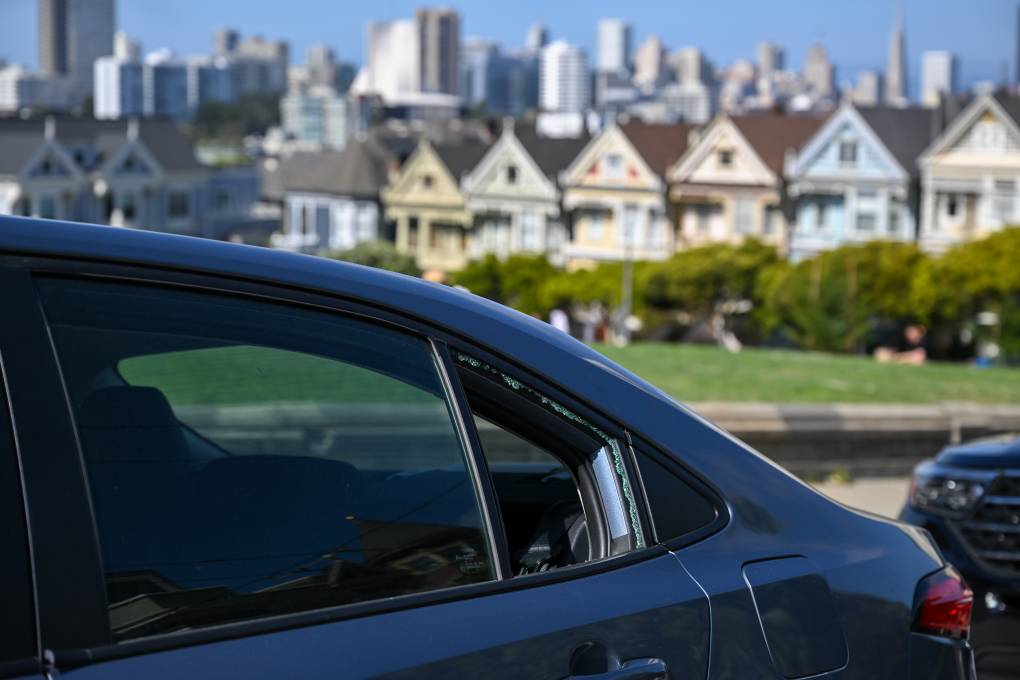
"caption": "A car with a broken window at San Francisco's Alamo Square on June 16, 2023. According to law enforcement, sightseeing areas like Alamo Square, along with Lombard Street and Fisherman's Wharf, see a lot of car break-ins — informally known by many residents as \"bipping.\"",
"credit": "Tayfun Coskun/Anadolu Agency via Getty Images",
"altTag": "A car is parked next to a large park with a view of the San Francisco skyline. The rear window on the left side of the car has been shattered.",
"description": null,
"imgSizes": {
"medium": {
"file": "https://cdn.kqed.org/wp-content/uploads/sites/10/2023/08/GettyImages-1258762861-1-1-800x533.jpg",
"width": 800,
"height": 533,
"mimeType": "image/jpeg"
},
"large": {
"file": "https://cdn.kqed.org/wp-content/uploads/sites/10/2023/08/GettyImages-1258762861-1-1-1020x680.jpg",
"width": 1020,
"height": 680,
"mimeType": "image/jpeg"
},
"thumbnail": {
"file": "https://cdn.kqed.org/wp-content/uploads/sites/10/2023/08/GettyImages-1258762861-1-1-160x107.jpg",
"width": 160,
"height": 107,
"mimeType": "image/jpeg"
},
"1536x1536": {
"file": "https://cdn.kqed.org/wp-content/uploads/sites/10/2023/08/GettyImages-1258762861-1-1-1536x1024.jpg",
"width": 1536,
"height": 1024,
"mimeType": "image/jpeg"
},
"2048x2048": {
"file": "https://cdn.kqed.org/wp-content/uploads/sites/10/2023/08/GettyImages-1258762861-1-1-2048x1365.jpg",
"width": 2048,
"height": 1365,
"mimeType": "image/jpeg"
},
"post-thumbnail": {
"file": "https://cdn.kqed.org/wp-content/uploads/sites/10/2023/08/GettyImages-1258762861-1-1-672x372.jpg",
"width": 672,
"height": 372,
"mimeType": "image/jpeg"
},
"twentyfourteen-full-width": {
"file": "https://cdn.kqed.org/wp-content/uploads/sites/10/2023/08/GettyImages-1258762861-1-1-1038x576.jpg",
"width": 1038,
"height": 576,
"mimeType": "image/jpeg"
},
"full-width": {
"file": "https://cdn.kqed.org/wp-content/uploads/sites/10/2023/08/GettyImages-1258762861-1-1-1920x1280.jpg",
"width": 1920,
"height": 1280,
"mimeType": "image/jpeg"
},
"kqedFullSize": {
"file": "https://cdn.kqed.org/wp-content/uploads/sites/10/2023/08/GettyImages-1258762861-1-1-scaled-e1770323218973.jpg",
"width": 2000,
"height": 1334
}
},
"isLoading": false,
"fetchFailed": false
},
"news_11955370": {
"type": "attachments",
"id": "news_11955370",
"meta": {
"index": "attachments_1716263798",
"site": "news",
"id": "11955370",
"found": true
},
"parent": 0,
"imgSizes": {
"twentyfourteen-full-width": {
"file": "https://ww2.kqed.org/app/uploads/sites/10/2023/07/230711-DOLORES-HILL-BOMBING-GETTY-TC-KQED-1038x576.jpg",
"width": 1038,
"mimeType": "image/jpeg",
"height": 576
},
"thumbnail": {
"file": "https://ww2.kqed.org/app/uploads/sites/10/2023/07/230711-DOLORES-HILL-BOMBING-GETTY-TC-KQED-160x107.jpg",
"width": 160,
"mimeType": "image/jpeg",
"height": 107
},
"post-thumbnail": {
"file": "https://ww2.kqed.org/app/uploads/sites/10/2023/07/230711-DOLORES-HILL-BOMBING-GETTY-TC-KQED-672x372.jpg",
"width": 672,
"mimeType": "image/jpeg",
"height": 372
},
"kqedFullSize": {
"file": "https://ww2.kqed.org/app/uploads/sites/10/2023/07/230711-DOLORES-HILL-BOMBING-GETTY-TC-KQED.jpg",
"width": 2000,
"height": 1333
},
"large": {
"file": "https://ww2.kqed.org/app/uploads/sites/10/2023/07/230711-DOLORES-HILL-BOMBING-GETTY-TC-KQED-1020x680.jpg",
"width": 1020,
"mimeType": "image/jpeg",
"height": 680
},
"1536x1536": {
"file": "https://ww2.kqed.org/app/uploads/sites/10/2023/07/230711-DOLORES-HILL-BOMBING-GETTY-TC-KQED-1536x1024.jpg",
"width": 1536,
"mimeType": "image/jpeg",
"height": 1024
},
"full-width": {
"file": "https://ww2.kqed.org/app/uploads/sites/10/2023/07/230711-DOLORES-HILL-BOMBING-GETTY-TC-KQED-1920x1280.jpg",
"width": 1920,
"mimeType": "image/jpeg",
"height": 1280
},
"medium": {
"file": "https://ww2.kqed.org/app/uploads/sites/10/2023/07/230711-DOLORES-HILL-BOMBING-GETTY-TC-KQED-800x533.jpg",
"width": 800,
"mimeType": "image/jpeg",
"height": 533
}
},
"publishDate": 1689097947,
"modified": 1689193151,
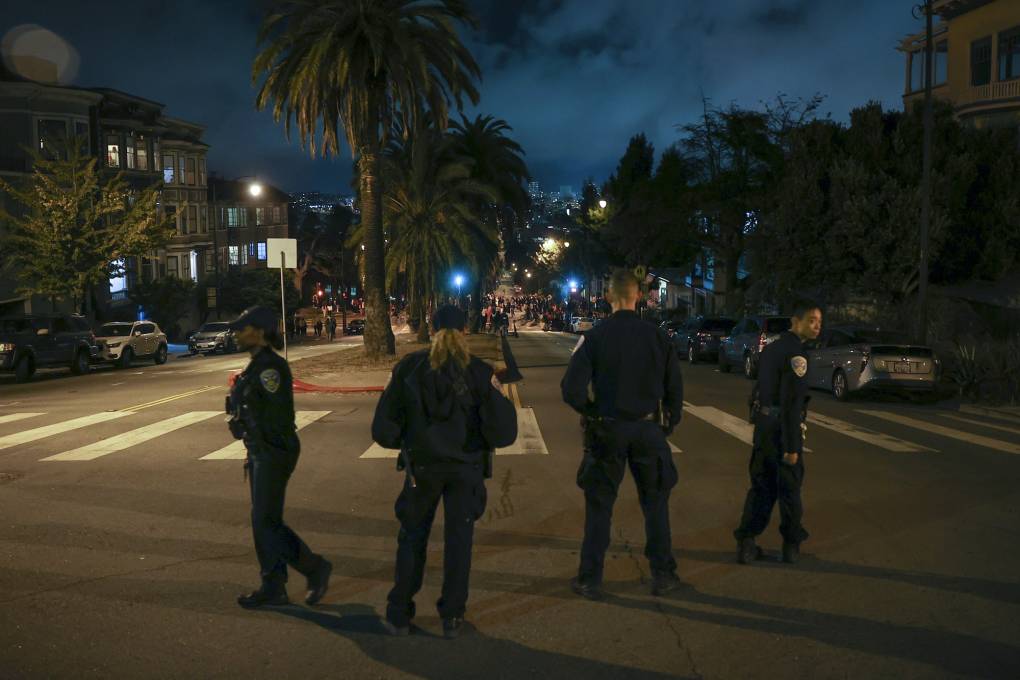
"caption": "Police officers watch as hundreds of young people gather on Dolores and 20th streets amid fighting, stabbing and the lighting of smoke bombs on Oct. 31, 2022, in San Francisco.",
"description": null,
"title": "Stabbing, fighting at Dolores Park Halloween âHill Bombâ in San Francisco",
"credit": "Tayfun Coskun/Anadolu Agency via Getty Images",
"status": "inherit",
"altTag": "Four police officers watch a crowd of people in the middle of an intersection a block away at night.",
"isLoading": false,
"fetchFailed": false
},
"news_11950245": {
"type": "attachments",
"id": "news_11950245",
"meta": {
"index": "attachments_1716263798",
"site": "news",
"id": "11950245",
"found": true
},
"parent": 11950226,
"imgSizes": {
"twentyfourteen-full-width": {
"file": "https://ww2.kqed.org/app/uploads/sites/10/2023/05/IMG_1201-1038x576.jpg",
"width": 1038,
"mimeType": "image/jpeg",
"height": 576
},
"thumbnail": {
"file": "https://ww2.kqed.org/app/uploads/sites/10/2023/05/IMG_1201-160x120.jpg",
"width": 160,
"mimeType": "image/jpeg",
"height": 120
},
"post-thumbnail": {
"file": "https://ww2.kqed.org/app/uploads/sites/10/2023/05/IMG_1201-672x372.jpg",
"width": 672,
"mimeType": "image/jpeg",
"height": 372
},
"kqedFullSize": {
"file": "https://ww2.kqed.org/app/uploads/sites/10/2023/05/IMG_1201-scaled.jpg",
"width": 2560,
"height": 1920
},
"2048x2048": {
"file": "https://ww2.kqed.org/app/uploads/sites/10/2023/05/IMG_1201-2048x1536.jpg",
"width": 2048,
"mimeType": "image/jpeg",
"height": 1536
},
"large": {
"file": "https://ww2.kqed.org/app/uploads/sites/10/2023/05/IMG_1201-1020x765.jpg",
"width": 1020,
"mimeType": "image/jpeg",
"height": 765
},
"1536x1536": {
"file": "https://ww2.kqed.org/app/uploads/sites/10/2023/05/IMG_1201-1536x1152.jpg",
"width": 1536,
"mimeType": "image/jpeg",
"height": 1152
},
"full-width": {
"file": "https://ww2.kqed.org/app/uploads/sites/10/2023/05/IMG_1201-1920x1440.jpg",
"width": 1920,
"mimeType": "image/jpeg",
"height": 1440
},
"medium": {
"file": "https://ww2.kqed.org/app/uploads/sites/10/2023/05/IMG_1201-800x600.jpg",
"width": 800,
"mimeType": "image/jpeg",
"height": 600
}
},
"publishDate": 1684530347,
"modified": 1684530496,
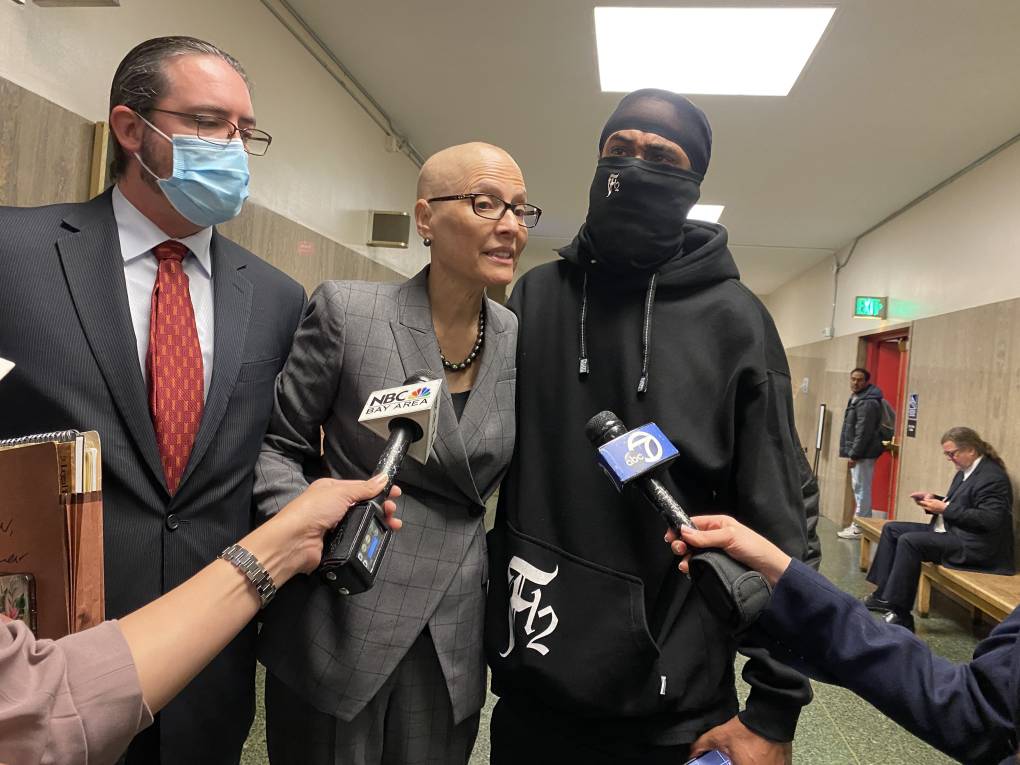
"caption": "Brian Ford (left) and April Green (center) criticize Attorney General Rob Bonta's rationale for declining to charge former San Francisco police officer Christopher Samayoa for shooting and killing Green's nephew, Keita O'Neil, in a police chase in 2017. Photo taken May 19, 2023.",
"description": null,
"title": "IMG_1201",
"credit": "Sydney Johnson/KQED",
"status": "inherit",
"altTag": "A woman wearing grey suit talks to reporters in the hallway of a courthouse with two men standing on either side of her.",
"isLoading": false,
"fetchFailed": false
},
"news_11949390": {
"type": "attachments",
"id": "news_11949390",
"meta": {
"index": "attachments_1716263798",
"site": "news",
"id": "11949390",
"found": true
},
"parent": 11949359,
"imgSizes": {
"twentyfourteen-full-width": {
"file": "https://ww2.kqed.org/app/uploads/sites/10/2023/05/RS64219_010_KQED_SeanMooreFamily_03312023-qut-1038x576.jpg",
"width": 1038,
"mimeType": "image/jpeg",
"height": 576
},
"thumbnail": {
"file": "https://ww2.kqed.org/app/uploads/sites/10/2023/05/RS64219_010_KQED_SeanMooreFamily_03312023-qut-160x107.jpg",
"width": 160,
"mimeType": "image/jpeg",
"height": 107
},
"post-thumbnail": {
"file": "https://ww2.kqed.org/app/uploads/sites/10/2023/05/RS64219_010_KQED_SeanMooreFamily_03312023-qut-672x372.jpg",
"width": 672,
"mimeType": "image/jpeg",
"height": 372
},
"kqedFullSize": {
"file": "https://ww2.kqed.org/app/uploads/sites/10/2023/05/RS64219_010_KQED_SeanMooreFamily_03312023-qut.jpg",
"width": 1920,
"height": 1280
},
"large": {
"file": "https://ww2.kqed.org/app/uploads/sites/10/2023/05/RS64219_010_KQED_SeanMooreFamily_03312023-qut-1020x680.jpg",
"width": 1020,
"mimeType": "image/jpeg",
"height": 680
},
"1536x1536": {
"file": "https://ww2.kqed.org/app/uploads/sites/10/2023/05/RS64219_010_KQED_SeanMooreFamily_03312023-qut-1536x1024.jpg",
"width": 1536,
"mimeType": "image/jpeg",
"height": 1024
},
"medium": {
"file": "https://ww2.kqed.org/app/uploads/sites/10/2023/05/RS64219_010_KQED_SeanMooreFamily_03312023-qut-800x533.jpg",
"width": 800,
"mimeType": "image/jpeg",
"height": 533
}
},
"publishDate": 1683930751,
"modified": 1683930820,
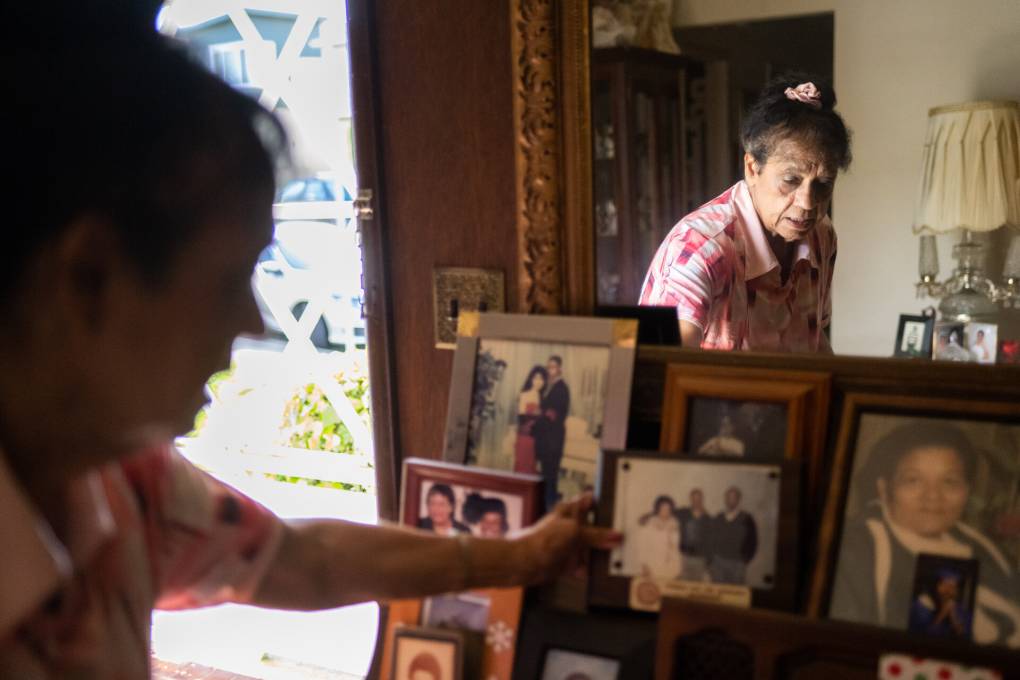
"caption": "Cleo Moore, the mother of Sean Moore, points to a photo of the family at Archbishop Riordan High School at her home in Daly City on March 31, 2023. Sean Moore attended the high school in San Francisco in the early 1990s.",
"description": null,
"title": "RS64219_010_KQED_SeanMooreFamily_03312023-qut",
"credit": "Beth LaBerge/KQED",
"status": "inherit",
"altTag": "An older African American woman looks at photos of her son and family.",
"isLoading": false,
"fetchFailed": false
},
"news_11941432": {
"type": "attachments",
"id": "news_11941432",
"meta": {
"index": "attachments_1716263798",
"site": "news",
"id": "11941432",
"found": true
},
"parent": 11941430,
"imgSizes": {
"twentyfourteen-full-width": {
"file": "https://ww2.kqed.org/app/uploads/sites/10/2023/02/RS49470_036_Oakland_NAACPGeorgeFloyd_05252021-qut-1038x576.jpg",
"width": 1038,
"mimeType": "image/jpeg",
"height": 576
},
"thumbnail": {
"file": "https://ww2.kqed.org/app/uploads/sites/10/2023/02/RS49470_036_Oakland_NAACPGeorgeFloyd_05252021-qut-160x107.jpg",
"width": 160,
"mimeType": "image/jpeg",
"height": 107
},
"post-thumbnail": {
"file": "https://ww2.kqed.org/app/uploads/sites/10/2023/02/RS49470_036_Oakland_NAACPGeorgeFloyd_05252021-qut-672x372.jpg",
"width": 672,
"mimeType": "image/jpeg",
"height": 372
},
"kqedFullSize": {
"file": "https://ww2.kqed.org/app/uploads/sites/10/2023/02/RS49470_036_Oakland_NAACPGeorgeFloyd_05252021-qut.jpg",
"width": 1920,
"height": 1278
},
"large": {
"file": "https://ww2.kqed.org/app/uploads/sites/10/2023/02/RS49470_036_Oakland_NAACPGeorgeFloyd_05252021-qut-1020x679.jpg",
"width": 1020,
"mimeType": "image/jpeg",
"height": 679
},
"1536x1536": {
"file": "https://ww2.kqed.org/app/uploads/sites/10/2023/02/RS49470_036_Oakland_NAACPGeorgeFloyd_05252021-qut-1536x1022.jpg",
"width": 1536,
"mimeType": "image/jpeg",
"height": 1022
},
"medium": {
"file": "https://ww2.kqed.org/app/uploads/sites/10/2023/02/RS49470_036_Oakland_NAACPGeorgeFloyd_05252021-qut-800x533.jpg",
"width": 800,
"mimeType": "image/jpeg",
"height": 533
}
},
"publishDate": 1676927320,
"modified": 1677034728,
"caption": "Attorney General Rob Bonta speaks during a remembrance event to pay tribute to George Floyd held by the Oakland NAACP at Youth UpRising in Oakland on May 25, 2021.",
"description": null,
"title": "RS49470_036_Oakland_NAACPGeorgeFloyd_05252021-qut",
"credit": "Beth LaBerge/KQED",
"status": "inherit",
"altTag": "Rob Bonta stands center frame wearing a navy blue suit and white dress shirt while speaking into a microphone. Behind him is a large white canopy.",
"isLoading": false,
"fetchFailed": false
},
"news_11930420": {
"type": "attachments",
"id": "news_11930420",
"meta": {
"index": "attachments_1716263798",
"site": "news",
"id": "11930420",
"found": true
},
"parent": 11930397,
"imgSizes": {
"twentyfourteen-full-width": {
"file": "https://ww2.kqed.org/app/uploads/sites/10/2022/10/RS59685_GettyImages-1437289628-qut-1038x576.jpg",
"width": 1038,
"mimeType": "image/jpeg",
"height": 576
},
"thumbnail": {
"file": "https://ww2.kqed.org/app/uploads/sites/10/2022/10/RS59685_GettyImages-1437289628-qut-160x107.jpg",
"width": 160,
"mimeType": "image/jpeg",
"height": 107
},
"post-thumbnail": {
"file": "https://ww2.kqed.org/app/uploads/sites/10/2022/10/RS59685_GettyImages-1437289628-qut-672x372.jpg",
"width": 672,
"mimeType": "image/jpeg",
"height": 372
},
"kqedFullSize": {
"file": "https://ww2.kqed.org/app/uploads/sites/10/2022/10/RS59685_GettyImages-1437289628-qut.jpg",
"width": 1920,
"height": 1280
},
"large": {
"file": "https://ww2.kqed.org/app/uploads/sites/10/2022/10/RS59685_GettyImages-1437289628-qut-1020x680.jpg",
"width": 1020,
"mimeType": "image/jpeg",
"height": 680
},
"1536x1536": {
"file": "https://ww2.kqed.org/app/uploads/sites/10/2022/10/RS59685_GettyImages-1437289628-qut-1536x1024.jpg",
"width": 1536,
"mimeType": "image/jpeg",
"height": 1024
},
"medium": {
"file": "https://ww2.kqed.org/app/uploads/sites/10/2022/10/RS59685_GettyImages-1437289628-qut-800x533.jpg",
"width": 800,
"mimeType": "image/jpeg",
"height": 533
}
},
"publishDate": 1666972877,
"modified": 1666974258,
"caption": "Police tape is seen in front of the Pacific Heights home of US House Speaker Nancy Pelosi on Oct. 28, 2022, in San Francisco. Paul Pelosi, husband of Speaker Pelosi, was violently attacked in the home by an intruder.",
"description": null,
"title": "Husband Of House Speaker Nancy Pelosi Attacked By Home Intruder At Their San Francisco Home",
"credit": "Justin Sullivan/Getty Images",
"status": "inherit",
"altTag": "view looking downhill towards two-story red brick home, with 'police line do not cross' yellow tape in foreground",
"isLoading": false,
"fetchFailed": false
},
"news_11933696": {
"type": "attachments",
"id": "news_11933696",
"meta": {
"index": "attachments_1716263798",
"site": "news",
"id": "11933696",
"found": true
},
"parent": 11933679,
"imgSizes": {
"twentyfourteen-full-width": {
"file": "https://ww2.kqed.org/app/uploads/sites/10/2022/11/GettyImages-563570015-1024x576.jpg",
"width": 1024,
"mimeType": "image/jpeg",
"height": 576
},
"thumbnail": {
"file": "https://ww2.kqed.org/app/uploads/sites/10/2022/11/GettyImages-563570015-160x105.jpg",
"width": 160,
"mimeType": "image/jpeg",
"height": 105
},
"post-thumbnail": {
"file": "https://ww2.kqed.org/app/uploads/sites/10/2022/11/GettyImages-563570015-672x372.jpg",
"width": 672,
"mimeType": "image/jpeg",
"height": 372
},
"kqedFullSize": {
"file": "https://ww2.kqed.org/app/uploads/sites/10/2022/11/GettyImages-563570015.jpg",
"width": 1024,
"height": 672
},
"large": {
"file": "https://ww2.kqed.org/app/uploads/sites/10/2022/11/GettyImages-563570015-1020x669.jpg",
"width": 1020,
"mimeType": "image/jpeg",
"height": 669
},
"medium": {
"file": "https://ww2.kqed.org/app/uploads/sites/10/2022/11/GettyImages-563570015-800x525.jpg",
"width": 800,
"mimeType": "image/jpeg",
"height": 525
}
},
"publishDate": 1669860530,
"modified": 1669860830,
"caption": "An older model of a remotely operated robot used by the West Covina Police Department in Los Angeles County.",
"description": null,
"title": "Bulldog, a 150pound remotely operated robot, is the newest member of West Covina Police. Bulldog is",
"credit": "Richard Hartog/Los Angeles Times via Getty Images",
"status": "inherit",
"altTag": "A person holding a remote control that controls a nearby robot.",
"isLoading": false,
"fetchFailed": false
},
"news_11929219": {
"type": "attachments",
"id": "news_11929219",
"meta": {
"index": "attachments_1716263798",
"site": "news",
"id": "11929219",
"found": true
},
"parent": 11929172,
"imgSizes": {
"twentyfourteen-full-width": {
"file": "https://ww2.kqed.org/app/uploads/sites/10/2022/10/RS37097_IMG_3297-qut-1038x576.jpg",
"width": 1038,
"mimeType": "image/jpeg",
"height": 576
},
"thumbnail": {
"file": "https://ww2.kqed.org/app/uploads/sites/10/2022/10/RS37097_IMG_3297-qut-160x96.jpg",
"width": 160,
"mimeType": "image/jpeg",
"height": 96
},
"post-thumbnail": {
"file": "https://ww2.kqed.org/app/uploads/sites/10/2022/10/RS37097_IMG_3297-qut-672x372.jpg",
"width": 672,
"mimeType": "image/jpeg",
"height": 372
},
"kqedFullSize": {
"file": "https://ww2.kqed.org/app/uploads/sites/10/2022/10/RS37097_IMG_3297-qut.jpg",
"width": 1920,
"height": 1149
},
"large": {
"file": "https://ww2.kqed.org/app/uploads/sites/10/2022/10/RS37097_IMG_3297-qut-1020x610.jpg",
"width": 1020,
"mimeType": "image/jpeg",
"height": 610
},
"1536x1536": {
"file": "https://ww2.kqed.org/app/uploads/sites/10/2022/10/RS37097_IMG_3297-qut-1536x919.jpg",
"width": 1536,
"mimeType": "image/jpeg",
"height": 919
},
"medium": {
"file": "https://ww2.kqed.org/app/uploads/sites/10/2022/10/RS37097_IMG_3297-qut-800x479.jpg",
"width": 800,
"mimeType": "image/jpeg",
"height": 479
}
},
"publishDate": 1666032647,
"modified": 1666040849,
"caption": "Rush-hour traffic piles up between Bryant and Third streets in San Francisco on May 13, 2019.",
"description": null,
"title": "RS37097_IMG_3297-qut",
"credit": "Sruti Mamidanna/KQED",
"status": "inherit",
"altTag": "Several cars are on the road along with people crossing the street.",
"isLoading": false,
"fetchFailed": false
},
"news_11929122": {
"type": "attachments",
"id": "news_11929122",
"meta": {
"index": "attachments_1716263798",
"site": "news",
"id": "11929122",
"found": true
},
"parent": 11929022,
"imgSizes": {
"twentyfourteen-full-width": {
"file": "https://ww2.kqed.org/app/uploads/sites/10/2022/10/IMG_20191127_153031-e1574905962967-1020x802-1-1020x576.jpg",
"width": 1020,
"mimeType": "image/jpeg",
"height": 576
},
"thumbnail": {
"file": "https://ww2.kqed.org/app/uploads/sites/10/2022/10/IMG_20191127_153031-e1574905962967-1020x802-1-160x126.jpg",
"width": 160,
"mimeType": "image/jpeg",
"height": 126
},
"post-thumbnail": {
"file": "https://ww2.kqed.org/app/uploads/sites/10/2022/10/IMG_20191127_153031-e1574905962967-1020x802-1-672x372.jpg",
"width": 672,
"mimeType": "image/jpeg",
"height": 372
},
"kqedFullSize": {
"file": "https://ww2.kqed.org/app/uploads/sites/10/2022/10/IMG_20191127_153031-e1574905962967-1020x802-1.jpg",
"width": 1020,
"height": 802
},
"medium": {
"file": "https://ww2.kqed.org/app/uploads/sites/10/2022/10/IMG_20191127_153031-e1574905962967-1020x802-1-800x629.jpg",
"width": 800,
"mimeType": "image/jpeg",
"height": 629
}
},
"publishDate": 1665866391,
"modified": 1666039111,
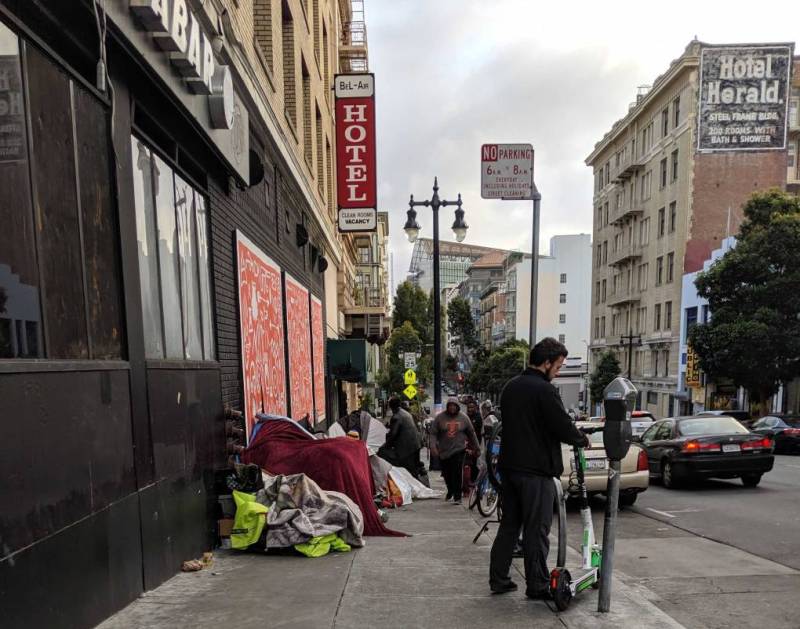
"caption": "San Francisco's Tenderloin district has been the epicenter of the city's ongoing opioid crisis, but critics say District Attorney Brooke Jenkins' tough law-and-order approach may do more harm than good.",
"description": null,
"title": "IMG_20191127_153031-e1574905962967-1020x802",
"credit": "Sruti Mamidanna/KQED",
"status": "inherit",
"altTag": "A man stands in the foreground of a street in San Francisco's Tenderloin district with homeless encampments lining the sidewalk.",
"isLoading": false,
"fetchFailed": false
},
"news_11926415": {
"type": "attachments",
"id": "news_11926415",
"meta": {
"index": "attachments_1716263798",
"site": "news",
"id": "11926415",
"found": true
},
"parent": 11926357,
"imgSizes": {
"twentyfourteen-full-width": {
"file": "https://ww2.kqed.org/app/uploads/sites/10/2022/09/SFPD-Surveillance-1038x576.jpg",
"width": 1038,
"mimeType": "image/jpeg",
"height": 576
},
"thumbnail": {
"file": "https://ww2.kqed.org/app/uploads/sites/10/2022/09/SFPD-Surveillance-160x107.jpg",
"width": 160,
"mimeType": "image/jpeg",
"height": 107
},
"post-thumbnail": {
"file": "https://ww2.kqed.org/app/uploads/sites/10/2022/09/SFPD-Surveillance-672x372.jpg",
"width": 672,
"mimeType": "image/jpeg",
"height": 372
},
"kqedFullSize": {
"file": "https://ww2.kqed.org/app/uploads/sites/10/2022/09/SFPD-Surveillance.jpg",
"width": 1920,
"height": 1281
},
"large": {
"file": "https://ww2.kqed.org/app/uploads/sites/10/2022/09/SFPD-Surveillance-1020x681.jpg",
"width": 1020,
"mimeType": "image/jpeg",
"height": 681
},
"1536x1536": {
"file": "https://ww2.kqed.org/app/uploads/sites/10/2022/09/SFPD-Surveillance-1536x1025.jpg",
"width": 1536,
"mimeType": "image/jpeg",
"height": 1025
},
"medium": {
"file": "https://ww2.kqed.org/app/uploads/sites/10/2022/09/SFPD-Surveillance-800x534.jpg",
"width": 800,
"mimeType": "image/jpeg",
"height": 534
}
},
"publishDate": 1663793340,
"modified": 1663801183,
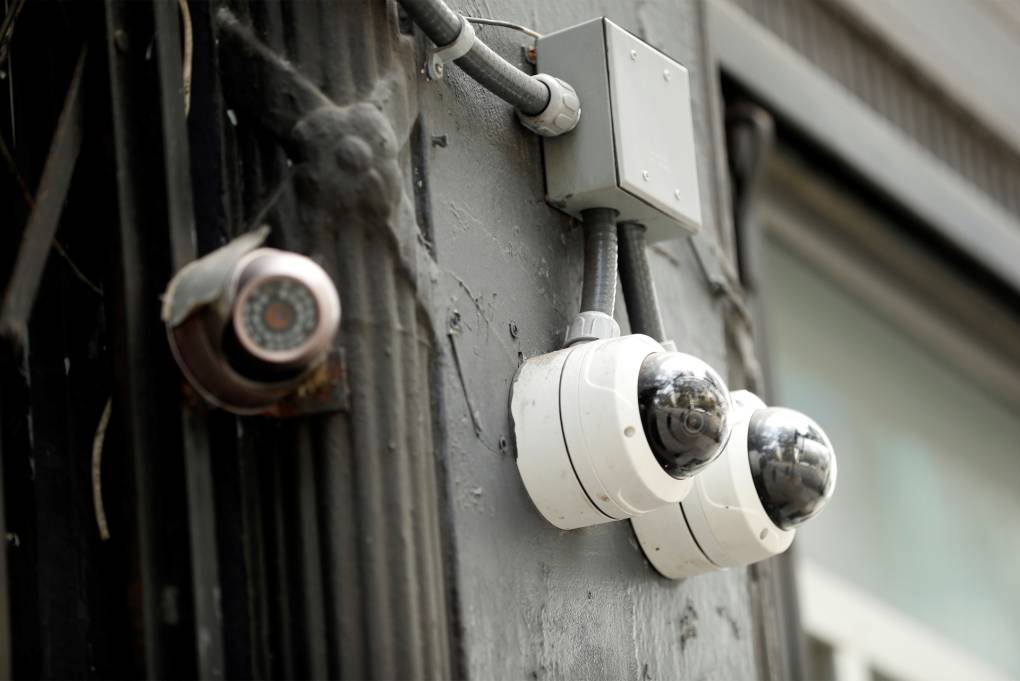
"caption": "A surveillance camera on Howard Street in San Francisco.",
"description": "A surveillance camera on Howard Street in San Francisco, Calif., on Wednesday, October 7, 2020.",
"title": "SFPD Surveillance",
"credit": "Scott Strazzante/The San Francisco Chronicle via Getty Images",
"status": "inherit",
"altTag": "An upward-angled photo of a black almost round surveillance camera attached to the side of a darkly painted building. The camera points directly at the camera that took the picture. To the right appear to be two more surveillance cameras, white bases with rounded domes attached to the same building.",
"isLoading": false,
"fetchFailed": false
},
"news_11923852": {
"type": "attachments",
"id": "news_11923852",
"meta": {
"index": "attachments_1716263798",
"site": "news",
"id": "11923852",
"found": true
},
"parent": 11923790,
"imgSizes": {
"twentyfourteen-full-width": {
"file": "https://ww2.kqed.org/app/uploads/sites/10/2022/08/RS57811_025_24thMissionVendors_08112022-qut-1038x576.jpg",
"width": 1038,
"mimeType": "image/jpeg",
"height": 576
},
"thumbnail": {
"file": "https://ww2.kqed.org/app/uploads/sites/10/2022/08/RS57811_025_24thMissionVendors_08112022-qut-160x107.jpg",
"width": 160,
"mimeType": "image/jpeg",
"height": 107
},
"post-thumbnail": {
"file": "https://ww2.kqed.org/app/uploads/sites/10/2022/08/RS57811_025_24thMissionVendors_08112022-qut-672x372.jpg",
"width": 672,
"mimeType": "image/jpeg",
"height": 372
},
"kqedFullSize": {
"file": "https://ww2.kqed.org/app/uploads/sites/10/2022/08/RS57811_025_24thMissionVendors_08112022-qut.jpg",
"width": 1920,
"height": 1280
},
"large": {
"file": "https://ww2.kqed.org/app/uploads/sites/10/2022/08/RS57811_025_24thMissionVendors_08112022-qut-1020x680.jpg",
"width": 1020,
"mimeType": "image/jpeg",
"height": 680
},
"1536x1536": {
"file": "https://ww2.kqed.org/app/uploads/sites/10/2022/08/RS57811_025_24thMissionVendors_08112022-qut-1536x1024.jpg",
"width": 1536,
"mimeType": "image/jpeg",
"height": 1024
},
"medium": {
"file": "https://ww2.kqed.org/app/uploads/sites/10/2022/08/RS57811_025_24thMissionVendors_08112022-qut-800x533.jpg",
"width": 800,
"mimeType": "image/jpeg",
"height": 533
}
},
"publishDate": 1661612667,
"modified": 1661796080,
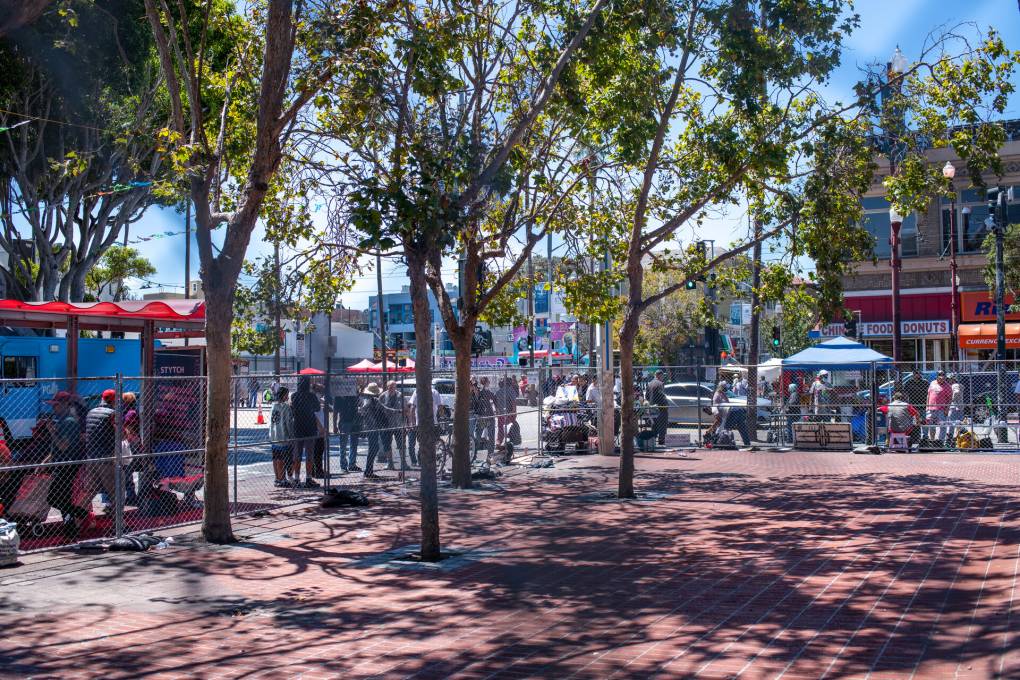
"caption": "Vendors sell goods on 24th and Mission streets in San Francisco on Aug. 11, 2022.",
"description": null,
"title": "RS57811_025_24thMissionVendors_08112022-qut",
"credit": "Beth LaBerge/KQED",
"status": "inherit",
"altTag": "An empty plaza in mottled light from the shade of trees can be seen fenced off.",
"isLoading": false,
"fetchFailed": false
},
"news_11917922": {
"type": "attachments",
"id": "news_11917922",
"meta": {
"index": "attachments_1716263798",
"site": "news",
"id": "11917922",
"found": true
},
"parent": 11917710,
"imgSizes": {
"twentyfourteen-full-width": {
"file": "https://ww2.kqed.org/app/uploads/sites/10/2022/06/RS56774_CarolynWysinger_TracyMcCray_Diptych_06-qut-1038x576.jpg",
"width": 1038,
"mimeType": "image/jpeg",
"height": 576
},
"thumbnail": {
"file": "https://ww2.kqed.org/app/uploads/sites/10/2022/06/RS56774_CarolynWysinger_TracyMcCray_Diptych_06-qut-160x107.jpg",
"width": 160,
"mimeType": "image/jpeg",
"height": 107
},
"post-thumbnail": {
"file": "https://ww2.kqed.org/app/uploads/sites/10/2022/06/RS56774_CarolynWysinger_TracyMcCray_Diptych_06-qut-672x372.jpg",
"width": 672,
"mimeType": "image/jpeg",
"height": 372
},
"kqedFullSize": {
"file": "https://ww2.kqed.org/app/uploads/sites/10/2022/06/RS56774_CarolynWysinger_TracyMcCray_Diptych_06-qut.jpg",
"width": 1920,
"height": 1280
},
"large": {
"file": "https://ww2.kqed.org/app/uploads/sites/10/2022/06/RS56774_CarolynWysinger_TracyMcCray_Diptych_06-qut-1020x680.jpg",
"width": 1020,
"mimeType": "image/jpeg",
"height": 680
},
"1536x1536": {
"file": "https://ww2.kqed.org/app/uploads/sites/10/2022/06/RS56774_CarolynWysinger_TracyMcCray_Diptych_06-qut-1536x1024.jpg",
"width": 1536,
"mimeType": "image/jpeg",
"height": 1024
},
"medium": {
"file": "https://ww2.kqed.org/app/uploads/sites/10/2022/06/RS56774_CarolynWysinger_TracyMcCray_Diptych_06-qut-800x533.jpg",
"width": 800,
"mimeType": "image/jpeg",
"height": 533
}
},
"publishDate": 1656103942,
"modified": 1656104499,
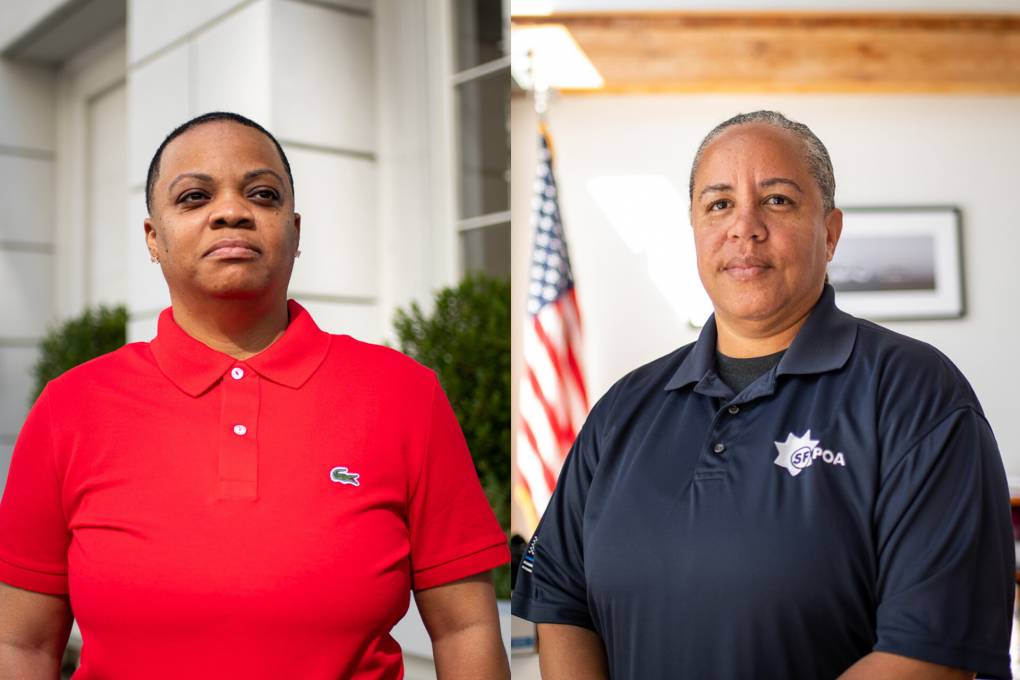
"caption": "Carolyn Wysinger (left), board president of SF Pride, and Tracy McCray, San Francisco Police Officers Association president.",
"description": null,
"title": "RS56774_CarolynWysinger_TracyMcCray_Diptych_06-qut",
"credit": "Beth LaBerge/KQED",
"status": "inherit",
"altTag": "side by side photos of two Black women, one wearing a bright red shirt, one wearing a blue shirt with 'SFPOA' on it - both have serious expressions",
"isLoading": false,
"fetchFailed": false
}
},
"audioPlayerReducer": {
"postId": "stream_live",
"isPaused": true,
"isPlaying": false,
"pfsActive": false,
"pledgeModalIsOpen": true,
"playerDrawerIsOpen": false,
"liveAudioPlayStartedAt": 0,
"liveAudioPlayContext": ""
},
"authorsReducer": {
"byline_news_11942862": {
"type": "authors",
"id": "byline_news_11942862",
"meta": {
"override": true
},
"slug": "byline_news_11942862",
"name": "Olga R. Rodriguez\u003cbr>The Associated Press",
"isLoading": false
},
"byline_news_11926357": {
"type": "authors",
"id": "byline_news_11926357",
"meta": {
"override": true
},
"slug": "byline_news_11926357",
"name": "Janie Har, Associated Press and KQED Staff",
"isLoading": false
},
"kqednewsstaffandwires": {
"type": "authors",
"id": "237",
"meta": {
"index": "authors_1716337520",
"id": "237",
"found": true
},
"name": "KQED News Staff and Wires",
"firstName": "KQED News Staff and Wires",
"lastName": null,
"slug": "kqednewsstaffandwires",
"email": "onlinenewsstaff@kqed.org",
"display_author_email": false,
"staff_mastheads": [],
"title": null,
"bio": null,
"avatar": "https://secure.gravatar.com/avatar/72295af8ebbfbd19a4948f5271285664?s=600&d=blank&r=g",
"twitter": null,
"facebook": null,
"instagram": null,
"linkedin": null,
"sites": [
{
"site": "arts",
"roles": [
"contributor"
]
},
{
"site": "news",
"roles": [
"contributor"
]
},
{
"site": "lowdown",
"roles": [
"author"
]
},
{
"site": "stateofhealth",
"roles": [
"contributor"
]
},
{
"site": "food",
"roles": [
"author"
]
}
],
"headData": {
"title": "KQED News Staff and Wires | KQED",
"description": null,
"ogImgSrc": "https://secure.gravatar.com/avatar/72295af8ebbfbd19a4948f5271285664?s=600&d=blank&r=g",
"twImgSrc": "https://secure.gravatar.com/avatar/72295af8ebbfbd19a4948f5271285664?s=600&d=blank&r=g"
},
"isLoading": false,
"link": "/author/kqednewsstaffandwires"
},
"scottshafer": {
"type": "authors",
"id": "255",
"meta": {
"index": "authors_1716337520",
"id": "255",
"found": true
},
"name": "Scott Shafer",
"firstName": "Scott",
"lastName": "Shafer",
"slug": "scottshafer",
"email": "sshafer@kqed.org",
"display_author_email": false,
"staff_mastheads": [
"news"
],
"title": "KQED Contributor",
"bio": "Scott Shafer is a senior editor with the KQED Politics and Government desk. He is co-host of Political Breakdown, the award-winning radio show and podcast with a personal take on the world of politics. Scott came to KQED in 1998 to host the statewide\u003cem> California Report\u003c/em>. Prior to that he had extended stints in politics and government\u003cem>.\u003c/em> He uses that inside experience at KQED in his, reporting, hosting and analysis for the politics desk. Scott collaborated \u003cem>Political Breakdown a\u003c/em>nd on \u003cem>The Political Mind of Jerry Brown, \u003c/em>an eight-part series about the life and extraordinary political career of the former governor. For fun, he plays water polo with the San Francisco Tsunami.",
"avatar": "https://secure.gravatar.com/avatar/a62ebae45b79d7aed1a39a0e3bf68104?s=600&d=blank&r=g",
"twitter": "scottshafer",
"bluesky": null,
"facebook": null,
"instagram": null,
"linkedin": null,
"sites": [
{
"site": "news",
"roles": [
"editor"
]
},
{
"site": "stateofhealth",
"roles": [
"author"
]
},
{
"site": "science",
"roles": [
"author"
]
},
{
"site": "forum",
"roles": [
"subscriber"
]
},
{
"site": "liveblog",
"roles": [
"author"
]
}
],
"headData": {
"title": "Scott Shafer | KQED",
"description": "KQED Contributor",
"ogImgSrc": "https://secure.gravatar.com/avatar/a62ebae45b79d7aed1a39a0e3bf68104?s=600&d=blank&r=g",
"twImgSrc": "https://secure.gravatar.com/avatar/a62ebae45b79d7aed1a39a0e3bf68104?s=600&d=blank&r=g"
},
"isLoading": false,
"link": "/author/scottshafer"
},
"carlysevern": {
"type": "authors",
"id": "3243",
"meta": {
"index": "authors_1716337520",
"id": "3243",
"found": true
},
"name": "Carly Severn",
"firstName": "Carly",
"lastName": "Severn",
"slug": "carlysevern",
"email": "csevern@kqed.org",
"display_author_email": false,
"staff_mastheads": [
"news"
],
"title": "Senior Editor, Audience News ",
"bio": "Carly is KQED's Senior Editor of Audience News on the Digital News team, and has reported for the California Report Magazine, Bay Curious and KQED Arts. She's formerly the host of \u003ca href=\"http://ww2.kqed.org/pop/category/the-cooler/\" rel=\"noopener noreferrer\">The Cooler\u003c/a> podcast.",
"avatar": "https://secure.gravatar.com/avatar/54037bf5c128fe678f0ef26cec97a93f2e7f220a22d7285703328f12c42c1b1d?s=600&d=blank&r=g",
"twitter": "teacupinthebay",
"bluesky": null,
"facebook": null,
"instagram": null,
"linkedin": null,
"sites": [
{
"site": "",
"roles": [
"editor"
]
},
{
"site": "arts",
"roles": [
"editor"
]
},
{
"site": "news",
"roles": [
"administrator"
]
},
{
"site": "pop",
"roles": [
"editor"
]
},
{
"site": "futureofyou",
"roles": [
"editor"
]
},
{
"site": "about",
"roles": [
"administrator"
]
},
{
"site": "mindshift",
"roles": [
"editor"
]
},
{
"site": "bayareabites",
"roles": [
"editor"
]
},
{
"site": "stateofhealth",
"roles": [
"editor"
]
},
{
"site": "science",
"roles": [
"editor"
]
},
{
"site": "food",
"roles": [
"contributor"
]
},
{
"site": "forum",
"roles": [
"editor"
]
},
{
"site": "perspectives",
"roles": [
"administrator"
]
},
{
"site": "liveblog",
"roles": [
"editor"
]
}
],
"headData": {
"title": "Carly Severn | KQED",
"description": "Senior Editor, Audience News ",
"ogImgSrc": "https://secure.gravatar.com/avatar/54037bf5c128fe678f0ef26cec97a93f2e7f220a22d7285703328f12c42c1b1d?s=600&d=blank&r=g",
"twImgSrc": "https://secure.gravatar.com/avatar/54037bf5c128fe678f0ef26cec97a93f2e7f220a22d7285703328f12c42c1b1d?s=600&d=blank&r=g"
},
"isLoading": false,
"link": "/author/carlysevern"
},
"jrodriguez": {
"type": "authors",
"id": "11690",
"meta": {
"index": "authors_1716337520",
"id": "11690",
"found": true
},
"name": "Joe Fitzgerald Rodriguez",
"firstName": "Joe",
"lastName": "Fitzgerald Rodriguez",
"slug": "jrodriguez",
"email": "jrodriguez@kqed.org",
"display_author_email": true,
"staff_mastheads": [
"news"
],
"title": "Reporter and Producer",
"bio": "Joe Fitzgerald Rodriguez is a reporter and digital producer for KQED covering politics. Joe most recently wrote for the \u003cem>San Francisco Examiner\u003c/em> as a political columnist covering The City. He was raised in San Francisco and has spent his reporting career in his beloved, foggy, city by the bay. Joe was 12-years-old when he conducted his first interview in journalism, grilling former San Francisco Mayor Willie Brown for the Marina Middle School newspaper, \u003cem>The Penguin Press, \u003c/em>and he continues to report on the San Francisco Bay Area to this day.",
"avatar": "https://secure.gravatar.com/avatar/2247beb0564c1e9c62228d5649d2edac?s=600&d=blank&r=g",
"twitter": "FitztheReporter",
"facebook": null,
"instagram": "https://www.instagram.com/fitzthereporter/",
"linkedin": null,
"sites": [
{
"site": "",
"roles": [
"editor"
]
},
{
"site": "arts",
"roles": [
"editor"
]
},
{
"site": "news",
"roles": [
"editor"
]
},
{
"site": "science",
"roles": [
"editor"
]
},
{
"site": "elections",
"roles": [
"editor"
]
},
{
"site": "liveblog",
"roles": [
"editor"
]
}
],
"headData": {
"title": "Joe Fitzgerald Rodriguez | KQED",
"description": "Reporter and Producer",
"ogImgSrc": "https://secure.gravatar.com/avatar/2247beb0564c1e9c62228d5649d2edac?s=600&d=blank&r=g",
"twImgSrc": "https://secure.gravatar.com/avatar/2247beb0564c1e9c62228d5649d2edac?s=600&d=blank&r=g"
},
"isLoading": false,
"link": "/author/jrodriguez"
},
"adahlstromeckman": {
"type": "authors",
"id": "11785",
"meta": {
"index": "authors_1716337520",
"id": "11785",
"found": true
},
"name": "Azul Dahlstrom-Eckman",
"firstName": "Azul",
"lastName": "Dahlstrom-Eckman",
"slug": "adahlstromeckman",
"email": "adahlstrom-eckman@kqed.org",
"display_author_email": true,
"staff_mastheads": [],
"title": "Reporter",
"bio": "Azul is a reporter for KQED focusing on transportation and features. He joined KQED in 2021 as an alumna of KALW's Audio Academy radio journalism training program.",
"avatar": "https://secure.gravatar.com/avatar/9cb750298435add7815a777f55bf1f46845c1386bb8452555c60a7b820b5aba3?s=600&d=blank&r=g",
"twitter": "@zuliemann",
"bluesky": "@azul415.bsky.social",
"facebook": null,
"instagram": null,
"linkedin": null,
"sites": [
{
"site": "arts",
"roles": [
"editor"
]
},
{
"site": "news",
"roles": [
"editor"
]
},
{
"site": "science",
"roles": [
"editor"
]
},
{
"site": "liveblog",
"roles": [
"author"
]
}
],
"headData": {
"title": "Azul Dahlstrom-Eckman | KQED",
"description": "Reporter",
"ogImgSrc": "https://secure.gravatar.com/avatar/9cb750298435add7815a777f55bf1f46845c1386bb8452555c60a7b820b5aba3?s=600&d=blank&r=g",
"twImgSrc": "https://secure.gravatar.com/avatar/9cb750298435add7815a777f55bf1f46845c1386bb8452555c60a7b820b5aba3?s=600&d=blank&r=g"
},
"isLoading": false,
"link": "/author/adahlstromeckman"
},
"apelit": {
"type": "authors",
"id": "11812",
"meta": {
"index": "authors_1716337520",
"id": "11812",
"found": true
},
"name": "Attila Pelit",
"firstName": "Attila",
"lastName": "Pelit",
"slug": "apelit",
"email": "apelit@kqed.org",
"display_author_email": false,
"staff_mastheads": [],
"title": "KQED Contributor",
"bio": null,
"avatar": "https://secure.gravatar.com/avatar/9b7b8a9e595d58a1f4d853f8608ae584?s=600&d=mm&r=g",
"twitter": null,
"facebook": null,
"instagram": null,
"linkedin": null,
"sites": [
{
"site": "news",
"roles": [
"editor"
]
},
{
"site": "science",
"roles": [
"editor"
]
},
{
"site": "elections",
"roles": [
"editor"
]
},
{
"site": "liveblog",
"roles": [
"editor"
]
}
],
"headData": {
"title": "Attila Pelit | KQED",
"description": "KQED Contributor",
"ogImgSrc": "https://secure.gravatar.com/avatar/9b7b8a9e595d58a1f4d853f8608ae584?s=600&d=mm&r=g",
"twImgSrc": "https://secure.gravatar.com/avatar/9b7b8a9e595d58a1f4d853f8608ae584?s=600&d=mm&r=g"
},
"isLoading": false,
"link": "/author/apelit"
},
"sjohnson": {
"type": "authors",
"id": "11840",
"meta": {
"index": "authors_1716337520",
"id": "11840",
"found": true
},
"name": "Sydney Johnson",
"firstName": "Sydney",
"lastName": "Johnson",
"slug": "sjohnson",
"email": "sjohnson@kqed.org",
"display_author_email": false,
"staff_mastheads": [
"news"
],
"title": "KQED Reporter",
"bio": "Sydney Johnson is a general assignment reporter at KQED. She previously reported on public health and city government at the San Francisco Examiner, and before that, she covered statewide education policy for EdSource. Her reporting has won multiple local, state and national awards. Sydney is a graduate of the University of California, Berkeley and lives in San Francisco.",
"avatar": "https://secure.gravatar.com/avatar/97855f2719b72ad6190b7c535fe642c8?s=600&d=blank&r=g",
"twitter": "sydneyfjohnson",
"facebook": null,
"instagram": null,
"linkedin": null,
"sites": [
{
"site": "news",
"roles": [
"editor"
]
}
],
"headData": {
"title": "Sydney Johnson | KQED",
"description": "KQED Reporter",
"ogImgSrc": "https://secure.gravatar.com/avatar/97855f2719b72ad6190b7c535fe642c8?s=600&d=blank&r=g",
"twImgSrc": "https://secure.gravatar.com/avatar/97855f2719b72ad6190b7c535fe642c8?s=600&d=blank&r=g"
},
"isLoading": false,
"link": "/author/sjohnson"
},
"nkhan": {
"type": "authors",
"id": "11867",
"meta": {
"index": "authors_1716337520",
"id": "11867",
"found": true
},
"name": "Nisa Khan",
"firstName": "Nisa",
"lastName": "Khan",
"slug": "nkhan",
"email": "nkhan@kqed.org",
"display_author_email": false,
"staff_mastheads": [],
"title": "KQED Contributor",
"bio": "Nisa Khan is a reporter for KQED's Audience News Desk. She was formerly a data reporter at Michigan Radio. She earned a Bachelor of Science in Information from the University of Michigan and a Master of Arts in Communication from Stanford University.",
"avatar": "https://secure.gravatar.com/avatar/8720459eef081ff64582b3506b124d58523e80e120704a0cbd9892533c914991?s=600&d=blank&r=g",
"twitter": "mnisakhan",
"bluesky": null,
"facebook": null,
"instagram": null,
"linkedin": null,
"sites": [
{
"site": "arts",
"roles": [
"editor"
]
},
{
"site": "news",
"roles": [
"editor"
]
},
{
"site": "science",
"roles": [
"editor",
"author"
]
},
{
"site": "forum",
"roles": [
"editor"
]
},
{
"site": "liveblog",
"roles": [
"contributor"
]
}
],
"headData": {
"title": "Nisa Khan | KQED",
"description": "KQED Contributor",
"ogImgSrc": "https://secure.gravatar.com/avatar/8720459eef081ff64582b3506b124d58523e80e120704a0cbd9892533c914991?s=600&d=blank&r=g",
"twImgSrc": "https://secure.gravatar.com/avatar/8720459eef081ff64582b3506b124d58523e80e120704a0cbd9892533c914991?s=600&d=blank&r=g"
},
"isLoading": false,
"link": "/author/nkhan"
}
},
"pagesReducer": {
"news_tag_sfpd": {
"type": "terms",
"id": "news_20331",
"meta": {
"index": "terms_1716263798",
"site": "news",
"id": "20331",
"score": 9.304636
},
"featImg": null,
"name": "SFPD",
"description": null,
"taxonomy": "tag",
"headData": {
"twImgId": null,
"twTitle": null,
"ogTitle": null,
"ogImgId": null,
"twDescription": null,
"description": null,
"title": "SFPD Archives | KQED News",
"ogDescription": null
},
"ttid": 20348,
"slug": "sfpd",
"isLoading": false,
"title": "SFPD",
"pageMeta": {
"site": "news",
"WpPageTemplate": "page-topic-editorial",
"currentPage": 5
},
"blocks": [
{
"blockName": "kqed/post-list",
"attrs": {
"layout": "cardArticle2",
"query": "posts/news?tag=sfpd",
"seeMore": false,
"paginated": true,
"page": 5
}
},
{
"blockName": "kqed/ad"
}
]
}
},
"pfsSessionReducer": {},
"postsReducer": {
"stream_live": {
"type": "live",
"id": "stream_live",
"audioUrl": "https://streams.kqed.org/kqedradio",
"title": "Live Stream",
"excerpt": "Live Stream information currently unavailable.",
"link": "/radio",
"featImg": "",
"label": {
"name": "KQED Live",
"link": "/"
}
},
"stream_kqedNewscast": {
"type": "posts",
"id": "stream_kqedNewscast",
"audioUrl": "https://www.kqed.org/.stream/anon/radio/RDnews/newscast.mp3?_=1",
"title": "KQED Newscast",
"featImg": "",
"label": {
"name": "88.5 FM",
"link": "/"
}
},
"news_11959799": {
"type": "posts",
"id": "news_11959799",
"meta": {
"index": "posts_1716263798",
"site": "news",
"id": "11959799",
"score": null,
"sort": [
1693566058000
]
},
"guestAuthors": [],
"slug": "how-to-avoid-a-car-break-in-bay-area",
"title": "How to Avoid Car Break-Ins in the Bay Area: Expert Tips to Reduce Risk",
"publishDate": 1693566058,
"format": "standard",
"headTitle": "How to Avoid Car Break-Ins in the Bay Area: Expert Tips to Reduce Risk | KQED",
"labelTerm": {
"site": "news"
},
"content": "\u003cp>It’s the fear that looms large over every person who drives a vehicle in the San Francisco Bay Area. You leave your car — perhaps only for a few minutes — \u003ca href=\"https://www.kqed.org/news/11959477/car-break-ins-bay-area-glass-repair-what-to-do\">and return to a smashed window and your important belongings gone\u003c/a>.\u003c/p>\n\u003cp>Auto break-ins, \u003ca href=\"https://kmel.iheart.com/featured/g-biz/content/2022-10-27-this-is-what-it-looks-like-when-your-car-has-been-bipped-too-many-times/\">unofficially referred to as “getting bipped” by many in the Bay Area\u003c/a>, are frustratingly common in the region — so common that KQED has already published \u003ca href=\"https://www.kqed.org/news/11959477/car-break-ins-bay-area-glass-repair-what-to-do\">a step-by-step guide to what to do if your car is broken into\u003c/a>.[aside postID=\"news_11959477\" hero=\"https://ww2.kqed.org/app/uploads/sites/10/2023/08/081723-CAR-BREAK-IN-BIPPED-AV-KQED-1020x680.jpg\"]And now, in the second of our two-part series on coping with car break-ins, we’re looking at possible strategies for reducing your chances of getting bipped in the Bay Area. But let’s get one thing out of the way first. …\u003c/p>\n\u003ch2>You can do everything ‘right’ and still get bipped\u003c/h2>\n\u003cp>Unfortunately, a person can do \u003cem>everything\u003c/em> they can to reduce their risk of a break-in, and still suffer one in the Bay Area.\u003c/p>\n\u003cp>The amount of “smash and grab” break-ins that happen all over the Bay Area — many times in very busy places in broad daylight — show that bipping doesn’t just happen in dark alleyways or to careless drivers. Nor do break-ins only happen to newer or expensive-looking cars.\u003c/p>\n\u003cp>Opportunistic thieves can still target people who purposefully park in well-lit, crowded areas and who strip their cars of anything that looks remotely valuable in an attempt to foil a break-in. And break-ins happen to people who’ve lived in the Bay Area all their lives as well as first-time tourists. Sometimes, all your effort just doesn’t pay off — and it’s not your fault.\u003c/p>\n\u003cp>“It’s not ‘if’, it’s ‘when’ you’ll get your car broken into if you live in the Bay Area,” said Ladan Sobhani, co-owner of Berkeley repair shop Auto Glass Express. Sobhani spoke to KQED to share advice on how to prevent getting bipped and she has also written \u003ca href=\"https://bayareaautoglassexpress.com/6-tips-on-preventing-auto-break-ins/\">a list of tips to reduce your risks of a break-in\u003c/a>.\u003c/p>\n\u003cp>Sobhani estimates that “somewhere between 50% to 25%” of the work her shop does is related to auto break-ins. “As a South Berkeley resident who has experienced her share of break-ins,” she writes in \u003ca href=\"https://bayareaautoglassexpress.com/6-tips-on-preventing-auto-break-ins/\">her list of tips\u003c/a>, “I know that no matter how careful you are you can still be a victim of car vandalism.”\u003c/p>\n\u003cp>But that doesn’t mean you can’t still try. And we hope the following tips might help you even lower your risks.\u003c/p>\n\u003ch2>Be on guard in the areas — and tourist hotspots — most at risk for break-ins\u003c/h2>\n\u003cp>Some cities and neighborhoods see more auto break-ins than others — and San Francisco has become particularly notorious among tourists and residents alike.\u003c/p>\n\u003cp>The San Francisco Standard reported that from July 2022 to July 2023, \u003ca href=\"https://sfstandard.com/2023/07/17/san-francisco-car-break-in-epicenter-north-beach-tourists/\">there were 2,432 thefts from vehicles in the city’s North Beach neighborhood alone\u003c/a> — a 51% rise from the same 2018–2019 time period. The city’s Japantown neighborhood registered the second-highest number of break-ins, followed by the Presidio. You can also check out the \u003cem>San Francisco Chronicle\u003c/em>’s \u003ca href=\"https://www.sfchronicle.com/projects/sf-car-breakins/\">SF Car Break-In Tracker tool\u003c/a>, which shows the number of bips in any given neighborhood with data going as far back as 2018.\u003c/p>\n\u003cp>[ad fullwidth]\u003c/p>\n\u003ch2>Be especially wary around SFO or OAK airports — or on the way\u003c/h2>\n\u003cp>Car thieves are especially vigilant around airports, says Sobhani, because they know that cars stopping in this vicinity may contain luggage headed to or from a flight.\u003c/p>\n\u003cp>So if you’re catching a flight, she urges you to be particularly careful stopping off and leaving your car at coffee shops or fast food restaurants closest to the airport. “People get broken into there multiple times a day,” said Sobhani. Back in March, NBC Bay Area reported \u003ca href=\"https://www.nbcbayarea.com/news/local/east-bay/oakland-car-break-ins/3195436/\">the story of a couple who suffered two break-ins on the same day\u003c/a>, in the same parking lot of an In-N-Out near Oakland International Airport.\u003c/p>\n\u003cul>\n\u003cli>\u003cstrong>\u003ca href=\"#tellus\">Tell us: What else do you need an explainer on right now?\u003c/a>\u003c/strong>\u003c/li>\n\u003c/ul>\n\u003cp>Even if you’re not close to the airport, but you’re on the way there, stay vigilant in tourist areas and local beauty spots where you or your visitors might be stopping off on the way to the airport. Marina Greenwood, a Marina resident of five years, told KQED that break-ins near the Palace of Fine Arts, where tourists often stop for one last picture before heading out of the city, were commonplace.\u003c/p>\n\u003cp>“I can’t tell you how many times I’ve had a tourist come to my house asking if we have video surveillance because all of their passports have been stolen, and they’re on their way to the airport,” said Greenwood.\u003c/p>\n\u003cfigure id=\"attachment_11959822\" class=\"wp-caption aligncenter\" style=\"max-width: 2560px\">\u003cimg loading=\"lazy\" decoding=\"async\" class=\"size-full wp-image-11959822\" src=\"https://ww2.kqed.org/app/uploads/sites/10/2023/08/GettyImages-1258763135-scaled.jpg\" alt=\"The rear window of a car that is completely shattered.\" width=\"2560\" height=\"1707\" srcset=\"https://cdn.kqed.org/wp-content/uploads/sites/10/2023/08/GettyImages-1258763135-scaled.jpg 2560w, https://cdn.kqed.org/wp-content/uploads/sites/10/2023/08/GettyImages-1258763135-800x533.jpg 800w, https://cdn.kqed.org/wp-content/uploads/sites/10/2023/08/GettyImages-1258763135-1020x680.jpg 1020w, https://cdn.kqed.org/wp-content/uploads/sites/10/2023/08/GettyImages-1258763135-160x107.jpg 160w, https://cdn.kqed.org/wp-content/uploads/sites/10/2023/08/GettyImages-1258763135-1536x1024.jpg 1536w, https://cdn.kqed.org/wp-content/uploads/sites/10/2023/08/GettyImages-1258763135-2048x1365.jpg 2048w, https://cdn.kqed.org/wp-content/uploads/sites/10/2023/08/GettyImages-1258763135-1920x1280.jpg 1920w\" sizes=\"auto, (max-width: 2560px) 100vw, 2560px\">\u003cfigcaption class=\"wp-caption-text\">Even if you just leave behind a bag in your car that is completely empty, that bag could still be a reason for a thief to break your windows. \u003ccite>(ayfun Coskun/Anadolu Agency via Getty Images)\u003c/cite>\u003c/figcaption>\u003c/figure>\n\u003ch2>Never leave electronics in your car — even if you think they’re hidden\u003c/h2>\n\u003cp>One strategy used by many Bay Area residents is hiding important electronics somewhere inside the car where they are out of sight — but leaving anything in your car unattended still runs the risk of being stolen.\u003c/p>\n\u003cp>Both journalists and industry experts point out that \u003ca href=\"https://www.sfchronicle.com/bayarea/article/bluetooth-car-break-in-18257966.php\">thieves targeting cars now have access to technology that can detect Bluetooth devices in your car\u003c/a>, even if they’re hidden way out of sight.\u003c/p>\n\u003cp>In 2019, \u003ca href=\"https://www.wired.com/story/bluetooth-scanner-car-thefts/\">\u003cem>WIRED\u003c/em> magazine looked into this phenomenon and talked to security firm founder Jake Williams\u003c/a>, who said some devices emit a Bluetooth signal even when in sleep mode.\u003c/p>\n\u003cp>“A lot of that has to do with power savings; it depends on what sleep mode different laptops go into when the lid is closed,” Williams told \u003cem>WIRED\u003c/em>. “But I have little doubt that some thieves are using Bluetooth scanners to target devices. It’s trivial to use one, so it’s not like technical knowledge is a limiting factor.”\u003c/p>\n\u003cp>However, car security researcher Tim Strazzere also told \u003cem>WIRED\u003c/em> that he’s more likely to attribute such electronic thefts to a thief’s eyesight rather than their technology. “If I’m sitting in a parking lot and going to break into a car,” said Strazzere, “and I see someone get out of their car and put something in their trunk, then walk away, would I bother checking my iPhone to see if a Bluetooth beacon is beaconing from that trunk?”\u003c/p>\n\u003cp>“No. I’m going to smash the window two seconds after they’re out of view, take the bag, walk away, and look at it when I’m out of sight again. Save the time, go fast, grab everything.”\u003c/p>\n\u003cp>Why run the risk and leave any electronics in your car at all?\u003c/p>\n\u003ch2>Pay attention to what you leave in view — and don’t\u003c/h2>\n\u003cp>So you’ve taken out all your expensive electronics from your car. Should that cover you?\u003c/p>\n\u003cp>Sadly not. Auto shop owner Sobhani says you shouldn’t assume that thieves will only be tempted by expensive-looking stuff. In her \u003ca href=\"https://bayareaautoglassexpress.com/6-tips-on-preventing-auto-break-ins/\">list of tips for reducing your risks of a break-in\u003c/a>, Sobhani writes how “a bag with stinky gym clothes cost one customer the expensive back glass on her Prius,” and warns that a bag on display with nothing of value inside it is still a bag that a thief will deem worth breaking your window for.[aside label='More Guides from KQED' tag='audience-news']At a press conference held at San Francisco’s Palace of Fine Arts — a particular hotspot for bipping — on Aug. 24, SFPD Chief Bill Scott also warned against leaving luggage in your car, “even for a minute.” Many visitors (and residents chaperoning visitors) will leave their car for a moment to snap a photo, “and they get back and they [were] 50 yards away, and their stuff is gone.”\u003c/p>\n\u003cp>“This is not about victim shaming at all,” he said, “this is about just being smart. … when there’s nothing there, it makes it harder for crooks to do what they do.”\u003c/p>\n\u003cp>Leaving aux cables and other jacks on display can also signal to thieves that an electronic device could be close by in the car, Sobhani warns — even if it isn’t.\u003c/p>\n\u003cp>If you have a hatchback or station wagon, Sobhani advises you to keep your cargo cover open (or you can remove the cover entirely), and the trunk visibly empty. That’s because “one of the most commonly broken windows” she sees in her industry is the small quarter glass on hatchbacks, which thieves will break to be able to pull down a car’s back seat and see what’s in the cargo area.\u003c/p>\n\u003ch2>Assume you and your car are being watched\u003c/h2>\n\u003cp>Often, people will “go out of their way” to lock a purse and a bag in their trunk before leaving their car, says Sobhani — not realizing that someone was watching them do just this.\u003c/p>\n\u003cp>“Even if you don’t see anyone around (the suspicious look behind you doesn’t help), you should assume that someone with nefarious intentions saw you stash that purse in the trunk,” writes Sobhani, who also mentions that she’s seen this happen to hikers visiting spots like the Berkeley Marina, Tilden Park and other East Bay Regional Parks.\u003c/p>\n\u003cp>And don’t assume that just because you’re leaving your car for just a minute or two that this isn’t enough time for a thief to strike, and make off with your stuff. It absolutely is.\u003c/p>\n\u003cfigure id=\"attachment_11959823\" class=\"wp-caption aligncenter\" style=\"max-width: 2560px\">\u003cimg loading=\"lazy\" decoding=\"async\" class=\"size-full wp-image-11959823\" src=\"https://ww2.kqed.org/app/uploads/sites/10/2023/08/GettyImages-1258762975-scaled.jpg\" alt=\"Shattered glass from a car window covers a street sidewalk. There are two electric scooters parked nearby.\" width=\"2560\" height=\"1707\" srcset=\"https://cdn.kqed.org/wp-content/uploads/sites/10/2023/08/GettyImages-1258762975-scaled.jpg 2560w, https://cdn.kqed.org/wp-content/uploads/sites/10/2023/08/GettyImages-1258762975-800x533.jpg 800w, https://cdn.kqed.org/wp-content/uploads/sites/10/2023/08/GettyImages-1258762975-1020x680.jpg 1020w, https://cdn.kqed.org/wp-content/uploads/sites/10/2023/08/GettyImages-1258762975-160x107.jpg 160w, https://cdn.kqed.org/wp-content/uploads/sites/10/2023/08/GettyImages-1258762975-1536x1024.jpg 1536w, https://cdn.kqed.org/wp-content/uploads/sites/10/2023/08/GettyImages-1258762975-2048x1365.jpg 2048w, https://cdn.kqed.org/wp-content/uploads/sites/10/2023/08/GettyImages-1258762975-1920x1280.jpg 1920w\" sizes=\"auto, (max-width: 2560px) 100vw, 2560px\">\u003cfigcaption class=\"wp-caption-text\">Broken car-window-glass pieces are seen by a curb at San Francisco’s Alamo Square on June 16, 2023. Experts also warn that some thieves keep track of what vehicle owners place in their trunk after they park. ‘You should assume that someone with nefarious intentions saw you stash that purse in the trunk,’ writes car-shop owner Ladan Sobhani. \u003ccite>(Photo by Tayfun Coskun/Anadolu Agency via Getty Images)\u003c/cite>\u003c/figcaption>\u003c/figure>\n\u003ch2>Don’t let any ‘anti-theft’ measures make your car itself more steal-able\u003c/h2>\n\u003cp>Start asking around how folks in the Bay Area try to protect their own car from a robbery, and you might hear things like leaving your windows rolled down or car doors deliberately unlocked — in the hope that a thief might choose to rifle through an open car without breaking a window.\u003c/p>\n\u003cp>But Janet Ruiz, director of strategic communications at the \u003ca href=\"https://www.iii.org/\">Insurance Information Institute\u003c/a>, warns that, leaving your car essentially open could also just increase the likelihood that your car might get outright stolen instead.\u003c/p>\n\u003cp>“You really want to protect your car from being stolen,” said Ruiz who also recommends installing a car alarm “and maybe even cameras outside your home that point to your car, as well as keeping your doors and windows locked.” If you have a garage, she says, you’re better off parking your car inside that space — or in a well-lit area in front of your home, if you don’t have a garage.\u003c/p>\n\u003ch2>What is law enforcement doing to reduce car break-ins?\u003c/h2>\n\u003cp>At an Aug. 24 press conference held at San Francisco’s Palace of Fine Arts, police Chief Bill Scott shared that his department plans to increase the number of police officers — both in uniform and plain clothes — across the city to deter break-ins and catch thieves in the act. Popular sightseeing spots like Alamo Square, Lombard Street and Fisherman’s Wharf will now have more of what he referred to as “tourism deployment” of on-duty officers.\u003c/p>\n\u003cp>What new strategies will SFPD employ to counter thieves? Scott made it clear that he wasn’t “going to go into a whole lot of details, because by design we want the people who are breaking into cars to be caught.”[aside postID=\"news_11954507\" hero=\"https://ww2.kqed.org/app/uploads/sites/10/2023/06/RS66630_GettyImages-1369841386-qut-1020x680.jpg\"]But he did mention that the department will be using “bait cars” owned by SFPD that contain police property in order to catch burglars “Our best chance of making this problem get better is catching people, because these are very, very difficult crimes to solve,” said Scott.\u003c/p>\n\u003cp>Scott also encouraged residents who have been victims of a break-in \u003ca href=\"https://www.kqed.org/news/11959477/car-break-ins-bay-area-glass-repair-what-to-do\">to report what happened to the police\u003c/a>. Doing so gives authorities “an idea of where to put our resources,” he said. “We can’t solve problems that we don’t know about.”\u003c/p>\n\u003cp>And despite the presence of police officers in the area, the \u003cem>San Francisco Chronicle\u003c/em> reported that \u003ca href=\"https://www.sfchronicle.com/sf/article/car-break-ins-san-francisco-tourism-police-18328516.php\">a tourist’s rental car was broken into just around the corner from where the SFPD conference was held\u003c/a> — moments before officials were due to speak.\u003c/p>\n\u003cp>\u003cem>KQED’s Azul Dahlstrom-Eckman and Joe Fitzgerald Rodriguez contributed (\u003ca href=\"https://twitter.com/FitzTheReporter/status/1680715754872934400\">after the latter’s car got bipped\u003c/a> — sorry Joe!) to this story.\u003c/em>\u003c/p>\n\u003ch2>\u003ca id=\"tellus\">\u003c/a>Tell us: What else do you need information about?\u003c/h2>\n\u003cp>At KQED News, we know that it can sometimes be hard to track down the answers to navigate life in the Bay Area in 2023. We’ve published \u003ca href=\"https://www.kqed.org/news/tag/coronavirus-resources-and-explainers\">clear, practical explainers and guides about COVID\u003c/a>, \u003ca href=\"https://www.kqed.org/news/11936674/how-to-prepare-for-this-weeks-atmospheric-river-storm-sandbags-emergency-kits-and-more\">how to cope with intense winter weather\u003c/a> and \u003ca href=\"https://www.kqed.org/news/11821950/how-to-safely-attend-a-protest-in-the-bay-area\">how to exercise your right to protest safely\u003c/a>.\u003c/p>\n\u003cp>So tell us: What do you need to know more about? Tell us, and you could see your question answered online or on social media. What you submit will make our reporting stronger, and help us decide what to cover here on our site, and on KQED Public Radio, too.\u003c/p>\n\u003cp>[hearken id=\"10483\" src=\"https://modules.wearehearken.com/kqed/embed/10483.js\"]\u003c/p>\n\u003cp> \u003c/p>\n\u003cp>[ad floatright]\u003c/p>\n",
"blocks": [],
"excerpt": "The Bay Area, along with the rest of California, has seen a spike in car break-ins, also known as 'bipping.' Here are some strategies to hopefully reduce the risk of this happening to you.",
"status": "publish",
"parent": 0,
"modified": 1746622267,
"stats": {
"hasAudio": false,
"hasVideo": false,
"hasChartOrMap": false,
"iframeSrcs": [],
"hasGoogleForm": false,
"hasGallery": false,
"hasHearkenModule": true,
"hasPolis": false,
"paragraphCount": 42,
"wordCount": 2447
},
"headData": {
"title": "Car Break-Ins: Tips That Could Keep Your Vehicle Safe | KQED",
"description": "Car break-ins are a growing issue in the Bay Area. Find out what precautions can help reduce your risk and keep your vehicle secure.",
"ogTitle": "",
"ogDescription": "",
"ogImgId": "",
"twTitle": "",
"twDescription": "",
"twImgId": "",
"socialTitle": "Car Break-Ins: Tips That Could Keep Your Vehicle Safe | KQED",
"socialDescription": "Car break-ins are a growing issue in the Bay Area. Find out what precautions can help reduce your risk and keep your vehicle secure.",
"schema": {
"@context": "https://schema.org",
"@type": "NewsArticle",
"headline": "How to Avoid Car Break-Ins in the Bay Area: Expert Tips to Reduce Risk",
"datePublished": "2023-09-01T04:00:58-07:00",
"dateModified": "2025-05-07T05:51:07-07:00",
"image": "https://cdn.kqed.org/wp-content/uploads/2020/02/KQED-OG-Image@1x.png",
"isAccessibleForFree": "True",
"publisher": {
"@type": "NewsMediaOrganization",
"@id": "https://www.kqed.org/#organization",
"name": "KQED",
"logo": "https://cdn.kqed.org/wp-content/uploads/2020/02/KQED-OG-Image@1x.png",
"url": "https://www.kqed.org",
"sameAs": [
"https://www.facebook.com/KQED",
"https://twitter.com/KQED",
"https://www.instagram.com/kqed/",
"https://www.tiktok.com/@kqedofficial",
"https://www.linkedin.com/company/kqed",
"https://www.youtube.com/channel/UCeC0IOo7i1P_61zVUWbJ4nw"
]
}
}
},
"sticky": false,
"templateType": "standard",
"featuredImageType": "standard",
"excludeFromSiteSearch": "Include",
"articleAge": "0",
"path": "/news/11959799/how-to-avoid-a-car-break-in-bay-area",
"audioTrackLength": null,
"parsedContent": [
{
"type": "contentString",
"content": "\u003cdiv class=\"post-body\">\u003cp>\u003cp>It’s the fear that looms large over every person who drives a vehicle in the San Francisco Bay Area. You leave your car — perhaps only for a few minutes — \u003ca href=\"https://www.kqed.org/news/11959477/car-break-ins-bay-area-glass-repair-what-to-do\">and return to a smashed window and your important belongings gone\u003c/a>.\u003c/p>\n\u003cp>Auto break-ins, \u003ca href=\"https://kmel.iheart.com/featured/g-biz/content/2022-10-27-this-is-what-it-looks-like-when-your-car-has-been-bipped-too-many-times/\">unofficially referred to as “getting bipped” by many in the Bay Area\u003c/a>, are frustratingly common in the region — so common that KQED has already published \u003ca href=\"https://www.kqed.org/news/11959477/car-break-ins-bay-area-glass-repair-what-to-do\">a step-by-step guide to what to do if your car is broken into\u003c/a>.\u003c/p>\u003c/div>",
"attributes": {
"named": {},
"numeric": []
}
},
{
"type": "component",
"content": "",
"name": "aside",
"attributes": {
"named": {
"postid": "news_11959477",
"hero": "https://ww2.kqed.org/app/uploads/sites/10/2023/08/081723-CAR-BREAK-IN-BIPPED-AV-KQED-1020x680.jpg",
"label": ""
},
"numeric": []
}
},
{
"type": "contentString",
"content": "\u003cdiv class=\"post-body\">\u003cp>And now, in the second of our two-part series on coping with car break-ins, we’re looking at possible strategies for reducing your chances of getting bipped in the Bay Area. But let’s get one thing out of the way first. …\u003c/p>\n\u003ch2>You can do everything ‘right’ and still get bipped\u003c/h2>\n\u003cp>Unfortunately, a person can do \u003cem>everything\u003c/em> they can to reduce their risk of a break-in, and still suffer one in the Bay Area.\u003c/p>\n\u003cp>The amount of “smash and grab” break-ins that happen all over the Bay Area — many times in very busy places in broad daylight — show that bipping doesn’t just happen in dark alleyways or to careless drivers. Nor do break-ins only happen to newer or expensive-looking cars.\u003c/p>\n\u003cp>Opportunistic thieves can still target people who purposefully park in well-lit, crowded areas and who strip their cars of anything that looks remotely valuable in an attempt to foil a break-in. And break-ins happen to people who’ve lived in the Bay Area all their lives as well as first-time tourists. Sometimes, all your effort just doesn’t pay off — and it’s not your fault.\u003c/p>\n\u003cp>“It’s not ‘if’, it’s ‘when’ you’ll get your car broken into if you live in the Bay Area,” said Ladan Sobhani, co-owner of Berkeley repair shop Auto Glass Express. Sobhani spoke to KQED to share advice on how to prevent getting bipped and she has also written \u003ca href=\"https://bayareaautoglassexpress.com/6-tips-on-preventing-auto-break-ins/\">a list of tips to reduce your risks of a break-in\u003c/a>.\u003c/p>\n\u003cp>Sobhani estimates that “somewhere between 50% to 25%” of the work her shop does is related to auto break-ins. “As a South Berkeley resident who has experienced her share of break-ins,” she writes in \u003ca href=\"https://bayareaautoglassexpress.com/6-tips-on-preventing-auto-break-ins/\">her list of tips\u003c/a>, “I know that no matter how careful you are you can still be a victim of car vandalism.”\u003c/p>\n\u003cp>But that doesn’t mean you can’t still try. And we hope the following tips might help you even lower your risks.\u003c/p>\n\u003ch2>Be on guard in the areas — and tourist hotspots — most at risk for break-ins\u003c/h2>\n\u003cp>Some cities and neighborhoods see more auto break-ins than others — and San Francisco has become particularly notorious among tourists and residents alike.\u003c/p>\n\u003cp>The San Francisco Standard reported that from July 2022 to July 2023, \u003ca href=\"https://sfstandard.com/2023/07/17/san-francisco-car-break-in-epicenter-north-beach-tourists/\">there were 2,432 thefts from vehicles in the city’s North Beach neighborhood alone\u003c/a> — a 51% rise from the same 2018–2019 time period. The city’s Japantown neighborhood registered the second-highest number of break-ins, followed by the Presidio. You can also check out the \u003cem>San Francisco Chronicle\u003c/em>’s \u003ca href=\"https://www.sfchronicle.com/projects/sf-car-breakins/\">SF Car Break-In Tracker tool\u003c/a>, which shows the number of bips in any given neighborhood with data going as far back as 2018.\u003c/p>\n\u003cp>\u003c/p>\u003c/div>",
"attributes": {
"named": {},
"numeric": []
}
},
{
"type": "component",
"content": "",
"name": "ad",
"attributes": {
"named": {
"label": "fullwidth"
},
"numeric": [
"fullwidth"
]
}
},
{
"type": "contentString",
"content": "\u003cdiv class=\"post-body\">\u003cp>\u003c/p>\n\u003ch2>Be especially wary around SFO or OAK airports — or on the way\u003c/h2>\n\u003cp>Car thieves are especially vigilant around airports, says Sobhani, because they know that cars stopping in this vicinity may contain luggage headed to or from a flight.\u003c/p>\n\u003cp>So if you’re catching a flight, she urges you to be particularly careful stopping off and leaving your car at coffee shops or fast food restaurants closest to the airport. “People get broken into there multiple times a day,” said Sobhani. Back in March, NBC Bay Area reported \u003ca href=\"https://www.nbcbayarea.com/news/local/east-bay/oakland-car-break-ins/3195436/\">the story of a couple who suffered two break-ins on the same day\u003c/a>, in the same parking lot of an In-N-Out near Oakland International Airport.\u003c/p>\n\u003cul>\n\u003cli>\u003cstrong>\u003ca href=\"#tellus\">Tell us: What else do you need an explainer on right now?\u003c/a>\u003c/strong>\u003c/li>\n\u003c/ul>\n\u003cp>Even if you’re not close to the airport, but you’re on the way there, stay vigilant in tourist areas and local beauty spots where you or your visitors might be stopping off on the way to the airport. Marina Greenwood, a Marina resident of five years, told KQED that break-ins near the Palace of Fine Arts, where tourists often stop for one last picture before heading out of the city, were commonplace.\u003c/p>\n\u003cp>“I can’t tell you how many times I’ve had a tourist come to my house asking if we have video surveillance because all of their passports have been stolen, and they’re on their way to the airport,” said Greenwood.\u003c/p>\n\u003cfigure id=\"attachment_11959822\" class=\"wp-caption aligncenter\" style=\"max-width: 2560px\">\u003cimg loading=\"lazy\" decoding=\"async\" class=\"size-full wp-image-11959822\" src=\"https://ww2.kqed.org/app/uploads/sites/10/2023/08/GettyImages-1258763135-scaled.jpg\" alt=\"The rear window of a car that is completely shattered.\" width=\"2560\" height=\"1707\" srcset=\"https://cdn.kqed.org/wp-content/uploads/sites/10/2023/08/GettyImages-1258763135-scaled.jpg 2560w, https://cdn.kqed.org/wp-content/uploads/sites/10/2023/08/GettyImages-1258763135-800x533.jpg 800w, https://cdn.kqed.org/wp-content/uploads/sites/10/2023/08/GettyImages-1258763135-1020x680.jpg 1020w, https://cdn.kqed.org/wp-content/uploads/sites/10/2023/08/GettyImages-1258763135-160x107.jpg 160w, https://cdn.kqed.org/wp-content/uploads/sites/10/2023/08/GettyImages-1258763135-1536x1024.jpg 1536w, https://cdn.kqed.org/wp-content/uploads/sites/10/2023/08/GettyImages-1258763135-2048x1365.jpg 2048w, https://cdn.kqed.org/wp-content/uploads/sites/10/2023/08/GettyImages-1258763135-1920x1280.jpg 1920w\" sizes=\"auto, (max-width: 2560px) 100vw, 2560px\">\u003cfigcaption class=\"wp-caption-text\">Even if you just leave behind a bag in your car that is completely empty, that bag could still be a reason for a thief to break your windows. \u003ccite>(ayfun Coskun/Anadolu Agency via Getty Images)\u003c/cite>\u003c/figcaption>\u003c/figure>\n\u003ch2>Never leave electronics in your car — even if you think they’re hidden\u003c/h2>\n\u003cp>One strategy used by many Bay Area residents is hiding important electronics somewhere inside the car where they are out of sight — but leaving anything in your car unattended still runs the risk of being stolen.\u003c/p>\n\u003cp>Both journalists and industry experts point out that \u003ca href=\"https://www.sfchronicle.com/bayarea/article/bluetooth-car-break-in-18257966.php\">thieves targeting cars now have access to technology that can detect Bluetooth devices in your car\u003c/a>, even if they’re hidden way out of sight.\u003c/p>\n\u003cp>In 2019, \u003ca href=\"https://www.wired.com/story/bluetooth-scanner-car-thefts/\">\u003cem>WIRED\u003c/em> magazine looked into this phenomenon and talked to security firm founder Jake Williams\u003c/a>, who said some devices emit a Bluetooth signal even when in sleep mode.\u003c/p>\n\u003cp>“A lot of that has to do with power savings; it depends on what sleep mode different laptops go into when the lid is closed,” Williams told \u003cem>WIRED\u003c/em>. “But I have little doubt that some thieves are using Bluetooth scanners to target devices. It’s trivial to use one, so it’s not like technical knowledge is a limiting factor.”\u003c/p>\n\u003cp>However, car security researcher Tim Strazzere also told \u003cem>WIRED\u003c/em> that he’s more likely to attribute such electronic thefts to a thief’s eyesight rather than their technology. “If I’m sitting in a parking lot and going to break into a car,” said Strazzere, “and I see someone get out of their car and put something in their trunk, then walk away, would I bother checking my iPhone to see if a Bluetooth beacon is beaconing from that trunk?”\u003c/p>\n\u003cp>“No. I’m going to smash the window two seconds after they’re out of view, take the bag, walk away, and look at it when I’m out of sight again. Save the time, go fast, grab everything.”\u003c/p>\n\u003cp>Why run the risk and leave any electronics in your car at all?\u003c/p>\n\u003ch2>Pay attention to what you leave in view — and don’t\u003c/h2>\n\u003cp>So you’ve taken out all your expensive electronics from your car. Should that cover you?\u003c/p>\n\u003cp>Sadly not. Auto shop owner Sobhani says you shouldn’t assume that thieves will only be tempted by expensive-looking stuff. In her \u003ca href=\"https://bayareaautoglassexpress.com/6-tips-on-preventing-auto-break-ins/\">list of tips for reducing your risks of a break-in\u003c/a>, Sobhani writes how “a bag with stinky gym clothes cost one customer the expensive back glass on her Prius,” and warns that a bag on display with nothing of value inside it is still a bag that a thief will deem worth breaking your window for.\u003c/p>\u003c/div>",
"attributes": {
"named": {},
"numeric": []
}
},
{
"type": "component",
"content": "",
"name": "aside",
"attributes": {
"named": {
"label": "More Guides from KQED ",
"tag": "audience-news"
},
"numeric": []
}
},
{
"type": "contentString",
"content": "\u003cdiv class=\"post-body\">\u003cp>At a press conference held at San Francisco’s Palace of Fine Arts — a particular hotspot for bipping — on Aug. 24, SFPD Chief Bill Scott also warned against leaving luggage in your car, “even for a minute.” Many visitors (and residents chaperoning visitors) will leave their car for a moment to snap a photo, “and they get back and they [were] 50 yards away, and their stuff is gone.”\u003c/p>\n\u003cp>“This is not about victim shaming at all,” he said, “this is about just being smart. … when there’s nothing there, it makes it harder for crooks to do what they do.”\u003c/p>\n\u003cp>Leaving aux cables and other jacks on display can also signal to thieves that an electronic device could be close by in the car, Sobhani warns — even if it isn’t.\u003c/p>\n\u003cp>If you have a hatchback or station wagon, Sobhani advises you to keep your cargo cover open (or you can remove the cover entirely), and the trunk visibly empty. That’s because “one of the most commonly broken windows” she sees in her industry is the small quarter glass on hatchbacks, which thieves will break to be able to pull down a car’s back seat and see what’s in the cargo area.\u003c/p>\n\u003ch2>Assume you and your car are being watched\u003c/h2>\n\u003cp>Often, people will “go out of their way” to lock a purse and a bag in their trunk before leaving their car, says Sobhani — not realizing that someone was watching them do just this.\u003c/p>\n\u003cp>“Even if you don’t see anyone around (the suspicious look behind you doesn’t help), you should assume that someone with nefarious intentions saw you stash that purse in the trunk,” writes Sobhani, who also mentions that she’s seen this happen to hikers visiting spots like the Berkeley Marina, Tilden Park and other East Bay Regional Parks.\u003c/p>\n\u003cp>And don’t assume that just because you’re leaving your car for just a minute or two that this isn’t enough time for a thief to strike, and make off with your stuff. It absolutely is.\u003c/p>\n\u003cfigure id=\"attachment_11959823\" class=\"wp-caption aligncenter\" style=\"max-width: 2560px\">\u003cimg loading=\"lazy\" decoding=\"async\" class=\"size-full wp-image-11959823\" src=\"https://ww2.kqed.org/app/uploads/sites/10/2023/08/GettyImages-1258762975-scaled.jpg\" alt=\"Shattered glass from a car window covers a street sidewalk. There are two electric scooters parked nearby.\" width=\"2560\" height=\"1707\" srcset=\"https://cdn.kqed.org/wp-content/uploads/sites/10/2023/08/GettyImages-1258762975-scaled.jpg 2560w, https://cdn.kqed.org/wp-content/uploads/sites/10/2023/08/GettyImages-1258762975-800x533.jpg 800w, https://cdn.kqed.org/wp-content/uploads/sites/10/2023/08/GettyImages-1258762975-1020x680.jpg 1020w, https://cdn.kqed.org/wp-content/uploads/sites/10/2023/08/GettyImages-1258762975-160x107.jpg 160w, https://cdn.kqed.org/wp-content/uploads/sites/10/2023/08/GettyImages-1258762975-1536x1024.jpg 1536w, https://cdn.kqed.org/wp-content/uploads/sites/10/2023/08/GettyImages-1258762975-2048x1365.jpg 2048w, https://cdn.kqed.org/wp-content/uploads/sites/10/2023/08/GettyImages-1258762975-1920x1280.jpg 1920w\" sizes=\"auto, (max-width: 2560px) 100vw, 2560px\">\u003cfigcaption class=\"wp-caption-text\">Broken car-window-glass pieces are seen by a curb at San Francisco’s Alamo Square on June 16, 2023. Experts also warn that some thieves keep track of what vehicle owners place in their trunk after they park. ‘You should assume that someone with nefarious intentions saw you stash that purse in the trunk,’ writes car-shop owner Ladan Sobhani. \u003ccite>(Photo by Tayfun Coskun/Anadolu Agency via Getty Images)\u003c/cite>\u003c/figcaption>\u003c/figure>\n\u003ch2>Don’t let any ‘anti-theft’ measures make your car itself more steal-able\u003c/h2>\n\u003cp>Start asking around how folks in the Bay Area try to protect their own car from a robbery, and you might hear things like leaving your windows rolled down or car doors deliberately unlocked — in the hope that a thief might choose to rifle through an open car without breaking a window.\u003c/p>\n\u003cp>But Janet Ruiz, director of strategic communications at the \u003ca href=\"https://www.iii.org/\">Insurance Information Institute\u003c/a>, warns that, leaving your car essentially open could also just increase the likelihood that your car might get outright stolen instead.\u003c/p>\n\u003cp>“You really want to protect your car from being stolen,” said Ruiz who also recommends installing a car alarm “and maybe even cameras outside your home that point to your car, as well as keeping your doors and windows locked.” If you have a garage, she says, you’re better off parking your car inside that space — or in a well-lit area in front of your home, if you don’t have a garage.\u003c/p>\n\u003ch2>What is law enforcement doing to reduce car break-ins?\u003c/h2>\n\u003cp>At an Aug. 24 press conference held at San Francisco’s Palace of Fine Arts, police Chief Bill Scott shared that his department plans to increase the number of police officers — both in uniform and plain clothes — across the city to deter break-ins and catch thieves in the act. Popular sightseeing spots like Alamo Square, Lombard Street and Fisherman’s Wharf will now have more of what he referred to as “tourism deployment” of on-duty officers.\u003c/p>\n\u003cp>What new strategies will SFPD employ to counter thieves? Scott made it clear that he wasn’t “going to go into a whole lot of details, because by design we want the people who are breaking into cars to be caught.”\u003c/p>\u003c/div>",
"attributes": {
"named": {},
"numeric": []
}
},
{
"type": "component",
"content": "",
"name": "aside",
"attributes": {
"named": {
"postid": "news_11954507",
"hero": "https://ww2.kqed.org/app/uploads/sites/10/2023/06/RS66630_GettyImages-1369841386-qut-1020x680.jpg",
"label": ""
},
"numeric": []
}
},
{
"type": "contentString",
"content": "\u003cdiv class=\"post-body\">\u003cp>But he did mention that the department will be using “bait cars” owned by SFPD that contain police property in order to catch burglars “Our best chance of making this problem get better is catching people, because these are very, very difficult crimes to solve,” said Scott.\u003c/p>\n\u003cp>Scott also encouraged residents who have been victims of a break-in \u003ca href=\"https://www.kqed.org/news/11959477/car-break-ins-bay-area-glass-repair-what-to-do\">to report what happened to the police\u003c/a>. Doing so gives authorities “an idea of where to put our resources,” he said. “We can’t solve problems that we don’t know about.”\u003c/p>\n\u003cp>And despite the presence of police officers in the area, the \u003cem>San Francisco Chronicle\u003c/em> reported that \u003ca href=\"https://www.sfchronicle.com/sf/article/car-break-ins-san-francisco-tourism-police-18328516.php\">a tourist’s rental car was broken into just around the corner from where the SFPD conference was held\u003c/a> — moments before officials were due to speak.\u003c/p>\n\u003cp>\u003cem>KQED’s Azul Dahlstrom-Eckman and Joe Fitzgerald Rodriguez contributed (\u003ca href=\"https://twitter.com/FitzTheReporter/status/1680715754872934400\">after the latter’s car got bipped\u003c/a> — sorry Joe!) to this story.\u003c/em>\u003c/p>\n\u003ch2>\u003ca id=\"tellus\">\u003c/a>Tell us: What else do you need information about?\u003c/h2>\n\u003cp>At KQED News, we know that it can sometimes be hard to track down the answers to navigate life in the Bay Area in 2023. We’ve published \u003ca href=\"https://www.kqed.org/news/tag/coronavirus-resources-and-explainers\">clear, practical explainers and guides about COVID\u003c/a>, \u003ca href=\"https://www.kqed.org/news/11936674/how-to-prepare-for-this-weeks-atmospheric-river-storm-sandbags-emergency-kits-and-more\">how to cope with intense winter weather\u003c/a> and \u003ca href=\"https://www.kqed.org/news/11821950/how-to-safely-attend-a-protest-in-the-bay-area\">how to exercise your right to protest safely\u003c/a>.\u003c/p>\n\u003cp>So tell us: What do you need to know more about? Tell us, and you could see your question answered online or on social media. What you submit will make our reporting stronger, and help us decide what to cover here on our site, and on KQED Public Radio, too.\u003c/p>\n\u003cp>\u003c/p>\u003c/div>",
"attributes": {
"named": {},
"numeric": []
}
},
{
"type": "component",
"content": "",
"name": "hearken",
"attributes": {
"named": {
"id": "10483",
"src": "https://modules.wearehearken.com/kqed/embed/10483.js",
"label": ""
},
"numeric": []
}
},
{
"type": "contentString",
"content": "\u003cdiv class=\"post-body\">\u003cp>\u003c/p>\n\u003cp> \u003c/p>\n\u003cp>\u003c/p>\u003c/div>",
"attributes": {
"named": {},
"numeric": []
}
},
{
"type": "component",
"content": "",
"name": "ad",
"attributes": {
"named": {
"label": "floatright"
},
"numeric": [
"floatright"
]
}
},
{
"type": "contentString",
"content": "\u003cdiv class=\"post-body\">\u003cp>\u003c/p>\n\u003c/div>\u003c/p>",
"attributes": {
"named": {},
"numeric": []
}
}
],
"link": "/news/11959799/how-to-avoid-a-car-break-in-bay-area",
"authors": [
"3243",
"11867"
],
"categories": [
"news_34167",
"news_6188",
"news_8"
],
"tags": [
"news_32707",
"news_32949",
"news_25782",
"news_33102",
"news_33101",
"news_33105",
"news_33104",
"news_17626",
"news_17725",
"news_27626",
"news_26702",
"news_20331",
"news_4500"
],
"featImg": "news_11959817",
"label": "news"
},
"news_11955479": {
"type": "posts",
"id": "news_11955479",
"meta": {
"index": "posts_1716263798",
"site": "news",
"id": "11955479",
"score": null,
"sort": [
1689193186000
]
},
"parent": 0,
"labelTerm": {
"site": "news"
},
"blocks": [],
"publishDate": 1689193186,
"format": "standard",
"title": "'A Step Backward': SF Police Commission Questions Mass Arrest at Skateboarding Event",
"headTitle": "‘A Step Backward’: SF Police Commission Questions Mass Arrest at Skateboarding Event | KQED",
"content": "\u003cp>The San Francisco Police Commission tonight will likely probe Saturday’s mass arrests of primarily youth at a skateboarding event at Dolores Park.\u003c/p>\n\u003cp>More than 110 people were detained on Saturday night after an annual “hill bomb” skateboarding event in the Mission District was shut down by police. Many people have since criticized the forceful police tactics used to respond to the youth-led event.\u003c/p>\n\u003cp>[pullquote size=\"medium\" align=\"right\" citation=\"Kevin Benedicto, San Francisco police commissioner\"]‘I think there’s a consensus that events like this need to be made more safe. But I question whether what we saw made this more safe.’[/pullquote]A total of 81 juveniles and 32 adults were arrested for “inciting a riot” according to police, as well as for remaining present at an unlawful assembly and conspiracy.\u003c/p>\n\u003cp>Officials tasked with reviewing the city’s police department are questioning the force tactics officers employed, including pointing less-lethal rifles at teenagers to deter the activity.\u003c/p>\n\u003cp>One San Francisco police commissioner said the police response was “troubling, to say the least.”\u003c/p>\n\u003cp>[ad fullwidth]\u003c/p>\n\u003cp>“I think there’s a consensus that events like this need to be made more safe. But I question whether what we saw made this more safe,” said Kevin Benedicto, a San Francisco police commissioner, who said \u003ca href=\"https://sf.gov/meeting/july-12-2023/july-12-2023-police-commission-meeting\">he plans to discuss the actions at tonight’s commission meeting\u003c/a>. The police commission oversees police department policy and disciplinary hearings on police misconduct.\u003c/p>\n\u003cp>“The department has made a lot of progress in recent years on sort of modernizing the way it deals with juveniles and with youth,” Benedicto said. “And this seems a little bit like a step backward.”\u003c/p>\n\u003cp>The annual hill bomb, which is not city-sanctioned, attracts hundreds of people to watch skateboarders of all ages fly down Dolores Street, and resulting injuries are not uncommon. But at this year’s event, scenes of a blocked Muni train covered in graffiti, small fires and teenagers running from police in riot gear overshadowed the gravity-defying runs down Dolores Street.\u003c/p>\n\u003cp>At least one attorney is exploring a lawsuit on behalf of the youth and families who believe they were wrongfully detained at the skateboarding event.\u003c/p>\n\u003cp>“There’s a lot of interest in suing and challenging this police misconduct to prevent something like this from happening again,” said Rachel Lederman, senior counsel at the Partnership for Civil Justice Fund. “Parents in particular are outraged at how they were treated.”\u003c/p>\n\u003cp>Lederman said she has spoken with children as young as 13 and adults in their 30s who were swept up in Saturday’s mass arrest. She plans to hold a meeting next week with the affected families, and didn’t have a timeline for when a lawsuit could be filed.\u003c/p>\n\u003cp>Some parents waited four to six hours to reconnect with their children after they were detained at the event, Lederman said. “They were held as it became dark and cold. A lot of kids said they were freezing. They weren’t allowed to go to the bathroom, their phones were taken.”\u003c/p>\n\u003cp>San Francisco Public Defender Mano Raju echoed some of the concerns in a public statement Monday.\u003c/p>\n\u003cp>“The militarized police response to a youth-led skateboarding event was a tremendous overreach that escalated tensions, endangered young people and onlookers, and violated people’s rights,” he said.\u003c/p>\n\u003cp>Raju said his office has heard from several parents of kids who were detained on Saturday for hours, and some were transported to San Francisco General Hospital “for unknown reasons” before reuniting with their parents. One child who was detained was not attending the skate event at all, but got swept up in the arrests while riding a scooter to his friend’s house, \u003ca href=\"https://missionlocal.org/2023/07/teens-trapped-injured-by-sfpd-in-dolores-arrests-parents-say/\">Mission Local\u003c/a> reported.\u003c/p>\n\u003cp>“We have heard from at least one family whose child was detained on their way home despite having no skateboard or any affiliation with the event,” Raju said.\u003c/p>\n\u003cp>The event was organized largely through word of mouth and social media.\u003c/p>\n\u003cp>To many participants and onlookers, the hill bomb is a celebration of the city’s skate culture, youth and daredevil spirit. But it’s no doubt dangerous: Bruises and broken bones are a common occurrence. In 2020, a cyclist died in a collision with one of the skateboarders at the hill bomb event.\u003c/p>\n\u003cp>Pointing to violent outcomes in the event’s history, Supervisor Rafael Mandelman said that this year’s event was “\u003ca href=\"https://twitter.com/RafaelMandelman/status/1678098260114944000\">safer than last year\u003c/a>” and said that the overall approach by police to shut down the event was warranted.\u003c/p>\n\u003cp>“There may be individuals who got caught up in it who should not have been. But overall, this was a mob engaged in destructive and dangerous activities,” Mandelman told KQED. “I believe that they were provided significant advance notice that arrests were going to happen if the crowd did not disperse.”\u003c/p>\n\u003cp>He suggested another approach the city could take would be to create a city-sanctioned event for skateboarders.\u003c/p>\n\u003cp>This year, police reported that some teenagers threw glass bottles and fireworks at the officers. SFPD was aware of the event beforehand and placed barricades on Dolores Street for traffic safety. Additional officers were also assigned to the area.\u003c/p>\n\u003cp>According to police, an officer was assaulted while attempting to detain a 16-year-old after he spat at the officer’s face. The officer was taken to the hospital, and photos show he had a cut on his forehead.\u003c/p>\n\u003cp>Meanwhile, a Muni vehicle on Church and 17th streets was blocked by the crowd, and some youth began climbing on top of the vehicle and spray-painting the sides of the car, video footage and police reports show. Shortly after, the park was ordered to close and the fire department arrived on scene to extinguish fires caused by fireworks.\u003c/p>\n\u003cp>Mass arrests began around 8 p.m. when the crowd did not comply with orders to disperse, and police kettled a large group of teenagers in the street.\u003c/p>\n\u003cp>“This dangerous and unlawful behavior put members of the public and our officers at risk of serious injury or worse,” said San Francisco Police Chief Bill Scott. “This behavior will not be tolerated in our city and I thank our officers for taking action to hold those accountable who brazenly engaged in reckless and dangerous behavior and violated the law.”\u003c/p>\n\u003cp>Mayor London Breed also backed the police response.\u003c/p>\n\u003cp>“This was an unpermitted event that has led to serious problems in the past, including property destruction and physical injury. The last time it was held, someone died. In San Francisco, we welcome public events that are conducted safely. This event was not that. People assaulted police officers, set fires, and vandalized property, including Muni vehicles,” a spokesperson from the Mayor’s office said in an email to KQED. “No one at this event was arrested for skateboarding.”\u003c/p>\n\u003cp>But others criticized the militarized approach police took to try to control the activity, saying it escalated frustration and violence.\u003c/p>\n\u003cp>“This is posturing from Mayor Breed to appear tough on crime, and these kids were used as pawns in a political game to make it seem like they are doing something about crime,” said Lederman, who lives in the Mission District. “These are children and skateboarders, not criminals.”\u003c/p>\n\u003cp>[ad floatright]\u003c/p>\n\u003cp>\u003cem>KQED reporter Alex Hall contributed to this story.\u003c/em>\u003c/p>\n\n",
"stats": {
"hasVideo": false,
"hasChartOrMap": false,
"hasAudio": false,
"hasPolis": false,
"wordCount": 1270,
"hasGoogleForm": false,
"hasGallery": false,
"hasHearkenModule": false,
"iframeSrcs": [],
"paragraphCount": 33
},
"modified": 1689193186,
"excerpt": "More than 110 people, mostly youth, were detained after an annual 'hill bomb' skateboarding event in the Mission District on Saturday.",
"headData": {
"twImgId": "",
"twTitle": "",
"ogTitle": "",
"ogImgId": "",
"twDescription": "",
"description": "More than 110 people, mostly youth, were detained after an annual 'hill bomb' skateboarding event in the Mission District on Saturday.",
"title": "'A Step Backward': SF Police Commission Questions Mass Arrest at Skateboarding Event | KQED",
"ogDescription": "",
"schema": {
"@context": "https://schema.org",
"@type": "NewsArticle",
"headline": "'A Step Backward': SF Police Commission Questions Mass Arrest at Skateboarding Event",
"datePublished": "2023-07-12T13:19:46-07:00",
"dateModified": "2023-07-12T13:19:46-07:00",
"image": "https://cdn.kqed.org/wp-content/uploads/2020/02/KQED-OG-Image@1x.png",
"isAccessibleForFree": "True",
"publisher": {
"@type": "NewsMediaOrganization",
"@id": "https://www.kqed.org/#organization",
"name": "KQED",
"logo": "https://cdn.kqed.org/wp-content/uploads/2020/02/KQED-OG-Image@1x.png",
"url": "https://www.kqed.org",
"sameAs": [
"https://www.facebook.com/KQED",
"https://twitter.com/KQED",
"https://www.instagram.com/kqed/",
"https://www.tiktok.com/@kqedofficial",
"https://www.linkedin.com/company/kqed",
"https://www.youtube.com/channel/UCeC0IOo7i1P_61zVUWbJ4nw"
]
}
}
},
"guestAuthors": [],
"slug": "a-step-backward-sf-police-commission-questions-mass-arrest-at-skateboarding-event",
"status": "publish",
"excludeFromSiteSearch": "Include",
"articleAge": "0",
"path": "/news/11955479/a-step-backward-sf-police-commission-questions-mass-arrest-at-skateboarding-event",
"audioTrackLength": null,
"parsedContent": [
{
"type": "contentString",
"content": "\u003cdiv class=\"post-body\">\u003cp>\u003cp>The San Francisco Police Commission tonight will likely probe Saturday’s mass arrests of primarily youth at a skateboarding event at Dolores Park.\u003c/p>\n\u003cp>More than 110 people were detained on Saturday night after an annual “hill bomb” skateboarding event in the Mission District was shut down by police. Many people have since criticized the forceful police tactics used to respond to the youth-led event.\u003c/p>\n\u003cp>\u003c/p>\u003c/div>",
"attributes": {
"named": {},
"numeric": []
}
},
{
"type": "component",
"content": "‘I think there’s a consensus that events like this need to be made more safe. But I question whether what we saw made this more safe.’",
"name": "pullquote",
"attributes": {
"named": {
"size": "medium",
"align": "right",
"citation": "Kevin Benedicto, San Francisco police commissioner",
"label": ""
},
"numeric": []
}
},
{
"type": "contentString",
"content": "\u003cdiv class=\"post-body\">\u003cp>A total of 81 juveniles and 32 adults were arrested for “inciting a riot” according to police, as well as for remaining present at an unlawful assembly and conspiracy.\u003c/p>\n\u003cp>Officials tasked with reviewing the city’s police department are questioning the force tactics officers employed, including pointing less-lethal rifles at teenagers to deter the activity.\u003c/p>\n\u003cp>One San Francisco police commissioner said the police response was “troubling, to say the least.”\u003c/p>\n\u003cp>\u003c/p>\u003c/div>",
"attributes": {
"named": {},
"numeric": []
}
},
{
"type": "component",
"content": "",
"name": "ad",
"attributes": {
"named": {
"label": "fullwidth"
},
"numeric": [
"fullwidth"
]
}
},
{
"type": "contentString",
"content": "\u003cdiv class=\"post-body\">\u003cp>\u003c/p>\n\u003cp>“I think there’s a consensus that events like this need to be made more safe. But I question whether what we saw made this more safe,” said Kevin Benedicto, a San Francisco police commissioner, who said \u003ca href=\"https://sf.gov/meeting/july-12-2023/july-12-2023-police-commission-meeting\">he plans to discuss the actions at tonight’s commission meeting\u003c/a>. The police commission oversees police department policy and disciplinary hearings on police misconduct.\u003c/p>\n\u003cp>“The department has made a lot of progress in recent years on sort of modernizing the way it deals with juveniles and with youth,” Benedicto said. “And this seems a little bit like a step backward.”\u003c/p>\n\u003cp>The annual hill bomb, which is not city-sanctioned, attracts hundreds of people to watch skateboarders of all ages fly down Dolores Street, and resulting injuries are not uncommon. But at this year’s event, scenes of a blocked Muni train covered in graffiti, small fires and teenagers running from police in riot gear overshadowed the gravity-defying runs down Dolores Street.\u003c/p>\n\u003cp>At least one attorney is exploring a lawsuit on behalf of the youth and families who believe they were wrongfully detained at the skateboarding event.\u003c/p>\n\u003cp>“There’s a lot of interest in suing and challenging this police misconduct to prevent something like this from happening again,” said Rachel Lederman, senior counsel at the Partnership for Civil Justice Fund. “Parents in particular are outraged at how they were treated.”\u003c/p>\n\u003cp>Lederman said she has spoken with children as young as 13 and adults in their 30s who were swept up in Saturday’s mass arrest. She plans to hold a meeting next week with the affected families, and didn’t have a timeline for when a lawsuit could be filed.\u003c/p>\n\u003cp>Some parents waited four to six hours to reconnect with their children after they were detained at the event, Lederman said. “They were held as it became dark and cold. A lot of kids said they were freezing. They weren’t allowed to go to the bathroom, their phones were taken.”\u003c/p>\n\u003cp>San Francisco Public Defender Mano Raju echoed some of the concerns in a public statement Monday.\u003c/p>\n\u003cp>“The militarized police response to a youth-led skateboarding event was a tremendous overreach that escalated tensions, endangered young people and onlookers, and violated people’s rights,” he said.\u003c/p>\n\u003cp>Raju said his office has heard from several parents of kids who were detained on Saturday for hours, and some were transported to San Francisco General Hospital “for unknown reasons” before reuniting with their parents. One child who was detained was not attending the skate event at all, but got swept up in the arrests while riding a scooter to his friend’s house, \u003ca href=\"https://missionlocal.org/2023/07/teens-trapped-injured-by-sfpd-in-dolores-arrests-parents-say/\">Mission Local\u003c/a> reported.\u003c/p>\n\u003cp>“We have heard from at least one family whose child was detained on their way home despite having no skateboard or any affiliation with the event,” Raju said.\u003c/p>\n\u003cp>The event was organized largely through word of mouth and social media.\u003c/p>\n\u003cp>To many participants and onlookers, the hill bomb is a celebration of the city’s skate culture, youth and daredevil spirit. But it’s no doubt dangerous: Bruises and broken bones are a common occurrence. In 2020, a cyclist died in a collision with one of the skateboarders at the hill bomb event.\u003c/p>\n\u003cp>Pointing to violent outcomes in the event’s history, Supervisor Rafael Mandelman said that this year’s event was “\u003ca href=\"https://twitter.com/RafaelMandelman/status/1678098260114944000\">safer than last year\u003c/a>” and said that the overall approach by police to shut down the event was warranted.\u003c/p>\n\u003cp>“There may be individuals who got caught up in it who should not have been. But overall, this was a mob engaged in destructive and dangerous activities,” Mandelman told KQED. “I believe that they were provided significant advance notice that arrests were going to happen if the crowd did not disperse.”\u003c/p>\n\u003cp>He suggested another approach the city could take would be to create a city-sanctioned event for skateboarders.\u003c/p>\n\u003cp>This year, police reported that some teenagers threw glass bottles and fireworks at the officers. SFPD was aware of the event beforehand and placed barricades on Dolores Street for traffic safety. Additional officers were also assigned to the area.\u003c/p>\n\u003cp>According to police, an officer was assaulted while attempting to detain a 16-year-old after he spat at the officer’s face. The officer was taken to the hospital, and photos show he had a cut on his forehead.\u003c/p>\n\u003cp>Meanwhile, a Muni vehicle on Church and 17th streets was blocked by the crowd, and some youth began climbing on top of the vehicle and spray-painting the sides of the car, video footage and police reports show. Shortly after, the park was ordered to close and the fire department arrived on scene to extinguish fires caused by fireworks.\u003c/p>\n\u003cp>Mass arrests began around 8 p.m. when the crowd did not comply with orders to disperse, and police kettled a large group of teenagers in the street.\u003c/p>\n\u003cp>“This dangerous and unlawful behavior put members of the public and our officers at risk of serious injury or worse,” said San Francisco Police Chief Bill Scott. “This behavior will not be tolerated in our city and I thank our officers for taking action to hold those accountable who brazenly engaged in reckless and dangerous behavior and violated the law.”\u003c/p>\n\u003cp>Mayor London Breed also backed the police response.\u003c/p>\n\u003cp>“This was an unpermitted event that has led to serious problems in the past, including property destruction and physical injury. The last time it was held, someone died. In San Francisco, we welcome public events that are conducted safely. This event was not that. People assaulted police officers, set fires, and vandalized property, including Muni vehicles,” a spokesperson from the Mayor’s office said in an email to KQED. “No one at this event was arrested for skateboarding.”\u003c/p>\n\u003cp>But others criticized the militarized approach police took to try to control the activity, saying it escalated frustration and violence.\u003c/p>\n\u003cp>“This is posturing from Mayor Breed to appear tough on crime, and these kids were used as pawns in a political game to make it seem like they are doing something about crime,” said Lederman, who lives in the Mission District. “These are children and skateboarders, not criminals.”\u003c/p>\n\u003cp>\u003c/p>\u003c/div>",
"attributes": {
"named": {},
"numeric": []
}
},
{
"type": "component",
"content": "",
"name": "ad",
"attributes": {
"named": {
"label": "floatright"
},
"numeric": [
"floatright"
]
}
},
{
"type": "contentString",
"content": "\u003cdiv class=\"post-body\">\u003cp>\u003c/p>\n\u003cp>\u003cem>KQED reporter Alex Hall contributed to this story.\u003c/em>\u003c/p>\n\n\u003c/div>\u003c/p>",
"attributes": {
"named": {},
"numeric": []
}
}
],
"link": "/news/11955479/a-step-backward-sf-police-commission-questions-mass-arrest-at-skateboarding-event",
"authors": [
"11840"
],
"categories": [
"news_8"
],
"tags": [
"news_27626",
"news_32905",
"news_32906",
"news_5270",
"news_20331",
"news_6576",
"news_32907"
],
"featImg": "news_11955370",
"label": "news"
},
"news_11950226": {
"type": "posts",
"id": "news_11950226",
"meta": {
"index": "posts_1716263798",
"site": "news",
"id": "11950226",
"score": null,
"sort": [
1684530561000
]
},
"guestAuthors": [],
"slug": "judge-dismisses-case-for-san-francisco-police-officer-who-shot-and-killed-keita-oneil",
"title": "Judge Dismisses Case for San Francisco Police Officer Who Shot and Killed Keita O'Neil",
"publishDate": 1684530561,
"format": "standard",
"headTitle": "Judge Dismisses Case for San Francisco Police Officer Who Shot and Killed Keita O’Neil | KQED",
"labelTerm": {
"site": "news"
},
"content": "\u003cp>San Francisco Superior Court Judge Loretta Giorgi officially dismissed charges against San Francisco police officer Christopher Samayoa, who shot and killed carjacking suspect Keita O’Neil during a chase in the city’s Bayview neighborhood in 2017.\u003c/p>\n\u003cp>The case, initially brought on by former District Attorney Chesa Boudin, was the first homicide prosecution of a police officer for an on-duty killing in San Francisco history. District Attorney Brooke Jenkins earlier this year moved to \u003ca href=\"https://www.kqed.org/news/11940624/blaming-boudin-sf-d-a-brooke-jenkins-wants-to-dismiss-historic-case-against-sfpd-officer-who-killed-keita-oneil\">dismiss the case brought on by her predecessor\u003c/a>.\u003c/p>\n\u003cp>The judge’s decision came after California Attorney General Rob Bonta announced Thursday that he will not prosecute the former officer. In \u003ca href=\"https://embed.documentcloud.org/documents/23817262-5-18-23-ca-doj-letter-to-sfda-people-v-christopher-samayoa/?embed=1&responsive=1&title=1\">a letter to District Attorney Brooke Jenkins on May 18\u003c/a>, Bonta asserted the charges against Samayoa “cannot be proven beyond a reasonable doubt.”\u003c/p>\n\u003cp>Family, friends and community members expressed outrage over the decision on Friday.\u003c/p>\n\u003cp>“I feel powerless. I am really worried about the rest of our Black and brown men who live in the Bayview area because this is a license to kill,” said April Green, O’Neil’s aunt, on Friday outside the courtroom where her nephew’s case was dismissed. “He’s given an okay now for officers to have excuses and justify murdering our Black and brown men.”[aside label=\"Related Stories\" postID=\"news_11942654,news_11949359,news_11940624\"]Green and her attorney, Brian Ford, said they are next seeking to have evidence from the case released.\u003c/p>\n\u003cp>Green, who is currently undergoing treatment for cancer, was locking arms with fellow advocates for police accountability on Friday at the Hall of Justice. She compared her nephew’s killing and subsequent case dismissal to other recent cases in which security or law enforcement have killed unarmed Black men in San Francisco.\u003c/p>\n\u003cp>Jenkins has said she will not prosecute the officer who shot \u003ca href=\"https://www.kqed.org/news/11950110/the-family-of-sean-moore-waits-for-justice-sean-moores-family-waits-for-justice\">Sean Moore\u003c/a>, who died of his injuries three years after an officer shot him in 2017, or the Walgreens security guard who shot and killed 24-year-old \u003ca href=\"https://www.kqed.org/news/11949558/district-attorney-releases-video-of-banko-brown-shooting-at-walgreens-wont-files-charges-against-security-gaurd\">Banko Brown\u003c/a> earlier this year.\u003c/p>\n\u003cp>“I feel for the Banko [Brown] family, I feel for the Sean Moore family. Because [Bonta] is not going to do anything for them,” Green said. “He’s not going to give them a chance. He’s going to allow Brooke Jenkins to dismiss these cases without a justification.”\u003c/p>\n\u003cp>Samayoa was in his fourth day of a field training program when he fired his weapon through the window of his patrol car and hit O’Neil, a 42-year-old Black man, as he tried to escape on foot, police camera footage shows.\u003c/p>\n\u003cp>Samayoa was subsequently fired. Separate from the now-dismissed criminal case, the city of San Francisco in 2021 paid O’Neil’s family $2.5 million to settle a civil lawsuit.[pullquote align=\"right\" size=\"medium\" citation=\"April Green\"]‘I feel for the Banko [Brown] family, I feel for the Sean Moore family. Because [Bonta] is not going to do anything for them. He’s not going to give them a chance.’[/pullquote]Nearly three years after the incident, Chesa Boudin, Jenkins’ predecessor who was recalled from office last summer, charged Samayoa with multiple counts of manslaughter and assault, marking the first homicide prosecution in San Francisco history against a police officer for an on-duty killing.\u003c/p>\n\u003cp>In a Feb. 8 letter to Bonta, Jenkins argued that Boudin wrongly pursued manslaughter charges against Samayoa for “political reasons and not in the interest of justice.” She said her office had also “discovered an internal conflict in the case that impacts our ability to handle the matter,” referring to opposing statements from the attorney in Boudin’s office who initially handled the case and the DA investigator who signed the arrest warrant.\u003c/p>\n\u003cp>Green and Ford then requested that the state’s top prosecutor pick up the case. When stepping into his current position back in 2021, shortly after nationwide protests over the police killing of George Floyd, Bonta proclaimed he would do more than his predecessors to hold law enforcement accountable for officer misconduct.\u003c/p>\n\u003cp>Bonta “manipulated the Californian people to vote for him on the plate form of holding police accountable for these unjustly murders that plagues our folks,” said April Green. “We need a California Attorney General who stands by their legislation, which Bonta does not.”\u003c/p>\n\u003cp>[ad fullwidth]\u003c/p>\n\u003cp>In his letter to Jenkins, Bonta outlined testimony from SF District Attorney Investigator Jack Lundberg, who was the lead investigator in the O’Neil shooting. The letter claims Lundberg saw a simulation training video in which Samayoa, driving a patrol car, pulled over a van with expired plates. The occupants of the van then got out and charged at the patrol car as the driver pulled out a non-lethal gun and shot paintballs at Samayoa’s head. The training happened 21 days before Samayoa shot and killed O’Neil.\u003c/p>\n\u003cp>“An officer’s training is legally relevant to assessing his reactions in the actual case. In this case, Officer Samayoa’s very recent training demonstrated that a failure to act when a suspect jumps from a van and runs towards the officer can result in deadly consequences for the officer,” Bonta’s letter reads. “This supports the reasonableness of the officer’s belief that it was necessary to shoot Mr. O’Neil in self-defense.”\u003c/p>\n\u003cp>Ford continues to dispute the assertion that the move was an act of self-defense.\u003c/p>\n\u003cp>“It amounts to a concocted defense, a misstatement of the standards of self-defense and cherry picks the facts,” Ford told reporters on Friday. “The fact is that our justice system, jury trials, preliminary hearings, are a fact-finding process. And the victims’ families are entitled to their day in court. They’re entitled to see the evidence, see the light to a jury of their peers, to look at the evidence and to assess the law and hold the facts up against the law to see what is there. And Rob Bonta has refused to do that. He instead takes the same cowardly approach that Brooke Jenkins did.”\u003c/p>\n\u003cp>\u003c/p>\n",
"blocks": [],
"excerpt": "'I am really worried about the rest of our Black and brown men who live in the Bayview area because this is a license to kill,' said April Green, O'Neil's aunt. ",
"status": "publish",
"parent": 0,
"modified": 1727136774,
"stats": {
"hasAudio": false,
"hasVideo": false,
"hasChartOrMap": false,
"iframeSrcs": [],
"hasGoogleForm": false,
"hasGallery": false,
"hasHearkenModule": false,
"hasPolis": false,
"paragraphCount": 19,
"wordCount": 1053
},
"headData": {
"title": "Judge Dismisses Case for San Francisco Police Officer Who Shot and Killed Keita O'Neil | KQED",
"description": "'I am really worried about the rest of our Black and brown men who live in the Bayview area because this is a license to kill,' said April Green, O'Neil's aunt. ",
"ogTitle": "",
"ogDescription": "",
"ogImgId": "",
"twTitle": "",
"twDescription": "",
"twImgId": "",
"schema": {
"@context": "https://schema.org",
"@type": "NewsArticle",
"headline": "Judge Dismisses Case for San Francisco Police Officer Who Shot and Killed Keita O'Neil",
"datePublished": "2023-05-19T14:09:21-07:00",
"dateModified": "2024-09-23T17:12:54-07:00",
"image": "https://cdn.kqed.org/wp-content/uploads/2020/02/KQED-OG-Image@1x.png",
"isAccessibleForFree": "True",
"publisher": {
"@type": "NewsMediaOrganization",
"@id": "https://www.kqed.org/#organization",
"name": "KQED",
"logo": "https://cdn.kqed.org/wp-content/uploads/2020/02/KQED-OG-Image@1x.png",
"url": "https://www.kqed.org",
"sameAs": [
"https://www.facebook.com/KQED",
"https://twitter.com/KQED",
"https://www.instagram.com/kqed/",
"https://www.tiktok.com/@kqedofficial",
"https://www.linkedin.com/company/kqed",
"https://www.youtube.com/channel/UCeC0IOo7i1P_61zVUWbJ4nw"
]
}
}
},
"sticky": false,
"excludeFromSiteSearch": "Include",
"articleAge": "0",
"path": "/news/11950226/judge-dismisses-case-for-san-francisco-police-officer-who-shot-and-killed-keita-oneil",
"audioTrackLength": null,
"parsedContent": [
{
"type": "contentString",
"content": "\u003cdiv class=\"post-body\">\u003cp>\u003cp>San Francisco Superior Court Judge Loretta Giorgi officially dismissed charges against San Francisco police officer Christopher Samayoa, who shot and killed carjacking suspect Keita O’Neil during a chase in the city’s Bayview neighborhood in 2017.\u003c/p>\n\u003cp>The case, initially brought on by former District Attorney Chesa Boudin, was the first homicide prosecution of a police officer for an on-duty killing in San Francisco history. District Attorney Brooke Jenkins earlier this year moved to \u003ca href=\"https://www.kqed.org/news/11940624/blaming-boudin-sf-d-a-brooke-jenkins-wants-to-dismiss-historic-case-against-sfpd-officer-who-killed-keita-oneil\">dismiss the case brought on by her predecessor\u003c/a>.\u003c/p>\n\u003cp>The judge’s decision came after California Attorney General Rob Bonta announced Thursday that he will not prosecute the former officer. In \u003ca href=\"https://embed.documentcloud.org/documents/23817262-5-18-23-ca-doj-letter-to-sfda-people-v-christopher-samayoa/?embed=1&responsive=1&title=1\">a letter to District Attorney Brooke Jenkins on May 18\u003c/a>, Bonta asserted the charges against Samayoa “cannot be proven beyond a reasonable doubt.”\u003c/p>\n\u003cp>Family, friends and community members expressed outrage over the decision on Friday.\u003c/p>\n\u003cp>“I feel powerless. I am really worried about the rest of our Black and brown men who live in the Bayview area because this is a license to kill,” said April Green, O’Neil’s aunt, on Friday outside the courtroom where her nephew’s case was dismissed. “He’s given an okay now for officers to have excuses and justify murdering our Black and brown men.”\u003c/p>\u003c/div>",
"attributes": {
"named": {},
"numeric": []
}
},
{
"type": "component",
"content": "",
"name": "aside",
"attributes": {
"named": {
"label": "Related Stories ",
"postid": "news_11942654,news_11949359,news_11940624"
},
"numeric": []
}
},
{
"type": "contentString",
"content": "\u003cdiv class=\"post-body\">\u003cp>Green and her attorney, Brian Ford, said they are next seeking to have evidence from the case released.\u003c/p>\n\u003cp>Green, who is currently undergoing treatment for cancer, was locking arms with fellow advocates for police accountability on Friday at the Hall of Justice. She compared her nephew’s killing and subsequent case dismissal to other recent cases in which security or law enforcement have killed unarmed Black men in San Francisco.\u003c/p>\n\u003cp>Jenkins has said she will not prosecute the officer who shot \u003ca href=\"https://www.kqed.org/news/11950110/the-family-of-sean-moore-waits-for-justice-sean-moores-family-waits-for-justice\">Sean Moore\u003c/a>, who died of his injuries three years after an officer shot him in 2017, or the Walgreens security guard who shot and killed 24-year-old \u003ca href=\"https://www.kqed.org/news/11949558/district-attorney-releases-video-of-banko-brown-shooting-at-walgreens-wont-files-charges-against-security-gaurd\">Banko Brown\u003c/a> earlier this year.\u003c/p>\n\u003cp>“I feel for the Banko [Brown] family, I feel for the Sean Moore family. Because [Bonta] is not going to do anything for them,” Green said. “He’s not going to give them a chance. He’s going to allow Brooke Jenkins to dismiss these cases without a justification.”\u003c/p>\n\u003cp>Samayoa was in his fourth day of a field training program when he fired his weapon through the window of his patrol car and hit O’Neil, a 42-year-old Black man, as he tried to escape on foot, police camera footage shows.\u003c/p>\n\u003cp>Samayoa was subsequently fired. Separate from the now-dismissed criminal case, the city of San Francisco in 2021 paid O’Neil’s family $2.5 million to settle a civil lawsuit.\u003c/p>\u003c/div>",
"attributes": {
"named": {},
"numeric": []
}
},
{
"type": "component",
"content": "‘I feel for the Banko [Brown] family, I feel for the Sean Moore family. Because [Bonta] is not going to do anything for them. He’s not going to give them a chance.’",
"name": "pullquote",
"attributes": {
"named": {
"align": "right",
"size": "medium",
"citation": "April Green",
"label": ""
},
"numeric": []
}
},
{
"type": "contentString",
"content": "\u003cdiv class=\"post-body\">\u003cp>Nearly three years after the incident, Chesa Boudin, Jenkins’ predecessor who was recalled from office last summer, charged Samayoa with multiple counts of manslaughter and assault, marking the first homicide prosecution in San Francisco history against a police officer for an on-duty killing.\u003c/p>\n\u003cp>In a Feb. 8 letter to Bonta, Jenkins argued that Boudin wrongly pursued manslaughter charges against Samayoa for “political reasons and not in the interest of justice.” She said her office had also “discovered an internal conflict in the case that impacts our ability to handle the matter,” referring to opposing statements from the attorney in Boudin’s office who initially handled the case and the DA investigator who signed the arrest warrant.\u003c/p>\n\u003cp>Green and Ford then requested that the state’s top prosecutor pick up the case. When stepping into his current position back in 2021, shortly after nationwide protests over the police killing of George Floyd, Bonta proclaimed he would do more than his predecessors to hold law enforcement accountable for officer misconduct.\u003c/p>\n\u003cp>Bonta “manipulated the Californian people to vote for him on the plate form of holding police accountable for these unjustly murders that plagues our folks,” said April Green. “We need a California Attorney General who stands by their legislation, which Bonta does not.”\u003c/p>\n\u003cp>\u003c/p>\u003c/div>",
"attributes": {
"named": {},
"numeric": []
}
},
{
"type": "component",
"content": "",
"name": "ad",
"attributes": {
"named": {
"label": "fullwidth"
},
"numeric": [
"fullwidth"
]
}
},
{
"type": "contentString",
"content": "\u003cdiv class=\"post-body\">\u003cp>\u003c/p>\n\u003cp>In his letter to Jenkins, Bonta outlined testimony from SF District Attorney Investigator Jack Lundberg, who was the lead investigator in the O’Neil shooting. The letter claims Lundberg saw a simulation training video in which Samayoa, driving a patrol car, pulled over a van with expired plates. The occupants of the van then got out and charged at the patrol car as the driver pulled out a non-lethal gun and shot paintballs at Samayoa’s head. The training happened 21 days before Samayoa shot and killed O’Neil.\u003c/p>\n\u003cp>“An officer’s training is legally relevant to assessing his reactions in the actual case. In this case, Officer Samayoa’s very recent training demonstrated that a failure to act when a suspect jumps from a van and runs towards the officer can result in deadly consequences for the officer,” Bonta’s letter reads. “This supports the reasonableness of the officer’s belief that it was necessary to shoot Mr. O’Neil in self-defense.”\u003c/p>\n\u003cp>Ford continues to dispute the assertion that the move was an act of self-defense.\u003c/p>\n\u003cp>“It amounts to a concocted defense, a misstatement of the standards of self-defense and cherry picks the facts,” Ford told reporters on Friday. “The fact is that our justice system, jury trials, preliminary hearings, are a fact-finding process. And the victims’ families are entitled to their day in court. They’re entitled to see the evidence, see the light to a jury of their peers, to look at the evidence and to assess the law and hold the facts up against the law to see what is there. And Rob Bonta has refused to do that. He instead takes the same cowardly approach that Brooke Jenkins did.”\u003c/p>\n\u003cp>\u003c/p>\n\u003c/div>\u003c/p>",
"attributes": {
"named": {},
"numeric": []
}
}
],
"link": "/news/11950226/judge-dismisses-case-for-san-francisco-police-officer-who-shot-and-killed-keita-oneil",
"authors": [
"11840"
],
"categories": [
"news_6188",
"news_8"
],
"tags": [
"news_32718",
"news_31298",
"news_28847",
"news_3674",
"news_20331"
],
"featImg": "news_11950245",
"label": "news"
},
"news_11949359": {
"type": "posts",
"id": "news_11949359",
"meta": {
"index": "posts_1716263798",
"site": "news",
"id": "11949359",
"score": null,
"sort": [
1684449605000
]
},
"guestAuthors": [],
"slug": "i-need-to-be-able-to-go-on-with-my-life-sean-moores-mother-is-still-awaiting-justice-years-after-her-son-was-killed-by-sfpd",
"title": "'I Need to Be Able to Go on With My Life': Sean Moore's Mother Is Still Awaiting Justice, Years After Her Son Was Killed by SFPD",
"publishDate": 1684449605,
"format": "standard",
"headTitle": "‘I Need to Be Able to Go on With My Life’: Sean Moore’s Mother Is Still Awaiting Justice, Years After Her Son Was Killed by SFPD | KQED",
"labelTerm": {
"site": "news"
},
"content": "\u003cp>Cleo Moore is tired of waiting.\u003c/p>\n\u003cp>She’s 84, and instead of celebrating the joy of her new great-grandchild, she spends much of her time waiting to hear back from San Francisco District Attorney Brooke Jenkins about the status of a case involving the police officer who shot her son, Sean, in 2017.\u003c/p>\n\u003cp>Sean Moore, a Black man who was unarmed when he was shot, died three years later from complications related to the injury.\u003c/p>\n\u003cp>While the officer who shot him was charged with manslaughter, the case has dragged on for two years without a preliminary hearing — usually considered an early step in a trial.\u003c/p>\n\u003cp>The delay has taken a toll.\u003c/p>\n\u003cp>“My days are spent going from one graveyard to the other,” said Moore, who is mourning both her son and her late husband. “I need to get over this. I need to be able to go on with my life.”\u003c/p>\n\u003cp>Moore believes her son was given less opportunity than many other people to turn his life around because he was Black. And since his death, she too has felt marginalized in her now years-long effort to advance the case against the officer who pulled the trigger.\u003c/p>\n\u003cfigure id=\"attachment_11949391\" class=\"wp-caption alignnone\" style=\"max-width: 1920px\">\u003cimg loading=\"lazy\" decoding=\"async\" class=\"size-full wp-image-11949391\" src=\"https://ww2.kqed.org/app/uploads/sites/10/2023/05/RS64213_001_KQED_SeanMooreFamily_03312023-qut.jpg\" alt=\"A middle-aged African American man and an older African American woman at home, woman is seated, the man is standing as they look at the camera with sullen expressions.\" width=\"1920\" height=\"1280\" srcset=\"https://cdn.kqed.org/wp-content/uploads/sites/10/2023/05/RS64213_001_KQED_SeanMooreFamily_03312023-qut.jpg 1920w, https://cdn.kqed.org/wp-content/uploads/sites/10/2023/05/RS64213_001_KQED_SeanMooreFamily_03312023-qut-800x533.jpg 800w, https://cdn.kqed.org/wp-content/uploads/sites/10/2023/05/RS64213_001_KQED_SeanMooreFamily_03312023-qut-1020x680.jpg 1020w, https://cdn.kqed.org/wp-content/uploads/sites/10/2023/05/RS64213_001_KQED_SeanMooreFamily_03312023-qut-160x107.jpg 160w, https://cdn.kqed.org/wp-content/uploads/sites/10/2023/05/RS64213_001_KQED_SeanMooreFamily_03312023-qut-1536x1024.jpg 1536w\" sizes=\"(max-width: 1920px) 100vw, 1920px\">\u003cfigcaption class=\"wp-caption-text\">Sean Moore’s brother, Kenneth Blackmon, and mother, Cleo Moore, sit at the kitchen table at her home in Daly City on March 31, 2023. \u003ccite>(Beth LaBerge/KQED)\u003c/cite>\u003c/figcaption>\u003c/figure>\n\u003cp>In 2021, then-DA Chesa Boudin \u003ca href=\"https://www.kqed.org/news/11894821/sf-da-charges-officer-with-homicide-in-2017-on-duty-shooting-of-sean-moore\">charged SFPD officer Kenneth Cha\u003c/a> with involuntary manslaughter and assault for Moore’s death, marking only the second time the city has ever filed homicide charges against an officer for an on-duty incident.\u003c/p>\n\u003cp>Now, nearly a year since Boudin’s recall, the decision to pursue a case against Cha lies in the hands of Jenkins. And the chances of her moving forward with it, many observers say, do not look promising.\u003c/p>\n\u003cp>Last month, Moore’s trust in Jenkins was shaken when the district attorney canceled a meeting Moore scheduled with her to discuss the case. Even before that, Moore had little confidence in Jenkins’ commitment to prosecute police, after the DA’s office \u003ca href=\"https://www.kqed.org/news/11940624/blaming-boudin-sf-d-a-brooke-jenkins-wants-to-dismiss-historic-case-against-sfpd-officer-who-killed-keita-oneil\">dismissed charges earlier this year against former SFPD officer Christopher Samayoa\u003c/a>, who in 2017 shot and killed Keita O’Neil, also an unarmed Black man.\u003c/p>\n\u003cp>Jenkins’ office did not respond to requests for an interview and declined to comment.\u003c/p>\n\u003cp>Despite the years of waiting, Moore was offered a glimmer of hope in late April when she told San Francisco Superior Court Judge Loretta M. Giorgi that too much time had passed since Cha had been charged.[pullquote align=\"right\" size=\"medium\" citation=\"Cleo Moore, mother of Sean Moore\"]‘My days are spent going from one graveyard to the other. I need to get over this. I need to be able to go on with my life.’[/pullquote]“Please, I need some justice. I hear the defense attorney needs more time. He needs more evidence. What more time does he need to have?” she told the judge in court.\u003c/p>\n\u003cp>Giorgi agreed.\u003c/p>\n\u003cp>“I let [the attorneys] know when we come back in four weeks we will set a preliminary hearing,” Giorgi said. “I’m going to push them. I promise you, I’m going to push them.”\u003c/p>\n\u003cp>But when Giorgi told the defense and prosecution to be ready for that now-scheduled May 26 court date, Assistant District Attorney Darby Williams asked the judge if she could approach the bench and conferred with her and the defense in a hushed tone, inaudible to others in the courtroom.\u003c/p>\n\u003cp>It’s those kinds of secretive exchanges that worry Moore, she says, leaving her with little left to cling to except faith.\u003c/p>\n\u003cp>“I can’t even grieve for my son being gone because I have to listen to all this garbage,” she said.\u003c/p>\n\u003ch2>A mental health struggle\u003c/h2>\n\u003cp>The few images the public has seen of Sean Moore are mostly taken from body camera footage from the night officers showed up at his doorstep and later shot him. The 46-year-old, who claimed he was being unduly harassed, appears enraged.\u003c/p>\n\u003cp>But in Cleo Moore’s Daly City home, photos of her son during happier times are laid out across her piano like a shrine. In one, Sean embraces family members. In another he wraps his arms around his prom date. A third captures him smiling broadly, as he poses in a bright red-and-white uniform, holding a baseball bat.\u003c/p>\n\u003cp>Sean was born and raised in San Francisco, and later moved to Daly City. He played basketball and varsity baseball at Archbishop Riordan High School, and continued playing baseball at Skyline College in nearby San Bruno, where he received a “most improved player” award. He and his family were decades-long 49ers ticket holders at Candlestick Park.\u003c/p>\n\u003cfigure id=\"attachment_11949393\" class=\"wp-caption alignnone\" style=\"max-width: 1920px\">\u003cimg loading=\"lazy\" decoding=\"async\" class=\"size-full wp-image-11949393\" src=\"https://ww2.kqed.org/app/uploads/sites/10/2023/05/RS64217_007_KQED_SeanMooreFamily_03312023-qut.jpg\" alt=\"Color photo of a smiling young African American boy on a piano with flowers next to it.\" width=\"1920\" height=\"1280\" srcset=\"https://cdn.kqed.org/wp-content/uploads/sites/10/2023/05/RS64217_007_KQED_SeanMooreFamily_03312023-qut.jpg 1920w, https://cdn.kqed.org/wp-content/uploads/sites/10/2023/05/RS64217_007_KQED_SeanMooreFamily_03312023-qut-800x533.jpg 800w, https://cdn.kqed.org/wp-content/uploads/sites/10/2023/05/RS64217_007_KQED_SeanMooreFamily_03312023-qut-1020x680.jpg 1020w, https://cdn.kqed.org/wp-content/uploads/sites/10/2023/05/RS64217_007_KQED_SeanMooreFamily_03312023-qut-160x107.jpg 160w, https://cdn.kqed.org/wp-content/uploads/sites/10/2023/05/RS64217_007_KQED_SeanMooreFamily_03312023-qut-1536x1024.jpg 1536w\" sizes=\"(max-width: 1920px) 100vw, 1920px\">\u003cfigcaption class=\"wp-caption-text\">A school photo of Sean Moore sits on a piano at the home of his mother, Cleo Moore, in Daly City on March 31, 2023. \u003ccite>(Beth LaBerge/KQED)\u003c/cite>\u003c/figcaption>\u003c/figure>\n\u003cp>Cleo bonded with her son over sports. They bowled together as partners, earning a first-place trophy at Westlake Bowl in Daly City.\u003c/p>\n\u003cp>But as an adult, Sean’s mental health began to deteriorate, his mother says. He was diagnosed with bipolar disorder and schizophrenia, which prevented him from holding down a job, and he moved back into his family’s home in San Francisco’s Ingleside neighborhood. Cleo says she helped him by picking up his medications, to avoid potential conflicts with pharmacy staff at the hospital.\u003c/p>\n\u003cp>\u003c!-- iframe plugin v.4.3 wordpress.org/plugins/iframe/ -->\u003cbr>\n\u003ciframe loading=\"lazy\" frameborder=\"0\" height=\"200\" scrolling=\"no\" src=\"https://playlist.megaphone.fm/?e=KQINC1697453539&light=true\" width=\"100%\" class=\"iframe-class\">\u003c/iframe>\u003c/p>\n\u003cp>“I supported my children in whatever they did,” Cleo said. “I tried to do the best that I can do. I can’t control what happened in later life, when someone becomes ill. If I could push a button and correct it, I would.”\u003c/p>\n\u003cp>She also made calls to San Francisco city services seeking mental health interventions for her son, but because Sean had private health insurance, through Kaiser Permanente, she was directed back to them. Cleo, though, says Kaiser was not up to the task of meeting her son’s mental health needs, especially when they reached crisis level.\u003c/p>\n\u003cp>“The city of San Francisco, like most of the country, does not have the appropriate responses to mental illness,” said Yoel Haile, director of the ACLU Northern California’s criminal justice program, who is helping Moore’s family decipher the legal process and negotiate with the DA’s office. “Sean had as much resources as someone can, right? At least by way of what his family was able to provide for him. And most people are nowhere near that.”\u003c/p>\n\u003cfigure id=\"attachment_11949399\" class=\"wp-caption alignnone\" style=\"max-width: 1920px\">\u003cimg loading=\"lazy\" decoding=\"async\" class=\"size-full wp-image-11949399\" src=\"https://ww2.kqed.org/app/uploads/sites/10/2023/05/001_KQED_SeanMooreGraveSite_04052023.jpg\" alt=\"A tombstone with flowers on the grave.\" width=\"1920\" height=\"1280\" srcset=\"https://cdn.kqed.org/wp-content/uploads/sites/10/2023/05/001_KQED_SeanMooreGraveSite_04052023.jpg 1920w, https://cdn.kqed.org/wp-content/uploads/sites/10/2023/05/001_KQED_SeanMooreGraveSite_04052023-800x533.jpg 800w, https://cdn.kqed.org/wp-content/uploads/sites/10/2023/05/001_KQED_SeanMooreGraveSite_04052023-1020x680.jpg 1020w, https://cdn.kqed.org/wp-content/uploads/sites/10/2023/05/001_KQED_SeanMooreGraveSite_04052023-160x107.jpg 160w, https://cdn.kqed.org/wp-content/uploads/sites/10/2023/05/001_KQED_SeanMooreGraveSite_04052023-1536x1024.jpg 1536w\" sizes=\"(max-width: 1920px) 100vw, 1920px\">\u003cfigcaption class=\"wp-caption-text\">The grave site of Sean Moore in Colma on April 5, 2023. \u003ccite>(Beth LaBerge/KQED)\u003c/cite>\u003c/figcaption>\u003c/figure>\n\u003ch2>A deadly encounter\u003c/h2>\n\u003cp>At about 4 a.m. on Jan. 6, 2017, SFPD officers Cha and Colin Patino \u003ca href=\"https://www.kqed.org/news/11894821/sf-da-charges-officer-with-homicide-in-2017-on-duty-shooting-of-sean-moore\">knocked on the front-door gate of Sean Moore’s Ingleside apartment\u003c/a>, responding to a neighbor’s noise complaint.\u003c/p>\n\u003cp>When Moore opened the door, he looked agitated as he stood behind the still-closed safety gate, and repeatedly yelled at the officers to leave, \u003ca href=\"https://www.youtube.com/watch?v=DBb3_WvFtXk\">the body camera video shows\u003c/a>. Roughly eight minutes later, after the officers continued to demand that Moore open the gate, he finally did so and stood near the top of the steps. The officers then yelled at him to get on the ground. When Moore refused, Patino struck him with a baton and Cha fired his gun twice, hitting Moore in the stomach and groin.\u003c/p>\n\u003cp>Three years later, \u003ca href=\"https://www.kqed.org/news/11894821/sf-da-charges-officer-with-homicide-in-2017-on-duty-shooting-of-sean-moore\">Moore died in San Quentin State Prison\u003c/a>, where he had been serving time for an unrelated conviction. A Marin County coroner investigation found the cause of death to be an obstruction in his stomach caused by scar tissue from the gunshot wound inflicted three years earlier.\u003c/p>\n\u003cp>The DA may use those facts to push for the case to be dismissed, argues Rebecca Young, the prosecutor Boudin had initially assigned to the case, but who was later fired by Jenkins.\u003c/p>\n\u003cp>According to Young, Williams, who took over the prosecution, asked for a research memo to determine whether the DA’s office could establish a connection between Moore’s 2017 shooting and his subsequent death in 2020.\u003c/p>\n\u003cp>Young suspects Williams is trying “to find a way to break the chain of causation” between the shooting and the death.\u003c/p>\n\u003cfigure id=\"attachment_11942842\" class=\"wp-caption alignnone\" style=\"max-width: 1920px\">\u003cimg loading=\"lazy\" decoding=\"async\" class=\"size-full wp-image-11942842\" src=\"https://ww2.kqed.org/app/uploads/sites/10/2023/03/RS63462_010_KQED_KeitaONeilRally_03062023-qut.jpg\" alt=\"An older African American woman speaks into a microphone at a rally.\" width=\"1920\" height=\"1280\" srcset=\"https://cdn.kqed.org/wp-content/uploads/sites/10/2023/03/RS63462_010_KQED_KeitaONeilRally_03062023-qut.jpg 1920w, https://cdn.kqed.org/wp-content/uploads/sites/10/2023/03/RS63462_010_KQED_KeitaONeilRally_03062023-qut-800x533.jpg 800w, https://cdn.kqed.org/wp-content/uploads/sites/10/2023/03/RS63462_010_KQED_KeitaONeilRally_03062023-qut-1020x680.jpg 1020w, https://cdn.kqed.org/wp-content/uploads/sites/10/2023/03/RS63462_010_KQED_KeitaONeilRally_03062023-qut-160x107.jpg 160w, https://cdn.kqed.org/wp-content/uploads/sites/10/2023/03/RS63462_010_KQED_KeitaONeilRally_03062023-qut-1536x1024.jpg 1536w\" sizes=\"(max-width: 1920px) 100vw, 1920px\">\u003cfigcaption class=\"wp-caption-text\">Cleo Moore, whose son Sean Moore was shot by San Francisco police in 2017, attends a rally in support of both the family of Keita O’Neil and her son outside the Supreme Court of California building in San Francisco on March 6, 2023. \u003ccite>(Beth LaBerge/KQED)\u003c/cite>\u003c/figcaption>\u003c/figure>\n\u003cp>Court records obtained by KQED show repeated delays in setting a preliminary hearing date, after the judge granted repeated requests from attorneys on both sides for additional time to seek and review what they called “voluminous” medical documents.\u003c/p>\n\u003cp>Haile, from the ACLU, agrees that most signs point to Jenkins dismissing the case against Cha, noting that she has not only delayed court proceedings, but also \u003ca href=\"https://www.sfchronicle.com/sf/article/jenkins-police-investigate-17782463.php#:~:text=San%20Francisco%20District%20Attorney%20Brooke,public%20commitment%20to%20police%20accountability.\">reportedly downsized the division in her office\u003c/a> devoted to investigating police misconduct.\u003c/p>\n\u003ch2>A lonely fight for justice\u003c/h2>\n\u003cp>In late April, Williams finally met with Cleo Moore, telling her that the lack of communication over the case shouldn’t continue.\u003c/p>\n\u003cp>“I apologize, and I bear responsibility for that,” Williams told Moore, as the two stood in a hallway in San Francisco Superior Court, with a scrum of reporters watching.\u003c/p>\n\u003cp>“It’s the first time she, Darby Williams, has said anything to me,” Moore later told KQED, explaining she had been worried about being placated in front of the press.\u003c/p>\n\u003cp>Moore says her ongoing fight for justice for her son has been a lonely one, and worries about a dearth of local political pressure from the public.\u003c/p>\n\u003cp>Compared to many other communities across the country with larger Black populations, not as many San Franciscans typically turn out to protest after police kill an unarmed Black man, noted Tinisch Hollins, executive director of Californians for Safety and Justice.\u003c/p>\n\u003cfigure id=\"attachment_11949401\" class=\"wp-caption alignnone\" style=\"max-width: 1920px\">\u003cimg loading=\"lazy\" decoding=\"async\" class=\"size-full wp-image-11949401\" src=\"https://ww2.kqed.org/app/uploads/sites/10/2023/05/006_KQED_SeanMooreFamily_03312023.jpg\" alt=\"An African American woman looks at a photo of a young African American man while seated at a table at home.\" width=\"1920\" height=\"1280\" srcset=\"https://cdn.kqed.org/wp-content/uploads/sites/10/2023/05/006_KQED_SeanMooreFamily_03312023.jpg 1920w, https://cdn.kqed.org/wp-content/uploads/sites/10/2023/05/006_KQED_SeanMooreFamily_03312023-800x533.jpg 800w, https://cdn.kqed.org/wp-content/uploads/sites/10/2023/05/006_KQED_SeanMooreFamily_03312023-1020x680.jpg 1020w, https://cdn.kqed.org/wp-content/uploads/sites/10/2023/05/006_KQED_SeanMooreFamily_03312023-160x107.jpg 160w, https://cdn.kqed.org/wp-content/uploads/sites/10/2023/05/006_KQED_SeanMooreFamily_03312023-1536x1024.jpg 1536w\" sizes=\"(max-width: 1920px) 100vw, 1920px\">\u003cfigcaption class=\"wp-caption-text\">Cleo Moore, the mother of Sean Moore, pulls a school wallet photo of Sean from a bag of her late husband’s belongings at her home in Daly City on March 31, 2023. \u003ccite>(Beth LaBerge/KQED)\u003c/cite>\u003c/figcaption>\u003c/figure>\n\u003cp>“It goes without saying that the displacement and outmigration of San Francisco, Black San Francisco, has impacted us politically,” said Hollins, who grew up in San Francisco’s historically Black Bayview neighborhood.\u003c/p>\n\u003cp>BART board member Lateefah Simon, who is now running for Congress in the East Bay but grew up in San Francisco’s Fillmore District, echoed that sentiment. She noted that the city’s declining Black population may have translated into a lack of political will to prosecute police who kill unarmed Black men.\u003c/p>\n\u003cp>“There’s not gonna be a thousand people of African descent outside the DA’s office or the court building,” Simon said. “The organized Black left is diminishing, there is absolutely no question about that. When community power begins to die down, there’s less pressure.”[aside postID=news_11942654 hero='https://ww2.kqed.org/app/uploads/sites/10/2023/03/RS63455_003_KQED_KeitaONeilRally_03062023-qut-1020x680.jpg']In January, after Memphis police officers beat and killed Tyre Nichols, an unarmed 29-year-old Black man, during a traffic stop, San Francisco Mayor London Breed and DA Jenkins both spoke at a rally on the steps of City Hall in support of Nichols’ family.\u003c/p>\n\u003cp>Cleo Moore, who was invited by one of the organizers to attend the protest, noticed that neither Breed nor Jenkins mentioned another unarmed Black man also killed police: her son.\u003c/p>\n\u003cp>And neither official stopped to speak to Moore about her son’s case, she says.\u003c/p>\n\u003cp>“Why invite me to come to a rally like that, when you get the mayor that walks out and says, ‘Oh, we got to figure out some kind of way to keep them from killing our Black men.’ And she turns around and goes back up into her office or wherever,” Moore said. “That was a slam in my face.”\u003c/p>\n\u003cp>[ad fullwidth]\u003c/p>\n\u003cp>[ad floatright]\u003c/p>\n",
"blocks": [],
"excerpt": "Cleo Moore, 84, has been waiting years for a preliminary hearing in the case against the officer who shot her son — a delay she says has taken a major toll.",
"status": "publish",
"parent": 0,
"modified": 1721158092,
"stats": {
"hasAudio": true,
"hasVideo": false,
"hasChartOrMap": false,
"iframeSrcs": [],
"hasGoogleForm": false,
"hasGallery": false,
"hasHearkenModule": false,
"hasPolis": false,
"paragraphCount": 47,
"wordCount": 2065
},
"headData": {
"title": "'I Need to Be Able to Go on With My Life': Sean Moore's Mother Is Still Awaiting Justice, Years After Her Son Was Killed by SFPD | KQED",
"description": "Cleo Moore, 84, has been waiting years for a preliminary hearing in the case against the officer who shot her son — a delay she says has taken a major toll.",
"ogTitle": "",
"ogDescription": "",
"ogImgId": "",
"twTitle": "",
"twDescription": "",
"twImgId": "",
"schema": {
"@context": "https://schema.org",
"@type": "NewsArticle",
"headline": "'I Need to Be Able to Go on With My Life': Sean Moore's Mother Is Still Awaiting Justice, Years After Her Son Was Killed by SFPD",
"datePublished": "2023-05-18T15:40:05-07:00",
"dateModified": "2024-07-16T12:28:12-07:00",
"image": "https://cdn.kqed.org/wp-content/uploads/2020/02/KQED-OG-Image@1x.png",
"isAccessibleForFree": "True",
"publisher": {
"@type": "NewsMediaOrganization",
"@id": "https://www.kqed.org/#organization",
"name": "KQED",
"logo": "https://cdn.kqed.org/wp-content/uploads/2020/02/KQED-OG-Image@1x.png",
"url": "https://www.kqed.org",
"sameAs": [
"https://www.facebook.com/KQED",
"https://twitter.com/KQED",
"https://www.instagram.com/kqed/",
"https://www.tiktok.com/@kqedofficial",
"https://www.linkedin.com/company/kqed",
"https://www.youtube.com/channel/UCeC0IOo7i1P_61zVUWbJ4nw"
]
}
}
},
"sticky": false,
"excludeFromSiteSearch": "Include",
"articleAge": "0",
"path": "/news/11949359/i-need-to-be-able-to-go-on-with-my-life-sean-moores-mother-is-still-awaiting-justice-years-after-her-son-was-killed-by-sfpd",
"audioTrackLength": null,
"parsedContent": [
{
"type": "contentString",
"content": "\u003cdiv class=\"post-body\">\u003cp>\u003cp>Cleo Moore is tired of waiting.\u003c/p>\n\u003cp>She’s 84, and instead of celebrating the joy of her new great-grandchild, she spends much of her time waiting to hear back from San Francisco District Attorney Brooke Jenkins about the status of a case involving the police officer who shot her son, Sean, in 2017.\u003c/p>\n\u003cp>Sean Moore, a Black man who was unarmed when he was shot, died three years later from complications related to the injury.\u003c/p>\n\u003cp>While the officer who shot him was charged with manslaughter, the case has dragged on for two years without a preliminary hearing — usually considered an early step in a trial.\u003c/p>\n\u003cp>The delay has taken a toll.\u003c/p>\n\u003cp>“My days are spent going from one graveyard to the other,” said Moore, who is mourning both her son and her late husband. “I need to get over this. I need to be able to go on with my life.”\u003c/p>\n\u003cp>Moore believes her son was given less opportunity than many other people to turn his life around because he was Black. And since his death, she too has felt marginalized in her now years-long effort to advance the case against the officer who pulled the trigger.\u003c/p>\n\u003cfigure id=\"attachment_11949391\" class=\"wp-caption alignnone\" style=\"max-width: 1920px\">\u003cimg loading=\"lazy\" decoding=\"async\" class=\"size-full wp-image-11949391\" src=\"https://ww2.kqed.org/app/uploads/sites/10/2023/05/RS64213_001_KQED_SeanMooreFamily_03312023-qut.jpg\" alt=\"A middle-aged African American man and an older African American woman at home, woman is seated, the man is standing as they look at the camera with sullen expressions.\" width=\"1920\" height=\"1280\" srcset=\"https://cdn.kqed.org/wp-content/uploads/sites/10/2023/05/RS64213_001_KQED_SeanMooreFamily_03312023-qut.jpg 1920w, https://cdn.kqed.org/wp-content/uploads/sites/10/2023/05/RS64213_001_KQED_SeanMooreFamily_03312023-qut-800x533.jpg 800w, https://cdn.kqed.org/wp-content/uploads/sites/10/2023/05/RS64213_001_KQED_SeanMooreFamily_03312023-qut-1020x680.jpg 1020w, https://cdn.kqed.org/wp-content/uploads/sites/10/2023/05/RS64213_001_KQED_SeanMooreFamily_03312023-qut-160x107.jpg 160w, https://cdn.kqed.org/wp-content/uploads/sites/10/2023/05/RS64213_001_KQED_SeanMooreFamily_03312023-qut-1536x1024.jpg 1536w\" sizes=\"(max-width: 1920px) 100vw, 1920px\">\u003cfigcaption class=\"wp-caption-text\">Sean Moore’s brother, Kenneth Blackmon, and mother, Cleo Moore, sit at the kitchen table at her home in Daly City on March 31, 2023. \u003ccite>(Beth LaBerge/KQED)\u003c/cite>\u003c/figcaption>\u003c/figure>\n\u003cp>In 2021, then-DA Chesa Boudin \u003ca href=\"https://www.kqed.org/news/11894821/sf-da-charges-officer-with-homicide-in-2017-on-duty-shooting-of-sean-moore\">charged SFPD officer Kenneth Cha\u003c/a> with involuntary manslaughter and assault for Moore’s death, marking only the second time the city has ever filed homicide charges against an officer for an on-duty incident.\u003c/p>\n\u003cp>Now, nearly a year since Boudin’s recall, the decision to pursue a case against Cha lies in the hands of Jenkins. And the chances of her moving forward with it, many observers say, do not look promising.\u003c/p>\n\u003cp>Last month, Moore’s trust in Jenkins was shaken when the district attorney canceled a meeting Moore scheduled with her to discuss the case. Even before that, Moore had little confidence in Jenkins’ commitment to prosecute police, after the DA’s office \u003ca href=\"https://www.kqed.org/news/11940624/blaming-boudin-sf-d-a-brooke-jenkins-wants-to-dismiss-historic-case-against-sfpd-officer-who-killed-keita-oneil\">dismissed charges earlier this year against former SFPD officer Christopher Samayoa\u003c/a>, who in 2017 shot and killed Keita O’Neil, also an unarmed Black man.\u003c/p>\n\u003cp>Jenkins’ office did not respond to requests for an interview and declined to comment.\u003c/p>\n\u003cp>Despite the years of waiting, Moore was offered a glimmer of hope in late April when she told San Francisco Superior Court Judge Loretta M. Giorgi that too much time had passed since Cha had been charged.\u003c/p>\u003c/div>",
"attributes": {
"named": {},
"numeric": []
}
},
{
"type": "component",
"content": "‘My days are spent going from one graveyard to the other. I need to get over this. I need to be able to go on with my life.’",
"name": "pullquote",
"attributes": {
"named": {
"align": "right",
"size": "medium",
"citation": "Cleo Moore, mother of Sean Moore",
"label": ""
},
"numeric": []
}
},
{
"type": "contentString",
"content": "\u003cdiv class=\"post-body\">\u003cp>“Please, I need some justice. I hear the defense attorney needs more time. He needs more evidence. What more time does he need to have?” she told the judge in court.\u003c/p>\n\u003cp>Giorgi agreed.\u003c/p>\n\u003cp>“I let [the attorneys] know when we come back in four weeks we will set a preliminary hearing,” Giorgi said. “I’m going to push them. I promise you, I’m going to push them.”\u003c/p>\n\u003cp>But when Giorgi told the defense and prosecution to be ready for that now-scheduled May 26 court date, Assistant District Attorney Darby Williams asked the judge if she could approach the bench and conferred with her and the defense in a hushed tone, inaudible to others in the courtroom.\u003c/p>\n\u003cp>It’s those kinds of secretive exchanges that worry Moore, she says, leaving her with little left to cling to except faith.\u003c/p>\n\u003cp>“I can’t even grieve for my son being gone because I have to listen to all this garbage,” she said.\u003c/p>\n\u003ch2>A mental health struggle\u003c/h2>\n\u003cp>The few images the public has seen of Sean Moore are mostly taken from body camera footage from the night officers showed up at his doorstep and later shot him. The 46-year-old, who claimed he was being unduly harassed, appears enraged.\u003c/p>\n\u003cp>But in Cleo Moore’s Daly City home, photos of her son during happier times are laid out across her piano like a shrine. In one, Sean embraces family members. In another he wraps his arms around his prom date. A third captures him smiling broadly, as he poses in a bright red-and-white uniform, holding a baseball bat.\u003c/p>\n\u003cp>Sean was born and raised in San Francisco, and later moved to Daly City. He played basketball and varsity baseball at Archbishop Riordan High School, and continued playing baseball at Skyline College in nearby San Bruno, where he received a “most improved player” award. He and his family were decades-long 49ers ticket holders at Candlestick Park.\u003c/p>\n\u003cfigure id=\"attachment_11949393\" class=\"wp-caption alignnone\" style=\"max-width: 1920px\">\u003cimg loading=\"lazy\" decoding=\"async\" class=\"size-full wp-image-11949393\" src=\"https://ww2.kqed.org/app/uploads/sites/10/2023/05/RS64217_007_KQED_SeanMooreFamily_03312023-qut.jpg\" alt=\"Color photo of a smiling young African American boy on a piano with flowers next to it.\" width=\"1920\" height=\"1280\" srcset=\"https://cdn.kqed.org/wp-content/uploads/sites/10/2023/05/RS64217_007_KQED_SeanMooreFamily_03312023-qut.jpg 1920w, https://cdn.kqed.org/wp-content/uploads/sites/10/2023/05/RS64217_007_KQED_SeanMooreFamily_03312023-qut-800x533.jpg 800w, https://cdn.kqed.org/wp-content/uploads/sites/10/2023/05/RS64217_007_KQED_SeanMooreFamily_03312023-qut-1020x680.jpg 1020w, https://cdn.kqed.org/wp-content/uploads/sites/10/2023/05/RS64217_007_KQED_SeanMooreFamily_03312023-qut-160x107.jpg 160w, https://cdn.kqed.org/wp-content/uploads/sites/10/2023/05/RS64217_007_KQED_SeanMooreFamily_03312023-qut-1536x1024.jpg 1536w\" sizes=\"(max-width: 1920px) 100vw, 1920px\">\u003cfigcaption class=\"wp-caption-text\">A school photo of Sean Moore sits on a piano at the home of his mother, Cleo Moore, in Daly City on March 31, 2023. \u003ccite>(Beth LaBerge/KQED)\u003c/cite>\u003c/figcaption>\u003c/figure>\n\u003cp>Cleo bonded with her son over sports. They bowled together as partners, earning a first-place trophy at Westlake Bowl in Daly City.\u003c/p>\n\u003cp>But as an adult, Sean’s mental health began to deteriorate, his mother says. He was diagnosed with bipolar disorder and schizophrenia, which prevented him from holding down a job, and he moved back into his family’s home in San Francisco’s Ingleside neighborhood. Cleo says she helped him by picking up his medications, to avoid potential conflicts with pharmacy staff at the hospital.\u003c/p>\n\u003cp>\u003c!-- iframe plugin v.4.3 wordpress.org/plugins/iframe/ -->\u003cbr>\n\u003ciframe loading=\"lazy\" frameborder=\"0\" height=\"200\" scrolling=\"no\" src=\"https://playlist.megaphone.fm/?e=KQINC1697453539&light=true\" width=\"100%\" class=\"iframe-class\">\u003c/iframe>\u003c/p>\n\u003cp>“I supported my children in whatever they did,” Cleo said. “I tried to do the best that I can do. I can’t control what happened in later life, when someone becomes ill. If I could push a button and correct it, I would.”\u003c/p>\n\u003cp>She also made calls to San Francisco city services seeking mental health interventions for her son, but because Sean had private health insurance, through Kaiser Permanente, she was directed back to them. Cleo, though, says Kaiser was not up to the task of meeting her son’s mental health needs, especially when they reached crisis level.\u003c/p>\n\u003cp>“The city of San Francisco, like most of the country, does not have the appropriate responses to mental illness,” said Yoel Haile, director of the ACLU Northern California’s criminal justice program, who is helping Moore’s family decipher the legal process and negotiate with the DA’s office. “Sean had as much resources as someone can, right? At least by way of what his family was able to provide for him. And most people are nowhere near that.”\u003c/p>\n\u003cfigure id=\"attachment_11949399\" class=\"wp-caption alignnone\" style=\"max-width: 1920px\">\u003cimg loading=\"lazy\" decoding=\"async\" class=\"size-full wp-image-11949399\" src=\"https://ww2.kqed.org/app/uploads/sites/10/2023/05/001_KQED_SeanMooreGraveSite_04052023.jpg\" alt=\"A tombstone with flowers on the grave.\" width=\"1920\" height=\"1280\" srcset=\"https://cdn.kqed.org/wp-content/uploads/sites/10/2023/05/001_KQED_SeanMooreGraveSite_04052023.jpg 1920w, https://cdn.kqed.org/wp-content/uploads/sites/10/2023/05/001_KQED_SeanMooreGraveSite_04052023-800x533.jpg 800w, https://cdn.kqed.org/wp-content/uploads/sites/10/2023/05/001_KQED_SeanMooreGraveSite_04052023-1020x680.jpg 1020w, https://cdn.kqed.org/wp-content/uploads/sites/10/2023/05/001_KQED_SeanMooreGraveSite_04052023-160x107.jpg 160w, https://cdn.kqed.org/wp-content/uploads/sites/10/2023/05/001_KQED_SeanMooreGraveSite_04052023-1536x1024.jpg 1536w\" sizes=\"(max-width: 1920px) 100vw, 1920px\">\u003cfigcaption class=\"wp-caption-text\">The grave site of Sean Moore in Colma on April 5, 2023. \u003ccite>(Beth LaBerge/KQED)\u003c/cite>\u003c/figcaption>\u003c/figure>\n\u003ch2>A deadly encounter\u003c/h2>\n\u003cp>At about 4 a.m. on Jan. 6, 2017, SFPD officers Cha and Colin Patino \u003ca href=\"https://www.kqed.org/news/11894821/sf-da-charges-officer-with-homicide-in-2017-on-duty-shooting-of-sean-moore\">knocked on the front-door gate of Sean Moore’s Ingleside apartment\u003c/a>, responding to a neighbor’s noise complaint.\u003c/p>\n\u003cp>When Moore opened the door, he looked agitated as he stood behind the still-closed safety gate, and repeatedly yelled at the officers to leave, \u003ca href=\"https://www.youtube.com/watch?v=DBb3_WvFtXk\">the body camera video shows\u003c/a>. Roughly eight minutes later, after the officers continued to demand that Moore open the gate, he finally did so and stood near the top of the steps. The officers then yelled at him to get on the ground. When Moore refused, Patino struck him with a baton and Cha fired his gun twice, hitting Moore in the stomach and groin.\u003c/p>\n\u003cp>Three years later, \u003ca href=\"https://www.kqed.org/news/11894821/sf-da-charges-officer-with-homicide-in-2017-on-duty-shooting-of-sean-moore\">Moore died in San Quentin State Prison\u003c/a>, where he had been serving time for an unrelated conviction. A Marin County coroner investigation found the cause of death to be an obstruction in his stomach caused by scar tissue from the gunshot wound inflicted three years earlier.\u003c/p>\n\u003cp>The DA may use those facts to push for the case to be dismissed, argues Rebecca Young, the prosecutor Boudin had initially assigned to the case, but who was later fired by Jenkins.\u003c/p>\n\u003cp>According to Young, Williams, who took over the prosecution, asked for a research memo to determine whether the DA’s office could establish a connection between Moore’s 2017 shooting and his subsequent death in 2020.\u003c/p>\n\u003cp>Young suspects Williams is trying “to find a way to break the chain of causation” between the shooting and the death.\u003c/p>\n\u003cfigure id=\"attachment_11942842\" class=\"wp-caption alignnone\" style=\"max-width: 1920px\">\u003cimg loading=\"lazy\" decoding=\"async\" class=\"size-full wp-image-11942842\" src=\"https://ww2.kqed.org/app/uploads/sites/10/2023/03/RS63462_010_KQED_KeitaONeilRally_03062023-qut.jpg\" alt=\"An older African American woman speaks into a microphone at a rally.\" width=\"1920\" height=\"1280\" srcset=\"https://cdn.kqed.org/wp-content/uploads/sites/10/2023/03/RS63462_010_KQED_KeitaONeilRally_03062023-qut.jpg 1920w, https://cdn.kqed.org/wp-content/uploads/sites/10/2023/03/RS63462_010_KQED_KeitaONeilRally_03062023-qut-800x533.jpg 800w, https://cdn.kqed.org/wp-content/uploads/sites/10/2023/03/RS63462_010_KQED_KeitaONeilRally_03062023-qut-1020x680.jpg 1020w, https://cdn.kqed.org/wp-content/uploads/sites/10/2023/03/RS63462_010_KQED_KeitaONeilRally_03062023-qut-160x107.jpg 160w, https://cdn.kqed.org/wp-content/uploads/sites/10/2023/03/RS63462_010_KQED_KeitaONeilRally_03062023-qut-1536x1024.jpg 1536w\" sizes=\"(max-width: 1920px) 100vw, 1920px\">\u003cfigcaption class=\"wp-caption-text\">Cleo Moore, whose son Sean Moore was shot by San Francisco police in 2017, attends a rally in support of both the family of Keita O’Neil and her son outside the Supreme Court of California building in San Francisco on March 6, 2023. \u003ccite>(Beth LaBerge/KQED)\u003c/cite>\u003c/figcaption>\u003c/figure>\n\u003cp>Court records obtained by KQED show repeated delays in setting a preliminary hearing date, after the judge granted repeated requests from attorneys on both sides for additional time to seek and review what they called “voluminous” medical documents.\u003c/p>\n\u003cp>Haile, from the ACLU, agrees that most signs point to Jenkins dismissing the case against Cha, noting that she has not only delayed court proceedings, but also \u003ca href=\"https://www.sfchronicle.com/sf/article/jenkins-police-investigate-17782463.php#:~:text=San%20Francisco%20District%20Attorney%20Brooke,public%20commitment%20to%20police%20accountability.\">reportedly downsized the division in her office\u003c/a> devoted to investigating police misconduct.\u003c/p>\n\u003ch2>A lonely fight for justice\u003c/h2>\n\u003cp>In late April, Williams finally met with Cleo Moore, telling her that the lack of communication over the case shouldn’t continue.\u003c/p>\n\u003cp>“I apologize, and I bear responsibility for that,” Williams told Moore, as the two stood in a hallway in San Francisco Superior Court, with a scrum of reporters watching.\u003c/p>\n\u003cp>“It’s the first time she, Darby Williams, has said anything to me,” Moore later told KQED, explaining she had been worried about being placated in front of the press.\u003c/p>\n\u003cp>Moore says her ongoing fight for justice for her son has been a lonely one, and worries about a dearth of local political pressure from the public.\u003c/p>\n\u003cp>Compared to many other communities across the country with larger Black populations, not as many San Franciscans typically turn out to protest after police kill an unarmed Black man, noted Tinisch Hollins, executive director of Californians for Safety and Justice.\u003c/p>\n\u003cfigure id=\"attachment_11949401\" class=\"wp-caption alignnone\" style=\"max-width: 1920px\">\u003cimg loading=\"lazy\" decoding=\"async\" class=\"size-full wp-image-11949401\" src=\"https://ww2.kqed.org/app/uploads/sites/10/2023/05/006_KQED_SeanMooreFamily_03312023.jpg\" alt=\"An African American woman looks at a photo of a young African American man while seated at a table at home.\" width=\"1920\" height=\"1280\" srcset=\"https://cdn.kqed.org/wp-content/uploads/sites/10/2023/05/006_KQED_SeanMooreFamily_03312023.jpg 1920w, https://cdn.kqed.org/wp-content/uploads/sites/10/2023/05/006_KQED_SeanMooreFamily_03312023-800x533.jpg 800w, https://cdn.kqed.org/wp-content/uploads/sites/10/2023/05/006_KQED_SeanMooreFamily_03312023-1020x680.jpg 1020w, https://cdn.kqed.org/wp-content/uploads/sites/10/2023/05/006_KQED_SeanMooreFamily_03312023-160x107.jpg 160w, https://cdn.kqed.org/wp-content/uploads/sites/10/2023/05/006_KQED_SeanMooreFamily_03312023-1536x1024.jpg 1536w\" sizes=\"(max-width: 1920px) 100vw, 1920px\">\u003cfigcaption class=\"wp-caption-text\">Cleo Moore, the mother of Sean Moore, pulls a school wallet photo of Sean from a bag of her late husband’s belongings at her home in Daly City on March 31, 2023. \u003ccite>(Beth LaBerge/KQED)\u003c/cite>\u003c/figcaption>\u003c/figure>\n\u003cp>“It goes without saying that the displacement and outmigration of San Francisco, Black San Francisco, has impacted us politically,” said Hollins, who grew up in San Francisco’s historically Black Bayview neighborhood.\u003c/p>\n\u003cp>BART board member Lateefah Simon, who is now running for Congress in the East Bay but grew up in San Francisco’s Fillmore District, echoed that sentiment. She noted that the city’s declining Black population may have translated into a lack of political will to prosecute police who kill unarmed Black men.\u003c/p>\n\u003cp>“There’s not gonna be a thousand people of African descent outside the DA’s office or the court building,” Simon said. “The organized Black left is diminishing, there is absolutely no question about that. When community power begins to die down, there’s less pressure.”\u003c/p>\u003c/div>",
"attributes": {
"named": {},
"numeric": []
}
},
{
"type": "component",
"content": "",
"name": "aside",
"attributes": {
"named": {
"postid": "news_11942654",
"hero": "https://ww2.kqed.org/app/uploads/sites/10/2023/03/RS63455_003_KQED_KeitaONeilRally_03062023-qut-1020x680.jpg",
"label": ""
},
"numeric": []
}
},
{
"type": "contentString",
"content": "\u003cdiv class=\"post-body\">\u003cp>In January, after Memphis police officers beat and killed Tyre Nichols, an unarmed 29-year-old Black man, during a traffic stop, San Francisco Mayor London Breed and DA Jenkins both spoke at a rally on the steps of City Hall in support of Nichols’ family.\u003c/p>\n\u003cp>Cleo Moore, who was invited by one of the organizers to attend the protest, noticed that neither Breed nor Jenkins mentioned another unarmed Black man also killed police: her son.\u003c/p>\n\u003cp>And neither official stopped to speak to Moore about her son’s case, she says.\u003c/p>\n\u003cp>“Why invite me to come to a rally like that, when you get the mayor that walks out and says, ‘Oh, we got to figure out some kind of way to keep them from killing our Black men.’ And she turns around and goes back up into her office or wherever,” Moore said. “That was a slam in my face.”\u003c/p>\n\u003cp>\u003c/p>\u003c/div>",
"attributes": {
"named": {},
"numeric": []
}
},
{
"type": "component",
"content": "",
"name": "ad",
"attributes": {
"named": {
"label": "fullwidth"
},
"numeric": [
"fullwidth"
]
}
},
{
"type": "contentString",
"content": "\u003cdiv class=\"post-body\">\u003cp>\u003c/p>\n\u003cp>\u003c/p>\u003c/div>",
"attributes": {
"named": {},
"numeric": []
}
},
{
"type": "component",
"content": "",
"name": "ad",
"attributes": {
"named": {
"label": "floatright"
},
"numeric": [
"floatright"
]
}
},
{
"type": "contentString",
"content": "\u003cdiv class=\"post-body\">\u003cp>\u003c/p>\n\u003c/div>\u003c/p>",
"attributes": {
"named": {},
"numeric": []
}
}
],
"link": "/news/11949359/i-need-to-be-able-to-go-on-with-my-life-sean-moores-mother-is-still-awaiting-justice-years-after-her-son-was-killed-by-sfpd",
"authors": [
"11690"
],
"categories": [
"news_6188",
"news_8"
],
"tags": [
"news_31298",
"news_17725",
"news_116",
"news_28780",
"news_20081",
"news_559",
"news_20331"
],
"featImg": "news_11949390",
"label": "news"
},
"news_11942862": {
"type": "posts",
"id": "news_11942862",
"meta": {
"index": "posts_1716263798",
"site": "news",
"id": "11942862",
"score": null,
"sort": [
1678243204000
]
},
"guestAuthors": [],
"slug": "california-attorney-general-gets-90-days-to-review-case-against-sfpd-officer-who-killed-keita-oneil",
"title": "California Attorney General Gets 90 Days to Review Case Against SFPD Officer Who Killed Keita O'Neil",
"publishDate": 1678243204,
"format": "standard",
"headTitle": "California Attorney General Gets 90 Days to Review Case Against SFPD Officer Who Killed Keita O’Neil | KQED",
"labelTerm": {
"site": "news"
},
"content": "\u003cp>A judge on Tuesday granted the state attorney general’s request for 90 more days to review the case against a former San Francisco police officer who became the first in the city to be charged in an on-duty killing.\u003c/p>\n\u003cp>The top prosecutor’s request comes after San Francisco District Attorney Brooke Jenkins announced last month she planned to drop manslaughter charges against former officer Christian Samayoa, who in 2017 fatally shot Keita O’Neil, a carjacking suspect. Samayoa was on his fourth day on the job when he fired a single shot at O’Neil, who was fleeing on foot.[pullquote size=\"medium\" align=\"right\" citation=\"April Green, aunt of Keita O'Neil\"]‘I am so happy … that the wheels of justice can turn in our way because there’s fresh eyes looking at the case.’[/pullquote]\u003c/p>\n\u003cp>Chesa Boudin, Jenkins’ predecessor, charged Samayoa with manslaughter and other charges after he took office in 2020, calling his decision “historic.” Boudin was part of a politically progressive wave of prosecutors committed to seeking restorative justice over mass incarceration. He was recalled from his post last year amid frustration and anxiety over the pandemic and viral footage of older Asian people being assaulted in San Francisco.\u003c/p>\n\u003cp>Jenkins said in a February letter to Attorney General Rob Bonta that she intended to drop the charges against Samayoa because an investigation into Boudin’s handling of the case revealed internal conflicts.\u003c/p>\n\u003cp>She said the charges were filed just before the statute of limitations for manslaughter was set to expire and the warrant was signed by an investigator who had been assigned to the case days earlier — while the longtime lead investigator was on vacation.[aside postID=\"news_11942654,news_11942239,news_11940624\" label=\"Related Posts\"]She asked Bonta to review the case per O’Neil’s family, who have been pushing for state prosecutors to take over the case.\u003c/p>\n\u003cp>The judge’s decision postpones the case’s dismissal until June 5, when the parties will be back in court, the attorney general’s office said.\u003c/p>\n\u003cp>“I’m ecstatic. This is a great day,” April Green, O’Neil’s aunt, said outside the courtroom about the judge’s decision Tuesday.\u003c/p>\n\u003cp>“Now there is hope. … I am so happy … that the wheels of justice can turn in our way because there’s fresh eyes looking at the case. And I trust that Bonta is going to look at it and review it carefully.”\u003c/p>\n\u003cp>O’Neil, who died at a hospital, was suspected of assaulting a California Lottery employee and stealing a van that belonged to the agency. Police said they chased the van and another SUV seen traveling with it to a public housing area.\u003c/p>\n\u003cp>O’Neil abandoned the stolen vehicle and started running toward the patrol car occupied by Samayoa, who was in the passenger seat, and his training officer.\u003c/p>\n\u003cp>Body camera footage shows Samayoa drawing his pistol while the cruiser is still moving. The video then shows him opening the side door and firing a single shot through the window as O’Neil runs by in the opposite direction. O’Neil, who died later at a hospital, was not armed.\u003c/p>\n\u003cp>\u003cem>KQED’s Sara Hossaini contributed reporting to this story.\u003c/em>\u003c/p>\n\u003cp>[ad fullwidth]\u003c/p>\n\u003cp>\u003c/p>\n",
"blocks": [],
"excerpt": "A judge has granted the state attorney general's request for 90 more days to review the case against a former San Francisco police officer who became the first in the city to be charged in an on-duty killing.",
"status": "publish",
"parent": 0,
"modified": 1721155560,
"stats": {
"hasAudio": false,
"hasVideo": false,
"hasChartOrMap": false,
"iframeSrcs": [],
"hasGoogleForm": false,
"hasGallery": false,
"hasHearkenModule": false,
"hasPolis": false,
"paragraphCount": 14,
"wordCount": 569
},
"headData": {
"title": "California Attorney General Gets 90 Days to Review Case Against SFPD Officer Who Killed Keita O'Neil | KQED",
"description": "A judge has granted the state attorney general's request for 90 more days to review the case against a former San Francisco police officer who became the first in the city to be charged in an on-duty killing.",
"ogTitle": "",
"ogDescription": "",
"ogImgId": "",
"twTitle": "",
"twDescription": "",
"twImgId": "",
"schema": {
"@context": "https://schema.org",
"@type": "NewsArticle",
"headline": "California Attorney General Gets 90 Days to Review Case Against SFPD Officer Who Killed Keita O'Neil",
"datePublished": "2023-03-07T18:40:04-08:00",
"dateModified": "2024-07-16T11:46:00-07:00",
"image": "https://cdn.kqed.org/wp-content/uploads/2020/02/KQED-OG-Image@1x.png",
"isAccessibleForFree": "True",
"publisher": {
"@type": "NewsMediaOrganization",
"@id": "https://www.kqed.org/#organization",
"name": "KQED",
"logo": "https://cdn.kqed.org/wp-content/uploads/2020/02/KQED-OG-Image@1x.png",
"url": "https://www.kqed.org",
"sameAs": [
"https://www.facebook.com/KQED",
"https://twitter.com/KQED",
"https://www.instagram.com/kqed/",
"https://www.tiktok.com/@kqedofficial",
"https://www.linkedin.com/company/kqed",
"https://www.youtube.com/channel/UCeC0IOo7i1P_61zVUWbJ4nw"
]
}
}
},
"sticky": false,
"nprByline": "Olga R. Rodriguez\u003cbr>The Associated Press",
"excludeFromSiteSearch": "Include",
"showOnAuthorArchivePages": "No",
"articleAge": "0",
"path": "/news/11942862/california-attorney-general-gets-90-days-to-review-case-against-sfpd-officer-who-killed-keita-oneil",
"audioTrackLength": null,
"parsedContent": [
{
"type": "contentString",
"content": "\u003cdiv class=\"post-body\">\u003cp>\u003cp>A judge on Tuesday granted the state attorney general’s request for 90 more days to review the case against a former San Francisco police officer who became the first in the city to be charged in an on-duty killing.\u003c/p>\n\u003cp>The top prosecutor’s request comes after San Francisco District Attorney Brooke Jenkins announced last month she planned to drop manslaughter charges against former officer Christian Samayoa, who in 2017 fatally shot Keita O’Neil, a carjacking suspect. Samayoa was on his fourth day on the job when he fired a single shot at O’Neil, who was fleeing on foot.\u003c/p>\u003c/div>",
"attributes": {
"named": {},
"numeric": []
}
},
{
"type": "component",
"content": "‘I am so happy … that the wheels of justice can turn in our way because there’s fresh eyes looking at the case.’",
"name": "pullquote",
"attributes": {
"named": {
"size": "medium",
"align": "right",
"citation": "April Green, aunt of Keita O'Neil",
"label": ""
},
"numeric": []
}
},
{
"type": "contentString",
"content": "\u003cdiv class=\"post-body\">\u003cp>\u003c/p>\n\u003cp>Chesa Boudin, Jenkins’ predecessor, charged Samayoa with manslaughter and other charges after he took office in 2020, calling his decision “historic.” Boudin was part of a politically progressive wave of prosecutors committed to seeking restorative justice over mass incarceration. He was recalled from his post last year amid frustration and anxiety over the pandemic and viral footage of older Asian people being assaulted in San Francisco.\u003c/p>\n\u003cp>Jenkins said in a February letter to Attorney General Rob Bonta that she intended to drop the charges against Samayoa because an investigation into Boudin’s handling of the case revealed internal conflicts.\u003c/p>\n\u003cp>She said the charges were filed just before the statute of limitations for manslaughter was set to expire and the warrant was signed by an investigator who had been assigned to the case days earlier — while the longtime lead investigator was on vacation.\u003c/p>\u003c/div>",
"attributes": {
"named": {},
"numeric": []
}
},
{
"type": "component",
"content": "",
"name": "aside",
"attributes": {
"named": {
"postid": "news_11942654,news_11942239,news_11940624",
"label": "Related Posts "
},
"numeric": []
}
},
{
"type": "contentString",
"content": "\u003cdiv class=\"post-body\">\u003cp>She asked Bonta to review the case per O’Neil’s family, who have been pushing for state prosecutors to take over the case.\u003c/p>\n\u003cp>The judge’s decision postpones the case’s dismissal until June 5, when the parties will be back in court, the attorney general’s office said.\u003c/p>\n\u003cp>“I’m ecstatic. This is a great day,” April Green, O’Neil’s aunt, said outside the courtroom about the judge’s decision Tuesday.\u003c/p>\n\u003cp>“Now there is hope. … I am so happy … that the wheels of justice can turn in our way because there’s fresh eyes looking at the case. And I trust that Bonta is going to look at it and review it carefully.”\u003c/p>\n\u003cp>O’Neil, who died at a hospital, was suspected of assaulting a California Lottery employee and stealing a van that belonged to the agency. Police said they chased the van and another SUV seen traveling with it to a public housing area.\u003c/p>\n\u003cp>O’Neil abandoned the stolen vehicle and started running toward the patrol car occupied by Samayoa, who was in the passenger seat, and his training officer.\u003c/p>\n\u003cp>Body camera footage shows Samayoa drawing his pistol while the cruiser is still moving. The video then shows him opening the side door and firing a single shot through the window as O’Neil runs by in the opposite direction. O’Neil, who died later at a hospital, was not armed.\u003c/p>\n\u003cp>\u003cem>KQED’s Sara Hossaini contributed reporting to this story.\u003c/em>\u003c/p>\n\u003cp>\u003c/p>\u003c/div>",
"attributes": {
"named": {},
"numeric": []
}
},
{
"type": "component",
"content": "",
"name": "ad",
"attributes": {
"named": {
"label": "fullwidth"
},
"numeric": [
"fullwidth"
]
}
},
{
"type": "contentString",
"content": "\u003cdiv class=\"post-body\">\u003cp>\u003c/p>\n\u003cp>\u003c/p>\n\u003c/div>\u003c/p>",
"attributes": {
"named": {},
"numeric": []
}
}
],
"link": "/news/11942862/california-attorney-general-gets-90-days-to-review-case-against-sfpd-officer-who-killed-keita-oneil",
"authors": [
"byline_news_11942862"
],
"categories": [
"news_8"
],
"tags": [
"news_31298",
"news_20331"
],
"featImg": "news_11941432",
"label": "news"
},
"news_11939421": {
"type": "posts",
"id": "news_11939421",
"meta": {
"index": "posts_1716263798",
"site": "news",
"id": "11939421",
"score": null,
"sort": [
1674851146000
]
},
"parent": 0,
"labelTerm": {
"site": "news"
},
"blocks": [],
"publishDate": 1674851146,
"format": "standard",
"title": "Court Releases Body Cam Video, 911 Call of Brutal Attack on Paul Pelosi",
"headTitle": "KQED News",
"content": "\u003cp>A court on Friday released graphic video and audio recordings from the night Paul Pelosi, the husband of former House Speaker Nancy Pelosi, was attacked with a hammer in the family's San Francisco home last year.\u003c/p>\n\u003cp>The release, which includes police body camera video and a recording of Pelosi’s 911 call, \u003ca href=\"https://www.latimes.com/california/story/2023-01-25/paul-nancy-pelosi-depape-attack-san-francisco-records-released\">was ordered earlier this week\u003c/a> by a San Francisco Superior Court judge in response to \u003ca href=\"https://www.documentcloud.org/documents/23588967-20230111-people-v-depape-media-coalition-access-brief-conformed\">a legal motion from a coalition of media organizations\u003c/a>, including KQED.\u003c/p>\n\u003cp>David DePape, who is being charged with attempted murder in the attack, broke into Pelosi's home in Pacific Heights in the early morning of Oct. 28, and demanded to see Nancy Pelosi, who was not home at the time. DePape reportedly told Paul Pelosi he would wait for her.\u003c/p>\n\u003cp>The recording of \u003ca href=\"https://ww2.kqed.org/app/uploads/sites/10/2023/01/911-tape.mp3\">Pelosi's call to 911\u003c/a>, made just after 2:20 a.m., lasts less than three minutes. \"There's a gentleman here waiting for my wife to come back, Nancy Pelosi,\" he calmly tells the dispatcher.\u003c/p>\n\u003cp>\u003caudio controls=\"controls\">\u003csource src=\"https://ww2.kqed.org/app/uploads/sites/10/2023/01/911-tape.mp3\">\u003c/source>\u003c/audio>\u003c/p>\n\u003cp>\"Is the Capitol Police around? They're usually here protecting my wife,\" Pelosi asks, in an apparent effort to subtly hint at the urgency of the situation, without setting off DePape.\u003c/p>\n\u003cp>When the operator asks Pelosi if he needs the police or fire department to come, Pelosi directs the question to DePape, asking, \"What do you think?\"\u003c/p>\n\u003cp>Pelosi then tells the dispatcher, \"He thinks everything's good. I've got a problem. ... He's telling me to put the phone down.\"\u003c/p>\n\u003cp>Within minutes, at least two San Francisco police officers knocked on Pelosi's door, which, in the video, either Pelosi or DePape slowly opens. The officers encounter the two men standing next to each other, each with a hand on a single hammer, police body camera footage shows. Pelosi appears to be in his boxer shorts.\u003c/p>\n\u003cp>\u003cem>Warning: This police bodycam video includes scenes of graphic violence.\u003c/em>\u003c/p>\n\u003cp>https://youtu.be/REG9RG-XeGI\u003c/p>\n\u003cp>When the police order DePape to \"drop the hammer,\" he says, \"No,\" yanks the hammer away from Pelosi and, after a brief scuffle, lunges at him, hitting Pelosi in the head with it.\u003c/p>\n\u003cp>One of the officers yells, \"Oh, shit!,\" before at least two of them rush through the door and tackle DePape.\u003c/p>\n\u003cp>In the footage, Pelosi is seen lying facedown on the floor, with DePape's legs and feet on top of his back.\u003c/p>\n\u003cp>\"Give me your fucking hand,\" an officer yells twice to DePape as he tries to handcuff him. The police then call for emergency medical assistance for Pelosi. The tape ends after less than two minutes.\u003c/p>\n\u003cp>[aside label=\"related coverage\" tag=\"paul-pelosi\"]Pelosi, 82, was taken to San Francisco General Hospital, where he underwent surgery for a skull fracture. He remained there for almost a week, before being released. He is still recovering from the attack but has recently been seen at several events with his wife, including a visit to the White House.\u003c/p>\n\u003cp>Hours after the release of the footage, Nancy Pelosi said she had not watched any of it.\u003c/p>\n\u003cp>\"I have absolutely no intention of seeing the deadly assault on my husband’s life,\" she said, adding that she would not comment any further on the incident.\u003c/p>\n\u003cp>The court also \u003ca href=\"https://ww2.kqed.org/app/uploads/sites/10/2023/01/Interview-with-DePape-clip.mp3\">released an audio recording\u003c/a> of a female police officer interrogating DePape after the incident. DePape acknowledges that he broke the glass on Pelosi's downstairs door to enter the home.\u003c/p>\n\u003cp>\"It was not easy,\" DePape says, adding that he likely cut his hand in the process.\u003c/p>\n\u003cp>The officer, whose tone is calm and empathetic, elicits a full confession from DePape, who describes what he did and why. His explanation begins with a conspiracy-laden political analysis of U.S. politics.\u003c/p>\n\u003cp>The officer asks DePape if he thinks Nancy Pelosi had done anything to him. He responds, \"Not me personally. But to the American people,\" and refers to \"all the fucking lies.\"\u003c/p>\n\u003cp>The attack on Pelosi is among a growing number of violent and sometimes deadly incidents targeting political figures that have been at least partly fueled by unfounded online conspiracy theories.\u003c/p>\n\u003cp>In the interview with the officer, DePape describes the encounter with Pelosi as \"mostly amiable ... except for that,\" referring to the hammer attack.\u003c/p>\n\u003cp>[ad fullwidth]\u003c/p>\n\u003cp>DePape, who is being represented by a San Francisco public defender, has pleaded not guilty to the charges. His next court appearance is scheduled for Feb. 23, when a trial date is expected to be set.\u003c/p>\n\u003cp>In asking the court to release the audio and video footage shown earlier in open court, attorneys for the media coalition cited the First Amendment and the right to public access.\u003c/p>\n\u003cp>In opposing the motion, the San Francisco Public Defender's Office said graphic footage of the attack would be \"used, manipulated and altered\" in ways that would \"irreparably harm\" DePape's right to a fair trial.\u003c/p>\n\u003cp>The San Francisco District Attorney’s Office also opposed the release of the recordings, warning they would only fuel more unfounded theories about the brutal assault on Pelosi. And they were not alone.\u003c/p>\n\u003cp>Jon Lewis, a research fellow with the Program on Extremism at George Washington University, said he shares those concerns. While acknowledging the compelling reasons for the news media and researchers to have access to this footage, Lewis said he remains apprehensive that the widespread dissemination of the video and recordings could stoke violence and be used as propaganda by right-wing extremists.\u003c/p>\n\u003cp>\"I think one of the biggest concerns when we talk about the release of full, unedited video of political violence … is that this is not going to dispel the existing conspiracy theories that are already out there about this attack,\" he said. \"There is no one who was on the fence over whether or not this was an act of political violence, over the seriousness or significance of this, that is going to go watch that video and suddenly have their mind changed.\"\u003c/p>\n\u003cp>Lewis noted that many domestic terrorists — in the United States and abroad — have increasingly taken to using body cameras to livestream their horrific attacks.\u003c/p>\n\u003cp>\"They wanted to livestream and broadcast their violence in the hopes that it would inspire others to do the same,\" Lewis said. \"And obviously, here in this case, there’s no evidence that the alleged attacker did. But now you basically get a not too dissimilar result from the public dissemination of the video.\"\u003c/p>\n\u003cp>The \"right-wing extremist ecosystem,” he added, regularly takes recorded acts of violence and builds them into their propaganda as a way to incite more violence.\u003c/p>\n\u003cp>Lewis tied Pelosi’s attack to broader assaults on democracy, including the Jan. 6, 2021, attack on the U.S. Capitol, when supporters of President Donald Trump tried to overturn the results of a democratic election. Those efforts have become less focused since then, he said, but have not lost steam.\u003c/p>\n\u003cp>\u003cem>KQED's Marisa Lagos contributed to this story.\u003c/em>\u003c/p>\n\u003cp>[ad floatright]\u003c/p>\n",
"stats": {
"hasVideo": false,
"hasChartOrMap": false,
"hasAudio": false,
"hasPolis": false,
"wordCount": 1159,
"hasGoogleForm": false,
"hasGallery": false,
"hasHearkenModule": false,
"iframeSrcs": [],
"paragraphCount": 36
},
"modified": 1674891348,
"excerpt": "The San Francisco Superior Court ordered the release of the recordings in response to a legal motion from a coalition of media organizations, including KQED.\r\n",
"headData": {
"twImgId": "",
"twTitle": "",
"ogTitle": "",
"ogImgId": "",
"twDescription": "",
"description": "The San Francisco Superior Court ordered the release of the recordings in response to a legal motion from a coalition of media organizations, including KQED.\r\n",
"title": "Court Releases Body Cam Video, 911 Call of Brutal Attack on Paul Pelosi | KQED",
"ogDescription": "",
"schema": {
"@context": "https://schema.org",
"@type": "NewsArticle",
"headline": "Court Releases Body Cam Video, 911 Call of Brutal Attack on Paul Pelosi",
"datePublished": "2023-01-27T12:25:46-08:00",
"dateModified": "2023-01-27T23:35:48-08:00",
"image": "https://cdn.kqed.org/wp-content/uploads/2020/02/KQED-OG-Image@1x.png",
"isAccessibleForFree": "True",
"publisher": {
"@type": "NewsMediaOrganization",
"@id": "https://www.kqed.org/#organization",
"name": "KQED",
"logo": "https://cdn.kqed.org/wp-content/uploads/2020/02/KQED-OG-Image@1x.png",
"url": "https://www.kqed.org",
"sameAs": [
"https://www.facebook.com/KQED",
"https://twitter.com/KQED",
"https://www.instagram.com/kqed/",
"https://www.tiktok.com/@kqedofficial",
"https://www.linkedin.com/company/kqed",
"https://www.youtube.com/channel/UCeC0IOo7i1P_61zVUWbJ4nw"
]
}
}
},
"guestAuthors": [],
"slug": "sf-court-releases-911-call-and-sfpd-body-cam-recordings-of-paul-pelosi-attack",
"status": "publish",
"excludeFromSiteSearch": "Include",
"articleAge": "0",
"path": "/news/11939421/sf-court-releases-911-call-and-sfpd-body-cam-recordings-of-paul-pelosi-attack",
"audioTrackLength": null,
"parsedContent": [
{
"type": "contentString",
"content": "\u003cdiv class=\"post-body\">\u003cp>\u003cp>A court on Friday released graphic video and audio recordings from the night Paul Pelosi, the husband of former House Speaker Nancy Pelosi, was attacked with a hammer in the family's San Francisco home last year.\u003c/p>\n\u003cp>The release, which includes police body camera video and a recording of Pelosi’s 911 call, \u003ca href=\"https://www.latimes.com/california/story/2023-01-25/paul-nancy-pelosi-depape-attack-san-francisco-records-released\">was ordered earlier this week\u003c/a> by a San Francisco Superior Court judge in response to \u003ca href=\"https://www.documentcloud.org/documents/23588967-20230111-people-v-depape-media-coalition-access-brief-conformed\">a legal motion from a coalition of media organizations\u003c/a>, including KQED.\u003c/p>\n\u003cp>David DePape, who is being charged with attempted murder in the attack, broke into Pelosi's home in Pacific Heights in the early morning of Oct. 28, and demanded to see Nancy Pelosi, who was not home at the time. DePape reportedly told Paul Pelosi he would wait for her.\u003c/p>\n\u003cp>The recording of \u003ca href=\"https://ww2.kqed.org/app/uploads/sites/10/2023/01/911-tape.mp3\">Pelosi's call to 911\u003c/a>, made just after 2:20 a.m., lasts less than three minutes. \"There's a gentleman here waiting for my wife to come back, Nancy Pelosi,\" he calmly tells the dispatcher.\u003c/p>\n\u003cp>\u003caudio controls=\"controls\">\u003csource src=\"https://ww2.kqed.org/app/uploads/sites/10/2023/01/911-tape.mp3\">\u003c/source>\u003c/audio>\u003c/p>\n\u003cp>\"Is the Capitol Police around? They're usually here protecting my wife,\" Pelosi asks, in an apparent effort to subtly hint at the urgency of the situation, without setting off DePape.\u003c/p>\n\u003cp>When the operator asks Pelosi if he needs the police or fire department to come, Pelosi directs the question to DePape, asking, \"What do you think?\"\u003c/p>\n\u003cp>Pelosi then tells the dispatcher, \"He thinks everything's good. I've got a problem. ... He's telling me to put the phone down.\"\u003c/p>\n\u003cp>Within minutes, at least two San Francisco police officers knocked on Pelosi's door, which, in the video, either Pelosi or DePape slowly opens. The officers encounter the two men standing next to each other, each with a hand on a single hammer, police body camera footage shows. Pelosi appears to be in his boxer shorts.\u003c/p>\n\u003cp>\u003cem>Warning: This police bodycam video includes scenes of graphic violence.\u003c/em>\u003c/p>\u003c/p>\u003cp>\u003cspan class='utils-parseShortcode-shortcodes-__youtubeShortcode__embedYoutube'>\n \u003cspan class='utils-parseShortcode-shortcodes-__youtubeShortcode__embedYoutubeInside'>\n \u003ciframe\n loading='lazy'\n class='utils-parseShortcode-shortcodes-__youtubeShortcode__youtubePlayer'\n type='text/html'\n src='//www.youtube.com/embed/REG9RG-XeGI'\n title='//www.youtube.com/embed/REG9RG-XeGI'\n allowfullscreen='true'\n style='border:0;'>\u003c/iframe>\n \u003c/span>\n \u003c/span>\u003c/p>\u003cp>\u003cp>When the police order DePape to \"drop the hammer,\" he says, \"No,\" yanks the hammer away from Pelosi and, after a brief scuffle, lunges at him, hitting Pelosi in the head with it.\u003c/p>\n\u003cp>One of the officers yells, \"Oh, shit!,\" before at least two of them rush through the door and tackle DePape.\u003c/p>\n\u003cp>In the footage, Pelosi is seen lying facedown on the floor, with DePape's legs and feet on top of his back.\u003c/p>\n\u003cp>\"Give me your fucking hand,\" an officer yells twice to DePape as he tries to handcuff him. The police then call for emergency medical assistance for Pelosi. The tape ends after less than two minutes.\u003c/p>\n\u003cp>\u003c/p>\u003c/div>",
"attributes": {
"named": {},
"numeric": []
}
},
{
"type": "component",
"content": "",
"name": "aside",
"attributes": {
"named": {
"label": "related coverage ",
"tag": "paul-pelosi"
},
"numeric": []
}
},
{
"type": "contentString",
"content": "\u003cdiv class=\"post-body\">\u003cp>Pelosi, 82, was taken to San Francisco General Hospital, where he underwent surgery for a skull fracture. He remained there for almost a week, before being released. He is still recovering from the attack but has recently been seen at several events with his wife, including a visit to the White House.\u003c/p>\n\u003cp>Hours after the release of the footage, Nancy Pelosi said she had not watched any of it.\u003c/p>\n\u003cp>\"I have absolutely no intention of seeing the deadly assault on my husband’s life,\" she said, adding that she would not comment any further on the incident.\u003c/p>\n\u003cp>The court also \u003ca href=\"https://ww2.kqed.org/app/uploads/sites/10/2023/01/Interview-with-DePape-clip.mp3\">released an audio recording\u003c/a> of a female police officer interrogating DePape after the incident. DePape acknowledges that he broke the glass on Pelosi's downstairs door to enter the home.\u003c/p>\n\u003cp>\"It was not easy,\" DePape says, adding that he likely cut his hand in the process.\u003c/p>\n\u003cp>The officer, whose tone is calm and empathetic, elicits a full confession from DePape, who describes what he did and why. His explanation begins with a conspiracy-laden political analysis of U.S. politics.\u003c/p>\n\u003cp>The officer asks DePape if he thinks Nancy Pelosi had done anything to him. He responds, \"Not me personally. But to the American people,\" and refers to \"all the fucking lies.\"\u003c/p>\n\u003cp>The attack on Pelosi is among a growing number of violent and sometimes deadly incidents targeting political figures that have been at least partly fueled by unfounded online conspiracy theories.\u003c/p>\n\u003cp>In the interview with the officer, DePape describes the encounter with Pelosi as \"mostly amiable ... except for that,\" referring to the hammer attack.\u003c/p>\n\u003cp>\u003c/p>\u003c/div>",
"attributes": {
"named": {},
"numeric": []
}
},
{
"type": "component",
"content": "",
"name": "ad",
"attributes": {
"named": {
"label": "fullwidth"
},
"numeric": [
"fullwidth"
]
}
},
{
"type": "contentString",
"content": "\u003cdiv class=\"post-body\">\u003cp>\u003c/p>\n\u003cp>DePape, who is being represented by a San Francisco public defender, has pleaded not guilty to the charges. His next court appearance is scheduled for Feb. 23, when a trial date is expected to be set.\u003c/p>\n\u003cp>In asking the court to release the audio and video footage shown earlier in open court, attorneys for the media coalition cited the First Amendment and the right to public access.\u003c/p>\n\u003cp>In opposing the motion, the San Francisco Public Defender's Office said graphic footage of the attack would be \"used, manipulated and altered\" in ways that would \"irreparably harm\" DePape's right to a fair trial.\u003c/p>\n\u003cp>The San Francisco District Attorney’s Office also opposed the release of the recordings, warning they would only fuel more unfounded theories about the brutal assault on Pelosi. And they were not alone.\u003c/p>\n\u003cp>Jon Lewis, a research fellow with the Program on Extremism at George Washington University, said he shares those concerns. While acknowledging the compelling reasons for the news media and researchers to have access to this footage, Lewis said he remains apprehensive that the widespread dissemination of the video and recordings could stoke violence and be used as propaganda by right-wing extremists.\u003c/p>\n\u003cp>\"I think one of the biggest concerns when we talk about the release of full, unedited video of political violence … is that this is not going to dispel the existing conspiracy theories that are already out there about this attack,\" he said. \"There is no one who was on the fence over whether or not this was an act of political violence, over the seriousness or significance of this, that is going to go watch that video and suddenly have their mind changed.\"\u003c/p>\n\u003cp>Lewis noted that many domestic terrorists — in the United States and abroad — have increasingly taken to using body cameras to livestream their horrific attacks.\u003c/p>\n\u003cp>\"They wanted to livestream and broadcast their violence in the hopes that it would inspire others to do the same,\" Lewis said. \"And obviously, here in this case, there’s no evidence that the alleged attacker did. But now you basically get a not too dissimilar result from the public dissemination of the video.\"\u003c/p>\n\u003cp>The \"right-wing extremist ecosystem,” he added, regularly takes recorded acts of violence and builds them into their propaganda as a way to incite more violence.\u003c/p>\n\u003cp>Lewis tied Pelosi’s attack to broader assaults on democracy, including the Jan. 6, 2021, attack on the U.S. Capitol, when supporters of President Donald Trump tried to overturn the results of a democratic election. Those efforts have become less focused since then, he said, but have not lost steam.\u003c/p>\n\u003cp>\u003cem>KQED's Marisa Lagos contributed to this story.\u003c/em>\u003c/p>\n\u003cp>\u003c/p>\u003c/div>",
"attributes": {
"named": {},
"numeric": []
}
},
{
"type": "component",
"content": "",
"name": "ad",
"attributes": {
"named": {
"label": "floatright"
},
"numeric": [
"floatright"
]
}
},
{
"type": "contentString",
"content": "\u003cdiv class=\"post-body\">\u003cp>\u003c/p>\n\u003c/div>\u003c/p>",
"attributes": {
"named": {},
"numeric": []
}
}
],
"link": "/news/11939421/sf-court-releases-911-call-and-sfpd-body-cam-recordings-of-paul-pelosi-attack",
"authors": [
"255"
],
"categories": [
"news_6188",
"news_8",
"news_13"
],
"tags": [
"news_31923",
"news_177",
"news_31916",
"news_17968",
"news_38",
"news_20331"
],
"featImg": "news_11930420",
"label": "news"
},
"news_11933679": {
"type": "posts",
"id": "news_11933679",
"meta": {
"index": "posts_1716263798",
"site": "news",
"id": "11933679",
"score": null,
"sort": [
1669862730000
]
},
"guestAuthors": [],
"slug": "breed-defends-new-policy-letting-sfpd-deploy-robots-that-use-lethal-force",
"title": "Breed Defends New Policy Allowing SFPD to Deploy Robots That Use Lethal Force",
"publishDate": 1669862730,
"format": "standard",
"headTitle": "Breed Defends New Policy Allowing SFPD to Deploy Robots That Use Lethal Force | KQED",
"labelTerm": {
"site": "news"
},
"content": "\u003cp>San Francisco Mayor London Breed on Wednesday pushed back against criticism of a controversial, newly adopted policy allowing police to deploy robots that use lethal force.\u003c/p>\n\u003cp>The policy, which San Francisco supervisors approved Tuesday night despite strong objections from civil liberties and other police oversight groups, gives city police the ability to use potentially deadly, remote-controlled robots in certain emergency situations.\u003c/p>\n\u003cp>The 8–3 vote in favor of the rule followed a protracted, emotionally charged debate that reflected sharp divisions on the board over civil liberties and support for law enforcement. Opponents warned the police’s new authority would lead to the further militarization of a police force they believe already lacks adequate accountability and is too aggressive with marginalized communities.\u003c/p>\n\u003cp>But Breed dismissed those concerns, emphasizing that she was “very supportive of that decision.”\u003c/p>\n\u003cp>“[The robots are] not trained to shoot people. There’s a lot of misinformation about what they actually will do,” she said.\u003c/p>\n\u003cp>[ad fullwidth]\u003c/p>\n\u003cp>Breed insisted they would only be used in the most extreme circumstances and their deployment would require the highest level of authorization.\u003c/p>\n\u003cp>“I think the department has been very responsible in its usage of its various tools that it has,” she said, noting that the robots could be a “lifesaver and a game changer” in the most dangerous situations. “And there’s a lot of oversight necessary to ensure that there is no abuse or no problematic situations that occur.”\u003c/p>\n\u003cp>“My hope is that we never have to use it,” Breed added. “But we doubt very seriously it’ll lead to some of the issues that people have expressed.”\u003c/p>\n\u003cp>The San Francisco Police Department said it does not have prearmed robots and has no plans to arm robots with guns. But the department could deploy robots equipped with explosive charges “to contact, incapacitate, or disorient [a] violent, armed, or dangerous suspect” when lives are at stake, SFPD spokesperson Allison Maxie said in a statement.[aside label=\"related coverage\" tag=\"sfpd\"]“Robots equipped in this manner would only be used in extreme circumstances to save or prevent further loss of innocent lives,” she said.\u003c/p>\n\u003cp>Supervisors amended the proposal Tuesday to specify that officers could use robots only after using alternative force or deescalation tactics, and concluding they would not be able to subdue the suspect through those alternative means. Only a limited number of high-ranking officers could authorize use of robots as a deadly force option.\u003c/p>\n\u003cp>San Francisco police currently have a dozen functioning ground robots used to assess bombs or provide eyes in low-visibility situations, the department said, noting they were acquired between 2010 and 2017, and have not once been used to deliver an explosive device.\u003c/p>\n\u003cp>But a new California law that went into effect this year requires police and sheriff’s departments to inventory military-grade equipment and seek explicit authorization for their use.\u003c/p>\n\u003cp>Authored last year by San Francisco City Attorney David Chiu when he was still an Assembly member, the law is aimed at giving the public a forum and voice in the local government acquisition and use of military-grade weapons.\u003c/p>\n\u003cp>Supervisor Connie Chan, who forwarded the proposal to the full board, and on Tuesday voted for it, said she understood concerns over use of force but that “according to state law, we are required to approve the use of these equipments. So here we are, and it’s definitely not an easy discussion.”\u003c/p>\n\u003cp>A federal program has long dispensed grenade launchers, camouflage uniforms, bayonets, armored vehicles and other surplus military equipment to help local law enforcement.\u003c/p>\n\u003cp>In 2017, \u003ca href=\"https://apnews.com/article/police-donald-trump-us-news-ap-top-news-barack-obama-f6896860cb5d4eccbcdb49665ca0ed9b\">then-President Donald Trump signed an order reviving the Pentagon program\u003c/a> after his predecessor, Barack Obama, curtailed it in 2015, triggered in part by outrage over the use of military gear during mass protests in Ferguson, Missouri, following the shooting death of 18-year-old Michael Brown.\u003c/p>\n\u003cp>San Francisco police said late Tuesday that no robots were obtained from military surplus, but some were purchased with federal grant money.\u003c/p>\n\u003cp>Like many places around the U.S., San Francisco is trying to balance public safety with hallowed civil liberties such as privacy and the ability to live free of excessive police oversight. In September, supervisors agreed to \u003ca href=\"https://apnews.com/article/san-francisco-drug-dealing-fe3835d12bf05c29297b78b5dfbab011\">a trial run allowing police to access in real time private surveillance camera feeds\u003c/a> in certain circumstances.\u003c/p>\n\u003cp>Debate on Tuesday ran more than two hours, with advocates for both sides accusing the other of reckless fearmongering.\u003c/p>\n\u003cp>“I find it really shocking that just two years after our nation collectively recognized that police were using unjustified deadly force against people, disproportionally against Black and Brown people, that we’re having a conversation about letting SFPD adopt a policy, and with approval from this body, that would allow them to use robots to kill,” said Supervisor Dean Preston, who voted against the policy, joining Supervisor Hillary Ronen and Board President Shamann Walton.\u003c/p>\n\u003cp>Supervisor Rafael Mandelman, who voted in favor of authorization, said he was troubled by rhetoric painting the police department as untrustworthy and dangerous.\u003c/p>\n\u003cp>“I think there’s larger questions raised when progressives and progressive policies start looking to the public like they are anti-police,” he said. “I think that is bad for progressives. I think it’s bad for this Board of Supervisors. I think it’s bad for Democrats nationally.”\u003c/p>\n\u003cp>Walton pushed back, saying his opposition was not anti-police, but rather “pro people of color.”\u003c/p>\n\u003cp>“We continuously are being asked to do things in the name of increasing weaponry and opportunities for negative interaction between the police department and people of color,” he said. “This is just one of those things.”\u003c/p>\n\u003cp>The San Francisco Public Defender’s office sent a letter Monday to the board arguing that granting police “the ability to kill community members remotely” goes against the city’s progressive values. The office beseeched the board to reinstate language barring police from using robots against any person in an act of force.\u003c/p>\n\u003cp>Across the bay, the \u003ca href=\"https://www.kron4.com/news/oakland-police-department-says-its-no-longer-considering-armed-robots/amp/\">Oakland Police Department recently scrapped consideration of a similar proposal\u003c/a> after public backlash.\u003c/p>\n\u003cp>The \u003ca href=\"https://apnews.com/article/306f6f3700a749459f3bc221fc447568\">first time a robot was used to deliver explosives in the U.S. was in 2016,\u003c/a> when Dallas police sent in an armed robot that killed a holed-up sniper who had killed five officers in an ambush\u003c/p>\n\u003cp>[ad floatright]\u003c/p>\n\u003cp>\u003cem>This story includes reporting from Janie Har of The Associated Press and KQED’s Christopher Alam.\u003c/em>\u003c/p>\n\n",
"blocks": [],
"excerpt": "The controversial policy, which San Francisco supervisors approved Tuesday night, gives city police the ability to use potentially lethal, remote-controlled robots in certain emergency situations.",
"status": "publish",
"parent": 0,
"modified": 1721135914,
"stats": {
"hasAudio": false,
"hasVideo": false,
"hasChartOrMap": false,
"iframeSrcs": [],
"hasGoogleForm": false,
"hasGallery": false,
"hasHearkenModule": false,
"hasPolis": false,
"paragraphCount": 30,
"wordCount": 1115
},
"headData": {
"title": "Breed Defends New Policy Allowing SFPD to Deploy Robots That Use Lethal Force | KQED",
"description": "The controversial policy, which San Francisco supervisors approved Tuesday night, gives city police the ability to use potentially lethal, remote-controlled robots in certain emergency situations.",
"ogTitle": "",
"ogDescription": "",
"ogImgId": "",
"twTitle": "",
"twDescription": "",
"twImgId": "",
"schema": {
"@context": "https://schema.org",
"@type": "NewsArticle",
"headline": "Breed Defends New Policy Allowing SFPD to Deploy Robots That Use Lethal Force",
"datePublished": "2022-11-30T18:45:30-08:00",
"dateModified": "2024-07-16T06:18:34-07:00",
"image": "https://cdn.kqed.org/wp-content/uploads/2020/02/KQED-OG-Image@1x.png",
"isAccessibleForFree": "True",
"publisher": {
"@type": "NewsMediaOrganization",
"@id": "https://www.kqed.org/#organization",
"name": "KQED",
"logo": "https://cdn.kqed.org/wp-content/uploads/2020/02/KQED-OG-Image@1x.png",
"url": "https://www.kqed.org",
"sameAs": [
"https://www.facebook.com/KQED",
"https://twitter.com/KQED",
"https://www.instagram.com/kqed/",
"https://www.tiktok.com/@kqedofficial",
"https://www.linkedin.com/company/kqed",
"https://www.youtube.com/channel/UCeC0IOo7i1P_61zVUWbJ4nw"
]
}
}
},
"sticky": false,
"excludeFromSiteSearch": "Include",
"showOnAuthorArchivePages": "No",
"path": "/news/11933679/breed-defends-new-policy-letting-sfpd-deploy-robots-that-use-lethal-force",
"audioTrackLength": null,
"parsedContent": [
{
"type": "contentString",
"content": "\u003cdiv class=\"post-body\">\u003cp>\u003cp>San Francisco Mayor London Breed on Wednesday pushed back against criticism of a controversial, newly adopted policy allowing police to deploy robots that use lethal force.\u003c/p>\n\u003cp>The policy, which San Francisco supervisors approved Tuesday night despite strong objections from civil liberties and other police oversight groups, gives city police the ability to use potentially deadly, remote-controlled robots in certain emergency situations.\u003c/p>\n\u003cp>The 8–3 vote in favor of the rule followed a protracted, emotionally charged debate that reflected sharp divisions on the board over civil liberties and support for law enforcement. Opponents warned the police’s new authority would lead to the further militarization of a police force they believe already lacks adequate accountability and is too aggressive with marginalized communities.\u003c/p>\n\u003cp>But Breed dismissed those concerns, emphasizing that she was “very supportive of that decision.”\u003c/p>\n\u003cp>“[The robots are] not trained to shoot people. There’s a lot of misinformation about what they actually will do,” she said.\u003c/p>\n\u003cp>\u003c/p>\u003c/div>",
"attributes": {
"named": {},
"numeric": []
}
},
{
"type": "component",
"content": "",
"name": "ad",
"attributes": {
"named": {
"label": "fullwidth"
},
"numeric": [
"fullwidth"
]
}
},
{
"type": "contentString",
"content": "\u003cdiv class=\"post-body\">\u003cp>\u003c/p>\n\u003cp>Breed insisted they would only be used in the most extreme circumstances and their deployment would require the highest level of authorization.\u003c/p>\n\u003cp>“I think the department has been very responsible in its usage of its various tools that it has,” she said, noting that the robots could be a “lifesaver and a game changer” in the most dangerous situations. “And there’s a lot of oversight necessary to ensure that there is no abuse or no problematic situations that occur.”\u003c/p>\n\u003cp>“My hope is that we never have to use it,” Breed added. “But we doubt very seriously it’ll lead to some of the issues that people have expressed.”\u003c/p>\n\u003cp>The San Francisco Police Department said it does not have prearmed robots and has no plans to arm robots with guns. But the department could deploy robots equipped with explosive charges “to contact, incapacitate, or disorient [a] violent, armed, or dangerous suspect” when lives are at stake, SFPD spokesperson Allison Maxie said in a statement.\u003c/p>\u003c/div>",
"attributes": {
"named": {},
"numeric": []
}
},
{
"type": "component",
"content": "",
"name": "aside",
"attributes": {
"named": {
"label": "related coverage ",
"tag": "sfpd"
},
"numeric": []
}
},
{
"type": "contentString",
"content": "\u003cdiv class=\"post-body\">\u003cp>“Robots equipped in this manner would only be used in extreme circumstances to save or prevent further loss of innocent lives,” she said.\u003c/p>\n\u003cp>Supervisors amended the proposal Tuesday to specify that officers could use robots only after using alternative force or deescalation tactics, and concluding they would not be able to subdue the suspect through those alternative means. Only a limited number of high-ranking officers could authorize use of robots as a deadly force option.\u003c/p>\n\u003cp>San Francisco police currently have a dozen functioning ground robots used to assess bombs or provide eyes in low-visibility situations, the department said, noting they were acquired between 2010 and 2017, and have not once been used to deliver an explosive device.\u003c/p>\n\u003cp>But a new California law that went into effect this year requires police and sheriff’s departments to inventory military-grade equipment and seek explicit authorization for their use.\u003c/p>\n\u003cp>Authored last year by San Francisco City Attorney David Chiu when he was still an Assembly member, the law is aimed at giving the public a forum and voice in the local government acquisition and use of military-grade weapons.\u003c/p>\n\u003cp>Supervisor Connie Chan, who forwarded the proposal to the full board, and on Tuesday voted for it, said she understood concerns over use of force but that “according to state law, we are required to approve the use of these equipments. So here we are, and it’s definitely not an easy discussion.”\u003c/p>\n\u003cp>A federal program has long dispensed grenade launchers, camouflage uniforms, bayonets, armored vehicles and other surplus military equipment to help local law enforcement.\u003c/p>\n\u003cp>In 2017, \u003ca href=\"https://apnews.com/article/police-donald-trump-us-news-ap-top-news-barack-obama-f6896860cb5d4eccbcdb49665ca0ed9b\">then-President Donald Trump signed an order reviving the Pentagon program\u003c/a> after his predecessor, Barack Obama, curtailed it in 2015, triggered in part by outrage over the use of military gear during mass protests in Ferguson, Missouri, following the shooting death of 18-year-old Michael Brown.\u003c/p>\n\u003cp>San Francisco police said late Tuesday that no robots were obtained from military surplus, but some were purchased with federal grant money.\u003c/p>\n\u003cp>Like many places around the U.S., San Francisco is trying to balance public safety with hallowed civil liberties such as privacy and the ability to live free of excessive police oversight. In September, supervisors agreed to \u003ca href=\"https://apnews.com/article/san-francisco-drug-dealing-fe3835d12bf05c29297b78b5dfbab011\">a trial run allowing police to access in real time private surveillance camera feeds\u003c/a> in certain circumstances.\u003c/p>\n\u003cp>Debate on Tuesday ran more than two hours, with advocates for both sides accusing the other of reckless fearmongering.\u003c/p>\n\u003cp>“I find it really shocking that just two years after our nation collectively recognized that police were using unjustified deadly force against people, disproportionally against Black and Brown people, that we’re having a conversation about letting SFPD adopt a policy, and with approval from this body, that would allow them to use robots to kill,” said Supervisor Dean Preston, who voted against the policy, joining Supervisor Hillary Ronen and Board President Shamann Walton.\u003c/p>\n\u003cp>Supervisor Rafael Mandelman, who voted in favor of authorization, said he was troubled by rhetoric painting the police department as untrustworthy and dangerous.\u003c/p>\n\u003cp>“I think there’s larger questions raised when progressives and progressive policies start looking to the public like they are anti-police,” he said. “I think that is bad for progressives. I think it’s bad for this Board of Supervisors. I think it’s bad for Democrats nationally.”\u003c/p>\n\u003cp>Walton pushed back, saying his opposition was not anti-police, but rather “pro people of color.”\u003c/p>\n\u003cp>“We continuously are being asked to do things in the name of increasing weaponry and opportunities for negative interaction between the police department and people of color,” he said. “This is just one of those things.”\u003c/p>\n\u003cp>The San Francisco Public Defender’s office sent a letter Monday to the board arguing that granting police “the ability to kill community members remotely” goes against the city’s progressive values. The office beseeched the board to reinstate language barring police from using robots against any person in an act of force.\u003c/p>\n\u003cp>Across the bay, the \u003ca href=\"https://www.kron4.com/news/oakland-police-department-says-its-no-longer-considering-armed-robots/amp/\">Oakland Police Department recently scrapped consideration of a similar proposal\u003c/a> after public backlash.\u003c/p>\n\u003cp>The \u003ca href=\"https://apnews.com/article/306f6f3700a749459f3bc221fc447568\">first time a robot was used to deliver explosives in the U.S. was in 2016,\u003c/a> when Dallas police sent in an armed robot that killed a holed-up sniper who had killed five officers in an ambush\u003c/p>\n\u003cp>\u003c/p>\u003c/div>",
"attributes": {
"named": {},
"numeric": []
}
},
{
"type": "component",
"content": "",
"name": "ad",
"attributes": {
"named": {
"label": "floatright"
},
"numeric": [
"floatright"
]
}
},
{
"type": "contentString",
"content": "\u003cdiv class=\"post-body\">\u003cp>\u003c/p>\n\u003cp>\u003cem>This story includes reporting from Janie Har of The Associated Press and KQED’s Christopher Alam.\u003c/em>\u003c/p>\n\n\u003c/div>\u003c/p>",
"attributes": {
"named": {},
"numeric": []
}
}
],
"link": "/news/11933679/breed-defends-new-policy-letting-sfpd-deploy-robots-that-use-lethal-force",
"authors": [
"237"
],
"categories": [
"news_6188",
"news_8"
],
"tags": [
"news_19903",
"news_6931",
"news_116",
"news_196",
"news_20331"
],
"featImg": "news_11933696",
"label": "news"
},
"news_11929172": {
"type": "posts",
"id": "news_11929172",
"meta": {
"index": "posts_1716263798",
"site": "news",
"id": "11929172",
"score": null,
"sort": [
1666044199000
]
},
"guestAuthors": [],
"slug": "sf-on-track-for-deadliest-year-in-traffic-deaths-and-new-report-blames-inadequate-misdirected-police-enforcement",
"title": "SF on Track for Deadliest Year in Traffic Deaths — and New Report Blames Inadequate, Misdirected Police Enforcement",
"publishDate": 1666044199,
"format": "standard",
"headTitle": "SF on Track for Deadliest Year in Traffic Deaths — and New Report Blames Inadequate, Misdirected Police Enforcement | KQED",
"labelTerm": {
"site": "news"
},
"content": "\u003cp>San Francisco is \u003ca href=\"https://transpomaps.org/san-francisco/ca/fatalities/analysis\">headed for its worst year\u003c/a> in terms of deaths and injuries from traffic violence since 2007, due largely to both inadequate and misdirected police enforcement, \u003ca href=\"https://transpomaps.org/san-francisco/ca/sfpd-traffic-enforcement/analysis\">according to recent data\u003c/a> presented at a hearing of the San Francisco Board of Supervisors. The data paints a grim picture of the city’s prospect of achieving its \u003ca href=\"https://www.visionzerosf.org/about/what-is-vision-zero/\">Vision Zero SF\u003c/a> goal of zero traffic deaths by 2024.\u003c/p>\n\u003cp>The data, which cross-referenced 64,200 traffic citations issued by the San Francisco Police Department over the last five years with over 400 California Vehicle Code violations, was painstakingly collected and analyzed by two San Francisco residents: data analyst, graphic designer and software engineer Stephen Braitsch and community organizer Luke Bornheimer.\u003c/p>\n\u003cp>“Since the city signed Vision Zero in 2014, we’ve lost 244 people on our streets to traffic violence … and over 26,000 people have been injured,” Bornheimer said at the September 6 hearing on traffic enforcement and street safety. He added that, on average, a person was injured every 3.2 hours and that a person was killed due to traffic violence approximately every 13 days.[pullquote size=\"medium\" align=\"right\" citation=\"Luke Bornheimer, community organizer\"]‘Infrastructure is the most effective way to stop people from getting killed and seriously injured on our streets.’[/pullquote]\u003c/p>\n\u003cp>Presenting year-over-year graphs for the last five years on their \u003ca href=\"https://transpomaps.org/maps\">Transpo Maps\u003c/a> website, Braitsch and Bornheimer showed that traffic enforcement citations in 2022 had fallen to eight times below the number of citations given prior to 2020, when the pandemic hit and “\u003ca href=\"https://transpomaps.org/san-francisco/ca/sfpd-traffic-enforcement/analysis\">SFPD traffic enforcement collapsed\u003c/a>.”\u003c/p>\n\u003cp>“Currently (the SFPD) is writing on average about 10 citations per day over the last 18 months,” said Bornheimer at the board hearing, referencing a \u003ca href=\"https://www.sfgate.com/politics-op-eds/article/sf-must-reduce-car-deaths-17367997.php\">front-page story in The San Francisco Chronicle\u003c/a> that he and Braitsch wrote. “(It was) 74 back in 2017.”\u003c/p>\n\u003cp>The most revealing part of the data wasn’t just the insufficient traffic enforcement, but more so the misdirected enforcement.\u003c/p>\n\u003cp>“Of those citations that are actually being written, approximately 43% are actually focusing on the five most dangerous violations that result in physical injury,” said Bornheimer, referring to the SFPD’s policy of Focus on the Five, or FOTF, referring to the \u003ca href=\"https://sfgov.org/scorecards/transportation/percentage-citations-top-five-causes-collisions\">five most common causes of collisions and injuries\u003c/a>. “There’s an established (SFPD) goal of 50%. We’re not even hitting that.”\u003cspan style=\"font-weight: 400\">[aside postID=\"news_11927758\" \u003c/span>\u003ci>\u003cspan style=\"font-weight: 400\">label=\u003c/span>\u003c/i>\u003cspan style=\"font-weight: 400\">\"Related Post\"]\u003c/span>And it’s not just about which violations are getting citations; it’s also about where those citations are being given. In 2017, as part of Vision Zero SF, the SFMTA identified that 13% of the city’s streets accounted for 75% of all severe and fatal traffic injuries, referring to this as the “high-injury network,” or HIN. The plan was that the SFPD would focus on FOTFs in the HIN to reach Vision Zero SF goals. But Braitsch and Bornheimer found that what was happening on the ground was very different, with only 60% of all citations over the past 18 months being in the HIN.\u003c/p>\n\u003cp>Their data also reveals disproportionate and misdirected enforcement in \u003ca href=\"https://www.sfcta.org/policies/equity-priority-communities\">equity priority communities\u003c/a>, which the San Francisco County Transportation Authority describes as areas that include “populations and communities that could be considered disadvantaged or vulnerable now and in the future.”\u003c/p>\n\u003cp>“In our equity priority communities, the areas with the most vulnerable residents, only 28% of citation activity is focused on the five, which means that the SFPD is disproportionately targeting residents in our most vulnerable communities for violations that don’t actually affect public safety,” said Bornheimer. “This is broken taillights, expired tags, things like this. They should be focused on speeding and dangerous driving that actually result in physical injury.”\u003c/p>\n\u003cp>Considering that San Francisco is headed toward experiencing its deadliest year since 2007 in terms of motor vehicle violence, the most startling finding from Braitsch and Bornheimer’s analysis comes when they merge the high-injury network figures with the FOTF figures in equity priority communities, revealing that less than one-fifth of all citations are essentially contributing to improving traffic safety in the city.\u003c/p>\n\u003cp>“Only 18% of all citations citywide are on the high-injury network for violations that are focusing on the five. That is a big problem in our eyes,” said Bornheimer.\u003c/p>\n\u003cp>The solution? Braitsch and Bornheimer say three main areas could improve the situation drastically: infrastructure, data and transparency, and enforcement.\u003c/p>\n\u003cp>“Infrastructure is the most effective way to stop people from getting killed and seriously injured on our streets,” Bornheimer told District 8 Supervisor Rafael Mandelman, who called the hearing. “And so we need to ramp that up while also increasing transparency and data.”\u003c/p>\n\u003cp>Braitsch and Bornheimer listed red-light cameras, bureaucratic and procedural streamlining, and pedestrian and bike path improvements as being key infrastructural improvements, while also highlighting the need for open and transparent weekly crash data to be uploaded on \u003ca href=\"https://datasf.org/\">DataSF\u003c/a> by the SFPD and the San Francisco Department of Public Health; a monthly report on the infrastructural improvements made by the SFMTA; more interagency collaboration to standardize data; and to work with an outside vendor to update the HIN based on the latest crash data available.\u003c/p>\n\u003cp>As for enforcement, Braitsch and Bornheimer have no doubt what needs to be done.\u003c/p>\n\u003cp>“We know where our most dangerous streets are, where people get hurt most often, and we know what violations most severely impact people’s safety. We want to see the (SFPD) use the resources that they have — which have not changed much since 2019 and before — to enforce and focus on the five major violations on the high-injury network. Doing that and doing it for a certain period of time moving forward will hopefully make our streets safer.”\u003c/p>\n\u003cp>[ad fullwidth]\u003c/p>\n\u003cp>\u003c/p>\n",
"blocks": [],
"excerpt": "According to recent data, San Francisco is headed for its worst year in terms of deaths and injuries from traffic violence since 2007 due largely to both inadequate and misdirected police enforcement.",
"status": "publish",
"parent": 0,
"modified": 1721106841,
"stats": {
"hasAudio": false,
"hasVideo": false,
"hasChartOrMap": false,
"iframeSrcs": [],
"hasGoogleForm": false,
"hasGallery": false,
"hasHearkenModule": false,
"hasPolis": false,
"paragraphCount": 18,
"wordCount": 998
},
"headData": {
"title": "SF on Track for Deadliest Year in Traffic Deaths — and New Report Blames Inadequate, Misdirected Police Enforcement | KQED",
"description": "According to recent data, San Francisco is headed for its worst year in terms of deaths and injuries from traffic violence since 2007 due largely to both inadequate and misdirected police enforcement.",
"ogTitle": "",
"ogDescription": "",
"ogImgId": "",
"twTitle": "",
"twDescription": "",
"twImgId": "",
"schema": {
"@context": "https://schema.org",
"@type": "NewsArticle",
"headline": "SF on Track for Deadliest Year in Traffic Deaths — and New Report Blames Inadequate, Misdirected Police Enforcement",
"datePublished": "2022-10-17T15:03:19-07:00",
"dateModified": "2024-07-15T22:14:01-07:00",
"image": "https://cdn.kqed.org/wp-content/uploads/2020/02/KQED-OG-Image@1x.png",
"isAccessibleForFree": "True",
"publisher": {
"@type": "NewsMediaOrganization",
"@id": "https://www.kqed.org/#organization",
"name": "KQED",
"logo": "https://cdn.kqed.org/wp-content/uploads/2020/02/KQED-OG-Image@1x.png",
"url": "https://www.kqed.org",
"sameAs": [
"https://www.facebook.com/KQED",
"https://twitter.com/KQED",
"https://www.instagram.com/kqed/",
"https://www.tiktok.com/@kqedofficial",
"https://www.linkedin.com/company/kqed",
"https://www.youtube.com/channel/UCeC0IOo7i1P_61zVUWbJ4nw"
]
}
}
},
"sticky": false,
"templateType": "standard",
"featuredImageType": "standard",
"excludeFromSiteSearch": "Include",
"path": "/news/11929172/sf-on-track-for-deadliest-year-in-traffic-deaths-and-new-report-blames-inadequate-misdirected-police-enforcement",
"audioTrackLength": null,
"parsedContent": [
{
"type": "contentString",
"content": "\u003cdiv class=\"post-body\">\u003cp>\u003cp>San Francisco is \u003ca href=\"https://transpomaps.org/san-francisco/ca/fatalities/analysis\">headed for its worst year\u003c/a> in terms of deaths and injuries from traffic violence since 2007, due largely to both inadequate and misdirected police enforcement, \u003ca href=\"https://transpomaps.org/san-francisco/ca/sfpd-traffic-enforcement/analysis\">according to recent data\u003c/a> presented at a hearing of the San Francisco Board of Supervisors. The data paints a grim picture of the city’s prospect of achieving its \u003ca href=\"https://www.visionzerosf.org/about/what-is-vision-zero/\">Vision Zero SF\u003c/a> goal of zero traffic deaths by 2024.\u003c/p>\n\u003cp>The data, which cross-referenced 64,200 traffic citations issued by the San Francisco Police Department over the last five years with over 400 California Vehicle Code violations, was painstakingly collected and analyzed by two San Francisco residents: data analyst, graphic designer and software engineer Stephen Braitsch and community organizer Luke Bornheimer.\u003c/p>\n\u003cp>“Since the city signed Vision Zero in 2014, we’ve lost 244 people on our streets to traffic violence … and over 26,000 people have been injured,” Bornheimer said at the September 6 hearing on traffic enforcement and street safety. He added that, on average, a person was injured every 3.2 hours and that a person was killed due to traffic violence approximately every 13 days.\u003c/p>\u003c/div>",
"attributes": {
"named": {},
"numeric": []
}
},
{
"type": "component",
"content": "‘Infrastructure is the most effective way to stop people from getting killed and seriously injured on our streets.’",
"name": "pullquote",
"attributes": {
"named": {
"size": "medium",
"align": "right",
"citation": "Luke Bornheimer, community organizer",
"label": ""
},
"numeric": []
}
},
{
"type": "contentString",
"content": "\u003cdiv class=\"post-body\">\u003cp>\u003c/p>\n\u003cp>Presenting year-over-year graphs for the last five years on their \u003ca href=\"https://transpomaps.org/maps\">Transpo Maps\u003c/a> website, Braitsch and Bornheimer showed that traffic enforcement citations in 2022 had fallen to eight times below the number of citations given prior to 2020, when the pandemic hit and “\u003ca href=\"https://transpomaps.org/san-francisco/ca/sfpd-traffic-enforcement/analysis\">SFPD traffic enforcement collapsed\u003c/a>.”\u003c/p>\n\u003cp>“Currently (the SFPD) is writing on average about 10 citations per day over the last 18 months,” said Bornheimer at the board hearing, referencing a \u003ca href=\"https://www.sfgate.com/politics-op-eds/article/sf-must-reduce-car-deaths-17367997.php\">front-page story in The San Francisco Chronicle\u003c/a> that he and Braitsch wrote. “(It was) 74 back in 2017.”\u003c/p>\n\u003cp>The most revealing part of the data wasn’t just the insufficient traffic enforcement, but more so the misdirected enforcement.\u003c/p>\n\u003cp>“Of those citations that are actually being written, approximately 43% are actually focusing on the five most dangerous violations that result in physical injury,” said Bornheimer, referring to the SFPD’s policy of Focus on the Five, or FOTF, referring to the \u003ca href=\"https://sfgov.org/scorecards/transportation/percentage-citations-top-five-causes-collisions\">five most common causes of collisions and injuries\u003c/a>. “There’s an established (SFPD) goal of 50%. We’re not even hitting that.”\u003cspan style=\"font-weight: 400\">\u003c/p>\u003c/div>",
"attributes": {
"named": {},
"numeric": []
}
},
{
"type": "component",
"content": "",
"name": "aside",
"attributes": {
"named": {
"postid": "news_11927758",
"label": "\u003c/span>\u003ci>\u003cspan style=\"font-weight: 400\">label=\u003c/span>\u003c/i>\u003cspan style=\"font-weight: 400\">\"Related Post\""
},
"numeric": [
"\u003c/span>\u003ci>\u003cspan",
"style=\"font-weight:",
"400\">label=\u003c/span>\u003c/i>\u003cspan",
"style=\"font-weight:",
"400\">\"Related",
"Post\""
]
}
},
{
"type": "contentString",
"content": "\u003cdiv class=\"post-body\">\u003cp>\u003c/span>And it’s not just about which violations are getting citations; it’s also about where those citations are being given. In 2017, as part of Vision Zero SF, the SFMTA identified that 13% of the city’s streets accounted for 75% of all severe and fatal traffic injuries, referring to this as the “high-injury network,” or HIN. The plan was that the SFPD would focus on FOTFs in the HIN to reach Vision Zero SF goals. But Braitsch and Bornheimer found that what was happening on the ground was very different, with only 60% of all citations over the past 18 months being in the HIN.\u003c/p>\n\u003cp>Their data also reveals disproportionate and misdirected enforcement in \u003ca href=\"https://www.sfcta.org/policies/equity-priority-communities\">equity priority communities\u003c/a>, which the San Francisco County Transportation Authority describes as areas that include “populations and communities that could be considered disadvantaged or vulnerable now and in the future.”\u003c/p>\n\u003cp>“In our equity priority communities, the areas with the most vulnerable residents, only 28% of citation activity is focused on the five, which means that the SFPD is disproportionately targeting residents in our most vulnerable communities for violations that don’t actually affect public safety,” said Bornheimer. “This is broken taillights, expired tags, things like this. They should be focused on speeding and dangerous driving that actually result in physical injury.”\u003c/p>\n\u003cp>Considering that San Francisco is headed toward experiencing its deadliest year since 2007 in terms of motor vehicle violence, the most startling finding from Braitsch and Bornheimer’s analysis comes when they merge the high-injury network figures with the FOTF figures in equity priority communities, revealing that less than one-fifth of all citations are essentially contributing to improving traffic safety in the city.\u003c/p>\n\u003cp>“Only 18% of all citations citywide are on the high-injury network for violations that are focusing on the five. That is a big problem in our eyes,” said Bornheimer.\u003c/p>\n\u003cp>The solution? Braitsch and Bornheimer say three main areas could improve the situation drastically: infrastructure, data and transparency, and enforcement.\u003c/p>\n\u003cp>“Infrastructure is the most effective way to stop people from getting killed and seriously injured on our streets,” Bornheimer told District 8 Supervisor Rafael Mandelman, who called the hearing. “And so we need to ramp that up while also increasing transparency and data.”\u003c/p>\n\u003cp>Braitsch and Bornheimer listed red-light cameras, bureaucratic and procedural streamlining, and pedestrian and bike path improvements as being key infrastructural improvements, while also highlighting the need for open and transparent weekly crash data to be uploaded on \u003ca href=\"https://datasf.org/\">DataSF\u003c/a> by the SFPD and the San Francisco Department of Public Health; a monthly report on the infrastructural improvements made by the SFMTA; more interagency collaboration to standardize data; and to work with an outside vendor to update the HIN based on the latest crash data available.\u003c/p>\n\u003cp>As for enforcement, Braitsch and Bornheimer have no doubt what needs to be done.\u003c/p>\n\u003cp>“We know where our most dangerous streets are, where people get hurt most often, and we know what violations most severely impact people’s safety. We want to see the (SFPD) use the resources that they have — which have not changed much since 2019 and before — to enforce and focus on the five major violations on the high-injury network. Doing that and doing it for a certain period of time moving forward will hopefully make our streets safer.”\u003c/p>\n\u003cp>\u003c/p>\u003c/div>",
"attributes": {
"named": {},
"numeric": []
}
},
{
"type": "component",
"content": "",
"name": "ad",
"attributes": {
"named": {
"label": "fullwidth"
},
"numeric": [
"fullwidth"
]
}
},
{
"type": "contentString",
"content": "\u003cdiv class=\"post-body\">\u003cp>\u003c/p>\n\u003cp>\u003c/p>\n\u003c/div>\u003c/p>",
"attributes": {
"named": {},
"numeric": []
}
}
],
"link": "/news/11929172/sf-on-track-for-deadliest-year-in-traffic-deaths-and-new-report-blames-inadequate-misdirected-police-enforcement",
"authors": [
"11812"
],
"categories": [
"news_6188",
"news_8",
"news_13"
],
"tags": [
"news_20331",
"news_20517",
"news_31838"
],
"featImg": "news_11929219",
"label": "news"
},
"news_11929022": {
"type": "posts",
"id": "news_11929022",
"meta": {
"index": "posts_1716263798",
"site": "news",
"id": "11929022",
"score": null,
"sort": [
1665871995000
]
},
"guestAuthors": [],
"slug": "is-sf-reviving-the-war-on-drugs-former-cop-health-experts-say-yes",
"title": "Is SF Reviving the 'War on Drugs'? Former Cop, Health Experts Say 'Yes'",
"publishDate": 1665871995,
"format": "standard",
"headTitle": "Is SF Reviving the ‘War on Drugs’? Former Cop, Health Experts Say ‘Yes’ | KQED",
"labelTerm": {
"site": "news"
},
"content": "\u003cp>With a Sig Sauer .45 semiautomatic handgun holstered at his hip, and a San Francisco Police Department star chained around his neck, Carl Tennenbaum rolled through the streets of the Tenderloin undercover, day-in, day-out, for three years. It was the 1980s, when San Francisco still had a concrete slab of a freeway blocking the view of the Ferry Building from Market Street, and underneath its shadow the crack-cocaine epidemic gripped the city by the Bay as tightly as it did any American metropolis.\u003c/p>\n\u003cp>Tennenbaum, born and raised in San Francisco and a graduate of Lincoln High School, was a professional narc, a foot soldier in the nation’s war on drugs, and the Tenderloin was his theater. He bought cocaine from dealers on the corner of Eddy and Taylor streets, only to shove them against a wall as soon as the cash hit their hands. Sitting in the shade of the Henry Hotel, which even then was dilapidated, he found people shaking with tremors, hunched over crack pipes, and cuffed them.\u003c/p>\n\u003cp>Forty years ago, Tennenbaum arrested hundreds of people, far more than he can recall. Flash forward to 2022, and city leaders want the same from officers now.\u003c/p>\n\u003cp>In modern-day San Francisco, a growing swell of voices are supporting District Attorney Brooke Jenkins as she calls on San Francisco to bring what they call law and order to the Tenderloin. The scourge today is fentanyl, which has killed more San Franciscans than COVID, by a long shot.[pullquote size=\"medium\" align=\"right\" citation=\"Mano Raju, San Francisco public defender\"]‘DA Jenkins recently announced policies (that) are just more of the same regressive approaches … To be clear, as the war on drugs has clearly demonstrated, criminalizing the supply (does) nothing to reduce the demand.’[/pullquote]Fans of Jenkins’ recent policy changes — from homicide charges for drug dealers to steeper sentences against drug users — would probably praise Tennenbaum for his similar efforts against cocaine dealers and users.\u003c/p>\n\u003cp>Tennenbaum, however, regrets every second.\u003c/p>\n\u003cp>He’s far from alone. Some sectors of the city are now pushing back against renewed support for the war on drugs, which they see as a failed policy.\u003c/p>\n\u003cp>Now 65, the retired sergeant believes that by jailing drug users and dealers, he broke up families, prevented people from kicking their addictions, and ultimately did not rid the streets of San Francisco of drugs. Perhaps even worse, today he sees the city lurching back toward the unsuccessful policies of the past.\u003c/p>\n\u003cp>“I saw directly the impact I was having on families and on the community and society. And everything that I was doing was way worse than whatever the impact of the use of drugs was,” he told KQED.\u003c/p>\n\u003cp>Today, Tennenbaum said, “it’s more of the same.”\u003c/p>\n\u003cp>San Francisco Public Defender Mano Raju echoed those thoughts in a press conference this week.\u003c/p>\n\u003cp>“DA Jenkins recently announced policies (that) are just more of the same regressive approaches,” he said. “To be clear, as the war on drugs has clearly demonstrated, criminalizing the supply (does) nothing to reduce the demand.”\u003c/p>\n\u003cp>A bevy of experts including drug policy professionals, health care professionals, Tenderloin nonprofit leaders and a medical professor joined Raju to offer alternatives to incarceration to curb open drug use.\u003c/p>\n\u003cp>Known and proven methods of reducing harm need to be funded, they said, from behavioral health programs in San Francisco jails to more housing to help those dealing with substance use disorder have a secure place in which to combat their addictions. Safe injection sites are also needed, they said, so that trained professionals can keep drug users alive long enough for them to find a path to sobriety. Mayor London Breed has tried to get state support to open such a site, but Gov. Gavin Newsom recently vetoed a bill that would have done so.\u003c/p>\n\u003cp>Kara Simon Casey, from the nonprofit health care group Code Tenderloin, asserted that her organization offers case management for drug users, job placement and a safe place to recover. But they need more funding to step up what they do.\u003c/p>\n\u003cp>“That’s where the funding needs to go, from what I can see in the city, because I work daily with the population that are experiencing these traumas,” Simon Casey said, adding that the war on drugs just puts people in prisons, where they continue their drug use.\u003c/p>\n\u003cp>When DA Jenkins argues for a return to harsher penalties, she claims that a leftward swing by former District Attorney Chesa Boudin to move drug dealers and offenders to diversion programs has worsened drug dealing in the city.\u003c/p>\n\u003cp>But Leo Beletsky, associate professor at UC San Diego’s School of Medicine, said it is inaccurate to say San Francisco ever took its foot off the gas on enforcing anti-drug laws, especially in the Tenderloin.\u003c/p>\n\u003cp>“The federal initiative for the Tenderloin, which involves 15 local and federal and state law enforcement agencies, has been in place since 2019,” he said. “This is a very intensive drug-law-enforcement initiative in the Tenderloin and surrounding community and surrounding areas in San Francisco. And so the idea that somehow the former DA’s policies caused a complete stop to drug-law enforcement in San Francisco is just not true.”\u003c/p>\n\u003cp>Some at the press conference openly critiqued Jenkins’ recently announced effort to charge drug dealers with homicides in the case of drug overdoses. Norma Palacios, policy coordinator with the Drug Policy Alliance, said her organization issued a report in 2018 that looked at that particular charging policy, and found it lacking.\u003c/p>\n\u003cfigure id=\"attachment_11929112\" class=\"wp-caption alignnone\" style=\"max-width: 1024px\">\u003cimg loading=\"lazy\" decoding=\"async\" class=\"size-full wp-image-11929112\" src=\"https://ww2.kqed.org/app/uploads/sites/10/2022/10/CarlT1.jpeg\" alt=\"An SFPD police officer in full uniform looks at the camera.\" width=\"1024\" height=\"768\" srcset=\"https://cdn.kqed.org/wp-content/uploads/sites/10/2022/10/CarlT1.jpeg 1024w, https://cdn.kqed.org/wp-content/uploads/sites/10/2022/10/CarlT1-800x600.jpeg 800w, https://cdn.kqed.org/wp-content/uploads/sites/10/2022/10/CarlT1-1020x765.jpeg 1020w, https://cdn.kqed.org/wp-content/uploads/sites/10/2022/10/CarlT1-160x120.jpeg 160w\" sizes=\"(max-width: 1024px) 100vw, 1024px\">\u003cfigcaption class=\"wp-caption-text\">Retired police Sgt. Carl Tennenbaum told KQED, ‘I saw directly the impact I was having on families and on the community and society. And everything that I was doing was way worse than whatever the impact of the use of drugs was.’ \u003ccite>(Aryk Copley/KQED)\u003c/cite>\u003c/figcaption>\u003c/figure>\n\u003cp>“What the findings demonstrate is that these laws are counterproductive to reducing drug use and drug availability,” she said, adding that it even does harm because “it minimizes the chance that a person would call 911 in case someone is experiencing overdose.”\u003c/p>\n\u003cp>Tennenbaum, the retired SFPD sergeant, was not part of Raju’s press conference, but he’s now a speaker with the Law Enforcement Action Partnership, which advocates for the decriminalization of drug use.\u003c/p>\n\u003cp>The organization has no stake in or claim on any district attorney candidate, but Tennenbaum was clear that Jenkins’ recent law-and-order effort has its origins in another political era.\u003c/p>\n\u003cp>On June 17, 1971, then-President Richard Nixon made a speech from the White House that would begin a decades-long criminalization of impoverished communities of color, an effort known colloquially as “the war on drugs.”\u003c/p>\n\u003cp>“America’s public enemy No. 1 in the United States is drug abuse. In order to fight and defeat this enemy, it is necessary to wage a new all-out offensive,” Nixon told the nation, in a now-infamous address.\u003c/p>\n\u003cp>Following the passage of stiffer penalties for crack cocaine, the incarceration rate of Black people in America exploded from about 600 per 100,000 people in 1970, to 1,808 per 100,000 in 2000, according to an Associated Press review of federal and state incarceration data.\u003c/p>\n\u003cp>In the same time span, the rate for the Latino population grew from 208 per 100,000 people to 615 per 100,000, while the white incarceration rate grew from 103 per 100,000 people to 242 per 100,000.\u003c/p>\n\u003cp>Tennenbaum heard those same policies echoed at an early October press conference held by Mayor London Breed, San Francisco Police Chief Bill Scott, District Attorney Brooke Jenkins and Supervisor Matt Dorsey.\u003c/p>\n\u003cp>Standing at a lectern earlier this month, Jenkins gave voice to the need for treatment for drug users. But her method for compelling them into such treatment involves steeper consequences for refusing it, a method her critics say won’t work.\u003c/p>\n\u003cp>Jenkins rebuked those critics outright. But while she said her tough-on-crime policies aren’t linked to Nixon’s drug war, in the next breath she seemed to embrace the idea.\u003c/p>\n\u003cp>“People want to talk about, well, ‘The war on drugs this, the war on drugs that,’” Jenkins said. But, “It is a war on fentanyl. It is.”\u003c/p>\n\u003cp>She added, “When I’m having to give a lesson to my 6-year-old about not eating something that looks like candy because it can kill her, this is absolutely a war, on the most lethal drug our street has ever seen.”\u003c/p>\n\u003cp>That particular candy issue aside — \u003ca href=\"https://www.pbs.org/newshour/health/why-this-expert-says-rainbow-fentanyl-is-no-real-threat-to-your-halloween-this-year\">it’s a Fox News talking point that has been critiqued as overblown\u003c/a> — Tennenbaum sees the return to war-on-drug policies as potentially deadly. He’s seen it himself.\u003c/p>\n\u003cp>When he was a narcotics cop, he once arrested a young Black woman who was selling drugs on 16th and Capp streets in the Mission. Whether it was because they were both from the city — she attended Mission High School and grew up in the Valencia Gardens housing project — or simply because she was kind, they hit it off. She became a confidential informant for Tennenbaum, a useful ally in the war on drugs.\u003c/p>\n\u003cp>“She would give me little bits of information, nothing that led to anything big. And we just were back and forth. And I really have to be honest, I really, just really liked her. She was a very nice person,” he said.\u003c/p>\n\u003cp>But after a month or so, he didn’t hear from her. It was then that one of Tennenbaum’s superiors told him she was shot and killed. Her body was recovered by Candlestick Park, the now-bygone baseball stadium.\u003c/p>\n\u003cp>He felt responsible, that she died because of his willingness to partake in a drug war — one he said may cause more death, and lead to more drug use, should city leaders continue it.\u003c/p>\n\u003cp>“And yeah,” he said, “it stuck with me.”\u003c/p>\n\u003cp>\u003ci>The Associated Press contributed to this report.\u003c/i>\u003c/p>\n\u003cp>[ad fullwidth]\u003c/p>\n\u003cp>[ad floatright]\u003c/p>\n",
"blocks": [],
"excerpt": "As San Francisco grapples with the effects of an opioid epidemic, many remain skeptical that revisiting past law-and-order policies reminiscent of Nixon's war on drugs may do more harm than good.",
"status": "publish",
"parent": 0,
"modified": 1722986847,
"stats": {
"hasAudio": false,
"hasVideo": false,
"hasChartOrMap": false,
"iframeSrcs": [],
"hasGoogleForm": false,
"hasGallery": false,
"hasHearkenModule": false,
"hasPolis": false,
"paragraphCount": 40,
"wordCount": 1725
},
"headData": {
"title": "Is SF Reviving the 'War on Drugs'? Former Cop, Health Experts Say 'Yes' | KQED",
"description": "As San Francisco grapples with the effects of an opioid epidemic, many remain skeptical that revisiting past law-and-order policies reminiscent of Nixon's war on drugs may do more harm than good.",
"ogTitle": "",
"ogDescription": "",
"ogImgId": "",
"twTitle": "",
"twDescription": "",
"twImgId": "",
"schema": {
"@context": "https://schema.org",
"@type": "NewsArticle",
"headline": "Is SF Reviving the 'War on Drugs'? Former Cop, Health Experts Say 'Yes'",
"datePublished": "2022-10-15T15:13:15-07:00",
"dateModified": "2024-08-06T16:27:27-07:00",
"image": "https://cdn.kqed.org/wp-content/uploads/2020/02/KQED-OG-Image@1x.png",
"isAccessibleForFree": "True",
"publisher": {
"@type": "NewsMediaOrganization",
"@id": "https://www.kqed.org/#organization",
"name": "KQED",
"logo": "https://cdn.kqed.org/wp-content/uploads/2020/02/KQED-OG-Image@1x.png",
"url": "https://www.kqed.org",
"sameAs": [
"https://www.facebook.com/KQED",
"https://twitter.com/KQED",
"https://www.instagram.com/kqed/",
"https://www.tiktok.com/@kqedofficial",
"https://www.linkedin.com/company/kqed",
"https://www.youtube.com/channel/UCeC0IOo7i1P_61zVUWbJ4nw"
]
}
}
},
"sticky": false,
"excludeFromSiteSearch": "Include",
"path": "/news/11929022/is-sf-reviving-the-war-on-drugs-former-cop-health-experts-say-yes",
"audioTrackLength": null,
"parsedContent": [
{
"type": "contentString",
"content": "\u003cdiv class=\"post-body\">\u003cp>\u003cp>With a Sig Sauer .45 semiautomatic handgun holstered at his hip, and a San Francisco Police Department star chained around his neck, Carl Tennenbaum rolled through the streets of the Tenderloin undercover, day-in, day-out, for three years. It was the 1980s, when San Francisco still had a concrete slab of a freeway blocking the view of the Ferry Building from Market Street, and underneath its shadow the crack-cocaine epidemic gripped the city by the Bay as tightly as it did any American metropolis.\u003c/p>\n\u003cp>Tennenbaum, born and raised in San Francisco and a graduate of Lincoln High School, was a professional narc, a foot soldier in the nation’s war on drugs, and the Tenderloin was his theater. He bought cocaine from dealers on the corner of Eddy and Taylor streets, only to shove them against a wall as soon as the cash hit their hands. Sitting in the shade of the Henry Hotel, which even then was dilapidated, he found people shaking with tremors, hunched over crack pipes, and cuffed them.\u003c/p>\n\u003cp>Forty years ago, Tennenbaum arrested hundreds of people, far more than he can recall. Flash forward to 2022, and city leaders want the same from officers now.\u003c/p>\n\u003cp>In modern-day San Francisco, a growing swell of voices are supporting District Attorney Brooke Jenkins as she calls on San Francisco to bring what they call law and order to the Tenderloin. The scourge today is fentanyl, which has killed more San Franciscans than COVID, by a long shot.\u003c/p>\u003c/div>",
"attributes": {
"named": {},
"numeric": []
}
},
{
"type": "component",
"content": "‘DA Jenkins recently announced policies (that) are just more of the same regressive approaches … To be clear, as the war on drugs has clearly demonstrated, criminalizing the supply (does) nothing to reduce the demand.’",
"name": "pullquote",
"attributes": {
"named": {
"size": "medium",
"align": "right",
"citation": "Mano Raju, San Francisco public defender",
"label": ""
},
"numeric": []
}
},
{
"type": "contentString",
"content": "\u003cdiv class=\"post-body\">\u003cp>Fans of Jenkins’ recent policy changes — from homicide charges for drug dealers to steeper sentences against drug users — would probably praise Tennenbaum for his similar efforts against cocaine dealers and users.\u003c/p>\n\u003cp>Tennenbaum, however, regrets every second.\u003c/p>\n\u003cp>He’s far from alone. Some sectors of the city are now pushing back against renewed support for the war on drugs, which they see as a failed policy.\u003c/p>\n\u003cp>Now 65, the retired sergeant believes that by jailing drug users and dealers, he broke up families, prevented people from kicking their addictions, and ultimately did not rid the streets of San Francisco of drugs. Perhaps even worse, today he sees the city lurching back toward the unsuccessful policies of the past.\u003c/p>\n\u003cp>“I saw directly the impact I was having on families and on the community and society. And everything that I was doing was way worse than whatever the impact of the use of drugs was,” he told KQED.\u003c/p>\n\u003cp>Today, Tennenbaum said, “it’s more of the same.”\u003c/p>\n\u003cp>San Francisco Public Defender Mano Raju echoed those thoughts in a press conference this week.\u003c/p>\n\u003cp>“DA Jenkins recently announced policies (that) are just more of the same regressive approaches,” he said. “To be clear, as the war on drugs has clearly demonstrated, criminalizing the supply (does) nothing to reduce the demand.”\u003c/p>\n\u003cp>A bevy of experts including drug policy professionals, health care professionals, Tenderloin nonprofit leaders and a medical professor joined Raju to offer alternatives to incarceration to curb open drug use.\u003c/p>\n\u003cp>Known and proven methods of reducing harm need to be funded, they said, from behavioral health programs in San Francisco jails to more housing to help those dealing with substance use disorder have a secure place in which to combat their addictions. Safe injection sites are also needed, they said, so that trained professionals can keep drug users alive long enough for them to find a path to sobriety. Mayor London Breed has tried to get state support to open such a site, but Gov. Gavin Newsom recently vetoed a bill that would have done so.\u003c/p>\n\u003cp>Kara Simon Casey, from the nonprofit health care group Code Tenderloin, asserted that her organization offers case management for drug users, job placement and a safe place to recover. But they need more funding to step up what they do.\u003c/p>\n\u003cp>“That’s where the funding needs to go, from what I can see in the city, because I work daily with the population that are experiencing these traumas,” Simon Casey said, adding that the war on drugs just puts people in prisons, where they continue their drug use.\u003c/p>\n\u003cp>When DA Jenkins argues for a return to harsher penalties, she claims that a leftward swing by former District Attorney Chesa Boudin to move drug dealers and offenders to diversion programs has worsened drug dealing in the city.\u003c/p>\n\u003cp>But Leo Beletsky, associate professor at UC San Diego’s School of Medicine, said it is inaccurate to say San Francisco ever took its foot off the gas on enforcing anti-drug laws, especially in the Tenderloin.\u003c/p>\n\u003cp>“The federal initiative for the Tenderloin, which involves 15 local and federal and state law enforcement agencies, has been in place since 2019,” he said. “This is a very intensive drug-law-enforcement initiative in the Tenderloin and surrounding community and surrounding areas in San Francisco. And so the idea that somehow the former DA’s policies caused a complete stop to drug-law enforcement in San Francisco is just not true.”\u003c/p>\n\u003cp>Some at the press conference openly critiqued Jenkins’ recently announced effort to charge drug dealers with homicides in the case of drug overdoses. Norma Palacios, policy coordinator with the Drug Policy Alliance, said her organization issued a report in 2018 that looked at that particular charging policy, and found it lacking.\u003c/p>\n\u003cfigure id=\"attachment_11929112\" class=\"wp-caption alignnone\" style=\"max-width: 1024px\">\u003cimg loading=\"lazy\" decoding=\"async\" class=\"size-full wp-image-11929112\" src=\"https://ww2.kqed.org/app/uploads/sites/10/2022/10/CarlT1.jpeg\" alt=\"An SFPD police officer in full uniform looks at the camera.\" width=\"1024\" height=\"768\" srcset=\"https://cdn.kqed.org/wp-content/uploads/sites/10/2022/10/CarlT1.jpeg 1024w, https://cdn.kqed.org/wp-content/uploads/sites/10/2022/10/CarlT1-800x600.jpeg 800w, https://cdn.kqed.org/wp-content/uploads/sites/10/2022/10/CarlT1-1020x765.jpeg 1020w, https://cdn.kqed.org/wp-content/uploads/sites/10/2022/10/CarlT1-160x120.jpeg 160w\" sizes=\"(max-width: 1024px) 100vw, 1024px\">\u003cfigcaption class=\"wp-caption-text\">Retired police Sgt. Carl Tennenbaum told KQED, ‘I saw directly the impact I was having on families and on the community and society. And everything that I was doing was way worse than whatever the impact of the use of drugs was.’ \u003ccite>(Aryk Copley/KQED)\u003c/cite>\u003c/figcaption>\u003c/figure>\n\u003cp>“What the findings demonstrate is that these laws are counterproductive to reducing drug use and drug availability,” she said, adding that it even does harm because “it minimizes the chance that a person would call 911 in case someone is experiencing overdose.”\u003c/p>\n\u003cp>Tennenbaum, the retired SFPD sergeant, was not part of Raju’s press conference, but he’s now a speaker with the Law Enforcement Action Partnership, which advocates for the decriminalization of drug use.\u003c/p>\n\u003cp>The organization has no stake in or claim on any district attorney candidate, but Tennenbaum was clear that Jenkins’ recent law-and-order effort has its origins in another political era.\u003c/p>\n\u003cp>On June 17, 1971, then-President Richard Nixon made a speech from the White House that would begin a decades-long criminalization of impoverished communities of color, an effort known colloquially as “the war on drugs.”\u003c/p>\n\u003cp>“America’s public enemy No. 1 in the United States is drug abuse. In order to fight and defeat this enemy, it is necessary to wage a new all-out offensive,” Nixon told the nation, in a now-infamous address.\u003c/p>\n\u003cp>Following the passage of stiffer penalties for crack cocaine, the incarceration rate of Black people in America exploded from about 600 per 100,000 people in 1970, to 1,808 per 100,000 in 2000, according to an Associated Press review of federal and state incarceration data.\u003c/p>\n\u003cp>In the same time span, the rate for the Latino population grew from 208 per 100,000 people to 615 per 100,000, while the white incarceration rate grew from 103 per 100,000 people to 242 per 100,000.\u003c/p>\n\u003cp>Tennenbaum heard those same policies echoed at an early October press conference held by Mayor London Breed, San Francisco Police Chief Bill Scott, District Attorney Brooke Jenkins and Supervisor Matt Dorsey.\u003c/p>\n\u003cp>Standing at a lectern earlier this month, Jenkins gave voice to the need for treatment for drug users. But her method for compelling them into such treatment involves steeper consequences for refusing it, a method her critics say won’t work.\u003c/p>\n\u003cp>Jenkins rebuked those critics outright. But while she said her tough-on-crime policies aren’t linked to Nixon’s drug war, in the next breath she seemed to embrace the idea.\u003c/p>\n\u003cp>“People want to talk about, well, ‘The war on drugs this, the war on drugs that,’” Jenkins said. But, “It is a war on fentanyl. It is.”\u003c/p>\n\u003cp>She added, “When I’m having to give a lesson to my 6-year-old about not eating something that looks like candy because it can kill her, this is absolutely a war, on the most lethal drug our street has ever seen.”\u003c/p>\n\u003cp>That particular candy issue aside — \u003ca href=\"https://www.pbs.org/newshour/health/why-this-expert-says-rainbow-fentanyl-is-no-real-threat-to-your-halloween-this-year\">it’s a Fox News talking point that has been critiqued as overblown\u003c/a> — Tennenbaum sees the return to war-on-drug policies as potentially deadly. He’s seen it himself.\u003c/p>\n\u003cp>When he was a narcotics cop, he once arrested a young Black woman who was selling drugs on 16th and Capp streets in the Mission. Whether it was because they were both from the city — she attended Mission High School and grew up in the Valencia Gardens housing project — or simply because she was kind, they hit it off. She became a confidential informant for Tennenbaum, a useful ally in the war on drugs.\u003c/p>\n\u003cp>“She would give me little bits of information, nothing that led to anything big. And we just were back and forth. And I really have to be honest, I really, just really liked her. She was a very nice person,” he said.\u003c/p>\n\u003cp>But after a month or so, he didn’t hear from her. It was then that one of Tennenbaum’s superiors told him she was shot and killed. Her body was recovered by Candlestick Park, the now-bygone baseball stadium.\u003c/p>\n\u003cp>He felt responsible, that she died because of his willingness to partake in a drug war — one he said may cause more death, and lead to more drug use, should city leaders continue it.\u003c/p>\n\u003cp>“And yeah,” he said, “it stuck with me.”\u003c/p>\n\u003cp>\u003ci>The Associated Press contributed to this report.\u003c/i>\u003c/p>\n\u003cp>\u003c/p>\u003c/div>",
"attributes": {
"named": {},
"numeric": []
}
},
{
"type": "component",
"content": "",
"name": "ad",
"attributes": {
"named": {
"label": "fullwidth"
},
"numeric": [
"fullwidth"
]
}
},
{
"type": "contentString",
"content": "\u003cdiv class=\"post-body\">\u003cp>\u003c/p>\n\u003cp>\u003c/p>\u003c/div>",
"attributes": {
"named": {},
"numeric": []
}
},
{
"type": "component",
"content": "",
"name": "ad",
"attributes": {
"named": {
"label": "floatright"
},
"numeric": [
"floatright"
]
}
},
{
"type": "contentString",
"content": "\u003cdiv class=\"post-body\">\u003cp>\u003c/p>\n\u003c/div>\u003c/p>",
"attributes": {
"named": {},
"numeric": []
}
}
],
"link": "/news/11929022/is-sf-reviving-the-war-on-drugs-former-cop-health-experts-say-yes",
"authors": [
"11690"
],
"categories": [
"news_457",
"news_6188",
"news_8",
"news_13"
],
"tags": [
"news_31834",
"news_2587",
"news_23051",
"news_6931",
"news_17968",
"news_20331"
],
"featImg": "news_11929122",
"label": "news"
},
"news_11926357": {
"type": "posts",
"id": "news_11926357",
"meta": {
"index": "posts_1716263798",
"site": "news",
"id": "11926357",
"score": null,
"sort": [
1663802124000
]
},
"guestAuthors": [],
"slug": "despite-privacy-concerns-san-francisco-supervisors-expand-police-access-to-live-camera-feeds",
"title": "Despite Privacy Concerns, San Francisco Supervisors Expand Police Access to Live Camera Feeds",
"publishDate": 1663802124,
"format": "standard",
"headTitle": "Despite Privacy Concerns, San Francisco Supervisors Expand Police Access to Live Camera Feeds | KQED",
"labelTerm": {
"site": "news"
},
"content": "\u003cp>San Francisco \u003ca href=\"https://sfgov.legistar.com/View.ashx?M=F&ID=11240602&GUID=8E192C3D-24AF-4851-A25A-DC5DA85E7E77\">supervisors voted Tuesday for a trial run allowing police to monitor, in real time, private surveillance cameras\u003c/a> in certain circumstances, despite strong objections from civil liberties groups alarmed by the potential impact on privacy.\u003c/p>\n\u003cp>Mayor London Breed requested the ability to monitor in real time and was supported by merchants and residents who say police officers need more tools to combat drug dealing and retail theft they say have marred the city’s quality of life. It is temporary and will sunset in 15 months.\u003c/p>\n\u003cp>The vote was 7-4, with some supervisors astonished that the governing board of politically liberal San Francisco would consider granting more powers to law enforcement in a city that celebrates its activism. Others pushed back, saying they were tired of sophisticated criminal networks taking advantage of San Francisco’s lax attitude toward retail theft and other property crimes.\u003c/p>\n\u003cp>Supervisor Aaron Peskin, a privacy advocate who successfully passed legislation in 2019 to \u003ca href=\"https://www.kqed.org/news/11746658/san-francisco-may-ban-police-city-use-of-facial-recognition-technology\">ban the use of facial recognition software\u003c/a> by San Francisco police and other city departments, voted for the expansion. He said his team worked hard with the mayor and other members of the board to negotiate safeguards, including strict reporting requirements on when live monitoring was used and whether it improved safety.\u003c/p>\n\u003cp>“I realized that is anathema to some,” said Peskin. “I am willing to give it a try.”\u003c/p>\n\u003cp>[ad fullwidth]\u003c/p>\n\u003cp>Police use of private surveillance equipment has ramped up across the country as a way to deter and investigate crime. Most use is voluntary, as it is in San Francisco, although a new ordinance in Houston, Texas, mandates certain businesses — bars, nightclubs and convenience stores — to record outside their premises at all times and share footage with police when requested.\u003c/p>\n\u003cp>In San Francisco, the new policy comes after years of a tumultuous pandemic in which viral footage of rampant shoplifting and brutal attacks on Asian Americans fueled a sense of unease and lawlessness.\u003c/p>\n\u003cp>Under the new rules, police can monitor live for up to 24 hours, but only in emergencies where lives are at stake or in criminal investigations with a captain’s written approval. They can also monitor high-profile events to decide where to deploy officers. Permission must be received from the individual, business or community district for access to their cameras. Only outdoor areas can be monitored.[aside label=\"Related Stories\" postID=\"news_11841385,news_11899726,news_11747249\"]The trial period will last 15 months, giving supervisors about a year’s worth of data to review before they decide whether to extend the pilot program, tweak it or end it, Peskin said.\u003c/p>\n\u003cp>The ACLU of Northern California was among more than two dozen groups that called on supervisors to prohibit live surveillance except in emergencies, saying it would disproportionately affect African Americans and other vulnerable communities.\u003c/p>\n\u003cp>The ACLU and the Electronic Frontier Foundation sued San Francisco on behalf of protestors in 2020, claiming \u003ca href=\"https://www.kqed.org/news/11841385/sf-police-used-camera-network-to-illegally-spy-on-protestors-new-lawsuit-alleges\">San Francisco police illegally monitored live feeds of protestors\u003c/a> who were marching in the wake of George Floyd’s death.\u003c/p>\n\u003cp>Privacy advocates argued that police violated a local ordinance requiring the department to gain permission from the Board of Supervisors to monitor live feeds when they accessed a camera network operated by the Union Square Business Improvement District.\u003c/p>\n\u003cp>They also said police surveillance of public demonstrations can discourage people from exercising their rights to free speech and assembly.\u003c/p>\n\u003cp>In February, a judge decided in favor of San Francisco. In his ruling, San Francisco Superior Court Judge Richard Ulmer said the Union Square group gave police access to the cameras for the 2019 Pride Parade, before the ordinance was implemented, and therefore the police were allowed to continue accessing the network.\u003c/p>\n\u003cp>The two advocacy groups announced last month that they will appeal the decision.\u003c/p>\n\u003cp>Board President Shamann Walton, who is Black and voted against the legislation, said police already have the tools to request video footage from private citizens and make arrests.\u003c/p>\n\u003cp>“I know the thought process is, ‘Just trust us, just trust the police department.’ But the reality is people have been violating civil liberties since my ancestors were brought here from an entirely, completely different continent,” he said.\u003c/p>\n\u003cp>Mayor Breed thanked the board, saying live surveillance would allow the police “to respond to the challenges presented by organized criminal activity, homicides, gun violence,” and even officer misconduct.\u003c/p>\n\u003cp>\u003ca href=\"https://www.kqed.org/news/11899726/sf-mayor-breed-declares-state-of-emergency-in-tenderloin\">In December, the mayor called for a crackdown\u003c/a> on illegal vending and drug dealing in the Tenderloin, one of the most economically disadvantaged neighborhoods in the city with among the highest overdose rates. At the time, she announced she would seek legislation allowing law enforcement real-time access to surveillance video.\u003c/p>\n\u003cp>Despite her harsh words — Breed said it was time to be “less tolerant of all the bull— that has destroyed our city” — the neighborhood remains troubled.\u003c/p>\n\u003cp>In June, \u003ca href=\"https://www.kqed.org/news/11916212/chesa-boudin-recall-sf-voters-on-track-to-oust-district-attorney\">San Francisco’s progressive prosecutor Chesa Boudin was ousted\u003c/a> from the district attorney’s office in a rare recall and replaced by Brooke Jenkins, who supports the trial program.\u003c/p>\n\u003cp>\u003c/p>\n\u003cp>To become law, the proposal needs a second vote, which is usually perfunctory and given the following week. Two members of the city’s five-member police commission, a citizen-led oversight body, have requested that the board hold off on the final vote until they have an opportunity to review the legislation.\u003c/p>\n\n",
"blocks": [],
"excerpt": "For the next 15 months, San Francisco police will be allowed to monitor live feeds from camera networks in cases of life-threatening emergencies, large events with safety concerns and criminal investigations with a captain's written approval.",
"status": "publish",
"parent": 0,
"modified": 1729027639,
"stats": {
"hasAudio": false,
"hasVideo": false,
"hasChartOrMap": false,
"iframeSrcs": [],
"hasGoogleForm": false,
"hasGallery": false,
"hasHearkenModule": false,
"hasPolis": false,
"paragraphCount": 23,
"wordCount": 909
},
"headData": {
"title": "Despite Privacy Concerns, San Francisco Supervisors Expand Police Access to Live Camera Feeds | KQED",
"description": "For the next 15 months, San Francisco police will be allowed to monitor live feeds from camera networks in cases of life-threatening emergencies, large events with safety concerns and criminal investigations with a captain's written approval.",
"ogTitle": "",
"ogDescription": "",
"ogImgId": "",
"twTitle": "",
"twDescription": "",
"twImgId": "",
"schema": {
"@context": "https://schema.org",
"@type": "NewsArticle",
"headline": "Despite Privacy Concerns, San Francisco Supervisors Expand Police Access to Live Camera Feeds",
"datePublished": "2022-09-21T16:15:24-07:00",
"dateModified": "2024-10-15T14:27:19-07:00",
"image": "https://cdn.kqed.org/wp-content/uploads/2020/02/KQED-OG-Image@1x.png",
"isAccessibleForFree": "True",
"publisher": {
"@type": "NewsMediaOrganization",
"@id": "https://www.kqed.org/#organization",
"name": "KQED",
"logo": "https://cdn.kqed.org/wp-content/uploads/2020/02/KQED-OG-Image@1x.png",
"url": "https://www.kqed.org",
"sameAs": [
"https://www.facebook.com/KQED",
"https://twitter.com/KQED",
"https://www.instagram.com/kqed/",
"https://www.tiktok.com/@kqedofficial",
"https://www.linkedin.com/company/kqed",
"https://www.youtube.com/channel/UCeC0IOo7i1P_61zVUWbJ4nw"
]
}
}
},
"sticky": false,
"nprByline": "Janie Har, Associated Press and KQED Staff",
"excludeFromSiteSearch": "Include",
"showOnAuthorArchivePages": "No",
"path": "/news/11926357/despite-privacy-concerns-san-francisco-supervisors-expand-police-access-to-live-camera-feeds",
"audioTrackLength": null,
"parsedContent": [
{
"type": "contentString",
"content": "\u003cdiv class=\"post-body\">\u003cp>\u003cp>San Francisco \u003ca href=\"https://sfgov.legistar.com/View.ashx?M=F&ID=11240602&GUID=8E192C3D-24AF-4851-A25A-DC5DA85E7E77\">supervisors voted Tuesday for a trial run allowing police to monitor, in real time, private surveillance cameras\u003c/a> in certain circumstances, despite strong objections from civil liberties groups alarmed by the potential impact on privacy.\u003c/p>\n\u003cp>Mayor London Breed requested the ability to monitor in real time and was supported by merchants and residents who say police officers need more tools to combat drug dealing and retail theft they say have marred the city’s quality of life. It is temporary and will sunset in 15 months.\u003c/p>\n\u003cp>The vote was 7-4, with some supervisors astonished that the governing board of politically liberal San Francisco would consider granting more powers to law enforcement in a city that celebrates its activism. Others pushed back, saying they were tired of sophisticated criminal networks taking advantage of San Francisco’s lax attitude toward retail theft and other property crimes.\u003c/p>\n\u003cp>Supervisor Aaron Peskin, a privacy advocate who successfully passed legislation in 2019 to \u003ca href=\"https://www.kqed.org/news/11746658/san-francisco-may-ban-police-city-use-of-facial-recognition-technology\">ban the use of facial recognition software\u003c/a> by San Francisco police and other city departments, voted for the expansion. He said his team worked hard with the mayor and other members of the board to negotiate safeguards, including strict reporting requirements on when live monitoring was used and whether it improved safety.\u003c/p>\n\u003cp>“I realized that is anathema to some,” said Peskin. “I am willing to give it a try.”\u003c/p>\n\u003cp>\u003c/p>\u003c/div>",
"attributes": {
"named": {},
"numeric": []
}
},
{
"type": "component",
"content": "",
"name": "ad",
"attributes": {
"named": {
"label": "fullwidth"
},
"numeric": [
"fullwidth"
]
}
},
{
"type": "contentString",
"content": "\u003cdiv class=\"post-body\">\u003cp>\u003c/p>\n\u003cp>Police use of private surveillance equipment has ramped up across the country as a way to deter and investigate crime. Most use is voluntary, as it is in San Francisco, although a new ordinance in Houston, Texas, mandates certain businesses — bars, nightclubs and convenience stores — to record outside their premises at all times and share footage with police when requested.\u003c/p>\n\u003cp>In San Francisco, the new policy comes after years of a tumultuous pandemic in which viral footage of rampant shoplifting and brutal attacks on Asian Americans fueled a sense of unease and lawlessness.\u003c/p>\n\u003cp>Under the new rules, police can monitor live for up to 24 hours, but only in emergencies where lives are at stake or in criminal investigations with a captain’s written approval. They can also monitor high-profile events to decide where to deploy officers. Permission must be received from the individual, business or community district for access to their cameras. Only outdoor areas can be monitored.\u003c/p>\u003c/div>",
"attributes": {
"named": {},
"numeric": []
}
},
{
"type": "component",
"content": "",
"name": "aside",
"attributes": {
"named": {
"label": "Related Stories ",
"postid": "news_11841385,news_11899726,news_11747249"
},
"numeric": []
}
},
{
"type": "contentString",
"content": "\u003cdiv class=\"post-body\">\u003cp>The trial period will last 15 months, giving supervisors about a year’s worth of data to review before they decide whether to extend the pilot program, tweak it or end it, Peskin said.\u003c/p>\n\u003cp>The ACLU of Northern California was among more than two dozen groups that called on supervisors to prohibit live surveillance except in emergencies, saying it would disproportionately affect African Americans and other vulnerable communities.\u003c/p>\n\u003cp>The ACLU and the Electronic Frontier Foundation sued San Francisco on behalf of protestors in 2020, claiming \u003ca href=\"https://www.kqed.org/news/11841385/sf-police-used-camera-network-to-illegally-spy-on-protestors-new-lawsuit-alleges\">San Francisco police illegally monitored live feeds of protestors\u003c/a> who were marching in the wake of George Floyd’s death.\u003c/p>\n\u003cp>Privacy advocates argued that police violated a local ordinance requiring the department to gain permission from the Board of Supervisors to monitor live feeds when they accessed a camera network operated by the Union Square Business Improvement District.\u003c/p>\n\u003cp>They also said police surveillance of public demonstrations can discourage people from exercising their rights to free speech and assembly.\u003c/p>\n\u003cp>In February, a judge decided in favor of San Francisco. In his ruling, San Francisco Superior Court Judge Richard Ulmer said the Union Square group gave police access to the cameras for the 2019 Pride Parade, before the ordinance was implemented, and therefore the police were allowed to continue accessing the network.\u003c/p>\n\u003cp>The two advocacy groups announced last month that they will appeal the decision.\u003c/p>\n\u003cp>Board President Shamann Walton, who is Black and voted against the legislation, said police already have the tools to request video footage from private citizens and make arrests.\u003c/p>\n\u003cp>“I know the thought process is, ‘Just trust us, just trust the police department.’ But the reality is people have been violating civil liberties since my ancestors were brought here from an entirely, completely different continent,” he said.\u003c/p>\n\u003cp>Mayor Breed thanked the board, saying live surveillance would allow the police “to respond to the challenges presented by organized criminal activity, homicides, gun violence,” and even officer misconduct.\u003c/p>\n\u003cp>\u003ca href=\"https://www.kqed.org/news/11899726/sf-mayor-breed-declares-state-of-emergency-in-tenderloin\">In December, the mayor called for a crackdown\u003c/a> on illegal vending and drug dealing in the Tenderloin, one of the most economically disadvantaged neighborhoods in the city with among the highest overdose rates. At the time, she announced she would seek legislation allowing law enforcement real-time access to surveillance video.\u003c/p>\n\u003cp>Despite her harsh words — Breed said it was time to be “less tolerant of all the bull— that has destroyed our city” — the neighborhood remains troubled.\u003c/p>\n\u003cp>In June, \u003ca href=\"https://www.kqed.org/news/11916212/chesa-boudin-recall-sf-voters-on-track-to-oust-district-attorney\">San Francisco’s progressive prosecutor Chesa Boudin was ousted\u003c/a> from the district attorney’s office in a rare recall and replaced by Brooke Jenkins, who supports the trial program.\u003c/p>\n\u003cp>\u003c/p>\n\u003cp>To become law, the proposal needs a second vote, which is usually perfunctory and given the following week. Two members of the city’s five-member police commission, a citizen-led oversight body, have requested that the board hold off on the final vote until they have an opportunity to review the legislation.\u003c/p>\n\n\u003c/div>\u003c/p>",
"attributes": {
"named": {},
"numeric": []
}
}
],
"link": "/news/11926357/despite-privacy-concerns-san-francisco-supervisors-expand-police-access-to-live-camera-feeds",
"authors": [
"byline_news_11926357"
],
"categories": [
"news_6188",
"news_8",
"news_13",
"news_248"
],
"tags": [
"news_196",
"news_545",
"news_168",
"news_20331",
"news_4289",
"news_1631"
],
"featImg": "news_11926415",
"label": "news"
},
"news_11923790": {
"type": "posts",
"id": "news_11923790",
"meta": {
"index": "posts_1716263798",
"site": "news",
"id": "11923790",
"score": null,
"sort": [
1661619522000
]
},
"guestAuthors": [],
"slug": "the-fences-didnt-help-24th-street-mission-bart-vendors-brace-for-new-permit-system-amid-crackdown-on-sale-of-stolen-goods",
"title": "'The Fences Didn't Help': 24th Street Mission BART Vendors Brace for New Permit System Amid Crackdown on Sale of Stolen Goods",
"publishDate": 1661619522,
"format": "standard",
"headTitle": "‘The Fences Didn’t Help’: 24th Street Mission BART Vendors Brace for New Permit System Amid Crackdown on Sale of Stolen Goods | KQED",
"labelTerm": {
"site": "news"
},
"content": "\u003cp>The 24th Street BART plaza, in San Francisco’s Mission, is the beating heart of the city’s Latino Cultural District. Commuters riding the escalators up from the underground station are immediately immersed in the unmistakable aroma of carne asada sizzling in the nearby taquerias, the sounds of street ministers preaching in Spanish and the sight of people from all walks of life moving through this Bay Area crossroads.\u003c/p>\n\u003cp>The plaza has traditionally served as a public space to congregate or rest, as well as an unofficial marketplace for street vendors. But in recent months, it’s become a point of contention among community members, amid the city’s ongoing efforts to combat the sale of stolen goods on its streets. In response to public safety concerns from San Francisco Supervisor Hillary Ronen, who represents the district, BART erected fences around the plaza in late July, keeping only a narrow corridor open for passengers to access the station.\u003c/p>\n\u003cfigure id=\"attachment_11923861\" class=\"wp-caption alignnone\" style=\"max-width: 800px\">\u003cimg loading=\"lazy\" decoding=\"async\" class=\"size-medium wp-image-11923861\" src=\"https://ww2.kqed.org/app/uploads/sites/10/2022/08/RS57805_021_24thMissionVendors_08112022-qut-1-800x533.jpg\" alt=\"24th Street and Mission BART in the background and a man pushing an ice cream cart in the foreground\" width=\"800\" height=\"533\" srcset=\"https://cdn.kqed.org/wp-content/uploads/sites/10/2022/08/RS57805_021_24thMissionVendors_08112022-qut-1-800x533.jpg 800w, https://cdn.kqed.org/wp-content/uploads/sites/10/2022/08/RS57805_021_24thMissionVendors_08112022-qut-1-1020x680.jpg 1020w, https://cdn.kqed.org/wp-content/uploads/sites/10/2022/08/RS57805_021_24thMissionVendors_08112022-qut-1-160x107.jpg 160w, https://cdn.kqed.org/wp-content/uploads/sites/10/2022/08/RS57805_021_24thMissionVendors_08112022-qut-1-1536x1024.jpg 1536w, https://cdn.kqed.org/wp-content/uploads/sites/10/2022/08/RS57805_021_24thMissionVendors_08112022-qut-1.jpg 1920w\" sizes=\"(max-width: 800px) 100vw, 800px\">\u003cfigcaption class=\"wp-caption-text\">Vendors sell goods on 24th and Mission streets in San Francisco on Aug. 11, 2022. \u003ccite>(Beth LaBerge/KQED)\u003c/cite>\u003c/figcaption>\u003c/figure>\n\u003cp>But on August 20, a group of self-described community members and vendors dismantled the fences in protest, lambasting the blockade strategy as an attack on lower-income people already struggling to survive. The fences have remained dismantled since then.\u003c/p>\n\u003cp>Ronen this week told KQED she has no intention of asking BART to reinstall them and said she regrets not having first held a town hall to gather community input before the original decision was made.\u003c/p>\n\u003cp>“You live and you learn and in the future we will do that,” said Ronen.\u003c/p>\n\u003cp>[ad fullwidth]\u003c/p>\n\u003cp>Instead, Calle 24, a local community group, convened its own town hall this past Tuesday, an event that drew some 200 people.\u003c/p>\n\u003cfigure id=\"attachment_11923853\" class=\"wp-caption alignnone\" style=\"max-width: 800px\">\u003cimg loading=\"lazy\" decoding=\"async\" class=\"size-medium wp-image-11923853\" src=\"https://ww2.kqed.org/app/uploads/sites/10/2022/08/RS58094_021_KQED_24thMissionTownHall_08232022-qut-800x533.jpg\" alt=\"A woman stands speaking with one arm raised, as several other people sit listening in the background\" width=\"800\" height=\"533\" srcset=\"https://cdn.kqed.org/wp-content/uploads/sites/10/2022/08/RS58094_021_KQED_24thMissionTownHall_08232022-qut-800x533.jpg 800w, https://cdn.kqed.org/wp-content/uploads/sites/10/2022/08/RS58094_021_KQED_24thMissionTownHall_08232022-qut-1020x680.jpg 1020w, https://cdn.kqed.org/wp-content/uploads/sites/10/2022/08/RS58094_021_KQED_24thMissionTownHall_08232022-qut-160x107.jpg 160w, https://cdn.kqed.org/wp-content/uploads/sites/10/2022/08/RS58094_021_KQED_24thMissionTownHall_08232022-qut-1536x1024.jpg 1536w, https://cdn.kqed.org/wp-content/uploads/sites/10/2022/08/RS58094_021_KQED_24thMissionTownHall_08232022-qut.jpg 1920w\" sizes=\"(max-width: 800px) 100vw, 800px\">\u003cfigcaption class=\"wp-caption-text\">Maria Cristina Gutiérrez speaks during a town hall meeting filled with Mission residents, local vendors and members of community organizations about the fence that was put up at 24th and Mission BART, at the Latino Task Force health site in San Francisco on Tuesday, Aug. 23, 2022. \u003ccite>(Beth LaBerge/KQED)\u003c/cite>\u003c/figcaption>\u003c/figure>\n\u003cp>“What can we do to better protect the women who go out to work for their children?” asked Yolanda Dorado, a Mission resident who said she walks through the plaza before sunrise in order to get to work, and has been harassed there.\u003c/p>\n\u003cp>“The community needs more police to prevent people from selling drugs outside BART,” added Silvia Ferrusquía, who runs a nearby bridal and quinceañera dress shop.\u003c/p>\n\u003cp>But some in attendance, particularly younger people, voiced concerns that more law enforcement presence in the neighborhood would likely lead to an uptick in police violence against people of color.\u003c/p>\n\u003cp>“You and your history have shown us how a community can protect itself,” said Rut Hernandez, who grew up in the Mission. “If the older generation thinks the police can be of help, it’s worth considering it. Even if we’re not in agreement about that, we can reach some sort of compromise.”\u003c/p>\n\u003cp>On August 20, within hours of the fences being dismantled, the plaza was once again packed with vendors as pedestrians gathered to watch a low-rider parade.[pullquote size=\"medium\" align=\"right\" citation=\"Joshua Baltodano, Mission resident\"]‘The fences didn’t help. If anything, they just created more of a problem.’[/pullquote]\u003c/p>\n\u003cp>“The fences didn’t help. If anything, they just created more of a problem,” said Joshua Baltodano, a nearby resident who helped create the “\u003ca href=\"https://www.instagram.com/missiondefence_sf/\" target=\"_blank\" rel=\"noopener noreferrer\">Mission DeFence\u003c/a>” Instagram page to organize resistance against the fences. “When the fences were here, there was no room for anybody. Now we have room to actually have some legitimate vendors out here selling their goods and services and trying to make a living.”\u003c/p>\n\u003cp>Baltodano said BART tried to reinstall the fences later on Saturday morning but gave up when community members refused to leave the plaza.\u003c/p>\n\u003cp>Vendor Demetra Block, who has been selling used clothes on the streets for the past two years, said she came back and set up shop at the plaza shortly after the fences came down. She said she relies on the plaza not only to sell her wares, but also to buy basic necessities.\u003c/p>\n\u003cp>“I sell my stuff for $1, $2 or $5. Which is very affordable. I also have to come here to get my laundry detergent,” she said. “I can’t afford no $20 laundry detergent at the stores. But I can come here and get it for 10 or 15 bucks.”\u003c/p>\n\u003cp>She also pushed back against the assertion that open-air markets, like this one, are dangerous, and said in the time she has been coming here, she has never seen a fight.\u003c/p>\n\u003cp>“These people are trying to feed their families. They’re staying out of trouble. They’re not selling drugs,” Block said. “Why would they take this place from us?”\u003c/p>\n\u003cp>But Ronen said in the months leading up to the fences being erected, her office received numerous complaints from constituents that the plaza had become overcrowded and unruly, with an increasing number of people selling stolen goods and making it hard for seniors and people with disabilities to navigate the sidewalks. Meanwhile, nearby brick-and-mortar businesses complained that the street vendors created unfair competition.\u003c/p>\n\u003cp>Ronen also said some longtime vendors who had sold in the neighborhood for decades reported being assaulted.\u003c/p>\n\u003cp>“People would come and rip their tablecloth off the table and have all of their wares flying away,” she said.\u003c/p>\n\u003cfigure id=\"attachment_11923854\" class=\"wp-caption alignnone\" style=\"max-width: 800px\">\u003cimg loading=\"lazy\" decoding=\"async\" class=\"size-medium wp-image-11923854\" src=\"https://ww2.kqed.org/app/uploads/sites/10/2022/08/RS57817_005_24thMissionVendors_08102022-qut-800x533.jpg\" alt=\"A man in a hat stands next to a variety of wares with houses in the mission in the background\" width=\"800\" height=\"533\" srcset=\"https://cdn.kqed.org/wp-content/uploads/sites/10/2022/08/RS57817_005_24thMissionVendors_08102022-qut-800x533.jpg 800w, https://cdn.kqed.org/wp-content/uploads/sites/10/2022/08/RS57817_005_24thMissionVendors_08102022-qut-1020x680.jpg 1020w, https://cdn.kqed.org/wp-content/uploads/sites/10/2022/08/RS57817_005_24thMissionVendors_08102022-qut-160x107.jpg 160w, https://cdn.kqed.org/wp-content/uploads/sites/10/2022/08/RS57817_005_24thMissionVendors_08102022-qut-1536x1024.jpg 1536w, https://cdn.kqed.org/wp-content/uploads/sites/10/2022/08/RS57817_005_24thMissionVendors_08102022-qut.jpg 1920w\" sizes=\"(max-width: 800px) 100vw, 800px\">\u003cfigcaption class=\"wp-caption-text\">Jerome Allen sells items a block away from 24th and Mission streets to have more space, in San Francisco on Aug. 10, 2022. \u003ccite>(Beth LaBerge/KQED)\u003c/cite>\u003c/figcaption>\u003c/figure>\n\u003ch2>‘Stop and Shop’\u003c/h2>\n\u003cp>Another vendor, Jerome Allen, used to sell goods at the plaza but was forced to move down Mission Street when the fences went up. His sidewalk spread, which he calls “Stop and Shop,” is among the larger ones in the vicinity. It stretches the entire length of a typical retail storefront, and is organized by wares, including shoes, clothes, tools, electronics and games.\u003c/p>\n\u003cp>“If you can name something I don’t have, I’ll give you something for free,” he said.\u003c/p>\n\u003cp>He says he tries to maintain a legitimate business.\u003c/p>\n\u003cp>“A lot of the stuff, people donate to me,” he said. “They’ll just pull up in their car and give me a bag of stuff.”\u003c/p>\n\u003cp>But Allen acknowledges that inevitably, some of what he and others sell may have originally been stolen before it reaches them — what he calls “boosting.”\u003c/p>\n\u003cp>“I think the boosting has gotten a little out of hand, you know, they’re doing too much,” he said.\u003c/p>\n\u003cp>Last year, viral videos of organized retail theft operations — including a \u003ca href=\"https://www.youtube.com/watch?v=O1G8cA_s9BI\">brazen robbery of a Louis Vuitton store\u003c/a> in the city’s upscale Union Square shopping district, and \u003ca href=\"https://www.youtube.com/watch?v=R09QamyK1YM\">a man in a Walgreens casually throwing items off a shelf\u003c/a> into a garbage bag and riding his bicycle out of the store — thrust San Francisco into the national spotlight, particularly galvanizing the attention of conservative media outlets, which pumped out headlines describing the city as “\u003ca href=\"https://www.foxnews.com/politics/pelosi-san-francisco-crime-attitude-of-lawlessness\" target=\"_blank\" rel=\"noopener noreferrer\">lawless\u003c/a>.”\u003c/p>\n\u003cp>State and local politicians took notice.\u003c/p>\n\u003cp>“Illegal street vending has posed a significant challenge to our city and our small businesses for quite some time now, and it has only gotten worse since the beginning of the pandemic,” said San Francisco Mayor London Breed in a March press release.\u003c/p>\n\u003cp>The unwanted publicity from retail theft spurred action from politicians and law enforcement agencies, who began to focus on cracking down not only on theft, but also the resale of the stolen goods. The BART plaza fence was another of these reactions.\u003c/p>\n\u003cp>Yet some of the vendors who spoke with KQED said they were in favor of the fences. Garcia is one of the vendors who continued selling alongside the fences while they were still up (he asked that his full name not be used because he fears for his safety). He said he actually welcomed the fences, because it prevented people from harassing him while he worked.[pullquote size=\"medium\" align=\"right\" citation=\"Hillary Ronen, San Francisco supervisor\"]‘I believe this law is essential to making change in the neighborhood, because once people realize that their goods are going to be confiscated, then it’s no longer going to be profitable to sell these stolen goods in the streets.’[/pullquote]Garcia said someone even recently stole the dolly he had used to transport his stuff. But he still returns to the plaza to sell his wares, and uses what he earns to pay his rent and send money home to his family in Guatemala.\u003c/p>\n\u003cp>Another vendor, Lourdes Villegas, who sells tamales and champurrado, a warm beverage, at the plaza, said that she supports the fences because they prevented people from hanging around her table at the plaza. She said the crowds made her food appear unhygienic and drove customers away.\u003c/p>\n\u003cp>“We’re protecting our area so that we can continue to maintain our livelihood. If we let it one person come, everyone will come,” said Villegas.\u003c/p>\n\u003cfigure id=\"attachment_11923855\" class=\"wp-caption alignnone\" style=\"max-width: 800px\">\u003cimg loading=\"lazy\" decoding=\"async\" class=\"size-medium wp-image-11923855\" src=\"https://ww2.kqed.org/app/uploads/sites/10/2022/08/RS57792_009_24thMissionVendors_08112022-qut-800x533.jpg\" alt=\"Vendors on 24th and Mission BART plaza stand under red tends speaking to people\" width=\"800\" height=\"533\" srcset=\"https://cdn.kqed.org/wp-content/uploads/sites/10/2022/08/RS57792_009_24thMissionVendors_08112022-qut-800x533.jpg 800w, https://cdn.kqed.org/wp-content/uploads/sites/10/2022/08/RS57792_009_24thMissionVendors_08112022-qut-1020x680.jpg 1020w, https://cdn.kqed.org/wp-content/uploads/sites/10/2022/08/RS57792_009_24thMissionVendors_08112022-qut-160x107.jpg 160w, https://cdn.kqed.org/wp-content/uploads/sites/10/2022/08/RS57792_009_24thMissionVendors_08112022-qut-1536x1024.jpg 1536w, https://cdn.kqed.org/wp-content/uploads/sites/10/2022/08/RS57792_009_24thMissionVendors_08112022-qut.jpg 1920w\" sizes=\"(max-width: 800px) 100vw, 800px\">\u003cfigcaption class=\"wp-caption-text\">Susana Rojas (right), executive director of Calle 24, speaks with a vendor on 24th and Mission streets in San Francisco on Aug. 11, 2022. \u003ccite>(Beth LaBerge/KQED)\u003c/cite>\u003c/figcaption>\u003c/figure>\n\u003ch2>The new rules\u003c/h2>\n\u003cp>The fences were a last resort, and were never intended to be the permanent solution to address the complaints about deteriorating conditions at the plaza. That was intended to be addressed by a controversial \u003ca href=\"https://sf.gov/apply-street-vending-permit\" target=\"_blank\" rel=\"noopener noreferrer\">new street vendor permit\u003c/a> ordinance the city’s Board of Supervisors unanimously passed in March.\u003c/p>\n\u003cp>The wording of the\u003ca href=\"https://sfgov.legistar.com/View.ashx?M=F&ID=10676767&GUID=38123A26-8DC6-42A9-89C5-9C18D4CE8AE7\"> measure\u003c/a> makes a clear connection between unregulated street vending and an increase in disturbances that require police intervention. It specifically cites an informal market of vendors at United Nations Plaza in the city’s Tenderloin neighborhood that “fuels unlawful activity [and] leads to a high volume of 911 calls, incident reports, and arrests.”\u003c/p>\n\u003cp>But the new law had been slow to implement on the ground — the city’s Department of Public Works now plans to begin enforcing it on September 12, roughly six months after its passage. Ronen, who has tried to fast-track its implementation, said the department needed time to create the entire permitting process, and that the ordinance includes a mandatory outreach period to inform street vendors of the changes and allow them enough time to comply with the new rules.\u003c/p>\n\u003cp>Susana Rojas, executive director of Calle 24 in the Mission, is one of the community organizers putting the word out about the new law.\u003c/p>\n\u003cp>But after spending several months trying to inform vendors about the imminent rule changes, she said many people are still confused about it.\u003c/p>\n\u003cp>“It’s fear. This is the way that they make their money. Anytime that they think, ‘Oh my God, I’m not gonna be able to vend there,’ they kind of shut off. So we have to come back multiple times until they understand what it is,” she said. “For us, what is important is that they do understand and they are ready so that they don’t end up getting moved and lose income with something that’s preventable if we all work together.”\u003c/p>\n\u003cp>Under the new rules, vendors will be required to register for a business license, and pay a $430 fee to get a permit. They’ll also need to show proof of original purchase if they’re selling products that appear to be new. Without that proof, their goods can be confiscated by city enforcement officers; if they continue selling without permits, they could face fines of up to $1,000.\u003c/p>\n\u003cfigure id=\"attachment_11923857\" class=\"wp-caption alignnone\" style=\"max-width: 800px\">\u003cimg loading=\"lazy\" decoding=\"async\" class=\"size-medium wp-image-11923857\" src=\"https://ww2.kqed.org/app/uploads/sites/10/2022/08/RS57809_027_24thMissionVendors_08112022-qut-800x533.jpg\" alt=\"A variety of different items seen through a fence\" width=\"800\" height=\"533\" srcset=\"https://cdn.kqed.org/wp-content/uploads/sites/10/2022/08/RS57809_027_24thMissionVendors_08112022-qut-800x533.jpg 800w, https://cdn.kqed.org/wp-content/uploads/sites/10/2022/08/RS57809_027_24thMissionVendors_08112022-qut-1020x680.jpg 1020w, https://cdn.kqed.org/wp-content/uploads/sites/10/2022/08/RS57809_027_24thMissionVendors_08112022-qut-160x107.jpg 160w, https://cdn.kqed.org/wp-content/uploads/sites/10/2022/08/RS57809_027_24thMissionVendors_08112022-qut-1536x1024.jpg 1536w, https://cdn.kqed.org/wp-content/uploads/sites/10/2022/08/RS57809_027_24thMissionVendors_08112022-qut.jpg 1920w\" sizes=\"(max-width: 800px) 100vw, 800px\">\u003cfigcaption class=\"wp-caption-text\">Goods for sale on 24th and Mission streets in San Francisco on Aug. 11, 2022. \u003ccite>(Bath LaBerge/KQED)\u003c/cite>\u003c/figcaption>\u003c/figure>\n\u003cp>Ronen said she sees this new law as the “ultimate solution” to ending the sale of stolen goods on city streets, and the allegedly unsafe conditions that accompany them.\u003c/p>\n\u003cp>“I believe this law is essential to making change in the neighborhood, because once people realize that their goods are going to be confiscated, then it’s no longer going to be profitable to sell these stolen goods in the streets,” she said.\u003c/p>\n\u003cp>She also acknowledges that many people who take to selling goods on the street are simply trying to earn a basic income, and notes that the new rules do not carry any criminal penalties for vending without a license.\u003c/p>\n\u003cp>“We do believe that the vendors themselves, even the vast majority of the vendors selling the stolen goods, are not criminals themselves. They’re trying to survive,” she said. “This is the result of living in an expensive city with minimum-wage jobs, rising inequality and all these deep-rooted social problems that we have in San Francisco not allowing people to make ends meet.”[aside tag=\"mission, BART\" label=\"More Related Stories\"]Susana Rojas, with Calle 24, said that the nonprofit reluctantly supported the fences being erected. She said they did so because the number of complaints from community members made them feel that they had run out of options.\u003c/p>\n\u003cp>“We never said that the fence was perfect. The fence was a little barrier to protect the vendors and to provide some kind of relief. That’s what the fences are, and to also give us an opportunity to create the process so that our vendors can have the BART plaza back,” said Rojas.\u003c/p>\n\u003cp>Going forward, she hopes that the future of the plaza will be community led.\u003c/p>\n\u003cp>“We’re hoping that we can come up with a community solution to make it better and to really have the steps that are going to support people … and addressing the root issues,” said Rojas, adding that her organization is now working to help some vendors fill out their paperwork and pay the new fees.\u003c/p>\n\u003cp>But opponents of the new vendor law say it will just make life harder for people already struggling to make ends meet, and will ultimately further displace longtime residents of the Mission by removing a crucial source of income.\u003c/p>\n\u003cp>Asked whether she plans on getting a permit to sell her goods, vendor Demetra Block scoffed.\u003c/p>\n\u003cp>“I couldn’t afford $430. They know that we can’t pay that,” she said.\u003c/p>\n\u003cp>[ad floatright]\u003c/p>\n\u003cp>\u003cem>KQED’s Dan Brekke and Carlos Cabrera-Lomelí contributed to this report.\u003c/em>\u003c/p>\n\n",
"blocks": [],
"excerpt": "Almost immediately after activists tore down fencing that had been erected around the 24th Street Mission BART plaza, street vendors returned to to sell their wares. But many are bracing for new city enforcement measures that go into effect next month.",
"status": "publish",
"parent": 0,
"modified": 1721157521,
"stats": {
"hasAudio": false,
"hasVideo": false,
"hasChartOrMap": false,
"iframeSrcs": [],
"hasGoogleForm": false,
"hasGallery": false,
"hasHearkenModule": false,
"hasPolis": false,
"paragraphCount": 53,
"wordCount": 2477
},
"headData": {
"title": "'The Fences Didn't Help': 24th Street Mission BART Vendors Brace for New Permit System Amid Crackdown on Sale of Stolen Goods | KQED",
"description": "Almost immediately after activists tore down fencing that had been erected around the 24th Street Mission BART plaza, street vendors returned to to sell their wares. But many are bracing for new city enforcement measures that go into effect next month.",
"ogTitle": "",
"ogDescription": "",
"ogImgId": "",
"twTitle": "",
"twDescription": "",
"twImgId": "",
"schema": {
"@context": "https://schema.org",
"@type": "NewsArticle",
"headline": "'The Fences Didn't Help': 24th Street Mission BART Vendors Brace for New Permit System Amid Crackdown on Sale of Stolen Goods",
"datePublished": "2022-08-27T09:58:42-07:00",
"dateModified": "2024-07-16T12:18:41-07:00",
"image": "https://cdn.kqed.org/wp-content/uploads/2020/02/KQED-OG-Image@1x.png",
"isAccessibleForFree": "True",
"publisher": {
"@type": "NewsMediaOrganization",
"@id": "https://www.kqed.org/#organization",
"name": "KQED",
"logo": "https://cdn.kqed.org/wp-content/uploads/2020/02/KQED-OG-Image@1x.png",
"url": "https://www.kqed.org",
"sameAs": [
"https://www.facebook.com/KQED",
"https://twitter.com/KQED",
"https://www.instagram.com/kqed/",
"https://www.tiktok.com/@kqedofficial",
"https://www.linkedin.com/company/kqed",
"https://www.youtube.com/channel/UCeC0IOo7i1P_61zVUWbJ4nw"
]
}
}
},
"audioUrl": "https://traffic.omny.fm/d/clips/0af137ef-751e-4b19-a055-aaef00d2d578/ffca7e9f-6831-41c5-bcaf-aaef00f5a073/4b8a9eb4-1b61-4737-b38d-aef90132356b/audio.mp3",
"sticky": false,
"excludeFromSiteSearch": "Include",
"path": "/news/11923790/the-fences-didnt-help-24th-street-mission-bart-vendors-brace-for-new-permit-system-amid-crackdown-on-sale-of-stolen-goods",
"audioTrackLength": null,
"parsedContent": [
{
"type": "contentString",
"content": "\u003cdiv class=\"post-body\">\u003cp>\u003cp>The 24th Street BART plaza, in San Francisco’s Mission, is the beating heart of the city’s Latino Cultural District. Commuters riding the escalators up from the underground station are immediately immersed in the unmistakable aroma of carne asada sizzling in the nearby taquerias, the sounds of street ministers preaching in Spanish and the sight of people from all walks of life moving through this Bay Area crossroads.\u003c/p>\n\u003cp>The plaza has traditionally served as a public space to congregate or rest, as well as an unofficial marketplace for street vendors. But in recent months, it’s become a point of contention among community members, amid the city’s ongoing efforts to combat the sale of stolen goods on its streets. In response to public safety concerns from San Francisco Supervisor Hillary Ronen, who represents the district, BART erected fences around the plaza in late July, keeping only a narrow corridor open for passengers to access the station.\u003c/p>\n\u003cfigure id=\"attachment_11923861\" class=\"wp-caption alignnone\" style=\"max-width: 800px\">\u003cimg loading=\"lazy\" decoding=\"async\" class=\"size-medium wp-image-11923861\" src=\"https://ww2.kqed.org/app/uploads/sites/10/2022/08/RS57805_021_24thMissionVendors_08112022-qut-1-800x533.jpg\" alt=\"24th Street and Mission BART in the background and a man pushing an ice cream cart in the foreground\" width=\"800\" height=\"533\" srcset=\"https://cdn.kqed.org/wp-content/uploads/sites/10/2022/08/RS57805_021_24thMissionVendors_08112022-qut-1-800x533.jpg 800w, https://cdn.kqed.org/wp-content/uploads/sites/10/2022/08/RS57805_021_24thMissionVendors_08112022-qut-1-1020x680.jpg 1020w, https://cdn.kqed.org/wp-content/uploads/sites/10/2022/08/RS57805_021_24thMissionVendors_08112022-qut-1-160x107.jpg 160w, https://cdn.kqed.org/wp-content/uploads/sites/10/2022/08/RS57805_021_24thMissionVendors_08112022-qut-1-1536x1024.jpg 1536w, https://cdn.kqed.org/wp-content/uploads/sites/10/2022/08/RS57805_021_24thMissionVendors_08112022-qut-1.jpg 1920w\" sizes=\"(max-width: 800px) 100vw, 800px\">\u003cfigcaption class=\"wp-caption-text\">Vendors sell goods on 24th and Mission streets in San Francisco on Aug. 11, 2022. \u003ccite>(Beth LaBerge/KQED)\u003c/cite>\u003c/figcaption>\u003c/figure>\n\u003cp>But on August 20, a group of self-described community members and vendors dismantled the fences in protest, lambasting the blockade strategy as an attack on lower-income people already struggling to survive. The fences have remained dismantled since then.\u003c/p>\n\u003cp>Ronen this week told KQED she has no intention of asking BART to reinstall them and said she regrets not having first held a town hall to gather community input before the original decision was made.\u003c/p>\n\u003cp>“You live and you learn and in the future we will do that,” said Ronen.\u003c/p>\n\u003cp>\u003c/p>\u003c/div>",
"attributes": {
"named": {},
"numeric": []
}
},
{
"type": "component",
"content": "",
"name": "ad",
"attributes": {
"named": {
"label": "fullwidth"
},
"numeric": [
"fullwidth"
]
}
},
{
"type": "contentString",
"content": "\u003cdiv class=\"post-body\">\u003cp>\u003c/p>\n\u003cp>Instead, Calle 24, a local community group, convened its own town hall this past Tuesday, an event that drew some 200 people.\u003c/p>\n\u003cfigure id=\"attachment_11923853\" class=\"wp-caption alignnone\" style=\"max-width: 800px\">\u003cimg loading=\"lazy\" decoding=\"async\" class=\"size-medium wp-image-11923853\" src=\"https://ww2.kqed.org/app/uploads/sites/10/2022/08/RS58094_021_KQED_24thMissionTownHall_08232022-qut-800x533.jpg\" alt=\"A woman stands speaking with one arm raised, as several other people sit listening in the background\" width=\"800\" height=\"533\" srcset=\"https://cdn.kqed.org/wp-content/uploads/sites/10/2022/08/RS58094_021_KQED_24thMissionTownHall_08232022-qut-800x533.jpg 800w, https://cdn.kqed.org/wp-content/uploads/sites/10/2022/08/RS58094_021_KQED_24thMissionTownHall_08232022-qut-1020x680.jpg 1020w, https://cdn.kqed.org/wp-content/uploads/sites/10/2022/08/RS58094_021_KQED_24thMissionTownHall_08232022-qut-160x107.jpg 160w, https://cdn.kqed.org/wp-content/uploads/sites/10/2022/08/RS58094_021_KQED_24thMissionTownHall_08232022-qut-1536x1024.jpg 1536w, https://cdn.kqed.org/wp-content/uploads/sites/10/2022/08/RS58094_021_KQED_24thMissionTownHall_08232022-qut.jpg 1920w\" sizes=\"(max-width: 800px) 100vw, 800px\">\u003cfigcaption class=\"wp-caption-text\">Maria Cristina Gutiérrez speaks during a town hall meeting filled with Mission residents, local vendors and members of community organizations about the fence that was put up at 24th and Mission BART, at the Latino Task Force health site in San Francisco on Tuesday, Aug. 23, 2022. \u003ccite>(Beth LaBerge/KQED)\u003c/cite>\u003c/figcaption>\u003c/figure>\n\u003cp>“What can we do to better protect the women who go out to work for their children?” asked Yolanda Dorado, a Mission resident who said she walks through the plaza before sunrise in order to get to work, and has been harassed there.\u003c/p>\n\u003cp>“The community needs more police to prevent people from selling drugs outside BART,” added Silvia Ferrusquía, who runs a nearby bridal and quinceañera dress shop.\u003c/p>\n\u003cp>But some in attendance, particularly younger people, voiced concerns that more law enforcement presence in the neighborhood would likely lead to an uptick in police violence against people of color.\u003c/p>\n\u003cp>“You and your history have shown us how a community can protect itself,” said Rut Hernandez, who grew up in the Mission. “If the older generation thinks the police can be of help, it’s worth considering it. Even if we’re not in agreement about that, we can reach some sort of compromise.”\u003c/p>\n\u003cp>On August 20, within hours of the fences being dismantled, the plaza was once again packed with vendors as pedestrians gathered to watch a low-rider parade.\u003c/p>\u003c/div>",
"attributes": {
"named": {},
"numeric": []
}
},
{
"type": "component",
"content": "‘The fences didn’t help. If anything, they just created more of a problem.’",
"name": "pullquote",
"attributes": {
"named": {
"size": "medium",
"align": "right",
"citation": "Joshua Baltodano, Mission resident",
"label": ""
},
"numeric": []
}
},
{
"type": "contentString",
"content": "\u003cdiv class=\"post-body\">\u003cp>\u003c/p>\n\u003cp>“The fences didn’t help. If anything, they just created more of a problem,” said Joshua Baltodano, a nearby resident who helped create the “\u003ca href=\"https://www.instagram.com/missiondefence_sf/\" target=\"_blank\" rel=\"noopener noreferrer\">Mission DeFence\u003c/a>” Instagram page to organize resistance against the fences. “When the fences were here, there was no room for anybody. Now we have room to actually have some legitimate vendors out here selling their goods and services and trying to make a living.”\u003c/p>\n\u003cp>Baltodano said BART tried to reinstall the fences later on Saturday morning but gave up when community members refused to leave the plaza.\u003c/p>\n\u003cp>Vendor Demetra Block, who has been selling used clothes on the streets for the past two years, said she came back and set up shop at the plaza shortly after the fences came down. She said she relies on the plaza not only to sell her wares, but also to buy basic necessities.\u003c/p>\n\u003cp>“I sell my stuff for $1, $2 or $5. Which is very affordable. I also have to come here to get my laundry detergent,” she said. “I can’t afford no $20 laundry detergent at the stores. But I can come here and get it for 10 or 15 bucks.”\u003c/p>\n\u003cp>She also pushed back against the assertion that open-air markets, like this one, are dangerous, and said in the time she has been coming here, she has never seen a fight.\u003c/p>\n\u003cp>“These people are trying to feed their families. They’re staying out of trouble. They’re not selling drugs,” Block said. “Why would they take this place from us?”\u003c/p>\n\u003cp>But Ronen said in the months leading up to the fences being erected, her office received numerous complaints from constituents that the plaza had become overcrowded and unruly, with an increasing number of people selling stolen goods and making it hard for seniors and people with disabilities to navigate the sidewalks. Meanwhile, nearby brick-and-mortar businesses complained that the street vendors created unfair competition.\u003c/p>\n\u003cp>Ronen also said some longtime vendors who had sold in the neighborhood for decades reported being assaulted.\u003c/p>\n\u003cp>“People would come and rip their tablecloth off the table and have all of their wares flying away,” she said.\u003c/p>\n\u003cfigure id=\"attachment_11923854\" class=\"wp-caption alignnone\" style=\"max-width: 800px\">\u003cimg loading=\"lazy\" decoding=\"async\" class=\"size-medium wp-image-11923854\" src=\"https://ww2.kqed.org/app/uploads/sites/10/2022/08/RS57817_005_24thMissionVendors_08102022-qut-800x533.jpg\" alt=\"A man in a hat stands next to a variety of wares with houses in the mission in the background\" width=\"800\" height=\"533\" srcset=\"https://cdn.kqed.org/wp-content/uploads/sites/10/2022/08/RS57817_005_24thMissionVendors_08102022-qut-800x533.jpg 800w, https://cdn.kqed.org/wp-content/uploads/sites/10/2022/08/RS57817_005_24thMissionVendors_08102022-qut-1020x680.jpg 1020w, https://cdn.kqed.org/wp-content/uploads/sites/10/2022/08/RS57817_005_24thMissionVendors_08102022-qut-160x107.jpg 160w, https://cdn.kqed.org/wp-content/uploads/sites/10/2022/08/RS57817_005_24thMissionVendors_08102022-qut-1536x1024.jpg 1536w, https://cdn.kqed.org/wp-content/uploads/sites/10/2022/08/RS57817_005_24thMissionVendors_08102022-qut.jpg 1920w\" sizes=\"(max-width: 800px) 100vw, 800px\">\u003cfigcaption class=\"wp-caption-text\">Jerome Allen sells items a block away from 24th and Mission streets to have more space, in San Francisco on Aug. 10, 2022. \u003ccite>(Beth LaBerge/KQED)\u003c/cite>\u003c/figcaption>\u003c/figure>\n\u003ch2>‘Stop and Shop’\u003c/h2>\n\u003cp>Another vendor, Jerome Allen, used to sell goods at the plaza but was forced to move down Mission Street when the fences went up. His sidewalk spread, which he calls “Stop and Shop,” is among the larger ones in the vicinity. It stretches the entire length of a typical retail storefront, and is organized by wares, including shoes, clothes, tools, electronics and games.\u003c/p>\n\u003cp>“If you can name something I don’t have, I’ll give you something for free,” he said.\u003c/p>\n\u003cp>He says he tries to maintain a legitimate business.\u003c/p>\n\u003cp>“A lot of the stuff, people donate to me,” he said. “They’ll just pull up in their car and give me a bag of stuff.”\u003c/p>\n\u003cp>But Allen acknowledges that inevitably, some of what he and others sell may have originally been stolen before it reaches them — what he calls “boosting.”\u003c/p>\n\u003cp>“I think the boosting has gotten a little out of hand, you know, they’re doing too much,” he said.\u003c/p>\n\u003cp>Last year, viral videos of organized retail theft operations — including a \u003ca href=\"https://www.youtube.com/watch?v=O1G8cA_s9BI\">brazen robbery of a Louis Vuitton store\u003c/a> in the city’s upscale Union Square shopping district, and \u003ca href=\"https://www.youtube.com/watch?v=R09QamyK1YM\">a man in a Walgreens casually throwing items off a shelf\u003c/a> into a garbage bag and riding his bicycle out of the store — thrust San Francisco into the national spotlight, particularly galvanizing the attention of conservative media outlets, which pumped out headlines describing the city as “\u003ca href=\"https://www.foxnews.com/politics/pelosi-san-francisco-crime-attitude-of-lawlessness\" target=\"_blank\" rel=\"noopener noreferrer\">lawless\u003c/a>.”\u003c/p>\n\u003cp>State and local politicians took notice.\u003c/p>\n\u003cp>“Illegal street vending has posed a significant challenge to our city and our small businesses for quite some time now, and it has only gotten worse since the beginning of the pandemic,” said San Francisco Mayor London Breed in a March press release.\u003c/p>\n\u003cp>The unwanted publicity from retail theft spurred action from politicians and law enforcement agencies, who began to focus on cracking down not only on theft, but also the resale of the stolen goods. The BART plaza fence was another of these reactions.\u003c/p>\n\u003cp>Yet some of the vendors who spoke with KQED said they were in favor of the fences. Garcia is one of the vendors who continued selling alongside the fences while they were still up (he asked that his full name not be used because he fears for his safety). He said he actually welcomed the fences, because it prevented people from harassing him while he worked.\u003c/p>\u003c/div>",
"attributes": {
"named": {},
"numeric": []
}
},
{
"type": "component",
"content": "‘I believe this law is essential to making change in the neighborhood, because once people realize that their goods are going to be confiscated, then it’s no longer going to be profitable to sell these stolen goods in the streets.’",
"name": "pullquote",
"attributes": {
"named": {
"size": "medium",
"align": "right",
"citation": "Hillary Ronen, San Francisco supervisor",
"label": ""
},
"numeric": []
}
},
{
"type": "contentString",
"content": "\u003cdiv class=\"post-body\">\u003cp>Garcia said someone even recently stole the dolly he had used to transport his stuff. But he still returns to the plaza to sell his wares, and uses what he earns to pay his rent and send money home to his family in Guatemala.\u003c/p>\n\u003cp>Another vendor, Lourdes Villegas, who sells tamales and champurrado, a warm beverage, at the plaza, said that she supports the fences because they prevented people from hanging around her table at the plaza. She said the crowds made her food appear unhygienic and drove customers away.\u003c/p>\n\u003cp>“We’re protecting our area so that we can continue to maintain our livelihood. If we let it one person come, everyone will come,” said Villegas.\u003c/p>\n\u003cfigure id=\"attachment_11923855\" class=\"wp-caption alignnone\" style=\"max-width: 800px\">\u003cimg loading=\"lazy\" decoding=\"async\" class=\"size-medium wp-image-11923855\" src=\"https://ww2.kqed.org/app/uploads/sites/10/2022/08/RS57792_009_24thMissionVendors_08112022-qut-800x533.jpg\" alt=\"Vendors on 24th and Mission BART plaza stand under red tends speaking to people\" width=\"800\" height=\"533\" srcset=\"https://cdn.kqed.org/wp-content/uploads/sites/10/2022/08/RS57792_009_24thMissionVendors_08112022-qut-800x533.jpg 800w, https://cdn.kqed.org/wp-content/uploads/sites/10/2022/08/RS57792_009_24thMissionVendors_08112022-qut-1020x680.jpg 1020w, https://cdn.kqed.org/wp-content/uploads/sites/10/2022/08/RS57792_009_24thMissionVendors_08112022-qut-160x107.jpg 160w, https://cdn.kqed.org/wp-content/uploads/sites/10/2022/08/RS57792_009_24thMissionVendors_08112022-qut-1536x1024.jpg 1536w, https://cdn.kqed.org/wp-content/uploads/sites/10/2022/08/RS57792_009_24thMissionVendors_08112022-qut.jpg 1920w\" sizes=\"(max-width: 800px) 100vw, 800px\">\u003cfigcaption class=\"wp-caption-text\">Susana Rojas (right), executive director of Calle 24, speaks with a vendor on 24th and Mission streets in San Francisco on Aug. 11, 2022. \u003ccite>(Beth LaBerge/KQED)\u003c/cite>\u003c/figcaption>\u003c/figure>\n\u003ch2>The new rules\u003c/h2>\n\u003cp>The fences were a last resort, and were never intended to be the permanent solution to address the complaints about deteriorating conditions at the plaza. That was intended to be addressed by a controversial \u003ca href=\"https://sf.gov/apply-street-vending-permit\" target=\"_blank\" rel=\"noopener noreferrer\">new street vendor permit\u003c/a> ordinance the city’s Board of Supervisors unanimously passed in March.\u003c/p>\n\u003cp>The wording of the\u003ca href=\"https://sfgov.legistar.com/View.ashx?M=F&ID=10676767&GUID=38123A26-8DC6-42A9-89C5-9C18D4CE8AE7\"> measure\u003c/a> makes a clear connection between unregulated street vending and an increase in disturbances that require police intervention. It specifically cites an informal market of vendors at United Nations Plaza in the city’s Tenderloin neighborhood that “fuels unlawful activity [and] leads to a high volume of 911 calls, incident reports, and arrests.”\u003c/p>\n\u003cp>But the new law had been slow to implement on the ground — the city’s Department of Public Works now plans to begin enforcing it on September 12, roughly six months after its passage. Ronen, who has tried to fast-track its implementation, said the department needed time to create the entire permitting process, and that the ordinance includes a mandatory outreach period to inform street vendors of the changes and allow them enough time to comply with the new rules.\u003c/p>\n\u003cp>Susana Rojas, executive director of Calle 24 in the Mission, is one of the community organizers putting the word out about the new law.\u003c/p>\n\u003cp>But after spending several months trying to inform vendors about the imminent rule changes, she said many people are still confused about it.\u003c/p>\n\u003cp>“It’s fear. This is the way that they make their money. Anytime that they think, ‘Oh my God, I’m not gonna be able to vend there,’ they kind of shut off. So we have to come back multiple times until they understand what it is,” she said. “For us, what is important is that they do understand and they are ready so that they don’t end up getting moved and lose income with something that’s preventable if we all work together.”\u003c/p>\n\u003cp>Under the new rules, vendors will be required to register for a business license, and pay a $430 fee to get a permit. They’ll also need to show proof of original purchase if they’re selling products that appear to be new. Without that proof, their goods can be confiscated by city enforcement officers; if they continue selling without permits, they could face fines of up to $1,000.\u003c/p>\n\u003cfigure id=\"attachment_11923857\" class=\"wp-caption alignnone\" style=\"max-width: 800px\">\u003cimg loading=\"lazy\" decoding=\"async\" class=\"size-medium wp-image-11923857\" src=\"https://ww2.kqed.org/app/uploads/sites/10/2022/08/RS57809_027_24thMissionVendors_08112022-qut-800x533.jpg\" alt=\"A variety of different items seen through a fence\" width=\"800\" height=\"533\" srcset=\"https://cdn.kqed.org/wp-content/uploads/sites/10/2022/08/RS57809_027_24thMissionVendors_08112022-qut-800x533.jpg 800w, https://cdn.kqed.org/wp-content/uploads/sites/10/2022/08/RS57809_027_24thMissionVendors_08112022-qut-1020x680.jpg 1020w, https://cdn.kqed.org/wp-content/uploads/sites/10/2022/08/RS57809_027_24thMissionVendors_08112022-qut-160x107.jpg 160w, https://cdn.kqed.org/wp-content/uploads/sites/10/2022/08/RS57809_027_24thMissionVendors_08112022-qut-1536x1024.jpg 1536w, https://cdn.kqed.org/wp-content/uploads/sites/10/2022/08/RS57809_027_24thMissionVendors_08112022-qut.jpg 1920w\" sizes=\"(max-width: 800px) 100vw, 800px\">\u003cfigcaption class=\"wp-caption-text\">Goods for sale on 24th and Mission streets in San Francisco on Aug. 11, 2022. \u003ccite>(Bath LaBerge/KQED)\u003c/cite>\u003c/figcaption>\u003c/figure>\n\u003cp>Ronen said she sees this new law as the “ultimate solution” to ending the sale of stolen goods on city streets, and the allegedly unsafe conditions that accompany them.\u003c/p>\n\u003cp>“I believe this law is essential to making change in the neighborhood, because once people realize that their goods are going to be confiscated, then it’s no longer going to be profitable to sell these stolen goods in the streets,” she said.\u003c/p>\n\u003cp>She also acknowledges that many people who take to selling goods on the street are simply trying to earn a basic income, and notes that the new rules do not carry any criminal penalties for vending without a license.\u003c/p>\n\u003cp>“We do believe that the vendors themselves, even the vast majority of the vendors selling the stolen goods, are not criminals themselves. They’re trying to survive,” she said. “This is the result of living in an expensive city with minimum-wage jobs, rising inequality and all these deep-rooted social problems that we have in San Francisco not allowing people to make ends meet.”\u003c/p>\u003c/div>",
"attributes": {
"named": {},
"numeric": []
}
},
{
"type": "component",
"content": "",
"name": "aside",
"attributes": {
"named": {
"tag": "mission, BART",
"label": "More Related Stories "
},
"numeric": []
}
},
{
"type": "contentString",
"content": "\u003cdiv class=\"post-body\">\u003cp>Susana Rojas, with Calle 24, said that the nonprofit reluctantly supported the fences being erected. She said they did so because the number of complaints from community members made them feel that they had run out of options.\u003c/p>\n\u003cp>“We never said that the fence was perfect. The fence was a little barrier to protect the vendors and to provide some kind of relief. That’s what the fences are, and to also give us an opportunity to create the process so that our vendors can have the BART plaza back,” said Rojas.\u003c/p>\n\u003cp>Going forward, she hopes that the future of the plaza will be community led.\u003c/p>\n\u003cp>“We’re hoping that we can come up with a community solution to make it better and to really have the steps that are going to support people … and addressing the root issues,” said Rojas, adding that her organization is now working to help some vendors fill out their paperwork and pay the new fees.\u003c/p>\n\u003cp>But opponents of the new vendor law say it will just make life harder for people already struggling to make ends meet, and will ultimately further displace longtime residents of the Mission by removing a crucial source of income.\u003c/p>\n\u003cp>Asked whether she plans on getting a permit to sell her goods, vendor Demetra Block scoffed.\u003c/p>\n\u003cp>“I couldn’t afford $430. They know that we can’t pay that,” she said.\u003c/p>\n\u003cp>\u003c/p>\u003c/div>",
"attributes": {
"named": {},
"numeric": []
}
},
{
"type": "component",
"content": "",
"name": "ad",
"attributes": {
"named": {
"label": "floatright"
},
"numeric": [
"floatright"
]
}
},
{
"type": "contentString",
"content": "\u003cdiv class=\"post-body\">\u003cp>\u003c/p>\n\u003cp>\u003cem>KQED’s Dan Brekke and Carlos Cabrera-Lomelí contributed to this report.\u003c/em>\u003c/p>\n\n\u003c/div>\u003c/p>",
"attributes": {
"named": {},
"numeric": []
}
}
],
"link": "/news/11923790/the-fences-didnt-help-24th-street-mission-bart-vendors-brace-for-new-permit-system-amid-crackdown-on-sale-of-stolen-goods",
"authors": [
"11785"
],
"categories": [
"news_8",
"news_13",
"news_1397"
],
"tags": [
"news_24298",
"news_19904",
"news_196",
"news_20331"
],
"featImg": "news_11923852",
"label": "news"
},
"news_11917710": {
"type": "posts",
"id": "news_11917710",
"meta": {
"index": "posts_1716263798",
"site": "news",
"id": "11917710",
"score": null,
"sort": [
1656162113000
]
},
"guestAuthors": [],
"slug": "sfpd-officers-to-march-in-pride-amid-complicated-feelings-uniform-compromise",
"title": "SFPD Officers to March in Pride Amid Complicated Feelings, Uniform Compromise",
"publishDate": 1656162113,
"format": "standard",
"headTitle": "SFPD Officers to March in Pride Amid Complicated Feelings, Uniform Compromise | KQED",
"labelTerm": {
"site": "news"
},
"content": "\u003cp>Given law enforcement’s history of abuses committed against the LGBTQ community and other marginalized and oppressed groups, it should have surprised no one when the issue of uniformed police marching in this year’s San Francisco Pride Parade threatened to disrupt an event organizers hoped would unite people after two years of social distancing driven by the pandemic.\u003c/p>\n\u003cp>Many in the LGBTQ community simply did not want uniformed officers, even queer ones, marching up Market Street in uniforms Sunday. But LGBTQ police officers, firefighters and sheriff’s deputies announced they would not participate if their uniforms were banned.\u003c/p>\n\u003cp>KQED spoke to Pride representatives and queer police officers to get a better understanding of why SFPD officers were initially told not to wear uniforms and why it caused such a controversy.\u003c/p>\n\u003cp>The way Jupiter Peraza, director of social justice and empowerment initiatives of the historic Transgender District in San Francisco’s Tenderloin neighborhood sees it, having a uniformed police presence in the parade is antithetical to spirit of Pride events.\u003c/p>\n\u003cp>“This is just the visible connection between police uniforms at a celebration, at an event that is supposed to be a repudiation of suppression perpetuated by police,” she told KQED. “This history and this tension has been brewing for decades and decades.”\u003c/p>\n\u003cp>[ad fullwidth]\u003c/p>\n\u003cp>In fact, Pride organizers in New York City said last month they planned to exclude police from their parade altogether, prompting Mayor Eric Adams, a former NYPD cop, to say he might skip the event.\u003c/p>\n\u003cp>In San Francisco, the controversy is not whether police officers should march, but what they \u003cem>wear\u003c/em>. The SF Pride Committee said LGBTQ police were welcome to march, but not in full uniform because of the uniform’s connection to systematic mistreatment or violence directed at the queer community for decades.\u003c/p>\n\u003cp>[aside postID=arts_11838357 hero='https://ww2.kqed.org/app/uploads/sites/2/2016/07/Drag-demonstrationCOVER-1180x664.jpg']For example, in May 1979, the gay community was enraged by a light prison sentence given to former Supervisor Dan White, a friend of the police and fire departments, who murdered Mayor George Moscone and gay Supervisor Harvey Milk.\u003c/p>\n\u003cp>During the so-called White Night Riots, people threw bricks through City Hall windows and lit police cars on fire. SFPD responded with force at a gay bar in the Castro. It was a low point in relations between the LGBTQ community and the police.\u003c/p>\n\u003cp>“That’s something that we are very well aware of with the Stonewall Inn riots of 1969, even in San Francisco’s own Compton’s Cafeteria riots of 1966, these were direct confrontations of trans and queer people with police,” said Peraza.\u003c/p>\n\u003cp>She said opposition to uniformed police in the Pride parade was understandable.\u003c/p>\n\u003cp>“When you think of the creation of Pride, it was started by the activism and the resistance of Black and brown trans and queer people,” she said.\u003c/p>\n\u003cfigure id=\"attachment_11917923\" class=\"wp-caption aligncenter\" style=\"max-width: 1920px\">\u003cimg loading=\"lazy\" decoding=\"async\" class=\"size-full wp-image-11917923\" src=\"https://ww2.kqed.org/app/uploads/sites/10/2022/06/RS54874_007_KQED_TenderloinRedistricting_03302022-qut.jpg\" alt=\"woman speaks into microphone she's holding on sidewalk outside building as three Black and brown people listen in the background\" width=\"1920\" height=\"1280\" srcset=\"https://cdn.kqed.org/wp-content/uploads/sites/10/2022/06/RS54874_007_KQED_TenderloinRedistricting_03302022-qut.jpg 1920w, https://cdn.kqed.org/wp-content/uploads/sites/10/2022/06/RS54874_007_KQED_TenderloinRedistricting_03302022-qut-800x533.jpg 800w, https://cdn.kqed.org/wp-content/uploads/sites/10/2022/06/RS54874_007_KQED_TenderloinRedistricting_03302022-qut-1020x680.jpg 1020w, https://cdn.kqed.org/wp-content/uploads/sites/10/2022/06/RS54874_007_KQED_TenderloinRedistricting_03302022-qut-160x107.jpg 160w, https://cdn.kqed.org/wp-content/uploads/sites/10/2022/06/RS54874_007_KQED_TenderloinRedistricting_03302022-qut-1536x1024.jpg 1536w\" sizes=\"(max-width: 1920px) 100vw, 1920px\">\u003cfigcaption class=\"wp-caption-text\">Transgender District Director of Social Justice & Empowerment Initiatives Jupiter Peraza speaks outside the site of the 1966 Compton’s Cafeteria riot in San Francisco on March 30, 2022. \u003ccite>(Beth LaBerge/KQED)\u003c/cite>\u003c/figcaption>\u003c/figure>\n\u003cp>And today, after the murder of George Floyd and other fatal encounters with police, the uniform can be fraught for people of color and queer folks. That history, including excessive use of force, fatal shootings, discrimination and harassment, isn’t lost on Carolyn Wysinger, president of SF Pride, which puts on the parade.\u003c/p>\n\u003cp>Although she’s had family members in law enforcement – her grandfather was a police officer in Louisiana, and her cousin was a cop across the bay in Richmond – Wysinger, a Black lesbian, has also had more than her share of run-ins with cops. She says her masculine appearance has led to trouble, like the time she was pulled over in Southern California, apparently for an expired registration.\u003c/p>\n\u003cp>“I was kind of pulled out of the car, you know, pushed up against the car stop and frisked,” she recalls. “And when he pushed me up against the car, he basically told me, ‘You know, if I find drugs in here, I’m throwing you in jail.’”\u003c/p>\n\u003cp>Even worse, a CHP officer pulled her over on a freeway in Los Angeles County and pulled out a gun.\u003c/p>\n\u003cp>“And to this day, I don’t know why I was pulled over and I don’t know why I had a gun put to my head. But that did happen,” Wysinger said.\u003c/p>\n\u003cp>In spite of incidents like those, Wysinger understands where queer police are coming from when they declined to march without uniforms.\u003c/p>\n\u003cp>“They felt that by not wearing a uniform that they were dishonoring the struggle of those who were there during [the fight pressing the SFPD to allow LGBTQ officers to march in their uniforms] and that, you know, was kind of diminishing that fight for them,” she said.\u003c/p>\n\u003cfigure id=\"attachment_11917929\" class=\"wp-caption aligncenter\" style=\"max-width: 1920px\">\u003cimg loading=\"lazy\" decoding=\"async\" class=\"size-full wp-image-11917929\" src=\"https://ww2.kqed.org/app/uploads/sites/10/2022/06/RS56765_015_KQED_CarolynWysingerSFPride_06232022-qut.jpg\" alt=\"a Black woman smiling broadly and wearing a bright red shirt leans casually against a building\" width=\"1920\" height=\"1280\" srcset=\"https://cdn.kqed.org/wp-content/uploads/sites/10/2022/06/RS56765_015_KQED_CarolynWysingerSFPride_06232022-qut.jpg 1920w, https://cdn.kqed.org/wp-content/uploads/sites/10/2022/06/RS56765_015_KQED_CarolynWysingerSFPride_06232022-qut-800x533.jpg 800w, https://cdn.kqed.org/wp-content/uploads/sites/10/2022/06/RS56765_015_KQED_CarolynWysingerSFPride_06232022-qut-1020x680.jpg 1020w, https://cdn.kqed.org/wp-content/uploads/sites/10/2022/06/RS56765_015_KQED_CarolynWysingerSFPride_06232022-qut-160x107.jpg 160w, https://cdn.kqed.org/wp-content/uploads/sites/10/2022/06/RS56765_015_KQED_CarolynWysingerSFPride_06232022-qut-1536x1024.jpg 1536w\" sizes=\"(max-width: 1920px) 100vw, 1920px\">\u003cfigcaption class=\"wp-caption-text\">Carolyn Wysinger, board president of SF Pride, poses for a portrait in San Francisco on June 23, 2022. \u003ccite>(Beth LaBerge/KQED)\u003c/cite>\u003c/figcaption>\u003c/figure>\n\u003cp>San Francisco Police officer Kathryn Winters, a transgender member of the SFPD Pride Alliance, has a different take on the community’s relationship with the SFPD.\u003c/p>\n\u003cp>“Once upon a time, LGBTQ persons weren’t really welcome in law enforcement. And the idea of LGBTQ people wearing a police uniform in a pride parade was unheard of,” Winters said. “The idea of us being out proud and visible was radical.”\u003c/p>\n\u003cp>For that reason, she and other LGBTQ police officers were reluctant to let go of a hard-fought right both to join the SFPD and then to march in full uniform.\u003c/p>\n\u003cp>So when the Pride Committee told them they could only march in something less than their full uniforms, the cops said no. And in a show of solidarity, Mayor London Breed said she wouldn’t join the parade either.\u003c/p>\n\u003cp>Lt. Tracy McCray spoke for many police officers and other first responders when she described the importance of wearing their uniforms in the parade.\u003c/p>\n\u003cp>“It’s a part of who we are. And, unfortunately, for some people they have angst when they see that,” McCray told KQED. “We’re identifiable with that. It is who you are.”\u003c/p>\n\u003cfigure id=\"attachment_11917931\" class=\"wp-caption aligncenter\" style=\"max-width: 1920px\">\u003cimg loading=\"lazy\" decoding=\"async\" class=\"size-full wp-image-11917931\" src=\"https://ww2.kqed.org/app/uploads/sites/10/2022/06/RS56741_002_KQED_TracyMcCraySFPOA_06232022-qut.jpg\" alt=\"A Black woman smiles broadly, wearing a blue SFPOA shirt in an office with a US flag in the background\" width=\"1920\" height=\"1280\" srcset=\"https://cdn.kqed.org/wp-content/uploads/sites/10/2022/06/RS56741_002_KQED_TracyMcCraySFPOA_06232022-qut.jpg 1920w, https://cdn.kqed.org/wp-content/uploads/sites/10/2022/06/RS56741_002_KQED_TracyMcCraySFPOA_06232022-qut-800x533.jpg 800w, https://cdn.kqed.org/wp-content/uploads/sites/10/2022/06/RS56741_002_KQED_TracyMcCraySFPOA_06232022-qut-1020x680.jpg 1020w, https://cdn.kqed.org/wp-content/uploads/sites/10/2022/06/RS56741_002_KQED_TracyMcCraySFPOA_06232022-qut-160x107.jpg 160w, https://cdn.kqed.org/wp-content/uploads/sites/10/2022/06/RS56741_002_KQED_TracyMcCraySFPOA_06232022-qut-1536x1024.jpg 1536w\" sizes=\"(max-width: 1920px) 100vw, 1920px\">\u003cfigcaption class=\"wp-caption-text\">Tracy McCray, San Francisco Police Officers Association president, poses for a portrait at the SFPOA offices in San Francisco on June 23, 2022. \u003ccite>(Beth LaBerge/KQED)\u003c/cite>\u003c/figcaption>\u003c/figure>\n\u003cp>As a 33-year veteran of the SFPD, McCray isn’t just any cop. She’s the new president of the San Francisco Police Officers Association, which for years has defended officers accused of excessive use of force, killing unarmed men of color and sending racist texts messages. Despite pledging to reform, SFPD continued to stop and use force against Black people more than any other race in 2021. And earlier this year it was revealed that the department regularly \u003ca href=\"https://www.kqed.org/news/11905239/sf-police-use-dna-from-rape-exams-to-identify-suspects-in-unrelated-cases-da-says\">logged\u003c/a> rape victims’ DNA information into a database to use as evidence in unrelated crimes.\u003c/p>\n\u003cp>But, in at least one way, McCray is different from her POA predecessors.\u003c/p>\n\u003cp>“Obviously, I’m a woman. I’m Black, and I’m actually a lesbian,” she said. “Who saw that coming? No one saw that coming. I didn’t see that coming.”\u003c/p>\n\u003cp>Having a Black lesbian, who grew up in public housing in the Western Addition, head up the San Francisco police union might be evidence of impending change. But despite those demographic details, McCray acknowledges she’s still a cop.\u003c/p>\n\u003cp>“I’m interested in wages, working conditions and benefits,” she said. “I’m not into playing these political games, so I’m not a politician. It’s about getting what’s best for the members out on the street so they can understand what they can and cannot do when they’re doing their job.”\u003c/p>\n\u003cp>[aside label='Related Coverage' tag='pride']The disagreement over uniforms in the parade turned out to be something of a misunderstanding. During a conversation at Manny’s Cafe in the Mission earlier this month, Pride Executive Director Suzanne Ford and Officer Winters, both transgender women, it became clear that the SFPD was under the impression they could not wear uniforms at all, while the parade committee merely wanted them to wear \u003cem>some\u003c/em> clothing with SFPD Pride logos rather than their full uniforms.\u003c/p>\n\u003cp>In the end, a compromise was struck where on-duty members of the SFPD Pride Alliance will march in uniform and others will not.\u003c/p>\n\u003cp>“We felt that a common ground would be, ‘Hey, still come be in the parade. But maybe if you made it a little bit more casual, like Pride T-shirts, so it wouldn’t be as bad for some of the people who were asking for you not to be there,'” Wysinger said. “We felt that it was a good common ground for both the demonstrators and for the LGBT officers.”\u003c/p>\n\u003cp>That idea of openly gay cops and other law enforcement members marching in the Pride parade brings back memories for Danilo Quintanilla. As a closeted 18-year old growing up in the Central Valley, he came to San Francisco with a friend in 2008 to watch the parade.\u003c/p>\n\u003cp>His eyes welled up as he recalled how that moment made him realize that a queer, Latino kid could fulfill his dream. Since 2016, he’s been a deputy with the San Francisco Sheriff’s Department.\u003c/p>\n\u003cp>[ad floatright]\u003c/p>\n\u003cp>“One of the most profound moments was seeing law enforcement officers walking down the parade, holding hands of their partners, seeing literally the diversity of San Francisco reflected in law enforcement,” Quintanilla said.\u003c/p>\n\n",
"blocks": [],
"excerpt": "KQED spoke to Pride representatives and queer police officers to get a better understanding of why SFPD officers were initially told not to wear uniforms and why it caused such a controversy.",
"status": "publish",
"parent": 0,
"modified": 1721122009,
"stats": {
"hasAudio": false,
"hasVideo": false,
"hasChartOrMap": false,
"iframeSrcs": [],
"hasGoogleForm": false,
"hasGallery": false,
"hasHearkenModule": false,
"hasPolis": false,
"paragraphCount": 38,
"wordCount": 1660
},
"headData": {
"title": "SFPD Officers to March in Pride Amid Complicated Feelings, Uniform Compromise | KQED",
"description": "KQED spoke to Pride representatives and queer police officers to get a better understanding of why SFPD officers were initially told not to wear uniforms and why it caused such a controversy.",
"ogTitle": "",
"ogDescription": "",
"ogImgId": "",
"twTitle": "",
"twDescription": "",
"twImgId": "",
"schema": {
"@context": "https://schema.org",
"@type": "NewsArticle",
"headline": "SFPD Officers to March in Pride Amid Complicated Feelings, Uniform Compromise",
"datePublished": "2022-06-25T06:01:53-07:00",
"dateModified": "2024-07-16T02:26:49-07:00",
"image": "https://cdn.kqed.org/wp-content/uploads/2020/02/KQED-OG-Image@1x.png",
"isAccessibleForFree": "True",
"publisher": {
"@type": "NewsMediaOrganization",
"@id": "https://www.kqed.org/#organization",
"name": "KQED",
"logo": "https://cdn.kqed.org/wp-content/uploads/2020/02/KQED-OG-Image@1x.png",
"url": "https://www.kqed.org",
"sameAs": [
"https://www.facebook.com/KQED",
"https://twitter.com/KQED",
"https://www.instagram.com/kqed/",
"https://www.tiktok.com/@kqedofficial",
"https://www.linkedin.com/company/kqed",
"https://www.youtube.com/channel/UCeC0IOo7i1P_61zVUWbJ4nw"
]
}
}
},
"audioUrl": "https://traffic.omny.fm/d/clips/0af137ef-751e-4b19-a055-aaef00d2d578/ffca7e9f-6831-41c5-bcaf-aaef00f5a073/a07d7f49-03fd-4c67-b503-aebe0131ef2a/audio.mp3",
"sticky": false,
"excludeFromSiteSearch": "Include",
"path": "/news/11917710/sfpd-officers-to-march-in-pride-amid-complicated-feelings-uniform-compromise",
"audioTrackLength": null,
"parsedContent": [
{
"type": "contentString",
"content": "\u003cdiv class=\"post-body\">\u003cp>\u003cp>Given law enforcement’s history of abuses committed against the LGBTQ community and other marginalized and oppressed groups, it should have surprised no one when the issue of uniformed police marching in this year’s San Francisco Pride Parade threatened to disrupt an event organizers hoped would unite people after two years of social distancing driven by the pandemic.\u003c/p>\n\u003cp>Many in the LGBTQ community simply did not want uniformed officers, even queer ones, marching up Market Street in uniforms Sunday. But LGBTQ police officers, firefighters and sheriff’s deputies announced they would not participate if their uniforms were banned.\u003c/p>\n\u003cp>KQED spoke to Pride representatives and queer police officers to get a better understanding of why SFPD officers were initially told not to wear uniforms and why it caused such a controversy.\u003c/p>\n\u003cp>The way Jupiter Peraza, director of social justice and empowerment initiatives of the historic Transgender District in San Francisco’s Tenderloin neighborhood sees it, having a uniformed police presence in the parade is antithetical to spirit of Pride events.\u003c/p>\n\u003cp>“This is just the visible connection between police uniforms at a celebration, at an event that is supposed to be a repudiation of suppression perpetuated by police,” she told KQED. “This history and this tension has been brewing for decades and decades.”\u003c/p>\n\u003cp>\u003c/p>\u003c/div>",
"attributes": {
"named": {},
"numeric": []
}
},
{
"type": "component",
"content": "",
"name": "ad",
"attributes": {
"named": {
"label": "fullwidth"
},
"numeric": [
"fullwidth"
]
}
},
{
"type": "contentString",
"content": "\u003cdiv class=\"post-body\">\u003cp>\u003c/p>\n\u003cp>In fact, Pride organizers in New York City said last month they planned to exclude police from their parade altogether, prompting Mayor Eric Adams, a former NYPD cop, to say he might skip the event.\u003c/p>\n\u003cp>In San Francisco, the controversy is not whether police officers should march, but what they \u003cem>wear\u003c/em>. The SF Pride Committee said LGBTQ police were welcome to march, but not in full uniform because of the uniform’s connection to systematic mistreatment or violence directed at the queer community for decades.\u003c/p>\n\u003cp>\u003c/p>\u003c/div>",
"attributes": {
"named": {},
"numeric": []
}
},
{
"type": "component",
"content": "",
"name": "aside",
"attributes": {
"named": {
"postid": "arts_11838357",
"hero": "https://ww2.kqed.org/app/uploads/sites/2/2016/07/Drag-demonstrationCOVER-1180x664.jpg",
"label": ""
},
"numeric": []
}
},
{
"type": "contentString",
"content": "\u003cdiv class=\"post-body\">\u003cp>For example, in May 1979, the gay community was enraged by a light prison sentence given to former Supervisor Dan White, a friend of the police and fire departments, who murdered Mayor George Moscone and gay Supervisor Harvey Milk.\u003c/p>\n\u003cp>During the so-called White Night Riots, people threw bricks through City Hall windows and lit police cars on fire. SFPD responded with force at a gay bar in the Castro. It was a low point in relations between the LGBTQ community and the police.\u003c/p>\n\u003cp>“That’s something that we are very well aware of with the Stonewall Inn riots of 1969, even in San Francisco’s own Compton’s Cafeteria riots of 1966, these were direct confrontations of trans and queer people with police,” said Peraza.\u003c/p>\n\u003cp>She said opposition to uniformed police in the Pride parade was understandable.\u003c/p>\n\u003cp>“When you think of the creation of Pride, it was started by the activism and the resistance of Black and brown trans and queer people,” she said.\u003c/p>\n\u003cfigure id=\"attachment_11917923\" class=\"wp-caption aligncenter\" style=\"max-width: 1920px\">\u003cimg loading=\"lazy\" decoding=\"async\" class=\"size-full wp-image-11917923\" src=\"https://ww2.kqed.org/app/uploads/sites/10/2022/06/RS54874_007_KQED_TenderloinRedistricting_03302022-qut.jpg\" alt=\"woman speaks into microphone she's holding on sidewalk outside building as three Black and brown people listen in the background\" width=\"1920\" height=\"1280\" srcset=\"https://cdn.kqed.org/wp-content/uploads/sites/10/2022/06/RS54874_007_KQED_TenderloinRedistricting_03302022-qut.jpg 1920w, https://cdn.kqed.org/wp-content/uploads/sites/10/2022/06/RS54874_007_KQED_TenderloinRedistricting_03302022-qut-800x533.jpg 800w, https://cdn.kqed.org/wp-content/uploads/sites/10/2022/06/RS54874_007_KQED_TenderloinRedistricting_03302022-qut-1020x680.jpg 1020w, https://cdn.kqed.org/wp-content/uploads/sites/10/2022/06/RS54874_007_KQED_TenderloinRedistricting_03302022-qut-160x107.jpg 160w, https://cdn.kqed.org/wp-content/uploads/sites/10/2022/06/RS54874_007_KQED_TenderloinRedistricting_03302022-qut-1536x1024.jpg 1536w\" sizes=\"(max-width: 1920px) 100vw, 1920px\">\u003cfigcaption class=\"wp-caption-text\">Transgender District Director of Social Justice & Empowerment Initiatives Jupiter Peraza speaks outside the site of the 1966 Compton’s Cafeteria riot in San Francisco on March 30, 2022. \u003ccite>(Beth LaBerge/KQED)\u003c/cite>\u003c/figcaption>\u003c/figure>\n\u003cp>And today, after the murder of George Floyd and other fatal encounters with police, the uniform can be fraught for people of color and queer folks. That history, including excessive use of force, fatal shootings, discrimination and harassment, isn’t lost on Carolyn Wysinger, president of SF Pride, which puts on the parade.\u003c/p>\n\u003cp>Although she’s had family members in law enforcement – her grandfather was a police officer in Louisiana, and her cousin was a cop across the bay in Richmond – Wysinger, a Black lesbian, has also had more than her share of run-ins with cops. She says her masculine appearance has led to trouble, like the time she was pulled over in Southern California, apparently for an expired registration.\u003c/p>\n\u003cp>“I was kind of pulled out of the car, you know, pushed up against the car stop and frisked,” she recalls. “And when he pushed me up against the car, he basically told me, ‘You know, if I find drugs in here, I’m throwing you in jail.’”\u003c/p>\n\u003cp>Even worse, a CHP officer pulled her over on a freeway in Los Angeles County and pulled out a gun.\u003c/p>\n\u003cp>“And to this day, I don’t know why I was pulled over and I don’t know why I had a gun put to my head. But that did happen,” Wysinger said.\u003c/p>\n\u003cp>In spite of incidents like those, Wysinger understands where queer police are coming from when they declined to march without uniforms.\u003c/p>\n\u003cp>“They felt that by not wearing a uniform that they were dishonoring the struggle of those who were there during [the fight pressing the SFPD to allow LGBTQ officers to march in their uniforms] and that, you know, was kind of diminishing that fight for them,” she said.\u003c/p>\n\u003cfigure id=\"attachment_11917929\" class=\"wp-caption aligncenter\" style=\"max-width: 1920px\">\u003cimg loading=\"lazy\" decoding=\"async\" class=\"size-full wp-image-11917929\" src=\"https://ww2.kqed.org/app/uploads/sites/10/2022/06/RS56765_015_KQED_CarolynWysingerSFPride_06232022-qut.jpg\" alt=\"a Black woman smiling broadly and wearing a bright red shirt leans casually against a building\" width=\"1920\" height=\"1280\" srcset=\"https://cdn.kqed.org/wp-content/uploads/sites/10/2022/06/RS56765_015_KQED_CarolynWysingerSFPride_06232022-qut.jpg 1920w, https://cdn.kqed.org/wp-content/uploads/sites/10/2022/06/RS56765_015_KQED_CarolynWysingerSFPride_06232022-qut-800x533.jpg 800w, https://cdn.kqed.org/wp-content/uploads/sites/10/2022/06/RS56765_015_KQED_CarolynWysingerSFPride_06232022-qut-1020x680.jpg 1020w, https://cdn.kqed.org/wp-content/uploads/sites/10/2022/06/RS56765_015_KQED_CarolynWysingerSFPride_06232022-qut-160x107.jpg 160w, https://cdn.kqed.org/wp-content/uploads/sites/10/2022/06/RS56765_015_KQED_CarolynWysingerSFPride_06232022-qut-1536x1024.jpg 1536w\" sizes=\"(max-width: 1920px) 100vw, 1920px\">\u003cfigcaption class=\"wp-caption-text\">Carolyn Wysinger, board president of SF Pride, poses for a portrait in San Francisco on June 23, 2022. \u003ccite>(Beth LaBerge/KQED)\u003c/cite>\u003c/figcaption>\u003c/figure>\n\u003cp>San Francisco Police officer Kathryn Winters, a transgender member of the SFPD Pride Alliance, has a different take on the community’s relationship with the SFPD.\u003c/p>\n\u003cp>“Once upon a time, LGBTQ persons weren’t really welcome in law enforcement. And the idea of LGBTQ people wearing a police uniform in a pride parade was unheard of,” Winters said. “The idea of us being out proud and visible was radical.”\u003c/p>\n\u003cp>For that reason, she and other LGBTQ police officers were reluctant to let go of a hard-fought right both to join the SFPD and then to march in full uniform.\u003c/p>\n\u003cp>So when the Pride Committee told them they could only march in something less than their full uniforms, the cops said no. And in a show of solidarity, Mayor London Breed said she wouldn’t join the parade either.\u003c/p>\n\u003cp>Lt. Tracy McCray spoke for many police officers and other first responders when she described the importance of wearing their uniforms in the parade.\u003c/p>\n\u003cp>“It’s a part of who we are. And, unfortunately, for some people they have angst when they see that,” McCray told KQED. “We’re identifiable with that. It is who you are.”\u003c/p>\n\u003cfigure id=\"attachment_11917931\" class=\"wp-caption aligncenter\" style=\"max-width: 1920px\">\u003cimg loading=\"lazy\" decoding=\"async\" class=\"size-full wp-image-11917931\" src=\"https://ww2.kqed.org/app/uploads/sites/10/2022/06/RS56741_002_KQED_TracyMcCraySFPOA_06232022-qut.jpg\" alt=\"A Black woman smiles broadly, wearing a blue SFPOA shirt in an office with a US flag in the background\" width=\"1920\" height=\"1280\" srcset=\"https://cdn.kqed.org/wp-content/uploads/sites/10/2022/06/RS56741_002_KQED_TracyMcCraySFPOA_06232022-qut.jpg 1920w, https://cdn.kqed.org/wp-content/uploads/sites/10/2022/06/RS56741_002_KQED_TracyMcCraySFPOA_06232022-qut-800x533.jpg 800w, https://cdn.kqed.org/wp-content/uploads/sites/10/2022/06/RS56741_002_KQED_TracyMcCraySFPOA_06232022-qut-1020x680.jpg 1020w, https://cdn.kqed.org/wp-content/uploads/sites/10/2022/06/RS56741_002_KQED_TracyMcCraySFPOA_06232022-qut-160x107.jpg 160w, https://cdn.kqed.org/wp-content/uploads/sites/10/2022/06/RS56741_002_KQED_TracyMcCraySFPOA_06232022-qut-1536x1024.jpg 1536w\" sizes=\"(max-width: 1920px) 100vw, 1920px\">\u003cfigcaption class=\"wp-caption-text\">Tracy McCray, San Francisco Police Officers Association president, poses for a portrait at the SFPOA offices in San Francisco on June 23, 2022. \u003ccite>(Beth LaBerge/KQED)\u003c/cite>\u003c/figcaption>\u003c/figure>\n\u003cp>As a 33-year veteran of the SFPD, McCray isn’t just any cop. She’s the new president of the San Francisco Police Officers Association, which for years has defended officers accused of excessive use of force, killing unarmed men of color and sending racist texts messages. Despite pledging to reform, SFPD continued to stop and use force against Black people more than any other race in 2021. And earlier this year it was revealed that the department regularly \u003ca href=\"https://www.kqed.org/news/11905239/sf-police-use-dna-from-rape-exams-to-identify-suspects-in-unrelated-cases-da-says\">logged\u003c/a> rape victims’ DNA information into a database to use as evidence in unrelated crimes.\u003c/p>\n\u003cp>But, in at least one way, McCray is different from her POA predecessors.\u003c/p>\n\u003cp>“Obviously, I’m a woman. I’m Black, and I’m actually a lesbian,” she said. “Who saw that coming? No one saw that coming. I didn’t see that coming.”\u003c/p>\n\u003cp>Having a Black lesbian, who grew up in public housing in the Western Addition, head up the San Francisco police union might be evidence of impending change. But despite those demographic details, McCray acknowledges she’s still a cop.\u003c/p>\n\u003cp>“I’m interested in wages, working conditions and benefits,” she said. “I’m not into playing these political games, so I’m not a politician. It’s about getting what’s best for the members out on the street so they can understand what they can and cannot do when they’re doing their job.”\u003c/p>\n\u003cp>\u003c/p>\u003c/div>",
"attributes": {
"named": {},
"numeric": []
}
},
{
"type": "component",
"content": "",
"name": "aside",
"attributes": {
"named": {
"label": "Related Coverage ",
"tag": "pride"
},
"numeric": []
}
},
{
"type": "contentString",
"content": "\u003cdiv class=\"post-body\">\u003cp>The disagreement over uniforms in the parade turned out to be something of a misunderstanding. During a conversation at Manny’s Cafe in the Mission earlier this month, Pride Executive Director Suzanne Ford and Officer Winters, both transgender women, it became clear that the SFPD was under the impression they could not wear uniforms at all, while the parade committee merely wanted them to wear \u003cem>some\u003c/em> clothing with SFPD Pride logos rather than their full uniforms.\u003c/p>\n\u003cp>In the end, a compromise was struck where on-duty members of the SFPD Pride Alliance will march in uniform and others will not.\u003c/p>\n\u003cp>“We felt that a common ground would be, ‘Hey, still come be in the parade. But maybe if you made it a little bit more casual, like Pride T-shirts, so it wouldn’t be as bad for some of the people who were asking for you not to be there,'” Wysinger said. “We felt that it was a good common ground for both the demonstrators and for the LGBT officers.”\u003c/p>\n\u003cp>That idea of openly gay cops and other law enforcement members marching in the Pride parade brings back memories for Danilo Quintanilla. As a closeted 18-year old growing up in the Central Valley, he came to San Francisco with a friend in 2008 to watch the parade.\u003c/p>\n\u003cp>His eyes welled up as he recalled how that moment made him realize that a queer, Latino kid could fulfill his dream. Since 2016, he’s been a deputy with the San Francisco Sheriff’s Department.\u003c/p>\n\u003cp>\u003c/p>\u003c/div>",
"attributes": {
"named": {},
"numeric": []
}
},
{
"type": "component",
"content": "",
"name": "ad",
"attributes": {
"named": {
"label": "floatright"
},
"numeric": [
"floatright"
]
}
},
{
"type": "contentString",
"content": "\u003cdiv class=\"post-body\">\u003cp>\u003c/p>\n\u003cp>“One of the most profound moments was seeing law enforcement officers walking down the parade, holding hands of their partners, seeing literally the diversity of San Francisco reflected in law enforcement,” Quintanilla said.\u003c/p>\n\n\u003c/div>\u003c/p>",
"attributes": {
"named": {},
"numeric": []
}
}
],
"link": "/news/11917710/sfpd-officers-to-march-in-pride-amid-complicated-feelings-uniform-compromise",
"authors": [
"255"
],
"categories": [
"news_6188",
"news_8",
"news_13"
],
"tags": [
"news_27626",
"news_20004",
"news_6931",
"news_116",
"news_20625",
"news_17968",
"news_3123",
"news_20331"
],
"featImg": "news_11917922",
"label": "news"
}
},
"podcastsReducer": {
"isFetching": false,
"fetchFailed": false,
"hasFetched": false,
"podcasts": {}
},
"radioProgramsReducer": {
"isFetching": false,
"fetchFailed": false,
"hasFetched": false,
"radioPrograms": {}
},
"radioSearchSegmentsReducer": {},
"programsReducer": {
"all-things-considered": {
"id": "all-things-considered",
"title": "All Things Considered",
"info": "Every weekday, \u003cem>All Things Considered\u003c/em> hosts Robert Siegel, Audie Cornish, Ari Shapiro, and Kelly McEvers present the program's trademark mix of news, interviews, commentaries, reviews, and offbeat features. Michel Martin hosts on the weekends.",
"airtime": "MON-FRI 1pm-2pm, 4:30pm-6:30pm\u003cbr />SAT-SUN 5pm-6pm",
"imageSrc": "https://cdn.kqed.org/wp-content/uploads/2024/04/All-Things-Considered-Podcast-Tile-360x360-1.jpg",
"officialWebsiteLink": "https://www.npr.org/programs/all-things-considered/",
"meta": {
"site": "news",
"source": "npr"
},
"link": "/radio/program/all-things-considered"
},
"american-suburb-podcast": {
"id": "american-suburb-podcast",
"title": "American Suburb: The Podcast",
"tagline": "The flip side of gentrification, told through one town",
"info": "Gentrification is changing cities across America, forcing people from neighborhoods they have long called home. Call them the displaced. Now those priced out of the Bay Area are looking for a better life in an unlikely place. American Suburb follows this migration to one California town along the Delta, 45 miles from San Francisco. But is this once sleepy suburb ready for them?",
"imageSrc": "https://cdn.kqed.org/wp-content/uploads/2024/04/American-Suburb-Podcast-Tile-703x703-1.jpg",
"officialWebsiteLink": "/news/series/american-suburb-podcast",
"meta": {
"site": "news",
"source": "kqed",
"order": 19
},
"link": "/news/series/american-suburb-podcast/",
"subscribe": {
"npr": "https://rpb3r.app.goo.gl/RBrW",
"apple": "https://itunes.apple.com/WebObjects/MZStore.woa/wa/viewPodcast?mt=2&id=1287748328",
"tuneIn": "https://tunein.com/radio/American-Suburb-p1086805/",
"rss": "https://ww2.kqed.org/news/series/american-suburb-podcast/feed/podcast",
"google": "https://podcasts.google.com/feed/aHR0cHM6Ly9mZWVkcy5tZWdhcGhvbmUuZm0vS1FJTkMzMDExODgxNjA5"
}
},
"baycurious": {
"id": "baycurious",
"title": "Bay Curious",
"tagline": "Exploring the Bay Area, one question at a time",
"info": "KQED’s new podcast, Bay Curious, gets to the bottom of the mysteries — both profound and peculiar — that give the Bay Area its unique identity. And we’ll do it with your help! You ask the questions. You decide what Bay Curious investigates. And you join us on the journey to find the answers.",
"imageSrc": "https://cdn.kqed.org/wp-content/uploads/2024/04/Bay-Curious-Podcast-Tile-703x703-1.jpg",
"imageAlt": "KQED Bay Curious",
"officialWebsiteLink": "/news/series/baycurious",
"meta": {
"site": "news",
"source": "kqed",
"order": 3
},
"link": "/podcasts/baycurious",
"subscribe": {
"apple": "https://podcasts.apple.com/us/podcast/bay-curious/id1172473406",
"npr": "https://www.npr.org/podcasts/500557090/bay-curious",
"rss": "https://ww2.kqed.org/news/category/bay-curious-podcast/feed/podcast",
"amazon": "https://music.amazon.com/podcasts/9a90d476-aa04-455d-9a4c-0871ed6216d4/bay-curious",
"stitcher": "https://www.stitcher.com/podcast/kqed/bay-curious",
"spotify": "https://open.spotify.com/show/6O76IdmhixfijmhTZLIJ8k"
}
},
"bbc-world-service": {
"id": "bbc-world-service",
"title": "BBC World Service",
"info": "The day's top stories from BBC News compiled twice daily in the week, once at weekends.",
"airtime": "MON-FRI 9pm-10pm, TUE-FRI 1am-2am",
"imageSrc": "https://cdn.kqed.org/wp-content/uploads/2024/04/BBC-World-Service-Podcast-Tile-360x360-1.jpg",
"officialWebsiteLink": "https://www.bbc.co.uk/sounds/play/live:bbc_world_service",
"meta": {
"site": "news",
"source": "BBC World Service"
},
"link": "/radio/program/bbc-world-service",
"subscribe": {
"apple": "https://itunes.apple.com/us/podcast/global-news-podcast/id135067274?mt=2",
"tuneIn": "https://tunein.com/radio/BBC-World-Service-p455581/",
"rss": "https://podcasts.files.bbci.co.uk/p02nq0gn.rss"
}
},
"californiareport": {
"id": "californiareport",
"title": "The California Report",
"tagline": "California, day by day",
"info": "KQED’s statewide radio news program providing daily coverage of issues, trends and public policy decisions.",
"imageSrc": "https://cdn.kqed.org/wp-content/uploads/2024/04/The-California-Report-Podcast-Tile-703x703-1.jpg",
"imageAlt": "KQED The California Report",
"officialWebsiteLink": "/californiareport",
"meta": {
"site": "news",
"source": "kqed",
"order": 8
},
"link": "/californiareport",
"subscribe": {
"apple": "https://podcasts.apple.com/us/podcast/kqeds-the-california-report/id79681292",
"amazon": "https://music.amazon.com/podcasts/26099305-72af-4542-9dde-ac1807fe36d5/kqed-s-the-california-report",
"npr": "https://www.npr.org/podcasts/432285393/the-california-report",
"stitcher": "https://www.stitcher.com/podcast/kqedfm-kqeds-the-california-report-podcast-8838",
"rss": "https://ww2.kqed.org/news/tag/tcram/feed/podcast"
}
},
"californiareportmagazine": {
"id": "californiareportmagazine",
"title": "The California Report Magazine",
"tagline": "Your state, your stories",
"info": "Every week, The California Report Magazine takes you on a road trip for the ears: to visit the places and meet the people who make California unique. The in-depth storytelling podcast from the California Report.",
"airtime": "FRI 4:30pm-5pm, 6:30pm-7pm, 11pm-11:30pm",
"imageSrc": "https://cdn.kqed.org/wp-content/uploads/2024/04/The-California-Report-Magazine-Podcast-Tile-703x703-1.jpg",
"imageAlt": "KQED The California Report Magazine",
"officialWebsiteLink": "/californiareportmagazine",
"meta": {
"site": "news",
"source": "kqed",
"order": 10
},
"link": "/californiareportmagazine",
"subscribe": {
"apple": "https://podcasts.apple.com/us/podcast/the-california-report-magazine/id1314750545",
"google": "https://podcasts.google.com/feed/aHR0cHM6Ly9mZWVkcy5tZWdhcGhvbmUuZm0vS1FJTkM3NjkwNjk1OTAz",
"npr": "https://www.npr.org/podcasts/564733126/the-california-report-magazine",
"stitcher": "https://www.stitcher.com/podcast/kqed/the-california-report-magazine",
"rss": "https://ww2.kqed.org/news/tag/tcrmag/feed/podcast"
}
},
"city-arts": {
"id": "city-arts",
"title": "City Arts & Lectures",
"info": "A one-hour radio program to hear celebrated writers, artists and thinkers address contemporary ideas and values, often discussing the creative process. Please note: tapes or transcripts are not available",
"imageSrc": "https://ww2.kqed.org/radio/wp-content/uploads/sites/50/2018/05/cityartsandlecture-300x300.jpg",
"officialWebsiteLink": "https://www.cityarts.net/",
"airtime": "SUN 1pm-2pm, TUE 10pm, WED 1am",
"meta": {
"site": "news",
"source": "City Arts & Lectures"
},
"link": "https://www.cityarts.net",
"subscribe": {
"tuneIn": "https://tunein.com/radio/City-Arts-and-Lectures-p692/",
"rss": "https://www.cityarts.net/feed/"
}
},
"closealltabs": {
"id": "closealltabs",
"title": "Close All Tabs",
"tagline": "Your irreverent guide to the trends redefining our world",
"info": "Close All Tabs breaks down how digital culture shapes our world through thoughtful insights and irreverent humor.",
"imageSrc": "https://cdn.kqed.org/wp-content/uploads/2025/02/CAT_2_Tile-scaled.jpg",
"imageAlt": "KQED Close All Tabs",
"officialWebsiteLink": "/podcasts/closealltabs",
"meta": {
"site": "news",
"source": "kqed",
"order": 1
},
"link": "/podcasts/closealltabs",
"subscribe": {
"apple": "https://podcasts.apple.com/us/podcast/close-all-tabs/id214663465",
"rss": "https://feeds.megaphone.fm/KQINC6993880386",
"amazon": "https://music.amazon.com/podcasts/92d9d4ac-67a3-4eed-b10a-fb45d45b1ef2/close-all-tabs",
"spotify": "https://open.spotify.com/show/6LAJFHnGK1pYXYzv6SIol6?si=deb0cae19813417c"
}
},
"code-switch-life-kit": {
"id": "code-switch-life-kit",
"title": "Code Switch / Life Kit",
"info": "\u003cem>Code Switch\u003c/em>, which listeners will hear in the first part of the hour, has fearless and much-needed conversations about race. Hosted by journalists of color, the show tackles the subject of race head-on, exploring how it impacts every part of society — from politics and pop culture to history, sports and more.\u003cbr />\u003cbr />\u003cem>Life Kit\u003c/em>, which will be in the second part of the hour, guides you through spaces and feelings no one prepares you for — from finances to mental health, from workplace microaggressions to imposter syndrome, from relationships to parenting. The show features experts with real world experience and shares their knowledge. Because everyone needs a little help being human.\u003cbr />\u003cbr />\u003ca href=\"https://www.npr.org/podcasts/510312/codeswitch\">\u003cem>Code Switch\u003c/em> offical site and podcast\u003c/a>\u003cbr />\u003ca href=\"https://www.npr.org/lifekit\">\u003cem>Life Kit\u003c/em> offical site and podcast\u003c/a>\u003cbr />",
"airtime": "SUN 9pm-10pm",
"imageSrc": "https://cdn.kqed.org/wp-content/uploads/2024/04/Code-Switch-Life-Kit-Podcast-Tile-360x360-1.jpg",
"meta": {
"site": "radio",
"source": "npr"
},
"link": "/radio/program/code-switch-life-kit",
"subscribe": {
"apple": "https://podcasts.apple.com/podcast/1112190608?mt=2&at=11l79Y&ct=nprdirectory",
"google": "https://podcasts.google.com/feed/aHR0cHM6Ly93d3cubnByLm9yZy9yc3MvcG9kY2FzdC5waHA_aWQ9NTEwMzEy",
"spotify": "https://open.spotify.com/show/3bExJ9JQpkwNhoHvaIIuyV",
"rss": "https://feeds.npr.org/510312/podcast.xml"
}
},
"commonwealth-club": {
"id": "commonwealth-club",
"title": "Commonwealth Club of California Podcast",
"info": "The Commonwealth Club of California is the nation's oldest and largest public affairs forum. As a non-partisan forum, The Club brings to the public airwaves diverse viewpoints on important topics. The Club's weekly radio broadcast - the oldest in the U.S., dating back to 1924 - is carried across the nation on public radio stations and is now podcasting. Our website archive features audio of our recent programs, as well as selected speeches from our long and distinguished history. This podcast feed is usually updated twice a week and is always un-edited.",
"airtime": "THU 10pm, FRI 1am",
"imageSrc": "https://cdn.kqed.org/wp-content/uploads/2024/04/Commonwealth-Club-Podcast-Tile-360x360-1.jpg",
"officialWebsiteLink": "https://www.commonwealthclub.org/podcasts",
"meta": {
"site": "news",
"source": "Commonwealth Club of California"
},
"link": "/radio/program/commonwealth-club",
"subscribe": {
"apple": "https://itunes.apple.com/us/podcast/commonwealth-club-of-california-podcast/id976334034?mt=2",
"google": "https://podcasts.google.com/feed/aHR0cDovL3d3dy5jb21tb253ZWFsdGhjbHViLm9yZy9hdWRpby9wb2RjYXN0L3dlZWtseS54bWw",
"tuneIn": "https://tunein.com/radio/Commonwealth-Club-of-California-p1060/"
}
},
"forum": {
"id": "forum",
"title": "Forum",
"tagline": "The conversation starts here",
"info": "KQED’s live call-in program discussing local, state, national and international issues, as well as in-depth interviews.",
"airtime": "MON-FRI 9am-11am, 10pm-11pm",
"imageSrc": "https://cdn.kqed.org/wp-content/uploads/2024/04/Forum-Podcast-Tile-703x703-1.jpg",
"imageAlt": "KQED Forum with Mina Kim and Alexis Madrigal",
"officialWebsiteLink": "/forum",
"meta": {
"site": "news",
"source": "kqed",
"order": 9
},
"link": "/forum",
"subscribe": {
"apple": "https://podcasts.apple.com/us/podcast/kqeds-forum/id73329719",
"google": "https://podcasts.google.com/feed/aHR0cHM6Ly9mZWVkcy5tZWdhcGhvbmUuZm0vS1FJTkM5NTU3MzgxNjMz",
"npr": "https://www.npr.org/podcasts/432307980/forum",
"stitcher": "https://www.stitcher.com/podcast/kqedfm-kqeds-forum-podcast",
"rss": "https://feeds.megaphone.fm/KQINC9557381633"
}
},
"freakonomics-radio": {
"id": "freakonomics-radio",
"title": "Freakonomics Radio",
"info": "Freakonomics Radio is a one-hour award-winning podcast and public-radio project hosted by Stephen Dubner, with co-author Steve Levitt as a regular guest. It is produced in partnership with WNYC.",
"imageSrc": "https://ww2.kqed.org/news/wp-content/uploads/sites/10/2018/05/freakonomicsRadio.png",
"officialWebsiteLink": "http://freakonomics.com/",
"airtime": "SUN 1am-2am, SAT 3pm-4pm",
"meta": {
"site": "radio",
"source": "WNYC"
},
"link": "/radio/program/freakonomics-radio",
"subscribe": {
"npr": "https://rpb3r.app.goo.gl/4s8b",
"apple": "https://itunes.apple.com/us/podcast/freakonomics-radio/id354668519",
"tuneIn": "https://tunein.com/podcasts/WNYC-Podcasts/Freakonomics-Radio-p272293/",
"rss": "https://feeds.feedburner.com/freakonomicsradio"
}
},
"fresh-air": {
"id": "fresh-air",
"title": "Fresh Air",
"info": "Hosted by Terry Gross, \u003cem>Fresh Air from WHYY\u003c/em> is the Peabody Award-winning weekday magazine of contemporary arts and issues. One of public radio's most popular programs, Fresh Air features intimate conversations with today's biggest luminaries.",
"airtime": "MON-FRI 7pm-8pm",
"imageSrc": "https://cdn.kqed.org/wp-content/uploads/2024/04/Fresh-Air-Podcast-Tile-360x360-1.jpg",
"officialWebsiteLink": "https://www.npr.org/programs/fresh-air/",
"meta": {
"site": "radio",
"source": "npr"
},
"link": "/radio/program/fresh-air",
"subscribe": {
"npr": "https://rpb3r.app.goo.gl/4s8b",
"apple": "https://itunes.apple.com/WebObjects/MZStore.woa/wa/viewPodcast?s=143441&mt=2&id=214089682&at=11l79Y&ct=nprdirectory",
"tuneIn": "https://tunein.com/radio/Fresh-Air-p17/",
"rss": "https://feeds.npr.org/381444908/podcast.xml"
}
},
"here-and-now": {
"id": "here-and-now",
"title": "Here & Now",
"info": "A live production of NPR and WBUR Boston, in collaboration with stations across the country, Here & Now reflects the fluid world of news as it's happening in the middle of the day, with timely, in-depth news, interviews and conversation. Hosted by Robin Young, Jeremy Hobson and Tonya Mosley.",
"airtime": "MON-THU 11am-12pm",
"imageSrc": "https://cdn.kqed.org/wp-content/uploads/2024/04/Here-And-Now-Podcast-Tile-360x360-1.jpg",
"officialWebsiteLink": "http://www.wbur.org/hereandnow",
"meta": {
"site": "news",
"source": "npr"
},
"link": "/radio/program/here-and-now",
"subsdcribe": {
"apple": "https://itunes.apple.com/WebObjects/MZStore.woa/wa/viewPodcast?mt=2&id=426698661",
"tuneIn": "https://tunein.com/radio/Here--Now-p211/",
"rss": "https://feeds.npr.org/510051/podcast.xml"
}
},
"hidden-brain": {
"id": "hidden-brain",
"title": "Hidden Brain",
"info": "Shankar Vedantam uses science and storytelling to reveal the unconscious patterns that drive human behavior, shape our choices and direct our relationships.",
"imageSrc": "https://ww2.kqed.org/radio/wp-content/uploads/sites/50/2018/05/hiddenbrain.jpg",
"officialWebsiteLink": "https://www.npr.org/series/423302056/hidden-brain",
"airtime": "SUN 7pm-8pm",
"meta": {
"site": "news",
"source": "NPR"
},
"link": "/radio/program/hidden-brain",
"subscribe": {
"apple": "https://itunes.apple.com/us/podcast/hidden-brain/id1028908750?mt=2",
"tuneIn": "https://tunein.com/podcasts/Science-Podcasts/Hidden-Brain-p787503/",
"rss": "https://feeds.npr.org/510308/podcast.xml"
}
},
"how-i-built-this": {
"id": "how-i-built-this",
"title": "How I Built This with Guy Raz",
"info": "Guy Raz dives into the stories behind some of the world's best known companies. How I Built This weaves a narrative journey about innovators, entrepreneurs and idealists—and the movements they built.",
"imageSrc": "https://ww2.kqed.org/news/wp-content/uploads/sites/10/2018/05/howIBuiltThis.png",
"officialWebsiteLink": "https://www.npr.org/podcasts/510313/how-i-built-this",
"airtime": "SUN 7:30pm-8pm",
"meta": {
"site": "news",
"source": "npr"
},
"link": "/radio/program/how-i-built-this",
"subscribe": {
"npr": "https://rpb3r.app.goo.gl/3zxy",
"apple": "https://itunes.apple.com/us/podcast/how-i-built-this-with-guy-raz/id1150510297?mt=2",
"tuneIn": "https://tunein.com/podcasts/Arts--Culture-Podcasts/How-I-Built-This-p910896/",
"rss": "https://feeds.npr.org/510313/podcast.xml"
}
},
"hyphenacion": {
"id": "hyphenacion",
"title": "Hyphenación",
"tagline": "Where conversation and cultura meet",
"info": "What kind of no sabo word is Hyphenación? For us, it’s about living within a hyphenation. Like being a third-gen Mexican-American from the Texas border now living that Bay Area Chicano life. Like Xorje! Each week we bring together a couple of hyphenated Latinos to talk all about personal life choices: family, careers, relationships, belonging … everything is on the table. ",
"imageSrc": "https://cdn.kqed.org/wp-content/uploads/2025/03/Hyphenacion_FinalAssets_PodcastTile.png",
"imageAlt": "KQED Hyphenación",
"officialWebsiteLink": "/podcasts/hyphenacion",
"meta": {
"site": "news",
"source": "kqed",
"order": 15
},
"link": "/podcasts/hyphenacion",
"subscribe": {
"apple": "https://podcasts.apple.com/us/podcast/hyphenaci%C3%B3n/id1191591838",
"spotify": "https://open.spotify.com/show/2p3Fifq96nw9BPcmFdIq0o?si=39209f7b25774f38",
"youtube": "https://www.youtube.com/c/kqedarts",
"amazon": "https://music.amazon.com/podcasts/6c3dd23c-93fb-4aab-97ba-1725fa6315f1/hyphenaci%C3%B3n",
"rss": "https://feeds.megaphone.fm/KQINC2275451163"
}
},
"jerrybrown": {
"id": "jerrybrown",
"title": "The Political Mind of Jerry Brown",
"tagline": "Lessons from a lifetime in politics",
"info": "The Political Mind of Jerry Brown brings listeners the wisdom of the former Governor, Mayor, and presidential candidate. Scott Shafer interviewed Brown for more than 40 hours, covering the former governor's life and half-century in the political game – and Brown has some lessons he'd like to share. ",
"imageSrc": "https://cdn.kqed.org/wp-content/uploads/2024/04/The-Political-Mind-of-Jerry-Brown-Podcast-Tile-703x703-1.jpg",
"imageAlt": "KQED The Political Mind of Jerry Brown",
"officialWebsiteLink": "/podcasts/jerrybrown",
"meta": {
"site": "news",
"source": "kqed",
"order": 18
},
"link": "/podcasts/jerrybrown",
"subscribe": {
"npr": "https://www.npr.org/podcasts/790253322/the-political-mind-of-jerry-brown",
"apple": "https://itunes.apple.com/us/podcast/id1492194549",
"rss": "https://ww2.kqed.org/news/series/jerrybrown/feed/podcast/",
"tuneIn": "http://tun.in/pjGcK",
"stitcher": "https://www.stitcher.com/podcast/kqed/the-political-mind-of-jerry-brown",
"spotify": "https://open.spotify.com/show/54C1dmuyFyKMFttY6X2j6r?si=K8SgRCoISNK6ZbjpXrX5-w",
"amazon": "https://music.amazon.com/podcasts/44420f75-3b0e-4301-ab3b-16da6b09e543/the-political-mind-of-jerry-brown"
}
},
"latino-usa": {
"id": "latino-usa",
"title": "Latino USA",
"airtime": "MON 1am-2am, SUN 6pm-7pm",
"info": "Latino USA, the radio journal of news and culture, is the only national, English-language radio program produced from a Latino perspective.",
"imageSrc": "https://ww2.kqed.org/radio/wp-content/uploads/sites/50/2018/04/latinoUsa.jpg",
"officialWebsiteLink": "http://latinousa.org/",
"meta": {
"site": "news",
"source": "npr"
},
"link": "/radio/program/latino-usa",
"subscribe": {
"npr": "https://rpb3r.app.goo.gl/xtTd",
"apple": "https://itunes.apple.com/WebObjects/MZStore.woa/wa/viewPodcast?s=143441&mt=2&id=79681317&at=11l79Y&ct=nprdirectory",
"tuneIn": "https://tunein.com/radio/Latino-USA-p621/",
"rss": "https://feeds.npr.org/510016/podcast.xml"
}
},
"marketplace": {
"id": "marketplace",
"title": "Marketplace",
"info": "Our flagship program, helmed by Kai Ryssdal, examines what the day in money delivered, through stories, conversations, newsworthy numbers and more. Updated Monday through Friday at about 3:30 p.m. PT.",
"airtime": "MON-FRI 4pm-4:30pm, MON-WED 6:30pm-7pm",
"imageSrc": "https://cdn.kqed.org/wp-content/uploads/2024/04/Marketplace-Podcast-Tile-360x360-1.jpg",
"officialWebsiteLink": "https://www.marketplace.org/",
"meta": {
"site": "news",
"source": "American Public Media"
},
"link": "/radio/program/marketplace",
"subscribe": {
"apple": "https://itunes.apple.com/WebObjects/MZStore.woa/wa/viewPodcast?s=143441&mt=2&id=201853034&at=11l79Y&ct=nprdirectory",
"tuneIn": "https://tunein.com/radio/APM-Marketplace-p88/",
"rss": "https://feeds.publicradio.org/public_feeds/marketplace-pm/rss/rss"
}
},
"masters-of-scale": {
"id": "masters-of-scale",
"title": "Masters of Scale",
"info": "Masters of Scale is an original podcast in which LinkedIn co-founder and Greylock Partner Reid Hoffman sets out to describe and prove theories that explain how great entrepreneurs take their companies from zero to a gazillion in ingenious fashion.",
"airtime": "Every other Wednesday June 12 through October 16 at 8pm (repeats Thursdays at 2am)",
"imageSrc": "https://cdn.kqed.org/wp-content/uploads/2024/04/Masters-of-Scale-Podcast-Tile-360x360-1.jpg",
"officialWebsiteLink": "https://mastersofscale.com/",
"meta": {
"site": "radio",
"source": "WaitWhat"
},
"link": "/radio/program/masters-of-scale",
"subscribe": {
"apple": "http://mastersofscale.app.link/",
"rss": "https://rss.art19.com/masters-of-scale"
}
},
"mindshift": {
"id": "mindshift",
"title": "MindShift",
"tagline": "A podcast about the future of learning and how we raise our kids",
"info": "The MindShift podcast explores the innovations in education that are shaping how kids learn. Hosts Ki Sung and Katrina Schwartz introduce listeners to educators, researchers, parents and students who are developing effective ways to improve how kids learn. We cover topics like how fed-up administrators are developing surprising tactics to deal with classroom disruptions; how listening to podcasts are helping kids develop reading skills; the consequences of overparenting; and why interdisciplinary learning can engage students on all ends of the traditional achievement spectrum. This podcast is part of the MindShift education site, a division of KQED News. KQED is an NPR/PBS member station based in San Francisco. You can also visit the MindShift website for episodes and supplemental blog posts or tweet us \u003ca href=\"https://twitter.com/MindShiftKQED\">@MindShiftKQED\u003c/a> or visit us at \u003ca href=\"/mindshift\">MindShift.KQED.org\u003c/a>",
"imageSrc": "https://cdn.kqed.org/wp-content/uploads/2024/04/Mindshift-Podcast-Tile-703x703-1.jpg",
"imageAlt": "KQED MindShift: How We Will Learn",
"officialWebsiteLink": "/mindshift/",
"meta": {
"site": "news",
"source": "kqed",
"order": 12
},
"link": "/podcasts/mindshift",
"subscribe": {
"apple": "https://podcasts.apple.com/us/podcast/mindshift-podcast/id1078765985",
"google": "https://podcasts.google.com/feed/aHR0cHM6Ly9mZWVkcy5tZWdhcGhvbmUuZm0vS1FJTkM1NzY0NjAwNDI5",
"npr": "https://www.npr.org/podcasts/464615685/mind-shift-podcast",
"stitcher": "https://www.stitcher.com/podcast/kqed/stories-teachers-share",
"spotify": "https://open.spotify.com/show/0MxSpNYZKNprFLCl7eEtyx"
}
},
"morning-edition": {
"id": "morning-edition",
"title": "Morning Edition",
"info": "\u003cem>Morning Edition\u003c/em> takes listeners around the country and the world with multi-faceted stories and commentaries every weekday. Hosts Steve Inskeep, David Greene and Rachel Martin bring you the latest breaking news and features to prepare you for the day.",
"airtime": "MON-FRI 3am-9am",
"imageSrc": "https://cdn.kqed.org/wp-content/uploads/2024/04/Morning-Edition-Podcast-Tile-360x360-1.jpg",
"officialWebsiteLink": "https://www.npr.org/programs/morning-edition/",
"meta": {
"site": "news",
"source": "npr"
},
"link": "/radio/program/morning-edition"
},
"onourwatch": {
"id": "onourwatch",
"title": "On Our Watch",
"tagline": "Deeply-reported investigative journalism",
"info": "For decades, the process for how police police themselves has been inconsistent – if not opaque. In some states, like California, these proceedings were completely hidden. After a new police transparency law unsealed scores of internal affairs files, our reporters set out to examine these cases and the shadow world of police discipline. On Our Watch brings listeners into the rooms where officers are questioned and witnesses are interrogated to find out who this system is really protecting. Is it the officers, or the public they've sworn to serve?",
"imageSrc": "https://cdn.kqed.org/wp-content/uploads/2024/04/On-Our-Watch-Podcast-Tile-703x703-1.jpg",
"imageAlt": "On Our Watch from NPR and KQED",
"officialWebsiteLink": "/podcasts/onourwatch",
"meta": {
"site": "news",
"source": "kqed",
"order": 11
},
"link": "/podcasts/onourwatch",
"subscribe": {
"apple": "https://podcasts.apple.com/podcast/id1567098962",
"google": "https://podcasts.google.com/feed/aHR0cHM6Ly9mZWVkcy5ucHIub3JnLzUxMDM2MC9wb2RjYXN0LnhtbD9zYz1nb29nbGVwb2RjYXN0cw",
"npr": "https://rpb3r.app.goo.gl/onourwatch",
"spotify": "https://open.spotify.com/show/0OLWoyizopu6tY1XiuX70x",
"tuneIn": "https://tunein.com/radio/On-Our-Watch-p1436229/",
"stitcher": "https://www.stitcher.com/show/on-our-watch",
"rss": "https://feeds.npr.org/510360/podcast.xml"
}
},
"on-the-media": {
"id": "on-the-media",
"title": "On The Media",
"info": "Our weekly podcast explores how the media 'sausage' is made, casts an incisive eye on fluctuations in the marketplace of ideas, and examines threats to the freedom of information and expression in America and abroad. For one hour a week, the show tries to lift the veil from the process of \"making media,\" especially news media, because it's through that lens that we see the world and the world sees us",
"airtime": "SUN 2pm-3pm, MON 12am-1am",
"imageSrc": "https://ww2.kqed.org/radio/wp-content/uploads/sites/50/2018/04/onTheMedia.png",
"officialWebsiteLink": "https://www.wnycstudios.org/shows/otm",
"meta": {
"site": "news",
"source": "wnyc"
},
"link": "/radio/program/on-the-media",
"subscribe": {
"apple": "https://itunes.apple.com/us/podcast/on-the-media/id73330715?mt=2",
"tuneIn": "https://tunein.com/radio/On-the-Media-p69/",
"rss": "http://feeds.wnyc.org/onthemedia"
}
},
"pbs-newshour": {
"id": "pbs-newshour",
"title": "PBS NewsHour",
"info": "Analysis, background reports and updates from the PBS NewsHour putting today's news in context.",
"airtime": "MON-FRI 3pm-4pm",
"imageSrc": "https://cdn.kqed.org/wp-content/uploads/2024/04/PBS-News-Hour-Podcast-Tile-360x360-1.jpg",
"officialWebsiteLink": "https://www.pbs.org/newshour/",
"meta": {
"site": "news",
"source": "pbs"
},
"link": "/radio/program/pbs-newshour",
"subscribe": {
"apple": "https://itunes.apple.com/us/podcast/pbs-newshour-full-show/id394432287?mt=2",
"tuneIn": "https://tunein.com/radio/PBS-NewsHour---Full-Show-p425698/",
"rss": "https://www.pbs.org/newshour/feeds/rss/podcasts/show"
}
},
"perspectives": {
"id": "perspectives",
"title": "Perspectives",
"tagline": "KQED's series of daily listener commentaries since 1991",
"info": "KQED's series of daily listener commentaries since 1991.",
"imageSrc": "https://cdn.kqed.org/wp-content/uploads/2025/01/Perspectives_Tile_Final.jpg",
"imageAlt": "KQED Perspectives",
"officialWebsiteLink": "/perspectives/",
"meta": {
"site": "radio",
"source": "kqed",
"order": 14
},
"link": "/perspectives",
"subscribe": {
"apple": "https://podcasts.apple.com/us/podcast/id73801135",
"npr": "https://www.npr.org/podcasts/432309616/perspectives",
"rss": "https://ww2.kqed.org/perspectives/category/perspectives/feed/",
"google": "https://podcasts.google.com/feed/aHR0cHM6Ly93dzIua3FlZC5vcmcvcGVyc3BlY3RpdmVzL2NhdGVnb3J5L3BlcnNwZWN0aXZlcy9mZWVkLw"
}
},
"planet-money": {
"id": "planet-money",
"title": "Planet Money",
"info": "The economy explained. Imagine you could call up a friend and say, Meet me at the bar and tell me what's going on with the economy. Now imagine that's actually a fun evening.",
"airtime": "SUN 3pm-4pm",
"imageSrc": "https://ww2.kqed.org/radio/wp-content/uploads/sites/50/2018/04/planetmoney.jpg",
"officialWebsiteLink": "https://www.npr.org/sections/money/",
"meta": {
"site": "news",
"source": "npr"
},
"link": "/radio/program/planet-money",
"subscribe": {
"npr": "https://rpb3r.app.goo.gl/M4f5",
"apple": "https://itunes.apple.com/us/podcast/planet-money/id290783428?mt=2",
"tuneIn": "https://tunein.com/podcasts/Business--Economics-Podcasts/Planet-Money-p164680/",
"rss": "https://feeds.npr.org/510289/podcast.xml"
}
},
"politicalbreakdown": {
"id": "politicalbreakdown",
"title": "Political Breakdown",
"tagline": "Politics from a personal perspective",
"info": "Political Breakdown is a new series that explores the political intersection of California and the nation. Each week hosts Scott Shafer and Marisa Lagos are joined with a new special guest to unpack politics -- with personality — and offer an insider’s glimpse at how politics happens.",
"airtime": "THU 6:30pm-7pm",
"imageSrc": "https://cdn.kqed.org/wp-content/uploads/2024/04/Political-Breakdown-2024-Podcast-Tile-703x703-1.jpg",
"imageAlt": "KQED Political Breakdown",
"officialWebsiteLink": "/podcasts/politicalbreakdown",
"meta": {
"site": "radio",
"source": "kqed",
"order": 5
},
"link": "/podcasts/politicalbreakdown",
"subscribe": {
"apple": "https://podcasts.apple.com/us/podcast/political-breakdown/id1327641087",
"amazon": "https://music.amazon.com/podcasts/e0c2d153-ad36-4c8d-901d-f1da6a724824/political-breakdown",
"npr": "https://www.npr.org/podcasts/572155894/political-breakdown",
"stitcher": "https://www.stitcher.com/podcast/kqed/political-breakdown",
"spotify": "https://open.spotify.com/show/07RVyIjIdk2WDuVehvBMoN",
"rss": "https://ww2.kqed.org/news/tag/political-breakdown/feed/podcast"
}
},
"possible": {
"id": "possible",
"title": "Possible",
"info": "Possible is hosted by entrepreneur Reid Hoffman and writer Aria Finger. Together in Possible, Hoffman and Finger lead enlightening discussions about building a brighter collective future. The show features interviews with visionary guests like Trevor Noah, Sam Altman and Janette Sadik-Khan. Possible paints an optimistic portrait of the world we can create through science, policy, business, art and our shared humanity. It asks: What if everything goes right for once? How can we get there? Each episode also includes a short fiction story generated by advanced AI GPT-4, serving as a thought-provoking springboard to speculate how humanity could leverage technology for good.",
"airtime": "SUN 2pm",
"imageSrc": "https://cdn.kqed.org/wp-content/uploads/2024/04/Possible-Podcast-Tile-360x360-1.jpg",
"officialWebsiteLink": "https://www.possible.fm/",
"meta": {
"site": "news",
"source": "Possible"
},
"link": "/radio/program/possible",
"subscribe": {
"apple": "https://podcasts.apple.com/us/podcast/possible/id1677184070",
"spotify": "https://open.spotify.com/show/730YpdUSNlMyPQwNnyjp4k"
}
},
"pri-the-world": {
"id": "pri-the-world",
"title": "PRI's The World: Latest Edition",
"info": "Each weekday, host Marco Werman and his team of producers bring you the world's most interesting stories in an hour of radio that reminds us just how small our planet really is.",
"airtime": "MON-FRI 2pm-3pm",
"imageSrc": "https://cdn.kqed.org/wp-content/uploads/2024/04/The-World-Podcast-Tile-360x360-1.jpg",
"officialWebsiteLink": "https://www.pri.org/programs/the-world",
"meta": {
"site": "news",
"source": "PRI"
},
"link": "/radio/program/pri-the-world",
"subscribe": {
"apple": "https://itunes.apple.com/us/podcast/pris-the-world-latest-edition/id278196007?mt=2",
"tuneIn": "https://tunein.com/podcasts/News--Politics-Podcasts/PRIs-The-World-p24/",
"rss": "http://feeds.feedburner.com/pri/theworld"
}
},
"radiolab": {
"id": "radiolab",
"title": "Radiolab",
"info": "A two-time Peabody Award-winner, Radiolab is an investigation told through sounds and stories, and centered around one big idea. In the Radiolab world, information sounds like music and science and culture collide. Hosted by Jad Abumrad and Robert Krulwich, the show is designed for listeners who demand skepticism, but appreciate wonder. WNYC Studios is the producer of other leading podcasts including Freakonomics Radio, Death, Sex & Money, On the Media and many more.",
"airtime": "SUN 12am-1am, SAT 2pm-3pm",
"imageSrc": "https://ww2.kqed.org/radio/wp-content/uploads/sites/50/2018/04/radiolab1400.png",
"officialWebsiteLink": "https://www.wnycstudios.org/shows/radiolab/",
"meta": {
"site": "science",
"source": "WNYC"
},
"link": "/radio/program/radiolab",
"subscribe": {
"apple": "https://itunes.apple.com/us/podcast/radiolab/id152249110?mt=2",
"tuneIn": "https://tunein.com/radio/RadioLab-p68032/",
"rss": "https://feeds.wnyc.org/radiolab"
}
},
"reveal": {
"id": "reveal",
"title": "Reveal",
"info": "Created by The Center for Investigative Reporting and PRX, Reveal is public radios first one-hour weekly radio show and podcast dedicated to investigative reporting. Credible, fact based and without a partisan agenda, Reveal combines the power and artistry of driveway moment storytelling with data-rich reporting on critically important issues. The result is stories that inform and inspire, arming our listeners with information to right injustices, hold the powerful accountable and improve lives.Reveal is hosted by Al Letson and showcases the award-winning work of CIR and newsrooms large and small across the nation. In a radio and podcast market crowded with choices, Reveal focuses on important and often surprising stories that illuminate the world for our listeners.",
"airtime": "SAT 4pm-5pm",
"imageSrc": "https://ww2.kqed.org/radio/wp-content/uploads/sites/50/2018/04/reveal300px.png",
"officialWebsiteLink": "https://www.revealnews.org/episodes/",
"meta": {
"site": "news",
"source": "npr"
},
"link": "/radio/program/reveal",
"subscribe": {
"apple": "https://itunes.apple.com/us/podcast/reveal/id886009669",
"tuneIn": "https://tunein.com/radio/Reveal-p679597/",
"rss": "http://feeds.revealradio.org/revealpodcast"
}
},
"rightnowish": {
"id": "rightnowish",
"title": "Rightnowish",
"tagline": "Art is where you find it",
"info": "Rightnowish digs into life in the Bay Area right now… ish. Journalist Pendarvis Harshaw takes us to galleries painted on the sides of liquor stores in West Oakland. We'll dance in warehouses in the Bayview, make smoothies with kids in South Berkeley, and listen to classical music in a 1984 Cutlass Supreme in Richmond. Every week, Pen talks to movers and shakers about how the Bay Area shapes what they create, and how they shape the place we call home.",
"imageSrc": "https://cdn.kqed.org/wp-content/uploads/2024/04/Rightnowish-Podcast-Tile-500x500-1.jpg",
"imageAlt": "KQED Rightnowish with Pendarvis Harshaw",
"officialWebsiteLink": "/podcasts/rightnowish",
"meta": {
"site": "arts",
"source": "kqed",
"order": 16
},
"link": "/podcasts/rightnowish",
"subscribe": {
"npr": "https://www.npr.org/podcasts/721590300/rightnowish",
"rss": "https://ww2.kqed.org/arts/programs/rightnowish/feed/podcast",
"apple": "https://podcasts.apple.com/us/podcast/rightnowish/id1482187648",
"stitcher": "https://www.stitcher.com/podcast/kqed/rightnowish",
"google": "https://podcasts.google.com/feed/aHR0cHM6Ly9mZWVkcy5tZWdhcGhvbmUuZm0vS1FJTkMxMjU5MTY3NDc4",
"spotify": "https://open.spotify.com/show/7kEJuafTzTVan7B78ttz1I"
}
},
"science-friday": {
"id": "science-friday",
"title": "Science Friday",
"info": "Science Friday is a weekly science talk show, broadcast live over public radio stations nationwide. Each week, the show focuses on science topics that are in the news and tries to bring an educated, balanced discussion to bear on the scientific issues at hand. Panels of expert guests join host Ira Flatow, a veteran science journalist, to discuss science and to take questions from listeners during the call-in portion of the program.",
"airtime": "FRI 11am-1pm",
"imageSrc": "https://cdn.kqed.org/wp-content/uploads/2024/04/Science-Friday-Podcast-Tile-360x360-1.jpg",
"officialWebsiteLink": "https://www.wnycstudios.org/shows/science-friday",
"meta": {
"site": "news",
"source": "npr"
},
"link": "/radio/program/science-friday",
"subscribe": {
"apple": "https://itunes.apple.com/WebObjects/MZStore.woa/wa/viewPodcast?s=143441&mt=2&id=73329284&at=11l79Y&ct=nprdirectory",
"tuneIn": "https://tunein.com/radio/Science-Friday-p394/",
"rss": "http://feeds.wnyc.org/science-friday"
}
},
"snap-judgment": {
"id": "snap-judgment",
"title": "Snap Judgment",
"tagline": "Real stories with killer beats",
"info": "The Snap Judgment radio show and podcast mixes real stories with killer beats to produce cinematic, dramatic radio. Snap's musical brand of storytelling dares listeners to see the world through the eyes of another. This is storytelling... with a BEAT!! Snap first aired on public radio stations nationwide in July 2010. Today, Snap Judgment airs on over 450 public radio stations and is brought to the airwaves by KQED & PRX.",
"airtime": "SAT 1pm-2pm, 9pm-10pm",
"imageSrc": "https://cdn.kqed.org/wp-content/uploads/2024/05/Snap-Judgment-Podcast-Tile-703x703-1.jpg",
"imageAlt": "KQED Snap Judgment",
"officialWebsiteLink": "https://snapjudgment.org",
"meta": {
"site": "arts",
"source": "kqed",
"order": 4
},
"link": "https://snapjudgment.org",
"subscribe": {
"apple": "https://podcasts.apple.com/us/podcast/snap-judgment/id283657561",
"npr": "https://www.npr.org/podcasts/449018144/snap-judgment",
"stitcher": "https://www.pandora.com/podcast/snap-judgment/PC:241?source=stitcher-sunset",
"spotify": "https://open.spotify.com/show/3Cct7ZWmxHNAtLgBTqjC5v",
"rss": "https://snap.feed.snapjudgment.org/"
}
},
"soldout": {
"id": "soldout",
"title": "SOLD OUT: Rethinking Housing in America",
"tagline": "A new future for housing",
"info": "Sold Out: Rethinking Housing in America",
"imageSrc": "https://cdn.kqed.org/wp-content/uploads/2024/04/Sold-Out-Podcast-Tile-703x703-1.jpg",
"imageAlt": "KQED Sold Out: Rethinking Housing in America",
"officialWebsiteLink": "/podcasts/soldout",
"meta": {
"site": "news",
"source": "kqed",
"order": 13
},
"link": "/podcasts/soldout",
"subscribe": {
"npr": "https://www.npr.org/podcasts/911586047/s-o-l-d-o-u-t-a-new-future-for-housing",
"apple": "https://podcasts.apple.com/us/podcast/introducing-sold-out-rethinking-housing-in-america/id1531354937",
"rss": "https://feeds.megaphone.fm/soldout",
"spotify": "https://open.spotify.com/show/38dTBSk2ISFoPiyYNoKn1X",
"stitcher": "https://www.stitcher.com/podcast/kqed/sold-out-rethinking-housing-in-america",
"tunein": "https://tunein.com/radio/SOLD-OUT-Rethinking-Housing-in-America-p1365871/"
}
},
"spooked": {
"id": "spooked",
"title": "Spooked",
"tagline": "True-life supernatural stories",
"info": "",
"imageSrc": "https://cdn.kqed.org/wp-content/uploads/2024/10/Spooked-Podcast-Tile-703x703-1.jpg",
"imageAlt": "KQED Spooked",
"officialWebsiteLink": "https://spookedpodcast.org/",
"meta": {
"site": "news",
"source": "kqed",
"order": 7
},
"link": "https://spookedpodcast.org/",
"subscribe": {
"apple": "https://podcasts.apple.com/us/podcast/spooked/id1279361017",
"npr": "https://www.npr.org/podcasts/549547848/snap-judgment-presents-spooked",
"spotify": "https://open.spotify.com/show/76571Rfl3m7PLJQZKQIGCT",
"rss": "https://feeds.simplecast.com/TBotaapn"
}
},
"tech-nation": {
"id": "tech-nation",
"title": "Tech Nation Radio Podcast",
"info": "Tech Nation is a weekly public radio program, hosted by Dr. Moira Gunn. Founded in 1993, it has grown from a simple interview show to a multi-faceted production, featuring conversations with noted technology and science leaders, and a weekly science and technology-related commentary.",
"airtime": "FRI 10pm",
"imageSrc": "https://cdn.kqed.org/wp-content/uploads/2024/04/Tech-Nation-Radio-Podcast-Tile-360x360-1.jpg",
"officialWebsiteLink": "http://technation.podomatic.com/",
"meta": {
"site": "science",
"source": "Tech Nation Media"
},
"link": "/radio/program/tech-nation",
"subscribe": {
"rss": "https://technation.podomatic.com/rss2.xml"
}
},
"ted-radio-hour": {
"id": "ted-radio-hour",
"title": "TED Radio Hour",
"info": "The TED Radio Hour is a journey through fascinating ideas, astonishing inventions, fresh approaches to old problems, and new ways to think and create.",
"airtime": "SUN 3pm-4pm, SAT 10pm-11pm",
"imageSrc": "https://ww2.kqed.org/radio/wp-content/uploads/sites/50/2018/04/tedRadioHour.jpg",
"officialWebsiteLink": "https://www.npr.org/programs/ted-radio-hour/?showDate=2018-06-22",
"meta": {
"site": "news",
"source": "npr"
},
"link": "/radio/program/ted-radio-hour",
"subscribe": {
"npr": "https://rpb3r.app.goo.gl/8vsS",
"apple": "https://itunes.apple.com/WebObjects/MZStore.woa/wa/viewPodcast?s=143441&mt=2&id=523121474&at=11l79Y&ct=nprdirectory",
"tuneIn": "https://tunein.com/radio/TED-Radio-Hour-p418021/",
"rss": "https://feeds.npr.org/510298/podcast.xml"
}
},
"thebay": {
"id": "thebay",
"title": "The Bay",
"tagline": "Local news to keep you rooted",
"info": "Host Devin Katayama walks you through the biggest story of the day with reporters and newsmakers.",
"imageSrc": "https://cdn.kqed.org/wp-content/uploads/2024/04/The-Bay-Podcast-Tile-703x703-1.jpg",
"imageAlt": "KQED The Bay",
"officialWebsiteLink": "/podcasts/thebay",
"meta": {
"site": "radio",
"source": "kqed",
"order": 2
},
"link": "/podcasts/thebay",
"subscribe": {
"apple": "https://podcasts.apple.com/us/podcast/the-bay/id1350043452",
"amazon": "https://music.amazon.com/podcasts/d800ea4c-7a2c-42f2-b861-edaf78a5db0b/the-bay",
"npr": "https://www.npr.org/podcasts/586725995/the-bay",
"stitcher": "https://www.stitcher.com/podcast/kqed/the-bay",
"spotify": "https://open.spotify.com/show/4BIKBKIujizLHlIlBNaAqQ",
"rss": "https://feeds.megaphone.fm/KQINC8259786327"
}
},
"thelatest": {
"id": "thelatest",
"title": "The Latest",
"tagline": "Trusted local news in real time",
"info": "",
"imageSrc": "https://cdn.kqed.org/wp-content/uploads/2025/05/The-Latest-2025-Podcast-Tile-703x703-1.jpg",
"imageAlt": "KQED The Latest",
"officialWebsiteLink": "/thelatest",
"meta": {
"site": "news",
"source": "kqed",
"order": 6
},
"link": "/thelatest",
"subscribe": {
"apple": "https://podcasts.apple.com/us/podcast/the-latest-from-kqed/id1197721799",
"npr": "https://www.npr.org/podcasts/1257949365/the-latest-from-k-q-e-d",
"spotify": "https://open.spotify.com/show/5KIIXMgM9GTi5AepwOYvIZ?si=bd3053fec7244dba",
"rss": "https://feeds.megaphone.fm/KQINC9137121918"
}
},
"theleap": {
"id": "theleap",
"title": "The Leap",
"tagline": "What if you closed your eyes, and jumped?",
"info": "Stories about people making dramatic, risky changes, told by award-winning public radio reporter Judy Campbell.",
"imageSrc": "https://cdn.kqed.org/wp-content/uploads/2024/04/The-Leap-Podcast-Tile-703x703-1.jpg",
"imageAlt": "KQED The Leap",
"officialWebsiteLink": "/podcasts/theleap",
"meta": {
"site": "news",
"source": "kqed",
"order": 17
},
"link": "/podcasts/theleap",
"subscribe": {
"apple": "https://podcasts.apple.com/us/podcast/the-leap/id1046668171",
"npr": "https://www.npr.org/podcasts/447248267/the-leap",
"stitcher": "https://www.stitcher.com/podcast/kqed/the-leap",
"spotify": "https://open.spotify.com/show/3sSlVHHzU0ytLwuGs1SD1U",
"rss": "https://ww2.kqed.org/news/programs/the-leap/feed/podcast"
}
},
"the-moth-radio-hour": {
"id": "the-moth-radio-hour",
"title": "The Moth Radio Hour",
"info": "Since its launch in 1997, The Moth has presented thousands of true stories, told live and without notes, to standing-room-only crowds worldwide. Moth storytellers stand alone, under a spotlight, with only a microphone and a roomful of strangers. The storyteller and the audience embark on a high-wire act of shared experience which is both terrifying and exhilarating. Since 2008, The Moth podcast has featured many of our favorite stories told live on Moth stages around the country. For information on all of our programs and live events, visit themoth.org.",
"airtime": "SAT 8pm-9pm and SUN 11am-12pm",
"imageSrc": "https://ww2.kqed.org/radio/wp-content/uploads/sites/50/2018/04/theMoth.jpg",
"officialWebsiteLink": "https://themoth.org/",
"meta": {
"site": "arts",
"source": "prx"
},
"link": "/radio/program/the-moth-radio-hour",
"subscribe": {
"apple": "https://itunes.apple.com/us/podcast/the-moth-podcast/id275699983?mt=2",
"tuneIn": "https://tunein.com/radio/The-Moth-p273888/",
"rss": "http://feeds.themoth.org/themothpodcast"
}
},
"the-new-yorker-radio-hour": {
"id": "the-new-yorker-radio-hour",
"title": "The New Yorker Radio Hour",
"info": "The New Yorker Radio Hour is a weekly program presented by the magazine's editor, David Remnick, and produced by WNYC Studios and The New Yorker. Each episode features a diverse mix of interviews, profiles, storytelling, and an occasional burst of humor inspired by the magazine, and shaped by its writers, artists, and editors. This isn't a radio version of a magazine, but something all its own, reflecting the rich possibilities of audio storytelling and conversation. Theme music for the show was composed and performed by Merrill Garbus of tUnE-YArDs.",
"airtime": "SAT 10am-11am",
"imageSrc": "https://cdn.kqed.org/wp-content/uploads/2024/04/The-New-Yorker-Podcast-Tile-360x360-1.jpg",
"officialWebsiteLink": "https://www.wnycstudios.org/shows/tnyradiohour",
"meta": {
"site": "arts",
"source": "WNYC"
},
"link": "/radio/program/the-new-yorker-radio-hour",
"subscribe": {
"apple": "https://itunes.apple.com/us/podcast/id1050430296",
"tuneIn": "https://tunein.com/podcasts/WNYC-Podcasts/New-Yorker-Radio-Hour-p803804/",
"rss": "https://feeds.feedburner.com/newyorkerradiohour"
}
},
"the-sam-sanders-show": {
"id": "the-sam-sanders-show",
"title": "The Sam Sanders Show",
"info": "One of public radio's most dynamic voices, Sam Sanders helped launch The NPR Politics Podcast and hosted NPR's hit show It's Been A Minute. Now, the award-winning host returns with something brand new, The Sam Sanders Show. Every week, Sam Sanders and friends dig into the culture that shapes our lives: what's driving the biggest trends, how artists really think, and even the memes you can't stop scrolling past. Sam is beloved for his way of unpacking the world and bringing you up close to fresh currents and engaging conversations. The Sam Sanders Show is smart, funny and always a good time.",
"airtime": "FRI 12-1pm AND SAT 11am-12pm",
"imageSrc": "https://cdn.kqed.org/wp-content/uploads/2025/11/The-Sam-Sanders-Show-Podcast-Tile-400x400-1.jpg",
"officialWebsiteLink": "https://www.kcrw.com/shows/the-sam-sanders-show/latest",
"meta": {
"site": "arts",
"source": "KCRW"
},
"link": "https://www.kcrw.com/shows/the-sam-sanders-show/latest",
"subscribe": {
"rss": "https://feed.cdnstream1.com/zjb/feed/download/ac/28/59/ac28594c-e1d0-4231-8728-61865cdc80e8.xml"
}
},
"the-splendid-table": {
"id": "the-splendid-table",
"title": "The Splendid Table",
"info": "\u003cem>The Splendid Table\u003c/em> hosts our nation's conversations about cooking, sustainability and food culture.",
"imageSrc": "https://cdn.kqed.org/wp-content/uploads/2024/04/The-Splendid-Table-Podcast-Tile-360x360-1.jpg",
"officialWebsiteLink": "https://www.splendidtable.org/",
"airtime": "SUN 10-11 pm",
"meta": {
"site": "radio",
"source": "npr"
},
"link": "/radio/program/the-splendid-table"
},
"this-american-life": {
"id": "this-american-life",
"title": "This American Life",
"info": "This American Life is a weekly public radio show, heard by 2.2 million people on more than 500 stations. Another 2.5 million people download the weekly podcast. It is hosted by Ira Glass, produced in collaboration with Chicago Public Media, delivered to stations by PRX The Public Radio Exchange, and has won all of the major broadcasting awards.",
"airtime": "SAT 12pm-1pm, 7pm-8pm",
"imageSrc": "https://ww2.kqed.org/radio/wp-content/uploads/sites/50/2018/04/thisAmericanLife.png",
"officialWebsiteLink": "https://www.thisamericanlife.org/",
"meta": {
"site": "news",
"source": "wbez"
},
"link": "/radio/program/this-american-life",
"subscribe": {
"apple": "https://itunes.apple.com/WebObjects/MZStore.woa/wa/viewPodcast?s=143441&mt=2&id=201671138&at=11l79Y&ct=nprdirectory",
"rss": "https://www.thisamericanlife.org/podcast/rss.xml"
}
},
"tinydeskradio": {
"id": "tinydeskradio",
"title": "Tiny Desk Radio",
"info": "We're bringing the best of Tiny Desk to the airwaves, only on public radio.",
"airtime": "SUN 8pm and SAT 9pm",
"imageSrc": "https://cdn.kqed.org/wp-content/uploads/2025/04/300x300-For-Member-Station-Logo-Tiny-Desk-Radio-@2x.png",
"officialWebsiteLink": "https://www.npr.org/series/g-s1-52030/tiny-desk-radio",
"meta": {
"site": "news",
"source": "npr"
},
"link": "/radio/program/tinydeskradio",
"subscribe": {
"rss": "https://feeds.npr.org/g-s1-52030/rss.xml"
}
},
"wait-wait-dont-tell-me": {
"id": "wait-wait-dont-tell-me",
"title": "Wait Wait... Don't Tell Me!",
"info": "Peter Sagal and Bill Kurtis host the weekly NPR News quiz show alongside some of the best and brightest news and entertainment personalities.",
"airtime": "SUN 10am-11am, SAT 11am-12pm, SAT 6pm-7pm",
"imageSrc": "https://cdn.kqed.org/wp-content/uploads/2024/04/Wait-Wait-Podcast-Tile-300x300-1.jpg",
"officialWebsiteLink": "https://www.npr.org/programs/wait-wait-dont-tell-me/",
"meta": {
"site": "news",
"source": "npr"
},
"link": "/radio/program/wait-wait-dont-tell-me",
"subscribe": {
"npr": "https://rpb3r.app.goo.gl/Xogv",
"apple": "https://itunes.apple.com/WebObjects/MZStore.woa/wa/viewPodcast?s=143441&mt=2&id=121493804&at=11l79Y&ct=nprdirectory",
"tuneIn": "https://tunein.com/radio/Wait-Wait-Dont-Tell-Me-p46/",
"rss": "https://feeds.npr.org/344098539/podcast.xml"
}
},
"weekend-edition-saturday": {
"id": "weekend-edition-saturday",
"title": "Weekend Edition Saturday",
"info": "Weekend Edition Saturday wraps up the week's news and offers a mix of analysis and features on a wide range of topics, including arts, sports, entertainment, and human interest stories. The two-hour program is hosted by NPR's Peabody Award-winning Scott Simon.",
"airtime": "SAT 5am-10am",
"imageSrc": "https://cdn.kqed.org/wp-content/uploads/2024/04/Weekend-Edition-Podcast-Tile-360x360-1.jpg",
"officialWebsiteLink": "https://www.npr.org/programs/weekend-edition-saturday/",
"meta": {
"site": "news",
"source": "npr"
},
"link": "/radio/program/weekend-edition-saturday"
},
"weekend-edition-sunday": {
"id": "weekend-edition-sunday",
"title": "Weekend Edition Sunday",
"info": "Weekend Edition Sunday features interviews with newsmakers, artists, scientists, politicians, musicians, writers, theologians and historians. The program has covered news events from Nelson Mandela's 1990 release from a South African prison to the capture of Saddam Hussein.",
"airtime": "SUN 5am-10am",
"imageSrc": "https://cdn.kqed.org/wp-content/uploads/2024/04/Weekend-Edition-Podcast-Tile-360x360-1.jpg",
"officialWebsiteLink": "https://www.npr.org/programs/weekend-edition-sunday/",
"meta": {
"site": "news",
"source": "npr"
},
"link": "/radio/program/weekend-edition-sunday"
}
},
"racesReducer": {},
"racesGenElectionReducer": {},
"racesGenElection2026Reducer": {},
"radioSchedulesReducer": {},
"listsReducer": {
"posts/news?tag=sfpd": {
"isFetching": false,
"latestQuery": {
"from": 48,
"size": 12
},
"vitalsOnly": false,
"totalRequested": 12,
"isLoading": false,
"isLoadingMore": true,
"total": {
"value": 103,
"relation": "eq"
},
"items": [
"news_11959799",
"news_11955479",
"news_11950226",
"news_11949359",
"news_11942862",
"news_11939421",
"news_11933679",
"news_11929172",
"news_11929022",
"news_11926357",
"news_11923790",
"news_11917710"
],
"complete": true
}
},
"recallGuideReducer": {
"intros": {},
"policy": {},
"candidates": {}
},
"savedArticleReducer": {
"articles": [],
"status": {}
},
"newslettersReducer": {
"isFetching": false,
"fetchFailed": false,
"hasFetched": false,
"newsletters": {},
"isSubscribing": false,
"isUnsubscribing": false,
"subscribedNewsletters": {}
},
"termsReducer": {
"about": {
"name": "About",
"type": "terms",
"id": "about",
"slug": "about",
"link": "/about",
"taxonomy": "site"
},
"arts": {
"name": "Arts & Culture",
"grouping": [
"arts",
"pop",
"trulyca"
],
"description": "KQED Arts provides daily in-depth coverage of the Bay Area's music, art, film, performing arts, literature and arts news, as well as cultural commentary and criticism.",
"type": "terms",
"id": "arts",
"slug": "arts",
"link": "/arts",
"taxonomy": "site"
},
"artschool": {
"name": "Art School",
"parent": "arts",
"type": "terms",
"id": "artschool",
"slug": "artschool",
"link": "/artschool",
"taxonomy": "site"
},
"bayareabites": {
"name": "KQED food",
"grouping": [
"food",
"bayareabites",
"checkplease"
],
"parent": "food",
"type": "terms",
"id": "bayareabites",
"slug": "bayareabites",
"link": "/food",
"taxonomy": "site"
},
"bayareahiphop": {
"name": "Bay Area Hiphop",
"type": "terms",
"id": "bayareahiphop",
"slug": "bayareahiphop",
"link": "/bayareahiphop",
"taxonomy": "site"
},
"campaign21": {
"name": "Campaign 21",
"type": "terms",
"id": "campaign21",
"slug": "campaign21",
"link": "/campaign21",
"taxonomy": "site"
},
"careers": {
"name": "Careers",
"type": "terms",
"id": "careers",
"slug": "careers",
"link": "/careers",
"taxonomy": "site"
},
"checkplease": {
"name": "KQED food",
"grouping": [
"food",
"bayareabites",
"checkplease"
],
"parent": "food",
"type": "terms",
"id": "checkplease",
"slug": "checkplease",
"link": "/food",
"taxonomy": "site"
},
"education": {
"name": "Education",
"grouping": [
"education"
],
"type": "terms",
"id": "education",
"slug": "education",
"link": "/education",
"taxonomy": "site"
},
"elections": {
"name": "Elections",
"type": "terms",
"id": "elections",
"slug": "elections",
"link": "/elections",
"taxonomy": "site"
},
"events": {
"name": "Events",
"type": "terms",
"id": "events",
"slug": "events",
"link": "/events",
"taxonomy": "site"
},
"event": {
"name": "Event",
"alias": "events",
"type": "terms",
"id": "event",
"slug": "event",
"link": "/event",
"taxonomy": "site"
},
"filmschoolshorts": {
"name": "Film School Shorts",
"type": "terms",
"id": "filmschoolshorts",
"slug": "filmschoolshorts",
"link": "/filmschoolshorts",
"taxonomy": "site"
},
"food": {
"name": "KQED food",
"grouping": [
"food",
"bayareabites",
"checkplease"
],
"type": "terms",
"id": "food",
"slug": "food",
"link": "/food",
"taxonomy": "site"
},
"forum": {
"name": "Forum",
"relatedContentQuery": "posts/forum?",
"parent": "news",
"type": "terms",
"id": "forum",
"slug": "forum",
"link": "/forum",
"taxonomy": "site"
},
"futureofyou": {
"name": "Future of You",
"grouping": [
"science",
"futureofyou"
],
"parent": "science",
"type": "terms",
"id": "futureofyou",
"slug": "futureofyou",
"link": "/futureofyou",
"taxonomy": "site"
},
"jpepinheart": {
"name": "KQED food",
"relatedContentQuery": "posts/food,bayareabites,checkplease",
"parent": "food",
"type": "terms",
"id": "jpepinheart",
"slug": "jpepinheart",
"link": "/food",
"taxonomy": "site"
},
"liveblog": {
"name": "Live Blog",
"type": "terms",
"id": "liveblog",
"slug": "liveblog",
"link": "/liveblog",
"taxonomy": "site"
},
"livetv": {
"name": "Live TV",
"parent": "tv",
"type": "terms",
"id": "livetv",
"slug": "livetv",
"link": "/livetv",
"taxonomy": "site"
},
"lowdown": {
"name": "The Lowdown",
"relatedContentQuery": "posts/lowdown?",
"parent": "news",
"type": "terms",
"id": "lowdown",
"slug": "lowdown",
"link": "/lowdown",
"taxonomy": "site"
},
"mindshift": {
"name": "Mindshift",
"parent": "news",
"description": "MindShift explores the future of education by highlighting the innovative – and sometimes counterintuitive – ways educators and parents are helping all children succeed.",
"type": "terms",
"id": "mindshift",
"slug": "mindshift",
"link": "/mindshift",
"taxonomy": "site"
},
"news": {
"name": "News",
"grouping": [
"news",
"forum"
],
"type": "terms",
"id": "news",
"slug": "news",
"link": "/news",
"taxonomy": "site"
},
"newsletters": {
"name": "newsletters",
"type": "terms",
"id": "newsletters",
"slug": "newsletters",
"link": "/newsletters",
"taxonomy": "site"
},
"perspectives": {
"name": "Perspectives",
"parent": "radio",
"type": "terms",
"id": "perspectives",
"slug": "perspectives",
"link": "/perspectives",
"taxonomy": "site"
},
"podcasts": {
"name": "Podcasts",
"type": "terms",
"id": "podcasts",
"slug": "podcasts",
"link": "/podcasts",
"taxonomy": "site"
},
"pop": {
"name": "Pop",
"parent": "arts",
"type": "terms",
"id": "pop",
"slug": "pop",
"link": "/pop",
"taxonomy": "site"
},
"pressroom": {
"name": "Pressroom",
"type": "terms",
"id": "pressroom",
"slug": "pressroom",
"link": "/pressroom",
"taxonomy": "site"
},
"quest": {
"name": "Quest",
"parent": "science",
"type": "terms",
"id": "quest",
"slug": "quest",
"link": "/quest",
"taxonomy": "site"
},
"radio": {
"name": "Radio",
"grouping": [
"forum",
"perspectives"
],
"description": "Listen to KQED Public Radio – home of Forum and The California Report – on 88.5 FM in San Francisco, 89.3 FM in Sacramento, 88.3 FM in Santa Rosa and 88.1 FM in Martinez.",
"type": "terms",
"id": "radio",
"slug": "radio",
"link": "/radio",
"taxonomy": "site"
},
"root": {
"name": "KQED",
"image": "https://ww2.kqed.org/app/uploads/2020/02/KQED-OG-Image@1x.png",
"imageWidth": 1200,
"imageHeight": 630,
"headData": {
"title": "KQED | News, Radio, Podcasts, TV | Public Media for Northern California",
"description": "KQED provides public radio, television, and independent reporting on issues that matter to the Bay Area. We’re the NPR and PBS member station for Northern California."
},
"type": "terms",
"id": "root",
"slug": "root",
"link": "/root",
"taxonomy": "site"
},
"science": {
"name": "Science",
"grouping": [
"science",
"futureofyou"
],
"description": "KQED Science brings you award-winning science and environment coverage from the Bay Area and beyond.",
"type": "terms",
"id": "science",
"slug": "science",
"link": "/science",
"taxonomy": "site"
},
"stateofhealth": {
"name": "State of Health",
"parent": "science",
"type": "terms",
"id": "stateofhealth",
"slug": "stateofhealth",
"link": "/stateofhealth",
"taxonomy": "site"
},
"support": {
"name": "Support",
"type": "terms",
"id": "support",
"slug": "support",
"link": "/support",
"taxonomy": "site"
},
"thedolist": {
"name": "The Do List",
"parent": "arts",
"type": "terms",
"id": "thedolist",
"slug": "thedolist",
"link": "/thedolist",
"taxonomy": "site"
},
"trulyca": {
"name": "Truly CA",
"grouping": [
"arts",
"pop",
"trulyca"
],
"parent": "arts",
"type": "terms",
"id": "trulyca",
"slug": "trulyca",
"link": "/trulyca",
"taxonomy": "site"
},
"tv": {
"name": "TV",
"type": "terms",
"id": "tv",
"slug": "tv",
"link": "/tv",
"taxonomy": "site"
},
"voterguide": {
"name": "Voter Guide",
"parent": "elections",
"alias": "elections",
"type": "terms",
"id": "voterguide",
"slug": "voterguide",
"link": "/voterguide",
"taxonomy": "site"
},
"guiaelectoral": {
"name": "Guia Electoral",
"parent": "elections",
"alias": "elections",
"type": "terms",
"id": "guiaelectoral",
"slug": "guiaelectoral",
"link": "/guiaelectoral",
"taxonomy": "site"
},
"news_tag_sfpd": {
"isLoading": true
},
"news_20331": {
"type": "terms",
"id": "news_20331",
"meta": {
"index": "terms_1716263798",
"site": "news",
"id": "20331",
"found": true
},
"relationships": {},
"featImg": null,
"name": "SFPD",
"description": null,
"taxonomy": "tag",
"headData": {
"twImgId": null,
"twTitle": null,
"ogTitle": null,
"ogImgId": null,
"twDescription": null,
"description": null,
"title": "SFPD Archives | KQED News",
"ogDescription": null
},
"ttid": 20348,
"slug": "sfpd",
"isLoading": false,
"link": "/news/tag/sfpd"
},
"news_34167": {
"type": "terms",
"id": "news_34167",
"meta": {
"index": "terms_1716263798",
"site": "news",
"id": "34167",
"found": true
},
"relationships": {},
"name": "Criminal Justice",
"slug": "criminal-justice",
"taxonomy": "category",
"description": null,
"featImg": null,
"headData": {
"title": "Criminal Justice Archives | KQED News",
"description": null,
"ogTitle": null,
"ogDescription": null,
"ogImgId": null,
"twTitle": null,
"twDescription": null,
"twImgId": null
},
"ttid": 34184,
"isLoading": false,
"link": "/news/category/criminal-justice"
},
"news_6188": {
"type": "terms",
"id": "news_6188",
"meta": {
"index": "terms_1716263798",
"site": "news",
"id": "6188",
"found": true
},
"relationships": {},
"featImg": null,
"name": "Law and Justice",
"description": null,
"taxonomy": "category",
"headData": {
"twImgId": null,
"twTitle": null,
"ogTitle": null,
"ogImgId": null,
"twDescription": null,
"description": null,
"title": "Law and Justice Archives | KQED News",
"ogDescription": null
},
"ttid": 6212,
"slug": "law-and-justice",
"isLoading": false,
"link": "/news/category/law-and-justice"
},
"news_8": {
"type": "terms",
"id": "news_8",
"meta": {
"index": "terms_1716263798",
"site": "news",
"id": "8",
"found": true
},
"relationships": {},
"featImg": null,
"name": "News",
"description": null,
"taxonomy": "category",
"headData": {
"twImgId": null,
"twTitle": null,
"ogTitle": null,
"ogImgId": null,
"twDescription": null,
"description": null,
"title": "News Archives | KQED News",
"ogDescription": null
},
"ttid": 8,
"slug": "news",
"isLoading": false,
"link": "/news/category/news"
},
"news_32707": {
"type": "terms",
"id": "news_32707",
"meta": {
"index": "terms_1716263798",
"site": "news",
"id": "32707",
"found": true
},
"relationships": {},
"featImg": null,
"name": "audience-news",
"description": null,
"taxonomy": "tag",
"headData": {
"twImgId": null,
"twTitle": null,
"ogTitle": null,
"ogImgId": null,
"twDescription": null,
"description": null,
"title": "audience-news Archives | KQED News",
"ogDescription": null
},
"ttid": 32724,
"slug": "audience-news",
"isLoading": false,
"link": "/news/tag/audience-news"
},
"news_32949": {
"type": "terms",
"id": "news_32949",
"meta": {
"index": "terms_1716263798",
"site": "news",
"id": "32949",
"found": true
},
"relationships": {},
"featImg": null,
"name": "auto theft",
"description": null,
"taxonomy": "tag",
"headData": {
"twImgId": null,
"twTitle": null,
"ogTitle": null,
"ogImgId": null,
"twDescription": null,
"description": null,
"title": "auto theft Archives | KQED News",
"ogDescription": null
},
"ttid": 32966,
"slug": "auto-theft",
"isLoading": false,
"link": "/news/tag/auto-theft"
},
"news_25782": {
"type": "terms",
"id": "news_25782",
"meta": {
"index": "terms_1716263798",
"site": "news",
"id": "25782",
"found": true
},
"relationships": {},
"featImg": null,
"name": "Bill Scott",
"description": null,
"taxonomy": "tag",
"headData": {
"twImgId": null,
"twTitle": null,
"ogTitle": null,
"ogImgId": null,
"twDescription": null,
"description": null,
"title": "Bill Scott Archives | KQED News",
"ogDescription": null
},
"ttid": 25799,
"slug": "bill-scott",
"isLoading": false,
"link": "/news/tag/bill-scott"
},
"news_33102": {
"type": "terms",
"id": "news_33102",
"meta": {
"index": "terms_1716263798",
"site": "news",
"id": "33102",
"found": true
},
"relationships": {},
"name": "bippers",
"slug": "bippers",
"taxonomy": "tag",
"description": null,
"featImg": null,
"headData": {
"title": "bippers | KQED News",
"description": null,
"ogTitle": null,
"ogDescription": null,
"ogImgId": null,
"twTitle": null,
"twDescription": null,
"twImgId": null,
"metaRobotsNoIndex": "noindex"
},
"ttid": 33119,
"isLoading": false,
"link": "/news/tag/bippers"
},
"news_33101": {
"type": "terms",
"id": "news_33101",
"meta": {
"index": "terms_1716263798",
"site": "news",
"id": "33101",
"found": true
},
"relationships": {},
"name": "bipping",
"slug": "bipping",
"taxonomy": "tag",
"description": null,
"featImg": null,
"headData": {
"title": "bipping | KQED News",
"description": null,
"ogTitle": null,
"ogDescription": null,
"ogImgId": null,
"twTitle": null,
"twDescription": null,
"twImgId": null,
"metaRobotsNoIndex": "noindex"
},
"ttid": 33118,
"isLoading": false,
"link": "/news/tag/bipping"
},
"news_33105": {
"type": "terms",
"id": "news_33105",
"meta": {
"index": "terms_1716263798",
"site": "news",
"id": "33105",
"found": true
},
"relationships": {},
"name": "broken windows",
"slug": "broken-windows",
"taxonomy": "tag",
"description": null,
"featImg": null,
"headData": {
"title": "broken windows | KQED News",
"description": null,
"ogTitle": null,
"ogDescription": null,
"ogImgId": null,
"twTitle": null,
"twDescription": null,
"twImgId": null,
"metaRobotsNoIndex": "noindex"
},
"ttid": 33122,
"isLoading": false,
"link": "/news/tag/broken-windows"
},
"news_33104": {
"type": "terms",
"id": "news_33104",
"meta": {
"index": "terms_1716263798",
"site": "news",
"id": "33104",
"found": true
},
"relationships": {},
"name": "car robberies",
"slug": "car-robberies",
"taxonomy": "tag",
"description": null,
"featImg": null,
"headData": {
"title": "car robberies | KQED News",
"description": null,
"ogTitle": null,
"ogDescription": null,
"ogImgId": null,
"twTitle": null,
"twDescription": null,
"twImgId": null,
"metaRobotsNoIndex": "noindex"
},
"ttid": 33121,
"isLoading": false,
"link": "/news/tag/car-robberies"
},
"news_17626": {
"type": "terms",
"id": "news_17626",
"meta": {
"index": "terms_1716263798",
"site": "news",
"id": "17626",
"found": true
},
"relationships": {},
"featImg": null,
"name": "crime",
"description": null,
"taxonomy": "tag",
"headData": {
"twImgId": null,
"twTitle": null,
"ogTitle": null,
"ogImgId": null,
"twDescription": null,
"description": null,
"title": "crime Archives | KQED News",
"ogDescription": null
},
"ttid": 17660,
"slug": "crime",
"isLoading": false,
"link": "/news/tag/crime"
},
"news_17725": {
"type": "terms",
"id": "news_17725",
"meta": {
"index": "terms_1716263798",
"site": "news",
"id": "17725",
"found": true
},
"relationships": {},
"featImg": null,
"name": "criminal justice",
"description": null,
"taxonomy": "tag",
"headData": {
"twImgId": null,
"twTitle": null,
"ogTitle": null,
"ogImgId": null,
"twDescription": null,
"description": null,
"title": "criminal justice Archives | KQED News",
"ogDescription": null
},
"ttid": 17759,
"slug": "criminal-justice",
"isLoading": false,
"link": "/news/tag/criminal-justice"
},
"news_27626": {
"type": "terms",
"id": "news_27626",
"meta": {
"index": "terms_1716263798",
"site": "news",
"id": "27626",
"found": true
},
"relationships": {},
"featImg": null,
"name": "featured-news",
"description": null,
"taxonomy": "tag",
"headData": {
"twImgId": null,
"twTitle": null,
"ogTitle": null,
"ogImgId": null,
"twDescription": null,
"description": null,
"title": "featured-news Archives | KQED News",
"ogDescription": null
},
"ttid": 27643,
"slug": "featured-news",
"isLoading": false,
"link": "/news/tag/featured-news"
},
"news_26702": {
"type": "terms",
"id": "news_26702",
"meta": {
"index": "terms_1716263798",
"site": "news",
"id": "26702",
"found": true
},
"relationships": {},
"featImg": null,
"name": "KQED guides",
"description": null,
"taxonomy": "tag",
"headData": {
"twImgId": null,
"twTitle": null,
"ogTitle": null,
"ogImgId": null,
"twDescription": null,
"description": null,
"title": "KQED guides Archives | KQED News",
"ogDescription": null
},
"ttid": 26719,
"slug": "kqed-guides",
"isLoading": false,
"link": "/news/tag/kqed-guides"
},
"news_4500": {
"type": "terms",
"id": "news_4500",
"meta": {
"index": "terms_1716263798",
"site": "news",
"id": "4500",
"found": true
},
"relationships": {},
"featImg": null,
"name": "theft",
"description": null,
"taxonomy": "tag",
"headData": {
"twImgId": null,
"twTitle": null,
"ogTitle": null,
"ogImgId": null,
"twDescription": null,
"description": null,
"title": "theft Archives | KQED News",
"ogDescription": null
},
"ttid": 4519,
"slug": "theft",
"isLoading": false,
"link": "/news/tag/theft"
},
"news_32905": {
"type": "terms",
"id": "news_32905",
"meta": {
"index": "terms_1716263798",
"site": "news",
"id": "32905",
"found": true
},
"relationships": {},
"name": "hill bomb",
"slug": "hill-bomb",
"taxonomy": "tag",
"description": null,
"featImg": null,
"headData": {
"title": "hill bomb | KQED News",
"description": null,
"ogTitle": null,
"ogDescription": null,
"ogImgId": null,
"twTitle": null,
"twDescription": null,
"twImgId": null,
"metaRobotsNoIndex": "noindex"
},
"ttid": 32922,
"isLoading": false,
"link": "/news/tag/hill-bomb"
},
"news_32906": {
"type": "terms",
"id": "news_32906",
"meta": {
"index": "terms_1716263798",
"site": "news",
"id": "32906",
"found": true
},
"relationships": {},
"featImg": null,
"name": "mass arrests",
"description": null,
"taxonomy": "tag",
"headData": {
"twImgId": null,
"twTitle": null,
"ogTitle": null,
"ogImgId": null,
"twDescription": null,
"description": null,
"title": "mass arrests Archives | KQED News",
"ogDescription": null
},
"ttid": 32923,
"slug": "mass-arrests",
"isLoading": false,
"link": "/news/tag/mass-arrests"
},
"news_5270": {
"type": "terms",
"id": "news_5270",
"meta": {
"index": "terms_1716263798",
"site": "news",
"id": "5270",
"found": true
},
"relationships": {},
"featImg": null,
"name": "Mission District",
"description": null,
"taxonomy": "tag",
"headData": {
"twImgId": null,
"twTitle": null,
"ogTitle": null,
"ogImgId": null,
"twDescription": null,
"description": null,
"title": "Mission District Archives | KQED News",
"ogDescription": null
},
"ttid": 5292,
"slug": "mission-district",
"isLoading": false,
"link": "/news/tag/mission-district"
},
"news_6576": {
"type": "terms",
"id": "news_6576",
"meta": {
"index": "terms_1716263798",
"site": "news",
"id": "6576",
"found": true
},
"relationships": {},
"featImg": null,
"name": "skateboarding",
"description": null,
"taxonomy": "tag",
"headData": {
"twImgId": null,
"twTitle": null,
"ogTitle": null,
"ogImgId": null,
"twDescription": null,
"description": null,
"title": "skateboarding Archives | KQED News",
"ogDescription": null
},
"ttid": 6600,
"slug": "skateboarding",
"isLoading": false,
"link": "/news/tag/skateboarding"
},
"news_32718": {
"type": "terms",
"id": "news_32718",
"meta": {
"index": "terms_1716263798",
"site": "news",
"id": "32718",
"found": true
},
"relationships": {},
"featImg": null,
"name": "banko brown",
"description": null,
"taxonomy": "tag",
"headData": {
"twImgId": null,
"twTitle": null,
"ogTitle": null,
"ogImgId": null,
"twDescription": null,
"description": null,
"title": "banko brown Archives | KQED News",
"ogDescription": null
},
"ttid": 32735,
"slug": "banko-brown",
"isLoading": false,
"link": "/news/tag/banko-brown"
},
"news_31298": {
"type": "terms",
"id": "news_31298",
"meta": {
"index": "terms_1716263798",
"site": "news",
"id": "31298",
"found": true
},
"relationships": {},
"name": "Brooke Jenkins",
"slug": "brooke-jenkins",
"taxonomy": "tag",
"description": null,
"featImg": null,
"headData": {
"title": "Brooke Jenkins | KQED News",
"description": null,
"ogTitle": null,
"ogDescription": null,
"ogImgId": null,
"twTitle": null,
"twDescription": null,
"twImgId": null,
"metaRobotsNoIndex": "index"
},
"ttid": 31315,
"isLoading": false,
"link": "/news/tag/brooke-jenkins"
},
"news_28847": {
"type": "terms",
"id": "news_28847",
"meta": {
"index": "terms_1716263798",
"site": "news",
"id": "28847",
"found": true
},
"relationships": {},
"name": "Keita O’Neil",
"slug": "keita-oneil",
"taxonomy": "tag",
"description": null,
"featImg": null,
"headData": {
"title": "Keita O’Neil | KQED News",
"description": null,
"ogTitle": null,
"ogDescription": null,
"ogImgId": null,
"twTitle": null,
"twDescription": null,
"twImgId": null,
"metaRobotsNoIndex": "noindex"
},
"ttid": 28864,
"isLoading": false,
"link": "/news/tag/keita-oneil"
},
"news_3674": {
"type": "terms",
"id": "news_3674",
"meta": {
"index": "terms_1716263798",
"site": "news",
"id": "3674",
"found": true
},
"relationships": {},
"featImg": null,
"name": "Rob Bonta",
"description": null,
"taxonomy": "tag",
"headData": {
"twImgId": null,
"twTitle": null,
"ogTitle": null,
"ogImgId": null,
"twDescription": null,
"description": null,
"title": "Rob Bonta Archives | KQED News",
"ogDescription": null
},
"ttid": 3692,
"slug": "rob-bonta",
"isLoading": false,
"link": "/news/tag/rob-bonta"
},
"news_116": {
"type": "terms",
"id": "news_116",
"meta": {
"index": "terms_1716263798",
"site": "news",
"id": "116",
"found": true
},
"relationships": {},
"featImg": null,
"name": "police",
"description": null,
"taxonomy": "tag",
"headData": {
"twImgId": null,
"twTitle": null,
"ogTitle": null,
"ogImgId": null,
"twDescription": null,
"description": null,
"title": "police Archives | KQED News",
"ogDescription": null
},
"ttid": 120,
"slug": "police",
"isLoading": false,
"link": "/news/tag/police"
},
"news_28780": {
"type": "terms",
"id": "news_28780",
"meta": {
"index": "terms_1716263798",
"site": "news",
"id": "28780",
"found": true
},
"relationships": {},
"featImg": null,
"name": "police accountability",
"description": null,
"taxonomy": "tag",
"headData": {
"twImgId": null,
"twTitle": null,
"ogTitle": null,
"ogImgId": null,
"twDescription": null,
"description": null,
"title": "police accountability Archives | KQED News",
"ogDescription": null
},
"ttid": 28797,
"slug": "police-accountability",
"isLoading": false,
"link": "/news/tag/police-accountability"
},
"news_20081": {
"type": "terms",
"id": "news_20081",
"meta": {
"index": "terms_1716263798",
"site": "news",
"id": "20081",
"found": true
},
"relationships": {},
"featImg": null,
"name": "police reform",
"description": null,
"taxonomy": "tag",
"headData": {
"twImgId": null,
"twTitle": null,
"ogTitle": null,
"ogImgId": null,
"twDescription": null,
"description": null,
"title": "police reform Archives | KQED News",
"ogDescription": null
},
"ttid": 20098,
"slug": "police-reform",
"isLoading": false,
"link": "/news/tag/police-reform"
},
"news_559": {
"type": "terms",
"id": "news_559",
"meta": {
"index": "terms_1716263798",
"site": "news",
"id": "559",
"found": true
},
"relationships": {},
"featImg": null,
"name": "San Francisco District Attorney",
"description": null,
"taxonomy": "tag",
"headData": {
"twImgId": null,
"twTitle": null,
"ogTitle": null,
"ogImgId": null,
"twDescription": null,
"description": null,
"title": "San Francisco District Attorney Archives | KQED News",
"ogDescription": null
},
"ttid": 568,
"slug": "san-francisco-district-attorney",
"isLoading": false,
"link": "/news/tag/san-francisco-district-attorney"
},
"news_13": {
"type": "terms",
"id": "news_13",
"meta": {
"index": "terms_1716263798",
"site": "news",
"id": "13",
"found": true
},
"relationships": {},
"name": "Politics",
"slug": "politics",
"taxonomy": "category",
"description": null,
"featImg": null,
"headData": {
"title": "Politics | KQED News",
"description": null,
"ogTitle": null,
"ogDescription": null,
"ogImgId": null,
"twTitle": null,
"twDescription": null,
"twImgId": null
},
"ttid": 13,
"isLoading": false,
"link": "/news/category/politics"
},
"news_31923": {
"type": "terms",
"id": "news_31923",
"meta": {
"index": "terms_1716263798",
"site": "news",
"id": "31923",
"found": true
},
"relationships": {},
"featImg": null,
"name": "David DePape",
"description": null,
"taxonomy": "tag",
"headData": {
"twImgId": null,
"twTitle": null,
"ogTitle": null,
"ogImgId": null,
"twDescription": null,
"description": null,
"title": "David DePape Archives | KQED News",
"ogDescription": null
},
"ttid": 31940,
"slug": "david-depape",
"isLoading": false,
"link": "/news/tag/david-depape"
},
"news_177": {
"type": "terms",
"id": "news_177",
"meta": {
"index": "terms_1716263798",
"site": "news",
"id": "177",
"found": true
},
"relationships": {},
"featImg": null,
"name": "Nancy Pelosi",
"description": null,
"taxonomy": "tag",
"headData": {
"twImgId": null,
"twTitle": null,
"ogTitle": null,
"ogImgId": null,
"twDescription": null,
"description": null,
"title": "Nancy Pelosi Archives | KQED News",
"ogDescription": null
},
"ttid": 184,
"slug": "nancy-pelosi",
"isLoading": false,
"link": "/news/tag/nancy-pelosi"
},
"news_31916": {
"type": "terms",
"id": "news_31916",
"meta": {
"index": "terms_1716263798",
"site": "news",
"id": "31916",
"found": true
},
"relationships": {},
"featImg": null,
"name": "paul pelosi",
"description": null,
"taxonomy": "tag",
"headData": {
"twImgId": null,
"twTitle": null,
"ogTitle": null,
"ogImgId": null,
"twDescription": null,
"description": null,
"title": "paul pelosi Archives | KQED News",
"ogDescription": null
},
"ttid": 31933,
"slug": "paul-pelosi",
"isLoading": false,
"link": "/news/tag/paul-pelosi"
},
"news_17968": {
"type": "terms",
"id": "news_17968",
"meta": {
"index": "terms_1716263798",
"site": "news",
"id": "17968",
"found": true
},
"relationships": {},
"name": "Politics",
"slug": "politics",
"taxonomy": "tag",
"description": null,
"featImg": null,
"headData": {
"title": "Politics | KQED News",
"description": null,
"ogTitle": null,
"ogDescription": null,
"ogImgId": null,
"twTitle": null,
"twDescription": null,
"twImgId": null
},
"ttid": 18002,
"isLoading": false,
"link": "/news/tag/politics"
},
"news_38": {
"type": "terms",
"id": "news_38",
"meta": {
"index": "terms_1716263798",
"site": "news",
"id": "38",
"found": true
},
"relationships": {},
"featImg": null,
"name": "San Francisco",
"description": null,
"taxonomy": "tag",
"headData": {
"twImgId": null,
"twTitle": null,
"ogTitle": null,
"ogImgId": null,
"twDescription": null,
"description": null,
"title": "San Francisco Archives | KQED News",
"ogDescription": null
},
"ttid": 58,
"slug": "san-francisco",
"isLoading": false,
"link": "/news/tag/san-francisco"
},
"news_19903": {
"type": "terms",
"id": "news_19903",
"meta": {
"index": "terms_1716263798",
"site": "news",
"id": "19903",
"found": true
},
"relationships": {},
"featImg": null,
"name": "law enforcement",
"description": null,
"taxonomy": "tag",
"headData": {
"twImgId": null,
"twTitle": null,
"ogTitle": null,
"ogImgId": null,
"twDescription": null,
"description": null,
"title": "law enforcement Archives | KQED News",
"ogDescription": null
},
"ttid": 19920,
"slug": "law-enforcement",
"isLoading": false,
"link": "/news/tag/law-enforcement"
},
"news_6931": {
"type": "terms",
"id": "news_6931",
"meta": {
"index": "terms_1716263798",
"site": "news",
"id": "6931",
"found": true
},
"relationships": {},
"featImg": null,
"name": "London Breed",
"description": null,
"taxonomy": "tag",
"headData": {
"twImgId": null,
"twTitle": null,
"ogTitle": null,
"ogImgId": null,
"twDescription": null,
"description": null,
"title": "London Breed Archives | KQED News",
"ogDescription": null
},
"ttid": 6955,
"slug": "london-breed",
"isLoading": false,
"link": "/news/tag/london-breed"
},
"news_196": {
"type": "terms",
"id": "news_196",
"meta": {
"index": "terms_1716263798",
"site": "news",
"id": "196",
"found": true
},
"relationships": {},
"featImg": null,
"name": "San Francisco Board of Supervisors",
"description": null,
"taxonomy": "tag",
"headData": {
"twImgId": null,
"twTitle": null,
"ogTitle": null,
"ogImgId": null,
"twDescription": null,
"description": null,
"title": "San Francisco Board of Supervisors Archives | KQED News",
"ogDescription": null
},
"ttid": 204,
"slug": "san-francisco-board-of-supervisors",
"isLoading": false,
"link": "/news/tag/san-francisco-board-of-supervisors"
},
"news_20517": {
"type": "terms",
"id": "news_20517",
"meta": {
"index": "terms_1716263798",
"site": "news",
"id": "20517",
"found": true
},
"relationships": {},
"featImg": null,
"name": "transportation",
"description": null,
"taxonomy": "tag",
"headData": {
"twImgId": null,
"twTitle": null,
"ogTitle": null,
"ogImgId": null,
"twDescription": null,
"description": null,
"title": "transportation Archives | KQED News",
"ogDescription": null
},
"ttid": 20534,
"slug": "transportation",
"isLoading": false,
"link": "/news/tag/transportation"
},
"news_31838": {
"type": "terms",
"id": "news_31838",
"meta": {
"index": "terms_1716263798",
"site": "news",
"id": "31838",
"found": true
},
"relationships": {},
"featImg": null,
"name": "Vision Zero SF",
"description": null,
"taxonomy": "tag",
"headData": {
"twImgId": null,
"twTitle": null,
"ogTitle": null,
"ogImgId": null,
"twDescription": null,
"description": null,
"title": "Vision Zero SF Archives | KQED News",
"ogDescription": null
},
"ttid": 31855,
"slug": "vision-zero-sf",
"isLoading": false,
"link": "/news/tag/vision-zero-sf"
},
"news_457": {
"type": "terms",
"id": "news_457",
"meta": {
"index": "terms_1716263798",
"site": "news",
"id": "457",
"found": true
},
"relationships": {},
"featImg": null,
"name": "Health",
"description": null,
"taxonomy": "category",
"headData": {
"twImgId": null,
"twTitle": null,
"ogTitle": null,
"ogImgId": null,
"twDescription": null,
"description": null,
"title": "Health Archives | KQED News",
"ogDescription": null
},
"ttid": 16998,
"slug": "health",
"isLoading": false,
"link": "/news/category/health"
},
"news_31834": {
"type": "terms",
"id": "news_31834",
"meta": {
"index": "terms_1716263798",
"site": "news",
"id": "31834",
"found": true
},
"relationships": {},
"name": "cocaine",
"slug": "cocaine",
"taxonomy": "tag",
"description": null,
"featImg": null,
"headData": {
"title": "cocaine | KQED News",
"description": null,
"ogTitle": null,
"ogDescription": null,
"ogImgId": null,
"twTitle": null,
"twDescription": null,
"twImgId": null,
"metaRobotsNoIndex": "noindex"
},
"ttid": 31851,
"isLoading": false,
"link": "/news/tag/cocaine"
},
"news_2587": {
"type": "terms",
"id": "news_2587",
"meta": {
"index": "terms_1716263798",
"site": "news",
"id": "2587",
"found": true
},
"relationships": {},
"featImg": null,
"name": "drugs",
"description": null,
"taxonomy": "tag",
"headData": {
"twImgId": null,
"twTitle": null,
"ogTitle": null,
"ogImgId": null,
"twDescription": null,
"description": null,
"title": "drugs Archives | KQED News",
"ogDescription": null
},
"ttid": 2603,
"slug": "drugs",
"isLoading": false,
"link": "/news/tag/drugs"
},
"news_23051": {
"type": "terms",
"id": "news_23051",
"meta": {
"index": "terms_1716263798",
"site": "news",
"id": "23051",
"found": true
},
"relationships": {},
"featImg": null,
"name": "fentanyl",
"description": null,
"taxonomy": "tag",
"headData": {
"twImgId": null,
"twTitle": null,
"ogTitle": null,
"ogImgId": null,
"twDescription": null,
"description": null,
"title": "fentanyl Archives | KQED News",
"ogDescription": null
},
"ttid": 23068,
"slug": "fentanyl",
"isLoading": false,
"link": "/news/tag/fentanyl"
},
"news_248": {
"type": "terms",
"id": "news_248",
"meta": {
"index": "terms_1716263798",
"site": "news",
"id": "248",
"found": true
},
"relationships": {},
"featImg": null,
"name": "Technology",
"description": null,
"taxonomy": "category",
"headData": {
"twImgId": null,
"twTitle": null,
"ogTitle": null,
"ogImgId": null,
"twDescription": null,
"description": null,
"title": "Technology Archives | KQED News",
"ogDescription": null
},
"ttid": 256,
"slug": "technology",
"isLoading": false,
"link": "/news/category/technology"
},
"news_545": {
"type": "terms",
"id": "news_545",
"meta": {
"index": "terms_1716263798",
"site": "news",
"id": "545",
"found": true
},
"relationships": {},
"featImg": null,
"name": "San Francisco Police Department",
"description": null,
"taxonomy": "tag",
"headData": {
"twImgId": null,
"twTitle": null,
"ogTitle": null,
"ogImgId": null,
"twDescription": null,
"description": null,
"title": "San Francisco Police Department Archives | KQED News",
"ogDescription": null
},
"ttid": 554,
"slug": "san-francisco-police-department",
"isLoading": false,
"link": "/news/tag/san-francisco-police-department"
},
"news_168": {
"type": "terms",
"id": "news_168",
"meta": {
"index": "terms_1716263798",
"site": "news",
"id": "168",
"found": true
},
"relationships": {},
"featImg": null,
"name": "San Francisco Supervisors",
"description": null,
"taxonomy": "tag",
"headData": {
"twImgId": null,
"twTitle": null,
"ogTitle": null,
"ogImgId": null,
"twDescription": null,
"description": null,
"title": "San Francisco Supervisors Archives | KQED News",
"ogDescription": null
},
"ttid": 175,
"slug": "san-francisco-supervisors",
"isLoading": false,
"link": "/news/tag/san-francisco-supervisors"
},
"news_4289": {
"type": "terms",
"id": "news_4289",
"meta": {
"index": "terms_1716263798",
"site": "news",
"id": "4289",
"found": true
},
"relationships": {},
"featImg": null,
"name": "surveillance",
"description": null,
"taxonomy": "tag",
"headData": {
"twImgId": null,
"twTitle": null,
"ogTitle": null,
"ogImgId": null,
"twDescription": null,
"description": null,
"title": "surveillance Archives | KQED News",
"ogDescription": null
},
"ttid": 4308,
"slug": "surveillance",
"isLoading": false,
"link": "/news/tag/surveillance"
},
"news_1631": {
"type": "terms",
"id": "news_1631",
"meta": {
"index": "terms_1716263798",
"site": "news",
"id": "1631",
"found": true
},
"relationships": {},
"name": "Technology",
"slug": "technology",
"taxonomy": "tag",
"description": null,
"featImg": null,
"headData": {
"title": "Technology | KQED News",
"description": null,
"ogTitle": null,
"ogDescription": null,
"ogImgId": null,
"twTitle": null,
"twDescription": null,
"twImgId": null
},
"ttid": 1643,
"isLoading": false,
"link": "/news/tag/technology"
},
"news_1397": {
"type": "terms",
"id": "news_1397",
"meta": {
"index": "terms_1716263798",
"site": "news",
"id": "1397",
"found": true
},
"relationships": {},
"featImg": null,
"name": "Transportation",
"description": null,
"taxonomy": "category",
"headData": {
"twImgId": null,
"twTitle": null,
"ogTitle": null,
"ogImgId": null,
"twDescription": null,
"description": null,
"title": "Transportation Archives | KQED News",
"ogDescription": null
},
"ttid": 1409,
"slug": "transportation",
"isLoading": false,
"link": "/news/category/transportation"
},
"news_24298": {
"type": "terms",
"id": "news_24298",
"meta": {
"index": "terms_1716263798",
"site": "news",
"id": "24298",
"found": true
},
"relationships": {},
"featImg": null,
"name": "hillary ronen",
"description": null,
"taxonomy": "tag",
"headData": {
"twImgId": null,
"twTitle": null,
"ogTitle": null,
"ogImgId": null,
"twDescription": null,
"description": null,
"title": "hillary ronen Archives | KQED News",
"ogDescription": null
},
"ttid": 24315,
"slug": "hillary-ronen",
"isLoading": false,
"link": "/news/tag/hillary-ronen"
},
"news_19904": {
"type": "terms",
"id": "news_19904",
"meta": {
"index": "terms_1716263798",
"site": "news",
"id": "19904",
"found": true
},
"relationships": {},
"name": "Labor",
"slug": "labor",
"taxonomy": "tag",
"description": null,
"featImg": null,
"headData": {
"title": "Labor | KQED News",
"description": null,
"ogTitle": null,
"ogDescription": null,
"ogImgId": null,
"twTitle": null,
"twDescription": null,
"twImgId": null
},
"ttid": 19921,
"isLoading": false,
"link": "/news/tag/labor"
},
"news_20004": {
"type": "terms",
"id": "news_20004",
"meta": {
"index": "terms_1716263798",
"site": "news",
"id": "20004",
"found": true
},
"relationships": {},
"featImg": null,
"name": "LGBTQ",
"description": null,
"taxonomy": "tag",
"headData": {
"twImgId": null,
"twTitle": null,
"ogTitle": null,
"ogImgId": null,
"twDescription": null,
"description": null,
"title": "LGBTQ Archives | KQED News",
"ogDescription": null
},
"ttid": 20021,
"slug": "lgbtq",
"isLoading": false,
"link": "/news/tag/lgbtq"
},
"news_20625": {
"type": "terms",
"id": "news_20625",
"meta": {
"index": "terms_1716263798",
"site": "news",
"id": "20625",
"found": true
},
"relationships": {},
"featImg": null,
"name": "policing",
"description": null,
"taxonomy": "tag",
"headData": {
"twImgId": null,
"twTitle": null,
"ogTitle": null,
"ogImgId": null,
"twDescription": null,
"description": null,
"title": "policing Archives | KQED News",
"ogDescription": null
},
"ttid": 20642,
"slug": "policing",
"isLoading": false,
"link": "/news/tag/policing"
},
"news_3123": {
"type": "terms",
"id": "news_3123",
"meta": {
"index": "terms_1716263798",
"site": "news",
"id": "3123",
"found": true
},
"relationships": {},
"featImg": null,
"name": "pride",
"description": null,
"taxonomy": "tag",
"headData": {
"twImgId": null,
"twTitle": null,
"ogTitle": null,
"ogImgId": null,
"twDescription": null,
"description": null,
"title": "pride Archives | KQED News",
"ogDescription": null
},
"ttid": 3141,
"slug": "pride",
"isLoading": false,
"link": "/news/tag/pride"
}
},
"userPermissionsReducer": {
"wpLoggedIn": false
},
"eventsReducer": {},
"fssReducer": {},
"tvDailyScheduleReducer": {},
"tvWeeklyScheduleReducer": {},
"tvPrimetimeScheduleReducer": {},
"tvMonthlyScheduleReducer": {},
"userAccountReducer": {
"user": {
"email": null,
"emailStatus": "EMAIL_UNVALIDATED",
"loggedStatus": "LOGGED_OUT",
"loggingChecked": false,
"articles": [],
"firstName": null,
"lastName": null,
"phoneNumber": null,
"fetchingMembership": false,
"membershipError": false,
"memberships": [
{
"id": null,
"startDate": null,
"firstName": null,
"lastName": null,
"familyNumber": null,
"memberNumber": null,
"memberSince": null,
"expirationDate": null,
"pfsEligible": false,
"isSustaining": false,
"membershipLevel": "Prospect",
"membershipStatus": "Non Member",
"lastGiftDate": null,
"renewalDate": null,
"lastDonationAmount": null
}
]
},
"authModal": {
"isOpen": false,
"view": "LANDING_VIEW"
},
"error": null
},
"youthMediaReducer": {},
"checkPleaseReducer": {
"filterData": {
"region": {
"key": "Restaurant Region",
"filters": [
"Any Region"
]
},
"cuisine": {
"key": "Restaurant Cuisine",
"filters": [
"Any Cuisine"
]
}
},
"restaurantDataById": {},
"restaurantIdsSorted": [],
"error": null
},
"userAgentReducer": {
"userAgent": "Mozilla/5.0 AppleWebKit/537.36 (KHTML, like Gecko; compatible; ClaudeBot/1.0; +claudebot@anthropic.com)",
"isBot": true
},
"requestOutcomesReducer": {
"notFound": []
}
}