window.__IS_SSR__=true
window.__INITIAL_STATE__={
"attachmentsReducer": {
"audio_0": {
"type": "attachments",
"id": "audio_0",
"imgSizes": {
"kqedFullSize": {
"file": "https://ww2.kqed.org/news/wp-content/themes/KQED-unified/img/audio_bgs/background0.jpg"
}
}
},
"audio_1": {
"type": "attachments",
"id": "audio_1",
"imgSizes": {
"kqedFullSize": {
"file": "https://ww2.kqed.org/news/wp-content/themes/KQED-unified/img/audio_bgs/background1.jpg"
}
}
},
"audio_2": {
"type": "attachments",
"id": "audio_2",
"imgSizes": {
"kqedFullSize": {
"file": "https://ww2.kqed.org/news/wp-content/themes/KQED-unified/img/audio_bgs/background2.jpg"
}
}
},
"audio_3": {
"type": "attachments",
"id": "audio_3",
"imgSizes": {
"kqedFullSize": {
"file": "https://ww2.kqed.org/news/wp-content/themes/KQED-unified/img/audio_bgs/background3.jpg"
}
}
},
"audio_4": {
"type": "attachments",
"id": "audio_4",
"imgSizes": {
"kqedFullSize": {
"file": "https://ww2.kqed.org/news/wp-content/themes/KQED-unified/img/audio_bgs/background4.jpg"
}
}
},
"placeholder": {
"type": "attachments",
"id": "placeholder",
"imgSizes": {
"thumbnail": {
"file": "https://cdn.kqed.org/wp-content/uploads/2024/12/KQED-Default-Image-816638274-2000x1333-1-160x107.jpg",
"width": 160,
"height": 107,
"mimeType": "image/jpeg"
},
"medium": {
"file": "https://cdn.kqed.org/wp-content/uploads/2024/12/KQED-Default-Image-816638274-2000x1333-1-800x533.jpg",
"width": 800,
"height": 533,
"mimeType": "image/jpeg"
},
"medium_large": {
"file": "https://cdn.kqed.org/wp-content/uploads/2024/12/KQED-Default-Image-816638274-2000x1333-1-768x512.jpg",
"width": 768,
"height": 512,
"mimeType": "image/jpeg"
},
"large": {
"file": "https://cdn.kqed.org/wp-content/uploads/2024/12/KQED-Default-Image-816638274-2000x1333-1-1020x680.jpg",
"width": 1020,
"height": 680,
"mimeType": "image/jpeg"
},
"1536x1536": {
"file": "https://cdn.kqed.org/wp-content/uploads/2024/12/KQED-Default-Image-816638274-2000x1333-1-1536x1024.jpg",
"width": 1536,
"height": 1024,
"mimeType": "image/jpeg"
},
"fd-lrg": {
"file": "https://cdn.kqed.org/wp-content/uploads/2024/12/KQED-Default-Image-816638274-2000x1333-1-1536x1024.jpg",
"width": 1536,
"height": 1024,
"mimeType": "image/jpeg"
},
"fd-med": {
"file": "https://cdn.kqed.org/wp-content/uploads/2024/12/KQED-Default-Image-816638274-2000x1333-1-1020x680.jpg",
"width": 1020,
"height": 680,
"mimeType": "image/jpeg"
},
"fd-sm": {
"file": "https://cdn.kqed.org/wp-content/uploads/2024/12/KQED-Default-Image-816638274-2000x1333-1-800x533.jpg",
"width": 800,
"height": 533,
"mimeType": "image/jpeg"
},
"post-thumbnail": {
"file": "https://cdn.kqed.org/wp-content/uploads/2024/12/KQED-Default-Image-816638274-2000x1333-1-672x372.jpg",
"width": 672,
"height": 372,
"mimeType": "image/jpeg"
},
"twentyfourteen-full-width": {
"file": "https://cdn.kqed.org/wp-content/uploads/2024/12/KQED-Default-Image-816638274-2000x1333-1-1038x576.jpg",
"width": 1038,
"height": 576,
"mimeType": "image/jpeg"
},
"xxsmall": {
"file": "https://cdn.kqed.org/wp-content/uploads/2024/12/KQED-Default-Image-816638274-2000x1333-1-160x107.jpg",
"width": 160,
"height": 107,
"mimeType": "image/jpeg"
},
"xsmall": {
"file": "https://cdn.kqed.org/wp-content/uploads/2024/12/KQED-Default-Image-816638274-2000x1333-1-672x372.jpg",
"width": 672,
"height": 372,
"mimeType": "image/jpeg"
},
"small": {
"file": "https://cdn.kqed.org/wp-content/uploads/2024/12/KQED-Default-Image-816638274-2000x1333-1-672x372.jpg",
"width": 672,
"height": 372,
"mimeType": "image/jpeg"
},
"xlarge": {
"file": "https://cdn.kqed.org/wp-content/uploads/2024/12/KQED-Default-Image-816638274-2000x1333-1-1020x680.jpg",
"width": 1020,
"height": 680,
"mimeType": "image/jpeg"
},
"full-width": {
"file": "https://cdn.kqed.org/wp-content/uploads/2024/12/KQED-Default-Image-816638274-2000x1333-1-1920x1280.jpg",
"width": 1920,
"height": 1280,
"mimeType": "image/jpeg"
},
"guest-author-32": {
"file": "https://cdn.kqed.org/wp-content/uploads/2025/01/KQED-Default-Image-816638274-1333x1333-1-160x160.jpg",
"width": 32,
"height": 32,
"mimeType": "image/jpeg"
},
"guest-author-50": {
"file": "https://cdn.kqed.org/wp-content/uploads/2025/01/KQED-Default-Image-816638274-1333x1333-1-160x160.jpg",
"width": 50,
"height": 50,
"mimeType": "image/jpeg"
},
"guest-author-64": {
"file": "https://cdn.kqed.org/wp-content/uploads/2025/01/KQED-Default-Image-816638274-1333x1333-1-160x160.jpg",
"width": 64,
"height": 64,
"mimeType": "image/jpeg"
},
"guest-author-96": {
"file": "https://cdn.kqed.org/wp-content/uploads/2025/01/KQED-Default-Image-816638274-1333x1333-1-160x160.jpg",
"width": 96,
"height": 96,
"mimeType": "image/jpeg"
},
"guest-author-128": {
"file": "https://cdn.kqed.org/wp-content/uploads/2025/01/KQED-Default-Image-816638274-1333x1333-1-160x160.jpg",
"width": 128,
"height": 128,
"mimeType": "image/jpeg"
},
"detail": {
"file": "https://cdn.kqed.org/wp-content/uploads/2025/01/KQED-Default-Image-816638274-1333x1333-1-160x160.jpg",
"width": 160,
"height": 160,
"mimeType": "image/jpeg"
},
"kqedFullSize": {
"file": "https://cdn.kqed.org/wp-content/uploads/2024/12/KQED-Default-Image-816638274-2000x1333-1.jpg",
"width": 2000,
"height": 1333
}
}
},
"news_11989566": {
"type": "attachments",
"id": "news_11989566",
"meta": {
"index": "attachments_1716263798",
"site": "news",
"id": "11989566",
"found": true
},
"title": "UC Santa Cruz Workers Strike Over Treatment Of Pro-Palestinian Protesters",
"publishDate": 1717880126,
"status": "inherit",
"parent": 11989563,
"modified": 1718040922,
"caption": "UC Santa Cruz workers who are union members of UAW 4811, part of the United Auto Workers, and pro-Palestinian protesters carry signs as they demonstrate in front of the UC Santa Cruz campus on May 20, 2024, in Santa Cruz. ",
"credit": "Justin Sullivan/Getty Images",
"altTag": null,
"description": null,
"imgSizes": {
"medium": {
"file": "https://cdn.kqed.org/wp-content/uploads/sites/10/2024/06/GettyImages-2153876773-800x532.jpg",
"width": 800,
"height": 532,
"mimeType": "image/jpeg"
},
"large": {
"file": "https://cdn.kqed.org/wp-content/uploads/sites/10/2024/06/GettyImages-2153876773-1020x678.jpg",
"width": 1020,
"height": 678,
"mimeType": "image/jpeg"
},
"thumbnail": {
"file": "https://cdn.kqed.org/wp-content/uploads/sites/10/2024/06/GettyImages-2153876773-160x106.jpg",
"width": 160,
"height": 106,
"mimeType": "image/jpeg"
},
"post-thumbnail": {
"file": "https://cdn.kqed.org/wp-content/uploads/sites/10/2024/06/GettyImages-2153876773-672x372.jpg",
"width": 672,
"height": 372,
"mimeType": "image/jpeg"
},
"twentyfourteen-full-width": {
"file": "https://cdn.kqed.org/wp-content/uploads/sites/10/2024/06/GettyImages-2153876773-1024x576.jpg",
"width": 1024,
"height": 576,
"mimeType": "image/jpeg"
},
"kqedFullSize": {
"file": "https://cdn.kqed.org/wp-content/uploads/sites/10/2024/06/GettyImages-2153876773.jpg",
"width": 1024,
"height": 681
}
},
"isLoading": false,
"fetchFailed": false
},
"news_12004765": {
"type": "attachments",
"id": "news_12004765",
"meta": {
"index": "attachments_1716263798",
"site": "news",
"id": "12004765",
"found": true
},
"title": "Bay Area Rapid Transit (BART) - Powell St. Station",
"publishDate": 1726267115,
"status": "inherit",
"parent": 12004742,
"modified": 1726268922,
"caption": "San Francisco police officers spotted an armed man in a car, police chief Bill Scott said and shot him after a dramatic pursuit into the Powell Street station.",
"credit": "iStock Editorial / Getty Images Plus",
"altTag": null,
"description": null,
"imgSizes": {
"medium": {
"file": "https://cdn.kqed.org/wp-content/uploads/sites/10/2024/09/PowellStreetBARTGetty1-800x533.jpg",
"width": 800,
"height": 533,
"mimeType": "image/jpeg"
},
"large": {
"file": "https://cdn.kqed.org/wp-content/uploads/sites/10/2024/09/PowellStreetBARTGetty1-1020x680.jpg",
"width": 1020,
"height": 680,
"mimeType": "image/jpeg"
},
"thumbnail": {
"file": "https://cdn.kqed.org/wp-content/uploads/sites/10/2024/09/PowellStreetBARTGetty1-160x107.jpg",
"width": 160,
"height": 107,
"mimeType": "image/jpeg"
},
"1536x1536": {
"file": "https://cdn.kqed.org/wp-content/uploads/sites/10/2024/09/PowellStreetBARTGetty1-1536x1024.jpg",
"width": 1536,
"height": 1024,
"mimeType": "image/jpeg"
},
"post-thumbnail": {
"file": "https://cdn.kqed.org/wp-content/uploads/sites/10/2024/09/PowellStreetBARTGetty1-672x372.jpg",
"width": 672,
"height": 372,
"mimeType": "image/jpeg"
},
"twentyfourteen-full-width": {
"file": "https://cdn.kqed.org/wp-content/uploads/sites/10/2024/09/PowellStreetBARTGetty1-1038x576.jpg",
"width": 1038,
"height": 576,
"mimeType": "image/jpeg"
},
"full-width": {
"file": "https://cdn.kqed.org/wp-content/uploads/sites/10/2024/09/PowellStreetBARTGetty1-1920x1280.jpg",
"width": 1920,
"height": 1280,
"mimeType": "image/jpeg"
},
"kqedFullSize": {
"file": "https://cdn.kqed.org/wp-content/uploads/sites/10/2024/09/PowellStreetBARTGetty1.jpg",
"width": 2000,
"height": 1333
}
},
"isLoading": false,
"fetchFailed": false
},
"news_11999436": {
"type": "attachments",
"id": "news_11999436",
"meta": {
"index": "attachments_1716263798",
"site": "news",
"id": "11999436",
"found": true
},
"title": "20240706_DoloresHillBomb-21_qed",
"publishDate": 1723141820,
"status": "inherit",
"parent": 11999406,
"modified": 1723144888,
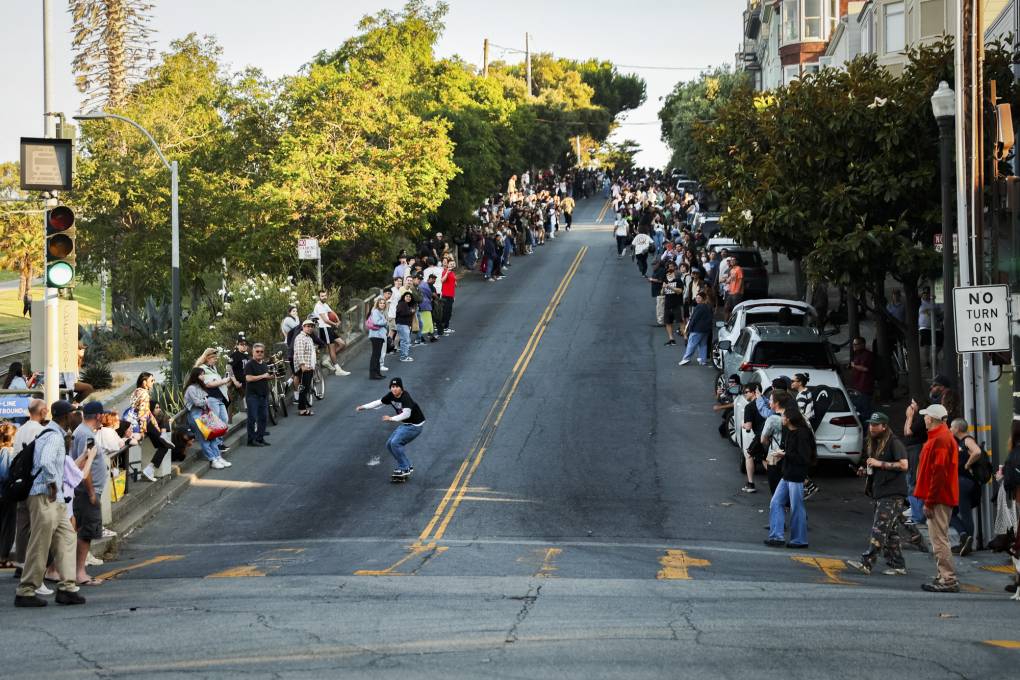
"caption": "A skateboarder glides down Church Street during the annual Dolores Hill Bomb on July 6, 2024. ",
"credit": "Gina Castro/KQED",
"altTag": null,
"description": null,
"imgSizes": {
"medium": {
"file": "https://cdn.kqed.org/wp-content/uploads/sites/10/2024/08/20240706_DoloresHillBomb-21_qed-800x510.jpg",
"width": 800,
"height": 510,
"mimeType": "image/jpeg"
},
"large": {
"file": "https://cdn.kqed.org/wp-content/uploads/sites/10/2024/08/20240706_DoloresHillBomb-21_qed-1020x650.jpg",
"width": 1020,
"height": 650,
"mimeType": "image/jpeg"
},
"thumbnail": {
"file": "https://cdn.kqed.org/wp-content/uploads/sites/10/2024/08/20240706_DoloresHillBomb-21_qed-160x102.jpg",
"width": 160,
"height": 102,
"mimeType": "image/jpeg"
},
"1536x1536": {
"file": "https://cdn.kqed.org/wp-content/uploads/sites/10/2024/08/20240706_DoloresHillBomb-21_qed-1536x978.jpg",
"width": 1536,
"height": 978,
"mimeType": "image/jpeg"
},
"post-thumbnail": {
"file": "https://cdn.kqed.org/wp-content/uploads/sites/10/2024/08/20240706_DoloresHillBomb-21_qed-672x372.jpg",
"width": 672,
"height": 372,
"mimeType": "image/jpeg"
},
"twentyfourteen-full-width": {
"file": "https://cdn.kqed.org/wp-content/uploads/sites/10/2024/08/20240706_DoloresHillBomb-21_qed-1038x576.jpg",
"width": 1038,
"height": 576,
"mimeType": "image/jpeg"
},
"full-width": {
"file": "https://cdn.kqed.org/wp-content/uploads/sites/10/2024/08/20240706_DoloresHillBomb-21_qed-1920x1223.jpg",
"width": 1920,
"height": 1223,
"mimeType": "image/jpeg"
},
"kqedFullSize": {
"file": "https://cdn.kqed.org/wp-content/uploads/sites/10/2024/08/20240706_DoloresHillBomb-21_qed.jpg",
"width": 2000,
"height": 1274
}
},
"isLoading": false,
"fetchFailed": false
},
"news_11999141": {
"type": "attachments",
"id": "news_11999141",
"meta": {
"index": "attachments_1716263798",
"site": "news",
"id": "11999141",
"found": true
},
"title": "Husband Of House Speaker Nancy Pelosi Attacked By Home Intruder At Their San Francisco Home",
"publishDate": 1722988245,
"status": "inherit",
"parent": 11999063,
"modified": 1722990368,
"caption": "San Francisco police Chief William Scott speaks to reporters on Oct. 28, 2022, in San Francisco, California. At a press conference on Tuesday, Scott said the department has deployed six drones in the past few months. While city officials said the drones are a “game changer” for the police department, some criminal justice experts and privacy advocates have pointed out concerns.",
"credit": "Justin Sullivan/Getty Images",
"altTag": null,
"description": null,
"imgSizes": {
"medium": {
"file": "https://cdn.kqed.org/wp-content/uploads/sites/10/2024/08/SFPoliceChief-800x558.jpg",
"width": 800,
"height": 558,
"mimeType": "image/jpeg"
},
"large": {
"file": "https://cdn.kqed.org/wp-content/uploads/sites/10/2024/08/SFPoliceChief-1020x711.jpg",
"width": 1020,
"height": 711,
"mimeType": "image/jpeg"
},
"thumbnail": {
"file": "https://cdn.kqed.org/wp-content/uploads/sites/10/2024/08/SFPoliceChief-160x112.jpg",
"width": 160,
"height": 112,
"mimeType": "image/jpeg"
},
"1536x1536": {
"file": "https://cdn.kqed.org/wp-content/uploads/sites/10/2024/08/SFPoliceChief-1536x1071.jpg",
"width": 1536,
"height": 1071,
"mimeType": "image/jpeg"
},
"post-thumbnail": {
"file": "https://cdn.kqed.org/wp-content/uploads/sites/10/2024/08/SFPoliceChief-672x372.jpg",
"width": 672,
"height": 372,
"mimeType": "image/jpeg"
},
"twentyfourteen-full-width": {
"file": "https://cdn.kqed.org/wp-content/uploads/sites/10/2024/08/SFPoliceChief-1038x576.jpg",
"width": 1038,
"height": 576,
"mimeType": "image/jpeg"
},
"full-width": {
"file": "https://cdn.kqed.org/wp-content/uploads/sites/10/2024/08/SFPoliceChief-1920x1338.jpg",
"width": 1920,
"height": 1338,
"mimeType": "image/jpeg"
},
"kqedFullSize": {
"file": "https://cdn.kqed.org/wp-content/uploads/sites/10/2024/08/SFPoliceChief.jpg",
"width": 2000,
"height": 1394
}
},
"isLoading": false,
"fetchFailed": false
},
"news_11981905": {
"type": "attachments",
"id": "news_11981905",
"meta": {
"index": "attachments_1716263798",
"site": "news",
"id": "11981905",
"found": true
},
"title": "240402-SFPDMOUNTED-JY-054-KQED",
"publishDate": 1712250400,
"status": "inherit",
"parent": 0,
"modified": 1719606083,
"caption": "People take photos of and approach San Francisco Police Department Mounted Patrol Unit horses in Union Square in San Francisco on Tuesday, April 2, 2024. The Mounted Patrol Unit supplements patrol all over the city, and has done so since 1874.",
"credit": "Juliana Yamada/KQED",
"altTag": "Kids interact with police officers on horseback in an urban plaza.",
"description": null,
"imgSizes": {
"medium": {
"file": "https://cdn.kqed.org/wp-content/uploads/sites/10/2024/04/240402-SFPDMOUNTED-JY-054-KQED-800x533.jpg",
"width": 800,
"height": 533,
"mimeType": "image/jpeg"
},
"large": {
"file": "https://cdn.kqed.org/wp-content/uploads/sites/10/2024/04/240402-SFPDMOUNTED-JY-054-KQED-1020x680.jpg",
"width": 1020,
"height": 680,
"mimeType": "image/jpeg"
},
"thumbnail": {
"file": "https://cdn.kqed.org/wp-content/uploads/sites/10/2024/04/240402-SFPDMOUNTED-JY-054-KQED-160x107.jpg",
"width": 160,
"height": 107,
"mimeType": "image/jpeg"
},
"1536x1536": {
"file": "https://cdn.kqed.org/wp-content/uploads/sites/10/2024/04/240402-SFPDMOUNTED-JY-054-KQED-1536x1024.jpg",
"width": 1536,
"height": 1024,
"mimeType": "image/jpeg"
},
"post-thumbnail": {
"file": "https://cdn.kqed.org/wp-content/uploads/sites/10/2024/04/240402-SFPDMOUNTED-JY-054-KQED-672x372.jpg",
"width": 672,
"height": 372,
"mimeType": "image/jpeg"
},
"twentyfourteen-full-width": {
"file": "https://cdn.kqed.org/wp-content/uploads/sites/10/2024/04/240402-SFPDMOUNTED-JY-054-KQED-1038x576.jpg",
"width": 1038,
"height": 576,
"mimeType": "image/jpeg"
},
"full-width": {
"file": "https://cdn.kqed.org/wp-content/uploads/sites/10/2024/04/240402-SFPDMOUNTED-JY-054-KQED-1920x1280.jpg",
"width": 1920,
"height": 1280,
"mimeType": "image/jpeg"
},
"kqedFullSize": {
"file": "https://cdn.kqed.org/wp-content/uploads/sites/10/2024/04/240402-SFPDMOUNTED-JY-054-KQED.jpg",
"width": 2000,
"height": 1333
}
},
"isLoading": false,
"fetchFailed": false
},
"news_11993135": {
"type": "attachments",
"id": "news_11993135",
"meta": {
"index": "attachments_1716263798",
"site": "news",
"id": "11993135",
"found": true
},
"title": "20240706_DOLORESHILLBOMB-24-KQED",
"publishDate": 1720326153,
"status": "inherit",
"parent": 0,
"modified": 1720326696,
"caption": "A skater 'bombs' Church St. during the annual Dolores Hill Bomb on July 6, 2024. The event, in which skateboarders race down Dolores St. at high speeds, resulted in over 100 teenagers and adults being arrested last year.",
"credit": "Gina Castro/KQED",
"altTag": null,
"description": null,
"imgSizes": {
"medium": {
"file": "https://cdn.kqed.org/wp-content/uploads/sites/10/2024/07/20240706_DOLORESHILLBOMB-24-KQED-800x533.jpg",
"width": 800,
"height": 533,
"mimeType": "image/jpeg"
},
"large": {
"file": "https://cdn.kqed.org/wp-content/uploads/sites/10/2024/07/20240706_DOLORESHILLBOMB-24-KQED-1020x680.jpg",
"width": 1020,
"height": 680,
"mimeType": "image/jpeg"
},
"thumbnail": {
"file": "https://cdn.kqed.org/wp-content/uploads/sites/10/2024/07/20240706_DOLORESHILLBOMB-24-KQED-160x107.jpg",
"width": 160,
"height": 107,
"mimeType": "image/jpeg"
},
"1536x1536": {
"file": "https://cdn.kqed.org/wp-content/uploads/sites/10/2024/07/20240706_DOLORESHILLBOMB-24-KQED-1536x1024.jpg",
"width": 1536,
"height": 1024,
"mimeType": "image/jpeg"
},
"post-thumbnail": {
"file": "https://cdn.kqed.org/wp-content/uploads/sites/10/2024/07/20240706_DOLORESHILLBOMB-24-KQED-672x372.jpg",
"width": 672,
"height": 372,
"mimeType": "image/jpeg"
},
"twentyfourteen-full-width": {
"file": "https://cdn.kqed.org/wp-content/uploads/sites/10/2024/07/20240706_DOLORESHILLBOMB-24-KQED-1038x576.jpg",
"width": 1038,
"height": 576,
"mimeType": "image/jpeg"
},
"full-width": {
"file": "https://cdn.kqed.org/wp-content/uploads/sites/10/2024/07/20240706_DOLORESHILLBOMB-24-KQED-1920x1280.jpg",
"width": 1920,
"height": 1280,
"mimeType": "image/jpeg"
},
"kqedFullSize": {
"file": "https://cdn.kqed.org/wp-content/uploads/sites/10/2024/07/20240706_DOLORESHILLBOMB-24-KQED.jpg",
"width": 2000,
"height": 1333
}
},
"isLoading": false,
"fetchFailed": false
},
"news_11980333": {
"type": "attachments",
"id": "news_11980333",
"meta": {
"index": "attachments_1716263798",
"site": "news",
"id": "11980333",
"found": true
},
"parent": 0,
"imgSizes": {
"twentyfourteen-full-width": {
"file": "https://cdn.kqed.org/wp-content/uploads/sites/10/2024/03/240321-LINDSAY-McCollum-01-KQED-1038x576.jpg",
"width": 1038,
"mimeType": "image/jpeg",
"height": 576
},
"thumbnail": {
"file": "https://cdn.kqed.org/wp-content/uploads/sites/10/2024/03/240321-LINDSAY-McCollum-01-KQED-160x107.jpg",
"width": 160,
"mimeType": "image/jpeg",
"height": 107
},
"post-thumbnail": {
"file": "https://cdn.kqed.org/wp-content/uploads/sites/10/2024/03/240321-LINDSAY-McCollum-01-KQED-672x372.jpg",
"width": 672,
"mimeType": "image/jpeg",
"height": 372
},
"kqedFullSize": {
"file": "https://cdn.kqed.org/wp-content/uploads/sites/10/2024/03/240321-LINDSAY-McCollum-01-KQED.jpg",
"width": 2000,
"height": 1333
},
"large": {
"file": "https://cdn.kqed.org/wp-content/uploads/sites/10/2024/03/240321-LINDSAY-McCollum-01-KQED-1020x680.jpg",
"width": 1020,
"mimeType": "image/jpeg",
"height": 680
},
"1536x1536": {
"file": "https://cdn.kqed.org/wp-content/uploads/sites/10/2024/03/240321-LINDSAY-McCollum-01-KQED-1536x1024.jpg",
"width": 1536,
"mimeType": "image/jpeg",
"height": 1024
},
"full-width": {
"file": "https://cdn.kqed.org/wp-content/uploads/sites/10/2024/03/240321-LINDSAY-McCollum-01-KQED-1920x1280.jpg",
"width": 1920,
"mimeType": "image/jpeg",
"height": 1280
},
"medium": {
"file": "https://cdn.kqed.org/wp-content/uploads/sites/10/2024/03/240321-LINDSAY-McCollum-01-KQED-800x533.jpg",
"width": 800,
"mimeType": "image/jpeg",
"height": 533
}
},
"publishDate": 1711050579,
"modified": 1711050630,
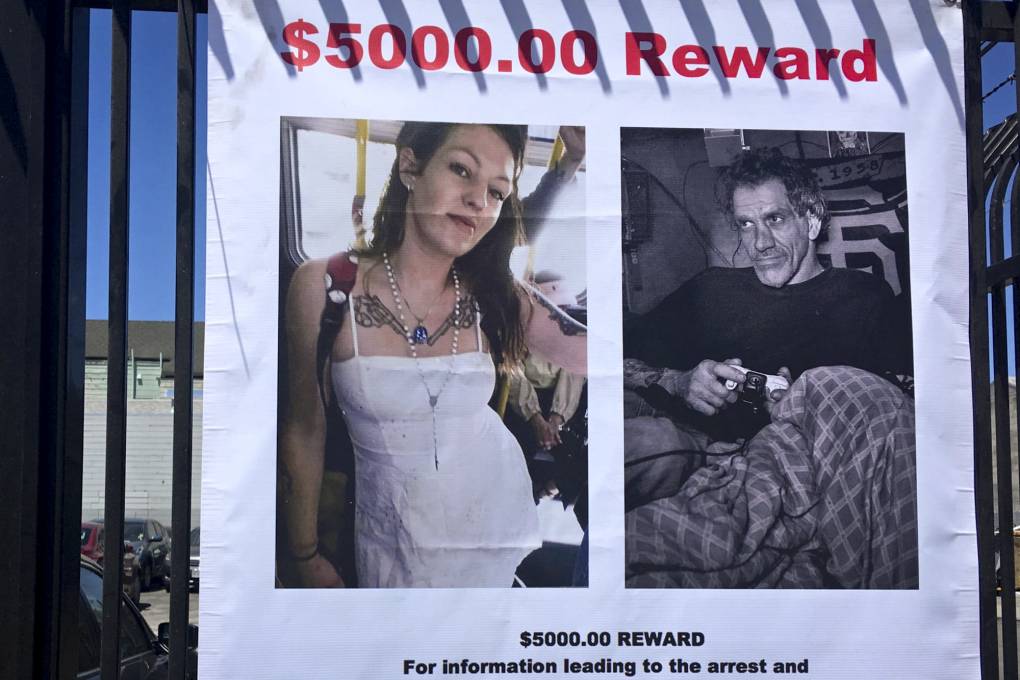
"caption": "A sign offering a reward for information about Lindsay McCollum's death is hung at the corner of 16th and Shotwell on July 25, 2018. ",
"description": null,
"title": "240321-LINDSAY McCollum-01-KQED",
"credit": "Peter Arcuni/KQED",
"status": "inherit",
"altTag": null,
"isLoading": false,
"fetchFailed": false
},
"news_11960409": {
"type": "attachments",
"id": "news_11960409",
"meta": {
"index": "attachments_1716263798",
"site": "news",
"id": "11960409",
"found": true
},
"parent": 11960406,
"imgSizes": {
"twentyfourteen-full-width": {
"file": "https://cdn.kqed.org/wp-content/uploads/sites/10/2023/09/RS67750_230808-SanFranciscoCityHall-19-BL-qut-1038x576.jpg",
"width": 1038,
"mimeType": "image/jpeg",
"height": 576
},
"thumbnail": {
"file": "https://cdn.kqed.org/wp-content/uploads/sites/10/2023/09/RS67750_230808-SanFranciscoCityHall-19-BL-qut-160x107.jpg",
"width": 160,
"mimeType": "image/jpeg",
"height": 107
},
"post-thumbnail": {
"file": "https://cdn.kqed.org/wp-content/uploads/sites/10/2023/09/RS67750_230808-SanFranciscoCityHall-19-BL-qut-672x372.jpg",
"width": 672,
"mimeType": "image/jpeg",
"height": 372
},
"kqedFullSize": {
"file": "https://cdn.kqed.org/wp-content/uploads/sites/10/2023/09/RS67750_230808-SanFranciscoCityHall-19-BL-qut.jpg",
"width": 1920,
"height": 1280
},
"large": {
"file": "https://cdn.kqed.org/wp-content/uploads/sites/10/2023/09/RS67750_230808-SanFranciscoCityHall-19-BL-qut-1020x680.jpg",
"width": 1020,
"mimeType": "image/jpeg",
"height": 680
},
"1536x1536": {
"file": "https://cdn.kqed.org/wp-content/uploads/sites/10/2023/09/RS67750_230808-SanFranciscoCityHall-19-BL-qut-1536x1024.jpg",
"width": 1536,
"mimeType": "image/jpeg",
"height": 1024
},
"medium": {
"file": "https://cdn.kqed.org/wp-content/uploads/sites/10/2023/09/RS67750_230808-SanFranciscoCityHall-19-BL-qut-800x533.jpg",
"width": 800,
"mimeType": "image/jpeg",
"height": 533
}
},
"publishDate": 1694131442,
"modified": 1709340288,
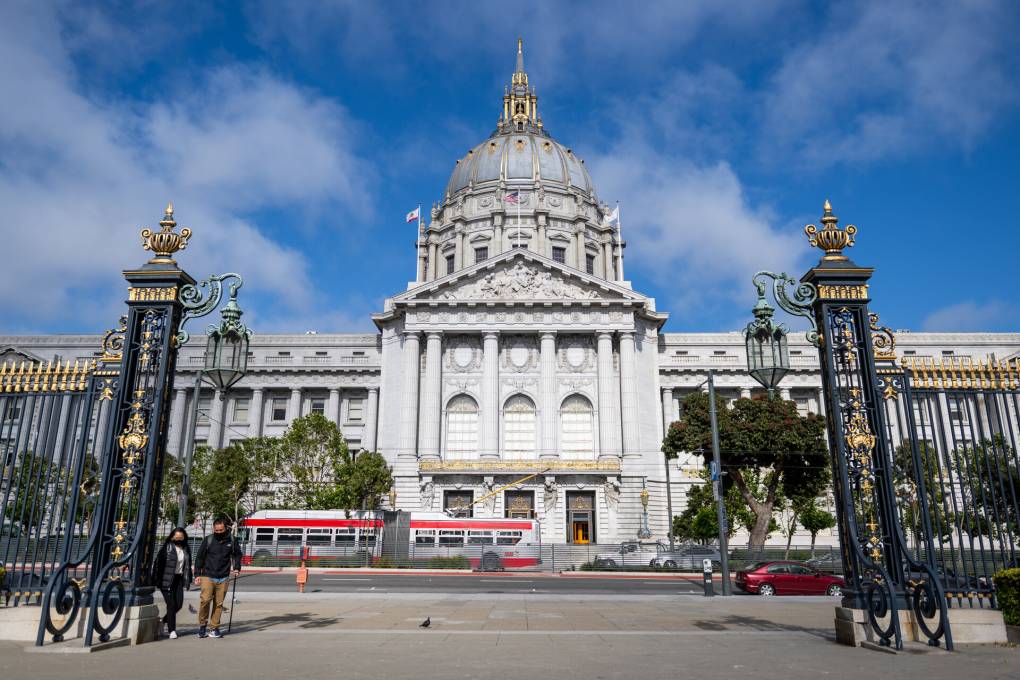
"caption": "A Muni bus passes by City Hall in San Francisco on Aug. 8, 2023.",
"description": null,
"title": "A Muni bus passes by City Hall in San Francisco on Aug. 8, 2023.",
"credit": "Beth LaBerge/KQED",
"status": "inherit",
"altTag": "A building with intricate pillars in front, as well as a red and white city bus.",
"isLoading": false,
"fetchFailed": false
},
"news_11696435": {
"type": "attachments",
"id": "news_11696435",
"meta": {
"index": "attachments_1716263798",
"site": "news",
"id": "11696435",
"found": true
},
"parent": 11696428,
"imgSizes": {
"small": {
"file": "https://ww2.kqed.org/app/uploads/sites/10/2018/10/RS24292_20170211_130621-qut-520x390.jpg",
"width": 520,
"mimeType": "image/jpeg",
"height": 390
},
"twentyfourteen-full-width": {
"file": "https://ww2.kqed.org/app/uploads/sites/10/2018/10/RS24292_20170211_130621-qut-1038x576.jpg",
"width": 1038,
"mimeType": "image/jpeg",
"height": 576
},
"thumbnail": {
"file": "https://ww2.kqed.org/app/uploads/sites/10/2018/10/RS24292_20170211_130621-qut-160x120.jpg",
"width": 160,
"mimeType": "image/jpeg",
"height": 120
},
"fd-sm": {
"file": "https://ww2.kqed.org/app/uploads/sites/10/2018/10/RS24292_20170211_130621-qut-960x720.jpg",
"width": 960,
"mimeType": "image/jpeg",
"height": 720
},
"post-thumbnail": {
"file": "https://ww2.kqed.org/app/uploads/sites/10/2018/10/RS24292_20170211_130621-qut-672x372.jpg",
"width": 672,
"mimeType": "image/jpeg",
"height": 372
},
"xsmall": {
"file": "https://ww2.kqed.org/app/uploads/sites/10/2018/10/RS24292_20170211_130621-qut-375x281.jpg",
"width": 375,
"mimeType": "image/jpeg",
"height": 281
},
"kqedFullSize": {
"file": "https://ww2.kqed.org/app/uploads/sites/10/2018/10/RS24292_20170211_130621-qut.jpg",
"width": 1920,
"height": 1440
},
"large": {
"file": "https://ww2.kqed.org/app/uploads/sites/10/2018/10/RS24292_20170211_130621-qut-1020x765.jpg",
"width": 1020,
"mimeType": "image/jpeg",
"height": 765
},
"xlarge": {
"file": "https://ww2.kqed.org/app/uploads/sites/10/2018/10/RS24292_20170211_130621-qut-1180x885.jpg",
"width": 1180,
"mimeType": "image/jpeg",
"height": 885
},
"complete_open_graph": {
"file": "https://ww2.kqed.org/app/uploads/sites/10/2018/10/RS24292_20170211_130621-qut-1200x900.jpg",
"width": 1200,
"mimeType": "image/jpeg",
"height": 900
},
"guest-author-50": {
"file": "https://ww2.kqed.org/app/uploads/sites/10/2018/10/RS24292_20170211_130621-qut-50x50.jpg",
"width": 50,
"mimeType": "image/jpeg",
"height": 50
},
"guest-author-96": {
"file": "https://ww2.kqed.org/app/uploads/sites/10/2018/10/RS24292_20170211_130621-qut-96x96.jpg",
"width": 96,
"mimeType": "image/jpeg",
"height": 96
},
"medium": {
"file": "https://ww2.kqed.org/app/uploads/sites/10/2018/10/RS24292_20170211_130621-qut-800x600.jpg",
"width": 800,
"mimeType": "image/jpeg",
"height": 600
},
"guest-author-64": {
"file": "https://ww2.kqed.org/app/uploads/sites/10/2018/10/RS24292_20170211_130621-qut-64x64.jpg",
"width": 64,
"mimeType": "image/jpeg",
"height": 64
},
"guest-author-32": {
"file": "https://ww2.kqed.org/app/uploads/sites/10/2018/10/RS24292_20170211_130621-qut-32x32.jpg",
"width": 32,
"mimeType": "image/jpeg",
"height": 32
},
"fd-lrg": {
"file": "https://ww2.kqed.org/app/uploads/sites/10/2018/10/RS24292_20170211_130621-qut-1920x1440.jpg",
"width": 1920,
"mimeType": "image/jpeg",
"height": 1440
},
"fd-med": {
"file": "https://ww2.kqed.org/app/uploads/sites/10/2018/10/RS24292_20170211_130621-qut-1180x885.jpg",
"width": 1180,
"mimeType": "image/jpeg",
"height": 885
},
"full-width": {
"file": "https://ww2.kqed.org/app/uploads/sites/10/2018/10/RS24292_20170211_130621-qut-1920x1440.jpg",
"width": 1920,
"mimeType": "image/jpeg",
"height": 1440
},
"detail": {
"file": "https://ww2.kqed.org/app/uploads/sites/10/2018/10/RS24292_20170211_130621-qut-150x150.jpg",
"width": 150,
"mimeType": "image/jpeg",
"height": 150
},
"guest-author-128": {
"file": "https://ww2.kqed.org/app/uploads/sites/10/2018/10/RS24292_20170211_130621-qut-128x128.jpg",
"width": 128,
"mimeType": "image/jpeg",
"height": 128
},
"xxsmall": {
"file": "https://ww2.kqed.org/app/uploads/sites/10/2018/10/RS24292_20170211_130621-qut-240x180.jpg",
"width": 240,
"mimeType": "image/jpeg",
"height": 180
}
},
"publishDate": 1538603975,
"modified": 1538687473,
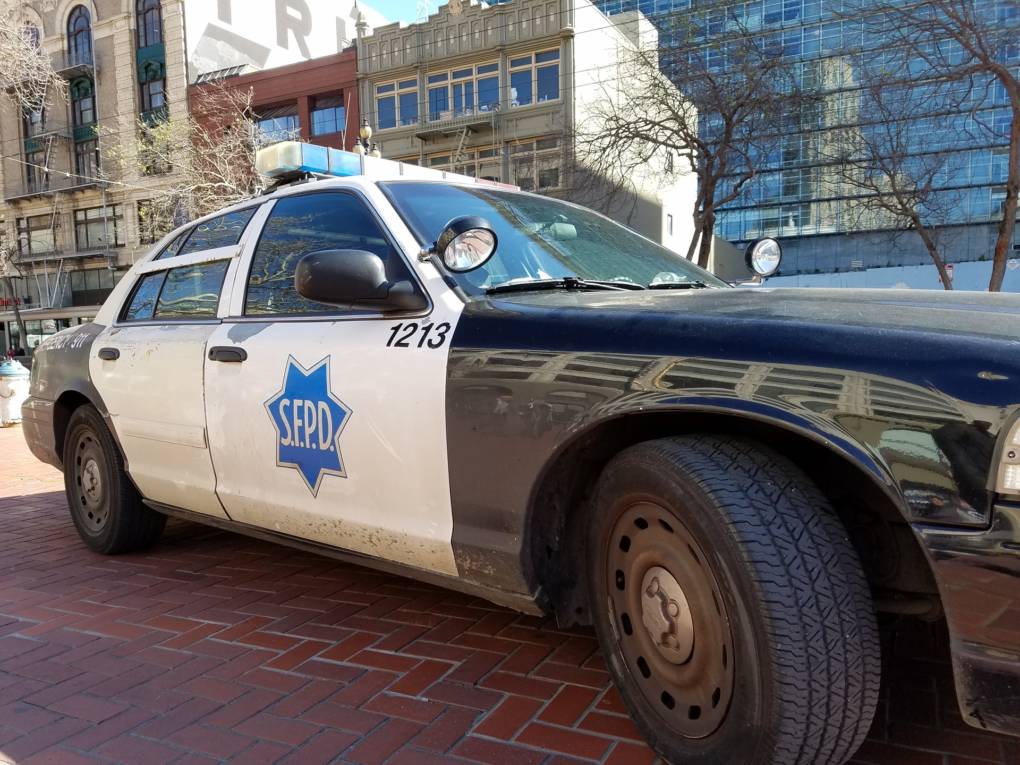
"caption": "An SFPD cruiser.",
"description": "An SFPD cruiser.",
"title": "RS24292_20170211_130621-qut",
"credit": "Alex Emslie/KQED",
"status": "inherit",
"isLoading": false,
"fetchFailed": false
},
"news_11965817": {
"type": "attachments",
"id": "news_11965817",
"meta": {
"index": "attachments_1716263798",
"site": "news",
"id": "11965817",
"found": true
},
"parent": 11965813,
"imgSizes": {
"twentyfourteen-full-width": {
"file": "https://ww2.kqed.org/app/uploads/sites/10/2023/10/GettyImages-53134889-1024x576.jpg",
"width": 1024,
"mimeType": "image/jpeg",
"height": 576
},
"thumbnail": {
"file": "https://ww2.kqed.org/app/uploads/sites/10/2023/10/GettyImages-53134889-160x107.jpg",
"width": 160,
"mimeType": "image/jpeg",
"height": 107
},
"post-thumbnail": {
"file": "https://ww2.kqed.org/app/uploads/sites/10/2023/10/GettyImages-53134889-672x372.jpg",
"width": 672,
"mimeType": "image/jpeg",
"height": 372
},
"kqedFullSize": {
"file": "https://ww2.kqed.org/app/uploads/sites/10/2023/10/GettyImages-53134889.jpg",
"width": 1024,
"height": 683
},
"large": {
"file": "https://ww2.kqed.org/app/uploads/sites/10/2023/10/GettyImages-53134889-1020x680.jpg",
"width": 1020,
"mimeType": "image/jpeg",
"height": 680
},
"medium": {
"file": "https://ww2.kqed.org/app/uploads/sites/10/2023/10/GettyImages-53134889-800x534.jpg",
"width": 800,
"mimeType": "image/jpeg",
"height": 534
}
},
"publishDate": 1698441940,
"modified": 1698452289,
"caption": "San Francisco has announced a plan to charge some drug dealers with homicide. It comes on the heels of an increase in enforcement, working with federal agencies.",
"description": null,
"title": "Federal Agents Raid Medical Marijuana Club",
"credit": "Justin Sullivan/Getty Images",
"status": "inherit",
"altTag": "Two U.S. agents stand behind a police tape line in an alley",
"isLoading": false,
"fetchFailed": false
},
"news_11956080": {
"type": "attachments",
"id": "news_11956080",
"meta": {
"index": "attachments_1716263798",
"site": "news",
"id": "11956080",
"found": true
},
"parent": 11956110,
"imgSizes": {
"twentyfourteen-full-width": {
"file": "https://ww2.kqed.org/app/uploads/sites/10/2023/07/RS67115_20230719-cityhallrally-10-JY-KQED-1038x576.jpg",
"width": 1038,
"mimeType": "image/jpeg",
"height": 576
},
"thumbnail": {
"file": "https://ww2.kqed.org/app/uploads/sites/10/2023/07/RS67115_20230719-cityhallrally-10-JY-KQED-160x107.jpg",
"width": 160,
"mimeType": "image/jpeg",
"height": 107
},
"post-thumbnail": {
"file": "https://ww2.kqed.org/app/uploads/sites/10/2023/07/RS67115_20230719-cityhallrally-10-JY-KQED-672x372.jpg",
"width": 672,
"mimeType": "image/jpeg",
"height": 372
},
"kqedFullSize": {
"file": "https://ww2.kqed.org/app/uploads/sites/10/2023/07/RS67115_20230719-cityhallrally-10-JY-KQED.jpg",
"width": 2000,
"height": 1334
},
"large": {
"file": "https://ww2.kqed.org/app/uploads/sites/10/2023/07/RS67115_20230719-cityhallrally-10-JY-KQED-1020x680.jpg",
"width": 1020,
"mimeType": "image/jpeg",
"height": 680
},
"1536x1536": {
"file": "https://ww2.kqed.org/app/uploads/sites/10/2023/07/RS67115_20230719-cityhallrally-10-JY-KQED-1536x1025.jpg",
"width": 1536,
"mimeType": "image/jpeg",
"height": 1025
},
"full-width": {
"file": "https://ww2.kqed.org/app/uploads/sites/10/2023/07/RS67115_20230719-cityhallrally-10-JY-KQED-1920x1281.jpg",
"width": 1920,
"mimeType": "image/jpeg",
"height": 1281
},
"medium": {
"file": "https://ww2.kqed.org/app/uploads/sites/10/2023/07/RS67115_20230719-cityhallrally-10-JY-KQED-800x534.jpg",
"width": 800,
"mimeType": "image/jpeg",
"height": 534
}
},
"publishDate": 1689868590,
"modified": 1697071565,
"caption": "Police Chief William Scott speaks during a Police Commission meeting at City Hall in San Francisco on Wednesday, July 19, 2023.",
"description": null,
"title": "RS67115_20230719-cityhallrally-10-JY-KQED",
"credit": "Juliana Yamada/KQED",
"status": "inherit",
"altTag": "A man with glasses and wearing a police uniform speaks into a microphone.",
"isLoading": false,
"fetchFailed": false
},
"news_11961411": {
"type": "attachments",
"id": "news_11961411",
"meta": {
"index": "attachments_1716263798",
"site": "news",
"id": "11961411",
"found": true
},
"title": "230913-SFPDStaff-011-BL-KQED",
"publishDate": 1694810146,
"status": "inherit",
"parent": 12063157,
"modified": 1762466664,
"caption": "Edward Siu, president of the Chinatown Merchants United Association, stands on a busy corner of Stockton Street in San Francisco's Chinatown neighborhood on Sept. 13, 2023. He says SFPD command turnover is so fast that he can't remember all the names of the police leaders he's given community tours to.",
"credit": "Beth LaBerge/KQED",
"altTag": "A person with glasses is photographed as other people pass on a busy city sidewalk.",
"description": null,
"imgSizes": {
"medium": {
"file": "https://cdn.kqed.org/wp-content/uploads/sites/10/2023/09/230913-SFPDStaff-011-BL-KQED-800x533.jpg",
"width": 800,
"height": 533,
"mimeType": "image/jpeg"
},
"large": {
"file": "https://cdn.kqed.org/wp-content/uploads/sites/10/2023/09/230913-SFPDStaff-011-BL-KQED-1020x680.jpg",
"width": 1020,
"height": 680,
"mimeType": "image/jpeg"
},
"thumbnail": {
"file": "https://cdn.kqed.org/wp-content/uploads/sites/10/2023/09/230913-SFPDStaff-011-BL-KQED-160x107.jpg",
"width": 160,
"height": 107,
"mimeType": "image/jpeg"
},
"1536x1536": {
"file": "https://cdn.kqed.org/wp-content/uploads/sites/10/2023/09/230913-SFPDStaff-011-BL-KQED-1536x1024.jpg",
"width": 1536,
"height": 1024,
"mimeType": "image/jpeg"
},
"post-thumbnail": {
"file": "https://cdn.kqed.org/wp-content/uploads/sites/10/2023/09/230913-SFPDStaff-011-BL-KQED-672x372.jpg",
"width": 672,
"height": 372,
"mimeType": "image/jpeg"
},
"twentyfourteen-full-width": {
"file": "https://cdn.kqed.org/wp-content/uploads/sites/10/2023/09/230913-SFPDStaff-011-BL-KQED-1038x576.jpg",
"width": 1038,
"height": 576,
"mimeType": "image/jpeg"
},
"full-width": {
"file": "https://cdn.kqed.org/wp-content/uploads/sites/10/2023/09/230913-SFPDStaff-011-BL-KQED-1920x1280.jpg",
"width": 1920,
"height": 1280,
"mimeType": "image/jpeg"
},
"kqedFullSize": {
"file": "https://cdn.kqed.org/wp-content/uploads/sites/10/2023/09/230913-SFPDStaff-011-BL-KQED.jpg",
"width": 2000,
"height": 1333
}
},
"isLoading": false,
"fetchFailed": false
}
},
"audioPlayerReducer": {
"postId": "stream_live",
"isPaused": true,
"isPlaying": false,
"pfsActive": false,
"pledgeModalIsOpen": true,
"playerDrawerIsOpen": false,
"liveAudioPlayStartedAt": 0,
"liveAudioPlayContext": ""
},
"authorsReducer": {
"katrinaschwartz": {
"type": "authors",
"id": "234",
"meta": {
"index": "authors_1716337520",
"id": "234",
"found": true
},
"name": "Katrina Schwartz",
"firstName": "Katrina",
"lastName": "Schwartz",
"slug": "katrinaschwartz",
"email": "kschwartz@kqed.org",
"display_author_email": false,
"staff_mastheads": [
"news"
],
"title": "Producer",
"bio": "Katrina Schwartz is a journalist based in San Francisco. She's worked at KPCC public radio in LA and has reported on air and online for KQED since 2010. She covered how teaching and learning is changing for MindShift between 2012 and 2020. She is the co-host of the MindShift podcast and now produces KQED's Bay Curious podcast.",
"avatar": "https://secure.gravatar.com/avatar/edb4ee79070447a018538c9aae6eeecf28786515b8a0c30e43b6b7dce5aa44c8?s=600&d=blank&r=g",
"twitter": "kschwart",
"bluesky": null,
"facebook": null,
"instagram": null,
"linkedin": null,
"sites": [
{
"site": "",
"roles": [
"editor"
]
},
{
"site": "news",
"roles": [
"editor"
]
},
{
"site": "mindshift",
"roles": [
"administrator"
]
},
{
"site": "stateofhealth",
"roles": [
"author"
]
},
{
"site": "science",
"roles": [
"editor"
]
}
],
"headData": {
"title": "Katrina Schwartz | KQED",
"description": "Producer",
"ogImgSrc": "https://secure.gravatar.com/avatar/edb4ee79070447a018538c9aae6eeecf28786515b8a0c30e43b6b7dce5aa44c8?s=600&d=blank&r=g",
"twImgSrc": "https://secure.gravatar.com/avatar/edb4ee79070447a018538c9aae6eeecf28786515b8a0c30e43b6b7dce5aa44c8?s=600&d=blank&r=g"
},
"isLoading": false,
"link": "/author/katrinaschwartz"
},
"ecruzguevarra": {
"type": "authors",
"id": "8654",
"meta": {
"index": "authors_1716337520",
"id": "8654",
"found": true
},
"name": "Ericka Cruz Guevarra",
"firstName": "Ericka",
"lastName": "Cruz Guevarra",
"slug": "ecruzguevarra",
"email": "ecruzguevarra@kqed.org",
"display_author_email": true,
"staff_mastheads": [
"news"
],
"title": "Producer, The Bay Podcast",
"bio": "Ericka Cruz Guevarra is host of \u003ca href=\"https://www.kqed.org/podcasts/thebay\">\u003cem>The Bay\u003c/em>\u003c/a> podcast at KQED. Before host, she was the show’s producer. Her work in that capacity includes a three-part reported series on policing in Vallejo, which won a 2020 excellence in journalism award from the Society of Professional Journalists. Ericka has worked as a breaking news reporter at Oregon Public Broadcasting, helped produce the Code Switch podcast, and was KQED’s inaugural Raul Ramirez Diversity Fund intern. She’s also an alumna of NPR’s Next Generation Radio program. Send her an email if you have strong feelings about whether Fairfield and Suisun City are the Bay. Ericka is represented by SAG-AFTRA.",
"avatar": "https://secure.gravatar.com/avatar/accefc1de4bafc7e234b69bcb9b6f6536c130fd84709bc3069ef11a78787e1bb?s=600&d=blank&r=g",
"twitter": "NotoriousECG",
"bluesky": null,
"facebook": null,
"instagram": null,
"linkedin": null,
"sites": [
{
"site": "arts",
"roles": [
"subscriber"
]
},
{
"site": "news",
"roles": [
"editor",
"manage_categories"
]
},
{
"site": "futureofyou",
"roles": [
"subscriber"
]
},
{
"site": "stateofhealth",
"roles": [
"subscriber"
]
},
{
"site": "science",
"roles": [
"editor"
]
},
{
"site": "forum",
"roles": [
"subscriber"
]
}
],
"headData": {
"title": "Ericka Cruz Guevarra | KQED",
"description": "Producer, The Bay Podcast",
"ogImgSrc": "https://secure.gravatar.com/avatar/accefc1de4bafc7e234b69bcb9b6f6536c130fd84709bc3069ef11a78787e1bb?s=600&d=blank&r=g",
"twImgSrc": "https://secure.gravatar.com/avatar/accefc1de4bafc7e234b69bcb9b6f6536c130fd84709bc3069ef11a78787e1bb?s=600&d=blank&r=g"
},
"isLoading": false,
"link": "/author/ecruzguevarra"
},
"amontecillo": {
"type": "authors",
"id": "11649",
"meta": {
"index": "authors_1716337520",
"id": "11649",
"found": true
},
"name": "Alan Montecillo",
"firstName": "Alan",
"lastName": "Montecillo",
"slug": "amontecillo",
"email": "amontecillo@kqed.org",
"display_author_email": false,
"staff_mastheads": [
"news"
],
"title": "KQED Contributor",
"bio": "Alan Montecillo is the senior editor of \u003cem>\u003ca href=\"http://kqed.org/thebay\">The Bay\u003c/a>, \u003c/em> KQED's local news podcast. Before moving to the Bay Area, he worked as a senior talk show producer for WILL in Champaign-Urbana, Illinois and at Oregon Public Broadcasting in Portland, Oregon. He has won journalism awards from the Society of Professional Journalists Northern California, the Public Media Journalists Association, The Signal Awards, and has also received a regional Edward R. Murrow award. Alan is a Filipino American from Hong Kong and a graduate of Reed College.",
"avatar": "https://secure.gravatar.com/avatar/268f53a2066899ea9efdd8a5900218b17c822d9862cbc9326cccec53ef41d349?s=600&d=blank&r=g",
"twitter": "alanmontecillo",
"bluesky": null,
"facebook": null,
"instagram": null,
"linkedin": null,
"sites": [
{
"site": "",
"roles": [
"editor"
]
},
{
"site": "news",
"roles": [
"editor",
"manage_categories"
]
}
],
"headData": {
"title": "Alan Montecillo | KQED",
"description": "KQED Contributor",
"ogImgSrc": "https://secure.gravatar.com/avatar/268f53a2066899ea9efdd8a5900218b17c822d9862cbc9326cccec53ef41d349?s=600&d=blank&r=g",
"twImgSrc": "https://secure.gravatar.com/avatar/268f53a2066899ea9efdd8a5900218b17c822d9862cbc9326cccec53ef41d349?s=600&d=blank&r=g"
},
"isLoading": false,
"link": "/author/amontecillo"
},
"jrodriguez": {
"type": "authors",
"id": "11690",
"meta": {
"index": "authors_1716337520",
"id": "11690",
"found": true
},
"name": "Joe Fitzgerald Rodriguez",
"firstName": "Joe",
"lastName": "Fitzgerald Rodriguez",
"slug": "jrodriguez",
"email": "jrodriguez@kqed.org",
"display_author_email": true,
"staff_mastheads": [
"news"
],
"title": "Reporter and Producer",
"bio": "Joe Fitzgerald Rodriguez is a reporter and digital producer for KQED covering politics. Joe most recently wrote for the \u003cem>San Francisco Examiner\u003c/em> as a political columnist covering The City. He was raised in San Francisco and has spent his reporting career in his beloved, foggy, city by the bay. Joe was 12-years-old when he conducted his first interview in journalism, grilling former San Francisco Mayor Willie Brown for the Marina Middle School newspaper, \u003cem>The Penguin Press, \u003c/em>and he continues to report on the San Francisco Bay Area to this day.",
"avatar": "https://secure.gravatar.com/avatar/2247beb0564c1e9c62228d5649d2edac?s=600&d=blank&r=g",
"twitter": "FitztheReporter",
"facebook": null,
"instagram": "https://www.instagram.com/fitzthereporter/",
"linkedin": null,
"sites": [
{
"site": "",
"roles": [
"editor"
]
},
{
"site": "arts",
"roles": [
"editor"
]
},
{
"site": "news",
"roles": [
"editor"
]
},
{
"site": "science",
"roles": [
"editor"
]
},
{
"site": "elections",
"roles": [
"editor"
]
},
{
"site": "liveblog",
"roles": [
"editor"
]
}
],
"headData": {
"title": "Joe Fitzgerald Rodriguez | KQED",
"description": "Reporter and Producer",
"ogImgSrc": "https://secure.gravatar.com/avatar/2247beb0564c1e9c62228d5649d2edac?s=600&d=blank&r=g",
"twImgSrc": "https://secure.gravatar.com/avatar/2247beb0564c1e9c62228d5649d2edac?s=600&d=blank&r=g"
},
"isLoading": false,
"link": "/author/jrodriguez"
},
"jlara": {
"type": "authors",
"id": "11761",
"meta": {
"index": "authors_1716337520",
"id": "11761",
"found": true
},
"name": "Juan Carlos Lara",
"firstName": "Juan Carlos",
"lastName": "Lara",
"slug": "jlara",
"email": "jlara@kqed.org",
"display_author_email": false,
"staff_mastheads": [],
"title": "KQED Contributor",
"bio": null,
"avatar": "https://secure.gravatar.com/avatar/19e2052b9b05657c5ff2af2121846e9c?s=600&d=blank&r=g",
"twitter": null,
"facebook": null,
"instagram": null,
"linkedin": null,
"sites": [
{
"site": "arts",
"roles": [
"editor"
]
},
{
"site": "news",
"roles": [
"editor"
]
},
{
"site": "forum",
"roles": [
"editor"
]
},
{
"site": "liveblog",
"roles": [
"contributor"
]
}
],
"headData": {
"title": "Juan Carlos Lara | KQED",
"description": "KQED Contributor",
"ogImgSrc": "https://secure.gravatar.com/avatar/19e2052b9b05657c5ff2af2121846e9c?s=600&d=blank&r=g",
"twImgSrc": "https://secure.gravatar.com/avatar/19e2052b9b05657c5ff2af2121846e9c?s=600&d=blank&r=g"
},
"isLoading": false,
"link": "/author/jlara"
},
"mesquinca": {
"type": "authors",
"id": "11802",
"meta": {
"index": "authors_1716337520",
"id": "11802",
"found": true
},
"name": "Maria Esquinca",
"firstName": "Maria",
"lastName": "Esquinca",
"slug": "mesquinca",
"email": "mesquinca@kqed.org",
"display_author_email": false,
"staff_mastheads": [],
"title": "Producer, The Bay",
"bio": "María Esquinca is a producer of The Bay. Before that, she was a New York Women’s Foundation IGNITE Fellow at Latino USA. She worked at Radio Bilingue where she covered the San Joaquin Valley. Maria has interned at WLRN, News 21, The New York Times Student Journalism Institute and at Crain’s Detroit Business as a Dow Jones News Fund Business Reporting Intern. She is an MFA graduate from the University of Miami. In 2017, she graduated from the Walter Cronkite School of Journalism and Mass Communication with a Master of Mass Communication. A fronteriza, she was born in Ciudad Juárez, Chihuahua, Mexico and grew up in El Paso, Texas.",
"avatar": "https://secure.gravatar.com/avatar/77cedba18aae91da775038ba06dcd8d0?s=600&d=blank&r=g",
"twitter": "@m_esquinca",
"facebook": null,
"instagram": null,
"linkedin": null,
"sites": [
{
"site": "news",
"roles": []
}
],
"headData": {
"title": "Maria Esquinca | KQED",
"description": "Producer, The Bay",
"ogImgSrc": "https://secure.gravatar.com/avatar/77cedba18aae91da775038ba06dcd8d0?s=600&d=blank&r=g",
"twImgSrc": "https://secure.gravatar.com/avatar/77cedba18aae91da775038ba06dcd8d0?s=600&d=blank&r=g"
},
"isLoading": false,
"link": "/author/mesquinca"
},
"sjohnson": {
"type": "authors",
"id": "11840",
"meta": {
"index": "authors_1716337520",
"id": "11840",
"found": true
},
"name": "Sydney Johnson",
"firstName": "Sydney",
"lastName": "Johnson",
"slug": "sjohnson",
"email": "sjohnson@kqed.org",
"display_author_email": false,
"staff_mastheads": [
"news"
],
"title": "KQED Reporter",
"bio": "Sydney Johnson is a general assignment reporter at KQED. She previously reported on public health and city government at the San Francisco Examiner, and before that, she covered statewide education policy for EdSource. Her reporting has won multiple local, state and national awards. Sydney is a graduate of the University of California, Berkeley and lives in San Francisco.",
"avatar": "https://secure.gravatar.com/avatar/97855f2719b72ad6190b7c535fe642c8?s=600&d=blank&r=g",
"twitter": "sydneyfjohnson",
"facebook": null,
"instagram": null,
"linkedin": null,
"sites": [
{
"site": "news",
"roles": [
"editor"
]
}
],
"headData": {
"title": "Sydney Johnson | KQED",
"description": "KQED Reporter",
"ogImgSrc": "https://secure.gravatar.com/avatar/97855f2719b72ad6190b7c535fe642c8?s=600&d=blank&r=g",
"twImgSrc": "https://secure.gravatar.com/avatar/97855f2719b72ad6190b7c535fe642c8?s=600&d=blank&r=g"
},
"isLoading": false,
"link": "/author/sjohnson"
},
"opalma": {
"type": "authors",
"id": "11897",
"meta": {
"index": "authors_1716337520",
"id": "11897",
"found": true
},
"name": "Oscar Palma",
"firstName": "Oscar",
"lastName": "Palma",
"slug": "opalma",
"email": "opalma@kqed.org",
"display_author_email": false,
"staff_mastheads": [],
"title": "KQED Contributor",
"bio": "Oscar Palma is a newscast intern at KQED, a freelance reporter and former Spanish editor for Golden Gate Xpress. Oscar is interested in environmental and community journalism. Some of his personal interests are bicycles, film, and Latin American literature and punk, his work has previously appeared in El Tecolote, KQED and The Frisc.",
"avatar": "https://secure.gravatar.com/avatar/d488e9b9f94b80f7b78e2896064827ab?s=600&d=blank&r=g",
"twitter": null,
"facebook": null,
"instagram": null,
"linkedin": null,
"sites": [
{
"site": "news",
"roles": [
"author"
]
}
],
"headData": {
"title": "Oscar Palma | KQED",
"description": "KQED Contributor",
"ogImgSrc": "https://secure.gravatar.com/avatar/d488e9b9f94b80f7b78e2896064827ab?s=600&d=blank&r=g",
"twImgSrc": "https://secure.gravatar.com/avatar/d488e9b9f94b80f7b78e2896064827ab?s=600&d=blank&r=g"
},
"isLoading": false,
"link": "/author/opalma"
},
"kdebenedetti": {
"type": "authors",
"id": "11913",
"meta": {
"index": "authors_1716337520",
"id": "11913",
"found": true
},
"name": "Katie DeBenedetti",
"firstName": "Katie",
"lastName": "DeBenedetti",
"slug": "kdebenedetti",
"email": "kdebenedetti@kqed.org",
"display_author_email": false,
"staff_mastheads": [
"news",
"science"
],
"title": "KQED Contributor",
"bio": "Katie DeBenedetti is a digital reporter covering daily news for the Express Desk. Prior to joining KQED as a culture reporting intern in January 2024, she covered education and city government for the Napa Valley Register.",
"avatar": "https://secure.gravatar.com/avatar/6e31073cb8f7e4214ab03f42771d0f45?s=600&d=blank&r=g",
"twitter": null,
"facebook": null,
"instagram": null,
"linkedin": null,
"sites": [
{
"site": "news",
"roles": [
"author"
]
},
{
"site": "science",
"roles": [
"author"
]
},
{
"site": "liveblog",
"roles": [
"author"
]
}
],
"headData": {
"title": "Katie DeBenedetti | KQED",
"description": "KQED Contributor",
"ogImgSrc": "https://secure.gravatar.com/avatar/6e31073cb8f7e4214ab03f42771d0f45?s=600&d=blank&r=g",
"twImgSrc": "https://secure.gravatar.com/avatar/6e31073cb8f7e4214ab03f42771d0f45?s=600&d=blank&r=g"
},
"isLoading": false,
"link": "/author/kdebenedetti"
},
"emanoukian": {
"type": "authors",
"id": "11925",
"meta": {
"index": "authors_1716337520",
"id": "11925",
"found": true
},
"name": "Elize Manoukian",
"firstName": "Elize",
"lastName": "Manoukian",
"slug": "emanoukian",
"email": "emanoukian@KQED.org",
"display_author_email": false,
"staff_mastheads": [
"news"
],
"title": "Digital News Editor",
"bio": "Elize Manoukian is an award-winning audio producer and Senior Editor on the Express Desk, KQED's digital news platform. Her work has appeared on KPFA, Interlochen Public Radio, Oregon Public Broadcast, the New York Daily News, LA Times and the San Diego Union-Tribune.",
"avatar": "https://secure.gravatar.com/avatar/4525f1a8e46ccb30933b32653d9772064cfefe3fa655eb45b3b3a80341f6bdad?s=600&d=blank&r=g",
"twitter": null,
"bluesky": null,
"facebook": null,
"instagram": null,
"linkedin": null,
"sites": [
{
"site": "arts",
"roles": [
"editor"
]
},
{
"site": "news",
"roles": [
"editor"
]
},
{
"site": "science",
"roles": [
"editor"
]
}
],
"headData": {
"title": "Elize Manoukian | KQED",
"description": "Digital News Editor",
"ogImgSrc": "https://secure.gravatar.com/avatar/4525f1a8e46ccb30933b32653d9772064cfefe3fa655eb45b3b3a80341f6bdad?s=600&d=blank&r=g",
"twImgSrc": "https://secure.gravatar.com/avatar/4525f1a8e46ccb30933b32653d9772064cfefe3fa655eb45b3b3a80341f6bdad?s=600&d=blank&r=g"
},
"isLoading": false,
"link": "/author/emanoukian"
}
},
"pagesReducer": {
"news_tag_sfpd": {
"type": "terms",
"id": "news_20331",
"meta": {
"index": "terms_1716263798",
"site": "news",
"id": "20331",
"score": 9.304616
},
"featImg": null,
"name": "SFPD",
"description": null,
"taxonomy": "tag",
"headData": {
"twImgId": null,
"twTitle": null,
"ogTitle": null,
"ogImgId": null,
"twDescription": null,
"description": null,
"title": "SFPD Archives | KQED News",
"ogDescription": null
},
"ttid": 20348,
"slug": "sfpd",
"isLoading": false,
"title": "SFPD",
"pageMeta": {
"site": "news",
"WpPageTemplate": "page-topic-editorial",
"currentPage": 4
},
"blocks": [
{
"blockName": "kqed/post-list",
"attrs": {
"layout": "cardArticle2",
"query": "posts/news?tag=sfpd",
"seeMore": false,
"paginated": true,
"page": 4
}
},
{
"blockName": "kqed/ad"
}
]
}
},
"pfsSessionReducer": {},
"postsReducer": {
"stream_live": {
"type": "live",
"id": "stream_live",
"audioUrl": "https://streams.kqed.org/kqedradio",
"title": "Live Stream",
"excerpt": "Live Stream information currently unavailable.",
"link": "/radio",
"featImg": "",
"label": {
"name": "KQED Live",
"link": "/"
}
},
"stream_kqedNewscast": {
"type": "posts",
"id": "stream_kqedNewscast",
"audioUrl": "https://www.kqed.org/.stream/anon/radio/RDnews/newscast.mp3?_=1",
"title": "KQED Newscast",
"featImg": "",
"label": {
"name": "88.5 FM",
"link": "/"
}
},
"news_12005030": {
"type": "posts",
"id": "news_12005030",
"meta": {
"index": "posts_1716263798",
"site": "news",
"id": "12005030",
"score": null,
"sort": [
1726669855000
]
},
"guestAuthors": [],
"slug": "sfpd-deployed-to-8-campus-protests-including-2-major-incidents-outside-the-bay-area",
"title": "SFPD Deployed to 8 Campus Protests, Including 2 Major Incidents Outside the Bay Area",
"publishDate": 1726669855,
"format": "standard",
"headTitle": "SFPD Deployed to 8 Campus Protests, Including 2 Major Incidents Outside the Bay Area | KQED",
"labelTerm": {
"site": "news"
},
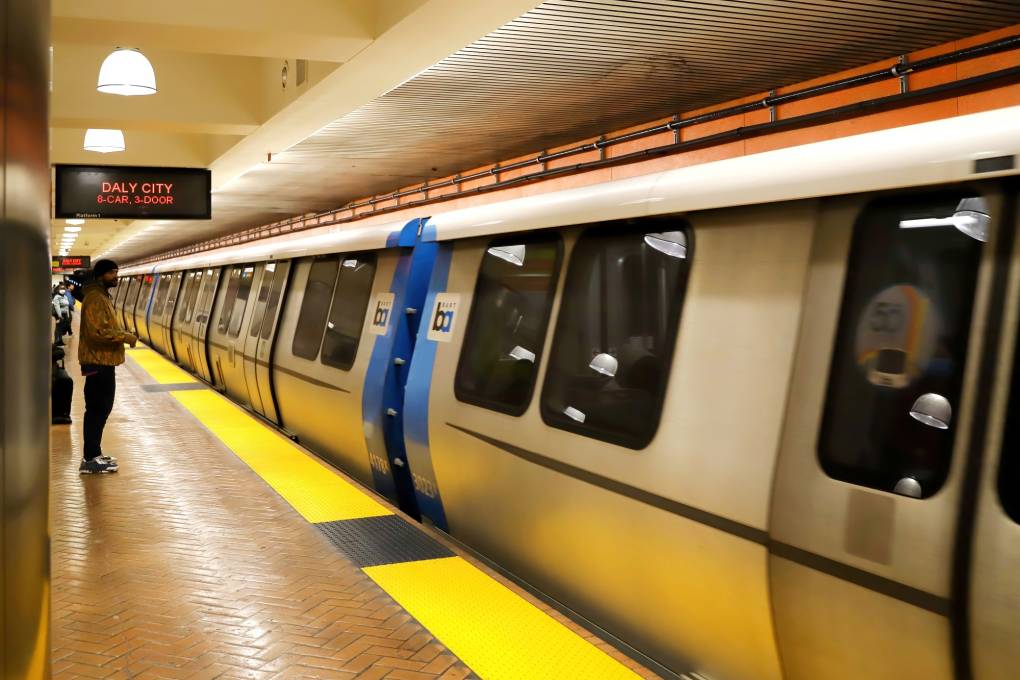
"content": "\u003cp>\u003ca href=\"https://www.kqed.org/news/tag/san-francisco-police-department\">San Francisco Police Department\u003c/a> officers were deployed to eight pro-Palestinian campus protests across Northern California during the spring and summer, according to a presentation that SFPD officials will give to the city’s Police Commission on Wednesday evening.\u003c/p>\n\u003cp>The requests for mutual aid were made through the California Governor’s Office of Emergency Services to support campus police and other law enforcement agencies responding to \u003ca href=\"https://www.kqed.org/news/11984645/photos-campus-protests-grow-across-bay-area\">the encampments and other demonstrations\u003c/a> that rocked college campuses this year in protest of university investments in companies with ties to Israel or weapons manufacturing during the war in Gaza.\u003c/p>\n\u003cp>San Francisco officers made no arrests, recorded no use of force, and none were injured, according to the report.\u003c/p>\n\u003cp>SFPD officers traveled as far as UC Santa Cruz, where a student allegedly spat on one of them, and Cal Poly Humboldt, where 32 people were arrested and a local reporter was\u003ca href=\"https://www.youtube.com/watch?v=3Alh9T0dzVE\"> detained and zip-tied\u003c/a> amid protesters’ occupation of an administration building.\u003c/p>\n\u003cp>[ad fullwidth]\u003c/p>\n\u003cp>Within the city, officers responded to San Francisco State, UC San Francisco, a University of California regents meeting at the system’s Mission Bay campus, and the private University of San Francisco, where personnel did not want a uniformed SFPD presence on campus, the report said. The response at USF included only monitoring by on-duty officers.\u003c/p>\n\u003cp>At UC Berkeley, one sergeant and 17 officers were deployed to a May 31 protest where students and demonstrators occupied a building, the report said, and university police did not have enough officers to safely address the issue.\u003c/p>\n\u003cfigure id=\"attachment_11986578\" class=\"wp-caption aligncenter\" style=\"max-width: 1920px\">\u003cimg loading=\"lazy\" decoding=\"async\" class=\"size-full wp-image-11986578\" src=\"https://cdn.kqed.org/wp-content/uploads/sites/10/2024/05/020FAA02-736A-40D4-834F-1886DEB22C6E_qut.jpg\" alt=\"\" width=\"1920\" height=\"1280\" srcset=\"https://cdn.kqed.org/wp-content/uploads/sites/10/2024/05/020FAA02-736A-40D4-834F-1886DEB22C6E_qut.jpg 1920w, https://cdn.kqed.org/wp-content/uploads/sites/10/2024/05/020FAA02-736A-40D4-834F-1886DEB22C6E_qut-800x533.jpg 800w, https://cdn.kqed.org/wp-content/uploads/sites/10/2024/05/020FAA02-736A-40D4-834F-1886DEB22C6E_qut-1020x680.jpg 1020w, https://cdn.kqed.org/wp-content/uploads/sites/10/2024/05/020FAA02-736A-40D4-834F-1886DEB22C6E_qut-160x107.jpg 160w, https://cdn.kqed.org/wp-content/uploads/sites/10/2024/05/020FAA02-736A-40D4-834F-1886DEB22C6E_qut-1536x1024.jpg 1536w\" sizes=\"auto, (max-width: 1920px) 100vw, 1920px\">\u003cfigcaption class=\"wp-caption-text\">Tents fill the yard at Anna Head Alumnae Hall in Berkeley on May 16, 2024, an abandoned UC Berkeley building near People’s Park that pro-Palestinian activists occupy. \u003ccite>(Beth LaBerge/KQED)\u003c/cite>\u003c/figcaption>\u003c/figure>\n\u003cp>Police Commissioner Kevin Benedicto requested the report in late spring when protests were ramping up across the country. He said that the lack of reported use of force is positive but that the high number of officers on the UC Berkeley campus raises some questions.\u003c/p>\n\u003cp>“Seventeen officers and a sergeant is a huge deployment,” Benedicto told KQED. “I just do want to make sure that we’re asking the right questions and that we’re really keeping up strong efforts to ensure really smart resource allocation of our very scarce police resources.”\u003c/p>\n\u003cp>In Humboldt, SFPD responded to a request from university police for 250 external law enforcement officers on April 27, \u003ca href=\"https://theappeal.org/cal-poly-humboldt-palestine-protest-police/\">according to an email obtained by The Appeal\u003c/a>. Cal Poly Humboldt police policy permits officers to seek assistance from outside law enforcement if necessary.\u003c/p>\n\u003cp>[aside postID=news_12004860 hero='https://cdn.kqed.org/wp-content/uploads/sites/10/2024/09/240415-880GazaProtest-015-BL_qed-1020x680.jpg']\u003c/p>\n\u003cp>Emails show law enforcement officers developed an action plan to combat what they described as the “threat of domestic violent extremism and criminal behavior” supposedly presented by protesters, and they shared these plans and materials with incoming officers from around the state.\u003c/p>\n\u003cp>One SFPD sergeant and 10 officers were deployed to the Redwood campus at 11 p.m. on April 29, SFPD said. SFPD provided “a uniformed presence,” “traffic control,” and “assisted in a skirmish line one block away” from where local police and Humboldt County sheriff’s deputies were making arrests, according to the report. Officers also received overtime for the deployments.\u003c/p>\n\u003cp>“Support only for local police as needed/necessary due to possible violent participants,” SFPD said in the report.\u003c/p>\n\u003cp>Jose Quezada, a photographer for the Eureka Times-Standard who was escorted off the campus on April 30, said there were officers “from all over.”\u003c/p>\n\u003cp>The officers were “fully armed with everything that I can imagine law enforcement or a militarized person could have,” Rouhollah Aghasaleh, an assistant professor at Cal Poly Humboldt’s School of Education, told KQED.\u003c/p>\n\u003cp>Griffin Mancuso, the editor in chief of the Cal Poly Humboldt student-run paper, the Lumberjack, said students heard rumors leading up to the April 29 raid that officers from out of town were coming to campus. The evening that hundreds of riot police arrived to arrest protesters and take down barricades, Mancuso said he saw police cars from other counties parked around the campus.\u003c/p>\n\u003cp>“We knew that that was a possibility going in, that there would be a fairly wide variety of officers,” Mancuso said. “I think [local police] were kind of preparing for the worst. I personally expected it to escalate way more than it actually did. And thankfully it didn’t. But I can only assume that’s why they pulled in officers from around California. We don’t really have a super extensive police force here, and we certainly don’t have the kind of gear that other forces do from bigger cities.”\u003c/p>\n\u003cp>Benedicto said deployment decisions are made by the San Francisco police chief and command staff, not the Police Commission, which is tasked with setting policy and has some oversight authority.\u003c/p>\n\u003cp>“We’re not going to micromanage the department in terms of its individual deployment decisions. That’s not something the commission wants to be in the position of doing or does,” Benedicto said. “I think the outcome, hopefully, is to ensure that the public are aware that this is how their resources are being used.”\u003c/p>\n\u003cp>\u003cem>KQED’s \u003ca href=\"https://www.kqed.org/author/shossaini\">Sara Hossaini\u003c/a> contributed to this report.\u003c/em>\u003c/p>\n\u003cp>\u003c/p>\n",
"blocks": [],
"excerpt": "San Francisco police supported officers at universities across Northern California during the protests over Gaza, but they made no arrests, according to an SFPD report.",
"status": "publish",
"parent": 0,
"modified": 1734727280,
"stats": {
"hasAudio": false,
"hasVideo": false,
"hasChartOrMap": false,
"iframeSrcs": [],
"hasGoogleForm": false,
"hasGallery": false,
"hasHearkenModule": false,
"hasPolis": false,
"paragraphCount": 22,
"wordCount": 915
},
"headData": {
"title": "SFPD Deployed to 8 Campus Protests, Including 2 Major Incidents Outside the Bay Area | KQED",
"description": "San Francisco police supported officers at universities across Northern California during the protests over Gaza, but they made no arrests, according to an SFPD report.",
"ogTitle": "",
"ogDescription": "",
"ogImgId": "",
"twTitle": "",
"twDescription": "",
"twImgId": "",
"schema": {
"@context": "https://schema.org",
"@type": "NewsArticle",
"headline": "SFPD Deployed to 8 Campus Protests, Including 2 Major Incidents Outside the Bay Area",
"datePublished": "2024-09-18T07:30:55-07:00",
"dateModified": "2024-12-20T12:41:20-08:00",
"image": "https://cdn.kqed.org/wp-content/uploads/2020/02/KQED-OG-Image@1x.png",
"isAccessibleForFree": "True",
"publisher": {
"@type": "NewsMediaOrganization",
"@id": "https://www.kqed.org/#organization",
"name": "KQED",
"logo": "https://cdn.kqed.org/wp-content/uploads/2020/02/KQED-OG-Image@1x.png",
"url": "https://www.kqed.org",
"sameAs": [
"https://www.facebook.com/KQED",
"https://twitter.com/KQED",
"https://www.instagram.com/kqed/",
"https://www.tiktok.com/@kqedofficial",
"https://www.linkedin.com/company/kqed",
"https://www.youtube.com/channel/UCeC0IOo7i1P_61zVUWbJ4nw"
]
}
}
},
"sticky": false,
"nprStoryId": "kqed-12005030",
"excludeFromSiteSearch": "Include",
"articleAge": "0",
"path": "/news/12005030/sfpd-deployed-to-8-campus-protests-including-2-major-incidents-outside-the-bay-area",
"audioTrackLength": null,
"parsedContent": [
{
"type": "contentString",
"content": "\u003cdiv class=\"post-body\">\u003cp>\u003cp>\u003ca href=\"https://www.kqed.org/news/tag/san-francisco-police-department\">San Francisco Police Department\u003c/a> officers were deployed to eight pro-Palestinian campus protests across Northern California during the spring and summer, according to a presentation that SFPD officials will give to the city’s Police Commission on Wednesday evening.\u003c/p>\n\u003cp>The requests for mutual aid were made through the California Governor’s Office of Emergency Services to support campus police and other law enforcement agencies responding to \u003ca href=\"https://www.kqed.org/news/11984645/photos-campus-protests-grow-across-bay-area\">the encampments and other demonstrations\u003c/a> that rocked college campuses this year in protest of university investments in companies with ties to Israel or weapons manufacturing during the war in Gaza.\u003c/p>\n\u003cp>San Francisco officers made no arrests, recorded no use of force, and none were injured, according to the report.\u003c/p>\n\u003cp>SFPD officers traveled as far as UC Santa Cruz, where a student allegedly spat on one of them, and Cal Poly Humboldt, where 32 people were arrested and a local reporter was\u003ca href=\"https://www.youtube.com/watch?v=3Alh9T0dzVE\"> detained and zip-tied\u003c/a> amid protesters’ occupation of an administration building.\u003c/p>\n\u003cp>\u003c/p>\u003c/div>",
"attributes": {
"named": {},
"numeric": []
}
},
{
"type": "component",
"content": "",
"name": "ad",
"attributes": {
"named": {
"label": "fullwidth"
},
"numeric": [
"fullwidth"
]
}
},
{
"type": "contentString",
"content": "\u003cdiv class=\"post-body\">\u003cp>\u003c/p>\n\u003cp>Within the city, officers responded to San Francisco State, UC San Francisco, a University of California regents meeting at the system’s Mission Bay campus, and the private University of San Francisco, where personnel did not want a uniformed SFPD presence on campus, the report said. The response at USF included only monitoring by on-duty officers.\u003c/p>\n\u003cp>At UC Berkeley, one sergeant and 17 officers were deployed to a May 31 protest where students and demonstrators occupied a building, the report said, and university police did not have enough officers to safely address the issue.\u003c/p>\n\u003cfigure id=\"attachment_11986578\" class=\"wp-caption aligncenter\" style=\"max-width: 1920px\">\u003cimg loading=\"lazy\" decoding=\"async\" class=\"size-full wp-image-11986578\" src=\"https://cdn.kqed.org/wp-content/uploads/sites/10/2024/05/020FAA02-736A-40D4-834F-1886DEB22C6E_qut.jpg\" alt=\"\" width=\"1920\" height=\"1280\" srcset=\"https://cdn.kqed.org/wp-content/uploads/sites/10/2024/05/020FAA02-736A-40D4-834F-1886DEB22C6E_qut.jpg 1920w, https://cdn.kqed.org/wp-content/uploads/sites/10/2024/05/020FAA02-736A-40D4-834F-1886DEB22C6E_qut-800x533.jpg 800w, https://cdn.kqed.org/wp-content/uploads/sites/10/2024/05/020FAA02-736A-40D4-834F-1886DEB22C6E_qut-1020x680.jpg 1020w, https://cdn.kqed.org/wp-content/uploads/sites/10/2024/05/020FAA02-736A-40D4-834F-1886DEB22C6E_qut-160x107.jpg 160w, https://cdn.kqed.org/wp-content/uploads/sites/10/2024/05/020FAA02-736A-40D4-834F-1886DEB22C6E_qut-1536x1024.jpg 1536w\" sizes=\"auto, (max-width: 1920px) 100vw, 1920px\">\u003cfigcaption class=\"wp-caption-text\">Tents fill the yard at Anna Head Alumnae Hall in Berkeley on May 16, 2024, an abandoned UC Berkeley building near People’s Park that pro-Palestinian activists occupy. \u003ccite>(Beth LaBerge/KQED)\u003c/cite>\u003c/figcaption>\u003c/figure>\n\u003cp>Police Commissioner Kevin Benedicto requested the report in late spring when protests were ramping up across the country. He said that the lack of reported use of force is positive but that the high number of officers on the UC Berkeley campus raises some questions.\u003c/p>\n\u003cp>“Seventeen officers and a sergeant is a huge deployment,” Benedicto told KQED. “I just do want to make sure that we’re asking the right questions and that we’re really keeping up strong efforts to ensure really smart resource allocation of our very scarce police resources.”\u003c/p>\n\u003cp>In Humboldt, SFPD responded to a request from university police for 250 external law enforcement officers on April 27, \u003ca href=\"https://theappeal.org/cal-poly-humboldt-palestine-protest-police/\">according to an email obtained by The Appeal\u003c/a>. Cal Poly Humboldt police policy permits officers to seek assistance from outside law enforcement if necessary.\u003c/p>\n\u003cp>\u003c/p>\u003c/div>",
"attributes": {
"named": {},
"numeric": []
}
},
{
"type": "component",
"content": "",
"name": "aside",
"attributes": {
"named": {
"postid": "news_12004860",
"hero": "https://cdn.kqed.org/wp-content/uploads/sites/10/2024/09/240415-880GazaProtest-015-BL_qed-1020x680.jpg",
"label": ""
},
"numeric": []
}
},
{
"type": "contentString",
"content": "\u003cdiv class=\"post-body\">\u003cp>\u003c/p>\n\u003cp>Emails show law enforcement officers developed an action plan to combat what they described as the “threat of domestic violent extremism and criminal behavior” supposedly presented by protesters, and they shared these plans and materials with incoming officers from around the state.\u003c/p>\n\u003cp>One SFPD sergeant and 10 officers were deployed to the Redwood campus at 11 p.m. on April 29, SFPD said. SFPD provided “a uniformed presence,” “traffic control,” and “assisted in a skirmish line one block away” from where local police and Humboldt County sheriff’s deputies were making arrests, according to the report. Officers also received overtime for the deployments.\u003c/p>\n\u003cp>“Support only for local police as needed/necessary due to possible violent participants,” SFPD said in the report.\u003c/p>\n\u003cp>Jose Quezada, a photographer for the Eureka Times-Standard who was escorted off the campus on April 30, said there were officers “from all over.”\u003c/p>\n\u003cp>The officers were “fully armed with everything that I can imagine law enforcement or a militarized person could have,” Rouhollah Aghasaleh, an assistant professor at Cal Poly Humboldt’s School of Education, told KQED.\u003c/p>\n\u003cp>Griffin Mancuso, the editor in chief of the Cal Poly Humboldt student-run paper, the Lumberjack, said students heard rumors leading up to the April 29 raid that officers from out of town were coming to campus. The evening that hundreds of riot police arrived to arrest protesters and take down barricades, Mancuso said he saw police cars from other counties parked around the campus.\u003c/p>\n\u003cp>“We knew that that was a possibility going in, that there would be a fairly wide variety of officers,” Mancuso said. “I think [local police] were kind of preparing for the worst. I personally expected it to escalate way more than it actually did. And thankfully it didn’t. But I can only assume that’s why they pulled in officers from around California. We don’t really have a super extensive police force here, and we certainly don’t have the kind of gear that other forces do from bigger cities.”\u003c/p>\n\u003cp>Benedicto said deployment decisions are made by the San Francisco police chief and command staff, not the Police Commission, which is tasked with setting policy and has some oversight authority.\u003c/p>\n\u003cp>“We’re not going to micromanage the department in terms of its individual deployment decisions. That’s not something the commission wants to be in the position of doing or does,” Benedicto said. “I think the outcome, hopefully, is to ensure that the public are aware that this is how their resources are being used.”\u003c/p>\n\u003cp>\u003cem>KQED’s \u003ca href=\"https://www.kqed.org/author/shossaini\">Sara Hossaini\u003c/a> contributed to this report.\u003c/em>\u003c/p>\n\u003cp>\u003c/p>\n\u003c/div>\u003c/p>",
"attributes": {
"named": {},
"numeric": []
}
}
],
"link": "/news/12005030/sfpd-deployed-to-8-campus-protests-including-2-major-incidents-outside-the-bay-area",
"authors": [
"11925"
],
"categories": [
"news_31795",
"news_18540",
"news_8"
],
"tags": [
"news_18538",
"news_34008",
"news_27626",
"news_6631",
"news_33647",
"news_20331"
],
"featImg": "news_11989566",
"label": "news"
},
"news_12004742": {
"type": "posts",
"id": "news_12004742",
"meta": {
"index": "posts_1716263798",
"site": "news",
"id": "12004742",
"score": null,
"sort": [
1726267656000
]
},
"guestAuthors": [],
"slug": "san-francisco-police-shoot-reportedly-armed-man-at-powell-bart-station",
"title": "San Francisco Police Shoot Reportedly Armed Man at Powell BART Station",
"publishDate": 1726267656,
"format": "standard",
"headTitle": "San Francisco Police Shoot Reportedly Armed Man at Powell BART Station | KQED",
"labelTerm": {
"site": "news"
},
"content": "\u003cp>San Francisco police shot and wounded a man Friday morning, temporarily shutting down the Powell Street transit station, authorities said.\u003c/p>\n\u003cp>Officers observed a man in a car armed with a gun shortly after 10 a.m., Police Chief Bill Scott said in a press conference, adding that the car was stolen. Police chased the suspect into a liquor store on Mint Plaza, then pursued him on foot to the BART station, where three officers drew guns and shot the person, \u003ca href=\"https://missionlocal.org/2024/09/sfpd-officers-shoot-powell-bart-station/\">according to Mission Local\u003c/a>.\u003c/p>\n\u003cp>The man was reportedly conscious and speaking with medics, and Scott said he was in fair condition. He was the only person injured, Scott said.\u003c/p>\n\u003cp>[ad fullwidth]\u003c/p>\n\u003cp>A swarm of armed officers and two squad cars were parked outside the entrance to the GNG liquor store on 5th and Stevenson streets, footage posted on the X account\u003ca href=\"https://x.com/friscolive415/status/1834667140231950736\"> FriscoLive415 showed\u003c/a>.\u003c/p>\n\u003cp>“There is a suspect inside; come out with your hands up, please,” an officer in the video can be heard saying on a loudspeaker. “Out with your hands up.”\u003c/p>\n\u003cfigure id=\"attachment_12004750\" class=\"wp-caption aligncenter\" style=\"max-width: 2000px\">\u003cimg loading=\"lazy\" decoding=\"async\" class=\"size-full wp-image-12004750\" src=\"https://cdn.kqed.org/wp-content/uploads/sites/10/2024/09/DowntownSFGetty1.jpg\" alt=\"\" width=\"2000\" height=\"1333\" srcset=\"https://cdn.kqed.org/wp-content/uploads/sites/10/2024/09/DowntownSFGetty1.jpg 2000w, https://cdn.kqed.org/wp-content/uploads/sites/10/2024/09/DowntownSFGetty1-800x533.jpg 800w, https://cdn.kqed.org/wp-content/uploads/sites/10/2024/09/DowntownSFGetty1-1020x680.jpg 1020w, https://cdn.kqed.org/wp-content/uploads/sites/10/2024/09/DowntownSFGetty1-160x107.jpg 160w, https://cdn.kqed.org/wp-content/uploads/sites/10/2024/09/DowntownSFGetty1-1536x1024.jpg 1536w, https://cdn.kqed.org/wp-content/uploads/sites/10/2024/09/DowntownSFGetty1-1920x1280.jpg 1920w\" sizes=\"(max-width: 2000px) 100vw, 2000px\">\u003cfigcaption class=\"wp-caption-text\">Powell and Market streets in downtown San Francisco. \u003ccite>(Vichie81/Getty Images)\u003c/cite>\u003c/figcaption>\u003c/figure>\n\u003cp>In a dramatic scene, a person wearing a white baseball cap walks out of the liquor store toward the BART station with what appears to be a gun in hand. Police and sheriff’s deputies with large guns run toward the station, and shots ring out.\u003c/p>\n\u003cp>Witnesses\u003ca href=\"https://archive.ph/X1OZP#selection-1325.0-1343.116\"> reported an individual\u003c/a> being wheeled into an ambulance by medics from the San Francisco Fire Department.\u003c/p>\n\u003cp>Police recovered the suspect’s firearm, Scott said.\u003c/p>\n\u003cp>[aside postID=news_12002515 hero='https://cdn.kqed.org/wp-content/uploads/sites/10/2024/08/240830-SFSIDESHOWLEGISLATION-07-BL-KQED-1020x680.jpg']\u003c/p>\n\u003cp>“Our officers were deployed very heavily in this area for this very reason. We are committed to having a safe, clean city,” Scott said.\u003c/p>\n\u003cp>“They took the appropriate action in terms of engaging with this person,” he added.\u003c/p>\n\u003cp>Both BART and Muni trains were closed at Powell at 10 a.m. but have since resumed service.\u003c/p>\n\u003cp>As of 1 p.m., BART and Muni say the station entrance at 5th and Market streets remains closed, but the entrance on 4th Street is open.\u003c/p>\n\u003cp>San Francisco Police Department officials did not respond to a request for comment.\u003c/p>\n\u003cp>The incident came just days after a high-profile shooting of San Francisco 49ers rookie wide receiver Ricky Pearsall in nearby Union Square. A 17-year-old suspect has been \u003ca href=\"https://www.kqed.org/news/12002868/teen-accused-of-shooting-49ers-rookie-ricky-pearsall-is-charged-with-attempted-murder\">charged with attempted murder\u003c/a>, assault with a semiautomatic weapon, and attempted second-degree robbery.\u003c/p>\n\u003cp>In a \u003ca href=\"https://www.sanfranciscopolice.org/news/tenderloin-district-officer-involved-shooting-24-105\">statement\u003c/a> Friday, the SFPD said the case remains “an open and active investigation” and said there would be a town hall on the incident within the next 10 days.\u003c/p>\n\u003cp>\u003c/p>\n",
"blocks": [],
"excerpt": "San Francisco police officers spotted the armed man in a car, the chief said and shot him after a dramatic pursuit into the Powell Street station.",
"status": "publish",
"parent": 0,
"modified": 1726359235,
"stats": {
"hasAudio": false,
"hasVideo": false,
"hasChartOrMap": false,
"iframeSrcs": [],
"hasGoogleForm": false,
"hasGallery": false,
"hasHearkenModule": false,
"hasPolis": false,
"paragraphCount": 18,
"wordCount": 459
},
"headData": {
"title": "San Francisco Police Shoot Reportedly Armed Man at Powell BART Station | KQED",
"description": "San Francisco police officers spotted the armed man in a car, the chief said and shot him after a dramatic pursuit into the Powell Street station.",
"ogTitle": "",
"ogDescription": "",
"ogImgId": "",
"twTitle": "",
"twDescription": "",
"twImgId": "",
"schema": {
"@context": "https://schema.org",
"@type": "NewsArticle",
"headline": "San Francisco Police Shoot Reportedly Armed Man at Powell BART Station",
"datePublished": "2024-09-13T15:47:36-07:00",
"dateModified": "2024-09-14T17:13:55-07:00",
"image": "https://cdn.kqed.org/wp-content/uploads/2020/02/KQED-OG-Image@1x.png",
"isAccessibleForFree": "True",
"publisher": {
"@type": "NewsMediaOrganization",
"@id": "https://www.kqed.org/#organization",
"name": "KQED",
"logo": "https://cdn.kqed.org/wp-content/uploads/2020/02/KQED-OG-Image@1x.png",
"url": "https://www.kqed.org",
"sameAs": [
"https://www.facebook.com/KQED",
"https://twitter.com/KQED",
"https://www.instagram.com/kqed/",
"https://www.tiktok.com/@kqedofficial",
"https://www.linkedin.com/company/kqed",
"https://www.youtube.com/channel/UCeC0IOo7i1P_61zVUWbJ4nw"
]
}
}
},
"sticky": false,
"nprStoryId": "kqed-12004742",
"excludeFromSiteSearch": "Include",
"articleAge": "0",
"path": "/news/12004742/san-francisco-police-shoot-reportedly-armed-man-at-powell-bart-station",
"audioTrackLength": null,
"parsedContent": [
{
"type": "contentString",
"content": "\u003cdiv class=\"post-body\">\u003cp>\u003cp>San Francisco police shot and wounded a man Friday morning, temporarily shutting down the Powell Street transit station, authorities said.\u003c/p>\n\u003cp>Officers observed a man in a car armed with a gun shortly after 10 a.m., Police Chief Bill Scott said in a press conference, adding that the car was stolen. Police chased the suspect into a liquor store on Mint Plaza, then pursued him on foot to the BART station, where three officers drew guns and shot the person, \u003ca href=\"https://missionlocal.org/2024/09/sfpd-officers-shoot-powell-bart-station/\">according to Mission Local\u003c/a>.\u003c/p>\n\u003cp>The man was reportedly conscious and speaking with medics, and Scott said he was in fair condition. He was the only person injured, Scott said.\u003c/p>\n\u003cp>\u003c/p>\u003c/div>",
"attributes": {
"named": {},
"numeric": []
}
},
{
"type": "component",
"content": "",
"name": "ad",
"attributes": {
"named": {
"label": "fullwidth"
},
"numeric": [
"fullwidth"
]
}
},
{
"type": "contentString",
"content": "\u003cdiv class=\"post-body\">\u003cp>\u003c/p>\n\u003cp>A swarm of armed officers and two squad cars were parked outside the entrance to the GNG liquor store on 5th and Stevenson streets, footage posted on the X account\u003ca href=\"https://x.com/friscolive415/status/1834667140231950736\"> FriscoLive415 showed\u003c/a>.\u003c/p>\n\u003cp>“There is a suspect inside; come out with your hands up, please,” an officer in the video can be heard saying on a loudspeaker. “Out with your hands up.”\u003c/p>\n\u003cfigure id=\"attachment_12004750\" class=\"wp-caption aligncenter\" style=\"max-width: 2000px\">\u003cimg loading=\"lazy\" decoding=\"async\" class=\"size-full wp-image-12004750\" src=\"https://cdn.kqed.org/wp-content/uploads/sites/10/2024/09/DowntownSFGetty1.jpg\" alt=\"\" width=\"2000\" height=\"1333\" srcset=\"https://cdn.kqed.org/wp-content/uploads/sites/10/2024/09/DowntownSFGetty1.jpg 2000w, https://cdn.kqed.org/wp-content/uploads/sites/10/2024/09/DowntownSFGetty1-800x533.jpg 800w, https://cdn.kqed.org/wp-content/uploads/sites/10/2024/09/DowntownSFGetty1-1020x680.jpg 1020w, https://cdn.kqed.org/wp-content/uploads/sites/10/2024/09/DowntownSFGetty1-160x107.jpg 160w, https://cdn.kqed.org/wp-content/uploads/sites/10/2024/09/DowntownSFGetty1-1536x1024.jpg 1536w, https://cdn.kqed.org/wp-content/uploads/sites/10/2024/09/DowntownSFGetty1-1920x1280.jpg 1920w\" sizes=\"(max-width: 2000px) 100vw, 2000px\">\u003cfigcaption class=\"wp-caption-text\">Powell and Market streets in downtown San Francisco. \u003ccite>(Vichie81/Getty Images)\u003c/cite>\u003c/figcaption>\u003c/figure>\n\u003cp>In a dramatic scene, a person wearing a white baseball cap walks out of the liquor store toward the BART station with what appears to be a gun in hand. Police and sheriff’s deputies with large guns run toward the station, and shots ring out.\u003c/p>\n\u003cp>Witnesses\u003ca href=\"https://archive.ph/X1OZP#selection-1325.0-1343.116\"> reported an individual\u003c/a> being wheeled into an ambulance by medics from the San Francisco Fire Department.\u003c/p>\n\u003cp>Police recovered the suspect’s firearm, Scott said.\u003c/p>\n\u003cp>\u003c/p>\u003c/div>",
"attributes": {
"named": {},
"numeric": []
}
},
{
"type": "component",
"content": "",
"name": "aside",
"attributes": {
"named": {
"postid": "news_12002515",
"hero": "https://cdn.kqed.org/wp-content/uploads/sites/10/2024/08/240830-SFSIDESHOWLEGISLATION-07-BL-KQED-1020x680.jpg",
"label": ""
},
"numeric": []
}
},
{
"type": "contentString",
"content": "\u003cdiv class=\"post-body\">\u003cp>\u003c/p>\n\u003cp>“Our officers were deployed very heavily in this area for this very reason. We are committed to having a safe, clean city,” Scott said.\u003c/p>\n\u003cp>“They took the appropriate action in terms of engaging with this person,” he added.\u003c/p>\n\u003cp>Both BART and Muni trains were closed at Powell at 10 a.m. but have since resumed service.\u003c/p>\n\u003cp>As of 1 p.m., BART and Muni say the station entrance at 5th and Market streets remains closed, but the entrance on 4th Street is open.\u003c/p>\n\u003cp>San Francisco Police Department officials did not respond to a request for comment.\u003c/p>\n\u003cp>The incident came just days after a high-profile shooting of San Francisco 49ers rookie wide receiver Ricky Pearsall in nearby Union Square. A 17-year-old suspect has been \u003ca href=\"https://www.kqed.org/news/12002868/teen-accused-of-shooting-49ers-rookie-ricky-pearsall-is-charged-with-attempted-murder\">charged with attempted murder\u003c/a>, assault with a semiautomatic weapon, and attempted second-degree robbery.\u003c/p>\n\u003cp>In a \u003ca href=\"https://www.sanfranciscopolice.org/news/tenderloin-district-officer-involved-shooting-24-105\">statement\u003c/a> Friday, the SFPD said the case remains “an open and active investigation” and said there would be a town hall on the incident within the next 10 days.\u003c/p>\n\u003cp>\u003c/p>\n\u003c/div>\u003c/p>",
"attributes": {
"named": {},
"numeric": []
}
}
],
"link": "/news/12004742/san-francisco-police-shoot-reportedly-armed-man-at-powell-bart-station",
"authors": [
"11925"
],
"categories": [
"news_31795",
"news_34167",
"news_8"
],
"tags": [
"news_18538",
"news_4245",
"news_22850",
"news_4080",
"news_38",
"news_545",
"news_20331"
],
"featImg": "news_12004765",
"label": "news"
},
"news_11999406": {
"type": "posts",
"id": "news_11999406",
"meta": {
"index": "posts_1716263798",
"site": "news",
"id": "11999406",
"score": null,
"sort": [
1723147231000
]
},
"guestAuthors": [],
"slug": "sfpd-spent-nearly-250k-in-overtime-during-failed-attempt-to-halt-dolores-hill-bomb",
"title": "SFPD Spent Nearly $250K in Overtime During Failed Attempt to Halt Dolores Hill Bomb",
"publishDate": 1723147231,
"format": "standard",
"headTitle": "SFPD Spent Nearly $250K in Overtime During Failed Attempt to Halt Dolores Hill Bomb | KQED",
"labelTerm": {
"site": "news"
},
"content": "\u003cp>Local law enforcement spent more than a quarter million dollars in overtime last month to crack down on an annual downhill skateboarding event.\u003c/p>\n\u003cp>The skaters had a backup plan.\u003c/p>\n\u003cp>On July 6, skaters attending the \u003ca href=\"https://www.kqed.org/news/11993120/san-francisco-police-set-up-barricades-ahead-of-dolores-hill-bomb\">Dolores Park Hill Bomb\u003c/a>, an annual event that draws hundreds to watch skaters speed down a steep hill near the Mission District park, were met with dozens of officers, along with barricades and other means to deter skating on Dolores Street, where the event has taken place in the past.\u003c/p>\n\u003cp>[ad fullwidth]\u003c/p>\n\u003cp>The skaters simply walked across the park to Church Street.\u003c/p>\n\u003cp>“You can never stop a skater’s pride, bro. This s— is never going to stop,” skater Mark Urbieta told KQED at the event. “Every single day. We’re going to do it regardless. We’re going to do it from Twin Peaks all the way to downtown.”\u003c/p>\n\u003cfigure id=\"attachment_11999434\" class=\"wp-caption aligncenter\" style=\"max-width: 2000px\">\u003cimg loading=\"lazy\" decoding=\"async\" class=\"size-full wp-image-11999434\" src=\"https://cdn.kqed.org/wp-content/uploads/sites/10/2024/08/20240706_DoloresHillBomb-24_qed.jpg\" alt=\"\" width=\"2000\" height=\"1333\" srcset=\"https://cdn.kqed.org/wp-content/uploads/sites/10/2024/08/20240706_DoloresHillBomb-24_qed.jpg 2000w, https://cdn.kqed.org/wp-content/uploads/sites/10/2024/08/20240706_DoloresHillBomb-24_qed-800x533.jpg 800w, https://cdn.kqed.org/wp-content/uploads/sites/10/2024/08/20240706_DoloresHillBomb-24_qed-1020x680.jpg 1020w, https://cdn.kqed.org/wp-content/uploads/sites/10/2024/08/20240706_DoloresHillBomb-24_qed-160x107.jpg 160w, https://cdn.kqed.org/wp-content/uploads/sites/10/2024/08/20240706_DoloresHillBomb-24_qed-1536x1024.jpg 1536w, https://cdn.kqed.org/wp-content/uploads/sites/10/2024/08/20240706_DoloresHillBomb-24_qed-1920x1280.jpg 1920w\" sizes=\"(max-width: 2000px) 100vw, 2000px\">\u003cfigcaption class=\"wp-caption-text\">An individual skates down Church Street during the annual Dolores Hill Bomb on July 6, 2024. The event, in which skateboarders race down Dolores Street at high speeds, resulted in over 100 teenagers and adults being arrested last year. \u003ccite>(Gina Castro/KQED)\u003c/cite>\u003c/figcaption>\u003c/figure>\n\u003cp>The Hill Bomb has become controversial in recent years. Paramedics are often required for skaters who wipe out, and complaints from neighborhood groups have mounted. In 2023, the event ended with the \u003ca href=\"https://www.kqed.org/news/11956110/sfpd-releases-video-footage-from-skateboarding-hill-bomb\">arrests of 113 people\u003c/a>, including more than 80 minors. This led to outrage and a lawsuit from parents, who sued the city on behalf of their children for alleged civil rights violations.\u003c/p>\n\u003cp>This year, the San Francisco Police Department held a press conference before the event, warning the public that it would have a heavy presence at Dolores Park.\u003c/p>\n\u003cp>It cost more than $247,000 in overtime for SFPD officers to attempt to stop the hill bomb. In addition, roughly $6,400 was spent on barricades rentals, according to\u003ca href=\"https://x.com/dizz_h/status/1821374367584096343\"> public records\u003c/a> obtained by Hazel Williams, a homeless rights advocate, and shared with KQED. The San Francisco Sheriff’s Department, which assisted SFPD, estimated that it spent another roughly $29,000 on overtime.\u003c/p>\n\u003cfigure id=\"attachment_11999438\" class=\"wp-caption aligncenter\" style=\"max-width: 2000px\">\u003cimg loading=\"lazy\" decoding=\"async\" class=\"size-full wp-image-11999438\" src=\"https://cdn.kqed.org/wp-content/uploads/sites/10/2024/08/20240706_DoloresHillBomb-33_qed.jpg\" alt=\"\" width=\"2000\" height=\"1333\" srcset=\"https://cdn.kqed.org/wp-content/uploads/sites/10/2024/08/20240706_DoloresHillBomb-33_qed.jpg 2000w, https://cdn.kqed.org/wp-content/uploads/sites/10/2024/08/20240706_DoloresHillBomb-33_qed-800x533.jpg 800w, https://cdn.kqed.org/wp-content/uploads/sites/10/2024/08/20240706_DoloresHillBomb-33_qed-1020x680.jpg 1020w, https://cdn.kqed.org/wp-content/uploads/sites/10/2024/08/20240706_DoloresHillBomb-33_qed-160x107.jpg 160w, https://cdn.kqed.org/wp-content/uploads/sites/10/2024/08/20240706_DoloresHillBomb-33_qed-1536x1024.jpg 1536w, https://cdn.kqed.org/wp-content/uploads/sites/10/2024/08/20240706_DoloresHillBomb-33_qed-1920x1280.jpg 1920w\" sizes=\"(max-width: 2000px) 100vw, 2000px\">\u003cfigcaption class=\"wp-caption-text\">SFPD stood guard during the annual Dolores Hill Bomb on July 6, 2024. \u003ccite>(Gina Castro/KQED)\u003c/cite>\u003c/figcaption>\u003c/figure>\n\u003cp>Last year’s event cost the police department $143,000 in overtime costs, \u003ca href=\"https://missionlocal.org/2023/08/overtime-dolores-hill-bomb-sfpd-civil-rights-lawsuit/\">\u003cem>Mission Local\u003c/em> reported.\u003c/a>\u003c/p>\n\u003cp>Evan Sernoffsky, SFPD’s director of strategic communications, said the department’s investment in policing at the event yielded significant results, adding that last year’s arrests were related to vandalism of city property, alleged violence and other property destruction.\u003c/p>\n\u003cp>“This year, thanks to our community outreach and public messaging, there were dramatically fewer people at the event,” he said in an email. “Importantly, there was no widespread violence and property damage.”\u003c/p>\n\u003cp>\u003cem>KQED’s \u003ca href=\"https://www.kqed.org/author/jlara\">Juan Carlos Lara\u003c/a> contributed to this report.\u003c/em>\u003c/p>\n\u003cp>\u003c/p>\n",
"blocks": [],
"excerpt": "It cost more than $247,000 in overtime for San Francisco officers to attempt to stop the Hill bomb. In addition, it cost roughly $6,400 on barricades rentals, according to public records shared with KQED.",
"status": "publish",
"parent": 0,
"modified": 1723147683,
"stats": {
"hasAudio": false,
"hasVideo": false,
"hasChartOrMap": false,
"iframeSrcs": [],
"hasGoogleForm": false,
"hasGallery": false,
"hasHearkenModule": false,
"hasPolis": false,
"paragraphCount": 14,
"wordCount": 472
},
"headData": {
"title": "SFPD Spent Nearly $250K in Overtime During Failed Attempt to Halt Dolores Hill Bomb | KQED",
"description": "It cost more than $247,000 in overtime for San Francisco officers to attempt to stop the Hill bomb. In addition, it cost roughly $6,400 on barricades rentals, according to public records shared with KQED.",
"ogTitle": "",
"ogDescription": "",
"ogImgId": "",
"twTitle": "",
"twDescription": "",
"twImgId": "",
"schema": {
"@context": "https://schema.org",
"@type": "NewsArticle",
"headline": "SFPD Spent Nearly $250K in Overtime During Failed Attempt to Halt Dolores Hill Bomb",
"datePublished": "2024-08-08T13:00:31-07:00",
"dateModified": "2024-08-08T13:08:03-07:00",
"image": "https://cdn.kqed.org/wp-content/uploads/2020/02/KQED-OG-Image@1x.png",
"isAccessibleForFree": "True",
"publisher": {
"@type": "NewsMediaOrganization",
"@id": "https://www.kqed.org/#organization",
"name": "KQED",
"logo": "https://cdn.kqed.org/wp-content/uploads/2020/02/KQED-OG-Image@1x.png",
"url": "https://www.kqed.org",
"sameAs": [
"https://www.facebook.com/KQED",
"https://twitter.com/KQED",
"https://www.instagram.com/kqed/",
"https://www.tiktok.com/@kqedofficial",
"https://www.linkedin.com/company/kqed",
"https://www.youtube.com/channel/UCeC0IOo7i1P_61zVUWbJ4nw"
]
}
}
},
"sticky": false,
"nprStoryId": "kqed-11999406",
"excludeFromSiteSearch": "Include",
"articleAge": "0",
"path": "/news/11999406/sfpd-spent-nearly-250k-in-overtime-during-failed-attempt-to-halt-dolores-hill-bomb",
"audioTrackLength": null,
"parsedContent": [
{
"type": "contentString",
"content": "\u003cdiv class=\"post-body\">\u003cp>\u003cp>Local law enforcement spent more than a quarter million dollars in overtime last month to crack down on an annual downhill skateboarding event.\u003c/p>\n\u003cp>The skaters had a backup plan.\u003c/p>\n\u003cp>On July 6, skaters attending the \u003ca href=\"https://www.kqed.org/news/11993120/san-francisco-police-set-up-barricades-ahead-of-dolores-hill-bomb\">Dolores Park Hill Bomb\u003c/a>, an annual event that draws hundreds to watch skaters speed down a steep hill near the Mission District park, were met with dozens of officers, along with barricades and other means to deter skating on Dolores Street, where the event has taken place in the past.\u003c/p>\n\u003cp>\u003c/p>\u003c/div>",
"attributes": {
"named": {},
"numeric": []
}
},
{
"type": "component",
"content": "",
"name": "ad",
"attributes": {
"named": {
"label": "fullwidth"
},
"numeric": [
"fullwidth"
]
}
},
{
"type": "contentString",
"content": "\u003cdiv class=\"post-body\">\u003cp>\u003c/p>\n\u003cp>The skaters simply walked across the park to Church Street.\u003c/p>\n\u003cp>“You can never stop a skater’s pride, bro. This s— is never going to stop,” skater Mark Urbieta told KQED at the event. “Every single day. We’re going to do it regardless. We’re going to do it from Twin Peaks all the way to downtown.”\u003c/p>\n\u003cfigure id=\"attachment_11999434\" class=\"wp-caption aligncenter\" style=\"max-width: 2000px\">\u003cimg loading=\"lazy\" decoding=\"async\" class=\"size-full wp-image-11999434\" src=\"https://cdn.kqed.org/wp-content/uploads/sites/10/2024/08/20240706_DoloresHillBomb-24_qed.jpg\" alt=\"\" width=\"2000\" height=\"1333\" srcset=\"https://cdn.kqed.org/wp-content/uploads/sites/10/2024/08/20240706_DoloresHillBomb-24_qed.jpg 2000w, https://cdn.kqed.org/wp-content/uploads/sites/10/2024/08/20240706_DoloresHillBomb-24_qed-800x533.jpg 800w, https://cdn.kqed.org/wp-content/uploads/sites/10/2024/08/20240706_DoloresHillBomb-24_qed-1020x680.jpg 1020w, https://cdn.kqed.org/wp-content/uploads/sites/10/2024/08/20240706_DoloresHillBomb-24_qed-160x107.jpg 160w, https://cdn.kqed.org/wp-content/uploads/sites/10/2024/08/20240706_DoloresHillBomb-24_qed-1536x1024.jpg 1536w, https://cdn.kqed.org/wp-content/uploads/sites/10/2024/08/20240706_DoloresHillBomb-24_qed-1920x1280.jpg 1920w\" sizes=\"(max-width: 2000px) 100vw, 2000px\">\u003cfigcaption class=\"wp-caption-text\">An individual skates down Church Street during the annual Dolores Hill Bomb on July 6, 2024. The event, in which skateboarders race down Dolores Street at high speeds, resulted in over 100 teenagers and adults being arrested last year. \u003ccite>(Gina Castro/KQED)\u003c/cite>\u003c/figcaption>\u003c/figure>\n\u003cp>The Hill Bomb has become controversial in recent years. Paramedics are often required for skaters who wipe out, and complaints from neighborhood groups have mounted. In 2023, the event ended with the \u003ca href=\"https://www.kqed.org/news/11956110/sfpd-releases-video-footage-from-skateboarding-hill-bomb\">arrests of 113 people\u003c/a>, including more than 80 minors. This led to outrage and a lawsuit from parents, who sued the city on behalf of their children for alleged civil rights violations.\u003c/p>\n\u003cp>This year, the San Francisco Police Department held a press conference before the event, warning the public that it would have a heavy presence at Dolores Park.\u003c/p>\n\u003cp>It cost more than $247,000 in overtime for SFPD officers to attempt to stop the hill bomb. In addition, roughly $6,400 was spent on barricades rentals, according to\u003ca href=\"https://x.com/dizz_h/status/1821374367584096343\"> public records\u003c/a> obtained by Hazel Williams, a homeless rights advocate, and shared with KQED. The San Francisco Sheriff’s Department, which assisted SFPD, estimated that it spent another roughly $29,000 on overtime.\u003c/p>\n\u003cfigure id=\"attachment_11999438\" class=\"wp-caption aligncenter\" style=\"max-width: 2000px\">\u003cimg loading=\"lazy\" decoding=\"async\" class=\"size-full wp-image-11999438\" src=\"https://cdn.kqed.org/wp-content/uploads/sites/10/2024/08/20240706_DoloresHillBomb-33_qed.jpg\" alt=\"\" width=\"2000\" height=\"1333\" srcset=\"https://cdn.kqed.org/wp-content/uploads/sites/10/2024/08/20240706_DoloresHillBomb-33_qed.jpg 2000w, https://cdn.kqed.org/wp-content/uploads/sites/10/2024/08/20240706_DoloresHillBomb-33_qed-800x533.jpg 800w, https://cdn.kqed.org/wp-content/uploads/sites/10/2024/08/20240706_DoloresHillBomb-33_qed-1020x680.jpg 1020w, https://cdn.kqed.org/wp-content/uploads/sites/10/2024/08/20240706_DoloresHillBomb-33_qed-160x107.jpg 160w, https://cdn.kqed.org/wp-content/uploads/sites/10/2024/08/20240706_DoloresHillBomb-33_qed-1536x1024.jpg 1536w, https://cdn.kqed.org/wp-content/uploads/sites/10/2024/08/20240706_DoloresHillBomb-33_qed-1920x1280.jpg 1920w\" sizes=\"(max-width: 2000px) 100vw, 2000px\">\u003cfigcaption class=\"wp-caption-text\">SFPD stood guard during the annual Dolores Hill Bomb on July 6, 2024. \u003ccite>(Gina Castro/KQED)\u003c/cite>\u003c/figcaption>\u003c/figure>\n\u003cp>Last year’s event cost the police department $143,000 in overtime costs, \u003ca href=\"https://missionlocal.org/2023/08/overtime-dolores-hill-bomb-sfpd-civil-rights-lawsuit/\">\u003cem>Mission Local\u003c/em> reported.\u003c/a>\u003c/p>\n\u003cp>Evan Sernoffsky, SFPD’s director of strategic communications, said the department’s investment in policing at the event yielded significant results, adding that last year’s arrests were related to vandalism of city property, alleged violence and other property destruction.\u003c/p>\n\u003cp>“This year, thanks to our community outreach and public messaging, there were dramatically fewer people at the event,” he said in an email. “Importantly, there was no widespread violence and property damage.”\u003c/p>\n\u003cp>\u003cem>KQED’s \u003ca href=\"https://www.kqed.org/author/jlara\">Juan Carlos Lara\u003c/a> contributed to this report.\u003c/em>\u003c/p>\n\u003cp>\u003c/p>\n\u003c/div>\u003c/p>",
"attributes": {
"named": {},
"numeric": []
}
}
],
"link": "/news/11999406/sfpd-spent-nearly-250k-in-overtime-during-failed-attempt-to-halt-dolores-hill-bomb",
"authors": [
"11913"
],
"categories": [
"news_8"
],
"tags": [
"news_34253",
"news_27626",
"news_38",
"news_545",
"news_20331",
"news_6576"
],
"featImg": "news_11999436",
"label": "news"
},
"news_11999063": {
"type": "posts",
"id": "news_11999063",
"meta": {
"index": "posts_1716263798",
"site": "news",
"id": "11999063",
"score": null,
"sort": [
1722989295000
]
},
"guestAuthors": [],
"slug": "san-francisco-police-deploy-drone-surveillance-after-24-year-break",
"title": "San Francisco Police Deploy Drone Surveillance After 24-Year Break",
"publishDate": 1722989295,
"format": "standard",
"headTitle": "San Francisco Police Deploy Drone Surveillance After 24-Year Break | KQED",
"labelTerm": {
"site": "news"
},
"content": "\u003cp>San Francisco officials said Tuesday that the police are actively using drone technology, marking the first time in 24 years that police have had air support.\u003c/p>\n\u003cp>Police Chief William Scott said during a press conference that the department has deployed six drones in the past few months. The drones were purchased in May and cost $35,000.\u003c/p>\n\u003cp>This initial phase of the department’s drone program follows the passage of Proposition E in March. The measure allows SFPD to utilize drones and other surveillance technology, and it rolls back the city’s 2019 ban on the use of facial recognition technology.\u003c/p>\n\u003cp>[ad fullwidth]\u003c/p>\n\u003cp>While city officials said the drones are a “game changer” for the police department, some criminal justice experts and privacy advocates have pointed out concerns.\u003c/p>\n\u003cp>“It sort of comes up against the public square threshold for which you can reasonably expect to be observed by the state and potentially recorded by the state because drones are less visible than crime cameras,” said Jack Glaser, a professor of public policy at UC Berkeley. “Most people aren’t really aware of them and thinking about them, and yet [the cameras are] recording them.”\u003c/p>\n\u003cp>Glaser warned that if not used correctly, the technology could invade privacy and that the drones’ capacity could exasperate the over-policing of marginalized communities. He said that it’s fairly unsurprising that San Francisco is implementing the technology on the heels of the recall of former San Francisco District Attorney Chesa Boudin in 2022 and amid the “doom loop” rhetoric contributing to a perception of increased crime in the city.\u003c/p>\n\u003cp>“I think when people are concerned about crime, they get more tolerant of invasive, intrusive actions by law enforcement,” he said.\u003c/p>\n\u003cp>\u003cspan style=\"font-weight: 400\">[aside postID=news_11998290 hero='https://cdn.kqed.org/wp-content/uploads/sites/10/2016/01/RS15012_475371701.jpg-alt_261-1440x1034.jpg']\u003c/span>\u003c/p>\n\u003cp>Drones will be used to quicken response time, improve situational awareness and precision and help avoid unnecessary police chases, according to Scott. He and Mayor London Breed said they believe the technology will further reduce crime, which was \u003ca href=\"https://www.kqed.org/news/11996211/san-francisco-crime-is-down-significantly-but-its-not-clear-trend-will-last\">down significantly\u003c/a> in 2024.\u003c/p>\n\u003cp>“This is truly a force multiplier, and in light of all of our staff shortages, this could not have come at a better time,” Scott said at the press conference.\u003c/p>\n\u003cp>District Attorney Brooke Jenkins, who also spoke at the press conference, confirmed that she has filed charges in multiple auto burglary cases because of drones.\u003c/p>\n\u003cp>“San Francisco has been far behind the curve in having the technology that we need to curb crime,” Jenkins said.\u003c/p>\n\u003cp>Some opposition groups have argued that the city’s use of drones violates California state law AB 481, which requires cities to go through a public approval process before acquiring items considered “military equipment.” Scott said the department believes it is in accordance with state law.\u003c/p>\n\u003cp>The drones are not being used for surveillance purposes and can only be activated in response to police incidents. Footage is stored for up to 30 days before being deleted if not tied to a crime, Scott told reporters. Breed said the department is also increasing other surveillance technology and license plate scanners.\u003c/p>\n\u003cp>The police department has plans to purchase 22 more drones, along with peripheral equipment and software, for an additional $324,000 this year, according to \u003ca href=\"https://sfgov.legistar.com/LegislationDetail.aspx?ID=6717195&GUID=27A31B2E-869C-49A5-8E77-C85C3CA81DD9&Options=ID%7cText%7c&Search=drones\">police records\u003c/a>.\u003c/p>\n\u003cp>\u003c/p>\n",
"blocks": [],
"excerpt": "The drones, which cost $35,000, were purchased in May, and the police plan to buy 22 more this year.",
"status": "publish",
"parent": 0,
"modified": 1722991440,
"stats": {
"hasAudio": false,
"hasVideo": false,
"hasChartOrMap": false,
"iframeSrcs": [],
"hasGoogleForm": false,
"hasGallery": false,
"hasHearkenModule": false,
"hasPolis": false,
"paragraphCount": 17,
"wordCount": 571
},
"headData": {
"title": "San Francisco Police Deploy Drone Surveillance After 24-Year Break | KQED",
"description": "The drones, which cost $35,000, were purchased in May, and the police plan to buy 22 more this year.",
"ogTitle": "",
"ogDescription": "",
"ogImgId": "",
"twTitle": "",
"twDescription": "",
"twImgId": "",
"schema": {
"@context": "https://schema.org",
"@type": "NewsArticle",
"headline": "San Francisco Police Deploy Drone Surveillance After 24-Year Break",
"datePublished": "2024-08-06T17:08:15-07:00",
"dateModified": "2024-08-06T17:44:00-07:00",
"image": "https://cdn.kqed.org/wp-content/uploads/2020/02/KQED-OG-Image@1x.png",
"isAccessibleForFree": "True",
"publisher": {
"@type": "NewsMediaOrganization",
"@id": "https://www.kqed.org/#organization",
"name": "KQED",
"logo": "https://cdn.kqed.org/wp-content/uploads/2020/02/KQED-OG-Image@1x.png",
"url": "https://www.kqed.org",
"sameAs": [
"https://www.facebook.com/KQED",
"https://twitter.com/KQED",
"https://www.instagram.com/kqed/",
"https://www.tiktok.com/@kqedofficial",
"https://www.linkedin.com/company/kqed",
"https://www.youtube.com/channel/UCeC0IOo7i1P_61zVUWbJ4nw"
]
}
}
},
"sticky": false,
"nprStoryId": "kqed-11999063",
"excludeFromSiteSearch": "Include",
"articleAge": "0",
"path": "/news/11999063/san-francisco-police-deploy-drone-surveillance-after-24-year-break",
"audioTrackLength": null,
"parsedContent": [
{
"type": "contentString",
"content": "\u003cdiv class=\"post-body\">\u003cp>\u003cp>San Francisco officials said Tuesday that the police are actively using drone technology, marking the first time in 24 years that police have had air support.\u003c/p>\n\u003cp>Police Chief William Scott said during a press conference that the department has deployed six drones in the past few months. The drones were purchased in May and cost $35,000.\u003c/p>\n\u003cp>This initial phase of the department’s drone program follows the passage of Proposition E in March. The measure allows SFPD to utilize drones and other surveillance technology, and it rolls back the city’s 2019 ban on the use of facial recognition technology.\u003c/p>\n\u003cp>\u003c/p>\u003c/div>",
"attributes": {
"named": {},
"numeric": []
}
},
{
"type": "component",
"content": "",
"name": "ad",
"attributes": {
"named": {
"label": "fullwidth"
},
"numeric": [
"fullwidth"
]
}
},
{
"type": "contentString",
"content": "\u003cdiv class=\"post-body\">\u003cp>\u003c/p>\n\u003cp>While city officials said the drones are a “game changer” for the police department, some criminal justice experts and privacy advocates have pointed out concerns.\u003c/p>\n\u003cp>“It sort of comes up against the public square threshold for which you can reasonably expect to be observed by the state and potentially recorded by the state because drones are less visible than crime cameras,” said Jack Glaser, a professor of public policy at UC Berkeley. “Most people aren’t really aware of them and thinking about them, and yet [the cameras are] recording them.”\u003c/p>\n\u003cp>Glaser warned that if not used correctly, the technology could invade privacy and that the drones’ capacity could exasperate the over-policing of marginalized communities. He said that it’s fairly unsurprising that San Francisco is implementing the technology on the heels of the recall of former San Francisco District Attorney Chesa Boudin in 2022 and amid the “doom loop” rhetoric contributing to a perception of increased crime in the city.\u003c/p>\n\u003cp>“I think when people are concerned about crime, they get more tolerant of invasive, intrusive actions by law enforcement,” he said.\u003c/p>\n\u003cp>\u003cspan style=\"font-weight: 400\">\u003c/p>\u003c/div>",
"attributes": {
"named": {},
"numeric": []
}
},
{
"type": "component",
"content": "",
"name": "aside",
"attributes": {
"named": {
"postid": "news_11998290",
"hero": "https://cdn.kqed.org/wp-content/uploads/sites/10/2016/01/RS15012_475371701.jpg-alt_261-1440x1034.jpg",
"label": ""
},
"numeric": []
}
},
{
"type": "contentString",
"content": "\u003cdiv class=\"post-body\">\u003cp>\u003c/span>\u003c/p>\n\u003cp>Drones will be used to quicken response time, improve situational awareness and precision and help avoid unnecessary police chases, according to Scott. He and Mayor London Breed said they believe the technology will further reduce crime, which was \u003ca href=\"https://www.kqed.org/news/11996211/san-francisco-crime-is-down-significantly-but-its-not-clear-trend-will-last\">down significantly\u003c/a> in 2024.\u003c/p>\n\u003cp>“This is truly a force multiplier, and in light of all of our staff shortages, this could not have come at a better time,” Scott said at the press conference.\u003c/p>\n\u003cp>District Attorney Brooke Jenkins, who also spoke at the press conference, confirmed that she has filed charges in multiple auto burglary cases because of drones.\u003c/p>\n\u003cp>“San Francisco has been far behind the curve in having the technology that we need to curb crime,” Jenkins said.\u003c/p>\n\u003cp>Some opposition groups have argued that the city’s use of drones violates California state law AB 481, which requires cities to go through a public approval process before acquiring items considered “military equipment.” Scott said the department believes it is in accordance with state law.\u003c/p>\n\u003cp>The drones are not being used for surveillance purposes and can only be activated in response to police incidents. Footage is stored for up to 30 days before being deleted if not tied to a crime, Scott told reporters. Breed said the department is also increasing other surveillance technology and license plate scanners.\u003c/p>\n\u003cp>The police department has plans to purchase 22 more drones, along with peripheral equipment and software, for an additional $324,000 this year, according to \u003ca href=\"https://sfgov.legistar.com/LegislationDetail.aspx?ID=6717195&GUID=27A31B2E-869C-49A5-8E77-C85C3CA81DD9&Options=ID%7cText%7c&Search=drones\">police records\u003c/a>.\u003c/p>\n\u003cp>\u003c/p>\n\u003c/div>\u003c/p>",
"attributes": {
"named": {},
"numeric": []
}
}
],
"link": "/news/11999063/san-francisco-police-deploy-drone-surveillance-after-24-year-break",
"authors": [
"11913"
],
"categories": [
"news_8"
],
"tags": [
"news_17959",
"news_22456",
"news_545",
"news_20331"
],
"featImg": "news_11999141",
"label": "news"
},
"news_11992428": {
"type": "posts",
"id": "news_11992428",
"meta": {
"index": "posts_1716263798",
"site": "news",
"id": "11992428",
"score": null,
"sort": [
1720692058000
]
},
"guestAuthors": [],
"slug": "after-150-years-why-do-san-francisco-police-still-have-a-mounted-unit",
"title": "After 150 Years, Why Do San Francisco Police Still Have a Mounted Unit?",
"publishDate": 1720692058,
"format": "standard",
"headTitle": "After 150 Years, Why Do San Francisco Police Still Have a Mounted Unit? | KQED",
"labelTerm": {},
"content": "\u003cp>\u003ca href=\"#episode-transcript\">View the full episode transcript.\u003c/a>\u003c/p>\n\u003cp>Attend a big parade in San Francisco, like the St. Patrick’s Day Parade or the Cherry Blossom Festival Parade, and you might see police officers on horses leading the procession. They look stately up at the front — although the poop scoopers who follow just behind are maybe a tad less elegant. They are carrying on a longstanding tradition of mounted officers in San Francisco.\u003c/p>\n\u003cp>[baycuriouspodcastinfo]\u003c/p>\n\u003cp>Abby Van Soest first noticed the mounted cops at the head of the Warriors championship parade in 2022. It got her curious to know more about something that seems a little anachronistic, so she reached out to Bay Curious.\u003c/p>\n\u003cp>“I’m curious why they still exist and what they’ve done in the past,” Van Soest said. “Also, I just want to know about the horses. Like, are there different personalities?”\u003c/p>\n\u003ch2>A day at the station\u003c/h2>\n\u003cp>San Francisco’s Mounted Unit is the second oldest in the country, established in 1874. Pictures of its long history line the walls of the barn, which doubles as a police station, near the Polo Fields in Golden Gate Park. There’s also a plaque commemorating the many horses that have served over the years.\u003c/p>\n\u003cfigure id=\"attachment_11981895\" class=\"wp-caption aligncenter\" style=\"max-width: 2000px\">\u003cimg loading=\"lazy\" decoding=\"async\" class=\"size-full wp-image-11981895\" src=\"https://cdn.kqed.org/wp-content/uploads/sites/10/2024/04/240402-SFPDMOUNTED-JY-013-KQED.jpg\" alt=\"Two people groom a horse inside a barn.\" width=\"2000\" height=\"1333\" srcset=\"https://cdn.kqed.org/wp-content/uploads/sites/10/2024/04/240402-SFPDMOUNTED-JY-013-KQED.jpg 2000w, https://cdn.kqed.org/wp-content/uploads/sites/10/2024/04/240402-SFPDMOUNTED-JY-013-KQED-800x533.jpg 800w, https://cdn.kqed.org/wp-content/uploads/sites/10/2024/04/240402-SFPDMOUNTED-JY-013-KQED-1020x680.jpg 1020w, https://cdn.kqed.org/wp-content/uploads/sites/10/2024/04/240402-SFPDMOUNTED-JY-013-KQED-160x107.jpg 160w, https://cdn.kqed.org/wp-content/uploads/sites/10/2024/04/240402-SFPDMOUNTED-JY-013-KQED-1536x1024.jpg 1536w, https://cdn.kqed.org/wp-content/uploads/sites/10/2024/04/240402-SFPDMOUNTED-JY-013-KQED-1920x1280.jpg 1920w\" sizes=\"(max-width: 2000px) 100vw, 2000px\">\u003cfigcaption class=\"wp-caption-text\">Stable attendant Katie Corrigan (left) and Officer Eric Caracciolo (right) get Sonny (center) ready for patrol in the morning at the SFPD Stables in Golden Gate Park in San Francisco on Tuesday, April 2, 2024. The San Francisco Police Department Mounted Patrol Unit supplements patrol all over the city, and has done so since 1874. \u003ccite>(Juliana Yamada/KQED)\u003c/cite>\u003c/figcaption>\u003c/figure>\n\u003cp>The current set of horses — Rusty, Bubba, Sonny, John, Duke and Gus — live outside full time, unless an extreme weather event forces them inside the barn. The stalls are mostly used to store their saddles, bridles and other equipment. Police horses have to be smart and calm in order to handle the many strange sounds and conditions of patrolling in a big city like San Francisco. Geldings, castrated male horses, are often the best personality matches.\u003c/p>\n\u003cp>The life of a police horse is pretty nice. On days when they are not out on patrol they get to rest in the corral, often sleeping in the sun, eating treats and going out on training walks with stable staff. They also might do some additional training.\u003c/p>\n\u003cfigure id=\"attachment_11981897\" class=\"wp-caption aligncenter\" style=\"max-width: 2000px\">\u003cimg loading=\"lazy\" decoding=\"async\" class=\"size-full wp-image-11981897\" src=\"https://cdn.kqed.org/wp-content/uploads/sites/10/2024/04/240402-SFPDMOUNTED-JY-022-KQED.jpg\" alt=\"Horse bridles and bits hang from labeled hooks.\" width=\"2000\" height=\"1333\" srcset=\"https://cdn.kqed.org/wp-content/uploads/sites/10/2024/04/240402-SFPDMOUNTED-JY-022-KQED.jpg 2000w, https://cdn.kqed.org/wp-content/uploads/sites/10/2024/04/240402-SFPDMOUNTED-JY-022-KQED-800x533.jpg 800w, https://cdn.kqed.org/wp-content/uploads/sites/10/2024/04/240402-SFPDMOUNTED-JY-022-KQED-1020x680.jpg 1020w, https://cdn.kqed.org/wp-content/uploads/sites/10/2024/04/240402-SFPDMOUNTED-JY-022-KQED-160x107.jpg 160w, https://cdn.kqed.org/wp-content/uploads/sites/10/2024/04/240402-SFPDMOUNTED-JY-022-KQED-1536x1024.jpg 1536w, https://cdn.kqed.org/wp-content/uploads/sites/10/2024/04/240402-SFPDMOUNTED-JY-022-KQED-1920x1280.jpg 1920w\" sizes=\"(max-width: 2000px) 100vw, 2000px\">\u003cfigcaption class=\"wp-caption-text\">Equipment for each horse of the San Francisco Police Department Mounted Patrol Unit is hung underneath their names at the SFPD Stables in Golden Gate Park in San Francisco on Tuesday, April 2, 2024. \u003ccite>(Juliana Yamada/KQED)\u003c/cite>\u003c/figcaption>\u003c/figure>\n\u003cp>“We use a lot of these props,” said stable attendant Katie Corrigan, showing me a stall filled with a wide assortment of supplies. There are gym mats to simulate walking on unfamiliar terrain, reflective emergency blankets that make a crinkling sound, trash can lids and pool noodles. Corrigan uses these props to expose the horses to various startling situations, so if they come upon that noise or sensation while patrolling they aren’t surprised by it.\u003c/p>\n\u003cp>“You’re going to hear somebody opening their trash can, dropping their trash can, sounds that can be startling,” she said. “So we use that here at the barn [to] get the horse used to it.”\u003c/p>\n\u003cp>[ad fullwidth]\u003c/p>\n\u003cp>Sometimes the horses even find joy in the training.\u003c/p>\n\u003cp>“When I start to blow bubbles, [Sonny] comes running to them,” Corrigan said. “He loves it. He’ll actually blow into the wand himself to make them.”\u003c/p>\n\u003ch2>Going out on patrol\u003c/h2>\n\u003cp>Most days, officers take the horses out on patrol, either walking right out the gate to patrol Golden Gate Park or Ocean Beach, or loading the horses into a trailer and taking them to a different part of the city. They often patrol North Beach, Union Square and the Tenderloin, but could be sent anywhere by the higher ups.\u003c/p>\n\u003cfigure id=\"attachment_11981902\" class=\"wp-caption aligncenter\" style=\"max-width: 2000px\">\u003cimg loading=\"lazy\" decoding=\"async\" class=\"size-full wp-image-11981902\" src=\"https://cdn.kqed.org/wp-content/uploads/sites/10/2024/04/240402-SFPDMOUNTED-JY-050-KQED.jpg\" alt=\"Three police officers on horseback ride down a city street near Union Square.\" width=\"2000\" height=\"1333\" srcset=\"https://cdn.kqed.org/wp-content/uploads/sites/10/2024/04/240402-SFPDMOUNTED-JY-050-KQED.jpg 2000w, https://cdn.kqed.org/wp-content/uploads/sites/10/2024/04/240402-SFPDMOUNTED-JY-050-KQED-800x533.jpg 800w, https://cdn.kqed.org/wp-content/uploads/sites/10/2024/04/240402-SFPDMOUNTED-JY-050-KQED-1020x680.jpg 1020w, https://cdn.kqed.org/wp-content/uploads/sites/10/2024/04/240402-SFPDMOUNTED-JY-050-KQED-160x107.jpg 160w, https://cdn.kqed.org/wp-content/uploads/sites/10/2024/04/240402-SFPDMOUNTED-JY-050-KQED-1536x1024.jpg 1536w, https://cdn.kqed.org/wp-content/uploads/sites/10/2024/04/240402-SFPDMOUNTED-JY-050-KQED-1920x1280.jpg 1920w\" sizes=\"(max-width: 2000px) 100vw, 2000px\">\u003cfigcaption class=\"wp-caption-text\">From left to right: Officer Eric Caracciolo and Sonny, Officer Robert Byrne and Gus, and Sergeant Theresa SanGiacomo and John of the San Francisco Police Department Mounted Patrol Unit patrol around Union Square in San Francisco on Tuesday, April 2, 2024. \u003ccite>(Juliana Yamada/KQED)\u003c/cite>\u003c/figcaption>\u003c/figure>\n\u003cp>It’s a process to get the horses ready for patrol. The officers start by grooming the horses. If they’re dusty from being outside they might vacuum their fur or give them a good brushing down. They pick out their hooves so nothing bothers their feet and check to make sure their equipment is clean, presentable and undamaged. When the horses are ready to go, the officers mount up and head out.\u003c/p>\n\u003ch2>Why does San Francisco have a mounted unit at all?\u003c/h2>\n\u003cp>When the mounted unit was established in 1874, horses were the fastest way to get around and gave officers a leg up over most citizens moving around on foot. Many of the police stations still in use today, like the Richmond, Ingleside, and Park police stations, used to have stables. Back when horses were the norm, officers used them to patrol, interact with citizens, control crowds and chase down suspects.\u003c/p>\n\u003cfigure id=\"attachment_11993259\" class=\"wp-caption aligncenter\" style=\"max-width: 2261px\">\u003ca href=\"https://digitalsf.org/islandora/object/islandora%3A145259?solr_nav%5Bid%5D=df1e2f205eae6a3921c8&solr_nav%5Bpage%5D=0&solr_nav%5Boffset%5D=8\">\u003cimg loading=\"lazy\" decoding=\"async\" class=\"size-full wp-image-11993259\" src=\"https://cdn.kqed.org/wp-content/uploads/sites/10/2024/07/guarding-candy-store.png\" alt=\"Black and white photo of police on horseback guarding a loaded truck.\" width=\"2261\" height=\"977\" srcset=\"https://cdn.kqed.org/wp-content/uploads/sites/10/2024/07/guarding-candy-store.png 2261w, https://cdn.kqed.org/wp-content/uploads/sites/10/2024/07/guarding-candy-store-800x346.png 800w, https://cdn.kqed.org/wp-content/uploads/sites/10/2024/07/guarding-candy-store-1020x441.png 1020w, https://cdn.kqed.org/wp-content/uploads/sites/10/2024/07/guarding-candy-store-160x69.png 160w, https://cdn.kqed.org/wp-content/uploads/sites/10/2024/07/guarding-candy-store-1536x664.png 1536w, https://cdn.kqed.org/wp-content/uploads/sites/10/2024/07/guarding-candy-store-2048x885.png 2048w, https://cdn.kqed.org/wp-content/uploads/sites/10/2024/07/guarding-candy-store-1920x830.png 1920w\" sizes=\"(max-width: 2261px) 100vw, 2261px\">\u003c/a>\u003cfigcaption class=\"wp-caption-text\">Mounted police guard a candy store during a 1940 strike. \u003ccite>(San Francisco History Center/San Francisco Public Library)\u003c/cite>\u003c/figcaption>\u003c/figure>\n\u003cp>As technologies have changed over time, the department has modernized too. Now, police move around in squad cars or on motorcycles and the mounted unit is primarily a community engagement tool.\u003c/p>\n\u003cp>“It really, truly is amazing to interact with people on a horse,” said Sergeant Theresa SanGiacomo of the mounted unit. “And I think San Franciscans deserve that. They deserve officers in their neighborhoods that they are comfortable approaching and talking to.”\u003c/p>\n\u003cp>SanGiacomo used to be stationed at the Tenderloin station as a beat cop. Now, she regularly patrols that same neighborhood on horseback, but her interactions with people are far different.\u003c/p>\n\u003cfigure id=\"attachment_11981904\" class=\"wp-caption aligncenter\" style=\"max-width: 2000px\">\u003cimg loading=\"lazy\" decoding=\"async\" class=\"size-full wp-image-11981904\" src=\"https://cdn.kqed.org/wp-content/uploads/sites/10/2024/04/240402-SFPDMOUNTED-JY-052-KQED.jpg\" alt=\"An older woman in sunglasses pets police horses on the street in San Francisco.\" width=\"2000\" height=\"1333\" srcset=\"https://cdn.kqed.org/wp-content/uploads/sites/10/2024/04/240402-SFPDMOUNTED-JY-052-KQED.jpg 2000w, https://cdn.kqed.org/wp-content/uploads/sites/10/2024/04/240402-SFPDMOUNTED-JY-052-KQED-800x533.jpg 800w, https://cdn.kqed.org/wp-content/uploads/sites/10/2024/04/240402-SFPDMOUNTED-JY-052-KQED-1020x680.jpg 1020w, https://cdn.kqed.org/wp-content/uploads/sites/10/2024/04/240402-SFPDMOUNTED-JY-052-KQED-160x107.jpg 160w, https://cdn.kqed.org/wp-content/uploads/sites/10/2024/04/240402-SFPDMOUNTED-JY-052-KQED-1536x1024.jpg 1536w, https://cdn.kqed.org/wp-content/uploads/sites/10/2024/04/240402-SFPDMOUNTED-JY-052-KQED-1920x1280.jpg 1920w\" sizes=\"(max-width: 2000px) 100vw, 2000px\">\u003cfigcaption class=\"wp-caption-text\">Joan Hughes, visiting from England, pets San Francisco Police Department Mounted Patrol Unit horse Gus at Union Square in San Francisco on Tuesday, April 2, 2024. \u003ccite>(Juliana Yamada/KQED)\u003c/cite>\u003c/figcaption>\u003c/figure>\n\u003cp>“I have posed for more pictures and talked to more young people in the Tenderloin on a horse than I probably ever did walking the beat,” SanGiacomo said. “It is a barrier breaker to communicate with people.”\u003c/p>\n\u003cp>Most often people want to know the horse’s name and ask if they can pet him. But once the ice is broken, SanGiacomo said there’s a natural opening to ask how folks are doing, see if they need help with anything and direct them to more services.\u003c/p>\n\u003cp>“There’s a lot of people that don’t like the police, who would not normally talk to the cops,” SanGiacomo said. “But they love animals. And so it is probably more useful than most people would gather it to be.”\u003c/p>\n\u003cfigure id=\"attachment_11981900\" class=\"wp-caption aligncenter\" style=\"max-width: 2000px\">\u003cimg loading=\"lazy\" decoding=\"async\" class=\"size-full wp-image-11981900\" src=\"https://cdn.kqed.org/wp-content/uploads/sites/10/2024/04/240402-SFPDMOUNTED-JY-037-KQED.jpg\" alt=\"A police officer in uniform leads a horse out of a trailer in downtown San Francisco.\" width=\"2000\" height=\"1333\" srcset=\"https://cdn.kqed.org/wp-content/uploads/sites/10/2024/04/240402-SFPDMOUNTED-JY-037-KQED.jpg 2000w, https://cdn.kqed.org/wp-content/uploads/sites/10/2024/04/240402-SFPDMOUNTED-JY-037-KQED-800x533.jpg 800w, https://cdn.kqed.org/wp-content/uploads/sites/10/2024/04/240402-SFPDMOUNTED-JY-037-KQED-1020x680.jpg 1020w, https://cdn.kqed.org/wp-content/uploads/sites/10/2024/04/240402-SFPDMOUNTED-JY-037-KQED-160x107.jpg 160w, https://cdn.kqed.org/wp-content/uploads/sites/10/2024/04/240402-SFPDMOUNTED-JY-037-KQED-1536x1024.jpg 1536w, https://cdn.kqed.org/wp-content/uploads/sites/10/2024/04/240402-SFPDMOUNTED-JY-037-KQED-1920x1280.jpg 1920w\" sizes=\"(max-width: 2000px) 100vw, 2000px\">\u003cfigcaption class=\"wp-caption-text\">Officer Robert Byrne of the San Francisco Police Department Mounted Patrol Unit leads Gus out of the trailer at Union Square in San Francisco on Tuesday, April 2, 2024. \u003ccite>(Juliana Yamada/KQED)\u003c/cite>\u003c/figcaption>\u003c/figure>\n\u003cp>If mounted officers see illegal behavior while on patrol, they write tickets and make arrests too. Often that involves calling for backup from squad cars because they try not to dismount for the horses’ safety. But SanGiacomo said she can often get to a location more quickly than a car can. She’s also got great visibility.\u003c/p>\n\u003cp>“You can see over everything,” she said. “You have what would be the equivalent of a bird’s eye view of things going on around you.”\u003c/p>\n\u003cp>The mounted unit used to be used for crowd control — horses are big and can be intimidating so people usually get out of their way. But SanGiacomo said the last time she remembers the horses being deployed that way was during the Iraq War protests of 2003. The protests were largely peaceful, but when police tried to clear the streets so the city could return to normal operations, protesters didn’t listen. SanGiacomo was a beat cop at the time, there on foot with about 40–50 other officers.\u003c/p>\n\u003cp>“And [the mounted unit] was successfully able to clear Market Street,” she said. “Emotions are high, but officers on horses and dirt bikes were able to do it with one pass. It was incredible.”\u003c/p>\n\u003cp>There have been a few times when horses injured civilians in crowded situations, however, so SanGiacomo said the mounted unit is no longer used for crowd control.\u003c/p>\n\u003ch2>Why has the mounted unit lasted so long?\u003c/h2>\n\u003cp>San Francisco isn’t the only Bay Area police department with a mounted unit — San José still has one and the National Parks Department has one that patrols the Golden Gate National Recreation Area. But San Francisco’s mounted unit is special — it’s protected by the city charter.\u003c/p>\n\u003cfigure id=\"attachment_11993263\" class=\"wp-caption aligncenter\" style=\"max-width: 2261px\">\u003ca href=\"https://digitalsf.org/islandora/object/islandora%3A155601?solr_nav%5Bid%5D=ee31b4445092a13ed86e&solr_nav%5Bpage%5D=0&solr_nav%5Boffset%5D=7\">\u003cimg loading=\"lazy\" decoding=\"async\" class=\"size-full wp-image-11993263\" src=\"https://cdn.kqed.org/wp-content/uploads/sites/10/2024/07/Mounted-unit-GGP-stables.png\" alt=\"Black and white posed photo of mounted unit in front of the stables in Golden Gate Park.\" width=\"2261\" height=\"977\" srcset=\"https://cdn.kqed.org/wp-content/uploads/sites/10/2024/07/Mounted-unit-GGP-stables.png 2261w, https://cdn.kqed.org/wp-content/uploads/sites/10/2024/07/Mounted-unit-GGP-stables-800x346.png 800w, https://cdn.kqed.org/wp-content/uploads/sites/10/2024/07/Mounted-unit-GGP-stables-1020x441.png 1020w, https://cdn.kqed.org/wp-content/uploads/sites/10/2024/07/Mounted-unit-GGP-stables-160x69.png 160w, https://cdn.kqed.org/wp-content/uploads/sites/10/2024/07/Mounted-unit-GGP-stables-1536x664.png 1536w, https://cdn.kqed.org/wp-content/uploads/sites/10/2024/07/Mounted-unit-GGP-stables-2048x885.png 2048w, https://cdn.kqed.org/wp-content/uploads/sites/10/2024/07/Mounted-unit-GGP-stables-1920x830.png 1920w\" sizes=\"(max-width: 2261px) 100vw, 2261px\">\u003c/a>\u003cfigcaption class=\"wp-caption-text\">Group of San Francisco Police Department mounted policemen by the SFPD stables in Golden Gate Park circa 1950. \u003ccite>(San Francisco History Center/San Francisco Public Library)\u003c/cite>\u003c/figcaption>\u003c/figure>\n\u003cp>In 1988, the city faced budget shortfalls. Then mayor, Art Agnos, was looking for ways to reduce city spending and suggested trimming the mounted unit’s budget. Police supporters got a proposition on the city ballot that proposed enshrining the mounted unit in the city charter. The proposition passed with more than 85% of the vote.\u003c/p>\n\u003cfigure id=\"attachment_11993265\" class=\"wp-caption aligncenter\" style=\"max-width: 2261px\">\u003ca href=\"https://digitalsf.org/islandora/object/islandora%3A198367?solr_nav%5Bid%5D=df1e2f205eae6a3921c8&solr_nav%5Bpage%5D=0&solr_nav%5Boffset%5D=16\">\u003cimg loading=\"lazy\" decoding=\"async\" class=\"size-full wp-image-11993265\" src=\"https://cdn.kqed.org/wp-content/uploads/sites/10/2024/07/horse-rider-city-overlook.png\" alt=\"Mounted officer in profile looks out over San Francisco from a hill.\" width=\"2261\" height=\"977\" srcset=\"https://cdn.kqed.org/wp-content/uploads/sites/10/2024/07/horse-rider-city-overlook.png 2261w, https://cdn.kqed.org/wp-content/uploads/sites/10/2024/07/horse-rider-city-overlook-800x346.png 800w, https://cdn.kqed.org/wp-content/uploads/sites/10/2024/07/horse-rider-city-overlook-1020x441.png 1020w, https://cdn.kqed.org/wp-content/uploads/sites/10/2024/07/horse-rider-city-overlook-160x69.png 160w, https://cdn.kqed.org/wp-content/uploads/sites/10/2024/07/horse-rider-city-overlook-1536x664.png 1536w, https://cdn.kqed.org/wp-content/uploads/sites/10/2024/07/horse-rider-city-overlook-2048x885.png 2048w, https://cdn.kqed.org/wp-content/uploads/sites/10/2024/07/horse-rider-city-overlook-1920x830.png 1920w\" sizes=\"(max-width: 2261px) 100vw, 2261px\">\u003c/a>\u003cfigcaption class=\"wp-caption-text\">A mounted police officer overlooking a city park and view of downtown beyond. \u003ccite>(San Francisco History Center/San Francisco Public Library)\u003c/cite>\u003c/figcaption>\u003c/figure>\n\u003cp>Today the unit is small and no new officers have been assigned in a while — although the department says there are officer shortages everywhere. The list of police officers who would like to join the unit is long. It took SanGiacomo 24 years to get into the mounted unit and she says it’s the hardest job she’s ever had. But she loves it. She encourages residents to come by, pet the horses and interact with a small piece of San Francisco history.\u003c/p>\n\u003cp>[baycuriousquestion]\u003c/p>\n\u003ch2 id=\"episode-transcript\">Episode Transcript\u003c/h2>\n\u003cp> \u003c/p>\n\u003cp>\u003cb>Olivia Allen-Price:\u003c/b>\u003cspan style=\"font-weight: 400\"> I’ve got a 3 year old and he’s super into emergency vehicles right now… \u003c/span>\u003c/p>\n\u003cp>\u003ci>\u003cspan style=\"font-weight: 400\">[child mimics emergency vehicle siren]\u003c/span>\u003c/i>\u003c/p>\n\u003cp>\u003cb>Olivia Allen-Price:\u003c/b>\u003cspan style=\"font-weight: 400\"> and he’s often mimicking fire trucks, ambulances and police cars… \u003c/span>\u003c/p>\n\u003cp>\u003ci>\u003cspan style=\"font-weight: 400\">[child mimics emergency vehicle siren]\u003c/span>\u003c/i>\u003c/p>\n\u003cp>\u003cb>Olivia Allen-Price: \u003c/b>\u003cspan style=\"font-weight: 400\">So I was delighted to share with him that this week Bay Curious was digging in on another — less abrasive sounding — way that police get around.\u003c/span>\u003c/p>\n\u003cp>\u003ci>\u003cspan style=\"font-weight: 400\">[sound of horse hooves clacking]\u003c/span>\u003c/i>\u003c/p>\n\u003cp>\u003cb>Olivia Allen-Price:\u003c/b>\u003cspan style=\"font-weight: 400\"> On horseback!\u003c/span>\u003cspan style=\"font-weight: 400\"> Our question asker first noticed San Francisco police on horseback at the 2022 Golden State Warriors parade….\u003c/span>\u003c/p>\n\u003cp>\u003cb>News Reel: \u003c/b>\u003cspan style=\"font-weight: 400\">And what a celebration it was, thousands of warriors fans…\u003c/span>\u003c/p>\n\u003cp>\u003cb>Abby Van Soest: \u003c/b>\u003cspan style=\"font-weight: 400\">They were sort of leading a, like, part of the procession. My name is Abby Van Soest, and I live in the Excelsior District of San Francisco.\u003c/span>\u003c/p>\n\u003cp>\u003cb>Olivia Allen-Price:\u003c/b>\u003cspan style=\"font-weight: 400\"> Once Abby noticed them, she started seeing the mounted police at events all over the city. It got her thinking.\u003c/span>\u003c/p>\n\u003cp>\u003cb>Abby Van Soest: \u003c/b>\u003cspan style=\"font-weight: 400\">I’m curious about why they still exist and what they’ve done in the past. Also, I just want to know about the horses. \u003c/span>\u003ci>\u003cspan style=\"font-weight: 400\">[chuckles]\u003c/span>\u003c/i>\u003cspan style=\"font-weight: 400\"> ]Like, are there, like, different personalities? Do they bring out different horses for different events? What does the care of taking care of them go into? Yeah. All of that stuff.\u003c/span>\u003ci>\u003cspan style=\"font-weight: 400\"> \u003c/span>\u003c/i>\u003c/p>\n\u003cp>\u003cb>Olivia Allen-Price:\u003c/b>\u003cspan style=\"font-weight: 400\"> San Francisco has the second oldest mounted police unit in the country…after New York City. They’ve been around more than a hundred and fifty years. Today on the show, we’ll meet the horses and their riders…learn how their role on the force has changed over time…and get a sense of what their day to day lives look like. I’m Olivia Allen-Price and this is Bay Curious.\u003c/span>\u003c/p>\n\u003cp>\u003ci>\u003cspan style=\"font-weight: 400\">[child neighs]\u003c/span>\u003c/i>\u003c/p>\n\u003cp>\u003cspan style=\"font-weight: 400\">[Sponsorship Message]\u003c/span>\u003c/p>\n\u003cp>\u003cb>Olivia Allen-Price:\u003c/b>\u003cspan style=\"font-weight: 400\"> Have you ever seen police on horses walking through Golden Gate Park or down city streets…and wondered…what’s up with that? We sent Bay Curious producer and editor Katrina Schwartz to learn more about the history and purpose of some of the police force’s most majestic members…\u003c/span>\u003c/p>\n\u003cp>\u003cb>Katrina Schwartz:\u003c/b>\u003cspan style=\"font-weight: 400\"> The San Francisco Police Stables are tucked away next to the Polo Fields in Golden Gate Park. Unlike a lot of other stations, it’s quiet here with just the sounds of birds chirping, a few lawnmowers, and the horses of course. \u003c/span>\u003c/p>\n\u003cp>\u003ci>\u003cspan style=\"font-weight: 400\">[sound of horse hooves clacking]\u003c/span>\u003c/i>\u003c/p>\n\u003cp>\u003cb>Theresa SanGiacomo: O\u003c/b>\u003cspan style=\"font-weight: 400\">h, Rusty Roo!\u003c/span>\u003c/p>\n\u003cp>\u003cb>\u003c/b>\u003cb>Katrina Schwartz:\u003c/b>\u003cspan style=\"font-weight: 400\"> Yeah who’s this we see?\u003c/span>\u003c/p>\n\u003cp>\u003cb>Theresa SanGiacomo: \u003c/b>\u003cspan style=\"font-weight: 400\">This is Rusty. He’s our resident artist and you think I’m joking, but I’m not. He’s learned how to paint. He’s a sweet, sweet, sweet horse. \u003c/span>\u003c/p>\n\u003cp>\u003cb>Katrina Schwartz:\u003c/b>\u003cspan style=\"font-weight: 400\"> His art is abstract and he favors the color red. There are currently six horses living here: Rusty, Bubba, Sonny, John, Duke and Gus. Bubba is the smiler. And John is Mr. Reliable. \u003c/span>\u003c/p>\n\u003cp>\u003cb>Katrina Schwartz:\u003c/b>\u003cspan style=\"font-weight: 400\"> Hi. Do you like that microphone? \u003c/span>\u003c/p>\n\u003cp>\u003ci>\u003cspan style=\"font-weight: 400\">[horse mouth noise]\u003c/span>\u003c/i>\u003c/p>\n\u003cp>\u003cb>Katrina Schwartz:\u003c/b>\u003cspan style=\"font-weight: 400\"> Oh, yes you do\u003c/span>\u003c/p>\n\u003cp>\u003cb>Theresa SanGiacomo: \u003c/b>\u003cspan style=\"font-weight: 400\">Well, you know, he can’t be too sure. It may be a cover for a carrot. You know, who knows?\u003c/span>\u003c/p>\n\u003cp>\u003cb>Theresa SanGiacomo: \u003c/b>\u003cspan style=\"font-weight: 400\">My name is Theresa San Giacomo. I’m a sergeant in the police department assigned to the mounted unit.\u003c/span>\u003c/p>\n\u003cp>\u003cb>Katrina Schwartz:\u003c/b>\u003cspan style=\"font-weight: 400\"> Because the mounted unit is stationed in Golden Gate Park the public is free to wander by and pet the horses if they’re near the fence.\u003c/span>\u003c/p>\n\u003cp>\u003cb>Theresa SanGiacomo: \u003c/b>\u003cspan style=\"font-weight: 400\">We’re standing in the police stables, which is also our station. It’s a police station in a barn. Two and one.\u003c/span>\u003c/p>\n\u003cp>\u003cb>Katrina Schwartz:\u003c/b>\u003cspan style=\"font-weight: 400\"> The barn is a massive concrete affair built in the 1930s. Theresa is giving me the grand tour…\u003c/span>\u003c/p>\n\u003cp>\u003cb>Theresa SanGiacomo: \u003c/b>\u003cspan style=\"font-weight: 400\">We have pictures in the barn dating back to the late 1800s.\u003c/span>\u003c/p>\n\u003cp>\u003cb>Katrina Schwartz:\u003c/b>\u003cspan style=\"font-weight: 400\"> It clearly used to house more horses than it does now. \u003c/span>\u003c/p>\n\u003cp>\u003cb>Theresa SanGiacomo:\u003c/b> \u003cspan style=\"font-weight: 400\">Each horse has their own equipment. Their saddles are specific for them, for their body shape, their size. \u003c/span>\u003c/p>\n\u003cp>\u003cb>Katrina Schwartz:\u003c/b>\u003cspan style=\"font-weight: 400\"> It’s evident Theresa and all the police officers and stable staff are very fond of their four-legged co-workers.\u003c/span>\u003c/p>\n\u003cp>\u003cb>Theresa SanGiacomo: \u003c/b>\u003cspan style=\"font-weight: 400\">They have stars. And so it has their name on it instead of a number. \u003c/span>\u003c/p>\n\u003cp>\u003cb>Katrina Schwartz:\u003c/b>\u003cspan style=\"font-weight: 400\"> Theresa has wanted this job for a long time.\u003c/span>\u003c/p>\n\u003cp>\u003cb>Theresa SanGiacomo: \u003c/b>\u003cspan style=\"font-weight: 400\">it sounds like a B.S. story, but it’s honest to God, true. I was a young girl. We were at Christmas time. We’re at pier 39. We were all dressed up. And I saw two cops on horse posing for pictures. And my mom remembers it and I remember it, I looked at my mom and I said, I want to do that when I grow up. \u003c/span>\u003c/p>\n\u003cp>\u003cb>Katrina Schwartz:\u003c/b>\u003cspan style=\"font-weight: 400\"> She joined the San Francisco Police Department in 1995 and immediately put her name on a list of officers interested in serving in the mounted unit. But it’s a long list. Theresa only made it into the unit in 2019…24 years later.\u003c/span>\u003c/p>\n\u003cp>\u003cb>Theresa SanGiacomo: \u003c/b>\u003cspan style=\"font-weight: 400\">I have posed for more pictures and talked to more young people in the Tenderloin on a horse than I probably ever did walking the beat. It is a barrier breaker to communicate with people.\u003c/span>\u003c/p>\n\u003cp>\u003cb>Katrina Schwartz:\u003c/b>\u003cspan style=\"font-weight: 400\"> The mounted unit has shrunk over the years. Currently there are only 3 officers and six working horses. So, more horses than riders. And that’s where Katie Corrigan comes in.\u003c/span>\u003c/p>\n\u003cp>\u003cb>Katie Corrigan: \u003c/b>\u003cspan style=\"font-weight: 400\">We like to keep their minds busy as well as their bodies busy.\u003c/span>\u003c/p>\n\u003cp>\u003cb>Katrina Schwartz:\u003c/b>\u003cspan style=\"font-weight: 400\"> Katie is a stable attendant.\u003c/span>\u003c/p>\n\u003cp>\u003cb>Katie Corrigan: \u003c/b>\u003cspan style=\"font-weight: 400\">We use a lot of these props.\u003c/span>\u003ci>\u003cspan style=\"font-weight: 400\"> \u003c/span>\u003c/i>\u003c/p>\n\u003cp>\u003cb>Katrina Schwartz:\u003c/b>\u003cspan style=\"font-weight: 400\"> She shows me a horse stall filled with items she uses to train the horses. \u003c/span>\u003c/p>\n\u003cp>\u003cb>Katie Corrigan:\u003c/b>\u003cspan style=\"font-weight: 400\"> We have trash can lids. \u003c/span>\u003c/p>\n\u003cp>\u003ci>\u003cspan style=\"font-weight: 400\">[metal clangs]\u003c/span>\u003c/i>\u003c/p>\n\u003cp>\u003cb>Katie Corrigan: \u003c/b>\u003cspan style=\"font-weight: 400\">You know,\u003c/span> \u003cspan style=\"font-weight: 400\">you’re walking down the street, you’re going to hear somebody opening their trash can, dropping their trash can lid. All sounds that can be startling. So we use that here at the barn, get the horse used to it so when it’s out there, it’s like, oh I’m familiar with that sound, no big deal.\u003c/span>\u003c/p>\n\u003cp>\u003cb>Katrina Schwartz:\u003c/b>\u003cspan style=\"font-weight: 400\"> The city is full of things that startle horses…muni bus air brakes, kids shrieking in bounce houses, bubbles… \u003c/span>\u003c/p>\n\u003cp>\u003cb>Katie Corrigan: \u003c/b>\u003cspan style=\"font-weight: 400\">Sonny is one of our horses. When I start to blow bubbles, he comes running to them. He loves it. He’ll actually blow into the wand himself to make them.\u003c/span>\u003c/p>\n\u003cp>\u003cb>Katrina Schwartz:\u003c/b>\u003cspan style=\"font-weight: 400\"> And the horses get plenty of time to rest and nap in the sun too. But it isn’t all fun and games. \u003c/span>\u003c/p>\n\u003cp>\u003cb>Katrina Schwartz:\u003c/b>\u003cspan style=\"font-weight: 400\"> They may seem out of date, but mounted officers are still cops. And when the first mounted officer was sworn in June 1, 1874, horses were the best available technology…the fastest way to get around. And they would have put officers at an advantage over most of the public who would be on foot. Theresa says back then \u003c/span>\u003ci>\u003cspan style=\"font-weight: 400\">many\u003c/span>\u003c/i>\u003cspan style=\"font-weight: 400\"> of the police stations were mounted units.\u003c/span>\u003c/p>\n\u003cp>\u003cb>Theresa SanGiacomo: \u003c/b>\u003cspan style=\"font-weight: 400\">A little known fact: Richmond Police Station used to be a horse police station. Ingleside police station were stables, so they were all over the city.\u003c/span>\u003ci>\u003cspan style=\"font-weight: 400\"> \u003c/span>\u003c/i>\u003c/p>\n\u003cp>\u003cb>Katrina Schwartz:\u003c/b>\u003cspan style=\"font-weight: 400\"> But as cars became more common, the police took up the new technologies. The mounted unit shifted to focus more on patrolling Golden Gate Park and the beach and doing community engagement. They’ve also been used to help with crowd control – like during the Iraq war protests in 2003. Theresa was a Tenderloin beat cop at the time, and not working with the horses yet. \u003c/span>\u003c/p>\n\u003cp>\u003cb>Theresa SanGiacomo: \u003c/b>\u003cspan style=\"font-weight: 400\">There was maybe 40 to 50 officers, including myself, on Market Street with a crowd of about 200,000 coming down Market Street towards us. \u003c/span>\u003c/p>\n\u003cp>\u003cb>Katrina Schwartz: \u003c/b>\u003cspan style=\"font-weight: 400\">She says the protest was peaceful, but police needed to clear the street of people so buses and cars could pass. Protesters weren’t listening to her and the cops on foot. But then the cops on horses and motorcycles arrived.\u003c/span>\u003c/p>\n\u003cp>\u003cb>Theresa SanGiacomo: \u003c/b>\u003cspan style=\"font-weight: 400\">It can become very confrontational very quickly. Escalates, emotions are high, but officers on horses and dirt bikes were able to do it with one pass. It was incredible.\u003c/span>\u003c/p>\n\u003cp>\u003cb>Katrina Schwartz: \u003c/b>\u003cspan style=\"font-weight: 400\">Horses have been used for crowd control because they’re big and intimidating. People tend to get out of the way when a horse advances towards them. But having a horse in a crowd can be risky too. There were a few times in the early 2000s where horses injured people — so Theresa says they’ve stopped using them in crowd control situations.\u003c/span> \u003cspan style=\"font-weight: 400\">At this point, you might be wondering, why do we even have a mounted unit anymore? \u003c/span>\u003c/p>\n\u003cp>\u003cb>Katrina Schwartz: \u003c/b>\u003cspan style=\"font-weight: 400\">Well, in the late 1980s, city leaders had the same thought and tried to save some money by cutting the mounted unit. That led police supporters to propose a ballot measure that enshrined the mounted unit in the city charter. It passed by a huge margin… more than 85-percent of the vote. \u003c/span>\u003c/p>\n\u003cp>\u003cb>Theresa SanGiacomo: \u003c/b>\u003cspan style=\"font-weight: 400\">And so now, we are protected by city charter. So the police department has to have a mounted unit.\u003c/span>\u003cb> \u003c/b>\u003c/p>\n\u003cp>\u003cb>Katrina Schwartz: \u003c/b>\u003cspan style=\"font-weight: 400\">I guess San Franciscans like their traditions! The most common place to see them now is at the head of parades…or bringing some pomp and circumstance to grand events, like the memorial for Senator Dianne Feinstein. And they do a lot of community engagement. \u003c/span>\u003c/p>\n\u003cp>\u003cb>Theresa SanGiacomo: \u003c/b>\u003cspan style=\"font-weight: 400\">It really, truly is amazing to interact with people on a horse. And I think San Franciscans deserve that. They deserve officers in their neighborhoods that they are comfortable approaching and talking to.\u003c/span>\u003c/p>\n\u003cp>\u003cb>Katrina Schwartz: \u003c/b>\u003cspan style=\"font-weight: 400\">Theresa says a lot of people have negative associations with the police. They’ve had bad experiences or associate sirens with danger. But the horses change the dynamic.\u003c/span>\u003c/p>\n\u003cp>\u003cb>Theresa SanGiacomo: \u003c/b>\u003cspan style=\"font-weight: 400\">It usually starts with, oh my gosh, horse. Can I pet your horse? Can I take a picture?\u003c/span> \u003cspan style=\"font-weight: 400\">But then it transitions to, you know, how’s things? How are you doing today? Any help you need? You know, giving them phone numbers for resources, resource centers, outreach centers. And not just young people, all people.\u003c/span>\u003c/p>\n\u003cp>\u003cb>Katrina Schwartz: \u003c/b>\u003cspan style=\"font-weight: 400\">Mounted unit officers and horses go out patrolling almost every day. They either head out the front gates to patrol Golden Gate Park or load the horses into trailers and take them to other parts of the city. Theresa suspects they are sent to be a visible presence in areas experiencing more crime. They give tickets, respond to crimes and make arrests like other officers.\u003c/span>\u003c/p>\n\u003cp>\u003cb>Theresa SanGiacomo: \u003c/b>\u003cspan style=\"font-weight: 400\">We were down in Washington Square in North Beach a few months ago.\u003c/span>\u003c/p>\n\u003cp>\u003cb>Katrina Schwartz: \u003c/b>\u003cspan style=\"font-weight: 400\">Theresa and another officer were on a routine patrol in North Beach.\u003c/span>\u003c/p>\n\u003cp>\u003cb>Theresa SanGiacomo: \u003c/b>\u003cspan style=\"font-weight: 400\">There was something going on that shouldn’t have been going on.\u003c/span>\u003c/p>\n\u003cp>\u003cb>Katrina Schwartz: \u003c/b>\u003cspan style=\"font-weight: 400\">A person was grabbing food off plates, harassing outdoor diners. To protect the horses, Theresa says mounted officers try not to dismount. She called for back up from a patrol car and followed the person on horseback.\u003c/span>\u003c/p>\n\u003cp>\u003cb>Theresa SanGiacomo: \u003c/b>\u003cspan style=\"font-weight: 400\">You can see over everything you have what would be the equivalent of a bird’s eye view of things going on around you.\u003c/span>\u003c/p>\n\u003cp>\u003cb>Katrina Schwartz: \u003c/b>\u003cspan style=\"font-weight: 400\">And once the squad car officers stopped the man, Theresa did the paperwork.\u003c/span> \u003cspan style=\"font-weight: 400\">No matter where officers are assigned to patrol, the day starts at the stables. Officers spend some quality time with their horses, cleaning and grooming them.\u003c/span>\u003c/p>\n\u003cp>\u003cb>Theresa SanGiacomo:\u003c/b> \u003cspan style=\"font-weight: 400\">If they’re extremely dusty or dirty, we vacuum them.\u003c/span>\u003c/p>\n\u003cp>\u003cb>Katrina Schwartz: \u003c/b>\u003cspan style=\"font-weight: 400\">Then they brush their tails and manes. Scrape out the sand and rocks from their hooves.\u003c/span>\u003cb>\u003cbr>\n\u003c/b>\u003cspan style=\"font-weight: 400\">\u003cbr>\n\u003c/span>\u003cb>Katrina Schwartz: \u003c/b>\u003cspan style=\"font-weight: 400\">And make sure their saddles are in good shape.\u003c/span>\u003c/p>\n\u003cp>\u003ci>\u003cspan style=\"font-weight: 400\"> [Jangling sounds]\u003c/span>\u003c/i>\u003c/p>\n\u003cp>\u003cb>Katrina Schwartz: \u003c/b>\u003cspan style=\"font-weight: 400\">Today Sonny and Bubba are heading out on patrol with officers Eric and Theresa. They mount up and head out the front gate to patrol their home turf — Golden Gate Park.\u003c/span>\u003c/p>\n\u003cp>\u003cb>Theresa SanGiacomo:\u003c/b>\u003ci>\u003cspan style=\"font-weight: 400\"> [at a distance] \u003c/span>\u003c/i>\u003cspan style=\"font-weight: 400\">Alright, See you later! Bye!\u003c/span>\u003c/p>\n\u003cp>\u003cspan style=\"font-weight: 400\">[horse hooves clacking]\u003c/span>\u003c/p>\n\u003cp>\u003cb>Olivia Allen-Price:\u003c/b>\u003cspan style=\"font-weight: 400\"> That was Bay Curious producer and editor Katrina Schwartz. This is Katrina’s last story for Bay Curious for a while because she’s headed out on maternity leave! We wish you all the best in this exciting new chapter, Katrina\u003c/span>\u003c/p>\n\u003cp>\u003cspan style=\"font-weight: 400\">Also some warm welcomes! Ana De Almeida Amaral is joining Bay Curious as an intern and producer Amanda Font is returning to the show after welcoming baby Theo into the world. \u003c/span>\u003c/p>\n\u003cp>\u003cb>Abby Van Soest: \u003c/b>\u003cspan style=\"font-weight: 400\">Bay Curious is made in San Francisco at member-supported KQED.\u003c/span>\u003c/p>\n\u003cp>\u003cb>Olivia Allen-Price:\u003c/b>\u003cspan style=\"font-weight: 400\"> This show was edited by me, Olivia Allen-Price.\u003c/span>\u003c/p>\n\u003cp>\u003cb>Katrina Schwartz: \u003c/b>\u003cspan style=\"font-weight: 400\">Produced by Katrina Schwartz, Amanda Font, and Christopher Beale.\u003c/span>\u003c/p>\n\u003cp>\u003cb>Olivia Allen-Price:\u003c/b>\u003cspan style=\"font-weight: 400\"> Big thanks to Abby, our question asker this week. Thanks also to Alex Gonzales and \u003c/span>\u003cspan style=\"font-weight: 400\">Rachael Myrow. \u003c/span>\u003cspan style=\"font-weight: 400\">I’m Olivia Allen-Price. You’ve been listening to Bay Curious. Ye-haw. \u003c/span>\u003c/p>\n\u003cp>[ad floatright]\u003c/p>\n",
"blocks": [],
"excerpt": "Started in 1874, the San Francisco Police Department’s Mounted Unit is the second oldest in the country. Here’s what the horses and riders do now.",
"status": "publish",
"parent": 0,
"modified": 1720649629,
"stats": {
"hasAudio": false,
"hasVideo": false,
"hasChartOrMap": false,
"iframeSrcs": [],
"hasGoogleForm": false,
"hasGallery": false,
"hasHearkenModule": true,
"hasPolis": false,
"paragraphCount": 113,
"wordCount": 3939
},
"headData": {
"title": "After 150 Years, Why Do San Francisco Police Still Have a Mounted Unit? | KQED",
"description": "Started in 1874, the San Francisco Police Department’s Mounted Unit is the second oldest in the country. Here’s what the horses and riders do now.",
"ogTitle": "",
"ogDescription": "",
"ogImgId": "",
"twTitle": "",
"twDescription": "",
"twImgId": "",
"schema": {
"@context": "https://schema.org",
"@type": "NewsArticle",
"headline": "After 150 Years, Why Do San Francisco Police Still Have a Mounted Unit?",
"datePublished": "2024-07-11T03:00:58-07:00",
"dateModified": "2024-07-10T15:13:49-07:00",
"image": "https://cdn.kqed.org/wp-content/uploads/2020/02/KQED-OG-Image@1x.png",
"isAccessibleForFree": "True",
"publisher": {
"@type": "NewsMediaOrganization",
"@id": "https://www.kqed.org/#organization",
"name": "KQED",
"logo": "https://cdn.kqed.org/wp-content/uploads/2020/02/KQED-OG-Image@1x.png",
"url": "https://www.kqed.org",
"sameAs": [
"https://www.facebook.com/KQED",
"https://twitter.com/KQED",
"https://www.instagram.com/kqed/",
"https://www.tiktok.com/@kqedofficial",
"https://www.linkedin.com/company/kqed",
"https://www.youtube.com/channel/UCeC0IOo7i1P_61zVUWbJ4nw"
]
}
}
},
"source": "Bay Curious",
"sourceUrl": "https://www.kqed.org/podcasts/baycurious/",
"audioUrl": "https://www.podtrac.com/pts/redirect.mp3/pdst.fm/e/chrt.fm/track/G6C7C3/traffic.megaphone.fm/KQINC9653617813.mp3?updated=1720635145",
"sticky": false,
"excludeFromSiteSearch": "Include",
"articleAge": "0",
"path": "/news/11992428/after-150-years-why-do-san-francisco-police-still-have-a-mounted-unit",
"audioTrackLength": null,
"parsedContent": [
{
"type": "contentString",
"content": "\u003cdiv class=\"post-body\">\u003cp>\u003cp>\u003ca href=\"#episode-transcript\">View the full episode transcript.\u003c/a>\u003c/p>\n\u003cp>Attend a big parade in San Francisco, like the St. Patrick’s Day Parade or the Cherry Blossom Festival Parade, and you might see police officers on horses leading the procession. They look stately up at the front — although the poop scoopers who follow just behind are maybe a tad less elegant. They are carrying on a longstanding tradition of mounted officers in San Francisco.\u003c/p>\n\u003cp>\u003c/p>\u003cp>\u003caside class=\"alignleft utils-parseShortcode-shortcodes-__bayCuriousPodcastShortcode__bayCurious\">\u003cimg src=https://cdn.kqed.org/wp-content/uploads/2023/02/bayCuriousLogo.png alt=\"Bay Curious Podcast\" loading=\"lazy\" />\n \u003ca href=\"/news/series/baycurious\">Bay Curious\u003c/a> is a podcast that answers your questions about the Bay Area.\n Subscribe on \u003ca href=\"https://itunes.apple.com/us/podcast/bay-curious/id1172473406\" target=\"_blank\" rel=\"noopener noreferrer\">Apple Podcasts\u003c/a>,\n \u003ca href=\"http://www.npr.org/podcasts/500557090/bay-curious\" target=\"_blank\" rel=\"noopener noreferrer\">NPR One\u003c/a> or your favorite podcast platform.\u003c/aside>\u003c/p>\u003cp>\u003c/p>\n\u003cp>Abby Van Soest first noticed the mounted cops at the head of the Warriors championship parade in 2022. It got her curious to know more about something that seems a little anachronistic, so she reached out to Bay Curious.\u003c/p>\n\u003cp>“I’m curious why they still exist and what they’ve done in the past,” Van Soest said. “Also, I just want to know about the horses. Like, are there different personalities?”\u003c/p>\n\u003ch2>A day at the station\u003c/h2>\n\u003cp>San Francisco’s Mounted Unit is the second oldest in the country, established in 1874. Pictures of its long history line the walls of the barn, which doubles as a police station, near the Polo Fields in Golden Gate Park. There’s also a plaque commemorating the many horses that have served over the years.\u003c/p>\n\u003cfigure id=\"attachment_11981895\" class=\"wp-caption aligncenter\" style=\"max-width: 2000px\">\u003cimg loading=\"lazy\" decoding=\"async\" class=\"size-full wp-image-11981895\" src=\"https://cdn.kqed.org/wp-content/uploads/sites/10/2024/04/240402-SFPDMOUNTED-JY-013-KQED.jpg\" alt=\"Two people groom a horse inside a barn.\" width=\"2000\" height=\"1333\" srcset=\"https://cdn.kqed.org/wp-content/uploads/sites/10/2024/04/240402-SFPDMOUNTED-JY-013-KQED.jpg 2000w, https://cdn.kqed.org/wp-content/uploads/sites/10/2024/04/240402-SFPDMOUNTED-JY-013-KQED-800x533.jpg 800w, https://cdn.kqed.org/wp-content/uploads/sites/10/2024/04/240402-SFPDMOUNTED-JY-013-KQED-1020x680.jpg 1020w, https://cdn.kqed.org/wp-content/uploads/sites/10/2024/04/240402-SFPDMOUNTED-JY-013-KQED-160x107.jpg 160w, https://cdn.kqed.org/wp-content/uploads/sites/10/2024/04/240402-SFPDMOUNTED-JY-013-KQED-1536x1024.jpg 1536w, https://cdn.kqed.org/wp-content/uploads/sites/10/2024/04/240402-SFPDMOUNTED-JY-013-KQED-1920x1280.jpg 1920w\" sizes=\"(max-width: 2000px) 100vw, 2000px\">\u003cfigcaption class=\"wp-caption-text\">Stable attendant Katie Corrigan (left) and Officer Eric Caracciolo (right) get Sonny (center) ready for patrol in the morning at the SFPD Stables in Golden Gate Park in San Francisco on Tuesday, April 2, 2024. The San Francisco Police Department Mounted Patrol Unit supplements patrol all over the city, and has done so since 1874. \u003ccite>(Juliana Yamada/KQED)\u003c/cite>\u003c/figcaption>\u003c/figure>\n\u003cp>The current set of horses — Rusty, Bubba, Sonny, John, Duke and Gus — live outside full time, unless an extreme weather event forces them inside the barn. The stalls are mostly used to store their saddles, bridles and other equipment. Police horses have to be smart and calm in order to handle the many strange sounds and conditions of patrolling in a big city like San Francisco. Geldings, castrated male horses, are often the best personality matches.\u003c/p>\n\u003cp>The life of a police horse is pretty nice. On days when they are not out on patrol they get to rest in the corral, often sleeping in the sun, eating treats and going out on training walks with stable staff. They also might do some additional training.\u003c/p>\n\u003cfigure id=\"attachment_11981897\" class=\"wp-caption aligncenter\" style=\"max-width: 2000px\">\u003cimg loading=\"lazy\" decoding=\"async\" class=\"size-full wp-image-11981897\" src=\"https://cdn.kqed.org/wp-content/uploads/sites/10/2024/04/240402-SFPDMOUNTED-JY-022-KQED.jpg\" alt=\"Horse bridles and bits hang from labeled hooks.\" width=\"2000\" height=\"1333\" srcset=\"https://cdn.kqed.org/wp-content/uploads/sites/10/2024/04/240402-SFPDMOUNTED-JY-022-KQED.jpg 2000w, https://cdn.kqed.org/wp-content/uploads/sites/10/2024/04/240402-SFPDMOUNTED-JY-022-KQED-800x533.jpg 800w, https://cdn.kqed.org/wp-content/uploads/sites/10/2024/04/240402-SFPDMOUNTED-JY-022-KQED-1020x680.jpg 1020w, https://cdn.kqed.org/wp-content/uploads/sites/10/2024/04/240402-SFPDMOUNTED-JY-022-KQED-160x107.jpg 160w, https://cdn.kqed.org/wp-content/uploads/sites/10/2024/04/240402-SFPDMOUNTED-JY-022-KQED-1536x1024.jpg 1536w, https://cdn.kqed.org/wp-content/uploads/sites/10/2024/04/240402-SFPDMOUNTED-JY-022-KQED-1920x1280.jpg 1920w\" sizes=\"(max-width: 2000px) 100vw, 2000px\">\u003cfigcaption class=\"wp-caption-text\">Equipment for each horse of the San Francisco Police Department Mounted Patrol Unit is hung underneath their names at the SFPD Stables in Golden Gate Park in San Francisco on Tuesday, April 2, 2024. \u003ccite>(Juliana Yamada/KQED)\u003c/cite>\u003c/figcaption>\u003c/figure>\n\u003cp>“We use a lot of these props,” said stable attendant Katie Corrigan, showing me a stall filled with a wide assortment of supplies. There are gym mats to simulate walking on unfamiliar terrain, reflective emergency blankets that make a crinkling sound, trash can lids and pool noodles. Corrigan uses these props to expose the horses to various startling situations, so if they come upon that noise or sensation while patrolling they aren’t surprised by it.\u003c/p>\n\u003cp>“You’re going to hear somebody opening their trash can, dropping their trash can, sounds that can be startling,” she said. “So we use that here at the barn [to] get the horse used to it.”\u003c/p>\n\u003cp>\u003c/p>\u003c/div>",
"attributes": {
"named": {},
"numeric": []
}
},
{
"type": "component",
"content": "",
"name": "ad",
"attributes": {
"named": {
"label": "fullwidth"
},
"numeric": [
"fullwidth"
]
}
},
{
"type": "contentString",
"content": "\u003cdiv class=\"post-body\">\u003cp>\u003c/p>\n\u003cp>Sometimes the horses even find joy in the training.\u003c/p>\n\u003cp>“When I start to blow bubbles, [Sonny] comes running to them,” Corrigan said. “He loves it. He’ll actually blow into the wand himself to make them.”\u003c/p>\n\u003ch2>Going out on patrol\u003c/h2>\n\u003cp>Most days, officers take the horses out on patrol, either walking right out the gate to patrol Golden Gate Park or Ocean Beach, or loading the horses into a trailer and taking them to a different part of the city. They often patrol North Beach, Union Square and the Tenderloin, but could be sent anywhere by the higher ups.\u003c/p>\n\u003cfigure id=\"attachment_11981902\" class=\"wp-caption aligncenter\" style=\"max-width: 2000px\">\u003cimg loading=\"lazy\" decoding=\"async\" class=\"size-full wp-image-11981902\" src=\"https://cdn.kqed.org/wp-content/uploads/sites/10/2024/04/240402-SFPDMOUNTED-JY-050-KQED.jpg\" alt=\"Three police officers on horseback ride down a city street near Union Square.\" width=\"2000\" height=\"1333\" srcset=\"https://cdn.kqed.org/wp-content/uploads/sites/10/2024/04/240402-SFPDMOUNTED-JY-050-KQED.jpg 2000w, https://cdn.kqed.org/wp-content/uploads/sites/10/2024/04/240402-SFPDMOUNTED-JY-050-KQED-800x533.jpg 800w, https://cdn.kqed.org/wp-content/uploads/sites/10/2024/04/240402-SFPDMOUNTED-JY-050-KQED-1020x680.jpg 1020w, https://cdn.kqed.org/wp-content/uploads/sites/10/2024/04/240402-SFPDMOUNTED-JY-050-KQED-160x107.jpg 160w, https://cdn.kqed.org/wp-content/uploads/sites/10/2024/04/240402-SFPDMOUNTED-JY-050-KQED-1536x1024.jpg 1536w, https://cdn.kqed.org/wp-content/uploads/sites/10/2024/04/240402-SFPDMOUNTED-JY-050-KQED-1920x1280.jpg 1920w\" sizes=\"(max-width: 2000px) 100vw, 2000px\">\u003cfigcaption class=\"wp-caption-text\">From left to right: Officer Eric Caracciolo and Sonny, Officer Robert Byrne and Gus, and Sergeant Theresa SanGiacomo and John of the San Francisco Police Department Mounted Patrol Unit patrol around Union Square in San Francisco on Tuesday, April 2, 2024. \u003ccite>(Juliana Yamada/KQED)\u003c/cite>\u003c/figcaption>\u003c/figure>\n\u003cp>It’s a process to get the horses ready for patrol. The officers start by grooming the horses. If they’re dusty from being outside they might vacuum their fur or give them a good brushing down. They pick out their hooves so nothing bothers their feet and check to make sure their equipment is clean, presentable and undamaged. When the horses are ready to go, the officers mount up and head out.\u003c/p>\n\u003ch2>Why does San Francisco have a mounted unit at all?\u003c/h2>\n\u003cp>When the mounted unit was established in 1874, horses were the fastest way to get around and gave officers a leg up over most citizens moving around on foot. Many of the police stations still in use today, like the Richmond, Ingleside, and Park police stations, used to have stables. Back when horses were the norm, officers used them to patrol, interact with citizens, control crowds and chase down suspects.\u003c/p>\n\u003cfigure id=\"attachment_11993259\" class=\"wp-caption aligncenter\" style=\"max-width: 2261px\">\u003ca href=\"https://digitalsf.org/islandora/object/islandora%3A145259?solr_nav%5Bid%5D=df1e2f205eae6a3921c8&solr_nav%5Bpage%5D=0&solr_nav%5Boffset%5D=8\">\u003cimg loading=\"lazy\" decoding=\"async\" class=\"size-full wp-image-11993259\" src=\"https://cdn.kqed.org/wp-content/uploads/sites/10/2024/07/guarding-candy-store.png\" alt=\"Black and white photo of police on horseback guarding a loaded truck.\" width=\"2261\" height=\"977\" srcset=\"https://cdn.kqed.org/wp-content/uploads/sites/10/2024/07/guarding-candy-store.png 2261w, https://cdn.kqed.org/wp-content/uploads/sites/10/2024/07/guarding-candy-store-800x346.png 800w, https://cdn.kqed.org/wp-content/uploads/sites/10/2024/07/guarding-candy-store-1020x441.png 1020w, https://cdn.kqed.org/wp-content/uploads/sites/10/2024/07/guarding-candy-store-160x69.png 160w, https://cdn.kqed.org/wp-content/uploads/sites/10/2024/07/guarding-candy-store-1536x664.png 1536w, https://cdn.kqed.org/wp-content/uploads/sites/10/2024/07/guarding-candy-store-2048x885.png 2048w, https://cdn.kqed.org/wp-content/uploads/sites/10/2024/07/guarding-candy-store-1920x830.png 1920w\" sizes=\"(max-width: 2261px) 100vw, 2261px\">\u003c/a>\u003cfigcaption class=\"wp-caption-text\">Mounted police guard a candy store during a 1940 strike. \u003ccite>(San Francisco History Center/San Francisco Public Library)\u003c/cite>\u003c/figcaption>\u003c/figure>\n\u003cp>As technologies have changed over time, the department has modernized too. Now, police move around in squad cars or on motorcycles and the mounted unit is primarily a community engagement tool.\u003c/p>\n\u003cp>“It really, truly is amazing to interact with people on a horse,” said Sergeant Theresa SanGiacomo of the mounted unit. “And I think San Franciscans deserve that. They deserve officers in their neighborhoods that they are comfortable approaching and talking to.”\u003c/p>\n\u003cp>SanGiacomo used to be stationed at the Tenderloin station as a beat cop. Now, she regularly patrols that same neighborhood on horseback, but her interactions with people are far different.\u003c/p>\n\u003cfigure id=\"attachment_11981904\" class=\"wp-caption aligncenter\" style=\"max-width: 2000px\">\u003cimg loading=\"lazy\" decoding=\"async\" class=\"size-full wp-image-11981904\" src=\"https://cdn.kqed.org/wp-content/uploads/sites/10/2024/04/240402-SFPDMOUNTED-JY-052-KQED.jpg\" alt=\"An older woman in sunglasses pets police horses on the street in San Francisco.\" width=\"2000\" height=\"1333\" srcset=\"https://cdn.kqed.org/wp-content/uploads/sites/10/2024/04/240402-SFPDMOUNTED-JY-052-KQED.jpg 2000w, https://cdn.kqed.org/wp-content/uploads/sites/10/2024/04/240402-SFPDMOUNTED-JY-052-KQED-800x533.jpg 800w, https://cdn.kqed.org/wp-content/uploads/sites/10/2024/04/240402-SFPDMOUNTED-JY-052-KQED-1020x680.jpg 1020w, https://cdn.kqed.org/wp-content/uploads/sites/10/2024/04/240402-SFPDMOUNTED-JY-052-KQED-160x107.jpg 160w, https://cdn.kqed.org/wp-content/uploads/sites/10/2024/04/240402-SFPDMOUNTED-JY-052-KQED-1536x1024.jpg 1536w, https://cdn.kqed.org/wp-content/uploads/sites/10/2024/04/240402-SFPDMOUNTED-JY-052-KQED-1920x1280.jpg 1920w\" sizes=\"(max-width: 2000px) 100vw, 2000px\">\u003cfigcaption class=\"wp-caption-text\">Joan Hughes, visiting from England, pets San Francisco Police Department Mounted Patrol Unit horse Gus at Union Square in San Francisco on Tuesday, April 2, 2024. \u003ccite>(Juliana Yamada/KQED)\u003c/cite>\u003c/figcaption>\u003c/figure>\n\u003cp>“I have posed for more pictures and talked to more young people in the Tenderloin on a horse than I probably ever did walking the beat,” SanGiacomo said. “It is a barrier breaker to communicate with people.”\u003c/p>\n\u003cp>Most often people want to know the horse’s name and ask if they can pet him. But once the ice is broken, SanGiacomo said there’s a natural opening to ask how folks are doing, see if they need help with anything and direct them to more services.\u003c/p>\n\u003cp>“There’s a lot of people that don’t like the police, who would not normally talk to the cops,” SanGiacomo said. “But they love animals. And so it is probably more useful than most people would gather it to be.”\u003c/p>\n\u003cfigure id=\"attachment_11981900\" class=\"wp-caption aligncenter\" style=\"max-width: 2000px\">\u003cimg loading=\"lazy\" decoding=\"async\" class=\"size-full wp-image-11981900\" src=\"https://cdn.kqed.org/wp-content/uploads/sites/10/2024/04/240402-SFPDMOUNTED-JY-037-KQED.jpg\" alt=\"A police officer in uniform leads a horse out of a trailer in downtown San Francisco.\" width=\"2000\" height=\"1333\" srcset=\"https://cdn.kqed.org/wp-content/uploads/sites/10/2024/04/240402-SFPDMOUNTED-JY-037-KQED.jpg 2000w, https://cdn.kqed.org/wp-content/uploads/sites/10/2024/04/240402-SFPDMOUNTED-JY-037-KQED-800x533.jpg 800w, https://cdn.kqed.org/wp-content/uploads/sites/10/2024/04/240402-SFPDMOUNTED-JY-037-KQED-1020x680.jpg 1020w, https://cdn.kqed.org/wp-content/uploads/sites/10/2024/04/240402-SFPDMOUNTED-JY-037-KQED-160x107.jpg 160w, https://cdn.kqed.org/wp-content/uploads/sites/10/2024/04/240402-SFPDMOUNTED-JY-037-KQED-1536x1024.jpg 1536w, https://cdn.kqed.org/wp-content/uploads/sites/10/2024/04/240402-SFPDMOUNTED-JY-037-KQED-1920x1280.jpg 1920w\" sizes=\"(max-width: 2000px) 100vw, 2000px\">\u003cfigcaption class=\"wp-caption-text\">Officer Robert Byrne of the San Francisco Police Department Mounted Patrol Unit leads Gus out of the trailer at Union Square in San Francisco on Tuesday, April 2, 2024. \u003ccite>(Juliana Yamada/KQED)\u003c/cite>\u003c/figcaption>\u003c/figure>\n\u003cp>If mounted officers see illegal behavior while on patrol, they write tickets and make arrests too. Often that involves calling for backup from squad cars because they try not to dismount for the horses’ safety. But SanGiacomo said she can often get to a location more quickly than a car can. She’s also got great visibility.\u003c/p>\n\u003cp>“You can see over everything,” she said. “You have what would be the equivalent of a bird’s eye view of things going on around you.”\u003c/p>\n\u003cp>The mounted unit used to be used for crowd control — horses are big and can be intimidating so people usually get out of their way. But SanGiacomo said the last time she remembers the horses being deployed that way was during the Iraq War protests of 2003. The protests were largely peaceful, but when police tried to clear the streets so the city could return to normal operations, protesters didn’t listen. SanGiacomo was a beat cop at the time, there on foot with about 40–50 other officers.\u003c/p>\n\u003cp>“And [the mounted unit] was successfully able to clear Market Street,” she said. “Emotions are high, but officers on horses and dirt bikes were able to do it with one pass. It was incredible.”\u003c/p>\n\u003cp>There have been a few times when horses injured civilians in crowded situations, however, so SanGiacomo said the mounted unit is no longer used for crowd control.\u003c/p>\n\u003ch2>Why has the mounted unit lasted so long?\u003c/h2>\n\u003cp>San Francisco isn’t the only Bay Area police department with a mounted unit — San José still has one and the National Parks Department has one that patrols the Golden Gate National Recreation Area. But San Francisco’s mounted unit is special — it’s protected by the city charter.\u003c/p>\n\u003cfigure id=\"attachment_11993263\" class=\"wp-caption aligncenter\" style=\"max-width: 2261px\">\u003ca href=\"https://digitalsf.org/islandora/object/islandora%3A155601?solr_nav%5Bid%5D=ee31b4445092a13ed86e&solr_nav%5Bpage%5D=0&solr_nav%5Boffset%5D=7\">\u003cimg loading=\"lazy\" decoding=\"async\" class=\"size-full wp-image-11993263\" src=\"https://cdn.kqed.org/wp-content/uploads/sites/10/2024/07/Mounted-unit-GGP-stables.png\" alt=\"Black and white posed photo of mounted unit in front of the stables in Golden Gate Park.\" width=\"2261\" height=\"977\" srcset=\"https://cdn.kqed.org/wp-content/uploads/sites/10/2024/07/Mounted-unit-GGP-stables.png 2261w, https://cdn.kqed.org/wp-content/uploads/sites/10/2024/07/Mounted-unit-GGP-stables-800x346.png 800w, https://cdn.kqed.org/wp-content/uploads/sites/10/2024/07/Mounted-unit-GGP-stables-1020x441.png 1020w, https://cdn.kqed.org/wp-content/uploads/sites/10/2024/07/Mounted-unit-GGP-stables-160x69.png 160w, https://cdn.kqed.org/wp-content/uploads/sites/10/2024/07/Mounted-unit-GGP-stables-1536x664.png 1536w, https://cdn.kqed.org/wp-content/uploads/sites/10/2024/07/Mounted-unit-GGP-stables-2048x885.png 2048w, https://cdn.kqed.org/wp-content/uploads/sites/10/2024/07/Mounted-unit-GGP-stables-1920x830.png 1920w\" sizes=\"(max-width: 2261px) 100vw, 2261px\">\u003c/a>\u003cfigcaption class=\"wp-caption-text\">Group of San Francisco Police Department mounted policemen by the SFPD stables in Golden Gate Park circa 1950. \u003ccite>(San Francisco History Center/San Francisco Public Library)\u003c/cite>\u003c/figcaption>\u003c/figure>\n\u003cp>In 1988, the city faced budget shortfalls. Then mayor, Art Agnos, was looking for ways to reduce city spending and suggested trimming the mounted unit’s budget. Police supporters got a proposition on the city ballot that proposed enshrining the mounted unit in the city charter. The proposition passed with more than 85% of the vote.\u003c/p>\n\u003cfigure id=\"attachment_11993265\" class=\"wp-caption aligncenter\" style=\"max-width: 2261px\">\u003ca href=\"https://digitalsf.org/islandora/object/islandora%3A198367?solr_nav%5Bid%5D=df1e2f205eae6a3921c8&solr_nav%5Bpage%5D=0&solr_nav%5Boffset%5D=16\">\u003cimg loading=\"lazy\" decoding=\"async\" class=\"size-full wp-image-11993265\" src=\"https://cdn.kqed.org/wp-content/uploads/sites/10/2024/07/horse-rider-city-overlook.png\" alt=\"Mounted officer in profile looks out over San Francisco from a hill.\" width=\"2261\" height=\"977\" srcset=\"https://cdn.kqed.org/wp-content/uploads/sites/10/2024/07/horse-rider-city-overlook.png 2261w, https://cdn.kqed.org/wp-content/uploads/sites/10/2024/07/horse-rider-city-overlook-800x346.png 800w, https://cdn.kqed.org/wp-content/uploads/sites/10/2024/07/horse-rider-city-overlook-1020x441.png 1020w, https://cdn.kqed.org/wp-content/uploads/sites/10/2024/07/horse-rider-city-overlook-160x69.png 160w, https://cdn.kqed.org/wp-content/uploads/sites/10/2024/07/horse-rider-city-overlook-1536x664.png 1536w, https://cdn.kqed.org/wp-content/uploads/sites/10/2024/07/horse-rider-city-overlook-2048x885.png 2048w, https://cdn.kqed.org/wp-content/uploads/sites/10/2024/07/horse-rider-city-overlook-1920x830.png 1920w\" sizes=\"(max-width: 2261px) 100vw, 2261px\">\u003c/a>\u003cfigcaption class=\"wp-caption-text\">A mounted police officer overlooking a city park and view of downtown beyond. \u003ccite>(San Francisco History Center/San Francisco Public Library)\u003c/cite>\u003c/figcaption>\u003c/figure>\n\u003cp>Today the unit is small and no new officers have been assigned in a while — although the department says there are officer shortages everywhere. The list of police officers who would like to join the unit is long. It took SanGiacomo 24 years to get into the mounted unit and she says it’s the hardest job she’s ever had. But she loves it. She encourages residents to come by, pet the horses and interact with a small piece of San Francisco history.\u003c/p>\n\u003cp>\u003c/p>\u003c/div>",
"attributes": {
"named": {},
"numeric": []
}
},
{
"type": "component",
"content": "",
"name": "baycuriousquestion",
"attributes": {
"named": {
"label": ""
},
"numeric": []
}
},
{
"type": "contentString",
"content": "\u003cdiv class=\"post-body\">\u003c/div>",
"attributes": {
"named": {},
"numeric": []
}
},
{
"type": "contentString",
"content": "\u003cdiv class=\"post-content post-body\">\u003ch2 id=\"episode-transcript\">Episode Transcript\u003c/h2>\n\u003cp> \u003c/p>\n\u003cp>\u003cb>Olivia Allen-Price:\u003c/b>\u003cspan style=\"font-weight: 400\"> I’ve got a 3 year old and he’s super into emergency vehicles right now… \u003c/span>\u003c/p>\n\u003cp>\u003ci>\u003cspan style=\"font-weight: 400\">[child mimics emergency vehicle siren]\u003c/span>\u003c/i>\u003c/p>\n\u003cp>\u003cb>Olivia Allen-Price:\u003c/b>\u003cspan style=\"font-weight: 400\"> and he’s often mimicking fire trucks, ambulances and police cars… \u003c/span>\u003c/p>\n\u003cp>\u003ci>\u003cspan style=\"font-weight: 400\">[child mimics emergency vehicle siren]\u003c/span>\u003c/i>\u003c/p>\n\u003cp>\u003cb>Olivia Allen-Price: \u003c/b>\u003cspan style=\"font-weight: 400\">So I was delighted to share with him that this week Bay Curious was digging in on another — less abrasive sounding — way that police get around.\u003c/span>\u003c/p>\n\u003cp>\u003ci>\u003cspan style=\"font-weight: 400\">[sound of horse hooves clacking]\u003c/span>\u003c/i>\u003c/p>\n\u003cp>\u003cb>Olivia Allen-Price:\u003c/b>\u003cspan style=\"font-weight: 400\"> On horseback!\u003c/span>\u003cspan style=\"font-weight: 400\"> Our question asker first noticed San Francisco police on horseback at the 2022 Golden State Warriors parade….\u003c/span>\u003c/p>\n\u003cp>\u003cb>News Reel: \u003c/b>\u003cspan style=\"font-weight: 400\">And what a celebration it was, thousands of warriors fans…\u003c/span>\u003c/p>\n\u003cp>\u003cb>Abby Van Soest: \u003c/b>\u003cspan style=\"font-weight: 400\">They were sort of leading a, like, part of the procession. My name is Abby Van Soest, and I live in the Excelsior District of San Francisco.\u003c/span>\u003c/p>\n\u003cp>\u003cb>Olivia Allen-Price:\u003c/b>\u003cspan style=\"font-weight: 400\"> Once Abby noticed them, she started seeing the mounted police at events all over the city. It got her thinking.\u003c/span>\u003c/p>\n\u003cp>\u003cb>Abby Van Soest: \u003c/b>\u003cspan style=\"font-weight: 400\">I’m curious about why they still exist and what they’ve done in the past. Also, I just want to know about the horses. \u003c/span>\u003ci>\u003cspan style=\"font-weight: 400\">[chuckles]\u003c/span>\u003c/i>\u003cspan style=\"font-weight: 400\"> ]Like, are there, like, different personalities? Do they bring out different horses for different events? What does the care of taking care of them go into? Yeah. All of that stuff.\u003c/span>\u003ci>\u003cspan style=\"font-weight: 400\"> \u003c/span>\u003c/i>\u003c/p>\n\u003cp>\u003cb>Olivia Allen-Price:\u003c/b>\u003cspan style=\"font-weight: 400\"> San Francisco has the second oldest mounted police unit in the country…after New York City. They’ve been around more than a hundred and fifty years. Today on the show, we’ll meet the horses and their riders…learn how their role on the force has changed over time…and get a sense of what their day to day lives look like. I’m Olivia Allen-Price and this is Bay Curious.\u003c/span>\u003c/p>\n\u003cp>\u003ci>\u003cspan style=\"font-weight: 400\">[child neighs]\u003c/span>\u003c/i>\u003c/p>\n\u003cp>\u003cspan style=\"font-weight: 400\">[Sponsorship Message]\u003c/span>\u003c/p>\n\u003cp>\u003cb>Olivia Allen-Price:\u003c/b>\u003cspan style=\"font-weight: 400\"> Have you ever seen police on horses walking through Golden Gate Park or down city streets…and wondered…what’s up with that? We sent Bay Curious producer and editor Katrina Schwartz to learn more about the history and purpose of some of the police force’s most majestic members…\u003c/span>\u003c/p>\n\u003cp>\u003cb>Katrina Schwartz:\u003c/b>\u003cspan style=\"font-weight: 400\"> The San Francisco Police Stables are tucked away next to the Polo Fields in Golden Gate Park. Unlike a lot of other stations, it’s quiet here with just the sounds of birds chirping, a few lawnmowers, and the horses of course. \u003c/span>\u003c/p>\n\u003cp>\u003ci>\u003cspan style=\"font-weight: 400\">[sound of horse hooves clacking]\u003c/span>\u003c/i>\u003c/p>\n\u003cp>\u003cb>Theresa SanGiacomo: O\u003c/b>\u003cspan style=\"font-weight: 400\">h, Rusty Roo!\u003c/span>\u003c/p>\n\u003cp>\u003cb>\u003c/b>\u003cb>Katrina Schwartz:\u003c/b>\u003cspan style=\"font-weight: 400\"> Yeah who’s this we see?\u003c/span>\u003c/p>\n\u003cp>\u003cb>Theresa SanGiacomo: \u003c/b>\u003cspan style=\"font-weight: 400\">This is Rusty. He’s our resident artist and you think I’m joking, but I’m not. He’s learned how to paint. He’s a sweet, sweet, sweet horse. \u003c/span>\u003c/p>\n\u003cp>\u003cb>Katrina Schwartz:\u003c/b>\u003cspan style=\"font-weight: 400\"> His art is abstract and he favors the color red. There are currently six horses living here: Rusty, Bubba, Sonny, John, Duke and Gus. Bubba is the smiler. And John is Mr. Reliable. \u003c/span>\u003c/p>\n\u003cp>\u003cb>Katrina Schwartz:\u003c/b>\u003cspan style=\"font-weight: 400\"> Hi. Do you like that microphone? \u003c/span>\u003c/p>\n\u003cp>\u003ci>\u003cspan style=\"font-weight: 400\">[horse mouth noise]\u003c/span>\u003c/i>\u003c/p>\n\u003cp>\u003cb>Katrina Schwartz:\u003c/b>\u003cspan style=\"font-weight: 400\"> Oh, yes you do\u003c/span>\u003c/p>\n\u003cp>\u003cb>Theresa SanGiacomo: \u003c/b>\u003cspan style=\"font-weight: 400\">Well, you know, he can’t be too sure. It may be a cover for a carrot. You know, who knows?\u003c/span>\u003c/p>\n\u003cp>\u003cb>Theresa SanGiacomo: \u003c/b>\u003cspan style=\"font-weight: 400\">My name is Theresa San Giacomo. I’m a sergeant in the police department assigned to the mounted unit.\u003c/span>\u003c/p>\n\u003cp>\u003cb>Katrina Schwartz:\u003c/b>\u003cspan style=\"font-weight: 400\"> Because the mounted unit is stationed in Golden Gate Park the public is free to wander by and pet the horses if they’re near the fence.\u003c/span>\u003c/p>\n\u003cp>\u003cb>Theresa SanGiacomo: \u003c/b>\u003cspan style=\"font-weight: 400\">We’re standing in the police stables, which is also our station. It’s a police station in a barn. Two and one.\u003c/span>\u003c/p>\n\u003cp>\u003cb>Katrina Schwartz:\u003c/b>\u003cspan style=\"font-weight: 400\"> The barn is a massive concrete affair built in the 1930s. Theresa is giving me the grand tour…\u003c/span>\u003c/p>\n\u003cp>\u003cb>Theresa SanGiacomo: \u003c/b>\u003cspan style=\"font-weight: 400\">We have pictures in the barn dating back to the late 1800s.\u003c/span>\u003c/p>\n\u003cp>\u003cb>Katrina Schwartz:\u003c/b>\u003cspan style=\"font-weight: 400\"> It clearly used to house more horses than it does now. \u003c/span>\u003c/p>\n\u003cp>\u003cb>Theresa SanGiacomo:\u003c/b> \u003cspan style=\"font-weight: 400\">Each horse has their own equipment. Their saddles are specific for them, for their body shape, their size. \u003c/span>\u003c/p>\n\u003cp>\u003cb>Katrina Schwartz:\u003c/b>\u003cspan style=\"font-weight: 400\"> It’s evident Theresa and all the police officers and stable staff are very fond of their four-legged co-workers.\u003c/span>\u003c/p>\n\u003cp>\u003cb>Theresa SanGiacomo: \u003c/b>\u003cspan style=\"font-weight: 400\">They have stars. And so it has their name on it instead of a number. \u003c/span>\u003c/p>\n\u003cp>\u003cb>Katrina Schwartz:\u003c/b>\u003cspan style=\"font-weight: 400\"> Theresa has wanted this job for a long time.\u003c/span>\u003c/p>\n\u003cp>\u003cb>Theresa SanGiacomo: \u003c/b>\u003cspan style=\"font-weight: 400\">it sounds like a B.S. story, but it’s honest to God, true. I was a young girl. We were at Christmas time. We’re at pier 39. We were all dressed up. And I saw two cops on horse posing for pictures. And my mom remembers it and I remember it, I looked at my mom and I said, I want to do that when I grow up. \u003c/span>\u003c/p>\n\u003cp>\u003cb>Katrina Schwartz:\u003c/b>\u003cspan style=\"font-weight: 400\"> She joined the San Francisco Police Department in 1995 and immediately put her name on a list of officers interested in serving in the mounted unit. But it’s a long list. Theresa only made it into the unit in 2019…24 years later.\u003c/span>\u003c/p>\n\u003cp>\u003cb>Theresa SanGiacomo: \u003c/b>\u003cspan style=\"font-weight: 400\">I have posed for more pictures and talked to more young people in the Tenderloin on a horse than I probably ever did walking the beat. It is a barrier breaker to communicate with people.\u003c/span>\u003c/p>\n\u003cp>\u003cb>Katrina Schwartz:\u003c/b>\u003cspan style=\"font-weight: 400\"> The mounted unit has shrunk over the years. Currently there are only 3 officers and six working horses. So, more horses than riders. And that’s where Katie Corrigan comes in.\u003c/span>\u003c/p>\n\u003cp>\u003cb>Katie Corrigan: \u003c/b>\u003cspan style=\"font-weight: 400\">We like to keep their minds busy as well as their bodies busy.\u003c/span>\u003c/p>\n\u003cp>\u003cb>Katrina Schwartz:\u003c/b>\u003cspan style=\"font-weight: 400\"> Katie is a stable attendant.\u003c/span>\u003c/p>\n\u003cp>\u003cb>Katie Corrigan: \u003c/b>\u003cspan style=\"font-weight: 400\">We use a lot of these props.\u003c/span>\u003ci>\u003cspan style=\"font-weight: 400\"> \u003c/span>\u003c/i>\u003c/p>\n\u003cp>\u003cb>Katrina Schwartz:\u003c/b>\u003cspan style=\"font-weight: 400\"> She shows me a horse stall filled with items she uses to train the horses. \u003c/span>\u003c/p>\n\u003cp>\u003cb>Katie Corrigan:\u003c/b>\u003cspan style=\"font-weight: 400\"> We have trash can lids. \u003c/span>\u003c/p>\n\u003cp>\u003ci>\u003cspan style=\"font-weight: 400\">[metal clangs]\u003c/span>\u003c/i>\u003c/p>\n\u003cp>\u003cb>Katie Corrigan: \u003c/b>\u003cspan style=\"font-weight: 400\">You know,\u003c/span> \u003cspan style=\"font-weight: 400\">you’re walking down the street, you’re going to hear somebody opening their trash can, dropping their trash can lid. All sounds that can be startling. So we use that here at the barn, get the horse used to it so when it’s out there, it’s like, oh I’m familiar with that sound, no big deal.\u003c/span>\u003c/p>\n\u003cp>\u003cb>Katrina Schwartz:\u003c/b>\u003cspan style=\"font-weight: 400\"> The city is full of things that startle horses…muni bus air brakes, kids shrieking in bounce houses, bubbles… \u003c/span>\u003c/p>\n\u003cp>\u003cb>Katie Corrigan: \u003c/b>\u003cspan style=\"font-weight: 400\">Sonny is one of our horses. When I start to blow bubbles, he comes running to them. He loves it. He’ll actually blow into the wand himself to make them.\u003c/span>\u003c/p>\n\u003cp>\u003cb>Katrina Schwartz:\u003c/b>\u003cspan style=\"font-weight: 400\"> And the horses get plenty of time to rest and nap in the sun too. But it isn’t all fun and games. \u003c/span>\u003c/p>\n\u003cp>\u003cb>Katrina Schwartz:\u003c/b>\u003cspan style=\"font-weight: 400\"> They may seem out of date, but mounted officers are still cops. And when the first mounted officer was sworn in June 1, 1874, horses were the best available technology…the fastest way to get around. And they would have put officers at an advantage over most of the public who would be on foot. Theresa says back then \u003c/span>\u003ci>\u003cspan style=\"font-weight: 400\">many\u003c/span>\u003c/i>\u003cspan style=\"font-weight: 400\"> of the police stations were mounted units.\u003c/span>\u003c/p>\n\u003cp>\u003cb>Theresa SanGiacomo: \u003c/b>\u003cspan style=\"font-weight: 400\">A little known fact: Richmond Police Station used to be a horse police station. Ingleside police station were stables, so they were all over the city.\u003c/span>\u003ci>\u003cspan style=\"font-weight: 400\"> \u003c/span>\u003c/i>\u003c/p>\n\u003cp>\u003cb>Katrina Schwartz:\u003c/b>\u003cspan style=\"font-weight: 400\"> But as cars became more common, the police took up the new technologies. The mounted unit shifted to focus more on patrolling Golden Gate Park and the beach and doing community engagement. They’ve also been used to help with crowd control – like during the Iraq war protests in 2003. Theresa was a Tenderloin beat cop at the time, and not working with the horses yet. \u003c/span>\u003c/p>\n\u003cp>\u003cb>Theresa SanGiacomo: \u003c/b>\u003cspan style=\"font-weight: 400\">There was maybe 40 to 50 officers, including myself, on Market Street with a crowd of about 200,000 coming down Market Street towards us. \u003c/span>\u003c/p>\n\u003cp>\u003cb>Katrina Schwartz: \u003c/b>\u003cspan style=\"font-weight: 400\">She says the protest was peaceful, but police needed to clear the street of people so buses and cars could pass. Protesters weren’t listening to her and the cops on foot. But then the cops on horses and motorcycles arrived.\u003c/span>\u003c/p>\n\u003cp>\u003cb>Theresa SanGiacomo: \u003c/b>\u003cspan style=\"font-weight: 400\">It can become very confrontational very quickly. Escalates, emotions are high, but officers on horses and dirt bikes were able to do it with one pass. It was incredible.\u003c/span>\u003c/p>\n\u003cp>\u003cb>Katrina Schwartz: \u003c/b>\u003cspan style=\"font-weight: 400\">Horses have been used for crowd control because they’re big and intimidating. People tend to get out of the way when a horse advances towards them. But having a horse in a crowd can be risky too. There were a few times in the early 2000s where horses injured people — so Theresa says they’ve stopped using them in crowd control situations.\u003c/span> \u003cspan style=\"font-weight: 400\">At this point, you might be wondering, why do we even have a mounted unit anymore? \u003c/span>\u003c/p>\n\u003cp>\u003cb>Katrina Schwartz: \u003c/b>\u003cspan style=\"font-weight: 400\">Well, in the late 1980s, city leaders had the same thought and tried to save some money by cutting the mounted unit. That led police supporters to propose a ballot measure that enshrined the mounted unit in the city charter. It passed by a huge margin… more than 85-percent of the vote. \u003c/span>\u003c/p>\n\u003cp>\u003cb>Theresa SanGiacomo: \u003c/b>\u003cspan style=\"font-weight: 400\">And so now, we are protected by city charter. So the police department has to have a mounted unit.\u003c/span>\u003cb> \u003c/b>\u003c/p>\n\u003cp>\u003cb>Katrina Schwartz: \u003c/b>\u003cspan style=\"font-weight: 400\">I guess San Franciscans like their traditions! The most common place to see them now is at the head of parades…or bringing some pomp and circumstance to grand events, like the memorial for Senator Dianne Feinstein. And they do a lot of community engagement. \u003c/span>\u003c/p>\n\u003cp>\u003cb>Theresa SanGiacomo: \u003c/b>\u003cspan style=\"font-weight: 400\">It really, truly is amazing to interact with people on a horse. And I think San Franciscans deserve that. They deserve officers in their neighborhoods that they are comfortable approaching and talking to.\u003c/span>\u003c/p>\n\u003cp>\u003cb>Katrina Schwartz: \u003c/b>\u003cspan style=\"font-weight: 400\">Theresa says a lot of people have negative associations with the police. They’ve had bad experiences or associate sirens with danger. But the horses change the dynamic.\u003c/span>\u003c/p>\n\u003cp>\u003cb>Theresa SanGiacomo: \u003c/b>\u003cspan style=\"font-weight: 400\">It usually starts with, oh my gosh, horse. Can I pet your horse? Can I take a picture?\u003c/span> \u003cspan style=\"font-weight: 400\">But then it transitions to, you know, how’s things? How are you doing today? Any help you need? You know, giving them phone numbers for resources, resource centers, outreach centers. And not just young people, all people.\u003c/span>\u003c/p>\n\u003cp>\u003cb>Katrina Schwartz: \u003c/b>\u003cspan style=\"font-weight: 400\">Mounted unit officers and horses go out patrolling almost every day. They either head out the front gates to patrol Golden Gate Park or load the horses into trailers and take them to other parts of the city. Theresa suspects they are sent to be a visible presence in areas experiencing more crime. They give tickets, respond to crimes and make arrests like other officers.\u003c/span>\u003c/p>\n\u003cp>\u003cb>Theresa SanGiacomo: \u003c/b>\u003cspan style=\"font-weight: 400\">We were down in Washington Square in North Beach a few months ago.\u003c/span>\u003c/p>\n\u003cp>\u003cb>Katrina Schwartz: \u003c/b>\u003cspan style=\"font-weight: 400\">Theresa and another officer were on a routine patrol in North Beach.\u003c/span>\u003c/p>\n\u003cp>\u003cb>Theresa SanGiacomo: \u003c/b>\u003cspan style=\"font-weight: 400\">There was something going on that shouldn’t have been going on.\u003c/span>\u003c/p>\n\u003cp>\u003cb>Katrina Schwartz: \u003c/b>\u003cspan style=\"font-weight: 400\">A person was grabbing food off plates, harassing outdoor diners. To protect the horses, Theresa says mounted officers try not to dismount. She called for back up from a patrol car and followed the person on horseback.\u003c/span>\u003c/p>\n\u003cp>\u003cb>Theresa SanGiacomo: \u003c/b>\u003cspan style=\"font-weight: 400\">You can see over everything you have what would be the equivalent of a bird’s eye view of things going on around you.\u003c/span>\u003c/p>\n\u003cp>\u003cb>Katrina Schwartz: \u003c/b>\u003cspan style=\"font-weight: 400\">And once the squad car officers stopped the man, Theresa did the paperwork.\u003c/span> \u003cspan style=\"font-weight: 400\">No matter where officers are assigned to patrol, the day starts at the stables. Officers spend some quality time with their horses, cleaning and grooming them.\u003c/span>\u003c/p>\n\u003cp>\u003cb>Theresa SanGiacomo:\u003c/b> \u003cspan style=\"font-weight: 400\">If they’re extremely dusty or dirty, we vacuum them.\u003c/span>\u003c/p>\n\u003cp>\u003cb>Katrina Schwartz: \u003c/b>\u003cspan style=\"font-weight: 400\">Then they brush their tails and manes. Scrape out the sand and rocks from their hooves.\u003c/span>\u003cb>\u003cbr>\n\u003c/b>\u003cspan style=\"font-weight: 400\">\u003cbr>\n\u003c/span>\u003cb>Katrina Schwartz: \u003c/b>\u003cspan style=\"font-weight: 400\">And make sure their saddles are in good shape.\u003c/span>\u003c/p>\n\u003cp>\u003ci>\u003cspan style=\"font-weight: 400\"> [Jangling sounds]\u003c/span>\u003c/i>\u003c/p>\n\u003cp>\u003cb>Katrina Schwartz: \u003c/b>\u003cspan style=\"font-weight: 400\">Today Sonny and Bubba are heading out on patrol with officers Eric and Theresa. They mount up and head out the front gate to patrol their home turf — Golden Gate Park.\u003c/span>\u003c/p>\n\u003cp>\u003cb>Theresa SanGiacomo:\u003c/b>\u003ci>\u003cspan style=\"font-weight: 400\"> [at a distance] \u003c/span>\u003c/i>\u003cspan style=\"font-weight: 400\">Alright, See you later! Bye!\u003c/span>\u003c/p>\n\u003cp>\u003cspan style=\"font-weight: 400\">[horse hooves clacking]\u003c/span>\u003c/p>\n\u003cp>\u003cb>Olivia Allen-Price:\u003c/b>\u003cspan style=\"font-weight: 400\"> That was Bay Curious producer and editor Katrina Schwartz. This is Katrina’s last story for Bay Curious for a while because she’s headed out on maternity leave! We wish you all the best in this exciting new chapter, Katrina\u003c/span>\u003c/p>\n\u003cp>\u003cspan style=\"font-weight: 400\">Also some warm welcomes! Ana De Almeida Amaral is joining Bay Curious as an intern and producer Amanda Font is returning to the show after welcoming baby Theo into the world. \u003c/span>\u003c/p>\n\u003cp>\u003cb>Abby Van Soest: \u003c/b>\u003cspan style=\"font-weight: 400\">Bay Curious is made in San Francisco at member-supported KQED.\u003c/span>\u003c/p>\n\u003cp>\u003cb>Olivia Allen-Price:\u003c/b>\u003cspan style=\"font-weight: 400\"> This show was edited by me, Olivia Allen-Price.\u003c/span>\u003c/p>\n\u003cp>\u003cb>Katrina Schwartz: \u003c/b>\u003cspan style=\"font-weight: 400\">Produced by Katrina Schwartz, Amanda Font, and Christopher Beale.\u003c/span>\u003c/p>\n\u003cp>\u003cb>Olivia Allen-Price:\u003c/b>\u003cspan style=\"font-weight: 400\"> Big thanks to Abby, our question asker this week. Thanks also to Alex Gonzales and \u003c/span>\u003cspan style=\"font-weight: 400\">Rachael Myrow. \u003c/span>\u003cspan style=\"font-weight: 400\">I’m Olivia Allen-Price. You’ve been listening to Bay Curious. Ye-haw. \u003c/span>\u003c/p>\n\u003cp>\u003c/p>\n\u003c/div>"
}
],
"link": "/news/11992428/after-150-years-why-do-san-francisco-police-still-have-a-mounted-unit",
"authors": [
"234"
],
"programs": [
"news_33523"
],
"series": [
"news_17986"
],
"categories": [
"news_28250",
"news_8"
],
"tags": [
"news_27626",
"news_2780",
"news_6627",
"news_20331"
],
"featImg": "news_11981905",
"label": "source_news_11992428"
},
"news_11993120": {
"type": "posts",
"id": "news_11993120",
"meta": {
"index": "posts_1716263798",
"site": "news",
"id": "11993120",
"score": null,
"sort": [
1720314004000
]
},
"guestAuthors": [],
"slug": "san-francisco-police-set-up-barricades-ahead-of-dolores-hill-bomb",
"title": "Police Close Off Dolores Street, Skaters 'Bomb' Church Street Instead",
"publishDate": 1720314004,
"format": "standard",
"headTitle": "Police Close Off Dolores Street, Skaters ‘Bomb’ Church Street Instead | KQED",
"labelTerm": {
"site": "news"
},
"content": "\u003cp>\u003cstrong>Update: 10 p.m. Saturday\u003c/strong>\u003c/p>\n\u003cp>San Francisco officials succeeded Saturday night in stopping large numbers of skaters from riding down Dolores Street by setting up scores of barricades and stationing dozens of law enforcement officers in the planned path of the “Dolores Hill Bomb.” But skaters weren’t too disappointed, they just shifted their antics to Church Street on the opposite side of Dolores Park.\u003c/p>\n\u003cp>Skater Mark Urbieta said moving to Church was always part of the plan given that police interference on Dolores was expected, even though Church is, in his words, “gnarlier and narrower” than Dolores.\u003c/p>\n\u003cp>[ad fullwidth]\u003c/p>\n\u003cp>“You can never stop a skater’s pride, bro, this s*** is never going to stop,” Urbieta said while resting after a nasty fall. “Every single day. We’re going to do it regardless. We’re going to do it from Twin Peaks all the way to Downtown.”\u003c/p>\n\u003cp>Aside from using one police vehicle to stop traffic from crossing 18th Street at the bottom of Church Street, police made no effort to interfere.\u003c/p>\n\u003cp>Urbieta added that if the police had moved to block off Church Street, attendees would have just found another hill to bomb.\u003c/p>\n\u003cfigure id=\"attachment_11993149\" class=\"wp-caption alignnone\" style=\"max-width: 2000px\">\u003cimg loading=\"lazy\" decoding=\"async\" class=\"size-full wp-image-11993149\" src=\"https://cdn.kqed.org/wp-content/uploads/sites/10/2024/07/20240706_DoloresHillBomb-21_qed.jpg\" alt=\"\" width=\"2000\" height=\"1274\" srcset=\"https://cdn.kqed.org/wp-content/uploads/sites/10/2024/07/20240706_DoloresHillBomb-21_qed.jpg 2000w, https://cdn.kqed.org/wp-content/uploads/sites/10/2024/07/20240706_DoloresHillBomb-21_qed-800x510.jpg 800w, https://cdn.kqed.org/wp-content/uploads/sites/10/2024/07/20240706_DoloresHillBomb-21_qed-1020x650.jpg 1020w, https://cdn.kqed.org/wp-content/uploads/sites/10/2024/07/20240706_DoloresHillBomb-21_qed-160x102.jpg 160w, https://cdn.kqed.org/wp-content/uploads/sites/10/2024/07/20240706_DoloresHillBomb-21_qed-1536x978.jpg 1536w, https://cdn.kqed.org/wp-content/uploads/sites/10/2024/07/20240706_DoloresHillBomb-21_qed-1920x1223.jpg 1920w\" sizes=\"(max-width: 2000px) 100vw, 2000px\">\u003cfigcaption class=\"wp-caption-text\">An individual skates down Church Street during the annual Dolores Hill Bomb on July 6, 2024. \u003ccite>(Gina Castro/KQED)\u003c/cite>\u003c/figcaption>\u003c/figure>\n\u003cp>Gigi Basilio successfully rode to the bottom of the hill on her second attempt after a fall on her first try. She embraced her friend as the crowd cheered her on.\u003c/p>\n\u003cp>“People were dapping me up, saying ‘You got this! You got this!’ and deep down inside, I felt like I had it, and I did it! And I’m so proud of myself because that’s the scariest thing I’ve ever experienced,” Basilio said, clearly emotional.\u003c/p>\n\u003cp>Basilio said she felt the large police presence was unnecessary.\u003c/p>\n\u003cfigure id=\"attachment_11993150\" class=\"wp-caption alignnone\" style=\"max-width: 2000px\">\u003cimg loading=\"lazy\" decoding=\"async\" class=\"size-full wp-image-11993150\" src=\"https://cdn.kqed.org/wp-content/uploads/sites/10/2024/07/20240706_DoloresHillBomb-19_qed.jpg\" alt=\"\" width=\"2000\" height=\"1327\" srcset=\"https://cdn.kqed.org/wp-content/uploads/sites/10/2024/07/20240706_DoloresHillBomb-19_qed.jpg 2000w, https://cdn.kqed.org/wp-content/uploads/sites/10/2024/07/20240706_DoloresHillBomb-19_qed-800x531.jpg 800w, https://cdn.kqed.org/wp-content/uploads/sites/10/2024/07/20240706_DoloresHillBomb-19_qed-1020x677.jpg 1020w, https://cdn.kqed.org/wp-content/uploads/sites/10/2024/07/20240706_DoloresHillBomb-19_qed-160x106.jpg 160w, https://cdn.kqed.org/wp-content/uploads/sites/10/2024/07/20240706_DoloresHillBomb-19_qed-1536x1019.jpg 1536w, https://cdn.kqed.org/wp-content/uploads/sites/10/2024/07/20240706_DoloresHillBomb-19_qed-1920x1274.jpg 1920w\" sizes=\"(max-width: 2000px) 100vw, 2000px\">\u003cfigcaption class=\"wp-caption-text\">Skaters walk back up Church Street during the annual Dolores Hill Bomb on July 6, 2024. \u003ccite>(Gina Castro/KQED)\u003c/cite>\u003c/figcaption>\u003c/figure>\n\u003cp>“We’re not doing nothing wrong. We’re just trying to skate, trying to bomb, have fun, make memories, be with friends, family, with each other. Why are they trying to ruin our day?” Basilio said.\u003c/p>\n\u003cp>At least one person was taken away by paramedics after falling at the bottom of the hill. On-site volunteer medics attended to others who suffered minor scrapes.\u003c/p>\n\u003cp>\u003cstrong>Original story, 6 p.m. Saturday: \u003c/strong>San Francisco’s Mission Dolores Park was filled Saturday afternoon with crowds reveling in the summer heat wave. But among the revelers were police setting up metal barricades, blocking Dolores Street. The big question in the neighborhood: Will the “Dolores Hill Bomb” happen this year?\u003c/p>\n\u003cfigure id=\"attachment_11993148\" class=\"wp-caption alignnone\" style=\"max-width: 2000px\">\u003cimg loading=\"lazy\" decoding=\"async\" class=\"size-full wp-image-11993148\" src=\"https://cdn.kqed.org/wp-content/uploads/sites/10/2024/07/20240706_DoloresHillBomb-27_qed.jpg\" alt=\"\" width=\"2000\" height=\"1333\" srcset=\"https://cdn.kqed.org/wp-content/uploads/sites/10/2024/07/20240706_DoloresHillBomb-27_qed.jpg 2000w, https://cdn.kqed.org/wp-content/uploads/sites/10/2024/07/20240706_DoloresHillBomb-27_qed-800x533.jpg 800w, https://cdn.kqed.org/wp-content/uploads/sites/10/2024/07/20240706_DoloresHillBomb-27_qed-1020x680.jpg 1020w, https://cdn.kqed.org/wp-content/uploads/sites/10/2024/07/20240706_DoloresHillBomb-27_qed-160x107.jpg 160w, https://cdn.kqed.org/wp-content/uploads/sites/10/2024/07/20240706_DoloresHillBomb-27_qed-1536x1024.jpg 1536w, https://cdn.kqed.org/wp-content/uploads/sites/10/2024/07/20240706_DoloresHillBomb-27_qed-1920x1280.jpg 1920w\" sizes=\"(max-width: 2000px) 100vw, 2000px\">\u003cfigcaption class=\"wp-caption-text\">Skaters ride down Church Street during the annual Dolores Hill Bomb on July 6, 2024. \u003ccite>(Gina Castro/KQED)\u003c/cite>\u003c/figcaption>\u003c/figure>\n\u003cp>The “hill bomb” is an annual, informal event organized by the Bay Area skateboard community where hundreds of skaters ride down a steep section of Dolores Street adjacent to the city’s Dolores Park.\u003c/p>\n\u003cp>An \u003ca href=\"https://www.instagram.com/p/C82r59Hy9R3/\">Instagram post\u003c/a> by user vellskiiii set the time for 7 p.m. Saturday, but following messaging by the San Francisco Police Department strongly discouraging people from taking part, vellskiii posted that the event was canceled. “Event CANCELED!!! Police will be waiting at Dolores!!!” But it is unclear how many will receive that message — or heed it.\u003c/p>\n\u003cfigure id=\"attachment_11993134\" class=\"wp-caption alignnone\" style=\"max-width: 2000px\">\u003cimg loading=\"lazy\" decoding=\"async\" class=\"size-full wp-image-11993134\" src=\"https://cdn.kqed.org/wp-content/uploads/sites/10/2024/07/20240706_DOLORESHILLBOMB-22-KQED.jpg\" alt=\"\" width=\"2000\" height=\"1231\" srcset=\"https://cdn.kqed.org/wp-content/uploads/sites/10/2024/07/20240706_DOLORESHILLBOMB-22-KQED.jpg 2000w, https://cdn.kqed.org/wp-content/uploads/sites/10/2024/07/20240706_DOLORESHILLBOMB-22-KQED-800x492.jpg 800w, https://cdn.kqed.org/wp-content/uploads/sites/10/2024/07/20240706_DOLORESHILLBOMB-22-KQED-1020x628.jpg 1020w, https://cdn.kqed.org/wp-content/uploads/sites/10/2024/07/20240706_DOLORESHILLBOMB-22-KQED-160x98.jpg 160w, https://cdn.kqed.org/wp-content/uploads/sites/10/2024/07/20240706_DOLORESHILLBOMB-22-KQED-1536x945.jpg 1536w, https://cdn.kqed.org/wp-content/uploads/sites/10/2024/07/20240706_DOLORESHILLBOMB-22-KQED-1920x1182.jpg 1920w\" sizes=\"(max-width: 2000px) 100vw, 2000px\">\u003cfigcaption class=\"wp-caption-text\">A skater rides down Church Street seated on a skateboard during the Dolores Hill Bomb on July 6, 2024 \u003ccite>(Gina Castro/KQED)\u003c/cite>\u003c/figcaption>\u003c/figure>\n\u003cp>This year’s hill bomb comes almost exactly one year since last year’s, which ended in San Francisco police mass-arresting 113 people, most of them minors.\u003c/p>\n\u003cp>Parents of those arrested have since criticized the police response, detailing how their children were detained in the cold for hours without access to food, water or restrooms. Some of the parents have since sued the city and police on behalf of their children for alleged civil rights violations.\u003c/p>\n\u003cp>But despite the condemnations from parents and other community members, along with the looming specter of a costly class action lawsuit against the city, the San Francisco Police Department appears poised to use a similar approach this year.\u003c/p>\n\u003cfigure id=\"attachment_11993136\" class=\"wp-caption alignnone\" style=\"max-width: 2000px\">\u003cimg loading=\"lazy\" decoding=\"async\" class=\"size-full wp-image-11993136\" src=\"https://cdn.kqed.org/wp-content/uploads/sites/10/2024/07/20240706_DOLORESHILLBOMB-33-KQED.jpg\" alt=\"\" width=\"2000\" height=\"1333\" srcset=\"https://cdn.kqed.org/wp-content/uploads/sites/10/2024/07/20240706_DOLORESHILLBOMB-33-KQED.jpg 2000w, https://cdn.kqed.org/wp-content/uploads/sites/10/2024/07/20240706_DOLORESHILLBOMB-33-KQED-800x533.jpg 800w, https://cdn.kqed.org/wp-content/uploads/sites/10/2024/07/20240706_DOLORESHILLBOMB-33-KQED-1020x680.jpg 1020w, https://cdn.kqed.org/wp-content/uploads/sites/10/2024/07/20240706_DOLORESHILLBOMB-33-KQED-160x107.jpg 160w, https://cdn.kqed.org/wp-content/uploads/sites/10/2024/07/20240706_DOLORESHILLBOMB-33-KQED-1536x1024.jpg 1536w, https://cdn.kqed.org/wp-content/uploads/sites/10/2024/07/20240706_DOLORESHILLBOMB-33-KQED-1920x1280.jpg 1920w\" sizes=\"(max-width: 2000px) 100vw, 2000px\">\u003cfigcaption class=\"wp-caption-text\">SFPD stationed nearby during the Dolores Hill Bomb on July 6, 2024. \u003ccite>(Gina Castro/KQED)\u003c/cite>\u003c/figcaption>\u003c/figure>\n\u003cp>“The plan is almost the same ask as last year’s event,” wrote Mission Station Sgt. Jeff Aloise in a late June email to a Department of Public Works employee. “Dolores St will need to have enough barricades starting at 21st St stretching from building to building in an East/West direction, all the way down to 18th St/Dolores.”\u003c/p>\n\u003cfigure id=\"attachment_11993132\" class=\"wp-caption alignnone\" style=\"max-width: 2000px\">\u003cimg loading=\"lazy\" decoding=\"async\" class=\"size-full wp-image-11993132\" src=\"https://cdn.kqed.org/wp-content/uploads/sites/10/2024/07/20240706_DOLORESHILLBOMB-15-KQED.jpg\" alt=\"\" width=\"2000\" height=\"1333\" srcset=\"https://cdn.kqed.org/wp-content/uploads/sites/10/2024/07/20240706_DOLORESHILLBOMB-15-KQED.jpg 2000w, https://cdn.kqed.org/wp-content/uploads/sites/10/2024/07/20240706_DOLORESHILLBOMB-15-KQED-800x533.jpg 800w, https://cdn.kqed.org/wp-content/uploads/sites/10/2024/07/20240706_DOLORESHILLBOMB-15-KQED-1020x680.jpg 1020w, https://cdn.kqed.org/wp-content/uploads/sites/10/2024/07/20240706_DOLORESHILLBOMB-15-KQED-160x107.jpg 160w, https://cdn.kqed.org/wp-content/uploads/sites/10/2024/07/20240706_DOLORESHILLBOMB-15-KQED-1536x1024.jpg 1536w, https://cdn.kqed.org/wp-content/uploads/sites/10/2024/07/20240706_DOLORESHILLBOMB-15-KQED-1920x1280.jpg 1920w\" sizes=\"(max-width: 2000px) 100vw, 2000px\">\u003cfigcaption class=\"wp-caption-text\">18th and Dolores streets in San Francisco were closed on July 6, 2024, in an attempt to prevent the annual Dolores Hill Bomb. \u003ccite>(Gina Castro/KQED)\u003c/cite>\u003c/figcaption>\u003c/figure>\n\u003cp>Those emails were uncovered in a \u003ca href=\"https://x.com/dizz_h/status/1808705494623596549\">public records request\u003c/a> and shared with KQED.\u003c/p>\n\u003cp>The event draws large crowds of people who come to watch the skaters ride down the hill at high speeds. Not everyone makes it. Many skaters sustained injuries and one died in 2020.\u003c/p>\n\u003cfigure id=\"attachment_11993133\" class=\"wp-caption alignnone\" style=\"max-width: 2000px\">\u003cimg loading=\"lazy\" decoding=\"async\" class=\"size-full wp-image-11993133\" src=\"https://cdn.kqed.org/wp-content/uploads/sites/10/2024/07/20240706_DOLORESHILLBOMB-18-KQED.jpg\" alt=\"\" width=\"2000\" height=\"1410\" srcset=\"https://cdn.kqed.org/wp-content/uploads/sites/10/2024/07/20240706_DOLORESHILLBOMB-18-KQED.jpg 2000w, https://cdn.kqed.org/wp-content/uploads/sites/10/2024/07/20240706_DOLORESHILLBOMB-18-KQED-800x564.jpg 800w, https://cdn.kqed.org/wp-content/uploads/sites/10/2024/07/20240706_DOLORESHILLBOMB-18-KQED-1020x719.jpg 1020w, https://cdn.kqed.org/wp-content/uploads/sites/10/2024/07/20240706_DOLORESHILLBOMB-18-KQED-160x113.jpg 160w, https://cdn.kqed.org/wp-content/uploads/sites/10/2024/07/20240706_DOLORESHILLBOMB-18-KQED-1536x1083.jpg 1536w, https://cdn.kqed.org/wp-content/uploads/sites/10/2024/07/20240706_DOLORESHILLBOMB-18-KQED-1920x1354.jpg 1920w\" sizes=\"(max-width: 2000px) 100vw, 2000px\">\u003cfigcaption class=\"wp-caption-text\">A skater rides down Church Street during the Dolores Hill Bomb on July 6, 2024. \u003ccite>(Gina Castro/KQED)\u003c/cite>\u003c/figcaption>\u003c/figure>\n\u003cp>Some have criticized the event for being unsafe for both skaters and neighbors alike. Residents of the area say participants vandalize both public and private property during and after the event. Police said last year’s arrests began in response to attendees assaulting officers and vandalizing a MUNI light rail train.\u003c/p>\n\u003cp>But the hill bomb is an organic gathering and, with no designated sponsors or organizers, canceling the event is not as simple as making an announcement.\u003c/p>\n\u003cp>That hasn’t stopped city officials from attempting to discourage attendance.\u003c/p>\n\u003cfigure id=\"attachment_11993129\" class=\"wp-caption alignnone\" style=\"max-width: 2000px\">\u003cimg loading=\"lazy\" decoding=\"async\" class=\"size-full wp-image-11993129\" src=\"https://cdn.kqed.org/wp-content/uploads/sites/10/2024/07/20240706_DOLORESHILLBOMB-3-KQED.jpg\" alt=\"\" width=\"2000\" height=\"1333\" srcset=\"https://cdn.kqed.org/wp-content/uploads/sites/10/2024/07/20240706_DOLORESHILLBOMB-3-KQED.jpg 2000w, https://cdn.kqed.org/wp-content/uploads/sites/10/2024/07/20240706_DOLORESHILLBOMB-3-KQED-800x533.jpg 800w, https://cdn.kqed.org/wp-content/uploads/sites/10/2024/07/20240706_DOLORESHILLBOMB-3-KQED-1020x680.jpg 1020w, https://cdn.kqed.org/wp-content/uploads/sites/10/2024/07/20240706_DOLORESHILLBOMB-3-KQED-160x107.jpg 160w, https://cdn.kqed.org/wp-content/uploads/sites/10/2024/07/20240706_DOLORESHILLBOMB-3-KQED-1536x1024.jpg 1536w, https://cdn.kqed.org/wp-content/uploads/sites/10/2024/07/20240706_DOLORESHILLBOMB-3-KQED-1920x1280.jpg 1920w\" sizes=\"(max-width: 2000px) 100vw, 2000px\">\u003cfigcaption class=\"wp-caption-text\">Omar Arroyo crashes while riding down Church Street as part of the annual Dolores Hill Bomb on July 6, 2024. \u003ccite>(Gina Castro/KQED)\u003c/cite>\u003c/figcaption>\u003c/figure>\n\u003cp>“We’re here to say officially, we do not intend to allow a hill bomb tomorrow,” Police Chief Bill Scott said during a Friday news conference. “We’re going to do everything we can to keep our community safe, to prevent that from happening. And as far as we’re concerned, there is no hill bomb tomorrow.”\u003c/p>\n\u003cp>City Supervisor Rafael Mandelman, who represents the area, has echoed similar feelings.\u003c/p>\n\u003cp>When asked in late June what he had to say to those planning to attend, he responded, “I would encourage them not to this year. I think this event has been unsafe for a number of years. I am eager and willing to partner with folks in the community who want to try to do a safe and fun hill bomb in 2025. But I think in 2024, the infrastructure is not there.”\u003c/p>\n\u003cfigure id=\"attachment_11993130\" class=\"wp-caption alignnone\" style=\"max-width: 2000px\">\u003cimg loading=\"lazy\" decoding=\"async\" class=\"size-full wp-image-11993130\" src=\"https://cdn.kqed.org/wp-content/uploads/sites/10/2024/07/20240706_DOLORESHILLBOMB-6-KQED.jpg\" alt=\"\" width=\"2000\" height=\"1333\" srcset=\"https://cdn.kqed.org/wp-content/uploads/sites/10/2024/07/20240706_DOLORESHILLBOMB-6-KQED.jpg 2000w, https://cdn.kqed.org/wp-content/uploads/sites/10/2024/07/20240706_DOLORESHILLBOMB-6-KQED-800x533.jpg 800w, https://cdn.kqed.org/wp-content/uploads/sites/10/2024/07/20240706_DOLORESHILLBOMB-6-KQED-1020x680.jpg 1020w, https://cdn.kqed.org/wp-content/uploads/sites/10/2024/07/20240706_DOLORESHILLBOMB-6-KQED-160x107.jpg 160w, https://cdn.kqed.org/wp-content/uploads/sites/10/2024/07/20240706_DOLORESHILLBOMB-6-KQED-1536x1024.jpg 1536w, https://cdn.kqed.org/wp-content/uploads/sites/10/2024/07/20240706_DOLORESHILLBOMB-6-KQED-1920x1280.jpg 1920w\" sizes=\"(max-width: 2000px) 100vw, 2000px\">\u003cfigcaption class=\"wp-caption-text\">Omar Arroyo shows his injury after skating down Church Street during the Dolores Hill Bomb on July 6, 2024. \u003ccite>(Gina Castro/KQED)\u003c/cite>\u003c/figcaption>\u003c/figure>\n\u003cp>Mandelman and Scott also led a community meeting on Monday, inviting community members to share their thoughts and recommendations for the event.\u003c/p>\n\u003cp>Several attendees who identified themselves as members of the skateboarding community said the city leaders should have begun outreach months ago, not days before the anticipated event, and they should have been proactive instead of waiting for an organizer to step up.\u003c/p>\n\u003cp>Aaron Breetwor, a downhill skater, said he applied for a city grant to host similar downhill skating events, only for the grant program to be canceled.\u003c/p>\n\u003cfigure id=\"attachment_11993143\" class=\"wp-caption alignnone\" style=\"max-width: 2000px\">\u003cimg loading=\"lazy\" decoding=\"async\" class=\"size-full wp-image-11993143\" src=\"https://cdn.kqed.org/wp-content/uploads/sites/10/2024/07/20240706_DoloresHillBomb-31_qed-3.jpg\" alt=\"\" width=\"2000\" height=\"1333\" srcset=\"https://cdn.kqed.org/wp-content/uploads/sites/10/2024/07/20240706_DoloresHillBomb-31_qed-3.jpg 2000w, https://cdn.kqed.org/wp-content/uploads/sites/10/2024/07/20240706_DoloresHillBomb-31_qed-3-800x533.jpg 800w, https://cdn.kqed.org/wp-content/uploads/sites/10/2024/07/20240706_DoloresHillBomb-31_qed-3-1020x680.jpg 1020w, https://cdn.kqed.org/wp-content/uploads/sites/10/2024/07/20240706_DoloresHillBomb-31_qed-3-160x107.jpg 160w, https://cdn.kqed.org/wp-content/uploads/sites/10/2024/07/20240706_DoloresHillBomb-31_qed-3-1536x1024.jpg 1536w, https://cdn.kqed.org/wp-content/uploads/sites/10/2024/07/20240706_DoloresHillBomb-31_qed-3-1920x1280.jpg 1920w\" sizes=\"(max-width: 2000px) 100vw, 2000px\">\u003cfigcaption class=\"wp-caption-text\">A spectator shows support during the annual Dolores Hill Bomb on July 6, 2024. \u003ccite>(Gina Castro/KQED)\u003c/cite>\u003c/figcaption>\u003c/figure>\n\u003cp>“There were people who were prepared to put together the community engagement necessary to do things like this safely,” Breetwor said. “There is no lack of city interest in this event. There’s a lack of goodwill and good intent.”\u003c/p>\n\u003cp>[aside label=\"Related Stories\" postID=\"news_11956110,news_11955479,news_11955465\"]Naomi Lopez, a Dolores Street resident and a parent of a then-15-year-old spectator who was arrested at last year’s Hill Bomb, is among those suing the city and police department for last year’s mass arrests. She called the situation a missed opportunity “to turn an event that has become ugly and has become us-against-them into a community event that could show teenagers, especially Black and brown ones, who are not represented in this room, that they belong.”\u003c/p>\n\u003cp>Other attendees pushed back, expressing skepticism that any organization would agree to take on the liability of holding such an injury-prone event with a reputation for lawlessness.\u003c/p>\n\u003cp>“Unfortunately, the hill bomb has attracted bad actors who do not have a peaceful intent,” said Carolyn Kenady, chair of the Dolores Heights Improvement Club.\u003c/p>\n\u003cfigure id=\"attachment_11993144\" class=\"wp-caption alignnone\" style=\"max-width: 2000px\">\u003cimg loading=\"lazy\" decoding=\"async\" class=\"size-full wp-image-11993144\" src=\"https://cdn.kqed.org/wp-content/uploads/sites/10/2024/07/20240706_DoloresHillBomb-28_qed.jpg\" alt=\"\" width=\"2000\" height=\"1333\" srcset=\"https://cdn.kqed.org/wp-content/uploads/sites/10/2024/07/20240706_DoloresHillBomb-28_qed.jpg 2000w, https://cdn.kqed.org/wp-content/uploads/sites/10/2024/07/20240706_DoloresHillBomb-28_qed-800x533.jpg 800w, https://cdn.kqed.org/wp-content/uploads/sites/10/2024/07/20240706_DoloresHillBomb-28_qed-1020x680.jpg 1020w, https://cdn.kqed.org/wp-content/uploads/sites/10/2024/07/20240706_DoloresHillBomb-28_qed-160x107.jpg 160w, https://cdn.kqed.org/wp-content/uploads/sites/10/2024/07/20240706_DoloresHillBomb-28_qed-1536x1024.jpg 1536w, https://cdn.kqed.org/wp-content/uploads/sites/10/2024/07/20240706_DoloresHillBomb-28_qed-1920x1280.jpg 1920w\" sizes=\"(max-width: 2000px) 100vw, 2000px\">\u003cfigcaption class=\"wp-caption-text\">An individual skates down Church Street during the annual Dolores Hill Bomb on July 6, 2024. \u003ccite>(Gina Castro/KQED)\u003c/cite>\u003c/figcaption>\u003c/figure>\n\u003cp>Even detractors of the hill bomb criticized city leaders for not being more decisive and proactive in efforts to stop the event from occurring.\u003c/p>\n\u003cp>One person said that they had to push through the crowd with their toddler to reach their home and that their calls to 911 after hearing gunshots went unanswered. Another expressed disbelief at seeing children directing traffic. Another questioned why the city has stood by while the event proceeds in similar fashion year after year.\u003c/p>\n\u003cfigure id=\"attachment_11993131\" class=\"wp-caption alignnone\" style=\"max-width: 2000px\">\u003cimg loading=\"lazy\" decoding=\"async\" class=\"size-full wp-image-11993131\" src=\"https://cdn.kqed.org/wp-content/uploads/sites/10/2024/07/20240706_DOLORESHILLBOMB-13-KQED.jpg\" alt=\"\" width=\"2000\" height=\"1333\" srcset=\"https://cdn.kqed.org/wp-content/uploads/sites/10/2024/07/20240706_DOLORESHILLBOMB-13-KQED.jpg 2000w, https://cdn.kqed.org/wp-content/uploads/sites/10/2024/07/20240706_DOLORESHILLBOMB-13-KQED-800x533.jpg 800w, https://cdn.kqed.org/wp-content/uploads/sites/10/2024/07/20240706_DOLORESHILLBOMB-13-KQED-1020x680.jpg 1020w, https://cdn.kqed.org/wp-content/uploads/sites/10/2024/07/20240706_DOLORESHILLBOMB-13-KQED-160x107.jpg 160w, https://cdn.kqed.org/wp-content/uploads/sites/10/2024/07/20240706_DOLORESHILLBOMB-13-KQED-1536x1024.jpg 1536w, https://cdn.kqed.org/wp-content/uploads/sites/10/2024/07/20240706_DOLORESHILLBOMB-13-KQED-1920x1280.jpg 1920w\" sizes=\"(max-width: 2000px) 100vw, 2000px\">\u003cfigcaption class=\"wp-caption-text\">Paramedics assist a skater after a fall during the Dolores Hill Bomb on July 6, 2024. \u003ccite>(Gina Castro/KQED)\u003c/cite>\u003c/figcaption>\u003c/figure>\n\u003cp>“When dealing with this or any event that poses challenges, the City must change its approach to one that truly protects our community and keeps it safe,” said Rachel Lederman, senior counsel with the Partnership for Civil Justice Fund, the firm representing the arrested teens in a lawsuit. “That will not happen through increasingly aggressive and militarized policing. Civilian agencies should be managing this event collaboratively with the skateboard community and engage in de-escalation.”\u003c/p>\n\u003cp>Lederman said legal observers will be there on Saturday and her organization is prepared to take legal action if any further civil rights violations occur.\u003c/p>\n\u003cp>[ad floatright]\u003c/p>\n",
"blocks": [],
"excerpt": "Despite Police efforts to stop the 'Dolores Hill Bomb,' skaters moved one block over to a narrower street.",
"status": "publish",
"parent": 0,
"modified": 1720465794,
"stats": {
"hasAudio": false,
"hasVideo": false,
"hasChartOrMap": false,
"iframeSrcs": [],
"hasGoogleForm": false,
"hasGallery": false,
"hasHearkenModule": false,
"hasPolis": false,
"paragraphCount": 39,
"wordCount": 1698
},
"headData": {
"title": "Police Close Off Dolores Street, Skaters 'Bomb' Church Street Instead | KQED",
"description": "Despite Police efforts to stop the 'Dolores Hill Bomb,' skaters moved one block over to a narrower street.",
"ogTitle": "",
"ogDescription": "",
"ogImgId": "",
"twTitle": "",
"twDescription": "",
"twImgId": "",
"schema": {
"@context": "https://schema.org",
"@type": "NewsArticle",
"headline": "Police Close Off Dolores Street, Skaters 'Bomb' Church Street Instead",
"datePublished": "2024-07-06T18:00:04-07:00",
"dateModified": "2024-07-08T12:09:54-07:00",
"image": "https://cdn.kqed.org/wp-content/uploads/2020/02/KQED-OG-Image@1x.png",
"isAccessibleForFree": "True",
"publisher": {
"@type": "NewsMediaOrganization",
"@id": "https://www.kqed.org/#organization",
"name": "KQED",
"logo": "https://cdn.kqed.org/wp-content/uploads/2020/02/KQED-OG-Image@1x.png",
"url": "https://www.kqed.org",
"sameAs": [
"https://www.facebook.com/KQED",
"https://twitter.com/KQED",
"https://www.instagram.com/kqed/",
"https://www.tiktok.com/@kqedofficial",
"https://www.linkedin.com/company/kqed",
"https://www.youtube.com/channel/UCeC0IOo7i1P_61zVUWbJ4nw"
]
}
}
},
"sticky": false,
"nprStoryId": "kqed-11993120",
"excludeFromSiteSearch": "Include",
"articleAge": "0",
"path": "/news/11993120/san-francisco-police-set-up-barricades-ahead-of-dolores-hill-bomb",
"audioTrackLength": null,
"parsedContent": [
{
"type": "contentString",
"content": "\u003cdiv class=\"post-body\">\u003cp>\u003cp>\u003cstrong>Update: 10 p.m. Saturday\u003c/strong>\u003c/p>\n\u003cp>San Francisco officials succeeded Saturday night in stopping large numbers of skaters from riding down Dolores Street by setting up scores of barricades and stationing dozens of law enforcement officers in the planned path of the “Dolores Hill Bomb.” But skaters weren’t too disappointed, they just shifted their antics to Church Street on the opposite side of Dolores Park.\u003c/p>\n\u003cp>Skater Mark Urbieta said moving to Church was always part of the plan given that police interference on Dolores was expected, even though Church is, in his words, “gnarlier and narrower” than Dolores.\u003c/p>\n\u003cp>\u003c/p>\u003c/div>",
"attributes": {
"named": {},
"numeric": []
}
},
{
"type": "component",
"content": "",
"name": "ad",
"attributes": {
"named": {
"label": "fullwidth"
},
"numeric": [
"fullwidth"
]
}
},
{
"type": "contentString",
"content": "\u003cdiv class=\"post-body\">\u003cp>\u003c/p>\n\u003cp>“You can never stop a skater’s pride, bro, this s*** is never going to stop,” Urbieta said while resting after a nasty fall. “Every single day. We’re going to do it regardless. We’re going to do it from Twin Peaks all the way to Downtown.”\u003c/p>\n\u003cp>Aside from using one police vehicle to stop traffic from crossing 18th Street at the bottom of Church Street, police made no effort to interfere.\u003c/p>\n\u003cp>Urbieta added that if the police had moved to block off Church Street, attendees would have just found another hill to bomb.\u003c/p>\n\u003cfigure id=\"attachment_11993149\" class=\"wp-caption alignnone\" style=\"max-width: 2000px\">\u003cimg loading=\"lazy\" decoding=\"async\" class=\"size-full wp-image-11993149\" src=\"https://cdn.kqed.org/wp-content/uploads/sites/10/2024/07/20240706_DoloresHillBomb-21_qed.jpg\" alt=\"\" width=\"2000\" height=\"1274\" srcset=\"https://cdn.kqed.org/wp-content/uploads/sites/10/2024/07/20240706_DoloresHillBomb-21_qed.jpg 2000w, https://cdn.kqed.org/wp-content/uploads/sites/10/2024/07/20240706_DoloresHillBomb-21_qed-800x510.jpg 800w, https://cdn.kqed.org/wp-content/uploads/sites/10/2024/07/20240706_DoloresHillBomb-21_qed-1020x650.jpg 1020w, https://cdn.kqed.org/wp-content/uploads/sites/10/2024/07/20240706_DoloresHillBomb-21_qed-160x102.jpg 160w, https://cdn.kqed.org/wp-content/uploads/sites/10/2024/07/20240706_DoloresHillBomb-21_qed-1536x978.jpg 1536w, https://cdn.kqed.org/wp-content/uploads/sites/10/2024/07/20240706_DoloresHillBomb-21_qed-1920x1223.jpg 1920w\" sizes=\"(max-width: 2000px) 100vw, 2000px\">\u003cfigcaption class=\"wp-caption-text\">An individual skates down Church Street during the annual Dolores Hill Bomb on July 6, 2024. \u003ccite>(Gina Castro/KQED)\u003c/cite>\u003c/figcaption>\u003c/figure>\n\u003cp>Gigi Basilio successfully rode to the bottom of the hill on her second attempt after a fall on her first try. She embraced her friend as the crowd cheered her on.\u003c/p>\n\u003cp>“People were dapping me up, saying ‘You got this! You got this!’ and deep down inside, I felt like I had it, and I did it! And I’m so proud of myself because that’s the scariest thing I’ve ever experienced,” Basilio said, clearly emotional.\u003c/p>\n\u003cp>Basilio said she felt the large police presence was unnecessary.\u003c/p>\n\u003cfigure id=\"attachment_11993150\" class=\"wp-caption alignnone\" style=\"max-width: 2000px\">\u003cimg loading=\"lazy\" decoding=\"async\" class=\"size-full wp-image-11993150\" src=\"https://cdn.kqed.org/wp-content/uploads/sites/10/2024/07/20240706_DoloresHillBomb-19_qed.jpg\" alt=\"\" width=\"2000\" height=\"1327\" srcset=\"https://cdn.kqed.org/wp-content/uploads/sites/10/2024/07/20240706_DoloresHillBomb-19_qed.jpg 2000w, https://cdn.kqed.org/wp-content/uploads/sites/10/2024/07/20240706_DoloresHillBomb-19_qed-800x531.jpg 800w, https://cdn.kqed.org/wp-content/uploads/sites/10/2024/07/20240706_DoloresHillBomb-19_qed-1020x677.jpg 1020w, https://cdn.kqed.org/wp-content/uploads/sites/10/2024/07/20240706_DoloresHillBomb-19_qed-160x106.jpg 160w, https://cdn.kqed.org/wp-content/uploads/sites/10/2024/07/20240706_DoloresHillBomb-19_qed-1536x1019.jpg 1536w, https://cdn.kqed.org/wp-content/uploads/sites/10/2024/07/20240706_DoloresHillBomb-19_qed-1920x1274.jpg 1920w\" sizes=\"(max-width: 2000px) 100vw, 2000px\">\u003cfigcaption class=\"wp-caption-text\">Skaters walk back up Church Street during the annual Dolores Hill Bomb on July 6, 2024. \u003ccite>(Gina Castro/KQED)\u003c/cite>\u003c/figcaption>\u003c/figure>\n\u003cp>“We’re not doing nothing wrong. We’re just trying to skate, trying to bomb, have fun, make memories, be with friends, family, with each other. Why are they trying to ruin our day?” Basilio said.\u003c/p>\n\u003cp>At least one person was taken away by paramedics after falling at the bottom of the hill. On-site volunteer medics attended to others who suffered minor scrapes.\u003c/p>\n\u003cp>\u003cstrong>Original story, 6 p.m. Saturday: \u003c/strong>San Francisco’s Mission Dolores Park was filled Saturday afternoon with crowds reveling in the summer heat wave. But among the revelers were police setting up metal barricades, blocking Dolores Street. The big question in the neighborhood: Will the “Dolores Hill Bomb” happen this year?\u003c/p>\n\u003cfigure id=\"attachment_11993148\" class=\"wp-caption alignnone\" style=\"max-width: 2000px\">\u003cimg loading=\"lazy\" decoding=\"async\" class=\"size-full wp-image-11993148\" src=\"https://cdn.kqed.org/wp-content/uploads/sites/10/2024/07/20240706_DoloresHillBomb-27_qed.jpg\" alt=\"\" width=\"2000\" height=\"1333\" srcset=\"https://cdn.kqed.org/wp-content/uploads/sites/10/2024/07/20240706_DoloresHillBomb-27_qed.jpg 2000w, https://cdn.kqed.org/wp-content/uploads/sites/10/2024/07/20240706_DoloresHillBomb-27_qed-800x533.jpg 800w, https://cdn.kqed.org/wp-content/uploads/sites/10/2024/07/20240706_DoloresHillBomb-27_qed-1020x680.jpg 1020w, https://cdn.kqed.org/wp-content/uploads/sites/10/2024/07/20240706_DoloresHillBomb-27_qed-160x107.jpg 160w, https://cdn.kqed.org/wp-content/uploads/sites/10/2024/07/20240706_DoloresHillBomb-27_qed-1536x1024.jpg 1536w, https://cdn.kqed.org/wp-content/uploads/sites/10/2024/07/20240706_DoloresHillBomb-27_qed-1920x1280.jpg 1920w\" sizes=\"(max-width: 2000px) 100vw, 2000px\">\u003cfigcaption class=\"wp-caption-text\">Skaters ride down Church Street during the annual Dolores Hill Bomb on July 6, 2024. \u003ccite>(Gina Castro/KQED)\u003c/cite>\u003c/figcaption>\u003c/figure>\n\u003cp>The “hill bomb” is an annual, informal event organized by the Bay Area skateboard community where hundreds of skaters ride down a steep section of Dolores Street adjacent to the city’s Dolores Park.\u003c/p>\n\u003cp>An \u003ca href=\"https://www.instagram.com/p/C82r59Hy9R3/\">Instagram post\u003c/a> by user vellskiiii set the time for 7 p.m. Saturday, but following messaging by the San Francisco Police Department strongly discouraging people from taking part, vellskiii posted that the event was canceled. “Event CANCELED!!! Police will be waiting at Dolores!!!” But it is unclear how many will receive that message — or heed it.\u003c/p>\n\u003cfigure id=\"attachment_11993134\" class=\"wp-caption alignnone\" style=\"max-width: 2000px\">\u003cimg loading=\"lazy\" decoding=\"async\" class=\"size-full wp-image-11993134\" src=\"https://cdn.kqed.org/wp-content/uploads/sites/10/2024/07/20240706_DOLORESHILLBOMB-22-KQED.jpg\" alt=\"\" width=\"2000\" height=\"1231\" srcset=\"https://cdn.kqed.org/wp-content/uploads/sites/10/2024/07/20240706_DOLORESHILLBOMB-22-KQED.jpg 2000w, https://cdn.kqed.org/wp-content/uploads/sites/10/2024/07/20240706_DOLORESHILLBOMB-22-KQED-800x492.jpg 800w, https://cdn.kqed.org/wp-content/uploads/sites/10/2024/07/20240706_DOLORESHILLBOMB-22-KQED-1020x628.jpg 1020w, https://cdn.kqed.org/wp-content/uploads/sites/10/2024/07/20240706_DOLORESHILLBOMB-22-KQED-160x98.jpg 160w, https://cdn.kqed.org/wp-content/uploads/sites/10/2024/07/20240706_DOLORESHILLBOMB-22-KQED-1536x945.jpg 1536w, https://cdn.kqed.org/wp-content/uploads/sites/10/2024/07/20240706_DOLORESHILLBOMB-22-KQED-1920x1182.jpg 1920w\" sizes=\"(max-width: 2000px) 100vw, 2000px\">\u003cfigcaption class=\"wp-caption-text\">A skater rides down Church Street seated on a skateboard during the Dolores Hill Bomb on July 6, 2024 \u003ccite>(Gina Castro/KQED)\u003c/cite>\u003c/figcaption>\u003c/figure>\n\u003cp>This year’s hill bomb comes almost exactly one year since last year’s, which ended in San Francisco police mass-arresting 113 people, most of them minors.\u003c/p>\n\u003cp>Parents of those arrested have since criticized the police response, detailing how their children were detained in the cold for hours without access to food, water or restrooms. Some of the parents have since sued the city and police on behalf of their children for alleged civil rights violations.\u003c/p>\n\u003cp>But despite the condemnations from parents and other community members, along with the looming specter of a costly class action lawsuit against the city, the San Francisco Police Department appears poised to use a similar approach this year.\u003c/p>\n\u003cfigure id=\"attachment_11993136\" class=\"wp-caption alignnone\" style=\"max-width: 2000px\">\u003cimg loading=\"lazy\" decoding=\"async\" class=\"size-full wp-image-11993136\" src=\"https://cdn.kqed.org/wp-content/uploads/sites/10/2024/07/20240706_DOLORESHILLBOMB-33-KQED.jpg\" alt=\"\" width=\"2000\" height=\"1333\" srcset=\"https://cdn.kqed.org/wp-content/uploads/sites/10/2024/07/20240706_DOLORESHILLBOMB-33-KQED.jpg 2000w, https://cdn.kqed.org/wp-content/uploads/sites/10/2024/07/20240706_DOLORESHILLBOMB-33-KQED-800x533.jpg 800w, https://cdn.kqed.org/wp-content/uploads/sites/10/2024/07/20240706_DOLORESHILLBOMB-33-KQED-1020x680.jpg 1020w, https://cdn.kqed.org/wp-content/uploads/sites/10/2024/07/20240706_DOLORESHILLBOMB-33-KQED-160x107.jpg 160w, https://cdn.kqed.org/wp-content/uploads/sites/10/2024/07/20240706_DOLORESHILLBOMB-33-KQED-1536x1024.jpg 1536w, https://cdn.kqed.org/wp-content/uploads/sites/10/2024/07/20240706_DOLORESHILLBOMB-33-KQED-1920x1280.jpg 1920w\" sizes=\"(max-width: 2000px) 100vw, 2000px\">\u003cfigcaption class=\"wp-caption-text\">SFPD stationed nearby during the Dolores Hill Bomb on July 6, 2024. \u003ccite>(Gina Castro/KQED)\u003c/cite>\u003c/figcaption>\u003c/figure>\n\u003cp>“The plan is almost the same ask as last year’s event,” wrote Mission Station Sgt. Jeff Aloise in a late June email to a Department of Public Works employee. “Dolores St will need to have enough barricades starting at 21st St stretching from building to building in an East/West direction, all the way down to 18th St/Dolores.”\u003c/p>\n\u003cfigure id=\"attachment_11993132\" class=\"wp-caption alignnone\" style=\"max-width: 2000px\">\u003cimg loading=\"lazy\" decoding=\"async\" class=\"size-full wp-image-11993132\" src=\"https://cdn.kqed.org/wp-content/uploads/sites/10/2024/07/20240706_DOLORESHILLBOMB-15-KQED.jpg\" alt=\"\" width=\"2000\" height=\"1333\" srcset=\"https://cdn.kqed.org/wp-content/uploads/sites/10/2024/07/20240706_DOLORESHILLBOMB-15-KQED.jpg 2000w, https://cdn.kqed.org/wp-content/uploads/sites/10/2024/07/20240706_DOLORESHILLBOMB-15-KQED-800x533.jpg 800w, https://cdn.kqed.org/wp-content/uploads/sites/10/2024/07/20240706_DOLORESHILLBOMB-15-KQED-1020x680.jpg 1020w, https://cdn.kqed.org/wp-content/uploads/sites/10/2024/07/20240706_DOLORESHILLBOMB-15-KQED-160x107.jpg 160w, https://cdn.kqed.org/wp-content/uploads/sites/10/2024/07/20240706_DOLORESHILLBOMB-15-KQED-1536x1024.jpg 1536w, https://cdn.kqed.org/wp-content/uploads/sites/10/2024/07/20240706_DOLORESHILLBOMB-15-KQED-1920x1280.jpg 1920w\" sizes=\"(max-width: 2000px) 100vw, 2000px\">\u003cfigcaption class=\"wp-caption-text\">18th and Dolores streets in San Francisco were closed on July 6, 2024, in an attempt to prevent the annual Dolores Hill Bomb. \u003ccite>(Gina Castro/KQED)\u003c/cite>\u003c/figcaption>\u003c/figure>\n\u003cp>Those emails were uncovered in a \u003ca href=\"https://x.com/dizz_h/status/1808705494623596549\">public records request\u003c/a> and shared with KQED.\u003c/p>\n\u003cp>The event draws large crowds of people who come to watch the skaters ride down the hill at high speeds. Not everyone makes it. Many skaters sustained injuries and one died in 2020.\u003c/p>\n\u003cfigure id=\"attachment_11993133\" class=\"wp-caption alignnone\" style=\"max-width: 2000px\">\u003cimg loading=\"lazy\" decoding=\"async\" class=\"size-full wp-image-11993133\" src=\"https://cdn.kqed.org/wp-content/uploads/sites/10/2024/07/20240706_DOLORESHILLBOMB-18-KQED.jpg\" alt=\"\" width=\"2000\" height=\"1410\" srcset=\"https://cdn.kqed.org/wp-content/uploads/sites/10/2024/07/20240706_DOLORESHILLBOMB-18-KQED.jpg 2000w, https://cdn.kqed.org/wp-content/uploads/sites/10/2024/07/20240706_DOLORESHILLBOMB-18-KQED-800x564.jpg 800w, https://cdn.kqed.org/wp-content/uploads/sites/10/2024/07/20240706_DOLORESHILLBOMB-18-KQED-1020x719.jpg 1020w, https://cdn.kqed.org/wp-content/uploads/sites/10/2024/07/20240706_DOLORESHILLBOMB-18-KQED-160x113.jpg 160w, https://cdn.kqed.org/wp-content/uploads/sites/10/2024/07/20240706_DOLORESHILLBOMB-18-KQED-1536x1083.jpg 1536w, https://cdn.kqed.org/wp-content/uploads/sites/10/2024/07/20240706_DOLORESHILLBOMB-18-KQED-1920x1354.jpg 1920w\" sizes=\"(max-width: 2000px) 100vw, 2000px\">\u003cfigcaption class=\"wp-caption-text\">A skater rides down Church Street during the Dolores Hill Bomb on July 6, 2024. \u003ccite>(Gina Castro/KQED)\u003c/cite>\u003c/figcaption>\u003c/figure>\n\u003cp>Some have criticized the event for being unsafe for both skaters and neighbors alike. Residents of the area say participants vandalize both public and private property during and after the event. Police said last year’s arrests began in response to attendees assaulting officers and vandalizing a MUNI light rail train.\u003c/p>\n\u003cp>But the hill bomb is an organic gathering and, with no designated sponsors or organizers, canceling the event is not as simple as making an announcement.\u003c/p>\n\u003cp>That hasn’t stopped city officials from attempting to discourage attendance.\u003c/p>\n\u003cfigure id=\"attachment_11993129\" class=\"wp-caption alignnone\" style=\"max-width: 2000px\">\u003cimg loading=\"lazy\" decoding=\"async\" class=\"size-full wp-image-11993129\" src=\"https://cdn.kqed.org/wp-content/uploads/sites/10/2024/07/20240706_DOLORESHILLBOMB-3-KQED.jpg\" alt=\"\" width=\"2000\" height=\"1333\" srcset=\"https://cdn.kqed.org/wp-content/uploads/sites/10/2024/07/20240706_DOLORESHILLBOMB-3-KQED.jpg 2000w, https://cdn.kqed.org/wp-content/uploads/sites/10/2024/07/20240706_DOLORESHILLBOMB-3-KQED-800x533.jpg 800w, https://cdn.kqed.org/wp-content/uploads/sites/10/2024/07/20240706_DOLORESHILLBOMB-3-KQED-1020x680.jpg 1020w, https://cdn.kqed.org/wp-content/uploads/sites/10/2024/07/20240706_DOLORESHILLBOMB-3-KQED-160x107.jpg 160w, https://cdn.kqed.org/wp-content/uploads/sites/10/2024/07/20240706_DOLORESHILLBOMB-3-KQED-1536x1024.jpg 1536w, https://cdn.kqed.org/wp-content/uploads/sites/10/2024/07/20240706_DOLORESHILLBOMB-3-KQED-1920x1280.jpg 1920w\" sizes=\"(max-width: 2000px) 100vw, 2000px\">\u003cfigcaption class=\"wp-caption-text\">Omar Arroyo crashes while riding down Church Street as part of the annual Dolores Hill Bomb on July 6, 2024. \u003ccite>(Gina Castro/KQED)\u003c/cite>\u003c/figcaption>\u003c/figure>\n\u003cp>“We’re here to say officially, we do not intend to allow a hill bomb tomorrow,” Police Chief Bill Scott said during a Friday news conference. “We’re going to do everything we can to keep our community safe, to prevent that from happening. And as far as we’re concerned, there is no hill bomb tomorrow.”\u003c/p>\n\u003cp>City Supervisor Rafael Mandelman, who represents the area, has echoed similar feelings.\u003c/p>\n\u003cp>When asked in late June what he had to say to those planning to attend, he responded, “I would encourage them not to this year. I think this event has been unsafe for a number of years. I am eager and willing to partner with folks in the community who want to try to do a safe and fun hill bomb in 2025. But I think in 2024, the infrastructure is not there.”\u003c/p>\n\u003cfigure id=\"attachment_11993130\" class=\"wp-caption alignnone\" style=\"max-width: 2000px\">\u003cimg loading=\"lazy\" decoding=\"async\" class=\"size-full wp-image-11993130\" src=\"https://cdn.kqed.org/wp-content/uploads/sites/10/2024/07/20240706_DOLORESHILLBOMB-6-KQED.jpg\" alt=\"\" width=\"2000\" height=\"1333\" srcset=\"https://cdn.kqed.org/wp-content/uploads/sites/10/2024/07/20240706_DOLORESHILLBOMB-6-KQED.jpg 2000w, https://cdn.kqed.org/wp-content/uploads/sites/10/2024/07/20240706_DOLORESHILLBOMB-6-KQED-800x533.jpg 800w, https://cdn.kqed.org/wp-content/uploads/sites/10/2024/07/20240706_DOLORESHILLBOMB-6-KQED-1020x680.jpg 1020w, https://cdn.kqed.org/wp-content/uploads/sites/10/2024/07/20240706_DOLORESHILLBOMB-6-KQED-160x107.jpg 160w, https://cdn.kqed.org/wp-content/uploads/sites/10/2024/07/20240706_DOLORESHILLBOMB-6-KQED-1536x1024.jpg 1536w, https://cdn.kqed.org/wp-content/uploads/sites/10/2024/07/20240706_DOLORESHILLBOMB-6-KQED-1920x1280.jpg 1920w\" sizes=\"(max-width: 2000px) 100vw, 2000px\">\u003cfigcaption class=\"wp-caption-text\">Omar Arroyo shows his injury after skating down Church Street during the Dolores Hill Bomb on July 6, 2024. \u003ccite>(Gina Castro/KQED)\u003c/cite>\u003c/figcaption>\u003c/figure>\n\u003cp>Mandelman and Scott also led a community meeting on Monday, inviting community members to share their thoughts and recommendations for the event.\u003c/p>\n\u003cp>Several attendees who identified themselves as members of the skateboarding community said the city leaders should have begun outreach months ago, not days before the anticipated event, and they should have been proactive instead of waiting for an organizer to step up.\u003c/p>\n\u003cp>Aaron Breetwor, a downhill skater, said he applied for a city grant to host similar downhill skating events, only for the grant program to be canceled.\u003c/p>\n\u003cfigure id=\"attachment_11993143\" class=\"wp-caption alignnone\" style=\"max-width: 2000px\">\u003cimg loading=\"lazy\" decoding=\"async\" class=\"size-full wp-image-11993143\" src=\"https://cdn.kqed.org/wp-content/uploads/sites/10/2024/07/20240706_DoloresHillBomb-31_qed-3.jpg\" alt=\"\" width=\"2000\" height=\"1333\" srcset=\"https://cdn.kqed.org/wp-content/uploads/sites/10/2024/07/20240706_DoloresHillBomb-31_qed-3.jpg 2000w, https://cdn.kqed.org/wp-content/uploads/sites/10/2024/07/20240706_DoloresHillBomb-31_qed-3-800x533.jpg 800w, https://cdn.kqed.org/wp-content/uploads/sites/10/2024/07/20240706_DoloresHillBomb-31_qed-3-1020x680.jpg 1020w, https://cdn.kqed.org/wp-content/uploads/sites/10/2024/07/20240706_DoloresHillBomb-31_qed-3-160x107.jpg 160w, https://cdn.kqed.org/wp-content/uploads/sites/10/2024/07/20240706_DoloresHillBomb-31_qed-3-1536x1024.jpg 1536w, https://cdn.kqed.org/wp-content/uploads/sites/10/2024/07/20240706_DoloresHillBomb-31_qed-3-1920x1280.jpg 1920w\" sizes=\"(max-width: 2000px) 100vw, 2000px\">\u003cfigcaption class=\"wp-caption-text\">A spectator shows support during the annual Dolores Hill Bomb on July 6, 2024. \u003ccite>(Gina Castro/KQED)\u003c/cite>\u003c/figcaption>\u003c/figure>\n\u003cp>“There were people who were prepared to put together the community engagement necessary to do things like this safely,” Breetwor said. “There is no lack of city interest in this event. There’s a lack of goodwill and good intent.”\u003c/p>\n\u003cp>\u003c/p>\u003c/div>",
"attributes": {
"named": {},
"numeric": []
}
},
{
"type": "component",
"content": "",
"name": "aside",
"attributes": {
"named": {
"label": "Related Stories ",
"postid": "news_11956110,news_11955479,news_11955465"
},
"numeric": []
}
},
{
"type": "contentString",
"content": "\u003cdiv class=\"post-body\">\u003cp>Naomi Lopez, a Dolores Street resident and a parent of a then-15-year-old spectator who was arrested at last year’s Hill Bomb, is among those suing the city and police department for last year’s mass arrests. She called the situation a missed opportunity “to turn an event that has become ugly and has become us-against-them into a community event that could show teenagers, especially Black and brown ones, who are not represented in this room, that they belong.”\u003c/p>\n\u003cp>Other attendees pushed back, expressing skepticism that any organization would agree to take on the liability of holding such an injury-prone event with a reputation for lawlessness.\u003c/p>\n\u003cp>“Unfortunately, the hill bomb has attracted bad actors who do not have a peaceful intent,” said Carolyn Kenady, chair of the Dolores Heights Improvement Club.\u003c/p>\n\u003cfigure id=\"attachment_11993144\" class=\"wp-caption alignnone\" style=\"max-width: 2000px\">\u003cimg loading=\"lazy\" decoding=\"async\" class=\"size-full wp-image-11993144\" src=\"https://cdn.kqed.org/wp-content/uploads/sites/10/2024/07/20240706_DoloresHillBomb-28_qed.jpg\" alt=\"\" width=\"2000\" height=\"1333\" srcset=\"https://cdn.kqed.org/wp-content/uploads/sites/10/2024/07/20240706_DoloresHillBomb-28_qed.jpg 2000w, https://cdn.kqed.org/wp-content/uploads/sites/10/2024/07/20240706_DoloresHillBomb-28_qed-800x533.jpg 800w, https://cdn.kqed.org/wp-content/uploads/sites/10/2024/07/20240706_DoloresHillBomb-28_qed-1020x680.jpg 1020w, https://cdn.kqed.org/wp-content/uploads/sites/10/2024/07/20240706_DoloresHillBomb-28_qed-160x107.jpg 160w, https://cdn.kqed.org/wp-content/uploads/sites/10/2024/07/20240706_DoloresHillBomb-28_qed-1536x1024.jpg 1536w, https://cdn.kqed.org/wp-content/uploads/sites/10/2024/07/20240706_DoloresHillBomb-28_qed-1920x1280.jpg 1920w\" sizes=\"(max-width: 2000px) 100vw, 2000px\">\u003cfigcaption class=\"wp-caption-text\">An individual skates down Church Street during the annual Dolores Hill Bomb on July 6, 2024. \u003ccite>(Gina Castro/KQED)\u003c/cite>\u003c/figcaption>\u003c/figure>\n\u003cp>Even detractors of the hill bomb criticized city leaders for not being more decisive and proactive in efforts to stop the event from occurring.\u003c/p>\n\u003cp>One person said that they had to push through the crowd with their toddler to reach their home and that their calls to 911 after hearing gunshots went unanswered. Another expressed disbelief at seeing children directing traffic. Another questioned why the city has stood by while the event proceeds in similar fashion year after year.\u003c/p>\n\u003cfigure id=\"attachment_11993131\" class=\"wp-caption alignnone\" style=\"max-width: 2000px\">\u003cimg loading=\"lazy\" decoding=\"async\" class=\"size-full wp-image-11993131\" src=\"https://cdn.kqed.org/wp-content/uploads/sites/10/2024/07/20240706_DOLORESHILLBOMB-13-KQED.jpg\" alt=\"\" width=\"2000\" height=\"1333\" srcset=\"https://cdn.kqed.org/wp-content/uploads/sites/10/2024/07/20240706_DOLORESHILLBOMB-13-KQED.jpg 2000w, https://cdn.kqed.org/wp-content/uploads/sites/10/2024/07/20240706_DOLORESHILLBOMB-13-KQED-800x533.jpg 800w, https://cdn.kqed.org/wp-content/uploads/sites/10/2024/07/20240706_DOLORESHILLBOMB-13-KQED-1020x680.jpg 1020w, https://cdn.kqed.org/wp-content/uploads/sites/10/2024/07/20240706_DOLORESHILLBOMB-13-KQED-160x107.jpg 160w, https://cdn.kqed.org/wp-content/uploads/sites/10/2024/07/20240706_DOLORESHILLBOMB-13-KQED-1536x1024.jpg 1536w, https://cdn.kqed.org/wp-content/uploads/sites/10/2024/07/20240706_DOLORESHILLBOMB-13-KQED-1920x1280.jpg 1920w\" sizes=\"(max-width: 2000px) 100vw, 2000px\">\u003cfigcaption class=\"wp-caption-text\">Paramedics assist a skater after a fall during the Dolores Hill Bomb on July 6, 2024. \u003ccite>(Gina Castro/KQED)\u003c/cite>\u003c/figcaption>\u003c/figure>\n\u003cp>“When dealing with this or any event that poses challenges, the City must change its approach to one that truly protects our community and keeps it safe,” said Rachel Lederman, senior counsel with the Partnership for Civil Justice Fund, the firm representing the arrested teens in a lawsuit. “That will not happen through increasingly aggressive and militarized policing. Civilian agencies should be managing this event collaboratively with the skateboard community and engage in de-escalation.”\u003c/p>\n\u003cp>Lederman said legal observers will be there on Saturday and her organization is prepared to take legal action if any further civil rights violations occur.\u003c/p>\n\u003cp>\u003c/p>\u003c/div>",
"attributes": {
"named": {},
"numeric": []
}
},
{
"type": "component",
"content": "",
"name": "ad",
"attributes": {
"named": {
"label": "floatright"
},
"numeric": [
"floatright"
]
}
},
{
"type": "contentString",
"content": "\u003cdiv class=\"post-body\">\u003cp>\u003c/p>\n\u003c/div>\u003c/p>",
"attributes": {
"named": {},
"numeric": []
}
}
],
"link": "/news/11993120/san-francisco-police-set-up-barricades-ahead-of-dolores-hill-bomb",
"authors": [
"11761"
],
"categories": [
"news_8",
"news_10"
],
"tags": [
"news_34253",
"news_27626",
"news_2672",
"news_38",
"news_20331",
"news_6576"
],
"featImg": "news_11993135",
"label": "news"
},
"news_11980331": {
"type": "posts",
"id": "news_11980331",
"meta": {
"index": "posts_1716263798",
"site": "news",
"id": "11980331",
"score": null,
"sort": [
1711054846000
]
},
"parent": 0,
"labelTerm": {
"site": "news"
},
"blocks": [],
"publishDate": 1711054846,
"format": "standard",
"title": "SFPD Ups Reward to $200K for Leads on Unsolved 2016 Double Homicide",
"headTitle": "SFPD Ups Reward to $200K for Leads on Unsolved 2016 Double Homicide | KQED",
"content": "\u003cp>The San Francisco Police Department is offering $200,000 for information on a still-unsolved\u003ca href=\"https://www.kqed.org/news/11713590/remembering-lindsay-mccollum-two-years-after-her-still-unsolved-murder\"> double homicide\u003c/a> that happened in the city in 2016.\u003c/p>\n\u003cp>Lindsay Elaine McCollum, 27, and Eddie “Tennessee” Tate, 51, were shot and killed on the night of Dec. 16, 2016, on the northwest corner of 16th Street and South Van Ness Avenue in San Francisco’s Mission District. Both were unhoused and were sleeping inside a wooden box on the street when they were killed.\u003c/p>\n\u003cp>[pullquote align=\"right\" size=\"medium\" citation=\"Paulina Henderson, spokesperson, SFPD\"]‘The families want justice and oftentimes rewards motivate people to come forward with information that can lead to an arrest.’[/pullquote]Police are asking anyone with leads on the double homicide to contact SFPD’s homicide detail at 415-553-1145 or its tip line at 415-575-4444.\u003c/p>\n\u003cp>Those who provide information can choose to remain anonymous, according to Paulina Henderson, an SFPD spokesperson.\u003c/p>\n\u003cp>“It doesn’t matter if they were [living] on the street,” Evangelina Salazar, a long-time friend, \u003ca href=\"https://www.kqed.org/news/11713590/remembering-lindsay-mccollum-two-years-after-her-still-unsolved-murder\">told KQED in 2018\u003c/a>. “They just didn’t deserve to go that way. Somebody loves them. We love them.”\u003c/p>\n\u003cp>In October 2019, police offered a $25,000 reward for any information that might lead to the arrest and conviction of a suspect in the case. Subsequently, in September 2022, they raised it to $100,000. Now, more than seven years after the two murders, the department is doubling that reward.\u003c/p>\n\u003cfigure id=\"attachment_11980336\" class=\"wp-caption alignright\" style=\"max-width: 1494px\">\u003cimg loading=\"lazy\" decoding=\"async\" class=\"size-full wp-image-11980336\" src=\"https://cdn.kqed.org/wp-content/uploads/sites/10/2024/03/240321-LINDSAY-McCollum-02-KQED.png\" alt=\"\" width=\"1494\" height=\"1644\" srcset=\"https://cdn.kqed.org/wp-content/uploads/sites/10/2024/03/240321-LINDSAY-McCollum-02-KQED.png 1494w, https://cdn.kqed.org/wp-content/uploads/sites/10/2024/03/240321-LINDSAY-McCollum-02-KQED-800x880.png 800w, https://cdn.kqed.org/wp-content/uploads/sites/10/2024/03/240321-LINDSAY-McCollum-02-KQED-1020x1122.png 1020w, https://cdn.kqed.org/wp-content/uploads/sites/10/2024/03/240321-LINDSAY-McCollum-02-KQED-160x176.png 160w, https://cdn.kqed.org/wp-content/uploads/sites/10/2024/03/240321-LINDSAY-McCollum-02-KQED-1396x1536.png 1396w\" sizes=\"(max-width: 1494px) 100vw, 1494px\">\u003cfigcaption class=\"wp-caption-text\">A composite sketch is a Person of Interest in the killing of Lindsay Elaine McCollum and Eddie Wayne Tate. \u003ccite>(Courtesy SFPD)\u003c/cite>\u003c/figcaption>\u003c/figure>\n\u003cp>“Right now, the families are really motivated to find out what has happened and to have an arrest,” Henderson told KQED. “The families want justice, and oftentimes rewards motivate people to come forward with information that can lead to an arrest.”\u003c/p>\n\u003cp>McCollum’s mother, Carrie McCollum, had also initially offered an additional $5,000 reward for information about her daughter’s death. She did not respond to KQED’s request for comment on the case.\u003c/p>\n\u003cp>In 2021, a forensic artist produced a sketch of a person of interest in the investigation.\u003c/p>\n\u003cp>Lindsay Elaine McCollum grew up in the Central Valley town of Patterson. McCollum struggled with heroin use and mental illness and had participated in a San Francisco rehabilitation program called Walden House. \u003ca href=\"https://www.kqed.org/news/11713590/remembering-lindsay-mccollum-two-years-after-her-still-unsolved-murder\">Her mother previously told KQED\u003c/a> that her daughter loved animals, played piano and danced as a child.\u003c/p>\n\u003cp>[ad fullwidth]\u003c/p>\n\u003cp>\u003c/p>\n",
"stats": {
"hasVideo": false,
"hasChartOrMap": false,
"hasAudio": false,
"hasPolis": false,
"wordCount": 423,
"hasGoogleForm": false,
"hasGallery": false,
"hasHearkenModule": false,
"iframeSrcs": [],
"paragraphCount": 12
},
"modified": 1711060977,
"excerpt": "The SFPD is offering $200,000 for information in 2 unsolved murders that took place in San Francisco in 2016. ",
"headData": {
"twImgId": "",
"twTitle": "",
"ogTitle": "",
"ogImgId": "",
"twDescription": "",
"description": "The SFPD is offering $200,000 for information in 2 unsolved murders that took place in San Francisco in 2016. ",
"title": "SFPD Ups Reward to $200K for Leads on Unsolved 2016 Double Homicide | KQED",
"ogDescription": "",
"schema": {
"@context": "https://schema.org",
"@type": "NewsArticle",
"headline": "SFPD Ups Reward to $200K for Leads on Unsolved 2016 Double Homicide",
"datePublished": "2024-03-21T14:00:46-07:00",
"dateModified": "2024-03-21T15:42:57-07:00",
"image": "https://cdn.kqed.org/wp-content/uploads/2020/02/KQED-OG-Image@1x.png",
"isAccessibleForFree": "True",
"publisher": {
"@type": "NewsMediaOrganization",
"@id": "https://www.kqed.org/#organization",
"name": "KQED",
"logo": "https://cdn.kqed.org/wp-content/uploads/2020/02/KQED-OG-Image@1x.png",
"url": "https://www.kqed.org",
"sameAs": [
"https://www.facebook.com/KQED",
"https://twitter.com/KQED",
"https://www.instagram.com/kqed/",
"https://www.tiktok.com/@kqedofficial",
"https://www.linkedin.com/company/kqed",
"https://www.youtube.com/channel/UCeC0IOo7i1P_61zVUWbJ4nw"
]
}
}
},
"guestAuthors": [],
"slug": "sfpd-ups-reward-for-leads-on-unsolved-2016-double-homicide-to-200k",
"status": "publish",
"excludeFromSiteSearch": "Include",
"sticky": false,
"articleAge": "0",
"path": "/news/11980331/sfpd-ups-reward-for-leads-on-unsolved-2016-double-homicide-to-200k",
"audioTrackLength": null,
"parsedContent": [
{
"type": "contentString",
"content": "\u003cdiv class=\"post-body\">\u003cp>\u003cp>The San Francisco Police Department is offering $200,000 for information on a still-unsolved\u003ca href=\"https://www.kqed.org/news/11713590/remembering-lindsay-mccollum-two-years-after-her-still-unsolved-murder\"> double homicide\u003c/a> that happened in the city in 2016.\u003c/p>\n\u003cp>Lindsay Elaine McCollum, 27, and Eddie “Tennessee” Tate, 51, were shot and killed on the night of Dec. 16, 2016, on the northwest corner of 16th Street and South Van Ness Avenue in San Francisco’s Mission District. Both were unhoused and were sleeping inside a wooden box on the street when they were killed.\u003c/p>\n\u003cp>\u003c/p>\u003c/div>",
"attributes": {
"named": {},
"numeric": []
}
},
{
"type": "component",
"content": "‘The families want justice and oftentimes rewards motivate people to come forward with information that can lead to an arrest.’",
"name": "pullquote",
"attributes": {
"named": {
"align": "right",
"size": "medium",
"citation": "Paulina Henderson, spokesperson, SFPD",
"label": ""
},
"numeric": []
}
},
{
"type": "contentString",
"content": "\u003cdiv class=\"post-body\">\u003cp>Police are asking anyone with leads on the double homicide to contact SFPD’s homicide detail at 415-553-1145 or its tip line at 415-575-4444.\u003c/p>\n\u003cp>Those who provide information can choose to remain anonymous, according to Paulina Henderson, an SFPD spokesperson.\u003c/p>\n\u003cp>“It doesn’t matter if they were [living] on the street,” Evangelina Salazar, a long-time friend, \u003ca href=\"https://www.kqed.org/news/11713590/remembering-lindsay-mccollum-two-years-after-her-still-unsolved-murder\">told KQED in 2018\u003c/a>. “They just didn’t deserve to go that way. Somebody loves them. We love them.”\u003c/p>\n\u003cp>In October 2019, police offered a $25,000 reward for any information that might lead to the arrest and conviction of a suspect in the case. Subsequently, in September 2022, they raised it to $100,000. Now, more than seven years after the two murders, the department is doubling that reward.\u003c/p>\n\u003cfigure id=\"attachment_11980336\" class=\"wp-caption alignright\" style=\"max-width: 1494px\">\u003cimg loading=\"lazy\" decoding=\"async\" class=\"size-full wp-image-11980336\" src=\"https://cdn.kqed.org/wp-content/uploads/sites/10/2024/03/240321-LINDSAY-McCollum-02-KQED.png\" alt=\"\" width=\"1494\" height=\"1644\" srcset=\"https://cdn.kqed.org/wp-content/uploads/sites/10/2024/03/240321-LINDSAY-McCollum-02-KQED.png 1494w, https://cdn.kqed.org/wp-content/uploads/sites/10/2024/03/240321-LINDSAY-McCollum-02-KQED-800x880.png 800w, https://cdn.kqed.org/wp-content/uploads/sites/10/2024/03/240321-LINDSAY-McCollum-02-KQED-1020x1122.png 1020w, https://cdn.kqed.org/wp-content/uploads/sites/10/2024/03/240321-LINDSAY-McCollum-02-KQED-160x176.png 160w, https://cdn.kqed.org/wp-content/uploads/sites/10/2024/03/240321-LINDSAY-McCollum-02-KQED-1396x1536.png 1396w\" sizes=\"(max-width: 1494px) 100vw, 1494px\">\u003cfigcaption class=\"wp-caption-text\">A composite sketch is a Person of Interest in the killing of Lindsay Elaine McCollum and Eddie Wayne Tate. \u003ccite>(Courtesy SFPD)\u003c/cite>\u003c/figcaption>\u003c/figure>\n\u003cp>“Right now, the families are really motivated to find out what has happened and to have an arrest,” Henderson told KQED. “The families want justice, and oftentimes rewards motivate people to come forward with information that can lead to an arrest.”\u003c/p>\n\u003cp>McCollum’s mother, Carrie McCollum, had also initially offered an additional $5,000 reward for information about her daughter’s death. She did not respond to KQED’s request for comment on the case.\u003c/p>\n\u003cp>In 2021, a forensic artist produced a sketch of a person of interest in the investigation.\u003c/p>\n\u003cp>Lindsay Elaine McCollum grew up in the Central Valley town of Patterson. McCollum struggled with heroin use and mental illness and had participated in a San Francisco rehabilitation program called Walden House. \u003ca href=\"https://www.kqed.org/news/11713590/remembering-lindsay-mccollum-two-years-after-her-still-unsolved-murder\">Her mother previously told KQED\u003c/a> that her daughter loved animals, played piano and danced as a child.\u003c/p>\n\u003cp>\u003c/p>\u003c/div>",
"attributes": {
"named": {},
"numeric": []
}
},
{
"type": "component",
"content": "",
"name": "ad",
"attributes": {
"named": {
"label": "fullwidth"
},
"numeric": [
"fullwidth"
]
}
},
{
"type": "contentString",
"content": "\u003cdiv class=\"post-body\">\u003cp>\u003c/p>\n\u003cp>\u003c/p>\n\u003c/div>\u003c/p>",
"attributes": {
"named": {},
"numeric": []
}
}
],
"link": "/news/11980331/sfpd-ups-reward-for-leads-on-unsolved-2016-double-homicide-to-200k",
"authors": [
"11840"
],
"categories": [
"news_6188",
"news_8"
],
"tags": [
"news_17626",
"news_1393",
"news_38",
"news_20331"
],
"featImg": "news_11980333",
"label": "news"
},
"news_11977841": {
"type": "posts",
"id": "news_11977841",
"meta": {
"index": "posts_1716263798",
"site": "news",
"id": "11977841",
"score": null,
"sort": [
1709340800000
]
},
"guestAuthors": [],
"slug": "former-sf-safe-employees-file-labor-complaint-against-defunct-nonprofit",
"title": "Former SF SAFE Employees File Labor Complaint Against Defunct Nonprofit",
"publishDate": 1709340800,
"format": "standard",
"headTitle": "Former SF SAFE Employees File Labor Complaint Against Defunct Nonprofit | KQED",
"labelTerm": {
"site": "news"
},
"content": "\u003cp>About a dozen former employees of SF SAFE, a police-affiliated nonprofit that abruptly shut down last month, gathered at City Hall on Thursday to file an official complaint in an effort to recover lost wages and benefits.\u003c/p>\n\u003cp>The decades-old crime prevention organization abruptly closed its doors in January and laid off much of its staff after an \u003ca href=\"https://www.sf.gov/sites/default/files/2024-01/Police%20Department%20SF%20SAFE%20Assessment%2001.18.24.pdf\">official audit\u003c/a> found it had \u003ca href=\"https://sfstandard.com/2024/01/18/san-francisco-police-wrongly-paid-nonprofit-79k-for-lavish-expenses-report-finds/\">misused nearly $80,000 of taxpayer money\u003c/a> — funded by SFPD — for “excessive” expenditures, including a trip to Lake Tahoe, luxurious gift boxes and limo services.\u003c/p>\n\u003cp>Joshua Miles, a former employee, said he’s still waiting to get paid for at least a week of work and 50 hours of vacation and sick time.\u003c/p>\n\u003cp>“It is a total injustice for us to put in work for a company or organization, and because of someone else’s actions, we fall under unpaid. That’s totally unfair,” he said.\u003c/p>\n\u003cp>SF SAFE stands for Safety Awareness for Everyone, which SFPD describes as its “nonprofit community engagement arm.” It remains unclear if the organization’s closure is permanent or not.\u003c/p>\n\u003cp>[ad fullwidth]\u003c/p>\n\u003cp>Patrick Mulligan, the director of the city’s Office of Labor Standards Enforcement, which helped former SF SAFE employees fill out claim forms, said he couldn’t comment on the case because it is an open investigation but suggested it would not be resolved anytime soon, as his office is currently backlogged with at least 200 other cases.\u003c/p>\n\u003cp>Some former employees also said they experienced poor working conditions at SF SAFE.\u003c/p>\n\u003cp>“It was terrible. Honestly, I wish I’d never worked here,” said Miles, who had been at the nonprofit for eight months. He said at one point on the job, a man waiting for service acted as if he was going to pull a gun on him, an incident Miles reported but received no response about.\u003c/p>\n\u003cp>Kyra Worthy, SF SAFE’s former executive director for the last six years, was fired by its board shortly after the audit came out following allegations that the nonprofit \u003ca href=\"https://sfstandard.com/2024/01/31/san-francisco-safe-castro-community-on-patrol-missing-funds/\">hadn’t been paying some of the partner organizations\u003c/a> it worked with and that its bank accounts were depleted, with indications of check forgery also thrown in the mix, the \u003cem>SF Standard\u003c/em> reported.\u003c/p>\n\u003cp>Since then, the \u003ca href=\"https://missionlocal.org/2024/01/sfpd-contractor-accused-of-stiffing-mission-nonprofit-625/\">SF Latino Task Force\u003c/a> has also claimed that SF SAFE owes them $625,000 for training services. And a florist business in the Mission District said the group owes it nearly $20,000 for a large number of flowers purchased.\u003c/p>\n\u003cp>Neither Worthy nor the lawyers for SF SAFE replied to a request for comment.\u003c/p>\n\u003cp>Despite his negative experience working at SF SAFE, Miles, the former employee, said he greatly appreciates his former coworkers and their ongoing unity.\u003c/p>\n\u003cp>“It means everything because if we weren’t all united here right now, we’d probably be just swept under the rug,” he said. “But since we’re coming together as a unit and a group, I believe they have to hear us out.”\u003c/p>\n\u003cp>Gina Guitron, another former employee, said she is still owed $10,000 in back pay. She said Worthy, the former executive director, also created a toxic environment by pitting staff members against each other and not providing health insurance to employees who were hired within the second half of last year.\u003c/p>\n\u003cp>\u003c/p>\n\u003cp>“I just really hope it does get resolved with the right people,” Guitron said. “We will find somebody to get justice.”\u003c/p>\n\n",
"blocks": [],
"excerpt": "More than a dozen former employees are seeking back pay from the decades-old crime prevention organization, which abruptly closed its doors in January after an audit found it had misused taxpayer funding. ",
"status": "publish",
"parent": 0,
"modified": 1730229713,
"stats": {
"hasAudio": false,
"hasVideo": false,
"hasChartOrMap": false,
"iframeSrcs": [],
"hasGoogleForm": false,
"hasGallery": false,
"hasHearkenModule": false,
"hasPolis": false,
"paragraphCount": 17,
"wordCount": 596
},
"headData": {
"title": "Former SF SAFE Employees File Labor Complaint Against Defunct Nonprofit | KQED",
"description": "More than a dozen former employees are seeking back pay from the decades-old crime prevention organization, which abruptly closed its doors in January after an audit found it had misused taxpayer funding. ",
"ogTitle": "",
"ogDescription": "",
"ogImgId": "",
"twTitle": "",
"twDescription": "",
"twImgId": "",
"schema": {
"@context": "https://schema.org",
"@type": "NewsArticle",
"headline": "Former SF SAFE Employees File Labor Complaint Against Defunct Nonprofit",
"datePublished": "2024-03-01T16:53:20-08:00",
"dateModified": "2024-10-29T12:21:53-07:00",
"image": "https://cdn.kqed.org/wp-content/uploads/2020/02/KQED-OG-Image@1x.png",
"isAccessibleForFree": "True",
"publisher": {
"@type": "NewsMediaOrganization",
"@id": "https://www.kqed.org/#organization",
"name": "KQED",
"logo": "https://cdn.kqed.org/wp-content/uploads/2020/02/KQED-OG-Image@1x.png",
"url": "https://www.kqed.org",
"sameAs": [
"https://www.facebook.com/KQED",
"https://twitter.com/KQED",
"https://www.instagram.com/kqed/",
"https://www.tiktok.com/@kqedofficial",
"https://www.linkedin.com/company/kqed",
"https://www.youtube.com/channel/UCeC0IOo7i1P_61zVUWbJ4nw"
]
}
}
},
"sticky": false,
"excludeFromSiteSearch": "Include",
"articleAge": "0",
"path": "/news/11977841/former-sf-safe-employees-file-labor-complaint-against-defunct-nonprofit",
"audioTrackLength": null,
"parsedContent": [
{
"type": "contentString",
"content": "\u003cdiv class=\"post-body\">\u003cp>\u003cp>About a dozen former employees of SF SAFE, a police-affiliated nonprofit that abruptly shut down last month, gathered at City Hall on Thursday to file an official complaint in an effort to recover lost wages and benefits.\u003c/p>\n\u003cp>The decades-old crime prevention organization abruptly closed its doors in January and laid off much of its staff after an \u003ca href=\"https://www.sf.gov/sites/default/files/2024-01/Police%20Department%20SF%20SAFE%20Assessment%2001.18.24.pdf\">official audit\u003c/a> found it had \u003ca href=\"https://sfstandard.com/2024/01/18/san-francisco-police-wrongly-paid-nonprofit-79k-for-lavish-expenses-report-finds/\">misused nearly $80,000 of taxpayer money\u003c/a> — funded by SFPD — for “excessive” expenditures, including a trip to Lake Tahoe, luxurious gift boxes and limo services.\u003c/p>\n\u003cp>Joshua Miles, a former employee, said he’s still waiting to get paid for at least a week of work and 50 hours of vacation and sick time.\u003c/p>\n\u003cp>“It is a total injustice for us to put in work for a company or organization, and because of someone else’s actions, we fall under unpaid. That’s totally unfair,” he said.\u003c/p>\n\u003cp>SF SAFE stands for Safety Awareness for Everyone, which SFPD describes as its “nonprofit community engagement arm.” It remains unclear if the organization’s closure is permanent or not.\u003c/p>\n\u003cp>\u003c/p>\u003c/div>",
"attributes": {
"named": {},
"numeric": []
}
},
{
"type": "component",
"content": "",
"name": "ad",
"attributes": {
"named": {
"label": "fullwidth"
},
"numeric": [
"fullwidth"
]
}
},
{
"type": "contentString",
"content": "\u003cdiv class=\"post-body\">\u003cp>\u003c/p>\n\u003cp>Patrick Mulligan, the director of the city’s Office of Labor Standards Enforcement, which helped former SF SAFE employees fill out claim forms, said he couldn’t comment on the case because it is an open investigation but suggested it would not be resolved anytime soon, as his office is currently backlogged with at least 200 other cases.\u003c/p>\n\u003cp>Some former employees also said they experienced poor working conditions at SF SAFE.\u003c/p>\n\u003cp>“It was terrible. Honestly, I wish I’d never worked here,” said Miles, who had been at the nonprofit for eight months. He said at one point on the job, a man waiting for service acted as if he was going to pull a gun on him, an incident Miles reported but received no response about.\u003c/p>\n\u003cp>Kyra Worthy, SF SAFE’s former executive director for the last six years, was fired by its board shortly after the audit came out following allegations that the nonprofit \u003ca href=\"https://sfstandard.com/2024/01/31/san-francisco-safe-castro-community-on-patrol-missing-funds/\">hadn’t been paying some of the partner organizations\u003c/a> it worked with and that its bank accounts were depleted, with indications of check forgery also thrown in the mix, the \u003cem>SF Standard\u003c/em> reported.\u003c/p>\n\u003cp>Since then, the \u003ca href=\"https://missionlocal.org/2024/01/sfpd-contractor-accused-of-stiffing-mission-nonprofit-625/\">SF Latino Task Force\u003c/a> has also claimed that SF SAFE owes them $625,000 for training services. And a florist business in the Mission District said the group owes it nearly $20,000 for a large number of flowers purchased.\u003c/p>\n\u003cp>Neither Worthy nor the lawyers for SF SAFE replied to a request for comment.\u003c/p>\n\u003cp>Despite his negative experience working at SF SAFE, Miles, the former employee, said he greatly appreciates his former coworkers and their ongoing unity.\u003c/p>\n\u003cp>“It means everything because if we weren’t all united here right now, we’d probably be just swept under the rug,” he said. “But since we’re coming together as a unit and a group, I believe they have to hear us out.”\u003c/p>\n\u003cp>Gina Guitron, another former employee, said she is still owed $10,000 in back pay. She said Worthy, the former executive director, also created a toxic environment by pitting staff members against each other and not providing health insurance to employees who were hired within the second half of last year.\u003c/p>\n\u003cp>\u003c/p>\n\u003cp>“I just really hope it does get resolved with the right people,” Guitron said. “We will find somebody to get justice.”\u003c/p>\n\n\u003c/div>\u003c/p>",
"attributes": {
"named": {},
"numeric": []
}
}
],
"link": "/news/11977841/former-sf-safe-employees-file-labor-complaint-against-defunct-nonprofit",
"authors": [
"11897"
],
"categories": [
"news_8"
],
"tags": [
"news_38",
"news_28545",
"news_545",
"news_20331"
],
"featImg": "news_11960409",
"label": "news"
},
"news_11976875": {
"type": "posts",
"id": "news_11976875",
"meta": {
"index": "posts_1716263798",
"site": "news",
"id": "11976875",
"score": null,
"sort": [
1708686022000
]
},
"parent": 0,
"labelTerm": {},
"blocks": [],
"publishDate": 1708686022,
"format": "audio",
"title": "Will SF Voters Expand Police Powers in This Election?",
"headTitle": "Will SF Voters Expand Police Powers in This Election? | KQED",
"content": "\u003cp class=\"p1\">\u003ca href=\"#episode-transcript\">\u003ci>View the full episode transcript.\u003c/i>\u003c/a>\u003c/p>\n\u003cp>\u003cspan style=\"font-weight: 400\">This March, the politics of crime in San Francisco can be found up and down the ballot, from judicial races to local ballot measures. \u003c/span>\u003c/p>\n\u003cp>\u003cspan style=\"font-weight: 400\">KQED’s Joe Fitzgerald Rodriguez joins us to unpack Proposition E, a measure put forward by Mayor London Breed that would expand the power of the San Francisco Police Department.\u003c/span>\u003c/p>\n\u003cdiv class=\"card card--enclosed grey\">\n\u003cp id=\"embed-code\" class=\"inconsolata\">\n\u003c!-- iframe plugin v.4.3 wordpress.org/plugins/iframe/ -->\u003cbr>\n\u003ciframe loading=\"lazy\" frameborder=\"0\" height=\"200\" scrolling=\"no\" src=\"https://playlist.megaphone.fm/?e=KQINC2035323775&light=true\" width=\"100%\" class=\"iframe-class\">\u003c/iframe>\n\u003c/p>\n\u003c/div>\n\u003cp>\u003cb>Links:\u003c/b>\u003c/p>\n\u003cul>\n\u003cli style=\"font-weight: 400\">\u003ca href=\"https://www.kqed.org/voterguide/sanfrancisco/proposition-e\">\u003cspan style=\"font-weight: 400\">KQED Voter Guide: Proposition E\u003c/span>\u003c/a>\u003c/li>\n\u003cli>\u003ca href=\"http://bit.ly/48ujR1K\">Subscribe to KQED’s Political Breakdown newsletter\u003c/a>\u003c/li>\n\u003c/ul>\n\u003ch2 id=\"episode-transcript\">Episode Transcript\u003c/h2>\n\u003cp>\u003ci>This is a computer-generated transcript. While our team has reviewed it, there may be errors.\u003c/i>\u003c/p>\n\u003cp>[ad fullwidth]\u003c/p>\n\u003cp>\u003cstrong>Ericka Cruz Guevarra: \u003c/strong>I’m Ericka Cruz Guevarra, and welcome to the Bay. Local news to keep you rooted. Well, it’s no secret that people are worried about crime and safety in San Francisco, even though the data doesn’t really prove that crime has gotten worse. Still, Mayor London Breed is on a mission to prove she’s doing something about it. And to do that, she put some propositions on the ballot for San Francisco voters to decide on this March, including prop E, which would dramatically change how police operate in the city.\u003c/p>\n\u003cp>\u003cstrong>Joe Fitzgerald Rodriguez: \u003c/strong>When people ask me to explain Prop E, I’m like, well, how long do you have?\u003c/p>\n\u003cp>\u003cstrong>Ericka Cruz Guevarra: \u003c/strong>A whole episode worth the time, Joe. Today, KQED politics reporter Joe Fitzgerald Rodriguez: breaks down San Francisco’s Prop E. Who’s for it, who’s against it, and why so many people are spending big money on it.\u003c/p>\n\u003cp>\u003cstrong>Joe Fitzgerald Rodriguez: \u003c/strong>Crime is pretty much top of every voter’s mind right now. It is permeating nearly every ballot measure, nearly every elected office this March or in this coming race in November in San Francisco. And I would say even broadly.\u003c/p>\n\u003cp>\u003cstrong>Ericka Cruz Guevarra: \u003c/strong>Joe, we’re mostly going to talk about one of the most sweeping of these propositions on the ballot, prop E. But I do want to talk broadly about all of them. First, what is the sort of range of things that these propositions would do?\u003c/p>\n\u003cp>\u003cstrong>Joe Fitzgerald Rodriguez: \u003c/strong>You ready? Because we’re going to go through the alphabet soup. So prop B is about the number of police we have in San Francisco. We have about 1500 police officers right now, and prop B aims to increase that number. But it ties increasing that number to a future tax measure. Prop F is also comes with Mayor London breed and prop F is about mandating drug treatment for people that the city suspects are doing drugs who are receiving benefits from the city.\u003c/p>\n\u003cp>\u003cstrong>Joe Fitzgerald Rodriguez: \u003c/strong>This would allow the city to say, hey, we think you’re doing drugs, you should go get treatment. And if they don’t, then they could be kicked off that assistance. And that could also mean rental assistance. Those are all straight forward compared to prop E, because prop E isn’t one thing about the cops. It is a grab bag of things that Mayor London Breed and some others want to see changed to help police do their jobs as the public increasingly worries about public safety.\u003c/p>\n\u003cp>\u003cstrong>Ericka Cruz Guevarra: \u003c/strong>Well, yeah. Let’s dive into the details. I know that there are four main components to prop E. What are those, Joe?\u003c/p>\n\u003cp>\u003cstrong>Joe Fitzgerald Rodriguez: \u003c/strong>Sure. So at a high level, those components are use of force reporting. So paperwork around when cops use force, the powers of the police commission, public surveillance and the ability for police officers to go on car chases and when and how?\u003c/p>\n\u003cp>\u003cstrong>Ericka Cruz Guevarra: \u003c/strong>How dramatic of a shift would probably make in how Sfpd operates currently. And let’s let’s maybe take them one by one, starting with police chases.\u003c/p>\n\u003cp>\u003cstrong>Joe Fitzgerald Rodriguez: \u003c/strong>Police have in the past restricted, and the police commission has restricted how fast a police can go in San Francisco and when they can go on these car chases, essentially. And that’s for very good reason. It’s because car chases are dangerous. Where we are now is that there has to be a threat to life. But this proposition would allow police to make pursuits for some lower level offenses, like robberies, for instance.\u003c/p>\n\u003cp>\u003cstrong>Joe Fitzgerald Rodriguez: \u003c/strong>The argument being that people who are, say, robbing a, a jewelry store know that if they can get in the car and they’re not an immediate threat to life, they know that they can speed away and not be pursued. So we may see a lot more of these because the bars lowered. Police can make a chase if there are lower level offenses like robberies, even if there isn’t a threat to life. And that is a is a fundamental change.\u003c/p>\n\u003cp>\u003cstrong>Ericka Cruz Guevarra: \u003c/strong>What about the changes that probably would make to how officers report about use of force? Help me understand that one.\u003c/p>\n\u003cp>\u003cstrong>Joe Fitzgerald Rodriguez: \u003c/strong>So right now, police officers need to file paperwork whenever they use force in an interaction with the suspect. If prop E were to pass, the use of force documentation will only happen if someone is injured or a firearm was pointed directly at them. And what they will do instead is use your body camera footage. And so they say, okay, well there is force used.\u003c/p>\n\u003cp>\u003cstrong>Joe Fitzgerald Rodriguez: \u003c/strong>Well it doesn’t rise to the level of taking documentation down, but we will log your body camera footage and that will serve as our documentation of the incident. And the argument being that, you know, we’re in a staffing shortage for police. When they do use force, they are stuck behind a desk writing paperwork, and this may free them up to actually be out there on the streets, helping to prevent crime merely with their presence.\u003c/p>\n\u003cp>\u003cstrong>Ericka Cruz Guevarra: \u003c/strong>And what about the issue of surveillance, Joe? How dramatic of a shift would probably make in how Sfpd currently surveil the public?\u003c/p>\n\u003cp>\u003cstrong>Joe Fitzgerald Rodriguez: \u003c/strong>Oh, completely dramatically so. Right now, the San Francisco Police Department is very limited in how they can access surveillance. They have to ask permission of businesses to obtain surveillance footage. They can’t place their own cameras in the city. A lot of that was curtailed by the Board of Supervisors, who really were in particular worried about police use of facial recognition technology and enhanced surveillance and really want to limit police’s ability to do mass surveillance of San Franciscans.\u003c/p>\n\u003cp>\u003cstrong>Joe Fitzgerald Rodriguez: \u003c/strong>But this would help them circumvent that. Essentially, Police Chief Bill Scott could choose to, put up surveillance cameras throughout the city. They could employ, different surveillance technologies. They could even have drones under prop E.\u003c/p>\n\u003cp>\u003cstrong>Ericka Cruz Guevarra: \u003c/strong>And then, Joe, there is these proposed changes to the police commission. How exactly would probably change how this really citizen oversight body, the police Commission, functions. Now.\u003c/p>\n\u003cp>\u003cstrong>Joe Fitzgerald Rodriguez: \u003c/strong>This one is probably the most fundamental change to how police operate in San Francisco. Essentially, in a nutshell, the police commission can make policies that dictate how the police operate. But this change under prop is huge, because essentially what would happen is when the police commission wants to pass a policy, they have to go have a public meeting at every police station in San Francisco in order to make that happen.\u003c/p>\n\u003cp>\u003cstrong>Joe Fitzgerald Rodriguez: \u003c/strong>And the only person who can waive that process is the police chief himself. That gives the police department an incredible ability to stymie, slow down, and gum up the process of passing policies that they don’t like, and especially the mayor. Because if the mayor doesn’t agree with the policy, the mayor can ask the police chief to gum up that process and slow it down for the, police commission.\u003c/p>\n\u003cp>\u003cstrong>Ericka Cruz Guevarra: \u003c/strong>Coming up, why London Breed put prop E on the ballot and the arguments against it. Stay with us.\u003c/p>\n\u003cp>\u003cstrong>Ericka Cruz Guevarra: \u003c/strong>This was, as we mentioned earlier, mayor London Breeds idea to put property on the ballot. How does she explain her rationale behind this proposition?\u003c/p>\n\u003cp>\u003cstrong>Joe Fitzgerald Rodriguez: \u003c/strong>When London Breed announced this proposition in October. She really laid out her philosophy that we needed to give the police department expanded powers to address what she sees and the electorate sees as a public safety crisis in San Francisco, even if the data doesn’t bear that out.\u003c/p>\n\u003cp>\u003cstrong>Mayor London Breed: \u003c/strong>So many of us know that numbers mean nothing when you feel unsafe, when there’s a perception of issues around safety.\u003c/p>\n\u003cp>\u003cstrong>Joe Fitzgerald Rodriguez: \u003c/strong>She’s responding to the electorate who is angry and dissatisfied, and that is her viewpoint of why property is needed.\u003c/p>\n\u003cp>\u003cstrong>Mayor London Breed: \u003c/strong>That doesn’t mean we walk away from our values. It just means we have another tool to help combat the crime that is terrorizing San Francisco.\u003c/p>\n\u003cp>\u003cstrong>Joe Fitzgerald Rodriguez: \u003c/strong>Poll after poll after poll, and you have to take them as a snapshot in time. They’re not necessarily predictive of an election, but poll after poll show Mayor London breeds numbers are down. People don’t believe the city is going in the right direction. And right now the person that they’re laying that on is the mayor. I mean, if you just roll back two years ago, that person was Chase a Boudin, the former district attorney who was ousted in a recall.\u003c/p>\n\u003cp>\u003cstrong>Joe Fitzgerald Rodriguez: \u003c/strong>And that anger and frustration is like a tide. And that tide rolled over Chesa Boudin. And now that tide is coming for mayor London breed. And that’s what we’re really seeing in the polls. People are dissatisfied with the state of San Francisco, and they are holding the mayor accountable for it.\u003c/p>\n\u003cp>\u003cstrong>Ericka Cruz Guevarra: \u003c/strong>Who else is supporting prop E? Joe, if you like? There were a lot of moderate politicians standing behind London Breed at that press conference.\u003c/p>\n\u003cp>\u003cstrong>Joe Fitzgerald Rodriguez: \u003c/strong>Another person who spoke in favor of prop E is Nancy Tung.\u003c/p>\n\u003cp>\u003cstrong>Nancy Tung \u003c/strong>Prop E is one of those things, which just makes sense.\u003c/p>\n\u003cp>\u003cstrong>Joe Fitzgerald Rodriguez: \u003c/strong>She’s an assistant district attorney, but she’s also really well known in the Chinese community for her prior run for the district attorney’s office and for her prominence on the San Francisco Democratic Party board.\u003c/p>\n\u003cp>\u003cstrong>Nancy Tung \u003c/strong>While the mayor is doing her best to try to fill the ranks in the police department, we still have to protect public safety. We have to do more with less. And the way we do that is to take off restrictions from the police department and then also allow them to use technology to help them in their jobs.\u003c/p>\n\u003cp>\u003cstrong>Joe Fitzgerald Rodriguez: \u003c/strong>Supervisor Matt Dorsey, and unsurprisingly, is, backing prop used to work for the police department as a head of communications, I should say. But you know other groups as well. Stop Crime Action, which has been a really influential group lately. The San Francisco Police Officers Association, which is the union representing police officers, is backing prop E. Annie Chung, who is the president and CEO of Self-Help for the elderly.\u003c/p>\n\u003cp>\u003cstrong>Joe Fitzgerald Rodriguez: \u003c/strong>She has a lot of standing in, the Chinese community in San Francisco. She’s been a decades long advocate for them, is rallying people to prop E, the Golden Gate Restaurant Association. And, you know, you have to imagine a lot of restaurants and bars are kind of tired of having to deal with, crime and break ins. So they’re behind it. And that’s also why the San Francisco Council of District Merchants Associations behind it.\u003c/p>\n\u003cp>\u003cstrong>Ericka Cruz Guevarra: \u003c/strong>Who are like the organizations, the politicians who are standing out against prop E.\u003c/p>\n\u003cp>\u003cstrong>Joe Fitzgerald Rodriguez: \u003c/strong>It should be no surprise that a lot of the organizations that push for controls on police surveillance are against property. That includes the ACLU of Northern California. That includes the Electronic Frontier Foundation. They’re out in front, opposing property. And just that this ACLU rally goes out this past week, mayoral candidate Ahsha Safaí was there, but also members of the police commission who don’t want to see the power of the police commission curtailed.\u003c/p>\n\u003cp>\u003cstrong>Kevin Benedicto: \u003c/strong>The other side might have the money, but I think we have the people on our side.\u003c/p>\n\u003cp>\u003cstrong>Joe Fitzgerald Rodriguez: \u003c/strong>So Kevin Benedicto is a member of the San Francisco Police Commission. He was appointed in 2022. And he had this to say about why he’s opposing.\u003c/p>\n\u003cp>\u003cstrong>Kevin Benedicto: \u003c/strong>Probably it lowers safeguards and that allows the department to cut corners and lower safeguards when it comes to use of force, which is very dangerous. It lowers safeguards when it comes to surveillance technologies. It lowers safeguards when it comes to high speed, dangerous vehicle pursuits. And we have serious public safety issues in San Francisco. Just lowering safeguards across the board is not going to do it.\u003c/p>\n\u003cp>\u003cstrong>Joe Fitzgerald Rodriguez: \u003c/strong>So I was at the ACLU press conference. One compelling story came from Ciara Keegean, a 25 year old San Franciscan who works in the East Bay.\u003c/p>\n\u003cp>\u003cstrong>Ciara Keegean: \u003c/strong>Two months ago, I was in a horrible car accident caused by the Sfpd.\u003c/p>\n\u003cp>\u003cstrong>Joe Fitzgerald Rodriguez: \u003c/strong>And she was driving home from work one evening when she came in a head on collision with a suspect being chased by police.\u003c/p>\n\u003cp>\u003cstrong>Ciara Keegean: \u003c/strong>My family and I later requested the police report, and, found out that the car had been involved in an armed mugging in downtown San Francisco. The police spiked the tires before it got onto the bridge, and chased the car at up to 80mph across the bridge into Oakland, where it finally hit me.\u003c/p>\n\u003cp>\u003cstrong>Joe Fitzgerald Rodriguez: \u003c/strong>She was hospitalized after she had some soft tissue injuries. She has had a hard time at work. She’s going through therapy. She’s trying to get past the trauma of what she went through.\u003c/p>\n\u003cp>\u003cstrong>Ciara Keegean: \u003c/strong>When the car hit me. I was on handsfree speakerphone, talking to my boyfriend. And the only thing he heard was my screams and the sirens of police cars. I was transported…\u003c/p>\n\u003cp>\u003cstrong>Joe Fitzgerald Rodriguez: \u003c/strong>She was able to tell me that she opposes Prop E because she doesn’t want other people to go what she went through.\u003c/p>\n\u003cp>\u003cstrong>Ciara Keegean: \u003c/strong>this proposition will make San Franciscans less safe and endangered my lives. And it will endanger other San Franciscans.\u003c/p>\n\u003cp>\u003cstrong>Joe Fitzgerald Rodriguez: \u003c/strong>People against Prop E are worried that more police chases will lead to more deaths and more injuries on San Francisco streets. And perhaps chiefly, they’re worried that the curtailing of the power of the citizen led police commission will lead to fewer police policies that keep them on the right side of criminal justice reform.\u003c/p>\n\u003cp>\u003cstrong>Ericka Cruz Guevarra: \u003c/strong>I do also want to ask you about campaign spending. How much money has been spent on prop E and who’s been spending it in opposition?\u003c/p>\n\u003cp>\u003cstrong>Joe Fitzgerald Rodriguez: \u003c/strong>“No on E” has raised about $200,000. And that’s mostly raised by the ACLU. The yes on E! Campaign, committee that is tied to Mayor London breed has raised $750,000 at this point. The Lori for prop e campaign that’s by Miranda Breed’s opponent, Daniel Lurie. The Levi Strauss ER and nonprofit CEO raised about $607,000. So that’s a combined about a $1.3 million for property.\u003c/p>\n\u003cp>\u003cstrong>Ericka Cruz Guevarra: \u003c/strong>And is that a lot of money for a local ballot measure?\u003c/p>\n\u003cp>\u003cstrong>Joe Fitzgerald Rodriguez: \u003c/strong>That is a metric ton of money for a local ballot measure. Yes. Some of the biggest funders of the yes on the campaign are Ron Conway, the angel investor and godfather of Silicon Valley, who has backed a lot of large companies. The ripple CEO Chris Larsen, is backing us on E! Together, they’ve dropped hundreds of thousands of dollars. Into a local races. It is a lot of money, and there’s a lot of money from tech folks who, you know, are arguing a political stance.\u003c/p>\n\u003cp>\u003cstrong>Joe Fitzgerald Rodriguez: \u003c/strong>They are arguing for less citizen oversight over police, for more and expanded police powers. And really, when you see the amount of the people backing it, it’s really a bevy of people who are supporters of London Breed and who are right now working to kind of shift the balance of power in San Francisco towards more moderate Democrats and away from progressives.\u003c/p>\n\u003cp>\u003cstrong>Ericka Cruz Guevarra: \u003c/strong>Well, do we have a sense of how good of a chance prop E might have at passing, do we know?\u003c/p>\n\u003cp>\u003cstrong>Joe Fitzgerald Rodriguez: \u003c/strong>A lot of polling shows San Franciscans fed up with crime and fed up with homelessness and all sorts of issues around public safety. So, you know, looking at that sentiment and what I’m hearing from sources who I interview out there about the sentiment around public safety, I think it’s a pretty sure bet that anything that says police on the ballot will get a really big yes.\u003c/p>\n\u003cp>\u003cstrong>Ericka Cruz Guevarra: \u003c/strong>Seems like even a shift from how folks are feeling in 2020 after the murder of George Floyd.\u003c/p>\n\u003cp>\u003cstrong>Joe Fitzgerald Rodriguez: \u003c/strong>Yeah, absolutely. And, you know, we have to question that shift in light of the data, right? The data does show a more nuanced picture of crime in San Francisco. And that shows a more nuanced picture of crime in California. You know, some great reporting by colleagues here, KQED, including Marisa Lagos, has shown that, you know, crime is up in other places, including with more Republican leaning district attorneys and leadership.\u003c/p>\n\u003cp>\u003cstrong>Joe Fitzgerald Rodriguez: \u003c/strong>So is it something that is happening at the local level and things we’re doing here, or is the perception of crime tied more around media reporting what we’re seeing on social media, and when does that end? When will we ever stop being scared for public safety? And when does that stop driving our politics? Because right now it’s driving our politics pretty heavily.\u003c/p>\n\u003cp>\u003cstrong>Joe Fitzgerald Rodriguez: \u003c/strong>No amount of impact on the streets has made us feel safer. And that’s what you hear a lot. It’s not really about the data, it’s about how people feel. But what will change that? What will change how people feel? And that’s an answer I don’t think anyone has right now.\u003c/p>\n\u003cp>\u003cstrong>Ericka Cruz Guevarra: \u003c/strong>Joe, thank you so much.\u003c/p>\n\u003cp>\u003cstrong>Joe Fitzgerald Rodriguez: \u003c/strong>Thank you so much.\u003c/p>\n\u003cp>\u003cstrong>Ericka Cruz Guevarra: \u003c/strong>That was Joe Fitzgerald Rodriguez, a politics reporter for KQED. By the way, KQED has got a pretty comprehensive voter guide online with information about both state and local races across all nine Bay area counties. Just go to KQED.org/VoterGuide. This 55 minute conversation with Joe was cut down and edited by producer Maria Esquinca. Alan Montecillo is our senior editor, who scored this episode and added all the tape. Music courtesy of First Come Music Audio Network and Bluedot sessions.\u003c/p>\n\u003cp>[ad floatright]\u003c/p>\n\u003cp>Thanks as well to Juan Carlos Lara and any throughout the rest of our podcast team here at KQED includes Jen Chien, our Director of podcasts, Katie Sprenger, our podcast operations manager, Cesar Saldana, our podcast engagement producer, and Maha Sanad, our podcast Engagement Intern. The basic production of listener supported KQED in San Francisco. I’m Ericka Cruz Guevarra, thanks for listening. Happy voting ya’ll.\u003c/p>\n\n",
"stats": {
"hasVideo": false,
"hasChartOrMap": false,
"hasAudio": true,
"hasPolis": false,
"wordCount": 3341,
"hasGoogleForm": false,
"hasGallery": false,
"hasHearkenModule": false,
"iframeSrcs": [],
"paragraphCount": 71
},
"modified": 1709593270,
"excerpt": "In this episode of The Bay, KQED's Joe Fitzgerald Rodriguez breaks down Proposition E, a ballot measure that would expand the powers of SFPD.",
"headData": {
"twImgId": "",
"twTitle": "",
"ogTitle": "",
"ogImgId": "",
"twDescription": "",
"description": "In this episode of The Bay, KQED's Joe Fitzgerald Rodriguez breaks down Proposition E, a ballot measure that would expand the powers of SFPD.",
"title": "Will SF Voters Expand Police Powers in This Election? | KQED",
"ogDescription": "",
"schema": {
"@context": "https://schema.org",
"@type": "NewsArticle",
"headline": "Will SF Voters Expand Police Powers in This Election?",
"datePublished": "2024-02-23T03:00:22-08:00",
"dateModified": "2024-03-04T15:01:10-08:00",
"image": "https://cdn.kqed.org/wp-content/uploads/2020/02/KQED-OG-Image@1x.png",
"isAccessibleForFree": "True",
"publisher": {
"@type": "NewsMediaOrganization",
"@id": "https://www.kqed.org/#organization",
"name": "KQED",
"logo": "https://cdn.kqed.org/wp-content/uploads/2020/02/KQED-OG-Image@1x.png",
"url": "https://www.kqed.org",
"sameAs": [
"https://www.facebook.com/KQED",
"https://twitter.com/KQED",
"https://www.instagram.com/kqed/",
"https://www.tiktok.com/@kqedofficial",
"https://www.linkedin.com/company/kqed",
"https://www.youtube.com/channel/UCeC0IOo7i1P_61zVUWbJ4nw"
]
}
}
},
"guestAuthors": [],
"slug": "will-s-f-voters-expand-police-powers-in-this-election",
"status": "publish",
"sourceUrl": "https://www.kqed.org/podcasts/thebay",
"audioUrl": "https://www.podtrac.com/pts/redirect.mp3/chrt.fm/track/G6C7C3/traffic.megaphone.fm/KQINC2035323775.mp3?updated=1708651289",
"excludeFromSiteSearch": "Include",
"sticky": false,
"source": "The Bay",
"articleAge": "0",
"path": "/news/11976875/will-s-f-voters-expand-police-powers-in-this-election",
"audioTrackLength": null,
"parsedContent": [
{
"type": "contentString",
"content": "\u003cdiv class=\"post-body\">\u003cp>\u003cp class=\"p1\">\u003ca href=\"#episode-transcript\">\u003ci>View the full episode transcript.\u003c/i>\u003c/a>\u003c/p>\n\u003cp>\u003cspan style=\"font-weight: 400\">This March, the politics of crime in San Francisco can be found up and down the ballot, from judicial races to local ballot measures. \u003c/span>\u003c/p>\n\u003cp>\u003cspan style=\"font-weight: 400\">KQED’s Joe Fitzgerald Rodriguez joins us to unpack Proposition E, a measure put forward by Mayor London Breed that would expand the power of the San Francisco Police Department.\u003c/span>\u003c/p>\n\u003cdiv class=\"card card--enclosed grey\">\n\u003cp id=\"embed-code\" class=\"inconsolata\">\n\u003c!-- iframe plugin v.4.3 wordpress.org/plugins/iframe/ -->\u003cbr>\n\u003ciframe loading=\"lazy\" frameborder=\"0\" height=\"200\" scrolling=\"no\" src=\"https://playlist.megaphone.fm/?e=KQINC2035323775&light=true\" width=\"100%\" class=\"iframe-class\">\u003c/iframe>\n\u003c/p>\n\u003c/div>\n\u003cp>\u003cb>Links:\u003c/b>\u003c/p>\n\u003cul>\n\u003cli style=\"font-weight: 400\">\u003ca href=\"https://www.kqed.org/voterguide/sanfrancisco/proposition-e\">\u003cspan style=\"font-weight: 400\">KQED Voter Guide: Proposition E\u003c/span>\u003c/a>\u003c/li>\n\u003cli>\u003ca href=\"http://bit.ly/48ujR1K\">Subscribe to KQED’s Political Breakdown newsletter\u003c/a>\u003c/li>\n\u003c/ul>\u003c/div>",
"attributes": {
"named": {},
"numeric": []
}
},
{
"type": "contentString",
"content": "\u003cdiv class=\"post-content post-body\">\u003ch2 id=\"episode-transcript\">Episode Transcript\u003c/h2>\n\u003cp>\u003ci>This is a computer-generated transcript. While our team has reviewed it, there may be errors.\u003c/i>\u003c/p>\n\u003cp>\u003c/p>\n\u003cp>\u003cstrong>Ericka Cruz Guevarra: \u003c/strong>I’m Ericka Cruz Guevarra, and welcome to the Bay. Local news to keep you rooted. Well, it’s no secret that people are worried about crime and safety in San Francisco, even though the data doesn’t really prove that crime has gotten worse. Still, Mayor London Breed is on a mission to prove she’s doing something about it. And to do that, she put some propositions on the ballot for San Francisco voters to decide on this March, including prop E, which would dramatically change how police operate in the city.\u003c/p>\n\u003cp>\u003cstrong>Joe Fitzgerald Rodriguez: \u003c/strong>When people ask me to explain Prop E, I’m like, well, how long do you have?\u003c/p>\n\u003cp>\u003cstrong>Ericka Cruz Guevarra: \u003c/strong>A whole episode worth the time, Joe. Today, KQED politics reporter Joe Fitzgerald Rodriguez: breaks down San Francisco’s Prop E. Who’s for it, who’s against it, and why so many people are spending big money on it.\u003c/p>\n\u003cp>\u003cstrong>Joe Fitzgerald Rodriguez: \u003c/strong>Crime is pretty much top of every voter’s mind right now. It is permeating nearly every ballot measure, nearly every elected office this March or in this coming race in November in San Francisco. And I would say even broadly.\u003c/p>\n\u003cp>\u003cstrong>Ericka Cruz Guevarra: \u003c/strong>Joe, we’re mostly going to talk about one of the most sweeping of these propositions on the ballot, prop E. But I do want to talk broadly about all of them. First, what is the sort of range of things that these propositions would do?\u003c/p>\n\u003cp>\u003cstrong>Joe Fitzgerald Rodriguez: \u003c/strong>You ready? Because we’re going to go through the alphabet soup. So prop B is about the number of police we have in San Francisco. We have about 1500 police officers right now, and prop B aims to increase that number. But it ties increasing that number to a future tax measure. Prop F is also comes with Mayor London breed and prop F is about mandating drug treatment for people that the city suspects are doing drugs who are receiving benefits from the city.\u003c/p>\n\u003cp>\u003cstrong>Joe Fitzgerald Rodriguez: \u003c/strong>This would allow the city to say, hey, we think you’re doing drugs, you should go get treatment. And if they don’t, then they could be kicked off that assistance. And that could also mean rental assistance. Those are all straight forward compared to prop E, because prop E isn’t one thing about the cops. It is a grab bag of things that Mayor London Breed and some others want to see changed to help police do their jobs as the public increasingly worries about public safety.\u003c/p>\n\u003cp>\u003cstrong>Ericka Cruz Guevarra: \u003c/strong>Well, yeah. Let’s dive into the details. I know that there are four main components to prop E. What are those, Joe?\u003c/p>\n\u003cp>\u003cstrong>Joe Fitzgerald Rodriguez: \u003c/strong>Sure. So at a high level, those components are use of force reporting. So paperwork around when cops use force, the powers of the police commission, public surveillance and the ability for police officers to go on car chases and when and how?\u003c/p>\n\u003cp>\u003cstrong>Ericka Cruz Guevarra: \u003c/strong>How dramatic of a shift would probably make in how Sfpd operates currently. And let’s let’s maybe take them one by one, starting with police chases.\u003c/p>\n\u003cp>\u003cstrong>Joe Fitzgerald Rodriguez: \u003c/strong>Police have in the past restricted, and the police commission has restricted how fast a police can go in San Francisco and when they can go on these car chases, essentially. And that’s for very good reason. It’s because car chases are dangerous. Where we are now is that there has to be a threat to life. But this proposition would allow police to make pursuits for some lower level offenses, like robberies, for instance.\u003c/p>\n\u003cp>\u003cstrong>Joe Fitzgerald Rodriguez: \u003c/strong>The argument being that people who are, say, robbing a, a jewelry store know that if they can get in the car and they’re not an immediate threat to life, they know that they can speed away and not be pursued. So we may see a lot more of these because the bars lowered. Police can make a chase if there are lower level offenses like robberies, even if there isn’t a threat to life. And that is a is a fundamental change.\u003c/p>\n\u003cp>\u003cstrong>Ericka Cruz Guevarra: \u003c/strong>What about the changes that probably would make to how officers report about use of force? Help me understand that one.\u003c/p>\n\u003cp>\u003cstrong>Joe Fitzgerald Rodriguez: \u003c/strong>So right now, police officers need to file paperwork whenever they use force in an interaction with the suspect. If prop E were to pass, the use of force documentation will only happen if someone is injured or a firearm was pointed directly at them. And what they will do instead is use your body camera footage. And so they say, okay, well there is force used.\u003c/p>\n\u003cp>\u003cstrong>Joe Fitzgerald Rodriguez: \u003c/strong>Well it doesn’t rise to the level of taking documentation down, but we will log your body camera footage and that will serve as our documentation of the incident. And the argument being that, you know, we’re in a staffing shortage for police. When they do use force, they are stuck behind a desk writing paperwork, and this may free them up to actually be out there on the streets, helping to prevent crime merely with their presence.\u003c/p>\n\u003cp>\u003cstrong>Ericka Cruz Guevarra: \u003c/strong>And what about the issue of surveillance, Joe? How dramatic of a shift would probably make in how Sfpd currently surveil the public?\u003c/p>\n\u003cp>\u003cstrong>Joe Fitzgerald Rodriguez: \u003c/strong>Oh, completely dramatically so. Right now, the San Francisco Police Department is very limited in how they can access surveillance. They have to ask permission of businesses to obtain surveillance footage. They can’t place their own cameras in the city. A lot of that was curtailed by the Board of Supervisors, who really were in particular worried about police use of facial recognition technology and enhanced surveillance and really want to limit police’s ability to do mass surveillance of San Franciscans.\u003c/p>\n\u003cp>\u003cstrong>Joe Fitzgerald Rodriguez: \u003c/strong>But this would help them circumvent that. Essentially, Police Chief Bill Scott could choose to, put up surveillance cameras throughout the city. They could employ, different surveillance technologies. They could even have drones under prop E.\u003c/p>\n\u003cp>\u003cstrong>Ericka Cruz Guevarra: \u003c/strong>And then, Joe, there is these proposed changes to the police commission. How exactly would probably change how this really citizen oversight body, the police Commission, functions. Now.\u003c/p>\n\u003cp>\u003cstrong>Joe Fitzgerald Rodriguez: \u003c/strong>This one is probably the most fundamental change to how police operate in San Francisco. Essentially, in a nutshell, the police commission can make policies that dictate how the police operate. But this change under prop is huge, because essentially what would happen is when the police commission wants to pass a policy, they have to go have a public meeting at every police station in San Francisco in order to make that happen.\u003c/p>\n\u003cp>\u003cstrong>Joe Fitzgerald Rodriguez: \u003c/strong>And the only person who can waive that process is the police chief himself. That gives the police department an incredible ability to stymie, slow down, and gum up the process of passing policies that they don’t like, and especially the mayor. Because if the mayor doesn’t agree with the policy, the mayor can ask the police chief to gum up that process and slow it down for the, police commission.\u003c/p>\n\u003cp>\u003cstrong>Ericka Cruz Guevarra: \u003c/strong>Coming up, why London Breed put prop E on the ballot and the arguments against it. Stay with us.\u003c/p>\n\u003cp>\u003cstrong>Ericka Cruz Guevarra: \u003c/strong>This was, as we mentioned earlier, mayor London Breeds idea to put property on the ballot. How does she explain her rationale behind this proposition?\u003c/p>\n\u003cp>\u003cstrong>Joe Fitzgerald Rodriguez: \u003c/strong>When London Breed announced this proposition in October. She really laid out her philosophy that we needed to give the police department expanded powers to address what she sees and the electorate sees as a public safety crisis in San Francisco, even if the data doesn’t bear that out.\u003c/p>\n\u003cp>\u003cstrong>Mayor London Breed: \u003c/strong>So many of us know that numbers mean nothing when you feel unsafe, when there’s a perception of issues around safety.\u003c/p>\n\u003cp>\u003cstrong>Joe Fitzgerald Rodriguez: \u003c/strong>She’s responding to the electorate who is angry and dissatisfied, and that is her viewpoint of why property is needed.\u003c/p>\n\u003cp>\u003cstrong>Mayor London Breed: \u003c/strong>That doesn’t mean we walk away from our values. It just means we have another tool to help combat the crime that is terrorizing San Francisco.\u003c/p>\n\u003cp>\u003cstrong>Joe Fitzgerald Rodriguez: \u003c/strong>Poll after poll after poll, and you have to take them as a snapshot in time. They’re not necessarily predictive of an election, but poll after poll show Mayor London breeds numbers are down. People don’t believe the city is going in the right direction. And right now the person that they’re laying that on is the mayor. I mean, if you just roll back two years ago, that person was Chase a Boudin, the former district attorney who was ousted in a recall.\u003c/p>\n\u003cp>\u003cstrong>Joe Fitzgerald Rodriguez: \u003c/strong>And that anger and frustration is like a tide. And that tide rolled over Chesa Boudin. And now that tide is coming for mayor London breed. And that’s what we’re really seeing in the polls. People are dissatisfied with the state of San Francisco, and they are holding the mayor accountable for it.\u003c/p>\n\u003cp>\u003cstrong>Ericka Cruz Guevarra: \u003c/strong>Who else is supporting prop E? Joe, if you like? There were a lot of moderate politicians standing behind London Breed at that press conference.\u003c/p>\n\u003cp>\u003cstrong>Joe Fitzgerald Rodriguez: \u003c/strong>Another person who spoke in favor of prop E is Nancy Tung.\u003c/p>\n\u003cp>\u003cstrong>Nancy Tung \u003c/strong>Prop E is one of those things, which just makes sense.\u003c/p>\n\u003cp>\u003cstrong>Joe Fitzgerald Rodriguez: \u003c/strong>She’s an assistant district attorney, but she’s also really well known in the Chinese community for her prior run for the district attorney’s office and for her prominence on the San Francisco Democratic Party board.\u003c/p>\n\u003cp>\u003cstrong>Nancy Tung \u003c/strong>While the mayor is doing her best to try to fill the ranks in the police department, we still have to protect public safety. We have to do more with less. And the way we do that is to take off restrictions from the police department and then also allow them to use technology to help them in their jobs.\u003c/p>\n\u003cp>\u003cstrong>Joe Fitzgerald Rodriguez: \u003c/strong>Supervisor Matt Dorsey, and unsurprisingly, is, backing prop used to work for the police department as a head of communications, I should say. But you know other groups as well. Stop Crime Action, which has been a really influential group lately. The San Francisco Police Officers Association, which is the union representing police officers, is backing prop E. Annie Chung, who is the president and CEO of Self-Help for the elderly.\u003c/p>\n\u003cp>\u003cstrong>Joe Fitzgerald Rodriguez: \u003c/strong>She has a lot of standing in, the Chinese community in San Francisco. She’s been a decades long advocate for them, is rallying people to prop E, the Golden Gate Restaurant Association. And, you know, you have to imagine a lot of restaurants and bars are kind of tired of having to deal with, crime and break ins. So they’re behind it. And that’s also why the San Francisco Council of District Merchants Associations behind it.\u003c/p>\n\u003cp>\u003cstrong>Ericka Cruz Guevarra: \u003c/strong>Who are like the organizations, the politicians who are standing out against prop E.\u003c/p>\n\u003cp>\u003cstrong>Joe Fitzgerald Rodriguez: \u003c/strong>It should be no surprise that a lot of the organizations that push for controls on police surveillance are against property. That includes the ACLU of Northern California. That includes the Electronic Frontier Foundation. They’re out in front, opposing property. And just that this ACLU rally goes out this past week, mayoral candidate Ahsha Safaí was there, but also members of the police commission who don’t want to see the power of the police commission curtailed.\u003c/p>\n\u003cp>\u003cstrong>Kevin Benedicto: \u003c/strong>The other side might have the money, but I think we have the people on our side.\u003c/p>\n\u003cp>\u003cstrong>Joe Fitzgerald Rodriguez: \u003c/strong>So Kevin Benedicto is a member of the San Francisco Police Commission. He was appointed in 2022. And he had this to say about why he’s opposing.\u003c/p>\n\u003cp>\u003cstrong>Kevin Benedicto: \u003c/strong>Probably it lowers safeguards and that allows the department to cut corners and lower safeguards when it comes to use of force, which is very dangerous. It lowers safeguards when it comes to surveillance technologies. It lowers safeguards when it comes to high speed, dangerous vehicle pursuits. And we have serious public safety issues in San Francisco. Just lowering safeguards across the board is not going to do it.\u003c/p>\n\u003cp>\u003cstrong>Joe Fitzgerald Rodriguez: \u003c/strong>So I was at the ACLU press conference. One compelling story came from Ciara Keegean, a 25 year old San Franciscan who works in the East Bay.\u003c/p>\n\u003cp>\u003cstrong>Ciara Keegean: \u003c/strong>Two months ago, I was in a horrible car accident caused by the Sfpd.\u003c/p>\n\u003cp>\u003cstrong>Joe Fitzgerald Rodriguez: \u003c/strong>And she was driving home from work one evening when she came in a head on collision with a suspect being chased by police.\u003c/p>\n\u003cp>\u003cstrong>Ciara Keegean: \u003c/strong>My family and I later requested the police report, and, found out that the car had been involved in an armed mugging in downtown San Francisco. The police spiked the tires before it got onto the bridge, and chased the car at up to 80mph across the bridge into Oakland, where it finally hit me.\u003c/p>\n\u003cp>\u003cstrong>Joe Fitzgerald Rodriguez: \u003c/strong>She was hospitalized after she had some soft tissue injuries. She has had a hard time at work. She’s going through therapy. She’s trying to get past the trauma of what she went through.\u003c/p>\n\u003cp>\u003cstrong>Ciara Keegean: \u003c/strong>When the car hit me. I was on handsfree speakerphone, talking to my boyfriend. And the only thing he heard was my screams and the sirens of police cars. I was transported…\u003c/p>\n\u003cp>\u003cstrong>Joe Fitzgerald Rodriguez: \u003c/strong>She was able to tell me that she opposes Prop E because she doesn’t want other people to go what she went through.\u003c/p>\n\u003cp>\u003cstrong>Ciara Keegean: \u003c/strong>this proposition will make San Franciscans less safe and endangered my lives. And it will endanger other San Franciscans.\u003c/p>\n\u003cp>\u003cstrong>Joe Fitzgerald Rodriguez: \u003c/strong>People against Prop E are worried that more police chases will lead to more deaths and more injuries on San Francisco streets. And perhaps chiefly, they’re worried that the curtailing of the power of the citizen led police commission will lead to fewer police policies that keep them on the right side of criminal justice reform.\u003c/p>\n\u003cp>\u003cstrong>Ericka Cruz Guevarra: \u003c/strong>I do also want to ask you about campaign spending. How much money has been spent on prop E and who’s been spending it in opposition?\u003c/p>\n\u003cp>\u003cstrong>Joe Fitzgerald Rodriguez: \u003c/strong>“No on E” has raised about $200,000. And that’s mostly raised by the ACLU. The yes on E! Campaign, committee that is tied to Mayor London breed has raised $750,000 at this point. The Lori for prop e campaign that’s by Miranda Breed’s opponent, Daniel Lurie. The Levi Strauss ER and nonprofit CEO raised about $607,000. So that’s a combined about a $1.3 million for property.\u003c/p>\n\u003cp>\u003cstrong>Ericka Cruz Guevarra: \u003c/strong>And is that a lot of money for a local ballot measure?\u003c/p>\n\u003cp>\u003cstrong>Joe Fitzgerald Rodriguez: \u003c/strong>That is a metric ton of money for a local ballot measure. Yes. Some of the biggest funders of the yes on the campaign are Ron Conway, the angel investor and godfather of Silicon Valley, who has backed a lot of large companies. The ripple CEO Chris Larsen, is backing us on E! Together, they’ve dropped hundreds of thousands of dollars. Into a local races. It is a lot of money, and there’s a lot of money from tech folks who, you know, are arguing a political stance.\u003c/p>\n\u003cp>\u003cstrong>Joe Fitzgerald Rodriguez: \u003c/strong>They are arguing for less citizen oversight over police, for more and expanded police powers. And really, when you see the amount of the people backing it, it’s really a bevy of people who are supporters of London Breed and who are right now working to kind of shift the balance of power in San Francisco towards more moderate Democrats and away from progressives.\u003c/p>\n\u003cp>\u003cstrong>Ericka Cruz Guevarra: \u003c/strong>Well, do we have a sense of how good of a chance prop E might have at passing, do we know?\u003c/p>\n\u003cp>\u003cstrong>Joe Fitzgerald Rodriguez: \u003c/strong>A lot of polling shows San Franciscans fed up with crime and fed up with homelessness and all sorts of issues around public safety. So, you know, looking at that sentiment and what I’m hearing from sources who I interview out there about the sentiment around public safety, I think it’s a pretty sure bet that anything that says police on the ballot will get a really big yes.\u003c/p>\n\u003cp>\u003cstrong>Ericka Cruz Guevarra: \u003c/strong>Seems like even a shift from how folks are feeling in 2020 after the murder of George Floyd.\u003c/p>\n\u003cp>\u003cstrong>Joe Fitzgerald Rodriguez: \u003c/strong>Yeah, absolutely. And, you know, we have to question that shift in light of the data, right? The data does show a more nuanced picture of crime in San Francisco. And that shows a more nuanced picture of crime in California. You know, some great reporting by colleagues here, KQED, including Marisa Lagos, has shown that, you know, crime is up in other places, including with more Republican leaning district attorneys and leadership.\u003c/p>\n\u003cp>\u003cstrong>Joe Fitzgerald Rodriguez: \u003c/strong>So is it something that is happening at the local level and things we’re doing here, or is the perception of crime tied more around media reporting what we’re seeing on social media, and when does that end? When will we ever stop being scared for public safety? And when does that stop driving our politics? Because right now it’s driving our politics pretty heavily.\u003c/p>\n\u003cp>\u003cstrong>Joe Fitzgerald Rodriguez: \u003c/strong>No amount of impact on the streets has made us feel safer. And that’s what you hear a lot. It’s not really about the data, it’s about how people feel. But what will change that? What will change how people feel? And that’s an answer I don’t think anyone has right now.\u003c/p>\n\u003cp>\u003cstrong>Ericka Cruz Guevarra: \u003c/strong>Joe, thank you so much.\u003c/p>\n\u003cp>\u003cstrong>Joe Fitzgerald Rodriguez: \u003c/strong>Thank you so much.\u003c/p>\n\u003cp>\u003cstrong>Ericka Cruz Guevarra: \u003c/strong>That was Joe Fitzgerald Rodriguez, a politics reporter for KQED. By the way, KQED has got a pretty comprehensive voter guide online with information about both state and local races across all nine Bay area counties. Just go to KQED.org/VoterGuide. This 55 minute conversation with Joe was cut down and edited by producer Maria Esquinca. Alan Montecillo is our senior editor, who scored this episode and added all the tape. Music courtesy of First Come Music Audio Network and Bluedot sessions.\u003c/p>\n\u003cp>\u003c/p>\n\u003cp>Thanks as well to Juan Carlos Lara and any throughout the rest of our podcast team here at KQED includes Jen Chien, our Director of podcasts, Katie Sprenger, our podcast operations manager, Cesar Saldana, our podcast engagement producer, and Maha Sanad, our podcast Engagement Intern. The basic production of listener supported KQED in San Francisco. I’m Ericka Cruz Guevarra, thanks for listening. Happy voting ya’ll.\u003c/p>\n\n\u003c/div>"
}
],
"link": "/news/11976875/will-s-f-voters-expand-police-powers-in-this-election",
"authors": [
"8654",
"11690",
"11649",
"11802"
],
"categories": [
"news_8"
],
"tags": [
"news_32839",
"news_116",
"news_33848",
"news_20331",
"news_22598"
],
"featImg": "news_11696435",
"label": "source_news_11976875"
},
"news_11965813": {
"type": "posts",
"id": "news_11965813",
"meta": {
"index": "posts_1716263798",
"site": "news",
"id": "11965813",
"score": null,
"sort": [
1698444047000
]
},
"guestAuthors": [],
"slug": "sf-wants-to-charge-drug-dealers-with-homicide-but-could-it-lead-to-more-overdose-deaths",
"title": "SF Wants to Charge Drug Dealers With Homicide — But Could It Lead to More Overdose Deaths?",
"publishDate": 1698444047,
"format": "standard",
"headTitle": "SF Wants to Charge Drug Dealers With Homicide — But Could It Lead to More Overdose Deaths? | KQED",
"labelTerm": {
"site": "news"
},
"content": "\u003cp>Starting next year, drug dealers in San Francisco could be charged with murder if the opioids they sell lead to overdoses—but some experts say that plan could instead lead to more deaths.\u003c/p>\n\u003cp>Gov. Gavin Newsom and San Francisco Mayor London Breed announced Friday morning that law enforcement officials in California and San Francisco will investigate drug overdose deaths as homicides beginning in 2024.\u003c/p>\n\u003cp>The plan aims to deter drug dealing and hold suppliers accountable for overdose deaths. But many public health and criminal justice advocates are concerned it will, instead, lead to an increase in the already high number of overdose deaths. They say this latest effort to crack down on drug dealing \u003ca href=\"https://www.kqed.org/news/11948421/newsoms-plan-to-crack-down-on-fentanyl-in-san-francisco-could-cause-more-harm-than-good-some-addiction-experts-say\">could further worsen San Francisco’s drug overdose crisis\u003c/a> by creating more chaotic conditions in the drug trade and deterring people from calling 9-1-1 when help is needed.\u003c/p>\n\u003cp>[pullquote size=\"medium\" align=\"right\" citation=\"Angela Chan, San Francisco public defender's office\"]‘It’s going to deter people from calling 9-1-1 and getting an ambulance, getting doctors and help to this.’[/pullquote]“It’s more of the same failed policy and regressive \u003ca href=\"https://www.kqed.org/news/11929022/is-sf-reviving-the-war-on-drugs-former-cop-health-experts-say-yes\">War on Drugs\u003c/a>. This latest announcement threatens homicide prosecutions, but will only further increase, unfortunately, overdose deaths,” Angela Chan, assistant chief attorney at San Francisco’s public defender’s office, told KQED.\u003c/p>\n\u003cp>“It’s going to deter people from calling 9-1-1 and getting an ambulance, getting doctors and help to this,” Chan said. It’s not uncommon for people to use drugs with their supplier, who could be a friend or \u003ca href=\"https://www.wsj.com/articles/prosecutors-treat-opioid-overdoses-as-homicides-snagging-friends-relatives-1513538404\">even a family member\u003c/a>. “People who are overdosing need immediate emergency care, and every second matters.”\u003c/p>\n\u003cp>Breed and Newsom’s plan is to combine personnel from the San Francisco Police Department, the San Francisco District Attorney’s Office, the California Highway Patrol and the California National Guard to jointly investigate opioid deaths in San Francisco similar to homicide cases and to pursue murder charges against drug dealers. City officials did not say exactly when next year the group would begin this work or how many staff would be assigned to it.\u003c/p>\n\u003cp>“We have already been working with these state agencies to deal with the open-air drug dealing that’s been happening in San Francisco,” Mayor London Breed told reporters on Friday, “we plan to take it a step further.”\u003c/p>\n\u003cp>“This is impacting the quality of life in San Francisco more than any other drug we’ve encountered,” Breed said. “We must treat the trafficking and sale of fentanyl more severely, and people must be put on notice that pushing this drug could lead to homicide charges.”\u003c/p>\n\u003cp>[ad fullwidth]\u003c/p>\n\u003cp>Under the plan, the law enforcement task force would investigate opioid cases as a homicide if there is sufficient evidence from an overdose death scene to trace it to a specific dealer. Medical examiners currently determine what substances are involved in an overdose death, and evidence from the scene where a person overdoses could then be used by the district attorney’s office to file murder charges against the supplier.\u003c/p>\n\u003cp>This dramatic shift to charging some drug dealers with murder comes after Breed and Newsom \u003ca href=\"https://www.kqed.org/news/11948062/newsom-taps-chp-national-guard-to-fight-san-franciscos-fentanyl-crisis\">earlier this year announced\u003c/a> that state law enforcement agencies would assist San Francisco in cracking down on drug dealing and drug trafficking.\u003c/p>\n\u003cp>Before that, the state added more than $1 billion to support the National Guard’s efforts to combat fentanyl trafficking, and state law enforcement seized 594% more fentanyl in 2022 compared to 2021, according to Newsom’s office.\u003c/p>\n\u003cp>[aside postID=news_11950467,news_11945418,news_11948421,mindshift_62310 label='More on the Opioid Crisis']Efforts to increase punishments for drug dealers are also escalating locally and nationally. In California, at least two dealers have been convicted of murder charges related to a fentanyl overdose death since last year. Breed’s plan will have San Francisco follow San Diego and Santa Clara counties, which have already moved to charge some dealers with homicide.\u003c/p>\n\u003cp>“We hope that dealers will decide that San Francisco is not the place for them to be dealing,” Breed said. “People who are dealing these drugs need to be accountable in a way they haven’t been before.”\u003c/p>\n\u003cp>Nationwide, just 28 people in the country faced drug-induced homicide prosecutions in 2007, but that spiked to nearly 700 people in 2018, based on an \u003ca href=\"https://www.healthinjustice.org/drug-induced-homicide\">analysis\u003c/a> of media reports from Northeastern University School of Law.\u003c/p>\n\u003cp>Fatal drug deaths have increased, as well, across the country and the Bay Area in recent years.\u003c/p>\n\u003cp>San Francisco is currently on track to have its deadliest year on record for overdose deaths. There have been \u003ca href=\"https://sf.gov/data/preliminary-unintentional-drug-overdose-deaths\">619 overdose deaths\u003c/a> in the city from January to September, according to data from the office of the medical examiner. San Francisco is projected to have 200 more overdose-related fatalities this year than last year.\u003c/p>\n\u003cp>“Treating opioid deaths similarly to homicides only serves to stigmatize those battling substance use disorders and can discourage individuals from seeking assistance,” said Gary McCoy, vice president of policy and public affairs at HealthRight 360, which provides drug treatment services in San Francisco. “Such an approach also exacerbates cycles of incarceration without achieving the essential objectives of overdose prevention and saving lives in public health.”\u003c/p>\n\u003cp>The worsening of the city’s overdose crisis that occurred in tandem with those changes has experts, like Chan, deeply concerned about the city’s efforts to move further in that direction.\u003c/p>\n\u003cp>Public health and harm reduction advocates in San Francisco have for many years been pushing the city to open up more services to address the demand for drugs, like supportive housing, more treatment options and \u003ca href=\"https://www.kqed.org/news/11959803/in-act-of-civil-disobedience-activists-set-up-safe-drug-consumption-site-in-san-francisco\">safe consumption sites\u003c/a> where people struggling with addiction can use drugs in a medically supervised setting and doctors can reverse an overdose.\u003c/p>\n\u003cp>“They announce policy after policy that is focused on criminalizing, police-centered approaches, rather than public health approaches,” Chan said. “We urge the mayor, the governor and other city officials, including our DA, to take stock of how much of a failure this approach has been and how harmful it’s been in terms of increasing overdoses.”\u003c/p>\n\u003cp>\u003cem>KQED senior editor Tyche Hendricks and reporter Oscar Palma contributed to this story. \u003c/em>\u003c/p>\n\u003cp>[ad floatright]\u003c/p>\n",
"blocks": [],
"excerpt": "Law enforcement agencies want harsher punishments for drug dealers, but critics say it could stop people from calling for help when there are overdoses. ",
"status": "publish",
"parent": 0,
"modified": 1738095912,
"stats": {
"hasAudio": false,
"hasVideo": false,
"hasChartOrMap": false,
"iframeSrcs": [],
"hasGoogleForm": false,
"hasGallery": false,
"hasHearkenModule": false,
"hasPolis": false,
"paragraphCount": 23,
"wordCount": 1078
},
"headData": {
"title": "SF Wants to Charge Drug Dealers With Homicide — But Could It Lead to More Overdose Deaths? | KQED",
"description": "Law enforcement agencies want harsher punishments for drug dealers, but critics say it could stop people from calling for help when there are overdoses. ",
"ogTitle": "",
"ogDescription": "",
"ogImgId": "",
"twTitle": "",
"twDescription": "",
"twImgId": "",
"schema": {
"@context": "https://schema.org",
"@type": "NewsArticle",
"headline": "SF Wants to Charge Drug Dealers With Homicide — But Could It Lead to More Overdose Deaths?",
"datePublished": "2023-10-27T15:00:47-07:00",
"dateModified": "2025-01-28T12:25:12-08:00",
"image": "https://cdn.kqed.org/wp-content/uploads/2020/02/KQED-OG-Image@1x.png",
"isAccessibleForFree": "True",
"publisher": {
"@type": "NewsMediaOrganization",
"@id": "https://www.kqed.org/#organization",
"name": "KQED",
"logo": "https://cdn.kqed.org/wp-content/uploads/2020/02/KQED-OG-Image@1x.png",
"url": "https://www.kqed.org",
"sameAs": [
"https://www.facebook.com/KQED",
"https://twitter.com/KQED",
"https://www.instagram.com/kqed/",
"https://www.tiktok.com/@kqedofficial",
"https://www.linkedin.com/company/kqed",
"https://www.youtube.com/channel/UCeC0IOo7i1P_61zVUWbJ4nw"
]
}
}
},
"sticky": false,
"excludeFromSiteSearch": "Include",
"articleAge": "0",
"path": "/news/11965813/sf-wants-to-charge-drug-dealers-with-homicide-but-could-it-lead-to-more-overdose-deaths",
"audioTrackLength": null,
"parsedContent": [
{
"type": "contentString",
"content": "\u003cdiv class=\"post-body\">\u003cp>\u003cp>Starting next year, drug dealers in San Francisco could be charged with murder if the opioids they sell lead to overdoses—but some experts say that plan could instead lead to more deaths.\u003c/p>\n\u003cp>Gov. Gavin Newsom and San Francisco Mayor London Breed announced Friday morning that law enforcement officials in California and San Francisco will investigate drug overdose deaths as homicides beginning in 2024.\u003c/p>\n\u003cp>The plan aims to deter drug dealing and hold suppliers accountable for overdose deaths. But many public health and criminal justice advocates are concerned it will, instead, lead to an increase in the already high number of overdose deaths. They say this latest effort to crack down on drug dealing \u003ca href=\"https://www.kqed.org/news/11948421/newsoms-plan-to-crack-down-on-fentanyl-in-san-francisco-could-cause-more-harm-than-good-some-addiction-experts-say\">could further worsen San Francisco’s drug overdose crisis\u003c/a> by creating more chaotic conditions in the drug trade and deterring people from calling 9-1-1 when help is needed.\u003c/p>\n\u003cp>\u003c/p>\u003c/div>",
"attributes": {
"named": {},
"numeric": []
}
},
{
"type": "component",
"content": "‘It’s going to deter people from calling 9-1-1 and getting an ambulance, getting doctors and help to this.’",
"name": "pullquote",
"attributes": {
"named": {
"size": "medium",
"align": "right",
"citation": "Angela Chan, San Francisco public defender's office",
"label": ""
},
"numeric": []
}
},
{
"type": "contentString",
"content": "\u003cdiv class=\"post-body\">\u003cp>“It’s more of the same failed policy and regressive \u003ca href=\"https://www.kqed.org/news/11929022/is-sf-reviving-the-war-on-drugs-former-cop-health-experts-say-yes\">War on Drugs\u003c/a>. This latest announcement threatens homicide prosecutions, but will only further increase, unfortunately, overdose deaths,” Angela Chan, assistant chief attorney at San Francisco’s public defender’s office, told KQED.\u003c/p>\n\u003cp>“It’s going to deter people from calling 9-1-1 and getting an ambulance, getting doctors and help to this,” Chan said. It’s not uncommon for people to use drugs with their supplier, who could be a friend or \u003ca href=\"https://www.wsj.com/articles/prosecutors-treat-opioid-overdoses-as-homicides-snagging-friends-relatives-1513538404\">even a family member\u003c/a>. “People who are overdosing need immediate emergency care, and every second matters.”\u003c/p>\n\u003cp>Breed and Newsom’s plan is to combine personnel from the San Francisco Police Department, the San Francisco District Attorney’s Office, the California Highway Patrol and the California National Guard to jointly investigate opioid deaths in San Francisco similar to homicide cases and to pursue murder charges against drug dealers. City officials did not say exactly when next year the group would begin this work or how many staff would be assigned to it.\u003c/p>\n\u003cp>“We have already been working with these state agencies to deal with the open-air drug dealing that’s been happening in San Francisco,” Mayor London Breed told reporters on Friday, “we plan to take it a step further.”\u003c/p>\n\u003cp>“This is impacting the quality of life in San Francisco more than any other drug we’ve encountered,” Breed said. “We must treat the trafficking and sale of fentanyl more severely, and people must be put on notice that pushing this drug could lead to homicide charges.”\u003c/p>\n\u003cp>\u003c/p>\u003c/div>",
"attributes": {
"named": {},
"numeric": []
}
},
{
"type": "component",
"content": "",
"name": "ad",
"attributes": {
"named": {
"label": "fullwidth"
},
"numeric": [
"fullwidth"
]
}
},
{
"type": "contentString",
"content": "\u003cdiv class=\"post-body\">\u003cp>\u003c/p>\n\u003cp>Under the plan, the law enforcement task force would investigate opioid cases as a homicide if there is sufficient evidence from an overdose death scene to trace it to a specific dealer. Medical examiners currently determine what substances are involved in an overdose death, and evidence from the scene where a person overdoses could then be used by the district attorney’s office to file murder charges against the supplier.\u003c/p>\n\u003cp>This dramatic shift to charging some drug dealers with murder comes after Breed and Newsom \u003ca href=\"https://www.kqed.org/news/11948062/newsom-taps-chp-national-guard-to-fight-san-franciscos-fentanyl-crisis\">earlier this year announced\u003c/a> that state law enforcement agencies would assist San Francisco in cracking down on drug dealing and drug trafficking.\u003c/p>\n\u003cp>Before that, the state added more than $1 billion to support the National Guard’s efforts to combat fentanyl trafficking, and state law enforcement seized 594% more fentanyl in 2022 compared to 2021, according to Newsom’s office.\u003c/p>\n\u003cp>\u003c/p>\u003c/div>",
"attributes": {
"named": {},
"numeric": []
}
},
{
"type": "component",
"content": "",
"name": "aside",
"attributes": {
"named": {
"postid": "news_11950467,news_11945418,news_11948421,mindshift_62310",
"label": "More on the Opioid Crisis "
},
"numeric": []
}
},
{
"type": "contentString",
"content": "\u003cdiv class=\"post-body\">\u003cp>Efforts to increase punishments for drug dealers are also escalating locally and nationally. In California, at least two dealers have been convicted of murder charges related to a fentanyl overdose death since last year. Breed’s plan will have San Francisco follow San Diego and Santa Clara counties, which have already moved to charge some dealers with homicide.\u003c/p>\n\u003cp>“We hope that dealers will decide that San Francisco is not the place for them to be dealing,” Breed said. “People who are dealing these drugs need to be accountable in a way they haven’t been before.”\u003c/p>\n\u003cp>Nationwide, just 28 people in the country faced drug-induced homicide prosecutions in 2007, but that spiked to nearly 700 people in 2018, based on an \u003ca href=\"https://www.healthinjustice.org/drug-induced-homicide\">analysis\u003c/a> of media reports from Northeastern University School of Law.\u003c/p>\n\u003cp>Fatal drug deaths have increased, as well, across the country and the Bay Area in recent years.\u003c/p>\n\u003cp>San Francisco is currently on track to have its deadliest year on record for overdose deaths. There have been \u003ca href=\"https://sf.gov/data/preliminary-unintentional-drug-overdose-deaths\">619 overdose deaths\u003c/a> in the city from January to September, according to data from the office of the medical examiner. San Francisco is projected to have 200 more overdose-related fatalities this year than last year.\u003c/p>\n\u003cp>“Treating opioid deaths similarly to homicides only serves to stigmatize those battling substance use disorders and can discourage individuals from seeking assistance,” said Gary McCoy, vice president of policy and public affairs at HealthRight 360, which provides drug treatment services in San Francisco. “Such an approach also exacerbates cycles of incarceration without achieving the essential objectives of overdose prevention and saving lives in public health.”\u003c/p>\n\u003cp>The worsening of the city’s overdose crisis that occurred in tandem with those changes has experts, like Chan, deeply concerned about the city’s efforts to move further in that direction.\u003c/p>\n\u003cp>Public health and harm reduction advocates in San Francisco have for many years been pushing the city to open up more services to address the demand for drugs, like supportive housing, more treatment options and \u003ca href=\"https://www.kqed.org/news/11959803/in-act-of-civil-disobedience-activists-set-up-safe-drug-consumption-site-in-san-francisco\">safe consumption sites\u003c/a> where people struggling with addiction can use drugs in a medically supervised setting and doctors can reverse an overdose.\u003c/p>\n\u003cp>“They announce policy after policy that is focused on criminalizing, police-centered approaches, rather than public health approaches,” Chan said. “We urge the mayor, the governor and other city officials, including our DA, to take stock of how much of a failure this approach has been and how harmful it’s been in terms of increasing overdoses.”\u003c/p>\n\u003cp>\u003cem>KQED senior editor Tyche Hendricks and reporter Oscar Palma contributed to this story. \u003c/em>\u003c/p>\n\u003cp>\u003c/p>\u003c/div>",
"attributes": {
"named": {},
"numeric": []
}
},
{
"type": "component",
"content": "",
"name": "ad",
"attributes": {
"named": {
"label": "floatright"
},
"numeric": [
"floatright"
]
}
},
{
"type": "contentString",
"content": "\u003cdiv class=\"post-body\">\u003cp>\u003c/p>\n\u003c/div>\u003c/p>",
"attributes": {
"named": {},
"numeric": []
}
}
],
"link": "/news/11965813/sf-wants-to-charge-drug-dealers-with-homicide-but-could-it-lead-to-more-overdose-deaths",
"authors": [
"11840"
],
"categories": [
"news_457",
"news_8"
],
"tags": [
"news_30249",
"news_27626",
"news_6931",
"news_22774",
"news_29747",
"news_20331"
],
"featImg": "news_11965817",
"label": "news"
},
"news_11964200": {
"type": "posts",
"id": "news_11964200",
"meta": {
"index": "posts_1716263798",
"site": "news",
"id": "11964200",
"score": null,
"sort": [
1697072597000
]
},
"guestAuthors": [],
"slug": "sf-supervisors-advance-plan-to-shrink-top-brass-by-cutting-2-command-staff-positions",
"title": "SF Supervisors Advance Plan to Thin the Ranks of Police Department Top Brass",
"publishDate": 1697072597,
"format": "standard",
"headTitle": "SF Supervisors Advance Plan to Thin the Ranks of Police Department Top Brass | KQED",
"labelTerm": {
"site": "news"
},
"content": "\u003cp>Two top-brass positions in the San Francisco Police Department may soon be eliminated in a bid to thin the department’s highest-paid administrative ranks, and slow the revolving door of station captains who abandon their posts to climb the ladder.\u003c/p>\n\u003cp>Legislation to cut the department’s command staff from 16 to 14 was approved by the Board of Supervisors Budget and Finance Committee on Wednesday, and now heads to the full board for a final vote.\u003c/p>\n\u003cp>There are currently 16 sworn members of SFPD’s command staff, including the chief, two assistant chiefs, five deputy chiefs and eight commanders. The proposal, introduced by board President Aaron Peskin, would eliminate an assistant chief and a commander position.\u003c/p>\n\u003cp>Speaking at Wednesday’s committee hearing, Peskin said the move was a “step in the right direction.”\u003c/p>\n\u003cp>“The emphasis here also is on trying to retain district captains at the captain level for longer periods of time,” he said.\u003c/p>\n\u003cp>[ad fullwidth]\u003c/p>\n\u003cp>Peskin had initially called for the elimination of four command staff positions, but that target was later halved as part of a compromise with Police Chief Bill Scott, who opposed the cuts. Additionally, under the current proposal, the positions would be cut only after two of the current command staff retire.\u003c/p>\n\u003cp>The eventual savings from those cuts would then be reallocated to fund four additional police officer positions.\u003c/p>\n\u003cp>[aside label=\"related coverage\" tag=\"sfpd\"]Police captains are a vital link to the neighborhoods and communities they serve, Peskin said. But the department’s large command staff, which Peskin said has doubled since he first took office in 2001, has created ample opportunities for advancement, increasingly luring police captains away from their districts, he said.\u003c/p>\n\u003cp>Peskin points to Central Station, which serves the Chinatown and North Beach neighborhoods in his district, and which he said has had eight different captains in the last 11 years, making it challenging for communities to \u003ca href=\"https://www.kqed.org/news/11961640/will-a-plan-to-cut-sfpd-command-staff-stop-revolving-door-of-top-brass-aaron-peskin\">form strong bonds with the station’s leadership\u003c/a>.\u003c/p>\n\u003cp>Supervisor Ahsha Safaí underscored that concern during a hearing on the issue last month, arguing that such turnover “undermines confidence” communities have in the police.\u003c/p>\n\u003cp>“I’ve had some great captains over the course of time,” he said. “But the fact that they stay for a very short period of time doesn’t allow for there to be consistency.”\u003c/p>\n\u003cp>And as the department’s command staff has grown, \u003ca href=\"https://sfgov.legistar.com/View.ashx?M=F&ID=12310528&GUID=F1655421-C7E4-4207-9EE1-D842C51F8004\">so too has its pension liabilities\u003c/a>. According to SFPD data, the command staff’s total salary was just over $3 million in 2016, but is projected to grow to $7.5 million by 2025. Eliminating two of those positions would save the city as much as $8 million in pension liability over time, according to the board’s \u003ca href=\"https://sfgov.legistar.com/View.ashx?M=F&ID=12350582&GUID=F4835C18-50B5-4314-A1C0-381910A31BD4\">Budget and Legislative Analyst\u003c/a>.\u003c/p>\n\u003cp>Peskin on Wednesday told KQED that the move to trim from the top “sets the tone and gives policy direction to the mayor and Board of Supervisors going forward as we enter a period of more fiscal stringency.”\u003c/p>\n\u003cp>But Chief Scott has argued that cutting too many command staff members will impede the department’s ability to institute comprehensive police reforms\u003ca href=\"https://www.sanfranciscopolice.org/sites/default/files/2018-11/DOJ_COPS%20CRI_SFPD%20OCT%202016%20Assessment.pdf\"> called for by the U.S. Department of Justice (PDF)\u003c/a>, and to effectively manage the burgeoning fentanyl crisis.\u003c/p>\n\u003cp>“I know a lot has been said on costs and pensions and all that, but we have to talk about the work that has been thrust upon this department, and we are glad to do it. But we need the people to do it,” Scott said at last month’s hearing.\u003c/p>\n\u003cp>Speaking to those concerns, Diana Oliva-Aroche, SFPD’s policy and public affairs director, told the budget committee on Wednesday that having additional time to prepare for the cuts, as this current proposal offers, will make for a smoother transition.\u003c/p>\n\u003cp>\u003c/p>\n\u003cp>“Those are two large positions that end up carrying a lot of responsibilities,” she said. “And so the time will allow us to be able to figure out the duties and responsibilities in a responsible way for the organization.”\u003c/p>\n\n",
"blocks": [],
"excerpt": "Board President Aaron Peskin initially sought to eliminate 4 of 16 command staff positions, but that target was later reduced by half. The proposal now heads to the full board for a final vote.",
"status": "publish",
"parent": 0,
"modified": 1721125454,
"stats": {
"hasAudio": false,
"hasVideo": false,
"hasChartOrMap": false,
"iframeSrcs": [],
"hasGoogleForm": false,
"hasGallery": false,
"hasHearkenModule": false,
"hasPolis": false,
"paragraphCount": 19,
"wordCount": 699
},
"headData": {
"title": "SF Supervisors Advance Plan to Thin the Ranks of Police Department Top Brass | KQED",
"description": "Board President Aaron Peskin initially sought to eliminate 4 of 16 command staff positions, but that target was later reduced by half. The proposal now heads to the full board for a final vote.",
"ogTitle": "",
"ogDescription": "",
"ogImgId": "",
"twTitle": "",
"twDescription": "",
"twImgId": "",
"schema": {
"@context": "https://schema.org",
"@type": "NewsArticle",
"headline": "SF Supervisors Advance Plan to Thin the Ranks of Police Department Top Brass",
"datePublished": "2023-10-11T18:03:17-07:00",
"dateModified": "2024-07-16T03:24:14-07:00",
"image": "https://cdn.kqed.org/wp-content/uploads/2020/02/KQED-OG-Image@1x.png",
"isAccessibleForFree": "True",
"publisher": {
"@type": "NewsMediaOrganization",
"@id": "https://www.kqed.org/#organization",
"name": "KQED",
"logo": "https://cdn.kqed.org/wp-content/uploads/2020/02/KQED-OG-Image@1x.png",
"url": "https://www.kqed.org",
"sameAs": [
"https://www.facebook.com/KQED",
"https://twitter.com/KQED",
"https://www.instagram.com/kqed/",
"https://www.tiktok.com/@kqedofficial",
"https://www.linkedin.com/company/kqed",
"https://www.youtube.com/channel/UCeC0IOo7i1P_61zVUWbJ4nw"
]
}
}
},
"sticky": false,
"excludeFromSiteSearch": "Include",
"articleAge": "0",
"path": "/news/11964200/sf-supervisors-advance-plan-to-shrink-top-brass-by-cutting-2-command-staff-positions",
"audioTrackLength": null,
"parsedContent": [
{
"type": "contentString",
"content": "\u003cdiv class=\"post-body\">\u003cp>\u003cp>Two top-brass positions in the San Francisco Police Department may soon be eliminated in a bid to thin the department’s highest-paid administrative ranks, and slow the revolving door of station captains who abandon their posts to climb the ladder.\u003c/p>\n\u003cp>Legislation to cut the department’s command staff from 16 to 14 was approved by the Board of Supervisors Budget and Finance Committee on Wednesday, and now heads to the full board for a final vote.\u003c/p>\n\u003cp>There are currently 16 sworn members of SFPD’s command staff, including the chief, two assistant chiefs, five deputy chiefs and eight commanders. The proposal, introduced by board President Aaron Peskin, would eliminate an assistant chief and a commander position.\u003c/p>\n\u003cp>Speaking at Wednesday’s committee hearing, Peskin said the move was a “step in the right direction.”\u003c/p>\n\u003cp>“The emphasis here also is on trying to retain district captains at the captain level for longer periods of time,” he said.\u003c/p>\n\u003cp>\u003c/p>\u003c/div>",
"attributes": {
"named": {},
"numeric": []
}
},
{
"type": "component",
"content": "",
"name": "ad",
"attributes": {
"named": {
"label": "fullwidth"
},
"numeric": [
"fullwidth"
]
}
},
{
"type": "contentString",
"content": "\u003cdiv class=\"post-body\">\u003cp>\u003c/p>\n\u003cp>Peskin had initially called for the elimination of four command staff positions, but that target was later halved as part of a compromise with Police Chief Bill Scott, who opposed the cuts. Additionally, under the current proposal, the positions would be cut only after two of the current command staff retire.\u003c/p>\n\u003cp>The eventual savings from those cuts would then be reallocated to fund four additional police officer positions.\u003c/p>\n\u003cp>\u003c/p>\u003c/div>",
"attributes": {
"named": {},
"numeric": []
}
},
{
"type": "component",
"content": "",
"name": "aside",
"attributes": {
"named": {
"label": "related coverage ",
"tag": "sfpd"
},
"numeric": []
}
},
{
"type": "contentString",
"content": "\u003cdiv class=\"post-body\">\u003cp>Police captains are a vital link to the neighborhoods and communities they serve, Peskin said. But the department’s large command staff, which Peskin said has doubled since he first took office in 2001, has created ample opportunities for advancement, increasingly luring police captains away from their districts, he said.\u003c/p>\n\u003cp>Peskin points to Central Station, which serves the Chinatown and North Beach neighborhoods in his district, and which he said has had eight different captains in the last 11 years, making it challenging for communities to \u003ca href=\"https://www.kqed.org/news/11961640/will-a-plan-to-cut-sfpd-command-staff-stop-revolving-door-of-top-brass-aaron-peskin\">form strong bonds with the station’s leadership\u003c/a>.\u003c/p>\n\u003cp>Supervisor Ahsha Safaí underscored that concern during a hearing on the issue last month, arguing that such turnover “undermines confidence” communities have in the police.\u003c/p>\n\u003cp>“I’ve had some great captains over the course of time,” he said. “But the fact that they stay for a very short period of time doesn’t allow for there to be consistency.”\u003c/p>\n\u003cp>And as the department’s command staff has grown, \u003ca href=\"https://sfgov.legistar.com/View.ashx?M=F&ID=12310528&GUID=F1655421-C7E4-4207-9EE1-D842C51F8004\">so too has its pension liabilities\u003c/a>. According to SFPD data, the command staff’s total salary was just over $3 million in 2016, but is projected to grow to $7.5 million by 2025. Eliminating two of those positions would save the city as much as $8 million in pension liability over time, according to the board’s \u003ca href=\"https://sfgov.legistar.com/View.ashx?M=F&ID=12350582&GUID=F4835C18-50B5-4314-A1C0-381910A31BD4\">Budget and Legislative Analyst\u003c/a>.\u003c/p>\n\u003cp>Peskin on Wednesday told KQED that the move to trim from the top “sets the tone and gives policy direction to the mayor and Board of Supervisors going forward as we enter a period of more fiscal stringency.”\u003c/p>\n\u003cp>But Chief Scott has argued that cutting too many command staff members will impede the department’s ability to institute comprehensive police reforms\u003ca href=\"https://www.sanfranciscopolice.org/sites/default/files/2018-11/DOJ_COPS%20CRI_SFPD%20OCT%202016%20Assessment.pdf\"> called for by the U.S. Department of Justice (PDF)\u003c/a>, and to effectively manage the burgeoning fentanyl crisis.\u003c/p>\n\u003cp>“I know a lot has been said on costs and pensions and all that, but we have to talk about the work that has been thrust upon this department, and we are glad to do it. But we need the people to do it,” Scott said at last month’s hearing.\u003c/p>\n\u003cp>Speaking to those concerns, Diana Oliva-Aroche, SFPD’s policy and public affairs director, told the budget committee on Wednesday that having additional time to prepare for the cuts, as this current proposal offers, will make for a smoother transition.\u003c/p>\n\u003cp>\u003c/p>\n\u003cp>“Those are two large positions that end up carrying a lot of responsibilities,” she said. “And so the time will allow us to be able to figure out the duties and responsibilities in a responsible way for the organization.”\u003c/p>\n\n\u003c/div>\u003c/p>",
"attributes": {
"named": {},
"numeric": []
}
}
],
"link": "/news/11964200/sf-supervisors-advance-plan-to-shrink-top-brass-by-cutting-2-command-staff-positions",
"authors": [
"11690"
],
"categories": [
"news_8"
],
"tags": [
"news_195",
"news_25782",
"news_27626",
"news_116",
"news_196",
"news_20331"
],
"featImg": "news_11956080",
"label": "news"
},
"news_11961640": {
"type": "posts",
"id": "news_11961640",
"meta": {
"index": "posts_1716263798",
"site": "news",
"id": "11961640",
"score": null,
"sort": [
1695121308000
]
},
"guestAuthors": [],
"slug": "will-a-plan-to-cut-sfpd-command-staff-stop-revolving-door-of-top-brass-aaron-peskin",
"title": "Will a Plan to Cut SFPD Command Staff Stop 'Revolving Door' of Top Brass?",
"publishDate": 1695121308,
"format": "standard",
"headTitle": "Will a Plan to Cut SFPD Command Staff Stop ‘Revolving Door’ of Top Brass? | KQED",
"labelTerm": {
"site": "news"
},
"content": "\u003cp>Ed Siu is a pro at giving Central Station police captains tours of Chinatown.\u003c/p>\n\u003cp>But at this point, the chairman of the \u003ca href=\"https://www.cmuasf.org/%E9%97%9C%E6%96%BC-about-us\">Chinatown Merchants United Association of San Francisco\u003c/a> thinks he’s given too many.\u003c/p>\n\u003cp>In San Francisco, district police captains serve as public figures and tacticians for clusters of neighborhoods. Central Station, a six-story gray slab at the edge of North Beach, oversees Chinatown as well as the Financial District, Fisherman’s Wharf, Telegraph Hill, Nob Hill and Russian Hill.\u003c/p>\n\u003cp>Hoping to ensure captains learn the safety needs of Chinatown merchants, Siu will walk them down bustling Stockton Street, jockeying between thick crowds of shoppers to arrive at the door of New Golden Daisy, one of those restaurants with ducks hanging in the window.\u003c/p>\n\u003cp>[ad fullwidth]\u003c/p>\n\u003cp>Siu and the captain may amble over to the Sweetheart Florist, \u003ca href=\"https://sweetheartfloristsf.com/collections/blanketofferings\">which also offers traditional Chinese silk blankets\u003c/a>, before going down to Kearny Street, the heart of the neighborhood’s tourist offerings, to Hon’s Wun-Tun House for soup.\u003c/p>\n\u003cp>[pullquote size=\"medium\" align=\"right\" citation=\"Ed Siu, chairman, Chinatown Merchants United Association of San Francisco\"]‘I mention it to the captains, the turnover is too fast. They should help us by knowing about Chinatown and the district.’[/pullquote]Siu has led tours for so many new police leaders that he can’t remember all of their names. The expansion of the San Francisco Police Department’s command staff has led to high turnover among captains.\u003c/p>\n\u003cp>“I mention it to the captains, the turnover is too fast,” said Siu, who has owned a Chinatown travel agency for more than four decades. “They should help us by knowing about Chinatown and the district.”\u003c/p>\n\u003cp>It’s not just a Central Station dilemma. Anecdotally, some San Francisco supervisors have long complained of turnover among station police captains, saying that as soon as they’ve got good footing in a neighborhood they’re already out the door, oftentimes by way of promotion.\u003c/p>\n\u003cp>Eight captains have led Central Station in the past 11 years, an average of just over a year per captain. The swelling of SFPD’s leadership has also led to the swelling of salaries and pensions. According to SFPD data, the command staff’s total salary was just over $3 million in 2016, but is projected to grow to $7.5 million by 2025.\u003c/p>\n\u003cfigure id=\"attachment_11961412\" class=\"wp-caption aligncenter\" style=\"max-width: 2000px\">\u003cimg loading=\"lazy\" decoding=\"async\" class=\"wp-image-11961412 size-full\" src=\"https://ww2.kqed.org/app/uploads/sites/10/2023/09/230913-SFPDStaff-022-BL-KQED.jpg\" alt=\"People cross the street at a city intersection.\" width=\"2000\" height=\"1333\" srcset=\"https://cdn.kqed.org/wp-content/uploads/sites/10/2023/09/230913-SFPDStaff-022-BL-KQED.jpg 2000w, https://cdn.kqed.org/wp-content/uploads/sites/10/2023/09/230913-SFPDStaff-022-BL-KQED-800x533.jpg 800w, https://cdn.kqed.org/wp-content/uploads/sites/10/2023/09/230913-SFPDStaff-022-BL-KQED-1020x680.jpg 1020w, https://cdn.kqed.org/wp-content/uploads/sites/10/2023/09/230913-SFPDStaff-022-BL-KQED-160x107.jpg 160w, https://cdn.kqed.org/wp-content/uploads/sites/10/2023/09/230913-SFPDStaff-022-BL-KQED-1536x1024.jpg 1536w, https://cdn.kqed.org/wp-content/uploads/sites/10/2023/09/230913-SFPDStaff-022-BL-KQED-1920x1280.jpg 1920w\" sizes=\"(max-width: 2000px) 100vw, 2000px\">\u003cfigcaption class=\"wp-caption-text\">People cross Stockton Street in San Francisco’s Chinatown neighborhood on Sept. 13, 2023. \u003ccite>(Beth LaBerge/KQED)\u003c/cite>\u003c/figcaption>\u003c/figure>\n\u003cp>Board of Supervisors President Aaron Peskin, who represents neighborhoods served by Central Station, wants to stop the speedy promotions by eliminating four positions in the upper echelons of SFPD, \u003ca href=\"https://www.sanfranciscopolice.org/your-sfpd/leadership\">winnowing its size\u003c/a> and redirecting funds to pay for eight police officers to walk city beats. Peskin’s budget adjustment is set to be considered at a \u003ca href=\"https://sfbos.org/committees\">Board of Supervisors Budget & Appropriations Committee hearing\u003c/a> on Wednesday.\u003c/p>\n\u003cp>“A top-heavy, bloated command staff has grown exponentially in recent years,” Peskin told KQED. “This is something that I think makes policy sense. It makes economic sense and will lead to better policing in San Francisco.”\u003c/p>\n\u003cp>While the move sounds like a simple budget cut, it may significantly hamper police reform efforts in San Francisco, Chief Bill Scott said at an August Board of Supervisors meeting. He admitted SFPD had staffing problems, but said the force needs administrative support as it balances the competing demands of reform and public safety concerns in the Tenderloin and surrounding neighborhoods.\u003c/p>\n\u003cp>[pullquote size=\"medium\" align=\"right\" citation=\"San Francisco Board of Supervisors President Aaron Peskin\"]‘A top-heavy, bloated command staff has grown exponentially in recent years. This is something that I think makes policy sense. It makes economic sense and will lead to better policing in San Francisco.’[/pullquote]One of the more recently minted commander positions, for instance, coordinates the rollout of information to the public when an officer shoots a person. That transparency is a key part of the \u003ca href=\"https://www.sanfranciscopolice.org/your-sfpd/police-reform/cri-current-status\">U.S. Department of Justice’s reform recommendations to SFPD\u003c/a> in 2016, Scott said.\u003c/p>\n\u003cp>He also said that goes for many of the newer command staff roles, arguing to Peskin that the department can’t just lop off a swath of commanders without consequences to that work.\u003c/p>\n\u003cp>Decades ago, there were only a handful of people who reported directly to the chief, according to Jim Wunderman, the \u003ca href=\"https://www.bayareacouncil.org/staff/jim-wunderman/\">CEO of the Bay Area Council\u003c/a>, a nonprofit representing business interests across the region. Wunderman served in a number of roles in then-Mayor Dianne Feinstein’s administration and as chief of staff for Mayor Frank Jordan, a former chief of police.\u003c/p>\n\u003cp>Back in the late 1970s and early 1980s, many police captains stayed at that rank longer, even until retirement. But Wunderman recalled when Feinstein was first urged to expand the command.\u003c/p>\n\u003cp>“Dianne’s first reaction to it was pretty negative,” he said. “Why do we want to add more administrative staff? Don’t we want to put more cops out in the stations where crime actually occurs?”\u003c/p>\n\u003cp>Eventually, Feinstein was convinced. Jordan was promoted in 1978 from lieutenant to a newly created commander position. Three decades later, there are 16 sworn members of SFPD’s command staff: two assistant chiefs, five deputy chiefs and nine commanders.\u003c/p>\n\u003cfigure id=\"attachment_11961410\" class=\"wp-caption aligncenter\" style=\"max-width: 2000px\">\u003cimg loading=\"lazy\" decoding=\"async\" class=\"wp-image-11961410 size-full\" src=\"https://ww2.kqed.org/app/uploads/sites/10/2023/09/230913-SFPDStaff-005-BL-KQED.jpg\" alt=\"A person with glasses speaks to someone with long hair inside a store.\" width=\"2000\" height=\"1333\" srcset=\"https://cdn.kqed.org/wp-content/uploads/sites/10/2023/09/230913-SFPDStaff-005-BL-KQED.jpg 2000w, https://cdn.kqed.org/wp-content/uploads/sites/10/2023/09/230913-SFPDStaff-005-BL-KQED-800x533.jpg 800w, https://cdn.kqed.org/wp-content/uploads/sites/10/2023/09/230913-SFPDStaff-005-BL-KQED-1020x680.jpg 1020w, https://cdn.kqed.org/wp-content/uploads/sites/10/2023/09/230913-SFPDStaff-005-BL-KQED-160x107.jpg 160w, https://cdn.kqed.org/wp-content/uploads/sites/10/2023/09/230913-SFPDStaff-005-BL-KQED-1536x1024.jpg 1536w, https://cdn.kqed.org/wp-content/uploads/sites/10/2023/09/230913-SFPDStaff-005-BL-KQED-1920x1280.jpg 1920w\" sizes=\"(max-width: 2000px) 100vw, 2000px\">\u003cfigcaption class=\"wp-caption-text\">Store owner Tracy Liu (left) speaks with Edward Siu, president of the Chinatown Merchants United Association, at her shop in San Francisco’s Chinatown neighborhood on Sept. 13, 2023. Liu worries about the safety of tourists affecting business at her shop. \u003ccite>(Beth LaBerge/KQED)\u003c/cite>\u003c/figcaption>\u003c/figure>\n\u003cp>Wunderman said that when there’s leadership bloat “in any organization, whether it’s business or government for that matter, you end up with a loss of accountability. There’s too many people trying to talk to too many people and nothing gets done.”\u003c/p>\n\u003cp>Some former Central Station captains include David Lazar, who now serves as an assistant chief and Julian Ng, who is now a deputy chief. Paul Yep is commander of the administration bureau and Garret Tom, who was the Central Station captain 10 years ago, is retired.\u003c/p>\n\u003cp>“I can tell you as a district supervisor for most of the last quarter century that my go-to person on virtually a daily basis is the captain of Central Station,” Peskin said. “And we haven’t had a captain at all for two months, until last week, and had an acting captain for almost two years before that because of the misplaced priorities of the leadership of the department.”\u003c/p>\n\u003cp>[aside label='More on San Francsisco Police Department' tag='san-francisco-police-department']And just like station captains, most command staff don’t stay in their roles for long, either. Data shows they don’t spend longer than three years in the positions before they’re promoted or retire. San Francisco’s pension liability for SFPD command staff has grown from under $100,000 a month in 2017 to a monthly cost of nearly $500,000 just this year.\u003c/p>\n\u003cp>“You don’t want a revolving door” of top staff, Peskin said. “A revolving door is pension spiking, and yes, there is some of that.”\u003c/p>\n\u003cp>Lily Lo, the founder of \u003ca href=\"https://bechinatown.com/\">BeChinatown\u003c/a>, a group that helps small businesses in the neighborhood, would like to see funding redirected to beat cops in Chinatown and other neighborhoods.\u003c/p>\n\u003cp>“It’s good to have more police patrolling,” she said.\u003c/p>\n\u003cp>As for Chief Scott’s concerns over implementing hard-won police reforms, retired Judge LaDoris Cordell wonders if some roles could be taken on by less-expensive civilian staff. From 2010-2015, Cordell served as an independent police auditor for San José, a civilian position. That police auditor’s job was to make recommendations to the chief, like creating a new policy on chokeholds. In 2015, she served on the Blue Ribbon Panel that made reform recommendations to SFPD \u003ca href=\"https://www.kqed.org/news/10454955/racist-texts-prompt-sfpd-internal-investigation\">after its racist texting scandal.\u003c/a>\u003c/p>\n\u003cp>While implementing reforms is important, a strong part of creating better bonds between police and Black and brown communities is true community policing, Cordell said. A key recommendation to SFPD by the Department of Justice was to craft a strategic plan for community policing. SFPD’s website shows this goal is still “in progress.”\u003c/p>\n\u003cp>[pullquote size=\"medium\" align=\"right\" citation=\"California Superior Court Judge LaDoris Cordell, retired\"]‘I don’t know that any of these are contradictory. They can all be done. But it’s hard to do it in a system that says your best reward is being promoted and moving up as fast as you can.’[/pullquote]That was also a recommendation of the Blue Ribbon Panel Cordell served on, which \u003ca href=\"https://www.sfdistrictattorney.org/wp-content/uploads/2020/08/BRP_report.pdf\">noted that community members desired (PDF)\u003c/a> police to serve “long-term assignments in a community to get to know and build trust with residents.”\u003c/p>\n\u003cp>People “get to know them, then they get to trust them,” Cordell said. “And then, when issues come up regarding crime, they’re willing to go and talk to these officers because the officers have gotten to know them. And that is the key.”\u003c/p>\n\u003cp>According to Cordell, it’s not impossible for a police force to balance promotions and to provide longevity for neighborhoods. Cordell said SFPD may need to think more creatively, like offering incentive pay or other benefits if police stay in communities longer.\u003c/p>\n\u003cp>“I don’t know that any of these are contradictory. They can all be done,” she said. “But it’s hard to do it in a system that says your best reward is being promoted and moving up as fast as you can.”\u003c/p>\n\u003cp>[ad floatright]\u003c/p>\n",
"blocks": [],
"excerpt": "Sup. Aaron Peskin's effort to axe 4 SFPD top-brass positions aims to slow the pace of promotions and keep station captains in neighborhoods longer.",
"status": "publish",
"parent": 0,
"modified": 1721125459,
"stats": {
"hasAudio": false,
"hasVideo": false,
"hasChartOrMap": false,
"iframeSrcs": [],
"hasGoogleForm": false,
"hasGallery": false,
"hasHearkenModule": false,
"hasPolis": false,
"paragraphCount": 33,
"wordCount": 1659
},
"headData": {
"title": "Will a Plan to Cut SFPD Command Staff Stop 'Revolving Door' of Top Brass? | KQED",
"description": "Sup. Aaron Peskin's effort to axe 4 SFPD top-brass positions aims to slow the pace of promotions and keep station captains in neighborhoods longer.",
"ogTitle": "",
"ogDescription": "",
"ogImgId": "",
"twTitle": "",
"twDescription": "",
"twImgId": "",
"schema": {
"@context": "https://schema.org",
"@type": "NewsArticle",
"headline": "Will a Plan to Cut SFPD Command Staff Stop 'Revolving Door' of Top Brass?",
"datePublished": "2023-09-19T04:01:48-07:00",
"dateModified": "2024-07-16T03:24:19-07:00",
"image": "https://cdn.kqed.org/wp-content/uploads/2020/02/KQED-OG-Image@1x.png",
"isAccessibleForFree": "True",
"publisher": {
"@type": "NewsMediaOrganization",
"@id": "https://www.kqed.org/#organization",
"name": "KQED",
"logo": "https://cdn.kqed.org/wp-content/uploads/2020/02/KQED-OG-Image@1x.png",
"url": "https://www.kqed.org",
"sameAs": [
"https://www.facebook.com/KQED",
"https://twitter.com/KQED",
"https://www.instagram.com/kqed/",
"https://www.tiktok.com/@kqedofficial",
"https://www.linkedin.com/company/kqed",
"https://www.youtube.com/channel/UCeC0IOo7i1P_61zVUWbJ4nw"
]
}
}
},
"sticky": false,
"excludeFromSiteSearch": "Include",
"articleAge": "0",
"path": "/news/11961640/will-a-plan-to-cut-sfpd-command-staff-stop-revolving-door-of-top-brass-aaron-peskin",
"audioTrackLength": null,
"parsedContent": [
{
"type": "contentString",
"content": "\u003cdiv class=\"post-body\">\u003cp>\u003cp>Ed Siu is a pro at giving Central Station police captains tours of Chinatown.\u003c/p>\n\u003cp>But at this point, the chairman of the \u003ca href=\"https://www.cmuasf.org/%E9%97%9C%E6%96%BC-about-us\">Chinatown Merchants United Association of San Francisco\u003c/a> thinks he’s given too many.\u003c/p>\n\u003cp>In San Francisco, district police captains serve as public figures and tacticians for clusters of neighborhoods. Central Station, a six-story gray slab at the edge of North Beach, oversees Chinatown as well as the Financial District, Fisherman’s Wharf, Telegraph Hill, Nob Hill and Russian Hill.\u003c/p>\n\u003cp>Hoping to ensure captains learn the safety needs of Chinatown merchants, Siu will walk them down bustling Stockton Street, jockeying between thick crowds of shoppers to arrive at the door of New Golden Daisy, one of those restaurants with ducks hanging in the window.\u003c/p>\n\u003cp>\u003c/p>\u003c/div>",
"attributes": {
"named": {},
"numeric": []
}
},
{
"type": "component",
"content": "",
"name": "ad",
"attributes": {
"named": {
"label": "fullwidth"
},
"numeric": [
"fullwidth"
]
}
},
{
"type": "contentString",
"content": "\u003cdiv class=\"post-body\">\u003cp>\u003c/p>\n\u003cp>Siu and the captain may amble over to the Sweetheart Florist, \u003ca href=\"https://sweetheartfloristsf.com/collections/blanketofferings\">which also offers traditional Chinese silk blankets\u003c/a>, before going down to Kearny Street, the heart of the neighborhood’s tourist offerings, to Hon’s Wun-Tun House for soup.\u003c/p>\n\u003cp>\u003c/p>\u003c/div>",
"attributes": {
"named": {},
"numeric": []
}
},
{
"type": "component",
"content": "‘I mention it to the captains, the turnover is too fast. They should help us by knowing about Chinatown and the district.’",
"name": "pullquote",
"attributes": {
"named": {
"size": "medium",
"align": "right",
"citation": "Ed Siu, chairman, Chinatown Merchants United Association of San Francisco",
"label": ""
},
"numeric": []
}
},
{
"type": "contentString",
"content": "\u003cdiv class=\"post-body\">\u003cp>Siu has led tours for so many new police leaders that he can’t remember all of their names. The expansion of the San Francisco Police Department’s command staff has led to high turnover among captains.\u003c/p>\n\u003cp>“I mention it to the captains, the turnover is too fast,” said Siu, who has owned a Chinatown travel agency for more than four decades. “They should help us by knowing about Chinatown and the district.”\u003c/p>\n\u003cp>It’s not just a Central Station dilemma. Anecdotally, some San Francisco supervisors have long complained of turnover among station police captains, saying that as soon as they’ve got good footing in a neighborhood they’re already out the door, oftentimes by way of promotion.\u003c/p>\n\u003cp>Eight captains have led Central Station in the past 11 years, an average of just over a year per captain. The swelling of SFPD’s leadership has also led to the swelling of salaries and pensions. According to SFPD data, the command staff’s total salary was just over $3 million in 2016, but is projected to grow to $7.5 million by 2025.\u003c/p>\n\u003cfigure id=\"attachment_11961412\" class=\"wp-caption aligncenter\" style=\"max-width: 2000px\">\u003cimg loading=\"lazy\" decoding=\"async\" class=\"wp-image-11961412 size-full\" src=\"https://ww2.kqed.org/app/uploads/sites/10/2023/09/230913-SFPDStaff-022-BL-KQED.jpg\" alt=\"People cross the street at a city intersection.\" width=\"2000\" height=\"1333\" srcset=\"https://cdn.kqed.org/wp-content/uploads/sites/10/2023/09/230913-SFPDStaff-022-BL-KQED.jpg 2000w, https://cdn.kqed.org/wp-content/uploads/sites/10/2023/09/230913-SFPDStaff-022-BL-KQED-800x533.jpg 800w, https://cdn.kqed.org/wp-content/uploads/sites/10/2023/09/230913-SFPDStaff-022-BL-KQED-1020x680.jpg 1020w, https://cdn.kqed.org/wp-content/uploads/sites/10/2023/09/230913-SFPDStaff-022-BL-KQED-160x107.jpg 160w, https://cdn.kqed.org/wp-content/uploads/sites/10/2023/09/230913-SFPDStaff-022-BL-KQED-1536x1024.jpg 1536w, https://cdn.kqed.org/wp-content/uploads/sites/10/2023/09/230913-SFPDStaff-022-BL-KQED-1920x1280.jpg 1920w\" sizes=\"(max-width: 2000px) 100vw, 2000px\">\u003cfigcaption class=\"wp-caption-text\">People cross Stockton Street in San Francisco’s Chinatown neighborhood on Sept. 13, 2023. \u003ccite>(Beth LaBerge/KQED)\u003c/cite>\u003c/figcaption>\u003c/figure>\n\u003cp>Board of Supervisors President Aaron Peskin, who represents neighborhoods served by Central Station, wants to stop the speedy promotions by eliminating four positions in the upper echelons of SFPD, \u003ca href=\"https://www.sanfranciscopolice.org/your-sfpd/leadership\">winnowing its size\u003c/a> and redirecting funds to pay for eight police officers to walk city beats. Peskin’s budget adjustment is set to be considered at a \u003ca href=\"https://sfbos.org/committees\">Board of Supervisors Budget & Appropriations Committee hearing\u003c/a> on Wednesday.\u003c/p>\n\u003cp>“A top-heavy, bloated command staff has grown exponentially in recent years,” Peskin told KQED. “This is something that I think makes policy sense. It makes economic sense and will lead to better policing in San Francisco.”\u003c/p>\n\u003cp>While the move sounds like a simple budget cut, it may significantly hamper police reform efforts in San Francisco, Chief Bill Scott said at an August Board of Supervisors meeting. He admitted SFPD had staffing problems, but said the force needs administrative support as it balances the competing demands of reform and public safety concerns in the Tenderloin and surrounding neighborhoods.\u003c/p>\n\u003cp>\u003c/p>\u003c/div>",
"attributes": {
"named": {},
"numeric": []
}
},
{
"type": "component",
"content": "‘A top-heavy, bloated command staff has grown exponentially in recent years. This is something that I think makes policy sense. It makes economic sense and will lead to better policing in San Francisco.’",
"name": "pullquote",
"attributes": {
"named": {
"size": "medium",
"align": "right",
"citation": "San Francisco Board of Supervisors President Aaron Peskin",
"label": ""
},
"numeric": []
}
},
{
"type": "contentString",
"content": "\u003cdiv class=\"post-body\">\u003cp>One of the more recently minted commander positions, for instance, coordinates the rollout of information to the public when an officer shoots a person. That transparency is a key part of the \u003ca href=\"https://www.sanfranciscopolice.org/your-sfpd/police-reform/cri-current-status\">U.S. Department of Justice’s reform recommendations to SFPD\u003c/a> in 2016, Scott said.\u003c/p>\n\u003cp>He also said that goes for many of the newer command staff roles, arguing to Peskin that the department can’t just lop off a swath of commanders without consequences to that work.\u003c/p>\n\u003cp>Decades ago, there were only a handful of people who reported directly to the chief, according to Jim Wunderman, the \u003ca href=\"https://www.bayareacouncil.org/staff/jim-wunderman/\">CEO of the Bay Area Council\u003c/a>, a nonprofit representing business interests across the region. Wunderman served in a number of roles in then-Mayor Dianne Feinstein’s administration and as chief of staff for Mayor Frank Jordan, a former chief of police.\u003c/p>\n\u003cp>Back in the late 1970s and early 1980s, many police captains stayed at that rank longer, even until retirement. But Wunderman recalled when Feinstein was first urged to expand the command.\u003c/p>\n\u003cp>“Dianne’s first reaction to it was pretty negative,” he said. “Why do we want to add more administrative staff? Don’t we want to put more cops out in the stations where crime actually occurs?”\u003c/p>\n\u003cp>Eventually, Feinstein was convinced. Jordan was promoted in 1978 from lieutenant to a newly created commander position. Three decades later, there are 16 sworn members of SFPD’s command staff: two assistant chiefs, five deputy chiefs and nine commanders.\u003c/p>\n\u003cfigure id=\"attachment_11961410\" class=\"wp-caption aligncenter\" style=\"max-width: 2000px\">\u003cimg loading=\"lazy\" decoding=\"async\" class=\"wp-image-11961410 size-full\" src=\"https://ww2.kqed.org/app/uploads/sites/10/2023/09/230913-SFPDStaff-005-BL-KQED.jpg\" alt=\"A person with glasses speaks to someone with long hair inside a store.\" width=\"2000\" height=\"1333\" srcset=\"https://cdn.kqed.org/wp-content/uploads/sites/10/2023/09/230913-SFPDStaff-005-BL-KQED.jpg 2000w, https://cdn.kqed.org/wp-content/uploads/sites/10/2023/09/230913-SFPDStaff-005-BL-KQED-800x533.jpg 800w, https://cdn.kqed.org/wp-content/uploads/sites/10/2023/09/230913-SFPDStaff-005-BL-KQED-1020x680.jpg 1020w, https://cdn.kqed.org/wp-content/uploads/sites/10/2023/09/230913-SFPDStaff-005-BL-KQED-160x107.jpg 160w, https://cdn.kqed.org/wp-content/uploads/sites/10/2023/09/230913-SFPDStaff-005-BL-KQED-1536x1024.jpg 1536w, https://cdn.kqed.org/wp-content/uploads/sites/10/2023/09/230913-SFPDStaff-005-BL-KQED-1920x1280.jpg 1920w\" sizes=\"(max-width: 2000px) 100vw, 2000px\">\u003cfigcaption class=\"wp-caption-text\">Store owner Tracy Liu (left) speaks with Edward Siu, president of the Chinatown Merchants United Association, at her shop in San Francisco’s Chinatown neighborhood on Sept. 13, 2023. Liu worries about the safety of tourists affecting business at her shop. \u003ccite>(Beth LaBerge/KQED)\u003c/cite>\u003c/figcaption>\u003c/figure>\n\u003cp>Wunderman said that when there’s leadership bloat “in any organization, whether it’s business or government for that matter, you end up with a loss of accountability. There’s too many people trying to talk to too many people and nothing gets done.”\u003c/p>\n\u003cp>Some former Central Station captains include David Lazar, who now serves as an assistant chief and Julian Ng, who is now a deputy chief. Paul Yep is commander of the administration bureau and Garret Tom, who was the Central Station captain 10 years ago, is retired.\u003c/p>\n\u003cp>“I can tell you as a district supervisor for most of the last quarter century that my go-to person on virtually a daily basis is the captain of Central Station,” Peskin said. “And we haven’t had a captain at all for two months, until last week, and had an acting captain for almost two years before that because of the misplaced priorities of the leadership of the department.”\u003c/p>\n\u003cp>\u003c/p>\u003c/div>",
"attributes": {
"named": {},
"numeric": []
}
},
{
"type": "component",
"content": "",
"name": "aside",
"attributes": {
"named": {
"label": "More on San Francsisco Police Department ",
"tag": "san-francisco-police-department"
},
"numeric": []
}
},
{
"type": "contentString",
"content": "\u003cdiv class=\"post-body\">\u003cp>And just like station captains, most command staff don’t stay in their roles for long, either. Data shows they don’t spend longer than three years in the positions before they’re promoted or retire. San Francisco’s pension liability for SFPD command staff has grown from under $100,000 a month in 2017 to a monthly cost of nearly $500,000 just this year.\u003c/p>\n\u003cp>“You don’t want a revolving door” of top staff, Peskin said. “A revolving door is pension spiking, and yes, there is some of that.”\u003c/p>\n\u003cp>Lily Lo, the founder of \u003ca href=\"https://bechinatown.com/\">BeChinatown\u003c/a>, a group that helps small businesses in the neighborhood, would like to see funding redirected to beat cops in Chinatown and other neighborhoods.\u003c/p>\n\u003cp>“It’s good to have more police patrolling,” she said.\u003c/p>\n\u003cp>As for Chief Scott’s concerns over implementing hard-won police reforms, retired Judge LaDoris Cordell wonders if some roles could be taken on by less-expensive civilian staff. From 2010-2015, Cordell served as an independent police auditor for San José, a civilian position. That police auditor’s job was to make recommendations to the chief, like creating a new policy on chokeholds. In 2015, she served on the Blue Ribbon Panel that made reform recommendations to SFPD \u003ca href=\"https://www.kqed.org/news/10454955/racist-texts-prompt-sfpd-internal-investigation\">after its racist texting scandal.\u003c/a>\u003c/p>\n\u003cp>While implementing reforms is important, a strong part of creating better bonds between police and Black and brown communities is true community policing, Cordell said. A key recommendation to SFPD by the Department of Justice was to craft a strategic plan for community policing. SFPD’s website shows this goal is still “in progress.”\u003c/p>\n\u003cp>\u003c/p>\u003c/div>",
"attributes": {
"named": {},
"numeric": []
}
},
{
"type": "component",
"content": "‘I don’t know that any of these are contradictory. They can all be done. But it’s hard to do it in a system that says your best reward is being promoted and moving up as fast as you can.’",
"name": "pullquote",
"attributes": {
"named": {
"size": "medium",
"align": "right",
"citation": "California Superior Court Judge LaDoris Cordell, retired",
"label": ""
},
"numeric": []
}
},
{
"type": "contentString",
"content": "\u003cdiv class=\"post-body\">\u003cp>That was also a recommendation of the Blue Ribbon Panel Cordell served on, which \u003ca href=\"https://www.sfdistrictattorney.org/wp-content/uploads/2020/08/BRP_report.pdf\">noted that community members desired (PDF)\u003c/a> police to serve “long-term assignments in a community to get to know and build trust with residents.”\u003c/p>\n\u003cp>People “get to know them, then they get to trust them,” Cordell said. “And then, when issues come up regarding crime, they’re willing to go and talk to these officers because the officers have gotten to know them. And that is the key.”\u003c/p>\n\u003cp>According to Cordell, it’s not impossible for a police force to balance promotions and to provide longevity for neighborhoods. Cordell said SFPD may need to think more creatively, like offering incentive pay or other benefits if police stay in communities longer.\u003c/p>\n\u003cp>“I don’t know that any of these are contradictory. They can all be done,” she said. “But it’s hard to do it in a system that says your best reward is being promoted and moving up as fast as you can.”\u003c/p>\n\u003cp>\u003c/p>\u003c/div>",
"attributes": {
"named": {},
"numeric": []
}
},
{
"type": "component",
"content": "",
"name": "ad",
"attributes": {
"named": {
"label": "floatright"
},
"numeric": [
"floatright"
]
}
},
{
"type": "contentString",
"content": "\u003cdiv class=\"post-body\">\u003cp>\u003c/p>\n\u003c/div>\u003c/p>",
"attributes": {
"named": {},
"numeric": []
}
}
],
"link": "/news/11961640/will-a-plan-to-cut-sfpd-command-staff-stop-revolving-door-of-top-brass-aaron-peskin",
"authors": [
"11690"
],
"categories": [
"news_8",
"news_13"
],
"tags": [
"news_195",
"news_25782",
"news_393",
"news_28242",
"news_27626",
"news_1333",
"news_116",
"news_20625",
"news_17968",
"news_38",
"news_196",
"news_30076",
"news_545",
"news_20331",
"news_28135"
],
"featImg": "news_11961411",
"label": "news"
}
},
"podcastsReducer": {
"isFetching": false,
"fetchFailed": false,
"hasFetched": false,
"podcasts": {}
},
"radioProgramsReducer": {
"isFetching": false,
"fetchFailed": false,
"hasFetched": false,
"radioPrograms": {}
},
"radioSearchSegmentsReducer": {},
"programsReducer": {
"all-things-considered": {
"id": "all-things-considered",
"title": "All Things Considered",
"info": "Every weekday, \u003cem>All Things Considered\u003c/em> hosts Robert Siegel, Audie Cornish, Ari Shapiro, and Kelly McEvers present the program's trademark mix of news, interviews, commentaries, reviews, and offbeat features. Michel Martin hosts on the weekends.",
"airtime": "MON-FRI 1pm-2pm, 4:30pm-6:30pm\u003cbr />SAT-SUN 5pm-6pm",
"imageSrc": "https://cdn.kqed.org/wp-content/uploads/2024/04/All-Things-Considered-Podcast-Tile-360x360-1.jpg",
"officialWebsiteLink": "https://www.npr.org/programs/all-things-considered/",
"meta": {
"site": "news",
"source": "npr"
},
"link": "/radio/program/all-things-considered"
},
"american-suburb-podcast": {
"id": "american-suburb-podcast",
"title": "American Suburb: The Podcast",
"tagline": "The flip side of gentrification, told through one town",
"info": "Gentrification is changing cities across America, forcing people from neighborhoods they have long called home. Call them the displaced. Now those priced out of the Bay Area are looking for a better life in an unlikely place. American Suburb follows this migration to one California town along the Delta, 45 miles from San Francisco. But is this once sleepy suburb ready for them?",
"imageSrc": "https://cdn.kqed.org/wp-content/uploads/2024/04/American-Suburb-Podcast-Tile-703x703-1.jpg",
"officialWebsiteLink": "/news/series/american-suburb-podcast",
"meta": {
"site": "news",
"source": "kqed",
"order": 19
},
"link": "/news/series/american-suburb-podcast/",
"subscribe": {
"npr": "https://rpb3r.app.goo.gl/RBrW",
"apple": "https://itunes.apple.com/WebObjects/MZStore.woa/wa/viewPodcast?mt=2&id=1287748328",
"tuneIn": "https://tunein.com/radio/American-Suburb-p1086805/",
"rss": "https://ww2.kqed.org/news/series/american-suburb-podcast/feed/podcast",
"google": "https://podcasts.google.com/feed/aHR0cHM6Ly9mZWVkcy5tZWdhcGhvbmUuZm0vS1FJTkMzMDExODgxNjA5"
}
},
"baycurious": {
"id": "baycurious",
"title": "Bay Curious",
"tagline": "Exploring the Bay Area, one question at a time",
"info": "KQED’s new podcast, Bay Curious, gets to the bottom of the mysteries — both profound and peculiar — that give the Bay Area its unique identity. And we’ll do it with your help! You ask the questions. You decide what Bay Curious investigates. And you join us on the journey to find the answers.",
"imageSrc": "https://cdn.kqed.org/wp-content/uploads/2024/04/Bay-Curious-Podcast-Tile-703x703-1.jpg",
"imageAlt": "KQED Bay Curious",
"officialWebsiteLink": "/news/series/baycurious",
"meta": {
"site": "news",
"source": "kqed",
"order": 3
},
"link": "/podcasts/baycurious",
"subscribe": {
"apple": "https://podcasts.apple.com/us/podcast/bay-curious/id1172473406",
"npr": "https://www.npr.org/podcasts/500557090/bay-curious",
"rss": "https://ww2.kqed.org/news/category/bay-curious-podcast/feed/podcast",
"amazon": "https://music.amazon.com/podcasts/9a90d476-aa04-455d-9a4c-0871ed6216d4/bay-curious",
"stitcher": "https://www.stitcher.com/podcast/kqed/bay-curious",
"spotify": "https://open.spotify.com/show/6O76IdmhixfijmhTZLIJ8k"
}
},
"bbc-world-service": {
"id": "bbc-world-service",
"title": "BBC World Service",
"info": "The day's top stories from BBC News compiled twice daily in the week, once at weekends.",
"airtime": "MON-FRI 9pm-10pm, TUE-FRI 1am-2am",
"imageSrc": "https://cdn.kqed.org/wp-content/uploads/2024/04/BBC-World-Service-Podcast-Tile-360x360-1.jpg",
"officialWebsiteLink": "https://www.bbc.co.uk/sounds/play/live:bbc_world_service",
"meta": {
"site": "news",
"source": "BBC World Service"
},
"link": "/radio/program/bbc-world-service",
"subscribe": {
"apple": "https://itunes.apple.com/us/podcast/global-news-podcast/id135067274?mt=2",
"tuneIn": "https://tunein.com/radio/BBC-World-Service-p455581/",
"rss": "https://podcasts.files.bbci.co.uk/p02nq0gn.rss"
}
},
"californiareport": {
"id": "californiareport",
"title": "The California Report",
"tagline": "California, day by day",
"info": "KQED’s statewide radio news program providing daily coverage of issues, trends and public policy decisions.",
"imageSrc": "https://cdn.kqed.org/wp-content/uploads/2024/04/The-California-Report-Podcast-Tile-703x703-1.jpg",
"imageAlt": "KQED The California Report",
"officialWebsiteLink": "/californiareport",
"meta": {
"site": "news",
"source": "kqed",
"order": 8
},
"link": "/californiareport",
"subscribe": {
"apple": "https://podcasts.apple.com/us/podcast/kqeds-the-california-report/id79681292",
"amazon": "https://music.amazon.com/podcasts/26099305-72af-4542-9dde-ac1807fe36d5/kqed-s-the-california-report",
"npr": "https://www.npr.org/podcasts/432285393/the-california-report",
"stitcher": "https://www.stitcher.com/podcast/kqedfm-kqeds-the-california-report-podcast-8838",
"rss": "https://ww2.kqed.org/news/tag/tcram/feed/podcast"
}
},
"californiareportmagazine": {
"id": "californiareportmagazine",
"title": "The California Report Magazine",
"tagline": "Your state, your stories",
"info": "Every week, The California Report Magazine takes you on a road trip for the ears: to visit the places and meet the people who make California unique. The in-depth storytelling podcast from the California Report.",
"airtime": "FRI 4:30pm-5pm, 6:30pm-7pm, 11pm-11:30pm",
"imageSrc": "https://cdn.kqed.org/wp-content/uploads/2024/04/The-California-Report-Magazine-Podcast-Tile-703x703-1.jpg",
"imageAlt": "KQED The California Report Magazine",
"officialWebsiteLink": "/californiareportmagazine",
"meta": {
"site": "news",
"source": "kqed",
"order": 10
},
"link": "/californiareportmagazine",
"subscribe": {
"apple": "https://podcasts.apple.com/us/podcast/the-california-report-magazine/id1314750545",
"google": "https://podcasts.google.com/feed/aHR0cHM6Ly9mZWVkcy5tZWdhcGhvbmUuZm0vS1FJTkM3NjkwNjk1OTAz",
"npr": "https://www.npr.org/podcasts/564733126/the-california-report-magazine",
"stitcher": "https://www.stitcher.com/podcast/kqed/the-california-report-magazine",
"rss": "https://ww2.kqed.org/news/tag/tcrmag/feed/podcast"
}
},
"city-arts": {
"id": "city-arts",
"title": "City Arts & Lectures",
"info": "A one-hour radio program to hear celebrated writers, artists and thinkers address contemporary ideas and values, often discussing the creative process. Please note: tapes or transcripts are not available",
"imageSrc": "https://ww2.kqed.org/radio/wp-content/uploads/sites/50/2018/05/cityartsandlecture-300x300.jpg",
"officialWebsiteLink": "https://www.cityarts.net/",
"airtime": "SUN 1pm-2pm, TUE 10pm, WED 1am",
"meta": {
"site": "news",
"source": "City Arts & Lectures"
},
"link": "https://www.cityarts.net",
"subscribe": {
"tuneIn": "https://tunein.com/radio/City-Arts-and-Lectures-p692/",
"rss": "https://www.cityarts.net/feed/"
}
},
"closealltabs": {
"id": "closealltabs",
"title": "Close All Tabs",
"tagline": "Your irreverent guide to the trends redefining our world",
"info": "Close All Tabs breaks down how digital culture shapes our world through thoughtful insights and irreverent humor.",
"imageSrc": "https://cdn.kqed.org/wp-content/uploads/2025/02/CAT_2_Tile-scaled.jpg",
"imageAlt": "KQED Close All Tabs",
"officialWebsiteLink": "/podcasts/closealltabs",
"meta": {
"site": "news",
"source": "kqed",
"order": 1
},
"link": "/podcasts/closealltabs",
"subscribe": {
"apple": "https://podcasts.apple.com/us/podcast/close-all-tabs/id214663465",
"rss": "https://feeds.megaphone.fm/KQINC6993880386",
"amazon": "https://music.amazon.com/podcasts/92d9d4ac-67a3-4eed-b10a-fb45d45b1ef2/close-all-tabs",
"spotify": "https://open.spotify.com/show/6LAJFHnGK1pYXYzv6SIol6?si=deb0cae19813417c"
}
},
"code-switch-life-kit": {
"id": "code-switch-life-kit",
"title": "Code Switch / Life Kit",
"info": "\u003cem>Code Switch\u003c/em>, which listeners will hear in the first part of the hour, has fearless and much-needed conversations about race. Hosted by journalists of color, the show tackles the subject of race head-on, exploring how it impacts every part of society — from politics and pop culture to history, sports and more.\u003cbr />\u003cbr />\u003cem>Life Kit\u003c/em>, which will be in the second part of the hour, guides you through spaces and feelings no one prepares you for — from finances to mental health, from workplace microaggressions to imposter syndrome, from relationships to parenting. The show features experts with real world experience and shares their knowledge. Because everyone needs a little help being human.\u003cbr />\u003cbr />\u003ca href=\"https://www.npr.org/podcasts/510312/codeswitch\">\u003cem>Code Switch\u003c/em> offical site and podcast\u003c/a>\u003cbr />\u003ca href=\"https://www.npr.org/lifekit\">\u003cem>Life Kit\u003c/em> offical site and podcast\u003c/a>\u003cbr />",
"airtime": "SUN 9pm-10pm",
"imageSrc": "https://cdn.kqed.org/wp-content/uploads/2024/04/Code-Switch-Life-Kit-Podcast-Tile-360x360-1.jpg",
"meta": {
"site": "radio",
"source": "npr"
},
"link": "/radio/program/code-switch-life-kit",
"subscribe": {
"apple": "https://podcasts.apple.com/podcast/1112190608?mt=2&at=11l79Y&ct=nprdirectory",
"google": "https://podcasts.google.com/feed/aHR0cHM6Ly93d3cubnByLm9yZy9yc3MvcG9kY2FzdC5waHA_aWQ9NTEwMzEy",
"spotify": "https://open.spotify.com/show/3bExJ9JQpkwNhoHvaIIuyV",
"rss": "https://feeds.npr.org/510312/podcast.xml"
}
},
"commonwealth-club": {
"id": "commonwealth-club",
"title": "Commonwealth Club of California Podcast",
"info": "The Commonwealth Club of California is the nation's oldest and largest public affairs forum. As a non-partisan forum, The Club brings to the public airwaves diverse viewpoints on important topics. The Club's weekly radio broadcast - the oldest in the U.S., dating back to 1924 - is carried across the nation on public radio stations and is now podcasting. Our website archive features audio of our recent programs, as well as selected speeches from our long and distinguished history. This podcast feed is usually updated twice a week and is always un-edited.",
"airtime": "THU 10pm, FRI 1am",
"imageSrc": "https://cdn.kqed.org/wp-content/uploads/2024/04/Commonwealth-Club-Podcast-Tile-360x360-1.jpg",
"officialWebsiteLink": "https://www.commonwealthclub.org/podcasts",
"meta": {
"site": "news",
"source": "Commonwealth Club of California"
},
"link": "/radio/program/commonwealth-club",
"subscribe": {
"apple": "https://itunes.apple.com/us/podcast/commonwealth-club-of-california-podcast/id976334034?mt=2",
"google": "https://podcasts.google.com/feed/aHR0cDovL3d3dy5jb21tb253ZWFsdGhjbHViLm9yZy9hdWRpby9wb2RjYXN0L3dlZWtseS54bWw",
"tuneIn": "https://tunein.com/radio/Commonwealth-Club-of-California-p1060/"
}
},
"forum": {
"id": "forum",
"title": "Forum",
"tagline": "The conversation starts here",
"info": "KQED’s live call-in program discussing local, state, national and international issues, as well as in-depth interviews.",
"airtime": "MON-FRI 9am-11am, 10pm-11pm",
"imageSrc": "https://cdn.kqed.org/wp-content/uploads/2024/04/Forum-Podcast-Tile-703x703-1.jpg",
"imageAlt": "KQED Forum with Mina Kim and Alexis Madrigal",
"officialWebsiteLink": "/forum",
"meta": {
"site": "news",
"source": "kqed",
"order": 9
},
"link": "/forum",
"subscribe": {
"apple": "https://podcasts.apple.com/us/podcast/kqeds-forum/id73329719",
"google": "https://podcasts.google.com/feed/aHR0cHM6Ly9mZWVkcy5tZWdhcGhvbmUuZm0vS1FJTkM5NTU3MzgxNjMz",
"npr": "https://www.npr.org/podcasts/432307980/forum",
"stitcher": "https://www.stitcher.com/podcast/kqedfm-kqeds-forum-podcast",
"rss": "https://feeds.megaphone.fm/KQINC9557381633"
}
},
"freakonomics-radio": {
"id": "freakonomics-radio",
"title": "Freakonomics Radio",
"info": "Freakonomics Radio is a one-hour award-winning podcast and public-radio project hosted by Stephen Dubner, with co-author Steve Levitt as a regular guest. It is produced in partnership with WNYC.",
"imageSrc": "https://ww2.kqed.org/news/wp-content/uploads/sites/10/2018/05/freakonomicsRadio.png",
"officialWebsiteLink": "http://freakonomics.com/",
"airtime": "SUN 1am-2am, SAT 3pm-4pm",
"meta": {
"site": "radio",
"source": "WNYC"
},
"link": "/radio/program/freakonomics-radio",
"subscribe": {
"npr": "https://rpb3r.app.goo.gl/4s8b",
"apple": "https://itunes.apple.com/us/podcast/freakonomics-radio/id354668519",
"tuneIn": "https://tunein.com/podcasts/WNYC-Podcasts/Freakonomics-Radio-p272293/",
"rss": "https://feeds.feedburner.com/freakonomicsradio"
}
},
"fresh-air": {
"id": "fresh-air",
"title": "Fresh Air",
"info": "Hosted by Terry Gross, \u003cem>Fresh Air from WHYY\u003c/em> is the Peabody Award-winning weekday magazine of contemporary arts and issues. One of public radio's most popular programs, Fresh Air features intimate conversations with today's biggest luminaries.",
"airtime": "MON-FRI 7pm-8pm",
"imageSrc": "https://cdn.kqed.org/wp-content/uploads/2024/04/Fresh-Air-Podcast-Tile-360x360-1.jpg",
"officialWebsiteLink": "https://www.npr.org/programs/fresh-air/",
"meta": {
"site": "radio",
"source": "npr"
},
"link": "/radio/program/fresh-air",
"subscribe": {
"npr": "https://rpb3r.app.goo.gl/4s8b",
"apple": "https://itunes.apple.com/WebObjects/MZStore.woa/wa/viewPodcast?s=143441&mt=2&id=214089682&at=11l79Y&ct=nprdirectory",
"tuneIn": "https://tunein.com/radio/Fresh-Air-p17/",
"rss": "https://feeds.npr.org/381444908/podcast.xml"
}
},
"here-and-now": {
"id": "here-and-now",
"title": "Here & Now",
"info": "A live production of NPR and WBUR Boston, in collaboration with stations across the country, Here & Now reflects the fluid world of news as it's happening in the middle of the day, with timely, in-depth news, interviews and conversation. Hosted by Robin Young, Jeremy Hobson and Tonya Mosley.",
"airtime": "MON-THU 11am-12pm",
"imageSrc": "https://cdn.kqed.org/wp-content/uploads/2024/04/Here-And-Now-Podcast-Tile-360x360-1.jpg",
"officialWebsiteLink": "http://www.wbur.org/hereandnow",
"meta": {
"site": "news",
"source": "npr"
},
"link": "/radio/program/here-and-now",
"subsdcribe": {
"apple": "https://itunes.apple.com/WebObjects/MZStore.woa/wa/viewPodcast?mt=2&id=426698661",
"tuneIn": "https://tunein.com/radio/Here--Now-p211/",
"rss": "https://feeds.npr.org/510051/podcast.xml"
}
},
"hidden-brain": {
"id": "hidden-brain",
"title": "Hidden Brain",
"info": "Shankar Vedantam uses science and storytelling to reveal the unconscious patterns that drive human behavior, shape our choices and direct our relationships.",
"imageSrc": "https://ww2.kqed.org/radio/wp-content/uploads/sites/50/2018/05/hiddenbrain.jpg",
"officialWebsiteLink": "https://www.npr.org/series/423302056/hidden-brain",
"airtime": "SUN 7pm-8pm",
"meta": {
"site": "news",
"source": "NPR"
},
"link": "/radio/program/hidden-brain",
"subscribe": {
"apple": "https://itunes.apple.com/us/podcast/hidden-brain/id1028908750?mt=2",
"tuneIn": "https://tunein.com/podcasts/Science-Podcasts/Hidden-Brain-p787503/",
"rss": "https://feeds.npr.org/510308/podcast.xml"
}
},
"how-i-built-this": {
"id": "how-i-built-this",
"title": "How I Built This with Guy Raz",
"info": "Guy Raz dives into the stories behind some of the world's best known companies. How I Built This weaves a narrative journey about innovators, entrepreneurs and idealists—and the movements they built.",
"imageSrc": "https://ww2.kqed.org/news/wp-content/uploads/sites/10/2018/05/howIBuiltThis.png",
"officialWebsiteLink": "https://www.npr.org/podcasts/510313/how-i-built-this",
"airtime": "SUN 7:30pm-8pm",
"meta": {
"site": "news",
"source": "npr"
},
"link": "/radio/program/how-i-built-this",
"subscribe": {
"npr": "https://rpb3r.app.goo.gl/3zxy",
"apple": "https://itunes.apple.com/us/podcast/how-i-built-this-with-guy-raz/id1150510297?mt=2",
"tuneIn": "https://tunein.com/podcasts/Arts--Culture-Podcasts/How-I-Built-This-p910896/",
"rss": "https://feeds.npr.org/510313/podcast.xml"
}
},
"hyphenacion": {
"id": "hyphenacion",
"title": "Hyphenación",
"tagline": "Where conversation and cultura meet",
"info": "What kind of no sabo word is Hyphenación? For us, it’s about living within a hyphenation. Like being a third-gen Mexican-American from the Texas border now living that Bay Area Chicano life. Like Xorje! Each week we bring together a couple of hyphenated Latinos to talk all about personal life choices: family, careers, relationships, belonging … everything is on the table. ",
"imageSrc": "https://cdn.kqed.org/wp-content/uploads/2025/03/Hyphenacion_FinalAssets_PodcastTile.png",
"imageAlt": "KQED Hyphenación",
"officialWebsiteLink": "/podcasts/hyphenacion",
"meta": {
"site": "news",
"source": "kqed",
"order": 15
},
"link": "/podcasts/hyphenacion",
"subscribe": {
"apple": "https://podcasts.apple.com/us/podcast/hyphenaci%C3%B3n/id1191591838",
"spotify": "https://open.spotify.com/show/2p3Fifq96nw9BPcmFdIq0o?si=39209f7b25774f38",
"youtube": "https://www.youtube.com/c/kqedarts",
"amazon": "https://music.amazon.com/podcasts/6c3dd23c-93fb-4aab-97ba-1725fa6315f1/hyphenaci%C3%B3n",
"rss": "https://feeds.megaphone.fm/KQINC2275451163"
}
},
"jerrybrown": {
"id": "jerrybrown",
"title": "The Political Mind of Jerry Brown",
"tagline": "Lessons from a lifetime in politics",
"info": "The Political Mind of Jerry Brown brings listeners the wisdom of the former Governor, Mayor, and presidential candidate. Scott Shafer interviewed Brown for more than 40 hours, covering the former governor's life and half-century in the political game – and Brown has some lessons he'd like to share. ",
"imageSrc": "https://cdn.kqed.org/wp-content/uploads/2024/04/The-Political-Mind-of-Jerry-Brown-Podcast-Tile-703x703-1.jpg",
"imageAlt": "KQED The Political Mind of Jerry Brown",
"officialWebsiteLink": "/podcasts/jerrybrown",
"meta": {
"site": "news",
"source": "kqed",
"order": 18
},
"link": "/podcasts/jerrybrown",
"subscribe": {
"npr": "https://www.npr.org/podcasts/790253322/the-political-mind-of-jerry-brown",
"apple": "https://itunes.apple.com/us/podcast/id1492194549",
"rss": "https://ww2.kqed.org/news/series/jerrybrown/feed/podcast/",
"tuneIn": "http://tun.in/pjGcK",
"stitcher": "https://www.stitcher.com/podcast/kqed/the-political-mind-of-jerry-brown",
"spotify": "https://open.spotify.com/show/54C1dmuyFyKMFttY6X2j6r?si=K8SgRCoISNK6ZbjpXrX5-w",
"amazon": "https://music.amazon.com/podcasts/44420f75-3b0e-4301-ab3b-16da6b09e543/the-political-mind-of-jerry-brown"
}
},
"latino-usa": {
"id": "latino-usa",
"title": "Latino USA",
"airtime": "MON 1am-2am, SUN 6pm-7pm",
"info": "Latino USA, the radio journal of news and culture, is the only national, English-language radio program produced from a Latino perspective.",
"imageSrc": "https://ww2.kqed.org/radio/wp-content/uploads/sites/50/2018/04/latinoUsa.jpg",
"officialWebsiteLink": "http://latinousa.org/",
"meta": {
"site": "news",
"source": "npr"
},
"link": "/radio/program/latino-usa",
"subscribe": {
"npr": "https://rpb3r.app.goo.gl/xtTd",
"apple": "https://itunes.apple.com/WebObjects/MZStore.woa/wa/viewPodcast?s=143441&mt=2&id=79681317&at=11l79Y&ct=nprdirectory",
"tuneIn": "https://tunein.com/radio/Latino-USA-p621/",
"rss": "https://feeds.npr.org/510016/podcast.xml"
}
},
"marketplace": {
"id": "marketplace",
"title": "Marketplace",
"info": "Our flagship program, helmed by Kai Ryssdal, examines what the day in money delivered, through stories, conversations, newsworthy numbers and more. Updated Monday through Friday at about 3:30 p.m. PT.",
"airtime": "MON-FRI 4pm-4:30pm, MON-WED 6:30pm-7pm",
"imageSrc": "https://cdn.kqed.org/wp-content/uploads/2024/04/Marketplace-Podcast-Tile-360x360-1.jpg",
"officialWebsiteLink": "https://www.marketplace.org/",
"meta": {
"site": "news",
"source": "American Public Media"
},
"link": "/radio/program/marketplace",
"subscribe": {
"apple": "https://itunes.apple.com/WebObjects/MZStore.woa/wa/viewPodcast?s=143441&mt=2&id=201853034&at=11l79Y&ct=nprdirectory",
"tuneIn": "https://tunein.com/radio/APM-Marketplace-p88/",
"rss": "https://feeds.publicradio.org/public_feeds/marketplace-pm/rss/rss"
}
},
"masters-of-scale": {
"id": "masters-of-scale",
"title": "Masters of Scale",
"info": "Masters of Scale is an original podcast in which LinkedIn co-founder and Greylock Partner Reid Hoffman sets out to describe and prove theories that explain how great entrepreneurs take their companies from zero to a gazillion in ingenious fashion.",
"airtime": "Every other Wednesday June 12 through October 16 at 8pm (repeats Thursdays at 2am)",
"imageSrc": "https://cdn.kqed.org/wp-content/uploads/2024/04/Masters-of-Scale-Podcast-Tile-360x360-1.jpg",
"officialWebsiteLink": "https://mastersofscale.com/",
"meta": {
"site": "radio",
"source": "WaitWhat"
},
"link": "/radio/program/masters-of-scale",
"subscribe": {
"apple": "http://mastersofscale.app.link/",
"rss": "https://rss.art19.com/masters-of-scale"
}
},
"mindshift": {
"id": "mindshift",
"title": "MindShift",
"tagline": "A podcast about the future of learning and how we raise our kids",
"info": "The MindShift podcast explores the innovations in education that are shaping how kids learn. Hosts Ki Sung and Katrina Schwartz introduce listeners to educators, researchers, parents and students who are developing effective ways to improve how kids learn. We cover topics like how fed-up administrators are developing surprising tactics to deal with classroom disruptions; how listening to podcasts are helping kids develop reading skills; the consequences of overparenting; and why interdisciplinary learning can engage students on all ends of the traditional achievement spectrum. This podcast is part of the MindShift education site, a division of KQED News. KQED is an NPR/PBS member station based in San Francisco. You can also visit the MindShift website for episodes and supplemental blog posts or tweet us \u003ca href=\"https://twitter.com/MindShiftKQED\">@MindShiftKQED\u003c/a> or visit us at \u003ca href=\"/mindshift\">MindShift.KQED.org\u003c/a>",
"imageSrc": "https://cdn.kqed.org/wp-content/uploads/2024/04/Mindshift-Podcast-Tile-703x703-1.jpg",
"imageAlt": "KQED MindShift: How We Will Learn",
"officialWebsiteLink": "/mindshift/",
"meta": {
"site": "news",
"source": "kqed",
"order": 12
},
"link": "/podcasts/mindshift",
"subscribe": {
"apple": "https://podcasts.apple.com/us/podcast/mindshift-podcast/id1078765985",
"google": "https://podcasts.google.com/feed/aHR0cHM6Ly9mZWVkcy5tZWdhcGhvbmUuZm0vS1FJTkM1NzY0NjAwNDI5",
"npr": "https://www.npr.org/podcasts/464615685/mind-shift-podcast",
"stitcher": "https://www.stitcher.com/podcast/kqed/stories-teachers-share",
"spotify": "https://open.spotify.com/show/0MxSpNYZKNprFLCl7eEtyx"
}
},
"morning-edition": {
"id": "morning-edition",
"title": "Morning Edition",
"info": "\u003cem>Morning Edition\u003c/em> takes listeners around the country and the world with multi-faceted stories and commentaries every weekday. Hosts Steve Inskeep, David Greene and Rachel Martin bring you the latest breaking news and features to prepare you for the day.",
"airtime": "MON-FRI 3am-9am",
"imageSrc": "https://cdn.kqed.org/wp-content/uploads/2024/04/Morning-Edition-Podcast-Tile-360x360-1.jpg",
"officialWebsiteLink": "https://www.npr.org/programs/morning-edition/",
"meta": {
"site": "news",
"source": "npr"
},
"link": "/radio/program/morning-edition"
},
"onourwatch": {
"id": "onourwatch",
"title": "On Our Watch",
"tagline": "Deeply-reported investigative journalism",
"info": "For decades, the process for how police police themselves has been inconsistent – if not opaque. In some states, like California, these proceedings were completely hidden. After a new police transparency law unsealed scores of internal affairs files, our reporters set out to examine these cases and the shadow world of police discipline. On Our Watch brings listeners into the rooms where officers are questioned and witnesses are interrogated to find out who this system is really protecting. Is it the officers, or the public they've sworn to serve?",
"imageSrc": "https://cdn.kqed.org/wp-content/uploads/2024/04/On-Our-Watch-Podcast-Tile-703x703-1.jpg",
"imageAlt": "On Our Watch from NPR and KQED",
"officialWebsiteLink": "/podcasts/onourwatch",
"meta": {
"site": "news",
"source": "kqed",
"order": 11
},
"link": "/podcasts/onourwatch",
"subscribe": {
"apple": "https://podcasts.apple.com/podcast/id1567098962",
"google": "https://podcasts.google.com/feed/aHR0cHM6Ly9mZWVkcy5ucHIub3JnLzUxMDM2MC9wb2RjYXN0LnhtbD9zYz1nb29nbGVwb2RjYXN0cw",
"npr": "https://rpb3r.app.goo.gl/onourwatch",
"spotify": "https://open.spotify.com/show/0OLWoyizopu6tY1XiuX70x",
"tuneIn": "https://tunein.com/radio/On-Our-Watch-p1436229/",
"stitcher": "https://www.stitcher.com/show/on-our-watch",
"rss": "https://feeds.npr.org/510360/podcast.xml"
}
},
"on-the-media": {
"id": "on-the-media",
"title": "On The Media",
"info": "Our weekly podcast explores how the media 'sausage' is made, casts an incisive eye on fluctuations in the marketplace of ideas, and examines threats to the freedom of information and expression in America and abroad. For one hour a week, the show tries to lift the veil from the process of \"making media,\" especially news media, because it's through that lens that we see the world and the world sees us",
"airtime": "SUN 2pm-3pm, MON 12am-1am",
"imageSrc": "https://ww2.kqed.org/radio/wp-content/uploads/sites/50/2018/04/onTheMedia.png",
"officialWebsiteLink": "https://www.wnycstudios.org/shows/otm",
"meta": {
"site": "news",
"source": "wnyc"
},
"link": "/radio/program/on-the-media",
"subscribe": {
"apple": "https://itunes.apple.com/us/podcast/on-the-media/id73330715?mt=2",
"tuneIn": "https://tunein.com/radio/On-the-Media-p69/",
"rss": "http://feeds.wnyc.org/onthemedia"
}
},
"pbs-newshour": {
"id": "pbs-newshour",
"title": "PBS NewsHour",
"info": "Analysis, background reports and updates from the PBS NewsHour putting today's news in context.",
"airtime": "MON-FRI 3pm-4pm",
"imageSrc": "https://cdn.kqed.org/wp-content/uploads/2024/04/PBS-News-Hour-Podcast-Tile-360x360-1.jpg",
"officialWebsiteLink": "https://www.pbs.org/newshour/",
"meta": {
"site": "news",
"source": "pbs"
},
"link": "/radio/program/pbs-newshour",
"subscribe": {
"apple": "https://itunes.apple.com/us/podcast/pbs-newshour-full-show/id394432287?mt=2",
"tuneIn": "https://tunein.com/radio/PBS-NewsHour---Full-Show-p425698/",
"rss": "https://www.pbs.org/newshour/feeds/rss/podcasts/show"
}
},
"perspectives": {
"id": "perspectives",
"title": "Perspectives",
"tagline": "KQED's series of daily listener commentaries since 1991",
"info": "KQED's series of daily listener commentaries since 1991.",
"imageSrc": "https://cdn.kqed.org/wp-content/uploads/2025/01/Perspectives_Tile_Final.jpg",
"imageAlt": "KQED Perspectives",
"officialWebsiteLink": "/perspectives/",
"meta": {
"site": "radio",
"source": "kqed",
"order": 14
},
"link": "/perspectives",
"subscribe": {
"apple": "https://podcasts.apple.com/us/podcast/id73801135",
"npr": "https://www.npr.org/podcasts/432309616/perspectives",
"rss": "https://ww2.kqed.org/perspectives/category/perspectives/feed/",
"google": "https://podcasts.google.com/feed/aHR0cHM6Ly93dzIua3FlZC5vcmcvcGVyc3BlY3RpdmVzL2NhdGVnb3J5L3BlcnNwZWN0aXZlcy9mZWVkLw"
}
},
"planet-money": {
"id": "planet-money",
"title": "Planet Money",
"info": "The economy explained. Imagine you could call up a friend and say, Meet me at the bar and tell me what's going on with the economy. Now imagine that's actually a fun evening.",
"airtime": "SUN 3pm-4pm",
"imageSrc": "https://ww2.kqed.org/radio/wp-content/uploads/sites/50/2018/04/planetmoney.jpg",
"officialWebsiteLink": "https://www.npr.org/sections/money/",
"meta": {
"site": "news",
"source": "npr"
},
"link": "/radio/program/planet-money",
"subscribe": {
"npr": "https://rpb3r.app.goo.gl/M4f5",
"apple": "https://itunes.apple.com/us/podcast/planet-money/id290783428?mt=2",
"tuneIn": "https://tunein.com/podcasts/Business--Economics-Podcasts/Planet-Money-p164680/",
"rss": "https://feeds.npr.org/510289/podcast.xml"
}
},
"politicalbreakdown": {
"id": "politicalbreakdown",
"title": "Political Breakdown",
"tagline": "Politics from a personal perspective",
"info": "Political Breakdown is a new series that explores the political intersection of California and the nation. Each week hosts Scott Shafer and Marisa Lagos are joined with a new special guest to unpack politics -- with personality — and offer an insider’s glimpse at how politics happens.",
"airtime": "THU 6:30pm-7pm",
"imageSrc": "https://cdn.kqed.org/wp-content/uploads/2024/04/Political-Breakdown-2024-Podcast-Tile-703x703-1.jpg",
"imageAlt": "KQED Political Breakdown",
"officialWebsiteLink": "/podcasts/politicalbreakdown",
"meta": {
"site": "radio",
"source": "kqed",
"order": 5
},
"link": "/podcasts/politicalbreakdown",
"subscribe": {
"apple": "https://podcasts.apple.com/us/podcast/political-breakdown/id1327641087",
"amazon": "https://music.amazon.com/podcasts/e0c2d153-ad36-4c8d-901d-f1da6a724824/political-breakdown",
"npr": "https://www.npr.org/podcasts/572155894/political-breakdown",
"stitcher": "https://www.stitcher.com/podcast/kqed/political-breakdown",
"spotify": "https://open.spotify.com/show/07RVyIjIdk2WDuVehvBMoN",
"rss": "https://ww2.kqed.org/news/tag/political-breakdown/feed/podcast"
}
},
"possible": {
"id": "possible",
"title": "Possible",
"info": "Possible is hosted by entrepreneur Reid Hoffman and writer Aria Finger. Together in Possible, Hoffman and Finger lead enlightening discussions about building a brighter collective future. The show features interviews with visionary guests like Trevor Noah, Sam Altman and Janette Sadik-Khan. Possible paints an optimistic portrait of the world we can create through science, policy, business, art and our shared humanity. It asks: What if everything goes right for once? How can we get there? Each episode also includes a short fiction story generated by advanced AI GPT-4, serving as a thought-provoking springboard to speculate how humanity could leverage technology for good.",
"airtime": "SUN 2pm",
"imageSrc": "https://cdn.kqed.org/wp-content/uploads/2024/04/Possible-Podcast-Tile-360x360-1.jpg",
"officialWebsiteLink": "https://www.possible.fm/",
"meta": {
"site": "news",
"source": "Possible"
},
"link": "/radio/program/possible",
"subscribe": {
"apple": "https://podcasts.apple.com/us/podcast/possible/id1677184070",
"spotify": "https://open.spotify.com/show/730YpdUSNlMyPQwNnyjp4k"
}
},
"pri-the-world": {
"id": "pri-the-world",
"title": "PRI's The World: Latest Edition",
"info": "Each weekday, host Marco Werman and his team of producers bring you the world's most interesting stories in an hour of radio that reminds us just how small our planet really is.",
"airtime": "MON-FRI 2pm-3pm",
"imageSrc": "https://cdn.kqed.org/wp-content/uploads/2024/04/The-World-Podcast-Tile-360x360-1.jpg",
"officialWebsiteLink": "https://www.pri.org/programs/the-world",
"meta": {
"site": "news",
"source": "PRI"
},
"link": "/radio/program/pri-the-world",
"subscribe": {
"apple": "https://itunes.apple.com/us/podcast/pris-the-world-latest-edition/id278196007?mt=2",
"tuneIn": "https://tunein.com/podcasts/News--Politics-Podcasts/PRIs-The-World-p24/",
"rss": "http://feeds.feedburner.com/pri/theworld"
}
},
"radiolab": {
"id": "radiolab",
"title": "Radiolab",
"info": "A two-time Peabody Award-winner, Radiolab is an investigation told through sounds and stories, and centered around one big idea. In the Radiolab world, information sounds like music and science and culture collide. Hosted by Jad Abumrad and Robert Krulwich, the show is designed for listeners who demand skepticism, but appreciate wonder. WNYC Studios is the producer of other leading podcasts including Freakonomics Radio, Death, Sex & Money, On the Media and many more.",
"airtime": "SUN 12am-1am, SAT 2pm-3pm",
"imageSrc": "https://ww2.kqed.org/radio/wp-content/uploads/sites/50/2018/04/radiolab1400.png",
"officialWebsiteLink": "https://www.wnycstudios.org/shows/radiolab/",
"meta": {
"site": "science",
"source": "WNYC"
},
"link": "/radio/program/radiolab",
"subscribe": {
"apple": "https://itunes.apple.com/us/podcast/radiolab/id152249110?mt=2",
"tuneIn": "https://tunein.com/radio/RadioLab-p68032/",
"rss": "https://feeds.wnyc.org/radiolab"
}
},
"reveal": {
"id": "reveal",
"title": "Reveal",
"info": "Created by The Center for Investigative Reporting and PRX, Reveal is public radios first one-hour weekly radio show and podcast dedicated to investigative reporting. Credible, fact based and without a partisan agenda, Reveal combines the power and artistry of driveway moment storytelling with data-rich reporting on critically important issues. The result is stories that inform and inspire, arming our listeners with information to right injustices, hold the powerful accountable and improve lives.Reveal is hosted by Al Letson and showcases the award-winning work of CIR and newsrooms large and small across the nation. In a radio and podcast market crowded with choices, Reveal focuses on important and often surprising stories that illuminate the world for our listeners.",
"airtime": "SAT 4pm-5pm",
"imageSrc": "https://ww2.kqed.org/radio/wp-content/uploads/sites/50/2018/04/reveal300px.png",
"officialWebsiteLink": "https://www.revealnews.org/episodes/",
"meta": {
"site": "news",
"source": "npr"
},
"link": "/radio/program/reveal",
"subscribe": {
"apple": "https://itunes.apple.com/us/podcast/reveal/id886009669",
"tuneIn": "https://tunein.com/radio/Reveal-p679597/",
"rss": "http://feeds.revealradio.org/revealpodcast"
}
},
"rightnowish": {
"id": "rightnowish",
"title": "Rightnowish",
"tagline": "Art is where you find it",
"info": "Rightnowish digs into life in the Bay Area right now… ish. Journalist Pendarvis Harshaw takes us to galleries painted on the sides of liquor stores in West Oakland. We'll dance in warehouses in the Bayview, make smoothies with kids in South Berkeley, and listen to classical music in a 1984 Cutlass Supreme in Richmond. Every week, Pen talks to movers and shakers about how the Bay Area shapes what they create, and how they shape the place we call home.",
"imageSrc": "https://cdn.kqed.org/wp-content/uploads/2024/04/Rightnowish-Podcast-Tile-500x500-1.jpg",
"imageAlt": "KQED Rightnowish with Pendarvis Harshaw",
"officialWebsiteLink": "/podcasts/rightnowish",
"meta": {
"site": "arts",
"source": "kqed",
"order": 16
},
"link": "/podcasts/rightnowish",
"subscribe": {
"npr": "https://www.npr.org/podcasts/721590300/rightnowish",
"rss": "https://ww2.kqed.org/arts/programs/rightnowish/feed/podcast",
"apple": "https://podcasts.apple.com/us/podcast/rightnowish/id1482187648",
"stitcher": "https://www.stitcher.com/podcast/kqed/rightnowish",
"google": "https://podcasts.google.com/feed/aHR0cHM6Ly9mZWVkcy5tZWdhcGhvbmUuZm0vS1FJTkMxMjU5MTY3NDc4",
"spotify": "https://open.spotify.com/show/7kEJuafTzTVan7B78ttz1I"
}
},
"science-friday": {
"id": "science-friday",
"title": "Science Friday",
"info": "Science Friday is a weekly science talk show, broadcast live over public radio stations nationwide. Each week, the show focuses on science topics that are in the news and tries to bring an educated, balanced discussion to bear on the scientific issues at hand. Panels of expert guests join host Ira Flatow, a veteran science journalist, to discuss science and to take questions from listeners during the call-in portion of the program.",
"airtime": "FRI 11am-1pm",
"imageSrc": "https://cdn.kqed.org/wp-content/uploads/2024/04/Science-Friday-Podcast-Tile-360x360-1.jpg",
"officialWebsiteLink": "https://www.wnycstudios.org/shows/science-friday",
"meta": {
"site": "news",
"source": "npr"
},
"link": "/radio/program/science-friday",
"subscribe": {
"apple": "https://itunes.apple.com/WebObjects/MZStore.woa/wa/viewPodcast?s=143441&mt=2&id=73329284&at=11l79Y&ct=nprdirectory",
"tuneIn": "https://tunein.com/radio/Science-Friday-p394/",
"rss": "http://feeds.wnyc.org/science-friday"
}
},
"snap-judgment": {
"id": "snap-judgment",
"title": "Snap Judgment",
"tagline": "Real stories with killer beats",
"info": "The Snap Judgment radio show and podcast mixes real stories with killer beats to produce cinematic, dramatic radio. Snap's musical brand of storytelling dares listeners to see the world through the eyes of another. This is storytelling... with a BEAT!! Snap first aired on public radio stations nationwide in July 2010. Today, Snap Judgment airs on over 450 public radio stations and is brought to the airwaves by KQED & PRX.",
"airtime": "SAT 1pm-2pm, 9pm-10pm",
"imageSrc": "https://cdn.kqed.org/wp-content/uploads/2024/05/Snap-Judgment-Podcast-Tile-703x703-1.jpg",
"imageAlt": "KQED Snap Judgment",
"officialWebsiteLink": "https://snapjudgment.org",
"meta": {
"site": "arts",
"source": "kqed",
"order": 4
},
"link": "https://snapjudgment.org",
"subscribe": {
"apple": "https://podcasts.apple.com/us/podcast/snap-judgment/id283657561",
"npr": "https://www.npr.org/podcasts/449018144/snap-judgment",
"stitcher": "https://www.pandora.com/podcast/snap-judgment/PC:241?source=stitcher-sunset",
"spotify": "https://open.spotify.com/show/3Cct7ZWmxHNAtLgBTqjC5v",
"rss": "https://snap.feed.snapjudgment.org/"
}
},
"soldout": {
"id": "soldout",
"title": "SOLD OUT: Rethinking Housing in America",
"tagline": "A new future for housing",
"info": "Sold Out: Rethinking Housing in America",
"imageSrc": "https://cdn.kqed.org/wp-content/uploads/2024/04/Sold-Out-Podcast-Tile-703x703-1.jpg",
"imageAlt": "KQED Sold Out: Rethinking Housing in America",
"officialWebsiteLink": "/podcasts/soldout",
"meta": {
"site": "news",
"source": "kqed",
"order": 13
},
"link": "/podcasts/soldout",
"subscribe": {
"npr": "https://www.npr.org/podcasts/911586047/s-o-l-d-o-u-t-a-new-future-for-housing",
"apple": "https://podcasts.apple.com/us/podcast/introducing-sold-out-rethinking-housing-in-america/id1531354937",
"rss": "https://feeds.megaphone.fm/soldout",
"spotify": "https://open.spotify.com/show/38dTBSk2ISFoPiyYNoKn1X",
"stitcher": "https://www.stitcher.com/podcast/kqed/sold-out-rethinking-housing-in-america",
"tunein": "https://tunein.com/radio/SOLD-OUT-Rethinking-Housing-in-America-p1365871/"
}
},
"spooked": {
"id": "spooked",
"title": "Spooked",
"tagline": "True-life supernatural stories",
"info": "",
"imageSrc": "https://cdn.kqed.org/wp-content/uploads/2024/10/Spooked-Podcast-Tile-703x703-1.jpg",
"imageAlt": "KQED Spooked",
"officialWebsiteLink": "https://spookedpodcast.org/",
"meta": {
"site": "news",
"source": "kqed",
"order": 7
},
"link": "https://spookedpodcast.org/",
"subscribe": {
"apple": "https://podcasts.apple.com/us/podcast/spooked/id1279361017",
"npr": "https://www.npr.org/podcasts/549547848/snap-judgment-presents-spooked",
"spotify": "https://open.spotify.com/show/76571Rfl3m7PLJQZKQIGCT",
"rss": "https://feeds.simplecast.com/TBotaapn"
}
},
"tech-nation": {
"id": "tech-nation",
"title": "Tech Nation Radio Podcast",
"info": "Tech Nation is a weekly public radio program, hosted by Dr. Moira Gunn. Founded in 1993, it has grown from a simple interview show to a multi-faceted production, featuring conversations with noted technology and science leaders, and a weekly science and technology-related commentary.",
"airtime": "FRI 10pm",
"imageSrc": "https://cdn.kqed.org/wp-content/uploads/2024/04/Tech-Nation-Radio-Podcast-Tile-360x360-1.jpg",
"officialWebsiteLink": "http://technation.podomatic.com/",
"meta": {
"site": "science",
"source": "Tech Nation Media"
},
"link": "/radio/program/tech-nation",
"subscribe": {
"rss": "https://technation.podomatic.com/rss2.xml"
}
},
"ted-radio-hour": {
"id": "ted-radio-hour",
"title": "TED Radio Hour",
"info": "The TED Radio Hour is a journey through fascinating ideas, astonishing inventions, fresh approaches to old problems, and new ways to think and create.",
"airtime": "SUN 3pm-4pm, SAT 10pm-11pm",
"imageSrc": "https://ww2.kqed.org/radio/wp-content/uploads/sites/50/2018/04/tedRadioHour.jpg",
"officialWebsiteLink": "https://www.npr.org/programs/ted-radio-hour/?showDate=2018-06-22",
"meta": {
"site": "news",
"source": "npr"
},
"link": "/radio/program/ted-radio-hour",
"subscribe": {
"npr": "https://rpb3r.app.goo.gl/8vsS",
"apple": "https://itunes.apple.com/WebObjects/MZStore.woa/wa/viewPodcast?s=143441&mt=2&id=523121474&at=11l79Y&ct=nprdirectory",
"tuneIn": "https://tunein.com/radio/TED-Radio-Hour-p418021/",
"rss": "https://feeds.npr.org/510298/podcast.xml"
}
},
"thebay": {
"id": "thebay",
"title": "The Bay",
"tagline": "Local news to keep you rooted",
"info": "Host Devin Katayama walks you through the biggest story of the day with reporters and newsmakers.",
"imageSrc": "https://cdn.kqed.org/wp-content/uploads/2024/04/The-Bay-Podcast-Tile-703x703-1.jpg",
"imageAlt": "KQED The Bay",
"officialWebsiteLink": "/podcasts/thebay",
"meta": {
"site": "radio",
"source": "kqed",
"order": 2
},
"link": "/podcasts/thebay",
"subscribe": {
"apple": "https://podcasts.apple.com/us/podcast/the-bay/id1350043452",
"amazon": "https://music.amazon.com/podcasts/d800ea4c-7a2c-42f2-b861-edaf78a5db0b/the-bay",
"npr": "https://www.npr.org/podcasts/586725995/the-bay",
"stitcher": "https://www.stitcher.com/podcast/kqed/the-bay",
"spotify": "https://open.spotify.com/show/4BIKBKIujizLHlIlBNaAqQ",
"rss": "https://feeds.megaphone.fm/KQINC8259786327"
}
},
"thelatest": {
"id": "thelatest",
"title": "The Latest",
"tagline": "Trusted local news in real time",
"info": "",
"imageSrc": "https://cdn.kqed.org/wp-content/uploads/2025/05/The-Latest-2025-Podcast-Tile-703x703-1.jpg",
"imageAlt": "KQED The Latest",
"officialWebsiteLink": "/thelatest",
"meta": {
"site": "news",
"source": "kqed",
"order": 6
},
"link": "/thelatest",
"subscribe": {
"apple": "https://podcasts.apple.com/us/podcast/the-latest-from-kqed/id1197721799",
"npr": "https://www.npr.org/podcasts/1257949365/the-latest-from-k-q-e-d",
"spotify": "https://open.spotify.com/show/5KIIXMgM9GTi5AepwOYvIZ?si=bd3053fec7244dba",
"rss": "https://feeds.megaphone.fm/KQINC9137121918"
}
},
"theleap": {
"id": "theleap",
"title": "The Leap",
"tagline": "What if you closed your eyes, and jumped?",
"info": "Stories about people making dramatic, risky changes, told by award-winning public radio reporter Judy Campbell.",
"imageSrc": "https://cdn.kqed.org/wp-content/uploads/2024/04/The-Leap-Podcast-Tile-703x703-1.jpg",
"imageAlt": "KQED The Leap",
"officialWebsiteLink": "/podcasts/theleap",
"meta": {
"site": "news",
"source": "kqed",
"order": 17
},
"link": "/podcasts/theleap",
"subscribe": {
"apple": "https://podcasts.apple.com/us/podcast/the-leap/id1046668171",
"npr": "https://www.npr.org/podcasts/447248267/the-leap",
"stitcher": "https://www.stitcher.com/podcast/kqed/the-leap",
"spotify": "https://open.spotify.com/show/3sSlVHHzU0ytLwuGs1SD1U",
"rss": "https://ww2.kqed.org/news/programs/the-leap/feed/podcast"
}
},
"the-moth-radio-hour": {
"id": "the-moth-radio-hour",
"title": "The Moth Radio Hour",
"info": "Since its launch in 1997, The Moth has presented thousands of true stories, told live and without notes, to standing-room-only crowds worldwide. Moth storytellers stand alone, under a spotlight, with only a microphone and a roomful of strangers. The storyteller and the audience embark on a high-wire act of shared experience which is both terrifying and exhilarating. Since 2008, The Moth podcast has featured many of our favorite stories told live on Moth stages around the country. For information on all of our programs and live events, visit themoth.org.",
"airtime": "SAT 8pm-9pm and SUN 11am-12pm",
"imageSrc": "https://ww2.kqed.org/radio/wp-content/uploads/sites/50/2018/04/theMoth.jpg",
"officialWebsiteLink": "https://themoth.org/",
"meta": {
"site": "arts",
"source": "prx"
},
"link": "/radio/program/the-moth-radio-hour",
"subscribe": {
"apple": "https://itunes.apple.com/us/podcast/the-moth-podcast/id275699983?mt=2",
"tuneIn": "https://tunein.com/radio/The-Moth-p273888/",
"rss": "http://feeds.themoth.org/themothpodcast"
}
},
"the-new-yorker-radio-hour": {
"id": "the-new-yorker-radio-hour",
"title": "The New Yorker Radio Hour",
"info": "The New Yorker Radio Hour is a weekly program presented by the magazine's editor, David Remnick, and produced by WNYC Studios and The New Yorker. Each episode features a diverse mix of interviews, profiles, storytelling, and an occasional burst of humor inspired by the magazine, and shaped by its writers, artists, and editors. This isn't a radio version of a magazine, but something all its own, reflecting the rich possibilities of audio storytelling and conversation. Theme music for the show was composed and performed by Merrill Garbus of tUnE-YArDs.",
"airtime": "SAT 10am-11am",
"imageSrc": "https://cdn.kqed.org/wp-content/uploads/2024/04/The-New-Yorker-Podcast-Tile-360x360-1.jpg",
"officialWebsiteLink": "https://www.wnycstudios.org/shows/tnyradiohour",
"meta": {
"site": "arts",
"source": "WNYC"
},
"link": "/radio/program/the-new-yorker-radio-hour",
"subscribe": {
"apple": "https://itunes.apple.com/us/podcast/id1050430296",
"tuneIn": "https://tunein.com/podcasts/WNYC-Podcasts/New-Yorker-Radio-Hour-p803804/",
"rss": "https://feeds.feedburner.com/newyorkerradiohour"
}
},
"the-sam-sanders-show": {
"id": "the-sam-sanders-show",
"title": "The Sam Sanders Show",
"info": "One of public radio's most dynamic voices, Sam Sanders helped launch The NPR Politics Podcast and hosted NPR's hit show It's Been A Minute. Now, the award-winning host returns with something brand new, The Sam Sanders Show. Every week, Sam Sanders and friends dig into the culture that shapes our lives: what's driving the biggest trends, how artists really think, and even the memes you can't stop scrolling past. Sam is beloved for his way of unpacking the world and bringing you up close to fresh currents and engaging conversations. The Sam Sanders Show is smart, funny and always a good time.",
"airtime": "FRI 12-1pm AND SAT 11am-12pm",
"imageSrc": "https://cdn.kqed.org/wp-content/uploads/2025/11/The-Sam-Sanders-Show-Podcast-Tile-400x400-1.jpg",
"officialWebsiteLink": "https://www.kcrw.com/shows/the-sam-sanders-show/latest",
"meta": {
"site": "arts",
"source": "KCRW"
},
"link": "https://www.kcrw.com/shows/the-sam-sanders-show/latest",
"subscribe": {
"rss": "https://feed.cdnstream1.com/zjb/feed/download/ac/28/59/ac28594c-e1d0-4231-8728-61865cdc80e8.xml"
}
},
"the-splendid-table": {
"id": "the-splendid-table",
"title": "The Splendid Table",
"info": "\u003cem>The Splendid Table\u003c/em> hosts our nation's conversations about cooking, sustainability and food culture.",
"imageSrc": "https://cdn.kqed.org/wp-content/uploads/2024/04/The-Splendid-Table-Podcast-Tile-360x360-1.jpg",
"officialWebsiteLink": "https://www.splendidtable.org/",
"airtime": "SUN 10-11 pm",
"meta": {
"site": "radio",
"source": "npr"
},
"link": "/radio/program/the-splendid-table"
},
"this-american-life": {
"id": "this-american-life",
"title": "This American Life",
"info": "This American Life is a weekly public radio show, heard by 2.2 million people on more than 500 stations. Another 2.5 million people download the weekly podcast. It is hosted by Ira Glass, produced in collaboration with Chicago Public Media, delivered to stations by PRX The Public Radio Exchange, and has won all of the major broadcasting awards.",
"airtime": "SAT 12pm-1pm, 7pm-8pm",
"imageSrc": "https://ww2.kqed.org/radio/wp-content/uploads/sites/50/2018/04/thisAmericanLife.png",
"officialWebsiteLink": "https://www.thisamericanlife.org/",
"meta": {
"site": "news",
"source": "wbez"
},
"link": "/radio/program/this-american-life",
"subscribe": {
"apple": "https://itunes.apple.com/WebObjects/MZStore.woa/wa/viewPodcast?s=143441&mt=2&id=201671138&at=11l79Y&ct=nprdirectory",
"rss": "https://www.thisamericanlife.org/podcast/rss.xml"
}
},
"tinydeskradio": {
"id": "tinydeskradio",
"title": "Tiny Desk Radio",
"info": "We're bringing the best of Tiny Desk to the airwaves, only on public radio.",
"airtime": "SUN 8pm and SAT 9pm",
"imageSrc": "https://cdn.kqed.org/wp-content/uploads/2025/04/300x300-For-Member-Station-Logo-Tiny-Desk-Radio-@2x.png",
"officialWebsiteLink": "https://www.npr.org/series/g-s1-52030/tiny-desk-radio",
"meta": {
"site": "news",
"source": "npr"
},
"link": "/radio/program/tinydeskradio",
"subscribe": {
"rss": "https://feeds.npr.org/g-s1-52030/rss.xml"
}
},
"wait-wait-dont-tell-me": {
"id": "wait-wait-dont-tell-me",
"title": "Wait Wait... Don't Tell Me!",
"info": "Peter Sagal and Bill Kurtis host the weekly NPR News quiz show alongside some of the best and brightest news and entertainment personalities.",
"airtime": "SUN 10am-11am, SAT 11am-12pm, SAT 6pm-7pm",
"imageSrc": "https://cdn.kqed.org/wp-content/uploads/2024/04/Wait-Wait-Podcast-Tile-300x300-1.jpg",
"officialWebsiteLink": "https://www.npr.org/programs/wait-wait-dont-tell-me/",
"meta": {
"site": "news",
"source": "npr"
},
"link": "/radio/program/wait-wait-dont-tell-me",
"subscribe": {
"npr": "https://rpb3r.app.goo.gl/Xogv",
"apple": "https://itunes.apple.com/WebObjects/MZStore.woa/wa/viewPodcast?s=143441&mt=2&id=121493804&at=11l79Y&ct=nprdirectory",
"tuneIn": "https://tunein.com/radio/Wait-Wait-Dont-Tell-Me-p46/",
"rss": "https://feeds.npr.org/344098539/podcast.xml"
}
},
"weekend-edition-saturday": {
"id": "weekend-edition-saturday",
"title": "Weekend Edition Saturday",
"info": "Weekend Edition Saturday wraps up the week's news and offers a mix of analysis and features on a wide range of topics, including arts, sports, entertainment, and human interest stories. The two-hour program is hosted by NPR's Peabody Award-winning Scott Simon.",
"airtime": "SAT 5am-10am",
"imageSrc": "https://cdn.kqed.org/wp-content/uploads/2024/04/Weekend-Edition-Podcast-Tile-360x360-1.jpg",
"officialWebsiteLink": "https://www.npr.org/programs/weekend-edition-saturday/",
"meta": {
"site": "news",
"source": "npr"
},
"link": "/radio/program/weekend-edition-saturday"
},
"weekend-edition-sunday": {
"id": "weekend-edition-sunday",
"title": "Weekend Edition Sunday",
"info": "Weekend Edition Sunday features interviews with newsmakers, artists, scientists, politicians, musicians, writers, theologians and historians. The program has covered news events from Nelson Mandela's 1990 release from a South African prison to the capture of Saddam Hussein.",
"airtime": "SUN 5am-10am",
"imageSrc": "https://cdn.kqed.org/wp-content/uploads/2024/04/Weekend-Edition-Podcast-Tile-360x360-1.jpg",
"officialWebsiteLink": "https://www.npr.org/programs/weekend-edition-sunday/",
"meta": {
"site": "news",
"source": "npr"
},
"link": "/radio/program/weekend-edition-sunday"
}
},
"racesReducer": {},
"racesGenElectionReducer": {},
"racesGenElection2026Reducer": {},
"radioSchedulesReducer": {},
"listsReducer": {
"posts/news?tag=sfpd": {
"isFetching": false,
"latestQuery": {
"from": 36,
"size": 12
},
"vitalsOnly": false,
"totalRequested": 12,
"isLoading": false,
"isLoadingMore": true,
"total": {
"value": 103,
"relation": "eq"
},
"items": [
"news_12005030",
"news_12004742",
"news_11999406",
"news_11999063",
"news_11992428",
"news_11993120",
"news_11980331",
"news_11977841",
"news_11976875",
"news_11965813",
"news_11964200",
"news_11961640"
],
"complete": true
}
},
"recallGuideReducer": {
"intros": {},
"policy": {},
"candidates": {}
},
"savedArticleReducer": {
"articles": [],
"status": {}
},
"newslettersReducer": {
"isFetching": false,
"fetchFailed": false,
"hasFetched": false,
"newsletters": {},
"isSubscribing": false,
"isUnsubscribing": false,
"subscribedNewsletters": {}
},
"termsReducer": {
"about": {
"name": "About",
"type": "terms",
"id": "about",
"slug": "about",
"link": "/about",
"taxonomy": "site"
},
"arts": {
"name": "Arts & Culture",
"grouping": [
"arts",
"pop",
"trulyca"
],
"description": "KQED Arts provides daily in-depth coverage of the Bay Area's music, art, film, performing arts, literature and arts news, as well as cultural commentary and criticism.",
"type": "terms",
"id": "arts",
"slug": "arts",
"link": "/arts",
"taxonomy": "site"
},
"artschool": {
"name": "Art School",
"parent": "arts",
"type": "terms",
"id": "artschool",
"slug": "artschool",
"link": "/artschool",
"taxonomy": "site"
},
"bayareabites": {
"name": "KQED food",
"grouping": [
"food",
"bayareabites",
"checkplease"
],
"parent": "food",
"type": "terms",
"id": "bayareabites",
"slug": "bayareabites",
"link": "/food",
"taxonomy": "site"
},
"bayareahiphop": {
"name": "Bay Area Hiphop",
"type": "terms",
"id": "bayareahiphop",
"slug": "bayareahiphop",
"link": "/bayareahiphop",
"taxonomy": "site"
},
"campaign21": {
"name": "Campaign 21",
"type": "terms",
"id": "campaign21",
"slug": "campaign21",
"link": "/campaign21",
"taxonomy": "site"
},
"careers": {
"name": "Careers",
"type": "terms",
"id": "careers",
"slug": "careers",
"link": "/careers",
"taxonomy": "site"
},
"checkplease": {
"name": "KQED food",
"grouping": [
"food",
"bayareabites",
"checkplease"
],
"parent": "food",
"type": "terms",
"id": "checkplease",
"slug": "checkplease",
"link": "/food",
"taxonomy": "site"
},
"education": {
"name": "Education",
"grouping": [
"education"
],
"type": "terms",
"id": "education",
"slug": "education",
"link": "/education",
"taxonomy": "site"
},
"elections": {
"name": "Elections",
"type": "terms",
"id": "elections",
"slug": "elections",
"link": "/elections",
"taxonomy": "site"
},
"events": {
"name": "Events",
"type": "terms",
"id": "events",
"slug": "events",
"link": "/events",
"taxonomy": "site"
},
"event": {
"name": "Event",
"alias": "events",
"type": "terms",
"id": "event",
"slug": "event",
"link": "/event",
"taxonomy": "site"
},
"filmschoolshorts": {
"name": "Film School Shorts",
"type": "terms",
"id": "filmschoolshorts",
"slug": "filmschoolshorts",
"link": "/filmschoolshorts",
"taxonomy": "site"
},
"food": {
"name": "KQED food",
"grouping": [
"food",
"bayareabites",
"checkplease"
],
"type": "terms",
"id": "food",
"slug": "food",
"link": "/food",
"taxonomy": "site"
},
"forum": {
"name": "Forum",
"relatedContentQuery": "posts/forum?",
"parent": "news",
"type": "terms",
"id": "forum",
"slug": "forum",
"link": "/forum",
"taxonomy": "site"
},
"futureofyou": {
"name": "Future of You",
"grouping": [
"science",
"futureofyou"
],
"parent": "science",
"type": "terms",
"id": "futureofyou",
"slug": "futureofyou",
"link": "/futureofyou",
"taxonomy": "site"
},
"jpepinheart": {
"name": "KQED food",
"relatedContentQuery": "posts/food,bayareabites,checkplease",
"parent": "food",
"type": "terms",
"id": "jpepinheart",
"slug": "jpepinheart",
"link": "/food",
"taxonomy": "site"
},
"liveblog": {
"name": "Live Blog",
"type": "terms",
"id": "liveblog",
"slug": "liveblog",
"link": "/liveblog",
"taxonomy": "site"
},
"livetv": {
"name": "Live TV",
"parent": "tv",
"type": "terms",
"id": "livetv",
"slug": "livetv",
"link": "/livetv",
"taxonomy": "site"
},
"lowdown": {
"name": "The Lowdown",
"relatedContentQuery": "posts/lowdown?",
"parent": "news",
"type": "terms",
"id": "lowdown",
"slug": "lowdown",
"link": "/lowdown",
"taxonomy": "site"
},
"mindshift": {
"name": "Mindshift",
"parent": "news",
"description": "MindShift explores the future of education by highlighting the innovative – and sometimes counterintuitive – ways educators and parents are helping all children succeed.",
"type": "terms",
"id": "mindshift",
"slug": "mindshift",
"link": "/mindshift",
"taxonomy": "site"
},
"news": {
"name": "News",
"grouping": [
"news",
"forum"
],
"type": "terms",
"id": "news",
"slug": "news",
"link": "/news",
"taxonomy": "site"
},
"newsletters": {
"name": "newsletters",
"type": "terms",
"id": "newsletters",
"slug": "newsletters",
"link": "/newsletters",
"taxonomy": "site"
},
"perspectives": {
"name": "Perspectives",
"parent": "radio",
"type": "terms",
"id": "perspectives",
"slug": "perspectives",
"link": "/perspectives",
"taxonomy": "site"
},
"podcasts": {
"name": "Podcasts",
"type": "terms",
"id": "podcasts",
"slug": "podcasts",
"link": "/podcasts",
"taxonomy": "site"
},
"pop": {
"name": "Pop",
"parent": "arts",
"type": "terms",
"id": "pop",
"slug": "pop",
"link": "/pop",
"taxonomy": "site"
},
"pressroom": {
"name": "Pressroom",
"type": "terms",
"id": "pressroom",
"slug": "pressroom",
"link": "/pressroom",
"taxonomy": "site"
},
"quest": {
"name": "Quest",
"parent": "science",
"type": "terms",
"id": "quest",
"slug": "quest",
"link": "/quest",
"taxonomy": "site"
},
"radio": {
"name": "Radio",
"grouping": [
"forum",
"perspectives"
],
"description": "Listen to KQED Public Radio – home of Forum and The California Report – on 88.5 FM in San Francisco, 89.3 FM in Sacramento, 88.3 FM in Santa Rosa and 88.1 FM in Martinez.",
"type": "terms",
"id": "radio",
"slug": "radio",
"link": "/radio",
"taxonomy": "site"
},
"root": {
"name": "KQED",
"image": "https://ww2.kqed.org/app/uploads/2020/02/KQED-OG-Image@1x.png",
"imageWidth": 1200,
"imageHeight": 630,
"headData": {
"title": "KQED | News, Radio, Podcasts, TV | Public Media for Northern California",
"description": "KQED provides public radio, television, and independent reporting on issues that matter to the Bay Area. We’re the NPR and PBS member station for Northern California."
},
"type": "terms",
"id": "root",
"slug": "root",
"link": "/root",
"taxonomy": "site"
},
"science": {
"name": "Science",
"grouping": [
"science",
"futureofyou"
],
"description": "KQED Science brings you award-winning science and environment coverage from the Bay Area and beyond.",
"type": "terms",
"id": "science",
"slug": "science",
"link": "/science",
"taxonomy": "site"
},
"stateofhealth": {
"name": "State of Health",
"parent": "science",
"type": "terms",
"id": "stateofhealth",
"slug": "stateofhealth",
"link": "/stateofhealth",
"taxonomy": "site"
},
"support": {
"name": "Support",
"type": "terms",
"id": "support",
"slug": "support",
"link": "/support",
"taxonomy": "site"
},
"thedolist": {
"name": "The Do List",
"parent": "arts",
"type": "terms",
"id": "thedolist",
"slug": "thedolist",
"link": "/thedolist",
"taxonomy": "site"
},
"trulyca": {
"name": "Truly CA",
"grouping": [
"arts",
"pop",
"trulyca"
],
"parent": "arts",
"type": "terms",
"id": "trulyca",
"slug": "trulyca",
"link": "/trulyca",
"taxonomy": "site"
},
"tv": {
"name": "TV",
"type": "terms",
"id": "tv",
"slug": "tv",
"link": "/tv",
"taxonomy": "site"
},
"voterguide": {
"name": "Voter Guide",
"parent": "elections",
"alias": "elections",
"type": "terms",
"id": "voterguide",
"slug": "voterguide",
"link": "/voterguide",
"taxonomy": "site"
},
"guiaelectoral": {
"name": "Guia Electoral",
"parent": "elections",
"alias": "elections",
"type": "terms",
"id": "guiaelectoral",
"slug": "guiaelectoral",
"link": "/guiaelectoral",
"taxonomy": "site"
},
"news_tag_sfpd": {
"isLoading": true
},
"news_20331": {
"type": "terms",
"id": "news_20331",
"meta": {
"index": "terms_1716263798",
"site": "news",
"id": "20331",
"found": true
},
"relationships": {},
"featImg": null,
"name": "SFPD",
"description": null,
"taxonomy": "tag",
"headData": {
"twImgId": null,
"twTitle": null,
"ogTitle": null,
"ogImgId": null,
"twDescription": null,
"description": null,
"title": "SFPD Archives | KQED News",
"ogDescription": null
},
"ttid": 20348,
"slug": "sfpd",
"isLoading": false,
"link": "/news/tag/sfpd"
},
"source_news_11992428": {
"type": "terms",
"id": "source_news_11992428",
"meta": {
"override": true
},
"name": "Bay Curious",
"link": "https://www.kqed.org/podcasts/baycurious/",
"isLoading": false
},
"source_news_11976875": {
"type": "terms",
"id": "source_news_11976875",
"meta": {
"override": true
},
"name": "The Bay",
"link": "https://www.kqed.org/podcasts/thebay",
"isLoading": false
},
"news_31795": {
"type": "terms",
"id": "news_31795",
"meta": {
"index": "terms_1716263798",
"site": "news",
"id": "31795",
"found": true
},
"relationships": {},
"featImg": null,
"name": "California",
"description": null,
"taxonomy": "category",
"headData": {
"twImgId": null,
"twTitle": null,
"ogTitle": null,
"ogImgId": null,
"twDescription": null,
"description": null,
"title": "California Archives | KQED News",
"ogDescription": null
},
"ttid": 31812,
"slug": "california",
"isLoading": false,
"link": "/news/category/california"
},
"news_18540": {
"type": "terms",
"id": "news_18540",
"meta": {
"index": "terms_1716263798",
"site": "news",
"id": "18540",
"found": true
},
"relationships": {},
"featImg": null,
"name": "Education",
"description": null,
"taxonomy": "category",
"headData": {
"twImgId": null,
"twTitle": null,
"ogTitle": null,
"ogImgId": null,
"twDescription": null,
"description": null,
"title": "Education Archives | KQED News",
"ogDescription": null
},
"ttid": 2595,
"slug": "education",
"isLoading": false,
"link": "/news/category/education"
},
"news_8": {
"type": "terms",
"id": "news_8",
"meta": {
"index": "terms_1716263798",
"site": "news",
"id": "8",
"found": true
},
"relationships": {},
"featImg": null,
"name": "News",
"description": null,
"taxonomy": "category",
"headData": {
"twImgId": null,
"twTitle": null,
"ogTitle": null,
"ogImgId": null,
"twDescription": null,
"description": null,
"title": "News Archives | KQED News",
"ogDescription": null
},
"ttid": 8,
"slug": "news",
"isLoading": false,
"link": "/news/category/news"
},
"news_18538": {
"type": "terms",
"id": "news_18538",
"meta": {
"index": "terms_1716263798",
"site": "news",
"id": "18538",
"found": true
},
"relationships": {},
"featImg": null,
"name": "California",
"description": null,
"taxonomy": "tag",
"headData": {
"twImgId": null,
"twTitle": null,
"ogTitle": null,
"ogImgId": null,
"twDescription": null,
"description": null,
"title": "California Archives | KQED News",
"ogDescription": null
},
"ttid": 31,
"slug": "california",
"isLoading": false,
"link": "/news/tag/california"
},
"news_34008": {
"type": "terms",
"id": "news_34008",
"meta": {
"index": "terms_1716263798",
"site": "news",
"id": "34008",
"found": true
},
"relationships": {},
"featImg": null,
"name": "campus protests",
"description": null,
"taxonomy": "tag",
"headData": {
"twImgId": null,
"twTitle": null,
"ogTitle": null,
"ogImgId": null,
"twDescription": null,
"description": null,
"title": "campus protests Archives | KQED News",
"ogDescription": null
},
"ttid": 34025,
"slug": "campus-protests",
"isLoading": false,
"link": "/news/tag/campus-protests"
},
"news_27626": {
"type": "terms",
"id": "news_27626",
"meta": {
"index": "terms_1716263798",
"site": "news",
"id": "27626",
"found": true
},
"relationships": {},
"featImg": null,
"name": "featured-news",
"description": null,
"taxonomy": "tag",
"headData": {
"twImgId": null,
"twTitle": null,
"ogTitle": null,
"ogImgId": null,
"twDescription": null,
"description": null,
"title": "featured-news Archives | KQED News",
"ogDescription": null
},
"ttid": 27643,
"slug": "featured-news",
"isLoading": false,
"link": "/news/tag/featured-news"
},
"news_6631": {
"type": "terms",
"id": "news_6631",
"meta": {
"index": "terms_1716263798",
"site": "news",
"id": "6631",
"found": true
},
"relationships": {},
"featImg": null,
"name": "Gaza",
"description": null,
"taxonomy": "tag",
"headData": {
"twImgId": null,
"twTitle": null,
"ogTitle": null,
"ogImgId": null,
"twDescription": null,
"description": null,
"title": "Gaza Archives | KQED News",
"ogDescription": null
},
"ttid": 6655,
"slug": "gaza",
"isLoading": false,
"link": "/news/tag/gaza"
},
"news_33647": {
"type": "terms",
"id": "news_33647",
"meta": {
"index": "terms_1716263798",
"site": "news",
"id": "33647",
"found": true
},
"relationships": {},
"featImg": null,
"name": "pro-palestinian protest",
"description": null,
"taxonomy": "tag",
"headData": {
"twImgId": null,
"twTitle": null,
"ogTitle": null,
"ogImgId": null,
"twDescription": null,
"description": null,
"title": "pro-palestinian protest Archives | KQED News",
"ogDescription": null
},
"ttid": 33664,
"slug": "pro-palestinian-protest",
"isLoading": false,
"link": "/news/tag/pro-palestinian-protest"
},
"news_33738": {
"type": "terms",
"id": "news_33738",
"meta": {
"index": "terms_1716263798",
"site": "news",
"id": "33738",
"found": true
},
"relationships": {},
"featImg": null,
"name": "California",
"description": null,
"taxonomy": "interest",
"headData": {
"twImgId": null,
"twTitle": null,
"ogTitle": null,
"ogImgId": null,
"twDescription": null,
"description": null,
"title": "California Archives | KQED News",
"ogDescription": null
},
"ttid": 33755,
"slug": "california",
"isLoading": false,
"link": "/news/interest/california"
},
"news_33746": {
"type": "terms",
"id": "news_33746",
"meta": {
"index": "terms_1716263798",
"site": "news",
"id": "33746",
"found": true
},
"relationships": {},
"featImg": null,
"name": "Education",
"description": null,
"taxonomy": "interest",
"headData": {
"twImgId": null,
"twTitle": null,
"ogTitle": null,
"ogImgId": null,
"twDescription": null,
"description": null,
"title": "Education Archives | KQED News",
"ogDescription": null
},
"ttid": 33763,
"slug": "education",
"isLoading": false,
"link": "/news/interest/education"
},
"news_33733": {
"type": "terms",
"id": "news_33733",
"meta": {
"index": "terms_1716263798",
"site": "news",
"id": "33733",
"found": true
},
"relationships": {},
"featImg": null,
"name": "News",
"description": null,
"taxonomy": "interest",
"headData": {
"twImgId": null,
"twTitle": null,
"ogTitle": null,
"ogImgId": null,
"twDescription": null,
"description": null,
"title": "News Archives | KQED News",
"ogDescription": null
},
"ttid": 33750,
"slug": "news",
"isLoading": false,
"link": "/news/interest/news"
},
"news_34167": {
"type": "terms",
"id": "news_34167",
"meta": {
"index": "terms_1716263798",
"site": "news",
"id": "34167",
"found": true
},
"relationships": {},
"name": "Criminal Justice",
"slug": "criminal-justice",
"taxonomy": "category",
"description": null,
"featImg": null,
"headData": {
"title": "Criminal Justice Archives | KQED News",
"description": null,
"ogTitle": null,
"ogDescription": null,
"ogImgId": null,
"twTitle": null,
"twDescription": null,
"twImgId": null
},
"ttid": 34184,
"isLoading": false,
"link": "/news/category/criminal-justice"
},
"news_4245": {
"type": "terms",
"id": "news_4245",
"meta": {
"index": "terms_1716263798",
"site": "news",
"id": "4245",
"found": true
},
"relationships": {},
"featImg": null,
"name": "gunshots",
"description": null,
"taxonomy": "tag",
"headData": {
"twImgId": null,
"twTitle": null,
"ogTitle": null,
"ogImgId": null,
"twDescription": null,
"description": null,
"title": "gunshots Archives | KQED News",
"ogDescription": null
},
"ttid": 4264,
"slug": "gunshots",
"isLoading": false,
"link": "/news/tag/gunshots"
},
"news_22850": {
"type": "terms",
"id": "news_22850",
"meta": {
"index": "terms_1716263798",
"site": "news",
"id": "22850",
"found": true
},
"relationships": {},
"featImg": null,
"name": "Police shooting",
"description": null,
"taxonomy": "tag",
"headData": {
"twImgId": null,
"twTitle": null,
"ogTitle": null,
"ogImgId": null,
"twDescription": null,
"description": null,
"title": "Police shooting Archives | KQED News",
"ogDescription": null
},
"ttid": 22867,
"slug": "police-shooting",
"isLoading": false,
"link": "/news/tag/police-shooting"
},
"news_4080": {
"type": "terms",
"id": "news_4080",
"meta": {
"index": "terms_1716263798",
"site": "news",
"id": "4080",
"found": true
},
"relationships": {},
"featImg": null,
"name": "Powell",
"description": null,
"taxonomy": "tag",
"headData": {
"twImgId": null,
"twTitle": null,
"ogTitle": null,
"ogImgId": null,
"twDescription": null,
"description": null,
"title": "Powell Archives | KQED News",
"ogDescription": null
},
"ttid": 4099,
"slug": "powell",
"isLoading": false,
"link": "/news/tag/powell"
},
"news_38": {
"type": "terms",
"id": "news_38",
"meta": {
"index": "terms_1716263798",
"site": "news",
"id": "38",
"found": true
},
"relationships": {},
"featImg": null,
"name": "San Francisco",
"description": null,
"taxonomy": "tag",
"headData": {
"twImgId": null,
"twTitle": null,
"ogTitle": null,
"ogImgId": null,
"twDescription": null,
"description": null,
"title": "San Francisco Archives | KQED News",
"ogDescription": null
},
"ttid": 58,
"slug": "san-francisco",
"isLoading": false,
"link": "/news/tag/san-francisco"
},
"news_545": {
"type": "terms",
"id": "news_545",
"meta": {
"index": "terms_1716263798",
"site": "news",
"id": "545",
"found": true
},
"relationships": {},
"featImg": null,
"name": "San Francisco Police Department",
"description": null,
"taxonomy": "tag",
"headData": {
"twImgId": null,
"twTitle": null,
"ogTitle": null,
"ogImgId": null,
"twDescription": null,
"description": null,
"title": "San Francisco Police Department Archives | KQED News",
"ogDescription": null
},
"ttid": 554,
"slug": "san-francisco-police-department",
"isLoading": false,
"link": "/news/tag/san-francisco-police-department"
},
"news_33745": {
"type": "terms",
"id": "news_33745",
"meta": {
"index": "terms_1716263798",
"site": "news",
"id": "33745",
"found": true
},
"relationships": {},
"featImg": null,
"name": "Criminal Justice",
"description": null,
"taxonomy": "interest",
"headData": {
"twImgId": null,
"twTitle": null,
"ogTitle": null,
"ogImgId": null,
"twDescription": null,
"description": null,
"title": "Criminal Justice Archives | KQED News",
"ogDescription": null
},
"ttid": 33762,
"slug": "criminal-justice",
"isLoading": false,
"link": "/news/interest/criminal-justice"
},
"news_33729": {
"type": "terms",
"id": "news_33729",
"meta": {
"index": "terms_1716263798",
"site": "news",
"id": "33729",
"found": true
},
"relationships": {},
"featImg": null,
"name": "San Francisco",
"description": null,
"taxonomy": "interest",
"headData": {
"twImgId": null,
"twTitle": null,
"ogTitle": null,
"ogImgId": null,
"twDescription": null,
"description": null,
"title": "San Francisco Archives | KQED News",
"ogDescription": null
},
"ttid": 33746,
"slug": "san-francisco",
"isLoading": false,
"link": "/news/interest/san-francisco"
},
"news_34253": {
"type": "terms",
"id": "news_34253",
"meta": {
"index": "terms_1716263798",
"site": "news",
"id": "34253",
"found": true
},
"relationships": {},
"name": "Dolores Hill Bomb",
"slug": "dolores-hill-bomb",
"taxonomy": "tag",
"description": null,
"featImg": null,
"headData": {
"title": "Dolores Hill Bomb | KQED News",
"description": null,
"ogTitle": null,
"ogDescription": null,
"ogImgId": null,
"twTitle": null,
"twDescription": null,
"twImgId": null,
"metaRobotsNoIndex": "noindex"
},
"ttid": 34270,
"isLoading": false,
"link": "/news/tag/dolores-hill-bomb"
},
"news_6576": {
"type": "terms",
"id": "news_6576",
"meta": {
"index": "terms_1716263798",
"site": "news",
"id": "6576",
"found": true
},
"relationships": {},
"featImg": null,
"name": "skateboarding",
"description": null,
"taxonomy": "tag",
"headData": {
"twImgId": null,
"twTitle": null,
"ogTitle": null,
"ogImgId": null,
"twDescription": null,
"description": null,
"title": "skateboarding Archives | KQED News",
"ogDescription": null
},
"ttid": 6600,
"slug": "skateboarding",
"isLoading": false,
"link": "/news/tag/skateboarding"
},
"news_17959": {
"type": "terms",
"id": "news_17959",
"meta": {
"index": "terms_1716263798",
"site": "news",
"id": "17959",
"found": true
},
"relationships": {},
"featImg": null,
"name": "drones",
"description": null,
"taxonomy": "tag",
"headData": {
"twImgId": null,
"twTitle": null,
"ogTitle": null,
"ogImgId": null,
"twDescription": null,
"description": null,
"title": "drones Archives | KQED News",
"ogDescription": null
},
"ttid": 17993,
"slug": "drones",
"isLoading": false,
"link": "/news/tag/drones"
},
"news_22456": {
"type": "terms",
"id": "news_22456",
"meta": {
"index": "terms_1716263798",
"site": "news",
"id": "22456",
"found": true
},
"relationships": {},
"featImg": null,
"name": "public safety",
"description": null,
"taxonomy": "tag",
"headData": {
"twImgId": null,
"twTitle": null,
"ogTitle": null,
"ogImgId": null,
"twDescription": null,
"description": null,
"title": "public safety Archives | KQED News",
"ogDescription": null
},
"ttid": 22473,
"slug": "public-safety",
"isLoading": false,
"link": "/news/tag/public-safety"
},
"news_33523": {
"type": "terms",
"id": "news_33523",
"meta": {
"index": "terms_1716263798",
"site": "news",
"id": "33523",
"found": true
},
"relationships": {},
"featImg": null,
"name": "Bay Curious",
"description": null,
"taxonomy": "program",
"headData": {
"twImgId": null,
"twTitle": null,
"ogTitle": null,
"ogImgId": null,
"twDescription": null,
"description": null,
"title": "Bay Curious Archives | KQED News",
"ogDescription": null
},
"ttid": 33540,
"slug": "bay-curious",
"isLoading": false,
"link": "/news/program/bay-curious"
},
"news_17986": {
"type": "terms",
"id": "news_17986",
"meta": {
"index": "terms_1716263798",
"site": "news",
"id": "17986",
"found": true
},
"relationships": {},
"featImg": "https://ww2.kqed.org/app/uploads/sites/10/2016/11/BayCuriousLogoFinal01-e1493662037229.png",
"name": "Bay Curious",
"description": "\u003ch2>A podcast exploring the Bay Area one question at a time\u003c/h2>\r\n\r\n\u003caside>\r\n\u003cdiv style=\"width: 100%; padding-right: 20px;\">\r\n\r\nKQED’s \u003cstrong>Bay Curious\u003c/strong> gets to the bottom of the mysteries — both profound and peculiar — that give the Bay Area its unique identity. And we’ll do it with your help! You ask the questions. You decide what Bay Curious investigates. And you join us on the journey to find the answers.\r\n\u003cbr />\r\n\u003cspan class=\"alignleft\">\u003ca href=\"https://itunes.apple.com/us/podcast/id1172473406\">\u003cimg width=\"75px\" src=\"https://ww2.kqed.org/news/wp-content/uploads/sites/10/2016/11/DownloadOniTunes_100x100.png\">\u003c/a> \u003ca href=\"https://goo.gl/app/playmusic?ibi=com.google.PlayMusic&isi=691797987&ius=googleplaymusic&link=https://play.google.com/music/m/Ipi2mc5aqfen4nr2daayiziiyuy?t%3DBay_Curious\">\u003cimg width=\"75px\" src=\"https://ww2.kqed.org/news/wp-content/uploads/sites/10/2016/11/Google_Play_100x100.png\">\u003c/a>\u003c/span>\u003c/div>\r\n\u003c/aside> \r\n\u003ch2>What's your question?\u003c/h2>\r\n\u003cdiv id=\"huxq6\" class=\"curiosity-module\" data-pym-src=\"//modules.wearehearken.com/kqed/curiosity_modules/133\">\u003c/div>\r\n\u003cscript src=\"//assets.wearehearken.com/production/thirdparty/p.m.js\">\u003c/script>\r\n\u003ch2>Bay Curious monthly newsletter\u003c/h2>\r\nWe're launching it soon! \u003ca href=\"https://docs.google.com/forms/d/e/1FAIpQLSdEtzbyNbSQkRHCCAkKhoGiAl3Bd0zWxhk0ZseJ1KH_o_ZDjQ/viewform\" target=\"_blank\">Sign up\u003c/a> so you don't miss it when it drops.\r\n",
"taxonomy": "series",
"headData": {
"twImgId": null,
"twTitle": null,
"ogTitle": null,
"ogImgId": null,
"twDescription": null,
"description": "A podcast exploring the Bay Area one question at a time KQED’s Bay Curious gets to the bottom of the mysteries — both profound and peculiar — that give the Bay Area its unique identity. And we’ll do it with your help! You ask the questions. You decide what Bay Curious investigates. And you join us on the journey to find the answers. What's your question? Bay Curious monthly newsletter We're launching it soon! Sign up so you don't miss it when it drops.",
"title": "Bay Curious Archives | KQED News",
"ogDescription": null
},
"ttid": 18020,
"slug": "baycurious",
"isLoading": false,
"link": "/news/series/baycurious"
},
"news_28250": {
"type": "terms",
"id": "news_28250",
"meta": {
"index": "terms_1716263798",
"site": "news",
"id": "28250",
"found": true
},
"relationships": {},
"featImg": null,
"name": "Local",
"description": null,
"taxonomy": "category",
"headData": {
"twImgId": null,
"twTitle": null,
"ogTitle": null,
"ogImgId": null,
"twDescription": null,
"description": null,
"title": "Local Archives | KQED News",
"ogDescription": null
},
"ttid": 28267,
"slug": "local",
"isLoading": false,
"link": "/news/category/local"
},
"news_2780": {
"type": "terms",
"id": "news_2780",
"meta": {
"index": "terms_1716263798",
"site": "news",
"id": "2780",
"found": true
},
"relationships": {},
"featImg": null,
"name": "horses",
"description": null,
"taxonomy": "tag",
"headData": {
"twImgId": null,
"twTitle": null,
"ogTitle": null,
"ogImgId": null,
"twDescription": null,
"description": null,
"title": "horses Archives | KQED News",
"ogDescription": null
},
"ttid": 2798,
"slug": "horses",
"isLoading": false,
"link": "/news/tag/horses"
},
"news_6627": {
"type": "terms",
"id": "news_6627",
"meta": {
"index": "terms_1716263798",
"site": "news",
"id": "6627",
"found": true
},
"relationships": {},
"featImg": null,
"name": "San Francisco history",
"description": null,
"taxonomy": "tag",
"headData": {
"twImgId": null,
"twTitle": null,
"ogTitle": null,
"ogImgId": null,
"twDescription": null,
"description": null,
"title": "San Francisco history Archives | KQED News",
"ogDescription": null
},
"ttid": 6651,
"slug": "san-francisco-history",
"isLoading": false,
"link": "/news/tag/san-francisco-history"
},
"news_10": {
"type": "terms",
"id": "news_10",
"meta": {
"index": "terms_1716263798",
"site": "news",
"id": "10",
"found": true
},
"relationships": {},
"featImg": null,
"name": "Sports",
"description": null,
"taxonomy": "category",
"headData": {
"twImgId": null,
"twTitle": null,
"ogTitle": null,
"ogImgId": null,
"twDescription": null,
"description": null,
"title": "Sports Archives | KQED News",
"ogDescription": null
},
"ttid": 10,
"slug": "sports",
"isLoading": false,
"link": "/news/category/sports"
},
"news_2672": {
"type": "terms",
"id": "news_2672",
"meta": {
"index": "terms_1716263798",
"site": "news",
"id": "2672",
"found": true
},
"relationships": {},
"featImg": null,
"name": "Photography",
"description": "Witness the Bay Area through captivating images and compelling narratives. Explore the latest visually-driven storytelling by KQED and immerse yourself in the heart of our community.",
"taxonomy": "tag",
"headData": {
"twImgId": null,
"twTitle": null,
"ogTitle": null,
"ogImgId": null,
"twDescription": null,
"description": "Witness the Bay Area through captivating images and compelling narratives. Explore the latest visually-driven storytelling by KQED and immerse yourself in the heart of our community.",
"title": "Photography Archives | KQED News",
"ogDescription": null
},
"ttid": 2689,
"slug": "photography",
"isLoading": false,
"link": "/news/tag/photography"
},
"news_6188": {
"type": "terms",
"id": "news_6188",
"meta": {
"index": "terms_1716263798",
"site": "news",
"id": "6188",
"found": true
},
"relationships": {},
"featImg": null,
"name": "Law and Justice",
"description": null,
"taxonomy": "category",
"headData": {
"twImgId": null,
"twTitle": null,
"ogTitle": null,
"ogImgId": null,
"twDescription": null,
"description": null,
"title": "Law and Justice Archives | KQED News",
"ogDescription": null
},
"ttid": 6212,
"slug": "law-and-justice",
"isLoading": false,
"link": "/news/category/law-and-justice"
},
"news_17626": {
"type": "terms",
"id": "news_17626",
"meta": {
"index": "terms_1716263798",
"site": "news",
"id": "17626",
"found": true
},
"relationships": {},
"featImg": null,
"name": "crime",
"description": null,
"taxonomy": "tag",
"headData": {
"twImgId": null,
"twTitle": null,
"ogTitle": null,
"ogImgId": null,
"twDescription": null,
"description": null,
"title": "crime Archives | KQED News",
"ogDescription": null
},
"ttid": 17660,
"slug": "crime",
"isLoading": false,
"link": "/news/tag/crime"
},
"news_1393": {
"type": "terms",
"id": "news_1393",
"meta": {
"index": "terms_1716263798",
"site": "news",
"id": "1393",
"found": true
},
"relationships": {},
"featImg": null,
"name": "homicide",
"description": null,
"taxonomy": "tag",
"headData": {
"twImgId": null,
"twTitle": null,
"ogTitle": null,
"ogImgId": null,
"twDescription": null,
"description": null,
"title": "homicide Archives | KQED News",
"ogDescription": null
},
"ttid": 1405,
"slug": "homicide",
"isLoading": false,
"link": "/news/tag/homicide"
},
"news_28545": {
"type": "terms",
"id": "news_28545",
"meta": {
"index": "terms_1716263798",
"site": "news",
"id": "28545",
"found": true
},
"relationships": {},
"featImg": null,
"name": "San Francisco corruption",
"description": null,
"taxonomy": "tag",
"headData": {
"twImgId": null,
"twTitle": null,
"ogTitle": null,
"ogImgId": null,
"twDescription": null,
"description": null,
"title": "San Francisco corruption Archives | KQED News",
"ogDescription": null
},
"ttid": 28562,
"slug": "san-francisco-corruption",
"isLoading": false,
"link": "/news/tag/san-francisco-corruption"
},
"news_32839": {
"type": "terms",
"id": "news_32839",
"meta": {
"index": "terms_1716263798",
"site": "news",
"id": "32839",
"found": true
},
"relationships": {},
"featImg": null,
"name": "Election 2024",
"description": null,
"taxonomy": "tag",
"headData": {
"twImgId": null,
"twTitle": null,
"ogTitle": null,
"ogImgId": null,
"twDescription": null,
"description": null,
"title": "Election 2024 Archives | KQED News",
"ogDescription": null
},
"ttid": 32856,
"slug": "election-2024",
"isLoading": false,
"link": "/news/tag/election-2024"
},
"news_116": {
"type": "terms",
"id": "news_116",
"meta": {
"index": "terms_1716263798",
"site": "news",
"id": "116",
"found": true
},
"relationships": {},
"featImg": null,
"name": "police",
"description": null,
"taxonomy": "tag",
"headData": {
"twImgId": null,
"twTitle": null,
"ogTitle": null,
"ogImgId": null,
"twDescription": null,
"description": null,
"title": "police Archives | KQED News",
"ogDescription": null
},
"ttid": 120,
"slug": "police",
"isLoading": false,
"link": "/news/tag/police"
},
"news_22598": {
"type": "terms",
"id": "news_22598",
"meta": {
"index": "terms_1716263798",
"site": "news",
"id": "22598",
"found": true
},
"relationships": {},
"featImg": null,
"name": "The Bay",
"description": "\u003cimg class=\"alignnone size-medium wp-image-11638190\" src=\"https://ww2.kqed.org/news/wp-content/uploads/sites/10/2018/02/TheBay_1200x6301.png\" alt=\"\" />\r\n\u003cbr/>\r\n\r\nEvery good story starts local. So that’s where we start. \u003ci>The Bay\u003c/i> is storytelling for daily news. KQED host Devin Katayama talks with reporters to help us make sense of what’s happening in the Bay Area. One story. One conversation. One idea.\r\n\r\n\u003cstrong>Subscribe to The Bay:\u003c/strong>\r\n\r\n\u003ca href=\"https://itunes.apple.com/us/podcast/the-bay/id1350043452?mt=2\">\u003cimg src=\"https://ww2.kqed.org/news/wp-content/uploads/sites/10/2018/01/Listen_on_Apple_Podcasts_sRGB_US-e1515635079510.png\" />\u003c/a>",
"taxonomy": "tag",
"headData": {
"twImgId": null,
"twTitle": null,
"ogTitle": null,
"ogImgId": null,
"twDescription": null,
"description": "Every good story starts local. So that’s where we start. The Bay is storytelling for daily news. KQED host Devin Katayama talks with reporters to help us make sense of what’s happening in the Bay Area. One story. One conversation. One idea. Subscribe to The Bay:",
"title": "The Bay Archives | KQED News",
"ogDescription": null
},
"ttid": 22615,
"slug": "the-bay",
"isLoading": false,
"link": "/news/tag/the-bay"
},
"news_457": {
"type": "terms",
"id": "news_457",
"meta": {
"index": "terms_1716263798",
"site": "news",
"id": "457",
"found": true
},
"relationships": {},
"featImg": null,
"name": "Health",
"description": null,
"taxonomy": "category",
"headData": {
"twImgId": null,
"twTitle": null,
"ogTitle": null,
"ogImgId": null,
"twDescription": null,
"description": null,
"title": "Health Archives | KQED News",
"ogDescription": null
},
"ttid": 16998,
"slug": "health",
"isLoading": false,
"link": "/news/category/health"
},
"news_30249": {
"type": "terms",
"id": "news_30249",
"meta": {
"index": "terms_1716263798",
"site": "news",
"id": "30249",
"found": true
},
"relationships": {},
"featImg": null,
"name": "drug overdoses",
"description": null,
"taxonomy": "tag",
"headData": {
"twImgId": null,
"twTitle": null,
"ogTitle": null,
"ogImgId": null,
"twDescription": null,
"description": null,
"title": "drug overdoses Archives | KQED News",
"ogDescription": null
},
"ttid": 30266,
"slug": "drug-overdoses",
"isLoading": false,
"link": "/news/tag/drug-overdoses"
},
"news_6931": {
"type": "terms",
"id": "news_6931",
"meta": {
"index": "terms_1716263798",
"site": "news",
"id": "6931",
"found": true
},
"relationships": {},
"featImg": null,
"name": "London Breed",
"description": null,
"taxonomy": "tag",
"headData": {
"twImgId": null,
"twTitle": null,
"ogTitle": null,
"ogImgId": null,
"twDescription": null,
"description": null,
"title": "London Breed Archives | KQED News",
"ogDescription": null
},
"ttid": 6955,
"slug": "london-breed",
"isLoading": false,
"link": "/news/tag/london-breed"
},
"news_22774": {
"type": "terms",
"id": "news_22774",
"meta": {
"index": "terms_1716263798",
"site": "news",
"id": "22774",
"found": true
},
"relationships": {},
"featImg": null,
"name": "opioids",
"description": null,
"taxonomy": "tag",
"headData": {
"twImgId": null,
"twTitle": null,
"ogTitle": null,
"ogImgId": null,
"twDescription": null,
"description": null,
"title": "opioids Archives | KQED News",
"ogDescription": null
},
"ttid": 22791,
"slug": "opioids",
"isLoading": false,
"link": "/news/tag/opioids"
},
"news_29747": {
"type": "terms",
"id": "news_29747",
"meta": {
"index": "terms_1716263798",
"site": "news",
"id": "29747",
"found": true
},
"relationships": {},
"featImg": null,
"name": "overdose deaths",
"description": null,
"taxonomy": "tag",
"headData": {
"twImgId": null,
"twTitle": null,
"ogTitle": null,
"ogImgId": null,
"twDescription": null,
"description": null,
"title": "overdose deaths Archives | KQED News",
"ogDescription": null
},
"ttid": 29764,
"slug": "overdose-deaths",
"isLoading": false,
"link": "/news/tag/overdose-deaths"
},
"news_195": {
"type": "terms",
"id": "news_195",
"meta": {
"index": "terms_1716263798",
"site": "news",
"id": "195",
"found": true
},
"relationships": {},
"featImg": null,
"name": "Aaron Peskin",
"description": null,
"taxonomy": "tag",
"headData": {
"twImgId": null,
"twTitle": null,
"ogTitle": null,
"ogImgId": null,
"twDescription": null,
"description": null,
"title": "Aaron Peskin Archives | KQED News",
"ogDescription": null
},
"ttid": 203,
"slug": "aaron-peskin",
"isLoading": false,
"link": "/news/tag/aaron-peskin"
},
"news_25782": {
"type": "terms",
"id": "news_25782",
"meta": {
"index": "terms_1716263798",
"site": "news",
"id": "25782",
"found": true
},
"relationships": {},
"featImg": null,
"name": "Bill Scott",
"description": null,
"taxonomy": "tag",
"headData": {
"twImgId": null,
"twTitle": null,
"ogTitle": null,
"ogImgId": null,
"twDescription": null,
"description": null,
"title": "Bill Scott Archives | KQED News",
"ogDescription": null
},
"ttid": 25799,
"slug": "bill-scott",
"isLoading": false,
"link": "/news/tag/bill-scott"
},
"news_196": {
"type": "terms",
"id": "news_196",
"meta": {
"index": "terms_1716263798",
"site": "news",
"id": "196",
"found": true
},
"relationships": {},
"featImg": null,
"name": "San Francisco Board of Supervisors",
"description": null,
"taxonomy": "tag",
"headData": {
"twImgId": null,
"twTitle": null,
"ogTitle": null,
"ogImgId": null,
"twDescription": null,
"description": null,
"title": "San Francisco Board of Supervisors Archives | KQED News",
"ogDescription": null
},
"ttid": 204,
"slug": "san-francisco-board-of-supervisors",
"isLoading": false,
"link": "/news/tag/san-francisco-board-of-supervisors"
},
"news_13": {
"type": "terms",
"id": "news_13",
"meta": {
"index": "terms_1716263798",
"site": "news",
"id": "13",
"found": true
},
"relationships": {},
"name": "Politics",
"slug": "politics",
"taxonomy": "category",
"description": null,
"featImg": null,
"headData": {
"title": "Politics | KQED News",
"description": null,
"ogTitle": null,
"ogDescription": null,
"ogImgId": null,
"twTitle": null,
"twDescription": null,
"twImgId": null
},
"ttid": 13,
"isLoading": false,
"link": "/news/category/politics"
},
"news_393": {
"type": "terms",
"id": "news_393",
"meta": {
"index": "terms_1716263798",
"site": "news",
"id": "393",
"found": true
},
"relationships": {},
"featImg": null,
"name": "Chinatown",
"description": null,
"taxonomy": "tag",
"headData": {
"twImgId": null,
"twTitle": null,
"ogTitle": null,
"ogImgId": null,
"twDescription": null,
"description": null,
"title": "Chinatown Archives | KQED News",
"ogDescription": null
},
"ttid": 401,
"slug": "chinatown",
"isLoading": false,
"link": "/news/tag/chinatown"
},
"news_28242": {
"type": "terms",
"id": "news_28242",
"meta": {
"index": "terms_1716263798",
"site": "news",
"id": "28242",
"found": true
},
"relationships": {},
"name": "community policing",
"slug": "community-policing",
"taxonomy": "tag",
"description": null,
"featImg": null,
"headData": {
"title": "community policing | KQED News",
"description": null,
"ogTitle": null,
"ogDescription": null,
"ogImgId": null,
"twTitle": null,
"twDescription": null,
"twImgId": null,
"metaRobotsNoIndex": "noindex"
},
"ttid": 28259,
"isLoading": false,
"link": "/news/tag/community-policing"
},
"news_1333": {
"type": "terms",
"id": "news_1333",
"meta": {
"index": "terms_1716263798",
"site": "news",
"id": "1333",
"found": true
},
"relationships": {},
"featImg": null,
"name": "LaDoris Cordell",
"description": null,
"taxonomy": "tag",
"headData": {
"twImgId": null,
"twTitle": null,
"ogTitle": null,
"ogImgId": null,
"twDescription": null,
"description": null,
"title": "LaDoris Cordell Archives | KQED News",
"ogDescription": null
},
"ttid": 1345,
"slug": "ladoris-cordell",
"isLoading": false,
"link": "/news/tag/ladoris-cordell"
},
"news_20625": {
"type": "terms",
"id": "news_20625",
"meta": {
"index": "terms_1716263798",
"site": "news",
"id": "20625",
"found": true
},
"relationships": {},
"featImg": null,
"name": "policing",
"description": null,
"taxonomy": "tag",
"headData": {
"twImgId": null,
"twTitle": null,
"ogTitle": null,
"ogImgId": null,
"twDescription": null,
"description": null,
"title": "policing Archives | KQED News",
"ogDescription": null
},
"ttid": 20642,
"slug": "policing",
"isLoading": false,
"link": "/news/tag/policing"
},
"news_17968": {
"type": "terms",
"id": "news_17968",
"meta": {
"index": "terms_1716263798",
"site": "news",
"id": "17968",
"found": true
},
"relationships": {},
"name": "Politics",
"slug": "politics",
"taxonomy": "tag",
"description": null,
"featImg": null,
"headData": {
"title": "Politics | KQED News",
"description": null,
"ogTitle": null,
"ogDescription": null,
"ogImgId": null,
"twTitle": null,
"twDescription": null,
"twImgId": null
},
"ttid": 18002,
"isLoading": false,
"link": "/news/tag/politics"
},
"news_30076": {
"type": "terms",
"id": "news_30076",
"meta": {
"index": "terms_1716263798",
"site": "news",
"id": "30076",
"found": true
},
"relationships": {},
"featImg": null,
"name": "San Francisco Chinatown",
"description": null,
"taxonomy": "tag",
"headData": {
"twImgId": null,
"twTitle": null,
"ogTitle": null,
"ogImgId": null,
"twDescription": null,
"description": null,
"title": "San Francisco Chinatown Archives | KQED News",
"ogDescription": null
},
"ttid": 30093,
"slug": "san-francisco-chinatown",
"isLoading": false,
"link": "/news/tag/san-francisco-chinatown"
},
"news_28135": {
"type": "terms",
"id": "news_28135",
"meta": {
"index": "terms_1716263798",
"site": "news",
"id": "28135",
"found": true
},
"relationships": {},
"name": "Telegraph hill",
"slug": "telegraph-hill",
"taxonomy": "tag",
"description": null,
"featImg": null,
"headData": {
"title": "Telegraph hill | KQED News",
"description": null,
"ogTitle": null,
"ogDescription": null,
"ogImgId": null,
"twTitle": null,
"twDescription": null,
"twImgId": null,
"metaRobotsNoIndex": "noindex"
},
"ttid": 28152,
"isLoading": false,
"link": "/news/tag/telegraph-hill"
}
},
"userPermissionsReducer": {
"wpLoggedIn": false
},
"eventsReducer": {},
"fssReducer": {},
"tvDailyScheduleReducer": {},
"tvWeeklyScheduleReducer": {},
"tvPrimetimeScheduleReducer": {},
"tvMonthlyScheduleReducer": {},
"userAccountReducer": {
"user": {
"email": null,
"emailStatus": "EMAIL_UNVALIDATED",
"loggedStatus": "LOGGED_OUT",
"loggingChecked": false,
"articles": [],
"firstName": null,
"lastName": null,
"phoneNumber": null,
"fetchingMembership": false,
"membershipError": false,
"memberships": [
{
"id": null,
"startDate": null,
"firstName": null,
"lastName": null,
"familyNumber": null,
"memberNumber": null,
"memberSince": null,
"expirationDate": null,
"pfsEligible": false,
"isSustaining": false,
"membershipLevel": "Prospect",
"membershipStatus": "Non Member",
"lastGiftDate": null,
"renewalDate": null,
"lastDonationAmount": null
}
]
},
"authModal": {
"isOpen": false,
"view": "LANDING_VIEW"
},
"error": null
},
"youthMediaReducer": {},
"checkPleaseReducer": {
"filterData": {
"region": {
"key": "Restaurant Region",
"filters": [
"Any Region"
]
},
"cuisine": {
"key": "Restaurant Cuisine",
"filters": [
"Any Cuisine"
]
}
},
"restaurantDataById": {},
"restaurantIdsSorted": [],
"error": null
},
"userAgentReducer": {
"userAgent": "Mozilla/5.0 AppleWebKit/537.36 (KHTML, like Gecko; compatible; ClaudeBot/1.0; +claudebot@anthropic.com)",
"isBot": true
},
"requestOutcomesReducer": {
"notFound": []
}
}