window.__IS_SSR__=true
window.__INITIAL_STATE__={
"attachmentsReducer": {
"audio_0": {
"type": "attachments",
"id": "audio_0",
"imgSizes": {
"kqedFullSize": {
"file": "https://ww2.kqed.org/news/wp-content/themes/KQED-unified/img/audio_bgs/background0.jpg"
}
}
},
"audio_1": {
"type": "attachments",
"id": "audio_1",
"imgSizes": {
"kqedFullSize": {
"file": "https://ww2.kqed.org/news/wp-content/themes/KQED-unified/img/audio_bgs/background1.jpg"
}
}
},
"audio_2": {
"type": "attachments",
"id": "audio_2",
"imgSizes": {
"kqedFullSize": {
"file": "https://ww2.kqed.org/news/wp-content/themes/KQED-unified/img/audio_bgs/background2.jpg"
}
}
},
"audio_3": {
"type": "attachments",
"id": "audio_3",
"imgSizes": {
"kqedFullSize": {
"file": "https://ww2.kqed.org/news/wp-content/themes/KQED-unified/img/audio_bgs/background3.jpg"
}
}
},
"audio_4": {
"type": "attachments",
"id": "audio_4",
"imgSizes": {
"kqedFullSize": {
"file": "https://ww2.kqed.org/news/wp-content/themes/KQED-unified/img/audio_bgs/background4.jpg"
}
}
},
"placeholder": {
"type": "attachments",
"id": "placeholder",
"imgSizes": {
"thumbnail": {
"file": "https://cdn.kqed.org/wp-content/uploads/2024/12/KQED-Default-Image-816638274-2000x1333-1-160x107.jpg",
"width": 160,
"height": 107,
"mimeType": "image/jpeg"
},
"medium": {
"file": "https://cdn.kqed.org/wp-content/uploads/2024/12/KQED-Default-Image-816638274-2000x1333-1-800x533.jpg",
"width": 800,
"height": 533,
"mimeType": "image/jpeg"
},
"medium_large": {
"file": "https://cdn.kqed.org/wp-content/uploads/2024/12/KQED-Default-Image-816638274-2000x1333-1-768x512.jpg",
"width": 768,
"height": 512,
"mimeType": "image/jpeg"
},
"large": {
"file": "https://cdn.kqed.org/wp-content/uploads/2024/12/KQED-Default-Image-816638274-2000x1333-1-1020x680.jpg",
"width": 1020,
"height": 680,
"mimeType": "image/jpeg"
},
"1536x1536": {
"file": "https://cdn.kqed.org/wp-content/uploads/2024/12/KQED-Default-Image-816638274-2000x1333-1-1536x1024.jpg",
"width": 1536,
"height": 1024,
"mimeType": "image/jpeg"
},
"fd-lrg": {
"file": "https://cdn.kqed.org/wp-content/uploads/2024/12/KQED-Default-Image-816638274-2000x1333-1-1536x1024.jpg",
"width": 1536,
"height": 1024,
"mimeType": "image/jpeg"
},
"fd-med": {
"file": "https://cdn.kqed.org/wp-content/uploads/2024/12/KQED-Default-Image-816638274-2000x1333-1-1020x680.jpg",
"width": 1020,
"height": 680,
"mimeType": "image/jpeg"
},
"fd-sm": {
"file": "https://cdn.kqed.org/wp-content/uploads/2024/12/KQED-Default-Image-816638274-2000x1333-1-800x533.jpg",
"width": 800,
"height": 533,
"mimeType": "image/jpeg"
},
"post-thumbnail": {
"file": "https://cdn.kqed.org/wp-content/uploads/2024/12/KQED-Default-Image-816638274-2000x1333-1-672x372.jpg",
"width": 672,
"height": 372,
"mimeType": "image/jpeg"
},
"twentyfourteen-full-width": {
"file": "https://cdn.kqed.org/wp-content/uploads/2024/12/KQED-Default-Image-816638274-2000x1333-1-1038x576.jpg",
"width": 1038,
"height": 576,
"mimeType": "image/jpeg"
},
"xxsmall": {
"file": "https://cdn.kqed.org/wp-content/uploads/2024/12/KQED-Default-Image-816638274-2000x1333-1-160x107.jpg",
"width": 160,
"height": 107,
"mimeType": "image/jpeg"
},
"xsmall": {
"file": "https://cdn.kqed.org/wp-content/uploads/2024/12/KQED-Default-Image-816638274-2000x1333-1-672x372.jpg",
"width": 672,
"height": 372,
"mimeType": "image/jpeg"
},
"small": {
"file": "https://cdn.kqed.org/wp-content/uploads/2024/12/KQED-Default-Image-816638274-2000x1333-1-672x372.jpg",
"width": 672,
"height": 372,
"mimeType": "image/jpeg"
},
"xlarge": {
"file": "https://cdn.kqed.org/wp-content/uploads/2024/12/KQED-Default-Image-816638274-2000x1333-1-1020x680.jpg",
"width": 1020,
"height": 680,
"mimeType": "image/jpeg"
},
"full-width": {
"file": "https://cdn.kqed.org/wp-content/uploads/2024/12/KQED-Default-Image-816638274-2000x1333-1-1920x1280.jpg",
"width": 1920,
"height": 1280,
"mimeType": "image/jpeg"
},
"guest-author-32": {
"file": "https://cdn.kqed.org/wp-content/uploads/2025/01/KQED-Default-Image-816638274-1333x1333-1-160x160.jpg",
"width": 32,
"height": 32,
"mimeType": "image/jpeg"
},
"guest-author-50": {
"file": "https://cdn.kqed.org/wp-content/uploads/2025/01/KQED-Default-Image-816638274-1333x1333-1-160x160.jpg",
"width": 50,
"height": 50,
"mimeType": "image/jpeg"
},
"guest-author-64": {
"file": "https://cdn.kqed.org/wp-content/uploads/2025/01/KQED-Default-Image-816638274-1333x1333-1-160x160.jpg",
"width": 64,
"height": 64,
"mimeType": "image/jpeg"
},
"guest-author-96": {
"file": "https://cdn.kqed.org/wp-content/uploads/2025/01/KQED-Default-Image-816638274-1333x1333-1-160x160.jpg",
"width": 96,
"height": 96,
"mimeType": "image/jpeg"
},
"guest-author-128": {
"file": "https://cdn.kqed.org/wp-content/uploads/2025/01/KQED-Default-Image-816638274-1333x1333-1-160x160.jpg",
"width": 128,
"height": 128,
"mimeType": "image/jpeg"
},
"detail": {
"file": "https://cdn.kqed.org/wp-content/uploads/2025/01/KQED-Default-Image-816638274-1333x1333-1-160x160.jpg",
"width": 160,
"height": 160,
"mimeType": "image/jpeg"
},
"kqedFullSize": {
"file": "https://cdn.kqed.org/wp-content/uploads/2024/12/KQED-Default-Image-816638274-2000x1333-1.jpg",
"width": 2000,
"height": 1333
}
}
},
"news_12031870": {
"type": "attachments",
"id": "news_12031870",
"meta": {
"index": "attachments_1716263798",
"site": "news",
"id": "12031870",
"found": true
},
"title": "US-FRAUD-AUTOMOBILE-INTERNET-MUSK-TWITTER",
"publishDate": 1742324979,
"status": "inherit",
"parent": 12081802,
"modified": 1777579953,
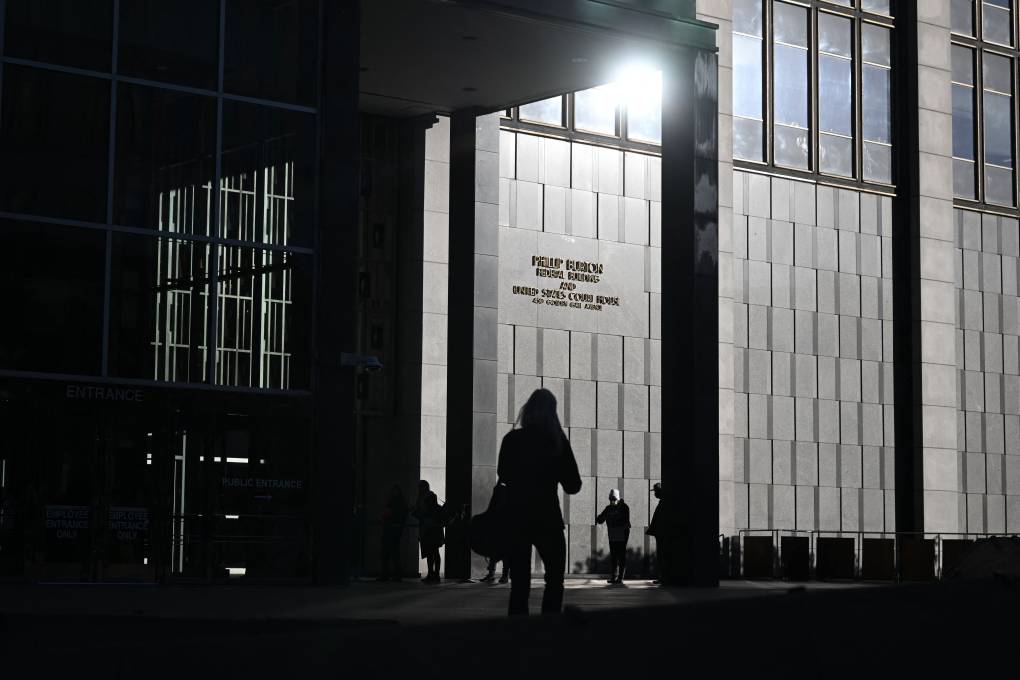
"caption": "The exterior of the Phillip Burton Federal Building and U.S. Courthouse in San Francisco, California, on Jan. 20, 2019. The Trump administration is threatening to investigate and prosecute state and local officials who impede the enforcement of federal immigration laws. California cities and counties are in the crosshairs.",
"credit": "Patrick T. Fallon/AFP via Getty Images",
"altTag": null,
"description": null,
"imgSizes": {
"medium": {
"file": "https://cdn.kqed.org/wp-content/uploads/sites/10/2025/03/GettyImages-1246387515-800x533.jpg",
"width": 800,
"height": 533,
"mimeType": "image/jpeg"
},
"large": {
"file": "https://cdn.kqed.org/wp-content/uploads/sites/10/2025/03/GettyImages-1246387515-1020x680.jpg",
"width": 1020,
"height": 680,
"mimeType": "image/jpeg"
},
"thumbnail": {
"file": "https://cdn.kqed.org/wp-content/uploads/sites/10/2025/03/GettyImages-1246387515-160x107.jpg",
"width": 160,
"height": 107,
"mimeType": "image/jpeg"
},
"1536x1536": {
"file": "https://cdn.kqed.org/wp-content/uploads/sites/10/2025/03/GettyImages-1246387515-1536x1024.jpg",
"width": 1536,
"height": 1024,
"mimeType": "image/jpeg"
},
"2048x2048": {
"file": "https://cdn.kqed.org/wp-content/uploads/sites/10/2025/03/GettyImages-1246387515-2048x1365.jpg",
"width": 2048,
"height": 1365,
"mimeType": "image/jpeg"
},
"post-thumbnail": {
"file": "https://cdn.kqed.org/wp-content/uploads/sites/10/2025/03/GettyImages-1246387515-672x372.jpg",
"width": 672,
"height": 372,
"mimeType": "image/jpeg"
},
"twentyfourteen-full-width": {
"file": "https://cdn.kqed.org/wp-content/uploads/sites/10/2025/03/GettyImages-1246387515-1038x576.jpg",
"width": 1038,
"height": 576,
"mimeType": "image/jpeg"
},
"full-width": {
"file": "https://cdn.kqed.org/wp-content/uploads/sites/10/2025/03/GettyImages-1246387515-1920x1280.jpg",
"width": 1920,
"height": 1280,
"mimeType": "image/jpeg"
},
"kqedFullSize": {
"file": "https://cdn.kqed.org/wp-content/uploads/sites/10/2025/03/GettyImages-1246387515-scaled-e1742325160899.jpg",
"width": 2000,
"height": 1334
}
},
"isLoading": false,
"fetchFailed": false
},
"news_12030673": {
"type": "attachments",
"id": "news_12030673",
"meta": {
"index": "attachments_1716263798",
"site": "news",
"id": "12030673",
"found": true
},
"title": "250220-VTASTRIKED1.-JG-8",
"publishDate": 1741648750,
"status": "inherit",
"parent": 12030584,
"modified": 1741650052,
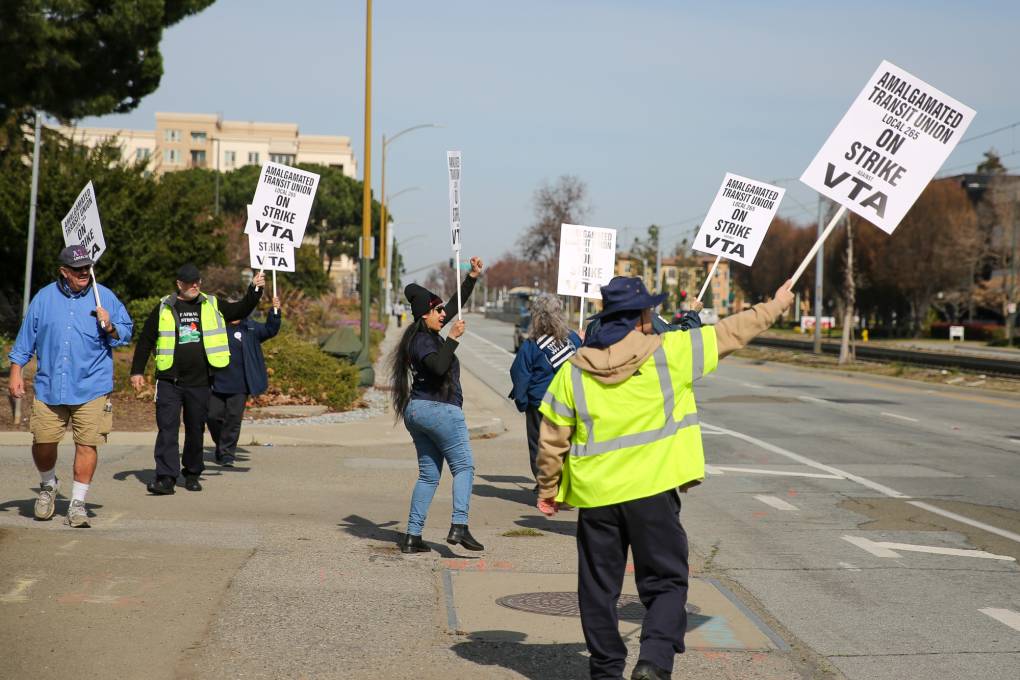
"caption": "Striking VTA workers picket acknowledge a passing honking car outside the agency's headquarters on North First Street in San José on March 10, 2025.",
"credit": "Joseph Geha/KQED",
"altTag": null,
"description": null,
"imgSizes": {
"medium": {
"file": "https://cdn.kqed.org/wp-content/uploads/sites/10/2025/03/250220-VTASTRIKED1.-JG-8-800x533.jpg",
"width": 800,
"height": 533,
"mimeType": "image/jpeg"
},
"large": {
"file": "https://cdn.kqed.org/wp-content/uploads/sites/10/2025/03/250220-VTASTRIKED1.-JG-8-1020x680.jpg",
"width": 1020,
"height": 680,
"mimeType": "image/jpeg"
},
"thumbnail": {
"file": "https://cdn.kqed.org/wp-content/uploads/sites/10/2025/03/250220-VTASTRIKED1.-JG-8-160x107.jpg",
"width": 160,
"height": 107,
"mimeType": "image/jpeg"
},
"1536x1536": {
"file": "https://cdn.kqed.org/wp-content/uploads/sites/10/2025/03/250220-VTASTRIKED1.-JG-8-1536x1024.jpg",
"width": 1536,
"height": 1024,
"mimeType": "image/jpeg"
},
"post-thumbnail": {
"file": "https://cdn.kqed.org/wp-content/uploads/sites/10/2025/03/250220-VTASTRIKED1.-JG-8-672x372.jpg",
"width": 672,
"height": 372,
"mimeType": "image/jpeg"
},
"twentyfourteen-full-width": {
"file": "https://cdn.kqed.org/wp-content/uploads/sites/10/2025/03/250220-VTASTRIKED1.-JG-8-1038x576.jpg",
"width": 1038,
"height": 576,
"mimeType": "image/jpeg"
},
"full-width": {
"file": "https://cdn.kqed.org/wp-content/uploads/sites/10/2025/03/250220-VTASTRIKED1.-JG-8-1920x1280.jpg",
"width": 1920,
"height": 1280,
"mimeType": "image/jpeg"
},
"kqedFullSize": {
"file": "https://cdn.kqed.org/wp-content/uploads/sites/10/2025/03/250220-VTASTRIKED1.-JG-8.jpg",
"width": 2000,
"height": 1333
}
},
"isLoading": false,
"fetchFailed": false
},
"news_12030774": {
"type": "attachments",
"id": "news_12030774",
"meta": {
"index": "attachments_1716263798",
"site": "news",
"id": "12030774",
"found": true
},
"title": "An empty railroad track stop on N First St in San Jose on March 11, 2025.",
"publishDate": 1741719083,
"status": "inherit",
"parent": 12042427,
"modified": 1748907852,
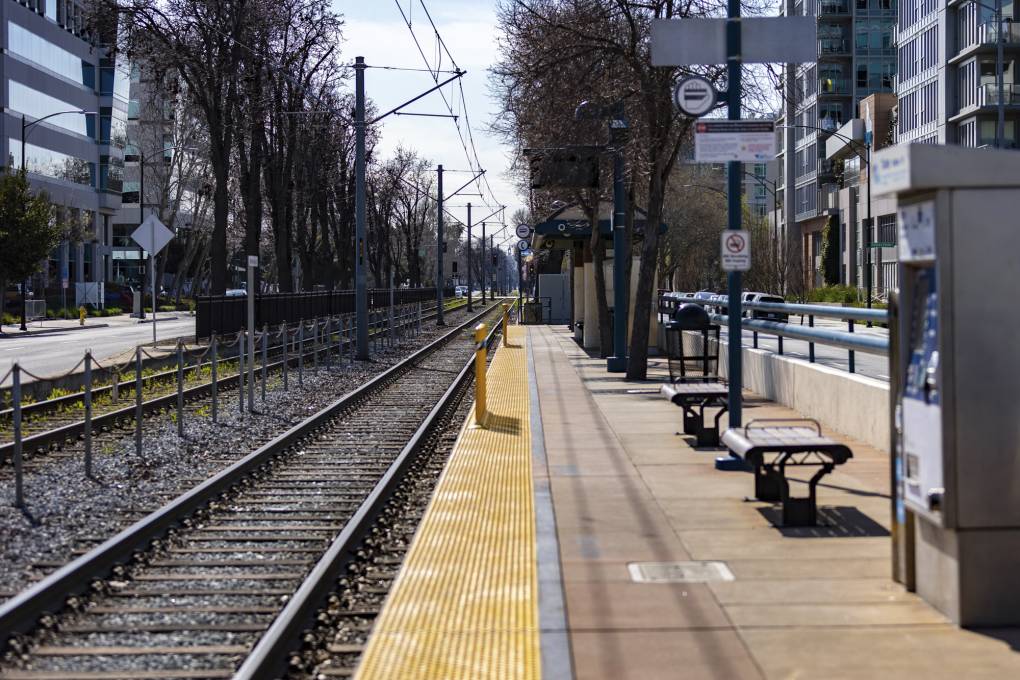
"caption": "An empty railroad track stop on North First Street in San José on March 11, 2025.",
"credit": "Gina Castro/KQED",
"altTag": null,
"description": null,
"imgSizes": {
"medium": {
"file": "https://cdn.kqed.org/wp-content/uploads/sites/10/2025/03/20250311_VTASTRIKEDAY2_GC-23-KQED-800x533.jpg",
"width": 800,
"height": 533,
"mimeType": "image/jpeg"
},
"large": {
"file": "https://cdn.kqed.org/wp-content/uploads/sites/10/2025/03/20250311_VTASTRIKEDAY2_GC-23-KQED-1020x680.jpg",
"width": 1020,
"height": 680,
"mimeType": "image/jpeg"
},
"thumbnail": {
"file": "https://cdn.kqed.org/wp-content/uploads/sites/10/2025/03/20250311_VTASTRIKEDAY2_GC-23-KQED-160x107.jpg",
"width": 160,
"height": 107,
"mimeType": "image/jpeg"
},
"1536x1536": {
"file": "https://cdn.kqed.org/wp-content/uploads/sites/10/2025/03/20250311_VTASTRIKEDAY2_GC-23-KQED-1536x1024.jpg",
"width": 1536,
"height": 1024,
"mimeType": "image/jpeg"
},
"post-thumbnail": {
"file": "https://cdn.kqed.org/wp-content/uploads/sites/10/2025/03/20250311_VTASTRIKEDAY2_GC-23-KQED-672x372.jpg",
"width": 672,
"height": 372,
"mimeType": "image/jpeg"
},
"twentyfourteen-full-width": {
"file": "https://cdn.kqed.org/wp-content/uploads/sites/10/2025/03/20250311_VTASTRIKEDAY2_GC-23-KQED-1038x576.jpg",
"width": 1038,
"height": 576,
"mimeType": "image/jpeg"
},
"full-width": {
"file": "https://cdn.kqed.org/wp-content/uploads/sites/10/2025/03/20250311_VTASTRIKEDAY2_GC-23-KQED-1920x1280.jpg",
"width": 1920,
"height": 1280,
"mimeType": "image/jpeg"
},
"kqedFullSize": {
"file": "https://cdn.kqed.org/wp-content/uploads/sites/10/2025/03/20250311_VTASTRIKEDAY2_GC-23-KQED.jpg",
"width": 2000,
"height": 1333
}
},
"isLoading": false,
"fetchFailed": false
},
"news_12030770": {
"type": "attachments",
"id": "news_12030770",
"meta": {
"index": "attachments_1716263798",
"site": "news",
"id": "12030770",
"found": true
},
"title": "20250311_VTASTRIKEDAY2_GC-2-KQED",
"publishDate": 1741719070,
"status": "inherit",
"parent": 12031632,
"modified": 1742241158,
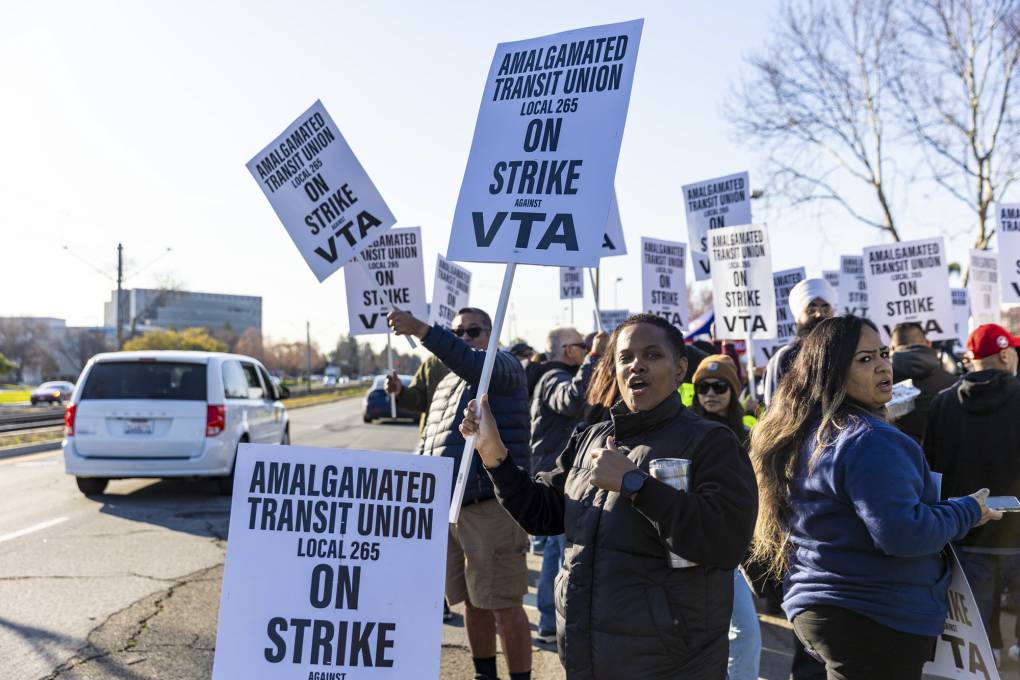
"caption": "Dafina Cozine, a bus operator, joins a strike with hundreds of Santa Clara Valley Transportation Authority workers, represented by the Amalgamated Transit Union Local 265, on N. First Street, in San José, demanding a better contract and an increase in wages, on March 11, 2025.",
"credit": "Gina Castro/KQED",
"altTag": null,
"description": null,
"imgSizes": {
"medium": {
"file": "https://cdn.kqed.org/wp-content/uploads/sites/10/2025/03/20250311_VTASTRIKEDAY2_GC-2-KQED-800x533.jpg",
"width": 800,
"height": 533,
"mimeType": "image/jpeg"
},
"large": {
"file": "https://cdn.kqed.org/wp-content/uploads/sites/10/2025/03/20250311_VTASTRIKEDAY2_GC-2-KQED-1020x680.jpg",
"width": 1020,
"height": 680,
"mimeType": "image/jpeg"
},
"thumbnail": {
"file": "https://cdn.kqed.org/wp-content/uploads/sites/10/2025/03/20250311_VTASTRIKEDAY2_GC-2-KQED-160x107.jpg",
"width": 160,
"height": 107,
"mimeType": "image/jpeg"
},
"1536x1536": {
"file": "https://cdn.kqed.org/wp-content/uploads/sites/10/2025/03/20250311_VTASTRIKEDAY2_GC-2-KQED-1536x1024.jpg",
"width": 1536,
"height": 1024,
"mimeType": "image/jpeg"
},
"post-thumbnail": {
"file": "https://cdn.kqed.org/wp-content/uploads/sites/10/2025/03/20250311_VTASTRIKEDAY2_GC-2-KQED-672x372.jpg",
"width": 672,
"height": 372,
"mimeType": "image/jpeg"
},
"twentyfourteen-full-width": {
"file": "https://cdn.kqed.org/wp-content/uploads/sites/10/2025/03/20250311_VTASTRIKEDAY2_GC-2-KQED-1038x576.jpg",
"width": 1038,
"height": 576,
"mimeType": "image/jpeg"
},
"full-width": {
"file": "https://cdn.kqed.org/wp-content/uploads/sites/10/2025/03/20250311_VTASTRIKEDAY2_GC-2-KQED-1920x1280.jpg",
"width": 1920,
"height": 1280,
"mimeType": "image/jpeg"
},
"kqedFullSize": {
"file": "https://cdn.kqed.org/wp-content/uploads/sites/10/2025/03/20250311_VTASTRIKEDAY2_GC-2-KQED.jpg",
"width": 2000,
"height": 1333
}
},
"isLoading": false,
"fetchFailed": false
},
"news_12030672": {
"type": "attachments",
"id": "news_12030672",
"meta": {
"index": "attachments_1716263798",
"site": "news",
"id": "12030672",
"found": true
},
"title": "250220-VTASTRIKED1.-JG-4",
"publishDate": 1741648746,
"status": "inherit",
"parent": 0,
"modified": 1741648778,
"caption": "Striking VTA workers picket outside the agency's Cerone Yard bus depot in North San José on March 10, 2025, the first day of a strike by the Amalgamated Transit Union Local 265.",
"credit": "Joseph Geha/KQED",
"altTag": null,
"description": null,
"imgSizes": {
"medium": {
"file": "https://cdn.kqed.org/wp-content/uploads/sites/10/2025/03/250220-VTASTRIKED1.-JG-4-800x533.jpg",
"width": 800,
"height": 533,
"mimeType": "image/jpeg"
},
"large": {
"file": "https://cdn.kqed.org/wp-content/uploads/sites/10/2025/03/250220-VTASTRIKED1.-JG-4-1020x680.jpg",
"width": 1020,
"height": 680,
"mimeType": "image/jpeg"
},
"thumbnail": {
"file": "https://cdn.kqed.org/wp-content/uploads/sites/10/2025/03/250220-VTASTRIKED1.-JG-4-160x107.jpg",
"width": 160,
"height": 107,
"mimeType": "image/jpeg"
},
"1536x1536": {
"file": "https://cdn.kqed.org/wp-content/uploads/sites/10/2025/03/250220-VTASTRIKED1.-JG-4-1536x1024.jpg",
"width": 1536,
"height": 1024,
"mimeType": "image/jpeg"
},
"post-thumbnail": {
"file": "https://cdn.kqed.org/wp-content/uploads/sites/10/2025/03/250220-VTASTRIKED1.-JG-4-672x372.jpg",
"width": 672,
"height": 372,
"mimeType": "image/jpeg"
},
"twentyfourteen-full-width": {
"file": "https://cdn.kqed.org/wp-content/uploads/sites/10/2025/03/250220-VTASTRIKED1.-JG-4-1038x576.jpg",
"width": 1038,
"height": 576,
"mimeType": "image/jpeg"
},
"full-width": {
"file": "https://cdn.kqed.org/wp-content/uploads/sites/10/2025/03/250220-VTASTRIKED1.-JG-4-1920x1280.jpg",
"width": 1920,
"height": 1280,
"mimeType": "image/jpeg"
},
"kqedFullSize": {
"file": "https://cdn.kqed.org/wp-content/uploads/sites/10/2025/03/250220-VTASTRIKED1.-JG-4.jpg",
"width": 2000,
"height": 1333
}
},
"isLoading": false,
"fetchFailed": false
},
"news_11984511": {
"type": "attachments",
"id": "news_11984511",
"meta": {
"index": "attachments_1716263798",
"site": "news",
"id": "11984511",
"found": true
},
"parent": 0,
"imgSizes": {
"twentyfourteen-full-width": {
"file": "https://cdn.kqed.org/wp-content/uploads/sites/10/2024/04/240425-STANFORDGAZAPROTEST-026-BL-KQED-1038x576.jpg",
"width": 1038,
"mimeType": "image/jpeg",
"height": 576
},
"thumbnail": {
"file": "https://cdn.kqed.org/wp-content/uploads/sites/10/2024/04/240425-STANFORDGAZAPROTEST-026-BL-KQED-160x107.jpg",
"width": 160,
"mimeType": "image/jpeg",
"height": 107
},
"post-thumbnail": {
"file": "https://cdn.kqed.org/wp-content/uploads/sites/10/2024/04/240425-STANFORDGAZAPROTEST-026-BL-KQED-672x372.jpg",
"width": 672,
"mimeType": "image/jpeg",
"height": 372
},
"kqedFullSize": {
"file": "https://cdn.kqed.org/wp-content/uploads/sites/10/2024/04/240425-STANFORDGAZAPROTEST-026-BL-KQED.jpg",
"width": 2000,
"height": 1333
},
"large": {
"file": "https://cdn.kqed.org/wp-content/uploads/sites/10/2024/04/240425-STANFORDGAZAPROTEST-026-BL-KQED-1020x680.jpg",
"width": 1020,
"mimeType": "image/jpeg",
"height": 680
},
"1536x1536": {
"file": "https://cdn.kqed.org/wp-content/uploads/sites/10/2024/04/240425-STANFORDGAZAPROTEST-026-BL-KQED-1536x1024.jpg",
"width": 1536,
"mimeType": "image/jpeg",
"height": 1024
},
"full-width": {
"file": "https://cdn.kqed.org/wp-content/uploads/sites/10/2024/04/240425-STANFORDGAZAPROTEST-026-BL-KQED-1920x1280.jpg",
"width": 1920,
"mimeType": "image/jpeg",
"height": 1280
},
"medium": {
"file": "https://cdn.kqed.org/wp-content/uploads/sites/10/2024/04/240425-STANFORDGAZAPROTEST-026-BL-KQED-800x533.jpg",
"width": 800,
"mimeType": "image/jpeg",
"height": 533
}
},
"publishDate": 1714504706,
"modified": 1714529627,
"caption": "Pro-Palestinian demonstrators march through the Stanford University campus in Palo Alto on April 25, 2024.",
"description": null,
"title": "240425-STANFORDGAZAPROTEST-026-BL-KQED",
"credit": "Beth LaBerge/KQED",
"status": "inherit",
"altTag": null,
"isLoading": false,
"fetchFailed": false
},
"news_12030164": {
"type": "attachments",
"id": "news_12030164",
"meta": {
"index": "attachments_1716263798",
"site": "news",
"id": "12030164",
"found": true
},
"title": "240617-VTAfile-33-BL_qed",
"publishDate": 1741297401,
"status": "inherit",
"parent": 12030160,
"modified": 1741297512,
"caption": "A Santa Clara Valley Transportation Authority bus passes through the Ohlone/Chynoweth Light Rail Station in San José on June 17, 2024.",
"credit": "Beth LaBerge/KQED",
"altTag": null,
"description": null,
"imgSizes": {
"medium": {
"file": "https://cdn.kqed.org/wp-content/uploads/sites/10/2025/03/240617-VTAfile-33-BL_qed-800x533.jpg",
"width": 800,
"height": 533,
"mimeType": "image/jpeg"
},
"large": {
"file": "https://cdn.kqed.org/wp-content/uploads/sites/10/2025/03/240617-VTAfile-33-BL_qed-1020x680.jpg",
"width": 1020,
"height": 680,
"mimeType": "image/jpeg"
},
"thumbnail": {
"file": "https://cdn.kqed.org/wp-content/uploads/sites/10/2025/03/240617-VTAfile-33-BL_qed-160x107.jpg",
"width": 160,
"height": 107,
"mimeType": "image/jpeg"
},
"1536x1536": {
"file": "https://cdn.kqed.org/wp-content/uploads/sites/10/2025/03/240617-VTAfile-33-BL_qed-1536x1024.jpg",
"width": 1536,
"height": 1024,
"mimeType": "image/jpeg"
},
"post-thumbnail": {
"file": "https://cdn.kqed.org/wp-content/uploads/sites/10/2025/03/240617-VTAfile-33-BL_qed-672x372.jpg",
"width": 672,
"height": 372,
"mimeType": "image/jpeg"
},
"twentyfourteen-full-width": {
"file": "https://cdn.kqed.org/wp-content/uploads/sites/10/2025/03/240617-VTAfile-33-BL_qed-1038x576.jpg",
"width": 1038,
"height": 576,
"mimeType": "image/jpeg"
},
"full-width": {
"file": "https://cdn.kqed.org/wp-content/uploads/sites/10/2025/03/240617-VTAfile-33-BL_qed-1920x1280.jpg",
"width": 1920,
"height": 1280,
"mimeType": "image/jpeg"
},
"kqedFullSize": {
"file": "https://cdn.kqed.org/wp-content/uploads/sites/10/2025/03/240617-VTAfile-33-BL_qed.jpg",
"width": 2000,
"height": 1333
}
},
"isLoading": false,
"fetchFailed": false
},
"news_12029592": {
"type": "attachments",
"id": "news_12029592",
"meta": {
"index": "attachments_1716263798",
"site": "news",
"id": "12029592",
"found": true
},
"title": "240409-VTAfile-02-BL_qed",
"publishDate": 1741113888,
"status": "inherit",
"parent": 12029584,
"modified": 1741113975,
"caption": "A Santa Clara Valley Transportation Authority light rail train stops in downtown San José on June 17, 2024.",
"credit": "Beth LaBerge/KQED",
"altTag": null,
"description": null,
"imgSizes": {
"medium": {
"file": "https://cdn.kqed.org/wp-content/uploads/sites/10/2025/03/240409-VTAfile-02-BL_qed-800x533.jpg",
"width": 800,
"height": 533,
"mimeType": "image/jpeg"
},
"large": {
"file": "https://cdn.kqed.org/wp-content/uploads/sites/10/2025/03/240409-VTAfile-02-BL_qed-1020x680.jpg",
"width": 1020,
"height": 680,
"mimeType": "image/jpeg"
},
"thumbnail": {
"file": "https://cdn.kqed.org/wp-content/uploads/sites/10/2025/03/240409-VTAfile-02-BL_qed-160x107.jpg",
"width": 160,
"height": 107,
"mimeType": "image/jpeg"
},
"1536x1536": {
"file": "https://cdn.kqed.org/wp-content/uploads/sites/10/2025/03/240409-VTAfile-02-BL_qed-1536x1024.jpg",
"width": 1536,
"height": 1024,
"mimeType": "image/jpeg"
},
"post-thumbnail": {
"file": "https://cdn.kqed.org/wp-content/uploads/sites/10/2025/03/240409-VTAfile-02-BL_qed-672x372.jpg",
"width": 672,
"height": 372,
"mimeType": "image/jpeg"
},
"twentyfourteen-full-width": {
"file": "https://cdn.kqed.org/wp-content/uploads/sites/10/2025/03/240409-VTAfile-02-BL_qed-1038x576.jpg",
"width": 1038,
"height": 576,
"mimeType": "image/jpeg"
},
"full-width": {
"file": "https://cdn.kqed.org/wp-content/uploads/sites/10/2025/03/240409-VTAfile-02-BL_qed-1920x1280.jpg",
"width": 1920,
"height": 1280,
"mimeType": "image/jpeg"
},
"kqedFullSize": {
"file": "https://cdn.kqed.org/wp-content/uploads/sites/10/2025/03/240409-VTAfile-02-BL_qed.jpg",
"width": 1999,
"height": 1333
}
},
"isLoading": false,
"fetchFailed": false
},
"news_11861171": {
"type": "attachments",
"id": "news_11861171",
"meta": {
"index": "attachments_1716263798",
"site": "news",
"id": "11861171",
"found": true
},
"parent": 11861170,
"imgSizes": {
"apple_news_ca_landscape_5_5": {
"file": "https://ww2.kqed.org/app/uploads/sites/10/2021/02/ap20085537395007_custom-ecee50ce392cd8fa5d32a2063cb73d5bd1c02722-1044x783.jpg",
"width": 1044,
"mimeType": "image/jpeg",
"height": 783
},
"apple_news_ca_square_4_0": {
"file": "https://ww2.kqed.org/app/uploads/sites/10/2021/02/ap20085537395007_custom-ecee50ce392cd8fa5d32a2063cb73d5bd1c02722-470x470.jpg",
"width": 470,
"mimeType": "image/jpeg",
"height": 470
},
"twentyfourteen-full-width": {
"file": "https://ww2.kqed.org/app/uploads/sites/10/2021/02/ap20085537395007_custom-ecee50ce392cd8fa5d32a2063cb73d5bd1c02722-1038x576.jpg",
"width": 1038,
"mimeType": "image/jpeg",
"height": 576
},
"thumbnail": {
"file": "https://ww2.kqed.org/app/uploads/sites/10/2021/02/ap20085537395007_custom-ecee50ce392cd8fa5d32a2063cb73d5bd1c02722-160x107.jpg",
"width": 160,
"mimeType": "image/jpeg",
"height": 107
},
"post-thumbnail": {
"file": "https://ww2.kqed.org/app/uploads/sites/10/2021/02/ap20085537395007_custom-ecee50ce392cd8fa5d32a2063cb73d5bd1c02722-672x372.jpg",
"width": 672,
"mimeType": "image/jpeg",
"height": 372
},
"kqedFullSize": {
"file": "https://ww2.kqed.org/app/uploads/sites/10/2021/02/ap20085537395007_custom-ecee50ce392cd8fa5d32a2063cb73d5bd1c02722-scaled-e1613765453619.jpg",
"width": 1920,
"height": 1279
},
"2048x2048": {
"file": "https://ww2.kqed.org/app/uploads/sites/10/2021/02/ap20085537395007_custom-ecee50ce392cd8fa5d32a2063cb73d5bd1c02722-2048x1364.jpg",
"width": 2048,
"mimeType": "image/jpeg",
"height": 1364
},
"apple_news_ca_landscape_4_7": {
"file": "https://ww2.kqed.org/app/uploads/sites/10/2021/02/ap20085537395007_custom-ecee50ce392cd8fa5d32a2063cb73d5bd1c02722-632x474.jpg",
"width": 632,
"mimeType": "image/jpeg",
"height": 474
},
"large": {
"file": "https://ww2.kqed.org/app/uploads/sites/10/2021/02/ap20085537395007_custom-ecee50ce392cd8fa5d32a2063cb73d5bd1c02722-1020x679.jpg",
"width": 1020,
"mimeType": "image/jpeg",
"height": 679
},
"apple_news_ca_landscape_4_0": {
"file": "https://ww2.kqed.org/app/uploads/sites/10/2021/02/ap20085537395007_custom-ecee50ce392cd8fa5d32a2063cb73d5bd1c02722-536x402.jpg",
"width": 536,
"mimeType": "image/jpeg",
"height": 402
},
"apple_news_ca_portrait_12_9": {
"file": "https://ww2.kqed.org/app/uploads/sites/10/2021/02/ap20085537395007_custom-ecee50ce392cd8fa5d32a2063cb73d5bd1c02722-1122x1496.jpg",
"width": 1122,
"mimeType": "image/jpeg",
"height": 1496
},
"medium": {
"file": "https://ww2.kqed.org/app/uploads/sites/10/2021/02/ap20085537395007_custom-ecee50ce392cd8fa5d32a2063cb73d5bd1c02722-800x533.jpg",
"width": 800,
"mimeType": "image/jpeg",
"height": 533
},
"apple_news_ca_portrait_4_0": {
"file": "https://ww2.kqed.org/app/uploads/sites/10/2021/02/ap20085537395007_custom-ecee50ce392cd8fa5d32a2063cb73d5bd1c02722-354x472.jpg",
"width": 354,
"mimeType": "image/jpeg",
"height": 472
},
"apple_news_ca_portrait_9_7": {
"file": "https://ww2.kqed.org/app/uploads/sites/10/2021/02/ap20085537395007_custom-ecee50ce392cd8fa5d32a2063cb73d5bd1c02722-840x1120.jpg",
"width": 840,
"mimeType": "image/jpeg",
"height": 1120
},
"apple_news_ca_landscape_12_9": {
"file": "https://ww2.kqed.org/app/uploads/sites/10/2021/02/ap20085537395007_custom-ecee50ce392cd8fa5d32a2063cb73d5bd1c02722-1832x1374.jpg",
"width": 1832,
"mimeType": "image/jpeg",
"height": 1374
},
"apple_news_ca_square_9_7": {
"file": "https://ww2.kqed.org/app/uploads/sites/10/2021/02/ap20085537395007_custom-ecee50ce392cd8fa5d32a2063cb73d5bd1c02722-1104x1104.jpg",
"width": 1104,
"mimeType": "image/jpeg",
"height": 1104
},
"1536x1536": {
"file": "https://ww2.kqed.org/app/uploads/sites/10/2021/02/ap20085537395007_custom-ecee50ce392cd8fa5d32a2063cb73d5bd1c02722-1536x1023.jpg",
"width": 1536,
"mimeType": "image/jpeg",
"height": 1023
},
"apple_news_ca_portrait_4_7": {
"file": "https://ww2.kqed.org/app/uploads/sites/10/2021/02/ap20085537395007_custom-ecee50ce392cd8fa5d32a2063cb73d5bd1c02722-414x552.jpg",
"width": 414,
"mimeType": "image/jpeg",
"height": 552
},
"apple_news_ca_square_12_9": {
"file": "https://ww2.kqed.org/app/uploads/sites/10/2021/02/ap20085537395007_custom-ecee50ce392cd8fa5d32a2063cb73d5bd1c02722-1472x1472.jpg",
"width": 1472,
"mimeType": "image/jpeg",
"height": 1472
},
"apple_news_ca_portrait_5_5": {
"file": "https://ww2.kqed.org/app/uploads/sites/10/2021/02/ap20085537395007_custom-ecee50ce392cd8fa5d32a2063cb73d5bd1c02722-687x916.jpg",
"width": 687,
"mimeType": "image/jpeg",
"height": 916
},
"full-width": {
"file": "https://ww2.kqed.org/app/uploads/sites/10/2021/02/ap20085537395007_custom-ecee50ce392cd8fa5d32a2063cb73d5bd1c02722-1920x1279.jpg",
"width": 1920,
"mimeType": "image/jpeg",
"height": 1279
},
"apple_news_ca_square_4_7": {
"file": "https://ww2.kqed.org/app/uploads/sites/10/2021/02/ap20085537395007_custom-ecee50ce392cd8fa5d32a2063cb73d5bd1c02722-550x550.jpg",
"width": 550,
"mimeType": "image/jpeg",
"height": 550
},
"apple_news_ca_landscape_9_7": {
"file": "https://ww2.kqed.org/app/uploads/sites/10/2021/02/ap20085537395007_custom-ecee50ce392cd8fa5d32a2063cb73d5bd1c02722-1376x1032.jpg",
"width": 1376,
"mimeType": "image/jpeg",
"height": 1032
},
"apple_news_ca_square_5_5": {
"file": "https://ww2.kqed.org/app/uploads/sites/10/2021/02/ap20085537395007_custom-ecee50ce392cd8fa5d32a2063cb73d5bd1c02722-912x912.jpg",
"width": 912,
"mimeType": "image/jpeg",
"height": 912
}
},
"publishDate": 1613761514,
"modified": 1613766809,
"caption": "A U.S. Immigration and Customs Enforcement officer looks on during an operation in Escondido, California, in 2019. The Biden administration on Thursday announced new guidelines that are expected to sharply limit arrests and deportations carried out by ICE.",
"description": "A U.S. Immigration and Customs Enforcement officer looks on during an operation in Escondido, Calif., in 2019. The Biden administration on Thursday announced new guidelines that are expected to sharply limit arrests and deportations carried out by ICE.",
"title": "A U.S. Immigration and Customs Enforcement officer looks on during an operation in Escondido, Calif., in 2019. The Biden administration today announced new guidelines that are expected to sharply limit arrests and deportations carried out by ICE.",
"credit": "Gregory Bull/AP",
"status": "inherit",
"altTag": null,
"isLoading": false,
"fetchFailed": false
},
"news_12024635": {
"type": "attachments",
"id": "news_12024635",
"meta": {
"index": "attachments_1716263798",
"site": "news",
"id": "12024635",
"found": true
},
"title": "250129-SCCTURF-JG-3",
"publishDate": 1738182748,
"status": "inherit",
"parent": 0,
"modified": 1738183602,
"caption": "A Santa Clara County artificial turf softball and soccer field at Twin Creeks Sports Complex in Sunnyvale.",
"credit": "Joseph Geha/KQED",
"altTag": "An artificial turf sports softball and soccer field.",
"description": null,
"imgSizes": {
"medium": {
"file": "https://cdn.kqed.org/wp-content/uploads/sites/10/2025/01/250129-SCCTURF-JG-3-800x533.jpg",
"width": 800,
"height": 533,
"mimeType": "image/jpeg"
},
"large": {
"file": "https://cdn.kqed.org/wp-content/uploads/sites/10/2025/01/250129-SCCTURF-JG-3-1020x680.jpg",
"width": 1020,
"height": 680,
"mimeType": "image/jpeg"
},
"thumbnail": {
"file": "https://cdn.kqed.org/wp-content/uploads/sites/10/2025/01/250129-SCCTURF-JG-3-160x107.jpg",
"width": 160,
"height": 107,
"mimeType": "image/jpeg"
},
"1536x1536": {
"file": "https://cdn.kqed.org/wp-content/uploads/sites/10/2025/01/250129-SCCTURF-JG-3-1536x1024.jpg",
"width": 1536,
"height": 1024,
"mimeType": "image/jpeg"
},
"post-thumbnail": {
"file": "https://cdn.kqed.org/wp-content/uploads/sites/10/2025/01/250129-SCCTURF-JG-3-672x372.jpg",
"width": 672,
"height": 372,
"mimeType": "image/jpeg"
},
"twentyfourteen-full-width": {
"file": "https://cdn.kqed.org/wp-content/uploads/sites/10/2025/01/250129-SCCTURF-JG-3-1038x576.jpg",
"width": 1038,
"height": 576,
"mimeType": "image/jpeg"
},
"full-width": {
"file": "https://cdn.kqed.org/wp-content/uploads/sites/10/2025/01/250129-SCCTURF-JG-3-1920x1280.jpg",
"width": 1920,
"height": 1280,
"mimeType": "image/jpeg"
},
"kqedFullSize": {
"file": "https://cdn.kqed.org/wp-content/uploads/sites/10/2025/01/250129-SCCTURF-JG-3.jpg",
"width": 2000,
"height": 1333
}
},
"isLoading": false,
"fetchFailed": false
},
"news_12022253": {
"type": "attachments",
"id": "news_12022253",
"meta": {
"index": "attachments_1716263798",
"site": "news",
"id": "12022253",
"found": true
},
"title": "240114-SCCDCFS-JG-5",
"publishDate": 1736903220,
"status": "inherit",
"parent": 0,
"modified": 1736966923,
"caption": "Santa Clara County Social Work Supervisor Pa Chang speaks during a rally demanding increased staffing for the Department of Family and Children's Services outside the Santa Clara County Administration Building in San José on Tuesday, Jan. 14, 2025.",
"credit": "Joseph Geha/KQED",
"altTag": null,
"description": null,
"imgSizes": {
"medium": {
"file": "https://cdn.kqed.org/wp-content/uploads/sites/10/2025/01/240114-SCCDCFS-JG-5-800x533.jpg",
"width": 800,
"height": 533,
"mimeType": "image/jpeg"
},
"large": {
"file": "https://cdn.kqed.org/wp-content/uploads/sites/10/2025/01/240114-SCCDCFS-JG-5-1020x680.jpg",
"width": 1020,
"height": 680,
"mimeType": "image/jpeg"
},
"thumbnail": {
"file": "https://cdn.kqed.org/wp-content/uploads/sites/10/2025/01/240114-SCCDCFS-JG-5-160x107.jpg",
"width": 160,
"height": 107,
"mimeType": "image/jpeg"
},
"1536x1536": {
"file": "https://cdn.kqed.org/wp-content/uploads/sites/10/2025/01/240114-SCCDCFS-JG-5-1536x1024.jpg",
"width": 1536,
"height": 1024,
"mimeType": "image/jpeg"
},
"post-thumbnail": {
"file": "https://cdn.kqed.org/wp-content/uploads/sites/10/2025/01/240114-SCCDCFS-JG-5-672x372.jpg",
"width": 672,
"height": 372,
"mimeType": "image/jpeg"
},
"twentyfourteen-full-width": {
"file": "https://cdn.kqed.org/wp-content/uploads/sites/10/2025/01/240114-SCCDCFS-JG-5-1038x576.jpg",
"width": 1038,
"height": 576,
"mimeType": "image/jpeg"
},
"full-width": {
"file": "https://cdn.kqed.org/wp-content/uploads/sites/10/2025/01/240114-SCCDCFS-JG-5-1920x1280.jpg",
"width": 1920,
"height": 1280,
"mimeType": "image/jpeg"
},
"kqedFullSize": {
"file": "https://cdn.kqed.org/wp-content/uploads/sites/10/2025/01/240114-SCCDCFS-JG-5.jpg",
"width": 2000,
"height": 1333
}
},
"isLoading": false,
"fetchFailed": false
},
"news_12017798": {
"type": "attachments",
"id": "news_12017798",
"meta": {
"index": "attachments_1716263798",
"site": "news",
"id": "12017798",
"found": true
},
"title": "Betty and Community Member",
"publishDate": 1733959414,
"status": "inherit",
"parent": 12017754,
"modified": 1733959476,
"caption": "Betty Duong won the election to represent Santa Clara County’s District 2, which includes San José, Alum Rock and the East Foothills. ",
"credit": "Photo courtesy of Betty Duong",
"altTag": null,
"description": null,
"imgSizes": {
"medium": {
"file": "https://cdn.kqed.org/wp-content/uploads/sites/10/2024/12/Betty-and-Community-Member-800x533.jpg",
"width": 800,
"height": 533,
"mimeType": "image/jpeg"
},
"large": {
"file": "https://cdn.kqed.org/wp-content/uploads/sites/10/2024/12/Betty-and-Community-Member-1020x680.jpg",
"width": 1020,
"height": 680,
"mimeType": "image/jpeg"
},
"thumbnail": {
"file": "https://cdn.kqed.org/wp-content/uploads/sites/10/2024/12/Betty-and-Community-Member-160x107.jpg",
"width": 160,
"height": 107,
"mimeType": "image/jpeg"
},
"1536x1536": {
"file": "https://cdn.kqed.org/wp-content/uploads/sites/10/2024/12/Betty-and-Community-Member-1536x1024.jpg",
"width": 1536,
"height": 1024,
"mimeType": "image/jpeg"
},
"2048x2048": {
"file": "https://cdn.kqed.org/wp-content/uploads/sites/10/2024/12/Betty-and-Community-Member-2048x1365.jpg",
"width": 2048,
"height": 1365,
"mimeType": "image/jpeg"
},
"post-thumbnail": {
"file": "https://cdn.kqed.org/wp-content/uploads/sites/10/2024/12/Betty-and-Community-Member-672x372.jpg",
"width": 672,
"height": 372,
"mimeType": "image/jpeg"
},
"twentyfourteen-full-width": {
"file": "https://cdn.kqed.org/wp-content/uploads/sites/10/2024/12/Betty-and-Community-Member-1038x576.jpg",
"width": 1038,
"height": 576,
"mimeType": "image/jpeg"
},
"full-width": {
"file": "https://cdn.kqed.org/wp-content/uploads/sites/10/2024/12/Betty-and-Community-Member-1920x1280.jpg",
"width": 1920,
"height": 1280,
"mimeType": "image/jpeg"
},
"kqedFullSize": {
"file": "https://cdn.kqed.org/wp-content/uploads/sites/10/2024/12/Betty-and-Community-Member-scaled-e1745619585830.jpg",
"width": 2000,
"height": 1334
}
},
"isLoading": false,
"fetchFailed": false
}
},
"audioPlayerReducer": {
"postId": "stream_live",
"isPaused": true,
"isPlaying": false,
"pfsActive": false,
"pledgeModalIsOpen": true,
"playerDrawerIsOpen": false,
"liveAudioPlayStartedAt": 0,
"liveAudioPlayContext": ""
},
"authorsReducer": {
"gmarzorati": {
"type": "authors",
"id": "227",
"meta": {
"index": "authors_1716337520",
"id": "227",
"found": true
},
"name": "Guy Marzorati",
"firstName": "Guy",
"lastName": "Marzorati",
"slug": "gmarzorati",
"email": "gmarzorati@KQED.org",
"display_author_email": true,
"staff_mastheads": [
"news"
],
"title": "Correspondent",
"bio": "Guy Marzorati is a correspondent on KQED's California Politics and Government Desk, based in San Jose. A graduate of Santa Clara University, Guy joined KQED in 2013. He reports on state and local politics and produces KQED's digital voter guide.",
"avatar": "https://secure.gravatar.com/avatar/e7038b8dbfd55b104369b76b1cd0b9de?s=600&d=blank&r=g",
"twitter": "guymarzorati",
"facebook": null,
"instagram": null,
"linkedin": null,
"sites": [
{
"site": "",
"roles": [
"editor"
]
},
{
"site": "news",
"roles": [
"editor"
]
},
{
"site": "science",
"roles": [
"editor"
]
},
{
"site": "forum",
"roles": [
"editor"
]
},
{
"site": "elections",
"roles": [
"editor"
]
},
{
"site": "liveblog",
"roles": [
"editor"
]
}
],
"headData": {
"title": "Guy Marzorati | KQED",
"description": "Correspondent",
"ogImgSrc": "https://secure.gravatar.com/avatar/e7038b8dbfd55b104369b76b1cd0b9de?s=600&d=blank&r=g",
"twImgSrc": "https://secure.gravatar.com/avatar/e7038b8dbfd55b104369b76b1cd0b9de?s=600&d=blank&r=g"
},
"isLoading": false,
"link": "/author/gmarzorati"
},
"mlagos": {
"type": "authors",
"id": "3239",
"meta": {
"index": "authors_1716337520",
"id": "3239",
"found": true
},
"name": "Marisa Lagos",
"firstName": "Marisa",
"lastName": "Lagos",
"slug": "mlagos",
"email": "mlagos@kqed.org",
"display_author_email": false,
"staff_mastheads": [
"news"
],
"title": "KQED Contributor",
"bio": "Marisa Lagos is a correspondent for KQED’s California Politics and Government Desk and co-hosts the award-winning show and podcast, Political Breakdown. At KQED, Lagos also conducts reporting, analysis and investigations into state, local and national politics for radio, TV, online and onstage. In 2022, she and co-host, Scott Shafer, moderated the only gubernatorial debate in California. In 2020, the \u003ci>Washington Post\u003c/i> named her one of the top political journalists in California; she was nominated for a Peabody and won several other awards for her work investigating the 2017 California wildfires. She has worked at the \u003ci>San Francisco Chronicle\u003c/i>, \u003ci>San Francisco Examiner\u003c/i> and \u003ci>Los Angeles Times\u003c/i>. A UC Santa Barbara graduate, she lives in San Francisco with her two sons and husband.",
"avatar": "https://secure.gravatar.com/avatar/a261a0d3696fc066871ef96b85b5e7d2?s=600&d=blank&r=g",
"twitter": "@mlagos",
"facebook": null,
"instagram": null,
"linkedin": null,
"sites": [
{
"site": "arts",
"roles": [
"author"
]
},
{
"site": "news",
"roles": [
"editor"
]
},
{
"site": "science",
"roles": [
"editor"
]
},
{
"site": "forum",
"roles": [
"author"
]
},
{
"site": "liveblog",
"roles": [
"author"
]
}
],
"headData": {
"title": "Marisa Lagos | KQED",
"description": "KQED Contributor",
"ogImgSrc": "https://secure.gravatar.com/avatar/a261a0d3696fc066871ef96b85b5e7d2?s=600&d=blank&r=g",
"twImgSrc": "https://secure.gravatar.com/avatar/a261a0d3696fc066871ef96b85b5e7d2?s=600&d=blank&r=g"
},
"isLoading": false,
"link": "/author/mlagos"
},
"lsarah": {
"type": "authors",
"id": "11626",
"meta": {
"index": "authors_1716337520",
"id": "11626",
"found": true
},
"name": "Lakshmi Sarah",
"firstName": "Lakshmi",
"lastName": "Sarah",
"slug": "lsarah",
"email": "lsarah@kqed.org",
"display_author_email": false,
"staff_mastheads": [],
"title": "Digital Producer",
"bio": "Lakshmi Sarah is an educator, author and journalist with a focus on innovative storytelling. She has worked with newspapers, radio and magazines from Ahmedabad, India to Los Angeles, California. She has written and produced for Die Zeit, Global Voices, AJ+, KQED, Fusion Media Group and the New York Times.",
"avatar": "https://secure.gravatar.com/avatar/652dcaecd8b28826fc17a8b2d6bb4e93?s=600&d=blank&r=g",
"twitter": "lakitalki",
"facebook": null,
"instagram": "https://www.instagram.com/laki.talki/",
"linkedin": "https://www.linkedin.com/in/lakisarah/",
"sites": [
{
"site": "arts",
"roles": []
},
{
"site": "news",
"roles": []
},
{
"site": "bayareabites",
"roles": []
},
{
"site": "science",
"roles": []
}
],
"headData": {
"title": "Lakshmi Sarah | KQED",
"description": "Digital Producer",
"ogImgSrc": "https://secure.gravatar.com/avatar/652dcaecd8b28826fc17a8b2d6bb4e93?s=600&d=blank&r=g",
"twImgSrc": "https://secure.gravatar.com/avatar/652dcaecd8b28826fc17a8b2d6bb4e93?s=600&d=blank&r=g"
},
"isLoading": false,
"link": "/author/lsarah"
},
"jgeha": {
"type": "authors",
"id": "11906",
"meta": {
"index": "authors_1716337520",
"id": "11906",
"found": true
},
"name": "Joseph Geha",
"firstName": "Joseph",
"lastName": "Geha",
"slug": "jgeha",
"email": "jgeha@kqed.org",
"display_author_email": false,
"staff_mastheads": [
"news",
"science"
],
"title": "KQED Contributor",
"bio": null,
"avatar": "https://secure.gravatar.com/avatar/ea84d2b6dd93d6369d453edf19dd583f117cd1759d2d9c9c92f9de77017354fe?s=600&d=blank&r=g",
"twitter": null,
"bluesky": null,
"facebook": null,
"instagram": null,
"linkedin": null,
"sites": [
{
"site": "news",
"roles": [
"editor"
]
},
{
"site": "liveblog",
"roles": [
"author"
]
}
],
"headData": {
"title": "Joseph Geha | KQED",
"description": "KQED Contributor",
"ogImgSrc": "https://secure.gravatar.com/avatar/ea84d2b6dd93d6369d453edf19dd583f117cd1759d2d9c9c92f9de77017354fe?s=600&d=blank&r=g",
"twImgSrc": "https://secure.gravatar.com/avatar/ea84d2b6dd93d6369d453edf19dd583f117cd1759d2d9c9c92f9de77017354fe?s=600&d=blank&r=g"
},
"isLoading": false,
"link": "/author/jgeha"
},
"rcooke": {
"type": "authors",
"id": "11921",
"meta": {
"index": "authors_1716337520",
"id": "11921",
"found": true
},
"name": "Riley Cooke",
"firstName": "Riley",
"lastName": "Cooke",
"slug": "rcooke",
"email": "rcooke@kqed.org",
"display_author_email": true,
"staff_mastheads": [
"news"
],
"title": "KQED Contributor",
"bio": "Riley is a senior at UC Berkeley, where she studies political science and journalism. Her work has appeared in SFGate, NBC Bay Area, Local News Matters and more. She enjoys reporting on politics, housing and homelessness — and using as many em dashes as her editors will allow.",
"avatar": "https://secure.gravatar.com/avatar/792f98c126cc5e270a8a96f77f7224ea?s=600&d=blank&r=g",
"twitter": "rrileycooke",
"facebook": null,
"instagram": null,
"linkedin": null,
"sites": [
{
"site": "arts",
"roles": [
"author"
]
},
{
"site": "news",
"roles": [
"author"
]
}
],
"headData": {
"title": "Riley Cooke | KQED",
"description": "KQED Contributor",
"ogImgSrc": "https://secure.gravatar.com/avatar/792f98c126cc5e270a8a96f77f7224ea?s=600&d=blank&r=g",
"twImgSrc": "https://secure.gravatar.com/avatar/792f98c126cc5e270a8a96f77f7224ea?s=600&d=blank&r=g"
},
"isLoading": false,
"link": "/author/rcooke"
}
},
"pagesReducer": {
"news_tag_santa-clara-county": {
"type": "terms",
"id": "news_18188",
"meta": {
"index": "terms_1716263798",
"site": "news",
"id": "18188",
"score": 9.104131
},
"featImg": null,
"name": "Santa Clara County",
"description": null,
"taxonomy": "tag",
"headData": {
"twImgId": null,
"twTitle": null,
"ogTitle": null,
"ogImgId": null,
"twDescription": null,
"description": null,
"title": "Santa Clara County Archives | KQED News",
"ogDescription": null
},
"ttid": 18222,
"slug": "santa-clara-county",
"isLoading": false,
"title": "Santa Clara County",
"pageMeta": {
"site": "news",
"WpPageTemplate": "page-topic-editorial",
"currentPage": 9
},
"blocks": [
{
"blockName": "kqed/post-list",
"attrs": {
"layout": "cardArticle2",
"query": "posts/news?tag=santa-clara-county",
"seeMore": false,
"paginated": true,
"page": 9
}
},
{
"blockName": "kqed/ad"
}
]
}
},
"pfsSessionReducer": {},
"postsReducer": {
"stream_live": {
"type": "live",
"id": "stream_live",
"audioUrl": "https://streams.kqed.org/kqedradio",
"title": "Live Stream",
"excerpt": "Live Stream information currently unavailable.",
"link": "/radio",
"featImg": "",
"label": {
"name": "KQED Live",
"link": "/"
}
},
"stream_kqedNewscast": {
"type": "posts",
"id": "stream_kqedNewscast",
"audioUrl": "https://www.kqed.org/.stream/anon/radio/RDnews/newscast.mp3?_=1",
"title": "KQED Newscast",
"featImg": "",
"label": {
"name": "88.5 FM",
"link": "/"
}
},
"news_12031821": {
"type": "posts",
"id": "news_12031821",
"meta": {
"index": "posts_1716263798",
"site": "news",
"id": "12031821",
"score": null,
"sort": [
1742468441000
]
},
"guestAuthors": [],
"slug": "legal-showdown-over-sanctuary-laws-tests-federal-vs-state-power-again",
"title": "Legal Showdown Over Sanctuary Laws Tests Federal vs. State Power Again",
"publishDate": 1742468441,
"format": "standard",
"headTitle": "Legal Showdown Over Sanctuary Laws Tests Federal vs. State Power Again | KQED",
"labelTerm": {
"site": "news"
},
"content": "\u003cp>\u003ca href=\"https://www.kqed.org/news/tag/donald-trump\">\u003cspan style=\"font-weight: 400\">President Donald Trump\u003c/span>\u003c/a>\u003cspan style=\"font-weight: 400\"> has made no secret of his disdain for sanctuary laws, but the first time he was president, his administration repeatedly ended up on the losing side of legal cases over whether states, cities and counties can be forced to participate in immigration enforcement.\u003c/span>\u003c/p>\n\u003cp>\u003cspan style=\"font-weight: 400\">In 2017, courts of appeals \u003c/span>\u003ca href=\"https://www.npr.org/sections/thetwo-way/2017/11/21/565678707/enter-title\">\u003cspan style=\"font-weight: 400\">sided\u003c/span>\u003c/a>\u003cspan style=\"font-weight: 400\"> with San Francisco and Santa Clara counties, as well as the city of Chicago, in two cases challenging Trump’s attempts to withhold federal law enforcement funds from sanctuary jurisdictions. An appeals court also \u003c/span>\u003ca href=\"https://www.scotusblog.com/2020/06/court-turns-down-governments-sanctuary-state-petition/\">\u003cspan style=\"font-weight: 400\">ruled\u003c/span>\u003c/a>\u003cspan style=\"font-weight: 400\"> that California’s statewide sanctuary law was legal in a suit brought by the Trump administration. \u003c/span>\u003c/p>\n\u003cp>\u003cspan style=\"font-weight: 400\">However, none of the cases went to the U.S. Supreme Court. Eight years later, the legal battle is being reprised. San Francisco and Santa Clara counties, along with 14 other jurisdictions, \u003c/span>\u003ca href=\"https://www.kqed.org/news/12026179/san-francisco-leads-lawsuit-against-trumps-threats-to-punish-sanctuary-cities\">\u003cspan style=\"font-weight: 400\">are suing again\u003c/span>\u003c/a>\u003cspan style=\"font-weight: 400\"> over Trump’s expanded order to strip sanctuary jurisdictions of all federal funding, not just law enforcement grants. The Trump administration has filed two lawsuits — one against the state of Illinois and one against the state of New York — over laws limiting cooperation with federal immigration enforcement officials.\u003c/span>\u003c/p>\n\u003cp>[ad fullwidth]\u003c/p>\n\u003cp>\u003cspan style=\"font-weight: 400\">Trump and the Department of Justice are also threatening to investigate and prosecute state and local officials who impede or interfere with the enforcement of federal immigration laws. Defenders of sanctuary laws argue that they do not obstruct immigration enforcement but simply prevent local police from carrying out the federal government’s responsibilities.\u003c/span>\u003c/p>\n\u003cp>\u003cspan style=\"font-weight: 400\">“This is the federal government coercing local officials to bend to their will or face defunding or prosecution and that is illegal,” San Francisco City Attorney David Chiu said as he introduced the latest San Francisco lawsuit last month. “Last I checked, we still live in a democracy under the rule of law.”\u003c/span>\u003c/p>\n\u003cfigure id=\"attachment_12024429\" class=\"wp-caption aligncenter\" style=\"max-width: 2000px\">\u003cimg loading=\"lazy\" decoding=\"async\" class=\"size-full wp-image-12024429\" src=\"https://cdn.kqed.org/wp-content/uploads/sites/10/2025/01/250128-SFImmigration-05-BL.jpg\" alt=\"\" width=\"2000\" height=\"1333\" srcset=\"https://cdn.kqed.org/wp-content/uploads/sites/10/2025/01/250128-SFImmigration-05-BL.jpg 2000w, https://cdn.kqed.org/wp-content/uploads/sites/10/2025/01/250128-SFImmigration-05-BL-800x533.jpg 800w, https://cdn.kqed.org/wp-content/uploads/sites/10/2025/01/250128-SFImmigration-05-BL-1020x680.jpg 1020w, https://cdn.kqed.org/wp-content/uploads/sites/10/2025/01/250128-SFImmigration-05-BL-160x107.jpg 160w, https://cdn.kqed.org/wp-content/uploads/sites/10/2025/01/250128-SFImmigration-05-BL-1536x1024.jpg 1536w, https://cdn.kqed.org/wp-content/uploads/sites/10/2025/01/250128-SFImmigration-05-BL-1920x1280.jpg 1920w\" sizes=\"auto, (max-width: 2000px) 100vw, 2000px\">\u003cfigcaption class=\"wp-caption-text\">San Francisco City Attorney David Chiu speaks during a press conference with elected and public safety officials and labor leaders in front of City Hall in San Francisco on Jan. 28, 2025, to reaffirm San Francisco’s commitment to being a Sanctuary City. \u003ccite>(Beth LaBerge/KQED)\u003c/cite>\u003c/figcaption>\u003c/figure>\n\u003cp>\u003cspan style=\"font-weight: 400\">At issue are decades-old policies that supporters say encourage immigrant communities to cooperate with police, as well as fundamental disagreements over the separation of powers between federal and state governments.\u003c/span>\u003c/p>\n\u003cp>\u003cspan style=\"font-weight: 400\">Backers of sanctuary laws say they exist to enhance public safety and they point to \u003c/span>\u003ca href=\"https://www.pnas.org/doi/10.1073/pnas.2014673117\">\u003cspan style=\"font-weight: 400\">studies\u003c/span>\u003c/a>\u003cspan style=\"font-weight: 400\"> showing no negative effects on crime rates. \u003c/span>\u003c/p>\n\u003cp>\u003cspan style=\"font-weight: 400\">“We are striving to create a culture of trust and security within our communities so that our residents know that they can come to the county when they are in need,” Santa Clara County Counsel Tony LoPresti said. “That includes feeling safe, coming to local law enforcement to report crimes or to participate in investigations without fearing that they or their loved ones face deportation.”\u003c/span>\u003c/p>\n\u003cp>\u003cspan style=\"font-weight: 400\">LoPresti and other local officials argue that immigration enforcement is the purview of the federal government and that state and local officials cannot be forced or coerced into doing that job. Chiu said the purpose of sanctuary laws is not to interfere with Immigration and Customs Enforcement, or ICE.\u003c/span>\u003c/p>\n\u003cfigure id=\"attachment_12024430\" class=\"wp-caption aligncenter\" style=\"max-width: 2000px\">\u003cimg loading=\"lazy\" decoding=\"async\" class=\"size-full wp-image-12024430\" src=\"https://cdn.kqed.org/wp-content/uploads/sites/10/2025/01/250128-SFImmigration-08-BL.jpg\" alt=\"\" width=\"2000\" height=\"1333\" srcset=\"https://cdn.kqed.org/wp-content/uploads/sites/10/2025/01/250128-SFImmigration-08-BL.jpg 2000w, https://cdn.kqed.org/wp-content/uploads/sites/10/2025/01/250128-SFImmigration-08-BL-800x533.jpg 800w, https://cdn.kqed.org/wp-content/uploads/sites/10/2025/01/250128-SFImmigration-08-BL-1020x680.jpg 1020w, https://cdn.kqed.org/wp-content/uploads/sites/10/2025/01/250128-SFImmigration-08-BL-160x107.jpg 160w, https://cdn.kqed.org/wp-content/uploads/sites/10/2025/01/250128-SFImmigration-08-BL-1536x1024.jpg 1536w, https://cdn.kqed.org/wp-content/uploads/sites/10/2025/01/250128-SFImmigration-08-BL-1920x1280.jpg 1920w\" sizes=\"auto, (max-width: 2000px) 100vw, 2000px\">\u003cfigcaption class=\"wp-caption-text\">A group of elected and public safety officials, labor leaders, and community members fill the steps in front of City Hall in San Francisco on Jan. 28, 2025, during a press conference to reaffirm San Francisco’s commitment to being a Sanctuary City. \u003ccite>(Beth LaBerge/KQED)\u003c/cite>\u003c/figcaption>\u003c/figure>\n\u003cp>\u003cspan style=\"font-weight: 400\">“ICE agents can come to all of our cities and states and enforce immigration law lawfully,” Chiu said. “What we are saying is under the Constitution, under the law, immigration enforcement is squarely a responsibility of the federal government, not a responsibility of state and local government … and we have a right to use our scarce law enforcement resources to actually solve crimes and promote public safety, not to be forced to have our law enforcement officers commandeered as ICE agents.”\u003c/span>\u003c/p>\n\u003cp>\u003cspan style=\"font-weight: 400\">Critics maintain sanctuary laws make people less safe.\u003c/span>\u003c/p>\n\u003cp>\u003cspan style=\"font-weight: 400\">“The main objection that I have to sanctuary policies is that they undermine public safety because they inevitably result in criminal aliens that ICE is trying to take custody of for removal being released back into the community,” said Jessica Vaughan, director of policy studies at the Center for Immigration Studies, which advocates for less immigration into the U.S.\u003c/span>\u003c/p>\n\u003cp>[aside postID=news_12030930 hero='https://cdn.kqed.org/wp-content/uploads/sites/10/2025/03/250312-RICHMOND-CITY-HALL-MD-02-KQED-1-1020x680.jpg']\u003c/p>\n\u003cp>\u003cspan style=\"font-weight: 400\">Vaughan was referring to the limits sanctuary policies place on prison and jail officials’ ability to communicate with ICE about people in their custody. While federal officials are automatically notified about every inmate booked into a jail or prison and sent their fingerprints, many sanctuary policies prohibit local and state officials from cooperating further, such as by providing a release date or holding someone in custody beyond that release date for ICE.\u003c/span>\u003c/p>\n\u003cp>\u003cspan style=\"font-weight: 400\">“ICE isn’t asking [local officials] to enforce immigration laws,” Vaughan said. “They’re asking them to give the kind of cooperation that these local agencies would give to any other — and every other — law enforcement agency.” \u003c/span>\u003c/p>\n\u003cp>\u003cspan style=\"font-weight: 400\">Vaughan rejects the argument that immigration communities will be scared to come forward and report crimes in the absence of sanctuary policies, saying federal surveys of victims show immigrants are actually \u003c/span>\u003ca href=\"https://cis.org/Report/Are-Immigrants-Less-Willing-Report-Crime\">\u003cspan style=\"font-weight: 400\">more likely than citizens\u003c/span>\u003c/a>\u003cspan style=\"font-weight: 400\"> to report crimes. \u003c/span>\u003c/p>\n\u003cp>\u003cspan style=\"font-weight: 400\">However, the legal cases do not focus on public safety; they largely center on how much power the federal government has to compel state and local governments to act — or to punish them for refusing to comply.\u003c/span>\u003c/p>\n\u003cp>\u003cspan style=\"font-weight: 400\">Liberal and conservative scholars agree that the Tenth Amendment of the Constitution, which divides power between the federal and state governments, offers sanctuary jurisdictions some legal protection.\u003c/span>\u003c/p>\n\u003cfigure id=\"attachment_12024757\" class=\"wp-caption aligncenter\" style=\"max-width: 2000px\">\u003cimg loading=\"lazy\" decoding=\"async\" class=\"wp-image-12024757 size-full\" src=\"https://cdn.kqed.org/wp-content/uploads/sites/10/2025/01/20250125_Immigration-Forum_DB_00985.jpg\" alt=\"\" width=\"2000\" height=\"1333\" srcset=\"https://cdn.kqed.org/wp-content/uploads/sites/10/2025/01/20250125_Immigration-Forum_DB_00985.jpg 2000w, https://cdn.kqed.org/wp-content/uploads/sites/10/2025/01/20250125_Immigration-Forum_DB_00985-800x533.jpg 800w, https://cdn.kqed.org/wp-content/uploads/sites/10/2025/01/20250125_Immigration-Forum_DB_00985-1020x680.jpg 1020w, https://cdn.kqed.org/wp-content/uploads/sites/10/2025/01/20250125_Immigration-Forum_DB_00985-160x107.jpg 160w, https://cdn.kqed.org/wp-content/uploads/sites/10/2025/01/20250125_Immigration-Forum_DB_00985-1536x1024.jpg 1536w, https://cdn.kqed.org/wp-content/uploads/sites/10/2025/01/20250125_Immigration-Forum_DB_00985-1920x1280.jpg 1920w\" sizes=\"auto, (max-width: 2000px) 100vw, 2000px\">\u003cfigcaption class=\"wp-caption-text\">People wait in line to register and enter an informational session about immigration services at Willow Cove Elementary in Pittsburg, California, on Jan. 29, 2025. More than 300 people attended the event organized by Stand Together Contra Costa and the Pittsburg Unified School District, which offered free, private consultation with immigration attorneys, medical services and a resource fair. \u003ccite>(David M. Barreda/KQED)\u003c/cite>\u003c/figcaption>\u003c/figure>\n\u003cp>\u003cspan style=\"font-weight: 400\"> \u003c/span>\u003cspan style=\"font-weight: 400\">“The federal government can’t force the states to enforce immigration law,” said Josh Blackman, a constitutional law professor at the South Texas College of Law Houston. “That’s called commandeering.”\u003c/span>\u003c/p>\n\u003cp>\u003cspan style=\"font-weight: 400\">Blackman, an adjunct scholar at the conservative Cato Institute, said that the constitutional principle — that the federal government cannot force state and local governments to use their resources for federal purposes — was the basis of court rulings in favor of sanctuary jurisdictions during Trump’s first term.\u003c/span>\u003c/p>\n\u003cp>\u003cspan style=\"font-weight: 400\">Trump’s first administration tried to cut off law enforcement grant funding, but the courts found that cooperation with immigration enforcement was not a condition Congress had placed on the grants. Trump’s recent executive order goes even further, threatening to cut off all federal funding to sanctuary jurisdictions. \u003c/span>\u003c/p>\n\u003cp>\u003cspan style=\"font-weight: 400\">The broadness of the executive order is giving some sanctuary supporters hope that they will prevail again. \u003c/span>\u003c/p>\n\u003cfigure id=\"attachment_12024505\" class=\"wp-caption aligncenter\" style=\"max-width: 2000px\">\u003cimg loading=\"lazy\" decoding=\"async\" class=\"size-full wp-image-12024505\" src=\"https://cdn.kqed.org/wp-content/uploads/sites/10/2025/01/05162019_Trump_qed.jpg\" alt=\"\" width=\"2000\" height=\"1316\" srcset=\"https://cdn.kqed.org/wp-content/uploads/sites/10/2025/01/05162019_Trump_qed.jpg 2000w, https://cdn.kqed.org/wp-content/uploads/sites/10/2025/01/05162019_Trump_qed-800x526.jpg 800w, https://cdn.kqed.org/wp-content/uploads/sites/10/2025/01/05162019_Trump_qed-1020x671.jpg 1020w, https://cdn.kqed.org/wp-content/uploads/sites/10/2025/01/05162019_Trump_qed-160x105.jpg 160w, https://cdn.kqed.org/wp-content/uploads/sites/10/2025/01/05162019_Trump_qed-1536x1011.jpg 1536w, https://cdn.kqed.org/wp-content/uploads/sites/10/2025/01/05162019_Trump_qed-1920x1263.jpg 1920w\" sizes=\"auto, (max-width: 2000px) 100vw, 2000px\">\u003cfigcaption class=\"wp-caption-text\">U.S. President Donald Trump gestures as he delivers remarks on immigration at the Rose Garden of the White House in Washington, D.C. on May 16, 2019. \u003ccite>(Mandel Ngan/AFP/Getty Images)\u003c/cite>\u003c/figcaption>\u003c/figure>\n\u003cp>\u003cspan style=\"font-weight: 400\">Fred Tsao, senior policy counsel with the Illinois Coalition for Immigrants and Refugee Rights, said even if Congress were to pass a law similar to the executive order, “they’re still going to run afoul of the 10th Amendment issue.”\u003c/span>\u003c/p>\n\u003cp>\u003cspan style=\"font-weight: 400\">Tsao noted that the current Supreme Court precedent on federal overreach was established through a lawsuit brought by Republican-led states challenging the Affordable Care Act’s requirement to expand Medicaid or risk losing funding. The court ruled in favor of the states.\u003c/span>\u003c/p>\n\u003cp>\u003cspan style=\"font-weight: 400\">Tsao helped write the Illinois and Chicago sanctuary laws, which the Trump administration is suing to overturn. He said the suit relies on another constitutional principle: the Supremacy Clause, which establishes that federal law takes precedence over state law if the two conflict. \u003c/span>\u003c/p>\n\u003cp>\u003cspan style=\"font-weight: 400\">But UCLA School of Law professor Hiroshi Motomura\u003c/span> \u003cspan style=\"font-weight: 400\">said it’s not clear that sanctuary laws actually conflict with federal immigration laws because they’ve been narrowly crafted to specify only what local officials cannot do.[aside postID=news_12026179 hero='https://cdn.kqed.org/wp-content/uploads/sites/10/2025/02/250128-SFImmigration-04-BL_qed-1020x680.jpg']\u003c/span>\u003cspan style=\"font-weight: 400\">Motomura, a scholar of immigration and citizenship, argued that the Trump administration’s goal in pursuing litigation likely goes beyond just winning the legal case: The suits are forcing sanctuary cities, counties and states to use their resources to mount costly legal battles.\u003c/span>\u003c/p>\n\u003cp>\u003cspan style=\"font-weight: 400\">UC Berkeley’s Caitlin Patler agreed, noting that the lawsuits send a message to other local and state officials who may be considering enacting their own sanctuary laws. \u003c/span>\u003c/p>\n\u003cp>\u003cspan style=\"font-weight: 400\">“I think there is some element of the federal government right now trying to put pressure on local governments,” said Patler, an associate professor at the Goldman School of Public Policy. “Litigation is costly. Litigation is time-consuming. Litigation can be politically detrimental for, say, an elected sheriff. And so, it could have a chilling effect on other jurisdictions.\u003c/span>\u003c/p>\n\u003cp>\u003cspan style=\"font-weight: 400\">“It’s bullying.”\u003c/span>\u003c/p>\n\u003cp>\u003cspan style=\"font-weight: 400\">Vaughan said litigation and funding threats may be the only tools at the federal government’s disposal to push local officials to change policies she believes “cross a line and undermine public safety.”\u003c/span>\u003c/p>\n\u003cp>\u003cspan style=\"font-weight: 400\">“We didn’t get any real (legal) impact on the sanctuary cities in the last administration,” Blackman said. “I think to the extent you have a different story now, it might actually be political more than legal.”\u003c/span>\u003c/p>\n\u003cp>\u003cspan style=\"font-weight: 400\">There have been several unsuccessful attempts in Chicago to repeal that city’s sanctuary laws. And in California, Republican lawmakers recently introduced legislation to \u003c/span>\u003ca href=\"https://www.kqed.org/news/12028147/republicans-seek-to-weaken-californias-sanctuary-law\">\u003cspan style=\"font-weight: 400\">weaken the state’s sanctuary law\u003c/span>\u003c/a>\u003cspan style=\"font-weight: 400\">. \u003c/span>\u003c/p>\n\u003cp>\u003cspan style=\"font-weight: 400\">The bill has not yet received a hearing. \u003c/span>\u003c/p>\n\u003cp>[ad floatright]\u003c/p>\n",
"blocks": [],
"excerpt": "The Trump administration is threatening to investigate and prosecute state and local officials who impede the enforcement of federal immigration laws. California cities and counties are in the crosshairs.",
"status": "publish",
"parent": 0,
"modified": 1742495450,
"stats": {
"hasAudio": false,
"hasVideo": false,
"hasChartOrMap": false,
"iframeSrcs": [],
"hasGoogleForm": false,
"hasGallery": false,
"hasHearkenModule": false,
"hasPolis": false,
"paragraphCount": 34,
"wordCount": 1683
},
"headData": {
"title": "Legal Showdown Over Sanctuary Laws Tests Federal vs. State Power Again | KQED",
"description": "The Trump administration is threatening to investigate and prosecute state and local officials who impede the enforcement of federal immigration laws. California cities and counties are in the crosshairs.",
"ogTitle": "",
"ogDescription": "",
"ogImgId": "",
"twTitle": "",
"twDescription": "",
"twImgId": "",
"schema": {
"@context": "https://schema.org",
"@type": "NewsArticle",
"headline": "Legal Showdown Over Sanctuary Laws Tests Federal vs. State Power Again",
"datePublished": "2025-03-20T04:00:41-07:00",
"dateModified": "2025-03-20T11:30:50-07:00",
"image": "https://cdn.kqed.org/wp-content/uploads/2020/02/KQED-OG-Image@1x.png",
"isAccessibleForFree": "True",
"publisher": {
"@type": "NewsMediaOrganization",
"@id": "https://www.kqed.org/#organization",
"name": "KQED",
"logo": "https://cdn.kqed.org/wp-content/uploads/2020/02/KQED-OG-Image@1x.png",
"url": "https://www.kqed.org",
"sameAs": [
"https://www.facebook.com/KQED",
"https://twitter.com/KQED",
"https://www.instagram.com/kqed/",
"https://www.tiktok.com/@kqedofficial",
"https://www.linkedin.com/company/kqed",
"https://www.youtube.com/channel/UCeC0IOo7i1P_61zVUWbJ4nw"
]
}
}
},
"audioUrl": "https://traffic.omny.fm/d/clips/0af137ef-751e-4b19-a055-aaef00d2d578/ffca7e9f-6831-41c5-bcaf-aaef00f5a073/dbbac2c9-4bd8-4252-b541-b2a301057c64/audio.mp3",
"sticky": false,
"nprStoryId": "kqed-12031821",
"templateType": "standard",
"featuredImageType": "standard",
"excludeFromSiteSearch": "Include",
"articleAge": "0",
"path": "/news/12031821/legal-showdown-over-sanctuary-laws-tests-federal-vs-state-power-again",
"audioTrackLength": null,
"parsedContent": [
{
"type": "contentString",
"content": "\u003cdiv class=\"post-body\">\u003cp>\u003cp>\u003ca href=\"https://www.kqed.org/news/tag/donald-trump\">\u003cspan style=\"font-weight: 400\">President Donald Trump\u003c/span>\u003c/a>\u003cspan style=\"font-weight: 400\"> has made no secret of his disdain for sanctuary laws, but the first time he was president, his administration repeatedly ended up on the losing side of legal cases over whether states, cities and counties can be forced to participate in immigration enforcement.\u003c/span>\u003c/p>\n\u003cp>\u003cspan style=\"font-weight: 400\">In 2017, courts of appeals \u003c/span>\u003ca href=\"https://www.npr.org/sections/thetwo-way/2017/11/21/565678707/enter-title\">\u003cspan style=\"font-weight: 400\">sided\u003c/span>\u003c/a>\u003cspan style=\"font-weight: 400\"> with San Francisco and Santa Clara counties, as well as the city of Chicago, in two cases challenging Trump’s attempts to withhold federal law enforcement funds from sanctuary jurisdictions. An appeals court also \u003c/span>\u003ca href=\"https://www.scotusblog.com/2020/06/court-turns-down-governments-sanctuary-state-petition/\">\u003cspan style=\"font-weight: 400\">ruled\u003c/span>\u003c/a>\u003cspan style=\"font-weight: 400\"> that California’s statewide sanctuary law was legal in a suit brought by the Trump administration. \u003c/span>\u003c/p>\n\u003cp>\u003cspan style=\"font-weight: 400\">However, none of the cases went to the U.S. Supreme Court. Eight years later, the legal battle is being reprised. San Francisco and Santa Clara counties, along with 14 other jurisdictions, \u003c/span>\u003ca href=\"https://www.kqed.org/news/12026179/san-francisco-leads-lawsuit-against-trumps-threats-to-punish-sanctuary-cities\">\u003cspan style=\"font-weight: 400\">are suing again\u003c/span>\u003c/a>\u003cspan style=\"font-weight: 400\"> over Trump’s expanded order to strip sanctuary jurisdictions of all federal funding, not just law enforcement grants. The Trump administration has filed two lawsuits — one against the state of Illinois and one against the state of New York — over laws limiting cooperation with federal immigration enforcement officials.\u003c/span>\u003c/p>\n\u003cp>\u003c/p>\u003c/div>",
"attributes": {
"named": {},
"numeric": []
}
},
{
"type": "component",
"content": "",
"name": "ad",
"attributes": {
"named": {
"label": "fullwidth"
},
"numeric": [
"fullwidth"
]
}
},
{
"type": "contentString",
"content": "\u003cdiv class=\"post-body\">\u003cp>\u003c/p>\n\u003cp>\u003cspan style=\"font-weight: 400\">Trump and the Department of Justice are also threatening to investigate and prosecute state and local officials who impede or interfere with the enforcement of federal immigration laws. Defenders of sanctuary laws argue that they do not obstruct immigration enforcement but simply prevent local police from carrying out the federal government’s responsibilities.\u003c/span>\u003c/p>\n\u003cp>\u003cspan style=\"font-weight: 400\">“This is the federal government coercing local officials to bend to their will or face defunding or prosecution and that is illegal,” San Francisco City Attorney David Chiu said as he introduced the latest San Francisco lawsuit last month. “Last I checked, we still live in a democracy under the rule of law.”\u003c/span>\u003c/p>\n\u003cfigure id=\"attachment_12024429\" class=\"wp-caption aligncenter\" style=\"max-width: 2000px\">\u003cimg loading=\"lazy\" decoding=\"async\" class=\"size-full wp-image-12024429\" src=\"https://cdn.kqed.org/wp-content/uploads/sites/10/2025/01/250128-SFImmigration-05-BL.jpg\" alt=\"\" width=\"2000\" height=\"1333\" srcset=\"https://cdn.kqed.org/wp-content/uploads/sites/10/2025/01/250128-SFImmigration-05-BL.jpg 2000w, https://cdn.kqed.org/wp-content/uploads/sites/10/2025/01/250128-SFImmigration-05-BL-800x533.jpg 800w, https://cdn.kqed.org/wp-content/uploads/sites/10/2025/01/250128-SFImmigration-05-BL-1020x680.jpg 1020w, https://cdn.kqed.org/wp-content/uploads/sites/10/2025/01/250128-SFImmigration-05-BL-160x107.jpg 160w, https://cdn.kqed.org/wp-content/uploads/sites/10/2025/01/250128-SFImmigration-05-BL-1536x1024.jpg 1536w, https://cdn.kqed.org/wp-content/uploads/sites/10/2025/01/250128-SFImmigration-05-BL-1920x1280.jpg 1920w\" sizes=\"auto, (max-width: 2000px) 100vw, 2000px\">\u003cfigcaption class=\"wp-caption-text\">San Francisco City Attorney David Chiu speaks during a press conference with elected and public safety officials and labor leaders in front of City Hall in San Francisco on Jan. 28, 2025, to reaffirm San Francisco’s commitment to being a Sanctuary City. \u003ccite>(Beth LaBerge/KQED)\u003c/cite>\u003c/figcaption>\u003c/figure>\n\u003cp>\u003cspan style=\"font-weight: 400\">At issue are decades-old policies that supporters say encourage immigrant communities to cooperate with police, as well as fundamental disagreements over the separation of powers between federal and state governments.\u003c/span>\u003c/p>\n\u003cp>\u003cspan style=\"font-weight: 400\">Backers of sanctuary laws say they exist to enhance public safety and they point to \u003c/span>\u003ca href=\"https://www.pnas.org/doi/10.1073/pnas.2014673117\">\u003cspan style=\"font-weight: 400\">studies\u003c/span>\u003c/a>\u003cspan style=\"font-weight: 400\"> showing no negative effects on crime rates. \u003c/span>\u003c/p>\n\u003cp>\u003cspan style=\"font-weight: 400\">“We are striving to create a culture of trust and security within our communities so that our residents know that they can come to the county when they are in need,” Santa Clara County Counsel Tony LoPresti said. “That includes feeling safe, coming to local law enforcement to report crimes or to participate in investigations without fearing that they or their loved ones face deportation.”\u003c/span>\u003c/p>\n\u003cp>\u003cspan style=\"font-weight: 400\">LoPresti and other local officials argue that immigration enforcement is the purview of the federal government and that state and local officials cannot be forced or coerced into doing that job. Chiu said the purpose of sanctuary laws is not to interfere with Immigration and Customs Enforcement, or ICE.\u003c/span>\u003c/p>\n\u003cfigure id=\"attachment_12024430\" class=\"wp-caption aligncenter\" style=\"max-width: 2000px\">\u003cimg loading=\"lazy\" decoding=\"async\" class=\"size-full wp-image-12024430\" src=\"https://cdn.kqed.org/wp-content/uploads/sites/10/2025/01/250128-SFImmigration-08-BL.jpg\" alt=\"\" width=\"2000\" height=\"1333\" srcset=\"https://cdn.kqed.org/wp-content/uploads/sites/10/2025/01/250128-SFImmigration-08-BL.jpg 2000w, https://cdn.kqed.org/wp-content/uploads/sites/10/2025/01/250128-SFImmigration-08-BL-800x533.jpg 800w, https://cdn.kqed.org/wp-content/uploads/sites/10/2025/01/250128-SFImmigration-08-BL-1020x680.jpg 1020w, https://cdn.kqed.org/wp-content/uploads/sites/10/2025/01/250128-SFImmigration-08-BL-160x107.jpg 160w, https://cdn.kqed.org/wp-content/uploads/sites/10/2025/01/250128-SFImmigration-08-BL-1536x1024.jpg 1536w, https://cdn.kqed.org/wp-content/uploads/sites/10/2025/01/250128-SFImmigration-08-BL-1920x1280.jpg 1920w\" sizes=\"auto, (max-width: 2000px) 100vw, 2000px\">\u003cfigcaption class=\"wp-caption-text\">A group of elected and public safety officials, labor leaders, and community members fill the steps in front of City Hall in San Francisco on Jan. 28, 2025, during a press conference to reaffirm San Francisco’s commitment to being a Sanctuary City. \u003ccite>(Beth LaBerge/KQED)\u003c/cite>\u003c/figcaption>\u003c/figure>\n\u003cp>\u003cspan style=\"font-weight: 400\">“ICE agents can come to all of our cities and states and enforce immigration law lawfully,” Chiu said. “What we are saying is under the Constitution, under the law, immigration enforcement is squarely a responsibility of the federal government, not a responsibility of state and local government … and we have a right to use our scarce law enforcement resources to actually solve crimes and promote public safety, not to be forced to have our law enforcement officers commandeered as ICE agents.”\u003c/span>\u003c/p>\n\u003cp>\u003cspan style=\"font-weight: 400\">Critics maintain sanctuary laws make people less safe.\u003c/span>\u003c/p>\n\u003cp>\u003cspan style=\"font-weight: 400\">“The main objection that I have to sanctuary policies is that they undermine public safety because they inevitably result in criminal aliens that ICE is trying to take custody of for removal being released back into the community,” said Jessica Vaughan, director of policy studies at the Center for Immigration Studies, which advocates for less immigration into the U.S.\u003c/span>\u003c/p>\n\u003cp>\u003c/p>\u003c/div>",
"attributes": {
"named": {},
"numeric": []
}
},
{
"type": "component",
"content": "",
"name": "aside",
"attributes": {
"named": {
"postid": "news_12030930",
"hero": "https://cdn.kqed.org/wp-content/uploads/sites/10/2025/03/250312-RICHMOND-CITY-HALL-MD-02-KQED-1-1020x680.jpg",
"label": ""
},
"numeric": []
}
},
{
"type": "contentString",
"content": "\u003cdiv class=\"post-body\">\u003cp>\u003c/p>\n\u003cp>\u003cspan style=\"font-weight: 400\">Vaughan was referring to the limits sanctuary policies place on prison and jail officials’ ability to communicate with ICE about people in their custody. While federal officials are automatically notified about every inmate booked into a jail or prison and sent their fingerprints, many sanctuary policies prohibit local and state officials from cooperating further, such as by providing a release date or holding someone in custody beyond that release date for ICE.\u003c/span>\u003c/p>\n\u003cp>\u003cspan style=\"font-weight: 400\">“ICE isn’t asking [local officials] to enforce immigration laws,” Vaughan said. “They’re asking them to give the kind of cooperation that these local agencies would give to any other — and every other — law enforcement agency.” \u003c/span>\u003c/p>\n\u003cp>\u003cspan style=\"font-weight: 400\">Vaughan rejects the argument that immigration communities will be scared to come forward and report crimes in the absence of sanctuary policies, saying federal surveys of victims show immigrants are actually \u003c/span>\u003ca href=\"https://cis.org/Report/Are-Immigrants-Less-Willing-Report-Crime\">\u003cspan style=\"font-weight: 400\">more likely than citizens\u003c/span>\u003c/a>\u003cspan style=\"font-weight: 400\"> to report crimes. \u003c/span>\u003c/p>\n\u003cp>\u003cspan style=\"font-weight: 400\">However, the legal cases do not focus on public safety; they largely center on how much power the federal government has to compel state and local governments to act — or to punish them for refusing to comply.\u003c/span>\u003c/p>\n\u003cp>\u003cspan style=\"font-weight: 400\">Liberal and conservative scholars agree that the Tenth Amendment of the Constitution, which divides power between the federal and state governments, offers sanctuary jurisdictions some legal protection.\u003c/span>\u003c/p>\n\u003cfigure id=\"attachment_12024757\" class=\"wp-caption aligncenter\" style=\"max-width: 2000px\">\u003cimg loading=\"lazy\" decoding=\"async\" class=\"wp-image-12024757 size-full\" src=\"https://cdn.kqed.org/wp-content/uploads/sites/10/2025/01/20250125_Immigration-Forum_DB_00985.jpg\" alt=\"\" width=\"2000\" height=\"1333\" srcset=\"https://cdn.kqed.org/wp-content/uploads/sites/10/2025/01/20250125_Immigration-Forum_DB_00985.jpg 2000w, https://cdn.kqed.org/wp-content/uploads/sites/10/2025/01/20250125_Immigration-Forum_DB_00985-800x533.jpg 800w, https://cdn.kqed.org/wp-content/uploads/sites/10/2025/01/20250125_Immigration-Forum_DB_00985-1020x680.jpg 1020w, https://cdn.kqed.org/wp-content/uploads/sites/10/2025/01/20250125_Immigration-Forum_DB_00985-160x107.jpg 160w, https://cdn.kqed.org/wp-content/uploads/sites/10/2025/01/20250125_Immigration-Forum_DB_00985-1536x1024.jpg 1536w, https://cdn.kqed.org/wp-content/uploads/sites/10/2025/01/20250125_Immigration-Forum_DB_00985-1920x1280.jpg 1920w\" sizes=\"auto, (max-width: 2000px) 100vw, 2000px\">\u003cfigcaption class=\"wp-caption-text\">People wait in line to register and enter an informational session about immigration services at Willow Cove Elementary in Pittsburg, California, on Jan. 29, 2025. More than 300 people attended the event organized by Stand Together Contra Costa and the Pittsburg Unified School District, which offered free, private consultation with immigration attorneys, medical services and a resource fair. \u003ccite>(David M. Barreda/KQED)\u003c/cite>\u003c/figcaption>\u003c/figure>\n\u003cp>\u003cspan style=\"font-weight: 400\"> \u003c/span>\u003cspan style=\"font-weight: 400\">“The federal government can’t force the states to enforce immigration law,” said Josh Blackman, a constitutional law professor at the South Texas College of Law Houston. “That’s called commandeering.”\u003c/span>\u003c/p>\n\u003cp>\u003cspan style=\"font-weight: 400\">Blackman, an adjunct scholar at the conservative Cato Institute, said that the constitutional principle — that the federal government cannot force state and local governments to use their resources for federal purposes — was the basis of court rulings in favor of sanctuary jurisdictions during Trump’s first term.\u003c/span>\u003c/p>\n\u003cp>\u003cspan style=\"font-weight: 400\">Trump’s first administration tried to cut off law enforcement grant funding, but the courts found that cooperation with immigration enforcement was not a condition Congress had placed on the grants. Trump’s recent executive order goes even further, threatening to cut off all federal funding to sanctuary jurisdictions. \u003c/span>\u003c/p>\n\u003cp>\u003cspan style=\"font-weight: 400\">The broadness of the executive order is giving some sanctuary supporters hope that they will prevail again. \u003c/span>\u003c/p>\n\u003cfigure id=\"attachment_12024505\" class=\"wp-caption aligncenter\" style=\"max-width: 2000px\">\u003cimg loading=\"lazy\" decoding=\"async\" class=\"size-full wp-image-12024505\" src=\"https://cdn.kqed.org/wp-content/uploads/sites/10/2025/01/05162019_Trump_qed.jpg\" alt=\"\" width=\"2000\" height=\"1316\" srcset=\"https://cdn.kqed.org/wp-content/uploads/sites/10/2025/01/05162019_Trump_qed.jpg 2000w, https://cdn.kqed.org/wp-content/uploads/sites/10/2025/01/05162019_Trump_qed-800x526.jpg 800w, https://cdn.kqed.org/wp-content/uploads/sites/10/2025/01/05162019_Trump_qed-1020x671.jpg 1020w, https://cdn.kqed.org/wp-content/uploads/sites/10/2025/01/05162019_Trump_qed-160x105.jpg 160w, https://cdn.kqed.org/wp-content/uploads/sites/10/2025/01/05162019_Trump_qed-1536x1011.jpg 1536w, https://cdn.kqed.org/wp-content/uploads/sites/10/2025/01/05162019_Trump_qed-1920x1263.jpg 1920w\" sizes=\"auto, (max-width: 2000px) 100vw, 2000px\">\u003cfigcaption class=\"wp-caption-text\">U.S. President Donald Trump gestures as he delivers remarks on immigration at the Rose Garden of the White House in Washington, D.C. on May 16, 2019. \u003ccite>(Mandel Ngan/AFP/Getty Images)\u003c/cite>\u003c/figcaption>\u003c/figure>\n\u003cp>\u003cspan style=\"font-weight: 400\">Fred Tsao, senior policy counsel with the Illinois Coalition for Immigrants and Refugee Rights, said even if Congress were to pass a law similar to the executive order, “they’re still going to run afoul of the 10th Amendment issue.”\u003c/span>\u003c/p>\n\u003cp>\u003cspan style=\"font-weight: 400\">Tsao noted that the current Supreme Court precedent on federal overreach was established through a lawsuit brought by Republican-led states challenging the Affordable Care Act’s requirement to expand Medicaid or risk losing funding. The court ruled in favor of the states.\u003c/span>\u003c/p>\n\u003cp>\u003cspan style=\"font-weight: 400\">Tsao helped write the Illinois and Chicago sanctuary laws, which the Trump administration is suing to overturn. He said the suit relies on another constitutional principle: the Supremacy Clause, which establishes that federal law takes precedence over state law if the two conflict. \u003c/span>\u003c/p>\n\u003cp>\u003cspan style=\"font-weight: 400\">But UCLA School of Law professor Hiroshi Motomura\u003c/span> \u003cspan style=\"font-weight: 400\">said it’s not clear that sanctuary laws actually conflict with federal immigration laws because they’ve been narrowly crafted to specify only what local officials cannot do.\u003c/p>\u003c/div>",
"attributes": {
"named": {},
"numeric": []
}
},
{
"type": "component",
"content": "",
"name": "aside",
"attributes": {
"named": {
"postid": "news_12026179",
"hero": "https://cdn.kqed.org/wp-content/uploads/sites/10/2025/02/250128-SFImmigration-04-BL_qed-1020x680.jpg",
"label": ""
},
"numeric": []
}
},
{
"type": "contentString",
"content": "\u003cdiv class=\"post-body\">\u003cp>\u003c/span>\u003cspan style=\"font-weight: 400\">Motomura, a scholar of immigration and citizenship, argued that the Trump administration’s goal in pursuing litigation likely goes beyond just winning the legal case: The suits are forcing sanctuary cities, counties and states to use their resources to mount costly legal battles.\u003c/span>\u003c/p>\n\u003cp>\u003cspan style=\"font-weight: 400\">UC Berkeley’s Caitlin Patler agreed, noting that the lawsuits send a message to other local and state officials who may be considering enacting their own sanctuary laws. \u003c/span>\u003c/p>\n\u003cp>\u003cspan style=\"font-weight: 400\">“I think there is some element of the federal government right now trying to put pressure on local governments,” said Patler, an associate professor at the Goldman School of Public Policy. “Litigation is costly. Litigation is time-consuming. Litigation can be politically detrimental for, say, an elected sheriff. And so, it could have a chilling effect on other jurisdictions.\u003c/span>\u003c/p>\n\u003cp>\u003cspan style=\"font-weight: 400\">“It’s bullying.”\u003c/span>\u003c/p>\n\u003cp>\u003cspan style=\"font-weight: 400\">Vaughan said litigation and funding threats may be the only tools at the federal government’s disposal to push local officials to change policies she believes “cross a line and undermine public safety.”\u003c/span>\u003c/p>\n\u003cp>\u003cspan style=\"font-weight: 400\">“We didn’t get any real (legal) impact on the sanctuary cities in the last administration,” Blackman said. “I think to the extent you have a different story now, it might actually be political more than legal.”\u003c/span>\u003c/p>\n\u003cp>\u003cspan style=\"font-weight: 400\">There have been several unsuccessful attempts in Chicago to repeal that city’s sanctuary laws. And in California, Republican lawmakers recently introduced legislation to \u003c/span>\u003ca href=\"https://www.kqed.org/news/12028147/republicans-seek-to-weaken-californias-sanctuary-law\">\u003cspan style=\"font-weight: 400\">weaken the state’s sanctuary law\u003c/span>\u003c/a>\u003cspan style=\"font-weight: 400\">. \u003c/span>\u003c/p>\n\u003cp>\u003cspan style=\"font-weight: 400\">The bill has not yet received a hearing. \u003c/span>\u003c/p>\n\u003cp>\u003c/p>\u003c/div>",
"attributes": {
"named": {},
"numeric": []
}
},
{
"type": "component",
"content": "",
"name": "ad",
"attributes": {
"named": {
"label": "floatright"
},
"numeric": [
"floatright"
]
}
},
{
"type": "contentString",
"content": "\u003cdiv class=\"post-body\">\u003cp>\u003c/p>\n\u003c/div>\u003c/p>",
"attributes": {
"named": {},
"numeric": []
}
}
],
"link": "/news/12031821/legal-showdown-over-sanctuary-laws-tests-federal-vs-state-power-again",
"authors": [
"3239"
],
"categories": [
"news_31795",
"news_8",
"news_13"
],
"tags": [
"news_34903",
"news_18538",
"news_1323",
"news_20466",
"news_34377",
"news_16",
"news_20202",
"news_17968",
"news_38",
"news_20445",
"news_18188"
],
"featImg": "news_12031870",
"label": "news"
},
"news_12031632": {
"type": "posts",
"id": "news_12031632",
"meta": {
"index": "posts_1716263798",
"site": "news",
"id": "12031632",
"score": null,
"sort": [
1742241300000
]
},
"guestAuthors": [],
"slug": "vtas-legal-challenge-ongoing-transit-strike-hits-snag",
"title": "VTA’s Legal Challenge to Ongoing Transit Strike Dealt Major Blow",
"publishDate": 1742241300,
"format": "standard",
"headTitle": "VTA’s Legal Challenge to Ongoing Transit Strike Dealt Major Blow | KQED",
"labelTerm": {
"site": "news"
},
"content": "\u003cp>\u003cem>Updated 7:50 p.m. Monday\u003c/em>\u003c/p>\n\u003cp>Santa Clara Valley Transportation Authotrity’s legal challenge aiming to put a stop to the \u003ca href=\"https://www.kqed.org/news/12030951/vta-strike-underscores-silicon-valleys-widening-income-inequality\">ongoing strike by transit workers\u003c/a> in the South Bay has been dealt a major blow by a judge, according to newly filed court documents.\u003c/p>\n\u003cp>In an order filed with the Santa Clara County Superior Court Monday, Judge Daniel T. Nishigaya rejected VTA’s request for a temporary restraining order to immediately halt the historic strike by more than 1,500 bus drivers and train operators.\u003c/p>\n\u003cp>The judge allowed the case to proceed and set a court date for March 26, when the Amalgamated Transit Union Local 265, whose workers have been on strike since March 10, must argue why the court should not issue an injunction to halt the strike.\u003c/p>\n\u003cp>However, the denial of the temporary restraining order means the courts are unlikely to intervene in the labor dispute before March 26, by which time the union and the VTA may have reached a new contract.\u003c/p>\n\u003cp>The agency \u003ca href=\"https://www.kqed.org/news/12030759/vta-sues-to-end-historic-south-bay-transit-workers-strike\">filed its complaint\u003c/a> a week ago, seeking to force workers back to their jobs while negotiations over a new labor contract continue.\u003c/p>\n\u003cp>[ad fullwidth]\u003c/p>\n\u003cp>The VTA has since submitted other supporting filings that helped reveal some of the \u003ca href=\"https://www.kqed.org/news/12031387/newsom-should-intervene-in-vta-strike-expert-says\">apparent bad blood\u003c/a> between the agency and its largest labor group, the Amalgamated Transit Union Local 265.\u003c/p>\n\u003cp>On Sunday, Nishigaya rejected the VTA’s initial filing on technical grounds, stating it did not comply with state court rules. He then allowed the VTA to resubmit its request for a restraining order, which he denied Monday.\u003c/p>\n\u003cp>“So unfortunately for our passengers, that does not allow for the workers to come back and therefore service to be reinstated,” Greg Richardson, VTA deputy general manager, said Monday night during a news conference.\u003c/p>\n\u003cp>Richardson said he’s hopeful that a resolution to the contract dispute could be settled before the March 26 court date, though he acknowledged the potential for the strike to drag on.\u003c/p>\n\u003cfigure id=\"attachment_12030770\" class=\"wp-caption aligncenter\" style=\"max-width: 2000px\">\u003cimg loading=\"lazy\" decoding=\"async\" class=\"size-full wp-image-12030770\" src=\"https://cdn.kqed.org/wp-content/uploads/sites/10/2025/03/20250311_VTASTRIKEDAY2_GC-2-KQED.jpg\" alt=\"\" width=\"2000\" height=\"1333\" srcset=\"https://cdn.kqed.org/wp-content/uploads/sites/10/2025/03/20250311_VTASTRIKEDAY2_GC-2-KQED.jpg 2000w, https://cdn.kqed.org/wp-content/uploads/sites/10/2025/03/20250311_VTASTRIKEDAY2_GC-2-KQED-800x533.jpg 800w, https://cdn.kqed.org/wp-content/uploads/sites/10/2025/03/20250311_VTASTRIKEDAY2_GC-2-KQED-1020x680.jpg 1020w, https://cdn.kqed.org/wp-content/uploads/sites/10/2025/03/20250311_VTASTRIKEDAY2_GC-2-KQED-160x107.jpg 160w, https://cdn.kqed.org/wp-content/uploads/sites/10/2025/03/20250311_VTASTRIKEDAY2_GC-2-KQED-1536x1024.jpg 1536w, https://cdn.kqed.org/wp-content/uploads/sites/10/2025/03/20250311_VTASTRIKEDAY2_GC-2-KQED-1920x1280.jpg 1920w\" sizes=\"auto, (max-width: 2000px) 100vw, 2000px\">\u003cfigcaption class=\"wp-caption-text\">Dafina Cozine, a bus operator, joins a strike with hundreds of Santa Clara Valley Transportation Authority workers, represented by the Amalgamated Transit Union Local 265, on N. First Street, in San José, demanding a better contract and an increase in wages on March 11, 2025. \u003ccite>(Gina Castro/KQED)\u003c/cite>\u003c/figcaption>\u003c/figure>\n\u003cp>Raj Singh, the union’s president, said members are frustrated VTA appears more focused on trying to win a court fight instead of working out a deal.\u003c/p>\n\u003cp>“They really haven’t made any efforts to resolve this issue,” he said. “They keep either going back to court or they’re hoping that the governor’s office is going to intervene.”\u003c/p>\n\u003cp>The agency and the ATU have been negotiating since August over a new contract, with the most recent contract expiring on March 3. The union \u003ca href=\"https://www.kqed.org/news/12030584/santa-clara-county-transit-grinds-to-a-halt-as-vta-workers-strike\">began striking\u003c/a> on March 10, grinding the agency’s main services to a halt and forcing tens of thousands of riders to find other ways to get around, including walking or \u003ca href=\"https://www.kqed.org/news/12030951/vta-strike-underscores-silicon-valleys-widening-income-inequality\">paying more\u003c/a> money for rideshares like Lyft and Uber.\u003c/p>\n\u003cp>Union leaders say their biggest aims are changing how arbitration is used when worker grievances are filed with the agency, as well as opposing proposed changes from VTA to reduce long-term injury or illness leave from two years to one.\u003c/p>\n\u003cp>[aside postID=news_12031268 hero='https://cdn.kqed.org/wp-content/uploads/sites/10/2025/03/20250313_MUNI-OPERATOR-DAY_DMB_00008-KQED-1020x680.jpg']\u003c/p>\n\u003cp>The agency and the union also remain very far apart on wages, with VTA offering the union members 9% raises over three years, and the union asking for 18% raises over the same period.\u003c/p>\n\u003cp>After striking with no talks for several days last week, the union and VTA met with mediators on Thursday and Friday, as well as over the weekend, but no resolution was reached, according to both ATU and the agency.\u003c/p>\n\u003cp>Some of the talks over the weekend were “productive and promising, but unfortunately at the end there was really no resolution to any of the issues that are still outstanding,” Richardson said.\u003c/p>\n\u003cp>“I do think things are closer than most people want to believe, we’ve just got to get it across the finish line,” he said.\u003c/p>\n\u003cp>On Saturday, VTA’s General Manager Carolyn Gonot wrote to Gov. Gavin Newsom, asking him to intervene by appointing a board of investigation to look into the issues in the negotiations. A labor expert interviewed by KQED recommended \u003ca href=\"https://www.kqed.org/news/12031387/newsom-should-intervene-in-vta-strike-expert-says\">Newsom’s involvement\u003c/a> last week to help break the logjam.\u003c/p>\n\u003cp>“The Governor’s intervention is clearly warranted here,” Gonot wrote to Newsom. “The abrupt disruption in service has created substantial uncertainty for VTA’s tens of thousands of daily riders and other members of the public who rely on VTA to transport their employees, students, and loved ones throughout the County and beyond.”\u003c/p>\n\u003cp>Newsom’s office didn’t respond to a request for comment. Richardson said the response from Newsom’s office was to encourage both the agency and the union to continue to negotiate in good faith.\u003c/p>\n\u003cp>Under state law, the governor can appoint a board to investigate during a public transit strike or threat of a strike and have the board make a written report of the facts of the dispute within a week. The report would not contain recommendations and would be made public.\u003c/p>\n\u003cp>\u003cem>This story has been updated to clarify when the judge’s initial order was filed in Santa Clara County Superior Court.\u003c/em>\u003c/p>\n\u003cp>\u003c/p>\n",
"blocks": [],
"excerpt": "VTA’s legal challenge to the ongoing strike by South Bay transit workers was rejected, new documents show. ",
"status": "publish",
"parent": 0,
"modified": 1742266537,
"stats": {
"hasAudio": false,
"hasVideo": false,
"hasChartOrMap": false,
"iframeSrcs": [],
"hasGoogleForm": false,
"hasGallery": false,
"hasHearkenModule": false,
"hasPolis": false,
"paragraphCount": 26,
"wordCount": 932
},
"headData": {
"title": "VTA’s Legal Challenge to Ongoing Transit Strike Dealt Major Blow | KQED",
"description": "VTA’s legal challenge to the ongoing strike by South Bay transit workers was rejected, new documents show. ",
"ogTitle": "",
"ogDescription": "",
"ogImgId": "",
"twTitle": "",
"twDescription": "",
"twImgId": "",
"schema": {
"@context": "https://schema.org",
"@type": "NewsArticle",
"headline": "VTA’s Legal Challenge to Ongoing Transit Strike Dealt Major Blow",
"datePublished": "2025-03-17T12:55:00-07:00",
"dateModified": "2025-03-17T19:55:37-07:00",
"image": "https://cdn.kqed.org/wp-content/uploads/2020/02/KQED-OG-Image@1x.png",
"isAccessibleForFree": "True",
"publisher": {
"@type": "NewsMediaOrganization",
"@id": "https://www.kqed.org/#organization",
"name": "KQED",
"logo": "https://cdn.kqed.org/wp-content/uploads/2020/02/KQED-OG-Image@1x.png",
"url": "https://www.kqed.org",
"sameAs": [
"https://www.facebook.com/KQED",
"https://twitter.com/KQED",
"https://www.instagram.com/kqed/",
"https://www.tiktok.com/@kqedofficial",
"https://www.linkedin.com/company/kqed",
"https://www.youtube.com/channel/UCeC0IOo7i1P_61zVUWbJ4nw"
]
}
}
},
"sticky": false,
"nprStoryId": "kqed-12031632",
"templateType": "standard",
"featuredImageType": "standard",
"excludeFromSiteSearch": "Include",
"articleAge": "0",
"path": "/news/12031632/vtas-legal-challenge-ongoing-transit-strike-hits-snag",
"audioTrackLength": null,
"parsedContent": [
{
"type": "contentString",
"content": "\u003cdiv class=\"post-body\">\u003cp>\u003cp>\u003cem>Updated 7:50 p.m. Monday\u003c/em>\u003c/p>\n\u003cp>Santa Clara Valley Transportation Authotrity’s legal challenge aiming to put a stop to the \u003ca href=\"https://www.kqed.org/news/12030951/vta-strike-underscores-silicon-valleys-widening-income-inequality\">ongoing strike by transit workers\u003c/a> in the South Bay has been dealt a major blow by a judge, according to newly filed court documents.\u003c/p>\n\u003cp>In an order filed with the Santa Clara County Superior Court Monday, Judge Daniel T. Nishigaya rejected VTA’s request for a temporary restraining order to immediately halt the historic strike by more than 1,500 bus drivers and train operators.\u003c/p>\n\u003cp>The judge allowed the case to proceed and set a court date for March 26, when the Amalgamated Transit Union Local 265, whose workers have been on strike since March 10, must argue why the court should not issue an injunction to halt the strike.\u003c/p>\n\u003cp>However, the denial of the temporary restraining order means the courts are unlikely to intervene in the labor dispute before March 26, by which time the union and the VTA may have reached a new contract.\u003c/p>\n\u003cp>The agency \u003ca href=\"https://www.kqed.org/news/12030759/vta-sues-to-end-historic-south-bay-transit-workers-strike\">filed its complaint\u003c/a> a week ago, seeking to force workers back to their jobs while negotiations over a new labor contract continue.\u003c/p>\n\u003cp>\u003c/p>\u003c/div>",
"attributes": {
"named": {},
"numeric": []
}
},
{
"type": "component",
"content": "",
"name": "ad",
"attributes": {
"named": {
"label": "fullwidth"
},
"numeric": [
"fullwidth"
]
}
},
{
"type": "contentString",
"content": "\u003cdiv class=\"post-body\">\u003cp>\u003c/p>\n\u003cp>The VTA has since submitted other supporting filings that helped reveal some of the \u003ca href=\"https://www.kqed.org/news/12031387/newsom-should-intervene-in-vta-strike-expert-says\">apparent bad blood\u003c/a> between the agency and its largest labor group, the Amalgamated Transit Union Local 265.\u003c/p>\n\u003cp>On Sunday, Nishigaya rejected the VTA’s initial filing on technical grounds, stating it did not comply with state court rules. He then allowed the VTA to resubmit its request for a restraining order, which he denied Monday.\u003c/p>\n\u003cp>“So unfortunately for our passengers, that does not allow for the workers to come back and therefore service to be reinstated,” Greg Richardson, VTA deputy general manager, said Monday night during a news conference.\u003c/p>\n\u003cp>Richardson said he’s hopeful that a resolution to the contract dispute could be settled before the March 26 court date, though he acknowledged the potential for the strike to drag on.\u003c/p>\n\u003cfigure id=\"attachment_12030770\" class=\"wp-caption aligncenter\" style=\"max-width: 2000px\">\u003cimg loading=\"lazy\" decoding=\"async\" class=\"size-full wp-image-12030770\" src=\"https://cdn.kqed.org/wp-content/uploads/sites/10/2025/03/20250311_VTASTRIKEDAY2_GC-2-KQED.jpg\" alt=\"\" width=\"2000\" height=\"1333\" srcset=\"https://cdn.kqed.org/wp-content/uploads/sites/10/2025/03/20250311_VTASTRIKEDAY2_GC-2-KQED.jpg 2000w, https://cdn.kqed.org/wp-content/uploads/sites/10/2025/03/20250311_VTASTRIKEDAY2_GC-2-KQED-800x533.jpg 800w, https://cdn.kqed.org/wp-content/uploads/sites/10/2025/03/20250311_VTASTRIKEDAY2_GC-2-KQED-1020x680.jpg 1020w, https://cdn.kqed.org/wp-content/uploads/sites/10/2025/03/20250311_VTASTRIKEDAY2_GC-2-KQED-160x107.jpg 160w, https://cdn.kqed.org/wp-content/uploads/sites/10/2025/03/20250311_VTASTRIKEDAY2_GC-2-KQED-1536x1024.jpg 1536w, https://cdn.kqed.org/wp-content/uploads/sites/10/2025/03/20250311_VTASTRIKEDAY2_GC-2-KQED-1920x1280.jpg 1920w\" sizes=\"auto, (max-width: 2000px) 100vw, 2000px\">\u003cfigcaption class=\"wp-caption-text\">Dafina Cozine, a bus operator, joins a strike with hundreds of Santa Clara Valley Transportation Authority workers, represented by the Amalgamated Transit Union Local 265, on N. First Street, in San José, demanding a better contract and an increase in wages on March 11, 2025. \u003ccite>(Gina Castro/KQED)\u003c/cite>\u003c/figcaption>\u003c/figure>\n\u003cp>Raj Singh, the union’s president, said members are frustrated VTA appears more focused on trying to win a court fight instead of working out a deal.\u003c/p>\n\u003cp>“They really haven’t made any efforts to resolve this issue,” he said. “They keep either going back to court or they’re hoping that the governor’s office is going to intervene.”\u003c/p>\n\u003cp>The agency and the ATU have been negotiating since August over a new contract, with the most recent contract expiring on March 3. The union \u003ca href=\"https://www.kqed.org/news/12030584/santa-clara-county-transit-grinds-to-a-halt-as-vta-workers-strike\">began striking\u003c/a> on March 10, grinding the agency’s main services to a halt and forcing tens of thousands of riders to find other ways to get around, including walking or \u003ca href=\"https://www.kqed.org/news/12030951/vta-strike-underscores-silicon-valleys-widening-income-inequality\">paying more\u003c/a> money for rideshares like Lyft and Uber.\u003c/p>\n\u003cp>Union leaders say their biggest aims are changing how arbitration is used when worker grievances are filed with the agency, as well as opposing proposed changes from VTA to reduce long-term injury or illness leave from two years to one.\u003c/p>\n\u003cp>\u003c/p>\u003c/div>",
"attributes": {
"named": {},
"numeric": []
}
},
{
"type": "component",
"content": "",
"name": "aside",
"attributes": {
"named": {
"postid": "news_12031268",
"hero": "https://cdn.kqed.org/wp-content/uploads/sites/10/2025/03/20250313_MUNI-OPERATOR-DAY_DMB_00008-KQED-1020x680.jpg",
"label": ""
},
"numeric": []
}
},
{
"type": "contentString",
"content": "\u003cdiv class=\"post-body\">\u003cp>\u003c/p>\n\u003cp>The agency and the union also remain very far apart on wages, with VTA offering the union members 9% raises over three years, and the union asking for 18% raises over the same period.\u003c/p>\n\u003cp>After striking with no talks for several days last week, the union and VTA met with mediators on Thursday and Friday, as well as over the weekend, but no resolution was reached, according to both ATU and the agency.\u003c/p>\n\u003cp>Some of the talks over the weekend were “productive and promising, but unfortunately at the end there was really no resolution to any of the issues that are still outstanding,” Richardson said.\u003c/p>\n\u003cp>“I do think things are closer than most people want to believe, we’ve just got to get it across the finish line,” he said.\u003c/p>\n\u003cp>On Saturday, VTA’s General Manager Carolyn Gonot wrote to Gov. Gavin Newsom, asking him to intervene by appointing a board of investigation to look into the issues in the negotiations. A labor expert interviewed by KQED recommended \u003ca href=\"https://www.kqed.org/news/12031387/newsom-should-intervene-in-vta-strike-expert-says\">Newsom’s involvement\u003c/a> last week to help break the logjam.\u003c/p>\n\u003cp>“The Governor’s intervention is clearly warranted here,” Gonot wrote to Newsom. “The abrupt disruption in service has created substantial uncertainty for VTA’s tens of thousands of daily riders and other members of the public who rely on VTA to transport their employees, students, and loved ones throughout the County and beyond.”\u003c/p>\n\u003cp>Newsom’s office didn’t respond to a request for comment. Richardson said the response from Newsom’s office was to encourage both the agency and the union to continue to negotiate in good faith.\u003c/p>\n\u003cp>Under state law, the governor can appoint a board to investigate during a public transit strike or threat of a strike and have the board make a written report of the facts of the dispute within a week. The report would not contain recommendations and would be made public.\u003c/p>\n\u003cp>\u003cem>This story has been updated to clarify when the judge’s initial order was filed in Santa Clara County Superior Court.\u003c/em>\u003c/p>\n\u003cp>\u003c/p>\n\u003c/div>\u003c/p>",
"attributes": {
"named": {},
"numeric": []
}
}
],
"link": "/news/12031632/vtas-legal-challenge-ongoing-transit-strike-hits-snag",
"authors": [
"11906"
],
"categories": [
"news_34551",
"news_8",
"news_1397"
],
"tags": [
"news_19904",
"news_24590",
"news_1764",
"news_1533",
"news_1749",
"news_18188",
"news_29087",
"news_20517",
"news_20675"
],
"featImg": "news_12030673",
"label": "news"
},
"news_12030951": {
"type": "posts",
"id": "news_12030951",
"meta": {
"index": "posts_1716263798",
"site": "news",
"id": "12030951",
"score": null,
"sort": [
1741813992000
]
},
"guestAuthors": [],
"slug": "vta-strike-underscores-silicon-valleys-widening-income-inequality",
"title": "How the VTA Strike Underscores Silicon Valley’s Widening Income Inequality",
"publishDate": 1741813992,
"format": "standard",
"headTitle": "How the VTA Strike Underscores Silicon Valley’s Widening Income Inequality | KQED",
"labelTerm": {
"site": "news"
},
"content": "\u003cp>While higher wages are a key sticking point for the more than 1,500 \u003ca href=\"https://www.kqed.org/news/12030780/bus-drivers-light-rail-operators-on-strike-in-the-south-bay\">bus drivers and train operators on strike\u003c/a> in the pricey Silicon Valley, tens of thousands of riders could also face increased costs as they figure out how else to get around.\u003c/p>\n\u003cp>It’s a problem that underscores the growing income inequality and cost of living in the South Bay, both for transit operators and the riders who depend on their service.\u003c/p>\n\u003cp>“It’s definitely very inconvenient, and it’s going to affect my plans on going to work,” Chris Zin of Union City said of the strike, which ground \u003ca href=\"https://www.kqed.org/news/tag/santa-clara-valley-transportation-authority\">Santa Clara Valley Transportation Authority\u003c/a> service to a halt this week.\u003c/p>\n\u003cp>[ad fullwidth]\u003c/p>\n\u003cp>Zin took BART from Union City to Milpitas, where he was waiting Monday afternoon at a VTA bus stop near the station when he saw an electronic signboard notifying him about the lack of bus and light rail service. Because of that, he said he’ll need to pay to travel one stop farther on BART to Berryessa and then for a service like Uber or Lyft to take him the rest of the way to work.\u003c/p>\n\u003cp>“It’s going to affect my income as well,” he said.\u003c/p>\n\u003cp>The sudden loss of transit service is especially a burden on those with limited incomes, who often have few other options.\u003c/p>\n\u003cfigure id=\"attachment_12030771\" class=\"wp-caption aligncenter\" style=\"max-width: 2000px\">\u003cimg loading=\"lazy\" decoding=\"async\" class=\"wp-image-12030771 size-full\" src=\"https://cdn.kqed.org/wp-content/uploads/sites/10/2025/03/20250311_VTASTRIKEDAY2_GC-16-KQED.jpg\" alt=\"\" width=\"2000\" height=\"1333\" srcset=\"https://cdn.kqed.org/wp-content/uploads/sites/10/2025/03/20250311_VTASTRIKEDAY2_GC-16-KQED.jpg 2000w, https://cdn.kqed.org/wp-content/uploads/sites/10/2025/03/20250311_VTASTRIKEDAY2_GC-16-KQED-800x533.jpg 800w, https://cdn.kqed.org/wp-content/uploads/sites/10/2025/03/20250311_VTASTRIKEDAY2_GC-16-KQED-1020x680.jpg 1020w, https://cdn.kqed.org/wp-content/uploads/sites/10/2025/03/20250311_VTASTRIKEDAY2_GC-16-KQED-160x107.jpg 160w, https://cdn.kqed.org/wp-content/uploads/sites/10/2025/03/20250311_VTASTRIKEDAY2_GC-16-KQED-1536x1024.jpg 1536w, https://cdn.kqed.org/wp-content/uploads/sites/10/2025/03/20250311_VTASTRIKEDAY2_GC-16-KQED-1920x1280.jpg 1920w\" sizes=\"auto, (max-width: 2000px) 100vw, 2000px\">\u003cfigcaption class=\"wp-caption-text\">Hundreds of Santa Clara Valley Transportation Authority workers, represented by the Amalgamated Transit Union Local 265, strike for the second day on North First Street in San José, demanding a better contract and an increase in wages on March 11, 2025. \u003ccite>(Gina Castro/KQED)\u003c/cite>\u003c/figcaption>\u003c/figure>\n\u003cp>In a lawsuit the VTA filed to \u003ca href=\"https://www.kqed.org/news/12030759/vta-sues-to-end-historic-south-bay-transit-workers-strike\">try to halt the strike\u003c/a>, the agency said a shutdown in services “especially impacts certain sectors of the population including seniors, people with disabilities and low-income riders.” Nearly 21% of weekday VTA riders earn less than $15,000 a year, the agency said. More than 27% are going to or from school or college, and about 40% are going to or from work.\u003c/p>\n\u003cp>“We calculate that regular folks are spending $10,000 at least minimally on their transportation costs in our region. These are all really difficult things, especially when most people are now spending more than 50% of their income on housing alone,” said Russell Hancock, the president and CEO of think tank Joint Venture Silicon Valley. “So we’re a deeply burdened region.”\u003c/p>\n\u003cp>During a strike, the added costs to transit riders can be one more hit to their checking accounts or even drive people away from using transit in the future.\u003c/p>\n\u003cp>“Very often it’s the people that are in the service professions that are reliant on transit, so this can hurt,” Hancock said.\u003c/p>\n\u003cp>[aside postID=news_12030759 hero='https://cdn.kqed.org/wp-content/uploads/sites/10/2025/03/20250311_VTASTRIKEDAY2_GC-2-KQED-1020x680.jpg']\u003c/p>\n\u003cp>Raj Singh, the president of Amalgamated Transit Union Local 265, the union representing the striking VTA workers, said he empathizes with riders, but he blamed the transit agency for what he called “bad faith” negotiations that ran for more than six months before \u003ca href=\"https://www.kqed.org/news/12030584/santa-clara-county-transit-grinds-to-a-halt-as-vta-workers-strike\">the strike was called\u003c/a>.\u003c/p>\n\u003cp>“I feel for those people. The best part of our job, being an operator, is getting someone from A to B, whether it’s their doctor’s appointment, grocery shopping, or even the school trips. We take pride in the work that we do,” Singh said.\u003c/p>\n\u003cp>“It’s unfortunate that the agency has pushed us to this point,” he said. “I hope people understand that this wasn’t something that we intended on doing.”\u003c/p>\n\u003cp>The VTA’s latest offer to ATU workers includes a 9% pay increase spread over three years, with 4% coming in the first year, followed by 3% and 2%, respectively. The offer represents half of what the union is seeking — an 18% raise over the same time period.\u003c/p>\n\u003cp>VTA officials have said the agency can’t afford the union’s ask without cutting service and possibly cutting jobs, and believe their current offer is competitive, as it would ensure ATU members remain the second-highest paid transit workers in the Bay Area.\u003c/p>\n\u003cp>Hancock and some transit riders, meanwhile, said they understand that striking transit workers are also having trouble in an expensive place to live and work.\u003c/p>\n\u003cfigure id=\"attachment_12030773\" class=\"wp-caption aligncenter\" style=\"max-width: 2000px\">\u003cimg loading=\"lazy\" decoding=\"async\" class=\"size-full wp-image-12030773\" src=\"https://cdn.kqed.org/wp-content/uploads/sites/10/2025/03/20250311_VTASTRIKEDAY2_GC-22-KQED.jpg\" alt=\"\" width=\"2000\" height=\"1333\" srcset=\"https://cdn.kqed.org/wp-content/uploads/sites/10/2025/03/20250311_VTASTRIKEDAY2_GC-22-KQED.jpg 2000w, https://cdn.kqed.org/wp-content/uploads/sites/10/2025/03/20250311_VTASTRIKEDAY2_GC-22-KQED-800x533.jpg 800w, https://cdn.kqed.org/wp-content/uploads/sites/10/2025/03/20250311_VTASTRIKEDAY2_GC-22-KQED-1020x680.jpg 1020w, https://cdn.kqed.org/wp-content/uploads/sites/10/2025/03/20250311_VTASTRIKEDAY2_GC-22-KQED-160x107.jpg 160w, https://cdn.kqed.org/wp-content/uploads/sites/10/2025/03/20250311_VTASTRIKEDAY2_GC-22-KQED-1536x1024.jpg 1536w, https://cdn.kqed.org/wp-content/uploads/sites/10/2025/03/20250311_VTASTRIKEDAY2_GC-22-KQED-1920x1280.jpg 1920w\" sizes=\"auto, (max-width: 2000px) 100vw, 2000px\">\u003cfigcaption class=\"wp-caption-text\">A blacked-out sign at a railroad track stop on North First Street in San José on March 11, 2025. \u003ccite>(Gina Castro/KQED)\u003c/cite>\u003c/figcaption>\u003c/figure>\n\u003cp>Sheila Mirrielees, who takes public transit from Mountain View to work in downtown Oakland, was planning on using a VTA light rail train to get home on Monday afternoon from Milpitas BART.\u003c/p>\n\u003cp>“I didn’t listen to the news this morning. So now I have to take an Uber out to Mountain View,” Mirrielees said.\u003c/p>\n\u003cp>As long as the strike continues, Mirrielees said she’ll stick to using Caltrain and BART for her commute. Despite the inconvenience, she said she’s on the side of the striking workers.\u003c/p>\n\u003cp>“This is such an expensive area to live that the wages just don’t keep up in most professions,” she said. “People just don’t go on strike for the fun of it.”\u003c/p>\n\u003cp>While Silicon Valley was once known for its wealth as a middle-class region, that has shifted dramatically in the last few decades, Hancock said.\u003c/p>\n\u003cfigure id=\"attachment_12030673\" class=\"wp-caption aligncenter\" style=\"max-width: 2000px\">\u003cimg loading=\"lazy\" decoding=\"async\" class=\"size-full wp-image-12030673\" src=\"https://cdn.kqed.org/wp-content/uploads/sites/10/2025/03/250220-VTASTRIKED1.-JG-8.jpg\" alt=\"\" width=\"2000\" height=\"1333\" srcset=\"https://cdn.kqed.org/wp-content/uploads/sites/10/2025/03/250220-VTASTRIKED1.-JG-8.jpg 2000w, https://cdn.kqed.org/wp-content/uploads/sites/10/2025/03/250220-VTASTRIKED1.-JG-8-800x533.jpg 800w, https://cdn.kqed.org/wp-content/uploads/sites/10/2025/03/250220-VTASTRIKED1.-JG-8-1020x680.jpg 1020w, https://cdn.kqed.org/wp-content/uploads/sites/10/2025/03/250220-VTASTRIKED1.-JG-8-160x107.jpg 160w, https://cdn.kqed.org/wp-content/uploads/sites/10/2025/03/250220-VTASTRIKED1.-JG-8-1536x1024.jpg 1536w, https://cdn.kqed.org/wp-content/uploads/sites/10/2025/03/250220-VTASTRIKED1.-JG-8-1920x1280.jpg 1920w\" sizes=\"auto, (max-width: 2000px) 100vw, 2000px\">\u003cfigcaption class=\"wp-caption-text\">Striking VTA workers picket acknowledge a passing honking car outside the agency’s headquarters on North First Street in San José on March 10, 2025. \u003ccite>(Joseph Geha/KQED)\u003c/cite>\u003c/figcaption>\u003c/figure>\n\u003cp>“Now, we have the nation’s highest wealth and income gaps where the bulk of the wealth is held by a small number of people and a large number of people are barely getting by,” he said.\u003c/p>\n\u003cp>In Joint Venture’s recently published annual report, \u003ca href=\"https://jointventure.org/publications/silicon-valley-index\">the Silicon Valley Index\u003c/a>, Hancock noted that while the region remains an “economic superpower,” it is simultaneously struggling to address critical issues like homelessness, stagnating wages and higher costs for just about everything.\u003c/p>\n\u003cp>“Most people will tell you that those are the conditions for instability and that those are the conditions where you start seeing blood in the streets,” Hancock said. “It’s just a very difficult place to live.”\u003c/p>\n\u003cp>Waiting for a ride on Monday afternoon, Preeti Sharma of Milpitas described her day as “not a good one” because she was tired from the daylight saving time shift and wanted to get home quickly, but was caught off guard by the strike.\u003c/p>\n\u003cp>Sharma was catching a ride that day with her friend Helly Tanna, who takes an AC Transit bus into Milpitas BART, but due to the strike on Monday, the signboard Tanna usually checks to confirm her bus is coming was blank, even though the AC Transit is running.\u003c/p>\n\u003cp>The confusion added some stress to her day, and she had to coordinate with her husband and their baby’s sleeping schedule to arrange a last-minute pickup.\u003c/p>\n\u003cp>It’s unclear how long the strike will last, union and agency officials said.\u003c/p>\n\u003cp>“If it will be long-lasting, then it might cause trouble,” Tanna said. “We’ll see.”\u003c/p>\n\u003cp>[ad floatright]\u003c/p>\n",
"blocks": [],
"excerpt": "South Bay bus drivers and train operators are striking in part for higher wages in a costly place to live. The shutdown is also hitting riders who depend on their service. ",
"status": "publish",
"parent": 0,
"modified": 1741815414,
"stats": {
"hasAudio": false,
"hasVideo": false,
"hasChartOrMap": false,
"iframeSrcs": [],
"hasGoogleForm": false,
"hasGallery": false,
"hasHearkenModule": false,
"hasPolis": false,
"paragraphCount": 32,
"wordCount": 1245
},
"headData": {
"title": "How the VTA Strike Underscores Silicon Valley’s Widening Income Inequality | KQED",
"description": "South Bay bus drivers and train operators are striking in part for higher wages in a costly place to live. The shutdown is also hitting riders who depend on their service. ",
"ogTitle": "",
"ogDescription": "",
"ogImgId": "",
"twTitle": "",
"twDescription": "",
"twImgId": "",
"schema": {
"@context": "https://schema.org",
"@type": "NewsArticle",
"headline": "How the VTA Strike Underscores Silicon Valley’s Widening Income Inequality",
"datePublished": "2025-03-12T14:13:12-07:00",
"dateModified": "2025-03-12T14:36:54-07:00",
"image": "https://cdn.kqed.org/wp-content/uploads/2020/02/KQED-OG-Image@1x.png",
"isAccessibleForFree": "True",
"publisher": {
"@type": "NewsMediaOrganization",
"@id": "https://www.kqed.org/#organization",
"name": "KQED",
"logo": "https://cdn.kqed.org/wp-content/uploads/2020/02/KQED-OG-Image@1x.png",
"url": "https://www.kqed.org",
"sameAs": [
"https://www.facebook.com/KQED",
"https://twitter.com/KQED",
"https://www.instagram.com/kqed/",
"https://www.tiktok.com/@kqedofficial",
"https://www.linkedin.com/company/kqed",
"https://www.youtube.com/channel/UCeC0IOo7i1P_61zVUWbJ4nw"
]
}
}
},
"sticky": false,
"nprStoryId": "kqed-12030951",
"templateType": "standard",
"featuredImageType": "standard",
"excludeFromSiteSearch": "Include",
"articleAge": "0",
"path": "/news/12030951/vta-strike-underscores-silicon-valleys-widening-income-inequality",
"audioTrackLength": null,
"parsedContent": [
{
"type": "contentString",
"content": "\u003cdiv class=\"post-body\">\u003cp>\u003cp>While higher wages are a key sticking point for the more than 1,500 \u003ca href=\"https://www.kqed.org/news/12030780/bus-drivers-light-rail-operators-on-strike-in-the-south-bay\">bus drivers and train operators on strike\u003c/a> in the pricey Silicon Valley, tens of thousands of riders could also face increased costs as they figure out how else to get around.\u003c/p>\n\u003cp>It’s a problem that underscores the growing income inequality and cost of living in the South Bay, both for transit operators and the riders who depend on their service.\u003c/p>\n\u003cp>“It’s definitely very inconvenient, and it’s going to affect my plans on going to work,” Chris Zin of Union City said of the strike, which ground \u003ca href=\"https://www.kqed.org/news/tag/santa-clara-valley-transportation-authority\">Santa Clara Valley Transportation Authority\u003c/a> service to a halt this week.\u003c/p>\n\u003cp>\u003c/p>\u003c/div>",
"attributes": {
"named": {},
"numeric": []
}
},
{
"type": "component",
"content": "",
"name": "ad",
"attributes": {
"named": {
"label": "fullwidth"
},
"numeric": [
"fullwidth"
]
}
},
{
"type": "contentString",
"content": "\u003cdiv class=\"post-body\">\u003cp>\u003c/p>\n\u003cp>Zin took BART from Union City to Milpitas, where he was waiting Monday afternoon at a VTA bus stop near the station when he saw an electronic signboard notifying him about the lack of bus and light rail service. Because of that, he said he’ll need to pay to travel one stop farther on BART to Berryessa and then for a service like Uber or Lyft to take him the rest of the way to work.\u003c/p>\n\u003cp>“It’s going to affect my income as well,” he said.\u003c/p>\n\u003cp>The sudden loss of transit service is especially a burden on those with limited incomes, who often have few other options.\u003c/p>\n\u003cfigure id=\"attachment_12030771\" class=\"wp-caption aligncenter\" style=\"max-width: 2000px\">\u003cimg loading=\"lazy\" decoding=\"async\" class=\"wp-image-12030771 size-full\" src=\"https://cdn.kqed.org/wp-content/uploads/sites/10/2025/03/20250311_VTASTRIKEDAY2_GC-16-KQED.jpg\" alt=\"\" width=\"2000\" height=\"1333\" srcset=\"https://cdn.kqed.org/wp-content/uploads/sites/10/2025/03/20250311_VTASTRIKEDAY2_GC-16-KQED.jpg 2000w, https://cdn.kqed.org/wp-content/uploads/sites/10/2025/03/20250311_VTASTRIKEDAY2_GC-16-KQED-800x533.jpg 800w, https://cdn.kqed.org/wp-content/uploads/sites/10/2025/03/20250311_VTASTRIKEDAY2_GC-16-KQED-1020x680.jpg 1020w, https://cdn.kqed.org/wp-content/uploads/sites/10/2025/03/20250311_VTASTRIKEDAY2_GC-16-KQED-160x107.jpg 160w, https://cdn.kqed.org/wp-content/uploads/sites/10/2025/03/20250311_VTASTRIKEDAY2_GC-16-KQED-1536x1024.jpg 1536w, https://cdn.kqed.org/wp-content/uploads/sites/10/2025/03/20250311_VTASTRIKEDAY2_GC-16-KQED-1920x1280.jpg 1920w\" sizes=\"auto, (max-width: 2000px) 100vw, 2000px\">\u003cfigcaption class=\"wp-caption-text\">Hundreds of Santa Clara Valley Transportation Authority workers, represented by the Amalgamated Transit Union Local 265, strike for the second day on North First Street in San José, demanding a better contract and an increase in wages on March 11, 2025. \u003ccite>(Gina Castro/KQED)\u003c/cite>\u003c/figcaption>\u003c/figure>\n\u003cp>In a lawsuit the VTA filed to \u003ca href=\"https://www.kqed.org/news/12030759/vta-sues-to-end-historic-south-bay-transit-workers-strike\">try to halt the strike\u003c/a>, the agency said a shutdown in services “especially impacts certain sectors of the population including seniors, people with disabilities and low-income riders.” Nearly 21% of weekday VTA riders earn less than $15,000 a year, the agency said. More than 27% are going to or from school or college, and about 40% are going to or from work.\u003c/p>\n\u003cp>“We calculate that regular folks are spending $10,000 at least minimally on their transportation costs in our region. These are all really difficult things, especially when most people are now spending more than 50% of their income on housing alone,” said Russell Hancock, the president and CEO of think tank Joint Venture Silicon Valley. “So we’re a deeply burdened region.”\u003c/p>\n\u003cp>During a strike, the added costs to transit riders can be one more hit to their checking accounts or even drive people away from using transit in the future.\u003c/p>\n\u003cp>“Very often it’s the people that are in the service professions that are reliant on transit, so this can hurt,” Hancock said.\u003c/p>\n\u003cp>\u003c/p>\u003c/div>",
"attributes": {
"named": {},
"numeric": []
}
},
{
"type": "component",
"content": "",
"name": "aside",
"attributes": {
"named": {
"postid": "news_12030759",
"hero": "https://cdn.kqed.org/wp-content/uploads/sites/10/2025/03/20250311_VTASTRIKEDAY2_GC-2-KQED-1020x680.jpg",
"label": ""
},
"numeric": []
}
},
{
"type": "contentString",
"content": "\u003cdiv class=\"post-body\">\u003cp>\u003c/p>\n\u003cp>Raj Singh, the president of Amalgamated Transit Union Local 265, the union representing the striking VTA workers, said he empathizes with riders, but he blamed the transit agency for what he called “bad faith” negotiations that ran for more than six months before \u003ca href=\"https://www.kqed.org/news/12030584/santa-clara-county-transit-grinds-to-a-halt-as-vta-workers-strike\">the strike was called\u003c/a>.\u003c/p>\n\u003cp>“I feel for those people. The best part of our job, being an operator, is getting someone from A to B, whether it’s their doctor’s appointment, grocery shopping, or even the school trips. We take pride in the work that we do,” Singh said.\u003c/p>\n\u003cp>“It’s unfortunate that the agency has pushed us to this point,” he said. “I hope people understand that this wasn’t something that we intended on doing.”\u003c/p>\n\u003cp>The VTA’s latest offer to ATU workers includes a 9% pay increase spread over three years, with 4% coming in the first year, followed by 3% and 2%, respectively. The offer represents half of what the union is seeking — an 18% raise over the same time period.\u003c/p>\n\u003cp>VTA officials have said the agency can’t afford the union’s ask without cutting service and possibly cutting jobs, and believe their current offer is competitive, as it would ensure ATU members remain the second-highest paid transit workers in the Bay Area.\u003c/p>\n\u003cp>Hancock and some transit riders, meanwhile, said they understand that striking transit workers are also having trouble in an expensive place to live and work.\u003c/p>\n\u003cfigure id=\"attachment_12030773\" class=\"wp-caption aligncenter\" style=\"max-width: 2000px\">\u003cimg loading=\"lazy\" decoding=\"async\" class=\"size-full wp-image-12030773\" src=\"https://cdn.kqed.org/wp-content/uploads/sites/10/2025/03/20250311_VTASTRIKEDAY2_GC-22-KQED.jpg\" alt=\"\" width=\"2000\" height=\"1333\" srcset=\"https://cdn.kqed.org/wp-content/uploads/sites/10/2025/03/20250311_VTASTRIKEDAY2_GC-22-KQED.jpg 2000w, https://cdn.kqed.org/wp-content/uploads/sites/10/2025/03/20250311_VTASTRIKEDAY2_GC-22-KQED-800x533.jpg 800w, https://cdn.kqed.org/wp-content/uploads/sites/10/2025/03/20250311_VTASTRIKEDAY2_GC-22-KQED-1020x680.jpg 1020w, https://cdn.kqed.org/wp-content/uploads/sites/10/2025/03/20250311_VTASTRIKEDAY2_GC-22-KQED-160x107.jpg 160w, https://cdn.kqed.org/wp-content/uploads/sites/10/2025/03/20250311_VTASTRIKEDAY2_GC-22-KQED-1536x1024.jpg 1536w, https://cdn.kqed.org/wp-content/uploads/sites/10/2025/03/20250311_VTASTRIKEDAY2_GC-22-KQED-1920x1280.jpg 1920w\" sizes=\"auto, (max-width: 2000px) 100vw, 2000px\">\u003cfigcaption class=\"wp-caption-text\">A blacked-out sign at a railroad track stop on North First Street in San José on March 11, 2025. \u003ccite>(Gina Castro/KQED)\u003c/cite>\u003c/figcaption>\u003c/figure>\n\u003cp>Sheila Mirrielees, who takes public transit from Mountain View to work in downtown Oakland, was planning on using a VTA light rail train to get home on Monday afternoon from Milpitas BART.\u003c/p>\n\u003cp>“I didn’t listen to the news this morning. So now I have to take an Uber out to Mountain View,” Mirrielees said.\u003c/p>\n\u003cp>As long as the strike continues, Mirrielees said she’ll stick to using Caltrain and BART for her commute. Despite the inconvenience, she said she’s on the side of the striking workers.\u003c/p>\n\u003cp>“This is such an expensive area to live that the wages just don’t keep up in most professions,” she said. “People just don’t go on strike for the fun of it.”\u003c/p>\n\u003cp>While Silicon Valley was once known for its wealth as a middle-class region, that has shifted dramatically in the last few decades, Hancock said.\u003c/p>\n\u003cfigure id=\"attachment_12030673\" class=\"wp-caption aligncenter\" style=\"max-width: 2000px\">\u003cimg loading=\"lazy\" decoding=\"async\" class=\"size-full wp-image-12030673\" src=\"https://cdn.kqed.org/wp-content/uploads/sites/10/2025/03/250220-VTASTRIKED1.-JG-8.jpg\" alt=\"\" width=\"2000\" height=\"1333\" srcset=\"https://cdn.kqed.org/wp-content/uploads/sites/10/2025/03/250220-VTASTRIKED1.-JG-8.jpg 2000w, https://cdn.kqed.org/wp-content/uploads/sites/10/2025/03/250220-VTASTRIKED1.-JG-8-800x533.jpg 800w, https://cdn.kqed.org/wp-content/uploads/sites/10/2025/03/250220-VTASTRIKED1.-JG-8-1020x680.jpg 1020w, https://cdn.kqed.org/wp-content/uploads/sites/10/2025/03/250220-VTASTRIKED1.-JG-8-160x107.jpg 160w, https://cdn.kqed.org/wp-content/uploads/sites/10/2025/03/250220-VTASTRIKED1.-JG-8-1536x1024.jpg 1536w, https://cdn.kqed.org/wp-content/uploads/sites/10/2025/03/250220-VTASTRIKED1.-JG-8-1920x1280.jpg 1920w\" sizes=\"auto, (max-width: 2000px) 100vw, 2000px\">\u003cfigcaption class=\"wp-caption-text\">Striking VTA workers picket acknowledge a passing honking car outside the agency’s headquarters on North First Street in San José on March 10, 2025. \u003ccite>(Joseph Geha/KQED)\u003c/cite>\u003c/figcaption>\u003c/figure>\n\u003cp>“Now, we have the nation’s highest wealth and income gaps where the bulk of the wealth is held by a small number of people and a large number of people are barely getting by,” he said.\u003c/p>\n\u003cp>In Joint Venture’s recently published annual report, \u003ca href=\"https://jointventure.org/publications/silicon-valley-index\">the Silicon Valley Index\u003c/a>, Hancock noted that while the region remains an “economic superpower,” it is simultaneously struggling to address critical issues like homelessness, stagnating wages and higher costs for just about everything.\u003c/p>\n\u003cp>“Most people will tell you that those are the conditions for instability and that those are the conditions where you start seeing blood in the streets,” Hancock said. “It’s just a very difficult place to live.”\u003c/p>\n\u003cp>Waiting for a ride on Monday afternoon, Preeti Sharma of Milpitas described her day as “not a good one” because she was tired from the daylight saving time shift and wanted to get home quickly, but was caught off guard by the strike.\u003c/p>\n\u003cp>Sharma was catching a ride that day with her friend Helly Tanna, who takes an AC Transit bus into Milpitas BART, but due to the strike on Monday, the signboard Tanna usually checks to confirm her bus is coming was blank, even though the AC Transit is running.\u003c/p>\n\u003cp>The confusion added some stress to her day, and she had to coordinate with her husband and their baby’s sleeping schedule to arrange a last-minute pickup.\u003c/p>\n\u003cp>It’s unclear how long the strike will last, union and agency officials said.\u003c/p>\n\u003cp>“If it will be long-lasting, then it might cause trouble,” Tanna said. “We’ll see.”\u003c/p>\n\u003cp>\u003c/p>\u003c/div>",
"attributes": {
"named": {},
"numeric": []
}
},
{
"type": "component",
"content": "",
"name": "ad",
"attributes": {
"named": {
"label": "floatright"
},
"numeric": [
"floatright"
]
}
},
{
"type": "contentString",
"content": "\u003cdiv class=\"post-body\">\u003cp>\u003c/p>\n\u003c/div>\u003c/p>",
"attributes": {
"named": {},
"numeric": []
}
}
],
"link": "/news/12030951/vta-strike-underscores-silicon-valleys-widening-income-inequality",
"authors": [
"11906"
],
"categories": [
"news_34551",
"news_8",
"news_1397"
],
"tags": [
"news_1386",
"news_17768",
"news_19904",
"news_24590",
"news_1764",
"news_1533",
"news_1749",
"news_18188",
"news_29087",
"news_34586",
"news_20517",
"news_20675"
],
"featImg": "news_12030774",
"label": "news"
},
"news_12030759": {
"type": "posts",
"id": "news_12030759",
"meta": {
"index": "posts_1716263798",
"site": "news",
"id": "12030759",
"score": null,
"sort": [
1741728880000
]
},
"guestAuthors": [],
"slug": "vta-sues-to-end-historic-south-bay-transit-workers-strike",
"title": "VTA Sues to End Historic South Bay Transit Workers’ Strike",
"publishDate": 1741728880,
"format": "standard",
"headTitle": "VTA Sues to End Historic South Bay Transit Workers’ Strike | KQED",
"labelTerm": {
"site": "news"
},
"content": "\u003cp>As South Bay transit workers continue \u003ca href=\"https://www.kqed.org/news/12030584/santa-clara-county-transit-grinds-to-a-halt-as-vta-workers-strike\">a historic strike\u003c/a> for a second day over stalled contract talks, halting bus and train service in the region, the agency that employs them is suing to force them back to work.\u003c/p>\n\u003cp>The \u003ca href=\"https://www.kqed.org/news/tag/santa-clara-valley-transportation-authority\">Santa Clara Valley Transportation Authority\u003c/a> filed a complaint late Monday night against the Amalgamated Transit Union Local 265, alleging the strike is a breach of contract and an act of bad faith.\u003c/p>\n\u003cp>“This abrupt disruption in service has created substantial uncertainty for VTA’s tens of thousands of daily riders and other members of the public who rely on VTA to transport their employees, students, and loved ones throughout the county and beyond,” reads the complaint filed in Santa Clara County Superior Court.\u003c/p>\n\u003cp>[ad fullwidth]\u003c/p>\n\u003cp>More than 1,500 ATU workers have walked off their jobs as bus drivers, train operators, maintenance technicians, dispatchers and customer service agents. The VTA is asking a judge to issue a temporary restraining order to stop the strike, the first in the 30-year history of the transit agency.\u003c/p>\n\u003cp>“This strike is having an overwhelming impact on the community, and we are working on all efforts to support our riders getting to work, school, medical appointments, and events,” VTA General Manager Carolyn Gonot said in a statement. “Getting our buses and trains rolling is imperative.”\u003c/p>\n\u003cp>The agency’s complaint alleges that the collective bargaining agreement with the ATU prohibits a strike or work stoppage not only during the life of the previous contract, which expired on March 3 but also during ongoing negotiations for a new contract.[aside postID=news_12029584 hero='https://cdn.kqed.org/wp-content/uploads/sites/10/2025/03/240409-VTAfile-02-BL_qed-1020x680.jpg']“VTA recognizes that ATU employees have the right to strike so long as they comply with the law and the collective bargaining agreement,” the agency said in a statement Tuesday. “However, ATU has failed to meet those requirements prior to initiating their strike.”\u003c/p>\n\u003cp>Raj Singh, the president of ATU Local 265, did not immediately respond to a request for comment about the lawsuit on Tuesday afternoon.\u003c/p>\n\u003cp>The agency and the union began new contract negotiations in August and even went through a round of mediation at the start of this year, but the two sides are still far apart on the critical issue of wages.\u003c/p>\n\u003cp>VTA’s latest offer, made on Feb. 28, includes a 9% raise spread over three years, with 4% offered in the first year, then 3% and 2%, respectively, in the latter years.\u003c/p>\n\u003cp>On the same day, the union requested an 18% raise over the same three-year period, with 6% raises each year.\u003c/p>\n\u003cp>Union officials have also said they are seeking a fairer arbitration process for workers who file grievances with the VTA and other deal points, including long-term leave due to injury and illness, which the agency is seeking to cut from two years to one.\u003c/p>\n\u003cp>Ahead of the strike, VTA Deputy General Manager Greg Richardson \u003ca href=\"https://www.kqed.org/news/12030160/south-bay-transit-workers-call-strike-set-to-halt-vta-bus-and-rail-service\">characterized the union’s wage demands\u003c/a> as “unreasonable” and said the agency can’t afford that level of pay increases without reducing services and possibly cutting jobs.\u003c/p>\n\u003cp>\u003cem>This is a developing story, and it will be updated.\u003c/em>\u003c/p>\n\u003cp>\u003c/p>\n",
"blocks": [],
"excerpt": "The Santa Clara Valley Transportation Authority is suing a local transit union to stop a historic strike in its tracks and force workers back to their jobs. ",
"status": "publish",
"parent": 0,
"modified": 1741741136,
"stats": {
"hasAudio": false,
"hasVideo": false,
"hasChartOrMap": false,
"iframeSrcs": [],
"hasGoogleForm": false,
"hasGallery": false,
"hasHearkenModule": false,
"hasPolis": false,
"paragraphCount": 15,
"wordCount": 550
},
"headData": {
"title": "VTA Sues to End Historic South Bay Transit Workers’ Strike | KQED",
"description": "The Santa Clara Valley Transportation Authority is suing a local transit union to stop a historic strike in its tracks and force workers back to their jobs. ",
"ogTitle": "",
"ogDescription": "",
"ogImgId": "",
"twTitle": "",
"twDescription": "",
"twImgId": "",
"schema": {
"@context": "https://schema.org",
"@type": "NewsArticle",
"headline": "VTA Sues to End Historic South Bay Transit Workers’ Strike",
"datePublished": "2025-03-11T14:34:40-07:00",
"dateModified": "2025-03-11T17:58:56-07:00",
"image": "https://cdn.kqed.org/wp-content/uploads/2020/02/KQED-OG-Image@1x.png",
"isAccessibleForFree": "True",
"publisher": {
"@type": "NewsMediaOrganization",
"@id": "https://www.kqed.org/#organization",
"name": "KQED",
"logo": "https://cdn.kqed.org/wp-content/uploads/2020/02/KQED-OG-Image@1x.png",
"url": "https://www.kqed.org",
"sameAs": [
"https://www.facebook.com/KQED",
"https://twitter.com/KQED",
"https://www.instagram.com/kqed/",
"https://www.tiktok.com/@kqedofficial",
"https://www.linkedin.com/company/kqed",
"https://www.youtube.com/channel/UCeC0IOo7i1P_61zVUWbJ4nw"
]
}
}
},
"sticky": false,
"nprStoryId": "kqed-12030759",
"templateType": "standard",
"featuredImageType": "standard",
"excludeFromSiteSearch": "Include",
"articleAge": "0",
"path": "/news/12030759/vta-sues-to-end-historic-south-bay-transit-workers-strike",
"audioTrackLength": null,
"parsedContent": [
{
"type": "contentString",
"content": "\u003cdiv class=\"post-body\">\u003cp>\u003cp>As South Bay transit workers continue \u003ca href=\"https://www.kqed.org/news/12030584/santa-clara-county-transit-grinds-to-a-halt-as-vta-workers-strike\">a historic strike\u003c/a> for a second day over stalled contract talks, halting bus and train service in the region, the agency that employs them is suing to force them back to work.\u003c/p>\n\u003cp>The \u003ca href=\"https://www.kqed.org/news/tag/santa-clara-valley-transportation-authority\">Santa Clara Valley Transportation Authority\u003c/a> filed a complaint late Monday night against the Amalgamated Transit Union Local 265, alleging the strike is a breach of contract and an act of bad faith.\u003c/p>\n\u003cp>“This abrupt disruption in service has created substantial uncertainty for VTA’s tens of thousands of daily riders and other members of the public who rely on VTA to transport their employees, students, and loved ones throughout the county and beyond,” reads the complaint filed in Santa Clara County Superior Court.\u003c/p>\n\u003cp>\u003c/p>\u003c/div>",
"attributes": {
"named": {},
"numeric": []
}
},
{
"type": "component",
"content": "",
"name": "ad",
"attributes": {
"named": {
"label": "fullwidth"
},
"numeric": [
"fullwidth"
]
}
},
{
"type": "contentString",
"content": "\u003cdiv class=\"post-body\">\u003cp>\u003c/p>\n\u003cp>More than 1,500 ATU workers have walked off their jobs as bus drivers, train operators, maintenance technicians, dispatchers and customer service agents. The VTA is asking a judge to issue a temporary restraining order to stop the strike, the first in the 30-year history of the transit agency.\u003c/p>\n\u003cp>“This strike is having an overwhelming impact on the community, and we are working on all efforts to support our riders getting to work, school, medical appointments, and events,” VTA General Manager Carolyn Gonot said in a statement. “Getting our buses and trains rolling is imperative.”\u003c/p>\n\u003cp>The agency’s complaint alleges that the collective bargaining agreement with the ATU prohibits a strike or work stoppage not only during the life of the previous contract, which expired on March 3 but also during ongoing negotiations for a new contract.\u003c/p>\u003c/div>",
"attributes": {
"named": {},
"numeric": []
}
},
{
"type": "component",
"content": "",
"name": "aside",
"attributes": {
"named": {
"postid": "news_12029584",
"hero": "https://cdn.kqed.org/wp-content/uploads/sites/10/2025/03/240409-VTAfile-02-BL_qed-1020x680.jpg",
"label": ""
},
"numeric": []
}
},
{
"type": "contentString",
"content": "\u003cdiv class=\"post-body\">\u003cp>“VTA recognizes that ATU employees have the right to strike so long as they comply with the law and the collective bargaining agreement,” the agency said in a statement Tuesday. “However, ATU has failed to meet those requirements prior to initiating their strike.”\u003c/p>\n\u003cp>Raj Singh, the president of ATU Local 265, did not immediately respond to a request for comment about the lawsuit on Tuesday afternoon.\u003c/p>\n\u003cp>The agency and the union began new contract negotiations in August and even went through a round of mediation at the start of this year, but the two sides are still far apart on the critical issue of wages.\u003c/p>\n\u003cp>VTA’s latest offer, made on Feb. 28, includes a 9% raise spread over three years, with 4% offered in the first year, then 3% and 2%, respectively, in the latter years.\u003c/p>\n\u003cp>On the same day, the union requested an 18% raise over the same three-year period, with 6% raises each year.\u003c/p>\n\u003cp>Union officials have also said they are seeking a fairer arbitration process for workers who file grievances with the VTA and other deal points, including long-term leave due to injury and illness, which the agency is seeking to cut from two years to one.\u003c/p>\n\u003cp>Ahead of the strike, VTA Deputy General Manager Greg Richardson \u003ca href=\"https://www.kqed.org/news/12030160/south-bay-transit-workers-call-strike-set-to-halt-vta-bus-and-rail-service\">characterized the union’s wage demands\u003c/a> as “unreasonable” and said the agency can’t afford that level of pay increases without reducing services and possibly cutting jobs.\u003c/p>\n\u003cp>\u003cem>This is a developing story, and it will be updated.\u003c/em>\u003c/p>\n\u003cp>\u003c/p>\n\u003c/div>\u003c/p>",
"attributes": {
"named": {},
"numeric": []
}
}
],
"link": "/news/12030759/vta-sues-to-end-historic-south-bay-transit-workers-strike",
"authors": [
"11906"
],
"categories": [
"news_34551",
"news_8",
"news_1397"
],
"tags": [
"news_1386",
"news_18538",
"news_27626",
"news_19904",
"news_24590",
"news_1764",
"news_1533",
"news_1749",
"news_18188",
"news_29087",
"news_21285",
"news_20517",
"news_20675"
],
"featImg": "news_12030770",
"label": "news"
},
"news_12030584": {
"type": "posts",
"id": "news_12030584",
"meta": {
"index": "posts_1716263798",
"site": "news",
"id": "12030584",
"score": null,
"sort": [
1741650267000
]
},
"guestAuthors": [],
"slug": "santa-clara-county-transit-grinds-to-a-halt-as-vta-workers-strike",
"title": "Santa Clara County Transit Grinds to a Halt as VTA Workers Strike",
"publishDate": 1741650267,
"format": "standard",
"headTitle": "Santa Clara County Transit Grinds to a Halt as VTA Workers Strike | KQED",
"labelTerm": {
"site": "news"
},
"content": "\u003cp>More than 1,500 \u003ca href=\"https://www.kqed.org/news/tag/santa-clara-valley-transportation-authority\">Santa Clara Valley Transportation Authority\u003c/a> employees walked off the job on Monday, bringing transit in the South Bay to a halt.\u003c/p>\n\u003cp>Bus drivers, light rail train operators, maintenance workers, dispatchers and other members of the Amalgamated Transit Union Local 265 began picketing in the dark, early morning hours outside of five VTA yards and offices. The strike comes after a monthslong contract dispute with the agency.\u003c/p>\n\u003cp>Though there have been close calls before, Monday’s strike marks the first work stoppage in VTA’s 30-year history.\u003c/p>\n\u003cp>While spirits among striking workers were high most of the day, a collision between a pickup truck and union members near a bus yard around 9 a.m. put some on edge.\u003c/p>\n\u003cp>[ad fullwidth]\u003c/p>\n\u003cp>Union officials say the strike is meant to show the agency that workers are serious about their demands for a better contract, after negotiating for more than six months over wages, benefits and other issues, such as how employee grievances are handled in arbitration.\u003c/p>\n\u003cp>“A lot of people are very appreciative that we’re putting up a fight against the agency that’s mistreated us for decades now,” Raj Singh, the union’s president, said Monday afternoon.\u003c/p>\n\u003cfigure id=\"attachment_12030671\" class=\"wp-caption aligncenter\" style=\"max-width: 2000px\">\u003cimg loading=\"lazy\" decoding=\"async\" class=\"size-full wp-image-12030671\" src=\"https://cdn.kqed.org/wp-content/uploads/sites/10/2025/03/250220-VTASTRIKED1.-JG-3.jpg\" alt=\"\" width=\"2000\" height=\"1333\" srcset=\"https://cdn.kqed.org/wp-content/uploads/sites/10/2025/03/250220-VTASTRIKED1.-JG-3.jpg 2000w, https://cdn.kqed.org/wp-content/uploads/sites/10/2025/03/250220-VTASTRIKED1.-JG-3-800x533.jpg 800w, https://cdn.kqed.org/wp-content/uploads/sites/10/2025/03/250220-VTASTRIKED1.-JG-3-1020x680.jpg 1020w, https://cdn.kqed.org/wp-content/uploads/sites/10/2025/03/250220-VTASTRIKED1.-JG-3-160x107.jpg 160w, https://cdn.kqed.org/wp-content/uploads/sites/10/2025/03/250220-VTASTRIKED1.-JG-3-1536x1024.jpg 1536w, https://cdn.kqed.org/wp-content/uploads/sites/10/2025/03/250220-VTASTRIKED1.-JG-3-1920x1280.jpg 1920w\" sizes=\"auto, (max-width: 2000px) 100vw, 2000px\">\u003cfigcaption class=\"wp-caption-text\">The Baypointe light rail platform in San José is vacant on Monday, March 10, 2025, the first day of a strike by the union representing VTA’s bus drivers and light rail train operators. \u003ccite>(Joseph Geha/KQED)\u003c/cite>\u003c/figcaption>\u003c/figure>\n\u003cp>The strike’s first day meant roughly 100,000 transit riders who depended on trains and buses to get around the county had to find alternative transportation. The union authorized a strike in early February and \u003ca href=\"https://www.kqed.org/news/12030160/south-bay-transit-workers-call-strike-set-to-halt-vta-bus-and-rail-service\">late last week warned\u003c/a> it would begin the work stoppage if a deal wasn’t reached.\u003c/p>\n\u003cp>“It’s affecting a lot of people, it’s affecting the community,” Melissa Rodriguez, a striking bus driver, said Monday while picketing outside the VTA’s Cerone Yard bus depot in North San José.\u003c/p>\n\u003cp>She said the strike is a big step, one she didn’t anticipate would come to pass, but it’s needed to gain what workers deserve in a high-cost area such as Silicon Valley.\u003c/p>\n\u003cp>[aside postID=news_12030160 hero='https://cdn.kqed.org/wp-content/uploads/sites/10/2025/03/240617-VTAfile-33-BL_qed-1020x680.jpg']\u003c/p>\n\u003cp>“I feel really bad. But if we don’t do anything about this now, we’re just gonna continue to fight like this back and forth,” she said.\u003c/p>\n\u003cp>Though some deal points have been settled in negotiations that began in August, the two sides are \u003ca href=\"https://www.kqed.org/news/12029584/south-bay-transit-strike-threat-looms-over-vta-talks-after-contract-expires\">still far apart\u003c/a> on the critical issue of wages, even as the union’s previous contract expired last week.\u003c/p>\n\u003cp>VTA negotiators offered their last offer to the union on Feb. 28, which included a 9% raise spread over three years, with 4% offered in the first year, then 3% and 2%, respectively, in the latter years.\u003c/p>\n\u003cp>On the same day, the union requested an 18% raise over the same three-year period, with 6% raises each year.\u003c/p>\n\u003cp>“VTA has made multiple modifications in the proposal it’s made in the last couple of weeks, while ATU appears to refuse to make any changes whatsoever to its demand,” Stacey Hendler Ross, a VTA spokesperson, said Monday. “There’s no way that VTA can meet the specific wage increase demands that the union is asking for without having to cut service or cut jobs, and that’s just not a tenable option.”\u003c/p>\n\u003cp>Singh said the agency must improve its offer by increasing wages and granting the union more favorable arbitration terms in worker disputes with VTA.\u003c/p>\n\u003cfigure id=\"attachment_12030673\" class=\"wp-caption aligncenter\" style=\"max-width: 2000px\">\u003cimg loading=\"lazy\" decoding=\"async\" class=\"size-full wp-image-12030673\" src=\"https://cdn.kqed.org/wp-content/uploads/sites/10/2025/03/250220-VTASTRIKED1.-JG-8.jpg\" alt=\"\" width=\"2000\" height=\"1333\" srcset=\"https://cdn.kqed.org/wp-content/uploads/sites/10/2025/03/250220-VTASTRIKED1.-JG-8.jpg 2000w, https://cdn.kqed.org/wp-content/uploads/sites/10/2025/03/250220-VTASTRIKED1.-JG-8-800x533.jpg 800w, https://cdn.kqed.org/wp-content/uploads/sites/10/2025/03/250220-VTASTRIKED1.-JG-8-1020x680.jpg 1020w, https://cdn.kqed.org/wp-content/uploads/sites/10/2025/03/250220-VTASTRIKED1.-JG-8-160x107.jpg 160w, https://cdn.kqed.org/wp-content/uploads/sites/10/2025/03/250220-VTASTRIKED1.-JG-8-1536x1024.jpg 1536w, https://cdn.kqed.org/wp-content/uploads/sites/10/2025/03/250220-VTASTRIKED1.-JG-8-1920x1280.jpg 1920w\" sizes=\"auto, (max-width: 2000px) 100vw, 2000px\">\u003cfigcaption class=\"wp-caption-text\">Striking VTA workers picket acknowledge a passing honking car outside the agency’s headquarters on North First Street in San José on March 10, 2025. \u003ccite>(Joseph Geha/KQED)\u003c/cite>\u003c/figcaption>\u003c/figure>\n\u003cp>“We’re waiting on the agency to call us to start these discussions again. We want to get this done sooner rather than later,” Singh said.\u003c/p>\n\u003cp>The tensions increased when a low-speed collision occurred outside the Cerone Yard. Singh said a pickup truck leaving the yard was driven by a VTA supervisor who became impatient with picketers in the crosswalk. The driver accelerated as he turned onto the street, and union members who were in the road made contact with the car.\u003c/p>\n\u003cp>A partial video of the incident, shared with KQED by union members, shows two people in bright vests falling after colliding with the truck in traffic lanes, with several others close by.\u003c/p>\n\u003cp>Hendler Ross said she couldn’t confirm whether the driver was a VTA employee, and said the San José Police Department is investigating the collision.\u003c/p>\n\u003cp>Singh said two people were taken to the hospital — one for injuries to their foot and the other due to swelling on their neck.[aside postID=news_12029843 hero='https://cdn.kqed.org/wp-content/uploads/sites/10/2025/03/240620-AffordableHousingPresser-10-BL_qed-1-1020x680.jpg']“People are already infuriated by the fact that the agency’s been mistreating them,” Singh said. “That’s only going to escalate things and make things worse.”\u003c/p>\n\u003cp>Hendler Ross said the agency is concerned about picketers blocking the entrances of VTA work locations to other employees and being in traffic lanes.\u003c/p>\n\u003cp>“We respect the union’s right to strike and to protest and to picket, but we would hope that they would do it in a safe manner and not be unlawfully blocking people from coming to work, unlawfully blocking traffic,” she said.\u003c/p>\n\u003cp>Outside VTA headquarters on North First Street, picketers chanted slogans just across the street from the empty River Oaks light rail stop while passing cars blared their horns.\u003c/p>\n\u003cp>Corena Medina, a striking VTA customer service agent, said striking workers have empathy for the riders they serve daily.\u003c/p>\n\u003cp>“Before we can be of service to anyone else, we must be able to take care of ourselves and be well,” she said.\u003c/p>\n\u003cp>Negotiators for the agency and the union met Sunday to try and avert the strike, but the meeting was brief and nothing meaningful was settled, according to the agency and the union.\u003c/p>\n\u003cp>Medina said workers want a solution but are resolved to strike as long as they need to.\u003c/p>\n\u003cp>“The biggest hope we have right now is that we can come back to the table with VTA,” she said. “We can try to figure out how we can come to some type of an agreement so that we can get back out there and keep this county rolling.”\u003c/p>\n\u003cp>[ad floatright]\u003c/p>\n",
"blocks": [],
"excerpt": "More than 1,500 transit workers walked off the job early Monday morning, marking the first work stoppage in VTA’s 30-year history. ",
"status": "publish",
"parent": 0,
"modified": 1741651962,
"stats": {
"hasAudio": false,
"hasVideo": false,
"hasChartOrMap": false,
"iframeSrcs": [],
"hasGoogleForm": false,
"hasGallery": false,
"hasHearkenModule": false,
"hasPolis": false,
"paragraphCount": 31,
"wordCount": 1131
},
"headData": {
"title": "Santa Clara County Transit Grinds to a Halt as VTA Workers Strike | KQED",
"description": "More than 1,500 transit workers walked off the job early Monday morning, marking the first work stoppage in VTA’s 30-year history. ",
"ogTitle": "",
"ogDescription": "",
"ogImgId": "",
"twTitle": "",
"twDescription": "",
"twImgId": "",
"schema": {
"@context": "https://schema.org",
"@type": "NewsArticle",
"headline": "Santa Clara County Transit Grinds to a Halt as VTA Workers Strike",
"datePublished": "2025-03-10T16:44:27-07:00",
"dateModified": "2025-03-10T17:12:42-07:00",
"image": "https://cdn.kqed.org/wp-content/uploads/2020/02/KQED-OG-Image@1x.png",
"isAccessibleForFree": "True",
"publisher": {
"@type": "NewsMediaOrganization",
"@id": "https://www.kqed.org/#organization",
"name": "KQED",
"logo": "https://cdn.kqed.org/wp-content/uploads/2020/02/KQED-OG-Image@1x.png",
"url": "https://www.kqed.org",
"sameAs": [
"https://www.facebook.com/KQED",
"https://twitter.com/KQED",
"https://www.instagram.com/kqed/",
"https://www.tiktok.com/@kqedofficial",
"https://www.linkedin.com/company/kqed",
"https://www.youtube.com/channel/UCeC0IOo7i1P_61zVUWbJ4nw"
]
}
}
},
"sticky": false,
"nprStoryId": "kqed-12030584",
"templateType": "standard",
"featuredImageType": "standard",
"excludeFromSiteSearch": "Include",
"articleAge": "0",
"path": "/news/12030584/santa-clara-county-transit-grinds-to-a-halt-as-vta-workers-strike",
"audioTrackLength": null,
"parsedContent": [
{
"type": "contentString",
"content": "\u003cdiv class=\"post-body\">\u003cp>\u003cp>More than 1,500 \u003ca href=\"https://www.kqed.org/news/tag/santa-clara-valley-transportation-authority\">Santa Clara Valley Transportation Authority\u003c/a> employees walked off the job on Monday, bringing transit in the South Bay to a halt.\u003c/p>\n\u003cp>Bus drivers, light rail train operators, maintenance workers, dispatchers and other members of the Amalgamated Transit Union Local 265 began picketing in the dark, early morning hours outside of five VTA yards and offices. The strike comes after a monthslong contract dispute with the agency.\u003c/p>\n\u003cp>Though there have been close calls before, Monday’s strike marks the first work stoppage in VTA’s 30-year history.\u003c/p>\n\u003cp>While spirits among striking workers were high most of the day, a collision between a pickup truck and union members near a bus yard around 9 a.m. put some on edge.\u003c/p>\n\u003cp>\u003c/p>\u003c/div>",
"attributes": {
"named": {},
"numeric": []
}
},
{
"type": "component",
"content": "",
"name": "ad",
"attributes": {
"named": {
"label": "fullwidth"
},
"numeric": [
"fullwidth"
]
}
},
{
"type": "contentString",
"content": "\u003cdiv class=\"post-body\">\u003cp>\u003c/p>\n\u003cp>Union officials say the strike is meant to show the agency that workers are serious about their demands for a better contract, after negotiating for more than six months over wages, benefits and other issues, such as how employee grievances are handled in arbitration.\u003c/p>\n\u003cp>“A lot of people are very appreciative that we’re putting up a fight against the agency that’s mistreated us for decades now,” Raj Singh, the union’s president, said Monday afternoon.\u003c/p>\n\u003cfigure id=\"attachment_12030671\" class=\"wp-caption aligncenter\" style=\"max-width: 2000px\">\u003cimg loading=\"lazy\" decoding=\"async\" class=\"size-full wp-image-12030671\" src=\"https://cdn.kqed.org/wp-content/uploads/sites/10/2025/03/250220-VTASTRIKED1.-JG-3.jpg\" alt=\"\" width=\"2000\" height=\"1333\" srcset=\"https://cdn.kqed.org/wp-content/uploads/sites/10/2025/03/250220-VTASTRIKED1.-JG-3.jpg 2000w, https://cdn.kqed.org/wp-content/uploads/sites/10/2025/03/250220-VTASTRIKED1.-JG-3-800x533.jpg 800w, https://cdn.kqed.org/wp-content/uploads/sites/10/2025/03/250220-VTASTRIKED1.-JG-3-1020x680.jpg 1020w, https://cdn.kqed.org/wp-content/uploads/sites/10/2025/03/250220-VTASTRIKED1.-JG-3-160x107.jpg 160w, https://cdn.kqed.org/wp-content/uploads/sites/10/2025/03/250220-VTASTRIKED1.-JG-3-1536x1024.jpg 1536w, https://cdn.kqed.org/wp-content/uploads/sites/10/2025/03/250220-VTASTRIKED1.-JG-3-1920x1280.jpg 1920w\" sizes=\"auto, (max-width: 2000px) 100vw, 2000px\">\u003cfigcaption class=\"wp-caption-text\">The Baypointe light rail platform in San José is vacant on Monday, March 10, 2025, the first day of a strike by the union representing VTA’s bus drivers and light rail train operators. \u003ccite>(Joseph Geha/KQED)\u003c/cite>\u003c/figcaption>\u003c/figure>\n\u003cp>The strike’s first day meant roughly 100,000 transit riders who depended on trains and buses to get around the county had to find alternative transportation. The union authorized a strike in early February and \u003ca href=\"https://www.kqed.org/news/12030160/south-bay-transit-workers-call-strike-set-to-halt-vta-bus-and-rail-service\">late last week warned\u003c/a> it would begin the work stoppage if a deal wasn’t reached.\u003c/p>\n\u003cp>“It’s affecting a lot of people, it’s affecting the community,” Melissa Rodriguez, a striking bus driver, said Monday while picketing outside the VTA’s Cerone Yard bus depot in North San José.\u003c/p>\n\u003cp>She said the strike is a big step, one she didn’t anticipate would come to pass, but it’s needed to gain what workers deserve in a high-cost area such as Silicon Valley.\u003c/p>\n\u003cp>\u003c/p>\u003c/div>",
"attributes": {
"named": {},
"numeric": []
}
},
{
"type": "component",
"content": "",
"name": "aside",
"attributes": {
"named": {
"postid": "news_12030160",
"hero": "https://cdn.kqed.org/wp-content/uploads/sites/10/2025/03/240617-VTAfile-33-BL_qed-1020x680.jpg",
"label": ""
},
"numeric": []
}
},
{
"type": "contentString",
"content": "\u003cdiv class=\"post-body\">\u003cp>\u003c/p>\n\u003cp>“I feel really bad. But if we don’t do anything about this now, we’re just gonna continue to fight like this back and forth,” she said.\u003c/p>\n\u003cp>Though some deal points have been settled in negotiations that began in August, the two sides are \u003ca href=\"https://www.kqed.org/news/12029584/south-bay-transit-strike-threat-looms-over-vta-talks-after-contract-expires\">still far apart\u003c/a> on the critical issue of wages, even as the union’s previous contract expired last week.\u003c/p>\n\u003cp>VTA negotiators offered their last offer to the union on Feb. 28, which included a 9% raise spread over three years, with 4% offered in the first year, then 3% and 2%, respectively, in the latter years.\u003c/p>\n\u003cp>On the same day, the union requested an 18% raise over the same three-year period, with 6% raises each year.\u003c/p>\n\u003cp>“VTA has made multiple modifications in the proposal it’s made in the last couple of weeks, while ATU appears to refuse to make any changes whatsoever to its demand,” Stacey Hendler Ross, a VTA spokesperson, said Monday. “There’s no way that VTA can meet the specific wage increase demands that the union is asking for without having to cut service or cut jobs, and that’s just not a tenable option.”\u003c/p>\n\u003cp>Singh said the agency must improve its offer by increasing wages and granting the union more favorable arbitration terms in worker disputes with VTA.\u003c/p>\n\u003cfigure id=\"attachment_12030673\" class=\"wp-caption aligncenter\" style=\"max-width: 2000px\">\u003cimg loading=\"lazy\" decoding=\"async\" class=\"size-full wp-image-12030673\" src=\"https://cdn.kqed.org/wp-content/uploads/sites/10/2025/03/250220-VTASTRIKED1.-JG-8.jpg\" alt=\"\" width=\"2000\" height=\"1333\" srcset=\"https://cdn.kqed.org/wp-content/uploads/sites/10/2025/03/250220-VTASTRIKED1.-JG-8.jpg 2000w, https://cdn.kqed.org/wp-content/uploads/sites/10/2025/03/250220-VTASTRIKED1.-JG-8-800x533.jpg 800w, https://cdn.kqed.org/wp-content/uploads/sites/10/2025/03/250220-VTASTRIKED1.-JG-8-1020x680.jpg 1020w, https://cdn.kqed.org/wp-content/uploads/sites/10/2025/03/250220-VTASTRIKED1.-JG-8-160x107.jpg 160w, https://cdn.kqed.org/wp-content/uploads/sites/10/2025/03/250220-VTASTRIKED1.-JG-8-1536x1024.jpg 1536w, https://cdn.kqed.org/wp-content/uploads/sites/10/2025/03/250220-VTASTRIKED1.-JG-8-1920x1280.jpg 1920w\" sizes=\"auto, (max-width: 2000px) 100vw, 2000px\">\u003cfigcaption class=\"wp-caption-text\">Striking VTA workers picket acknowledge a passing honking car outside the agency’s headquarters on North First Street in San José on March 10, 2025. \u003ccite>(Joseph Geha/KQED)\u003c/cite>\u003c/figcaption>\u003c/figure>\n\u003cp>“We’re waiting on the agency to call us to start these discussions again. We want to get this done sooner rather than later,” Singh said.\u003c/p>\n\u003cp>The tensions increased when a low-speed collision occurred outside the Cerone Yard. Singh said a pickup truck leaving the yard was driven by a VTA supervisor who became impatient with picketers in the crosswalk. The driver accelerated as he turned onto the street, and union members who were in the road made contact with the car.\u003c/p>\n\u003cp>A partial video of the incident, shared with KQED by union members, shows two people in bright vests falling after colliding with the truck in traffic lanes, with several others close by.\u003c/p>\n\u003cp>Hendler Ross said she couldn’t confirm whether the driver was a VTA employee, and said the San José Police Department is investigating the collision.\u003c/p>\n\u003cp>Singh said two people were taken to the hospital — one for injuries to their foot and the other due to swelling on their neck.\u003c/p>\u003c/div>",
"attributes": {
"named": {},
"numeric": []
}
},
{
"type": "component",
"content": "",
"name": "aside",
"attributes": {
"named": {
"postid": "news_12029843",
"hero": "https://cdn.kqed.org/wp-content/uploads/sites/10/2025/03/240620-AffordableHousingPresser-10-BL_qed-1-1020x680.jpg",
"label": ""
},
"numeric": []
}
},
{
"type": "contentString",
"content": "\u003cdiv class=\"post-body\">\u003cp>“People are already infuriated by the fact that the agency’s been mistreating them,” Singh said. “That’s only going to escalate things and make things worse.”\u003c/p>\n\u003cp>Hendler Ross said the agency is concerned about picketers blocking the entrances of VTA work locations to other employees and being in traffic lanes.\u003c/p>\n\u003cp>“We respect the union’s right to strike and to protest and to picket, but we would hope that they would do it in a safe manner and not be unlawfully blocking people from coming to work, unlawfully blocking traffic,” she said.\u003c/p>\n\u003cp>Outside VTA headquarters on North First Street, picketers chanted slogans just across the street from the empty River Oaks light rail stop while passing cars blared their horns.\u003c/p>\n\u003cp>Corena Medina, a striking VTA customer service agent, said striking workers have empathy for the riders they serve daily.\u003c/p>\n\u003cp>“Before we can be of service to anyone else, we must be able to take care of ourselves and be well,” she said.\u003c/p>\n\u003cp>Negotiators for the agency and the union met Sunday to try and avert the strike, but the meeting was brief and nothing meaningful was settled, according to the agency and the union.\u003c/p>\n\u003cp>Medina said workers want a solution but are resolved to strike as long as they need to.\u003c/p>\n\u003cp>“The biggest hope we have right now is that we can come back to the table with VTA,” she said. “We can try to figure out how we can come to some type of an agreement so that we can get back out there and keep this county rolling.”\u003c/p>\n\u003cp>\u003c/p>\u003c/div>",
"attributes": {
"named": {},
"numeric": []
}
},
{
"type": "component",
"content": "",
"name": "ad",
"attributes": {
"named": {
"label": "floatright"
},
"numeric": [
"floatright"
]
}
},
{
"type": "contentString",
"content": "\u003cdiv class=\"post-body\">\u003cp>\u003c/p>\n\u003c/div>\u003c/p>",
"attributes": {
"named": {},
"numeric": []
}
}
],
"link": "/news/12030584/santa-clara-county-transit-grinds-to-a-halt-as-vta-workers-strike",
"authors": [
"11906"
],
"categories": [
"news_31795",
"news_34551",
"news_8",
"news_1397"
],
"tags": [
"news_1386",
"news_19904",
"news_24590",
"news_1764",
"news_1533",
"news_18188",
"news_29087",
"news_21285",
"news_20517",
"news_20675"
],
"featImg": "news_12030672",
"label": "news"
},
"news_12030271": {
"type": "posts",
"id": "news_12030271",
"meta": {
"index": "posts_1716263798",
"site": "news",
"id": "12030271",
"score": null,
"sort": [
1741392213000
]
},
"guestAuthors": [],
"slug": "stanford-journalist-can-finally-breathe-after-avoiding-charges-for-reporting-on-protest",
"title": "Stanford Journalist Can ‘Finally Breathe’ After Avoiding Charges for Reporting on Protest",
"publishDate": 1741392213,
"format": "standard",
"headTitle": "Stanford Journalist Can ‘Finally Breathe’ After Avoiding Charges for Reporting on Protest | KQED",
"labelTerm": {
"site": "news"
},
"content": "\u003cp>Stanford student journalist Dilan Gohill has been plagued by anxiety and fear in the nine months since he was \u003ca href=\"https://www.kqed.org/news/11989520/stanford-student-newspaper-editors-call-for-charges-against-reporter-to-be-dropped\">arrested while covering a pro-Palestinian protest\u003c/a> on campus.\u003c/p>\n\u003cp>But after the Santa Clara County district attorney declined to pursue criminal charges on Thursday, Gohill said he felt like he could “finally breathe.”\u003c/p>\n\u003cp>“It was always in the back of my head,” said Gohill, 19. “If I’m getting dinner with my friends, is this the last dinner I’m going to have with them? Tomorrow, could I wake up and receive an email that I’m being expelled or that I have three felonies being leveled against me?”\u003c/p>\n\u003cp>[ad fullwidth]\u003c/p>\n\u003cp>Press freedom advocates have \u003ca href=\"https://www.kqed.org/news/11991389/press-freedom-groups-want-charges-dropped-against-stanford-student-journalist\">condemned Gohill’s arrest\u003c/a> since it happened, saying that he was doing his job as a reporter.\u003c/p>\n\u003cp>In June, as pro-Palestinian student demonstrations roiled campuses across California and the U.S., Gohill followed protesters as they \u003ca href=\"https://www.kqed.org/news/11989050/pro-palestinian-stanford-protesters-detained-after-occupying-presidents-office\">took over the university president’s office\u003c/a>. Although Gohill identified himself as a journalist, police arrested him on suspicion of felony burglary, vandalism and conspiracy. Stanford University also initiated a disciplinary investigation but \u003ca href=\"https://www.kqed.org/news/12023600/stanford-wont-discipline-student-journalist-arrested-during-pro-palestinian-protest\">dropped the case\u003c/a> in January.\u003c/p>\n\u003cfigure id=\"attachment_11991402\" class=\"wp-caption alignnone\" style=\"max-width: 2000px\">\u003ca href=\"https://cdn.kqed.org/wp-content/uploads/sites/10/2024/06/GOHILL-1-KQED.jpg\">\u003cimg loading=\"lazy\" decoding=\"async\" class=\"size-full wp-image-11991402\" src=\"https://cdn.kqed.org/wp-content/uploads/sites/10/2024/06/GOHILL-1-KQED.jpg\" alt=\"\" width=\"2000\" height=\"1333\" srcset=\"https://cdn.kqed.org/wp-content/uploads/sites/10/2024/06/GOHILL-1-KQED.jpg 2000w, https://cdn.kqed.org/wp-content/uploads/sites/10/2024/06/GOHILL-1-KQED-800x533.jpg 800w, https://cdn.kqed.org/wp-content/uploads/sites/10/2024/06/GOHILL-1-KQED-1020x680.jpg 1020w, https://cdn.kqed.org/wp-content/uploads/sites/10/2024/06/GOHILL-1-KQED-160x107.jpg 160w, https://cdn.kqed.org/wp-content/uploads/sites/10/2024/06/GOHILL-1-KQED-1536x1024.jpg 1536w, https://cdn.kqed.org/wp-content/uploads/sites/10/2024/06/GOHILL-1-KQED-1920x1280.jpg 1920w\" sizes=\"auto, (max-width: 2000px) 100vw, 2000px\">\u003c/a>\u003cfigcaption class=\"wp-caption-text\">Stanford Daily student journalist Dilan Gohill on Oct. 6, 2024. Gohill said he has been plagued by anxiety and fear in the nine months since he was arrested while covering a pro-Palestinian protest on campus. \u003ccite>(Courtesy of Dilan Gohill)\u003c/cite>\u003c/figcaption>\u003c/figure>\n\u003cp>At the time of Gohill’s arrest, Stanford officials said they “fully support having him be criminally prosecuted.” However, once the district attorney decided otherwise, the university said in a statement that it respected that decision.\u003c/p>\n\u003cp>“We have no evidence that this student did anything other than cover this event as a journalist,” Santa Clara County District Attorney Jeff Rosen said in a statement.\u003c/p>\n\u003cp>Now, Gohill is back reporting at his student newspaper, \u003cem>The Stanford Daily\u003c/em>. Although he’s hesitant to pursue journalism on campus again, he said he will not let the arrest dissuade him. His lawyer, Nicholas Rowley, told him to treat the case as a “badge of honor.”\u003c/p>\n\u003cp>Gohill’s colleagues at the \u003cem>Daily \u003c/em>are also grateful to have him back.\u003c/p>\n\u003cp>“Pursuing charges against Dilan is not only unfair but also threatens the mission of student journalism,” the newspaper’s executive editing team \u003ca href=\"https://stanforddaily.com/2025/03/06/letter-from-the-editors-our-reporters-case-was-dropped/\">wrote in a letter\u003c/a> published Thursday. “While we are grateful that the DA came to the same conclusion, we remain frustrated with this entire process’s lack of clarity and timeliness, both from the DA’s office and from the University.”\u003c/p>\n\u003cp>[aside postID=news_12028230 hero='https://cdn.kqed.org/wp-content/uploads/sites/10/2025/02/Panetta1-1020x765.jpeg']\u003c/p>\n\u003cp>Rowley said he doesn’t blame the district attorney’s office for the drawn-out decision. Rather, he takes issue with \u003ca href=\"https://www.kqed.org/news/12018109/stanford-student-reporters-fate-still-in-limbo-months-after-arrest-at-protest\">Stanford’s conduct throughout the case\u003c/a>.\u003c/p>\n\u003cp>“Stanford could’ve called them off a long, long time ago, and Stanford failed to do that,” he said. “That’s a big stain on Stanford, which is supposed to be an institution that stands up for freedom of speech and freedom of the press.”\u003c/p>\n\u003cp>Although Gohill will not face charges, press freedom advocates are worried that the case will have a chilling effect on other student journalists at Stanford and beyond.\u003c/p>\n\u003cp>David Loy, a legal director with the First Amendment Coalition, said that it’s often the case that “the process is the punishment.”\u003c/p>\n\u003cp>“Any time someone’s arrested, even if they’re not ultimately prosecuted, that is a chilling effect,” Loy said. “To have your own university calling for you to be prosecuted and potentially sent to jail is highly frightening and potentially intimidating.”\u003c/p>\n\u003cp>Gohill himself expressed concern that the university could retaliate against him in other ways, like denying study abroad opportunities or housing offers. He said he would always wonder if his prior reporting would influence decisions like that.\u003c/p>\n\u003cp>While his attorney said there is room to sue the university and its police department for wrongful arrest and imprisonment, Gohill isn’t interested in that path.\u003c/p>\n\u003cp>“The people that are behind this are sure darn lucky that they’re not [being sued] because there would be hell to pay,” Rowley said. “They’re lucky that Dilan is a good-hearted human being who does not want to pursue a case against them. He just wants to move on with his life.”\u003c/p>\n\u003cp>\u003c/p>\n",
"blocks": [],
"excerpt": "The Santa Clara County DA said Thursday that he won’t pursue charges against Dilan Gohill, who was arrested nine months ago while covering a pro-Palestinian protest.",
"status": "publish",
"parent": 0,
"modified": 1741396880,
"stats": {
"hasAudio": false,
"hasVideo": false,
"hasChartOrMap": false,
"iframeSrcs": [],
"hasGoogleForm": false,
"hasGallery": false,
"hasHearkenModule": false,
"hasPolis": false,
"paragraphCount": 21,
"wordCount": 768
},
"headData": {
"title": "Stanford Journalist Can ‘Finally Breathe’ After Avoiding Charges for Reporting on Protest | KQED",
"description": "The Santa Clara County DA said Thursday that he won’t pursue charges against Dilan Gohill, who was arrested nine months ago while covering a pro-Palestinian protest.",
"ogTitle": "",
"ogDescription": "",
"ogImgId": "",
"twTitle": "",
"twDescription": "",
"twImgId": "",
"schema": {
"@context": "https://schema.org",
"@type": "NewsArticle",
"headline": "Stanford Journalist Can ‘Finally Breathe’ After Avoiding Charges for Reporting on Protest",
"datePublished": "2025-03-07T16:03:33-08:00",
"dateModified": "2025-03-07T17:21:20-08:00",
"image": "https://cdn.kqed.org/wp-content/uploads/2020/02/KQED-OG-Image@1x.png",
"isAccessibleForFree": "True",
"publisher": {
"@type": "NewsMediaOrganization",
"@id": "https://www.kqed.org/#organization",
"name": "KQED",
"logo": "https://cdn.kqed.org/wp-content/uploads/2020/02/KQED-OG-Image@1x.png",
"url": "https://www.kqed.org",
"sameAs": [
"https://www.facebook.com/KQED",
"https://twitter.com/KQED",
"https://www.instagram.com/kqed/",
"https://www.tiktok.com/@kqedofficial",
"https://www.linkedin.com/company/kqed",
"https://www.youtube.com/channel/UCeC0IOo7i1P_61zVUWbJ4nw"
]
}
}
},
"sticky": false,
"nprStoryId": "kqed-12030271",
"templateType": "standard",
"featuredImageType": "standard",
"excludeFromSiteSearch": "Include",
"articleAge": "0",
"path": "/news/12030271/stanford-journalist-can-finally-breathe-after-avoiding-charges-for-reporting-on-protest",
"audioTrackLength": null,
"parsedContent": [
{
"type": "contentString",
"content": "\u003cdiv class=\"post-body\">\u003cp>\u003cp>Stanford student journalist Dilan Gohill has been plagued by anxiety and fear in the nine months since he was \u003ca href=\"https://www.kqed.org/news/11989520/stanford-student-newspaper-editors-call-for-charges-against-reporter-to-be-dropped\">arrested while covering a pro-Palestinian protest\u003c/a> on campus.\u003c/p>\n\u003cp>But after the Santa Clara County district attorney declined to pursue criminal charges on Thursday, Gohill said he felt like he could “finally breathe.”\u003c/p>\n\u003cp>“It was always in the back of my head,” said Gohill, 19. “If I’m getting dinner with my friends, is this the last dinner I’m going to have with them? Tomorrow, could I wake up and receive an email that I’m being expelled or that I have three felonies being leveled against me?”\u003c/p>\n\u003cp>\u003c/p>\u003c/div>",
"attributes": {
"named": {},
"numeric": []
}
},
{
"type": "component",
"content": "",
"name": "ad",
"attributes": {
"named": {
"label": "fullwidth"
},
"numeric": [
"fullwidth"
]
}
},
{
"type": "contentString",
"content": "\u003cdiv class=\"post-body\">\u003cp>\u003c/p>\n\u003cp>Press freedom advocates have \u003ca href=\"https://www.kqed.org/news/11991389/press-freedom-groups-want-charges-dropped-against-stanford-student-journalist\">condemned Gohill’s arrest\u003c/a> since it happened, saying that he was doing his job as a reporter.\u003c/p>\n\u003cp>In June, as pro-Palestinian student demonstrations roiled campuses across California and the U.S., Gohill followed protesters as they \u003ca href=\"https://www.kqed.org/news/11989050/pro-palestinian-stanford-protesters-detained-after-occupying-presidents-office\">took over the university president’s office\u003c/a>. Although Gohill identified himself as a journalist, police arrested him on suspicion of felony burglary, vandalism and conspiracy. Stanford University also initiated a disciplinary investigation but \u003ca href=\"https://www.kqed.org/news/12023600/stanford-wont-discipline-student-journalist-arrested-during-pro-palestinian-protest\">dropped the case\u003c/a> in January.\u003c/p>\n\u003cfigure id=\"attachment_11991402\" class=\"wp-caption alignnone\" style=\"max-width: 2000px\">\u003ca href=\"https://cdn.kqed.org/wp-content/uploads/sites/10/2024/06/GOHILL-1-KQED.jpg\">\u003cimg loading=\"lazy\" decoding=\"async\" class=\"size-full wp-image-11991402\" src=\"https://cdn.kqed.org/wp-content/uploads/sites/10/2024/06/GOHILL-1-KQED.jpg\" alt=\"\" width=\"2000\" height=\"1333\" srcset=\"https://cdn.kqed.org/wp-content/uploads/sites/10/2024/06/GOHILL-1-KQED.jpg 2000w, https://cdn.kqed.org/wp-content/uploads/sites/10/2024/06/GOHILL-1-KQED-800x533.jpg 800w, https://cdn.kqed.org/wp-content/uploads/sites/10/2024/06/GOHILL-1-KQED-1020x680.jpg 1020w, https://cdn.kqed.org/wp-content/uploads/sites/10/2024/06/GOHILL-1-KQED-160x107.jpg 160w, https://cdn.kqed.org/wp-content/uploads/sites/10/2024/06/GOHILL-1-KQED-1536x1024.jpg 1536w, https://cdn.kqed.org/wp-content/uploads/sites/10/2024/06/GOHILL-1-KQED-1920x1280.jpg 1920w\" sizes=\"auto, (max-width: 2000px) 100vw, 2000px\">\u003c/a>\u003cfigcaption class=\"wp-caption-text\">Stanford Daily student journalist Dilan Gohill on Oct. 6, 2024. Gohill said he has been plagued by anxiety and fear in the nine months since he was arrested while covering a pro-Palestinian protest on campus. \u003ccite>(Courtesy of Dilan Gohill)\u003c/cite>\u003c/figcaption>\u003c/figure>\n\u003cp>At the time of Gohill’s arrest, Stanford officials said they “fully support having him be criminally prosecuted.” However, once the district attorney decided otherwise, the university said in a statement that it respected that decision.\u003c/p>\n\u003cp>“We have no evidence that this student did anything other than cover this event as a journalist,” Santa Clara County District Attorney Jeff Rosen said in a statement.\u003c/p>\n\u003cp>Now, Gohill is back reporting at his student newspaper, \u003cem>The Stanford Daily\u003c/em>. Although he’s hesitant to pursue journalism on campus again, he said he will not let the arrest dissuade him. His lawyer, Nicholas Rowley, told him to treat the case as a “badge of honor.”\u003c/p>\n\u003cp>Gohill’s colleagues at the \u003cem>Daily \u003c/em>are also grateful to have him back.\u003c/p>\n\u003cp>“Pursuing charges against Dilan is not only unfair but also threatens the mission of student journalism,” the newspaper’s executive editing team \u003ca href=\"https://stanforddaily.com/2025/03/06/letter-from-the-editors-our-reporters-case-was-dropped/\">wrote in a letter\u003c/a> published Thursday. “While we are grateful that the DA came to the same conclusion, we remain frustrated with this entire process’s lack of clarity and timeliness, both from the DA’s office and from the University.”\u003c/p>\n\u003cp>\u003c/p>\u003c/div>",
"attributes": {
"named": {},
"numeric": []
}
},
{
"type": "component",
"content": "",
"name": "aside",
"attributes": {
"named": {
"postid": "news_12028230",
"hero": "https://cdn.kqed.org/wp-content/uploads/sites/10/2025/02/Panetta1-1020x765.jpeg",
"label": ""
},
"numeric": []
}
},
{
"type": "contentString",
"content": "\u003cdiv class=\"post-body\">\u003cp>\u003c/p>\n\u003cp>Rowley said he doesn’t blame the district attorney’s office for the drawn-out decision. Rather, he takes issue with \u003ca href=\"https://www.kqed.org/news/12018109/stanford-student-reporters-fate-still-in-limbo-months-after-arrest-at-protest\">Stanford’s conduct throughout the case\u003c/a>.\u003c/p>\n\u003cp>“Stanford could’ve called them off a long, long time ago, and Stanford failed to do that,” he said. “That’s a big stain on Stanford, which is supposed to be an institution that stands up for freedom of speech and freedom of the press.”\u003c/p>\n\u003cp>Although Gohill will not face charges, press freedom advocates are worried that the case will have a chilling effect on other student journalists at Stanford and beyond.\u003c/p>\n\u003cp>David Loy, a legal director with the First Amendment Coalition, said that it’s often the case that “the process is the punishment.”\u003c/p>\n\u003cp>“Any time someone’s arrested, even if they’re not ultimately prosecuted, that is a chilling effect,” Loy said. “To have your own university calling for you to be prosecuted and potentially sent to jail is highly frightening and potentially intimidating.”\u003c/p>\n\u003cp>Gohill himself expressed concern that the university could retaliate against him in other ways, like denying study abroad opportunities or housing offers. He said he would always wonder if his prior reporting would influence decisions like that.\u003c/p>\n\u003cp>While his attorney said there is room to sue the university and its police department for wrongful arrest and imprisonment, Gohill isn’t interested in that path.\u003c/p>\n\u003cp>“The people that are behind this are sure darn lucky that they’re not [being sued] because there would be hell to pay,” Rowley said. “They’re lucky that Dilan is a good-hearted human being who does not want to pursue a case against them. He just wants to move on with his life.”\u003c/p>\n\u003cp>\u003c/p>\n\u003c/div>\u003c/p>",
"attributes": {
"named": {},
"numeric": []
}
}
],
"link": "/news/12030271/stanford-journalist-can-finally-breathe-after-avoiding-charges-for-reporting-on-protest",
"authors": [
"11921"
],
"categories": [
"news_31795",
"news_34167",
"news_8"
],
"tags": [
"news_18538",
"news_17725",
"news_20013",
"news_33333",
"news_17996",
"news_18188",
"news_178"
],
"featImg": "news_11984511",
"label": "news"
},
"news_12030160": {
"type": "posts",
"id": "news_12030160",
"meta": {
"index": "posts_1716263798",
"site": "news",
"id": "12030160",
"score": null,
"sort": [
1741371727000
]
},
"guestAuthors": [],
"slug": "south-bay-transit-workers-call-strike-set-to-halt-vta-bus-and-rail-service",
"title": "South Bay Transit Workers Call Strike, Set to Halt VTA Bus and Rail Service",
"publishDate": 1741371727,
"format": "standard",
"headTitle": "South Bay Transit Workers Call Strike, Set to Halt VTA Bus and Rail Service | KQED",
"labelTerm": {
"site": "news"
},
"content": "\u003cp>\u003cem>Updated at 3:22 p.m.\u003c/em>\u003c/p>\n\u003cp>More than 1,500 South Bay transit workers plan to strike beginning Monday, disrupting \u003ca href=\"https://www.kqed.org/news/tag/santa-clara-valley-transportation-authority\">Santa Clara Valley Transportation Authority\u003c/a> bus and rail service, if a new contract deal cannot be reached, officials said.\u003c/p>\n\u003cp>Raj Singh, the president of Amalgamated Transit Union Local 265, informed the VTA Board of Directors of the decision at its meeting on Thursday evening, more than six months after the two sides began negotiations over a new pay and benefits contract.\u003c/p>\n\u003cp>“No ATU member will be rolling buses, or the light rail, or any other service provided by ATU members,” Singh said. “We hope, either today or in the near future, you guys give us something that is fair and equitable.”\u003c/p>\n\u003cp>[ad fullwidth]\u003c/p>\n\u003cp>The union’s bus drivers, train operators, maintenance workers and dispatchers make up about 70% of VTA’s total workforce, and a strike could effectively grind the entire agency’s services to a halt.\u003c/p>\n\u003cp>The strike is scheduled to begin at 12:01 a.m. Monday. VTA officials said Friday that bus and light rail service will not run starting Monday morning if the strike occurs, and some routes may be interrupted if they are normally scheduled to run past midnight on Sunday.\u003c/p>\n\u003cfigure id=\"attachment_12030165\" class=\"wp-caption alignnone\" style=\"max-width: 1999px\">\u003ca href=\"https://cdn.kqed.org/wp-content/uploads/sites/10/2025/03/240617-VTAfile-30-BL_qed.jpg\">\u003cimg loading=\"lazy\" decoding=\"async\" class=\"size-full wp-image-12030165\" src=\"https://cdn.kqed.org/wp-content/uploads/sites/10/2025/03/240617-VTAfile-30-BL_qed.jpg\" alt=\"\" width=\"1999\" height=\"1333\" srcset=\"https://cdn.kqed.org/wp-content/uploads/sites/10/2025/03/240617-VTAfile-30-BL_qed.jpg 1999w, https://cdn.kqed.org/wp-content/uploads/sites/10/2025/03/240617-VTAfile-30-BL_qed-800x533.jpg 800w, https://cdn.kqed.org/wp-content/uploads/sites/10/2025/03/240617-VTAfile-30-BL_qed-1020x680.jpg 1020w, https://cdn.kqed.org/wp-content/uploads/sites/10/2025/03/240617-VTAfile-30-BL_qed-160x107.jpg 160w, https://cdn.kqed.org/wp-content/uploads/sites/10/2025/03/240617-VTAfile-30-BL_qed-1536x1024.jpg 1536w, https://cdn.kqed.org/wp-content/uploads/sites/10/2025/03/240617-VTAfile-30-BL_qed-1920x1280.jpg 1920w\" sizes=\"auto, (max-width: 1999px) 100vw, 1999px\">\u003c/a>\u003cfigcaption class=\"wp-caption-text\">Santa Clara Valley Transportation Authority card machine at the Ohlone/Chynoweth Light Rail Station in San José on June 17, 2024. \u003ccite>(Beth LaBerge/KQED)\u003c/cite>\u003c/figcaption>\u003c/figure>\n\u003cp>Greg Richardson, VTA’s deputy general manager, said during a Friday press conference that the agency is disappointed with ATU for its decision to announce an intent to strike.\u003c/p>\n\u003cp>“We regret the impact this will have on the tens of thousands of our passengers and customers who rely on our service every day to get to school, to get to work and medical appointments,” Richardson said.\u003c/p>\n\u003cp>The agency is warning riders to begin making alternative transportation plans like carpooling, ridesharing, taking regional rail, walking and biking. VTA paratransit services are staffed by workers of another union and would not be affected, the agency said.\u003c/p>\n\u003cp>The ATU and VTA began contract talks in August, and while several deal points have been hammered out since then, the two parties \u003ca href=\"https://www.kqed.org/news/12029584/south-bay-transit-strike-threat-looms-over-vta-talks-after-contract-expires\">remain far apart\u003c/a> on the critical issue of wages. There are also disputes about how the agency should handle employee grievances in arbitration.\u003c/p>\n\u003cp>[aside postID=news_12006407 hero='https://cdn.kqed.org/wp-content/uploads/sites/10/2024/09/240925-VTARRAIGN-JG-2-1020x680.jpg']\u003c/p>\n\u003cp>VTA negotiators offered their “last, best and final” offer to the union on Feb. 28, which included a 9% raise spread over three years, with 4% offered in the first year, then 3% and 2%, respectively, in the latter years. When compounded over time, agency officials said the total increase is 9.3%.\u003c/p>\n\u003cp>The union, on the same day, made its most recent ask of the agency, which is for an 18% raise over the same three-year period, with 6% raises each year, according to Singh. When compounded over time, agency officials said the union’s ask would amount to 19.1%.\u003c/p>\n\u003cp>Richardson said the offer VTA has made to the union will maintain their status as the second-highest paid transit employees in the Bay Area, and could be put into place without any cuts to service or layoffs.\u003c/p>\n\u003cp>The ATU’s demands are simply too high of a cost for the agency to meet, he said.\u003c/p>\n\u003cp>“The reality — with a wage increase at that level or anything close to it — would be service cuts throughout our system and the likely elimination of positions across VTA,” he said. “This is not a direction that we are willing to go. We will not cut service to accommodate unreasonable demands.”\u003c/p>\n\u003cp>At the board meeting Thursday night, Singh said the union has “not had any meaningful conversation with the agency in regards to reaching terms on a new deal” since Feb. 28.\u003c/p>\n\u003cp>Earlier this week, Singh characterized communication from the agency as “very poor” and accused VTA of not acting in good faith, which an agency spokesperson contested. Singh did not respond to requests for comment Friday.\u003c/p>\n\u003cfigure id=\"attachment_12005816\" class=\"wp-caption alignnone\" style=\"max-width: 1999px\">\u003ca href=\"https://cdn.kqed.org/wp-content/uploads/sites/10/2024/09/240617-VTAfile-01-BL_qed.jpg\">\u003cimg loading=\"lazy\" decoding=\"async\" class=\"size-full wp-image-12005816\" src=\"https://cdn.kqed.org/wp-content/uploads/sites/10/2024/09/240617-VTAfile-01-BL_qed.jpg\" alt=\"\" width=\"1999\" height=\"1333\" srcset=\"https://cdn.kqed.org/wp-content/uploads/sites/10/2024/09/240617-VTAfile-01-BL_qed.jpg 1999w, https://cdn.kqed.org/wp-content/uploads/sites/10/2024/09/240617-VTAfile-01-BL_qed-800x533.jpg 800w, https://cdn.kqed.org/wp-content/uploads/sites/10/2024/09/240617-VTAfile-01-BL_qed-1020x680.jpg 1020w, https://cdn.kqed.org/wp-content/uploads/sites/10/2024/09/240617-VTAfile-01-BL_qed-160x107.jpg 160w, https://cdn.kqed.org/wp-content/uploads/sites/10/2024/09/240617-VTAfile-01-BL_qed-1536x1024.jpg 1536w, https://cdn.kqed.org/wp-content/uploads/sites/10/2024/09/240617-VTAfile-01-BL_qed-1920x1280.jpg 1920w\" sizes=\"auto, (max-width: 1999px) 100vw, 1999px\">\u003c/a>\u003cfigcaption class=\"wp-caption-text\">A Santa Clara Valley Transportation Authority bus drives on Meridian Avenue in San José on June 17, 2024. \u003ccite>(Beth LaBerge/KQED)\u003c/cite>\u003c/figcaption>\u003c/figure>\n\u003cp>It’s unclear how many of the estimated 100,000 daily riders that use VTA’s bus and light rail services are already aware of the potential strike. Richardson said the agency has been notifying riders with signage at stations and sending notices to schools and cities in Santa Clara County to try and reach as many people as possible.\u003c/p>\n\u003cp>“These are folks who are trying to get to their job. And if they’re not aware of it and they’re having to clock in, clock out, this is going to be something that could impact them dramatically. And it’s not something that we want to see,” Richardson said.\u003c/p>\n\u003cp>Adele Cuevas of Santa Clara stepped off a light rail stop near Levi’s Stadium Friday afternoon on her way home from work. She’s an in-home caretaker and relies on the VTA’s light rail and buses to get to her clients all over the South Bay. She was notified about the possible strike on the VTA.\u003c/p>\n\u003cp>“I’m probably gonna lose a lot of clients because I can only do ones that are closer to me,” Cuevas said about the possible strike. “I don’t think it should happen, because it does help those of us out that have to use the transportation. It does suck, but it is what it is.”\u003c/p>\n\u003cp>As of Friday afternoon, Richardson said no talks were scheduled over the weekend between the union and the agency but didn’t rule out that the strike could still be averted with a last-minute deal.\u003c/p>\n\u003cp>“We have always maintained that we are open to having those conversations with [ATU] to find a solution,” Richardson said.\u003c/p>\n\u003cp>\u003c/p>\n",
"blocks": [],
"excerpt": "More than 1,500 bus drivers, train operators and maintenance workers for VTA plan to strike beginning Monday morning over contract negotiations. ",
"status": "publish",
"parent": 0,
"modified": 1741392919,
"stats": {
"hasAudio": false,
"hasVideo": false,
"hasChartOrMap": false,
"iframeSrcs": [],
"hasGoogleForm": false,
"hasGallery": false,
"hasHearkenModule": false,
"hasPolis": false,
"paragraphCount": 26,
"wordCount": 1025
},
"headData": {
"title": "South Bay Transit Workers Call Strike, Set to Halt VTA Bus and Rail Service | KQED",
"description": "More than 1,500 bus drivers, train operators and maintenance workers for VTA plan to strike beginning Monday morning over contract negotiations. ",
"ogTitle": "",
"ogDescription": "",
"ogImgId": "",
"twTitle": "",
"twDescription": "",
"twImgId": "",
"schema": {
"@context": "https://schema.org",
"@type": "NewsArticle",
"headline": "South Bay Transit Workers Call Strike, Set to Halt VTA Bus and Rail Service",
"datePublished": "2025-03-07T10:22:07-08:00",
"dateModified": "2025-03-07T16:15:19-08:00",
"image": "https://cdn.kqed.org/wp-content/uploads/2020/02/KQED-OG-Image@1x.png",
"isAccessibleForFree": "True",
"publisher": {
"@type": "NewsMediaOrganization",
"@id": "https://www.kqed.org/#organization",
"name": "KQED",
"logo": "https://cdn.kqed.org/wp-content/uploads/2020/02/KQED-OG-Image@1x.png",
"url": "https://www.kqed.org",
"sameAs": [
"https://www.facebook.com/KQED",
"https://twitter.com/KQED",
"https://www.instagram.com/kqed/",
"https://www.tiktok.com/@kqedofficial",
"https://www.linkedin.com/company/kqed",
"https://www.youtube.com/channel/UCeC0IOo7i1P_61zVUWbJ4nw"
]
}
}
},
"sticky": false,
"nprStoryId": "kqed-12030160",
"templateType": "standard",
"featuredImageType": "standard",
"excludeFromSiteSearch": "Include",
"articleAge": "0",
"path": "/news/12030160/south-bay-transit-workers-call-strike-set-to-halt-vta-bus-and-rail-service",
"audioTrackLength": null,
"parsedContent": [
{
"type": "contentString",
"content": "\u003cdiv class=\"post-body\">\u003cp>\u003cp>\u003cem>Updated at 3:22 p.m.\u003c/em>\u003c/p>\n\u003cp>More than 1,500 South Bay transit workers plan to strike beginning Monday, disrupting \u003ca href=\"https://www.kqed.org/news/tag/santa-clara-valley-transportation-authority\">Santa Clara Valley Transportation Authority\u003c/a> bus and rail service, if a new contract deal cannot be reached, officials said.\u003c/p>\n\u003cp>Raj Singh, the president of Amalgamated Transit Union Local 265, informed the VTA Board of Directors of the decision at its meeting on Thursday evening, more than six months after the two sides began negotiations over a new pay and benefits contract.\u003c/p>\n\u003cp>“No ATU member will be rolling buses, or the light rail, or any other service provided by ATU members,” Singh said. “We hope, either today or in the near future, you guys give us something that is fair and equitable.”\u003c/p>\n\u003cp>\u003c/p>\u003c/div>",
"attributes": {
"named": {},
"numeric": []
}
},
{
"type": "component",
"content": "",
"name": "ad",
"attributes": {
"named": {
"label": "fullwidth"
},
"numeric": [
"fullwidth"
]
}
},
{
"type": "contentString",
"content": "\u003cdiv class=\"post-body\">\u003cp>\u003c/p>\n\u003cp>The union’s bus drivers, train operators, maintenance workers and dispatchers make up about 70% of VTA’s total workforce, and a strike could effectively grind the entire agency’s services to a halt.\u003c/p>\n\u003cp>The strike is scheduled to begin at 12:01 a.m. Monday. VTA officials said Friday that bus and light rail service will not run starting Monday morning if the strike occurs, and some routes may be interrupted if they are normally scheduled to run past midnight on Sunday.\u003c/p>\n\u003cfigure id=\"attachment_12030165\" class=\"wp-caption alignnone\" style=\"max-width: 1999px\">\u003ca href=\"https://cdn.kqed.org/wp-content/uploads/sites/10/2025/03/240617-VTAfile-30-BL_qed.jpg\">\u003cimg loading=\"lazy\" decoding=\"async\" class=\"size-full wp-image-12030165\" src=\"https://cdn.kqed.org/wp-content/uploads/sites/10/2025/03/240617-VTAfile-30-BL_qed.jpg\" alt=\"\" width=\"1999\" height=\"1333\" srcset=\"https://cdn.kqed.org/wp-content/uploads/sites/10/2025/03/240617-VTAfile-30-BL_qed.jpg 1999w, https://cdn.kqed.org/wp-content/uploads/sites/10/2025/03/240617-VTAfile-30-BL_qed-800x533.jpg 800w, https://cdn.kqed.org/wp-content/uploads/sites/10/2025/03/240617-VTAfile-30-BL_qed-1020x680.jpg 1020w, https://cdn.kqed.org/wp-content/uploads/sites/10/2025/03/240617-VTAfile-30-BL_qed-160x107.jpg 160w, https://cdn.kqed.org/wp-content/uploads/sites/10/2025/03/240617-VTAfile-30-BL_qed-1536x1024.jpg 1536w, https://cdn.kqed.org/wp-content/uploads/sites/10/2025/03/240617-VTAfile-30-BL_qed-1920x1280.jpg 1920w\" sizes=\"auto, (max-width: 1999px) 100vw, 1999px\">\u003c/a>\u003cfigcaption class=\"wp-caption-text\">Santa Clara Valley Transportation Authority card machine at the Ohlone/Chynoweth Light Rail Station in San José on June 17, 2024. \u003ccite>(Beth LaBerge/KQED)\u003c/cite>\u003c/figcaption>\u003c/figure>\n\u003cp>Greg Richardson, VTA’s deputy general manager, said during a Friday press conference that the agency is disappointed with ATU for its decision to announce an intent to strike.\u003c/p>\n\u003cp>“We regret the impact this will have on the tens of thousands of our passengers and customers who rely on our service every day to get to school, to get to work and medical appointments,” Richardson said.\u003c/p>\n\u003cp>The agency is warning riders to begin making alternative transportation plans like carpooling, ridesharing, taking regional rail, walking and biking. VTA paratransit services are staffed by workers of another union and would not be affected, the agency said.\u003c/p>\n\u003cp>The ATU and VTA began contract talks in August, and while several deal points have been hammered out since then, the two parties \u003ca href=\"https://www.kqed.org/news/12029584/south-bay-transit-strike-threat-looms-over-vta-talks-after-contract-expires\">remain far apart\u003c/a> on the critical issue of wages. There are also disputes about how the agency should handle employee grievances in arbitration.\u003c/p>\n\u003cp>\u003c/p>\u003c/div>",
"attributes": {
"named": {},
"numeric": []
}
},
{
"type": "component",
"content": "",
"name": "aside",
"attributes": {
"named": {
"postid": "news_12006407",
"hero": "https://cdn.kqed.org/wp-content/uploads/sites/10/2024/09/240925-VTARRAIGN-JG-2-1020x680.jpg",
"label": ""
},
"numeric": []
}
},
{
"type": "contentString",
"content": "\u003cdiv class=\"post-body\">\u003cp>\u003c/p>\n\u003cp>VTA negotiators offered their “last, best and final” offer to the union on Feb. 28, which included a 9% raise spread over three years, with 4% offered in the first year, then 3% and 2%, respectively, in the latter years. When compounded over time, agency officials said the total increase is 9.3%.\u003c/p>\n\u003cp>The union, on the same day, made its most recent ask of the agency, which is for an 18% raise over the same three-year period, with 6% raises each year, according to Singh. When compounded over time, agency officials said the union’s ask would amount to 19.1%.\u003c/p>\n\u003cp>Richardson said the offer VTA has made to the union will maintain their status as the second-highest paid transit employees in the Bay Area, and could be put into place without any cuts to service or layoffs.\u003c/p>\n\u003cp>The ATU’s demands are simply too high of a cost for the agency to meet, he said.\u003c/p>\n\u003cp>“The reality — with a wage increase at that level or anything close to it — would be service cuts throughout our system and the likely elimination of positions across VTA,” he said. “This is not a direction that we are willing to go. We will not cut service to accommodate unreasonable demands.”\u003c/p>\n\u003cp>At the board meeting Thursday night, Singh said the union has “not had any meaningful conversation with the agency in regards to reaching terms on a new deal” since Feb. 28.\u003c/p>\n\u003cp>Earlier this week, Singh characterized communication from the agency as “very poor” and accused VTA of not acting in good faith, which an agency spokesperson contested. Singh did not respond to requests for comment Friday.\u003c/p>\n\u003cfigure id=\"attachment_12005816\" class=\"wp-caption alignnone\" style=\"max-width: 1999px\">\u003ca href=\"https://cdn.kqed.org/wp-content/uploads/sites/10/2024/09/240617-VTAfile-01-BL_qed.jpg\">\u003cimg loading=\"lazy\" decoding=\"async\" class=\"size-full wp-image-12005816\" src=\"https://cdn.kqed.org/wp-content/uploads/sites/10/2024/09/240617-VTAfile-01-BL_qed.jpg\" alt=\"\" width=\"1999\" height=\"1333\" srcset=\"https://cdn.kqed.org/wp-content/uploads/sites/10/2024/09/240617-VTAfile-01-BL_qed.jpg 1999w, https://cdn.kqed.org/wp-content/uploads/sites/10/2024/09/240617-VTAfile-01-BL_qed-800x533.jpg 800w, https://cdn.kqed.org/wp-content/uploads/sites/10/2024/09/240617-VTAfile-01-BL_qed-1020x680.jpg 1020w, https://cdn.kqed.org/wp-content/uploads/sites/10/2024/09/240617-VTAfile-01-BL_qed-160x107.jpg 160w, https://cdn.kqed.org/wp-content/uploads/sites/10/2024/09/240617-VTAfile-01-BL_qed-1536x1024.jpg 1536w, https://cdn.kqed.org/wp-content/uploads/sites/10/2024/09/240617-VTAfile-01-BL_qed-1920x1280.jpg 1920w\" sizes=\"auto, (max-width: 1999px) 100vw, 1999px\">\u003c/a>\u003cfigcaption class=\"wp-caption-text\">A Santa Clara Valley Transportation Authority bus drives on Meridian Avenue in San José on June 17, 2024. \u003ccite>(Beth LaBerge/KQED)\u003c/cite>\u003c/figcaption>\u003c/figure>\n\u003cp>It’s unclear how many of the estimated 100,000 daily riders that use VTA’s bus and light rail services are already aware of the potential strike. Richardson said the agency has been notifying riders with signage at stations and sending notices to schools and cities in Santa Clara County to try and reach as many people as possible.\u003c/p>\n\u003cp>“These are folks who are trying to get to their job. And if they’re not aware of it and they’re having to clock in, clock out, this is going to be something that could impact them dramatically. And it’s not something that we want to see,” Richardson said.\u003c/p>\n\u003cp>Adele Cuevas of Santa Clara stepped off a light rail stop near Levi’s Stadium Friday afternoon on her way home from work. She’s an in-home caretaker and relies on the VTA’s light rail and buses to get to her clients all over the South Bay. She was notified about the possible strike on the VTA.\u003c/p>\n\u003cp>“I’m probably gonna lose a lot of clients because I can only do ones that are closer to me,” Cuevas said about the possible strike. “I don’t think it should happen, because it does help those of us out that have to use the transportation. It does suck, but it is what it is.”\u003c/p>\n\u003cp>As of Friday afternoon, Richardson said no talks were scheduled over the weekend between the union and the agency but didn’t rule out that the strike could still be averted with a last-minute deal.\u003c/p>\n\u003cp>“We have always maintained that we are open to having those conversations with [ATU] to find a solution,” Richardson said.\u003c/p>\n\u003cp>\u003c/p>\n\u003c/div>\u003c/p>",
"attributes": {
"named": {},
"numeric": []
}
}
],
"link": "/news/12030160/south-bay-transit-workers-call-strike-set-to-halt-vta-bus-and-rail-service",
"authors": [
"11906"
],
"categories": [
"news_34551",
"news_8",
"news_1397"
],
"tags": [
"news_17768",
"news_27626",
"news_19904",
"news_24590",
"news_20482",
"news_1764",
"news_1533",
"news_18188",
"news_29087",
"news_21285",
"news_20517",
"news_20675"
],
"featImg": "news_12030164",
"label": "news"
},
"news_12029584": {
"type": "posts",
"id": "news_12029584",
"meta": {
"index": "posts_1716263798",
"site": "news",
"id": "12029584",
"score": null,
"sort": [
1741116208000
]
},
"guestAuthors": [],
"slug": "south-bay-transit-strike-threat-looms-over-vta-talks-after-contract-expires",
"title": "South Bay Transit Strike Threat Looms Over VTA Talks After Contract Expires",
"publishDate": 1741116208,
"format": "standard",
"headTitle": "South Bay Transit Strike Threat Looms Over VTA Talks After Contract Expires | KQED",
"labelTerm": {
"site": "news"
},
"content": "\u003cp>More than 1,500 bus drivers, train operators and maintenance workers in the South Bay could go on strike over wage negotiations, though how soon is unclear.\u003c/p>\n\u003cp>After six months of contract talks between the \u003ca href=\"https://www.kqed.org/news/tag/santa-clara-valley-transportation-authority\">Santa Clara Valley Transportation Authority\u003c/a> and workers represented by the Amalgamated Transit Union Local 265, a new contract is still not signed.\u003c/p>\n\u003cp>“So far, the two sides have just not been able to agree,” Stacey Hendler Ross, a VTA spokesperson, said Tuesday morning.\u003c/p>\n\u003cp>[ad fullwidth]\u003c/p>\n\u003cp>Union workers last month authorized a strike if necessary, and with the previous contract expired as of Monday night, the strike threat is looming over the ongoing discussions. Workers represented by ATU make up nearly 70% of the agency’s employees.\u003c/p>\n\u003cp>On Monday afternoon, VTA officials issued a warning to transit riders that they may need to make alternative transportation plans.\u003c/p>\n\u003cfigure id=\"attachment_12005816\" class=\"wp-caption aligncenter\" style=\"max-width: 1999px\">\u003cimg loading=\"lazy\" decoding=\"async\" class=\"size-full wp-image-12005816\" src=\"https://cdn.kqed.org/wp-content/uploads/sites/10/2024/09/240617-VTAfile-01-BL_qed.jpg\" alt=\"\" width=\"1999\" height=\"1333\" srcset=\"https://cdn.kqed.org/wp-content/uploads/sites/10/2024/09/240617-VTAfile-01-BL_qed.jpg 1999w, https://cdn.kqed.org/wp-content/uploads/sites/10/2024/09/240617-VTAfile-01-BL_qed-800x533.jpg 800w, https://cdn.kqed.org/wp-content/uploads/sites/10/2024/09/240617-VTAfile-01-BL_qed-1020x680.jpg 1020w, https://cdn.kqed.org/wp-content/uploads/sites/10/2024/09/240617-VTAfile-01-BL_qed-160x107.jpg 160w, https://cdn.kqed.org/wp-content/uploads/sites/10/2024/09/240617-VTAfile-01-BL_qed-1536x1024.jpg 1536w, https://cdn.kqed.org/wp-content/uploads/sites/10/2024/09/240617-VTAfile-01-BL_qed-1920x1280.jpg 1920w\" sizes=\"auto, (max-width: 1999px) 100vw, 1999px\">\u003cfigcaption class=\"wp-caption-text\">A Santa Clara Valley Transportation Authority bus drives on Meridian Avenue in San José on June 17, 2024. \u003ccite>(Beth LaBerge/KQED)\u003c/cite>\u003c/figcaption>\u003c/figure>\n\u003cp>“What we’re concerned about at this point, now that the union has taken a strike vote, is that 100,000 customers a day have a way to get to work and school and wherever they need to go,” Hendler Ross said.\u003c/p>\n\u003cp>“And so it’s our responsibility that if we are not able to provide service, we need to give them adequate time to prepare,” she said.\u003c/p>\n\u003cp>Raj Singh, the union president, said there is no date picked for a strike, and it’s unlikely workers would strike in the next few days. The union’s members will meet on Friday to discuss the negotiations and the potential for a strike, Singh said.\u003c/p>\n\u003cp>“During the talks, at no point in time has the union ever said, ‘Hey, come March 4, we’re walking out.’ And even to this very moment, we don’t have a hard set date on when there might be a possible strike,” Singh said. “We’re hoping that they reach out, and maybe we can go back to the table and try to see if something can be done.”\u003c/p>\n\u003cp>[aside postID=news_12028615 hero='https://cdn.kqed.org/wp-content/uploads/sites/10/2025/02/GettyImages-1150473913-1020x765.jpg']\u003c/p>\n\u003cp>The latest offer from VTA to the union is a 9% raise spread over three years, with 4% offered in the first year, then 3% and 2%, respectively, in the latter years. The union’s most recent ask is for an 18% raise over the same time period, with 6% raises each year, according to Singh.\u003c/p>\n\u003cp>He said the negotiations are not just about the numbers but about fairness. For most of the talks, the agency offered union workers a total 3% raise, with 1% given each year, claiming it couldn’t afford more, Singh said. However, workers were angered to then see General Manager Carolyn Gonot given a 4% raise at a January board meeting, increasing her base compensation to $386,900 annually.\u003c/p>\n\u003cp>Following a February board meeting where hundreds of ATU workers spoke out demanding a better contract, the transit agency upped its offer to the current one, Singh said.\u003c/p>\n\u003cp>“Negotiations have not been in good faith. The communication was very poor,” Singh said. “The beginning is usually just a waste of time, and that’s what they essentially did for five months when they were off-putting that 1% on the table.”\u003c/p>\n\u003cp>But Hendler Ross rebuffed that assertion, saying the agency is negotiating in good faith. VTA’s frontline workers are the second-highest paid transit workers in the region, she said, and the agency’s current offer would maintain that status.\u003c/p>\n\u003cp>“VTA is trying to balance two very important interests here. On one hand, for our employees, we want to be as supportive and fair as possible. On the other hand, for our customers, we want to make sure that we can provide the service that they depend on,” Hendler Ross said.\u003c/p>\n\u003cp>Singh also said the agency, in recent years, has been avoiding arbitration to settle some disputes or grievances with workers, going against decades of established practice. Putting clearer rules on paper about when arbitration could be used is one of the sticking points in the talks, he said.\u003c/p>\n\u003cp>Hendler Ross declined to comment in detail about the arbitration issues.\u003c/p>\n\u003cp>“What I can tell you is that VTA is negotiating in good faith and that we have put across a very competitive and strong and supportive offer for our employees,” she said.\u003c/p>\n\u003cp>\u003c/p>\n",
"blocks": [],
"excerpt": "The South Bay’s transit agency and its biggest workers union have not reached an agreement after six months of contract negotiations, and a strike threat is looming. ",
"status": "publish",
"parent": 0,
"modified": 1741119348,
"stats": {
"hasAudio": false,
"hasVideo": false,
"hasChartOrMap": false,
"iframeSrcs": [],
"hasGoogleForm": false,
"hasGallery": false,
"hasHearkenModule": false,
"hasPolis": false,
"paragraphCount": 21,
"wordCount": 776
},
"headData": {
"title": "South Bay Transit Strike Threat Looms Over VTA Talks After Contract Expires | KQED",
"description": "The South Bay’s transit agency and its biggest workers union have not reached an agreement after six months of contract negotiations, and a strike threat is looming. ",
"ogTitle": "",
"ogDescription": "",
"ogImgId": "",
"twTitle": "",
"twDescription": "",
"twImgId": "",
"schema": {
"@context": "https://schema.org",
"@type": "NewsArticle",
"headline": "South Bay Transit Strike Threat Looms Over VTA Talks After Contract Expires",
"datePublished": "2025-03-04T11:23:28-08:00",
"dateModified": "2025-03-04T12:15:48-08:00",
"image": "https://cdn.kqed.org/wp-content/uploads/2020/02/KQED-OG-Image@1x.png",
"isAccessibleForFree": "True",
"publisher": {
"@type": "NewsMediaOrganization",
"@id": "https://www.kqed.org/#organization",
"name": "KQED",
"logo": "https://cdn.kqed.org/wp-content/uploads/2020/02/KQED-OG-Image@1x.png",
"url": "https://www.kqed.org",
"sameAs": [
"https://www.facebook.com/KQED",
"https://twitter.com/KQED",
"https://www.instagram.com/kqed/",
"https://www.tiktok.com/@kqedofficial",
"https://www.linkedin.com/company/kqed",
"https://www.youtube.com/channel/UCeC0IOo7i1P_61zVUWbJ4nw"
]
}
}
},
"sticky": false,
"nprStoryId": "kqed-12029584",
"templateType": "standard",
"featuredImageType": "standard",
"excludeFromSiteSearch": "Include",
"articleAge": "0",
"path": "/news/12029584/south-bay-transit-strike-threat-looms-over-vta-talks-after-contract-expires",
"audioTrackLength": null,
"parsedContent": [
{
"type": "contentString",
"content": "\u003cdiv class=\"post-body\">\u003cp>\u003cp>More than 1,500 bus drivers, train operators and maintenance workers in the South Bay could go on strike over wage negotiations, though how soon is unclear.\u003c/p>\n\u003cp>After six months of contract talks between the \u003ca href=\"https://www.kqed.org/news/tag/santa-clara-valley-transportation-authority\">Santa Clara Valley Transportation Authority\u003c/a> and workers represented by the Amalgamated Transit Union Local 265, a new contract is still not signed.\u003c/p>\n\u003cp>“So far, the two sides have just not been able to agree,” Stacey Hendler Ross, a VTA spokesperson, said Tuesday morning.\u003c/p>\n\u003cp>\u003c/p>\u003c/div>",
"attributes": {
"named": {},
"numeric": []
}
},
{
"type": "component",
"content": "",
"name": "ad",
"attributes": {
"named": {
"label": "fullwidth"
},
"numeric": [
"fullwidth"
]
}
},
{
"type": "contentString",
"content": "\u003cdiv class=\"post-body\">\u003cp>\u003c/p>\n\u003cp>Union workers last month authorized a strike if necessary, and with the previous contract expired as of Monday night, the strike threat is looming over the ongoing discussions. Workers represented by ATU make up nearly 70% of the agency’s employees.\u003c/p>\n\u003cp>On Monday afternoon, VTA officials issued a warning to transit riders that they may need to make alternative transportation plans.\u003c/p>\n\u003cfigure id=\"attachment_12005816\" class=\"wp-caption aligncenter\" style=\"max-width: 1999px\">\u003cimg loading=\"lazy\" decoding=\"async\" class=\"size-full wp-image-12005816\" src=\"https://cdn.kqed.org/wp-content/uploads/sites/10/2024/09/240617-VTAfile-01-BL_qed.jpg\" alt=\"\" width=\"1999\" height=\"1333\" srcset=\"https://cdn.kqed.org/wp-content/uploads/sites/10/2024/09/240617-VTAfile-01-BL_qed.jpg 1999w, https://cdn.kqed.org/wp-content/uploads/sites/10/2024/09/240617-VTAfile-01-BL_qed-800x533.jpg 800w, https://cdn.kqed.org/wp-content/uploads/sites/10/2024/09/240617-VTAfile-01-BL_qed-1020x680.jpg 1020w, https://cdn.kqed.org/wp-content/uploads/sites/10/2024/09/240617-VTAfile-01-BL_qed-160x107.jpg 160w, https://cdn.kqed.org/wp-content/uploads/sites/10/2024/09/240617-VTAfile-01-BL_qed-1536x1024.jpg 1536w, https://cdn.kqed.org/wp-content/uploads/sites/10/2024/09/240617-VTAfile-01-BL_qed-1920x1280.jpg 1920w\" sizes=\"auto, (max-width: 1999px) 100vw, 1999px\">\u003cfigcaption class=\"wp-caption-text\">A Santa Clara Valley Transportation Authority bus drives on Meridian Avenue in San José on June 17, 2024. \u003ccite>(Beth LaBerge/KQED)\u003c/cite>\u003c/figcaption>\u003c/figure>\n\u003cp>“What we’re concerned about at this point, now that the union has taken a strike vote, is that 100,000 customers a day have a way to get to work and school and wherever they need to go,” Hendler Ross said.\u003c/p>\n\u003cp>“And so it’s our responsibility that if we are not able to provide service, we need to give them adequate time to prepare,” she said.\u003c/p>\n\u003cp>Raj Singh, the union president, said there is no date picked for a strike, and it’s unlikely workers would strike in the next few days. The union’s members will meet on Friday to discuss the negotiations and the potential for a strike, Singh said.\u003c/p>\n\u003cp>“During the talks, at no point in time has the union ever said, ‘Hey, come March 4, we’re walking out.’ And even to this very moment, we don’t have a hard set date on when there might be a possible strike,” Singh said. “We’re hoping that they reach out, and maybe we can go back to the table and try to see if something can be done.”\u003c/p>\n\u003cp>\u003c/p>\u003c/div>",
"attributes": {
"named": {},
"numeric": []
}
},
{
"type": "component",
"content": "",
"name": "aside",
"attributes": {
"named": {
"postid": "news_12028615",
"hero": "https://cdn.kqed.org/wp-content/uploads/sites/10/2025/02/GettyImages-1150473913-1020x765.jpg",
"label": ""
},
"numeric": []
}
},
{
"type": "contentString",
"content": "\u003cdiv class=\"post-body\">\u003cp>\u003c/p>\n\u003cp>The latest offer from VTA to the union is a 9% raise spread over three years, with 4% offered in the first year, then 3% and 2%, respectively, in the latter years. The union’s most recent ask is for an 18% raise over the same time period, with 6% raises each year, according to Singh.\u003c/p>\n\u003cp>He said the negotiations are not just about the numbers but about fairness. For most of the talks, the agency offered union workers a total 3% raise, with 1% given each year, claiming it couldn’t afford more, Singh said. However, workers were angered to then see General Manager Carolyn Gonot given a 4% raise at a January board meeting, increasing her base compensation to $386,900 annually.\u003c/p>\n\u003cp>Following a February board meeting where hundreds of ATU workers spoke out demanding a better contract, the transit agency upped its offer to the current one, Singh said.\u003c/p>\n\u003cp>“Negotiations have not been in good faith. The communication was very poor,” Singh said. “The beginning is usually just a waste of time, and that’s what they essentially did for five months when they were off-putting that 1% on the table.”\u003c/p>\n\u003cp>But Hendler Ross rebuffed that assertion, saying the agency is negotiating in good faith. VTA’s frontline workers are the second-highest paid transit workers in the region, she said, and the agency’s current offer would maintain that status.\u003c/p>\n\u003cp>“VTA is trying to balance two very important interests here. On one hand, for our employees, we want to be as supportive and fair as possible. On the other hand, for our customers, we want to make sure that we can provide the service that they depend on,” Hendler Ross said.\u003c/p>\n\u003cp>Singh also said the agency, in recent years, has been avoiding arbitration to settle some disputes or grievances with workers, going against decades of established practice. Putting clearer rules on paper about when arbitration could be used is one of the sticking points in the talks, he said.\u003c/p>\n\u003cp>Hendler Ross declined to comment in detail about the arbitration issues.\u003c/p>\n\u003cp>“What I can tell you is that VTA is negotiating in good faith and that we have put across a very competitive and strong and supportive offer for our employees,” she said.\u003c/p>\n\u003cp>\u003c/p>\n\u003c/div>\u003c/p>",
"attributes": {
"named": {},
"numeric": []
}
}
],
"link": "/news/12029584/south-bay-transit-strike-threat-looms-over-vta-talks-after-contract-expires",
"authors": [
"11906"
],
"categories": [
"news_34551",
"news_28250",
"news_8"
],
"tags": [
"news_19904",
"news_1764",
"news_1533",
"news_18188",
"news_29087",
"news_21285",
"news_20517"
],
"featImg": "news_12029592",
"label": "news"
},
"news_12028303": {
"type": "posts",
"id": "news_12028303",
"meta": {
"index": "posts_1716263798",
"site": "news",
"id": "12028303",
"score": null,
"sort": [
1740436965000
]
},
"guestAuthors": [],
"slug": "ice-arrest-left-bay-area-man-hospitalized-struggling-breathe-attorney-says",
"title": "ICE Arrest Left Bay Area Man Hospitalized and Struggling to Breathe, Attorney Says",
"publishDate": 1740436965,
"format": "standard",
"headTitle": "ICE Arrest Left Bay Area Man Hospitalized and Struggling to Breathe, Attorney Says | KQED",
"labelTerm": {
"site": "news"
},
"content": "\u003cp>\u003cem>Updated Tuesday, March 4\u003c/em>\u003c/p>\n\u003cp>The attorney for a South Bay man arrested by \u003ca href=\"https://www.kqed.org/news/tag/immigration-customs-and-enforcement\">Immigration and Customs Enforcement\u003c/a> last week said that the officers were violent and aggressive with him and violated his constitutional rights, however the agency has challenged much of that narrative.\u003c/p>\n\u003cp>Ulises Peña Lopez, a Sunnyvale resident, was arrested by ICE outside his home on Friday morning, according to his attorney, Elena Hodges.\u003c/p>\n\u003cp>When officers approached Peña Lopez, he was in his car and requested to \u003ca href=\"https://www.kqed.org/news/12025647/what-to-do-if-you-encounter-ice\">see a warrant and speak with an attorney\u003c/a>, Hodges said.\u003c/p>\n\u003cp>[ad fullwidth]\u003c/p>\n\u003cp>“And in response, ICE bashed in his car window and dragged him out,” Hodges said. Peña Lopez suffered a panic attack and was taken by ambulance to a hospital in Mountain View.\u003c/p>\n\u003cp>Hodges said the violent arrest and failure to show a warrant marked only the beginning of a series of concerning actions from the immigration agency. When she was eventually able to speak with Peña Lopez at the hospital, she said ICE agents refused to leave the room so they could speak privately.\u003c/p>\n\u003cp>Peña Lopez’s family alleges that he was mistreated in the hospital and that they were not allowed to see him for more than 24 hours after his arrest.\u003c/p>\n\u003cp>“They shackled him to his bed, prevented him from contacting his family, and kept him isolated from his loved ones,” the family \u003ca href=\"https://www.instagram.com/p/DGb7CE_STDA/?img_index=1\">said in a statement\u003c/a> on Sunday afternoon. “He shared that the ICE agents beat him up in an alley after taking him from the house.”\u003c/p>\n\u003cp>An ICE spokesperson said Thursday evening that Peña Lopez was not following commands from officers who could not see inside his car’s tinted windows, and they struck it three times until it cracked. Peña Lopez was not dragged from the car, ICE said, but rather “exited his vehicle unassisted and was fully cooperative as arresting officers took him into custody.”\u003c/p>\n\u003cp>The spokesperson also said the allegation that Peña Lopez was beaten by officers is “absolutely inaccurate.”\u003c/p>\n\u003cp>Peña Lopez was not shown a warrant while being arrested, ICE acknowledged, though the spokesperson claims it was not shown because shortly after exiting the car, Peña Lopez began experiencing a medical event and needed aid from the officers, followed by the paramedics. Once at the hospital, officers didn’t allow family or an attorney to visit with him until it was clear he was medically stable, ICE said.\u003c/p>\n\u003cp>The family said that Peña Lopez has health conditions, including a blood clot, heart issues, a spinal disorder and knee injuries, and that he collapsed and struggled to breathe after the arrest.\u003c/p>\n\u003cp>“This was not just an arrest; it was an assault on his dignity, his health, and his rights,” the statement said. “This violent act against him has left our entire family and community heartbroken and enraged.”\u003c/p>\n\u003cp>[aside postID=news_12027607 hero='https://cdn.kqed.org/wp-content/uploads/sites/10/2024/09/GettyImages-184795463-1020x680.jpg']\u003c/p>\n\u003cp>The agency has yet to produce records about his case, Hodges said.\u003c/p>\n\u003cp>“This feels really indicative of an environment politically that is empowering ICE to act with even more impunity, even more recklessness and cruelty than we’re accustomed to,” Hodges said.\u003c/p>\n\u003cp>An ICE spokesperson said Peña Lopez was previously deported from the U.S. in 2013, illegally re-entered at some point after that, and was targeted for arrest because of his criminal record.\u003c/p>\n\u003cp>Peña Lopez was previously convicted of disregarding safety and evading police in November 2016 in San Luis Obispo County, as well as assault with a deadly weapon with force in March 2020 in Santa Clara County, ICE said. He was also convicted of a DUI in September 2020 in Santa Clara County.\u003c/p>\n\u003cp>Peña Lopez has a wife and a 3-year-old daughter and has lived in Sunnyvale for about 13 years, his family and attorney said. Hodges said information about his immigration status or the reason he was arrested isn’t clear yet due to the lack of records from ICE.\u003c/p>\n\u003cp>“We want a full investigation of what happened to him that day,” said Jesus Ruiz, an organizer with the Rapid Response Network of Santa Clara County. “We are reaching out to local congresspeople to get the support to launch an investigation of what happened.”\u003c/p>\n\u003cp>On Saturday night, Peña Lopez was released from the hospital and was transferred overnight to the Golden State Annex Detention Center in McFarland, in the Central Valley, Hodges said.\u003c/p>\n\u003cp>On Sunday, Peña Lopez had another panic attack at the facility and was taken to a hospital, but he wasn’t told which one, Hodges said he told his family. After returning to the detention facility on Sunday night, he was denied access to medications and was not fed, Hodges said, adding that she and the family are worried about his health and well-being.\u003c/p>\n\u003cp>“We want justice for Ulises, and we will fight to ensure that no one else has to endure such brutality,” his family’s statement said.\u003c/p>\n\u003cp>Community members and supporters read the family’s statement at a vigil at the Mexican Heritage Plaza in East San José on Sunday for Jocelynn Rojo Carranza. The 11-year-old girl in Texas died by suicide this month after classmates had bullied her and threatened to call ICE to deport her parents, according to her mother.\u003c/p>\n\u003cp>“This whole narrative that this new administration is painting on the undocumented community, it carries consequences,” said Ruiz, the Rapid Response Network organizer, adding that it trickles down “to those enforcing immigration law and feeling that they can treat the undocumented community as less than humans.”\u003c/p>\n\u003cp>\u003cem>KQED’s \u003c/em>\u003ca href=\"https://www.kqed.org/author/calam\">\u003cem>Christopher Alam\u003c/em>\u003c/a>\u003cem> contributed to this report.\u003c/em>\u003c/p>\n\u003cp>\u003cem>This story has been updated to include a more detailed response from ICE than was available at the time of original publication.\u003c/em>\u003c/p>\n\u003cp>\u003c/p>\n",
"blocks": [],
"excerpt": "Ulises Peña Lopez, a Santa Clara County resident, was unlawfully and violently detained by Immigration and Customs Enforcement officers, according to his attorney, family and advocates.",
"status": "publish",
"parent": 0,
"modified": 1741140111,
"stats": {
"hasAudio": false,
"hasVideo": false,
"hasChartOrMap": false,
"iframeSrcs": [],
"hasGoogleForm": false,
"hasGallery": false,
"hasHearkenModule": false,
"hasPolis": false,
"paragraphCount": 29,
"wordCount": 1024
},
"headData": {
"title": "ICE Arrest Left Bay Area Man Hospitalized and Struggling to Breathe, Attorney Says | KQED",
"description": "Ulises Peña Lopez, a Santa Clara County resident, was unlawfully and violently detained by Immigration and Customs Enforcement officers, according to his attorney, family and advocates.",
"ogTitle": "",
"ogDescription": "",
"ogImgId": "",
"twTitle": "",
"twDescription": "",
"twImgId": "",
"schema": {
"@context": "https://schema.org",
"@type": "NewsArticle",
"headline": "ICE Arrest Left Bay Area Man Hospitalized and Struggling to Breathe, Attorney Says",
"datePublished": "2025-02-24T14:42:45-08:00",
"dateModified": "2025-03-04T18:01:51-08:00",
"image": "https://cdn.kqed.org/wp-content/uploads/2020/02/KQED-OG-Image@1x.png",
"isAccessibleForFree": "True",
"publisher": {
"@type": "NewsMediaOrganization",
"@id": "https://www.kqed.org/#organization",
"name": "KQED",
"logo": "https://cdn.kqed.org/wp-content/uploads/2020/02/KQED-OG-Image@1x.png",
"url": "https://www.kqed.org",
"sameAs": [
"https://www.facebook.com/KQED",
"https://twitter.com/KQED",
"https://www.instagram.com/kqed/",
"https://www.tiktok.com/@kqedofficial",
"https://www.linkedin.com/company/kqed",
"https://www.youtube.com/channel/UCeC0IOo7i1P_61zVUWbJ4nw"
]
}
}
},
"sticky": false,
"nprStoryId": "kqed-12028303",
"templateType": "standard",
"featuredImageType": "standard",
"excludeFromSiteSearch": "Include",
"articleAge": "0",
"path": "/news/12028303/ice-arrest-left-bay-area-man-hospitalized-struggling-breathe-attorney-says",
"audioTrackLength": null,
"parsedContent": [
{
"type": "contentString",
"content": "\u003cdiv class=\"post-body\">\u003cp>\u003cp>\u003cem>Updated Tuesday, March 4\u003c/em>\u003c/p>\n\u003cp>The attorney for a South Bay man arrested by \u003ca href=\"https://www.kqed.org/news/tag/immigration-customs-and-enforcement\">Immigration and Customs Enforcement\u003c/a> last week said that the officers were violent and aggressive with him and violated his constitutional rights, however the agency has challenged much of that narrative.\u003c/p>\n\u003cp>Ulises Peña Lopez, a Sunnyvale resident, was arrested by ICE outside his home on Friday morning, according to his attorney, Elena Hodges.\u003c/p>\n\u003cp>When officers approached Peña Lopez, he was in his car and requested to \u003ca href=\"https://www.kqed.org/news/12025647/what-to-do-if-you-encounter-ice\">see a warrant and speak with an attorney\u003c/a>, Hodges said.\u003c/p>\n\u003cp>\u003c/p>\u003c/div>",
"attributes": {
"named": {},
"numeric": []
}
},
{
"type": "component",
"content": "",
"name": "ad",
"attributes": {
"named": {
"label": "fullwidth"
},
"numeric": [
"fullwidth"
]
}
},
{
"type": "contentString",
"content": "\u003cdiv class=\"post-body\">\u003cp>\u003c/p>\n\u003cp>“And in response, ICE bashed in his car window and dragged him out,” Hodges said. Peña Lopez suffered a panic attack and was taken by ambulance to a hospital in Mountain View.\u003c/p>\n\u003cp>Hodges said the violent arrest and failure to show a warrant marked only the beginning of a series of concerning actions from the immigration agency. When she was eventually able to speak with Peña Lopez at the hospital, she said ICE agents refused to leave the room so they could speak privately.\u003c/p>\n\u003cp>Peña Lopez’s family alleges that he was mistreated in the hospital and that they were not allowed to see him for more than 24 hours after his arrest.\u003c/p>\n\u003cp>“They shackled him to his bed, prevented him from contacting his family, and kept him isolated from his loved ones,” the family \u003ca href=\"https://www.instagram.com/p/DGb7CE_STDA/?img_index=1\">said in a statement\u003c/a> on Sunday afternoon. “He shared that the ICE agents beat him up in an alley after taking him from the house.”\u003c/p>\n\u003cp>An ICE spokesperson said Thursday evening that Peña Lopez was not following commands from officers who could not see inside his car’s tinted windows, and they struck it three times until it cracked. Peña Lopez was not dragged from the car, ICE said, but rather “exited his vehicle unassisted and was fully cooperative as arresting officers took him into custody.”\u003c/p>\n\u003cp>The spokesperson also said the allegation that Peña Lopez was beaten by officers is “absolutely inaccurate.”\u003c/p>\n\u003cp>Peña Lopez was not shown a warrant while being arrested, ICE acknowledged, though the spokesperson claims it was not shown because shortly after exiting the car, Peña Lopez began experiencing a medical event and needed aid from the officers, followed by the paramedics. Once at the hospital, officers didn’t allow family or an attorney to visit with him until it was clear he was medically stable, ICE said.\u003c/p>\n\u003cp>The family said that Peña Lopez has health conditions, including a blood clot, heart issues, a spinal disorder and knee injuries, and that he collapsed and struggled to breathe after the arrest.\u003c/p>\n\u003cp>“This was not just an arrest; it was an assault on his dignity, his health, and his rights,” the statement said. “This violent act against him has left our entire family and community heartbroken and enraged.”\u003c/p>\n\u003cp>\u003c/p>\u003c/div>",
"attributes": {
"named": {},
"numeric": []
}
},
{
"type": "component",
"content": "",
"name": "aside",
"attributes": {
"named": {
"postid": "news_12027607",
"hero": "https://cdn.kqed.org/wp-content/uploads/sites/10/2024/09/GettyImages-184795463-1020x680.jpg",
"label": ""
},
"numeric": []
}
},
{
"type": "contentString",
"content": "\u003cdiv class=\"post-body\">\u003cp>\u003c/p>\n\u003cp>The agency has yet to produce records about his case, Hodges said.\u003c/p>\n\u003cp>“This feels really indicative of an environment politically that is empowering ICE to act with even more impunity, even more recklessness and cruelty than we’re accustomed to,” Hodges said.\u003c/p>\n\u003cp>An ICE spokesperson said Peña Lopez was previously deported from the U.S. in 2013, illegally re-entered at some point after that, and was targeted for arrest because of his criminal record.\u003c/p>\n\u003cp>Peña Lopez was previously convicted of disregarding safety and evading police in November 2016 in San Luis Obispo County, as well as assault with a deadly weapon with force in March 2020 in Santa Clara County, ICE said. He was also convicted of a DUI in September 2020 in Santa Clara County.\u003c/p>\n\u003cp>Peña Lopez has a wife and a 3-year-old daughter and has lived in Sunnyvale for about 13 years, his family and attorney said. Hodges said information about his immigration status or the reason he was arrested isn’t clear yet due to the lack of records from ICE.\u003c/p>\n\u003cp>“We want a full investigation of what happened to him that day,” said Jesus Ruiz, an organizer with the Rapid Response Network of Santa Clara County. “We are reaching out to local congresspeople to get the support to launch an investigation of what happened.”\u003c/p>\n\u003cp>On Saturday night, Peña Lopez was released from the hospital and was transferred overnight to the Golden State Annex Detention Center in McFarland, in the Central Valley, Hodges said.\u003c/p>\n\u003cp>On Sunday, Peña Lopez had another panic attack at the facility and was taken to a hospital, but he wasn’t told which one, Hodges said he told his family. After returning to the detention facility on Sunday night, he was denied access to medications and was not fed, Hodges said, adding that she and the family are worried about his health and well-being.\u003c/p>\n\u003cp>“We want justice for Ulises, and we will fight to ensure that no one else has to endure such brutality,” his family’s statement said.\u003c/p>\n\u003cp>Community members and supporters read the family’s statement at a vigil at the Mexican Heritage Plaza in East San José on Sunday for Jocelynn Rojo Carranza. The 11-year-old girl in Texas died by suicide this month after classmates had bullied her and threatened to call ICE to deport her parents, according to her mother.\u003c/p>\n\u003cp>“This whole narrative that this new administration is painting on the undocumented community, it carries consequences,” said Ruiz, the Rapid Response Network organizer, adding that it trickles down “to those enforcing immigration law and feeling that they can treat the undocumented community as less than humans.”\u003c/p>\n\u003cp>\u003cem>KQED’s \u003c/em>\u003ca href=\"https://www.kqed.org/author/calam\">\u003cem>Christopher Alam\u003c/em>\u003c/a>\u003cem> contributed to this report.\u003c/em>\u003c/p>\n\u003cp>\u003cem>This story has been updated to include a more detailed response from ICE than was available at the time of original publication.\u003c/em>\u003c/p>\n\u003cp>\u003c/p>\n\u003c/div>\u003c/p>",
"attributes": {
"named": {},
"numeric": []
}
}
],
"link": "/news/12028303/ice-arrest-left-bay-area-man-hospitalized-struggling-breathe-attorney-says",
"authors": [
"11906",
"11626"
],
"categories": [
"news_1169",
"news_8",
"news_13"
],
"tags": [
"news_1323",
"news_20466",
"news_27626",
"news_34377",
"news_20579",
"news_20202",
"news_17968",
"news_18188",
"news_21285",
"news_20529"
],
"featImg": "news_11861171",
"label": "news"
},
"news_12024565": {
"type": "posts",
"id": "news_12024565",
"meta": {
"index": "posts_1716263798",
"site": "news",
"id": "12024565",
"score": null,
"sort": [
1738179903000
]
},
"guestAuthors": [],
"slug": "supervisors-reject-proposal-to-ban-artificial-turf-on-santa-clara-county-owned-land",
"title": "Supervisors Reject Proposal to Ban Artificial Turf on Santa Clara County-Owned Land",
"publishDate": 1738179903,
"format": "standard",
"headTitle": "Supervisors Reject Proposal to Ban Artificial Turf on Santa Clara County-Owned Land | KQED",
"labelTerm": {
"site": "news"
},
"content": "\u003cp>Citing concerns over equity and access to recreation areas, the Santa Clara County Board of Supervisors on Tuesday evening abandoned a proposed plan to eventually remove almost all county-owned artificial turf fields and prohibit the installation of new ones.\u003c/p>\n\u003cp>Amid knotty discussions about the “forever chemicals” often found in synthetic grass fields and the unsettled science about the harm they may be causing to people and the environment, the five-member board rejected the total ban by a 2–3 vote while also voting down two other moderate proposals that allowed for broad exceptions.\u003c/p>\n\u003cp>The lack of any action means the county will continue to maintain its existing turf fields and consider proposals to install new ones.\u003c/p>\n\u003cp>The divisive issue has stirred debate among residents and community leaders for months, at times pitting advocates concerned about youth having enough outdoor spaces to recreate against those worried about the health impacts of the chemical compounds the synthetic surfaces are made out of.\u003c/p>\n\u003cp>“This is something that I have been completely torn on,” District 2 Supervisor Betty Duong said during Tuesday’s meeting before ultimately voting against the proposal. “It is a false choice to balance the wellbeing and immediate access for our children, especially our most underserved communities, with environmental values that we all deserve to have.”\u003c/p>\n\u003cp>[ad fullwidth]\u003c/p>\n\u003cp>More than 100 impassioned community members and advocates spoke during the meeting,, including parents, doctors, youth sports coaches and workers who manage the fields.\u003c/p>\n\u003cp>Board President Otto Lee, a leading champion of the ban, at one point jokingly asked his colleagues if their understanding of an upcoming vote was “clear as mud.”\u003c/p>\n\u003cp>The balk comes about 10 months after the board \u003ca href=\"https://sanjosespotlight.com/santa-clara-county-to-study-ban-on-artificial-turf-athletics-sports-fields-grass/\">first began exploring the issue\u003c/a> last spring, twice postponing a vote so county staff could further research the issue.\u003c/p>\n\u003cp>Despite the failure to pass something, Lee said he doesn’t think the entire effort — including an extensive report examining the potential risks of artificial turf fields — was in vain.\u003c/p>\n\u003cp>“We tried to make a statement to the community that we want to care about our kids when it comes to using all county property fields,” Lee said. “And at the same time, I do think that the work that we have accomplished from that report is still a public record and that would be used potentially by many other jurisdictions because this is actually a fairly hot issue.”\u003c/p>\n\u003cp>Some of the staunchest opponents of the proposed ban include local youth sports advocates, who argue it would further limit capacity for crucial outdoor exercise, particularly for lower-income families with less access to decent recreational facilities.\u003c/p>\n\u003cp>[aside label=\"more South Bay news\" tag=\"south-bay\"]“We have a dire lack of athletic fields in our community, and a grass field, even the best grass field, can be used for maybe 1,000 hours a year, and an artificial turf field can be used for 3,000 hours a year,” said Sandra Todd, a youth soccer coordinator in Sunnyvale, who emphasized the importance of sports in helping kids build life skills and connections to others.\u003c/p>\n\u003cp>“We have a huge obesity epidemic. We have an isolationist problem where families, children and young adults are feeling more and more isolated from each other and from their community,” she said.\u003c/p>\n\u003cp>Industry groups also opposed the ban, insisting that manufacturers of synthetic turf are working to minimize or eliminate harmful chemicals in their products and underscoring the water conservation benefits of fake grass.\u003c/p>\n\u003cp>“Synthetic turf allows families to enjoy its benefits and athletes to play year-round — in contrast, a grass field simply cannot remain usable at the same rate, in the rain, or during the months when grass doesn’t grow,” Melanie Taylor, president and CEO of the Synthetic Turf Council, wrote to the board this week.\u003c/p>\n\u003cp>But Lee, and Supervisor Margaret Abe-Koga, who also supported the ban, both seemed to agree that real grass fields are the superior choice.\u003c/p>\n\u003cp>“Plastic turf fields are definitely cheaper to maintain, but in life, we also learn that you get what you pay for. Side by side, plastic turf fields are not as good as properly maintained grass fields, and we know that because professional athletes and games are played on grass fields,” Lee said during the meeting.\u003c/p>\n\u003cp>Noe Guzman, the president of Healing Grove Sports in San José, said he works with “Hispanic kids of color and low-income families” and argued that axing turf fields would be detrimental to youth.\u003c/p>\n\u003cp>“There are a lot of kids that don’t have a place to play,” Guzman told the board at Tuesday’s meeting. “If you ban this, I guarantee you that you’re going to have a lot of people feeding that pipeline of your incarceration.”\u003c/p>\n\u003cp>If the proposed ban had passed, it would have had perhaps the biggest impact on the development of a \u003ca href=\"https://www.sjearthquakes.com/fairgrounds/home\">long-envisioned soccer facility\u003c/a> at the county-owned fairgrounds that would be managed by the San José Earthquakes, who opposed the measure.\u003c/p>\n\u003cfigure id=\"attachment_12024637\" class=\"wp-caption alignnone\" style=\"max-width: 2000px\">\u003ca href=\"https://cdn.kqed.org/wp-content/uploads/sites/10/2025/01/250129-SCCTURF-JG-5.jpg\">\u003cimg loading=\"lazy\" decoding=\"async\" class=\"size-full wp-image-12024637\" src=\"https://cdn.kqed.org/wp-content/uploads/sites/10/2025/01/250129-SCCTURF-JG-5.jpg\" alt=\"A closeup shot of an artificial turf soccer field.\" width=\"2000\" height=\"1333\" srcset=\"https://cdn.kqed.org/wp-content/uploads/sites/10/2025/01/250129-SCCTURF-JG-5.jpg 2000w, https://cdn.kqed.org/wp-content/uploads/sites/10/2025/01/250129-SCCTURF-JG-5-800x533.jpg 800w, https://cdn.kqed.org/wp-content/uploads/sites/10/2025/01/250129-SCCTURF-JG-5-1020x680.jpg 1020w, https://cdn.kqed.org/wp-content/uploads/sites/10/2025/01/250129-SCCTURF-JG-5-160x107.jpg 160w, https://cdn.kqed.org/wp-content/uploads/sites/10/2025/01/250129-SCCTURF-JG-5-1536x1024.jpg 1536w, https://cdn.kqed.org/wp-content/uploads/sites/10/2025/01/250129-SCCTURF-JG-5-1920x1280.jpg 1920w\" sizes=\"auto, (max-width: 2000px) 100vw, 2000px\">\u003c/a>\u003cfigcaption class=\"wp-caption-text\">Ground-up tires converted into rubber crumbs are commonly used as infill material on artificial turf fields, like the ones at Twin Creeks Sports Complex in Sunnyvale. \u003ccite>(Joseph Geha/KQED)\u003c/cite>\u003c/figcaption>\u003c/figure>\n\u003cp>The most recent public plans call for eight fields on the site, half of them to be used as practice facilities for the team and the other half for public use. Five of the fields at the proposed facility would be artificial turf.\u003c/p>\n\u003cp>“The proposal to ban turf athletic fields will severely limit needed recreational access for our community, especially our youth,” Jared Shawlee, president of the Earthquakes, told the board. “The reality in our county is that we are one of the most under-resourced metro areas in the country for public field space.”\u003c/p>\n\u003cp>Partly in response to plans for the new soccer facility, the Santa Clara County Medical Association also weighed in on the debate in recent months, advocating for natural grass fields.\u003c/p>\n\u003cp>“The SCCMA Environmental Health Committee has carefully examined this issue and strongly\u003cbr>\nrecommends that you do not place artificial turf, but rather require all soccer fields to be natural grass turf, to benefit the health and safety of children, athletes and the environment,” the association wrote to the board last year. “Furthermore, we believe that this decision should apply to all sports fields, including those in schools.”\u003c/p>\n\u003cp>The county’s 2024 report examining the health risks associated with turf and artificial grass, noted that the fields often contain perfluoroalkyl and polyfluoroalkyl substances, or PFAS, which are commonly referred to as “forever chemicals” because they don’t naturally break down in the environment, and can last for thousands of years.\u003c/p>\n\u003cp>The PFAs “contribute to cancer, immune and endocrine dysfunction, impaired development, and overall mortality when they are ingested,” the county’s report said, \u003ca href=\"https://dceg.cancer.gov/research/what-we-study/pfas\">echoing well-established findings\u003c/a>. But it also noted that “it remains uncertain if and to what extent use of artificial turf causes meaningful human exposure to these substances.”\u003c/p>\n\u003cp>And while some manufacturers have recently claimed to produce turf with no trace of the chemicals, “there is not yet an industry standard to test for and establish the presence of PFAS,” the report said.\u003c/p>\n\u003cp>The county also considered an option to allow for new turf fields in the future, but only if they are proven to be free of PFAS and use no “infill” material, such as ground-up tires, to help stabilize the turf.\u003c/p>\n\u003cp>Duong, noting the inconclusive science, said she believes natural grass is the best option but said voting for the ban would send the message that it’s “grass or nothing,” even in some communities where grass isn’t practical.\u003c/p>\n\u003cp>[ad floatright]\u003c/p>\n\u003cp>“I know that’s not the message we’re trying to put out there today, but in its application, I believe that is the message that will land,” Duong said. “I still believe that the best option is for us to have autonomy, flexibility, and evaluate proposed fields on a case-by-case basis, always looking towards the north star of natural grass first.”\u003c/p>\n\n",
"blocks": [],
"excerpt": "After months of study and debate, Santa Clara County leaders rejected a controversial proposal to ban artificial turf on county property, despite ongoing health and environmental concerns.",
"status": "publish",
"parent": 0,
"modified": 1738183760,
"stats": {
"hasAudio": false,
"hasVideo": false,
"hasChartOrMap": false,
"iframeSrcs": [],
"hasGoogleForm": false,
"hasGallery": false,
"hasHearkenModule": false,
"hasPolis": false,
"paragraphCount": 32,
"wordCount": 1406
},
"headData": {
"title": "Supervisors Reject Proposal to Ban Artificial Turf on Santa Clara County-Owned Land | KQED",
"description": "After months of study and debate, Santa Clara County leaders rejected a controversial proposal to ban artificial turf on county property, despite ongoing health and environmental concerns.",
"ogTitle": "",
"ogDescription": "",
"ogImgId": "",
"twTitle": "",
"twDescription": "",
"twImgId": "",
"schema": {
"@context": "https://schema.org",
"@type": "NewsArticle",
"headline": "Supervisors Reject Proposal to Ban Artificial Turf on Santa Clara County-Owned Land",
"datePublished": "2025-01-29T11:45:03-08:00",
"dateModified": "2025-01-29T12:49:20-08:00",
"image": "https://cdn.kqed.org/wp-content/uploads/2020/02/KQED-OG-Image@1x.png",
"isAccessibleForFree": "True",
"publisher": {
"@type": "NewsMediaOrganization",
"@id": "https://www.kqed.org/#organization",
"name": "KQED",
"logo": "https://cdn.kqed.org/wp-content/uploads/2020/02/KQED-OG-Image@1x.png",
"url": "https://www.kqed.org",
"sameAs": [
"https://www.facebook.com/KQED",
"https://twitter.com/KQED",
"https://www.instagram.com/kqed/",
"https://www.tiktok.com/@kqedofficial",
"https://www.linkedin.com/company/kqed",
"https://www.youtube.com/channel/UCeC0IOo7i1P_61zVUWbJ4nw"
]
}
}
},
"sticky": false,
"nprStoryId": "kqed-12024565",
"excludeFromSiteSearch": "Include",
"articleAge": "0",
"path": "/news/12024565/supervisors-reject-proposal-to-ban-artificial-turf-on-santa-clara-county-owned-land",
"audioTrackLength": null,
"parsedContent": [
{
"type": "contentString",
"content": "\u003cdiv class=\"post-body\">\u003cp>\u003cp>Citing concerns over equity and access to recreation areas, the Santa Clara County Board of Supervisors on Tuesday evening abandoned a proposed plan to eventually remove almost all county-owned artificial turf fields and prohibit the installation of new ones.\u003c/p>\n\u003cp>Amid knotty discussions about the “forever chemicals” often found in synthetic grass fields and the unsettled science about the harm they may be causing to people and the environment, the five-member board rejected the total ban by a 2–3 vote while also voting down two other moderate proposals that allowed for broad exceptions.\u003c/p>\n\u003cp>The lack of any action means the county will continue to maintain its existing turf fields and consider proposals to install new ones.\u003c/p>\n\u003cp>The divisive issue has stirred debate among residents and community leaders for months, at times pitting advocates concerned about youth having enough outdoor spaces to recreate against those worried about the health impacts of the chemical compounds the synthetic surfaces are made out of.\u003c/p>\n\u003cp>“This is something that I have been completely torn on,” District 2 Supervisor Betty Duong said during Tuesday’s meeting before ultimately voting against the proposal. “It is a false choice to balance the wellbeing and immediate access for our children, especially our most underserved communities, with environmental values that we all deserve to have.”\u003c/p>\n\u003cp>\u003c/p>\u003c/div>",
"attributes": {
"named": {},
"numeric": []
}
},
{
"type": "component",
"content": "",
"name": "ad",
"attributes": {
"named": {
"label": "fullwidth"
},
"numeric": [
"fullwidth"
]
}
},
{
"type": "contentString",
"content": "\u003cdiv class=\"post-body\">\u003cp>\u003c/p>\n\u003cp>More than 100 impassioned community members and advocates spoke during the meeting,, including parents, doctors, youth sports coaches and workers who manage the fields.\u003c/p>\n\u003cp>Board President Otto Lee, a leading champion of the ban, at one point jokingly asked his colleagues if their understanding of an upcoming vote was “clear as mud.”\u003c/p>\n\u003cp>The balk comes about 10 months after the board \u003ca href=\"https://sanjosespotlight.com/santa-clara-county-to-study-ban-on-artificial-turf-athletics-sports-fields-grass/\">first began exploring the issue\u003c/a> last spring, twice postponing a vote so county staff could further research the issue.\u003c/p>\n\u003cp>Despite the failure to pass something, Lee said he doesn’t think the entire effort — including an extensive report examining the potential risks of artificial turf fields — was in vain.\u003c/p>\n\u003cp>“We tried to make a statement to the community that we want to care about our kids when it comes to using all county property fields,” Lee said. “And at the same time, I do think that the work that we have accomplished from that report is still a public record and that would be used potentially by many other jurisdictions because this is actually a fairly hot issue.”\u003c/p>\n\u003cp>Some of the staunchest opponents of the proposed ban include local youth sports advocates, who argue it would further limit capacity for crucial outdoor exercise, particularly for lower-income families with less access to decent recreational facilities.\u003c/p>\n\u003cp>\u003c/p>\u003c/div>",
"attributes": {
"named": {},
"numeric": []
}
},
{
"type": "component",
"content": "",
"name": "aside",
"attributes": {
"named": {
"label": "more South Bay news ",
"tag": "south-bay"
},
"numeric": []
}
},
{
"type": "contentString",
"content": "\u003cdiv class=\"post-body\">\u003cp>“We have a dire lack of athletic fields in our community, and a grass field, even the best grass field, can be used for maybe 1,000 hours a year, and an artificial turf field can be used for 3,000 hours a year,” said Sandra Todd, a youth soccer coordinator in Sunnyvale, who emphasized the importance of sports in helping kids build life skills and connections to others.\u003c/p>\n\u003cp>“We have a huge obesity epidemic. We have an isolationist problem where families, children and young adults are feeling more and more isolated from each other and from their community,” she said.\u003c/p>\n\u003cp>Industry groups also opposed the ban, insisting that manufacturers of synthetic turf are working to minimize or eliminate harmful chemicals in their products and underscoring the water conservation benefits of fake grass.\u003c/p>\n\u003cp>“Synthetic turf allows families to enjoy its benefits and athletes to play year-round — in contrast, a grass field simply cannot remain usable at the same rate, in the rain, or during the months when grass doesn’t grow,” Melanie Taylor, president and CEO of the Synthetic Turf Council, wrote to the board this week.\u003c/p>\n\u003cp>But Lee, and Supervisor Margaret Abe-Koga, who also supported the ban, both seemed to agree that real grass fields are the superior choice.\u003c/p>\n\u003cp>“Plastic turf fields are definitely cheaper to maintain, but in life, we also learn that you get what you pay for. Side by side, plastic turf fields are not as good as properly maintained grass fields, and we know that because professional athletes and games are played on grass fields,” Lee said during the meeting.\u003c/p>\n\u003cp>Noe Guzman, the president of Healing Grove Sports in San José, said he works with “Hispanic kids of color and low-income families” and argued that axing turf fields would be detrimental to youth.\u003c/p>\n\u003cp>“There are a lot of kids that don’t have a place to play,” Guzman told the board at Tuesday’s meeting. “If you ban this, I guarantee you that you’re going to have a lot of people feeding that pipeline of your incarceration.”\u003c/p>\n\u003cp>If the proposed ban had passed, it would have had perhaps the biggest impact on the development of a \u003ca href=\"https://www.sjearthquakes.com/fairgrounds/home\">long-envisioned soccer facility\u003c/a> at the county-owned fairgrounds that would be managed by the San José Earthquakes, who opposed the measure.\u003c/p>\n\u003cfigure id=\"attachment_12024637\" class=\"wp-caption alignnone\" style=\"max-width: 2000px\">\u003ca href=\"https://cdn.kqed.org/wp-content/uploads/sites/10/2025/01/250129-SCCTURF-JG-5.jpg\">\u003cimg loading=\"lazy\" decoding=\"async\" class=\"size-full wp-image-12024637\" src=\"https://cdn.kqed.org/wp-content/uploads/sites/10/2025/01/250129-SCCTURF-JG-5.jpg\" alt=\"A closeup shot of an artificial turf soccer field.\" width=\"2000\" height=\"1333\" srcset=\"https://cdn.kqed.org/wp-content/uploads/sites/10/2025/01/250129-SCCTURF-JG-5.jpg 2000w, https://cdn.kqed.org/wp-content/uploads/sites/10/2025/01/250129-SCCTURF-JG-5-800x533.jpg 800w, https://cdn.kqed.org/wp-content/uploads/sites/10/2025/01/250129-SCCTURF-JG-5-1020x680.jpg 1020w, https://cdn.kqed.org/wp-content/uploads/sites/10/2025/01/250129-SCCTURF-JG-5-160x107.jpg 160w, https://cdn.kqed.org/wp-content/uploads/sites/10/2025/01/250129-SCCTURF-JG-5-1536x1024.jpg 1536w, https://cdn.kqed.org/wp-content/uploads/sites/10/2025/01/250129-SCCTURF-JG-5-1920x1280.jpg 1920w\" sizes=\"auto, (max-width: 2000px) 100vw, 2000px\">\u003c/a>\u003cfigcaption class=\"wp-caption-text\">Ground-up tires converted into rubber crumbs are commonly used as infill material on artificial turf fields, like the ones at Twin Creeks Sports Complex in Sunnyvale. \u003ccite>(Joseph Geha/KQED)\u003c/cite>\u003c/figcaption>\u003c/figure>\n\u003cp>The most recent public plans call for eight fields on the site, half of them to be used as practice facilities for the team and the other half for public use. Five of the fields at the proposed facility would be artificial turf.\u003c/p>\n\u003cp>“The proposal to ban turf athletic fields will severely limit needed recreational access for our community, especially our youth,” Jared Shawlee, president of the Earthquakes, told the board. “The reality in our county is that we are one of the most under-resourced metro areas in the country for public field space.”\u003c/p>\n\u003cp>Partly in response to plans for the new soccer facility, the Santa Clara County Medical Association also weighed in on the debate in recent months, advocating for natural grass fields.\u003c/p>\n\u003cp>“The SCCMA Environmental Health Committee has carefully examined this issue and strongly\u003cbr>\nrecommends that you do not place artificial turf, but rather require all soccer fields to be natural grass turf, to benefit the health and safety of children, athletes and the environment,” the association wrote to the board last year. “Furthermore, we believe that this decision should apply to all sports fields, including those in schools.”\u003c/p>\n\u003cp>The county’s 2024 report examining the health risks associated with turf and artificial grass, noted that the fields often contain perfluoroalkyl and polyfluoroalkyl substances, or PFAS, which are commonly referred to as “forever chemicals” because they don’t naturally break down in the environment, and can last for thousands of years.\u003c/p>\n\u003cp>The PFAs “contribute to cancer, immune and endocrine dysfunction, impaired development, and overall mortality when they are ingested,” the county’s report said, \u003ca href=\"https://dceg.cancer.gov/research/what-we-study/pfas\">echoing well-established findings\u003c/a>. But it also noted that “it remains uncertain if and to what extent use of artificial turf causes meaningful human exposure to these substances.”\u003c/p>\n\u003cp>And while some manufacturers have recently claimed to produce turf with no trace of the chemicals, “there is not yet an industry standard to test for and establish the presence of PFAS,” the report said.\u003c/p>\n\u003cp>The county also considered an option to allow for new turf fields in the future, but only if they are proven to be free of PFAS and use no “infill” material, such as ground-up tires, to help stabilize the turf.\u003c/p>\n\u003cp>Duong, noting the inconclusive science, said she believes natural grass is the best option but said voting for the ban would send the message that it’s “grass or nothing,” even in some communities where grass isn’t practical.\u003c/p>\n\u003cp>\u003c/p>\u003c/div>",
"attributes": {
"named": {},
"numeric": []
}
},
{
"type": "component",
"content": "",
"name": "ad",
"attributes": {
"named": {
"label": "floatright"
},
"numeric": [
"floatright"
]
}
},
{
"type": "contentString",
"content": "\u003cdiv class=\"post-body\">\u003cp>\u003c/p>\n\u003cp>“I know that’s not the message we’re trying to put out there today, but in its application, I believe that is the message that will land,” Duong said. “I still believe that the best option is for us to have autonomy, flexibility, and evaluate proposed fields on a case-by-case basis, always looking towards the north star of natural grass first.”\u003c/p>\n\n\u003c/div>\u003c/p>",
"attributes": {
"named": {},
"numeric": []
}
}
],
"link": "/news/12024565/supervisors-reject-proposal-to-ban-artificial-turf-on-santa-clara-county-owned-land",
"authors": [
"11906"
],
"categories": [
"news_19906",
"news_8"
],
"tags": [
"news_18188",
"news_25766",
"news_21285",
"news_34078"
],
"featImg": "news_12024635",
"label": "news"
},
"news_12022256": {
"type": "posts",
"id": "news_12022256",
"meta": {
"index": "posts_1716263798",
"site": "news",
"id": "12022256",
"score": null,
"sort": [
1736958617000
]
},
"guestAuthors": [],
"slug": "santa-clara-county-social-workers-demand-more-staffing-support-in-troubled-agency",
"title": "Santa Clara County Social Workers Demand More Staffing, Support in Troubled Agency",
"publishDate": 1736958617,
"format": "standard",
"headTitle": "Santa Clara County Social Workers Demand More Staffing, Support in Troubled Agency | KQED",
"labelTerm": {
"site": "news"
},
"content": "\u003cp>Unionized South Bay social workers are amplifying their calls for the Department of Family and Children’s Services (DFCS) to increase hiring and accountability just weeks after the beleaguered agency’s director announced plans to resign.\u003c/p>\n\u003cp>Chronic understaffing, unsustainable caseloads and burnout are jeopardizing the safety of children and families, workers said Tuesday morning at a rally outside the Santa Clara County administration building in San José.\u003c/p>\n\u003cp>“In a county where we have the greatest minds and resources, we are now failing families in our community,” Pa Chang, a social work supervisor, said during the rally. “No family should have to fear that when a social worker knocks on their door, they may have concerns that are not going to be met and that their agency and community is going to provide inconsistent treatment.”\u003c/p>\n\u003cp>[ad fullwidth]\u003c/p>\n\u003cp>The department — which is charged with protecting children from abuse, neglect, exploitation or abandonment — has been under a harsh spotlight since May 2023, when a 3-month-old girl, named Phoenix, died from fentanyl poisoning in a San José home with addicted parents.\u003c/p>\n\u003cp>Reporting from \u003ca href=\"https://www.mercurynews.com/2023/11/12/failing-phoenix-santa-clara-county-knew-of-parents-drug-use-previous-neglect-and-very-high-risks-leading-up-to-babys-fentanyl-death/\">\u003cem>The Mercury News\u003c/em>\u003c/a> revealed the county allowed her to stay in the home despite a department assessment showing she was at high risk for abuse and neglect and warnings from a social worker that the child should be removed.\u003c/p>\n\u003cfigure id=\"attachment_12022252\" class=\"wp-caption aligncenter\" style=\"max-width: 2000px\">\u003cimg loading=\"lazy\" decoding=\"async\" class=\"size-full wp-image-12022252\" src=\"https://cdn.kqed.org/wp-content/uploads/sites/10/2025/01/240114-SCCDCFS-JG-2.jpg\" alt=\"\" width=\"2000\" height=\"1333\" srcset=\"https://cdn.kqed.org/wp-content/uploads/sites/10/2025/01/240114-SCCDCFS-JG-2.jpg 2000w, https://cdn.kqed.org/wp-content/uploads/sites/10/2025/01/240114-SCCDCFS-JG-2-800x533.jpg 800w, https://cdn.kqed.org/wp-content/uploads/sites/10/2025/01/240114-SCCDCFS-JG-2-1020x680.jpg 1020w, https://cdn.kqed.org/wp-content/uploads/sites/10/2025/01/240114-SCCDCFS-JG-2-160x107.jpg 160w, https://cdn.kqed.org/wp-content/uploads/sites/10/2025/01/240114-SCCDCFS-JG-2-1536x1024.jpg 1536w, https://cdn.kqed.org/wp-content/uploads/sites/10/2025/01/240114-SCCDCFS-JG-2-1920x1280.jpg 1920w\" sizes=\"auto, (max-width: 2000px) 100vw, 2000px\">\u003cfigcaption class=\"wp-caption-text\">Children’s shoes are on display at a rally to represent the risk of harm to children due to understaffing outside the Santa Clara County Administration Building in San José on Tuesday, Jan. 14, 2025. The event was organized by SEIU Local 521, representing workers in the Santa Clara County Department of Family and Children’s Services. \u003ccite>(Joseph Geha/KQED)\u003c/cite>\u003c/figcaption>\u003c/figure>\n\u003cp>Phoenix’s death, followed by the death of her mother four months later, brought a maelstrom on the department, spurring two different state investigations lambasting it for safety failures that have endangered children under its watch.\u003c/p>\n\u003cp>County leaders in late 2023 \u003ca href=\"https://www.ktvu.com/news/santa-clara-county-supe-wants-child-services-overhaul-after-babys-fentanyl-death\">called for an overhaul of the department\u003c/a>, and while some changes are being put into place, workers said the agency needs to first stabilize its workforce and fill gaps before trying to reorganize the entire operation.\u003c/p>\n\u003cp>Karlie Eacock, an emergency response social worker, said her team has a 50% vacancy right now, similar to some other teams in the department, and she is worried about the compounding harm on workers, families and communities the longer the issues persist.\u003c/p>\n\u003cp>“But every day, we have the opportunity to rewrite that history, to change that history. Baby Phoenix just called attention to some of the failures of our system,” Eacock said. “It gave us an opportunity to really highlight where our failures are and to repair the broken parts of our system.”\u003c/p>\n\u003cfigure id=\"attachment_12022250\" class=\"wp-caption aligncenter\" style=\"max-width: 2000px\">\u003cimg loading=\"lazy\" decoding=\"async\" class=\"size-full wp-image-12022250\" src=\"https://cdn.kqed.org/wp-content/uploads/sites/10/2025/01/240114-SCCDCFS-JG-1.jpg\" alt=\"\" width=\"2000\" height=\"1333\" srcset=\"https://cdn.kqed.org/wp-content/uploads/sites/10/2025/01/240114-SCCDCFS-JG-1.jpg 2000w, https://cdn.kqed.org/wp-content/uploads/sites/10/2025/01/240114-SCCDCFS-JG-1-800x533.jpg 800w, https://cdn.kqed.org/wp-content/uploads/sites/10/2025/01/240114-SCCDCFS-JG-1-1020x680.jpg 1020w, https://cdn.kqed.org/wp-content/uploads/sites/10/2025/01/240114-SCCDCFS-JG-1-160x107.jpg 160w, https://cdn.kqed.org/wp-content/uploads/sites/10/2025/01/240114-SCCDCFS-JG-1-1536x1024.jpg 1536w, https://cdn.kqed.org/wp-content/uploads/sites/10/2025/01/240114-SCCDCFS-JG-1-1920x1280.jpg 1920w\" sizes=\"auto, (max-width: 2000px) 100vw, 2000px\">\u003cfigcaption class=\"wp-caption-text\">Santa Clara County Social Worker Karlie Eacock speaks at a rally outside the Santa Clara County Administration Building in San José, Tuesday, Jan. 14, 2025. She said that her team at the Department of Family and Children’s Services is severely understaffed. \u003ccite>(Joseph Geha/KQED)\u003c/cite>\u003c/figcaption>\u003c/figure>\n\u003cp>County Supervisor Betty Duong said the problems with staffing in the Family and Children’s Services are, unfortunately, not unique.\u003c/p>\n\u003cp>“Staffing and hiring are challenges that’s being felt across the county organization. So they are right to put pressure on us. That’s what we’re here for. And this is how we push forward change,” Duong said.\u003c/p>\n\u003cp>Duong said she’d soon be joining the Board of Supervisors’ Children, Seniors and Families Committee and said she looks forward to “digging in deep” into the agency’s issues that workers and other advocates are highlighting.\u003c/p>\n\u003cp>“If they’re coming here in their time off or taking time out of their work day to come here, these are concerns that have to be heard, and we have to be working together on that,” Duong said.\u003c/p>\n\u003cp>For its part, DFCS said in a statement on Tuesday that it has recently hired 20 new social workers and placed them in two teams with the biggest staffing needs.\u003c/p>\n\u003cp>“Hiring additional social workers and supporting staff to best serve children and families continue to be top priorities for DFCS leadership, as we and other child welfare agencies throughout the state are facing a critical shortage of qualified applicants for open social worker positions,” the agency said.[aside label=\"More Santa Clara News\" postID=\"news_12017754,news_12015944,news_12021981\"]“DFCS is committed to recruiting additional qualified staff as quickly as possible and to partnering with staff on the development of solutions to meet the community’s need.”\u003c/p>\n\u003cp>Among other issues, the agency is also being sued by the grandfather of a 6-year-old boy named Jordan Walker, who was stabbed to death in a home in San José in August 2023.\u003c/p>\n\u003cp>Morian Walker Sr. is alleging the county agency left his grandson in a dangerous home, even after he pleaded with the county to let him take custody of the child due to concerns about his safety.\u003c/p>\n\u003cp>The agency’s director, Damion Wright, submitted his resignation letter in late December and plans to step down on Friday. In his letter, Wright said his father’s death “has prompted me to reevaluate my priorities” and that he wanted to be closer to his family in Southern California.\u003c/p>\n\u003cp>The letter did not mention Phoenix’s death — which happened while he was interim co-director of the agency — or any other controversies surrounding the DFCS.\u003c/p>\n\u003cp>Wendy Kinnear-Rausch, the current assistant director of the agency, will take over as acting director on Jan. 18, the county announced on Tuesday, adding that it will subsequently hire a recruiting firm and start a national search for a new director for the agency in the coming weeks.\u003c/p>\n\u003cp>Agency staff and their unions “will be included on interview panels and provide input to help select the right leader to guide the department in protecting the safety and well-being of children in Santa Clara County,” the statement said.\u003c/p>\n\u003cp>Jennifer Celaya, who runs the nonprofit New Beginnings Family Services, which supports families dealing with the legal and child welfare systems, said the next director should be someone who is intimately familiar with the way the system works on the ground level.\u003c/p>\n\u003cp>“I think it’s going to take someone with integrity, morals and commitment to really show their compassion for the kids and the families,” she said, “because these kids are dying, and you’re not seeing it.”\u003c/p>\n\u003cp>[ad floatright]\u003c/p>\n",
"blocks": [],
"excerpt": "Chronic understaffing, unsustainable caseloads and burnout are jeopardizing the safety of children and families, say social workers with Santa Clara County’s embattled Department of Family and Children’s Services.",
"status": "publish",
"parent": 0,
"modified": 1736966983,
"stats": {
"hasAudio": false,
"hasVideo": false,
"hasChartOrMap": false,
"iframeSrcs": [],
"hasGoogleForm": false,
"hasGallery": false,
"hasHearkenModule": false,
"hasPolis": false,
"paragraphCount": 25,
"wordCount": 1117
},
"headData": {
"title": "Santa Clara County Social Workers Demand More Staffing, Support in Troubled Agency | KQED",
"description": "Chronic understaffing, unsustainable caseloads and burnout are jeopardizing the safety of children and families, say social workers with Santa Clara County’s embattled Department of Family and Children’s Services.",
"ogTitle": "",
"ogDescription": "",
"ogImgId": "",
"twTitle": "",
"twDescription": "",
"twImgId": "",
"schema": {
"@context": "https://schema.org",
"@type": "NewsArticle",
"headline": "Santa Clara County Social Workers Demand More Staffing, Support in Troubled Agency",
"datePublished": "2025-01-15T08:30:17-08:00",
"dateModified": "2025-01-15T10:49:43-08:00",
"image": "https://cdn.kqed.org/wp-content/uploads/2020/02/KQED-OG-Image@1x.png",
"isAccessibleForFree": "True",
"publisher": {
"@type": "NewsMediaOrganization",
"@id": "https://www.kqed.org/#organization",
"name": "KQED",
"logo": "https://cdn.kqed.org/wp-content/uploads/2020/02/KQED-OG-Image@1x.png",
"url": "https://www.kqed.org",
"sameAs": [
"https://www.facebook.com/KQED",
"https://twitter.com/KQED",
"https://www.instagram.com/kqed/",
"https://www.tiktok.com/@kqedofficial",
"https://www.linkedin.com/company/kqed",
"https://www.youtube.com/channel/UCeC0IOo7i1P_61zVUWbJ4nw"
]
}
}
},
"sticky": false,
"nprStoryId": "kqed-12022256",
"excludeFromSiteSearch": "Include",
"articleAge": "0",
"path": "/news/12022256/santa-clara-county-social-workers-demand-more-staffing-support-in-troubled-agency",
"audioTrackLength": null,
"parsedContent": [
{
"type": "contentString",
"content": "\u003cdiv class=\"post-body\">\u003cp>\u003cp>Unionized South Bay social workers are amplifying their calls for the Department of Family and Children’s Services (DFCS) to increase hiring and accountability just weeks after the beleaguered agency’s director announced plans to resign.\u003c/p>\n\u003cp>Chronic understaffing, unsustainable caseloads and burnout are jeopardizing the safety of children and families, workers said Tuesday morning at a rally outside the Santa Clara County administration building in San José.\u003c/p>\n\u003cp>“In a county where we have the greatest minds and resources, we are now failing families in our community,” Pa Chang, a social work supervisor, said during the rally. “No family should have to fear that when a social worker knocks on their door, they may have concerns that are not going to be met and that their agency and community is going to provide inconsistent treatment.”\u003c/p>\n\u003cp>\u003c/p>\u003c/div>",
"attributes": {
"named": {},
"numeric": []
}
},
{
"type": "component",
"content": "",
"name": "ad",
"attributes": {
"named": {
"label": "fullwidth"
},
"numeric": [
"fullwidth"
]
}
},
{
"type": "contentString",
"content": "\u003cdiv class=\"post-body\">\u003cp>\u003c/p>\n\u003cp>The department — which is charged with protecting children from abuse, neglect, exploitation or abandonment — has been under a harsh spotlight since May 2023, when a 3-month-old girl, named Phoenix, died from fentanyl poisoning in a San José home with addicted parents.\u003c/p>\n\u003cp>Reporting from \u003ca href=\"https://www.mercurynews.com/2023/11/12/failing-phoenix-santa-clara-county-knew-of-parents-drug-use-previous-neglect-and-very-high-risks-leading-up-to-babys-fentanyl-death/\">\u003cem>The Mercury News\u003c/em>\u003c/a> revealed the county allowed her to stay in the home despite a department assessment showing she was at high risk for abuse and neglect and warnings from a social worker that the child should be removed.\u003c/p>\n\u003cfigure id=\"attachment_12022252\" class=\"wp-caption aligncenter\" style=\"max-width: 2000px\">\u003cimg loading=\"lazy\" decoding=\"async\" class=\"size-full wp-image-12022252\" src=\"https://cdn.kqed.org/wp-content/uploads/sites/10/2025/01/240114-SCCDCFS-JG-2.jpg\" alt=\"\" width=\"2000\" height=\"1333\" srcset=\"https://cdn.kqed.org/wp-content/uploads/sites/10/2025/01/240114-SCCDCFS-JG-2.jpg 2000w, https://cdn.kqed.org/wp-content/uploads/sites/10/2025/01/240114-SCCDCFS-JG-2-800x533.jpg 800w, https://cdn.kqed.org/wp-content/uploads/sites/10/2025/01/240114-SCCDCFS-JG-2-1020x680.jpg 1020w, https://cdn.kqed.org/wp-content/uploads/sites/10/2025/01/240114-SCCDCFS-JG-2-160x107.jpg 160w, https://cdn.kqed.org/wp-content/uploads/sites/10/2025/01/240114-SCCDCFS-JG-2-1536x1024.jpg 1536w, https://cdn.kqed.org/wp-content/uploads/sites/10/2025/01/240114-SCCDCFS-JG-2-1920x1280.jpg 1920w\" sizes=\"auto, (max-width: 2000px) 100vw, 2000px\">\u003cfigcaption class=\"wp-caption-text\">Children’s shoes are on display at a rally to represent the risk of harm to children due to understaffing outside the Santa Clara County Administration Building in San José on Tuesday, Jan. 14, 2025. The event was organized by SEIU Local 521, representing workers in the Santa Clara County Department of Family and Children’s Services. \u003ccite>(Joseph Geha/KQED)\u003c/cite>\u003c/figcaption>\u003c/figure>\n\u003cp>Phoenix’s death, followed by the death of her mother four months later, brought a maelstrom on the department, spurring two different state investigations lambasting it for safety failures that have endangered children under its watch.\u003c/p>\n\u003cp>County leaders in late 2023 \u003ca href=\"https://www.ktvu.com/news/santa-clara-county-supe-wants-child-services-overhaul-after-babys-fentanyl-death\">called for an overhaul of the department\u003c/a>, and while some changes are being put into place, workers said the agency needs to first stabilize its workforce and fill gaps before trying to reorganize the entire operation.\u003c/p>\n\u003cp>Karlie Eacock, an emergency response social worker, said her team has a 50% vacancy right now, similar to some other teams in the department, and she is worried about the compounding harm on workers, families and communities the longer the issues persist.\u003c/p>\n\u003cp>“But every day, we have the opportunity to rewrite that history, to change that history. Baby Phoenix just called attention to some of the failures of our system,” Eacock said. “It gave us an opportunity to really highlight where our failures are and to repair the broken parts of our system.”\u003c/p>\n\u003cfigure id=\"attachment_12022250\" class=\"wp-caption aligncenter\" style=\"max-width: 2000px\">\u003cimg loading=\"lazy\" decoding=\"async\" class=\"size-full wp-image-12022250\" src=\"https://cdn.kqed.org/wp-content/uploads/sites/10/2025/01/240114-SCCDCFS-JG-1.jpg\" alt=\"\" width=\"2000\" height=\"1333\" srcset=\"https://cdn.kqed.org/wp-content/uploads/sites/10/2025/01/240114-SCCDCFS-JG-1.jpg 2000w, https://cdn.kqed.org/wp-content/uploads/sites/10/2025/01/240114-SCCDCFS-JG-1-800x533.jpg 800w, https://cdn.kqed.org/wp-content/uploads/sites/10/2025/01/240114-SCCDCFS-JG-1-1020x680.jpg 1020w, https://cdn.kqed.org/wp-content/uploads/sites/10/2025/01/240114-SCCDCFS-JG-1-160x107.jpg 160w, https://cdn.kqed.org/wp-content/uploads/sites/10/2025/01/240114-SCCDCFS-JG-1-1536x1024.jpg 1536w, https://cdn.kqed.org/wp-content/uploads/sites/10/2025/01/240114-SCCDCFS-JG-1-1920x1280.jpg 1920w\" sizes=\"auto, (max-width: 2000px) 100vw, 2000px\">\u003cfigcaption class=\"wp-caption-text\">Santa Clara County Social Worker Karlie Eacock speaks at a rally outside the Santa Clara County Administration Building in San José, Tuesday, Jan. 14, 2025. She said that her team at the Department of Family and Children’s Services is severely understaffed. \u003ccite>(Joseph Geha/KQED)\u003c/cite>\u003c/figcaption>\u003c/figure>\n\u003cp>County Supervisor Betty Duong said the problems with staffing in the Family and Children’s Services are, unfortunately, not unique.\u003c/p>\n\u003cp>“Staffing and hiring are challenges that’s being felt across the county organization. So they are right to put pressure on us. That’s what we’re here for. And this is how we push forward change,” Duong said.\u003c/p>\n\u003cp>Duong said she’d soon be joining the Board of Supervisors’ Children, Seniors and Families Committee and said she looks forward to “digging in deep” into the agency’s issues that workers and other advocates are highlighting.\u003c/p>\n\u003cp>“If they’re coming here in their time off or taking time out of their work day to come here, these are concerns that have to be heard, and we have to be working together on that,” Duong said.\u003c/p>\n\u003cp>For its part, DFCS said in a statement on Tuesday that it has recently hired 20 new social workers and placed them in two teams with the biggest staffing needs.\u003c/p>\n\u003cp>“Hiring additional social workers and supporting staff to best serve children and families continue to be top priorities for DFCS leadership, as we and other child welfare agencies throughout the state are facing a critical shortage of qualified applicants for open social worker positions,” the agency said.\u003c/p>\u003c/div>",
"attributes": {
"named": {},
"numeric": []
}
},
{
"type": "component",
"content": "",
"name": "aside",
"attributes": {
"named": {
"label": "More Santa Clara News ",
"postid": "news_12017754,news_12015944,news_12021981"
},
"numeric": []
}
},
{
"type": "contentString",
"content": "\u003cdiv class=\"post-body\">\u003cp>“DFCS is committed to recruiting additional qualified staff as quickly as possible and to partnering with staff on the development of solutions to meet the community’s need.”\u003c/p>\n\u003cp>Among other issues, the agency is also being sued by the grandfather of a 6-year-old boy named Jordan Walker, who was stabbed to death in a home in San José in August 2023.\u003c/p>\n\u003cp>Morian Walker Sr. is alleging the county agency left his grandson in a dangerous home, even after he pleaded with the county to let him take custody of the child due to concerns about his safety.\u003c/p>\n\u003cp>The agency’s director, Damion Wright, submitted his resignation letter in late December and plans to step down on Friday. In his letter, Wright said his father’s death “has prompted me to reevaluate my priorities” and that he wanted to be closer to his family in Southern California.\u003c/p>\n\u003cp>The letter did not mention Phoenix’s death — which happened while he was interim co-director of the agency — or any other controversies surrounding the DFCS.\u003c/p>\n\u003cp>Wendy Kinnear-Rausch, the current assistant director of the agency, will take over as acting director on Jan. 18, the county announced on Tuesday, adding that it will subsequently hire a recruiting firm and start a national search for a new director for the agency in the coming weeks.\u003c/p>\n\u003cp>Agency staff and their unions “will be included on interview panels and provide input to help select the right leader to guide the department in protecting the safety and well-being of children in Santa Clara County,” the statement said.\u003c/p>\n\u003cp>Jennifer Celaya, who runs the nonprofit New Beginnings Family Services, which supports families dealing with the legal and child welfare systems, said the next director should be someone who is intimately familiar with the way the system works on the ground level.\u003c/p>\n\u003cp>“I think it’s going to take someone with integrity, morals and commitment to really show their compassion for the kids and the families,” she said, “because these kids are dying, and you’re not seeing it.”\u003c/p>\n\u003cp>\u003c/p>\u003c/div>",
"attributes": {
"named": {},
"numeric": []
}
},
{
"type": "component",
"content": "",
"name": "ad",
"attributes": {
"named": {
"label": "floatright"
},
"numeric": [
"floatright"
]
}
},
{
"type": "contentString",
"content": "\u003cdiv class=\"post-body\">\u003cp>\u003c/p>\n\u003c/div>\u003c/p>",
"attributes": {
"named": {},
"numeric": []
}
}
],
"link": "/news/12022256/santa-clara-county-social-workers-demand-more-staffing-support-in-troubled-agency",
"authors": [
"11906"
],
"categories": [
"news_8"
],
"tags": [
"news_18541",
"news_1749",
"news_18188",
"news_30212",
"news_21285"
],
"featImg": "news_12022253",
"label": "news"
},
"news_12017754": {
"type": "posts",
"id": "news_12017754",
"meta": {
"index": "posts_1716263798",
"site": "news",
"id": "12017754",
"score": null,
"sort": [
1733965533000
]
},
"guestAuthors": [],
"slug": "meet-betty-duong-santa-clara-countys-first-vietnamese-american-supervisor",
"title": "Meet Betty Duong: Santa Clara County’s First Vietnamese American Supervisor",
"publishDate": 1733965533,
"format": "audio",
"headTitle": "Meet Betty Duong: Santa Clara County’s First Vietnamese American Supervisor | KQED",
"labelTerm": {},
"content": "\u003cp>Betty Duong made history last week when she was sworn in as the first Vietnamese-American supervisor in Santa Clara County. The county has one of the largest Vietnamese-American populations in the country and Duong is among a generation of children of refugees shaping life in the South Bay. Guy talks with Duong about decisions over housing, labor and health care that she’ll face as a member of the board of supervisors.\u003c/p>\n\u003cp>[ad fullwidth]\u003c/p>\u003cp>\u003c/p>\n",
"blocks": [],
"excerpt": null,
"status": "publish",
"parent": 0,
"modified": 1733961013,
"stats": {
"hasAudio": false,
"hasVideo": false,
"hasChartOrMap": false,
"iframeSrcs": [],
"hasGoogleForm": false,
"hasGallery": false,
"hasHearkenModule": false,
"hasPolis": false,
"paragraphCount": 3,
"wordCount": 78
},
"headData": {
"title": "Meet Betty Duong: Santa Clara County’s First Vietnamese American Supervisor | KQED",
"description": "Betty Duong made history last week when she was sworn in as the first Vietnamese-American supervisor in Santa Clara County. The county has one of the largest Vietnamese-American populations in the country and Duong is among a generation of children of refugees shaping life in the South Bay. Guy talks with Duong about decisions over",
"ogTitle": "",
"ogDescription": "",
"ogImgId": "",
"twTitle": "",
"twDescription": "",
"twImgId": "",
"schema": {
"@context": "https://schema.org",
"@type": "NewsArticle",
"headline": "Meet Betty Duong: Santa Clara County’s First Vietnamese American Supervisor",
"datePublished": "2024-12-11T17:05:33-08:00",
"dateModified": "2024-12-11T15:50:13-08:00",
"image": "https://cdn.kqed.org/wp-content/uploads/2020/02/KQED-OG-Image@1x.png",
"isAccessibleForFree": "True",
"publisher": {
"@type": "NewsMediaOrganization",
"@id": "https://www.kqed.org/#organization",
"name": "KQED",
"logo": "https://cdn.kqed.org/wp-content/uploads/2020/02/KQED-OG-Image@1x.png",
"url": "https://www.kqed.org",
"sameAs": [
"https://www.facebook.com/KQED",
"https://twitter.com/KQED",
"https://www.instagram.com/kqed/",
"https://www.tiktok.com/@kqedofficial",
"https://www.linkedin.com/company/kqed",
"https://www.youtube.com/channel/UCeC0IOo7i1P_61zVUWbJ4nw"
]
}
}
},
"source": "Political Breakdown",
"audioUrl": "https://www.podtrac.com/pts/redirect.mp3/chrt.fm/track/G6C7C3/traffic.megaphone.fm/KQINC5299241750.mp3?updated=1733961242",
"sticky": false,
"excludeFromSiteSearch": "Include",
"articleAge": "0",
"path": "/news/12017754/meet-betty-duong-santa-clara-countys-first-vietnamese-american-supervisor",
"audioTrackLength": null,
"parsedContent": [
{
"type": "contentString",
"content": "\u003cdiv class=\"post-body\">\u003cp>\u003cp>Betty Duong made history last week when she was sworn in as the first Vietnamese-American supervisor in Santa Clara County. The county has one of the largest Vietnamese-American populations in the country and Duong is among a generation of children of refugees shaping life in the South Bay. Guy talks with Duong about decisions over housing, labor and health care that she’ll face as a member of the board of supervisors.\u003c/p>\n\u003cp>\u003c/p>\u003c/div>",
"attributes": {
"named": {},
"numeric": []
}
},
{
"type": "component",
"content": "",
"name": "ad",
"attributes": {
"named": {
"label": "fullwidth"
},
"numeric": [
"fullwidth"
]
}
},
{
"type": "contentString",
"content": "\u003cdiv class=\"post-body\">\u003cp>\u003c/p>\u003cp>\u003c/p>\n\u003c/div>\u003c/p>",
"attributes": {
"named": {},
"numeric": []
}
}
],
"link": "/news/12017754/meet-betty-duong-santa-clara-countys-first-vietnamese-american-supervisor",
"authors": [
"227"
],
"programs": [
"news_33544"
],
"categories": [
"news_8"
],
"tags": [
"news_22235",
"news_17968",
"news_34624",
"news_18188",
"news_25766"
],
"featImg": "news_12017798",
"label": "source_news_12017754"
}
},
"podcastsReducer": {
"isFetching": false,
"fetchFailed": false,
"hasFetched": false,
"podcasts": {}
},
"radioProgramsReducer": {
"isFetching": false,
"fetchFailed": false,
"hasFetched": false,
"radioPrograms": {}
},
"radioSearchSegmentsReducer": {},
"programsReducer": {
"all-things-considered": {
"id": "all-things-considered",
"title": "All Things Considered",
"info": "Every weekday, \u003cem>All Things Considered\u003c/em> hosts Robert Siegel, Audie Cornish, Ari Shapiro, and Kelly McEvers present the program's trademark mix of news, interviews, commentaries, reviews, and offbeat features. Michel Martin hosts on the weekends.",
"airtime": "MON-FRI 1pm-2pm, 4:30pm-6:30pm\u003cbr />SAT-SUN 5pm-6pm",
"imageSrc": "https://cdn.kqed.org/wp-content/uploads/2024/04/All-Things-Considered-Podcast-Tile-360x360-1.jpg",
"officialWebsiteLink": "https://www.npr.org/programs/all-things-considered/",
"meta": {
"site": "news",
"source": "npr"
},
"link": "/radio/program/all-things-considered"
},
"american-suburb-podcast": {
"id": "american-suburb-podcast",
"title": "American Suburb: The Podcast",
"tagline": "The flip side of gentrification, told through one town",
"info": "Gentrification is changing cities across America, forcing people from neighborhoods they have long called home. Call them the displaced. Now those priced out of the Bay Area are looking for a better life in an unlikely place. American Suburb follows this migration to one California town along the Delta, 45 miles from San Francisco. But is this once sleepy suburb ready for them?",
"imageSrc": "https://cdn.kqed.org/wp-content/uploads/2024/04/American-Suburb-Podcast-Tile-703x703-1.jpg",
"officialWebsiteLink": "/news/series/american-suburb-podcast",
"meta": {
"site": "news",
"source": "kqed",
"order": 19
},
"link": "/news/series/american-suburb-podcast/",
"subscribe": {
"npr": "https://rpb3r.app.goo.gl/RBrW",
"apple": "https://itunes.apple.com/WebObjects/MZStore.woa/wa/viewPodcast?mt=2&id=1287748328",
"tuneIn": "https://tunein.com/radio/American-Suburb-p1086805/",
"rss": "https://ww2.kqed.org/news/series/american-suburb-podcast/feed/podcast",
"google": "https://podcasts.google.com/feed/aHR0cHM6Ly9mZWVkcy5tZWdhcGhvbmUuZm0vS1FJTkMzMDExODgxNjA5"
}
},
"baycurious": {
"id": "baycurious",
"title": "Bay Curious",
"tagline": "Exploring the Bay Area, one question at a time",
"info": "KQED’s new podcast, Bay Curious, gets to the bottom of the mysteries — both profound and peculiar — that give the Bay Area its unique identity. And we’ll do it with your help! You ask the questions. You decide what Bay Curious investigates. And you join us on the journey to find the answers.",
"imageSrc": "https://cdn.kqed.org/wp-content/uploads/2024/04/Bay-Curious-Podcast-Tile-703x703-1.jpg",
"imageAlt": "KQED Bay Curious",
"officialWebsiteLink": "/news/series/baycurious",
"meta": {
"site": "news",
"source": "kqed",
"order": 3
},
"link": "/podcasts/baycurious",
"subscribe": {
"apple": "https://podcasts.apple.com/us/podcast/bay-curious/id1172473406",
"npr": "https://www.npr.org/podcasts/500557090/bay-curious",
"rss": "https://ww2.kqed.org/news/category/bay-curious-podcast/feed/podcast",
"amazon": "https://music.amazon.com/podcasts/9a90d476-aa04-455d-9a4c-0871ed6216d4/bay-curious",
"stitcher": "https://www.stitcher.com/podcast/kqed/bay-curious",
"spotify": "https://open.spotify.com/show/6O76IdmhixfijmhTZLIJ8k"
}
},
"bbc-world-service": {
"id": "bbc-world-service",
"title": "BBC World Service",
"info": "The day's top stories from BBC News compiled twice daily in the week, once at weekends.",
"airtime": "MON-FRI 9pm-10pm, TUE-FRI 1am-2am",
"imageSrc": "https://cdn.kqed.org/wp-content/uploads/2024/04/BBC-World-Service-Podcast-Tile-360x360-1.jpg",
"officialWebsiteLink": "https://www.bbc.co.uk/sounds/play/live:bbc_world_service",
"meta": {
"site": "news",
"source": "BBC World Service"
},
"link": "/radio/program/bbc-world-service",
"subscribe": {
"apple": "https://itunes.apple.com/us/podcast/global-news-podcast/id135067274?mt=2",
"tuneIn": "https://tunein.com/radio/BBC-World-Service-p455581/",
"rss": "https://podcasts.files.bbci.co.uk/p02nq0gn.rss"
}
},
"californiareport": {
"id": "californiareport",
"title": "The California Report",
"tagline": "California, day by day",
"info": "KQED’s statewide radio news program providing daily coverage of issues, trends and public policy decisions.",
"imageSrc": "https://cdn.kqed.org/wp-content/uploads/2024/04/The-California-Report-Podcast-Tile-703x703-1.jpg",
"imageAlt": "KQED The California Report",
"officialWebsiteLink": "/californiareport",
"meta": {
"site": "news",
"source": "kqed",
"order": 8
},
"link": "/californiareport",
"subscribe": {
"apple": "https://podcasts.apple.com/us/podcast/kqeds-the-california-report/id79681292",
"amazon": "https://music.amazon.com/podcasts/26099305-72af-4542-9dde-ac1807fe36d5/kqed-s-the-california-report",
"npr": "https://www.npr.org/podcasts/432285393/the-california-report",
"stitcher": "https://www.stitcher.com/podcast/kqedfm-kqeds-the-california-report-podcast-8838",
"rss": "https://ww2.kqed.org/news/tag/tcram/feed/podcast"
}
},
"californiareportmagazine": {
"id": "californiareportmagazine",
"title": "The California Report Magazine",
"tagline": "Your state, your stories",
"info": "Every week, The California Report Magazine takes you on a road trip for the ears: to visit the places and meet the people who make California unique. The in-depth storytelling podcast from the California Report.",
"airtime": "FRI 4:30pm-5pm, 6:30pm-7pm, 11pm-11:30pm",
"imageSrc": "https://cdn.kqed.org/wp-content/uploads/2024/04/The-California-Report-Magazine-Podcast-Tile-703x703-1.jpg",
"imageAlt": "KQED The California Report Magazine",
"officialWebsiteLink": "/californiareportmagazine",
"meta": {
"site": "news",
"source": "kqed",
"order": 10
},
"link": "/californiareportmagazine",
"subscribe": {
"apple": "https://podcasts.apple.com/us/podcast/the-california-report-magazine/id1314750545",
"google": "https://podcasts.google.com/feed/aHR0cHM6Ly9mZWVkcy5tZWdhcGhvbmUuZm0vS1FJTkM3NjkwNjk1OTAz",
"npr": "https://www.npr.org/podcasts/564733126/the-california-report-magazine",
"stitcher": "https://www.stitcher.com/podcast/kqed/the-california-report-magazine",
"rss": "https://ww2.kqed.org/news/tag/tcrmag/feed/podcast"
}
},
"city-arts": {
"id": "city-arts",
"title": "City Arts & Lectures",
"info": "A one-hour radio program to hear celebrated writers, artists and thinkers address contemporary ideas and values, often discussing the creative process. Please note: tapes or transcripts are not available",
"imageSrc": "https://ww2.kqed.org/radio/wp-content/uploads/sites/50/2018/05/cityartsandlecture-300x300.jpg",
"officialWebsiteLink": "https://www.cityarts.net/",
"airtime": "SUN 1pm-2pm, TUE 10pm, WED 1am",
"meta": {
"site": "news",
"source": "City Arts & Lectures"
},
"link": "https://www.cityarts.net",
"subscribe": {
"tuneIn": "https://tunein.com/radio/City-Arts-and-Lectures-p692/",
"rss": "https://www.cityarts.net/feed/"
}
},
"closealltabs": {
"id": "closealltabs",
"title": "Close All Tabs",
"tagline": "Your irreverent guide to the trends redefining our world",
"info": "Close All Tabs breaks down how digital culture shapes our world through thoughtful insights and irreverent humor.",
"imageSrc": "https://cdn.kqed.org/wp-content/uploads/2025/02/CAT_2_Tile-scaled.jpg",
"imageAlt": "KQED Close All Tabs",
"officialWebsiteLink": "/podcasts/closealltabs",
"meta": {
"site": "news",
"source": "kqed",
"order": 1
},
"link": "/podcasts/closealltabs",
"subscribe": {
"apple": "https://podcasts.apple.com/us/podcast/close-all-tabs/id214663465",
"rss": "https://feeds.megaphone.fm/KQINC6993880386",
"amazon": "https://music.amazon.com/podcasts/92d9d4ac-67a3-4eed-b10a-fb45d45b1ef2/close-all-tabs",
"spotify": "https://open.spotify.com/show/6LAJFHnGK1pYXYzv6SIol6?si=deb0cae19813417c"
}
},
"code-switch-life-kit": {
"id": "code-switch-life-kit",
"title": "Code Switch / Life Kit",
"info": "\u003cem>Code Switch\u003c/em>, which listeners will hear in the first part of the hour, has fearless and much-needed conversations about race. Hosted by journalists of color, the show tackles the subject of race head-on, exploring how it impacts every part of society — from politics and pop culture to history, sports and more.\u003cbr />\u003cbr />\u003cem>Life Kit\u003c/em>, which will be in the second part of the hour, guides you through spaces and feelings no one prepares you for — from finances to mental health, from workplace microaggressions to imposter syndrome, from relationships to parenting. The show features experts with real world experience and shares their knowledge. Because everyone needs a little help being human.\u003cbr />\u003cbr />\u003ca href=\"https://www.npr.org/podcasts/510312/codeswitch\">\u003cem>Code Switch\u003c/em> offical site and podcast\u003c/a>\u003cbr />\u003ca href=\"https://www.npr.org/lifekit\">\u003cem>Life Kit\u003c/em> offical site and podcast\u003c/a>\u003cbr />",
"airtime": "SUN 9pm-10pm",
"imageSrc": "https://cdn.kqed.org/wp-content/uploads/2024/04/Code-Switch-Life-Kit-Podcast-Tile-360x360-1.jpg",
"meta": {
"site": "radio",
"source": "npr"
},
"link": "/radio/program/code-switch-life-kit",
"subscribe": {
"apple": "https://podcasts.apple.com/podcast/1112190608?mt=2&at=11l79Y&ct=nprdirectory",
"google": "https://podcasts.google.com/feed/aHR0cHM6Ly93d3cubnByLm9yZy9yc3MvcG9kY2FzdC5waHA_aWQ9NTEwMzEy",
"spotify": "https://open.spotify.com/show/3bExJ9JQpkwNhoHvaIIuyV",
"rss": "https://feeds.npr.org/510312/podcast.xml"
}
},
"commonwealth-club": {
"id": "commonwealth-club",
"title": "Commonwealth Club of California Podcast",
"info": "The Commonwealth Club of California is the nation's oldest and largest public affairs forum. As a non-partisan forum, The Club brings to the public airwaves diverse viewpoints on important topics. The Club's weekly radio broadcast - the oldest in the U.S., dating back to 1924 - is carried across the nation on public radio stations and is now podcasting. Our website archive features audio of our recent programs, as well as selected speeches from our long and distinguished history. This podcast feed is usually updated twice a week and is always un-edited.",
"airtime": "THU 10pm, FRI 1am",
"imageSrc": "https://cdn.kqed.org/wp-content/uploads/2024/04/Commonwealth-Club-Podcast-Tile-360x360-1.jpg",
"officialWebsiteLink": "https://www.commonwealthclub.org/podcasts",
"meta": {
"site": "news",
"source": "Commonwealth Club of California"
},
"link": "/radio/program/commonwealth-club",
"subscribe": {
"apple": "https://itunes.apple.com/us/podcast/commonwealth-club-of-california-podcast/id976334034?mt=2",
"google": "https://podcasts.google.com/feed/aHR0cDovL3d3dy5jb21tb253ZWFsdGhjbHViLm9yZy9hdWRpby9wb2RjYXN0L3dlZWtseS54bWw",
"tuneIn": "https://tunein.com/radio/Commonwealth-Club-of-California-p1060/"
}
},
"forum": {
"id": "forum",
"title": "Forum",
"tagline": "The conversation starts here",
"info": "KQED’s live call-in program discussing local, state, national and international issues, as well as in-depth interviews.",
"airtime": "MON-FRI 9am-11am, 10pm-11pm",
"imageSrc": "https://cdn.kqed.org/wp-content/uploads/2024/04/Forum-Podcast-Tile-703x703-1.jpg",
"imageAlt": "KQED Forum with Mina Kim and Alexis Madrigal",
"officialWebsiteLink": "/forum",
"meta": {
"site": "news",
"source": "kqed",
"order": 9
},
"link": "/forum",
"subscribe": {
"apple": "https://podcasts.apple.com/us/podcast/kqeds-forum/id73329719",
"google": "https://podcasts.google.com/feed/aHR0cHM6Ly9mZWVkcy5tZWdhcGhvbmUuZm0vS1FJTkM5NTU3MzgxNjMz",
"npr": "https://www.npr.org/podcasts/432307980/forum",
"stitcher": "https://www.stitcher.com/podcast/kqedfm-kqeds-forum-podcast",
"rss": "https://feeds.megaphone.fm/KQINC9557381633"
}
},
"freakonomics-radio": {
"id": "freakonomics-radio",
"title": "Freakonomics Radio",
"info": "Freakonomics Radio is a one-hour award-winning podcast and public-radio project hosted by Stephen Dubner, with co-author Steve Levitt as a regular guest. It is produced in partnership with WNYC.",
"imageSrc": "https://ww2.kqed.org/news/wp-content/uploads/sites/10/2018/05/freakonomicsRadio.png",
"officialWebsiteLink": "http://freakonomics.com/",
"airtime": "SUN 1am-2am, SAT 3pm-4pm",
"meta": {
"site": "radio",
"source": "WNYC"
},
"link": "/radio/program/freakonomics-radio",
"subscribe": {
"npr": "https://rpb3r.app.goo.gl/4s8b",
"apple": "https://itunes.apple.com/us/podcast/freakonomics-radio/id354668519",
"tuneIn": "https://tunein.com/podcasts/WNYC-Podcasts/Freakonomics-Radio-p272293/",
"rss": "https://feeds.feedburner.com/freakonomicsradio"
}
},
"fresh-air": {
"id": "fresh-air",
"title": "Fresh Air",
"info": "Hosted by Terry Gross, \u003cem>Fresh Air from WHYY\u003c/em> is the Peabody Award-winning weekday magazine of contemporary arts and issues. One of public radio's most popular programs, Fresh Air features intimate conversations with today's biggest luminaries.",
"airtime": "MON-FRI 7pm-8pm",
"imageSrc": "https://cdn.kqed.org/wp-content/uploads/2024/04/Fresh-Air-Podcast-Tile-360x360-1.jpg",
"officialWebsiteLink": "https://www.npr.org/programs/fresh-air/",
"meta": {
"site": "radio",
"source": "npr"
},
"link": "/radio/program/fresh-air",
"subscribe": {
"npr": "https://rpb3r.app.goo.gl/4s8b",
"apple": "https://itunes.apple.com/WebObjects/MZStore.woa/wa/viewPodcast?s=143441&mt=2&id=214089682&at=11l79Y&ct=nprdirectory",
"tuneIn": "https://tunein.com/radio/Fresh-Air-p17/",
"rss": "https://feeds.npr.org/381444908/podcast.xml"
}
},
"here-and-now": {
"id": "here-and-now",
"title": "Here & Now",
"info": "A live production of NPR and WBUR Boston, in collaboration with stations across the country, Here & Now reflects the fluid world of news as it's happening in the middle of the day, with timely, in-depth news, interviews and conversation. Hosted by Robin Young, Jeremy Hobson and Tonya Mosley.",
"airtime": "MON-THU 11am-12pm",
"imageSrc": "https://cdn.kqed.org/wp-content/uploads/2024/04/Here-And-Now-Podcast-Tile-360x360-1.jpg",
"officialWebsiteLink": "http://www.wbur.org/hereandnow",
"meta": {
"site": "news",
"source": "npr"
},
"link": "/radio/program/here-and-now",
"subsdcribe": {
"apple": "https://itunes.apple.com/WebObjects/MZStore.woa/wa/viewPodcast?mt=2&id=426698661",
"tuneIn": "https://tunein.com/radio/Here--Now-p211/",
"rss": "https://feeds.npr.org/510051/podcast.xml"
}
},
"hidden-brain": {
"id": "hidden-brain",
"title": "Hidden Brain",
"info": "Shankar Vedantam uses science and storytelling to reveal the unconscious patterns that drive human behavior, shape our choices and direct our relationships.",
"imageSrc": "https://ww2.kqed.org/radio/wp-content/uploads/sites/50/2018/05/hiddenbrain.jpg",
"officialWebsiteLink": "https://www.npr.org/series/423302056/hidden-brain",
"airtime": "SUN 7pm-8pm",
"meta": {
"site": "news",
"source": "NPR"
},
"link": "/radio/program/hidden-brain",
"subscribe": {
"apple": "https://itunes.apple.com/us/podcast/hidden-brain/id1028908750?mt=2",
"tuneIn": "https://tunein.com/podcasts/Science-Podcasts/Hidden-Brain-p787503/",
"rss": "https://feeds.npr.org/510308/podcast.xml"
}
},
"how-i-built-this": {
"id": "how-i-built-this",
"title": "How I Built This with Guy Raz",
"info": "Guy Raz dives into the stories behind some of the world's best known companies. How I Built This weaves a narrative journey about innovators, entrepreneurs and idealists—and the movements they built.",
"imageSrc": "https://ww2.kqed.org/news/wp-content/uploads/sites/10/2018/05/howIBuiltThis.png",
"officialWebsiteLink": "https://www.npr.org/podcasts/510313/how-i-built-this",
"airtime": "SUN 7:30pm-8pm",
"meta": {
"site": "news",
"source": "npr"
},
"link": "/radio/program/how-i-built-this",
"subscribe": {
"npr": "https://rpb3r.app.goo.gl/3zxy",
"apple": "https://itunes.apple.com/us/podcast/how-i-built-this-with-guy-raz/id1150510297?mt=2",
"tuneIn": "https://tunein.com/podcasts/Arts--Culture-Podcasts/How-I-Built-This-p910896/",
"rss": "https://feeds.npr.org/510313/podcast.xml"
}
},
"hyphenacion": {
"id": "hyphenacion",
"title": "Hyphenación",
"tagline": "Where conversation and cultura meet",
"info": "What kind of no sabo word is Hyphenación? For us, it’s about living within a hyphenation. Like being a third-gen Mexican-American from the Texas border now living that Bay Area Chicano life. Like Xorje! Each week we bring together a couple of hyphenated Latinos to talk all about personal life choices: family, careers, relationships, belonging … everything is on the table. ",
"imageSrc": "https://cdn.kqed.org/wp-content/uploads/2025/03/Hyphenacion_FinalAssets_PodcastTile.png",
"imageAlt": "KQED Hyphenación",
"officialWebsiteLink": "/podcasts/hyphenacion",
"meta": {
"site": "news",
"source": "kqed",
"order": 15
},
"link": "/podcasts/hyphenacion",
"subscribe": {
"apple": "https://podcasts.apple.com/us/podcast/hyphenaci%C3%B3n/id1191591838",
"spotify": "https://open.spotify.com/show/2p3Fifq96nw9BPcmFdIq0o?si=39209f7b25774f38",
"youtube": "https://www.youtube.com/c/kqedarts",
"amazon": "https://music.amazon.com/podcasts/6c3dd23c-93fb-4aab-97ba-1725fa6315f1/hyphenaci%C3%B3n",
"rss": "https://feeds.megaphone.fm/KQINC2275451163"
}
},
"jerrybrown": {
"id": "jerrybrown",
"title": "The Political Mind of Jerry Brown",
"tagline": "Lessons from a lifetime in politics",
"info": "The Political Mind of Jerry Brown brings listeners the wisdom of the former Governor, Mayor, and presidential candidate. Scott Shafer interviewed Brown for more than 40 hours, covering the former governor's life and half-century in the political game – and Brown has some lessons he'd like to share. ",
"imageSrc": "https://cdn.kqed.org/wp-content/uploads/2024/04/The-Political-Mind-of-Jerry-Brown-Podcast-Tile-703x703-1.jpg",
"imageAlt": "KQED The Political Mind of Jerry Brown",
"officialWebsiteLink": "/podcasts/jerrybrown",
"meta": {
"site": "news",
"source": "kqed",
"order": 18
},
"link": "/podcasts/jerrybrown",
"subscribe": {
"npr": "https://www.npr.org/podcasts/790253322/the-political-mind-of-jerry-brown",
"apple": "https://itunes.apple.com/us/podcast/id1492194549",
"rss": "https://ww2.kqed.org/news/series/jerrybrown/feed/podcast/",
"tuneIn": "http://tun.in/pjGcK",
"stitcher": "https://www.stitcher.com/podcast/kqed/the-political-mind-of-jerry-brown",
"spotify": "https://open.spotify.com/show/54C1dmuyFyKMFttY6X2j6r?si=K8SgRCoISNK6ZbjpXrX5-w",
"amazon": "https://music.amazon.com/podcasts/44420f75-3b0e-4301-ab3b-16da6b09e543/the-political-mind-of-jerry-brown"
}
},
"latino-usa": {
"id": "latino-usa",
"title": "Latino USA",
"airtime": "MON 1am-2am, SUN 6pm-7pm",
"info": "Latino USA, the radio journal of news and culture, is the only national, English-language radio program produced from a Latino perspective.",
"imageSrc": "https://ww2.kqed.org/radio/wp-content/uploads/sites/50/2018/04/latinoUsa.jpg",
"officialWebsiteLink": "http://latinousa.org/",
"meta": {
"site": "news",
"source": "npr"
},
"link": "/radio/program/latino-usa",
"subscribe": {
"npr": "https://rpb3r.app.goo.gl/xtTd",
"apple": "https://itunes.apple.com/WebObjects/MZStore.woa/wa/viewPodcast?s=143441&mt=2&id=79681317&at=11l79Y&ct=nprdirectory",
"tuneIn": "https://tunein.com/radio/Latino-USA-p621/",
"rss": "https://feeds.npr.org/510016/podcast.xml"
}
},
"marketplace": {
"id": "marketplace",
"title": "Marketplace",
"info": "Our flagship program, helmed by Kai Ryssdal, examines what the day in money delivered, through stories, conversations, newsworthy numbers and more. Updated Monday through Friday at about 3:30 p.m. PT.",
"airtime": "MON-FRI 4pm-4:30pm, MON-WED 6:30pm-7pm",
"imageSrc": "https://cdn.kqed.org/wp-content/uploads/2024/04/Marketplace-Podcast-Tile-360x360-1.jpg",
"officialWebsiteLink": "https://www.marketplace.org/",
"meta": {
"site": "news",
"source": "American Public Media"
},
"link": "/radio/program/marketplace",
"subscribe": {
"apple": "https://itunes.apple.com/WebObjects/MZStore.woa/wa/viewPodcast?s=143441&mt=2&id=201853034&at=11l79Y&ct=nprdirectory",
"tuneIn": "https://tunein.com/radio/APM-Marketplace-p88/",
"rss": "https://feeds.publicradio.org/public_feeds/marketplace-pm/rss/rss"
}
},
"masters-of-scale": {
"id": "masters-of-scale",
"title": "Masters of Scale",
"info": "Masters of Scale is an original podcast in which LinkedIn co-founder and Greylock Partner Reid Hoffman sets out to describe and prove theories that explain how great entrepreneurs take their companies from zero to a gazillion in ingenious fashion.",
"airtime": "Every other Wednesday June 12 through October 16 at 8pm (repeats Thursdays at 2am)",
"imageSrc": "https://cdn.kqed.org/wp-content/uploads/2024/04/Masters-of-Scale-Podcast-Tile-360x360-1.jpg",
"officialWebsiteLink": "https://mastersofscale.com/",
"meta": {
"site": "radio",
"source": "WaitWhat"
},
"link": "/radio/program/masters-of-scale",
"subscribe": {
"apple": "http://mastersofscale.app.link/",
"rss": "https://rss.art19.com/masters-of-scale"
}
},
"mindshift": {
"id": "mindshift",
"title": "MindShift",
"tagline": "A podcast about the future of learning and how we raise our kids",
"info": "The MindShift podcast explores the innovations in education that are shaping how kids learn. Hosts Ki Sung and Katrina Schwartz introduce listeners to educators, researchers, parents and students who are developing effective ways to improve how kids learn. We cover topics like how fed-up administrators are developing surprising tactics to deal with classroom disruptions; how listening to podcasts are helping kids develop reading skills; the consequences of overparenting; and why interdisciplinary learning can engage students on all ends of the traditional achievement spectrum. This podcast is part of the MindShift education site, a division of KQED News. KQED is an NPR/PBS member station based in San Francisco. You can also visit the MindShift website for episodes and supplemental blog posts or tweet us \u003ca href=\"https://twitter.com/MindShiftKQED\">@MindShiftKQED\u003c/a> or visit us at \u003ca href=\"/mindshift\">MindShift.KQED.org\u003c/a>",
"imageSrc": "https://cdn.kqed.org/wp-content/uploads/2024/04/Mindshift-Podcast-Tile-703x703-1.jpg",
"imageAlt": "KQED MindShift: How We Will Learn",
"officialWebsiteLink": "/mindshift/",
"meta": {
"site": "news",
"source": "kqed",
"order": 12
},
"link": "/podcasts/mindshift",
"subscribe": {
"apple": "https://podcasts.apple.com/us/podcast/mindshift-podcast/id1078765985",
"google": "https://podcasts.google.com/feed/aHR0cHM6Ly9mZWVkcy5tZWdhcGhvbmUuZm0vS1FJTkM1NzY0NjAwNDI5",
"npr": "https://www.npr.org/podcasts/464615685/mind-shift-podcast",
"stitcher": "https://www.stitcher.com/podcast/kqed/stories-teachers-share",
"spotify": "https://open.spotify.com/show/0MxSpNYZKNprFLCl7eEtyx"
}
},
"morning-edition": {
"id": "morning-edition",
"title": "Morning Edition",
"info": "\u003cem>Morning Edition\u003c/em> takes listeners around the country and the world with multi-faceted stories and commentaries every weekday. Hosts Steve Inskeep, David Greene and Rachel Martin bring you the latest breaking news and features to prepare you for the day.",
"airtime": "MON-FRI 3am-9am",
"imageSrc": "https://cdn.kqed.org/wp-content/uploads/2024/04/Morning-Edition-Podcast-Tile-360x360-1.jpg",
"officialWebsiteLink": "https://www.npr.org/programs/morning-edition/",
"meta": {
"site": "news",
"source": "npr"
},
"link": "/radio/program/morning-edition"
},
"onourwatch": {
"id": "onourwatch",
"title": "On Our Watch",
"tagline": "Deeply-reported investigative journalism",
"info": "For decades, the process for how police police themselves has been inconsistent – if not opaque. In some states, like California, these proceedings were completely hidden. After a new police transparency law unsealed scores of internal affairs files, our reporters set out to examine these cases and the shadow world of police discipline. On Our Watch brings listeners into the rooms where officers are questioned and witnesses are interrogated to find out who this system is really protecting. Is it the officers, or the public they've sworn to serve?",
"imageSrc": "https://cdn.kqed.org/wp-content/uploads/2024/04/On-Our-Watch-Podcast-Tile-703x703-1.jpg",
"imageAlt": "On Our Watch from NPR and KQED",
"officialWebsiteLink": "/podcasts/onourwatch",
"meta": {
"site": "news",
"source": "kqed",
"order": 11
},
"link": "/podcasts/onourwatch",
"subscribe": {
"apple": "https://podcasts.apple.com/podcast/id1567098962",
"google": "https://podcasts.google.com/feed/aHR0cHM6Ly9mZWVkcy5ucHIub3JnLzUxMDM2MC9wb2RjYXN0LnhtbD9zYz1nb29nbGVwb2RjYXN0cw",
"npr": "https://rpb3r.app.goo.gl/onourwatch",
"spotify": "https://open.spotify.com/show/0OLWoyizopu6tY1XiuX70x",
"tuneIn": "https://tunein.com/radio/On-Our-Watch-p1436229/",
"stitcher": "https://www.stitcher.com/show/on-our-watch",
"rss": "https://feeds.npr.org/510360/podcast.xml"
}
},
"on-the-media": {
"id": "on-the-media",
"title": "On The Media",
"info": "Our weekly podcast explores how the media 'sausage' is made, casts an incisive eye on fluctuations in the marketplace of ideas, and examines threats to the freedom of information and expression in America and abroad. For one hour a week, the show tries to lift the veil from the process of \"making media,\" especially news media, because it's through that lens that we see the world and the world sees us",
"airtime": "SUN 2pm-3pm, MON 12am-1am",
"imageSrc": "https://ww2.kqed.org/radio/wp-content/uploads/sites/50/2018/04/onTheMedia.png",
"officialWebsiteLink": "https://www.wnycstudios.org/shows/otm",
"meta": {
"site": "news",
"source": "wnyc"
},
"link": "/radio/program/on-the-media",
"subscribe": {
"apple": "https://itunes.apple.com/us/podcast/on-the-media/id73330715?mt=2",
"tuneIn": "https://tunein.com/radio/On-the-Media-p69/",
"rss": "http://feeds.wnyc.org/onthemedia"
}
},
"pbs-newshour": {
"id": "pbs-newshour",
"title": "PBS NewsHour",
"info": "Analysis, background reports and updates from the PBS NewsHour putting today's news in context.",
"airtime": "MON-FRI 3pm-4pm",
"imageSrc": "https://cdn.kqed.org/wp-content/uploads/2024/04/PBS-News-Hour-Podcast-Tile-360x360-1.jpg",
"officialWebsiteLink": "https://www.pbs.org/newshour/",
"meta": {
"site": "news",
"source": "pbs"
},
"link": "/radio/program/pbs-newshour",
"subscribe": {
"apple": "https://itunes.apple.com/us/podcast/pbs-newshour-full-show/id394432287?mt=2",
"tuneIn": "https://tunein.com/radio/PBS-NewsHour---Full-Show-p425698/",
"rss": "https://www.pbs.org/newshour/feeds/rss/podcasts/show"
}
},
"perspectives": {
"id": "perspectives",
"title": "Perspectives",
"tagline": "KQED's series of daily listener commentaries since 1991",
"info": "KQED's series of daily listener commentaries since 1991.",
"imageSrc": "https://cdn.kqed.org/wp-content/uploads/2025/01/Perspectives_Tile_Final.jpg",
"imageAlt": "KQED Perspectives",
"officialWebsiteLink": "/perspectives/",
"meta": {
"site": "radio",
"source": "kqed",
"order": 14
},
"link": "/perspectives",
"subscribe": {
"apple": "https://podcasts.apple.com/us/podcast/id73801135",
"npr": "https://www.npr.org/podcasts/432309616/perspectives",
"rss": "https://ww2.kqed.org/perspectives/category/perspectives/feed/",
"google": "https://podcasts.google.com/feed/aHR0cHM6Ly93dzIua3FlZC5vcmcvcGVyc3BlY3RpdmVzL2NhdGVnb3J5L3BlcnNwZWN0aXZlcy9mZWVkLw"
}
},
"planet-money": {
"id": "planet-money",
"title": "Planet Money",
"info": "The economy explained. Imagine you could call up a friend and say, Meet me at the bar and tell me what's going on with the economy. Now imagine that's actually a fun evening.",
"airtime": "SUN 3pm-4pm",
"imageSrc": "https://ww2.kqed.org/radio/wp-content/uploads/sites/50/2018/04/planetmoney.jpg",
"officialWebsiteLink": "https://www.npr.org/sections/money/",
"meta": {
"site": "news",
"source": "npr"
},
"link": "/radio/program/planet-money",
"subscribe": {
"npr": "https://rpb3r.app.goo.gl/M4f5",
"apple": "https://itunes.apple.com/us/podcast/planet-money/id290783428?mt=2",
"tuneIn": "https://tunein.com/podcasts/Business--Economics-Podcasts/Planet-Money-p164680/",
"rss": "https://feeds.npr.org/510289/podcast.xml"
}
},
"politicalbreakdown": {
"id": "politicalbreakdown",
"title": "Political Breakdown",
"tagline": "Politics from a personal perspective",
"info": "Political Breakdown is a new series that explores the political intersection of California and the nation. Each week hosts Scott Shafer and Marisa Lagos are joined with a new special guest to unpack politics -- with personality — and offer an insider’s glimpse at how politics happens.",
"airtime": "THU 6:30pm-7pm",
"imageSrc": "https://cdn.kqed.org/wp-content/uploads/2024/04/Political-Breakdown-2024-Podcast-Tile-703x703-1.jpg",
"imageAlt": "KQED Political Breakdown",
"officialWebsiteLink": "/podcasts/politicalbreakdown",
"meta": {
"site": "radio",
"source": "kqed",
"order": 5
},
"link": "/podcasts/politicalbreakdown",
"subscribe": {
"apple": "https://podcasts.apple.com/us/podcast/political-breakdown/id1327641087",
"amazon": "https://music.amazon.com/podcasts/e0c2d153-ad36-4c8d-901d-f1da6a724824/political-breakdown",
"npr": "https://www.npr.org/podcasts/572155894/political-breakdown",
"stitcher": "https://www.stitcher.com/podcast/kqed/political-breakdown",
"spotify": "https://open.spotify.com/show/07RVyIjIdk2WDuVehvBMoN",
"rss": "https://ww2.kqed.org/news/tag/political-breakdown/feed/podcast"
}
},
"possible": {
"id": "possible",
"title": "Possible",
"info": "Possible is hosted by entrepreneur Reid Hoffman and writer Aria Finger. Together in Possible, Hoffman and Finger lead enlightening discussions about building a brighter collective future. The show features interviews with visionary guests like Trevor Noah, Sam Altman and Janette Sadik-Khan. Possible paints an optimistic portrait of the world we can create through science, policy, business, art and our shared humanity. It asks: What if everything goes right for once? How can we get there? Each episode also includes a short fiction story generated by advanced AI GPT-4, serving as a thought-provoking springboard to speculate how humanity could leverage technology for good.",
"airtime": "SUN 2pm",
"imageSrc": "https://cdn.kqed.org/wp-content/uploads/2024/04/Possible-Podcast-Tile-360x360-1.jpg",
"officialWebsiteLink": "https://www.possible.fm/",
"meta": {
"site": "news",
"source": "Possible"
},
"link": "/radio/program/possible",
"subscribe": {
"apple": "https://podcasts.apple.com/us/podcast/possible/id1677184070",
"spotify": "https://open.spotify.com/show/730YpdUSNlMyPQwNnyjp4k"
}
},
"pri-the-world": {
"id": "pri-the-world",
"title": "PRI's The World: Latest Edition",
"info": "Each weekday, host Marco Werman and his team of producers bring you the world's most interesting stories in an hour of radio that reminds us just how small our planet really is.",
"airtime": "MON-FRI 2pm-3pm",
"imageSrc": "https://cdn.kqed.org/wp-content/uploads/2024/04/The-World-Podcast-Tile-360x360-1.jpg",
"officialWebsiteLink": "https://www.pri.org/programs/the-world",
"meta": {
"site": "news",
"source": "PRI"
},
"link": "/radio/program/pri-the-world",
"subscribe": {
"apple": "https://itunes.apple.com/us/podcast/pris-the-world-latest-edition/id278196007?mt=2",
"tuneIn": "https://tunein.com/podcasts/News--Politics-Podcasts/PRIs-The-World-p24/",
"rss": "http://feeds.feedburner.com/pri/theworld"
}
},
"radiolab": {
"id": "radiolab",
"title": "Radiolab",
"info": "A two-time Peabody Award-winner, Radiolab is an investigation told through sounds and stories, and centered around one big idea. In the Radiolab world, information sounds like music and science and culture collide. Hosted by Jad Abumrad and Robert Krulwich, the show is designed for listeners who demand skepticism, but appreciate wonder. WNYC Studios is the producer of other leading podcasts including Freakonomics Radio, Death, Sex & Money, On the Media and many more.",
"airtime": "SUN 12am-1am, SAT 2pm-3pm",
"imageSrc": "https://ww2.kqed.org/radio/wp-content/uploads/sites/50/2018/04/radiolab1400.png",
"officialWebsiteLink": "https://www.wnycstudios.org/shows/radiolab/",
"meta": {
"site": "science",
"source": "WNYC"
},
"link": "/radio/program/radiolab",
"subscribe": {
"apple": "https://itunes.apple.com/us/podcast/radiolab/id152249110?mt=2",
"tuneIn": "https://tunein.com/radio/RadioLab-p68032/",
"rss": "https://feeds.wnyc.org/radiolab"
}
},
"reveal": {
"id": "reveal",
"title": "Reveal",
"info": "Created by The Center for Investigative Reporting and PRX, Reveal is public radios first one-hour weekly radio show and podcast dedicated to investigative reporting. Credible, fact based and without a partisan agenda, Reveal combines the power and artistry of driveway moment storytelling with data-rich reporting on critically important issues. The result is stories that inform and inspire, arming our listeners with information to right injustices, hold the powerful accountable and improve lives.Reveal is hosted by Al Letson and showcases the award-winning work of CIR and newsrooms large and small across the nation. In a radio and podcast market crowded with choices, Reveal focuses on important and often surprising stories that illuminate the world for our listeners.",
"airtime": "SAT 4pm-5pm",
"imageSrc": "https://ww2.kqed.org/radio/wp-content/uploads/sites/50/2018/04/reveal300px.png",
"officialWebsiteLink": "https://www.revealnews.org/episodes/",
"meta": {
"site": "news",
"source": "npr"
},
"link": "/radio/program/reveal",
"subscribe": {
"apple": "https://itunes.apple.com/us/podcast/reveal/id886009669",
"tuneIn": "https://tunein.com/radio/Reveal-p679597/",
"rss": "http://feeds.revealradio.org/revealpodcast"
}
},
"rightnowish": {
"id": "rightnowish",
"title": "Rightnowish",
"tagline": "Art is where you find it",
"info": "Rightnowish digs into life in the Bay Area right now… ish. Journalist Pendarvis Harshaw takes us to galleries painted on the sides of liquor stores in West Oakland. We'll dance in warehouses in the Bayview, make smoothies with kids in South Berkeley, and listen to classical music in a 1984 Cutlass Supreme in Richmond. Every week, Pen talks to movers and shakers about how the Bay Area shapes what they create, and how they shape the place we call home.",
"imageSrc": "https://cdn.kqed.org/wp-content/uploads/2024/04/Rightnowish-Podcast-Tile-500x500-1.jpg",
"imageAlt": "KQED Rightnowish with Pendarvis Harshaw",
"officialWebsiteLink": "/podcasts/rightnowish",
"meta": {
"site": "arts",
"source": "kqed",
"order": 16
},
"link": "/podcasts/rightnowish",
"subscribe": {
"npr": "https://www.npr.org/podcasts/721590300/rightnowish",
"rss": "https://ww2.kqed.org/arts/programs/rightnowish/feed/podcast",
"apple": "https://podcasts.apple.com/us/podcast/rightnowish/id1482187648",
"stitcher": "https://www.stitcher.com/podcast/kqed/rightnowish",
"google": "https://podcasts.google.com/feed/aHR0cHM6Ly9mZWVkcy5tZWdhcGhvbmUuZm0vS1FJTkMxMjU5MTY3NDc4",
"spotify": "https://open.spotify.com/show/7kEJuafTzTVan7B78ttz1I"
}
},
"science-friday": {
"id": "science-friday",
"title": "Science Friday",
"info": "Science Friday is a weekly science talk show, broadcast live over public radio stations nationwide. Each week, the show focuses on science topics that are in the news and tries to bring an educated, balanced discussion to bear on the scientific issues at hand. Panels of expert guests join host Ira Flatow, a veteran science journalist, to discuss science and to take questions from listeners during the call-in portion of the program.",
"airtime": "FRI 11am-1pm",
"imageSrc": "https://cdn.kqed.org/wp-content/uploads/2024/04/Science-Friday-Podcast-Tile-360x360-1.jpg",
"officialWebsiteLink": "https://www.wnycstudios.org/shows/science-friday",
"meta": {
"site": "news",
"source": "npr"
},
"link": "/radio/program/science-friday",
"subscribe": {
"apple": "https://itunes.apple.com/WebObjects/MZStore.woa/wa/viewPodcast?s=143441&mt=2&id=73329284&at=11l79Y&ct=nprdirectory",
"tuneIn": "https://tunein.com/radio/Science-Friday-p394/",
"rss": "http://feeds.wnyc.org/science-friday"
}
},
"snap-judgment": {
"id": "snap-judgment",
"title": "Snap Judgment",
"tagline": "Real stories with killer beats",
"info": "The Snap Judgment radio show and podcast mixes real stories with killer beats to produce cinematic, dramatic radio. Snap's musical brand of storytelling dares listeners to see the world through the eyes of another. This is storytelling... with a BEAT!! Snap first aired on public radio stations nationwide in July 2010. Today, Snap Judgment airs on over 450 public radio stations and is brought to the airwaves by KQED & PRX.",
"airtime": "SAT 1pm-2pm, 9pm-10pm",
"imageSrc": "https://cdn.kqed.org/wp-content/uploads/2024/05/Snap-Judgment-Podcast-Tile-703x703-1.jpg",
"imageAlt": "KQED Snap Judgment",
"officialWebsiteLink": "https://snapjudgment.org",
"meta": {
"site": "arts",
"source": "kqed",
"order": 4
},
"link": "https://snapjudgment.org",
"subscribe": {
"apple": "https://podcasts.apple.com/us/podcast/snap-judgment/id283657561",
"npr": "https://www.npr.org/podcasts/449018144/snap-judgment",
"stitcher": "https://www.pandora.com/podcast/snap-judgment/PC:241?source=stitcher-sunset",
"spotify": "https://open.spotify.com/show/3Cct7ZWmxHNAtLgBTqjC5v",
"rss": "https://snap.feed.snapjudgment.org/"
}
},
"soldout": {
"id": "soldout",
"title": "SOLD OUT: Rethinking Housing in America",
"tagline": "A new future for housing",
"info": "Sold Out: Rethinking Housing in America",
"imageSrc": "https://cdn.kqed.org/wp-content/uploads/2024/04/Sold-Out-Podcast-Tile-703x703-1.jpg",
"imageAlt": "KQED Sold Out: Rethinking Housing in America",
"officialWebsiteLink": "/podcasts/soldout",
"meta": {
"site": "news",
"source": "kqed",
"order": 13
},
"link": "/podcasts/soldout",
"subscribe": {
"npr": "https://www.npr.org/podcasts/911586047/s-o-l-d-o-u-t-a-new-future-for-housing",
"apple": "https://podcasts.apple.com/us/podcast/introducing-sold-out-rethinking-housing-in-america/id1531354937",
"rss": "https://feeds.megaphone.fm/soldout",
"spotify": "https://open.spotify.com/show/38dTBSk2ISFoPiyYNoKn1X",
"stitcher": "https://www.stitcher.com/podcast/kqed/sold-out-rethinking-housing-in-america",
"tunein": "https://tunein.com/radio/SOLD-OUT-Rethinking-Housing-in-America-p1365871/"
}
},
"spooked": {
"id": "spooked",
"title": "Spooked",
"tagline": "True-life supernatural stories",
"info": "",
"imageSrc": "https://cdn.kqed.org/wp-content/uploads/2024/10/Spooked-Podcast-Tile-703x703-1.jpg",
"imageAlt": "KQED Spooked",
"officialWebsiteLink": "https://spookedpodcast.org/",
"meta": {
"site": "news",
"source": "kqed",
"order": 7
},
"link": "https://spookedpodcast.org/",
"subscribe": {
"apple": "https://podcasts.apple.com/us/podcast/spooked/id1279361017",
"npr": "https://www.npr.org/podcasts/549547848/snap-judgment-presents-spooked",
"spotify": "https://open.spotify.com/show/76571Rfl3m7PLJQZKQIGCT",
"rss": "https://feeds.simplecast.com/TBotaapn"
}
},
"tech-nation": {
"id": "tech-nation",
"title": "Tech Nation Radio Podcast",
"info": "Tech Nation is a weekly public radio program, hosted by Dr. Moira Gunn. Founded in 1993, it has grown from a simple interview show to a multi-faceted production, featuring conversations with noted technology and science leaders, and a weekly science and technology-related commentary.",
"airtime": "FRI 10pm",
"imageSrc": "https://cdn.kqed.org/wp-content/uploads/2024/04/Tech-Nation-Radio-Podcast-Tile-360x360-1.jpg",
"officialWebsiteLink": "http://technation.podomatic.com/",
"meta": {
"site": "science",
"source": "Tech Nation Media"
},
"link": "/radio/program/tech-nation",
"subscribe": {
"rss": "https://technation.podomatic.com/rss2.xml"
}
},
"ted-radio-hour": {
"id": "ted-radio-hour",
"title": "TED Radio Hour",
"info": "The TED Radio Hour is a journey through fascinating ideas, astonishing inventions, fresh approaches to old problems, and new ways to think and create.",
"airtime": "SUN 3pm-4pm, SAT 10pm-11pm",
"imageSrc": "https://ww2.kqed.org/radio/wp-content/uploads/sites/50/2018/04/tedRadioHour.jpg",
"officialWebsiteLink": "https://www.npr.org/programs/ted-radio-hour/?showDate=2018-06-22",
"meta": {
"site": "news",
"source": "npr"
},
"link": "/radio/program/ted-radio-hour",
"subscribe": {
"npr": "https://rpb3r.app.goo.gl/8vsS",
"apple": "https://itunes.apple.com/WebObjects/MZStore.woa/wa/viewPodcast?s=143441&mt=2&id=523121474&at=11l79Y&ct=nprdirectory",
"tuneIn": "https://tunein.com/radio/TED-Radio-Hour-p418021/",
"rss": "https://feeds.npr.org/510298/podcast.xml"
}
},
"thebay": {
"id": "thebay",
"title": "The Bay",
"tagline": "Local news to keep you rooted",
"info": "Host Devin Katayama walks you through the biggest story of the day with reporters and newsmakers.",
"imageSrc": "https://cdn.kqed.org/wp-content/uploads/2024/04/The-Bay-Podcast-Tile-703x703-1.jpg",
"imageAlt": "KQED The Bay",
"officialWebsiteLink": "/podcasts/thebay",
"meta": {
"site": "radio",
"source": "kqed",
"order": 2
},
"link": "/podcasts/thebay",
"subscribe": {
"apple": "https://podcasts.apple.com/us/podcast/the-bay/id1350043452",
"amazon": "https://music.amazon.com/podcasts/d800ea4c-7a2c-42f2-b861-edaf78a5db0b/the-bay",
"npr": "https://www.npr.org/podcasts/586725995/the-bay",
"stitcher": "https://www.stitcher.com/podcast/kqed/the-bay",
"spotify": "https://open.spotify.com/show/4BIKBKIujizLHlIlBNaAqQ",
"rss": "https://feeds.megaphone.fm/KQINC8259786327"
}
},
"thelatest": {
"id": "thelatest",
"title": "The Latest",
"tagline": "Trusted local news in real time",
"info": "",
"imageSrc": "https://cdn.kqed.org/wp-content/uploads/2025/05/The-Latest-2025-Podcast-Tile-703x703-1.jpg",
"imageAlt": "KQED The Latest",
"officialWebsiteLink": "/thelatest",
"meta": {
"site": "news",
"source": "kqed",
"order": 6
},
"link": "/thelatest",
"subscribe": {
"apple": "https://podcasts.apple.com/us/podcast/the-latest-from-kqed/id1197721799",
"npr": "https://www.npr.org/podcasts/1257949365/the-latest-from-k-q-e-d",
"spotify": "https://open.spotify.com/show/5KIIXMgM9GTi5AepwOYvIZ?si=bd3053fec7244dba",
"rss": "https://feeds.megaphone.fm/KQINC9137121918"
}
},
"theleap": {
"id": "theleap",
"title": "The Leap",
"tagline": "What if you closed your eyes, and jumped?",
"info": "Stories about people making dramatic, risky changes, told by award-winning public radio reporter Judy Campbell.",
"imageSrc": "https://cdn.kqed.org/wp-content/uploads/2024/04/The-Leap-Podcast-Tile-703x703-1.jpg",
"imageAlt": "KQED The Leap",
"officialWebsiteLink": "/podcasts/theleap",
"meta": {
"site": "news",
"source": "kqed",
"order": 17
},
"link": "/podcasts/theleap",
"subscribe": {
"apple": "https://podcasts.apple.com/us/podcast/the-leap/id1046668171",
"npr": "https://www.npr.org/podcasts/447248267/the-leap",
"stitcher": "https://www.stitcher.com/podcast/kqed/the-leap",
"spotify": "https://open.spotify.com/show/3sSlVHHzU0ytLwuGs1SD1U",
"rss": "https://ww2.kqed.org/news/programs/the-leap/feed/podcast"
}
},
"the-moth-radio-hour": {
"id": "the-moth-radio-hour",
"title": "The Moth Radio Hour",
"info": "Since its launch in 1997, The Moth has presented thousands of true stories, told live and without notes, to standing-room-only crowds worldwide. Moth storytellers stand alone, under a spotlight, with only a microphone and a roomful of strangers. The storyteller and the audience embark on a high-wire act of shared experience which is both terrifying and exhilarating. Since 2008, The Moth podcast has featured many of our favorite stories told live on Moth stages around the country. For information on all of our programs and live events, visit themoth.org.",
"airtime": "SAT 8pm-9pm and SUN 11am-12pm",
"imageSrc": "https://ww2.kqed.org/radio/wp-content/uploads/sites/50/2018/04/theMoth.jpg",
"officialWebsiteLink": "https://themoth.org/",
"meta": {
"site": "arts",
"source": "prx"
},
"link": "/radio/program/the-moth-radio-hour",
"subscribe": {
"apple": "https://itunes.apple.com/us/podcast/the-moth-podcast/id275699983?mt=2",
"tuneIn": "https://tunein.com/radio/The-Moth-p273888/",
"rss": "http://feeds.themoth.org/themothpodcast"
}
},
"the-new-yorker-radio-hour": {
"id": "the-new-yorker-radio-hour",
"title": "The New Yorker Radio Hour",
"info": "The New Yorker Radio Hour is a weekly program presented by the magazine's editor, David Remnick, and produced by WNYC Studios and The New Yorker. Each episode features a diverse mix of interviews, profiles, storytelling, and an occasional burst of humor inspired by the magazine, and shaped by its writers, artists, and editors. This isn't a radio version of a magazine, but something all its own, reflecting the rich possibilities of audio storytelling and conversation. Theme music for the show was composed and performed by Merrill Garbus of tUnE-YArDs.",
"airtime": "SAT 10am-11am",
"imageSrc": "https://cdn.kqed.org/wp-content/uploads/2024/04/The-New-Yorker-Podcast-Tile-360x360-1.jpg",
"officialWebsiteLink": "https://www.wnycstudios.org/shows/tnyradiohour",
"meta": {
"site": "arts",
"source": "WNYC"
},
"link": "/radio/program/the-new-yorker-radio-hour",
"subscribe": {
"apple": "https://itunes.apple.com/us/podcast/id1050430296",
"tuneIn": "https://tunein.com/podcasts/WNYC-Podcasts/New-Yorker-Radio-Hour-p803804/",
"rss": "https://feeds.feedburner.com/newyorkerradiohour"
}
},
"the-sam-sanders-show": {
"id": "the-sam-sanders-show",
"title": "The Sam Sanders Show",
"info": "One of public radio's most dynamic voices, Sam Sanders helped launch The NPR Politics Podcast and hosted NPR's hit show It's Been A Minute. Now, the award-winning host returns with something brand new, The Sam Sanders Show. Every week, Sam Sanders and friends dig into the culture that shapes our lives: what's driving the biggest trends, how artists really think, and even the memes you can't stop scrolling past. Sam is beloved for his way of unpacking the world and bringing you up close to fresh currents and engaging conversations. The Sam Sanders Show is smart, funny and always a good time.",
"airtime": "FRI 12-1pm AND SAT 11am-12pm",
"imageSrc": "https://cdn.kqed.org/wp-content/uploads/2025/11/The-Sam-Sanders-Show-Podcast-Tile-400x400-1.jpg",
"officialWebsiteLink": "https://www.kcrw.com/shows/the-sam-sanders-show/latest",
"meta": {
"site": "arts",
"source": "KCRW"
},
"link": "https://www.kcrw.com/shows/the-sam-sanders-show/latest",
"subscribe": {
"rss": "https://feed.cdnstream1.com/zjb/feed/download/ac/28/59/ac28594c-e1d0-4231-8728-61865cdc80e8.xml"
}
},
"the-splendid-table": {
"id": "the-splendid-table",
"title": "The Splendid Table",
"info": "\u003cem>The Splendid Table\u003c/em> hosts our nation's conversations about cooking, sustainability and food culture.",
"imageSrc": "https://cdn.kqed.org/wp-content/uploads/2024/04/The-Splendid-Table-Podcast-Tile-360x360-1.jpg",
"officialWebsiteLink": "https://www.splendidtable.org/",
"airtime": "SUN 10-11 pm",
"meta": {
"site": "radio",
"source": "npr"
},
"link": "/radio/program/the-splendid-table"
},
"this-american-life": {
"id": "this-american-life",
"title": "This American Life",
"info": "This American Life is a weekly public radio show, heard by 2.2 million people on more than 500 stations. Another 2.5 million people download the weekly podcast. It is hosted by Ira Glass, produced in collaboration with Chicago Public Media, delivered to stations by PRX The Public Radio Exchange, and has won all of the major broadcasting awards.",
"airtime": "SAT 12pm-1pm, 7pm-8pm",
"imageSrc": "https://ww2.kqed.org/radio/wp-content/uploads/sites/50/2018/04/thisAmericanLife.png",
"officialWebsiteLink": "https://www.thisamericanlife.org/",
"meta": {
"site": "news",
"source": "wbez"
},
"link": "/radio/program/this-american-life",
"subscribe": {
"apple": "https://itunes.apple.com/WebObjects/MZStore.woa/wa/viewPodcast?s=143441&mt=2&id=201671138&at=11l79Y&ct=nprdirectory",
"rss": "https://www.thisamericanlife.org/podcast/rss.xml"
}
},
"tinydeskradio": {
"id": "tinydeskradio",
"title": "Tiny Desk Radio",
"info": "We're bringing the best of Tiny Desk to the airwaves, only on public radio.",
"airtime": "SUN 8pm and SAT 9pm",
"imageSrc": "https://cdn.kqed.org/wp-content/uploads/2025/04/300x300-For-Member-Station-Logo-Tiny-Desk-Radio-@2x.png",
"officialWebsiteLink": "https://www.npr.org/series/g-s1-52030/tiny-desk-radio",
"meta": {
"site": "news",
"source": "npr"
},
"link": "/radio/program/tinydeskradio",
"subscribe": {
"rss": "https://feeds.npr.org/g-s1-52030/rss.xml"
}
},
"wait-wait-dont-tell-me": {
"id": "wait-wait-dont-tell-me",
"title": "Wait Wait... Don't Tell Me!",
"info": "Peter Sagal and Bill Kurtis host the weekly NPR News quiz show alongside some of the best and brightest news and entertainment personalities.",
"airtime": "SUN 10am-11am, SAT 11am-12pm, SAT 6pm-7pm",
"imageSrc": "https://cdn.kqed.org/wp-content/uploads/2024/04/Wait-Wait-Podcast-Tile-300x300-1.jpg",
"officialWebsiteLink": "https://www.npr.org/programs/wait-wait-dont-tell-me/",
"meta": {
"site": "news",
"source": "npr"
},
"link": "/radio/program/wait-wait-dont-tell-me",
"subscribe": {
"npr": "https://rpb3r.app.goo.gl/Xogv",
"apple": "https://itunes.apple.com/WebObjects/MZStore.woa/wa/viewPodcast?s=143441&mt=2&id=121493804&at=11l79Y&ct=nprdirectory",
"tuneIn": "https://tunein.com/radio/Wait-Wait-Dont-Tell-Me-p46/",
"rss": "https://feeds.npr.org/344098539/podcast.xml"
}
},
"weekend-edition-saturday": {
"id": "weekend-edition-saturday",
"title": "Weekend Edition Saturday",
"info": "Weekend Edition Saturday wraps up the week's news and offers a mix of analysis and features on a wide range of topics, including arts, sports, entertainment, and human interest stories. The two-hour program is hosted by NPR's Peabody Award-winning Scott Simon.",
"airtime": "SAT 5am-10am",
"imageSrc": "https://cdn.kqed.org/wp-content/uploads/2024/04/Weekend-Edition-Podcast-Tile-360x360-1.jpg",
"officialWebsiteLink": "https://www.npr.org/programs/weekend-edition-saturday/",
"meta": {
"site": "news",
"source": "npr"
},
"link": "/radio/program/weekend-edition-saturday"
},
"weekend-edition-sunday": {
"id": "weekend-edition-sunday",
"title": "Weekend Edition Sunday",
"info": "Weekend Edition Sunday features interviews with newsmakers, artists, scientists, politicians, musicians, writers, theologians and historians. The program has covered news events from Nelson Mandela's 1990 release from a South African prison to the capture of Saddam Hussein.",
"airtime": "SUN 5am-10am",
"imageSrc": "https://cdn.kqed.org/wp-content/uploads/2024/04/Weekend-Edition-Podcast-Tile-360x360-1.jpg",
"officialWebsiteLink": "https://www.npr.org/programs/weekend-edition-sunday/",
"meta": {
"site": "news",
"source": "npr"
},
"link": "/radio/program/weekend-edition-sunday"
}
},
"racesReducer": {},
"racesGenElectionReducer": {},
"racesGenElection2026Reducer": {},
"radioSchedulesReducer": {},
"listsReducer": {
"posts/news?tag=santa-clara-county": {
"isFetching": false,
"latestQuery": {
"from": 96,
"size": 12
},
"vitalsOnly": false,
"totalRequested": 12,
"isLoading": false,
"isLoadingMore": true,
"total": {
"value": 191,
"relation": "eq"
},
"items": [
"news_12031821",
"news_12031632",
"news_12030951",
"news_12030759",
"news_12030584",
"news_12030271",
"news_12030160",
"news_12029584",
"news_12028303",
"news_12024565",
"news_12022256",
"news_12017754"
],
"complete": true
}
},
"recallGuideReducer": {
"intros": {},
"policy": {},
"candidates": {}
},
"savedArticleReducer": {
"articles": [],
"status": {}
},
"newslettersReducer": {
"isFetching": false,
"fetchFailed": false,
"hasFetched": false,
"newsletters": {},
"isSubscribing": false,
"isUnsubscribing": false,
"subscribedNewsletters": {}
},
"termsReducer": {
"about": {
"name": "About",
"type": "terms",
"id": "about",
"slug": "about",
"link": "/about",
"taxonomy": "site"
},
"arts": {
"name": "Arts & Culture",
"grouping": [
"arts",
"pop",
"trulyca"
],
"description": "KQED Arts provides daily in-depth coverage of the Bay Area's music, art, film, performing arts, literature and arts news, as well as cultural commentary and criticism.",
"type": "terms",
"id": "arts",
"slug": "arts",
"link": "/arts",
"taxonomy": "site"
},
"artschool": {
"name": "Art School",
"parent": "arts",
"type": "terms",
"id": "artschool",
"slug": "artschool",
"link": "/artschool",
"taxonomy": "site"
},
"bayareabites": {
"name": "KQED food",
"grouping": [
"food",
"bayareabites",
"checkplease"
],
"parent": "food",
"type": "terms",
"id": "bayareabites",
"slug": "bayareabites",
"link": "/food",
"taxonomy": "site"
},
"bayareahiphop": {
"name": "Bay Area Hiphop",
"type": "terms",
"id": "bayareahiphop",
"slug": "bayareahiphop",
"link": "/bayareahiphop",
"taxonomy": "site"
},
"campaign21": {
"name": "Campaign 21",
"type": "terms",
"id": "campaign21",
"slug": "campaign21",
"link": "/campaign21",
"taxonomy": "site"
},
"careers": {
"name": "Careers",
"type": "terms",
"id": "careers",
"slug": "careers",
"link": "/careers",
"taxonomy": "site"
},
"checkplease": {
"name": "KQED food",
"grouping": [
"food",
"bayareabites",
"checkplease"
],
"parent": "food",
"type": "terms",
"id": "checkplease",
"slug": "checkplease",
"link": "/food",
"taxonomy": "site"
},
"education": {
"name": "Education",
"grouping": [
"education"
],
"type": "terms",
"id": "education",
"slug": "education",
"link": "/education",
"taxonomy": "site"
},
"elections": {
"name": "Elections",
"type": "terms",
"id": "elections",
"slug": "elections",
"link": "/elections",
"taxonomy": "site"
},
"events": {
"name": "Events",
"type": "terms",
"id": "events",
"slug": "events",
"link": "/events",
"taxonomy": "site"
},
"event": {
"name": "Event",
"alias": "events",
"type": "terms",
"id": "event",
"slug": "event",
"link": "/event",
"taxonomy": "site"
},
"filmschoolshorts": {
"name": "Film School Shorts",
"type": "terms",
"id": "filmschoolshorts",
"slug": "filmschoolshorts",
"link": "/filmschoolshorts",
"taxonomy": "site"
},
"food": {
"name": "KQED food",
"grouping": [
"food",
"bayareabites",
"checkplease"
],
"type": "terms",
"id": "food",
"slug": "food",
"link": "/food",
"taxonomy": "site"
},
"forum": {
"name": "Forum",
"relatedContentQuery": "posts/forum?",
"parent": "news",
"type": "terms",
"id": "forum",
"slug": "forum",
"link": "/forum",
"taxonomy": "site"
},
"futureofyou": {
"name": "Future of You",
"grouping": [
"science",
"futureofyou"
],
"parent": "science",
"type": "terms",
"id": "futureofyou",
"slug": "futureofyou",
"link": "/futureofyou",
"taxonomy": "site"
},
"jpepinheart": {
"name": "KQED food",
"relatedContentQuery": "posts/food,bayareabites,checkplease",
"parent": "food",
"type": "terms",
"id": "jpepinheart",
"slug": "jpepinheart",
"link": "/food",
"taxonomy": "site"
},
"liveblog": {
"name": "Live Blog",
"type": "terms",
"id": "liveblog",
"slug": "liveblog",
"link": "/liveblog",
"taxonomy": "site"
},
"livetv": {
"name": "Live TV",
"parent": "tv",
"type": "terms",
"id": "livetv",
"slug": "livetv",
"link": "/livetv",
"taxonomy": "site"
},
"lowdown": {
"name": "The Lowdown",
"relatedContentQuery": "posts/lowdown?",
"parent": "news",
"type": "terms",
"id": "lowdown",
"slug": "lowdown",
"link": "/lowdown",
"taxonomy": "site"
},
"mindshift": {
"name": "Mindshift",
"parent": "news",
"description": "MindShift explores the future of education by highlighting the innovative – and sometimes counterintuitive – ways educators and parents are helping all children succeed.",
"type": "terms",
"id": "mindshift",
"slug": "mindshift",
"link": "/mindshift",
"taxonomy": "site"
},
"news": {
"name": "News",
"grouping": [
"news",
"forum"
],
"type": "terms",
"id": "news",
"slug": "news",
"link": "/news",
"taxonomy": "site"
},
"newsletters": {
"name": "newsletters",
"type": "terms",
"id": "newsletters",
"slug": "newsletters",
"link": "/newsletters",
"taxonomy": "site"
},
"perspectives": {
"name": "Perspectives",
"parent": "radio",
"type": "terms",
"id": "perspectives",
"slug": "perspectives",
"link": "/perspectives",
"taxonomy": "site"
},
"podcasts": {
"name": "Podcasts",
"type": "terms",
"id": "podcasts",
"slug": "podcasts",
"link": "/podcasts",
"taxonomy": "site"
},
"pop": {
"name": "Pop",
"parent": "arts",
"type": "terms",
"id": "pop",
"slug": "pop",
"link": "/pop",
"taxonomy": "site"
},
"pressroom": {
"name": "Pressroom",
"type": "terms",
"id": "pressroom",
"slug": "pressroom",
"link": "/pressroom",
"taxonomy": "site"
},
"quest": {
"name": "Quest",
"parent": "science",
"type": "terms",
"id": "quest",
"slug": "quest",
"link": "/quest",
"taxonomy": "site"
},
"radio": {
"name": "Radio",
"grouping": [
"forum",
"perspectives"
],
"description": "Listen to KQED Public Radio – home of Forum and The California Report – on 88.5 FM in San Francisco, 89.3 FM in Sacramento, 88.3 FM in Santa Rosa and 88.1 FM in Martinez.",
"type": "terms",
"id": "radio",
"slug": "radio",
"link": "/radio",
"taxonomy": "site"
},
"root": {
"name": "KQED",
"image": "https://ww2.kqed.org/app/uploads/2020/02/KQED-OG-Image@1x.png",
"imageWidth": 1200,
"imageHeight": 630,
"headData": {
"title": "KQED | News, Radio, Podcasts, TV | Public Media for Northern California",
"description": "KQED provides public radio, television, and independent reporting on issues that matter to the Bay Area. We’re the NPR and PBS member station for Northern California."
},
"type": "terms",
"id": "root",
"slug": "root",
"link": "/root",
"taxonomy": "site"
},
"science": {
"name": "Science",
"grouping": [
"science",
"futureofyou"
],
"description": "KQED Science brings you award-winning science and environment coverage from the Bay Area and beyond.",
"type": "terms",
"id": "science",
"slug": "science",
"link": "/science",
"taxonomy": "site"
},
"stateofhealth": {
"name": "State of Health",
"parent": "science",
"type": "terms",
"id": "stateofhealth",
"slug": "stateofhealth",
"link": "/stateofhealth",
"taxonomy": "site"
},
"support": {
"name": "Support",
"type": "terms",
"id": "support",
"slug": "support",
"link": "/support",
"taxonomy": "site"
},
"thedolist": {
"name": "The Do List",
"parent": "arts",
"type": "terms",
"id": "thedolist",
"slug": "thedolist",
"link": "/thedolist",
"taxonomy": "site"
},
"trulyca": {
"name": "Truly CA",
"grouping": [
"arts",
"pop",
"trulyca"
],
"parent": "arts",
"type": "terms",
"id": "trulyca",
"slug": "trulyca",
"link": "/trulyca",
"taxonomy": "site"
},
"tv": {
"name": "TV",
"type": "terms",
"id": "tv",
"slug": "tv",
"link": "/tv",
"taxonomy": "site"
},
"voterguide": {
"name": "Voter Guide",
"parent": "elections",
"alias": "elections",
"type": "terms",
"id": "voterguide",
"slug": "voterguide",
"link": "/voterguide",
"taxonomy": "site"
},
"guiaelectoral": {
"name": "Guia Electoral",
"parent": "elections",
"alias": "elections",
"type": "terms",
"id": "guiaelectoral",
"slug": "guiaelectoral",
"link": "/guiaelectoral",
"taxonomy": "site"
},
"news_tag_santa-clara-county": {
"isLoading": true
},
"news_18188": {
"type": "terms",
"id": "news_18188",
"meta": {
"index": "terms_1716263798",
"site": "news",
"id": "18188",
"found": true
},
"relationships": {},
"featImg": null,
"name": "Santa Clara County",
"description": null,
"taxonomy": "tag",
"headData": {
"twImgId": null,
"twTitle": null,
"ogTitle": null,
"ogImgId": null,
"twDescription": null,
"description": null,
"title": "Santa Clara County Archives | KQED News",
"ogDescription": null
},
"ttid": 18222,
"slug": "santa-clara-county",
"isLoading": false,
"link": "/news/tag/santa-clara-county"
},
"source_news_12017754": {
"type": "terms",
"id": "source_news_12017754",
"meta": {
"override": true
},
"name": "Political Breakdown",
"isLoading": false
},
"news_31795": {
"type": "terms",
"id": "news_31795",
"meta": {
"index": "terms_1716263798",
"site": "news",
"id": "31795",
"found": true
},
"relationships": {},
"featImg": null,
"name": "California",
"description": null,
"taxonomy": "category",
"headData": {
"twImgId": null,
"twTitle": null,
"ogTitle": null,
"ogImgId": null,
"twDescription": null,
"description": null,
"title": "California Archives | KQED News",
"ogDescription": null
},
"ttid": 31812,
"slug": "california",
"isLoading": false,
"link": "/news/category/california"
},
"news_8": {
"type": "terms",
"id": "news_8",
"meta": {
"index": "terms_1716263798",
"site": "news",
"id": "8",
"found": true
},
"relationships": {},
"featImg": null,
"name": "News",
"description": null,
"taxonomy": "category",
"headData": {
"twImgId": null,
"twTitle": null,
"ogTitle": null,
"ogImgId": null,
"twDescription": null,
"description": null,
"title": "News Archives | KQED News",
"ogDescription": null
},
"ttid": 8,
"slug": "news",
"isLoading": false,
"link": "/news/category/news"
},
"news_13": {
"type": "terms",
"id": "news_13",
"meta": {
"index": "terms_1716263798",
"site": "news",
"id": "13",
"found": true
},
"relationships": {},
"name": "Politics",
"slug": "politics",
"taxonomy": "category",
"description": null,
"featImg": null,
"headData": {
"title": "Politics | KQED News",
"description": null,
"ogTitle": null,
"ogDescription": null,
"ogImgId": null,
"twTitle": null,
"twDescription": null,
"twImgId": null
},
"ttid": 13,
"isLoading": false,
"link": "/news/category/politics"
},
"news_34903": {
"type": "terms",
"id": "news_34903",
"meta": {
"index": "terms_1716263798",
"site": "news",
"id": "34903",
"found": true
},
"relationships": {},
"name": "birthright citizenship",
"slug": "birthright-citizenship",
"taxonomy": "tag",
"description": null,
"featImg": null,
"headData": {
"title": "birthright citizenship | KQED News",
"description": null,
"ogTitle": null,
"ogDescription": null,
"ogImgId": null,
"twTitle": null,
"twDescription": null,
"twImgId": null
},
"ttid": 34920,
"isLoading": false,
"link": "/news/tag/birthright-citizenship"
},
"news_18538": {
"type": "terms",
"id": "news_18538",
"meta": {
"index": "terms_1716263798",
"site": "news",
"id": "18538",
"found": true
},
"relationships": {},
"featImg": null,
"name": "California",
"description": null,
"taxonomy": "tag",
"headData": {
"twImgId": null,
"twTitle": null,
"ogTitle": null,
"ogImgId": null,
"twDescription": null,
"description": null,
"title": "California Archives | KQED News",
"ogDescription": null
},
"ttid": 31,
"slug": "california",
"isLoading": false,
"link": "/news/tag/california"
},
"news_1323": {
"type": "terms",
"id": "news_1323",
"meta": {
"index": "terms_1716263798",
"site": "news",
"id": "1323",
"found": true
},
"relationships": {},
"featImg": null,
"name": "Donald Trump",
"description": null,
"taxonomy": "tag",
"headData": {
"twImgId": null,
"twTitle": null,
"ogTitle": null,
"ogImgId": null,
"twDescription": null,
"description": null,
"title": "Donald Trump Archives | KQED News",
"ogDescription": null
},
"ttid": 1335,
"slug": "donald-trump",
"isLoading": false,
"link": "/news/tag/donald-trump"
},
"news_20466": {
"type": "terms",
"id": "news_20466",
"meta": {
"index": "terms_1716263798",
"site": "news",
"id": "20466",
"found": true
},
"relationships": {},
"featImg": null,
"name": "Executive Order",
"description": null,
"taxonomy": "tag",
"headData": {
"twImgId": null,
"twTitle": null,
"ogTitle": null,
"ogImgId": null,
"twDescription": null,
"description": null,
"title": "Executive Order Archives | KQED News",
"ogDescription": null
},
"ttid": 20483,
"slug": "executive-order",
"isLoading": false,
"link": "/news/tag/executive-order"
},
"news_34377": {
"type": "terms",
"id": "news_34377",
"meta": {
"index": "terms_1716263798",
"site": "news",
"id": "34377",
"found": true
},
"relationships": {},
"name": "featured-politics",
"slug": "featured-politics",
"taxonomy": "tag",
"description": null,
"featImg": null,
"headData": {
"title": "featured-politics Archives | KQED News",
"description": null,
"ogTitle": null,
"ogDescription": null,
"ogImgId": null,
"twTitle": null,
"twDescription": null,
"twImgId": null
},
"ttid": 34394,
"isLoading": false,
"link": "/news/tag/featured-politics"
},
"news_16": {
"type": "terms",
"id": "news_16",
"meta": {
"index": "terms_1716263798",
"site": "news",
"id": "16",
"found": true
},
"relationships": {},
"featImg": null,
"name": "Gavin Newsom",
"description": null,
"taxonomy": "tag",
"headData": {
"twImgId": null,
"twTitle": null,
"ogTitle": null,
"ogImgId": null,
"twDescription": null,
"description": null,
"title": "Gavin Newsom Archives | KQED News",
"ogDescription": null
},
"ttid": 16,
"slug": "gavin-newsom",
"isLoading": false,
"link": "/news/tag/gavin-newsom"
},
"news_20202": {
"type": "terms",
"id": "news_20202",
"meta": {
"index": "terms_1716263798",
"site": "news",
"id": "20202",
"found": true
},
"relationships": {},
"featImg": null,
"name": "immigration",
"description": null,
"taxonomy": "tag",
"headData": {
"twImgId": null,
"twTitle": null,
"ogTitle": null,
"ogImgId": null,
"twDescription": null,
"description": null,
"title": "immigration Archives | KQED News",
"ogDescription": null
},
"ttid": 20219,
"slug": "immigration",
"isLoading": false,
"link": "/news/tag/immigration"
},
"news_17968": {
"type": "terms",
"id": "news_17968",
"meta": {
"index": "terms_1716263798",
"site": "news",
"id": "17968",
"found": true
},
"relationships": {},
"name": "Politics",
"slug": "politics",
"taxonomy": "tag",
"description": null,
"featImg": null,
"headData": {
"title": "Politics | KQED News",
"description": null,
"ogTitle": null,
"ogDescription": null,
"ogImgId": null,
"twTitle": null,
"twDescription": null,
"twImgId": null
},
"ttid": 18002,
"isLoading": false,
"link": "/news/tag/politics"
},
"news_38": {
"type": "terms",
"id": "news_38",
"meta": {
"index": "terms_1716263798",
"site": "news",
"id": "38",
"found": true
},
"relationships": {},
"featImg": null,
"name": "San Francisco",
"description": null,
"taxonomy": "tag",
"headData": {
"twImgId": null,
"twTitle": null,
"ogTitle": null,
"ogImgId": null,
"twDescription": null,
"description": null,
"title": "San Francisco Archives | KQED News",
"ogDescription": null
},
"ttid": 58,
"slug": "san-francisco",
"isLoading": false,
"link": "/news/tag/san-francisco"
},
"news_20445": {
"type": "terms",
"id": "news_20445",
"meta": {
"index": "terms_1716263798",
"site": "news",
"id": "20445",
"found": true
},
"relationships": {},
"featImg": null,
"name": "Sanctuary Cities",
"description": null,
"taxonomy": "tag",
"headData": {
"twImgId": null,
"twTitle": null,
"ogTitle": null,
"ogImgId": null,
"twDescription": null,
"description": null,
"title": "Sanctuary Cities Archives | KQED News",
"ogDescription": null
},
"ttid": 20462,
"slug": "sanctuary-cities",
"isLoading": false,
"link": "/news/tag/sanctuary-cities"
},
"news_33734": {
"type": "terms",
"id": "news_33734",
"meta": {
"index": "terms_1716263798",
"site": "news",
"id": "33734",
"found": true
},
"relationships": {},
"featImg": null,
"name": "Local Politics",
"description": null,
"taxonomy": "interest",
"headData": {
"twImgId": null,
"twTitle": null,
"ogTitle": null,
"ogImgId": null,
"twDescription": null,
"description": null,
"title": "Local Politics Archives | KQED News",
"ogDescription": null
},
"ttid": 33751,
"slug": "local-politics",
"isLoading": false,
"link": "/news/interest/local-politics"
},
"news_33733": {
"type": "terms",
"id": "news_33733",
"meta": {
"index": "terms_1716263798",
"site": "news",
"id": "33733",
"found": true
},
"relationships": {},
"featImg": null,
"name": "News",
"description": null,
"taxonomy": "interest",
"headData": {
"twImgId": null,
"twTitle": null,
"ogTitle": null,
"ogImgId": null,
"twDescription": null,
"description": null,
"title": "News Archives | KQED News",
"ogDescription": null
},
"ttid": 33750,
"slug": "news",
"isLoading": false,
"link": "/news/interest/news"
},
"news_33729": {
"type": "terms",
"id": "news_33729",
"meta": {
"index": "terms_1716263798",
"site": "news",
"id": "33729",
"found": true
},
"relationships": {},
"featImg": null,
"name": "San Francisco",
"description": null,
"taxonomy": "interest",
"headData": {
"twImgId": null,
"twTitle": null,
"ogTitle": null,
"ogImgId": null,
"twDescription": null,
"description": null,
"title": "San Francisco Archives | KQED News",
"ogDescription": null
},
"ttid": 33746,
"slug": "san-francisco",
"isLoading": false,
"link": "/news/interest/san-francisco"
},
"news_34551": {
"type": "terms",
"id": "news_34551",
"meta": {
"index": "terms_1716263798",
"site": "news",
"id": "34551",
"found": true
},
"relationships": {},
"name": "Labor",
"slug": "labor",
"taxonomy": "category",
"description": "We examine worker safety, workplace regulation, employment trends and union organizing.",
"featImg": null,
"headData": {
"title": "Labor | KQED News",
"description": "We examine worker safety, workplace regulation, employment trends and union organizing.",
"ogTitle": null,
"ogDescription": null,
"ogImgId": null,
"twTitle": null,
"twDescription": null,
"twImgId": null
},
"ttid": 34568,
"isLoading": false,
"link": "/news/category/labor"
},
"news_1397": {
"type": "terms",
"id": "news_1397",
"meta": {
"index": "terms_1716263798",
"site": "news",
"id": "1397",
"found": true
},
"relationships": {},
"featImg": null,
"name": "Transportation",
"description": null,
"taxonomy": "category",
"headData": {
"twImgId": null,
"twTitle": null,
"ogTitle": null,
"ogImgId": null,
"twDescription": null,
"description": null,
"title": "Transportation Archives | KQED News",
"ogDescription": null
},
"ttid": 1409,
"slug": "transportation",
"isLoading": false,
"link": "/news/category/transportation"
},
"news_19904": {
"type": "terms",
"id": "news_19904",
"meta": {
"index": "terms_1716263798",
"site": "news",
"id": "19904",
"found": true
},
"relationships": {},
"name": "Labor",
"slug": "labor",
"taxonomy": "tag",
"description": null,
"featImg": null,
"headData": {
"title": "Labor | KQED News",
"description": null,
"ogTitle": null,
"ogDescription": null,
"ogImgId": null,
"twTitle": null,
"twDescription": null,
"twImgId": null
},
"ttid": 19921,
"isLoading": false,
"link": "/news/tag/labor"
},
"news_24590": {
"type": "terms",
"id": "news_24590",
"meta": {
"index": "terms_1716263798",
"site": "news",
"id": "24590",
"found": true
},
"relationships": {},
"featImg": null,
"name": "labor strikes",
"description": null,
"taxonomy": "tag",
"headData": {
"twImgId": null,
"twTitle": null,
"ogTitle": null,
"ogImgId": null,
"twDescription": null,
"description": null,
"title": "labor strikes Archives | KQED News",
"ogDescription": null
},
"ttid": 24607,
"slug": "labor-strikes",
"isLoading": false,
"link": "/news/tag/labor-strikes"
},
"news_1764": {
"type": "terms",
"id": "news_1764",
"meta": {
"index": "terms_1716263798",
"site": "news",
"id": "1764",
"found": true
},
"relationships": {},
"featImg": null,
"name": "public transit",
"description": null,
"taxonomy": "tag",
"headData": {
"twImgId": null,
"twTitle": null,
"ogTitle": null,
"ogImgId": null,
"twDescription": null,
"description": null,
"title": "public transit Archives | KQED News",
"ogDescription": null
},
"ttid": 1777,
"slug": "public-transit",
"isLoading": false,
"link": "/news/tag/public-transit"
},
"news_1533": {
"type": "terms",
"id": "news_1533",
"meta": {
"index": "terms_1716263798",
"site": "news",
"id": "1533",
"found": true
},
"relationships": {},
"featImg": null,
"name": "public transportation",
"description": null,
"taxonomy": "tag",
"headData": {
"twImgId": null,
"twTitle": null,
"ogTitle": null,
"ogImgId": null,
"twDescription": null,
"description": null,
"title": "public transportation Archives | KQED News",
"ogDescription": null
},
"ttid": 1545,
"slug": "public-transportation",
"isLoading": false,
"link": "/news/tag/public-transportation"
},
"news_1749": {
"type": "terms",
"id": "news_1749",
"meta": {
"index": "terms_1716263798",
"site": "news",
"id": "1749",
"found": true
},
"relationships": {},
"featImg": null,
"name": "Santa Clara",
"description": null,
"taxonomy": "tag",
"headData": {
"twImgId": null,
"twTitle": null,
"ogTitle": null,
"ogImgId": null,
"twDescription": null,
"description": null,
"title": "Santa Clara Archives | KQED News",
"ogDescription": null
},
"ttid": 1761,
"slug": "santa-clara",
"isLoading": false,
"link": "/news/tag/santa-clara"
},
"news_29087": {
"type": "terms",
"id": "news_29087",
"meta": {
"index": "terms_1716263798",
"site": "news",
"id": "29087",
"found": true
},
"relationships": {},
"featImg": null,
"name": "Santa Clara Valley Transportation Authority",
"description": null,
"taxonomy": "tag",
"headData": {
"twImgId": null,
"twTitle": null,
"ogTitle": null,
"ogImgId": null,
"twDescription": null,
"description": null,
"title": "Santa Clara Valley Transportation Authority Archives | KQED News",
"ogDescription": null
},
"ttid": 29104,
"slug": "santa-clara-valley-transportation-authority",
"isLoading": false,
"link": "/news/tag/santa-clara-valley-transportation-authority"
},
"news_20517": {
"type": "terms",
"id": "news_20517",
"meta": {
"index": "terms_1716263798",
"site": "news",
"id": "20517",
"found": true
},
"relationships": {},
"featImg": null,
"name": "transportation",
"description": null,
"taxonomy": "tag",
"headData": {
"twImgId": null,
"twTitle": null,
"ogTitle": null,
"ogImgId": null,
"twDescription": null,
"description": null,
"title": "transportation Archives | KQED News",
"ogDescription": null
},
"ttid": 20534,
"slug": "transportation",
"isLoading": false,
"link": "/news/tag/transportation"
},
"news_20675": {
"type": "terms",
"id": "news_20675",
"meta": {
"index": "terms_1716263798",
"site": "news",
"id": "20675",
"found": true
},
"relationships": {},
"featImg": null,
"name": "VTA",
"description": null,
"taxonomy": "tag",
"headData": {
"twImgId": null,
"twTitle": null,
"ogTitle": null,
"ogImgId": null,
"twDescription": null,
"description": null,
"title": "VTA Archives | KQED News",
"ogDescription": null
},
"ttid": 20692,
"slug": "vta",
"isLoading": false,
"link": "/news/tag/vta"
},
"news_33738": {
"type": "terms",
"id": "news_33738",
"meta": {
"index": "terms_1716263798",
"site": "news",
"id": "33738",
"found": true
},
"relationships": {},
"featImg": null,
"name": "California",
"description": null,
"taxonomy": "interest",
"headData": {
"twImgId": null,
"twTitle": null,
"ogTitle": null,
"ogImgId": null,
"twDescription": null,
"description": null,
"title": "California Archives | KQED News",
"ogDescription": null
},
"ttid": 33755,
"slug": "california",
"isLoading": false,
"link": "/news/interest/california"
},
"news_33731": {
"type": "terms",
"id": "news_33731",
"meta": {
"index": "terms_1716263798",
"site": "news",
"id": "33731",
"found": true
},
"relationships": {},
"featImg": null,
"name": "South Bay",
"description": null,
"taxonomy": "interest",
"headData": {
"twImgId": null,
"twTitle": null,
"ogTitle": null,
"ogImgId": null,
"twDescription": null,
"description": null,
"title": "South Bay Archives | KQED News",
"ogDescription": null
},
"ttid": 33748,
"slug": "south-bay",
"isLoading": false,
"link": "/news/interest/south-bay"
},
"news_1386": {
"type": "terms",
"id": "news_1386",
"meta": {
"index": "terms_1716263798",
"site": "news",
"id": "1386",
"found": true
},
"relationships": {},
"featImg": null,
"name": "Bay Area",
"description": null,
"taxonomy": "tag",
"headData": {
"twImgId": null,
"twTitle": null,
"ogTitle": null,
"ogImgId": null,
"twDescription": null,
"description": null,
"title": "Bay Area Archives | KQED News",
"ogDescription": null
},
"ttid": 1398,
"slug": "bay-area",
"isLoading": false,
"link": "/news/tag/bay-area"
},
"news_17768": {
"type": "terms",
"id": "news_17768",
"meta": {
"index": "terms_1716263798",
"site": "news",
"id": "17768",
"found": true
},
"relationships": {},
"featImg": null,
"name": "commuting",
"description": null,
"taxonomy": "tag",
"headData": {
"twImgId": null,
"twTitle": null,
"ogTitle": null,
"ogImgId": null,
"twDescription": null,
"description": null,
"title": "commuting Archives | KQED News",
"ogDescription": null
},
"ttid": 17802,
"slug": "commuting",
"isLoading": false,
"link": "/news/tag/commuting"
},
"news_34586": {
"type": "terms",
"id": "news_34586",
"meta": {
"index": "terms_1716263798",
"site": "news",
"id": "34586",
"found": true
},
"relationships": {},
"name": "Silicon Valley",
"slug": "silicon-valley",
"taxonomy": "tag",
"description": null,
"featImg": null,
"headData": {
"title": "Silicon Valley | KQED News",
"description": null,
"ogTitle": null,
"ogDescription": null,
"ogImgId": null,
"twTitle": null,
"twDescription": null,
"twImgId": null
},
"ttid": 34603,
"isLoading": false,
"link": "/news/tag/silicon-valley"
},
"news_27626": {
"type": "terms",
"id": "news_27626",
"meta": {
"index": "terms_1716263798",
"site": "news",
"id": "27626",
"found": true
},
"relationships": {},
"featImg": null,
"name": "featured-news",
"description": null,
"taxonomy": "tag",
"headData": {
"twImgId": null,
"twTitle": null,
"ogTitle": null,
"ogImgId": null,
"twDescription": null,
"description": null,
"title": "featured-news Archives | KQED News",
"ogDescription": null
},
"ttid": 27643,
"slug": "featured-news",
"isLoading": false,
"link": "/news/tag/featured-news"
},
"news_21285": {
"type": "terms",
"id": "news_21285",
"meta": {
"index": "terms_1716263798",
"site": "news",
"id": "21285",
"found": true
},
"relationships": {},
"featImg": null,
"name": "South Bay",
"description": null,
"taxonomy": "tag",
"headData": {
"twImgId": null,
"twTitle": null,
"ogTitle": null,
"ogImgId": null,
"twDescription": null,
"description": null,
"title": "South Bay Archives | KQED News",
"ogDescription": null
},
"ttid": 21302,
"slug": "south-bay",
"isLoading": false,
"link": "/news/tag/south-bay"
},
"news_34167": {
"type": "terms",
"id": "news_34167",
"meta": {
"index": "terms_1716263798",
"site": "news",
"id": "34167",
"found": true
},
"relationships": {},
"name": "Criminal Justice",
"slug": "criminal-justice",
"taxonomy": "category",
"description": null,
"featImg": null,
"headData": {
"title": "Criminal Justice Archives | KQED News",
"description": null,
"ogTitle": null,
"ogDescription": null,
"ogImgId": null,
"twTitle": null,
"twDescription": null,
"twImgId": null
},
"ttid": 34184,
"isLoading": false,
"link": "/news/category/criminal-justice"
},
"news_17725": {
"type": "terms",
"id": "news_17725",
"meta": {
"index": "terms_1716263798",
"site": "news",
"id": "17725",
"found": true
},
"relationships": {},
"featImg": null,
"name": "criminal justice",
"description": null,
"taxonomy": "tag",
"headData": {
"twImgId": null,
"twTitle": null,
"ogTitle": null,
"ogImgId": null,
"twDescription": null,
"description": null,
"title": "criminal justice Archives | KQED News",
"ogDescription": null
},
"ttid": 17759,
"slug": "criminal-justice",
"isLoading": false,
"link": "/news/tag/criminal-justice"
},
"news_20013": {
"type": "terms",
"id": "news_20013",
"meta": {
"index": "terms_1716263798",
"site": "news",
"id": "20013",
"found": true
},
"relationships": {},
"featImg": null,
"name": "education",
"description": null,
"taxonomy": "tag",
"headData": {
"twImgId": null,
"twTitle": null,
"ogTitle": null,
"ogImgId": null,
"twDescription": null,
"description": null,
"title": "education Archives | KQED News",
"ogDescription": null
},
"ttid": 20030,
"slug": "education",
"isLoading": false,
"link": "/news/tag/education"
},
"news_33333": {
"type": "terms",
"id": "news_33333",
"meta": {
"index": "terms_1716263798",
"site": "news",
"id": "33333",
"found": true
},
"relationships": {},
"featImg": null,
"name": "Israel-Hamas War",
"description": null,
"taxonomy": "tag",
"headData": {
"twImgId": null,
"twTitle": null,
"ogTitle": null,
"ogImgId": null,
"twDescription": null,
"description": null,
"title": "Israel-Hamas War Archives | KQED News",
"ogDescription": null
},
"ttid": 33350,
"slug": "israel-hamas-war",
"isLoading": false,
"link": "/news/tag/israel-hamas-war"
},
"news_17996": {
"type": "terms",
"id": "news_17996",
"meta": {
"index": "terms_1716263798",
"site": "news",
"id": "17996",
"found": true
},
"relationships": {},
"featImg": null,
"name": "News",
"description": null,
"taxonomy": "tag",
"headData": {
"twImgId": null,
"twTitle": null,
"ogTitle": null,
"ogImgId": null,
"twDescription": null,
"description": null,
"title": "News Archives | KQED News",
"ogDescription": null
},
"ttid": 18030,
"slug": "news",
"isLoading": false,
"link": "/news/tag/news"
},
"news_178": {
"type": "terms",
"id": "news_178",
"meta": {
"index": "terms_1716263798",
"site": "news",
"id": "178",
"found": true
},
"relationships": {},
"featImg": null,
"name": "Stanford",
"description": null,
"taxonomy": "tag",
"headData": {
"twImgId": null,
"twTitle": null,
"ogTitle": null,
"ogImgId": null,
"twDescription": null,
"description": null,
"title": "Stanford Archives | KQED News",
"ogDescription": null
},
"ttid": 185,
"slug": "stanford",
"isLoading": false,
"link": "/news/tag/stanford"
},
"news_33746": {
"type": "terms",
"id": "news_33746",
"meta": {
"index": "terms_1716263798",
"site": "news",
"id": "33746",
"found": true
},
"relationships": {},
"featImg": null,
"name": "Education",
"description": null,
"taxonomy": "interest",
"headData": {
"twImgId": null,
"twTitle": null,
"ogTitle": null,
"ogImgId": null,
"twDescription": null,
"description": null,
"title": "Education Archives | KQED News",
"ogDescription": null
},
"ttid": 33763,
"slug": "education",
"isLoading": false,
"link": "/news/interest/education"
},
"news_33744": {
"type": "terms",
"id": "news_33744",
"meta": {
"index": "terms_1716263798",
"site": "news",
"id": "33744",
"found": true
},
"relationships": {},
"featImg": null,
"name": "Peninsula",
"description": null,
"taxonomy": "interest",
"headData": {
"twImgId": null,
"twTitle": null,
"ogTitle": null,
"ogImgId": null,
"twDescription": null,
"description": null,
"title": "Peninsula Archives | KQED News",
"ogDescription": null
},
"ttid": 33761,
"slug": "peninsula",
"isLoading": false,
"link": "/news/interest/peninsula"
},
"news_20482": {
"type": "terms",
"id": "news_20482",
"meta": {
"index": "terms_1716263798",
"site": "news",
"id": "20482",
"found": true
},
"relationships": {},
"featImg": null,
"name": "labor unions",
"description": null,
"taxonomy": "tag",
"headData": {
"twImgId": null,
"twTitle": null,
"ogTitle": null,
"ogImgId": null,
"twDescription": null,
"description": null,
"title": "labor unions Archives | KQED News",
"ogDescription": null
},
"ttid": 20499,
"slug": "labor-unions",
"isLoading": false,
"link": "/news/tag/labor-unions"
},
"news_28250": {
"type": "terms",
"id": "news_28250",
"meta": {
"index": "terms_1716263798",
"site": "news",
"id": "28250",
"found": true
},
"relationships": {},
"featImg": null,
"name": "Local",
"description": null,
"taxonomy": "category",
"headData": {
"twImgId": null,
"twTitle": null,
"ogTitle": null,
"ogImgId": null,
"twDescription": null,
"description": null,
"title": "Local Archives | KQED News",
"ogDescription": null
},
"ttid": 28267,
"slug": "local",
"isLoading": false,
"link": "/news/category/local"
},
"news_1169": {
"type": "terms",
"id": "news_1169",
"meta": {
"index": "terms_1716263798",
"site": "news",
"id": "1169",
"found": true
},
"relationships": {},
"featImg": null,
"name": "Immigration",
"description": null,
"taxonomy": "category",
"headData": {
"twImgId": null,
"twTitle": null,
"ogTitle": null,
"ogImgId": null,
"twDescription": null,
"description": null,
"title": "Immigration Archives | KQED News",
"ogDescription": null
},
"ttid": 1180,
"slug": "immigration",
"isLoading": false,
"link": "/news/category/immigration"
},
"news_20579": {
"type": "terms",
"id": "news_20579",
"meta": {
"index": "terms_1716263798",
"site": "news",
"id": "20579",
"found": true
},
"relationships": {},
"featImg": null,
"name": "immigrant rights",
"description": null,
"taxonomy": "tag",
"headData": {
"twImgId": null,
"twTitle": null,
"ogTitle": null,
"ogImgId": null,
"twDescription": null,
"description": null,
"title": "immigrant rights Archives | KQED News",
"ogDescription": null
},
"ttid": 20596,
"slug": "immigrant-rights",
"isLoading": false,
"link": "/news/tag/immigrant-rights"
},
"news_20529": {
"type": "terms",
"id": "news_20529",
"meta": {
"index": "terms_1716263798",
"site": "news",
"id": "20529",
"found": true
},
"relationships": {},
"featImg": null,
"name": "U.S. Immigration and Customs Enforcement",
"description": null,
"taxonomy": "tag",
"headData": {
"twImgId": null,
"twTitle": null,
"ogTitle": null,
"ogImgId": null,
"twDescription": null,
"description": null,
"title": "U.S. Immigration and Customs Enforcement Archives | KQED News",
"ogDescription": null
},
"ttid": 20546,
"slug": "u-s-immigration-and-customs-enforcement",
"isLoading": false,
"link": "/news/tag/u-s-immigration-and-customs-enforcement"
},
"news_33748": {
"type": "terms",
"id": "news_33748",
"meta": {
"index": "terms_1716263798",
"site": "news",
"id": "33748",
"found": true
},
"relationships": {},
"featImg": null,
"name": "Immigration",
"description": null,
"taxonomy": "interest",
"headData": {
"twImgId": null,
"twTitle": null,
"ogTitle": null,
"ogImgId": null,
"twDescription": null,
"description": null,
"title": "Immigration Archives | KQED News",
"ogDescription": null
},
"ttid": 33765,
"slug": "immigration",
"isLoading": false,
"link": "/news/interest/immigration"
},
"news_19906": {
"type": "terms",
"id": "news_19906",
"meta": {
"index": "terms_1716263798",
"site": "news",
"id": "19906",
"found": true
},
"relationships": {},
"featImg": null,
"name": "Environment",
"description": null,
"taxonomy": "category",
"headData": {
"twImgId": null,
"twTitle": null,
"ogTitle": null,
"ogImgId": null,
"twDescription": null,
"description": null,
"title": "Environment Archives | KQED News",
"ogDescription": null
},
"ttid": 19923,
"slug": "environment",
"isLoading": false,
"link": "/news/category/environment"
},
"news_25766": {
"type": "terms",
"id": "news_25766",
"meta": {
"index": "terms_1716263798",
"site": "news",
"id": "25766",
"found": true
},
"relationships": {},
"featImg": null,
"name": "Santa Clara County Board of Supervisors",
"description": null,
"taxonomy": "tag",
"headData": {
"twImgId": null,
"twTitle": null,
"ogTitle": null,
"ogImgId": null,
"twDescription": null,
"description": null,
"title": "Santa Clara County Board of Supervisors Archives | KQED News",
"ogDescription": null
},
"ttid": 25783,
"slug": "santa-clara-county-board-of-supervisors",
"isLoading": false,
"link": "/news/tag/santa-clara-county-board-of-supervisors"
},
"news_34078": {
"type": "terms",
"id": "news_34078",
"meta": {
"index": "terms_1716263798",
"site": "news",
"id": "34078",
"found": true
},
"relationships": {},
"featImg": null,
"name": "sports",
"description": null,
"taxonomy": "tag",
"headData": {
"twImgId": null,
"twTitle": null,
"ogTitle": null,
"ogImgId": null,
"twDescription": null,
"description": null,
"title": "sports Archives | KQED News",
"ogDescription": null
},
"ttid": 34095,
"slug": "sports",
"isLoading": false,
"link": "/news/tag/sports"
},
"news_18541": {
"type": "terms",
"id": "news_18541",
"meta": {
"index": "terms_1716263798",
"site": "news",
"id": "18541",
"found": true
},
"relationships": {},
"featImg": null,
"name": "San Jose",
"description": null,
"taxonomy": "tag",
"headData": {
"twImgId": null,
"twTitle": null,
"ogTitle": null,
"ogImgId": null,
"twDescription": null,
"description": null,
"title": "San Jose Archives | KQED News",
"ogDescription": null
},
"ttid": 91,
"slug": "san-jose",
"isLoading": false,
"link": "/news/tag/san-jose"
},
"news_30212": {
"type": "terms",
"id": "news_30212",
"meta": {
"index": "terms_1716263798",
"site": "news",
"id": "30212",
"found": true
},
"relationships": {},
"featImg": null,
"name": "social services",
"description": null,
"taxonomy": "tag",
"headData": {
"twImgId": null,
"twTitle": null,
"ogTitle": null,
"ogImgId": null,
"twDescription": null,
"description": null,
"title": "social services Archives | KQED News",
"ogDescription": null
},
"ttid": 30229,
"slug": "social-services",
"isLoading": false,
"link": "/news/tag/social-services"
},
"news_33544": {
"type": "terms",
"id": "news_33544",
"meta": {
"index": "terms_1716263798",
"site": "news",
"id": "33544",
"found": true
},
"relationships": {},
"featImg": null,
"name": "Political Breakdown",
"description": null,
"taxonomy": "program",
"headData": {
"twImgId": null,
"twTitle": null,
"ogTitle": null,
"ogImgId": null,
"twDescription": null,
"description": null,
"title": "Political Breakdown Archives | KQED News",
"ogDescription": null
},
"ttid": 33561,
"slug": "political-breakdown",
"isLoading": false,
"link": "/news/program/political-breakdown"
},
"news_22235": {
"type": "terms",
"id": "news_22235",
"meta": {
"index": "terms_1716263798",
"site": "news",
"id": "22235",
"found": true
},
"relationships": {},
"featImg": null,
"name": "Political Breakdown",
"description": "\u003cimg class=\"alignnone size-medium wp-image-11638190\" src=\"https://ww2.kqed.org/news/wp-content/uploads/sites/10/2018/01/PB-for-FB-links.png\" alt=\"\" />\r\n\r\nJoin hosts\u003cstrong> Scott Shafer\u003c/strong> and \u003cstrong>Marisa Lagos\u003c/strong> as they unpack the week in politics with a California perspective. Featuring interviews with reporters and other insiders involved in the craft of politics—including elected officials, candidates, pollsters, campaign managers, fundraisers, and other political players—\u003ci>Political Breakdown \u003c/i>pulls back the curtain to offer an insider’s glimpse at how politics works today.\r\n\r\n\u003ca href=\"https://itunes.apple.com/us/podcast/political-breakdown/id1327641087?mt=2\">\u003cimg src=\"https://ww2.kqed.org/news/wp-content/uploads/sites/10/2018/01/Listen_on_Apple_Podcasts_sRGB_US-e1515635079510.png\" />\u003c/a>",
"taxonomy": "tag",
"headData": {
"twImgId": null,
"twTitle": null,
"ogTitle": null,
"ogImgId": null,
"twDescription": null,
"description": "Join hosts Scott Shafer and Marisa Lagos as they unpack the week in politics with a California perspective. Featuring interviews with reporters and other insiders involved in the craft of politics—including elected officials, candidates, pollsters, campaign managers, fundraisers, and other political players—Political Breakdown pulls back the curtain to offer an insider’s glimpse at how politics works today.",
"title": "Political Breakdown Archives | KQED News",
"ogDescription": null
},
"ttid": 22252,
"slug": "political-breakdown",
"isLoading": false,
"link": "/news/tag/political-breakdown"
},
"news_34624": {
"type": "terms",
"id": "news_34624",
"meta": {
"index": "terms_1716263798",
"site": "news",
"id": "34624",
"found": true
},
"relationships": {},
"name": "politics featured",
"slug": "politics-featured",
"taxonomy": "tag",
"description": null,
"featImg": null,
"headData": {
"title": "politics featured | KQED News",
"description": null,
"ogTitle": null,
"ogDescription": null,
"ogImgId": null,
"twTitle": null,
"twDescription": null,
"twImgId": null
},
"ttid": 34641,
"isLoading": false,
"link": "/news/tag/politics-featured"
}
},
"userPermissionsReducer": {
"wpLoggedIn": false
},
"eventsReducer": {},
"fssReducer": {},
"tvDailyScheduleReducer": {},
"tvWeeklyScheduleReducer": {},
"tvPrimetimeScheduleReducer": {},
"tvMonthlyScheduleReducer": {},
"userAccountReducer": {
"user": {
"email": null,
"emailStatus": "EMAIL_UNVALIDATED",
"loggedStatus": "LOGGED_OUT",
"loggingChecked": false,
"articles": [],
"firstName": null,
"lastName": null,
"phoneNumber": null,
"fetchingMembership": false,
"membershipError": false,
"memberships": [
{
"id": null,
"startDate": null,
"firstName": null,
"lastName": null,
"familyNumber": null,
"memberNumber": null,
"memberSince": null,
"expirationDate": null,
"pfsEligible": false,
"isSustaining": false,
"membershipLevel": "Prospect",
"membershipStatus": "Non Member",
"lastGiftDate": null,
"renewalDate": null,
"lastDonationAmount": null
}
]
},
"authModal": {
"isOpen": false,
"view": "LANDING_VIEW"
},
"error": null
},
"youthMediaReducer": {},
"checkPleaseReducer": {
"filterData": {
"region": {
"key": "Restaurant Region",
"filters": [
"Any Region"
]
},
"cuisine": {
"key": "Restaurant Cuisine",
"filters": [
"Any Cuisine"
]
}
},
"restaurantDataById": {},
"restaurantIdsSorted": [],
"error": null
},
"userAgentReducer": {
"userAgent": "Mozilla/5.0 AppleWebKit/537.36 (KHTML, like Gecko; compatible; ClaudeBot/1.0; +claudebot@anthropic.com)",
"isBot": true
},
"requestOutcomesReducer": {
"notFound": []
}
}