window.__IS_SSR__=true
window.__INITIAL_STATE__={
"attachmentsReducer": {
"audio_0": {
"type": "attachments",
"id": "audio_0",
"imgSizes": {
"kqedFullSize": {
"file": "https://ww2.kqed.org/news/wp-content/themes/KQED-unified/img/audio_bgs/background0.jpg"
}
}
},
"audio_1": {
"type": "attachments",
"id": "audio_1",
"imgSizes": {
"kqedFullSize": {
"file": "https://ww2.kqed.org/news/wp-content/themes/KQED-unified/img/audio_bgs/background1.jpg"
}
}
},
"audio_2": {
"type": "attachments",
"id": "audio_2",
"imgSizes": {
"kqedFullSize": {
"file": "https://ww2.kqed.org/news/wp-content/themes/KQED-unified/img/audio_bgs/background2.jpg"
}
}
},
"audio_3": {
"type": "attachments",
"id": "audio_3",
"imgSizes": {
"kqedFullSize": {
"file": "https://ww2.kqed.org/news/wp-content/themes/KQED-unified/img/audio_bgs/background3.jpg"
}
}
},
"audio_4": {
"type": "attachments",
"id": "audio_4",
"imgSizes": {
"kqedFullSize": {
"file": "https://ww2.kqed.org/news/wp-content/themes/KQED-unified/img/audio_bgs/background4.jpg"
}
}
},
"placeholder": {
"type": "attachments",
"id": "placeholder",
"imgSizes": {
"thumbnail": {
"file": "https://cdn.kqed.org/wp-content/uploads/2024/12/KQED-Default-Image-816638274-2000x1333-1-160x107.jpg",
"width": 160,
"height": 107,
"mimeType": "image/jpeg"
},
"medium": {
"file": "https://cdn.kqed.org/wp-content/uploads/2024/12/KQED-Default-Image-816638274-2000x1333-1-800x533.jpg",
"width": 800,
"height": 533,
"mimeType": "image/jpeg"
},
"medium_large": {
"file": "https://cdn.kqed.org/wp-content/uploads/2024/12/KQED-Default-Image-816638274-2000x1333-1-768x512.jpg",
"width": 768,
"height": 512,
"mimeType": "image/jpeg"
},
"large": {
"file": "https://cdn.kqed.org/wp-content/uploads/2024/12/KQED-Default-Image-816638274-2000x1333-1-1020x680.jpg",
"width": 1020,
"height": 680,
"mimeType": "image/jpeg"
},
"1536x1536": {
"file": "https://cdn.kqed.org/wp-content/uploads/2024/12/KQED-Default-Image-816638274-2000x1333-1-1536x1024.jpg",
"width": 1536,
"height": 1024,
"mimeType": "image/jpeg"
},
"fd-lrg": {
"file": "https://cdn.kqed.org/wp-content/uploads/2024/12/KQED-Default-Image-816638274-2000x1333-1-1536x1024.jpg",
"width": 1536,
"height": 1024,
"mimeType": "image/jpeg"
},
"fd-med": {
"file": "https://cdn.kqed.org/wp-content/uploads/2024/12/KQED-Default-Image-816638274-2000x1333-1-1020x680.jpg",
"width": 1020,
"height": 680,
"mimeType": "image/jpeg"
},
"fd-sm": {
"file": "https://cdn.kqed.org/wp-content/uploads/2024/12/KQED-Default-Image-816638274-2000x1333-1-800x533.jpg",
"width": 800,
"height": 533,
"mimeType": "image/jpeg"
},
"post-thumbnail": {
"file": "https://cdn.kqed.org/wp-content/uploads/2024/12/KQED-Default-Image-816638274-2000x1333-1-672x372.jpg",
"width": 672,
"height": 372,
"mimeType": "image/jpeg"
},
"twentyfourteen-full-width": {
"file": "https://cdn.kqed.org/wp-content/uploads/2024/12/KQED-Default-Image-816638274-2000x1333-1-1038x576.jpg",
"width": 1038,
"height": 576,
"mimeType": "image/jpeg"
},
"xxsmall": {
"file": "https://cdn.kqed.org/wp-content/uploads/2024/12/KQED-Default-Image-816638274-2000x1333-1-160x107.jpg",
"width": 160,
"height": 107,
"mimeType": "image/jpeg"
},
"xsmall": {
"file": "https://cdn.kqed.org/wp-content/uploads/2024/12/KQED-Default-Image-816638274-2000x1333-1-672x372.jpg",
"width": 672,
"height": 372,
"mimeType": "image/jpeg"
},
"small": {
"file": "https://cdn.kqed.org/wp-content/uploads/2024/12/KQED-Default-Image-816638274-2000x1333-1-672x372.jpg",
"width": 672,
"height": 372,
"mimeType": "image/jpeg"
},
"xlarge": {
"file": "https://cdn.kqed.org/wp-content/uploads/2024/12/KQED-Default-Image-816638274-2000x1333-1-1020x680.jpg",
"width": 1020,
"height": 680,
"mimeType": "image/jpeg"
},
"full-width": {
"file": "https://cdn.kqed.org/wp-content/uploads/2024/12/KQED-Default-Image-816638274-2000x1333-1-1920x1280.jpg",
"width": 1920,
"height": 1280,
"mimeType": "image/jpeg"
},
"guest-author-32": {
"file": "https://cdn.kqed.org/wp-content/uploads/2025/01/KQED-Default-Image-816638274-1333x1333-1-160x160.jpg",
"width": 32,
"height": 32,
"mimeType": "image/jpeg"
},
"guest-author-50": {
"file": "https://cdn.kqed.org/wp-content/uploads/2025/01/KQED-Default-Image-816638274-1333x1333-1-160x160.jpg",
"width": 50,
"height": 50,
"mimeType": "image/jpeg"
},
"guest-author-64": {
"file": "https://cdn.kqed.org/wp-content/uploads/2025/01/KQED-Default-Image-816638274-1333x1333-1-160x160.jpg",
"width": 64,
"height": 64,
"mimeType": "image/jpeg"
},
"guest-author-96": {
"file": "https://cdn.kqed.org/wp-content/uploads/2025/01/KQED-Default-Image-816638274-1333x1333-1-160x160.jpg",
"width": 96,
"height": 96,
"mimeType": "image/jpeg"
},
"guest-author-128": {
"file": "https://cdn.kqed.org/wp-content/uploads/2025/01/KQED-Default-Image-816638274-1333x1333-1-160x160.jpg",
"width": 128,
"height": 128,
"mimeType": "image/jpeg"
},
"detail": {
"file": "https://cdn.kqed.org/wp-content/uploads/2025/01/KQED-Default-Image-816638274-1333x1333-1-160x160.jpg",
"width": 160,
"height": 160,
"mimeType": "image/jpeg"
},
"kqedFullSize": {
"file": "https://cdn.kqed.org/wp-content/uploads/2024/12/KQED-Default-Image-816638274-2000x1333-1.jpg",
"width": 2000,
"height": 1333
}
}
},
"news_11849588": {
"type": "attachments",
"id": "news_11849588",
"meta": {
"index": "attachments_1716263798",
"site": "news",
"id": "11849588",
"found": true
},
"parent": 11849585,
"imgSizes": {
"apple_news_ca_landscape_5_5": {
"file": "https://ww2.kqed.org/app/uploads/sites/10/2020/12/RS16165_JV0A7516-qut-1044x783.jpg",
"width": 1044,
"mimeType": "image/jpeg",
"height": 783
},
"apple_news_ca_square_4_0": {
"file": "https://ww2.kqed.org/app/uploads/sites/10/2020/12/RS16165_JV0A7516-qut-470x470.jpg",
"width": 470,
"mimeType": "image/jpeg",
"height": 470
},
"twentyfourteen-full-width": {
"file": "https://ww2.kqed.org/app/uploads/sites/10/2020/12/RS16165_JV0A7516-qut-1038x576.jpg",
"width": 1038,
"mimeType": "image/jpeg",
"height": 576
},
"thumbnail": {
"file": "https://ww2.kqed.org/app/uploads/sites/10/2020/12/RS16165_JV0A7516-qut-160x107.jpg",
"width": 160,
"mimeType": "image/jpeg",
"height": 107
},
"post-thumbnail": {
"file": "https://ww2.kqed.org/app/uploads/sites/10/2020/12/RS16165_JV0A7516-qut-672x372.jpg",
"width": 672,
"mimeType": "image/jpeg",
"height": 372
},
"kqedFullSize": {
"file": "https://ww2.kqed.org/app/uploads/sites/10/2020/12/RS16165_JV0A7516-qut.jpg",
"width": 1920,
"height": 1280
},
"apple_news_ca_landscape_4_7": {
"file": "https://ww2.kqed.org/app/uploads/sites/10/2020/12/RS16165_JV0A7516-qut-632x474.jpg",
"width": 632,
"mimeType": "image/jpeg",
"height": 474
},
"large": {
"file": "https://ww2.kqed.org/app/uploads/sites/10/2020/12/RS16165_JV0A7516-qut-1020x680.jpg",
"width": 1020,
"mimeType": "image/jpeg",
"height": 680
},
"apple_news_ca_landscape_4_0": {
"file": "https://ww2.kqed.org/app/uploads/sites/10/2020/12/RS16165_JV0A7516-qut-536x402.jpg",
"width": 536,
"mimeType": "image/jpeg",
"height": 402
},
"apple_news_ca_portrait_12_9": {
"file": "https://ww2.kqed.org/app/uploads/sites/10/2020/12/RS16165_JV0A7516-qut-1122x1280.jpg",
"width": 1122,
"mimeType": "image/jpeg",
"height": 1280
},
"medium": {
"file": "https://ww2.kqed.org/app/uploads/sites/10/2020/12/RS16165_JV0A7516-qut-800x533.jpg",
"width": 800,
"mimeType": "image/jpeg",
"height": 533
},
"apple_news_ca_portrait_4_0": {
"file": "https://ww2.kqed.org/app/uploads/sites/10/2020/12/RS16165_JV0A7516-qut-354x472.jpg",
"width": 354,
"mimeType": "image/jpeg",
"height": 472
},
"apple_news_ca_portrait_9_7": {
"file": "https://ww2.kqed.org/app/uploads/sites/10/2020/12/RS16165_JV0A7516-qut-840x1120.jpg",
"width": 840,
"mimeType": "image/jpeg",
"height": 1120
},
"apple_news_ca_landscape_12_9": {
"file": "https://ww2.kqed.org/app/uploads/sites/10/2020/12/RS16165_JV0A7516-qut-1832x1280.jpg",
"width": 1832,
"mimeType": "image/jpeg",
"height": 1280
},
"apple_news_ca_square_9_7": {
"file": "https://ww2.kqed.org/app/uploads/sites/10/2020/12/RS16165_JV0A7516-qut-1104x1104.jpg",
"width": 1104,
"mimeType": "image/jpeg",
"height": 1104
},
"1536x1536": {
"file": "https://ww2.kqed.org/app/uploads/sites/10/2020/12/RS16165_JV0A7516-qut-1536x1024.jpg",
"width": 1536,
"mimeType": "image/jpeg",
"height": 1024
},
"apple_news_ca_portrait_4_7": {
"file": "https://ww2.kqed.org/app/uploads/sites/10/2020/12/RS16165_JV0A7516-qut-414x552.jpg",
"width": 414,
"mimeType": "image/jpeg",
"height": 552
},
"apple_news_ca_square_12_9": {
"file": "https://ww2.kqed.org/app/uploads/sites/10/2020/12/RS16165_JV0A7516-qut-1472x1280.jpg",
"width": 1472,
"mimeType": "image/jpeg",
"height": 1280
},
"apple_news_ca_portrait_5_5": {
"file": "https://ww2.kqed.org/app/uploads/sites/10/2020/12/RS16165_JV0A7516-qut-687x916.jpg",
"width": 687,
"mimeType": "image/jpeg",
"height": 916
},
"apple_news_ca_square_4_7": {
"file": "https://ww2.kqed.org/app/uploads/sites/10/2020/12/RS16165_JV0A7516-qut-550x550.jpg",
"width": 550,
"mimeType": "image/jpeg",
"height": 550
},
"apple_news_ca_landscape_9_7": {
"file": "https://ww2.kqed.org/app/uploads/sites/10/2020/12/RS16165_JV0A7516-qut-1376x1032.jpg",
"width": 1376,
"mimeType": "image/jpeg",
"height": 1032
},
"apple_news_ca_square_5_5": {
"file": "https://ww2.kqed.org/app/uploads/sites/10/2020/12/RS16165_JV0A7516-qut-912x912.jpg",
"width": 912,
"mimeType": "image/jpeg",
"height": 912
}
},
"publishDate": 1607041970,
"modified": 1626996401,
"caption": "Etzel Rubio at Berkeley Pediatrics fills a syringe in preparation to administer a vaccine.",
"description": "Etzel Rubio at Berkeley Pediatrics fills a syringe in preparation to administer a vaccine.",
"title": "RS16165_JV0A7516-qut",
"credit": "Jeremy Raff/KQED",
"status": "inherit",
"altTag": null,
"isLoading": false,
"fetchFailed": false
},
"news_11881289": {
"type": "attachments",
"id": "news_11881289",
"meta": {
"index": "attachments_1716263798",
"site": "news",
"id": "11881289",
"found": true
},
"parent": 11881276,
"imgSizes": {
"twentyfourteen-full-width": {
"file": "https://ww2.kqed.org/app/uploads/sites/10/2021/07/GettyImages-1231366608-1038x576.jpg",
"width": 1038,
"mimeType": "image/jpeg",
"height": 576
},
"thumbnail": {
"file": "https://ww2.kqed.org/app/uploads/sites/10/2021/07/GettyImages-1231366608-160x107.jpg",
"width": 160,
"mimeType": "image/jpeg",
"height": 107
},
"post-thumbnail": {
"file": "https://ww2.kqed.org/app/uploads/sites/10/2021/07/GettyImages-1231366608-672x372.jpg",
"width": 672,
"mimeType": "image/jpeg",
"height": 372
},
"kqedFullSize": {
"file": "https://ww2.kqed.org/app/uploads/sites/10/2021/07/GettyImages-1231366608.jpg",
"width": 1920,
"height": 1280
},
"large": {
"file": "https://ww2.kqed.org/app/uploads/sites/10/2021/07/GettyImages-1231366608-1020x680.jpg",
"width": 1020,
"mimeType": "image/jpeg",
"height": 680
},
"1536x1536": {
"file": "https://ww2.kqed.org/app/uploads/sites/10/2021/07/GettyImages-1231366608-1536x1024.jpg",
"width": 1536,
"mimeType": "image/jpeg",
"height": 1024
},
"medium": {
"file": "https://ww2.kqed.org/app/uploads/sites/10/2021/07/GettyImages-1231366608-800x533.jpg",
"width": 800,
"mimeType": "image/jpeg",
"height": 533
}
},
"publishDate": 1626376470,
"modified": 1626376587,
"caption": "Steve Filson carries a photo of his daughter Jessica Filson, who died in January 2020 of opioids, during a news conference on opioid deaths on February 24, 2021 in Los Angeles, California.",
"description": "Steve Filson carries a photo of his daughter Jessica Filson, who died in January 2020 of opioids, during a news conference on opioid deaths on February 24, 2021 in Los Angeles, California.",
"title": "US-VIRUS-HEALTH-DRUGS-OPIOID",
"credit": "Patrick T. FALLON/AFP via Getty Images",
"status": "inherit",
"altTag": null,
"isLoading": false,
"fetchFailed": false
},
"news_11880983": {
"type": "attachments",
"id": "news_11880983",
"meta": {
"index": "attachments_1716263798",
"site": "news",
"id": "11880983",
"found": true
},
"parent": 11880951,
"imgSizes": {
"twentyfourteen-full-width": {
"file": "https://ww2.kqed.org/app/uploads/sites/10/2021/07/BreedAndScott-1038x576.jpg",
"width": 1038,
"mimeType": "image/jpeg",
"height": 576
},
"thumbnail": {
"file": "https://ww2.kqed.org/app/uploads/sites/10/2021/07/BreedAndScott-160x116.jpg",
"width": 160,
"mimeType": "image/jpeg",
"height": 116
},
"post-thumbnail": {
"file": "https://ww2.kqed.org/app/uploads/sites/10/2021/07/BreedAndScott-672x372.jpg",
"width": 672,
"mimeType": "image/jpeg",
"height": 372
},
"kqedFullSize": {
"file": "https://ww2.kqed.org/app/uploads/sites/10/2021/07/BreedAndScott.jpg",
"width": 1499,
"height": 1090
},
"large": {
"file": "https://ww2.kqed.org/app/uploads/sites/10/2021/07/BreedAndScott-1020x742.jpg",
"width": 1020,
"mimeType": "image/jpeg",
"height": 742
},
"medium": {
"file": "https://ww2.kqed.org/app/uploads/sites/10/2021/07/BreedAndScott-800x582.jpg",
"width": 800,
"mimeType": "image/jpeg",
"height": 582
}
},
"publishDate": 1626135283,
"modified": 1626135348,
"caption": "San Francisco Mayor London Breed speaks at a press conference alongside Police Chief Bill Scott in 2020.",
"description": "San Francisco Mayor London Breed speaks at a press conference alongside Police Chief Bill Scott in 2020.",
"title": "BreedAndScott",
"credit": "Justin Sullivan/Getty Images",
"status": "inherit",
"altTag": null,
"isLoading": false,
"fetchFailed": false
},
"news_11880219": {
"type": "attachments",
"id": "news_11880219",
"meta": {
"index": "attachments_1716263798",
"site": "news",
"id": "11880219",
"found": true
},
"parent": 11879719,
"imgSizes": {
"twentyfourteen-full-width": {
"file": "https://ww2.kqed.org/app/uploads/sites/10/2021/07/RS50180_IMG_6868-qut-1038x576.jpg",
"width": 1038,
"mimeType": "image/jpeg",
"height": 576
},
"thumbnail": {
"file": "https://ww2.kqed.org/app/uploads/sites/10/2021/07/RS50180_IMG_6868-qut-160x107.jpg",
"width": 160,
"mimeType": "image/jpeg",
"height": 107
},
"post-thumbnail": {
"file": "https://ww2.kqed.org/app/uploads/sites/10/2021/07/RS50180_IMG_6868-qut-672x372.jpg",
"width": 672,
"mimeType": "image/jpeg",
"height": 372
},
"kqedFullSize": {
"file": "https://ww2.kqed.org/app/uploads/sites/10/2021/07/RS50180_IMG_6868-qut.jpg",
"width": 1919,
"height": 1280
},
"large": {
"file": "https://ww2.kqed.org/app/uploads/sites/10/2021/07/RS50180_IMG_6868-qut-1020x680.jpg",
"width": 1020,
"mimeType": "image/jpeg",
"height": 680
},
"1536x1536": {
"file": "https://ww2.kqed.org/app/uploads/sites/10/2021/07/RS50180_IMG_6868-qut-1536x1025.jpg",
"width": 1536,
"mimeType": "image/jpeg",
"height": 1025
},
"medium": {
"file": "https://ww2.kqed.org/app/uploads/sites/10/2021/07/RS50180_IMG_6868-qut-800x534.jpg",
"width": 800,
"mimeType": "image/jpeg",
"height": 534
}
},
"publishDate": 1625187368,
"modified": 1625187931,
"caption": "Farmer Dennis Tamura stands in one of is farm's fields on June 10, 2021. Tamura says having the barn owls, tree swallows and Western bluebirds nest in boxes on his farm has done more than just offer pest control. They help him see his farm more deeply.",
"description": "Farmer Dennis Tamura stands in one of is farm's fields on June 10, 2021.",
"title": "RS50180_IMG_6868-qut",
"credit": "Lisa Morehouse/KQED",
"status": "inherit",
"altTag": "A person stands in a field looking off camera.",
"isLoading": false,
"fetchFailed": false
},
"news_11879335": {
"type": "attachments",
"id": "news_11879335",
"meta": {
"index": "attachments_1716263798",
"site": "news",
"id": "11879335",
"found": true
},
"parent": 11879334,
"imgSizes": {
"twentyfourteen-full-width": {
"file": "https://ww2.kqed.org/app/uploads/sites/10/2021/06/Black-Lesbian-Contingent-Pride-1020x670-1-1020x576.jpeg",
"width": 1020,
"mimeType": "image/jpeg",
"height": 576
},
"thumbnail": {
"file": "https://ww2.kqed.org/app/uploads/sites/10/2021/06/Black-Lesbian-Contingent-Pride-1020x670-1-160x105.jpeg",
"width": 160,
"mimeType": "image/jpeg",
"height": 105
},
"post-thumbnail": {
"file": "https://ww2.kqed.org/app/uploads/sites/10/2021/06/Black-Lesbian-Contingent-Pride-1020x670-1-672x372.jpeg",
"width": 672,
"mimeType": "image/jpeg",
"height": 372
},
"kqedFullSize": {
"file": "https://ww2.kqed.org/app/uploads/sites/10/2021/06/Black-Lesbian-Contingent-Pride-1020x670-1.jpeg",
"width": 1020,
"height": 670
},
"medium": {
"file": "https://ww2.kqed.org/app/uploads/sites/10/2021/06/Black-Lesbian-Contingent-Pride-1020x670-1-800x525.jpeg",
"width": 800,
"mimeType": "image/jpeg",
"height": 525
}
},
"publishDate": 1624643303,
"modified": 1624643339,
"caption": "Black lesbian contingent, San Francisco Pride Parade, 1991. ",
"description": null,
"title": "Black-Lesbian-Contingent-Pride-1020x670",
"credit": "Courtesy of H. Lenn Keller/ Oakland Museum of California",
"status": "inherit",
"altTag": null,
"isLoading": false,
"fetchFailed": false
},
"news_11878795": {
"type": "attachments",
"id": "news_11878795",
"meta": {
"index": "attachments_1716263798",
"site": "news",
"id": "11878795",
"found": true
},
"parent": 11878787,
"imgSizes": {
"twentyfourteen-full-width": {
"file": "https://ww2.kqed.org/app/uploads/sites/10/2021/06/Willow_Fire_06182021-1038x576.jpeg",
"width": 1038,
"mimeType": "image/jpeg",
"height": 576
},
"thumbnail": {
"file": "https://ww2.kqed.org/app/uploads/sites/10/2021/06/Willow_Fire_06182021-160x94.jpeg",
"width": 160,
"mimeType": "image/jpeg",
"height": 94
},
"post-thumbnail": {
"file": "https://ww2.kqed.org/app/uploads/sites/10/2021/06/Willow_Fire_06182021-672x372.jpeg",
"width": 672,
"mimeType": "image/jpeg",
"height": 372
},
"kqedFullSize": {
"file": "https://ww2.kqed.org/app/uploads/sites/10/2021/06/Willow_Fire_06182021.jpeg",
"width": 1221,
"height": 720
},
"large": {
"file": "https://ww2.kqed.org/app/uploads/sites/10/2021/06/Willow_Fire_06182021-1020x601.jpeg",
"width": 1020,
"mimeType": "image/jpeg",
"height": 601
},
"medium": {
"file": "https://ww2.kqed.org/app/uploads/sites/10/2021/06/Willow_Fire_06182021-800x472.jpeg",
"width": 800,
"mimeType": "image/jpeg",
"height": 472
}
},
"publishDate": 1624311037,
"modified": 1624324174,
"caption": "By Monday morning, the Willow Fire burning in the Ventana Wilderness had grown to 2,392 acres and was at 0% containment. The fire is threatening the Tassajara Mountain Zen Center.",
"description": "By Monday morning, the Willow Fire burning in the Ventana Wilderness had grown to 2,392 acres and was at 0% containment. The fire is threatening the Tassajara Mountain Zen Center.",
"title": "Willow_Fire_06182021",
"credit": "Courtesy US Forest Service",
"status": "inherit",
"altTag": null,
"isLoading": false,
"fetchFailed": false
},
"news_11878666": {
"type": "attachments",
"id": "news_11878666",
"meta": {
"index": "attachments_1716263798",
"site": "news",
"id": "11878666",
"found": true
},
"parent": 11878610,
"imgSizes": {
"twentyfourteen-full-width": {
"file": "https://ww2.kqed.org/app/uploads/sites/10/2021/06/RS50031_009_SanFrancisco_PostHotel_06172021-qut-1038x576.jpg",
"width": 1038,
"mimeType": "image/jpeg",
"height": 576
},
"thumbnail": {
"file": "https://ww2.kqed.org/app/uploads/sites/10/2021/06/RS50031_009_SanFrancisco_PostHotel_06172021-qut-160x107.jpg",
"width": 160,
"mimeType": "image/jpeg",
"height": 107
},
"post-thumbnail": {
"file": "https://ww2.kqed.org/app/uploads/sites/10/2021/06/RS50031_009_SanFrancisco_PostHotel_06172021-qut-672x372.jpg",
"width": 672,
"mimeType": "image/jpeg",
"height": 372
},
"kqedFullSize": {
"file": "https://ww2.kqed.org/app/uploads/sites/10/2021/06/RS50031_009_SanFrancisco_PostHotel_06172021-qut.jpg",
"width": 1920,
"height": 1280
},
"large": {
"file": "https://ww2.kqed.org/app/uploads/sites/10/2021/06/RS50031_009_SanFrancisco_PostHotel_06172021-qut-1020x680.jpg",
"width": 1020,
"mimeType": "image/jpeg",
"height": 680
},
"1536x1536": {
"file": "https://ww2.kqed.org/app/uploads/sites/10/2021/06/RS50031_009_SanFrancisco_PostHotel_06172021-qut-1536x1024.jpg",
"width": 1536,
"mimeType": "image/jpeg",
"height": 1024
},
"medium": {
"file": "https://ww2.kqed.org/app/uploads/sites/10/2021/06/RS50031_009_SanFrancisco_PostHotel_06172021-qut-800x533.jpg",
"width": 800,
"mimeType": "image/jpeg",
"height": 533
}
},
"publishDate": 1624050070,
"modified": 1624317693,
"caption": "Shireen McSpadden, director of the San Francisco Department of Homelessness and Supportive Housing, looks out of a window at the Post Hotel in San Francisco on June 17, 2021.",
"description": null,
"title": "RS50031_009_SanFrancisco_PostHotel_06172021-qut",
"credit": "Beth LaBerge/KQED",
"status": "inherit",
"altTag": null,
"isLoading": false,
"fetchFailed": false
},
"news_11878580": {
"type": "attachments",
"id": "news_11878580",
"meta": {
"index": "attachments_1716263798",
"site": "news",
"id": "11878580",
"found": true
},
"parent": 0,
"imgSizes": {
"twentyfourteen-full-width": {
"file": "https://ww2.kqed.org/app/uploads/sites/10/2021/06/RS49965_005_SanFrancisco_JuneteenthKickoffRally_06172021-qut-1038x576.jpg",
"width": 1038,
"mimeType": "image/jpeg",
"height": 576
},
"thumbnail": {
"file": "https://ww2.kqed.org/app/uploads/sites/10/2021/06/RS49965_005_SanFrancisco_JuneteenthKickoffRally_06172021-qut-160x107.jpg",
"width": 160,
"mimeType": "image/jpeg",
"height": 107
},
"post-thumbnail": {
"file": "https://ww2.kqed.org/app/uploads/sites/10/2021/06/RS49965_005_SanFrancisco_JuneteenthKickoffRally_06172021-qut-672x372.jpg",
"width": 672,
"mimeType": "image/jpeg",
"height": 372
},
"kqedFullSize": {
"file": "https://ww2.kqed.org/app/uploads/sites/10/2021/06/RS49965_005_SanFrancisco_JuneteenthKickoffRally_06172021-qut.jpg",
"width": 1920,
"height": 1280
},
"large": {
"file": "https://ww2.kqed.org/app/uploads/sites/10/2021/06/RS49965_005_SanFrancisco_JuneteenthKickoffRally_06172021-qut-1020x680.jpg",
"width": 1020,
"mimeType": "image/jpeg",
"height": 680
},
"1536x1536": {
"file": "https://ww2.kqed.org/app/uploads/sites/10/2021/06/RS49965_005_SanFrancisco_JuneteenthKickoffRally_06172021-qut-1536x1024.jpg",
"width": 1536,
"mimeType": "image/jpeg",
"height": 1024
},
"medium": {
"file": "https://ww2.kqed.org/app/uploads/sites/10/2021/06/RS49965_005_SanFrancisco_JuneteenthKickoffRally_06172021-qut-800x533.jpg",
"width": 800,
"mimeType": "image/jpeg",
"height": 533
}
},
"publishDate": 1623985143,
"modified": 1624047799,
"caption": "People raise their fists and hold signs that say 'I Am Black And I Matter' during a Juneteenth kickoff rally on the steps of San Francisco City Hall on June 17, 2021.",
"description": "People raise their fists and hold signs that say, \"Am Black And I Matter\" during a Juneteenth kickoff rally on the steps of San Francisco City Hall on June 17, 2021.",
"title": "RS49965_005_SanFrancisco_JuneteenthKickoffRally_06172021-qut",
"credit": "Beth LaBerge/KQED ",
"status": "inherit",
"altTag": "People standing in front of San Francisco City Hall hold up signs that read \"Am Black and I Matter\"",
"isLoading": false,
"fetchFailed": false
},
"news_11878329": {
"type": "attachments",
"id": "news_11878329",
"meta": {
"index": "attachments_1716263798",
"site": "news",
"id": "11878329",
"found": true
},
"parent": 11878318,
"imgSizes": {
"twentyfourteen-full-width": {
"file": "https://ww2.kqed.org/app/uploads/sites/10/2021/06/RS46106_014_KQED_SanFrancisco_COVIDTesting_11302020-qut-1038x576.jpg",
"width": 1038,
"mimeType": "image/jpeg",
"height": 576
},
"thumbnail": {
"file": "https://ww2.kqed.org/app/uploads/sites/10/2021/06/RS46106_014_KQED_SanFrancisco_COVIDTesting_11302020-qut-160x107.jpg",
"width": 160,
"mimeType": "image/jpeg",
"height": 107
},
"post-thumbnail": {
"file": "https://ww2.kqed.org/app/uploads/sites/10/2021/06/RS46106_014_KQED_SanFrancisco_COVIDTesting_11302020-qut-672x372.jpg",
"width": 672,
"mimeType": "image/jpeg",
"height": 372
},
"kqedFullSize": {
"file": "https://ww2.kqed.org/app/uploads/sites/10/2021/06/RS46106_014_KQED_SanFrancisco_COVIDTesting_11302020-qut.jpg",
"width": 1920,
"height": 1280
},
"large": {
"file": "https://ww2.kqed.org/app/uploads/sites/10/2021/06/RS46106_014_KQED_SanFrancisco_COVIDTesting_11302020-qut-1020x680.jpg",
"width": 1020,
"mimeType": "image/jpeg",
"height": 680
},
"1536x1536": {
"file": "https://ww2.kqed.org/app/uploads/sites/10/2021/06/RS46106_014_KQED_SanFrancisco_COVIDTesting_11302020-qut-1536x1024.jpg",
"width": 1536,
"mimeType": "image/jpeg",
"height": 1024
},
"medium": {
"file": "https://ww2.kqed.org/app/uploads/sites/10/2021/06/RS46106_014_KQED_SanFrancisco_COVIDTesting_11302020-qut-800x533.jpg",
"width": 800,
"mimeType": "image/jpeg",
"height": 533
}
},
"publishDate": 1623893220,
"modified": 1640643412,
"caption": "Health care worker Olga Duran tests a patient for COVID-19 at a Unidos en Salud (United in Health) testing site on 24th and Mission streets in San Francisco on Nov. 30, 2020. The effort is a collaboration between UCSF and the SF Latino Task Force to help vulnerable populations during the pandemic.",
"description": null,
"title": "RS46106_014_KQED_SanFrancisco_COVIDTesting_11302020-qut",
"credit": "Beth LaBerge/KQED",
"status": "inherit",
"altTag": "A healthcare worker in blue scrubs swabs a man whose back is turned to the camera.",
"isLoading": false,
"fetchFailed": false
},
"news_11877996": {
"type": "attachments",
"id": "news_11877996",
"meta": {
"index": "attachments_1716263798",
"site": "news",
"id": "11877996",
"found": true
},
"parent": 11877992,
"imgSizes": {
"twentyfourteen-full-width": {
"file": "https://ww2.kqed.org/app/uploads/sites/10/2021/06/0692021_ReopeningJune15_PU_Sized_15-1038x576.jpg",
"width": 1038,
"mimeType": "image/jpeg",
"height": 576
},
"thumbnail": {
"file": "https://ww2.kqed.org/app/uploads/sites/10/2021/06/0692021_ReopeningJune15_PU_Sized_15-160x107.jpg",
"width": 160,
"mimeType": "image/jpeg",
"height": 107
},
"post-thumbnail": {
"file": "https://ww2.kqed.org/app/uploads/sites/10/2021/06/0692021_ReopeningJune15_PU_Sized_15-672x372.jpg",
"width": 672,
"mimeType": "image/jpeg",
"height": 372
},
"kqedFullSize": {
"file": "https://ww2.kqed.org/app/uploads/sites/10/2021/06/0692021_ReopeningJune15_PU_Sized_15.jpg",
"width": 1536,
"height": 1024
},
"large": {
"file": "https://ww2.kqed.org/app/uploads/sites/10/2021/06/0692021_ReopeningJune15_PU_Sized_15-1020x680.jpg",
"width": 1020,
"mimeType": "image/jpeg",
"height": 680
},
"medium": {
"file": "https://ww2.kqed.org/app/uploads/sites/10/2021/06/0692021_ReopeningJune15_PU_Sized_15-800x533.jpg",
"width": 800,
"mimeType": "image/jpeg",
"height": 533
}
},
"publishDate": 1623784733,
"modified": 1623784855,
"caption": "Carlos Hernandez holds his mask while getting a haircut by Sarah Cordiey at Spiros Barber Shop in Long Beach, on June 9, 2021. \"During the pandemic, I got depression and anxiety,\" said Hernandez, who saw his family for the first time last week in more than one year. \"But then when I got [fully] vaccinated I felt a lot better.\"",
"description": "Carlos Hernandez holds his mask while getting a haircut by Sarah Cordiey at Spiros Barber Shop in Long Beach, on June 9, 2021.",
"title": "0692021_ReopeningJune15_PU_Sized_15",
"credit": "Pablo Unzueta for CalMatters",
"status": "inherit",
"altTag": "Carlos Hernandez holds his mask whilera getting a haircut. The razor passes by his sideburns.",
"isLoading": false,
"fetchFailed": false
},
"news_11877739": {
"type": "attachments",
"id": "news_11877739",
"meta": {
"index": "attachments_1716263798",
"site": "news",
"id": "11877739",
"found": true
},
"parent": 11877661,
"imgSizes": {
"twentyfourteen-full-width": {
"file": "https://ww2.kqed.org/app/uploads/sites/10/2021/06/GettyImages-1311697471-1038x576.jpg",
"width": 1038,
"mimeType": "image/jpeg",
"height": 576
},
"thumbnail": {
"file": "https://ww2.kqed.org/app/uploads/sites/10/2021/06/GettyImages-1311697471-160x107.jpg",
"width": 160,
"mimeType": "image/jpeg",
"height": 107
},
"post-thumbnail": {
"file": "https://ww2.kqed.org/app/uploads/sites/10/2021/06/GettyImages-1311697471-672x372.jpg",
"width": 672,
"mimeType": "image/jpeg",
"height": 372
},
"kqedFullSize": {
"file": "https://ww2.kqed.org/app/uploads/sites/10/2021/06/GettyImages-1311697471.jpg",
"width": 1920,
"height": 1280
},
"large": {
"file": "https://ww2.kqed.org/app/uploads/sites/10/2021/06/GettyImages-1311697471-1020x680.jpg",
"width": 1020,
"mimeType": "image/jpeg",
"height": 680
},
"1536x1536": {
"file": "https://ww2.kqed.org/app/uploads/sites/10/2021/06/GettyImages-1311697471-1536x1024.jpg",
"width": 1536,
"mimeType": "image/jpeg",
"height": 1024
},
"medium": {
"file": "https://ww2.kqed.org/app/uploads/sites/10/2021/06/GettyImages-1311697471-800x533.jpg",
"width": 800,
"mimeType": "image/jpeg",
"height": 533
}
},
"publishDate": 1623438510,
"modified": 1643402608,
"caption": "Chris Johnson, a teacher at Bryant Elementary School in San Francisco, prepares to welcome 16 kindergarteners to class on April 9, 2021.",
"description": "A San Francisco elementary school teacher sets up his classroom for in-person instruction. A UCSF study looked at learning hubs in the city and found that in-school transmission among students were low.",
"title": "San Francisco Public Schools Prepare For In Person Learning",
"credit": "Justin Sullivan/Getty Images",
"status": "inherit",
"altTag": "A masked teacher sets up an activity on a table.",
"isLoading": false,
"fetchFailed": false
},
"news_11876858": {
"type": "attachments",
"id": "news_11876858",
"meta": {
"index": "attachments_1716263798",
"site": "news",
"id": "11876858",
"found": true
},
"parent": 11876846,
"imgSizes": {
"twentyfourteen-full-width": {
"file": "https://ww2.kqed.org/app/uploads/sites/10/2021/06/Rainbow-Flag-SF-1-1038x576.jpg",
"width": 1038,
"mimeType": "image/jpeg",
"height": 576
},
"thumbnail": {
"file": "https://ww2.kqed.org/app/uploads/sites/10/2021/06/Rainbow-Flag-SF-1-160x120.jpg",
"width": 160,
"mimeType": "image/jpeg",
"height": 120
},
"post-thumbnail": {
"file": "https://ww2.kqed.org/app/uploads/sites/10/2021/06/Rainbow-Flag-SF-1-672x372.jpg",
"width": 672,
"mimeType": "image/jpeg",
"height": 372
},
"kqedFullSize": {
"file": "https://ww2.kqed.org/app/uploads/sites/10/2021/06/Rainbow-Flag-SF-1.jpg",
"width": 1920,
"height": 1440
},
"large": {
"file": "https://ww2.kqed.org/app/uploads/sites/10/2021/06/Rainbow-Flag-SF-1-1020x765.jpg",
"width": 1020,
"mimeType": "image/jpeg",
"height": 765
},
"1536x1536": {
"file": "https://ww2.kqed.org/app/uploads/sites/10/2021/06/Rainbow-Flag-SF-1-1536x1152.jpg",
"width": 1536,
"mimeType": "image/jpeg",
"height": 1152
},
"medium": {
"file": "https://ww2.kqed.org/app/uploads/sites/10/2021/06/Rainbow-Flag-SF-1-800x600.jpg",
"width": 800,
"mimeType": "image/jpeg",
"height": 600
}
},
"publishDate": 1622854755,
"modified": 1622858762,
"caption": "The original 1978 Rainbow Flag returned to San Francisco on June 4, 2021. It's being housed at the GLBT Historical Society Museum and Archive in the city’s Castro District.",
"description": "The original 1978 Rainbow Flag returned to San Francisco on June 4, 2021. It's being housed at the GLBT Historical Society Museum and Archive in the city’s Castro District.",
"title": "Rainbow Flag SF 1",
"credit": "Ezra David Romero/KQED",
"status": "inherit",
"altTag": null,
"isLoading": false,
"fetchFailed": false
}
},
"audioPlayerReducer": {
"postId": "stream_live",
"isPaused": true,
"isPlaying": false,
"pfsActive": false,
"pledgeModalIsOpen": true,
"playerDrawerIsOpen": false,
"liveAudioPlayStartedAt": 0,
"liveAudioPlayContext": ""
},
"authorsReducer": {
"byline_news_11881276": {
"type": "authors",
"id": "byline_news_11881276",
"meta": {
"override": true
},
"slug": "byline_news_11881276",
"name": "\u003ca href=\"https://www.npr.org/people/14562108/bill-chappell\">Bill Chappell\u003c/a>",
"isLoading": false
},
"byline_news_11878318": {
"type": "authors",
"id": "byline_news_11878318",
"meta": {
"override": true
},
"slug": "byline_news_11878318",
"name": "Marisa Lagos (KQED) and Caitie Switalski Muñoz (WLRN)",
"isLoading": false
},
"byline_news_11877992": {
"type": "authors",
"id": "byline_news_11877992",
"meta": {
"override": true
},
"slug": "byline_news_11877992",
"name": "\u003ca href=\"https://calmatters.org/author/ben-christopher/\">Ben Christopher\u003c/a>",
"isLoading": false
},
"jmcevoy": {
"type": "authors",
"id": "231",
"meta": {
"index": "authors_1716337520",
"id": "231",
"found": true
},
"name": "Julia McEvoy",
"firstName": "Julia",
"lastName": "McEvoy",
"slug": "jmcevoy",
"email": "jmcevoy@KQED.org",
"display_author_email": true,
"staff_mastheads": [
"news"
],
"title": "KQED Senior Editor",
"bio": "Julia McEvoy is KQED's Senior Editor, Education Equity.\r\n\r\nJulia heads KQED’s education coverage examining inequities students face in Bay Area and California schools, and reports on what it will take to educate the next generation.\r\n\r\nJulia's editorial work has received a Peabody Award, a Casey Medal for Coverage of Children and Families, several Edward R. Murrow awards, as well as awards from the Public Radio News Directors Inc. and the Society for Professional Journalists.",
"avatar": "https://secure.gravatar.com/avatar/aec3ce21abe02b302fd33638abd56a22?s=600&d=blank&r=g",
"twitter": "juliamcevoy1",
"facebook": null,
"instagram": null,
"linkedin": null,
"sites": [
{
"site": "news",
"roles": []
},
{
"site": "stateofhealth",
"roles": [
"author"
]
}
],
"headData": {
"title": "Julia McEvoy | KQED",
"description": "KQED Senior Editor",
"ogImgSrc": "https://secure.gravatar.com/avatar/aec3ce21abe02b302fd33638abd56a22?s=600&d=blank&r=g",
"twImgSrc": "https://secure.gravatar.com/avatar/aec3ce21abe02b302fd33638abd56a22?s=600&d=blank&r=g"
},
"isLoading": false,
"link": "/author/jmcevoy"
},
"kqed": {
"type": "authors",
"id": "236",
"meta": {
"index": "authors_1716337520",
"id": "236",
"found": true
},
"name": "KQED News Staff",
"firstName": "KQED News Staff",
"lastName": null,
"slug": "kqed",
"email": "faq@kqed.org",
"display_author_email": false,
"staff_mastheads": [],
"title": null,
"bio": null,
"avatar": "https://secure.gravatar.com/avatar/ef0e801a68c4c54afa9180db14084167?s=600&d=blank&r=g",
"twitter": null,
"facebook": null,
"instagram": null,
"linkedin": null,
"sites": [
{
"site": "arts",
"roles": [
"contributor"
]
},
{
"site": "news",
"roles": [
"editor"
]
},
{
"site": "futureofyou",
"roles": [
"author"
]
}
],
"headData": {
"title": "KQED News Staff | KQED",
"description": null,
"ogImgSrc": "https://secure.gravatar.com/avatar/ef0e801a68c4c54afa9180db14084167?s=600&d=blank&r=g",
"twImgSrc": "https://secure.gravatar.com/avatar/ef0e801a68c4c54afa9180db14084167?s=600&d=blank&r=g"
},
"isLoading": false,
"link": "/author/kqed"
},
"ecruzguevarra": {
"type": "authors",
"id": "8654",
"meta": {
"index": "authors_1716337520",
"id": "8654",
"found": true
},
"name": "Ericka Cruz Guevarra",
"firstName": "Ericka",
"lastName": "Cruz Guevarra",
"slug": "ecruzguevarra",
"email": "ecruzguevarra@kqed.org",
"display_author_email": true,
"staff_mastheads": [
"news"
],
"title": "Producer, The Bay Podcast",
"bio": "Ericka Cruz Guevarra is host of \u003ca href=\"https://www.kqed.org/podcasts/thebay\">\u003cem>The Bay\u003c/em>\u003c/a> podcast at KQED. Before host, she was the show’s producer. Her work in that capacity includes a three-part reported series on policing in Vallejo, which won a 2020 excellence in journalism award from the Society of Professional Journalists. Ericka has worked as a breaking news reporter at Oregon Public Broadcasting, helped produce the Code Switch podcast, and was KQED’s inaugural Raul Ramirez Diversity Fund intern. She’s also an alumna of NPR’s Next Generation Radio program. Send her an email if you have strong feelings about whether Fairfield and Suisun City are the Bay. Ericka is represented by SAG-AFTRA.",
"avatar": "https://secure.gravatar.com/avatar/accefc1de4bafc7e234b69bcb9b6f6536c130fd84709bc3069ef11a78787e1bb?s=600&d=blank&r=g",
"twitter": "NotoriousECG",
"bluesky": null,
"facebook": null,
"instagram": null,
"linkedin": null,
"sites": [
{
"site": "arts",
"roles": [
"subscriber"
]
},
{
"site": "news",
"roles": [
"editor",
"manage_categories"
]
},
{
"site": "futureofyou",
"roles": [
"subscriber"
]
},
{
"site": "stateofhealth",
"roles": [
"subscriber"
]
},
{
"site": "science",
"roles": [
"editor"
]
},
{
"site": "forum",
"roles": [
"subscriber"
]
}
],
"headData": {
"title": "Ericka Cruz Guevarra | KQED",
"description": "Producer, The Bay Podcast",
"ogImgSrc": "https://secure.gravatar.com/avatar/accefc1de4bafc7e234b69bcb9b6f6536c130fd84709bc3069ef11a78787e1bb?s=600&d=blank&r=g",
"twImgSrc": "https://secure.gravatar.com/avatar/accefc1de4bafc7e234b69bcb9b6f6536c130fd84709bc3069ef11a78787e1bb?s=600&d=blank&r=g"
},
"isLoading": false,
"link": "/author/ecruzguevarra"
},
"mfederis": {
"type": "authors",
"id": "11509",
"meta": {
"index": "authors_1716337520",
"id": "11509",
"found": true
},
"name": "Marnette Federis",
"firstName": "Marnette",
"lastName": "Federis",
"slug": "mfederis",
"email": "mfederis@kqed.org",
"display_author_email": false,
"staff_mastheads": [],
"title": "KQED Contributor",
"bio": null,
"avatar": "https://secure.gravatar.com/avatar/6553b16260501cef36787444651fa5ed?s=600&d=blank&r=g",
"twitter": null,
"facebook": null,
"instagram": null,
"linkedin": null,
"sites": [
{
"site": "news",
"roles": [
"editor"
]
},
{
"site": "mindshift",
"roles": [
"editor"
]
},
{
"site": "science",
"roles": [
"editor"
]
},
{
"site": "podcasts",
"roles": [
"editor"
]
}
],
"headData": {
"title": "Marnette Federis | KQED",
"description": "KQED Contributor",
"ogImgSrc": "https://secure.gravatar.com/avatar/6553b16260501cef36787444651fa5ed?s=600&d=blank&r=g",
"twImgSrc": "https://secure.gravatar.com/avatar/6553b16260501cef36787444651fa5ed?s=600&d=blank&r=g"
},
"isLoading": false,
"link": "/author/mfederis"
},
"lsarah": {
"type": "authors",
"id": "11626",
"meta": {
"index": "authors_1716337520",
"id": "11626",
"found": true
},
"name": "Lakshmi Sarah",
"firstName": "Lakshmi",
"lastName": "Sarah",
"slug": "lsarah",
"email": "lsarah@kqed.org",
"display_author_email": false,
"staff_mastheads": [],
"title": "Digital Producer",
"bio": "Lakshmi Sarah is an educator, author and journalist with a focus on innovative storytelling. She has worked with newspapers, radio and magazines from Ahmedabad, India to Los Angeles, California. She has written and produced for Die Zeit, Global Voices, AJ+, KQED, Fusion Media Group and the New York Times.",
"avatar": "https://secure.gravatar.com/avatar/652dcaecd8b28826fc17a8b2d6bb4e93?s=600&d=blank&r=g",
"twitter": "lakitalki",
"facebook": null,
"instagram": "https://www.instagram.com/laki.talki/",
"linkedin": "https://www.linkedin.com/in/lakisarah/",
"sites": [
{
"site": "arts",
"roles": []
},
{
"site": "news",
"roles": []
},
{
"site": "bayareabites",
"roles": []
},
{
"site": "science",
"roles": []
}
],
"headData": {
"title": "Lakshmi Sarah | KQED",
"description": "Digital Producer",
"ogImgSrc": "https://secure.gravatar.com/avatar/652dcaecd8b28826fc17a8b2d6bb4e93?s=600&d=blank&r=g",
"twImgSrc": "https://secure.gravatar.com/avatar/652dcaecd8b28826fc17a8b2d6bb4e93?s=600&d=blank&r=g"
},
"isLoading": false,
"link": "/author/lsarah"
},
"ebaldassari": {
"type": "authors",
"id": "11652",
"meta": {
"index": "authors_1716337520",
"id": "11652",
"found": true
},
"name": "Erin Baldassari",
"firstName": "Erin",
"lastName": "Baldassari",
"slug": "ebaldassari",
"email": "ebaldassari@KQED.org",
"display_author_email": true,
"staff_mastheads": [
"news"
],
"title": "Staff Writer",
"bio": "Erin Baldassari covers housing for KQED. She's a former print journalist and most recently worked as the transportation reporter for the \u003cem>Mercury News\u003c/em> and \u003cem>East Bay Times. \u003c/em>There, she focused on how the Bay Area’s housing shortage has changed the way people move around the region. She also served on the \u003cem>East Bay Times\u003c/em>’ 2017 Pulitzer Prize-winning team for coverage of the Ghost Ship Fire in Oakland. Prior to that, Erin worked as a breaking news and general assignment reporter for a variety of outlets in the Bay Area and the greater Boston area. A Tufts University alumna, Erin grew up in the foothills of the Sierra Nevada mountains and in Sonoma County. She is a life-long KQED listener.",
"avatar": "https://secure.gravatar.com/avatar/5e95cad64a8ca08288082212e199d2b0cbeb4fd8e8ef5339395f361032bbe005?s=600&d=blank&r=g",
"twitter": "e_baldi",
"bluesky": null,
"facebook": null,
"instagram": null,
"linkedin": null,
"sites": [
{
"site": "news",
"roles": [
"edit_others_posts",
"editor"
]
},
{
"site": "science",
"roles": [
"editor"
]
},
{
"site": "liveblog",
"roles": [
"editor"
]
}
],
"headData": {
"title": "Erin Baldassari | KQED",
"description": "Staff Writer",
"ogImgSrc": "https://secure.gravatar.com/avatar/5e95cad64a8ca08288082212e199d2b0cbeb4fd8e8ef5339395f361032bbe005?s=600&d=blank&r=g",
"twImgSrc": "https://secure.gravatar.com/avatar/5e95cad64a8ca08288082212e199d2b0cbeb4fd8e8ef5339395f361032bbe005?s=600&d=blank&r=g"
},
"isLoading": false,
"link": "/author/ebaldassari"
},
"nsparling": {
"type": "authors",
"id": "11655",
"meta": {
"index": "authors_1716337520",
"id": "11655",
"found": true
},
"name": "Nina Sparling",
"firstName": "Nina",
"lastName": "Sparling",
"slug": "nsparling",
"email": "nsparling@kqed.org",
"display_author_email": false,
"staff_mastheads": [],
"title": "KQED Contributor",
"bio": null,
"avatar": "https://secure.gravatar.com/avatar/4f605141f48bfba20520677de109f9bc?s=600&d=blank&r=g",
"twitter": null,
"facebook": null,
"instagram": null,
"linkedin": null,
"sites": [
{
"site": "",
"roles": [
"editor"
]
},
{
"site": "news",
"roles": [
"author"
]
},
{
"site": "forum",
"roles": [
"editor"
]
},
{
"site": "perspectives",
"roles": [
"editor"
]
}
],
"headData": {
"title": "Nina Sparling | KQED",
"description": "KQED Contributor",
"ogImgSrc": "https://secure.gravatar.com/avatar/4f605141f48bfba20520677de109f9bc?s=600&d=blank&r=g",
"twImgSrc": "https://secure.gravatar.com/avatar/4f605141f48bfba20520677de109f9bc?s=600&d=blank&r=g"
},
"isLoading": false,
"link": "/author/nsparling"
},
"blaberge": {
"type": "authors",
"id": "11667",
"meta": {
"index": "authors_1716337520",
"id": "11667",
"found": true
},
"name": "Beth LaBerge",
"firstName": "Beth",
"lastName": "LaBerge",
"slug": "blaberge",
"email": "blaberge@KQED.org",
"display_author_email": true,
"staff_mastheads": [
"news"
],
"title": "Photographer, News",
"bio": "Beth LaBerge is a visual journalist for \u003ca href=\"https://www.kqed.org/news\">KQED News\u003c/a>.",
"avatar": "https://secure.gravatar.com/avatar/ce49ecd7a1306685637b45a1f6f5dedfc4ae9481966eb596fea5160466dd6319?s=600&d=blank&r=g",
"twitter": null,
"bluesky": null,
"facebook": null,
"instagram": "https://www.instagram.com/bethlaberge/",
"linkedin": null,
"sites": [
{
"site": "arts",
"roles": [
"editor",
"manage_categories"
]
},
{
"site": "news",
"roles": [
"editor",
"edit_plugins",
"manage_categories"
]
},
{
"site": "science",
"roles": [
"editor",
"contributor",
"author",
"manage_categories"
]
},
{
"site": "perspectives",
"roles": [
"editor"
]
},
{
"site": "liveblog",
"roles": [
"editor"
]
}
],
"headData": {
"title": "Beth LaBerge | KQED",
"description": "Photographer, News",
"ogImgSrc": "https://secure.gravatar.com/avatar/ce49ecd7a1306685637b45a1f6f5dedfc4ae9481966eb596fea5160466dd6319?s=600&d=blank&r=g",
"twImgSrc": "https://secure.gravatar.com/avatar/ce49ecd7a1306685637b45a1f6f5dedfc4ae9481966eb596fea5160466dd6319?s=600&d=blank&r=g"
},
"isLoading": false,
"link": "/author/blaberge"
},
"eromero": {
"type": "authors",
"id": "11746",
"meta": {
"index": "authors_1716337520",
"id": "11746",
"found": true
},
"name": "Ezra David Romero",
"firstName": "Ezra David",
"lastName": "Romero",
"slug": "eromero",
"email": "eromero@kqed.org",
"display_author_email": true,
"staff_mastheads": [
"news",
"science"
],
"title": "Climate Reporter",
"bio": "Ezra David Romero is a climate reporter for KQED News. He covers the absence and excess of water in the Bay Area — think sea level rise, flooding and drought. For nearly a decade he’s covered how warming temperatures are altering the lives of Californians. He’s reported on farmers worried their pistachio trees aren’t getting enough sleep, families desperate for water, scientists studying dying giant sequoias, and alongside firefighters containing wildfires. His work has appeared on local stations across California and nationally on public radio shows like Morning Edition, Here and Now, All Things Considered and Science Friday. ",
"avatar": "https://secure.gravatar.com/avatar/c76404d287c10ed40224227551ac36e24352c7306f106632caf6fead76f8801f?s=600&d=blank&r=g",
"twitter": "ezraromero",
"bluesky": null,
"facebook": null,
"instagram": null,
"linkedin": null,
"sites": [
{
"site": "arts",
"roles": [
"editor"
]
},
{
"site": "news",
"roles": [
"editor"
]
},
{
"site": "science",
"roles": [
"editor"
]
},
{
"site": "liveblog",
"roles": [
"author"
]
}
],
"headData": {
"title": "Ezra David Romero | KQED",
"description": "Climate Reporter",
"ogImgSrc": "https://secure.gravatar.com/avatar/c76404d287c10ed40224227551ac36e24352c7306f106632caf6fead76f8801f?s=600&d=blank&r=g",
"twImgSrc": "https://secure.gravatar.com/avatar/c76404d287c10ed40224227551ac36e24352c7306f106632caf6fead76f8801f?s=600&d=blank&r=g"
},
"isLoading": false,
"link": "/author/eromero"
}
},
"pagesReducer": {
"news_tag_san-francisco": {
"type": "terms",
"id": "news_38",
"meta": {
"index": "terms_1716263798",
"site": "news",
"id": "38",
"score": 6.723126
},
"featImg": null,
"name": "San Francisco",
"description": null,
"taxonomy": "tag",
"headData": {
"twImgId": null,
"twTitle": null,
"ogTitle": null,
"ogImgId": null,
"twDescription": null,
"description": null,
"title": "San Francisco Archives | KQED News",
"ogDescription": null
},
"ttid": 58,
"slug": "san-francisco",
"isLoading": false,
"title": "San Francisco",
"pageMeta": {
"site": "news",
"WpPageTemplate": "page-topic-editorial",
"currentPage": 127
},
"blocks": [
{
"blockName": "kqed/post-list",
"attrs": {
"layout": "cardArticle2",
"query": "posts/news?tag=san-francisco",
"seeMore": false,
"paginated": true,
"page": 127
}
},
{
"blockName": "kqed/ad"
}
]
}
},
"pfsSessionReducer": {},
"postsReducer": {
"stream_live": {
"type": "live",
"id": "stream_live",
"audioUrl": "https://streams.kqed.org/kqedradio",
"title": "Live Stream",
"excerpt": "Live Stream information currently unavailable.",
"link": "/radio",
"featImg": "",
"label": {
"name": "KQED Live",
"link": "/"
}
},
"stream_kqedNewscast": {
"type": "posts",
"id": "stream_kqedNewscast",
"audioUrl": "https://www.kqed.org/.stream/anon/radio/RDnews/newscast.mp3?_=1",
"title": "KQED Newscast",
"featImg": "",
"label": {
"name": "88.5 FM",
"link": "/"
}
},
"news_11882150": {
"type": "posts",
"id": "news_11882150",
"meta": {
"index": "posts_1716263798",
"site": "news",
"id": "11882150",
"score": null,
"sort": [
1627001412000
]
},
"guestAuthors": [],
"slug": "contra-costa-santa-clara-san-francisco-counties-urging-employers-to-require-vaccines",
"title": "Contra Costa, Santa Clara, San Francisco Counties Urging Employers to Require Vaccines",
"publishDate": 1627001412,
"format": "standard",
"headTitle": "Contra Costa, Santa Clara, San Francisco Counties Urging Employers to Require Vaccines | KQED",
"labelTerm": {
"site": "news"
},
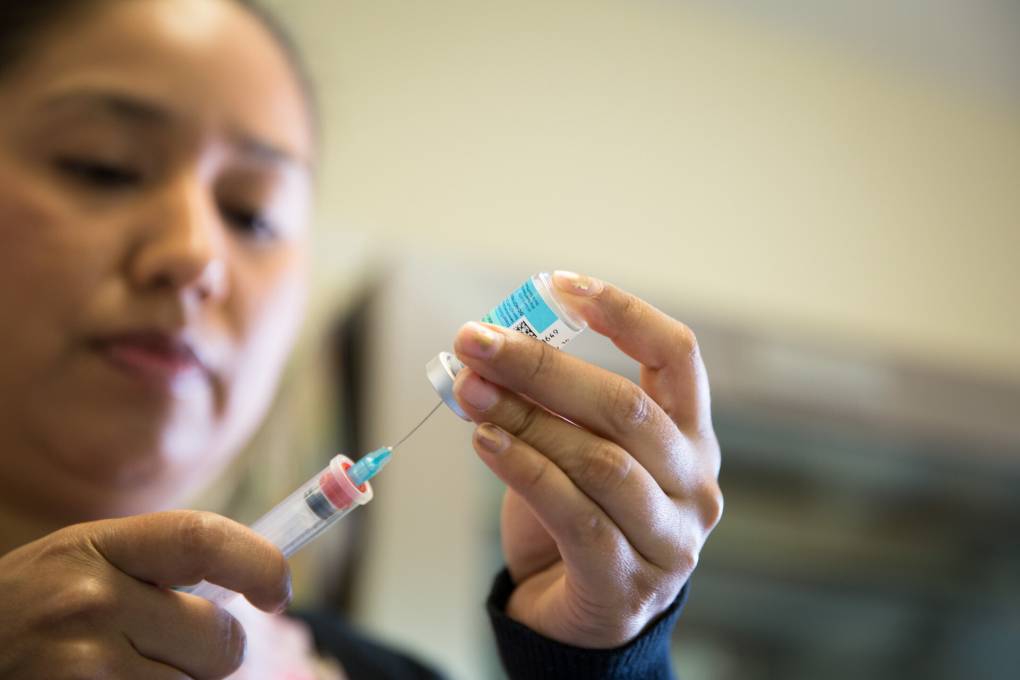
"content": "\u003cp>Public health officials in Contra Costa, Santa Clara and San Francisco counties are now recommending that businesses require their employees to get vaccinated. The guidance comes as the delta variant continues to spread across the Bay Area, sparking stark increases in case numbers and hospitalizations.\u003c/p>\n\u003cp>“What we really want to do is empower businesses and say that public health is fully behind these types of requirements,” said Dr. Naveena Bobba, the deputy health director for San Francisco.\u003c/p>\n\u003cp>The recommendations announced by health officials on Thursday fell short of making vaccines a work requirement, but health officials strongly urged businesses to push their employees to get the shot.\u003c/p>\n\u003cp>“We know COVID isn’t going away,” said Dr. Chris Farnitano, Contra Costa County’s health officer. “The choice now is to get vaccinated or get COVID.”\u003c/p>\n\u003cp>[ad fullwidth]\u003c/p>\n\u003cp>Two major employers in San Francisco have already issued vaccine requirements: the city and county as well as the University of California, San Francisco. City workers who refused vaccination could lose their jobs. Labor unions and advocacy groups criticized the city for not discussing the mandate with them prior. Some argued \u003ca href=\"https://www.google.com/url?q=https://www.sfchronicle.com/health/article/Advocates-for-Black-employees-call-S-F-vaccine-16272432.php&sa=D&source=editors&ust=1626998012700000&usg=AOvVaw3DHIOvJt_OFHSfRpR7UeWh\">the requirement would have an outsized impact on Black workers\u003c/a>.\u003c/p>\n\u003cp>Contra Costa and San Francisco counties previously issued health orders specific to high-risk workplaces like nursing homes, jails, residential care facilities and homeless shelters. Those orders require that workers either show proof of vaccination or wear more protective face coverings like surgical masks, and get weekly COVID tests.\u003c/p>\n\u003cp>“This is a tool that we’re encouraging all employers to consider,” Farnitano said.\u003c/p>\n\u003cp>[pullquote size='medium' align='right' citation=\"Dr. Chris Farnitano, Contra Costa County health officer\"]‘This is a tool that we’re encouraging all employers to consider.’[/pullquote]Santa Clara County has not issued any vaccination requirements specific to high-risk environments.\u003c/p>\n\u003cp>“We are monitoring those high-risk settings closely to see what their disease rates are and their vaccination rates are,” said Dr. George Han, deputy health officer of Santa Clara County.\u003c/p>\n\u003cp>Han also specified that people who work in public-facing businesses should continue to wear masks whether vaccinated or not.\u003c/p>\n\u003cp>“They’re interacting with members of the public who may or may not be vaccinated,” he said.\u003c/p>\n\u003cp>Walnut Creek Chamber of Commerce President and CEO Bob Linscheid said the business community supported employers requiring their employees to get vaccinated and argued it’s crucial to businesses remaining open and keeping both workers and customers safe.\u003c/p>\n\u003cp>[aside label=\"Related Stories\" tag=\"coronavirus-vaccine\"]“We’ve been very involved in business reopening here in Walnut Creek and this entire region,” Linscheid said. “The only thing that’s really impacted us negatively is the unvaccinated, so it’s incumbent upon us, if we’re going to be healthy and stay open, to get vaccinated.”\u003c/p>\n\u003cp>Other business groups have said they support the new guidance.\u003c/p>\n\u003cp>“They’re doing their job and as a business community we appreciate that,” said Christian D. Malesic, President and CEO of the Silicon Valley Central Chamber of Commerce, referring to the health officials.\u003c/p>\n\u003cp>Thursday’s encouragement from the three counties came less than a week after health officers in eight of the nine Bay Area counties encouraged their residents, regardless of their vaccination status, to resume wearing a mask in indoor shared spaces like grocery and retail stores and movie theaters.\u003c/p>\n\u003cp>The only Bay Area county that has yet to formally encourage residents to resume masking indoors is Solano County, which neighbors Contra Costa County.\u003c/p>\n\u003cp>Dr. Scott Morrow, health officer of San Mateo County, said in a written statement that the county feels strongly that businesses “are in the best position to determine how to encourage vaccination among their employees.”\u003c/p>\n\u003cp>While the new recommendations from Contra Costa, Santa Clara and San Francisco strongly urge employers to implement vaccination requirements, businesses will not face penalties if they don’t require their workers to get vaccinated.\u003c/p>\n\u003cp>[pullquote size='medium' align='right' citation=\"Bob Linscheid, Walnut Creek Chamber of Commerce\"]‘The only thing that’s really impacted us negatively is the unvaccinated, so it’s incumbent upon us, if we’re going to be healthy and stay open, to get vaccinated.’[/pullquote]Health officers said that if case rates and hospitalizations continue to increase, a mandate isn’t off the table.\u003c/p>\n\u003cp>“We’re not ruling out further requirements,” said Farnitano of Contra Costa County. “But we’re really hoping that some of these strong recommendations will be effective in once more flattening that curve.”\u003c/p>\n\u003cp>The U.S. Equal Employment Opportunity Commission and Department of Fair Employment and Housing both determined that employers can require vaccinations.\u003c/p>\n\u003cp>“I think this is really in the businesses’ interest and showing our business community that we support them,” said Bobba.\u003c/p>\n\u003cp>Dr. Matt Willis, Marin County’s public health officer, said the county already has a high vaccination rate.\u003c/p>\n\u003cp>“With 93 percent of our eligible residents vaccinated with at least one dose — the highest in the state — we’re confident in our approach thus far,” Willis said. “Our employers know they’re allowed to require vaccination, and we support any who take this step.”\u003c/p>\n\u003cp>\u003cem>Bay City News contributed to this report.\u003c/em>\u003c/p>\n\u003cp>\u003c/p>\n",
"blocks": [],
"excerpt": "While the new recommendations from the three counties strongly urge employers to implement vaccination requirements, businesses will not face penalties if they fail to do so. ",
"status": "publish",
"parent": 0,
"modified": 1740614824,
"stats": {
"hasAudio": false,
"hasVideo": false,
"hasChartOrMap": false,
"iframeSrcs": [],
"hasGoogleForm": false,
"hasGallery": false,
"hasHearkenModule": false,
"hasPolis": false,
"paragraphCount": 28,
"wordCount": 914
},
"headData": {
"title": "Contra Costa, Santa Clara, San Francisco Counties Urging Employers to Require Vaccines | KQED",
"description": "While the new recommendations from the three counties strongly urge employers to implement vaccination requirements, businesses will not face penalties if they fail to do so. ",
"ogTitle": "",
"ogDescription": "",
"ogImgId": "",
"twTitle": "",
"twDescription": "",
"twImgId": "",
"schema": {
"@context": "https://schema.org",
"@type": "NewsArticle",
"headline": "Contra Costa, Santa Clara, San Francisco Counties Urging Employers to Require Vaccines",
"datePublished": "2021-07-22T17:50:12-07:00",
"dateModified": "2025-02-26T16:07:04-08:00",
"image": "https://cdn.kqed.org/wp-content/uploads/2020/02/KQED-OG-Image@1x.png",
"isAccessibleForFree": "True",
"publisher": {
"@type": "NewsMediaOrganization",
"@id": "https://www.kqed.org/#organization",
"name": "KQED",
"logo": "https://cdn.kqed.org/wp-content/uploads/2020/02/KQED-OG-Image@1x.png",
"url": "https://www.kqed.org",
"sameAs": [
"https://www.facebook.com/KQED",
"https://twitter.com/KQED",
"https://www.instagram.com/kqed/",
"https://www.tiktok.com/@kqedofficial",
"https://www.linkedin.com/company/kqed",
"https://www.youtube.com/channel/UCeC0IOo7i1P_61zVUWbJ4nw"
]
}
}
},
"sticky": false,
"path": "/news/11882150/contra-costa-santa-clara-san-francisco-counties-urging-employers-to-require-vaccines",
"audioTrackLength": null,
"parsedContent": [
{
"type": "contentString",
"content": "\u003cdiv class=\"post-body\">\u003cp>\u003cp>Public health officials in Contra Costa, Santa Clara and San Francisco counties are now recommending that businesses require their employees to get vaccinated. The guidance comes as the delta variant continues to spread across the Bay Area, sparking stark increases in case numbers and hospitalizations.\u003c/p>\n\u003cp>“What we really want to do is empower businesses and say that public health is fully behind these types of requirements,” said Dr. Naveena Bobba, the deputy health director for San Francisco.\u003c/p>\n\u003cp>The recommendations announced by health officials on Thursday fell short of making vaccines a work requirement, but health officials strongly urged businesses to push their employees to get the shot.\u003c/p>\n\u003cp>“We know COVID isn’t going away,” said Dr. Chris Farnitano, Contra Costa County’s health officer. “The choice now is to get vaccinated or get COVID.”\u003c/p>\n\u003cp>\u003c/p>\u003c/div>",
"attributes": {
"named": {},
"numeric": []
}
},
{
"type": "component",
"content": "",
"name": "ad",
"attributes": {
"named": {
"label": "fullwidth"
},
"numeric": [
"fullwidth"
]
}
},
{
"type": "contentString",
"content": "\u003cdiv class=\"post-body\">\u003cp>\u003c/p>\n\u003cp>Two major employers in San Francisco have already issued vaccine requirements: the city and county as well as the University of California, San Francisco. City workers who refused vaccination could lose their jobs. Labor unions and advocacy groups criticized the city for not discussing the mandate with them prior. Some argued \u003ca href=\"https://www.google.com/url?q=https://www.sfchronicle.com/health/article/Advocates-for-Black-employees-call-S-F-vaccine-16272432.php&sa=D&source=editors&ust=1626998012700000&usg=AOvVaw3DHIOvJt_OFHSfRpR7UeWh\">the requirement would have an outsized impact on Black workers\u003c/a>.\u003c/p>\n\u003cp>Contra Costa and San Francisco counties previously issued health orders specific to high-risk workplaces like nursing homes, jails, residential care facilities and homeless shelters. Those orders require that workers either show proof of vaccination or wear more protective face coverings like surgical masks, and get weekly COVID tests.\u003c/p>\n\u003cp>“This is a tool that we’re encouraging all employers to consider,” Farnitano said.\u003c/p>\n\u003cp>\u003c/p>\u003c/div>",
"attributes": {
"named": {},
"numeric": []
}
},
{
"type": "component",
"content": "‘This is a tool that we’re encouraging all employers to consider.’",
"name": "pullquote",
"attributes": {
"named": {
"size": "medium",
"align": "right",
"citation": "Dr. Chris Farnitano, Contra Costa County health officer",
"label": ""
},
"numeric": []
}
},
{
"type": "contentString",
"content": "\u003cdiv class=\"post-body\">\u003cp>Santa Clara County has not issued any vaccination requirements specific to high-risk environments.\u003c/p>\n\u003cp>“We are monitoring those high-risk settings closely to see what their disease rates are and their vaccination rates are,” said Dr. George Han, deputy health officer of Santa Clara County.\u003c/p>\n\u003cp>Han also specified that people who work in public-facing businesses should continue to wear masks whether vaccinated or not.\u003c/p>\n\u003cp>“They’re interacting with members of the public who may or may not be vaccinated,” he said.\u003c/p>\n\u003cp>Walnut Creek Chamber of Commerce President and CEO Bob Linscheid said the business community supported employers requiring their employees to get vaccinated and argued it’s crucial to businesses remaining open and keeping both workers and customers safe.\u003c/p>\n\u003cp>\u003c/p>\u003c/div>",
"attributes": {
"named": {},
"numeric": []
}
},
{
"type": "component",
"content": "",
"name": "aside",
"attributes": {
"named": {
"label": "Related Stories ",
"tag": "coronavirus-vaccine"
},
"numeric": []
}
},
{
"type": "contentString",
"content": "\u003cdiv class=\"post-body\">\u003cp>“We’ve been very involved in business reopening here in Walnut Creek and this entire region,” Linscheid said. “The only thing that’s really impacted us negatively is the unvaccinated, so it’s incumbent upon us, if we’re going to be healthy and stay open, to get vaccinated.”\u003c/p>\n\u003cp>Other business groups have said they support the new guidance.\u003c/p>\n\u003cp>“They’re doing their job and as a business community we appreciate that,” said Christian D. Malesic, President and CEO of the Silicon Valley Central Chamber of Commerce, referring to the health officials.\u003c/p>\n\u003cp>Thursday’s encouragement from the three counties came less than a week after health officers in eight of the nine Bay Area counties encouraged their residents, regardless of their vaccination status, to resume wearing a mask in indoor shared spaces like grocery and retail stores and movie theaters.\u003c/p>\n\u003cp>The only Bay Area county that has yet to formally encourage residents to resume masking indoors is Solano County, which neighbors Contra Costa County.\u003c/p>\n\u003cp>Dr. Scott Morrow, health officer of San Mateo County, said in a written statement that the county feels strongly that businesses “are in the best position to determine how to encourage vaccination among their employees.”\u003c/p>\n\u003cp>While the new recommendations from Contra Costa, Santa Clara and San Francisco strongly urge employers to implement vaccination requirements, businesses will not face penalties if they don’t require their workers to get vaccinated.\u003c/p>\n\u003cp>\u003c/p>\u003c/div>",
"attributes": {
"named": {},
"numeric": []
}
},
{
"type": "component",
"content": "‘The only thing that’s really impacted us negatively is the unvaccinated, so it’s incumbent upon us, if we’re going to be healthy and stay open, to get vaccinated.’",
"name": "pullquote",
"attributes": {
"named": {
"size": "medium",
"align": "right",
"citation": "Bob Linscheid, Walnut Creek Chamber of Commerce",
"label": ""
},
"numeric": []
}
},
{
"type": "contentString",
"content": "\u003cdiv class=\"post-body\">\u003cp>Health officers said that if case rates and hospitalizations continue to increase, a mandate isn’t off the table.\u003c/p>\n\u003cp>“We’re not ruling out further requirements,” said Farnitano of Contra Costa County. “But we’re really hoping that some of these strong recommendations will be effective in once more flattening that curve.”\u003c/p>\n\u003cp>The U.S. Equal Employment Opportunity Commission and Department of Fair Employment and Housing both determined that employers can require vaccinations.\u003c/p>\n\u003cp>“I think this is really in the businesses’ interest and showing our business community that we support them,” said Bobba.\u003c/p>\n\u003cp>Dr. Matt Willis, Marin County’s public health officer, said the county already has a high vaccination rate.\u003c/p>\n\u003cp>“With 93 percent of our eligible residents vaccinated with at least one dose — the highest in the state — we’re confident in our approach thus far,” Willis said. “Our employers know they’re allowed to require vaccination, and we support any who take this step.”\u003c/p>\n\u003cp>\u003cem>Bay City News contributed to this report.\u003c/em>\u003c/p>\n\u003cp>\u003c/p>\n\u003c/div>\u003c/p>",
"attributes": {
"named": {},
"numeric": []
}
}
],
"link": "/news/11882150/contra-costa-santa-clara-san-francisco-counties-urging-employers-to-require-vaccines",
"authors": [
"11655"
],
"categories": [
"news_1758",
"news_457",
"news_8"
],
"tags": [
"news_1467",
"news_27350",
"news_28801",
"news_38",
"news_18188",
"news_922",
"news_23063"
],
"featImg": "news_11849588",
"label": "news"
},
"news_11881276": {
"type": "posts",
"id": "news_11881276",
"meta": {
"index": "posts_1716263798",
"site": "news",
"id": "11881276",
"score": null,
"sort": [
1626376788000
]
},
"parent": 0,
"labelTerm": {},
"blocks": [],
"publishDate": 1626376788,
"format": "standard",
"disqusTitle": "A Record Number of People Died From Drug Overdoses in the U.S. During the First Year of COVID-19",
"title": "A Record Number of People Died From Drug Overdoses in the U.S. During the First Year of COVID-19",
"headTitle": "KQED News",
"content": "\u003cp>More than 93,000 people died of a drug overdose in the U.S. last year — a record number that reflects a rise of nearly 30% from 2019, according to new data released by the Centers for Disease Control and Prevention. Officials said the increase was driven by \u003ca href=\"https://www.npr.org/sections/health-shots/2021/04/22/989833102/overdose-deaths-surged-in-pandemic-as-more-drugs-were-laced-with-fentanyl\" target=\"_blank\" rel=\"noopener noreferrer\">the lethal prevalence of fentanyl\u003c/a> as well as pandemic-related stressors and problems in accessing care.\u003c/p>\n\u003cp>\"This is the highest number of overdose deaths ever recorded in a 12-month period, and the largest increase since at least 1999,\" Dr. Nora Volkow, director of the National Institute on Drug Abuse, told NPR.\u003c/p>\n\u003cp>[pullquote size=\"medium\" align=\"right\" citation=\"Dr. Nora Volkow, director of the National Institute on Drug Abuse\"]'This is the highest number of overdose deaths ever recorded in a 12-month period, and the largest increase since at least 1999.'[/pullquote]An \u003ca href=\"https://www.kqed.org/news/11874651/fentanyl-is-killing-more-people-in-the-pandemic-in-santa-clara-county-victims-are-getting-younger\" target=\"_blank\" rel=\"noopener noreferrer\">analysis by KQED\u003c/a> and \u003ca href=\"https://documentingcovid19.io/home\" target=\"_blank\" rel=\"noopener noreferrer\">Documenting COVID-19\u003c/a>, a project run by Columbia University’s Brown Institute for Media Innovation, found that the number of fentanyl overdoses rose sharply from 2019 to 2020 in three Bay Area counties: 170% in Santa Clara County, 68% in San Francisco and 29% in Alameda County.\u003c/p>\n\u003cp>The national data is provisional as states are still reporting their tallies to the CDC's \u003ca href=\"https://www.cdc.gov/nchs/nvss/vsrr/drug-overdose-data.htm\" target=\"_blank\" rel=\"noopener noreferrer\">National Center for Health Statistics\u003c/a>. But even with some data not yet complete, the numbers tell a dire story.\u003c/p>\n\u003cp>Ten states are predicted to have at least a 40% rise in drug overdose deaths from the previous 12-month span, according to the CDC: Vermont, Kentucky, South Carolina, West Virginia, Louisiana, California, Tennessee, Nebraska, Arkansas and Virginia.\u003c/p>\n\u003cp>Volkow, whose agency is part of the National Institutes of Health, calls the data \"chilling.\" It's another sign, she said, that both the COVID-19 pandemic and the opioid crisis are whipsawing the country with deadly effects.\u003c/p>\n\u003cp>\"This has been an incredibly uncertain and stressful time for many people, and we are seeing an increase in drug consumption, difficulty in accessing lifesaving treatments for substance use disorders and a tragic rise in overdose deaths,\" Volkow said.\u003c/p>\n\u003cp>She added that people between the ages of 35 and 44 accounted for the highest number of deaths.\u003c/p>\n\u003cp>While the provisional data doesn't provide a breakdown by race and ethnicity, other recent studies suggest that at least \u003ca href=\"https://www.npr.org/2021/03/03/970964576/drug-overdose-deaths-surge-among-black-americans-during-pandemic\" target=\"_blank\" rel=\"noopener noreferrer\">in Philadelphia and California\u003c/a>, the sharpest rise in overdose fatalities last year was among Black residents. And other studies have shown that even before the pandemic, overdose rates in Black communities were rising much faster than among white Americans.\u003c/p>\n\u003cp>Drug overdoses accounted for roughly one-quarter as many deaths as COVID-19 did in 2020, using the CDC's number of \u003ca href=\"https://www.cdc.gov/mmwr/volumes/70/wr/mm7014e1.htm\" target=\"_blank\" rel=\"noopener noreferrer\">375,000 pandemic deaths\u003c/a> last year.\u003c/p>\n\u003cp>The provisional 93,331 U.S. drug overdose deaths are a sharp increase from the 72,151 deaths estimated in 2019. Deaths in 2020 from opioids alone — 69,710 — nearly eclipsed the total number of fatal overdoses in the previous year, although deaths involving other drugs such as methamphetamine and cocaine also contributed to the increase.\u003c/p>\n\u003cp>[ad fullwidth]\u003c/p>\n\u003cp>It's urgent, Volkow said, for governments and agencies to widen access to treatment for people who are suffering from substance use disorders.\u003c/p>\n\u003cp>As NPR's Brian Mann \u003ca href=\"https://www.npr.org/2021/06/19/1006891729/overdose-deaths-rose-during-the-war-on-drugs-but-efforts-to-reduce-them-face-bac\" target=\"_blank\" rel=\"noopener noreferrer\">reported last month\u003c/a>, \"If current trends continue, illicit drugs will soon kill more Americans every day than COVID-19.\"\u003c/p>\n\u003cp>Before 2016, more Americans died from heroin overdoses annually than from powerful synthetic opioids such as fentanyl, according to the CDC. But the number of lives lost to overdoses from synthetic opioids has soared since then.\u003c/p>\n\u003cp>Roughly 57,000 people died from synthetic opioids (predominantly fentanyl) last year, compared with around 13,000 people who died from heroin overdoses.\u003c/p>\n\u003cp>[aside label=\"Related Stories\" postID=news_11874651,news_11874753,forum_2010101883209]Fentanyl's properties are similar to morphine — but it's \"50 to 100 times more potent,\" \u003ca href=\"https://www.drugabuse.gov/drug-topics/fentanyl\" target=\"_blank\" rel=\"noopener noreferrer\">according to the National Institute on Drug Abuse\u003c/a>. It is also frequently cut into other illegal drugs, including cocaine. That dangerous trend has triggered outreach efforts to \u003ca href=\"https://www.npr.org/2021/07/05/1013203805/party-drugs-are-being-increasingly-laced-with-fentanyl\" target=\"_blank\" rel=\"noopener noreferrer\">train people in using naloxone\u003c/a>, which can reverse an opioid overdose.\u003c/p>\n\u003cp>The federal government has been taking steps to address drug addiction and overdoses, said Chuck Ingoglia, President and CEO of the National Council for Mental Wellbeing.\u003c/p>\n\u003cp>\"Congress recently has appropriated lots of new dollars to try to address this,\" he said. \"And it's been interesting to see that the Biden-Harris administration is really prioritizing the full continuum of interventions, everything from harm reduction to increased treatment capacity.\"\u003c/p>\n\u003cp>He said \u003ca href=\"https://appropriations.house.gov/news/press-releases/appropriations-committee-releases-fiscal-year-2021-labor-hhs-education-funding\" target=\"_blank\" rel=\"noopener noreferrer\">the House appropriations bill\u003c/a> also includes funding for \u003ca href=\"https://www.npr.org/2021/06/17/1007805678/needle-exchanges-access-to-safer-narcotics-could-save-lives-but-its-a-tough-sell\" target=\"_blank\" rel=\"noopener noreferrer\">syringe exchange programs\u003c/a>, which he said is the first time the federal government has explicitly called for this \"vital component of harm reduction interventions.\" But unless there is long-term funding to create a system to address drug addiction, Ingoglia said, it may be hard to prevent overdoses in the long run.\u003c/p>\n\u003cp>\u003cem>NPR health correspondent Rhitu Chatterjee contributed to this report.\u003c/em>\u003c/p>\n\u003cdiv class=\"fullattribution\">Copyright 2021 NPR. To see more, visit https://www.npr.org.\u003cimg src=\"https://www.google-analytics.com/__utm.gif?utmac=UA-5828686-4&utmdt=Drug+Overdoses+Killed+A+Record+Number+Of+Americans+In+2020%2C+Jumping+By+Nearly+30%25&utme=8(APIKey)9(MDAxOTAwOTE4MDEyMTkxMDAzNjczZDljZA004)\">\u003c/div>\n\u003cp>\u003c/p>\n",
"disqusIdentifier": "11881276 https://ww2.kqed.org/news/?p=11881276",
"disqusUrl": "https://ww2.kqed.org/news/2021/07/15/a-record-number-of-people-died-from-drug-overdoses-in-the-u-s-during-the-first-year-of-covid-19/",
"stats": {
"hasVideo": false,
"hasChartOrMap": false,
"hasAudio": false,
"hasPolis": false,
"wordCount": 830,
"hasGoogleForm": false,
"hasGallery": false,
"hasHearkenModule": false,
"iframeSrcs": [],
"paragraphCount": 22
},
"modified": 1626376788,
"excerpt": "More than 93,000 people died of a drug overdose in the U.S. last year, according to new CDC data. Fentanyl and other synthetic opioids accounted primarily for the rise, which the pandemic exacerbated.",
"headData": {
"twImgId": "",
"twTitle": "",
"ogTitle": "",
"ogImgId": "",
"twDescription": "",
"description": "More than 93,000 people died of a drug overdose in the U.S. last year, according to new CDC data. Fentanyl and other synthetic opioids accounted primarily for the rise, which the pandemic exacerbated.",
"title": "A Record Number of People Died From Drug Overdoses in the U.S. During the First Year of COVID-19 | KQED",
"ogDescription": "",
"schema": {
"@context": "https://schema.org",
"@type": "NewsArticle",
"headline": "A Record Number of People Died From Drug Overdoses in the U.S. During the First Year of COVID-19",
"datePublished": "2021-07-15T12:19:48-07:00",
"dateModified": "2021-07-15T12:19:48-07:00",
"image": "https://cdn.kqed.org/wp-content/uploads/2020/02/KQED-OG-Image@1x.png",
"isAccessibleForFree": "True",
"publisher": {
"@type": "NewsMediaOrganization",
"@id": "https://www.kqed.org/#organization",
"name": "KQED",
"logo": "https://cdn.kqed.org/wp-content/uploads/2020/02/KQED-OG-Image@1x.png",
"url": "https://www.kqed.org",
"sameAs": [
"https://www.facebook.com/KQED",
"https://twitter.com/KQED",
"https://www.instagram.com/kqed/",
"https://www.tiktok.com/@kqedofficial",
"https://www.linkedin.com/company/kqed",
"https://www.youtube.com/channel/UCeC0IOo7i1P_61zVUWbJ4nw"
]
}
}
},
"guestAuthors": [],
"slug": "a-record-number-of-people-died-from-drug-overdoses-in-the-u-s-during-the-first-year-of-covid-19",
"status": "publish",
"sourceUrl": "https://www.npr.org/",
"nprApiLink": "http://api.npr.org/query?id=1016029270&apiKey=MDAxOTAwOTE4MDEyMTkxMDAzNjczZDljZA004",
"nprByline": "\u003ca href=\"https://www.npr.org/people/14562108/bill-chappell\">Bill Chappell\u003c/a>",
"nprStoryDate": "Wed, 14 Jul 2021 16:14:24 -0400",
"nprLastModifiedDate": "Wed, 14 Jul 2021 19:39:21 -0400",
"nprHtmlLink": "https://www.npr.org/2021/07/14/1016029270/drug-overdoses-killed-a-record-number-of-americans-in-2020-jumping-by-nearly-30?ft=nprml&f=1016029270",
"nprImageAgency": "AP",
"nprImageCredit": "Kathy Willens",
"source": "NPR",
"nprStoryId": "1016029270",
"nprRetrievedStory": "1",
"nprPubDate": "Wed, 14 Jul 2021 19:39:00 -0400",
"path": "/news/11881276/a-record-number-of-people-died-from-drug-overdoses-in-the-u-s-during-the-first-year-of-covid-19",
"audioTrackLength": null,
"parsedContent": [
{
"type": "contentString",
"content": "\u003cdiv class=\"post-body\">\u003cp>\u003cp>More than 93,000 people died of a drug overdose in the U.S. last year — a record number that reflects a rise of nearly 30% from 2019, according to new data released by the Centers for Disease Control and Prevention. Officials said the increase was driven by \u003ca href=\"https://www.npr.org/sections/health-shots/2021/04/22/989833102/overdose-deaths-surged-in-pandemic-as-more-drugs-were-laced-with-fentanyl\" target=\"_blank\" rel=\"noopener noreferrer\">the lethal prevalence of fentanyl\u003c/a> as well as pandemic-related stressors and problems in accessing care.\u003c/p>\n\u003cp>\"This is the highest number of overdose deaths ever recorded in a 12-month period, and the largest increase since at least 1999,\" Dr. Nora Volkow, director of the National Institute on Drug Abuse, told NPR.\u003c/p>\n\u003cp>\u003c/p>\u003c/div>",
"attributes": {
"named": {},
"numeric": []
}
},
{
"type": "component",
"content": "'This is the highest number of overdose deaths ever recorded in a 12-month period, and the largest increase since at least 1999.'",
"name": "pullquote",
"attributes": {
"named": {
"size": "medium",
"align": "right",
"citation": "Dr. Nora Volkow, director of the National Institute on Drug Abuse",
"label": ""
},
"numeric": []
}
},
{
"type": "contentString",
"content": "\u003cdiv class=\"post-body\">\u003cp>An \u003ca href=\"https://www.kqed.org/news/11874651/fentanyl-is-killing-more-people-in-the-pandemic-in-santa-clara-county-victims-are-getting-younger\" target=\"_blank\" rel=\"noopener noreferrer\">analysis by KQED\u003c/a> and \u003ca href=\"https://documentingcovid19.io/home\" target=\"_blank\" rel=\"noopener noreferrer\">Documenting COVID-19\u003c/a>, a project run by Columbia University’s Brown Institute for Media Innovation, found that the number of fentanyl overdoses rose sharply from 2019 to 2020 in three Bay Area counties: 170% in Santa Clara County, 68% in San Francisco and 29% in Alameda County.\u003c/p>\n\u003cp>The national data is provisional as states are still reporting their tallies to the CDC's \u003ca href=\"https://www.cdc.gov/nchs/nvss/vsrr/drug-overdose-data.htm\" target=\"_blank\" rel=\"noopener noreferrer\">National Center for Health Statistics\u003c/a>. But even with some data not yet complete, the numbers tell a dire story.\u003c/p>\n\u003cp>Ten states are predicted to have at least a 40% rise in drug overdose deaths from the previous 12-month span, according to the CDC: Vermont, Kentucky, South Carolina, West Virginia, Louisiana, California, Tennessee, Nebraska, Arkansas and Virginia.\u003c/p>\n\u003cp>Volkow, whose agency is part of the National Institutes of Health, calls the data \"chilling.\" It's another sign, she said, that both the COVID-19 pandemic and the opioid crisis are whipsawing the country with deadly effects.\u003c/p>\n\u003cp>\"This has been an incredibly uncertain and stressful time for many people, and we are seeing an increase in drug consumption, difficulty in accessing lifesaving treatments for substance use disorders and a tragic rise in overdose deaths,\" Volkow said.\u003c/p>\n\u003cp>She added that people between the ages of 35 and 44 accounted for the highest number of deaths.\u003c/p>\n\u003cp>While the provisional data doesn't provide a breakdown by race and ethnicity, other recent studies suggest that at least \u003ca href=\"https://www.npr.org/2021/03/03/970964576/drug-overdose-deaths-surge-among-black-americans-during-pandemic\" target=\"_blank\" rel=\"noopener noreferrer\">in Philadelphia and California\u003c/a>, the sharpest rise in overdose fatalities last year was among Black residents. And other studies have shown that even before the pandemic, overdose rates in Black communities were rising much faster than among white Americans.\u003c/p>\n\u003cp>Drug overdoses accounted for roughly one-quarter as many deaths as COVID-19 did in 2020, using the CDC's number of \u003ca href=\"https://www.cdc.gov/mmwr/volumes/70/wr/mm7014e1.htm\" target=\"_blank\" rel=\"noopener noreferrer\">375,000 pandemic deaths\u003c/a> last year.\u003c/p>\n\u003cp>The provisional 93,331 U.S. drug overdose deaths are a sharp increase from the 72,151 deaths estimated in 2019. Deaths in 2020 from opioids alone — 69,710 — nearly eclipsed the total number of fatal overdoses in the previous year, although deaths involving other drugs such as methamphetamine and cocaine also contributed to the increase.\u003c/p>\n\u003cp>\u003c/p>\u003c/div>",
"attributes": {
"named": {},
"numeric": []
}
},
{
"type": "component",
"content": "",
"name": "ad",
"attributes": {
"named": {
"label": "fullwidth"
},
"numeric": [
"fullwidth"
]
}
},
{
"type": "contentString",
"content": "\u003cdiv class=\"post-body\">\u003cp>\u003c/p>\n\u003cp>It's urgent, Volkow said, for governments and agencies to widen access to treatment for people who are suffering from substance use disorders.\u003c/p>\n\u003cp>As NPR's Brian Mann \u003ca href=\"https://www.npr.org/2021/06/19/1006891729/overdose-deaths-rose-during-the-war-on-drugs-but-efforts-to-reduce-them-face-bac\" target=\"_blank\" rel=\"noopener noreferrer\">reported last month\u003c/a>, \"If current trends continue, illicit drugs will soon kill more Americans every day than COVID-19.\"\u003c/p>\n\u003cp>Before 2016, more Americans died from heroin overdoses annually than from powerful synthetic opioids such as fentanyl, according to the CDC. But the number of lives lost to overdoses from synthetic opioids has soared since then.\u003c/p>\n\u003cp>Roughly 57,000 people died from synthetic opioids (predominantly fentanyl) last year, compared with around 13,000 people who died from heroin overdoses.\u003c/p>\n\u003cp>\u003c/p>\u003c/div>",
"attributes": {
"named": {},
"numeric": []
}
},
{
"type": "component",
"content": "",
"name": "aside",
"attributes": {
"named": {
"label": "Related Stories ",
"postid": "news_11874651,news_11874753,forum_2010101883209"
},
"numeric": []
}
},
{
"type": "contentString",
"content": "\u003cdiv class=\"post-body\">\u003cp>Fentanyl's properties are similar to morphine — but it's \"50 to 100 times more potent,\" \u003ca href=\"https://www.drugabuse.gov/drug-topics/fentanyl\" target=\"_blank\" rel=\"noopener noreferrer\">according to the National Institute on Drug Abuse\u003c/a>. It is also frequently cut into other illegal drugs, including cocaine. That dangerous trend has triggered outreach efforts to \u003ca href=\"https://www.npr.org/2021/07/05/1013203805/party-drugs-are-being-increasingly-laced-with-fentanyl\" target=\"_blank\" rel=\"noopener noreferrer\">train people in using naloxone\u003c/a>, which can reverse an opioid overdose.\u003c/p>\n\u003cp>The federal government has been taking steps to address drug addiction and overdoses, said Chuck Ingoglia, President and CEO of the National Council for Mental Wellbeing.\u003c/p>\n\u003cp>\"Congress recently has appropriated lots of new dollars to try to address this,\" he said. \"And it's been interesting to see that the Biden-Harris administration is really prioritizing the full continuum of interventions, everything from harm reduction to increased treatment capacity.\"\u003c/p>\n\u003cp>He said \u003ca href=\"https://appropriations.house.gov/news/press-releases/appropriations-committee-releases-fiscal-year-2021-labor-hhs-education-funding\" target=\"_blank\" rel=\"noopener noreferrer\">the House appropriations bill\u003c/a> also includes funding for \u003ca href=\"https://www.npr.org/2021/06/17/1007805678/needle-exchanges-access-to-safer-narcotics-could-save-lives-but-its-a-tough-sell\" target=\"_blank\" rel=\"noopener noreferrer\">syringe exchange programs\u003c/a>, which he said is the first time the federal government has explicitly called for this \"vital component of harm reduction interventions.\" But unless there is long-term funding to create a system to address drug addiction, Ingoglia said, it may be hard to prevent overdoses in the long run.\u003c/p>\n\u003cp>\u003cem>NPR health correspondent Rhitu Chatterjee contributed to this report.\u003c/em>\u003c/p>\n\u003cdiv class=\"fullattribution\">Copyright 2021 NPR. To see more, visit https://www.npr.org.\u003cimg src=\"https://www.google-analytics.com/__utm.gif?utmac=UA-5828686-4&utmdt=Drug+Overdoses+Killed+A+Record+Number+Of+Americans+In+2020%2C+Jumping+By+Nearly+30%25&utme=8(APIKey)9(MDAxOTAwOTE4MDEyMTkxMDAzNjczZDljZA004)\">\u003c/div>\n\u003cp>\u003c/p>\n\u003c/div>\u003c/p>",
"attributes": {
"named": {},
"numeric": []
}
}
],
"link": "/news/11881276/a-record-number-of-people-died-from-drug-overdoses-in-the-u-s-during-the-first-year-of-covid-19",
"authors": [
"byline_news_11881276"
],
"categories": [
"news_457",
"news_8"
],
"tags": [
"news_21434",
"news_260",
"news_25968",
"news_26003",
"news_23051",
"news_22774",
"news_38",
"news_18188"
],
"featImg": "news_11881289",
"label": "source_news_11881276"
},
"news_11880951": {
"type": "posts",
"id": "news_11880951",
"meta": {
"index": "posts_1716263798",
"site": "news",
"id": "11880951",
"score": null,
"sort": [
1626136990000
]
},
"parent": 0,
"labelTerm": {
"site": "news"
},
"blocks": [],
"publishDate": 1626136990,
"format": "standard",
"disqusTitle": "SF Leaders Say Robbery and Theft Are Down Despite Narratives of Rampant Crime",
"title": "SF Leaders Say Robbery and Theft Are Down Despite Narratives of Rampant Crime",
"headTitle": "KQED News",
"content": "\u003cp>San Francisco city leaders say the prevailing perception that crime is running rampant — a key argument behind an effort to remove District Attorney Chesa Boudin from office — doesn't quite square with the statistics. \u003c/p>\n\u003cp>Robbery, rape and larceny theft are down, according to the San Francisco Police Department's \u003ca href=\"https://s3.documentcloud.org/documents/20988259/2021-june-compstat.pdf\">mid-year report\u003c/a> on public safety statistics. Thefts, including those at retail stores, are down by 9% compared to this time last year, according to the report.\u003c/p>\n\u003cp>\"Not every crime is reported, but we can only go by what we know: It's been a steady decrease,\" said SFPD Police Chief Bill Scott. \"The statistics are counter to the narrative.\"\u003c/p>\n\u003cp>Scott, who presented the data with Mayor London Breed at a press conference Monday, said viral videos and news coverage of crime in San Francisco are contributing to a false perception of lawlessness.\u003c/p>\n\u003cp>\"We know that numbers don't matter when you're a victim of a crime, any crime, in any capacity,\" said Breed. \"But at the end of the day, we have to use this data to make a decision about our policies and our investments.\"\u003c/p>\n\u003cp>[ad fullwidth]\u003c/p>\n\u003cp>While most violent crime is down, gun violence and burglaries are up. So are crimes such as homicides, aggravated assault, car break-ins and auto thefts — though not as high as in recent years.\u003c/p>\n\u003cp>San Francisco has reported 26 homicides so far this year, for example, compared to 22 by this time in 2020. Despite the increase over last year, the mid-year number is significantly lower than the 34 reported homicides by mid-2017.\u003c/p>\n\u003cp>\"These things, they get in our head,\" Scott said, referring to videos capturing violent crime and circulating on social media. \"And people start to believe that that is our city. But that is not our city.\"\u003c/p>\n\u003cp>[aside label='Related Coverage' tag='sfpd']Fears of rising crime have also driven calls to remove San Francisco \u003ca href=\"https://www.kqed.org/news/11786689/chesa-boudin-not-your-average-district-attorney\">District Attorney Chesa Boudin\u003c/a> from office. Those behind the effort to remove him from his position have said Boudin's \u003ca href=\"https://www.sfexaminer.com/news/data-shows-chesa-boudin-prosecutes-fewer-shoplifters-than-predecessor/\">progressive approach\u003c/a> to the office gives criminals the green light to commit crimes in the city.\u003c/p>\n\u003cp>\"Look at the facts,\" Boudin said about those calling for his removal. \"The numbers are something that my office, the Police Department and all of San Francisco should be proud of.\"\u003c/p>\n\u003cp>John Hamasaki, a public defender and San Francisco police commissioner who supports Boudin, said the anxiety around the pandemic and heightened calls for police accountability after the murder of George Floyd by a Minneapolis police officer created a \"perfect storm\" of fear exploited by right-wing media and conservatives.\u003c/p>\n\u003cp>\"Unfortunately, I think the press conference today was probably a necessary way of pushing back on that and saying, well, that's terrible that people feel that way,\" Hamasaki said. \"But let's take a moment, let's step back, and let's look at the facts. Let's look at what we know, and then coming up with strategies for the crime that does exist.\"\u003c/p>\n\u003cp>\u003c/p>\n",
"disqusIdentifier": "11880951 https://ww2.kqed.org/news/?p=11880951",
"disqusUrl": "https://ww2.kqed.org/news/2021/07/12/sf-leaders-say-robbery-and-theft-are-down-despite-narratives-of-rampant-crime/",
"stats": {
"hasVideo": false,
"hasChartOrMap": false,
"hasAudio": false,
"hasPolis": false,
"wordCount": 503,
"hasGoogleForm": false,
"hasGallery": false,
"hasHearkenModule": false,
"iframeSrcs": [],
"paragraphCount": 14
},
"modified": 1626194293,
"excerpt": "San Francisco's mayor and police chief say the prevailing perception that crime is running rampant — a key argument behind an effort to remove District Attorney Chesa Boudin from office — doesn't square with reality.",
"headData": {
"twImgId": "",
"twTitle": "",
"ogTitle": "",
"ogImgId": "",
"twDescription": "",
"description": "San Francisco's mayor and police chief say the prevailing perception that crime is running rampant — a key argument behind an effort to remove District Attorney Chesa Boudin from office — doesn't square with reality.",
"title": "SF Leaders Say Robbery and Theft Are Down Despite Narratives of Rampant Crime | KQED",
"ogDescription": "",
"schema": {
"@context": "https://schema.org",
"@type": "NewsArticle",
"headline": "SF Leaders Say Robbery and Theft Are Down Despite Narratives of Rampant Crime",
"datePublished": "2021-07-12T17:43:10-07:00",
"dateModified": "2021-07-13T09:38:13-07:00",
"image": "https://cdn.kqed.org/wp-content/uploads/2020/02/KQED-OG-Image@1x.png",
"isAccessibleForFree": "True",
"publisher": {
"@type": "NewsMediaOrganization",
"@id": "https://www.kqed.org/#organization",
"name": "KQED",
"logo": "https://cdn.kqed.org/wp-content/uploads/2020/02/KQED-OG-Image@1x.png",
"url": "https://www.kqed.org",
"sameAs": [
"https://www.facebook.com/KQED",
"https://twitter.com/KQED",
"https://www.instagram.com/kqed/",
"https://www.tiktok.com/@kqedofficial",
"https://www.linkedin.com/company/kqed",
"https://www.youtube.com/channel/UCeC0IOo7i1P_61zVUWbJ4nw"
]
}
}
},
"guestAuthors": [],
"slug": "sf-leaders-say-robbery-and-theft-are-down-despite-narratives-of-rampant-crime",
"status": "publish",
"path": "/news/11880951/sf-leaders-say-robbery-and-theft-are-down-despite-narratives-of-rampant-crime",
"audioTrackLength": null,
"parsedContent": [
{
"type": "contentString",
"content": "\u003cdiv class=\"post-body\">\u003cp>\u003cp>San Francisco city leaders say the prevailing perception that crime is running rampant — a key argument behind an effort to remove District Attorney Chesa Boudin from office — doesn't quite square with the statistics. \u003c/p>\n\u003cp>Robbery, rape and larceny theft are down, according to the San Francisco Police Department's \u003ca href=\"https://s3.documentcloud.org/documents/20988259/2021-june-compstat.pdf\">mid-year report\u003c/a> on public safety statistics. Thefts, including those at retail stores, are down by 9% compared to this time last year, according to the report.\u003c/p>\n\u003cp>\"Not every crime is reported, but we can only go by what we know: It's been a steady decrease,\" said SFPD Police Chief Bill Scott. \"The statistics are counter to the narrative.\"\u003c/p>\n\u003cp>Scott, who presented the data with Mayor London Breed at a press conference Monday, said viral videos and news coverage of crime in San Francisco are contributing to a false perception of lawlessness.\u003c/p>\n\u003cp>\"We know that numbers don't matter when you're a victim of a crime, any crime, in any capacity,\" said Breed. \"But at the end of the day, we have to use this data to make a decision about our policies and our investments.\"\u003c/p>\n\u003cp>\u003c/p>\u003c/div>",
"attributes": {
"named": {},
"numeric": []
}
},
{
"type": "component",
"content": "",
"name": "ad",
"attributes": {
"named": {
"label": "fullwidth"
},
"numeric": [
"fullwidth"
]
}
},
{
"type": "contentString",
"content": "\u003cdiv class=\"post-body\">\u003cp>\u003c/p>\n\u003cp>While most violent crime is down, gun violence and burglaries are up. So are crimes such as homicides, aggravated assault, car break-ins and auto thefts — though not as high as in recent years.\u003c/p>\n\u003cp>San Francisco has reported 26 homicides so far this year, for example, compared to 22 by this time in 2020. Despite the increase over last year, the mid-year number is significantly lower than the 34 reported homicides by mid-2017.\u003c/p>\n\u003cp>\"These things, they get in our head,\" Scott said, referring to videos capturing violent crime and circulating on social media. \"And people start to believe that that is our city. But that is not our city.\"\u003c/p>\n\u003cp>\u003c/p>\u003c/div>",
"attributes": {
"named": {},
"numeric": []
}
},
{
"type": "component",
"content": "",
"name": "aside",
"attributes": {
"named": {
"label": "Related Coverage ",
"tag": "sfpd"
},
"numeric": []
}
},
{
"type": "contentString",
"content": "\u003cdiv class=\"post-body\">\u003cp>Fears of rising crime have also driven calls to remove San Francisco \u003ca href=\"https://www.kqed.org/news/11786689/chesa-boudin-not-your-average-district-attorney\">District Attorney Chesa Boudin\u003c/a> from office. Those behind the effort to remove him from his position have said Boudin's \u003ca href=\"https://www.sfexaminer.com/news/data-shows-chesa-boudin-prosecutes-fewer-shoplifters-than-predecessor/\">progressive approach\u003c/a> to the office gives criminals the green light to commit crimes in the city.\u003c/p>\n\u003cp>\"Look at the facts,\" Boudin said about those calling for his removal. \"The numbers are something that my office, the Police Department and all of San Francisco should be proud of.\"\u003c/p>\n\u003cp>John Hamasaki, a public defender and San Francisco police commissioner who supports Boudin, said the anxiety around the pandemic and heightened calls for police accountability after the murder of George Floyd by a Minneapolis police officer created a \"perfect storm\" of fear exploited by right-wing media and conservatives.\u003c/p>\n\u003cp>\"Unfortunately, I think the press conference today was probably a necessary way of pushing back on that and saying, well, that's terrible that people feel that way,\" Hamasaki said. \"But let's take a moment, let's step back, and let's look at the facts. Let's look at what we know, and then coming up with strategies for the crime that does exist.\"\u003c/p>\n\u003cp>\u003c/p>\n\u003c/div>\u003c/p>",
"attributes": {
"named": {},
"numeric": []
}
}
],
"link": "/news/11880951/sf-leaders-say-robbery-and-theft-are-down-despite-narratives-of-rampant-crime",
"authors": [
"8654"
],
"categories": [
"news_6188",
"news_8"
],
"tags": [
"news_25782",
"news_24162",
"news_17626",
"news_28066",
"news_27626",
"news_6931",
"news_20625",
"news_38",
"news_20331",
"news_20441"
],
"featImg": "news_11880983",
"label": "news"
},
"news_11880268": {
"type": "posts",
"id": "news_11880268",
"meta": {
"index": "posts_1716263798",
"site": "news",
"id": "11880268",
"score": null,
"sort": [
1625269227000
]
},
"parent": 0,
"labelTerm": {},
"blocks": [],
"publishDate": 1625269227,
"format": "standard",
"disqusTitle": "Latinx Artists Promote Covid-19 Vaccination, Saying Goodbye to 'Roadrunner,' Birds Helping CA Farms",
"title": "Latinx Artists Promote Covid-19 Vaccination, Saying Goodbye to 'Roadrunner,' Birds Helping CA Farms",
"headTitle": "The California Report Magazine | KQED News",
"content": "\u003cp>\u003cem>\u003ca href=\"http://itunes.apple.com/us/podcast/the-california-report-magazine/id1314750545?mt=2\" target=\"_blank\" rel=\"noopener noreferrer\">Listen to this and more in-depth storytelling by subscribing to The California Report Magazine podcast.\u003c/a>\u003c/em>\u003c/p>\n\u003ch2>\u003ca href=\"https://www.kqed.org/news/11879912/come-on-papi-la-vacuna-a-new-arts-campaign-aims-to-boost-vaccination-rates-in-san-joaquin-valley\">\u003cb>'Come on Papi, La Vacuna!': New Arts Campaign to Boost San Joaquin Valley Vaccine Rates\u003c/b>\u003c/a>\u003c/h2>\n\u003cp>More than 60 percent of Latinos in some Central Valley counties are still not vaccinated. The numbers are even more dramatic for younger folks, especially teens and those in their 20s -- and for indigenous farmworkers. Now former U.S. Poet Laureate Juan Felipe Herrera, along with famed Ranchera singer Carmencristina Moreno and other musical groups, are trying to get the word out through original songs, radio dramas, and poems in Spanish, English, and Mixteco. Sasha talks with Hugo Morales, founder of Radio Bilingüe, and Amy Kitchener, of the Alliance for California Traditional Arts, about the new campaign, with excerpts from the music and poetry.\u003c/p>\n\u003ch2>\u003ca href=\"https://www.kqed.org/news/11880066/he-wanted-to-move-forward-remembering-traveling-notary-athlete-tony-escobar\">\u003cb>‘Always On the Move:’ Remembering Traveling Notary, Athlete Tony Escobar\u003c/b>\u003c/a>\u003c/h2>\n\u003cp>“He was a shark in many ways. He didn't want to move backwards. He just always wanted to move forward.” That’s how Tony Escobar’s son describes his dad, who died of Covid-19 earlier this year. Tony, who immigrated to San Francisco from Nicaragua, was 68 years old. One of his many jobs was as a traveling notary. His family thinks that’s why he got sick. For them, it was heartbreaking to see Tony -- a star athlete from Mission High School, salesman and all-around family man -- forced to stop moving. As part of our ongoing series on remembering Californians who’ve died from Covid-19, KQED’s Brian Watt and Alexander Gonzales bring us the voices of Tony's family members paying tribute to a man they called \"The Energizer Bunny.\"\u003c/p>\n\u003ch2>\u003ca href=\"https://www.kqed.org/news/11879719/owls-swallows-and-bluebirds-the-secret-allies-of-bay-area-farmers\" target=\"_blank\" rel=\"noopener noreferrer\">\u003cb>Owls, Swallows, and Bluebirds: Secret Allies of California Farmers\u003c/b>\u003c/a>\u003c/h2>\n\u003cp>Maybe you’re one of the people who started noticing birds more during the pandemic. A lot of us spent time in our yards, or looking out windows, seeing these creatures in a new way. Even though we’re noticing more, there are fewer birds now than there were 50 years ago. For her series California Foodways, Lisa Morehouse visits farms in Napa and near Watsonville to learn how farmers can help these birds, and some new research that shows how those birds are helping farmers.\u003c/p>\n\u003cp>[ad fullwidth]\u003c/p>\n\u003cp>\u003c/p>\n",
"disqusIdentifier": "11880268 https://ww2.kqed.org/news/?p=11880268",
"disqusUrl": "https://ww2.kqed.org/news/2021/07/02/latinx-artists-promote-covid-19-vaccination-saying-goodbye-to-roadrunner-birds-helping-ca-farms/",
"stats": {
"hasVideo": false,
"hasChartOrMap": false,
"hasAudio": false,
"hasPolis": false,
"wordCount": 395,
"hasGoogleForm": false,
"hasGallery": false,
"hasHearkenModule": false,
"iframeSrcs": [],
"paragraphCount": 6
},
"modified": 1662485012,
"excerpt": null,
"headData": {
"twImgId": "",
"twTitle": "",
"ogTitle": "",
"ogImgId": "",
"twDescription": "",
"description": "Listen to this and more in-depth storytelling by subscribing to The California Report Magazine podcast. ‘Come on Papi, La Vacuna!’: New Arts Campaign to Boost San Joaquin Valley Vaccine Rates More than 60 percent of Latinos in some Central Valley counties are still not vaccinated. The numbers are even more dramatic for younger folks, especially",
"title": "Latinx Artists Promote Covid-19 Vaccination, Saying Goodbye to 'Roadrunner,' Birds Helping CA Farms | KQED",
"ogDescription": "",
"schema": {
"@context": "https://schema.org",
"@type": "NewsArticle",
"headline": "Latinx Artists Promote Covid-19 Vaccination, Saying Goodbye to 'Roadrunner,' Birds Helping CA Farms",
"datePublished": "2021-07-02T16:40:27-07:00",
"dateModified": "2022-09-06T10:23:32-07:00",
"image": "https://cdn.kqed.org/wp-content/uploads/2020/02/KQED-OG-Image@1x.png",
"isAccessibleForFree": "True",
"publisher": {
"@type": "NewsMediaOrganization",
"@id": "https://www.kqed.org/#organization",
"name": "KQED",
"logo": "https://cdn.kqed.org/wp-content/uploads/2020/02/KQED-OG-Image@1x.png",
"url": "https://www.kqed.org",
"sameAs": [
"https://www.facebook.com/KQED",
"https://twitter.com/KQED",
"https://www.instagram.com/kqed/",
"https://www.tiktok.com/@kqedofficial",
"https://www.linkedin.com/company/kqed",
"https://www.youtube.com/channel/UCeC0IOo7i1P_61zVUWbJ4nw"
]
}
}
},
"guestAuthors": [],
"slug": "latinx-artists-promote-covid-19-vaccination-saying-goodbye-to-roadrunner-birds-helping-ca-farms",
"status": "publish",
"sourceUrl": "https://www.kqed.org/news/tag/tcrmag/ ",
"audioUrl": "https://www.podtrac.com/pts/redirect.mp3/traffic.megaphone.fm/KQINC9467356724.mp3?updated=1625267335",
"source": "The California Report Magazine",
"path": "/news/11880268/latinx-artists-promote-covid-19-vaccination-saying-goodbye-to-roadrunner-birds-helping-ca-farms",
"audioTrackLength": null,
"parsedContent": [
{
"type": "contentString",
"content": "\u003cdiv class=\"post-body\">\u003cp>\u003cp>\u003cem>\u003ca href=\"http://itunes.apple.com/us/podcast/the-california-report-magazine/id1314750545?mt=2\" target=\"_blank\" rel=\"noopener noreferrer\">Listen to this and more in-depth storytelling by subscribing to The California Report Magazine podcast.\u003c/a>\u003c/em>\u003c/p>\n\u003ch2>\u003ca href=\"https://www.kqed.org/news/11879912/come-on-papi-la-vacuna-a-new-arts-campaign-aims-to-boost-vaccination-rates-in-san-joaquin-valley\">\u003cb>'Come on Papi, La Vacuna!': New Arts Campaign to Boost San Joaquin Valley Vaccine Rates\u003c/b>\u003c/a>\u003c/h2>\n\u003cp>More than 60 percent of Latinos in some Central Valley counties are still not vaccinated. The numbers are even more dramatic for younger folks, especially teens and those in their 20s -- and for indigenous farmworkers. Now former U.S. Poet Laureate Juan Felipe Herrera, along with famed Ranchera singer Carmencristina Moreno and other musical groups, are trying to get the word out through original songs, radio dramas, and poems in Spanish, English, and Mixteco. Sasha talks with Hugo Morales, founder of Radio Bilingüe, and Amy Kitchener, of the Alliance for California Traditional Arts, about the new campaign, with excerpts from the music and poetry.\u003c/p>\n\u003ch2>\u003ca href=\"https://www.kqed.org/news/11880066/he-wanted-to-move-forward-remembering-traveling-notary-athlete-tony-escobar\">\u003cb>‘Always On the Move:’ Remembering Traveling Notary, Athlete Tony Escobar\u003c/b>\u003c/a>\u003c/h2>\n\u003cp>“He was a shark in many ways. He didn't want to move backwards. He just always wanted to move forward.” That’s how Tony Escobar’s son describes his dad, who died of Covid-19 earlier this year. Tony, who immigrated to San Francisco from Nicaragua, was 68 years old. One of his many jobs was as a traveling notary. His family thinks that’s why he got sick. For them, it was heartbreaking to see Tony -- a star athlete from Mission High School, salesman and all-around family man -- forced to stop moving. As part of our ongoing series on remembering Californians who’ve died from Covid-19, KQED’s Brian Watt and Alexander Gonzales bring us the voices of Tony's family members paying tribute to a man they called \"The Energizer Bunny.\"\u003c/p>\n\u003ch2>\u003ca href=\"https://www.kqed.org/news/11879719/owls-swallows-and-bluebirds-the-secret-allies-of-bay-area-farmers\" target=\"_blank\" rel=\"noopener noreferrer\">\u003cb>Owls, Swallows, and Bluebirds: Secret Allies of California Farmers\u003c/b>\u003c/a>\u003c/h2>\n\u003cp>Maybe you’re one of the people who started noticing birds more during the pandemic. A lot of us spent time in our yards, or looking out windows, seeing these creatures in a new way. Even though we’re noticing more, there are fewer birds now than there were 50 years ago. For her series California Foodways, Lisa Morehouse visits farms in Napa and near Watsonville to learn how farmers can help these birds, and some new research that shows how those birds are helping farmers.\u003c/p>\n\u003cp>\u003c/p>\u003c/div>",
"attributes": {
"named": {},
"numeric": []
}
},
{
"type": "component",
"content": "",
"name": "ad",
"attributes": {
"named": {
"label": "fullwidth"
},
"numeric": [
"fullwidth"
]
}
},
{
"type": "contentString",
"content": "\u003cdiv class=\"post-body\">\u003cp>\u003c/p>\n\u003cp>\u003c/p>\n\u003c/div>\u003c/p>",
"attributes": {
"named": {},
"numeric": []
}
}
],
"link": "/news/11880268/latinx-artists-promote-covid-19-vaccination-saying-goodbye-to-roadrunner-birds-helping-ca-farms",
"authors": [
"236"
],
"programs": [
"news_72",
"news_26731"
],
"categories": [
"news_21291"
],
"tags": [
"news_29216",
"news_2426",
"news_29650",
"news_29566",
"news_29649",
"news_25409",
"news_2520",
"news_22012",
"news_38",
"news_20035"
],
"featImg": "news_11880219",
"label": "source_news_11880268"
},
"news_11879334": {
"type": "posts",
"id": "news_11879334",
"meta": {
"index": "posts_1716263798",
"site": "news",
"id": "11879334",
"score": null,
"sort": [
1624724923000
]
},
"guestAuthors": [],
"slug": "celebrating-queer-california-history",
"title": "Celebrating Queer California History",
"publishDate": 1624724923,
"format": "audio",
"headTitle": "Celebrating Queer California History | KQED",
"labelTerm": {
"term": 26731,
"site": "news"
},
"content": "\u003cp>\u003cem>\u003ca href=\"http://itunes.apple.com/us/podcast/the-california-report-magazine/id1314750545?mt=2\" target=\"_blank\" rel=\"noopener noreferrer\">Listen to this and more in-depth storytelling by subscribing to The California Report Magazine podcast.\u003c/a>\u003c/em>\u003c/p>\n\u003cp>\u003cem>To celebrate Pride month, we reprise our 2019 episode looking back at the early days of the LGBTQ+ rights movement, with a visit to the Oakland Museum of California’s exhibit \u003ca href=\"https://museumca.org/exhibit/queer-california-untold-stories\">“Queer California: Untold Stories.”\u003c/a> We explore the impact of that activism on young people today, and hear about a place that’s become a refuge for the LGBTQ+ community in rural California.\u003c/em>\u003c/p>\n\u003ch2>\u003ca href=\"https://www.kqed.org/news/11757641/trans-man-finds-and-creates-refuge-in-his-familys-small-town-cafe\" target=\"_blank\" rel=\"noopener noreferrer\">Trans Man Finds – and Creates – Refuge in His Family’s Small Town Cafe\u003c/a>\u003c/h2>\n\u003cp>\u003cspan style=\"font-weight: 400\">Jackson is a quaint Gold Rush-era town with brick buildings on its main street. It’s pretty quiet, except when you walk into Rosebud’s Cafe. Rosebud’s is a place that shouts its values from its bright green walls: huge family portraits, and tons of posters and flyers announcing programs for the arts, supporting local homeless initiatives, and advocating for LGBTQ rights. For the series California Foodways, Lisa Morehouse tells us this place has become a refuge for people who don’t always feel accepted. \u003c/span>\u003c/p>\n\u003ch2>\u003ca href=\"https://www.kqed.org/news/11758014/meet-the-flower-guy-whos-watched-the-castro-change-over-38-years\" target=\"_blank\" rel=\"noopener noreferrer\">‘The Flower Guy’ A Constant in an Ever-Changing Castro District\u003c/a>\u003c/h2>\n\u003cp>\u003cspan style=\"font-weight: 400\">Guy Clark has been selling flowers on the same corner in San Francisco’s Castro District for 40 years. Surrounded by peonies and sunflowers, reporter Asal Ehsanipour joins Guy on a sunny San Francisco morning. He recalls how the community “came through the catastrophe of AIDS,” and how he survived eviction and temporary homelessness, and he talks about his enduring relationships with his loyal customers.\u003c/span>\u003c/p>\n\u003ch2>\u003ca href=\"https://www.kqed.org/news/11676014/letter-to-my-california-dreamer-finding-the-gay-mecca\" target=\"_blank\" rel=\"noopener noreferrer\">Letter to My CA Dreamer: Finding the Gay Mecca\u003c/a>\u003c/h2>\n\u003cp>\u003cspan style=\"font-weight: 400\">We’ve been asking listeners to write a letter to one of the first people in your family who came to California with a dream for our series, “Letter to My California Dreamer.” This week’s letter comes from trailblazer, activist, and Vietnam War veteran Felicia A. Elizondo, AKA Felicia Flames, who passed away in May of this year at the age of 74. In this letter, she shared the story of her journey from Texas to San Francisco’s Tenderloin neighborhood in 1962, and recalled the aftermath of the Compton’s Cafeteria riot.\u003c/span>\u003c/p>\n\u003ch2>\u003ca href=\"https://www.kqed.org/news/11707340/why-harvey-milk-still-matters-to-these-young-people\" target=\"_blank\" rel=\"noopener noreferrer\">Why Harvey Milk Still Matters to These Young People\u003c/a>\u003c/h2>\n\u003cp>\u003cspan style=\"font-weight: 400\">One of California’s most well-known LGBTQ voices is Harvey Milk. Milk became the state’s first openly gay elected official when he won a seat on San Francisco’s Board of Supervisors in 1977. But his time in office was cut short when he was gunned down in City Hall a year later by one of his colleagues on the board. Milk is a seminal figure in queer history, but for many people coming of age today, their first exposure to Milk and his story was not from firsthand experience or even their history books, but from the 2008 Oscar-winning film Milk. We sent reporter Ryan Levi to City College of San Francisco to find out what Milk means to young people today.\u003c/span>\u003c/p>\n\u003cp>[ad fullwidth]\u003c/p>\u003cp>\u003c/p>\n",
"blocks": [],
"excerpt": "A Queer history lesson: pre-Spanish times, Compton's Cafeteria + trans rights in rural Amador County. ",
"status": "publish",
"parent": 0,
"modified": 1721157006,
"stats": {
"hasAudio": false,
"hasVideo": false,
"hasChartOrMap": false,
"iframeSrcs": [],
"hasGoogleForm": false,
"hasGallery": false,
"hasHearkenModule": false,
"hasPolis": false,
"paragraphCount": 8,
"wordCount": 521
},
"headData": {
"title": "Celebrating Queer California History | KQED",
"description": "A Queer history lesson: pre-Spanish times, Compton's Cafeteria + trans rights in rural Amador County. ",
"ogTitle": "",
"ogDescription": "",
"ogImgId": "",
"twTitle": "",
"twDescription": "",
"twImgId": "",
"schema": {
"@context": "https://schema.org",
"@type": "NewsArticle",
"headline": "Celebrating Queer California History",
"datePublished": "2021-06-26T09:28:43-07:00",
"dateModified": "2024-07-16T12:10:06-07:00",
"image": "https://cdn.kqed.org/wp-content/uploads/2020/02/KQED-OG-Image@1x.png",
"isAccessibleForFree": "True",
"publisher": {
"@type": "NewsMediaOrganization",
"@id": "https://www.kqed.org/#organization",
"name": "KQED",
"logo": "https://cdn.kqed.org/wp-content/uploads/2020/02/KQED-OG-Image@1x.png",
"url": "https://www.kqed.org",
"sameAs": [
"https://www.facebook.com/KQED",
"https://twitter.com/KQED",
"https://www.instagram.com/kqed/",
"https://www.tiktok.com/@kqedofficial",
"https://www.linkedin.com/company/kqed",
"https://www.youtube.com/channel/UCeC0IOo7i1P_61zVUWbJ4nw"
]
}
}
},
"sourceUrl": "https://www.kqed.org/news/tag/tcrmag/ ",
"audioUrl": "https://www.podtrac.com/pts/redirect.mp3/traffic.megaphone.fm/KQINC4671230970.mp3?updated=1624669272",
"sticky": false,
"path": "/news/11879334/celebrating-queer-california-history",
"audioTrackLength": null,
"parsedContent": [
{
"type": "contentString",
"content": "\u003cdiv class=\"post-body\">\u003cp>\u003cp>\u003cem>\u003ca href=\"http://itunes.apple.com/us/podcast/the-california-report-magazine/id1314750545?mt=2\" target=\"_blank\" rel=\"noopener noreferrer\">Listen to this and more in-depth storytelling by subscribing to The California Report Magazine podcast.\u003c/a>\u003c/em>\u003c/p>\n\u003cp>\u003cem>To celebrate Pride month, we reprise our 2019 episode looking back at the early days of the LGBTQ+ rights movement, with a visit to the Oakland Museum of California’s exhibit \u003ca href=\"https://museumca.org/exhibit/queer-california-untold-stories\">“Queer California: Untold Stories.”\u003c/a> We explore the impact of that activism on young people today, and hear about a place that’s become a refuge for the LGBTQ+ community in rural California.\u003c/em>\u003c/p>\n\u003ch2>\u003ca href=\"https://www.kqed.org/news/11757641/trans-man-finds-and-creates-refuge-in-his-familys-small-town-cafe\" target=\"_blank\" rel=\"noopener noreferrer\">Trans Man Finds – and Creates – Refuge in His Family’s Small Town Cafe\u003c/a>\u003c/h2>\n\u003cp>\u003cspan style=\"font-weight: 400\">Jackson is a quaint Gold Rush-era town with brick buildings on its main street. It’s pretty quiet, except when you walk into Rosebud’s Cafe. Rosebud’s is a place that shouts its values from its bright green walls: huge family portraits, and tons of posters and flyers announcing programs for the arts, supporting local homeless initiatives, and advocating for LGBTQ rights. For the series California Foodways, Lisa Morehouse tells us this place has become a refuge for people who don’t always feel accepted. \u003c/span>\u003c/p>\n\u003ch2>\u003ca href=\"https://www.kqed.org/news/11758014/meet-the-flower-guy-whos-watched-the-castro-change-over-38-years\" target=\"_blank\" rel=\"noopener noreferrer\">‘The Flower Guy’ A Constant in an Ever-Changing Castro District\u003c/a>\u003c/h2>\n\u003cp>\u003cspan style=\"font-weight: 400\">Guy Clark has been selling flowers on the same corner in San Francisco’s Castro District for 40 years. Surrounded by peonies and sunflowers, reporter Asal Ehsanipour joins Guy on a sunny San Francisco morning. He recalls how the community “came through the catastrophe of AIDS,” and how he survived eviction and temporary homelessness, and he talks about his enduring relationships with his loyal customers.\u003c/span>\u003c/p>\n\u003ch2>\u003ca href=\"https://www.kqed.org/news/11676014/letter-to-my-california-dreamer-finding-the-gay-mecca\" target=\"_blank\" rel=\"noopener noreferrer\">Letter to My CA Dreamer: Finding the Gay Mecca\u003c/a>\u003c/h2>\n\u003cp>\u003cspan style=\"font-weight: 400\">We’ve been asking listeners to write a letter to one of the first people in your family who came to California with a dream for our series, “Letter to My California Dreamer.” This week’s letter comes from trailblazer, activist, and Vietnam War veteran Felicia A. Elizondo, AKA Felicia Flames, who passed away in May of this year at the age of 74. In this letter, she shared the story of her journey from Texas to San Francisco’s Tenderloin neighborhood in 1962, and recalled the aftermath of the Compton’s Cafeteria riot.\u003c/span>\u003c/p>\n\u003ch2>\u003ca href=\"https://www.kqed.org/news/11707340/why-harvey-milk-still-matters-to-these-young-people\" target=\"_blank\" rel=\"noopener noreferrer\">Why Harvey Milk Still Matters to These Young People\u003c/a>\u003c/h2>\n\u003cp>\u003cspan style=\"font-weight: 400\">One of California’s most well-known LGBTQ voices is Harvey Milk. Milk became the state’s first openly gay elected official when he won a seat on San Francisco’s Board of Supervisors in 1977. But his time in office was cut short when he was gunned down in City Hall a year later by one of his colleagues on the board. Milk is a seminal figure in queer history, but for many people coming of age today, their first exposure to Milk and his story was not from firsthand experience or even their history books, but from the 2008 Oscar-winning film Milk. We sent reporter Ryan Levi to City College of San Francisco to find out what Milk means to young people today.\u003c/span>\u003c/p>\n\u003cp>\u003c/p>\u003c/div>",
"attributes": {
"named": {},
"numeric": []
}
},
{
"type": "component",
"content": "",
"name": "ad",
"attributes": {
"named": {
"label": "fullwidth"
},
"numeric": [
"fullwidth"
]
}
},
{
"type": "contentString",
"content": "\u003cdiv class=\"post-body\">\u003cp>\u003c/p>\u003cp>\u003c/p>\n\u003c/div>\u003c/p>",
"attributes": {
"named": {},
"numeric": []
}
}
],
"link": "/news/11879334/celebrating-queer-california-history",
"authors": [
"236"
],
"programs": [
"news_72",
"news_26731"
],
"categories": [
"news_223"
],
"tags": [
"news_23414",
"news_20004",
"news_19345",
"news_3123",
"news_38",
"news_3181",
"news_2486"
],
"featImg": "news_11879335",
"label": "news_26731"
},
"news_11878787": {
"type": "posts",
"id": "news_11878787",
"meta": {
"index": "posts_1716263798",
"site": "news",
"id": "11878787",
"score": null,
"sort": [
1624325496000
]
},
"guestAuthors": [],
"slug": "fire-monks-prepared-to-defend-tassajara-zen-center-as-willow-fire-threatens",
"title": "'Fire Monks' Prepared to Defend Tassajara Zen Center as Willow Fire Threatens",
"publishDate": 1624325496,
"format": "standard",
"headTitle": "‘Fire Monks’ Prepared to Defend Tassajara Zen Center as Willow Fire Threatens | KQED",
"labelTerm": {
"site": "news"
},
"content": "\u003cp>The Willow Fire, which ignited Thursday evening in the rugged Ventana Wilderness of Los Padres National Forest — in the mountains about 15 miles southeast of Big Sur — \u003ca href=\"https://www.mercurynews.com/2021/06/18/willow-fire-in-monterey-county-swells-to-750-acres/\" target=\"_blank\" rel=\"noopener noreferrer\">has been burning dangerously close\u003c/a> to the Tassajara Zen Mountain Center, a Buddhist monastery and retreat center.\u003c/p>\n\u003cp>By Monday morning, the blaze had consumed nearly 2,400 acres and was 0% contained, according to U.S. Forest Service officials. Evacuation orders issued by the Monterey County Sheriff’s Office included the Arroyo Seco Campground to the east of the fire, as well as the long, winding Tassajara Road from China Camp Campground south to the zen center, where it terminates. Tassajara’s residents evacuated the center on Saturday.\u003c/p>\n\u003cp>“Everybody’s healthy and in good spirits,” Sozan Diego Miglioli, president of the San Francisco Zen Center, which manages Tassajara, told KQED on Monday.\u003c/p>\n\u003cp>The Willow Fire is burning north of the area burned by last year’s Dolan Fire, and nearby the area burned in the 2016 Soberanes Fire. More than 450 firefighters have been deployed in the steep, rugged terrain to fight the blaze, aided by planes and helicopters. Officials on Monday said crews were continuing to prepare to defend Tassajara.\u003c/p>\n\u003cp>\u003c!-- iframe plugin v.4.3 wordpress.org/plugins/iframe/ -->\u003cbr>\n\u003ciframe loading=\"lazy\" width=\"800px\" height=\"1000px\" src=\"https://montereyco.maps.arcgis.com/apps/webappviewer/index.html?id=905a9458324b4868804d96b5593eb978\" frameborder=\"0\" scrolling=\"no\" class=\"iframe-class\">\u003c/iframe>\u003c/p>\n\u003cp>[ad fullwidth]\u003c/p>\n\u003cp>Miglioli, who is based in San Francisco, has been in close contact with those on the ground at Tassajara. He said seven people — the center’s professionally trained ‘fire monks’ — have remained and are now working with the agencies managing the firefight, including the U.S. Forest Service and Monterey County Sheriff’s Office.\u003c/p>\n\u003cp>‘Fire monks’ stems from a \u003ca href=\"http://colleenmortonbusch.com/fire-monks/\">book with the same name\u003c/a> written by Colleen Morton Busch, about zen monks at Tassajara who stayed behind to fight the 2008 Basin Complex Fire which reached the monastery. Busch said that blaze arrived slowly, giving the community time to prepare. But monks at Tassajara ended up being left alone, without professional backup.\u003c/p>\n\u003cp>“What they did — refusing to evacuate and staying to defend their temple — was both extraordinary and just an extension of their everyday practice,” Busch said in an email to KQED.\u003c/p>\n\u003cp>“Awareness of living in fire country has always been a part of the culture at Tassajara. I was put on the resident fire crew when I did a practice period there,” she said, after her book was published. After 2008, Busch said they’ve stepped up training and infrastructure “to become more perennially and deeply fire-resilient, knowing fire will come again, and again, and again to that landscape.”\u003c/p>\n\u003cfigure id=\"attachment_11878804\" class=\"wp-caption aligncenter\" style=\"max-width: 1620px\">\u003cimg loading=\"lazy\" decoding=\"async\" class=\"size-full wp-image-11878804\" src=\"https://ww2.kqed.org/app/uploads/sites/10/2021/06/WillowFireSteep.jpg\" alt=\"\" width=\"1620\" height=\"1080\" srcset=\"https://cdn.kqed.org/wp-content/uploads/sites/10/2021/06/WillowFireSteep.jpg 1620w, https://cdn.kqed.org/wp-content/uploads/sites/10/2021/06/WillowFireSteep-800x533.jpg 800w, https://cdn.kqed.org/wp-content/uploads/sites/10/2021/06/WillowFireSteep-1020x680.jpg 1020w, https://cdn.kqed.org/wp-content/uploads/sites/10/2021/06/WillowFireSteep-160x107.jpg 160w, https://cdn.kqed.org/wp-content/uploads/sites/10/2021/06/WillowFireSteep-1536x1024.jpg 1536w\" sizes=\"(max-width: 1620px) 100vw, 1620px\">\u003cfigcaption class=\"wp-caption-text\">Firefighters with the US Forest Service work on steep terrain in the Ventana Wilderness as they battle the Willow Fire on June 21, 2021. Trained ‘fire monks’ at the nearby Tassajara Zen Center, which is threatened by the fire, are also prepared to defend the structure. \u003ccite>(Los Padres National Forest/Twitter)\u003c/cite>\u003c/figcaption>\u003c/figure>\n\u003cp>“We train people every year … for fire season,” Miglioli said. “We have a system called Dharma Rain in the monastery, which is basically a sprinkler system that’s on the roof of every building in and around the area. That’s been running since Thursday.”\u003c/p>\n\u003cp>“One of the basic tenants of Zen is meeting reality as it is right now,” Miglioli added. “It doesn’t get more real than this. Being there in the moment, working on equanimity and meeting reality as it is right now … that’s a crucial part of our training. Even though it’s not aiming a hose at a burning tree, it’s still very, very important.”\u003c/p>\n\u003cp>Busch echoed this idea in explaining that there are many ways Zen practice is “excellent preparation” for dealing with a wildfire.\u003c/p>\n\u003cp>“Zen nurtures a tolerance for and even appreciation of uncertainty — a helpful quality in general, but especially during an event as dynamic as a wildfire approaching,” Busch said. “Zen trains you to cultivate an open, calm, all-senses-on-deck, moment-by-moment awareness of what is actually happening, rather than what you fear might happen or what happened in the past.”\u003c/p>\n\u003cp>https://twitter.com/LosPadresNF/status/1407093374536978432?s=20\u003c/p>\n\u003cp>Tassajara was the first residential training monastery in the United States and one of the biggest residential centers to study Zen in the west. “People have been going to Tassajara for years and years, it’s a place that’s very loved by many, many people,” Miglioli said.\u003c/p>\n\u003cp>There’s usually 90 day intensive practice periods, and during the summer season there are often retreats and courses. Around 8,000 people might visit Tassajara in a given summer.\u003c/p>\n\u003cp>Reflecting on how fires are becoming increasingly frequent and the connections of climate change and global warming, Miglioli said, “Stop and think, why? Why is this happening?” What used to happen every 10 to 15 years is now happening every two years or so, he said. “I think we all have an important lesson to learn out of this.”\u003c/p>\n\u003cp>\u003c/p>\n\u003cp>\u003cem>The San Francisco Zen Center is providing updates on Tassajara \u003ca href=\"https://www.sfzc.org/fire-updates\">here\u003c/a>. Find ongoing updates on the Willow Fire from the Monterey County Office of Emergency Services \u003ca href=\"https://www.co.monterey.ca.us/government/departments-a-h/administrative-office/office-of-emergency-services/response/2021-wildfires\">here\u003c/a>.\u003c/em>\u003c/p>\n\n",
"blocks": [],
"excerpt": "'It doesn’t get more real than this,' said Sozan Diego Miglioli, president of the San Francisco Zen Center. 'One of the basic tenants of Zen is meeting reality as it is right now.'",
"status": "publish",
"parent": 0,
"modified": 1726001049,
"stats": {
"hasAudio": false,
"hasVideo": false,
"hasChartOrMap": true,
"iframeSrcs": [
"https://montereyco.maps.arcgis.com/apps/webappviewer/index.html"
],
"hasGoogleForm": false,
"hasGallery": false,
"hasHearkenModule": false,
"hasPolis": false,
"paragraphCount": 19,
"wordCount": 887
},
"headData": {
"title": "'Fire Monks' Prepared to Defend Tassajara Zen Center as Willow Fire Threatens | KQED",
"description": "'It doesn’t get more real than this,' said Sozan Diego Miglioli, president of the San Francisco Zen Center. 'One of the basic tenants of Zen is meeting reality as it is right now.'",
"ogTitle": "",
"ogDescription": "",
"ogImgId": "",
"twTitle": "",
"twDescription": "",
"twImgId": "",
"schema": {
"@context": "https://schema.org",
"@type": "NewsArticle",
"headline": "'Fire Monks' Prepared to Defend Tassajara Zen Center as Willow Fire Threatens",
"datePublished": "2021-06-21T18:31:36-07:00",
"dateModified": "2024-09-10T13:44:09-07:00",
"image": "https://cdn.kqed.org/wp-content/uploads/2020/02/KQED-OG-Image@1x.png",
"isAccessibleForFree": "True",
"publisher": {
"@type": "NewsMediaOrganization",
"@id": "https://www.kqed.org/#organization",
"name": "KQED",
"logo": "https://cdn.kqed.org/wp-content/uploads/2020/02/KQED-OG-Image@1x.png",
"url": "https://www.kqed.org",
"sameAs": [
"https://www.facebook.com/KQED",
"https://twitter.com/KQED",
"https://www.instagram.com/kqed/",
"https://www.tiktok.com/@kqedofficial",
"https://www.linkedin.com/company/kqed",
"https://www.youtube.com/channel/UCeC0IOo7i1P_61zVUWbJ4nw"
]
}
}
},
"sticky": false,
"path": "/news/11878787/fire-monks-prepared-to-defend-tassajara-zen-center-as-willow-fire-threatens",
"audioTrackLength": null,
"parsedContent": [
{
"type": "contentString",
"content": "\u003cdiv class=\"post-body\">\u003cp>\u003cp>The Willow Fire, which ignited Thursday evening in the rugged Ventana Wilderness of Los Padres National Forest — in the mountains about 15 miles southeast of Big Sur — \u003ca href=\"https://www.mercurynews.com/2021/06/18/willow-fire-in-monterey-county-swells-to-750-acres/\" target=\"_blank\" rel=\"noopener noreferrer\">has been burning dangerously close\u003c/a> to the Tassajara Zen Mountain Center, a Buddhist monastery and retreat center.\u003c/p>\n\u003cp>By Monday morning, the blaze had consumed nearly 2,400 acres and was 0% contained, according to U.S. Forest Service officials. Evacuation orders issued by the Monterey County Sheriff’s Office included the Arroyo Seco Campground to the east of the fire, as well as the long, winding Tassajara Road from China Camp Campground south to the zen center, where it terminates. Tassajara’s residents evacuated the center on Saturday.\u003c/p>\n\u003cp>“Everybody’s healthy and in good spirits,” Sozan Diego Miglioli, president of the San Francisco Zen Center, which manages Tassajara, told KQED on Monday.\u003c/p>\n\u003cp>The Willow Fire is burning north of the area burned by last year’s Dolan Fire, and nearby the area burned in the 2016 Soberanes Fire. More than 450 firefighters have been deployed in the steep, rugged terrain to fight the blaze, aided by planes and helicopters. Officials on Monday said crews were continuing to prepare to defend Tassajara.\u003c/p>\n\u003cp>\u003c!-- iframe plugin v.4.3 wordpress.org/plugins/iframe/ -->\u003cbr>\n\u003ciframe loading=\"lazy\" width=\"800px\" height=\"1000px\" src=\"https://montereyco.maps.arcgis.com/apps/webappviewer/index.html?id=905a9458324b4868804d96b5593eb978\" frameborder=\"0\" scrolling=\"no\" class=\"iframe-class\">\u003c/iframe>\u003c/p>\n\u003cp>\u003c/p>\u003c/div>",
"attributes": {
"named": {},
"numeric": []
}
},
{
"type": "component",
"content": "",
"name": "ad",
"attributes": {
"named": {
"label": "fullwidth"
},
"numeric": [
"fullwidth"
]
}
},
{
"type": "contentString",
"content": "\u003cdiv class=\"post-body\">\u003cp>\u003c/p>\n\u003cp>Miglioli, who is based in San Francisco, has been in close contact with those on the ground at Tassajara. He said seven people — the center’s professionally trained ‘fire monks’ — have remained and are now working with the agencies managing the firefight, including the U.S. Forest Service and Monterey County Sheriff’s Office.\u003c/p>\n\u003cp>‘Fire monks’ stems from a \u003ca href=\"http://colleenmortonbusch.com/fire-monks/\">book with the same name\u003c/a> written by Colleen Morton Busch, about zen monks at Tassajara who stayed behind to fight the 2008 Basin Complex Fire which reached the monastery. Busch said that blaze arrived slowly, giving the community time to prepare. But monks at Tassajara ended up being left alone, without professional backup.\u003c/p>\n\u003cp>“What they did — refusing to evacuate and staying to defend their temple — was both extraordinary and just an extension of their everyday practice,” Busch said in an email to KQED.\u003c/p>\n\u003cp>“Awareness of living in fire country has always been a part of the culture at Tassajara. I was put on the resident fire crew when I did a practice period there,” she said, after her book was published. After 2008, Busch said they’ve stepped up training and infrastructure “to become more perennially and deeply fire-resilient, knowing fire will come again, and again, and again to that landscape.”\u003c/p>\n\u003cfigure id=\"attachment_11878804\" class=\"wp-caption aligncenter\" style=\"max-width: 1620px\">\u003cimg loading=\"lazy\" decoding=\"async\" class=\"size-full wp-image-11878804\" src=\"https://ww2.kqed.org/app/uploads/sites/10/2021/06/WillowFireSteep.jpg\" alt=\"\" width=\"1620\" height=\"1080\" srcset=\"https://cdn.kqed.org/wp-content/uploads/sites/10/2021/06/WillowFireSteep.jpg 1620w, https://cdn.kqed.org/wp-content/uploads/sites/10/2021/06/WillowFireSteep-800x533.jpg 800w, https://cdn.kqed.org/wp-content/uploads/sites/10/2021/06/WillowFireSteep-1020x680.jpg 1020w, https://cdn.kqed.org/wp-content/uploads/sites/10/2021/06/WillowFireSteep-160x107.jpg 160w, https://cdn.kqed.org/wp-content/uploads/sites/10/2021/06/WillowFireSteep-1536x1024.jpg 1536w\" sizes=\"(max-width: 1620px) 100vw, 1620px\">\u003cfigcaption class=\"wp-caption-text\">Firefighters with the US Forest Service work on steep terrain in the Ventana Wilderness as they battle the Willow Fire on June 21, 2021. Trained ‘fire monks’ at the nearby Tassajara Zen Center, which is threatened by the fire, are also prepared to defend the structure. \u003ccite>(Los Padres National Forest/Twitter)\u003c/cite>\u003c/figcaption>\u003c/figure>\n\u003cp>“We train people every year … for fire season,” Miglioli said. “We have a system called Dharma Rain in the monastery, which is basically a sprinkler system that’s on the roof of every building in and around the area. That’s been running since Thursday.”\u003c/p>\n\u003cp>“One of the basic tenants of Zen is meeting reality as it is right now,” Miglioli added. “It doesn’t get more real than this. Being there in the moment, working on equanimity and meeting reality as it is right now … that’s a crucial part of our training. Even though it’s not aiming a hose at a burning tree, it’s still very, very important.”\u003c/p>\n\u003cp>Busch echoed this idea in explaining that there are many ways Zen practice is “excellent preparation” for dealing with a wildfire.\u003c/p>\n\u003cp>“Zen nurtures a tolerance for and even appreciation of uncertainty — a helpful quality in general, but especially during an event as dynamic as a wildfire approaching,” Busch said. “Zen trains you to cultivate an open, calm, all-senses-on-deck, moment-by-moment awareness of what is actually happening, rather than what you fear might happen or what happened in the past.”\u003c/p>\u003c/p>\u003c/div>",
"attributes": {
"named": {},
"numeric": []
}
},
{
"type": "component",
"content": "",
"name": "singleTwitterStatus",
"attributes": {
"named": {
"id": "1407093374536978432"
},
"numeric": []
}
},
{
"type": "contentString",
"content": "\u003cdiv class=\"post-body\">\u003cp>\n\u003cp>Tassajara was the first residential training monastery in the United States and one of the biggest residential centers to study Zen in the west. “People have been going to Tassajara for years and years, it’s a place that’s very loved by many, many people,” Miglioli said.\u003c/p>\n\u003cp>There’s usually 90 day intensive practice periods, and during the summer season there are often retreats and courses. Around 8,000 people might visit Tassajara in a given summer.\u003c/p>\n\u003cp>Reflecting on how fires are becoming increasingly frequent and the connections of climate change and global warming, Miglioli said, “Stop and think, why? Why is this happening?” What used to happen every 10 to 15 years is now happening every two years or so, he said. “I think we all have an important lesson to learn out of this.”\u003c/p>\n\u003cp>\u003c/p>\n\u003cp>\u003cem>The San Francisco Zen Center is providing updates on Tassajara \u003ca href=\"https://www.sfzc.org/fire-updates\">here\u003c/a>. Find ongoing updates on the Willow Fire from the Monterey County Office of Emergency Services \u003ca href=\"https://www.co.monterey.ca.us/government/departments-a-h/administrative-office/office-of-emergency-services/response/2021-wildfires\">here\u003c/a>.\u003c/em>\u003c/p>\n\n\u003c/div>\u003c/p>",
"attributes": {
"named": {},
"numeric": []
}
}
],
"link": "/news/11878787/fire-monks-prepared-to-defend-tassajara-zen-center-as-willow-fire-threatens",
"authors": [
"11626"
],
"categories": [
"news_34165",
"news_19906",
"news_28250",
"news_8"
],
"tags": [
"news_2975",
"news_255",
"news_20023",
"news_212",
"news_38",
"news_2976"
],
"featImg": "news_11878795",
"label": "news"
},
"news_11878610": {
"type": "posts",
"id": "news_11878610",
"meta": {
"index": "posts_1716263798",
"site": "news",
"id": "11878610",
"score": null,
"sort": [
1624315256000
]
},
"parent": 0,
"labelTerm": {
"site": "news"
},
"blocks": [],
"publishDate": 1624315256,
"format": "standard",
"disqusTitle": "San Francisco’s New Chief of Homelessness on How to Spend $1 Billion and Get People Housed Quickly",
"title": "San Francisco’s New Chief of Homelessness on How to Spend $1 Billion and Get People Housed Quickly",
"headTitle": "KQED News",
"content": "\u003cp>Shireen McSpadden took the helm last month as the director of San Francisco’s Department of Homelessness and Supportive Housing. McSpadden is coming to the department at a pivotal time. At last count, the city had more than \u003ca href=\"https://hsh.sfgov.org/wp-content/uploads/2020/01/2019HIRDReport_SanFrancisco_FinalDraft-1.pdf\" target=\"_blank\" rel=\"noopener noreferrer\">8,000 people\u003c/a> experiencing homelessness, and experts have predicted that number could grow as a result of pandemic-related job losses.\u003c/p>\n\u003cp>She’s overseeing a department with a budget that’s grown more than 60% to nearly \u003ca href=\"https://hsh.sfgov.org/wp-content/uploads/2021/06/HSH-FY21-23-Budget-Deck_LHCB_6.7.2021_corrected.pdf\" target=\"_blank\" rel=\"noopener noreferrer\">$672 million\u003c/a>. The dramatic increase is a result of newly released funding from Proposition C, a tax on corporate revenues that voters approved in 2018, to fund new housing and services for people experiencing homelessness.\u003c/p>\n\u003cp>The former executive director of the Department of Disability and Aging Services, McSpadden takes over from Abigail Stewart-Kahn, who served as interim director of the department during the pandemic after former Director Jeff Kositsky stepped down.\u003c/p>\n\u003cp>On Thursday, McSpadden toured one of San Francisco’s newest permanent supportive housing sites, the Post Hotel, operated by Episcopal Community Services and Caritas Management Corporation. The converted hotel will provide housing for 89 adults and couples, including 18 existing tenants. Residents will pay no more than 30% of their income toward rent.\u003c/p>\n\u003cp>McSpadden said the hotel represents “a great example” of Mayor London Breed’s \u003ca href=\"https://sfmayor.org/article/mayor-london-breed-announces-plan-fund-homelessness-recovery-plan-prioritizing-housing\" target=\"_blank\" rel=\"noopener noreferrer\">Homelessness Recovery Plan\u003c/a>, which includes placing 4,500 households in permanent housing with supportive services onsite over the next two years.\u003c/p>\n\u003cfigure id=\"attachment_11878669\" class=\"wp-caption aligncenter\" style=\"max-width: 800px\">\u003cimg src=\"https://ww2.kqed.org/app/uploads/sites/10/2021/06/RS50026_004_SanFrancisco_PostHotel_06172021-qut-800x533.jpg\" alt=\"\" width=\"800\" height=\"533\" class=\"size-medium wp-image-11878669\" srcset=\"https://ww2.kqed.org/app/uploads/sites/10/2021/06/RS50026_004_SanFrancisco_PostHotel_06172021-qut-800x533.jpg 800w, https://ww2.kqed.org/app/uploads/sites/10/2021/06/RS50026_004_SanFrancisco_PostHotel_06172021-qut-1020x680.jpg 1020w, https://ww2.kqed.org/app/uploads/sites/10/2021/06/RS50026_004_SanFrancisco_PostHotel_06172021-qut-160x107.jpg 160w, https://ww2.kqed.org/app/uploads/sites/10/2021/06/RS50026_004_SanFrancisco_PostHotel_06172021-qut-1536x1024.jpg 1536w, https://ww2.kqed.org/app/uploads/sites/10/2021/06/RS50026_004_SanFrancisco_PostHotel_06172021-qut.jpg 1920w\" sizes=\"(max-width: 800px) 100vw, 800px\">\u003cfigcaption class=\"wp-caption-text\">Shireen McSpadden, director of the San Francisco Department of Homelessness and Supportive Housing, visiting a room at the Post Hotel in San Francisco on June 17, 2021. \u003ccite>(Beth LaBerge/KQED)\u003c/cite>\u003c/figcaption>\u003c/figure>\n\u003cp>McSpadden spoke with KQED about her vision and priorities for the department.\u003c/p>\n\u003cp>[ad fullwidth]\u003c/p>\n\u003cp>\u003cem>This interview has been edited for clarity and length.\u003c/em>\u003c/p>\n\u003ch3>\u003cstrong>What Policy Implementation Might Look Like\u003c/strong>\u003c/h3>\n\u003cp>\u003cem>You mentioned the Post Hotel is a good example of what the mayor’s plan on homelessness will look like. Could you talk a little bit about what implementing this policy is going to look like?\u003c/em>\u003c/p>\n\u003cp>We're looking to [do] 4,500 placements in the next two years, which is huge. It’s really a huge commitment on the part of the city. We're able to do it because of Prop. C dollars, because of the mayor's budget and the emphasis she places on homelessness and making sure that people have the right supports. We can move people into housing, but without those supportive pieces of it, sometimes people don't stabilize in housing. And we've seen that with a lot of the populations on the street. [pullquote size=\"medium\" align=\"right\" citation=\"Shireen McSpadden\"]'There's such an equity piece to homelessness. We know that close to 40% of the people who are homeless are African American ... It's part of making sure that people who've been displaced in San Francisco actually have a home to go to.[/pullquote]\u003c/p>\n\u003cp>It's exciting for various reasons. One of them is there's such an equity piece to homelessness. We know that close to 40% of the people who are homeless are African American. And the city has a history of not doing well by the African American population, a horrible history. It's part of making sure that people who've been displaced in San Francisco actually have a home to go to.\u003c/p>\n\u003cp>It's a chance for us to think about ways that we serve our residents better across the city. So, we're not only thinking about having supportive housing in this area, we're thinking about how we do this across the city so that there's a geographical equity piece to that.\u003c/p>\n\u003cp>To me, it's just really exciting to come into the department at this time when we have an unprecedented amount of resources. We're also building up the department, so that we will really be able to respond to the needs of people, get our contracts out the door quicker and things like that.\u003c/p>\n\u003cp>There's just a lot happening at once. There's a confluence of federal, state and local resources that are finally coming together in a way that makes sense and that really will help us make a much larger dent in this issue than we've been able to do in the past.\u003c/p>\n\u003ch3>Department Priorities\u003c/h3>\n\u003cp>\u003cem>There’s a lot that needs to get done. What are your priorities for the department?\u003c/em>\u003c/p>\n\u003cp>We have a really good framework at this department. We have really good interventions, whether it's problem solving and prevention or it's housing people and all the other things that we do.\u003cbr>\nBut I think we still have a lot of gaps even within those buckets. Trying to tease out what those are and figuring out how do we create a better system for people to enter? Can we make things quicker?\u003c/p>\n\u003cp>We can look at certain populations and see if we can do a better job. Again, equity is a huge thing and it's a huge thing for us to tackle because we have such an inequity in the city.\u003c/p>\n\u003cp>One of the big things for this department is that it's new. It was formed in 2016 by bringing together staff from a couple of different departments. It's been under-resourced, and we're in the process now of really building up our capacity and building up our staffing.\u003c/p>\n\u003cp>That's important because with all this money, we have to be able to be the engine that gets it out the door, ultimately to get people housed. And we're challenged by that right now because we're in building mode. So doing that as quickly as possible is really important, and that's a high priority for us.\u003c/p>\n\u003ch3>\u003cstrong>Staffing Up to Distribute Proposition C Funds\u003c/strong>\u003c/h3>\n\u003cp>\u003cem>With all this new money — distributing around $1 billion in Prop. C funds over the next few years, new state and federal money — it’s all coming together. But without the capacity to get the money out the door, then it just sits in the bank. You brought on two new positions to your leadership team: Noelle Simmons, the former deputy director at the [San Francisco] Human Services Agency, and Cynthia Nagendra, the former executive director at the [UCSF] Benioff Homelessness and Housing Initiative. Can you tell me a little bit about what else is going on with the staffing and how the department is trying to build itself up so it is really positioned to get the money out the door quickly?\u003c/em>\u003c/p>\n\u003cp>Really, it's hiring right now. Our team is working fast and furiously to hire all of these positions that we have. We have new positions in our budget. Right now, I think we have about 130 staff and we've got something like 80 positions that we will be hiring for, which is a ton when you think about the size of the department. And so we're doing that as quickly as we can.\u003c/p>\n\u003cp>\u003cem>At this point, Emily Cohen, a spokesperson for the department, chimed in to add that the department’s budget is growing by 62%.\u003c/em>\u003c/p>\n\u003cp>\u003cstrong>Emily Cohen:\u003c/strong> In terms of operationalizing that, tracking it, accountability, ensuring we have due diligence and public process to get it out the door, we want to have the highest level of integrity in everything we do. It turns out that takes capacity.\u003c/p>\n\u003cp>\u003cstrong>Shireen McSpadden:\u003c/strong> The other thing is we want to be able to communicate our success. We want to be able to show that we're moving the needle. We hear a lot of frustration in the community about what's not being done. We want to be able to show what we are doing and how many people really have been housed. So we're going to be working on that. Certainly we track information, and we have data but we continuously want to improve that process. We also want to think about how we communicate to the public.\u003c/p>\n\u003ch3>\u003cstrong>Bridging the Equity Gap\u003c/strong>\u003c/h3>\n\u003cp>\u003cem>You talked a little bit earlier about gap in equity. I'm just wondering, could you give me an example of some things where there might be gaps, or disconnects, that you're looking to bridge?\u003c/em>\u003c/p>\n\u003cp>We are challenged a little bit by our process in being able to reach specific populations. And I'll give one example, and that's because I came from the Department of Disability and Aging. One example is older people. I have known older people who don't rise to the top in terms of priority, but they're clearly 80 and homeless. So that's just one example of how I think we need to tweak our system a little bit to figure out how we can change that. [aside tag=\"housing\" label=\"More Related Stories\"]\u003c/p>\n\u003ch3>\u003cstrong>Maintaining a Sense of Urgency\u003c/strong>\u003c/h3>\n\u003cp>\u003cem>So much happened during the pandemic — the city opened around 2,000 units of new, interim shelter in a very short period of time under the state’s Project Roomkey. And I’ve heard a lot of people talk about how the pandemic created a new sense of urgency to get people experiencing homelessness into housing, quickly. But, homelessness was a humanitarian crisis before the pandemic, and we weren’t seeing that same sense of urgency. How do you maintain that sense of urgency even as the economy reopens and people begin to return to a sense of normalcy?\u003c/em>\u003c/p>\n\u003cp>That's an interesting question. I've always thought of it as being urgent. What did happen during the pandemic is people came together better. But to me, it is a very urgent issue for people in this city, for homeless people, but also for people who are housed, who see homelessness and don't like it for various reasons, either for humanitarian reasons or because they see it as scary or dangerous.\u003c/p>\n\u003cp>[ad floatright]\u003c/p>\n\u003cp>I think there's a high level of urgency. I do think that COVID taught us a lot about what we can do and what we can fund and how that makes a difference. And so I think to that end, we'll keep the sense of urgency as well.\u003c/p>\n\n",
"disqusIdentifier": "11878610 https://ww2.kqed.org/news/?p=11878610",
"disqusUrl": "https://ww2.kqed.org/news/2021/06/21/san-franciscos-new-chief-of-homelessness-on-how-to-spend-1-billion-and-get-people-housed-quickly/",
"stats": {
"hasVideo": false,
"hasChartOrMap": false,
"hasAudio": false,
"hasPolis": false,
"wordCount": 1710,
"hasGoogleForm": false,
"hasGallery": false,
"hasHearkenModule": false,
"iframeSrcs": [],
"paragraphCount": 30
},
"modified": 1624377525,
"excerpt": "Shireen McSpadden began work in May as the head of the city’s Department of Homelessness and Supportive Housing. One of her priorities includes placing 4,500 households in permanent housing in the next two years.",
"headData": {
"twImgId": "",
"twTitle": "",
"ogTitle": "",
"ogImgId": "",
"twDescription": "",
"description": "Shireen McSpadden began work in May as the head of the city’s Department of Homelessness and Supportive Housing. One of her priorities includes placing 4,500 households in permanent housing in the next two years.",
"title": "San Francisco’s New Chief of Homelessness on How to Spend $1 Billion and Get People Housed Quickly | KQED",
"ogDescription": "",
"schema": {
"@context": "https://schema.org",
"@type": "NewsArticle",
"headline": "San Francisco’s New Chief of Homelessness on How to Spend $1 Billion and Get People Housed Quickly",
"datePublished": "2021-06-21T15:40:56-07:00",
"dateModified": "2021-06-22T08:58:45-07:00",
"image": "https://cdn.kqed.org/wp-content/uploads/2020/02/KQED-OG-Image@1x.png",
"isAccessibleForFree": "True",
"publisher": {
"@type": "NewsMediaOrganization",
"@id": "https://www.kqed.org/#organization",
"name": "KQED",
"logo": "https://cdn.kqed.org/wp-content/uploads/2020/02/KQED-OG-Image@1x.png",
"url": "https://www.kqed.org",
"sameAs": [
"https://www.facebook.com/KQED",
"https://twitter.com/KQED",
"https://www.instagram.com/kqed/",
"https://www.tiktok.com/@kqedofficial",
"https://www.linkedin.com/company/kqed",
"https://www.youtube.com/channel/UCeC0IOo7i1P_61zVUWbJ4nw"
]
}
}
},
"guestAuthors": [],
"slug": "san-franciscos-new-chief-of-homelessness-on-how-to-spend-1-billion-and-get-people-housed-quickly",
"status": "publish",
"path": "/news/11878610/san-franciscos-new-chief-of-homelessness-on-how-to-spend-1-billion-and-get-people-housed-quickly",
"audioTrackLength": null,
"parsedContent": [
{
"type": "contentString",
"content": "\u003cdiv class=\"post-body\">\u003cp>\u003cp>Shireen McSpadden took the helm last month as the director of San Francisco’s Department of Homelessness and Supportive Housing. McSpadden is coming to the department at a pivotal time. At last count, the city had more than \u003ca href=\"https://hsh.sfgov.org/wp-content/uploads/2020/01/2019HIRDReport_SanFrancisco_FinalDraft-1.pdf\" target=\"_blank\" rel=\"noopener noreferrer\">8,000 people\u003c/a> experiencing homelessness, and experts have predicted that number could grow as a result of pandemic-related job losses.\u003c/p>\n\u003cp>She’s overseeing a department with a budget that’s grown more than 60% to nearly \u003ca href=\"https://hsh.sfgov.org/wp-content/uploads/2021/06/HSH-FY21-23-Budget-Deck_LHCB_6.7.2021_corrected.pdf\" target=\"_blank\" rel=\"noopener noreferrer\">$672 million\u003c/a>. The dramatic increase is a result of newly released funding from Proposition C, a tax on corporate revenues that voters approved in 2018, to fund new housing and services for people experiencing homelessness.\u003c/p>\n\u003cp>The former executive director of the Department of Disability and Aging Services, McSpadden takes over from Abigail Stewart-Kahn, who served as interim director of the department during the pandemic after former Director Jeff Kositsky stepped down.\u003c/p>\n\u003cp>On Thursday, McSpadden toured one of San Francisco’s newest permanent supportive housing sites, the Post Hotel, operated by Episcopal Community Services and Caritas Management Corporation. The converted hotel will provide housing for 89 adults and couples, including 18 existing tenants. Residents will pay no more than 30% of their income toward rent.\u003c/p>\n\u003cp>McSpadden said the hotel represents “a great example” of Mayor London Breed’s \u003ca href=\"https://sfmayor.org/article/mayor-london-breed-announces-plan-fund-homelessness-recovery-plan-prioritizing-housing\" target=\"_blank\" rel=\"noopener noreferrer\">Homelessness Recovery Plan\u003c/a>, which includes placing 4,500 households in permanent housing with supportive services onsite over the next two years.\u003c/p>\n\u003cfigure id=\"attachment_11878669\" class=\"wp-caption aligncenter\" style=\"max-width: 800px\">\u003cimg src=\"https://ww2.kqed.org/app/uploads/sites/10/2021/06/RS50026_004_SanFrancisco_PostHotel_06172021-qut-800x533.jpg\" alt=\"\" width=\"800\" height=\"533\" class=\"size-medium wp-image-11878669\" srcset=\"https://ww2.kqed.org/app/uploads/sites/10/2021/06/RS50026_004_SanFrancisco_PostHotel_06172021-qut-800x533.jpg 800w, https://ww2.kqed.org/app/uploads/sites/10/2021/06/RS50026_004_SanFrancisco_PostHotel_06172021-qut-1020x680.jpg 1020w, https://ww2.kqed.org/app/uploads/sites/10/2021/06/RS50026_004_SanFrancisco_PostHotel_06172021-qut-160x107.jpg 160w, https://ww2.kqed.org/app/uploads/sites/10/2021/06/RS50026_004_SanFrancisco_PostHotel_06172021-qut-1536x1024.jpg 1536w, https://ww2.kqed.org/app/uploads/sites/10/2021/06/RS50026_004_SanFrancisco_PostHotel_06172021-qut.jpg 1920w\" sizes=\"(max-width: 800px) 100vw, 800px\">\u003cfigcaption class=\"wp-caption-text\">Shireen McSpadden, director of the San Francisco Department of Homelessness and Supportive Housing, visiting a room at the Post Hotel in San Francisco on June 17, 2021. \u003ccite>(Beth LaBerge/KQED)\u003c/cite>\u003c/figcaption>\u003c/figure>\n\u003cp>McSpadden spoke with KQED about her vision and priorities for the department.\u003c/p>\n\u003cp>\u003c/p>\u003c/div>",
"attributes": {
"named": {},
"numeric": []
}
},
{
"type": "component",
"content": "",
"name": "ad",
"attributes": {
"named": {
"label": "fullwidth"
},
"numeric": [
"fullwidth"
]
}
},
{
"type": "contentString",
"content": "\u003cdiv class=\"post-body\">\u003cp>\u003c/p>\n\u003cp>\u003cem>This interview has been edited for clarity and length.\u003c/em>\u003c/p>\n\u003ch3>\u003cstrong>What Policy Implementation Might Look Like\u003c/strong>\u003c/h3>\n\u003cp>\u003cem>You mentioned the Post Hotel is a good example of what the mayor’s plan on homelessness will look like. Could you talk a little bit about what implementing this policy is going to look like?\u003c/em>\u003c/p>\n\u003cp>We're looking to [do] 4,500 placements in the next two years, which is huge. It’s really a huge commitment on the part of the city. We're able to do it because of Prop. C dollars, because of the mayor's budget and the emphasis she places on homelessness and making sure that people have the right supports. We can move people into housing, but without those supportive pieces of it, sometimes people don't stabilize in housing. And we've seen that with a lot of the populations on the street. \u003c/p>\u003c/div>",
"attributes": {
"named": {},
"numeric": []
}
},
{
"type": "component",
"content": "'There's such an equity piece to homelessness. We know that close to 40% of the people who are homeless are African American ... It's part of making sure that people who've been displaced in San Francisco actually have a home to go to.",
"name": "pullquote",
"attributes": {
"named": {
"size": "medium",
"align": "right",
"citation": "Shireen McSpadden",
"label": ""
},
"numeric": []
}
},
{
"type": "contentString",
"content": "\u003cdiv class=\"post-body\">\u003cp>\u003c/p>\n\u003cp>It's exciting for various reasons. One of them is there's such an equity piece to homelessness. We know that close to 40% of the people who are homeless are African American. And the city has a history of not doing well by the African American population, a horrible history. It's part of making sure that people who've been displaced in San Francisco actually have a home to go to.\u003c/p>\n\u003cp>It's a chance for us to think about ways that we serve our residents better across the city. So, we're not only thinking about having supportive housing in this area, we're thinking about how we do this across the city so that there's a geographical equity piece to that.\u003c/p>\n\u003cp>To me, it's just really exciting to come into the department at this time when we have an unprecedented amount of resources. We're also building up the department, so that we will really be able to respond to the needs of people, get our contracts out the door quicker and things like that.\u003c/p>\n\u003cp>There's just a lot happening at once. There's a confluence of federal, state and local resources that are finally coming together in a way that makes sense and that really will help us make a much larger dent in this issue than we've been able to do in the past.\u003c/p>\n\u003ch3>Department Priorities\u003c/h3>\n\u003cp>\u003cem>There’s a lot that needs to get done. What are your priorities for the department?\u003c/em>\u003c/p>\n\u003cp>We have a really good framework at this department. We have really good interventions, whether it's problem solving and prevention or it's housing people and all the other things that we do.\u003cbr>\nBut I think we still have a lot of gaps even within those buckets. Trying to tease out what those are and figuring out how do we create a better system for people to enter? Can we make things quicker?\u003c/p>\n\u003cp>We can look at certain populations and see if we can do a better job. Again, equity is a huge thing and it's a huge thing for us to tackle because we have such an inequity in the city.\u003c/p>\n\u003cp>One of the big things for this department is that it's new. It was formed in 2016 by bringing together staff from a couple of different departments. It's been under-resourced, and we're in the process now of really building up our capacity and building up our staffing.\u003c/p>\n\u003cp>That's important because with all this money, we have to be able to be the engine that gets it out the door, ultimately to get people housed. And we're challenged by that right now because we're in building mode. So doing that as quickly as possible is really important, and that's a high priority for us.\u003c/p>\n\u003ch3>\u003cstrong>Staffing Up to Distribute Proposition C Funds\u003c/strong>\u003c/h3>\n\u003cp>\u003cem>With all this new money — distributing around $1 billion in Prop. C funds over the next few years, new state and federal money — it’s all coming together. But without the capacity to get the money out the door, then it just sits in the bank. You brought on two new positions to your leadership team: Noelle Simmons, the former deputy director at the [San Francisco] Human Services Agency, and Cynthia Nagendra, the former executive director at the [UCSF] Benioff Homelessness and Housing Initiative. Can you tell me a little bit about what else is going on with the staffing and how the department is trying to build itself up so it is really positioned to get the money out the door quickly?\u003c/em>\u003c/p>\n\u003cp>Really, it's hiring right now. Our team is working fast and furiously to hire all of these positions that we have. We have new positions in our budget. Right now, I think we have about 130 staff and we've got something like 80 positions that we will be hiring for, which is a ton when you think about the size of the department. And so we're doing that as quickly as we can.\u003c/p>\n\u003cp>\u003cem>At this point, Emily Cohen, a spokesperson for the department, chimed in to add that the department’s budget is growing by 62%.\u003c/em>\u003c/p>\n\u003cp>\u003cstrong>Emily Cohen:\u003c/strong> In terms of operationalizing that, tracking it, accountability, ensuring we have due diligence and public process to get it out the door, we want to have the highest level of integrity in everything we do. It turns out that takes capacity.\u003c/p>\n\u003cp>\u003cstrong>Shireen McSpadden:\u003c/strong> The other thing is we want to be able to communicate our success. We want to be able to show that we're moving the needle. We hear a lot of frustration in the community about what's not being done. We want to be able to show what we are doing and how many people really have been housed. So we're going to be working on that. Certainly we track information, and we have data but we continuously want to improve that process. We also want to think about how we communicate to the public.\u003c/p>\n\u003ch3>\u003cstrong>Bridging the Equity Gap\u003c/strong>\u003c/h3>\n\u003cp>\u003cem>You talked a little bit earlier about gap in equity. I'm just wondering, could you give me an example of some things where there might be gaps, or disconnects, that you're looking to bridge?\u003c/em>\u003c/p>\n\u003cp>We are challenged a little bit by our process in being able to reach specific populations. And I'll give one example, and that's because I came from the Department of Disability and Aging. One example is older people. I have known older people who don't rise to the top in terms of priority, but they're clearly 80 and homeless. So that's just one example of how I think we need to tweak our system a little bit to figure out how we can change that. \u003c/p>\u003c/div>",
"attributes": {
"named": {},
"numeric": []
}
},
{
"type": "component",
"content": "",
"name": "aside",
"attributes": {
"named": {
"tag": "housing",
"label": "More Related Stories "
},
"numeric": []
}
},
{
"type": "contentString",
"content": "\u003cdiv class=\"post-body\">\u003cp>\u003c/p>\n\u003ch3>\u003cstrong>Maintaining a Sense of Urgency\u003c/strong>\u003c/h3>\n\u003cp>\u003cem>So much happened during the pandemic — the city opened around 2,000 units of new, interim shelter in a very short period of time under the state’s Project Roomkey. And I’ve heard a lot of people talk about how the pandemic created a new sense of urgency to get people experiencing homelessness into housing, quickly. But, homelessness was a humanitarian crisis before the pandemic, and we weren’t seeing that same sense of urgency. How do you maintain that sense of urgency even as the economy reopens and people begin to return to a sense of normalcy?\u003c/em>\u003c/p>\n\u003cp>That's an interesting question. I've always thought of it as being urgent. What did happen during the pandemic is people came together better. But to me, it is a very urgent issue for people in this city, for homeless people, but also for people who are housed, who see homelessness and don't like it for various reasons, either for humanitarian reasons or because they see it as scary or dangerous.\u003c/p>\n\u003cp>\u003c/p>\u003c/div>",
"attributes": {
"named": {},
"numeric": []
}
},
{
"type": "component",
"content": "",
"name": "ad",
"attributes": {
"named": {
"label": "floatright"
},
"numeric": [
"floatright"
]
}
},
{
"type": "contentString",
"content": "\u003cdiv class=\"post-body\">\u003cp>\u003c/p>\n\u003cp>I think there's a high level of urgency. I do think that COVID taught us a lot about what we can do and what we can fund and how that makes a difference. And so I think to that end, we'll keep the sense of urgency as well.\u003c/p>\n\n\u003c/div>\u003c/p>",
"attributes": {
"named": {},
"numeric": []
}
}
],
"link": "/news/11878610/san-franciscos-new-chief-of-homelessness-on-how-to-spend-1-billion-and-get-people-housed-quickly",
"authors": [
"11652"
],
"categories": [
"news_6266",
"news_28250",
"news_8"
],
"tags": [
"news_3921",
"news_27626",
"news_4020",
"news_1775",
"news_38",
"news_29610",
"news_29607"
],
"featImg": "news_11878666",
"label": "news"
},
"news_11878550": {
"type": "posts",
"id": "news_11878550",
"meta": {
"index": "posts_1716263798",
"site": "news",
"id": "11878550",
"score": null,
"sort": [
1624045392000
]
},
"guestAuthors": [],
"slug": "this-fight-is-365-days-a-year-for-juneteenth-black-san-franciscans-rally-for-racial-justice",
"title": "'This Fight Is 365 Days a Year:' For Juneteenth, Black San Franciscans Rally for Racial Justice",
"publishDate": 1624045392,
"format": "standard",
"headTitle": "‘This Fight Is 365 Days a Year:’ For Juneteenth, Black San Franciscans Rally for Racial Justice | KQED",
"labelTerm": {
"site": "news"
},
"content": "\u003cp>Events honoring Juneteenth are under way in the Bay Area. The holiday commemorates June 19, 1865, when some of the last enslaved people in Texas learned that they were free — more than two years after slavery officially ended in the United States.\u003c/p>\n\u003cp>An art installation will be unveiled on Friday at Golden Gate Park’s Music Concourse. The installation, called “Monumental Reckoning,” was created by Bay Area artist Dana King.\u003c/p>\n\u003cp>[pullquote size=\"medium\" align=\"right\" citation=\"Shamann Walton, San Francisco supervisor\"]‘This fight is 365 days a year, not just on Juneteenth holiday.’[/pullquote]The piece is composed of 350 sculptures that represent the first African people to be abducted and enslaved in the U.S. Each ancestor will be standing in judgement around the pedestal where a statue of slave owner Francis Scott Key stood until \u003ca href=\"https://www.kqed.org/news/11826151/how-do-we-heal-toppling-the-myth-of-junipero-serra\" target=\"_blank\" rel=\"noopener noreferrer\">protesters removed it in 2020\u003c/a>. King’s installation will be on public display for two years.\u003c/p>\n\u003cp>On Thursday, more than 100 people gathered in front of San Francisco City Hall and braved the summer heat to listen to speakers and demand racial justice and equity for Black San Franciscans.\u003c/p>\n\u003cp>[aside postID=arts_13896901 hero='https://ww2.kqed.org/app/uploads/sites/2/2021/05/MonumentalReckoning_MockUp_DanaKing_COVER-1020x575.jpg']“Here in San Francisco, we are experiencing trauma, pain, suffering in all parts of our lives … education, mass incarceration, homelessness, housing and mental health,” said Phelicia Jones, founder of the community organization Wealth and Disparities in the Black Community. The group, which organized Thursday’s Juneteenth kickoff rally, called for more resources toward the city’s Black community and for officials to work on eliminating health and education disparities and reducing mass incarceration, among other things.\u003c/p>\n\u003cp>The Bay Area has a long history of marking Juneteenth. At the rally, Mayor London Breed reminisced about growing up in the city and attending events.\u003c/p>\n\u003cp>“The pony rides, the carnival, the Black cowboys. We put on our best clothes,” Breed said. “But you know what? There was a history … It felt good despite the challenges that our community continues to face. It felt good to be Black in San Francisco.”\u003c/p>\n\u003cp>[aside tag=\"juneteenth\" label=\"More on juneteenth\"]This year’s Juneteenth is especially significant with the \u003ca href=\"https://www.kqed.org/news/11878430/biden-signs-bill-making-juneteenth-a-federal-holiday\" target=\"_blank\" rel=\"noopener noreferrer\">federal government officially recognizing the day as a holiday\u003c/a>. It also comes roughly a year after the killing of George Floyd galvanized the country around the issue of racial justice. And Black communities throughout the country are still reeling from the toll of the coronavirus pandemic.\u003c/p>\n\u003cp>Speakers at the rally reminded attendees that Juneteenth is also an opportunity to reflect and to keep fighting for equality.\u003c/p>\n\u003cp>Supervisor Shamann Walton spoke about the city’s efforts to provide more resources for Black residents, including \u003ca href=\"https://www.kqed.org/news/11872266/san-francisco-approves-task-force-to-study-reparations-for-black-residents\" target=\"_blank\" rel=\"noopener noreferrer\">setting up a reparations task force\u003c/a> and \u003ca href=\"https://www.kqed.org/news/11862094/sf-mayor-breed-unveils-plan-for-reinvesting-120-million-from-police-into-black-communities\" target=\"_blank\" rel=\"noopener noreferrer\">reinvesting $120 million\u003c/a> from the police budget toward workforce development, heath, cultural and housing programs.\u003c/p>\n\u003cp>“This fight is 365 days a year, not just on Juneteenth holiday,” said Walton.\u003c/p>\n\u003cp>“Let Juneteenth be a day for us to remember that we still are in the fight, in the struggle,” said Sheryl Evans Davis, executive director of the city’s Human Rights Commission.\u003c/p>\n\u003cp>Click \u003ca href=\"https://www.kqed.org/arts/13898986/juneteenth-events-your-bay-area-guide-to-celebrating-the-holiday\">here for more Bay Area events marking Juneteeth\u003c/a>.\u003c/p>\n\u003cfigure id=\"attachment_11878578\" class=\"wp-caption aligncenter\" style=\"max-width: 1920px\">\u003cimg loading=\"lazy\" decoding=\"async\" class=\"size-full wp-image-11878578\" src=\"https://ww2.kqed.org/app/uploads/sites/10/2021/06/RS49983_023_SanFrancisco_JuneteenthKickoffRally_06172021-qut.jpg\" alt=\"San Francisco's Mayor London Breed speaks in front of City Hall.\" width=\"1920\" height=\"1278\" srcset=\"https://cdn.kqed.org/wp-content/uploads/sites/10/2021/06/RS49983_023_SanFrancisco_JuneteenthKickoffRally_06172021-qut.jpg 1920w, https://cdn.kqed.org/wp-content/uploads/sites/10/2021/06/RS49983_023_SanFrancisco_JuneteenthKickoffRally_06172021-qut-800x533.jpg 800w, https://cdn.kqed.org/wp-content/uploads/sites/10/2021/06/RS49983_023_SanFrancisco_JuneteenthKickoffRally_06172021-qut-1020x679.jpg 1020w, https://cdn.kqed.org/wp-content/uploads/sites/10/2021/06/RS49983_023_SanFrancisco_JuneteenthKickoffRally_06172021-qut-160x107.jpg 160w, https://cdn.kqed.org/wp-content/uploads/sites/10/2021/06/RS49983_023_SanFrancisco_JuneteenthKickoffRally_06172021-qut-1536x1022.jpg 1536w\" sizes=\"(max-width: 1920px) 100vw, 1920px\">\u003cfigcaption class=\"wp-caption-text\">San Francisco Mayor London Breed speaks during a Juneteenth kickoff rally on the steps of San Francisco City Hall on June 17, 2021. She announced that she had signed a proclamation recognizing Juneteenth, the newest federal holiday, as a holiday in San Francisco. \u003ccite>(Beth LaBerge/KQED )\u003c/cite>\u003c/figcaption>\u003c/figure>\n\u003cfigure id=\"attachment_11878581\" class=\"wp-caption aligncenter\" style=\"max-width: 1920px\">\u003cimg loading=\"lazy\" decoding=\"async\" class=\"size-full wp-image-11878581\" src=\"https://ww2.kqed.org/app/uploads/sites/10/2021/06/RS49961_001_SanFrancisco_JuneteenthKickoffRally_06172021-qut.jpg\" alt=\"People standing in front of San Francisco City Hall holding up signs and raising their fists.\" width=\"1920\" height=\"1280\" srcset=\"https://cdn.kqed.org/wp-content/uploads/sites/10/2021/06/RS49961_001_SanFrancisco_JuneteenthKickoffRally_06172021-qut.jpg 1920w, https://cdn.kqed.org/wp-content/uploads/sites/10/2021/06/RS49961_001_SanFrancisco_JuneteenthKickoffRally_06172021-qut-800x533.jpg 800w, https://cdn.kqed.org/wp-content/uploads/sites/10/2021/06/RS49961_001_SanFrancisco_JuneteenthKickoffRally_06172021-qut-1020x680.jpg 1020w, https://cdn.kqed.org/wp-content/uploads/sites/10/2021/06/RS49961_001_SanFrancisco_JuneteenthKickoffRally_06172021-qut-160x107.jpg 160w, https://cdn.kqed.org/wp-content/uploads/sites/10/2021/06/RS49961_001_SanFrancisco_JuneteenthKickoffRally_06172021-qut-1536x1024.jpg 1536w\" sizes=\"(max-width: 1920px) 100vw, 1920px\">\u003cfigcaption class=\"wp-caption-text\">People raise their fists and hold signs that say “Am Black And I Matter” during a Juneteenth kickoff rally on the steps of San Francisco City Hall on June 17, 2021. \u003ccite>(Beth LaBerge/KQED )\u003c/cite>\u003c/figcaption>\u003c/figure>\n\u003cfigure id=\"attachment_11878577\" class=\"wp-caption aligncenter\" style=\"max-width: 1920px\">\u003cimg loading=\"lazy\" decoding=\"async\" class=\"size-full wp-image-11878577\" src=\"https://ww2.kqed.org/app/uploads/sites/10/2021/06/RS49992_032_SanFrancisco_JuneteenthKickoffRally_06172021-qut.jpg\" alt=\"A woman is speaking at the podium. Another woman and a man are standing behind her. The woman is carrying a child.\" width=\"1920\" height=\"1278\" srcset=\"https://cdn.kqed.org/wp-content/uploads/sites/10/2021/06/RS49992_032_SanFrancisco_JuneteenthKickoffRally_06172021-qut.jpg 1920w, https://cdn.kqed.org/wp-content/uploads/sites/10/2021/06/RS49992_032_SanFrancisco_JuneteenthKickoffRally_06172021-qut-800x533.jpg 800w, https://cdn.kqed.org/wp-content/uploads/sites/10/2021/06/RS49992_032_SanFrancisco_JuneteenthKickoffRally_06172021-qut-1020x679.jpg 1020w, https://cdn.kqed.org/wp-content/uploads/sites/10/2021/06/RS49992_032_SanFrancisco_JuneteenthKickoffRally_06172021-qut-160x107.jpg 160w, https://cdn.kqed.org/wp-content/uploads/sites/10/2021/06/RS49992_032_SanFrancisco_JuneteenthKickoffRally_06172021-qut-1536x1022.jpg 1536w\" sizes=\"(max-width: 1920px) 100vw, 1920px\">\u003cfigcaption class=\"wp-caption-text\">Phelicia Jones, founder of Wealth and Disparities in the Black Community, speaks during a Juneteenth kickoff rally on the steps of San Francisco City Hall on June 17, 2021. \u003ccite>(Beth LaBerge/KQED )\u003c/cite>\u003c/figcaption>\u003c/figure>\n\u003cfigure id=\"attachment_11878576\" class=\"wp-caption aligncenter\" style=\"max-width: 1920px\">\u003cimg loading=\"lazy\" decoding=\"async\" class=\"size-full wp-image-11878576\" src=\"https://ww2.kqed.org/app/uploads/sites/10/2021/06/RS49993_033_SanFrancisco_JuneteenthKickoffRally_06172021-qut.jpg\" alt=\"A woman raises her right fist in the air.\" width=\"1920\" height=\"1280\" srcset=\"https://cdn.kqed.org/wp-content/uploads/sites/10/2021/06/RS49993_033_SanFrancisco_JuneteenthKickoffRally_06172021-qut.jpg 1920w, https://cdn.kqed.org/wp-content/uploads/sites/10/2021/06/RS49993_033_SanFrancisco_JuneteenthKickoffRally_06172021-qut-800x533.jpg 800w, https://cdn.kqed.org/wp-content/uploads/sites/10/2021/06/RS49993_033_SanFrancisco_JuneteenthKickoffRally_06172021-qut-1020x680.jpg 1020w, https://cdn.kqed.org/wp-content/uploads/sites/10/2021/06/RS49993_033_SanFrancisco_JuneteenthKickoffRally_06172021-qut-160x107.jpg 160w, https://cdn.kqed.org/wp-content/uploads/sites/10/2021/06/RS49993_033_SanFrancisco_JuneteenthKickoffRally_06172021-qut-1536x1024.jpg 1536w\" sizes=\"(max-width: 1920px) 100vw, 1920px\">\u003cfigcaption class=\"wp-caption-text\">People raise their fists while listening to speakers during a Juneteenth kickoff rally on the steps of San Francisco City Hall on June 17, 2021. \u003ccite>(Beth LaBerge/KQED)\u003c/cite>\u003c/figcaption>\u003c/figure>\n\u003cp>[ad fullwidth]\u003c/p>\n\u003cfigure id=\"attachment_11878574\" class=\"wp-caption aligncenter\" style=\"max-width: 1920px\">\u003cimg loading=\"lazy\" decoding=\"async\" class=\"size-full wp-image-11878574\" src=\"https://ww2.kqed.org/app/uploads/sites/10/2021/06/RS50003_044_SanFrancisco_JuneteenthKickoffRally_06172021-qut.jpg\" alt=\"A man touches a microphone on a podium and talks to the crowd. He is smiling.\" width=\"1920\" height=\"1278\" srcset=\"https://cdn.kqed.org/wp-content/uploads/sites/10/2021/06/RS50003_044_SanFrancisco_JuneteenthKickoffRally_06172021-qut.jpg 1920w, https://cdn.kqed.org/wp-content/uploads/sites/10/2021/06/RS50003_044_SanFrancisco_JuneteenthKickoffRally_06172021-qut-800x533.jpg 800w, https://cdn.kqed.org/wp-content/uploads/sites/10/2021/06/RS50003_044_SanFrancisco_JuneteenthKickoffRally_06172021-qut-1020x679.jpg 1020w, https://cdn.kqed.org/wp-content/uploads/sites/10/2021/06/RS50003_044_SanFrancisco_JuneteenthKickoffRally_06172021-qut-160x107.jpg 160w, https://cdn.kqed.org/wp-content/uploads/sites/10/2021/06/RS50003_044_SanFrancisco_JuneteenthKickoffRally_06172021-qut-1536x1022.jpg 1536w\" sizes=\"(max-width: 1920px) 100vw, 1920px\">\u003cfigcaption class=\"wp-caption-text\">San Francisco Supervisor Shamann Walton speaks during a Juneteenth kickoff rally on the steps of San Francisco City Hall on June 17, 2021. \u003ccite>(Beth LaBerge/KQED)\u003c/cite>\u003c/figcaption>\u003c/figure>\n\u003cfigure id=\"attachment_11878573\" class=\"wp-caption aligncenter\" style=\"max-width: 1920px\">\u003cimg loading=\"lazy\" decoding=\"async\" class=\"size-full wp-image-11878573\" src=\"https://ww2.kqed.org/app/uploads/sites/10/2021/06/RS50009_050_SanFrancisco_JuneteenthKickoffRally_06172021-qut.jpg\" alt=\"A photo of a man wearing a green, red and black shirt looking toward San Francisco City Hall\" width=\"1920\" height=\"1280\" srcset=\"https://cdn.kqed.org/wp-content/uploads/sites/10/2021/06/RS50009_050_SanFrancisco_JuneteenthKickoffRally_06172021-qut.jpg 1920w, https://cdn.kqed.org/wp-content/uploads/sites/10/2021/06/RS50009_050_SanFrancisco_JuneteenthKickoffRally_06172021-qut-800x533.jpg 800w, https://cdn.kqed.org/wp-content/uploads/sites/10/2021/06/RS50009_050_SanFrancisco_JuneteenthKickoffRally_06172021-qut-1020x680.jpg 1020w, https://cdn.kqed.org/wp-content/uploads/sites/10/2021/06/RS50009_050_SanFrancisco_JuneteenthKickoffRally_06172021-qut-160x107.jpg 160w, https://cdn.kqed.org/wp-content/uploads/sites/10/2021/06/RS50009_050_SanFrancisco_JuneteenthKickoffRally_06172021-qut-1536x1024.jpg 1536w\" sizes=\"(max-width: 1920px) 100vw, 1920px\">\u003cfigcaption class=\"wp-caption-text\">A crowd of over 100 people gather in front of City Hall in San Francisco during a Juneteenth kickoff rally on June 17, 2021 hosted by the organization Wealth and Disparities in the Black Community. \u003ccite>(Beth LaBerge/KQED)\u003c/cite>\u003c/figcaption>\u003c/figure>\n\u003cfigure id=\"attachment_11878572\" class=\"wp-caption aligncenter\" style=\"max-width: 1920px\">\u003cimg loading=\"lazy\" decoding=\"async\" class=\"size-full wp-image-11878572\" src=\"https://ww2.kqed.org/app/uploads/sites/10/2021/06/RS50013_054_SanFrancisco_JuneteenthKickoffRally_06172021-qut.jpg\" alt=\"A woman holds up a red and blue snow cone\" width=\"1920\" height=\"1280\" srcset=\"https://cdn.kqed.org/wp-content/uploads/sites/10/2021/06/RS50013_054_SanFrancisco_JuneteenthKickoffRally_06172021-qut.jpg 1920w, https://cdn.kqed.org/wp-content/uploads/sites/10/2021/06/RS50013_054_SanFrancisco_JuneteenthKickoffRally_06172021-qut-800x533.jpg 800w, https://cdn.kqed.org/wp-content/uploads/sites/10/2021/06/RS50013_054_SanFrancisco_JuneteenthKickoffRally_06172021-qut-1020x680.jpg 1020w, https://cdn.kqed.org/wp-content/uploads/sites/10/2021/06/RS50013_054_SanFrancisco_JuneteenthKickoffRally_06172021-qut-160x107.jpg 160w, https://cdn.kqed.org/wp-content/uploads/sites/10/2021/06/RS50013_054_SanFrancisco_JuneteenthKickoffRally_06172021-qut-1536x1024.jpg 1536w\" sizes=\"(max-width: 1920px) 100vw, 1920px\">\u003cfigcaption class=\"wp-caption-text\">A woman holds a snow cone during a Juneteenth kickoff rally outside of San Francisco City Hall on June 17, 2021. The organization hosting the event, Wealth and Disparities in the Black Community, provided free snow cones and cotton candy to the attendees. \u003ccite>(Beth LaBerge/KQED)\u003c/cite>\u003c/figcaption>\u003c/figure>\n\u003cp>\u003cem>KQED’s Gabriella Frenes contributed to this report.\u003c/em>\u003c/p>\n\u003cp>\u003c/p>\n",
"blocks": [],
"excerpt": "On Thursday, more than 100 people gathered in front of San Francisco City Hall to demand racial justice and equity for Black residents, including eliminating health and education disparities and reducing mass incarceration.",
"status": "publish",
"parent": 0,
"modified": 1722986874,
"stats": {
"hasAudio": false,
"hasVideo": false,
"hasChartOrMap": false,
"iframeSrcs": [],
"hasGoogleForm": false,
"hasGallery": false,
"hasHearkenModule": false,
"hasPolis": false,
"paragraphCount": 16,
"wordCount": 813
},
"headData": {
"title": "'This Fight Is 365 Days a Year:' For Juneteenth, Black San Franciscans Rally for Racial Justice | KQED",
"description": "On Thursday, more than 100 people gathered in front of San Francisco City Hall to demand racial justice and equity for Black residents, including eliminating health and education disparities and reducing mass incarceration.",
"ogTitle": "",
"ogDescription": "",
"ogImgId": "",
"twTitle": "",
"twDescription": "",
"twImgId": "",
"schema": {
"@context": "https://schema.org",
"@type": "NewsArticle",
"headline": "'This Fight Is 365 Days a Year:' For Juneteenth, Black San Franciscans Rally for Racial Justice",
"datePublished": "2021-06-18T12:43:12-07:00",
"dateModified": "2024-08-06T16:27:54-07:00",
"image": "https://cdn.kqed.org/wp-content/uploads/2020/02/KQED-OG-Image@1x.png",
"isAccessibleForFree": "True",
"publisher": {
"@type": "NewsMediaOrganization",
"@id": "https://www.kqed.org/#organization",
"name": "KQED",
"logo": "https://cdn.kqed.org/wp-content/uploads/2020/02/KQED-OG-Image@1x.png",
"url": "https://www.kqed.org",
"sameAs": [
"https://www.facebook.com/KQED",
"https://twitter.com/KQED",
"https://www.instagram.com/kqed/",
"https://www.tiktok.com/@kqedofficial",
"https://www.linkedin.com/company/kqed",
"https://www.youtube.com/channel/UCeC0IOo7i1P_61zVUWbJ4nw"
]
}
}
},
"sticky": false,
"path": "/news/11878550/this-fight-is-365-days-a-year-for-juneteenth-black-san-franciscans-rally-for-racial-justice",
"audioTrackLength": null,
"parsedContent": [
{
"type": "contentString",
"content": "\u003cdiv class=\"post-body\">\u003cp>\u003cp>Events honoring Juneteenth are under way in the Bay Area. The holiday commemorates June 19, 1865, when some of the last enslaved people in Texas learned that they were free — more than two years after slavery officially ended in the United States.\u003c/p>\n\u003cp>An art installation will be unveiled on Friday at Golden Gate Park’s Music Concourse. The installation, called “Monumental Reckoning,” was created by Bay Area artist Dana King.\u003c/p>\n\u003cp>\u003c/p>\u003c/div>",
"attributes": {
"named": {},
"numeric": []
}
},
{
"type": "component",
"content": "‘This fight is 365 days a year, not just on Juneteenth holiday.’",
"name": "pullquote",
"attributes": {
"named": {
"size": "medium",
"align": "right",
"citation": "Shamann Walton, San Francisco supervisor",
"label": ""
},
"numeric": []
}
},
{
"type": "contentString",
"content": "\u003cdiv class=\"post-body\">\u003cp>The piece is composed of 350 sculptures that represent the first African people to be abducted and enslaved in the U.S. Each ancestor will be standing in judgement around the pedestal where a statue of slave owner Francis Scott Key stood until \u003ca href=\"https://www.kqed.org/news/11826151/how-do-we-heal-toppling-the-myth-of-junipero-serra\" target=\"_blank\" rel=\"noopener noreferrer\">protesters removed it in 2020\u003c/a>. King’s installation will be on public display for two years.\u003c/p>\n\u003cp>On Thursday, more than 100 people gathered in front of San Francisco City Hall and braved the summer heat to listen to speakers and demand racial justice and equity for Black San Franciscans.\u003c/p>\n\u003cp>\u003c/p>\u003c/div>",
"attributes": {
"named": {},
"numeric": []
}
},
{
"type": "component",
"content": "",
"name": "aside",
"attributes": {
"named": {
"postid": "arts_13896901",
"hero": "https://ww2.kqed.org/app/uploads/sites/2/2021/05/MonumentalReckoning_MockUp_DanaKing_COVER-1020x575.jpg",
"label": ""
},
"numeric": []
}
},
{
"type": "contentString",
"content": "\u003cdiv class=\"post-body\">\u003cp>“Here in San Francisco, we are experiencing trauma, pain, suffering in all parts of our lives … education, mass incarceration, homelessness, housing and mental health,” said Phelicia Jones, founder of the community organization Wealth and Disparities in the Black Community. The group, which organized Thursday’s Juneteenth kickoff rally, called for more resources toward the city’s Black community and for officials to work on eliminating health and education disparities and reducing mass incarceration, among other things.\u003c/p>\n\u003cp>The Bay Area has a long history of marking Juneteenth. At the rally, Mayor London Breed reminisced about growing up in the city and attending events.\u003c/p>\n\u003cp>“The pony rides, the carnival, the Black cowboys. We put on our best clothes,” Breed said. “But you know what? There was a history … It felt good despite the challenges that our community continues to face. It felt good to be Black in San Francisco.”\u003c/p>\n\u003cp>\u003c/p>\u003c/div>",
"attributes": {
"named": {},
"numeric": []
}
},
{
"type": "component",
"content": "",
"name": "aside",
"attributes": {
"named": {
"tag": "juneteenth",
"label": "More on juneteenth "
},
"numeric": []
}
},
{
"type": "contentString",
"content": "\u003cdiv class=\"post-body\">\u003cp>This year’s Juneteenth is especially significant with the \u003ca href=\"https://www.kqed.org/news/11878430/biden-signs-bill-making-juneteenth-a-federal-holiday\" target=\"_blank\" rel=\"noopener noreferrer\">federal government officially recognizing the day as a holiday\u003c/a>. It also comes roughly a year after the killing of George Floyd galvanized the country around the issue of racial justice. And Black communities throughout the country are still reeling from the toll of the coronavirus pandemic.\u003c/p>\n\u003cp>Speakers at the rally reminded attendees that Juneteenth is also an opportunity to reflect and to keep fighting for equality.\u003c/p>\n\u003cp>Supervisor Shamann Walton spoke about the city’s efforts to provide more resources for Black residents, including \u003ca href=\"https://www.kqed.org/news/11872266/san-francisco-approves-task-force-to-study-reparations-for-black-residents\" target=\"_blank\" rel=\"noopener noreferrer\">setting up a reparations task force\u003c/a> and \u003ca href=\"https://www.kqed.org/news/11862094/sf-mayor-breed-unveils-plan-for-reinvesting-120-million-from-police-into-black-communities\" target=\"_blank\" rel=\"noopener noreferrer\">reinvesting $120 million\u003c/a> from the police budget toward workforce development, heath, cultural and housing programs.\u003c/p>\n\u003cp>“This fight is 365 days a year, not just on Juneteenth holiday,” said Walton.\u003c/p>\n\u003cp>“Let Juneteenth be a day for us to remember that we still are in the fight, in the struggle,” said Sheryl Evans Davis, executive director of the city’s Human Rights Commission.\u003c/p>\n\u003cp>Click \u003ca href=\"https://www.kqed.org/arts/13898986/juneteenth-events-your-bay-area-guide-to-celebrating-the-holiday\">here for more Bay Area events marking Juneteeth\u003c/a>.\u003c/p>\n\u003cfigure id=\"attachment_11878578\" class=\"wp-caption aligncenter\" style=\"max-width: 1920px\">\u003cimg loading=\"lazy\" decoding=\"async\" class=\"size-full wp-image-11878578\" src=\"https://ww2.kqed.org/app/uploads/sites/10/2021/06/RS49983_023_SanFrancisco_JuneteenthKickoffRally_06172021-qut.jpg\" alt=\"San Francisco's Mayor London Breed speaks in front of City Hall.\" width=\"1920\" height=\"1278\" srcset=\"https://cdn.kqed.org/wp-content/uploads/sites/10/2021/06/RS49983_023_SanFrancisco_JuneteenthKickoffRally_06172021-qut.jpg 1920w, https://cdn.kqed.org/wp-content/uploads/sites/10/2021/06/RS49983_023_SanFrancisco_JuneteenthKickoffRally_06172021-qut-800x533.jpg 800w, https://cdn.kqed.org/wp-content/uploads/sites/10/2021/06/RS49983_023_SanFrancisco_JuneteenthKickoffRally_06172021-qut-1020x679.jpg 1020w, https://cdn.kqed.org/wp-content/uploads/sites/10/2021/06/RS49983_023_SanFrancisco_JuneteenthKickoffRally_06172021-qut-160x107.jpg 160w, https://cdn.kqed.org/wp-content/uploads/sites/10/2021/06/RS49983_023_SanFrancisco_JuneteenthKickoffRally_06172021-qut-1536x1022.jpg 1536w\" sizes=\"(max-width: 1920px) 100vw, 1920px\">\u003cfigcaption class=\"wp-caption-text\">San Francisco Mayor London Breed speaks during a Juneteenth kickoff rally on the steps of San Francisco City Hall on June 17, 2021. She announced that she had signed a proclamation recognizing Juneteenth, the newest federal holiday, as a holiday in San Francisco. \u003ccite>(Beth LaBerge/KQED )\u003c/cite>\u003c/figcaption>\u003c/figure>\n\u003cfigure id=\"attachment_11878581\" class=\"wp-caption aligncenter\" style=\"max-width: 1920px\">\u003cimg loading=\"lazy\" decoding=\"async\" class=\"size-full wp-image-11878581\" src=\"https://ww2.kqed.org/app/uploads/sites/10/2021/06/RS49961_001_SanFrancisco_JuneteenthKickoffRally_06172021-qut.jpg\" alt=\"People standing in front of San Francisco City Hall holding up signs and raising their fists.\" width=\"1920\" height=\"1280\" srcset=\"https://cdn.kqed.org/wp-content/uploads/sites/10/2021/06/RS49961_001_SanFrancisco_JuneteenthKickoffRally_06172021-qut.jpg 1920w, https://cdn.kqed.org/wp-content/uploads/sites/10/2021/06/RS49961_001_SanFrancisco_JuneteenthKickoffRally_06172021-qut-800x533.jpg 800w, https://cdn.kqed.org/wp-content/uploads/sites/10/2021/06/RS49961_001_SanFrancisco_JuneteenthKickoffRally_06172021-qut-1020x680.jpg 1020w, https://cdn.kqed.org/wp-content/uploads/sites/10/2021/06/RS49961_001_SanFrancisco_JuneteenthKickoffRally_06172021-qut-160x107.jpg 160w, https://cdn.kqed.org/wp-content/uploads/sites/10/2021/06/RS49961_001_SanFrancisco_JuneteenthKickoffRally_06172021-qut-1536x1024.jpg 1536w\" sizes=\"(max-width: 1920px) 100vw, 1920px\">\u003cfigcaption class=\"wp-caption-text\">People raise their fists and hold signs that say “Am Black And I Matter” during a Juneteenth kickoff rally on the steps of San Francisco City Hall on June 17, 2021. \u003ccite>(Beth LaBerge/KQED )\u003c/cite>\u003c/figcaption>\u003c/figure>\n\u003cfigure id=\"attachment_11878577\" class=\"wp-caption aligncenter\" style=\"max-width: 1920px\">\u003cimg loading=\"lazy\" decoding=\"async\" class=\"size-full wp-image-11878577\" src=\"https://ww2.kqed.org/app/uploads/sites/10/2021/06/RS49992_032_SanFrancisco_JuneteenthKickoffRally_06172021-qut.jpg\" alt=\"A woman is speaking at the podium. Another woman and a man are standing behind her. The woman is carrying a child.\" width=\"1920\" height=\"1278\" srcset=\"https://cdn.kqed.org/wp-content/uploads/sites/10/2021/06/RS49992_032_SanFrancisco_JuneteenthKickoffRally_06172021-qut.jpg 1920w, https://cdn.kqed.org/wp-content/uploads/sites/10/2021/06/RS49992_032_SanFrancisco_JuneteenthKickoffRally_06172021-qut-800x533.jpg 800w, https://cdn.kqed.org/wp-content/uploads/sites/10/2021/06/RS49992_032_SanFrancisco_JuneteenthKickoffRally_06172021-qut-1020x679.jpg 1020w, https://cdn.kqed.org/wp-content/uploads/sites/10/2021/06/RS49992_032_SanFrancisco_JuneteenthKickoffRally_06172021-qut-160x107.jpg 160w, https://cdn.kqed.org/wp-content/uploads/sites/10/2021/06/RS49992_032_SanFrancisco_JuneteenthKickoffRally_06172021-qut-1536x1022.jpg 1536w\" sizes=\"(max-width: 1920px) 100vw, 1920px\">\u003cfigcaption class=\"wp-caption-text\">Phelicia Jones, founder of Wealth and Disparities in the Black Community, speaks during a Juneteenth kickoff rally on the steps of San Francisco City Hall on June 17, 2021. \u003ccite>(Beth LaBerge/KQED )\u003c/cite>\u003c/figcaption>\u003c/figure>\n\u003cfigure id=\"attachment_11878576\" class=\"wp-caption aligncenter\" style=\"max-width: 1920px\">\u003cimg loading=\"lazy\" decoding=\"async\" class=\"size-full wp-image-11878576\" src=\"https://ww2.kqed.org/app/uploads/sites/10/2021/06/RS49993_033_SanFrancisco_JuneteenthKickoffRally_06172021-qut.jpg\" alt=\"A woman raises her right fist in the air.\" width=\"1920\" height=\"1280\" srcset=\"https://cdn.kqed.org/wp-content/uploads/sites/10/2021/06/RS49993_033_SanFrancisco_JuneteenthKickoffRally_06172021-qut.jpg 1920w, https://cdn.kqed.org/wp-content/uploads/sites/10/2021/06/RS49993_033_SanFrancisco_JuneteenthKickoffRally_06172021-qut-800x533.jpg 800w, https://cdn.kqed.org/wp-content/uploads/sites/10/2021/06/RS49993_033_SanFrancisco_JuneteenthKickoffRally_06172021-qut-1020x680.jpg 1020w, https://cdn.kqed.org/wp-content/uploads/sites/10/2021/06/RS49993_033_SanFrancisco_JuneteenthKickoffRally_06172021-qut-160x107.jpg 160w, https://cdn.kqed.org/wp-content/uploads/sites/10/2021/06/RS49993_033_SanFrancisco_JuneteenthKickoffRally_06172021-qut-1536x1024.jpg 1536w\" sizes=\"(max-width: 1920px) 100vw, 1920px\">\u003cfigcaption class=\"wp-caption-text\">People raise their fists while listening to speakers during a Juneteenth kickoff rally on the steps of San Francisco City Hall on June 17, 2021. \u003ccite>(Beth LaBerge/KQED)\u003c/cite>\u003c/figcaption>\u003c/figure>\n\u003cp>\u003c/p>\u003c/div>",
"attributes": {
"named": {},
"numeric": []
}
},
{
"type": "component",
"content": "",
"name": "ad",
"attributes": {
"named": {
"label": "fullwidth"
},
"numeric": [
"fullwidth"
]
}
},
{
"type": "contentString",
"content": "\u003cdiv class=\"post-body\">\u003cp>\u003c/p>\n\u003cfigure id=\"attachment_11878574\" class=\"wp-caption aligncenter\" style=\"max-width: 1920px\">\u003cimg loading=\"lazy\" decoding=\"async\" class=\"size-full wp-image-11878574\" src=\"https://ww2.kqed.org/app/uploads/sites/10/2021/06/RS50003_044_SanFrancisco_JuneteenthKickoffRally_06172021-qut.jpg\" alt=\"A man touches a microphone on a podium and talks to the crowd. He is smiling.\" width=\"1920\" height=\"1278\" srcset=\"https://cdn.kqed.org/wp-content/uploads/sites/10/2021/06/RS50003_044_SanFrancisco_JuneteenthKickoffRally_06172021-qut.jpg 1920w, https://cdn.kqed.org/wp-content/uploads/sites/10/2021/06/RS50003_044_SanFrancisco_JuneteenthKickoffRally_06172021-qut-800x533.jpg 800w, https://cdn.kqed.org/wp-content/uploads/sites/10/2021/06/RS50003_044_SanFrancisco_JuneteenthKickoffRally_06172021-qut-1020x679.jpg 1020w, https://cdn.kqed.org/wp-content/uploads/sites/10/2021/06/RS50003_044_SanFrancisco_JuneteenthKickoffRally_06172021-qut-160x107.jpg 160w, https://cdn.kqed.org/wp-content/uploads/sites/10/2021/06/RS50003_044_SanFrancisco_JuneteenthKickoffRally_06172021-qut-1536x1022.jpg 1536w\" sizes=\"(max-width: 1920px) 100vw, 1920px\">\u003cfigcaption class=\"wp-caption-text\">San Francisco Supervisor Shamann Walton speaks during a Juneteenth kickoff rally on the steps of San Francisco City Hall on June 17, 2021. \u003ccite>(Beth LaBerge/KQED)\u003c/cite>\u003c/figcaption>\u003c/figure>\n\u003cfigure id=\"attachment_11878573\" class=\"wp-caption aligncenter\" style=\"max-width: 1920px\">\u003cimg loading=\"lazy\" decoding=\"async\" class=\"size-full wp-image-11878573\" src=\"https://ww2.kqed.org/app/uploads/sites/10/2021/06/RS50009_050_SanFrancisco_JuneteenthKickoffRally_06172021-qut.jpg\" alt=\"A photo of a man wearing a green, red and black shirt looking toward San Francisco City Hall\" width=\"1920\" height=\"1280\" srcset=\"https://cdn.kqed.org/wp-content/uploads/sites/10/2021/06/RS50009_050_SanFrancisco_JuneteenthKickoffRally_06172021-qut.jpg 1920w, https://cdn.kqed.org/wp-content/uploads/sites/10/2021/06/RS50009_050_SanFrancisco_JuneteenthKickoffRally_06172021-qut-800x533.jpg 800w, https://cdn.kqed.org/wp-content/uploads/sites/10/2021/06/RS50009_050_SanFrancisco_JuneteenthKickoffRally_06172021-qut-1020x680.jpg 1020w, https://cdn.kqed.org/wp-content/uploads/sites/10/2021/06/RS50009_050_SanFrancisco_JuneteenthKickoffRally_06172021-qut-160x107.jpg 160w, https://cdn.kqed.org/wp-content/uploads/sites/10/2021/06/RS50009_050_SanFrancisco_JuneteenthKickoffRally_06172021-qut-1536x1024.jpg 1536w\" sizes=\"(max-width: 1920px) 100vw, 1920px\">\u003cfigcaption class=\"wp-caption-text\">A crowd of over 100 people gather in front of City Hall in San Francisco during a Juneteenth kickoff rally on June 17, 2021 hosted by the organization Wealth and Disparities in the Black Community. \u003ccite>(Beth LaBerge/KQED)\u003c/cite>\u003c/figcaption>\u003c/figure>\n\u003cfigure id=\"attachment_11878572\" class=\"wp-caption aligncenter\" style=\"max-width: 1920px\">\u003cimg loading=\"lazy\" decoding=\"async\" class=\"size-full wp-image-11878572\" src=\"https://ww2.kqed.org/app/uploads/sites/10/2021/06/RS50013_054_SanFrancisco_JuneteenthKickoffRally_06172021-qut.jpg\" alt=\"A woman holds up a red and blue snow cone\" width=\"1920\" height=\"1280\" srcset=\"https://cdn.kqed.org/wp-content/uploads/sites/10/2021/06/RS50013_054_SanFrancisco_JuneteenthKickoffRally_06172021-qut.jpg 1920w, https://cdn.kqed.org/wp-content/uploads/sites/10/2021/06/RS50013_054_SanFrancisco_JuneteenthKickoffRally_06172021-qut-800x533.jpg 800w, https://cdn.kqed.org/wp-content/uploads/sites/10/2021/06/RS50013_054_SanFrancisco_JuneteenthKickoffRally_06172021-qut-1020x680.jpg 1020w, https://cdn.kqed.org/wp-content/uploads/sites/10/2021/06/RS50013_054_SanFrancisco_JuneteenthKickoffRally_06172021-qut-160x107.jpg 160w, https://cdn.kqed.org/wp-content/uploads/sites/10/2021/06/RS50013_054_SanFrancisco_JuneteenthKickoffRally_06172021-qut-1536x1024.jpg 1536w\" sizes=\"(max-width: 1920px) 100vw, 1920px\">\u003cfigcaption class=\"wp-caption-text\">A woman holds a snow cone during a Juneteenth kickoff rally outside of San Francisco City Hall on June 17, 2021. The organization hosting the event, Wealth and Disparities in the Black Community, provided free snow cones and cotton candy to the attendees. \u003ccite>(Beth LaBerge/KQED)\u003c/cite>\u003c/figcaption>\u003c/figure>\n\u003cp>\u003cem>KQED’s Gabriella Frenes contributed to this report.\u003c/em>\u003c/p>\n\u003cp>\u003c/p>\n\u003c/div>\u003c/p>",
"attributes": {
"named": {},
"numeric": []
}
}
],
"link": "/news/11878550/this-fight-is-365-days-a-year-for-juneteenth-black-san-franciscans-rally-for-racial-justice",
"authors": [
"11509",
"11667"
],
"categories": [
"news_8"
],
"tags": [
"news_23528",
"news_6931",
"news_38"
],
"featImg": "news_11878580",
"label": "news"
},
"news_11878318": {
"type": "posts",
"id": "news_11878318",
"meta": {
"index": "posts_1716263798",
"site": "news",
"id": "11878318",
"score": null,
"sort": [
1623949960000
]
},
"guestAuthors": [],
"slug": "california-and-florida-took-dramatically-divergent-pandemic-paths-who-did-better",
"title": "California and Florida Took Dramatically Divergent Pandemic Paths. Who Did Better?",
"publishDate": 1623949960,
"format": "standard",
"headTitle": "California and Florida Took Dramatically Divergent Pandemic Paths. Who Did Better? | KQED",
"labelTerm": {
"site": "news"
},
"content": "\u003cp>From the outset of the coronavirus pandemic, the governors of California and Florida have taken almost polar opposite approaches to managing an unprecedented health crisis: California Gov. Gavin Newsom shut down his state early, prioritizing public health; Florida Gov. Ron DeSantis largely kept his state open for business, prioritizing the economy.\u003c/p>\n\u003cp>California just fully reopened on Tuesday, while Florida has been open all year, save for a short lockdown last spring.\u003c/p>\n\u003cp>The split mirrors the political divisions that have bedeviled the United States during the pandemic — with both sides claiming victory at various times. But now, more than a year of data is offering some clear takeaways on which state’s approach has produced better outcomes on a number of fronts.[pullquote align=\"right\" size=\"medium\" citation=\"Jon Jacobo, SF Latino Task Force health committee chair\"]‘We recruited volunteers. We knocked on 1,400 doors over four days and registered people at the door, handed out fliers. We phone-banked — treated it like a traditional political campaign.’[/pullquote]In short, thousands more people per capita in Florida have been infected with, and died from, COVID-19 than in California. And while unemployment remains about twice as high in California, some economists are now \u003ca href=\"https://www.latimes.com/business/story/2021-06-02/la-fi-california-economy-recovery-ucla-forecast-june-2021\">predicting a faster overall recovery\u003c/a> in states like California that locked down early and kept those restrictions in place.\u003c/p>\n\u003cp>Still, given the two states’ widely contrasting approaches to the pandemic, some experts say they would have expected even more disparate health outcomes.\u003c/p>\n\u003cp>“I think most public health officials would say that Florida humbles us and makes us realize there are parts of this that we understand and there are parts of this that we don’t exactly understand,” said Dr. Bob Wachter, a leading epidemiologist and chair of the Department of Medicine at UCSF.\u003c/p>\n\u003cp>“It’s easy to criticize California,” Wachter added. “The overall numbers of cases and deaths are so high. But that’s irrelevant, really. You have to look at the per capita rates because California is so much bigger than any other state.”\u003c/p>\n\u003cp>By Wachter’s math, if Florida’s COVID-19 death rate had been closer to California’s, there would have been nearly 2,400 fewer people dead there. As of this week, \u003ca href=\"https://covid.cdc.gov/covid-data-tracker/#cases_casesper100klast7days\">transmission rates in Florida remain five times higher than in California\u003c/a>, according to the Centers for Disease Control and Prevention. In all, 57% of all Californians have received at least one dose of the vaccine, compared to about 48% of all Floridians.\u003c/p>\n\u003cp>And beyond health and economic impacts, there have been other trade-offs each state made, with outcomes that may take years to fully evaluate: For one, most Florida kids have been back in school since the fall; most California students did not return until this spring, and even then, not always full time.\u003c/p>\n\u003cp>For Wachter, assessing the success or failure of each state is complicated — and to some extent subjective.\u003c/p>\n\u003cp>“I mean, I think some of that will come down to how you value human life,” he said. “I don’t want to sugarcoat it. The number of deaths in Florida per capita is significantly higher than they are in California.”\u003c/p>\n\u003cp>For community leaders on the ground in both states, the decisions made by DeSantis and Newsom had far-reaching implications — especially for communities of color, who were generally hardest hit by the pandemic.\u003c/p>\n\u003cp>One year \u003ca href=\"https://revealnews.org/article/how-a-national-health-crisis-fell-on-the-backs-of-local-leaders/\">after we first compared these two states\u003c/a>, in a collaboration between KQED in San Francisco, \u003ca href=\"https://www.wlrn.org/\">WLRN\u003c/a> in Miami and \u003ca href=\"https://revealnews.org/\">Reveal\u003c/a>, we visited communities in each state: the Mission District in San Francisco and the city of Miami Gardens in Florida.\u003c/p>\n\u003ch3>The Mission District\u003c/h3>\n\u003cp>Last spring, as the coronavirus was spreading across the nation, and the world, community leaders in San Francisco’s heavily Latino Mission District realized things were poised to get bad — quickly.\u003c/p>\n\u003cp>Although heavily gentrified in pockets, the Mission is still a largely working-class neighborhood. It’s home to many low-income families who often live in homes shared by multiple generations, allowing little room to quarantine if needed.\u003c/p>\n\u003cp>Jon Jacobo, who grew up here and is active in local politics, said he and others watched with concern in March 2020 as San Francisco officials, and then state leaders, announced some of the nation’s first stay-at home orders — even as spring break continued to draw tourists to Florida.\u003c/p>\n\u003cfigure id=\"attachment_11878395\" class=\"wp-caption aligncenter\" style=\"max-width: 1920px\">\u003ca href=\"https://ww2.kqed.org/app/uploads/sites/10/2021/06/RS46114_022_KQED_SanFrancisco_COVIDTesting_11302020-qut.jpg\">\u003cimg loading=\"lazy\" decoding=\"async\" class=\"size-full wp-image-11878395\" src=\"https://ww2.kqed.org/app/uploads/sites/10/2021/06/RS46114_022_KQED_SanFrancisco_COVIDTesting_11302020-qut.jpg\" alt=\"\" width=\"1920\" height=\"1280\" srcset=\"https://cdn.kqed.org/wp-content/uploads/sites/10/2021/06/RS46114_022_KQED_SanFrancisco_COVIDTesting_11302020-qut.jpg 1920w, https://cdn.kqed.org/wp-content/uploads/sites/10/2021/06/RS46114_022_KQED_SanFrancisco_COVIDTesting_11302020-qut-800x533.jpg 800w, https://cdn.kqed.org/wp-content/uploads/sites/10/2021/06/RS46114_022_KQED_SanFrancisco_COVIDTesting_11302020-qut-1020x680.jpg 1020w, https://cdn.kqed.org/wp-content/uploads/sites/10/2021/06/RS46114_022_KQED_SanFrancisco_COVIDTesting_11302020-qut-160x107.jpg 160w, https://cdn.kqed.org/wp-content/uploads/sites/10/2021/06/RS46114_022_KQED_SanFrancisco_COVIDTesting_11302020-qut-1536x1024.jpg 1536w\" sizes=\"auto, (max-width: 1920px) 100vw, 1920px\">\u003c/a>\u003cfigcaption class=\"wp-caption-text\">Volunteers from the San Francisco Latino Task Force help register people at a COVID-19 testing site on 24th and Mission streets in San Francisco on Nov. 30, 2020. \u003ccite>(Beth LaBerge/KQED)\u003c/cite>\u003c/figcaption>\u003c/figure>\n\u003cp>“The immediate thoughts, I think, for everybody were, ‘What is going to happen to the folks that are going to lose their jobs? … What’s going to happen to the individuals that have to go to work?’ ” he said. “Because there’s a lot of people that don’t have that luxury or that privilege.”\u003c/p>\n\u003cp>Jacobo and other volunteers — many of them Latino community members themselves — banded together to create what they called the Latino Task Force. Fearful of a coming wave of infections, they started asking the city for resources, including testing, tracing, rental assistance and food donations.\u003c/p>\n\u003cp>But at the time, tests were in short supply and the virus was spreading rapidly — more so in this neighborhood, it seemed to them, than in other nearby communities. So in April 2020, the Latino Task Force and other community leaders partnered with UCSF to set up a testing site in the neighborhood and put some numbers behind their hunch.\u003c/p>\n\u003cp>“We recruited volunteers. We knocked on 1,400 doors over four days and registered people at the door, handed out fliers. We phone-banked — treated it like a traditional political campaign,” Jacobo said.\u003c/p>\n\u003cp>In the end, over 4,000 people came to get tested. About 40% were Latino.\u003c/p>\n\u003cp>“The people that were positive — \u003ca href=\"https://www.ucsf.edu/news/2020/05/417356/initial-results-mission-district-covid-19-testing-announced\">it was 95% Latino, it was 100% people of color,\u003c/a>” Jacobo said.\u003c/p>\n\u003cp>[aside label=\"related coverage\" tag=\"coronavirus\"]In response, the city expanded testing opportunities and other help for people of color and essential workers throughout the city — in partnership with existing groups like the Latino Task Force, who already had deep ties to city neighborhoods. It’s a lesson San Francisco learned decades ago during the AIDS crisis: The best way to get to hard-to-reach populations, people who might distrust the government, is to use the networks they already trust.\u003c/p>\n\u003cp>The Latino Task Force did this in the Mission by not only focusing on testing: They set up a resource hub at a large building at 701 Alabama St. Funded by the city, the street outside morphs every Thursday into a pop-up COVID-19 testing site, and now, a place where people can make vaccine appointments.\u003c/p>\n\u003cp>But it’s also offering all the other things low-income residents have needed during the pandemic. For more than a year, the site has handed out groceries — serving as many as 9,000 families each week. There is also a community wellness team on-site that partners with families when someone tests positive to make sure they have the resources to survive quarantine. Mental health services and job training — all offered in multiple languages — are available as well.\u003c/p>\n\u003cp>San Francisco Mayor London Breed called the collaboration — one of many across the city — a game changer.\u003c/p>\n\u003cp>“Part of working with the Latino Task Force had everything to do with making people feel comfortable about getting tested, no questions asked,” she said recently.\u003c/p>\n\u003cp>All this government and community support didn’t erase the disproportionate burden of COVID-19 cases on Latinos in San Francisco during its summer and winter surges. But Jacobo said it did offer a safety net for vulnerable residents — and it left the city and community with a playbook when the vaccines started to roll out.\u003c/p>\n\u003cp>“We have a community health team providing info on what the vaccine is or what the vaccine isn’t. And we’ll literally sign you up for your appointment here,” Jacobo said. “So you don’t have to do anything.”\u003c/p>\n\u003cp>https://twitter.com/LondonBreed/status/1403425020303396865\u003c/p>\n\u003cp>It worked: By early June, San Francisco reported that \u003ca href=\"https://data.sfgov.org/stories/s/COVID-19-Vaccinations-Maps/uue2-6gdn/\">more than 70% of residents in the neighborhood\u003c/a> had received at least one dose. Citywide, more than two-thirds of Latinos are vaccinated. And as California lifts nearly all COVID-19 restrictions — San Francisco officials this week announced more 80% of residents have received at least one dose.\u003c/p>\n\u003cp>Breed credits San Franciscans for trusting the science, the data and one another.\u003c/p>\n\u003cp>“I must say, I am really proud of how San Franciscans, for the most part, handled this crisis, because if people didn’t comply and didn’t trust the information, we wouldn’t be here,” she said.\u003c/p>\n\u003cp>The same cannot be said across the country in Miami Gardens.\u003c/p>\n\u003ch3>Miami Gardens\u003c/h3>\n\u003cp>Located in Miami-Dade County, Miami Gardens is the largest Black-majority city in Florida — African Americans make up roughly 71% of the population. And like the Latino community in San Francisco’s Mission District, it is not a monolithic group — there are Bahamians, Jamaicans, Afro-Cubans, residents from West African countries like Nigeria and Ghana; some are Florida natives, some are immigrants.\u003c/p>\n\u003cp>Overall, Miami-Dade County is doing pretty well when it comes to vaccines: About 58% of the total population has received at least one dose, according to county data from June 3.\u003c/p>\n\u003cfigure id=\"attachment_11878385\" class=\"wp-caption aligncenter\" style=\"max-width: 1760px\">\u003ca href=\"https://ww2.kqed.org/app/uploads/sites/10/2021/06/Miami-G.jpeg\">\u003cimg loading=\"lazy\" decoding=\"async\" class=\"size-full wp-image-11878385\" src=\"https://ww2.kqed.org/app/uploads/sites/10/2021/06/Miami-G.jpeg\" alt=\"\" width=\"1760\" height=\"1320\" srcset=\"https://cdn.kqed.org/wp-content/uploads/sites/10/2021/06/Miami-G.jpeg 1760w, https://cdn.kqed.org/wp-content/uploads/sites/10/2021/06/Miami-G-800x600.jpeg 800w, https://cdn.kqed.org/wp-content/uploads/sites/10/2021/06/Miami-G-1020x765.jpeg 1020w, https://cdn.kqed.org/wp-content/uploads/sites/10/2021/06/Miami-G-160x120.jpeg 160w, https://cdn.kqed.org/wp-content/uploads/sites/10/2021/06/Miami-G-1536x1152.jpeg 1536w\" sizes=\"auto, (max-width: 1760px) 100vw, 1760px\">\u003c/a>\u003cfigcaption class=\"wp-caption-text\">On a Friday in May, only four or five people came to receive COVID-19 vaccinations at the Brentwood Pool vaccination site in Miami Gardens, Florida. \u003ccite>(Caitie Switalski Muñoz/WLRN)\u003c/cite>\u003c/figcaption>\u003c/figure>\n\u003cp>However, that number plummets among the county’s Black residents, only about 20% of whom have received at least one shot.\u003c/p>\n\u003cp>The vice mayor of Miami Gardens, Reggie Leon, said he feels that disparity is probably due to a combination of inaccessibility and mistrust.\u003c/p>\n\u003cp>“We knew that people of color had some trust issues, especially with vaccines. So [my office] started reaching out,” said Leon, who is Black. “We started reaching out to different groups.”\u003c/p>\n\u003cp>One of the major vaccination sites was a state-run location at the Hard Rock Stadium in the city — home to the Miami Dolphins and where the 2020 Super Bowl was held shortly before the coronavirus hit.\u003c/p>\n\u003cp>Despite the state previously offering testing at the site, Leon said the location just didn’t work for many residents of his city.\u003c/p>\n\u003cp>“The stadium wasn’t enough because you had people coming from everywhere to get into the stadium and the stadium didn’t have the flexibility for walk-ups and they didn’t have the flexibility for those people that didn’t have transportation,” he said.\u003c/p>\n\u003cp>It wasn’t just about access, said Dr. Dwight Reynolds, an emergency physician working with the city of Miami Gardens. Many Black men like him were uncomfortable with the stadium site, he said, noting that it was set up by the state with help from the National Guard, and had a lot of security.\u003c/p>\n\u003cp>“Imagine for a moment that you are a male of color. You go into a place where you see white officers — let’s tell it like it is — with guns,” Reynolds said. “OK, would you feel comfortable pulling up to that site although it’s free? Probably not.”\u003c/p>\n\u003cp>https://twitter.com/NPR/status/1394293659441500160\u003c/p>\n\u003cp>So to try to increase vaccination rates among residents, the city partnered with a Black-owned company to open its own pop-up vaccination site at Brentwood Community Pool, about 2 miles away from the Hard Rock Stadium. At its pop-up site, the city offers doses of the Moderna vaccine, with Black nurses and doctors, including Reynolds.\u003c/p>\n\u003cp>Reynolds said he regularly hears from Black Floridians that they feel more comfortable with him holding the needle.\u003c/p>\n\u003cp>“To have people that look like you, talk like you, that’s kind of important,” he said. “We look like them. We talk like them. And guess what? We are them.”\u003c/p>\n\u003cp>Faith Heywood, a Black nurse herself, got her first shot there in mid-May.\u003c/p>\n\u003cp>“I’ve been looking online and it’s, you know, very complicated,” she said. “I’m ready today. I don’t want to think about Monday or Tuesday.”\u003c/p>\n\u003cp>[ad fullwidth]Despite the location and ease, though, it’s been hard to attract people: On one Friday in May only about four or five people came for a shot all day.\u003c/p>\n\u003cp>Reynolds said he’s often been in the difficult position of deciding whether or not to open a vial — and risk having doses go bad.\u003c/p>\n\u003cp>“Let’s say at 3 o’clock, 4 o’clock — if you … can’t move those ones that you have left, then you end up having problems,” he said, adding he’s taken to driving extra doses as far as Coral Springs — some 30 miles away.\u003c/p>\n\u003cp>It’s been slower going here than in San Francisco, where a deeper level of trust had already been established in some lower-income communities by the time the vaccines arrived.\u003c/p>\n\u003cp>Local leaders in both Miami Gardens and San Francisco’s Mission District have centered their efforts around building trust on the ground, but say they have been both helped and stymied by the decisions made at their own state capitols.\u003c/p>\n\u003ch3>‘I Would Not Declare Victory Now’\u003c/h3>\n\u003cp>In Florida, Gov. DeSantis followed the lead of his ally, former President Donald Trump: He refused to institute many restrictions recommended by health experts, like a statewide mask mandate.\u003c/p>\n\u003cp>And by spring 2021, DeSantis also made it harder for local governments to enforce their own COVID-19 safety rules. In March, for example, he overturned fines cities and counties administered to individuals and businesses for breaking health restrictions.\u003c/p>\n\u003cp>Epidemiologists in both states agree that while the two governors’ decisions did influence health outcomes, so did the individual decisions of the millions of residents in each state — who sometimes acted in spite of their leaders’ examples.\u003c/p>\n\u003cp>Cindy Prins, a University of Florida epidemiologist, said that’s probably one reason why things aren’t as bad in Florida as some experts predicted they would be.\u003c/p>\n\u003cp>“I think a lot of people continued to wear masks, not go to restaurants, physically distance in some cases, in spite of the fact that things were opened up,” Prins said.[pullquote align=\"right\" size=\"medium\" citation=\"Dr. Dwight Reynolds, emergency physician in Miami Gardens, Florida\"]‘To have people that look like you, talk like you, that’s kind of important. We look like them. We talk like them. And guess what? We are them.’[/pullquote]“It’s very hard to judge success because we don’t have the comparison group of what would have happened if everything was open the whole time,” she continued. “What’s the comparison if everything’s closed?”\u003c/p>\n\u003cp>Still, Wachter, from UCSF, stressed that this pandemic isn’t over.\u003c/p>\n\u003cp>“I don’t think the Florida story is fully written yet,” he said. “There’s a lot of the variants down there. The variants are nastier. So I would not declare victory now in Florida.”\u003c/p>\n\u003cp>Meanwhile, the actions of individual Californians — especially at family gatherings over the holiday season — prompted a major winter surge. Yet Wachter said those outbreaks were notably worse in the southern half of the state, showing that Newsom’s restrictions only went so far.\u003c/p>\n\u003cp>“The state had the same rules and standards. But people in L.A. and people in some of the other southern counties were acting differently than the people in the Bay Area were tending to. And you saw a divergence,” he said.\u003c/p>\n\u003cp>This was the \u003ca href=\"https://revealnews.org/article/how-a-national-health-crisis-fell-on-the-backs-of-local-leaders/\">major finding\u003c/a> of our collaboration last spring, early in the pandemic: the huge significance of individual actions, particularly in the absence of a coordinated national response. We all ended up being the Dr. Fauci of our own homes, so to speak.\u003c/p>\n\u003ch3>Where We Go From Here\u003c/h3>\n\u003cp>Now, with vaccines widespread, the U.S. is entering a new phase of this pandemic.\u003c/p>\n\u003cp>But even now, DeSantis and Newsom are still being guided by their opposing ideologies.\u003c/p>\n\u003cp>After 15 months, California lifted nearly all restrictions Tuesday, but counties are still permitted to enforce their own, and all unvaccinated residents are still being asked to mask in most public spaces. Attendees at indoor events with more than 5,000 people will have to either show they’re fully vaccinated or provide a recent negative COVID-19 test result; and Newsom’s administration is in the process of creating a digital “vaccine verification system,” allowing businesses to more easily check people’s vaccination status (though he’s quick to stress that using it is not required).\u003c/p>\n\u003cfigure id=\"attachment_11878398\" class=\"wp-caption aligncenter\" style=\"max-width: 1920px\">\u003ca href=\"https://ww2.kqed.org/app/uploads/sites/10/2021/06/RS46130_038_KQED_SanFrancisco_COVIDTesting_11302020-qut.jpg\">\u003cimg loading=\"lazy\" decoding=\"async\" class=\"size-full wp-image-11878398\" src=\"https://ww2.kqed.org/app/uploads/sites/10/2021/06/RS46130_038_KQED_SanFrancisco_COVIDTesting_11302020-qut.jpg\" alt=\"\" width=\"1920\" height=\"1280\" srcset=\"https://cdn.kqed.org/wp-content/uploads/sites/10/2021/06/RS46130_038_KQED_SanFrancisco_COVIDTesting_11302020-qut.jpg 1920w, https://cdn.kqed.org/wp-content/uploads/sites/10/2021/06/RS46130_038_KQED_SanFrancisco_COVIDTesting_11302020-qut-800x533.jpg 800w, https://cdn.kqed.org/wp-content/uploads/sites/10/2021/06/RS46130_038_KQED_SanFrancisco_COVIDTesting_11302020-qut-1020x680.jpg 1020w, https://cdn.kqed.org/wp-content/uploads/sites/10/2021/06/RS46130_038_KQED_SanFrancisco_COVIDTesting_11302020-qut-160x107.jpg 160w, https://cdn.kqed.org/wp-content/uploads/sites/10/2021/06/RS46130_038_KQED_SanFrancisco_COVIDTesting_11302020-qut-1536x1024.jpg 1536w\" sizes=\"auto, (max-width: 1920px) 100vw, 1920px\">\u003c/a>\u003cfigcaption class=\"wp-caption-text\">Health care worker Jaden Anderson tests a child for COVID-19 at a Unidos en Salud testing site on 24th and Mission streets in San Francisco on Nov. 30, 2020. \u003ccite>(Beth LaBerge/KQED)\u003c/cite>\u003c/figcaption>\u003c/figure>\n\u003cp>Meanwhile, in Florida, DeSantis recently \u003ca href=\"//www.miamiherald.com/news/coronavirus/article251147909.html\">overrode\u003c/a> all remaining local emergency pandemic-related orders and restrictions. He also signed a bill making it illegal for businesses, schools and governments to require proof of vaccination. Recently, he’s been in a legal battle with the CDC over requiring vaccines on cruises.\u003c/p>\n\u003cp>In many ways, each governor is playing to his political base — with mixed results.\u003c/p>\n\u003cp>Despite better health outcomes in California, Newsom is facing a recall attempt largely fueled by anger over his strict lockdowns. Yet just months after the recall qualified, Newsom is looking increasingly strong as his state emerges from the pandemic.\u003c/p>\n\u003cp>Meanwhile, DeSantis’ star is also on the rise in the GOP — even though, or maybe because, he flouted many public health guidelines.\u003c/p>\n\u003cp>The coming months will be crucial from a public health perspective. But the debate over whether DeSantis or Newsom best led his state through this crisis will likely drag on, especially given the two governors’ ambitious political aspirations: Both are thought to have presidential hopes.\u003c/p>\n\u003cp>\u003cb>Correction\u003c/b>: Dr. Bob Wachter’s initial estimate of how many fewer COVID-19 deaths there would have been in Florida if it had the same death rate as in California was miscalculated. The original version of this story states: \u003c/p>\n\u003cp>\u003ci>By Wachter’s math, if Florida’s COVID-19 death rate had been closer to California’s, there would have been roughly 5,000 fewer people dead there.\u003c/i>\u003c/p>\n\u003cp>In fact, the correct estimate of fewer deaths (based on each state’s COVID death rate at the time of publication) is less than half that: 2,389. \u003c/p>\n\u003cp>\u003cem>WLRN’s Verónica Zaragovia contributed to this story.\u003c/em>\u003c/p>\n\u003cp>[ad floatright]\u003c/p>\n",
"blocks": [],
"excerpt": "A year ago, KQED and WLRN in Miami collaborated to document the dramatically contrasting policy decisions their state leaders made at the beginning of the pandemic. A year later, we evaluate how those decisions impacted public health and economic outcomes in each state.",
"status": "publish",
"parent": 0,
"modified": 1740615518,
"stats": {
"hasAudio": false,
"hasVideo": false,
"hasChartOrMap": false,
"iframeSrcs": [],
"hasGoogleForm": false,
"hasGallery": false,
"hasHearkenModule": false,
"hasPolis": false,
"paragraphCount": 75,
"wordCount": 3241
},
"headData": {
"title": "California and Florida Took Dramatically Divergent Pandemic Paths. Who Did Better? | KQED",
"description": "A year ago, KQED and WLRN in Miami collaborated to document the dramatically contrasting policy decisions their state leaders made at the beginning of the pandemic. A year later, we evaluate how those decisions impacted public health and economic outcomes in each state.",
"ogTitle": "",
"ogDescription": "",
"ogImgId": "",
"twTitle": "",
"twDescription": "",
"twImgId": "",
"schema": {
"@context": "https://schema.org",
"@type": "NewsArticle",
"headline": "California and Florida Took Dramatically Divergent Pandemic Paths. Who Did Better?",
"datePublished": "2021-06-17T10:12:40-07:00",
"dateModified": "2025-02-26T16:18:38-08:00",
"image": "https://cdn.kqed.org/wp-content/uploads/2020/02/KQED-OG-Image@1x.png",
"isAccessibleForFree": "True",
"publisher": {
"@type": "NewsMediaOrganization",
"@id": "https://www.kqed.org/#organization",
"name": "KQED",
"logo": "https://cdn.kqed.org/wp-content/uploads/2020/02/KQED-OG-Image@1x.png",
"url": "https://www.kqed.org",
"sameAs": [
"https://www.facebook.com/KQED",
"https://twitter.com/KQED",
"https://www.instagram.com/kqed/",
"https://www.tiktok.com/@kqedofficial",
"https://www.linkedin.com/company/kqed",
"https://www.youtube.com/channel/UCeC0IOo7i1P_61zVUWbJ4nw"
]
}
}
},
"audioUrl": "https://traffic.omny.fm/d/clips/0af137ef-751e-4b19-a055-aaef00d2d578/ffca7e9f-6831-4[…]f-aaef00f5a073/bc880a48-abac-44a2-8339-ad4a0122971e/audio.mp3",
"sticky": false,
"nprByline": "Marisa Lagos (KQED) and Caitie Switalski Muñoz (WLRN)",
"path": "/news/11878318/california-and-florida-took-dramatically-divergent-pandemic-paths-who-did-better",
"audioTrackLength": null,
"parsedContent": [
{
"type": "contentString",
"content": "\u003cdiv class=\"post-body\">\u003cp>\u003cp>From the outset of the coronavirus pandemic, the governors of California and Florida have taken almost polar opposite approaches to managing an unprecedented health crisis: California Gov. Gavin Newsom shut down his state early, prioritizing public health; Florida Gov. Ron DeSantis largely kept his state open for business, prioritizing the economy.\u003c/p>\n\u003cp>California just fully reopened on Tuesday, while Florida has been open all year, save for a short lockdown last spring.\u003c/p>\n\u003cp>The split mirrors the political divisions that have bedeviled the United States during the pandemic — with both sides claiming victory at various times. But now, more than a year of data is offering some clear takeaways on which state’s approach has produced better outcomes on a number of fronts.\u003c/p>\u003c/div>",
"attributes": {
"named": {},
"numeric": []
}
},
{
"type": "component",
"content": "‘We recruited volunteers. We knocked on 1,400 doors over four days and registered people at the door, handed out fliers. We phone-banked — treated it like a traditional political campaign.’",
"name": "pullquote",
"attributes": {
"named": {
"align": "right",
"size": "medium",
"citation": "Jon Jacobo, SF Latino Task Force health committee chair",
"label": ""
},
"numeric": []
}
},
{
"type": "contentString",
"content": "\u003cdiv class=\"post-body\">\u003cp>In short, thousands more people per capita in Florida have been infected with, and died from, COVID-19 than in California. And while unemployment remains about twice as high in California, some economists are now \u003ca href=\"https://www.latimes.com/business/story/2021-06-02/la-fi-california-economy-recovery-ucla-forecast-june-2021\">predicting a faster overall recovery\u003c/a> in states like California that locked down early and kept those restrictions in place.\u003c/p>\n\u003cp>Still, given the two states’ widely contrasting approaches to the pandemic, some experts say they would have expected even more disparate health outcomes.\u003c/p>\n\u003cp>“I think most public health officials would say that Florida humbles us and makes us realize there are parts of this that we understand and there are parts of this that we don’t exactly understand,” said Dr. Bob Wachter, a leading epidemiologist and chair of the Department of Medicine at UCSF.\u003c/p>\n\u003cp>“It’s easy to criticize California,” Wachter added. “The overall numbers of cases and deaths are so high. But that’s irrelevant, really. You have to look at the per capita rates because California is so much bigger than any other state.”\u003c/p>\n\u003cp>By Wachter’s math, if Florida’s COVID-19 death rate had been closer to California’s, there would have been nearly 2,400 fewer people dead there. As of this week, \u003ca href=\"https://covid.cdc.gov/covid-data-tracker/#cases_casesper100klast7days\">transmission rates in Florida remain five times higher than in California\u003c/a>, according to the Centers for Disease Control and Prevention. In all, 57% of all Californians have received at least one dose of the vaccine, compared to about 48% of all Floridians.\u003c/p>\n\u003cp>And beyond health and economic impacts, there have been other trade-offs each state made, with outcomes that may take years to fully evaluate: For one, most Florida kids have been back in school since the fall; most California students did not return until this spring, and even then, not always full time.\u003c/p>\n\u003cp>For Wachter, assessing the success or failure of each state is complicated — and to some extent subjective.\u003c/p>\n\u003cp>“I mean, I think some of that will come down to how you value human life,” he said. “I don’t want to sugarcoat it. The number of deaths in Florida per capita is significantly higher than they are in California.”\u003c/p>\n\u003cp>For community leaders on the ground in both states, the decisions made by DeSantis and Newsom had far-reaching implications — especially for communities of color, who were generally hardest hit by the pandemic.\u003c/p>\n\u003cp>One year \u003ca href=\"https://revealnews.org/article/how-a-national-health-crisis-fell-on-the-backs-of-local-leaders/\">after we first compared these two states\u003c/a>, in a collaboration between KQED in San Francisco, \u003ca href=\"https://www.wlrn.org/\">WLRN\u003c/a> in Miami and \u003ca href=\"https://revealnews.org/\">Reveal\u003c/a>, we visited communities in each state: the Mission District in San Francisco and the city of Miami Gardens in Florida.\u003c/p>\n\u003ch3>The Mission District\u003c/h3>\n\u003cp>Last spring, as the coronavirus was spreading across the nation, and the world, community leaders in San Francisco’s heavily Latino Mission District realized things were poised to get bad — quickly.\u003c/p>\n\u003cp>Although heavily gentrified in pockets, the Mission is still a largely working-class neighborhood. It’s home to many low-income families who often live in homes shared by multiple generations, allowing little room to quarantine if needed.\u003c/p>\n\u003cp>Jon Jacobo, who grew up here and is active in local politics, said he and others watched with concern in March 2020 as San Francisco officials, and then state leaders, announced some of the nation’s first stay-at home orders — even as spring break continued to draw tourists to Florida.\u003c/p>\n\u003cfigure id=\"attachment_11878395\" class=\"wp-caption aligncenter\" style=\"max-width: 1920px\">\u003ca href=\"https://ww2.kqed.org/app/uploads/sites/10/2021/06/RS46114_022_KQED_SanFrancisco_COVIDTesting_11302020-qut.jpg\">\u003cimg loading=\"lazy\" decoding=\"async\" class=\"size-full wp-image-11878395\" src=\"https://ww2.kqed.org/app/uploads/sites/10/2021/06/RS46114_022_KQED_SanFrancisco_COVIDTesting_11302020-qut.jpg\" alt=\"\" width=\"1920\" height=\"1280\" srcset=\"https://cdn.kqed.org/wp-content/uploads/sites/10/2021/06/RS46114_022_KQED_SanFrancisco_COVIDTesting_11302020-qut.jpg 1920w, https://cdn.kqed.org/wp-content/uploads/sites/10/2021/06/RS46114_022_KQED_SanFrancisco_COVIDTesting_11302020-qut-800x533.jpg 800w, https://cdn.kqed.org/wp-content/uploads/sites/10/2021/06/RS46114_022_KQED_SanFrancisco_COVIDTesting_11302020-qut-1020x680.jpg 1020w, https://cdn.kqed.org/wp-content/uploads/sites/10/2021/06/RS46114_022_KQED_SanFrancisco_COVIDTesting_11302020-qut-160x107.jpg 160w, https://cdn.kqed.org/wp-content/uploads/sites/10/2021/06/RS46114_022_KQED_SanFrancisco_COVIDTesting_11302020-qut-1536x1024.jpg 1536w\" sizes=\"auto, (max-width: 1920px) 100vw, 1920px\">\u003c/a>\u003cfigcaption class=\"wp-caption-text\">Volunteers from the San Francisco Latino Task Force help register people at a COVID-19 testing site on 24th and Mission streets in San Francisco on Nov. 30, 2020. \u003ccite>(Beth LaBerge/KQED)\u003c/cite>\u003c/figcaption>\u003c/figure>\n\u003cp>“The immediate thoughts, I think, for everybody were, ‘What is going to happen to the folks that are going to lose their jobs? … What’s going to happen to the individuals that have to go to work?’ ” he said. “Because there’s a lot of people that don’t have that luxury or that privilege.”\u003c/p>\n\u003cp>Jacobo and other volunteers — many of them Latino community members themselves — banded together to create what they called the Latino Task Force. Fearful of a coming wave of infections, they started asking the city for resources, including testing, tracing, rental assistance and food donations.\u003c/p>\n\u003cp>But at the time, tests were in short supply and the virus was spreading rapidly — more so in this neighborhood, it seemed to them, than in other nearby communities. So in April 2020, the Latino Task Force and other community leaders partnered with UCSF to set up a testing site in the neighborhood and put some numbers behind their hunch.\u003c/p>\n\u003cp>“We recruited volunteers. We knocked on 1,400 doors over four days and registered people at the door, handed out fliers. We phone-banked — treated it like a traditional political campaign,” Jacobo said.\u003c/p>\n\u003cp>In the end, over 4,000 people came to get tested. About 40% were Latino.\u003c/p>\n\u003cp>“The people that were positive — \u003ca href=\"https://www.ucsf.edu/news/2020/05/417356/initial-results-mission-district-covid-19-testing-announced\">it was 95% Latino, it was 100% people of color,\u003c/a>” Jacobo said.\u003c/p>\n\u003cp>\u003c/p>\u003c/div>",
"attributes": {
"named": {},
"numeric": []
}
},
{
"type": "component",
"content": "",
"name": "aside",
"attributes": {
"named": {
"label": "related coverage ",
"tag": "coronavirus"
},
"numeric": []
}
},
{
"type": "contentString",
"content": "\u003cdiv class=\"post-body\">\u003cp>In response, the city expanded testing opportunities and other help for people of color and essential workers throughout the city — in partnership with existing groups like the Latino Task Force, who already had deep ties to city neighborhoods. It’s a lesson San Francisco learned decades ago during the AIDS crisis: The best way to get to hard-to-reach populations, people who might distrust the government, is to use the networks they already trust.\u003c/p>\n\u003cp>The Latino Task Force did this in the Mission by not only focusing on testing: They set up a resource hub at a large building at 701 Alabama St. Funded by the city, the street outside morphs every Thursday into a pop-up COVID-19 testing site, and now, a place where people can make vaccine appointments.\u003c/p>\n\u003cp>But it’s also offering all the other things low-income residents have needed during the pandemic. For more than a year, the site has handed out groceries — serving as many as 9,000 families each week. There is also a community wellness team on-site that partners with families when someone tests positive to make sure they have the resources to survive quarantine. Mental health services and job training — all offered in multiple languages — are available as well.\u003c/p>\n\u003cp>San Francisco Mayor London Breed called the collaboration — one of many across the city — a game changer.\u003c/p>\n\u003cp>“Part of working with the Latino Task Force had everything to do with making people feel comfortable about getting tested, no questions asked,” she said recently.\u003c/p>\n\u003cp>All this government and community support didn’t erase the disproportionate burden of COVID-19 cases on Latinos in San Francisco during its summer and winter surges. But Jacobo said it did offer a safety net for vulnerable residents — and it left the city and community with a playbook when the vaccines started to roll out.\u003c/p>\n\u003cp>“We have a community health team providing info on what the vaccine is or what the vaccine isn’t. And we’ll literally sign you up for your appointment here,” Jacobo said. “So you don’t have to do anything.”\u003c/p>\u003c/p>\u003c/div>",
"attributes": {
"named": {},
"numeric": []
}
},
{
"type": "component",
"content": "",
"name": "singleTwitterStatus",
"attributes": {
"named": {
"id": "1403425020303396865"
},
"numeric": []
}
},
{
"type": "contentString",
"content": "\u003cdiv class=\"post-body\">\u003cp>\n\u003cp>It worked: By early June, San Francisco reported that \u003ca href=\"https://data.sfgov.org/stories/s/COVID-19-Vaccinations-Maps/uue2-6gdn/\">more than 70% of residents in the neighborhood\u003c/a> had received at least one dose. Citywide, more than two-thirds of Latinos are vaccinated. And as California lifts nearly all COVID-19 restrictions — San Francisco officials this week announced more 80% of residents have received at least one dose.\u003c/p>\n\u003cp>Breed credits San Franciscans for trusting the science, the data and one another.\u003c/p>\n\u003cp>“I must say, I am really proud of how San Franciscans, for the most part, handled this crisis, because if people didn’t comply and didn’t trust the information, we wouldn’t be here,” she said.\u003c/p>\n\u003cp>The same cannot be said across the country in Miami Gardens.\u003c/p>\n\u003ch3>Miami Gardens\u003c/h3>\n\u003cp>Located in Miami-Dade County, Miami Gardens is the largest Black-majority city in Florida — African Americans make up roughly 71% of the population. And like the Latino community in San Francisco’s Mission District, it is not a monolithic group — there are Bahamians, Jamaicans, Afro-Cubans, residents from West African countries like Nigeria and Ghana; some are Florida natives, some are immigrants.\u003c/p>\n\u003cp>Overall, Miami-Dade County is doing pretty well when it comes to vaccines: About 58% of the total population has received at least one dose, according to county data from June 3.\u003c/p>\n\u003cfigure id=\"attachment_11878385\" class=\"wp-caption aligncenter\" style=\"max-width: 1760px\">\u003ca href=\"https://ww2.kqed.org/app/uploads/sites/10/2021/06/Miami-G.jpeg\">\u003cimg loading=\"lazy\" decoding=\"async\" class=\"size-full wp-image-11878385\" src=\"https://ww2.kqed.org/app/uploads/sites/10/2021/06/Miami-G.jpeg\" alt=\"\" width=\"1760\" height=\"1320\" srcset=\"https://cdn.kqed.org/wp-content/uploads/sites/10/2021/06/Miami-G.jpeg 1760w, https://cdn.kqed.org/wp-content/uploads/sites/10/2021/06/Miami-G-800x600.jpeg 800w, https://cdn.kqed.org/wp-content/uploads/sites/10/2021/06/Miami-G-1020x765.jpeg 1020w, https://cdn.kqed.org/wp-content/uploads/sites/10/2021/06/Miami-G-160x120.jpeg 160w, https://cdn.kqed.org/wp-content/uploads/sites/10/2021/06/Miami-G-1536x1152.jpeg 1536w\" sizes=\"auto, (max-width: 1760px) 100vw, 1760px\">\u003c/a>\u003cfigcaption class=\"wp-caption-text\">On a Friday in May, only four or five people came to receive COVID-19 vaccinations at the Brentwood Pool vaccination site in Miami Gardens, Florida. \u003ccite>(Caitie Switalski Muñoz/WLRN)\u003c/cite>\u003c/figcaption>\u003c/figure>\n\u003cp>However, that number plummets among the county’s Black residents, only about 20% of whom have received at least one shot.\u003c/p>\n\u003cp>The vice mayor of Miami Gardens, Reggie Leon, said he feels that disparity is probably due to a combination of inaccessibility and mistrust.\u003c/p>\n\u003cp>“We knew that people of color had some trust issues, especially with vaccines. So [my office] started reaching out,” said Leon, who is Black. “We started reaching out to different groups.”\u003c/p>\n\u003cp>One of the major vaccination sites was a state-run location at the Hard Rock Stadium in the city — home to the Miami Dolphins and where the 2020 Super Bowl was held shortly before the coronavirus hit.\u003c/p>\n\u003cp>Despite the state previously offering testing at the site, Leon said the location just didn’t work for many residents of his city.\u003c/p>\n\u003cp>“The stadium wasn’t enough because you had people coming from everywhere to get into the stadium and the stadium didn’t have the flexibility for walk-ups and they didn’t have the flexibility for those people that didn’t have transportation,” he said.\u003c/p>\n\u003cp>It wasn’t just about access, said Dr. Dwight Reynolds, an emergency physician working with the city of Miami Gardens. Many Black men like him were uncomfortable with the stadium site, he said, noting that it was set up by the state with help from the National Guard, and had a lot of security.\u003c/p>\n\u003cp>“Imagine for a moment that you are a male of color. You go into a place where you see white officers — let’s tell it like it is — with guns,” Reynolds said. “OK, would you feel comfortable pulling up to that site although it’s free? Probably not.”\u003c/p>\u003c/p>\u003c/div>",
"attributes": {
"named": {},
"numeric": []
}
},
{
"type": "component",
"content": "",
"name": "singleTwitterStatus",
"attributes": {
"named": {
"id": "1394293659441500160"
},
"numeric": []
}
},
{
"type": "contentString",
"content": "\u003cdiv class=\"post-body\">\u003cp>\n\u003cp>So to try to increase vaccination rates among residents, the city partnered with a Black-owned company to open its own pop-up vaccination site at Brentwood Community Pool, about 2 miles away from the Hard Rock Stadium. At its pop-up site, the city offers doses of the Moderna vaccine, with Black nurses and doctors, including Reynolds.\u003c/p>\n\u003cp>Reynolds said he regularly hears from Black Floridians that they feel more comfortable with him holding the needle.\u003c/p>\n\u003cp>“To have people that look like you, talk like you, that’s kind of important,” he said. “We look like them. We talk like them. And guess what? We are them.”\u003c/p>\n\u003cp>Faith Heywood, a Black nurse herself, got her first shot there in mid-May.\u003c/p>\n\u003cp>“I’ve been looking online and it’s, you know, very complicated,” she said. “I’m ready today. I don’t want to think about Monday or Tuesday.”\u003c/p>\n\u003cp>\u003c/p>\u003c/div>",
"attributes": {
"named": {},
"numeric": []
}
},
{
"type": "component",
"content": "",
"name": "ad",
"attributes": {
"named": {
"label": "fullwidth"
},
"numeric": [
"fullwidth"
]
}
},
{
"type": "contentString",
"content": "\u003cdiv class=\"post-body\">\u003cp>Despite the location and ease, though, it’s been hard to attract people: On one Friday in May only about four or five people came for a shot all day.\u003c/p>\n\u003cp>Reynolds said he’s often been in the difficult position of deciding whether or not to open a vial — and risk having doses go bad.\u003c/p>\n\u003cp>“Let’s say at 3 o’clock, 4 o’clock — if you … can’t move those ones that you have left, then you end up having problems,” he said, adding he’s taken to driving extra doses as far as Coral Springs — some 30 miles away.\u003c/p>\n\u003cp>It’s been slower going here than in San Francisco, where a deeper level of trust had already been established in some lower-income communities by the time the vaccines arrived.\u003c/p>\n\u003cp>Local leaders in both Miami Gardens and San Francisco’s Mission District have centered their efforts around building trust on the ground, but say they have been both helped and stymied by the decisions made at their own state capitols.\u003c/p>\n\u003ch3>‘I Would Not Declare Victory Now’\u003c/h3>\n\u003cp>In Florida, Gov. DeSantis followed the lead of his ally, former President Donald Trump: He refused to institute many restrictions recommended by health experts, like a statewide mask mandate.\u003c/p>\n\u003cp>And by spring 2021, DeSantis also made it harder for local governments to enforce their own COVID-19 safety rules. In March, for example, he overturned fines cities and counties administered to individuals and businesses for breaking health restrictions.\u003c/p>\n\u003cp>Epidemiologists in both states agree that while the two governors’ decisions did influence health outcomes, so did the individual decisions of the millions of residents in each state — who sometimes acted in spite of their leaders’ examples.\u003c/p>\n\u003cp>Cindy Prins, a University of Florida epidemiologist, said that’s probably one reason why things aren’t as bad in Florida as some experts predicted they would be.\u003c/p>\n\u003cp>“I think a lot of people continued to wear masks, not go to restaurants, physically distance in some cases, in spite of the fact that things were opened up,” Prins said.\u003c/p>\u003c/div>",
"attributes": {
"named": {},
"numeric": []
}
},
{
"type": "component",
"content": "‘To have people that look like you, talk like you, that’s kind of important. We look like them. We talk like them. And guess what? We are them.’",
"name": "pullquote",
"attributes": {
"named": {
"align": "right",
"size": "medium",
"citation": "Dr. Dwight Reynolds, emergency physician in Miami Gardens, Florida",
"label": ""
},
"numeric": []
}
},
{
"type": "contentString",
"content": "\u003cdiv class=\"post-body\">\u003cp>“It’s very hard to judge success because we don’t have the comparison group of what would have happened if everything was open the whole time,” she continued. “What’s the comparison if everything’s closed?”\u003c/p>\n\u003cp>Still, Wachter, from UCSF, stressed that this pandemic isn’t over.\u003c/p>\n\u003cp>“I don’t think the Florida story is fully written yet,” he said. “There’s a lot of the variants down there. The variants are nastier. So I would not declare victory now in Florida.”\u003c/p>\n\u003cp>Meanwhile, the actions of individual Californians — especially at family gatherings over the holiday season — prompted a major winter surge. Yet Wachter said those outbreaks were notably worse in the southern half of the state, showing that Newsom’s restrictions only went so far.\u003c/p>\n\u003cp>“The state had the same rules and standards. But people in L.A. and people in some of the other southern counties were acting differently than the people in the Bay Area were tending to. And you saw a divergence,” he said.\u003c/p>\n\u003cp>This was the \u003ca href=\"https://revealnews.org/article/how-a-national-health-crisis-fell-on-the-backs-of-local-leaders/\">major finding\u003c/a> of our collaboration last spring, early in the pandemic: the huge significance of individual actions, particularly in the absence of a coordinated national response. We all ended up being the Dr. Fauci of our own homes, so to speak.\u003c/p>\n\u003ch3>Where We Go From Here\u003c/h3>\n\u003cp>Now, with vaccines widespread, the U.S. is entering a new phase of this pandemic.\u003c/p>\n\u003cp>But even now, DeSantis and Newsom are still being guided by their opposing ideologies.\u003c/p>\n\u003cp>After 15 months, California lifted nearly all restrictions Tuesday, but counties are still permitted to enforce their own, and all unvaccinated residents are still being asked to mask in most public spaces. Attendees at indoor events with more than 5,000 people will have to either show they’re fully vaccinated or provide a recent negative COVID-19 test result; and Newsom’s administration is in the process of creating a digital “vaccine verification system,” allowing businesses to more easily check people’s vaccination status (though he’s quick to stress that using it is not required).\u003c/p>\n\u003cfigure id=\"attachment_11878398\" class=\"wp-caption aligncenter\" style=\"max-width: 1920px\">\u003ca href=\"https://ww2.kqed.org/app/uploads/sites/10/2021/06/RS46130_038_KQED_SanFrancisco_COVIDTesting_11302020-qut.jpg\">\u003cimg loading=\"lazy\" decoding=\"async\" class=\"size-full wp-image-11878398\" src=\"https://ww2.kqed.org/app/uploads/sites/10/2021/06/RS46130_038_KQED_SanFrancisco_COVIDTesting_11302020-qut.jpg\" alt=\"\" width=\"1920\" height=\"1280\" srcset=\"https://cdn.kqed.org/wp-content/uploads/sites/10/2021/06/RS46130_038_KQED_SanFrancisco_COVIDTesting_11302020-qut.jpg 1920w, https://cdn.kqed.org/wp-content/uploads/sites/10/2021/06/RS46130_038_KQED_SanFrancisco_COVIDTesting_11302020-qut-800x533.jpg 800w, https://cdn.kqed.org/wp-content/uploads/sites/10/2021/06/RS46130_038_KQED_SanFrancisco_COVIDTesting_11302020-qut-1020x680.jpg 1020w, https://cdn.kqed.org/wp-content/uploads/sites/10/2021/06/RS46130_038_KQED_SanFrancisco_COVIDTesting_11302020-qut-160x107.jpg 160w, https://cdn.kqed.org/wp-content/uploads/sites/10/2021/06/RS46130_038_KQED_SanFrancisco_COVIDTesting_11302020-qut-1536x1024.jpg 1536w\" sizes=\"auto, (max-width: 1920px) 100vw, 1920px\">\u003c/a>\u003cfigcaption class=\"wp-caption-text\">Health care worker Jaden Anderson tests a child for COVID-19 at a Unidos en Salud testing site on 24th and Mission streets in San Francisco on Nov. 30, 2020. \u003ccite>(Beth LaBerge/KQED)\u003c/cite>\u003c/figcaption>\u003c/figure>\n\u003cp>Meanwhile, in Florida, DeSantis recently \u003ca href=\"//www.miamiherald.com/news/coronavirus/article251147909.html\">overrode\u003c/a> all remaining local emergency pandemic-related orders and restrictions. He also signed a bill making it illegal for businesses, schools and governments to require proof of vaccination. Recently, he’s been in a legal battle with the CDC over requiring vaccines on cruises.\u003c/p>\n\u003cp>In many ways, each governor is playing to his political base — with mixed results.\u003c/p>\n\u003cp>Despite better health outcomes in California, Newsom is facing a recall attempt largely fueled by anger over his strict lockdowns. Yet just months after the recall qualified, Newsom is looking increasingly strong as his state emerges from the pandemic.\u003c/p>\n\u003cp>Meanwhile, DeSantis’ star is also on the rise in the GOP — even though, or maybe because, he flouted many public health guidelines.\u003c/p>\n\u003cp>The coming months will be crucial from a public health perspective. But the debate over whether DeSantis or Newsom best led his state through this crisis will likely drag on, especially given the two governors’ ambitious political aspirations: Both are thought to have presidential hopes.\u003c/p>\n\u003cp>\u003cb>Correction\u003c/b>: Dr. Bob Wachter’s initial estimate of how many fewer COVID-19 deaths there would have been in Florida if it had the same death rate as in California was miscalculated. The original version of this story states: \u003c/p>\n\u003cp>\u003ci>By Wachter’s math, if Florida’s COVID-19 death rate had been closer to California’s, there would have been roughly 5,000 fewer people dead there.\u003c/i>\u003c/p>\n\u003cp>In fact, the correct estimate of fewer deaths (based on each state’s COVID death rate at the time of publication) is less than half that: 2,389. \u003c/p>\n\u003cp>\u003cem>WLRN’s Verónica Zaragovia contributed to this story.\u003c/em>\u003c/p>\n\u003cp>\u003c/p>\u003c/div>",
"attributes": {
"named": {},
"numeric": []
}
},
{
"type": "component",
"content": "",
"name": "ad",
"attributes": {
"named": {
"label": "floatright"
},
"numeric": [
"floatright"
]
}
},
{
"type": "contentString",
"content": "\u003cdiv class=\"post-body\">\u003cp>\u003c/p>\n\u003c/div>\u003c/p>",
"attributes": {
"named": {},
"numeric": []
}
}
],
"link": "/news/11878318/california-and-florida-took-dramatically-divergent-pandemic-paths-who-did-better",
"authors": [
"byline_news_11878318"
],
"categories": [
"news_457",
"news_8",
"news_13"
],
"tags": [
"news_27350",
"news_28801",
"news_27504",
"news_27626",
"news_22608",
"news_16",
"news_20605",
"news_5270",
"news_17968",
"news_29586",
"news_38"
],
"featImg": "news_11878329",
"label": "news"
},
"news_11877992": {
"type": "posts",
"id": "news_11877992",
"meta": {
"index": "posts_1716263798",
"site": "news",
"id": "11877992",
"score": null,
"sort": [
1623795385000
]
},
"guestAuthors": [],
"slug": "whats-actually-changed-in-california-now-the-state-has-reopened",
"title": "What's Actually Changed in California Now That the State Has Reopened?",
"publishDate": 1623795385,
"format": "standard",
"headTitle": "What’s Actually Changed in California Now That the State Has Reopened? | KQED",
"labelTerm": {},
"content": "\u003cp>\u003cem>\u003ca href=\"https://www.kqed.org/news/11878067/la-gran-reapertura-de-california-que-ha-cambiado-y-que-no-el-15-de-junio\">Leer en español\u003c/a>\u003c/em>\u003c/p>\n\u003cp>California’s grand reopening day is finally here, but it comes with a few asterisks.\u003c/p>\n\u003cp>This Tuesday, our 15-month-long ordeal of public health restrictions, mandates, bans and color-coded tiers to stem the COVID-19 pandemic will finally come to an end. As Gov. Gavin Newsom \u003ca href=\"https://www.kqed.org/news/11868240/newsom-announces-plan-to-open-up-business-as-usual-in-california-by-june-15\">said in April\u003c/a> and reaffirmed in May, June 15 is when “we can start to open up…business as usual.”\u003c/p>\n\u003cp>But as that much-touted date approaches, the governor’s promise of a sudden milestone is colliding with the loophole-ridden gradualism of California labor law, local control and the imperatives of fighting a diminishing — but not defeated — virus that has killed 62,500 Californians and counting.\u003c/p>\n\u003cp>Some mixed messages along the way have added to the confusion. So what will — and won’t — actually happen on Tuesday? Many of your questions, answered.\u003c/p>\n\u003ch3>Will I be able to sit inside a bar, work out at a gym or go to the movies?\u003c/h3>\n\u003cp>Probably.\u003c/p>\n\u003cp>The average Californian can expect things to look fairly back-to-normal in most of the ways that matter.\u003c/p>\n\u003cp>Moving “\u003ca href=\"https://www.cdph.ca.gov/Programs/CID/DCDC/Pages/COVID-19/Beyond-Blueprint-Framework.aspx\">beyond the blueprint\u003c/a>,” to use the state’s branding, and instead using federal health guidance for public places means that most businesses can dispense with social distancing requirements, capacity limits and forced closures.\u003c/p>\n\u003cp>But there’s a difference between “can” and “must.”\u003c/p>\n\u003cp>Counties will still be free to impose their own public health restrictions if they choose to — but only if they’re stricter than what the state is requiring. So far, no counties have said that they’ll part ways with the state’s rules, though a few, \u003ca href=\"https://www.nbcbayarea.com/news/coronavirus/what-will-the-bay-area-look-like-when-california-reopens-on-june-15/2561205/\">like San Francisco\u003c/a>, say they’re still mulling over their options.\u003c/p>\n\u003cp>Even so, businesses aren’t taking any chances. On Tuesday, more than 35 business groups sent a letter to county governments across the state begging them to stick to the statewide rules.\u003c/p>\n\u003cp>Though business groups, who don’t relish the idea of getting sued, are hoping for consistent, cheap and easy-to-follow standards, your favorite restaurant, movie theater or hair salon is also free to impose its own public health restrictions.\u003c/p>\n\u003cp>That means you shouldn’t be surprised if you still spot a few “No Mask, No Service” signs after June 15.\u003c/p>\n\u003ch3>Can I go to a concert?\u003c/h3>\n\u003cp>Depends. Are we talking open mic at the local bar or Beyoncé at an arena?\u003c/p>\n\u003cp>The state has said it will \u003ca href=\"https://www.cdph.ca.gov/Programs/CID/DCDC/Pages/COVID-19/Beyond-Blueprint-QA.aspx\">impose additional restrictions on “mega events.”\u003c/a> That’s defined as anything that draws more than 5,000 people indoors or 10,000 outside. (Sorry, nameless dude playing a melodica into a loop pedal, you are not a mega event).\u003c/p>\n\u003cp>According to the most recent state guidance, concerts, conventions and other indoor mega events will only be open to people who can prove that they’ve either been vaccinated (by showing a vaccination card, a photo of the card, or documentation from a doctor) or that they tested negative for the coronavirus in the last 72 hours. That kind of proof won’t necessarily be required at outdoor events such as baseball games, but the state is recommending that stadiums either impose such a rule or require masking.\u003c/p>\n\u003cfigure id=\"attachment_11878044\" class=\"wp-caption alignnone\" style=\"max-width: 2560px\">\u003cimg loading=\"lazy\" decoding=\"async\" class=\"size-full wp-image-11878044\" src=\"https://ww2.kqed.org/app/uploads/sites/10/2021/06/GettyImages-1233049916-scaled.jpg\" alt=\"Three people sitting inside a bar without facemasks.\" width=\"2560\" height=\"1707\" srcset=\"https://cdn.kqed.org/wp-content/uploads/sites/10/2021/06/GettyImages-1233049916-scaled.jpg 2560w, https://cdn.kqed.org/wp-content/uploads/sites/10/2021/06/GettyImages-1233049916-800x533.jpg 800w, https://cdn.kqed.org/wp-content/uploads/sites/10/2021/06/GettyImages-1233049916-1020x680.jpg 1020w, https://cdn.kqed.org/wp-content/uploads/sites/10/2021/06/GettyImages-1233049916-160x107.jpg 160w, https://cdn.kqed.org/wp-content/uploads/sites/10/2021/06/GettyImages-1233049916-1536x1024.jpg 1536w, https://cdn.kqed.org/wp-content/uploads/sites/10/2021/06/GettyImages-1233049916-2048x1365.jpg 2048w, https://cdn.kqed.org/wp-content/uploads/sites/10/2021/06/GettyImages-1233049916-1920x1280.jpg 1920w\" sizes=\"(max-width: 2560px) 100vw, 2560px\">\u003cfigcaption class=\"wp-caption-text\">Fully vaccinated customers gather at the bar inside Risky Business, a private members-only club in the North Hollywood neighborhood of Los Angeles, California on May 21, 2021. \u003ccite>(Patrick T. Fallon/AFP via Getty Images)\u003c/cite>\u003c/figcaption>\u003c/figure>\n\u003ch3>Once I’m inside the bar, gym or movie theater, can I finally take this mask off?\u003c/h3>\n\u003cp>Yes, if you’re vaccinated.\u003c/p>\n\u003cp>California’s public health officials confirmed Wednesday that along with relaxed social distancing, the state will also drop its mask mandate on June 15 and instead adopt the recommendations of the federal Centers for Disease Control and Prevention.\u003c/p>\n\u003cp>[pullquote align=\"right\" size=\"medium\" citation=\"Dr. Mark Ghaly, Health and Human Services Secretary\"]‘We are not requiring businesses to, for example, have somebody at the door checking for vaccine status as a way to comply with this.’[/pullquote]That means vaccinated adults should feel free to go mask-less in most public spaces. There are still exceptions for venues where the potential for many vulnerable people congregating in a confined place is high: hospitals and other health care settings, school classrooms, prisons and jails, public transit and nursing homes.\u003c/p>\n\u003cp>If you’re unvaccinated, you’ll still be required to wear a mask indoors in most public places, though it’s not entirely clear if or how that will be enforced. On Wednesday, Health and Human Services Secretary Mark Ghaly said that businesses can require masks of all customers, implement a vaccination verification system or simply go with the honor system.\u003c/p>\n\u003cp>“We are not requiring businesses to, for example, have somebody at the door checking for vaccine status as a way to comply with this,” he said.\u003c/p>\n\u003cfigure id=\"attachment_11878051\" class=\"wp-caption alignnone\" style=\"max-width: 1024px\">\u003cimg loading=\"lazy\" decoding=\"async\" class=\"size-full wp-image-11878051\" src=\"https://ww2.kqed.org/app/uploads/sites/10/2021/06/0682021_ReopeningJune15_PU_Sized_08.jpg\" alt=\"Two people working at the grill of a restaurant.\" width=\"1024\" height=\"682\" srcset=\"https://cdn.kqed.org/wp-content/uploads/sites/10/2021/06/0682021_ReopeningJune15_PU_Sized_08.jpg 1024w, https://cdn.kqed.org/wp-content/uploads/sites/10/2021/06/0682021_ReopeningJune15_PU_Sized_08-800x533.jpg 800w, https://cdn.kqed.org/wp-content/uploads/sites/10/2021/06/0682021_ReopeningJune15_PU_Sized_08-1020x679.jpg 1020w, https://cdn.kqed.org/wp-content/uploads/sites/10/2021/06/0682021_ReopeningJune15_PU_Sized_08-160x107.jpg 160w\" sizes=\"(max-width: 1024px) 100vw, 1024px\">\u003cfigcaption class=\"wp-caption-text\">Alex Armstrong, 51 and his wife, Paula Armstrong, 45, prepare pick up orders during lunch hour at their Long Beach restaurant, VBurger, on June 8, 2021. ‘It’s been very challenging for us, but we couldn’t back out,’ said Armstrong of opening mid-pandemic last year. \u003ccite>(Pablo Unzueta for CalMatters)\u003c/cite>\u003c/figcaption>\u003c/figure>\n\u003ch3>What about when I’m at work?\u003c/h3>\n\u003cp>For anyone who has a job, doesn’t work from home and spends their work hours with other human beings, this Q&A just got a lot more complicated.\u003c/p>\n\u003cp>Since last November, the state’s workplace safety regulator has been requiring most employees across the state to mask up and maintain 6 feet of distance from one another when possible. They’ve also required stores, restaurants and other employers to provide personal protective equipment to their staff, offer testing when necessary and, in some cases, set up pathogen-blocking furnishings such as plexiglass shields.\u003c/p>\n\u003cp>Those requirements seem to be on the way out, but not on June 15.\u003c/p>\n\u003cp>[pullquote align=\"right\" size=\"medium\" citation=\"Rachel Michelin, president of the California Retailers Association\"]‘We can’t be the mask police. This totally contradicts the messaging that came out of the governor’s office, which was June 15, we’re opening up the economy.’[/pullquote]Wednesday night, the state’s Occupational Safety and Health Board agreed to take the new state public health mask guidance into account and vote on new workplace rules on June 17. If affirmed, those rules wouldn’t ordinarily become official policy until June 28. But on Monday, Newsom vowed to sign an executive order putting the rules into effect immediately.\u003c/p>\n\u003cp>The board unanimously voted to revoke a vote last week to adopt new workplace rules that would let workers go without a mask, but only so long as they and all their colleagues are vaccinated. Employers would have also been required to provide N95 masks to staff.\u003c/p>\n\u003cp>That idea did not go over well with the state’s business interests. How, they asked, is an employer supposed to find out which workers are not vaccinated? What if vaccinated employees, chafing at their masks, begin harassing their unvaccinated colleagues? How expensive are all these masks going to be?\u003c/p>\n\u003cp>[aside label ='Related Coverage' tag='coronavirus']“We can’t be the mask police,” said Rachel Michelin, president of the California Retailers Association. “This totally contradicts the messaging that came out of the governor’s office, which was June 15, we’re opening up the economy.”\u003c/p>\n\u003cp>California’s business interests lobbied the governor directly, asking him to do an end run around the state’s workplace safety regulators and issue an executive order to “align” workplace guidelines with guidance from the state public health department and federal CDC. They renewed that request after the Cal/OSHA decision Wednesday night, urging Newsom to provide all employers with “consistency and certainty.”\u003c/p>\n\u003cp>Newsom declined on Friday to say whether he would act on that request. On Wednesday, Ghaly said the administration was “in no way predisposing or pushing for one outcome over the other” but for now was simply leaving it up to the workplace safety board.\u003c/p>\n\u003ch3>Presumably state agencies will be abiding by the state public health guidelines?\u003c/h3>\n\u003cp>You might think that. And that might very well be the case. But at least for now, it appears to be up to the agencies themselves.\u003c/p>\n\u003cp>On Monday night — just hours before the state’s reopening at midnight — the California Department of Human Resources sent an advisory to department heads across state government. State offices that serve the public directly, like offices and stores across the state, will not be required “to inquire about a member of the public’s vaccine status.”\u003c/p>\n\u003cp>Instead, the advisory read, agencies “should provide notice to all customers, guests and members of the public that face coverings are required for unvaccinated individuals. If an individual without a face covering enters a state building, the department should assume the individual is complying with the requirement.”\u003c/p>\n\u003cp>State employers are also being told to keep their flexible work-from-home policies in place.\u003c/p>\n\u003cfigure id=\"attachment_11878049\" class=\"wp-caption alignnone\" style=\"max-width: 2560px\">\u003cimg loading=\"lazy\" decoding=\"async\" class=\"size-full wp-image-11878049\" src=\"https://ww2.kqed.org/app/uploads/sites/10/2021/06/GettyImages-1233471456-scaled.jpg\" alt=\"\" width=\"2560\" height=\"1707\" srcset=\"https://cdn.kqed.org/wp-content/uploads/sites/10/2021/06/GettyImages-1233471456-scaled.jpg 2560w, https://cdn.kqed.org/wp-content/uploads/sites/10/2021/06/GettyImages-1233471456-800x533.jpg 800w, https://cdn.kqed.org/wp-content/uploads/sites/10/2021/06/GettyImages-1233471456-1020x680.jpg 1020w, https://cdn.kqed.org/wp-content/uploads/sites/10/2021/06/GettyImages-1233471456-160x107.jpg 160w, https://cdn.kqed.org/wp-content/uploads/sites/10/2021/06/GettyImages-1233471456-1536x1024.jpg 1536w, https://cdn.kqed.org/wp-content/uploads/sites/10/2021/06/GettyImages-1233471456-2048x1365.jpg 2048w, https://cdn.kqed.org/wp-content/uploads/sites/10/2021/06/GettyImages-1233471456-1920x1280.jpg 1920w\" sizes=\"(max-width: 2560px) 100vw, 2560px\">\u003cfigcaption class=\"wp-caption-text\">Gov. Gavin Newsom speaks at a press conference to discuss the state reopening at Universal Studios in Hollywood, California on June 15, 2021. California will let fully vaccinated workers go maskless after June 17, Governor Gavin Newsom said on Monday. \u003ccite>(Patrick T. Fallon/AFP via Getty Images)\u003c/cite>\u003c/figcaption>\u003c/figure>\n\u003ch3>Is the state still going to be in a state of emergency?\u003c/h3>\n\u003cp>Yes.\u003c/p>\n\u003cp>Does that mean the state isn’t actually going to reopen?\u003c/p>\n\u003cp>No.\u003c/p>\n\u003cp>When the governor was asked on Friday whether, come June 15, he would also rescind the state of emergency proclamation that he issued in the early days of the pandemic in March 2020, Newsom — to the surprise of many and dismay of some — said that he would not.\u003c/p>\n\u003cp>So how can the state possibly reopen for “business as usual” when it’s simultaneously under an emergency?\u003c/p>\n\u003cp>The answer might be that the definition of “state of emergency” under California law doesn’t necessarily mean “emergency” in the everyday “something is on fire” sense of the word.\u003c/p>\n\u003cp>[pullquote align=\"right\" size=\"medium\" citation=\"Brandon Stracener, California Constitution Center at UC Berkeley\"]‘Abruptly terminating the emergency would cancel all that wholesale … A gradual transition process that involves the Legislature is far better, and permits a rapid response to any unexpected surge in the pandemic.’[/pullquote]While the California Emergency Services Act does give the governor exceptionally broad powers to govern by fiat during a period of crisis, in practice the governor has evoked that power during the pandemic to administer various public health and economic relief programs and to collect federal aid.\u003c/p>\n\u003cp>“Abruptly terminating the emergency would cancel all that wholesale,” said Brandon Stracener, research fellow at the California Constitution Center at UC Berkeley. “A gradual transition process that involves the Legislature is far better, and permits a rapid response to any unexpected surge in the pandemic.”\u003c/p>\n\u003cp>With executive orders empowered by the proclamation, Newsom has loosened regulations to allow more people to administer vaccines, banned water shut-offs on homes with delinquent utility bills, given cities the ability to freeze commercial evictions, allowed local governments and courts to conduct public hearings over Zoom and given businesses on state roads the freedom to set up parklets and other street-side services.\u003c/p>\n\u003cp>The governor is hoping to extend some of the programs long past June 15 — either as long as the effects of the pandemic coursing through the state last, or until the Legislature can make it permanent by statute.\u003c/p>\n\u003cp>On June 2, for example, the governor’s office assured local governments that they would still be allowed to hold meetings remotely. “The Governor recognizes,” Cabinet Secretary Ana Matosantos wrote in an open letter, “the importance of an orderly return to the ordinary conduct of public meetings of state and local agencies and boards.”\u003c/p>\n\u003cp>Some local governments are deciding to return somewhat to normal; San Francisco Mayor London Breed presided over four weddings at City Hall to mark its reopening Monday.\u003c/p>\n\u003cp>Republicans in the Legislature have long bristled at the governor’s unprecedented use of executive power during the pandemic, and are now attacking him leading up to an all-but-certain recall election this fall. On Monday, Assemblymembers Kevin Kiley of Rocklin and James Gallagher of Yuba City and state Sen. Melissa Melendez from Riverside County demanded that the administration explain what justified the continued proclamation of the emergency.\u003c/p>\n\u003cp>Some emergencies from recent wildfires and past droughts are still active, Newsom’s office notes. State law does give the Legislature the ultimate check on the governor’s emergency powers. All they need to do is pass a resolution declaring the emergency to be over. But they haven’t. And with Democrats enjoying supermajorities in both the Assembly and Senate, they aren’t likely to anytime soon.\u003c/p>\n\u003cfigure id=\"attachment_11859270\" class=\"wp-caption alignnone\" style=\"max-width: 1920px\">\u003cimg loading=\"lazy\" decoding=\"async\" class=\"size-full wp-image-11859270\" src=\"https://ww2.kqed.org/app/uploads/sites/10/2021/02/RS46696_011_Sacramento_InaugurationDay_01202021-qut.jpg\" alt=\"State Capitol in Sacramento\" width=\"1920\" height=\"1278\" srcset=\"https://cdn.kqed.org/wp-content/uploads/sites/10/2021/02/RS46696_011_Sacramento_InaugurationDay_01202021-qut.jpg 1920w, https://cdn.kqed.org/wp-content/uploads/sites/10/2021/02/RS46696_011_Sacramento_InaugurationDay_01202021-qut-800x533.jpg 800w, https://cdn.kqed.org/wp-content/uploads/sites/10/2021/02/RS46696_011_Sacramento_InaugurationDay_01202021-qut-1020x679.jpg 1020w, https://cdn.kqed.org/wp-content/uploads/sites/10/2021/02/RS46696_011_Sacramento_InaugurationDay_01202021-qut-160x107.jpg 160w, https://cdn.kqed.org/wp-content/uploads/sites/10/2021/02/RS46696_011_Sacramento_InaugurationDay_01202021-qut-1536x1022.jpg 1536w\" sizes=\"(max-width: 1920px) 100vw, 1920px\">\u003cfigcaption class=\"wp-caption-text\">A fence lines the perimeter of the state Capitol building in Sacramento on Inauguration Day, Jan. 20, 2021. \u003ccite>(Beth LaBerge/KQED)\u003c/cite>\u003c/figcaption>\u003c/figure>\n\u003ch3>What about the state Capitol?\u003c/h3>\n\u003cp>The halls of state government will be reopening on June 15, too. But befitting a deliberative body, it’ll be doing so at a slower pace.\u003c/p>\n\u003cp>Starting on Tuesday, the building will be open to a maximum of 500 members of the public. Masks will still be required and social distancing guidelines will still be in effect. After that, the rules committees in both the Assembly and Senate will “continue to assess increasing capacity to a total of 1,000 members of the public as soon as the week of June 21st,” according to a statement released Friday by legislative leaders.\u003c/p>\n\u003cp>Since the beginning of the pandemic, lobbyists, reporters and the general public have been permitted to enter the Capitol only under very limited and supervised conditions.\u003cbr>\n[ad fullwidth]\u003c/p>\n\u003cp>[ad floatright]\u003c/p>\n",
"blocks": [],
"excerpt": "California reopens on June 15. We have answers on where you still need to wear masks, what are the health restrictions for offices and workspaces, and what else is reopening.",
"status": "publish",
"parent": 0,
"modified": 1726006333,
"stats": {
"hasAudio": false,
"hasVideo": false,
"hasChartOrMap": false,
"iframeSrcs": [],
"hasGoogleForm": false,
"hasGallery": false,
"hasHearkenModule": false,
"hasPolis": false,
"paragraphCount": 52,
"wordCount": 2384
},
"headData": {
"title": "What's Actually Changed in California Now That the State Has Reopened? | KQED",
"description": "California reopens on June 15. We have answers on where you still need to wear masks, what are the health restrictions for offices and workspaces, and what else is reopening.",
"ogTitle": "",
"ogDescription": "",
"ogImgId": "",
"twTitle": "",
"twDescription": "",
"twImgId": "",
"schema": {
"@context": "https://schema.org",
"@type": "NewsArticle",
"headline": "What's Actually Changed in California Now That the State Has Reopened?",
"datePublished": "2021-06-15T15:16:25-07:00",
"dateModified": "2024-09-10T15:12:13-07:00",
"image": "https://cdn.kqed.org/wp-content/uploads/2020/02/KQED-OG-Image@1x.png",
"isAccessibleForFree": "True",
"publisher": {
"@type": "NewsMediaOrganization",
"@id": "https://www.kqed.org/#organization",
"name": "KQED",
"logo": "https://cdn.kqed.org/wp-content/uploads/2020/02/KQED-OG-Image@1x.png",
"url": "https://www.kqed.org",
"sameAs": [
"https://www.facebook.com/KQED",
"https://twitter.com/KQED",
"https://www.instagram.com/kqed/",
"https://www.tiktok.com/@kqedofficial",
"https://www.linkedin.com/company/kqed",
"https://www.youtube.com/channel/UCeC0IOo7i1P_61zVUWbJ4nw"
]
}
}
},
"source": "CalMatters",
"sourceUrl": "https://calmatters.org/",
"sticky": false,
"nprByline": "\u003ca href=\"https://calmatters.org/author/ben-christopher/\">Ben Christopher\u003c/a>",
"path": "/news/11877992/whats-actually-changed-in-california-now-the-state-has-reopened",
"audioTrackLength": null,
"parsedContent": [
{
"type": "contentString",
"content": "\u003cdiv class=\"post-body\">\u003cp>\u003cp>\u003cem>\u003ca href=\"https://www.kqed.org/news/11878067/la-gran-reapertura-de-california-que-ha-cambiado-y-que-no-el-15-de-junio\">Leer en español\u003c/a>\u003c/em>\u003c/p>\n\u003cp>California’s grand reopening day is finally here, but it comes with a few asterisks.\u003c/p>\n\u003cp>This Tuesday, our 15-month-long ordeal of public health restrictions, mandates, bans and color-coded tiers to stem the COVID-19 pandemic will finally come to an end. As Gov. Gavin Newsom \u003ca href=\"https://www.kqed.org/news/11868240/newsom-announces-plan-to-open-up-business-as-usual-in-california-by-june-15\">said in April\u003c/a> and reaffirmed in May, June 15 is when “we can start to open up…business as usual.”\u003c/p>\n\u003cp>But as that much-touted date approaches, the governor’s promise of a sudden milestone is colliding with the loophole-ridden gradualism of California labor law, local control and the imperatives of fighting a diminishing — but not defeated — virus that has killed 62,500 Californians and counting.\u003c/p>\n\u003cp>Some mixed messages along the way have added to the confusion. So what will — and won’t — actually happen on Tuesday? Many of your questions, answered.\u003c/p>\n\u003ch3>Will I be able to sit inside a bar, work out at a gym or go to the movies?\u003c/h3>\n\u003cp>Probably.\u003c/p>\n\u003cp>The average Californian can expect things to look fairly back-to-normal in most of the ways that matter.\u003c/p>\n\u003cp>Moving “\u003ca href=\"https://www.cdph.ca.gov/Programs/CID/DCDC/Pages/COVID-19/Beyond-Blueprint-Framework.aspx\">beyond the blueprint\u003c/a>,” to use the state’s branding, and instead using federal health guidance for public places means that most businesses can dispense with social distancing requirements, capacity limits and forced closures.\u003c/p>\n\u003cp>But there’s a difference between “can” and “must.”\u003c/p>\n\u003cp>Counties will still be free to impose their own public health restrictions if they choose to — but only if they’re stricter than what the state is requiring. So far, no counties have said that they’ll part ways with the state’s rules, though a few, \u003ca href=\"https://www.nbcbayarea.com/news/coronavirus/what-will-the-bay-area-look-like-when-california-reopens-on-june-15/2561205/\">like San Francisco\u003c/a>, say they’re still mulling over their options.\u003c/p>\n\u003cp>Even so, businesses aren’t taking any chances. On Tuesday, more than 35 business groups sent a letter to county governments across the state begging them to stick to the statewide rules.\u003c/p>\n\u003cp>Though business groups, who don’t relish the idea of getting sued, are hoping for consistent, cheap and easy-to-follow standards, your favorite restaurant, movie theater or hair salon is also free to impose its own public health restrictions.\u003c/p>\n\u003cp>That means you shouldn’t be surprised if you still spot a few “No Mask, No Service” signs after June 15.\u003c/p>\n\u003ch3>Can I go to a concert?\u003c/h3>\n\u003cp>Depends. Are we talking open mic at the local bar or Beyoncé at an arena?\u003c/p>\n\u003cp>The state has said it will \u003ca href=\"https://www.cdph.ca.gov/Programs/CID/DCDC/Pages/COVID-19/Beyond-Blueprint-QA.aspx\">impose additional restrictions on “mega events.”\u003c/a> That’s defined as anything that draws more than 5,000 people indoors or 10,000 outside. (Sorry, nameless dude playing a melodica into a loop pedal, you are not a mega event).\u003c/p>\n\u003cp>According to the most recent state guidance, concerts, conventions and other indoor mega events will only be open to people who can prove that they’ve either been vaccinated (by showing a vaccination card, a photo of the card, or documentation from a doctor) or that they tested negative for the coronavirus in the last 72 hours. That kind of proof won’t necessarily be required at outdoor events such as baseball games, but the state is recommending that stadiums either impose such a rule or require masking.\u003c/p>\n\u003cfigure id=\"attachment_11878044\" class=\"wp-caption alignnone\" style=\"max-width: 2560px\">\u003cimg loading=\"lazy\" decoding=\"async\" class=\"size-full wp-image-11878044\" src=\"https://ww2.kqed.org/app/uploads/sites/10/2021/06/GettyImages-1233049916-scaled.jpg\" alt=\"Three people sitting inside a bar without facemasks.\" width=\"2560\" height=\"1707\" srcset=\"https://cdn.kqed.org/wp-content/uploads/sites/10/2021/06/GettyImages-1233049916-scaled.jpg 2560w, https://cdn.kqed.org/wp-content/uploads/sites/10/2021/06/GettyImages-1233049916-800x533.jpg 800w, https://cdn.kqed.org/wp-content/uploads/sites/10/2021/06/GettyImages-1233049916-1020x680.jpg 1020w, https://cdn.kqed.org/wp-content/uploads/sites/10/2021/06/GettyImages-1233049916-160x107.jpg 160w, https://cdn.kqed.org/wp-content/uploads/sites/10/2021/06/GettyImages-1233049916-1536x1024.jpg 1536w, https://cdn.kqed.org/wp-content/uploads/sites/10/2021/06/GettyImages-1233049916-2048x1365.jpg 2048w, https://cdn.kqed.org/wp-content/uploads/sites/10/2021/06/GettyImages-1233049916-1920x1280.jpg 1920w\" sizes=\"(max-width: 2560px) 100vw, 2560px\">\u003cfigcaption class=\"wp-caption-text\">Fully vaccinated customers gather at the bar inside Risky Business, a private members-only club in the North Hollywood neighborhood of Los Angeles, California on May 21, 2021. \u003ccite>(Patrick T. Fallon/AFP via Getty Images)\u003c/cite>\u003c/figcaption>\u003c/figure>\n\u003ch3>Once I’m inside the bar, gym or movie theater, can I finally take this mask off?\u003c/h3>\n\u003cp>Yes, if you’re vaccinated.\u003c/p>\n\u003cp>California’s public health officials confirmed Wednesday that along with relaxed social distancing, the state will also drop its mask mandate on June 15 and instead adopt the recommendations of the federal Centers for Disease Control and Prevention.\u003c/p>\n\u003cp>\u003c/p>\u003c/div>",
"attributes": {
"named": {},
"numeric": []
}
},
{
"type": "component",
"content": "‘We are not requiring businesses to, for example, have somebody at the door checking for vaccine status as a way to comply with this.’",
"name": "pullquote",
"attributes": {
"named": {
"align": "right",
"size": "medium",
"citation": "Dr. Mark Ghaly, Health and Human Services Secretary",
"label": ""
},
"numeric": []
}
},
{
"type": "contentString",
"content": "\u003cdiv class=\"post-body\">\u003cp>That means vaccinated adults should feel free to go mask-less in most public spaces. There are still exceptions for venues where the potential for many vulnerable people congregating in a confined place is high: hospitals and other health care settings, school classrooms, prisons and jails, public transit and nursing homes.\u003c/p>\n\u003cp>If you’re unvaccinated, you’ll still be required to wear a mask indoors in most public places, though it’s not entirely clear if or how that will be enforced. On Wednesday, Health and Human Services Secretary Mark Ghaly said that businesses can require masks of all customers, implement a vaccination verification system or simply go with the honor system.\u003c/p>\n\u003cp>“We are not requiring businesses to, for example, have somebody at the door checking for vaccine status as a way to comply with this,” he said.\u003c/p>\n\u003cfigure id=\"attachment_11878051\" class=\"wp-caption alignnone\" style=\"max-width: 1024px\">\u003cimg loading=\"lazy\" decoding=\"async\" class=\"size-full wp-image-11878051\" src=\"https://ww2.kqed.org/app/uploads/sites/10/2021/06/0682021_ReopeningJune15_PU_Sized_08.jpg\" alt=\"Two people working at the grill of a restaurant.\" width=\"1024\" height=\"682\" srcset=\"https://cdn.kqed.org/wp-content/uploads/sites/10/2021/06/0682021_ReopeningJune15_PU_Sized_08.jpg 1024w, https://cdn.kqed.org/wp-content/uploads/sites/10/2021/06/0682021_ReopeningJune15_PU_Sized_08-800x533.jpg 800w, https://cdn.kqed.org/wp-content/uploads/sites/10/2021/06/0682021_ReopeningJune15_PU_Sized_08-1020x679.jpg 1020w, https://cdn.kqed.org/wp-content/uploads/sites/10/2021/06/0682021_ReopeningJune15_PU_Sized_08-160x107.jpg 160w\" sizes=\"(max-width: 1024px) 100vw, 1024px\">\u003cfigcaption class=\"wp-caption-text\">Alex Armstrong, 51 and his wife, Paula Armstrong, 45, prepare pick up orders during lunch hour at their Long Beach restaurant, VBurger, on June 8, 2021. ‘It’s been very challenging for us, but we couldn’t back out,’ said Armstrong of opening mid-pandemic last year. \u003ccite>(Pablo Unzueta for CalMatters)\u003c/cite>\u003c/figcaption>\u003c/figure>\n\u003ch3>What about when I’m at work?\u003c/h3>\n\u003cp>For anyone who has a job, doesn’t work from home and spends their work hours with other human beings, this Q&A just got a lot more complicated.\u003c/p>\n\u003cp>Since last November, the state’s workplace safety regulator has been requiring most employees across the state to mask up and maintain 6 feet of distance from one another when possible. They’ve also required stores, restaurants and other employers to provide personal protective equipment to their staff, offer testing when necessary and, in some cases, set up pathogen-blocking furnishings such as plexiglass shields.\u003c/p>\n\u003cp>Those requirements seem to be on the way out, but not on June 15.\u003c/p>\n\u003cp>\u003c/p>\u003c/div>",
"attributes": {
"named": {},
"numeric": []
}
},
{
"type": "component",
"content": "‘We can’t be the mask police. This totally contradicts the messaging that came out of the governor’s office, which was June 15, we’re opening up the economy.’",
"name": "pullquote",
"attributes": {
"named": {
"align": "right",
"size": "medium",
"citation": "Rachel Michelin, president of the California Retailers Association",
"label": ""
},
"numeric": []
}
},
{
"type": "contentString",
"content": "\u003cdiv class=\"post-body\">\u003cp>Wednesday night, the state’s Occupational Safety and Health Board agreed to take the new state public health mask guidance into account and vote on new workplace rules on June 17. If affirmed, those rules wouldn’t ordinarily become official policy until June 28. But on Monday, Newsom vowed to sign an executive order putting the rules into effect immediately.\u003c/p>\n\u003cp>The board unanimously voted to revoke a vote last week to adopt new workplace rules that would let workers go without a mask, but only so long as they and all their colleagues are vaccinated. Employers would have also been required to provide N95 masks to staff.\u003c/p>\n\u003cp>That idea did not go over well with the state’s business interests. How, they asked, is an employer supposed to find out which workers are not vaccinated? What if vaccinated employees, chafing at their masks, begin harassing their unvaccinated colleagues? How expensive are all these masks going to be?\u003c/p>\n\u003cp>\u003c/p>\u003c/div>",
"attributes": {
"named": {},
"numeric": []
}
},
{
"type": "component",
"content": "",
"name": "aside",
"attributes": {
"named": {
"label": "Related Coverage ",
"tag": "coronavirus"
},
"numeric": []
}
},
{
"type": "contentString",
"content": "\u003cdiv class=\"post-body\">\u003cp>“We can’t be the mask police,” said Rachel Michelin, president of the California Retailers Association. “This totally contradicts the messaging that came out of the governor’s office, which was June 15, we’re opening up the economy.”\u003c/p>\n\u003cp>California’s business interests lobbied the governor directly, asking him to do an end run around the state’s workplace safety regulators and issue an executive order to “align” workplace guidelines with guidance from the state public health department and federal CDC. They renewed that request after the Cal/OSHA decision Wednesday night, urging Newsom to provide all employers with “consistency and certainty.”\u003c/p>\n\u003cp>Newsom declined on Friday to say whether he would act on that request. On Wednesday, Ghaly said the administration was “in no way predisposing or pushing for one outcome over the other” but for now was simply leaving it up to the workplace safety board.\u003c/p>\n\u003ch3>Presumably state agencies will be abiding by the state public health guidelines?\u003c/h3>\n\u003cp>You might think that. And that might very well be the case. But at least for now, it appears to be up to the agencies themselves.\u003c/p>\n\u003cp>On Monday night — just hours before the state’s reopening at midnight — the California Department of Human Resources sent an advisory to department heads across state government. State offices that serve the public directly, like offices and stores across the state, will not be required “to inquire about a member of the public’s vaccine status.”\u003c/p>\n\u003cp>Instead, the advisory read, agencies “should provide notice to all customers, guests and members of the public that face coverings are required for unvaccinated individuals. If an individual without a face covering enters a state building, the department should assume the individual is complying with the requirement.”\u003c/p>\n\u003cp>State employers are also being told to keep their flexible work-from-home policies in place.\u003c/p>\n\u003cfigure id=\"attachment_11878049\" class=\"wp-caption alignnone\" style=\"max-width: 2560px\">\u003cimg loading=\"lazy\" decoding=\"async\" class=\"size-full wp-image-11878049\" src=\"https://ww2.kqed.org/app/uploads/sites/10/2021/06/GettyImages-1233471456-scaled.jpg\" alt=\"\" width=\"2560\" height=\"1707\" srcset=\"https://cdn.kqed.org/wp-content/uploads/sites/10/2021/06/GettyImages-1233471456-scaled.jpg 2560w, https://cdn.kqed.org/wp-content/uploads/sites/10/2021/06/GettyImages-1233471456-800x533.jpg 800w, https://cdn.kqed.org/wp-content/uploads/sites/10/2021/06/GettyImages-1233471456-1020x680.jpg 1020w, https://cdn.kqed.org/wp-content/uploads/sites/10/2021/06/GettyImages-1233471456-160x107.jpg 160w, https://cdn.kqed.org/wp-content/uploads/sites/10/2021/06/GettyImages-1233471456-1536x1024.jpg 1536w, https://cdn.kqed.org/wp-content/uploads/sites/10/2021/06/GettyImages-1233471456-2048x1365.jpg 2048w, https://cdn.kqed.org/wp-content/uploads/sites/10/2021/06/GettyImages-1233471456-1920x1280.jpg 1920w\" sizes=\"(max-width: 2560px) 100vw, 2560px\">\u003cfigcaption class=\"wp-caption-text\">Gov. Gavin Newsom speaks at a press conference to discuss the state reopening at Universal Studios in Hollywood, California on June 15, 2021. California will let fully vaccinated workers go maskless after June 17, Governor Gavin Newsom said on Monday. \u003ccite>(Patrick T. Fallon/AFP via Getty Images)\u003c/cite>\u003c/figcaption>\u003c/figure>\n\u003ch3>Is the state still going to be in a state of emergency?\u003c/h3>\n\u003cp>Yes.\u003c/p>\n\u003cp>Does that mean the state isn’t actually going to reopen?\u003c/p>\n\u003cp>No.\u003c/p>\n\u003cp>When the governor was asked on Friday whether, come June 15, he would also rescind the state of emergency proclamation that he issued in the early days of the pandemic in March 2020, Newsom — to the surprise of many and dismay of some — said that he would not.\u003c/p>\n\u003cp>So how can the state possibly reopen for “business as usual” when it’s simultaneously under an emergency?\u003c/p>\n\u003cp>The answer might be that the definition of “state of emergency” under California law doesn’t necessarily mean “emergency” in the everyday “something is on fire” sense of the word.\u003c/p>\n\u003cp>\u003c/p>\u003c/div>",
"attributes": {
"named": {},
"numeric": []
}
},
{
"type": "component",
"content": "‘Abruptly terminating the emergency would cancel all that wholesale … A gradual transition process that involves the Legislature is far better, and permits a rapid response to any unexpected surge in the pandemic.’",
"name": "pullquote",
"attributes": {
"named": {
"align": "right",
"size": "medium",
"citation": "Brandon Stracener, California Constitution Center at UC Berkeley",
"label": ""
},
"numeric": []
}
},
{
"type": "contentString",
"content": "\u003cdiv class=\"post-body\">\u003cp>While the California Emergency Services Act does give the governor exceptionally broad powers to govern by fiat during a period of crisis, in practice the governor has evoked that power during the pandemic to administer various public health and economic relief programs and to collect federal aid.\u003c/p>\n\u003cp>“Abruptly terminating the emergency would cancel all that wholesale,” said Brandon Stracener, research fellow at the California Constitution Center at UC Berkeley. “A gradual transition process that involves the Legislature is far better, and permits a rapid response to any unexpected surge in the pandemic.”\u003c/p>\n\u003cp>With executive orders empowered by the proclamation, Newsom has loosened regulations to allow more people to administer vaccines, banned water shut-offs on homes with delinquent utility bills, given cities the ability to freeze commercial evictions, allowed local governments and courts to conduct public hearings over Zoom and given businesses on state roads the freedom to set up parklets and other street-side services.\u003c/p>\n\u003cp>The governor is hoping to extend some of the programs long past June 15 — either as long as the effects of the pandemic coursing through the state last, or until the Legislature can make it permanent by statute.\u003c/p>\n\u003cp>On June 2, for example, the governor’s office assured local governments that they would still be allowed to hold meetings remotely. “The Governor recognizes,” Cabinet Secretary Ana Matosantos wrote in an open letter, “the importance of an orderly return to the ordinary conduct of public meetings of state and local agencies and boards.”\u003c/p>\n\u003cp>Some local governments are deciding to return somewhat to normal; San Francisco Mayor London Breed presided over four weddings at City Hall to mark its reopening Monday.\u003c/p>\n\u003cp>Republicans in the Legislature have long bristled at the governor’s unprecedented use of executive power during the pandemic, and are now attacking him leading up to an all-but-certain recall election this fall. On Monday, Assemblymembers Kevin Kiley of Rocklin and James Gallagher of Yuba City and state Sen. Melissa Melendez from Riverside County demanded that the administration explain what justified the continued proclamation of the emergency.\u003c/p>\n\u003cp>Some emergencies from recent wildfires and past droughts are still active, Newsom’s office notes. State law does give the Legislature the ultimate check on the governor’s emergency powers. All they need to do is pass a resolution declaring the emergency to be over. But they haven’t. And with Democrats enjoying supermajorities in both the Assembly and Senate, they aren’t likely to anytime soon.\u003c/p>\n\u003cfigure id=\"attachment_11859270\" class=\"wp-caption alignnone\" style=\"max-width: 1920px\">\u003cimg loading=\"lazy\" decoding=\"async\" class=\"size-full wp-image-11859270\" src=\"https://ww2.kqed.org/app/uploads/sites/10/2021/02/RS46696_011_Sacramento_InaugurationDay_01202021-qut.jpg\" alt=\"State Capitol in Sacramento\" width=\"1920\" height=\"1278\" srcset=\"https://cdn.kqed.org/wp-content/uploads/sites/10/2021/02/RS46696_011_Sacramento_InaugurationDay_01202021-qut.jpg 1920w, https://cdn.kqed.org/wp-content/uploads/sites/10/2021/02/RS46696_011_Sacramento_InaugurationDay_01202021-qut-800x533.jpg 800w, https://cdn.kqed.org/wp-content/uploads/sites/10/2021/02/RS46696_011_Sacramento_InaugurationDay_01202021-qut-1020x679.jpg 1020w, https://cdn.kqed.org/wp-content/uploads/sites/10/2021/02/RS46696_011_Sacramento_InaugurationDay_01202021-qut-160x107.jpg 160w, https://cdn.kqed.org/wp-content/uploads/sites/10/2021/02/RS46696_011_Sacramento_InaugurationDay_01202021-qut-1536x1022.jpg 1536w\" sizes=\"(max-width: 1920px) 100vw, 1920px\">\u003cfigcaption class=\"wp-caption-text\">A fence lines the perimeter of the state Capitol building in Sacramento on Inauguration Day, Jan. 20, 2021. \u003ccite>(Beth LaBerge/KQED)\u003c/cite>\u003c/figcaption>\u003c/figure>\n\u003ch3>What about the state Capitol?\u003c/h3>\n\u003cp>The halls of state government will be reopening on June 15, too. But befitting a deliberative body, it’ll be doing so at a slower pace.\u003c/p>\n\u003cp>Starting on Tuesday, the building will be open to a maximum of 500 members of the public. Masks will still be required and social distancing guidelines will still be in effect. After that, the rules committees in both the Assembly and Senate will “continue to assess increasing capacity to a total of 1,000 members of the public as soon as the week of June 21st,” according to a statement released Friday by legislative leaders.\u003c/p>\n\u003cp>Since the beginning of the pandemic, lobbyists, reporters and the general public have been permitted to enter the Capitol only under very limited and supervised conditions.\u003cbr>\n\u003c/p>\u003c/div>",
"attributes": {
"named": {},
"numeric": []
}
},
{
"type": "component",
"content": "",
"name": "ad",
"attributes": {
"named": {
"label": "fullwidth"
},
"numeric": [
"fullwidth"
]
}
},
{
"type": "contentString",
"content": "\u003cdiv class=\"post-body\">\u003cp>\u003c/p>\n\u003cp>\u003c/p>\u003c/div>",
"attributes": {
"named": {},
"numeric": []
}
},
{
"type": "component",
"content": "",
"name": "ad",
"attributes": {
"named": {
"label": "floatright"
},
"numeric": [
"floatright"
]
}
},
{
"type": "contentString",
"content": "\u003cdiv class=\"post-body\">\u003cp>\u003c/p>\n\u003c/div>\u003c/p>",
"attributes": {
"named": {},
"numeric": []
}
}
],
"link": "/news/11877992/whats-actually-changed-in-california-now-the-state-has-reopened",
"authors": [
"byline_news_11877992"
],
"categories": [
"news_457",
"news_8"
],
"tags": [
"news_6145",
"news_29495",
"news_5043",
"news_27350",
"news_29029",
"news_29028",
"news_16",
"news_18543",
"news_27881",
"news_38"
],
"affiliates": [
"news_18481"
],
"featImg": "news_11877996",
"label": "source_news_11877992"
},
"news_11877661": {
"type": "posts",
"id": "news_11877661",
"meta": {
"index": "posts_1716263798",
"site": "news",
"id": "11877661",
"score": null,
"sort": [
1623441194000
]
},
"guestAuthors": [],
"slug": "low-risk-of-in-school-covid-transmission-according-to-ucsf-study",
"title": "Schools Can Reopen Safely If They Follow Protocols, According to UCSF Study",
"publishDate": 1623441194,
"format": "standard",
"headTitle": "Schools Can Reopen Safely If They Follow Protocols, According to UCSF Study | KQED",
"labelTerm": {
"site": "news"
},
"content": "\u003cp>Researchers with UCSF say a safe return to schools in-person this fall depends a lot on how well those schools stick to an array of COVID-19 mitigation measures.\u003c/p>\n\u003cp>\u003ca href=\"https://pediatrics.aappublications.org/content/early/2021/06/09/peds.2021-051438\" target=\"_blank\" rel=\"noopener noreferrer\">In a study \u003c/a>published in the journal Pediatrics on Thursday, researchers cited new evidence from looking at how staff from San Francisco’s learning hubs kept kids ages 5 to 12 safe while they were gathering inside makeshift classrooms over the winter months when the city was experiencing high rates of COVID-19.\u003c/p>\n\u003cp>[pullquote size=\"medium\" align=\"right\" citation=\"Dr. Sunitha Kaiser, UCSF pediatrician\"]‘The studies that have been done to date haven’t really honed in on those most disadvantaged neighborhoods. And that was really the advantage that the San Francisco community has provided.’[/pullquote]“The children and families that were served by the hubs represented the highest risk that San Francisco as a city experienced,” said Dr. Sunitha Kaiser, a UCSF pediatrician and the study’s lead author. “The delightful surprise was the shockingly low level of in-hub COVID transmission.”\u003c/p>\n\u003cp>Researchers said the study is important because many parents from parts of the Bay Area that were most devastated by the coronavirus have expressed fear over returning their unvaccinated children to school campuses this fall.\u003c/p>\n\u003cp>The study comes at a time when Gov. Gavin Newsom \u003ca href=\"https://www.kqed.org/news/11870787/will-california-lawmakers-allow-distance-learning-to-continue-next-year\" target=\"_blank\" rel=\"noopener noreferrer\">has been pushing\u003c/a> for all schools to fully reopen in-person this fall. Earlier this week, the state \u003ca href=\"https://www.gov.ca.gov/2021/06/07/california-releases-new-summer-programming-and-school-reopening-data-launches-parental-engagement-campaign/\" target=\"_blank\" rel=\"noopener noreferrer\">launched an initiative\u003c/a> to build confidence among parents who remain concerned about sending their unvaccinated young children back inside schools.\u003c/p>\n\u003cp>San Francisco’s learning hubs served students largely coming from families more at risk of contracting the virus, including children of essential workers and from low-income families, as well as students living in foster care or experiencing homelessness.\u003c/p>\n\u003cp>[aside postID=news_11851837 hero='https://ww2.kqed.org/app/uploads/sites/10/2020/12/RS46436_Beth-Wilmurt2-qut-1020x765.jpg']There were a total of 36 positive COVID-19 cases in the hubs during the study’s time frame, but only one of them proved to be a hub-based transmission, according to the city’s Department of Public Health. The 85 hubs served a total of 1,738 students with 295 supervising adults, and offered services from 8 a.m. to 5 p.m. The study focused on 54 of the hubs.\u003c/p>\n\u003cp>When the hubs were established after schools shuttered last year, Kaiser saw it as an opportunity to fill a gap in the body of research on in-school transmission. Two large studies out of \u003ca href=\"https://pediatrics.aappublications.org/content/pediatrics/early/2021/01/06/peds.2020-048090.full.pdf\" target=\"_blank\" rel=\"noopener noreferrer\">North Carolina\u003c/a> and \u003ca href=\"https://www.cdc.gov/mmwr/volumes/70/wr/mm7004e3.htm\" target=\"_blank\" rel=\"noopener noreferrer\">Wisconsin\u003c/a> found low rates of in-school transmission, but neither study had focused exclusively on an urban school district.\u003c/p>\n\u003cp>“The studies that have been done to date haven’t really honed in on those most disadvantaged neighborhoods. And that was really the advantage that the San Francisco community has provided,” Kaiser said. “Their goal was to support those kids that were really getting left behind in the remote learning environment that just weren’t showing up.”\u003c/p>\n\u003cp>Kaiser’s team observed how well staff were able to get children to follow protocols such as keeping 6 feet apart and keeping masks on, especially after eating together. And they noted what worked, such as staff using hula hoops to help kids understand the radius of safety or using pool noodles when children would play tag to prevent kids from touching one another.\u003c/p>\n\u003cp>[ad fullwidth]\u003c/p>\n\u003cp>The researchers also collected data on hand washing, symptom screening and what ventilation measures were in place. What struck Kaiser about the relative lack of in-hub transmission is that this happened despite the fact that a lot of kids weren’t always wearing masks or staying properly distanced and vaccinations had yet to fully be available to adults.\u003c/p>\n\u003cp>[pullquote size=\"medium\" align=\"right\" citation=\"Dr. Naomi Bardach, head of California’s Safe Schools for All\"]‘It’s nerve-wracking for families to send their kids back to school when they’ve been so personally affected by COVID, [but] there are also some families who’ve gone through most of the year doing distance learning [and] they actually have some system that works really well.’[/pullquote]What worked, she said, is that enough of these protocols were being followed that they created a sort of layering effect; if one piece of prevention isn’t perfect, that’s OK.\u003c/p>\n\u003cp>“What we show is that when they are trying on all fronts,” like symptom screening, having adequate masks and hand hygiene supplies and maximizing ventilation, then in-person learning “can be done safely,” she added.\u003c/p>\n\u003cp>The message to parents hesitating to return their young, unvaccinated children to school buildings full time this fall, Kaiser said, is that it is safe.\u003c/p>\n\u003cp>Take masks for example, Kaiser said. “There’s times that we’re going to have to take them off for eating. But if we do it in that same stable cohort of kids, then we’re not mixing multiple groups together.”\u003c/p>\n\u003cp>[aside tag=\"distance-learning\" label=\"Related coverage\"]The study’s findings are information both parents and schools can use, said Dr. Naomi Bardach, a co-author of the report. Bardach also heads the \u003ca href=\"https://schools.covid19.ca.gov/\" target=\"_blank\" rel=\"noopener noreferrer\">California’s Safe Schools for All initiative\u003c/a>, the state’s framework to support schools’ return to in-person instruction.\u003c/p>\n\u003cp>“It’s nerve-wracking for families to send their kids back to school when they’ve been so personally affected by COVID,” Bardach said. But the other piece, she said, is that some families have gone through most of the year doing distance learning and “they actually have some system that works really well.”\u003c/p>\n\u003cp>A recent \u003ca href=\"https://edsource.org/2021/new-data-55-of-california-public-school-students-remain-in-distance-learning/653848\" target=\"_blank\" rel=\"noopener noreferrer\">EdSource analysis\u003c/a> found that as of April, 55% of parents across the state were still keeping their children in distance learning. Parents and teachers have blamed some of that on the inconvenience of the hybrid schooling model, which requires caregivers to drop off and pick up children in the middle of their work day.\u003c/p>\n\u003cp>Bardach said she’s working with schools to make campuses safer and keep parents informed, with hopes they’ll feel empowered to ask questions about a school’s safety plans.\u003c/p>\n\u003cp>\u003c/p>\n",
"blocks": [],
"excerpt": "San Francisco's learning hubs served students largely coming from families more at risk of contracting the virus. Researchers say that layering mitigation tactics — like symptom screenings on top of having adequate hygiene supplies and maximizing ventilation — helped prevent virus spread.",
"status": "publish",
"parent": 0,
"modified": 1721127126,
"stats": {
"hasAudio": false,
"hasVideo": false,
"hasChartOrMap": false,
"iframeSrcs": [],
"hasGoogleForm": false,
"hasGallery": false,
"hasHearkenModule": false,
"hasPolis": false,
"paragraphCount": 21,
"wordCount": 1068
},
"headData": {
"title": "Schools Can Reopen Safely If They Follow Protocols, According to UCSF Study | KQED",
"description": "San Francisco's learning hubs served students largely coming from families more at risk of contracting the virus. Researchers say that layering mitigation tactics — like symptom screenings on top of having adequate hygiene supplies and maximizing ventilation — helped prevent virus spread.",
"ogTitle": "",
"ogDescription": "",
"ogImgId": "",
"twTitle": "",
"twDescription": "",
"twImgId": "",
"schema": {
"@context": "https://schema.org",
"@type": "NewsArticle",
"headline": "Schools Can Reopen Safely If They Follow Protocols, According to UCSF Study",
"datePublished": "2021-06-11T12:53:14-07:00",
"dateModified": "2024-07-16T03:52:06-07:00",
"image": "https://cdn.kqed.org/wp-content/uploads/2020/02/KQED-OG-Image@1x.png",
"isAccessibleForFree": "True",
"publisher": {
"@type": "NewsMediaOrganization",
"@id": "https://www.kqed.org/#organization",
"name": "KQED",
"logo": "https://cdn.kqed.org/wp-content/uploads/2020/02/KQED-OG-Image@1x.png",
"url": "https://www.kqed.org",
"sameAs": [
"https://www.facebook.com/KQED",
"https://twitter.com/KQED",
"https://www.instagram.com/kqed/",
"https://www.tiktok.com/@kqedofficial",
"https://www.linkedin.com/company/kqed",
"https://www.youtube.com/channel/UCeC0IOo7i1P_61zVUWbJ4nw"
]
}
}
},
"audioUrl": "https://www.kqed.org/.stream/anon/radio/RDnews/2021/06/McEvoyLearningHubs.mp3",
"sticky": false,
"path": "/news/11877661/low-risk-of-in-school-covid-transmission-according-to-ucsf-study",
"audioTrackLength": null,
"parsedContent": [
{
"type": "contentString",
"content": "\u003cdiv class=\"post-body\">\u003cp>\u003cp>Researchers with UCSF say a safe return to schools in-person this fall depends a lot on how well those schools stick to an array of COVID-19 mitigation measures.\u003c/p>\n\u003cp>\u003ca href=\"https://pediatrics.aappublications.org/content/early/2021/06/09/peds.2021-051438\" target=\"_blank\" rel=\"noopener noreferrer\">In a study \u003c/a>published in the journal Pediatrics on Thursday, researchers cited new evidence from looking at how staff from San Francisco’s learning hubs kept kids ages 5 to 12 safe while they were gathering inside makeshift classrooms over the winter months when the city was experiencing high rates of COVID-19.\u003c/p>\n\u003cp>\u003c/p>\u003c/div>",
"attributes": {
"named": {},
"numeric": []
}
},
{
"type": "component",
"content": "‘The studies that have been done to date haven’t really honed in on those most disadvantaged neighborhoods. And that was really the advantage that the San Francisco community has provided.’",
"name": "pullquote",
"attributes": {
"named": {
"size": "medium",
"align": "right",
"citation": "Dr. Sunitha Kaiser, UCSF pediatrician",
"label": ""
},
"numeric": []
}
},
{
"type": "contentString",
"content": "\u003cdiv class=\"post-body\">\u003cp>“The children and families that were served by the hubs represented the highest risk that San Francisco as a city experienced,” said Dr. Sunitha Kaiser, a UCSF pediatrician and the study’s lead author. “The delightful surprise was the shockingly low level of in-hub COVID transmission.”\u003c/p>\n\u003cp>Researchers said the study is important because many parents from parts of the Bay Area that were most devastated by the coronavirus have expressed fear over returning their unvaccinated children to school campuses this fall.\u003c/p>\n\u003cp>The study comes at a time when Gov. Gavin Newsom \u003ca href=\"https://www.kqed.org/news/11870787/will-california-lawmakers-allow-distance-learning-to-continue-next-year\" target=\"_blank\" rel=\"noopener noreferrer\">has been pushing\u003c/a> for all schools to fully reopen in-person this fall. Earlier this week, the state \u003ca href=\"https://www.gov.ca.gov/2021/06/07/california-releases-new-summer-programming-and-school-reopening-data-launches-parental-engagement-campaign/\" target=\"_blank\" rel=\"noopener noreferrer\">launched an initiative\u003c/a> to build confidence among parents who remain concerned about sending their unvaccinated young children back inside schools.\u003c/p>\n\u003cp>San Francisco’s learning hubs served students largely coming from families more at risk of contracting the virus, including children of essential workers and from low-income families, as well as students living in foster care or experiencing homelessness.\u003c/p>\n\u003cp>\u003c/p>\u003c/div>",
"attributes": {
"named": {},
"numeric": []
}
},
{
"type": "component",
"content": "",
"name": "aside",
"attributes": {
"named": {
"postid": "news_11851837",
"hero": "https://ww2.kqed.org/app/uploads/sites/10/2020/12/RS46436_Beth-Wilmurt2-qut-1020x765.jpg",
"label": ""
},
"numeric": []
}
},
{
"type": "contentString",
"content": "\u003cdiv class=\"post-body\">\u003cp>There were a total of 36 positive COVID-19 cases in the hubs during the study’s time frame, but only one of them proved to be a hub-based transmission, according to the city’s Department of Public Health. The 85 hubs served a total of 1,738 students with 295 supervising adults, and offered services from 8 a.m. to 5 p.m. The study focused on 54 of the hubs.\u003c/p>\n\u003cp>When the hubs were established after schools shuttered last year, Kaiser saw it as an opportunity to fill a gap in the body of research on in-school transmission. Two large studies out of \u003ca href=\"https://pediatrics.aappublications.org/content/pediatrics/early/2021/01/06/peds.2020-048090.full.pdf\" target=\"_blank\" rel=\"noopener noreferrer\">North Carolina\u003c/a> and \u003ca href=\"https://www.cdc.gov/mmwr/volumes/70/wr/mm7004e3.htm\" target=\"_blank\" rel=\"noopener noreferrer\">Wisconsin\u003c/a> found low rates of in-school transmission, but neither study had focused exclusively on an urban school district.\u003c/p>\n\u003cp>“The studies that have been done to date haven’t really honed in on those most disadvantaged neighborhoods. And that was really the advantage that the San Francisco community has provided,” Kaiser said. “Their goal was to support those kids that were really getting left behind in the remote learning environment that just weren’t showing up.”\u003c/p>\n\u003cp>Kaiser’s team observed how well staff were able to get children to follow protocols such as keeping 6 feet apart and keeping masks on, especially after eating together. And they noted what worked, such as staff using hula hoops to help kids understand the radius of safety or using pool noodles when children would play tag to prevent kids from touching one another.\u003c/p>\n\u003cp>\u003c/p>\u003c/div>",
"attributes": {
"named": {},
"numeric": []
}
},
{
"type": "component",
"content": "",
"name": "ad",
"attributes": {
"named": {
"label": "fullwidth"
},
"numeric": [
"fullwidth"
]
}
},
{
"type": "contentString",
"content": "\u003cdiv class=\"post-body\">\u003cp>\u003c/p>\n\u003cp>The researchers also collected data on hand washing, symptom screening and what ventilation measures were in place. What struck Kaiser about the relative lack of in-hub transmission is that this happened despite the fact that a lot of kids weren’t always wearing masks or staying properly distanced and vaccinations had yet to fully be available to adults.\u003c/p>\n\u003cp>\u003c/p>\u003c/div>",
"attributes": {
"named": {},
"numeric": []
}
},
{
"type": "component",
"content": "‘It’s nerve-wracking for families to send their kids back to school when they’ve been so personally affected by COVID, [but] there are also some families who’ve gone through most of the year doing distance learning [and] they actually have some system that works really well.’",
"name": "pullquote",
"attributes": {
"named": {
"size": "medium",
"align": "right",
"citation": "Dr. Naomi Bardach, head of California’s Safe Schools for All",
"label": ""
},
"numeric": []
}
},
{
"type": "contentString",
"content": "\u003cdiv class=\"post-body\">\u003cp>What worked, she said, is that enough of these protocols were being followed that they created a sort of layering effect; if one piece of prevention isn’t perfect, that’s OK.\u003c/p>\n\u003cp>“What we show is that when they are trying on all fronts,” like symptom screening, having adequate masks and hand hygiene supplies and maximizing ventilation, then in-person learning “can be done safely,” she added.\u003c/p>\n\u003cp>The message to parents hesitating to return their young, unvaccinated children to school buildings full time this fall, Kaiser said, is that it is safe.\u003c/p>\n\u003cp>Take masks for example, Kaiser said. “There’s times that we’re going to have to take them off for eating. But if we do it in that same stable cohort of kids, then we’re not mixing multiple groups together.”\u003c/p>\n\u003cp>\u003c/p>\u003c/div>",
"attributes": {
"named": {},
"numeric": []
}
},
{
"type": "component",
"content": "",
"name": "aside",
"attributes": {
"named": {
"tag": "distance-learning",
"label": "Related coverage "
},
"numeric": []
}
},
{
"type": "contentString",
"content": "\u003cdiv class=\"post-body\">\u003cp>The study’s findings are information both parents and schools can use, said Dr. Naomi Bardach, a co-author of the report. Bardach also heads the \u003ca href=\"https://schools.covid19.ca.gov/\" target=\"_blank\" rel=\"noopener noreferrer\">California’s Safe Schools for All initiative\u003c/a>, the state’s framework to support schools’ return to in-person instruction.\u003c/p>\n\u003cp>“It’s nerve-wracking for families to send their kids back to school when they’ve been so personally affected by COVID,” Bardach said. But the other piece, she said, is that some families have gone through most of the year doing distance learning and “they actually have some system that works really well.”\u003c/p>\n\u003cp>A recent \u003ca href=\"https://edsource.org/2021/new-data-55-of-california-public-school-students-remain-in-distance-learning/653848\" target=\"_blank\" rel=\"noopener noreferrer\">EdSource analysis\u003c/a> found that as of April, 55% of parents across the state were still keeping their children in distance learning. Parents and teachers have blamed some of that on the inconvenience of the hybrid schooling model, which requires caregivers to drop off and pick up children in the middle of their work day.\u003c/p>\n\u003cp>Bardach said she’s working with schools to make campuses safer and keep parents informed, with hopes they’ll feel empowered to ask questions about a school’s safety plans.\u003c/p>\n\u003cp>\u003c/p>\n\u003c/div>\u003c/p>",
"attributes": {
"named": {},
"numeric": []
}
}
],
"link": "/news/11877661/low-risk-of-in-school-covid-transmission-according-to-ucsf-study",
"authors": [
"231"
],
"categories": [
"news_18540",
"news_457",
"news_8"
],
"tags": [
"news_27666",
"news_20013",
"news_38",
"news_22602",
"news_29229"
],
"featImg": "news_11877739",
"label": "news"
},
"news_11876846": {
"type": "posts",
"id": "news_11876846",
"meta": {
"index": "posts_1716263798",
"site": "news",
"id": "11876846",
"score": null,
"sort": [
1622859021000
]
},
"guestAuthors": [],
"slug": "never-take-it-down-the-original-1978-rainbow-flag-returns-to-sf",
"title": "‘Never Take It Down’: The Original 1978 Rainbow Flag Returns to SF",
"publishDate": 1622859021,
"format": "image",
"headTitle": "‘Never Take It Down’: The Original 1978 Rainbow Flag Returns to SF | KQED",
"labelTerm": {
"site": "news"
},
"content": "\u003cp>The original 1978 rainbow flag found itself a home on Friday in the heart of San Francisco’s Castro District.\u003c/p>\n\u003cp>What remains of the original 30 by 60 foot multi-colored flag now lives under glass at the \u003ca href=\"https://www.glbthistory.org/\" target=\"_blank\" rel=\"noopener noreferrer\">GLBT Historical Society Museum and Archive\u003c/a>. Executive Director Terry Beswick says the rainbow flag’s design is iconic and internationally known because it represents hope.\u003c/p>\n\u003cp>“People hang it in small towns and in countries where they still experience a lot of oppression, but it also has become a political statement to say that we exist, we have the right to love who we want to love and to participate as full members of society,” he said.\u003c/p>\n\u003cfigure id=\"attachment_11876859\" class=\"wp-caption alignnone\" style=\"max-width: 800px\">\u003cimg loading=\"lazy\" decoding=\"async\" class=\"size-medium wp-image-11876859\" src=\"https://ww2.kqed.org/app/uploads/sites/10/2021/06/Rainbow-Flag-SF-2-800x600.jpg\" alt=\"\" width=\"800\" height=\"600\" srcset=\"https://cdn.kqed.org/wp-content/uploads/sites/10/2021/06/Rainbow-Flag-SF-2-800x600.jpg 800w, https://cdn.kqed.org/wp-content/uploads/sites/10/2021/06/Rainbow-Flag-SF-2-1020x765.jpg 1020w, https://cdn.kqed.org/wp-content/uploads/sites/10/2021/06/Rainbow-Flag-SF-2-160x120.jpg 160w, https://cdn.kqed.org/wp-content/uploads/sites/10/2021/06/Rainbow-Flag-SF-2-1536x1152.jpg 1536w, https://cdn.kqed.org/wp-content/uploads/sites/10/2021/06/Rainbow-Flag-SF-2.jpg 1920w\" sizes=\"(max-width: 800px) 100vw, 800px\">\u003cfigcaption class=\"wp-caption-text\">The original 1978 Rainbow Flag returned to San Francisco on June 4, 2021. It’s being housed at the GLBT Historical Society Museum and Archive in the city’s Castro District. \u003ccite>(Ezra David Romero/KQED)\u003c/cite>\u003c/figcaption>\u003c/figure>\n\u003cp>The rainbow flag isn’t just colorful lines on a sheet. The eight rows of fabric — \u003ca href=\"https://www.britannica.com/story/how-did-the-rainbow-flag-become-a-symbol-of-lgbt-pride\" target=\"_blank\" rel=\"noopener noreferrer\">violet, indigo, turquoise, green, yellow, orange, red, hot pink\u003c/a> — are the brain child of gay activist and artist \u003ca href=\"https://gilbertbaker.com/\" target=\"_blank\" rel=\"noopener noreferrer\">Gilbert Baker\u003c/a> who passed away in 2017. He and a crew of more than 30 people created the first rainbow flag in 1978.\u003c/p>\n\u003cp>The idea came to Baker after gay activist and politician \u003ca href=\"https://www.kqed.org/news/tag/harvey-milk\" target=\"_blank\" rel=\"noopener noreferrer\">Harvey Milk\u003c/a> told Baker the community needed a new symbol that exudes affirmation, Beswick said.\u003c/p>\n\u003cp>https://twitter.com/ezraromero/status/1400895410365886465\u003c/p>\n\u003cp>“There were probably some drugs involved when Gilbert was on a dance floor [when] he had an epiphany about a rainbow,” he added.\u003c/p>\n\u003cp>[pullquote size=\"medium\" align=\"right\" citation=\"Terry Beswick, GLBT Historical Society Museum and Archive executive director\"]‘People hang it in small towns and in countries where they still experience a lot of oppression, but it also has become a political statement to say that we exist.’[/pullquote]A year after flying in the 1978 San Francisco Gay Freedom Day celebrations, the flag was found in storage to be badly mildewed. Part of it was salvaged and it remained in Baker’s care for decades. When he died in 2017, the remainder was among the boxes given to his sister. It was later passed on to his friend Charles Beal to carry in the \u003ca href=\"https://www.kqed.org/forum/2010101871889/san-francisco-and-lgbtq-pride-before-and-after-stonewall\" target=\"_blank\" rel=\"noopener noreferrer\">Stonewall 50\u003c/a> Parade in New York City, but at that point it wasn’t known that it was the original rainbow flag. Then in 2020, the flag was authenticated by a flag expert. The flag is now part of the Gilbert Baker Collection at the museum and is the centerpiece of an exhibition entitled \u003ca href=\"https://www.glbthistory.org/performance-protest-politics\" target=\"_blank\" rel=\"noopener noreferrer\">“Performance, Protest and Politics: The art of Gilbert Baker.”\u003c/a>\u003c/p>\n\u003cp>Beswick travelled to New York a few weeks ago to pick the flag up and brought it to San Francisco in a lavender suitcase. He cracked open the case surrounded by friends.\u003c/p>\n\u003cp>“Someone had the idea that the rainbow, which comes from nature, just like LGBTQ people come from nature, would be a great symbol,” he said. “We take it for granted a little bit . . . but it’s had these amazing consequences.”\u003c/p>\n\u003cfigure id=\"attachment_11876860\" class=\"wp-caption alignnone\" style=\"max-width: 800px\">\u003cimg loading=\"lazy\" decoding=\"async\" class=\"size-medium wp-image-11876860\" src=\"https://ww2.kqed.org/app/uploads/sites/10/2021/06/Rainbow-Flag-SF-3-800x600.jpg\" alt=\"\" width=\"800\" height=\"600\" srcset=\"https://cdn.kqed.org/wp-content/uploads/sites/10/2021/06/Rainbow-Flag-SF-3-800x600.jpg 800w, https://cdn.kqed.org/wp-content/uploads/sites/10/2021/06/Rainbow-Flag-SF-3-1020x765.jpg 1020w, https://cdn.kqed.org/wp-content/uploads/sites/10/2021/06/Rainbow-Flag-SF-3-160x120.jpg 160w, https://cdn.kqed.org/wp-content/uploads/sites/10/2021/06/Rainbow-Flag-SF-3-1536x1152.jpg 1536w, https://cdn.kqed.org/wp-content/uploads/sites/10/2021/06/Rainbow-Flag-SF-3.jpg 1920w\" sizes=\"(max-width: 800px) 100vw, 800px\">\u003cfigcaption class=\"wp-caption-text\">Elected officials admire the original 1978 Rainbow Flag held in a glass casing at the GLBT Historical Society Museum and Archive in the city’s Castro District. \u003ccite>(Ezra David Romero/KQED)\u003c/cite>\u003c/figcaption>\u003c/figure>\n\u003cp>[ad fullwidth]\u003c/p>\n\u003cp>The flag has elevated LGBTQ voices and is universally understood to represent the full spectrum of the LGBTQ community. San Francisco Mayor London Breed spoke at the unveiling saying she wants San Francisco to remain a refuge for LGBTQ people.\u003c/p>\n\u003cp>“It’s not just about LGBTQ history, and it’s not just about San Francisco history,” she said. “This is American history. It’s important to recognize it in a way that elevates the conversation that provides the room and the space to spread out and to see the different messages.”\u003c/p>\n\u003cp>https://twitter.com/ezraromero/status/1400893354557153284\u003c/p>\n\u003cp>\u003ca href=\"https://gilbertbaker.com/mission/\" target=\"_blank\" rel=\"noopener noreferrer\">Gilbert Baker Foundation\u003c/a> president and friend of the flag-maker Charles Beal said he wished Baker could have witnessed Friday’s homecoming event, but that the flag continues to provide a sense of home, safety and peace for LGBTQ people around the globe.\u003c/p>\n\u003cp>[aside tag=\"lgbtq\" label=\"More LGBTQ coverage\"]“It means something to a lot of people around the world and we got to never forget that,” he said. “Today in Tehran, people are running out in the streets with rainbow flags and running because they’re afraid to be caught. But they’re out there in his honor trying to change the planet and trying to do things that we take advantage of.”\u003c/p>\n\u003cp>A block away from museum at Castro and Market Streets flies the modern rainbow flag, which is an everlasting reminder of both the pain and joy queer people live through.\u003c/p>\n\u003cp>When Baker was alive he said “never fly it at half staff, never take it down,” Beal explained. “It means too much to too many people who don’t have what we have.”\u003c/p>\n\u003cp>\u003c/p>\n",
"blocks": [],
"excerpt": "What remains of the original 30 by 60 foot multi-colored flag now lives at the GLBT Historical Society Museum and Archive in San Francisco’s Castro District. The rainbow flag's iconic design has become an international symbol of hope.",
"status": "publish",
"parent": 0,
"modified": 1721107005,
"stats": {
"hasAudio": false,
"hasVideo": false,
"hasChartOrMap": false,
"iframeSrcs": [],
"hasGoogleForm": false,
"hasGallery": false,
"hasHearkenModule": false,
"hasPolis": false,
"paragraphCount": 17,
"wordCount": 858
},
"headData": {
"title": "‘Never Take It Down’: The Original 1978 Rainbow Flag Returns to SF | KQED",
"description": "What remains of the original 30 by 60 foot multi-colored flag now lives at the GLBT Historical Society Museum and Archive in San Francisco’s Castro District. The rainbow flag's iconic design has become an international symbol of hope.",
"ogTitle": "",
"ogDescription": "",
"ogImgId": "",
"twTitle": "",
"twDescription": "",
"twImgId": "",
"schema": {
"@context": "https://schema.org",
"@type": "NewsArticle",
"headline": "‘Never Take It Down’: The Original 1978 Rainbow Flag Returns to SF",
"datePublished": "2021-06-04T19:10:21-07:00",
"dateModified": "2024-07-15T22:16:45-07:00",
"image": "https://cdn.kqed.org/wp-content/uploads/2020/02/KQED-OG-Image@1x.png",
"isAccessibleForFree": "True",
"publisher": {
"@type": "NewsMediaOrganization",
"@id": "https://www.kqed.org/#organization",
"name": "KQED",
"logo": "https://cdn.kqed.org/wp-content/uploads/2020/02/KQED-OG-Image@1x.png",
"url": "https://www.kqed.org",
"sameAs": [
"https://www.facebook.com/KQED",
"https://twitter.com/KQED",
"https://www.instagram.com/kqed/",
"https://www.tiktok.com/@kqedofficial",
"https://www.linkedin.com/company/kqed",
"https://www.youtube.com/channel/UCeC0IOo7i1P_61zVUWbJ4nw"
]
}
}
},
"audioUrl": "https://www.kqed.org/.stream/anon/radio/RDnews/2021/06/RomeroOriginalRainbowFlag.mp3",
"sticky": false,
"path": "/news/11876846/never-take-it-down-the-original-1978-rainbow-flag-returns-to-sf",
"audioTrackLength": null,
"parsedContent": [
{
"type": "contentString",
"content": "\u003cdiv class=\"post-body\">\u003cp>\u003cp>The original 1978 rainbow flag found itself a home on Friday in the heart of San Francisco’s Castro District.\u003c/p>\n\u003cp>What remains of the original 30 by 60 foot multi-colored flag now lives under glass at the \u003ca href=\"https://www.glbthistory.org/\" target=\"_blank\" rel=\"noopener noreferrer\">GLBT Historical Society Museum and Archive\u003c/a>. Executive Director Terry Beswick says the rainbow flag’s design is iconic and internationally known because it represents hope.\u003c/p>\n\u003cp>“People hang it in small towns and in countries where they still experience a lot of oppression, but it also has become a political statement to say that we exist, we have the right to love who we want to love and to participate as full members of society,” he said.\u003c/p>\n\u003cfigure id=\"attachment_11876859\" class=\"wp-caption alignnone\" style=\"max-width: 800px\">\u003cimg loading=\"lazy\" decoding=\"async\" class=\"size-medium wp-image-11876859\" src=\"https://ww2.kqed.org/app/uploads/sites/10/2021/06/Rainbow-Flag-SF-2-800x600.jpg\" alt=\"\" width=\"800\" height=\"600\" srcset=\"https://cdn.kqed.org/wp-content/uploads/sites/10/2021/06/Rainbow-Flag-SF-2-800x600.jpg 800w, https://cdn.kqed.org/wp-content/uploads/sites/10/2021/06/Rainbow-Flag-SF-2-1020x765.jpg 1020w, https://cdn.kqed.org/wp-content/uploads/sites/10/2021/06/Rainbow-Flag-SF-2-160x120.jpg 160w, https://cdn.kqed.org/wp-content/uploads/sites/10/2021/06/Rainbow-Flag-SF-2-1536x1152.jpg 1536w, https://cdn.kqed.org/wp-content/uploads/sites/10/2021/06/Rainbow-Flag-SF-2.jpg 1920w\" sizes=\"(max-width: 800px) 100vw, 800px\">\u003cfigcaption class=\"wp-caption-text\">The original 1978 Rainbow Flag returned to San Francisco on June 4, 2021. It’s being housed at the GLBT Historical Society Museum and Archive in the city’s Castro District. \u003ccite>(Ezra David Romero/KQED)\u003c/cite>\u003c/figcaption>\u003c/figure>\n\u003cp>The rainbow flag isn’t just colorful lines on a sheet. The eight rows of fabric — \u003ca href=\"https://www.britannica.com/story/how-did-the-rainbow-flag-become-a-symbol-of-lgbt-pride\" target=\"_blank\" rel=\"noopener noreferrer\">violet, indigo, turquoise, green, yellow, orange, red, hot pink\u003c/a> — are the brain child of gay activist and artist \u003ca href=\"https://gilbertbaker.com/\" target=\"_blank\" rel=\"noopener noreferrer\">Gilbert Baker\u003c/a> who passed away in 2017. He and a crew of more than 30 people created the first rainbow flag in 1978.\u003c/p>\n\u003cp>The idea came to Baker after gay activist and politician \u003ca href=\"https://www.kqed.org/news/tag/harvey-milk\" target=\"_blank\" rel=\"noopener noreferrer\">Harvey Milk\u003c/a> told Baker the community needed a new symbol that exudes affirmation, Beswick said.\u003c/p>\u003c/p>\u003c/div>",
"attributes": {
"named": {},
"numeric": []
}
},
{
"type": "component",
"content": "",
"name": "singleTwitterStatus",
"attributes": {
"named": {
"id": "1400895410365886465"
},
"numeric": []
}
},
{
"type": "contentString",
"content": "\u003cdiv class=\"post-body\">\u003cp>\n\u003cp>“There were probably some drugs involved when Gilbert was on a dance floor [when] he had an epiphany about a rainbow,” he added.\u003c/p>\n\u003cp>\u003c/p>\u003c/div>",
"attributes": {
"named": {},
"numeric": []
}
},
{
"type": "component",
"content": "‘People hang it in small towns and in countries where they still experience a lot of oppression, but it also has become a political statement to say that we exist.’",
"name": "pullquote",
"attributes": {
"named": {
"size": "medium",
"align": "right",
"citation": "Terry Beswick, GLBT Historical Society Museum and Archive executive director",
"label": ""
},
"numeric": []
}
},
{
"type": "contentString",
"content": "\u003cdiv class=\"post-body\">\u003cp>A year after flying in the 1978 San Francisco Gay Freedom Day celebrations, the flag was found in storage to be badly mildewed. Part of it was salvaged and it remained in Baker’s care for decades. When he died in 2017, the remainder was among the boxes given to his sister. It was later passed on to his friend Charles Beal to carry in the \u003ca href=\"https://www.kqed.org/forum/2010101871889/san-francisco-and-lgbtq-pride-before-and-after-stonewall\" target=\"_blank\" rel=\"noopener noreferrer\">Stonewall 50\u003c/a> Parade in New York City, but at that point it wasn’t known that it was the original rainbow flag. Then in 2020, the flag was authenticated by a flag expert. The flag is now part of the Gilbert Baker Collection at the museum and is the centerpiece of an exhibition entitled \u003ca href=\"https://www.glbthistory.org/performance-protest-politics\" target=\"_blank\" rel=\"noopener noreferrer\">“Performance, Protest and Politics: The art of Gilbert Baker.”\u003c/a>\u003c/p>\n\u003cp>Beswick travelled to New York a few weeks ago to pick the flag up and brought it to San Francisco in a lavender suitcase. He cracked open the case surrounded by friends.\u003c/p>\n\u003cp>“Someone had the idea that the rainbow, which comes from nature, just like LGBTQ people come from nature, would be a great symbol,” he said. “We take it for granted a little bit . . . but it’s had these amazing consequences.”\u003c/p>\n\u003cfigure id=\"attachment_11876860\" class=\"wp-caption alignnone\" style=\"max-width: 800px\">\u003cimg loading=\"lazy\" decoding=\"async\" class=\"size-medium wp-image-11876860\" src=\"https://ww2.kqed.org/app/uploads/sites/10/2021/06/Rainbow-Flag-SF-3-800x600.jpg\" alt=\"\" width=\"800\" height=\"600\" srcset=\"https://cdn.kqed.org/wp-content/uploads/sites/10/2021/06/Rainbow-Flag-SF-3-800x600.jpg 800w, https://cdn.kqed.org/wp-content/uploads/sites/10/2021/06/Rainbow-Flag-SF-3-1020x765.jpg 1020w, https://cdn.kqed.org/wp-content/uploads/sites/10/2021/06/Rainbow-Flag-SF-3-160x120.jpg 160w, https://cdn.kqed.org/wp-content/uploads/sites/10/2021/06/Rainbow-Flag-SF-3-1536x1152.jpg 1536w, https://cdn.kqed.org/wp-content/uploads/sites/10/2021/06/Rainbow-Flag-SF-3.jpg 1920w\" sizes=\"(max-width: 800px) 100vw, 800px\">\u003cfigcaption class=\"wp-caption-text\">Elected officials admire the original 1978 Rainbow Flag held in a glass casing at the GLBT Historical Society Museum and Archive in the city’s Castro District. \u003ccite>(Ezra David Romero/KQED)\u003c/cite>\u003c/figcaption>\u003c/figure>\n\u003cp>\u003c/p>\u003c/div>",
"attributes": {
"named": {},
"numeric": []
}
},
{
"type": "component",
"content": "",
"name": "ad",
"attributes": {
"named": {
"label": "fullwidth"
},
"numeric": [
"fullwidth"
]
}
},
{
"type": "contentString",
"content": "\u003cdiv class=\"post-body\">\u003cp>\u003c/p>\n\u003cp>The flag has elevated LGBTQ voices and is universally understood to represent the full spectrum of the LGBTQ community. San Francisco Mayor London Breed spoke at the unveiling saying she wants San Francisco to remain a refuge for LGBTQ people.\u003c/p>\n\u003cp>“It’s not just about LGBTQ history, and it’s not just about San Francisco history,” she said. “This is American history. It’s important to recognize it in a way that elevates the conversation that provides the room and the space to spread out and to see the different messages.”\u003c/p>\u003c/p>\u003c/div>",
"attributes": {
"named": {},
"numeric": []
}
},
{
"type": "component",
"content": "",
"name": "singleTwitterStatus",
"attributes": {
"named": {
"id": "1400893354557153284"
},
"numeric": []
}
},
{
"type": "contentString",
"content": "\u003cdiv class=\"post-body\">\u003cp>\n\u003cp>\u003ca href=\"https://gilbertbaker.com/mission/\" target=\"_blank\" rel=\"noopener noreferrer\">Gilbert Baker Foundation\u003c/a> president and friend of the flag-maker Charles Beal said he wished Baker could have witnessed Friday’s homecoming event, but that the flag continues to provide a sense of home, safety and peace for LGBTQ people around the globe.\u003c/p>\n\u003cp>\u003c/p>\u003c/div>",
"attributes": {
"named": {},
"numeric": []
}
},
{
"type": "component",
"content": "",
"name": "aside",
"attributes": {
"named": {
"tag": "lgbtq",
"label": "More LGBTQ coverage "
},
"numeric": []
}
},
{
"type": "contentString",
"content": "\u003cdiv class=\"post-body\">\u003cp>“It means something to a lot of people around the world and we got to never forget that,” he said. “Today in Tehran, people are running out in the streets with rainbow flags and running because they’re afraid to be caught. But they’re out there in his honor trying to change the planet and trying to do things that we take advantage of.”\u003c/p>\n\u003cp>A block away from museum at Castro and Market Streets flies the modern rainbow flag, which is an everlasting reminder of both the pain and joy queer people live through.\u003c/p>\n\u003cp>When Baker was alive he said “never fly it at half staff, never take it down,” Beal explained. “It means too much to too many people who don’t have what we have.”\u003c/p>\n\u003cp>\u003c/p>\n\u003c/div>\u003c/p>",
"attributes": {
"named": {},
"numeric": []
}
}
],
"link": "/news/11876846/never-take-it-down-the-original-1978-rainbow-flag-returns-to-sf",
"authors": [
"11746"
],
"categories": [
"news_8"
],
"tags": [
"news_21534",
"news_3252",
"news_1682",
"news_20004",
"news_20003",
"news_19345",
"news_38"
],
"featImg": "news_11876858",
"label": "news"
}
},
"podcastsReducer": {
"isFetching": false,
"fetchFailed": false,
"hasFetched": false,
"podcasts": {}
},
"radioProgramsReducer": {
"isFetching": false,
"fetchFailed": false,
"hasFetched": false,
"radioPrograms": {}
},
"radioSearchSegmentsReducer": {},
"programsReducer": {
"all-things-considered": {
"id": "all-things-considered",
"title": "All Things Considered",
"info": "Every weekday, \u003cem>All Things Considered\u003c/em> hosts Robert Siegel, Audie Cornish, Ari Shapiro, and Kelly McEvers present the program's trademark mix of news, interviews, commentaries, reviews, and offbeat features. Michel Martin hosts on the weekends.",
"airtime": "MON-FRI 1pm-2pm, 4:30pm-6:30pm\u003cbr />SAT-SUN 5pm-6pm",
"imageSrc": "https://cdn.kqed.org/wp-content/uploads/2024/04/All-Things-Considered-Podcast-Tile-360x360-1.jpg",
"officialWebsiteLink": "https://www.npr.org/programs/all-things-considered/",
"meta": {
"site": "news",
"source": "npr"
},
"link": "/radio/program/all-things-considered"
},
"american-suburb-podcast": {
"id": "american-suburb-podcast",
"title": "American Suburb: The Podcast",
"tagline": "The flip side of gentrification, told through one town",
"info": "Gentrification is changing cities across America, forcing people from neighborhoods they have long called home. Call them the displaced. Now those priced out of the Bay Area are looking for a better life in an unlikely place. American Suburb follows this migration to one California town along the Delta, 45 miles from San Francisco. But is this once sleepy suburb ready for them?",
"imageSrc": "https://cdn.kqed.org/wp-content/uploads/2024/04/American-Suburb-Podcast-Tile-703x703-1.jpg",
"officialWebsiteLink": "/news/series/american-suburb-podcast",
"meta": {
"site": "news",
"source": "kqed",
"order": 19
},
"link": "/news/series/american-suburb-podcast/",
"subscribe": {
"npr": "https://rpb3r.app.goo.gl/RBrW",
"apple": "https://itunes.apple.com/WebObjects/MZStore.woa/wa/viewPodcast?mt=2&id=1287748328",
"tuneIn": "https://tunein.com/radio/American-Suburb-p1086805/",
"rss": "https://ww2.kqed.org/news/series/american-suburb-podcast/feed/podcast",
"google": "https://podcasts.google.com/feed/aHR0cHM6Ly9mZWVkcy5tZWdhcGhvbmUuZm0vS1FJTkMzMDExODgxNjA5"
}
},
"baycurious": {
"id": "baycurious",
"title": "Bay Curious",
"tagline": "Exploring the Bay Area, one question at a time",
"info": "KQED’s new podcast, Bay Curious, gets to the bottom of the mysteries — both profound and peculiar — that give the Bay Area its unique identity. And we’ll do it with your help! You ask the questions. You decide what Bay Curious investigates. And you join us on the journey to find the answers.",
"imageSrc": "https://cdn.kqed.org/wp-content/uploads/2024/04/Bay-Curious-Podcast-Tile-703x703-1.jpg",
"imageAlt": "KQED Bay Curious",
"officialWebsiteLink": "/news/series/baycurious",
"meta": {
"site": "news",
"source": "kqed",
"order": 3
},
"link": "/podcasts/baycurious",
"subscribe": {
"apple": "https://podcasts.apple.com/us/podcast/bay-curious/id1172473406",
"npr": "https://www.npr.org/podcasts/500557090/bay-curious",
"rss": "https://ww2.kqed.org/news/category/bay-curious-podcast/feed/podcast",
"amazon": "https://music.amazon.com/podcasts/9a90d476-aa04-455d-9a4c-0871ed6216d4/bay-curious",
"stitcher": "https://www.stitcher.com/podcast/kqed/bay-curious",
"spotify": "https://open.spotify.com/show/6O76IdmhixfijmhTZLIJ8k"
}
},
"bbc-world-service": {
"id": "bbc-world-service",
"title": "BBC World Service",
"info": "The day's top stories from BBC News compiled twice daily in the week, once at weekends.",
"airtime": "MON-FRI 9pm-10pm, TUE-FRI 1am-2am",
"imageSrc": "https://cdn.kqed.org/wp-content/uploads/2024/04/BBC-World-Service-Podcast-Tile-360x360-1.jpg",
"officialWebsiteLink": "https://www.bbc.co.uk/sounds/play/live:bbc_world_service",
"meta": {
"site": "news",
"source": "BBC World Service"
},
"link": "/radio/program/bbc-world-service",
"subscribe": {
"apple": "https://itunes.apple.com/us/podcast/global-news-podcast/id135067274?mt=2",
"tuneIn": "https://tunein.com/radio/BBC-World-Service-p455581/",
"rss": "https://podcasts.files.bbci.co.uk/p02nq0gn.rss"
}
},
"californiareport": {
"id": "californiareport",
"title": "The California Report",
"tagline": "California, day by day",
"info": "KQED’s statewide radio news program providing daily coverage of issues, trends and public policy decisions.",
"imageSrc": "https://cdn.kqed.org/wp-content/uploads/2024/04/The-California-Report-Podcast-Tile-703x703-1.jpg",
"imageAlt": "KQED The California Report",
"officialWebsiteLink": "/californiareport",
"meta": {
"site": "news",
"source": "kqed",
"order": 8
},
"link": "/californiareport",
"subscribe": {
"apple": "https://podcasts.apple.com/us/podcast/kqeds-the-california-report/id79681292",
"amazon": "https://music.amazon.com/podcasts/26099305-72af-4542-9dde-ac1807fe36d5/kqed-s-the-california-report",
"npr": "https://www.npr.org/podcasts/432285393/the-california-report",
"stitcher": "https://www.stitcher.com/podcast/kqedfm-kqeds-the-california-report-podcast-8838",
"rss": "https://ww2.kqed.org/news/tag/tcram/feed/podcast"
}
},
"californiareportmagazine": {
"id": "californiareportmagazine",
"title": "The California Report Magazine",
"tagline": "Your state, your stories",
"info": "Every week, The California Report Magazine takes you on a road trip for the ears: to visit the places and meet the people who make California unique. The in-depth storytelling podcast from the California Report.",
"airtime": "FRI 4:30pm-5pm, 6:30pm-7pm, 11pm-11:30pm",
"imageSrc": "https://cdn.kqed.org/wp-content/uploads/2024/04/The-California-Report-Magazine-Podcast-Tile-703x703-1.jpg",
"imageAlt": "KQED The California Report Magazine",
"officialWebsiteLink": "/californiareportmagazine",
"meta": {
"site": "news",
"source": "kqed",
"order": 10
},
"link": "/californiareportmagazine",
"subscribe": {
"apple": "https://podcasts.apple.com/us/podcast/the-california-report-magazine/id1314750545",
"google": "https://podcasts.google.com/feed/aHR0cHM6Ly9mZWVkcy5tZWdhcGhvbmUuZm0vS1FJTkM3NjkwNjk1OTAz",
"npr": "https://www.npr.org/podcasts/564733126/the-california-report-magazine",
"stitcher": "https://www.stitcher.com/podcast/kqed/the-california-report-magazine",
"rss": "https://ww2.kqed.org/news/tag/tcrmag/feed/podcast"
}
},
"city-arts": {
"id": "city-arts",
"title": "City Arts & Lectures",
"info": "A one-hour radio program to hear celebrated writers, artists and thinkers address contemporary ideas and values, often discussing the creative process. Please note: tapes or transcripts are not available",
"imageSrc": "https://ww2.kqed.org/radio/wp-content/uploads/sites/50/2018/05/cityartsandlecture-300x300.jpg",
"officialWebsiteLink": "https://www.cityarts.net/",
"airtime": "SUN 1pm-2pm, TUE 10pm, WED 1am",
"meta": {
"site": "news",
"source": "City Arts & Lectures"
},
"link": "https://www.cityarts.net",
"subscribe": {
"tuneIn": "https://tunein.com/radio/City-Arts-and-Lectures-p692/",
"rss": "https://www.cityarts.net/feed/"
}
},
"closealltabs": {
"id": "closealltabs",
"title": "Close All Tabs",
"tagline": "Your irreverent guide to the trends redefining our world",
"info": "Close All Tabs breaks down how digital culture shapes our world through thoughtful insights and irreverent humor.",
"imageSrc": "https://cdn.kqed.org/wp-content/uploads/2025/02/CAT_2_Tile-scaled.jpg",
"imageAlt": "KQED Close All Tabs",
"officialWebsiteLink": "/podcasts/closealltabs",
"meta": {
"site": "news",
"source": "kqed",
"order": 1
},
"link": "/podcasts/closealltabs",
"subscribe": {
"apple": "https://podcasts.apple.com/us/podcast/close-all-tabs/id214663465",
"rss": "https://feeds.megaphone.fm/KQINC6993880386",
"amazon": "https://music.amazon.com/podcasts/92d9d4ac-67a3-4eed-b10a-fb45d45b1ef2/close-all-tabs",
"spotify": "https://open.spotify.com/show/6LAJFHnGK1pYXYzv6SIol6?si=deb0cae19813417c"
}
},
"code-switch-life-kit": {
"id": "code-switch-life-kit",
"title": "Code Switch / Life Kit",
"info": "\u003cem>Code Switch\u003c/em>, which listeners will hear in the first part of the hour, has fearless and much-needed conversations about race. Hosted by journalists of color, the show tackles the subject of race head-on, exploring how it impacts every part of society — from politics and pop culture to history, sports and more.\u003cbr />\u003cbr />\u003cem>Life Kit\u003c/em>, which will be in the second part of the hour, guides you through spaces and feelings no one prepares you for — from finances to mental health, from workplace microaggressions to imposter syndrome, from relationships to parenting. The show features experts with real world experience and shares their knowledge. Because everyone needs a little help being human.\u003cbr />\u003cbr />\u003ca href=\"https://www.npr.org/podcasts/510312/codeswitch\">\u003cem>Code Switch\u003c/em> offical site and podcast\u003c/a>\u003cbr />\u003ca href=\"https://www.npr.org/lifekit\">\u003cem>Life Kit\u003c/em> offical site and podcast\u003c/a>\u003cbr />",
"airtime": "SUN 9pm-10pm",
"imageSrc": "https://cdn.kqed.org/wp-content/uploads/2024/04/Code-Switch-Life-Kit-Podcast-Tile-360x360-1.jpg",
"meta": {
"site": "radio",
"source": "npr"
},
"link": "/radio/program/code-switch-life-kit",
"subscribe": {
"apple": "https://podcasts.apple.com/podcast/1112190608?mt=2&at=11l79Y&ct=nprdirectory",
"google": "https://podcasts.google.com/feed/aHR0cHM6Ly93d3cubnByLm9yZy9yc3MvcG9kY2FzdC5waHA_aWQ9NTEwMzEy",
"spotify": "https://open.spotify.com/show/3bExJ9JQpkwNhoHvaIIuyV",
"rss": "https://feeds.npr.org/510312/podcast.xml"
}
},
"commonwealth-club": {
"id": "commonwealth-club",
"title": "Commonwealth Club of California Podcast",
"info": "The Commonwealth Club of California is the nation's oldest and largest public affairs forum. As a non-partisan forum, The Club brings to the public airwaves diverse viewpoints on important topics. The Club's weekly radio broadcast - the oldest in the U.S., dating back to 1924 - is carried across the nation on public radio stations and is now podcasting. Our website archive features audio of our recent programs, as well as selected speeches from our long and distinguished history. This podcast feed is usually updated twice a week and is always un-edited.",
"airtime": "THU 10pm, FRI 1am",
"imageSrc": "https://cdn.kqed.org/wp-content/uploads/2024/04/Commonwealth-Club-Podcast-Tile-360x360-1.jpg",
"officialWebsiteLink": "https://www.commonwealthclub.org/podcasts",
"meta": {
"site": "news",
"source": "Commonwealth Club of California"
},
"link": "/radio/program/commonwealth-club",
"subscribe": {
"apple": "https://itunes.apple.com/us/podcast/commonwealth-club-of-california-podcast/id976334034?mt=2",
"google": "https://podcasts.google.com/feed/aHR0cDovL3d3dy5jb21tb253ZWFsdGhjbHViLm9yZy9hdWRpby9wb2RjYXN0L3dlZWtseS54bWw",
"tuneIn": "https://tunein.com/radio/Commonwealth-Club-of-California-p1060/"
}
},
"forum": {
"id": "forum",
"title": "Forum",
"tagline": "The conversation starts here",
"info": "KQED’s live call-in program discussing local, state, national and international issues, as well as in-depth interviews.",
"airtime": "MON-FRI 9am-11am, 10pm-11pm",
"imageSrc": "https://cdn.kqed.org/wp-content/uploads/2024/04/Forum-Podcast-Tile-703x703-1.jpg",
"imageAlt": "KQED Forum with Mina Kim and Alexis Madrigal",
"officialWebsiteLink": "/forum",
"meta": {
"site": "news",
"source": "kqed",
"order": 9
},
"link": "/forum",
"subscribe": {
"apple": "https://podcasts.apple.com/us/podcast/kqeds-forum/id73329719",
"google": "https://podcasts.google.com/feed/aHR0cHM6Ly9mZWVkcy5tZWdhcGhvbmUuZm0vS1FJTkM5NTU3MzgxNjMz",
"npr": "https://www.npr.org/podcasts/432307980/forum",
"stitcher": "https://www.stitcher.com/podcast/kqedfm-kqeds-forum-podcast",
"rss": "https://feeds.megaphone.fm/KQINC9557381633"
}
},
"freakonomics-radio": {
"id": "freakonomics-radio",
"title": "Freakonomics Radio",
"info": "Freakonomics Radio is a one-hour award-winning podcast and public-radio project hosted by Stephen Dubner, with co-author Steve Levitt as a regular guest. It is produced in partnership with WNYC.",
"imageSrc": "https://ww2.kqed.org/news/wp-content/uploads/sites/10/2018/05/freakonomicsRadio.png",
"officialWebsiteLink": "http://freakonomics.com/",
"airtime": "SUN 1am-2am, SAT 3pm-4pm",
"meta": {
"site": "radio",
"source": "WNYC"
},
"link": "/radio/program/freakonomics-radio",
"subscribe": {
"npr": "https://rpb3r.app.goo.gl/4s8b",
"apple": "https://itunes.apple.com/us/podcast/freakonomics-radio/id354668519",
"tuneIn": "https://tunein.com/podcasts/WNYC-Podcasts/Freakonomics-Radio-p272293/",
"rss": "https://feeds.feedburner.com/freakonomicsradio"
}
},
"fresh-air": {
"id": "fresh-air",
"title": "Fresh Air",
"info": "Hosted by Terry Gross, \u003cem>Fresh Air from WHYY\u003c/em> is the Peabody Award-winning weekday magazine of contemporary arts and issues. One of public radio's most popular programs, Fresh Air features intimate conversations with today's biggest luminaries.",
"airtime": "MON-FRI 7pm-8pm",
"imageSrc": "https://cdn.kqed.org/wp-content/uploads/2024/04/Fresh-Air-Podcast-Tile-360x360-1.jpg",
"officialWebsiteLink": "https://www.npr.org/programs/fresh-air/",
"meta": {
"site": "radio",
"source": "npr"
},
"link": "/radio/program/fresh-air",
"subscribe": {
"npr": "https://rpb3r.app.goo.gl/4s8b",
"apple": "https://itunes.apple.com/WebObjects/MZStore.woa/wa/viewPodcast?s=143441&mt=2&id=214089682&at=11l79Y&ct=nprdirectory",
"tuneIn": "https://tunein.com/radio/Fresh-Air-p17/",
"rss": "https://feeds.npr.org/381444908/podcast.xml"
}
},
"here-and-now": {
"id": "here-and-now",
"title": "Here & Now",
"info": "A live production of NPR and WBUR Boston, in collaboration with stations across the country, Here & Now reflects the fluid world of news as it's happening in the middle of the day, with timely, in-depth news, interviews and conversation. Hosted by Robin Young, Jeremy Hobson and Tonya Mosley.",
"airtime": "MON-THU 11am-12pm",
"imageSrc": "https://cdn.kqed.org/wp-content/uploads/2024/04/Here-And-Now-Podcast-Tile-360x360-1.jpg",
"officialWebsiteLink": "http://www.wbur.org/hereandnow",
"meta": {
"site": "news",
"source": "npr"
},
"link": "/radio/program/here-and-now",
"subsdcribe": {
"apple": "https://itunes.apple.com/WebObjects/MZStore.woa/wa/viewPodcast?mt=2&id=426698661",
"tuneIn": "https://tunein.com/radio/Here--Now-p211/",
"rss": "https://feeds.npr.org/510051/podcast.xml"
}
},
"hidden-brain": {
"id": "hidden-brain",
"title": "Hidden Brain",
"info": "Shankar Vedantam uses science and storytelling to reveal the unconscious patterns that drive human behavior, shape our choices and direct our relationships.",
"imageSrc": "https://ww2.kqed.org/radio/wp-content/uploads/sites/50/2018/05/hiddenbrain.jpg",
"officialWebsiteLink": "https://www.npr.org/series/423302056/hidden-brain",
"airtime": "SUN 7pm-8pm",
"meta": {
"site": "news",
"source": "NPR"
},
"link": "/radio/program/hidden-brain",
"subscribe": {
"apple": "https://itunes.apple.com/us/podcast/hidden-brain/id1028908750?mt=2",
"tuneIn": "https://tunein.com/podcasts/Science-Podcasts/Hidden-Brain-p787503/",
"rss": "https://feeds.npr.org/510308/podcast.xml"
}
},
"how-i-built-this": {
"id": "how-i-built-this",
"title": "How I Built This with Guy Raz",
"info": "Guy Raz dives into the stories behind some of the world's best known companies. How I Built This weaves a narrative journey about innovators, entrepreneurs and idealists—and the movements they built.",
"imageSrc": "https://ww2.kqed.org/news/wp-content/uploads/sites/10/2018/05/howIBuiltThis.png",
"officialWebsiteLink": "https://www.npr.org/podcasts/510313/how-i-built-this",
"airtime": "SUN 7:30pm-8pm",
"meta": {
"site": "news",
"source": "npr"
},
"link": "/radio/program/how-i-built-this",
"subscribe": {
"npr": "https://rpb3r.app.goo.gl/3zxy",
"apple": "https://itunes.apple.com/us/podcast/how-i-built-this-with-guy-raz/id1150510297?mt=2",
"tuneIn": "https://tunein.com/podcasts/Arts--Culture-Podcasts/How-I-Built-This-p910896/",
"rss": "https://feeds.npr.org/510313/podcast.xml"
}
},
"hyphenacion": {
"id": "hyphenacion",
"title": "Hyphenación",
"tagline": "Where conversation and cultura meet",
"info": "What kind of no sabo word is Hyphenación? For us, it’s about living within a hyphenation. Like being a third-gen Mexican-American from the Texas border now living that Bay Area Chicano life. Like Xorje! Each week we bring together a couple of hyphenated Latinos to talk all about personal life choices: family, careers, relationships, belonging … everything is on the table. ",
"imageSrc": "https://cdn.kqed.org/wp-content/uploads/2025/03/Hyphenacion_FinalAssets_PodcastTile.png",
"imageAlt": "KQED Hyphenación",
"officialWebsiteLink": "/podcasts/hyphenacion",
"meta": {
"site": "news",
"source": "kqed",
"order": 15
},
"link": "/podcasts/hyphenacion",
"subscribe": {
"apple": "https://podcasts.apple.com/us/podcast/hyphenaci%C3%B3n/id1191591838",
"spotify": "https://open.spotify.com/show/2p3Fifq96nw9BPcmFdIq0o?si=39209f7b25774f38",
"youtube": "https://www.youtube.com/c/kqedarts",
"amazon": "https://music.amazon.com/podcasts/6c3dd23c-93fb-4aab-97ba-1725fa6315f1/hyphenaci%C3%B3n",
"rss": "https://feeds.megaphone.fm/KQINC2275451163"
}
},
"jerrybrown": {
"id": "jerrybrown",
"title": "The Political Mind of Jerry Brown",
"tagline": "Lessons from a lifetime in politics",
"info": "The Political Mind of Jerry Brown brings listeners the wisdom of the former Governor, Mayor, and presidential candidate. Scott Shafer interviewed Brown for more than 40 hours, covering the former governor's life and half-century in the political game – and Brown has some lessons he'd like to share. ",
"imageSrc": "https://cdn.kqed.org/wp-content/uploads/2024/04/The-Political-Mind-of-Jerry-Brown-Podcast-Tile-703x703-1.jpg",
"imageAlt": "KQED The Political Mind of Jerry Brown",
"officialWebsiteLink": "/podcasts/jerrybrown",
"meta": {
"site": "news",
"source": "kqed",
"order": 18
},
"link": "/podcasts/jerrybrown",
"subscribe": {
"npr": "https://www.npr.org/podcasts/790253322/the-political-mind-of-jerry-brown",
"apple": "https://itunes.apple.com/us/podcast/id1492194549",
"rss": "https://ww2.kqed.org/news/series/jerrybrown/feed/podcast/",
"tuneIn": "http://tun.in/pjGcK",
"stitcher": "https://www.stitcher.com/podcast/kqed/the-political-mind-of-jerry-brown",
"spotify": "https://open.spotify.com/show/54C1dmuyFyKMFttY6X2j6r?si=K8SgRCoISNK6ZbjpXrX5-w",
"amazon": "https://music.amazon.com/podcasts/44420f75-3b0e-4301-ab3b-16da6b09e543/the-political-mind-of-jerry-brown"
}
},
"latino-usa": {
"id": "latino-usa",
"title": "Latino USA",
"airtime": "MON 1am-2am, SUN 6pm-7pm",
"info": "Latino USA, the radio journal of news and culture, is the only national, English-language radio program produced from a Latino perspective.",
"imageSrc": "https://ww2.kqed.org/radio/wp-content/uploads/sites/50/2018/04/latinoUsa.jpg",
"officialWebsiteLink": "http://latinousa.org/",
"meta": {
"site": "news",
"source": "npr"
},
"link": "/radio/program/latino-usa",
"subscribe": {
"npr": "https://rpb3r.app.goo.gl/xtTd",
"apple": "https://itunes.apple.com/WebObjects/MZStore.woa/wa/viewPodcast?s=143441&mt=2&id=79681317&at=11l79Y&ct=nprdirectory",
"tuneIn": "https://tunein.com/radio/Latino-USA-p621/",
"rss": "https://feeds.npr.org/510016/podcast.xml"
}
},
"marketplace": {
"id": "marketplace",
"title": "Marketplace",
"info": "Our flagship program, helmed by Kai Ryssdal, examines what the day in money delivered, through stories, conversations, newsworthy numbers and more. Updated Monday through Friday at about 3:30 p.m. PT.",
"airtime": "MON-FRI 4pm-4:30pm, MON-WED 6:30pm-7pm",
"imageSrc": "https://cdn.kqed.org/wp-content/uploads/2024/04/Marketplace-Podcast-Tile-360x360-1.jpg",
"officialWebsiteLink": "https://www.marketplace.org/",
"meta": {
"site": "news",
"source": "American Public Media"
},
"link": "/radio/program/marketplace",
"subscribe": {
"apple": "https://itunes.apple.com/WebObjects/MZStore.woa/wa/viewPodcast?s=143441&mt=2&id=201853034&at=11l79Y&ct=nprdirectory",
"tuneIn": "https://tunein.com/radio/APM-Marketplace-p88/",
"rss": "https://feeds.publicradio.org/public_feeds/marketplace-pm/rss/rss"
}
},
"masters-of-scale": {
"id": "masters-of-scale",
"title": "Masters of Scale",
"info": "Masters of Scale is an original podcast in which LinkedIn co-founder and Greylock Partner Reid Hoffman sets out to describe and prove theories that explain how great entrepreneurs take their companies from zero to a gazillion in ingenious fashion.",
"airtime": "Every other Wednesday June 12 through October 16 at 8pm (repeats Thursdays at 2am)",
"imageSrc": "https://cdn.kqed.org/wp-content/uploads/2024/04/Masters-of-Scale-Podcast-Tile-360x360-1.jpg",
"officialWebsiteLink": "https://mastersofscale.com/",
"meta": {
"site": "radio",
"source": "WaitWhat"
},
"link": "/radio/program/masters-of-scale",
"subscribe": {
"apple": "http://mastersofscale.app.link/",
"rss": "https://rss.art19.com/masters-of-scale"
}
},
"mindshift": {
"id": "mindshift",
"title": "MindShift",
"tagline": "A podcast about the future of learning and how we raise our kids",
"info": "The MindShift podcast explores the innovations in education that are shaping how kids learn. Hosts Ki Sung and Katrina Schwartz introduce listeners to educators, researchers, parents and students who are developing effective ways to improve how kids learn. We cover topics like how fed-up administrators are developing surprising tactics to deal with classroom disruptions; how listening to podcasts are helping kids develop reading skills; the consequences of overparenting; and why interdisciplinary learning can engage students on all ends of the traditional achievement spectrum. This podcast is part of the MindShift education site, a division of KQED News. KQED is an NPR/PBS member station based in San Francisco. You can also visit the MindShift website for episodes and supplemental blog posts or tweet us \u003ca href=\"https://twitter.com/MindShiftKQED\">@MindShiftKQED\u003c/a> or visit us at \u003ca href=\"/mindshift\">MindShift.KQED.org\u003c/a>",
"imageSrc": "https://cdn.kqed.org/wp-content/uploads/2024/04/Mindshift-Podcast-Tile-703x703-1.jpg",
"imageAlt": "KQED MindShift: How We Will Learn",
"officialWebsiteLink": "/mindshift/",
"meta": {
"site": "news",
"source": "kqed",
"order": 12
},
"link": "/podcasts/mindshift",
"subscribe": {
"apple": "https://podcasts.apple.com/us/podcast/mindshift-podcast/id1078765985",
"google": "https://podcasts.google.com/feed/aHR0cHM6Ly9mZWVkcy5tZWdhcGhvbmUuZm0vS1FJTkM1NzY0NjAwNDI5",
"npr": "https://www.npr.org/podcasts/464615685/mind-shift-podcast",
"stitcher": "https://www.stitcher.com/podcast/kqed/stories-teachers-share",
"spotify": "https://open.spotify.com/show/0MxSpNYZKNprFLCl7eEtyx"
}
},
"morning-edition": {
"id": "morning-edition",
"title": "Morning Edition",
"info": "\u003cem>Morning Edition\u003c/em> takes listeners around the country and the world with multi-faceted stories and commentaries every weekday. Hosts Steve Inskeep, David Greene and Rachel Martin bring you the latest breaking news and features to prepare you for the day.",
"airtime": "MON-FRI 3am-9am",
"imageSrc": "https://cdn.kqed.org/wp-content/uploads/2024/04/Morning-Edition-Podcast-Tile-360x360-1.jpg",
"officialWebsiteLink": "https://www.npr.org/programs/morning-edition/",
"meta": {
"site": "news",
"source": "npr"
},
"link": "/radio/program/morning-edition"
},
"onourwatch": {
"id": "onourwatch",
"title": "On Our Watch",
"tagline": "Deeply-reported investigative journalism",
"info": "For decades, the process for how police police themselves has been inconsistent – if not opaque. In some states, like California, these proceedings were completely hidden. After a new police transparency law unsealed scores of internal affairs files, our reporters set out to examine these cases and the shadow world of police discipline. On Our Watch brings listeners into the rooms where officers are questioned and witnesses are interrogated to find out who this system is really protecting. Is it the officers, or the public they've sworn to serve?",
"imageSrc": "https://cdn.kqed.org/wp-content/uploads/2024/04/On-Our-Watch-Podcast-Tile-703x703-1.jpg",
"imageAlt": "On Our Watch from NPR and KQED",
"officialWebsiteLink": "/podcasts/onourwatch",
"meta": {
"site": "news",
"source": "kqed",
"order": 11
},
"link": "/podcasts/onourwatch",
"subscribe": {
"apple": "https://podcasts.apple.com/podcast/id1567098962",
"google": "https://podcasts.google.com/feed/aHR0cHM6Ly9mZWVkcy5ucHIub3JnLzUxMDM2MC9wb2RjYXN0LnhtbD9zYz1nb29nbGVwb2RjYXN0cw",
"npr": "https://rpb3r.app.goo.gl/onourwatch",
"spotify": "https://open.spotify.com/show/0OLWoyizopu6tY1XiuX70x",
"tuneIn": "https://tunein.com/radio/On-Our-Watch-p1436229/",
"stitcher": "https://www.stitcher.com/show/on-our-watch",
"rss": "https://feeds.npr.org/510360/podcast.xml"
}
},
"on-the-media": {
"id": "on-the-media",
"title": "On The Media",
"info": "Our weekly podcast explores how the media 'sausage' is made, casts an incisive eye on fluctuations in the marketplace of ideas, and examines threats to the freedom of information and expression in America and abroad. For one hour a week, the show tries to lift the veil from the process of \"making media,\" especially news media, because it's through that lens that we see the world and the world sees us",
"airtime": "SUN 2pm-3pm, MON 12am-1am",
"imageSrc": "https://ww2.kqed.org/radio/wp-content/uploads/sites/50/2018/04/onTheMedia.png",
"officialWebsiteLink": "https://www.wnycstudios.org/shows/otm",
"meta": {
"site": "news",
"source": "wnyc"
},
"link": "/radio/program/on-the-media",
"subscribe": {
"apple": "https://itunes.apple.com/us/podcast/on-the-media/id73330715?mt=2",
"tuneIn": "https://tunein.com/radio/On-the-Media-p69/",
"rss": "http://feeds.wnyc.org/onthemedia"
}
},
"pbs-newshour": {
"id": "pbs-newshour",
"title": "PBS NewsHour",
"info": "Analysis, background reports and updates from the PBS NewsHour putting today's news in context.",
"airtime": "MON-FRI 3pm-4pm",
"imageSrc": "https://cdn.kqed.org/wp-content/uploads/2024/04/PBS-News-Hour-Podcast-Tile-360x360-1.jpg",
"officialWebsiteLink": "https://www.pbs.org/newshour/",
"meta": {
"site": "news",
"source": "pbs"
},
"link": "/radio/program/pbs-newshour",
"subscribe": {
"apple": "https://itunes.apple.com/us/podcast/pbs-newshour-full-show/id394432287?mt=2",
"tuneIn": "https://tunein.com/radio/PBS-NewsHour---Full-Show-p425698/",
"rss": "https://www.pbs.org/newshour/feeds/rss/podcasts/show"
}
},
"perspectives": {
"id": "perspectives",
"title": "Perspectives",
"tagline": "KQED's series of daily listener commentaries since 1991",
"info": "KQED's series of daily listener commentaries since 1991.",
"imageSrc": "https://cdn.kqed.org/wp-content/uploads/2025/01/Perspectives_Tile_Final.jpg",
"imageAlt": "KQED Perspectives",
"officialWebsiteLink": "/perspectives/",
"meta": {
"site": "radio",
"source": "kqed",
"order": 14
},
"link": "/perspectives",
"subscribe": {
"apple": "https://podcasts.apple.com/us/podcast/id73801135",
"npr": "https://www.npr.org/podcasts/432309616/perspectives",
"rss": "https://ww2.kqed.org/perspectives/category/perspectives/feed/",
"google": "https://podcasts.google.com/feed/aHR0cHM6Ly93dzIua3FlZC5vcmcvcGVyc3BlY3RpdmVzL2NhdGVnb3J5L3BlcnNwZWN0aXZlcy9mZWVkLw"
}
},
"planet-money": {
"id": "planet-money",
"title": "Planet Money",
"info": "The economy explained. Imagine you could call up a friend and say, Meet me at the bar and tell me what's going on with the economy. Now imagine that's actually a fun evening.",
"airtime": "SUN 3pm-4pm",
"imageSrc": "https://ww2.kqed.org/radio/wp-content/uploads/sites/50/2018/04/planetmoney.jpg",
"officialWebsiteLink": "https://www.npr.org/sections/money/",
"meta": {
"site": "news",
"source": "npr"
},
"link": "/radio/program/planet-money",
"subscribe": {
"npr": "https://rpb3r.app.goo.gl/M4f5",
"apple": "https://itunes.apple.com/us/podcast/planet-money/id290783428?mt=2",
"tuneIn": "https://tunein.com/podcasts/Business--Economics-Podcasts/Planet-Money-p164680/",
"rss": "https://feeds.npr.org/510289/podcast.xml"
}
},
"politicalbreakdown": {
"id": "politicalbreakdown",
"title": "Political Breakdown",
"tagline": "Politics from a personal perspective",
"info": "Political Breakdown is a new series that explores the political intersection of California and the nation. Each week hosts Scott Shafer and Marisa Lagos are joined with a new special guest to unpack politics -- with personality — and offer an insider’s glimpse at how politics happens.",
"airtime": "THU 6:30pm-7pm",
"imageSrc": "https://cdn.kqed.org/wp-content/uploads/2024/04/Political-Breakdown-2024-Podcast-Tile-703x703-1.jpg",
"imageAlt": "KQED Political Breakdown",
"officialWebsiteLink": "/podcasts/politicalbreakdown",
"meta": {
"site": "radio",
"source": "kqed",
"order": 5
},
"link": "/podcasts/politicalbreakdown",
"subscribe": {
"apple": "https://podcasts.apple.com/us/podcast/political-breakdown/id1327641087",
"amazon": "https://music.amazon.com/podcasts/e0c2d153-ad36-4c8d-901d-f1da6a724824/political-breakdown",
"npr": "https://www.npr.org/podcasts/572155894/political-breakdown",
"stitcher": "https://www.stitcher.com/podcast/kqed/political-breakdown",
"spotify": "https://open.spotify.com/show/07RVyIjIdk2WDuVehvBMoN",
"rss": "https://ww2.kqed.org/news/tag/political-breakdown/feed/podcast"
}
},
"possible": {
"id": "possible",
"title": "Possible",
"info": "Possible is hosted by entrepreneur Reid Hoffman and writer Aria Finger. Together in Possible, Hoffman and Finger lead enlightening discussions about building a brighter collective future. The show features interviews with visionary guests like Trevor Noah, Sam Altman and Janette Sadik-Khan. Possible paints an optimistic portrait of the world we can create through science, policy, business, art and our shared humanity. It asks: What if everything goes right for once? How can we get there? Each episode also includes a short fiction story generated by advanced AI GPT-4, serving as a thought-provoking springboard to speculate how humanity could leverage technology for good.",
"airtime": "SUN 2pm",
"imageSrc": "https://cdn.kqed.org/wp-content/uploads/2024/04/Possible-Podcast-Tile-360x360-1.jpg",
"officialWebsiteLink": "https://www.possible.fm/",
"meta": {
"site": "news",
"source": "Possible"
},
"link": "/radio/program/possible",
"subscribe": {
"apple": "https://podcasts.apple.com/us/podcast/possible/id1677184070",
"spotify": "https://open.spotify.com/show/730YpdUSNlMyPQwNnyjp4k"
}
},
"pri-the-world": {
"id": "pri-the-world",
"title": "PRI's The World: Latest Edition",
"info": "Each weekday, host Marco Werman and his team of producers bring you the world's most interesting stories in an hour of radio that reminds us just how small our planet really is.",
"airtime": "MON-FRI 2pm-3pm",
"imageSrc": "https://cdn.kqed.org/wp-content/uploads/2024/04/The-World-Podcast-Tile-360x360-1.jpg",
"officialWebsiteLink": "https://www.pri.org/programs/the-world",
"meta": {
"site": "news",
"source": "PRI"
},
"link": "/radio/program/pri-the-world",
"subscribe": {
"apple": "https://itunes.apple.com/us/podcast/pris-the-world-latest-edition/id278196007?mt=2",
"tuneIn": "https://tunein.com/podcasts/News--Politics-Podcasts/PRIs-The-World-p24/",
"rss": "http://feeds.feedburner.com/pri/theworld"
}
},
"radiolab": {
"id": "radiolab",
"title": "Radiolab",
"info": "A two-time Peabody Award-winner, Radiolab is an investigation told through sounds and stories, and centered around one big idea. In the Radiolab world, information sounds like music and science and culture collide. Hosted by Jad Abumrad and Robert Krulwich, the show is designed for listeners who demand skepticism, but appreciate wonder. WNYC Studios is the producer of other leading podcasts including Freakonomics Radio, Death, Sex & Money, On the Media and many more.",
"airtime": "SUN 12am-1am, SAT 2pm-3pm",
"imageSrc": "https://ww2.kqed.org/radio/wp-content/uploads/sites/50/2018/04/radiolab1400.png",
"officialWebsiteLink": "https://www.wnycstudios.org/shows/radiolab/",
"meta": {
"site": "science",
"source": "WNYC"
},
"link": "/radio/program/radiolab",
"subscribe": {
"apple": "https://itunes.apple.com/us/podcast/radiolab/id152249110?mt=2",
"tuneIn": "https://tunein.com/radio/RadioLab-p68032/",
"rss": "https://feeds.wnyc.org/radiolab"
}
},
"reveal": {
"id": "reveal",
"title": "Reveal",
"info": "Created by The Center for Investigative Reporting and PRX, Reveal is public radios first one-hour weekly radio show and podcast dedicated to investigative reporting. Credible, fact based and without a partisan agenda, Reveal combines the power and artistry of driveway moment storytelling with data-rich reporting on critically important issues. The result is stories that inform and inspire, arming our listeners with information to right injustices, hold the powerful accountable and improve lives.Reveal is hosted by Al Letson and showcases the award-winning work of CIR and newsrooms large and small across the nation. In a radio and podcast market crowded with choices, Reveal focuses on important and often surprising stories that illuminate the world for our listeners.",
"airtime": "SAT 4pm-5pm",
"imageSrc": "https://ww2.kqed.org/radio/wp-content/uploads/sites/50/2018/04/reveal300px.png",
"officialWebsiteLink": "https://www.revealnews.org/episodes/",
"meta": {
"site": "news",
"source": "npr"
},
"link": "/radio/program/reveal",
"subscribe": {
"apple": "https://itunes.apple.com/us/podcast/reveal/id886009669",
"tuneIn": "https://tunein.com/radio/Reveal-p679597/",
"rss": "http://feeds.revealradio.org/revealpodcast"
}
},
"rightnowish": {
"id": "rightnowish",
"title": "Rightnowish",
"tagline": "Art is where you find it",
"info": "Rightnowish digs into life in the Bay Area right now… ish. Journalist Pendarvis Harshaw takes us to galleries painted on the sides of liquor stores in West Oakland. We'll dance in warehouses in the Bayview, make smoothies with kids in South Berkeley, and listen to classical music in a 1984 Cutlass Supreme in Richmond. Every week, Pen talks to movers and shakers about how the Bay Area shapes what they create, and how they shape the place we call home.",
"imageSrc": "https://cdn.kqed.org/wp-content/uploads/2024/04/Rightnowish-Podcast-Tile-500x500-1.jpg",
"imageAlt": "KQED Rightnowish with Pendarvis Harshaw",
"officialWebsiteLink": "/podcasts/rightnowish",
"meta": {
"site": "arts",
"source": "kqed",
"order": 16
},
"link": "/podcasts/rightnowish",
"subscribe": {
"npr": "https://www.npr.org/podcasts/721590300/rightnowish",
"rss": "https://ww2.kqed.org/arts/programs/rightnowish/feed/podcast",
"apple": "https://podcasts.apple.com/us/podcast/rightnowish/id1482187648",
"stitcher": "https://www.stitcher.com/podcast/kqed/rightnowish",
"google": "https://podcasts.google.com/feed/aHR0cHM6Ly9mZWVkcy5tZWdhcGhvbmUuZm0vS1FJTkMxMjU5MTY3NDc4",
"spotify": "https://open.spotify.com/show/7kEJuafTzTVan7B78ttz1I"
}
},
"science-friday": {
"id": "science-friday",
"title": "Science Friday",
"info": "Science Friday is a weekly science talk show, broadcast live over public radio stations nationwide. Each week, the show focuses on science topics that are in the news and tries to bring an educated, balanced discussion to bear on the scientific issues at hand. Panels of expert guests join host Ira Flatow, a veteran science journalist, to discuss science and to take questions from listeners during the call-in portion of the program.",
"airtime": "FRI 11am-1pm",
"imageSrc": "https://cdn.kqed.org/wp-content/uploads/2024/04/Science-Friday-Podcast-Tile-360x360-1.jpg",
"officialWebsiteLink": "https://www.wnycstudios.org/shows/science-friday",
"meta": {
"site": "news",
"source": "npr"
},
"link": "/radio/program/science-friday",
"subscribe": {
"apple": "https://itunes.apple.com/WebObjects/MZStore.woa/wa/viewPodcast?s=143441&mt=2&id=73329284&at=11l79Y&ct=nprdirectory",
"tuneIn": "https://tunein.com/radio/Science-Friday-p394/",
"rss": "http://feeds.wnyc.org/science-friday"
}
},
"snap-judgment": {
"id": "snap-judgment",
"title": "Snap Judgment",
"tagline": "Real stories with killer beats",
"info": "The Snap Judgment radio show and podcast mixes real stories with killer beats to produce cinematic, dramatic radio. Snap's musical brand of storytelling dares listeners to see the world through the eyes of another. This is storytelling... with a BEAT!! Snap first aired on public radio stations nationwide in July 2010. Today, Snap Judgment airs on over 450 public radio stations and is brought to the airwaves by KQED & PRX.",
"airtime": "SAT 1pm-2pm, 9pm-10pm",
"imageSrc": "https://cdn.kqed.org/wp-content/uploads/2024/05/Snap-Judgment-Podcast-Tile-703x703-1.jpg",
"imageAlt": "KQED Snap Judgment",
"officialWebsiteLink": "https://snapjudgment.org",
"meta": {
"site": "arts",
"source": "kqed",
"order": 4
},
"link": "https://snapjudgment.org",
"subscribe": {
"apple": "https://podcasts.apple.com/us/podcast/snap-judgment/id283657561",
"npr": "https://www.npr.org/podcasts/449018144/snap-judgment",
"stitcher": "https://www.pandora.com/podcast/snap-judgment/PC:241?source=stitcher-sunset",
"spotify": "https://open.spotify.com/show/3Cct7ZWmxHNAtLgBTqjC5v",
"rss": "https://snap.feed.snapjudgment.org/"
}
},
"soldout": {
"id": "soldout",
"title": "SOLD OUT: Rethinking Housing in America",
"tagline": "A new future for housing",
"info": "Sold Out: Rethinking Housing in America",
"imageSrc": "https://cdn.kqed.org/wp-content/uploads/2024/04/Sold-Out-Podcast-Tile-703x703-1.jpg",
"imageAlt": "KQED Sold Out: Rethinking Housing in America",
"officialWebsiteLink": "/podcasts/soldout",
"meta": {
"site": "news",
"source": "kqed",
"order": 13
},
"link": "/podcasts/soldout",
"subscribe": {
"npr": "https://www.npr.org/podcasts/911586047/s-o-l-d-o-u-t-a-new-future-for-housing",
"apple": "https://podcasts.apple.com/us/podcast/introducing-sold-out-rethinking-housing-in-america/id1531354937",
"rss": "https://feeds.megaphone.fm/soldout",
"spotify": "https://open.spotify.com/show/38dTBSk2ISFoPiyYNoKn1X",
"stitcher": "https://www.stitcher.com/podcast/kqed/sold-out-rethinking-housing-in-america",
"tunein": "https://tunein.com/radio/SOLD-OUT-Rethinking-Housing-in-America-p1365871/"
}
},
"spooked": {
"id": "spooked",
"title": "Spooked",
"tagline": "True-life supernatural stories",
"info": "",
"imageSrc": "https://cdn.kqed.org/wp-content/uploads/2024/10/Spooked-Podcast-Tile-703x703-1.jpg",
"imageAlt": "KQED Spooked",
"officialWebsiteLink": "https://spookedpodcast.org/",
"meta": {
"site": "news",
"source": "kqed",
"order": 7
},
"link": "https://spookedpodcast.org/",
"subscribe": {
"apple": "https://podcasts.apple.com/us/podcast/spooked/id1279361017",
"npr": "https://www.npr.org/podcasts/549547848/snap-judgment-presents-spooked",
"spotify": "https://open.spotify.com/show/76571Rfl3m7PLJQZKQIGCT",
"rss": "https://feeds.simplecast.com/TBotaapn"
}
},
"tech-nation": {
"id": "tech-nation",
"title": "Tech Nation Radio Podcast",
"info": "Tech Nation is a weekly public radio program, hosted by Dr. Moira Gunn. Founded in 1993, it has grown from a simple interview show to a multi-faceted production, featuring conversations with noted technology and science leaders, and a weekly science and technology-related commentary.",
"airtime": "FRI 10pm",
"imageSrc": "https://cdn.kqed.org/wp-content/uploads/2024/04/Tech-Nation-Radio-Podcast-Tile-360x360-1.jpg",
"officialWebsiteLink": "http://technation.podomatic.com/",
"meta": {
"site": "science",
"source": "Tech Nation Media"
},
"link": "/radio/program/tech-nation",
"subscribe": {
"rss": "https://technation.podomatic.com/rss2.xml"
}
},
"ted-radio-hour": {
"id": "ted-radio-hour",
"title": "TED Radio Hour",
"info": "The TED Radio Hour is a journey through fascinating ideas, astonishing inventions, fresh approaches to old problems, and new ways to think and create.",
"airtime": "SUN 3pm-4pm, SAT 10pm-11pm",
"imageSrc": "https://ww2.kqed.org/radio/wp-content/uploads/sites/50/2018/04/tedRadioHour.jpg",
"officialWebsiteLink": "https://www.npr.org/programs/ted-radio-hour/?showDate=2018-06-22",
"meta": {
"site": "news",
"source": "npr"
},
"link": "/radio/program/ted-radio-hour",
"subscribe": {
"npr": "https://rpb3r.app.goo.gl/8vsS",
"apple": "https://itunes.apple.com/WebObjects/MZStore.woa/wa/viewPodcast?s=143441&mt=2&id=523121474&at=11l79Y&ct=nprdirectory",
"tuneIn": "https://tunein.com/radio/TED-Radio-Hour-p418021/",
"rss": "https://feeds.npr.org/510298/podcast.xml"
}
},
"thebay": {
"id": "thebay",
"title": "The Bay",
"tagline": "Local news to keep you rooted",
"info": "Host Devin Katayama walks you through the biggest story of the day with reporters and newsmakers.",
"imageSrc": "https://cdn.kqed.org/wp-content/uploads/2024/04/The-Bay-Podcast-Tile-703x703-1.jpg",
"imageAlt": "KQED The Bay",
"officialWebsiteLink": "/podcasts/thebay",
"meta": {
"site": "radio",
"source": "kqed",
"order": 2
},
"link": "/podcasts/thebay",
"subscribe": {
"apple": "https://podcasts.apple.com/us/podcast/the-bay/id1350043452",
"amazon": "https://music.amazon.com/podcasts/d800ea4c-7a2c-42f2-b861-edaf78a5db0b/the-bay",
"npr": "https://www.npr.org/podcasts/586725995/the-bay",
"stitcher": "https://www.stitcher.com/podcast/kqed/the-bay",
"spotify": "https://open.spotify.com/show/4BIKBKIujizLHlIlBNaAqQ",
"rss": "https://feeds.megaphone.fm/KQINC8259786327"
}
},
"thelatest": {
"id": "thelatest",
"title": "The Latest",
"tagline": "Trusted local news in real time",
"info": "",
"imageSrc": "https://cdn.kqed.org/wp-content/uploads/2025/05/The-Latest-2025-Podcast-Tile-703x703-1.jpg",
"imageAlt": "KQED The Latest",
"officialWebsiteLink": "/thelatest",
"meta": {
"site": "news",
"source": "kqed",
"order": 6
},
"link": "/thelatest",
"subscribe": {
"apple": "https://podcasts.apple.com/us/podcast/the-latest-from-kqed/id1197721799",
"npr": "https://www.npr.org/podcasts/1257949365/the-latest-from-k-q-e-d",
"spotify": "https://open.spotify.com/show/5KIIXMgM9GTi5AepwOYvIZ?si=bd3053fec7244dba",
"rss": "https://feeds.megaphone.fm/KQINC9137121918"
}
},
"theleap": {
"id": "theleap",
"title": "The Leap",
"tagline": "What if you closed your eyes, and jumped?",
"info": "Stories about people making dramatic, risky changes, told by award-winning public radio reporter Judy Campbell.",
"imageSrc": "https://cdn.kqed.org/wp-content/uploads/2024/04/The-Leap-Podcast-Tile-703x703-1.jpg",
"imageAlt": "KQED The Leap",
"officialWebsiteLink": "/podcasts/theleap",
"meta": {
"site": "news",
"source": "kqed",
"order": 17
},
"link": "/podcasts/theleap",
"subscribe": {
"apple": "https://podcasts.apple.com/us/podcast/the-leap/id1046668171",
"npr": "https://www.npr.org/podcasts/447248267/the-leap",
"stitcher": "https://www.stitcher.com/podcast/kqed/the-leap",
"spotify": "https://open.spotify.com/show/3sSlVHHzU0ytLwuGs1SD1U",
"rss": "https://ww2.kqed.org/news/programs/the-leap/feed/podcast"
}
},
"the-moth-radio-hour": {
"id": "the-moth-radio-hour",
"title": "The Moth Radio Hour",
"info": "Since its launch in 1997, The Moth has presented thousands of true stories, told live and without notes, to standing-room-only crowds worldwide. Moth storytellers stand alone, under a spotlight, with only a microphone and a roomful of strangers. The storyteller and the audience embark on a high-wire act of shared experience which is both terrifying and exhilarating. Since 2008, The Moth podcast has featured many of our favorite stories told live on Moth stages around the country. For information on all of our programs and live events, visit themoth.org.",
"airtime": "SAT 8pm-9pm and SUN 11am-12pm",
"imageSrc": "https://ww2.kqed.org/radio/wp-content/uploads/sites/50/2018/04/theMoth.jpg",
"officialWebsiteLink": "https://themoth.org/",
"meta": {
"site": "arts",
"source": "prx"
},
"link": "/radio/program/the-moth-radio-hour",
"subscribe": {
"apple": "https://itunes.apple.com/us/podcast/the-moth-podcast/id275699983?mt=2",
"tuneIn": "https://tunein.com/radio/The-Moth-p273888/",
"rss": "http://feeds.themoth.org/themothpodcast"
}
},
"the-new-yorker-radio-hour": {
"id": "the-new-yorker-radio-hour",
"title": "The New Yorker Radio Hour",
"info": "The New Yorker Radio Hour is a weekly program presented by the magazine's editor, David Remnick, and produced by WNYC Studios and The New Yorker. Each episode features a diverse mix of interviews, profiles, storytelling, and an occasional burst of humor inspired by the magazine, and shaped by its writers, artists, and editors. This isn't a radio version of a magazine, but something all its own, reflecting the rich possibilities of audio storytelling and conversation. Theme music for the show was composed and performed by Merrill Garbus of tUnE-YArDs.",
"airtime": "SAT 10am-11am",
"imageSrc": "https://cdn.kqed.org/wp-content/uploads/2024/04/The-New-Yorker-Podcast-Tile-360x360-1.jpg",
"officialWebsiteLink": "https://www.wnycstudios.org/shows/tnyradiohour",
"meta": {
"site": "arts",
"source": "WNYC"
},
"link": "/radio/program/the-new-yorker-radio-hour",
"subscribe": {
"apple": "https://itunes.apple.com/us/podcast/id1050430296",
"tuneIn": "https://tunein.com/podcasts/WNYC-Podcasts/New-Yorker-Radio-Hour-p803804/",
"rss": "https://feeds.feedburner.com/newyorkerradiohour"
}
},
"the-sam-sanders-show": {
"id": "the-sam-sanders-show",
"title": "The Sam Sanders Show",
"info": "One of public radio's most dynamic voices, Sam Sanders helped launch The NPR Politics Podcast and hosted NPR's hit show It's Been A Minute. Now, the award-winning host returns with something brand new, The Sam Sanders Show. Every week, Sam Sanders and friends dig into the culture that shapes our lives: what's driving the biggest trends, how artists really think, and even the memes you can't stop scrolling past. Sam is beloved for his way of unpacking the world and bringing you up close to fresh currents and engaging conversations. The Sam Sanders Show is smart, funny and always a good time.",
"airtime": "FRI 12-1pm AND SAT 11am-12pm",
"imageSrc": "https://cdn.kqed.org/wp-content/uploads/2025/11/The-Sam-Sanders-Show-Podcast-Tile-400x400-1.jpg",
"officialWebsiteLink": "https://www.kcrw.com/shows/the-sam-sanders-show/latest",
"meta": {
"site": "arts",
"source": "KCRW"
},
"link": "https://www.kcrw.com/shows/the-sam-sanders-show/latest",
"subscribe": {
"rss": "https://feed.cdnstream1.com/zjb/feed/download/ac/28/59/ac28594c-e1d0-4231-8728-61865cdc80e8.xml"
}
},
"the-splendid-table": {
"id": "the-splendid-table",
"title": "The Splendid Table",
"info": "\u003cem>The Splendid Table\u003c/em> hosts our nation's conversations about cooking, sustainability and food culture.",
"imageSrc": "https://cdn.kqed.org/wp-content/uploads/2024/04/The-Splendid-Table-Podcast-Tile-360x360-1.jpg",
"officialWebsiteLink": "https://www.splendidtable.org/",
"airtime": "SUN 10-11 pm",
"meta": {
"site": "radio",
"source": "npr"
},
"link": "/radio/program/the-splendid-table"
},
"this-american-life": {
"id": "this-american-life",
"title": "This American Life",
"info": "This American Life is a weekly public radio show, heard by 2.2 million people on more than 500 stations. Another 2.5 million people download the weekly podcast. It is hosted by Ira Glass, produced in collaboration with Chicago Public Media, delivered to stations by PRX The Public Radio Exchange, and has won all of the major broadcasting awards.",
"airtime": "SAT 12pm-1pm, 7pm-8pm",
"imageSrc": "https://ww2.kqed.org/radio/wp-content/uploads/sites/50/2018/04/thisAmericanLife.png",
"officialWebsiteLink": "https://www.thisamericanlife.org/",
"meta": {
"site": "news",
"source": "wbez"
},
"link": "/radio/program/this-american-life",
"subscribe": {
"apple": "https://itunes.apple.com/WebObjects/MZStore.woa/wa/viewPodcast?s=143441&mt=2&id=201671138&at=11l79Y&ct=nprdirectory",
"rss": "https://www.thisamericanlife.org/podcast/rss.xml"
}
},
"tinydeskradio": {
"id": "tinydeskradio",
"title": "Tiny Desk Radio",
"info": "We're bringing the best of Tiny Desk to the airwaves, only on public radio.",
"airtime": "SUN 8pm and SAT 9pm",
"imageSrc": "https://cdn.kqed.org/wp-content/uploads/2025/04/300x300-For-Member-Station-Logo-Tiny-Desk-Radio-@2x.png",
"officialWebsiteLink": "https://www.npr.org/series/g-s1-52030/tiny-desk-radio",
"meta": {
"site": "news",
"source": "npr"
},
"link": "/radio/program/tinydeskradio",
"subscribe": {
"rss": "https://feeds.npr.org/g-s1-52030/rss.xml"
}
},
"wait-wait-dont-tell-me": {
"id": "wait-wait-dont-tell-me",
"title": "Wait Wait... Don't Tell Me!",
"info": "Peter Sagal and Bill Kurtis host the weekly NPR News quiz show alongside some of the best and brightest news and entertainment personalities.",
"airtime": "SUN 10am-11am, SAT 11am-12pm, SAT 6pm-7pm",
"imageSrc": "https://cdn.kqed.org/wp-content/uploads/2024/04/Wait-Wait-Podcast-Tile-300x300-1.jpg",
"officialWebsiteLink": "https://www.npr.org/programs/wait-wait-dont-tell-me/",
"meta": {
"site": "news",
"source": "npr"
},
"link": "/radio/program/wait-wait-dont-tell-me",
"subscribe": {
"npr": "https://rpb3r.app.goo.gl/Xogv",
"apple": "https://itunes.apple.com/WebObjects/MZStore.woa/wa/viewPodcast?s=143441&mt=2&id=121493804&at=11l79Y&ct=nprdirectory",
"tuneIn": "https://tunein.com/radio/Wait-Wait-Dont-Tell-Me-p46/",
"rss": "https://feeds.npr.org/344098539/podcast.xml"
}
},
"weekend-edition-saturday": {
"id": "weekend-edition-saturday",
"title": "Weekend Edition Saturday",
"info": "Weekend Edition Saturday wraps up the week's news and offers a mix of analysis and features on a wide range of topics, including arts, sports, entertainment, and human interest stories. The two-hour program is hosted by NPR's Peabody Award-winning Scott Simon.",
"airtime": "SAT 5am-10am",
"imageSrc": "https://cdn.kqed.org/wp-content/uploads/2024/04/Weekend-Edition-Podcast-Tile-360x360-1.jpg",
"officialWebsiteLink": "https://www.npr.org/programs/weekend-edition-saturday/",
"meta": {
"site": "news",
"source": "npr"
},
"link": "/radio/program/weekend-edition-saturday"
},
"weekend-edition-sunday": {
"id": "weekend-edition-sunday",
"title": "Weekend Edition Sunday",
"info": "Weekend Edition Sunday features interviews with newsmakers, artists, scientists, politicians, musicians, writers, theologians and historians. The program has covered news events from Nelson Mandela's 1990 release from a South African prison to the capture of Saddam Hussein.",
"airtime": "SUN 5am-10am",
"imageSrc": "https://cdn.kqed.org/wp-content/uploads/2024/04/Weekend-Edition-Podcast-Tile-360x360-1.jpg",
"officialWebsiteLink": "https://www.npr.org/programs/weekend-edition-sunday/",
"meta": {
"site": "news",
"source": "npr"
},
"link": "/radio/program/weekend-edition-sunday"
}
},
"racesReducer": {},
"racesGenElectionReducer": {},
"racesGenElection2026Reducer": {},
"radioSchedulesReducer": {},
"listsReducer": {
"posts/news?tag=san-francisco": {
"isFetching": false,
"latestQuery": {
"from": 1512,
"size": 12
},
"vitalsOnly": false,
"totalRequested": 12,
"isLoading": false,
"isLoadingMore": true,
"total": {
"value": 3225,
"relation": "eq"
},
"items": [
"news_11882150",
"news_11881276",
"news_11880951",
"news_11880268",
"news_11879334",
"news_11878787",
"news_11878610",
"news_11878550",
"news_11878318",
"news_11877992",
"news_11877661",
"news_11876846"
],
"complete": true
}
},
"recallGuideReducer": {
"intros": {},
"policy": {},
"candidates": {}
},
"savedArticleReducer": {
"articles": [],
"status": {}
},
"newslettersReducer": {
"isFetching": false,
"fetchFailed": false,
"hasFetched": false,
"newsletters": {},
"isSubscribing": false,
"isUnsubscribing": false,
"subscribedNewsletters": {}
},
"termsReducer": {
"about": {
"name": "About",
"type": "terms",
"id": "about",
"slug": "about",
"link": "/about",
"taxonomy": "site"
},
"arts": {
"name": "Arts & Culture",
"grouping": [
"arts",
"pop",
"trulyca"
],
"description": "KQED Arts provides daily in-depth coverage of the Bay Area's music, art, film, performing arts, literature and arts news, as well as cultural commentary and criticism.",
"type": "terms",
"id": "arts",
"slug": "arts",
"link": "/arts",
"taxonomy": "site"
},
"artschool": {
"name": "Art School",
"parent": "arts",
"type": "terms",
"id": "artschool",
"slug": "artschool",
"link": "/artschool",
"taxonomy": "site"
},
"bayareabites": {
"name": "KQED food",
"grouping": [
"food",
"bayareabites",
"checkplease"
],
"parent": "food",
"type": "terms",
"id": "bayareabites",
"slug": "bayareabites",
"link": "/food",
"taxonomy": "site"
},
"bayareahiphop": {
"name": "Bay Area Hiphop",
"type": "terms",
"id": "bayareahiphop",
"slug": "bayareahiphop",
"link": "/bayareahiphop",
"taxonomy": "site"
},
"campaign21": {
"name": "Campaign 21",
"type": "terms",
"id": "campaign21",
"slug": "campaign21",
"link": "/campaign21",
"taxonomy": "site"
},
"careers": {
"name": "Careers",
"type": "terms",
"id": "careers",
"slug": "careers",
"link": "/careers",
"taxonomy": "site"
},
"checkplease": {
"name": "KQED food",
"grouping": [
"food",
"bayareabites",
"checkplease"
],
"parent": "food",
"type": "terms",
"id": "checkplease",
"slug": "checkplease",
"link": "/food",
"taxonomy": "site"
},
"education": {
"name": "Education",
"grouping": [
"education"
],
"type": "terms",
"id": "education",
"slug": "education",
"link": "/education",
"taxonomy": "site"
},
"elections": {
"name": "Elections",
"type": "terms",
"id": "elections",
"slug": "elections",
"link": "/elections",
"taxonomy": "site"
},
"events": {
"name": "Events",
"type": "terms",
"id": "events",
"slug": "events",
"link": "/events",
"taxonomy": "site"
},
"event": {
"name": "Event",
"alias": "events",
"type": "terms",
"id": "event",
"slug": "event",
"link": "/event",
"taxonomy": "site"
},
"filmschoolshorts": {
"name": "Film School Shorts",
"type": "terms",
"id": "filmschoolshorts",
"slug": "filmschoolshorts",
"link": "/filmschoolshorts",
"taxonomy": "site"
},
"food": {
"name": "KQED food",
"grouping": [
"food",
"bayareabites",
"checkplease"
],
"type": "terms",
"id": "food",
"slug": "food",
"link": "/food",
"taxonomy": "site"
},
"forum": {
"name": "Forum",
"relatedContentQuery": "posts/forum?",
"parent": "news",
"type": "terms",
"id": "forum",
"slug": "forum",
"link": "/forum",
"taxonomy": "site"
},
"futureofyou": {
"name": "Future of You",
"grouping": [
"science",
"futureofyou"
],
"parent": "science",
"type": "terms",
"id": "futureofyou",
"slug": "futureofyou",
"link": "/futureofyou",
"taxonomy": "site"
},
"jpepinheart": {
"name": "KQED food",
"relatedContentQuery": "posts/food,bayareabites,checkplease",
"parent": "food",
"type": "terms",
"id": "jpepinheart",
"slug": "jpepinheart",
"link": "/food",
"taxonomy": "site"
},
"liveblog": {
"name": "Live Blog",
"type": "terms",
"id": "liveblog",
"slug": "liveblog",
"link": "/liveblog",
"taxonomy": "site"
},
"livetv": {
"name": "Live TV",
"parent": "tv",
"type": "terms",
"id": "livetv",
"slug": "livetv",
"link": "/livetv",
"taxonomy": "site"
},
"lowdown": {
"name": "The Lowdown",
"relatedContentQuery": "posts/lowdown?",
"parent": "news",
"type": "terms",
"id": "lowdown",
"slug": "lowdown",
"link": "/lowdown",
"taxonomy": "site"
},
"mindshift": {
"name": "Mindshift",
"parent": "news",
"description": "MindShift explores the future of education by highlighting the innovative – and sometimes counterintuitive – ways educators and parents are helping all children succeed.",
"type": "terms",
"id": "mindshift",
"slug": "mindshift",
"link": "/mindshift",
"taxonomy": "site"
},
"news": {
"name": "News",
"grouping": [
"news",
"forum"
],
"type": "terms",
"id": "news",
"slug": "news",
"link": "/news",
"taxonomy": "site"
},
"newsletters": {
"name": "newsletters",
"type": "terms",
"id": "newsletters",
"slug": "newsletters",
"link": "/newsletters",
"taxonomy": "site"
},
"perspectives": {
"name": "Perspectives",
"parent": "radio",
"type": "terms",
"id": "perspectives",
"slug": "perspectives",
"link": "/perspectives",
"taxonomy": "site"
},
"podcasts": {
"name": "Podcasts",
"type": "terms",
"id": "podcasts",
"slug": "podcasts",
"link": "/podcasts",
"taxonomy": "site"
},
"pop": {
"name": "Pop",
"parent": "arts",
"type": "terms",
"id": "pop",
"slug": "pop",
"link": "/pop",
"taxonomy": "site"
},
"pressroom": {
"name": "Pressroom",
"type": "terms",
"id": "pressroom",
"slug": "pressroom",
"link": "/pressroom",
"taxonomy": "site"
},
"quest": {
"name": "Quest",
"parent": "science",
"type": "terms",
"id": "quest",
"slug": "quest",
"link": "/quest",
"taxonomy": "site"
},
"radio": {
"name": "Radio",
"grouping": [
"forum",
"perspectives"
],
"description": "Listen to KQED Public Radio – home of Forum and The California Report – on 88.5 FM in San Francisco, 89.3 FM in Sacramento, 88.3 FM in Santa Rosa and 88.1 FM in Martinez.",
"type": "terms",
"id": "radio",
"slug": "radio",
"link": "/radio",
"taxonomy": "site"
},
"root": {
"name": "KQED",
"image": "https://ww2.kqed.org/app/uploads/2020/02/KQED-OG-Image@1x.png",
"imageWidth": 1200,
"imageHeight": 630,
"headData": {
"title": "KQED | News, Radio, Podcasts, TV | Public Media for Northern California",
"description": "KQED provides public radio, television, and independent reporting on issues that matter to the Bay Area. We’re the NPR and PBS member station for Northern California."
},
"type": "terms",
"id": "root",
"slug": "root",
"link": "/root",
"taxonomy": "site"
},
"science": {
"name": "Science",
"grouping": [
"science",
"futureofyou"
],
"description": "KQED Science brings you award-winning science and environment coverage from the Bay Area and beyond.",
"type": "terms",
"id": "science",
"slug": "science",
"link": "/science",
"taxonomy": "site"
},
"stateofhealth": {
"name": "State of Health",
"parent": "science",
"type": "terms",
"id": "stateofhealth",
"slug": "stateofhealth",
"link": "/stateofhealth",
"taxonomy": "site"
},
"support": {
"name": "Support",
"type": "terms",
"id": "support",
"slug": "support",
"link": "/support",
"taxonomy": "site"
},
"thedolist": {
"name": "The Do List",
"parent": "arts",
"type": "terms",
"id": "thedolist",
"slug": "thedolist",
"link": "/thedolist",
"taxonomy": "site"
},
"trulyca": {
"name": "Truly CA",
"grouping": [
"arts",
"pop",
"trulyca"
],
"parent": "arts",
"type": "terms",
"id": "trulyca",
"slug": "trulyca",
"link": "/trulyca",
"taxonomy": "site"
},
"tv": {
"name": "TV",
"type": "terms",
"id": "tv",
"slug": "tv",
"link": "/tv",
"taxonomy": "site"
},
"voterguide": {
"name": "Voter Guide",
"parent": "elections",
"alias": "elections",
"type": "terms",
"id": "voterguide",
"slug": "voterguide",
"link": "/voterguide",
"taxonomy": "site"
},
"guiaelectoral": {
"name": "Guia Electoral",
"parent": "elections",
"alias": "elections",
"type": "terms",
"id": "guiaelectoral",
"slug": "guiaelectoral",
"link": "/guiaelectoral",
"taxonomy": "site"
},
"news_tag_san-francisco": {
"isLoading": true
},
"news_38": {
"type": "terms",
"id": "news_38",
"meta": {
"index": "terms_1716263798",
"site": "news",
"id": "38",
"found": true
},
"relationships": {},
"featImg": null,
"name": "San Francisco",
"description": null,
"taxonomy": "tag",
"headData": {
"twImgId": null,
"twTitle": null,
"ogTitle": null,
"ogImgId": null,
"twDescription": null,
"description": null,
"title": "San Francisco Archives | KQED News",
"ogDescription": null
},
"ttid": 58,
"slug": "san-francisco",
"isLoading": false,
"link": "/news/tag/san-francisco"
},
"source_news_11881276": {
"type": "terms",
"id": "source_news_11881276",
"meta": {
"override": true
},
"name": "NPR",
"link": "https://www.npr.org/",
"isLoading": false
},
"source_news_11880268": {
"type": "terms",
"id": "source_news_11880268",
"meta": {
"override": true
},
"name": "The California Report Magazine",
"link": "https://www.kqed.org/news/tag/tcrmag/ ",
"isLoading": false
},
"source_news_11877992": {
"type": "terms",
"id": "source_news_11877992",
"meta": {
"override": true
},
"name": "CalMatters",
"link": "https://calmatters.org/",
"isLoading": false
},
"news_1758": {
"type": "terms",
"id": "news_1758",
"meta": {
"index": "terms_1716263798",
"site": "news",
"id": "1758",
"found": true
},
"relationships": {},
"featImg": null,
"name": "Economy",
"description": null,
"taxonomy": "category",
"headData": {
"twImgId": null,
"twTitle": null,
"ogTitle": null,
"ogImgId": null,
"twDescription": null,
"description": "Full coverage of the economy",
"title": "Economy Archives | KQED News",
"ogDescription": null
},
"ttid": 2648,
"slug": "economy",
"isLoading": false,
"link": "/news/category/economy"
},
"news_457": {
"type": "terms",
"id": "news_457",
"meta": {
"index": "terms_1716263798",
"site": "news",
"id": "457",
"found": true
},
"relationships": {},
"featImg": null,
"name": "Health",
"description": null,
"taxonomy": "category",
"headData": {
"twImgId": null,
"twTitle": null,
"ogTitle": null,
"ogImgId": null,
"twDescription": null,
"description": null,
"title": "Health Archives | KQED News",
"ogDescription": null
},
"ttid": 16998,
"slug": "health",
"isLoading": false,
"link": "/news/category/health"
},
"news_8": {
"type": "terms",
"id": "news_8",
"meta": {
"index": "terms_1716263798",
"site": "news",
"id": "8",
"found": true
},
"relationships": {},
"featImg": null,
"name": "News",
"description": null,
"taxonomy": "category",
"headData": {
"twImgId": null,
"twTitle": null,
"ogTitle": null,
"ogImgId": null,
"twDescription": null,
"description": null,
"title": "News Archives | KQED News",
"ogDescription": null
},
"ttid": 8,
"slug": "news",
"isLoading": false,
"link": "/news/category/news"
},
"news_1467": {
"type": "terms",
"id": "news_1467",
"meta": {
"index": "terms_1716263798",
"site": "news",
"id": "1467",
"found": true
},
"relationships": {},
"featImg": null,
"name": "Contra Costa County",
"description": null,
"taxonomy": "tag",
"headData": {
"twImgId": null,
"twTitle": null,
"ogTitle": null,
"ogImgId": null,
"twDescription": null,
"description": null,
"title": "Contra Costa County Archives | KQED News",
"ogDescription": null
},
"ttid": 1479,
"slug": "contra-costa-county",
"isLoading": false,
"link": "/news/tag/contra-costa-county"
},
"news_27350": {
"type": "terms",
"id": "news_27350",
"meta": {
"index": "terms_1716263798",
"site": "news",
"id": "27350",
"found": true
},
"relationships": {},
"featImg": null,
"name": "coronavirus",
"description": null,
"taxonomy": "tag",
"headData": {
"twImgId": null,
"twTitle": null,
"ogTitle": null,
"ogImgId": null,
"twDescription": null,
"description": null,
"title": "coronavirus Archives | KQED News",
"ogDescription": null
},
"ttid": 27367,
"slug": "coronavirus",
"isLoading": false,
"link": "/news/tag/coronavirus"
},
"news_28801": {
"type": "terms",
"id": "news_28801",
"meta": {
"index": "terms_1716263798",
"site": "news",
"id": "28801",
"found": true
},
"relationships": {},
"name": "COVID vaccines",
"slug": "covid-vaccines",
"taxonomy": "tag",
"description": null,
"featImg": null,
"headData": {
"title": "COVID vaccines | KQED News",
"description": null,
"ogTitle": null,
"ogDescription": null,
"ogImgId": null,
"twTitle": null,
"twDescription": null,
"twImgId": null
},
"ttid": 28818,
"isLoading": false,
"link": "/news/tag/covid-vaccines"
},
"news_18188": {
"type": "terms",
"id": "news_18188",
"meta": {
"index": "terms_1716263798",
"site": "news",
"id": "18188",
"found": true
},
"relationships": {},
"featImg": null,
"name": "Santa Clara County",
"description": null,
"taxonomy": "tag",
"headData": {
"twImgId": null,
"twTitle": null,
"ogTitle": null,
"ogImgId": null,
"twDescription": null,
"description": null,
"title": "Santa Clara County Archives | KQED News",
"ogDescription": null
},
"ttid": 18222,
"slug": "santa-clara-county",
"isLoading": false,
"link": "/news/tag/santa-clara-county"
},
"news_922": {
"type": "terms",
"id": "news_922",
"meta": {
"index": "terms_1716263798",
"site": "news",
"id": "922",
"found": true
},
"relationships": {},
"featImg": null,
"name": "ucsf",
"description": null,
"taxonomy": "tag",
"headData": {
"twImgId": null,
"twTitle": null,
"ogTitle": null,
"ogImgId": null,
"twDescription": null,
"description": null,
"title": "ucsf Archives | KQED News",
"ogDescription": null
},
"ttid": 932,
"slug": "ucsf",
"isLoading": false,
"link": "/news/tag/ucsf"
},
"news_23063": {
"type": "terms",
"id": "news_23063",
"meta": {
"index": "terms_1716263798",
"site": "news",
"id": "23063",
"found": true
},
"relationships": {},
"featImg": null,
"name": "workplace safety",
"description": null,
"taxonomy": "tag",
"headData": {
"twImgId": null,
"twTitle": null,
"ogTitle": null,
"ogImgId": null,
"twDescription": null,
"description": null,
"title": "workplace safety Archives | KQED News",
"ogDescription": null
},
"ttid": 23080,
"slug": "workplace-safety",
"isLoading": false,
"link": "/news/tag/workplace-safety"
},
"news_21434": {
"type": "terms",
"id": "news_21434",
"meta": {
"index": "terms_1716263798",
"site": "news",
"id": "21434",
"found": true
},
"relationships": {},
"featImg": null,
"name": "addiction",
"description": null,
"taxonomy": "tag",
"headData": {
"twImgId": null,
"twTitle": null,
"ogTitle": null,
"ogImgId": null,
"twDescription": null,
"description": null,
"title": "addiction Archives | KQED News",
"ogDescription": null
},
"ttid": 21451,
"slug": "addiction",
"isLoading": false,
"link": "/news/tag/addiction"
},
"news_260": {
"type": "terms",
"id": "news_260",
"meta": {
"index": "terms_1716263798",
"site": "news",
"id": "260",
"found": true
},
"relationships": {},
"featImg": null,
"name": "Alameda County",
"description": null,
"taxonomy": "tag",
"headData": {
"twImgId": null,
"twTitle": null,
"ogTitle": null,
"ogImgId": null,
"twDescription": null,
"description": null,
"title": "Alameda County Archives | KQED News",
"ogDescription": null
},
"ttid": 268,
"slug": "alameda-county",
"isLoading": false,
"link": "/news/tag/alameda-county"
},
"news_25968": {
"type": "terms",
"id": "news_25968",
"meta": {
"index": "terms_1716263798",
"site": "news",
"id": "25968",
"found": true
},
"relationships": {},
"featImg": null,
"name": "drug addiction",
"description": null,
"taxonomy": "tag",
"headData": {
"twImgId": null,
"twTitle": null,
"ogTitle": null,
"ogImgId": null,
"twDescription": null,
"description": null,
"title": "drug addiction Archives | KQED News",
"ogDescription": null
},
"ttid": 25985,
"slug": "drug-addiction",
"isLoading": false,
"link": "/news/tag/drug-addiction"
},
"news_26003": {
"type": "terms",
"id": "news_26003",
"meta": {
"index": "terms_1716263798",
"site": "news",
"id": "26003",
"found": true
},
"relationships": {},
"featImg": null,
"name": "drug overdose",
"description": null,
"taxonomy": "tag",
"headData": {
"twImgId": null,
"twTitle": null,
"ogTitle": null,
"ogImgId": null,
"twDescription": null,
"description": null,
"title": "drug overdose Archives | KQED News",
"ogDescription": null
},
"ttid": 26020,
"slug": "drug-overdose",
"isLoading": false,
"link": "/news/tag/drug-overdose"
},
"news_23051": {
"type": "terms",
"id": "news_23051",
"meta": {
"index": "terms_1716263798",
"site": "news",
"id": "23051",
"found": true
},
"relationships": {},
"featImg": null,
"name": "fentanyl",
"description": null,
"taxonomy": "tag",
"headData": {
"twImgId": null,
"twTitle": null,
"ogTitle": null,
"ogImgId": null,
"twDescription": null,
"description": null,
"title": "fentanyl Archives | KQED News",
"ogDescription": null
},
"ttid": 23068,
"slug": "fentanyl",
"isLoading": false,
"link": "/news/tag/fentanyl"
},
"news_22774": {
"type": "terms",
"id": "news_22774",
"meta": {
"index": "terms_1716263798",
"site": "news",
"id": "22774",
"found": true
},
"relationships": {},
"featImg": null,
"name": "opioids",
"description": null,
"taxonomy": "tag",
"headData": {
"twImgId": null,
"twTitle": null,
"ogTitle": null,
"ogImgId": null,
"twDescription": null,
"description": null,
"title": "opioids Archives | KQED News",
"ogDescription": null
},
"ttid": 22791,
"slug": "opioids",
"isLoading": false,
"link": "/news/tag/opioids"
},
"news_6188": {
"type": "terms",
"id": "news_6188",
"meta": {
"index": "terms_1716263798",
"site": "news",
"id": "6188",
"found": true
},
"relationships": {},
"featImg": null,
"name": "Law and Justice",
"description": null,
"taxonomy": "category",
"headData": {
"twImgId": null,
"twTitle": null,
"ogTitle": null,
"ogImgId": null,
"twDescription": null,
"description": null,
"title": "Law and Justice Archives | KQED News",
"ogDescription": null
},
"ttid": 6212,
"slug": "law-and-justice",
"isLoading": false,
"link": "/news/category/law-and-justice"
},
"news_25782": {
"type": "terms",
"id": "news_25782",
"meta": {
"index": "terms_1716263798",
"site": "news",
"id": "25782",
"found": true
},
"relationships": {},
"featImg": null,
"name": "Bill Scott",
"description": null,
"taxonomy": "tag",
"headData": {
"twImgId": null,
"twTitle": null,
"ogTitle": null,
"ogImgId": null,
"twDescription": null,
"description": null,
"title": "Bill Scott Archives | KQED News",
"ogDescription": null
},
"ttid": 25799,
"slug": "bill-scott",
"isLoading": false,
"link": "/news/tag/bill-scott"
},
"news_24162": {
"type": "terms",
"id": "news_24162",
"meta": {
"index": "terms_1716263798",
"site": "news",
"id": "24162",
"found": true
},
"relationships": {},
"featImg": null,
"name": "Chesa Boudin",
"description": null,
"taxonomy": "tag",
"headData": {
"twImgId": null,
"twTitle": null,
"ogTitle": null,
"ogImgId": null,
"twDescription": null,
"description": null,
"title": "Chesa Boudin Archives | KQED News",
"ogDescription": null
},
"ttid": 24179,
"slug": "chesa-boudin",
"isLoading": false,
"link": "/news/tag/chesa-boudin"
},
"news_17626": {
"type": "terms",
"id": "news_17626",
"meta": {
"index": "terms_1716263798",
"site": "news",
"id": "17626",
"found": true
},
"relationships": {},
"featImg": null,
"name": "crime",
"description": null,
"taxonomy": "tag",
"headData": {
"twImgId": null,
"twTitle": null,
"ogTitle": null,
"ogImgId": null,
"twDescription": null,
"description": null,
"title": "crime Archives | KQED News",
"ogDescription": null
},
"ttid": 17660,
"slug": "crime",
"isLoading": false,
"link": "/news/tag/crime"
},
"news_28066": {
"type": "terms",
"id": "news_28066",
"meta": {
"index": "terms_1716263798",
"site": "news",
"id": "28066",
"found": true
},
"relationships": {},
"featImg": null,
"name": "defund police",
"description": null,
"taxonomy": "tag",
"headData": {
"twImgId": null,
"twTitle": null,
"ogTitle": null,
"ogImgId": null,
"twDescription": null,
"description": null,
"title": "defund police Archives | KQED News",
"ogDescription": null
},
"ttid": 28083,
"slug": "defund-police",
"isLoading": false,
"link": "/news/tag/defund-police"
},
"news_27626": {
"type": "terms",
"id": "news_27626",
"meta": {
"index": "terms_1716263798",
"site": "news",
"id": "27626",
"found": true
},
"relationships": {},
"featImg": null,
"name": "featured-news",
"description": null,
"taxonomy": "tag",
"headData": {
"twImgId": null,
"twTitle": null,
"ogTitle": null,
"ogImgId": null,
"twDescription": null,
"description": null,
"title": "featured-news Archives | KQED News",
"ogDescription": null
},
"ttid": 27643,
"slug": "featured-news",
"isLoading": false,
"link": "/news/tag/featured-news"
},
"news_6931": {
"type": "terms",
"id": "news_6931",
"meta": {
"index": "terms_1716263798",
"site": "news",
"id": "6931",
"found": true
},
"relationships": {},
"featImg": null,
"name": "London Breed",
"description": null,
"taxonomy": "tag",
"headData": {
"twImgId": null,
"twTitle": null,
"ogTitle": null,
"ogImgId": null,
"twDescription": null,
"description": null,
"title": "London Breed Archives | KQED News",
"ogDescription": null
},
"ttid": 6955,
"slug": "london-breed",
"isLoading": false,
"link": "/news/tag/london-breed"
},
"news_20625": {
"type": "terms",
"id": "news_20625",
"meta": {
"index": "terms_1716263798",
"site": "news",
"id": "20625",
"found": true
},
"relationships": {},
"featImg": null,
"name": "policing",
"description": null,
"taxonomy": "tag",
"headData": {
"twImgId": null,
"twTitle": null,
"ogTitle": null,
"ogImgId": null,
"twDescription": null,
"description": null,
"title": "policing Archives | KQED News",
"ogDescription": null
},
"ttid": 20642,
"slug": "policing",
"isLoading": false,
"link": "/news/tag/policing"
},
"news_20331": {
"type": "terms",
"id": "news_20331",
"meta": {
"index": "terms_1716263798",
"site": "news",
"id": "20331",
"found": true
},
"relationships": {},
"featImg": null,
"name": "SFPD",
"description": null,
"taxonomy": "tag",
"headData": {
"twImgId": null,
"twTitle": null,
"ogTitle": null,
"ogImgId": null,
"twDescription": null,
"description": null,
"title": "SFPD Archives | KQED News",
"ogDescription": null
},
"ttid": 20348,
"slug": "sfpd",
"isLoading": false,
"link": "/news/tag/sfpd"
},
"news_20441": {
"type": "terms",
"id": "news_20441",
"meta": {
"index": "terms_1716263798",
"site": "news",
"id": "20441",
"found": true
},
"relationships": {},
"featImg": null,
"name": "William Scott",
"description": null,
"taxonomy": "tag",
"headData": {
"twImgId": null,
"twTitle": null,
"ogTitle": null,
"ogImgId": null,
"twDescription": null,
"description": null,
"title": "William Scott Archives | KQED News",
"ogDescription": null
},
"ttid": 20458,
"slug": "william-scott",
"isLoading": false,
"link": "/news/tag/william-scott"
},
"news_72": {
"type": "terms",
"id": "news_72",
"meta": {
"index": "terms_1716263798",
"site": "news",
"id": "72",
"found": true
},
"relationships": {},
"featImg": "https://ww2.kqed.org/app/uploads/sites/10/2014/10/TCR-2-Logo-Web-Banners-03.png",
"name": "The California Report",
"description": null,
"taxonomy": "program",
"headData": {
"twImgId": null,
"twTitle": null,
"ogTitle": null,
"ogImgId": null,
"twDescription": null,
"description": null,
"title": "The California Report Archives | KQED News",
"ogDescription": null
},
"ttid": 6969,
"slug": "the-california-report",
"isLoading": false,
"link": "/news/program/the-california-report"
},
"news_26731": {
"type": "terms",
"id": "news_26731",
"meta": {
"index": "terms_1716263798",
"site": "news",
"id": "26731",
"found": true
},
"relationships": {},
"featImg": null,
"name": "The California Report Magazine",
"description": null,
"taxonomy": "program",
"headData": {
"twImgId": null,
"twTitle": null,
"ogTitle": null,
"ogImgId": null,
"twDescription": null,
"description": null,
"title": "The California Report Magazine Archives | KQED News",
"ogDescription": null
},
"ttid": 26748,
"slug": "the-california-report-magazine",
"isLoading": false,
"link": "/news/program/the-california-report-magazine"
},
"news_21291": {
"type": "terms",
"id": "news_21291",
"meta": {
"index": "terms_1716263798",
"site": "news",
"id": "21291",
"found": true
},
"relationships": {},
"featImg": null,
"name": "Uncategorized",
"description": null,
"taxonomy": "category",
"headData": {
"twImgId": null,
"twTitle": null,
"ogTitle": null,
"ogImgId": null,
"twDescription": null,
"description": null,
"title": "Uncategorized Archives | KQED News",
"ogDescription": null
},
"ttid": 21308,
"slug": "uncategorized",
"isLoading": false,
"link": "/news/category/uncategorized"
},
"news_29216": {
"type": "terms",
"id": "news_29216",
"meta": {
"index": "terms_1716263798",
"site": "news",
"id": "29216",
"found": true
},
"relationships": {},
"name": "A Year of COVID",
"slug": "a-year-of-covid",
"taxonomy": "tag",
"description": null,
"featImg": null,
"headData": {
"title": "A Year of COVID | KQED News",
"description": null,
"ogTitle": null,
"ogDescription": null,
"ogImgId": null,
"twTitle": null,
"twDescription": null,
"twImgId": null,
"metaRobotsNoIndex": "noindex"
},
"ttid": 29233,
"isLoading": false,
"link": "/news/tag/a-year-of-covid"
},
"news_2426": {
"type": "terms",
"id": "news_2426",
"meta": {
"index": "terms_1716263798",
"site": "news",
"id": "2426",
"found": true
},
"relationships": {},
"featImg": null,
"name": "birds",
"description": null,
"taxonomy": "tag",
"headData": {
"twImgId": null,
"twTitle": null,
"ogTitle": null,
"ogImgId": null,
"twDescription": null,
"description": null,
"title": "birds Archives | KQED News",
"ogDescription": null
},
"ttid": 2441,
"slug": "birds",
"isLoading": false,
"link": "/news/tag/birds"
},
"news_29566": {
"type": "terms",
"id": "news_29566",
"meta": {
"index": "terms_1716263798",
"site": "news",
"id": "29566",
"found": true
},
"relationships": {},
"featImg": null,
"name": "COVID Deaths",
"description": null,
"taxonomy": "tag",
"headData": {
"twImgId": null,
"twTitle": null,
"ogTitle": null,
"ogImgId": null,
"twDescription": null,
"description": null,
"title": "COVID Deaths Archives | KQED News",
"ogDescription": null
},
"ttid": 29583,
"slug": "covid-deaths",
"isLoading": false,
"link": "/news/tag/covid-deaths"
},
"news_25409": {
"type": "terms",
"id": "news_25409",
"meta": {
"index": "terms_1716263798",
"site": "news",
"id": "25409",
"found": true
},
"relationships": {},
"featImg": null,
"name": "Latinx",
"description": null,
"taxonomy": "tag",
"headData": {
"twImgId": null,
"twTitle": null,
"ogTitle": null,
"ogImgId": null,
"twDescription": null,
"description": null,
"title": "Latinx Archives | KQED News",
"ogDescription": null
},
"ttid": 25426,
"slug": "latinx",
"isLoading": false,
"link": "/news/tag/latinx"
},
"news_2520": {
"type": "terms",
"id": "news_2520",
"meta": {
"index": "terms_1716263798",
"site": "news",
"id": "2520",
"found": true
},
"relationships": {},
"featImg": null,
"name": "Napa",
"description": null,
"taxonomy": "tag",
"headData": {
"twImgId": null,
"twTitle": null,
"ogTitle": null,
"ogImgId": null,
"twDescription": null,
"description": null,
"title": "Napa Archives | KQED News",
"ogDescription": null
},
"ttid": 2535,
"slug": "napa",
"isLoading": false,
"link": "/news/tag/napa"
},
"news_22012": {
"type": "terms",
"id": "news_22012",
"meta": {
"index": "terms_1716263798",
"site": "news",
"id": "22012",
"found": true
},
"relationships": {},
"featImg": null,
"name": "obituaries",
"description": null,
"taxonomy": "tag",
"headData": {
"twImgId": null,
"twTitle": null,
"ogTitle": null,
"ogImgId": null,
"twDescription": null,
"description": null,
"title": "obituaries Archives | KQED News",
"ogDescription": null
},
"ttid": 22029,
"slug": "obituaries",
"isLoading": false,
"link": "/news/tag/obituaries"
},
"news_20035": {
"type": "terms",
"id": "news_20035",
"meta": {
"index": "terms_1716263798",
"site": "news",
"id": "20035",
"found": true
},
"relationships": {},
"featImg": null,
"name": "Watsonville",
"description": null,
"taxonomy": "tag",
"headData": {
"twImgId": null,
"twTitle": null,
"ogTitle": null,
"ogImgId": null,
"twDescription": null,
"description": null,
"title": "Watsonville Archives | KQED News",
"ogDescription": null
},
"ttid": 20052,
"slug": "watsonville",
"isLoading": false,
"link": "/news/tag/watsonville"
},
"news_223": {
"type": "terms",
"id": "news_223",
"meta": {
"index": "terms_1716263798",
"site": "news",
"id": "223",
"found": true
},
"relationships": {},
"featImg": null,
"name": "Arts and Culture",
"description": null,
"taxonomy": "category",
"headData": {
"twImgId": null,
"twTitle": null,
"ogTitle": null,
"ogImgId": null,
"twDescription": null,
"description": null,
"title": "Arts and Culture Archives | KQED News",
"ogDescription": null
},
"ttid": 231,
"slug": "arts-and-culture",
"isLoading": false,
"link": "/news/category/arts-and-culture"
},
"news_23414": {
"type": "terms",
"id": "news_23414",
"meta": {
"index": "terms_1716263798",
"site": "news",
"id": "23414",
"found": true
},
"relationships": {},
"featImg": null,
"name": "Amador County",
"description": null,
"taxonomy": "tag",
"headData": {
"twImgId": null,
"twTitle": null,
"ogTitle": null,
"ogImgId": null,
"twDescription": null,
"description": null,
"title": "Amador County Archives | KQED News",
"ogDescription": null
},
"ttid": 23431,
"slug": "amador-county",
"isLoading": false,
"link": "/news/tag/amador-county"
},
"news_20004": {
"type": "terms",
"id": "news_20004",
"meta": {
"index": "terms_1716263798",
"site": "news",
"id": "20004",
"found": true
},
"relationships": {},
"featImg": null,
"name": "LGBTQ",
"description": null,
"taxonomy": "tag",
"headData": {
"twImgId": null,
"twTitle": null,
"ogTitle": null,
"ogImgId": null,
"twDescription": null,
"description": null,
"title": "LGBTQ Archives | KQED News",
"ogDescription": null
},
"ttid": 20021,
"slug": "lgbtq",
"isLoading": false,
"link": "/news/tag/lgbtq"
},
"news_19345": {
"type": "terms",
"id": "news_19345",
"meta": {
"index": "terms_1716263798",
"site": "news",
"id": "19345",
"found": true
},
"relationships": {},
"featImg": null,
"name": "LGBTQ rights",
"description": null,
"taxonomy": "tag",
"headData": {
"twImgId": null,
"twTitle": null,
"ogTitle": null,
"ogImgId": null,
"twDescription": null,
"description": null,
"title": "LGBTQ rights Archives | KQED News",
"ogDescription": null
},
"ttid": 19362,
"slug": "lgbtq-rights",
"isLoading": false,
"link": "/news/tag/lgbtq-rights"
},
"news_3123": {
"type": "terms",
"id": "news_3123",
"meta": {
"index": "terms_1716263798",
"site": "news",
"id": "3123",
"found": true
},
"relationships": {},
"featImg": null,
"name": "pride",
"description": null,
"taxonomy": "tag",
"headData": {
"twImgId": null,
"twTitle": null,
"ogTitle": null,
"ogImgId": null,
"twDescription": null,
"description": null,
"title": "pride Archives | KQED News",
"ogDescription": null
},
"ttid": 3141,
"slug": "pride",
"isLoading": false,
"link": "/news/tag/pride"
},
"news_3181": {
"type": "terms",
"id": "news_3181",
"meta": {
"index": "terms_1716263798",
"site": "news",
"id": "3181",
"found": true
},
"relationships": {},
"featImg": null,
"name": "Tenderloin",
"description": null,
"taxonomy": "tag",
"headData": {
"twImgId": null,
"twTitle": null,
"ogTitle": null,
"ogImgId": null,
"twDescription": null,
"description": null,
"title": "Tenderloin Archives | KQED News",
"ogDescription": null
},
"ttid": 3199,
"slug": "tenderloin",
"isLoading": false,
"link": "/news/tag/tenderloin"
},
"news_2486": {
"type": "terms",
"id": "news_2486",
"meta": {
"index": "terms_1716263798",
"site": "news",
"id": "2486",
"found": true
},
"relationships": {},
"featImg": null,
"name": "transgender",
"description": null,
"taxonomy": "tag",
"headData": {
"twImgId": null,
"twTitle": null,
"ogTitle": null,
"ogImgId": null,
"twDescription": null,
"description": null,
"title": "transgender Archives | KQED News",
"ogDescription": null
},
"ttid": 2501,
"slug": "transgender",
"isLoading": false,
"link": "/news/tag/transgender"
},
"news_34165": {
"type": "terms",
"id": "news_34165",
"meta": {
"index": "terms_1716263798",
"site": "news",
"id": "34165",
"found": true
},
"relationships": {},
"name": "Climate",
"slug": "climate",
"taxonomy": "category",
"description": null,
"featImg": null,
"headData": {
"title": "Climate Archives | KQED News",
"description": null,
"ogTitle": null,
"ogDescription": null,
"ogImgId": null,
"twTitle": null,
"twDescription": null,
"twImgId": null
},
"ttid": 34182,
"isLoading": false,
"link": "/news/category/climate"
},
"news_19906": {
"type": "terms",
"id": "news_19906",
"meta": {
"index": "terms_1716263798",
"site": "news",
"id": "19906",
"found": true
},
"relationships": {},
"featImg": null,
"name": "Environment",
"description": null,
"taxonomy": "category",
"headData": {
"twImgId": null,
"twTitle": null,
"ogTitle": null,
"ogImgId": null,
"twDescription": null,
"description": null,
"title": "Environment Archives | KQED News",
"ogDescription": null
},
"ttid": 19923,
"slug": "environment",
"isLoading": false,
"link": "/news/category/environment"
},
"news_28250": {
"type": "terms",
"id": "news_28250",
"meta": {
"index": "terms_1716263798",
"site": "news",
"id": "28250",
"found": true
},
"relationships": {},
"featImg": null,
"name": "Local",
"description": null,
"taxonomy": "category",
"headData": {
"twImgId": null,
"twTitle": null,
"ogTitle": null,
"ogImgId": null,
"twDescription": null,
"description": null,
"title": "Local Archives | KQED News",
"ogDescription": null
},
"ttid": 28267,
"slug": "local",
"isLoading": false,
"link": "/news/category/local"
},
"news_2975": {
"type": "terms",
"id": "news_2975",
"meta": {
"index": "terms_1716263798",
"site": "news",
"id": "2975",
"found": true
},
"relationships": {},
"name": "Buddhism",
"slug": "buddhism",
"taxonomy": "tag",
"description": null,
"featImg": null,
"headData": {
"title": "Buddhism | KQED News",
"description": null,
"ogTitle": null,
"ogDescription": null,
"ogImgId": null,
"twTitle": null,
"twDescription": null,
"twImgId": null,
"metaRobotsNoIndex": "noindex"
},
"ttid": 2993,
"isLoading": false,
"link": "/news/tag/buddhism"
},
"news_255": {
"type": "terms",
"id": "news_255",
"meta": {
"index": "terms_1716263798",
"site": "news",
"id": "255",
"found": true
},
"relationships": {},
"featImg": null,
"name": "climate change",
"description": null,
"taxonomy": "tag",
"headData": {
"twImgId": null,
"twTitle": null,
"ogTitle": null,
"ogImgId": null,
"twDescription": null,
"description": null,
"title": "climate change Archives | KQED News",
"ogDescription": null
},
"ttid": 263,
"slug": "climate-change",
"isLoading": false,
"link": "/news/tag/climate-change"
},
"news_20023": {
"type": "terms",
"id": "news_20023",
"meta": {
"index": "terms_1716263798",
"site": "news",
"id": "20023",
"found": true
},
"relationships": {},
"featImg": null,
"name": "environment",
"description": null,
"taxonomy": "tag",
"headData": {
"twImgId": null,
"twTitle": null,
"ogTitle": null,
"ogImgId": null,
"twDescription": null,
"description": null,
"title": "environment Archives | KQED News",
"ogDescription": null
},
"ttid": 20040,
"slug": "environment",
"isLoading": false,
"link": "/news/tag/environment"
},
"news_212": {
"type": "terms",
"id": "news_212",
"meta": {
"index": "terms_1716263798",
"site": "news",
"id": "212",
"found": true
},
"relationships": {},
"featImg": null,
"name": "Fire",
"description": null,
"taxonomy": "tag",
"headData": {
"twImgId": null,
"twTitle": null,
"ogTitle": null,
"ogImgId": null,
"twDescription": null,
"description": null,
"title": "Fire Archives | KQED News",
"ogDescription": null
},
"ttid": 220,
"slug": "fire",
"isLoading": false,
"link": "/news/tag/fire"
},
"news_2976": {
"type": "terms",
"id": "news_2976",
"meta": {
"index": "terms_1716263798",
"site": "news",
"id": "2976",
"found": true
},
"relationships": {},
"name": "San Francisco Zen Center",
"slug": "san-francisco-zen-center",
"taxonomy": "tag",
"description": null,
"featImg": null,
"headData": {
"title": "San Francisco Zen Center | KQED News",
"description": null,
"ogTitle": null,
"ogDescription": null,
"ogImgId": null,
"twTitle": null,
"twDescription": null,
"twImgId": null,
"metaRobotsNoIndex": "noindex"
},
"ttid": 2994,
"isLoading": false,
"link": "/news/tag/san-francisco-zen-center"
},
"news_6266": {
"type": "terms",
"id": "news_6266",
"meta": {
"index": "terms_1716263798",
"site": "news",
"id": "6266",
"found": true
},
"relationships": {},
"featImg": null,
"name": "Housing",
"description": null,
"taxonomy": "category",
"headData": {
"twImgId": null,
"twTitle": null,
"ogTitle": null,
"ogImgId": null,
"twDescription": null,
"description": null,
"title": "Housing Archives | KQED News",
"ogDescription": null
},
"ttid": 6290,
"slug": "housing",
"isLoading": false,
"link": "/news/category/housing"
},
"news_3921": {
"type": "terms",
"id": "news_3921",
"meta": {
"index": "terms_1716263798",
"site": "news",
"id": "3921",
"found": true
},
"relationships": {},
"featImg": null,
"name": "affordable housing",
"description": null,
"taxonomy": "tag",
"headData": {
"twImgId": null,
"twTitle": null,
"ogTitle": null,
"ogImgId": null,
"twDescription": null,
"description": null,
"title": "affordable housing Archives | KQED News",
"ogDescription": null
},
"ttid": 3940,
"slug": "affordable-housing",
"isLoading": false,
"link": "/news/tag/affordable-housing"
},
"news_4020": {
"type": "terms",
"id": "news_4020",
"meta": {
"index": "terms_1716263798",
"site": "news",
"id": "4020",
"found": true
},
"relationships": {},
"name": "Homelessness",
"slug": "homelessness",
"taxonomy": "tag",
"description": null,
"featImg": null,
"headData": {
"title": "Homelessness | KQED News",
"description": null,
"ogTitle": null,
"ogDescription": null,
"ogImgId": null,
"twTitle": null,
"twDescription": null,
"twImgId": null,
"metaRobotsNoIndex": "index"
},
"ttid": 4039,
"isLoading": false,
"link": "/news/tag/homelessness"
},
"news_1775": {
"type": "terms",
"id": "news_1775",
"meta": {
"index": "terms_1716263798",
"site": "news",
"id": "1775",
"found": true
},
"relationships": {},
"featImg": null,
"name": "housing",
"description": null,
"taxonomy": "tag",
"headData": {
"twImgId": null,
"twTitle": null,
"ogTitle": null,
"ogImgId": null,
"twDescription": null,
"description": null,
"title": "housing Archives | KQED News",
"ogDescription": null
},
"ttid": 1790,
"slug": "housing",
"isLoading": false,
"link": "/news/tag/housing"
},
"news_29607": {
"type": "terms",
"id": "news_29607",
"meta": {
"index": "terms_1716263798",
"site": "news",
"id": "29607",
"found": true
},
"relationships": {},
"featImg": null,
"name": "unhoused",
"description": null,
"taxonomy": "tag",
"headData": {
"twImgId": null,
"twTitle": null,
"ogTitle": null,
"ogImgId": null,
"twDescription": null,
"description": null,
"title": "unhoused Archives | KQED News",
"ogDescription": null
},
"ttid": 29624,
"slug": "unhoused",
"isLoading": false,
"link": "/news/tag/unhoused"
},
"news_23528": {
"type": "terms",
"id": "news_23528",
"meta": {
"index": "terms_1716263798",
"site": "news",
"id": "23528",
"found": true
},
"relationships": {},
"featImg": null,
"name": "Juneteenth",
"description": null,
"taxonomy": "tag",
"headData": {
"twImgId": null,
"twTitle": null,
"ogTitle": null,
"ogImgId": null,
"twDescription": null,
"description": null,
"title": "Juneteenth Archives | KQED News",
"ogDescription": null
},
"ttid": 23545,
"slug": "juneteenth",
"isLoading": false,
"link": "/news/tag/juneteenth"
},
"news_13": {
"type": "terms",
"id": "news_13",
"meta": {
"index": "terms_1716263798",
"site": "news",
"id": "13",
"found": true
},
"relationships": {},
"name": "Politics",
"slug": "politics",
"taxonomy": "category",
"description": null,
"featImg": null,
"headData": {
"title": "Politics | KQED News",
"description": null,
"ogTitle": null,
"ogDescription": null,
"ogImgId": null,
"twTitle": null,
"twDescription": null,
"twImgId": null
},
"ttid": 13,
"isLoading": false,
"link": "/news/category/politics"
},
"news_27504": {
"type": "terms",
"id": "news_27504",
"meta": {
"index": "terms_1716263798",
"site": "news",
"id": "27504",
"found": true
},
"relationships": {},
"featImg": null,
"name": "covid-19",
"description": null,
"taxonomy": "tag",
"headData": {
"twImgId": null,
"twTitle": null,
"ogTitle": null,
"ogImgId": null,
"twDescription": null,
"description": null,
"title": "covid-19 Archives | KQED News",
"ogDescription": null
},
"ttid": 27521,
"slug": "covid-19",
"isLoading": false,
"link": "/news/tag/covid-19"
},
"news_22608": {
"type": "terms",
"id": "news_22608",
"meta": {
"index": "terms_1716263798",
"site": "news",
"id": "22608",
"found": true
},
"relationships": {},
"featImg": null,
"name": "Florida",
"description": null,
"taxonomy": "tag",
"headData": {
"twImgId": null,
"twTitle": null,
"ogTitle": null,
"ogImgId": null,
"twDescription": null,
"description": null,
"title": "Florida Archives | KQED News",
"ogDescription": null
},
"ttid": 22625,
"slug": "florida",
"isLoading": false,
"link": "/news/tag/florida"
},
"news_16": {
"type": "terms",
"id": "news_16",
"meta": {
"index": "terms_1716263798",
"site": "news",
"id": "16",
"found": true
},
"relationships": {},
"featImg": null,
"name": "Gavin Newsom",
"description": null,
"taxonomy": "tag",
"headData": {
"twImgId": null,
"twTitle": null,
"ogTitle": null,
"ogImgId": null,
"twDescription": null,
"description": null,
"title": "Gavin Newsom Archives | KQED News",
"ogDescription": null
},
"ttid": 16,
"slug": "gavin-newsom",
"isLoading": false,
"link": "/news/tag/gavin-newsom"
},
"news_20605": {
"type": "terms",
"id": "news_20605",
"meta": {
"index": "terms_1716263798",
"site": "news",
"id": "20605",
"found": true
},
"relationships": {},
"featImg": null,
"name": "Latino",
"description": null,
"taxonomy": "tag",
"headData": {
"twImgId": null,
"twTitle": null,
"ogTitle": null,
"ogImgId": null,
"twDescription": null,
"description": null,
"title": "Latino Archives | KQED News",
"ogDescription": null
},
"ttid": 20622,
"slug": "latino",
"isLoading": false,
"link": "/news/tag/latino"
},
"news_5270": {
"type": "terms",
"id": "news_5270",
"meta": {
"index": "terms_1716263798",
"site": "news",
"id": "5270",
"found": true
},
"relationships": {},
"featImg": null,
"name": "Mission District",
"description": null,
"taxonomy": "tag",
"headData": {
"twImgId": null,
"twTitle": null,
"ogTitle": null,
"ogImgId": null,
"twDescription": null,
"description": null,
"title": "Mission District Archives | KQED News",
"ogDescription": null
},
"ttid": 5292,
"slug": "mission-district",
"isLoading": false,
"link": "/news/tag/mission-district"
},
"news_17968": {
"type": "terms",
"id": "news_17968",
"meta": {
"index": "terms_1716263798",
"site": "news",
"id": "17968",
"found": true
},
"relationships": {},
"name": "Politics",
"slug": "politics",
"taxonomy": "tag",
"description": null,
"featImg": null,
"headData": {
"title": "Politics | KQED News",
"description": null,
"ogTitle": null,
"ogDescription": null,
"ogImgId": null,
"twTitle": null,
"twDescription": null,
"twImgId": null
},
"ttid": 18002,
"isLoading": false,
"link": "/news/tag/politics"
},
"news_29586": {
"type": "terms",
"id": "news_29586",
"meta": {
"index": "terms_1716263798",
"site": "news",
"id": "29586",
"found": true
},
"relationships": {},
"featImg": null,
"name": "ron desantis",
"description": null,
"taxonomy": "tag",
"headData": {
"twImgId": null,
"twTitle": null,
"ogTitle": null,
"ogImgId": null,
"twDescription": null,
"description": null,
"title": "ron desantis Archives | KQED News",
"ogDescription": null
},
"ttid": 29603,
"slug": "ron-desantis",
"isLoading": false,
"link": "/news/tag/ron-desantis"
},
"news_6145": {
"type": "terms",
"id": "news_6145",
"meta": {
"index": "terms_1716263798",
"site": "news",
"id": "6145",
"found": true
},
"relationships": {},
"featImg": null,
"name": "Cal-OSHA",
"description": null,
"taxonomy": "tag",
"headData": {
"twImgId": null,
"twTitle": null,
"ogTitle": null,
"ogImgId": null,
"twDescription": null,
"description": null,
"title": "Cal-OSHA Archives | KQED News",
"ogDescription": null
},
"ttid": 6169,
"slug": "cal-osha",
"isLoading": false,
"link": "/news/tag/cal-osha"
},
"news_29495": {
"type": "terms",
"id": "news_29495",
"meta": {
"index": "terms_1716263798",
"site": "news",
"id": "29495",
"found": true
},
"relationships": {},
"featImg": null,
"name": "california reopening",
"description": null,
"taxonomy": "tag",
"headData": {
"twImgId": null,
"twTitle": null,
"ogTitle": null,
"ogImgId": null,
"twDescription": null,
"description": null,
"title": "california reopening Archives | KQED News",
"ogDescription": null
},
"ttid": 29512,
"slug": "california-reopening",
"isLoading": false,
"link": "/news/tag/california-reopening"
},
"news_5043": {
"type": "terms",
"id": "news_5043",
"meta": {
"index": "terms_1716263798",
"site": "news",
"id": "5043",
"found": true
},
"relationships": {},
"featImg": null,
"name": "CalOSHA",
"description": null,
"taxonomy": "tag",
"headData": {
"twImgId": null,
"twTitle": null,
"ogTitle": null,
"ogImgId": null,
"twDescription": null,
"description": null,
"title": "CalOSHA Archives | KQED News",
"ogDescription": null
},
"ttid": 5063,
"slug": "calosha",
"isLoading": false,
"link": "/news/tag/calosha"
},
"news_29029": {
"type": "terms",
"id": "news_29029",
"meta": {
"index": "terms_1716263798",
"site": "news",
"id": "29029",
"found": true
},
"relationships": {},
"featImg": null,
"name": "Coronavirus Resources and Explainers",
"description": null,
"taxonomy": "tag",
"headData": {
"twImgId": null,
"twTitle": null,
"ogTitle": null,
"ogImgId": null,
"twDescription": null,
"description": null,
"title": "Coronavirus Resources and Explainers Archives | KQED News",
"ogDescription": null
},
"ttid": 29046,
"slug": "coronavirus-resources-and-explainers",
"isLoading": false,
"link": "/news/tag/coronavirus-resources-and-explainers"
},
"news_29028": {
"type": "terms",
"id": "news_29028",
"meta": {
"index": "terms_1716263798",
"site": "news",
"id": "29028",
"found": true
},
"relationships": {},
"featImg": null,
"name": "Coronavirus-Explainers-and-Resources",
"description": null,
"taxonomy": "tag",
"headData": {
"twImgId": null,
"twTitle": null,
"ogTitle": null,
"ogImgId": null,
"twDescription": null,
"description": null,
"title": "Coronavirus-Explainers-and-Resources Archives | KQED News",
"ogDescription": null
},
"ttid": 29045,
"slug": "coronavirus-explainers-and-resources",
"isLoading": false,
"link": "/news/tag/coronavirus-explainers-and-resources"
},
"news_18543": {
"type": "terms",
"id": "news_18543",
"meta": {
"index": "terms_1716263798",
"site": "news",
"id": "18543",
"found": true
},
"relationships": {},
"featImg": null,
"name": "Health",
"description": null,
"taxonomy": "tag",
"headData": {
"twImgId": null,
"twTitle": null,
"ogTitle": null,
"ogImgId": null,
"twDescription": null,
"description": null,
"title": "Health Archives | KQED News",
"ogDescription": null
},
"ttid": 466,
"slug": "health",
"isLoading": false,
"link": "/news/tag/health"
},
"news_27881": {
"type": "terms",
"id": "news_27881",
"meta": {
"index": "terms_1716263798",
"site": "news",
"id": "27881",
"found": true
},
"relationships": {},
"featImg": null,
"name": "reopening",
"description": null,
"taxonomy": "tag",
"headData": {
"twImgId": null,
"twTitle": null,
"ogTitle": null,
"ogImgId": null,
"twDescription": null,
"description": null,
"title": "reopening Archives | KQED News",
"ogDescription": null
},
"ttid": 27898,
"slug": "reopening",
"isLoading": false,
"link": "/news/tag/reopening"
},
"news_18481": {
"type": "terms",
"id": "news_18481",
"meta": {
"index": "terms_1716263798",
"site": "news",
"id": "18481",
"found": true
},
"relationships": {},
"featImg": null,
"name": "CALmatters",
"description": null,
"taxonomy": "affiliate",
"headData": {
"twImgId": null,
"twTitle": null,
"ogTitle": null,
"ogImgId": null,
"twDescription": null,
"description": null,
"title": "CALmatters Archives | KQED Arts",
"ogDescription": null
},
"ttid": 18515,
"slug": "calmatters",
"isLoading": false,
"link": "/news/affiliate/calmatters"
},
"news_18540": {
"type": "terms",
"id": "news_18540",
"meta": {
"index": "terms_1716263798",
"site": "news",
"id": "18540",
"found": true
},
"relationships": {},
"featImg": null,
"name": "Education",
"description": null,
"taxonomy": "category",
"headData": {
"twImgId": null,
"twTitle": null,
"ogTitle": null,
"ogImgId": null,
"twDescription": null,
"description": null,
"title": "Education Archives | KQED News",
"ogDescription": null
},
"ttid": 2595,
"slug": "education",
"isLoading": false,
"link": "/news/category/education"
},
"news_27666": {
"type": "terms",
"id": "news_27666",
"meta": {
"index": "terms_1716263798",
"site": "news",
"id": "27666",
"found": true
},
"relationships": {},
"featImg": null,
"name": "distance learning",
"description": null,
"taxonomy": "tag",
"headData": {
"twImgId": null,
"twTitle": null,
"ogTitle": null,
"ogImgId": null,
"twDescription": null,
"description": null,
"title": "distance learning Archives | KQED News",
"ogDescription": null
},
"ttid": 27683,
"slug": "distance-learning",
"isLoading": false,
"link": "/news/tag/distance-learning"
},
"news_20013": {
"type": "terms",
"id": "news_20013",
"meta": {
"index": "terms_1716263798",
"site": "news",
"id": "20013",
"found": true
},
"relationships": {},
"featImg": null,
"name": "education",
"description": null,
"taxonomy": "tag",
"headData": {
"twImgId": null,
"twTitle": null,
"ogTitle": null,
"ogImgId": null,
"twDescription": null,
"description": null,
"title": "education Archives | KQED News",
"ogDescription": null
},
"ttid": 20030,
"slug": "education",
"isLoading": false,
"link": "/news/tag/education"
},
"news_22602": {
"type": "terms",
"id": "news_22602",
"meta": {
"index": "terms_1716263798",
"site": "news",
"id": "22602",
"found": true
},
"relationships": {},
"featImg": null,
"name": "school",
"description": null,
"taxonomy": "tag",
"headData": {
"twImgId": null,
"twTitle": null,
"ogTitle": null,
"ogImgId": null,
"twDescription": null,
"description": null,
"title": "school Archives | KQED News",
"ogDescription": null
},
"ttid": 22619,
"slug": "school",
"isLoading": false,
"link": "/news/tag/school"
},
"news_29229": {
"type": "terms",
"id": "news_29229",
"meta": {
"index": "terms_1716263798",
"site": "news",
"id": "29229",
"found": true
},
"relationships": {},
"featImg": null,
"name": "school reopenings",
"description": null,
"taxonomy": "tag",
"headData": {
"twImgId": null,
"twTitle": null,
"ogTitle": null,
"ogImgId": null,
"twDescription": null,
"description": null,
"title": "school reopenings Archives | KQED News",
"ogDescription": null
},
"ttid": 29246,
"slug": "school-reopenings",
"isLoading": false,
"link": "/news/tag/school-reopenings"
},
"news_21534": {
"type": "terms",
"id": "news_21534",
"meta": {
"index": "terms_1716263798",
"site": "news",
"id": "21534",
"found": true
},
"relationships": {},
"featImg": null,
"name": "Castro",
"description": null,
"taxonomy": "tag",
"headData": {
"twImgId": null,
"twTitle": null,
"ogTitle": null,
"ogImgId": null,
"twDescription": null,
"description": null,
"title": "Castro Archives | KQED News",
"ogDescription": null
},
"ttid": 21551,
"slug": "castro",
"isLoading": false,
"link": "/news/tag/castro"
},
"news_3252": {
"type": "terms",
"id": "news_3252",
"meta": {
"index": "terms_1716263798",
"site": "news",
"id": "3252",
"found": true
},
"relationships": {},
"featImg": null,
"name": "Castro district",
"description": null,
"taxonomy": "tag",
"headData": {
"twImgId": null,
"twTitle": null,
"ogTitle": null,
"ogImgId": null,
"twDescription": null,
"description": null,
"title": "Castro district Archives | KQED News",
"ogDescription": null
},
"ttid": 3270,
"slug": "castro-district",
"isLoading": false,
"link": "/news/tag/castro-district"
},
"news_1682": {
"type": "terms",
"id": "news_1682",
"meta": {
"index": "terms_1716263798",
"site": "news",
"id": "1682",
"found": true
},
"relationships": {},
"featImg": null,
"name": "Harvey Milk",
"description": null,
"taxonomy": "tag",
"headData": {
"twImgId": null,
"twTitle": null,
"ogTitle": null,
"ogImgId": null,
"twDescription": null,
"description": null,
"title": "Harvey Milk Archives | KQED News",
"ogDescription": null
},
"ttid": 1694,
"slug": "harvey-milk",
"isLoading": false,
"link": "/news/tag/harvey-milk"
},
"news_20003": {
"type": "terms",
"id": "news_20003",
"meta": {
"index": "terms_1716263798",
"site": "news",
"id": "20003",
"found": true
},
"relationships": {},
"featImg": null,
"name": "LGBTQ community",
"description": null,
"taxonomy": "tag",
"headData": {
"twImgId": null,
"twTitle": null,
"ogTitle": null,
"ogImgId": null,
"twDescription": null,
"description": null,
"title": "LGBTQ community Archives | KQED News",
"ogDescription": null
},
"ttid": 20020,
"slug": "lgbtq-community",
"isLoading": false,
"link": "/news/tag/lgbtq-community"
}
},
"userPermissionsReducer": {
"wpLoggedIn": false
},
"eventsReducer": {},
"fssReducer": {},
"tvDailyScheduleReducer": {},
"tvWeeklyScheduleReducer": {},
"tvPrimetimeScheduleReducer": {},
"tvMonthlyScheduleReducer": {},
"userAccountReducer": {
"user": {
"email": null,
"emailStatus": "EMAIL_UNVALIDATED",
"loggedStatus": "LOGGED_OUT",
"loggingChecked": false,
"articles": [],
"firstName": null,
"lastName": null,
"phoneNumber": null,
"fetchingMembership": false,
"membershipError": false,
"memberships": [
{
"id": null,
"startDate": null,
"firstName": null,
"lastName": null,
"familyNumber": null,
"memberNumber": null,
"memberSince": null,
"expirationDate": null,
"pfsEligible": false,
"isSustaining": false,
"membershipLevel": "Prospect",
"membershipStatus": "Non Member",
"lastGiftDate": null,
"renewalDate": null,
"lastDonationAmount": null
}
]
},
"authModal": {
"isOpen": false,
"view": "LANDING_VIEW"
},
"error": null
},
"youthMediaReducer": {},
"checkPleaseReducer": {
"filterData": {
"region": {
"key": "Restaurant Region",
"filters": [
"Any Region"
]
},
"cuisine": {
"key": "Restaurant Cuisine",
"filters": [
"Any Cuisine"
]
}
},
"restaurantDataById": {},
"restaurantIdsSorted": [],
"error": null
},
"userAgentReducer": {
"userAgent": "Mozilla/5.0 AppleWebKit/537.36 (KHTML, like Gecko; compatible; ClaudeBot/1.0; +claudebot@anthropic.com)",
"isBot": true
},
"requestOutcomesReducer": {
"notFound": []
}
}